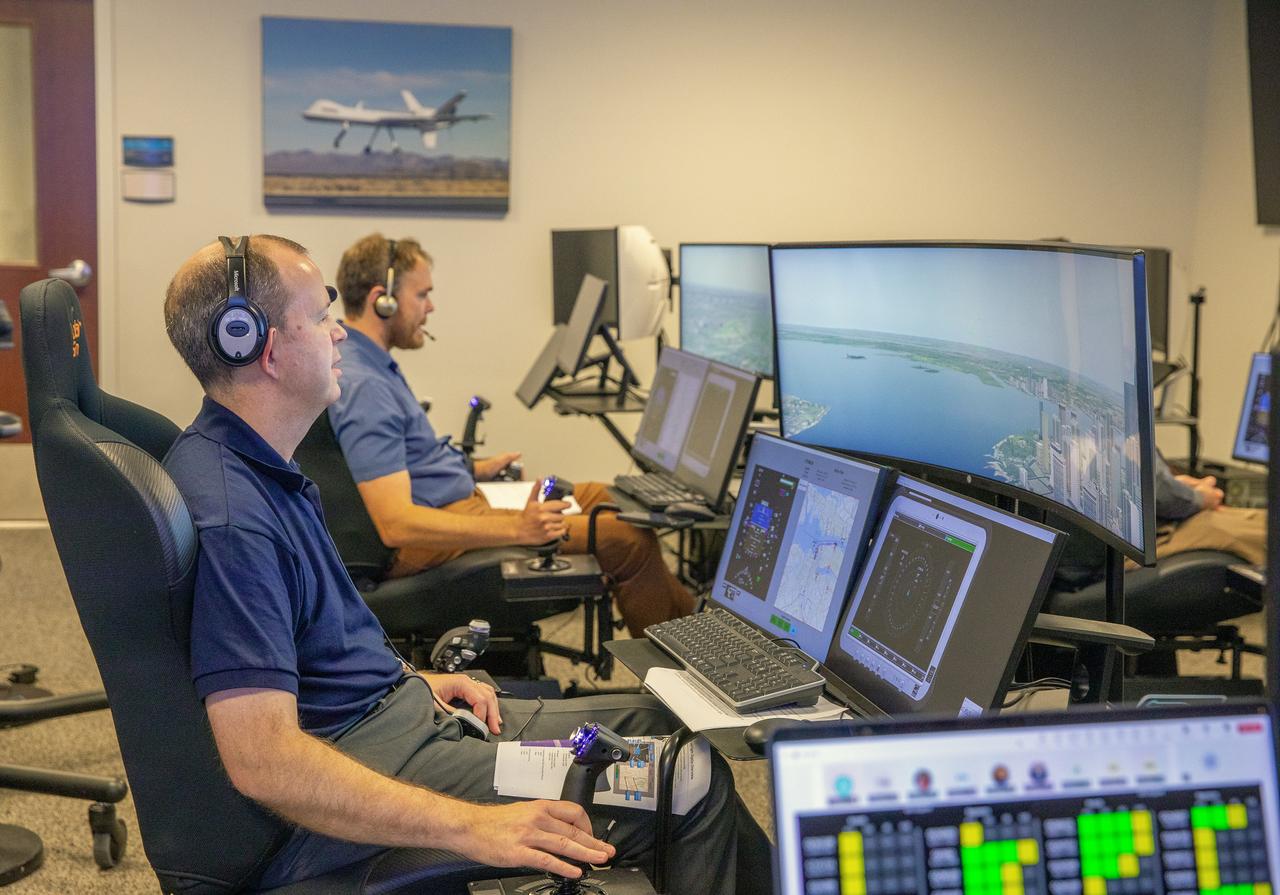
Focus on active photos –Class B Simulation Evaluation in the ATOL Lab at Langley (Also at FAA Tech Center) where team is working with one another in the lab, reviewing data on the monitors. Working the software, adjusting the software systems. Going over the shoulder to show the displays and screens as the software is running.   Andy Burroughs (left) and Paul Friz in the roles of air taxi pilots running through air taxi integration simulations focusing on urban air space at NASA’s Langley Research in Hampton, Virginia on Sept. 25, 2024.
Researchers at the controls of the air taxi simulators
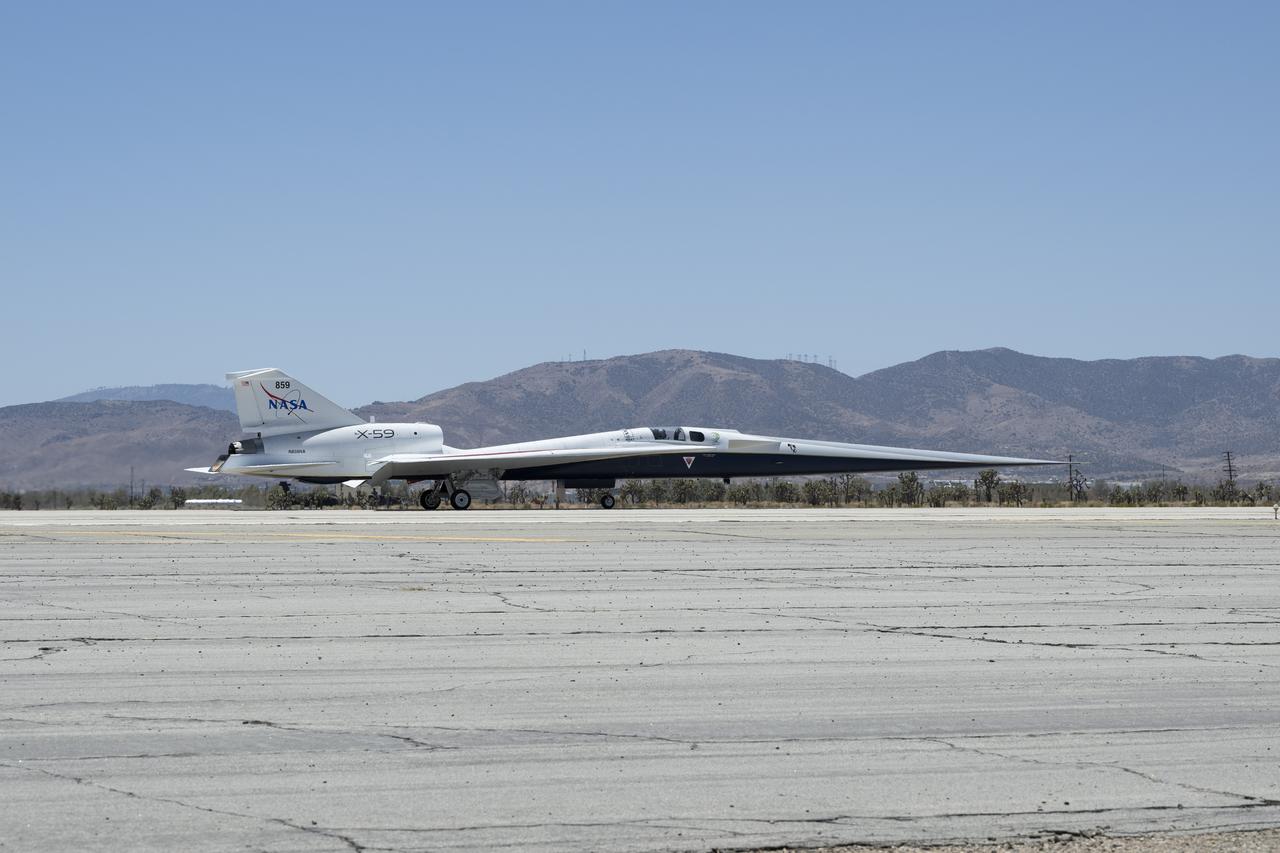
NASA’s X-59 quiet supersonic research aircraft taxis across the runway during a low-speed taxi test at U.S. Air Force Plant 42 in Palmdale, California, on July 10, 2025. The test marks the start of taxi tests and the last series of ground tests before first flight.
NASA’s X-59 Begins Taxi Tests
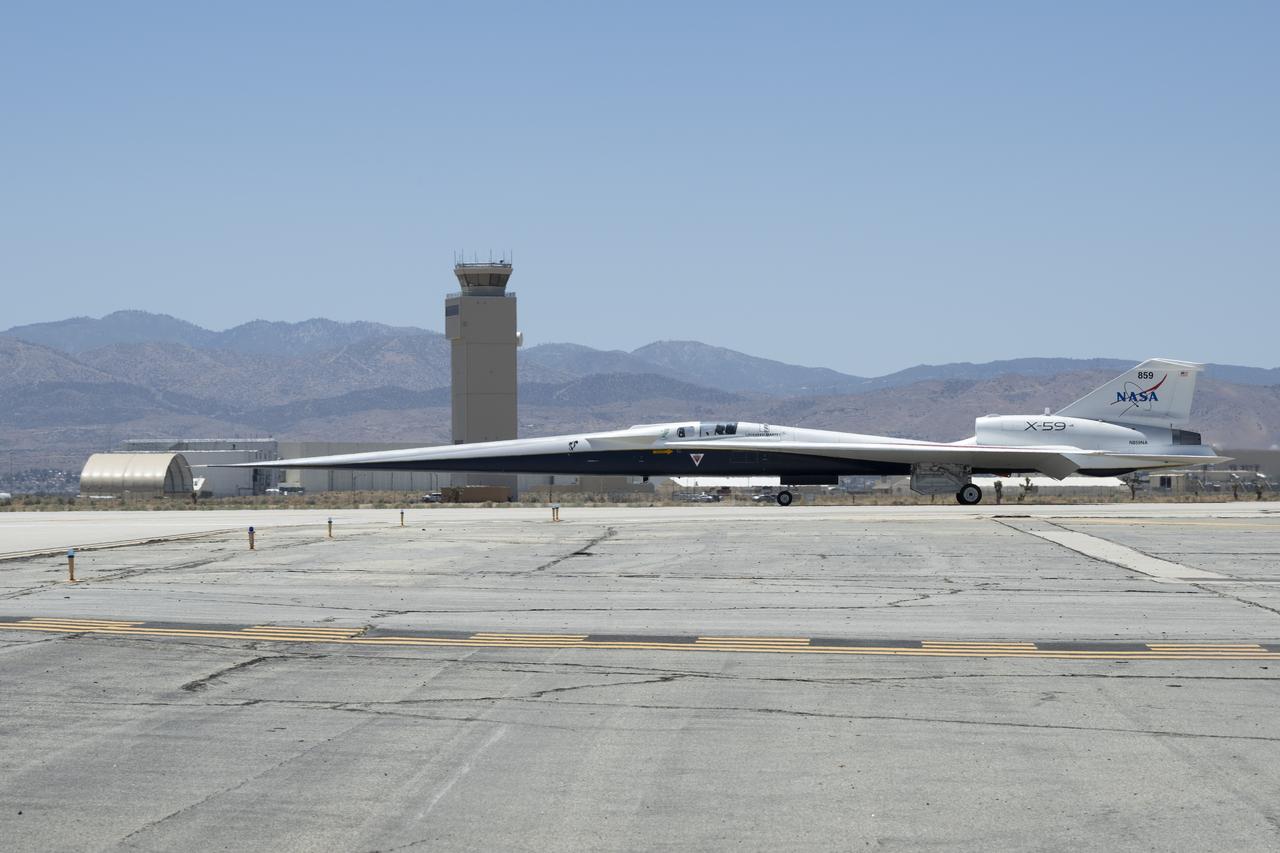
NASA’s X-59 quiet supersonic research aircraft taxis across the runway during a low-speed taxi test at U.S. Air Force Plant 42 in Palmdale, California, on July 10, 2025. The test marks the start of taxi tests and the last series of ground tests before first flight.
NASA’s X-59 Begins Taxi Tests
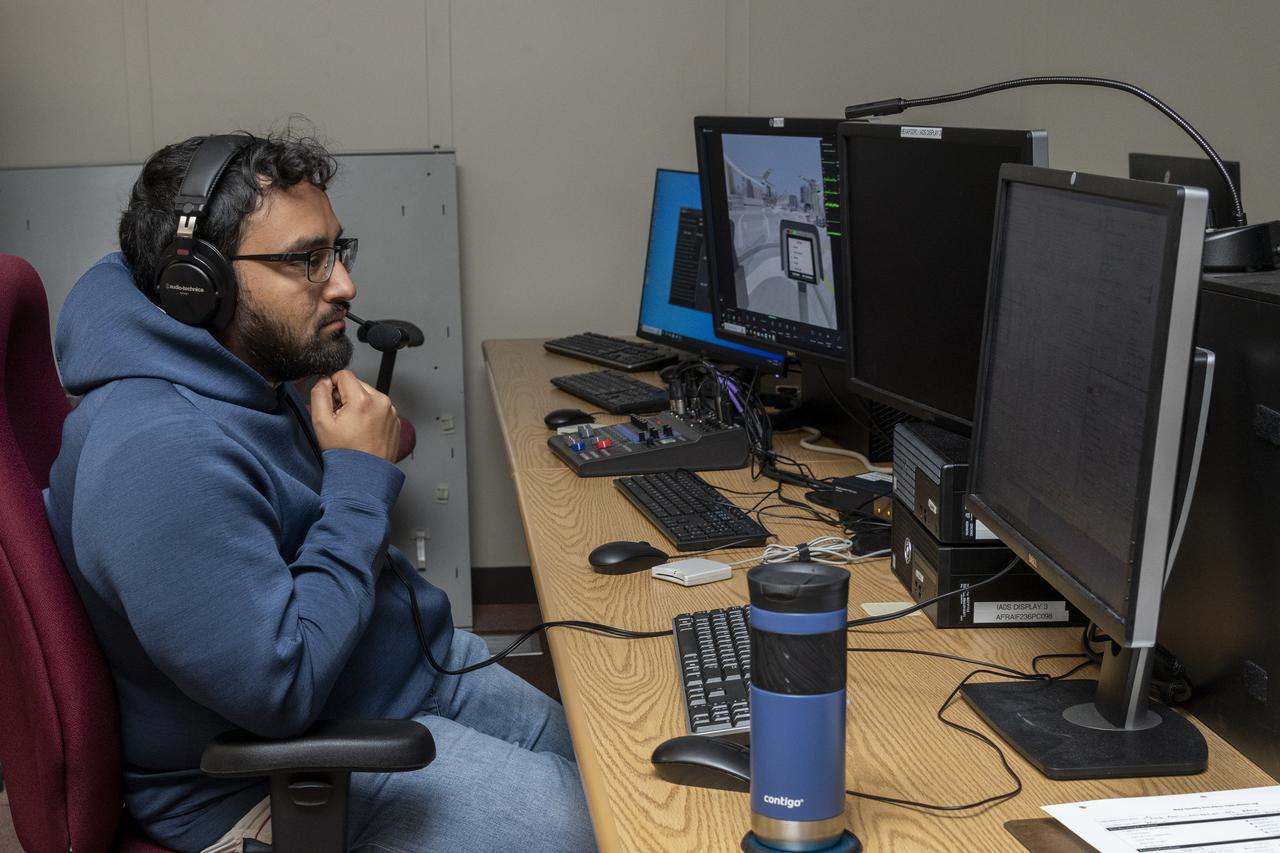
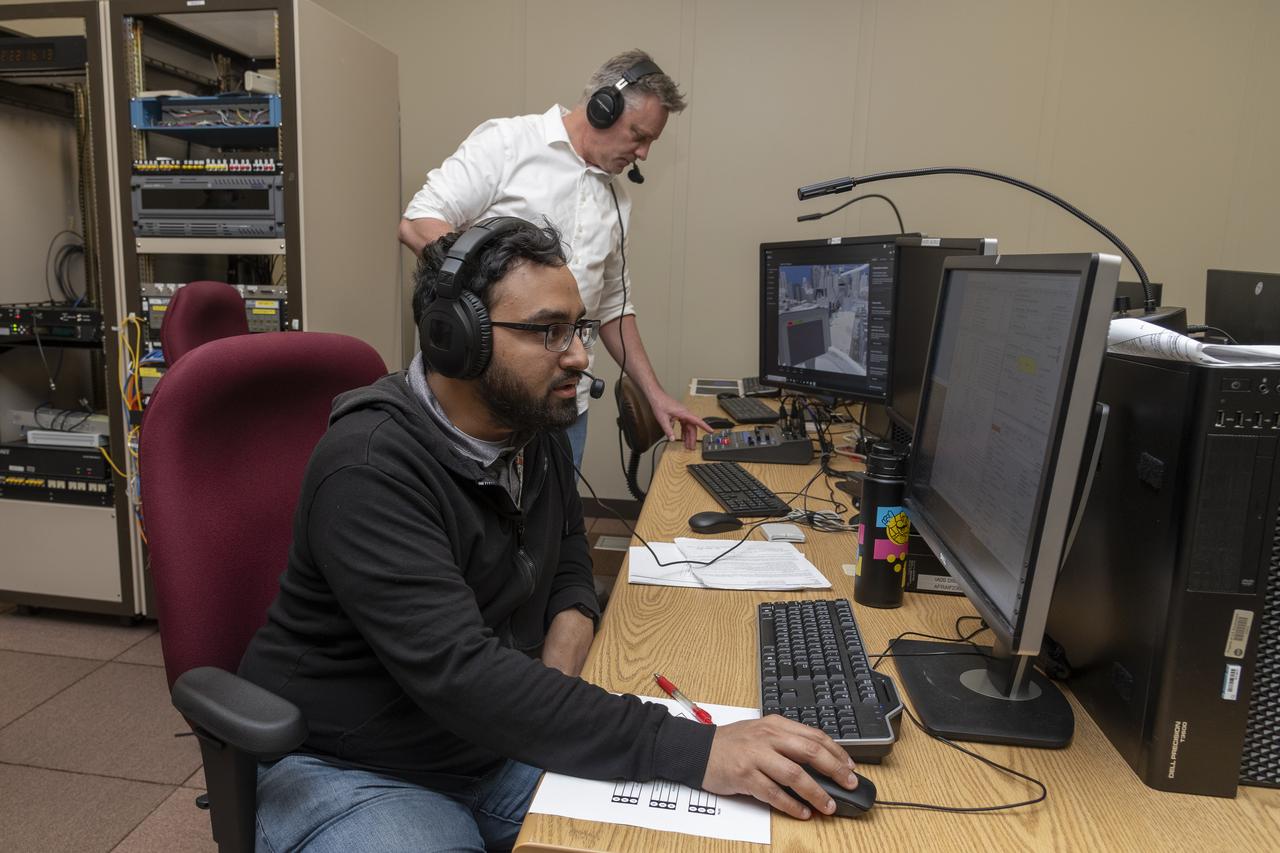
NASA researcher Saravanakumaar Ramia controls the air taxi passenger ride quality simulator by monitoring several computers in the Ride Quality Laboratory at NASA’s Armstrong Flight Research Center in Edwards, California, during an experiment on Oct. 23, 2024. Studies continue in this lab to better understand passenger comfort for future air taxi rides.
NASA Air Taxi Passenger Comfort Studies
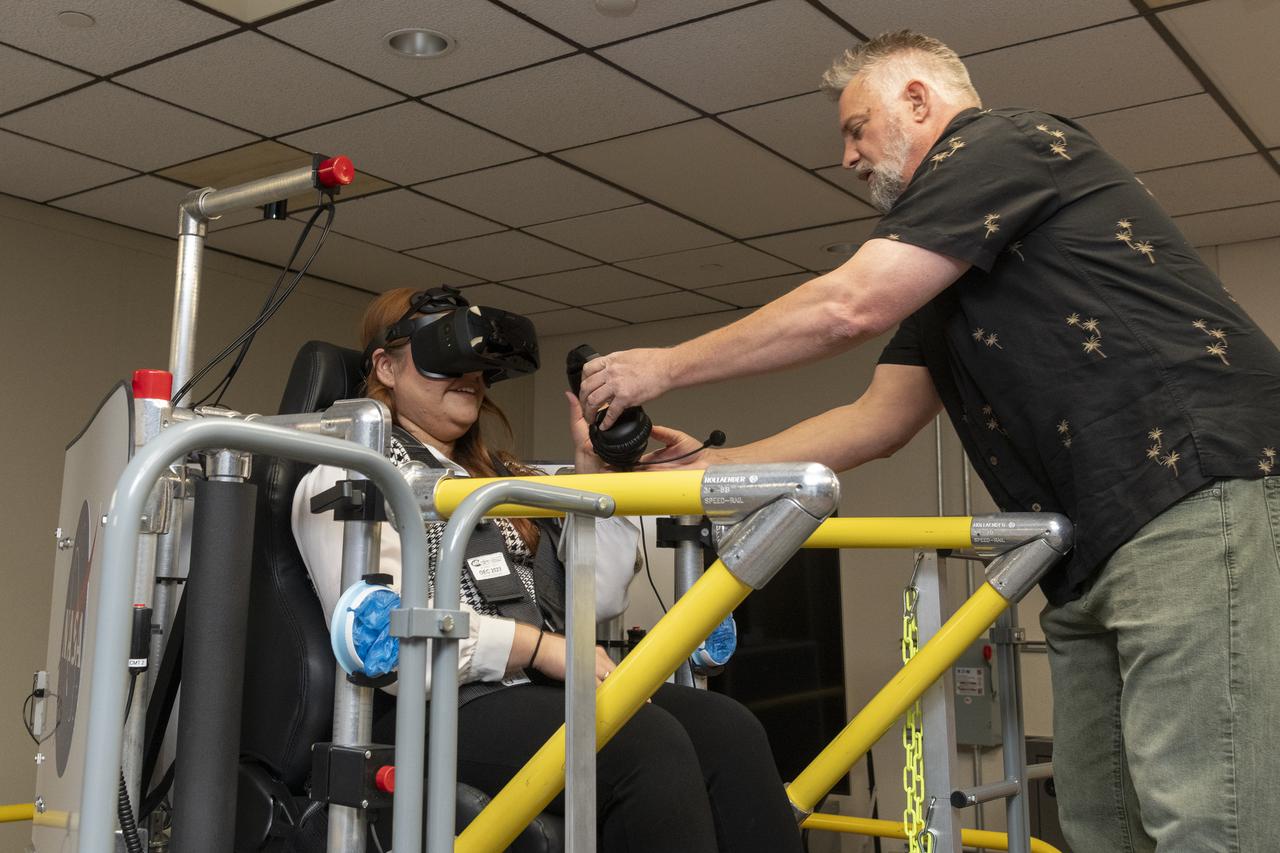
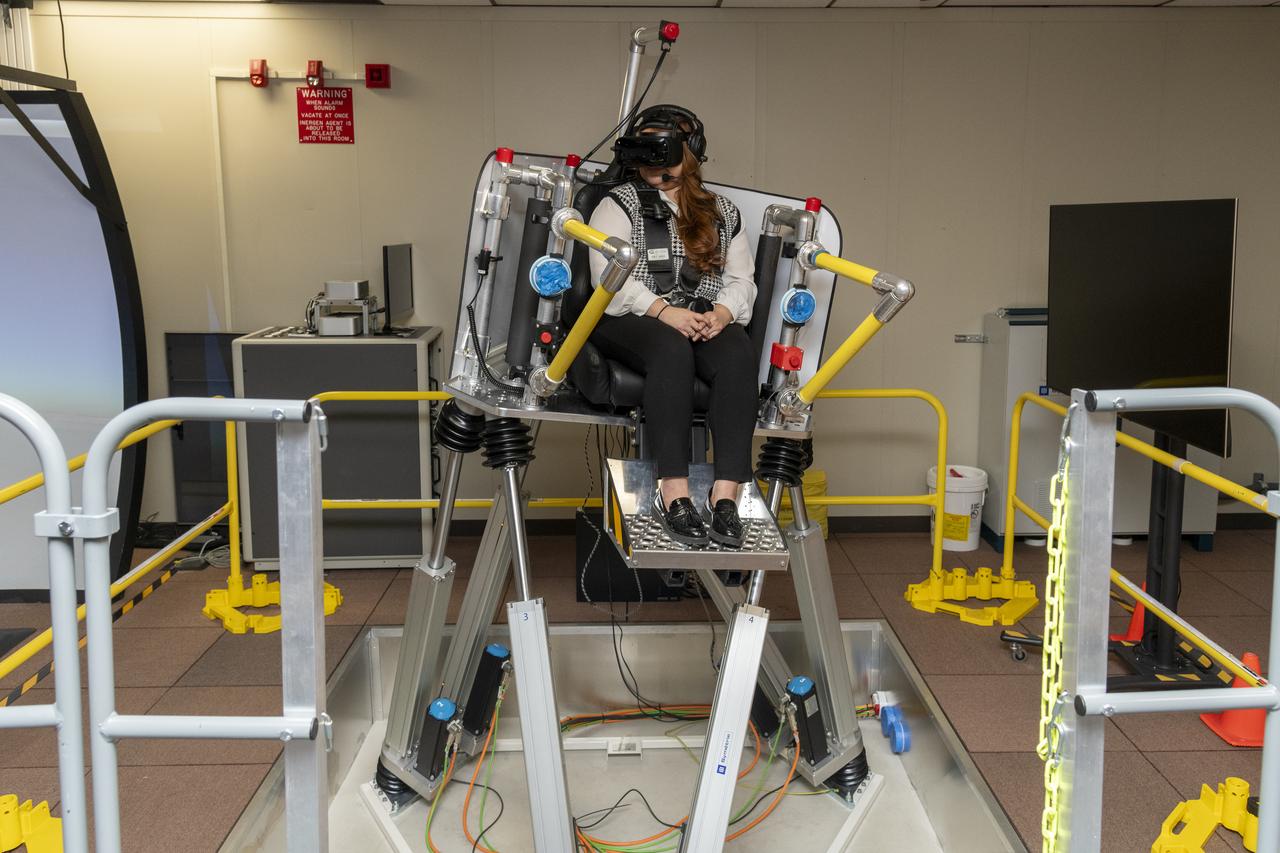
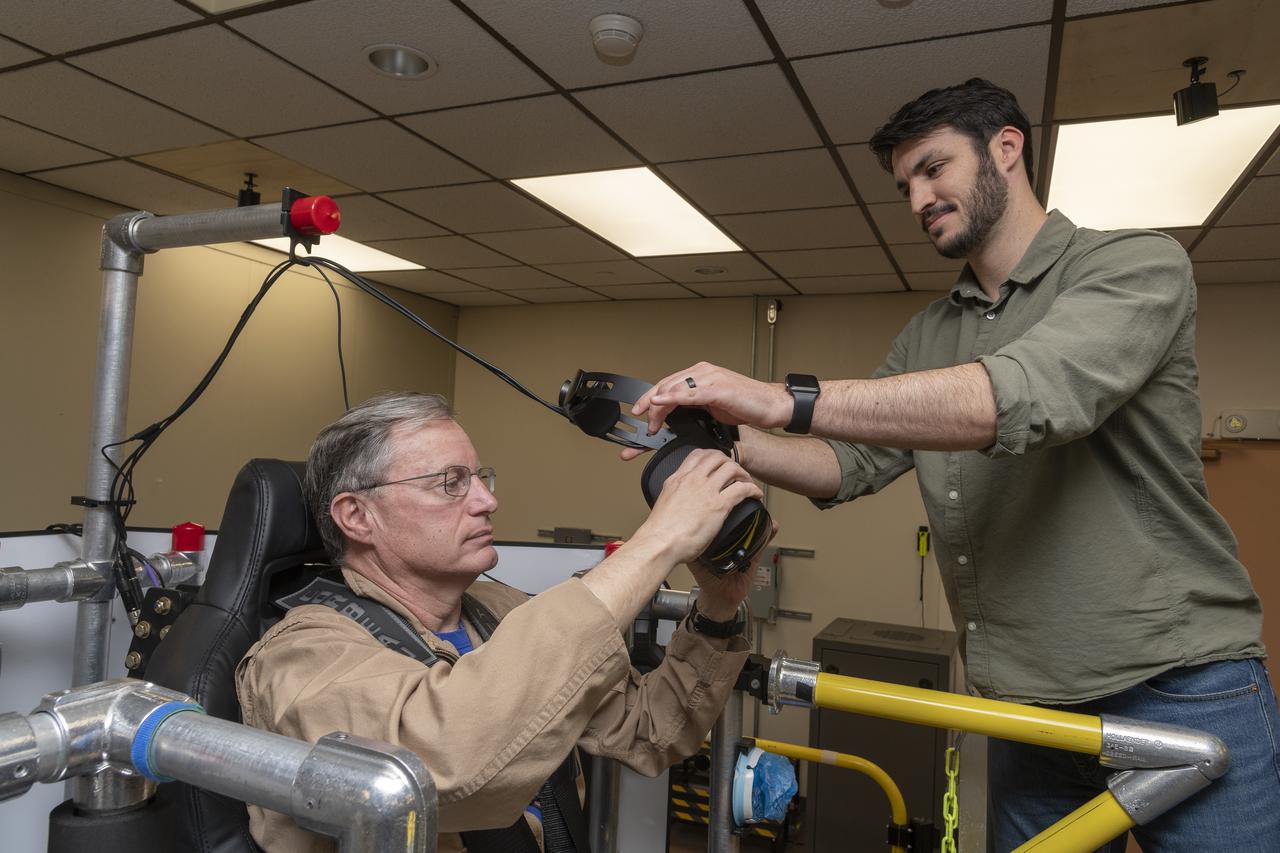
NASA employee Naomi Torres sits inside the air taxi passenger ride quality simulator at NASA’s Armstrong Flight Research Center in Edwards, California, as Curt Hanson, senior flight controls researcher for the Revolutionary Vertical Lift Technology project, sets up her equipment on Oct. 23, 2024. Studies continue in this lab to better understand passenger comfort for future air taxi rides.
NASA Air Taxi Passenger Comfort Studies
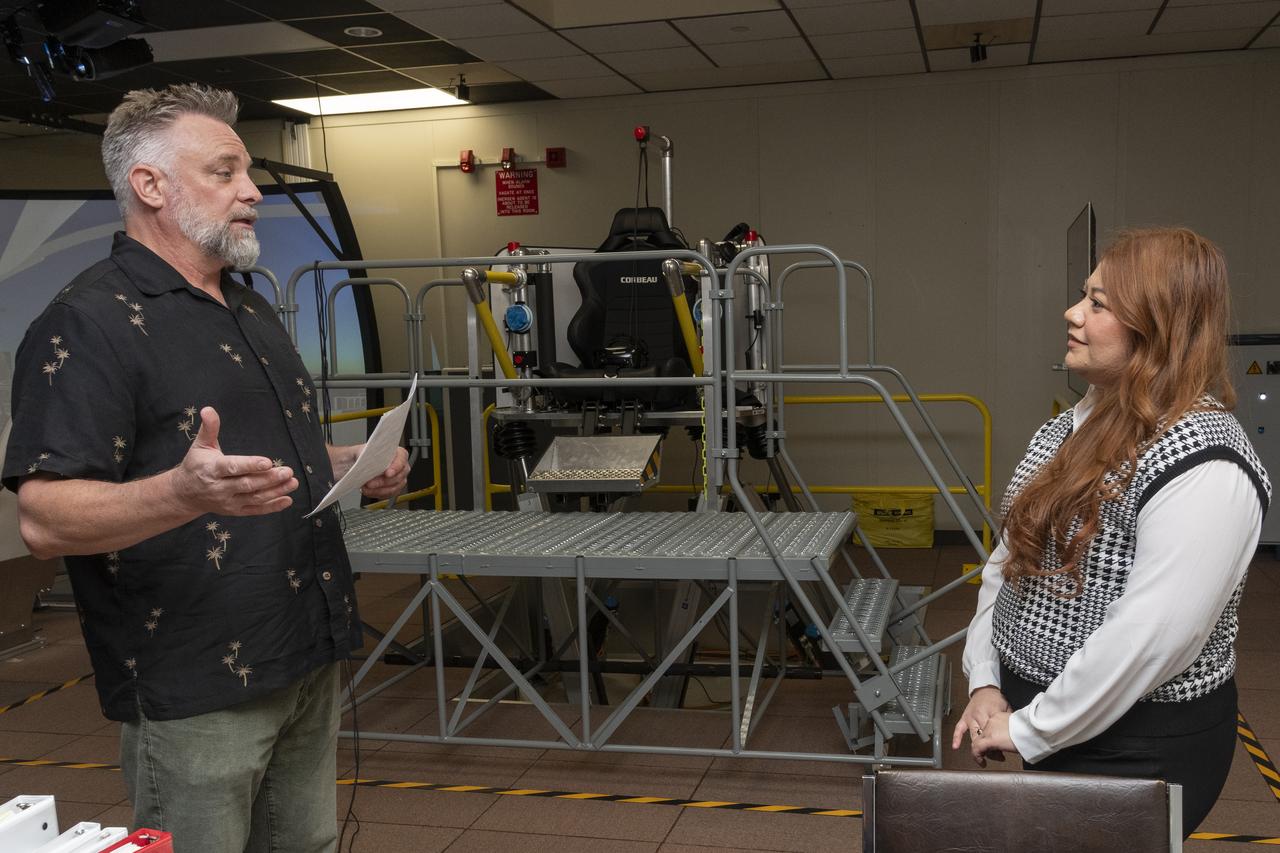
Curt Hanson, senior flight controls researcher for the Revolutionary Vertical Lift Technology project based at NASA’s Armstrong Flight Research Center in Edwards, California, explains the study about to begin to NASA employee and test subject Naomi Torres on Oct. 23, 2024. Behind them is the air taxi passenger ride quality simulator in NASA Armstrong’s Ride Quality Laboratory. Studies continue to better understand passenger comfort for future air taxi rides.
NASA Air Taxi Passenger Comfort Studies
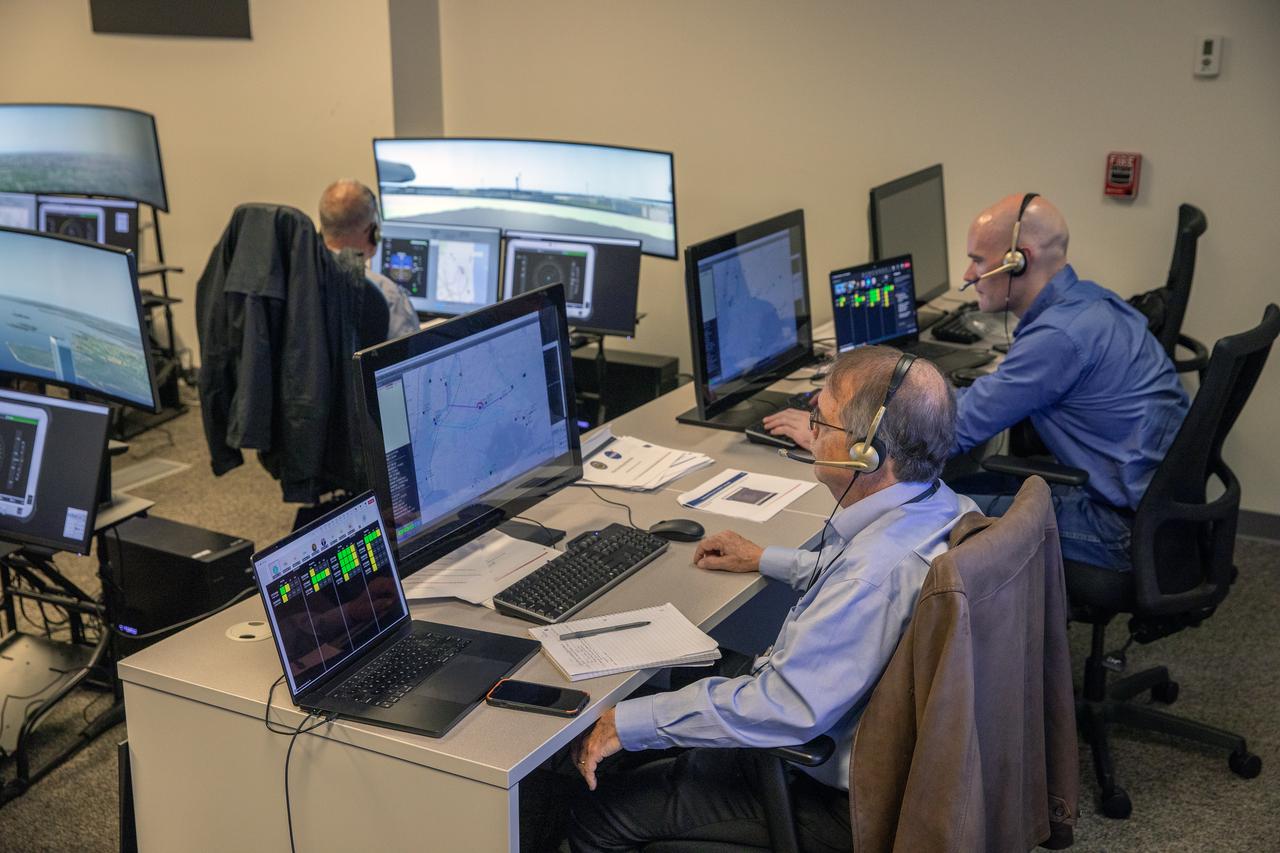
Focus on active photos –Class B Simulation Evaluation in the ATOL Lab at Langley (Also at FAA Tech Center) where team is working with one another in the lab, reviewing data on the monitors. Working the software, adjusting the software systems. Going over the shoulder to show the displays and screens as the software is running.   John Foster (left) in the role of an air taxi pilot in the simulator chair with Jim Chamberlain and Terence McClain at the flight manager stations running virtual air taxi integration simulations focusing on urban air space at NASA’s Langley Research Center in Hampton, Virginia on Sept. 25, 2024.
Researchers tracking air taxi flights simulations using NASA developed mission operations software
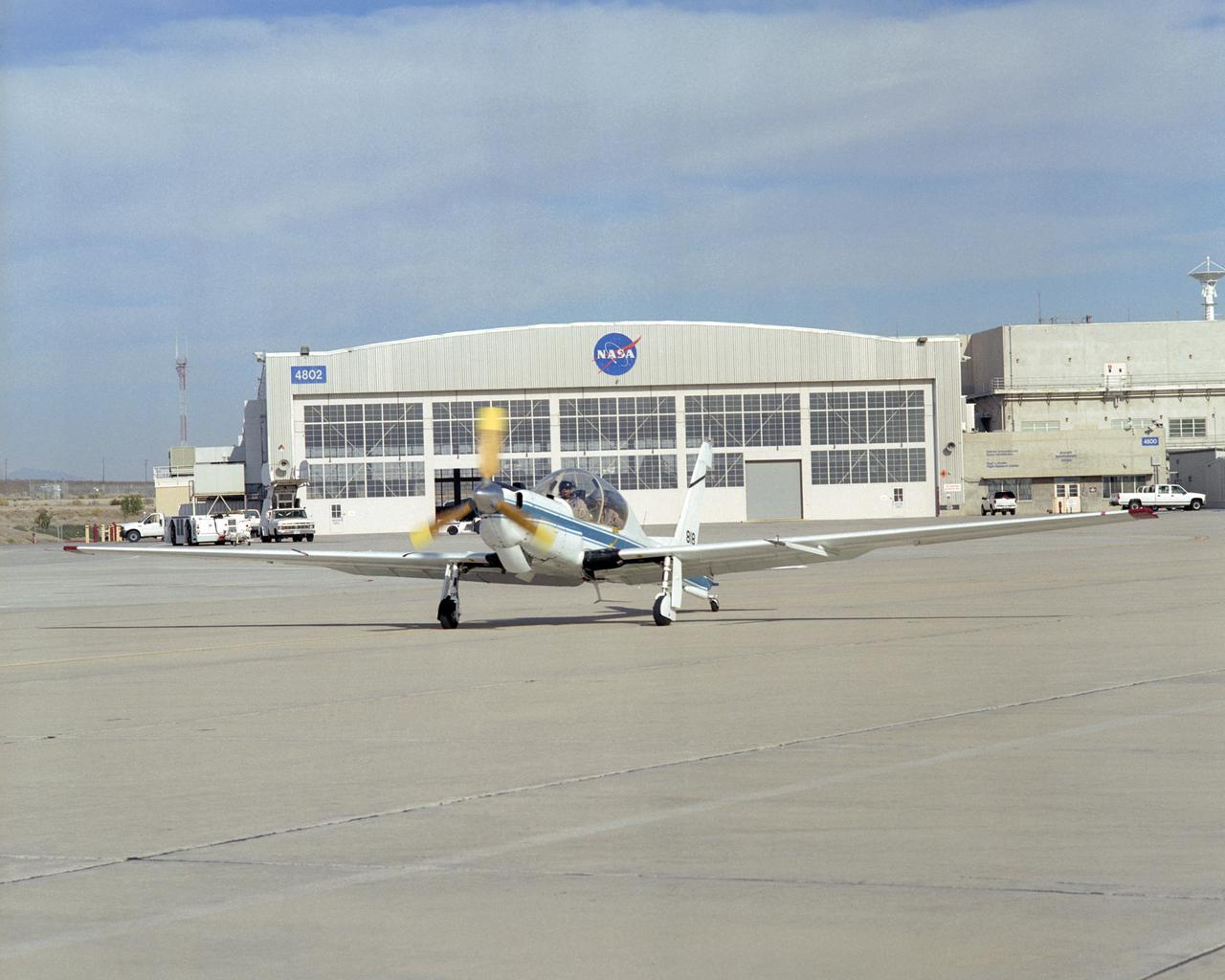
AF-2, Major Ryan "Gunner" Reinhardt, Pattern Work & Taxi, 28 November 2012
AF-2, Major Ryan "Gunner" Reinhardt, Pattern Work & Taxi, 28 Nov
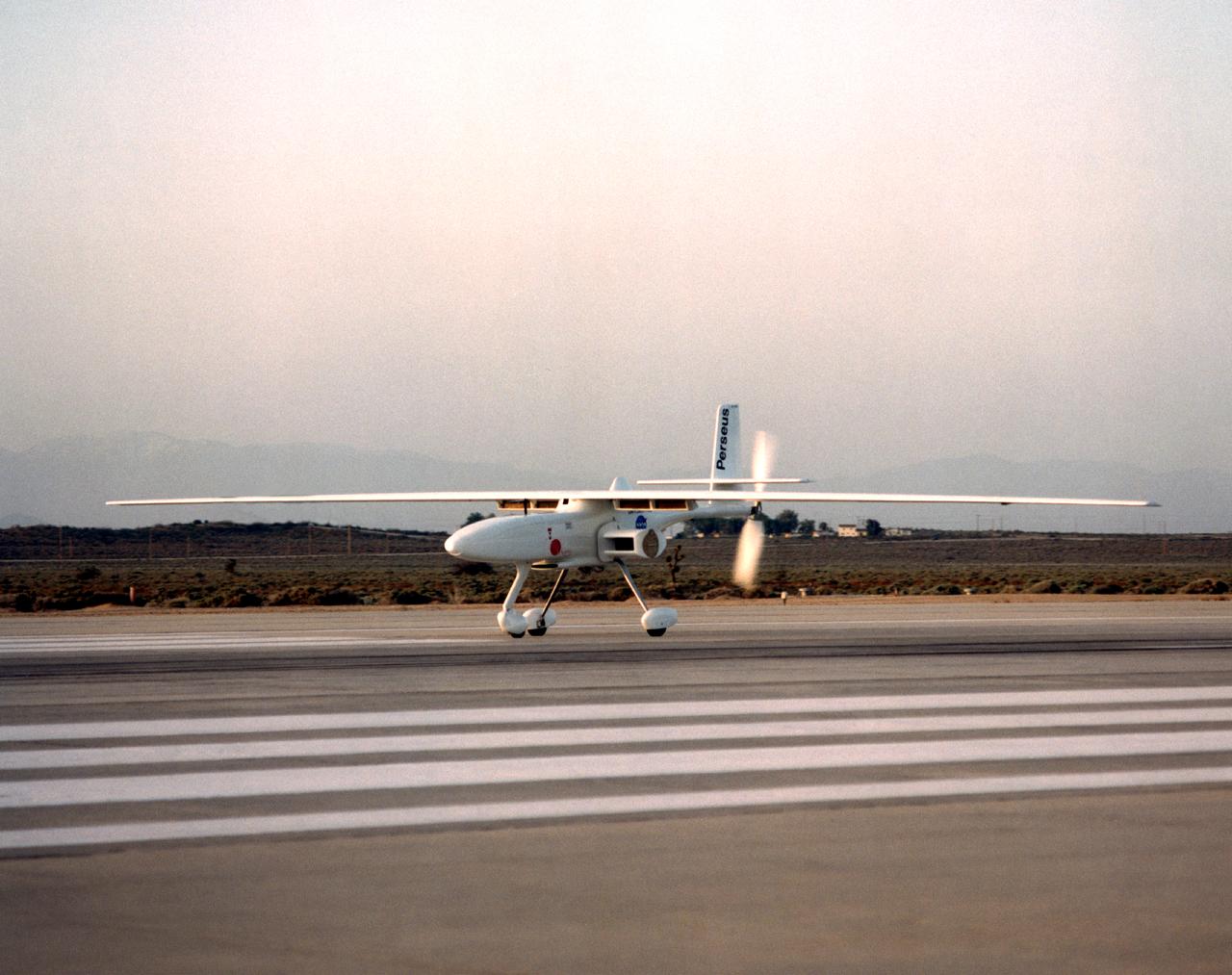
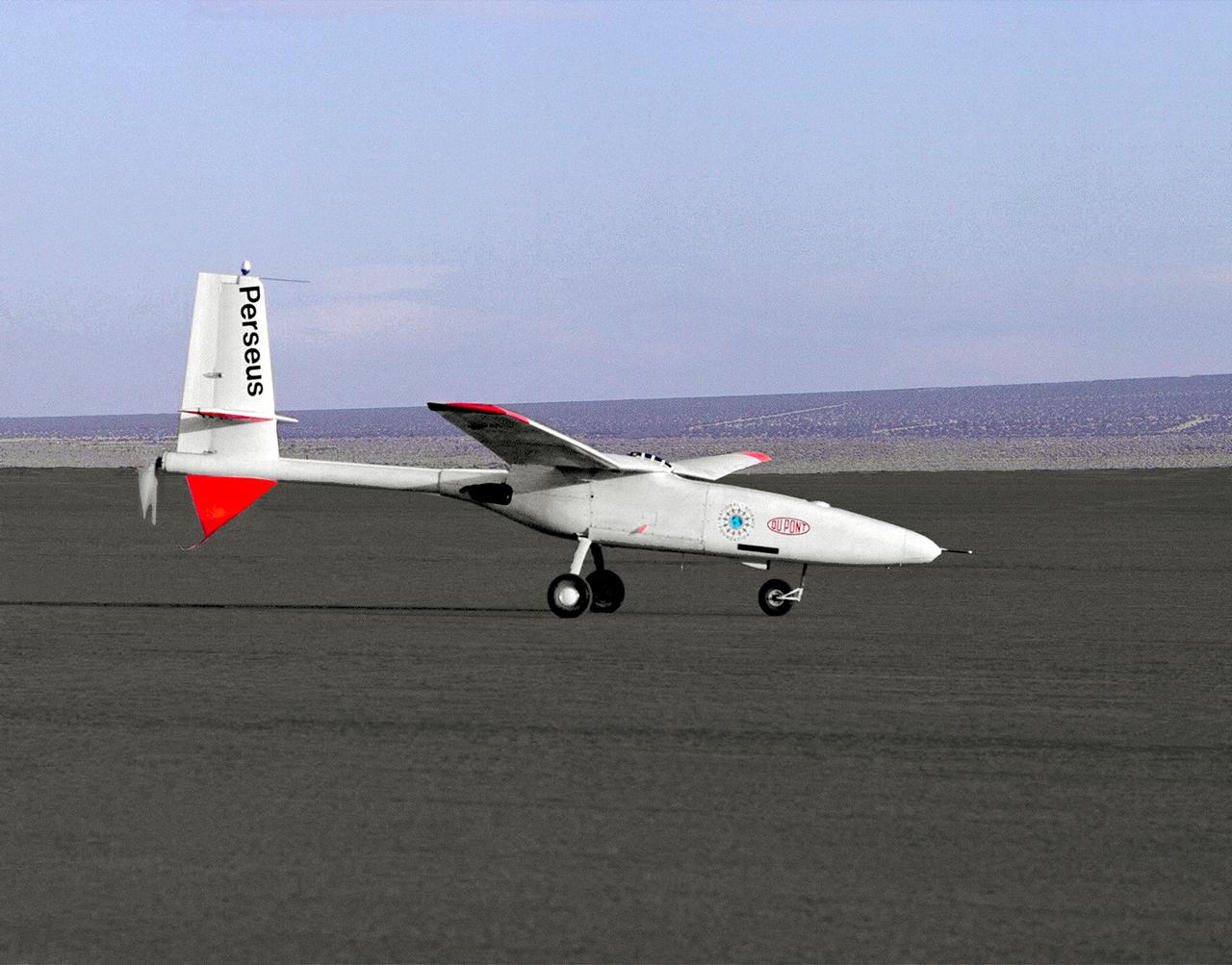
The Perseus proof-of-concept vehicle is seen here as it taxis on Rogers Dry Lake, adjacent the Dryden Flight Research Center, Edwards, California.
Perseus Taxi
NASA employee Naomi Torres sits inside the air taxi passenger ride quality simulator at NASA’s Armstrong Flight Research Center in Edwards, California, during a study on Oct. 23, 2024. Research continues to better understand how humans may interact with these new types of aircraft.
NASA Air Taxi Passenger Comfort Studies
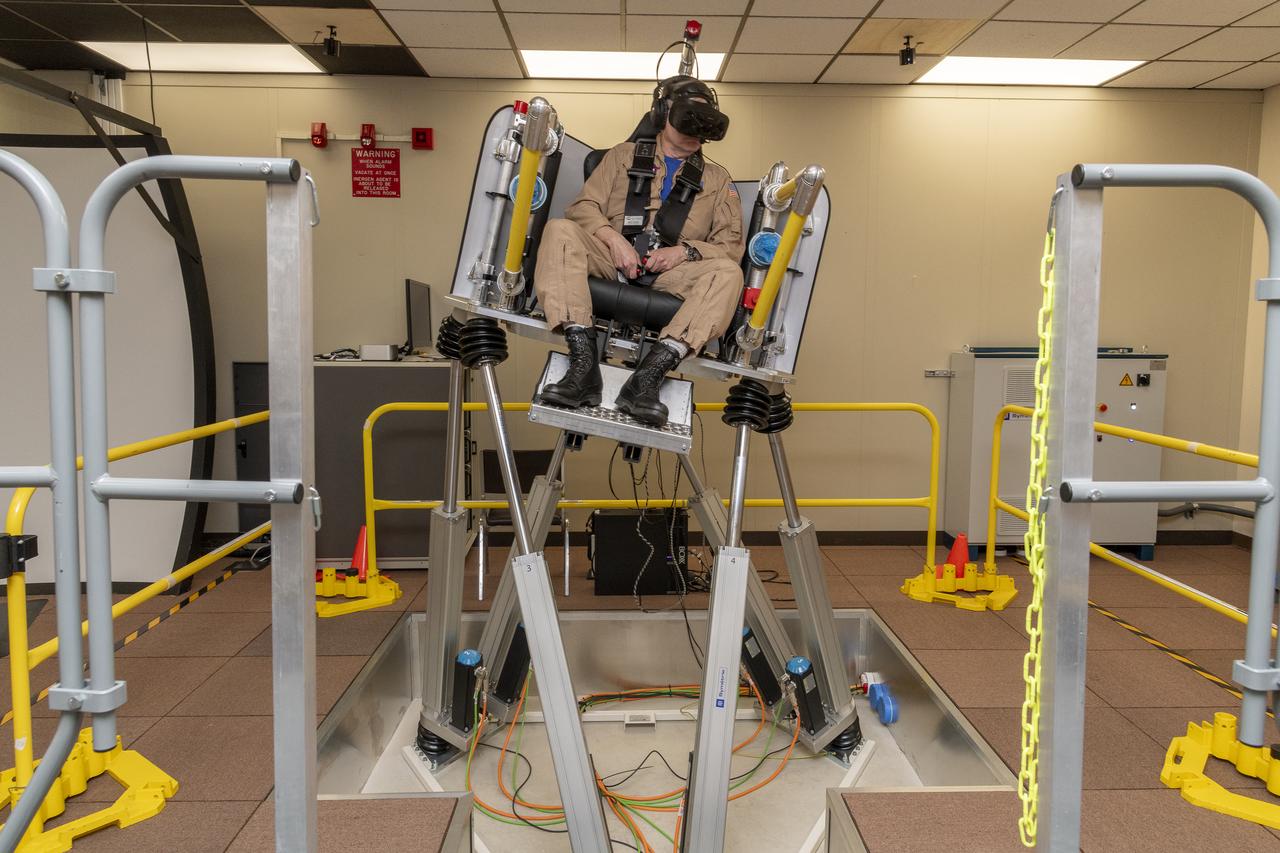
NASA employee Naomi Torres sits inside the air taxi passenger ride quality simulator at NASA’s Armstrong Flight Research Center in Edwards, California, as the simulator moves during a study on Oct. 23, 2024. Research continues to better understand how humans may interact with these new types of aircraft.
NASA Air Taxi Passenger Comfort Studies
NASA’s X-59 quiet supersonic research aircraft begins its taxi Tuesday, Oct. 28, 2025, from Lockheed Martin’s Skunk Works facility to U.S. Air Force Plant 42’s runway in Palmdale, California. The aircraft taxied into position and waited for clearance before taking off for the first time.
NASA’s X-59 Taxis to Runway for Historic First Flight
NASA test pilot Wayne Ringelberg sits in the air taxi virtual reality flight simulator during a test at NASA’s Armstrong Flight Research Center in Edwards, California in March 2024.
Air Taxi Passenger Comfort Simulator at NASA’s Armstrong Flight Research Center with Pilot
NASA researchers Curt Hanson (background) and Saravanakumaar Ramia (foreground) control the air taxi virtual reality flight simulator from computers during a test at NASA’s Armstrong Flight Research Center in Edwards, California in March 2024.
Air Taxi Passenger Comfort Simulator at NASA’s Armstrong Flight Research Center with Pilot
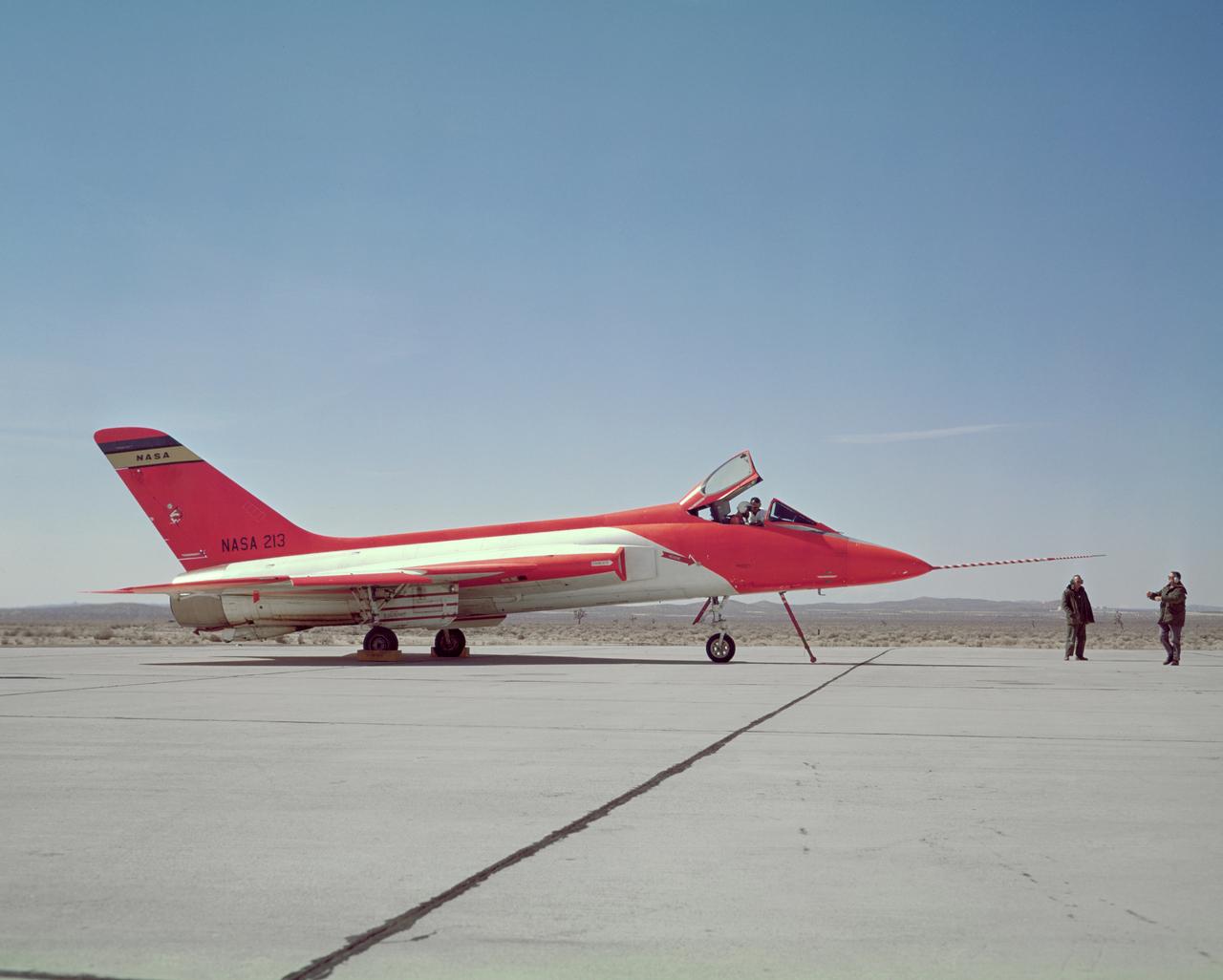
F5D Skylancer taxis in after a mission.
F5D Skylancer #213 taxis in after a mission.
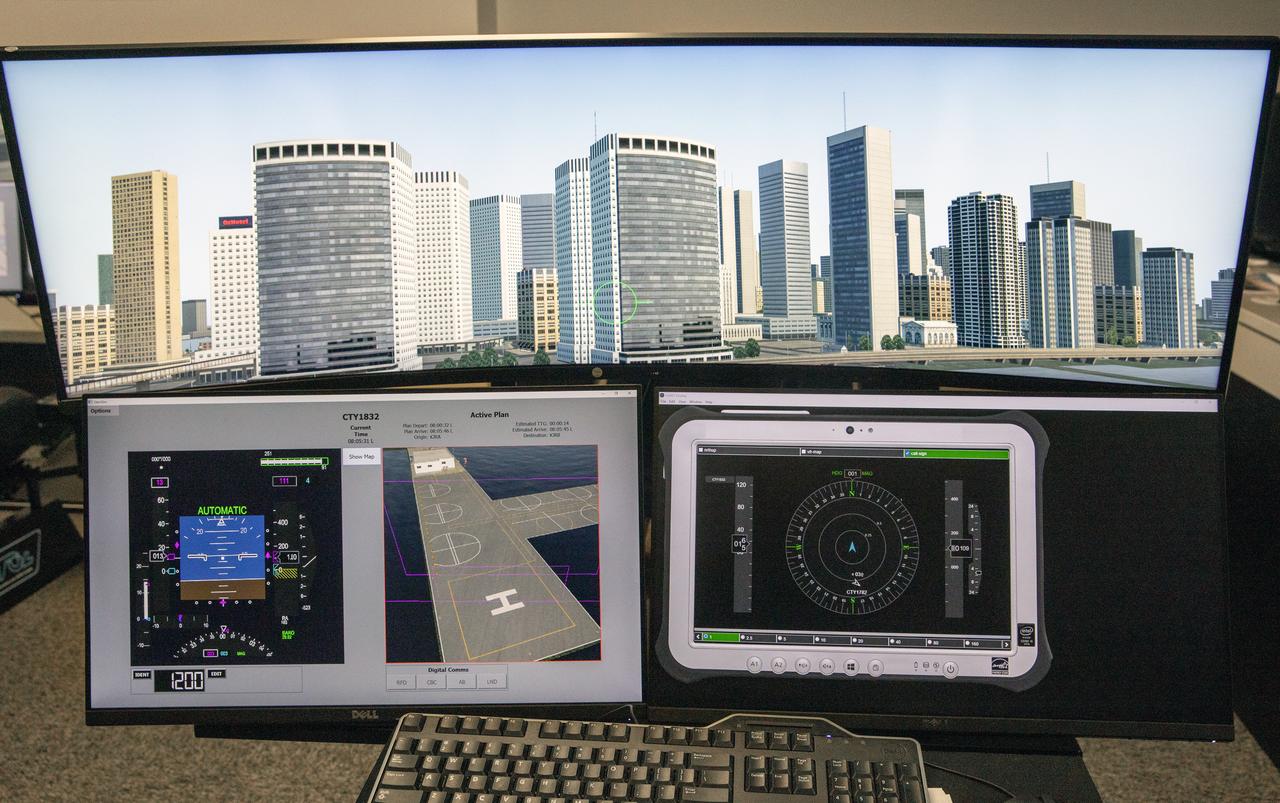
Focus on active photos –Class B Simulation Evaluation in the ATOL Lab at Langley (Also at FAA Tech Center) where team is working with one another in the lab, reviewing data on the monitors. Working the software, adjusting the software systems. Going over the shoulder to show the displays and screens as the software is running.   A pilot’s point of view from the controls of the air taxi simulator. An out-the-window simulation appears on the top screen, the primary flight display on the lower left, the virtual moving map in the middle, and the detect and avoid display on the lower right at NASA’s Langley Research Center in Hampton, Virginia on Sept. 25, 2024.
Air taxi urban air space simulation control screens from the pilot perspective
NASA test pilot Wayne Ringelberg and NASA researcher Kyle Barnes prepare for Ringelberg’s ride in the air taxi virtual reality flight simulator during a test at NASA’s Armstrong Flight Research Center in Edwards, California in March 2024.
Air Taxi Passenger Comfort Simulator at NASA’s Armstrong Flight Research Center with Pilot
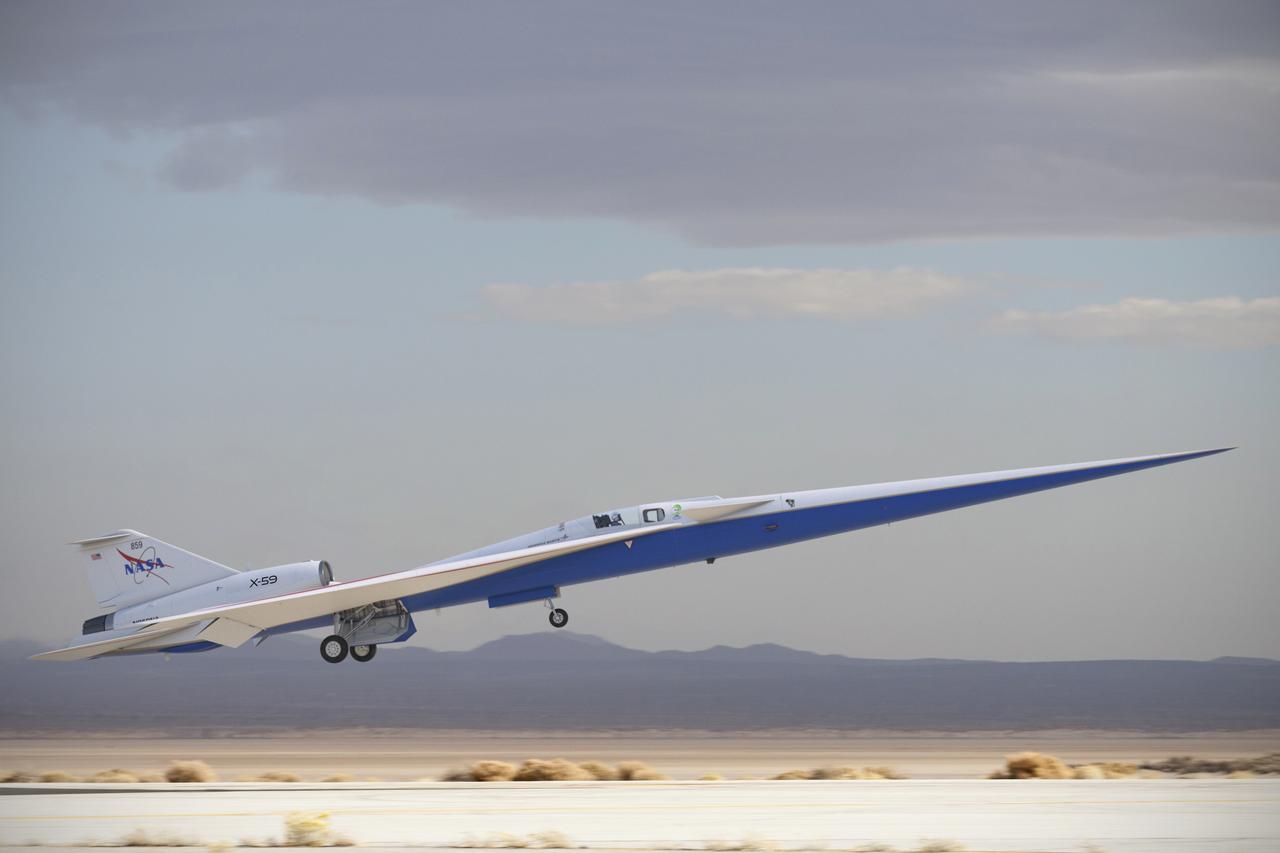
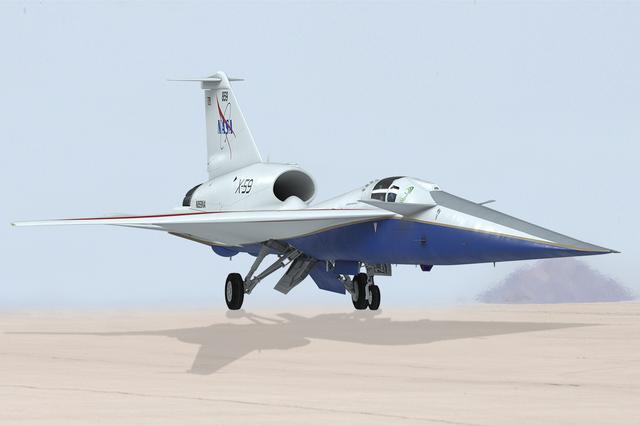
Artist illustration of the X-59 taxiing on the runway.
Taxi_001_Aug_update.jpg
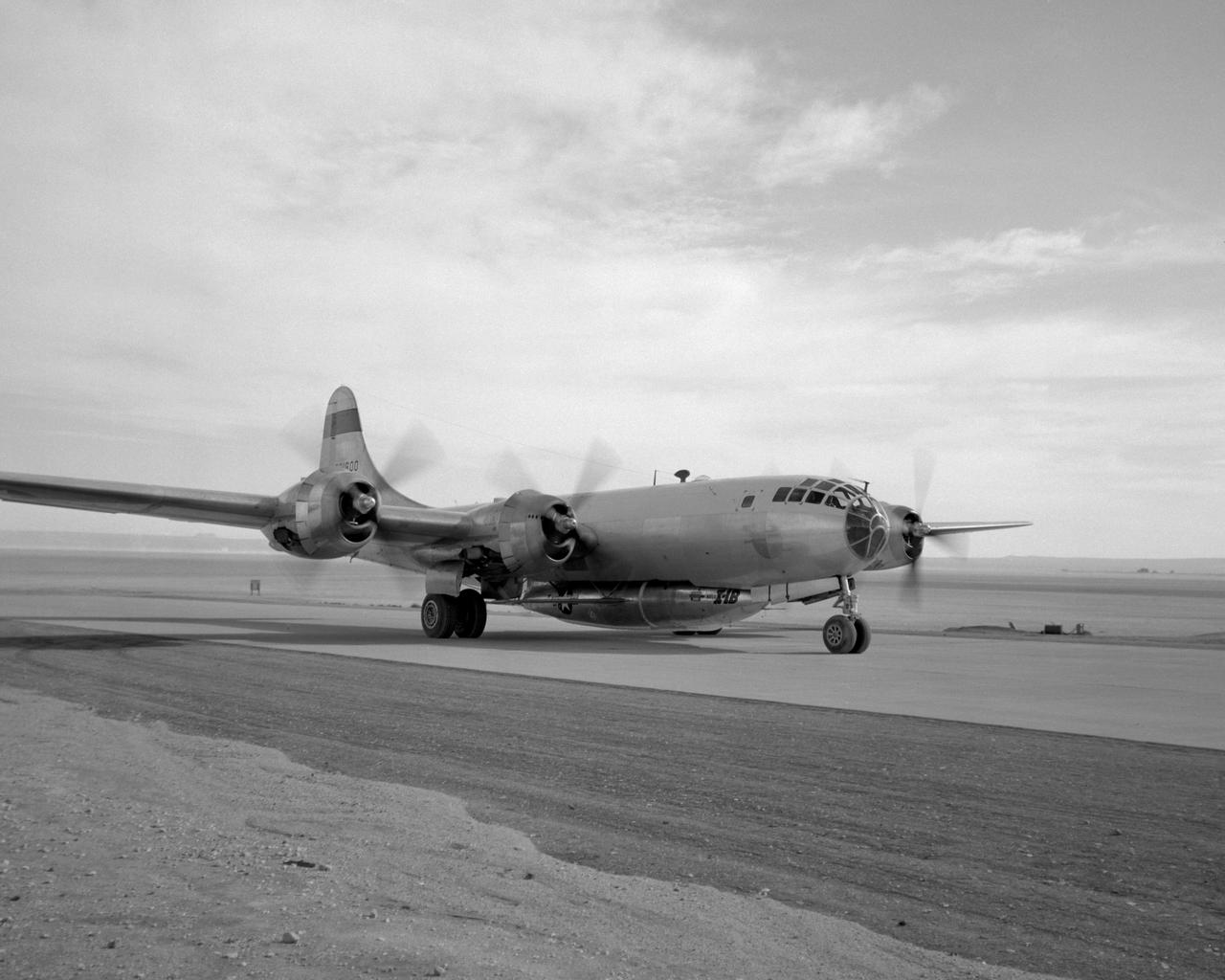
B-29 #800 with X-1B attached taxis in off of the lakebed.
B-29 #800 with X-1B attached taxis in off of the lakebed
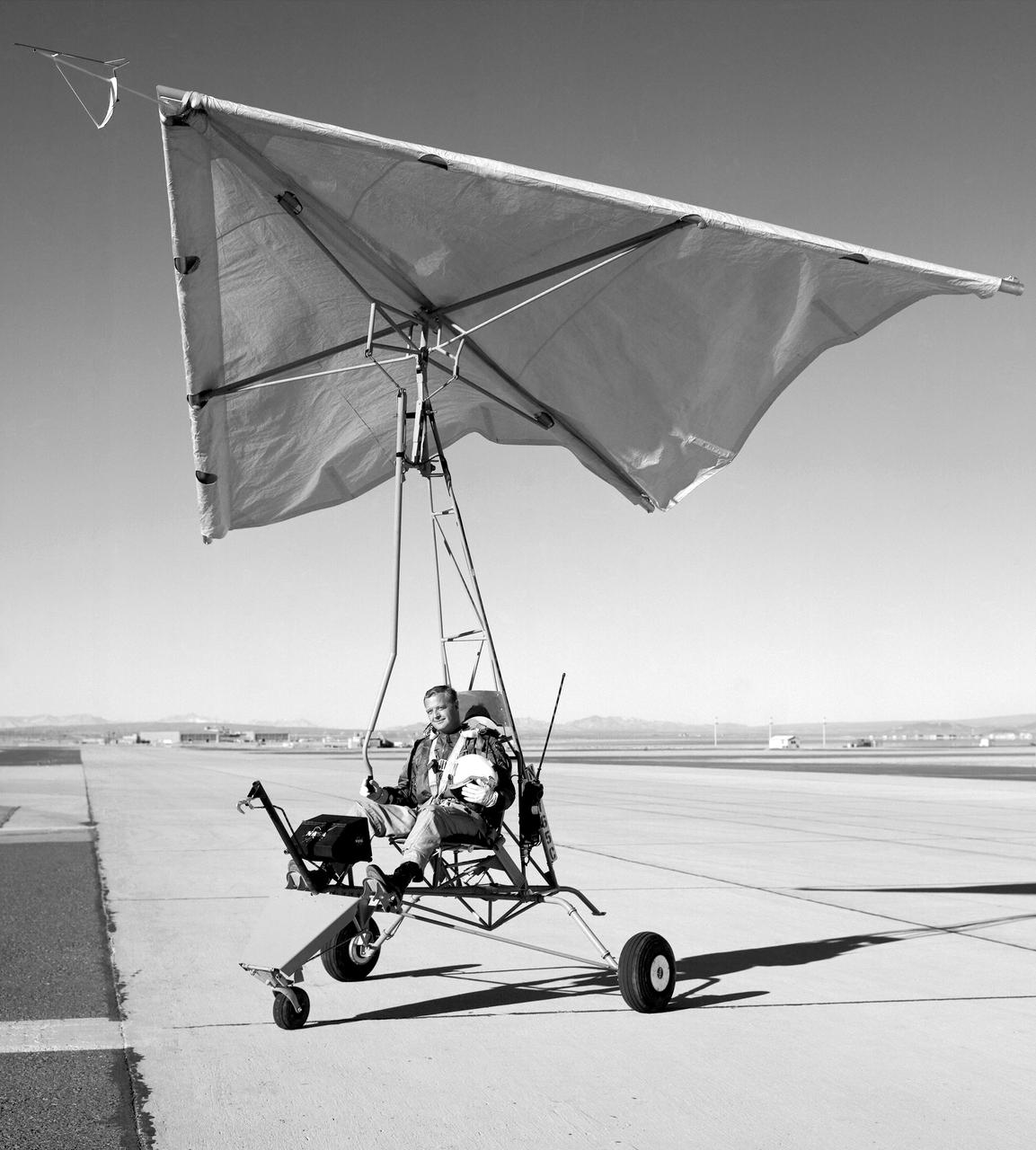
Test pilot Milton Thompson sitting in NASA Flight Research Center-built Paresev 1 (Paraglider Research Vehicle) on the taxi strip in front of the NASA Flight Research Center in 1962. In this photo the control stick can be seen coming from overhead and hanging in front of the pilot. The control system was a direct link with the wing membrane made of doped Irish linen. By maintaining simplicity during construction, it was possible to make control and configuration changes overnight and, in many instances, in minutes.
Paresev on Taxi Strip
The X-59 quiet supersonic research aircraft taxis to NASA’s Armstrong Flight Research Center in Edwards, California, on Tuesday, Oct. 28, 2025, following its landing at Edwards Air Force Base. Ground teams await the aircraft’s arrival at its new home for flight operations in support of NASA’s Quesst mission to generate data on quiet supersonic flight
X-59 Taxis to NASA’s Armstrong Flight Research Center
The X-59 quiet supersonic research aircraft taxis to NASA’s Armstrong Flight Research Center in Edwards, California, on Tuesday, Oct. 28, 2025, following its landing at Edwards Air Force Base. Ground teams await the aircraft’s arrival at its new home for flight operations in support of NASA’s Quesst mission to generate data on quiet supersonic flight
X-59 Taxis to NASA’s Armstrong Flight Research Center
The X-59 quiet supersonic research aircraft taxis to NASA’s Armstrong Flight Research Center in Edwards, California, on Tuesday, Oct. 28, 2025, following its landing at Edwards Air Force Base. Ground teams await the aircraft’s arrival at its new home for flight operations in support of NASA’s Quesst mission to generate data on quiet supersonic flight
X-59 Taxis to NASA’s Armstrong Flight Research Center
The X-59 quiet supersonic research aircraft taxis to NASA’s Armstrong Flight Research Center in Edwards, California, on Tuesday, Oct. 28, 2025, following its landing at Edwards Air Force Base. Ground teams await the aircraft’s arrival at its new home for flight operations in support of NASA’s Quesst mission to generate data on quiet supersonic flight
X-59 Taxis to NASA’s Armstrong Flight Research Center
The X-59 quiet supersonic research aircraft taxis to NASA’s Armstrong Flight Research Center in Edwards, California, on Tuesday, Oct. 28, 2025, following its landing at Edwards Air Force Base. Ground teams await the aircraft’s arrival at its new home for flight operations in support of NASA’s Quesst mission to generate data on quiet supersonic flight
X-59 Taxis to NASA’s Armstrong Flight Research Center
The X-59 quiet supersonic research aircraft taxis to NASA’s Armstrong Flight Research Center in Edwards, California, on Tuesday, Oct. 28, 2025, following its landing at Edwards Air Force Base. Ground teams await the aircraft’s arrival at its new home for flight operations in support of NASA’s Quesst mission to generate data on quiet supersonic flight
X-59 Taxis to NASA’s Armstrong Flight Research Center
The X-59 quiet supersonic research aircraft taxis to NASA’s Armstrong Flight Research Center in Edwards, California, on Tuesday, Oct. 28, 2025, following its landing at Edwards Air Force Base. Ground teams await the aircraft’s arrival at its new home for flight operations in support of NASA’s Quesst mission to generate data on quiet supersonic flight
X-59 Taxis to NASA’s Armstrong Flight Research Center
The X-59 quiet supersonic research aircraft taxis to NASA’s Armstrong Flight Research Center in Edwards, California, on Tuesday, Oct. 28, 2025, following its landing at Edwards Air Force Base. Ground teams await the aircraft’s arrival at its new home for flight operations in support of NASA’s Quesst mission to generate data on quiet supersonic flight
X-59 Taxis to NASA’s Armstrong Flight Research Center
The X-59 quiet supersonic research aircraft taxis to NASA’s Armstrong Flight Research Center in Edwards, California, on Tuesday, Oct. 28, 2025, following its landing at Edwards Air Force Base. Ground teams await the aircraft’s arrival at its new home for flight operations in support of NASA’s Quesst mission to generate data on quiet supersonic flight
X-59 Taxis to NASA’s Armstrong Flight Research Center
The X-59 quiet supersonic research aircraft taxis to NASA’s Armstrong Flight Research Center in Edwards, California, on Tuesday, Oct. 28, 2025, following its landing at Edwards Air Force Base. Ground teams await the aircraft’s arrival at its new home for flight operations in support of NASA’s Quesst mission to generate data on quiet supersonic flight
X-59 Taxis to NASA’s Armstrong Flight Research Center
The X-59 quiet supersonic research aircraft taxis to NASA’s Armstrong Flight Research Center in Edwards, California, on Tuesday, Oct. 28, 2025, following its landing at Edwards Air Force Base. Ground teams await the aircraft’s arrival at its new home for flight operations in support of NASA’s Quesst mission to generate data on quiet supersonic flight
X-59 Taxis to NASA’s Armstrong Flight Research Center
The X-59 quiet supersonic research aircraft taxis to NASA’s Armstrong Flight Research Center in Edwards, California, on Tuesday, Oct. 28, 2025, following its landing at Edwards Air Force Base. Ground teams await the aircraft’s arrival at its new home for flight operations in support of NASA’s Quesst mission to generate data on quiet supersonic flight
X-59 Taxis to NASA’s Armstrong Flight Research Center
The X-59 quiet supersonic research aircraft taxis to NASA’s Armstrong Flight Research Center in Edwards, California, on Tuesday, Oct. 28, 2025, following its landing at Edwards Air Force Base. Ground teams await the aircraft’s arrival at its new home for flight operations in support of NASA’s Quesst mission to generate data on quiet supersonic flight
X-59 Taxis to NASA’s Armstrong Flight Research Center
The X-59 quiet supersonic research aircraft taxis to NASA’s Armstrong Flight Research Center in Edwards, California, on Tuesday, Oct. 28, 2025, following its landing at Edwards Air Force Base. Ground teams await the aircraft’s arrival at its new home for flight operations in support of NASA’s Quesst mission to generate data on quiet supersonic flight
X-59 Taxis to NASA’s Armstrong Flight Research Center
The X-59 quiet supersonic research aircraft taxis to NASA’s Armstrong Flight Research Center in Edwards, California, on Tuesday, Oct. 28, 2025, following its landing at Edwards Air Force Base. Ground teams await the aircraft’s arrival at its new home for flight operations in support of NASA’s Quesst mission to generate data on quiet supersonic flight
X-59 Taxis to NASA’s Armstrong Flight Research Center
The X-59 quiet supersonic research aircraft taxis to NASA’s Armstrong Flight Research Center in Edwards, California, on Tuesday, Oct. 28, 2025, following its landing at Edwards Air Force Base. Ground teams await the aircraft’s arrival at its new home for flight operations in support of NASA’s Quesst mission to generate data on quiet supersonic flight
X-59 Taxis to NASA’s Armstrong Flight Research Center
The X-59 quiet supersonic research aircraft taxis to NASA’s Armstrong Flight Research Center in Edwards, California, on Tuesday, Oct. 28, 2025, following its landing at Edwards Air Force Base. Ground teams await the aircraft’s arrival at its new home for flight operations in support of NASA’s Quesst mission to generate data on quiet supersonic flight
X-59 Taxis to NASA’s Armstrong Flight Research Center
The X-59 quiet supersonic research aircraft taxis to NASA’s Armstrong Flight Research Center in Edwards, California, on Tuesday, Oct. 28, 2025, following its landing at Edwards Air Force Base. Ground teams await the aircraft’s arrival at its new home for flight operations in support of NASA’s Quesst mission to generate data on quiet supersonic flight
X-59 Taxis to NASA’s Armstrong Flight Research Center
The X-59 quiet supersonic research aircraft taxis to NASA’s Armstrong Flight Research Center in Edwards, California, on Tuesday, Oct. 28, 2025, following its landing at Edwards Air Force Base. Ground teams await the aircraft’s arrival at its new home for flight operations in support of NASA’s Quesst mission to generate data on quiet supersonic flight
X-59 Taxis to NASA’s Armstrong Flight Research Center
The X-59 quiet supersonic research aircraft taxis to NASA’s Armstrong Flight Research Center in Edwards, California, on Tuesday, Oct. 28, 2025, following its landing at Edwards Air Force Base. Ground teams await the aircraft’s arrival at its new home for flight operations in support of NASA’s Quesst mission to generate data on quiet supersonic flight
X-59 Taxis to NASA’s Armstrong Flight Research Center
The X-59 quiet supersonic research aircraft taxis to NASA’s Armstrong Flight Research Center in Edwards, California, on Tuesday, Oct. 28, 2025, following its landing at Edwards Air Force Base. Ground teams await the aircraft’s arrival at its new home for flight operations in support of NASA’s Quesst mission to generate data on quiet supersonic flight
X-59 Taxis to NASA’s Armstrong Flight Research Center
The X-59 quiet supersonic research aircraft taxis to NASA’s Armstrong Flight Research Center in Edwards, California, on Tuesday, Oct. 28, 2025, following its landing at Edwards Air Force Base. Ground teams await the aircraft’s arrival at its new home for flight operations in support of NASA’s Quesst mission to generate data on quiet supersonic flight
X-59 Taxis to NASA’s Armstrong Flight Research Center
The X-59 quiet supersonic research aircraft taxis to NASA’s Armstrong Flight Research Center in Edwards, California, on Tuesday, Oct. 28, 2025, following its landing at Edwards Air Force Base. Ground teams await the aircraft’s arrival at its new home for flight operations in support of NASA’s Quesst mission to generate data on quiet supersonic flight
X-59 Taxis to NASA’s Armstrong Flight Research Center
The X-59 quiet supersonic research aircraft taxis to NASA’s Armstrong Flight Research Center in Edwards, California, on Tuesday, Oct. 28, 2025, following its landing at Edwards Air Force Base. Ground teams await the aircraft’s arrival at its new home for flight operations in support of NASA’s Quesst mission to generate data on quiet supersonic flight
X-59 Taxis to NASA’s Armstrong Flight Research Center
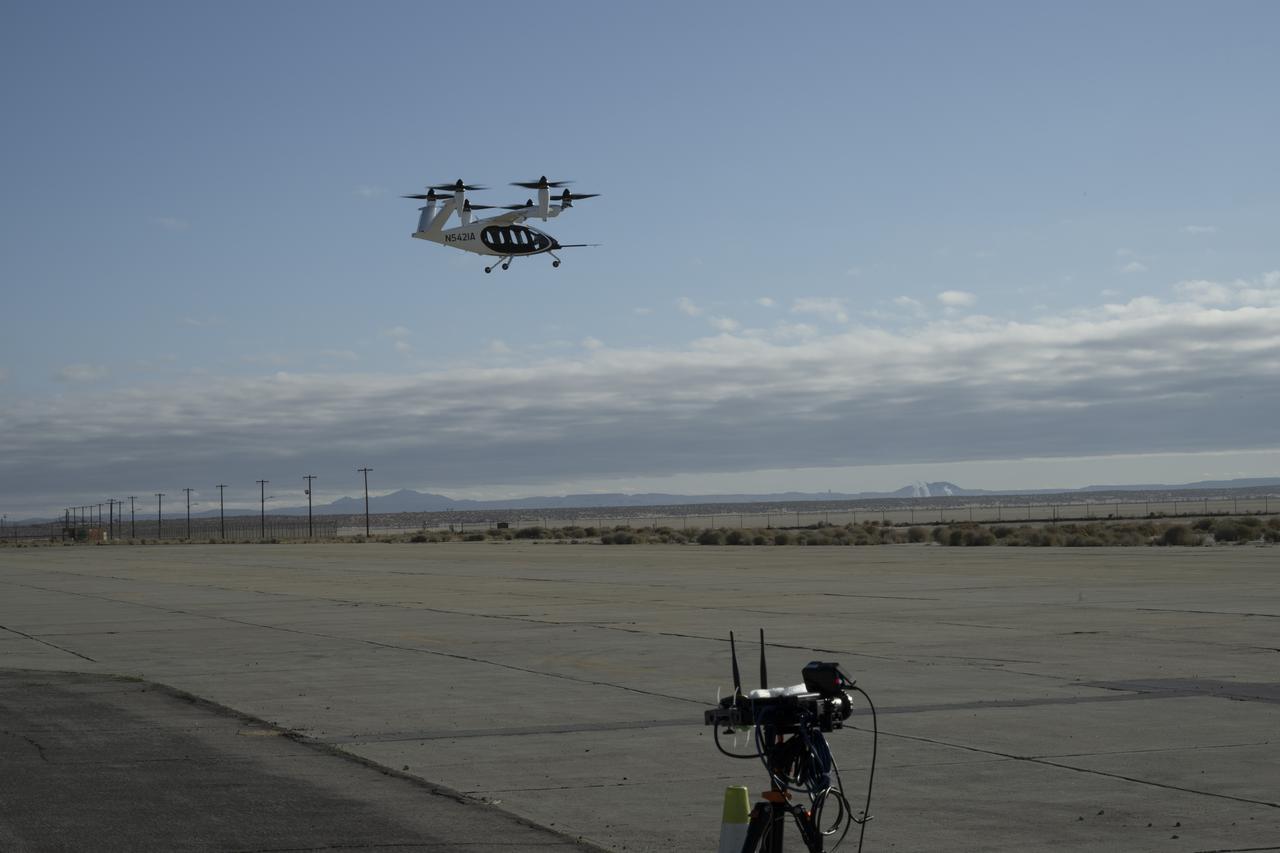
One of multiple NASA distributed sensing ground nodes is set up in the foreground while an experimental air taxi aircraft owned by Joby Aviation hovers in the background near NASA’s Armstrong Flight Research Center in Edwards, California, on March 12, 2025. NASA is collecting information during this study to help advance future air taxi flights, especially those occurring in cities, to track aircraft moving through traffic corridors and around landing zones.
NASA and Joby Research Near NASA’s Armstrong Flight Research Center
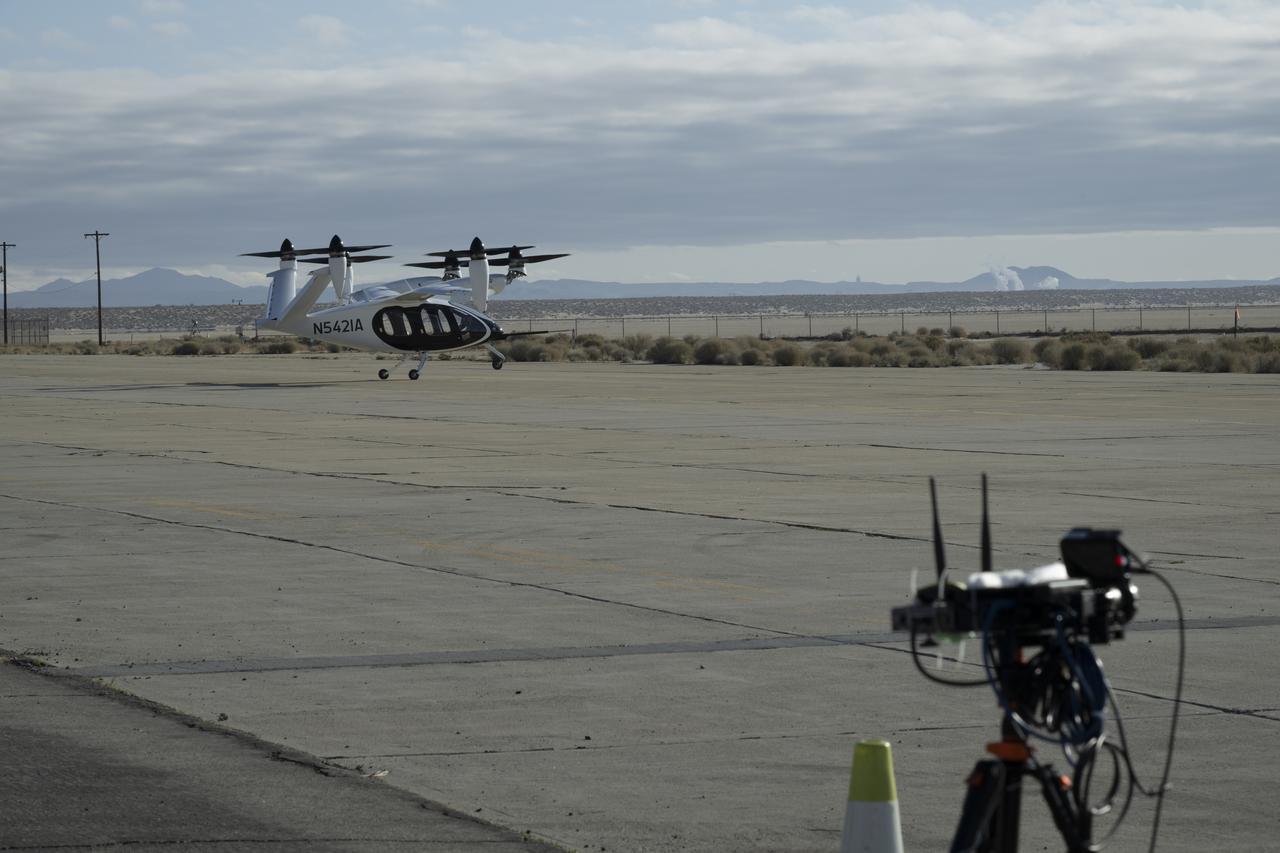
One of multiple NASA distributed sensing ground nodes is set up in the foreground while an experimental air taxi aircraft owned by Joby Aviation prepares to take off in the background near NASA’s Armstrong Flight Research Center in Edwards, California, on March 12, 2025. NASA is collecting information during this study to help advance future air taxi flights, especially those occurring in cities, to track aircraft moving through traffic corridors and around landing zones. 
NASA and Joby Research Near NASA’s Armstrong Flight Research Center
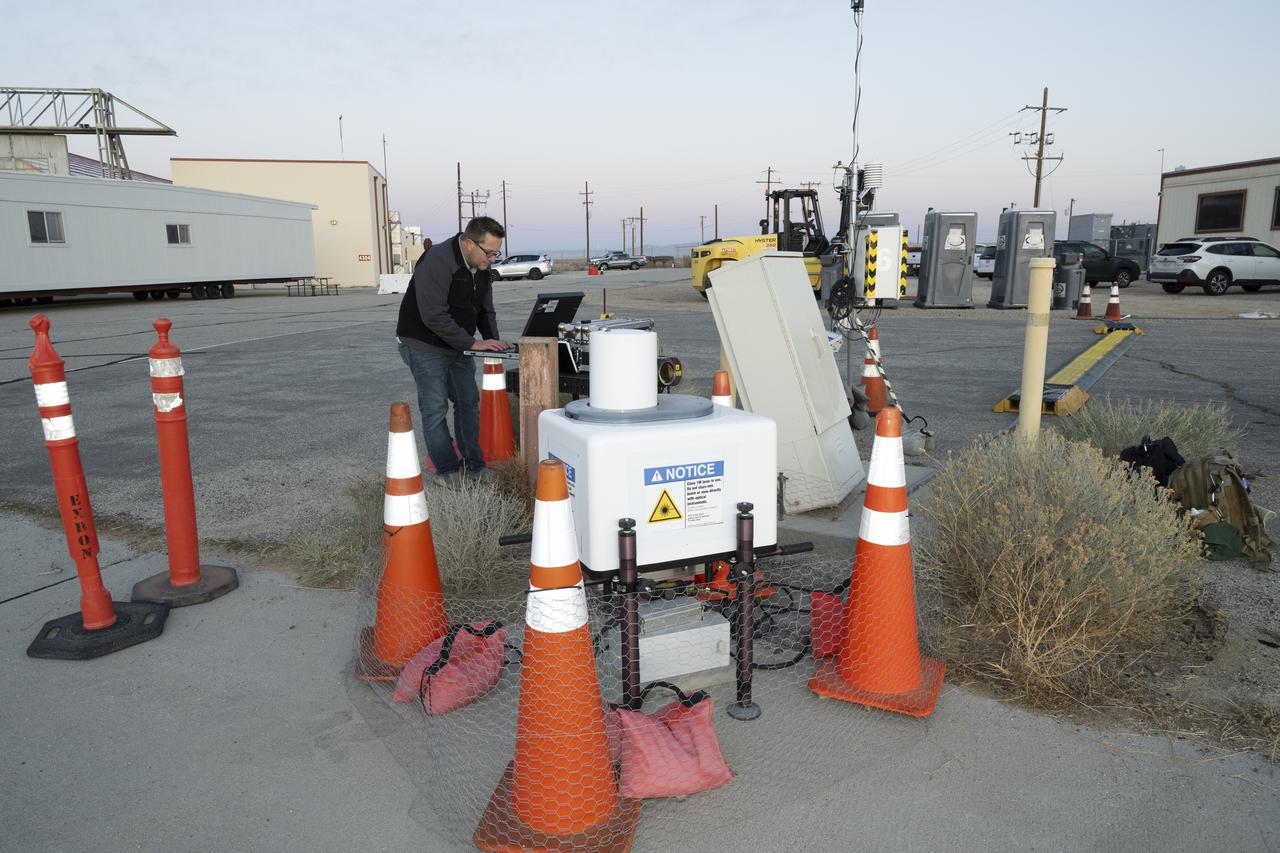
NASA aeronautical meteorologist Luke Bard adjusts one of several wind lidar (light detection and ranging) sensors near NASA’s Armstrong Flight Research Center in Edwards, California, on March 12, 2025, in preparation to collect data from Joby Aviation’s experimental air taxi aircraft. NASA is collecting information during this study to help advance weather-tolerant air taxi operations for the entire industry
NASA and Joby Research Near NASA’s Armstrong Flight Research Center
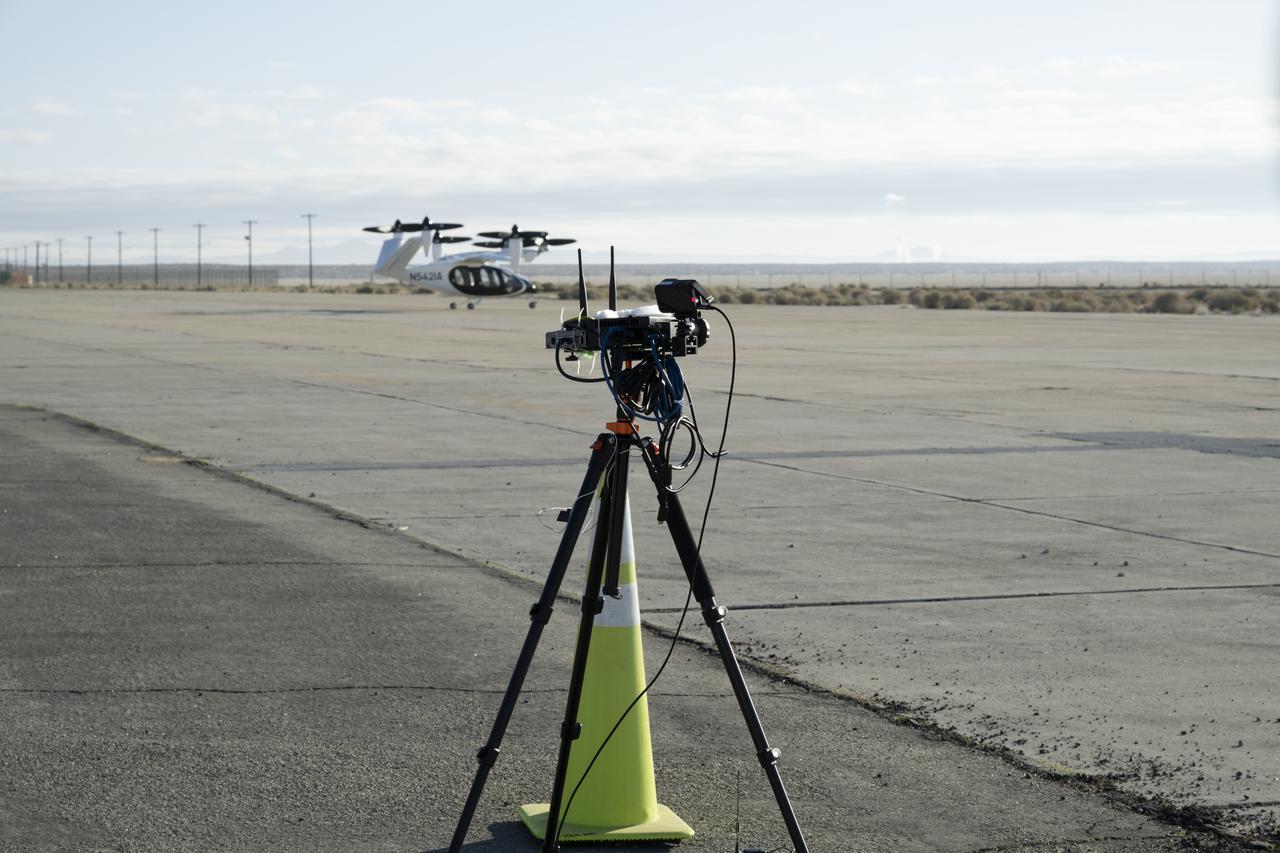
One of several NASA distributed sensing ground nodes is set up in the foreground while an experimental air taxi aircraft owned by Joby Aviation sits in the background near NASA’s Armstrong Flight Research Center in Edwards, California, on March 12, 2025. NASA is collecting information during this study to help advance future air taxi flights, especially those occurring in cities, to track aircraft moving through traffic corridors and around landing zones.
NASA and Joby Research Near NASA’s Armstrong Flight Research Center
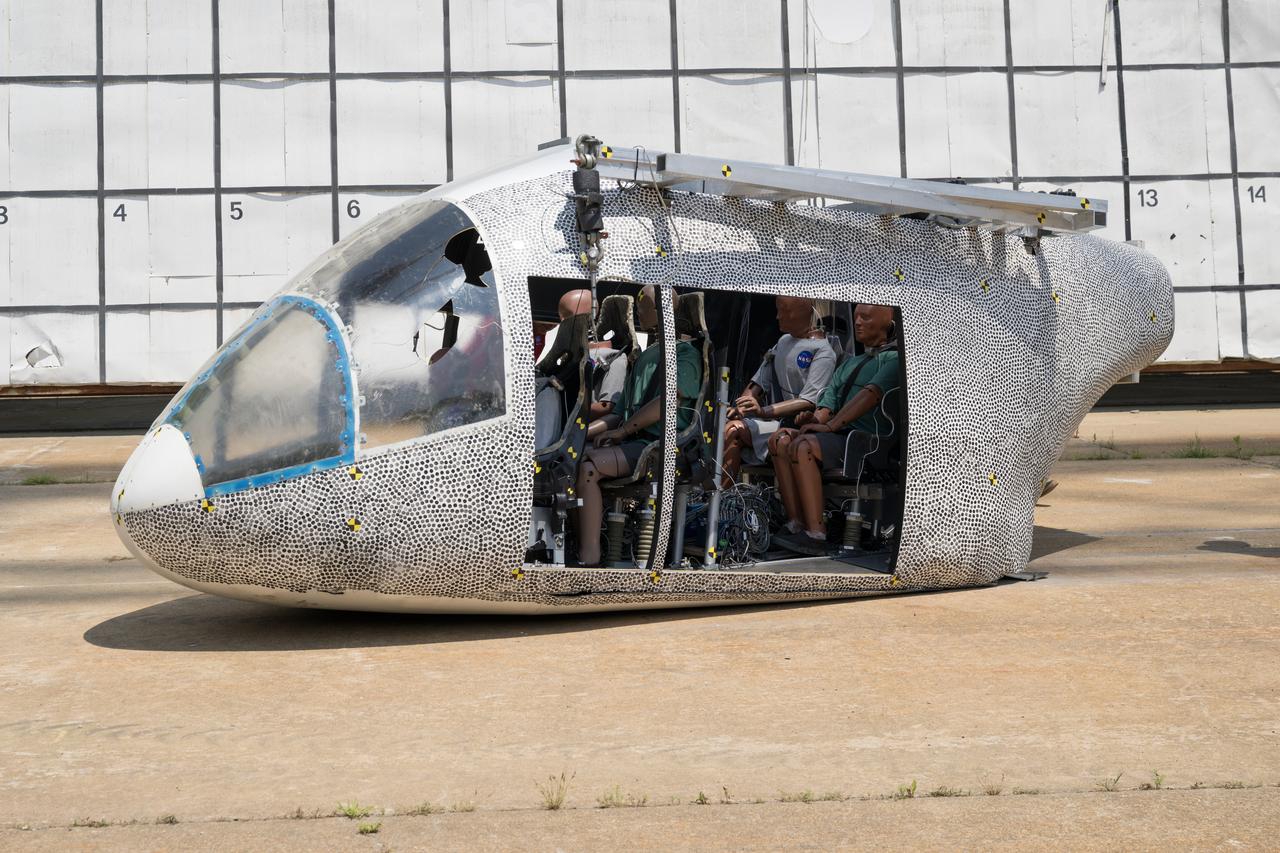
An aircraft body modeled after an air taxi with weighted test dummies inside is shown after a drop test at NASA’s Langley Research Center in Hampton, Virginia. The test was completed June 26 at Langley’s Landing and Impact Research Facility. The aircraft was dropped from a tall steel structure, known as a gantry, after being hoisted about 35 feet in the air by cables. NASA researchers are investigating aircraft materials that best absorb impact forces in a crash.
NASA Drop Test Supports Safer Air Taxi Designs
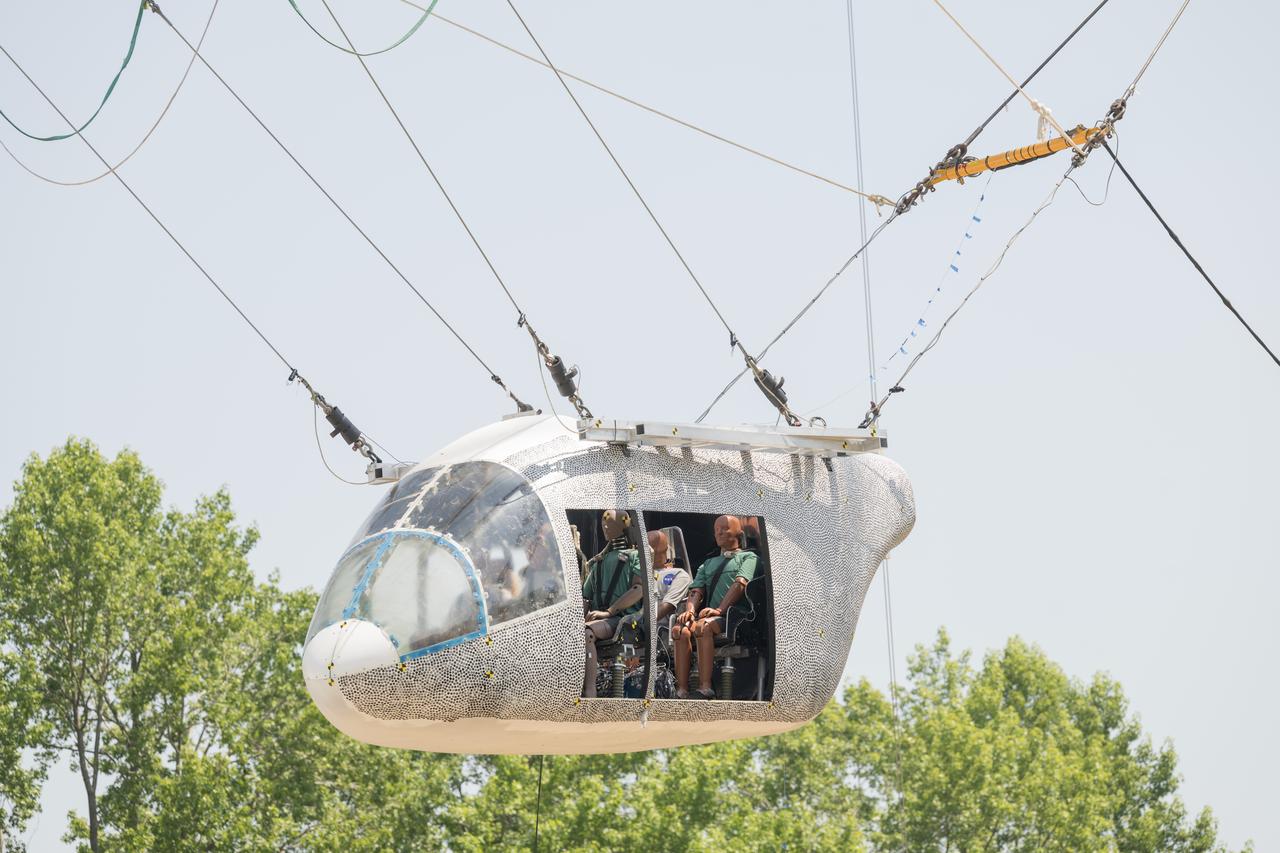
An aircraft body modeled after an air taxi with weighted test dummies inside is hoisted about 35 feet in the air by cables at NASA’s Langley Research Center in Hampton, Virginia. The aircraft was dropped from a tall steel structure, known as a gantry, on June 26 at Langley’s Landing and Impact Research Facility. NASA researchers are investigating aircraft materials that best absorb impact forces in a crash.
NASA Drop Test Supports Safer Air Taxi Designs
An aircraft body modeled after an air taxi with weighted test dummies inside is being prepared for a drop test by researchers at NASA’s Langley Research Center in Hampton, Virginia. The test was completed June 26 at Langley’s Landing and Impact Research Facility. The aircraft was dropped from a tall steel structure, known as a gantry, after being hoisted about 35 feet in the air by cables. NASA researchers are investigating aircraft materials that best absorb impact forces in a crash.
NASA Drop Test Supports Safer Air Taxi Designs
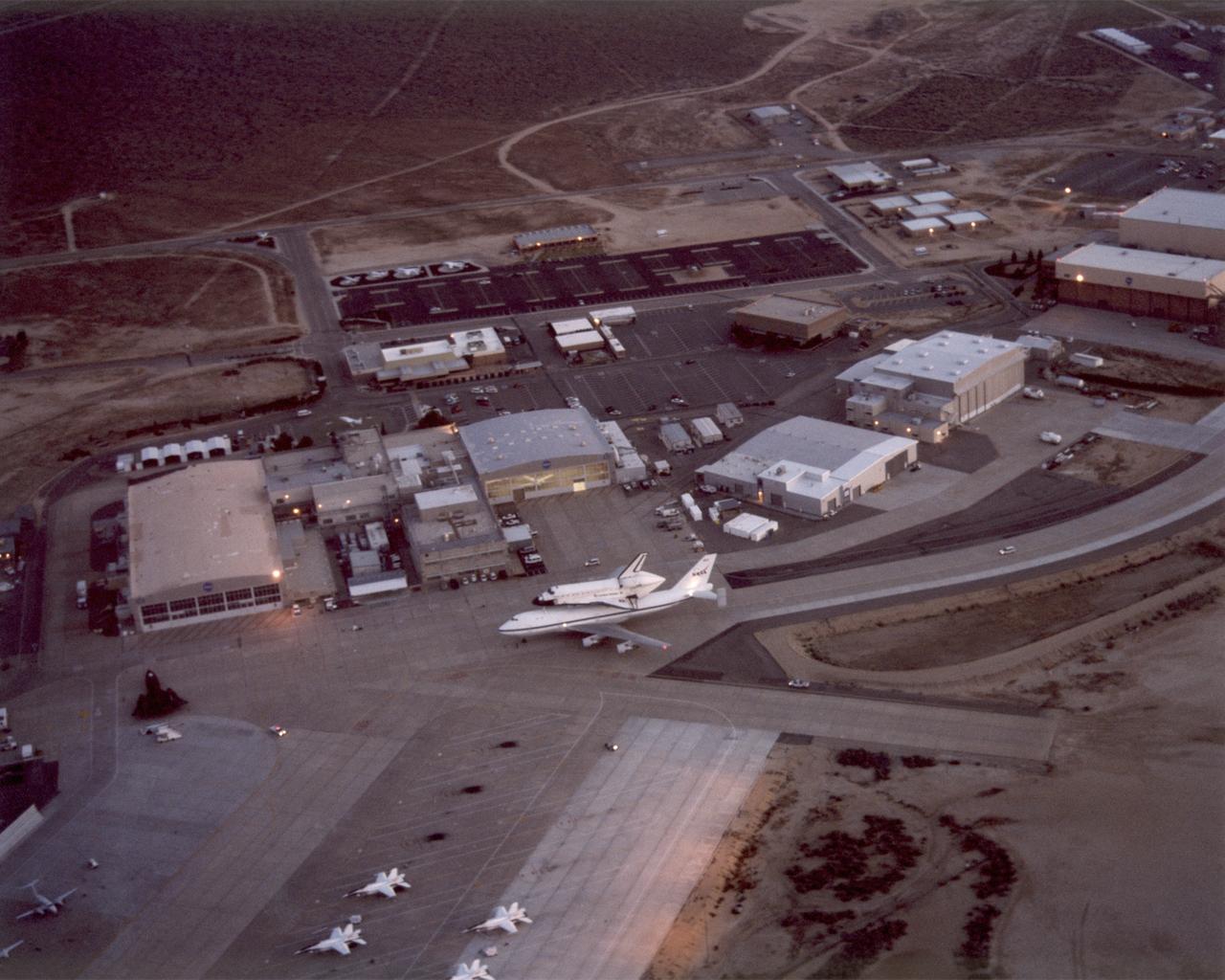
Aerial photo of NASA Dryden Flight Research Center with the Endeavour Space Shuttle and 747 Shuttle Carrier Aircraft taxiing on ramp.
Aerial photo of NASA Dryden Flight Research Center with the Endeavour Space Shuttle and 747 Shuttle Carrier Aircraft taxiing on ramp
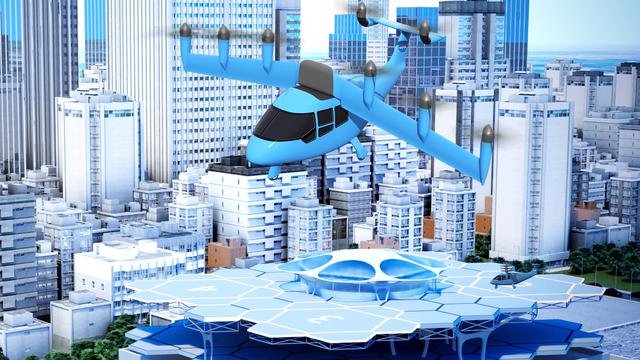
An idea for a future air taxi hovers over a municipal vertiport in this NASA illustration. Experts from NASA’s Advanced Air Mobility mission have signed agreements with four states and one city to host a series of workshops that will help local governments prepare their transportation plans to include this new form of air travel.
vertiport_CU_rev3
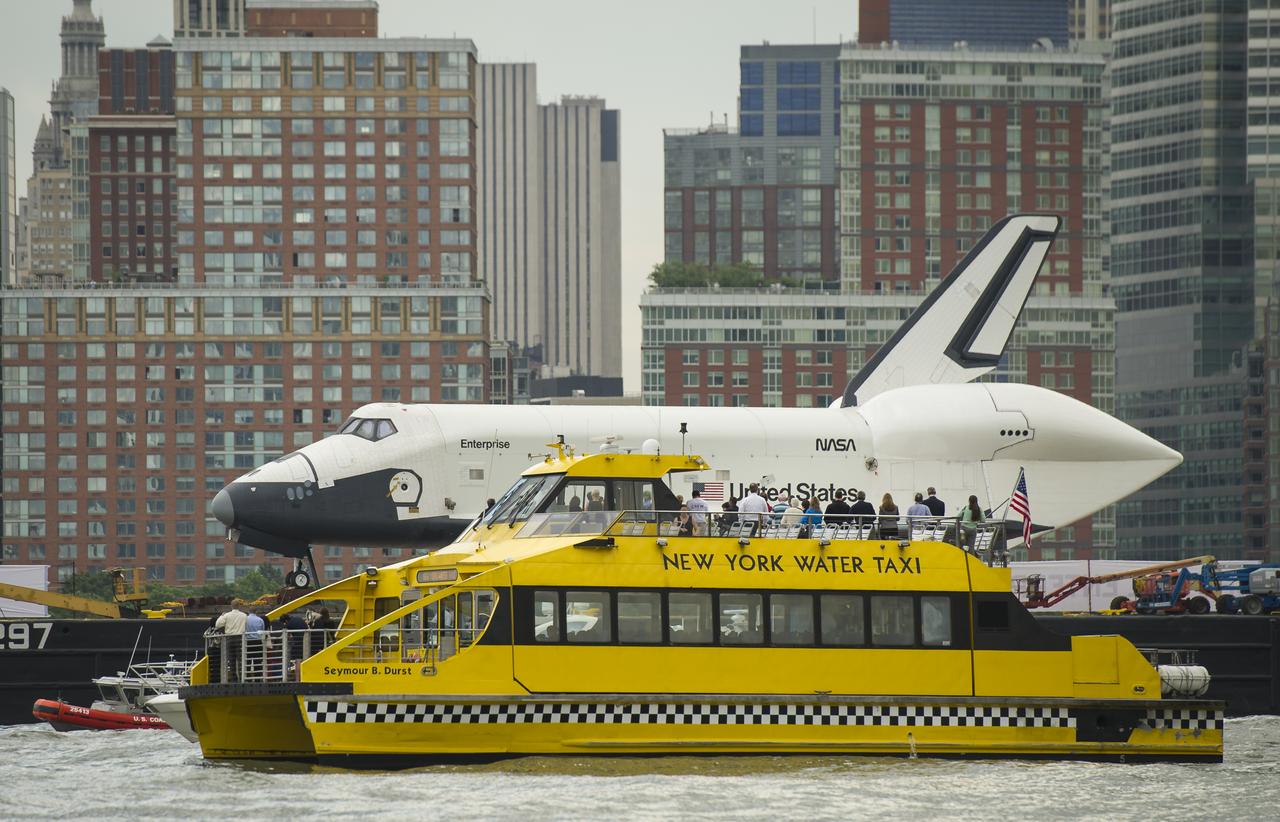
Riders onboard a New York Water Taxi get a close-up view of the space shuttle Enterprise as it is towed by barge up the Hudson River on it's way to the Intrepid Sea, Air and Space Museum where it will be permanently displayed, Wednesday, June 6, 2012 in New York City. Photo Credit: (NASA/Bill Ingalls)
Space Shuttle Enterprise Move to Intrepid
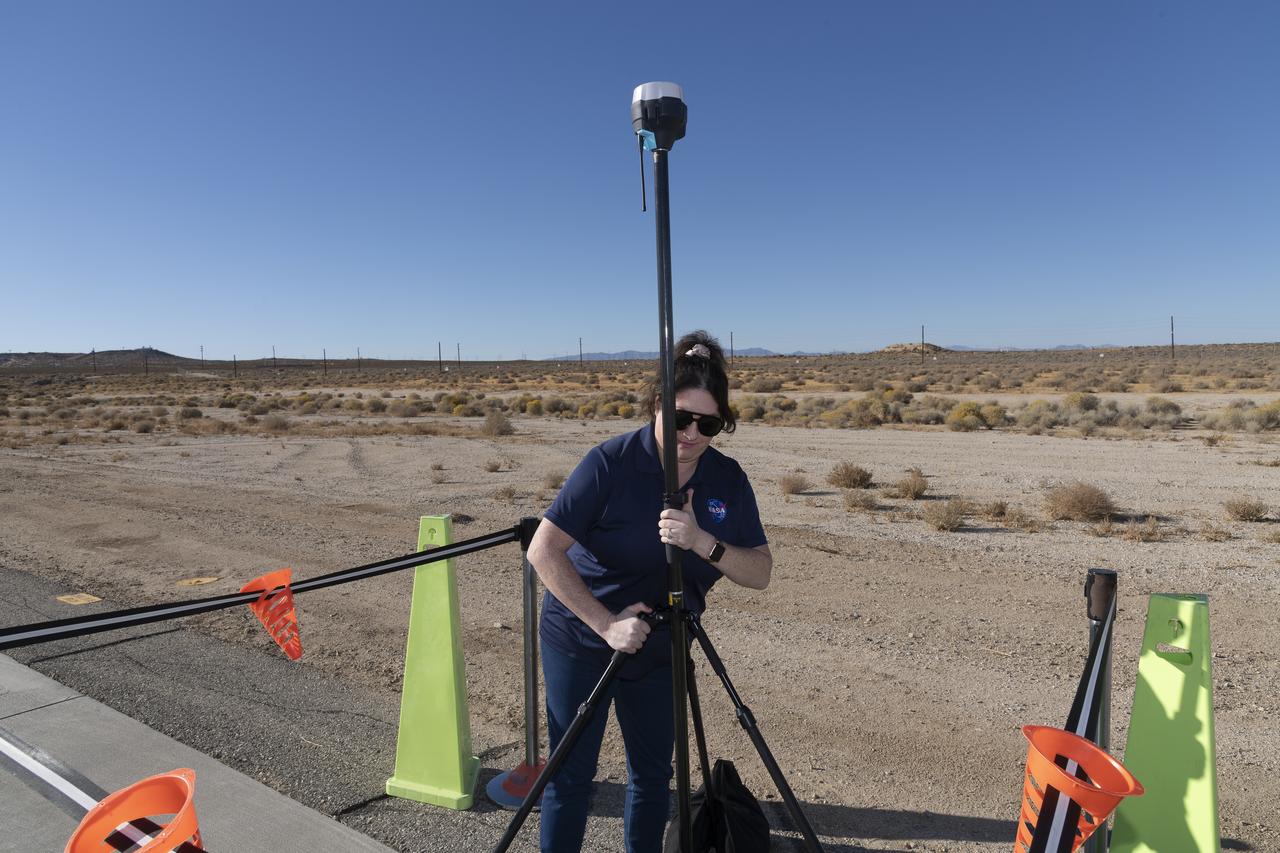
Saré Culbertson, NASA Pathways intern at NASA’s Armstrong Flight Research Center in Edwards, California, adjusts the Emlid Reach RS2+ receiver equipment that connects with GPS and global navigation satellite systems on Nov. 7, 2024, in preparation for future air taxi test flight research.
NASA Pathways Intern Adjusts Equipment for Air Taxi Tests
NASA's ultra-quiet YO-3A acoustics research aircraft taxis out from the ramp at the Dryden Flight Research Center before a pilot checkout flight.
NASA's ultra-quiet YO-3A acoustics research aircraft taxis out from the ramp at the Dryden Flight Research Center before a pilot checkout flight
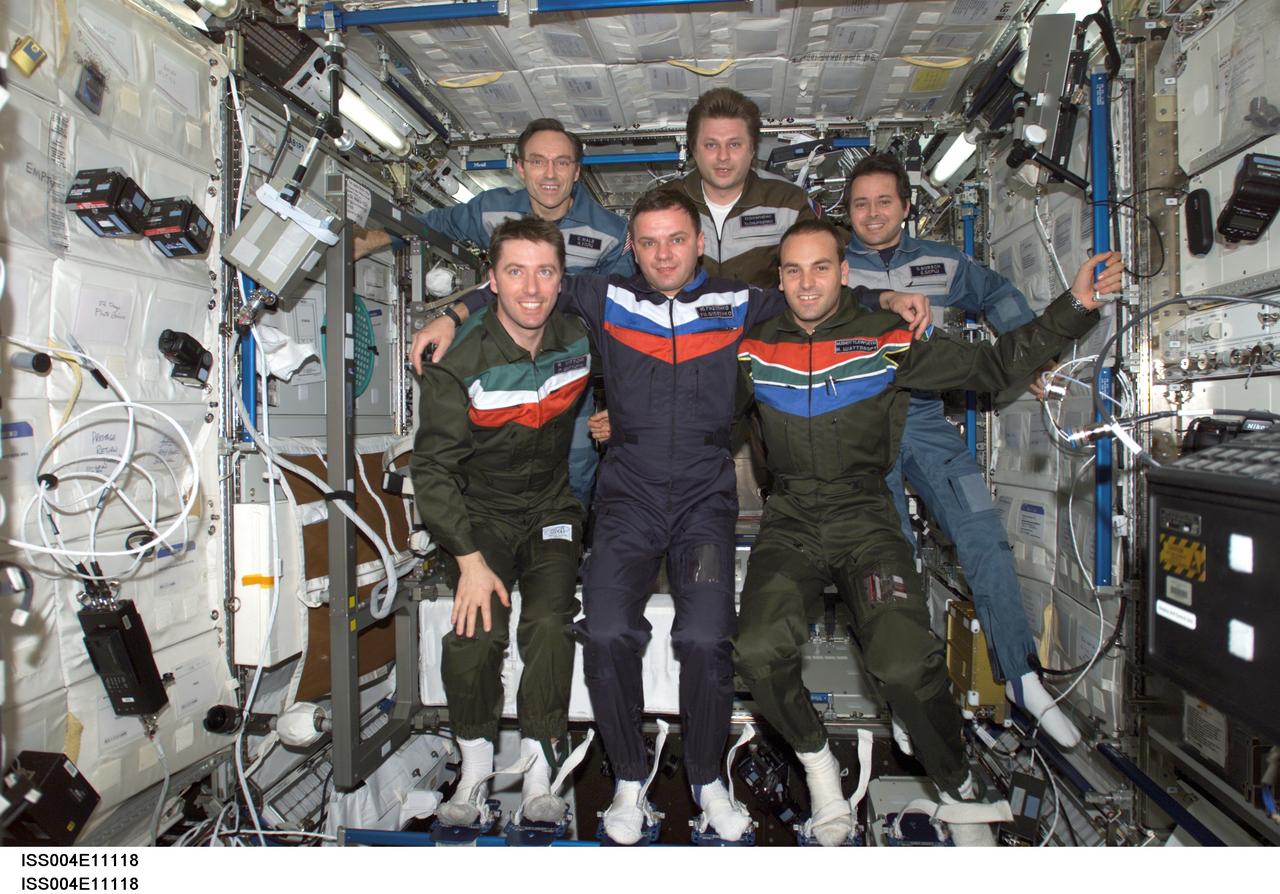
ISS004-E-11118 (2 May 2002) --- The Expedition Four and Soyuz 4 Taxi crews pose for a group photo in the Destiny laboratory on the International Space Station (ISS). The Soyuz 4 Taxi crew (front row), from the left, are flight engineer Roberto Vittori, commander Yuri Gidzenko, and South African space flight participant Mark Shuttleworth. The Expedition Four crew (back row), from the left, are astronaut Carl E. Walz, flight engineer; cosmonaut Yury I. Onufrienko, mission commander; and astronaut Daniel W. Bursch, flight engineer. Onufrienko and Gidzenko represent Rosaviakosmos and Vittori represents the European Space Agency (ESA).
Soyuz 4 taxi-3 flight and Expedition Four crews pose for group photo in U.S. Lab
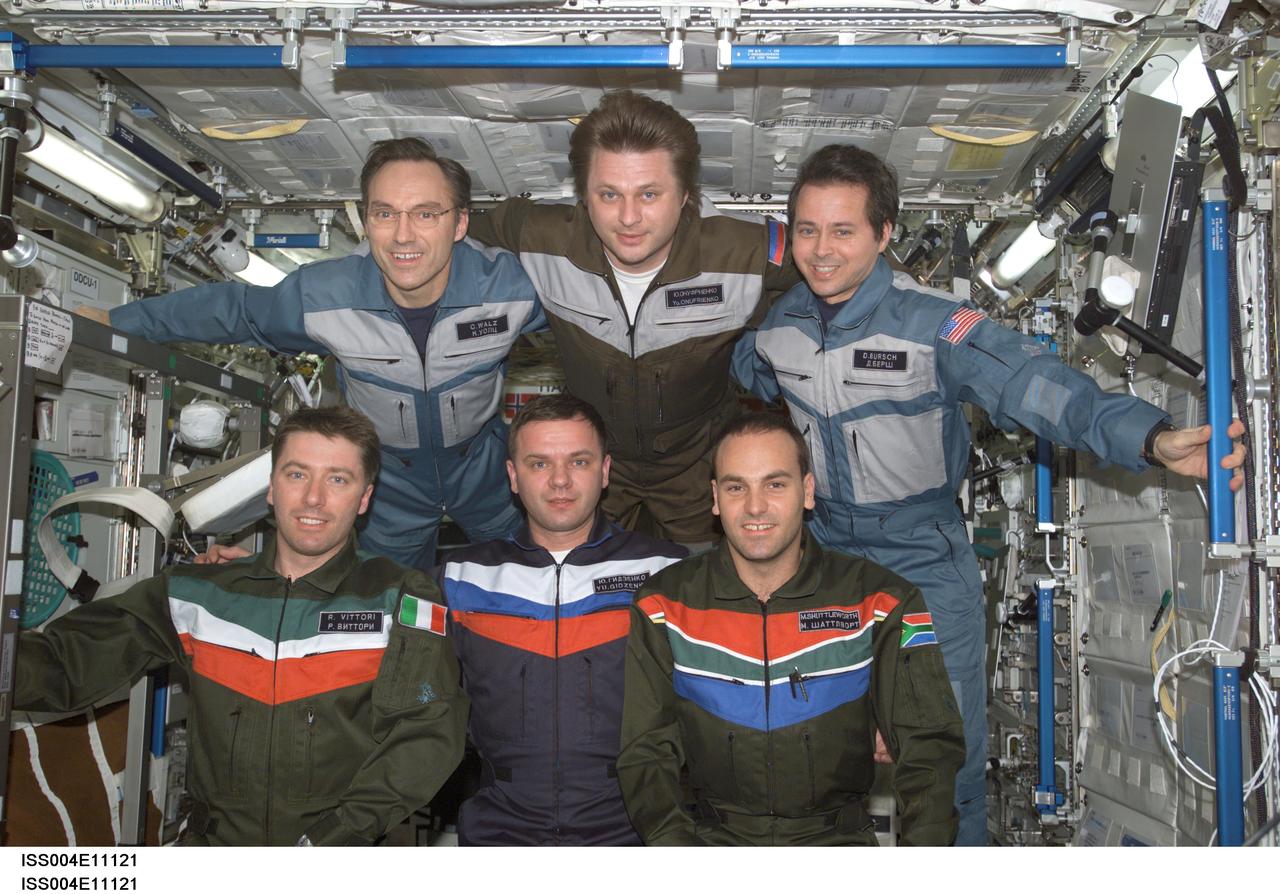
ISS004-E-11121 (2 May 2002) --- The Expedition Four and Soyuz 4 Taxi crews pose for a group photo in the Destiny laboratory on the International Space Station (ISS). The Soyuz 4 Taxi crew (front row), from the left, are flight engineer Roberto Vittori, commander Yuri Gidzenko, and South African space flight participant Mark Shuttleworth. The Expedition Four crew (back row), from the left, are astronaut Carl E. Walz, flight engineer; cosmonaut Yury I. Onufrienko, mission commander; and astronaut Daniel W. Bursch, flight engineer. Onufrienko and Gidzenko represent Rosaviakosmos and Vittori represents the European Space Agency (ESA).
Soyuz 4 taxi-3 flight and Expedition Four crews pose for group photo in U.S. Lab
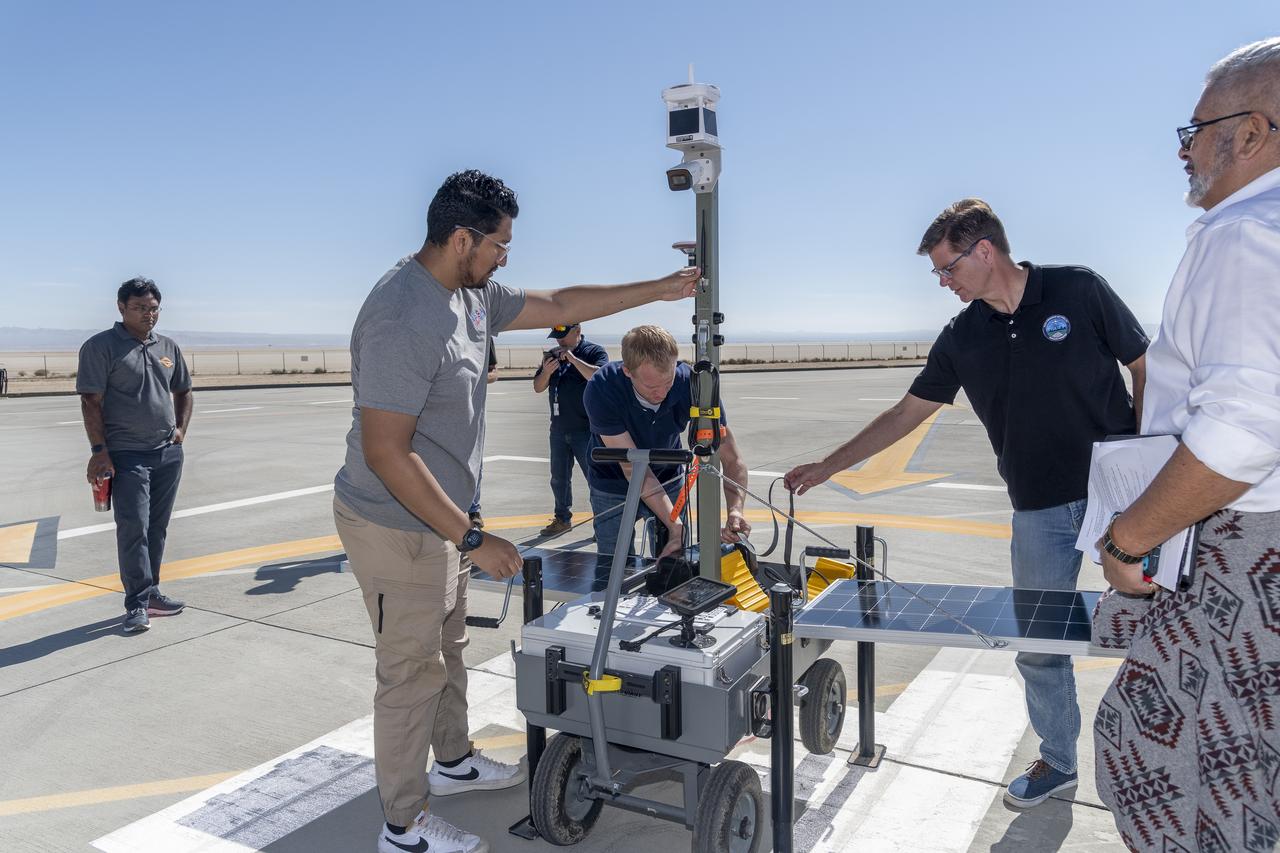
NASA operations engineer Daniel Velasquez, left, is reviewing the Mobile Vertipad Sensor Package system as part of the Air Mobility Pathways test project at NASA's Armstrong Flight Research Center in Edwards, California on October 17, 2023. The portable system allows Advanced Air Mobility researchers to test and evaluate several factors involved in monitoring takeoff and landing conditions at vertipad sites. "Vertipads" or "vertiports" will be where future air taxis will land and take off to transport passengers.
Air Mobility Pathways Test Project
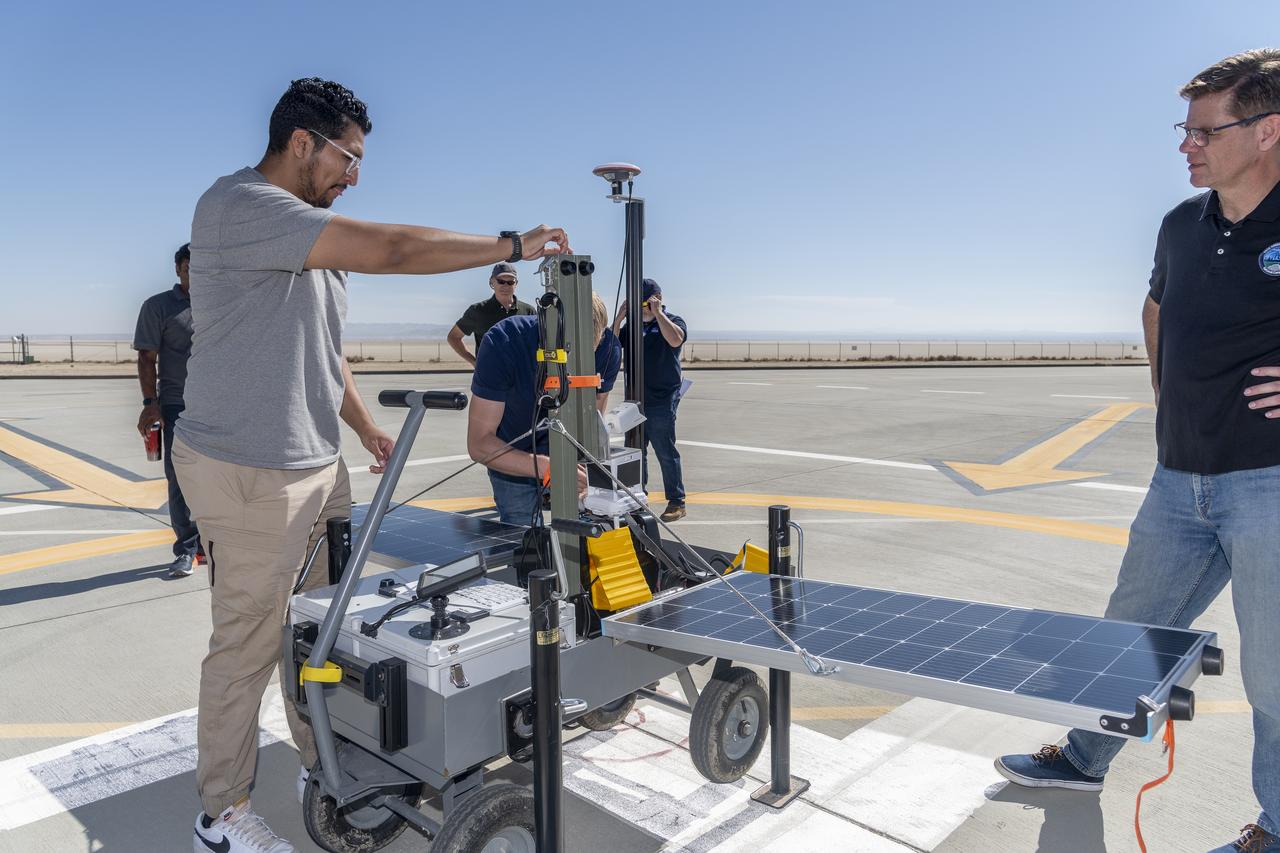
NASA operations engineer Daniel Velasquez, left, is reviewing the Mobile Vertipad Sensor Package system as part of the Air Mobility Pathways test project at NASA's Armstrong Flight Research Center in Edwards, California on October 17, 2023. The portable system allows Advanced Air Mobility researchers to test and evaluate several factors involved in monitoring takeoff and landing conditions at vertipad sites. "Vertipads" or "vertiports" will be where future air taxis will land and take off to transport passengers.
Air Mobility Pathways Test Project
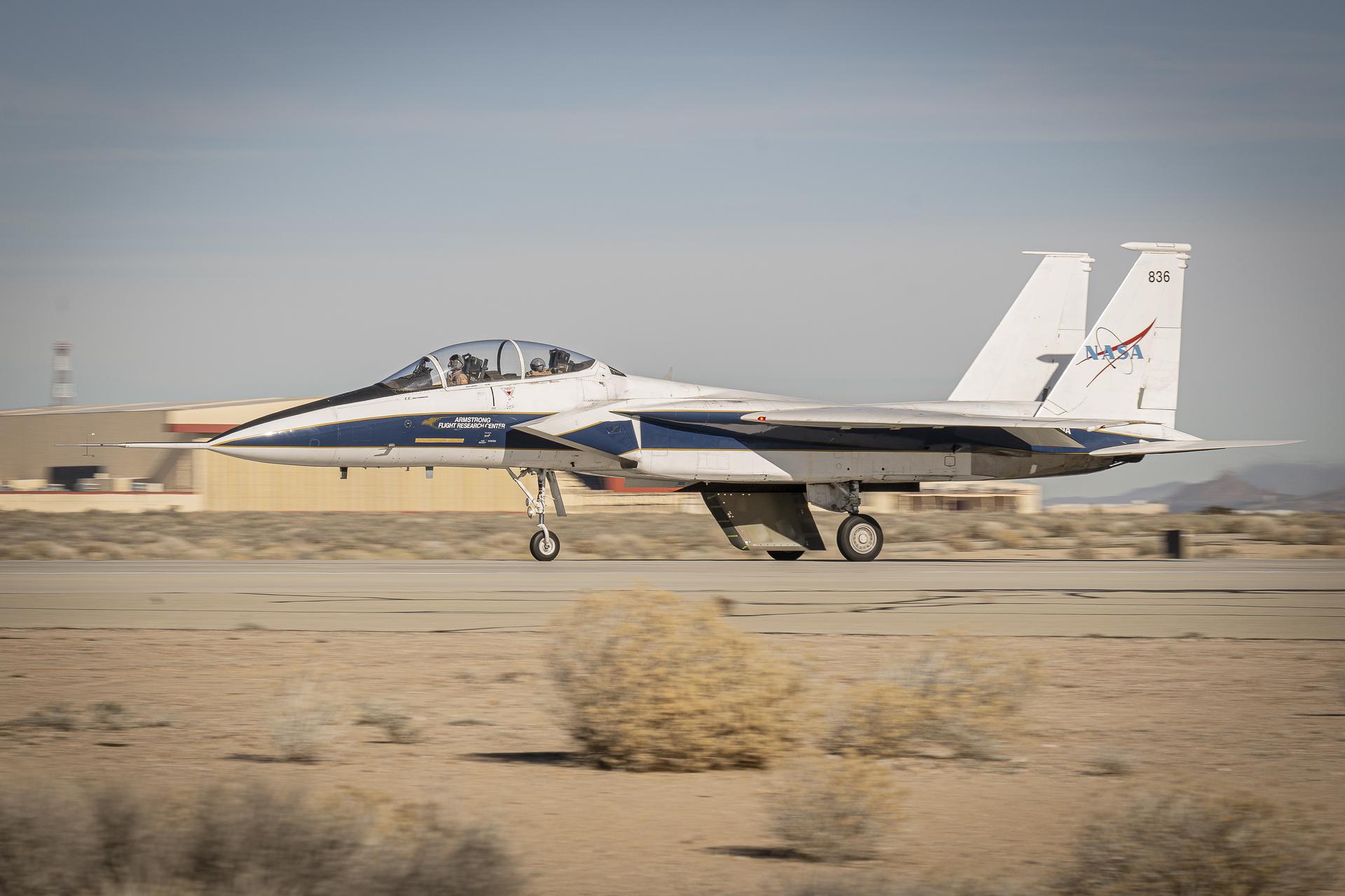
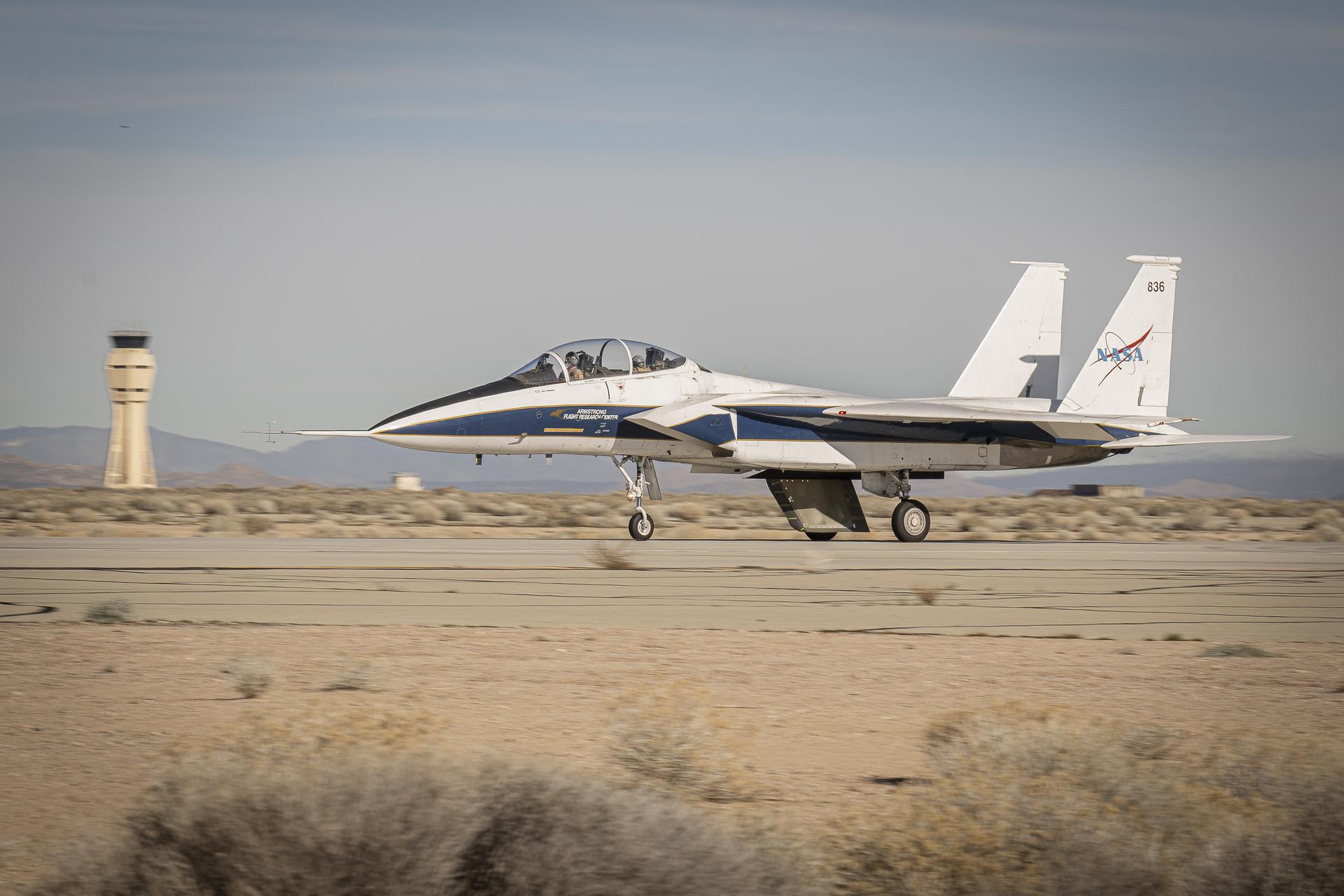
NASA’s Cross Flow Attenuated Natural Laminar Flow (CATNLF) scale model completes its first major milestone – high-speed taxi test – Tuesday, Jan. 12, 2026, at Edwards Air Force Base in California. NASA’s F-15 research aircraft, with the 3-foot-tall test article mounted on its underside, reached speeds of approximately 144 mph during testing. If successful, the technology could be applied to future commercial aircraft to improve efficiency and potentially reduce fuel consumption.
NASA Completes High-Speed Taxi Test of Cross Flow Attenuated Natural Laminar Flow Technology
NASA’s Cross Flow Attenuated Natural Laminar Flow (CATNLF) scale model completes its first major milestone – high-speed taxi test – Tuesday, Jan. 12, 2026, at Edwards Air Force Base in California. NASA’s F-15 research aircraft, with the 3-foot-tall test article mounted on its underside, reached speeds of approximately 144 mph during testing. If successful, the technology could be applied to future commercial aircraft to improve efficiency and potentially reduce fuel consumption.
NASA Completes High-Speed Taxi Test of Cross Flow Attenuated Natural Laminar Flow Technology
ISS003-E-7129 (31 October 2001) --- A Soyuz spacecraft departs from the International Space Station (ISS) carrying the Soyuz taxi crew, Commander Victor Afanasyev, Flight Engineer Konstantin Kozeev and French Flight Engineer Claudie Haignere, ending their eight-day stay on the station. Afanasyev and Kozeev represent Rosaviakosmos, and Haignere represents ESA, carrying out a flight program for CNES, the French Space Agency, under a commercial contract with the Russian Aviation and Space Agency. This image was taken with a digital still camera.
View of the Soyuz carrying the Taxi crew during undocking from the ISS
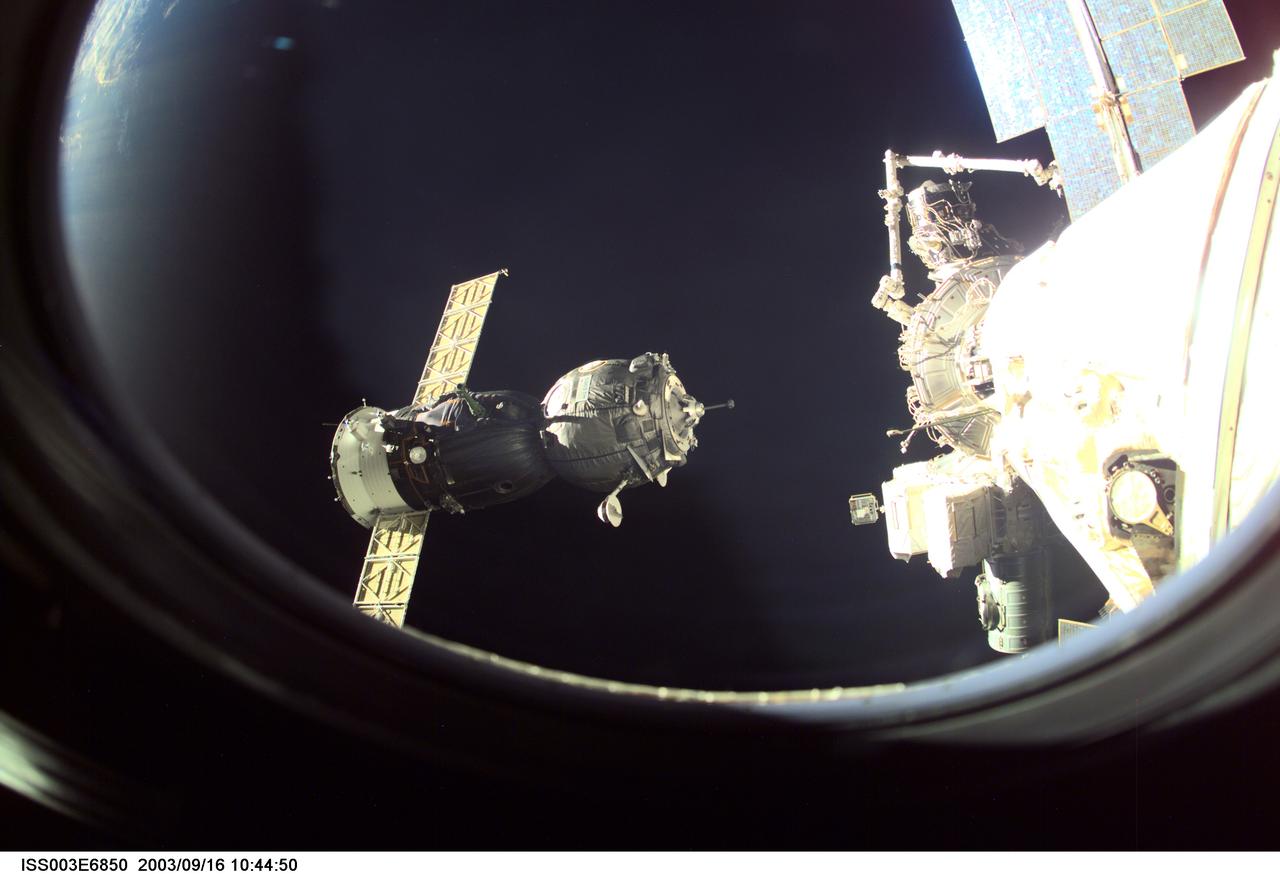
ISS003-E-6850 (23 October 2001) --- A Soyuz spacecraft approaches the International Space Station (ISS) carrying the Soyuz taxi crew, Commander Victor Afanasyev, Flight Engineer Konstantin Kozeev and French Flight Engineer Claudie Haignere for an eight-day stay on the station. Afanasyev and Kozeev represent Rosaviakosmos, and Haignere represents ESA, carrying out a flight program for CNES, the French Space Agency, under a commercial contract with the Russian Aviation and Space Agency. This image was taken with a digital still camera.
View of the approach of the Soyuz carrying the Taxi crew taken during Expedition Three
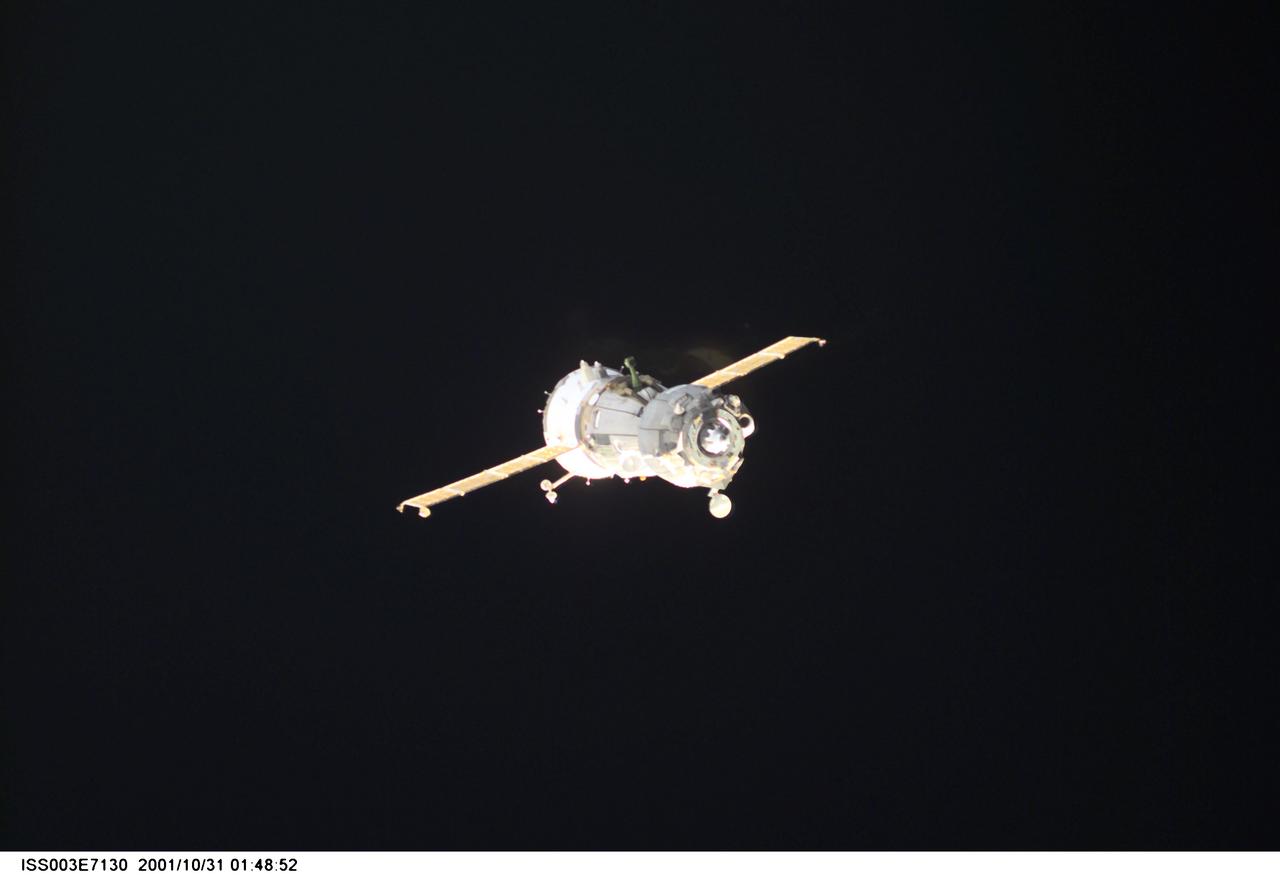
ISS003-E-7130 (31 October 2001) --- A Soyuz spacecraft departs from the International Space Station (ISS) carrying the Soyuz taxi crew, Commander Victor Afanasyev, Flight Engineer Konstantin Kozeev and French Flight Engineer Claudie Haignere, ending their eight-day stay on the station. Afanasyev and Kozeev represent Rosaviakosmos, and Haignere represents ESA, carrying out a flight program for CNES, the French Space Agency, under a commercial contract with the Russian Aviation and Space Agency. This image was taken with a digital still camera.
View of the Soyuz carrying the Taxi crew during undocking from the ISS
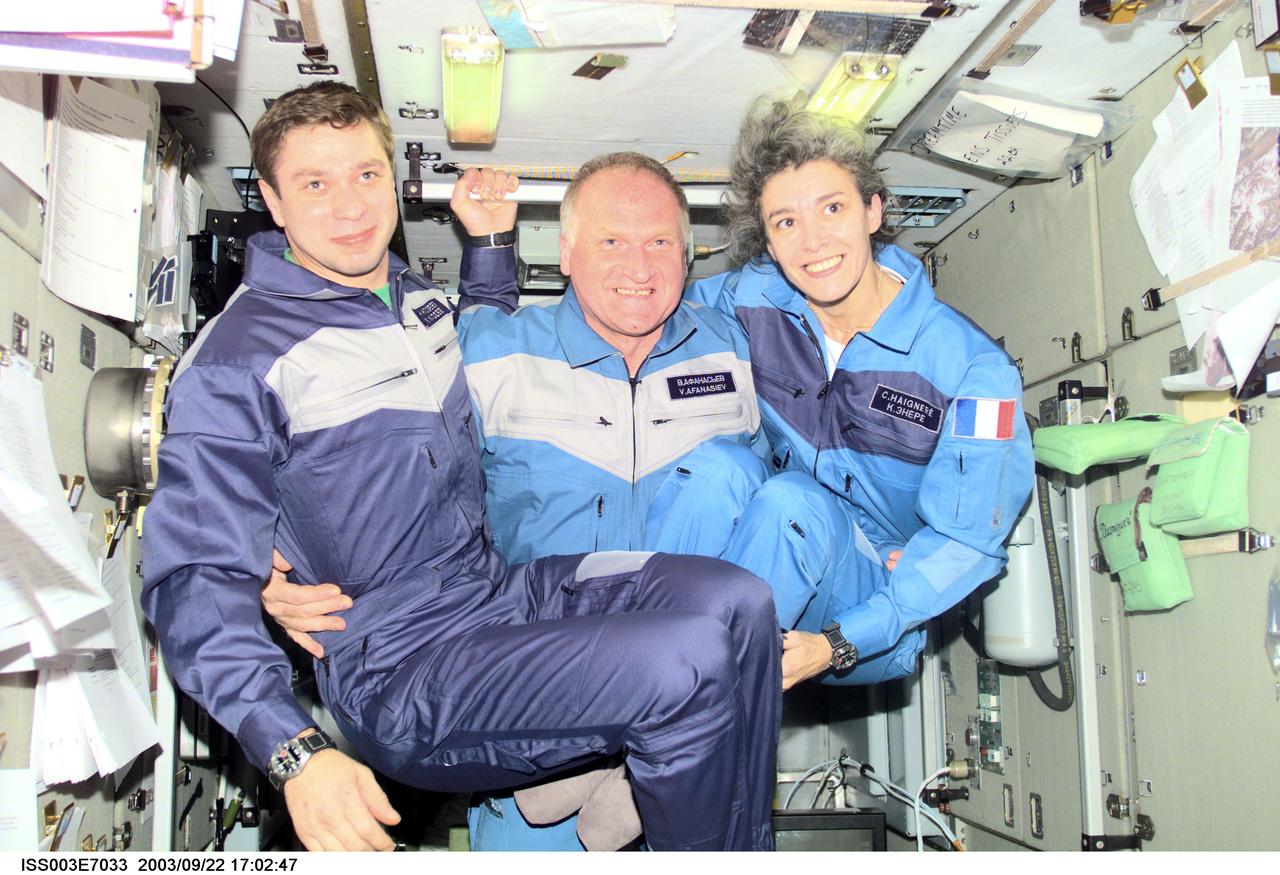
ISS003-E-7033 (23-31 October 2001) --- The Soyuz Taxi crewmembers assemble for a group photo in the Zvezda Service Module on the International Space Station (ISS). From the left are Flight Engineer Konstantin Kozeev, Commander Victor Afanasyev, and French Flight Engineer Claudie Haignere. Afanasyev and Kozeev represent Rosaviakosmos, and Haignere represents ESA, carrying out a flight program for CNES, the French Space Agency, under a commercial contract with the Russian Aviation and Space Agency. This image was taken with a digital still camera.
The Soyuz Taxi crew pose for a group photo in Zvezda during Expedition Three
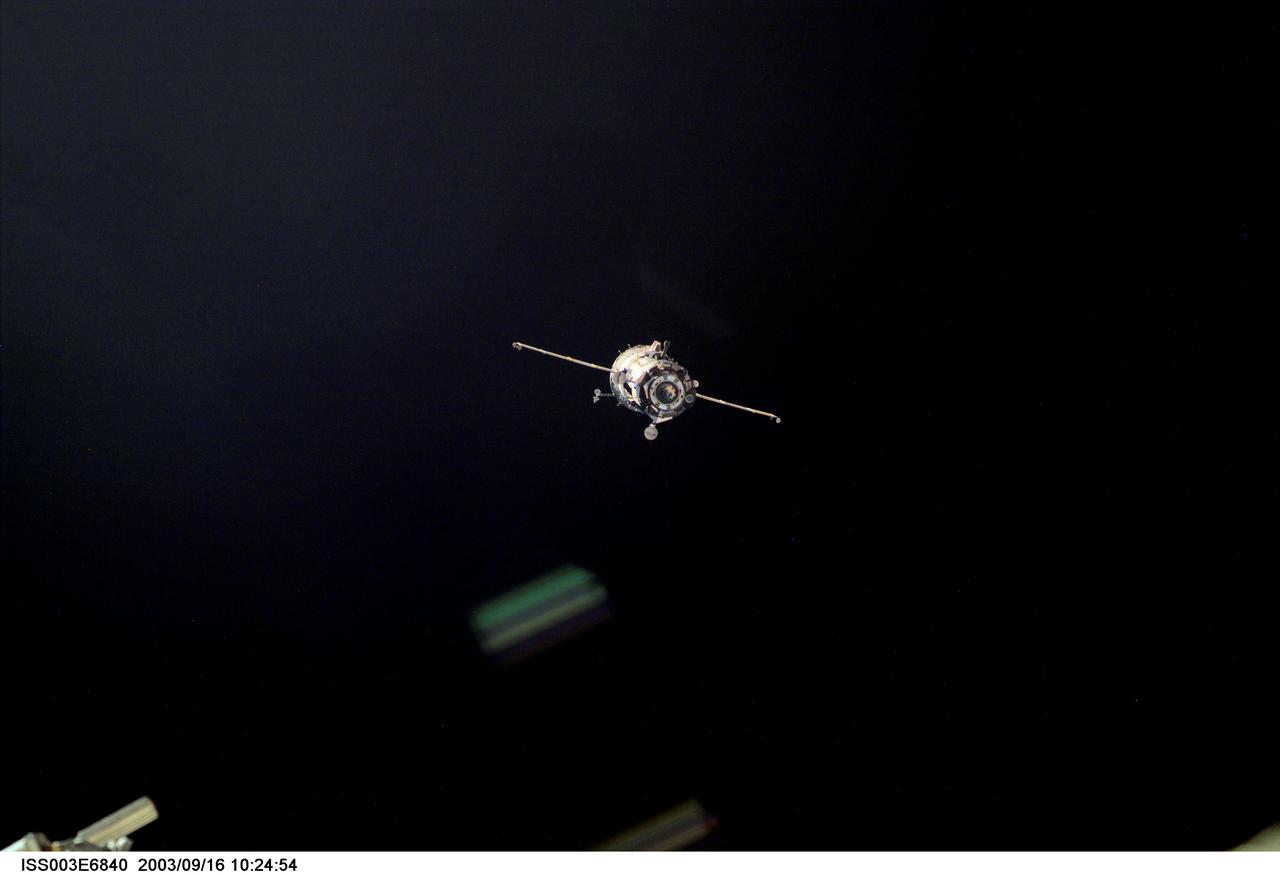
ISS003-E-6840 (23 October 2001) --- A Soyuz spacecraft approaches the International Space Station (ISS) carrying the Soyuz taxi crew, Commander Victor Afanasyev, Flight Engineer Konstantin Kozeev and French Flight Engineer Claudie Haignere for an eight-day stay on the station. Afanasyev and Kozeev represent Rosaviakosmos, and Haignere represents ESA, carrying out a flight program for CNES, the French Space Agency, under a commercial contract with the Russian Aviation and Space Agency. This image was taken with a digital still camera.
View of the approach of the Soyuz carrying the Taxi crew taken during Expedition Three
The Perseus B remotely piloted aircraft taxis on the runway at Edwards Air Force Base, California, before a series of development flights at NASA's Dryden flight Research Center. The Perseus B is the latest of three versions of the Perseus design developed by Aurora Flight Sciences under NASA's Environmental Research Aircraft and Sensor Technology (ERAST) program.
Perseus B Taxi Tests in Preparation for a New Series of Flight Tests
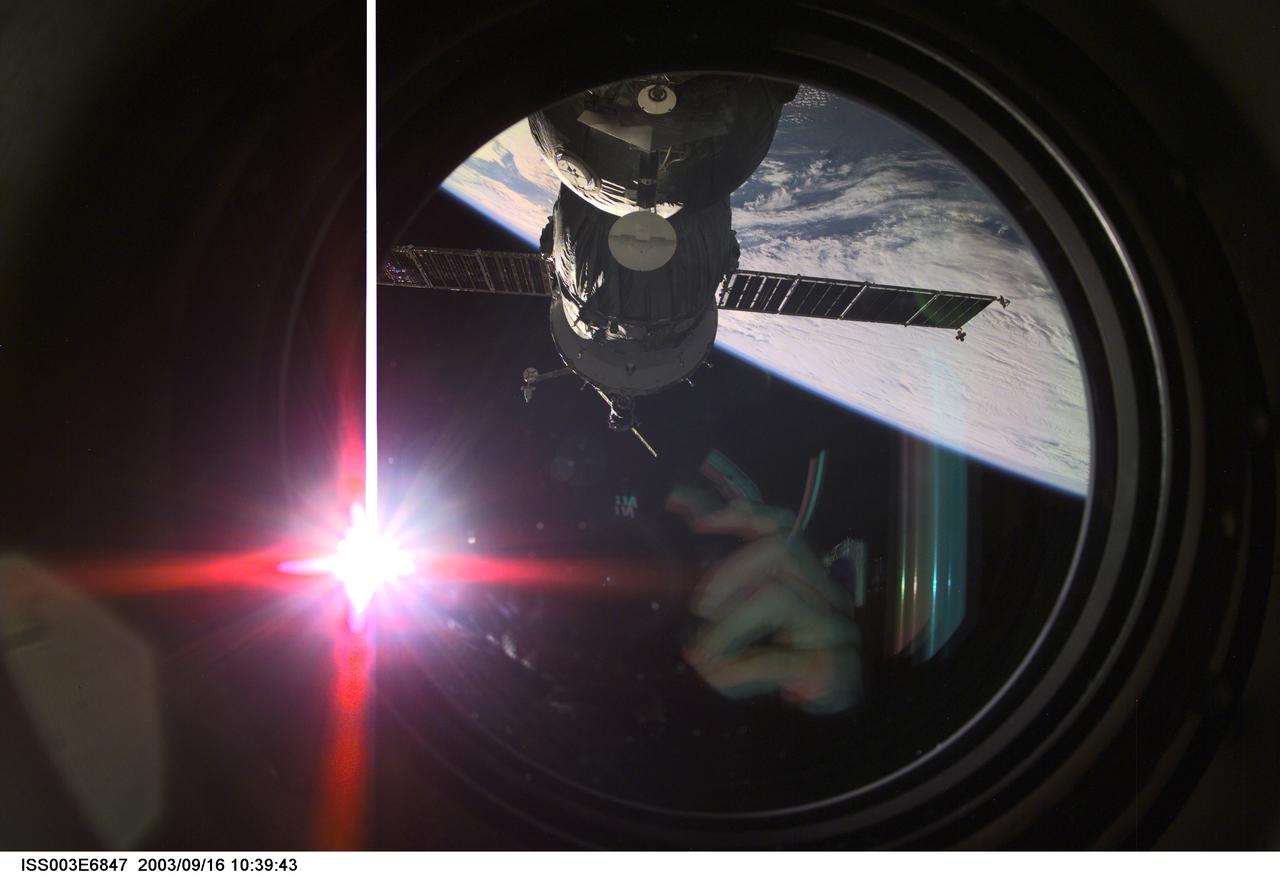
ISS003-E-6847 (23 October 2001) --- A Soyuz spacecraft approaches the International Space Station (ISS) carrying the Soyuz taxi crew, Commander Victor Afanasyev, Flight Engineer Konstantin Kozeev and French Flight Engineer Claudie Haignere for an eight-day stay on the station. Afanasyev and Kozeev represent Rosaviakosmos, and Haignere represents ESA, carrying out a flight program for CNES, the French Space Agency, under a commercial contract with the Russian Aviation and Space Agency. This image was taken with a digital still camera.
View of the approach of the Soyuz carrying the Taxi crew taken during Expedition Three
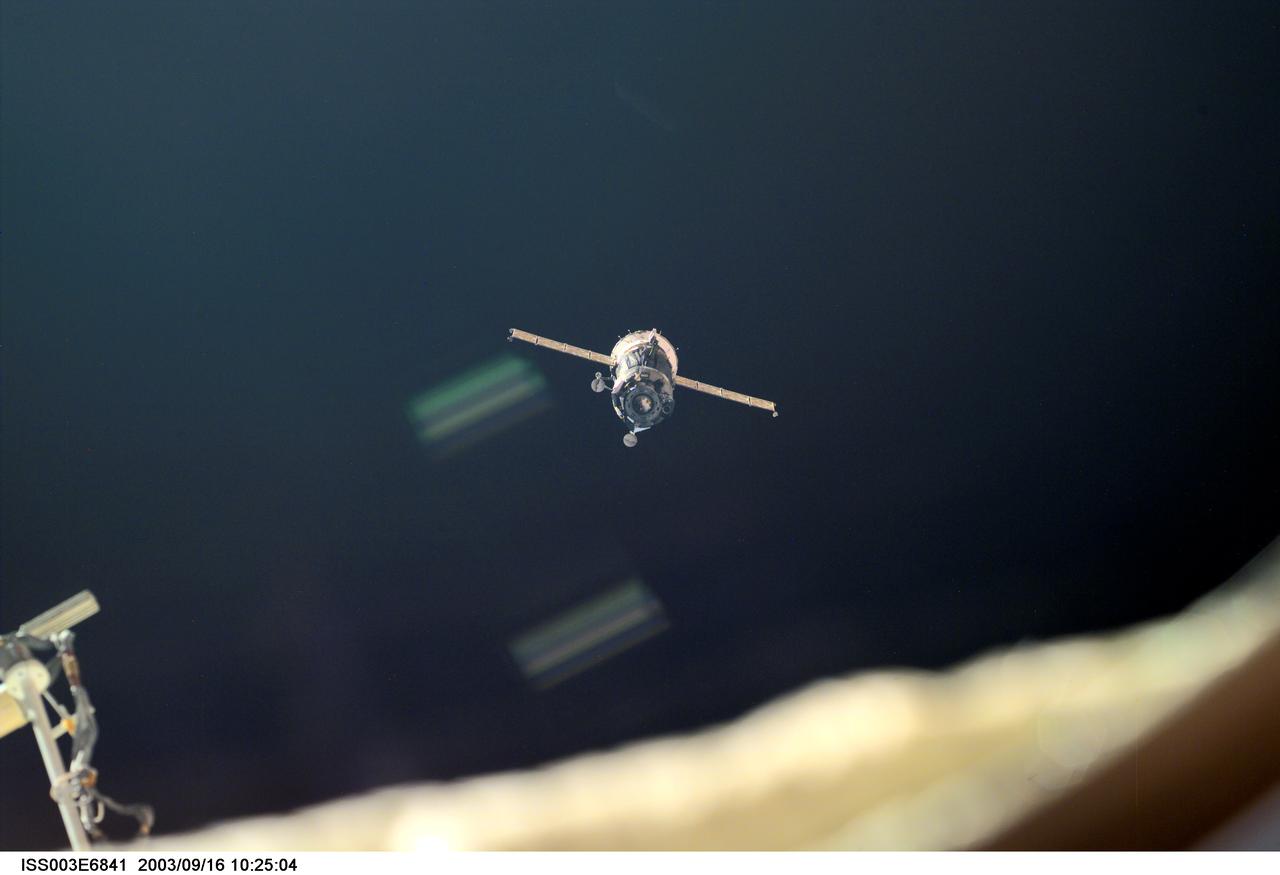
ISS003-E-6841 (23 October 2001) --- A Soyuz spacecraft approaches the International Space Station (ISS) carrying the Soyuz taxi crew, Commander Victor Afanasyev, Flight Engineer Konstantin Kozeev and French Flight Engineer Claudie Haignere for an eight-day stay on the station. Afanasyev and Kozeev represent Rosaviakosmos, and Haignere represents ESA, carrying out a flight program for CNES, the French Space Agency, under a commercial contract with the Russian Aviation and Space Agency. This image was taken with a digital still camera.
View of the approach of the Soyuz carrying the Taxi crew taken during Expedition Three
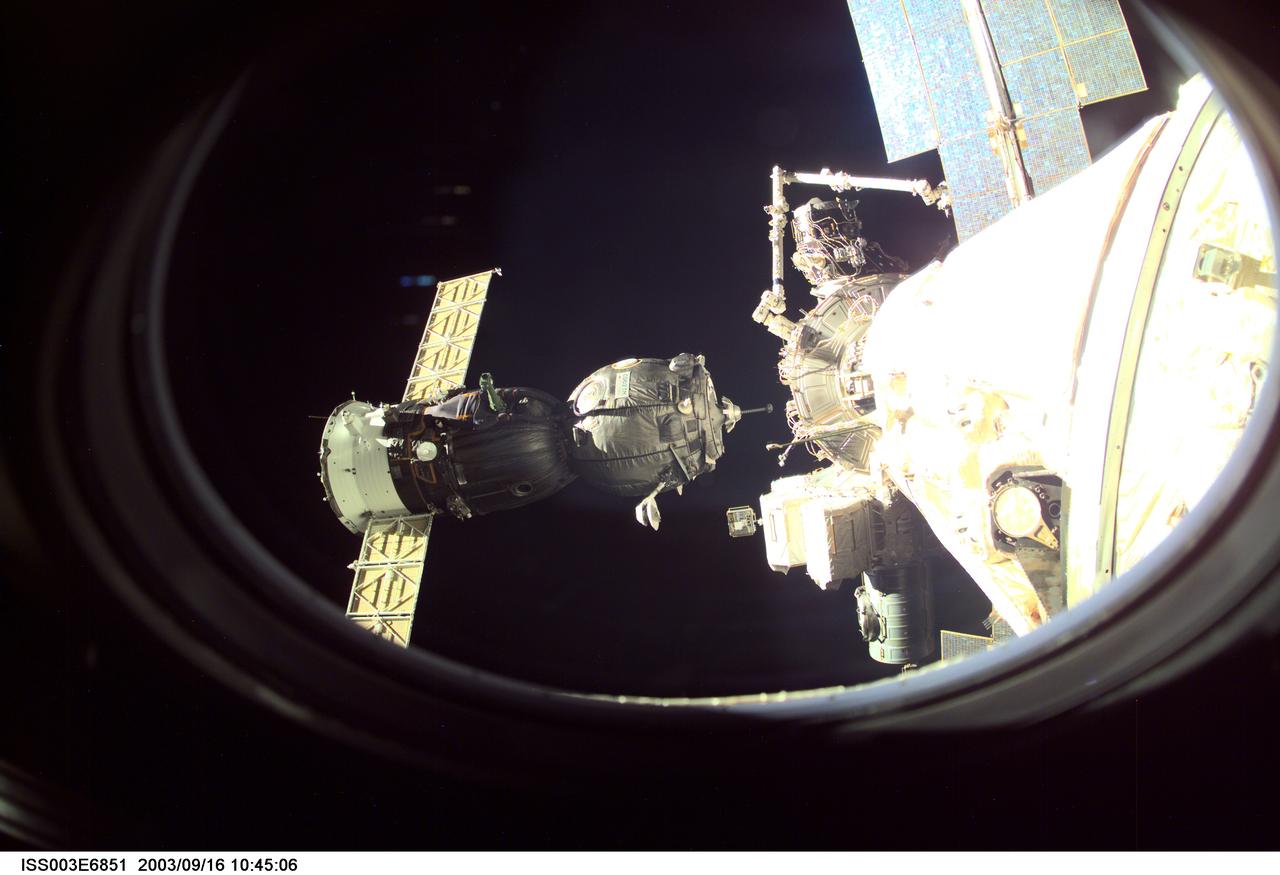
ISS003-E-6851 (23 October 2001) --- A Soyuz spacecraft approaches the International Space Station (ISS) carrying the Soyuz taxi crew, Commander Victor Afanasyev, Flight Engineer Konstantin Kozeev and French Flight Engineer Claudie Haignere for an eight-day stay on the station. Afanasyev and Kozeev represent Rosaviakosmos, and Haignere represents ESA, carrying out a flight program for CNES, the French Space Agency, under a commercial contract with the Russian Aviation and Space Agency. This image was taken with a digital still camera.
View of the approach of the Soyuz carrying the Taxi crew taken during Expedition Three
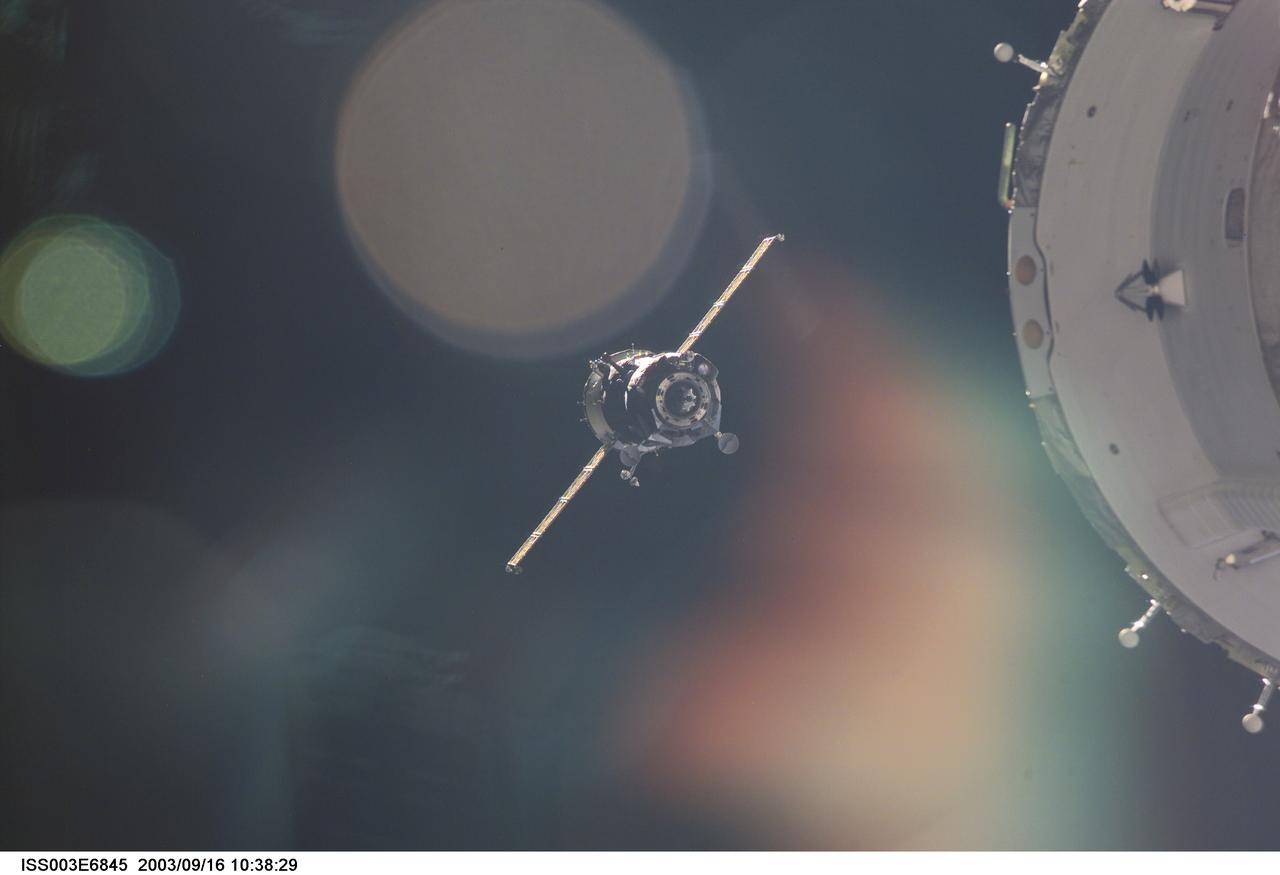
ISS003-E-6845 (23 October 2001) --- A Soyuz spacecraft approaches the International Space Station (ISS) carrying the Soyuz taxi crew, Commander Victor Afanasyev, Flight Engineer Konstantin Kozeev and French Flight Engineer Claudie Haignere for an eight-day stay on the station. Afanasyev and Kozeev represent Rosaviakosmos, and Haignere represents ESA, carrying out a flight program for CNES, the French Space Agency, under a commercial contract with the Russian Aviation and Space Agency. This image was taken with a digital still camera.
View of the approach of the Soyuz carrying the Taxi crew taken during Expedition Three
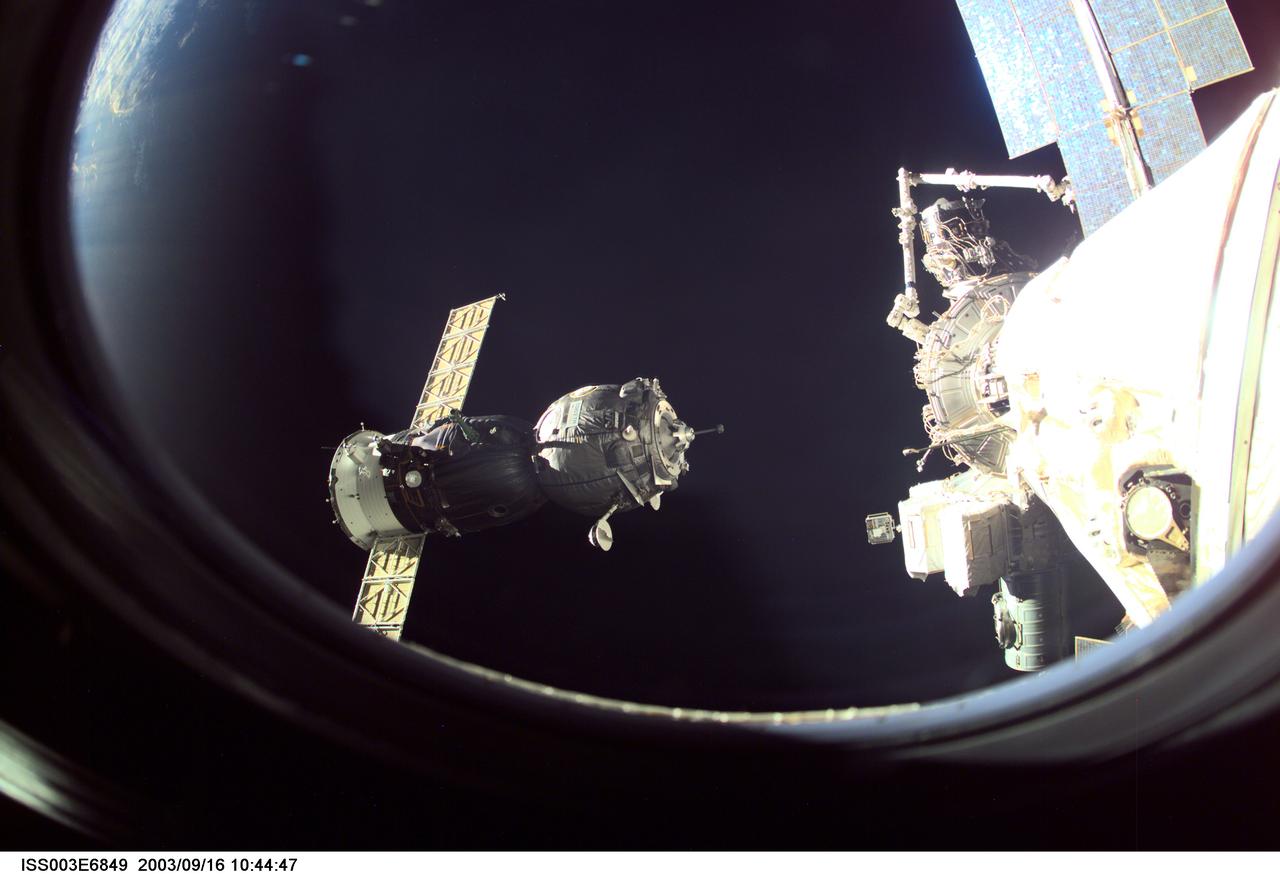
ISS003-E-6849 (23 October 2001) --- A Soyuz spacecraft approaches the International Space Station (ISS) carrying the Soyuz taxi crew, Commander Victor Afanasyev, Flight Engineer Konstantin Kozeev and French Flight Engineer Claudie Haignere for an eight-day stay on the station. Afanasyev and Kozeev represent Rosaviakosmos, and Haignere represents ESA, carrying out a flight program for CNES, the French Space Agency, under a commercial contract with the Russian Aviation and Space Agency. This image was taken with a digital still camera.
View of the approach of the Soyuz carrying the Taxi crew taken during Expedition Three
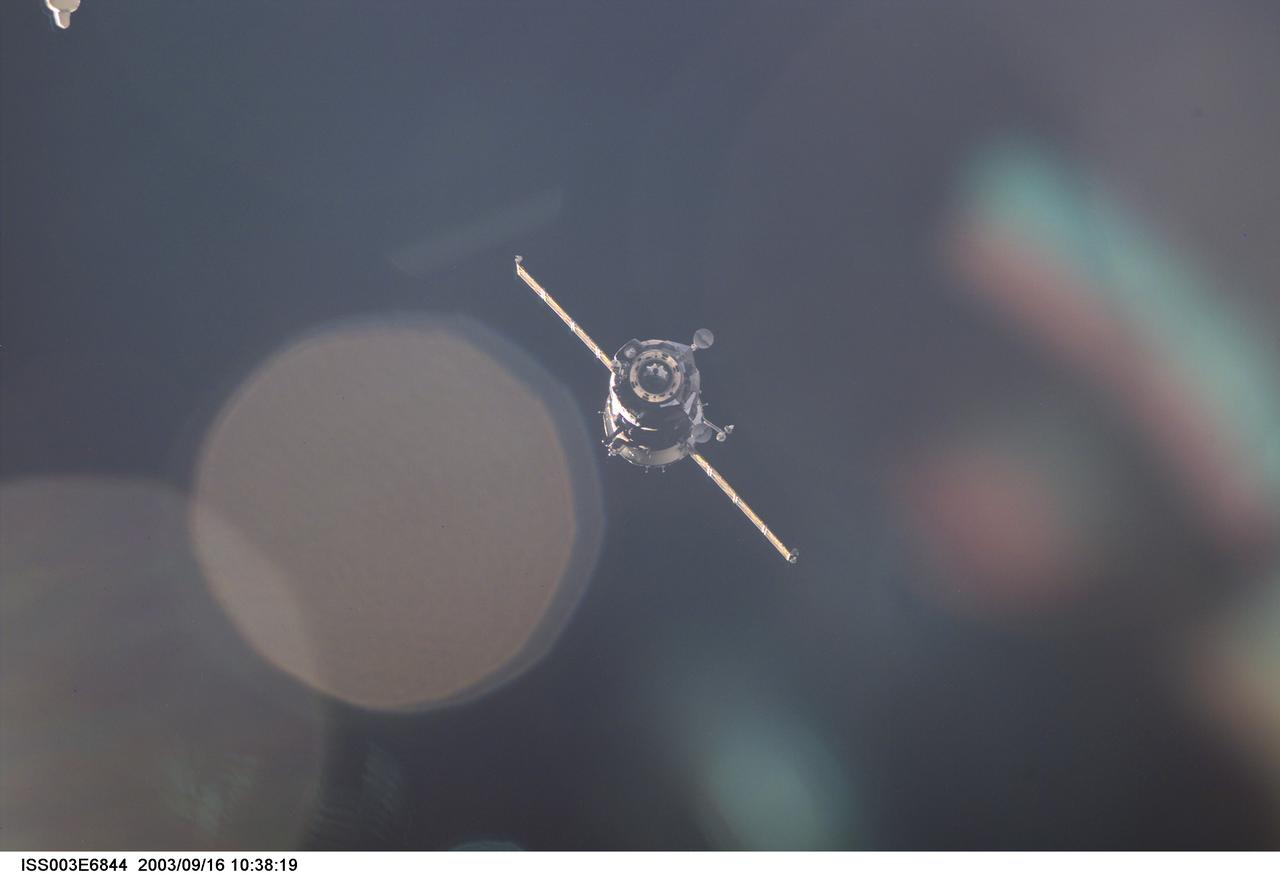
ISS003-E-6844 (23 October 2001) --- A Soyuz spacecraft approaches the International Space Station (ISS) carrying the Soyuz taxi crew, Commander Victor Afanasyev, Flight Engineer Konstantin Kozeev and French Flight Engineer Claudie Haignere for an eight-day stay on the station. Afanasyev and Kozeev represent Rosaviakosmos, and Haignere represents ESA, carrying out a flight program for CNES, the French Space Agency, under a commercial contract with the Russian Aviation and Space Agency. This image was taken with a digital still camera.
View of the approach of the Soyuz carrying the Taxi crew taken during Expedition Three
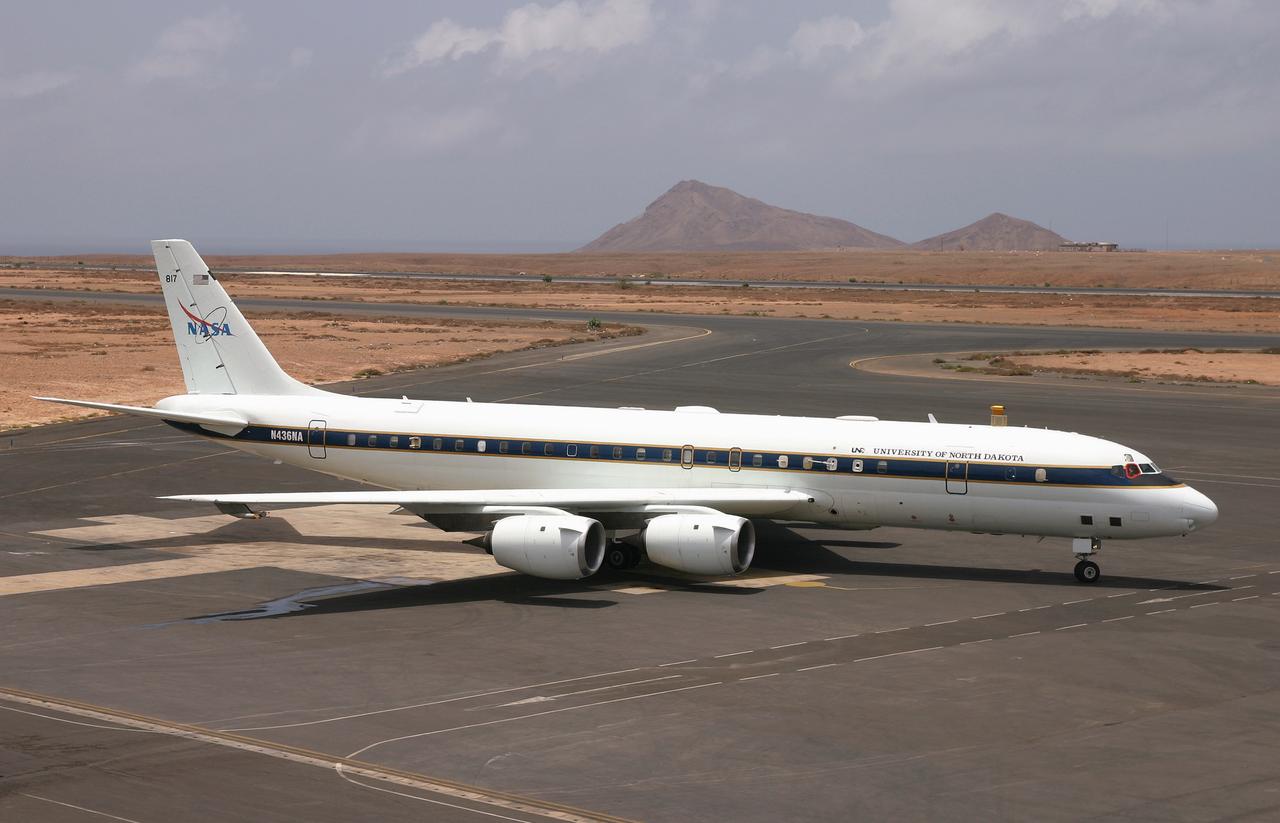
NASA's DC-8 Flying Laboratory taxis up to the ramp at Sal Island's Amilcar Cabral International Airport after a science flight for the NAMMA mission. (Ames photo # ACD06-0135-035)
NASA's DC-8 Flying Laboratory taxis up to the ramp at Sal Island's Amilcar Cabral International Airport after a science flight for the NAMMA mission
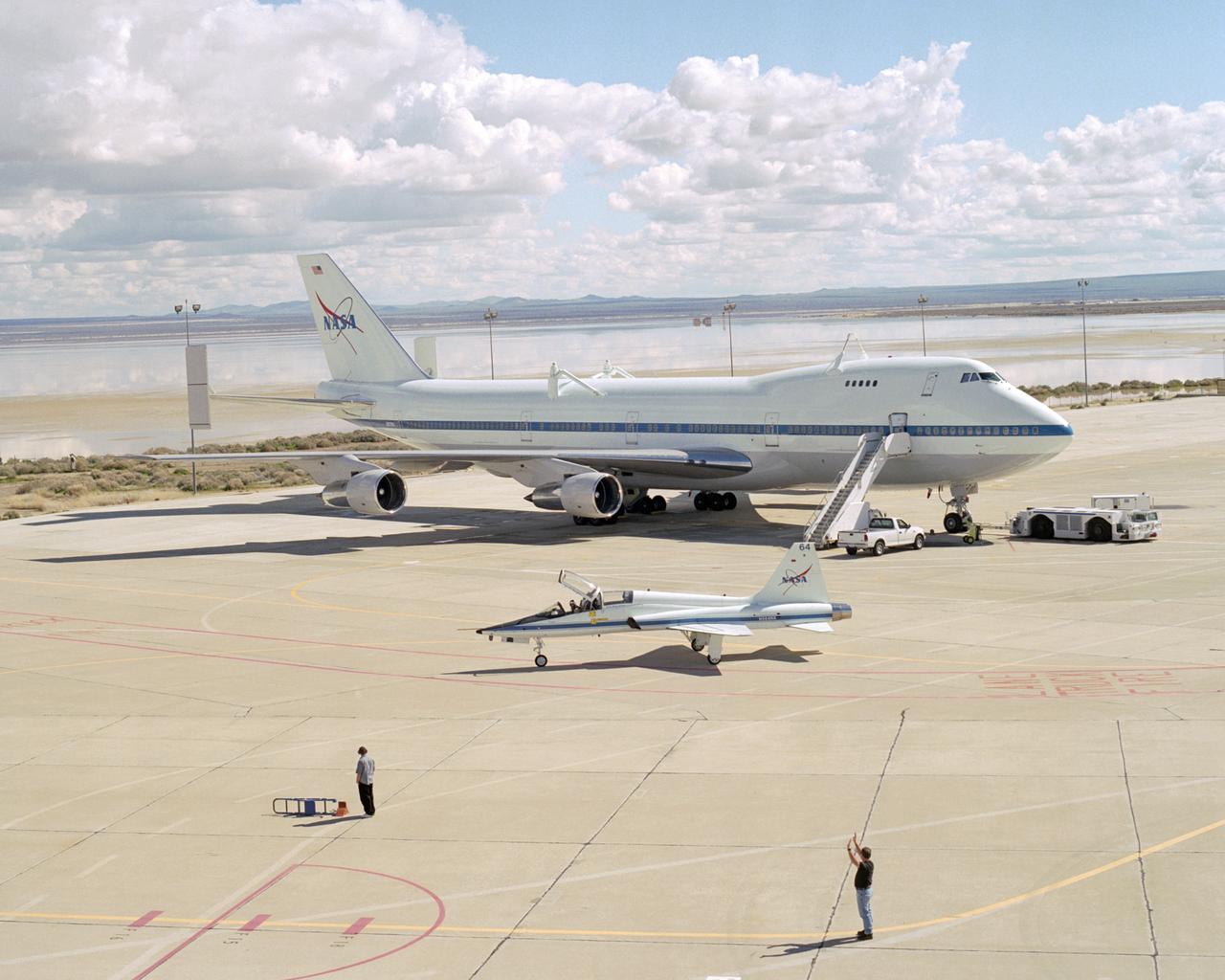
Puffy white clouds and a flooded lakebed form a backdrop as a T-38 support aircraft taxies across the ramp in front of NASA's Boeing 747 Shuttle Carrier Aircraft.
White clouds and a flooded lakebed form a backdrop as a T-38 support aircraft taxies across the ramp in front of NASA's Boeing 747 Shuttle Carrier Aircraft
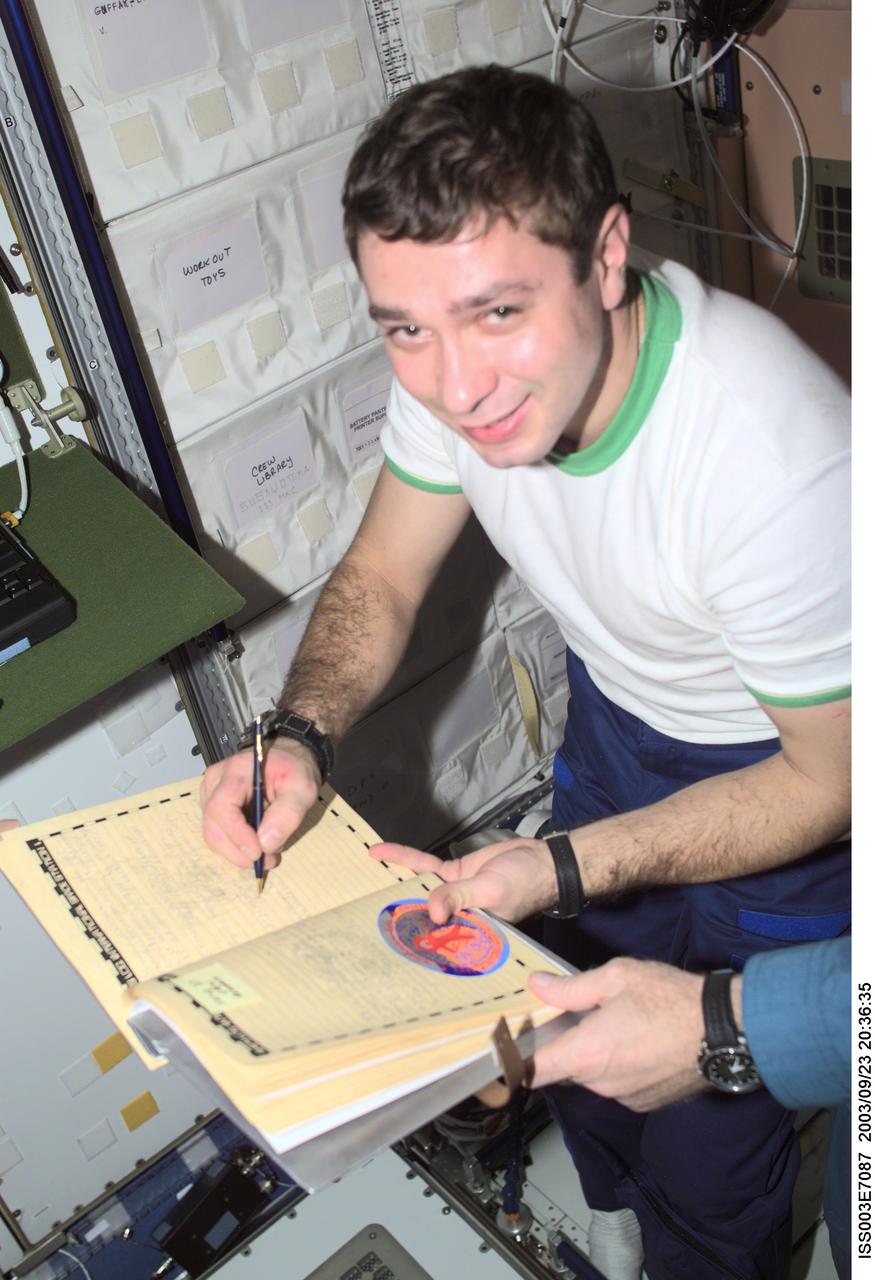
ISS003-E-7087 (23-31 October 2001) --- Flight Engineer Konstantin Kozeev, of the Soyuz Taxi crew, adds his name to the list of the International Space Station (ISS) visitors in the ship’s log in the Unity node. Kozeev represents Rosaviakosmos. This image was taken with a digital still camera.
Kozeev signs the ISS ship log in Node 1 during the Taxi crew's visit to the ISS
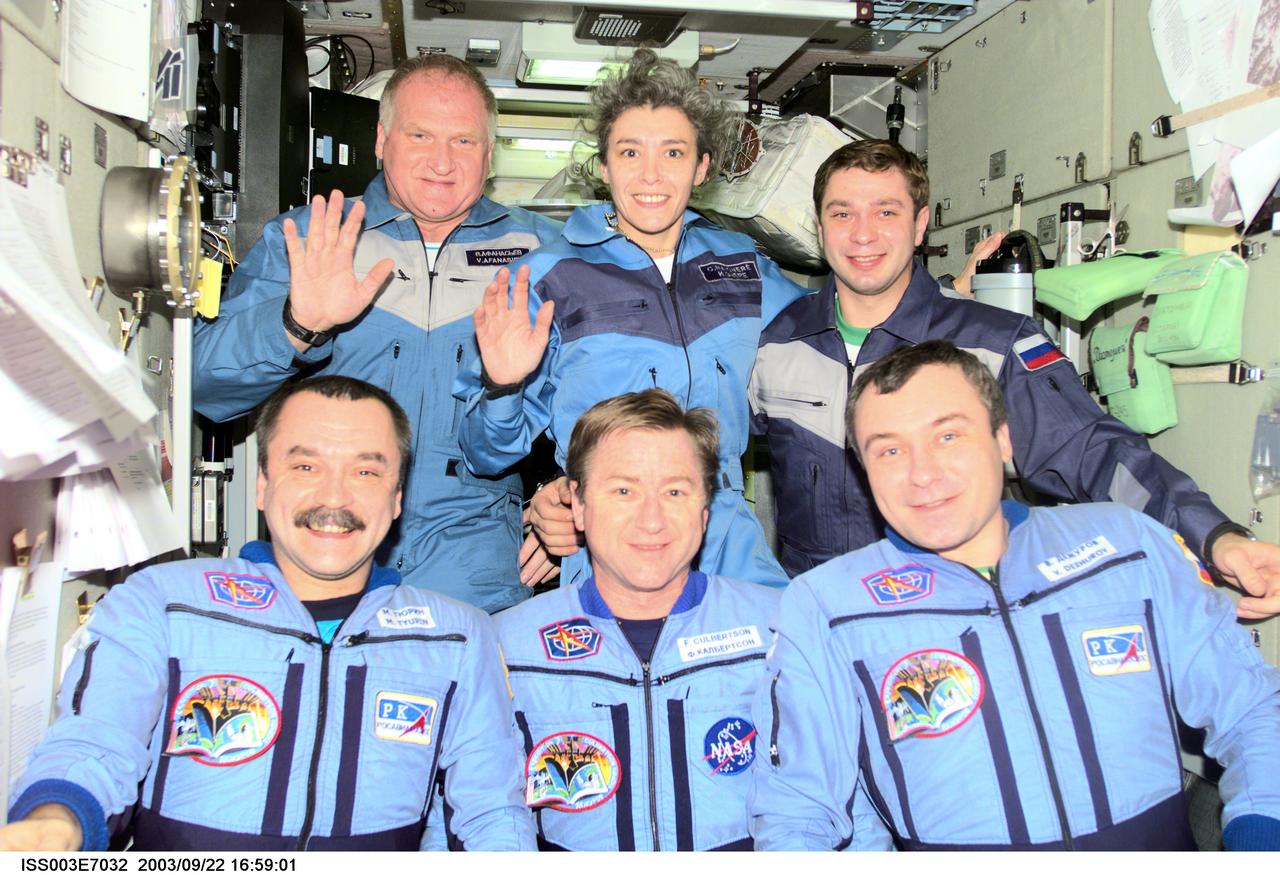
ISS003-E-7032 (23-31 October 2001) --- The Expedition Three crew (bottom) and the Soyuz Taxi crew assemble for a group photo in the Zvezda Service Module on the International Space Station (ISS). The Expedition Three crewmembers are astronaut Frank L. Culbertson, Jr. (center), mission commander, and cosmonauts Mikhail Tyurin (left) and Vladimir N. Dezhurov, both flight engineers. The Soyuz Taxi crewmembers are Commander Victor Afanasyev (left), French Flight Engineer Claudie Haignere, and Flight Engineer Konstantin Kozeev. Tyurin, Dezhurov, Afanasyev, and Kozeev represent Rosaviakosmos. Haignere represents ESA, carrying out a flight program for CNES, the French Space Agency, under a commercial contract with the Russian Aviation and Space Agency. This image was taken with a digital still camera.
Taxi and Expedition Three crews pose for a group photo in Zvezda during Expedition Three
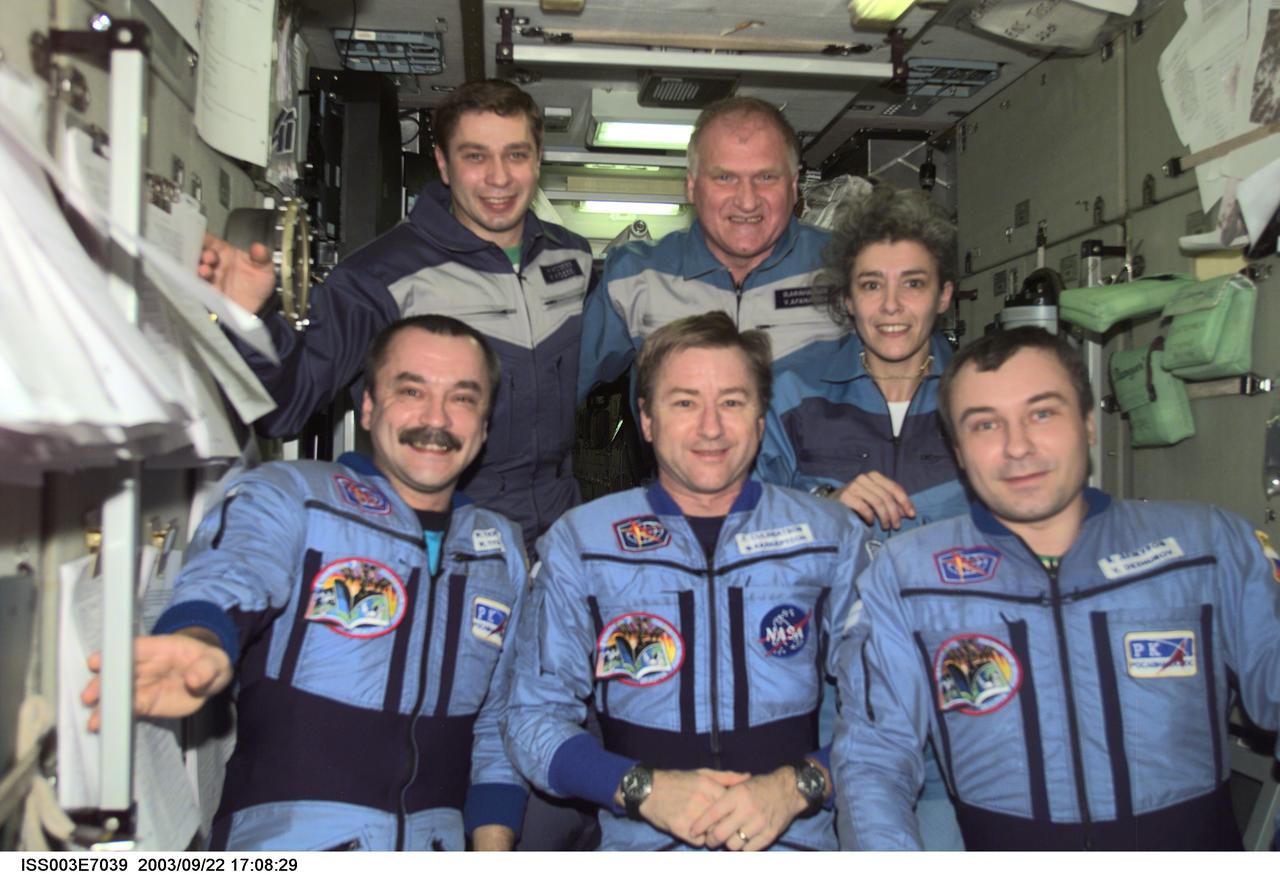
ISS003-E-7039 (23-31 October 2001) --- The Expedition Three crew (bottom) and the Soyuz Taxi crew assemble for a group photo in the Zvezda Service Module on the International Space Station (ISS). The Expedition Three crewmembers are astronaut Frank L. Culbertson, Jr. (center), mission commander, and cosmonauts Mikhail Tyurin (left) and Vladimir N. Dezhurov, both flight engineers. The Soyuz taxi crewmembers are Flight Engineer Konstantin Kozeev (left), Commander Victor Afanasyev, and French Flight Engineer Claudie Haignere. Tyurin, Dezhurov, Afanasyev, and Kozeev represent Rosaviakosmos. Haignere represents ESA, carrying out a flight program for CNES, the French Space Agency, under a commercial contract with the Russian Aviation and Space Agency. This image was taken with a digital still camera.
Taxi and Expedition Three crews pose for a group photo in Zvezda during Expedition Three
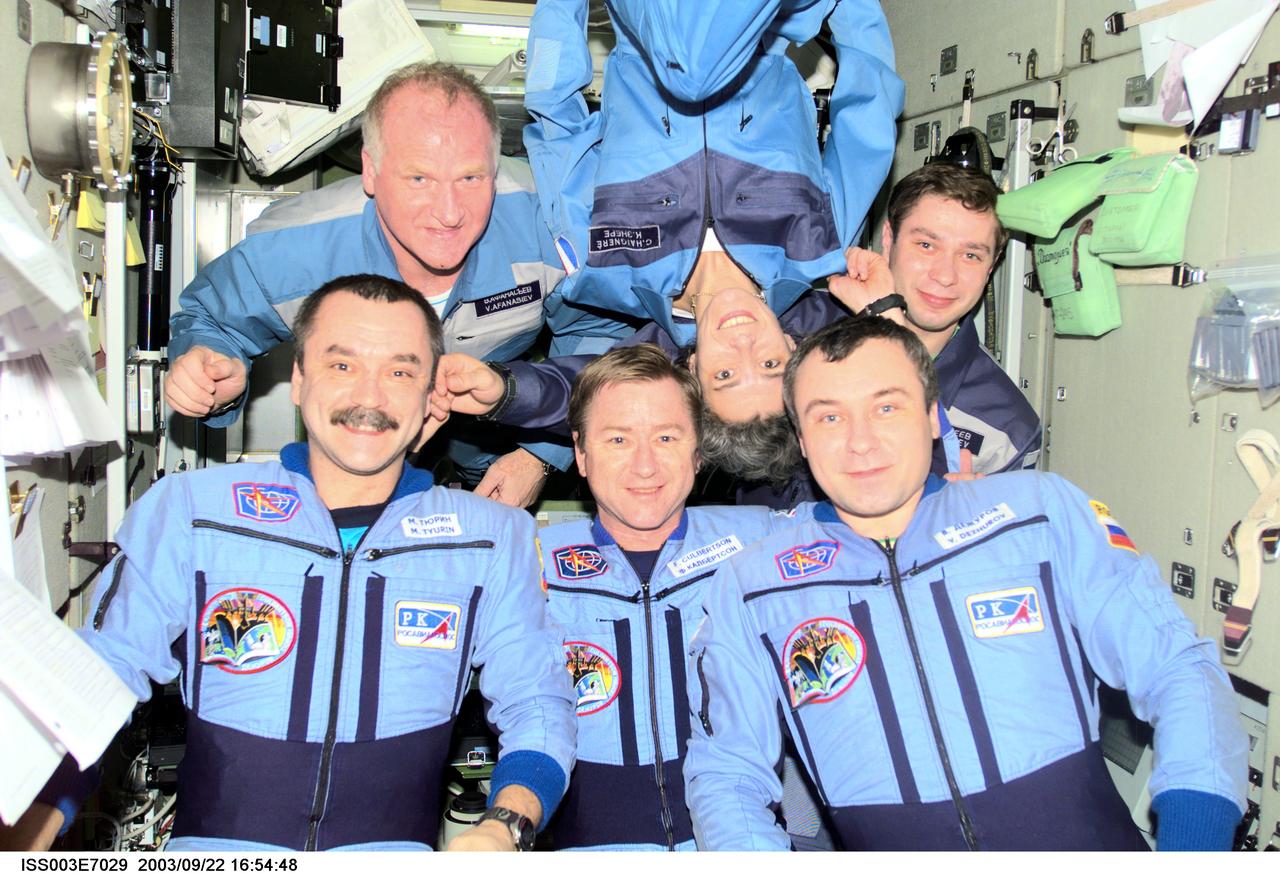
ISS003-E-7029 (23-31 October 2001) --- The Expedition Three crew (bottom) and the Soyuz Taxi crew assemble for a group photo in the Zvezda Service Module on the International Space Station (ISS). The Expedition Three crewmembers are astronaut Frank L. Culbertson, Jr. (center), mission commander, and cosmonauts Mikhail Tyurin (left) and Vladimir N. Dezhurov, both flight engineers. The Soyuz Taxi crewmembers are Commander Victor Afanasyev (left), French Flight Engineer Claudie Haignere, and Flight Engineer Konstantin Kozeev. Tyurin, Dezhurov, Afanasyev, and Kozeev represent Rosaviakosmos. Haignere represents ESA, carrying out a flight program for CNES, the French Space Agency, under a commercial contract with the Russian Aviation and Space Agency. This image was taken with a digital still camera.
Taxi and Expedition Three crews prepare for a group photo in Zvezda during Expedition Three
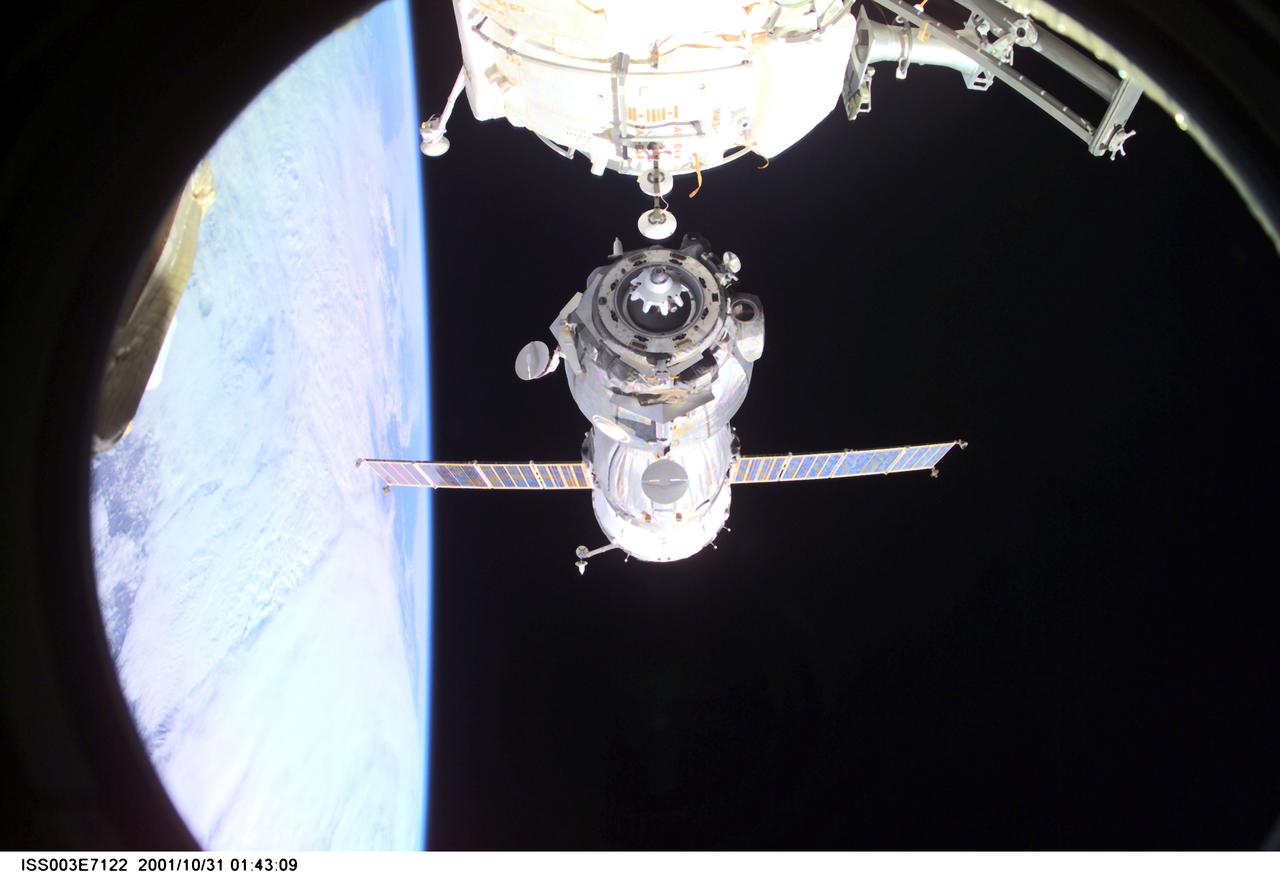
ISS003-E-7122 (31 October 2001) --- Backdropped by Earth’s horizon and the blackness of space, a Soyuz spacecraft undocks from the International Space Station (ISS) carrying the Soyuz taxi crew, Commander Victor Afanasyev, Flight Engineer Konstantin Kozeev and French Flight Engineer Claudie Haignere, ending their eight-day stay on the station. Afanasyev and Kozeev represent Rosaviakosmos, and Haignere represents ESA, carrying out a flight program for CNES, the French Space Agency, under a commercial contract with the Russian Aviation and Space Agency. This image was taken with a digital still camera.
View of the Soyuz carrying the Taxi crew during undocking from the ISS
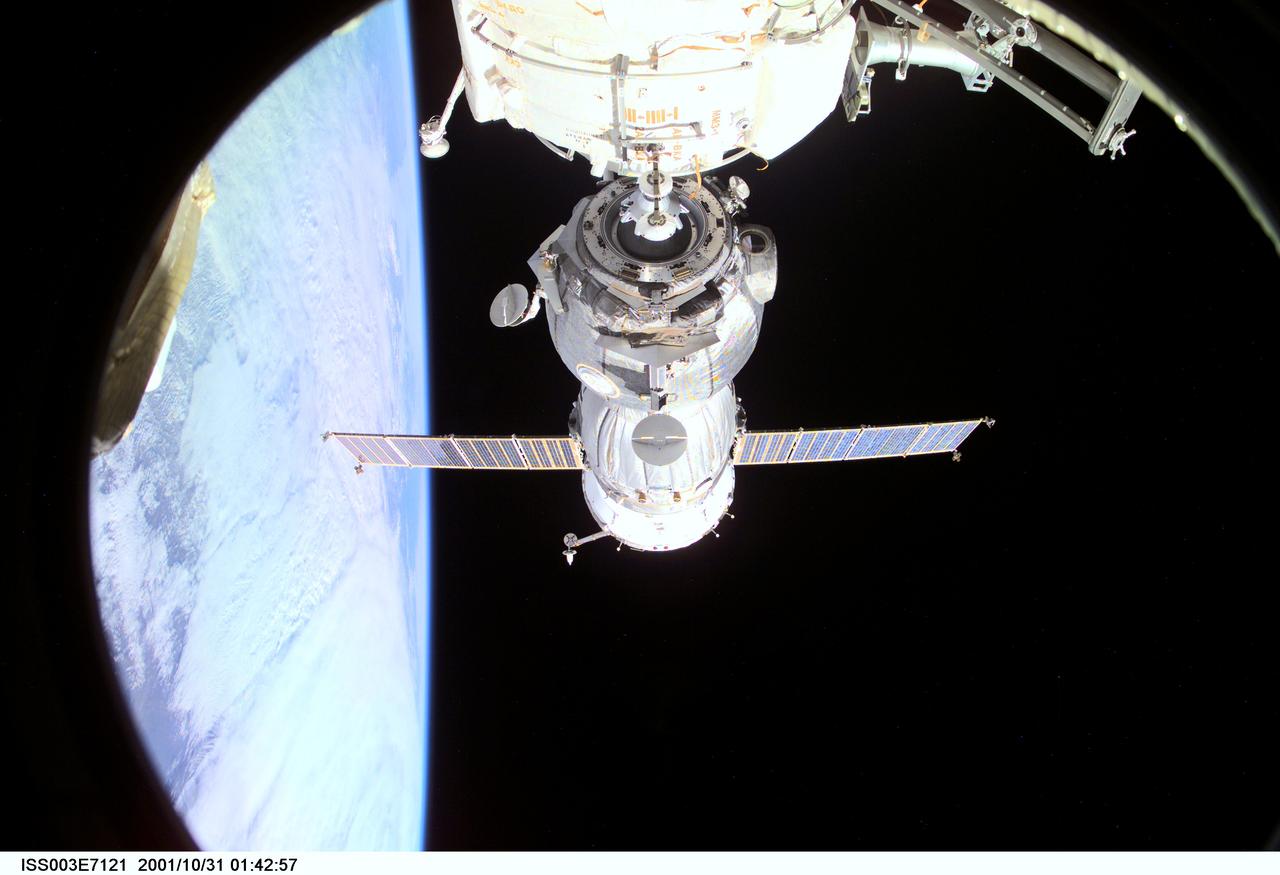
ISS003-E-7121 (31 October 2001) --- Backdropped by Earth’s horizon and the blackness of space, a Soyuz spacecraft undocks from the International Space Station (ISS) carrying the Soyuz taxi crew, Commander Victor Afanasyev, Flight Engineer Konstantin Kozeev and French Flight Engineer Claudie Haignere, ending their eight-day stay on the station. Afanasyev and Kozeev represent Rosaviakosmos, and Haignere represents ESA, carrying out a flight program for CNES, the French Space Agency, under a commercial contract with the Russian Aviation and Space Agency. This image was taken with a digital still camera.
View of the Soyuz carrying the Taxi crew during undocking from the ISS
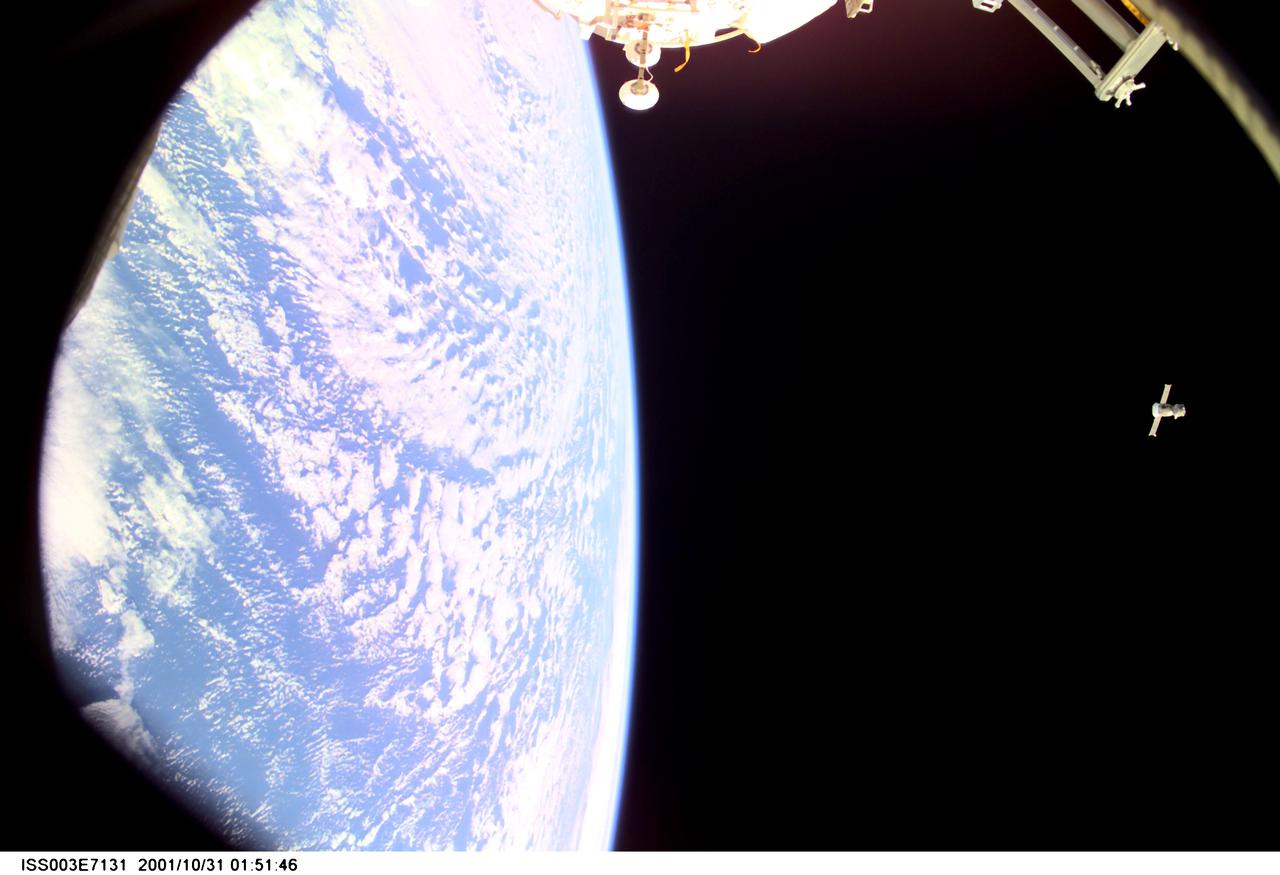
ISS003-E-7131 (31 October 2001) --- Backdropped by Earth’s horizon and the blackness of space, this distant view shows a Soyuz spacecraft after undocking from the International Space Station (ISS) carrying the Soyuz taxi crew, Commander Victor Afanasyev, Flight Engineer Konstantin Kozeev and French Flight Engineer Claudie Haignere, ending their eight-day stay on the station. Afanasyev and Kozeev represent Rosaviakosmos, and Haignere represents ESA, carrying out a flight program for CNES, the French Space Agency, under a commercial contract with the Russian Aviation and Space Agency. This image was taken with a digital still camera.
Distant view of the Soyuz carrying the Taxi crew after undocking from the ISS
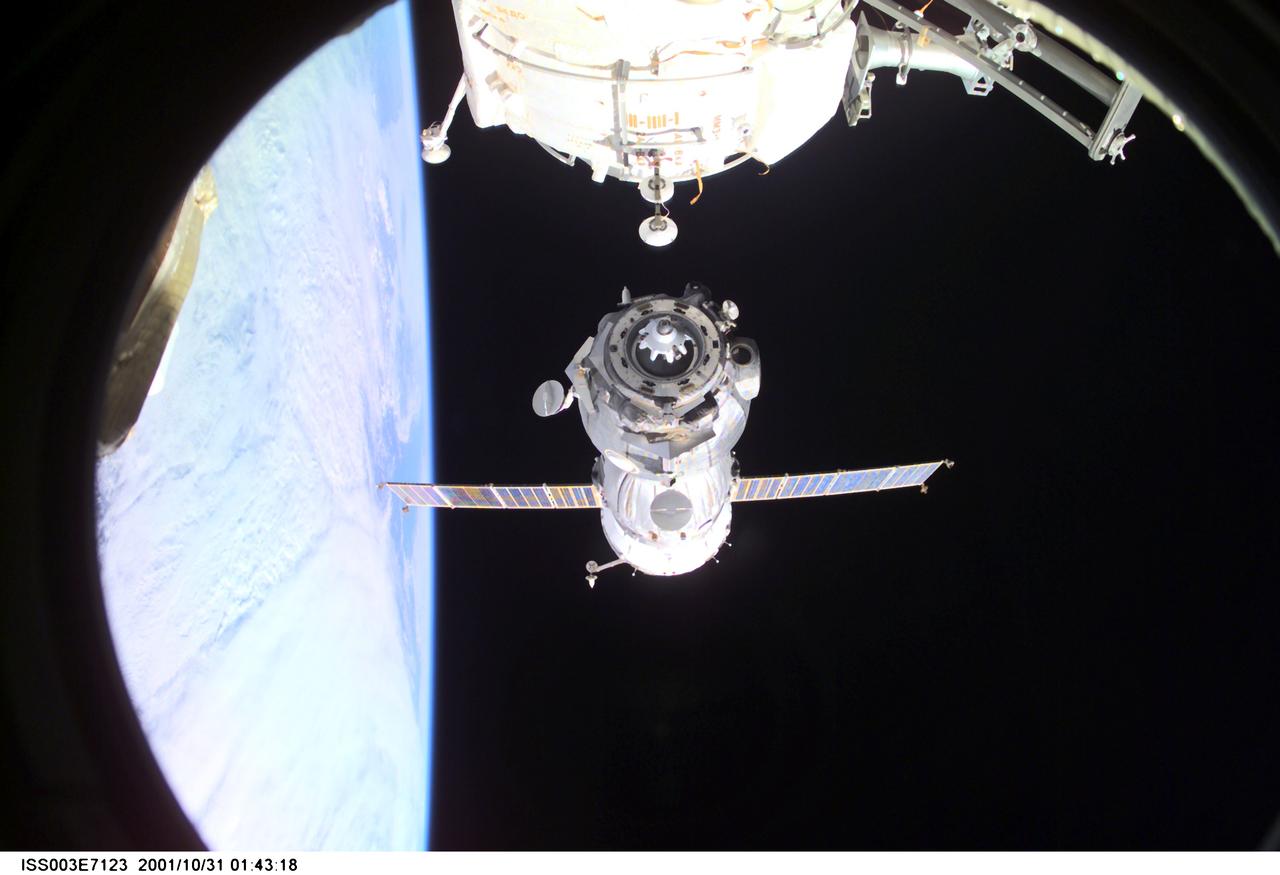
ISS003-E-7123 (31 October 2001) --- Backdropped by Earth’s horizon and the blackness of space, a Soyuz spacecraft undocks from the International Space Station (ISS) carrying the Soyuz taxi crew, Commander Victor Afanasyev, Flight Engineer Konstantin Kozeev and French Flight Engineer Claudie Haignere, ending their eight-day stay on the station. Afanasyev and Kozeev represent Rosaviakosmos, and Haignere represents ESA, carrying out a flight program for CNES, the French Space Agency, under a commercial contract with the Russian Aviation and Space Agency. This image was taken with a digital still camera.
View of the Soyuz carrying the Taxi crew during undocking from the ISS
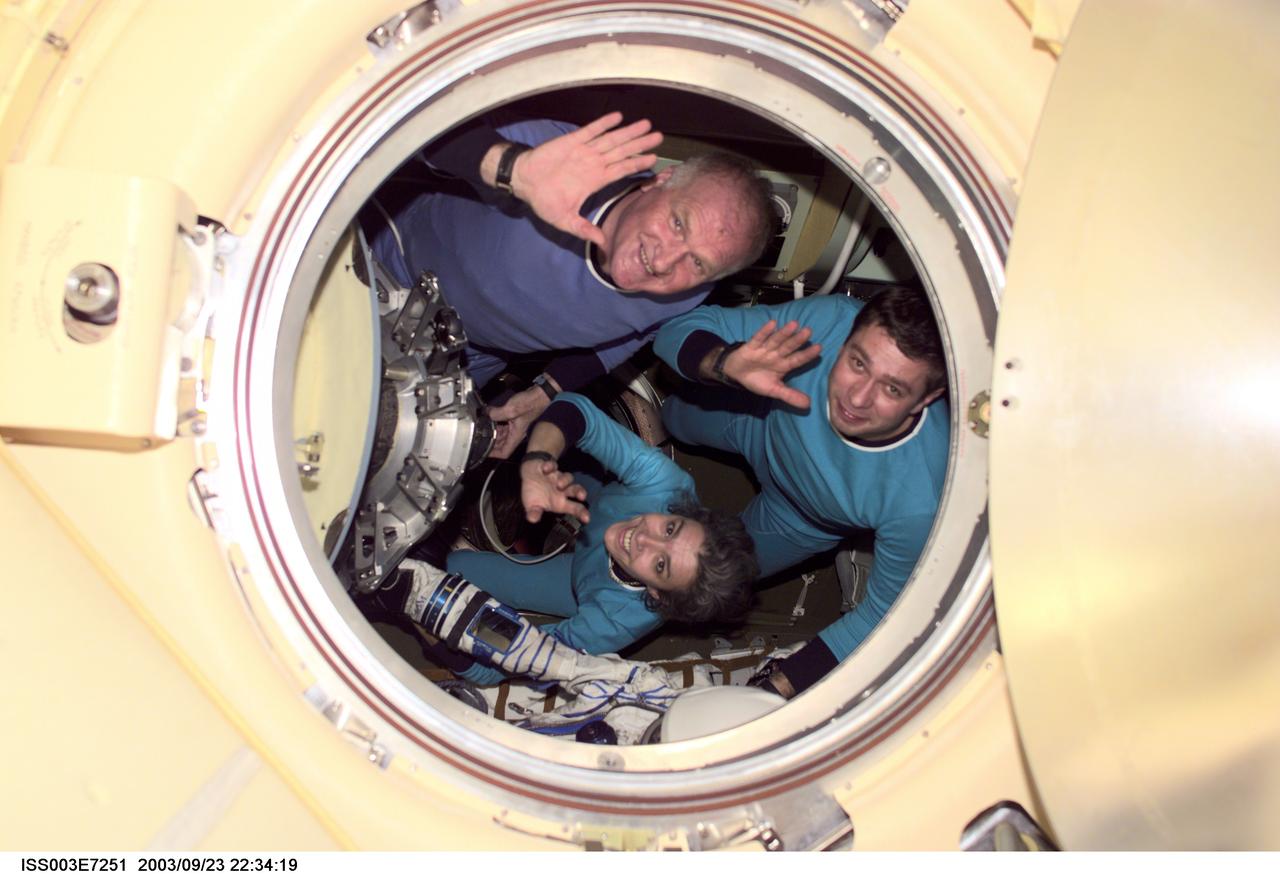
ISS003-E-7251 (23-31 October 2001) --- The Soyuz Taxi crewmembers wave from a Soyuz spacecraft docked to the International Space Station (ISS). Clockwise from the top are Commander Victor Afanasyev, Flight Engineer Konstantin Kozeev and French Flight Engineer Claudie Haignere. Afanasyev and Kozeev represent Rosaviakosmos, and Haignere represents ESA, carrying out a flight program for CNES, the French Space Agency, under a commercial contract with the Russian Aviation and Space Agency. This image was taken with a digital still camera by one of the Expedition Three crew from the nadir docking port on the station.
The Soyuz Taxi crew wave through a Soyuz hatch during their visit to the ISS
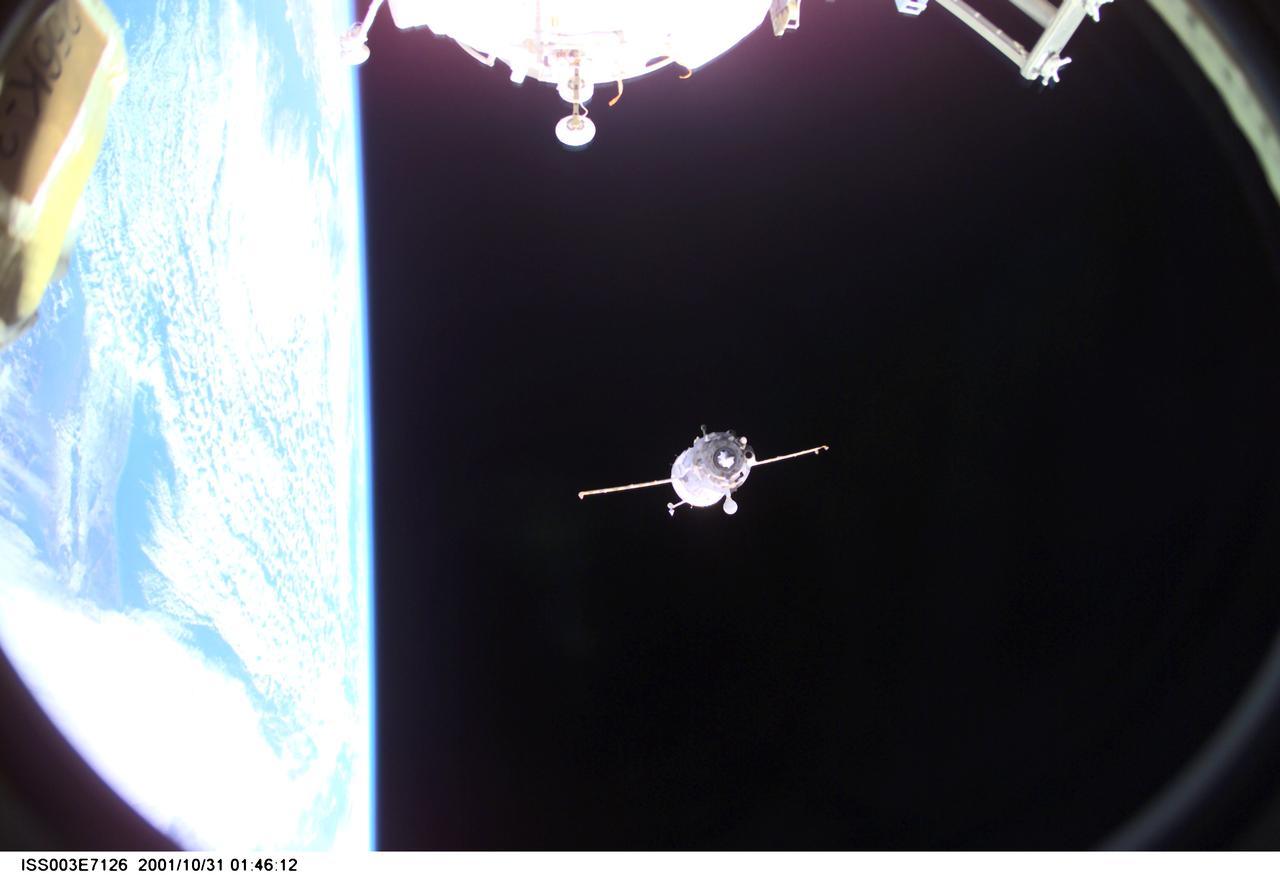
ISS003-E-7126 (31 October 2001) --- Backdropped by Earth’s horizon and the blackness of space, a Soyuz spacecraft undocks from the International Space Station (ISS) carrying the Soyuz taxi crew, Commander Victor Afanasyev, Flight Engineer Konstantin Kozeev and French Flight Engineer Claudie Haignere, ending their eight-day stay on the station. Afanasyev and Kozeev represent Rosaviakosmos, and Haignere represents ESA, carrying out a flight program for CNES, the French Space Agency, under a commercial contract with the Russian Aviation and Space Agency. This image was taken with a digital still camera.
View of the Soyuz carrying the Taxi crew during undocking from the ISS
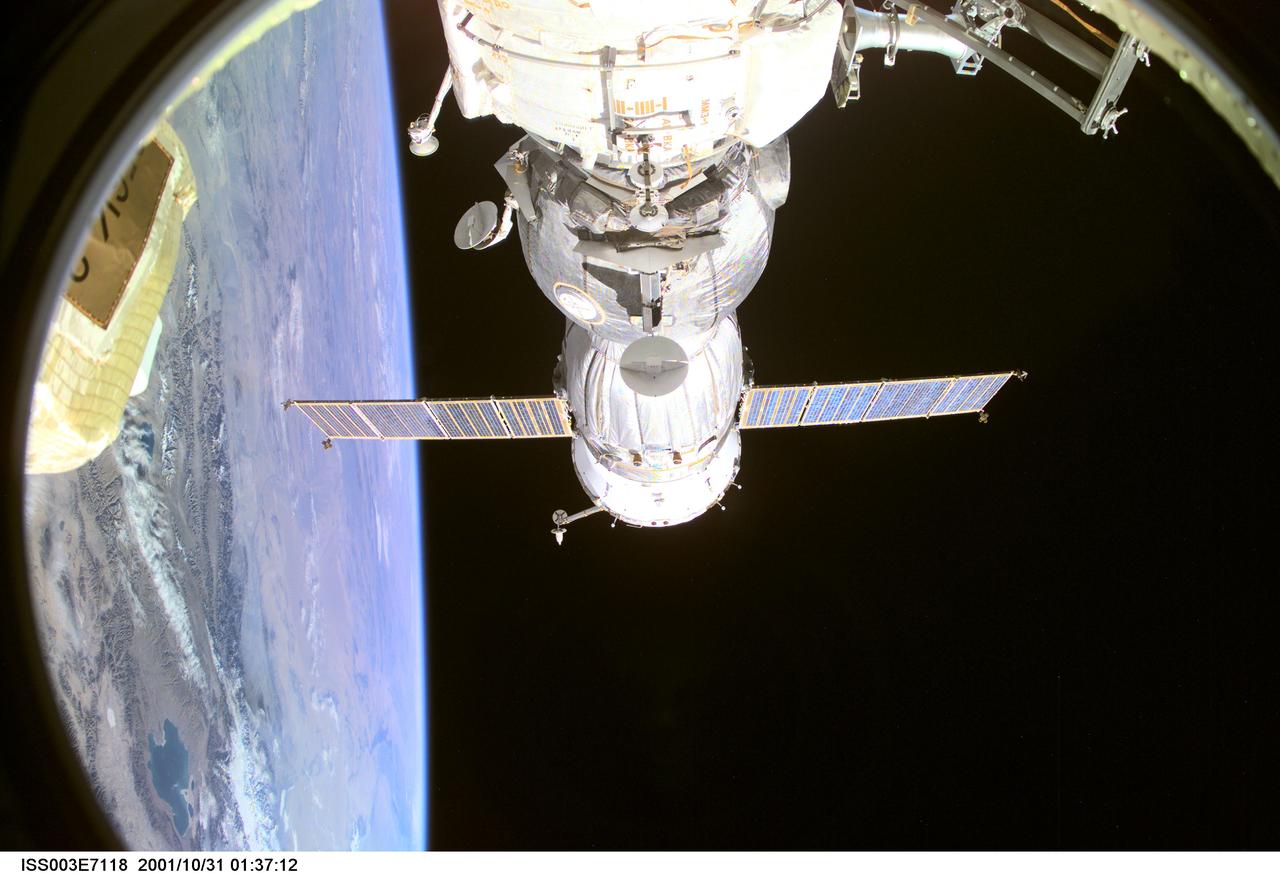
ISS003-E-7118 (31 October 2001) --- A Soyuz spacecraft, backdropped by Earth’s horizon and the blackness of space, is photographed prior to departure from the International Space Station (ISS), carrying the Soyuz taxi crew back to Earth, ending their eight-day stay on the station. The crewmembers are Commander Victor Afanasyev, Flight Engineer Konstantin Kozeev and French Flight Engineer Claudie Haignere. Afanasyev and Kozeev represent Rosaviakosmos, and Haignere represents ESA, carrying out a flight program for CNES, the French Space Agency, under a commercial contract with the Russian Aviation and Space Agency. This image was taken with a digital still camera.
View of the Soyuz carrying the Taxi crew during undocking from the ISS
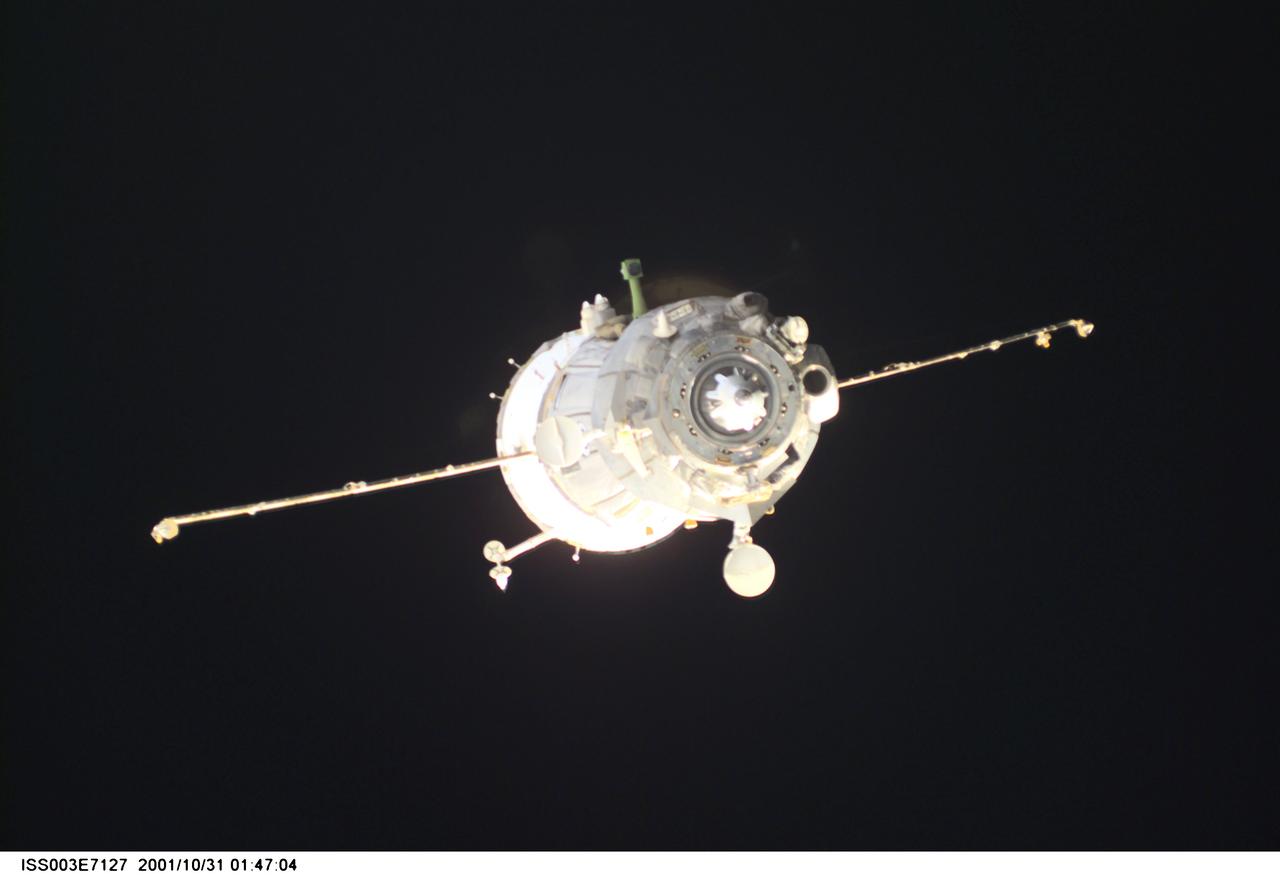
ISS003-E-7127 (31 October 2001) --- Backdropped by the blackness of space, a Soyuz spacecraft departs from the International Space Station (ISS) carrying the Soyuz taxi crew, Commander Victor Afanasyev, Flight Engineer Konstantin Kozeev and French Flight Engineer Claudie Haignere, ending their eight-day stay on the station. Afanasyev and Kozeev represent Rosaviakosmos, and Haignere represents ESA, carrying out a flight program for CNES, the French Space Agency, under a commercial contract with the Russian Aviation and Space Agency. This image was taken with a digital still camera.
View of the Soyuz carrying the Taxi crew during undocking from the ISS
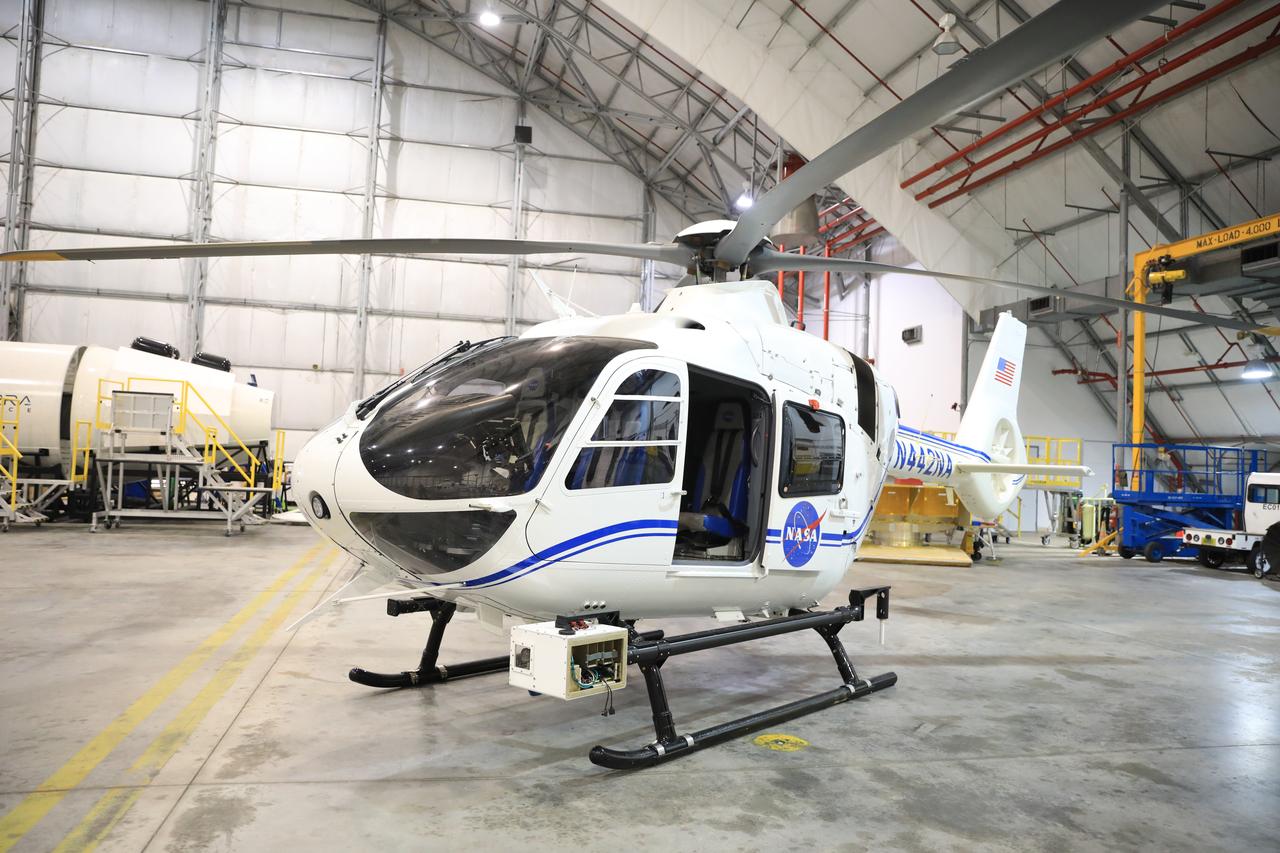
The NASA Airborne Instrumentation for Real-world Video of Urban Environments (AIRVUE) sensor pod is attached to the base of a NASA helicopter at NASA’s Kennedy Space Center in Cape Canaveral, Florida in April 2024 before a flight to test the pod’s cameras and sensors. The AIRVUE pod will be used to collect data for autonomous aircraft like air taxis, drones, or other Advanced Air Mobility aircraft.
Airborne Instrumentation for Real-world Video of Urban Environments (AIRVUE) Sensor Pod on NASA’s Kennedy Space Center’s Helicopter
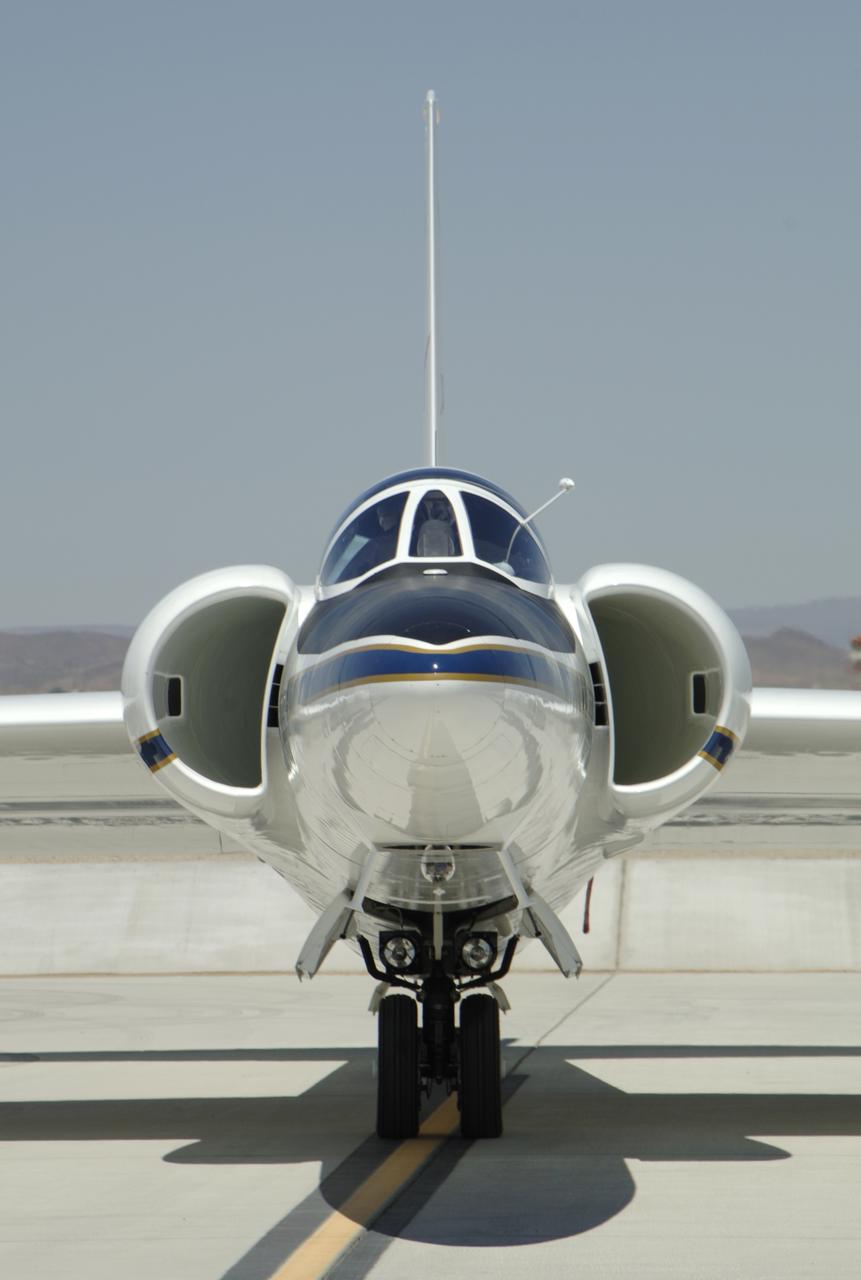
The large air intakes for its powerful engine are obvious as NASA's high-flying ER-2 #806 Earth resources aircraft taxies out for another science mission.
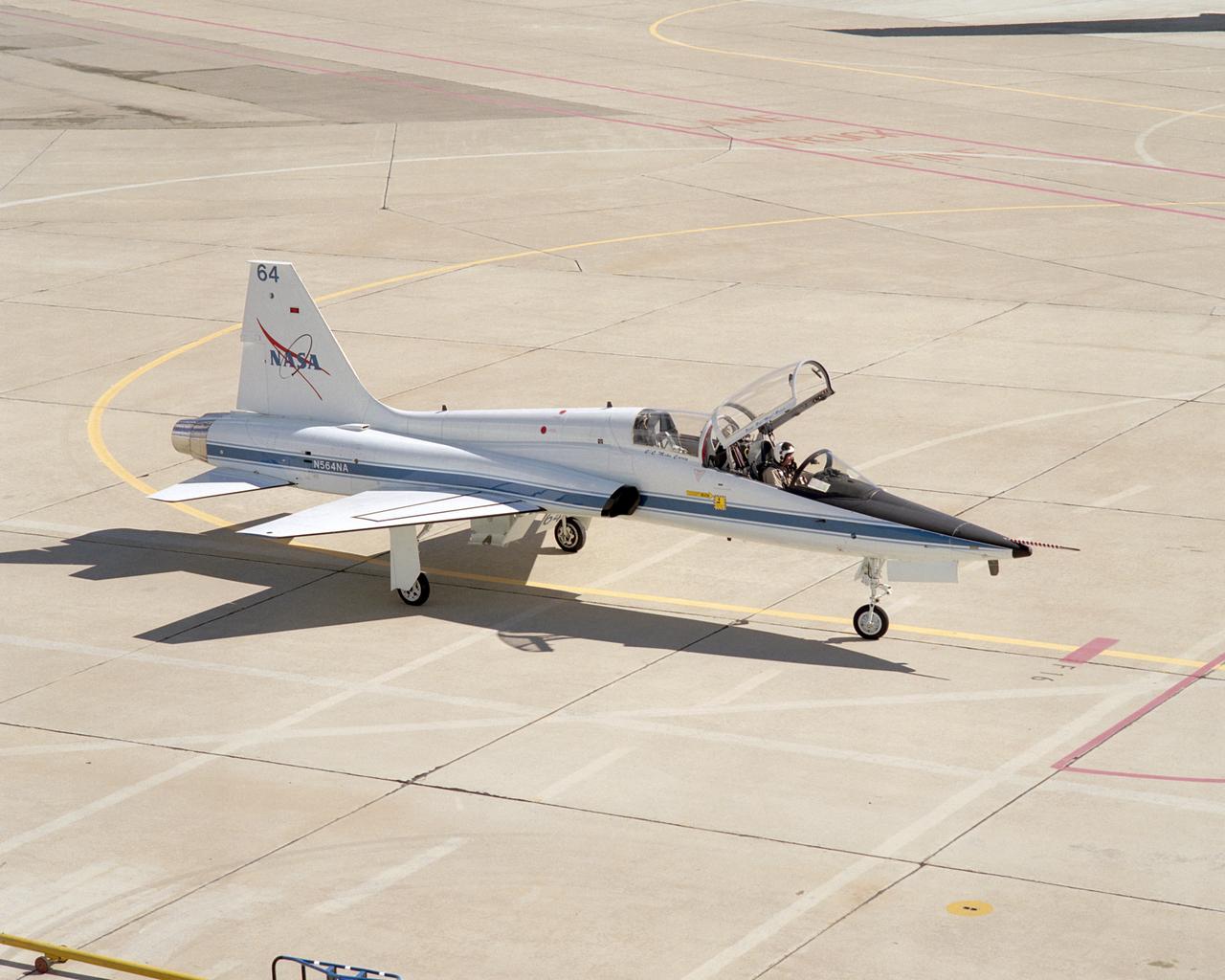
Pilot Gordon Fullerton taxies NASA Dryden's "newest" mission support aircraft, a T-38 Talon, into position on the ramp upon its arrival on February 24, 2005.
Pilot Gordon Fullerton taxies NASA Dryden's "newest" mission support aircraft, a T-38 Talon, into position on the ramp upon its arrival on February 24, 2005
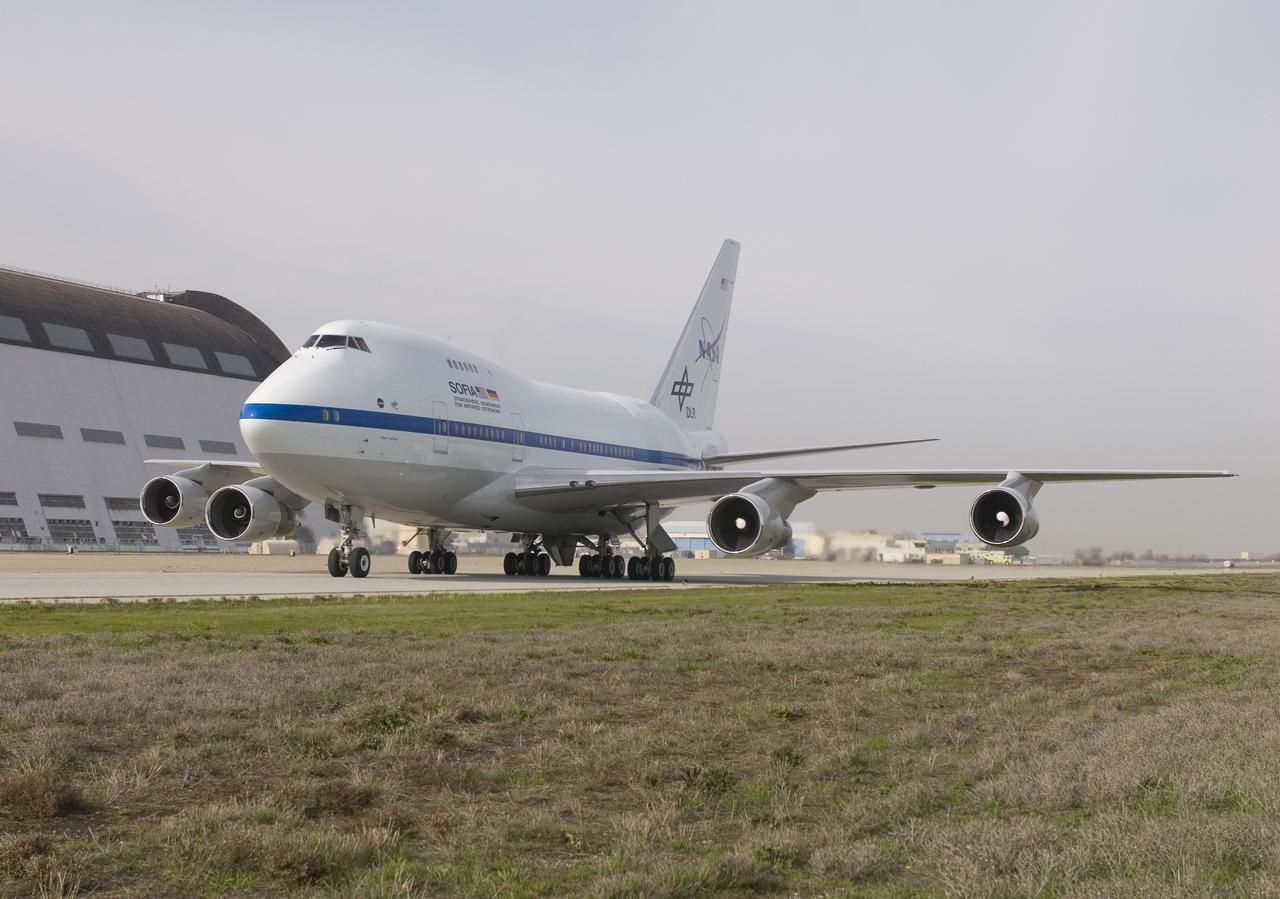
NASA's SOFIA airborne observatory taxis past Hangar 1, the 1930s-era dirigible hangar at Moffett Field, during its first visit to NASA Ames Research Center.
NASA's SOFIA airborne observatory taxis past Hangar 1, the 1930s-era dirigible hangar at Moffett Field, during its first visit to NASA Ames Research Center
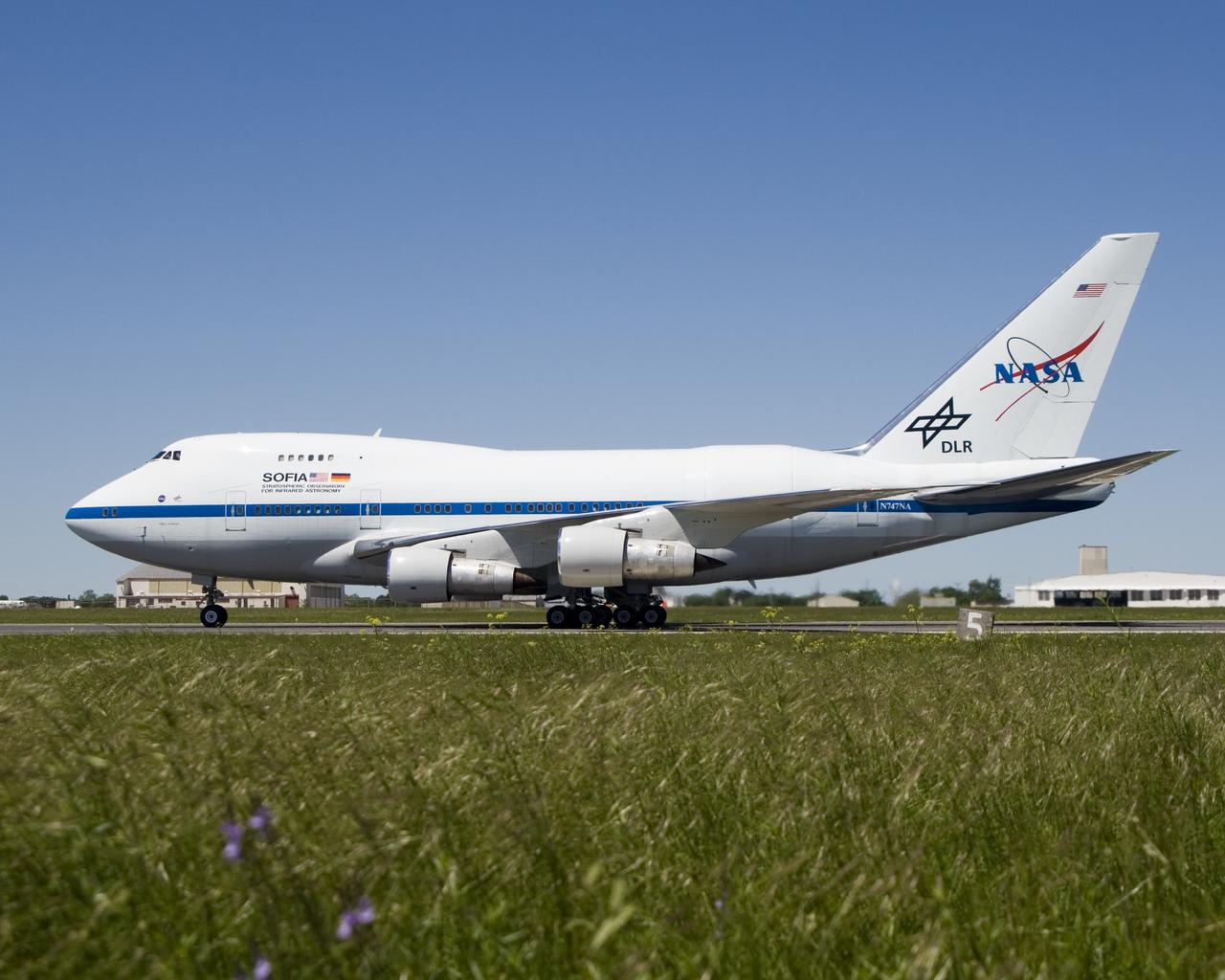
NASA's modified Boeing 747SP SOFIA airborne observatory taxis along the runway at Waco, Texas after completing its first checkout flight on April 26, 2007.
NASA's modified Boeing 747SP SOFIA airborne observatory taxis along the runway at Waco, Texas after completing its first checkout flight on April 26, 2007
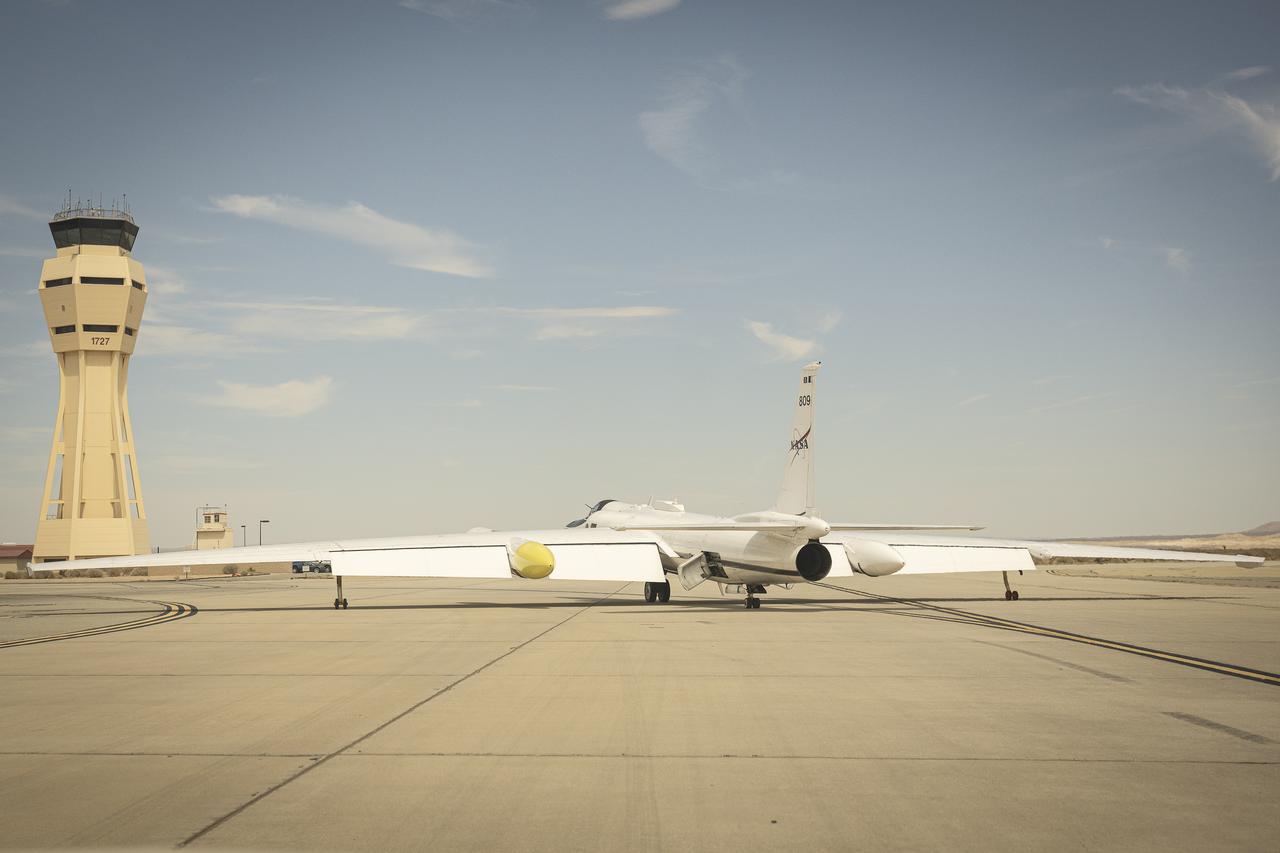
NASA Armstrong Flight Research Center’s ER-2 aircraft taxis at Edwards, California, on Thursday, Aug. 21, 2025, ahead of a high-altitude mission supporting the Geological Earth Mapping Experiment (GEMx), which requires flights of up to eight hours at approximately 65,000 feet altitude.
NASA ER-2 Flies Geological Mapping Mission
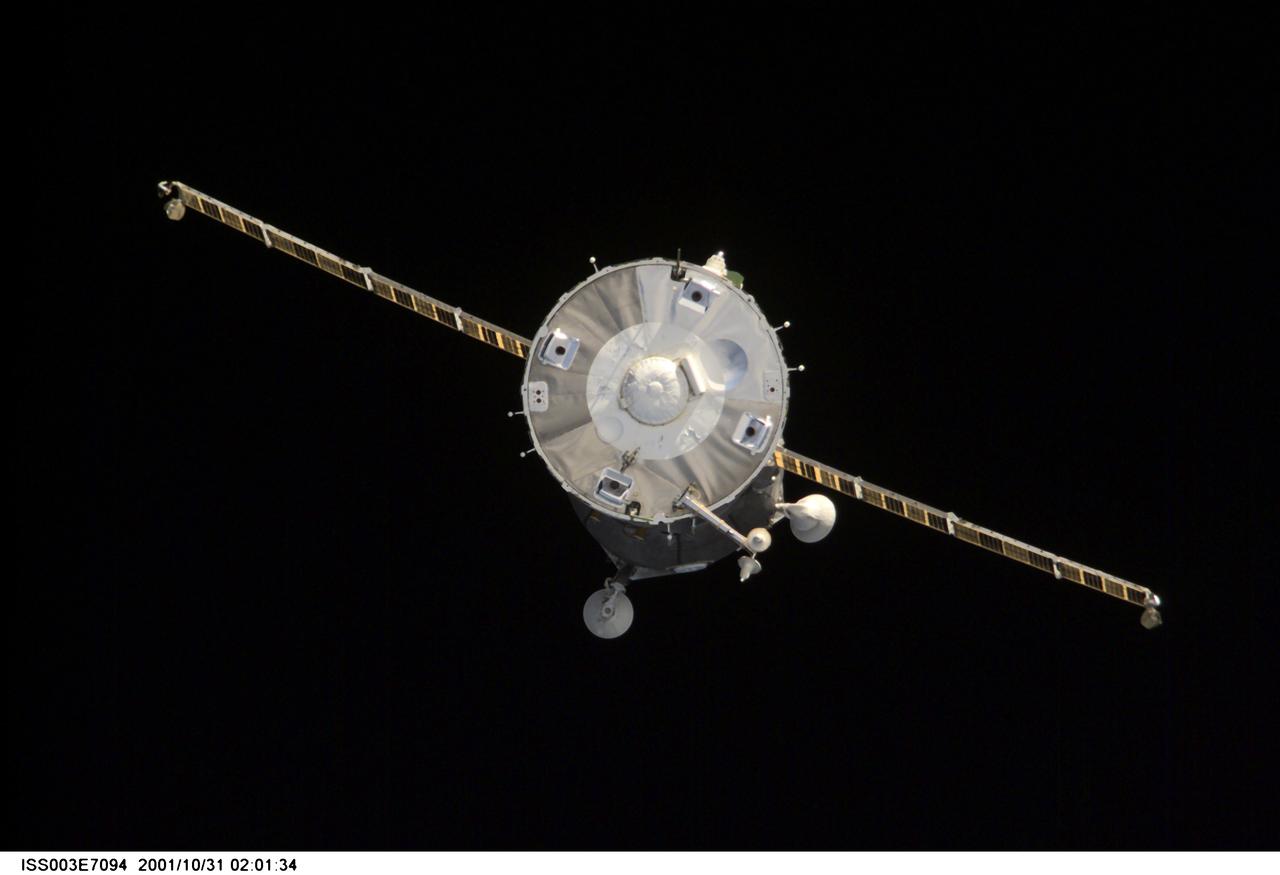
ISS003-E-7096 (31 October 2001) --- A Soyuz spacecraft departs from the International Space Station (ISS) carrying the Soyuz taxi crew, Commander Victor Afanasyev, Flight Engineer Konstantin Kozeev and French Flight Engineer Claudie Haignere, ending their eight-day stay on the station. Afanasyev and Kozeev represent Rosaviakosmos, and Haignere represents ESA, carrying out a flight program for CNES, the French Space Agency, under a commercial contract with the Russian Aviation and Space Agency. This image was taken with a digital still camera.
View of the Soyuz carrying the Taxi crew after undocking taken during Expedition Three
ISS003-E-7107 (31 October 2001) --- A Soyuz spacecraft departs from the International Space Station (ISS) carrying the Soyuz taxi crew, Commander Victor Afanasyev, Flight Engineer Konstantin Kozeev and French Flight Engineer Claudie Haignere, ending their eight-day stay on the station. Afanasyev and Kozeev represent Rosaviakosmos, and Haignere represents ESA, carrying out a flight program for CNES, the French Space Agency, under a commercial contract with the Russian Aviation and Space Agency. This image was taken with a digital still camera.
View of the Soyuz carrying the Taxi crew after undocking taken during Expedition Three
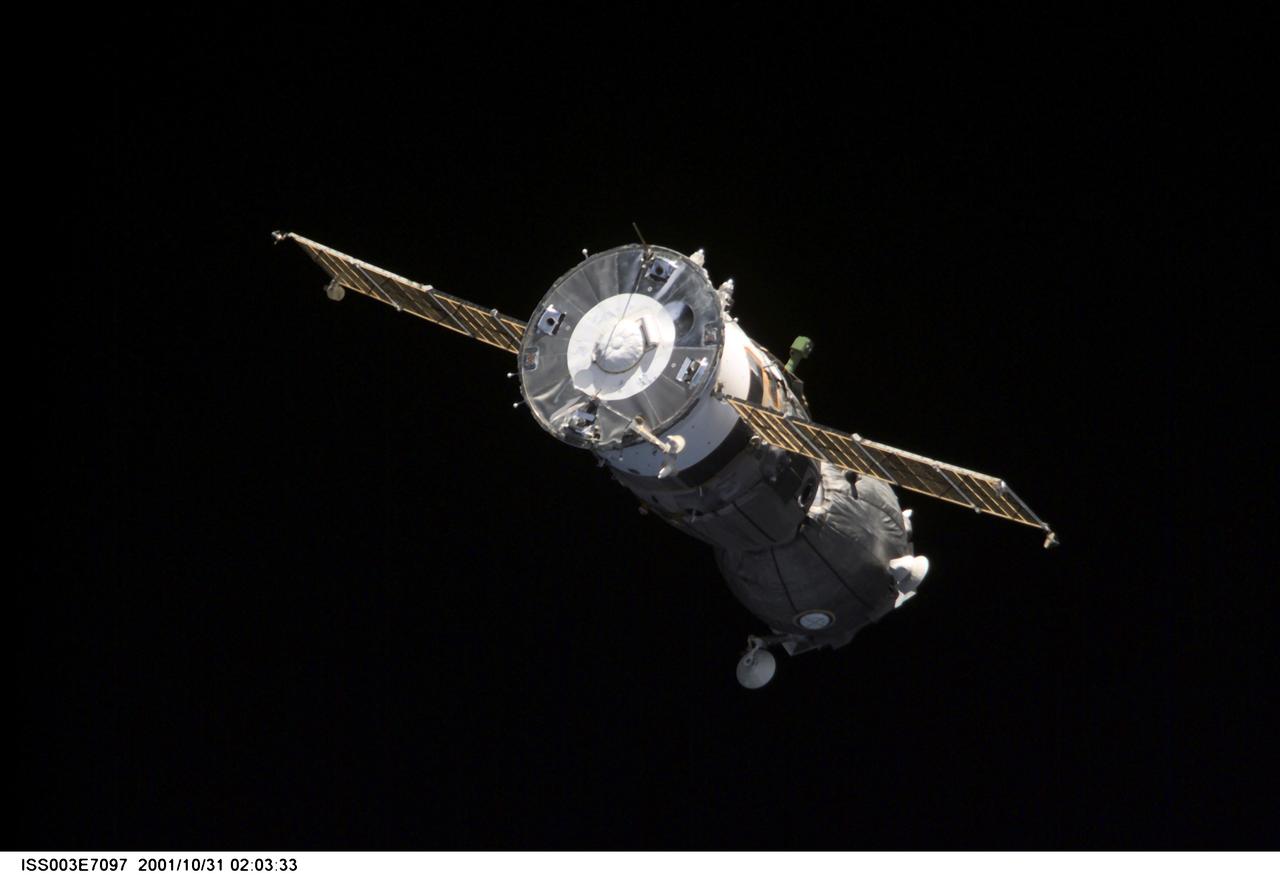
ISS003-E-7100 (31 October 2001) --- A Soyuz spacecraft departs from the International Space Station (ISS) carrying the Soyuz taxi crew, Commander Victor Afanasyev, Flight Engineer Konstantin Kozeev and French Flight Engineer Claudie Haignere, ending their eight-day stay on the station. Afanasyev and Kozeev represent Rosaviakosmos, and Haignere represents ESA, carrying out a flight program for CNES, the French Space Agency, under a commercial contract with the Russian Aviation and Space Agency. This image was taken with a digital still camera.
View of the Soyuz carrying the Taxi crew after undocking taken during Expedition Three
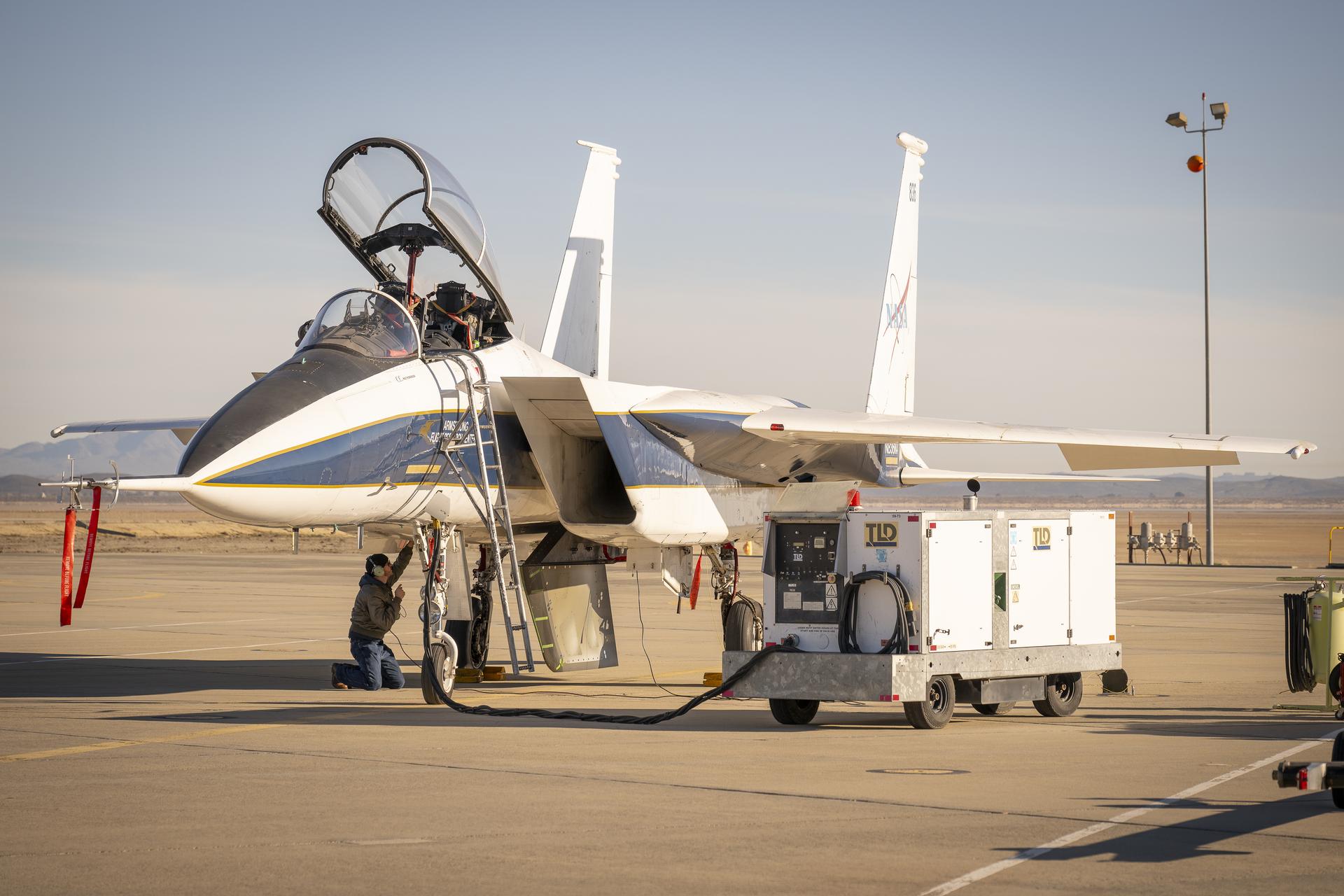
NASA ground crew prepares the agency’s F-15 research aircraft and Cross Flow Attenuated Natural Laminar Flow (CATNLF) test article ahead of its first high-speed taxi test on Tuesday, Jan. 12, 2026, at NASA’s Armstrong Flight Research Center in Edwards, California. The CATNLF design aims to reduce drag on wing surfaces to improve efficiency and, in turn, reduce fuel burn.
NASA Ground Crew Prepares Wing Model Ahead of High-Speed Taxi Test
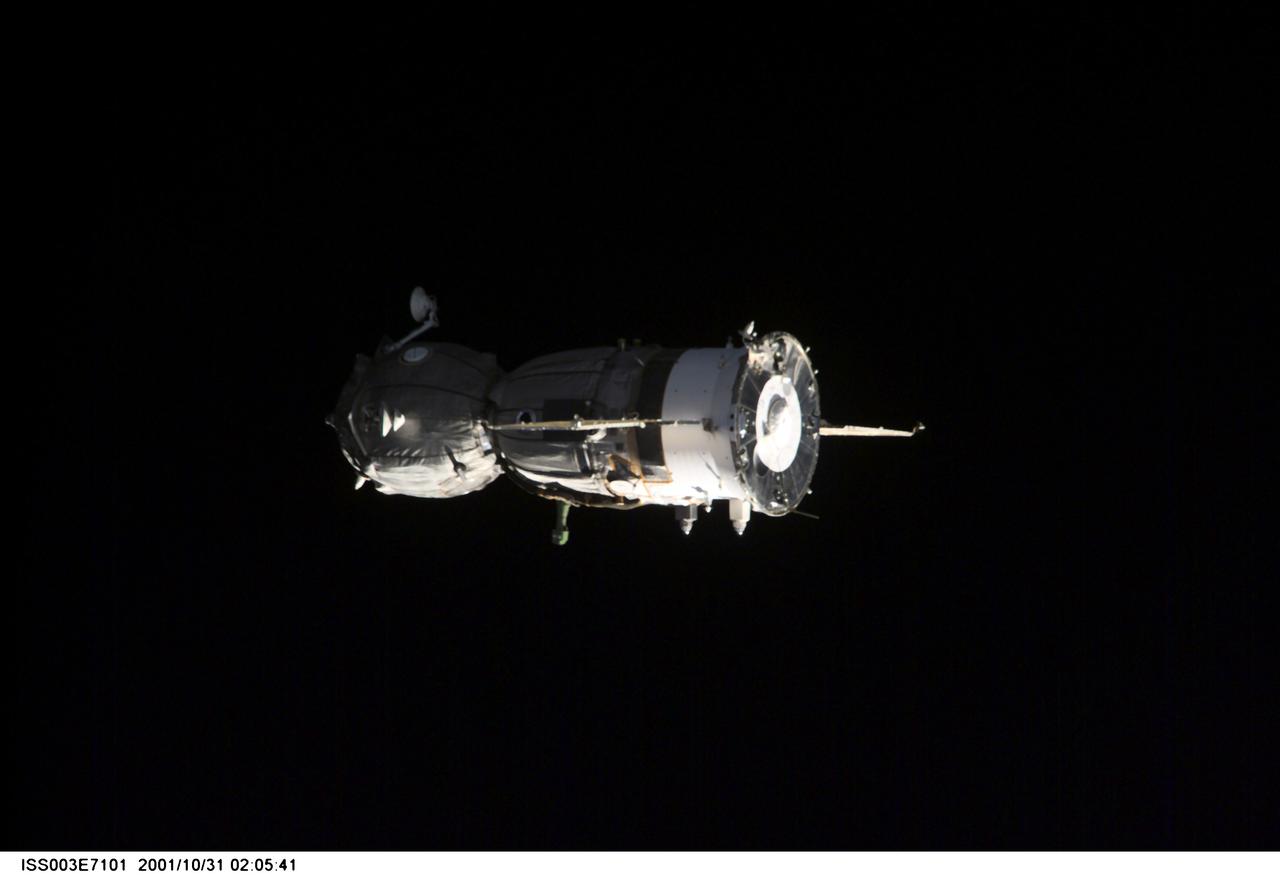
ISS003-E-7101 (31 October 2001) --- A Soyuz spacecraft departs from the International Space Station (ISS) carrying the Soyuz taxi crew, Commander Victor Afanasyev, Flight Engineer Konstantin Kozeev and French Flight Engineer Claudie Haignere, ending their eight-day stay on the station. Afanasyev and Kozeev represent Rosaviakosmos, and Haignere represents ESA, carrying out a flight program for CNES, the French Space Agency, under a commercial contract with the Russian Aviation and Space Agency. This image was taken with a digital still camera.
View of the Soyuz carrying the Taxi crew after undocking taken during Expedition Three
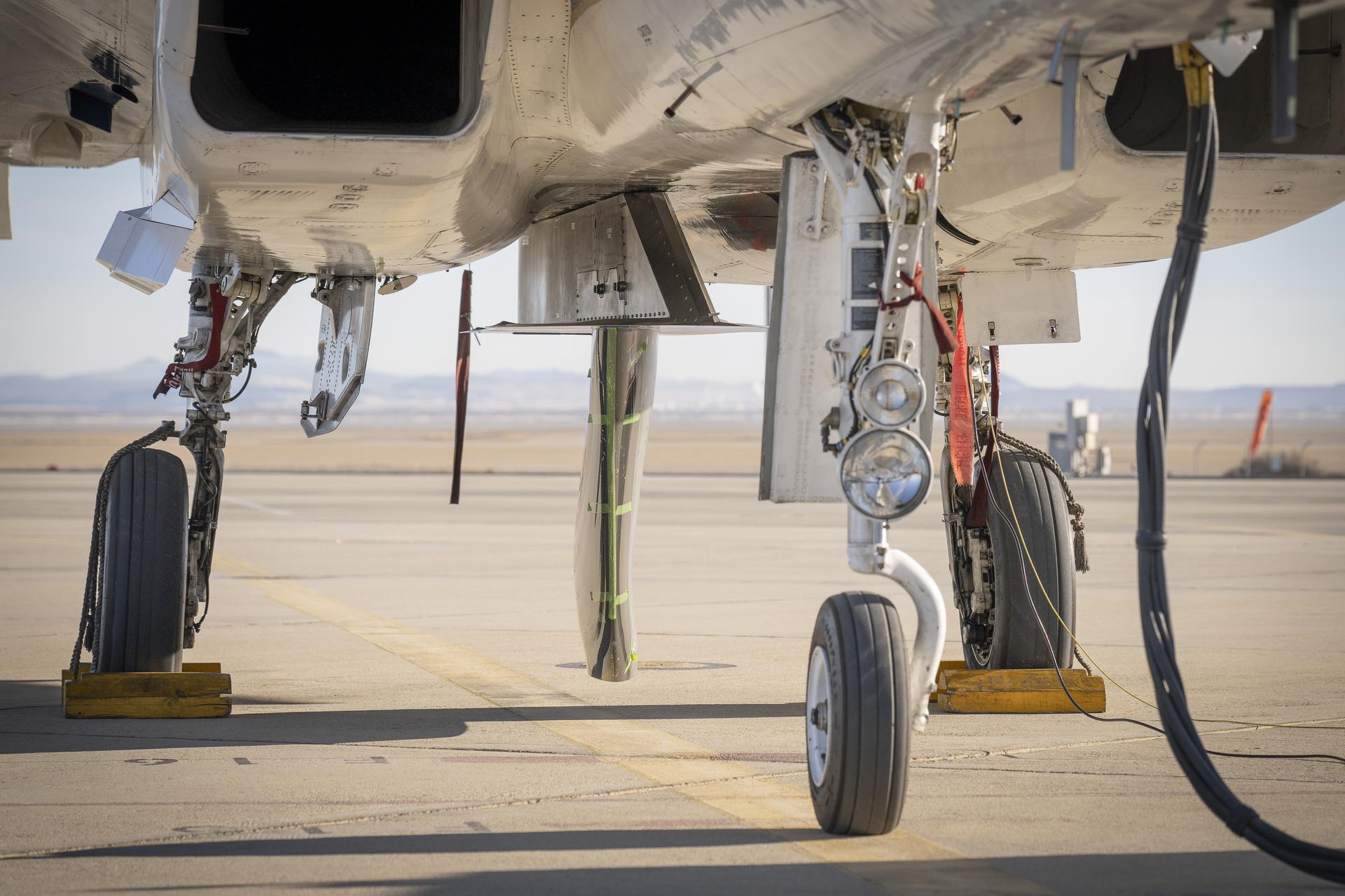
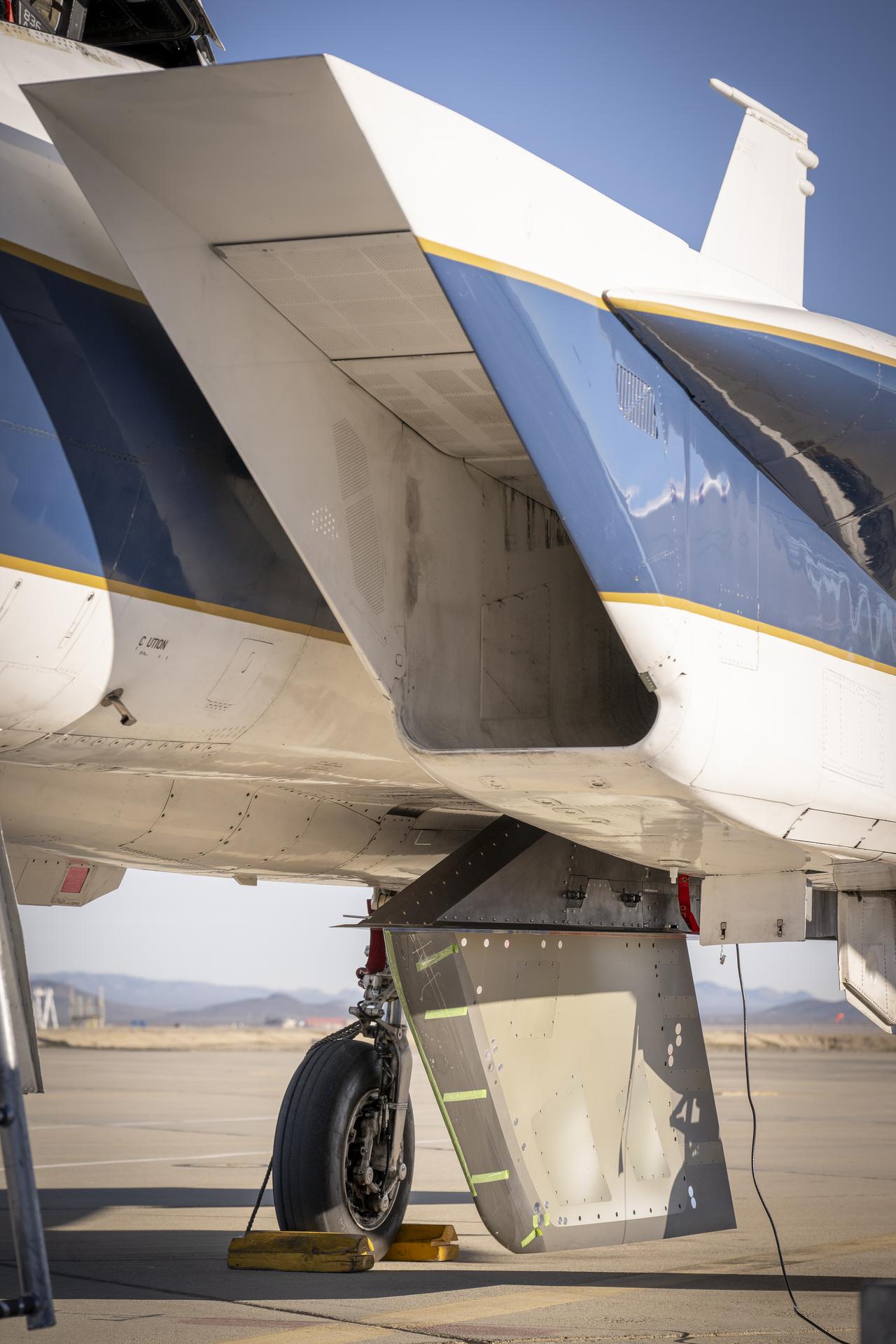
NASA’s Cross Flow Attenuated Natural Laminar Flow test article is mounted beneath the agency’s F-15 research aircraft ahead of the design’s high-speed taxi test on Tuesday, Jan. 12, 2026, at NASA’s Armstrong Flight Research Center in Edwards, California. The 3-foot-tall scale model is designed to increase a phenomenon known as laminar flow and reduce drag, improving efficiency in large, swept wings like those found on most commercial aircraft.
NASA Wing Model Mounted Under F-15 for High-Speed Taxi Test