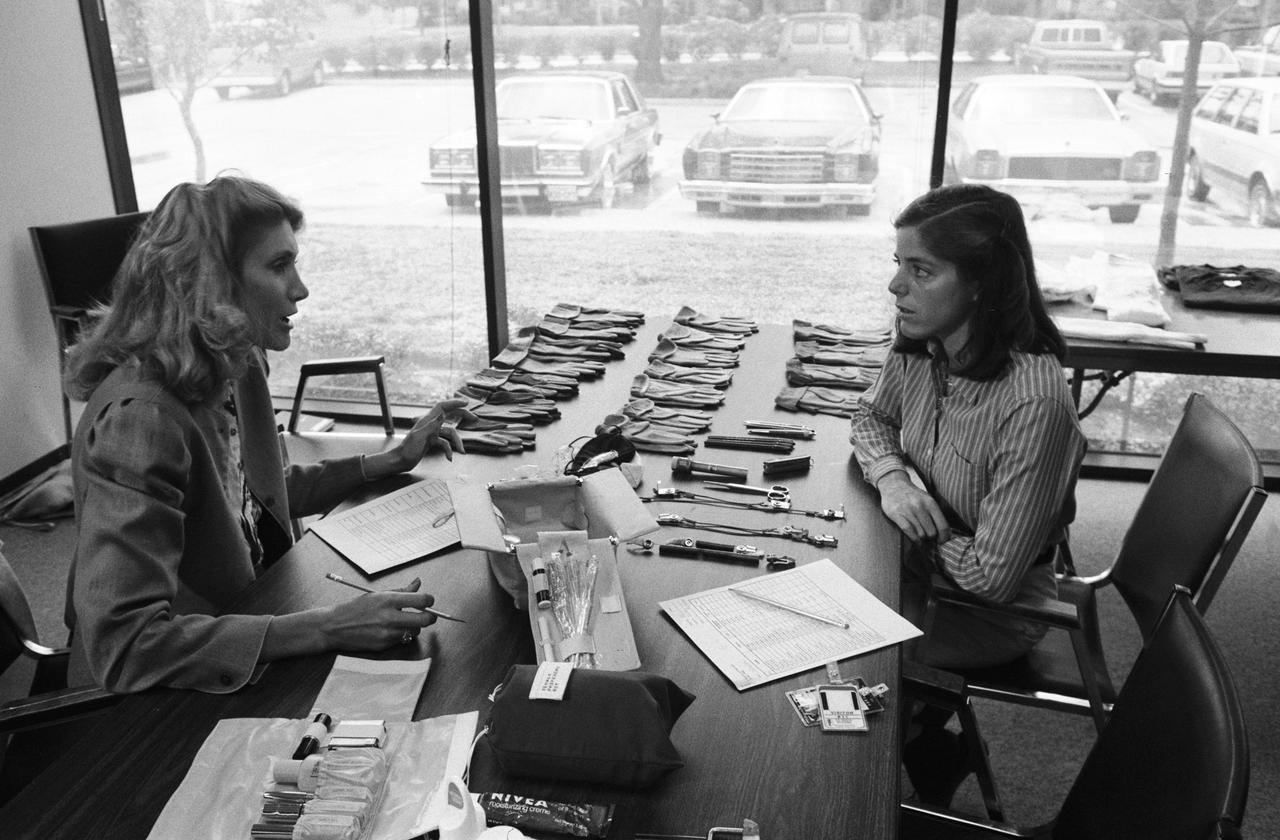
Views of STS-33/51L crew personnel Prime McAuliffe and Backup Morgan at the ILC Facility during clothing selection and Building #37 during food sampling, and with the rest of the STS-33/51L crew. 40074: "Teacher-in-Space" Participant Barbara Morgan (right) is briefed on her suit and on personal hygiene equipment to be used on the STS-51L Mission. 1. JSC - Education Program (Teacher in Space) 2. Barbara Morgan 3. Christa McAuliffe 4. STS-33/51L - Crew Training (Uniforms/Food/Crew)
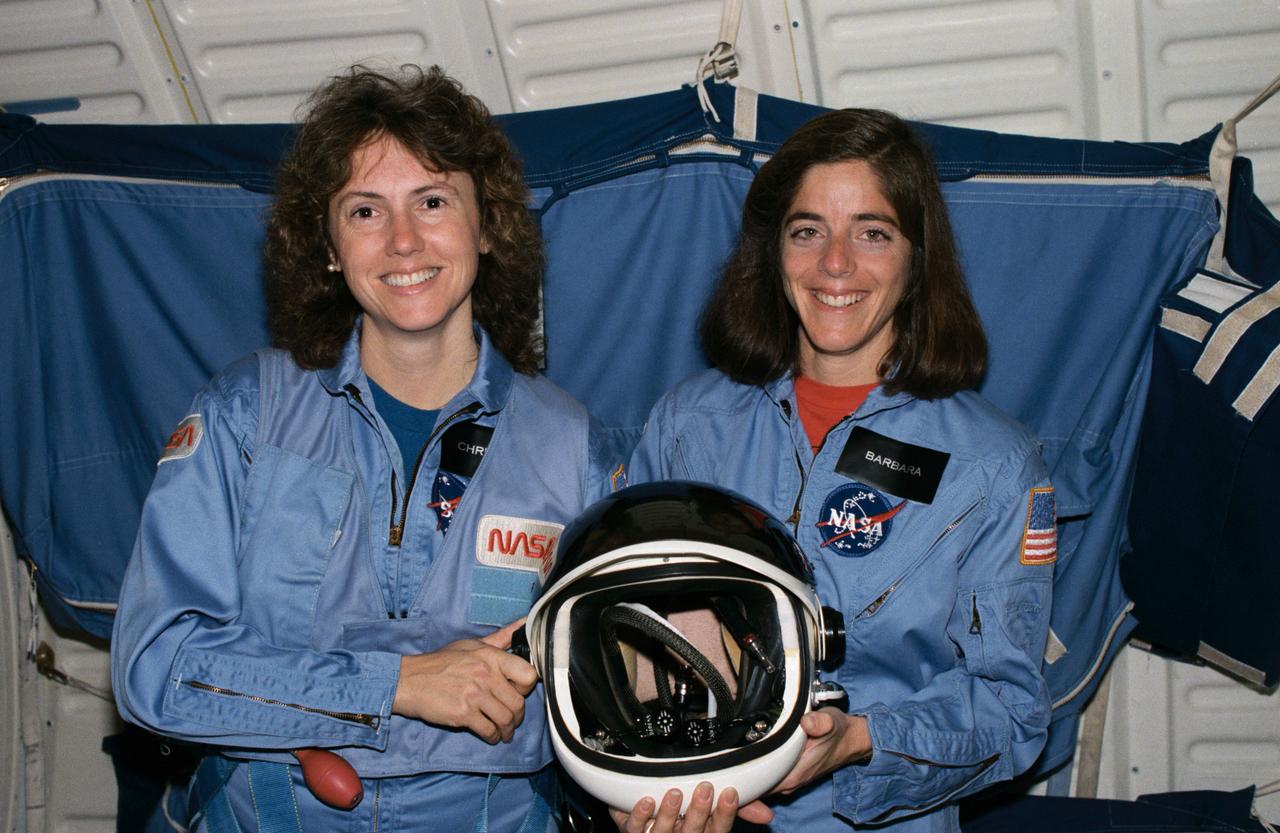
S85-46205 (December 1985) --- Sharon Christa McAuliffe (left), from Concord, New Hampshire, and Barbara R. Morgan of McCall, Idaho, have been named NASA Teacher-in-Space Project prime and backup payload specialists, respectively, for the first citizen observer position of the STS program, scheduled for a Challenger flight in January 1986. Photo credit: NASA
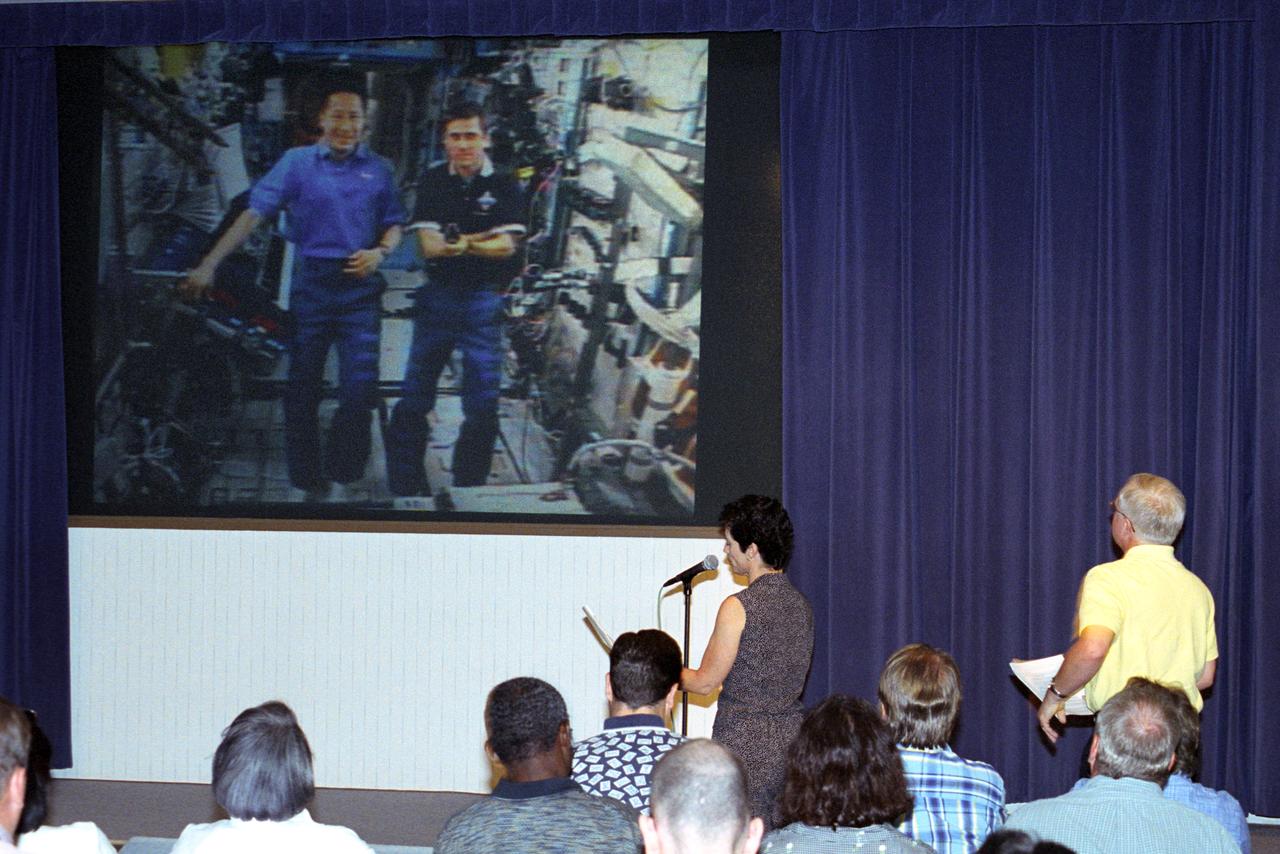
Teacher Kim Cantrell from the Edwards Air Force Base Middle School, Edwards, Calif., participating in a live uplink at NASA Dryden as part of NASA's Explorer Schools program, asks the crew of the International Space Station a question.

S85-41239 (26 Sept. 1985) --- Astronaut Sharon Christa McAuliffe, payload specialist Teacher in Space Project. NOTE: Payload specialist/teacher McAuliffe died in the STS-51L space shuttle Challenger accident, Jan. 28, 1986. Photo credit: NASA
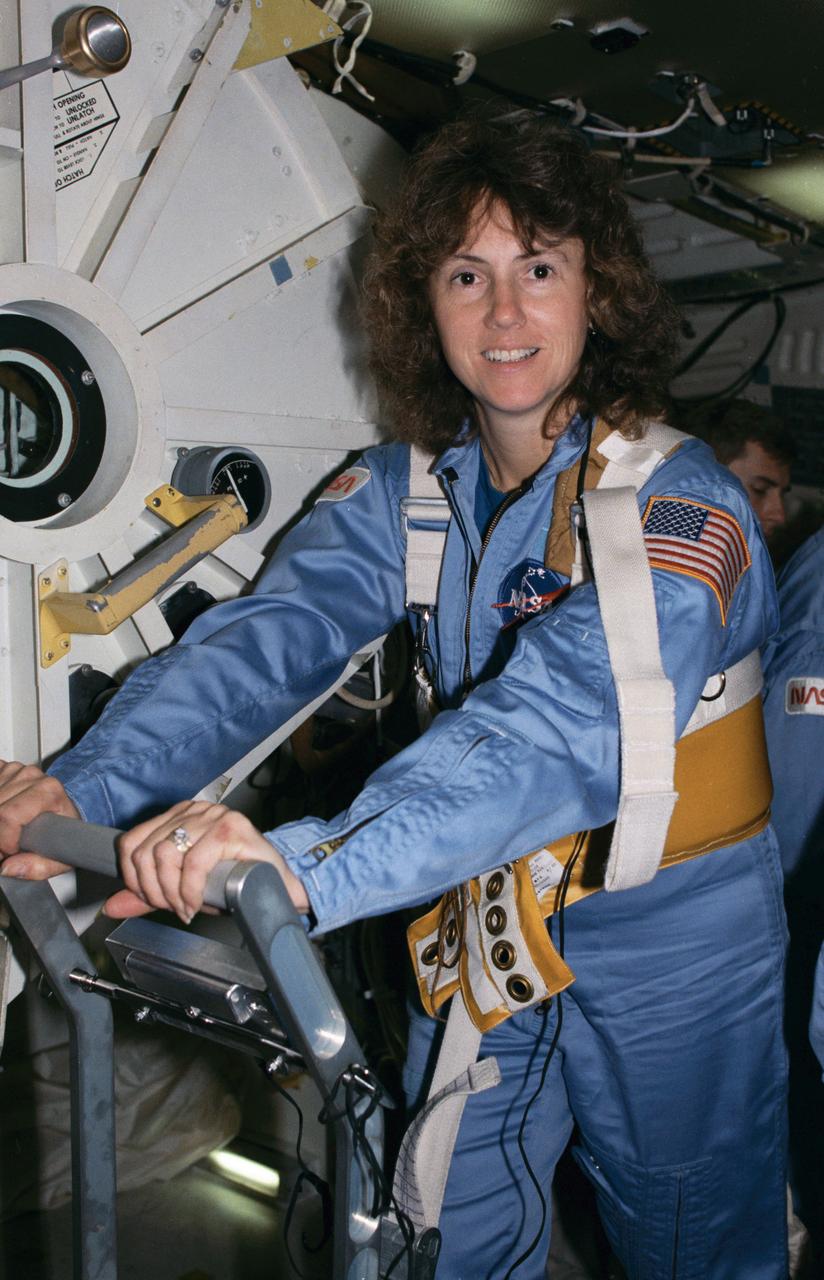
S85-46206 (December 1985) --- Sharon Christa McAuliffe, STS-51L payload specialist representing the Teacher-in-Space Project, uses a treadmill exercising device during a training session at the Johnson Space Center in preparation for January?s week-long mission aboard the space shuttle Challenger. This photo was taken by Bill Bower. Photo credit: NASA
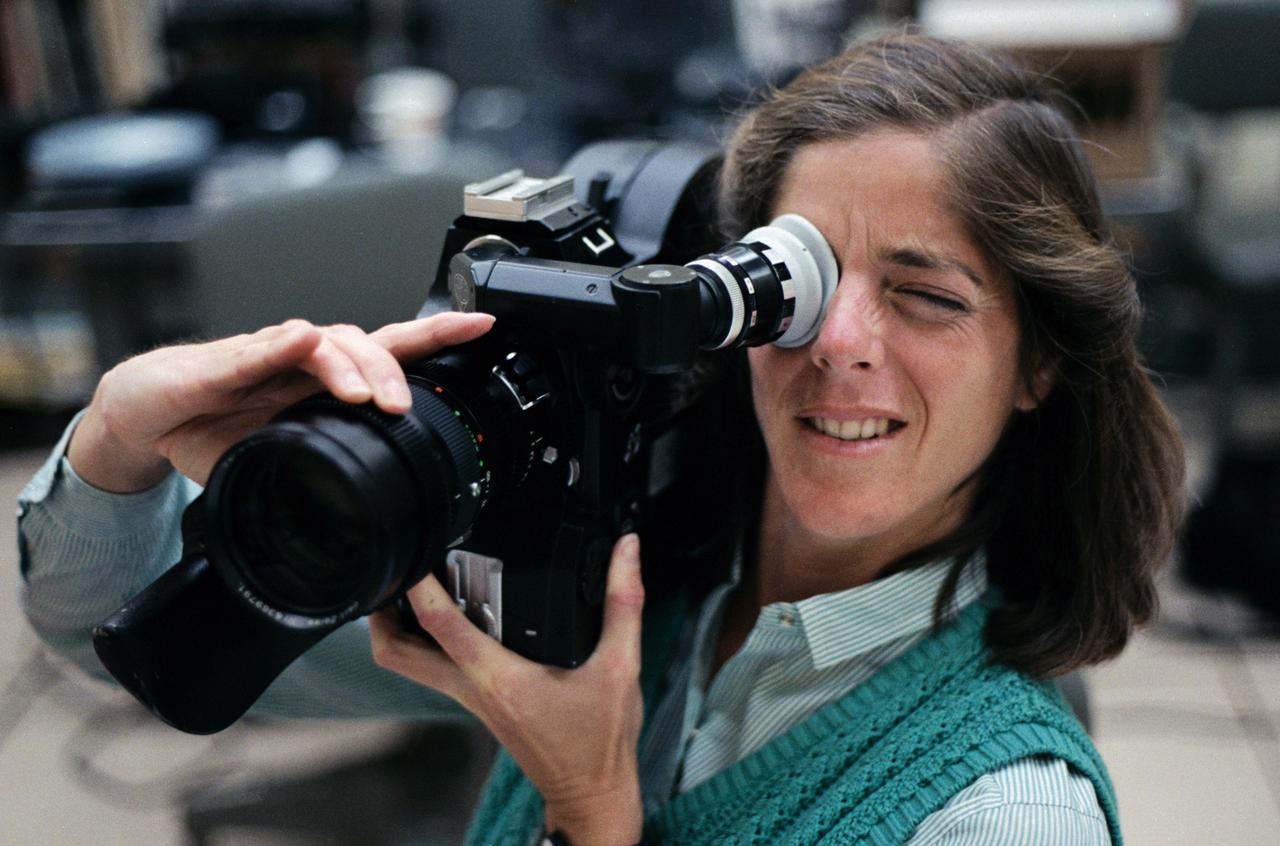
S85-40671 (18 Sept. 1985) --- The two teachers, Barbara R. Morgan and Sharon Christa McAuliffe (out of frame) have hands-on experience with an Arriflex motion picture camera following a briefing on space photography. The two began training Sept. 10, 1985 with the STS-51L crew and learning basic procedures for space travelers. The second week of training included camera training, aircraft familiarization and other activities. Morgan zeroes in on a test subject during a practice session with the Arriflex. Photo credit: NASA
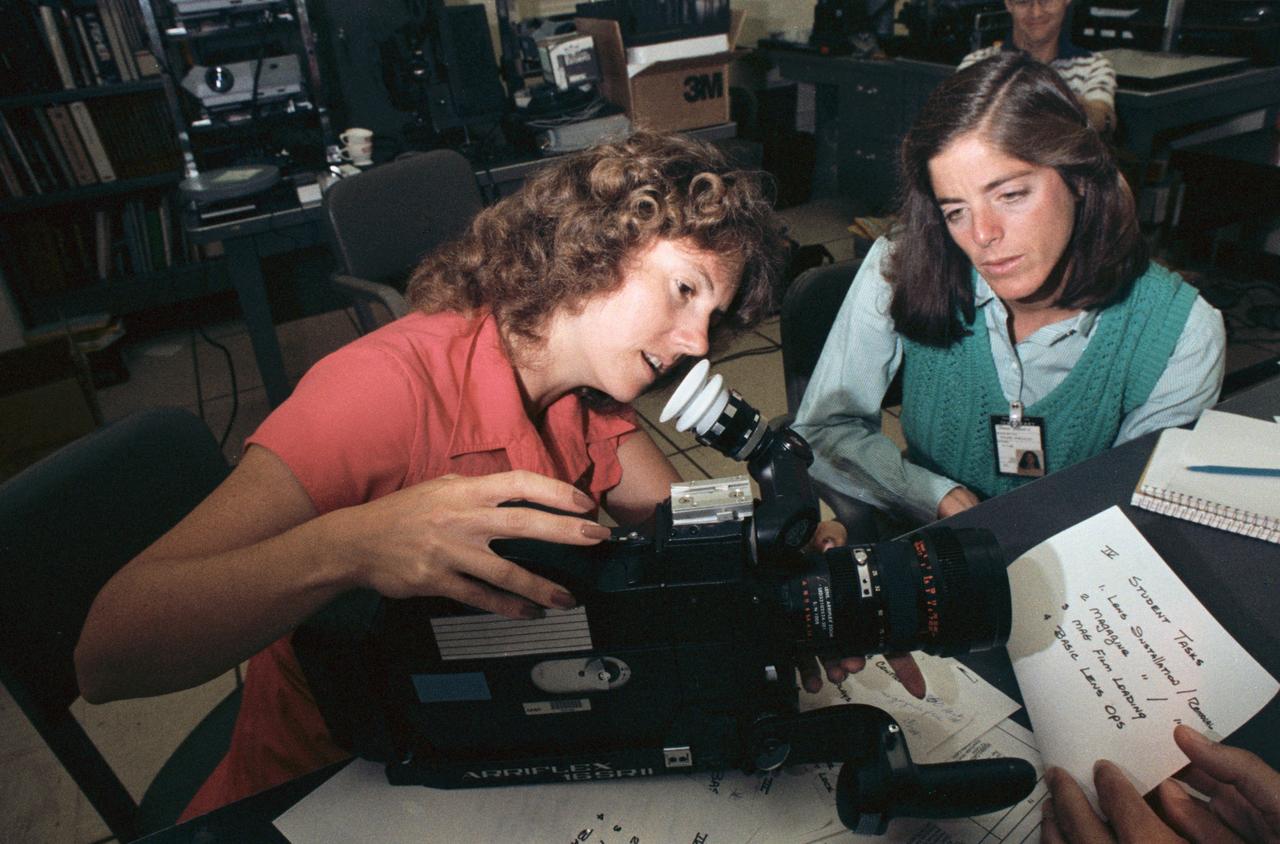
S85-40668 (18 Sept. 1985) --- The two teachers, Sharon Christa McAuliffe (left) and Barbara R. Morgan have hands-on experience with an Arriflex motion picture camera following a briefing on space photography. The two began training Sept. 10, 1985 with the STS-51L crew and learning basic procedures for space travelers. The second week of training included camera training, aircraft familiarization and other activities. Photo credit: NASA
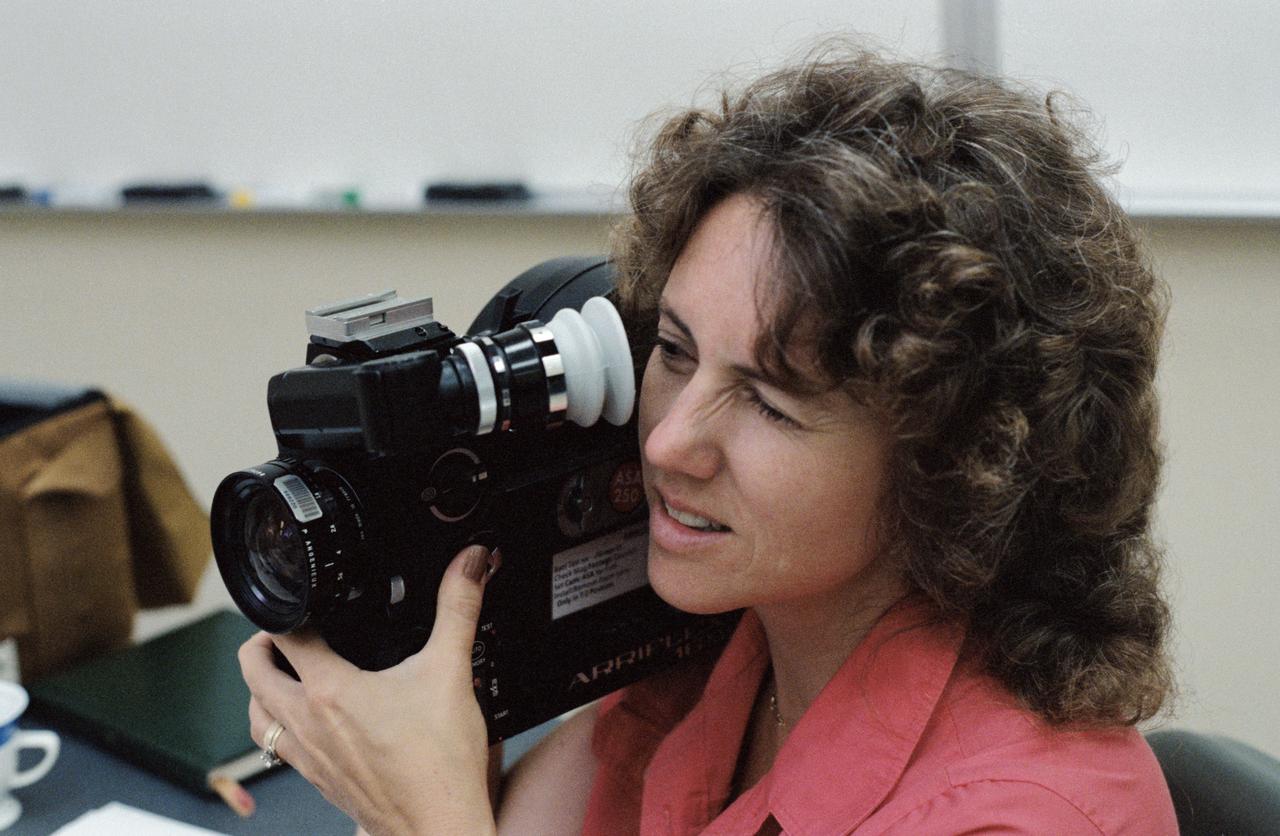
S85-40670 (18 Sept. 1985) --- The two teachers, Sharon Christa McAuliffe and Barbara R. Morgan (out of frame) have hands-on experience with an Arriflex motion picture camera following a briefing on space photography. The two began training Sept. 10, 1985 with the STS-51L crew and learning basic procedures for space travelers. The second week of training included camera training, aircraft familiarization and other activities. McAuliffe zeroes in on a test subject during a practice session with the Arriflex. Photo credit: NASA
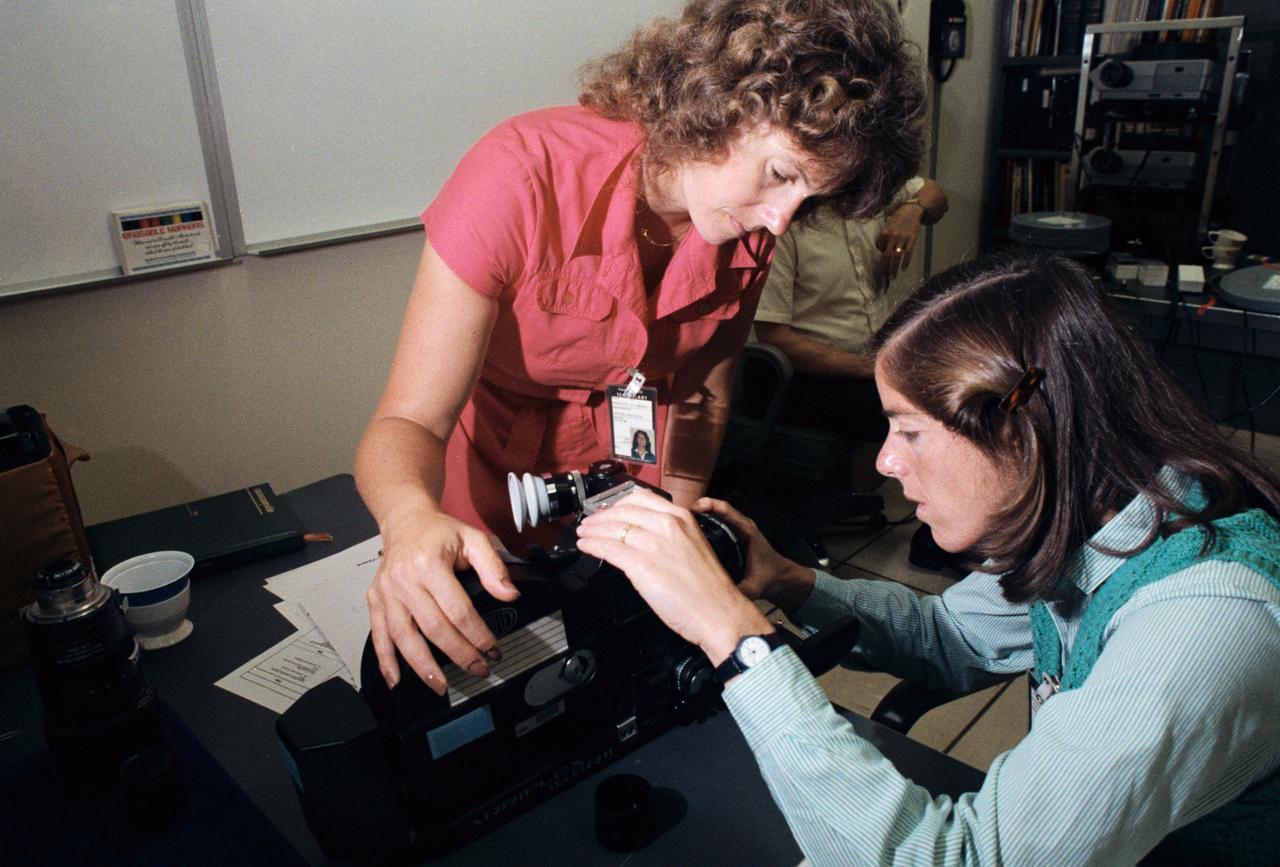
S85-40669 (18 Sept. 1985) --- The two teachers, Sharon Christa McAuliffe (left) and Barbara R. Morgan have hands-on experience with an Arriflex motion picture camera following a briefing on space photography. The two began training Sept. 10, 1985 with the STS-51L crew and learning basic procedure for space travelers. The second week of training included camera training, aircraft familiarization and other activities. Morgan adjusts a lens as a studious McAuliffe looks on. Photo credit: NASA
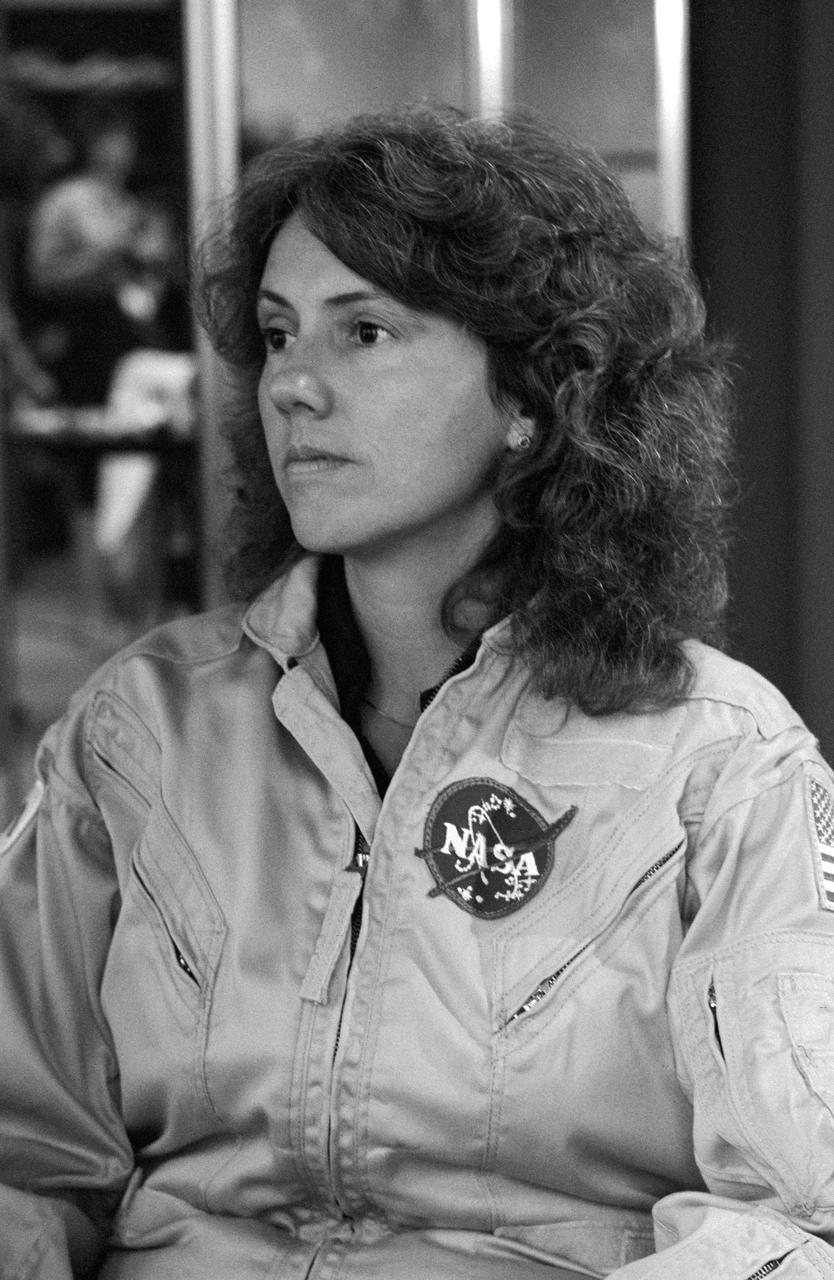
S85-40075 (12 Sept. 1985) --- Teacher-in-Space participant Christa McAuliffe is pictured during her briefing on suit and personal hygiene equipment to be used on the STS-51L mission. Photo credit: NASA
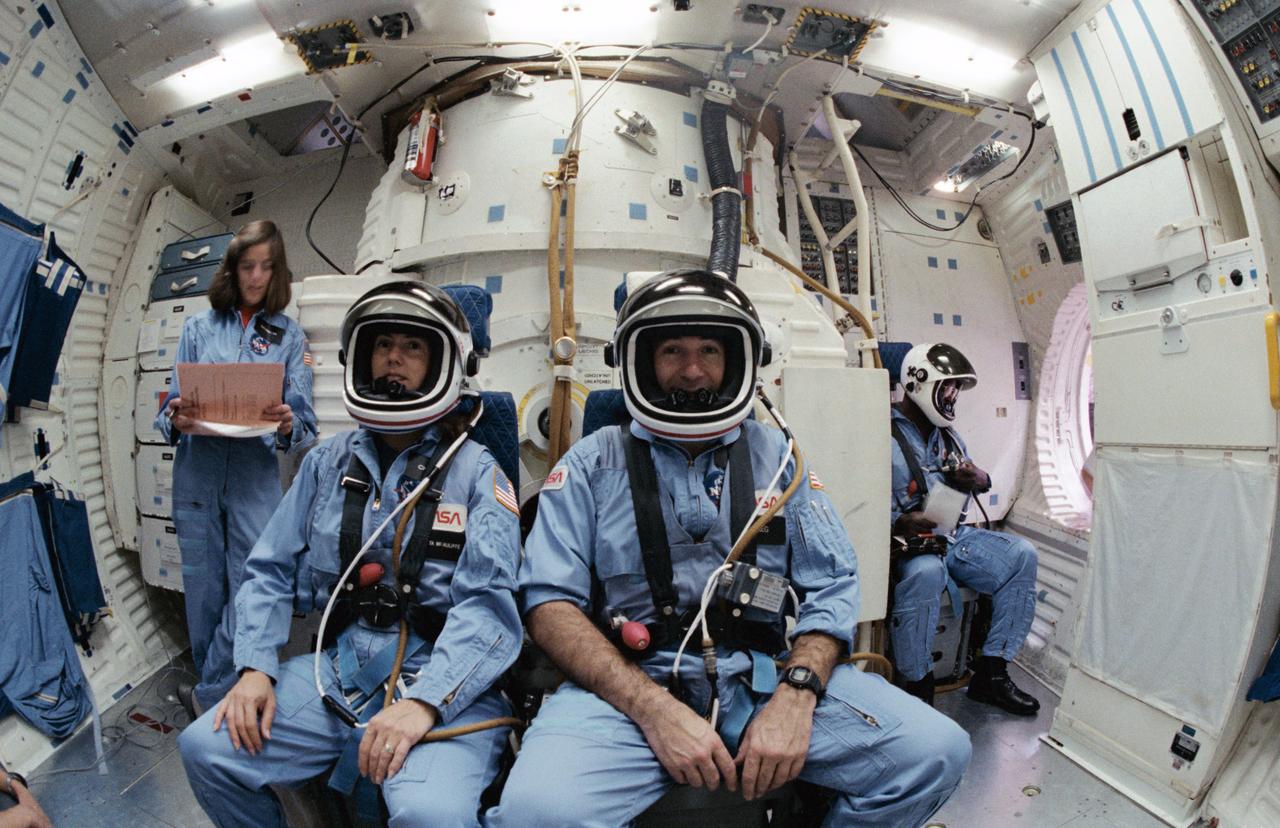
S85-46208 (December 1985) --- L.?R., backup Payload Specialist Barbara R. Morgan, Teacher Payload Specialist Christa McAuliffe, Hughes Payload Specialist Gregory B. Jarvis and Mission Specialist Ronald E. McNair in shuttle mission simulator at the Johnson Space Center. Photo was taken by Bill Bowers. Photo credit: NASA
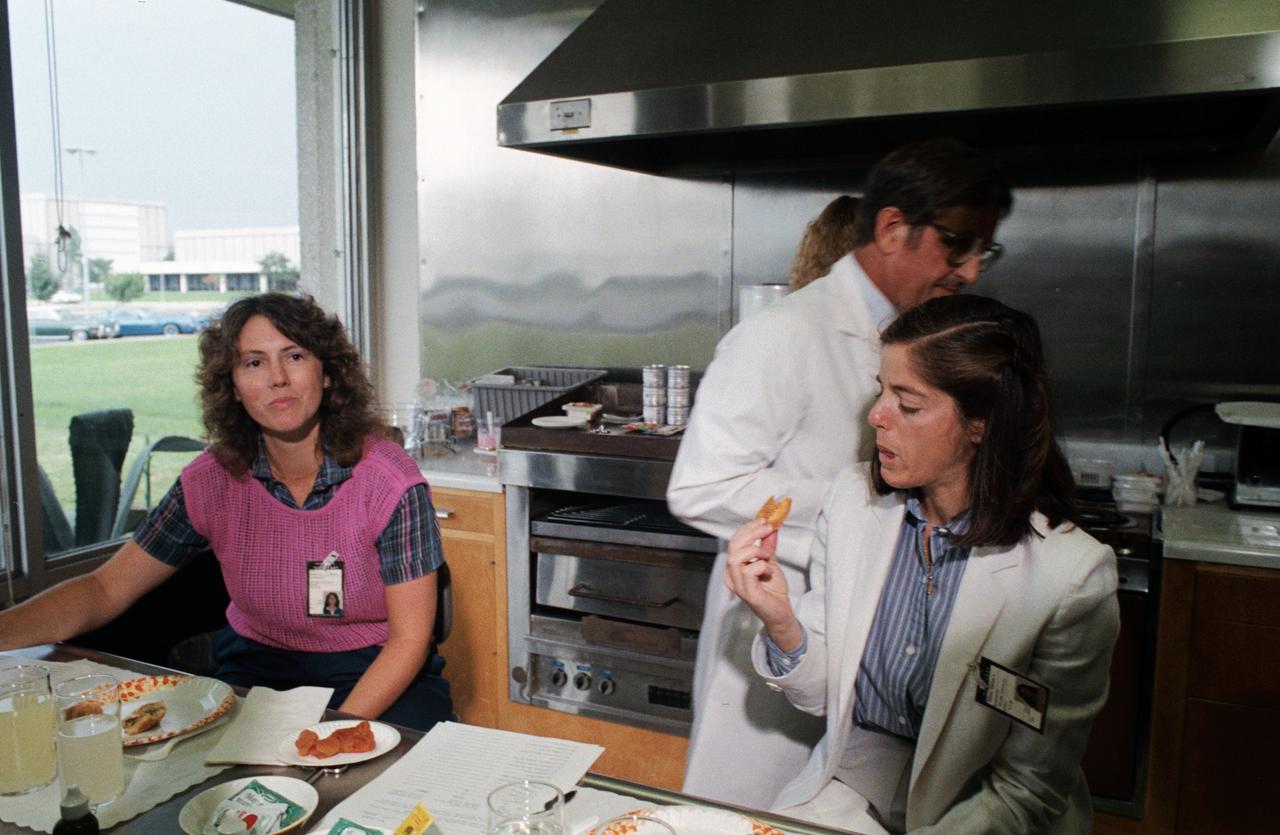
S85-39978 (10 Sept. 1985) --- Sharon Christa McAuliffe, left, appears to be deciding what she thinks of a piece of space food she tastes during a session of interfacing with space shuttle life sciences. Barbara R. Morgan samples an apricot. The two are in early training at the Johnson Space Center (JSC) in preparation for the STS-51L spaceflight early next year. McAuliffe is prime payload specialist representing the Teacher in Space Project, and Morgan is her backup. Dr. C.T. Bourland, a dietitian specialist, assists the two. Photo credit: NASA
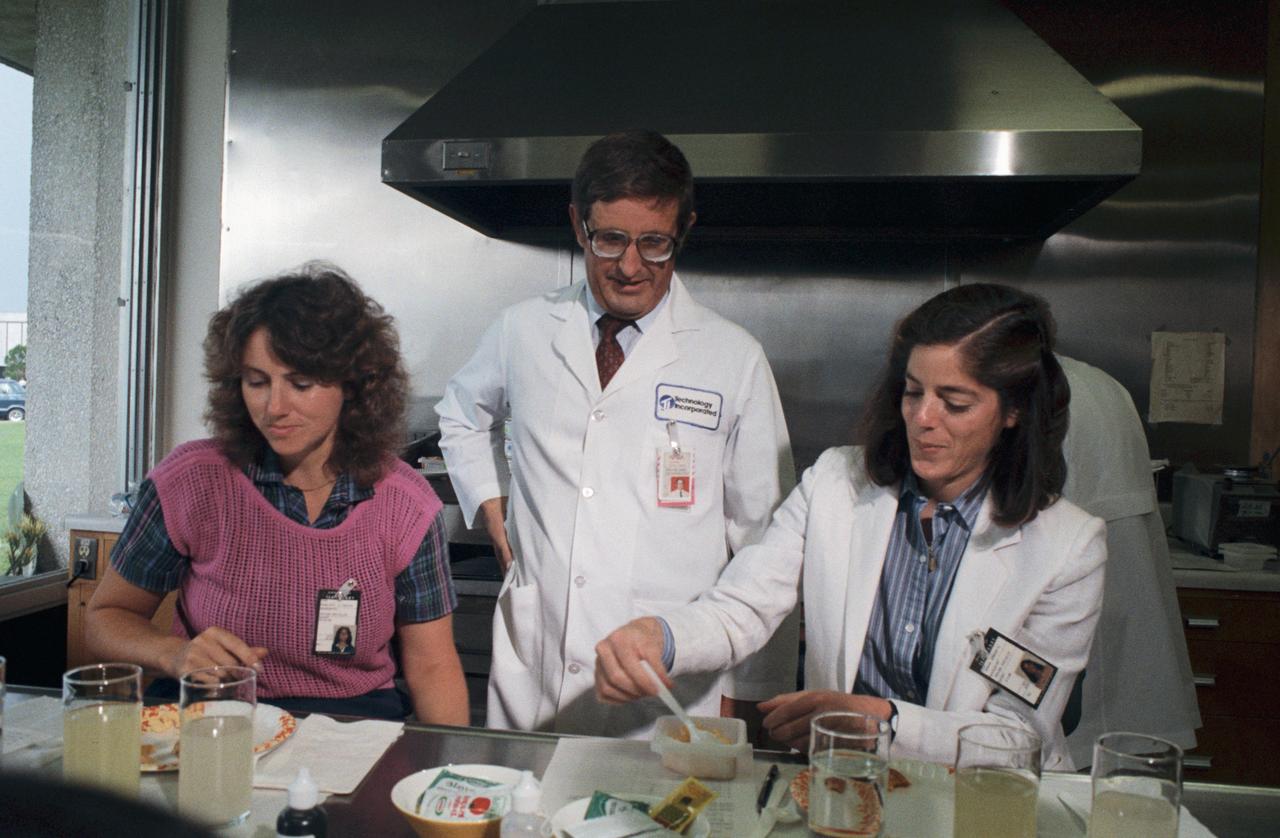
S85-39979 (10 Sept. 1985) --- Two teachers training for participation in the STS-51L flight get their first introduction to space food during an orientation session in the life sciences building at the Johnson Space Center (JSC). Sharon Christa McAuliffe (left) chews on a morsel while Barbara R. Morgan reaches for a bite. Dr. C.T. Bourland of Technology, Incorporated, looks on. McAuliffe was chosen from among ten finalists as prime citizen observer payload specialist and Morgan was named as backup for the STS-51L flight. Photo credit: NASA
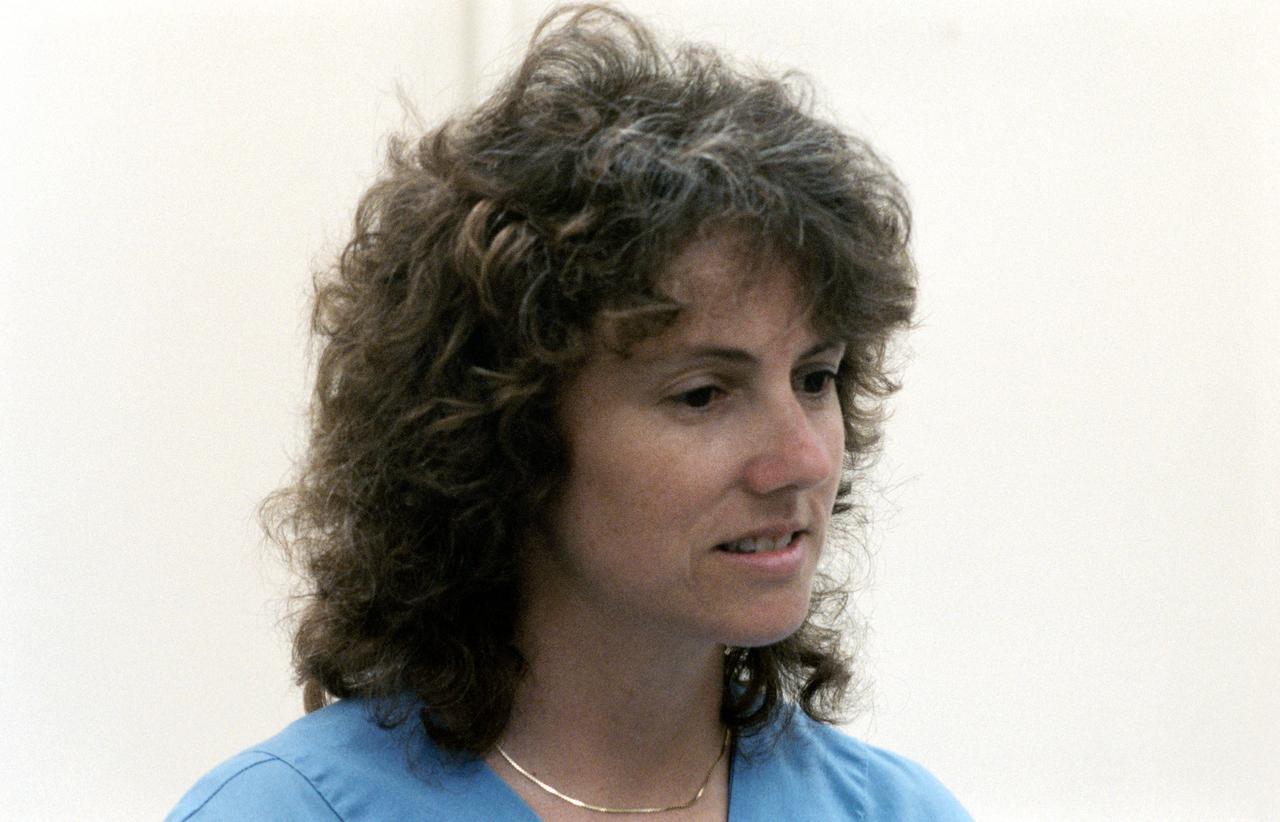
S85-37164 (8-12 July 1985) --- Sharon C. (Christa) McAuliffe of Concord High, Concord, New Hampshire, talks to the media at Johnson Space Center. Christa McAuliffe was eventually chosen as the first Teacher in Space and was a member of the seven-member Challenger shuttle crew which died tragically in the explosion of the spacecraft during the launch of STS-51L from the Kennedy Space Center about 11:40 a.m., EST, on Jan. 28, 1986. The explosion occurred 73 seconds into the flight as a result of a leak in one of two Solid Rocket Boosters that ignited the main liquid fuel tank. The crew members of the Challenger represented a cross-section of the American population in terms of race, gender, geography, background, and religion. The explosion became one of the most significant events of the 1980s, as billions around the world saw the accident on television and empathized with any one of the several crew members killed. Photo credit: NASA
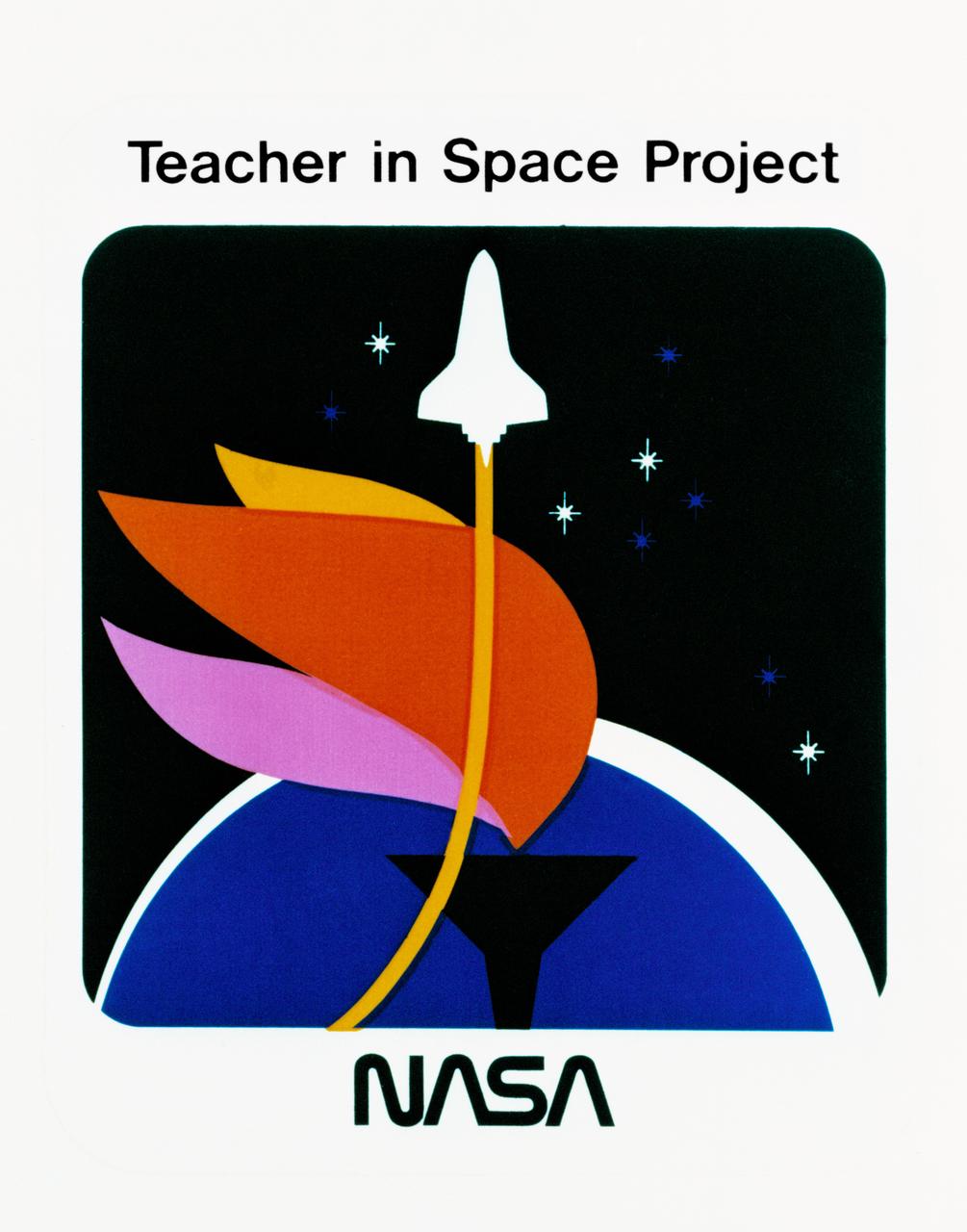
S85-38312 (September 1985) --- Logo designed for use by the 10 finalists in NASA’s Teacher in Space Project, who were at JSC for training and orientation the week of July 8–12, 1985. They are David M. Marquart, Boise High, Boise, Idaho; Michael W. Metcalf, Hazen Union School, Hardwick, Vermont; Judith Marie Garcia, Thomas Jefferson School for Science and Technology, Alexandria, Virginia; Peggy J. Lathlaen, Westwood Elementary, Friendswood, Texas; Niki Mason Wenger, Vandevender Junior High, Parkersburg, West Virginia; Barbara R. Morgan, McCall-Donnelly Elementary, McCall, Idaho; Kathleen Anne Beres, Kenwood High, Baltimore, Maryland; Richard A. Methia, New Bedford High, New Bedford, Mass.; Sharon Christa McAuliffe, Concord High, Concord, New Hampshire; and Robert S. Foerster, Cumberland Elementary School, West Lafayette, Indiana. Photo credit: NASA
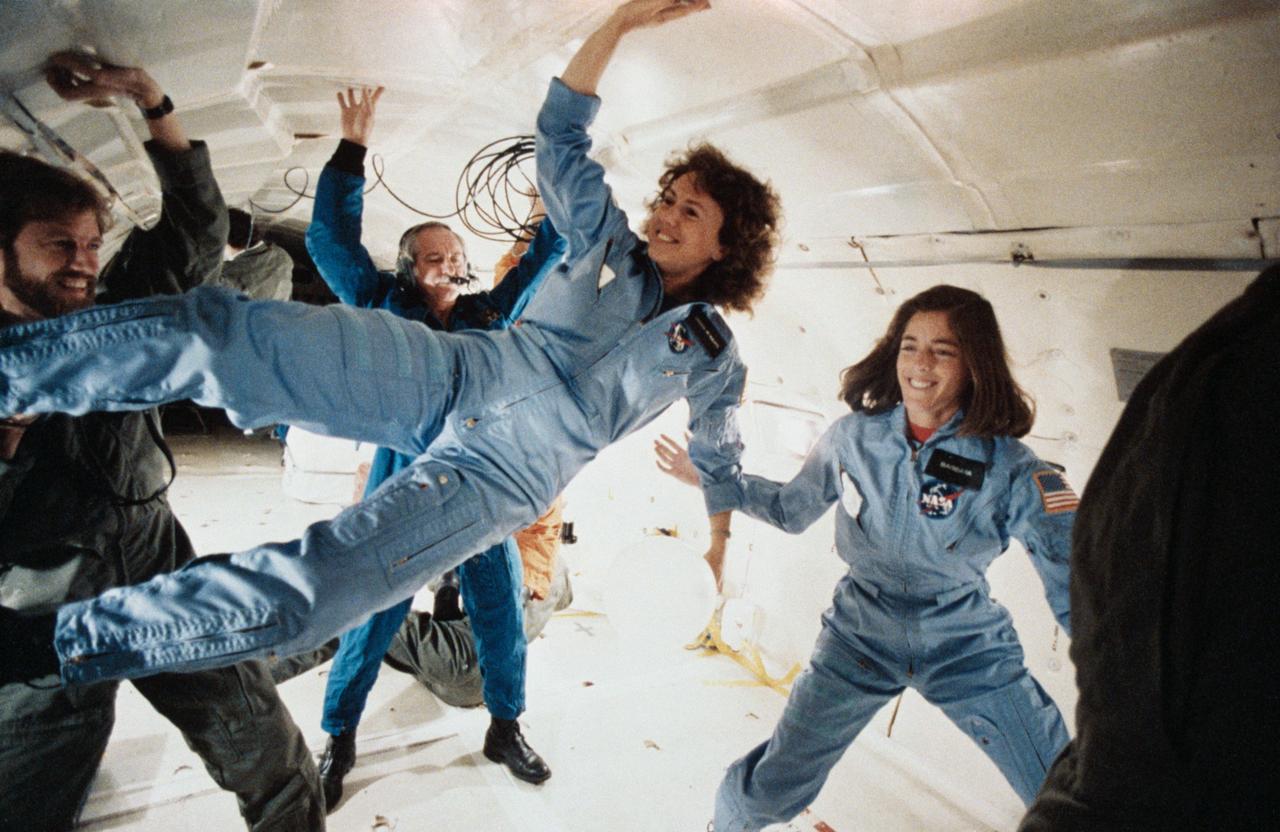
S86-25191 (for release January 1986) --- The two representatives of the Teacher-in-Space Project continue their training program at the Johnson Space Center with an additional flight aboard NASA?s KC-135 ?zero gravity? aircraft. Sharon Christa McAuliffe, left, is prime crew payload specialist, and Barbara R. Morgan is in training as backup payload specialist. The photo was taken by Keith Meyers of New York Times. Photo credit: NASA
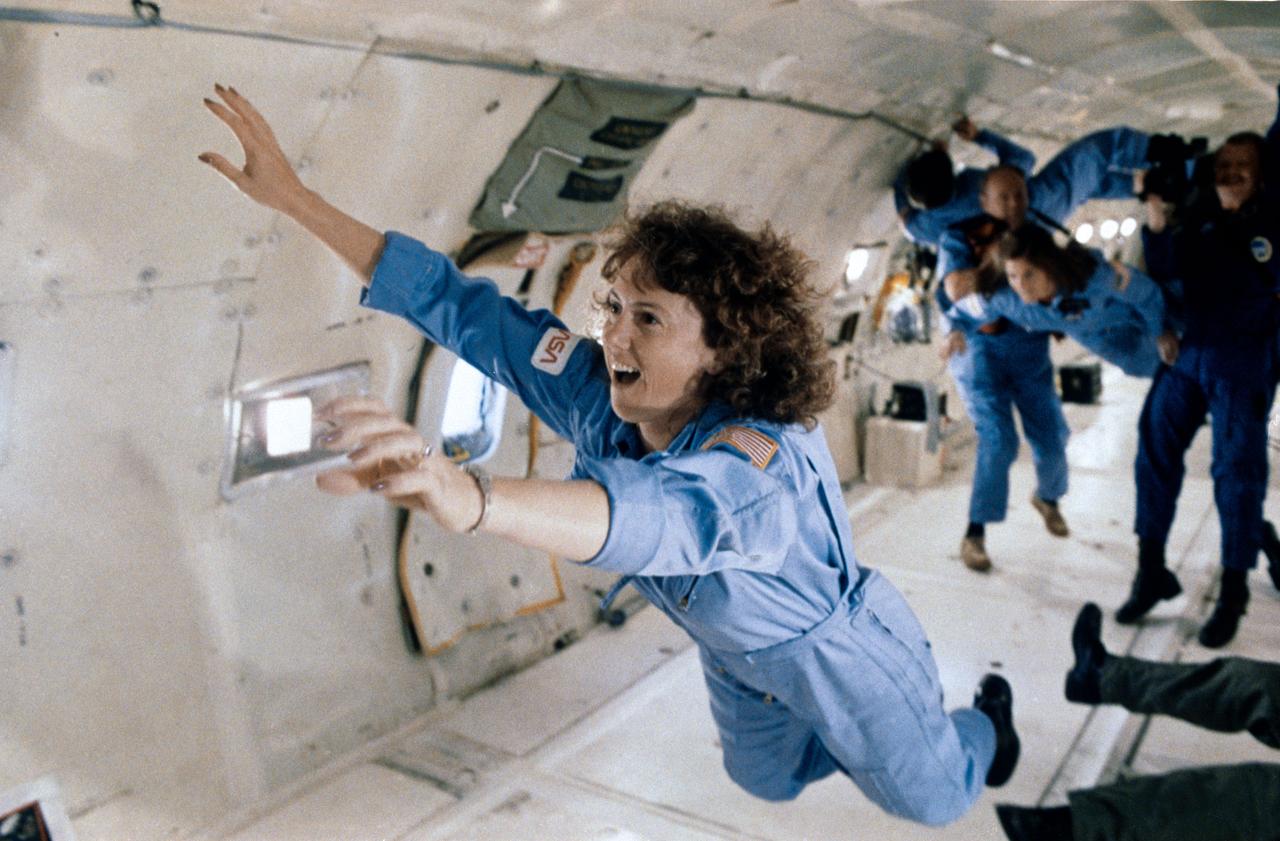
S86-25180 (October 1985) --- Sharon Christa McAuliffe, STS-51L citizen observer/payload specialist, representing the Teacher-in-Space Project, floats forward and upward during a few moments of weightlessness aboard a KC-135 aircraft. The flight is part of her training for the scheduled five-day flight aboard the Challenger in January of next year. Barbara R. Morgan, backup payload specialist for STS-51L, is partially visible in the background. The photo was taken by Keith Meyers of the New York Times. Photo credit: NASA
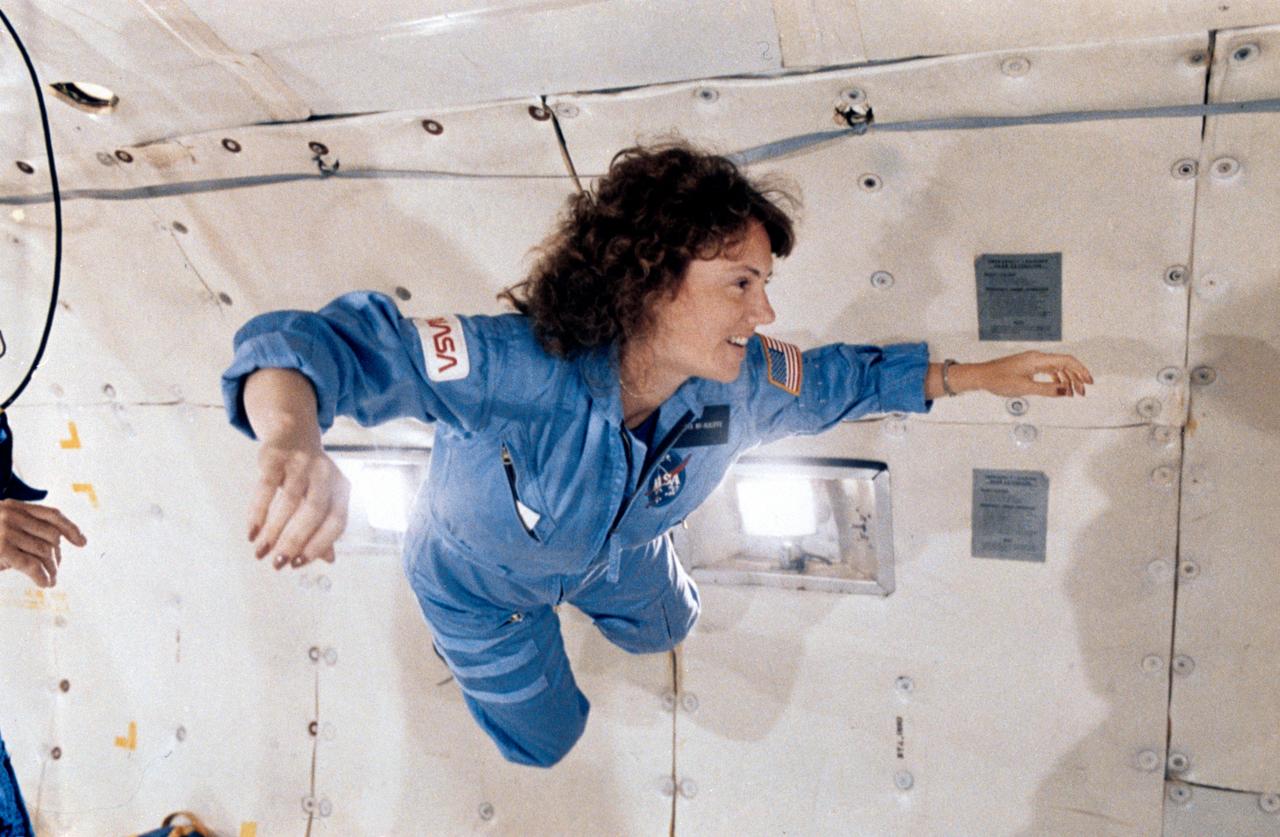
S86-25196 (January 1986) --- Sharon Christa McAuliffe, STS-51L citizen observer/payload specialist, gets a preview of microgravity during a special flight aboard NASA?s KC-135 ?zero gravity? aircraft. McAuliffe will represent the Teacher-in-Space Project aboard the space shuttle Challenger when it launches later this month. This photograph was taken by Keith Meyers of the New York Times. EDITOR?S NOTE: The STS-51L crew members lost their lives in the space shuttle Challenger accident moments after launch on Jan. 28, 1986 from the Kennedy Space Center (KSC). Photo credit: NASA
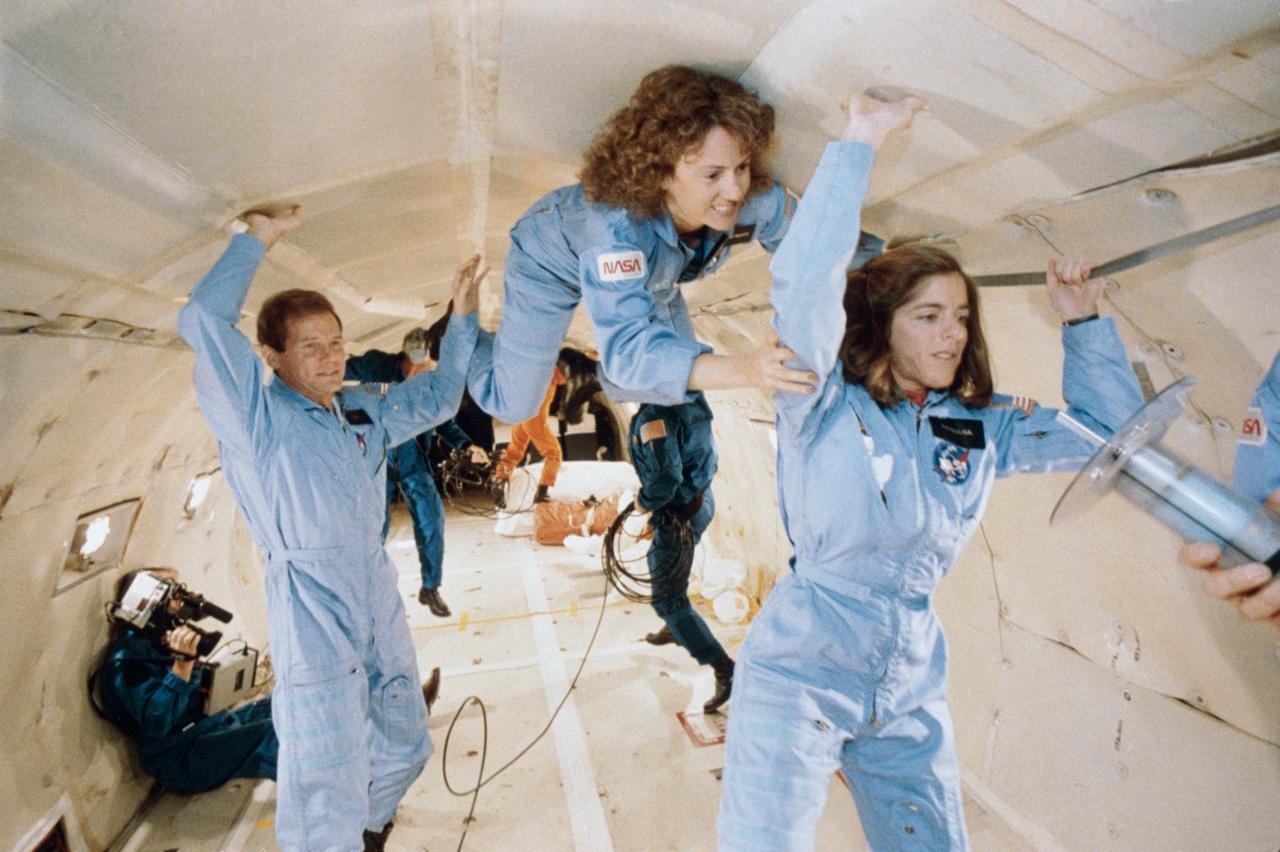
S86-25192 (January 1986) --- Two payload specialists in training for the STS-51L mission, and a payload specialist from STS-61C share a ?zero-gravity? flight aboard a KC-135 aircraft over the Gulf of Mexico. Left to right are United States Representative Bill Nelson (Democrat, Florida), Sharon Christa McAuliffe, and Barbara R. Morgan. The congressman is a payload specialist for the STS-61C mission. McAuliffe is the prime payload specialist for the Teacher-in-Space Project aboard the STS-51L mission; and Morgan is her backup. The photo was taken by Keith meyers of the New York Times. EDITOR?S NOTE: The STS-51L crew members lost their lives in the space shuttle Challenger accident moments after launch on Jan. 28, 1986 from the Kennedy Space Center (KSC). Photo credit: NASA
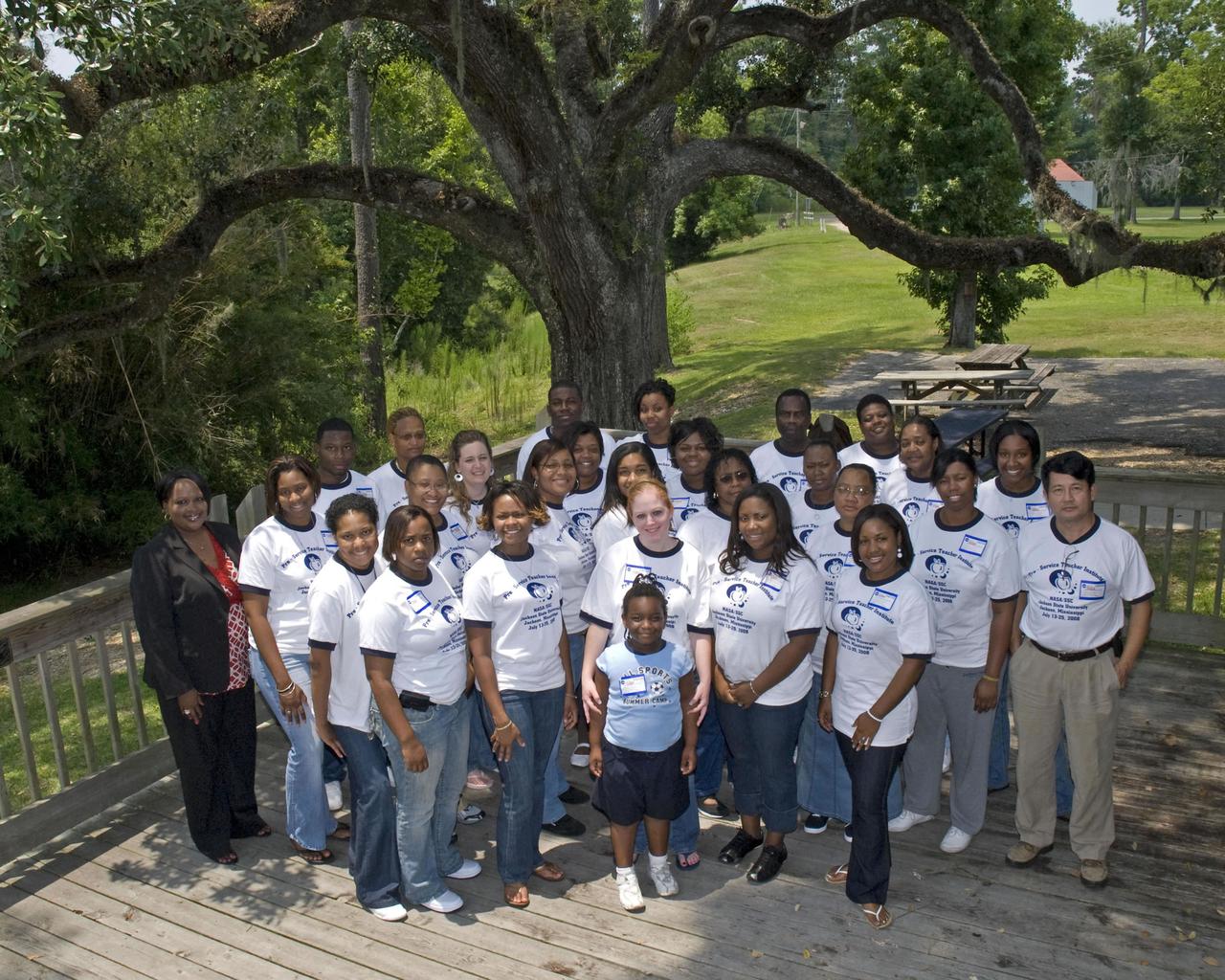
The Pre-Service Teachers Institute sponsored by Jackson (Miss.) State University participated in an agencywide Hubble Space Telescope workshop at Stennis Space Center on July 18. Twenty-five JSU junior education majors participated in the workshop, a site tour and educational presentations by Karma Snyder of the NASA SSC Engineering & Safety Center and Anne Peek of the NASA SSC Deputy Science & Technology Division.
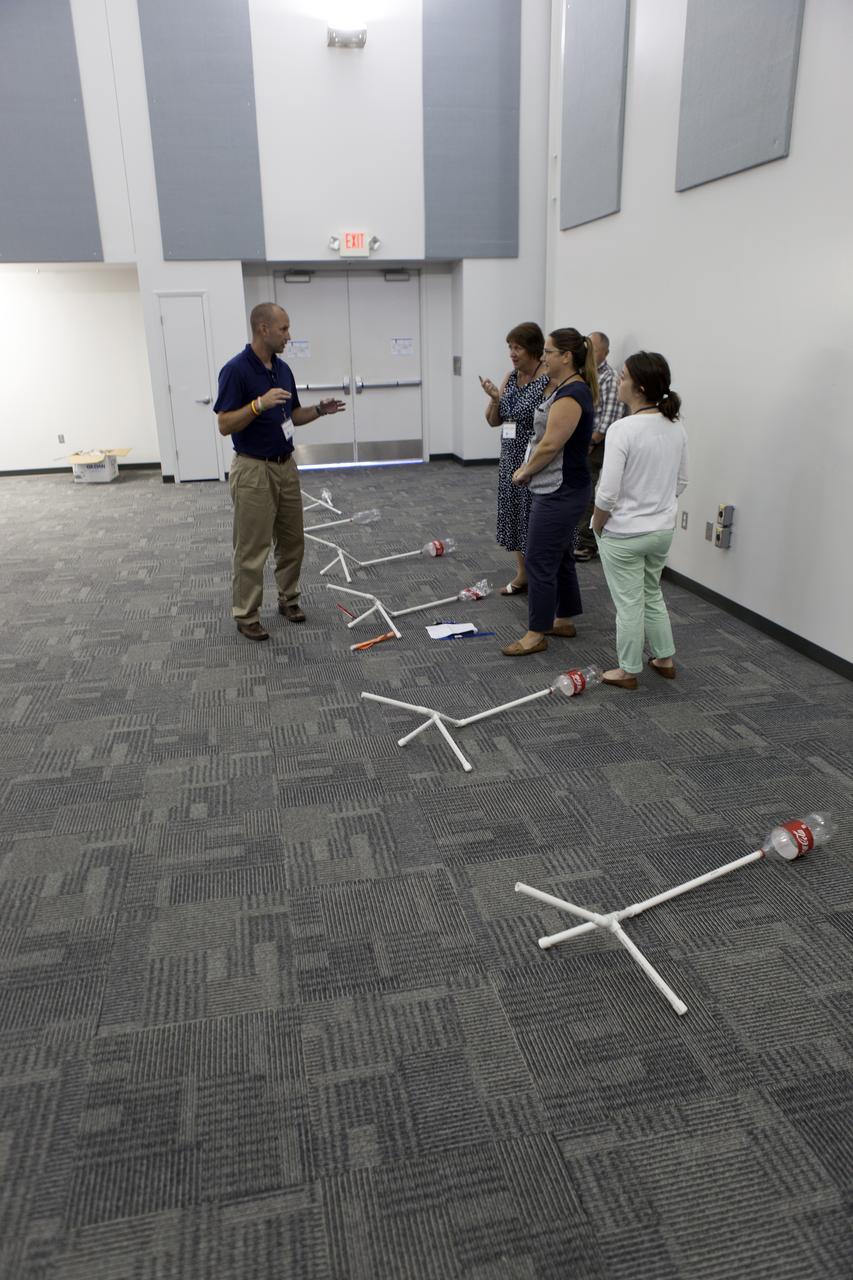
Teachers prepare to demonstrate the projects they built for the Rocketry Engineering Design Challenge during the 2017 GE Foundation High School STEM Integration Conference at the Center for Space Education at NASA's Kennedy Space Center. High school teachers from across the country took part in the week-long conference, which is designed to explore effective ways for teachers, schools and districts from across the country to integrate STEM throughout the curriculum. The conference is a partnership between GE Foundation and the National Science Teachers Association.
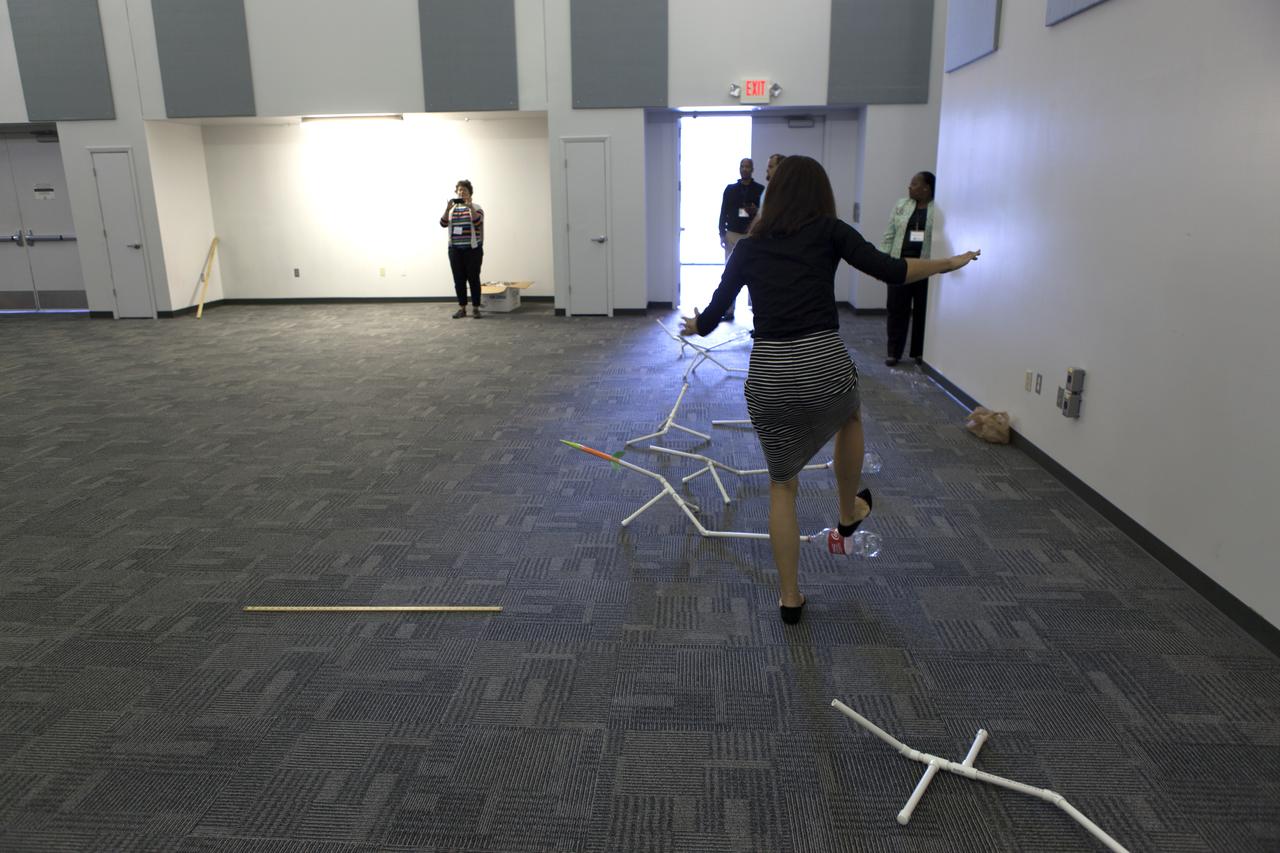
Teachers prepare to demonstrate the projects they built for the Rocketry Engineering Design Challenge during the 2017 GE Foundation High School STEM Integration Conference at the Center for Space Education at NASA's Kennedy Space Center. High school teachers from across the country took part in the week-long conference, which is designed to explore effective ways for teachers, schools and districts from across the country to integrate STEM throughout the curriculum. The conference is a partnership between GE Foundation and the National Science Teachers Association.
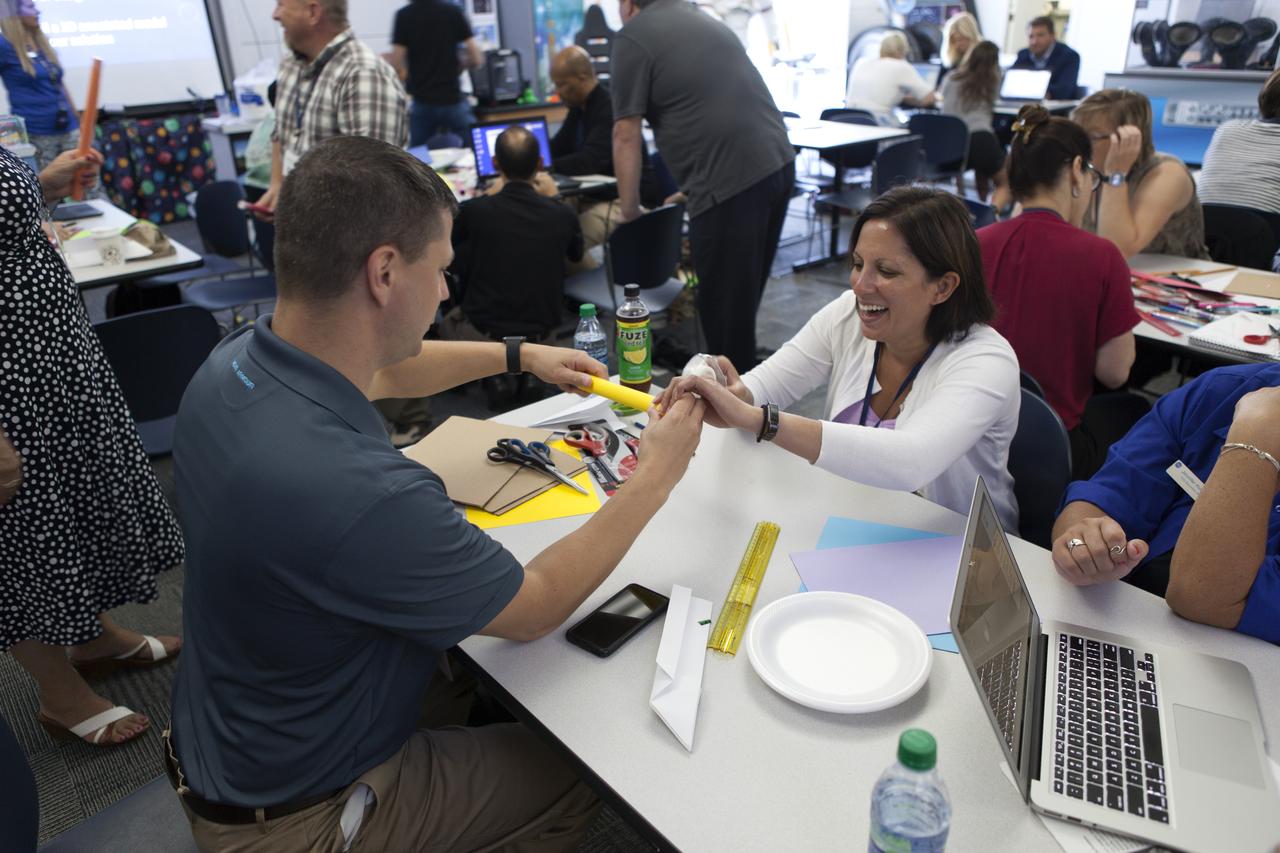
Teachers participate in the Rocketry Engineering Design Challenge during the 2017 GE Foundation High School STEM Integration Conference at the Center for Space Education at NASA's Kennedy Space Center. High school teachers from across the country took part in the week-long conference, which is designed to explore effective ways for teachers, schools and districts from across the country to integrate STEM throughout the curriculum. The conference is a partnership between GE Foundation and the National Science Teachers Association.
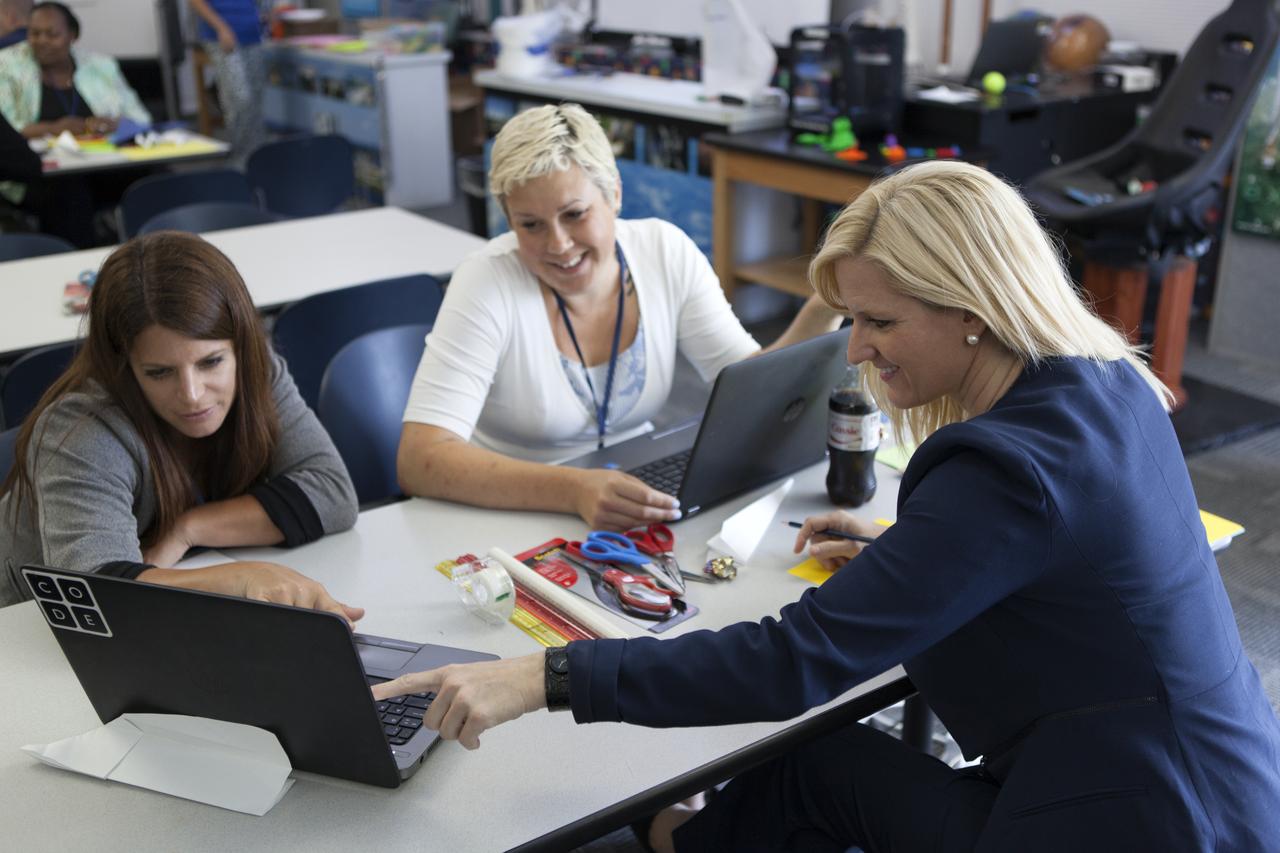
Teachers participate in the Rocketry Engineering Design Challenge during the 2017 GE Foundation High School STEM Integration Conference at the Center for Space Education at NASA's Kennedy Space Center. High school teachers from across the country took part in the week-long conference, which is designed to explore effective ways for teachers, schools and districts from across the country to integrate STEM throughout the curriculum. The conference is a partnership between GE Foundation and the National Science Teachers Association.
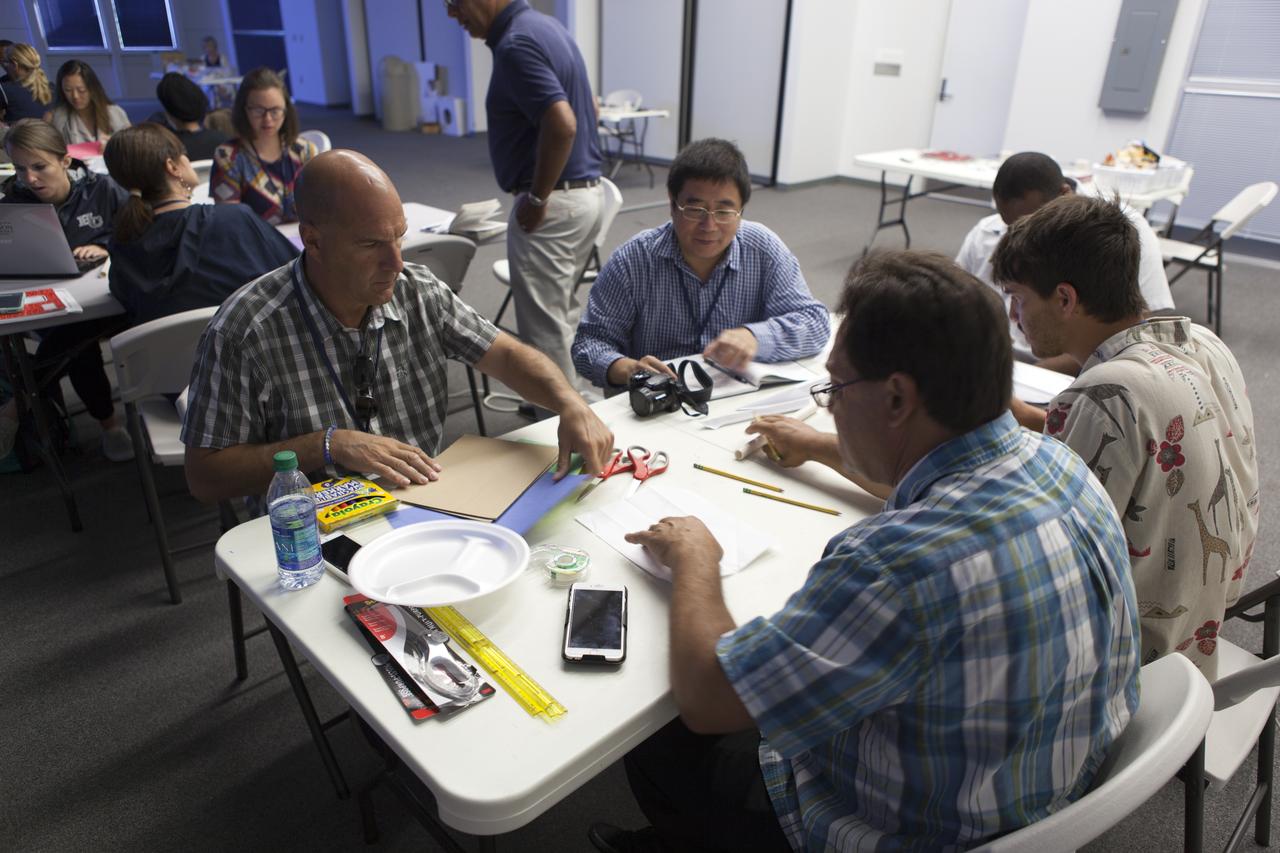
Teachers participate in the Rocketry Engineering Design Challenge during the 2017 GE Foundation High School STEM Integration Conference at the Center for Space Education at NASA's Kennedy Space Center. High school teachers from across the country took part in the week-long conference, which is designed to explore effective ways for teachers, schools and districts from across the country to integrate STEM throughout the curriculum. The conference is a partnership between GE Foundation and the National Science Teachers Association.
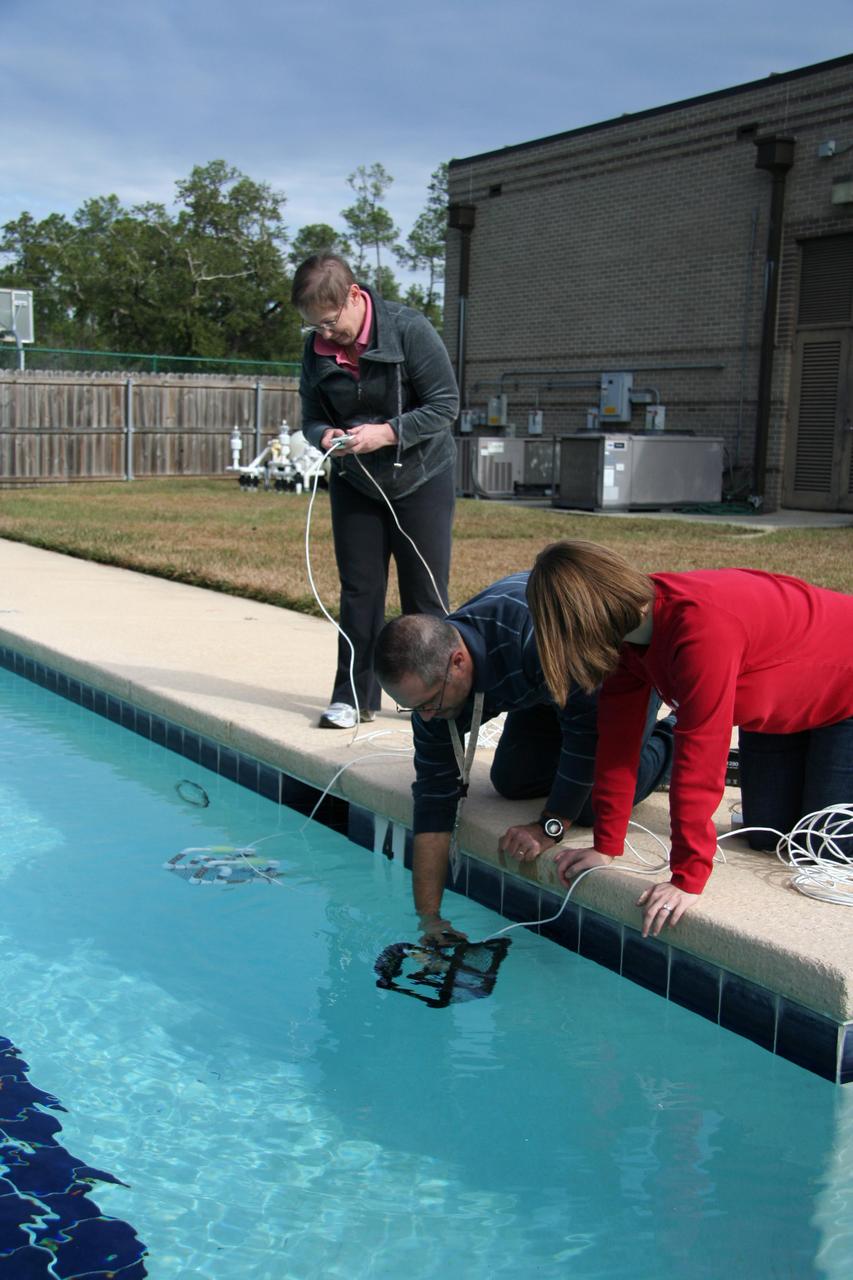
David Lalejini, an employee of the Naval Research Laboratory at NASA's John C. Stennis Space Center, helps a pair of teachers deploy a remotely-operated underwater Sea Perch robot during workshop activities Dec. 11. The Stennis Education Office teamed with Naval Research Laboratory counterparts to conduct a two-day workshop Dec. 10-11 for Louisiana and Mississippi teachers. During the no-cost workshop, teachers learned to build and operate Sea Perch robots. The teachers now can take the Sea Perch Program back to students.
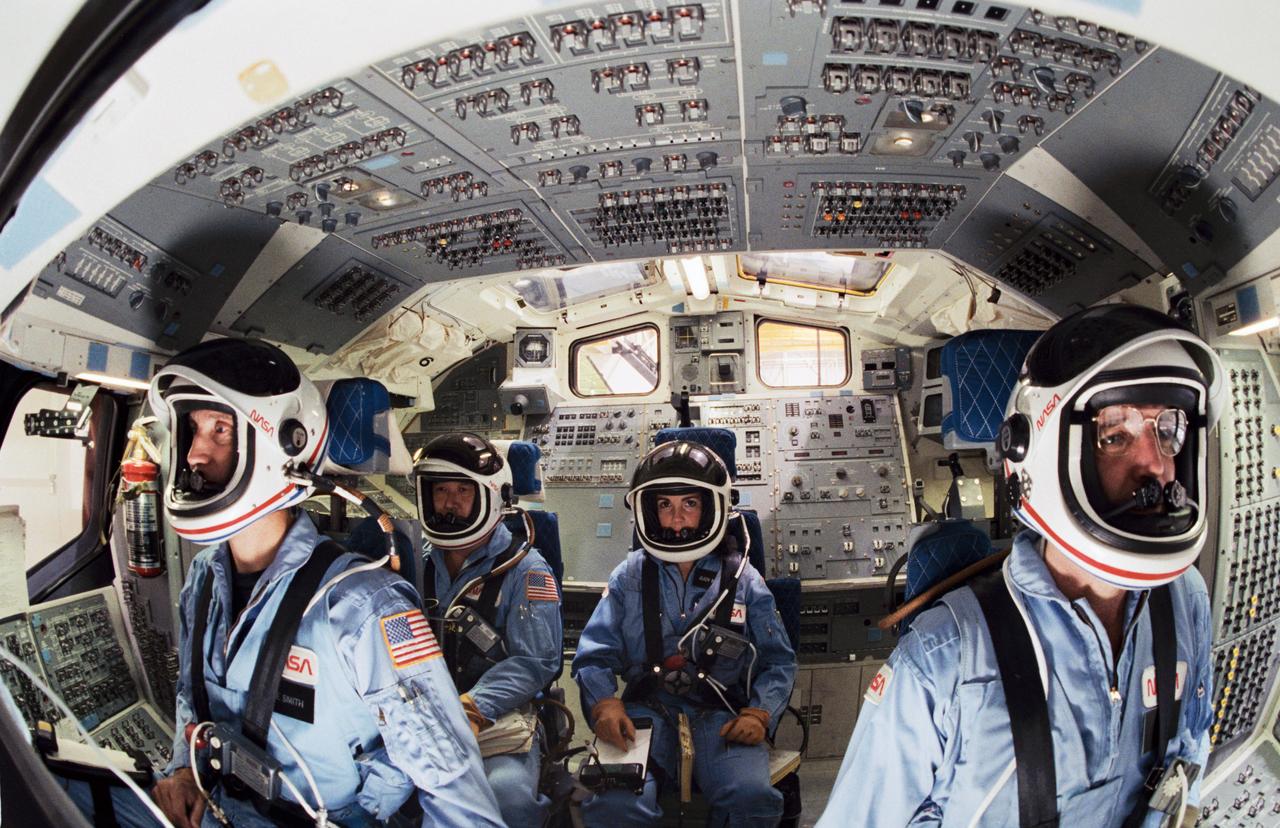
S85-46207 (December 1985) --- Shuttle Mission Simulator (SMS) scene of astronauts Michael J. Smith, Ellison S. Onizuka, Judith A. Resnik, and Francis R. (Dick) Scobee in their launch and entry positions on the flight deck. The photo was taken by Bill Bowers. Photo credit: NASA
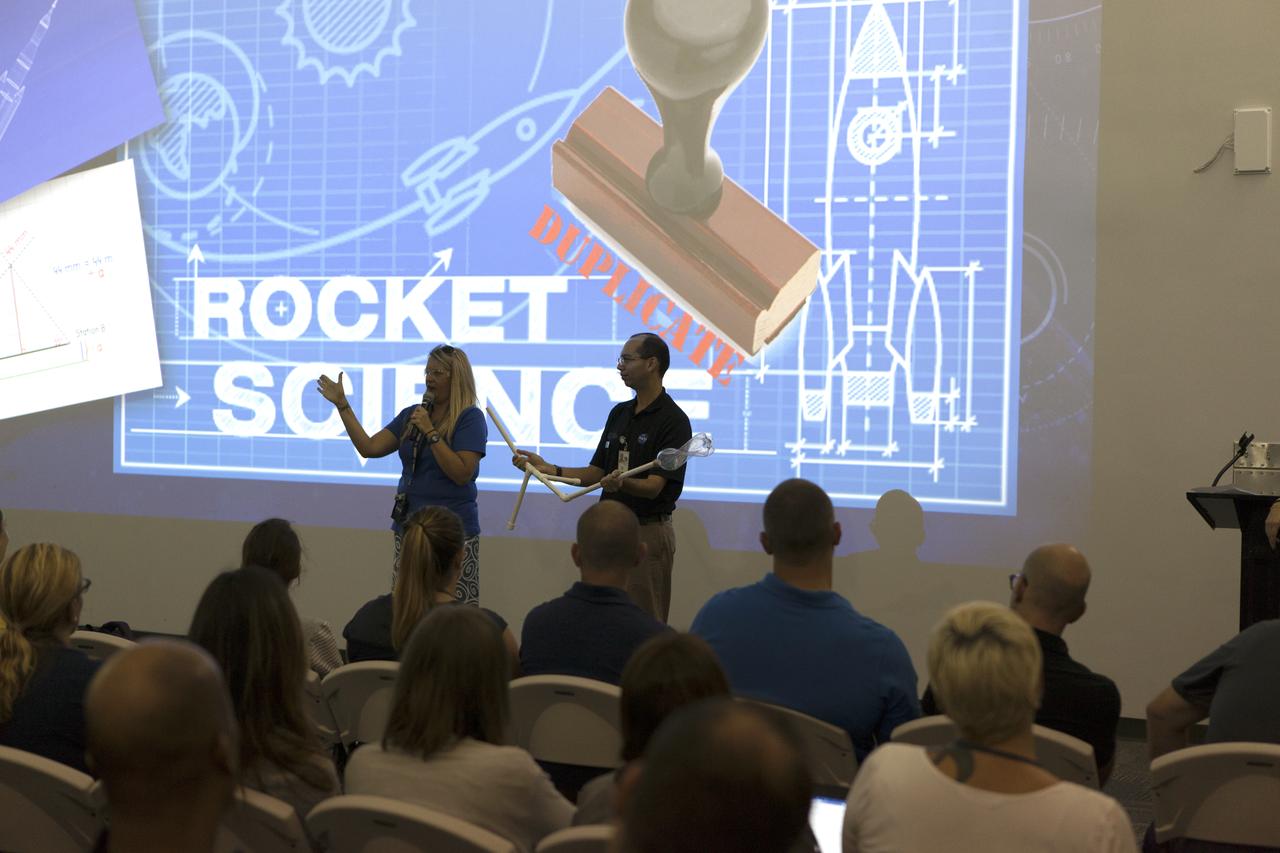
Education Specialists Lynn Dotson, left, of the NASA Public Engagement Center, and Lester Morales, right, of Texas State University's NASA STEM Educator Professional Development Collaborative, explain the Rocketry Engineering Design Challenge to teachers participating in the 2017 GE Foundation High School STEM Integration Conference at the Center for Space Education at NASA's Kennedy Space Center. High school teachers from across the country took part in the week-long conference, which is designed to explore effective ways for teachers, schools and districts from across the country to integrate STEM throughout the curriculum. The conference is a partnership between GE Foundation and the National Science Teachers Association.
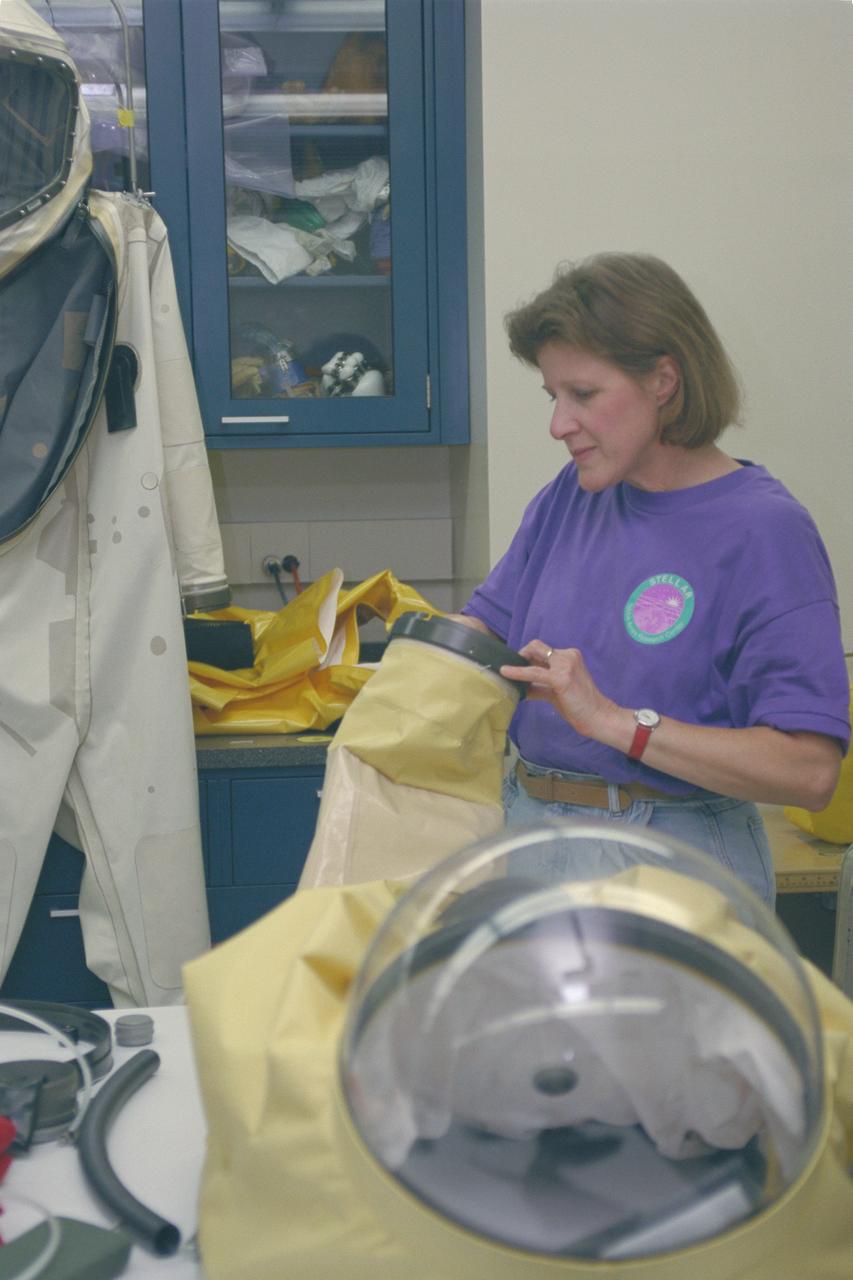
1996 'STELLAR' teacher in Space Suit Lab
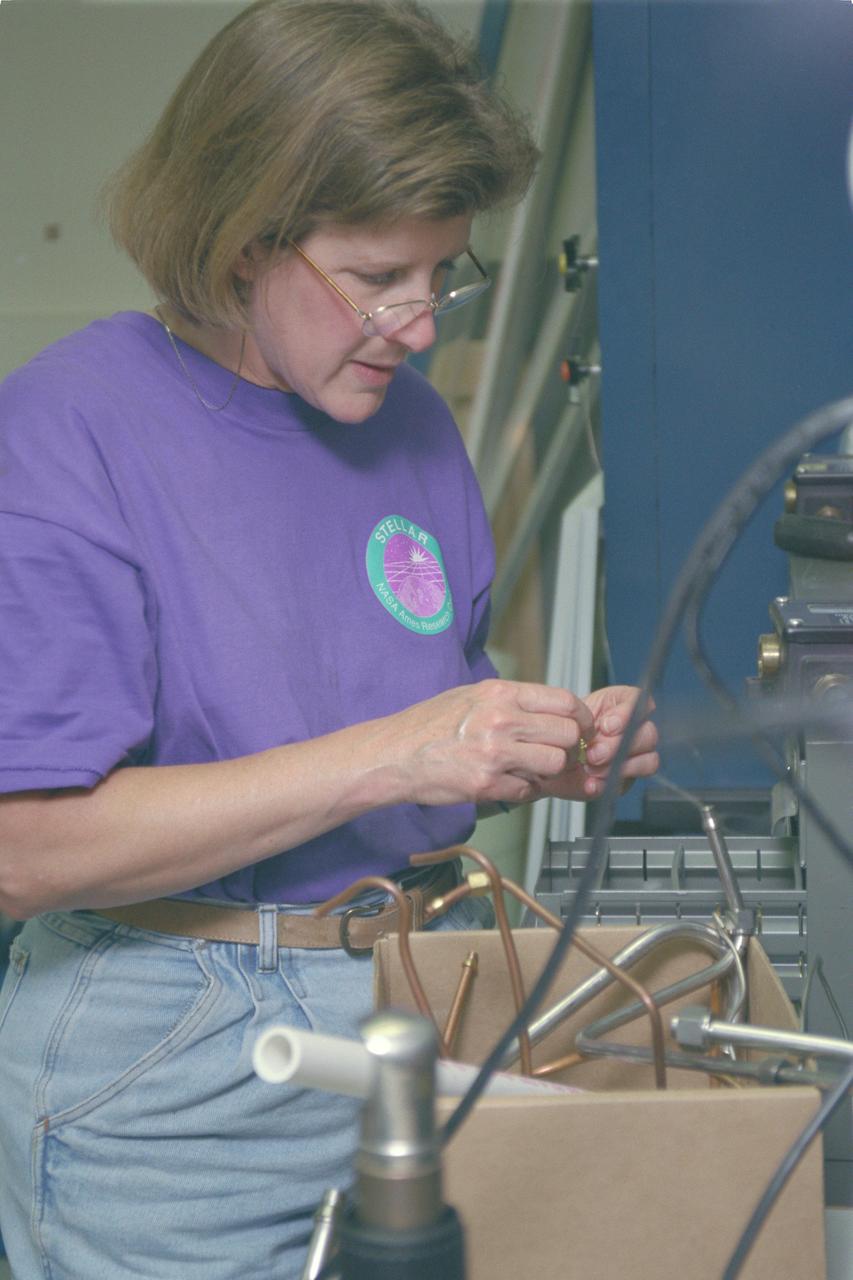
1996 'STELLAR' teacher in Space Suit lab
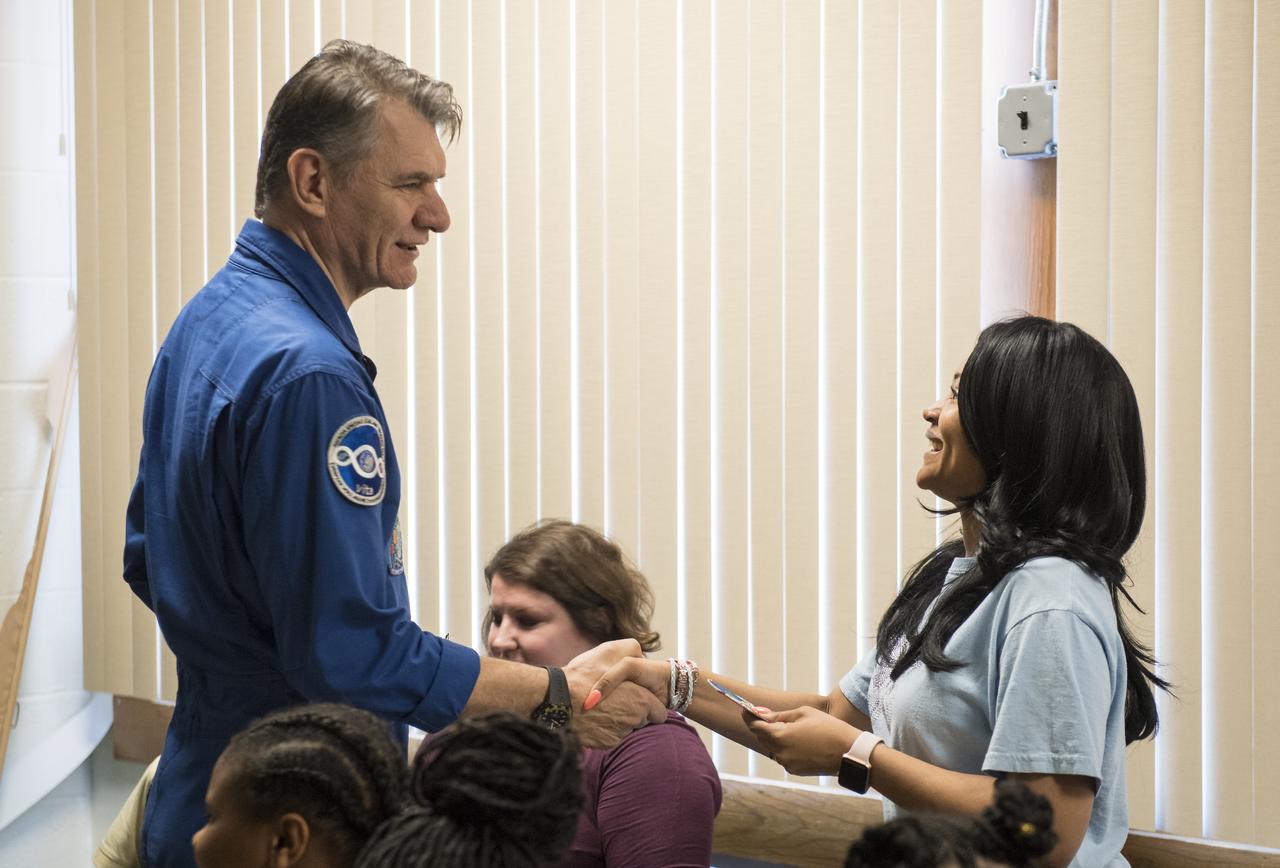
ESA astronaut Paolo Nespoli gives a patch to a teacher for Teacher Appreciation Week after speaking about his time onboard the International Space Station during expeditions 52/53, Friday, May 11, 2018 at the Washington School for Girls in Washington. Photo Credit: (NASA/Aubrey Gemignani)
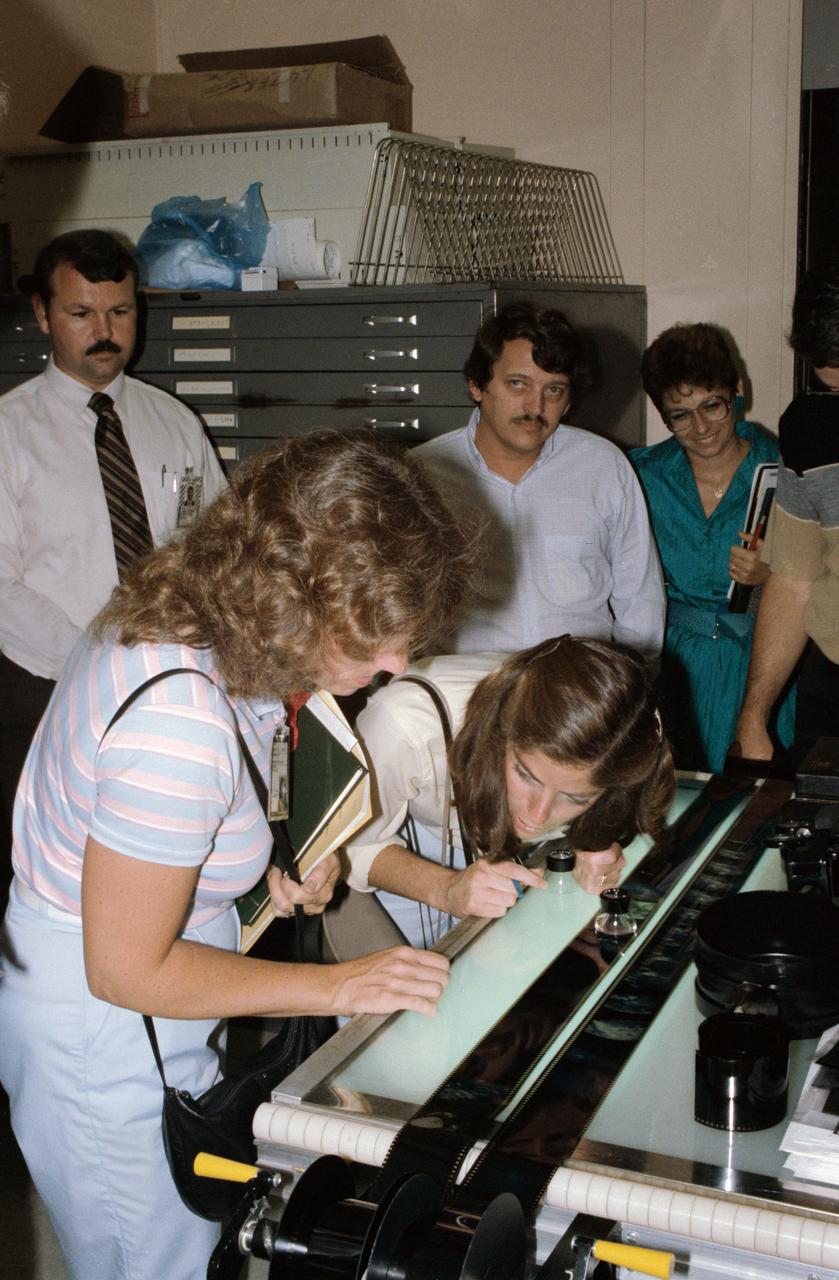
View of STS-33/51L Prime Teacher, Christa McAuliffe (left foreground) and Barbara Morgan (second left), both "Teacher in Space" Trainees, review film shot while training with Arriflex camera. 1. McAuliffe, S. Christa - Photography 2. Morgan, Barbara - Photography
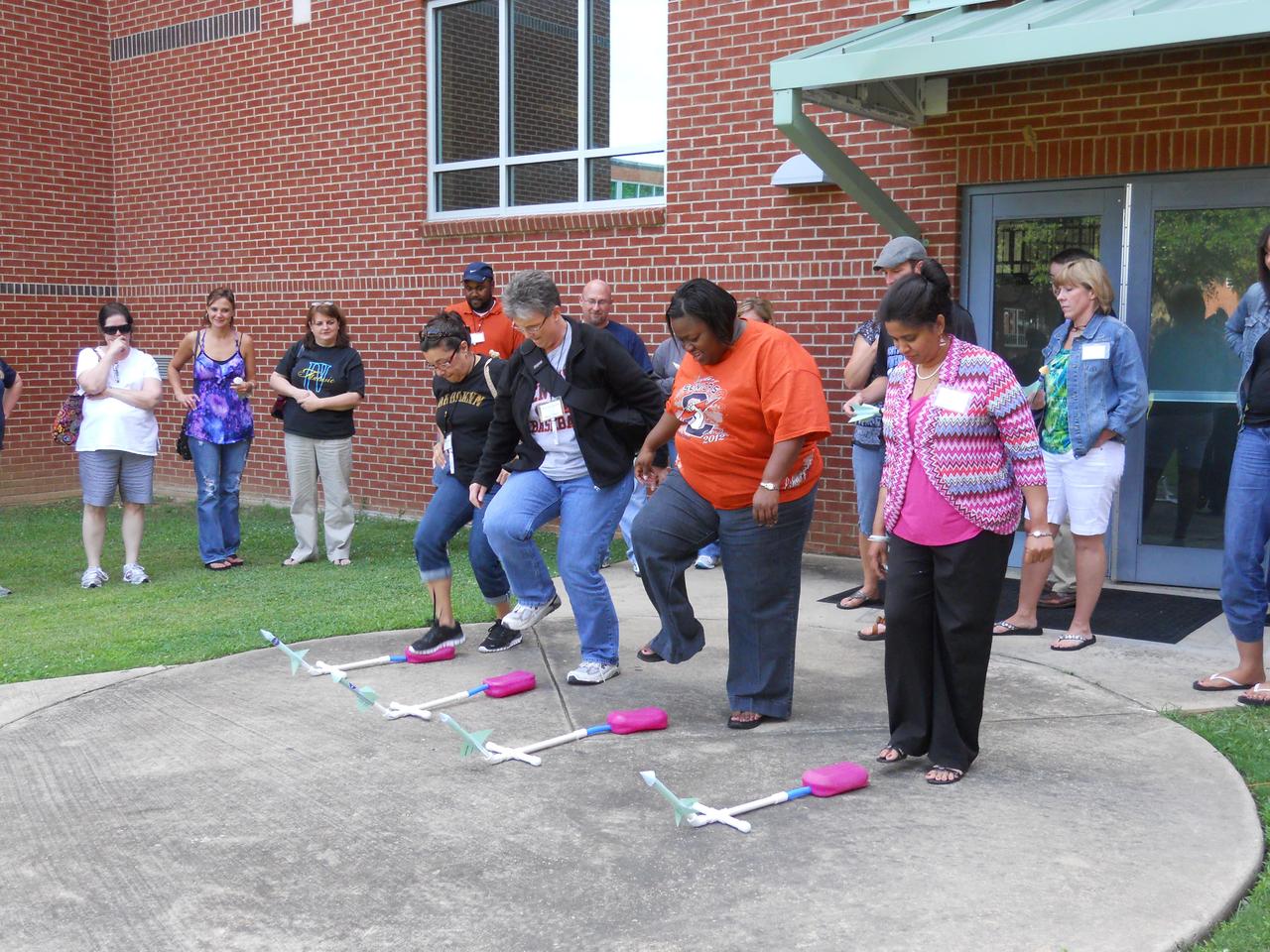
Mississippi educators participated in a variety of hands-on activities, including rocketry, robotics, and NASA's BEST (Beginning Engineering, Science, and Technology) during a pair of during a pair of professional development workshops conducted by Stennis Space Center educators in June. On June 14, Stennis educators presented workshops to 96 kindergarten-through-12th-grade science teachers and eight Jackson State University faculty, as part of JSU's Project MAST (Mississippi Academy for Science Teaching) Project. On June 21, educators presented workshops in Starkville to 43 fourth-through-eighth-grade science teachers as part of Mississippi State University's Advancing Teachers of Middle School Science initiative.
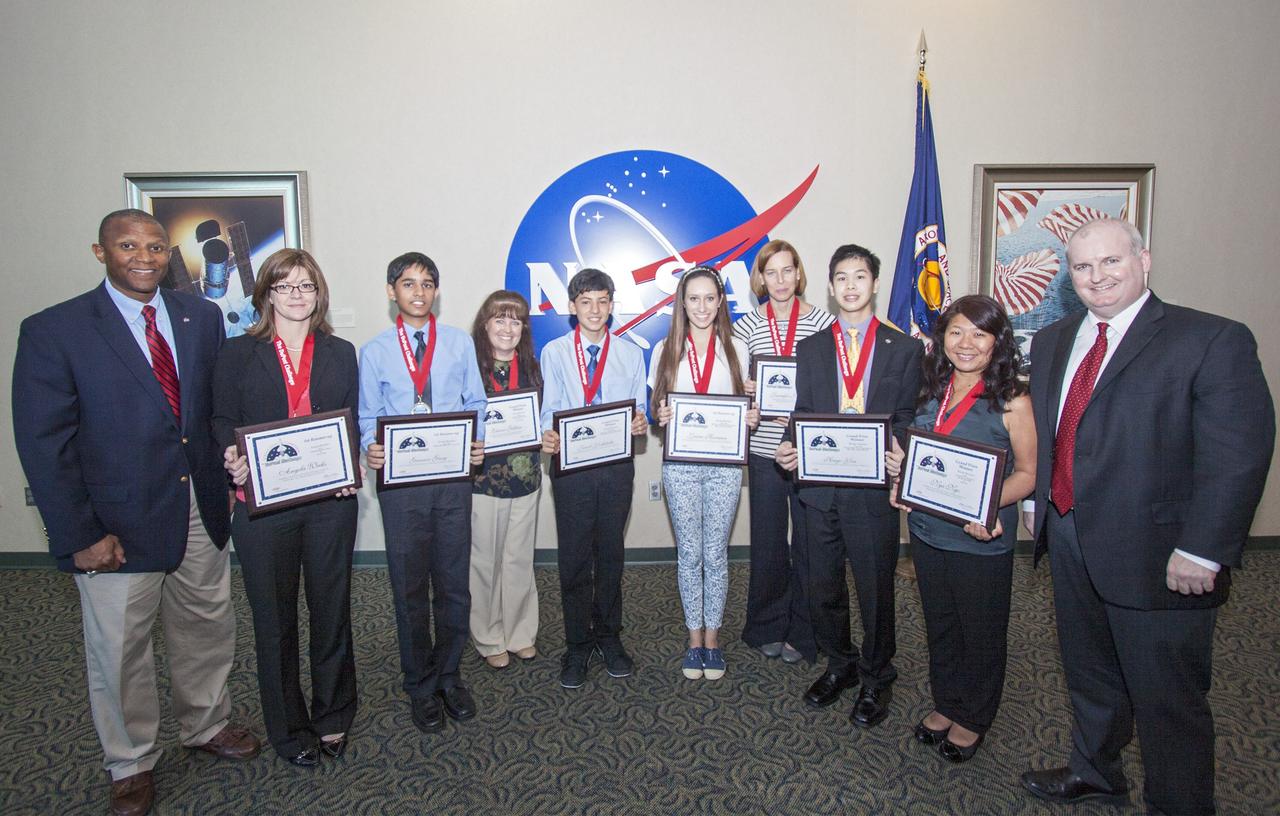
CAPE CANAVERAL, Fla. - The winning students and their teachers of the 2013 DuPont Challenge Science Essay Competition show off their awards after a ceremony at the Kennedy Space Center Visitor Complex in Florida. From left are, Kelvin Manning, the center's associate deputy director sponsoring teacher Angela Weeks and Junior Division first runner-up Gaurav Garg of Beckendorff Junior High in Katy, Texas sponsoring teacher Elaine Gillum and Senior Division grand prize winner Jacob Yoshitake of Marshall Middle School in San Diego, Calif. Senior Division first runner-up Laura Herman and sponsoring teacher Jennifer Gordinier of Pine Crest School in Fort Lauderdale, Fla. and Senior Division grand prize awardee Hugo Yen and sponsoring teacher Nga Ngo of Troy High in Fullerton, Calif. The challenge, now in its 27th year, reaches out to students from grades seven through 12 from all 50 states and Canada. More than 200,000 students entered the competition. The DuPont Challenge aims to inspire students to excel and achieve in scientific writing and pursue careers in science, technology, engineering and mathematics STEM. The challenge honors space shuttle Challenger's STS-51L crew members who gave their lives while furthering the cause of exploration and discovery. For more information on the challenge, go to http://thechallenge.dupont.com/sponsors/nasa.php.
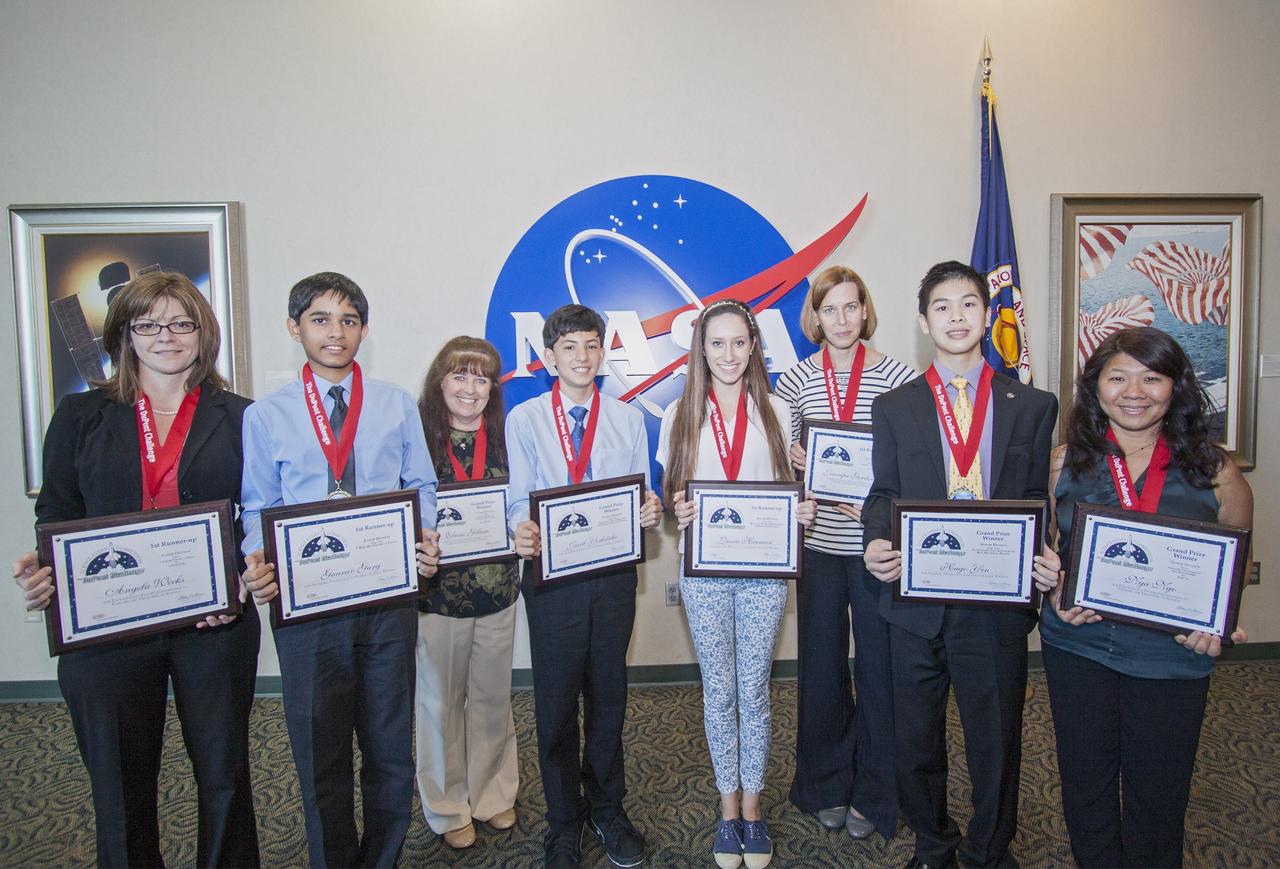
CAPE CANAVERAL, Fla. - The winning students and their teachers of the 2013 DuPont Challenge Science Essay Competition show off their awards after a ceremony at the Kennedy Space Center Visitor Complex in Florida. From left are sponsoring teacher Angela Weeks and Junior Division first runner-up Gaurav Garg of Beckendorff Junior High in Katy, Texas sponsoring teacher Elaine Gillum and Senior Division grand prize winner Jacob Yoshitake of Marshall Middle School in San Diego, Calif. Senior Division first runner-up Laura Herman and sponsoring teacher Jennifer Gordinier of Pine Crest School in Fort Lauderdale, Fla. and Senior Division grand prize awardee Hugo Yen and sponsoring teacher Nga Ngo of Troy High in Fullerton, Calif. The challenge, now in its 27th year, reaches out to students from grades seven through 12 from all 50 states and Canada. More than 200,000 students entered the competition. The DuPont Challenge aims to inspire students to excel and achieve in scientific writing and pursue careers in science, technology, engineering and mathematics STEM. The challenge honors space shuttle Challenger's STS-51L crew members who gave their lives while furthering the cause of exploration and discovery. For more information on the challenge, go to http://thechallenge.dupont.com/sponsors/nasa.php.
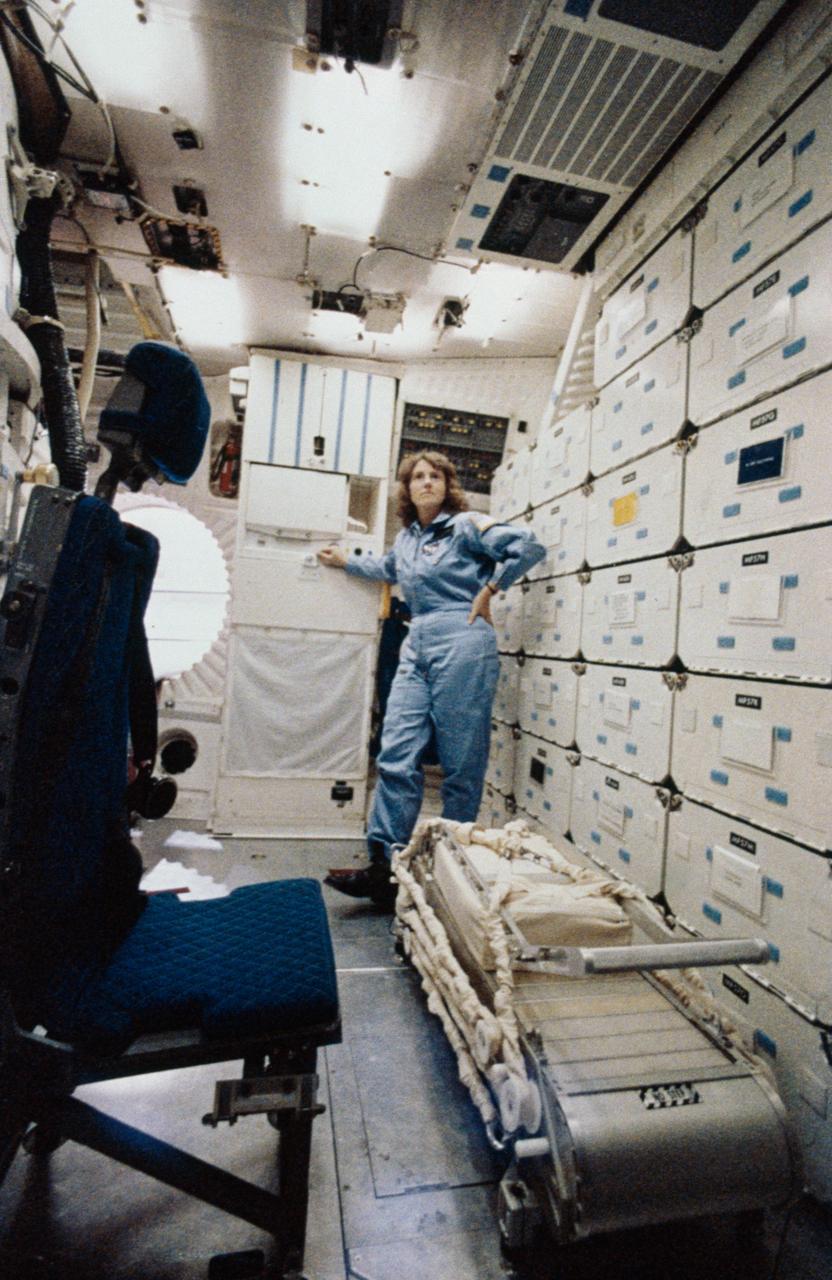
S86-25188 (December 1985) --- Sharon Christa McAuliffe, a school teacher Concord New Hampshire, surveys a ground training replica of the quarters she?ll be using in space when the space shuttle Challenger taxis two women and five men into space in January of 1986. The STS-51L citizen observer/payload specialist is in training at the Johnson Space Center, representing the Teacher-in-Space Project. The photo was taken by Keith Meyers of the New York Times. Photo credit: NASA
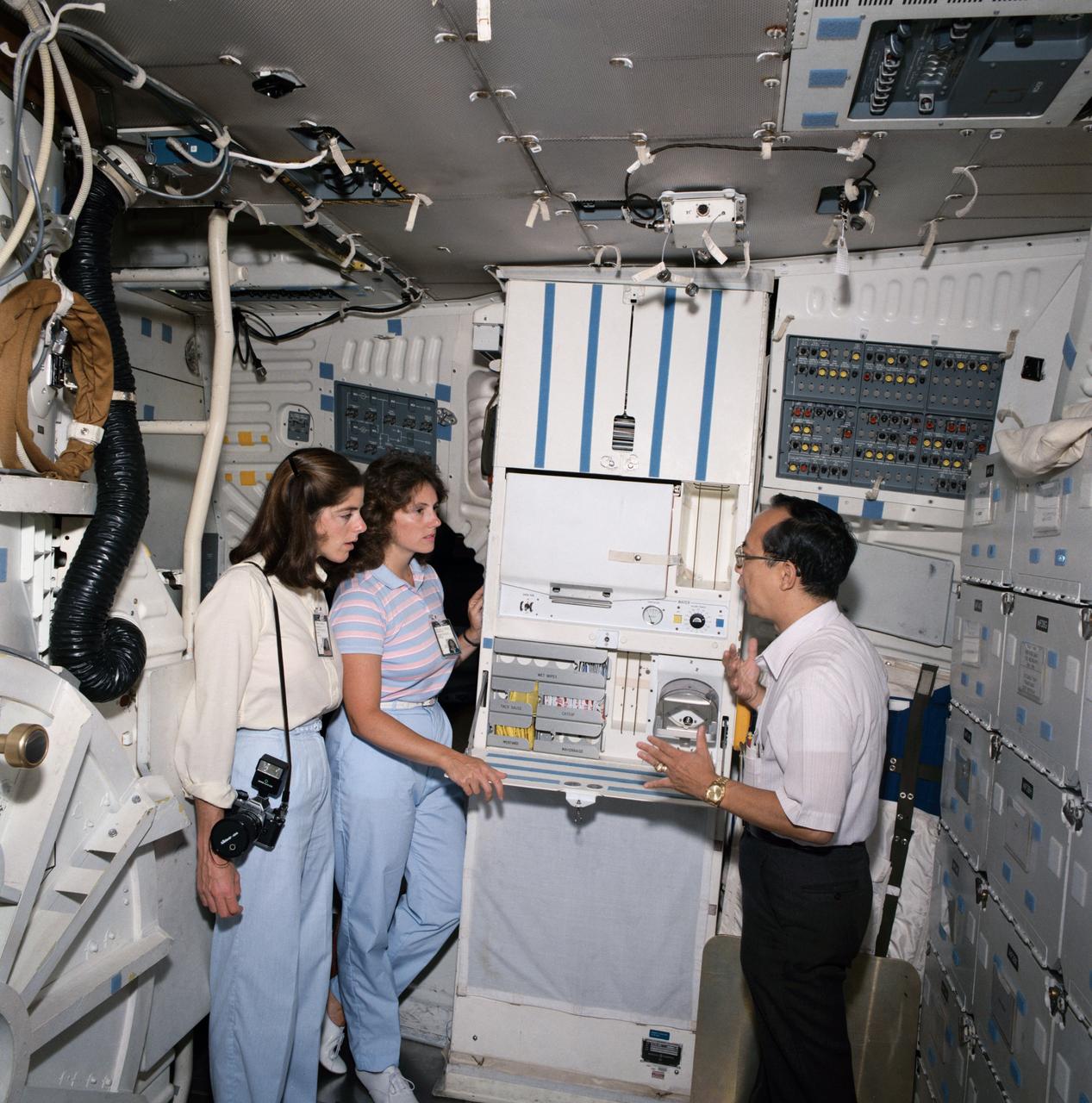
S85-40509 (23 Sept. 1985) --- Two women representing the Teacher-in-Space project undergo training in preparation for the STS-51L mission in two photographs made in Johnson Space Center trainers. Barbara R. Morgan (left), 51-L’s backup teacher, and McAuliffe are briefed by L.W. Lew on the space shuttle galley, located on the middeck. Photo credit: NASA
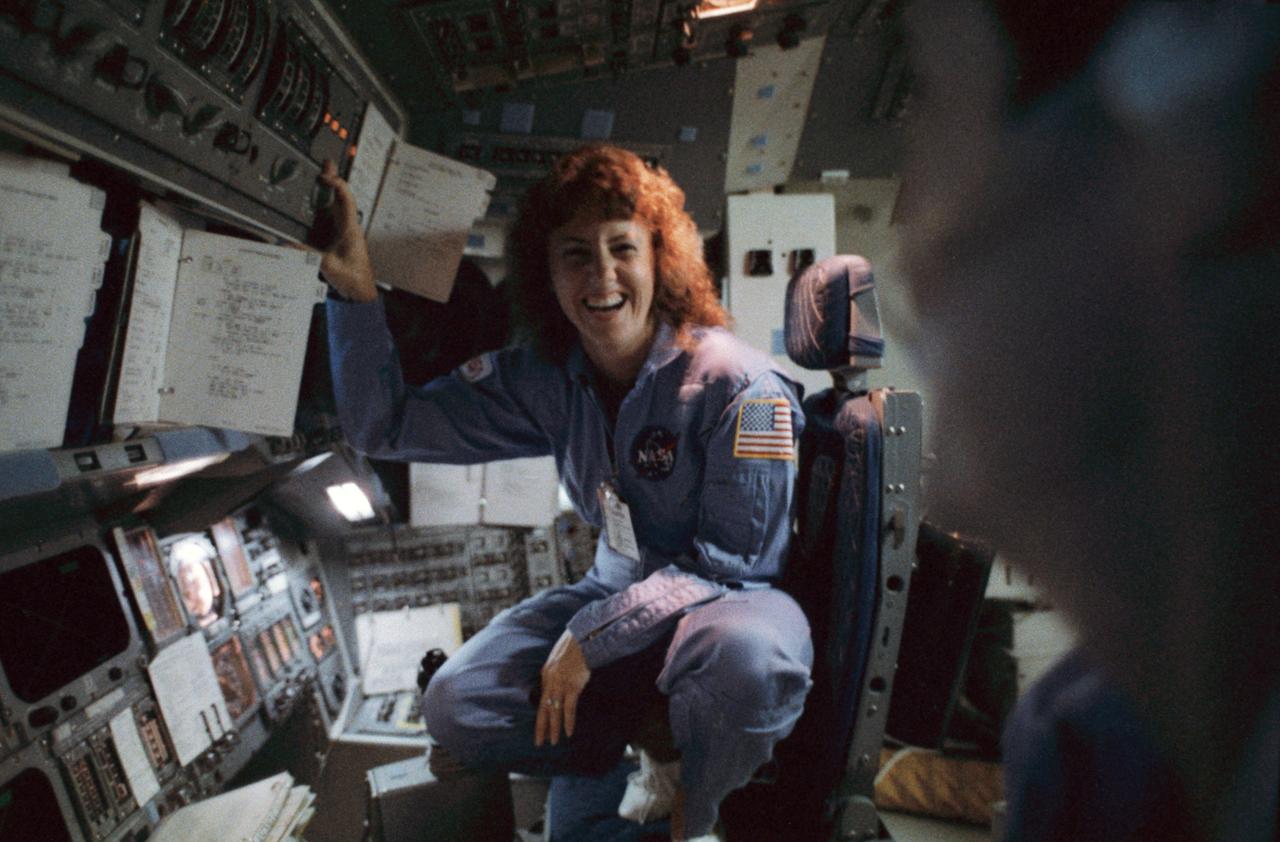
S85-44507 (October 1985) --- Sharon Christa McAuliffe, a teacher from Concord, New Hampshire, trains for the January 1986 mission of the space shuttle Challenger in the Johnson Space Center’s shuttle mission simulator (SMS). Learning about the overall spacecraft systems, McAuliffe is pictured here in the pilot’s station. For actual launch and landing phases, the Teacher-in-Space Project payload specialist would sit on the middeck. The photograph was taken by Michael O’Brien of Life Magazine. Photo credit: NASA
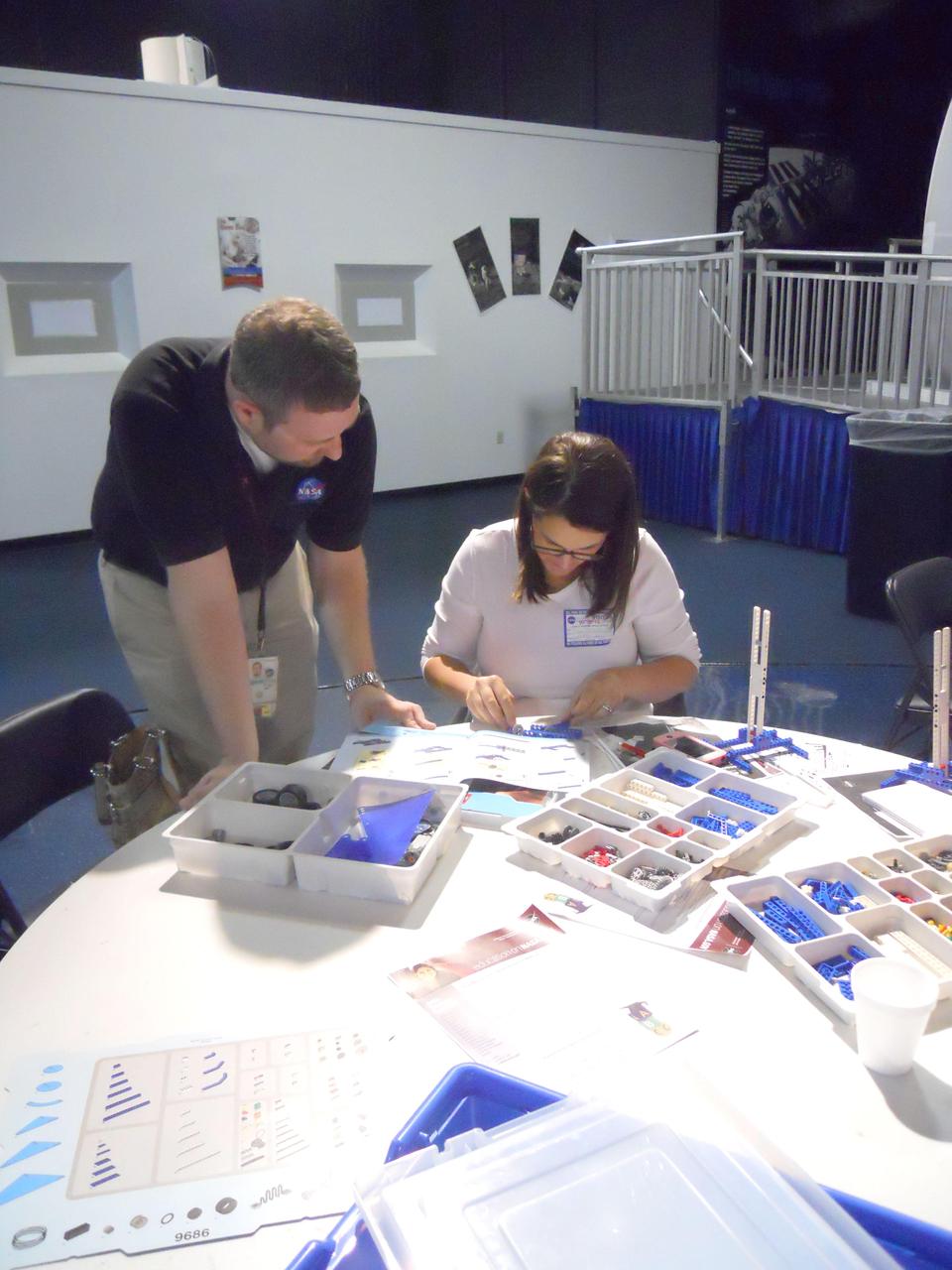
John C. Stennis Space Center educators and area teachers partnered together during a professional development workshop Oct. 20 to learn about the LEGO Bricks in Space curriculum issued by NASA. The curriculum is designed to encourage students in areas of science, technology, engineering and mathematics. The Stennis Space Center Educator Resource Center hosted the workshop to equip teachers of grades 3-12.
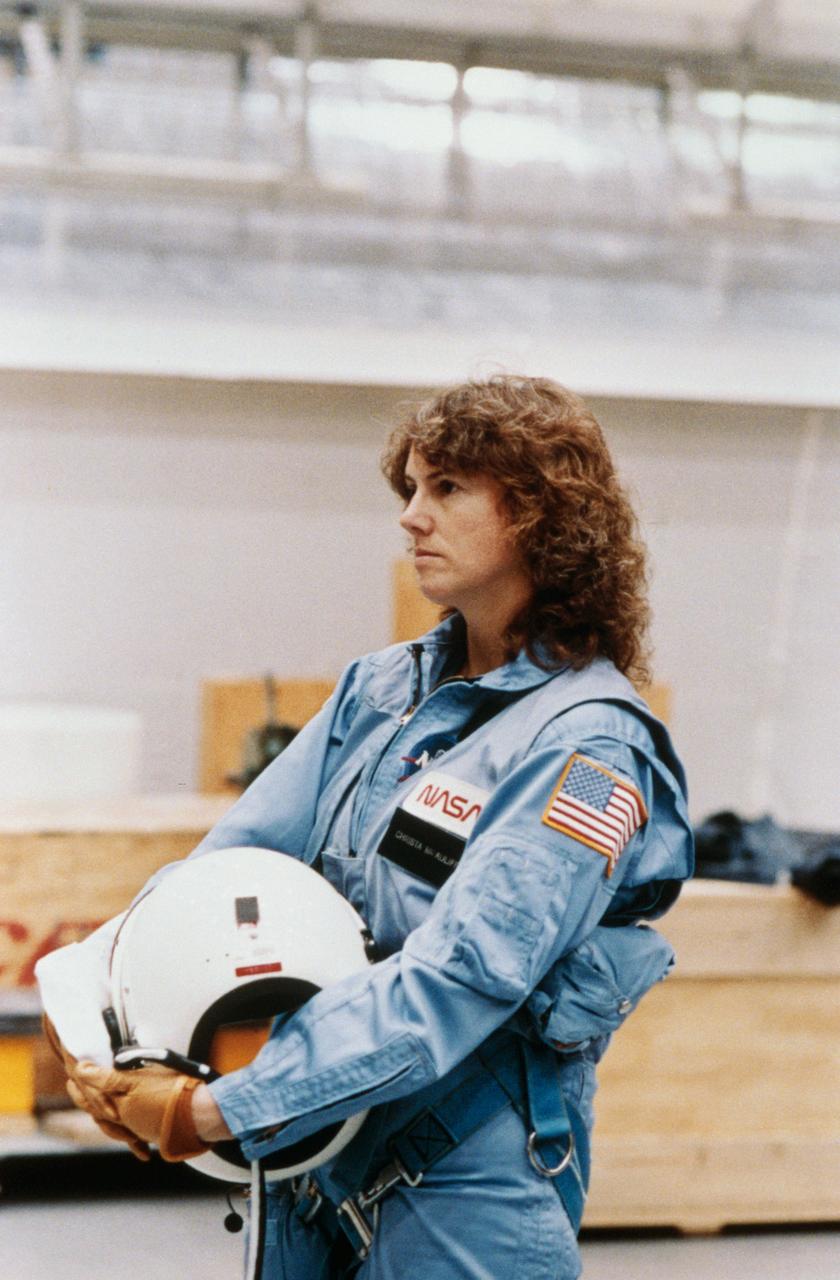
S86-25251 (January 1986) --- Sharon Christa McAuliffe, payload specialist for STS-51L, takes a breather following a busy day?s training in the Johnson Space Center?s Shuttle Mock-up and Integration Laboratory. McAuliffe, a New Hampshire school teacher, was chosen from among ten finalists in the Teacher-in-Space Project to serve as citizen observer aboard the Challenger. This photo was taken by Keith Meyers of the New York Times. Photo credit: NASA
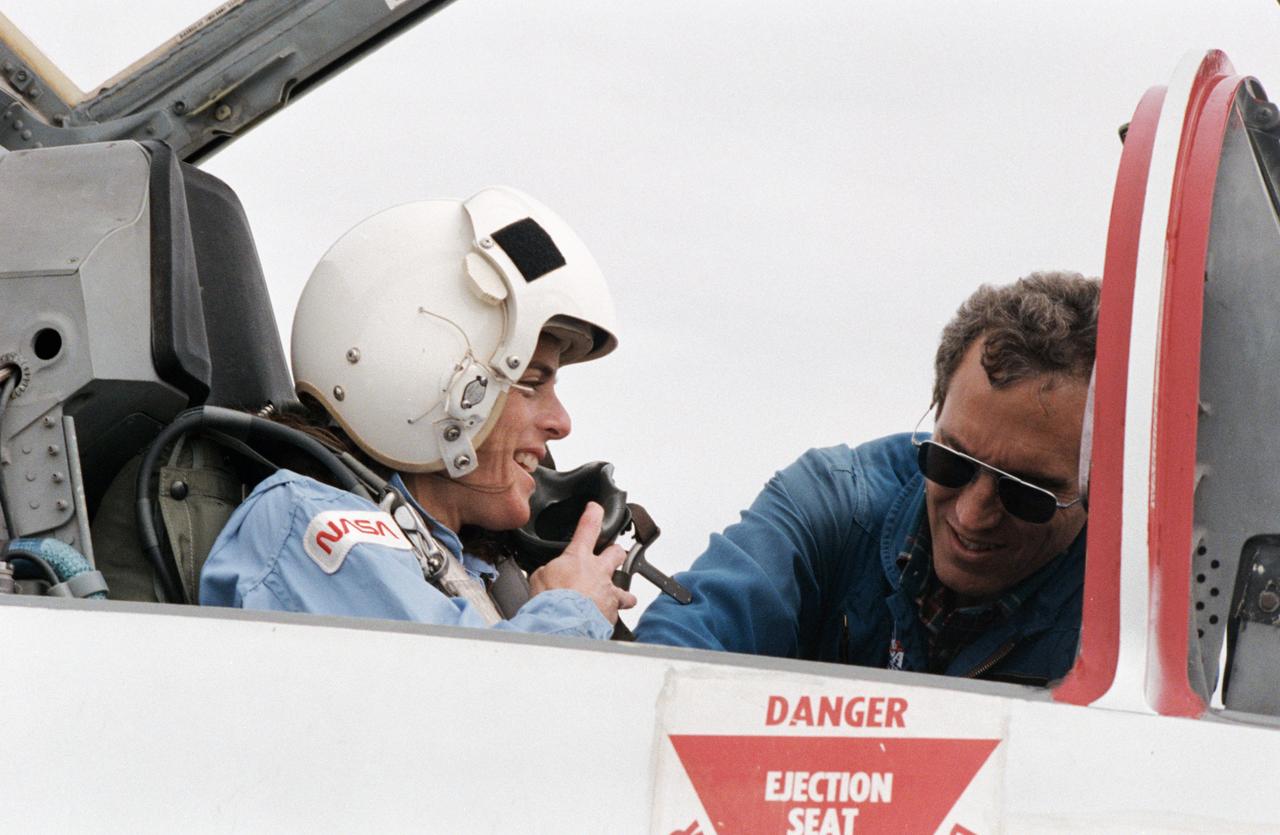
S85-41451 (3 Oct. 1985) --- Barbara Morgan, backup to the Teacher-in-Space participant Christa McAuliffe, prepares for a ride in the rear station of one of NASA's T-38 jet trainers at Ellington Field, near the Johnson Space Center (JSC). The McCall, Idaho teacher is briefed by astronaut Michael J. Smith, 51-L pilot, before departing Ellington Field. Photo credit: NASA
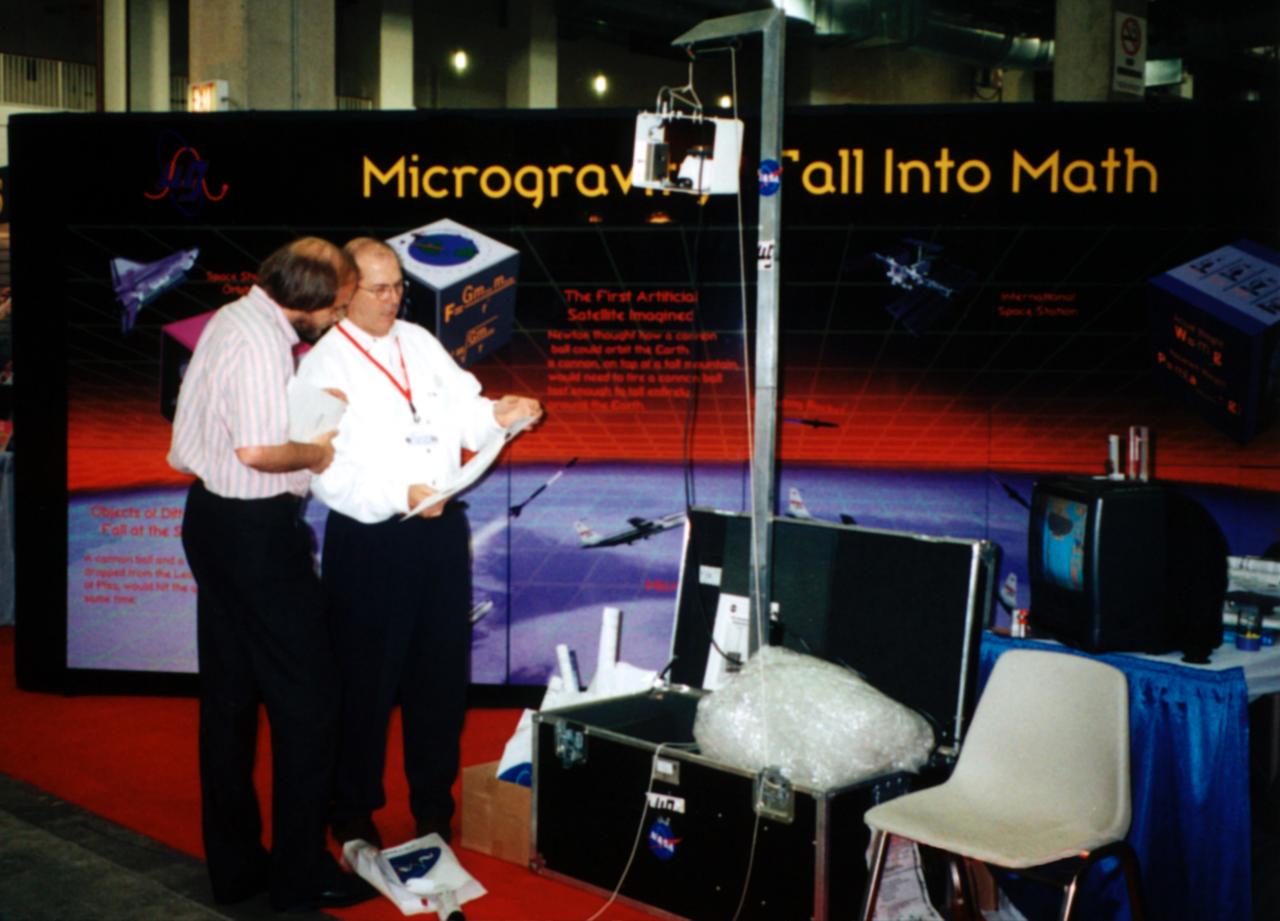
Jimmy Grisham of the Microgravity Program Plarning Integration Office at NASA/Marshall Space Flight Center, demonstrates the classroom-size Microgravity Drop Tower Demonstrator. The apparatus provides 1/6 second of microgravity for small experiments. A video camera helps teachers observe what happens inside the package. This demonstration was at the April 2000 conference of the National Council of Teachers of Mathematics (NCTM) in Chicago. Photo credit: NASA/Marshall Space Flight Center (MSFC)
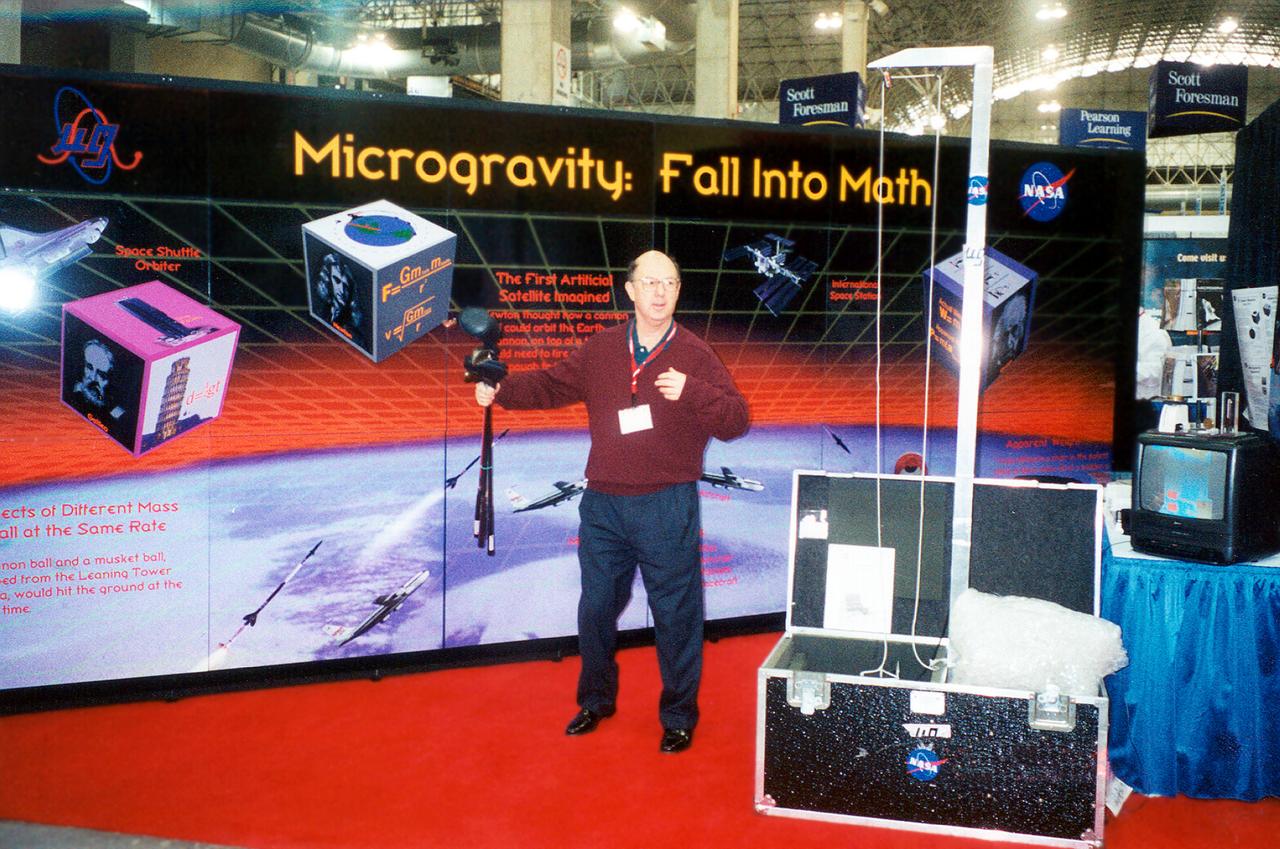
Don Gillies, a materials scientist at NASA/Marshall Space Flight Center (MSFC), demonstrates the classroom-size Microgravity Drop Tower Demonstrator. The apparatus provides 1/6 second of microgravity for small experiments. A video camera helps teachers observe what happens inside the package. This demonstration was at the April 2000 conference of the National Council of Teachers of Mathematics (NCTM) in Chicago. Photo credit: NASA/Marshall Space Flight Center (MSFC)
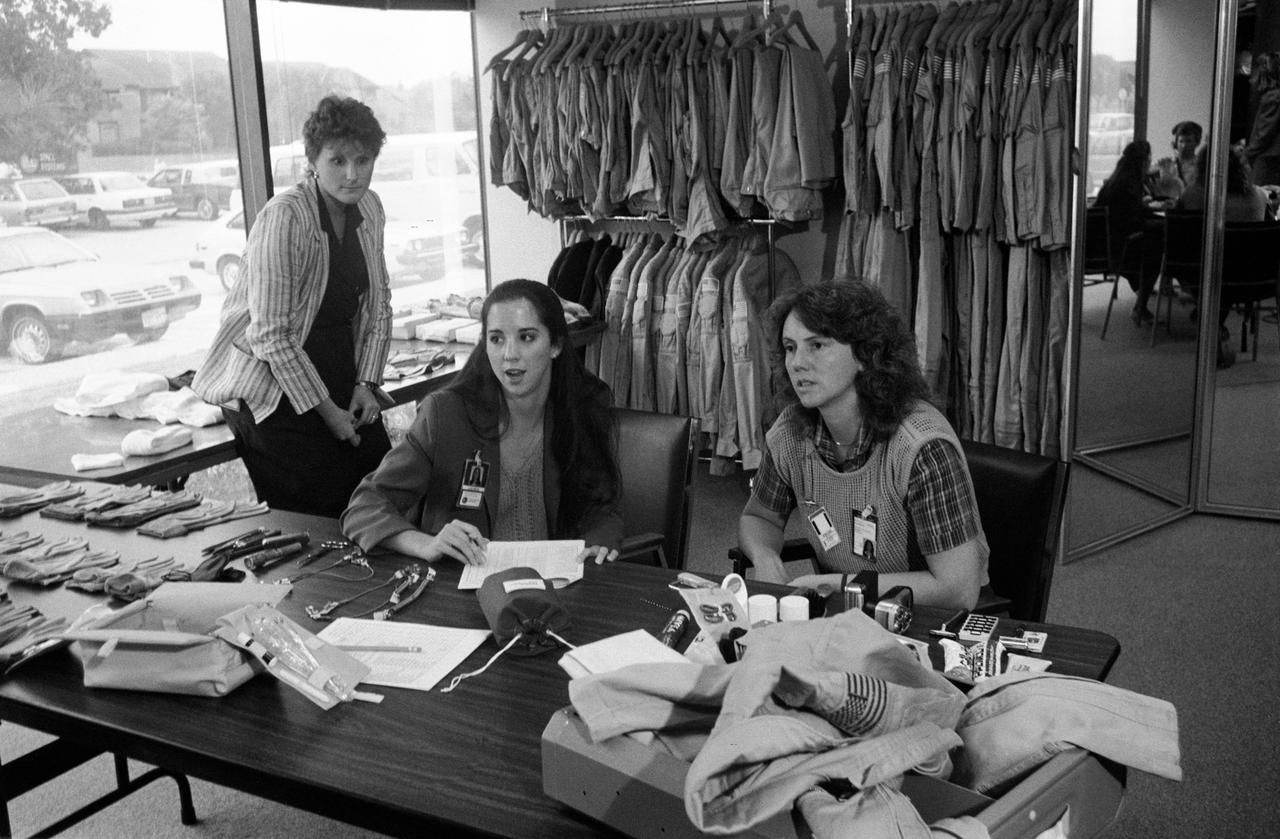
Teacherin-Space participant Christa McAuliffe (right) is briefed on her suit and on personal hygiene equipment to be used on the STS 51L Mission. The briefing was conducted by Laura Louviere (center).
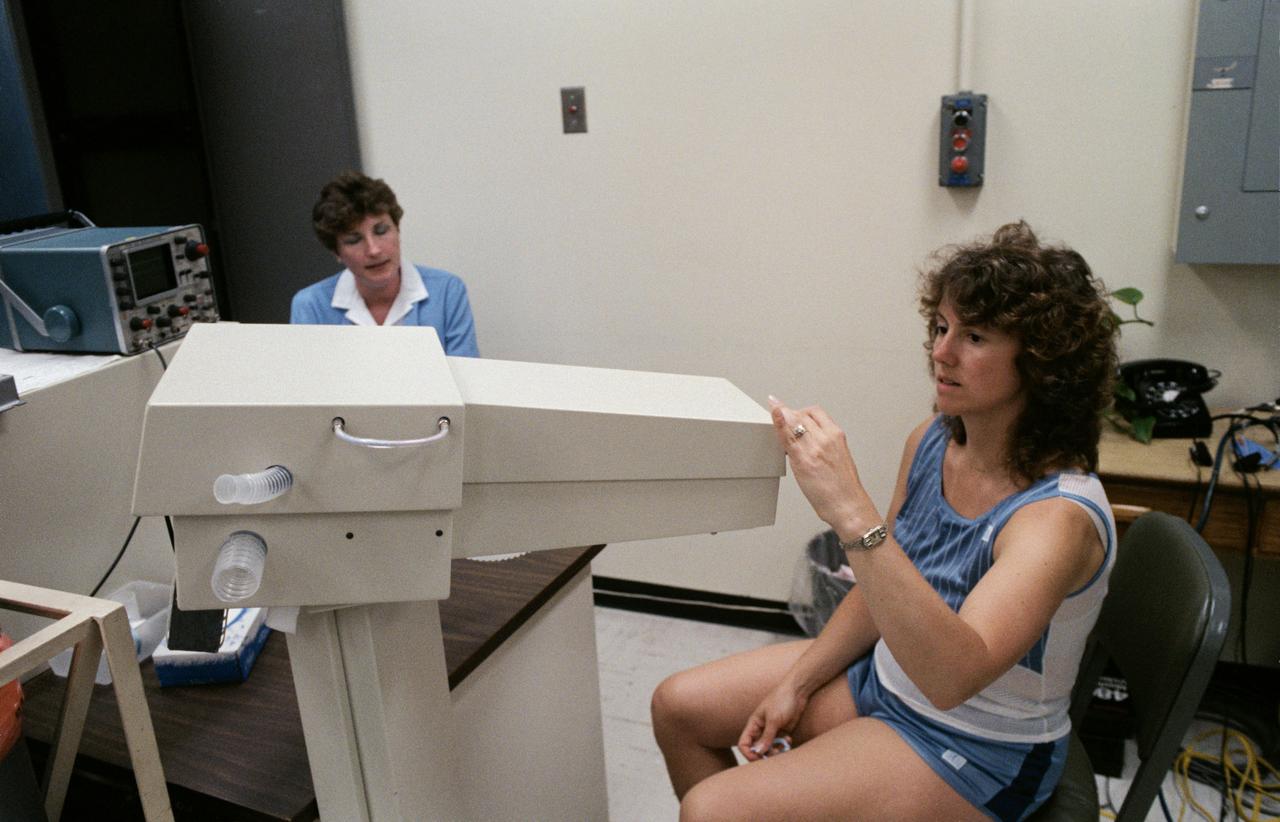
S85-36966 (10 July 1985) --- Teacher Sharon Christa McAuliffe prepares to test her lung capacity during medical examinations at the Johnson Space Center (JSC) clinic. Photo credit: NASA
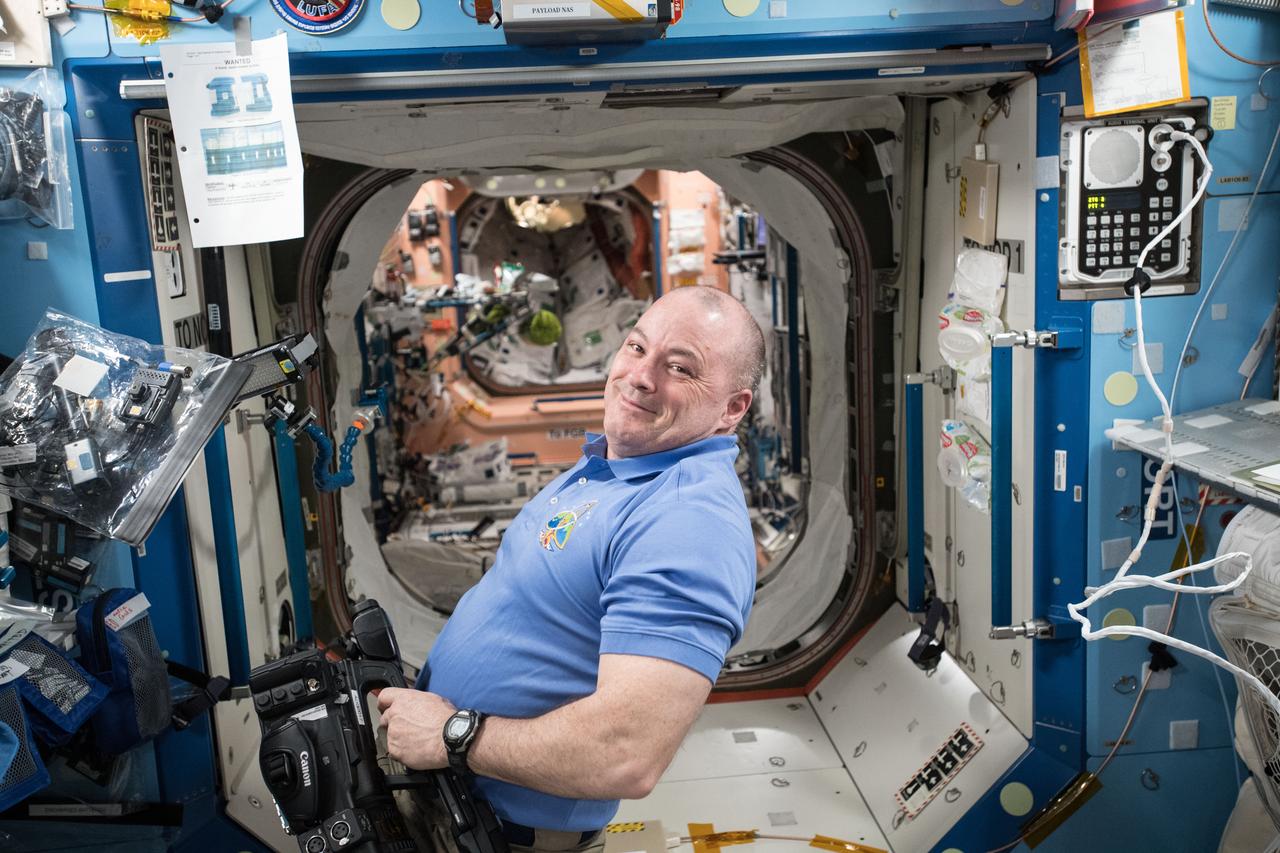
iss055e018690 (April 11, 2018) --- NASA astronaut Scott Tingle prepares video equipment for a series of education videos being recorded for the STEMonstration campaign which demonstrates scientific concepts in space for students and teachers.
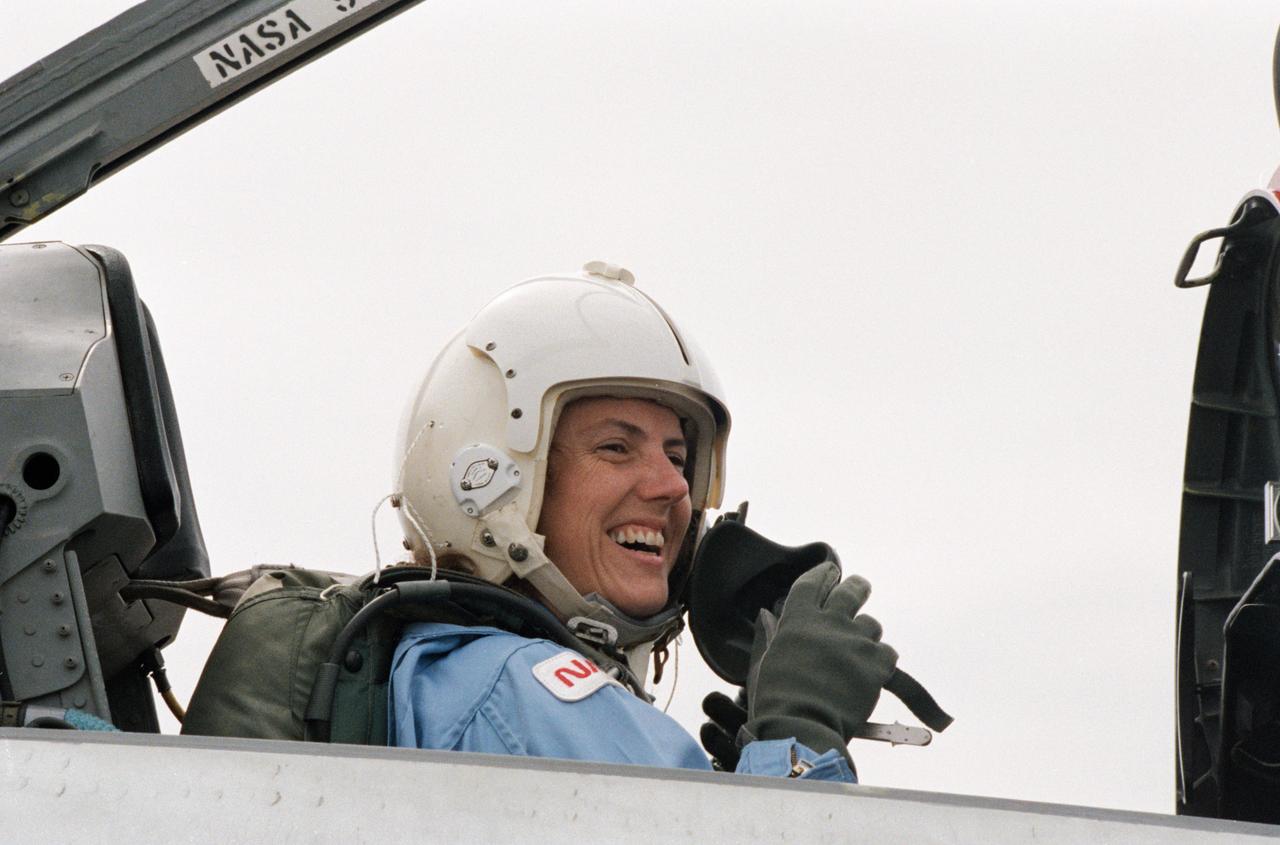
Sharon Christa McAuliffe, the Teacher in Space participant from Concord, New Hampshire, prepares for a ride in the rear station of one of NASA's T-38 jet trainers at Ellington Field near JSC.
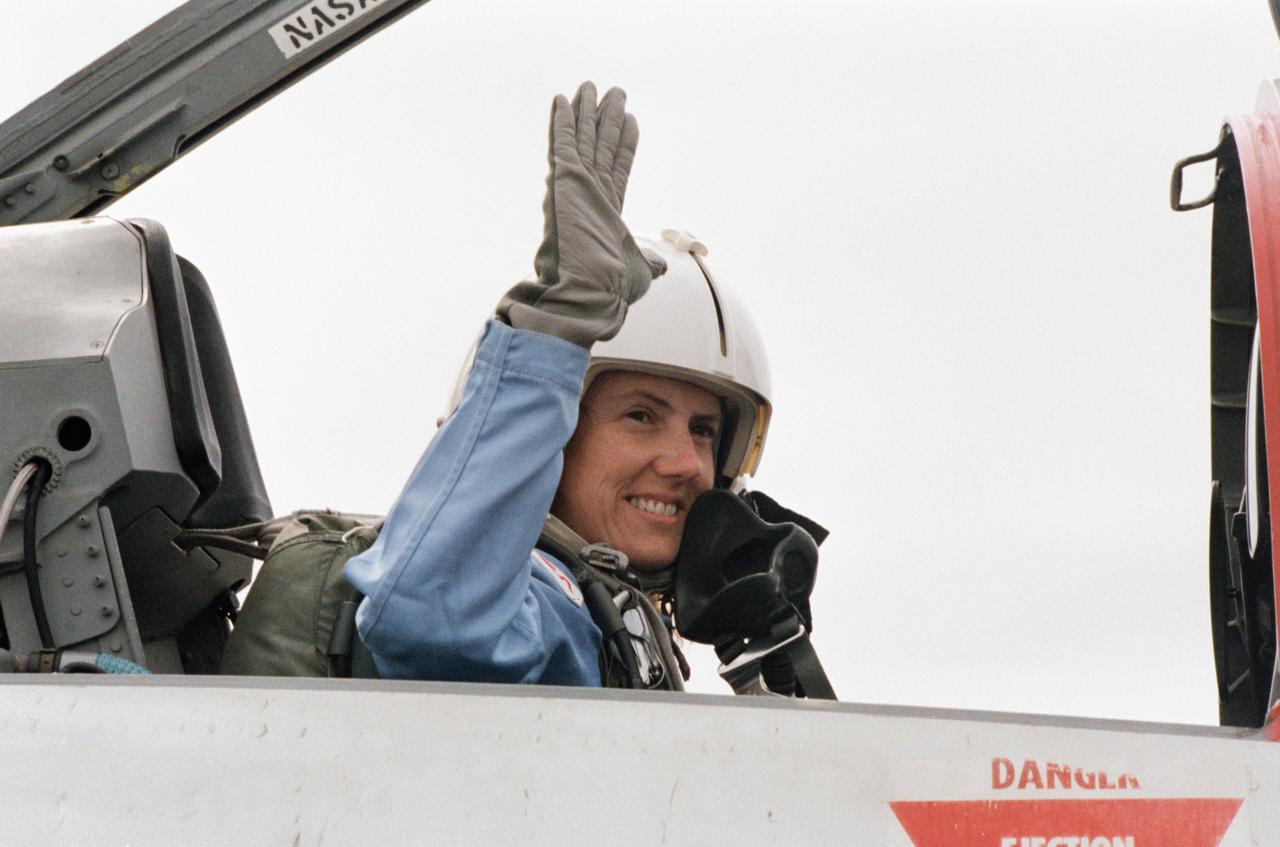
Sharon Christa McAuliffe, the Teacher in Space participant from Concord, New Hampshire, prepares for a ride in the rear station of one of NASA's T-38 jet trainers at Ellington Field near JSC.
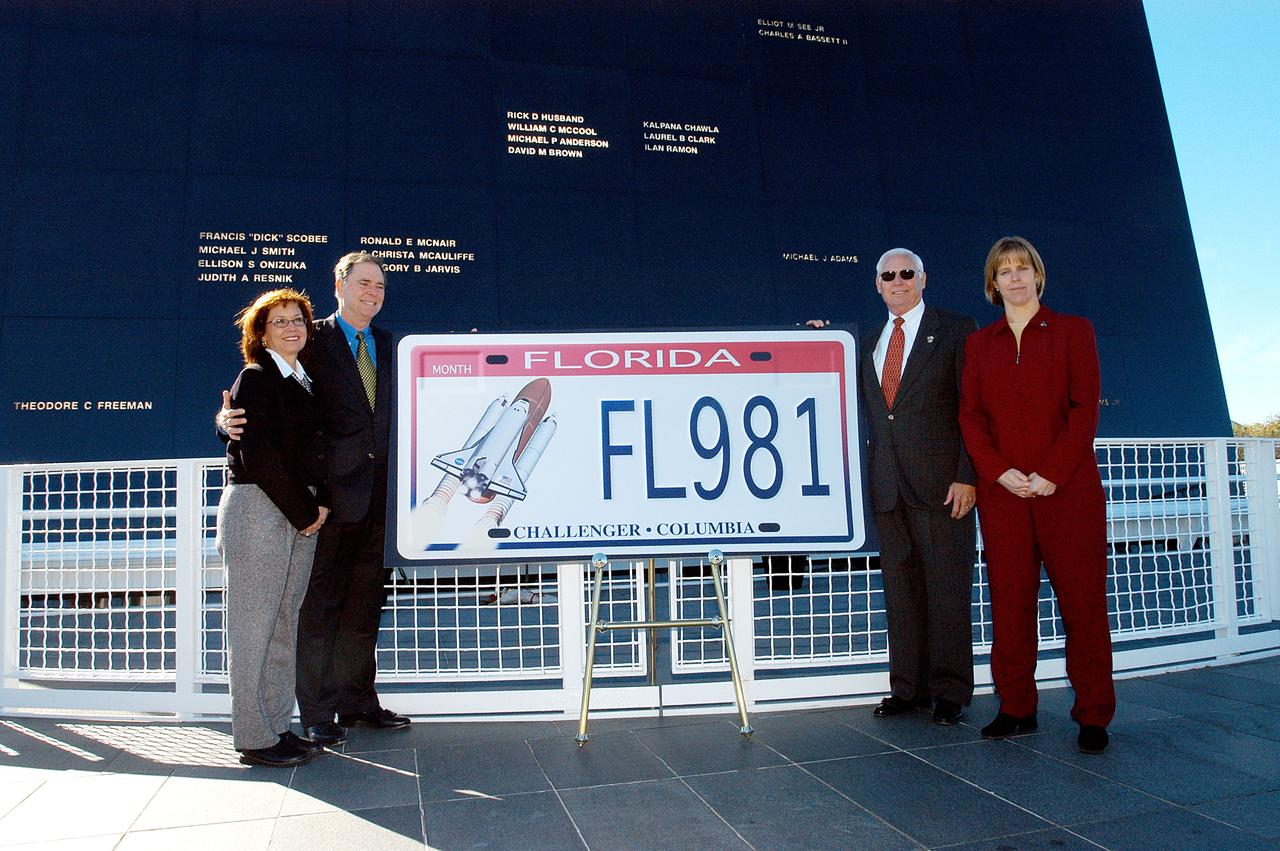
KENNEDY SPACE CENTER, FLA. - The new Florida license plate honoring the fallen astronauts of Challenger and Columbia is unveiled at the KSC Visitor Complex, in front of the Space Memorial Mirror. Participants in the dedication included (from left) Susan Berry, a teacher from Mila Elementary School in Brevard County; Sen. Bill Posey; Florida Rep. Ralph Poppell; and Kirstie McCool Chadwick, sister of William “Willie” J. McCool, who was the pilot on mission STS-107 that ended in disaster Feb. 1, 2003. The Space Mirror, 42-1/2 feet high by 50 feet wide, illuminates the names of the fallen astronauts cut through the monument’s black granite surface.
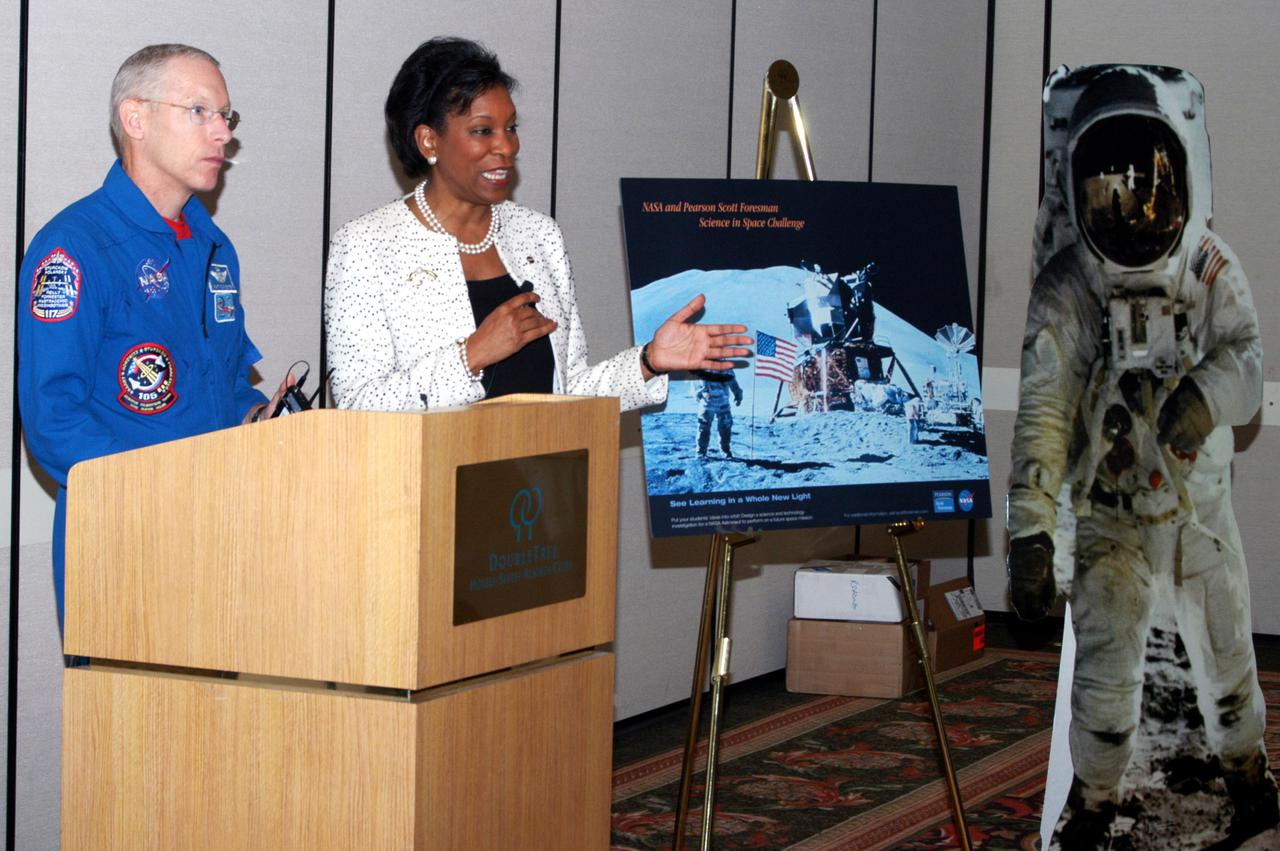
KENNEDY SPACE CENTER, FLA. - NASA astronaut Patrick Forrester (left) and Dr. Adena Williams Loston, NASA chief education officer, address a group of educators assembled for the kickoff of 'The Science in Space Challenge' at the Doubletree Hotel in Orlando, Fla. The national challenge program is sponsored by NASA and Pearson Scott Foresman, publisher of pre-K through grade six educational books. To participate in the challenge, teachers may submit proposals, on behalf of their students, for a science and technology investigation. Astronauts will conduct the winning projects on a Space Shuttle mission or on the International Space Station, while teachers and students follow along via television or the Web. For more information about the announcement, see the news release at http:__www.nasa.gov_home_hqnews_2004_oct_HQ_04341_publication.html.
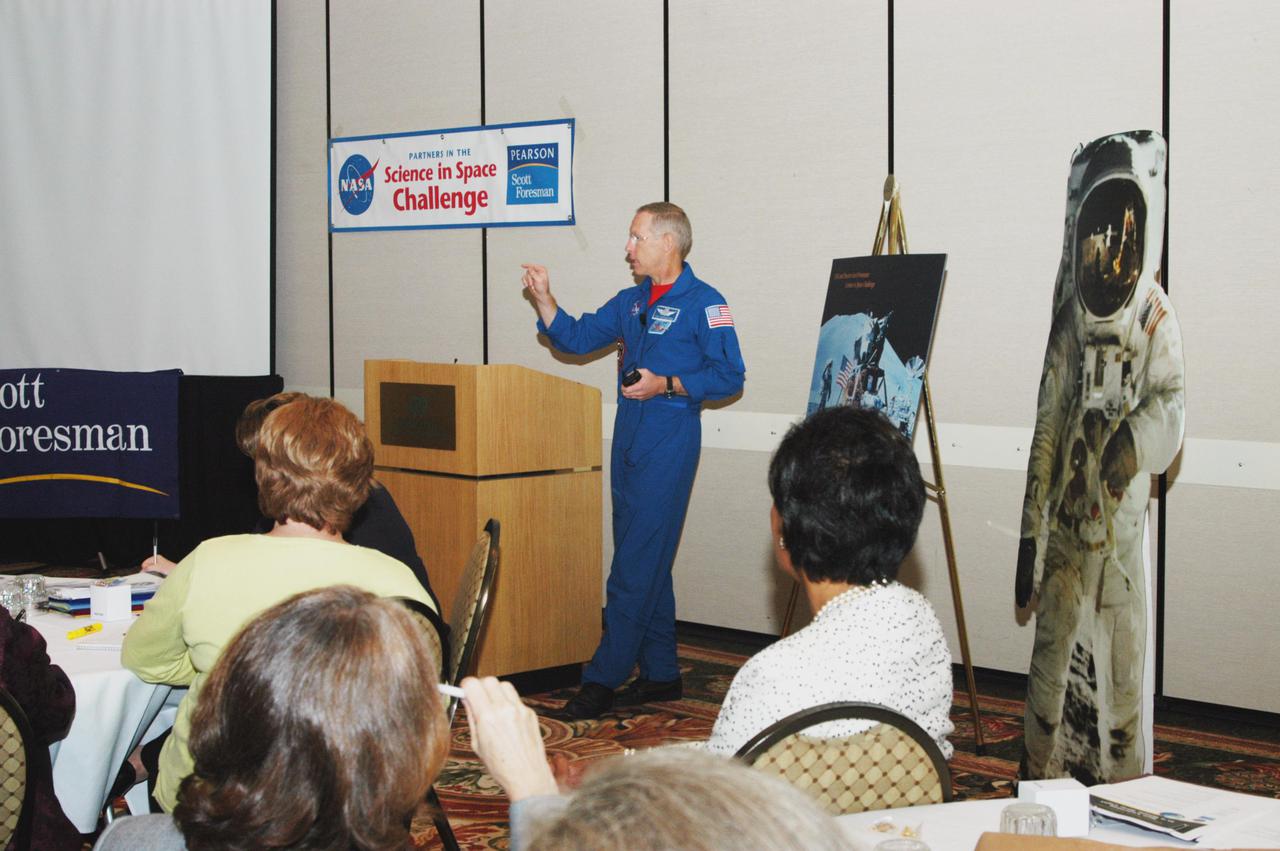
KENNEDY SPACE CENTER, FLA. - NASA astronaut Patrick Forrester addresses a group of educators assembled for the kickoff of 'The Science in Space Challenge' at the Doubletree Hotel in Orlando, Fla. The national challenge program is sponsored by NASA and Pearson Scott Foresman, publisher of pre-K through grade six educational books. To participate in the challenge, teachers may submit proposals, on behalf of their students, for a science and technology investigation. Astronauts will conduct the winning projects on a Space Shuttle mission or on the International Space Station, while teachers and students follow along via television or the Web. For more information about the announcement, see the news release at http:__www.nasa.gov_home_hqnews_2004_oct_HQ_04341_publication.html.
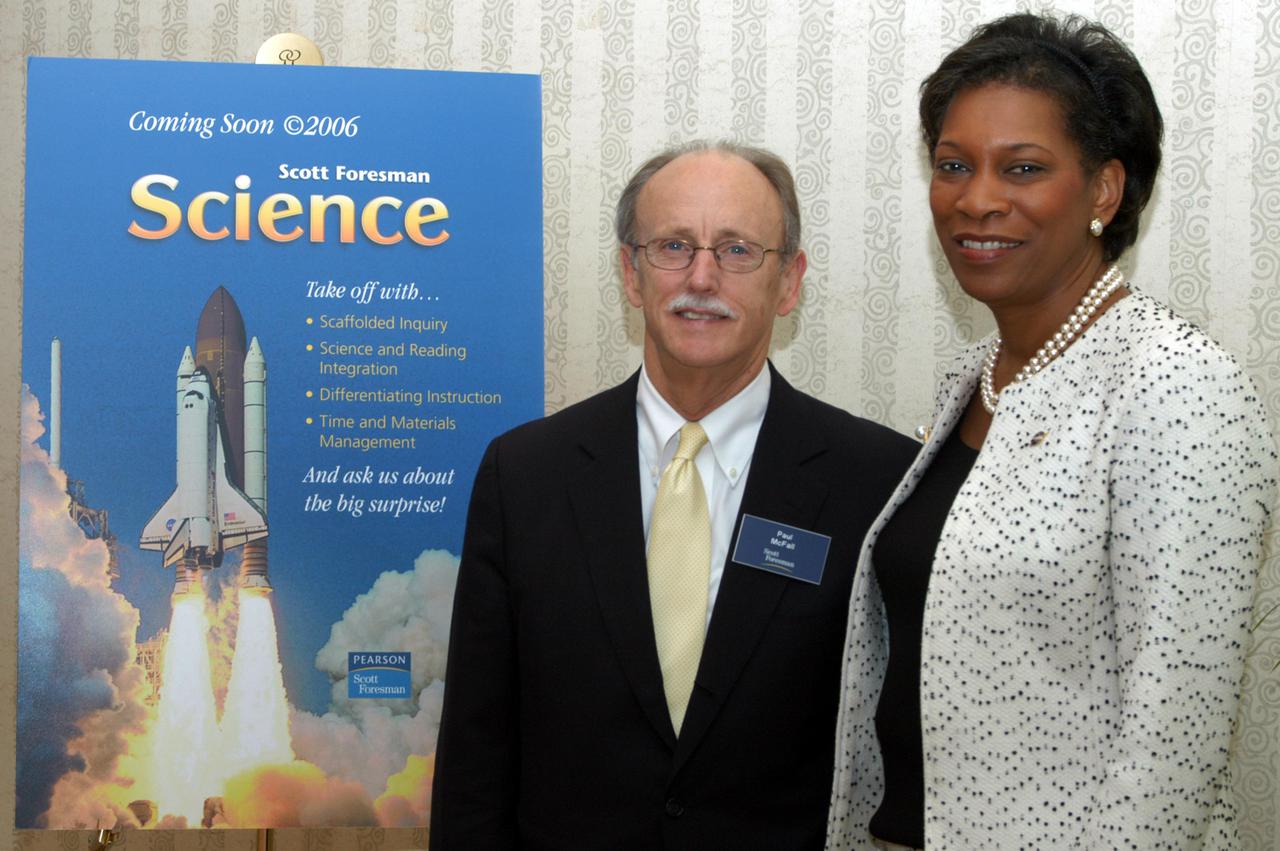
KENNEDY SPACE CENTER, FLA. - Paul McFall (left), president, Pearson Scott Foresman, and Dr. Adena Williams Loston, NASA chief education officer, attend the kickoff of 'The Science in Space Challenge' at the Doubletree Hotel in Orlando, Fla. The national challenge program is sponsored by NASA and Pearson Scott Foresman, publisher of pre-K through grade six educational books. To participate in the challenge, teachers may submit proposals, on behalf of their students, for a science and technology investigation. Astronauts will conduct the winning projects on a Space Shuttle mission or on the International Space Station, while teachers and students follow along via television or the Web. For more information about the announcement, see the news release at http:__www.nasa.gov_home_hqnews_2004_oct_HQ_04341_publication.html.
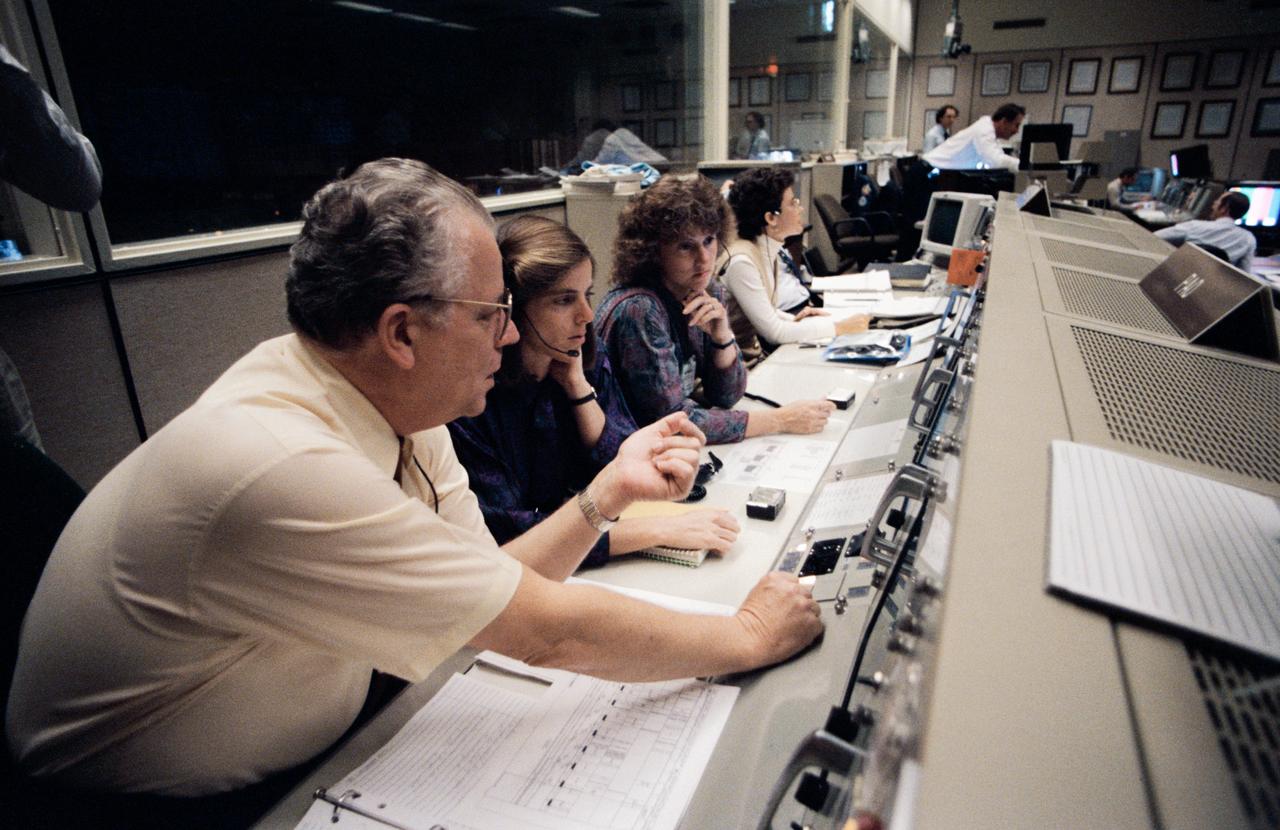
61A-S-135 (5 Nov 1985) --- Two school teachers in training at the Johnson Space Center got their first ?real time? exposure to a Space Shuttle mission as they monitor activity aboard the Spacelab D-1 science module from the mission control center. Sharon Christa McAuliffe (frame center) and Barbara R. Morgan are briefed by Terry White at the Public Affairs console during a television downlink from the Earth-orbiting Space Shuttle Challenger. McAuliffe is scheduled to fly as teacher/citizen observer on the STS 51-L mission early next year; and Morgan is in training as her backup.
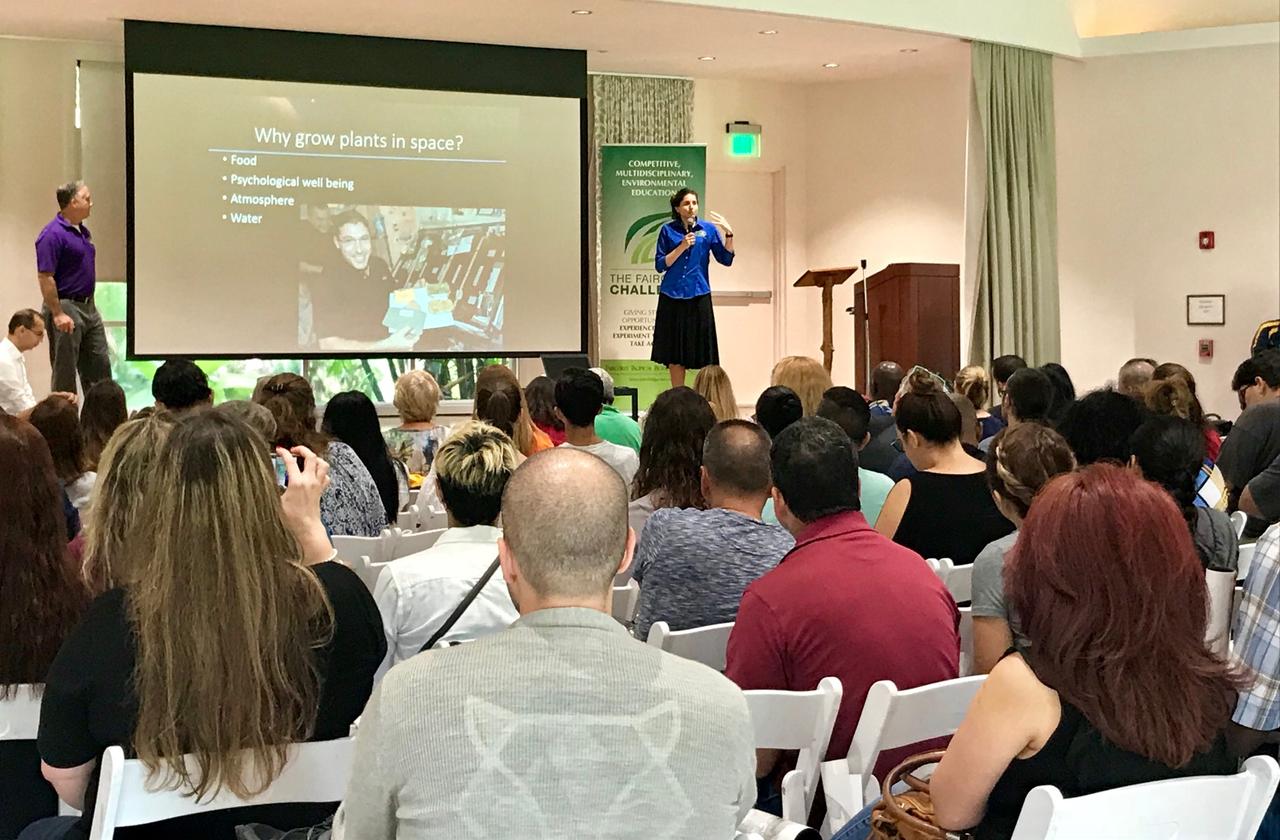
Kennedy scientists Trent Smith, left, and Dr. Gioia Massa speak to middle and high school teachers at Fairchild Tropical Botanic Garden in Miami during the kickoff of the 2017-2018 Fairchild Challenge-Growing Beyond Earth. More than 130 teachers gathered for the opening workshop, where they learned about food production in space and the Veggie hardware currently on the International Space Station. NASA has partnered with Fairchild to create this STEM-based challenge in which students will follow specific research protocols and analyze plant growth factors, flavor and nutrition, in order to help NASA choose the next crops for astronauts to grow aboard the station.
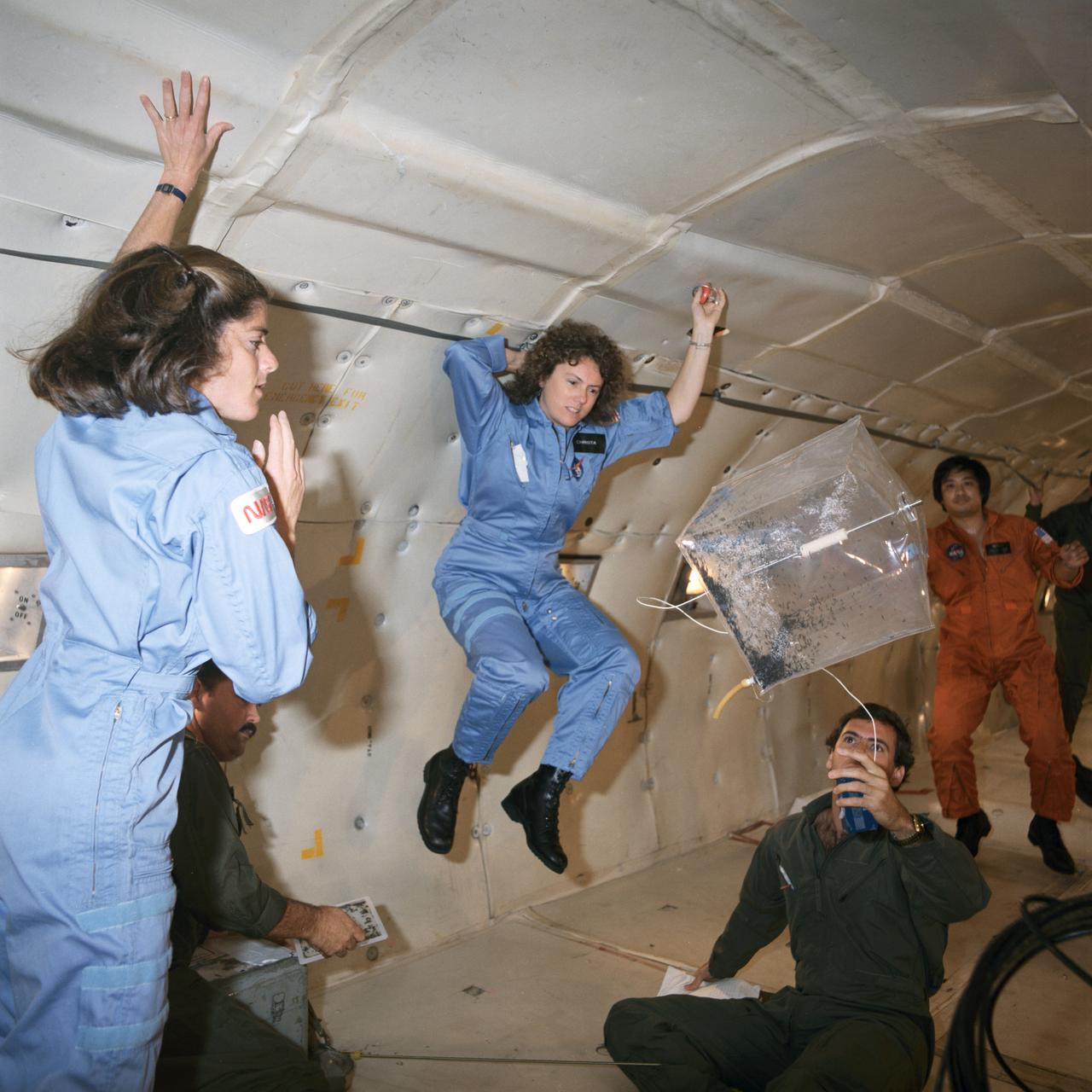
S85-42474 (16 Oct. 1985) --- A KC-135 aircraft provides a brief period of weightlessness as a preview for a teacher, in training to fly onboard a space shuttle for the Teacher-in-Space Project, and her backup. Sharon Christa McAuliffe (center frame), STS-51L prime crew member, and Barbara Morgan, her backup, monitor an experiment involving magnetic effects - one of the tests to be performed on the STS-51L flight. The experiment uses a control box, a square receptacle containing rubber tubing, stainless steel rod, a filter with desiccant, soft iron wire and a magnet. Photo credit: NASA
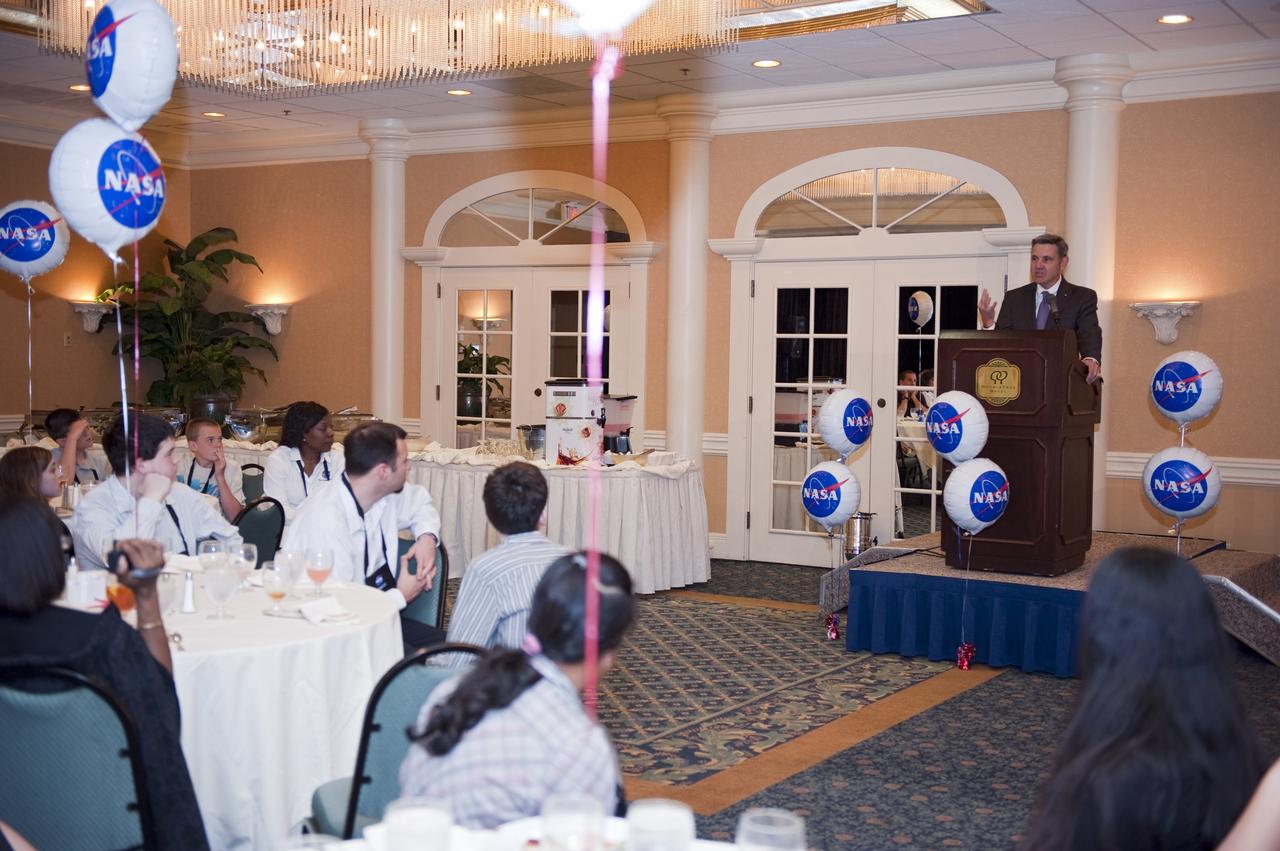
COCOA BEACH, Fla. -- NASA Kennedy Space Center Director Bob Cabana encourages fourth- through 12-grade students and their teachers from across the nation to "dream big" during the NASA Explorer Schools Symposium in Florida. During the event, May 4-7, about 60 students will tour Kennedy, the U.S. Astronaut Hall of Fame, and participate in several educational activities and a career panel question-and-answer session. The symposium also offers professional development opportunities for about 30 teachers. The participants were competitively selected after they completed an original investigation focused on existing NASA missions or research interests. Photo Credit: NASA/Kim Shiflett
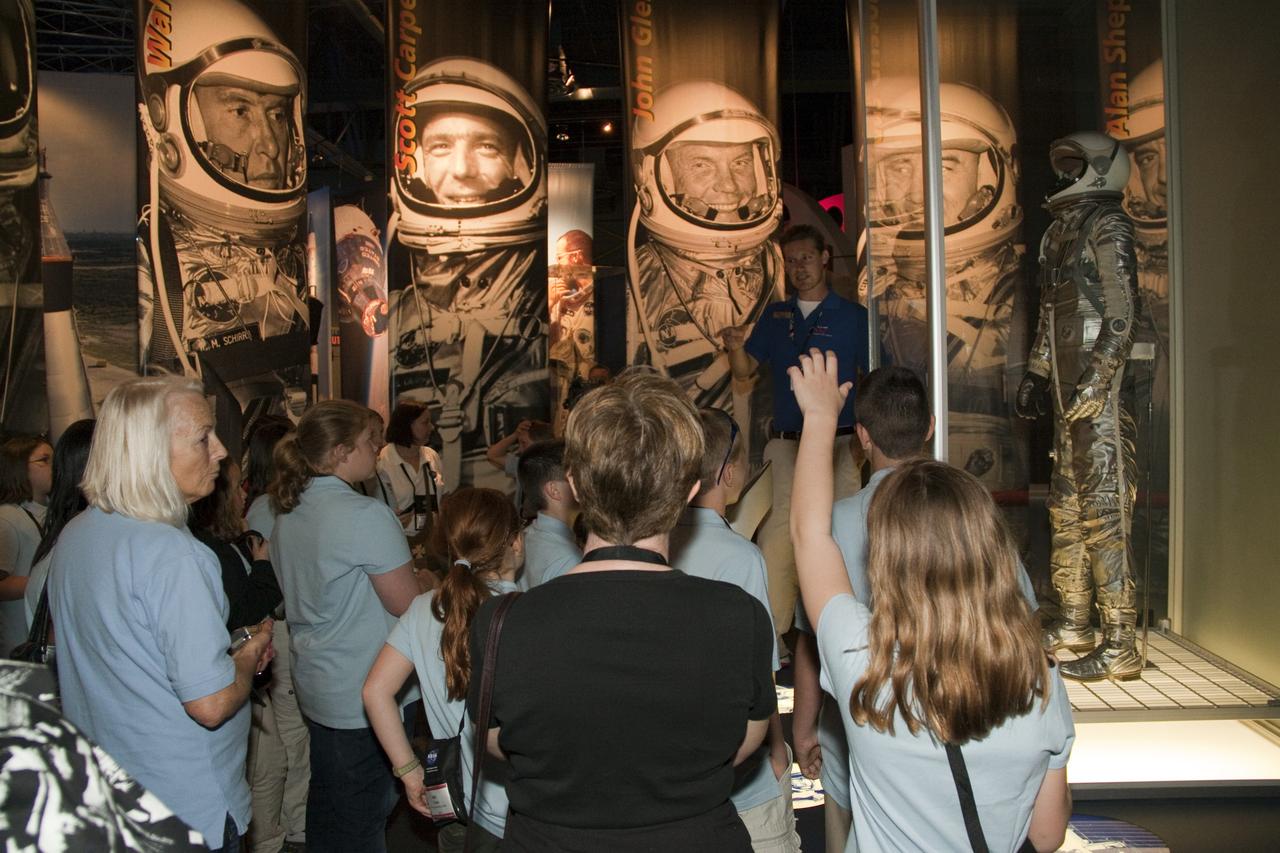
CAPE CANAVERAL, Fla. -- During the NASA Explorer Schools Symposium at Kennedy Space Center in Florida, students and teachers tour the U.S. Astronaut Hall of Fame. About 60 fourth- through 12-grade students from across the nation are at the center May 4-7 participating in tours of processing and launch facilities, as well as several educational activities and a career panel question-and-answer session. About 30 teachers will receive professional development opportunities during the symposium. The participants were competitively selected after they completed an original investigation focused on existing NASA missions or research interests. Photo Credit: NASA/Jack Pfaller
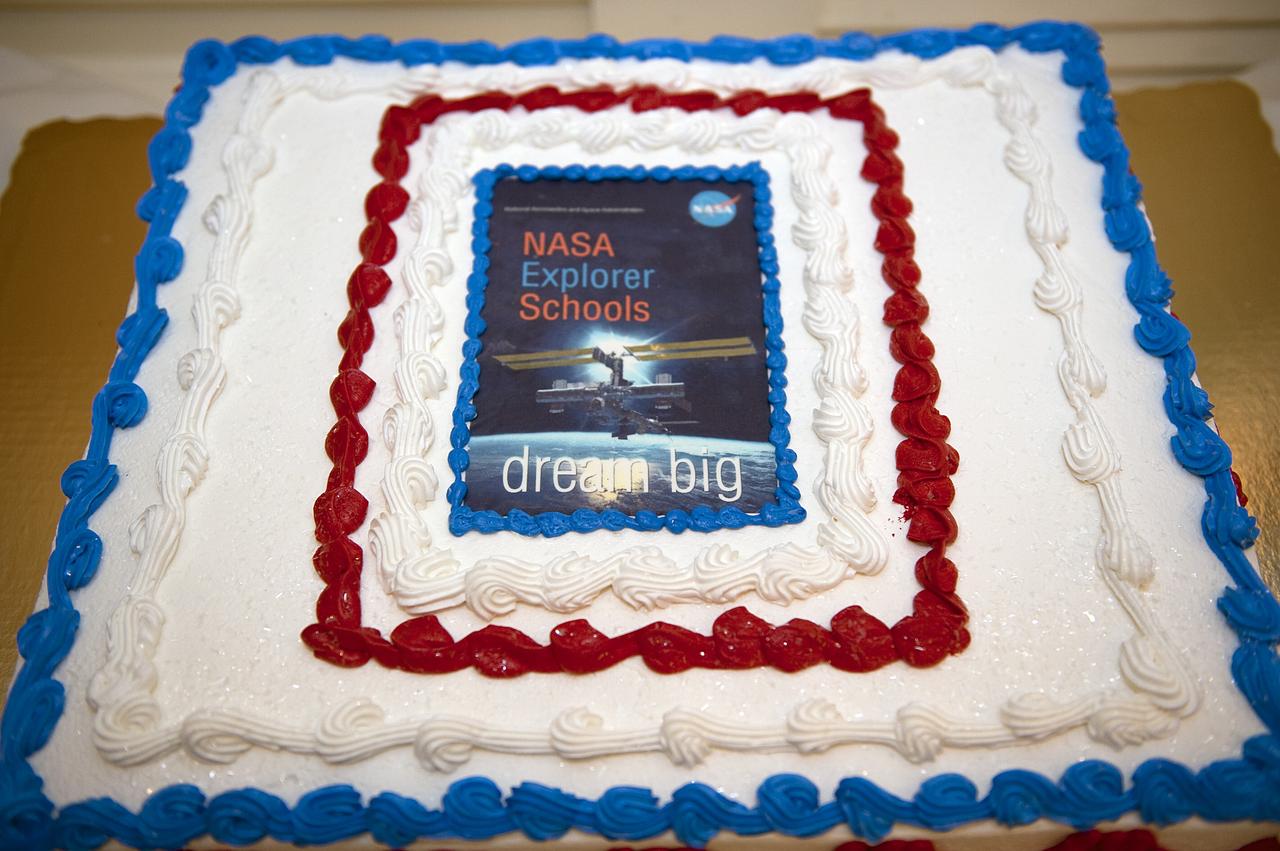
COCOA BEACH, Fla. -- A cake encourages fourth- through 12-grade students and their teachers from across the nation to "dream big" during the NASA Explorer Schools Symposium in Florida. During the event, May 4-7, about 60 students will tour NASA's Kennedy Space Center, the U.S. Astronaut Hall of Fame, and participate in several educational activities and a career panel question-and-answer session. The symposium also offers professional development opportunities for about 30 teachers. The participants were competitively selected after they completed an original investigation focused on existing NASA missions or research interests. Photo Credit: NASA/Kim Shiflett
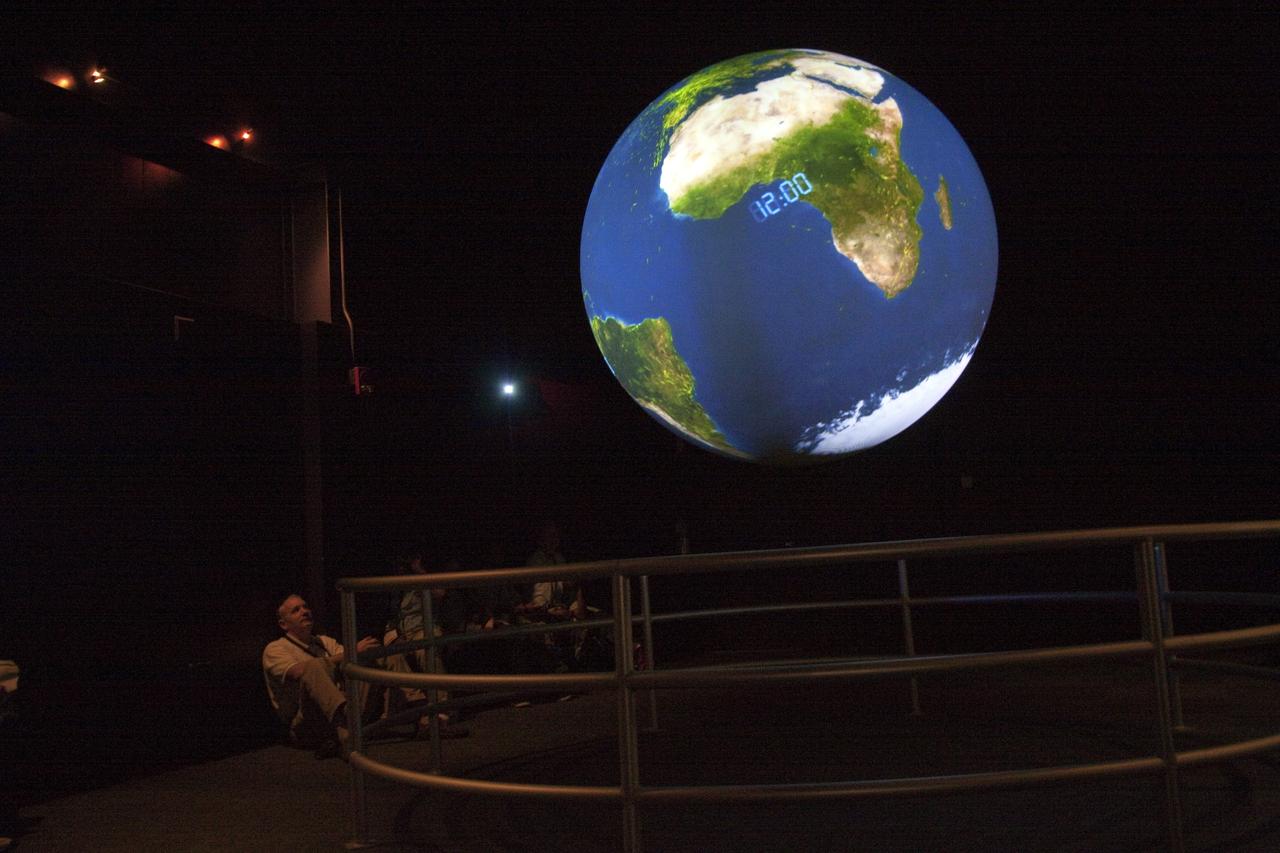
CAPE CANAVERAL, Fla. -- During the NASA Explorer Schools Symposium at Kennedy Space Center in Florida, students and teachers check out the Science on a Sphere system at the U.S. Astronaut Hall of Fame. About 60 fourth- through 12-grade students from across the nation are at the center May 4-7 participating in tours of processing and launch facilities, as well as several educational activities and a career panel question-and-answer session. About 30 teachers will receive professional development opportunities during the symposium. The participants were competitively selected after they completed an original investigation focused on existing NASA missions or research interests. Photo Credit: NASA/Jack Pfaller
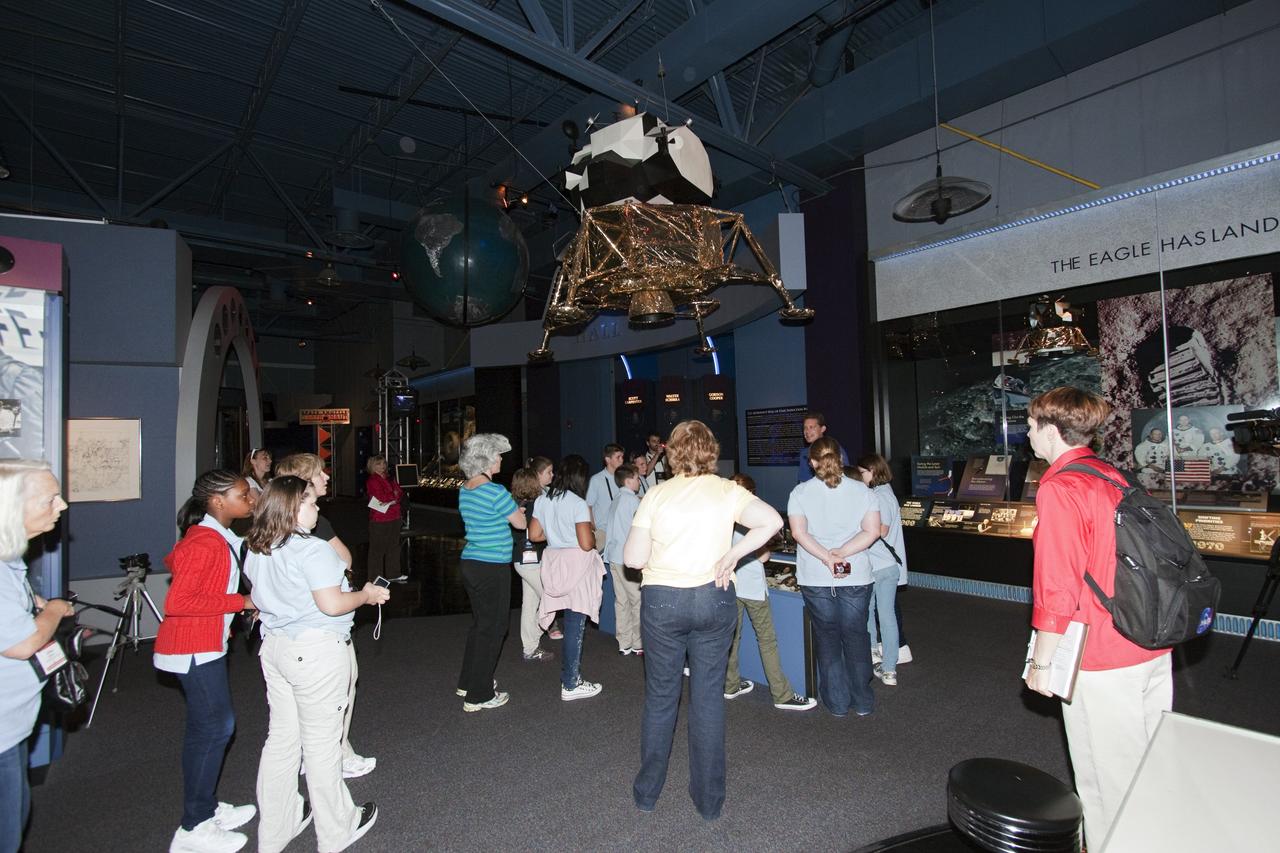
CAPE CANAVERAL, Fla. -- During the NASA Explorer Schools Symposium at Kennedy Space Center in Florida, students and teachers tour the U.S. Astronaut Hall of Fame. About 60 fourth- through 12-grade students from across the nation are at the center May 4-7 participating in tours of processing and launch facilities, as well as several educational activities and a career panel question-and-answer session. About 30 teachers will receive professional development opportunities during the symposium. The participants were competitively selected after they completed an original investigation focused on existing NASA missions or research interests. Photo Credit: NASA/Jack Pfaller
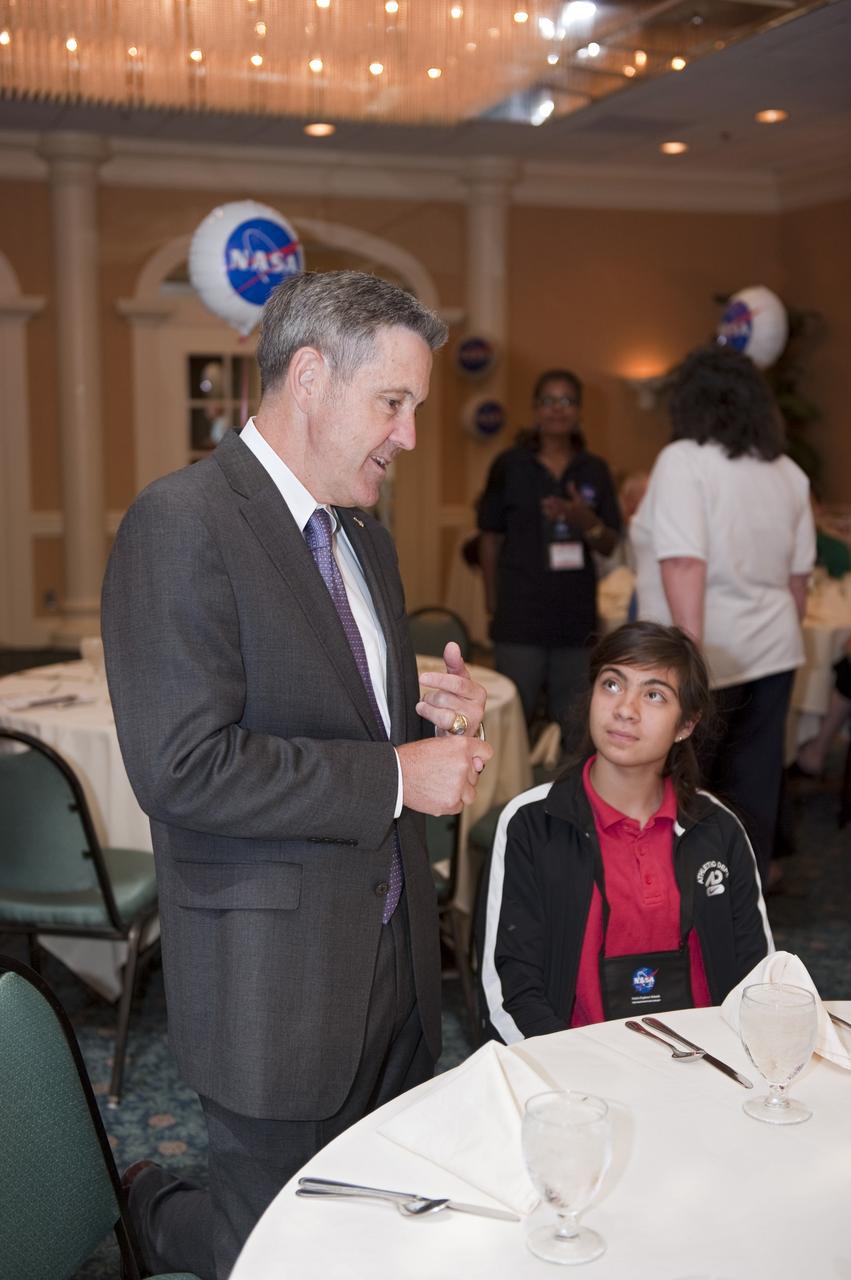
COCOA BEACH, Fla. -- NASA Kennedy Space Center Director Bob Cabana encourages fourth- through 12-grade students and their teachers from across the nation to "dream big" during the NASA Explorer Schools Symposium in Florida. During the event, May 4-7, about 60 students will tour Kennedy, the U.S. Astronaut Hall of Fame, and participate in several educational activities and a career panel question-and-answer session. The symposium also offers professional development opportunities for about 30 teachers. The participants were competitively selected after they completed an original investigation focused on existing NASA missions or research interests. Photo Credit: NASA/Kim Shiflett
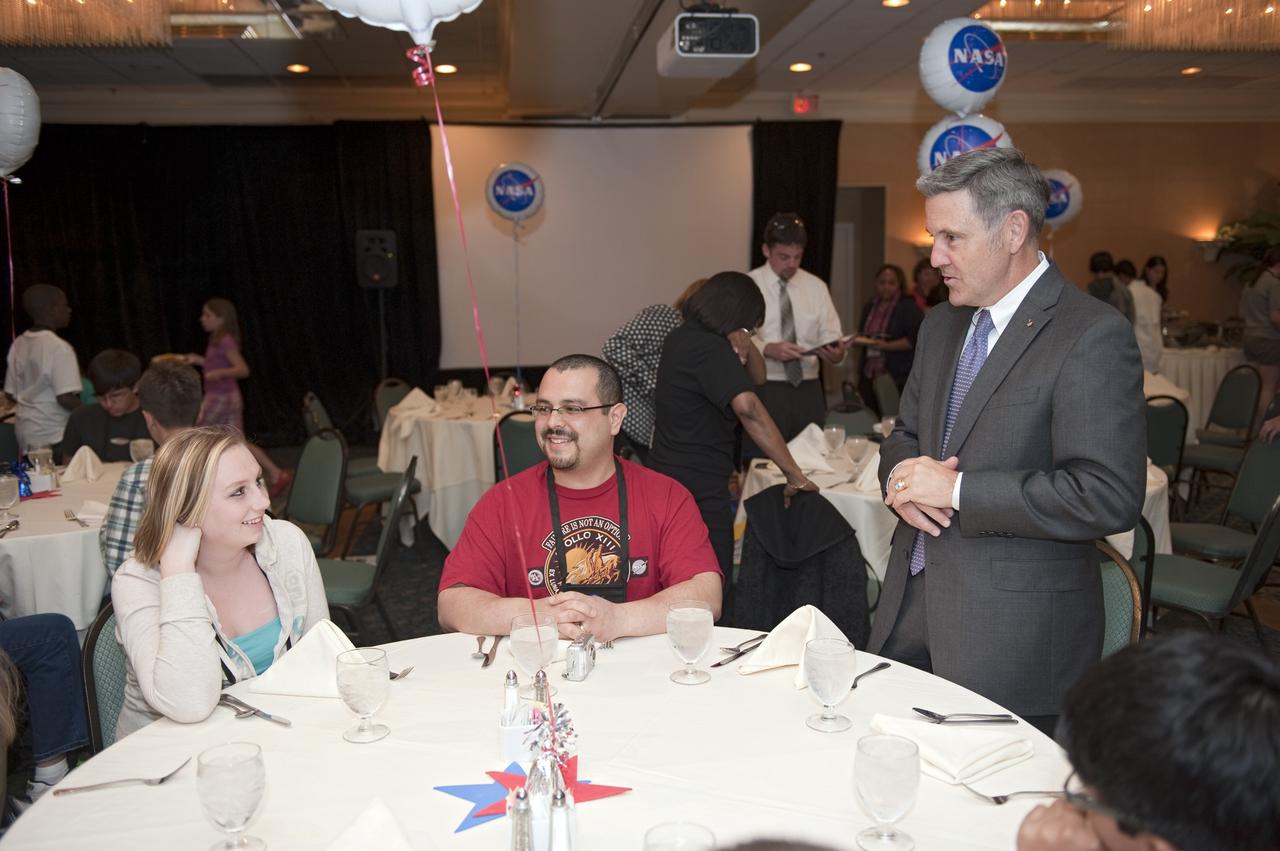
COCOA BEACH, Fla. -- NASA Kennedy Space Center Director Bob Cabana encourages fourth- through 12-grade students and their teachers from across the nation to "dream big" during the NASA Explorer Schools Symposium in Florida. During the event, May 4-7, about 60 students will tour Kennedy, the U.S. Astronaut Hall of Fame, and participate in several educational activities and a career panel question-and-answer session. The symposium also offers professional development opportunities for about 30 teachers. The participants were competitively selected after they completed an original investigation focused on existing NASA missions or research interests. Photo Credit: NASA/Kim Shiflett
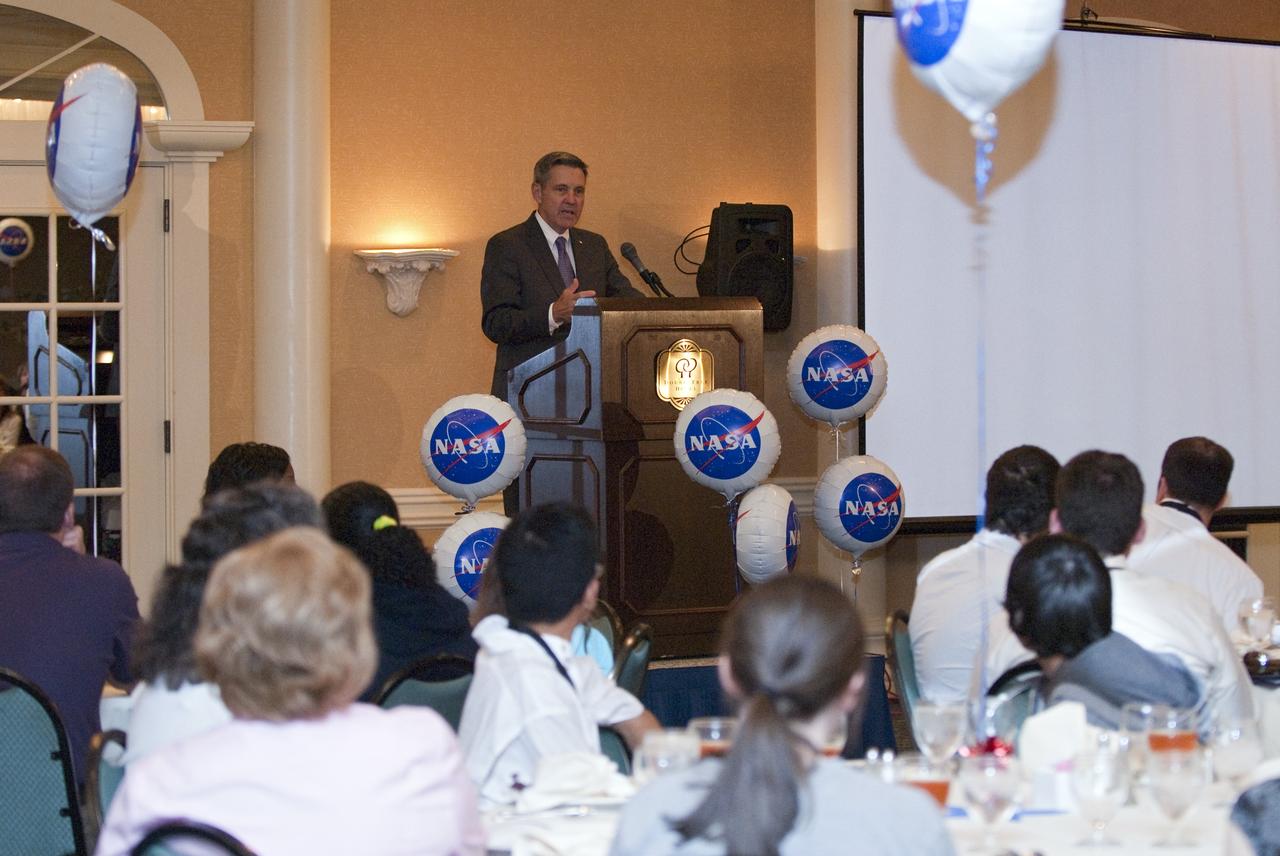
COCOA BEACH, Fla. -- NASA Kennedy Space Center Director Bob Cabana talks to fourth- through 12-grade students and their teachers from across the nation during the NASA Explorer Schools Symposium in Florida. During the event, May 4-7, about 60 students will tour Kennedy, the U.S. Astronaut Hall of Fame, and participate in several educational activities and a career panel question-and-answer session. The symposium also offers professional development opportunities for about 30 teachers. The participants were competitively selected after they completed an original investigation focused on existing NASA missions or research interests. Photo Credit: NASA/Kim Shiflett
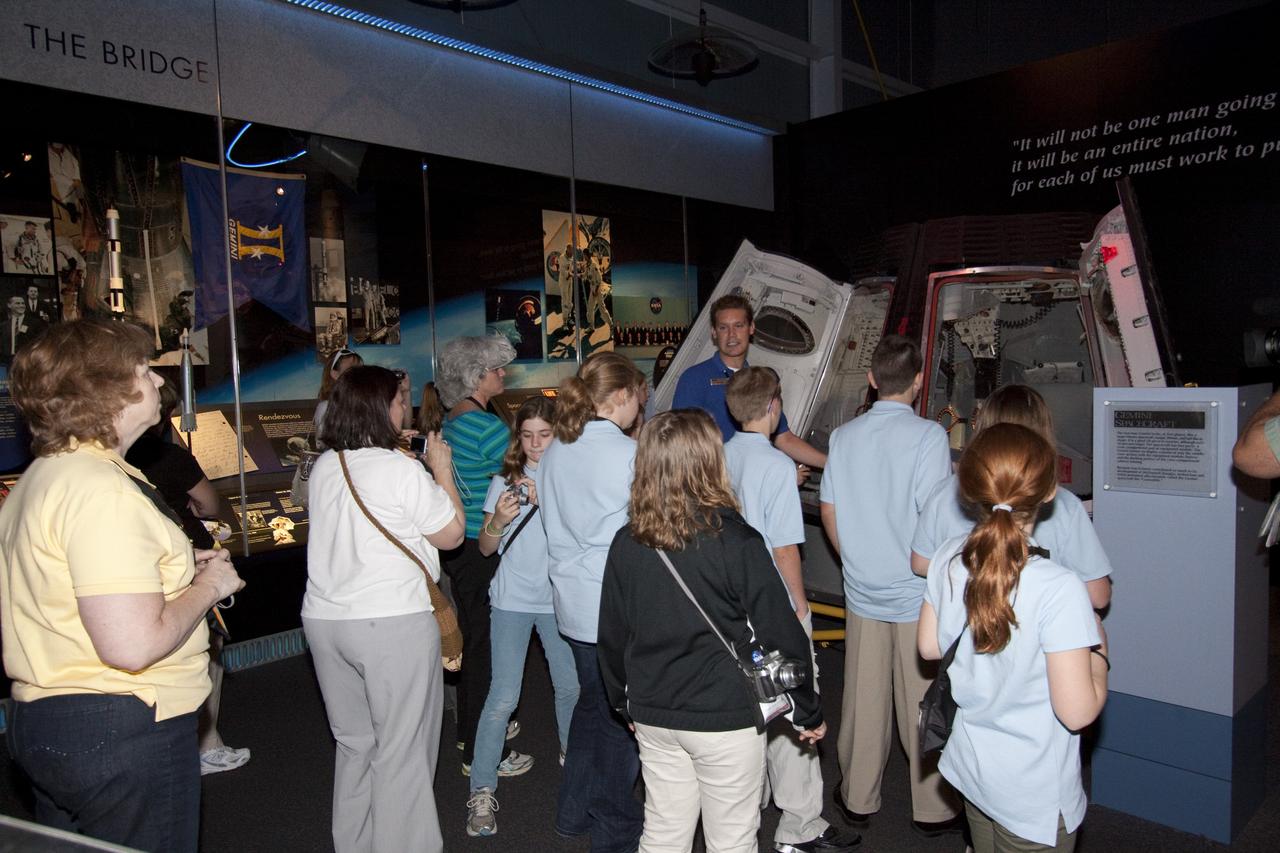
CAPE CANAVERAL, Fla. -- During the NASA Explorer Schools Symposium at Kennedy Space Center in Florida, students and teachers tour the U.S. Astronaut Hall of Fame. About 60 fourth- through 12-grade students from across the nation are at the center May 4-7 participating in tours of processing and launch facilities, as well as several educational activities and a career panel question-and-answer session. About 30 teachers will receive professional development opportunities during the symposium. The participants were competitively selected after they completed an original investigation focused on existing NASA missions or research interests. Photo Credit: NASA/Jack Pfaller
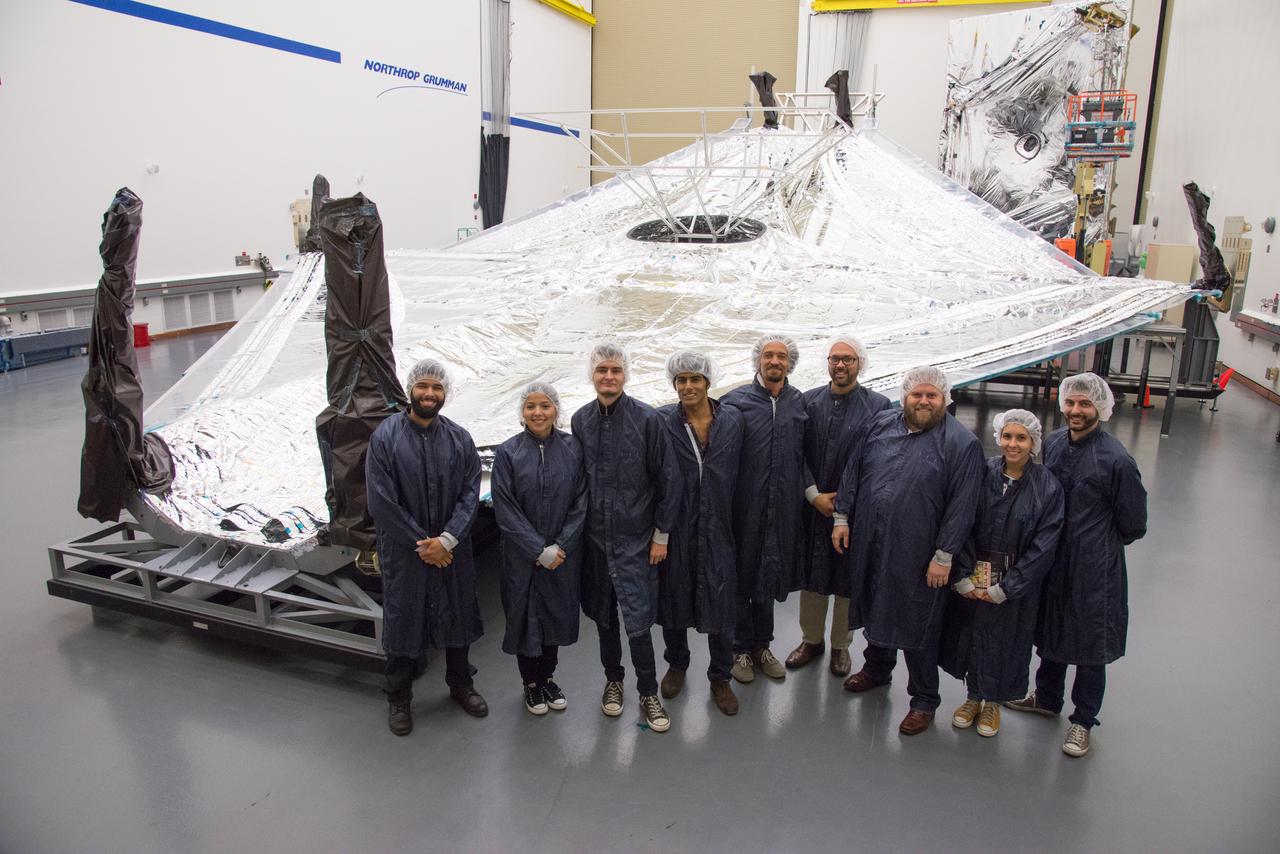
Students and teachers from the New York Film Academy visited Northrop Grumman’s Space Park facility in December 2014 for a tour of the James Webb Space Telescope, and got an up-close look at the tennis-court-sized sunshield that will keep the telescope cool in deep space. Photo courtesy of Northrop Grumman Corporation
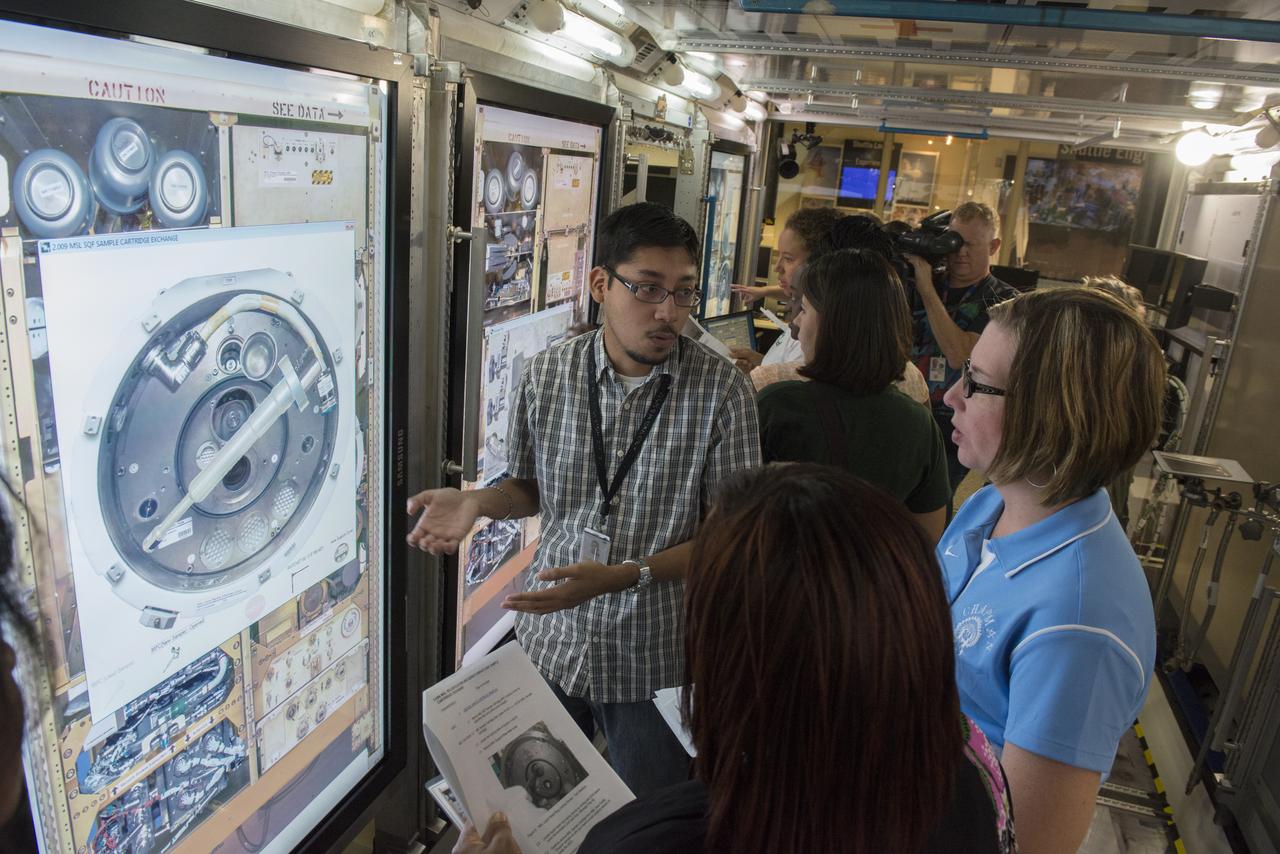
VINCENT VIDAURRI, CENTER, A TECHNICAL SPECIALIST WITH TELEDYNE BROWN ENGINEERING SUPPORTING MISSION OPERATIONS AT THE MARSHALL SPACE FLIGHT CENTER, PROVIDES DETAILS ABOUT A MOCK-UP OF THE INTERNATIONAL SPACE STATION SCIENCE LAB TO A GROUP OF AREA TEACHERS AS PART OF "BACK-2-SCHOOL DAY." TEAM REDSTONE -- WHICH INCLUDES THE MARSHALL SPACE FLIGHT CENTER AND U.S. ARMY ORGANIZATIONS ON REDSTONE ARSENAL -- INVITED 50 TEACHERS TO TOUR REDSTONE ARSENAL AUG. 15, GIVING THEM AN OPPORTUNITY TO LEARN OF AND SEE RESOURCES AVAILABLE TO THEM AND THEIR STUDENTS. THE TOUR FOCUSED ON SITES AVAILABLE FOR FIELD TRIPS FOR STUDENTS STUDYING MATH, SCIENCE, TECHNOLOGY AND ENGINEERING. STOPS INCLUDED MARSHALL'S PAYLOAD OPERATIONS INTEGRATION CENTER AND THE HIGH SCHOOLS UNITED WITH NASA TO CREATE HARDWARE LAB, OR HUNCH, BOTH LOCATED IN BUILDING 4663. THE PROGRAM GIVES HIGH SCHOOL STUDENTS THE CHANCE TO WORK WITH NASA ENGINEERS TO DESIGN AND BUILD HARDWARE FOR USE ON THE INTERNATIONAL SPACE STATION. THE TEACHERS ALSO VISITED THE ARMY AVIATION & MISSILE RESEARCH DEVELOPMENT & ENGINEERING CENTER AND THE REDSTONE TEST CENTER
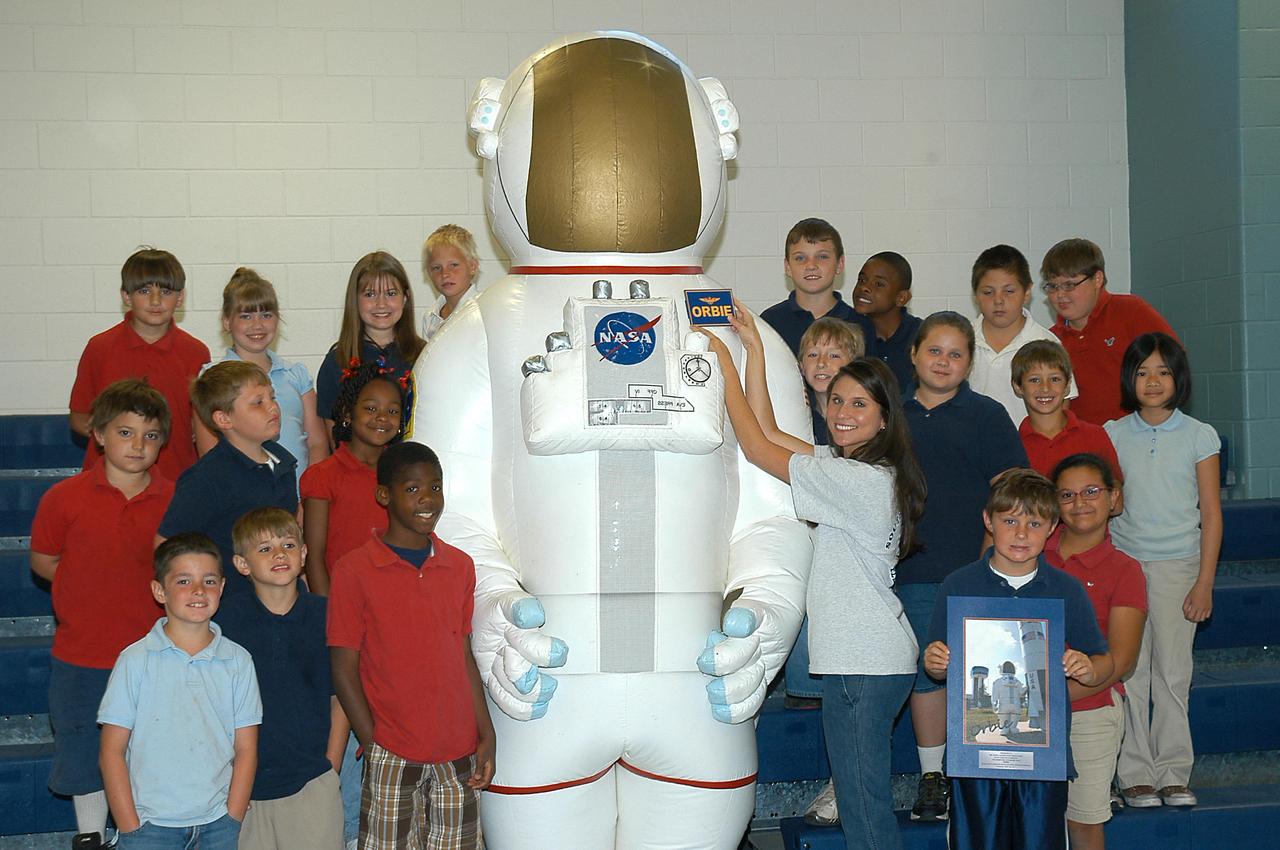
Students at South Hancock Elementary School in Bay St. Louis, Miss., gather around Orbie the Astronaut on May 19 as teacher Sarah Ladner affixes a nameplate to the Stennis Space Center mascot. Members of the third-grade class won a contest to name the inflatable astronaut. Some 20 schools in Louisiana and Mississippi participated in the contest.
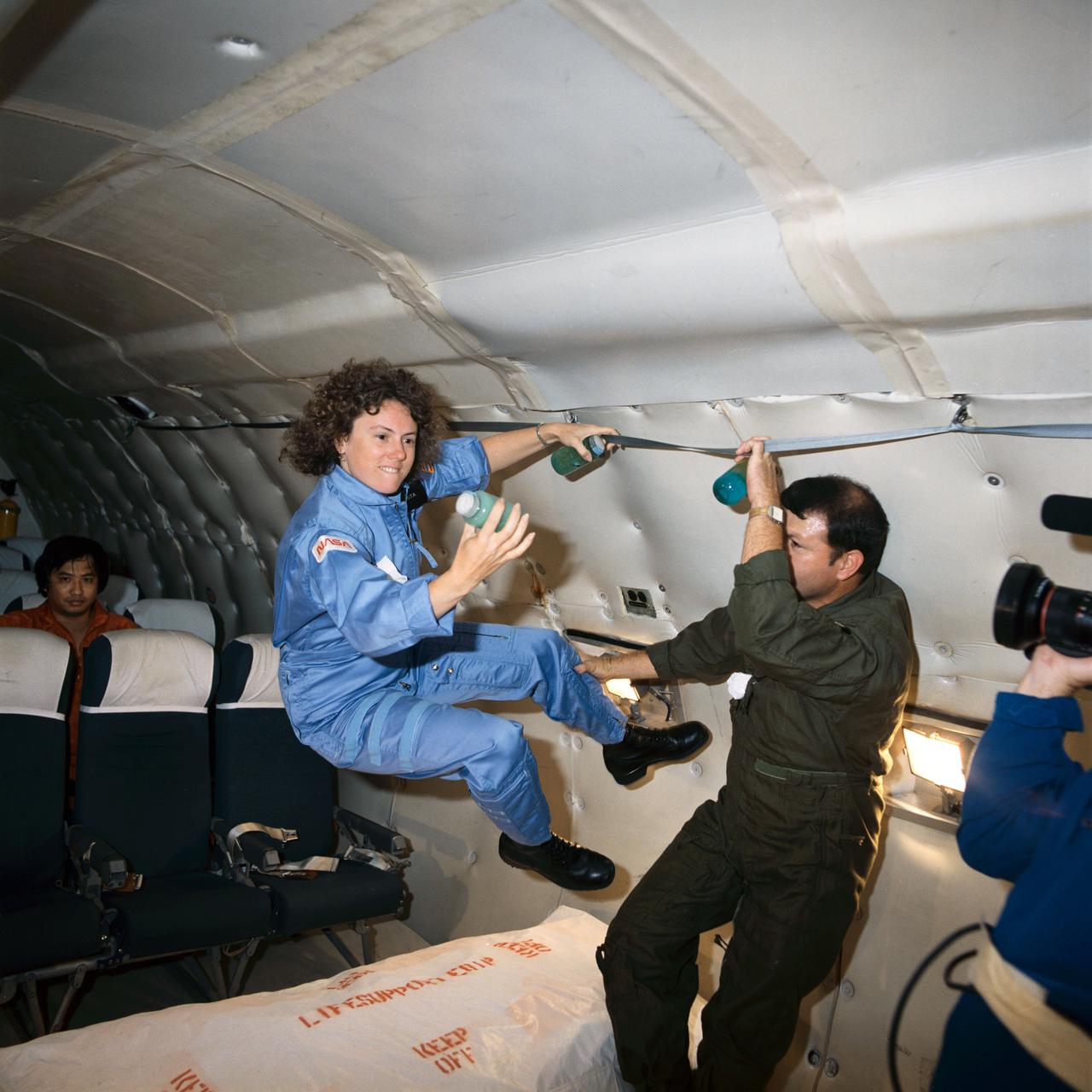
Teacher-in-Space trainees on the KC-135 for Zero-G training. Sharon Christa McAuliffe experiences a few moments of weightlessness provided by the KC-135. She and Bob Mayfield, a JSC Aerospace Education Specialist, are previewing a Molecular Mixing Experiment which was designed to demonstrate differences of separation process in 1-G and Zero-G.
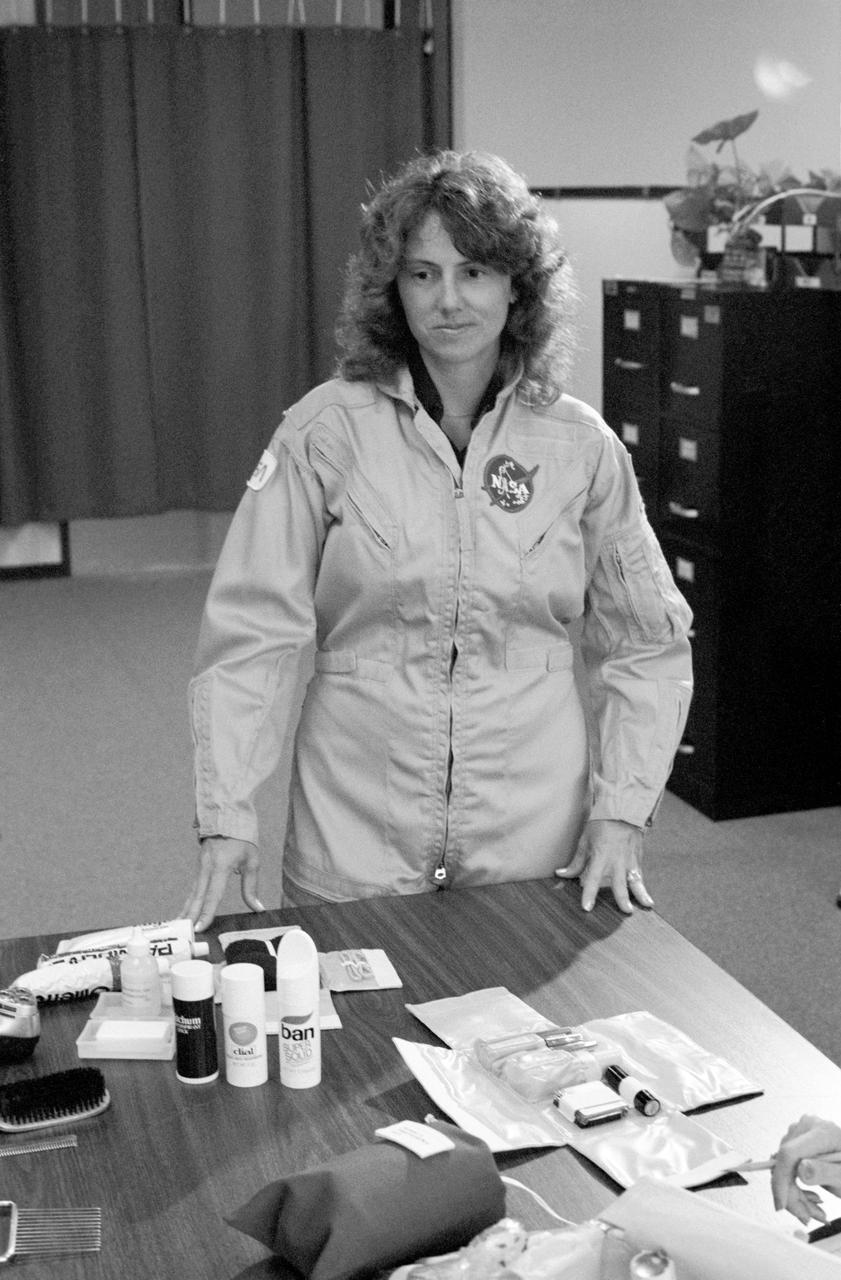
Teacher-in-Space Participant Christa McAuliffe is briefed on her suit and on personal hygiene equipment to be used on the STS 51L Mission. She is standing in front of a table with several of the items to be used on the flight, including one can labeled DIAL and one can labeled BAN.
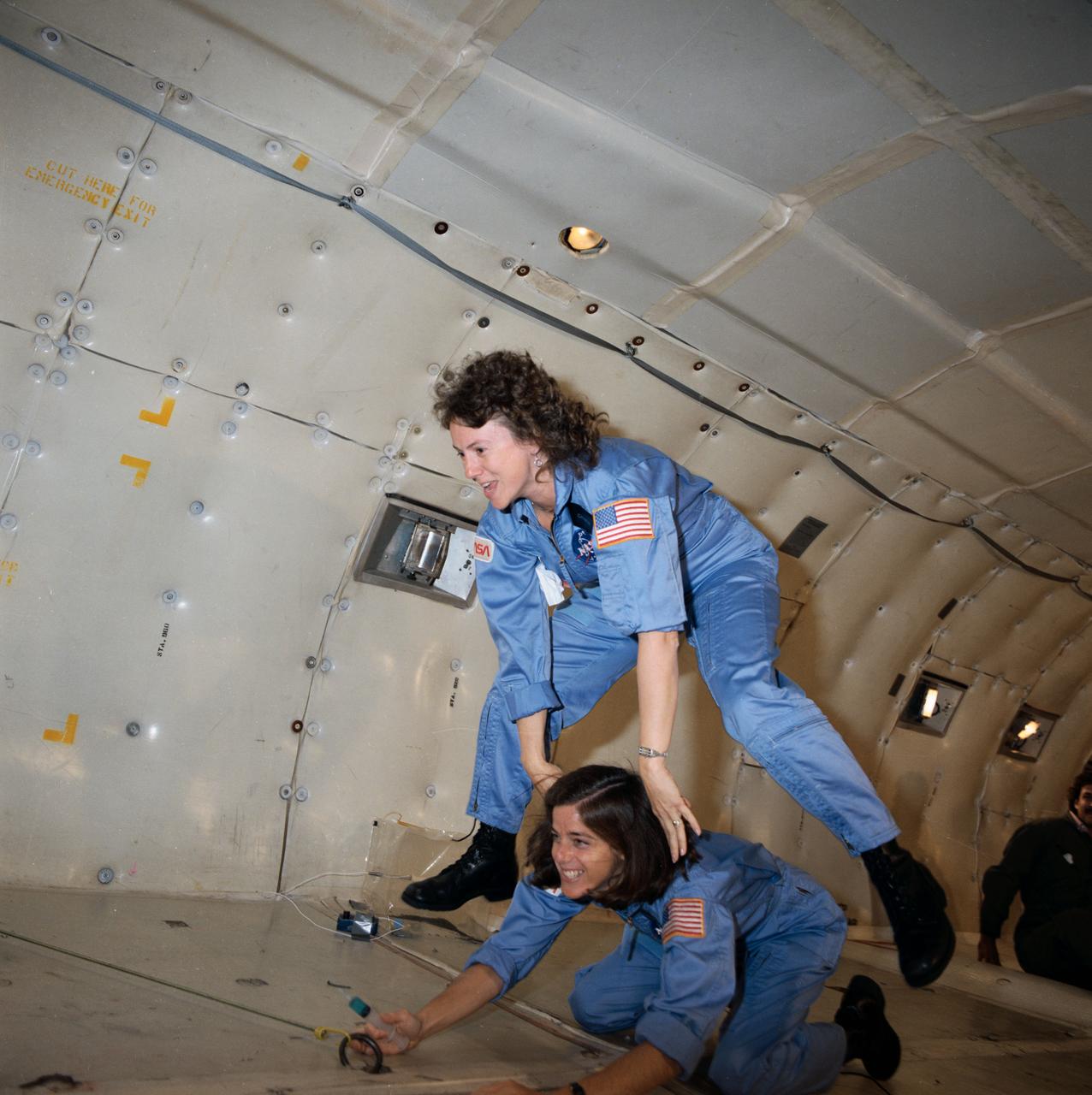
S85-42472 (16 Oct. 1985) --- Teacher-in-Space trainees on the KC-135 for zero-G training. Sharon Christa McAuliffe, right, and Barbara R. Morgan, play leap-frog in the temporary weightlessness of the KC-135. Photo credit: NASA
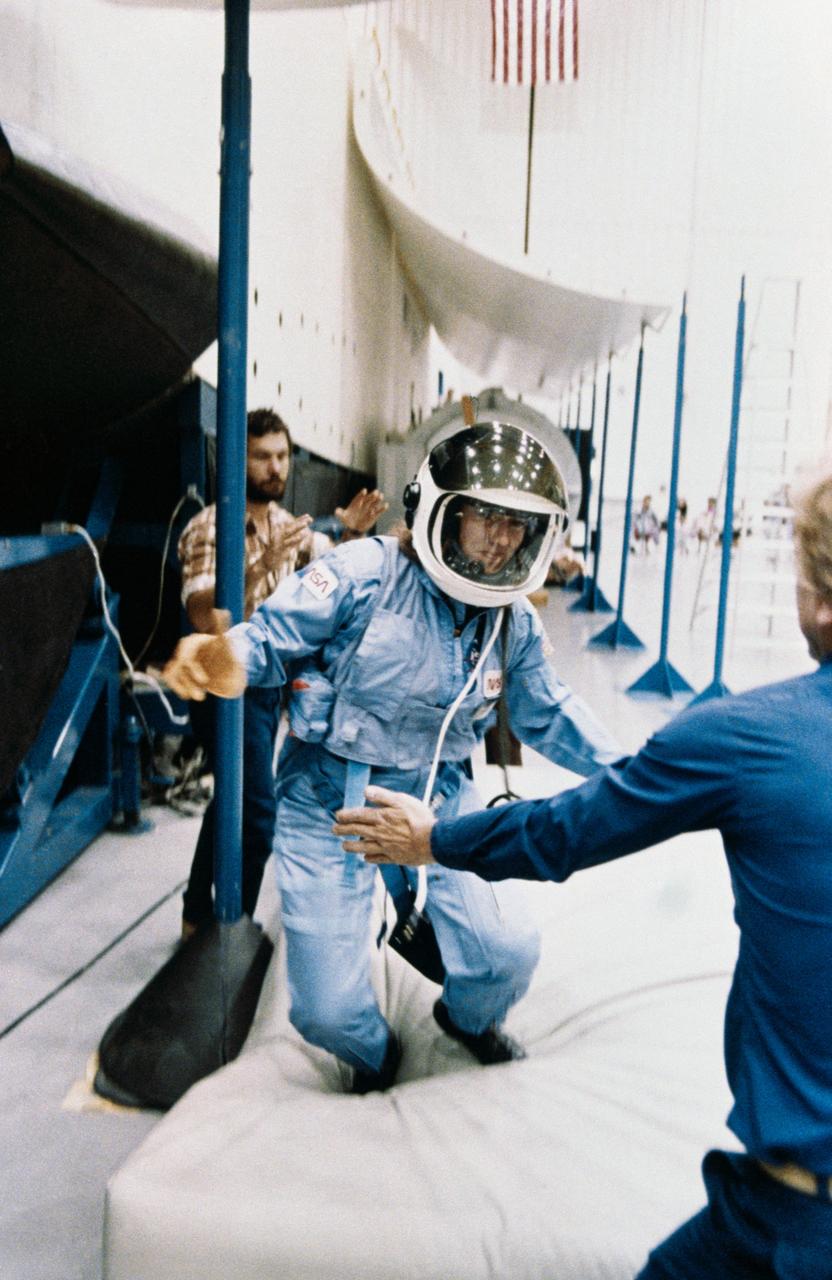
Sharon Christa McAuliffe, 51-L payload specialist representing the Teacher in Space project, jumps down onto a cushion during an emergency egress training session in JSC's mockup and integration laboratory. She had been descending from the mockup using a Sky-genie.
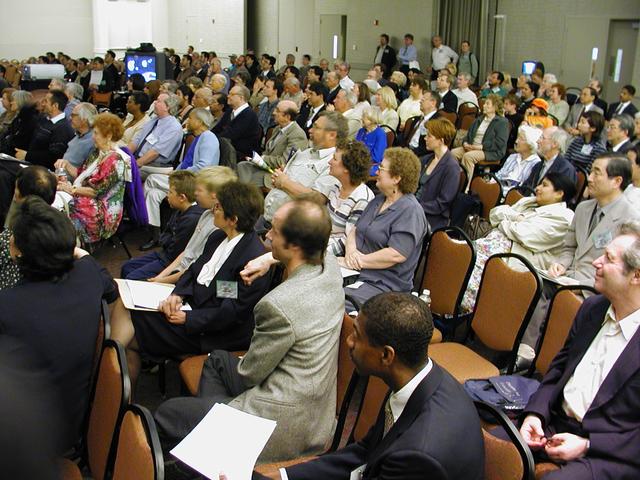
Teachers, students, and parents listen as scientists explain what is different about the microgravity envirornment of space and why it is a valuable tool for research. This was part of the outreach session of the Pan Pacific Microgravity Conference on May 2, 2001, at the California Science Center.
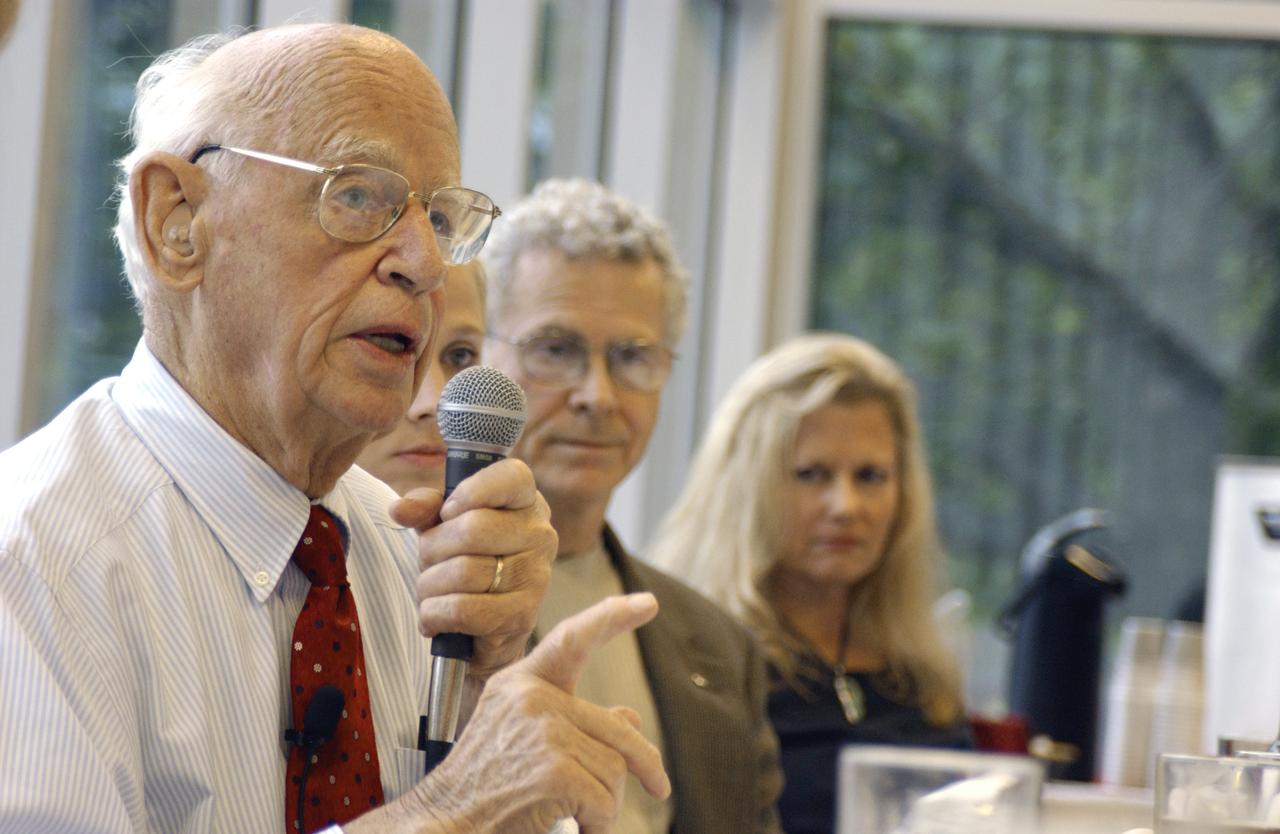
Dr. Ernst Stuhlinger, a member of von Braun's original German rocket team who directed the Research Projects Office, spoke about the importance of teachers in his life during a reception honoring educators attending the NASA Student Launch Initiative Rocketry Workshop at the Marshall Space Flight Center in July, 2003.
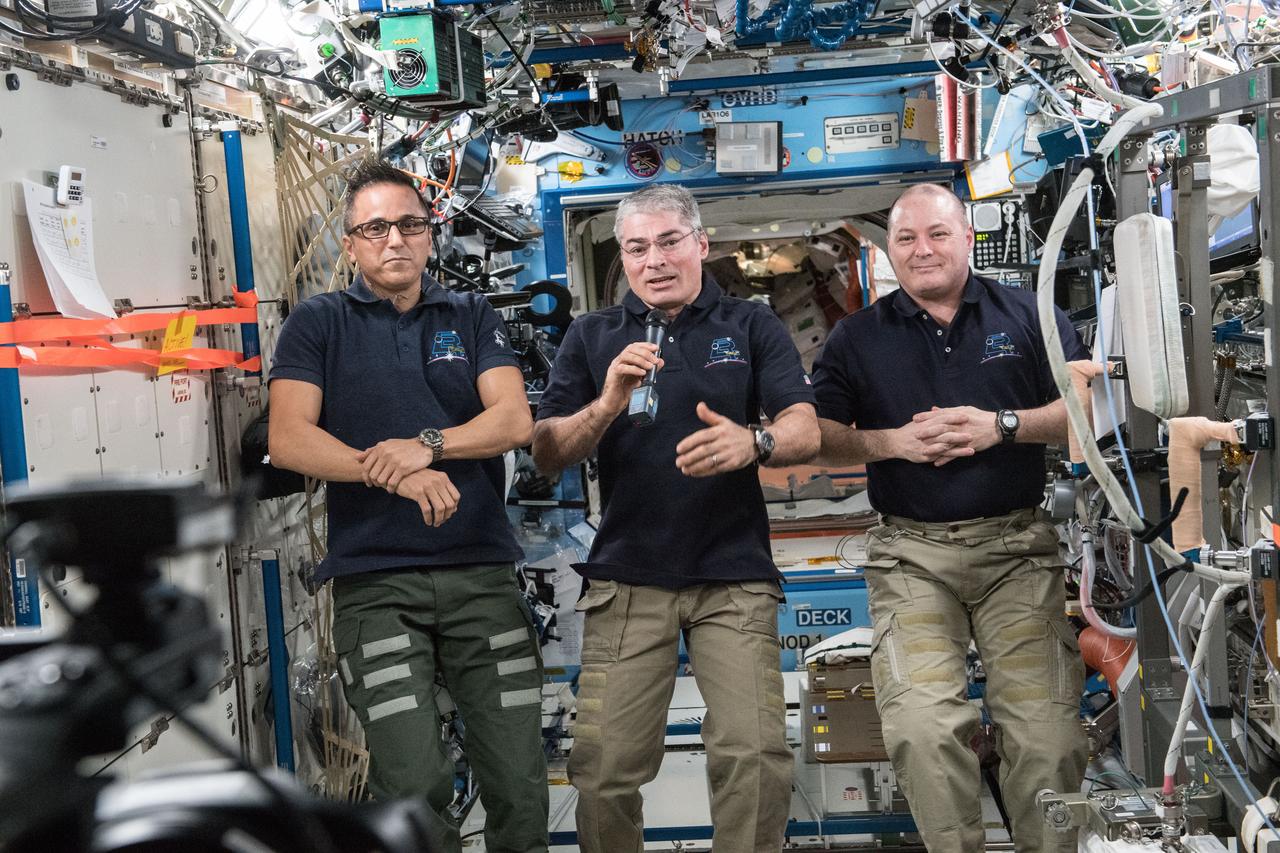
iss054e037647 (Feb. 8, 2018) --- NASA astronauts (from left) Joe Acaba, Mark Vande Hei and Scott Tingle talk to high school students and teachers who linked up to the International Space Station during a STEM (Science, Technology, Engineering and Mathematics) event from the Boise State University in Boise, Idaho.
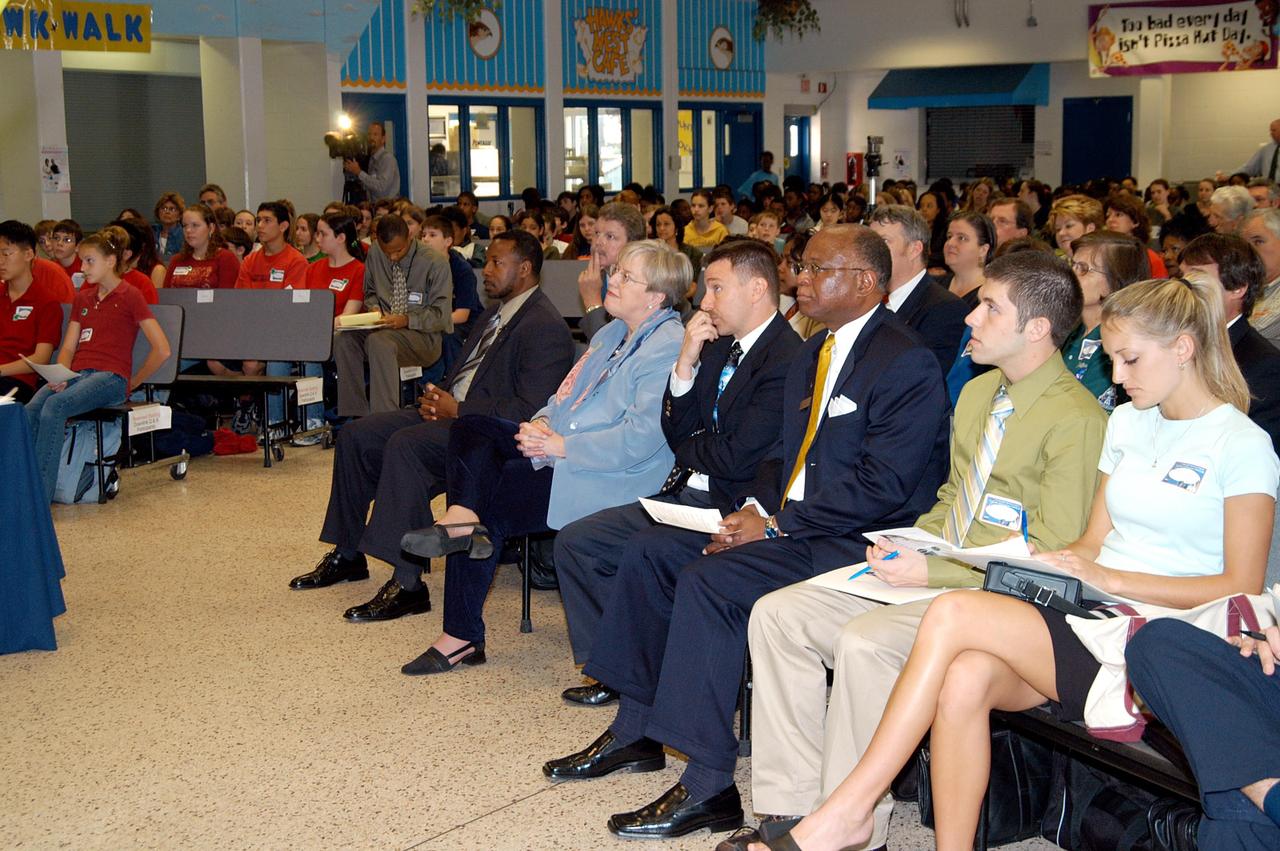
KENNEDY SPACE CENTER, FLA. - Students, teachers and administrators of Howard Bishop Middle School in Gainesville, Fla., listen to a presentation that shared the new vision for space exploration, KSC Deputy Director Dr. Woodrow Whitlow Jr. talked about our destiny as explorers, NASA’s stepping stone approach to exploring Earth, the Moon, Mars and beyond, how space impacts our lives, and how people and machines rely on each other in space. The presentation also included a downlink from the International Space Station for students to ask questions of the Expedition 8 crew, Commander Michael Foale and Flight Engineer Alexander Kaleri. Howard Bishop Middle School is one of 50 nationwide (four in Florida) in the NASA Explorer Schools (NES) Program. NES establishes a three-year partnership between NASA and 50 NASA Explorer Schools teams, consisting of teachers and education administrators from diverse communities nationwide.
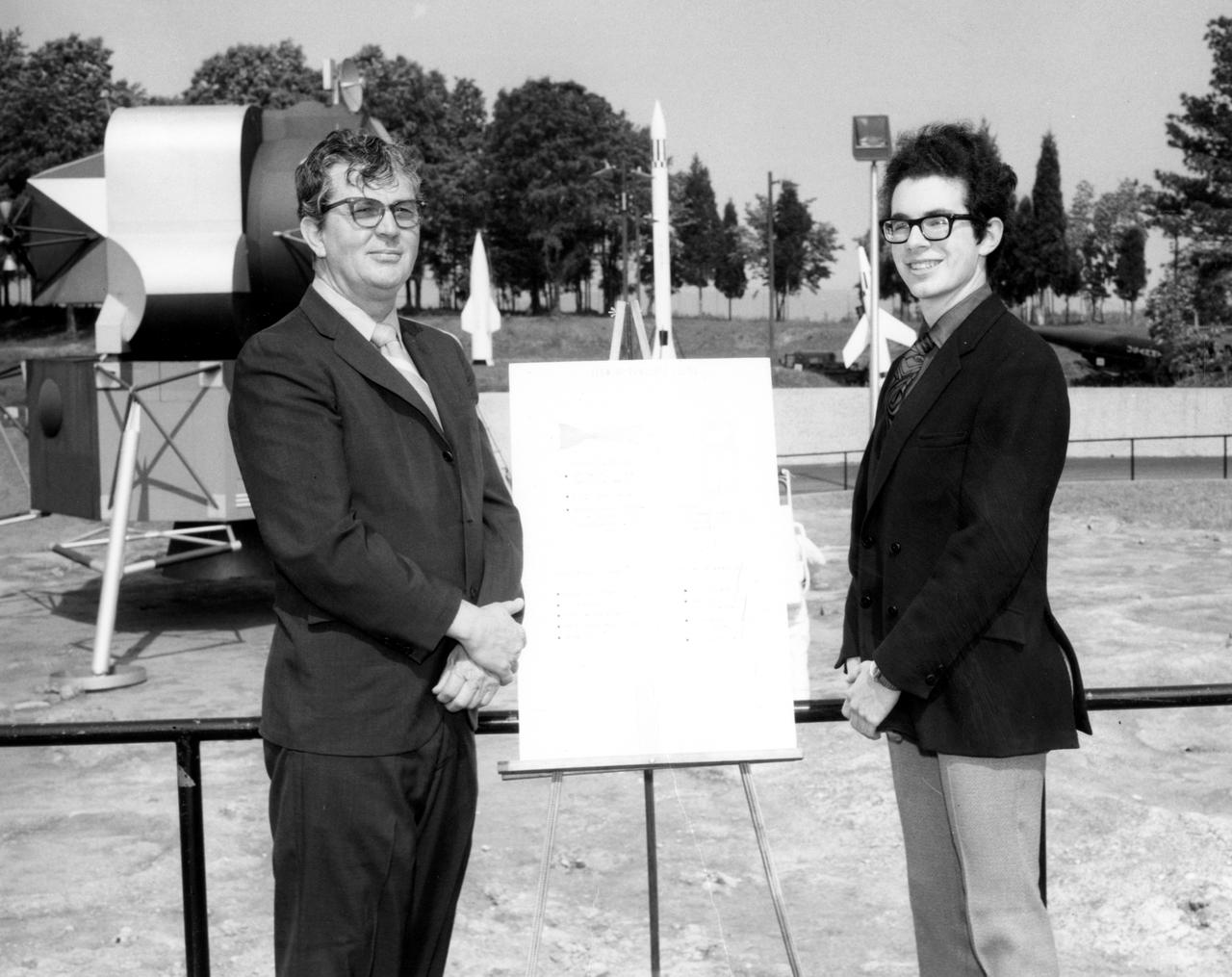
Kirk M. Sherhart, high school student from Berkley, Michigan, discussed a his proposed Skylab experiment with Dr. Robert Head of the Marshall Space Flight Center (MSFC) during his visit to the center. The lunar surface scene in the background is one of many space exhibits at the Alabama Space and Rocket Center in nearby Huntsville, Alabama. Sherhart was among 25 winners of a contest in which some 3,500 high school students proposed experiments for the following year’s Skylab mission. The nationwide scientific competition was sponsored by the National Science Teachers Association and the National Aeronautics and Space Administration (NASA). The winning students, along with their parents and sponsor teachers, visited MSFC where they met with scientists and engineers, participated in design reviews for their experiments, and toured MSFC facilities. Of the 25 students, 6 did not see their experiments conducted on Skylab because the experiments were not compatible with Skylab hardware and timelines. Of the 19 remaining, 11 experiments required the manufacture of additional equipment.

KENNEDY SPACE CENTER, FLA. - From left, Carl Benoit, senior national science consultant, Pearson Scott Foresman; Paul McFall, president, Pearson Scott Foresman; Dr. Adena Williams Loston, NASA chief education officer; and James Lippe, science product manager, Pearson Scott Foresman, participate in the unveiling of 'The Science in Space Challenge' at the Doubletree Hotel in Orlando, Fla. The national challenge program is sponsored by NASA and Pearson Scott Foresman, publisher of pre-K through grade six educational books. To participate in the challenge, teachers may submit proposals, on behalf of their students, for a science and technology investigation. Astronauts will conduct the winning projects on a Space Shuttle mission or on the International Space Station, while teachers and students follow along via television or the Web. For more information about the announcement, see the news release at http:__www.nasa.gov_home_hqnews_2004_oct_HQ_04341_publication.html.
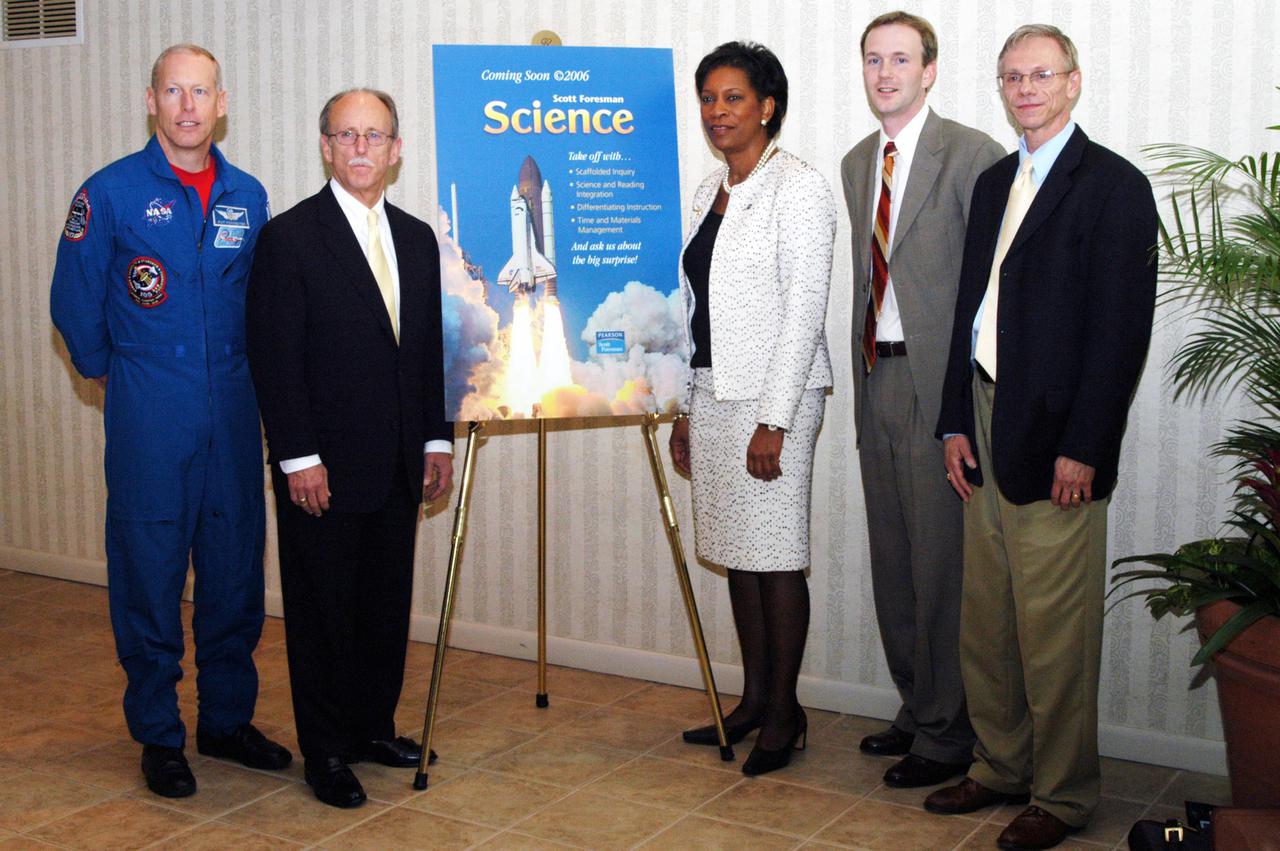
KENNEDY SPACE CENTER, FLA. - From left, NASA astronaut Patrick Forrester; Paul McFall, president, Pearson Scott Foresman; Dr. Adena Williams Loston, NASA chief education officer; James Lippe, science product manager, Pearson Scott Foresman; and Carl Benoit, senior national science consultant, Pearson Scott Foresman, participate in the unveiling of 'The Science in Space Challenge' at the Doubletree Hotel in Orlando, Fla. The national challenge program is sponsored by NASA and Pearson Scott Foresman, publisher of pre-K through grade six educational books. To participate in the challenge, teachers may submit proposals, on behalf of their students, for a science and technology investigation. Astronauts will conduct the winning projects on a Space Shuttle mission or on the International Space Station, while teachers and students follow along via television or the Web. For more information about the announcement, see the news release at http:__www.nasa.gov_home_hqnews_2004_oct_HQ_04341_publication.html.
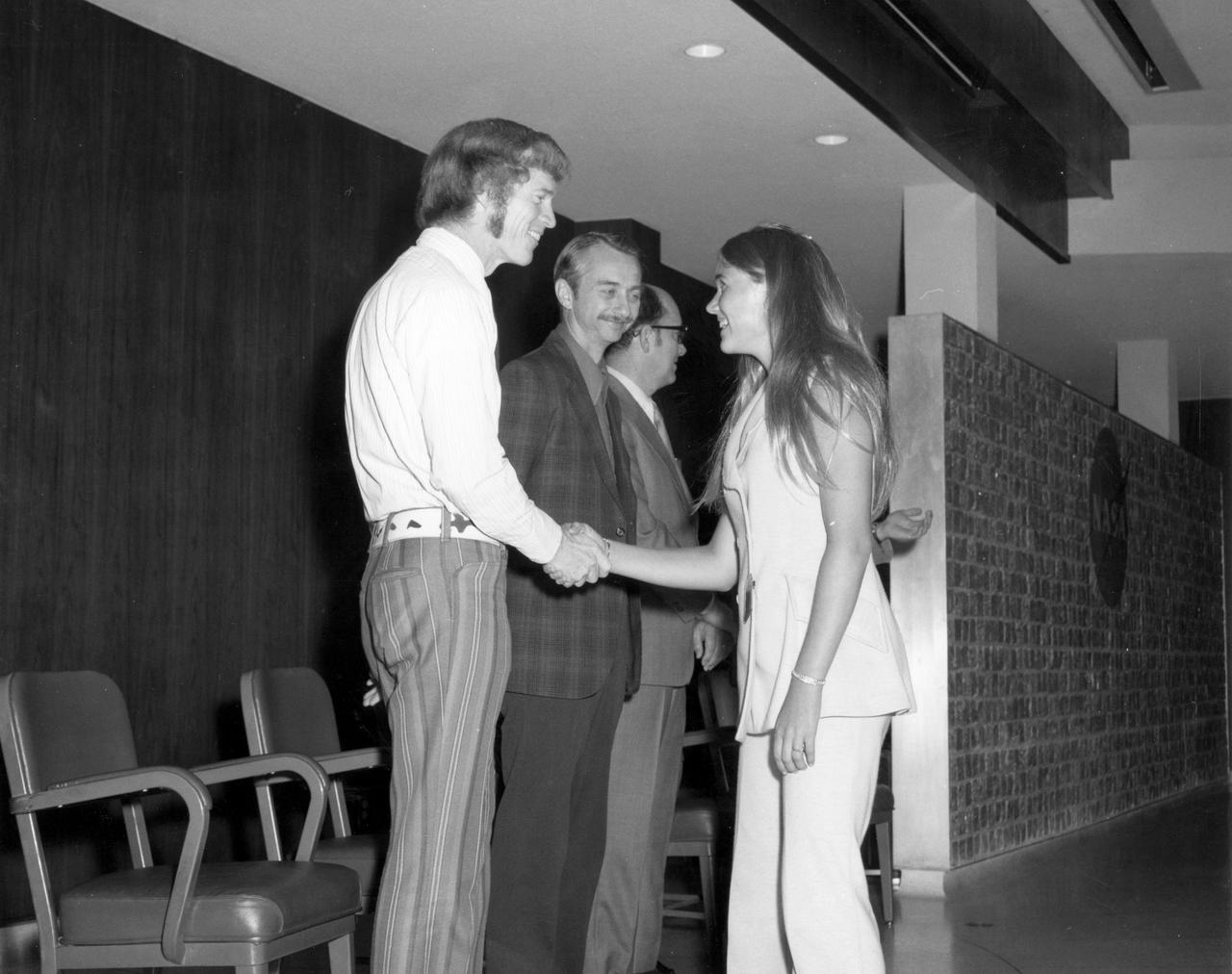
Houston, Texas high school student, Kathy L. Jackson, is greeted by astronauts Russell L. Schweickart (left) and Owen K. Garriott (center), and Marshall Space Flight Center (MSFC) Skylab Program Manager, Leland Belew during a tour of the Marshall Space Flight Center (MSFC). Jackson was among 25 winners of a contest in which some 3,500 high school students proposed experiments for the following year’s Skylab mission. The nationwide scientific competition was sponsored by the National Science Teachers Association and the National Aeronautics and Space Administration (NASA). The winning students, along with their parents and sponsor teachers, visited MSFC where they met with scientists and engineers, participated in design reviews for their experiments, and toured MSFC facilities. Of the 25 students, 6 did not see their experiments conducted on Skylab because the experiments were not compatible with Skylab hardware and timelines. Of the 19 remaining, 11 experiments required the manufacture of additional equipment.
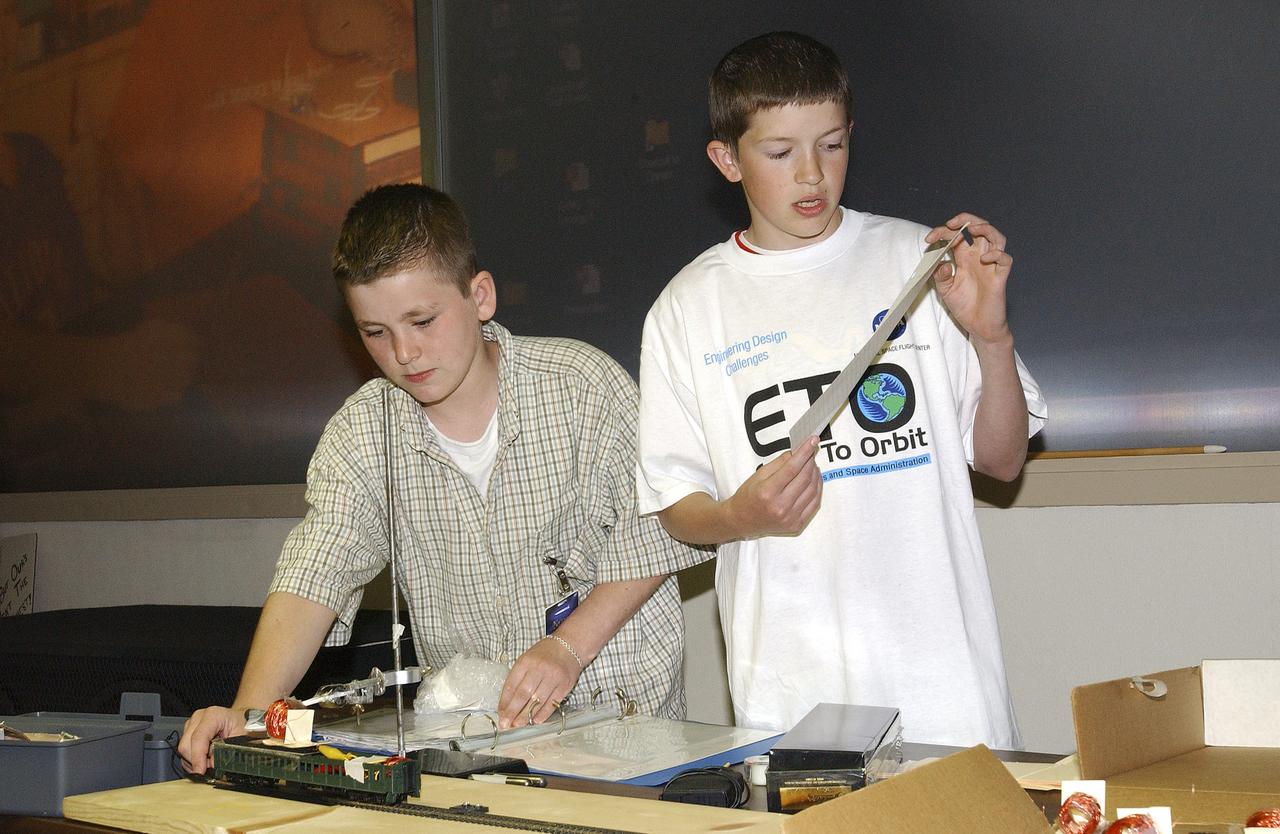
In this photograph, Jeff Alden (left) and Justin O'Cornor, two middle school students at Lane Middle School in Portland, Oregon are demonstrating their Earth-to-Orbit (ETO) Design Challenge project at NASA Marshall Space Flight Center (MSFC) in Huntsville, Alabama. Jeff and Justin, who are just a couple of "typical teens," have been spending their time tackling some of the same challenges NASA engineers face when designing propulsion systems at MSFC. The ETO Design Challenge is a hands-on educational program, targeted to middle school students, in which students are assigned a project engaging in related design challenges in their classrooms under the supervision of their teachers. The project is valuable because it can be used by any student and any teacher, even those without technical backgrounds. Students in 12 states: Alabama, Arkansas, California, Colorado, Illinois, Missouri, Montana, New York, Ohio, Tennessee, Virginia, and Washington, are taking part in the MSFC's Earth-to-Orbit program. NASA uses such programs to support educational excellence while participating in educational outreach programs through centers around the country. The Oregon students' teacher, Joanne Fluvog, commented, "the biggest change I've seen is in the students' motivation and their belief in their ability to think." Both Justin and Jeff said being involved in a real engineering project has made them realize that "science is cool."
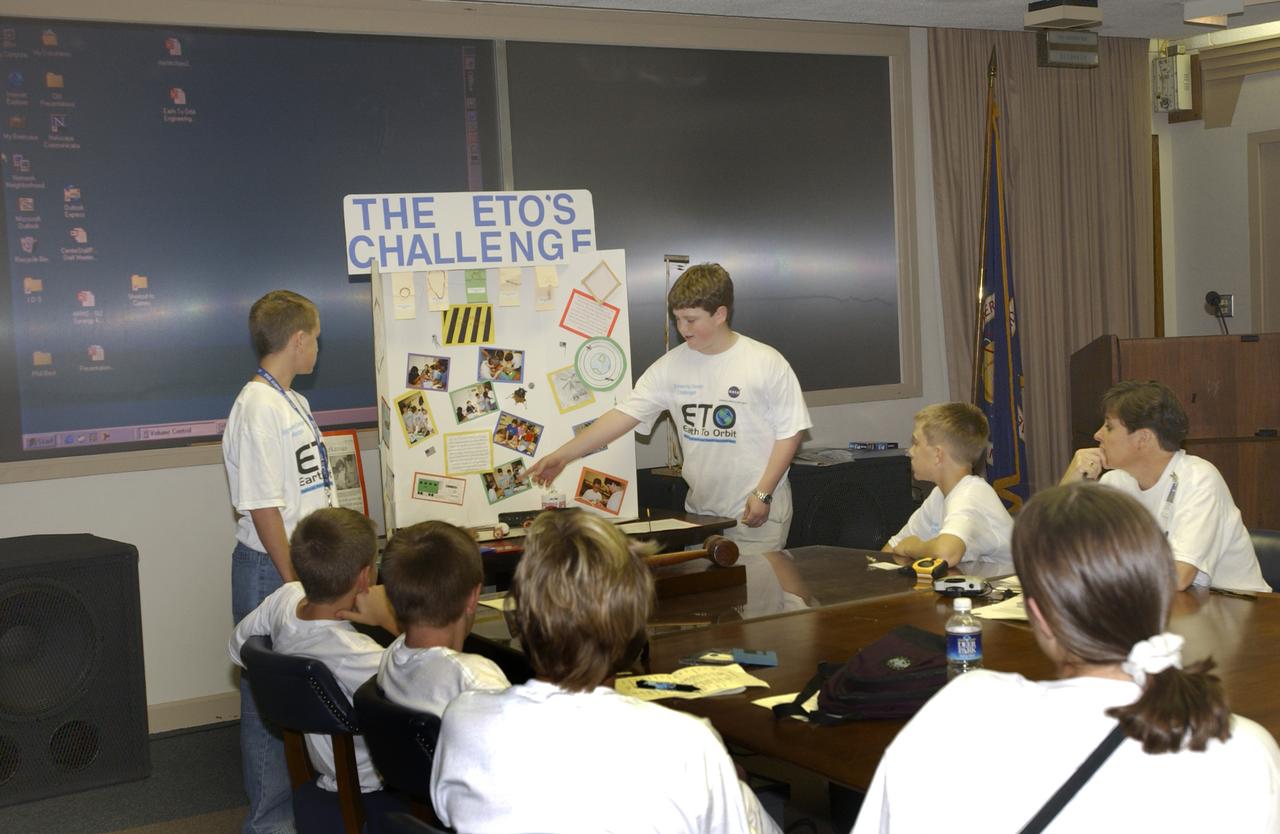
In this photograph, students from all over the country gathered and discussed their Earth-to-Orbit (ETO) Design Challenge project at NASA Marshall Space Flight Center in Huntsville, Alabama. These students who are just "typical teens," have been spending their time tackling some of the same challenges NASA engineers face when designing propulsion systems at MSFC. The ETO Design Challenge is a hands-on educational program, targeted to middle school students, in which students are assigned a project engaging in related design challenges in their classrooms under the supervision of their teachers. The project is valuable because it can be used by any student, and any teacher, even those without technical backgrounds. Student in 12 states: Alabama, Arkansas, California, Colorado, Illinois, Missouri, Montana, New York, Ohio, Ternessee, Virginia, and Washington, are taking part in MSFC's Earth-to-Orbit program. NASA uses such programs to support educational excellence while participating in educational outreach programs through centers around the country. One of the students' teachers, Joanne Fluvog, commented, "the biggest change I've seen is in the students' motivation and their belief in their ability to think." Justin O'Connor and Jeff Alden, students of Lane Middle School in Portland, Oregon, participated in the ETO program and said being involved in a real engineering project has made them realize that "science is cool."
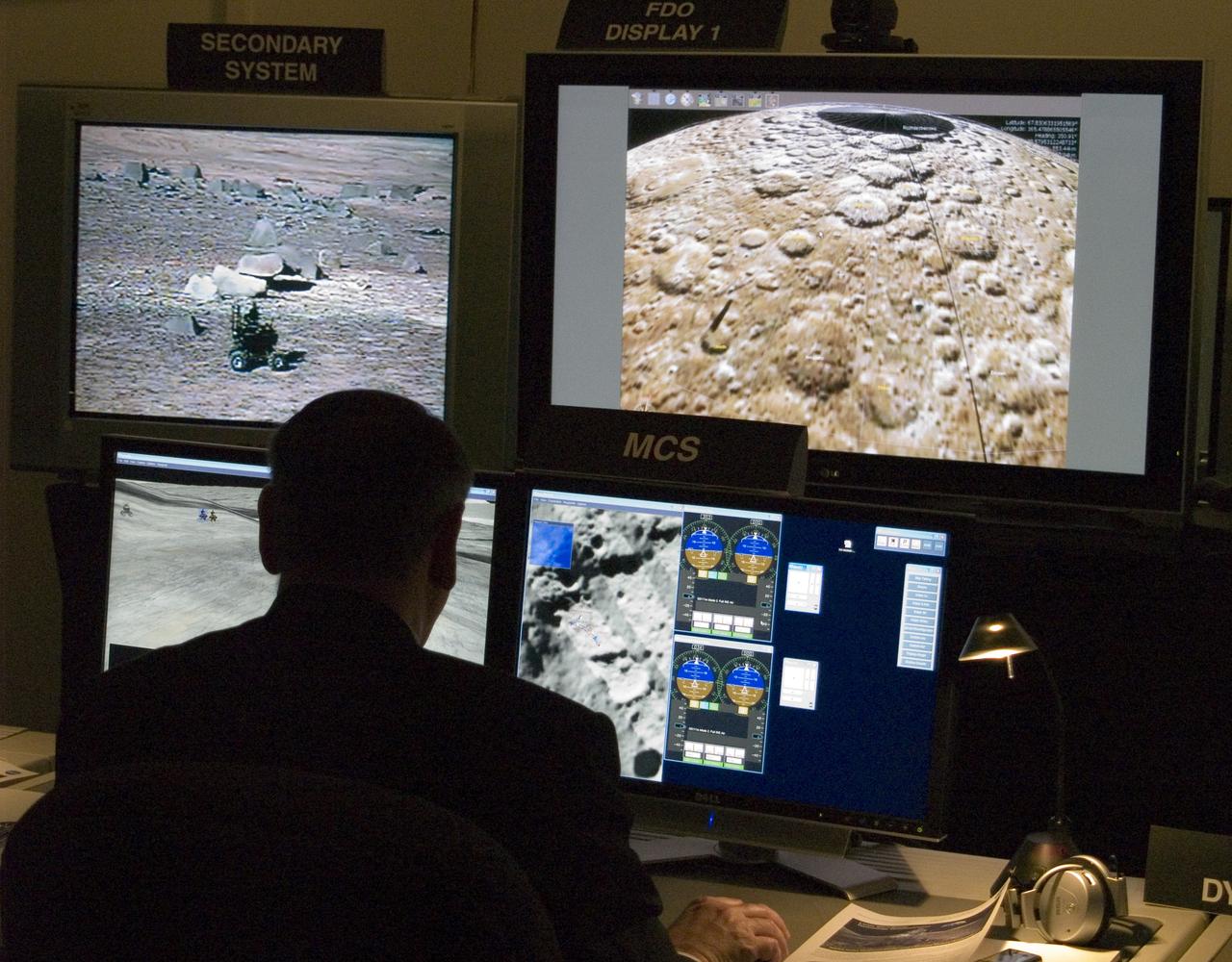
Spaceward Bound Program in Atacama Desert; shown here is a realtime webcast from Yungay, Chile vis satellite involving NASA Scientists and seven NASA Explorer school teachers. Spaceward Bound Program in Atacama Desert; shown here is a realtime webcast from Yungay, Chile vis satellite involving NASA Scientists and seven NASA Explorer school teachers. On the Ames end we find the Girl Scouts Space cookines robotic team. The robot nicknamed Zoe is looking for life in extreme environments in preparation for what might be encounter on Mars. On the Ames end we find the Girl Csouts Space cookines robotic team. The robot nicknamed Zoe is looking for life in extreme environments in preparation for what might be encounter on Mars. see full text on the NASA-Ames News - Research # 04-91AR Center Director works with 'SpaceCookie' sending commands to Zoe.
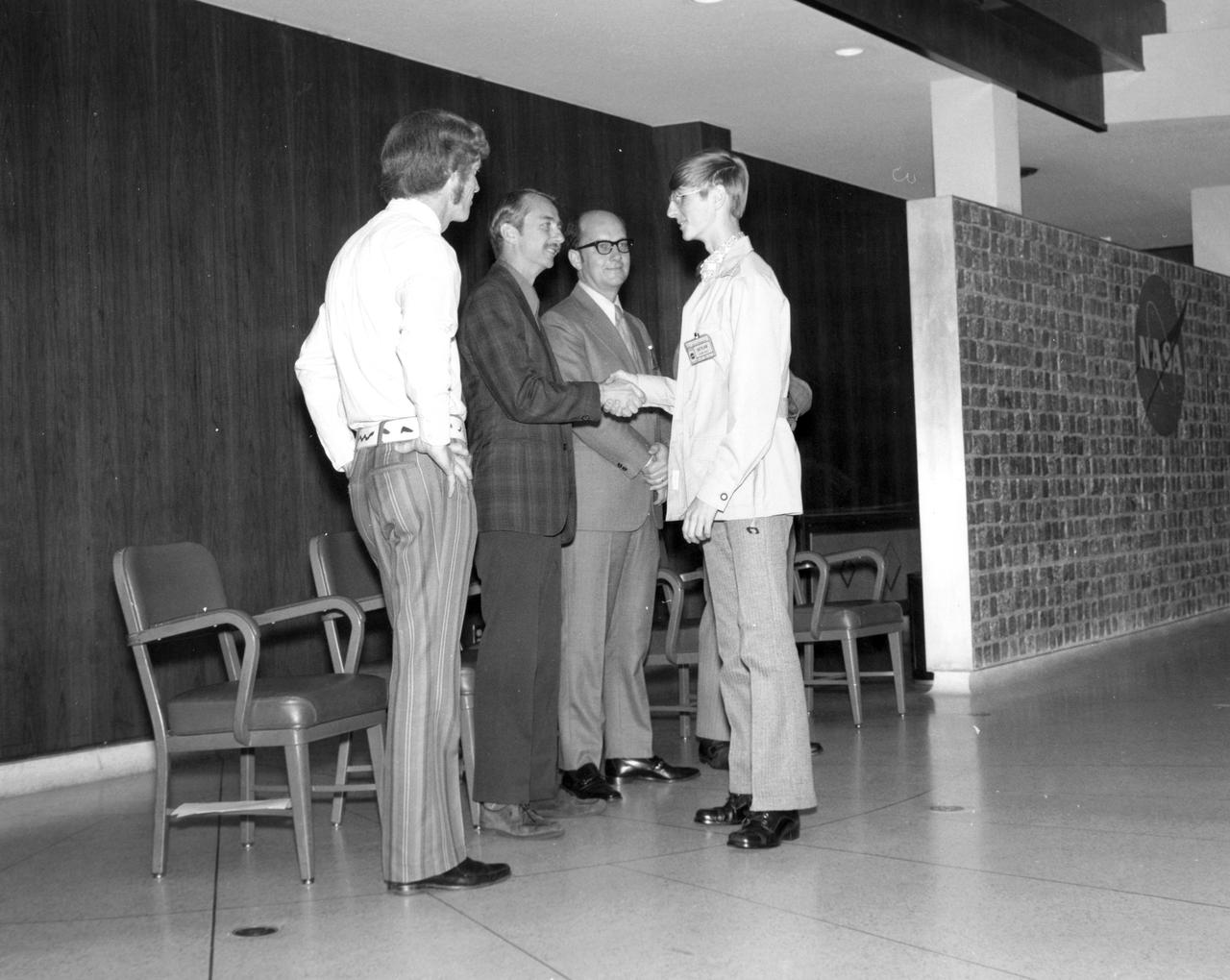
West Point, Nebraska high school student, Joel C. Wordekemper, is greeted by (left to right): Astronauts Russell L. Schweickart, and Owen K. Garriott; Marshall Space Flight Center (MSFC) Skylab Program Manager, Leland Belew; and MSFC Director of Administration and Technical Services, David Newby, during a tour of MSFC. Wordekemper was among 25 winners of a contest in which some 3,500 high school students proposed experiments for the following year’s Skylab mission. The nationwide scientific competition was sponsored by the National Science Teachers Association and the National Aeronautics and Space Administration (NASA). The winning students, along with their parents and sponsor teachers, visited MSFC where they met with scientists and engineers, participated in design reviews for their experiments, and toured MSFC facilities. Of the 25 students, 6 did not see their experiments conducted on Skylab because the experiments were not compatible with Skylab hardware and timelines. Of the 19 remaining, 11 experiments required the manufacture of additional equipment.
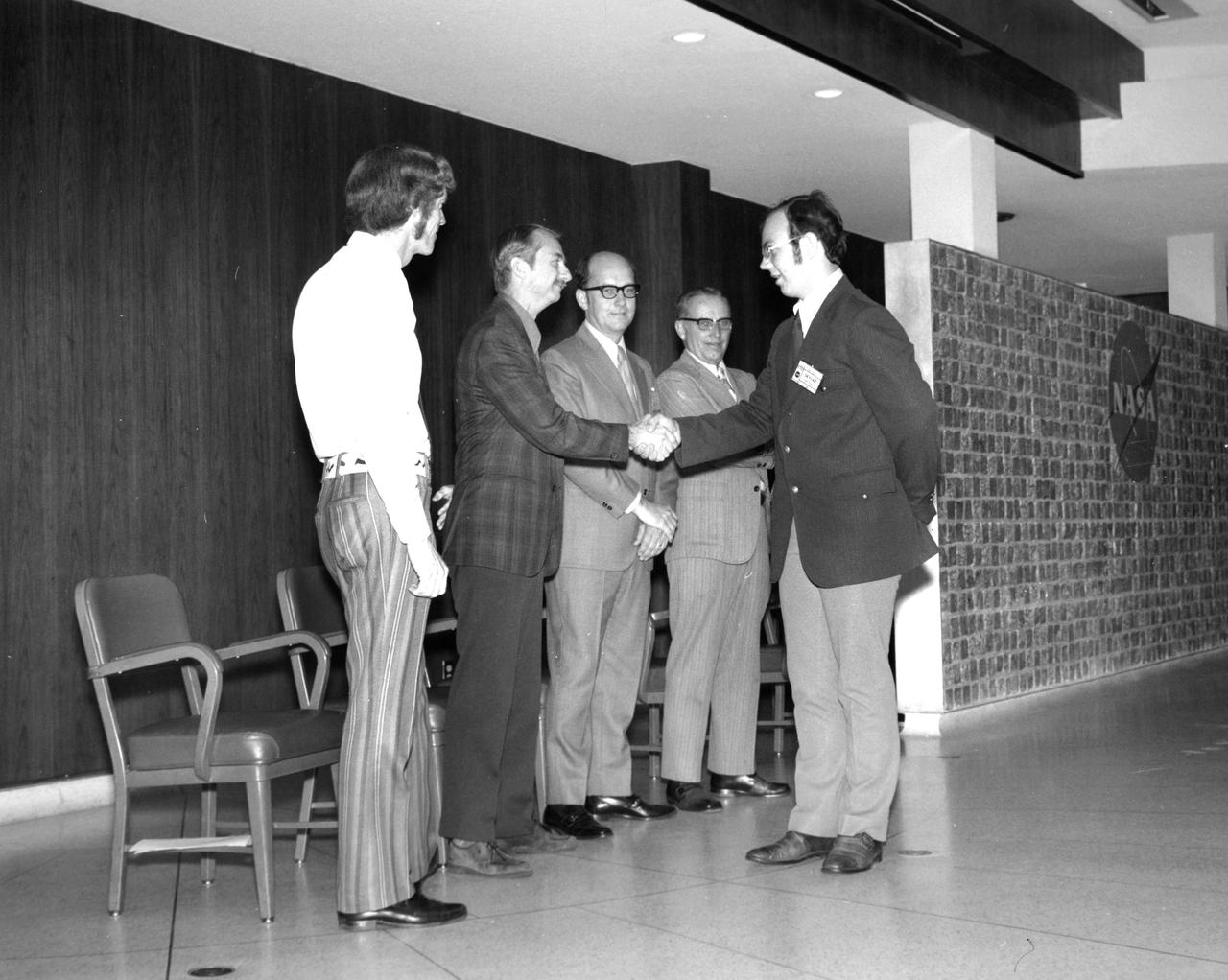
Baton Rouge, Louisiana high school student, Joe W. Reihs, is greeted by (left to right): Astronauts Russell L. Schweickart, and Owen K. Garriott; Marshall Space Flight Center (MSFC) Skylab Program Manager, Leland Belew; and MSFC Director of Administration and Technical Services, David Newby, during a tour of MSFC. Reihs was among 25 winners of a contest in which some 3,500 high school students proposed experiments for the following year’s Skylab mission. The nationwide scientific competition was sponsored by the National Science Teachers Association and the National Aeronautics and Space Administration (NASA). The winning students, along with their parents and sponsor teachers, visited MSFC where they met with scientists and engineers, participated in design reviews for their experiments, and toured MSFC facilities. Of the 25 students, 6 did not see their experiments conducted on Skylab because the experiments were not compatible with Skylab hardware and timelines. Of the 19 remaining, 11 experiments required the manufacture of additional equipment.
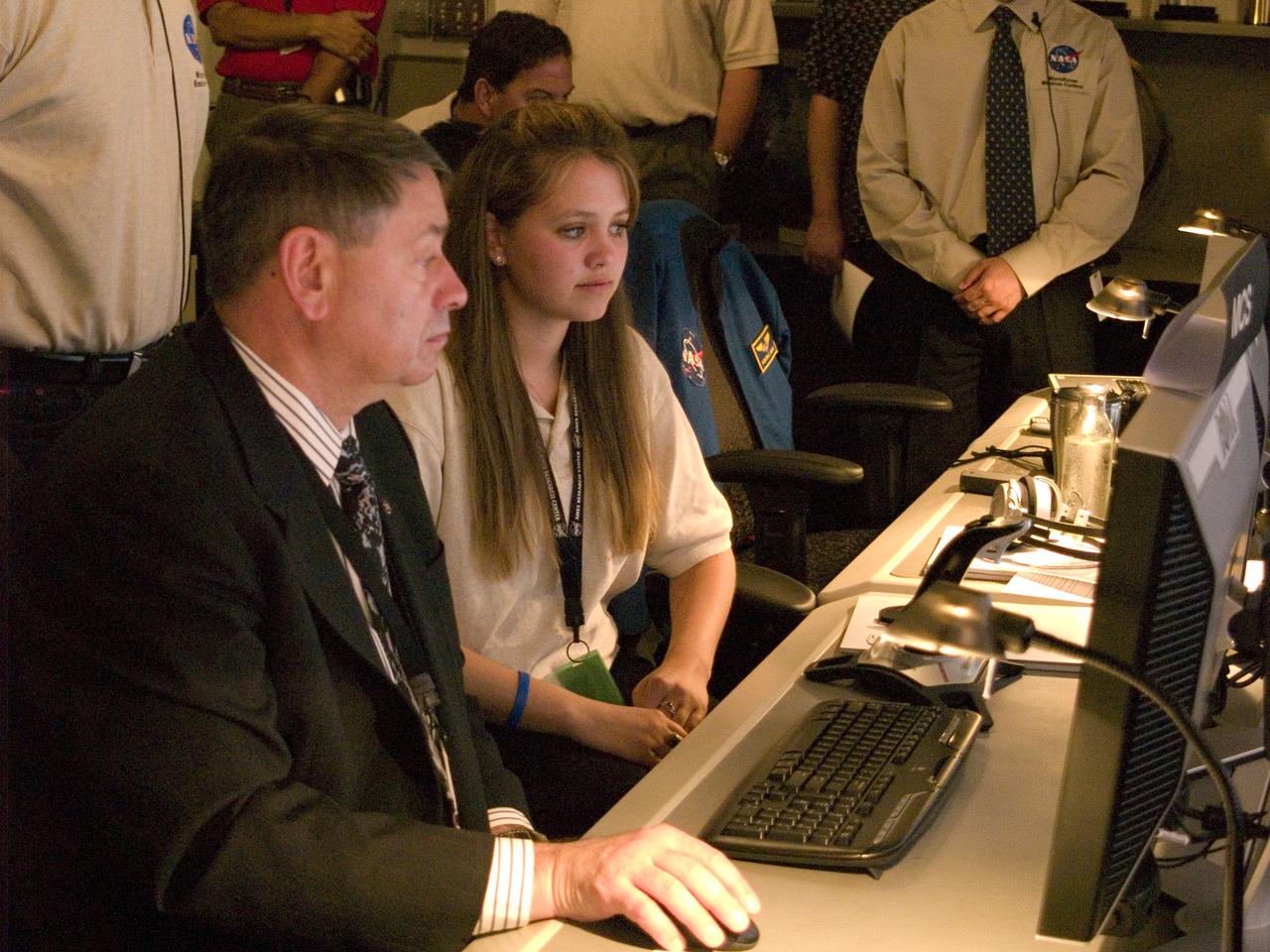
Spaceward Bound Program in Atacama Desert; shown here is a realtime webcast from Yungay, Chile vis satellite involving NASA Scientists and seven NASA Explorer school teachers. Spaceward Bound Program in Atacama Desert; shown here is a realtime webcast from Yungay, Chile vis satellite involving NASA Scientists and seven NASA Explorer school teachers. On the Ames end we find the Girl Scouts Space cookines robotic team. The robot nicknamed Zoe is looking for life in extreme environments in preparation for what might be encounter on Mars. On the Ames end we find the Girl Csouts Space cookines robotic team. The robot nicknamed Zoe is looking for life in extreme environments in preparation for what might be encounter on Mars. see full text on the NASA-Ames News - Research # 04-91AR Center Director works with 'SpaceCookie' sending commands to Zoe.
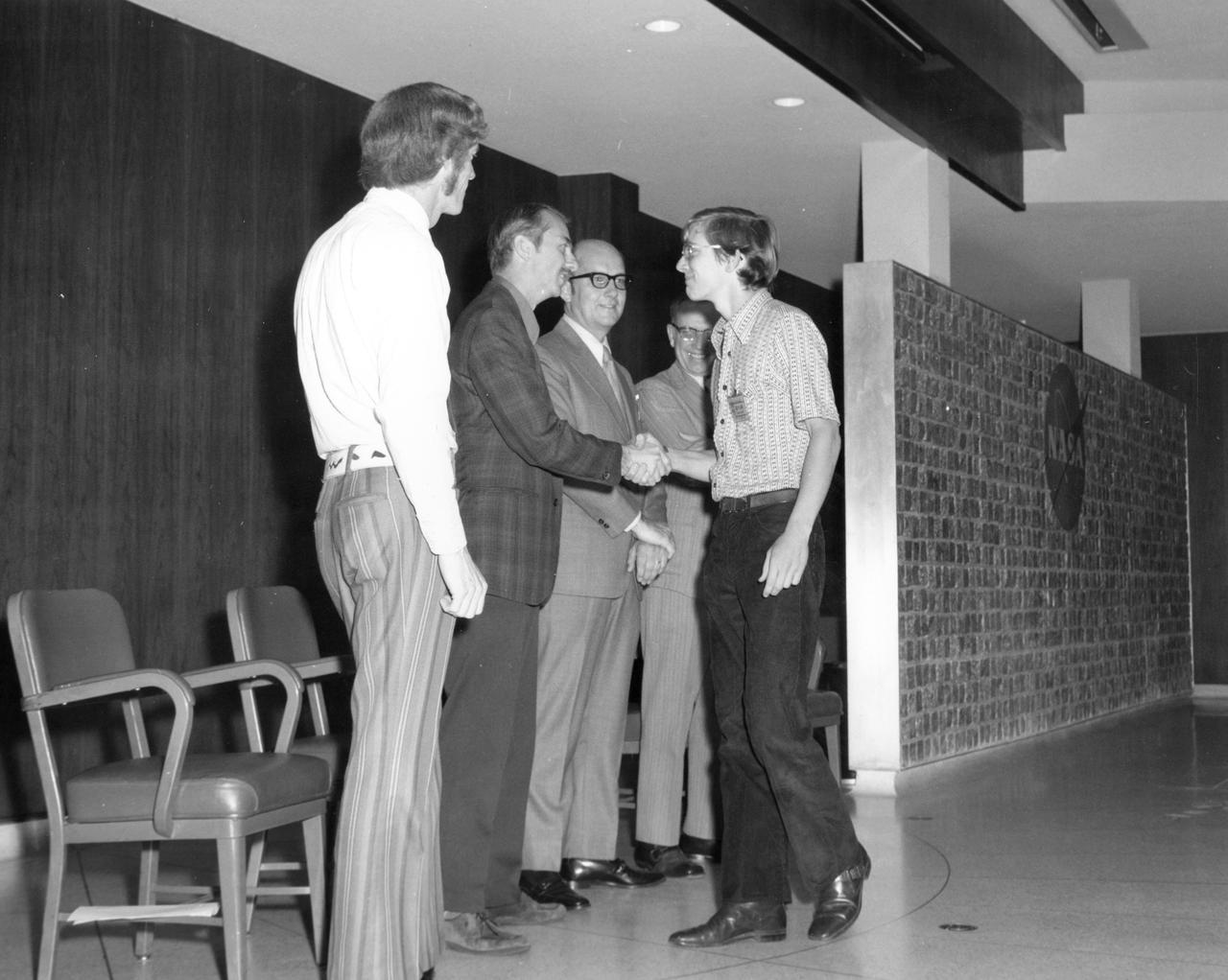
Downey, California high school student, Donald W. Shellack, is greeted by (left to right): Astronauts Russell L. Schweickart, and Owen K. Garriott; Marshall Space Flight Center (MSFC) Skylab Program Manager, Leland Belew; and MSFC Director of Administration and Technical Services, David Newby, during a tour of MSFC. Shellack was among 25 winners of a contest in which some 3,500 high school students proposed experiments for the following year’s Skylab mission. The nationwide scientific competition was sponsored by the National Science Teachers Association and the National Aeronautics and Space Administration (NASA). The winning students, along with their parents and sponsor teachers, visited MSFC where they met with scientists and engineers, participated in design reviews for their experiments, and toured MSFC facilities. Of the 25 students, 6 did not see their experiments conducted on Skylab because the experiments were not compatible with Skylab hardware and timelines. Of the 19 remaining, 11 experiments required the manufacture of additional equipment.
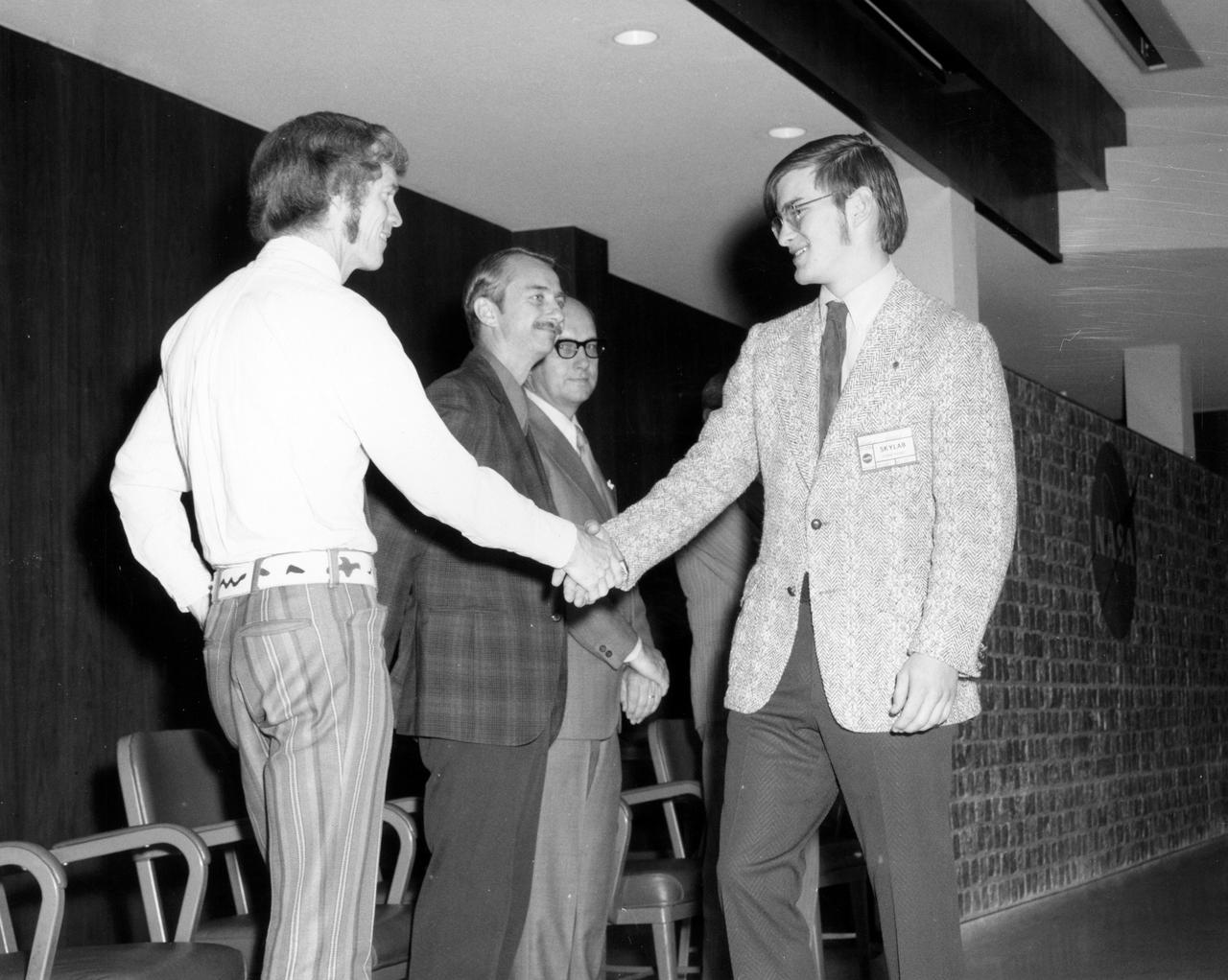
Bayport, New York high school student, James E. Healy, is greeted by (left to right): Astronauts Russell L. Schweickart, and Owen K. Garriott; Marshall Space Flight Center (MSFC) Skylab Program Manager, Leland Belew; and MSFC Director of Administration and Technical Services, David Newby, during a tour of MSFC. Healy was among 25 winners of a contest in which some 3,500 high school students proposed experiments for the following year’s Skylab mission. The nationwide scientific competition was sponsored by the National Science Teachers Association and the National Aeronautics and Space Administration (NASA). The winning students, along with their parents and sponsor teachers, visited MSFC where they met with scientists and engineers, participated in design reviews for their experiments, and toured MSFC facilities. Of the 25 students, 6 did not see their experiments conducted on Skylab because the experiments were not compatible with Skylab hardware and timelines. Of the 19 remaining, 11 experiments required the manufacture of additional equipment.
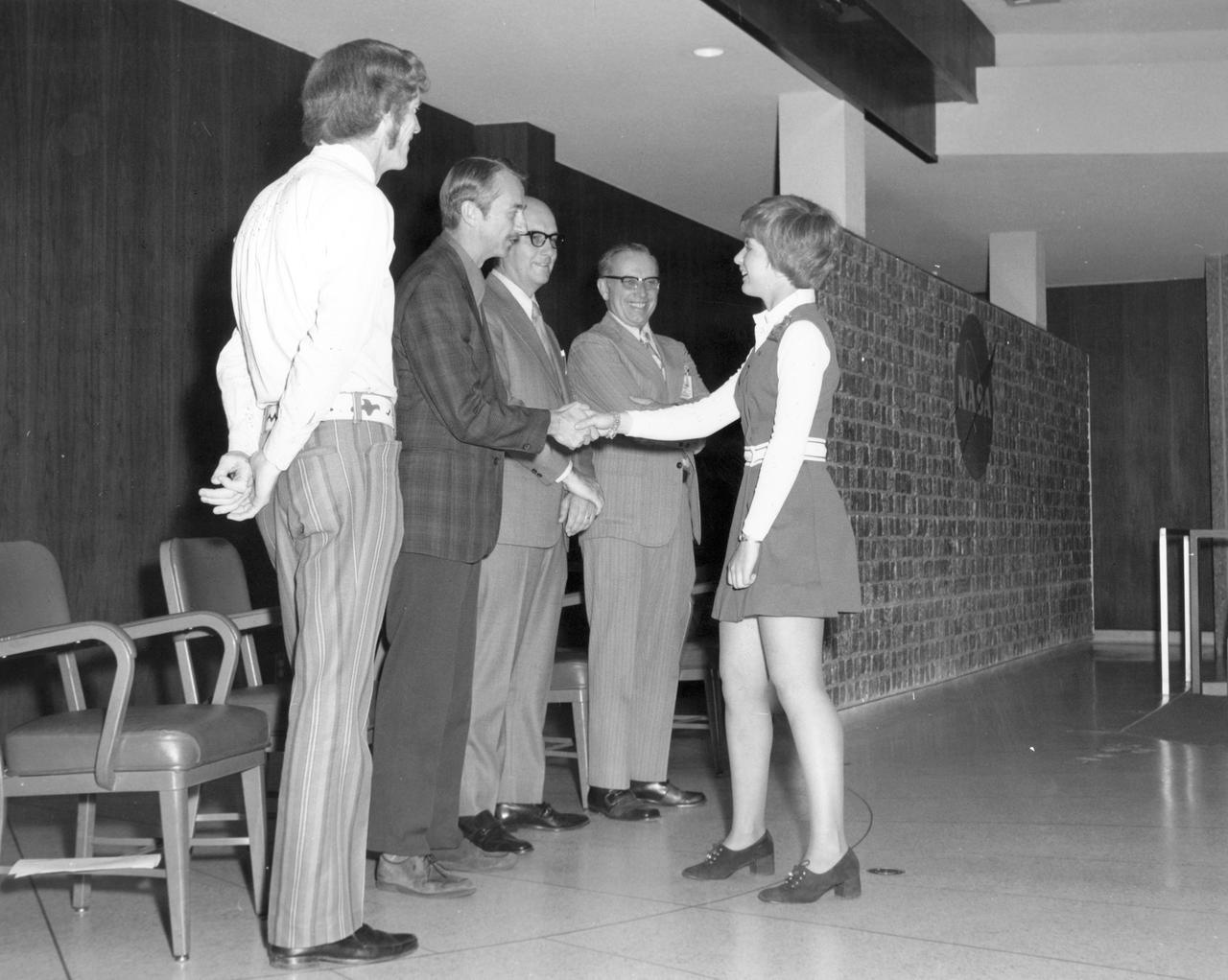
Littleton, Colorado high school student, Cheryl A. Peltz, is greeted by (left to right): Astronauts Russell L. Schweickart, and Owen K. Garriott; Marshall Space Flight Center (MSFC) Skylab Program Manager, Leland Belew; and MSFC Director of Administration and Technical Services, David Newby, during a tour of MSFC. Peltz was among 25 winners of a contest in which some 3,500 high school students proposed experiments for the following year’s Skylab mission. The nationwide scientific competition was sponsored by the National Science Teachers Association and the National Aeronautics and Space Administration (NASA). The winning students, along with their parents and sponsor teachers, visited MSFC where they met with scientists and engineers, participated in design reviews for their experiments, and toured MSFC facilities. Of the 25 students, 6 did not see their experiments conducted on Skylab because the experiments were not compatible with Skylab hardware and timelines. Of the 19 remaining, 11 experiments required the manufacture of additional equipment.
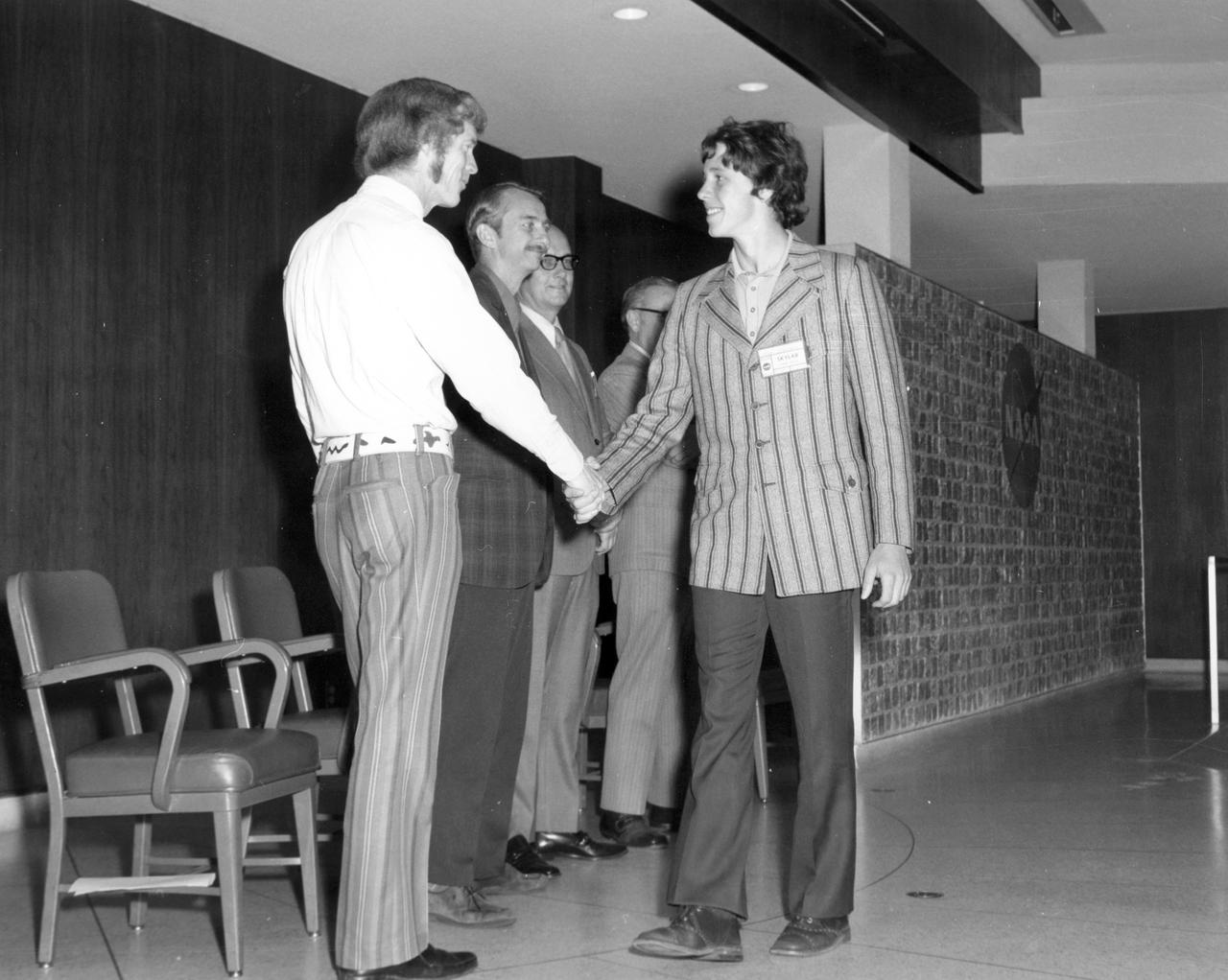
Oshkosh, Wisconsin high school student, Joe B. Zmolek, is greeted by (left to right): Astronauts Russell L. Schweickart, and Owen K. Garriott; Marshall Space Flight Center (MSFC) Skylab Program Manager, Leland Belew; and MSFC Director of Administration and Technical Services, David Newby, during a tour of MSFC. Zmolek was among 25 winners of a contest in which some 3,500 high school students proposed experiments for the following year’s Skylab mission. The nationwide scientific competition was sponsored by the National Science Teachers Association and the National Aeronautics and Space Administration (NASA). The winning students, along with their parents and sponsor teachers, visited MSFC where they met with scientists and engineers, participated in design reviews for their experiments, and toured MSFC facilities. Of the 25 students, 6 did not see their experiments conducted on Skylab because the experiments were not compatible with Skylab hardware and timelines. Of the 19 remaining, 11 experiments required the manufacture of additional equipment.
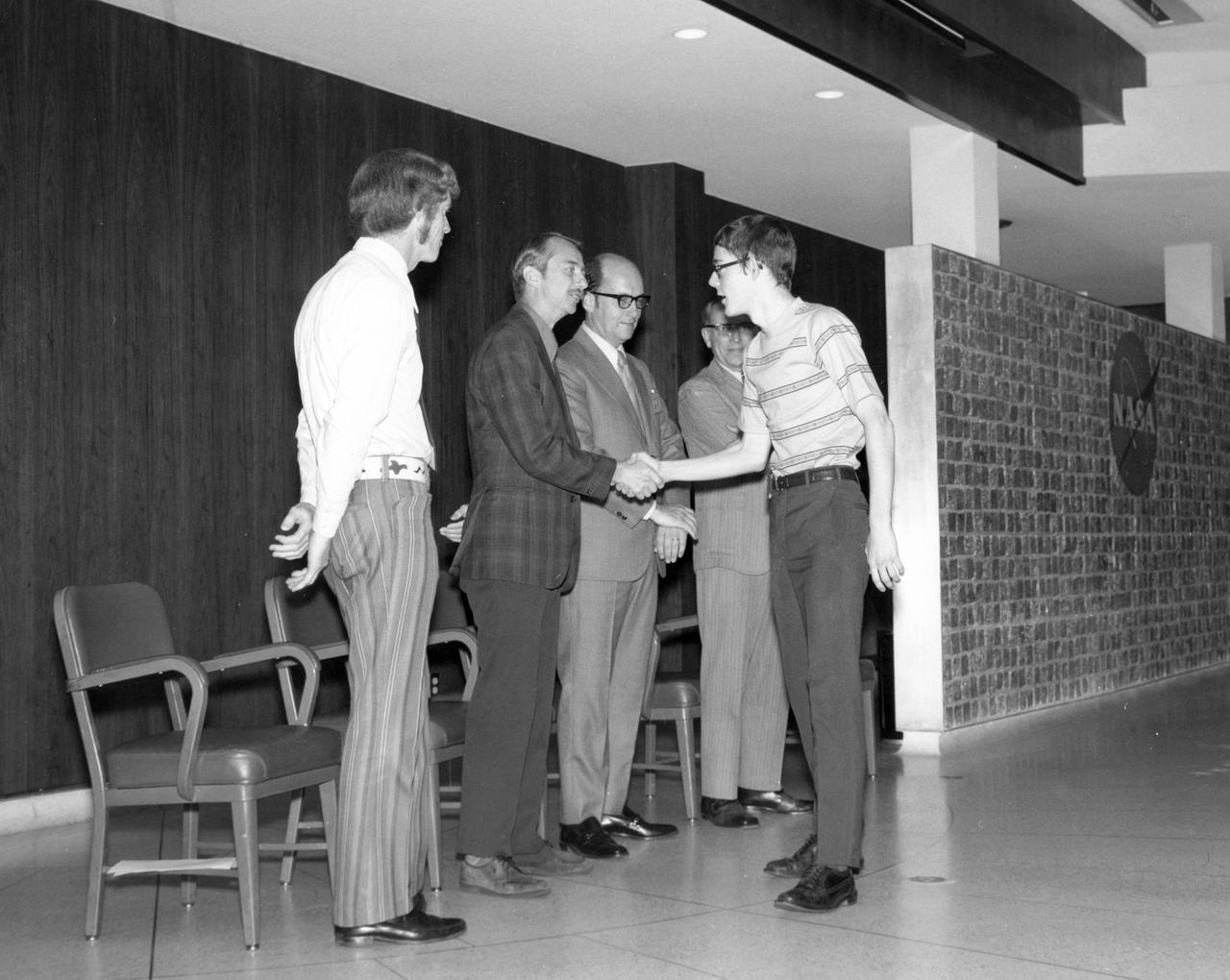
St. Paul, Minnesota high school student, Roger Johnston, is greeted by (left to right): Astronauts Russell L. Schweickart, and Owen K. Garriott; Marshall Space Flight Center (MSFC) Skylab Program Manager, Leland Belew; and MSFC Director of Administration and Technical Services, David Newby, during a tour of MSFC. Johnston was among 25 winners of a contest in which some 3,500 high school students proposed experiments for the following year’s Skylab mission. The nationwide scientific competition was sponsored by the National Science Teachers Association and the National Aeronautics and Space Administration (NASA). The winning students, along with their parents and sponsor teachers, visited MSFC where they met with scientists and engineers, participated in design reviews for their experiments, and toured MSFC facilities. Of the 25 students, 6 did not see their experiments conducted on Skylab because the experiments were not compatible with Skylab hardware and timelines. Of the 19 remaining, 11 experiments required the manufacture of additional equipment.
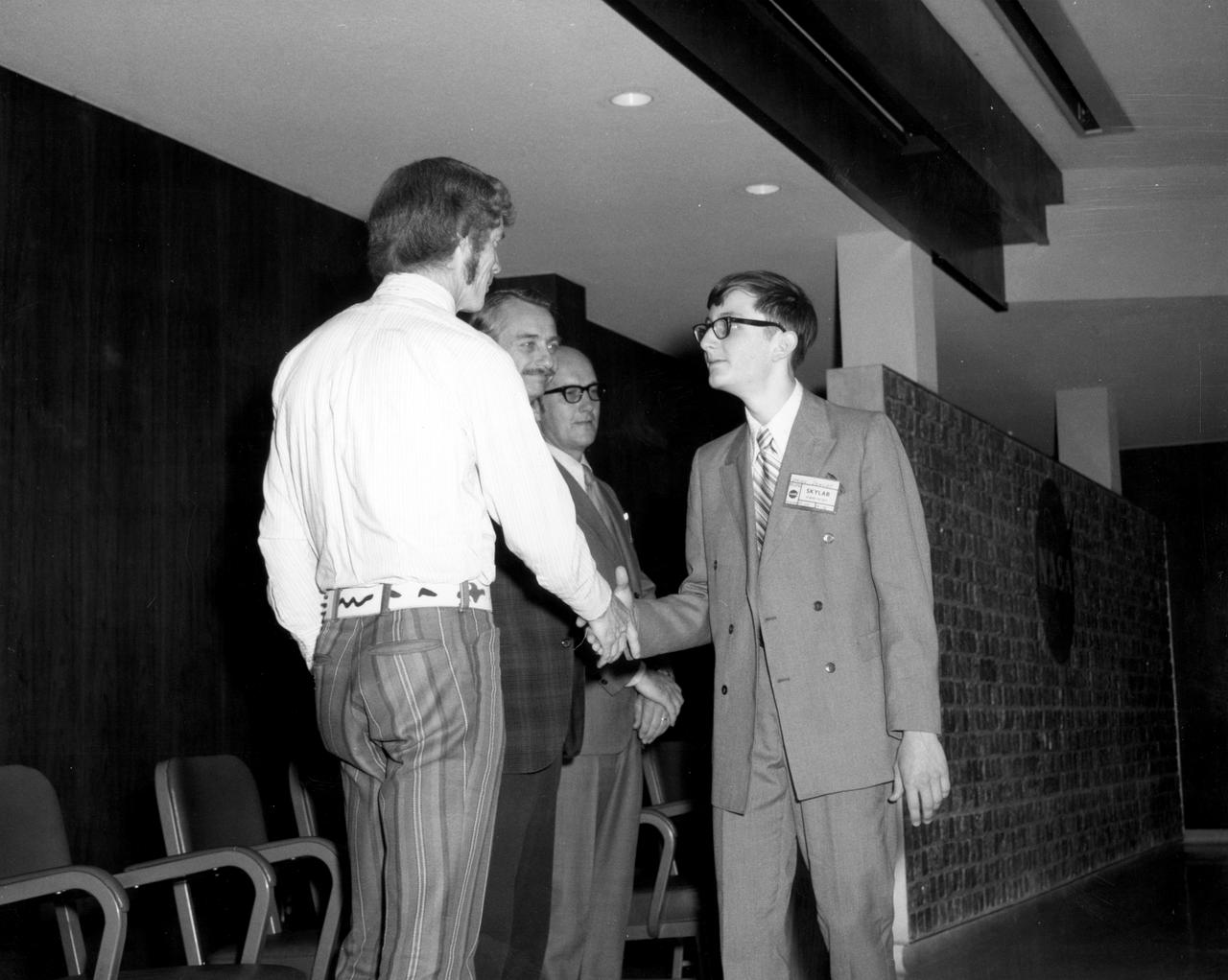
Youngstown, Ohio high school student, W. Brian Dunlap, is greeted by (left to right): Astronauts Russell L. Schweickart, and Owen K. Garriott; Marshall Space Flight Center (MSFC) Skylab Program Manager, Leland Belew; and MSFC Director of Administration and Technical Services, David Newby, during a tour of MSFC. Dunlap was among 25 winners of a contest in which some 3,500 high school students proposed experiments for the following year’s Skylab mission. The nationwide scientific competition was sponsored by the National Science Teachers Association and the National Aeronautics and Space Administration (NASA). The winning students, along with their parents and sponsor teachers, visited MSFC where they met with scientists and engineers, participated in design reviews for their experiments, and toured MSFC facilities. Of the 25 students, 6 did not see their experiments conducted on Skylab because the experiments were not compatible with Skylab hardware and timelines. Of the 19 remaining, 11 experiments required the manufacture of additional equipment.
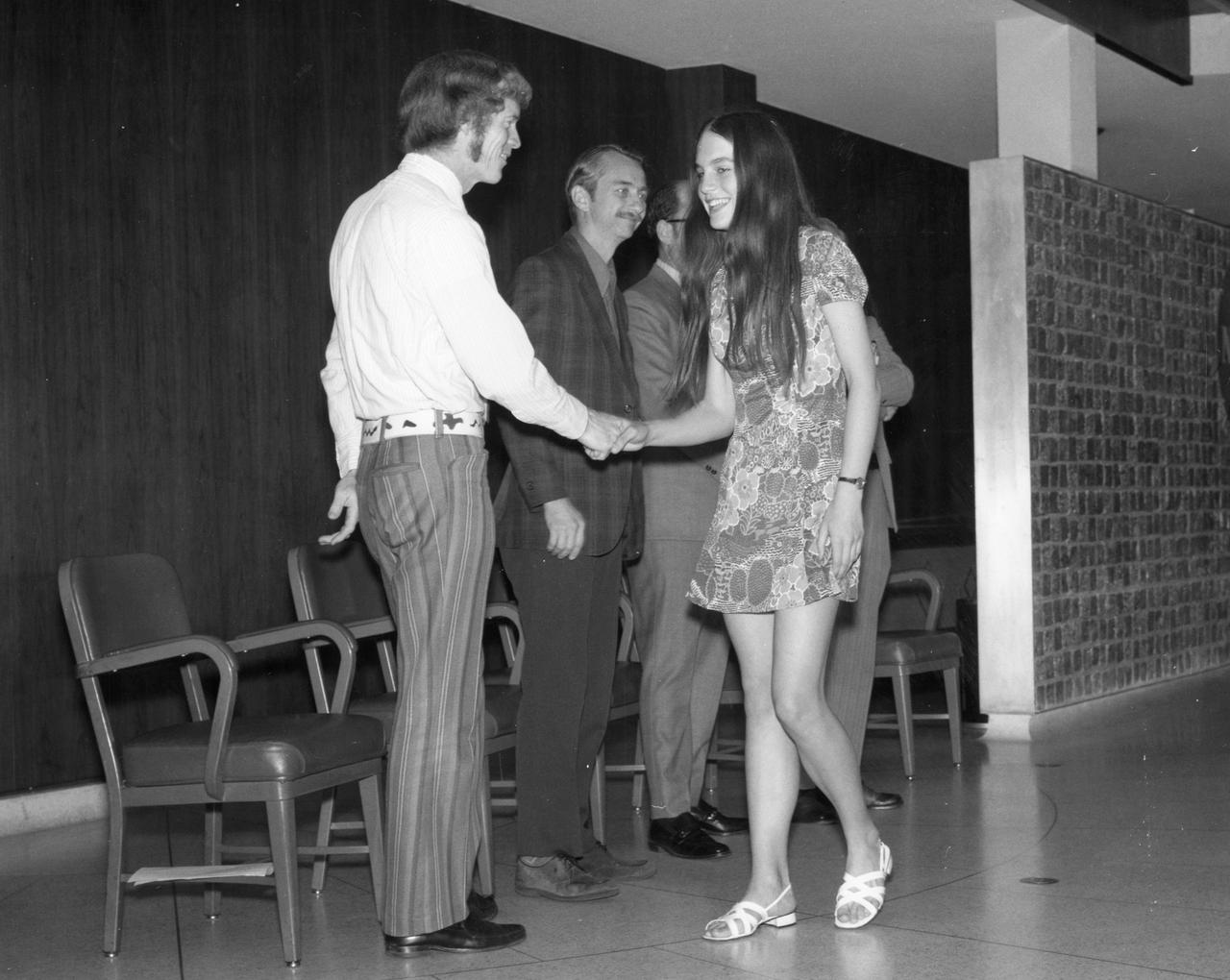
Princeton, New Jersey high school student, Alison Hopfield, is greeted by astronauts Russell L. Schweickart (left) and Owen K. Garriott (center) during a tour of the Marshall Space Flight Center (MSFC). Hopfield was among 25 winners of a contest in which some 3,500 high school students proposed experiments for the following year’s Skylab mission. The nationwide scientific competition was sponsored by the National Science Teachers Association and the National Aeronautics and Space Administration (NASA). The winning students, along with their parents and sponsor teachers, visited MSFC where they met with scientists and engineers, participated in design reviews for their experiments, and toured MSFC facilities. Of the 25 students, 6 did not see their experiments conducted on Skylab because the experiments were not compatible with Skylab hardware and timelines. Of the 19 remaining, 11 experiments required the manufacture of additional equipment.
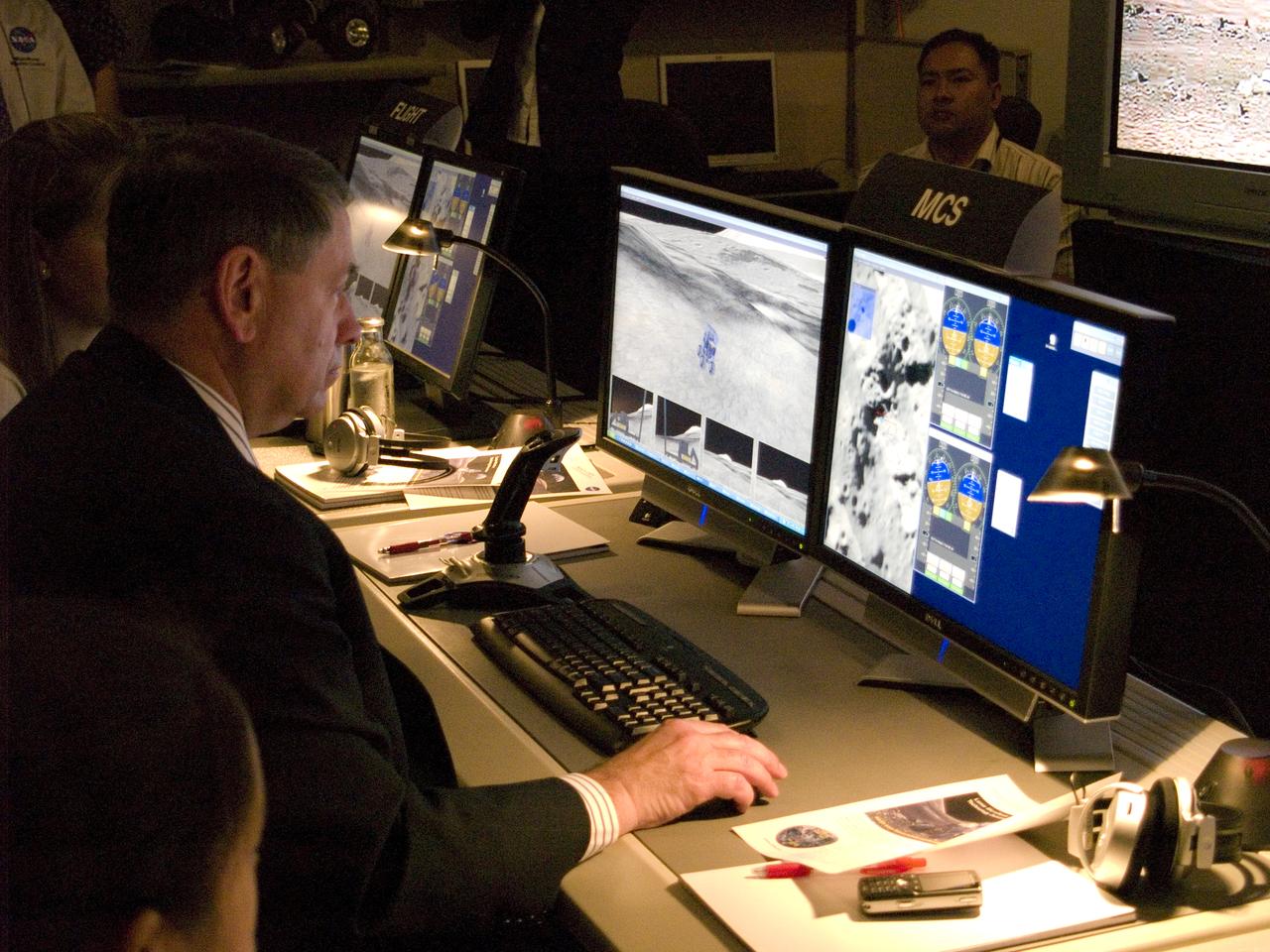
Spaceward Bound Program in Atacama Desert; shown here is a realtime webcast from Yungay, Chile vis satellite involving NASA Scientists and seven NASA Explorer school teachers. Spaceward Bound Program in Atacama Desert; shown here is a realtime webcast from Yungay, Chile vis satellite involving NASA Scientists and seven NASA Explorer school teachers. On the Ames end we find the Girl Scouts Space cookines robotic team. The robot nicknamed Zoe is looking for life in extreme environments in preparation for what might be encounter on Mars. On the Ames end we find the Girl Csouts Space cookines robotic team. The robot nicknamed Zoe is looking for life in extreme environments in preparation for what might be encounter on Mars. see full text on the NASA-Ames News - Research # 04-91AR Center Director works with 'SpaceCookie' sending commands to Zoe.
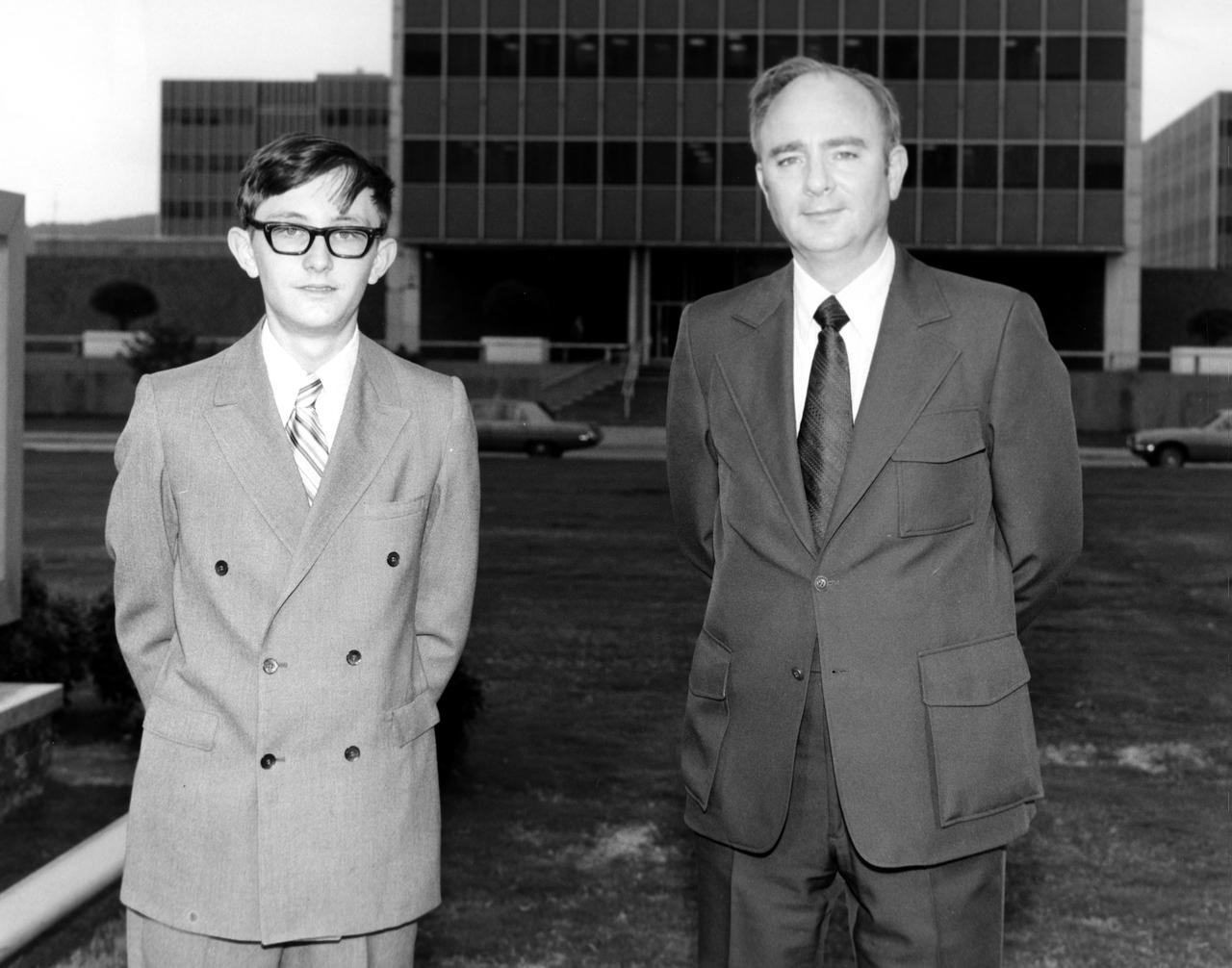
W. Brain Dunlap (left), high school student from Youngstown, Ohio, is pictured here with Harry Coons of the Marshall Space Flight Center (MSFC) during a visit to the center. Dunlap was among 25 winners of a contest in which some 3,500 high school students proposed experiments for the following year’s Skylab mission. The nationwide scientific competition was sponsored by the National Science Teachers Association and the National Aeronautics and Space Administration (NASA). The winning students, along with their parents and sponsor teachers, visited MSFC where they met with scientists and engineers, participated in design reviews for their experiments, and toured MSFC facilities. Of the 25 students, 6 did not see their experiments conducted on Skylab because the experiments were not compatible with Skylab hardware and timelines. Of the 19 remaining, 11 experiments required the manufacture of additional equipment.
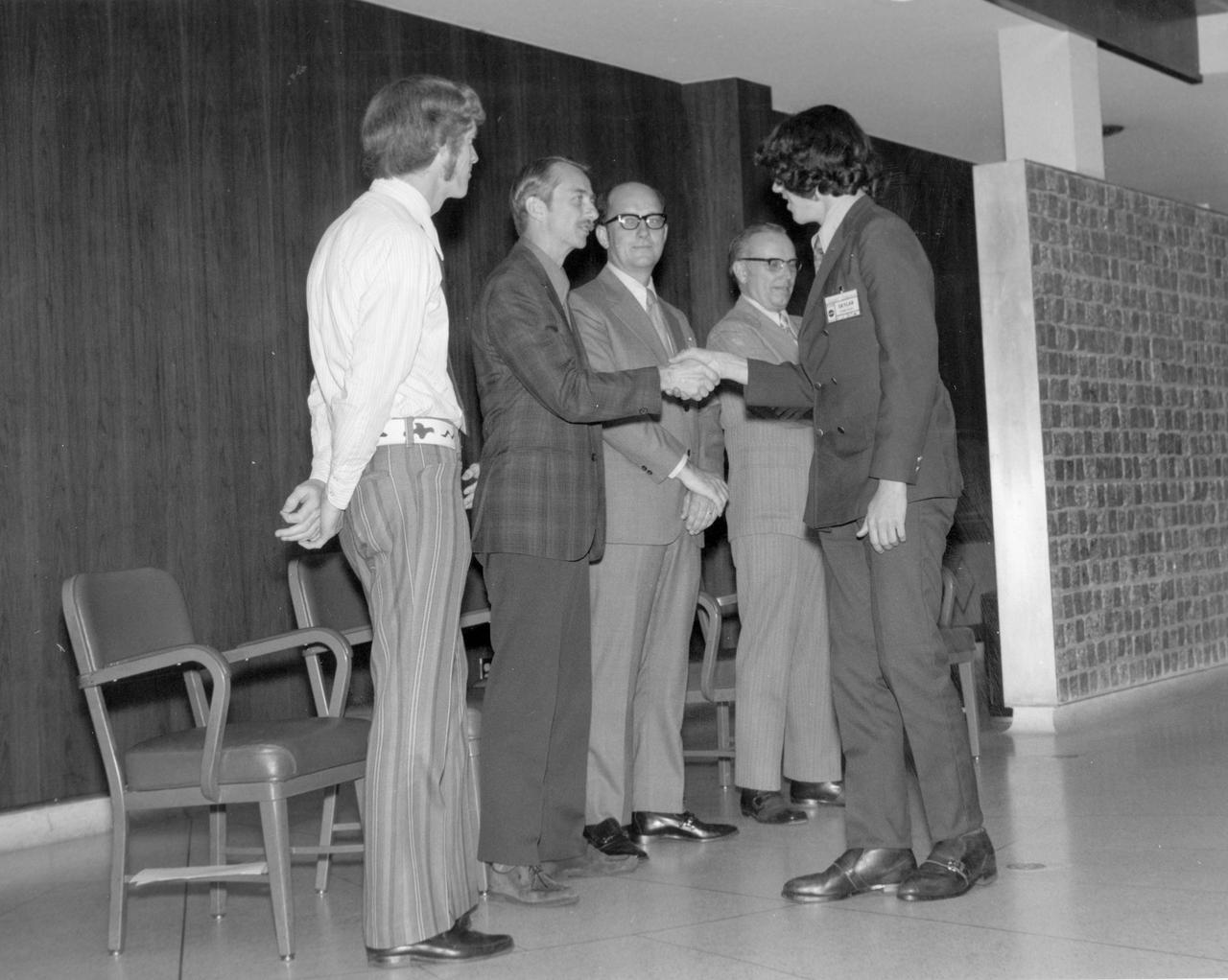
North Rochester, New York high school student, Robert L. Staehle, is greeted by (left to right): Astronauts Russell L. Schweickart, and Owen K. Garriott; Marshall Space Flight Center (MSFC) Skylab Program Manager, Leland Belew; and MSFC Director of Administration and Technical Services, David Newby, during a tour of MSFC. Staehle was among 25 winners of a contest in which some 3,500 high school students proposed experiments for the following year’s Skylab mission. The nationwide scientific competition was sponsored by the National Science Teachers Association and the National Aeronautics and Space Administration (NASA). The winning students, along with their parents and sponsor teachers, visited MSFC where they met with scientists and engineers, participated in design reviews for their experiments, and toured MSFC facilities. Of the 25 students, 6 did not see their experiments conducted on Skylab because the experiments were not compatible with Skylab hardware and timelines. Of the 19 remaining, 11 experiments required the manufacture of additional equipment.
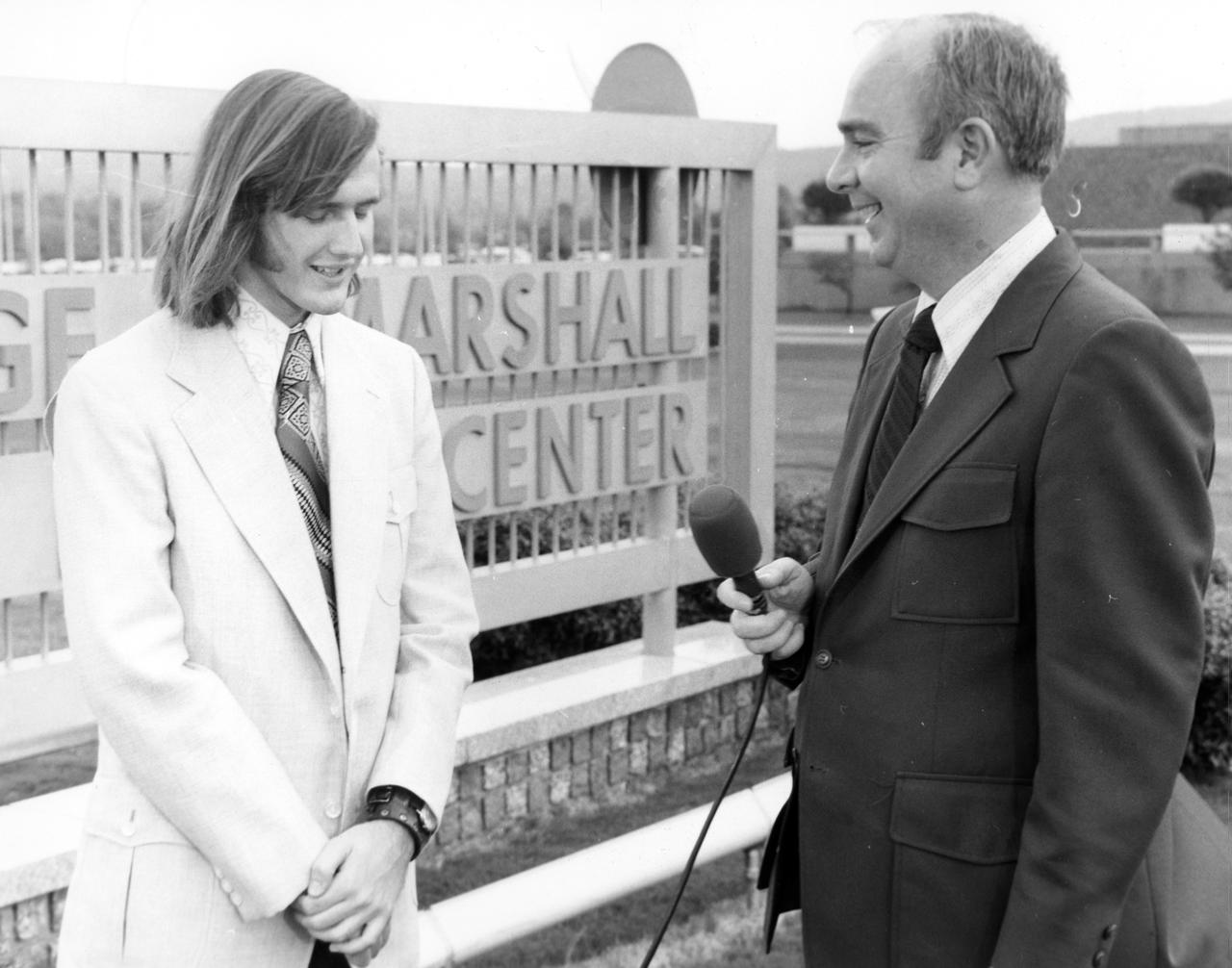
Gregory A. Merkel (left), high school student from Springfield, Massachusetts, is pictured here with Harry Coons of the Marshall Space Flight Center (MSFC) during a visit to the center. Merkel was among 25 winners of a contest in which some 3,500 high school students proposed experiments for the following year’s Skylab mission. The nationwide scientific competition was sponsored by the National Science Teachers Association and the National Aeronautics and Space Administration (NASA). The winning students, along with their parents and sponsor teachers, visited MSFC where they met with scientists and engineers, participated in design reviews for their experiments, and toured MSFC facilities. Of the 25 students, 6 did not see their experiments conducted on Skylab because the experiments were not compatible with Skylab hardware and timelines. Of the 19 remaining, 11 experiments required the manufacture of additional equipment.
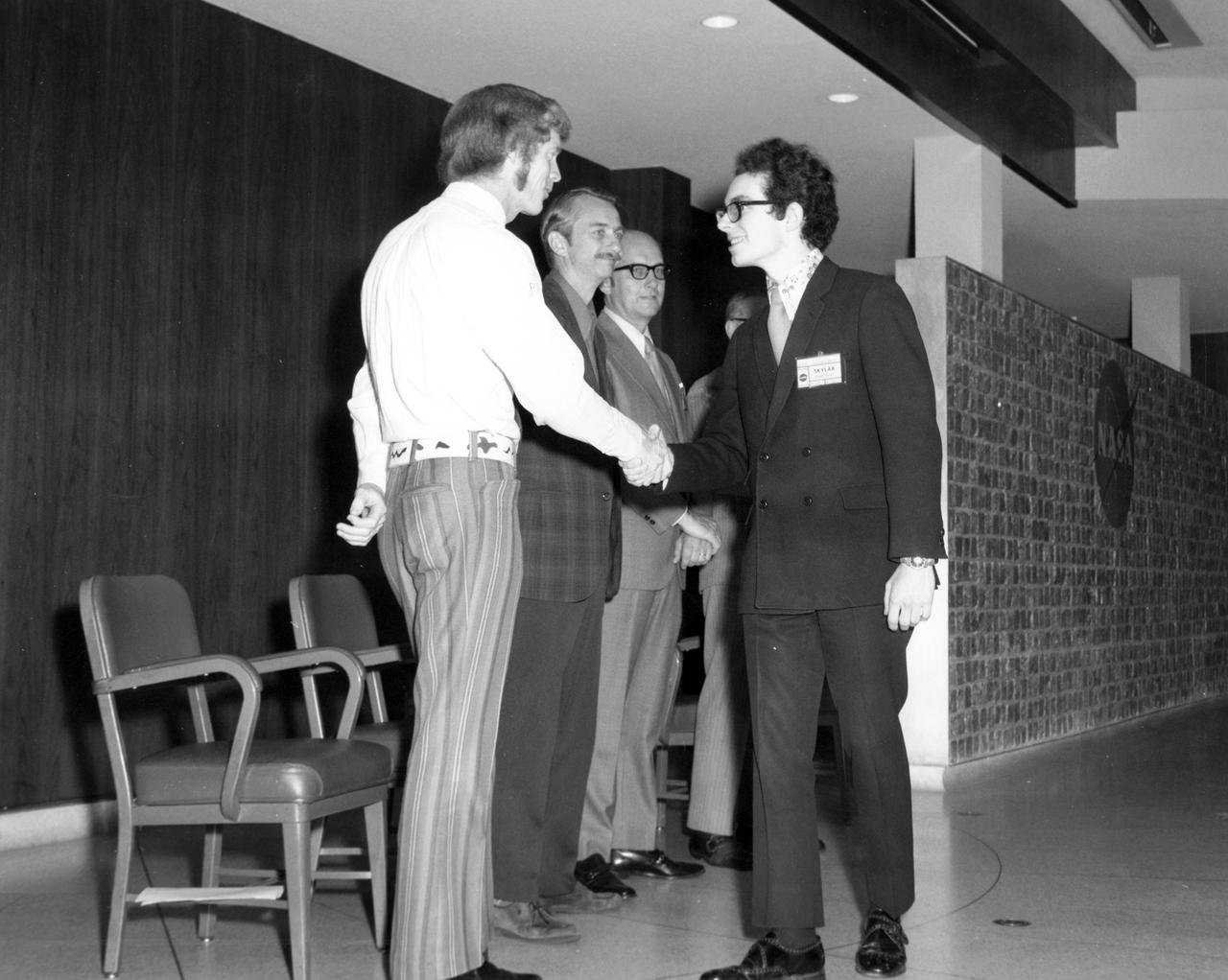
Berkley, Michigan high school student, Kirk M. Sherhart, is greeted by (left to right): Astronauts Russell L. Schweickart, and Owen K. Garriott; Marshall Space Flight Center (MSFC) Skylab Program Manager, Leland Belew; and MSFC Director of Administration and Technical Services, David Newby, during a tour of MSFC. Sherhart was among 25 winners of a contest in which some 3,500 high school students proposed experiments for the following year’s Skylab mission. The nationwide scientific competition was sponsored by the National Science Teachers Association and the National Aeronautics and Space Administration (NASA). The winning students, along with their parents and sponsor teachers, visited MSFC where they met with scientists and engineers, participated in design reviews for their experiments, and toured MSFC facilities. Of the 25 students, 6 did not see their experiments conducted on Skylab because the experiments were not compatible with Skylab hardware and timelines. Of the 19 remaining, 11 experiments required the manufacture of additional equipment.
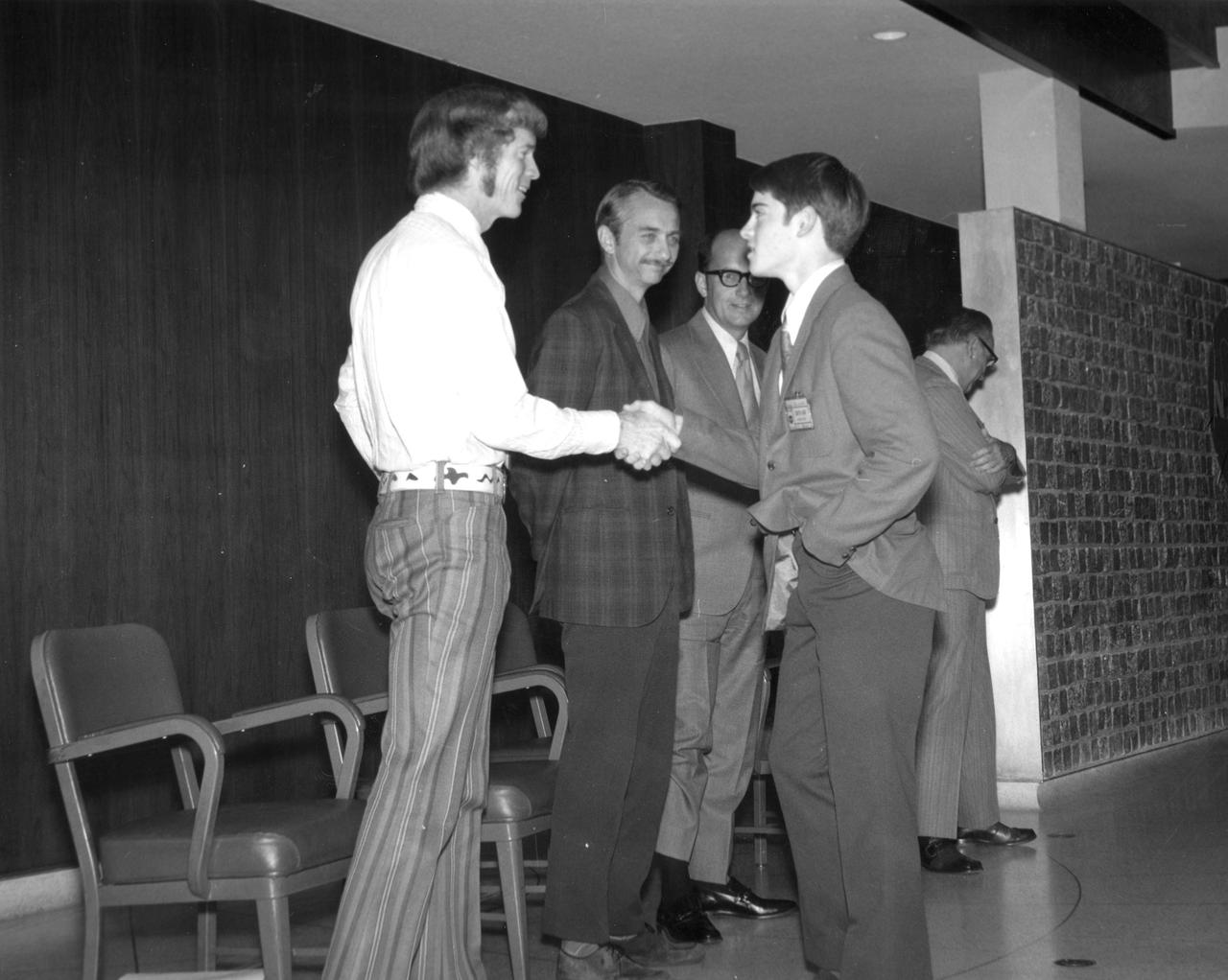
Silverton, Oregon high school student, Daniel C. Bochsler, is greeted by (left to right): Astronauts Russell L. Schweickart, and Owen K. Garriott; Marshall Space Flight Center (MSFC) Skylab Program Manager, Leland Belew; and MSFC Director of Administration and Technical Services, David Newby, during a tour of MSFC. Bochsler was among 25 winners of a contest in which some 3,500 high school students proposed experiments for the following year’s Skylab mission. The nationwide scientific competition was sponsored by the National Science Teachers Association and the National Aeronautics and Space Administration (NASA). The winning students, along with their parents and sponsor teachers, visited MSFC where they met with scientists and engineers, participated in design reviews for their experiments, and toured MSFC facilities. Of the 25 students, 6 did not see their experiments conducted on Skylab because the experiments were not compatible with Skylab hardware and timelines. Of the 19 remaining, 11 experiments required the manufacture of additional equipment.
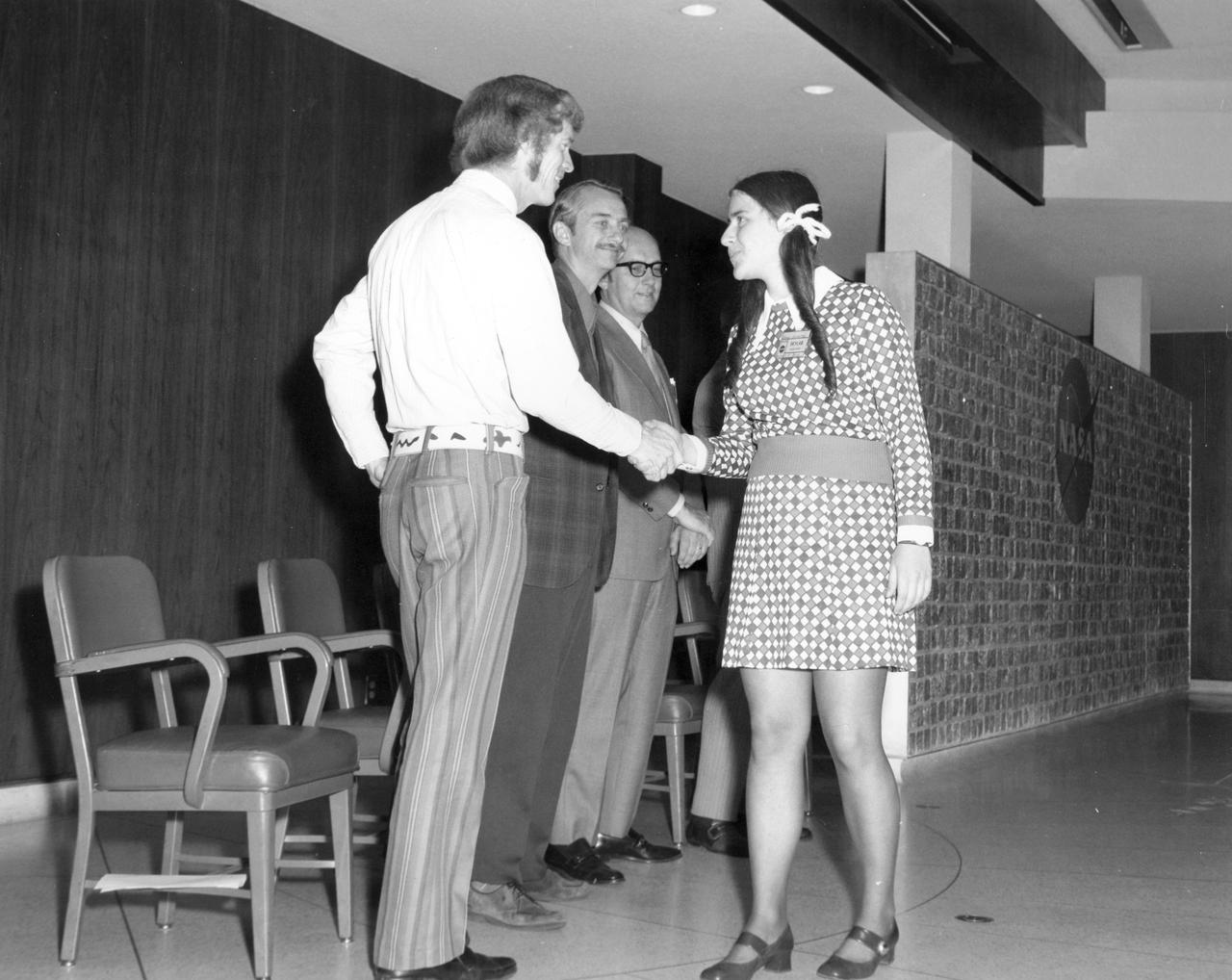
Berkley, California high school student, Jeanne L. Leventhal, is greeted by (left to right): Astronauts Russell L. Schweickart, and Owen K. Garriott; and Marshall Space Flight Center (MSFC) Skylab Program Manager, Leland Belew during a tour of MSFC. Leventhal was among 25 winners of a contest in which some 3,500 high school students proposed experiments for the following year’s Skylab mission. The nationwide scientific competition was sponsored by the National Science Teachers Association and the National Aeronautics and Space Administration (NASA). The winning students, along with their parents and sponsor teachers, visited MSFC where they met with scientists and engineers, participated in design reviews for their experiments, and toured MSFC facilities. Of the 25 students, 6 did not see their experiments conducted on Skylab because the experiments were not compatible with Skylab hardware and timelines. Of the 19 remaining, 11 experiments required the manufacture of additional equipment.
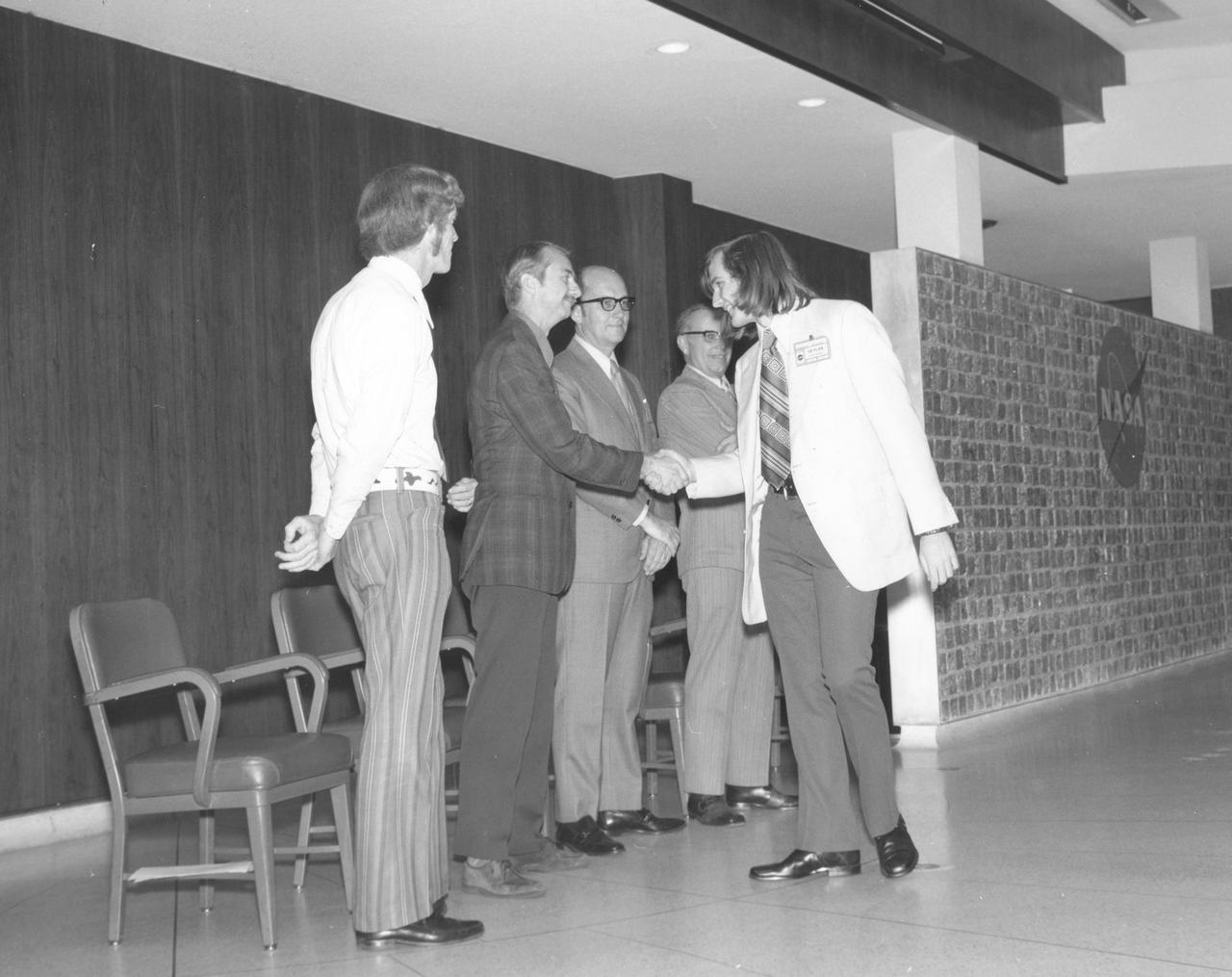
Springfield, Massachusetts high school student, Gregory A. Merkel, is greeted by (left to right): Astronauts Russell L. Schweickart, and Owen K. Garriott; Marshall Space Flight Center (MSFC) Skylab Program Manager, Leland Belew; and MSFC Director of Administration and Technical Services, David Newby, during a tour of MSFC. Merkel was among 25 winners of a contest in which some 3,500 high school students proposed experiments for the following year’s Skylab Mission. The nationwide scientific competition was sponsored by the National Science Teachers Association and the National Aeronautics and Space Administration (NASA). The winning students, along with their parents and sponsor teachers, visited MSFC where they met with scientists and engineers, participated in design reviews for their experiments, and toured MSFC facilities. Of the 25 students, 6 did not see their experiments conducted on Skylab because the experiments were not compatible with Skylab hardware and timelines. Of the 19 remaining, 11 experiments required the manufacture of additional equipment.