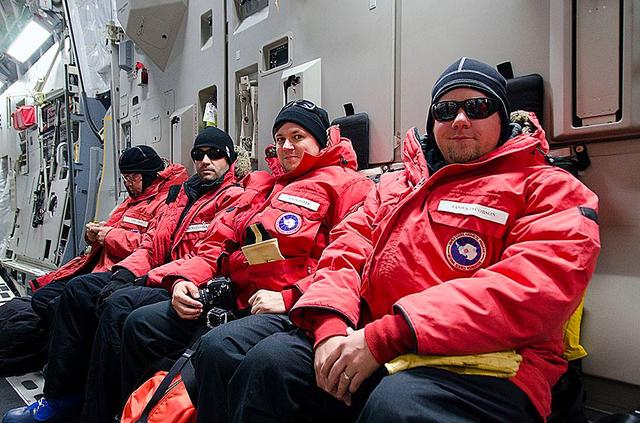
These IceBridge team members aboard a huge U.S. Air Force C-17 transport aircraft are ready to step out into the cold Antarctic air. The C-17 aircraft that fly to Antarctica are operated by the U.S. Air Force's 62nd and 446th Airlift Wings based at Joint Base Lewis-McChord near Seattle, Wash. Credit: NASA/Goddard/Michael Studinger NASA's Operation IceBridge is an airborne science mission to study Earth's polar ice. For more information about IceBridge, visit: <a href="http://www.nasa.gov/icebridge" rel="nofollow">www.nasa.gov/icebridge</a> <b><a href="http://www.nasa.gov/audience/formedia/features/MP_Photo_Guidelines.html" rel="nofollow">NASA image use policy.</a></b> <b><a href="http://www.nasa.gov/centers/goddard/home/index.html" rel="nofollow">NASA Goddard Space Flight Center</a></b> enables NASA’s mission through four scientific endeavors: Earth Science, Heliophysics, Solar System Exploration, and Astrophysics. Goddard plays a leading role in NASA’s accomplishments by contributing compelling scientific knowledge to advance the Agency’s mission. <b>Follow us on <a href="http://twitter.com/NASA_GoddardPix" rel="nofollow">Twitter</a></b> <b>Like us on <a href="http://www.facebook.com/pages/Greenbelt-MD/NASA-Goddard/395013845897?ref=tsd" rel="nofollow">Facebook</a></b> <b>Find us on <a href="http://instagram.com/nasagoddard?vm=grid" rel="nofollow">Instagram</a></b>
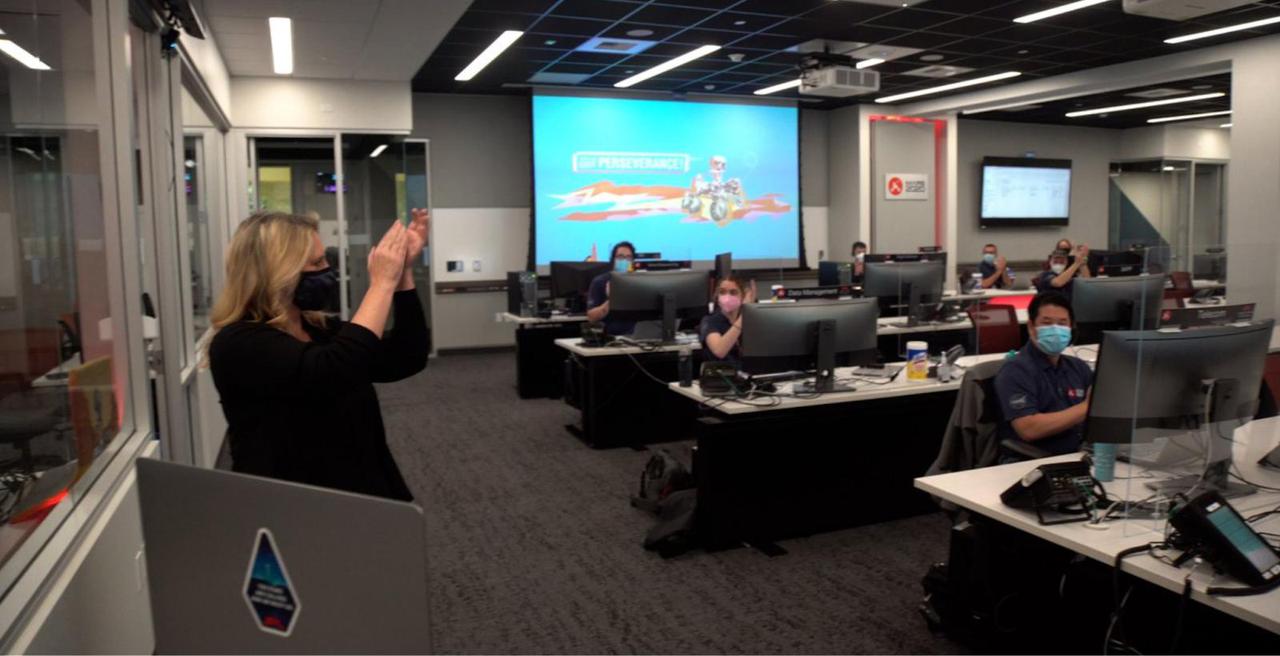
Jennifer Trosper, Mars Perseverance project manager, leads rover team members at JPL in a round of applause for students who were honored through the "You've Got Perseverance" campaign for overcoming obstacles in pursuit of their educational goals. https://photojournal.jpl.nasa.gov/catalog/PIA25272

Members of the VERITAS science team pause for a photograph on July 31, 2023, after arriving in Iceland to begin a two-week campaign to study the volcanic island's geology to help the team prepare for NASA's VERITAS (short for Venus Emissivity, Radio science, InSAR, Topography, And Spectroscopy) mission to Venus. From July 30 to Aug. 14, 2023, the international science team, including local participation from the University of Iceland, worked to lay the groundwork for the science that will ultimately be done from Venus orbit. At center, holding the VERITAS mission identifier is the mission's principal investigator and the science team lead, Sue Smrekar, of NASA's Jet Propulsion Laboratory in Southern California. Flanking her are science team members from multiple U.S., Italian, and German institutions, including members of the German Aerospace Center (DLR) Flugzeug Synthetic Aperture Radar (F-SAR) airplane team. The DLR F-SAR team was tasked with collecting synthetic-aperture radar data of the regions studied by the field team. A key objective of the campaign is to refine change detection algorithms that will be used to look for global surface change (such as volcanic activity) between NASA's Magellan radar mission from the 1990s and VERITAS, as well as between VERITAS and the ESA (European Space Agency) EnVision mission to Venus, both of which are targeting the early 2030s for launch. NASA's VERITAS is an orbiter designed to peer through Venus' thick atmosphere with a suite of powerful instruments to create global maps of the planet's surface, including topography, radar images, rock type, and gravity, as well as detect surface changes. VERITAS is designed to understand what processes are currently active, search for evidence of past and current interior water, and understand the geologic evolution of the planet, illuminating how rocky planets throughout the galaxy evolve. VERITAS and NASA's Deep Atmosphere Venus Investigation of Noble gases, Chemistry, and Imaging (DAVINCI) mission were selected in 2021 under NASA's Discovery Program as the agency's next missions to Venus. The Discovery Program is managed by the Planetary Missions Program Office at NASA's Marshall Space Flight Center in Huntsville, Alabama, for the Planetary Science Division of NASA's Science Mission Directorate in Washington. https://photojournal.jpl.nasa.gov/catalog/PIA25835
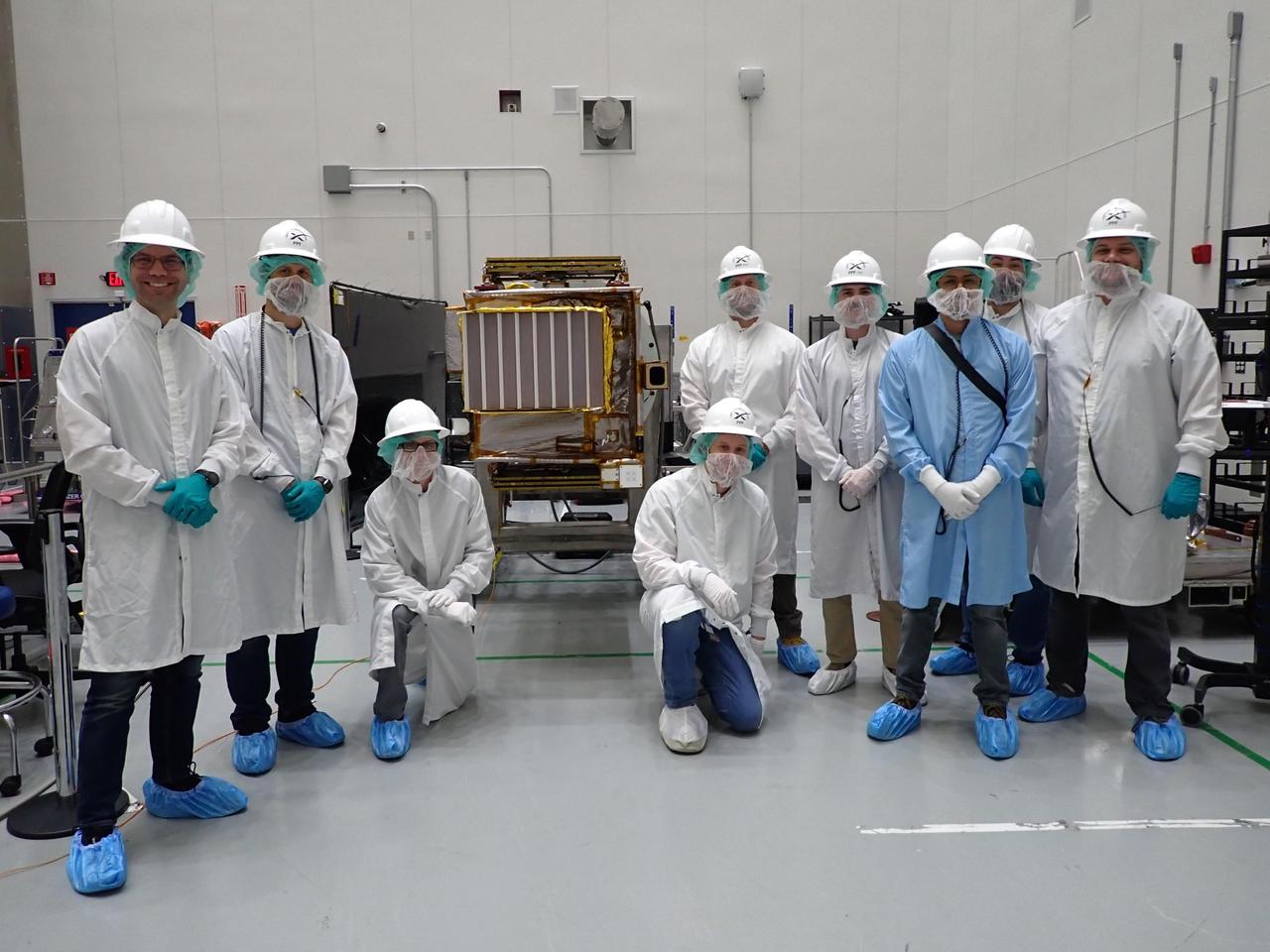
Members of NASA's Lunar Trailblazer team pose with the spacecraft at SpaceX's payload processing facility at NASA's Kennedy Space Center in Florida in early February 2025. The grated radiator of the High-resolution Volatiles and Minerals Moon Mapper (HVM³) instrument is facing the camera. Pictured, from left: Andrew Klesh, Jeff Pyle, Ryan Kressler, Willie Parker, Jon Newman, Alex Sugarman, David Rodriquez, Chris Calamateos-Brown, and David Hobbs. https://photojournal.jpl.nasa.gov/catalog/PIA26581
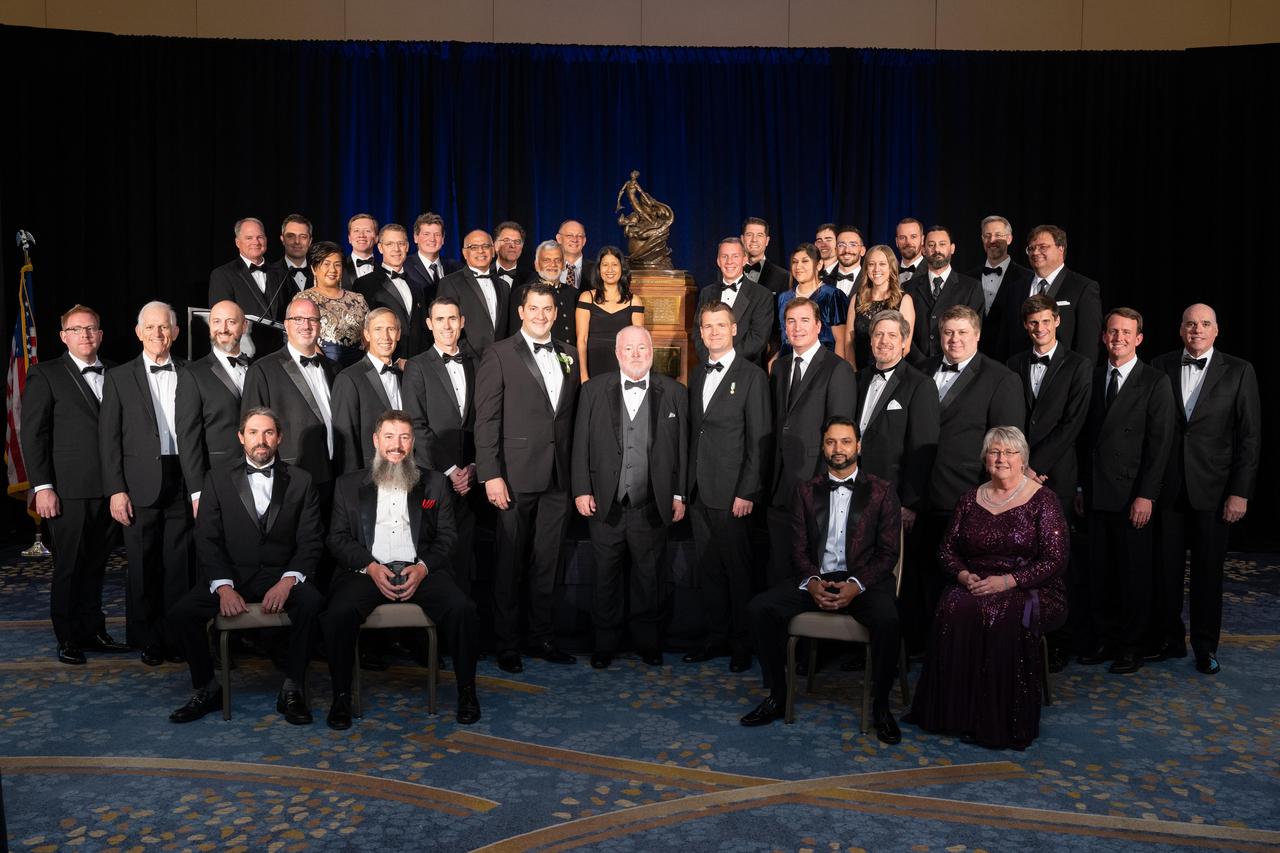
Members of NASA's Ingenuity Mars Helicopter team are pictured with the Collier Trophy during the Robert J. Collier Dinner in Washington on June 9, 2022. The team was awarded the 2021 Collier Trophy "for the first powered, controlled flight of an aircraft on another planet, thereby opening the skies of Mars and other worlds for future scientific discovery and exploration," the award citation states. This historic trophy – which is on permanent display at the Smithsonian Air and Space Museum in Washington – is awarded annually by the National Aeronautic Association "for the greatest achievement in aeronautics or astronautics in America, with respect to improving the performance, efficiency, and safety of air or space vehicles, the value of which has been thoroughly demonstrated by actual use during the preceding year." https://photojournal.jpl.nasa.gov/catalog/PIA25324
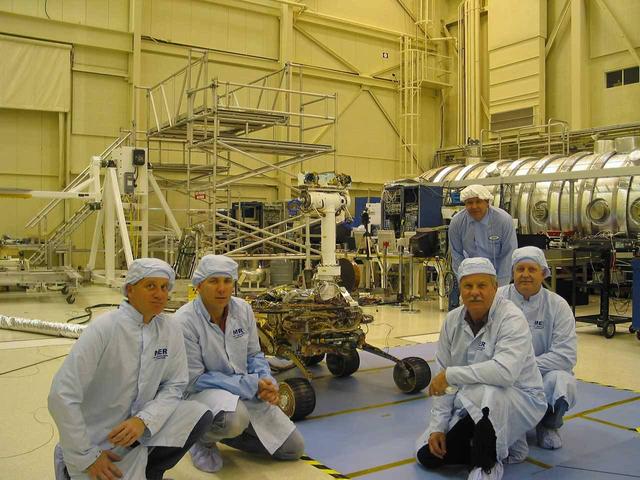
Rover team members with the Mars Exploration Rover.
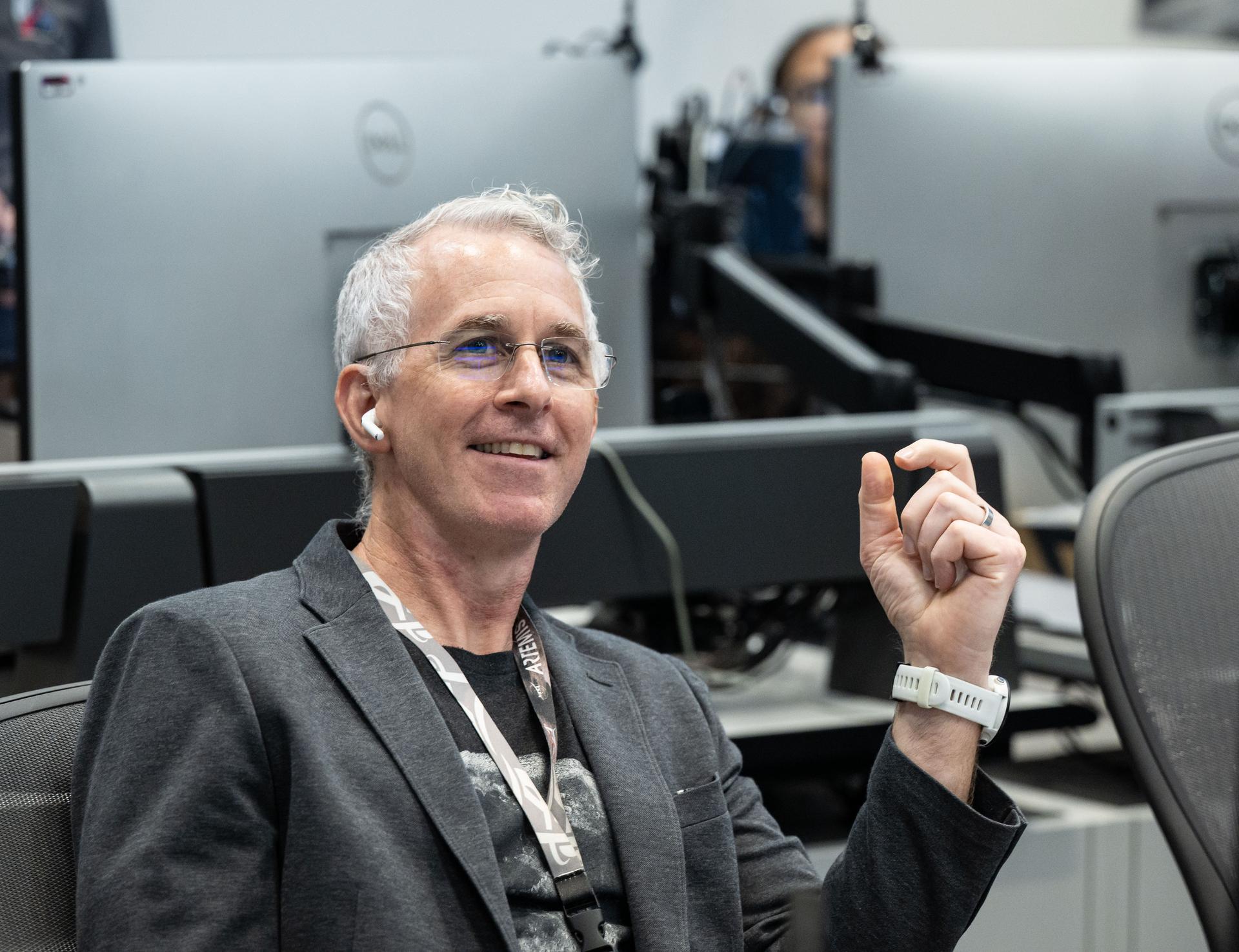
Artemis II lunar science team member, Ryan Ewing, reacts to the astronauts' verbal observations of the Moon during their flyby on April 6, 2026. Along with other lunar science team members, Ewing helped train the crew in geology both in the classroom and in the field. The science team also built the lunar targeting plan that, like an International Space Station spacewalk plan, provides strong, detailed observation guidance, plus flexibility for the crew to make decisions based on what they’re seeing and experiencing in real time. The science team had many moments of celebration during the lunar flyby as the astronauts took images of the Moon and provided verbal descriptions of what they were seeing. This type of information reveals the geologic history of an area and will be critical to collect when future Artemis astronauts explore the Moon's surface. Credits: NASA/Luna Posadas Nava

Artemis II crew lunar observations team member, Alex Stoken, monitors the mission from the Science Evaluation Room (SER). Built specifically for Artemis missions with these science priorities in mind, the SER is equipped to support rapid data interpretation, collaborative analysis, real-time decision making, and seamless coordination between the science and operations teams. Credits: NASA/Luna Posadas Nava

Jared Ralleta, Artemis II lunar science team member, reacts to the lunar flyby crew observations in the Science Evaluation Room (SER). Built specifically for Artemis missions with these science priorities in mind, the SER is equipped to support rapid data interpretation, collaborative analysis, real-time decision making, and seamless coordination between the science and operations teams. Credits: NASA/Luna Posadas Nava

Artemis II crew lunar observations team member, David Charney, monitors the mission from the Science Evaluation Room (SER). Built specifically for Artemis missions with these science priorities in mind, the SER is equipped to support rapid data interpretation, collaborative analysis, real-time decision making, and seamless coordination between the science and operations teams. Credits: NASA/Luna Posadas Nava
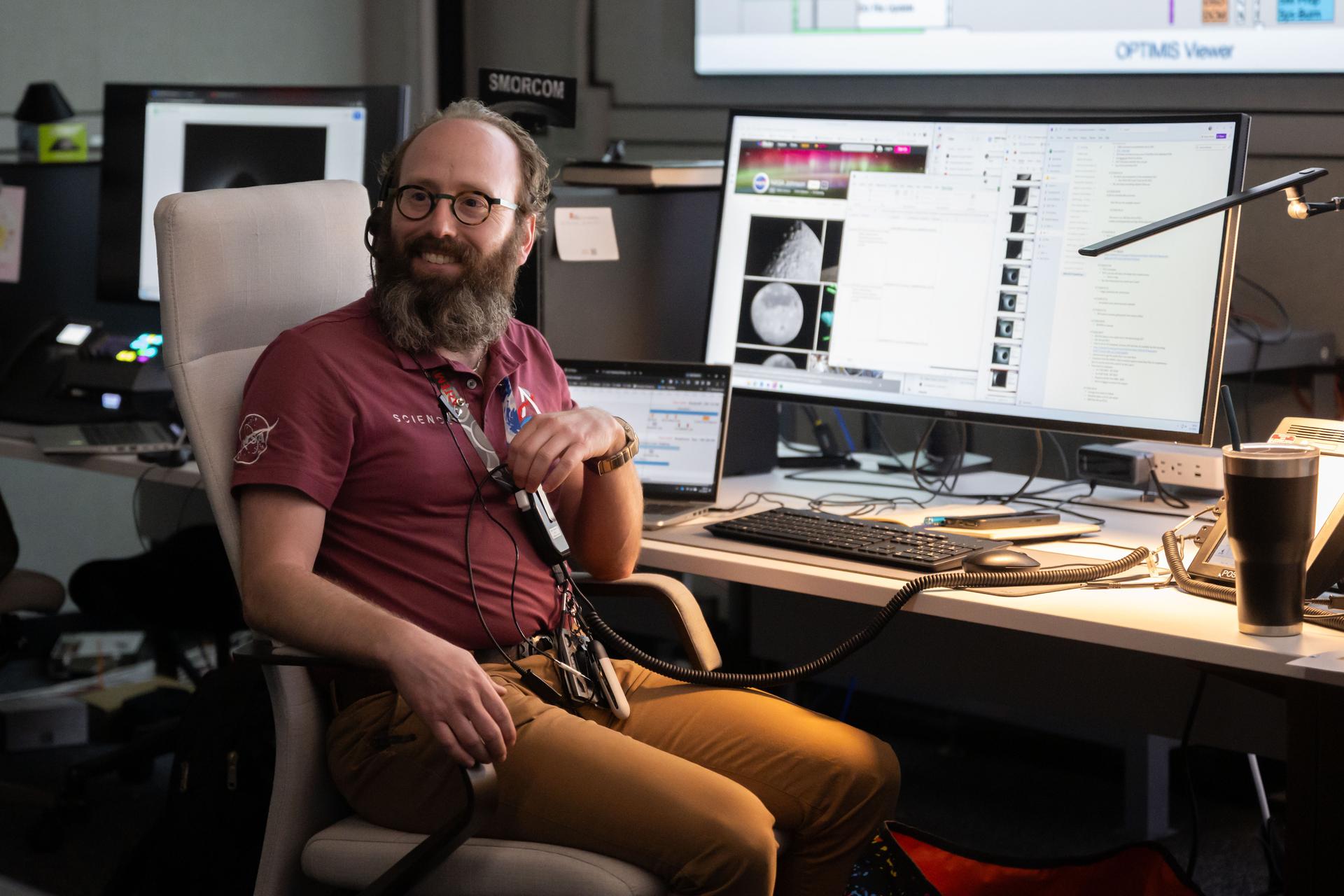
Artemis lunar science team member, Aaron Regberg, works in the Science Mission Operations Room, where scientists analyzed imagery and audio recordings of lunar observations captured by the Artemis II astronauts during their lunar flyby on April 6, 2026.

Artemis lunar science team member, Alexandra Constantinou, works in the Science Mission Operations Room at NASA’s Johnson Space Center in Houston, where scientists analyzed imagery and audio recordings of lunar observations captured by the Artemis II astronauts during their lunar flyby on April 6, 2026. Credits: NASA/Helen Arase Vargas
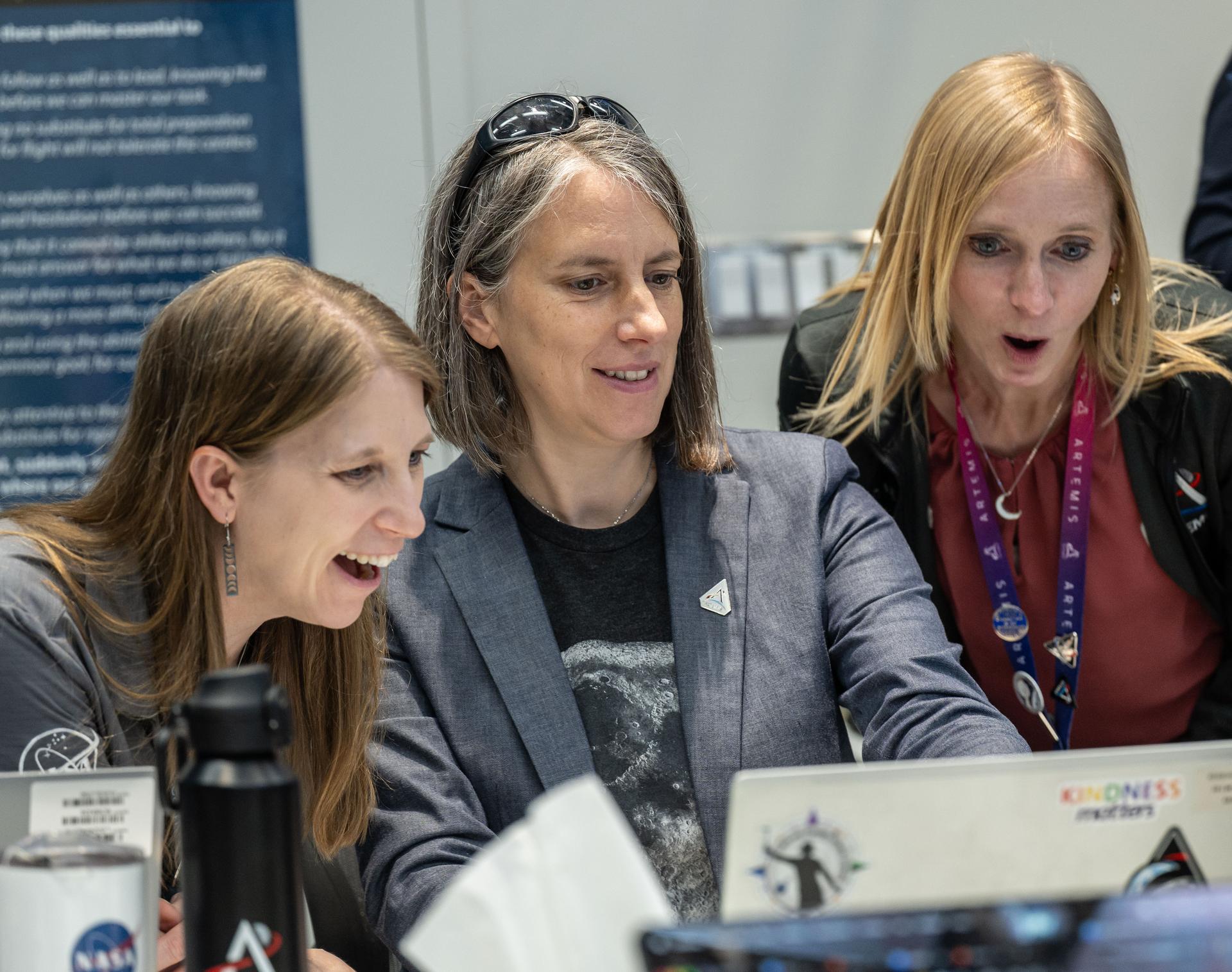
Artemis II lunar science team members, from left, Debra Needham, Juliane Gross, and Ryan Watkins, react to the astronauts' verbal observations of the Moon during their flyby on April 6, 2026. The science team trained the astronauts in geology and observation, both in the classroom and in the field. The team also built the lunar targeting plan that, like an International Space Station spacewalk plan, provides strong, detailed observation guidance, plus flexibility for the crew to make decisions based on what they’re seeing and experiencing in real time. The science team had many moments of celebration during the lunar flyby as the astronauts took images of the Moon and provided verbal descriptions of what they were seeing. This type of information reveals the geologic history of an area and will be critical to collect when future Artemis astronauts explore the Moon's surface. Credits: NASA/Luna Posadas Nava
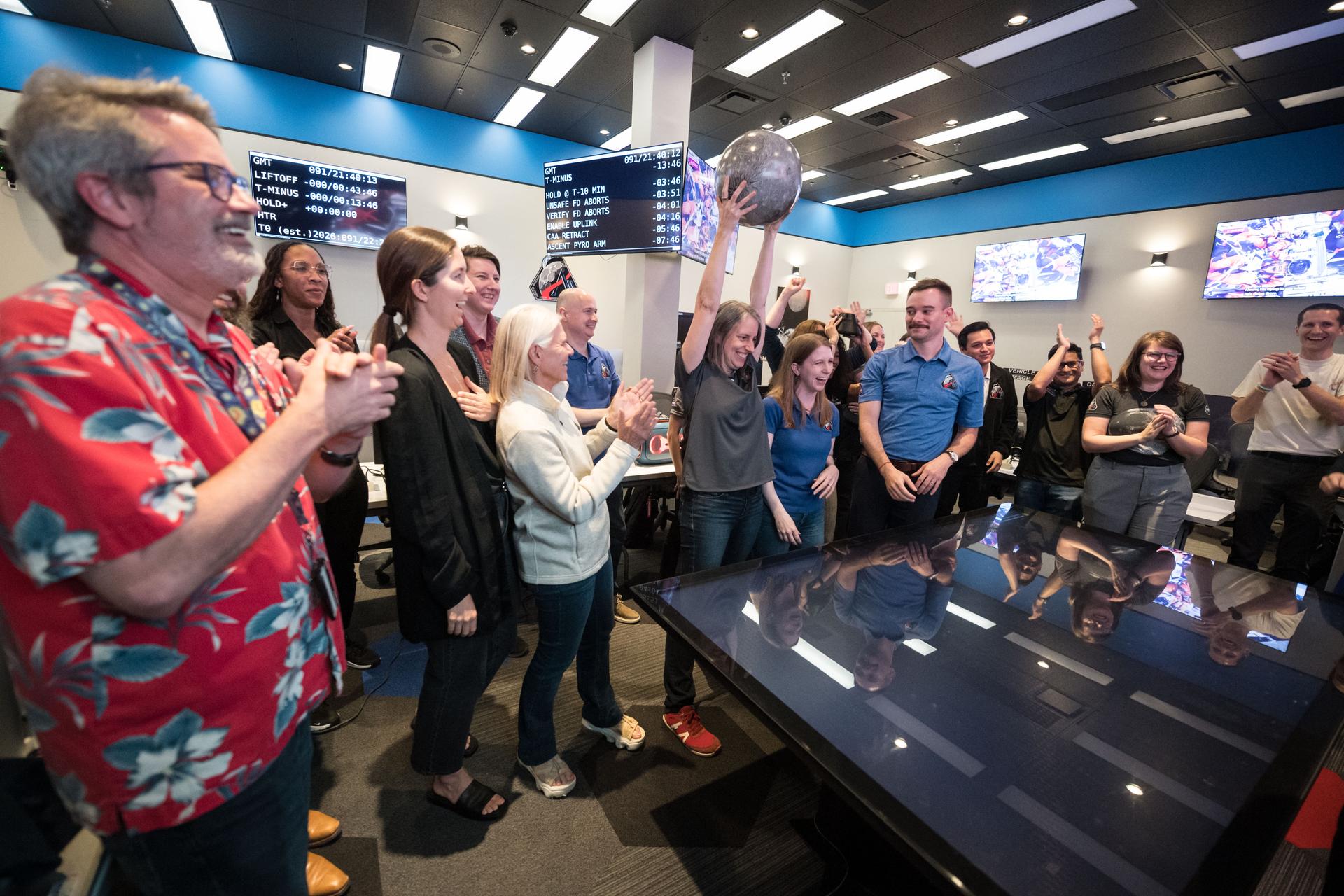
Members of the Artemis lunar science team cheer as they gather to watch the Artemis II launch broadcast from the Science Evaluation Room (SER) in Mission Control at NASA's Johnson Space Center in Houston. The SER supports lunar science and planetary observations for the Artemis science officer in the mission’s main flight control room. Built specifically for Artemis missions with these science priorities in mind, the SER is equipped to support rapid data interpretation, collaborative analysis, real-time decision making, and seamless coordination between the science and operations teams. Credits: NASA/Mark Sowa.
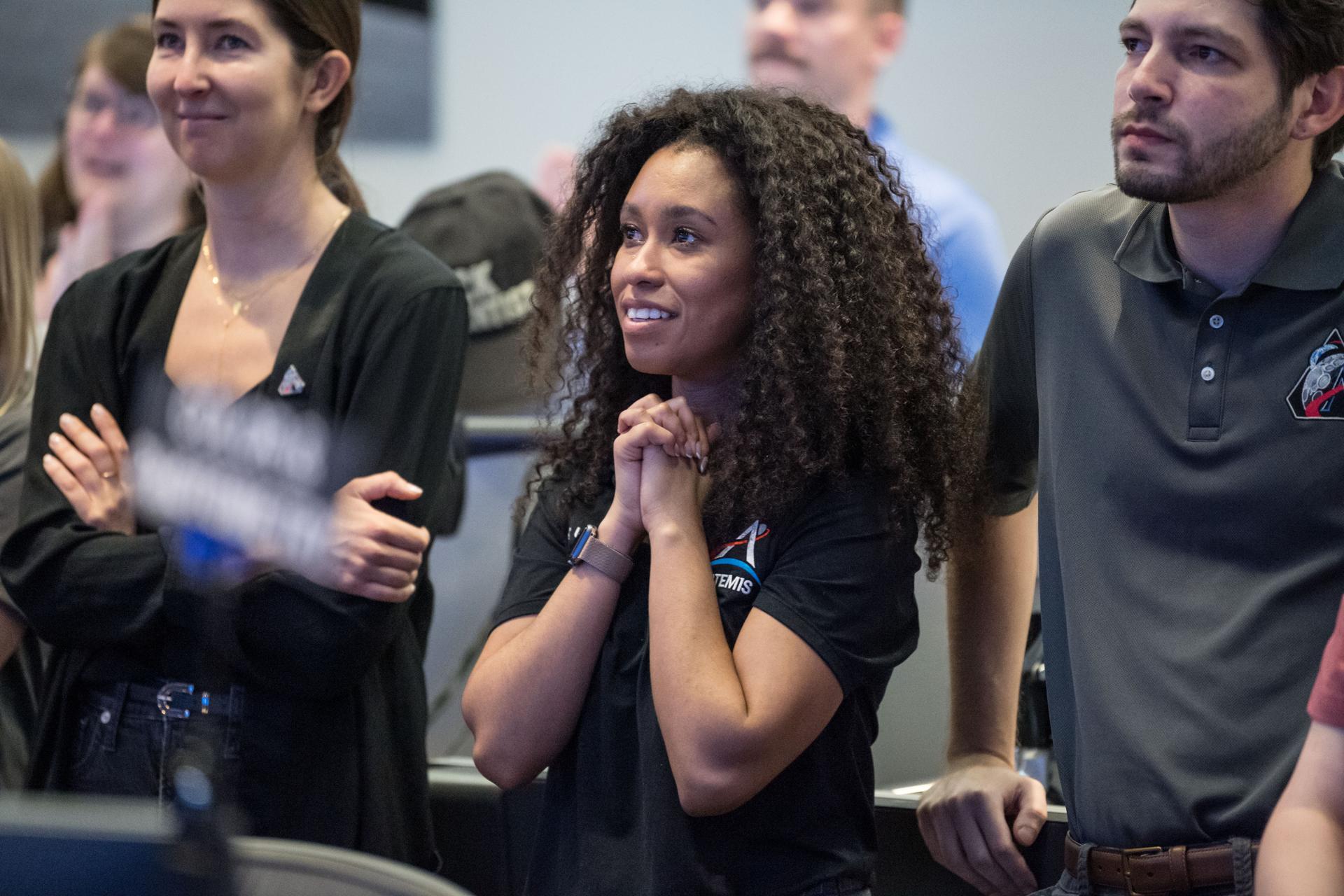
Members of the Artemis lunar science team, from left, Ariel Deutsch, Amber Turner, and Wilfredo Garcia-Lopez, watch the Artemis II launch from the Science Evaluation Room (SER) in Mission Control at Johnson Space Center in Houston. The SER supports lunar science and planetary observations for the Artemis science officer in the mission’s main flight control room. Built specifically for Artemis missions with these science priorities in mind, the SER is equipped to support rapid data interpretation, collaborative analysis, real-time decision making, and seamless coordination between the science and operations teams. Credits: NASA/Mark Sowa.
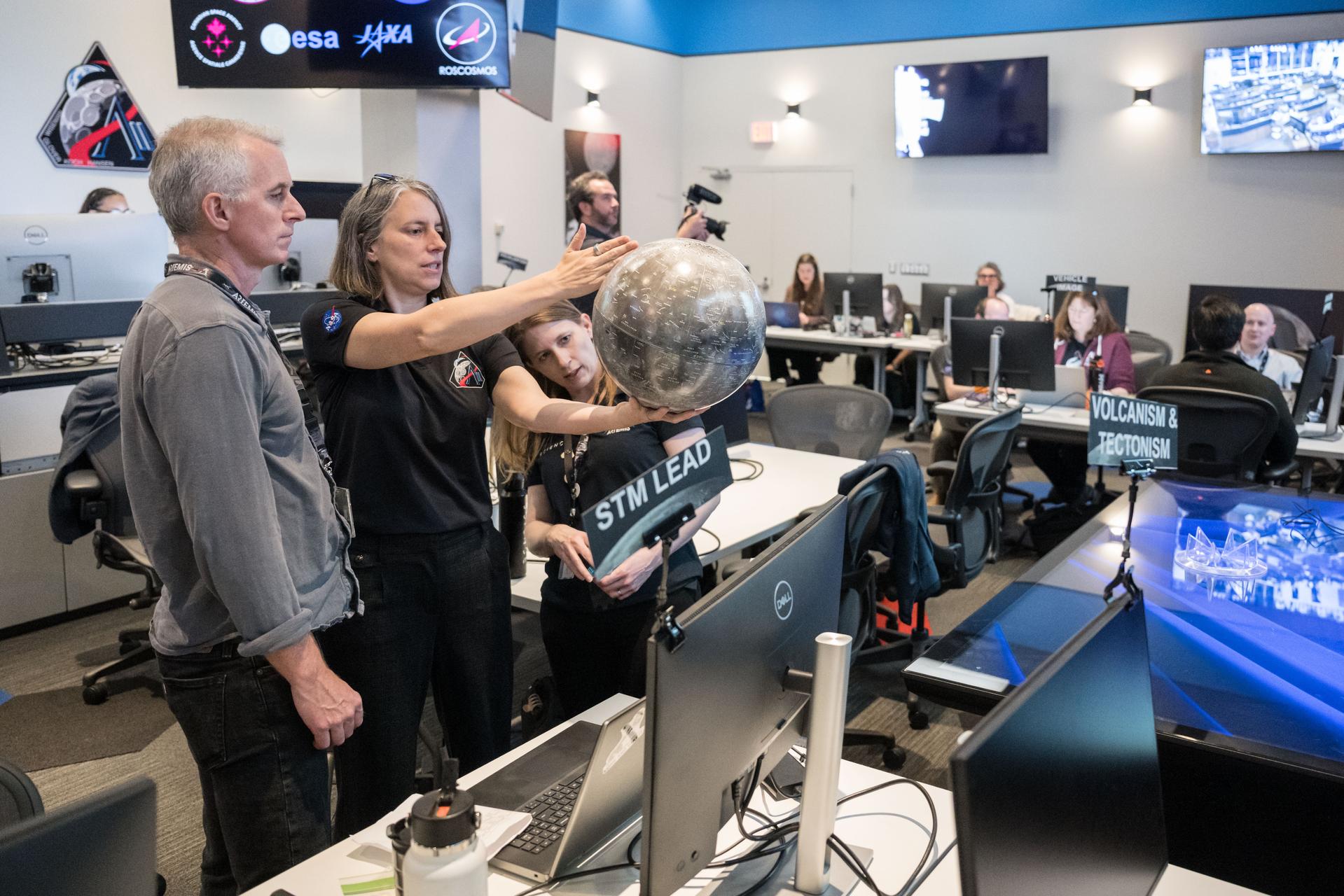
Artemis II lunar science team members, from left, Ryan Ewing, Juliane Gross, and Debra Needham, discuss lunar geography ahead of the translunar injection burn that accelerated the Orion spacecraft to break free of Earth’s orbit and began the outbound trajectory toward the Moon. They are in the Science Evaluation Room (SER) a back room that supports lunar science and planetary observations for the Artemis science officer in the mission’s main flight control room. Built specifically for Artemis missions with these science priorities in mind, the SER is equipped to support rapid data interpretation, collaborative analysis, real-time decision making, and seamless coordination between the science and operations teams.

Members of the Artemis lunar science team, from left, Sara Schmidt, Megan Borel, Amber Turner, Jacob Richardson, and Juliane Gross pose for a selfie with the Artemis II launch broadcast on the screen behind them in the Science Evaluation Room (SER) in Mission Control at NASA's Johnson Space Center in Houston. The SER supports lunar science and planetary observations for the Artemis science officer in the mission’s main flight control room. Built specifically for Artemis missions with these science priorities in mind, the SER is equipped to support rapid data interpretation, collaborative analysis, real-time decision making, and seamless coordination between the science and operations teams. Credits: NASA/Mark Sowa.
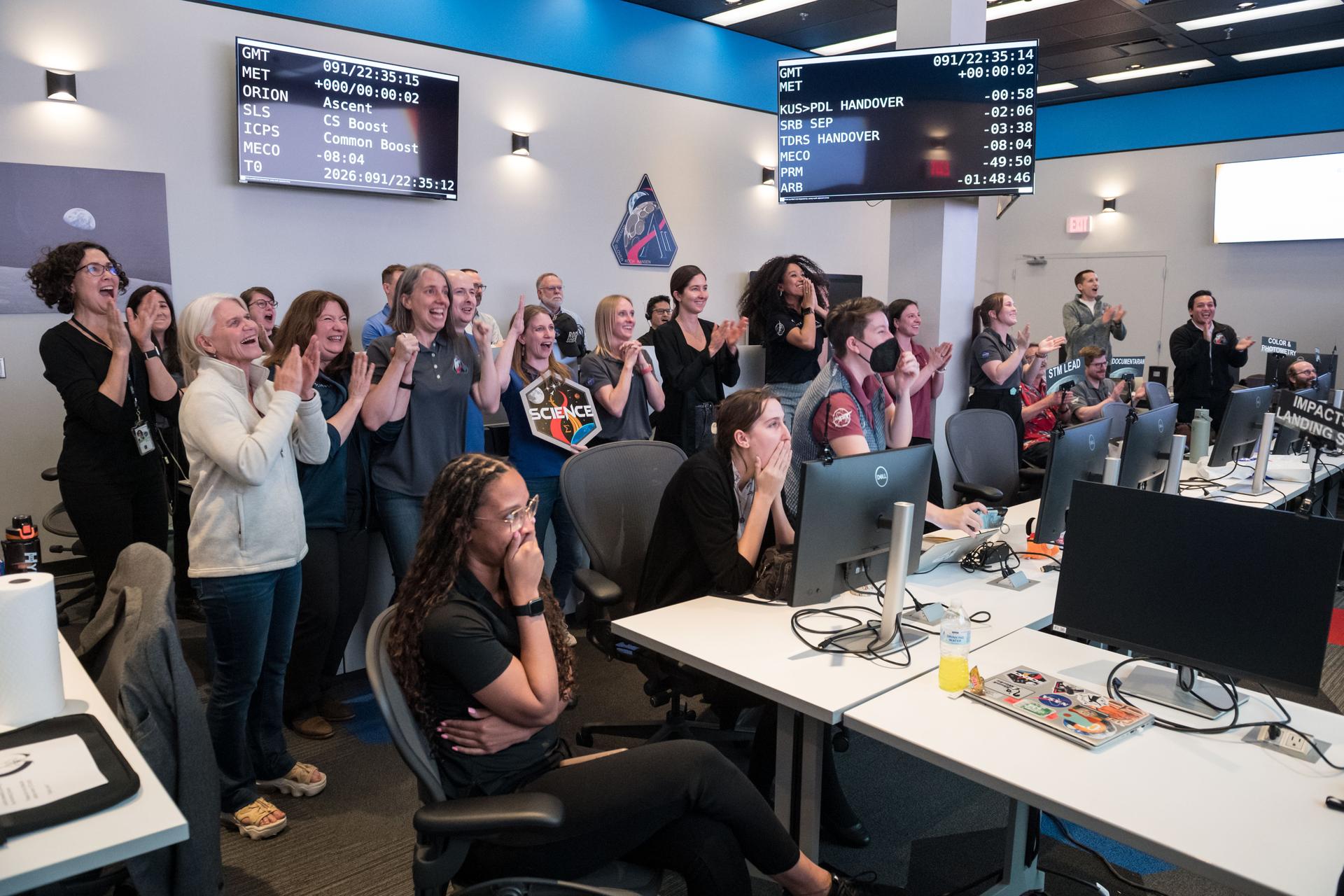
Members of the Artemis lunar science team celebrate the Artemis II launch as they watch from the Science Evaluation Room (SER) in Mission Control at NASA's Johnson Space Center in Houston. The SER supports lunar science and planetary observations for the Artemis science officer in the mission’s main flight control room. Built specifically for Artemis missions with these science priorities in mind, the SER is equipped to support rapid data interpretation, collaborative analysis, real-time decision making, and seamless coordination between the science and operations teams. Credits: NASA/Mark Sowa.

Artemis II lunar science team member, Ariel Deutsch, reacts to the astronauts' verbal observations of the Moon during their flyby on April 6. The science team has spent years training the astronauts in geology and observation, both in the classroom and in the field. They also built the lunar targeting plan that, like a spacewalk plan, provides strong, detailed observation guidance, plus flexibility for the crew to make decisions based on what they’re seeing and experiencing in real time. The science team had many moments of celebration during the lunar flyby as the astronauts took pictures of the Moon and provided verbal descriptions of what they were seeing. This type of information reveals the geologic history of an area and will be critical to collect when future Artemis astronauts explore the Moon's surface. Credits: NASA/Luna Posadas Nava
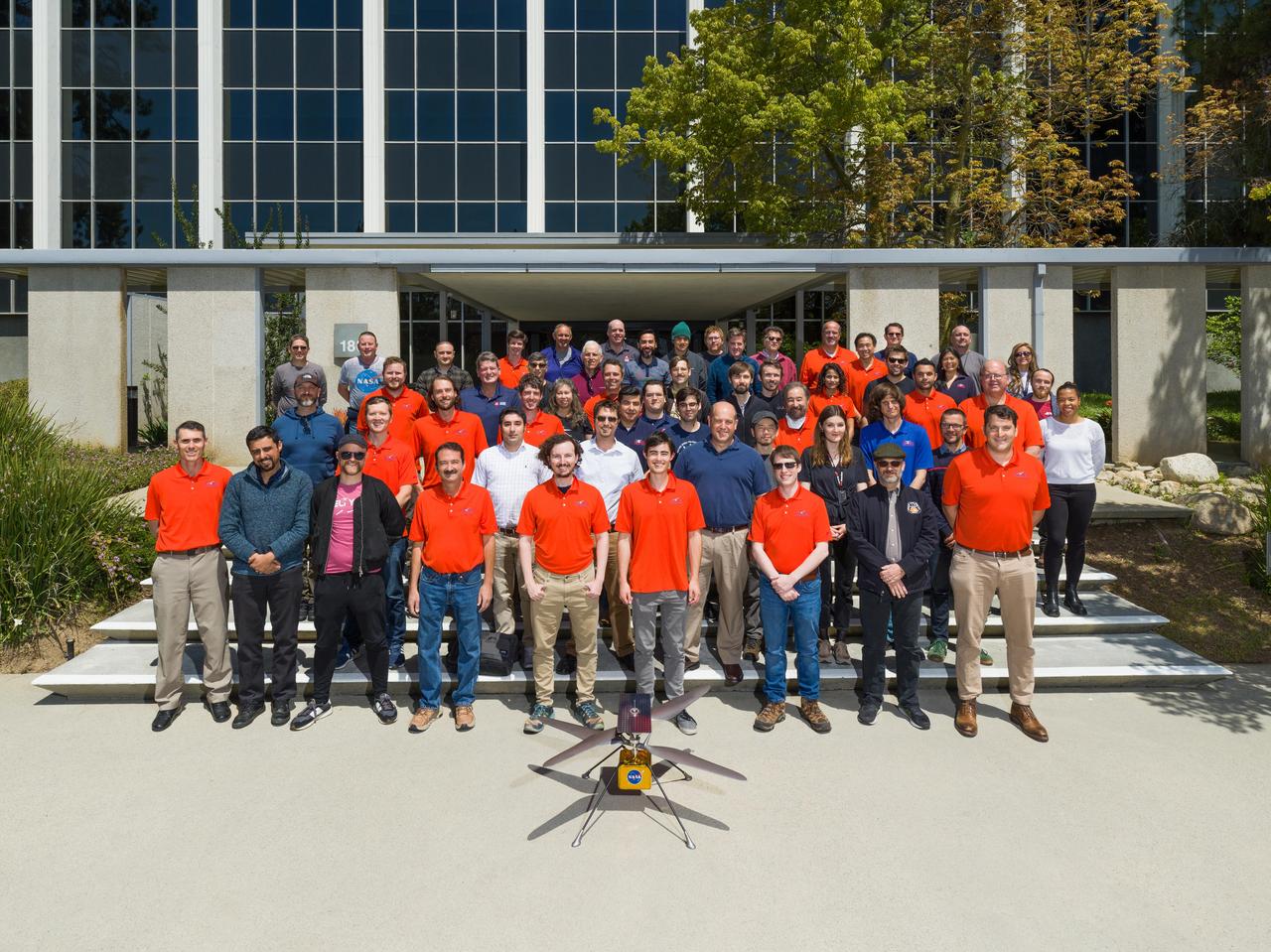
Members of NASA's Ingenuity Mars Helicopter team got together for a team photo on the second anniversary of the rotorcraft's first flight on Mars. The image was taken at the agency's Jet Propulsion Laboratory in Southern California on April 19, 2023. https://photojournal.jpl.nasa.gov/catalog/PIA25882
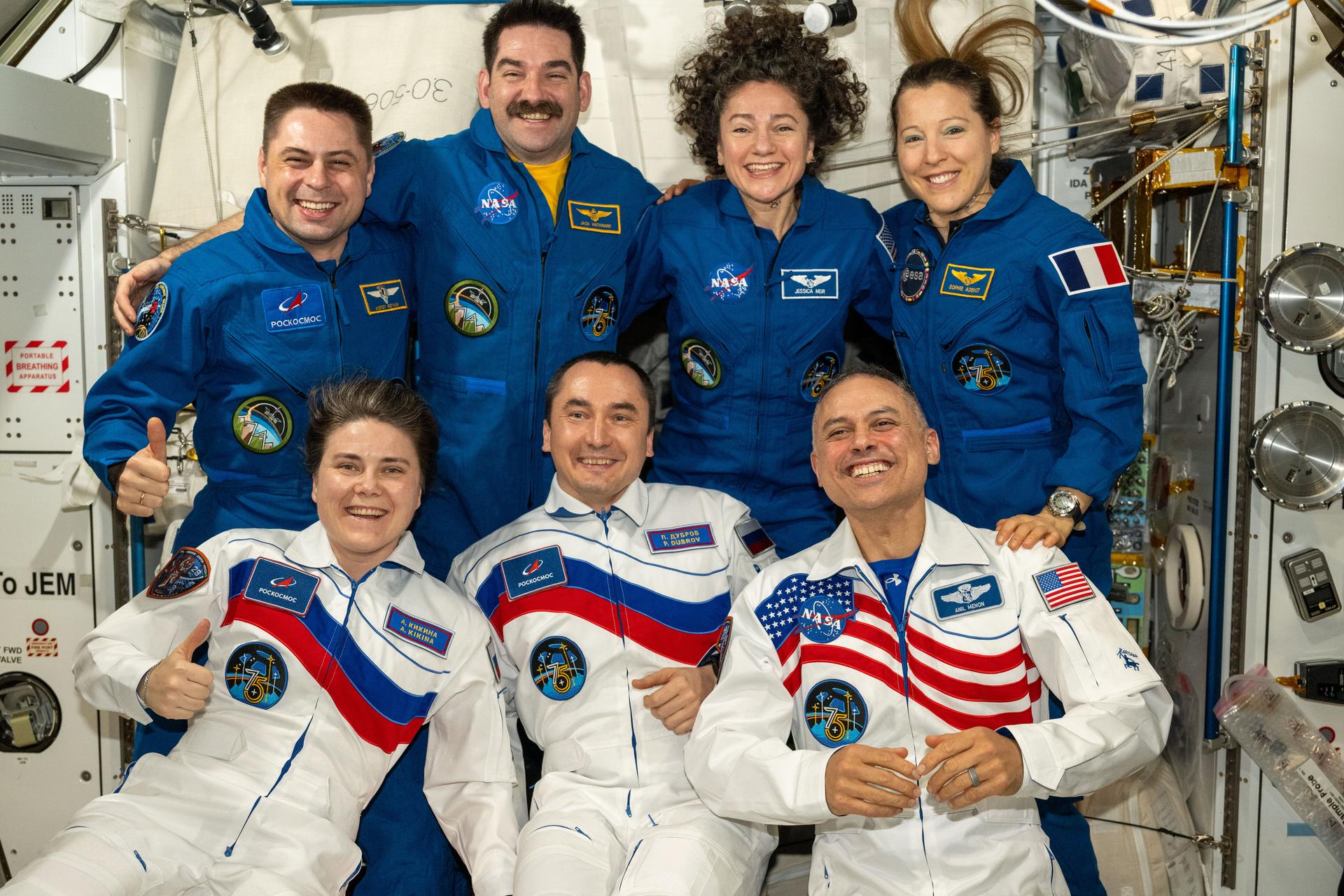
iss075e0157371 (Oct. 2, 2026) --- Seven of the Expedition 75 crew members take a team portrait while waiting for SpaceX Crew‑13 to enter the International Space Station. In the front row from left are Roscosmos cosmonauts Anna Kikina and Pyotr Dubrov and NASA astronaut Anil Menon. In the back row are Roscosmos cosmonaut Andrey Fedyaev, NASA astronauts Jack Hathaway and Jessica Meir, and ESA (European Space Agency) astronaut Sophie Adenot. Credit: NASA
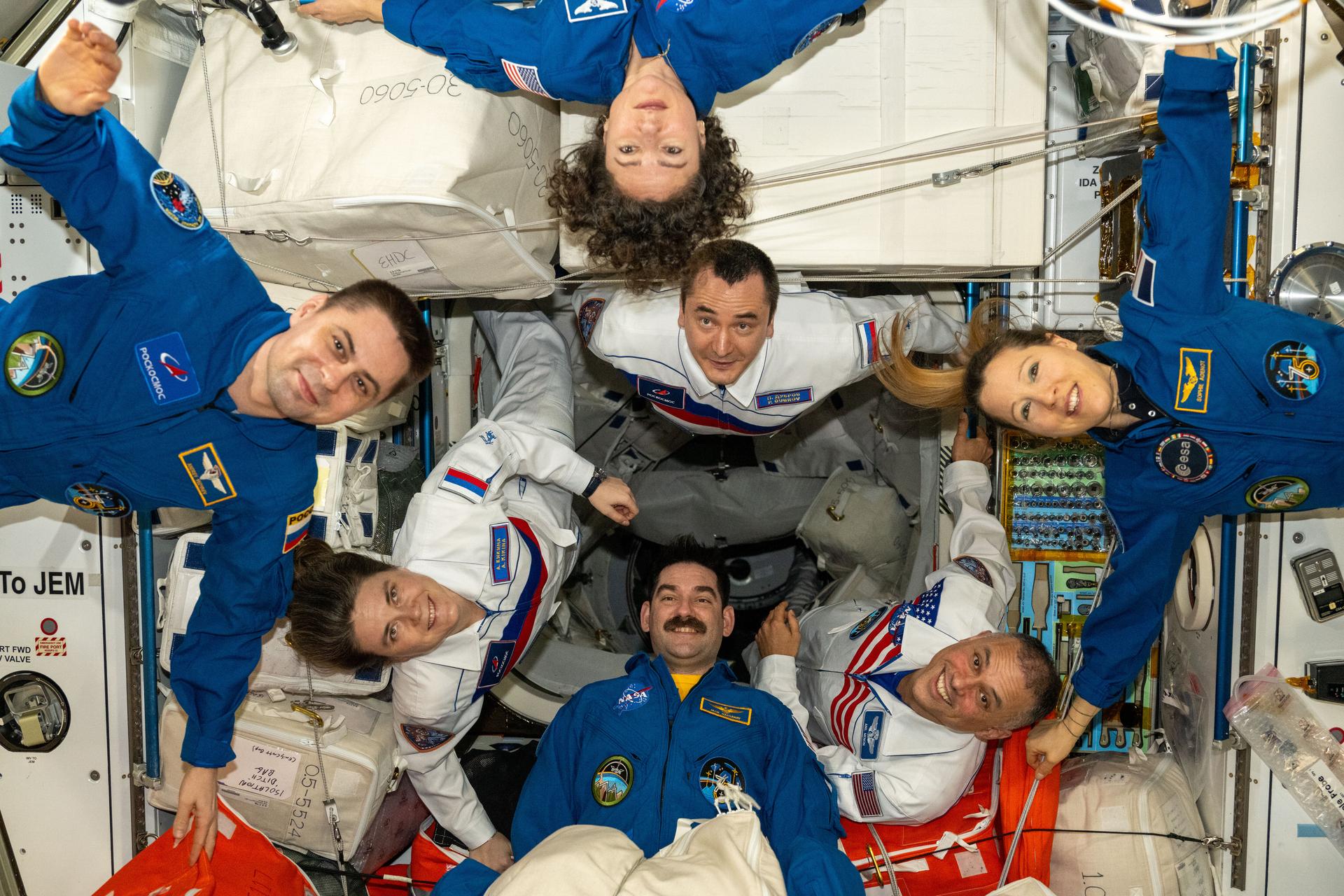
iss075e0157380 (Oct. 2, 2026) --- Seven of the Expedition 75 crew members take a team portrait while waiting for SpaceX Crew‑13 to enter the International Space Station. Clockwise from bottom are NASA astronaut Jack Hathaway, Roscosmos cosmonauts Anna Kikina and Andrey Fedyaev, NASA astronaut Jessica Meir, Roscosmos cosmonaut Pyotr Dubrov, ESA (European Space Agency) astronaut Sophie Adenot, and NASA astronaut Anil Menon. Credit: NASA
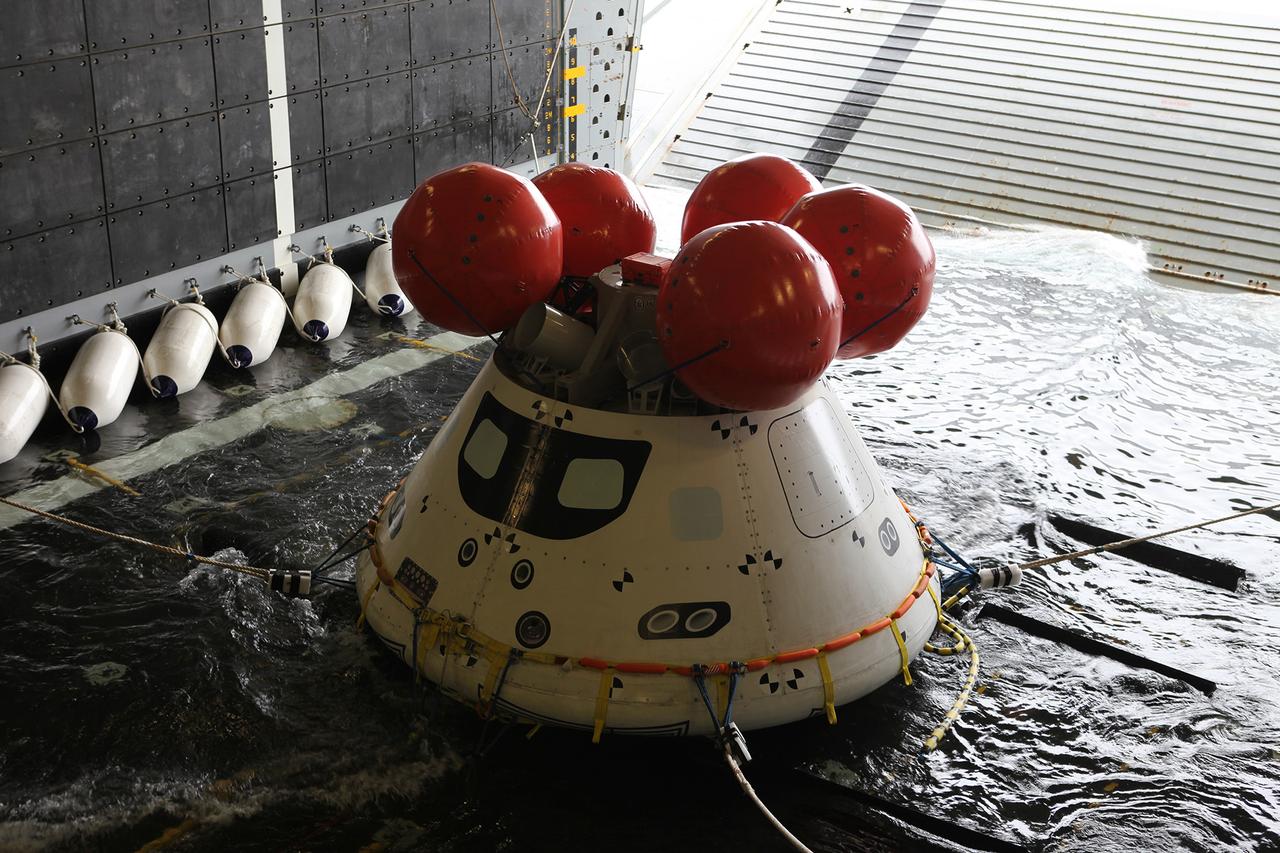
Recovery team members work with a test version of Orion floating in the well deck of the U.S.S. Anchorage on Aug. 2, 2014. A combined NASA and U.S. Navy team practiced recovery techniques off the coast of California in preparation for Exploration Flight Test-1 (EFT-1). Part of Batch image transfer from Flickr.
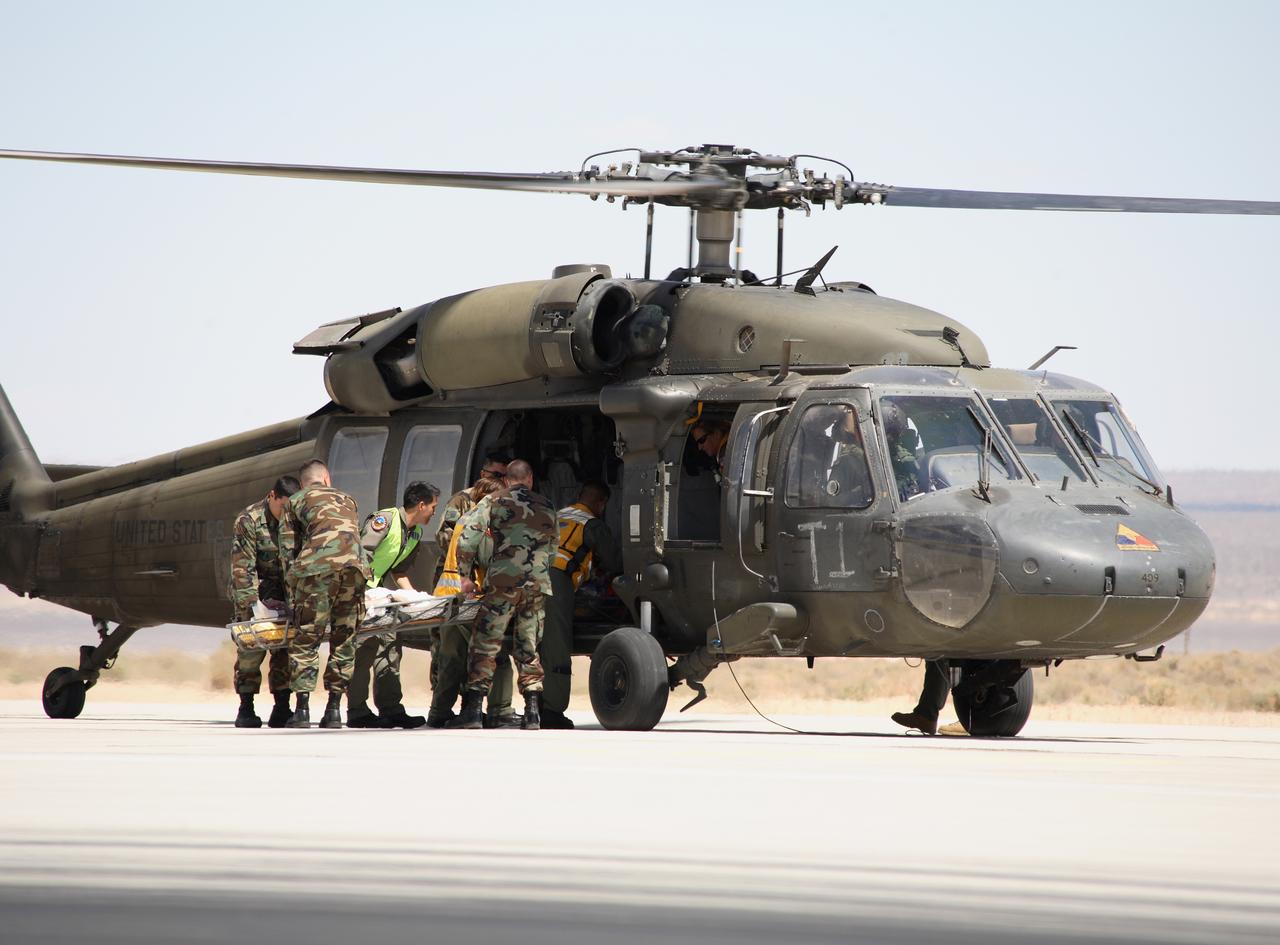
Air Force rescue team members load the volunteer "injured astronaut" on a stretcher into a Blackhawk helicopter for evacuation to a hospital during the exercise. (USAF photo # 070505-F-1287F-166)

Artemis II lunar science team member, Amber Turner, works on the lunar targeting plan for the astronauts' several-hour flyby of the Moon, scheduled for April 6. As they pass the Moon, the crew will apply geology skills learned in the classroom and in Moon-like environments on Earth to photograph and describe features including impact craters, ancient lava flows, and surface cracks and ridges formed as the Moon slowly changed over time. They will note differences in color, brightness, and texture, which provide clues that help scientists understand what the surface is made of and how it formed. Credits: NASA/Bill Stafford
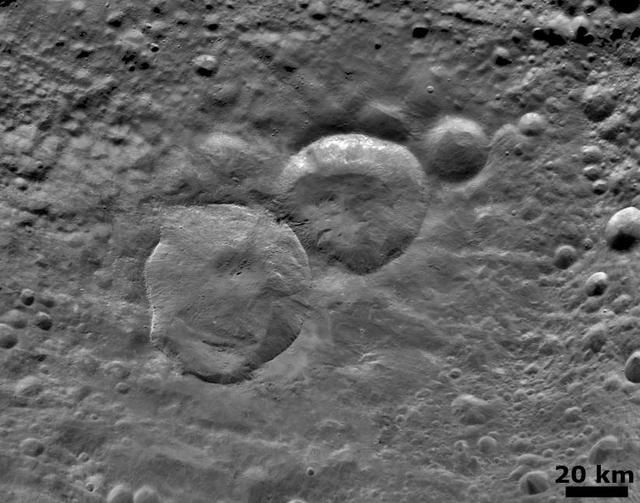
This image from NASA Dawn spacecraft shows a detailed view of three craters, informally nicknamed Snowman by the camera team members.
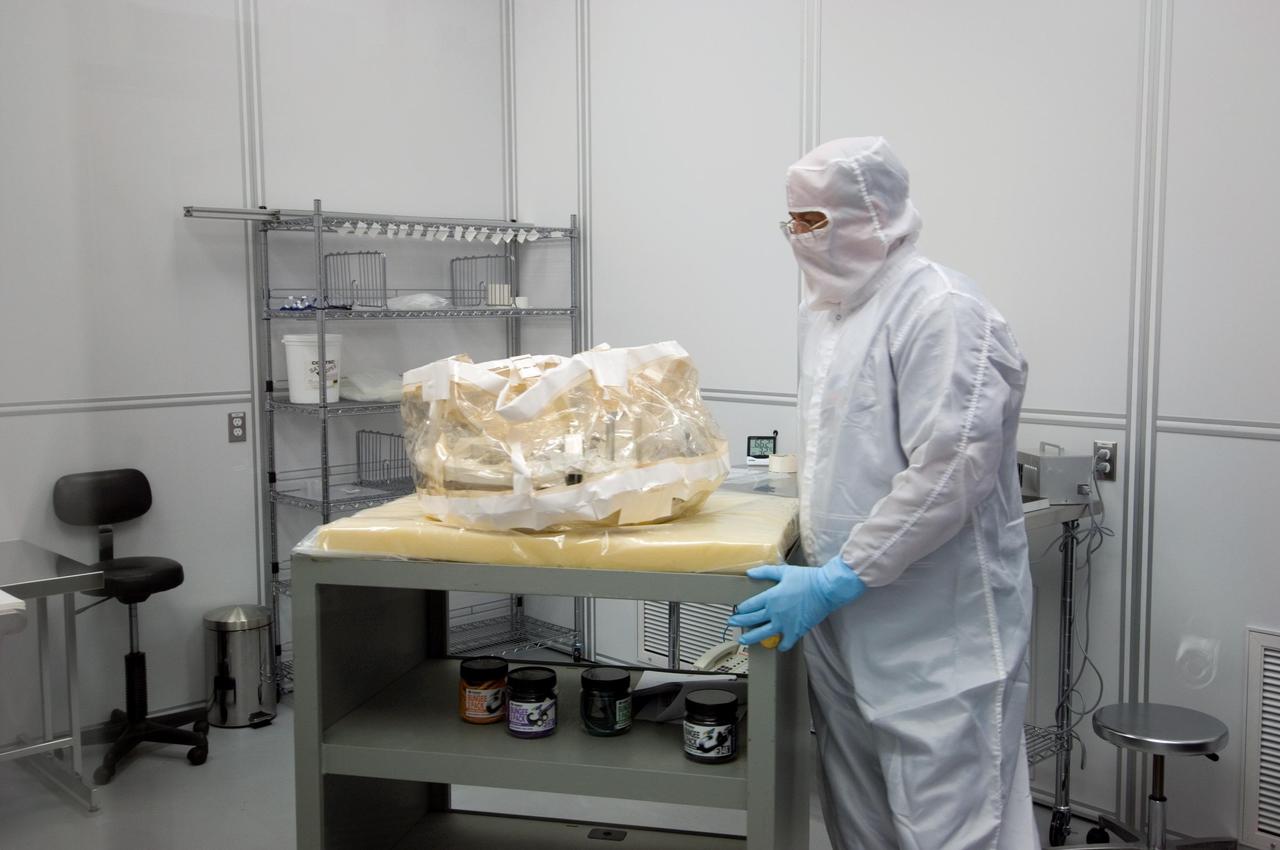
Inside Space Exposed Hardware Lab a member of the JSC Curation Team with NASA Stardust canister in lab.
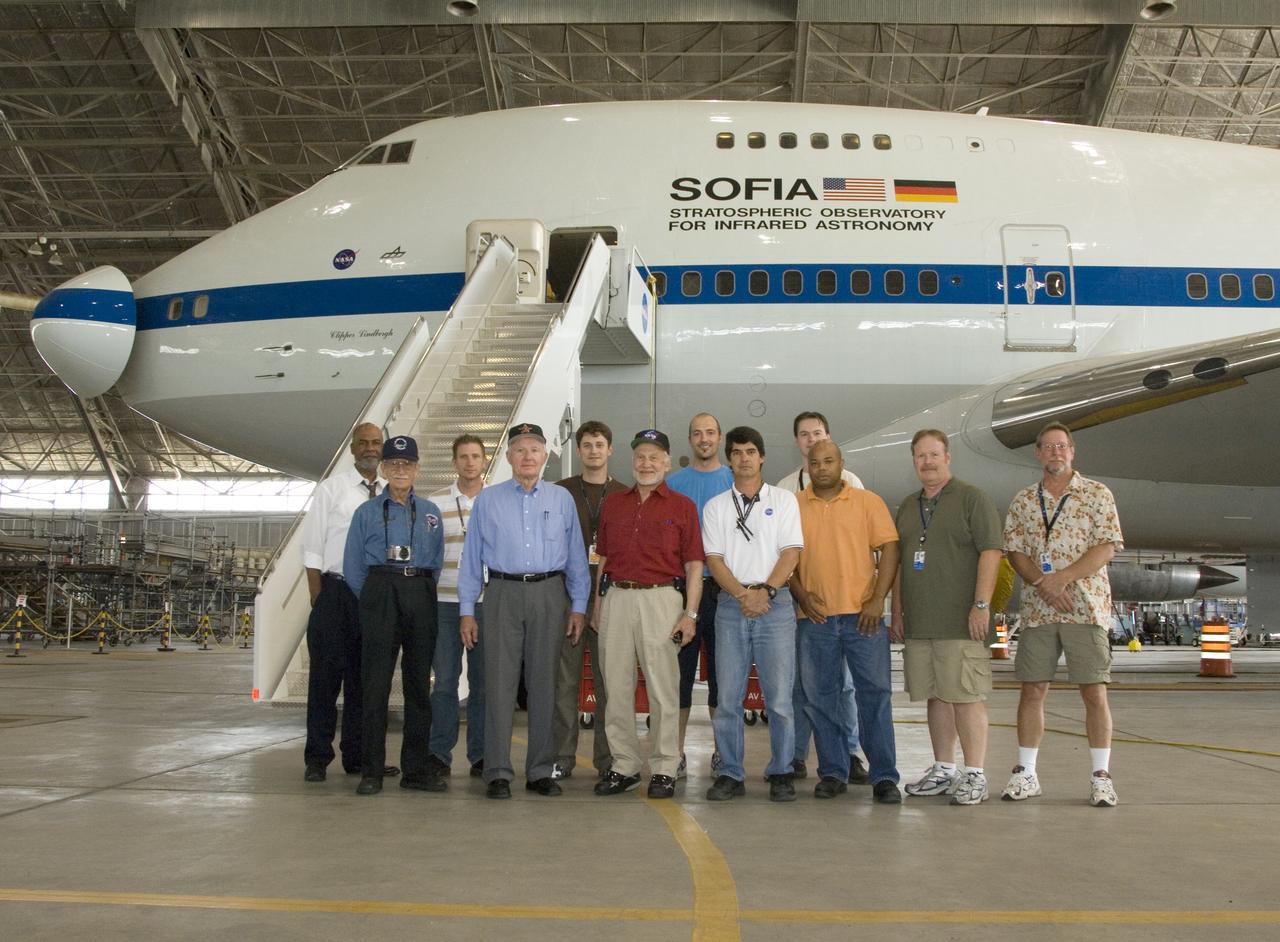
Members of the SOFIA infrared observatory support team gather around Apollo 11 astronaut Buzz Aldrin (in red shirt) during Aldrin's tour of NASA Dryden.
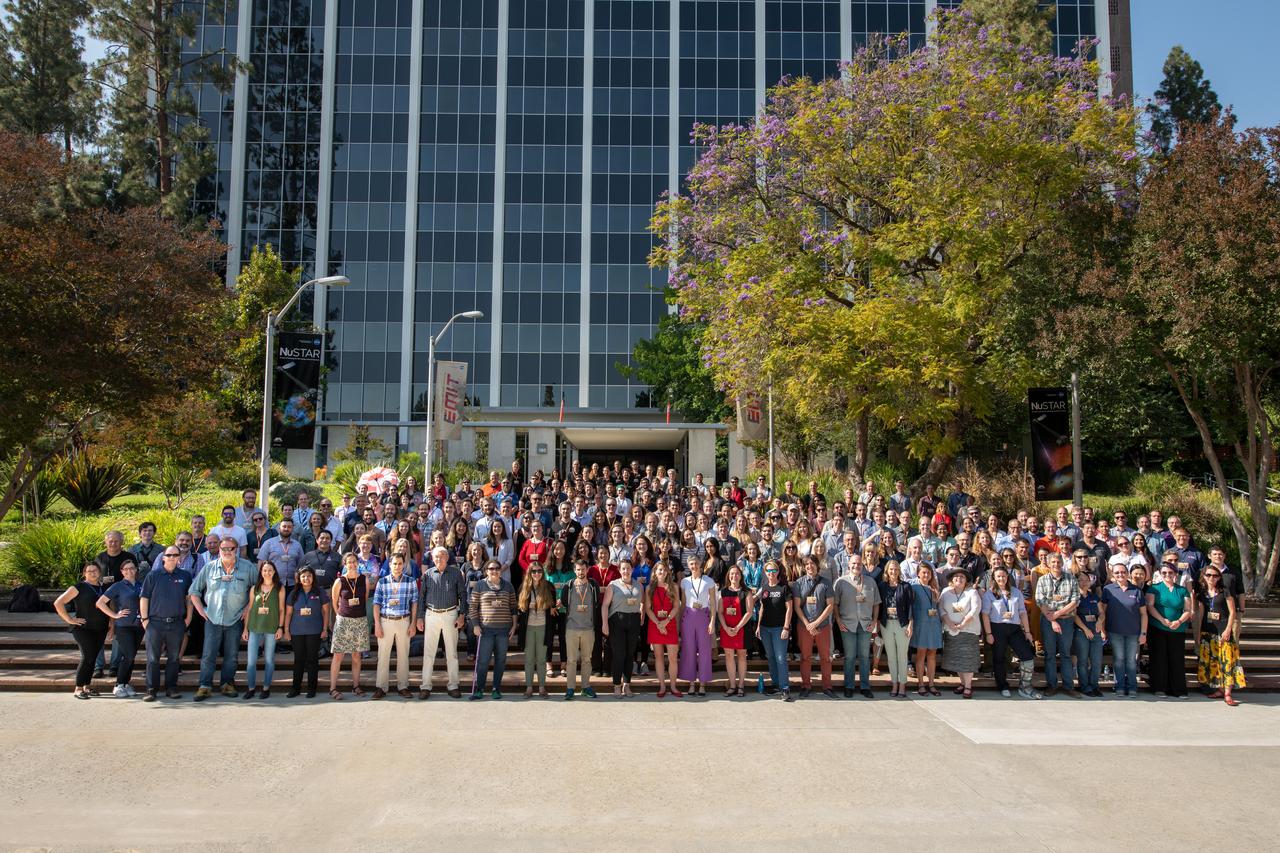
Members of the Perseverance rover Science Team pose on June 7, 2022, at NASA's Jet Propulsion Laboratory, which manages the mission. https://photojournal.jpl.nasa.gov/catalog/PIA25328
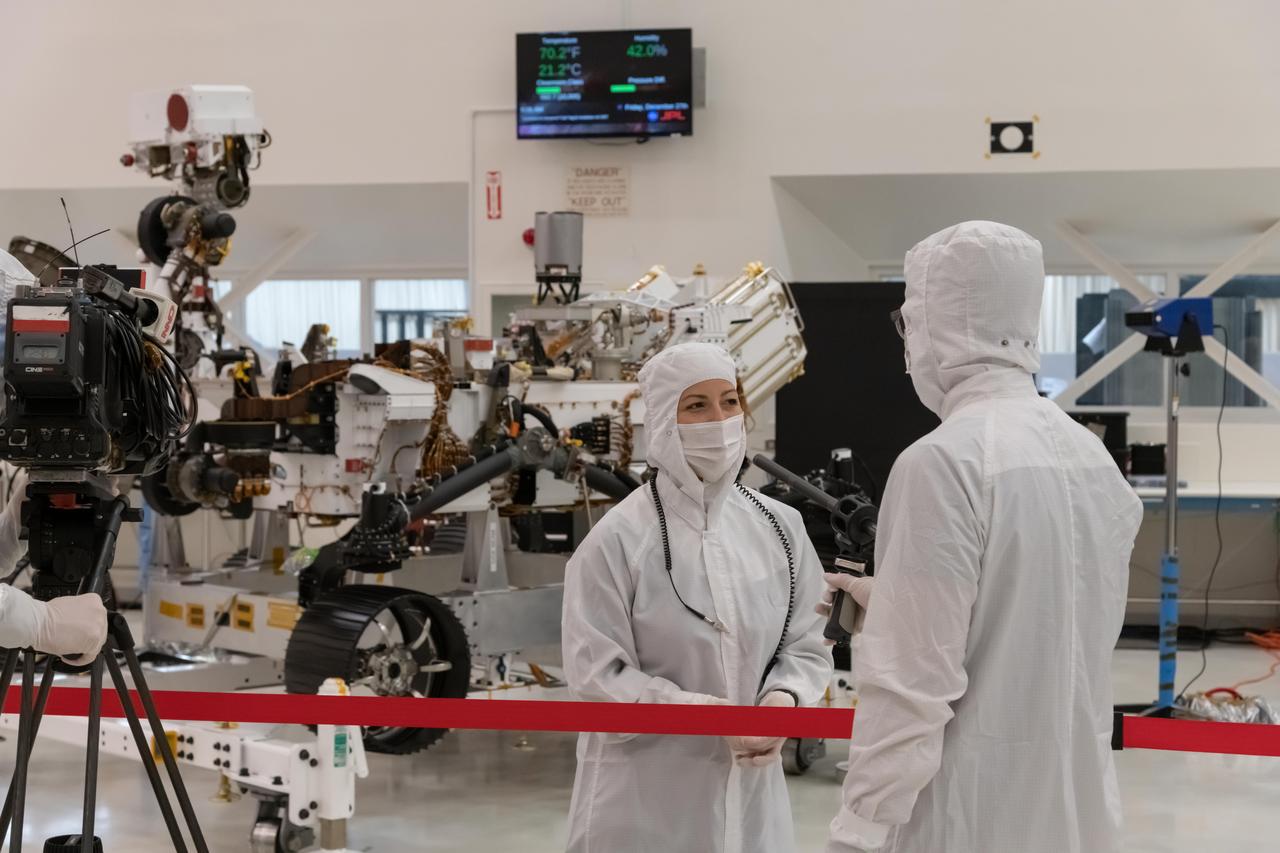
A member of the media interviews mission team member Jessica Samuels inside JPL's High Bay 1 clean room on Dec. 27, 2019, during Mars 2020 media day. https://photojournal.jpl.nasa.gov/catalog/PIA23587
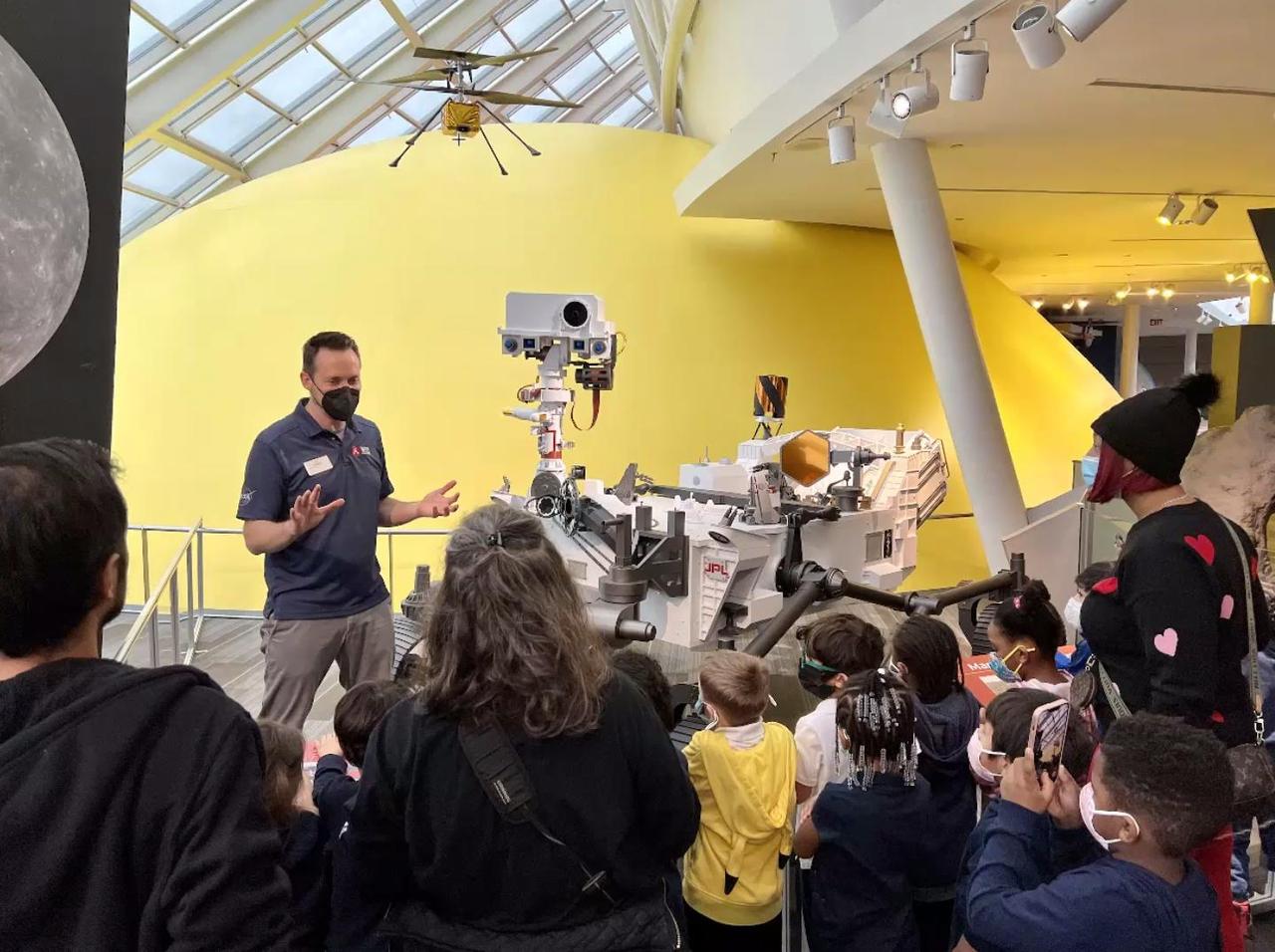
Members of the public met with NASA Mars team members and saw the Perseverance rover and Ingenuity helicopter models up close during a "Roving With Perseverance" tour stop at the Adler Planetarium in Chicago. https://photojournal.jpl.nasa.gov/catalog/PIA25640
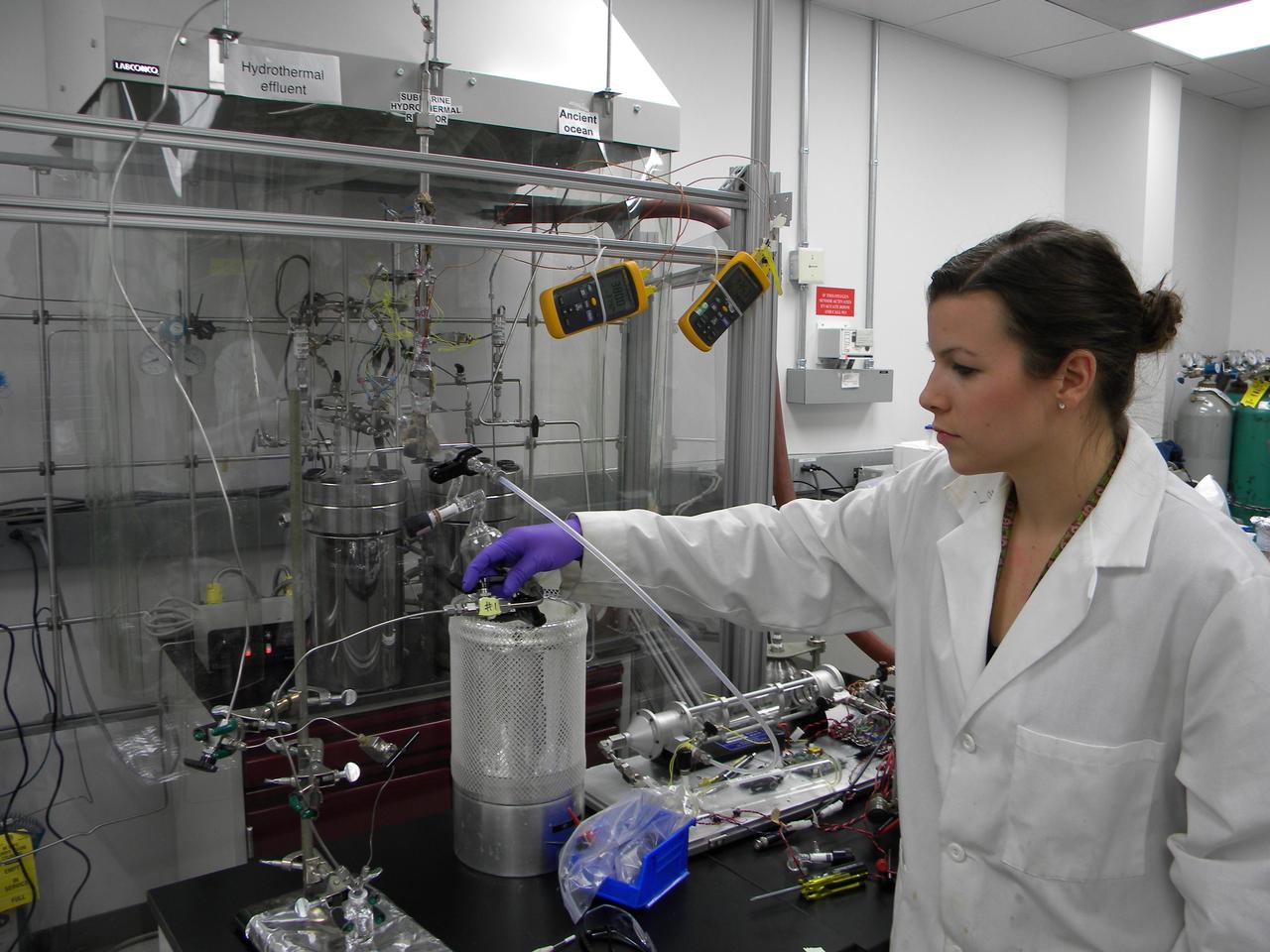
A team of scientists at NASA Jet Propulsion Laboratory is testing whether organic molecules can be brewed in a simulated ocean vent. Pictured here is Lauren White, a member of the NASA Astrobiology Icy Worlds team.
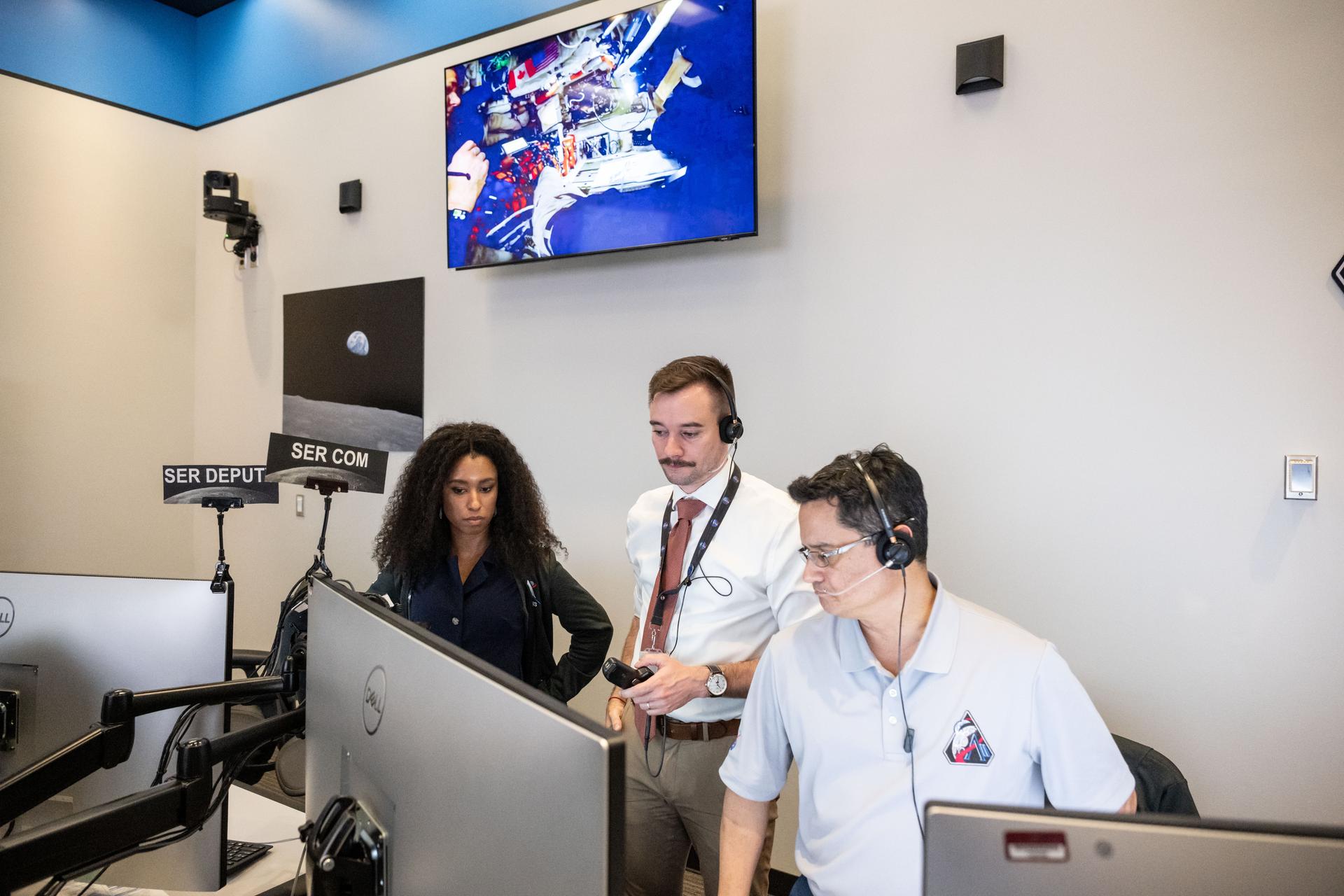
Artemis II lunar science team members, from left, Amber Turner, Jacob Richardson, Jose Hurtado, discuss the team's progress on the lunar targeting plan for the astronauts' six-hour flyby of the Moon, scheduled for April 6. As they pass the Moon, the crew will apply geology skills learned in the classroom and in Moon-like environments on Earth to photograph and describe features including impact craters, ancient lava flows, and surface cracks and ridges formed as the Moon slowly changed over time. They will note differences in color, brightness, and texture, which provide clues that help scientists understand what the surface is made of and how it formed. Credits: NASA/Bill Stafford

S65-28699 (17 Aug. 1965) --- Astronaut Charles Conrad Jr. (dark shirt), pilot for the Gemini-5 spaceflight, discusses x-rays with members of the medical team at Cape Kennedy. Left to right are Dr. Eugene Tubbs; astronaut Conrad; Dr. Charles A. Berry, chief, Center Medical Programs, Manned Spacecraft Center; and Dr. Robert Moser (seated), Medical Monitor with the U.S. Army.
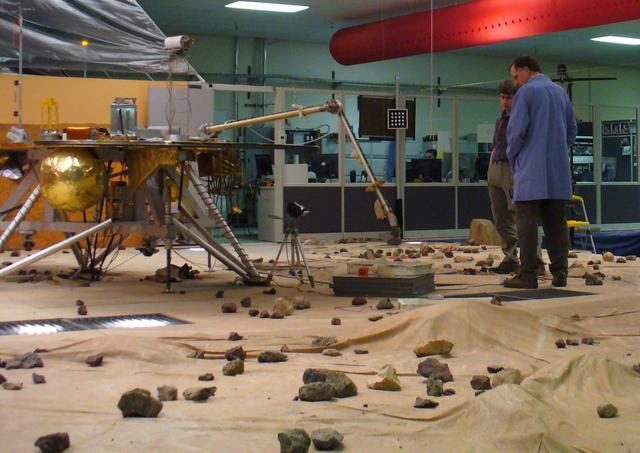
Members of NASA Phoenix Mars Mission Robotic Arm engineering team test the arm motorized rasp in the Payload Interoperability Testbed at the University of Arizona, Tucson.
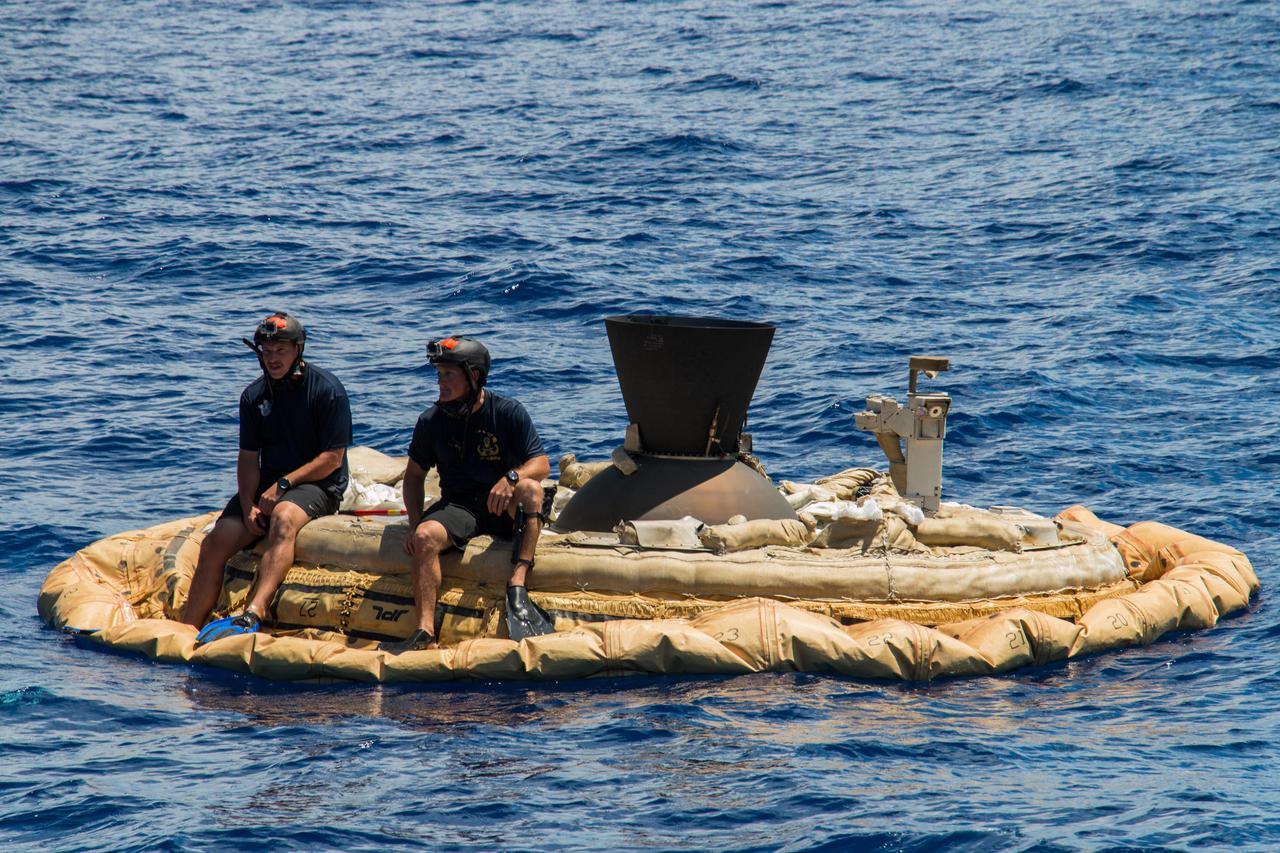
Two members of the Navy Explosive Ordinance Disposal team perch on the test vehicle used in the first flight of NASA Low-density Supersonic Decelerator project.
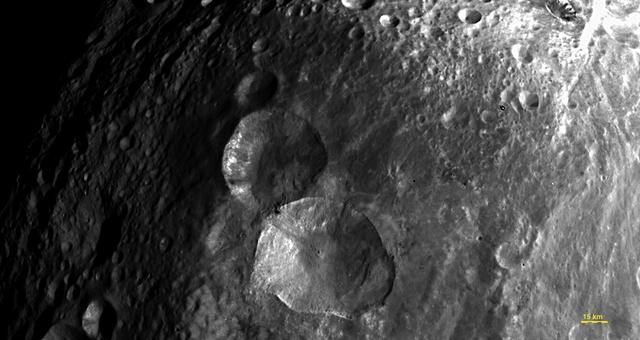
In this image, obtained by the framing camera on NASA Dawn spacecraft, a set of three craters, informally nicknamed Snowman by the camera team members, is located in the northern hemisphere of Vesta.
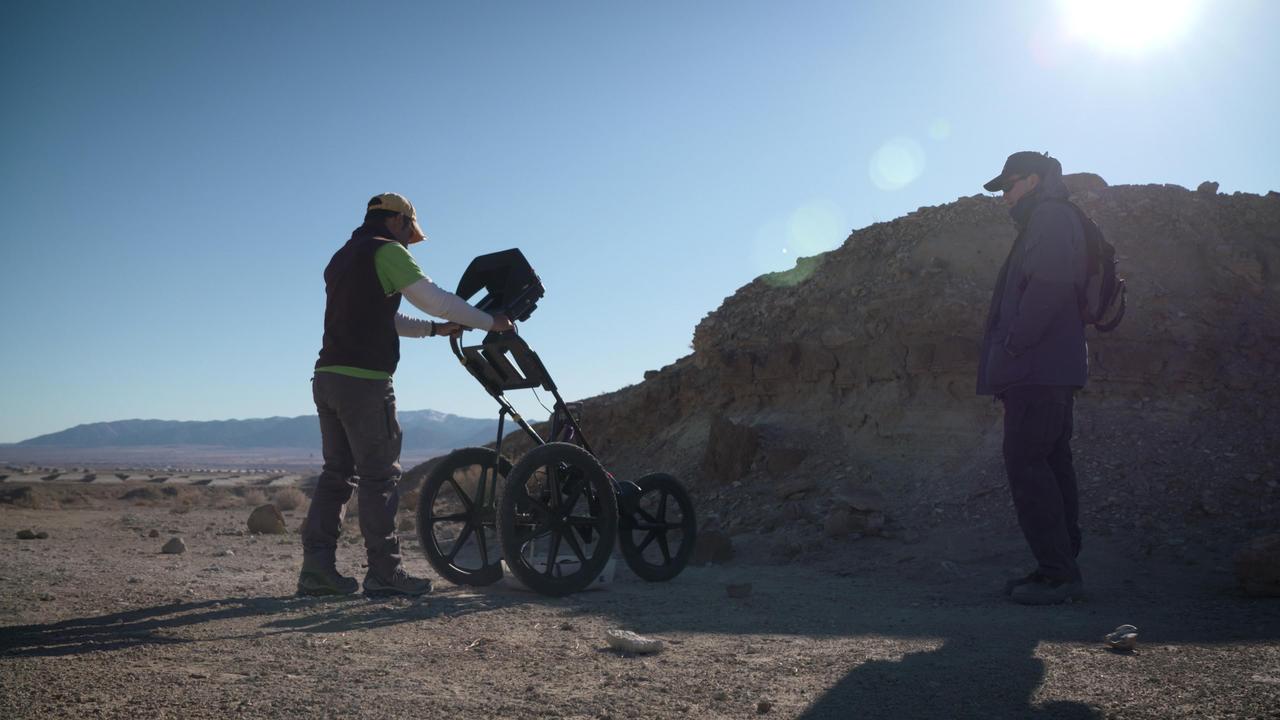
A member of a science field team operates a subsurface radar in the Nevada desert in February 2020 as part of a practice exercise. Over the course of several days, the field team stood in for NASA's Perseverance rover, sending data to and receiving commands from scientists located remotely, just as the rover will after landing on Mars in February 2021. https://photojournal.jpl.nasa.gov/catalog/PIA23778
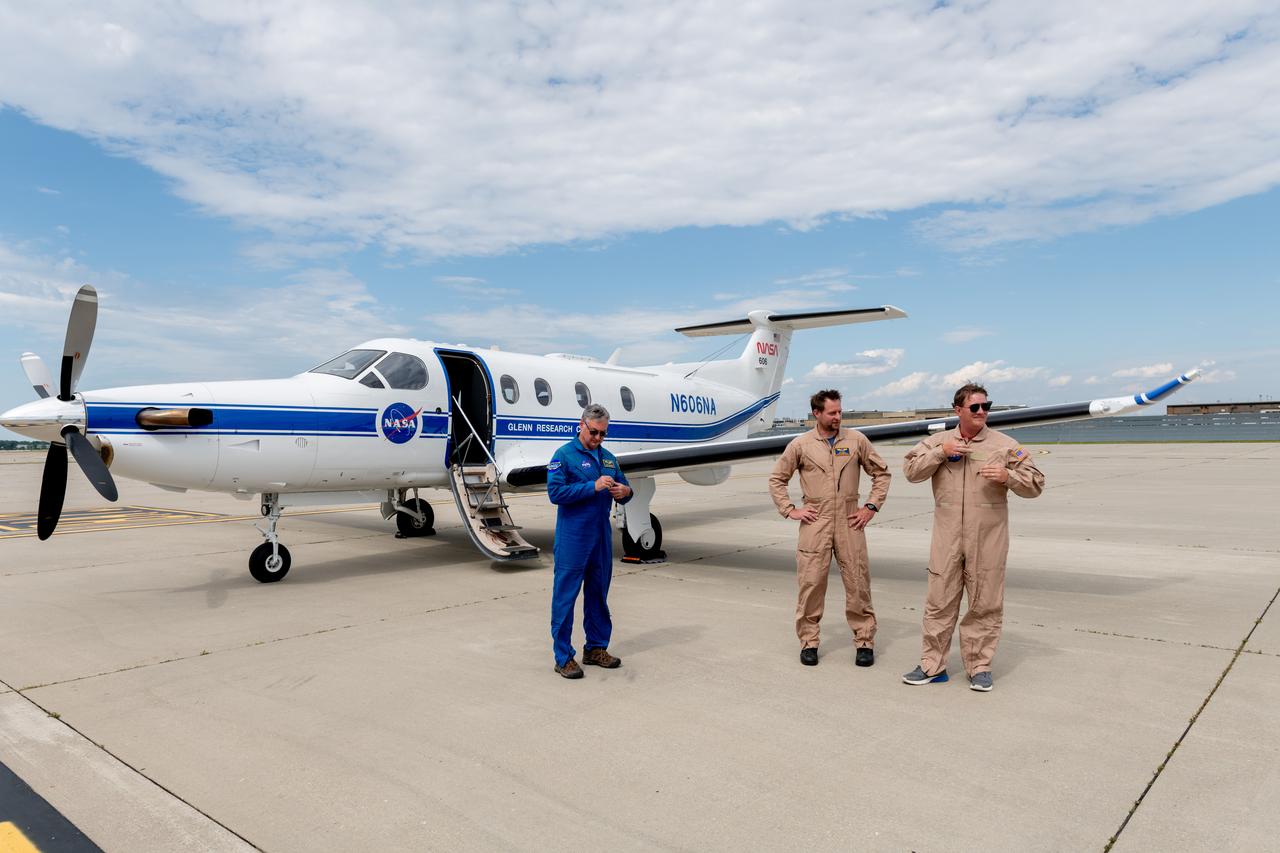
A team at NASA’s Glenn Research Center in Cleveland streamed 4K video footage from an aircraft to the International Space Station and back for the first time using optical, or laser, communications. The feat was part of a series of tests on new technology that could provide live video coverage of astronauts on the Moon during the Artemis missions. Pictured here on June 13, 2024 from Left to Right: Kurt Blakenship, Adam Wroblewski, Shaun McKeehan. Working with the Air Force Research Laboratory and NASA’s Small Business Innovation Research program, Glenn engineers temporarily installed a portable laser terminal on the belly of a Pilatus PC-12 aircraft. They then flew over Lake Erie sending data from the aircraft to an optical ground station in Cleveland. From there, it was sent over an Earth-based network to NASA’s White Sands Test Facility in Las Cruces, New Mexico, where scientists used infrared light signals to send the data. Photo Credit: (NASA/Sara Lowthian-Hanna)

The Orion team gathers at Space Center Houston on May 20, 2015 to celebrate their accomplishments on Orion's first flight, Exploration Flight Test-1 (EFT-1). Part of Batch image transfer from Flickr.
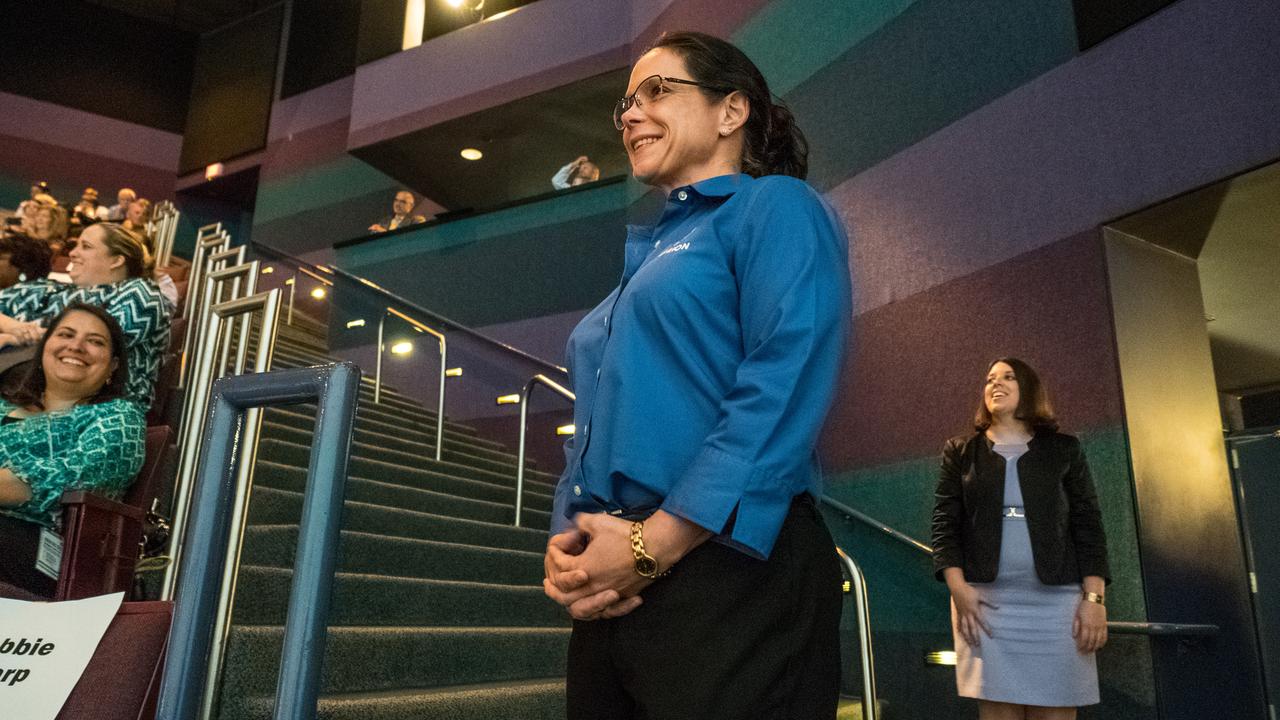
The Orion team gathers at Space Center Houston on May 20, 2015 to celebrate their accomplishments on Orion's first flight, Exploration Flight Test-1 (EFT-1). Part of Batch image transfer from Flickr.

The Orion team gathers at Space Center Houston on May 20, 2015 to celebrate their accomplishments on Orion's first flight, Exploration Flight Test-1 (EFT-1). JSC Director Ellen Ochoa speaks at the podium. Part of Batch image transfer from Flickr.

The Orion team gathers at Space Center Houston on May 20, 2015 to celebrate their accomplishments on Orion's first flight, Exploration Flight Test-1 (EFT-1). Part of Batch image transfer from Flickr.
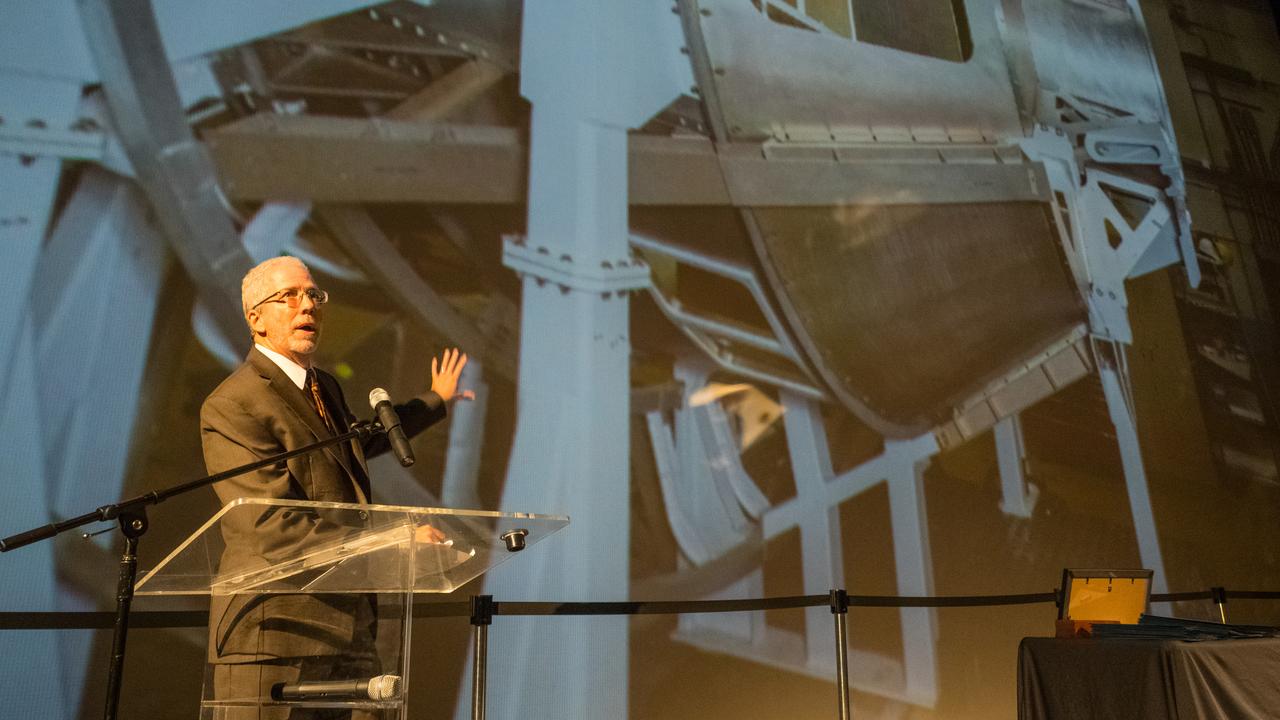
The Orion team gathers at Space Center Houston on May 20, 2015 to celebrate their accomplishments on Orion's first flight, Exploration Flight Test-1 (EFT-1). Part of Batch image transfer from Flickr.

The Orion team gathers at Space Center Houston on May 20, 2015 to celebrate their accomplishments on Orion's first flight, Exploration Flight Test-1 (EFT-1). Part of Batch image transfer from Flickr.

The Orion team gathers at Space Center Houston on May 20, 2015 to celebrate their accomplishments on Orion's first flight, Exploration Flight Test-1 (EFT-1). Part of Batch image transfer from Flickr.

The Orion team gathers at Space Center Houston on May 20, 2015 to celebrate their accomplishments on Orion's first flight, Exploration Flight Test-1 (EFT-1). Part of Batch image transfer from Flickr.
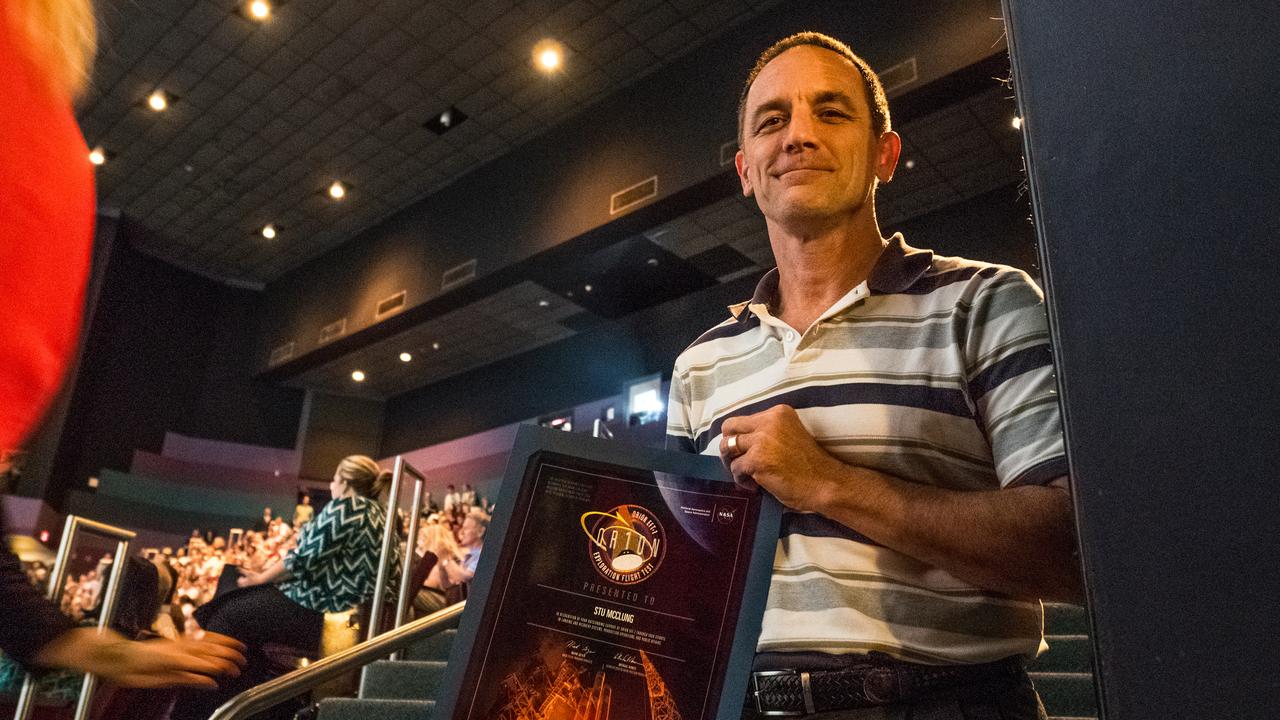
The Orion team gathers at Space Center Houston on May 20, 2015 to celebrate their accomplishments on Orion's first flight, Exploration Flight Test-1 (EFT-1). Part of Batch image transfer from Flickr.

The Orion team gathers at Space Center Houston on May 20, 2015 to celebrate their accomplishments on Orion's first flight, Exploration Flight Test-1 (EFT-1). Part of Batch image transfer from Flickr.

The Orion team gathers at Space Center Houston on May 20, 2015 to celebrate their accomplishments on Orion's first flight, Exploration Flight Test-1 (EFT-1).Part of Batch image transfer from Flickr.

The Orion team gathers at Space Center Houston on May 20, 2015 to celebrate their accomplishments on Orion's first flight, Exploration Flight Test-1 (EFT-1). Part of Batch image transfer from Flickr.
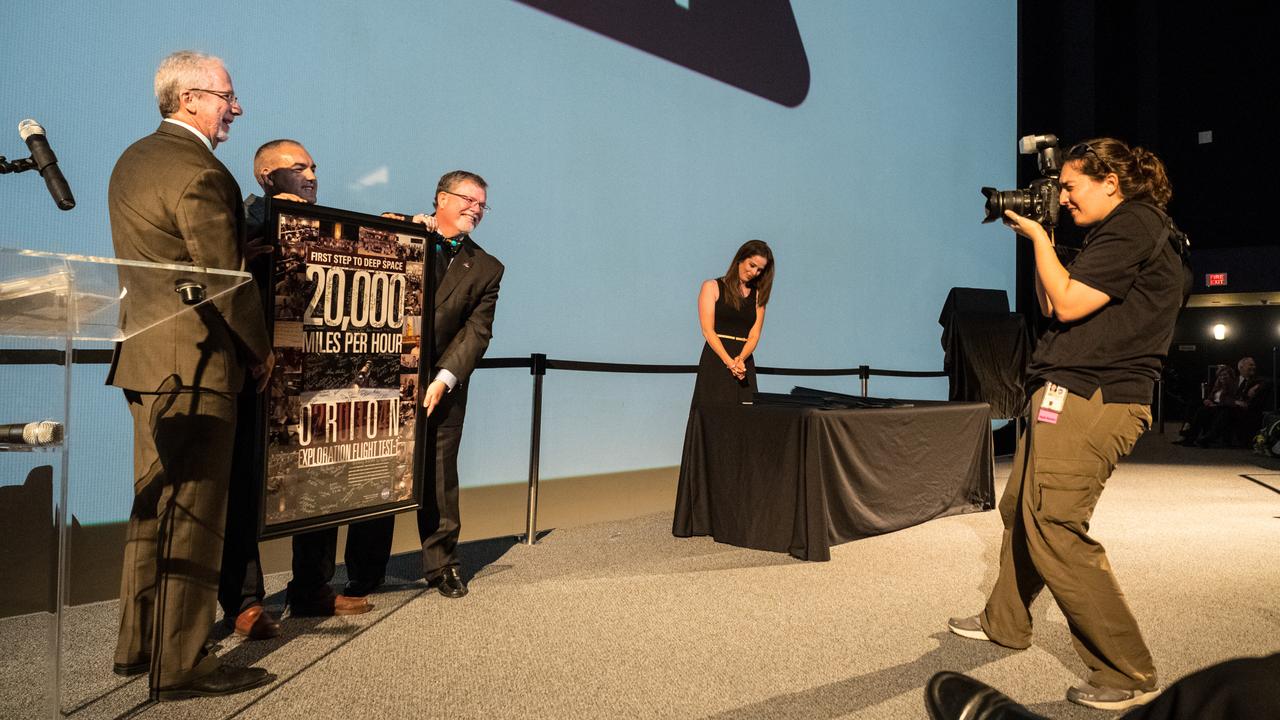
The Orion team gathers at Space Center Houston on May 20, 2015 to celebrate their accomplishments on Orion's first flight, Exploration Flight Test-1 (EFT-1). Part of Batch image transfer from Flickr.

The Orion team gathers at Space Center Houston on May 20, 2015 to celebrate their accomplishments on Orion's first flight, Exploration Flight Test-1 (EFT-1). Part of Batch image transfer from Flickr.
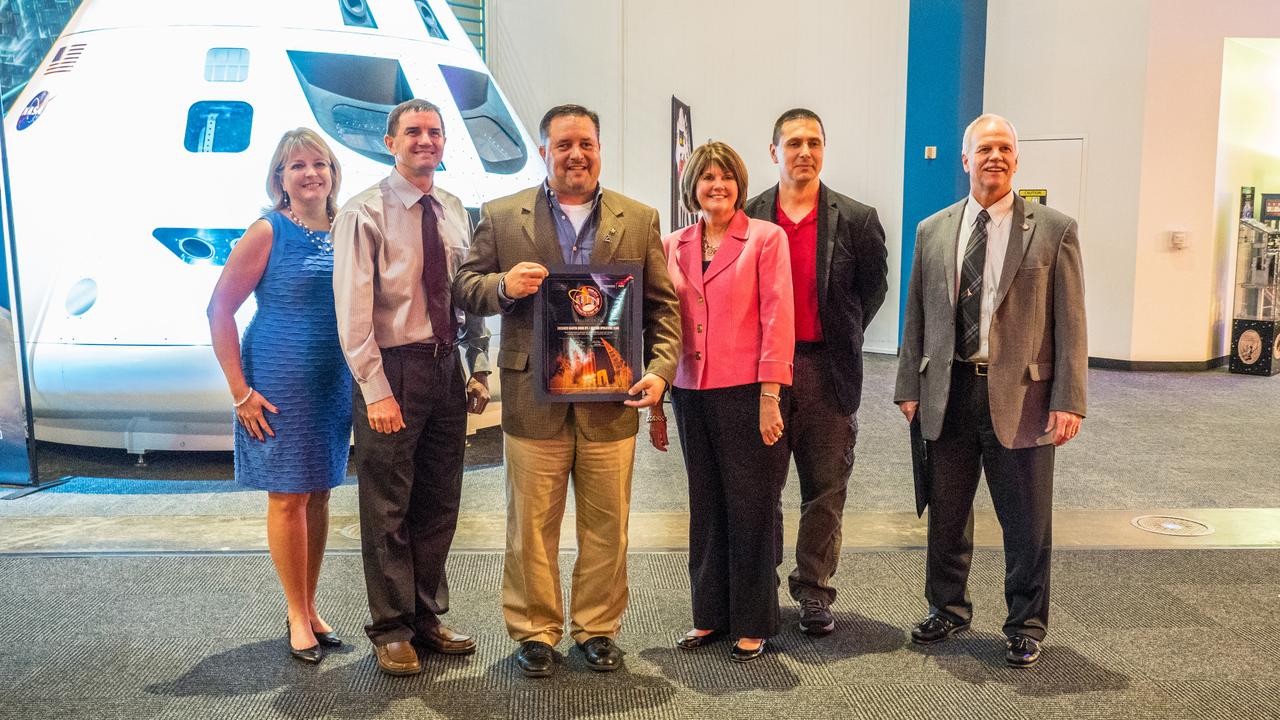
The Orion team gathers at Space Center Houston on May 20, 2015 to celebrate their accomplishments on Orion's first flight, Exploration Flight Test-1 (EFT-1). Part of Batch image transfer from Flickr.
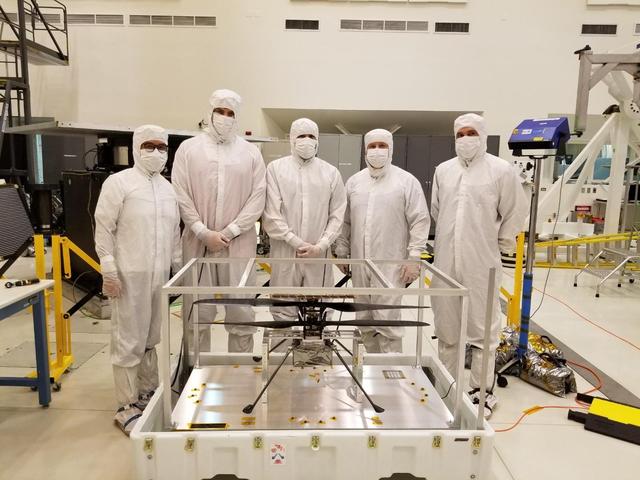
Members from NASA's Mars Helicopter and Mars 2020 teams stand behind the Mars Helicopter. The The image was taken on July 30, 2019 in the Spacecraft Assembly Facility's High Bay 1 at the Jet Propulsion Laboratory in Pasadena, California. https://photojournal.jpl.nasa.gov/catalog/PIA23317
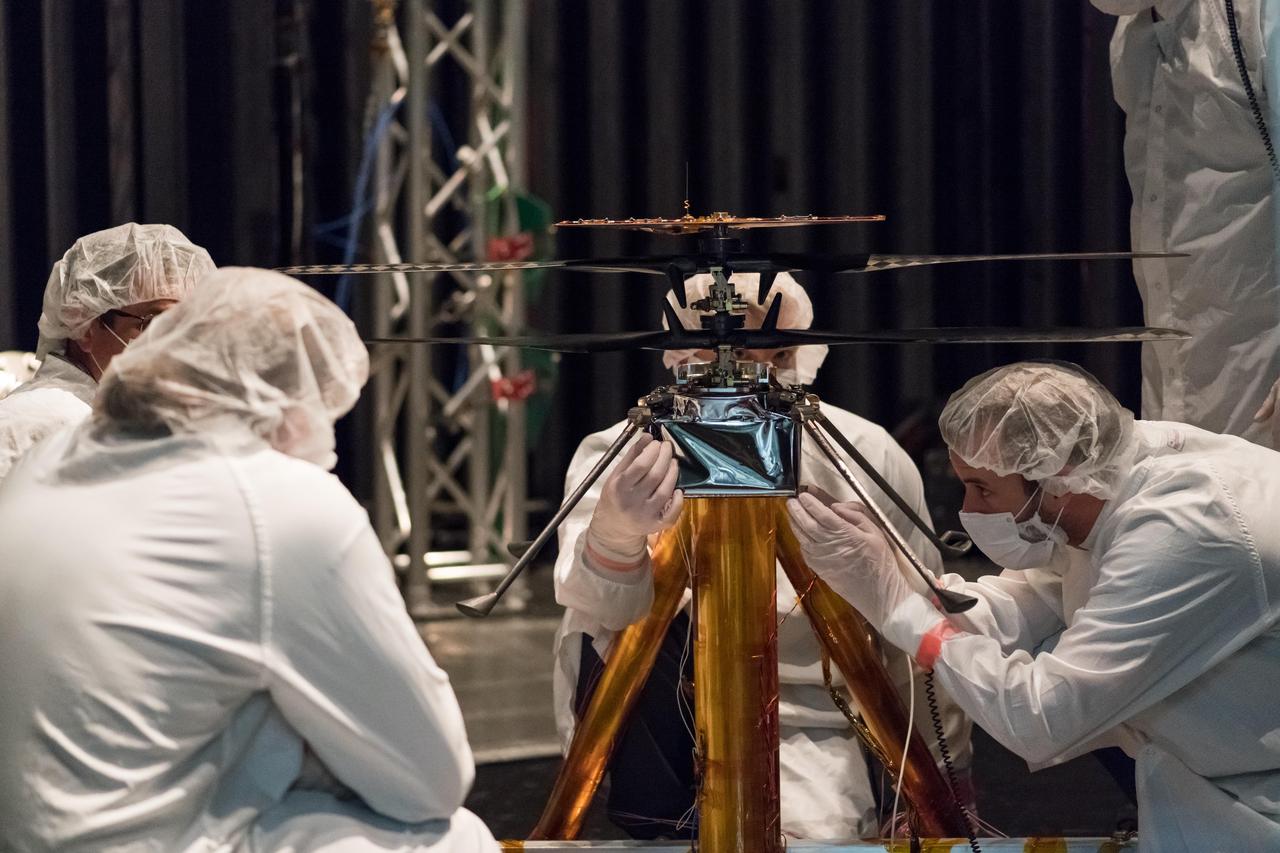
NASA Mars Helicopter team members work the flight model (the vehicle going to Mars) in the Space Simulator, a 25-foot-wide (7.62-meter-wide) vacuum chamber, at NASA's Jet Propulsion Laboratory in Pasadena, California. The image was taken on Feb. 1, 2019. https://photojournal.jpl.nasa.gov/catalog/PIA23152
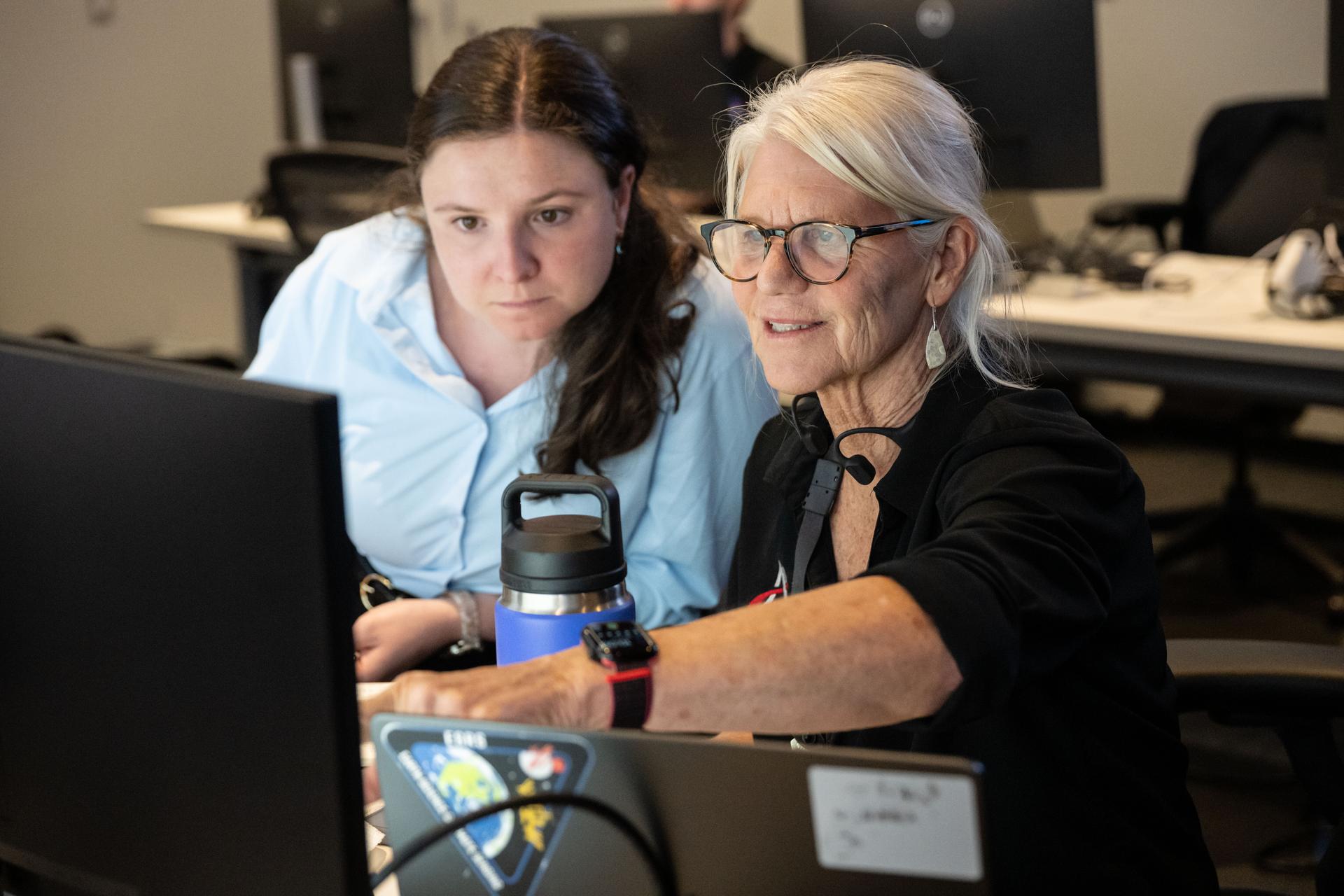
Artemis II lunar science team members, from left, Megan Borel, and Cindy Evans, discuss the lunar targeting plan for the astronauts' several-hour flyby of the Moon, scheduled for April 6. As they pass the Moon, the crew will apply geology skills learned in the classroom and in Moon-like environments on Earth to photograph and describe features including impact craters, ancient lava flows, and surface cracks and ridges formed as the Moon slowly changed over time. They will note differences in color, brightness, and texture, which provide clues that help scientists understand what the surface is made of and how it formed. Credits: NASA/Bill Stafford

DAVINCI VADIX team members discuss observations at Crater Island, Utah, June 23, 2026. NASA/Mike Guinto
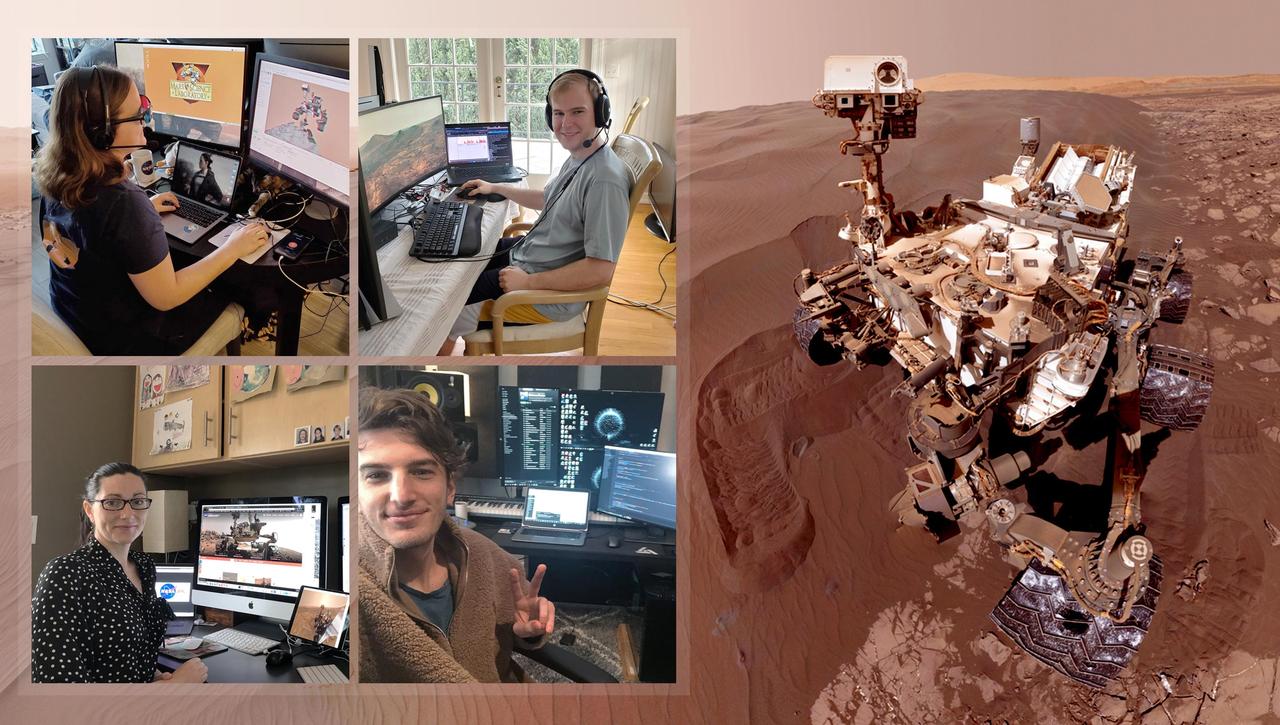
Members of NASA's Curiosity Mars rover mission team took pictures of themselves from their home offices on March 20, 2020, the first day the entire mission team worked remotely. Rover planning usually happens at NASA's Jet Propulsion Laboratory in Southern California. Clockwise from upper left: Rover planner Keri Bean, wearing red-blue 3D glasses; rover planner Camden Miller; tactical uplink lead Jack Quade; and Science Operations Team Chief Carrie Bridge. https://photojournal.jpl.nasa.gov/catalog/PIA23773
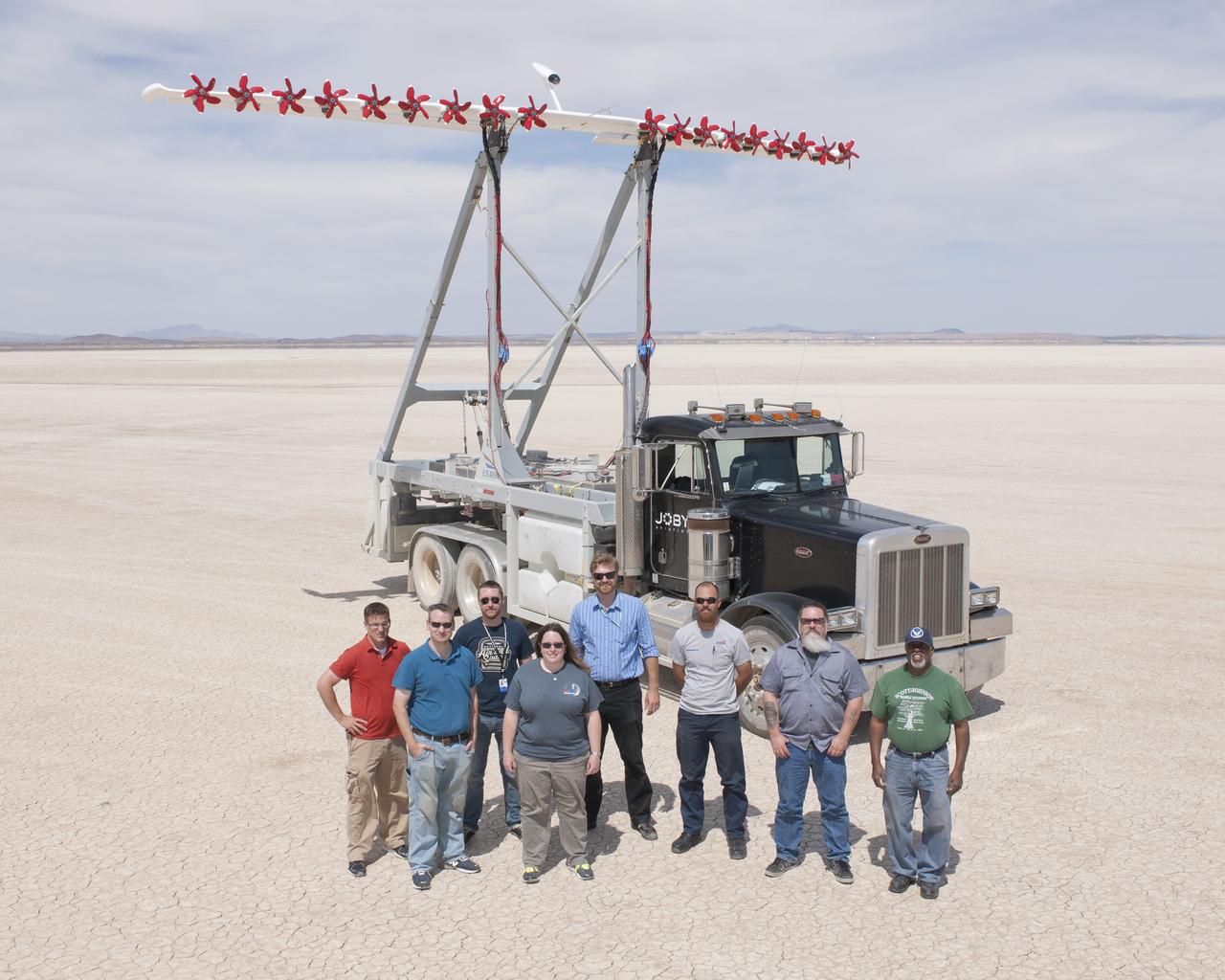
Team members of the Leading Edge Asynchronous Propeller Technology Ground Test team include from left Brian Soukup, Sean Clarke, Douglas Howe, Dena Gruca, Kurt Papathakis, Jason Denman, Vincent Bayne and Freddie Graham.

OSAM-1 and Maxar team members remove protective bagging from the spacecraft bus at Goddard Space Flight Center, Greenbelt Md., Sept 25, 2023. This photo has been reviewed by OSAM1 project management, Maxar public release authority, and the Export Control Office and is released for public view. NASA/Mike Guinto
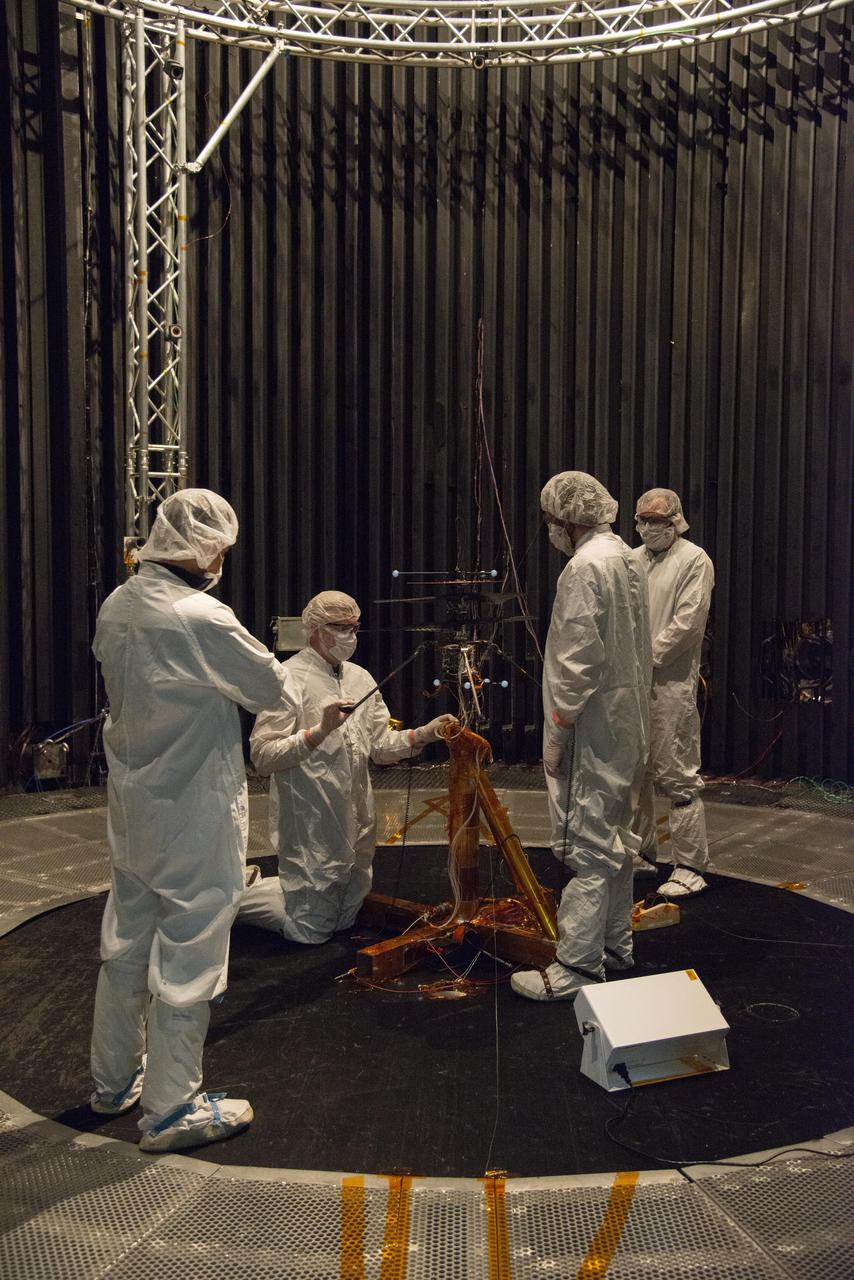
Members of NASA's Mars Helicopter team prepare the flight model (vehicle going to Mars) for a test in the Space Simulator, a 25-foot-wide (7.62-meter-wide) vacuum chamber at NASA's Jet Propulsion Laboratory in Pasadena, California. The image was taken on Jan. 18, 2019. https://photojournal.jpl.nasa.gov/catalog/PIA23156

Team members of NASA's next Mars mission applaud as mission manager Jennifer Trosper unveils a nameplate with "Perseverance" laser-etched into its surface. The image was taken at the agency's Jet Propulsion Laboratory on March 5, 2020. https://photojournal.jpl.nasa.gov/catalog/PIA23763
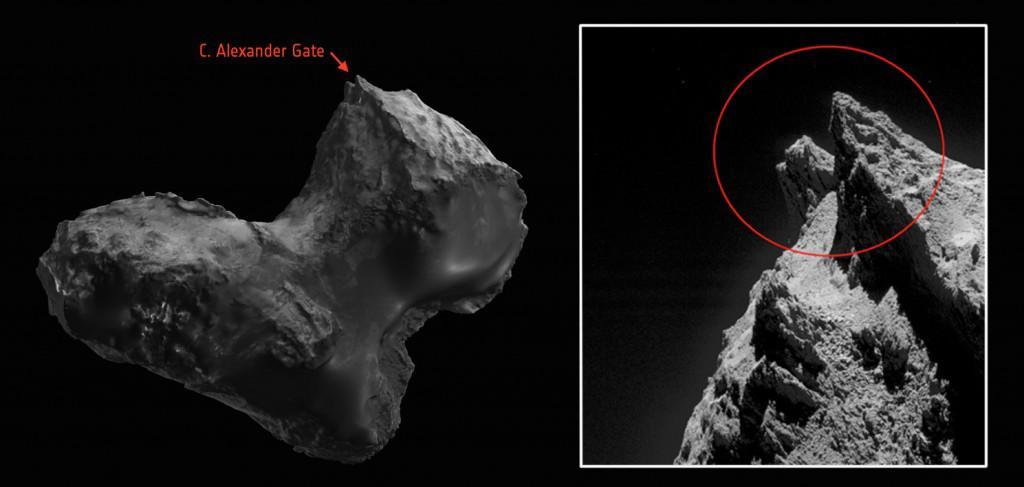
Scientists from the European Space Agency Rosetta team have honored two late team members by naming comet features after them. The comet is 67P/Churyumov-Gerasimenko, where the mission successfully landed a probe. One of the features is shown here in these Rosetta images, with the picture on the right being a close-up view. The "C. Alexander Gate" is found on the comet's smaller lobe, and is dedicated to Claudia Alexander, the U.S. project scientist from NASA's Jet Propulsion Laboratory, Pasadena, California, who passed away in July of this year. Image credit left: ESA's comet viewer http://sci.esa.int/comet-viewer. http://photojournal.jpl.nasa.gov/catalog/PIA19838
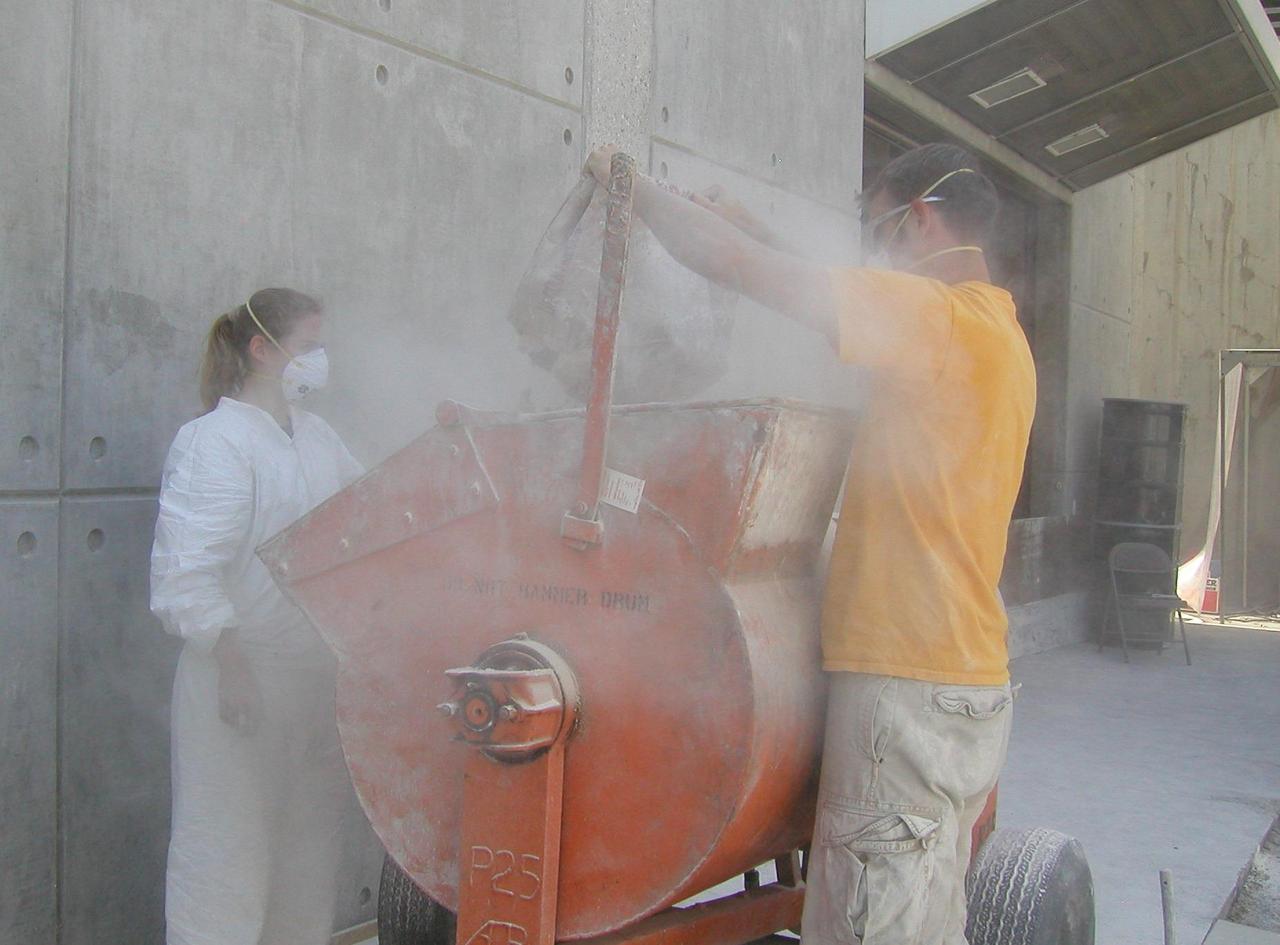
Rover team members Kim Lichtenberg left and Mike Seibert fill a mixer with powdered clay and diatomaceous earth, a combination found to offer physical properties similar to the soil where NASA rover Spirit is embedded on Mars.
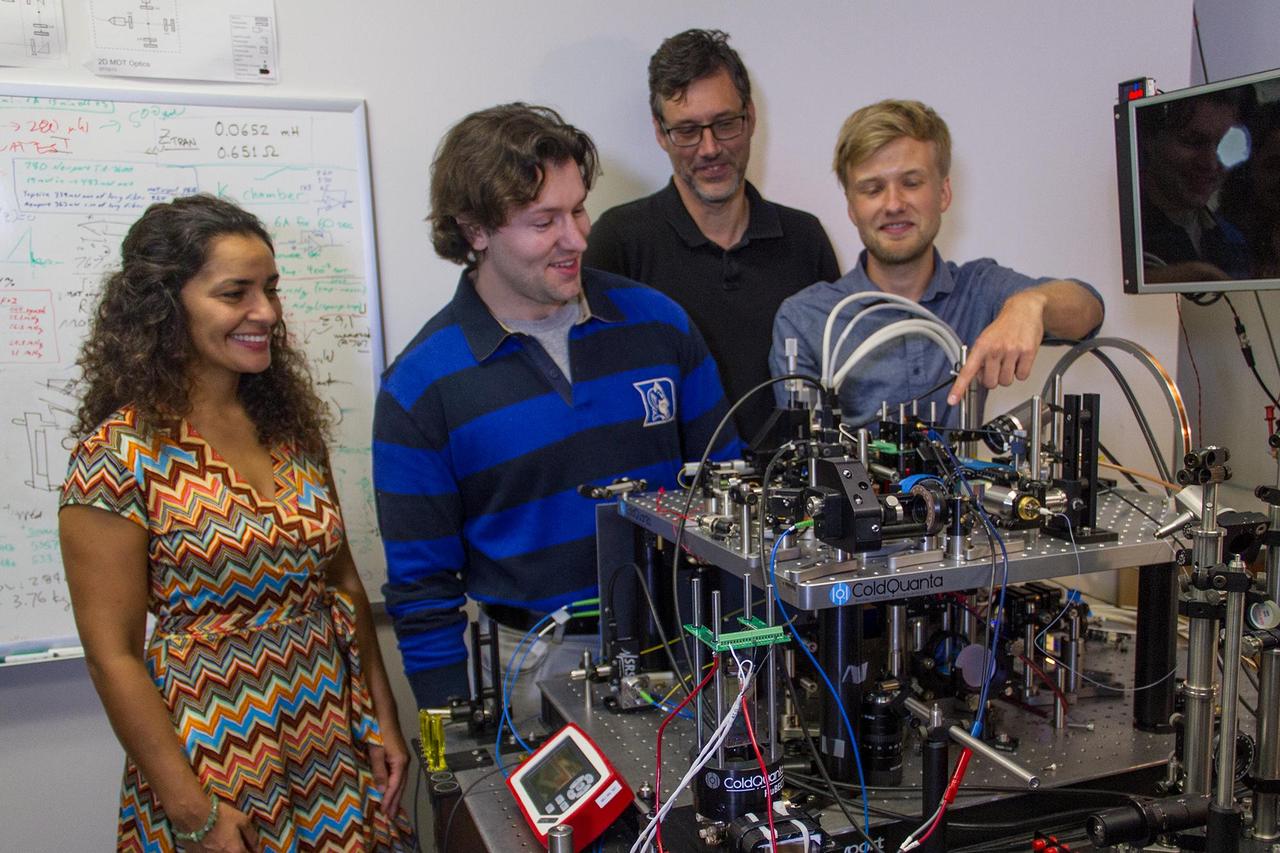
Members of the Cold Atom Laboratory team at NASA Jet Propulsion Laboratory are seen here with their ground-based testbed, which can reliably create a Bose-Einstein condensate.
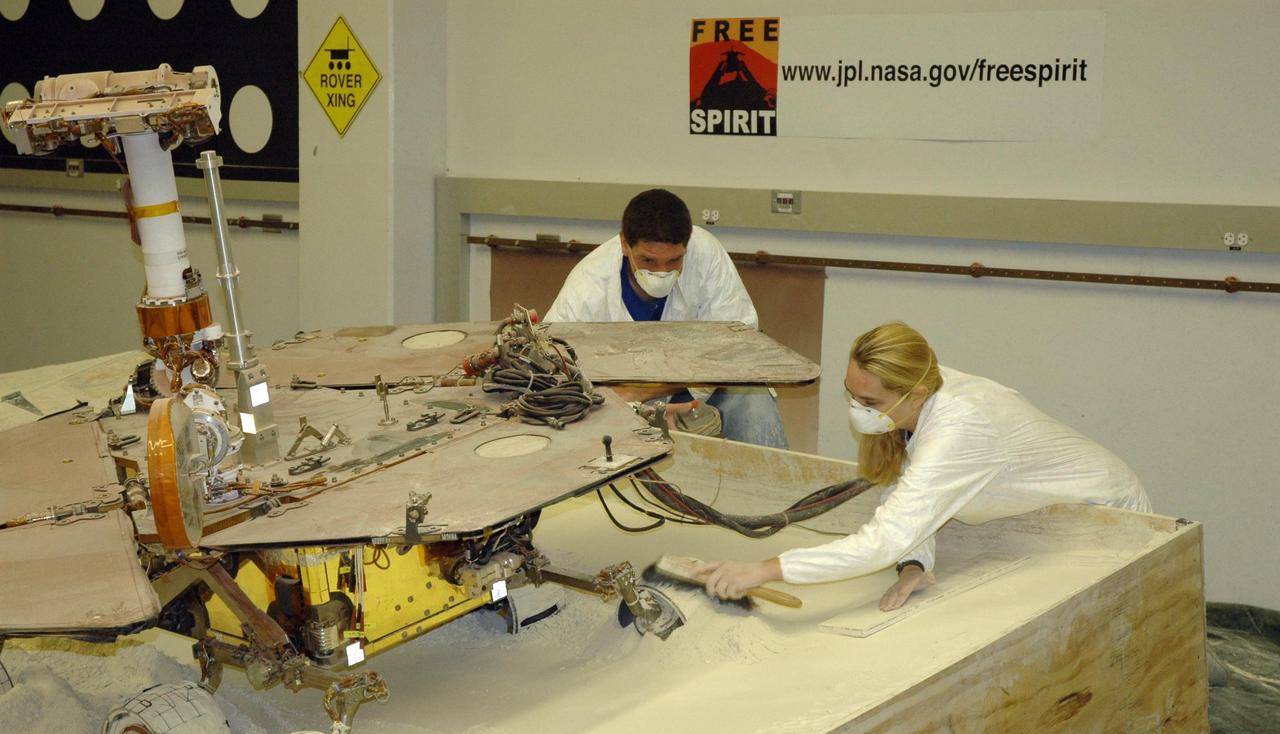
NASA Mars Exploration Rover team members continued longer-duration test runs this week, driving the test rover forward and uphill in a crab-like position. These long-duration drives will continue through the end of next week.
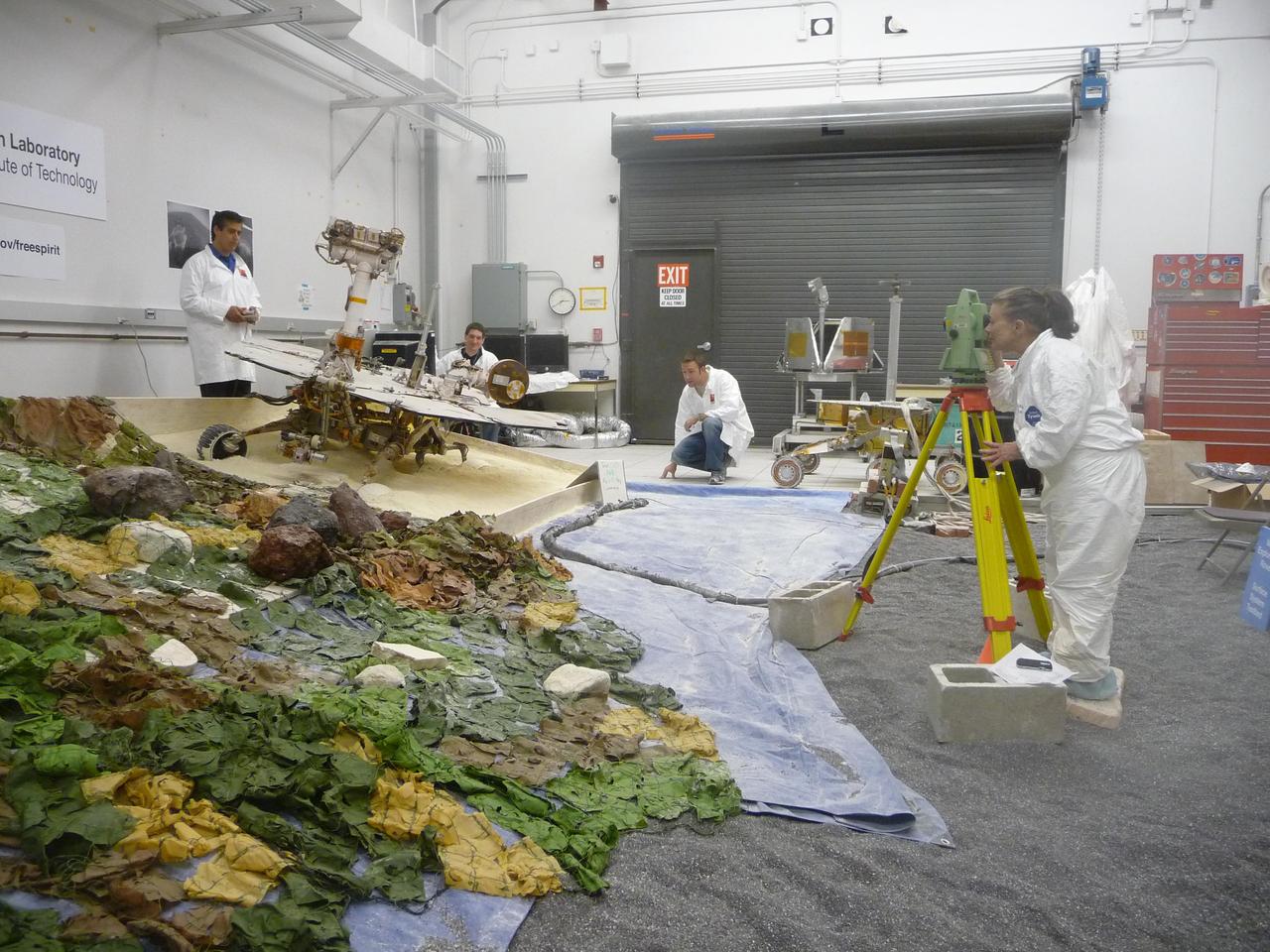
Rover-team members at NASA Jet Propulsion Laboratory, Pasadena, Calif., check slight movements by a test rover during tests simulating the challenge of getting NASA Mars Exploration Rover Spirit out of a sand trap on Mars.
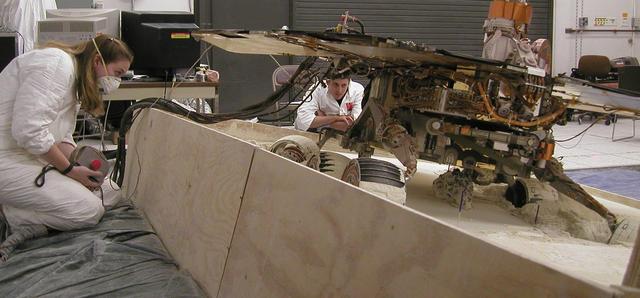
Rover team members Kim Lichtenberg and Joseph Carsten watch motions of a test rover at NASA Jet Propulsion Laboratory, Pasadena, Calif., as the rover carries out commands for driving forward with an arc toward the right.
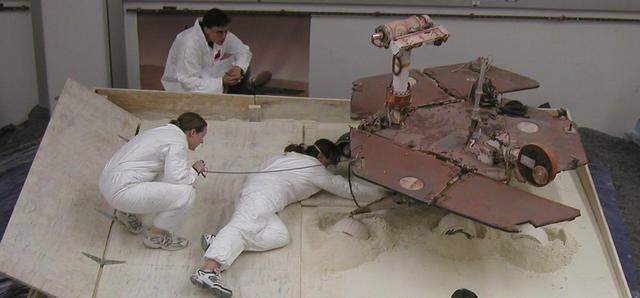
NASA Mars Exploration Rover team members prepare a testing setup for a subsequent experiment after an experiment driving the rover in a crablike motion, with all four corner wheels angled to the right.
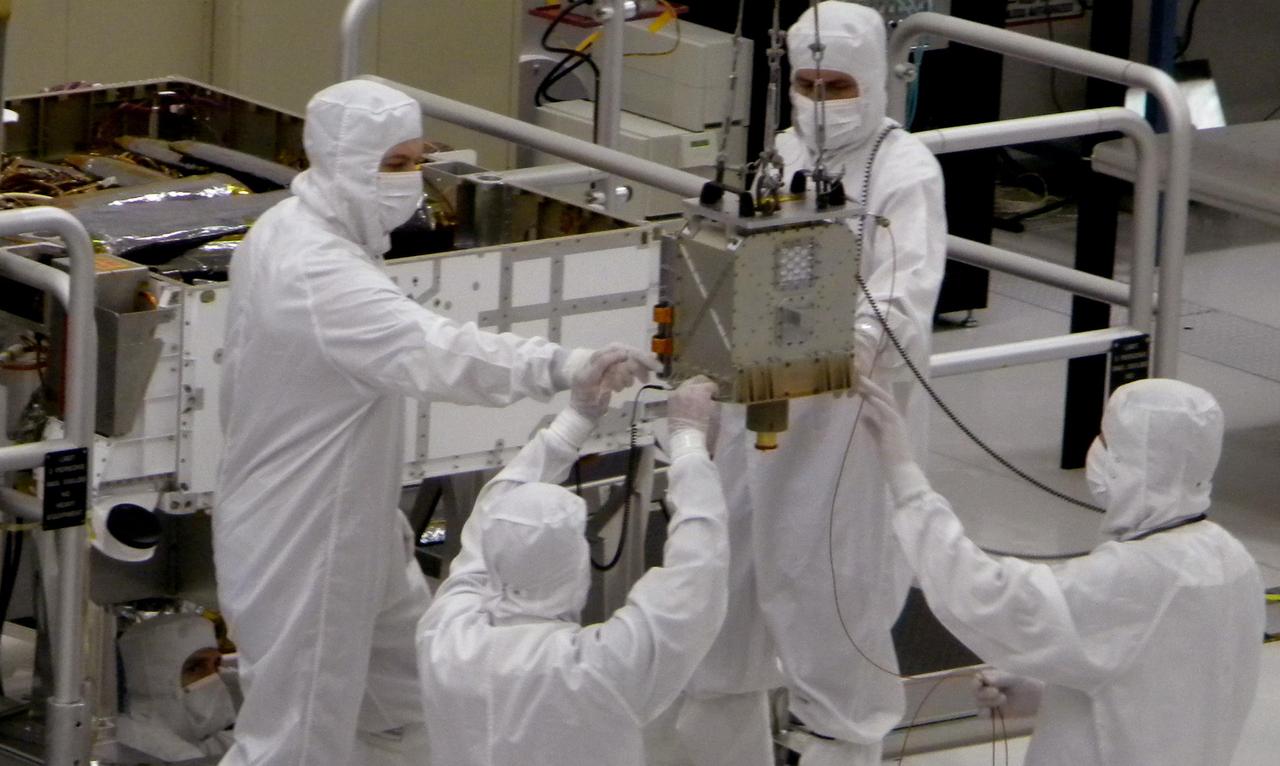
Members of NASA Mars Science Laboratory team carefully steer the hoisted Chemistry and Mineralogy CheMin instrument during its June 15, 2010, installation into the mission Mars rover, Curiosity.
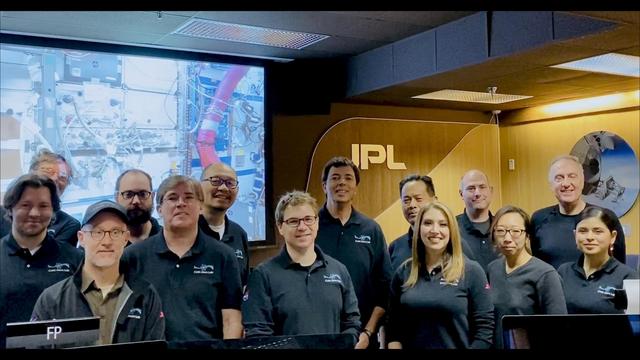
In January 2020, members of the Cold Atom Lab operations team assisted remotely in a hardware upgrade to Cold Atom Lab while the facility was still aboard the International Space Station. https://photojournal.jpl.nasa.gov/catalog/PIA23861
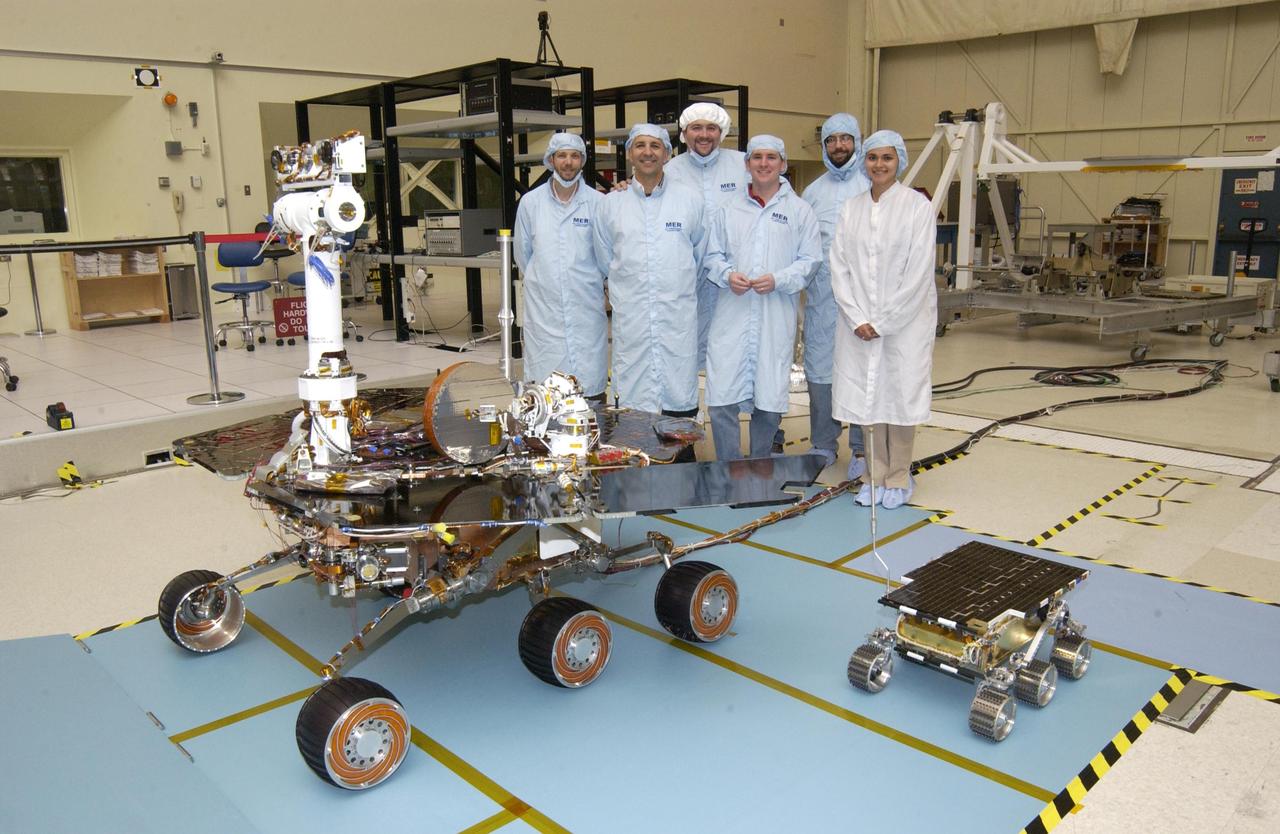
Members of the Mars Exploration Rovers Assembly, Test and Launch Operations team gather around NASA Rover 2 and its predecessor, a flight spare of the Pathfinder mission Sojourner rover, named Marie Curie.
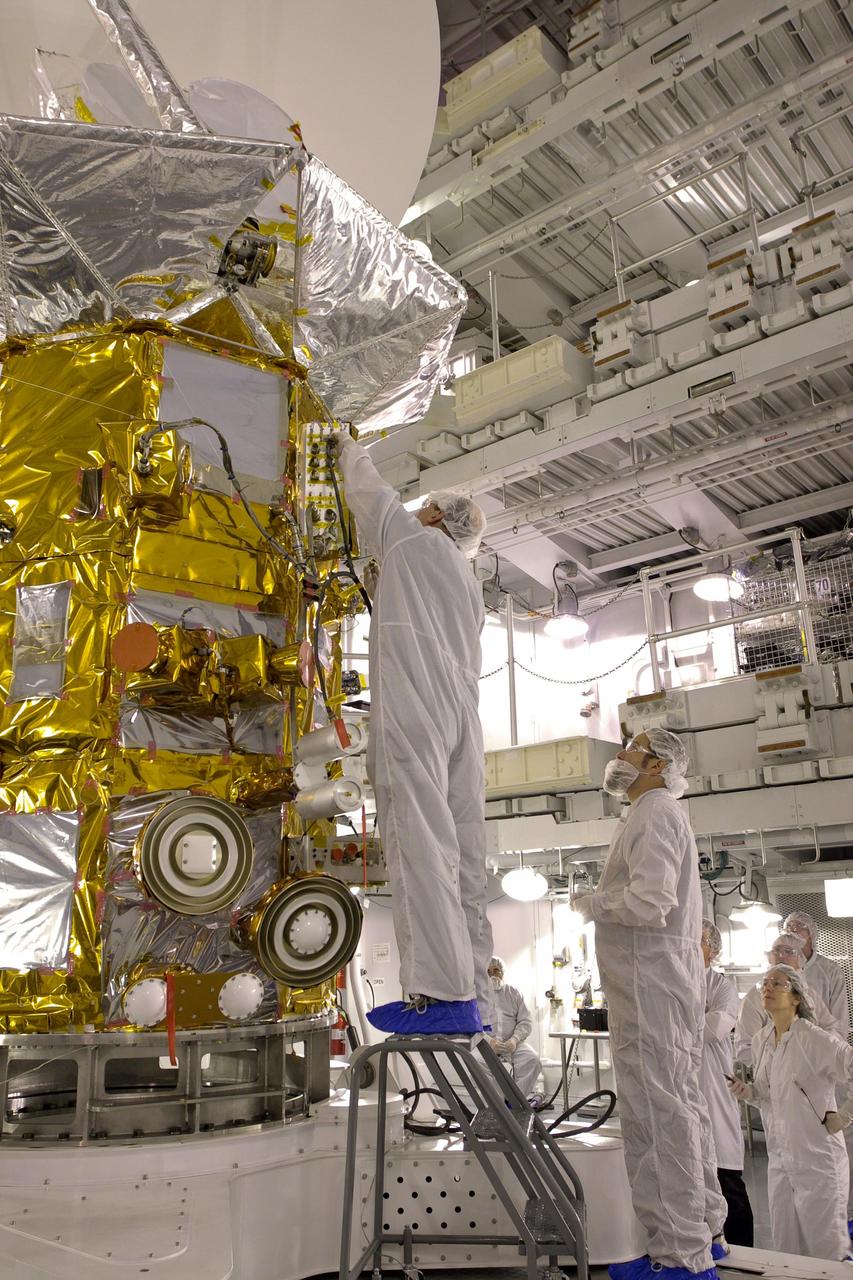
Less than two months before launch, team members conduct their final checks of NASA Aquarius instrument at Vandenberg Air Force Base, Calif. Subsequent final instrument tests will be conducted on the launch pad.
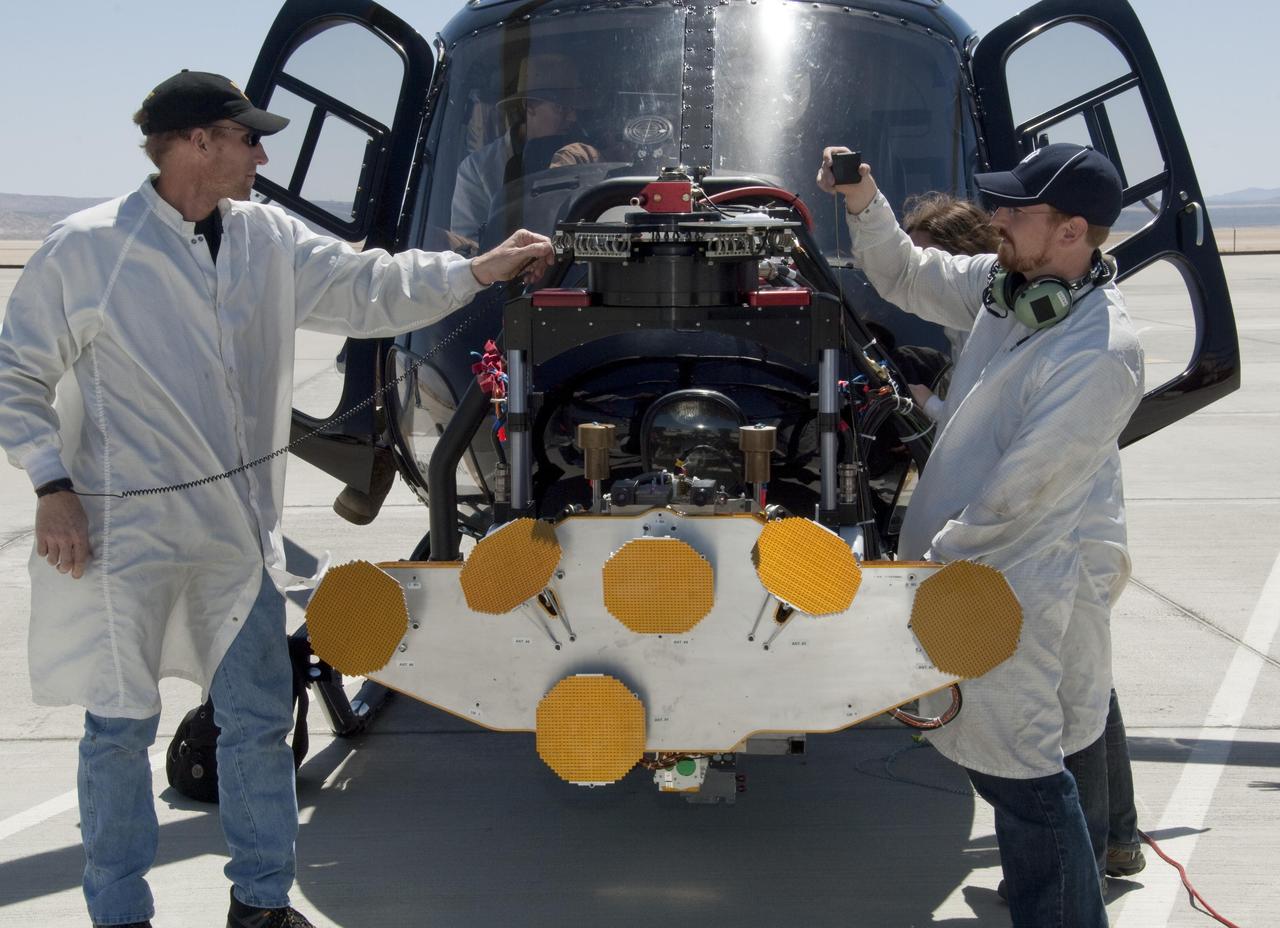
In advance of a testing flight at NASA Dryden Flight Research Center, members of the test team prepare the engineering model of the Mars Science Laboratory descent radar on the nose gimbal of a helicopter. The yellow disks are the radar antennae.
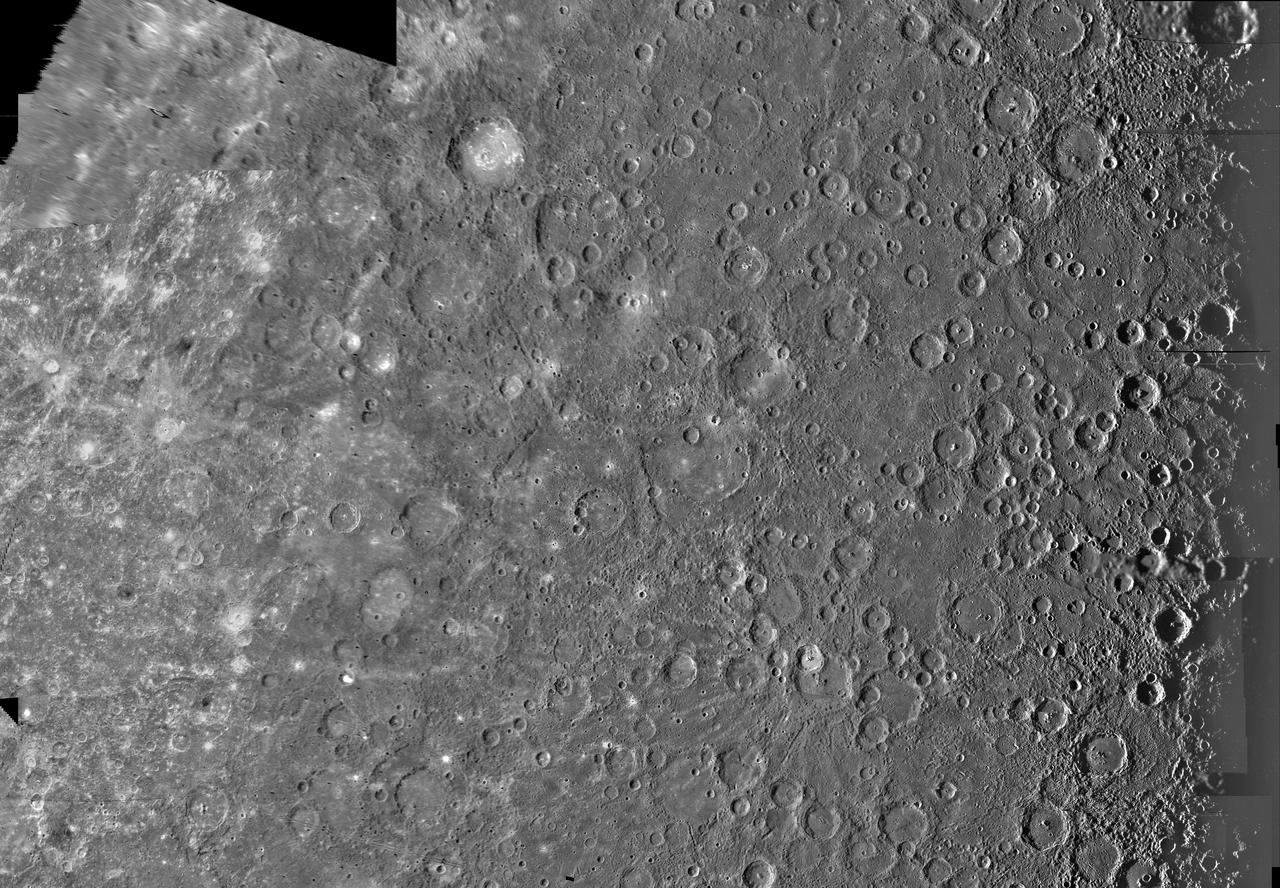
The Kuiper Quadrangle was named in memory of Dr. Gerard Kuiper, an imaging team member, and well-known astronomer, of NASA Mariner 10 Venus/Mercury. The Kuiper crater is seen left of center in this image.
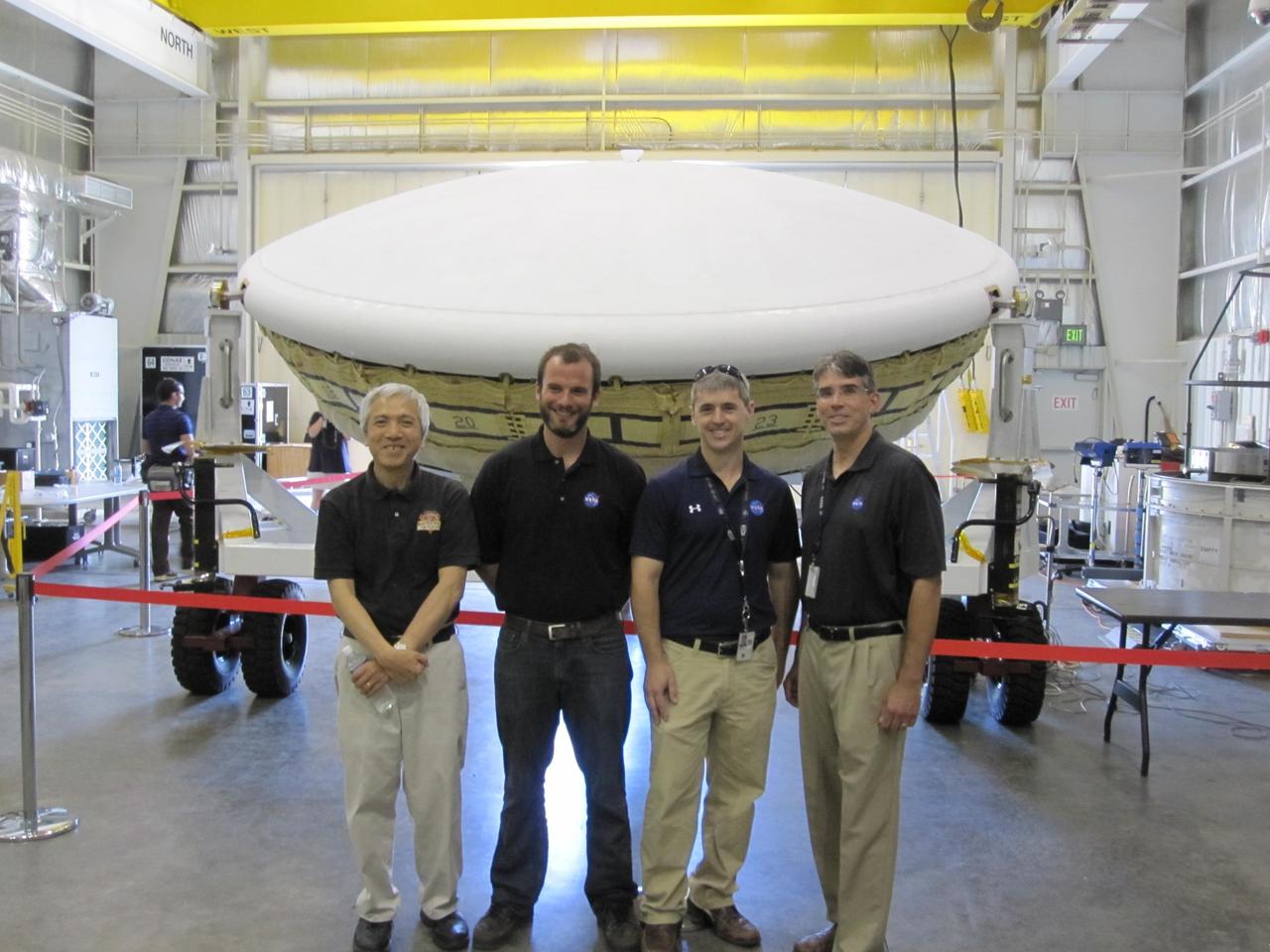
Members of the team for NASA Low-Density Supersonic Decelerator LDSD stand in front of the project saucer-shaped test vehicle at the U.S. Navy Pacific Missile Range Facility in Kauai, Hawaii.
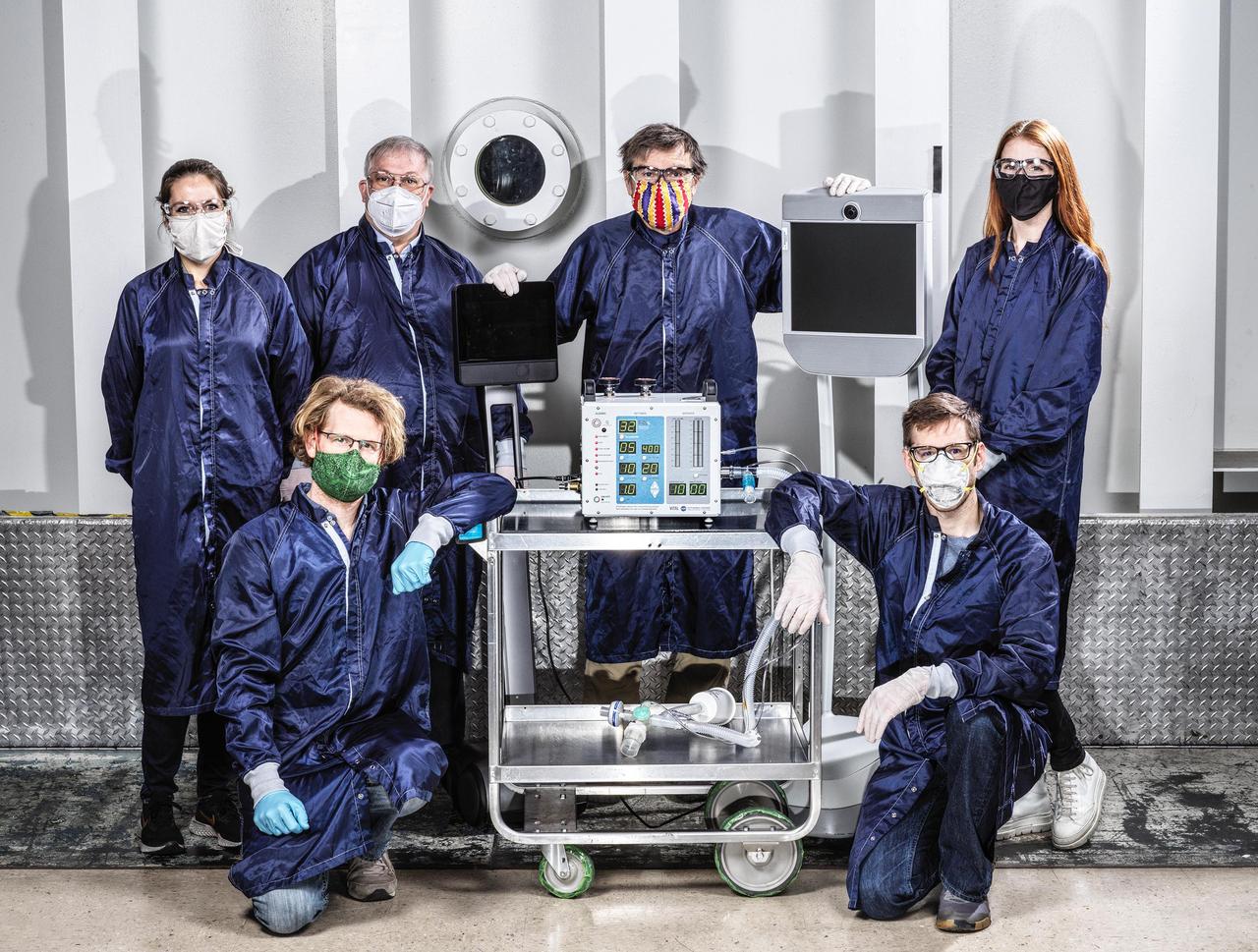
Some of the dozens of engineers involved in creating a ventilator prototype specially targeted to coronavirus disease patients at NASA's Jet Propulsion Laboratory in Southern California. Called VITAL (Ventilator Intervention Technology Accessible Locally), the prototype was created in 37 days in March and April 2020. https://photojournal.jpl.nasa.gov/catalog/PIA23713
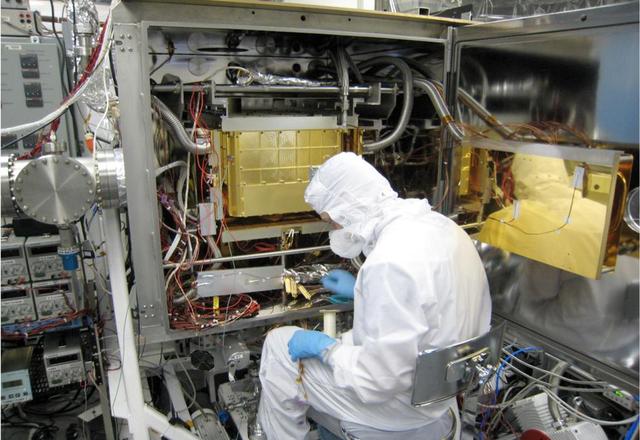
A Sample Analysis at Mars (SAM) team member at NASA's Goddard Space Flight Center, Greenbelt, Maryland, prepares the SAM testbed for an experiment. This test copy of the SAM suite of instruments is inside a chamber that, when closed, can model the pressure and temperature environment that SAM sees inside NASA's Curiosity rover on Mars. Many weeks of testing are often needed to develop and refine sequences of operations that SAM uses for making specific measurements on Mars. This was the case with preparation to pull a volume of gas from the atmosphere and extract the heavy noble gas xenon. SAM's measurements of different types of xenon in the Martian atmosphere provide clues about the planet's history. http://photojournal.jpl.nasa.gov/catalog/PIA19149
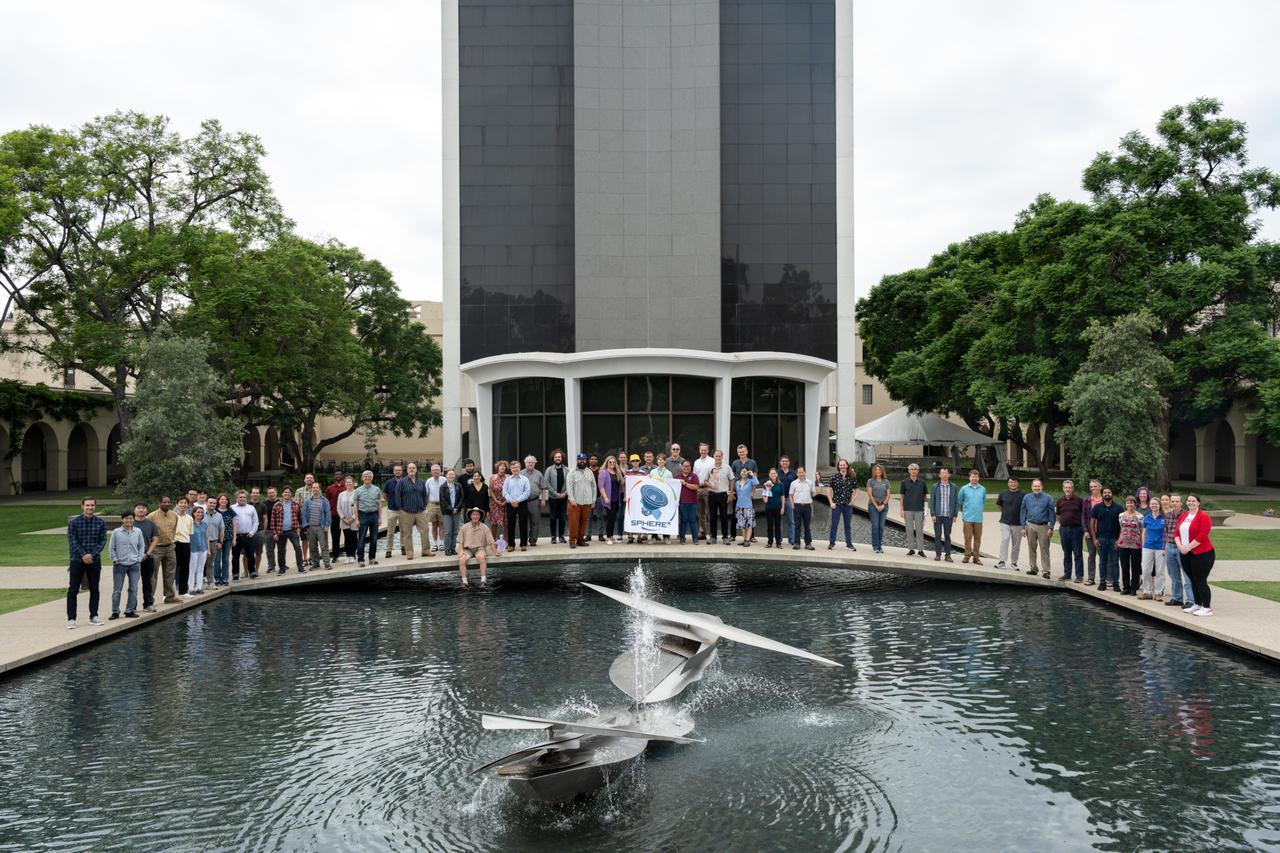
Members of the SPHEREx mission team pose for a photo on the campus of Caltech in Pasadena, California, in October 2023. Short for Spectro-Photometer for the History of the Universe, Epoch of Reionization and Ices Explorer, SPHEREx will create a map of the cosmos like no other. Using a technique called spectroscopy to image the entire sky in 102 wavelengths of infrared light, SPHEREx will gather information about the composition of and distance to millions of galaxies and stars. With this map, scientists will study what happened in the first fraction of a second after the big bang, how galaxies formed and evolved, and the origins of water in planetary systems in our galaxy. https://photojournal.jpl.nasa.gov/catalog/PIA26534
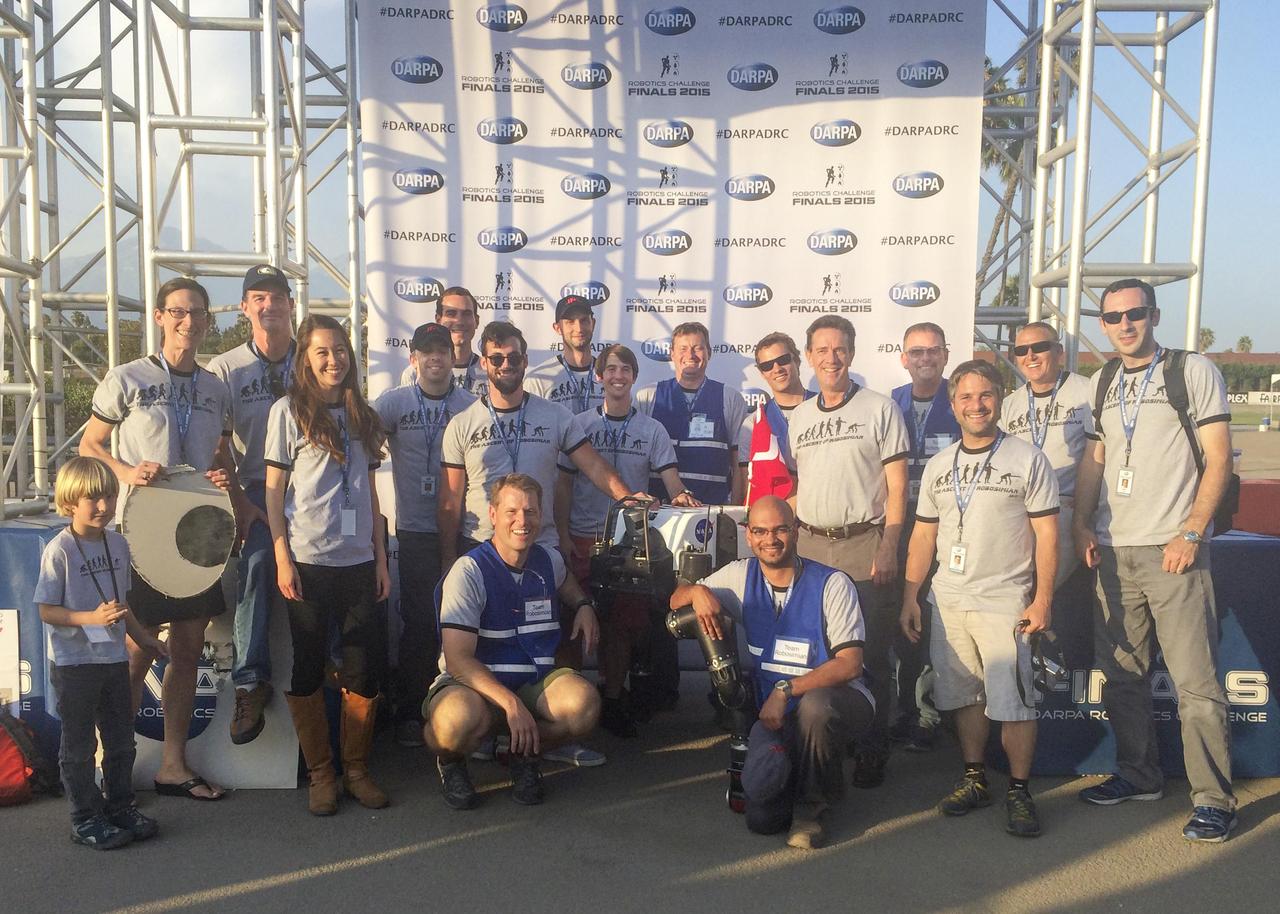
Many members of Team RoboSimian and a few guests gather with competition hardware at a "Meet the Robots" event during the DARPA Robotics Challenge Finals in Pomona, California, on June 6, 2015. The RoboSimian team at JPL is collaborating with partners at the University of California, Santa Barbara, and the California Institute of Technology in Pasadena. Caltech manages JPL for NASA. http://photojournal.jpl.nasa.gov/catalog/PIA19329

Perseverance rover Project Manager, Jennifer Trosper, led team members in applause in a control room at NASA's Jet Propulsion Laboratory in Southern California on April 5, 2022. The team honored 20 students via a live video event for overcoming academic obstacles. Each student received a personalized message from the rover on Mars. https://photojournal.jpl.nasa.gov/catalog/PIA25275
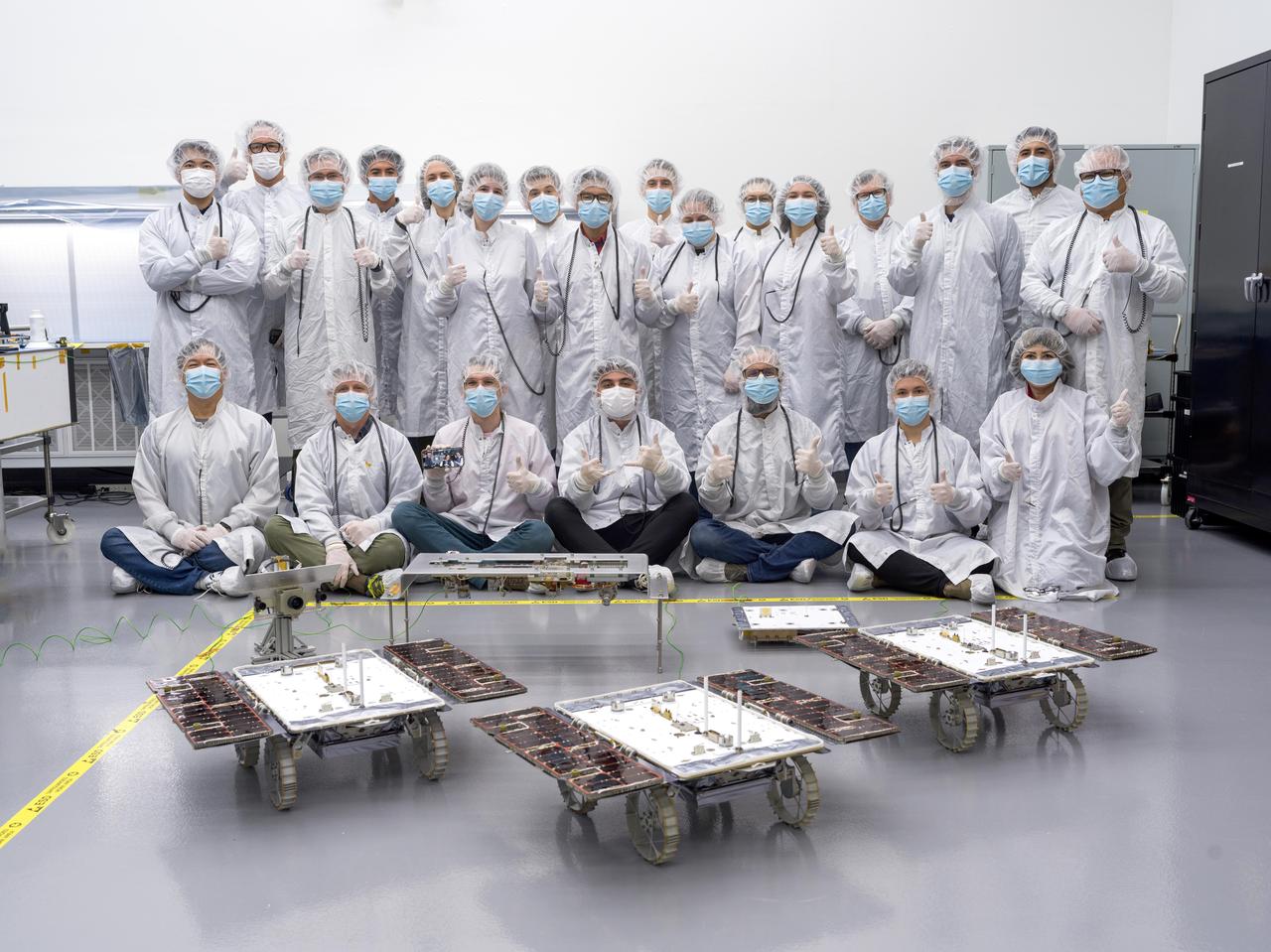
Members of the assembly, test, launch, and operations team for NASA's CADRE (Cooperative Autonomous Distributed Robotic Exploration) project pose in a clean room at the agency's Jet Propulsion Laboratory in Southern California on Jan. 26, 2024, with three lunar rovers after their completion. Bound for the Moon, CADRE is a technology demonstration designed to show that a group of robotic spacecraft can work together as a team to accomplish tasks and record data autonomously – without explicit commands from mission controllers on Earth. Seen behind the rovers are hardware elements that will be mounted on the lunar lander aboard which CADRE will arrive at the Moon: the situational awareness camera assembly (SACA), one of the deployers that will lower the rovers onto the lunar surface, and the base station with which the rovers will communicate via mesh network radios. Back row, from left: Wei Chen Wilson Yeh, Mark White, Nathan Cheek, Baylor de los Reyes, Jacqueline Sly, Blair Emanuel, Josh Miller, Jonathan Tan, Sawyer Brooks, Libby Boroson, Leroy Montalvo, Tonya Beatty, Bert Turney, George Dupas, Leo Ortiz, and Nelson Serrano. Front row, from left: Kristopher Sherril, Coleman Richdale, Russell Smith, Daniel Esguerra, Will Raff, Justin Schachter, and Clara Nguyen. Shown on the cellphone held by Smith are absent ATLO team members Ara Kourchians, Molly Shelton, and Randy Ballat. https://photojournal.jpl.nasa.gov/catalog/PIA26165

Twenty students – along with their parents, teachers, and classmates – met virtually with Mars rover team members at JPL, where they received personalized messages beamed from NASA's Perseverance rover as part of the "You've Got Perseverance" campaign. https://photojournal.jpl.nasa.gov/catalog/PIA25271
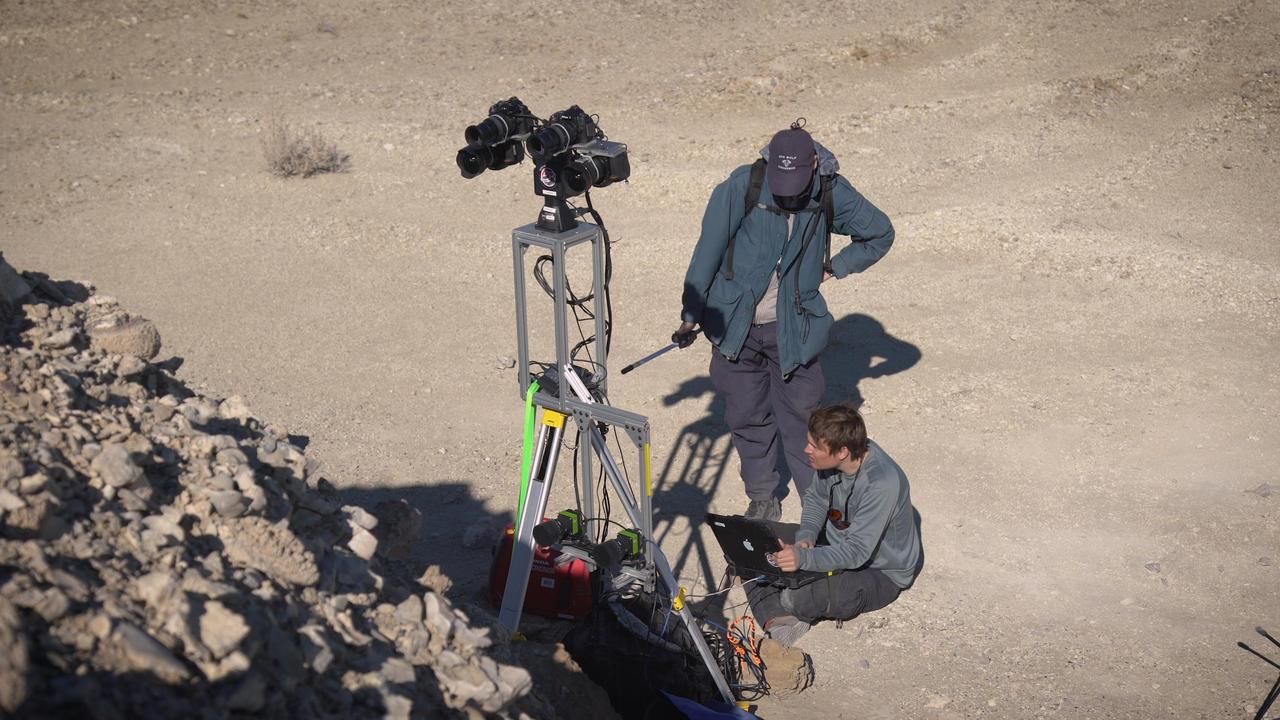
Two members of a field team set up cameras in the Nevada desert in February 2020, as part of a simulated rover operation designed to train scientists who will work with NASA's Perseverance rover after it lands on Mars in February 2021. https://photojournal.jpl.nasa.gov/catalog/PIA23777
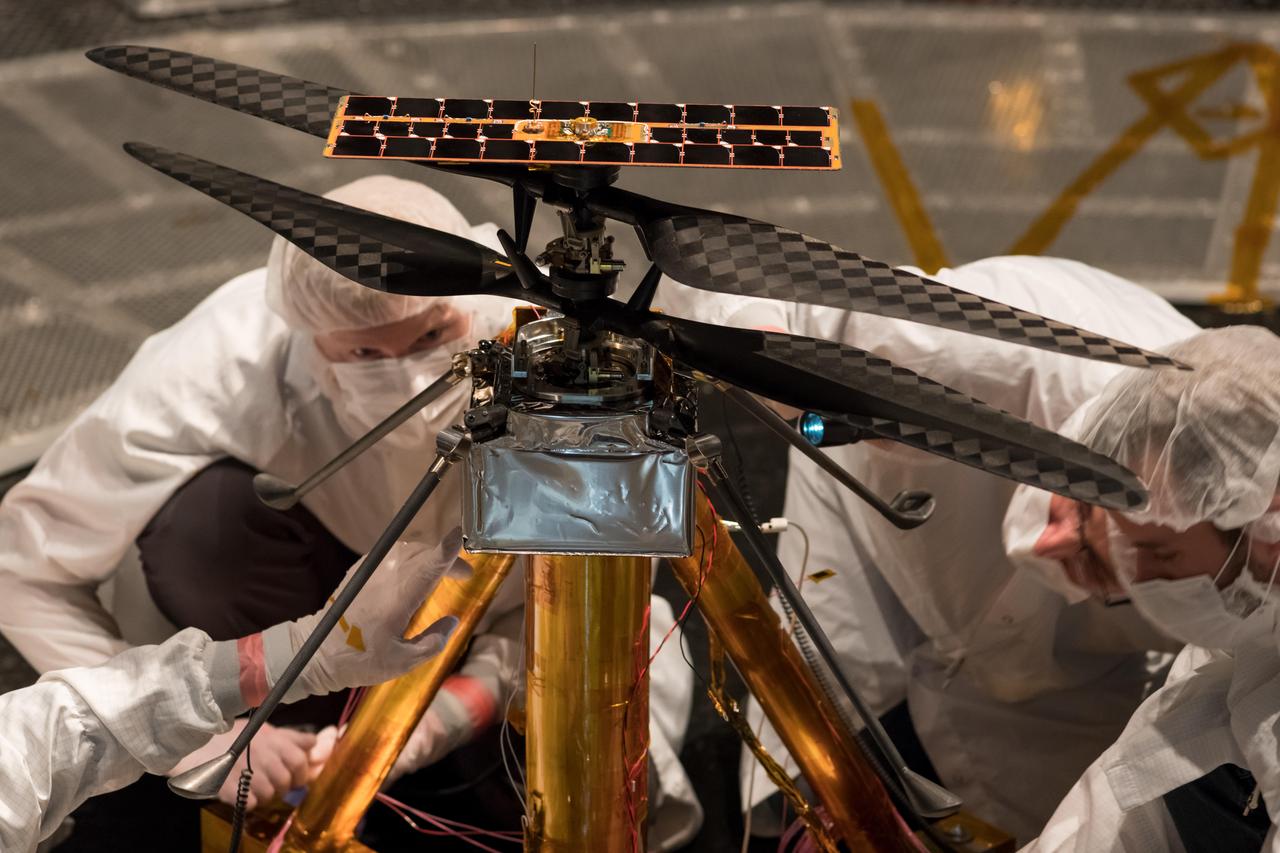
Members of the NASA Mars Helicopter team inspect the flight model (the actual vehicle going to the Red Planet), inside the Space Simulator, a 25-foot-wide (7.62-meter-wide) vacuum chamber at NASA's Jet Propulsion Laboratory in Pasadena, California, on Feb. 1, 2019. https://photojournal.jpl.nasa.gov/catalog/PIA23155
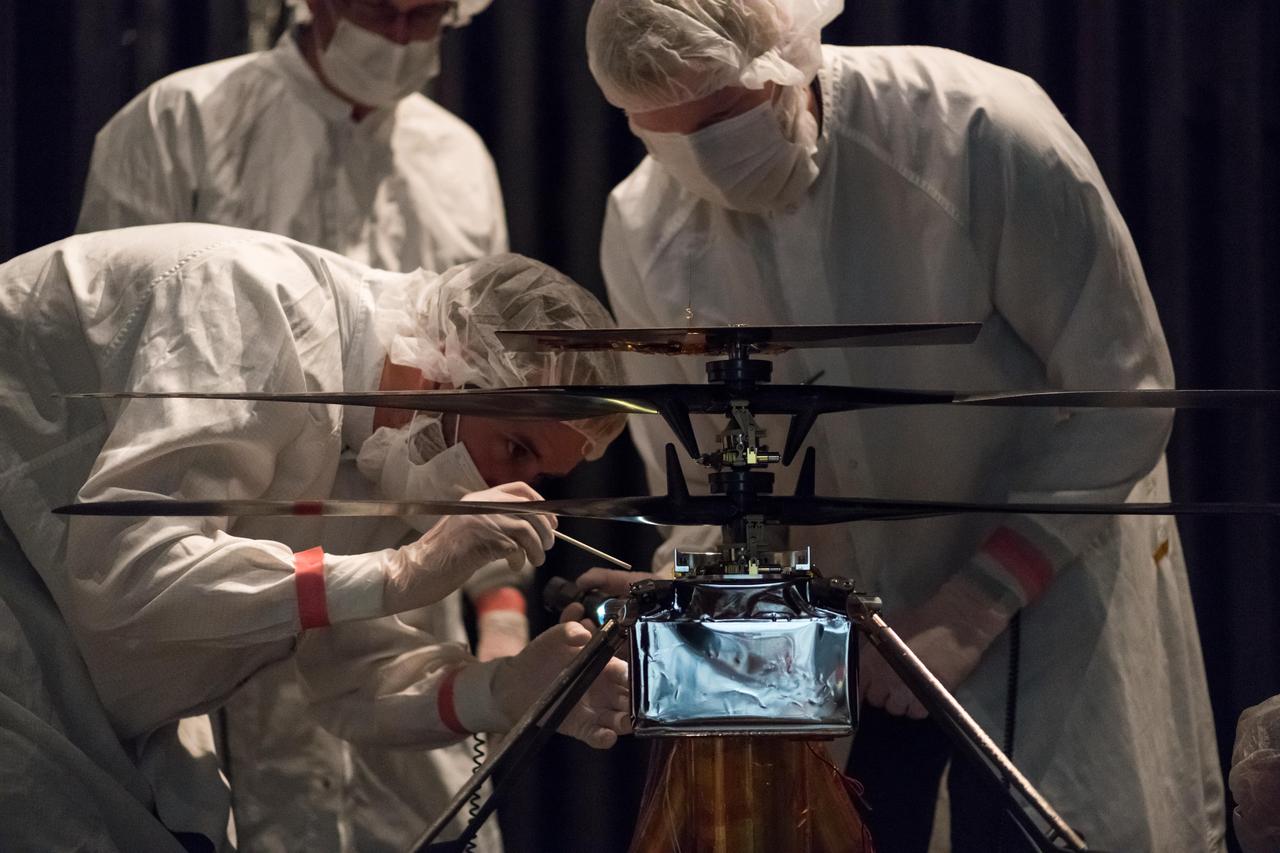
Members of NASA's Mars Helicopter team attach a thermal film enclosure to the fuselage of the flight model (the actual vehicle going to the Red Planet). The image was taken on Feb. 1, 2019, inside the Space Simulator, a 25-foot-wide (7.62-meter-wide) vacuum chamber at NASA's Jet Propulsion Laboratory in Pasadena, California. https://photojournal.jpl.nasa.gov/catalog/PIA23157
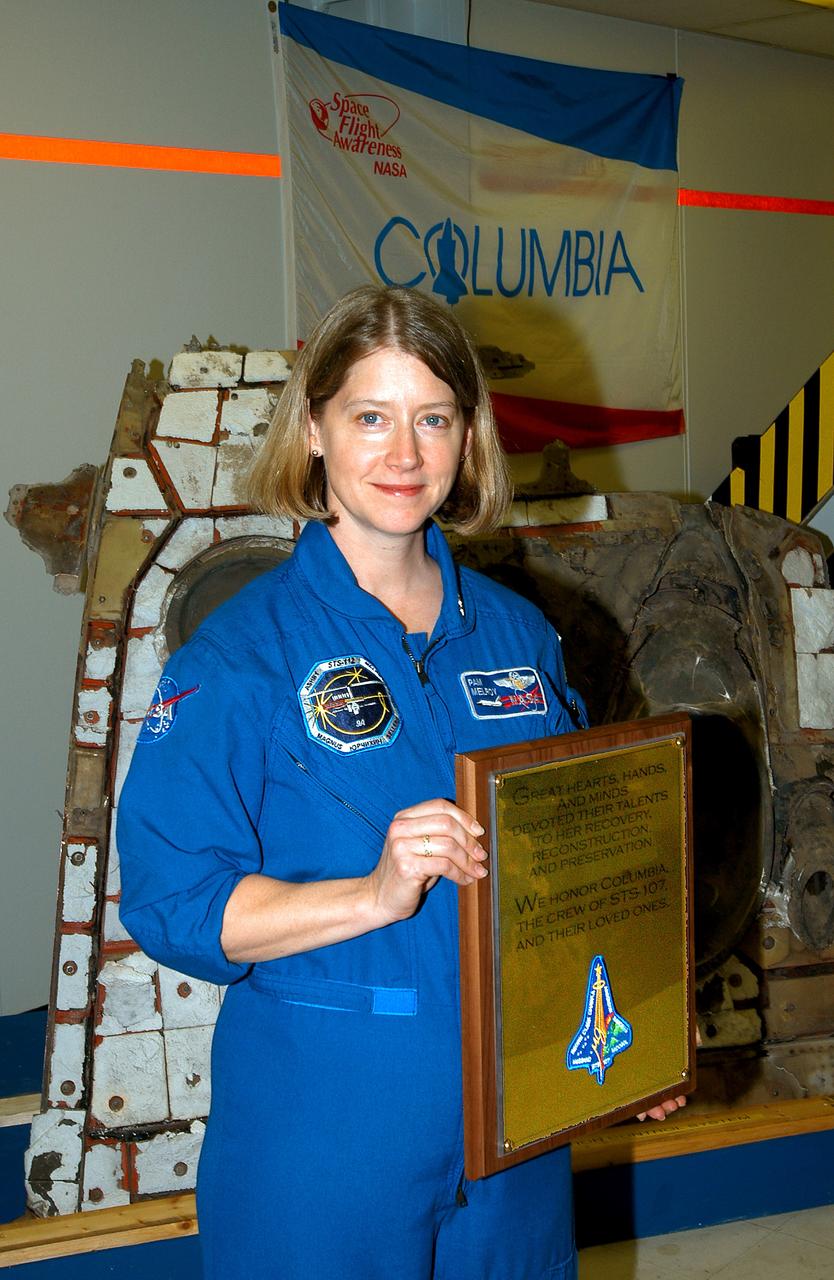
KENNEDY SPACE CENTER, FLA. - Posing with the plaque dedicated to Columbia Jan. 29, 2004, is astronaut Pam Melroy. The dedication ceremony included the 40-member preservation team gathered in the “Columbia room,” in the Vehicle Assembly Building. The site is a permanent repository of the debris collected in the aftermath of the tragic accident Feb. 1, 2003, that claimed the orbiter and lives of the seven-member crew. Behind Melroy is a piece of the debris.
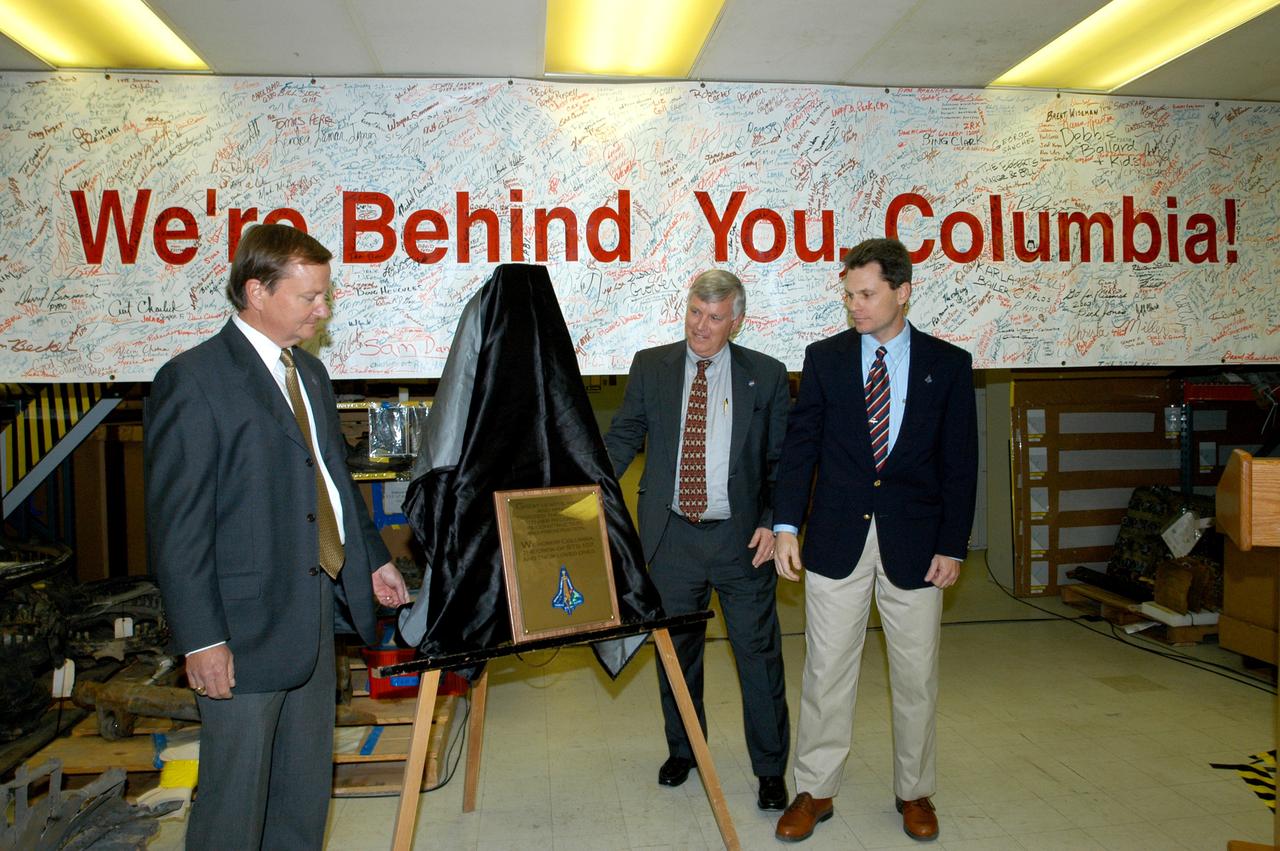
KENNEDY SPACE CENTER, FLA. - In the Vehicle Assembly Building, Shuttle Launch Director Mike Leinbach, Center Director Jim Kennedy and NASA Vehicle Manager Scott Thurston unveil a plaque honoring “Columbia, the crew of STS-107, and their loved ones.” The site is the “Columbia room,” a permanent repository of the debris collected in the aftermath of the tragic accident Feb. 1, 2003, that claimed the orbiter and lives of the seven-member crew. The dedication of the plaque was made in front of the 40-member preservation team.

Members of JPL's assembly, test and launch operations team for NASA's Perseverance mission show appreciation for their newly named rover. The image was taken on March 4, 2020, at a payload processing facility at NASA's Kennedy Space Center. The plate is actually a rock and debris shield, designed to protect a cable that carries power and data from computers in the rover's body to actuators in the arm, as well as to the rotary percussive drill and instruments in the turret. Weighing in at about 104 grams (3.7 ounces), the 17-inch-long by 3.25-inch-wide (43-centimeter-long by 8.26-centimeter-wide) plate was cut using a water jet. The surface was coated with black thermal paint before a computer-guided laser generated the name "Perseverance" by ablating paint off the surface. The nameplate was attached to the rover on March 4, 2020. https://photojournal.jpl.nasa.gov/catalog/PIA23767
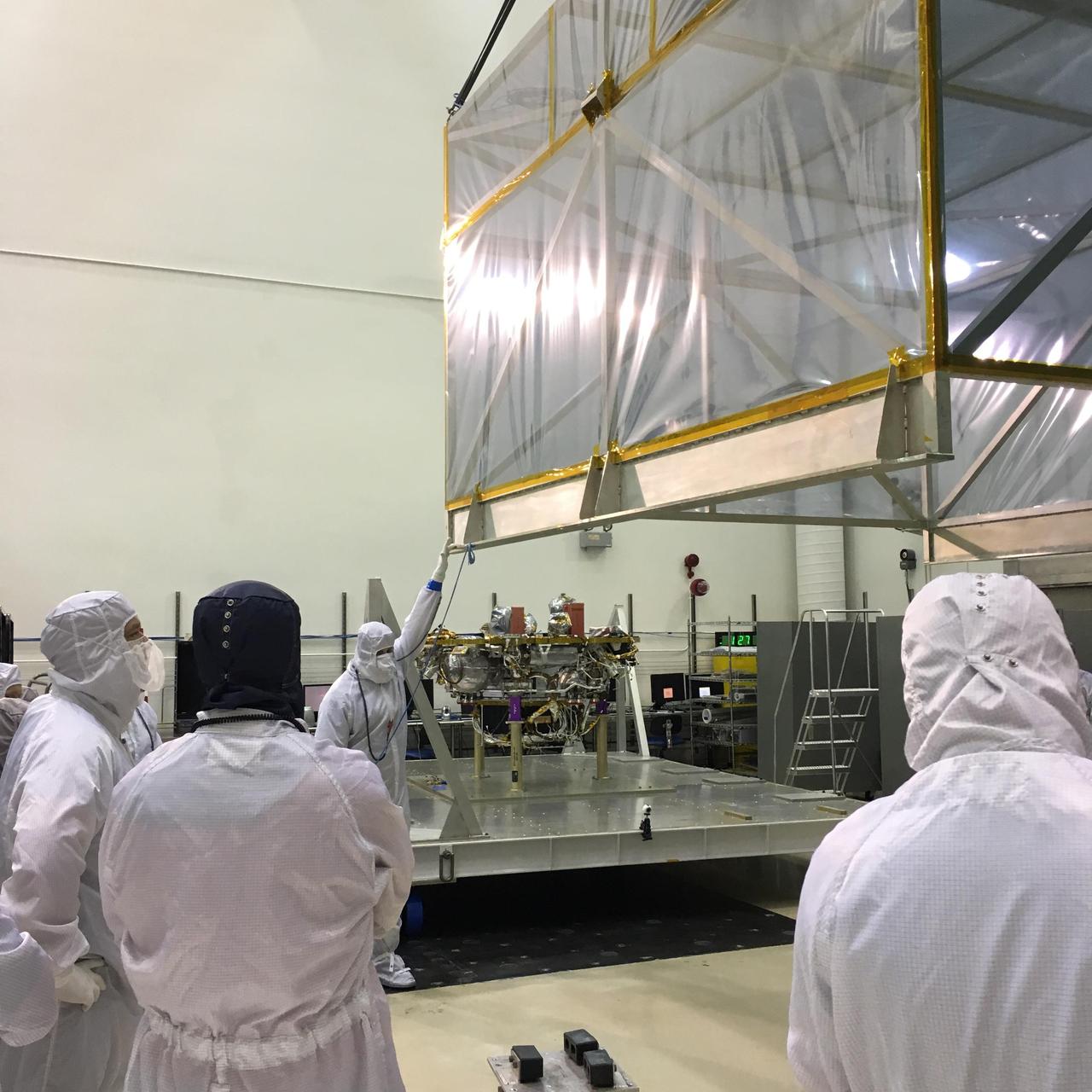
Members of the InSight mission's assembly, test and launch operations (ATLO) team remove the "birdcage" from NASA's InSight spacecraft, in this photo taken June 19, 2017, in a Lockheed Martin clean room facility in Littleton, Colorado. The birdcage is the inner layer of protective housing that shielded the spacecraft while in storage following a postponement of launch. It is made of a film that dissipates electrostatic conditions to protect the spacecraft from contamination. The InSight mission (for Interior Exploration using Seismic Investigations, Geodesy and Heat Transport) is scheduled to launch in May 2018 and land on Mars Nov. 26, 2018. It will investigate processes that formed and shaped Mars and will help scientists better understand the evolution of our inner solar system's rocky planets, including Earth. https://photojournal.jpl.nasa.gov/catalog/PIA21843

Artemis launch team members participate in a terminal countdown simulation for Artemis III on Thursday, Sept. 10, 2026, inside Firing Room 1 and 2 of the Rocco A. Petrone Launch Control Center at NASA’s Kennedy Space Center in Florida. Terminal count simulations conducted by NASA’s Exploration Ground Systems team run through the final five hours of launch countdown, including terminal count - the remaining 10 minutes of the countdown. Artemis III will carry out a series of objectives in low Earth orbit designed to demonstrate critical systems needed for future lunar landings, beginning with Artemis IV.
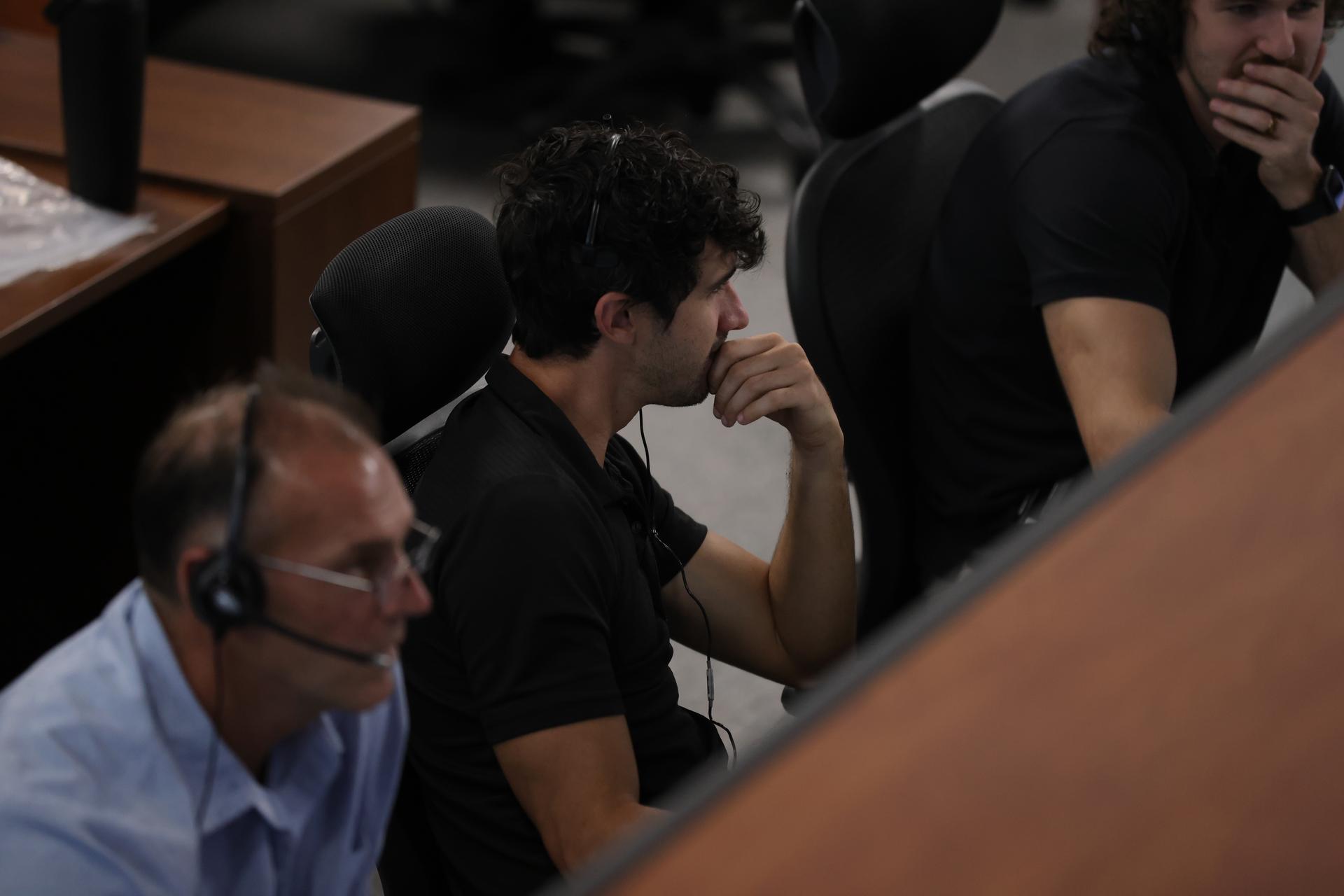
Artemis launch team members participate in a terminal countdown simulation for Artemis III on Thursday, Sept. 10, 2026, inside Firing Room 1 and 2 of the Rocco A. Petrone Launch Control Center at NASA’s Kennedy Space Center in Florida. Terminal count simulations conducted by NASA’s Exploration Ground Systems team run through the final five hours of launch countdown, including terminal count - the remaining 10 minutes of the countdown. Artemis III will carry out a series of objectives in low Earth orbit designed to demonstrate critical systems needed for future lunar landings, beginning with Artemis IV.
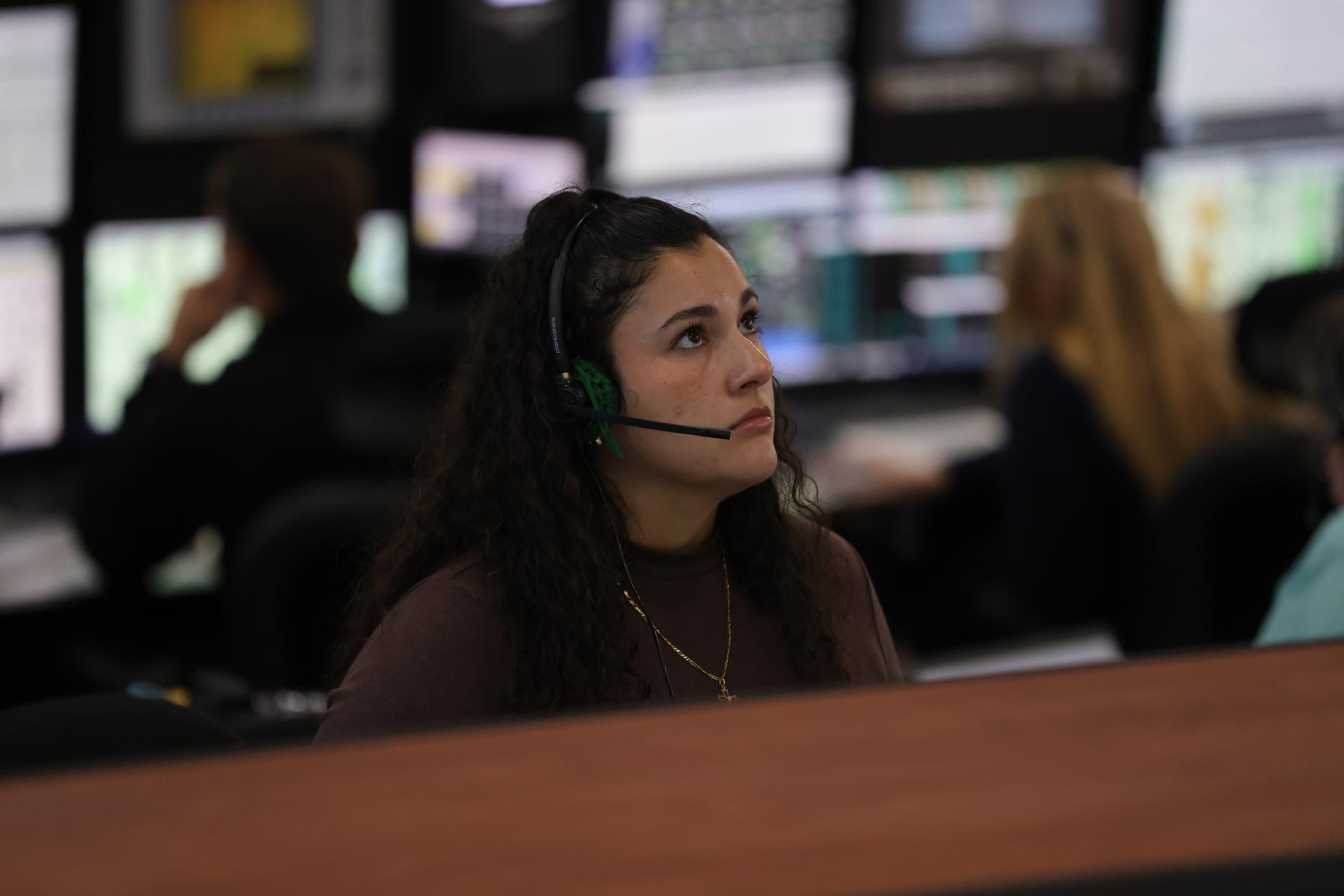
Artemis launch team members participate in a terminal countdown simulation for Artemis III on Thursday, Sept. 10, 2026, inside Firing Room 1 and 2 of the Rocco A. Petrone Launch Control Center at NASA’s Kennedy Space Center in Florida. Terminal count simulations conducted by NASA’s Exploration Ground Systems team run through the final five hours of launch countdown, including terminal count - the remaining 10 minutes of the countdown. Artemis III will carry out a series of objectives in low Earth orbit designed to demonstrate critical systems needed for future lunar landings, beginning with Artemis IV.
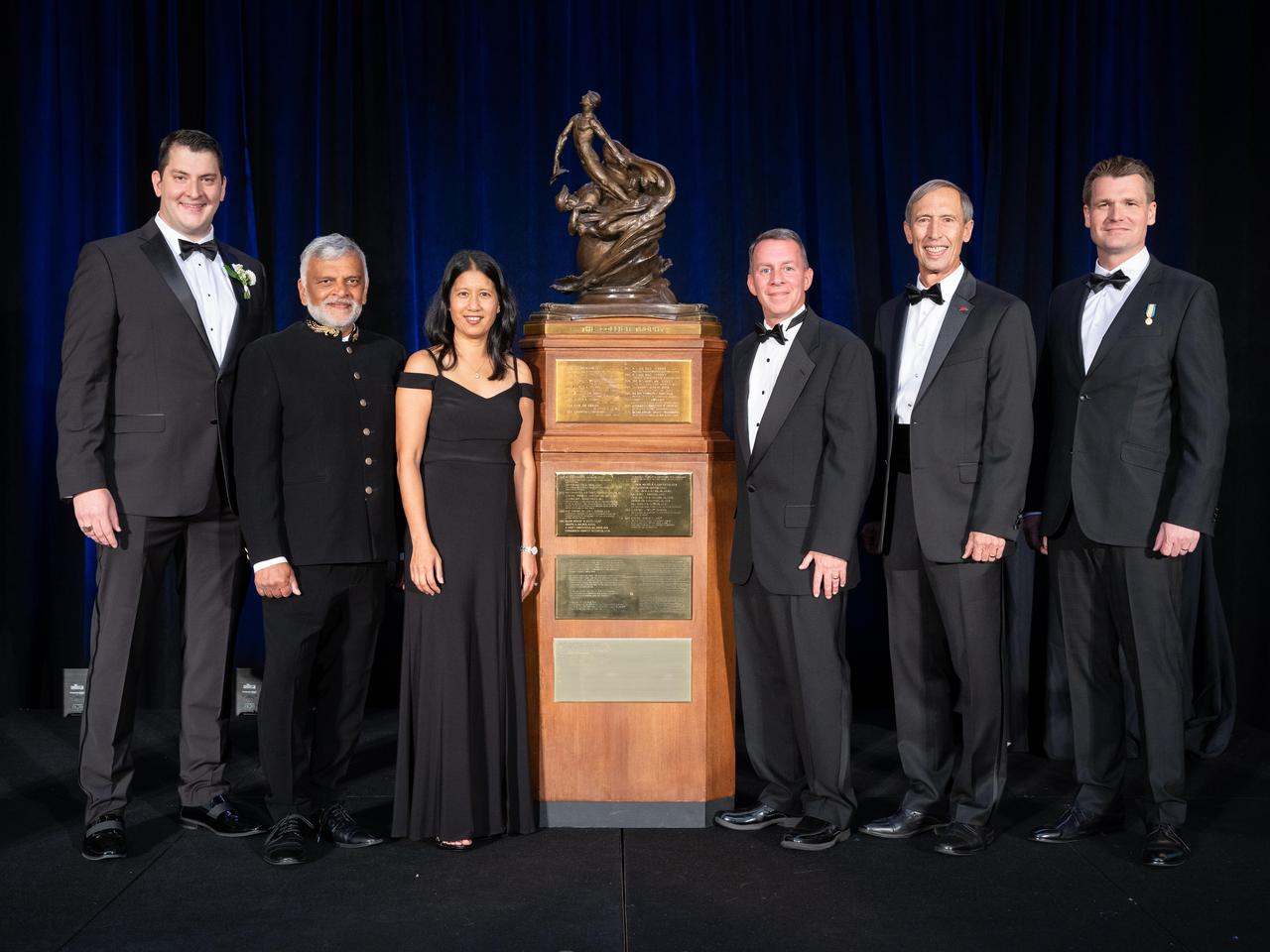
Members of NASA's Ingenuity Mars Helicopter team stand next to the Collier Trophy during the Robert J. Collier Dinner in Washington on June 9, 2022. The team was awarded the 2021 Collier Trophy "for the first powered, controlled flight of an aircraft on another planet, thereby opening the skies of Mars and other worlds for future scientific discovery and exploration," the award citation states. From left to right: Teddy Tzanetos, Ingenuity team lead at NASA's Jet Propulsion Laboratory; Bob Balaram, Ingenuity emeritus chief engineer at JPL; MiMi Aung, former Ingenuity project manager at JPL; Bobby Braun, former director for Planetary Science at JPL; Larry James, deputy director at JPL; Håvard Grip, Ingenuity chief pilot at JPL. This historic trophy – which is on permanent display at the Smithsonian Air and Space Museum in Washington – is awarded annually by the National Aeronautic Association "for the greatest achievement in aeronautics or astronautics in America, with respect to improving the performance, efficiency, and safety of air or space vehicles, the value of which has been thoroughly demonstrated by actual use during the preceding year." https://photojournal.jpl.nasa.gov/catalog/PIA25323

Kepler Team members Mark A. Schwabacher

Kepler Team members Susan Thompson

Kepler Team members Patrick Hascall

Kepler Team members Jeff Smith

Kepler Team members Fergal Mullally