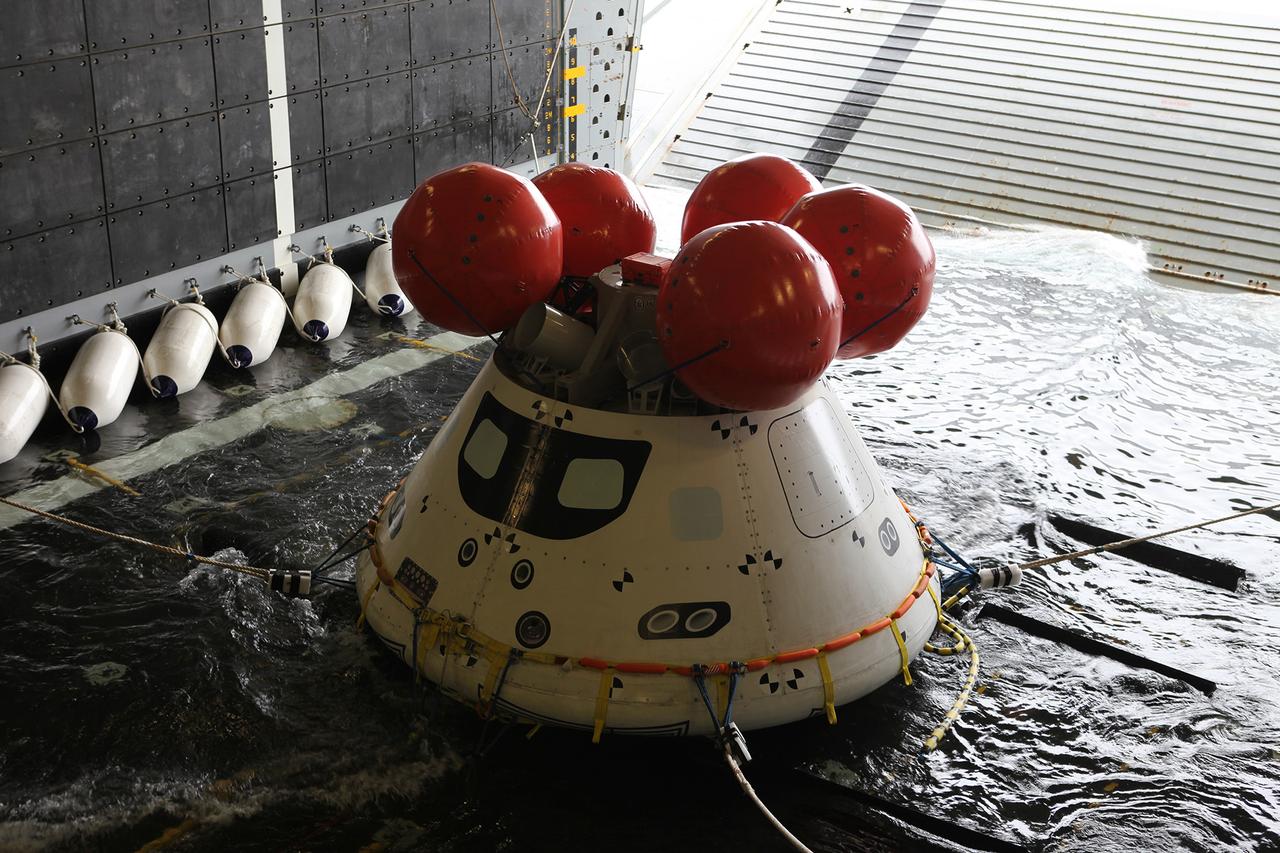
Recovery team members work with a test version of Orion floating in the well deck of the U.S.S. Anchorage on Aug. 2, 2014. A combined NASA and U.S. Navy team practiced recovery techniques off the coast of California in preparation for Exploration Flight Test-1 (EFT-1). Part of Batch image transfer from Flickr.
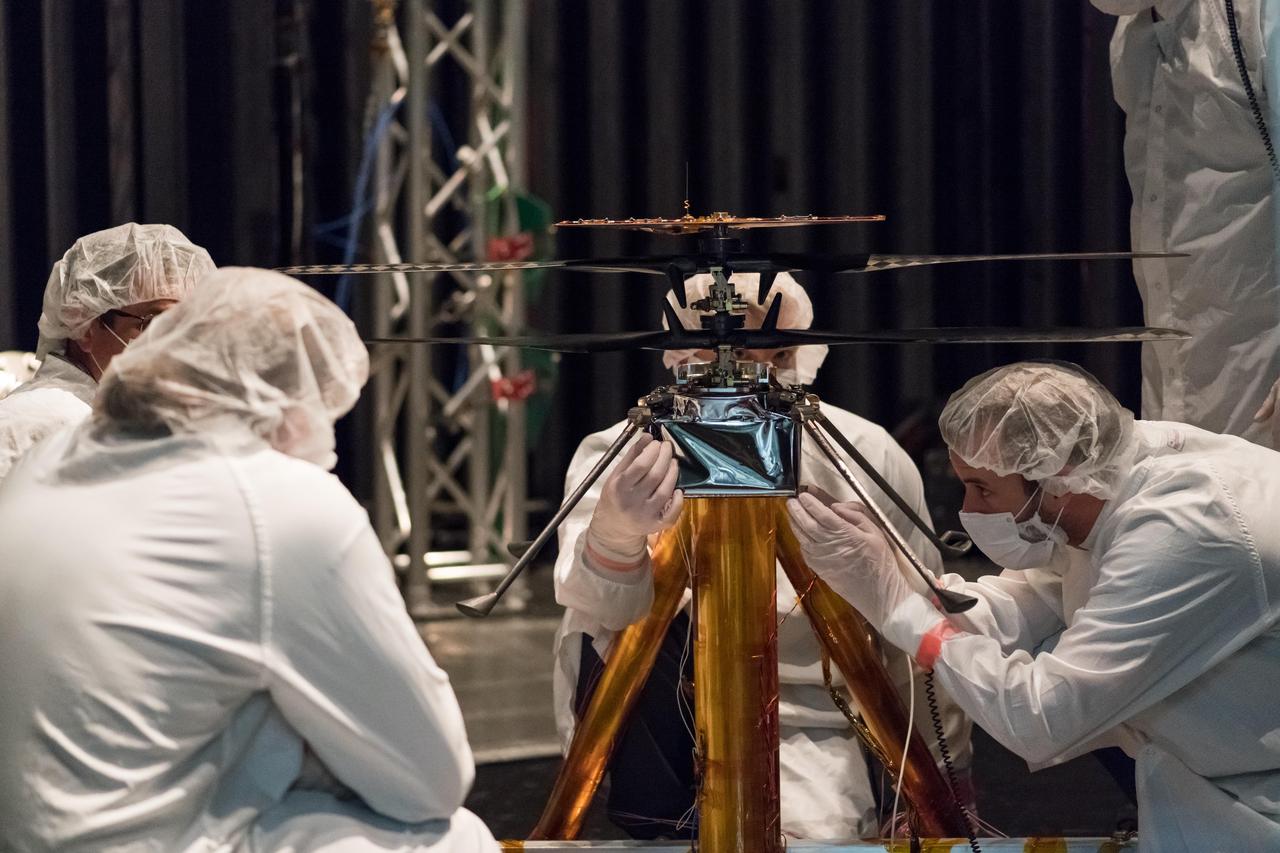
NASA Mars Helicopter team members work the flight model (the vehicle going to Mars) in the Space Simulator, a 25-foot-wide (7.62-meter-wide) vacuum chamber, at NASA's Jet Propulsion Laboratory in Pasadena, California. The image was taken on Feb. 1, 2019. https://photojournal.jpl.nasa.gov/catalog/PIA23152
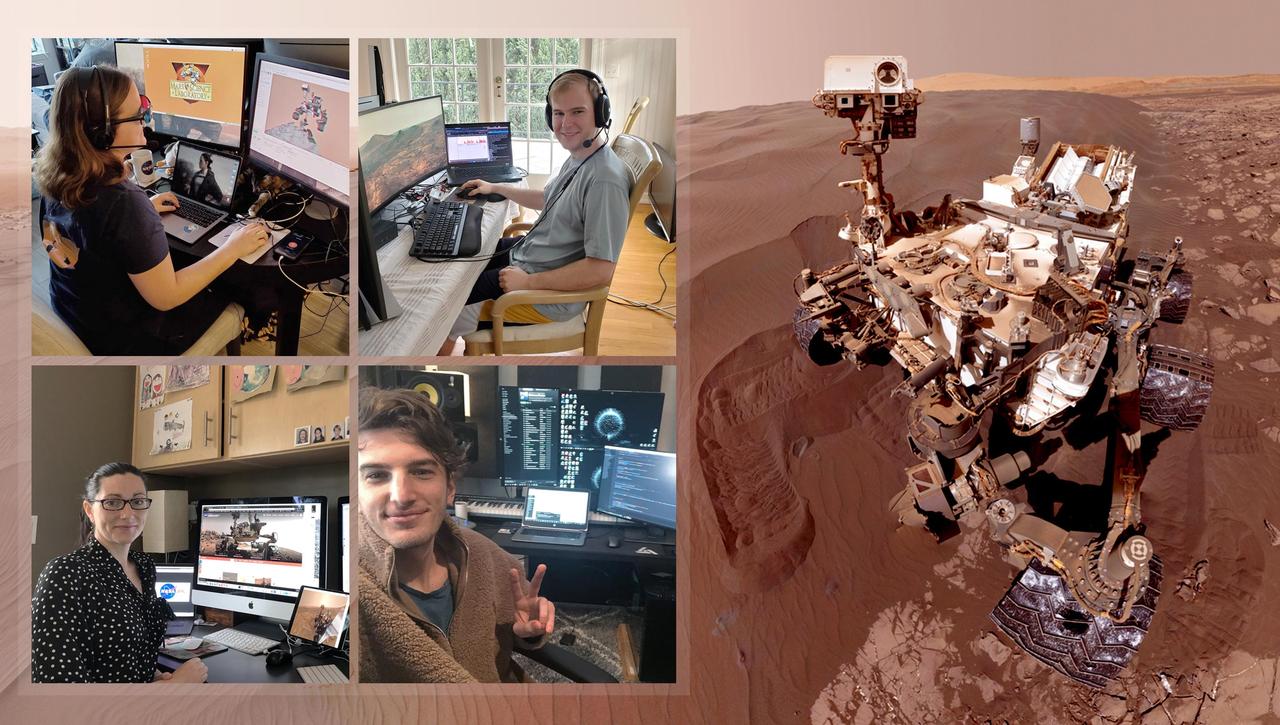
Members of NASA's Curiosity Mars rover mission team took pictures of themselves from their home offices on March 20, 2020, the first day the entire mission team worked remotely. Rover planning usually happens at NASA's Jet Propulsion Laboratory in Southern California. Clockwise from upper left: Rover planner Keri Bean, wearing red-blue 3D glasses; rover planner Camden Miller; tactical uplink lead Jack Quade; and Science Operations Team Chief Carrie Bridge. https://photojournal.jpl.nasa.gov/catalog/PIA23773
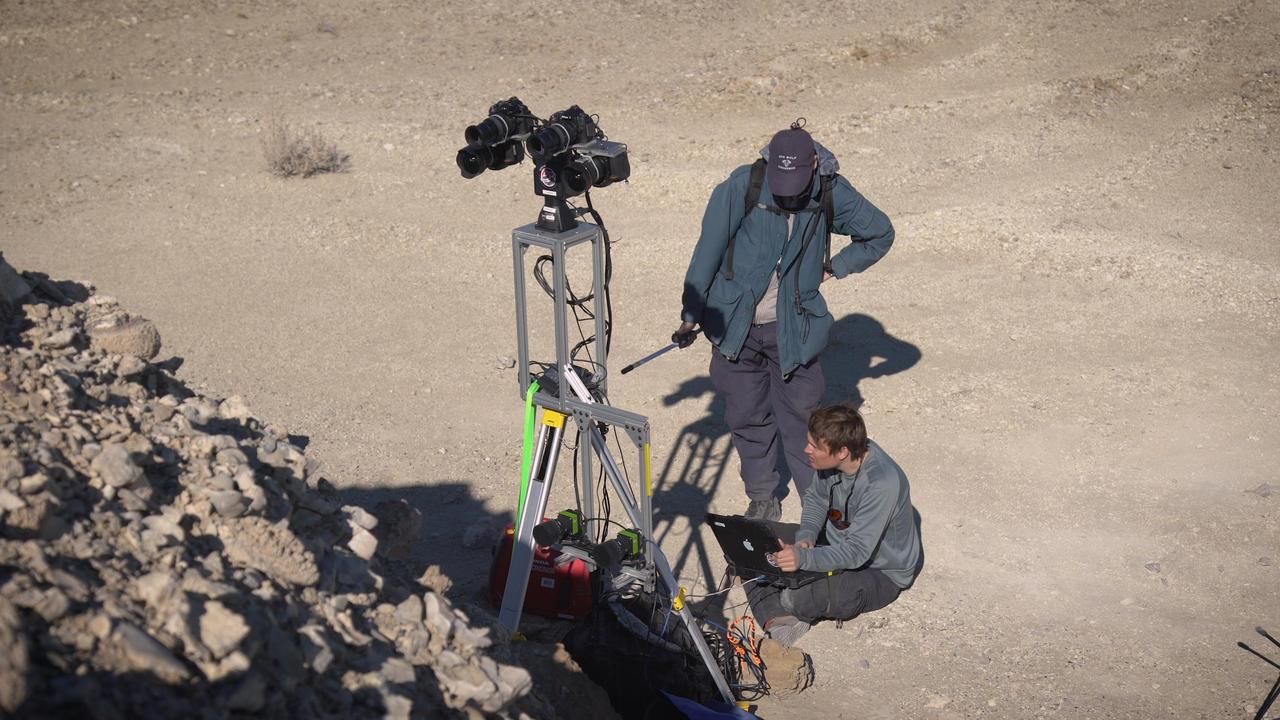
Two members of a field team set up cameras in the Nevada desert in February 2020, as part of a simulated rover operation designed to train scientists who will work with NASA's Perseverance rover after it lands on Mars in February 2021. https://photojournal.jpl.nasa.gov/catalog/PIA23777
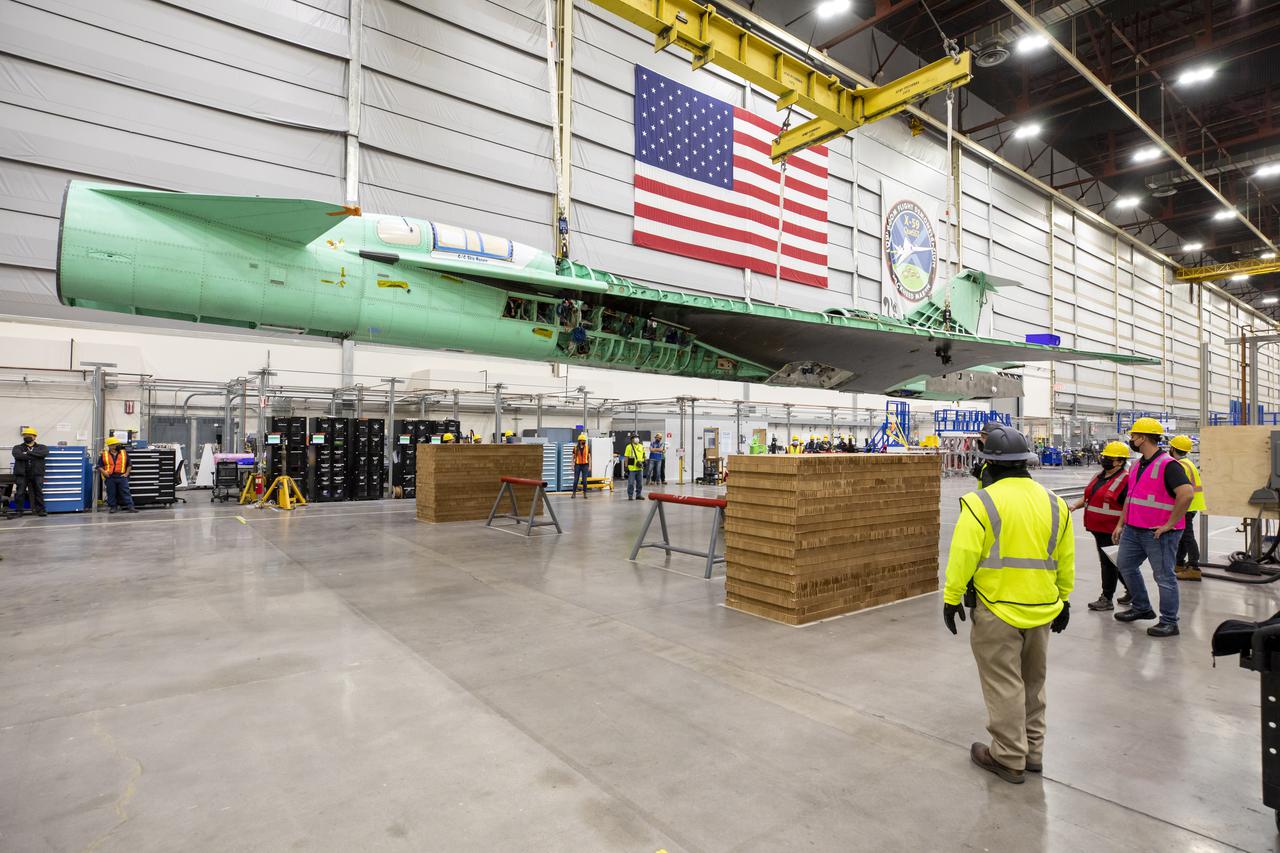
The X-59 is free from its structural support jig for the first time. In this image, cranes are holding up the aircraft prior to placement on the floor jacks. Notice that the nose has been removed temporarily — it will be reinstalled again before the upcoming structural testing. Lockheed Martin Photography By Garry Tice 1011 Lockheed Way, Palmdale, Ca. 93599 Event: Removal From Tooling Jig Date: 10/27/2021 Additional Info:
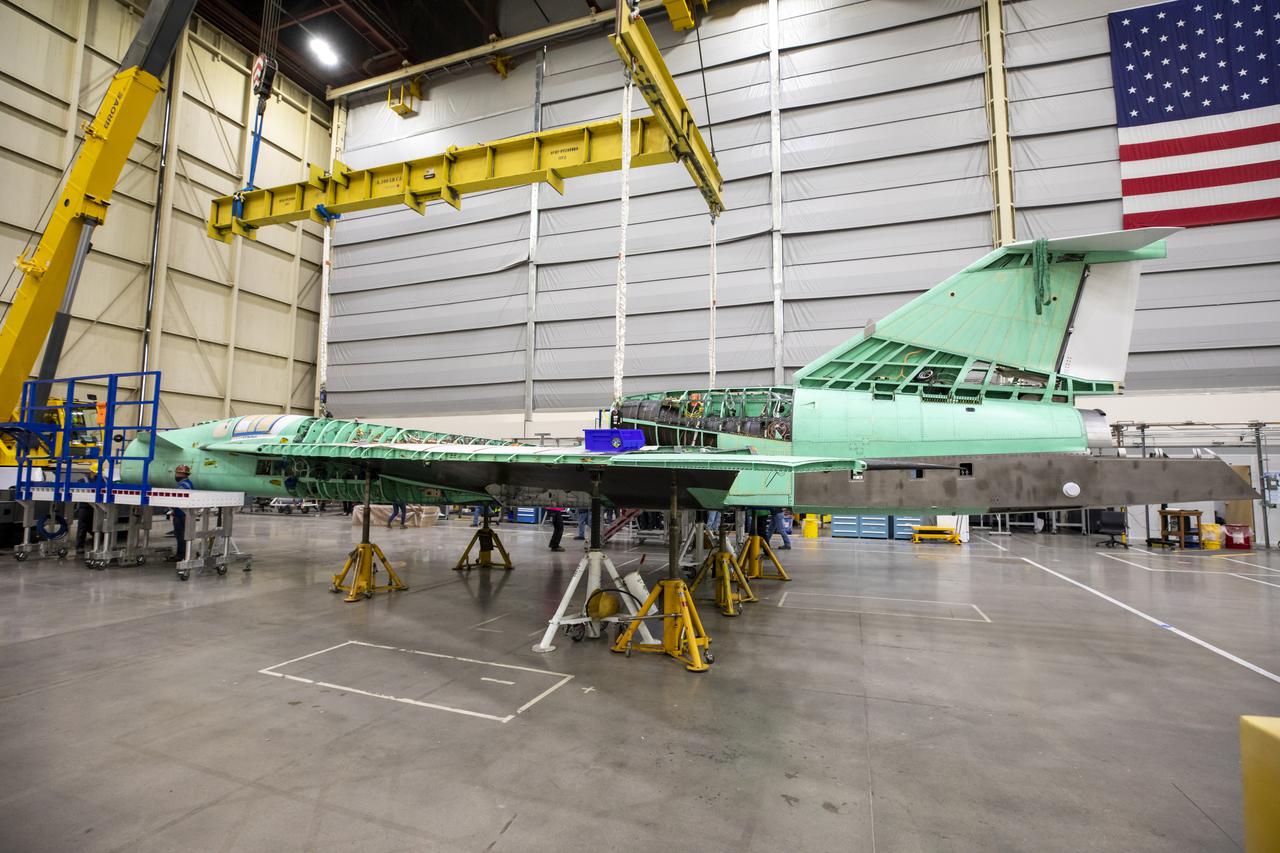
A view of the X-59 being supported by ground supports in preparation for installation of the landing gear and other hardware required for structural testing. Lockheed Martin Photography By Garry Tice 1011 Lockheed Way, Palmdale, Ca. 93599 Event: Removal From Tooling Jig Date: 10/27/2021 Additional Info:
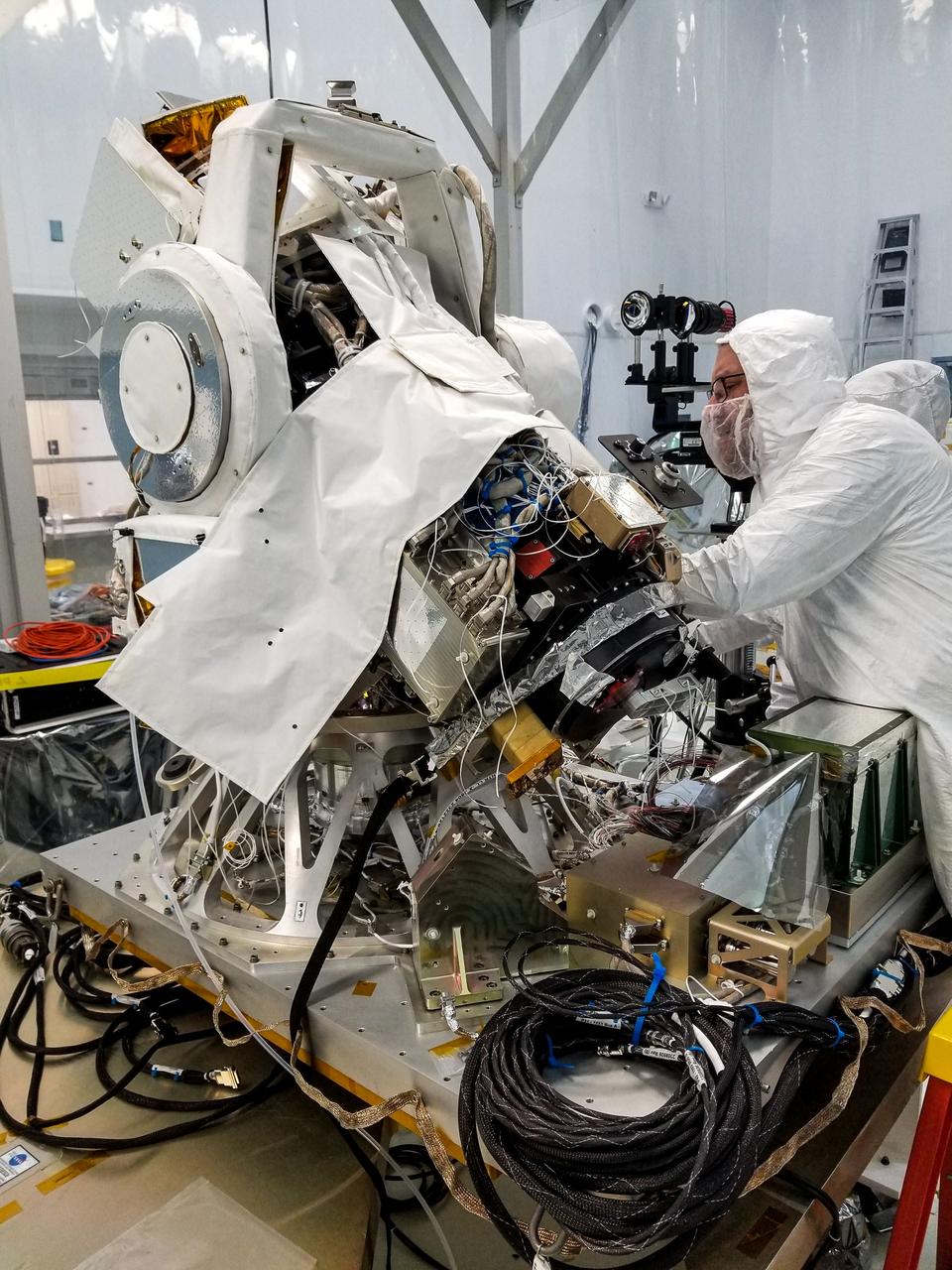
jsc2024e061949 (9/12/2024) --- Team members work on installing the thermal blankets on the COronal Diagnostic EXperiment (CODEX) instrument. These blankets insulate CODEX from space. Credit: CODEX team / NASA
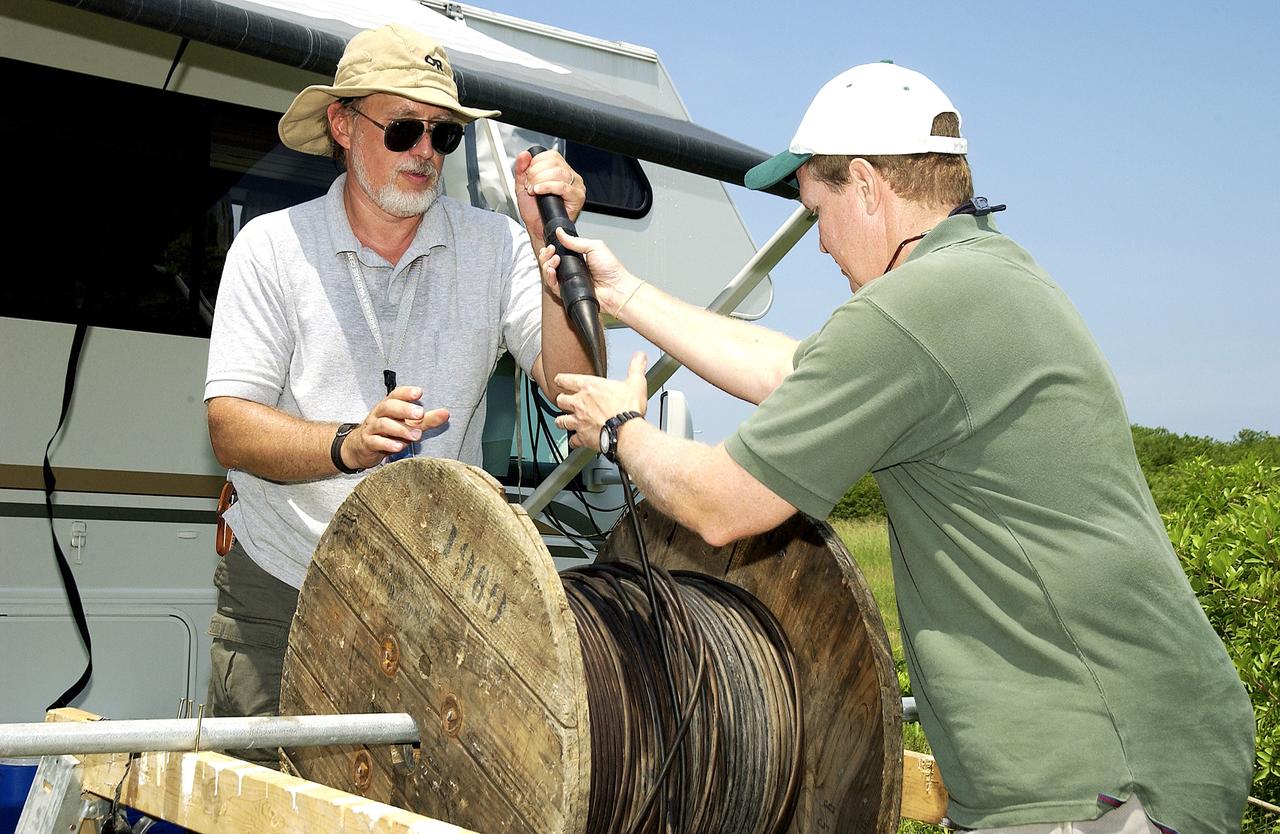
KENNEDY SPACE CENTER, FLA. - Research team members work with acoustic cable during underwater acoustic research being conducted in the Launch Complex 39 turn basin. Several government agencies, including NASA, NOAA, the Navy, the Coast Guard, and the Florida Fish and Wildlife Commission are involved in the testing. The research involves demonstrations of passive and active sensor technologies, with applications in fields ranging from marine biological research to homeland security. The work is also serving as a pilot project to assess the cooperation between the agencies involved. Equipment under development includes a passive acoustic monitor developed by NASA’s Jet Propulsion Laboratory, and mobile robotic sensors from the Navy’s Mobile Diving and Salvage Unit.
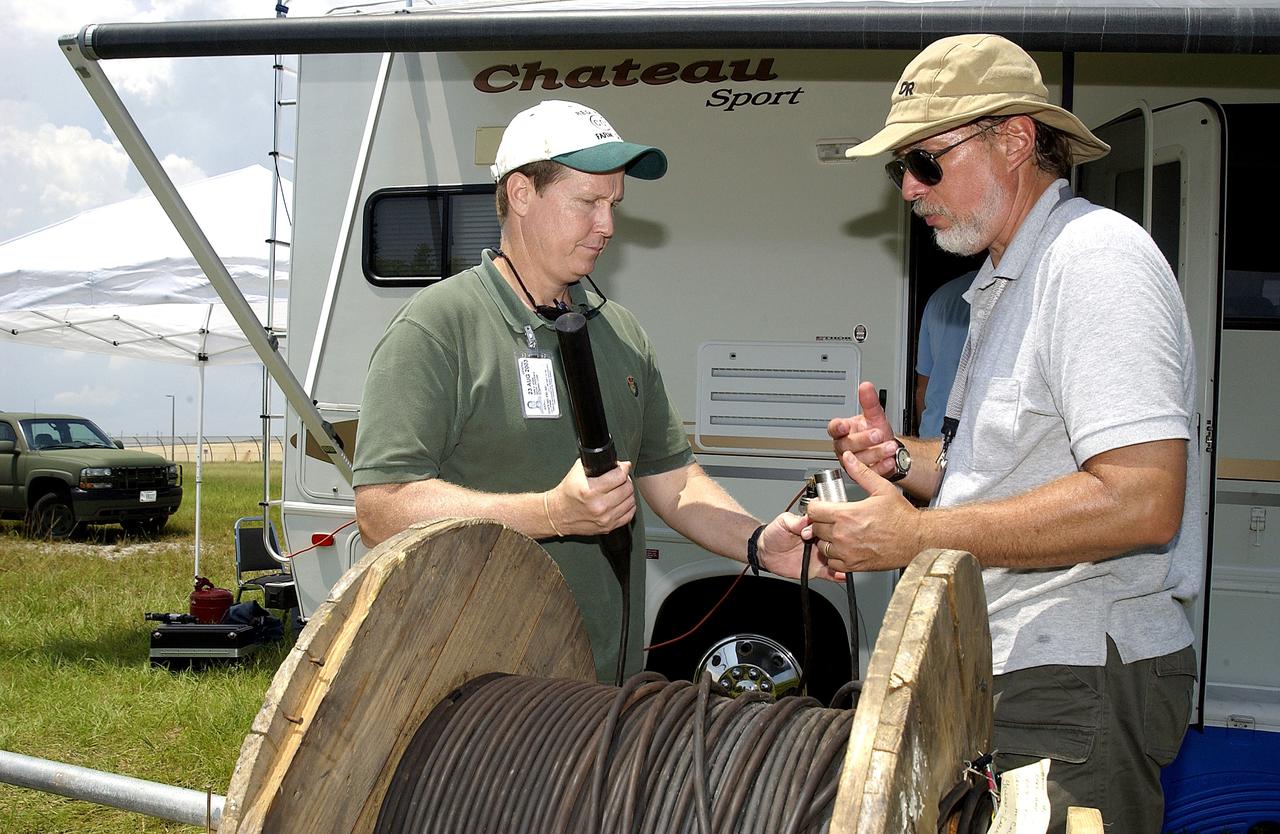
KENNEDY SPACE CENTER, FLA. - Research team members work with acoustic cable during underwater acoustic research being conducted in the Launch Complex 39 turn basin. Several government agencies, including NASA, NOAA, the Navy, the Coast Guard, and the Florida Fish and Wildlife Commission are involved in the testing. The research involves demonstrations of passive and active sensor technologies, with applications in fields ranging from marine biological research to homeland security. The work is also serving as a pilot project to assess the cooperation between the agencies involved. Equipment under development includes a passive acoustic monitor developed by NASA’s Jet Propulsion Laboratory, and mobile robotic sensors from the Navy’s Mobile Diving and Salvage Unit.
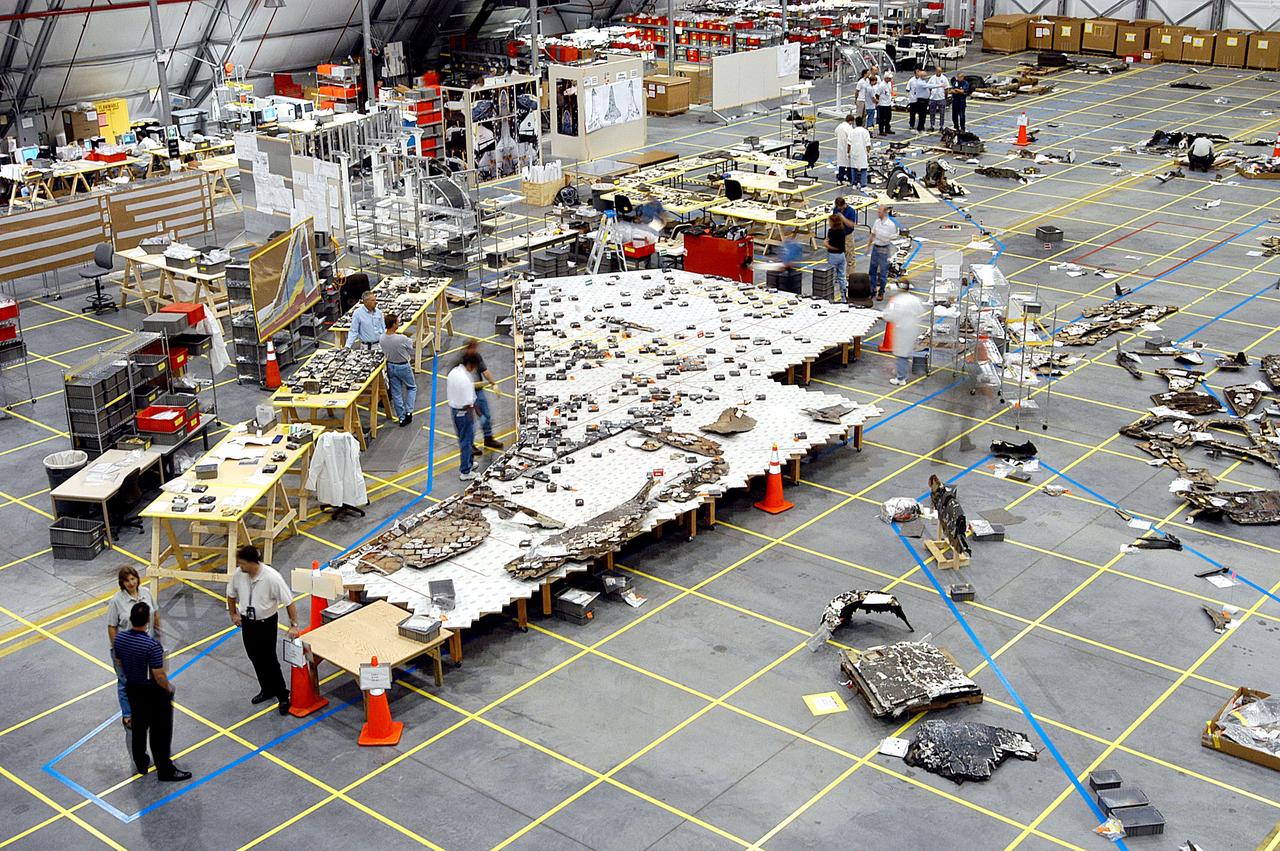
KENNEDY SPACE CENTER, FLA. - In the RLV hangar, members of the Columbia Reconstruction Team work to identify pieces of Thermal Protection System tile from the left wing of Columbia recovered during the search and recovery efforts in East Texas. The items shipped to KSC number more than 82,000 and weigh 84,800 pounds or 38 percent of the total dry weight of Columbia. Of those items, 78,760 have been identified, with 753 placed on the left wing grid in the Hangar.
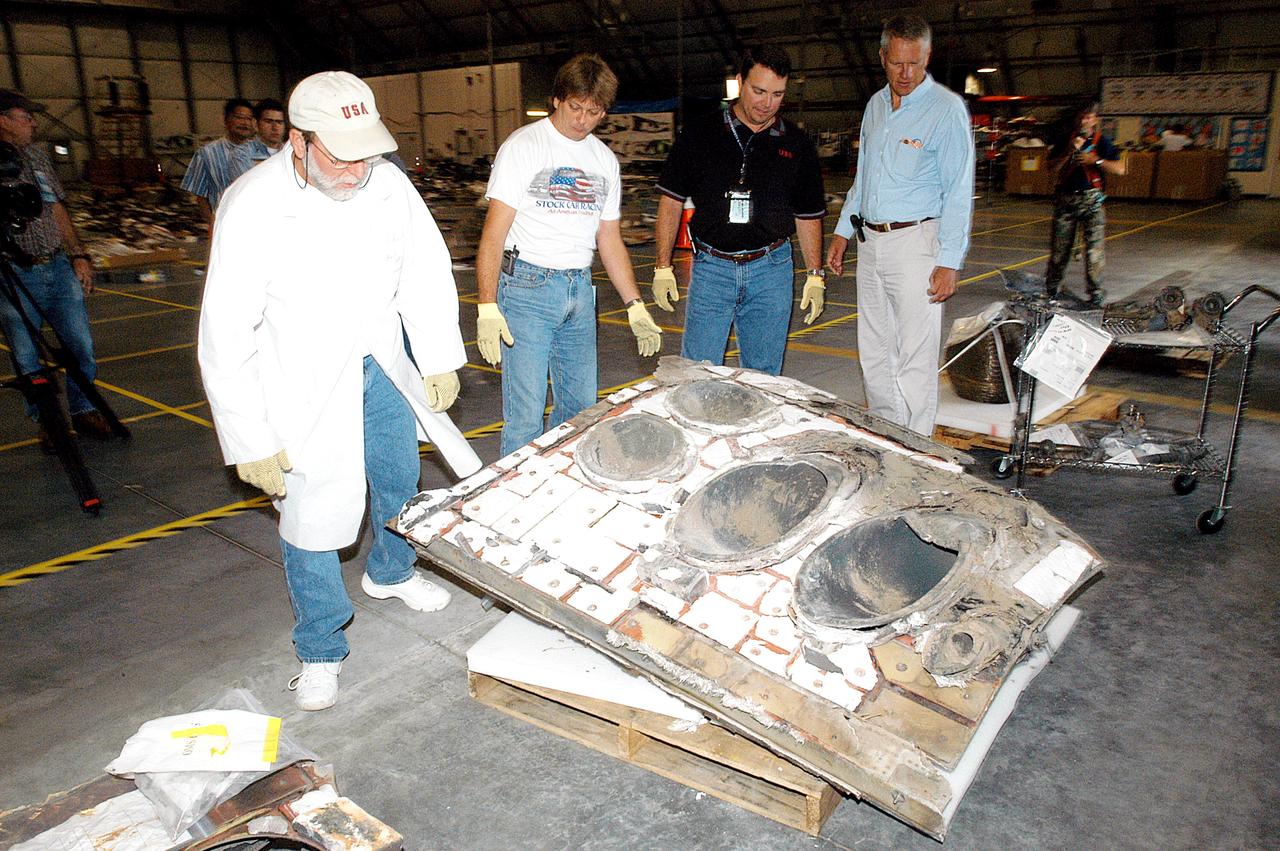
KENNEDY SPACE CENTER, FLA. - Members of the Columbia Reconstruction Project Team work with pieces of debris in the RLV Hangar. The items shipped to KSC number more than 82,000 and weigh 84,800 pounds or 38 percent of the total dry weight of Columbia. Of those items, 78,760 have been identified, with 753 placed on the left wing grid in the Hangar.
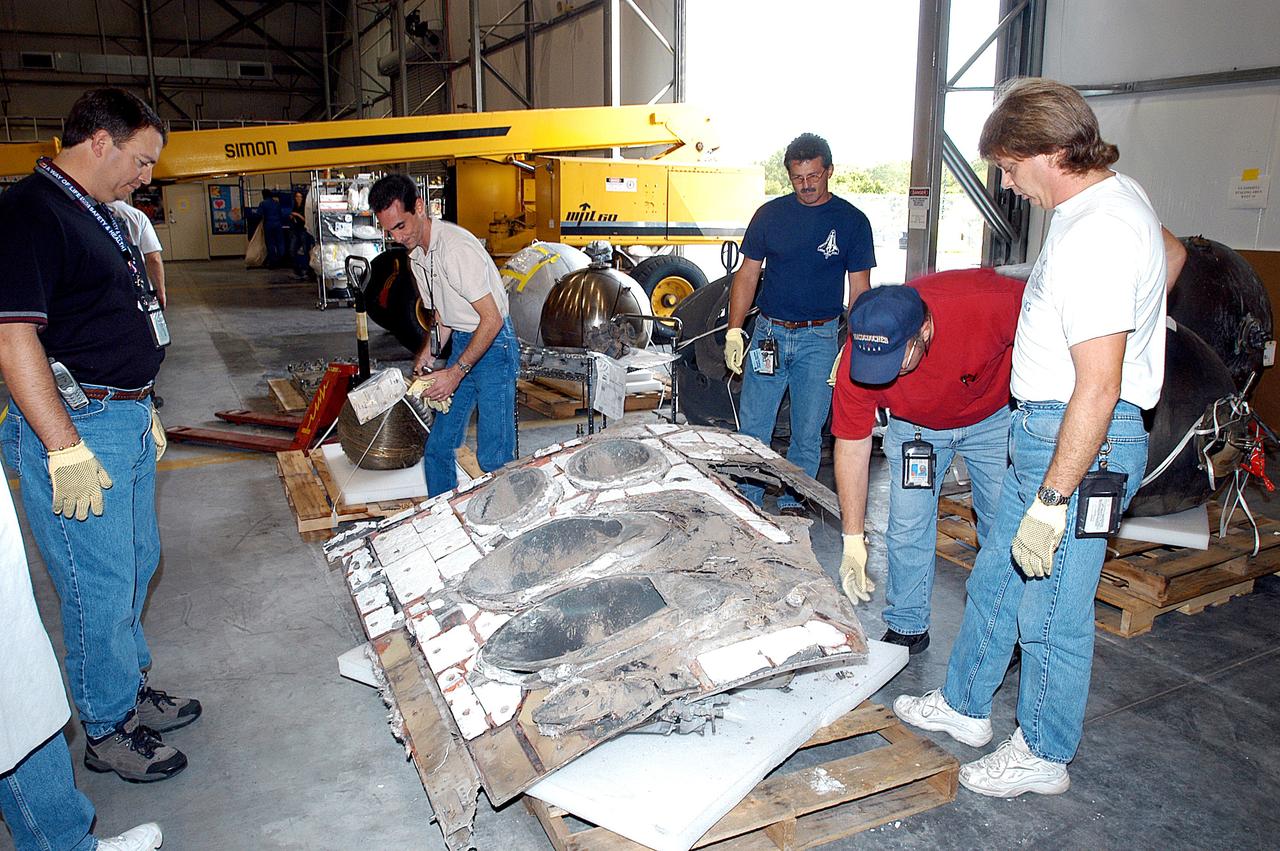
KENNEDY SPACE CENTER, FLA. - Members of the Columbia Reconstruction Project Team work with pieces of debris in the RLV Hangar. The items shipped to KSC number more than 82,000 and weigh 84,800 pounds or 38 percent of the total dry weight of Columbia. Of those items, 78,760 have been identified, with 753 placed on the left wing grid in the Hangar.
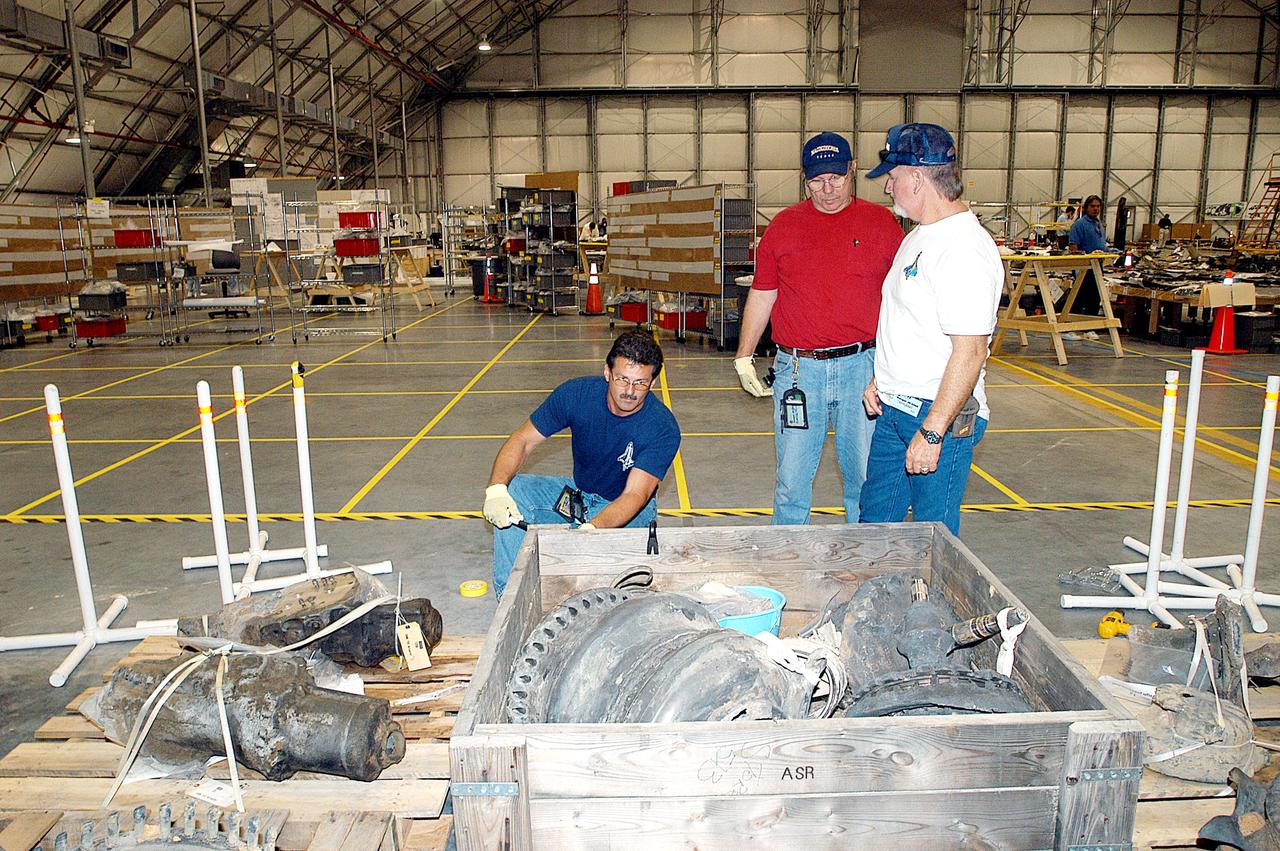
KENNEDY SPACE CENTER, FLA. - Members of the Columbia Reconstruction Project Team work with pieces of debris in the RLV Hangar. The items shipped to KSC number more than 82,000 and weigh 84,800 pounds or 38 percent of the total dry weight of Columbia. Of those items, 78,760 have been identified, with 753 placed on the left wing grid in the Hangar.
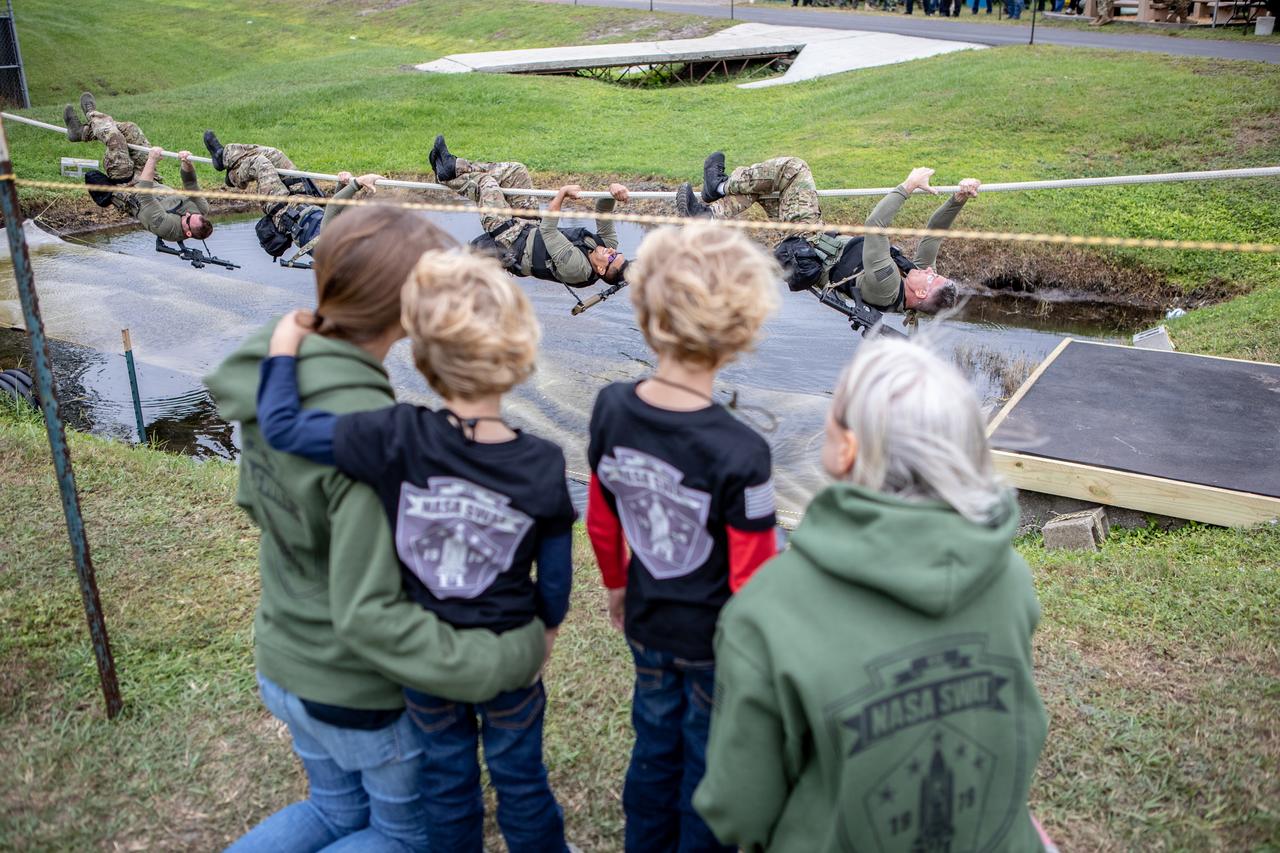
The family of one of NASA Kennedy Space Center's Emergency Response Team members watches the 37th Annual SWAT Round-Up International at the Lawson Lamar Firearms and Tactical Training Center in Orlando, Florida. Kennedy’s ERT members are working their way along a rope. The competition was held Nov. 10 to 15, and featured five different competition categories. Kennedy's ERT members exchanged best practices and competed with 60 teams from the U.S. and around the world.
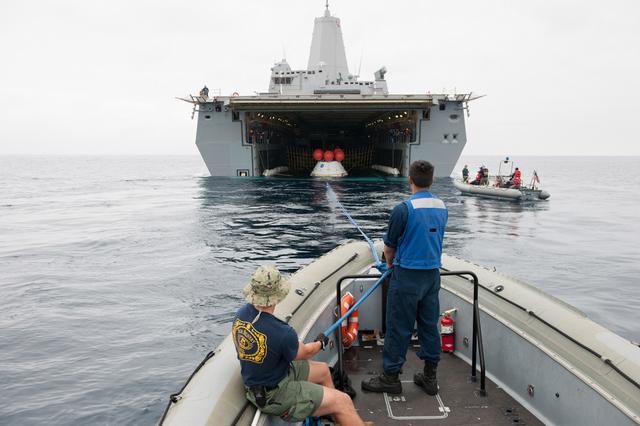
Recovery team members work with a test version of Orion floating in the well deck of the U.S.S. Anchorage on Aug. 2, 2014. A combined NASA and U.S. Navy team practiced recovery techniques off the coast of California in preparation for Exploration Flight Test-1 (EFT-1). Part of Batch image transfer from Flickr.
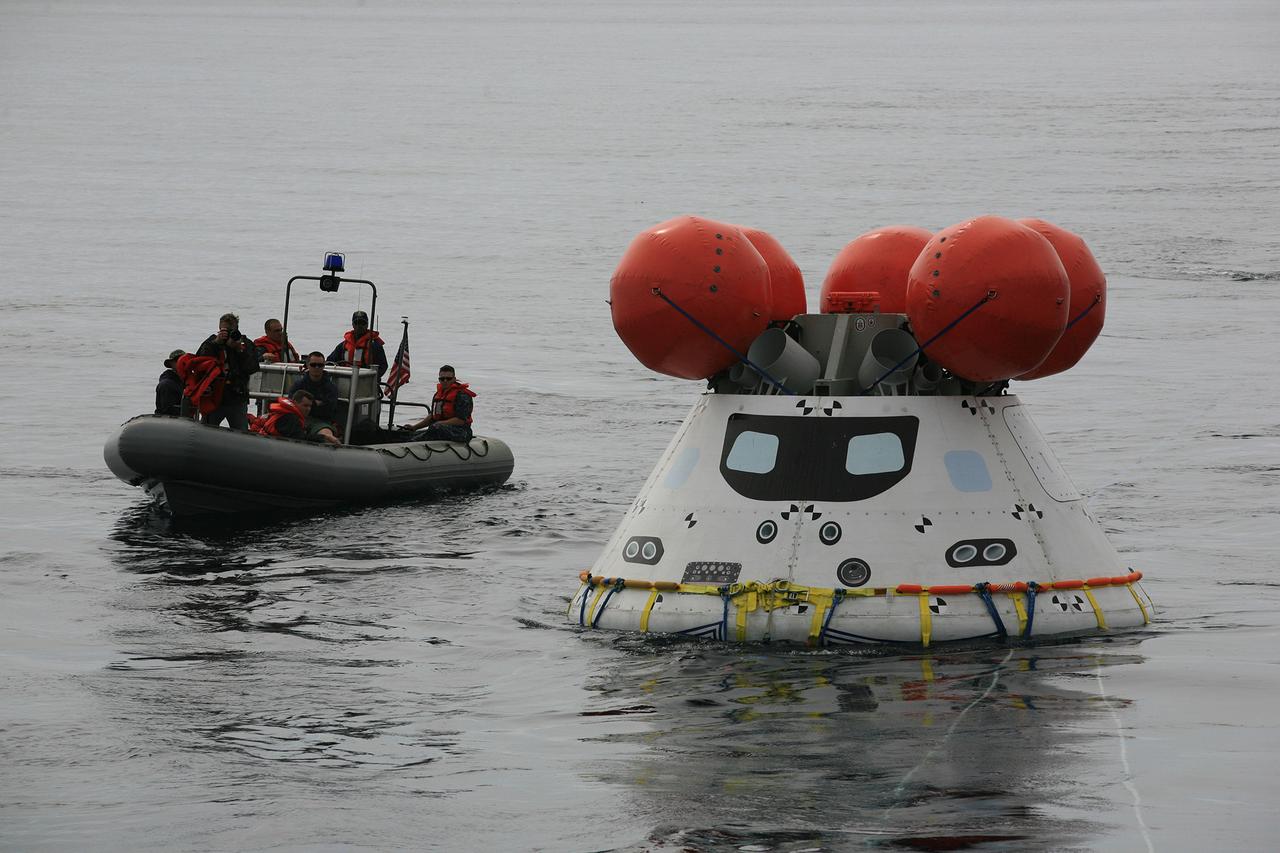
Recovery team members work with a test version of Orion floating in the well deck of the U.S.S. Anchorage on Aug. 2, 2014. A combined NASA and U.S. Navy team practiced recovery techniques off the coast of California in preparation for Exploration Flight Test-1 (EFT-1). Part of Batch image transfer from Flickr.
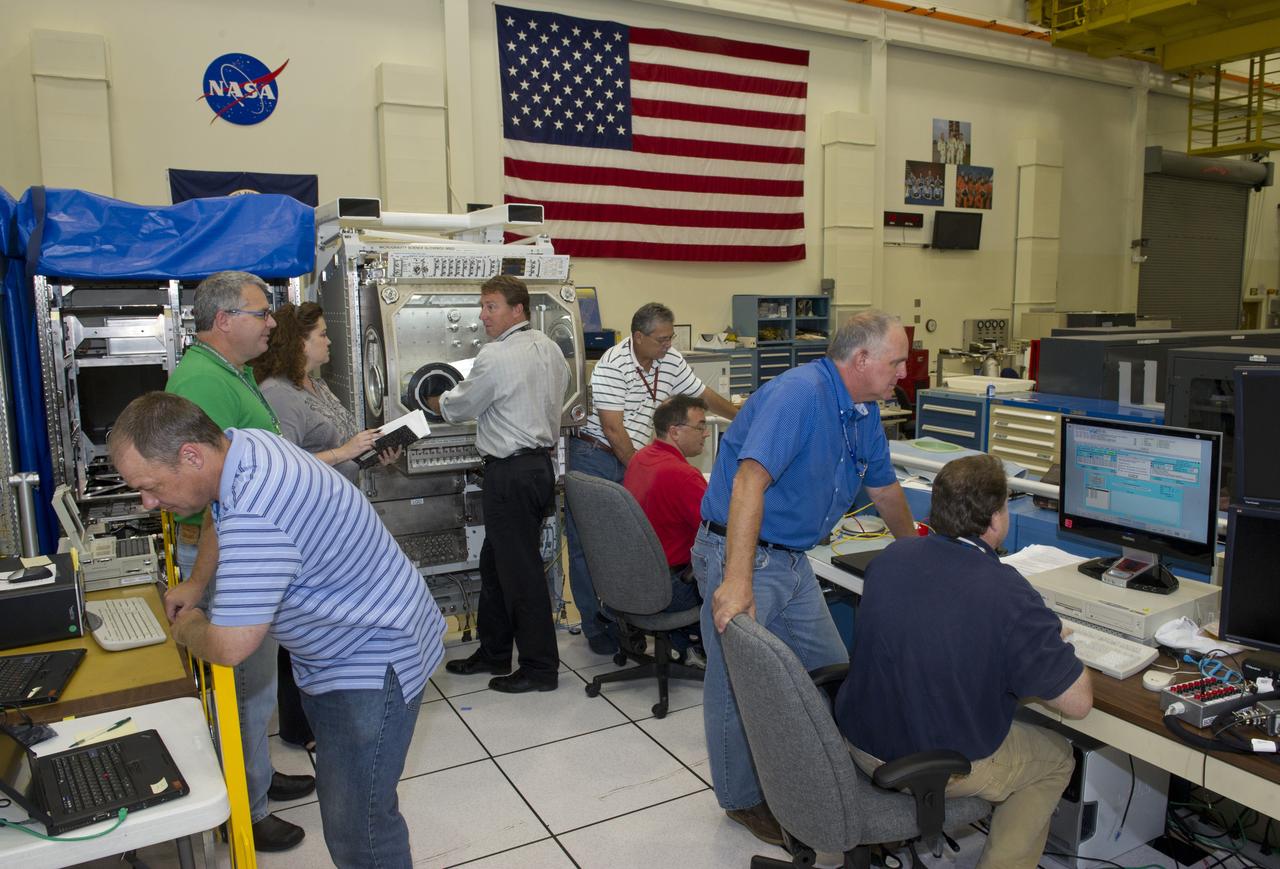
MSG TEAM MEMBERS AT WORK: (L TO R): PHILLIP BRYANT, CHRIS BUTLER, GINGER FLORES, REGGIE SPIVEY, NEAL SCOTT, ANDREW TYGIELSKI, JOHN WILSON, TIM BROACH

Lockheed Martin technicians work to align and check the fastener holes on the X-59’s fuselage skin. The aircraft, under construction at Lockheed Martin Skunk Works in Palmdale, California, will demonstrate the ability to fly supersonic while reducing the loud sonic boom to a quiet sonic thump.
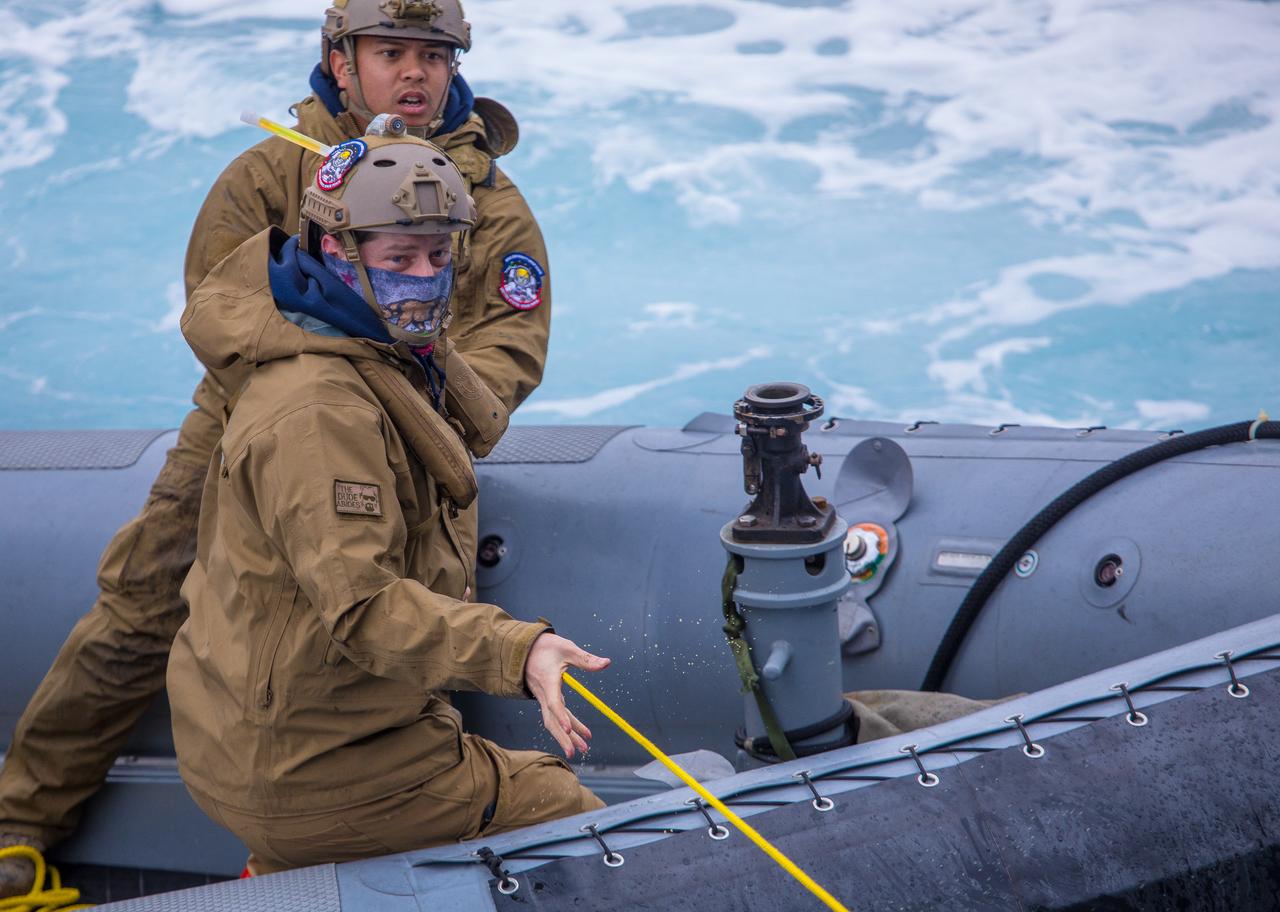
During the first full mission profile test of the recovery procedures for Artemis I, NASA’s Landing and Recovery team met their objectives. The team works with members of the DoD to hone their procedures before Orion splashes down in the Pacific as part of NASA’s Artemis program. During Underway Recovery Test-8, two divers from EOD Mobile Unit 3, MDS Company 3-1 work the tending line while a test version of Orion is being pulled into the well deck of the USS John P. Murtha.
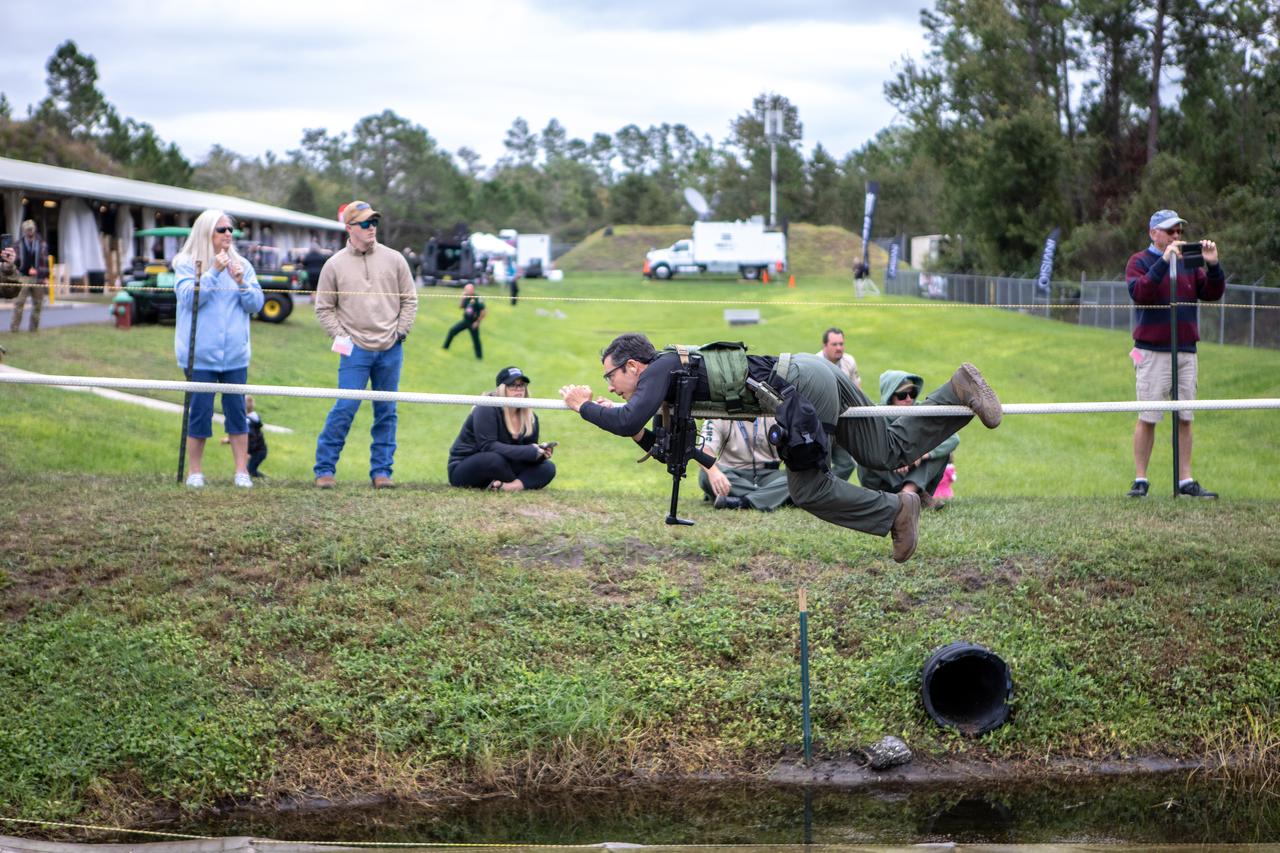
A member of NASA Kennedy Space Center's Emergency Response Team works his way along a rope above water during one of the tactical challenges at the 37th Annual SWAT Round-Up International at the Lawson Lamar Firearms and Tactical Training Center in Orlando, Florida. The competition was held Nov. 10 to 15, 2019, and featured five different tactical challenges. Kennedy's ERT members exchanged best practices and competed with more than 50 teams from the U.S. and around the world.
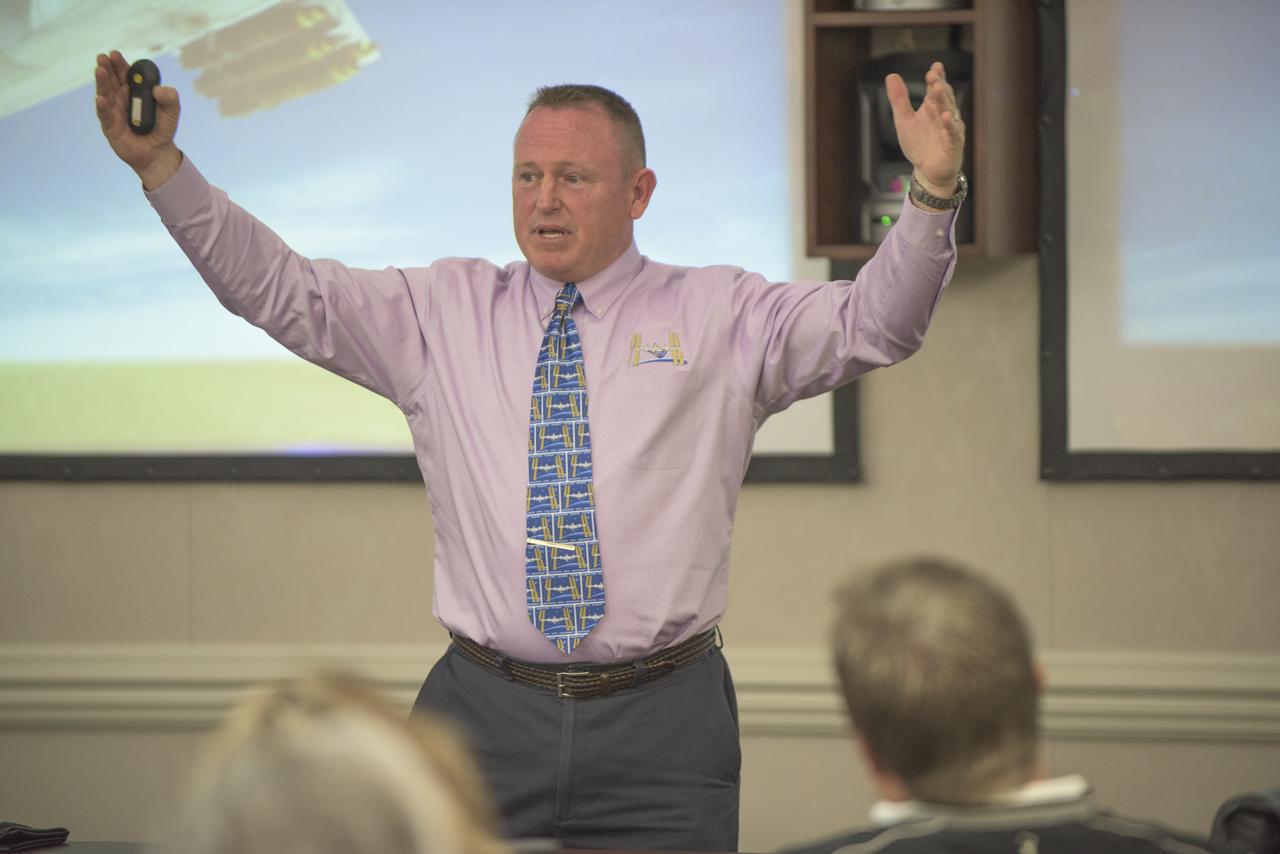
NASA ASTRONAUT BUTCH WILMORE SPEAKS TO NASA MARSHALL SPACE FLIGHT CENTER TEAM MEMBERS DURING HIS NOV. 16 MARSHALL VISIT ABOUT HIS EXPERIENCES LIVING AND WORKING NEARLY SIX MONTHS ON THE INTERNATIONAL SPACE STATION AND SERVING AS EXPEDITION 42 COMMANDER. THE "SHARED EXPERIENCES" DISCUSSION SERIES IS A KEY PART OF THE "MISSION SUCCESS IS IN OUR HANDS" INITIATIVE TO STRENGTHEN TEAM MEMBERS' COMMITMENT TO MISSION ASSURANCE AND SAFETY.
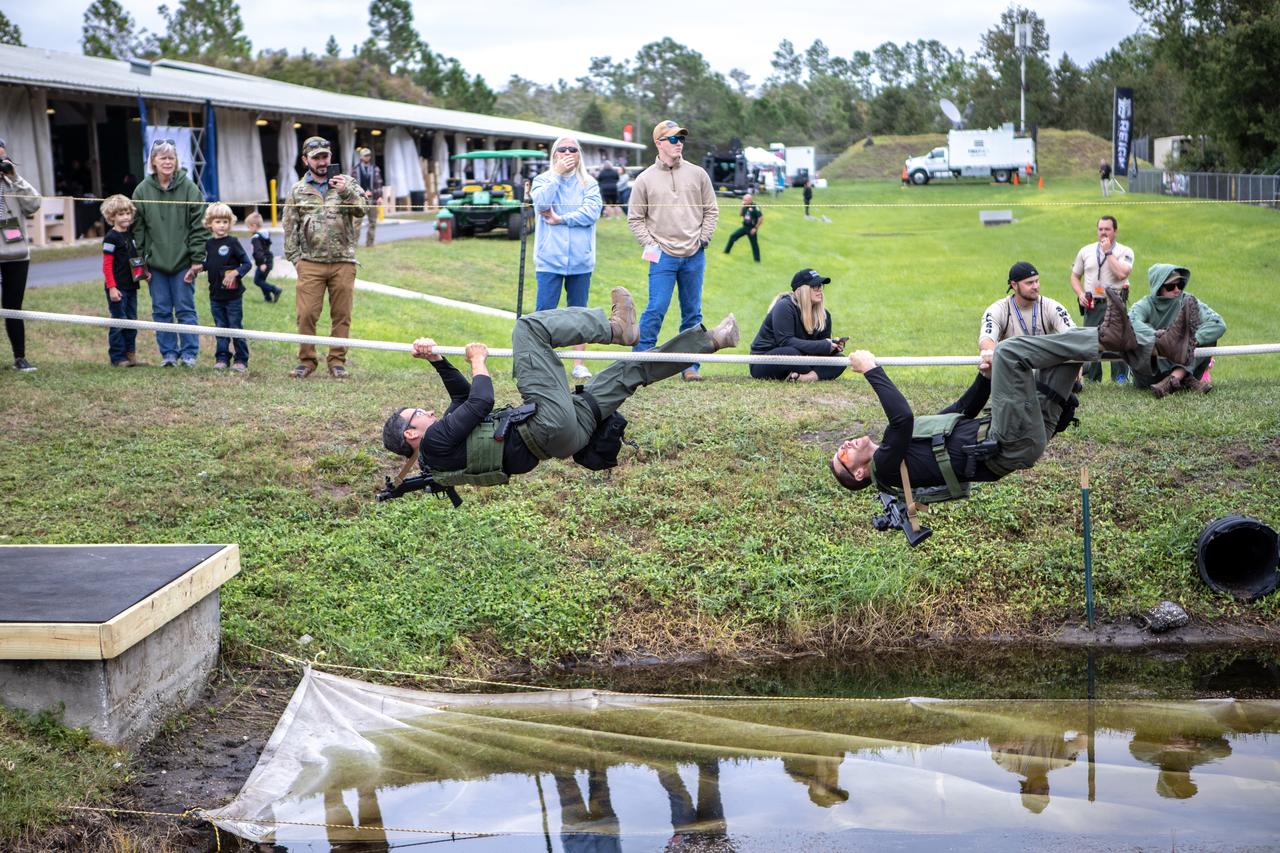
Members of NASA Kennedy Space Center's Emergency Response Team work their way along a rope above water during one of the tactical challenges at the 37th Annual SWAT Round-Up International at the Lawson Lamar Firearms and Tactical Training Center in Orlando, Florida. The competition was held Nov. 10 to 15, 2019, and featured five different tactical challenges. Kennedy's ERT members exchanged best practices and competed with more than 50 teams from the U.S. and around the world.
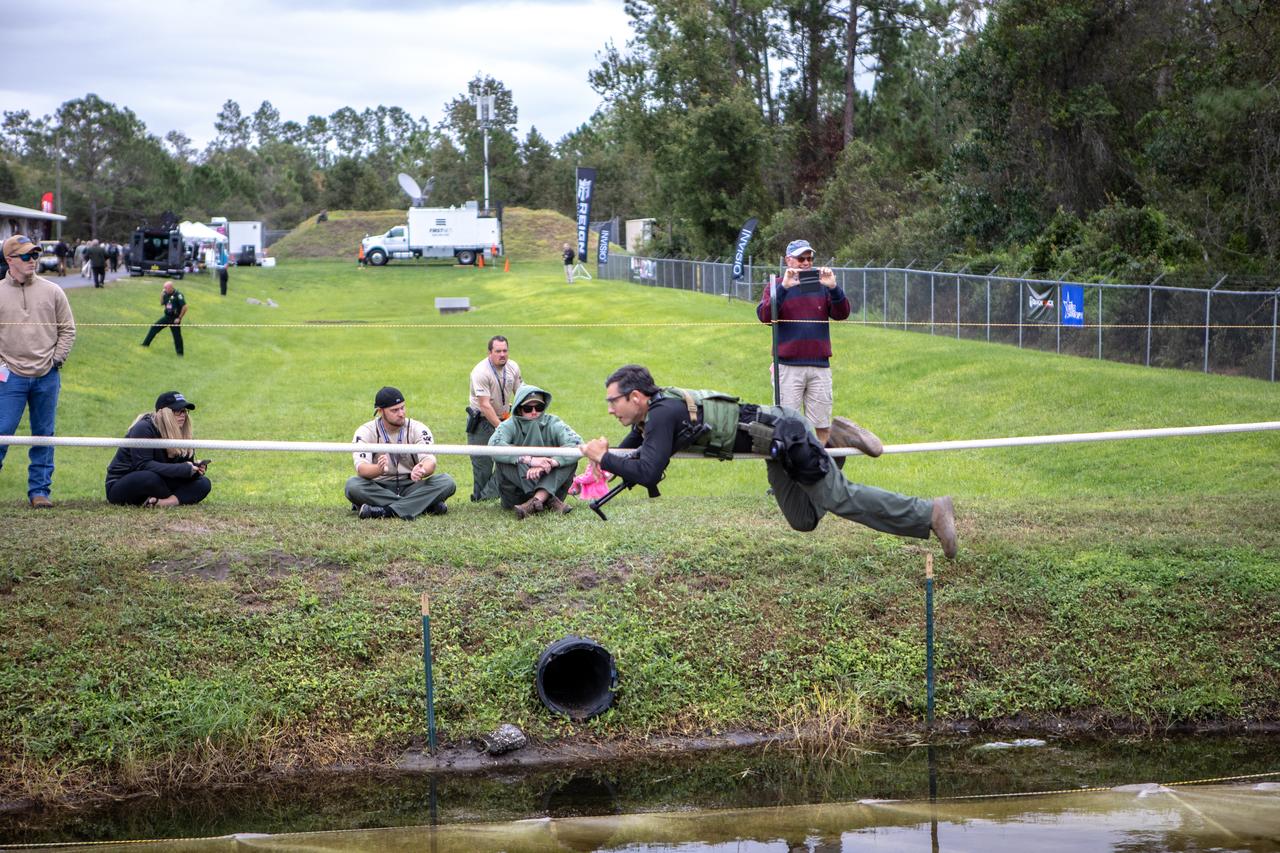
A member of NASA Kennedy Space Center's Emergency Response Team works his way along a rope above water during one of the tactical challenges at the 37th Annual SWAT Round-Up International at the Lawson Lamar Firearms and Tactical Training Center in Orlando, Florida. The competition was held Nov. 10 to 15, 2019, and featured five different tactical challenges. Kennedy's ERT members exchanged best practices and competed with more than 50 teams from the U.S. and around the world.
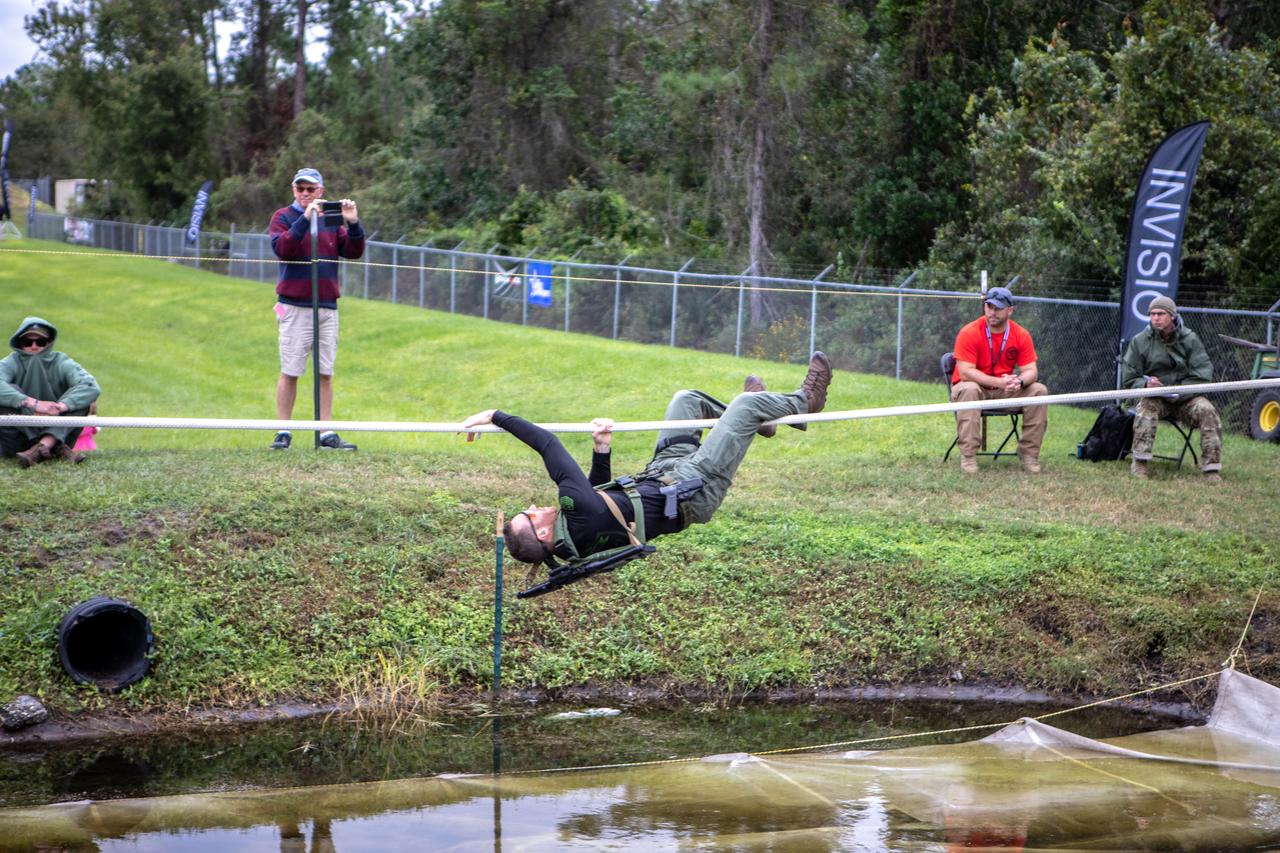
A member of NASA Kennedy Space Center's Emergency Response Team switches position as he works his way along a rope above water during one of the tactical challenges at the 37th Annual SWAT Round-Up International at the Lawson Lamar Firearms and Tactical Training Center in Orlando, Florida. The competition was held Nov. 10 to 15, 2019, and featured five different tactical challenges. Kennedy's ERT members exchanged best practices and competed with more than 50 teams from the U.S. and around the world.
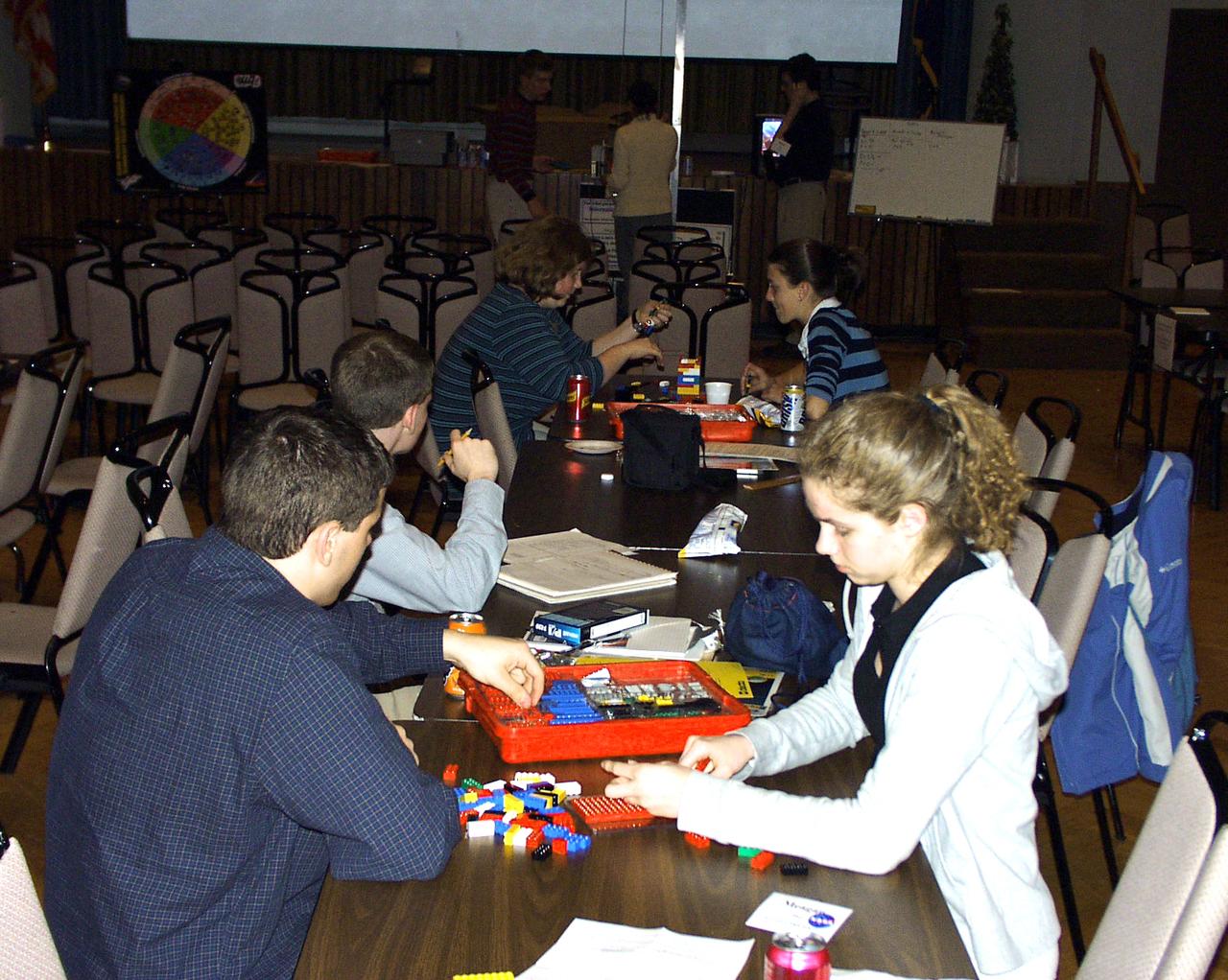
Members from all four teams were mixed into pairs to work on a Lego (TM) Challenge device to operate in the portable drop tower demonstrator (background). These two team members are about to try out their LEGO (TM) creation. This was part of the second Dropping in a Microgravity Environment (DIME) competition held April 23-25, 2002, at NASA's Glenn Research Center. Competitors included two teams from Sycamore High School, Cincinnati, OH, and one each from Bay High School, Bay Village, OH, and COSI Academy, Columbus, OH. DIME is part of NASA's education and outreach activities. Details are on line at http://microgravity.grc.nasa.gov/DIME_2002.html.
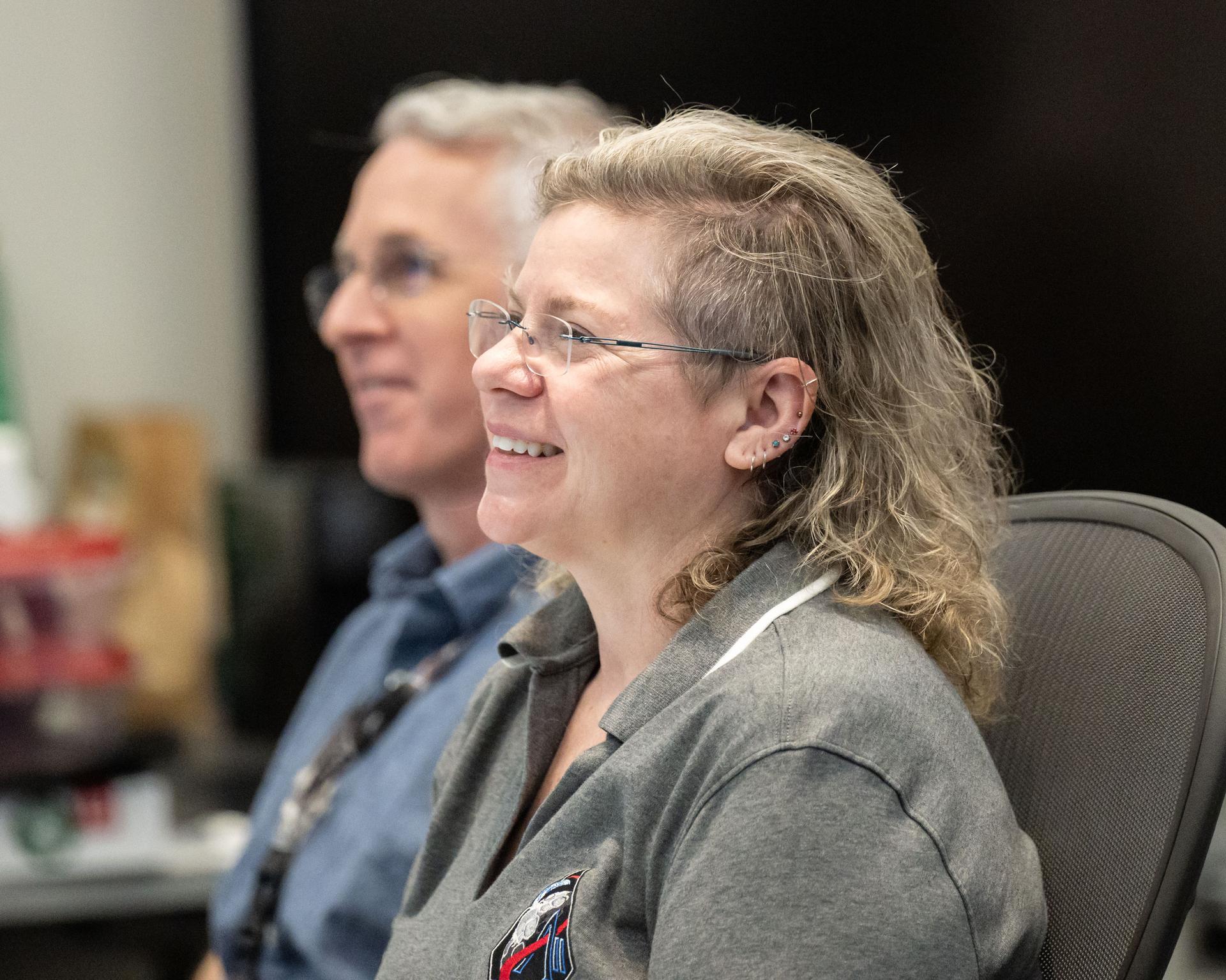
Artemis II lunar science team members, from left, Ryan Ewing, and Barbara Cohen, react to crew observations during the lunar flyby on April 6, 2026. The team worked in the Science Evaluation Room (SER) in Mission Control at NASA’s Johnson Space Center in Houston. Built specifically for Artemis missions with these science priorities in mind, the SER is equipped to support rapid data interpretation, collaborative analysis, real-time decision making, and seamless coordination between the science and operations teams. Credits: NASA/Luna Posadas Nava
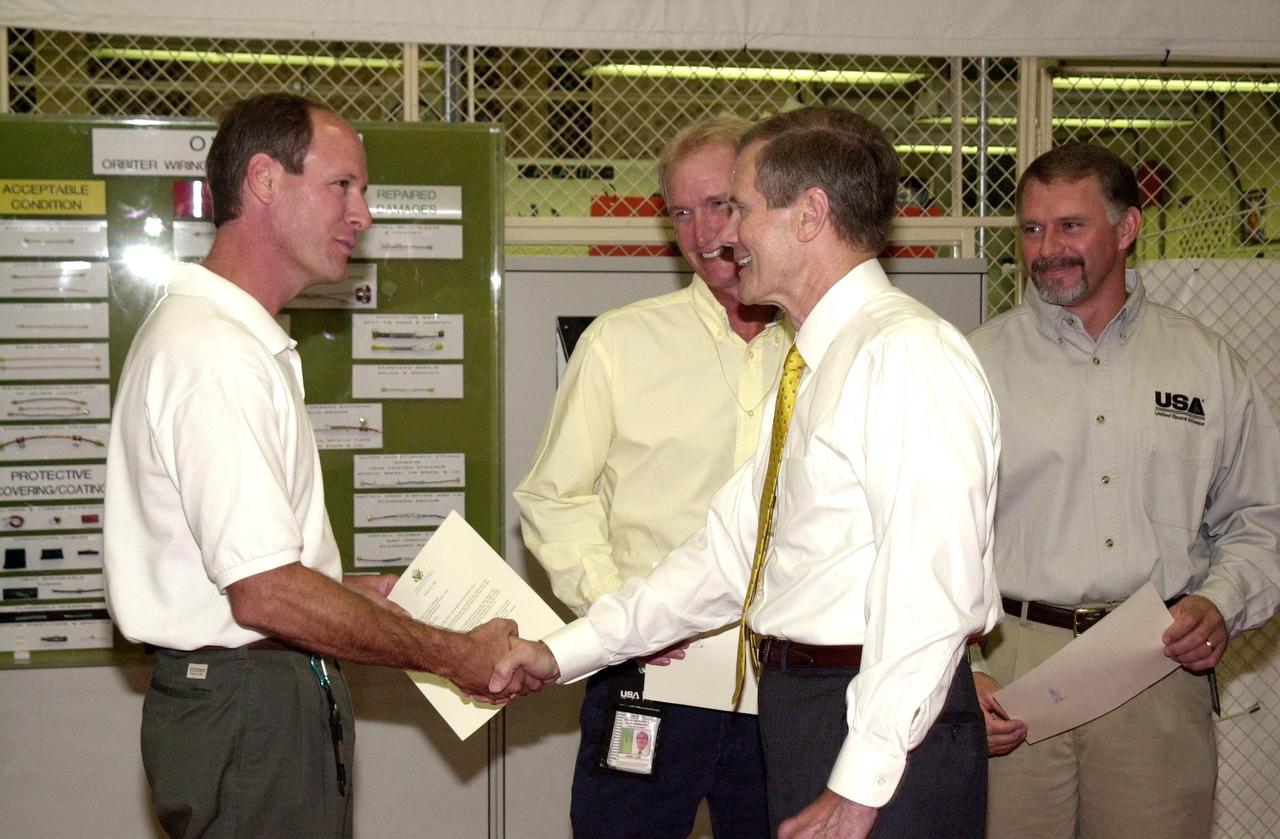
KENNEDY SPACE CENTER, FLA. -- U.S. Sen. Bill Nelson congratulates Rick Beckwith, with the Flow Liner Inspection & Repair team. Nelson presented gold seal Senate certificates to the team for their work on finding the cracks in orbiter flow liners and repairing them. Other team members behind Nelson are Mike Young (center) and Jerry Gouding (right). Not pictured are Tony Nesotas and David Strait. Strait first spotted the fuel-line crack; Goudy performed arc welding on one of Atlantis' flow liners.
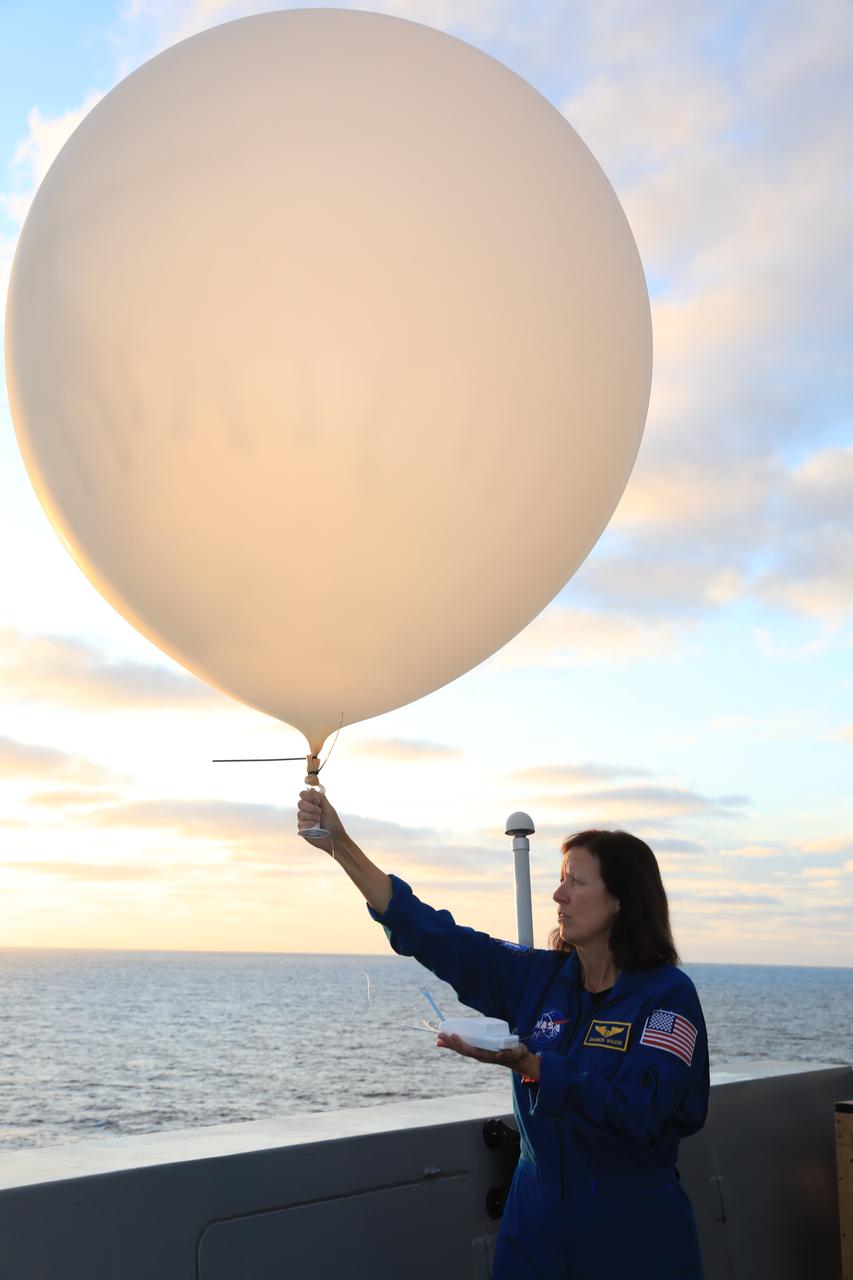
Astronaut Shannon Walker prepares to release a weather balloon from the deck of the USS Portland alongside members of the U.S. Space Force 45th Weather Squadron ahead of the splashdown of the Orion spacecraft on Dec. 11. NASA's Landing and Recovery team works alongside the DoD to safely recover Orion after Artemis missions to the Moon.

Astronaut Shannon Walker prepares to release a weather balloon from the deck of the USS Portland alongside members of the U.S. Space Force 45th Weather Squadron ahead of the splashdown of the Orion spacecraft on Dec. 11. NASA's Landing and Recovery team works alongside the DoD to safely recover Orion after Artemis missions to the Moon.
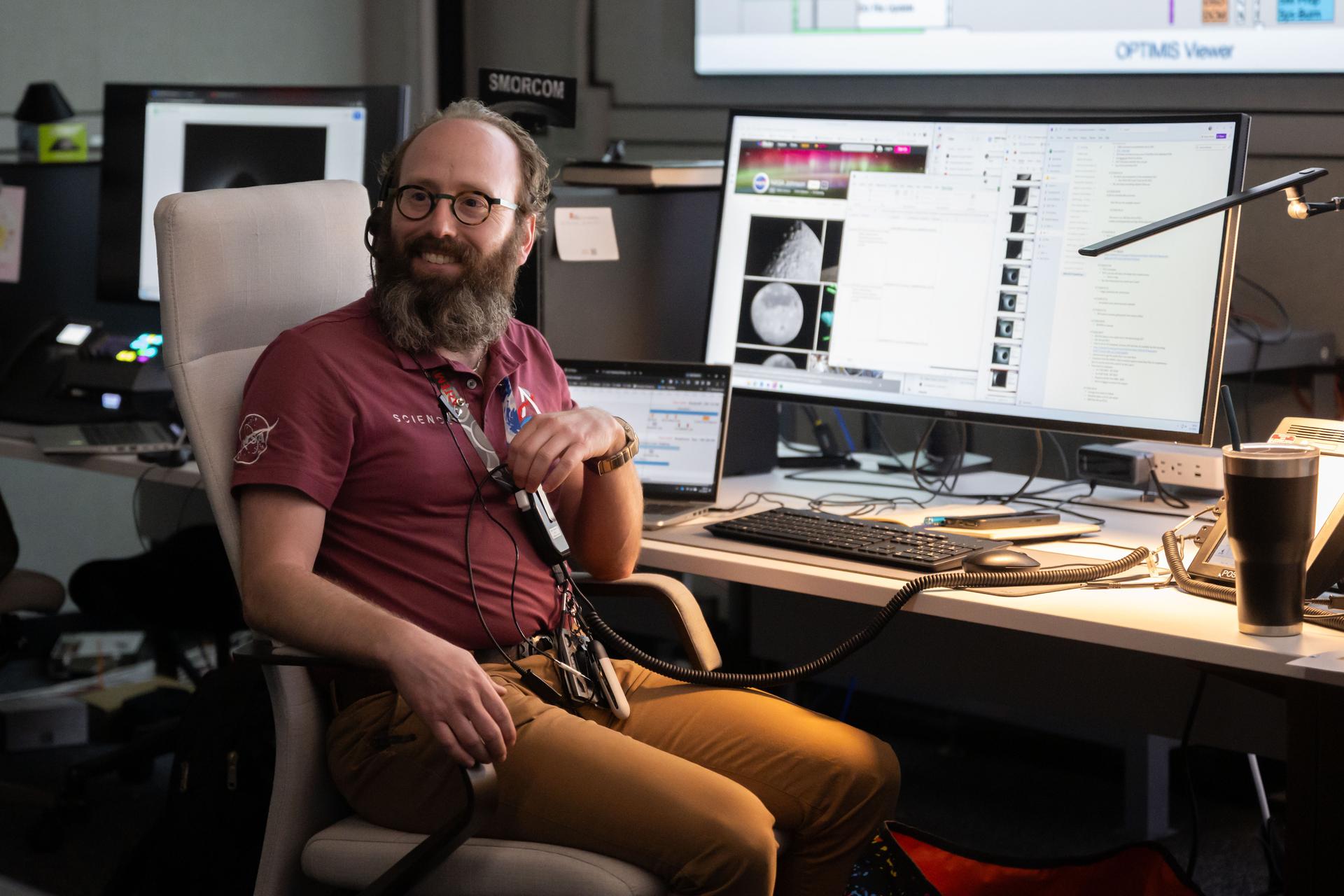
Artemis lunar science team member, Aaron Regberg, works in the Science Mission Operations Room, where scientists analyzed imagery and audio recordings of lunar observations captured by the Artemis II astronauts during their lunar flyby on April 6, 2026.
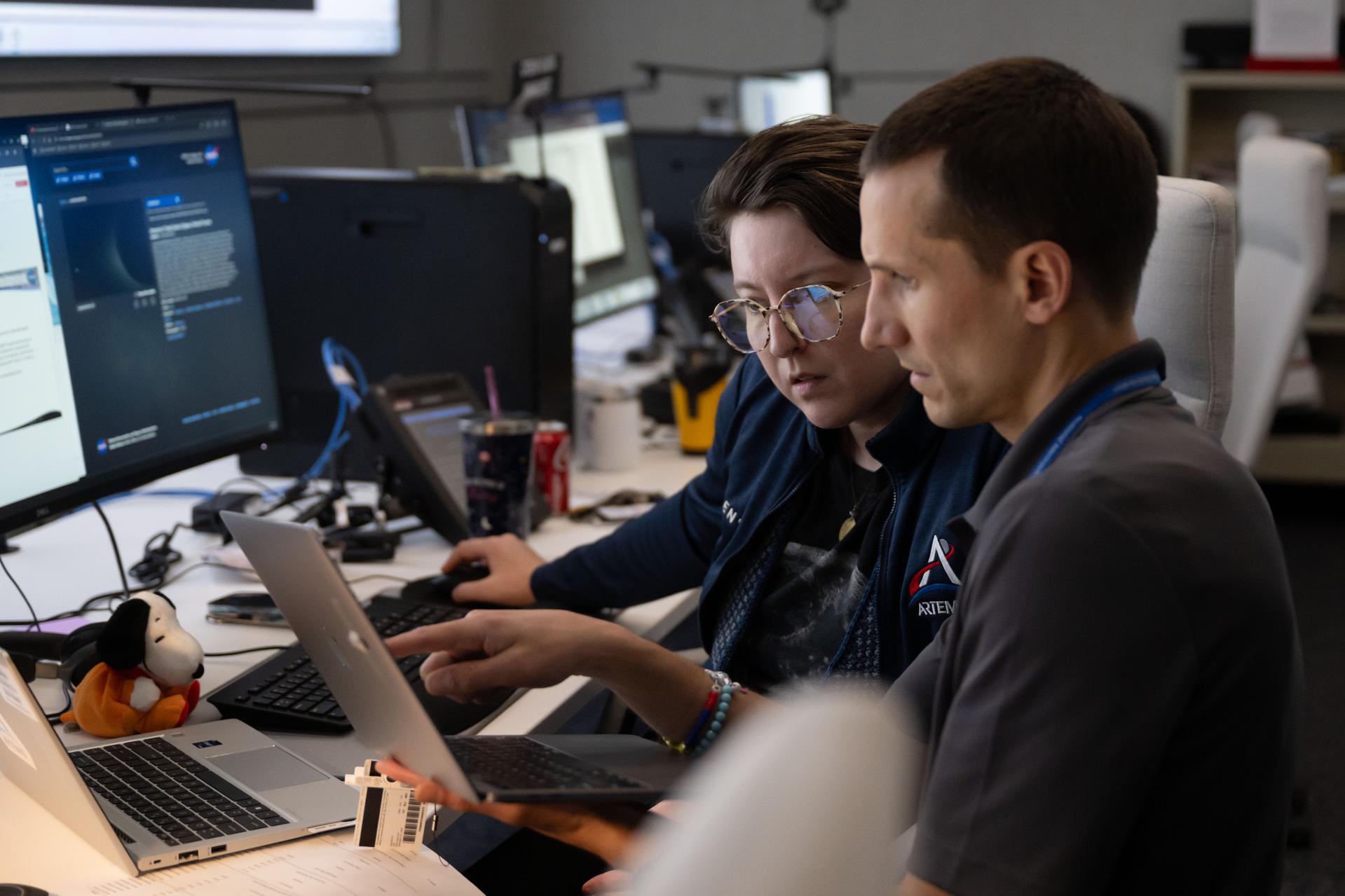
Artemis lunar science team members, from left, Alexandra Constantinou, and David Hollibaugh-Baker, work in the Science Mission Operations Room at NASA’s Johnson Space Center in Houston. They are analyzing imagery and audio recordings of lunar observations captured by the Artemis II astronauts during their lunar flyby on April 6, 2026.
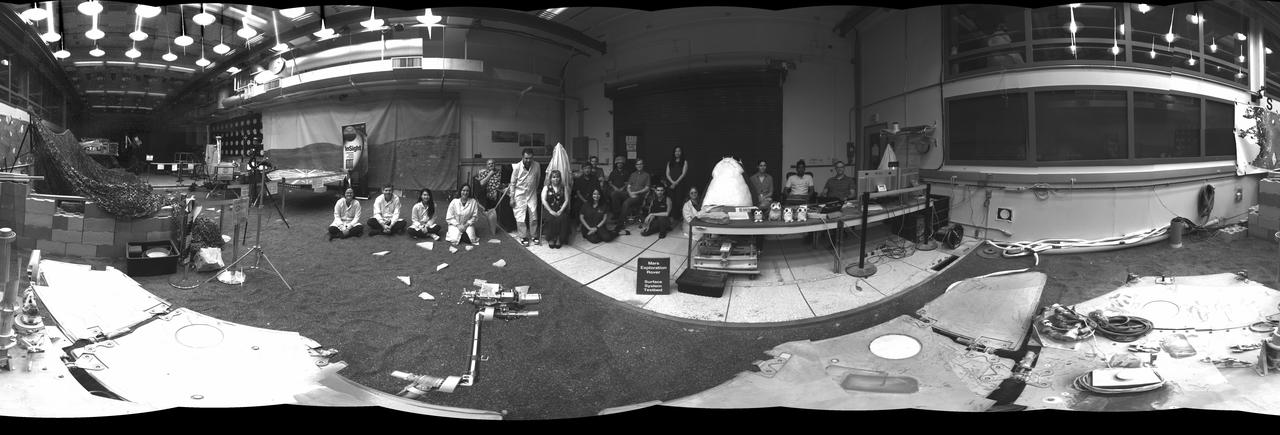
This 360-degree panorama was taken by "Dusty," a fully-working replica of NASA's Opportunity rover at the agency's Jet Propulsion Laboratory. The panorama was taken as part of a software test. Members of the Opportunity team gathered to sit in during the panorama. The panorama was taken by Dusty's Panoramic Camera, or Pancam, on Sept. 6, 2018. https://photojournal.jpl.nasa.gov/catalog/PIA23247
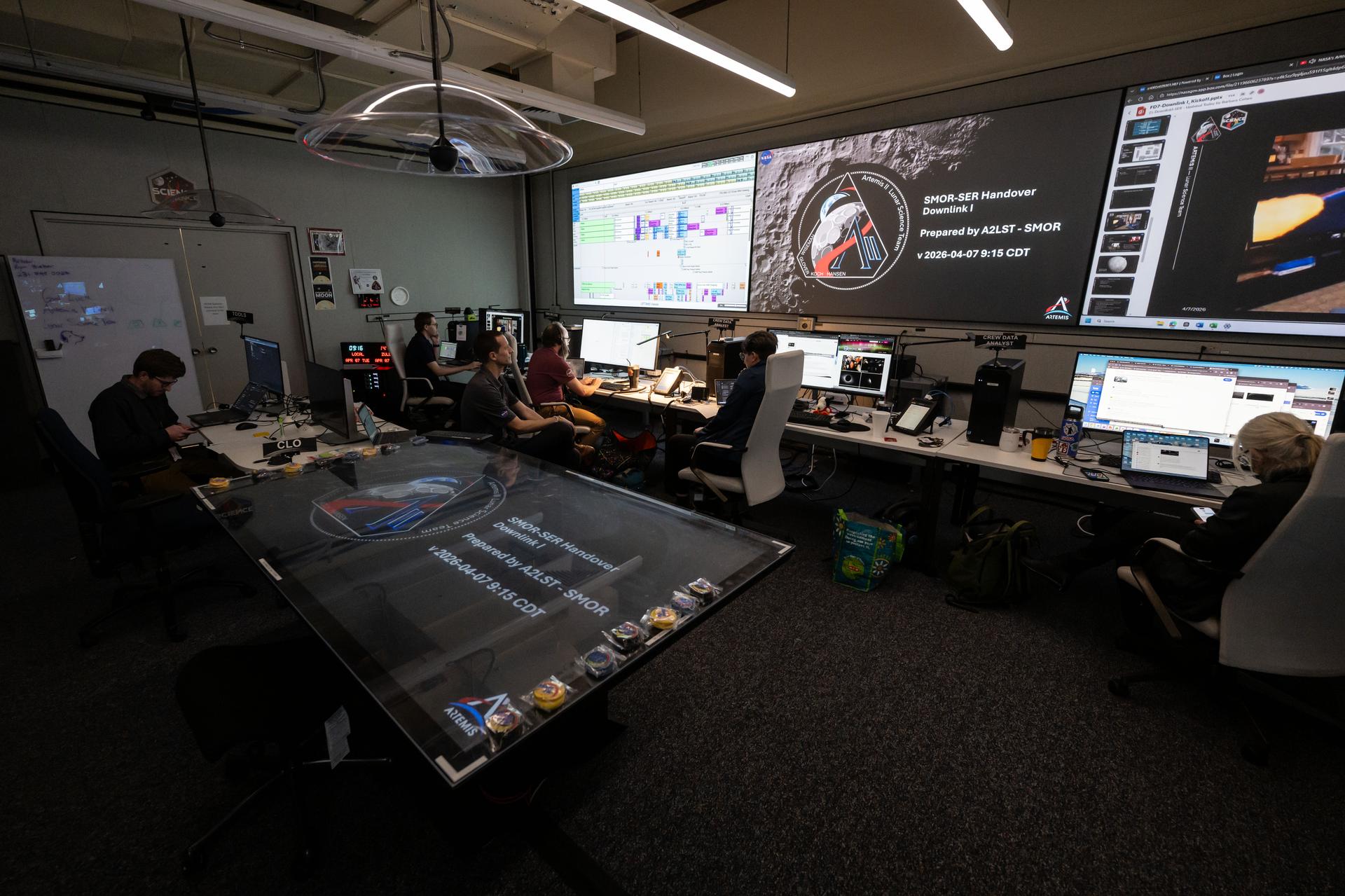
Artemis lunar science team members, work in the Science Mission Operations Room at NASA’s Johnson Space Center in Houston, analyzing imagery and audio recordings of lunar observations captured by the Artemis II astronauts during their lunar flyby on April 6, 2026.
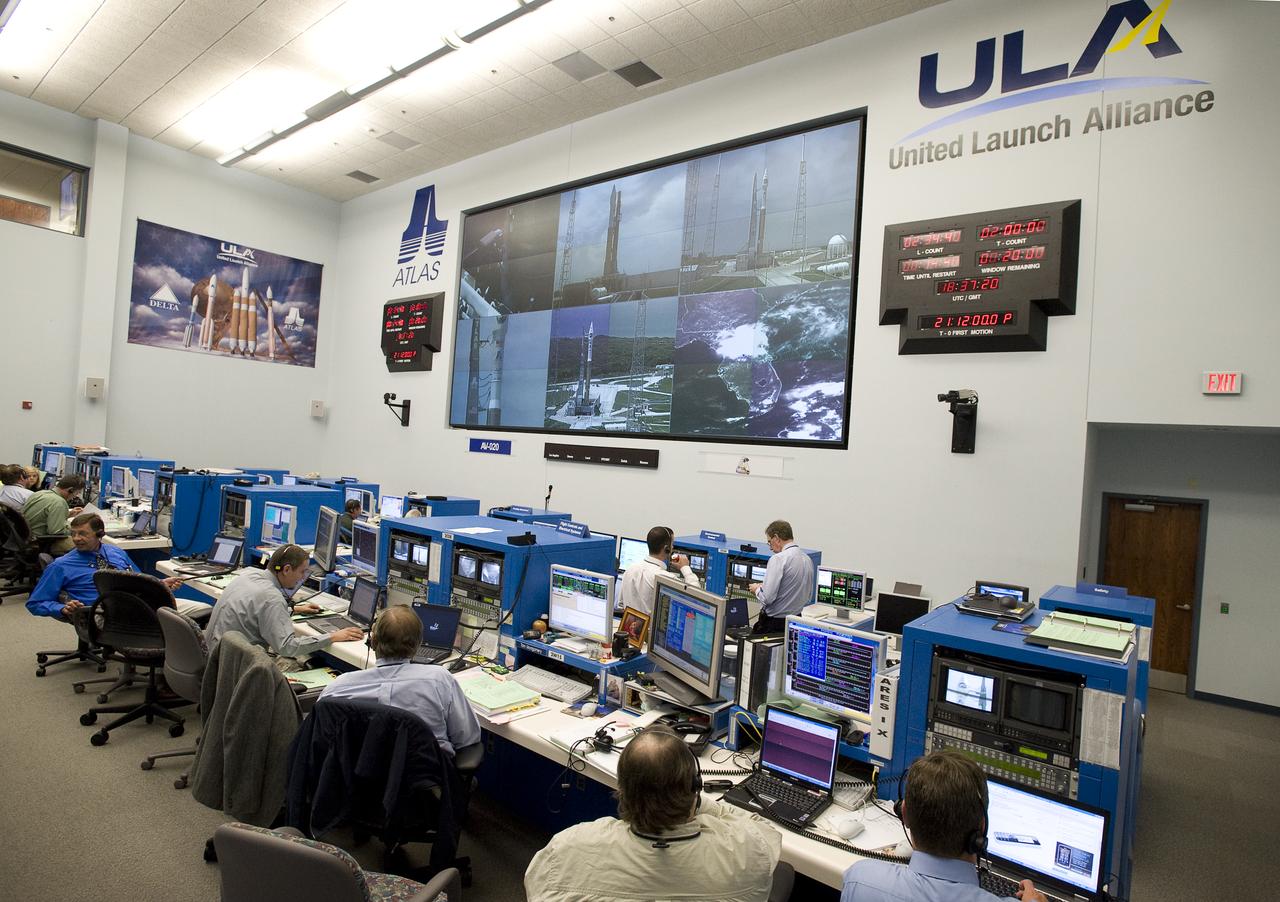
United Launch Alliance (ULA) team members work in the Atlas V Spaceflight Operations Center prior to the launch of the Lunar Reconnaissance Orbiter and Lunar Crater Observation and Sensing Satellite Thursday, June 18, 2009, from Cape Canaveral Air Force Station, Florida. . Photo Credit: (NASA/Bill Ingalls)
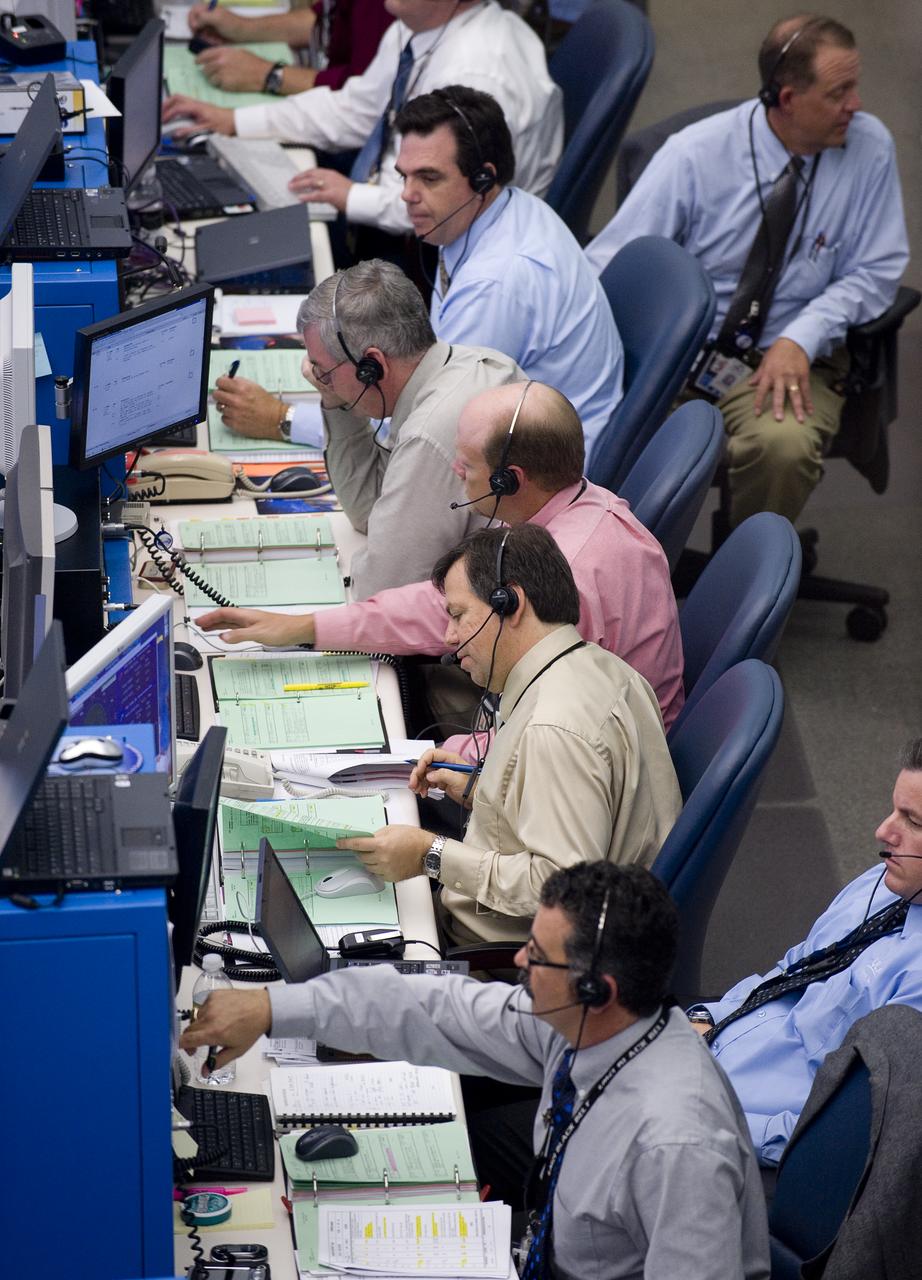
United Launch Alliance (ULA) team members work in the Atlas V Spaceflight Operations Center prior to the launch of the Lunar Reconnaissance Orbiter and Lunar Crater Observation and Sensing Satellite Thursday, June 18, 2009, from Cape Canaveral Air Force Station, Florida. Photo Credit: (NASA/Bill Ingalls)
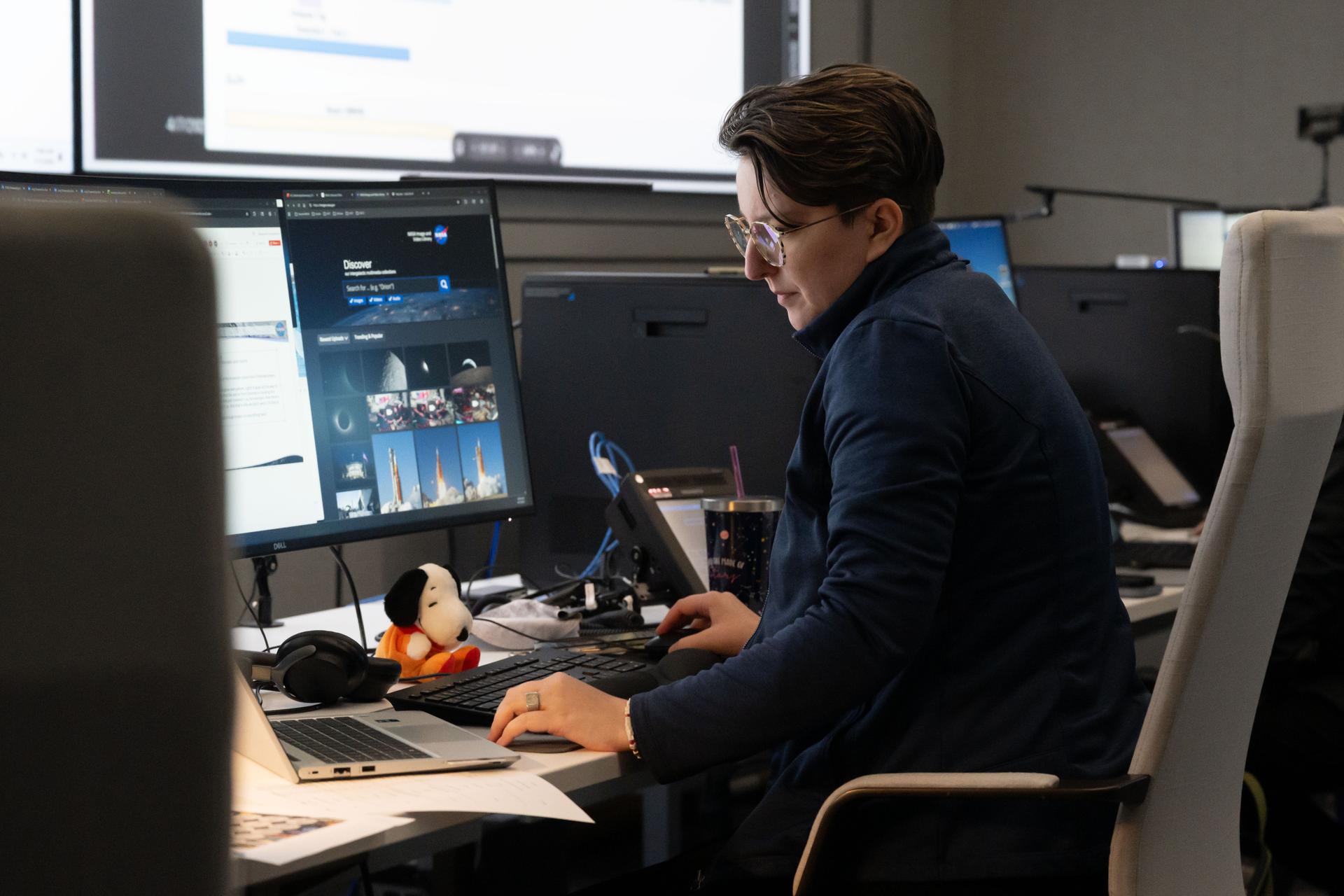
Artemis lunar science team member, Alexandra Constantinou, works in the Science Mission Operations Room at NASA’s Johnson Space Center in Houston, where scientists analyzed imagery and audio recordings of lunar observations captured by the Artemis II astronauts during their lunar flyby on April 6, 2026. Credits: NASA/Helen Arase Vargas
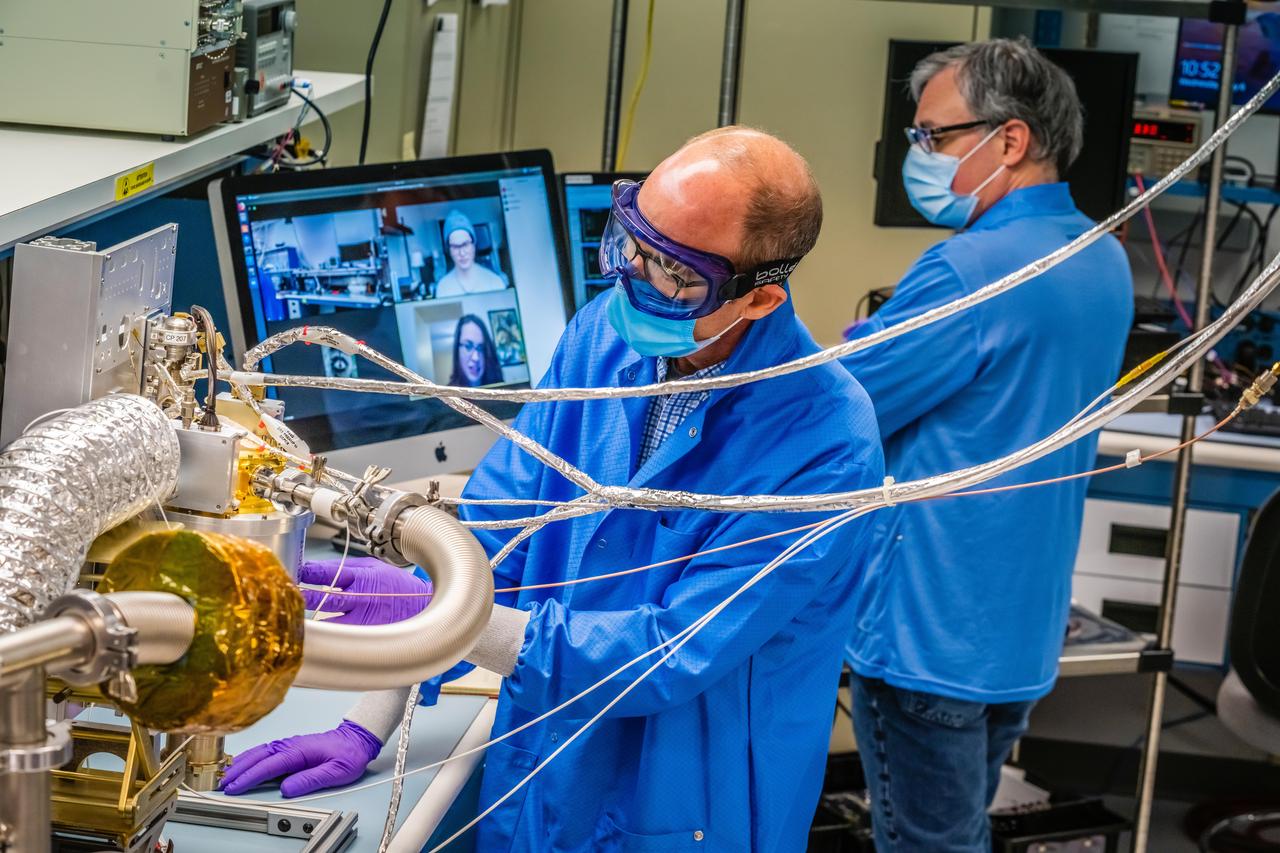
Engineers at the Johns Hopkins Applied Physics Laboratory (APL) in Laurel, Maryland, continue to make progress on Psyche's spectrometer while observing COVID-19 safety procedures. Engineers John Goldsten (left) and Sam Fix work on the Gamma Ray/Neutron Spectrometer (GRNS) instrument that will launch aboard the Psyche spacecraft in 2022 to detect, measure and map the asteroid Psyche's elemental composition. The instrument's team at APL moved the majority of its work to video conferencing, which has enabled the team to whittle operations down to requiring just one or two staff members on campus once or twice a week. https://photojournal.jpl.nasa.gov/catalog/PIA23880

Artemis II lunar science team member, Juliane Gross, center, and the extended lunar science team behind her, celebrates crew observations made during the lunar flyby on April 6. The team worked in the Science Evaluation Room (SER) in Mission Control at NASA’s Johnson Space Center in Houston. Built specifically for Artemis missions with these science priorities in mind, the SER is equipped to support rapid data interpretation, collaborative analysis, real-time decision making, and seamless coordination between the science and operations teams. Credits: NASA/Luna Posadas Nava
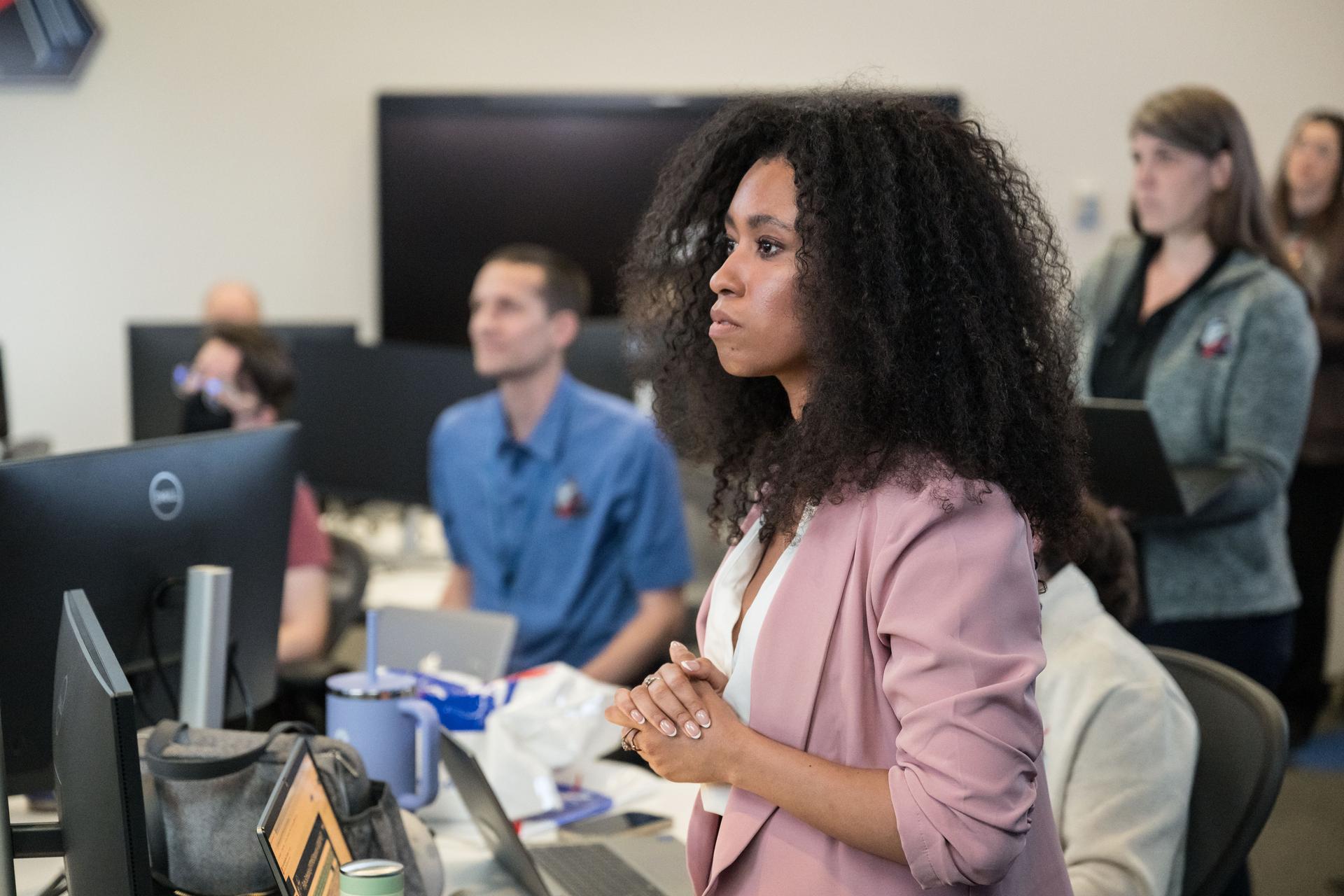
Artemis II lunar science team member, foreground, Amber Turner, and David Hollibaugh-Baker, and Cherie Achilles, background, participate in the team’s analysis of crew observations during the lunar flyby on April 6, 2026. The team worked in the Science Evaluation Room (SER) in Mission Control at NASA’s Johnson Space Center in Houston. Built specifically for Artemis missions with these science priorities in mind, the SER is equipped to support rapid data interpretation, collaborative analysis, real-time decision making, and seamless coordination between the science and operations teams. Credits: NASA/ Robert Markowitz
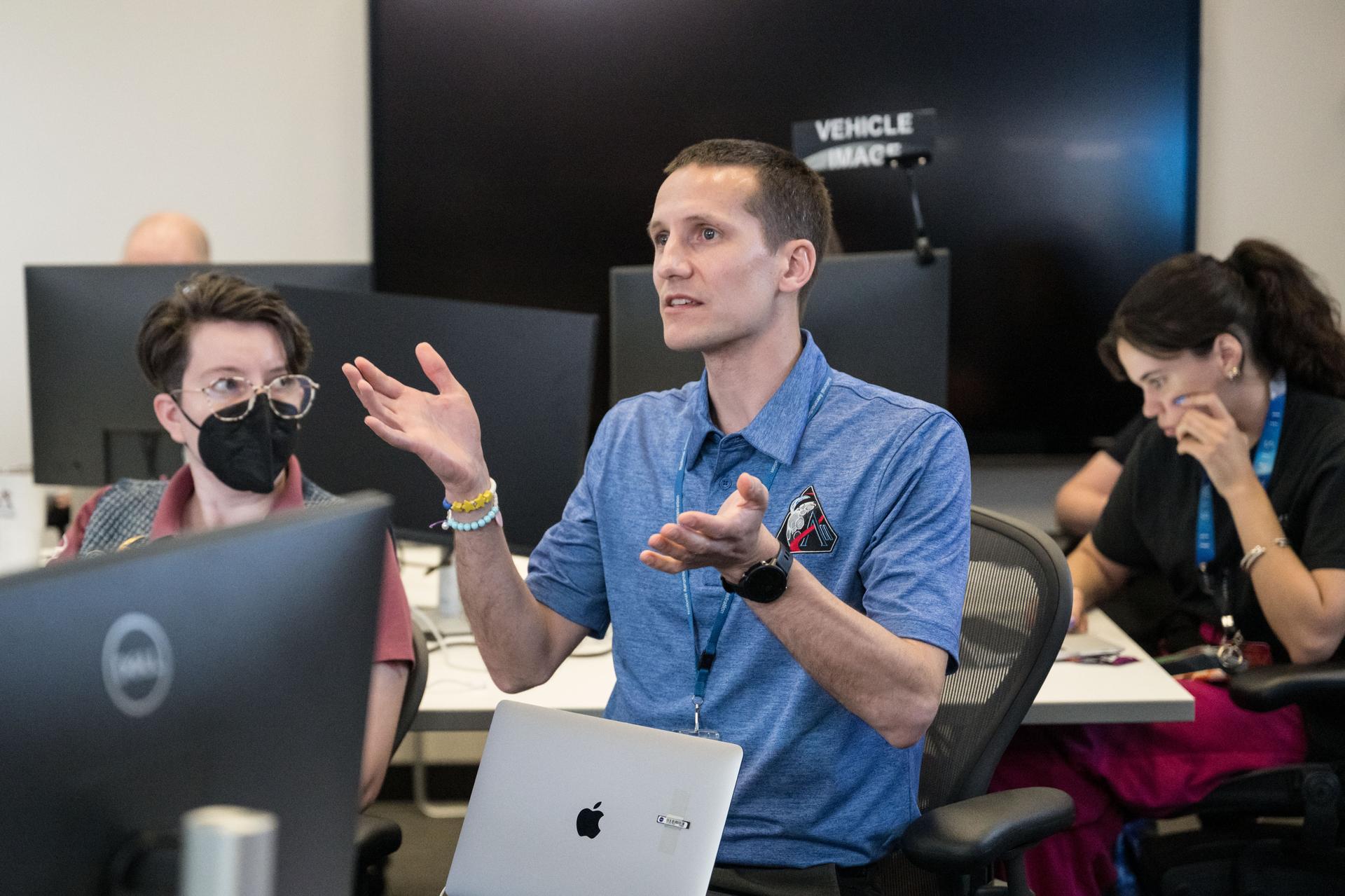
Artemis II lunar science team members, from left, Alexadra Constantinou, David Hollibaugh-Baker, participate in the team’s final preparations for the lunar flyby. NASA Johnson public affairs officer, Victoria Segovia, is seen in the background. The team worked in the Science Evaluation Room (SER) in Mission Control at NASA’s Johnson Space Center in Houston. Built specifically for Artemis missions with these science priorities in mind, the SER is equipped to support rapid data interpretation, collaborative analysis, real-time decision making, and seamless coordination between the science and operations teams. Credits: Credits: NASA/ Robert Markowitz
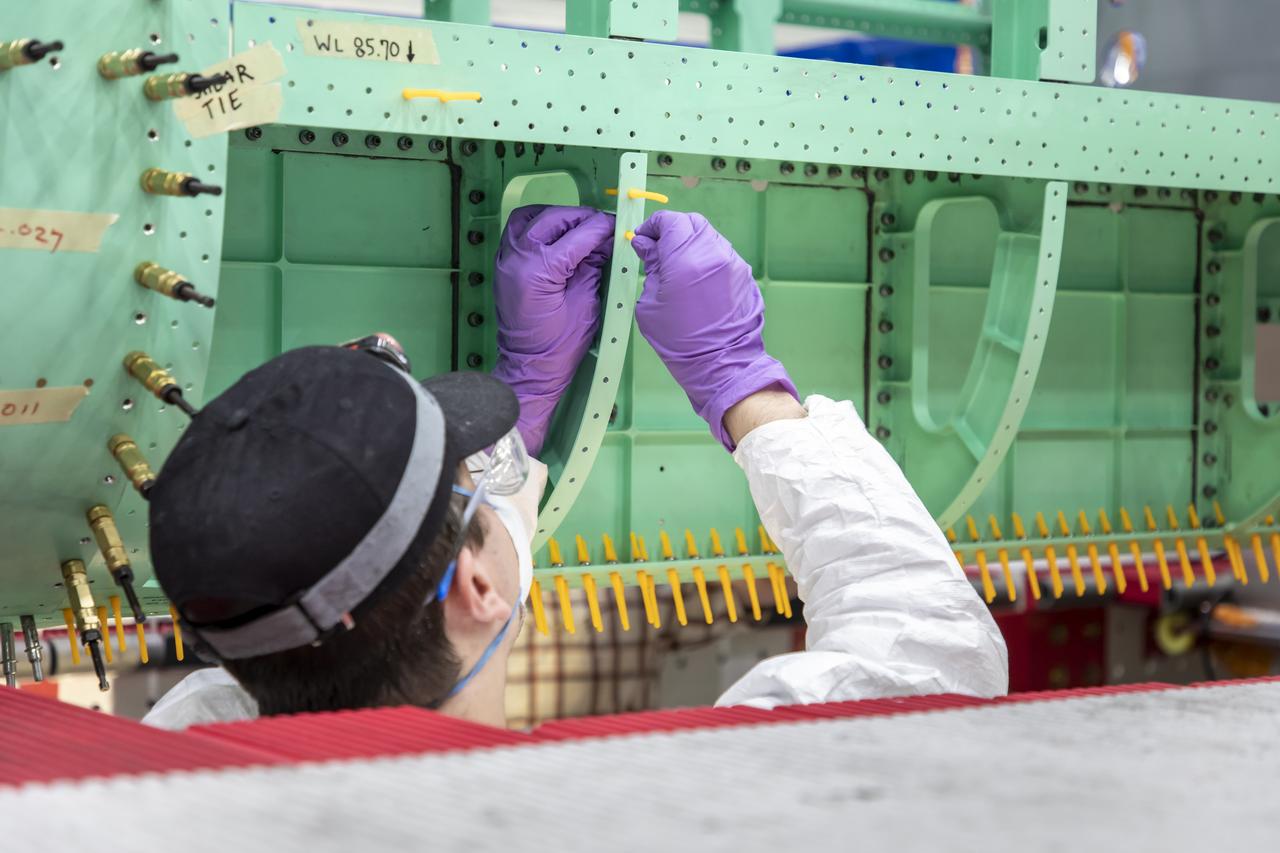
A Lockheed Martin technician prepares holes for installation of the fuselage panel on the X-59. The fuselage is the section of the aircraft that contains the cockpit. The aircraft, under construction at Lockheed Martin Skunk Works in Palmdale, California, will demonstrate the ability to fly supersonic while reducing the loud sonic boom to a quiet sonic thump.
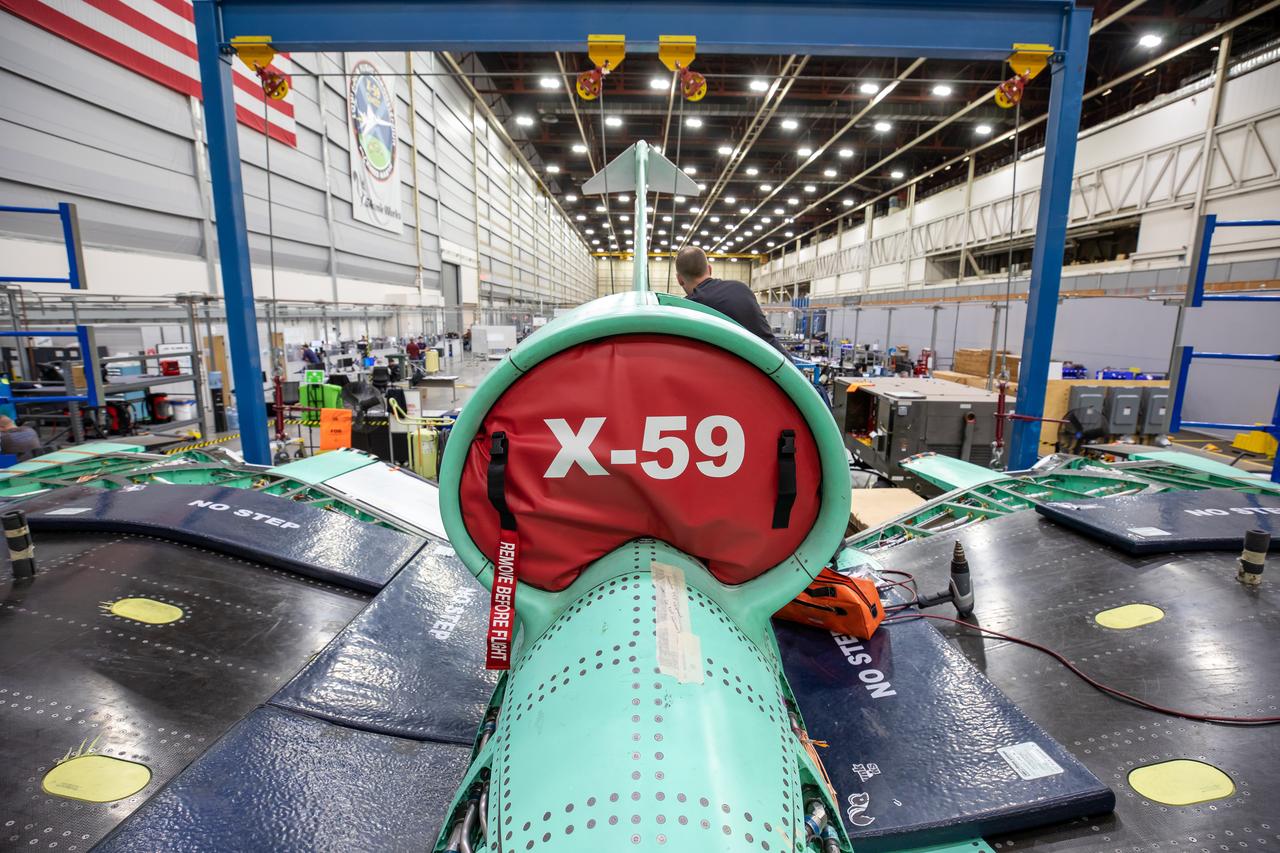
This is an image of the X-59 inlet with a safety covering. The inlet’s purpose is to adjust air speeds before they pass through the aircraft’s engine. The purpose of the covering is to protect the inlet and engine from foreign objects.
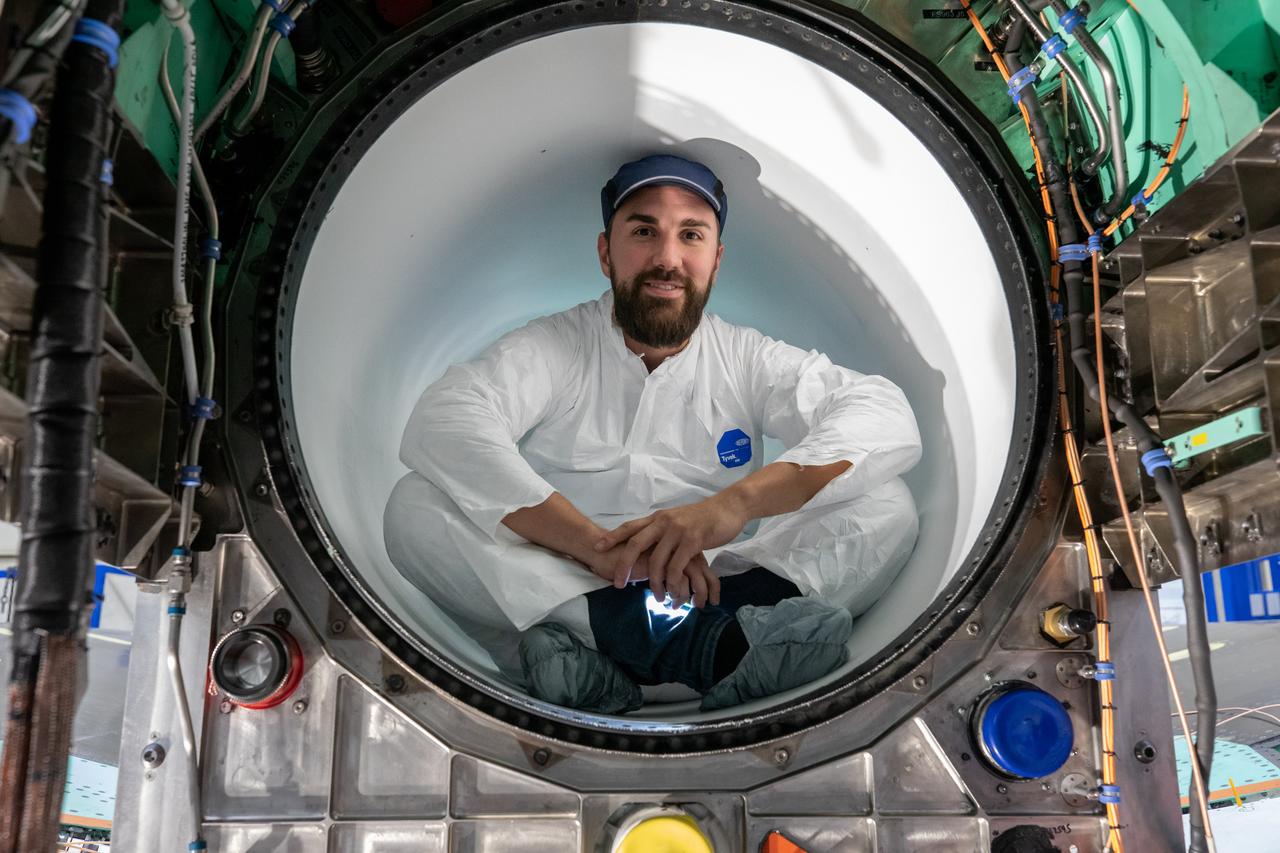
A Lockheed Martin Skunk Works technician takes a break for a photo. Note that the technician is wearing protective clean gear while sitting inside the X-59 engine inlet. Wearing this gear reduces the chance of any foreign objects from damaging the engine inlet.
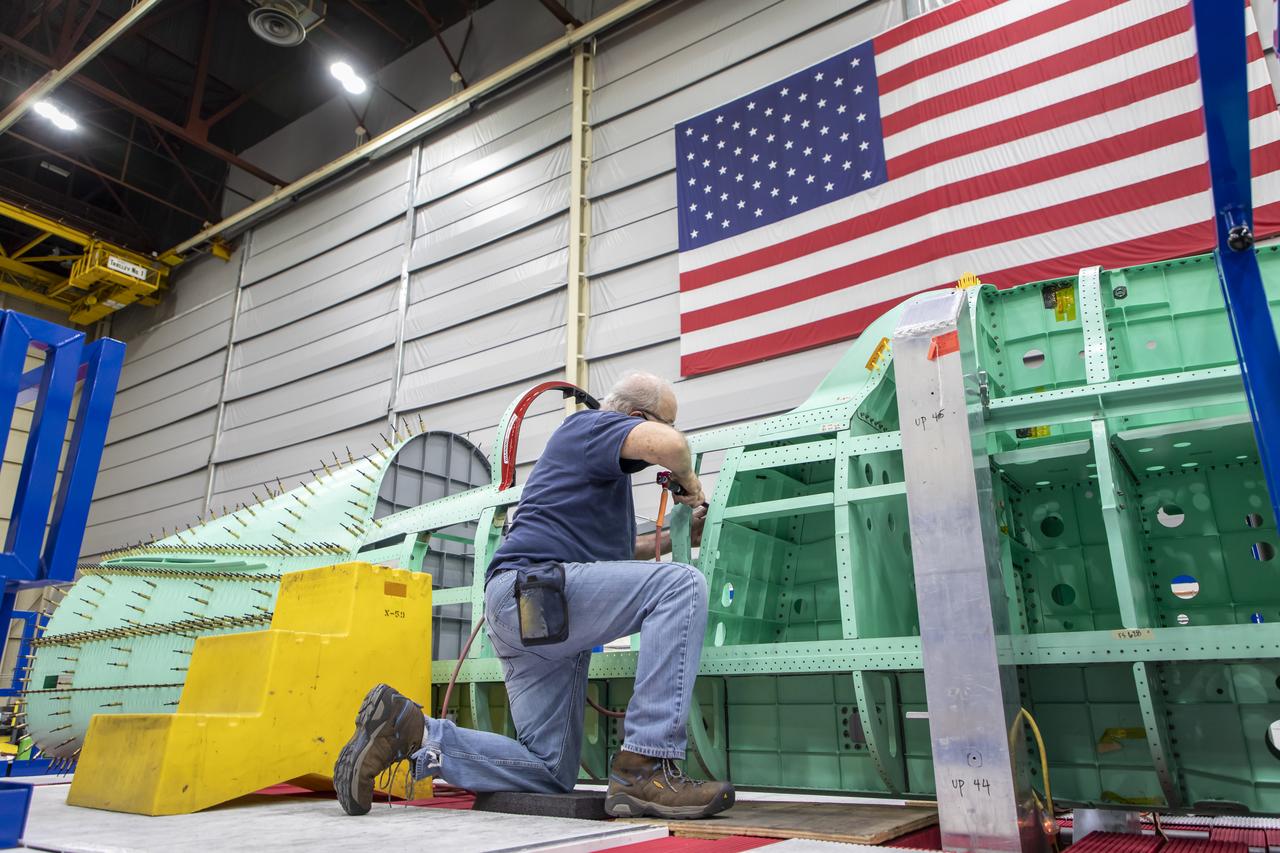
Event: SEG 210 Forebody A Lockheed Martin technician works on the ejection seat support structure and once complete, the ejection seat rails will be installed on the X-59 airplane. The aircraft, under construction at Lockheed Martin Skunk Works in Palmdale, California, will demonstrate the ability to fly supersonic while reducing the loud sonic boom to a quiet sonic thump.
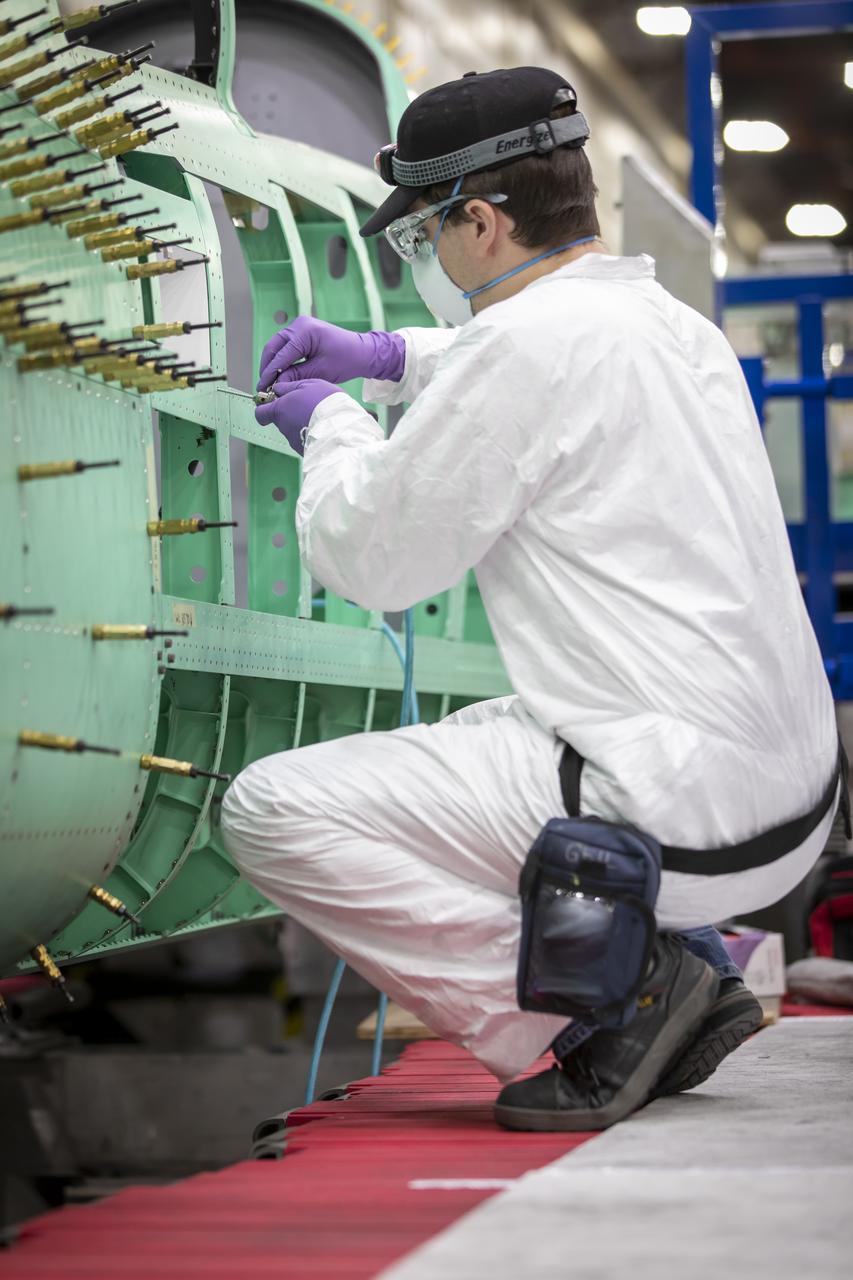
Event: SEG 210 Forebody A Lockheed Martin technician prepares to install the left fuselage skins onto the X-59. Once in the air, the aircraft, currently under construction at Lockheed Martin Skunk Works in Palmdale, California, will demonstrate the ability to fly supersonic while reducing the loud sonic boom to a quiet sonic thump.
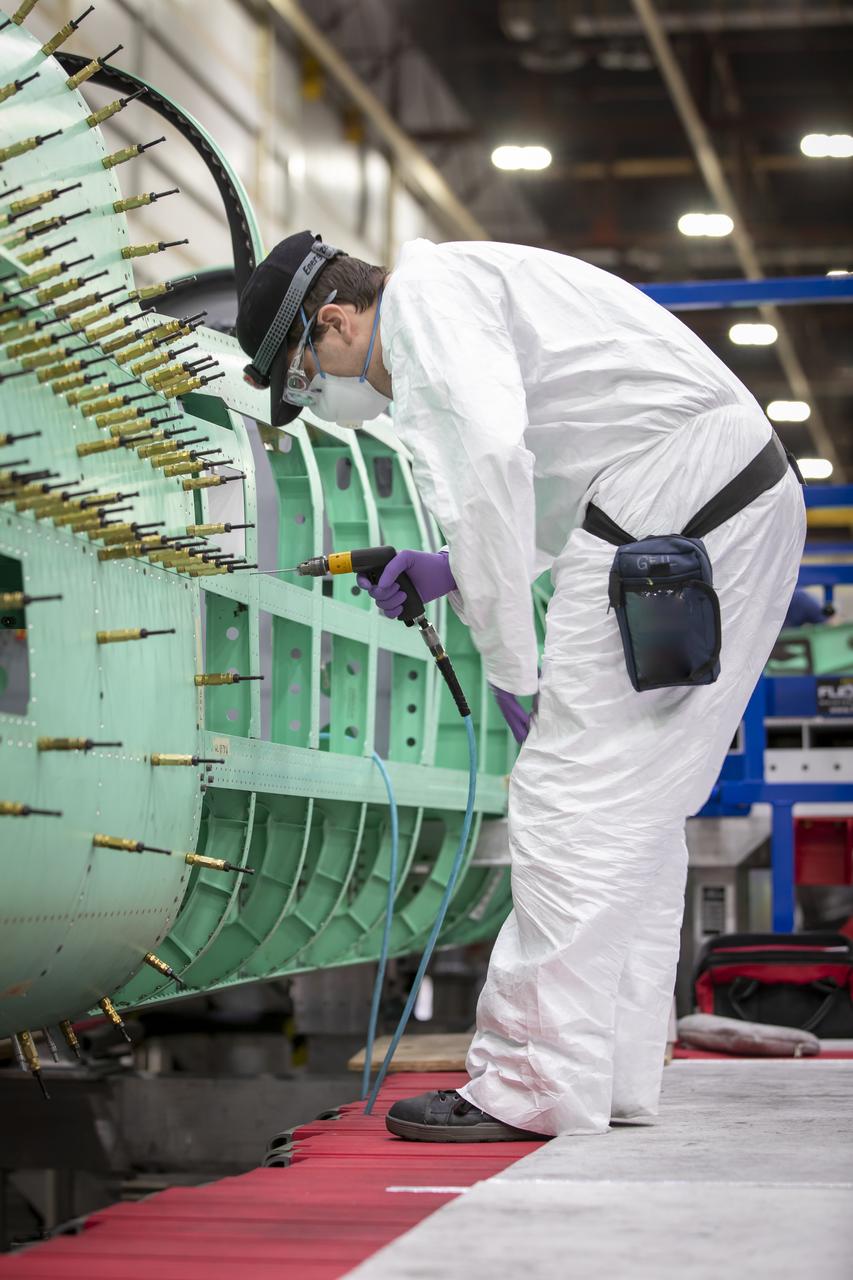
Event: SEG 210 Forebody A Lockheed Martin technician prepares to install the left fuselage skins onto the X-59. Once in the air, the aircraft, currently under construction at Lockheed Martin Skunk Works in Palmdale, California, will demonstrate the ability to fly supersonic while reducing the loud sonic boom to a quiet sonic thump.
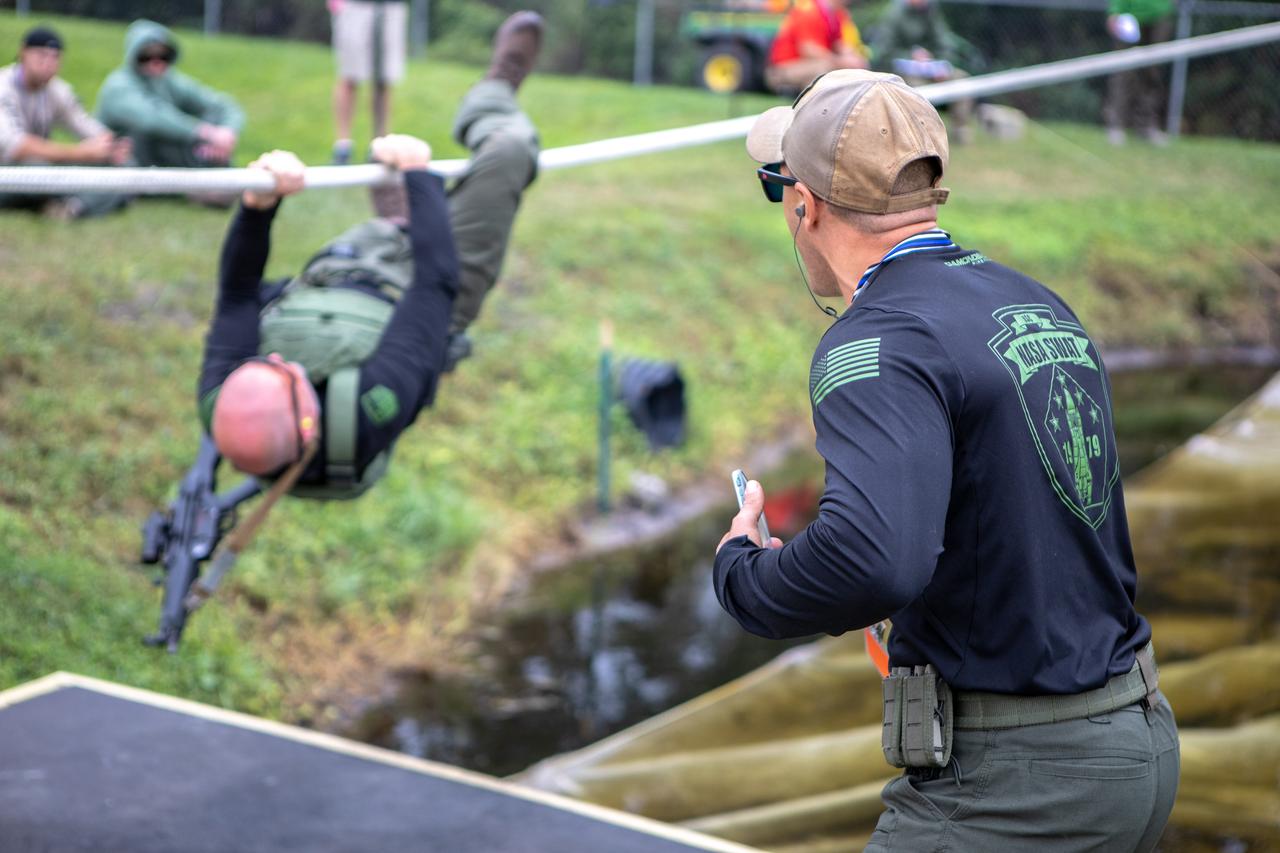
A member of NASA Kennedy Space Center's Emergency Response Team switches position as he works his way along a rope above water during one of the tactical challenges at the 37th Annual SWAT Round-Up International at the Lawson Lamar Firearms and Tactical Training Center in Orlando, Florida. His ERT teammate cheers him on. The competition was held Nov. 10 to 15, 2019, and featured five different tactical challenges. Kennedy's ERT members exchanged best practices and competed with more than 50 teams from the U.S. and around the world.
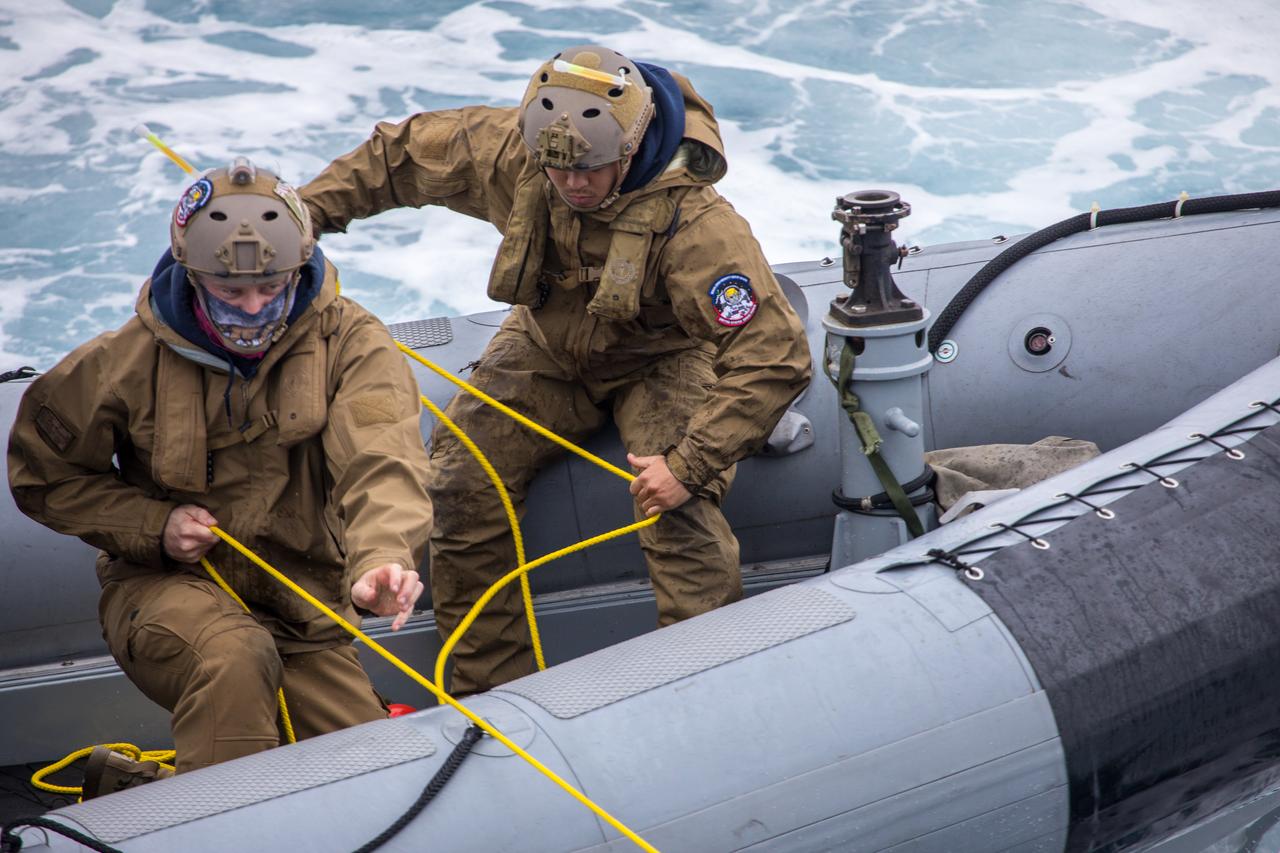
During the first full mission profile test of the recovery procedures for Artemis I, NASA’s Landing and Recovery team met their objectives. The team works with members of the DoD to hone their procedures before Orion splashes down in the Pacific as part of NASA’s Artemis program. During Underway Recovery Test-8, two divers from EOD Mobile Unit 3, MDS Company 3-1work the tending line while a test version of Orion is being pulled into the well deck of the USS John P. Murtha.
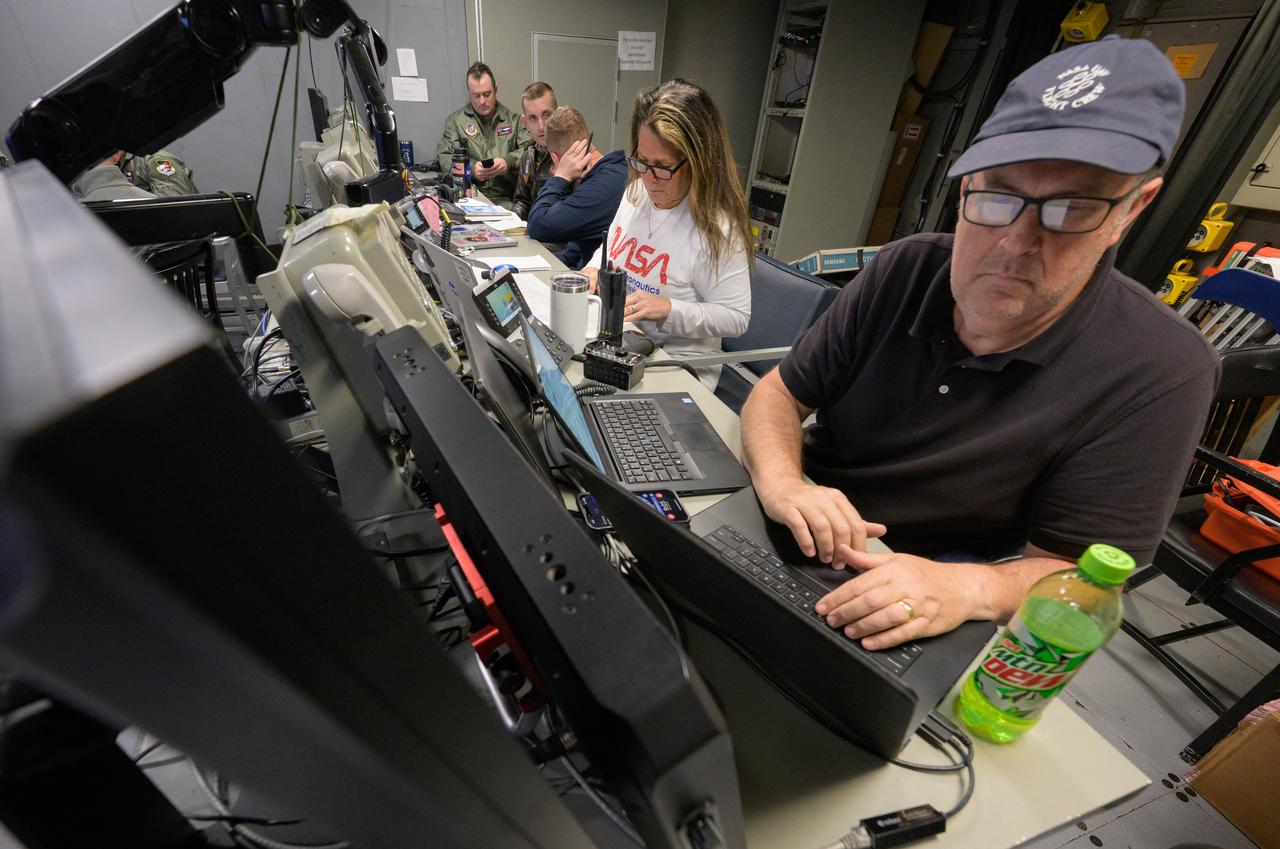
Members of the NASA and Department of Defense recovery team work inside the Landing Force Operations Center onboard USS Somerset as they practice Artemis recovery operations during Underway Recovery Test-12 off the coast of California, Saturday, March 29, 2025. During the test, NASA and Department of Defense teams are practicing to ensure recovery procedures are validated as NASA plans to send Artemis II around the Moon and splashdown in the Pacific Ocean. Photo Credit: (NASA/Bill Ingalls)

jsc2023e065185 (2/9/2023) --- Burleson Independent School District’s Mission 17 flight team for Lavender Seed Germination work on their experiment, which will be included in the Nanoracks-National Center for Earth and Space Science Education-Orbiter-Student Spaceflight Experiments Program Mission 17 to ISS (Nanoracks-NCESSE-Orbiter-SSEP). Team members left to right: Abigail Bain, Jack Crow, Lyla Meek, and Addison White.
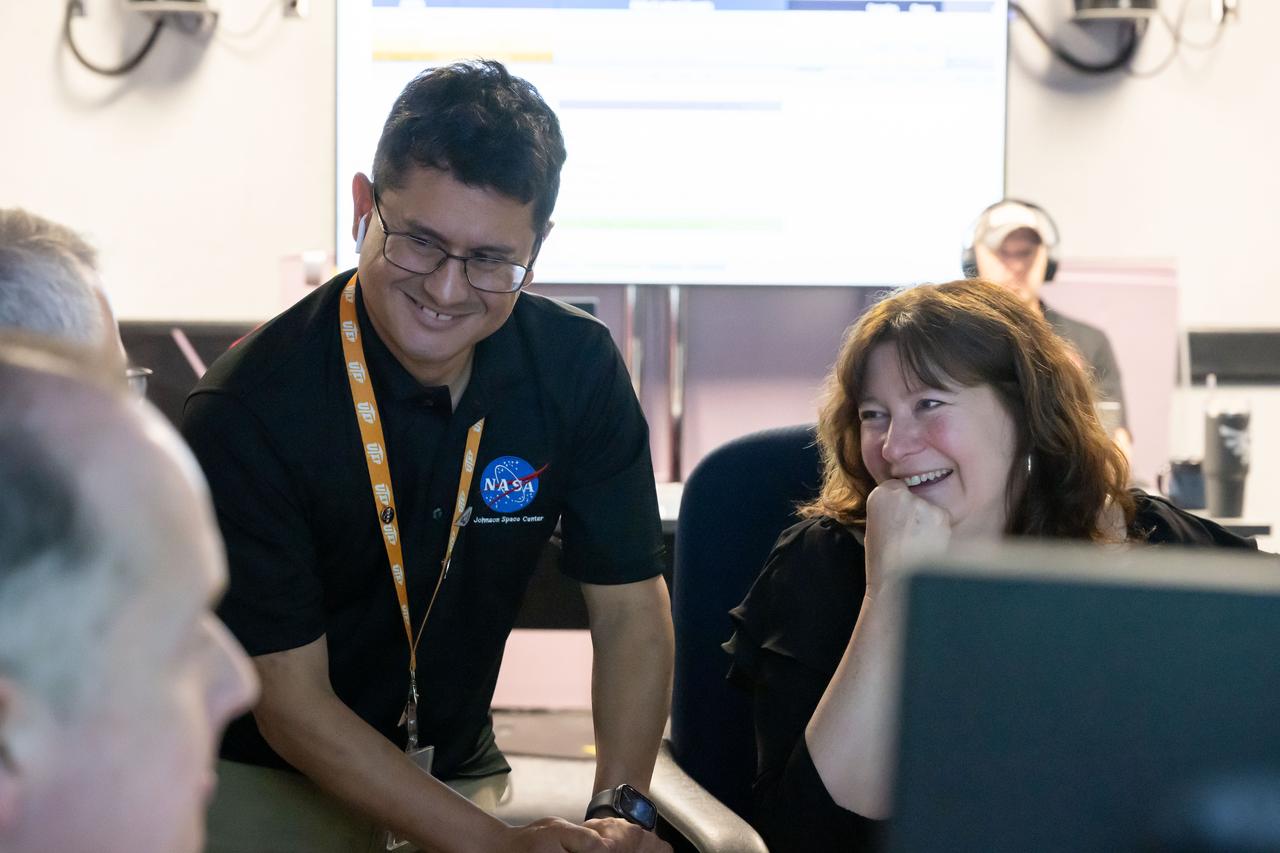
Artemis III Geology Team member, Jose Hurtado from the University of Texas at El Paso, left, and Maria Banks of NASA’s Goddard Spaceflight Center work in the Science Evaluation Room (SER) during the JETT 5 field test. JETT 5 was a week-long field test in the lunar-like landscape of San Francisco Volcanic Field near Flagstaff, Arizona while a team of flight controllers and scientists at Johnson monitor and guide their activities. Credit: NASA/Helen Arase Vargas
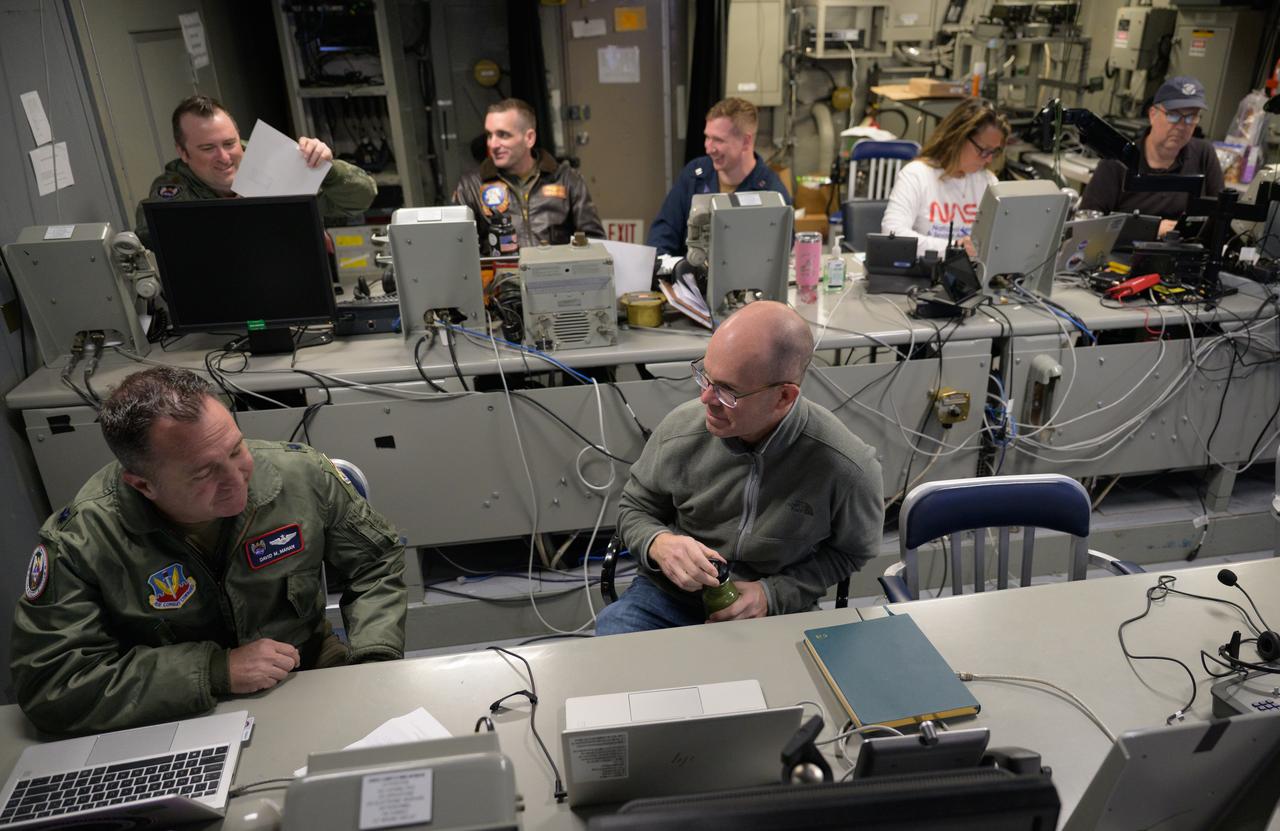
Members of the NASA and Department of Defense recovery team work inside the Landing Force Operations Center onboard USS Somerset as they practice Artemis recovery operations during Underway Recovery Test-12 off the coast of California, Saturday, March 29, 2025. During the test, NASA and Department of Defense teams are practicing to ensure recovery procedures are validated as NASA plans to send Artemis II around the Moon and splashdown in the Pacific Ocean. Photo Credit: (NASA/Bill Ingalls)
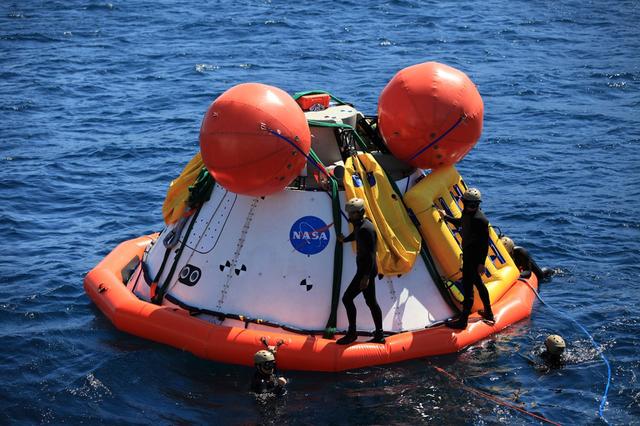
Recovery team members work on a test version of Orion in the Pacific Ocean on Sept. 13, 2014. A combined NASA and U.S. Navy team practiced recovery techniques off the coast of California over the course of the the week -- first with a crane on board the Navy's USS Salvor, then using the USS Anchorage's well deck -- in preparation for Exploration Flight Test-1 (EFT-1). Part of Batch image transfer from Flickr.
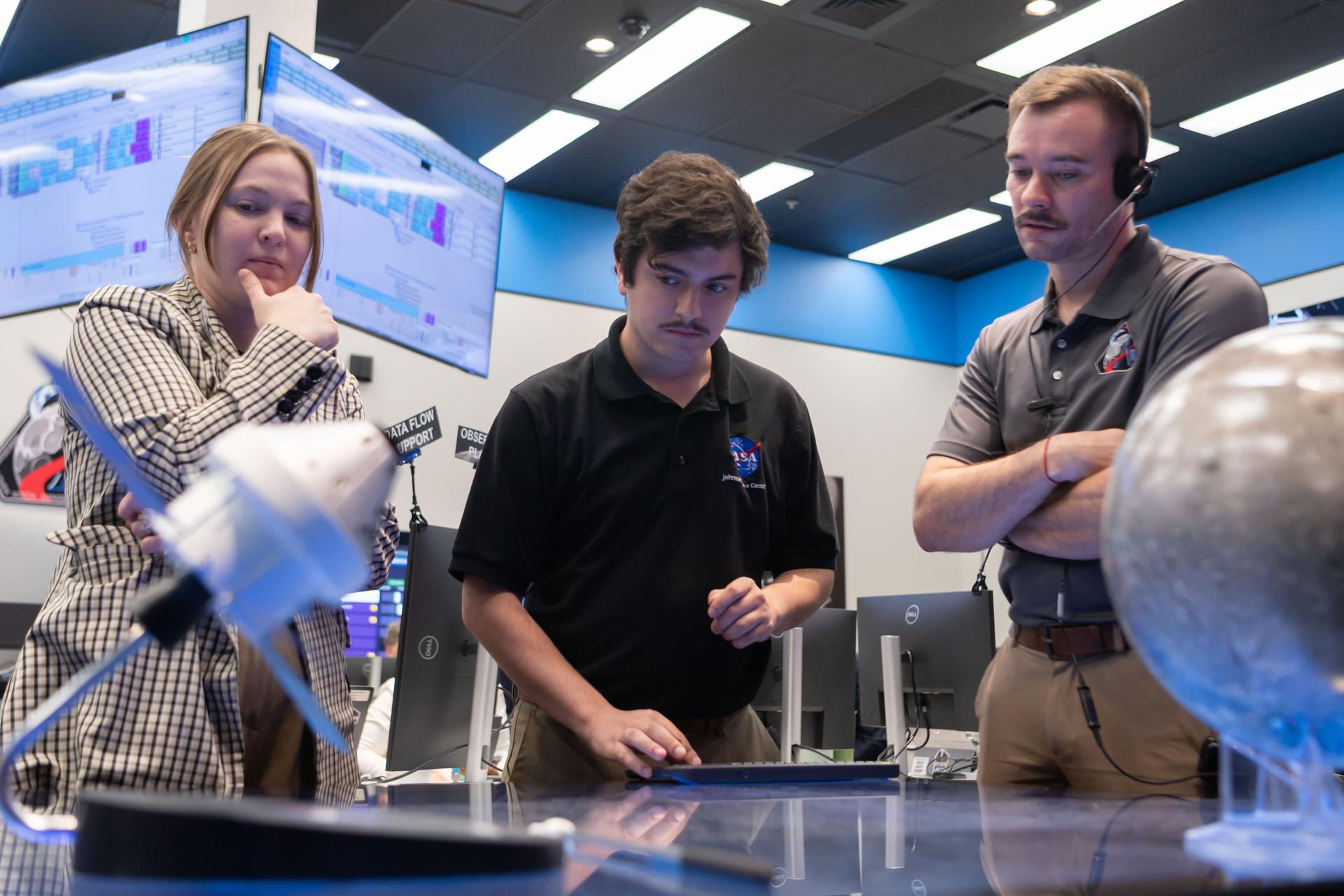
Crew lunar observations team member, Sara Schmidt, left, asset manager, Luke McSherry, and Artemis deputy lunar science lead, Jacob Richardson work in the Science Evaluation Room (SER). Built specifically for Artemis missions with these science priorities in mind, the SER is equipped to support rapid data interpretation, collaborative analysis, real-time decision making, and seamless coordination between the science and operations teams. Credits: NASA/Luna Posadas Nava
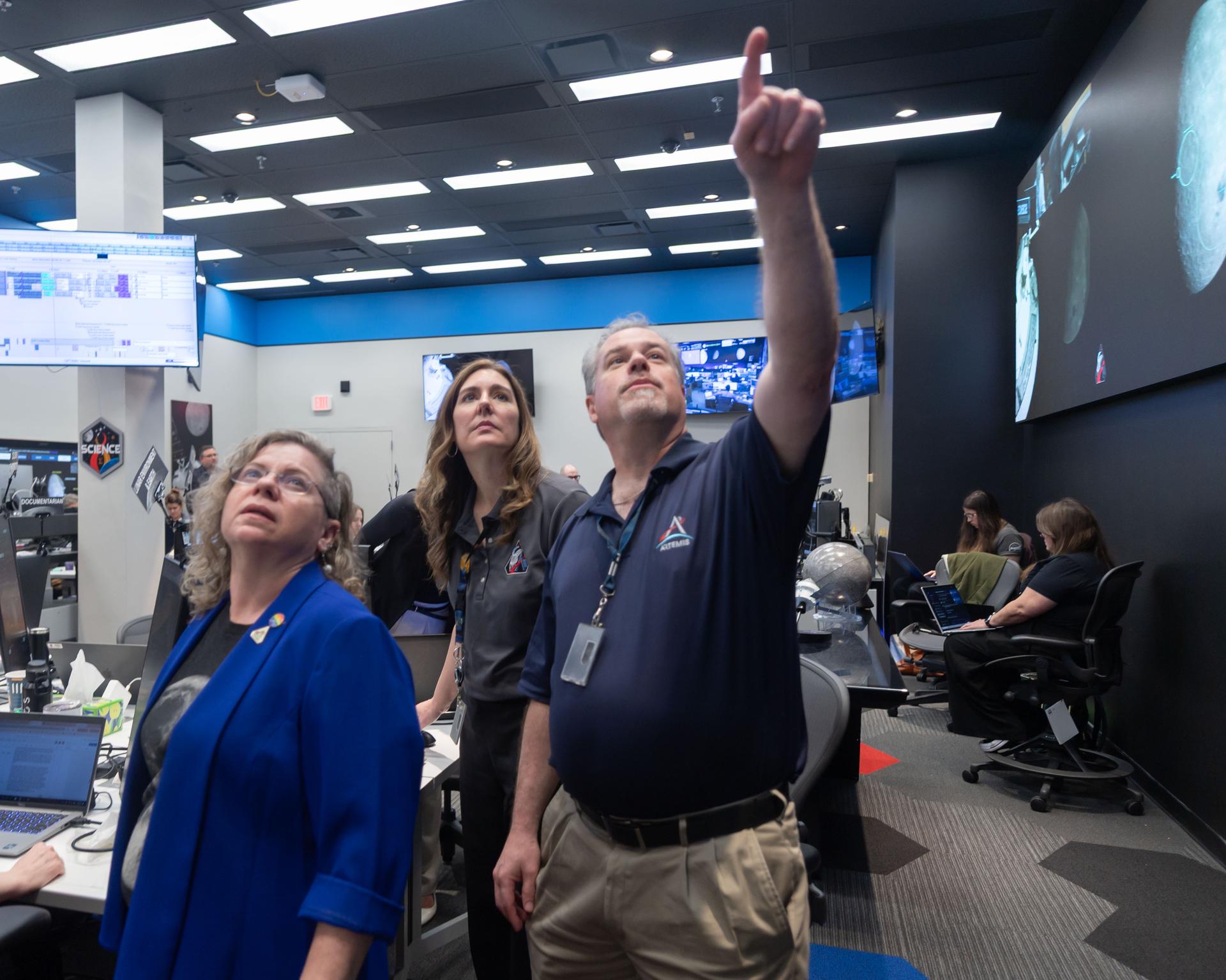
Artemis II lunar science team members, from left, Barbara Cohen, Jennifer Heldmann, and Anthony Colaprete, work in the Science Evaluation Room (SER). Built specifically for Artemis missions with these science priorities in mind, the SER is equipped to support rapid data interpretation, collaborative analysis, real-time decision making, and seamless coordination between the science and operations teams. Credits: NASA/Luna Posadas Nava
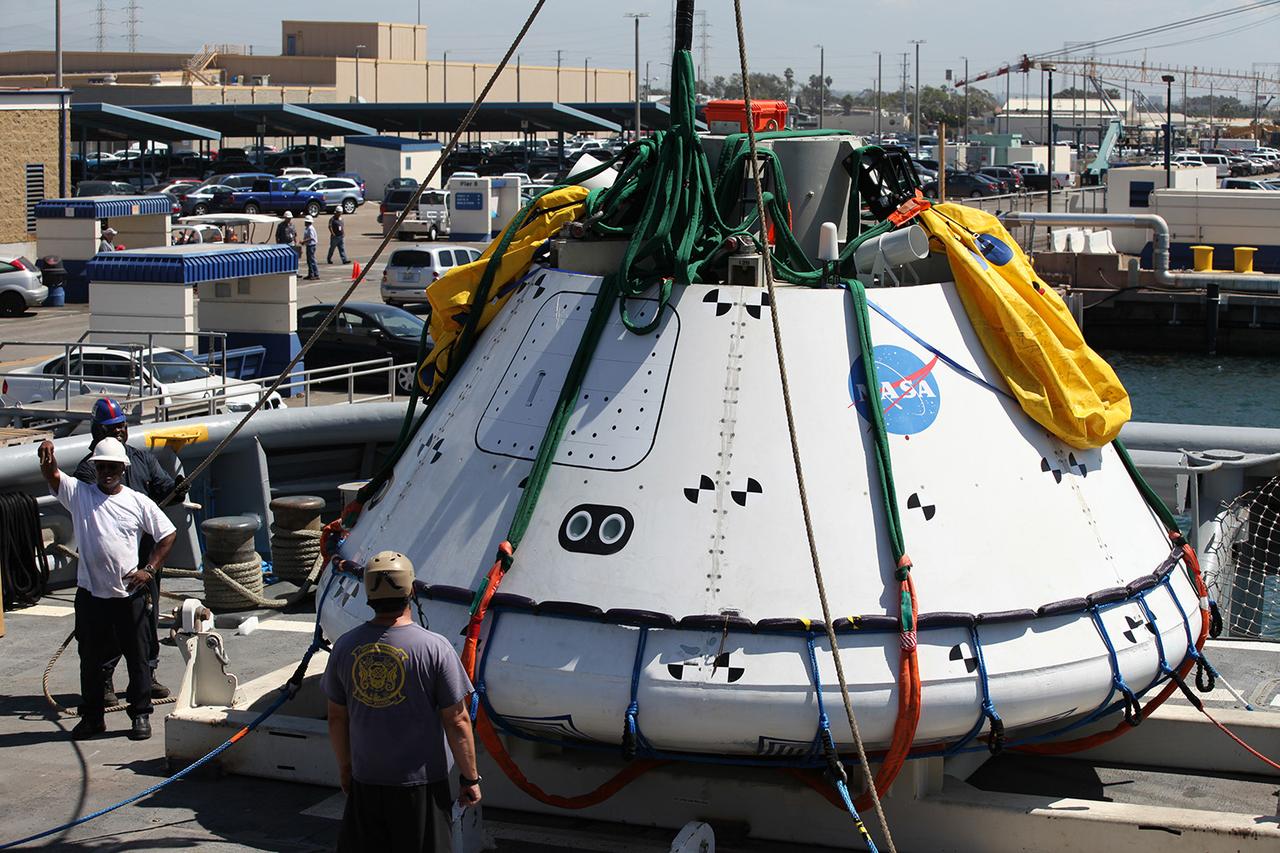
Recovery team members work secure a test version of Orion in preparation for tests aboard the USS Salvor on Sept. 12, 2014. A combined NASA and U.S. Navy team practiced recovery techniques off the coast of California over the course of the next week -- first with the crane, as seen here, then using the USS Anchorage's well deck -- in preparation for Exploration Flight Test-1 (EFT-1). Part of Batch image transfer from Flickr.
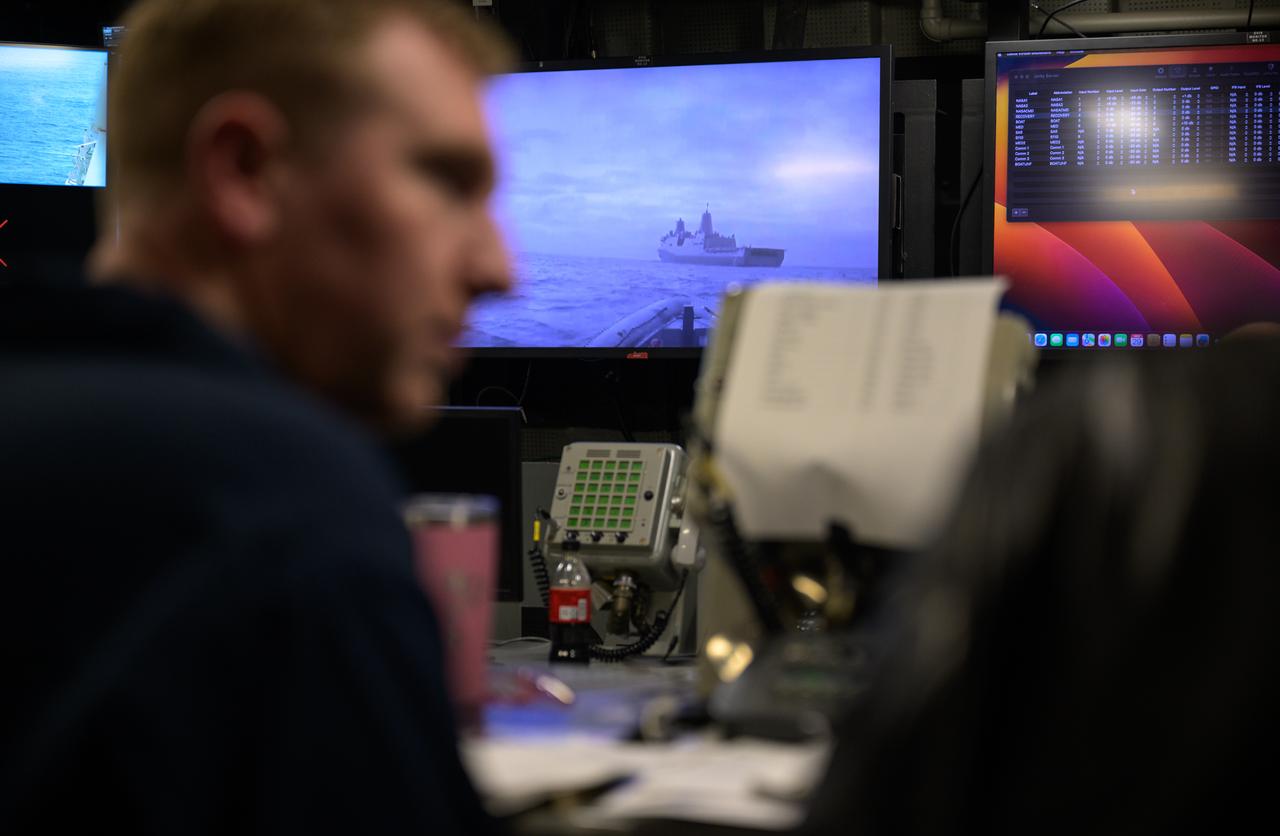
Members of the NASA and Department of Defense recovery team work inside the Landing Force Operations Center onboard USS Somerset as they practice Artemis recovery operations during Underway Recovery Test-12 off the coast of California, Saturday, March 29, 2025. During the test, NASA and Department of Defense teams are practicing to ensure recovery procedures are validated as NASA plans to send Artemis II around the Moon and splashdown in the Pacific Ocean. Photo Credit: (NASA/Bill Ingalls)
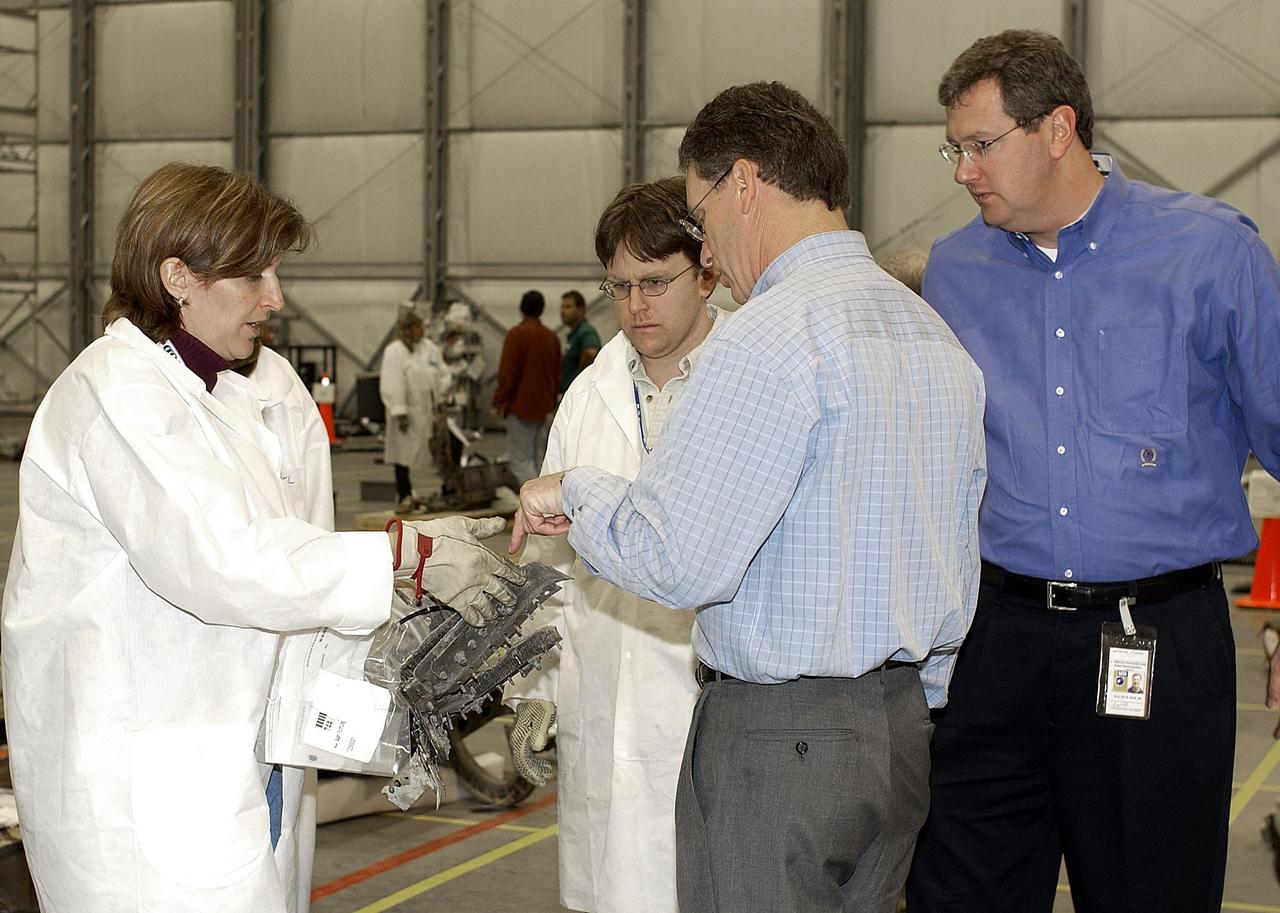
KENNEDY SPACE CENTER, FLA. - In the RLV Hangar at KSC, members of the Columbia Restoration Project Team show Shuttle Program Manager Ron Dittemore (third from left) and Ralph Roe, with the Orbiter Work Group at JSC, a piece of Columbia debris. The team is examining pieces and attempting to reconstruct the orbiter as part of the investigation into the accident that caused the destruction of Columbia on its return to Earth from mission STS-107. To date, four shipments have arrived from Barksdale AFB, Shreveport, La., the collection point for debris.
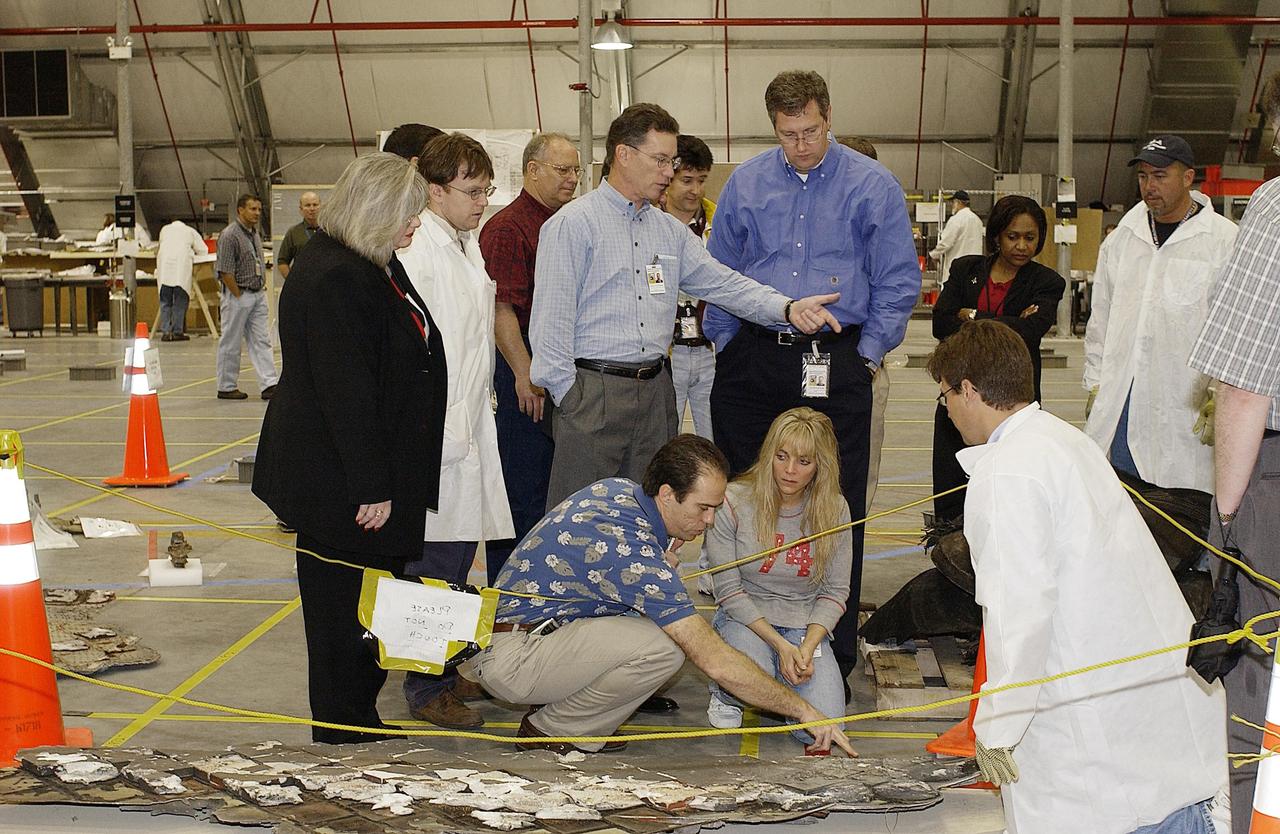
KENNEDY SPACE CENTER, FLA. - Shuttle Program Manager Ron Dittemore (center, pointing) looks over Columbia debris with members of the Columbia Restoration Project Team. To his right is Ralph Roe, with the Orbiter Work Group, JSC. The team is examining pieces and attempting to reconstruct the orbiter as part of the investigation into the accident that caused the destruction of Columbia on its return to Earth from mission STS-107. To date, four shipments have arrived from Barksdale AFB, Shreveport, La., the collection point for debris.
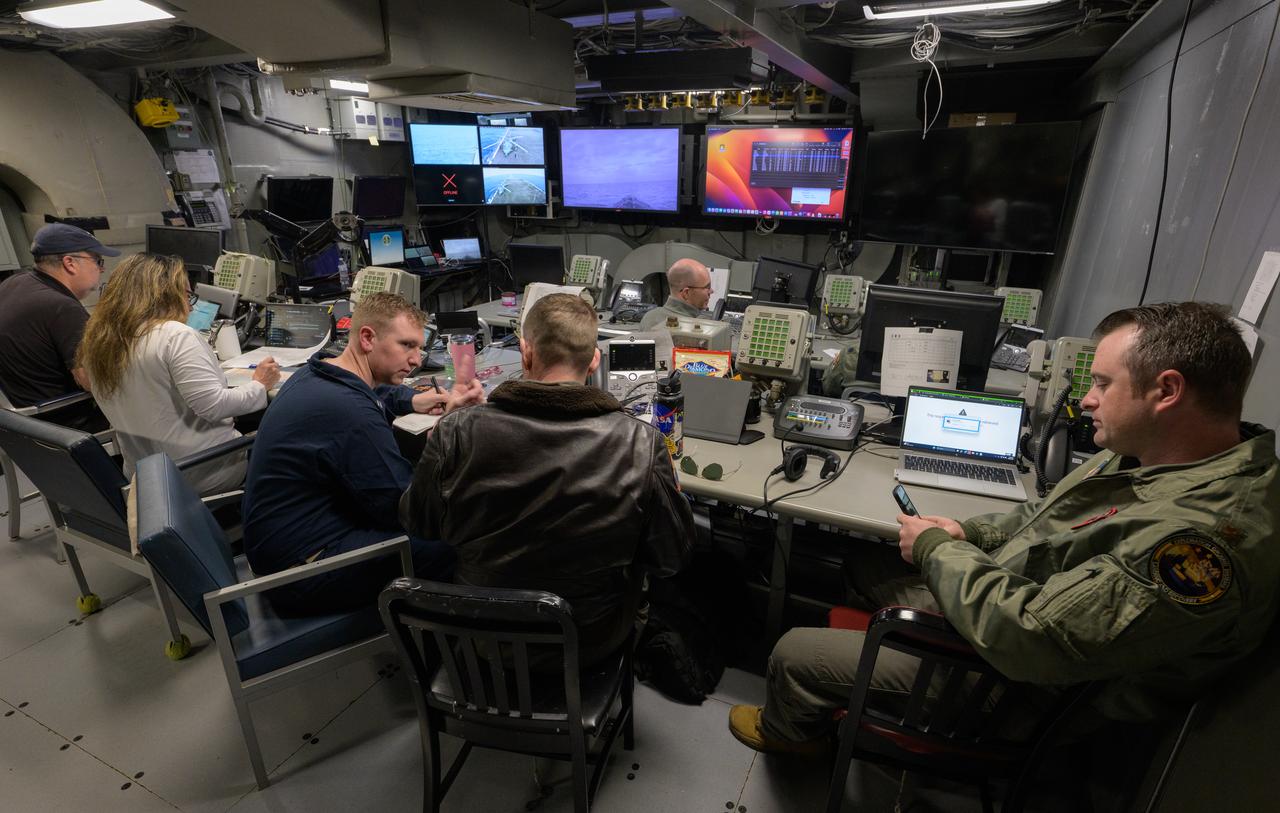
Members of the NASA and Department of Defense recovery team work inside the Landing Force Operations Center onboard USS Somerset as they practice Artemis recovery operations during Underway Recovery Test-12 off the coast of California, Saturday, March 29, 2025. During the test, NASA and Department of Defense teams are practicing to ensure recovery procedures are validated as NASA plans to send Artemis II around the Moon and splashdown in the Pacific Ocean. Photo Credit: (NASA/Bill Ingalls)
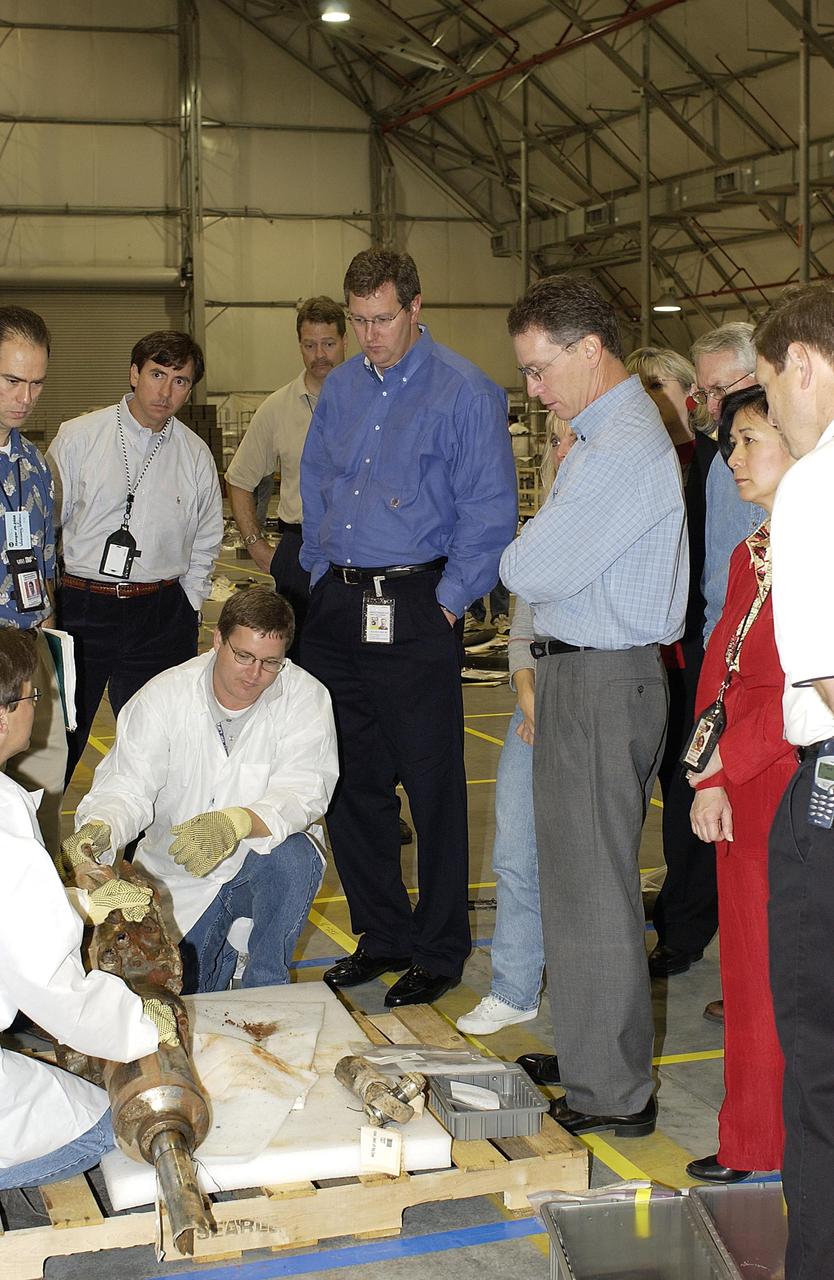
KENNEDY SPACE CENTER, FLA. -- Shuttle Program Manager Ron Dittemore (third from right) and Ralph Roe (fourth from right), with the Orbiter Work Group, JSC, look at Columbia debris being held my a member of the Columbia Restoration Project Team. The team is examining pieces and attempting to reconstruct the orbiter as part of the investigation into the accident that caused the destruction of Columbia on its return to Earth from mission STS-107. To date, four shipments have arrived from Barksdale AFB, Shreveport, La., the collection point for debris.
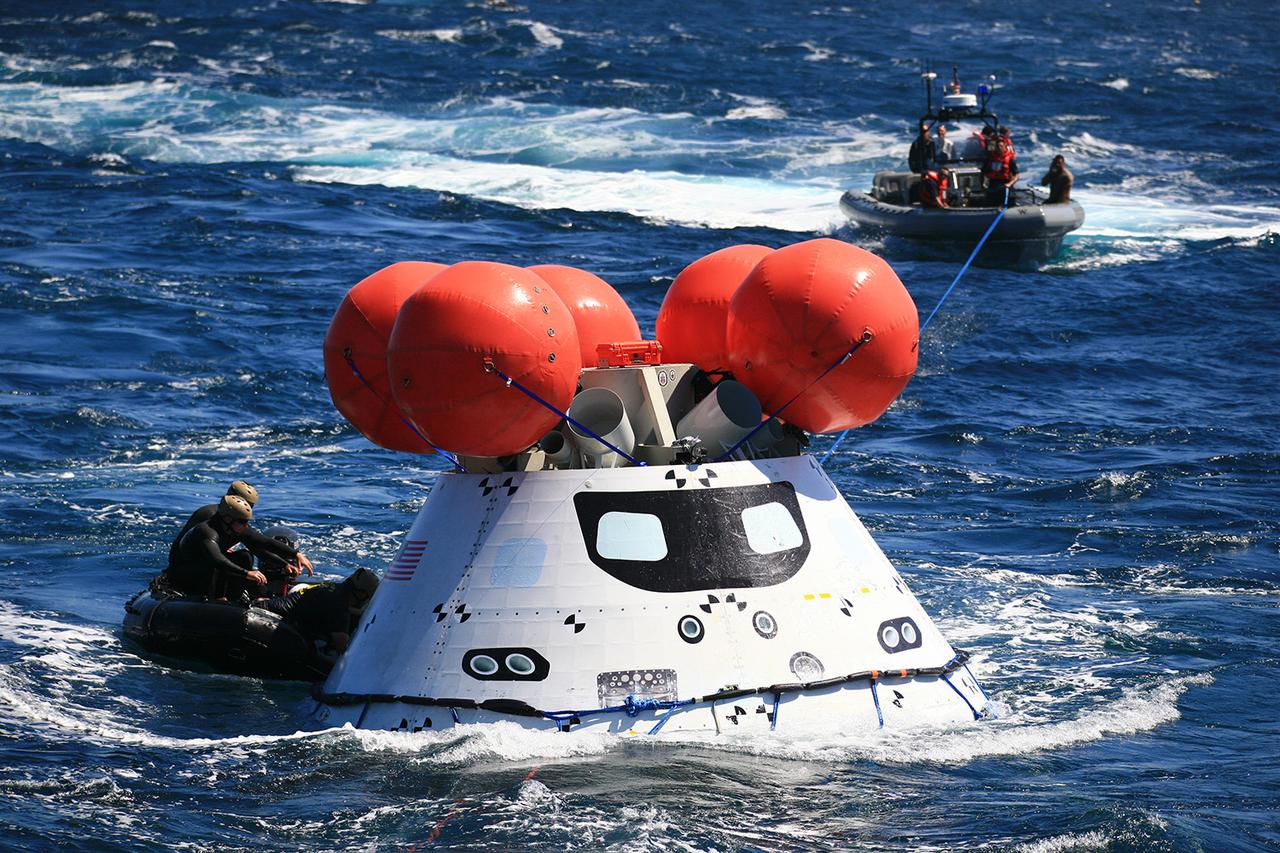
Recovery team members work to secure a test version of Orion in the Pacific Ocean on Sept. 17, 2014. A combined NASA and U.S. Navy team is practicing recovery techniques off the coast of California over the course of the the week -- first with a crane on board the Navy's USS Salvor, and now using the USS Anchorage's well deck -- in preparation for Exploration Flight Test-1 (EFT-1). Part of Batch image transfer from Flickr.
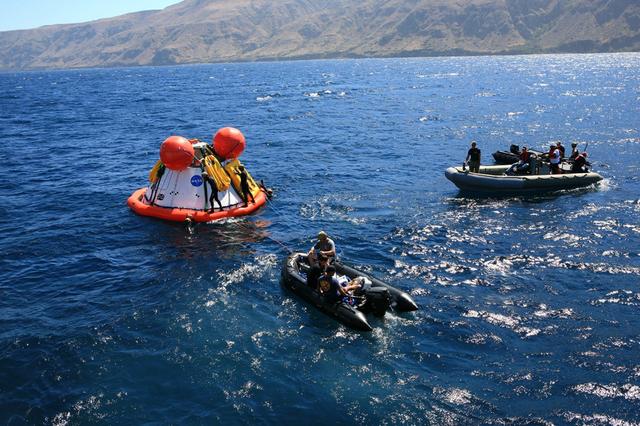
Recovery team members work on a test version of Orion in the Pacific Ocean on Sept. 13, 2014. A combined NASA and U.S. Navy team practiced recovery techniques off the coast of California over the course of the the week -- first with a crane on board the Navy's USS Salvor, then using the USS Anchorage's well deck -- in preparation for Exploration Flight Test-1 (EFT-1). Part of Batch image transfer from Flickr.
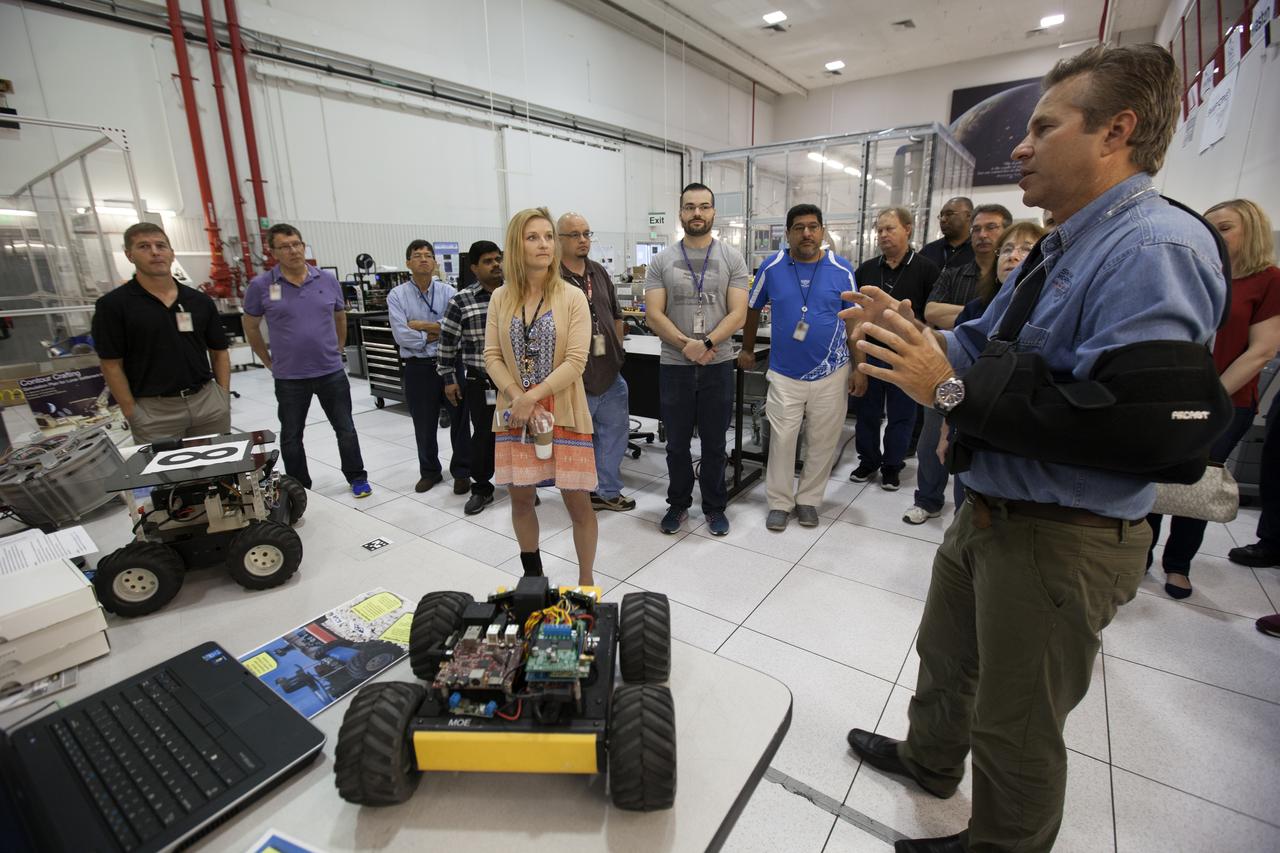
Jenn Gustetic, NASA's Small Business Innovation Research Program executive, talks with Rob Mueller, senior technologist and co-founder of Kennedy Space Center's Swamp Works. Gustetic met team members and viewed many of the pioneering technologies and innovations in development at Kennedy. Swamp Works is a hands-on, lean development environment for innovation following the philosophies pioneered in Kelly Johnson's Skunk Works and Werner von Braun's development shops. The Swamp Works establishes rapid, innovative and cost-effective exploration mission solutions through a highly collaborative, "no walls" approach, leveraging partnerships across NASA, industry and academia.

Marshall team members participate in SpaceX booster review meeting for the Commercial Crew Program. The Commercial Crew Program is primarily based at NASA’s Kennedy Space Center in Florida, the space agency’s premier launch site. About 350 people are working in the Commercial Crew Program for NASA, with almost half involved in the work at other NASA centers, including Marshall and Johnson Space Center in Houston.
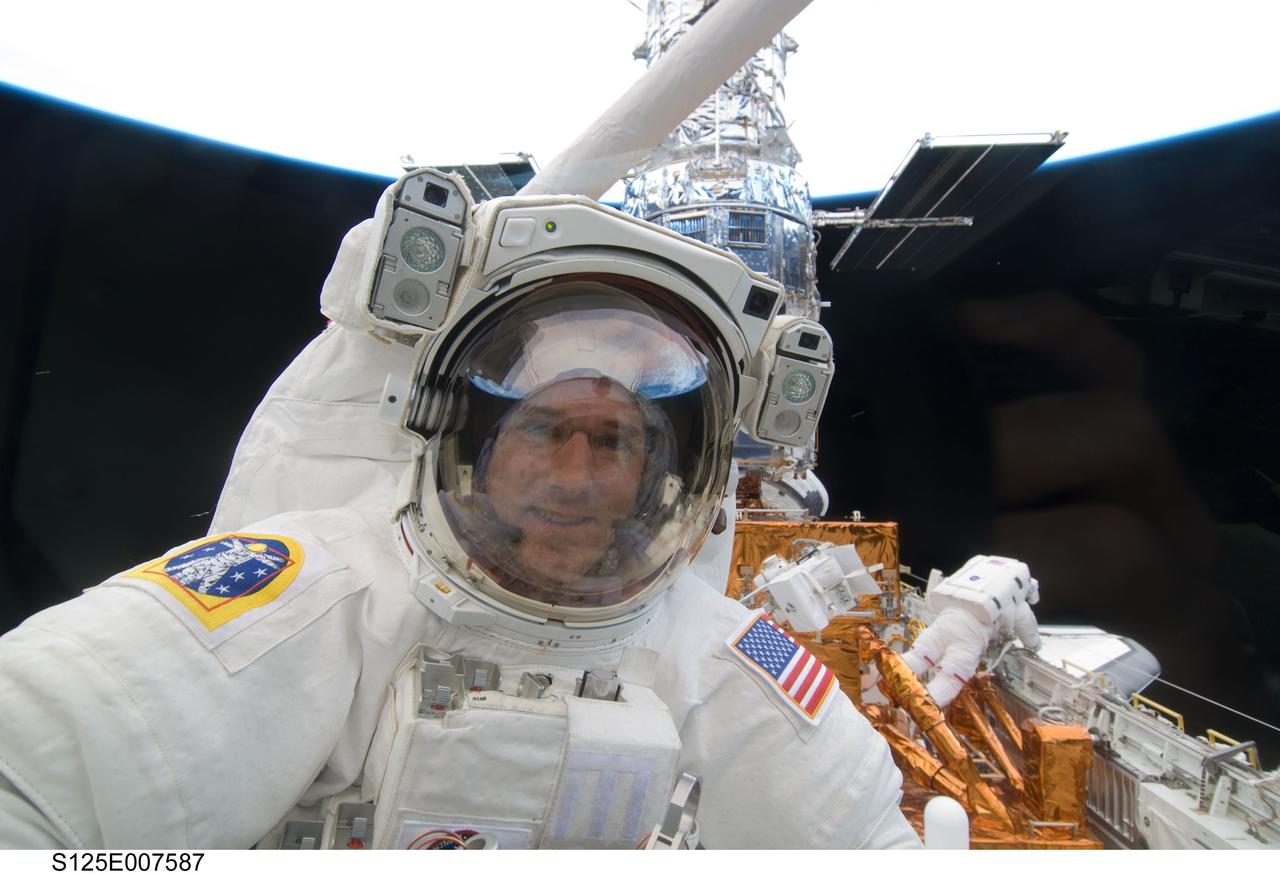
S125-E-007587 (15 May 2009) --- Astronaut Michael Good, STS-125 mission specialist, peers through a window toward Atlantis' crew cabin interior, where his shirt-sleeved support team members busy themselves to aid the flight's second of five sessions of extravehicular activity to perform work on the Hubble Space Telescope. Astronaut Mike Massimino can be seen in the background at work on the port side of the shuttle's cargo bay.

Recovery team members work to guide a test version of Orion into the USS Anchorage's well deck on Sept. 15, 2014. NASA and the Navy are working together this week to test tools and techniques that will be used to recover the spacecraft once it splashes down following Exploration Flight Test-1 (EFT-1). Part of Batch image transfer from Flickr.

S115-E-E-05528 (12 Sept. 2006) --- Astronaut Steven G. MacLean, representing the Canadian Space Agency, works at the controls for the Canadarm2 or space station remote manipulator arm as part of the team effort to successfully complete "installation day" on the International Space Station. The Atlantis and Expedition 13 crews worked on attaching the P3/P4 truss during the first of three scheduled spacewalks by STS-115 shuttle crew members. Today's space walkers were astronauts Joseph R. Tanner and Heidemarie M. Stefanyshyn-Piper.
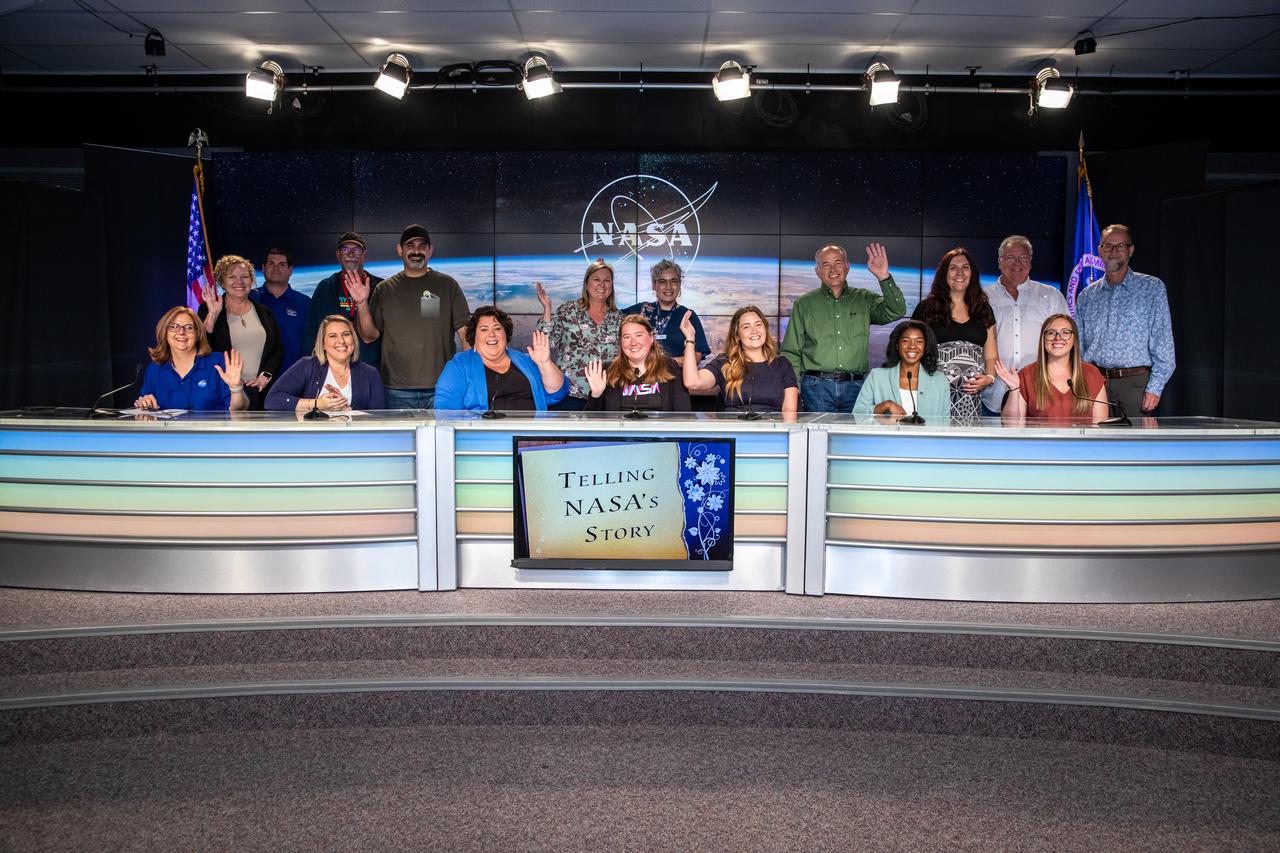
Employees who work at NASA’s Kennedy Space Center Press Site are photographed inside the News Auditorium at the Florida spaceport on March 23, 2023, following a panel discussion held to commemorate Women’s History Month. The event, titled “Celebrating the Women Who Tell Our Stories,” included women who typically work behind the scenes sharing what goes into conceiving, creating, and curating NASA stories. Panelists included Kennedy’s news chief, members of the broadcast team, public affairs specialists, a video producer, and a writer.
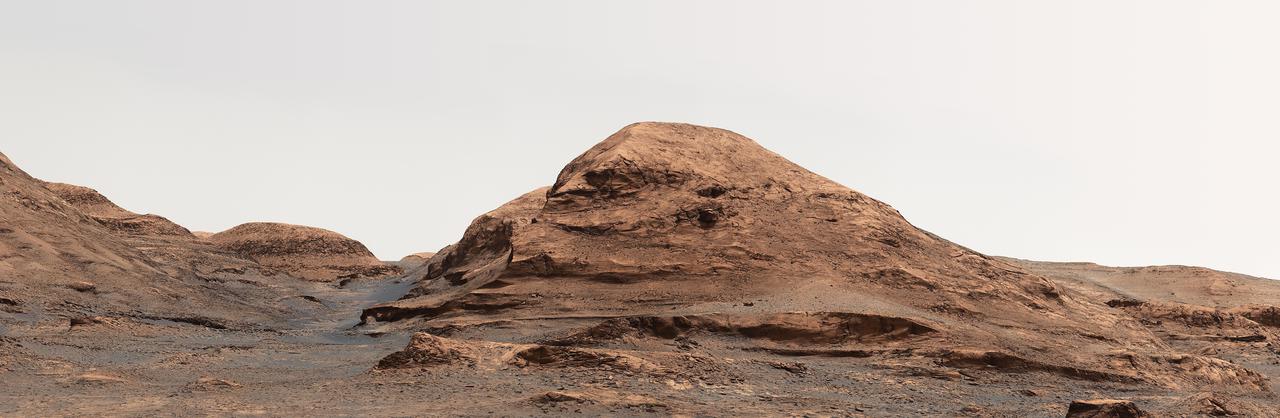
NASA's Curiosity Mars rover used its Mastcam to take an image of this hill, nicknamed "Rafael Navarro Mountain" after Rafael Navarro-González, an astrobiologist who worked on the mission until he passed away January 26, 2021. He was a member of the team working with Curiosity's Sample Analysis at Mars, or SAM, instrument. https://photojournal.jpl.nasa.gov/catalog/PIA24544
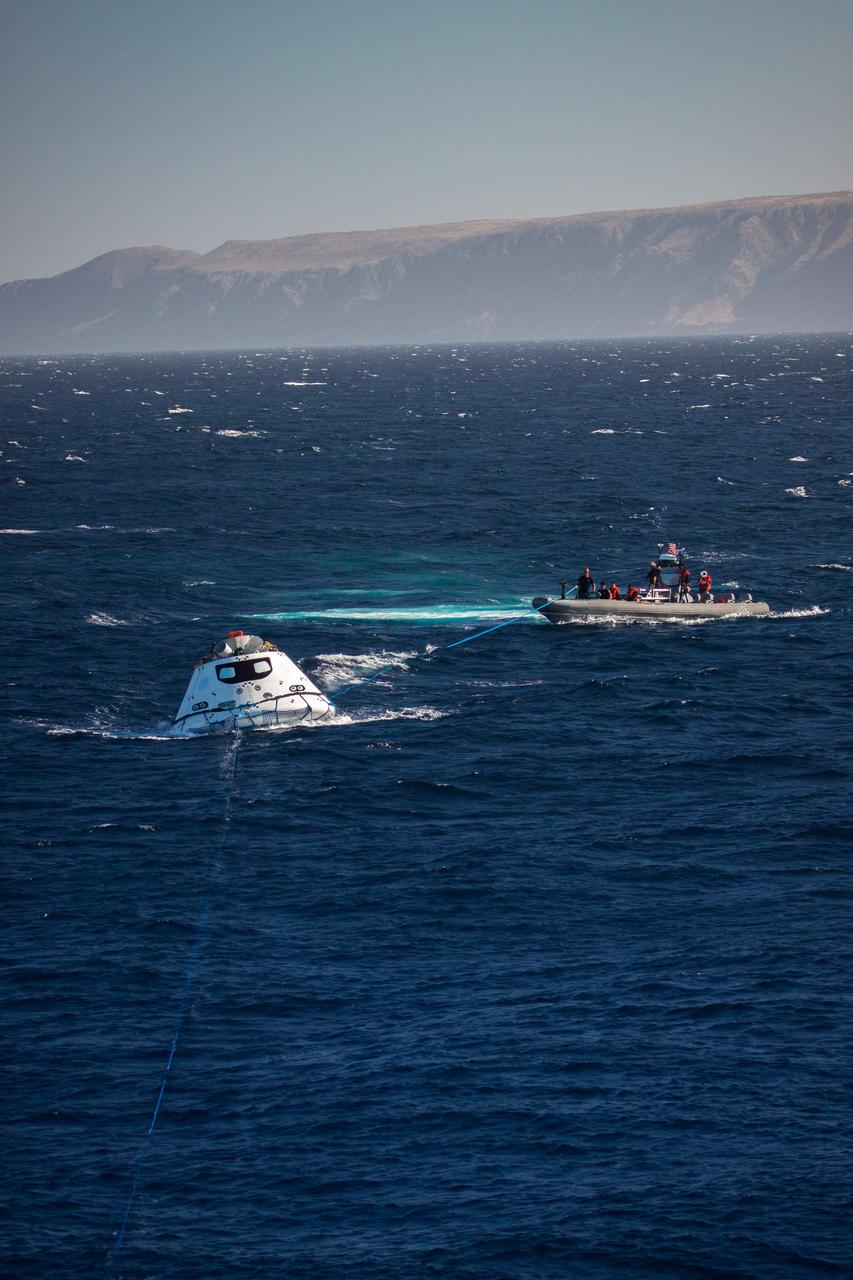
Recovery team members work to guide a test version of Orion into the USS Anchorage's well deck on Sept. 15, 2014. NASA and the Navy are working together to test tools and techniques that will be used to recover the spacecraft once it splashes down following Exploration Flight Test-1 (EFT-1). Part of Batch image transfer from Flickr.
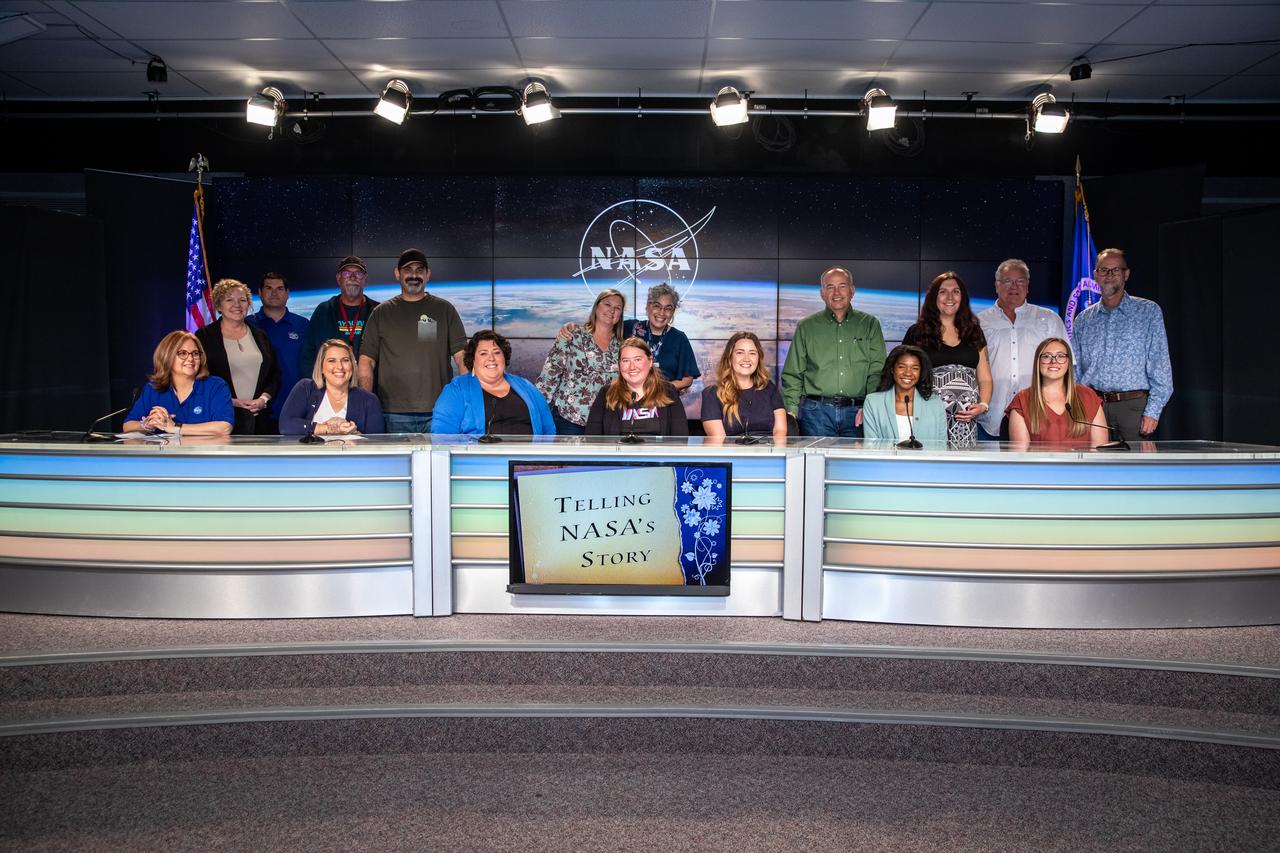
Employees who work at NASA’s Kennedy Space Center Press Site are photographed inside the News Auditorium at the Florida spaceport on March 23, 2023, following a panel discussion held to commemorate Women’s History Month. The event, titled “Celebrating the Women Who Tell Our Stories,” included women who typically work behind the scenes sharing what goes into conceiving, creating, and curating NASA stories. Panelists included Kennedy’s news chief, members of the broadcast team, public affairs specialists, a video producer, and a writer.

Members of the World Presidents' Organization enjoy a buffet luncheon during a Jan. 26 visit to NASA's John C. Stennis Space Center. WPO members from several states toured Stennis facilities during a daylong visit that included a river ride with Special Boat Team 22, the U.S. Navy's elite boat warriors group that trains at Stennis. Visiting president also had an opportunity to learn about the ongoing work of the nation's premier rocket engine testing site.
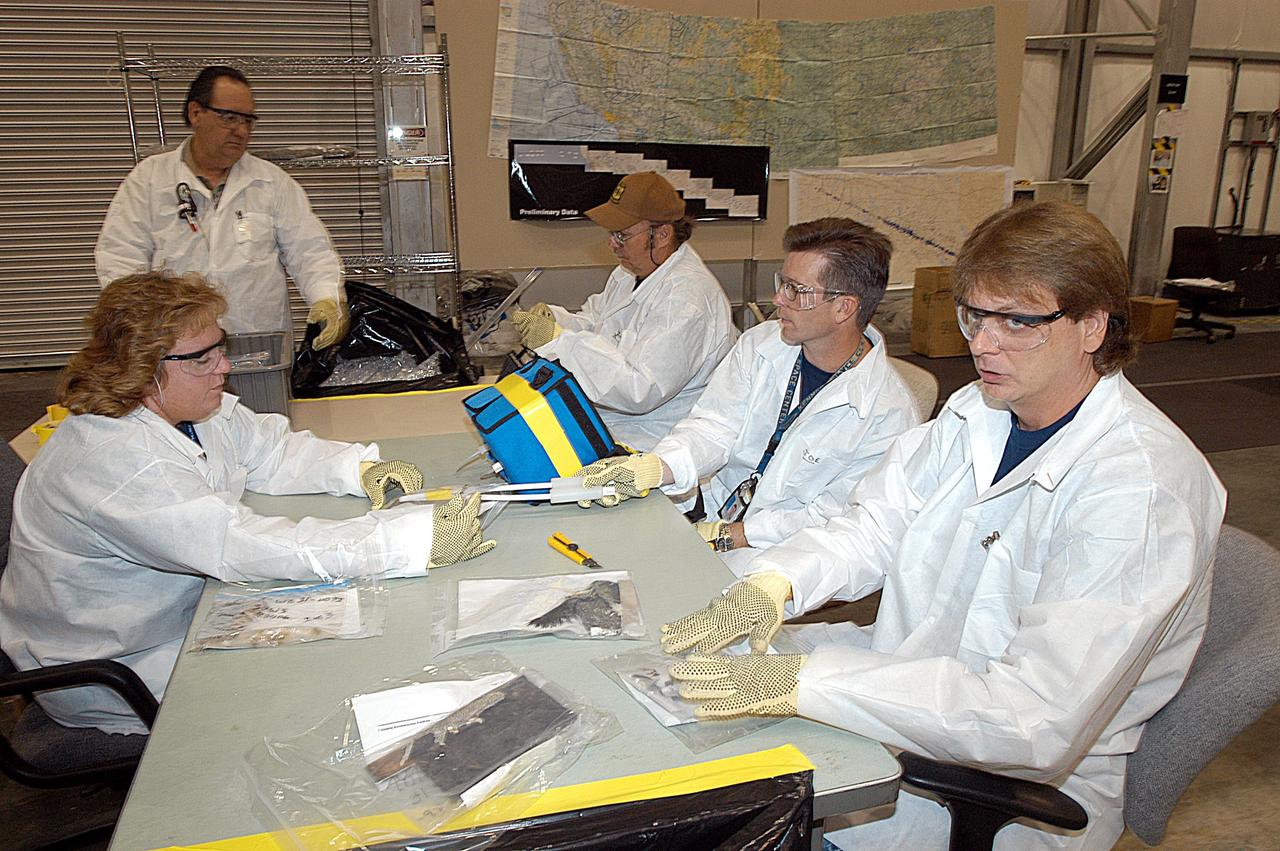
KENNEDY SPACE CENTER, FLA. -- Members of the Columbia Reconstruction Project team continue their work to identify pieces of Columbia debris delivered to the RLV Hangar. Shipped from Barksdale Air Force Base, Shreveport, La., more than 70,000 items, weighing 78,000 pounds, about 36 percent of the Shuttle by weight, have been delivered to KSC for use in the mishap investigation. Ground teams have completed 78 percent of their primary search area, and airborne crews finished 80 percent of their assigned area. Search teams have completed 98 percent of the underwater searches in Lake Nacogdoches and Toledo Bend Reservoir.
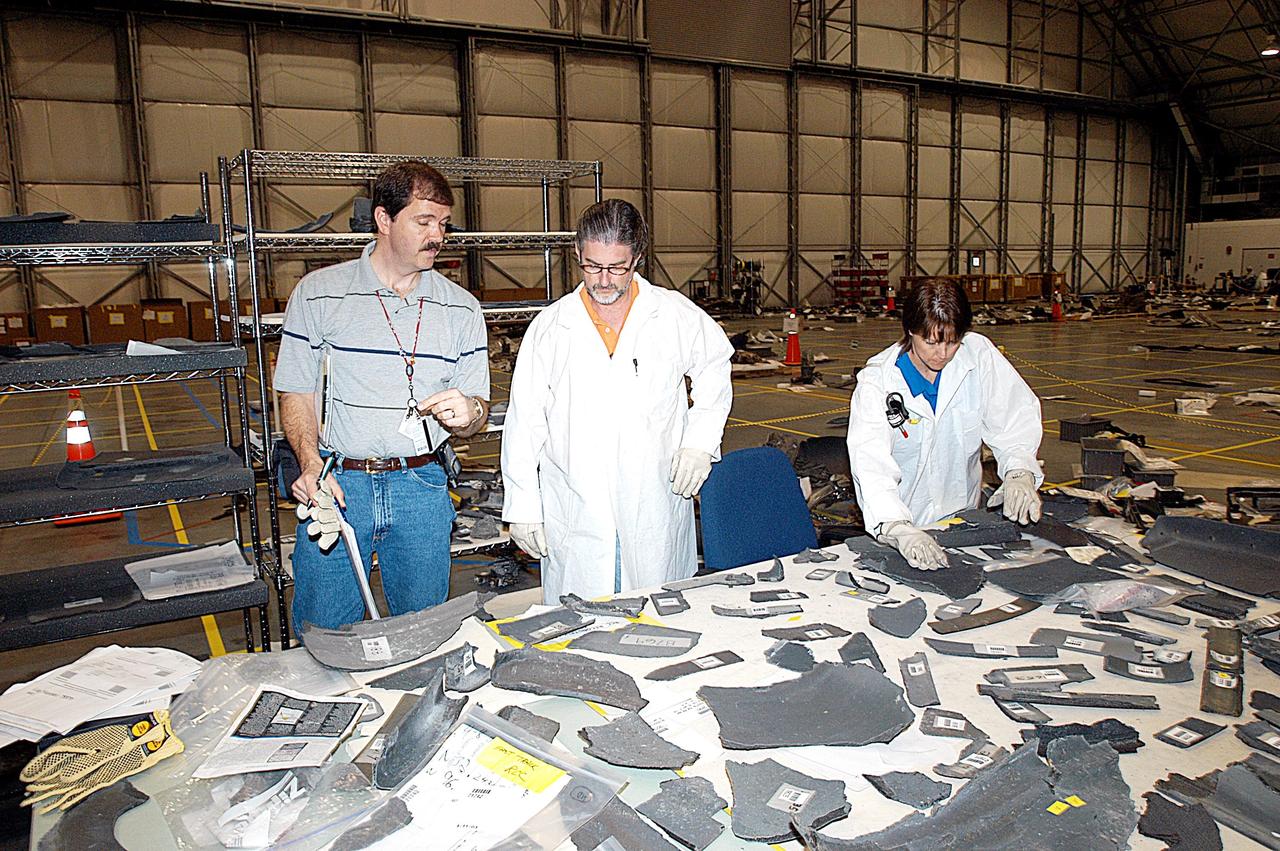
KENNEDY SPACE CENTER, FLA. -- Members of the Columbia Reconstruction Project team work at identifying pieces of Columbia debris delivered to the RLV Hangar. Shipped from Barksdale Air Force Base, Shreveport, La., more than 70,000 items, weighing 78,000 pounds, about 36 percent of the Shuttle by weight, have been delivered to KSC for use in the mishap investigation. Ground teams have completed 78 percent of their primary search area, and airborne crews finished 80 percent of their assigned area. Search teams have completed 98 percent of the underwater searches in Lake Nacogdoches and Toledo Bend Reservoir.
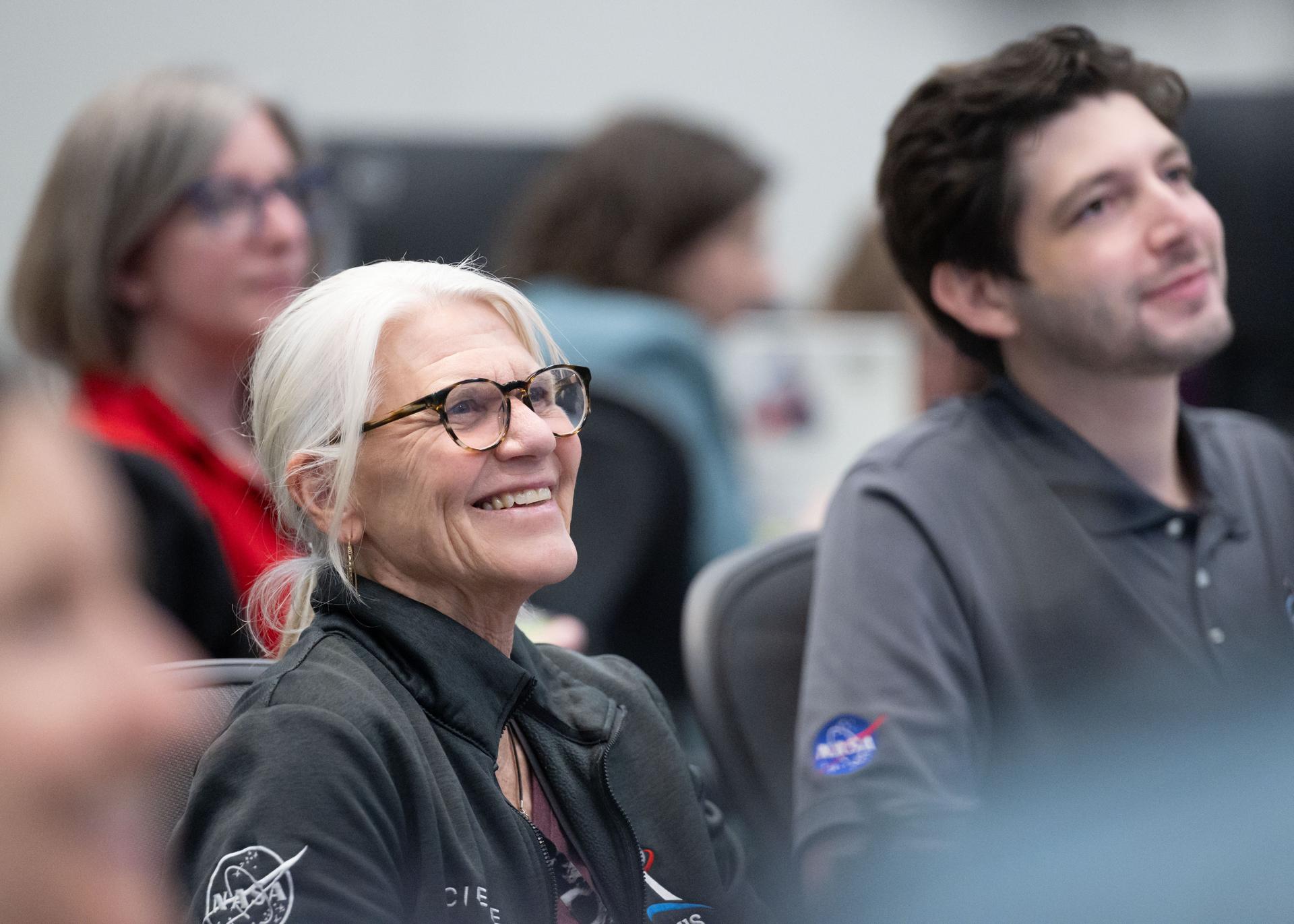
Artemis II lunar science team members, from left, Cindy Evans, and Wilfredo Garcia Lopez, react to crew observations during the lunar flyby on April 6, 2026. The team worked in the Science Evaluation Room (SER) in Mission Control at NASA’s Johnson Space Center in Houston. Built specifically for Artemis missions with these science priorities in mind, the SER is equipped to support rapid data interpretation, collaborative analysis, real-time decision making, and seamless coordination between the science and operations teams. Credits: NASA/Luna Posadas Nava
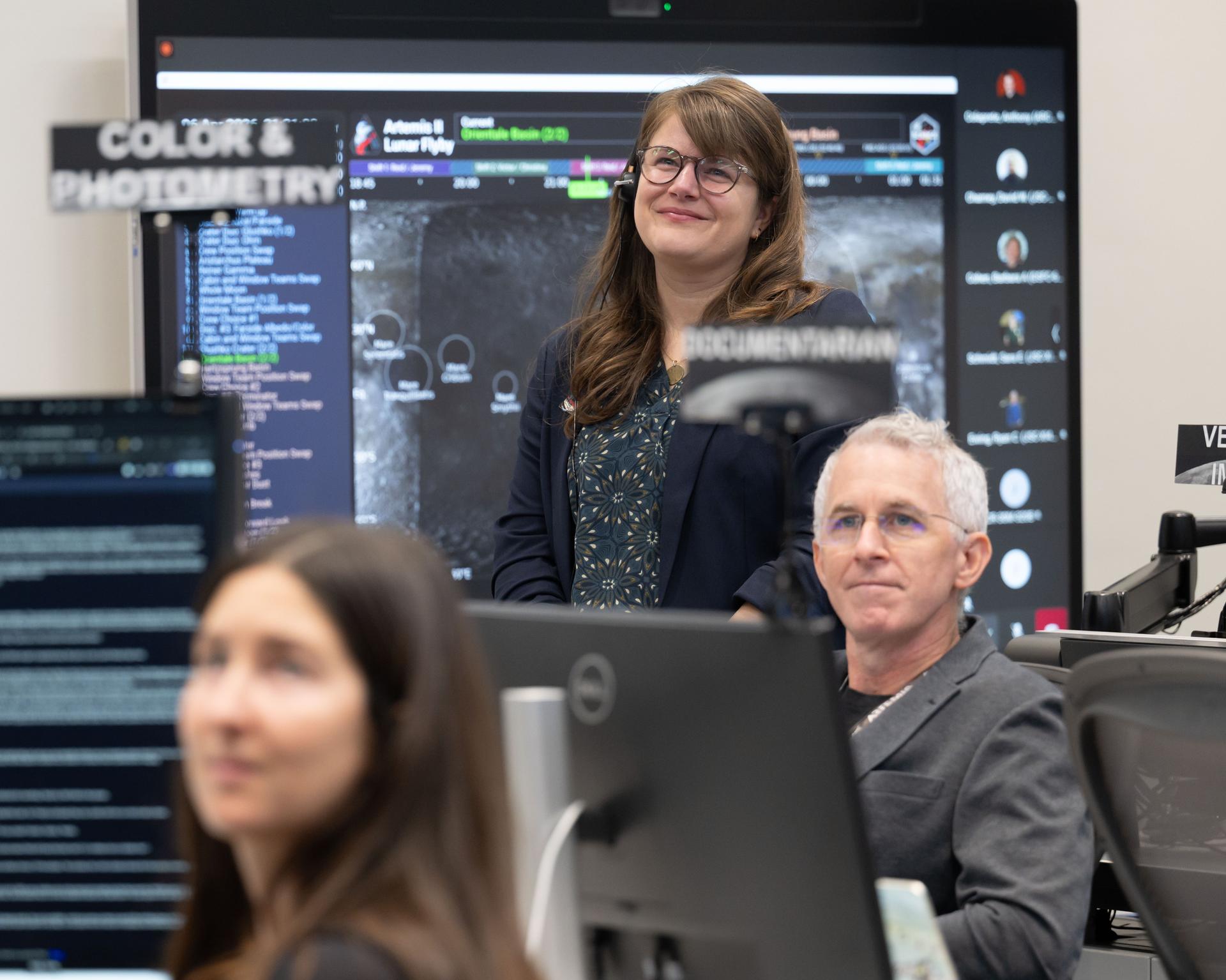
Artemis II deputy lunar science lead Marie Henderson, background, and lunar science team members, Ariel Deutsch, and Ryan Ewing, react to crew observations during the lunar flyby on April 6, 2026. The team worked in the Science Evaluation Room (SER) in Mission Control at NASA’s Johnson Space Center in Houston. Built specifically for Artemis missions with these science priorities in mind, the SER is equipped to support rapid data interpretation, collaborative analysis, real-time decision making, and seamless coordination between the science and operations teams. Credits: NASA/Luna Posadas Nava
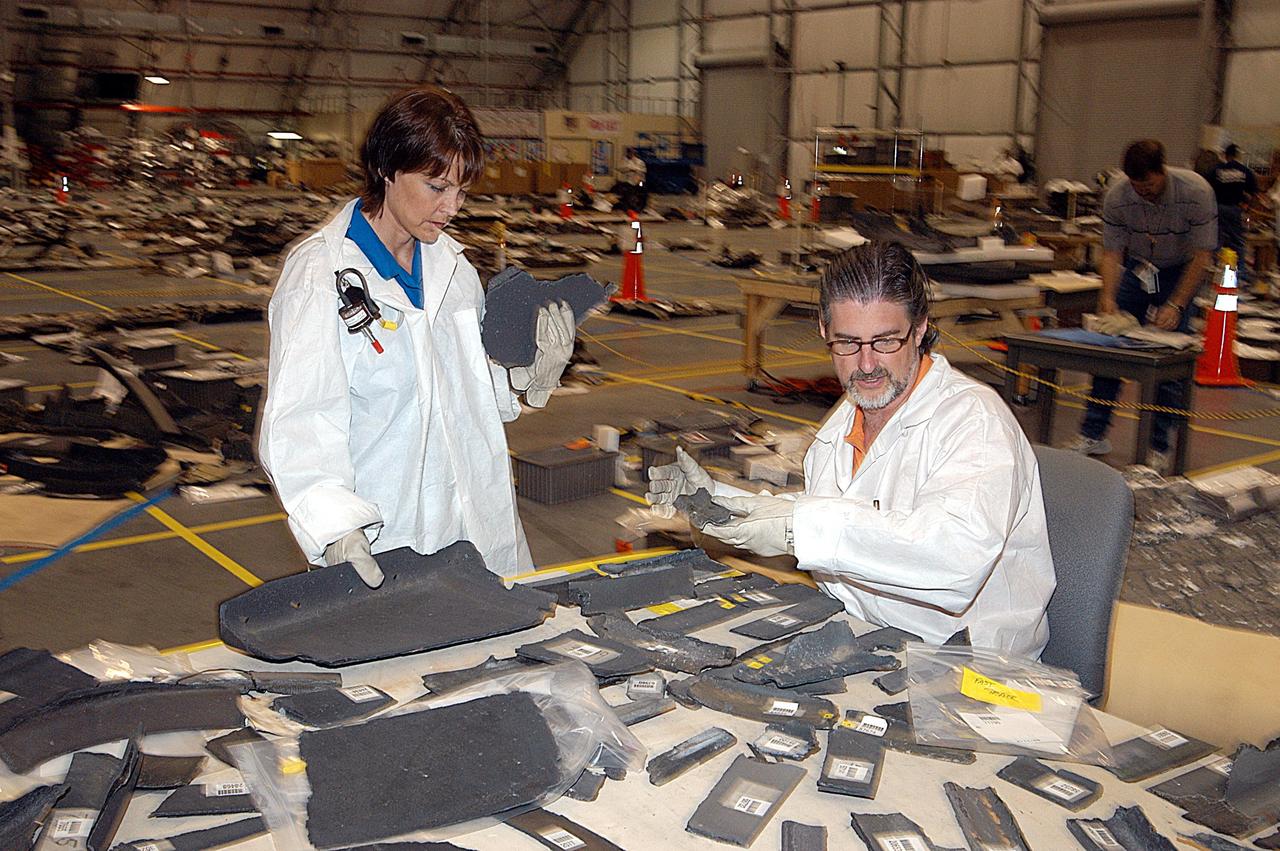
KENNEDY SPACE CENTER, FLA. -- Members of the Columbia Reconstruction Project team continue their work identifying pieces of Columbia debris delivered to the RLV Hangar. Shipped from Barksdale Air Force Base, Shreveport, La., more than 70,000 items, weighing 78,000 pounds, about 36 percent of the Shuttle by weight, have been delivered to KSC for use in the mishap investigation. Ground teams have completed 78 percent of their primary search area, and airborne crews finished 80 percent of their assigned area. Search teams have completed 98 percent of the underwater searches in Lake Nacogdoches and Toledo Bend Reservoir.
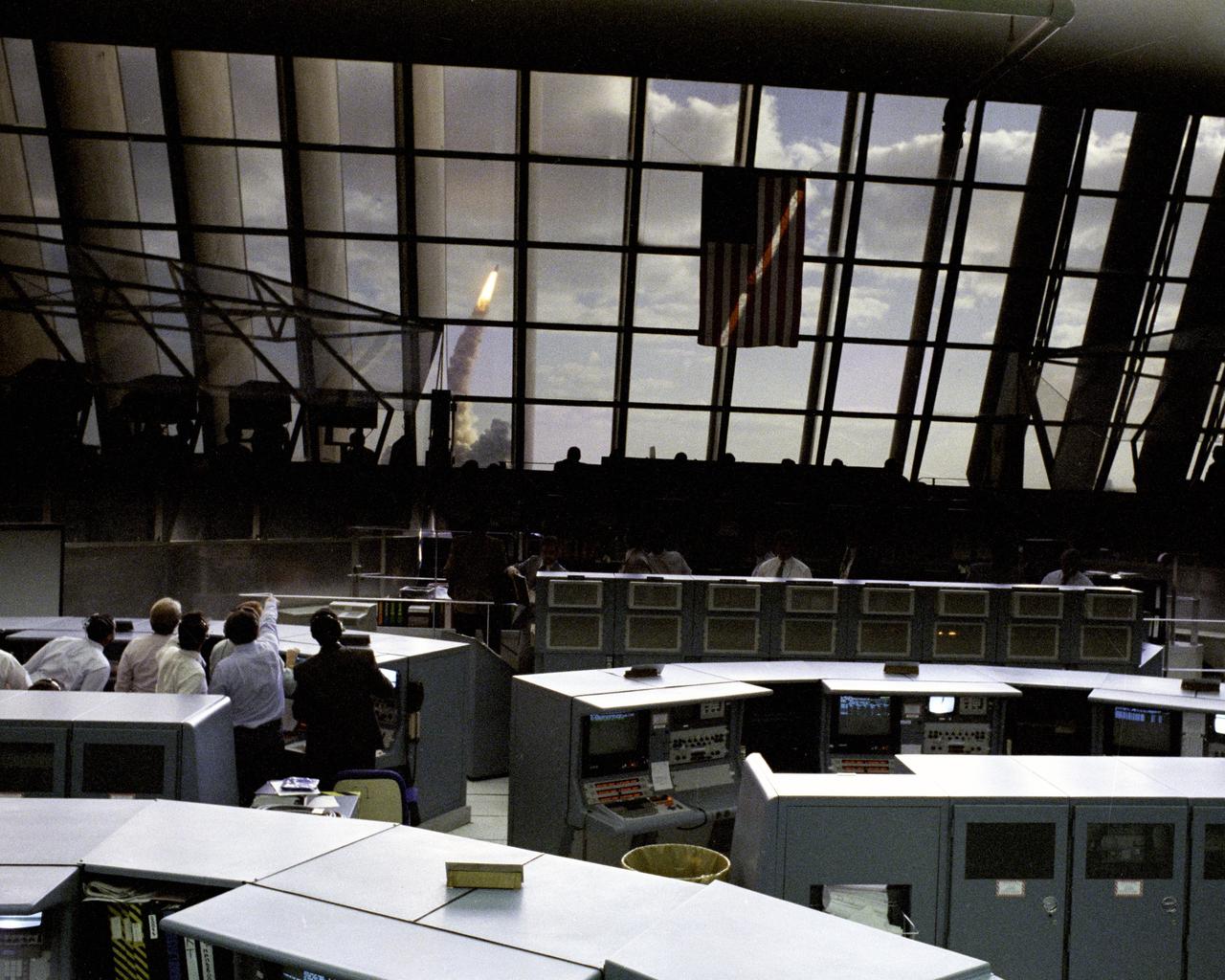
Through the large window panes of Firing Room 1, KSC launch team members reap the rewards of their work with a glimpse of the space shuttle Discovery soaring into the sky. Discovery was launched for the tenth time at 8:34 a.m. EDT on April 24 beginning the five-day STS-31 mission to deploy the Hubble Space Telescope. A ray of morning sunlight highlights the red and white stripes of Old Glory hanging high in the Firing Room. Launch team members overcame a last minute challenge in the STS-31 countdown when software detected a main propulsion system valve was out of position. The situation was quickly corrected and verified by the team from consoles in the Firing Room and the countdown was returned in a matter of minutes. Photo credit: NASA
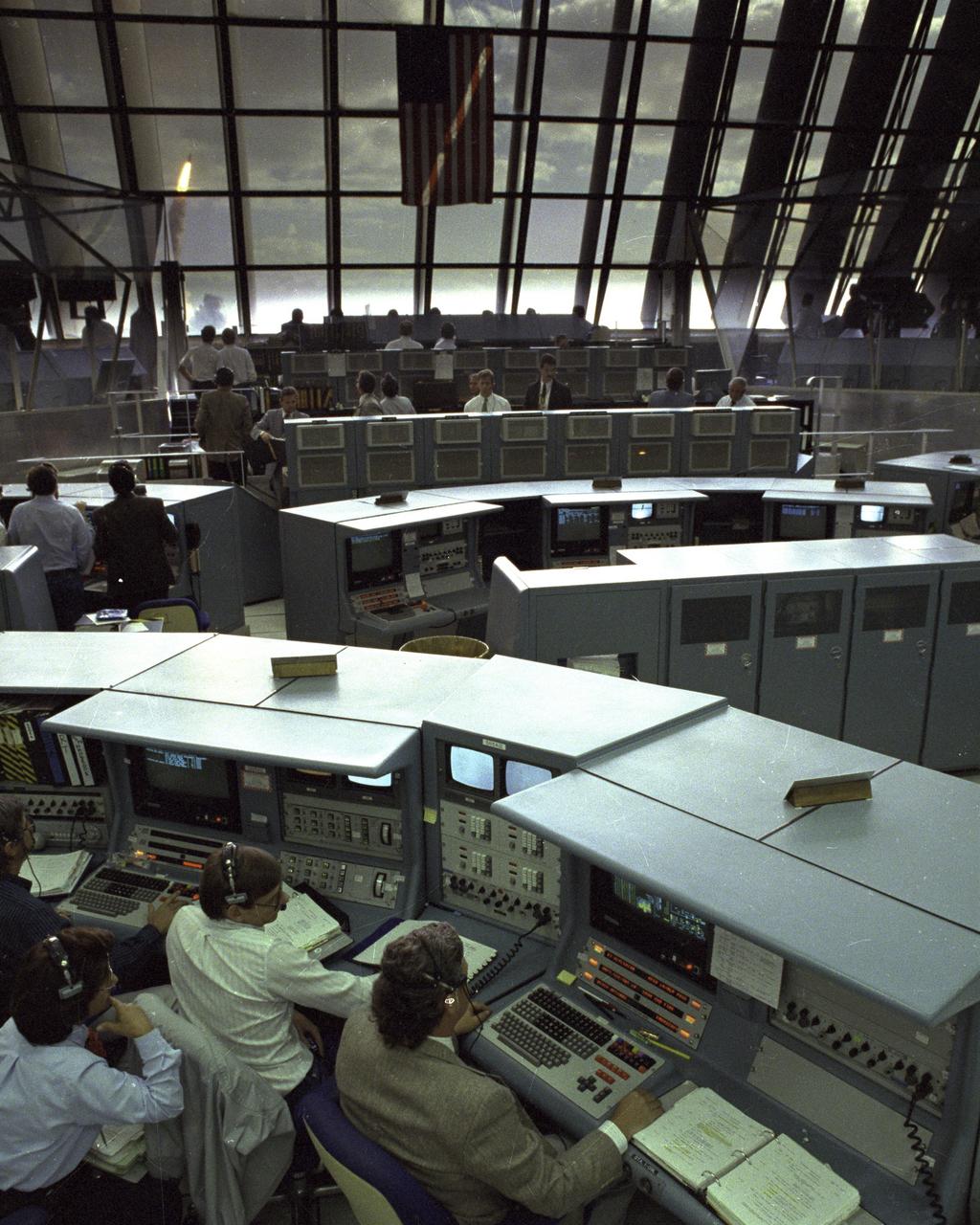
Through the large window panes of Firing Room 1, KSC launch team members reap the rewards of their work with a glimpse of the space shuttle Discovery soaring into the sky. Discovery was launched for the tenth time at 8:34 a.m. EDT on April 24 beginning the five-day STS-31 mission to deploy the Hubble Space Telescope. A ray of morning sunlight highlights the red and white stripes of Old Glory hanging high in the Firing Room. Launch team members overcame a last minute challenge in the STS-31 countdown when software detected a main propulsion system valve was out of position. The situation was quickly corrected and verified by the team from consoles in the Firing Room and the countdown was returned in a matter of minutes. Photo credit: NASA
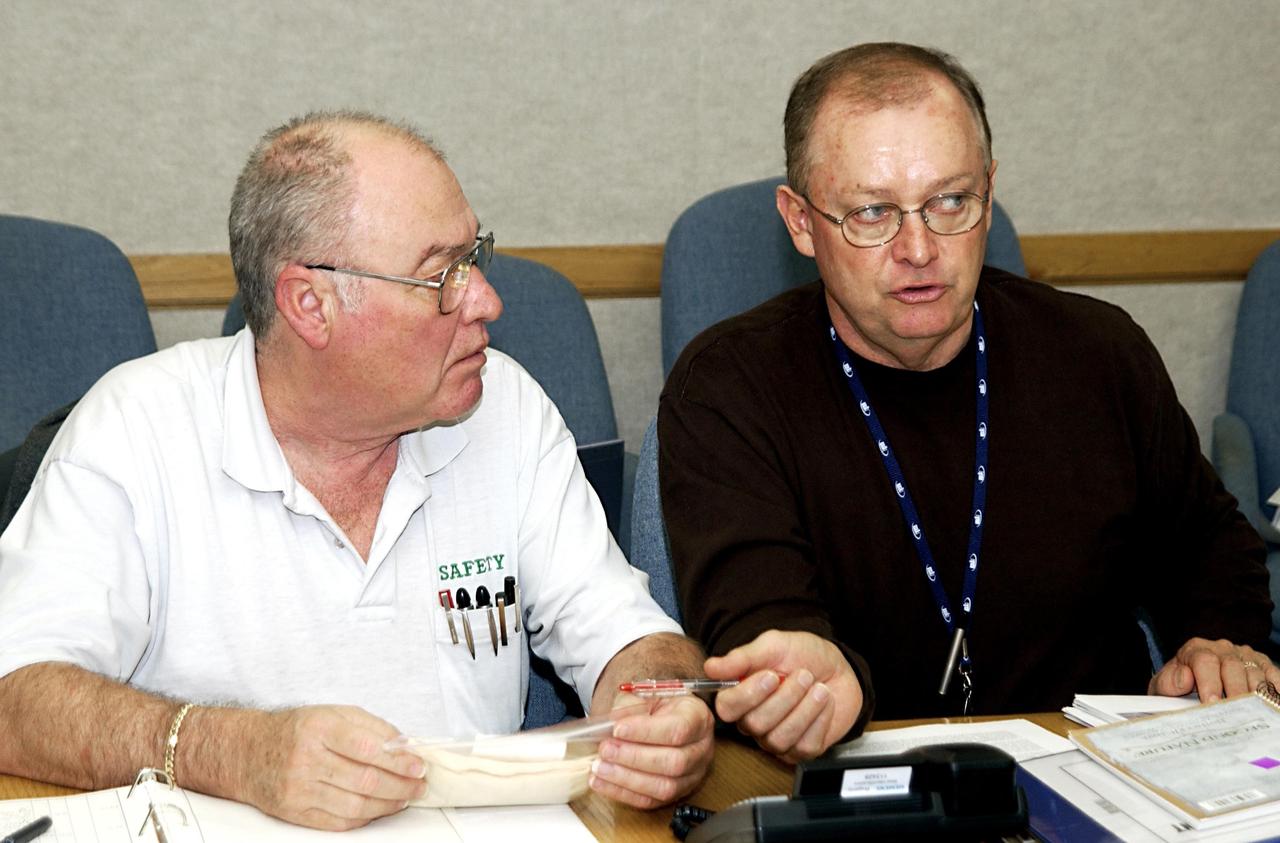
KENNEDY SPACE CENTER, FLA. - Two members of the Recovery Management Team at KSC are at work in the Operations Support Building. At left is Don Maxwell, Safety, United Space Alliance, and at right is Larry Ulmer, Safety, NASA. They are part of the investigation into the accident that claimed orbiter Columbia and her crew of seven on Feb. 1, 2003, over East Texas as they returned to Earth after a 16-day research mission. Other team members are Russ DeLoach, chief, Shuttle Mission Assurance Branch, NASA; George Jacobs, Shuttle Engineering; Jeff Campbell, Shuttle Engineering; Dave Rainer, Launch and Landing Operations; and the two co-chairs of the Response Management Team, Denny Gagen, Landing Recovery Manager, and Chris Hasselbring, Landing Operations, USA. The team is coordinating KSC technical support and assets to the Mishap Investigation Team in Barksdale, La., and providing support for the Recovery teams in Los Angeles, Texas, New Mexico, Arizona and California. In addition, the team is following up on local leads pertaining to potential debris in the KSC area. .

art002e026067 (April 7, 2026) - NASA astronaut Christina Koch focused on the task at hand as she works with storage straps inside the Orion spacecraft. For the ARCHeR study, participating crew members will wear movement and sleep monitors, called actigraphy devices, before, during, and after the mission, like the one seen here. The monitors will enable crew members and flight controllers in mission control to study real-time health and behavioral information for crew safety, and help scientists study how crew members’ sleep and activity patterns affect overall health and performance. Other data related to cognition, behavior, and team dynamics will also be gathered before and after the mission.
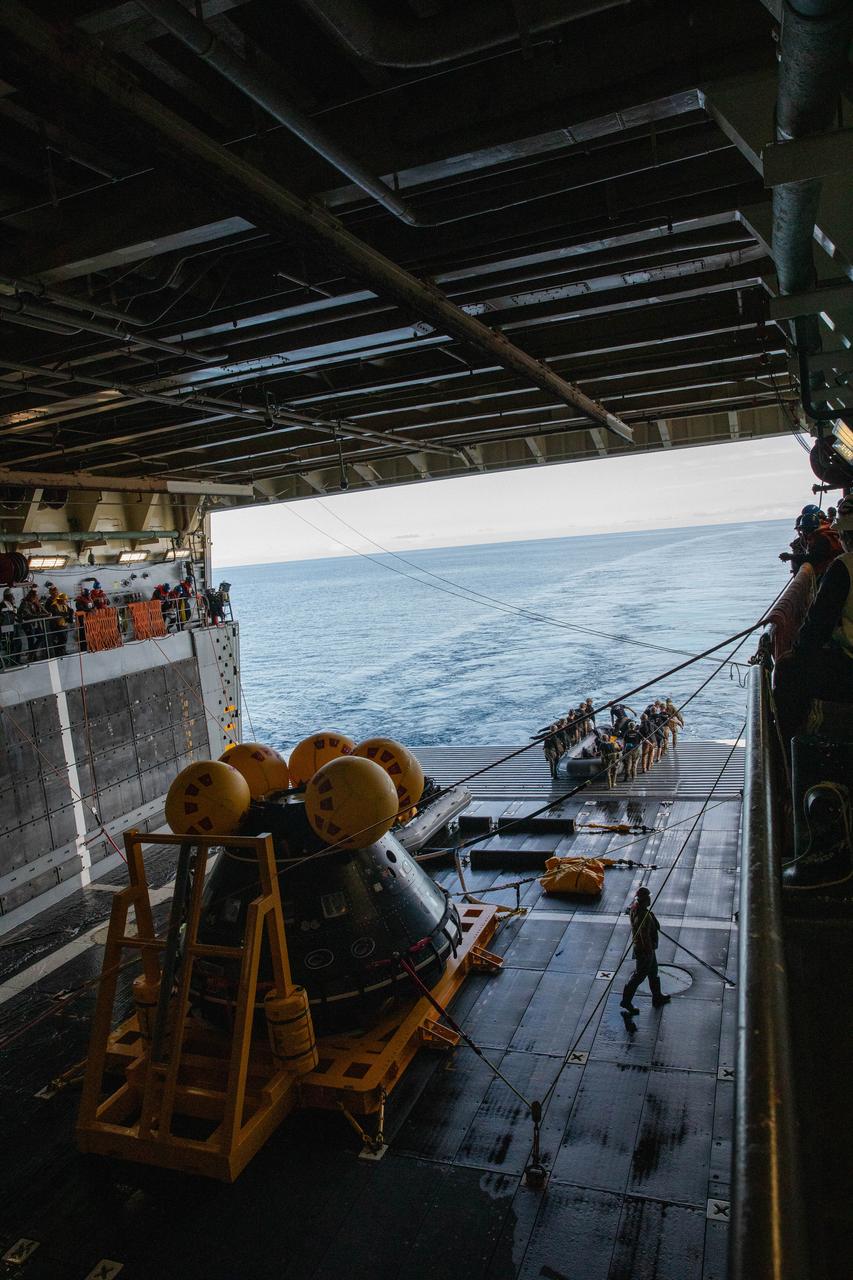
Members of NASA’s Exploration Ground System’s Landing and Recovery team and partners from the Department of Defense aboard the USS San Diego practice recovery procedures during Underway Recovery Test 11 (URT-11) off the coast of San Diego on Tuesday, Feb. 27, 2024. The team works to secure the Crew Module Test Article and align it on its stand inside the ship’s well deck. URT-11 is the eleventh in a series of Artemis recovery tests, and the first time NASA and its partners put their Artemis II recovery procedures to the test with the astronauts.
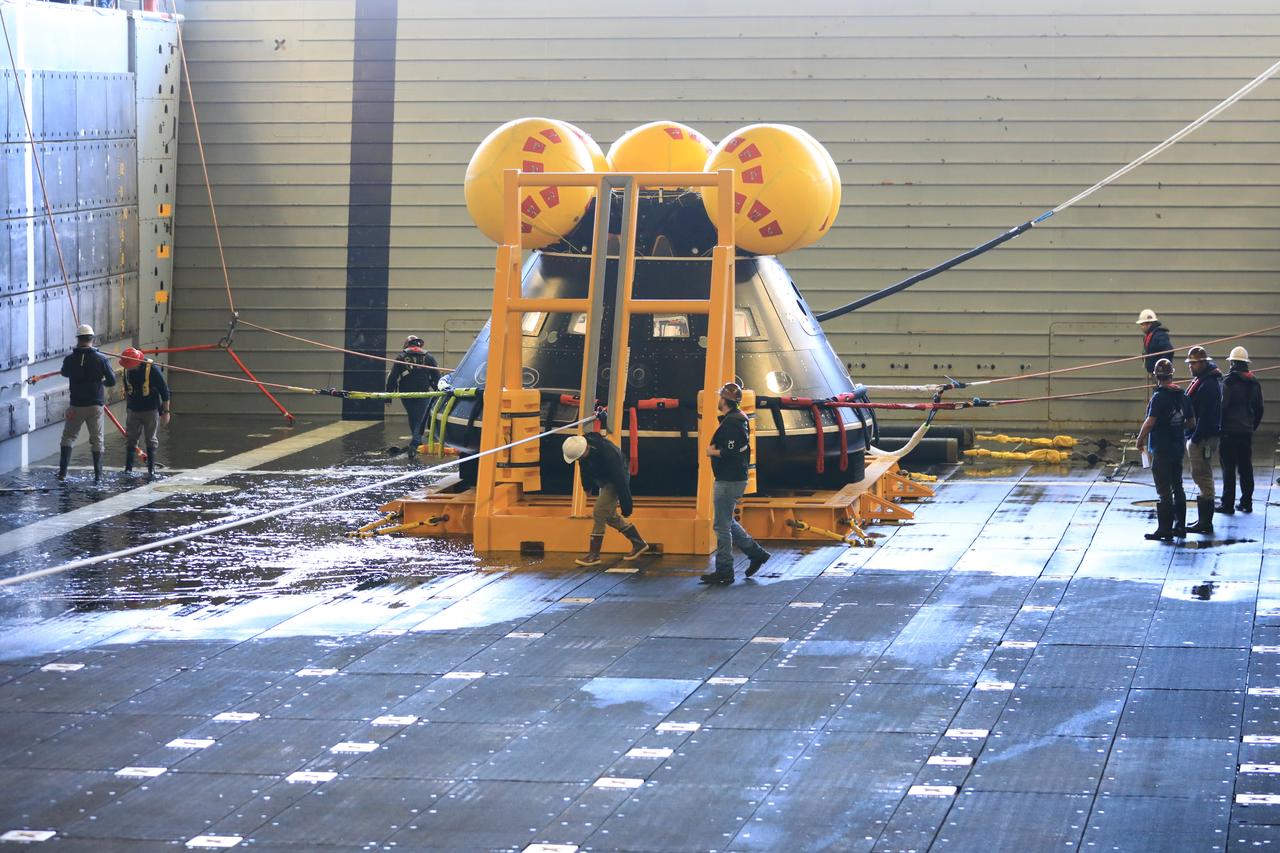
Members of NASA’s Exploration Ground System’s Landing and Recovery team and partners from the Department of Defense aboard the USS San Diego practice recovery procedures during Underway Recovery Test 11 (URT-11) off the coast of San Diego on Thursday, Feb. 22, 2024. The team works to secure the Crew Module Test Article and align it on its stand inside the ship’s well deck. URT-11 is the eleventh in a series of Artemis recovery tests, and the first time NASA and its partners put their Artemis II recovery procedures to the test with the astronauts.
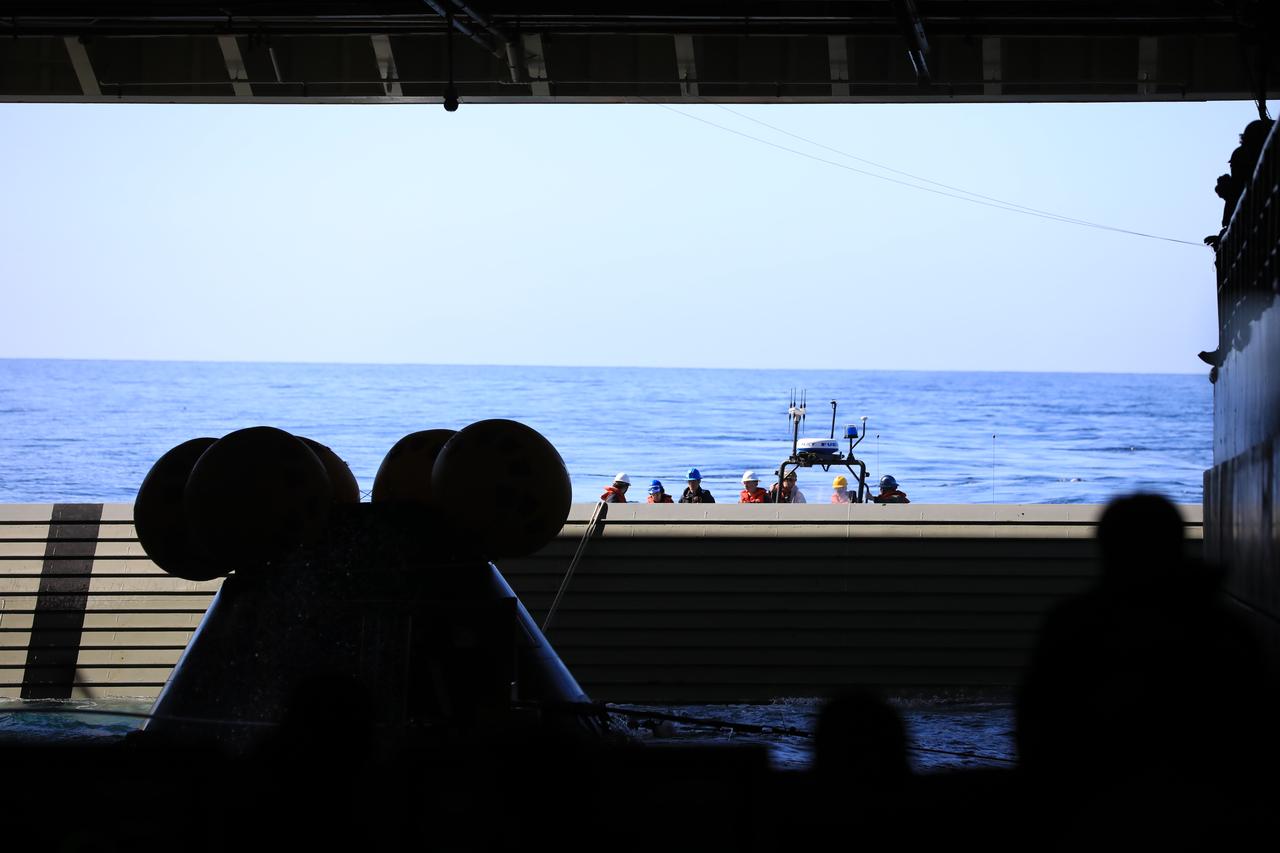
Members of NASA’s Exploration Ground System’s Landing and Recovery team and partners from the Department of Defense aboard the USS San Diego practice recovery procedures during Underway Recovery Test 11 (URT-11) off the coast of San Diego on Thursday, Feb. 22, 2024. The team works to secure the Crew Module Test Article and align it on its stand inside the ship’s well deck. URT-11 is the eleventh in a series of Artemis recovery tests, and the first time NASA and its partners put their Artemis II recovery procedures to the test with the astronauts.
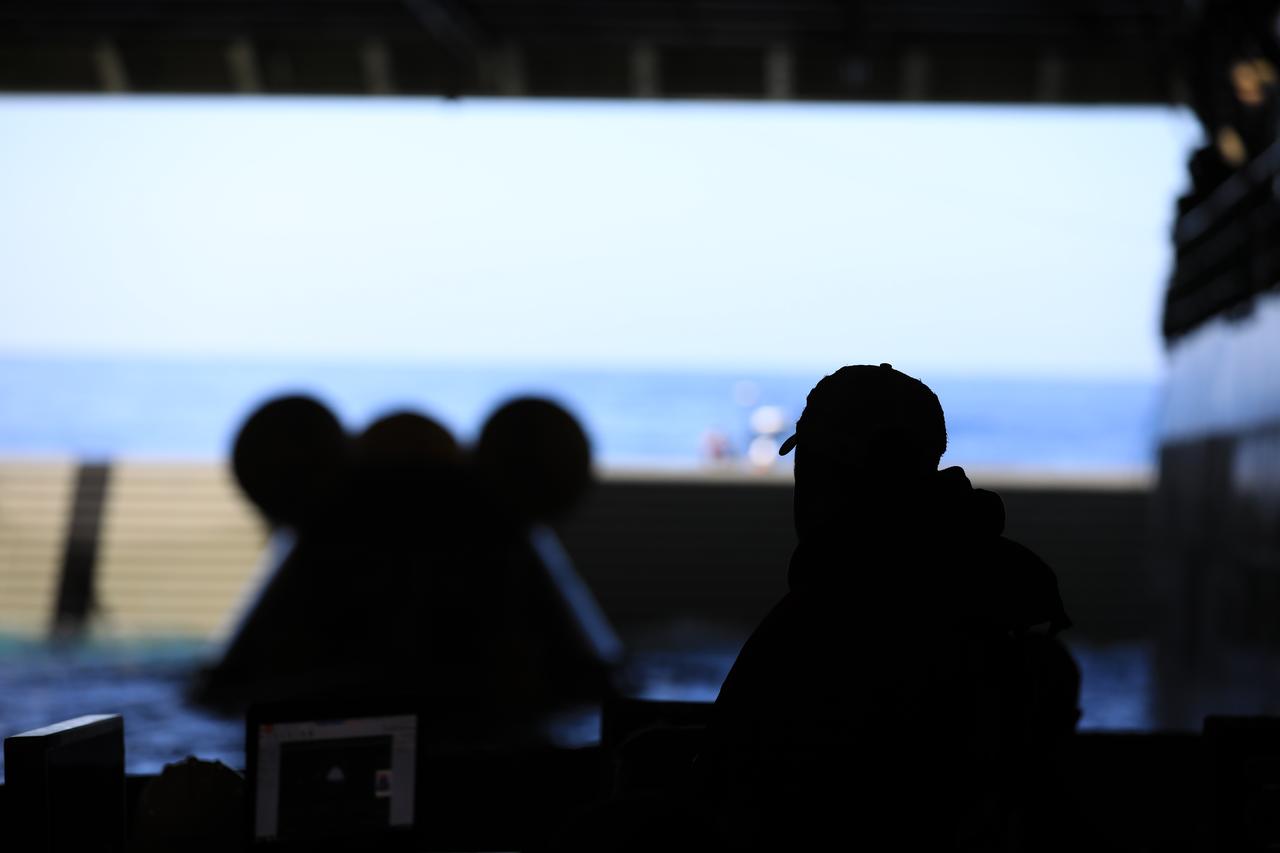
Members of NASA’s Exploration Ground System’s Landing and Recovery team and partners from the Department of Defense aboard the USS San Diego practice recovery procedures during Underway Recovery Test 11 (URT-11) off the coast of San Diego on Thursday, Feb. 22, 2024. The team works to secure the Crew Module Test Article and align it on its stand inside the ship’s well deck. URT-11 is the eleventh in a series of Artemis recovery tests, and the first time NASA and its partners put their Artemis II recovery procedures to the test with the astronauts.
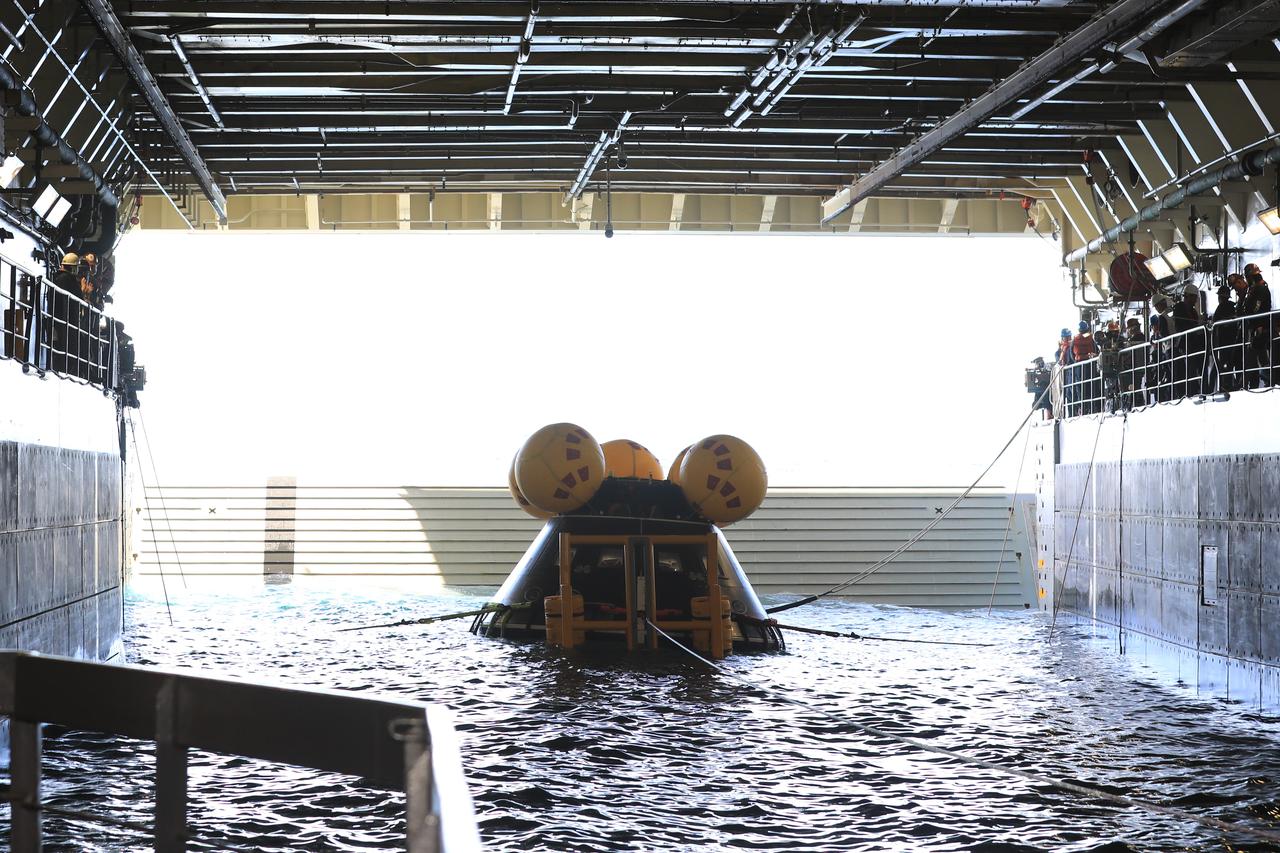
Members of NASA’s Exploration Ground System’s Landing and Recovery team and partners from the Department of Defense aboard the USS San Diego practice recovery procedures during Underway Recovery Test 11 (URT-11) off the coast of San Diego on Thursday, Feb. 22, 2024. The team works to secure the Crew Module Test Article and align it on its stand inside the ship’s well deck. URT-11 is the eleventh in a series of Artemis recovery tests, and the first time NASA and its partners put their Artemis II recovery procedures to the test with the astronauts.
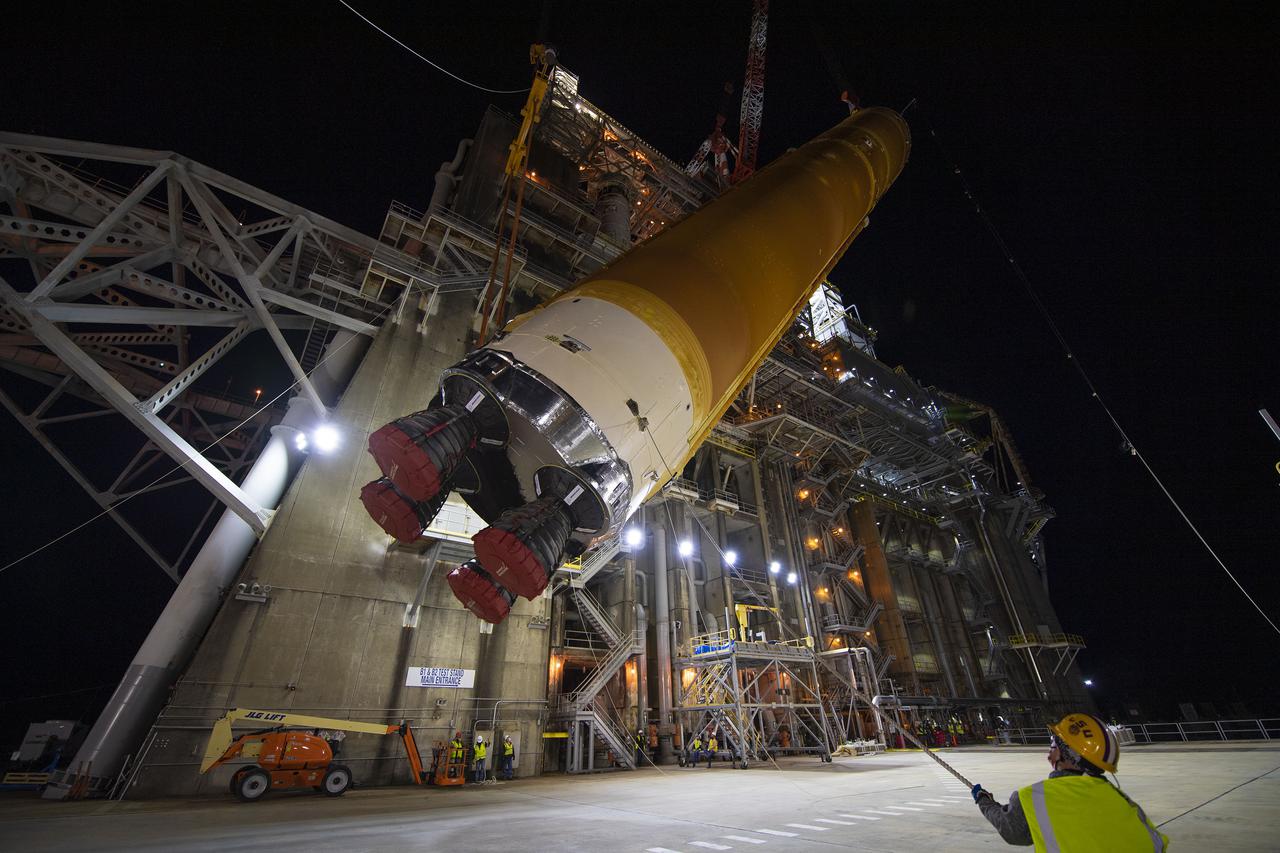
Following a successful Green Run hot fire at NASA’s Stennis Space Center near Bay St. Louis, Mississippi, on March 18, members of a blended team work April 19-20 to remove the first core stage of the agency’s Space Launch System (SLS) rocket from the B-2 Test Stand. The work required crews to lift the core stage from its vertical placement in the stand and lower it to a horizontal position on the B-2 Test Stand tarmac. The stage now will be loaded on NASA’s Pegasus barge for transport to Kennedy, where it will be prepared for launch of the Artemis I mission. Removal of the largest rocket stage ever built by NASA followed completion of a series of eight Green Run tests over the past year. During the Green Run series, teams performed a comprehensive test of the stand’s sophisticated and integrated systems. Photo Credit: NASA
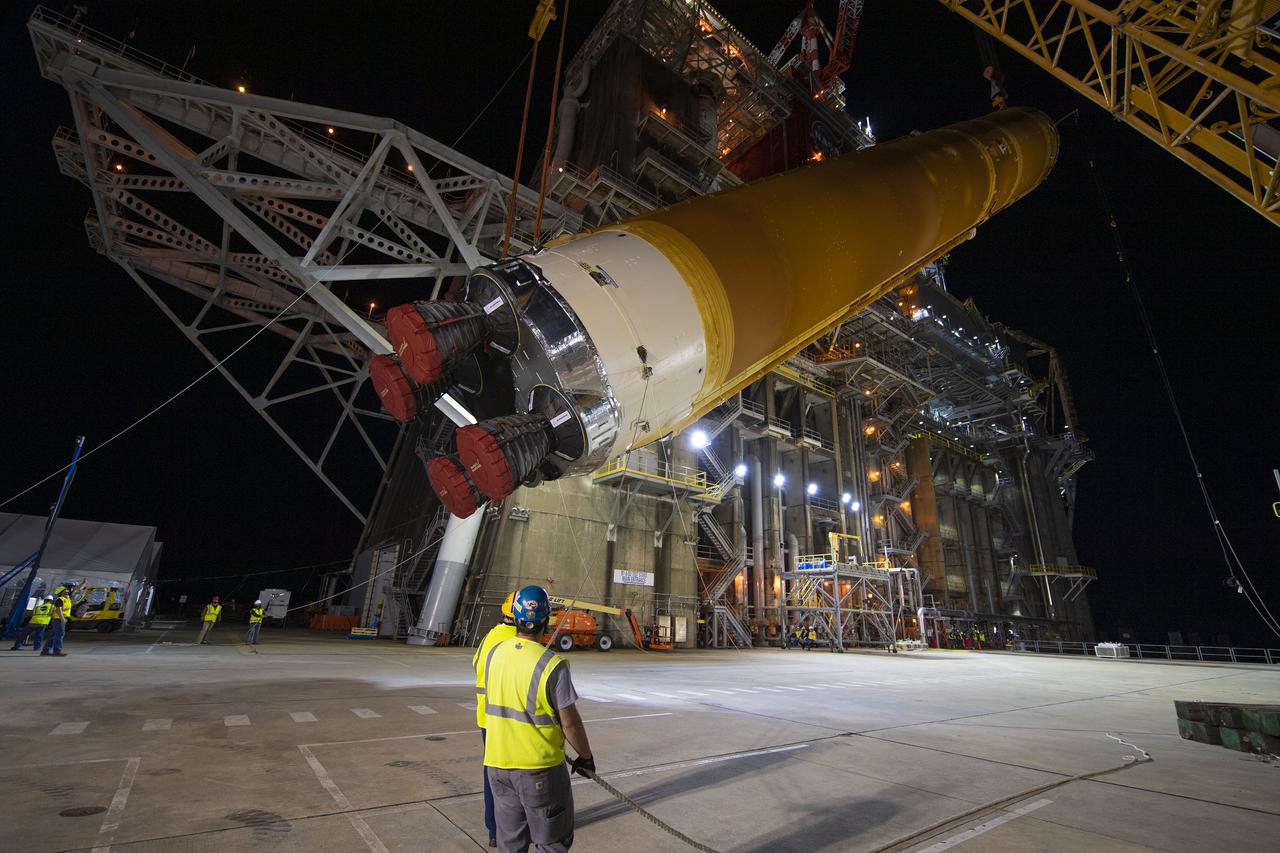
Following a successful Green Run hot fire at NASA’s Stennis Space Center near Bay St. Louis, Mississippi, on March 18, members of a blended team work April 19-20 to remove the first core stage of the agency’s Space Launch System (SLS) rocket from the B-2 Test Stand. The work required crews to lift the core stage from its vertical placement in the stand and lower it to a horizontal position on the B-2 Test Stand tarmac. The stage now will be loaded on NASA’s Pegasus barge for transport to Kennedy, where it will be prepared for launch of the Artemis I mission. Removal of the largest rocket stage ever built by NASA followed completion of a series of eight Green Run tests over the past year. During the Green Run series, teams performed a comprehensive test of the stand’s sophisticated and integrated systems. Photo Credit: NASA
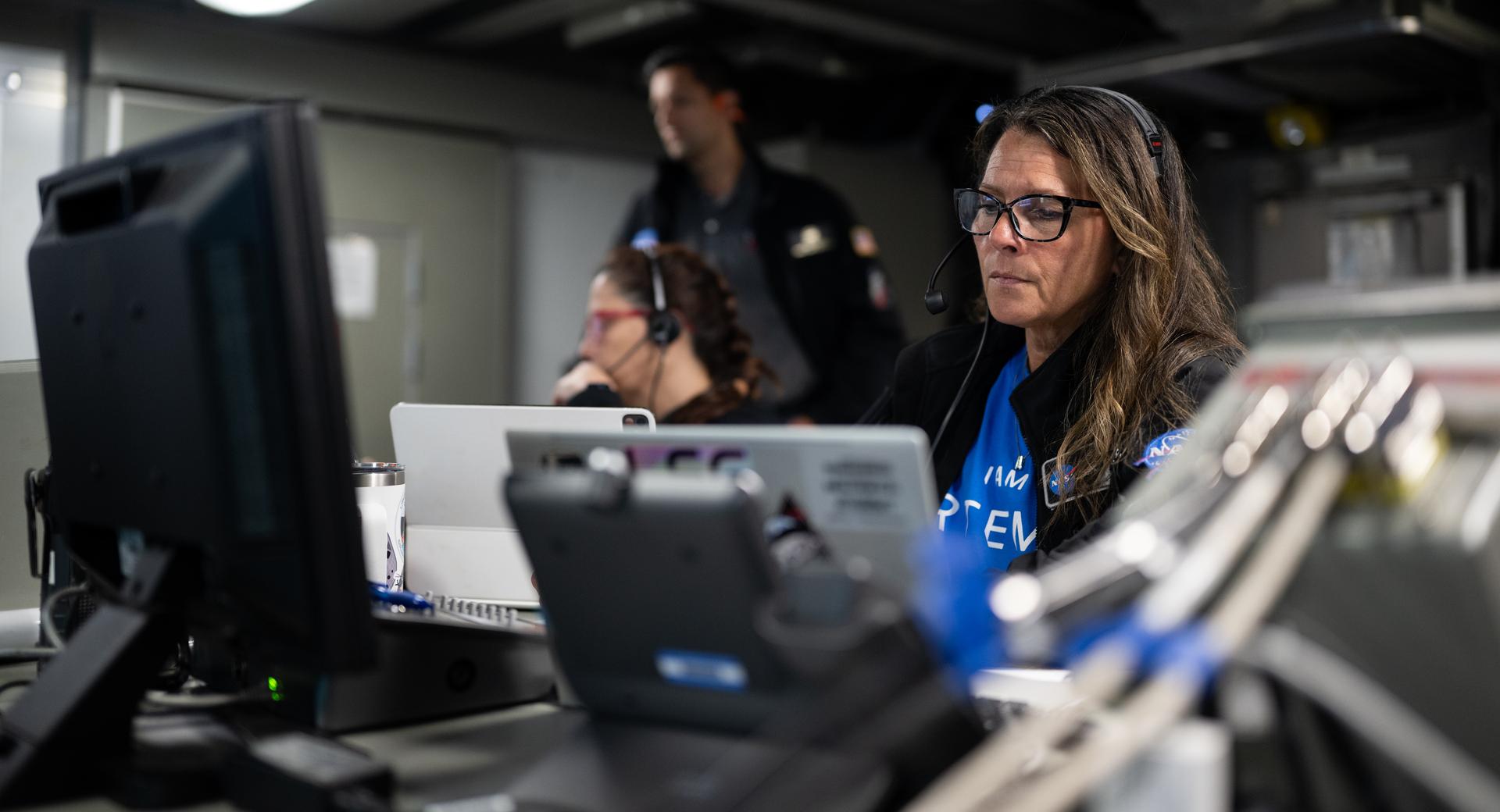
Lisa Seiler, Artemis II landing and recovery deputy director, is seen alongside other NASA and U.S. military recovery team members as they work inside the Landing Force Operations Center onboard USS John P. Murtha monitoring the recovery of NASA’s Orion spacecraft with Artemis II crewmembers NASA astronauts Reid Wiseman, commander; Victor Glover, pilot; Christina Koch, mission specialist; and CSA (Canadian Space Agency) astronaut Jeremy Hansen, mission specialist aboard in the Pacific Ocean off the coast of California, Friday, April 10, 2026. NASA’s Artemis II mission took Wiseman, Glover, Koch, and Hansen on a 10-day journey around the Moon and back to Earth. Following a splashdown at 5:07 p.m. PDT (8:07 p.m. EDT), NASA and U.S. military teams worked to bring the crewmembers and Orion spacecraft aboard USS John P. Murtha. Photo Credit: (NASA/Joel Kowsky)
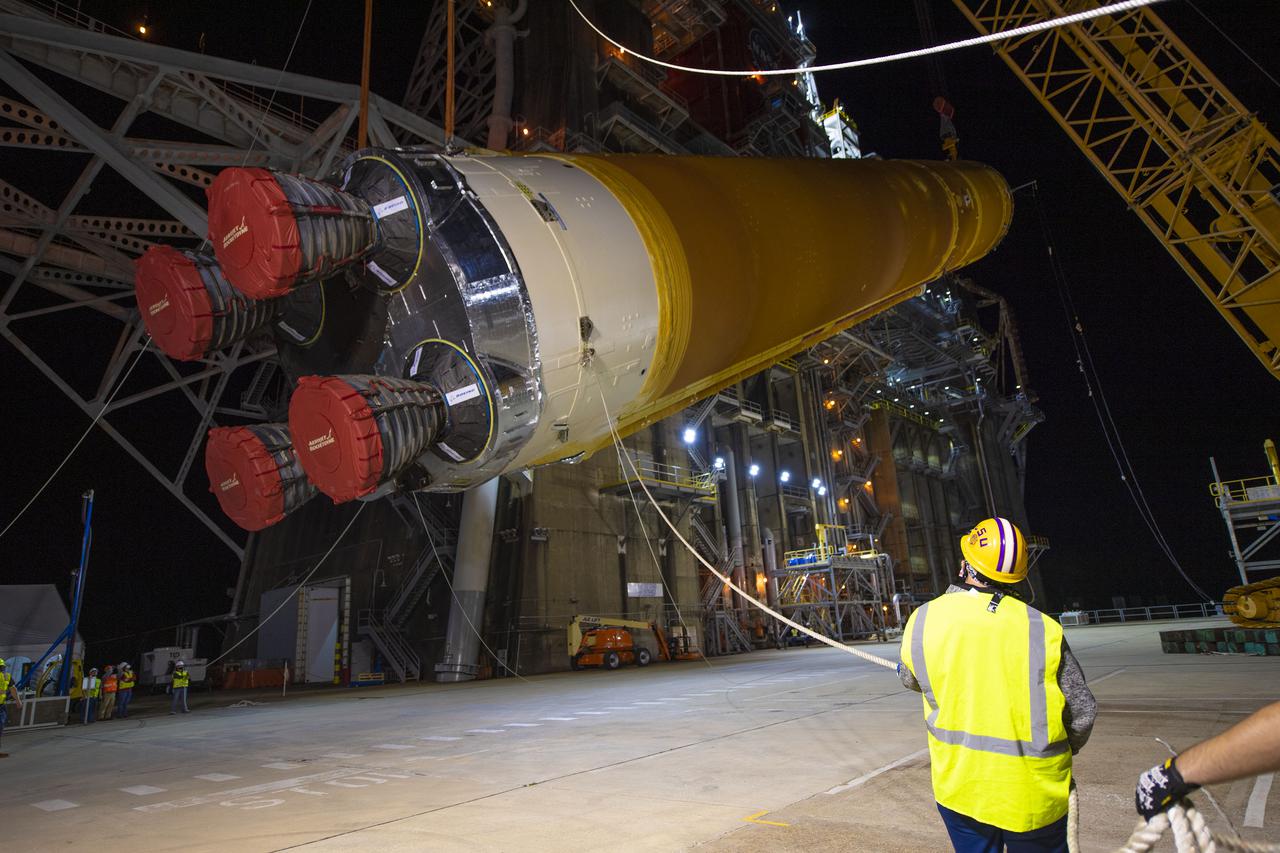
Following a successful Green Run hot fire at NASA’s Stennis Space Center near Bay St. Louis, Mississippi, on March 18, members of a blended team work April 19-20 to remove the first core stage of the agency’s Space Launch System (SLS) rocket from the B-2 Test Stand. The work required crews to lift the core stage from its vertical placement in the stand and lower it to a horizontal position on the B-2 Test Stand tarmac. The stage now will be loaded on NASA’s Pegasus barge for transport to Kennedy, where it will be prepared for launch of the Artemis I mission. Removal of the largest rocket stage ever built by NASA followed completion of a series of eight Green Run tests over the past year. During the Green Run series, teams performed a comprehensive test of the stand’s sophisticated and integrated systems. Photo Credit: NASA
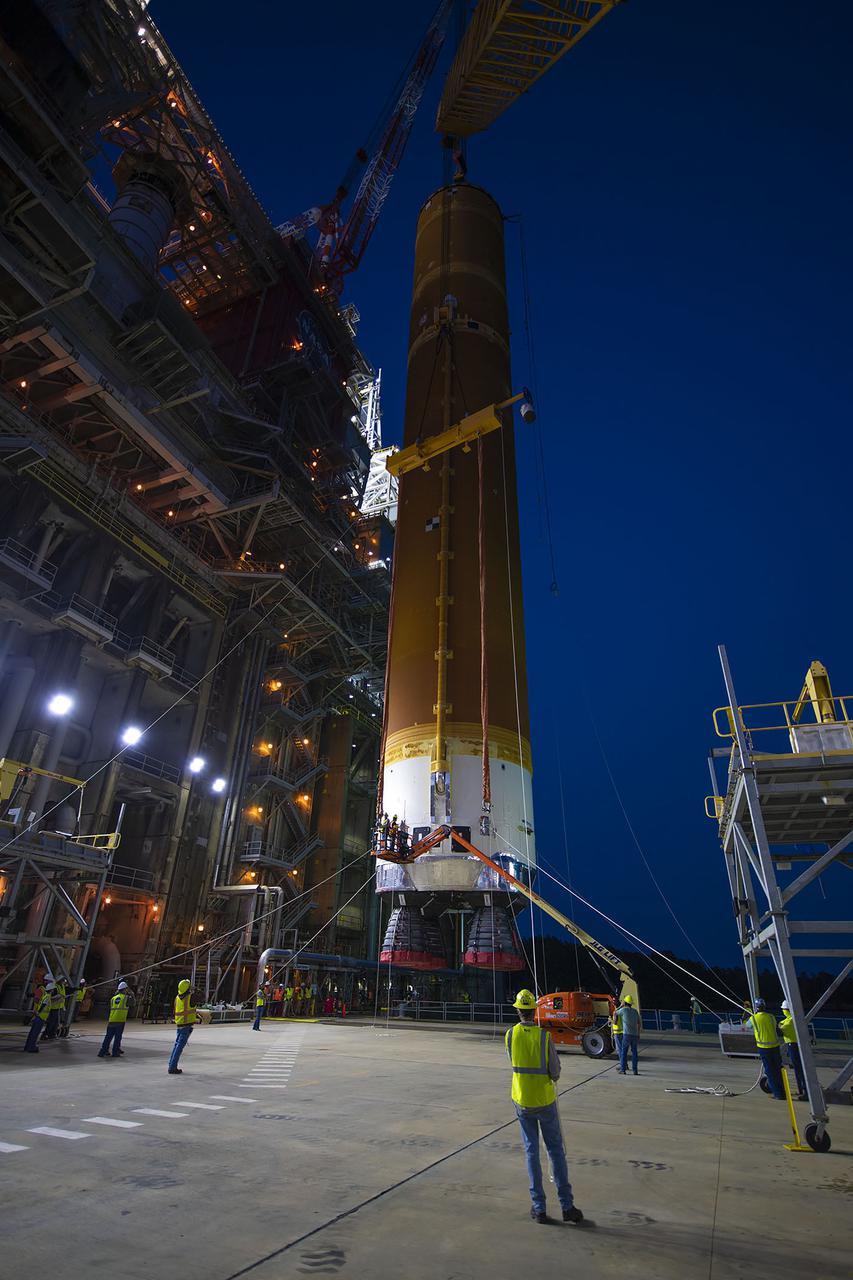
Following a successful Green Run hot fire at NASA’s Stennis Space Center near Bay St. Louis, Mississippi, on March 18, members of a blended team work April 19-20 to remove the first core stage of the agency’s Space Launch System (SLS) rocket from the B-2 Test Stand. The work required crews to lift the core stage from its vertical placement in the stand and lower it to a horizontal position on the B-2 Test Stand tarmac. The stage now will be loaded on NASA’s Pegasus barge for transport to Kennedy, where it will be prepared for launch of the Artemis I mission. Removal of the largest rocket stage ever built by NASA followed completion of a series of eight Green Run tests over the past year. During the Green Run series, teams performed a comprehensive test of the stand’s sophisticated and integrated systems. Photo Credit: NASA
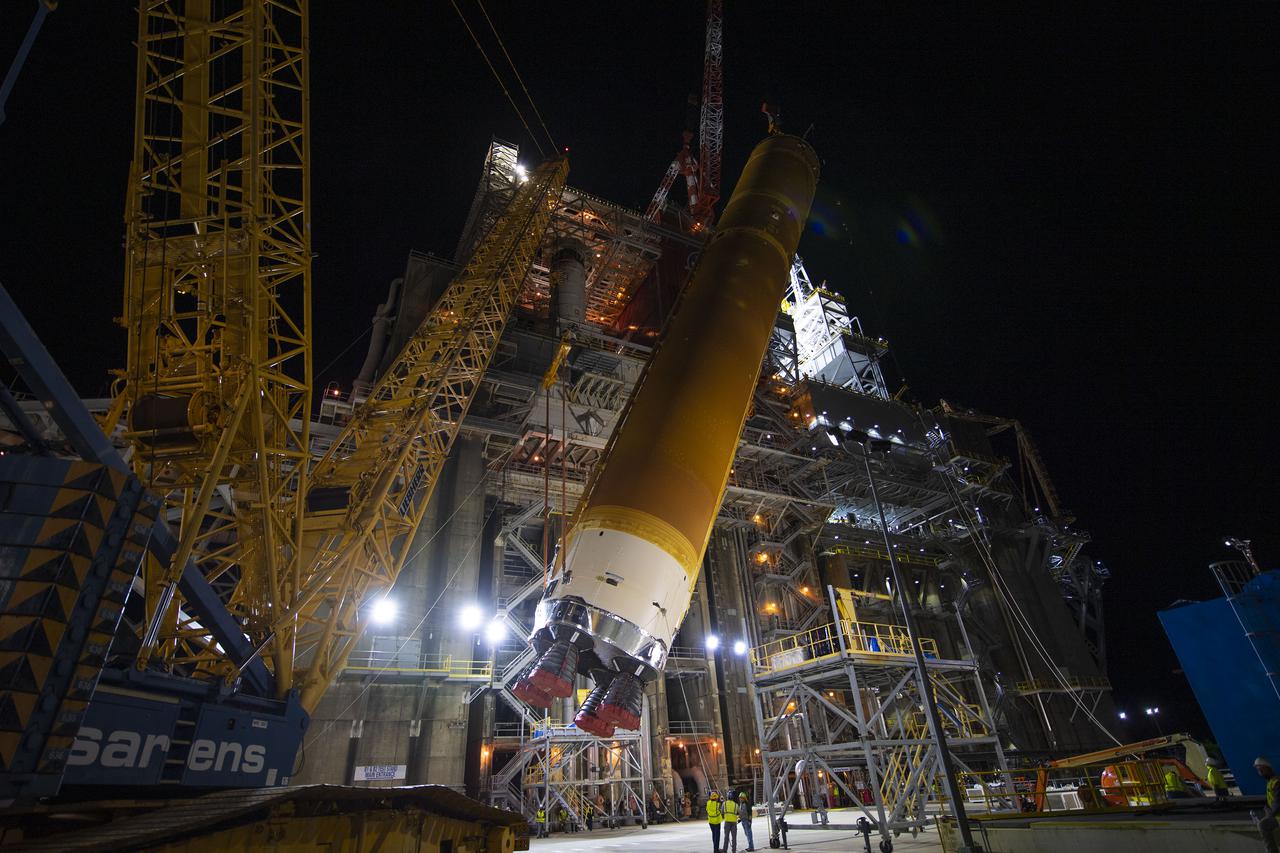
Following a successful Green Run hot fire at NASA’s Stennis Space Center near Bay St. Louis, Mississippi, on March 18, members of a blended team work April 19-20 to remove the first core stage of the agency’s Space Launch System (SLS) rocket from the B-2 Test Stand. The work required crews to lift the core stage from its vertical placement in the stand and lower it to a horizontal position on the B-2 Test Stand tarmac. The stage now will be loaded on NASA’s Pegasus barge for transport to Kennedy, where it will be prepared for launch of the Artemis I mission. Removal of the largest rocket stage ever built by NASA followed completion of a series of eight Green Run tests over the past year. During the Green Run series, teams performed a comprehensive test of the stand’s sophisticated and integrated systems. Photo Credit: NASA
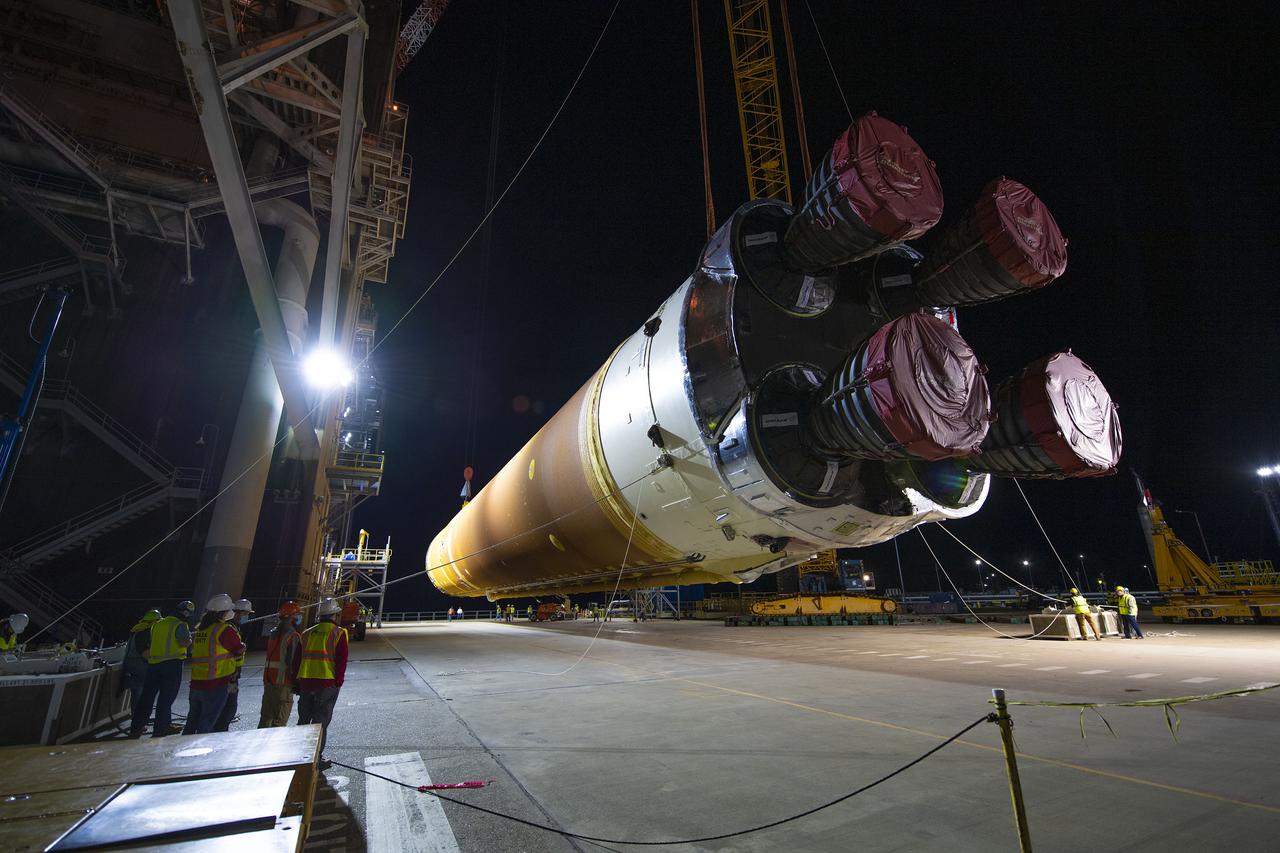
Following a successful Green Run hot fire at NASA’s Stennis Space Center near Bay St. Louis, Mississippi, on March 18, members of a blended team work April 19-20 to remove the first core stage of the agency’s Space Launch System (SLS) rocket from the B-2 Test Stand. The work required crews to lift the core stage from its vertical placement in the stand and lower it to a horizontal position on the B-2 Test Stand tarmac. The stage now will be loaded on NASA’s Pegasus barge for transport to Kennedy, where it will be prepared for launch of the Artemis I mission. Removal of the largest rocket stage ever built by NASA followed completion of a series of eight Green Run tests over the past year. During the Green Run series, teams performed a comprehensive test of the stand’s sophisticated and integrated systems. Photo Credit: NASA

Following a successful Green Run hot fire at NASA’s Stennis Space Center near Bay St. Louis, Mississippi, on March 18, members of a blended team work April 19-20 to remove the first core stage of the agency’s Space Launch System (SLS) rocket from the B-2 Test Stand. The work required crews to lift the core stage from its vertical placement in the stand and lower it to a horizontal position on the B-2 Test Stand tarmac. The stage now will be loaded on NASA’s Pegasus barge for transport to Kennedy, where it will be prepared for launch of the Artemis I mission. Removal of the largest rocket stage ever built by NASA followed completion of a series of eight Green Run tests over the past year. During the Green Run series, teams performed a comprehensive test of the stand’s sophisticated and integrated systems. Photo Credit: NASA
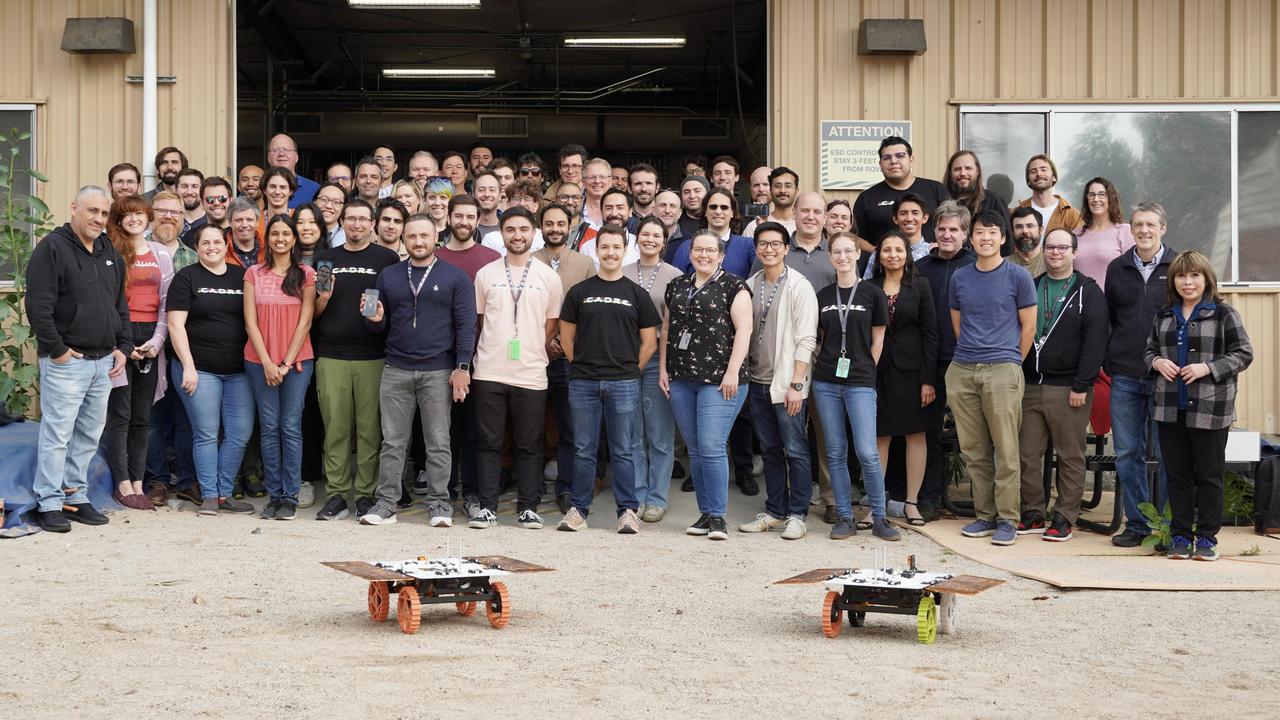
Members of NASA's CADRE (Cooperative Autonomous Distributed Robotic Exploration) technology demonstration team pose with two full-scale development model rovers in the Mars Yard at the agency's Jet Propulsion Laboratory in Southern California in January 2024. The project is designed to show that a group of robotic spacecraft can work together as a team to accomplish tasks and record data autonomously – without explicit commands from mission controllers on Earth. Three small rovers will ride aboard a lunar lander that will carry the project's base station and camera assembly. The rovers shown here are similar in size and appearance to the flight models that will travel to the Moon. Equipped with flight software and autonomy capabilities, these development models were used in a series of Mars Yard tests that helped confirm CADRE hardware and software can work together to accomplish key goals for the project. https://photojournal.jpl.nasa.gov/catalog/PIA26170
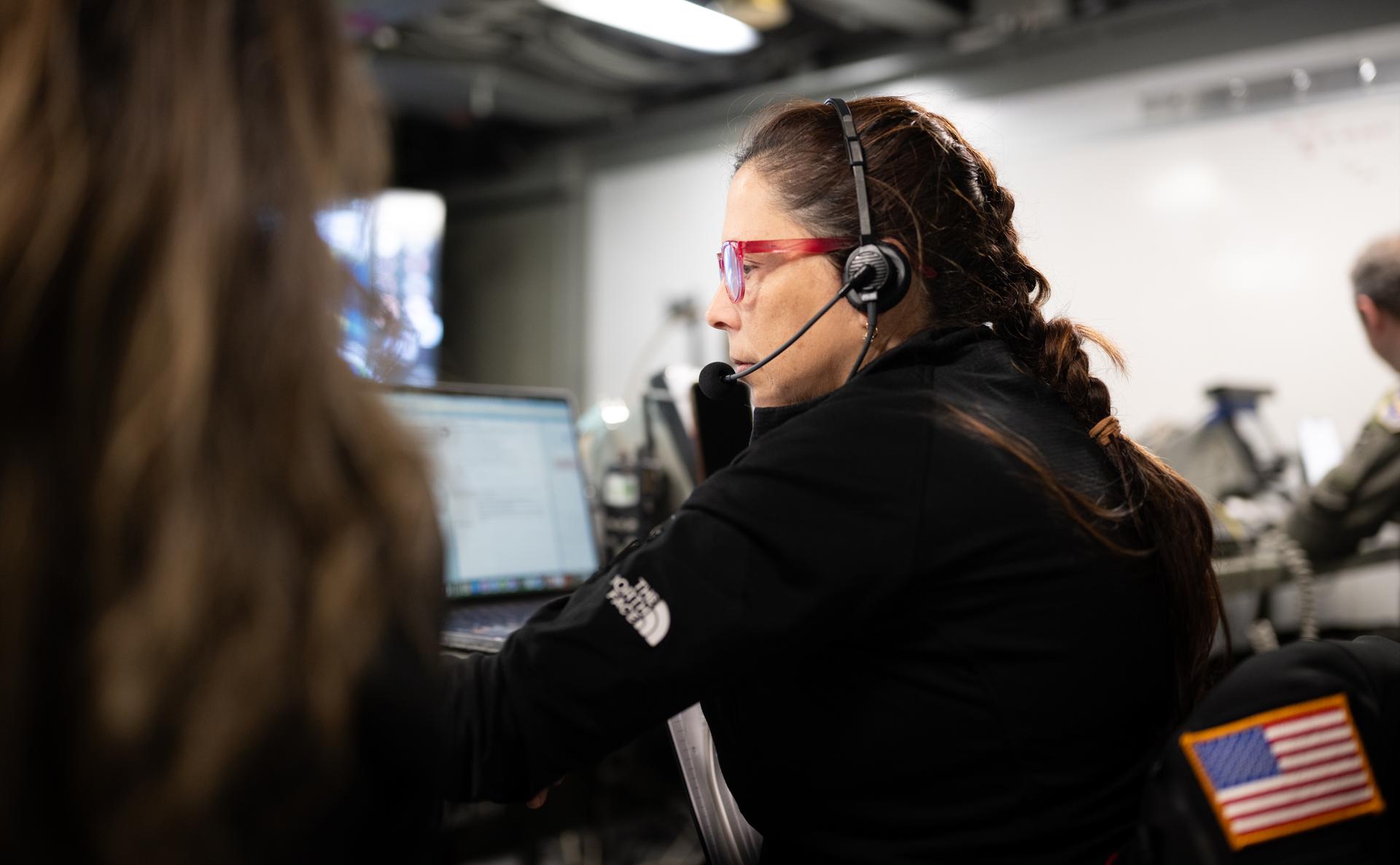
Lilian Villarreal, Artemis II landing and recovery director, is seen alongside other NASA and U.S. military recovery team members as they work inside the Landing Force Operations Center onboard USS John P. Murtha monitoring the recovery of NASA’s Orion spacecraft with Artemis II crewmembers NASA astronauts Reid Wiseman, commander; Victor Glover, pilot; Christina Koch, mission specialist; and CSA (Canadian Space Agency) astronaut Jeremy Hansen, mission specialist aboard in the Pacific Ocean off the coast of California, Friday, April 10, 2026. NASA’s Artemis II mission took Wiseman, Glover, Koch, and Hansen on a 10-day journey around the Moon and back to Earth. Following a splashdown at 5:07 p.m. PDT (8:07 p.m. EDT), NASA and U.S. military teams worked to bring the crewmembers and Orion spacecraft aboard USS John P. Murtha. Photo Credit: (NASA/Joel Kowsky)
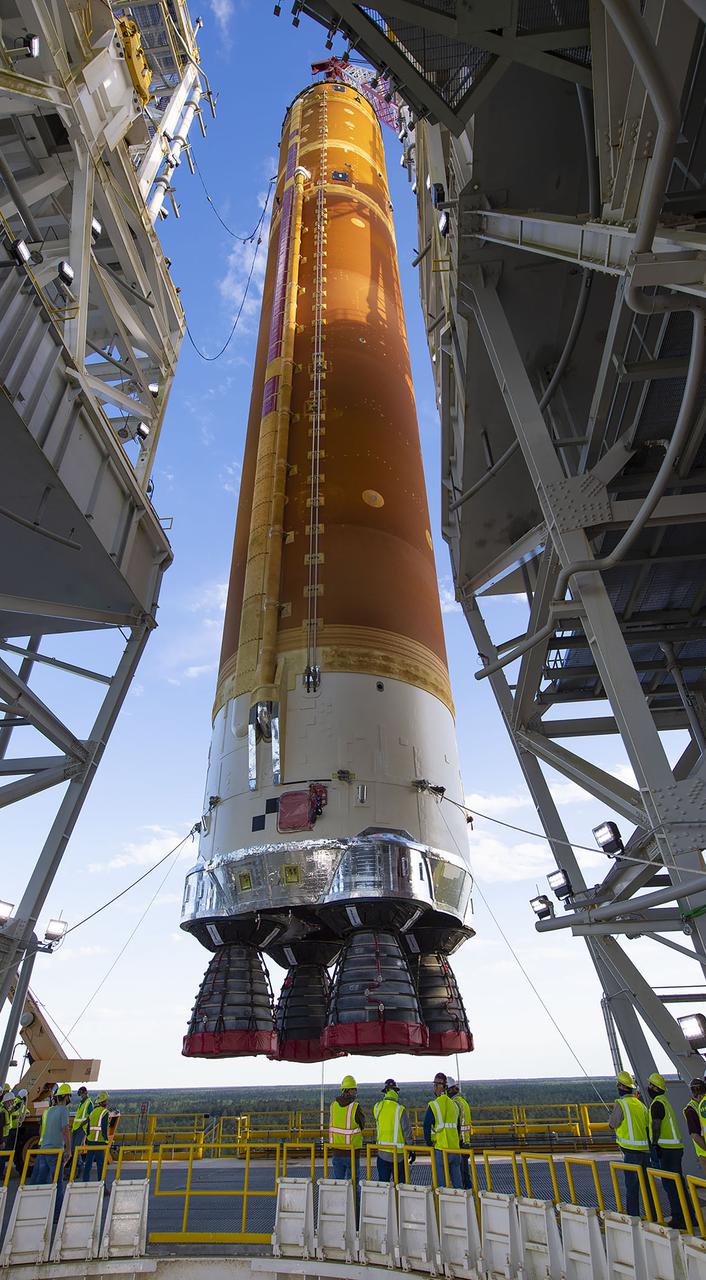
Following a successful Green Run hot fire at NASA’s Stennis Space Center near Bay St. Louis, Mississippi, on March 18, members of a blended team work April 19-20 to remove the first core stage of the agency’s Space Launch System (SLS) rocket from the B-2 Test Stand. The work required crews to lift the core stage from its vertical placement in the stand and lower it to a horizontal position on the B-2 Test Stand tarmac. The stage now will be loaded on NASA’s Pegasus barge for transport to Kennedy, where it will be prepared for launch of the Artemis I mission. Removal of the largest rocket stage ever built by NASA followed completion of a series of eight Green Run tests over the past year. During the Green Run series, teams performed a comprehensive test of the stand’s sophisticated and integrated systems. Photo Credit: NASA
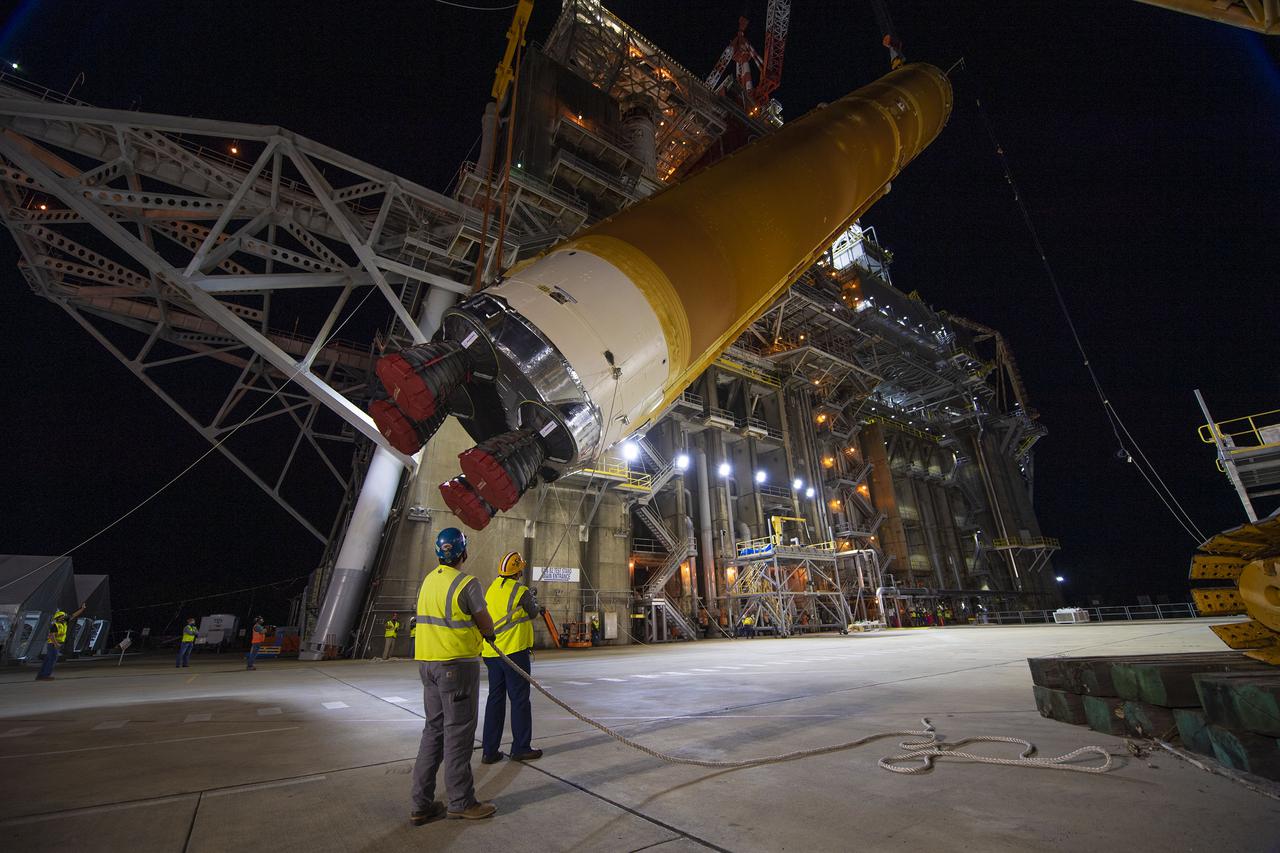
Following a successful Green Run hot fire at NASA’s Stennis Space Center near Bay St. Louis, Mississippi, on March 18, members of a blended team work April 19-20 to remove the first core stage of the agency’s Space Launch System (SLS) rocket from the B-2 Test Stand. The work required crews to lift the core stage from its vertical placement in the stand and lower it to a horizontal position on the B-2 Test Stand tarmac. The stage now will be loaded on NASA’s Pegasus barge for transport to Kennedy, where it will be prepared for launch of the Artemis I mission. Removal of the largest rocket stage ever built by NASA followed completion of a series of eight Green Run tests over the past year. During the Green Run series, teams performed a comprehensive test of the stand’s sophisticated and integrated systems. Photo Credit: NASA
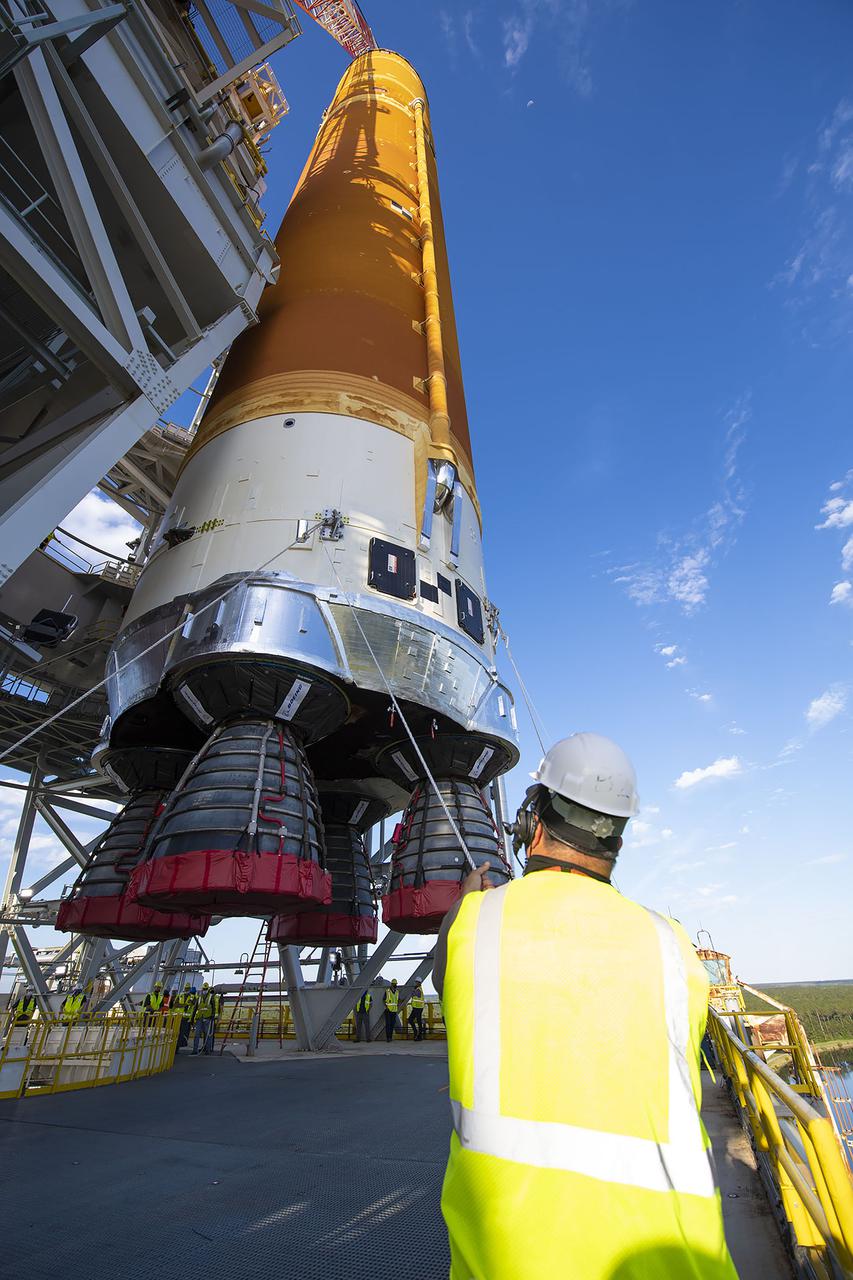
Following a successful Green Run hot fire at NASA’s Stennis Space Center near Bay St. Louis, Mississippi, on March 18, members of a blended team work April 19-20 to remove the first core stage of the agency’s Space Launch System (SLS) rocket from the B-2 Test Stand. The work required crews to lift the core stage from its vertical placement in the stand and lower it to a horizontal position on the B-2 Test Stand tarmac. The stage now will be loaded on NASA’s Pegasus barge for transport to Kennedy, where it will be prepared for launch of the Artemis I mission. Removal of the largest rocket stage ever built by NASA followed completion of a series of eight Green Run tests over the past year. During the Green Run series, teams performed a comprehensive test of the stand’s sophisticated and integrated systems. Photo Credit: NASA