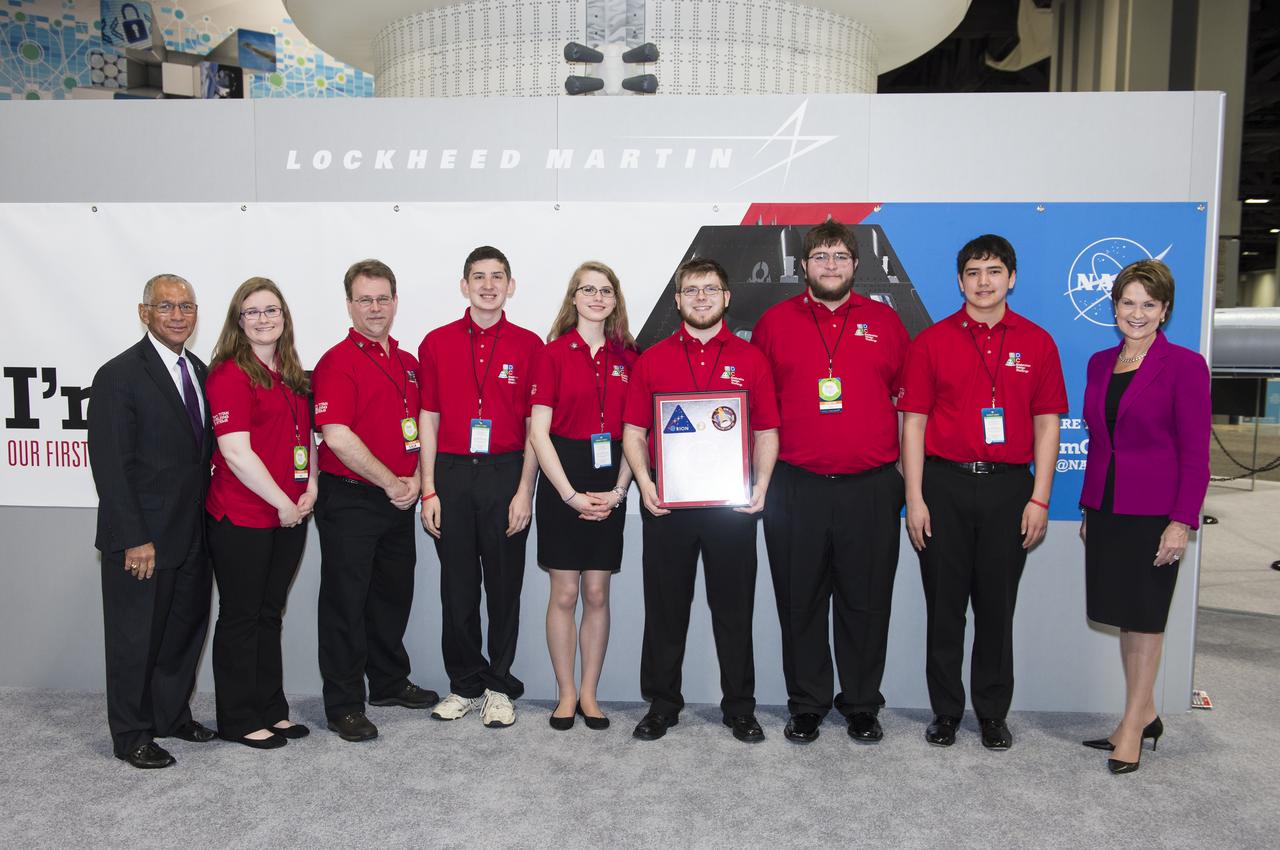
Team Titan Shielding Systems poses with NASA Administrator Charles Bolden and Lockheed Martin CEO, Marillyn Hewson. Team Titan Shielding Systems was one of the semi-finalists in the Exploration Design Challenge. The goal of the Exploration Design Challenge is for students to research and design ways to protect astronauts from space radiation. The winner of the challenge was announced on April 25, 2014 at the USA Science and Engineering Festival at the Washington Convention Center in Washington, DC. Photo Credit: (NASA/Aubrey Gemignani)
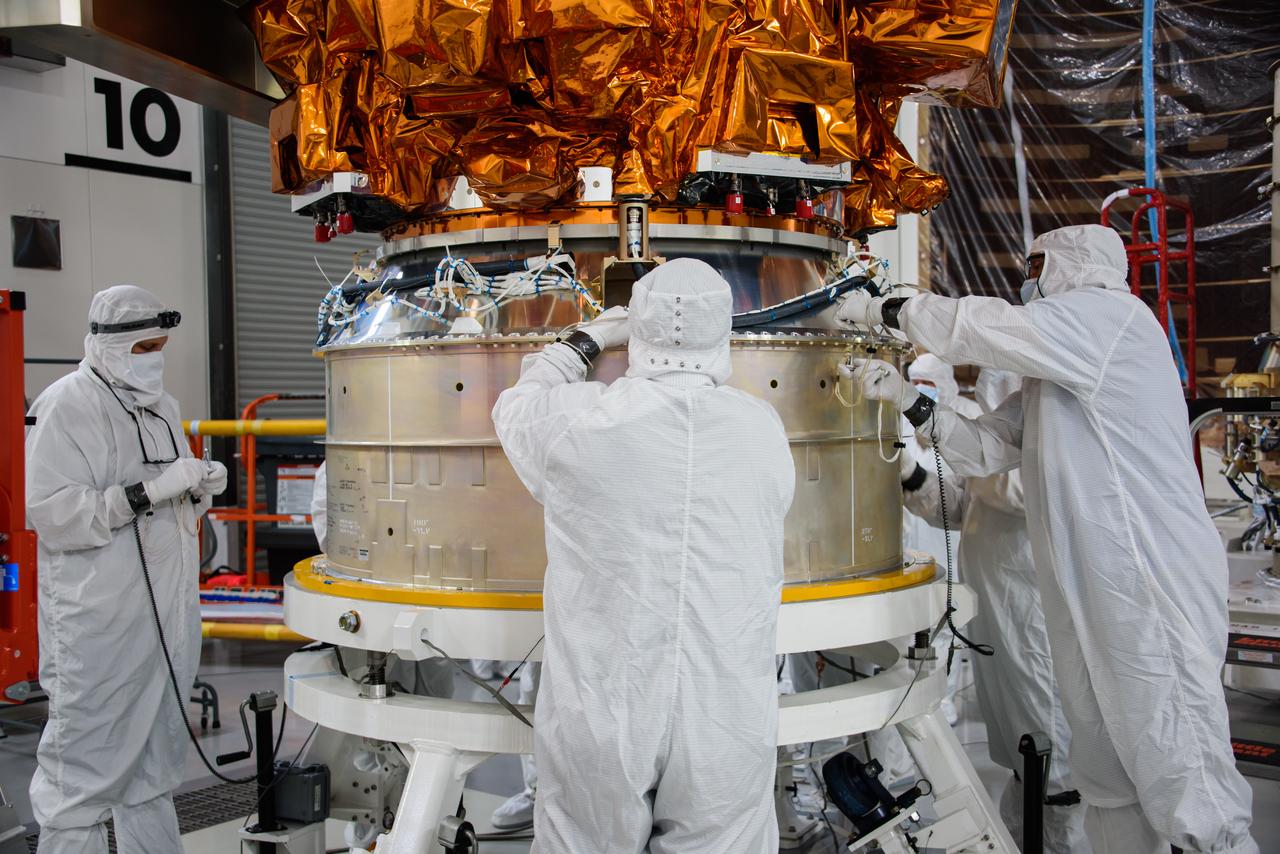
Technicians lower the National Oceanic and Atmospheric Administration’s (NOAA) Joint Polar Satellite System-2 (JPSS-2) onto a payload adapter ring inside the Astrotech Space Operations facility at Vandenberg Space Force Base (VSFB) in California on Oct. 5, 2022. The team stacked JPSS-2 atop the Low-Earth Orbit Flight Test of an Inflatable Decelerator (LOFTID) payload. JPSS-2 is the third satellite in the Joint Polar Satellite System series. It is scheduled to lift off from VSFB on Nov. 1 from Space Launch Complex-3. JPSS-2, which will be renamed NOAA-21 after reaching orbit, will join a constellation of JPSS satellites that orbit from the North to the South pole, circling Earth 14 times a day and providing a full view of the entire globe twice daily. The NOAA/NASA Suomi National Polar-orbiting Partnership (Suomi NPP) satellite, and NOAA-20, previously known as JPSS-1, are both already in orbit. Each satellite carries at least four advanced instruments to measure weather and climate conditions on Earth. LOFTID is a secondary payload on the mission. It is dedicated to the memory of Bernard Kutter. LOFTID will demonstrate inflatable heat shield technology that could enable a variety of proposed NASA missions to destinations such as Mars, Venus, and Titan, as well as returning heavier payloads from low-Earth orbit.
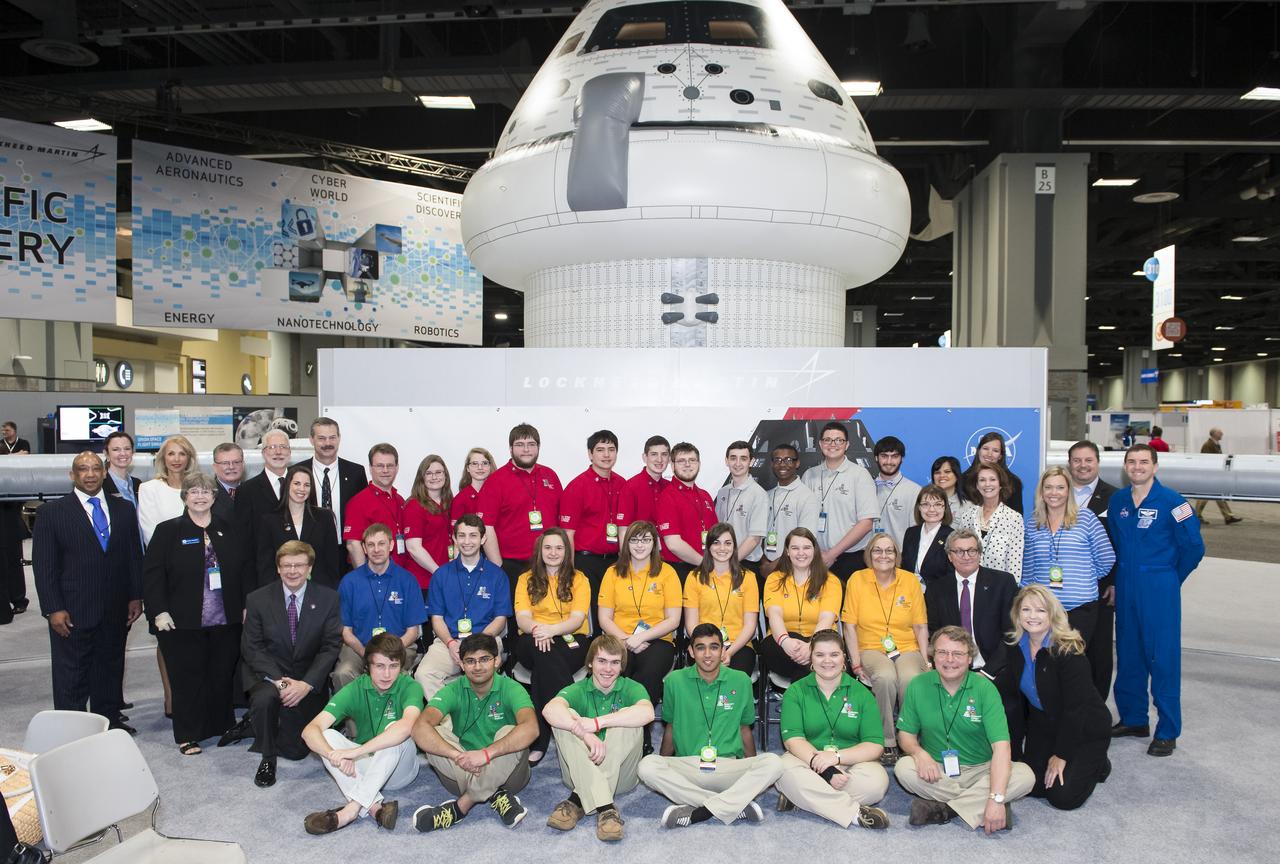
Sponsors of all of the semi-finalist teams in the Exploration Design Challenge pose for a group photo with the teams. Team ARES from the Governors School for Science and Technology in Hampton, Va. won the challenge with their radiation shield design, which will be built and flown aboard the Orion/EFT-1. The award was announced at the USA Science and Engineering Festival on April 25, 2014 at the Washington Convention Center. Photo Credit: (NASA/Aubrey Gemignani)
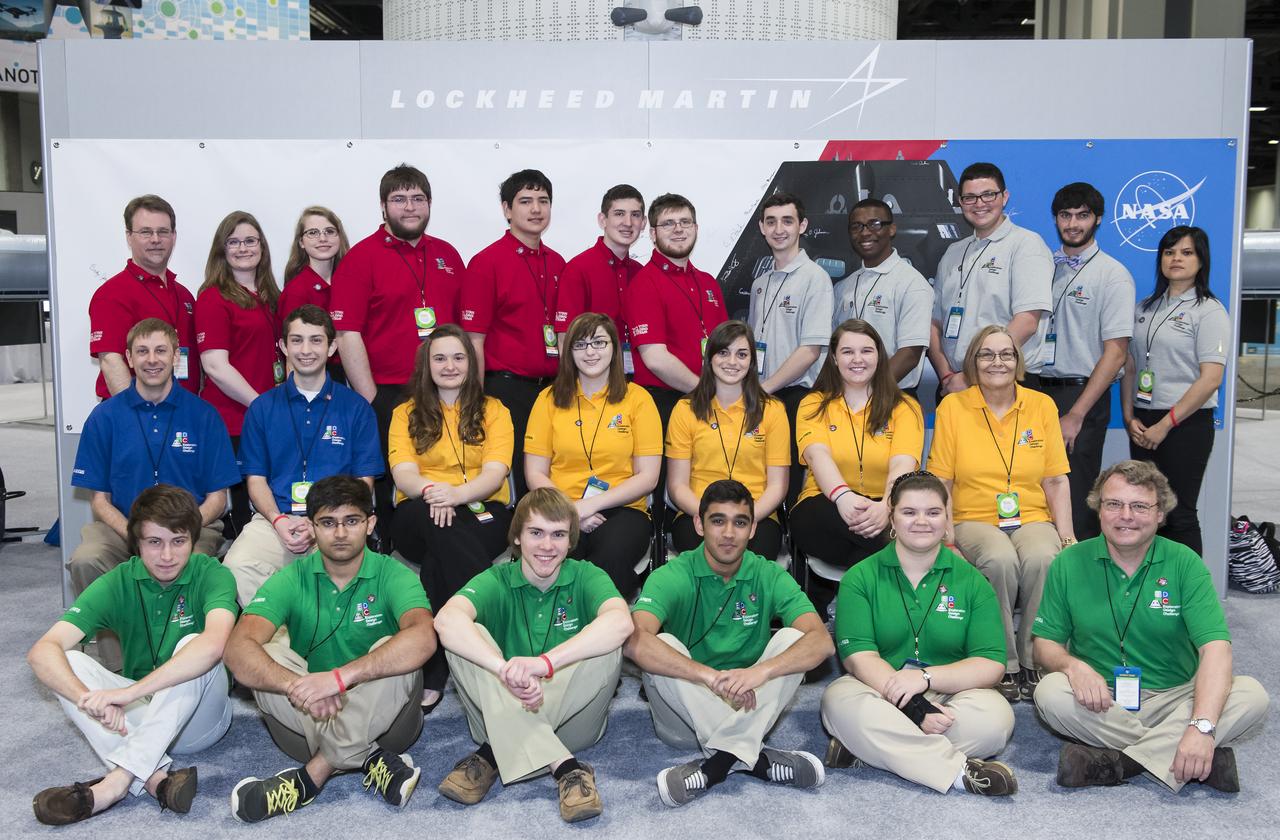
Pictured are all Semi-finalist teams in the Exploration Design Challenge. NASA Administrator, Charles Bolden and Lockheed Martin CEO, Marillyn Hewson announced the winner of the Exploration Design Challenge at the USA Science and Engineering Festival on April 25, 2014. The goal of the challenge was for students to research and design ways to protect astronauts from space radiation. The winning team's design will be built and flown aboard the Orion/EFT-1. The USA Science and Engineering Festival is taking place at the Washington Convention Center in Washington, DC on April 26 and 27, 2014. Photo Credit: (NASA/Aubrey Gemignani)