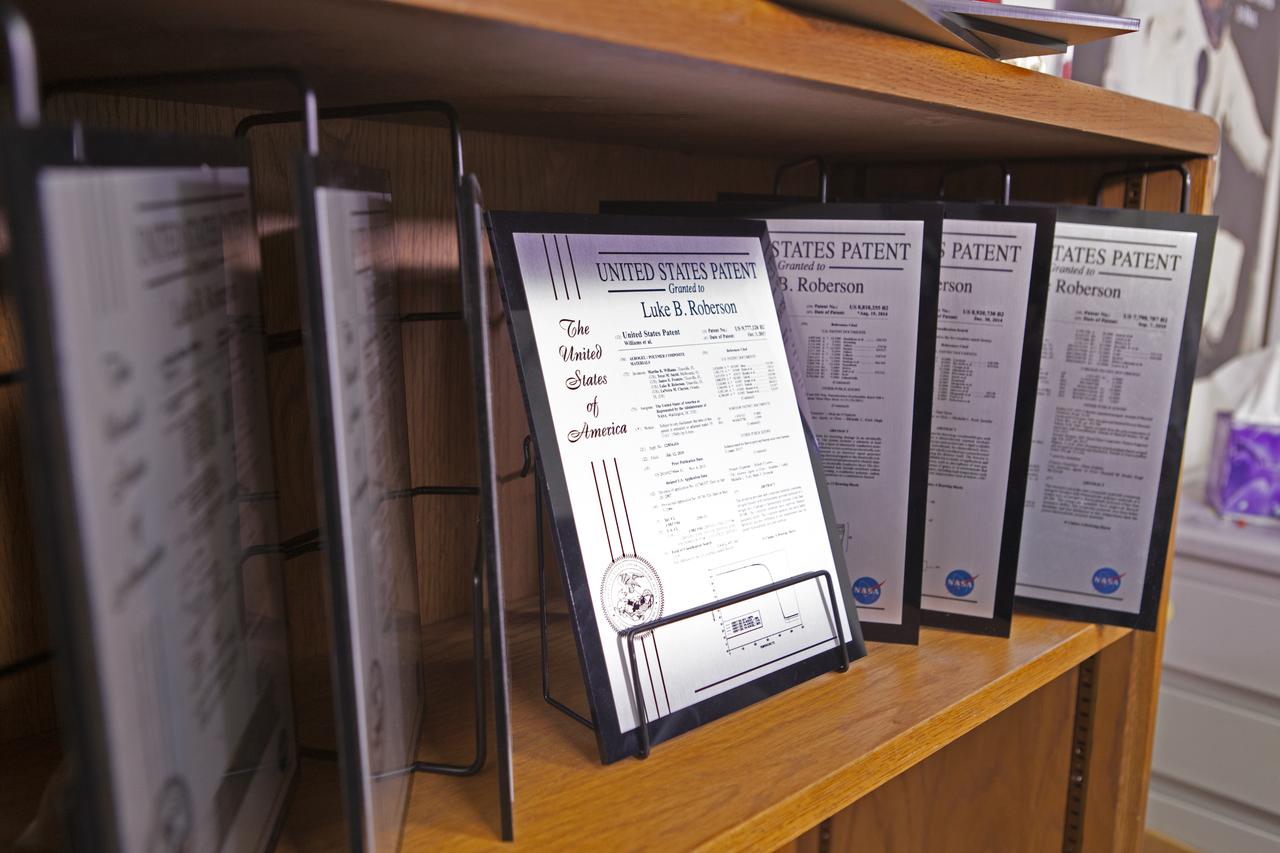
Kennedy Space Center’s Luke Roberson, a principal investigator with the flight technology branch, has received several patents from the United States Patent and Trademark Office. Certificates recognizing those patents are on display in his office at the Florida spaceport’s Space Station Processing Facility.
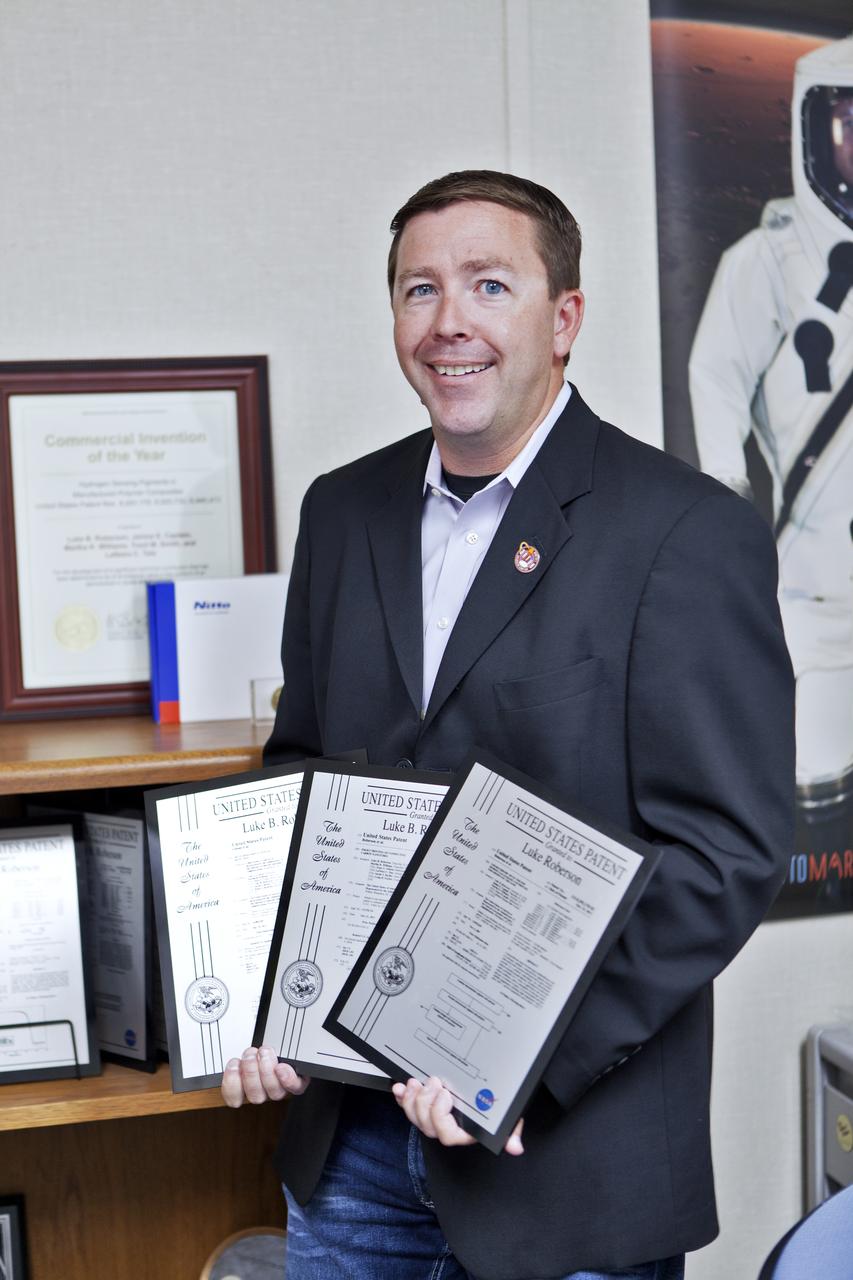
Luke Roberson, a principal investigator with the flight technology branch at NASA’s Kennedy Space Center in Florida, discusses patents and new technology reports for a video that targets internal audiences at NASA. Roberson’s contributions are reflected in multiple U.S. patents.
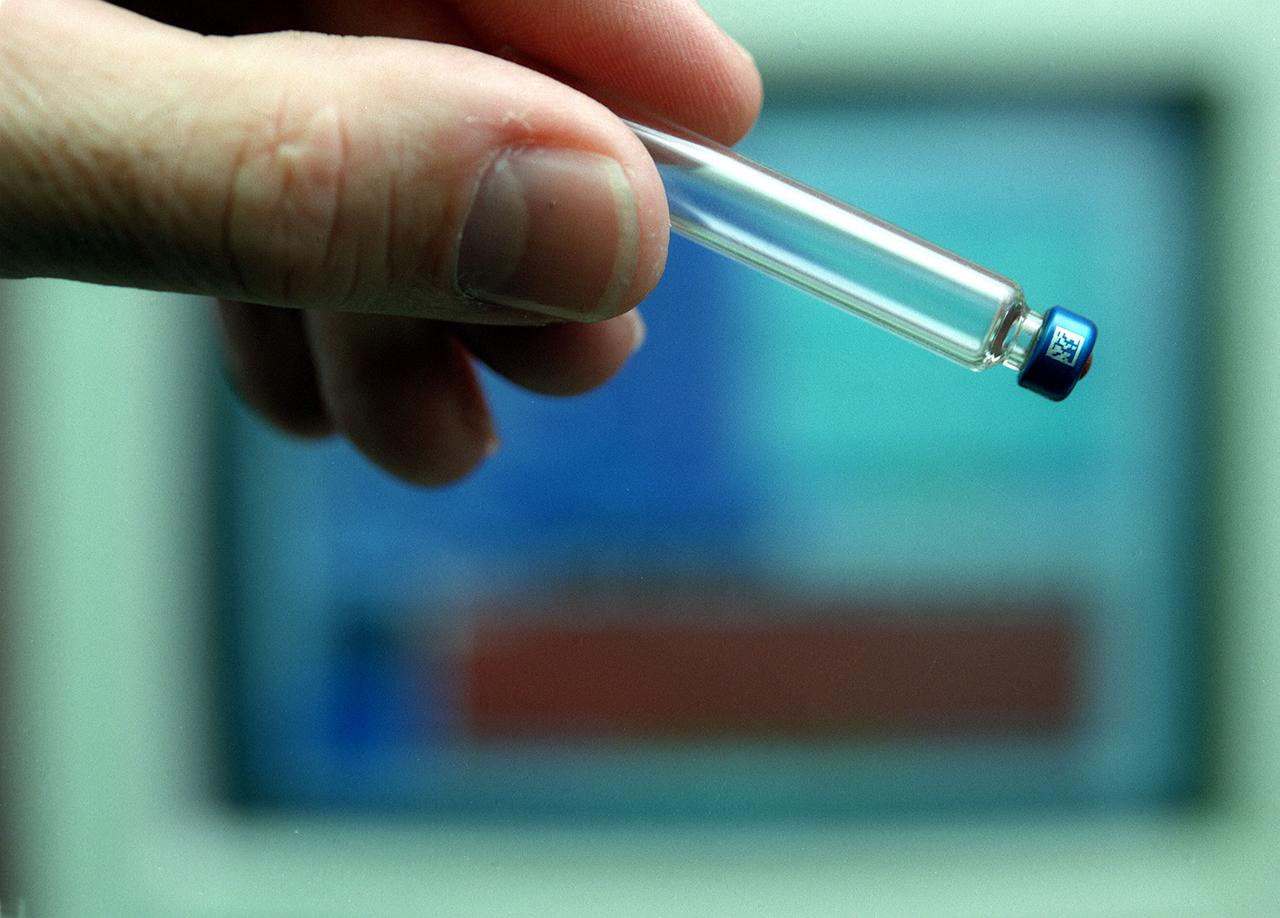
Digital data matrix, used to identify the millions of Space Shuttle parts, is being commercialized to make barcoding tamper resistant and invisible to the naked eye. These codes are applied directly to the product regardless of shape, size or color. The markings can range from as small as four microns to as large as two square feet. Using the Vericode Symbol which include such details as the manufacturer, serial numbers, the lot number of the parent material, design changes, special processing to which the part was subjected-everything needed to determine accurately and automatically, the extent of the recall needed, which might be a couple of hundred cars instead of tens of thousands.
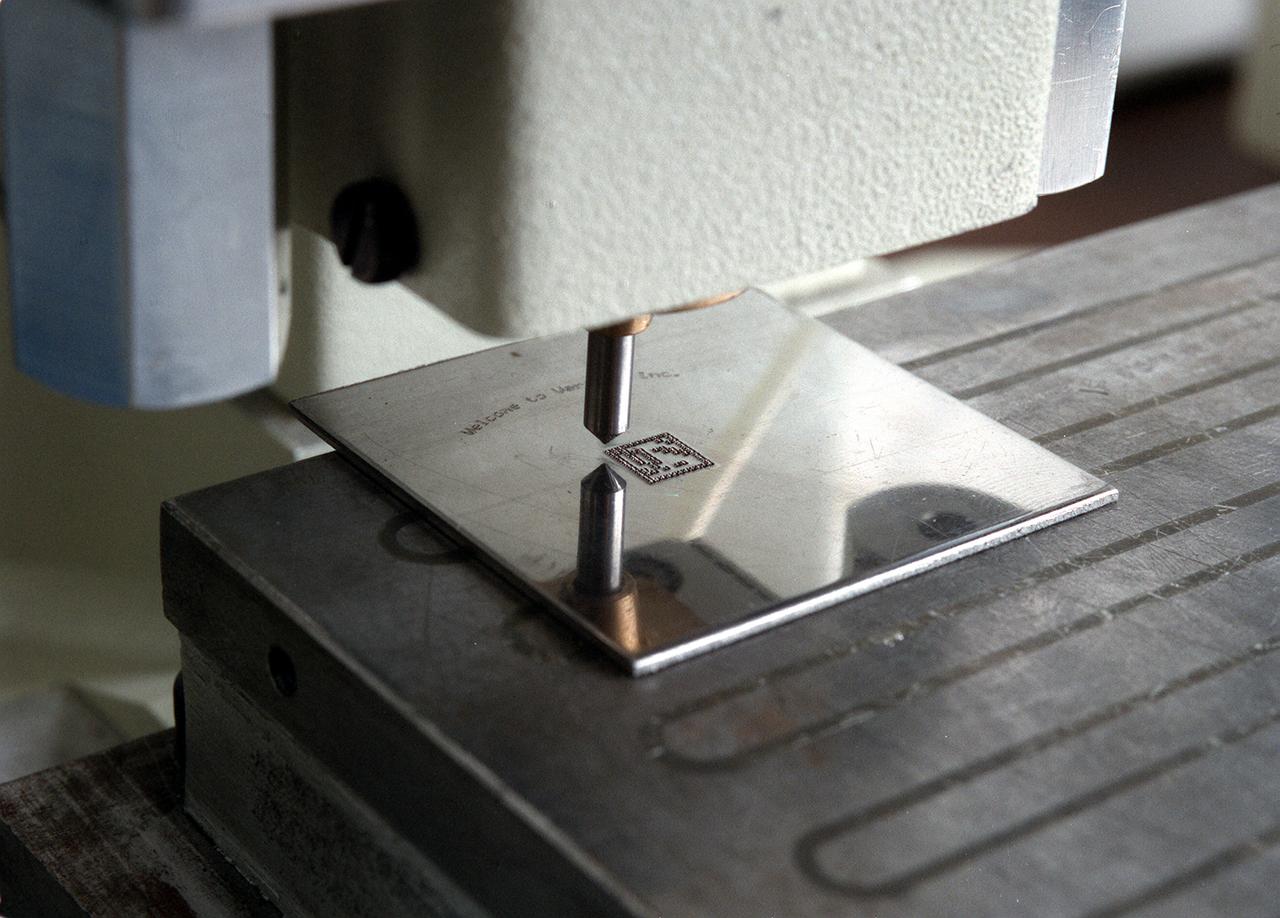
Digital data matrix, used to identify the millions of Space Shuttle parts, is being commercialized to make barcoding tamper resistant and invisible to the naked eye. These codes are applied directly to the product regardless of shape, size or color. The markings can range from as small as four microns to as large as two square feet. Using the Vericode Symbol which include such details as the manufacturer, serial numbers, the lot number of the parent material, design changes, special processing to which the part was subjected-everything needed to determine accurately and automatically, the extent of the recall needed, which might be a couple of hundred cars instead of tens of thousands.
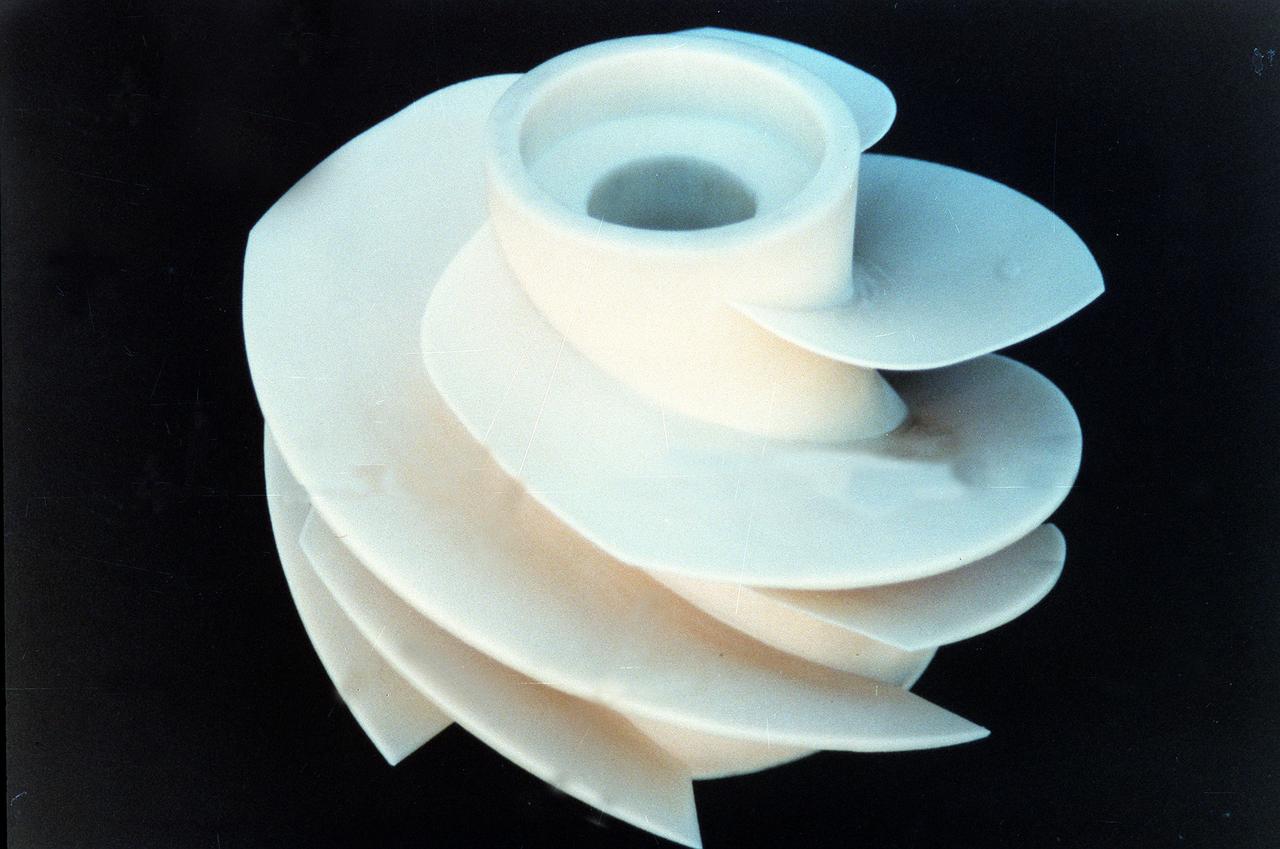
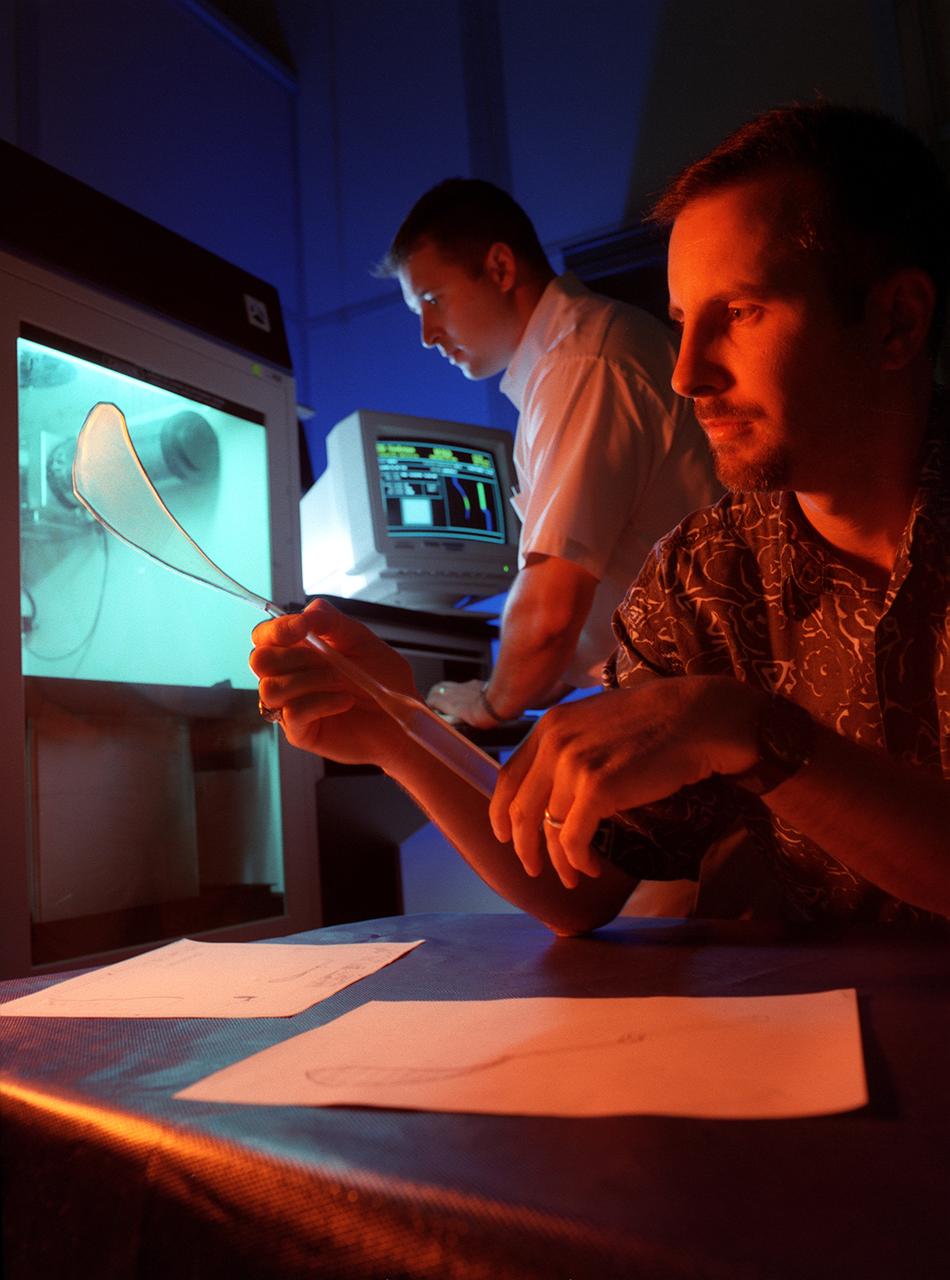
Marshall Space Flight Center engineers helped North American Marine Jet (NAMJ), Inc. improve the proposed design of a new impeller for jet propulsion system. With a three-dimensional computer model of the new marine jet engine blades, engineers were able to quickly create a solid ploycarbonate model of it. The rapid prototyping allowed the company to avoid many time-consuming and costly steps in creating the impeller.
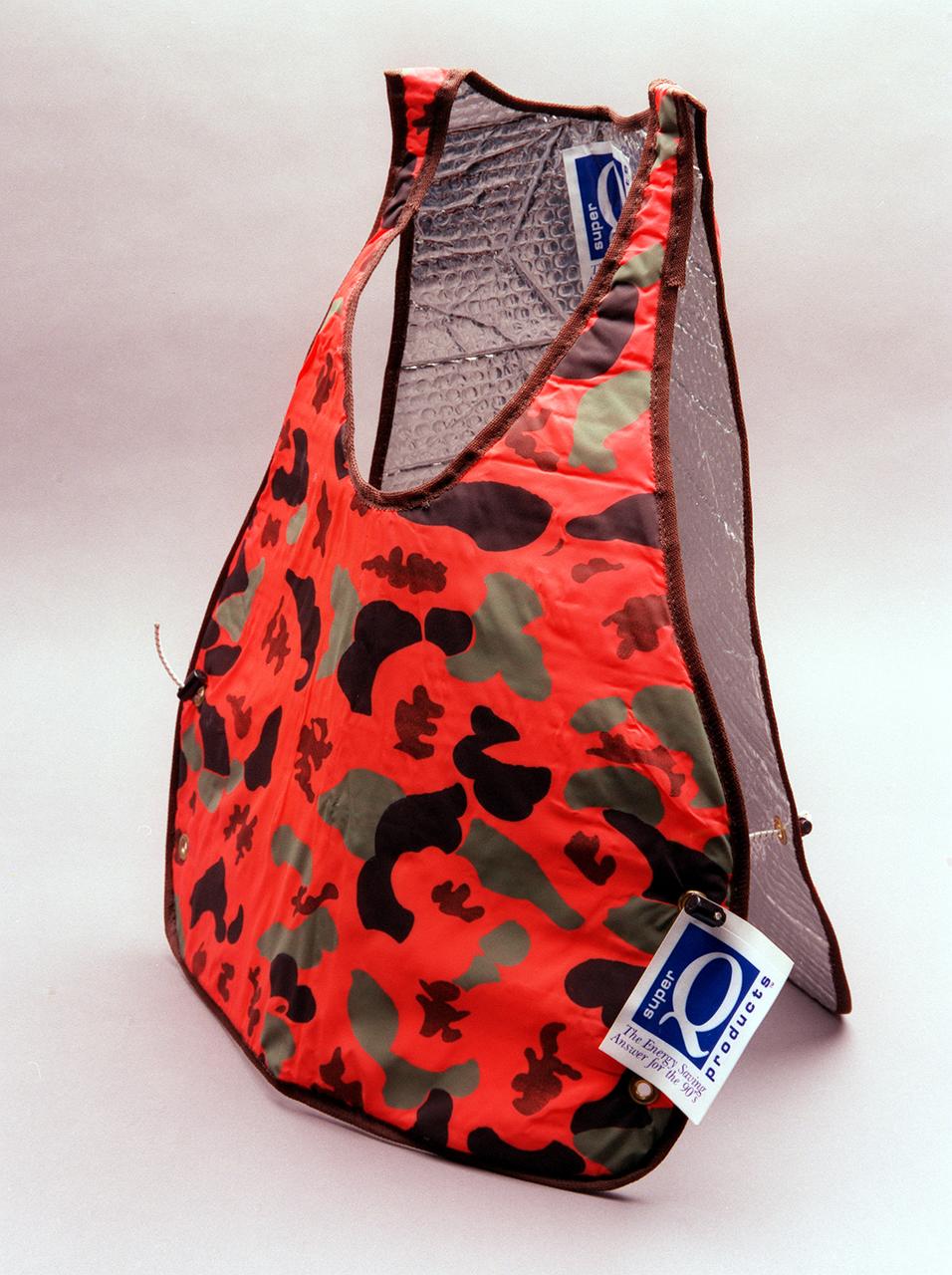
Radiation insulation technology from Apollo and subsequent spacecraft was used to develop superinsulators, used by makers of cold weather apparel, to make parkas, jackets, boots and outdoor gear such as sleeping bags. The radiant barrier technology offers warmth retention at minimal weight and bulk.
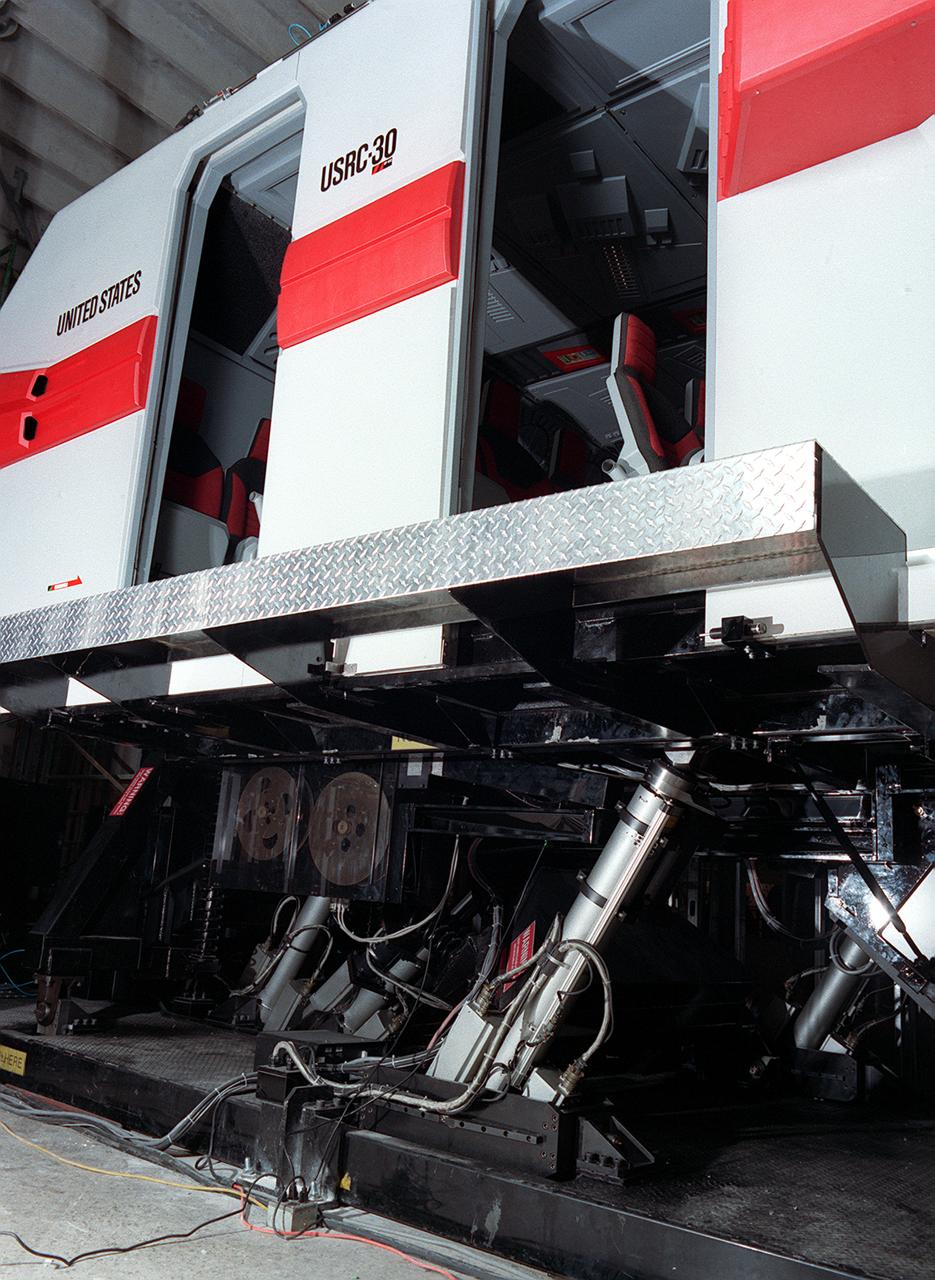
The development of the electric space actuator represents an unusual case of space technology transfer wherein the product was commercialized before it was used for the intended space purpose. MOOG, which supplies the thrust vector control hydraulic actuators for the Space Shuttle and brake actuators for the Space Orbiter, initiated development of electric actuators for aerospace and industrial use in the early 1980s. NASA used the technology to develop an electric replacement for the Space Shuttle main engine TVC actuator. An electric actuator is used to take passengers on a realistic flight to Jupiter at the US Space and Rocket Center, Huntsville, Alabama.
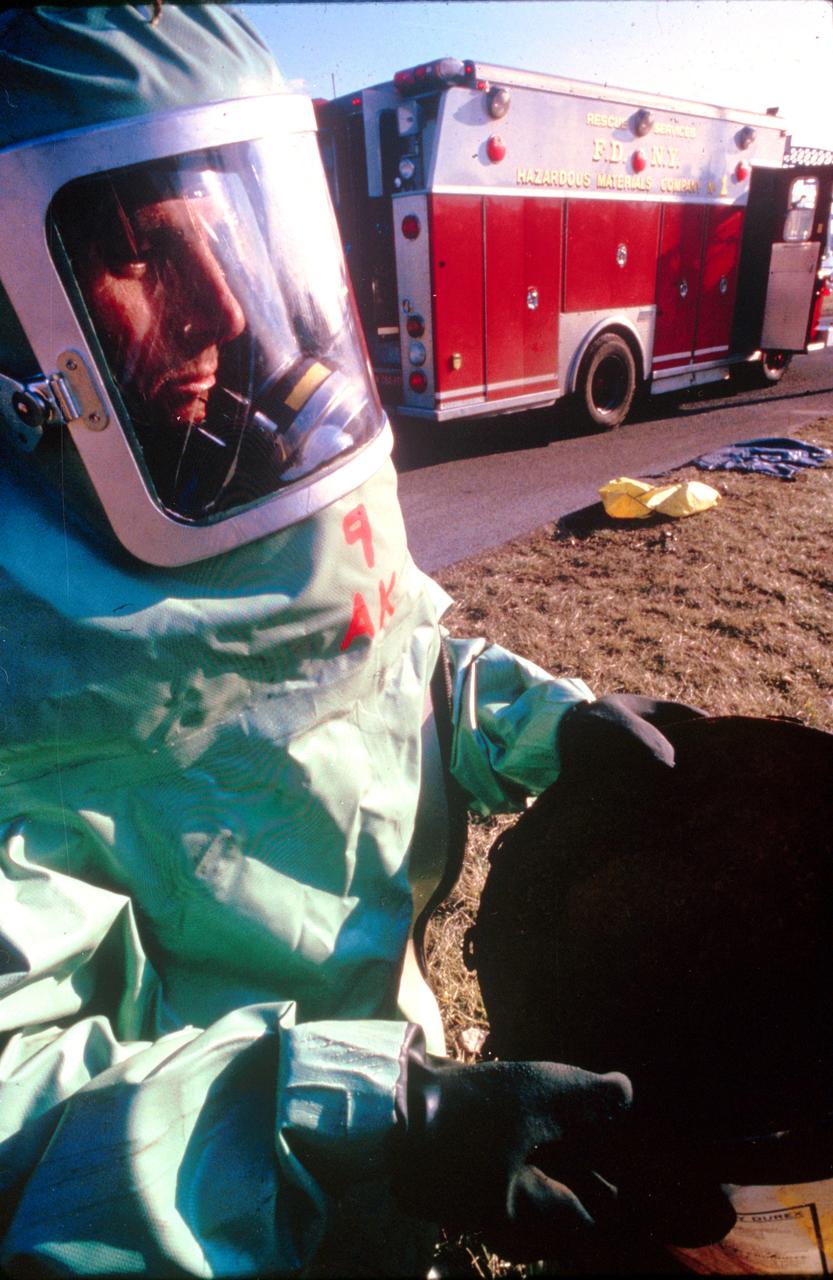
Marshall Space Flight Center used technology from astronauts' space suits to improve the safety of firefighter's attire. The new fire attire is lightweight, fire-resistant, and heat-protective.
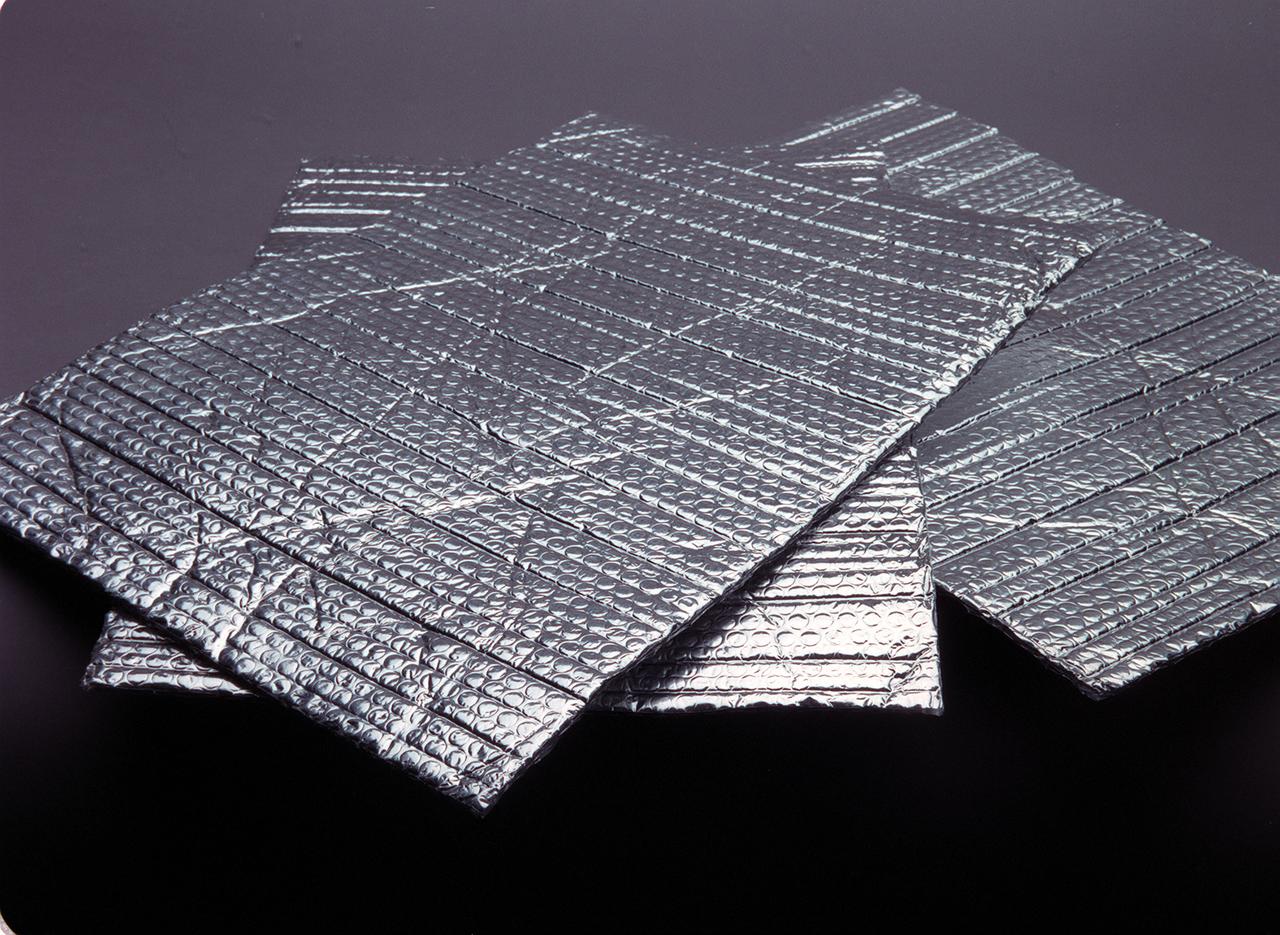
Radiation insulation technology from Apollo and subsequent spacecraft was used to develop superinsulators, used by makers of cold weather apparel, to make parkas, jackets, boots and outdoor gear such as sleeping bags. The radiant barrier technology offers warmth retention at minimal weight and bulk.
Marshall inventors Seth Lawson and Stanley Smeltzer display a pair of obstetrical forceps they designed. The forceps, made from composite space-age materials, measure the force applied during instrument-assisted delivery. The new forceps will help medical students get a feel for instrument-assisted deliveries before entering practice.
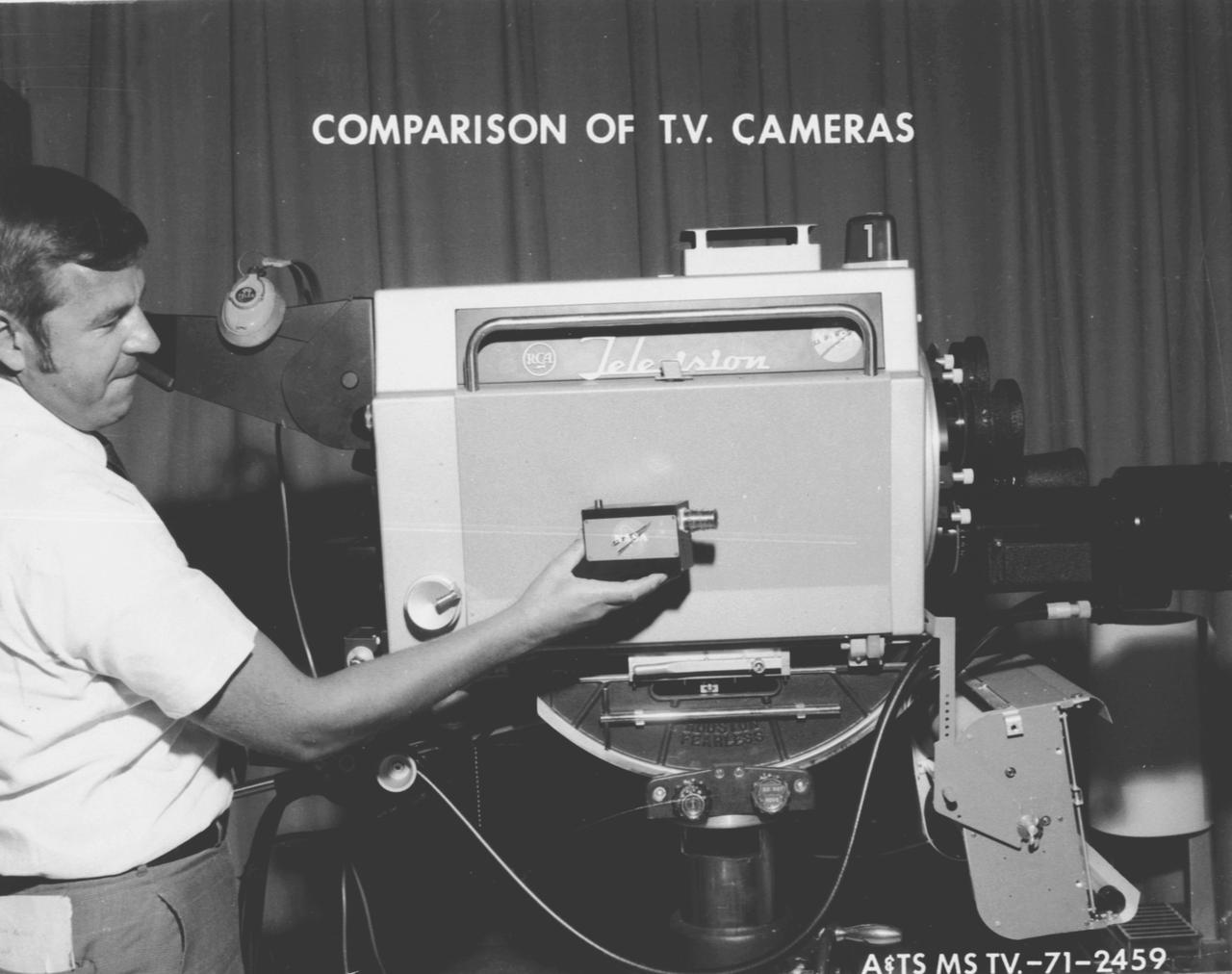
Originally devised to observe Saturn stage separation during Apollo flights, Marshall Space Flight Center's Miniature Television Camera, measuring only 4 x 3 x 1 1/2 inches, quickly made its way to the commercial telecommunications market.
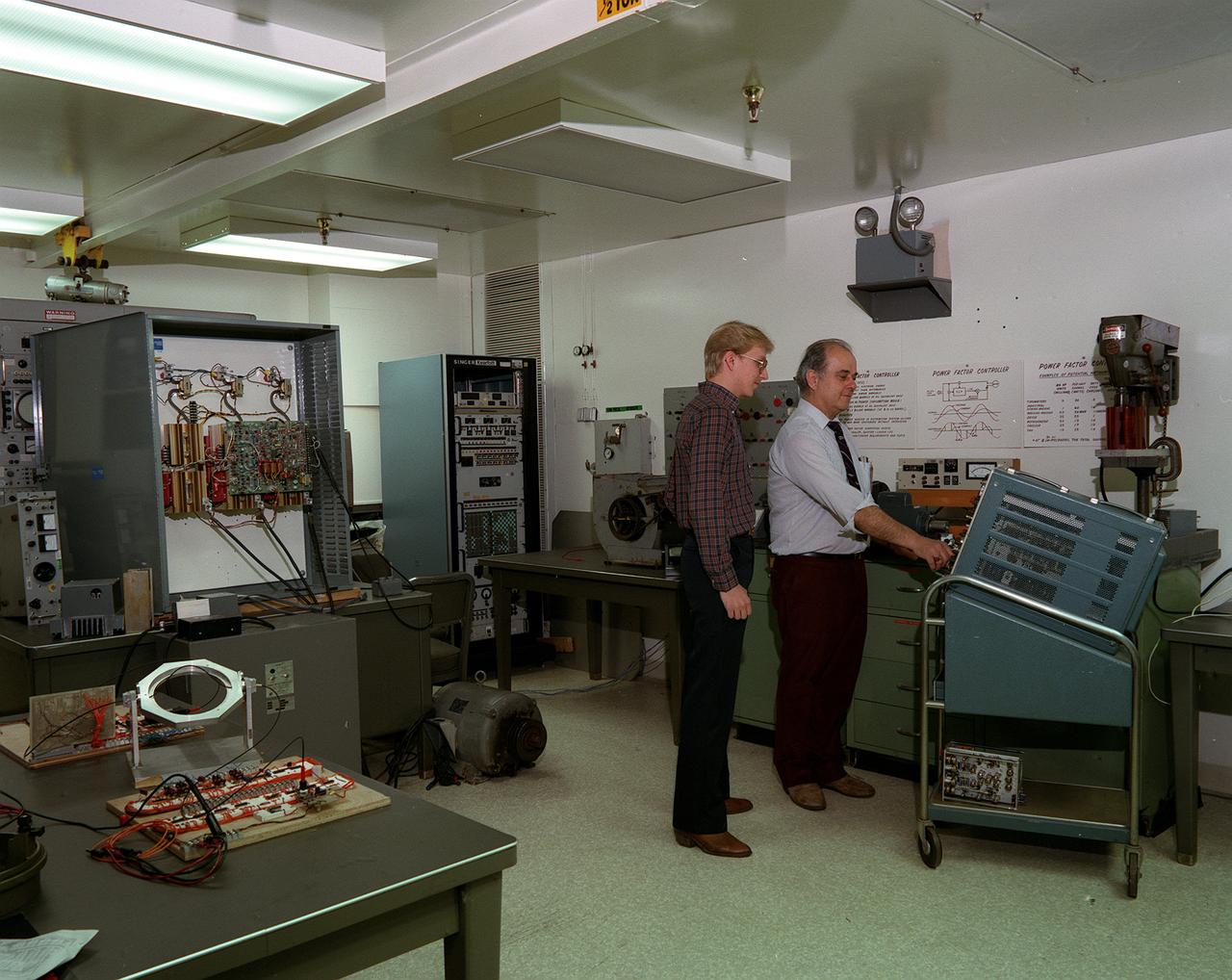
Frank Nola invented the Power Factor Controller (PFC) at Marshall Space Flight Center more than a decade ago. Nola came up with a way to curb power wastage in AC induction motors. The PFC matches voltage with the motor's actual need by continuously sensing shifts between voltage and current. When it senses a light load it cuts the voltage to the minimum needed. Potential energy savings range from 8 to 65 percent.
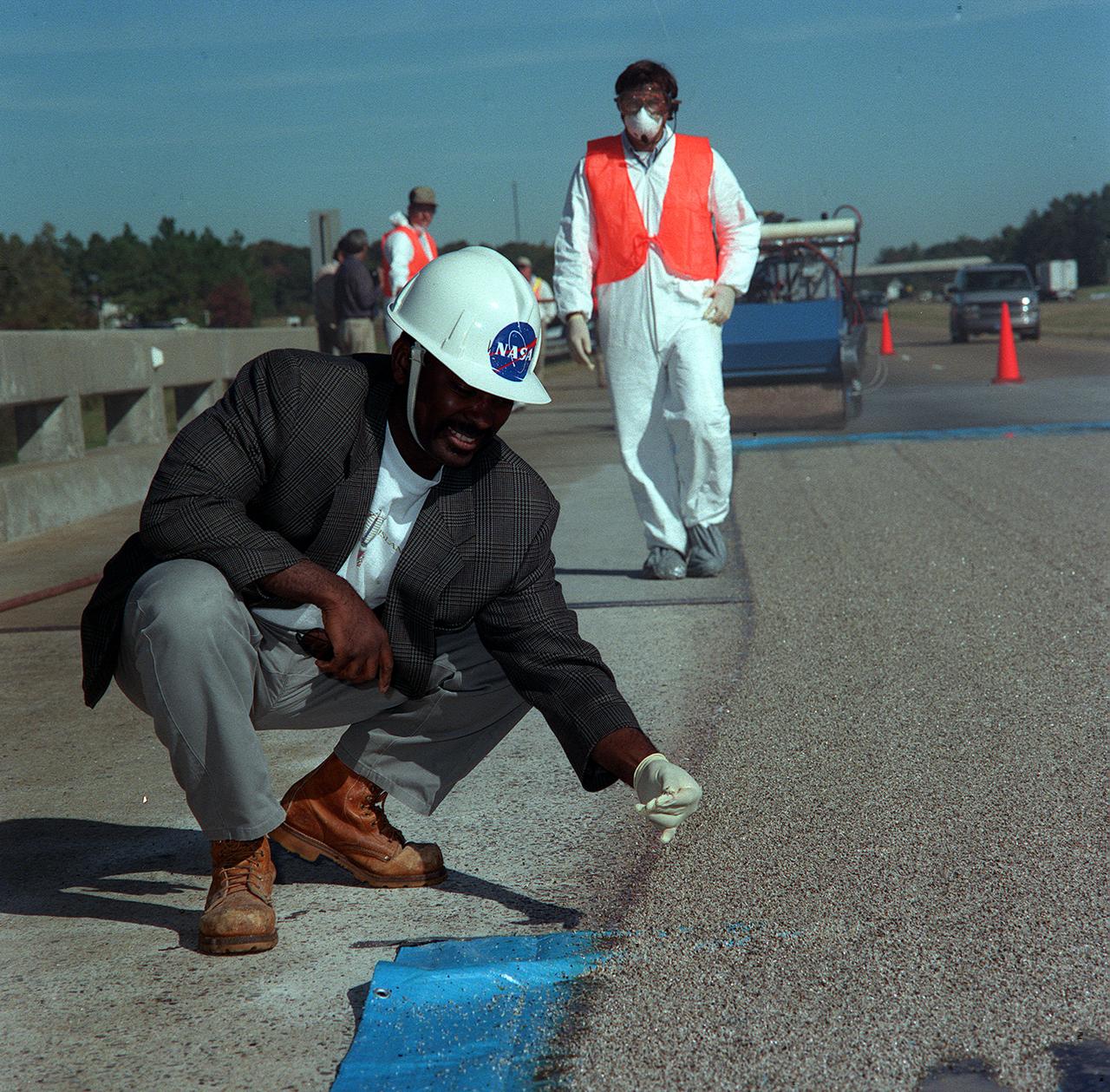
A NASA official inspects the results of Convergent Spray Technology used to resurface a bridge on Interstate 65 near Lacon, Alabama. Originally developed by USBI to apply a heat resistant coating to the Space Shuttle's Solid Rocket Boosters, the environment-friendly technology reduces the required worktime from days to hours.
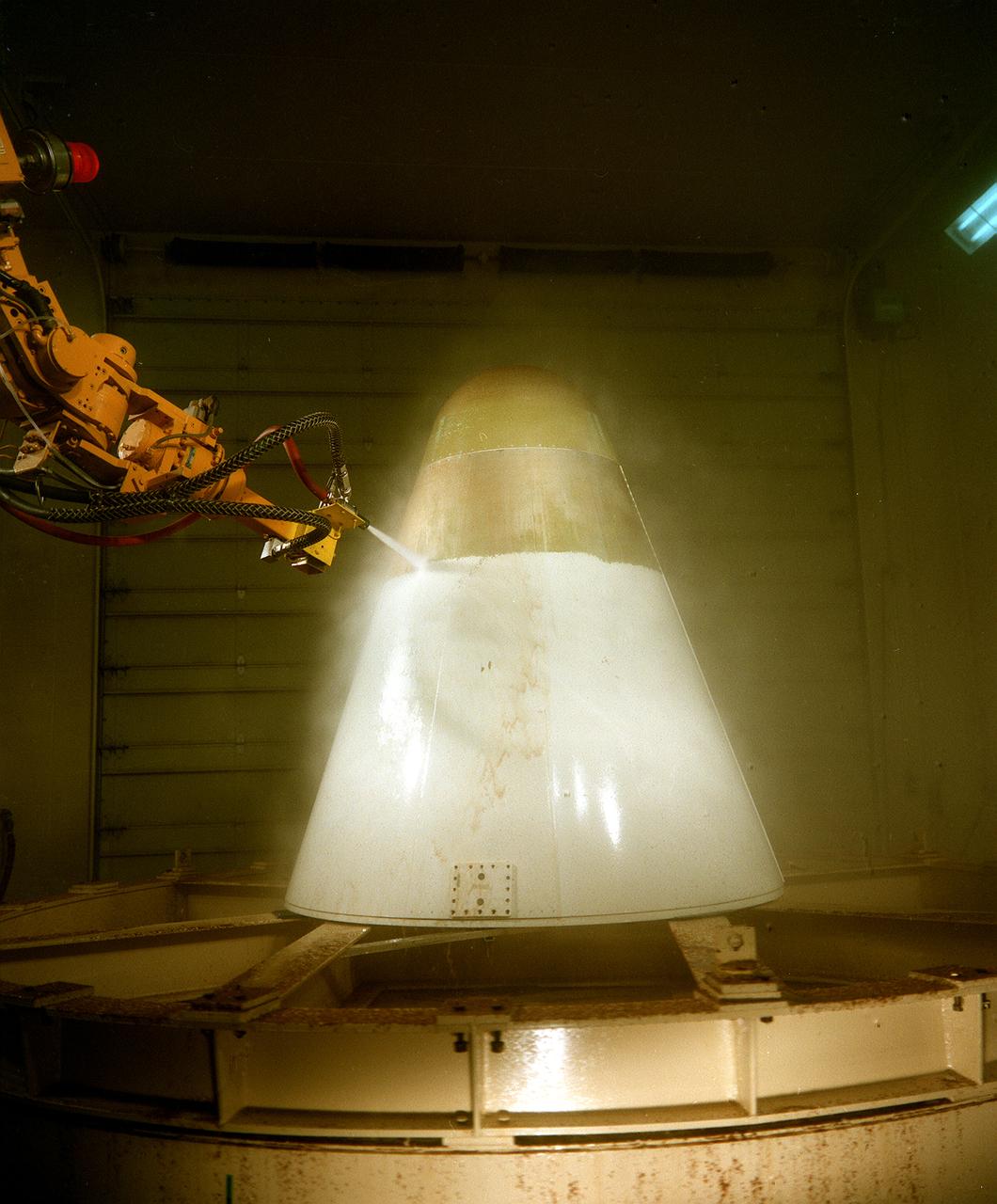
The Waterblast Research Cell supports development of automated systems that remove thermal protection materials and coatings from space flight hardware. These systems remove expended coatings without harsh chemicals or damaging underlying material. Potential applications of this technology include the removal of coatings from industrial machinery, aircraft, and other large structures. Use of the robot improves worker safety by reducing the exposure of persornel to high-pressure water. This technology is a proactive alternative to hazardous chemical strippers.
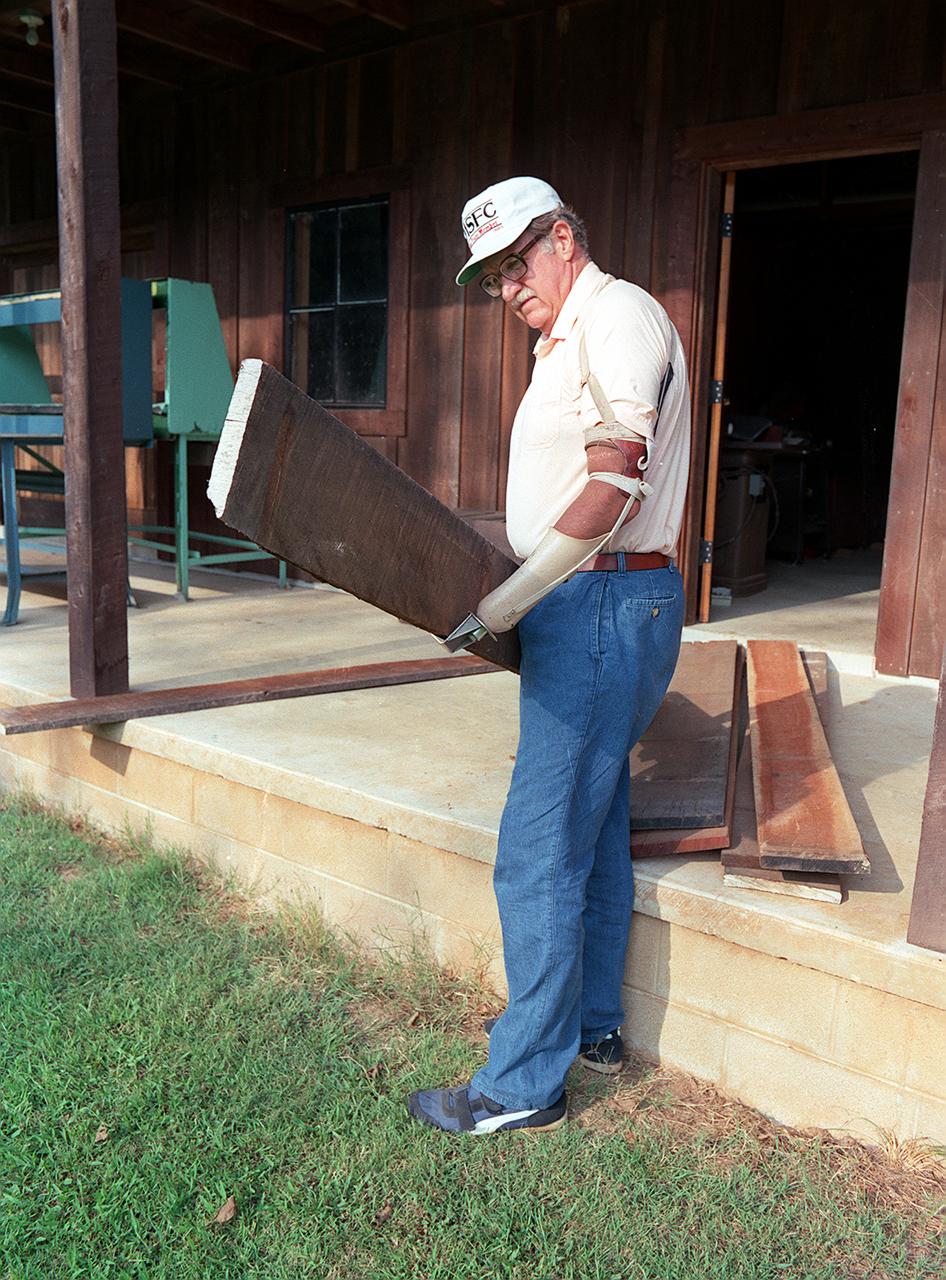
In this photograph, James Carden uses a NASA-developed prosthesis to moved planks around his home. Derived from foam insulation technology used to protect the Space Shuttle External Tank from excessive heat, FAB/CAD, a subsidiary of the Harshberger Prosthetic and Orthotic Center, utilized the technology to replace the heavy, fragile plaster they used to produce master molds for prosthetics. The new material was lighter, cheaper and easier to manufacture than plaster, resulting in lower costs to the customer.
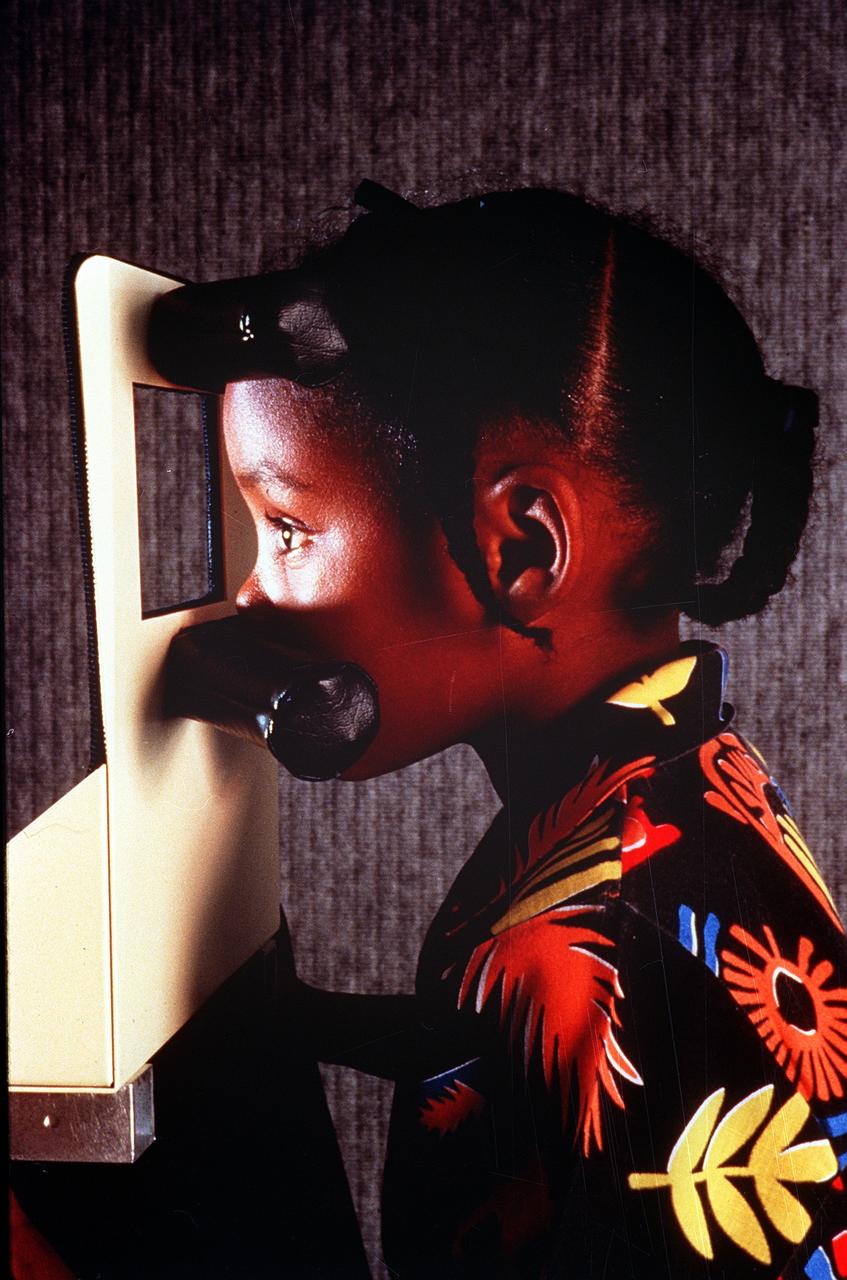
The NASA imaging processing technology, an advanced computer technique to enhance images sent to Earth in digital form by distant spacecraft, helped develop a new vision screening process. The Ocular Vision Screening system, an important step in preventing vision impairment, is a portable device designed especially to detect eye problems in children through the analysis of retinal reflexes.
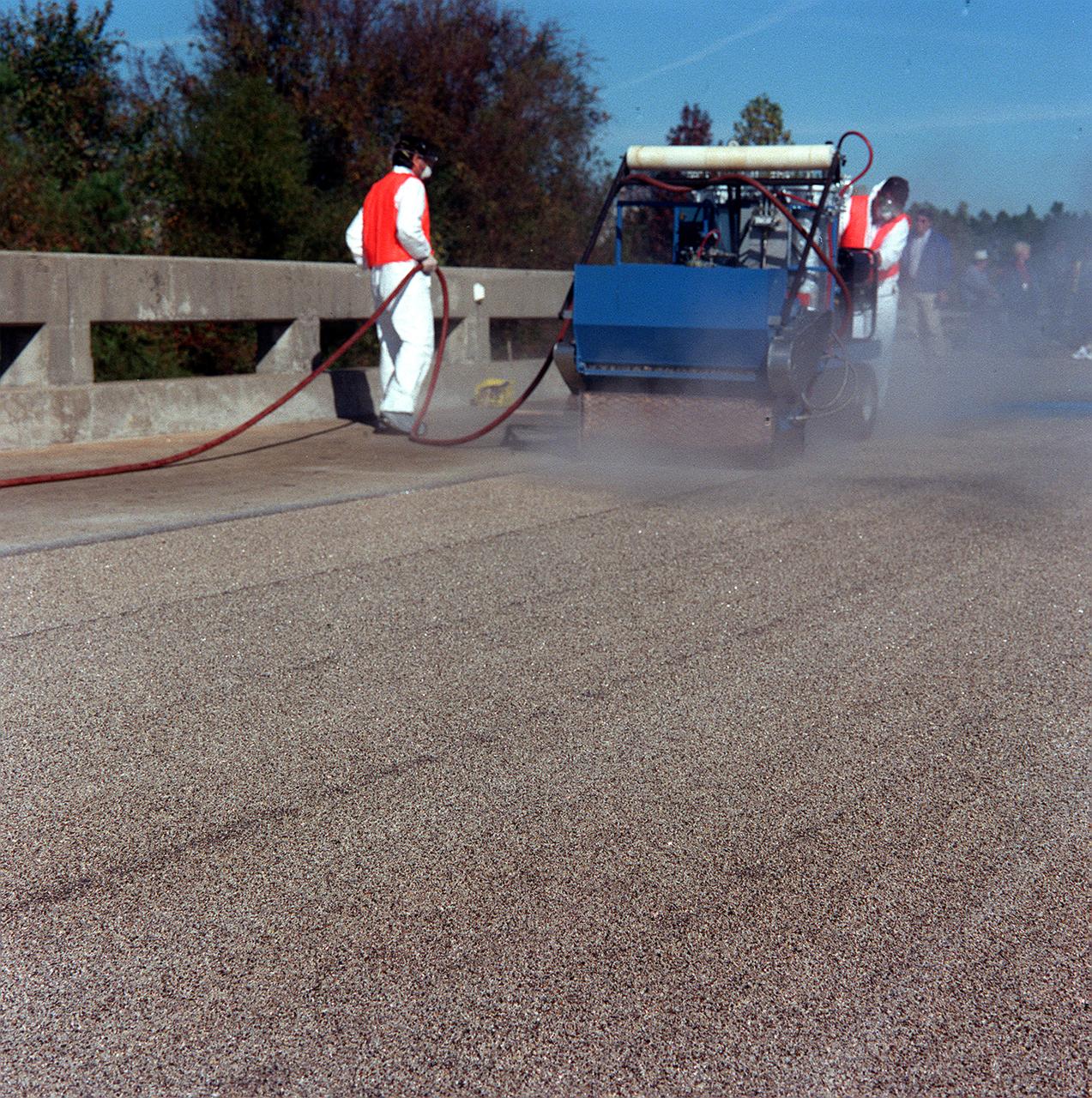
Alabama Department of Transportation workers utilize Convergent Spray Technology used to resurface a bridge on Interstate 65 near Lacon, Alabama. Originally developed by USBI to apply a heat resistant coating to the Space Shuttle's Solid Rocket Boosters, the environment-friendly technology reduces the required worktime from days to hours.
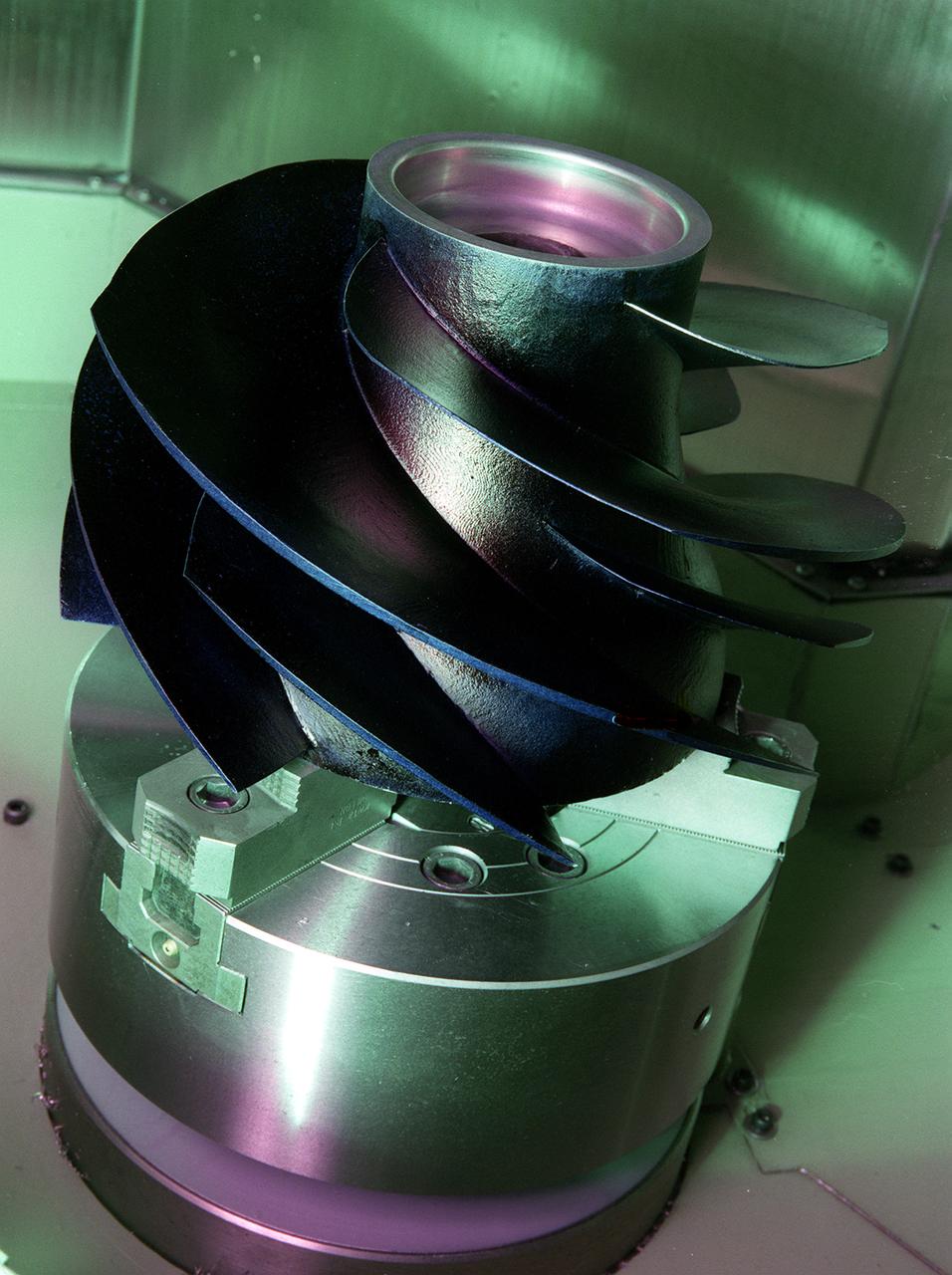
Marshall space Flight Center engineers helped North American Marine Jet (NAMJ), Inc. improve the proposed design of a new impeller for a jet-propulsion system. With a three-dimensional computer model of the new marine jet engine blades, engineers were able to quickly create a solid polycarbonate model of it. The rapid prototyping allowed the company to avoid many time-consuming and costly steps in creating the impeller.
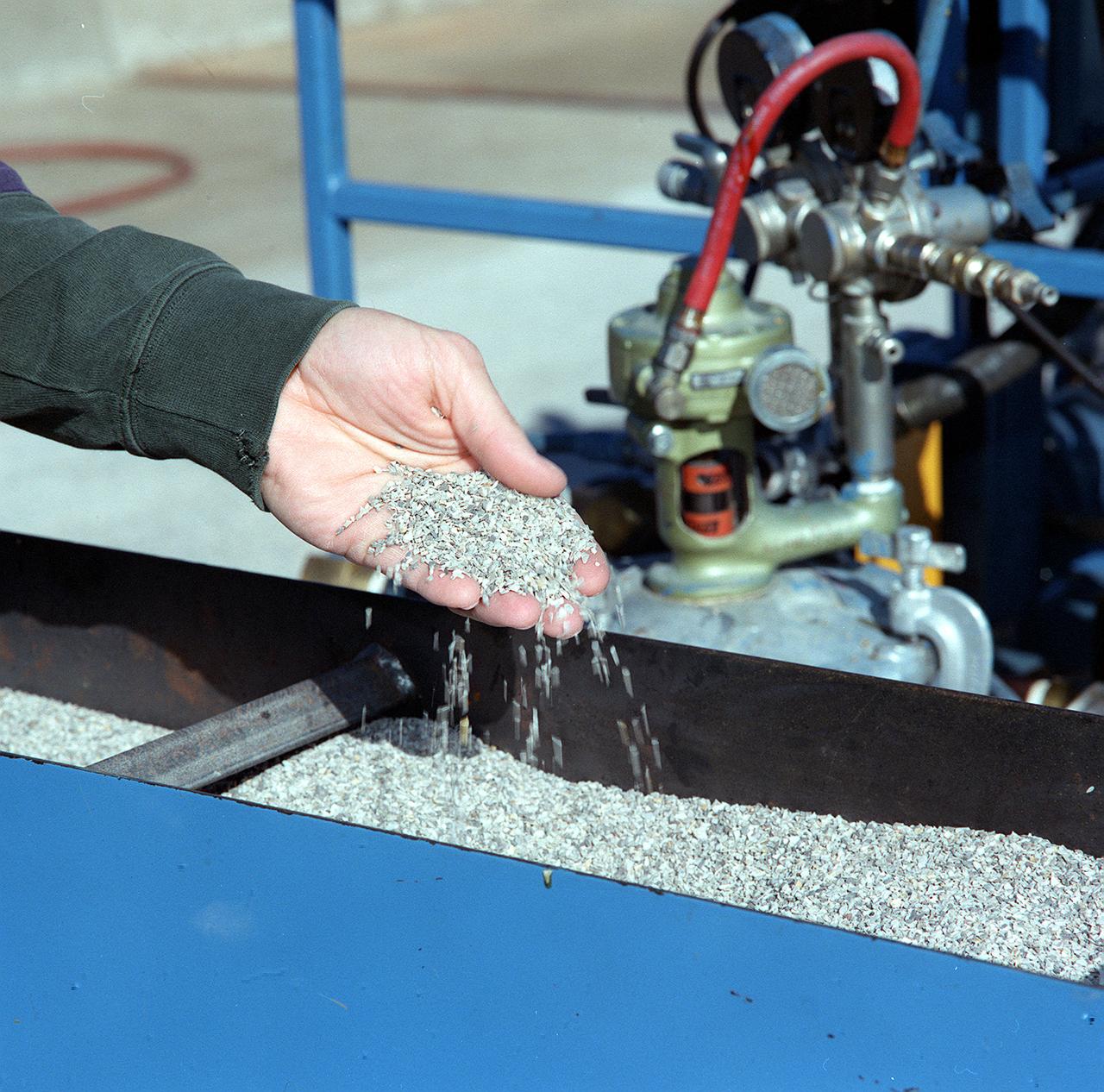
A workman inspects the results of Convergent Spray Technology used to resurface a bridge on Interstate 65 near Lacon, Alabama. Originally developed by USBI to apply a heat resistant coating to the Space Shuttle's Solid Rocket Boosters, the environment-friendly technology reduces the required worktime from days to hours.
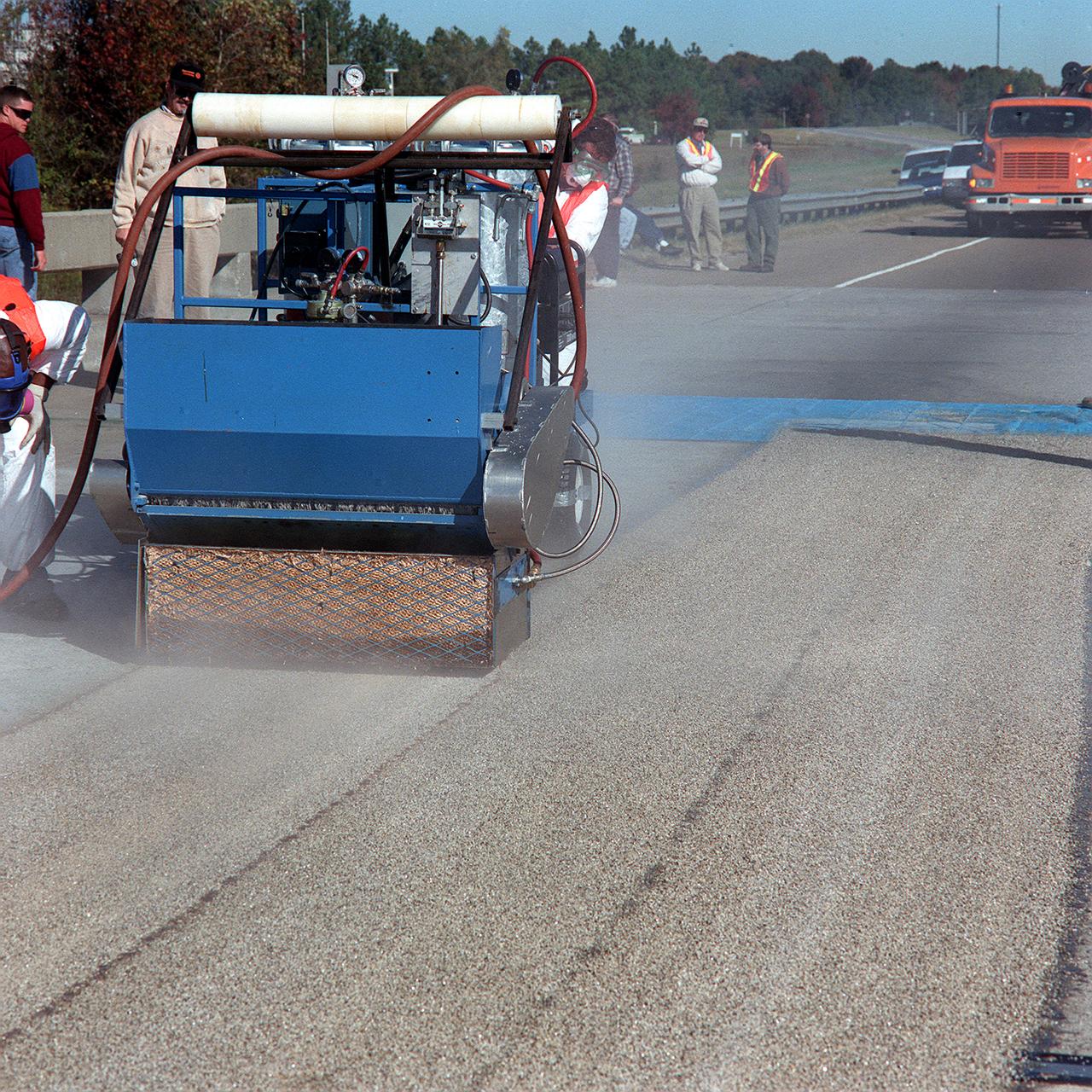
Alabama Department of Transportation workers utilize Convergent Spray Technology to resurface a bridge on Interstate 65 near Lacon, Alabama. Originally developed by USBI to apply a heat resistant coating to the Space Shuttle's Solid Rocket Boosters, the environment-friendly technology reduces the required worktime from days to hours.
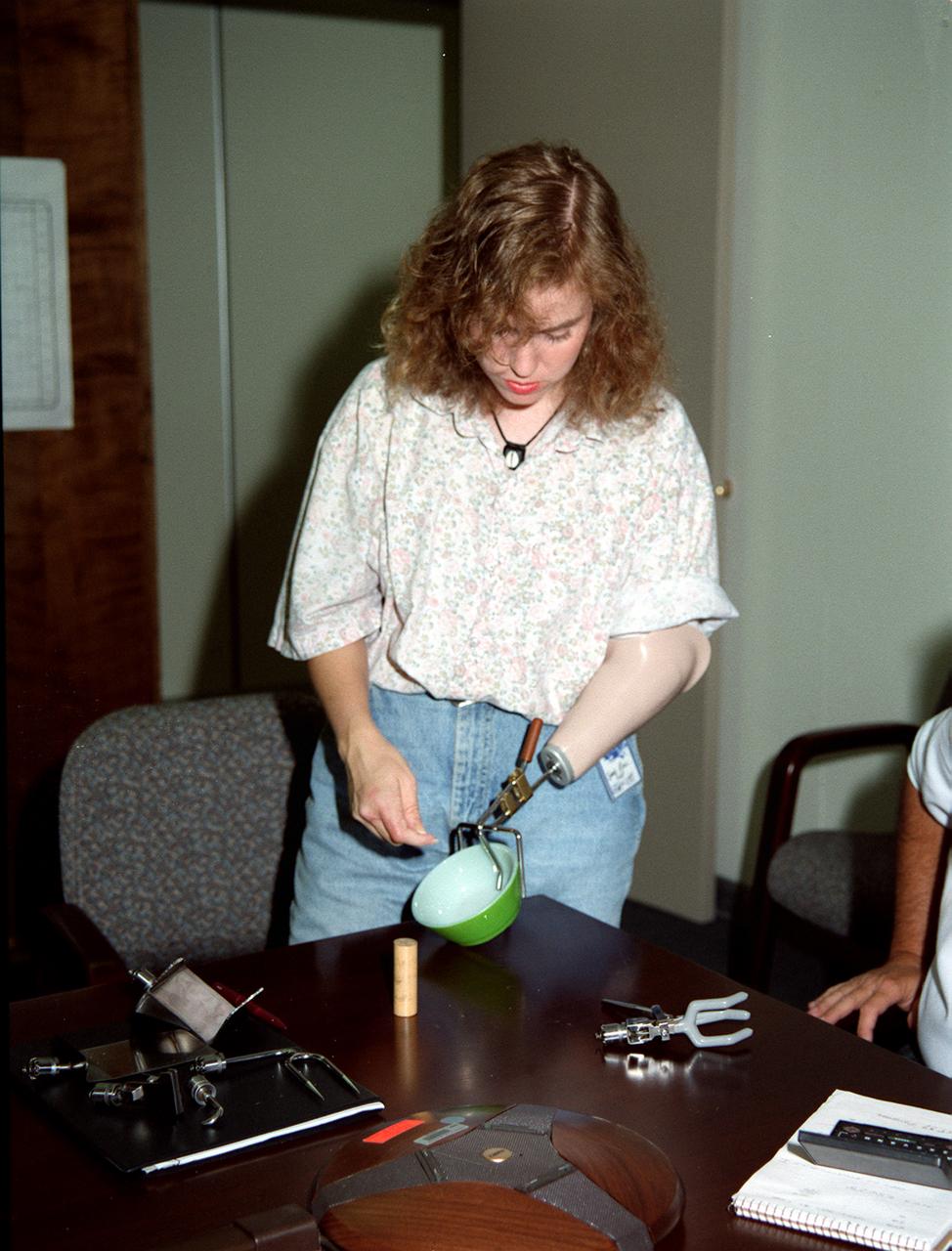
In this photograph, Sandra Rossi user her NASA-developed prosthesis for the first time. Derived from foam insulation technology used to protect the Space Shuttle External Tank from excessive heat, FAB/CAD, a subsidiary of the Harshberger Prosthetic and Orthotic Center, utilized the technology to replace the heavy, fragile plaster they used to produce master molds for prosthetics. The new material was lighter, cheaper and easier to manufacture than plaster, resulting in lower costs to the customer.
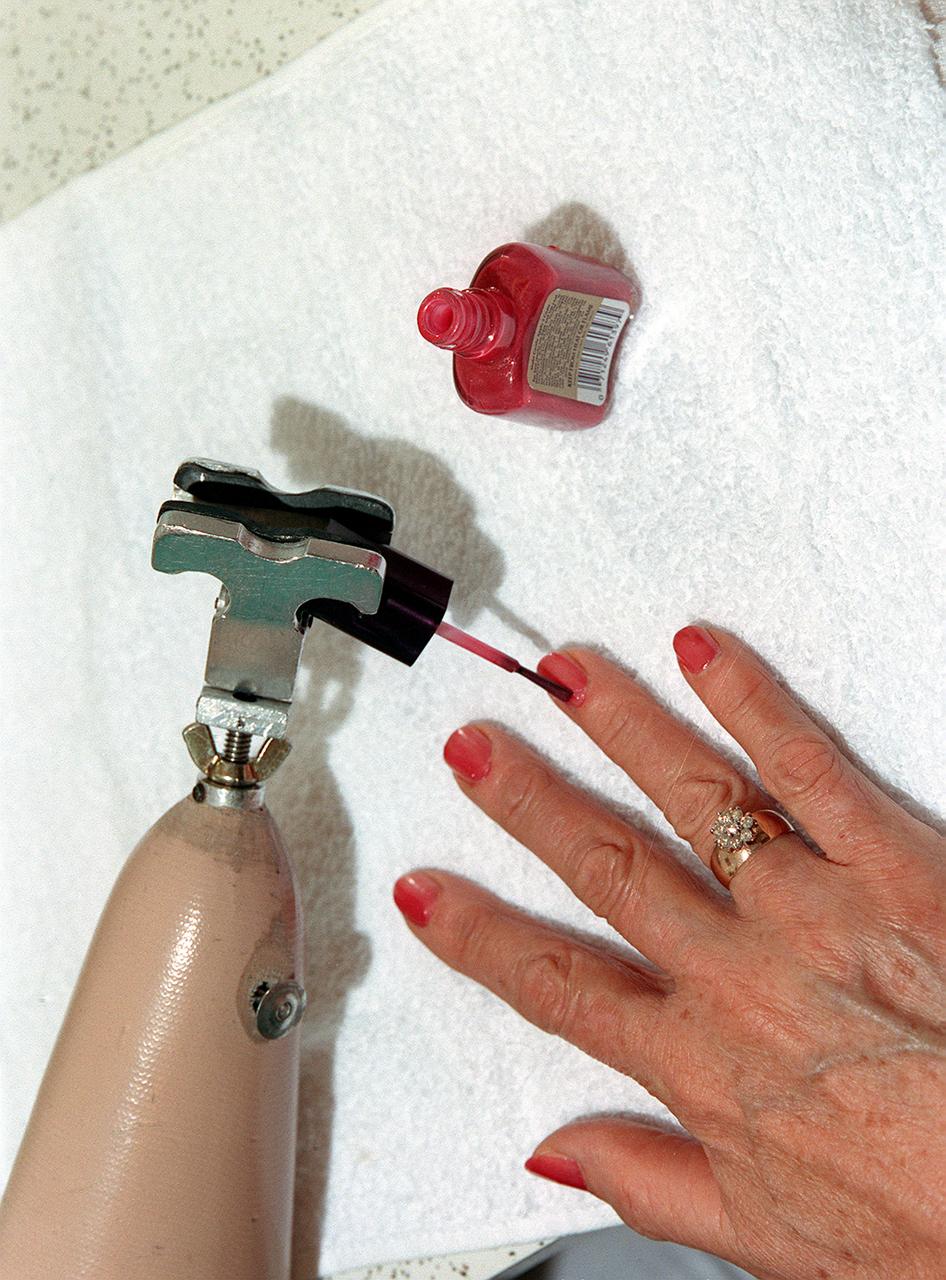
In this photograph, Amputee Amie Bradly uses a NASA-developed prosthesis to paint her fingernails. Derived from foam insulation technology used to protect the Space Shuttle External Tank from excessive heat, FAB/CAD, a subsidiary of the Harshberger Prosthetic and Orthotic Center, utilized the technology to replace the heavy, fragile plaster they used to produce master molds for prosthetics. The new material was lighter, cheaper and easier to manufacture than plaster, resulting in lower costs to the customer.
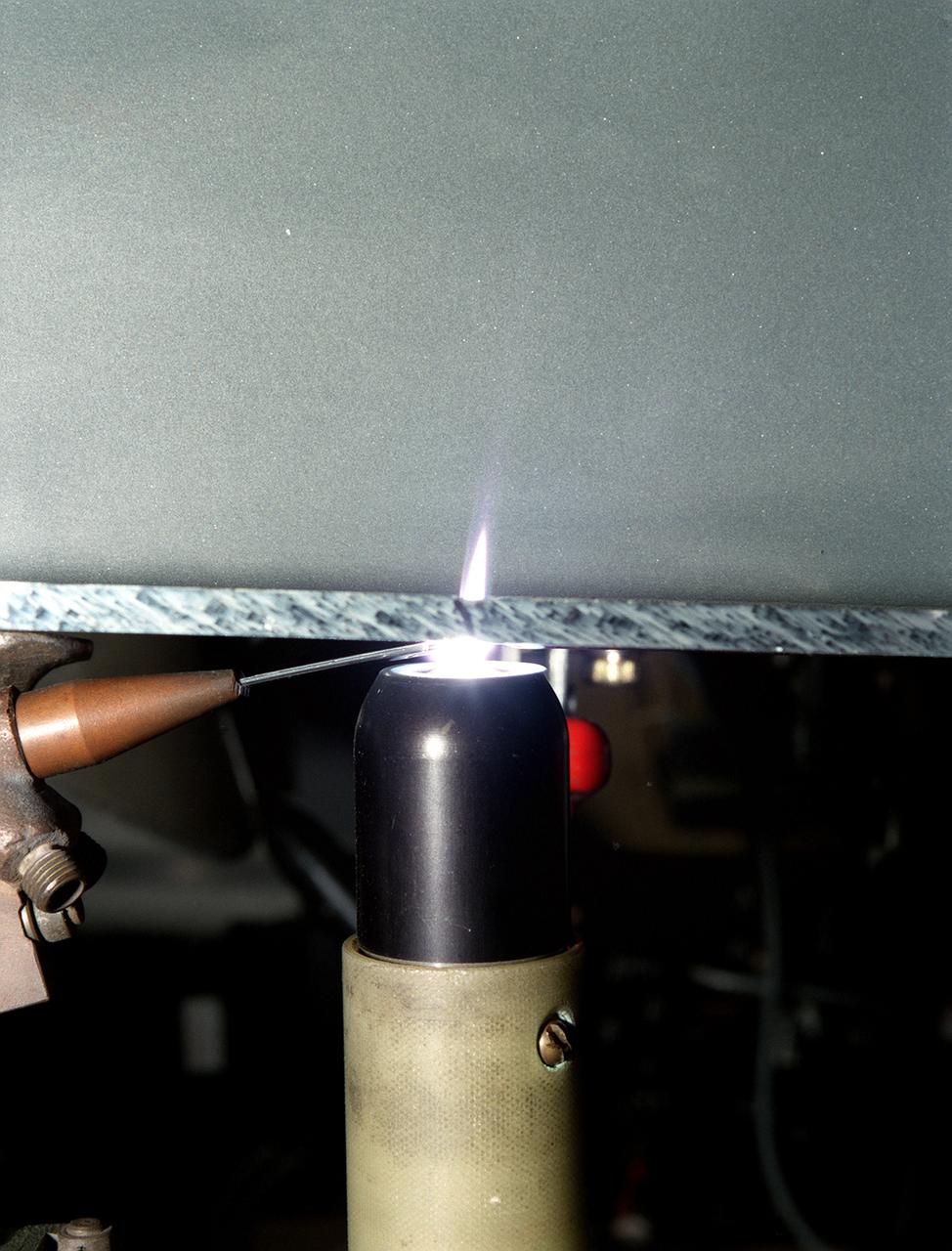
In order to more easily join the huge sections of the Space Shuttle external tank, Marshall Space Flight Center initiated development of the existing concept of Variable Polarity Plasma Arc (VPPA) welding. VPPA welding employs a variable current waveform that allows the system to operate for preset time increments in either of two polarity modes for effective joining of light alloys.
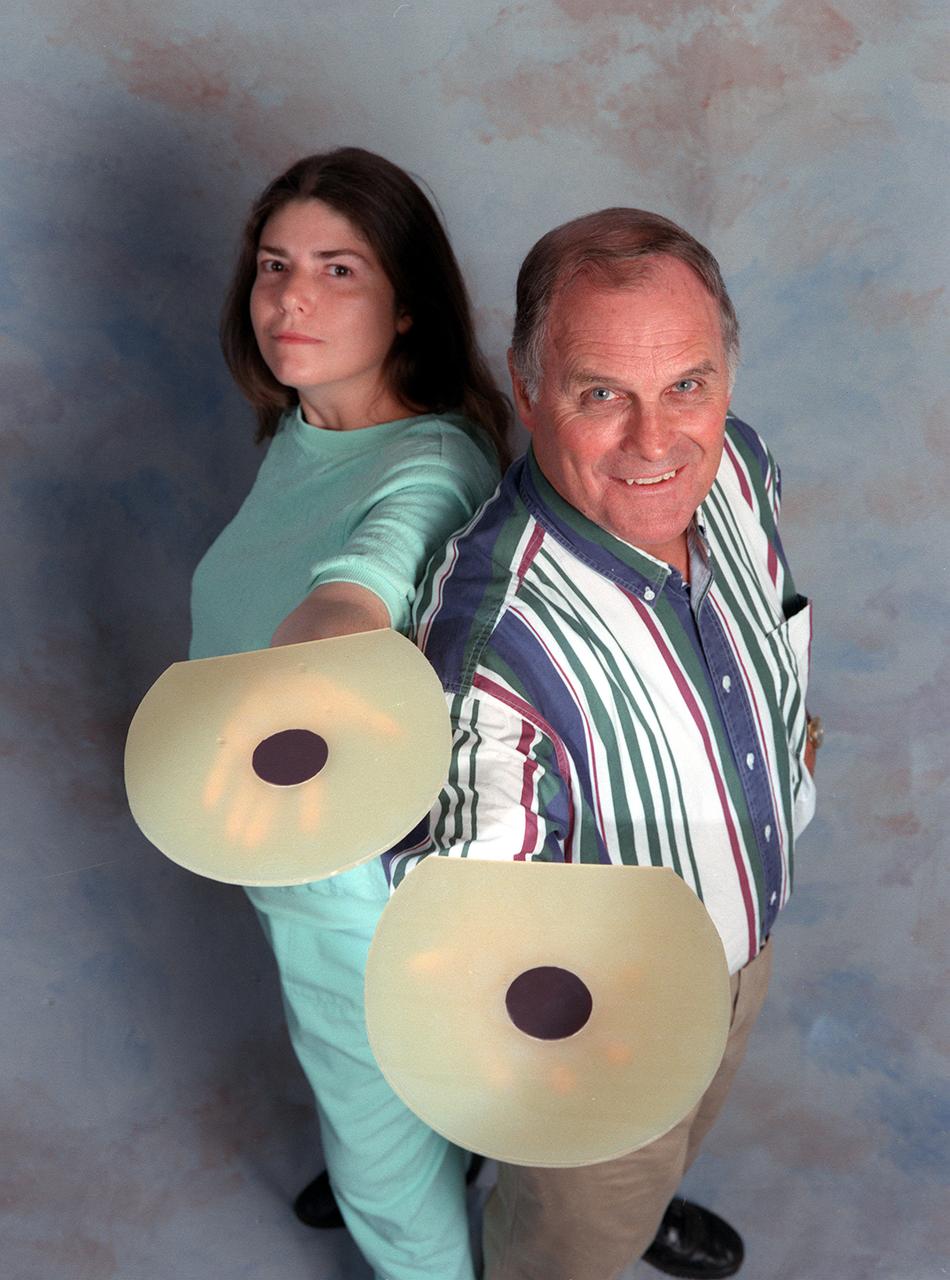
Power Pads, shown here, were designed to support and cushion horses' hooves while walking, rurning, and jumping, thus reducing the risk of injury. The pads utilize magnets implanted in the pads to increase blood circulation, not only reducing the chance of injury, but also speeding up the healing process if an injury does occur. Marshall Space Flight Center materials engineer Deborah Dianne Schmidt and materials technician Anthony Schaffer contributed to the design by providing fatigue stress analysis to the prototypes, thus helping determine the best configuration and maximum durability.
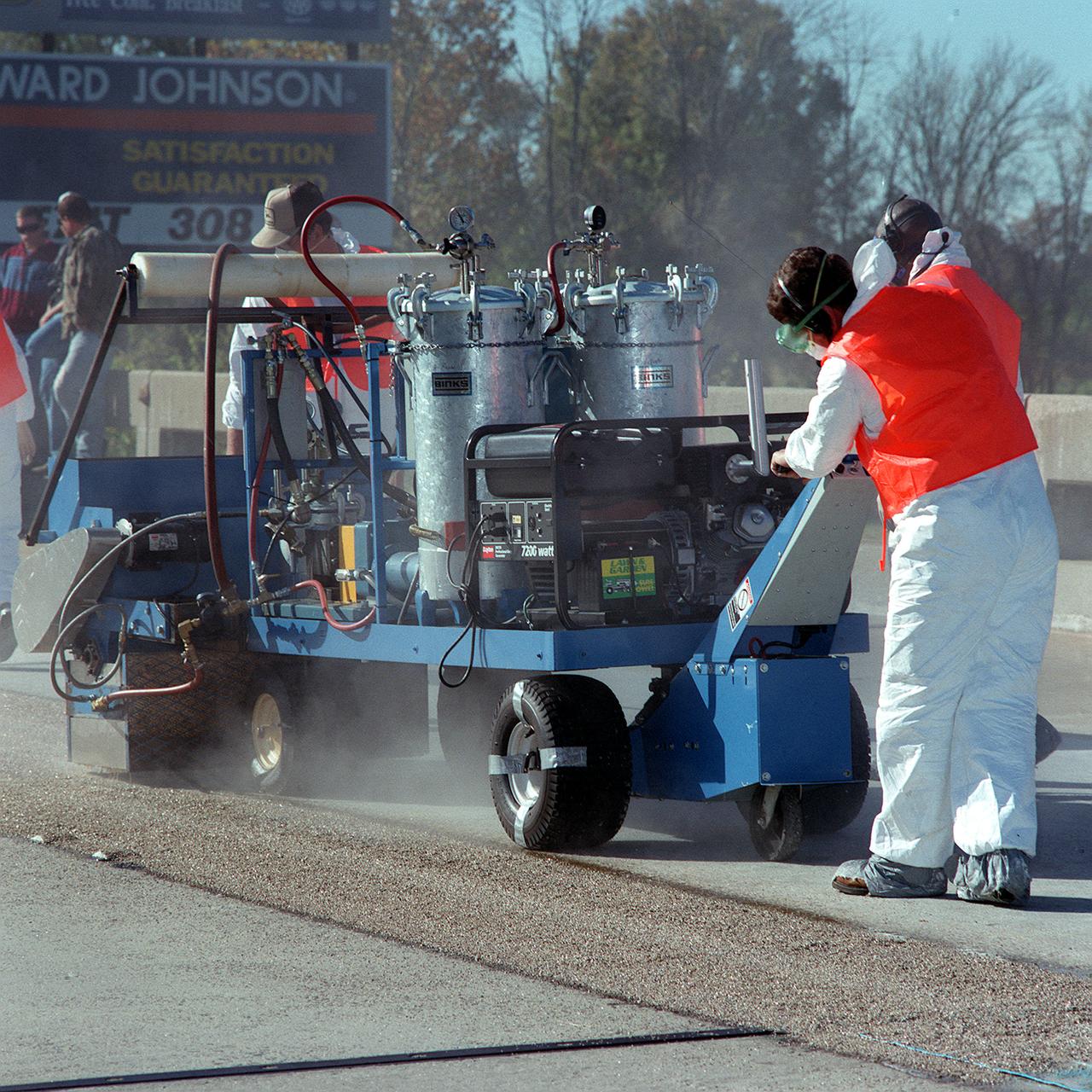
Alabama Department of Transportation workers utilize Convergent Spray Technology to resurface a bridge on Interstate 65 near Lacon, Alabama. Originally developed by USBI to apply a heat resistant coating to the Space Shuttle's Solid Rocket Boosters, the environment-friendly technology reduces the required worktime from days to hours.
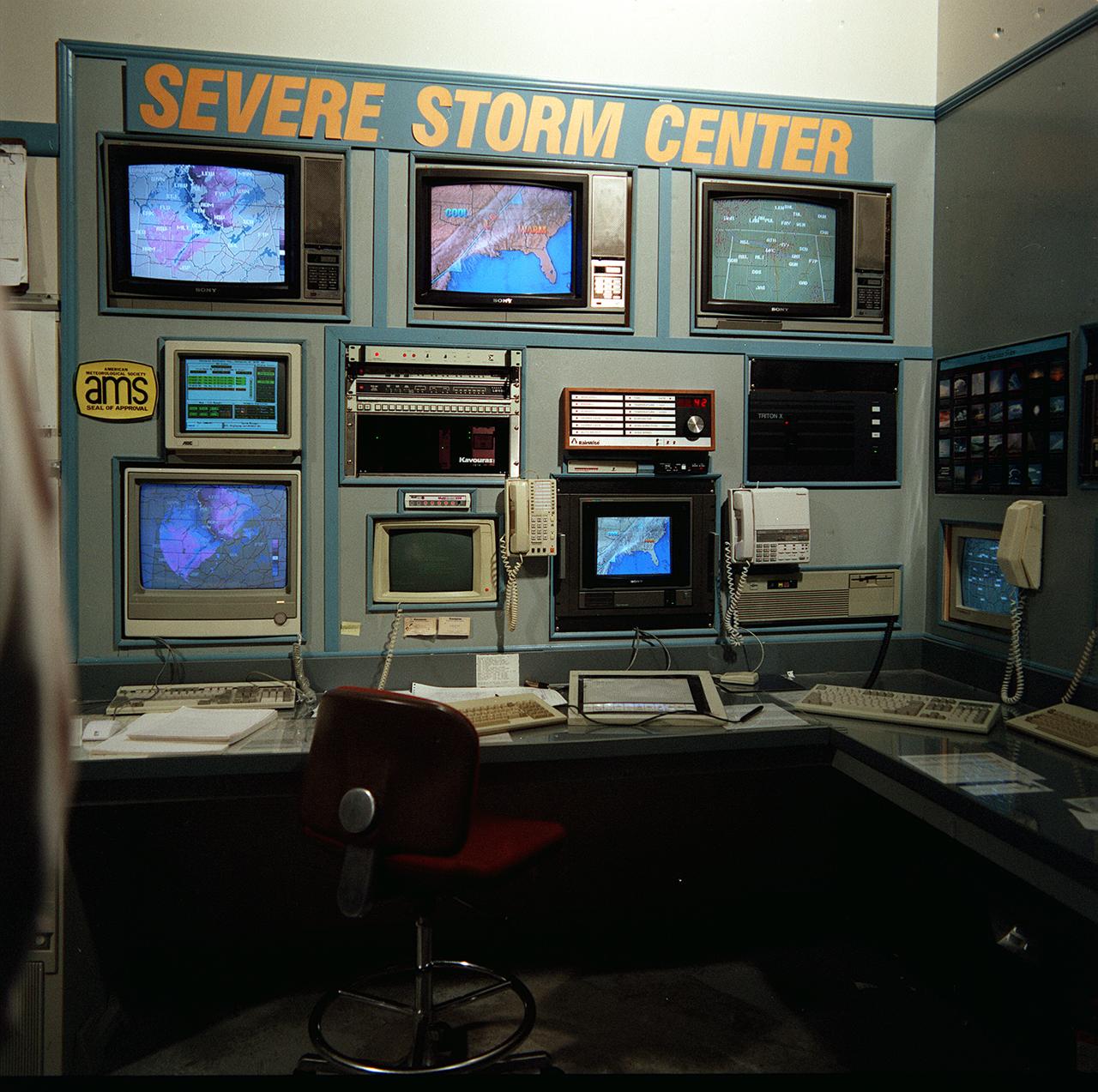
Bob Barin, a Huntsville meterorologist, has formed a commercial weather advisory service. The weather information is based on data from Marshall Space Flight Center (MSFC) collected from anternas in Alabama and Tennessee. Baron proposed and concluded an agreement with MSFC whereby the center would provide him the data and he would refine and enhance real-time software. By using his service, clients can monitor the approach of storms and schedule operations accordingly.
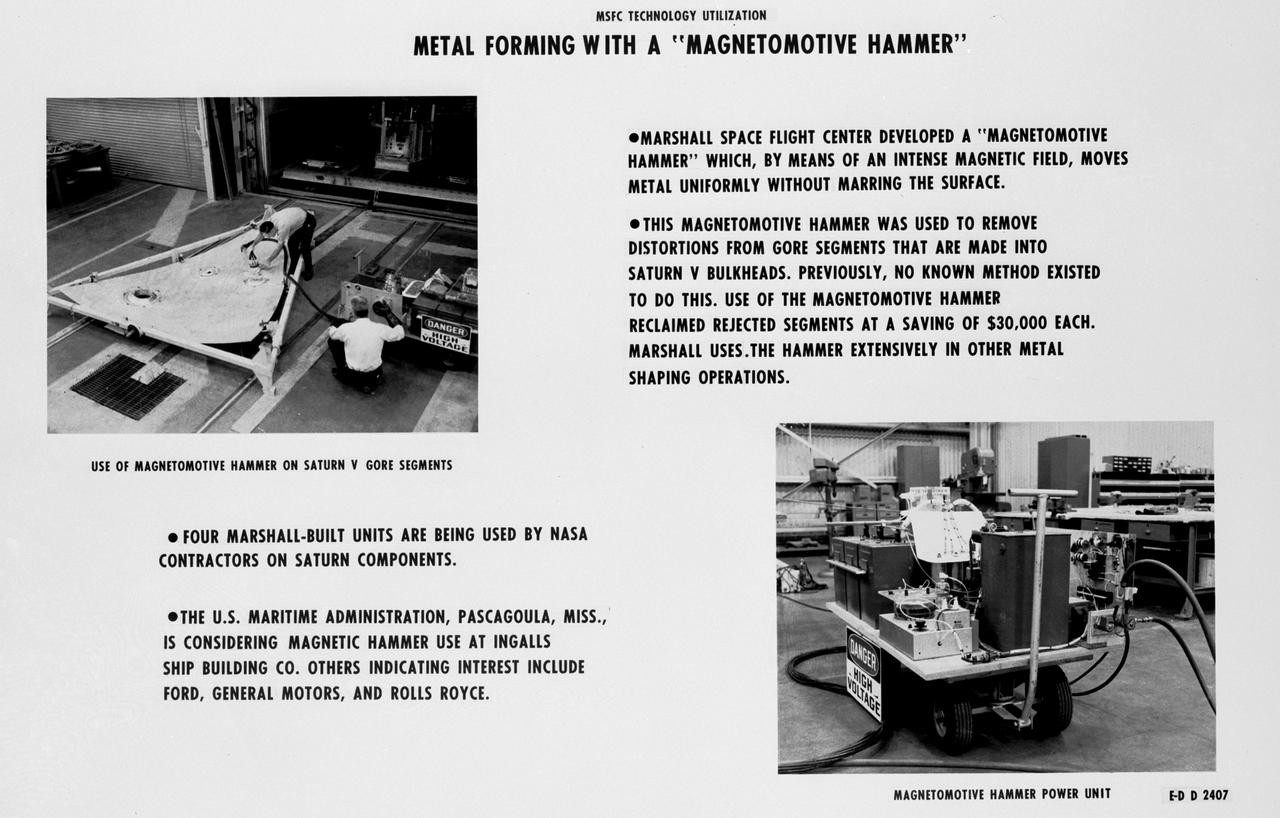
During the Apollo era Marshall Space Flight Center's engineers developed the Magnetomotive Hammer to remove distortions from Saturn V bulkhead gore segments. Using an intense magnetic field, the Hammer removed manufacturing distortions from rejected segments which otherwise would have been discarded at a cost of $30,000 each. Various automobile, ship and aircraft manufacturers adoped the technology for commercial use.
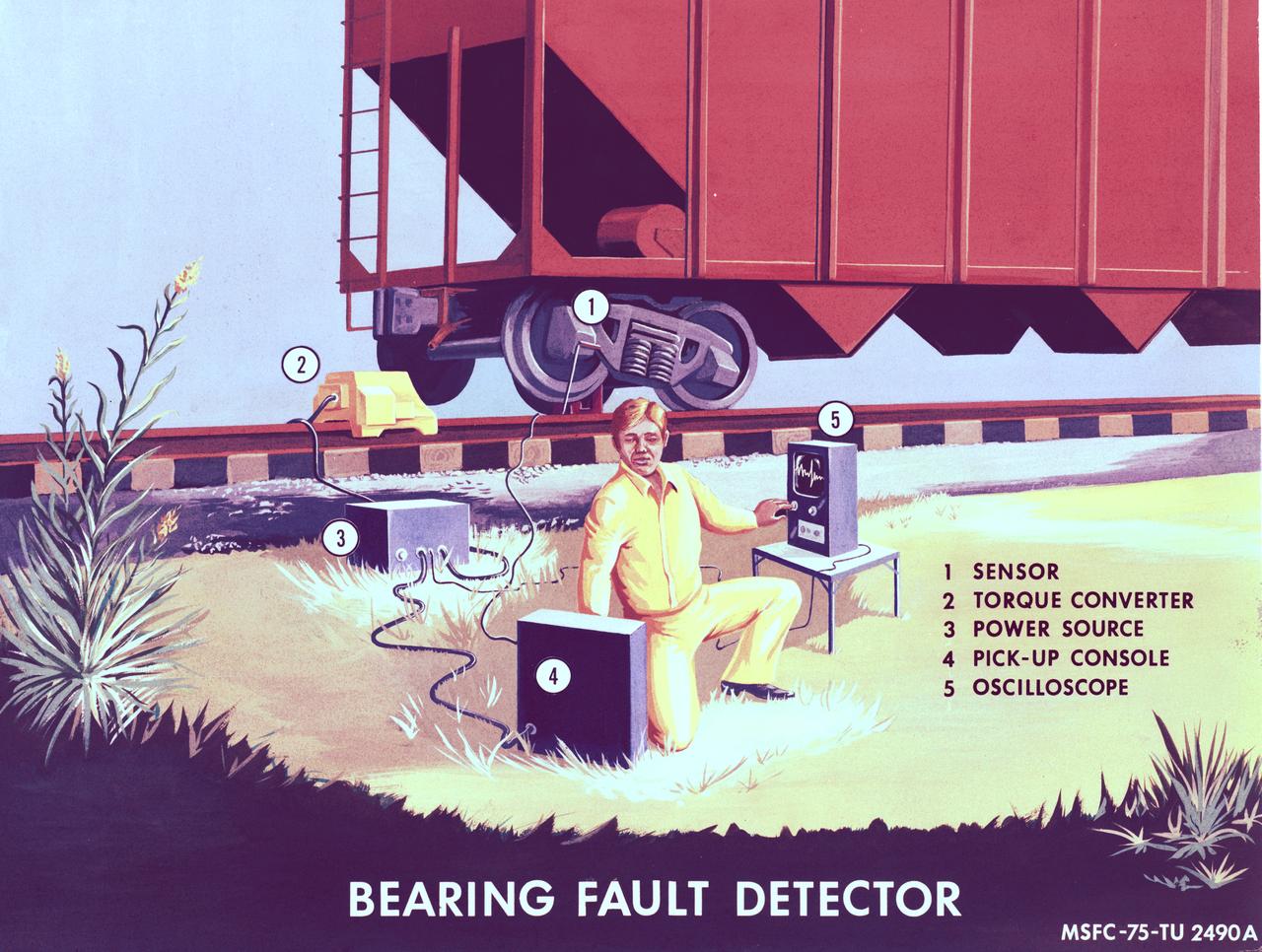
Technology derived by NASA for monitoring control gyros in the Skylab program is directly applicable to the problems of fault detection of railroad wheel bearings. Marhsall Space Flight Center's scientists have developed a detection concept based on the fact that bearing defects excite resonant frequency of rolling elements of the bearing as they impact the defect. By detecting resonant frequency and subsequently analyzing the character of this signal, bearing defects may be detected and identified as to source.
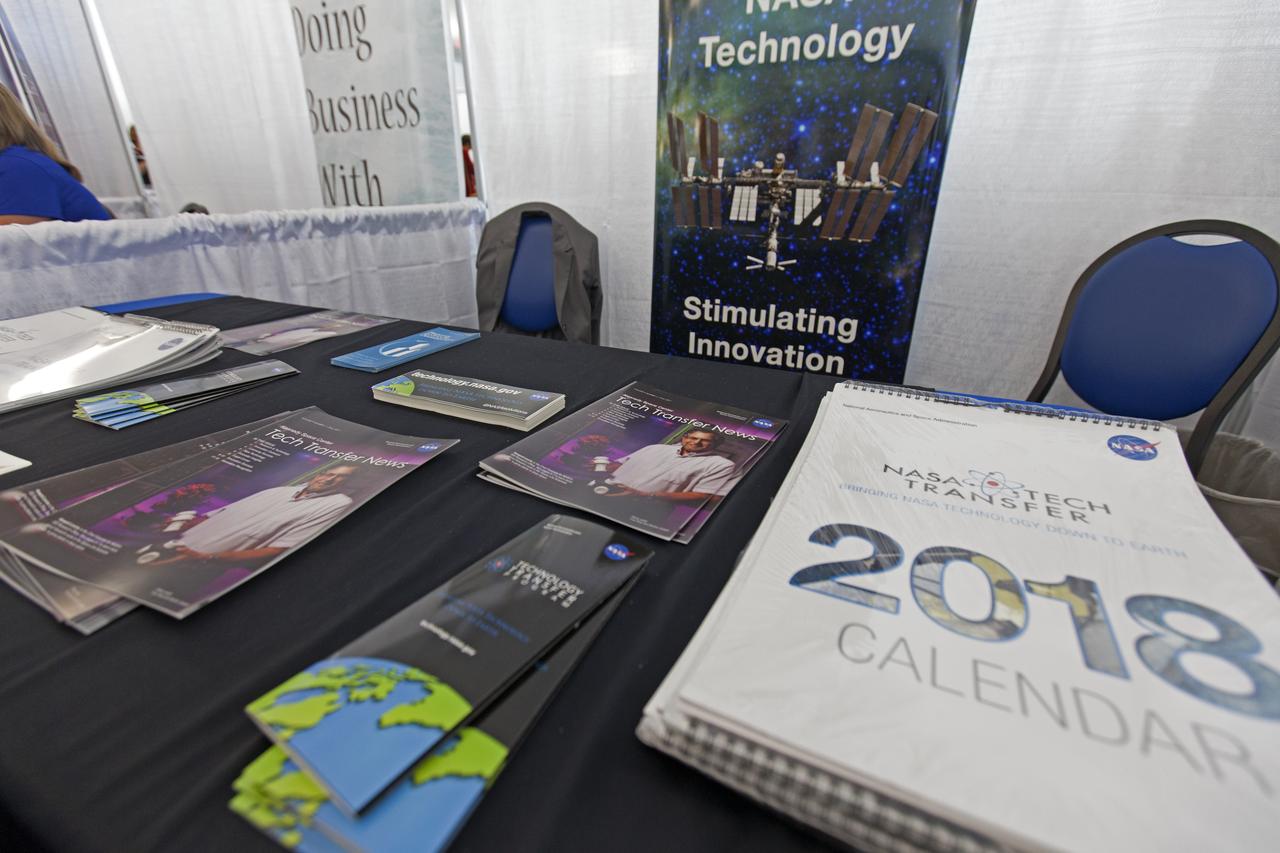
Information from NASA's Tech Transfer Office is on display at Kennedy Space Center's 27th Business Opportunities Expo held at Cruise Terminal 5 at Port Canaveral in Florida. The event featured more than 180 businesses, large and small, and government exhibitors from throughout the Space Coast and the nation. The Business Opportunities Expo is sponsored by the NASA KSC Prime Contractor Board, KSC Industry Assistance Office, 45th Space Wing and Canaveral Port Authority. Exhibitors included vendors from a variety of product and service areas, such as computer technology, engineering services, communication equipment and services, and construction and safety products, to name a few. Representatives from the 45th Space Wing, KSC prime contractors, NASA and many more agencies and organizations were on hand to provide information and answer questions.
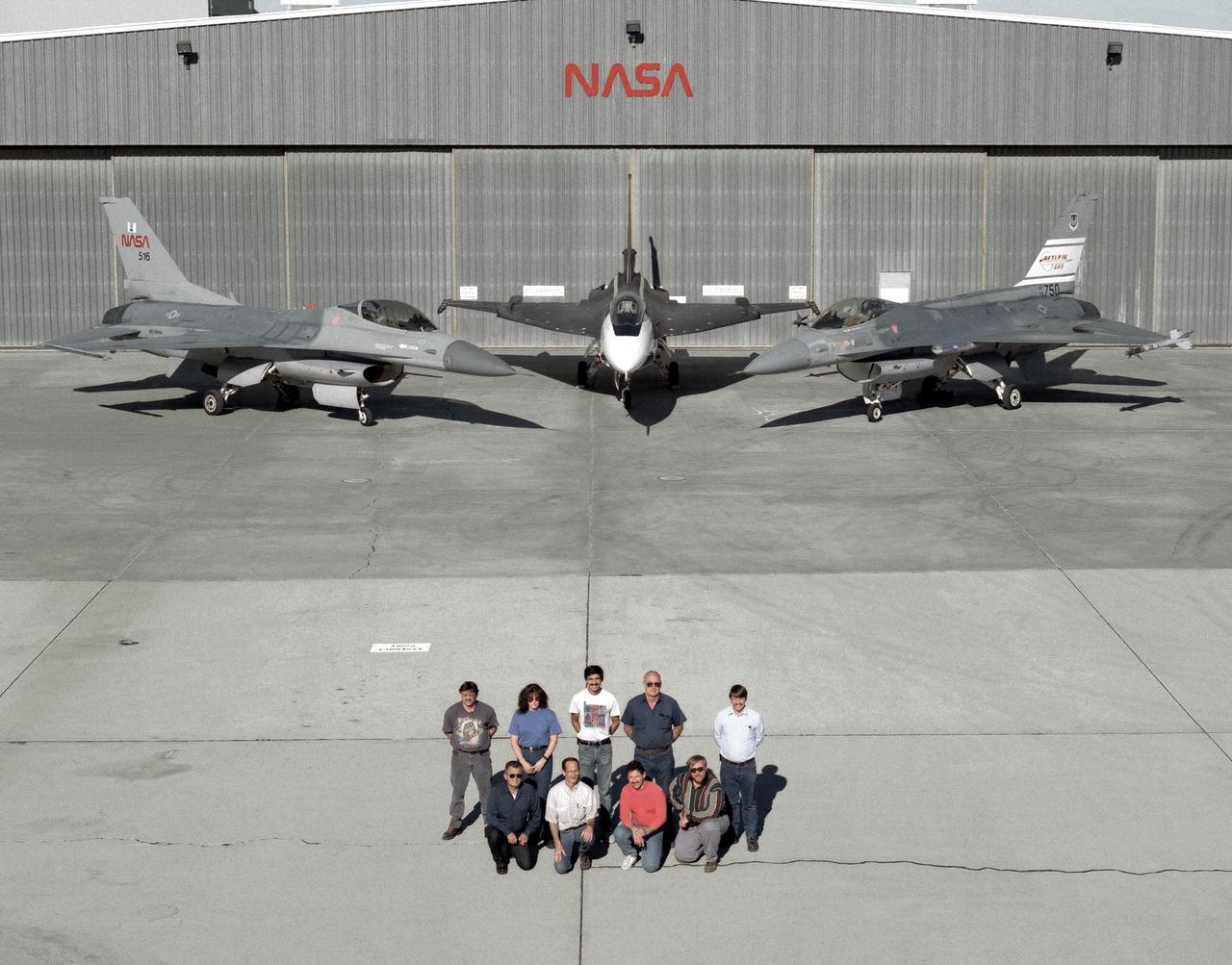
The support crew for the F-16A, the F-16XL no. 1, and the F-16 AFTI are, top row, left to right: Randy Weaver; mechanic, Susan Ligon; mechanic, Bob Garcia; Crew Chief, Rich Kelly; mechanic, Dale Edminister; Avionics Technician. Bottom row, left to right, Art Cope; mechanic, John Huffman; Avionics Technician, Jaime Garcia; Avionics Technician, Don Griffith, Avionics Tech. Co-op student. The F-16A (NASA 516), the only civil registered F-16 in existence, was transferred to Dryden from Langley, and was primarily used in engine tests and for parts. It was subsequently transfered from Dryden. The single-seat F-16XL no. 1 (NASA 849) was most recently used in the Cranked-Arrow Wing Aerodynamics Project (CAWAP) to test boundary layer pressures and distribution. Previously it had been used in a program to investigate the characteristics of sonic booms for NASA's High Speed Research Program. Data from the program will be used in the development of a high speed civilian transport. During the series of sonic boom research flights, the F-16XL was used to probe the shock waves being generated by a NASA SR-71 and record their shape and intensity. The Advanced Fighter Technology Integration (AFTI) F-16 was used to develop and demonstrate technologies to improve navigation and a pilot's ability to find and destroy enemy ground targets day or night, including adverse weather. Earlier research in the joint NASA-Air Force AFTI F-16 program demonstrated voice actuated controls, helmet-mounted sighting and integration of forward-mounted canards with the standard flight control system to achieve uncoupled flight.
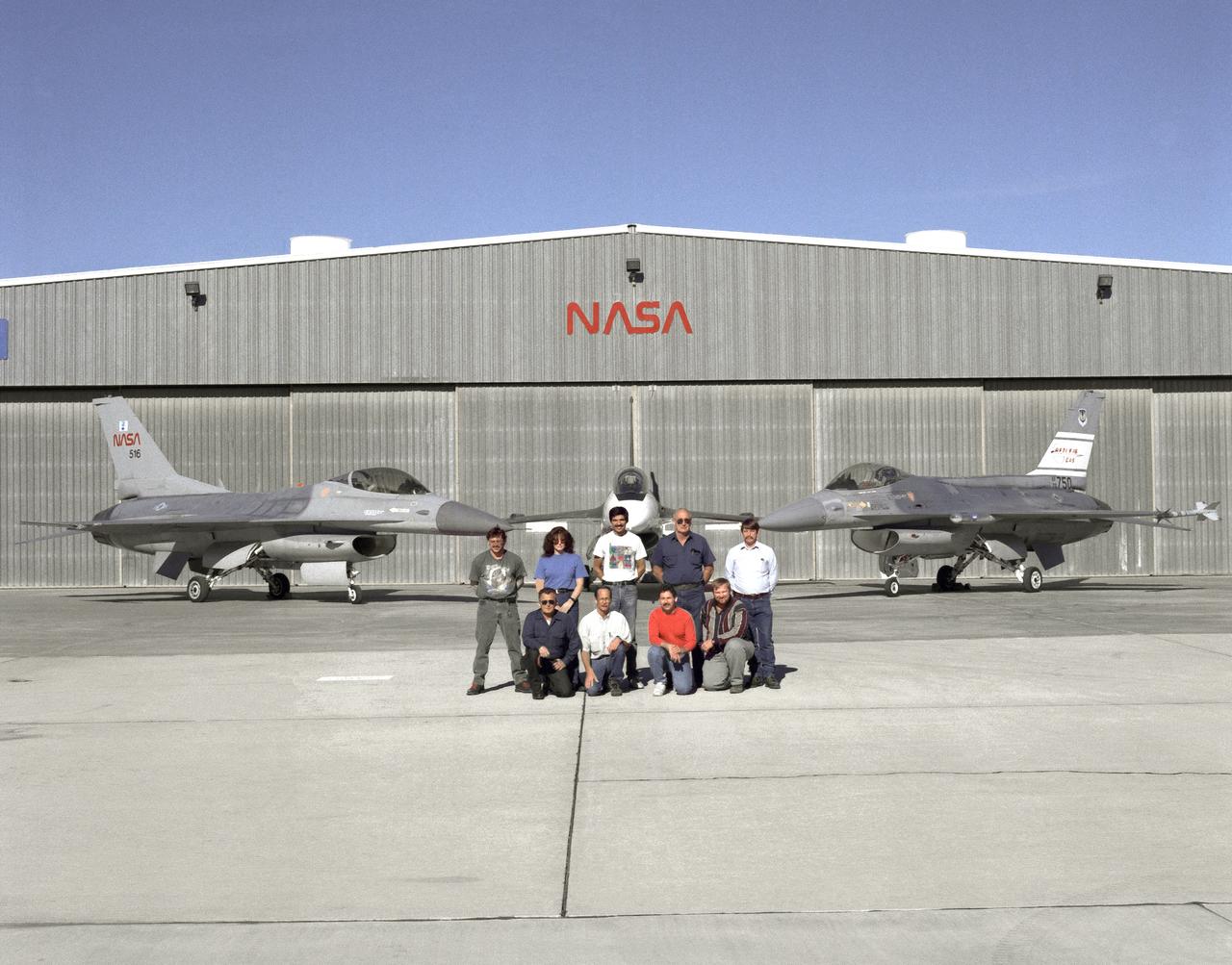
The support crew for the F-16A, the F-16XL no. 1, and the F-16 AFTI are, top row, left to right: Randy Weaver; mechanic, Susan Ligon; mechanic, Bob Garcia; Crew Chief, Rich Kelly; mechanic, Dale Edminister; Avionics Technician. Bottom row, left to right, Art Cope; mechanic, John Huffman; Avionics Technician, Jaime Garcia; Avionics Technician, Don Griffith, Avionics Tech. Co-op student. The F-16A (NASA 516), the only civil registered F-16 in existence, was transferred to Dryden from Langley, and was primarily used in engine tests and for parts. It was subsequently transfered from Dryden. The single-seat F-16XL no. 1 (NASA 849) was most recently used in the Cranked-Arrow Wing Aerodynamics Project (CAWAP) to test boundary layer pressures and distribution. Previously it had been used in a program to investigate the characteristics of sonic booms for NASA's High Speed Research Program. Data from the program will be used in the development of a high speed civilian transport. During the series of sonic boom research flights, the F-16XL was used to probe the shock waves being generated by a NASA SR-71 and record their shape and intensity. The Advanced Fighter Technology Integration (AFTI) F-16 was used to develop and demonstrate technologies to improve navigation and a pilot's ability to find and destroy enemy ground targets day or night, including adverse weather. Earlier research in the joint NASA-Air Force AFTI F-16 program demonstrated voice actuated controls, helmet-mounted sighting and integration of forward-mounted canards with the standard flight control system to achieve uncoupled flight.
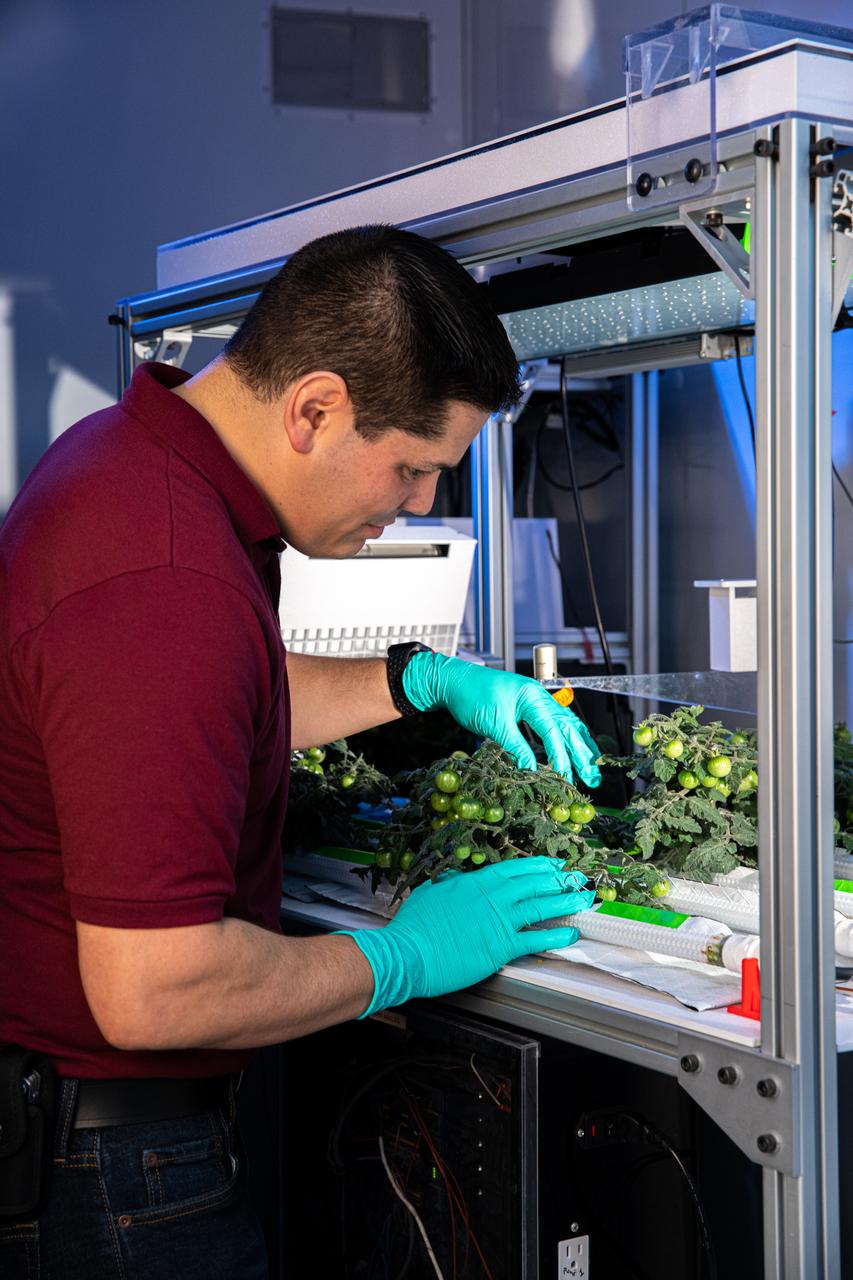
A multidisciplinary team of engineers, biologists, and horticulturalists working out of NASA's Kennedy Space Center in Florida supports the use of technology and automation in plant growth research that looks to supplement the diet of astronauts so they can undertake longer and more distant space exploration missions than ever before.
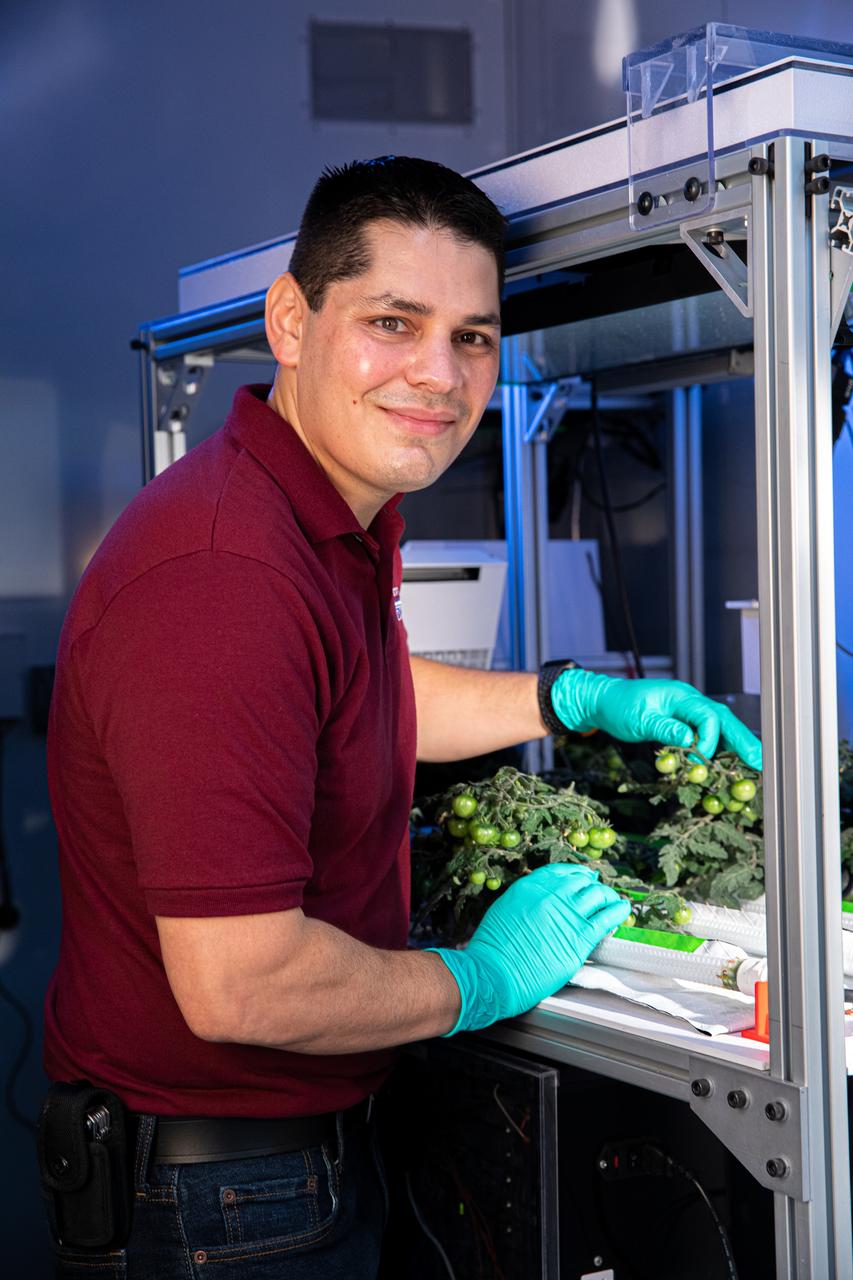
A multidisciplinary team of engineers, biologists, and horticulturalists working out of NASA's Kennedy Space Center in Florida supports the use of technology and automation in plant growth research that looks to supplement the diet of astronauts so they can undertake longer and more distant space exploration missions than ever before.
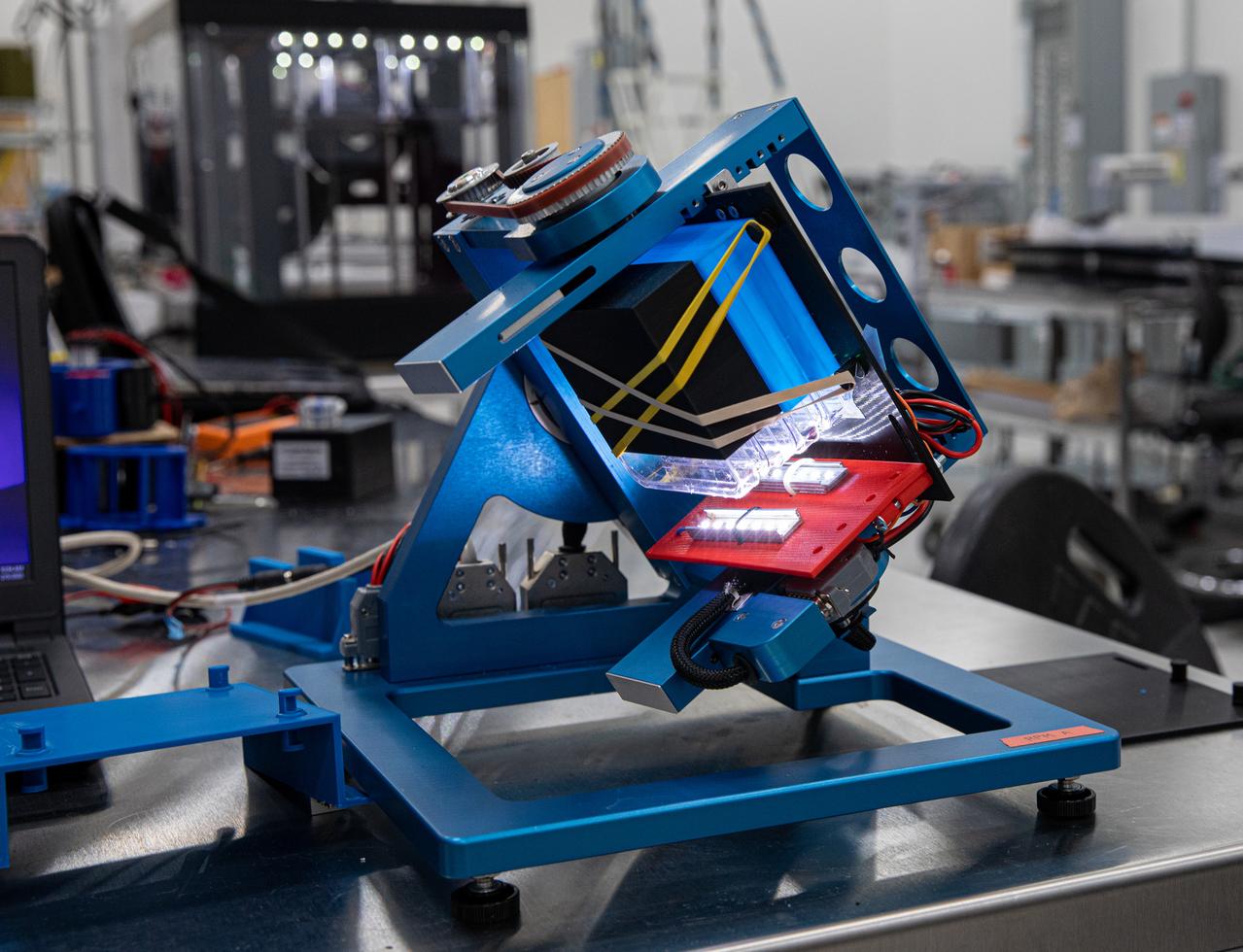
A multidisciplinary team of engineers, biologists, and horticulturalists working out of NASA's Kennedy Space Center in Florida supports the use of technology and automation in plant growth research that looks to supplement the diet of astronauts so they can undertake longer and more distant space exploration missions than ever before.
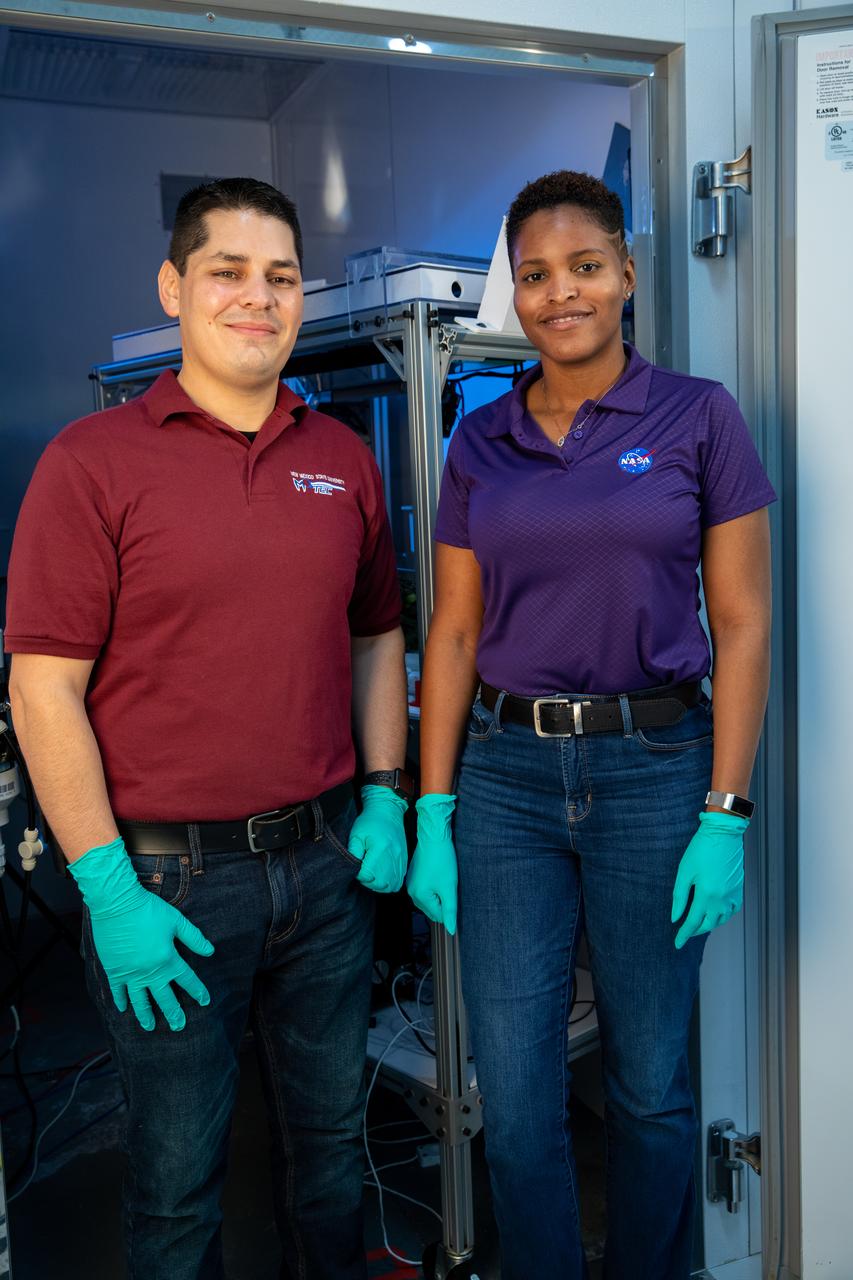
A multidisciplinary team of engineers, biologists, and horticulturalists working out of NASA's Kennedy Space Center in Florida supports the use of technology and automation in plant growth research that looks to supplement the diet of astronauts so they can undertake longer and more distant space exploration missions than ever before.
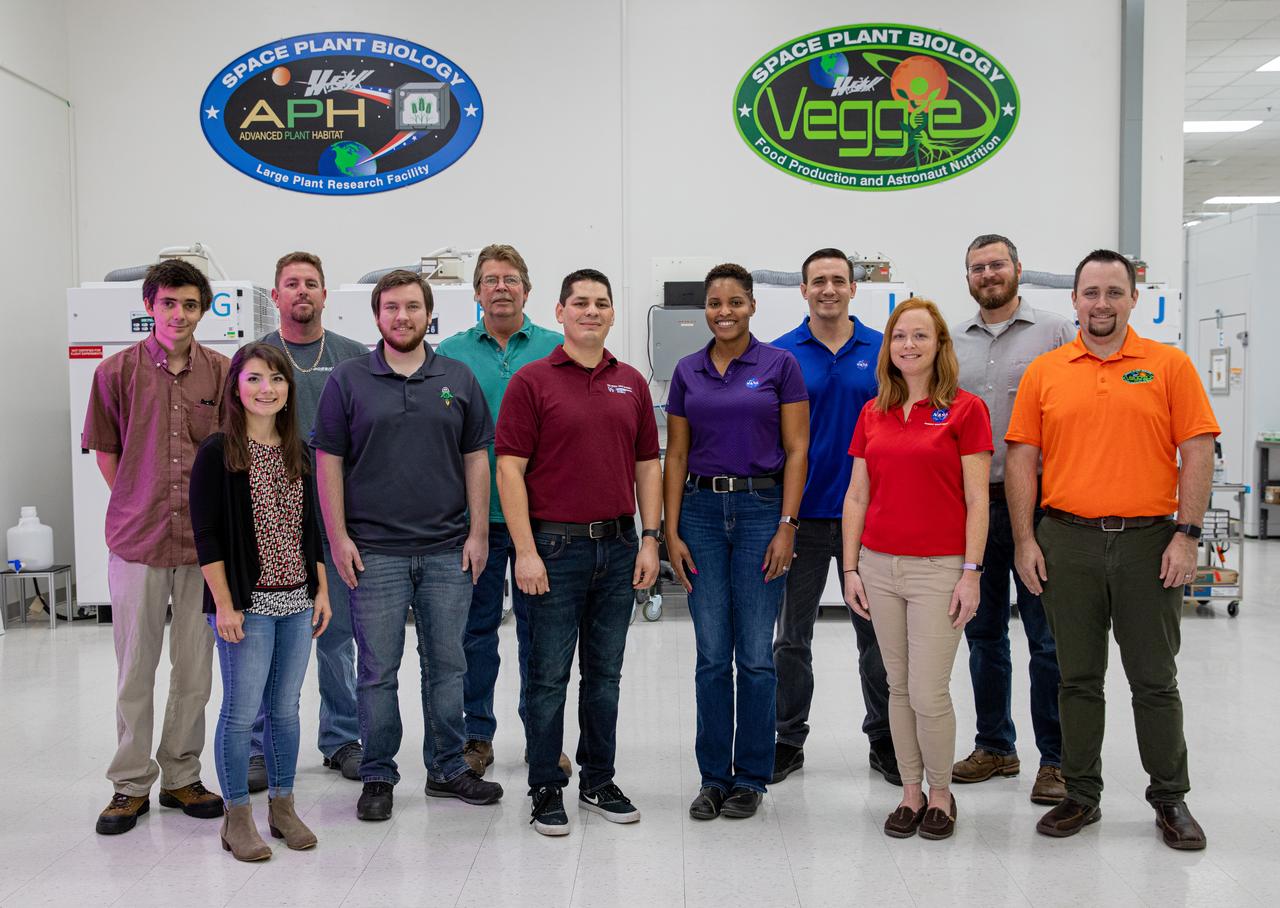
A multidisciplinary team of engineers, biologists, and horticulturalists working out of NASA's Kennedy Space Center in Florida supports the use of technology and automation in plant growth research that looks to supplement the diet of astronauts so they can undertake longer and more distant space exploration missions than ever before.