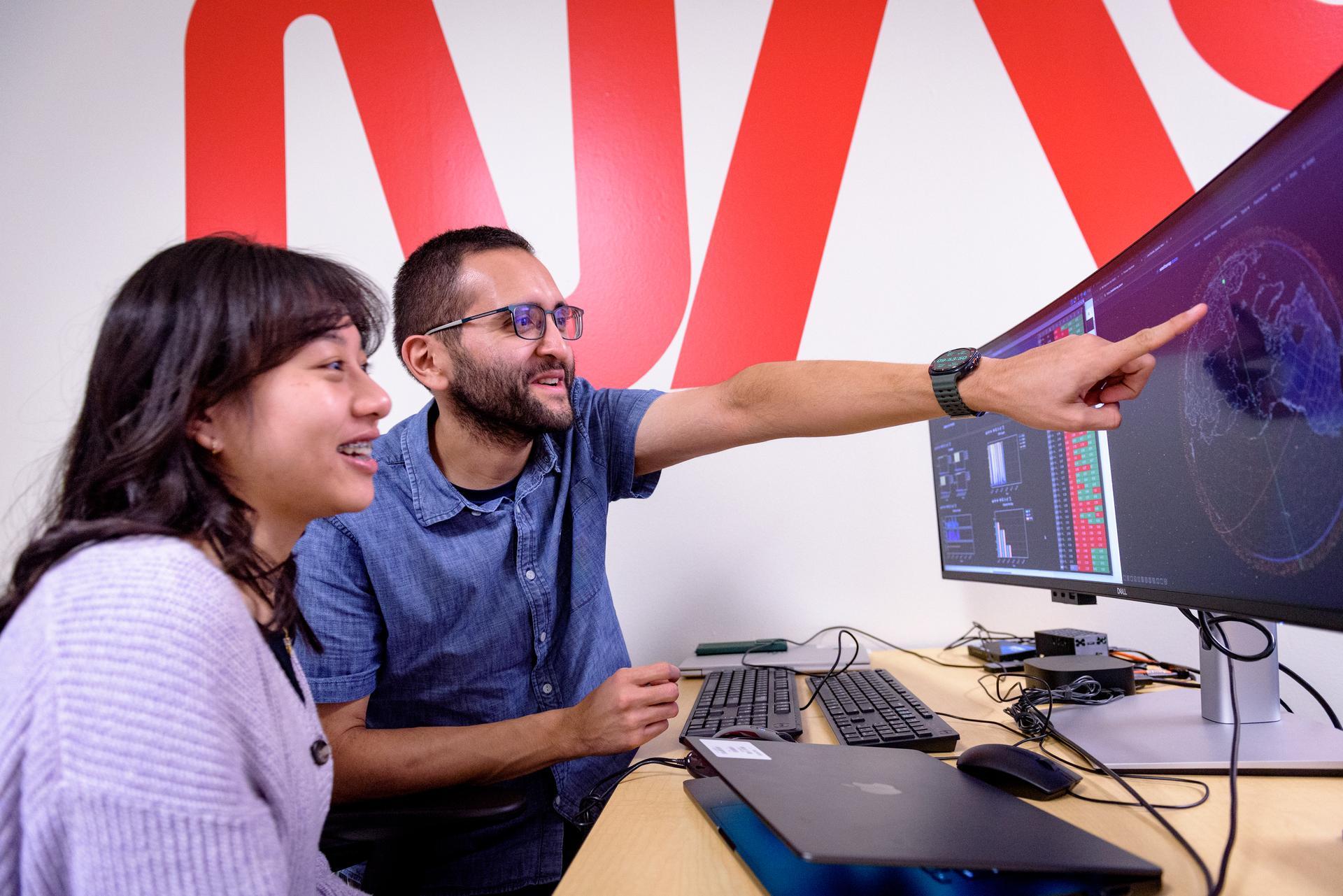
TechEdSat-11 operators Daphne Dao, left, and Alejandro Salas, in the Ames Multi-Mission Operations Center (MMOC), N240 Annex, Eros control room 162. The team monitors the spacecraft's status during the Exo-Brake “parachute” deployment. The ExoBrake is a drag device that increases the total surface area of the spacecraft to assist with a quicker deorbit. This maneuver is deployed at the end of mission to satisfy NASA's deorbit requirement and prevent space debris. TechEdSat has spent the last several months coordinating with NASA’s Conjunction Assessment Risk Analysis (CARA) team to ensure the spacecraft can safely deploy the ExoBrake without colliding into any other objects.
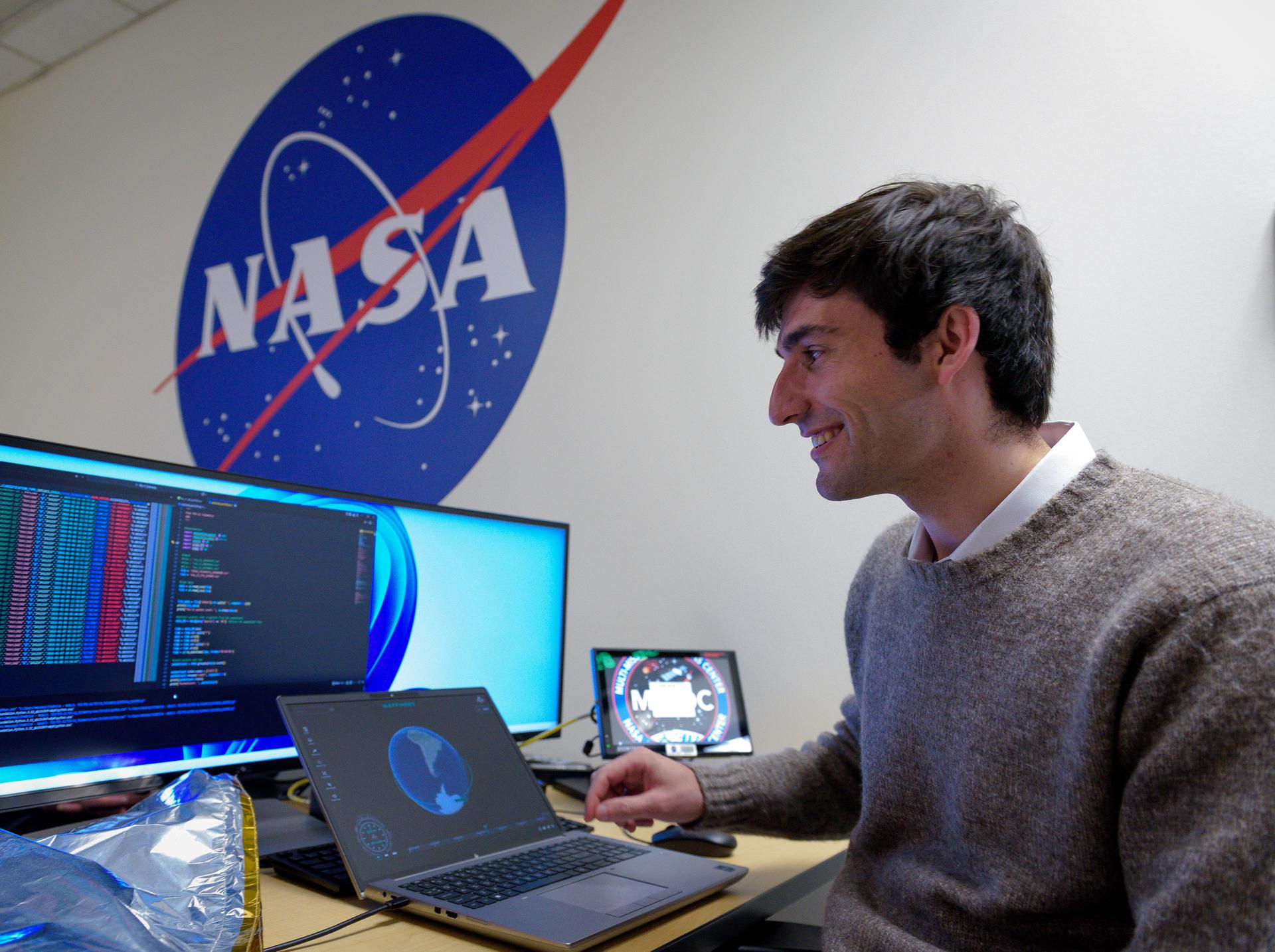
TechEdSat-11 operator Malachi Mooney-Rivkin, in the Ames Multi-Mission Operations Center (MMOC), N240 Annex, Eros control room 162. Malachi monitors the spacecraft's status during the Exo-Brake “parachute” deployment. The ExoBrake is a drag device that increases the total surface area of the spacecraft to assist with a quicker deorbit. This maneuver is deployed at the end of mission to satisfy NASA's deorbit requirement and prevent space debris. TechEdSat has spent the last several months coordinating with NASA’s Conjunction Assessment Risk Analysis (CARA) team to ensure the spacecraft can safely deploy the ExoBrake without colliding into any other objects.
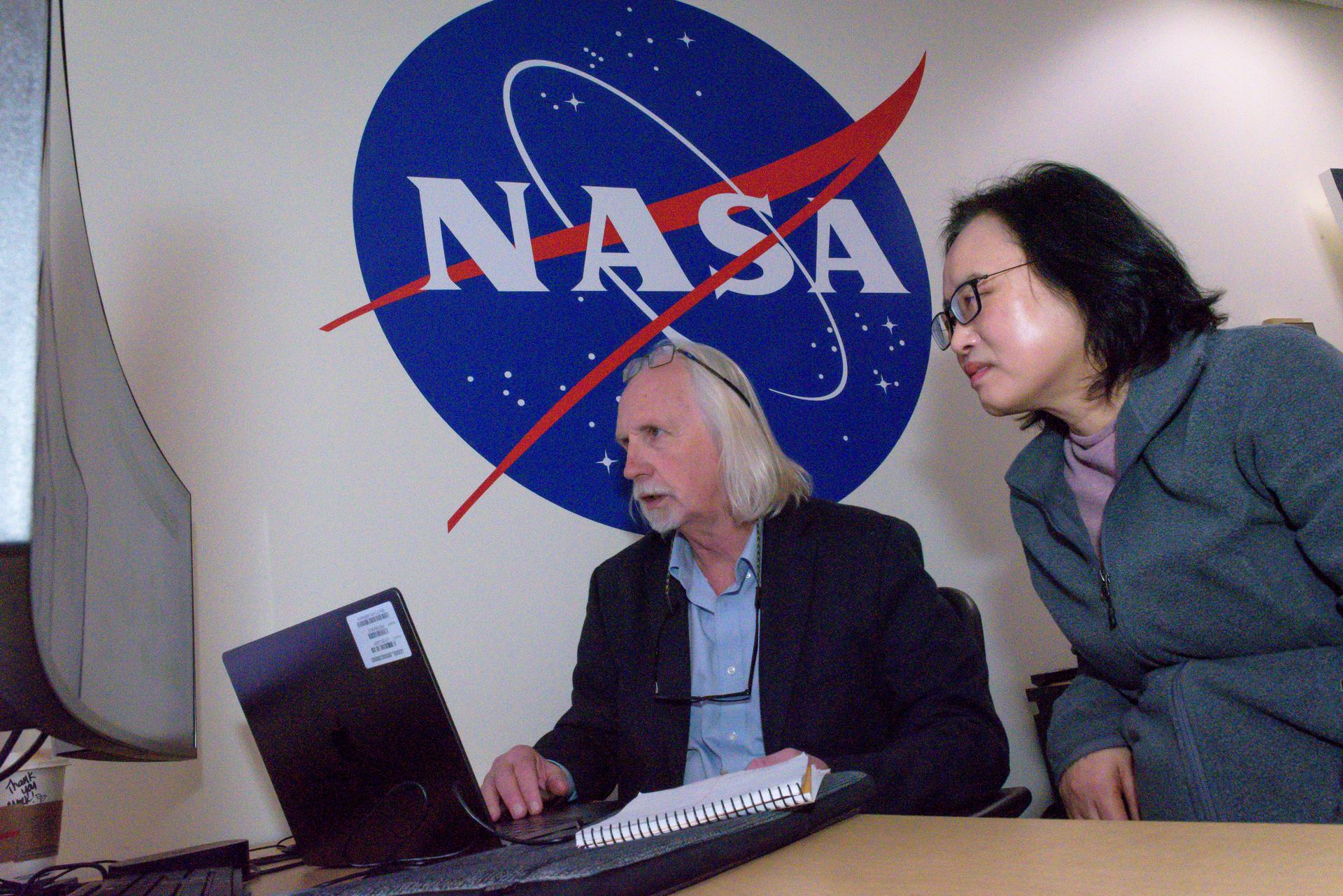
TechEdSat-11 operators Marcus Murbach, left, and Kyeong Ja Kim, in the Ames Multi-Mission Operations Center (MMOC), N240 Annex, Eros control room 162. The team monitors the spacecraft's status during the Exo-Brake “parachute” deployment. The ExoBrake is a drag device that increases the total surface area of the spacecraft to assist with a quicker deorbit. This maneuver is deployed at the end of mission to satisfy NASA's deorbit requirement and prevent space debris. TechEdSat has spent the last several months coordinating with NASA’s Conjunction Assessment Risk Analysis (CARA) team to ensure the spacecraft can safely deploy the ExoBrake without colliding into any other objects.

TechEdSat-11 operators Daphne Dao, left, and Alejandro Salas, in the Ames Multi-Mission Operations Center (MMOC), N240 Annex, Eros control room 162. The team monitors the spacecraft's status during the Exo-Brake “parachute” deployment. The ExoBrake is a drag device that increases the total surface area of the spacecraft to assist with a quicker deorbit. This maneuver is deployed at the end of mission to satisfy NASA's deorbit requirement and prevent space debris. TechEdSat has spent the last several months coordinating with NASA’s Conjunction Assessment Risk Analysis (CARA) team to ensure the spacecraft can safely deploy the ExoBrake without colliding into any other objects.
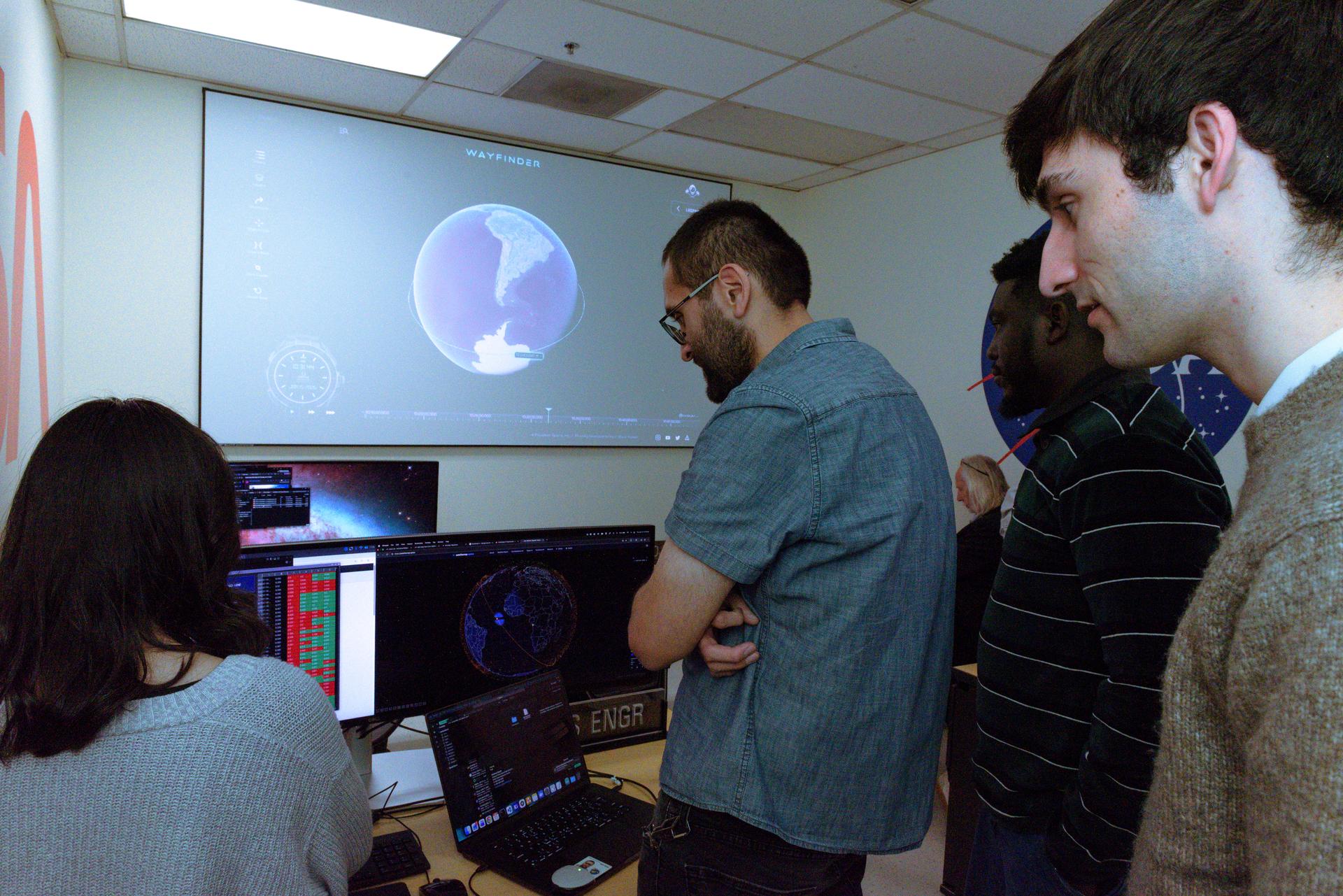
TechEdSat-11 operators Daphne Dao, left, Alejandro Salas, Kwabena Boateng, and Malachi Mooney-Rivkin, right, in the Ames Multi-Mission Operations Center (MMOC), N240 Annex, Eros control room 162. The team monitors the spacecraft's status during the Exo-Brake “parachute” deployment. The ExoBrake is a drag device that increases the total surface area of the spacecraft to assist with a quicker deorbit. This maneuver is deployed at the end of mission to satisfy NASA's deorbit requirement and prevent space debris. TechEdSat has spent the last several months coordinating with NASA’s Conjunction Assessment Risk Analysis (CARA) team to ensure the spacecraft can safely deploy the ExoBrake without colliding into any other objects.
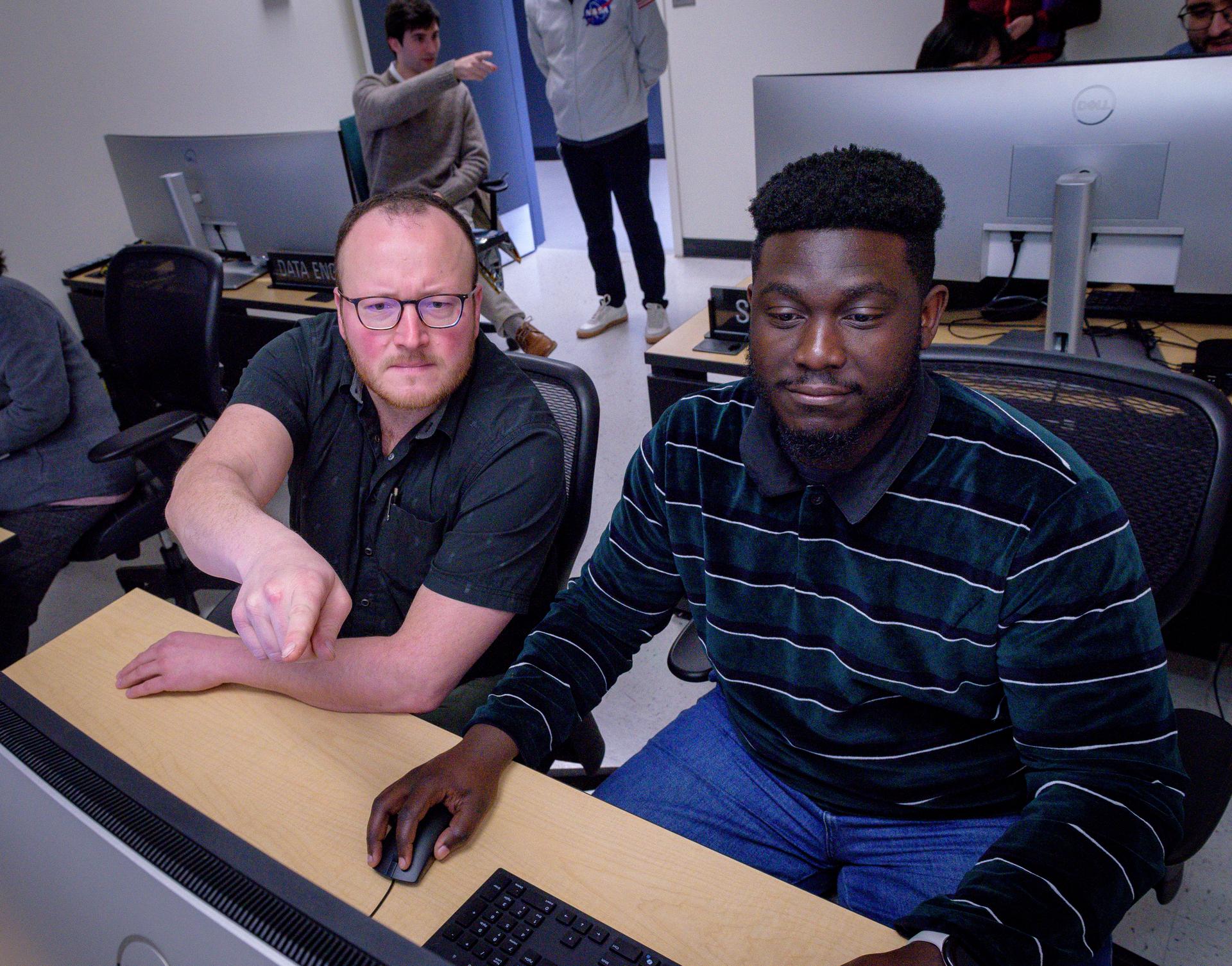
TechEdSat-11 operators Luke Idziak, left, and Kwabena Boateng, in the Ames Multi-Mission Operations Center (MMOC), N240 Annex, Eros control room 162. The operators monitor the spacecraft's status during the Exo-Brake “parachute” deployment. The ExoBrake is a drag device that increases the total surface area of the spacecraft to assist with a quicker deorbit. This maneuver is deployed at the end of mission to satisfy NASA's deorbit requirement and prevent space debris. TechEdSat has spent the last several months coordinating with NASA’s Conjunction Assessment Risk Analysis (CARA) team to ensure the spacecraft can safely deploy the ExoBrake without colliding into any other objects.
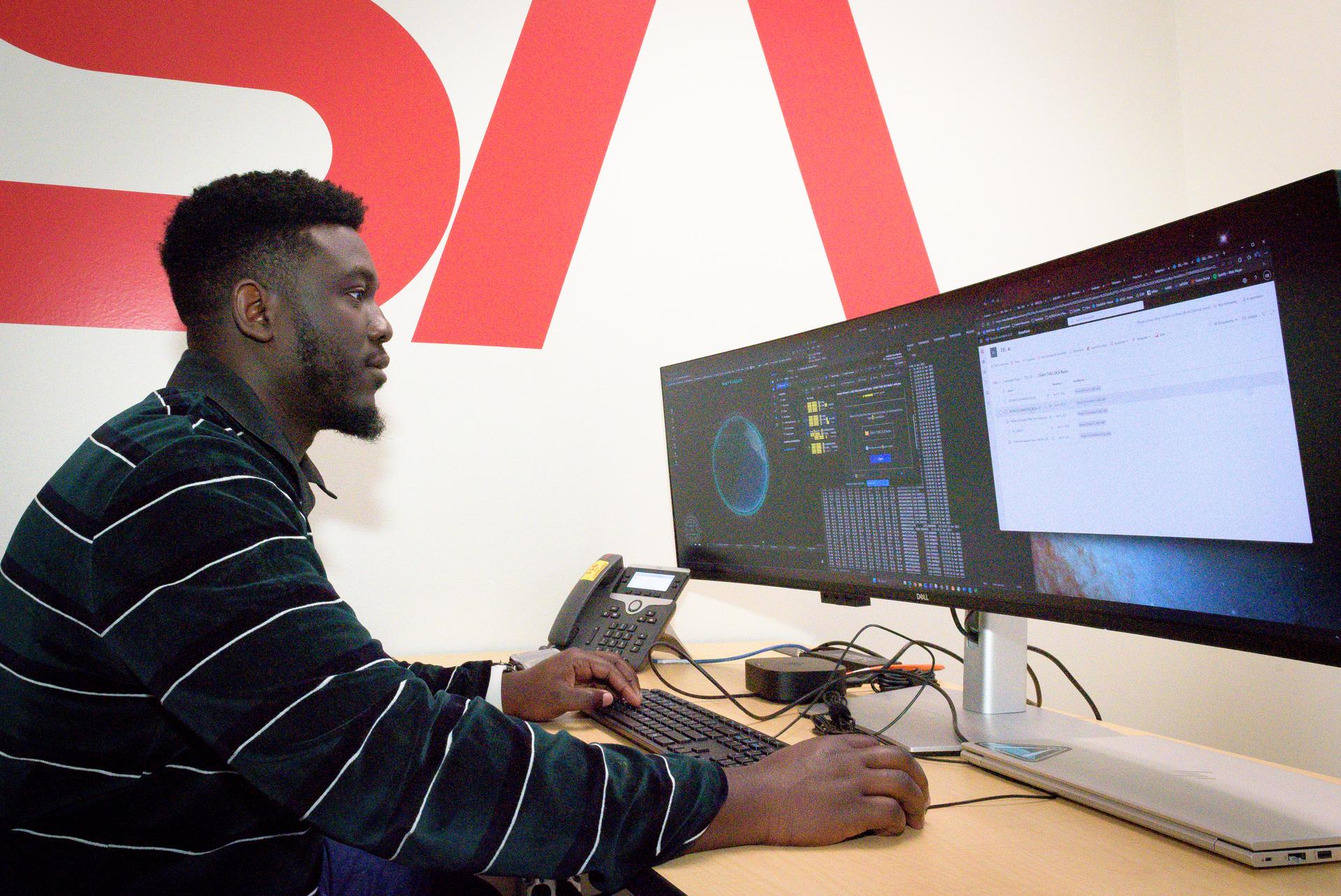
TechEdSat-11 operator Kwabena Boateng, in the Ames Multi-Mission Operations Center (MMOC), N240 Annex, Eros control room 162. Kwabena monitors the spacecraft's status during the Exo-Brake “parachute” deployment. The ExoBrake is a drag device that increases the total surface area of the spacecraft to assist with a quicker deorbit. This maneuver is deployed at the end of mission to satisfy NASA's deorbit requirement and prevent space debris. TechEdSat has spent the last several months coordinating with NASA’s Conjunction Assessment Risk Analysis (CARA) team to ensure the spacecraft can safely deploy the ExoBrake without colliding into any other objects.
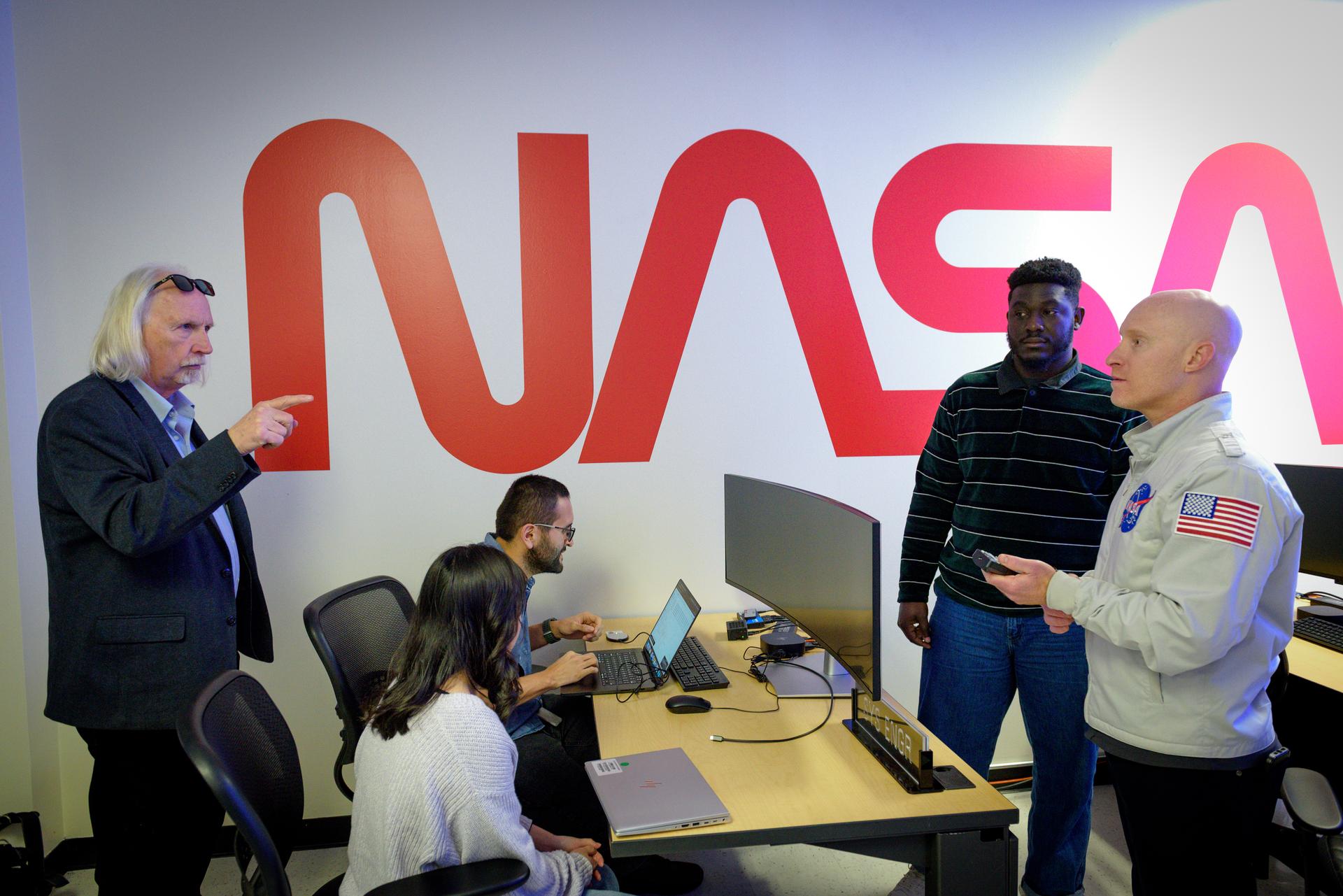
TechEdSat-11 operators Marcus Murbach, left, Daphne Dao and Alejandro Salas, seated, Kwabena Boateng, and Justin Pane, right, in the Ames Multi-Mission Operations Center (MMOC), N240 Annex, Eros control room 162. The team monitors the spacecraft's status during the Exo-Brake “parachute” deployment. The ExoBrake is a drag device that increases the total surface area of the spacecraft to assist with a quicker deorbit. This maneuver is deployed at the end of mission to satisfy NASA's deorbit requirement and prevent space debris. TechEdSat has spent the last several months coordinating with NASA’s Conjunction Assessment Risk Analysis (CARA) team to ensure the spacecraft can safely deploy the ExoBrake without colliding into any other objects.
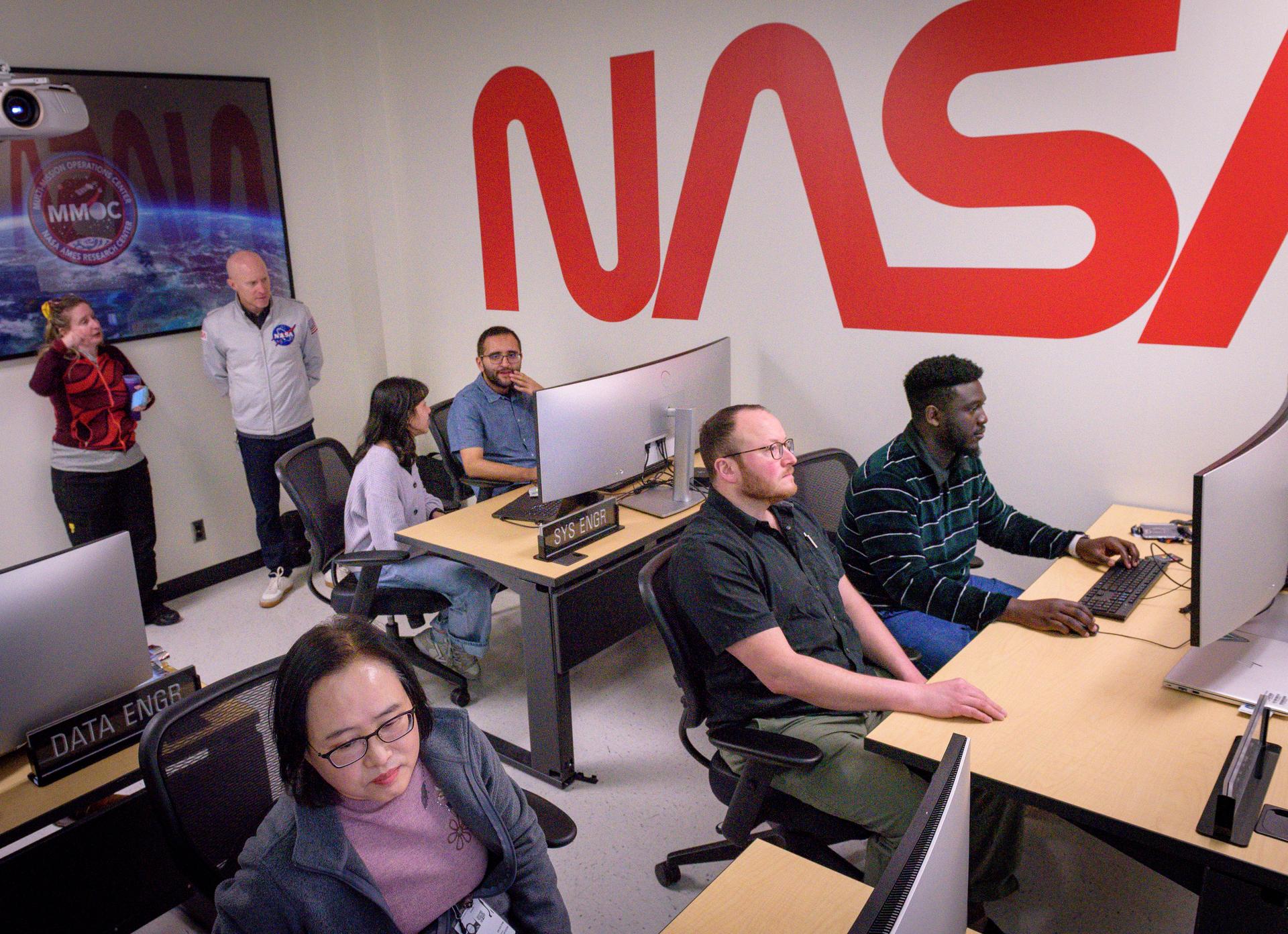
TechEdSat-11 operators Heather Smith, left, Justin Pane, Daphne Dao and Alejandro Salas, seated, Kyeong Ja Kim, Luke Idziak, and Kwabena Boateng right, in the Ames Multi-Mission Operations Center (MMOC), N240 Annex, Eros control room 162. The team monitors the spacecraft's status during the Exo-Brake “parachute” deployment. The ExoBrake is a drag device that increases the total surface area of the spacecraft to assist with a quicker deorbit. This maneuver is deployed at the end of mission to satisfy NASA's deorbit requirement and prevent space debris. TechEdSat has spent the last several months coordinating with NASA’s Conjunction Assessment Risk Analysis (CARA) team to ensure the spacecraft can safely deploy the ExoBrake without colliding into any other objects.
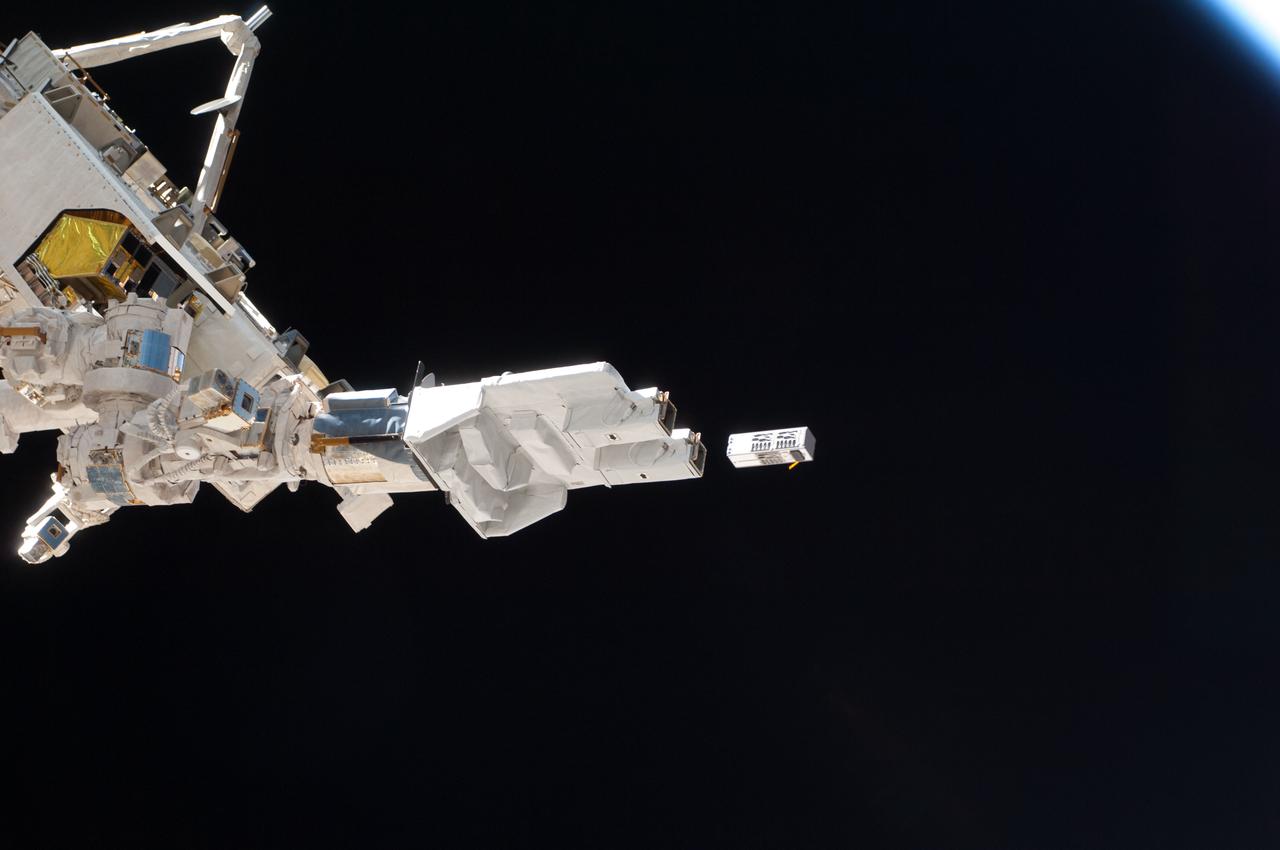
ISS038-E-004967 (19 Nov. 2013) ---
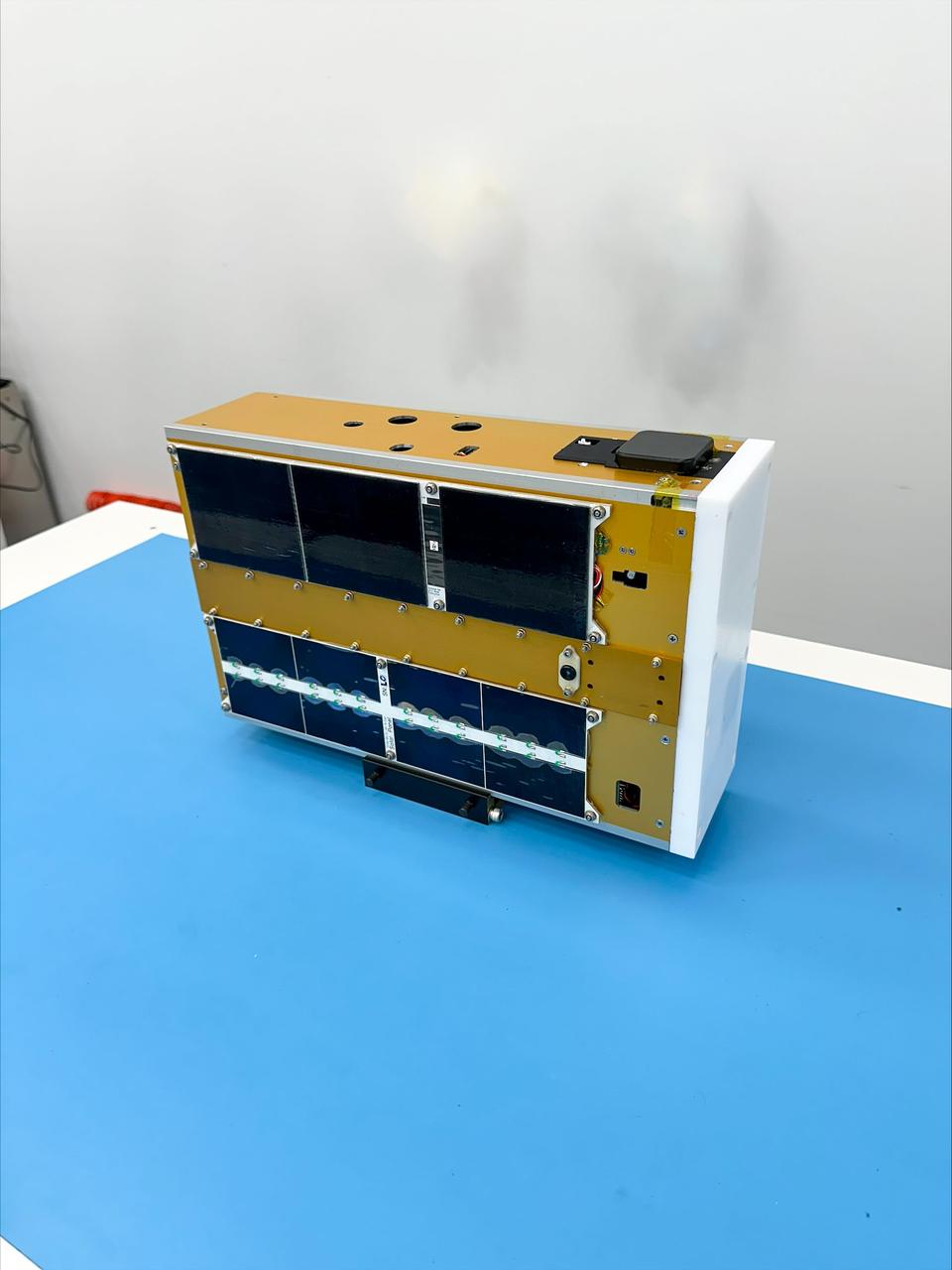
NASA’s TechEdSat-11 (TES-11) CubeSat awaits integration at Firefly’s Payload Processing Facility at Vandenberg Space Force Base, California on Saturday, June 8, 2024. Serenity, along with several other CubeSats, will launch to space on an Alpha rocket during NASA’s Educational Launch of Nanosatellites (ELaNa) 43 mission as part of the agency’s CubeSat Launch Initiative and Firefly’s Venture-Class Launch Services Demonstration 2 contract.
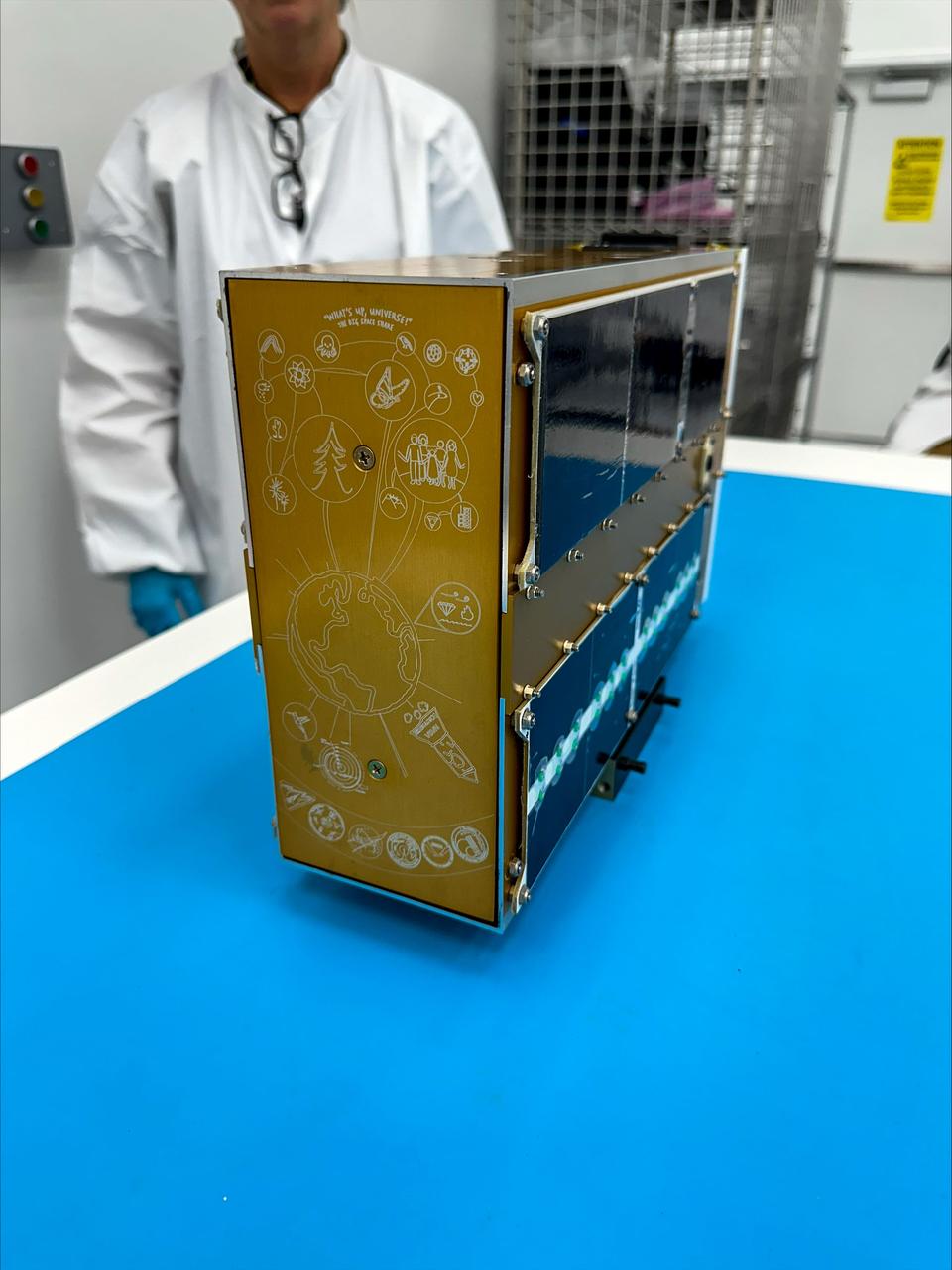
NASA’s TechEdSat-11 (TES-11) CubeSat awaits integration at Firefly’s Payload Processing Facility at Vandenberg Space Force Base, California on Saturday, June 8, 2024. Serenity, along with several other CubeSats, will launch to space on an Alpha rocket during NASA’s Educational Launch of Nanosatellites (ELaNa) 43 mission as part of the agency’s CubeSat Launch Initiative and Firefly’s Venture-Class Launch Services Demonstration 2 contract.
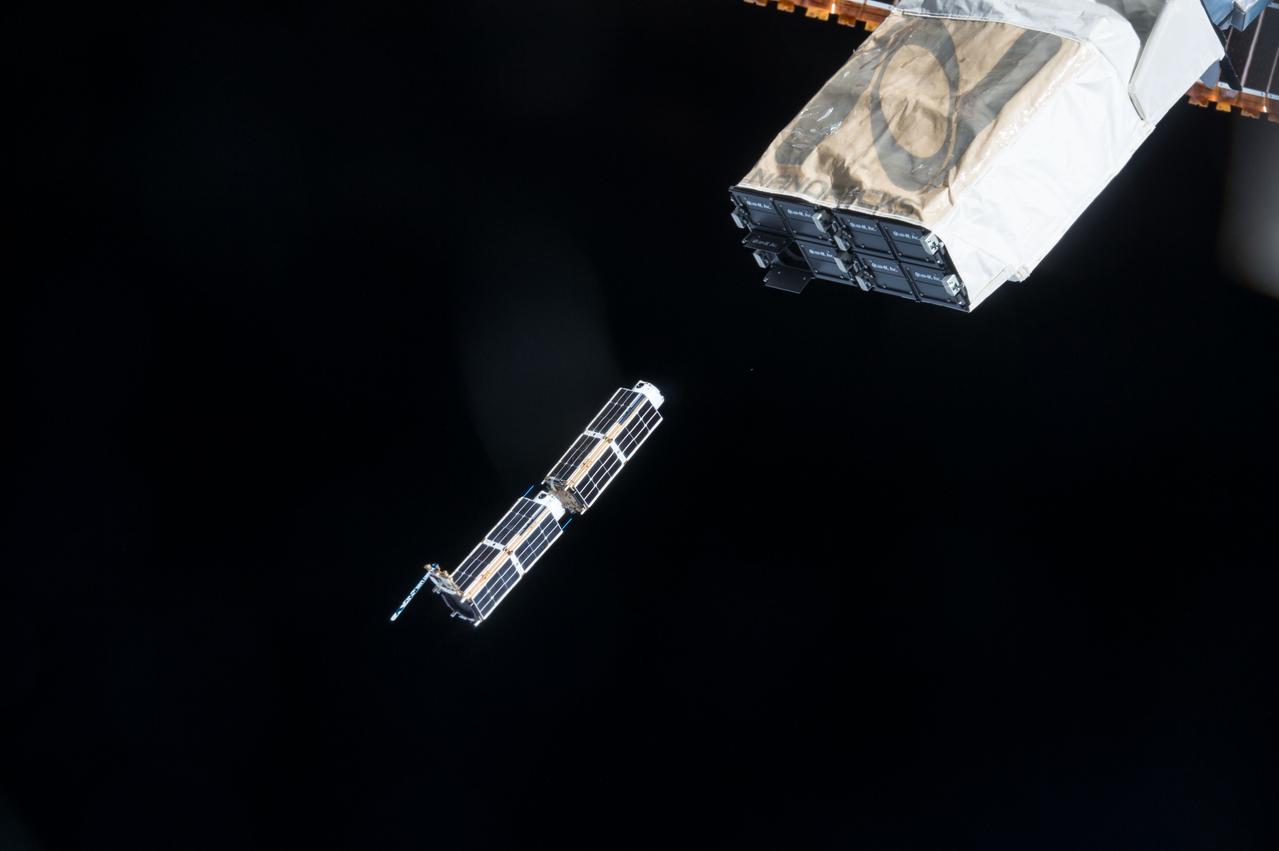
ISS042E290579 (02/27/2015) --- On Feb. 27 2015, a series of CubeSats, small experimental satellites, were deployed via a special device mounted on the Japanese Experiment Module (JEM) Remote Manipulator System (JEMRMS). Deployed satellites included twelve Dove sats, one TechEdSat-4, one GEARRSat, one LambdaSat, one MicroMas. These satellites perform a variety of functions from capturing new Earth imagery, to using microwave scanners to create 3D images of hurricanes, to even developing new methods for returning science samples back to Earth from space. The small satellites were deployed through the first week in March.
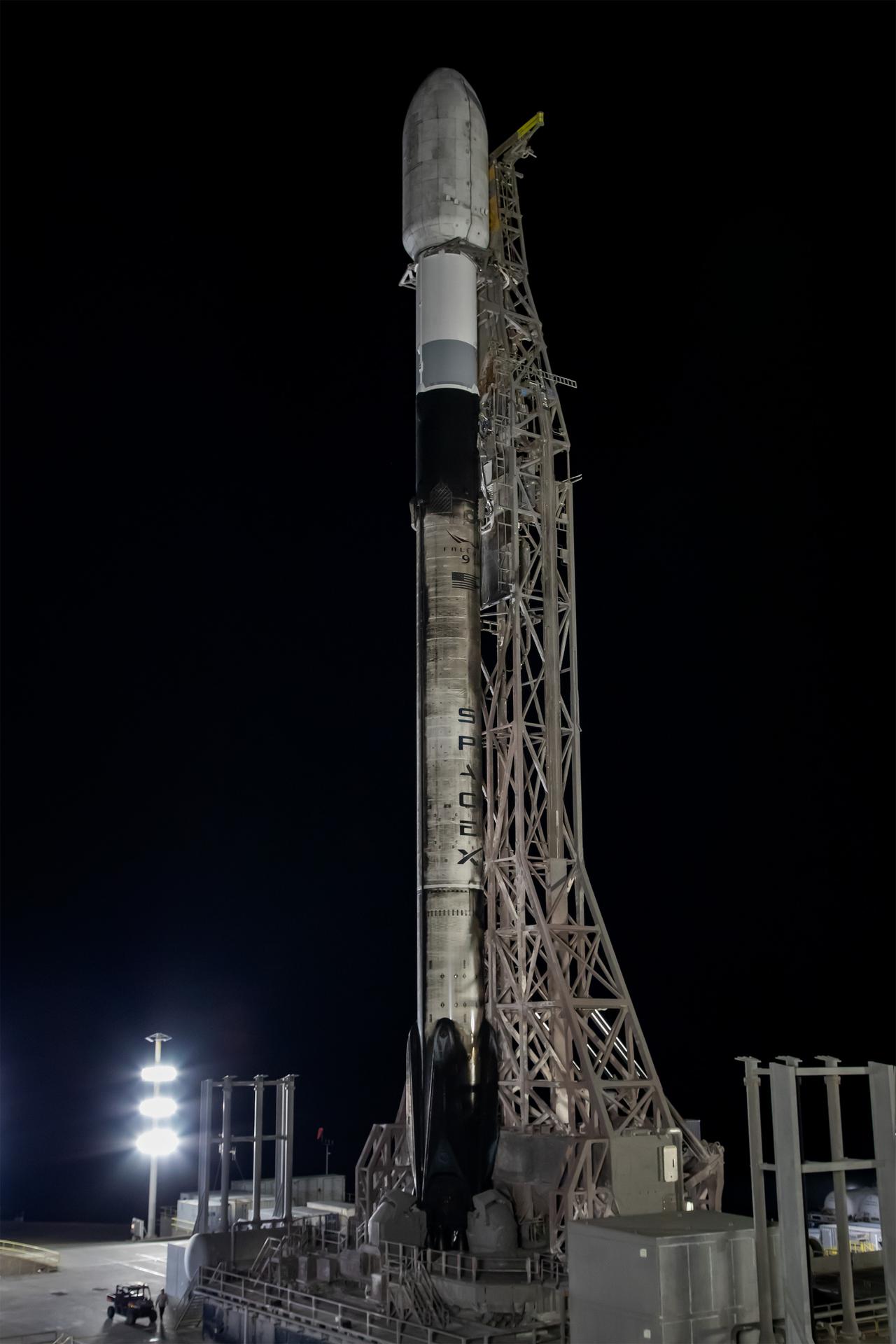
A SpaceX Falcon 9 rocket carrying several NASA small satellites and instruments stands vertical on the pad at Space Launch Complex 4 East at Vandenberg Space Force Base in California on Monday, March 30, 2026, as part of the company’s Transporter-16 mission. The demonstrations will test thermal protection systems, advance in-space communications, deepen our understanding of Earth's atmosphere, and more to foster capabilities for NASA’s exploration and research goals.
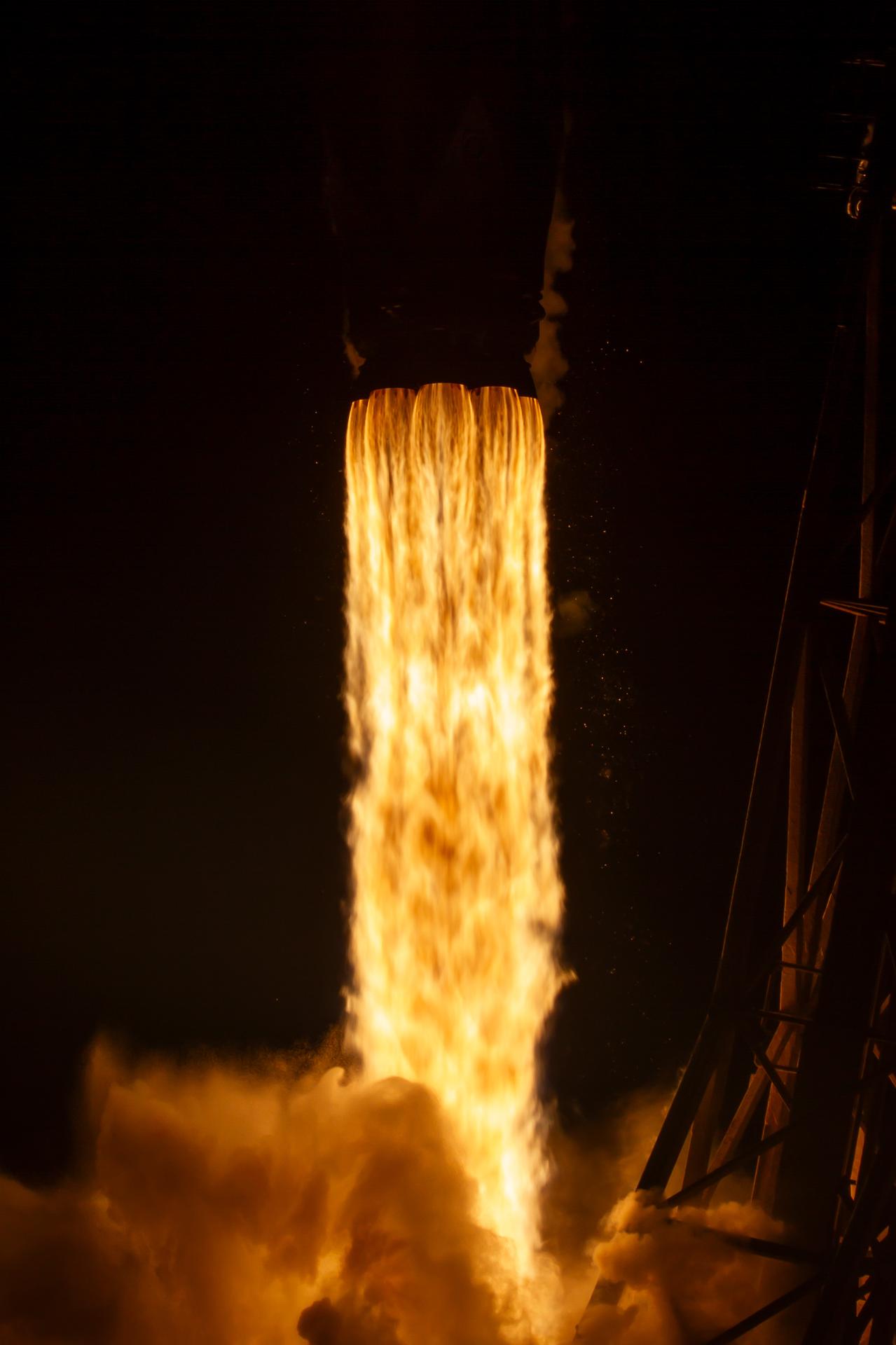
A SpaceX Falcon 9 rocket carrying several NASA small satellites and instruments lifts off from Space Launch Complex 4 East at Vandenberg Space Force Base in California on Monday, March 30, 2026, as part of the company’s Transporter-16 mission. The demonstrations will test thermal protection systems, advance in-space communications, deepen our understanding of Earth's atmosphere, and more to foster capabilities for NASA’s exploration and research goals.
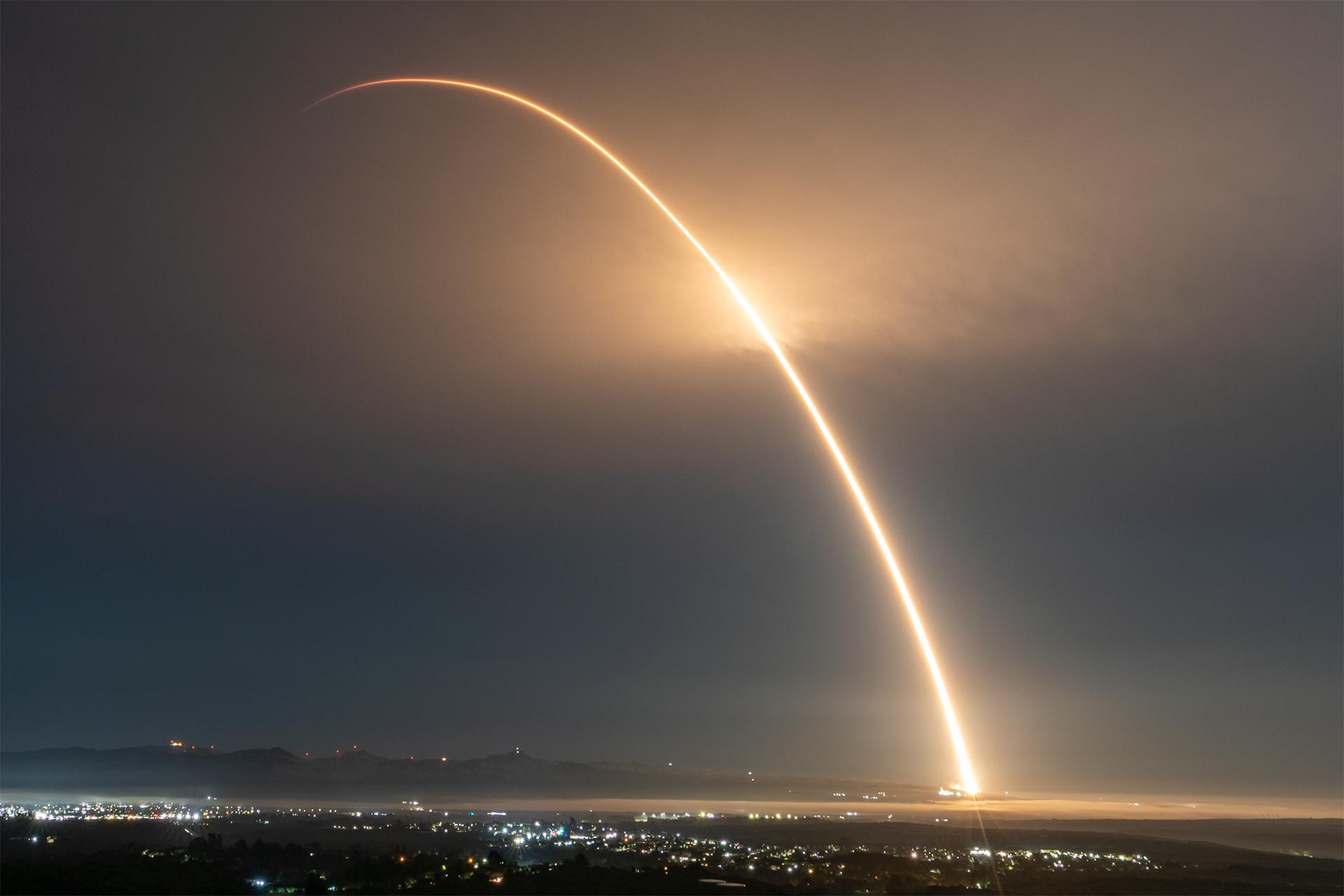
A launch streak captures the liftoff of a SpaceX Falcon 9 rocket carrying several NASA small satellites and instruments from Space Launch Complex 4 East at Vandenberg Space Force Base in California on Monday, March 30, 2026, as part of the company’s Transporter-16 mission. The demonstrations will test thermal protection systems, advance in-space communications, deepen our understanding of Earth's atmosphere, and more to foster capabilities for NASA’s exploration and research goals.
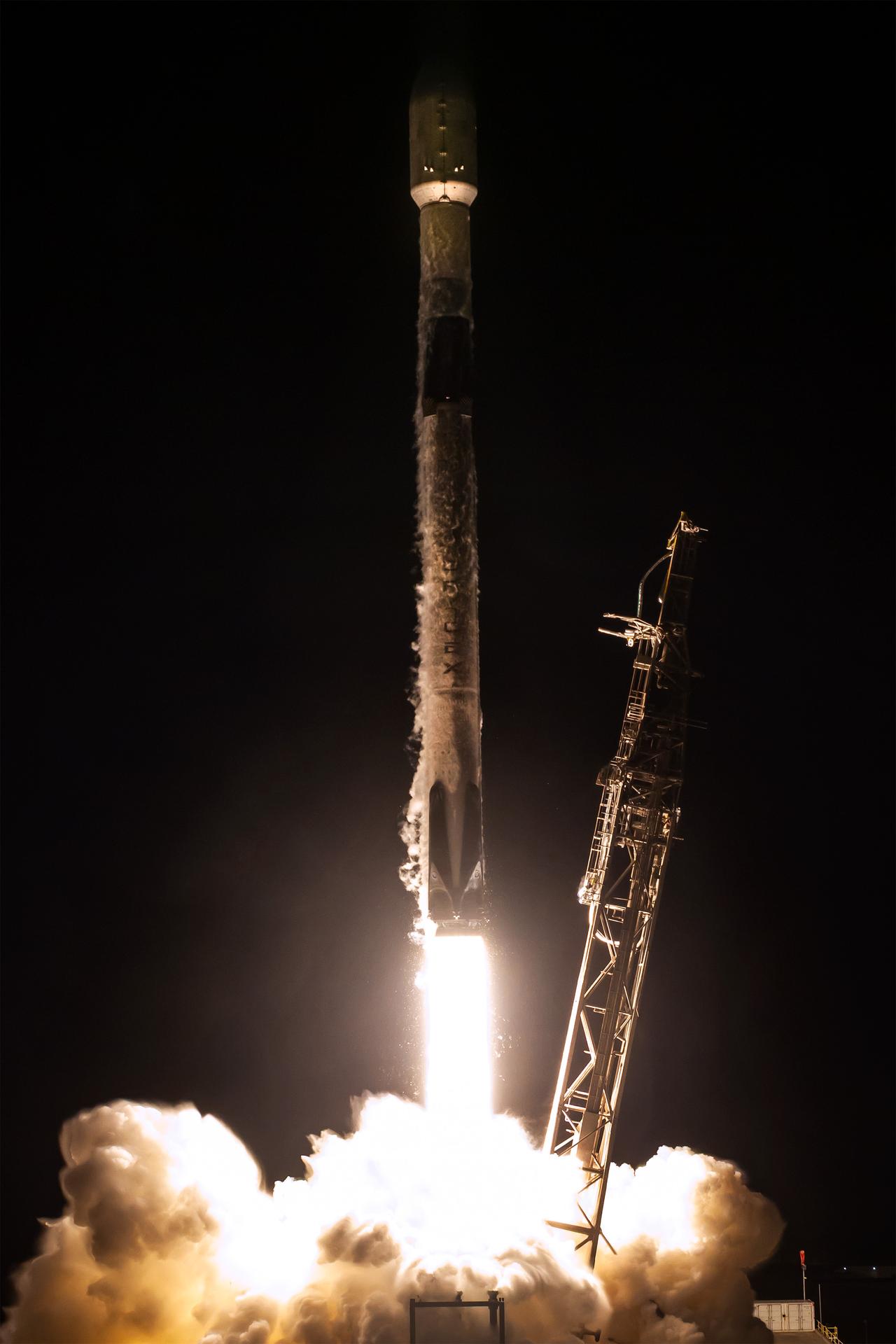
A SpaceX Falcon 9 rocket carrying several NASA small satellites and instruments lifts off from Space Launch Complex 4 East at Vandenberg Space Force Base in California on Monday, March 30, 2026, as part of the company’s Transporter-16 mission. The demonstrations will test thermal protection systems, advance in-space communications, deepen our understanding of Earth's atmosphere, and more to foster capabilities for NASA’s exploration and research goals.
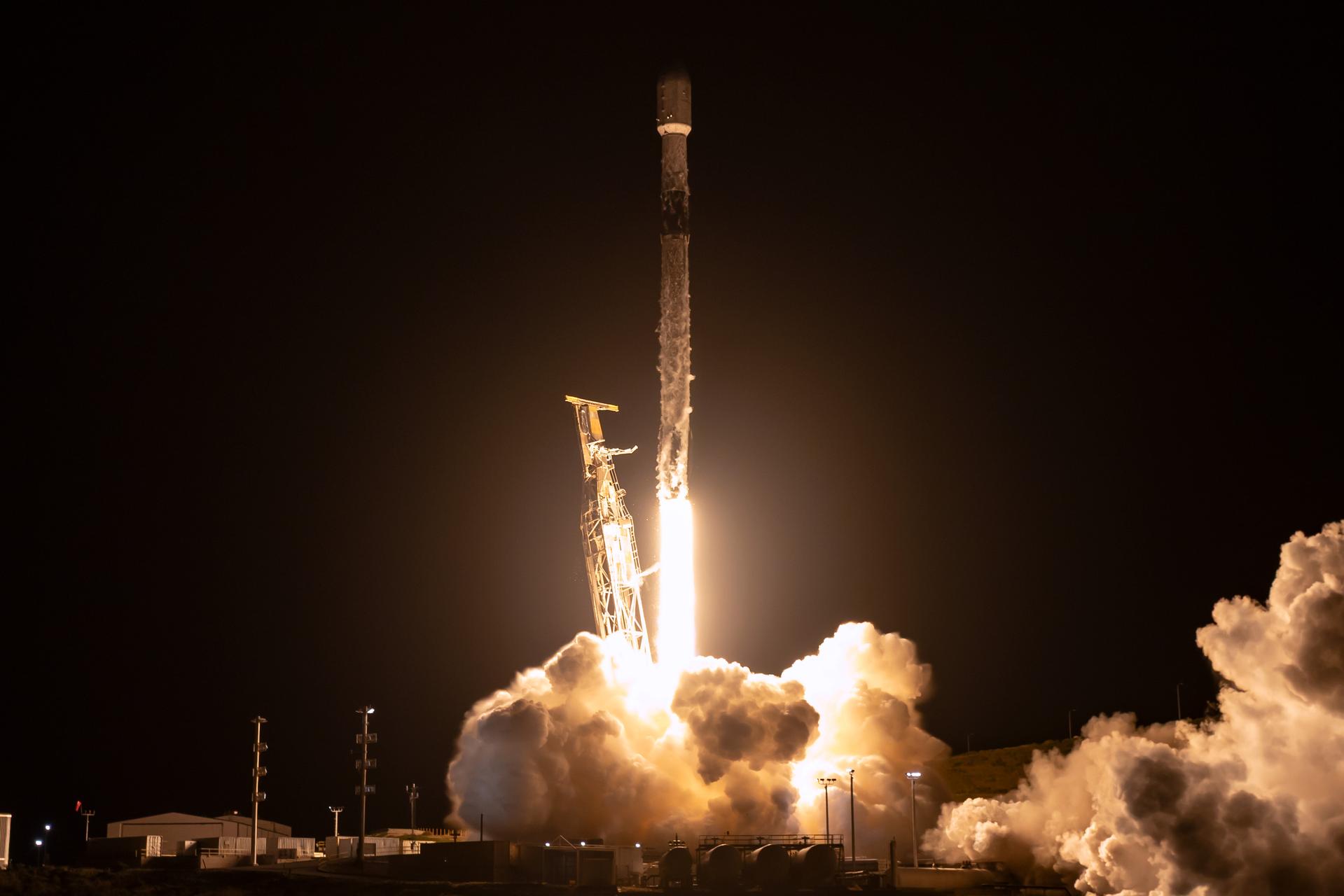
A SpaceX Falcon 9 rocket carrying several NASA small satellites and instruments lifts off from Space Launch Complex 4 East at Vandenberg Space Force Base in California on Monday, March 30, 2026, as part of the company’s Transporter-16 mission. The demonstrations will test thermal protection systems, advance in-space communications, deepen our understanding of Earth's atmosphere, and more to foster capabilities for NASA’s exploration and research goals.