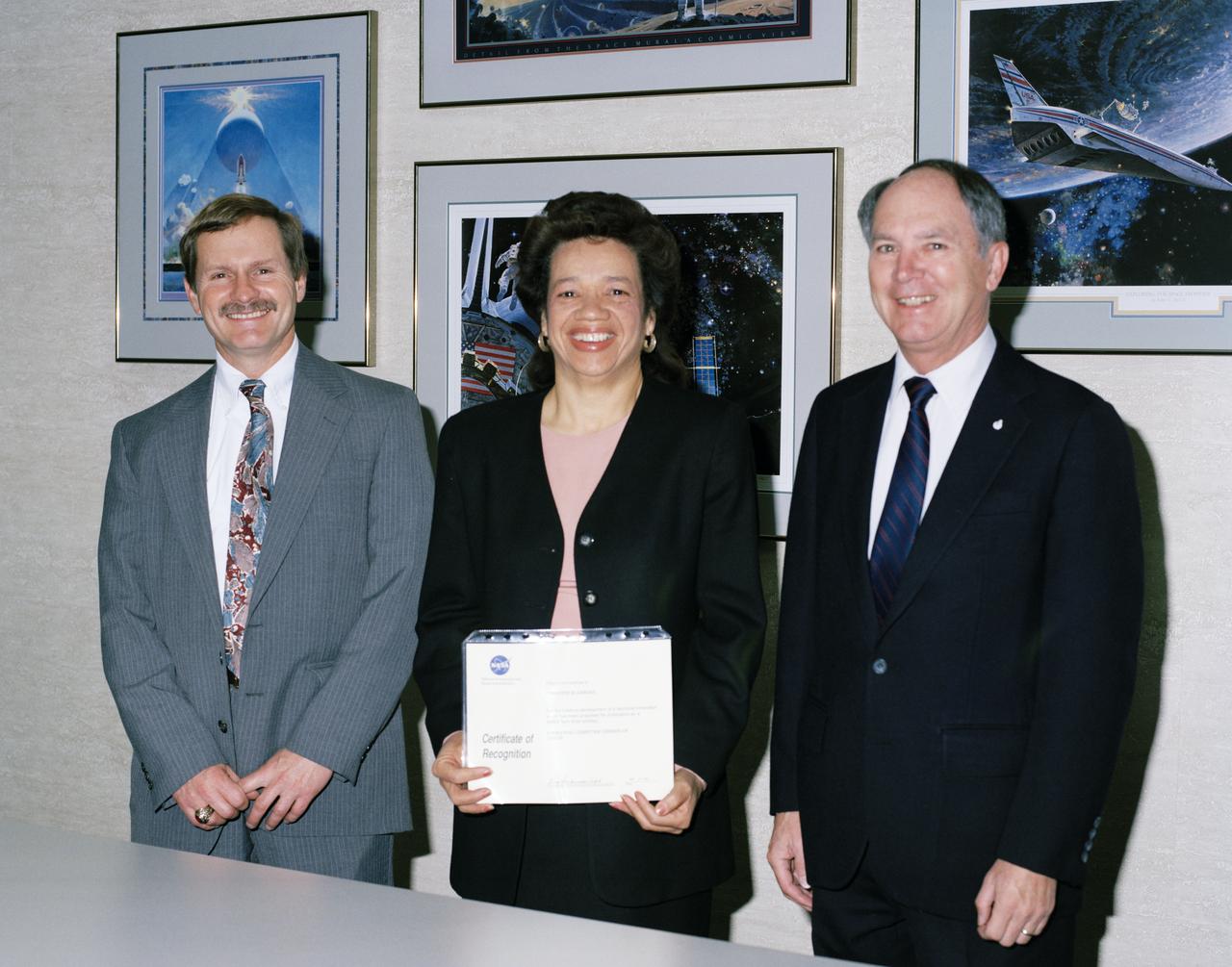
NASA Technical Brief Award to Christine Darden
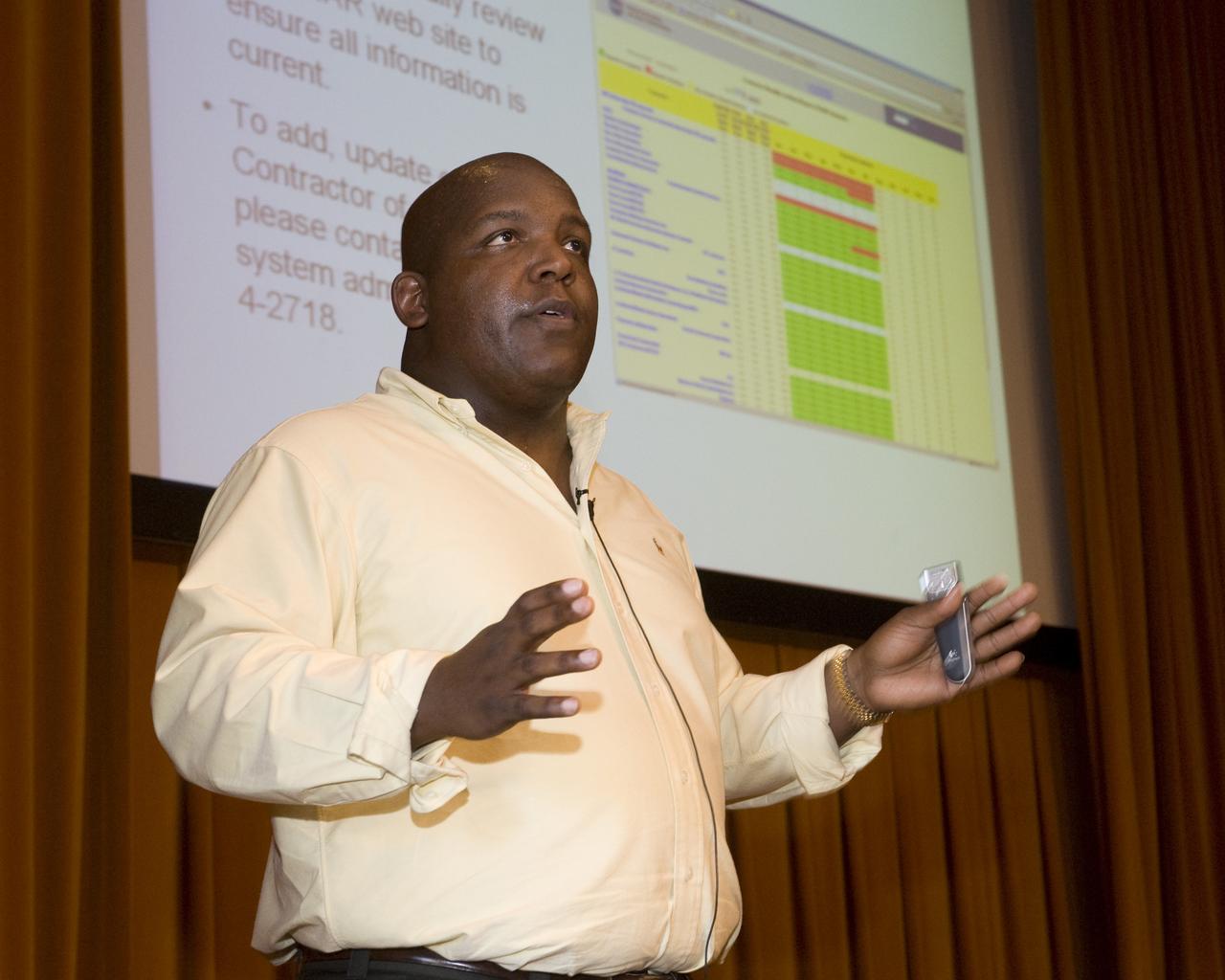
Safety Day Events 2008: Safety briefing for contracting officers, contracting offers' technical representatives and contract site managers.
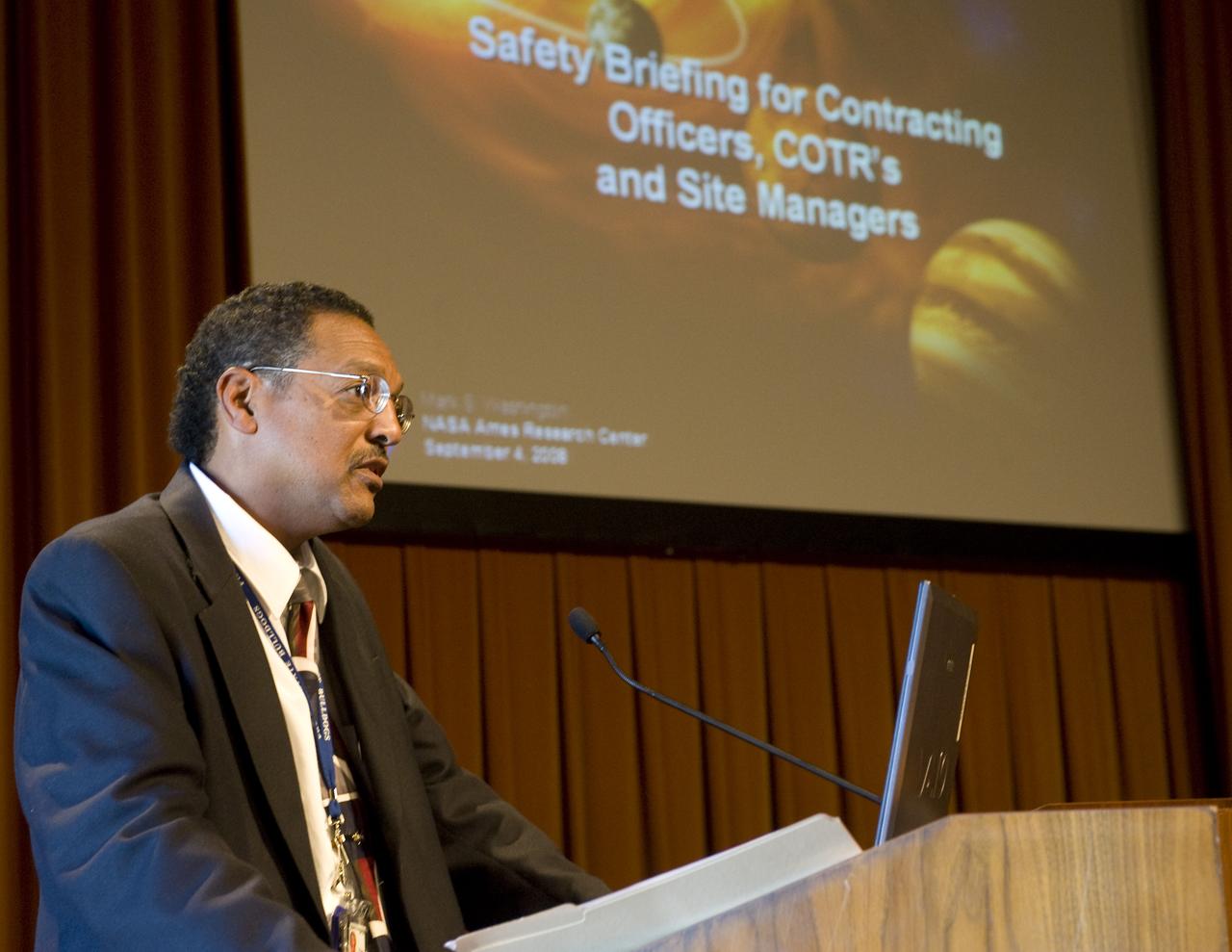
Safety Day Events 2008: Safety briefing for contracting officers, contracting offers' technical representatives and contract site managers. with Lew Braxton III
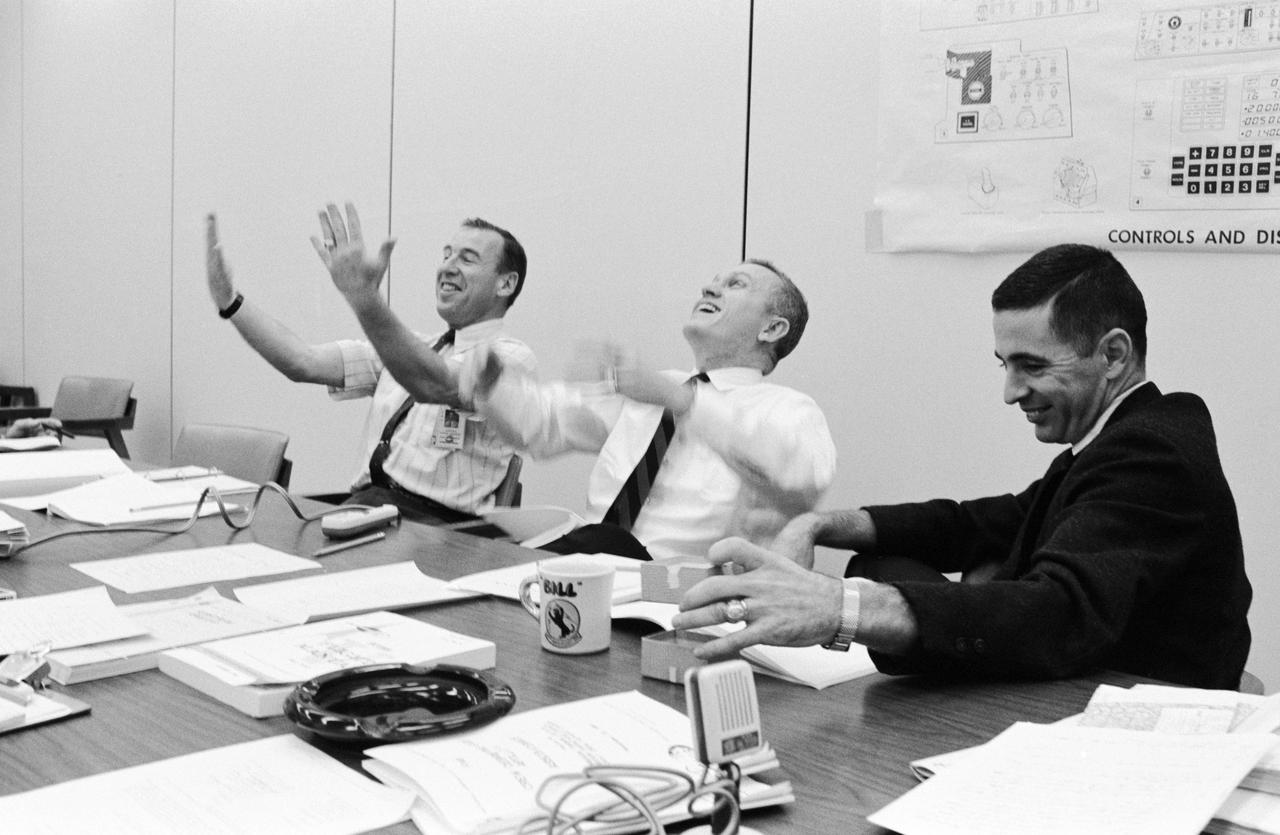
S68-56530 (30 Dec. 1968) --- The crew of the historic Apollo 8 lunar orbit mission participates in a technical de-briefing session in Building 4. Left to right, are astronauts James A. Lovell Jr., command module pilot; Frank Borman, commander; and William A. Anders, lunar module pilot.
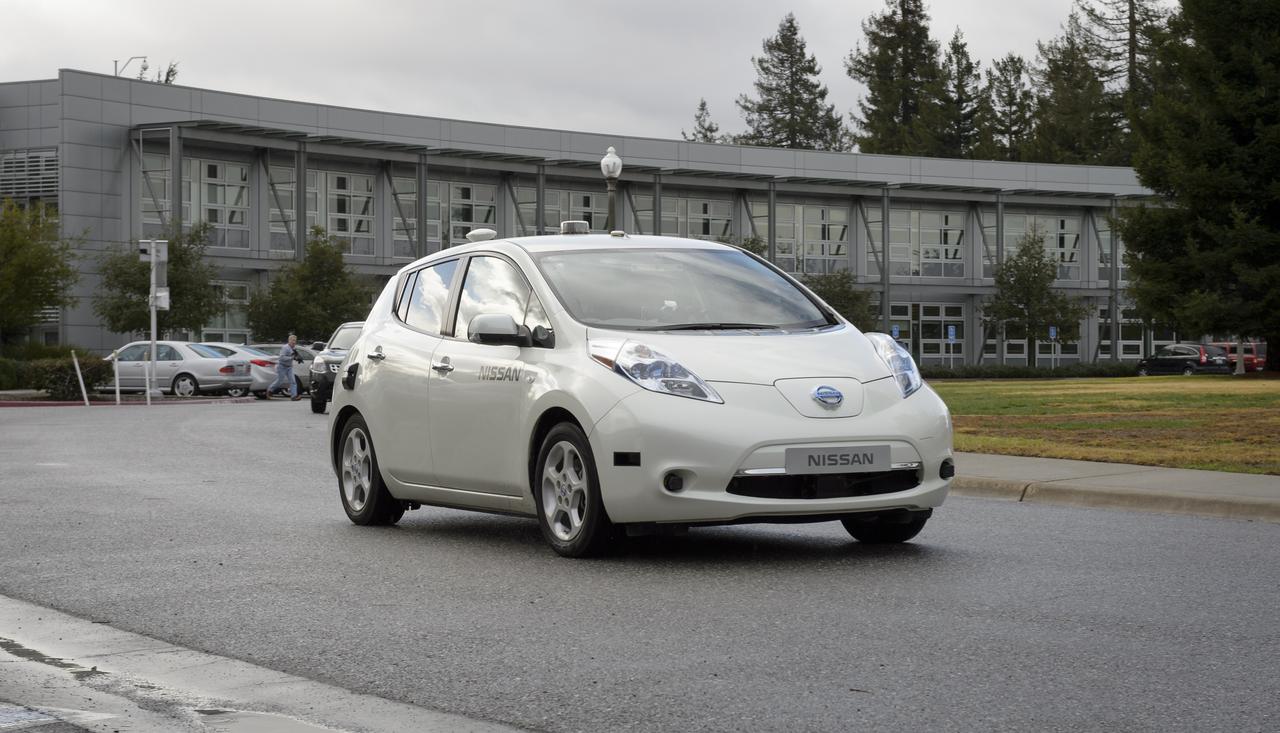
Senior executives from the Renault-Nissan Alliance, including Carlos Ghosn, chairman and CEO of Nissan, and Jose Munoz, chairman of Nissan North America, visited Ames for meetings and a showcase of the technical partnership between NASA and Nissan North America. After briefings, the group observed testing of Nissan’s all-electric LEAF as it performed safe autonomous drives across the center.
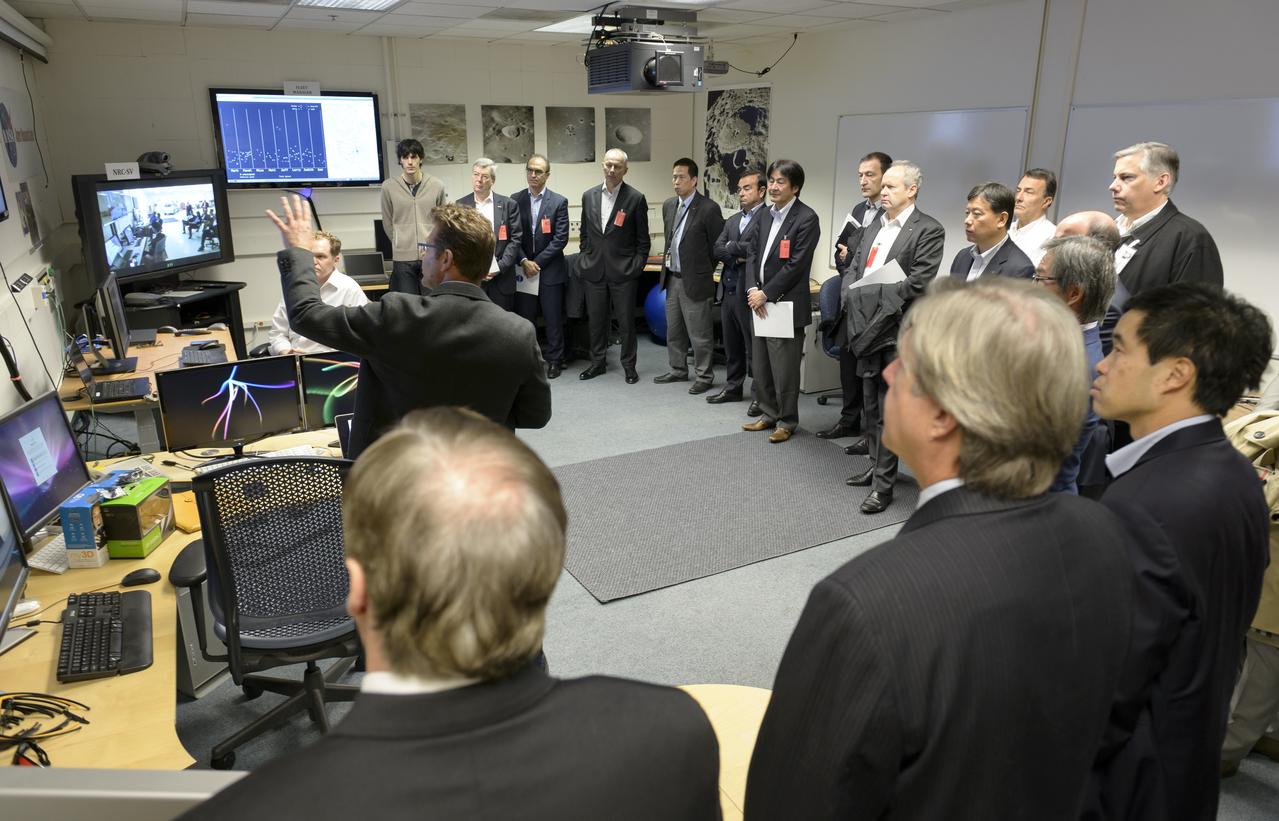
Senior executives from the Renault-Nissan Alliance, including Carlos Ghosn, chairman and CEO of Nissan, and Jose Munoz, chairman of Nissan North America, visited Ames for meetings and a showcase of the technical partnership between NASA and Nissan North America. After briefings, the group gathers in at the Autonomous Sciences Research Facility for a remote vehicle monitoring demo.
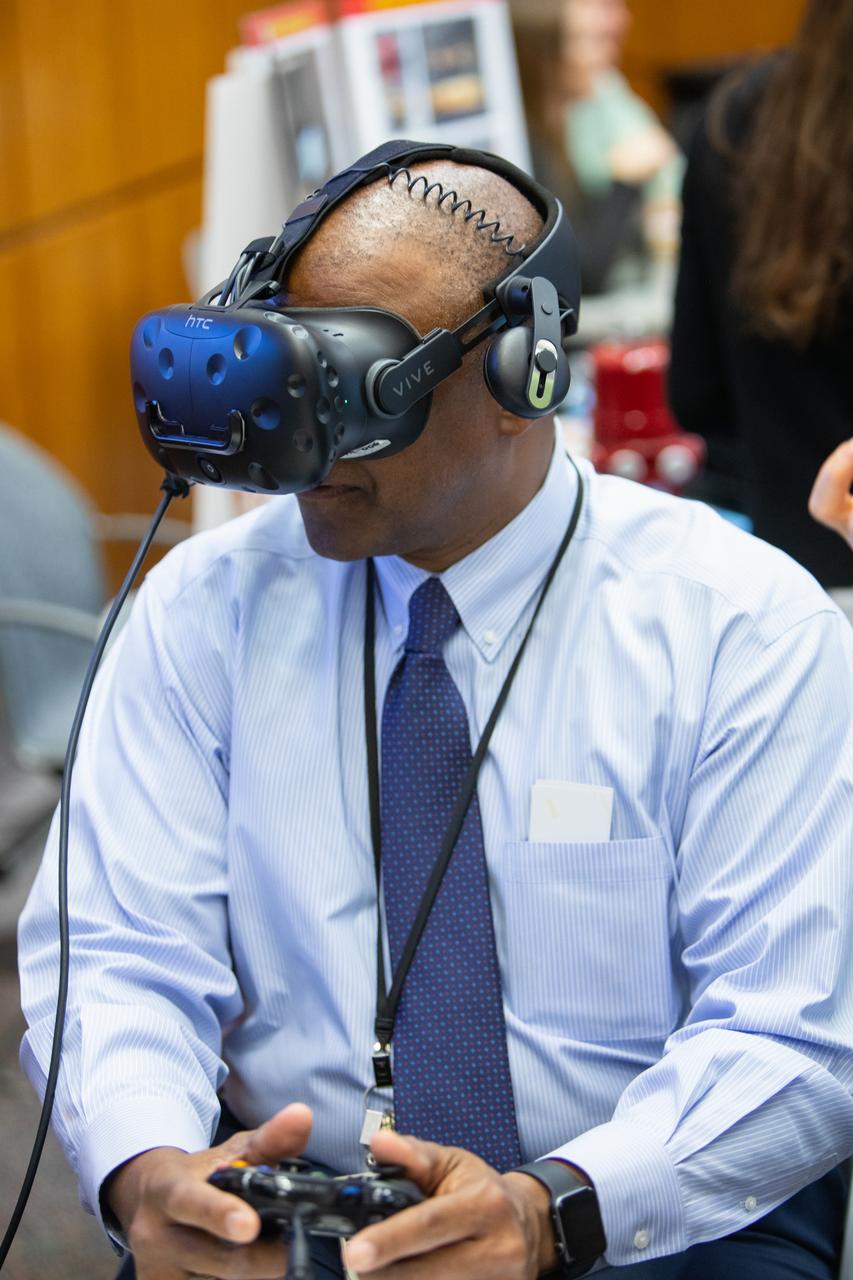
Kennedy Space Center Associate Director, Technical, Kelvin Manning tries out a virtual reality headset during an innovation showcase on Nov. 19, 2019, in the Florida spaceport’s Neil Armstrong Operations and Checkout Building’s Mission Briefing Room. Nearly 50 exhibitors gathered to demonstrate new technologies and innovations during the center’s Innovation Days – one of several events throughout the year aimed at fostering and encouraging an innovative culture at Kennedy. Showcase participants included individuals from multiple directorates, programs and organizations throughout Kennedy. In addition to the showcase, employees had the opportunity to attend an overview presentation on NASA’s Human Landing System (HLS), hosted by HLS Program Manager Lisa Watson-Morgan.
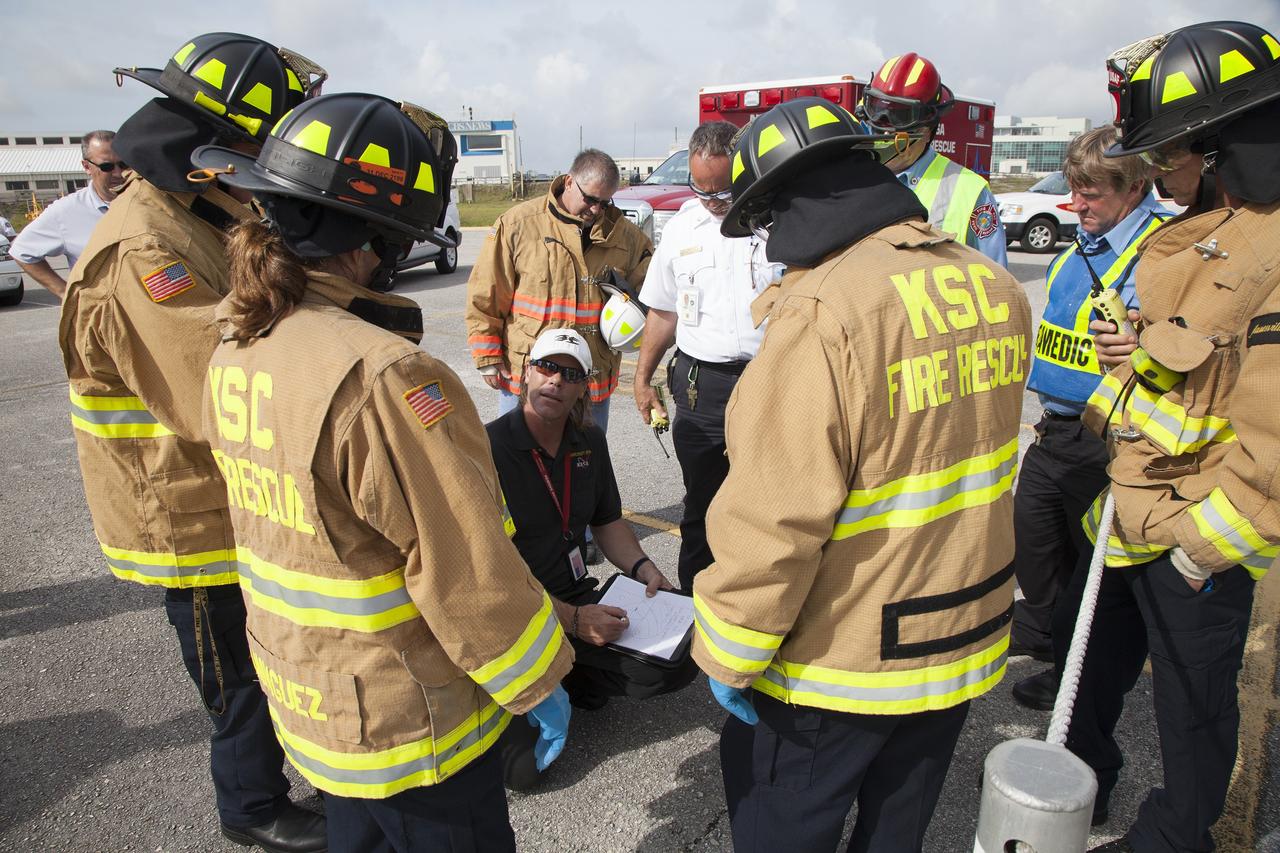
CAPE CANAVERAL, Fla. -- At NASA's Kennedy Space Center in Florida, Bill Martin, a URS Federal Technical Services helicopter pilot in NASA Aircraft Operations, kneeling, briefs NASA Fire Rescue personnel prior to the start of a simulated emergency. The activity taking place in Kennedy's Launch Complex 39 turn-basin parking lot was only one of several drills. It was part of a new training program that was developed by Kennedy's Fire Rescue department along with NASA Aircraft Operations to sharpen the skills needed to help rescue personnel learn how to collaborate with helicopter pilots in taking injured patients to hospitals as quickly as possible. Photo credit: NASA/Dan Casper
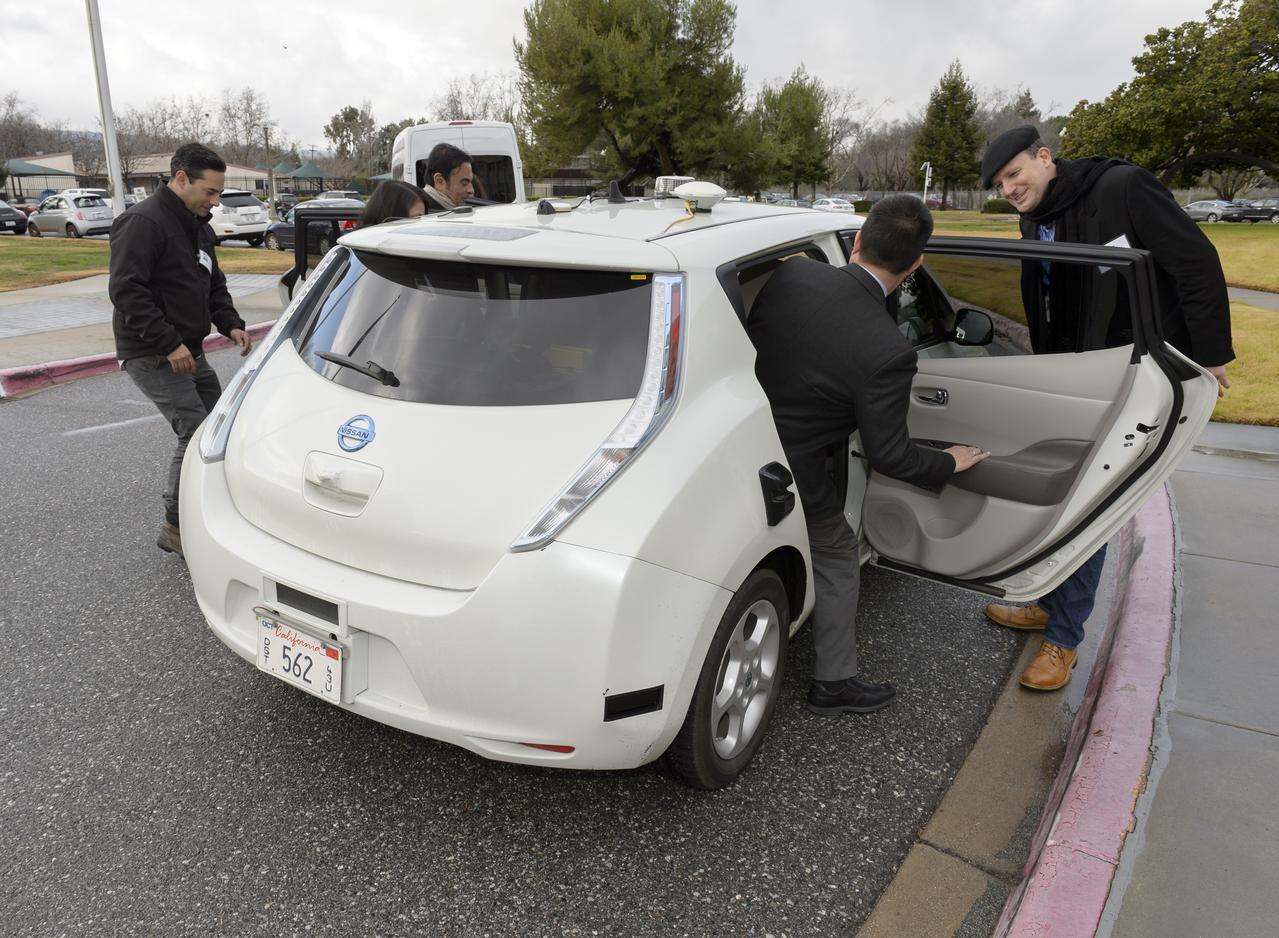
Senior executives from the Renault-Nissan Alliance, including Carlos Ghosn, chairman and CEO of Nissan, and Jose Munoz, chairman of Nissan North America, visited Ames for meetings and a showcase of the technical partnership between NASA and Nissan North America. The partnership allows researchers to develop and test autonomy algorithms, concepts, and integrated prototypes for a variety of vehicular transport applications – from rovers to self-driving cars. After briefings, a company of including Eugene Tu, Ames Center Director andLiam Pedersen, Nissan on right Carlos Ghosn, CE, Nissan on left climb into in the autonomous vehicle to observed testing of Nissan’s all-electric LEAF as it performed safe autonomous drives across the center.
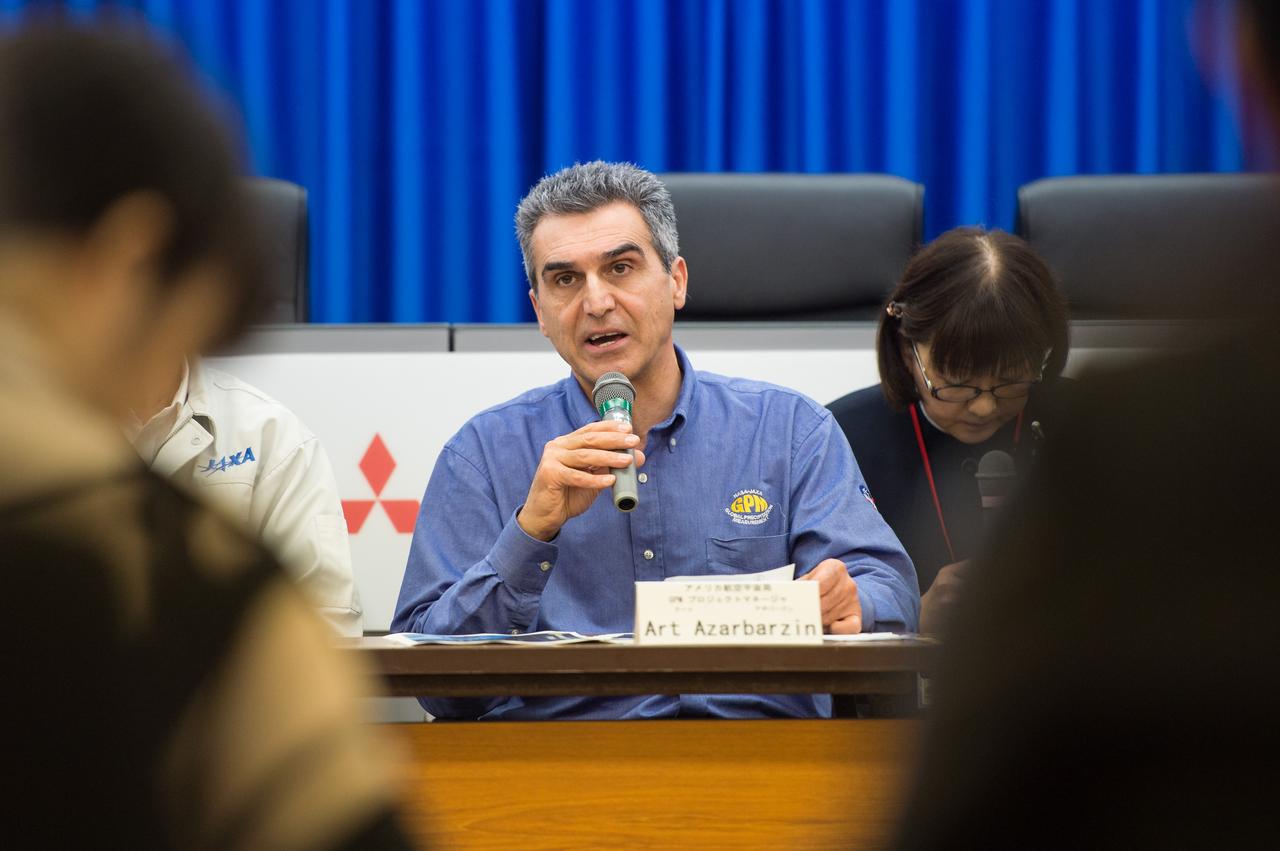
Art Azarbarzin, NASA Global Precipitation Measurement (GPM) project manager talks during a technical briefing for the launch of the Global Precipitation Measurement (GPM) Core Observatory aboard an H-IIA rocket, Wednesday, Feb. 26, 2014, Tanegashima Space Center, Japan. Launch is scheduled for early in the morning of Feb. 28 Japan time. Once launched, the GPM spacecraft will collect information that unifies data from an international network of existing and future satellites to map global rainfall and snowfall every three hours. Photo Credit: (NASA/Bill Ingalls)
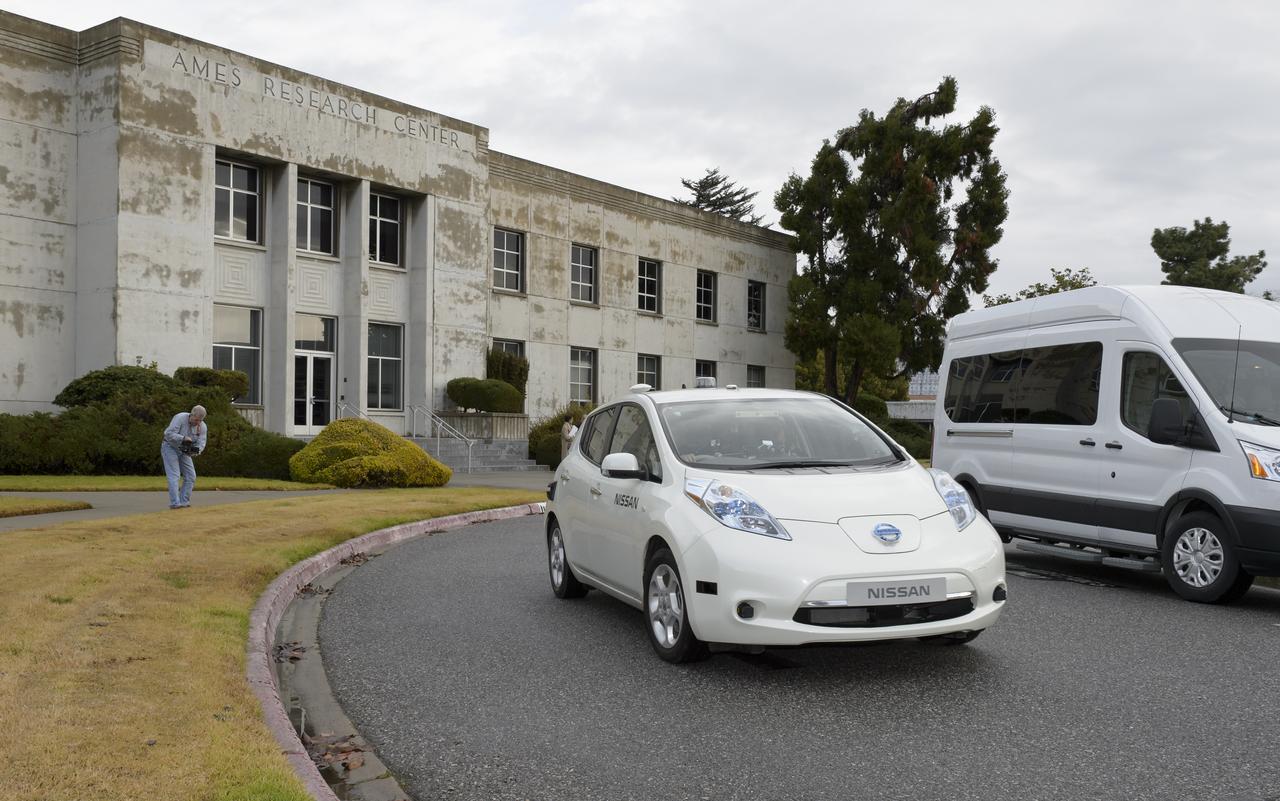
Senior executives from the Renault-Nissan Alliance, including Carlos Ghosn, chairman and CEO of Nissan, and Jose Munoz, chairman of Nissan North America, visited Ames for meetings and a showcase of the technical partnership between NASA and Nissan North America. The partnership allows researchers to develop and test autonomy algorithms, concepts, and integrated prototypes for a variety of vehicular transport applications – from rovers to self-driving cars. After briefings, a group take a ride in the autonomous vehicle to observed testing of Nissan’s all-electric LEAF as it performed safe autonomous drives across the center.
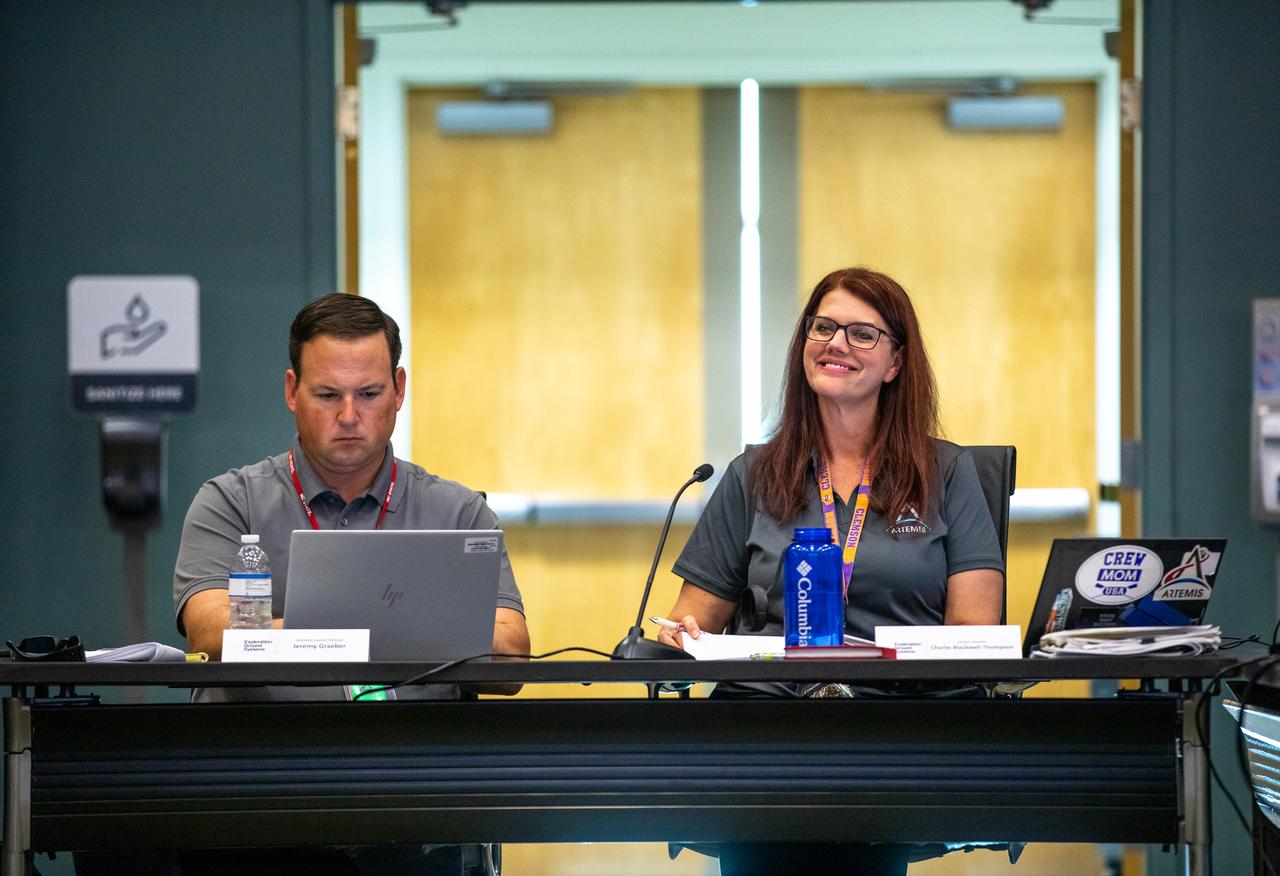
Artemis launch director, Charlie Blackwell-Thompson (right) and technical assistant to the launch director, Wes Mosedale (left) are seen at the launch pre-test briefing Nov. 12, 2022, at NASA’s Kennedy Space Center in Florida for the Artemis I mission. The first in a series of increasingly complex missions, Artemis I will provide a foundation for human deep space exploration and demonstrate our commitment and capability to extend human presence to the Moon and beyond. The primary goal of Artemis I is to thoroughly test the integrated systems before crewed missions by operating the spacecraft in a deep space environment, testing Orion’s heat shield, and recovering the crew module after reentry, descent, and splashdown.
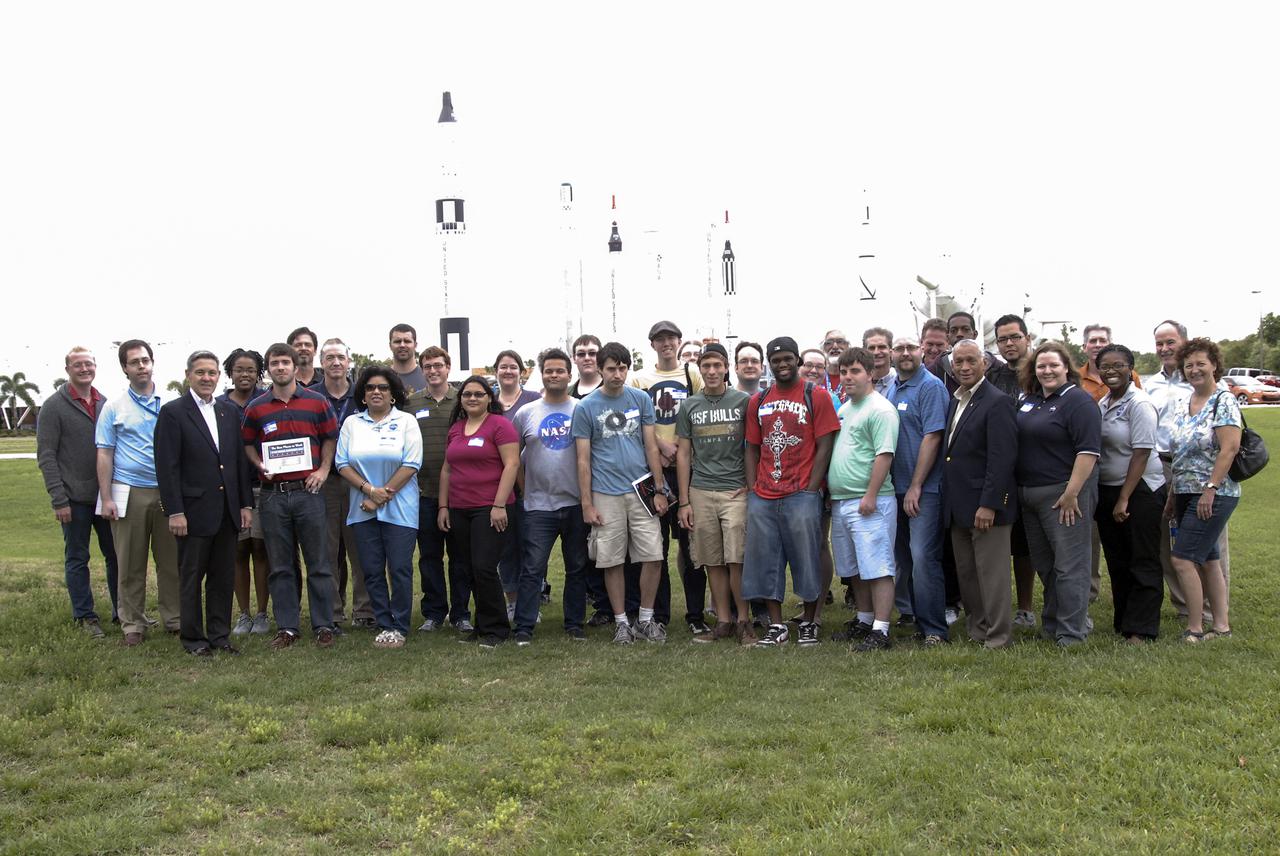
CAPE CANAVERAL, Fla. – Kennedy Space Center Director Bob Cabana, third from left, and NASA Administrator Charlie Bolden, fourth from right, gather with participants, subject matter experts and volunteers in front of the Rocket Garden at the Kennedy Space Center Visitor Complex in Florida during the 2013 International Space Apps Challenge. The group took a brief break before returning to The Astronaut Memorial Foundation’s Center for Space Education to continue working on their challenges. During the worldwide two-day challenge, more than 9,000 people and 484 organizations came together in 83 cities across 44 countries, as well as online, to develop new ways of solving challenges that NASA faces. At Kennedy, four teams brainstormed ideas with subject matter experts and others and worked nearly 32 hours straight to present their concepts to a panel of three technical and non-technical judges. Challenges tackled at Kennedy were: Deployable Greenhouse, Kennedy Space Center 2040, Seven Minutes of Science, and Moonville – Lunar Industry Game. Photo credit: NASA_Charisse Nahser
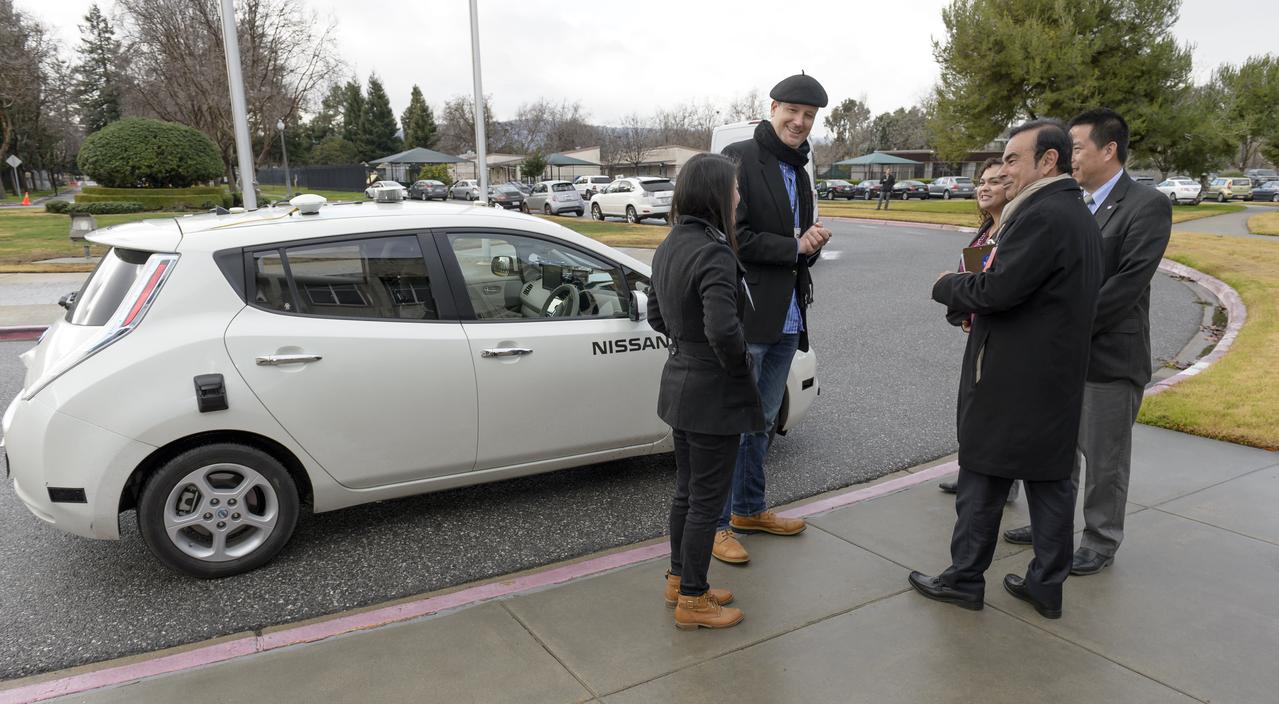
Senior executives from the Renault-Nissan Alliance, including Carlos Ghosn, chairman and CEO of Nissan, and Jose Munoz, chairman of Nissan North America, visited Ames for meetings and a showcase of the technical partnership between NASA and Nissan North America. The partnership allows researchers to develop and test autonomy algorithms, concepts, and integrated prototypes for a variety of vehicular transport applications – from rovers to self-driving cars. After briefings, the group on left from left to right Kathy Sun and Liam Pedersen, Nissan and on right from front to back Carlos Ghosn, CE, Nissan chatted before taking a ride in the autonomous vehicle to observed testing of Nissan’s all-electric LEAF as it performed safe autonomous drives across the center.
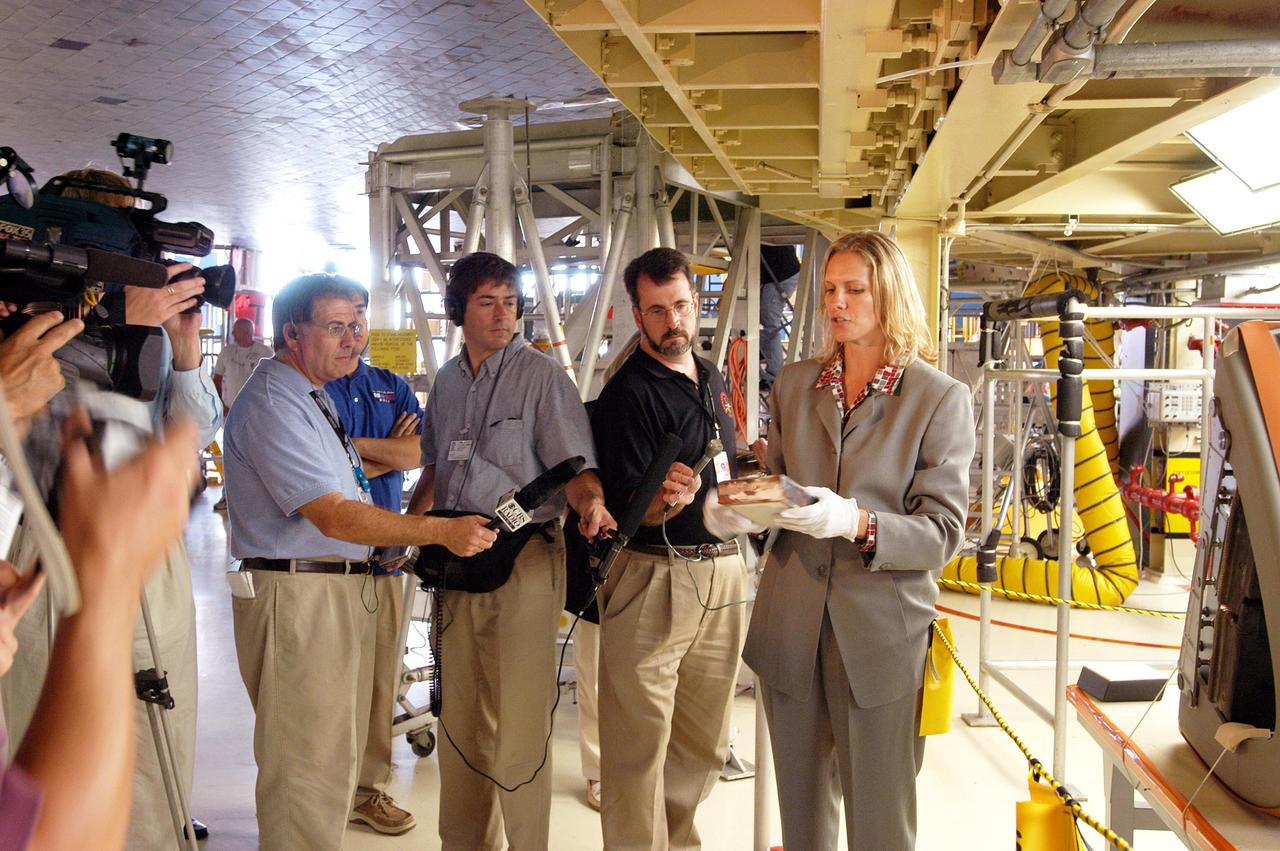
KENNEDY SPACE CENTER, FLA. - Stephanie Stilson (right), NASA Vehicle Manager, briefs the media attending an informative workshop and tour of the Orbiter Processing Facility (OPF) housing the Space Shuttle Discovery at KSC. During this event, the media received the latest information on Discovery’s processing and viewed workers preparing the vehicle for its safe return to flight scheduled for a launch planning window of March 2005. Kicking off the activities at the Press Site Auditorium, technical experts led two workshops addressing Reinforced Carbon-Carbon and vehicle instrumentation. During the tour of the OPF, reporters saw work in progress on Discovery, including reinstallation of the Reinforced Carbon-Carbon panels on the Shuttle's wing leading edge, wiring inspections and instrumentation updates being completed for Return to Flight.
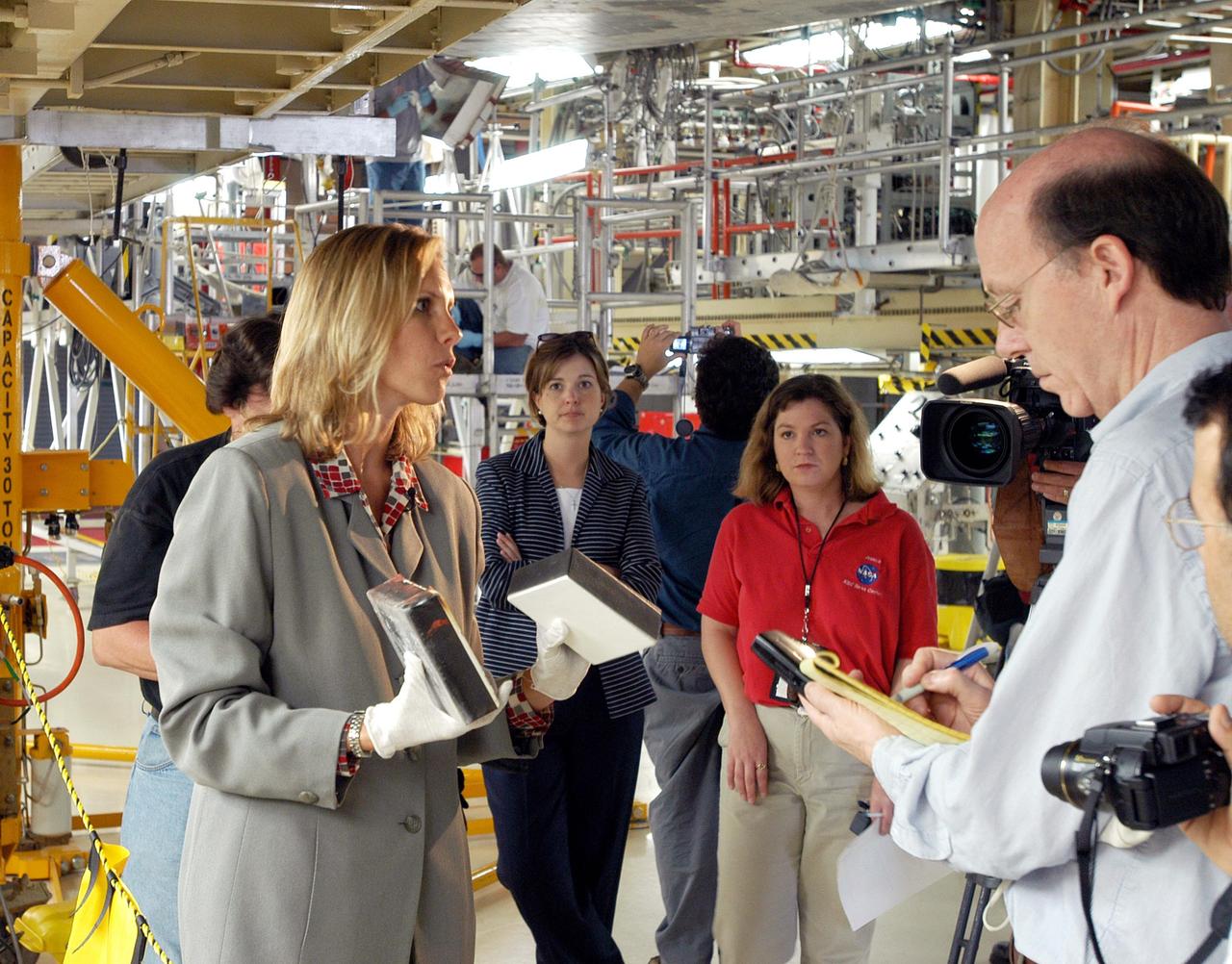
KENNEDY SPACE CENTER, FLA. - Stephanie Stilson (left), NASA Vehicle Manager, briefs the media attending an informative workshop and tour of the Orbiter Processing Facility (OPF) housing the Space Shuttle Discovery at KSC. During this event, the media received the latest information on Discovery’s processing and viewed workers preparing the vehicle for its safe return to flight scheduled for a launch planning window of March 2005. Kicking off the activities at the Press Site Auditorium, technical experts led two workshops addressing Reinforced Carbon-Carbon and vehicle instrumentation. During the tour of the OPF, reporters saw work in progress on Discovery, including reinstallation of the Reinforced Carbon-Carbon panels on the Shuttle's wing leading edge, wiring inspections and instrumentation updates being completed for Return to Flight.
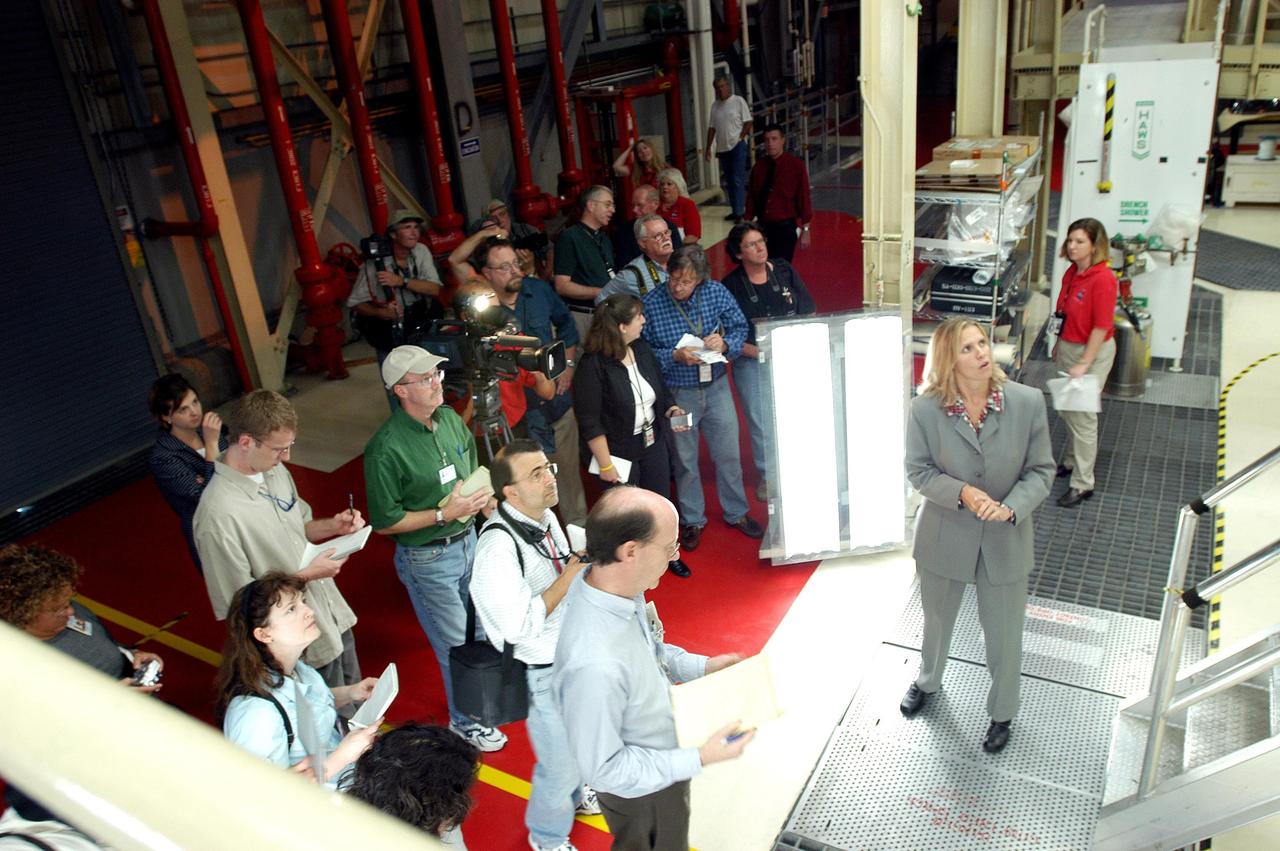
KENNEDY SPACE CENTER, FLA. - Stephanie Stilson (second from right), NASA Vehicle Manager, briefs the media attending an informative workshop and tour of the Orbiter Processing Facility (OPF) housing the Space Shuttle Discovery at KSC. During this event, the media received the latest information on Discovery’s processing and viewed workers preparing the vehicle for its safe return to flight scheduled for a launch planning window of March 2005. Kicking off the activities at the Press Site Auditorium, technical experts led two workshops addressing Reinforced Carbon-Carbon and vehicle instrumentation. During the tour of the OPF, reporters saw work in progress on Discovery, including reinstallation of the Reinforced Carbon-Carbon panels on the Shuttle's wing leading edge, wiring inspections and instrumentation updates being completed for Return to Flight.
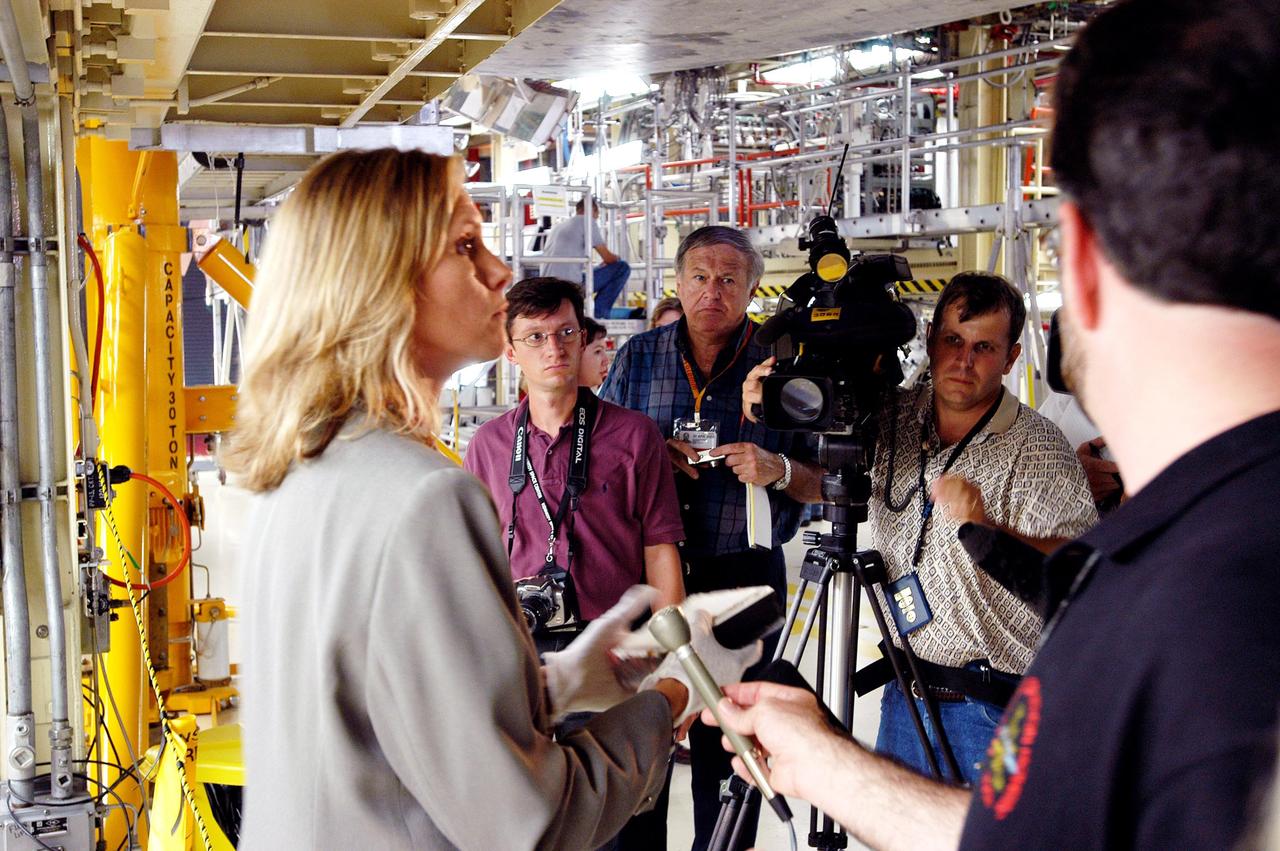
KENNEDY SPACE CENTER, FLA. - Stephanie Stilson (left), NASA Vehicle Manager, briefs the media attending an informative workshop and tour of the Orbiter Processing Facility (OPF) housing the Space Shuttle Discovery at KSC. During this event, the media received the latest information on Discovery’s processing and viewed workers preparing the vehicle for its safe return to flight scheduled for a launch planning window of March 2005. Kicking off the activities at the Press Site Auditorium, technical experts led two workshops addressing Reinforced Carbon-Carbon and vehicle instrumentation. During the tour of the OPF, reporters saw work in progress on Discovery, including reinstallation of the Reinforced Carbon-Carbon panels on the Shuttle's wing leading edge, wiring inspections and instrumentation updates being completed for Return to Flight.
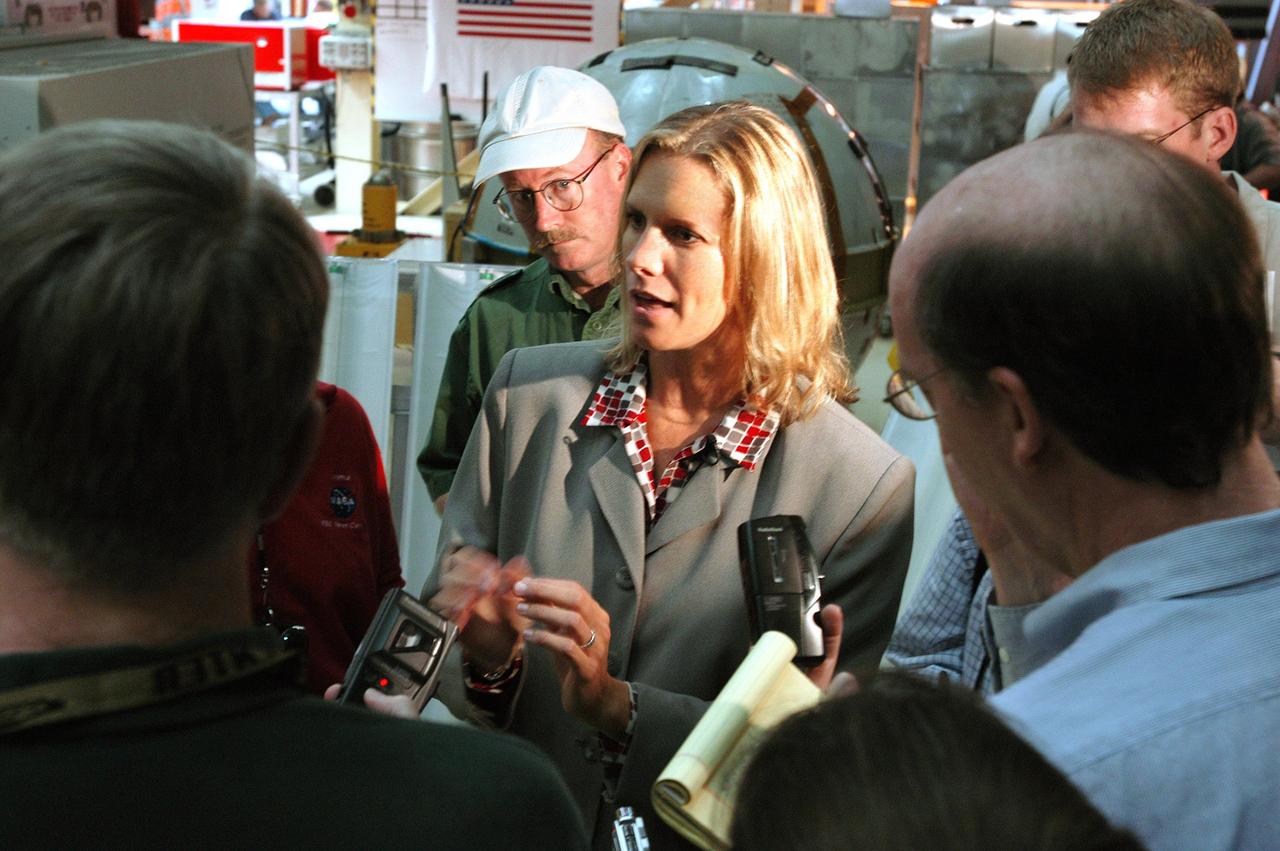
KENNEDY SPACE CENTER, FLA. - Stephanie Stilson (center), NASA Vehicle Manager, briefs the media attending an informative workshop and tour of the Orbiter Processing Facility (OPF) housing the Space Shuttle Discovery at KSC. During this event, the media received the latest information on Discovery’s processing and viewed workers preparing the vehicle for its safe return to flight scheduled for a launch planning window of March 2005. Kicking off the activities at the Press Site Auditorium, technical experts led two workshops addressing Reinforced Carbon-Carbon and vehicle instrumentation. During the tour of the OPF, reporters saw work in progress on Discovery, including reinstallation of the Reinforced Carbon-Carbon panels on the Shuttle's wing leading edge, wiring inspections and instrumentation updates being completed for Return to Flight.
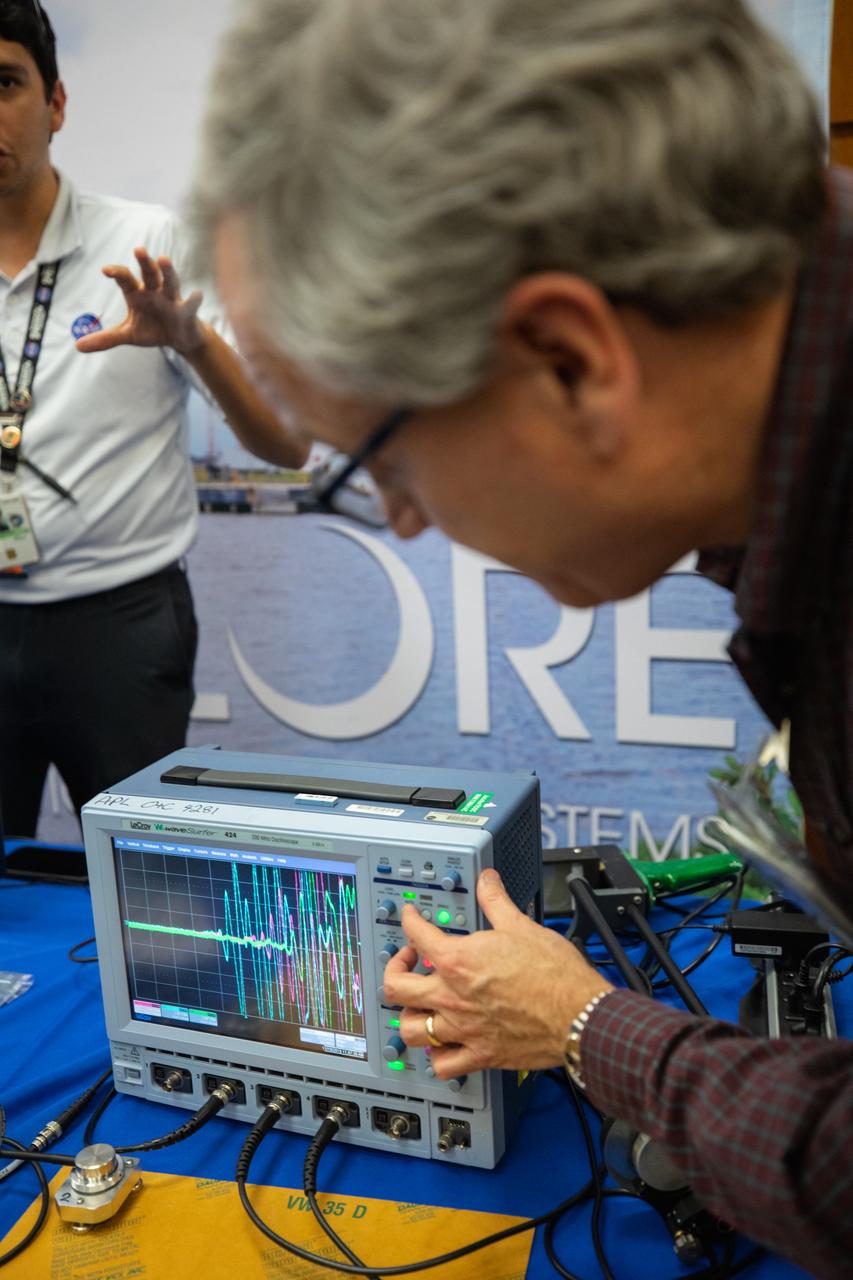
Applied Physics Laboratory Lead Physicist Dr. Bob Youngquist demonstrates technology recently used to resolve a technical challenge at Kennedy Space Center during an innovation showcase on Nov. 19, 2019, in the Florida spaceport’s Neil Armstrong Operations and Checkout Building’s Mission Briefing Room. Nearly 50 exhibitors gathered to participate in the center’s Innovation Days – one of several events throughout the year aimed at fostering and encouraging an innovative culture at Kennedy. Showcase participants included individuals from multiple directorates, programs and organizations throughout Kennedy. In addition to the showcase, employees had the opportunity to attend an overview presentation on NASA’s Human Landing System (HLS), hosted by HLS Program Manager Lisa Watson-Morgan.
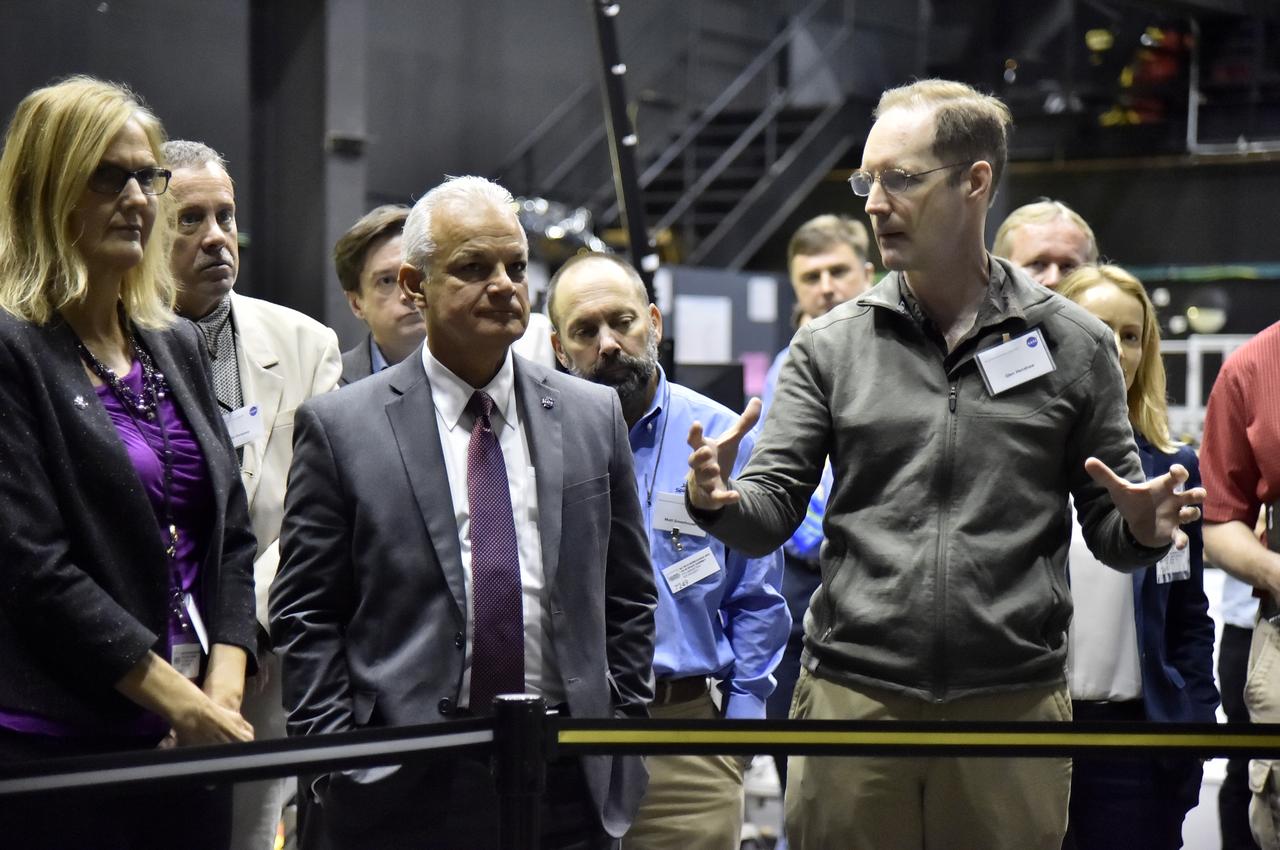
WASHINGTON, D.C.---S&T Partnership Forum In-Space Assembly Technical Interchange Meeting-On September 6th 2017, many of the United States government experts on In-Space Assembly met at the U.S. Naval Research Lab to discuss both technology development and in-space applications that would advance national capabilities in this area. Expertise from NASA, USAF, NRO, DARPA and NRL met in this meeting which was coordinated by the NASA Headquarters, Office of the Chief Technologist. This technical interchange meeting was the second meeting of the members of this Science and Technology Partnership Forum. Glen Henshaw of Code 8231 talks to the group in the Space Robotics Lab.
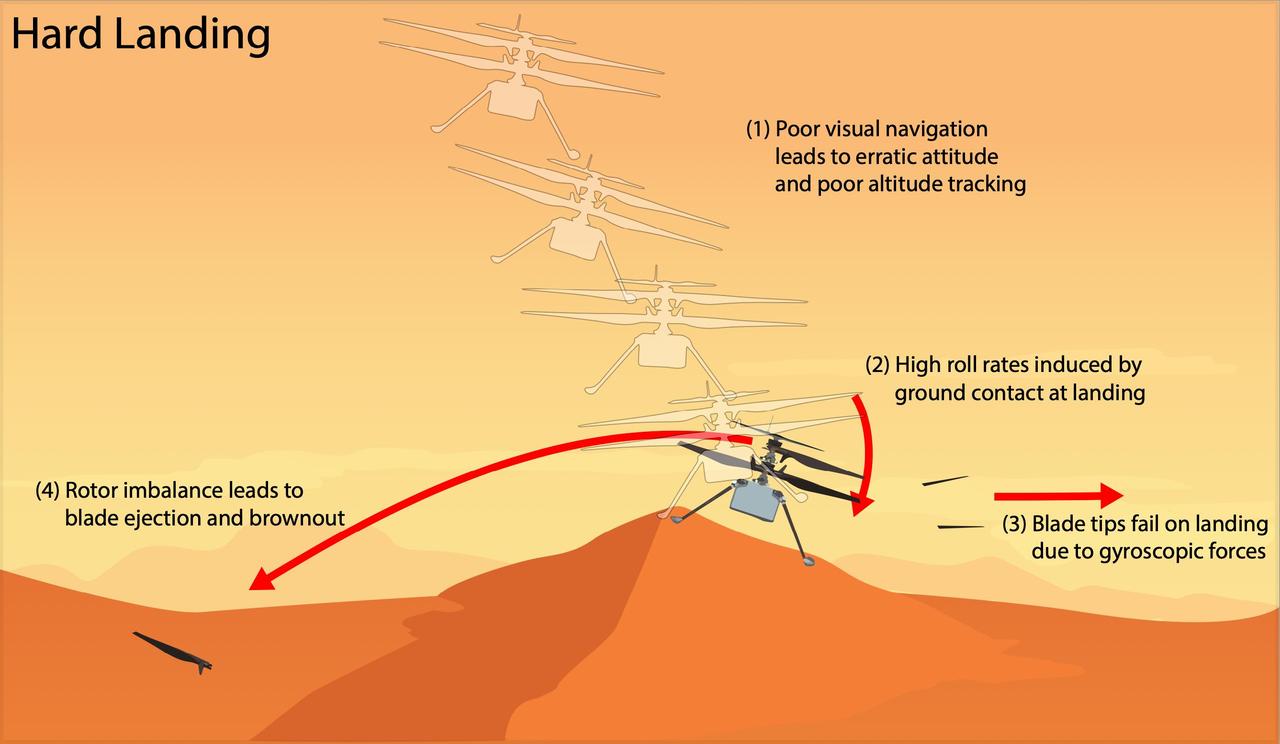
This graphic depicts the most likely scenario for the hard landing NASA's Ingenuity Mars Helicopter took during its 72nd and final flight on Jan. 18, 2024. Engineers at JPL and AeroVironment, which collaborated with NASA on the helicopter's design and development, are completing a detailed assessment of the final flight that will be published as an agency technical report. Flight 72 was planned as a brief vertical hop to assess Ingenuity's flight systems and photograph the surrounding area. Data from the flight shows Ingenuity climbing to 40 feet (12 meters), hovering, and capturing images. It initiated its descent at 19 seconds, and by 32 seconds the helicopter was back on the surface and had halted communications. The assessment describes the mostly likely scenario for Flight 72, as follows. Lack of suitable features on the planet's surface for the helicopter's navigation system to track resulted in high horizontal velocities at the time the helicopter touched down. This caused a hard impact on a sloping sand ripple, making Ingenuity pitch and roll. The rapid attitude change resulted in loads on the fast-rotating rotor blades beyond their design limits, snapping all four of them off at their weakest point – about a third of the way from the tip. The damaged blades caused excessive vibration in the rotor system, ripping the remainder of one blade from its root and generating an excessive power demand that resulted in loss of communications. https://photojournal.jpl.nasa.gov/catalog/PIA26482
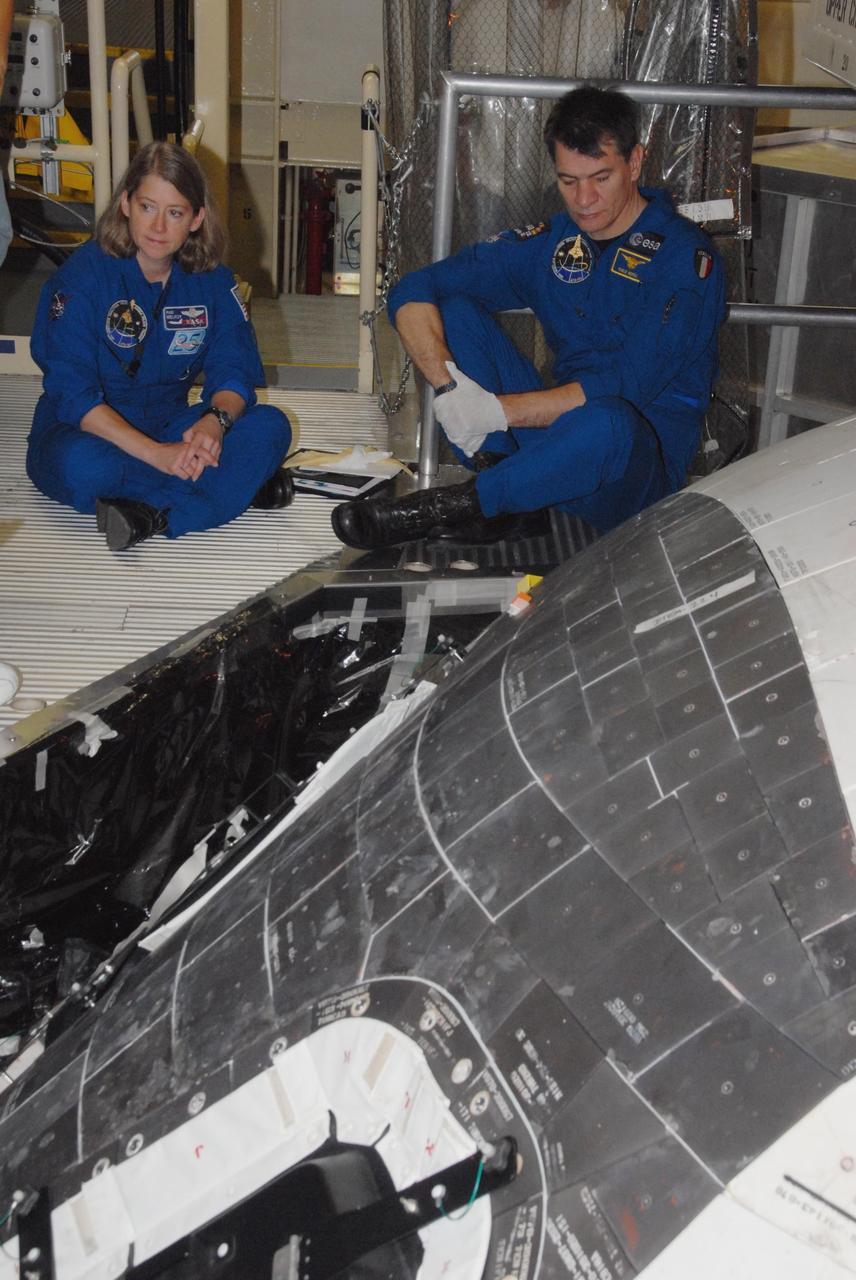
KENNEDY SPACE CENTER, FLA. - The STS-120 crew is at Kennedy for a crew equipment interface test, or CEIT. Receiving a briefing on the thermal protection system, or TPS, tiles on space shuttle Discovery in Orbiter Processing Facility bay 3 are Commander Pamela A. Melroy and Mission Specialist Paolo A. Nespoli, a European Space Agency astronaut from Italy. Among the activities standard to a CEIT are harness training, inspection of the thermal protection system and camera operation for planned extravehicular activities, or EVAs. The STS-120 mission will deliver the Harmony module, christened after a school contest, which will provide attachment points for European and Japanese laboratory modules on the International Space Station. Known in technical circles as Node 2, it is similar to the six-sided Unity module that links the U.S. and Russian sections of the station. Built in Italy for the United States, Harmony will be the first new U.S. pressurized component to be added. The STS-120 mission is targeted to launch on Oct. 20. Photo credit: NASA/George Shelton
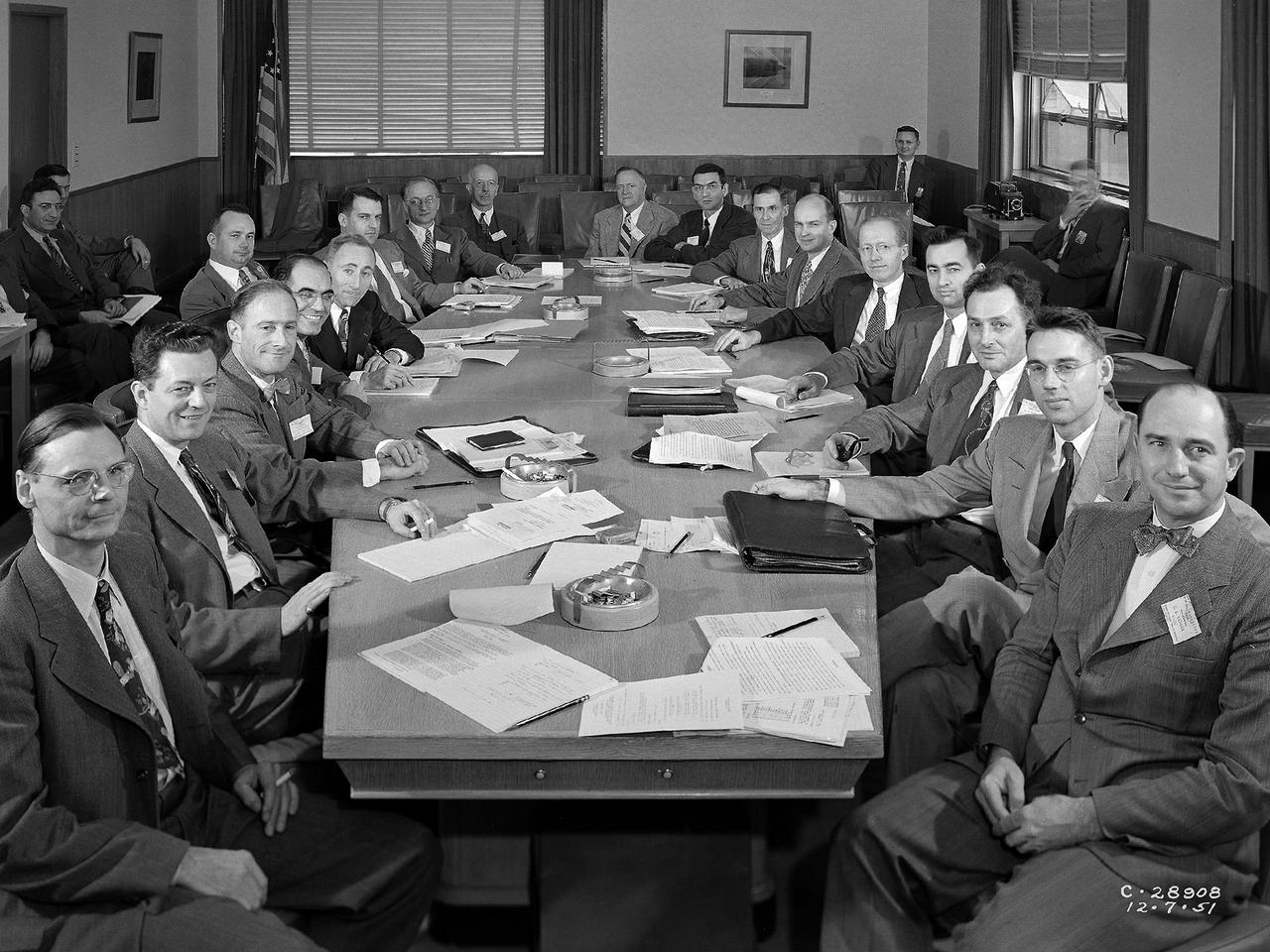
The National Advisory Committee for Aeronautics (NACA) Subcommittee on Combustion holds a meeting at Lewis Flight Propulsion Laboratory in Cleveland, Ohio. The NACA was managed by committees that included members of their own staff along with representatives from industry, the military, other government agencies, and universities. The 17-person Executive Committee was the NACA’s primary administrative body. They met several times a year at the NACA headquarters office in Washington DC to discuss broad issues confronting the US aeronautical community. Jerome Hunsaker, head of the Department of Aeronautical Engineering at the Massachusetts Institute of Technology, served as the NACA chairman from 1941 to 1956. George Lewis was not a member of the Executive Committee but served a key role as the NACA’s Director of Aeronautical Research. The NACA’s organizational chart also included 11 technical committees, several of which had specialized subcommittees. There were over 100 different subcommittees between World War I and 1958. The number of active subcommittees varied over the years. Most existed only for a few years, but some continued for over a decade. The subcommittees met three or four times per year, often at the laboratory most closely associated with the area of research. A team of laboratory researchers presented briefings on their recent activities and plans for the future. The Subcommittee on Combustion existed from 1945 to the NACA’s demise in 1958.
![Astronaut Neil Armstrong examines a Vertical and Short Takeoff and Landing test setup in the 9- by 15-Foot Low Speed Wind Tunnel at the National Aeronautics and Space Administration (NASA) Lewis Research Center. Armstrong spent February 6, 1970 at Lewis attending technical meetings and touring some facilities. Just six months after Armstrong had returned from the moon looming agency budget cuts were already a concern in his comments. He noted that NASA had to “find a balanced approach…and [make] aggressive use of available facilities.” Armstrong spent four months at the center as a research pilot in 1955. Armstrong had served as a Navy pilot during the Korean War then earned a degree in aeronautical engineering at Purdue University. He was recruited by Lewis while at Purdue and began at the center shortly after graduation. During his brief tenure in Cleveland Armstrong served as both a test pilot and research engineer, primarily involved with icing research. In his role as research pilot Armstrong also flew a North American F-82 Twin Mustang over the ocean near Wallops Island to launch small instrumented rockets from high altitudes down into the atmosphere to obtain high Mach numbers. After four months in Cleveland a position opened up at what is today the Dryden Flight Research Center. Armstrong’s career in Cleveland officially ended on June 30, 1955.](https://images-assets.nasa.gov/image/GRC-1970-C-00473/GRC-1970-C-00473~medium.jpg)
Astronaut Neil Armstrong examines a Vertical and Short Takeoff and Landing test setup in the 9- by 15-Foot Low Speed Wind Tunnel at the National Aeronautics and Space Administration (NASA) Lewis Research Center. Armstrong spent February 6, 1970 at Lewis attending technical meetings and touring some facilities. Just six months after Armstrong had returned from the moon looming agency budget cuts were already a concern in his comments. He noted that NASA had to “find a balanced approach…and [make] aggressive use of available facilities.” Armstrong spent four months at the center as a research pilot in 1955. Armstrong had served as a Navy pilot during the Korean War then earned a degree in aeronautical engineering at Purdue University. He was recruited by Lewis while at Purdue and began at the center shortly after graduation. During his brief tenure in Cleveland Armstrong served as both a test pilot and research engineer, primarily involved with icing research. In his role as research pilot Armstrong also flew a North American F-82 Twin Mustang over the ocean near Wallops Island to launch small instrumented rockets from high altitudes down into the atmosphere to obtain high Mach numbers. After four months in Cleveland a position opened up at what is today the Dryden Flight Research Center. Armstrong’s career in Cleveland officially ended on June 30, 1955.