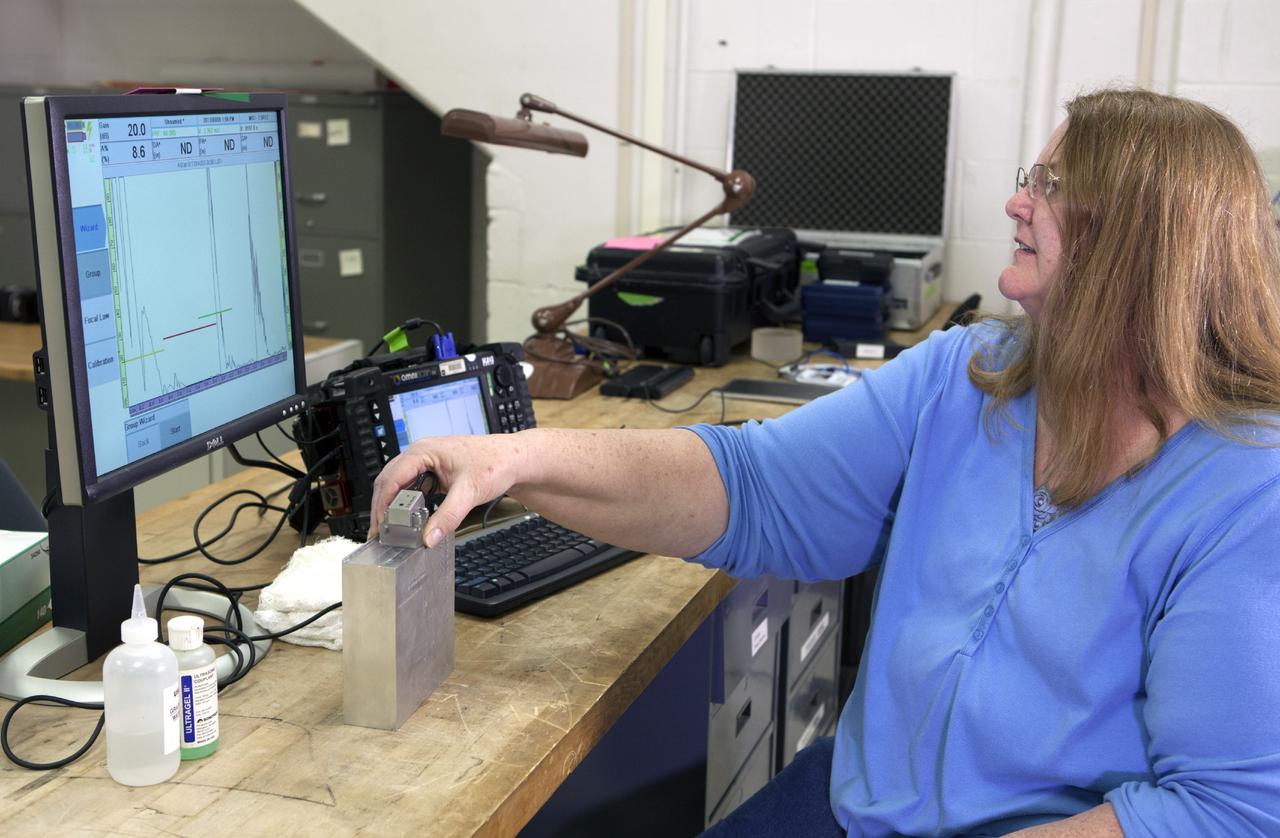
CAPE CANAVERAL, Fla. – In Hangar N at Cape Canaveral Air Force Station, PaR Systems, Inc. operations engineer Lu Bell conducts a phase array ultrasonic inspection. NASA's Kennedy Space Center in Florida recently established a partnership agreement with PaR Systems, Inc. of Shoreview, Minn., for operation of the Hangar N facility and its nondestructive testing and evaluation equipment. As the spaceport transitions from a historically government-only launch facility to a multi-user spaceport for both federal and commercial customers, partnerships between the space agency and other organizations will be a key element in that effort. Hangar N is located at Cape Canaveral Air Force Station adjacent to Kennedy and houses a unique inventory of test and evaluation equipment and the capability for current and future mission spaceflight support. Photo credit: NASA/ Dimitri Gerondidakis
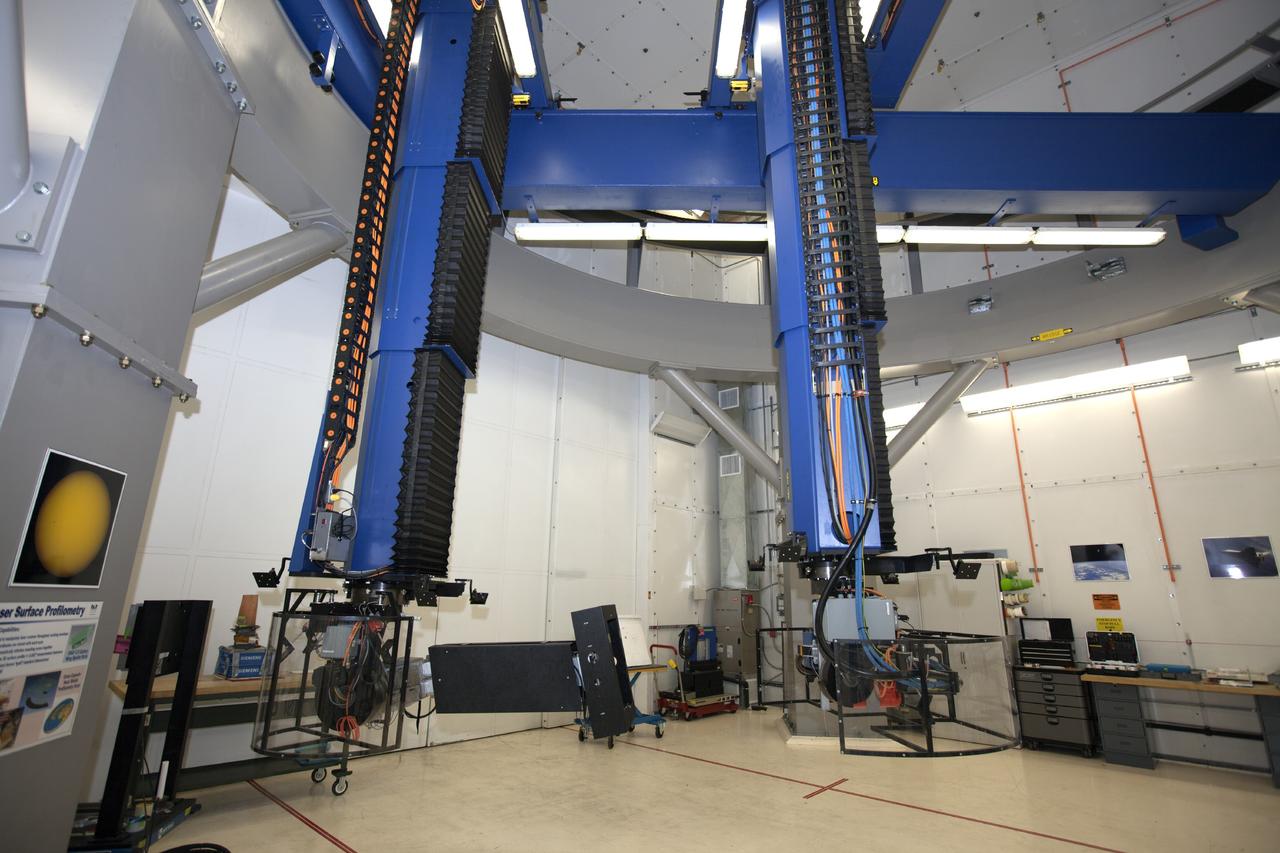
CAPE CANAVERAL, Fla. – In Hangar N at Cape Canaveral Air Force Station, an 11-axis robotic X-ray system takes images of hardware for evaluation. The activity is part of work performed by PaR Systems, Inc. under a partnership agreement with NASA. NASA's Kennedy Space Center in Florida recently established a partnership agreement with PaR Systems, Inc. of Shoreview, Minn., for operation of the Hangar N facility and its nondestructive testing and evaluation equipment. As the spaceport transitions from a historically government-only launch facility to a multi-user spaceport for both federal and commercial customers, partnerships between the space agency and other organizations will be a key element in that effort. Hangar N is located at Cape Canaveral Air Force Station adjacent to Kennedy and houses a unique inventory of test and evaluation equipment and the capability for current and future mission spaceflight support. Photo credit: NASA/ Dimitri Gerondidakis
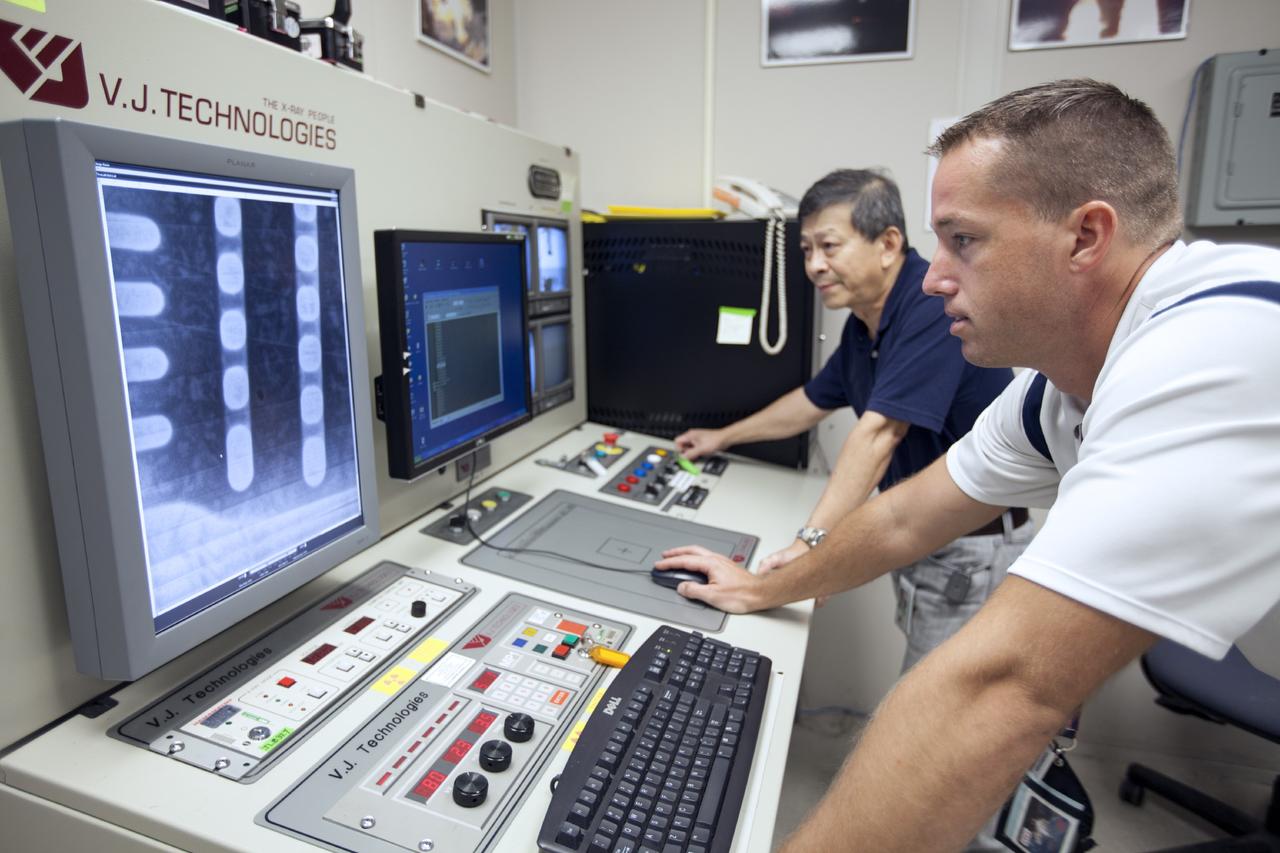
CAPE CANAVERAL, Fla. – In Hangar N at Cape Canaveral Air Force Station, PaR Systems, Inc. development engineer Wayne Cheng, left, and operations engineer Jeff Elston operate the controller for a robotic system used in nondestructive testing. The 11-axis robotic system takes X-ray images of hardware for evaluation. NASA's Kennedy Space Center in Florida recently established a partnership agreement with PaR Systems, Inc. of Shoreview, Minn., for operation of the Hangar N facility and its nondestructive testing and evaluation equipment. As the spaceport transitions from a historically government-only launch facility to a multi-user spaceport for both federal and commercial customers, partnerships between the space agency and other organizations will be a key element in that effort. Hangar N is located at Cape Canaveral Air Force Station adjacent to Kennedy and houses a unique inventory of test and evaluation equipment and the capability for current and future mission spaceflight support. Photo credit: NASA/ Dimitri Gerondidakis
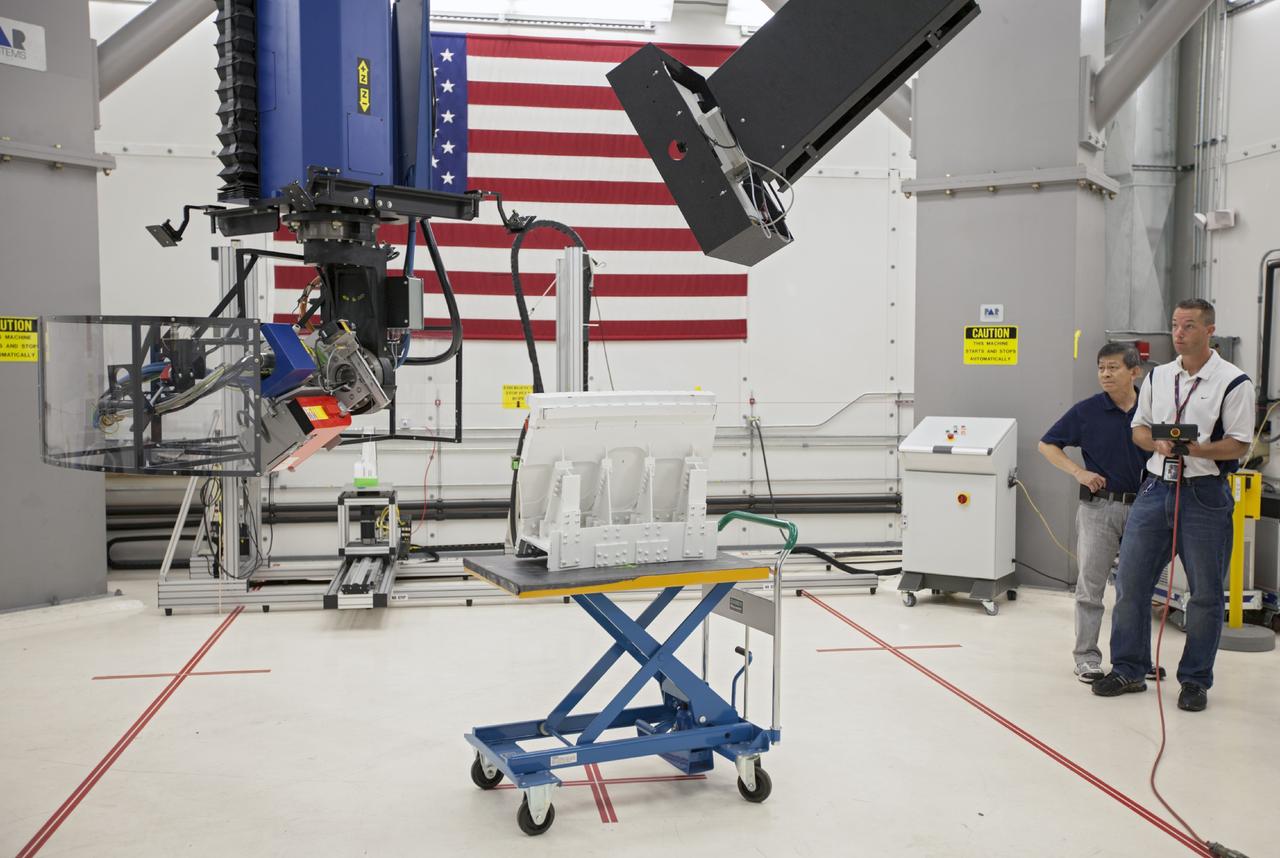
CAPE CANAVERAL, Fla. – In Hangar N at Cape Canaveral Air Force Station, PaR Systems, Inc. development engineer Wayne Cheng, left, and operations engineer Jeff Elston operate a robotic system used in nondestructive testing. The 11-axis robotic system takes X-ray images of hardware for evaluation. NASA's Kennedy Space Center in Florida recently established a partnership agreement with PaR Systems, Inc. of Shoreview, Minn., for operation of the Hangar N facility and its nondestructive testing and evaluation equipment. As the spaceport transitions from a historically government-only launch facility to a multi-user spaceport for both federal and commercial customers, partnerships between the space agency and other organizations will be a key element in that effort. Hangar N is located at Cape Canaveral Air Force Station adjacent to Kennedy and houses a unique inventory of test and evaluation equipment and the capability for current and future mission spaceflight support. Photo credit: NASA/ Dimitri Gerondidakis
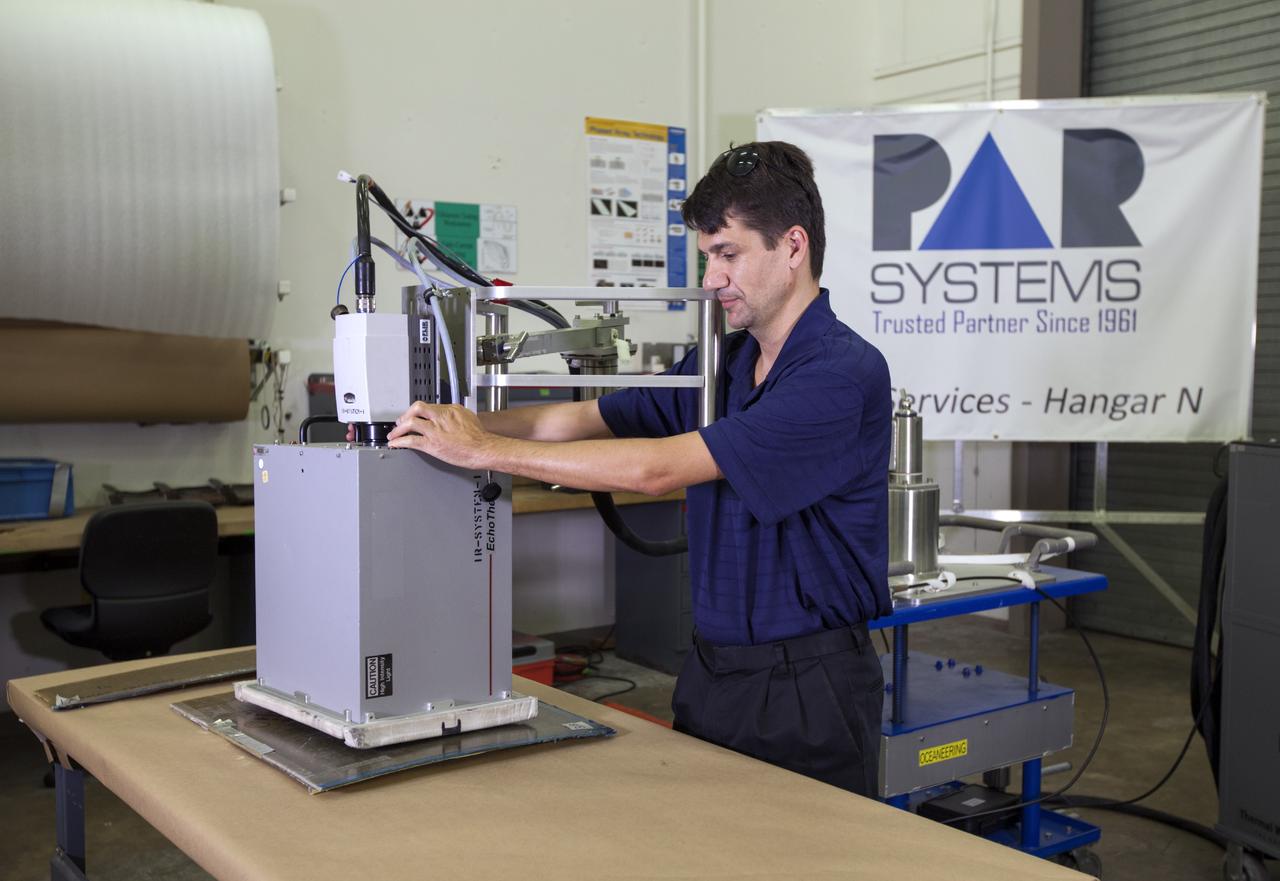
CAPE CANAVERAL, Fla. – In Hangar N at Cape Canaveral Air Force Station, PaR Systems, Inc. development engineer Bence Bertha sets up a flash thermography system. The equipment is used for inspecting hardware with thermal analysis. NASA's Kennedy Space Center in Florida recently established a partnership agreement with PaR Systems, Inc. of Shoreview, Minn., for operation of the Hangar N facility and its nondestructive testing and evaluation equipment. As the spaceport transitions from a historically government-only launch facility to a multi-user spaceport for both federal and commercial customers, partnerships between the space agency and other organizations will be a key element in that effort. Hangar N is located at Cape Canaveral Air Force Station adjacent to Kennedy and houses a unique inventory of test and evaluation equipment and the capability for current and future mission spaceflight support. Photo credit: NASA/ Dimitri Gerondidakis
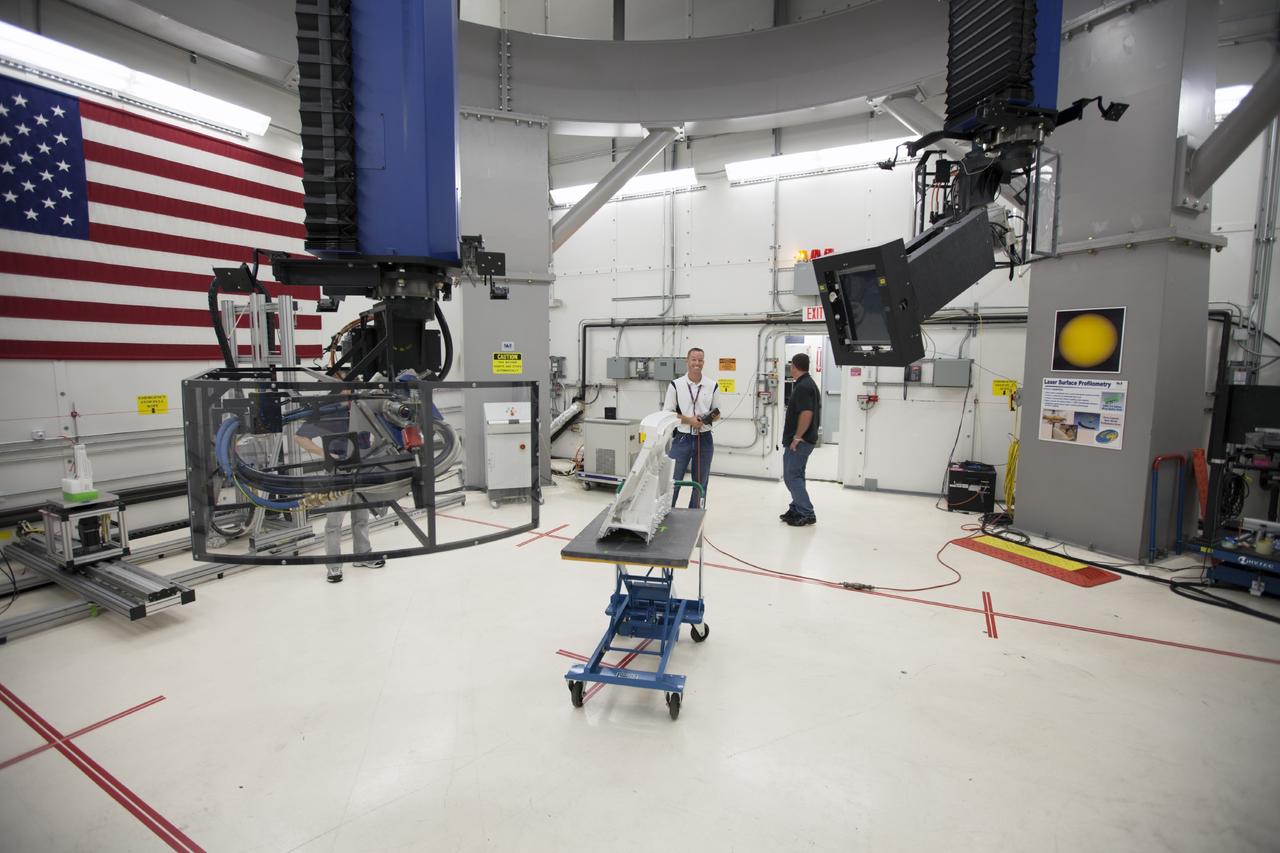
CAPE CANAVERAL, Fla. – In Hangar N at Cape Canaveral Air Force Station, PaR Systems, Inc. operations engineer Jeff Elston, left, and Tony Corak, manager of NDT Services for PaR Systems, operate an 11-axis robotic X-ray system which takes images of hardware for evaluation. The activity is part of work performed by PaR Systems, Inc. under a partnership agreement with NASA. NASA's Kennedy Space Center in Florida recently established a partnership agreement with PaR Systems, Inc. of Shoreview, Minn., for operation of the Hangar N facility and its nondestructive testing and evaluation equipment. As the spaceport transitions from a historically government-only launch facility to a multi-user spaceport for both federal and commercial customers, partnerships between the space agency and other organizations will be a key element in that effort. Hangar N is located at Cape Canaveral Air Force Station adjacent to Kennedy and houses a unique inventory of test and evaluation equipment and the capability for current and future mission spaceflight support. Photo credit: NASA/ Dimitri Gerondidakis
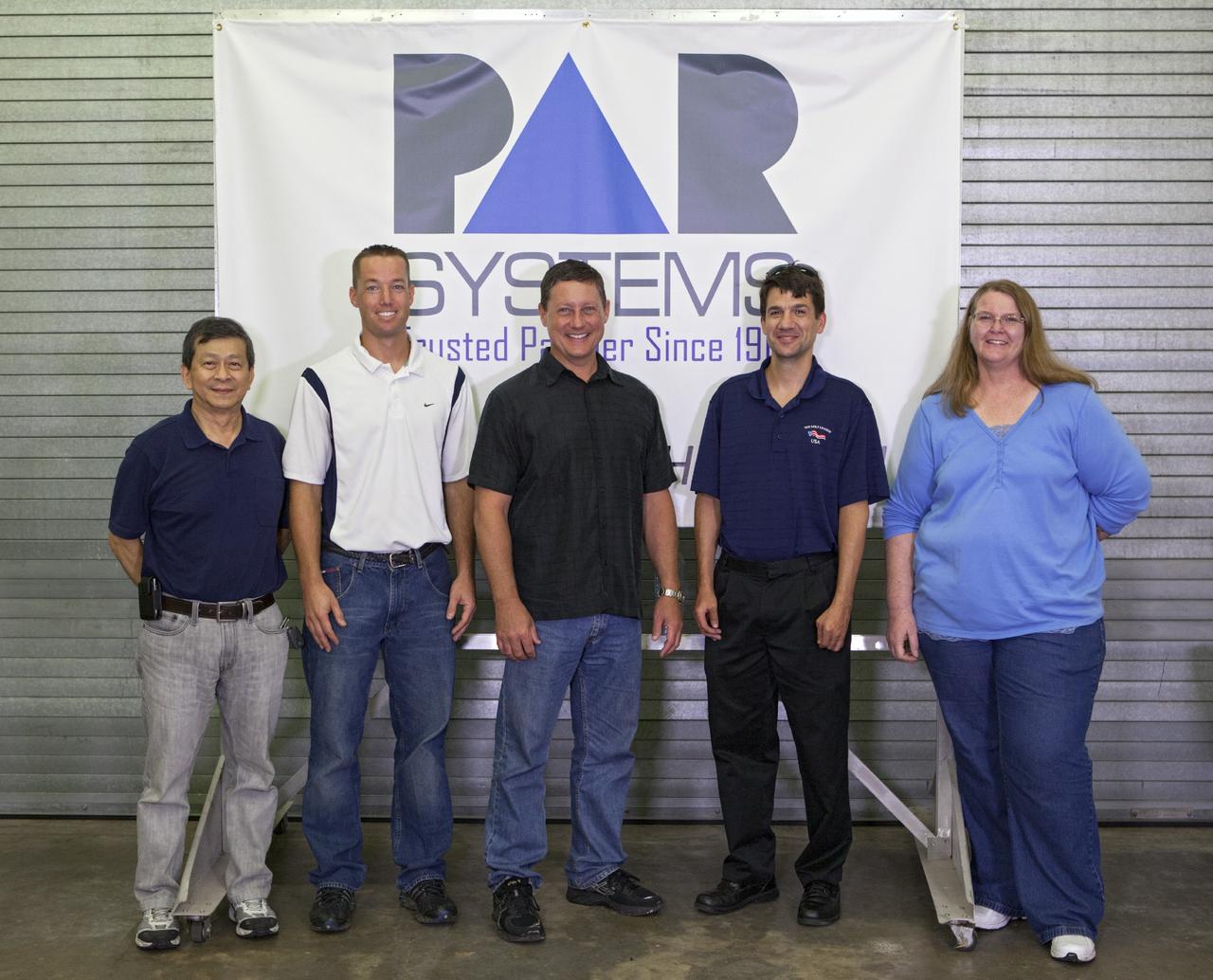
CAPE CANAVERAL, Fla. – In Hangar N at Cape Canaveral Air Force Station, PaR Systems, Inc. employees are performing nondestructive testing NDT work under a partnership agreement with NASA. From the left are: development engineer Wayne Cheng, operations engineer Jeff Elston, manager of NDT Services Tony Corak, development engineer Bence Bertha and operations engineer Lu Bell. NASA's Kennedy Space Center in Florida recently established a partnership agreement with PaR Systems, Inc. of Shoreview, Minn., for operation of the Hangar N facility and its nondestructive testing and evaluation equipment. As the spaceport transitions from a historically government-only launch facility to a multi-user spaceport for both federal and commercial customers, partnerships between the space agency and other organizations will be a key element in that effort. Hangar N is located at Cape Canaveral Air Force Station adjacent to Kennedy and houses a unique inventory of test and evaluation equipment and the capability for current and future mission spaceflight support. Photo credit: NASA/ Dimitri Gerondidakis
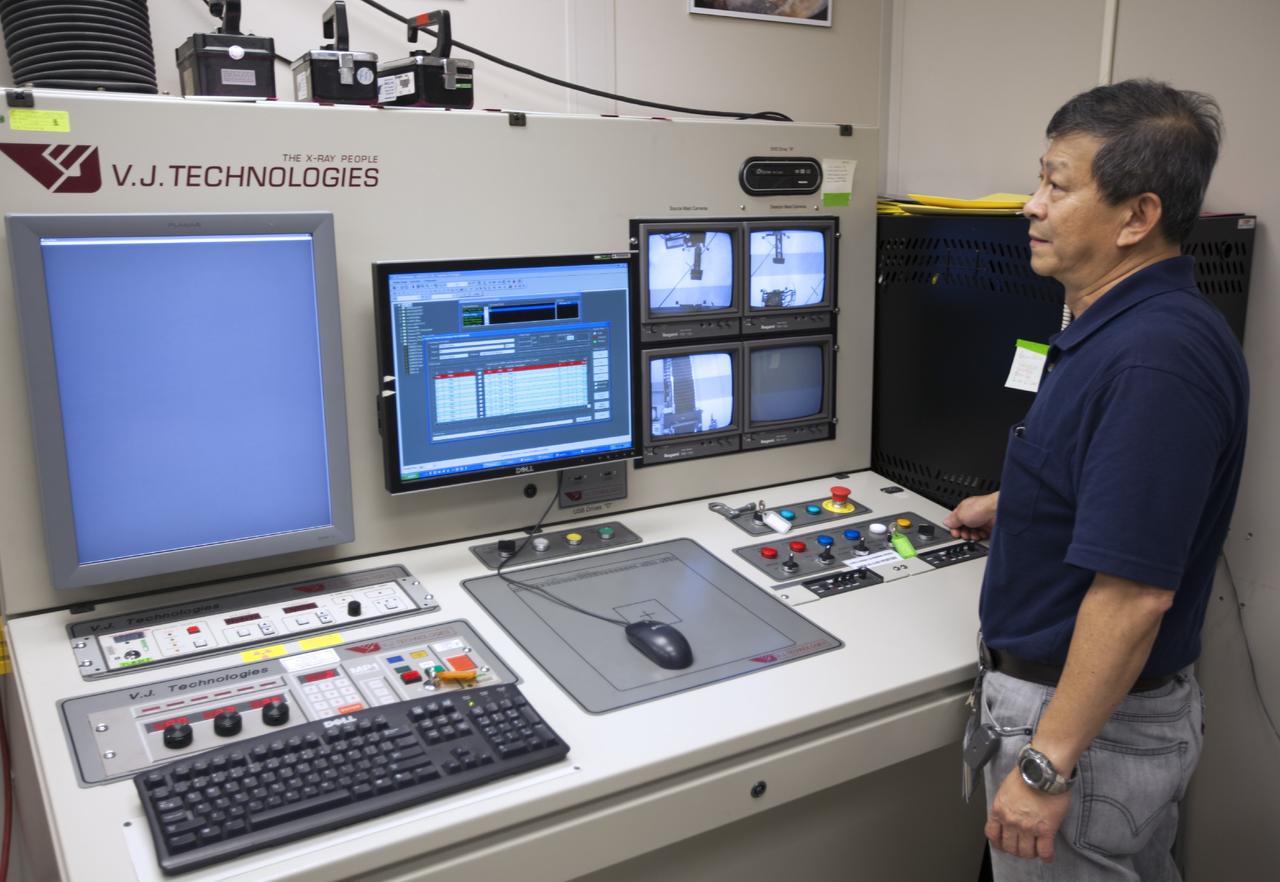
CAPE CANAVERAL, Fla. – In Hangar N at Cape Canaveral Air Force Station, PaR Systems, Inc. development engineer Wayne Cheng operates the controller for a robotic system used in nondestructive testing. The 11-axis robotic system takes X-ray images of hardware for evaluation. NASA's Kennedy Space Center in Florida recently established a partnership agreement with PaR Systems, Inc. of Shoreview, Minn., for operation of the Hangar N facility and its nondestructive testing and evaluation equipment. As the spaceport transitions from a historically government-only launch facility to a multi-user spaceport for both federal and commercial customers, partnerships between the space agency and other organizations will be a key element in that effort. Hangar N is located at Cape Canaveral Air Force Station adjacent to Kennedy and houses a unique inventory of test and evaluation equipment and the capability for current and future mission spaceflight support. Photo credit: NASA/ Dimitri Gerondidakis
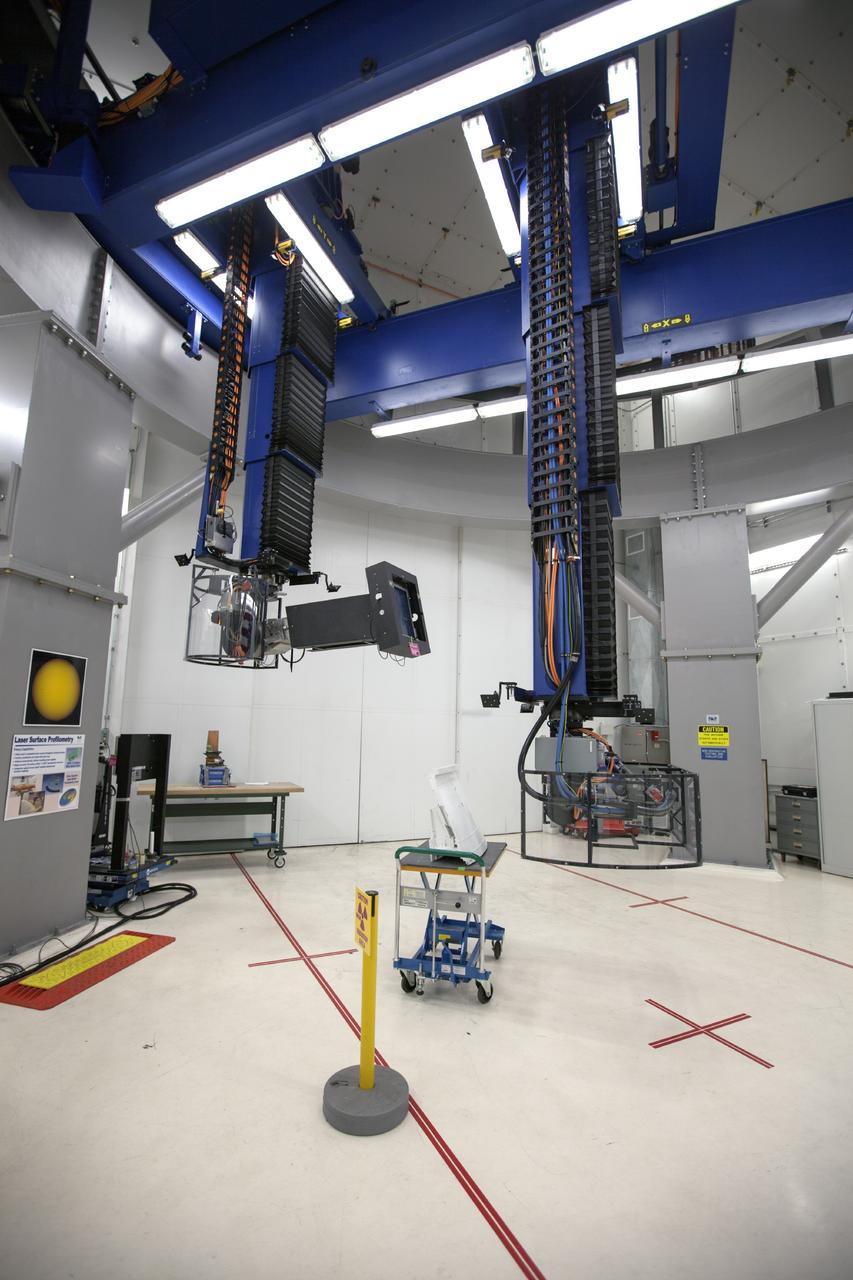
CAPE CANAVERAL, Fla. – In Hangar N at Cape Canaveral Air Force Station, an 11-axis robotic X-ray system takes images of hardware for evaluation. The activity is part of work performed by PaR Systems, Inc. under a partnership agreement with NASA. NASA's Kennedy Space Center in Florida recently established a partnership agreement with PaR Systems, Inc. of Shoreview, Minn., for operation of the Hangar N facility and its nondestructive testing and evaluation equipment. As the spaceport transitions from a historically government-only launch facility to a multi-user spaceport for both federal and commercial customers, partnerships between the space agency and other organizations will be a key element in that effort. Hangar N is located at Cape Canaveral Air Force Station adjacent to Kennedy and houses a unique inventory of test and evaluation equipment and the capability for current and future mission spaceflight support. Photo credit: NASA/ Dimitri Gerondidakis
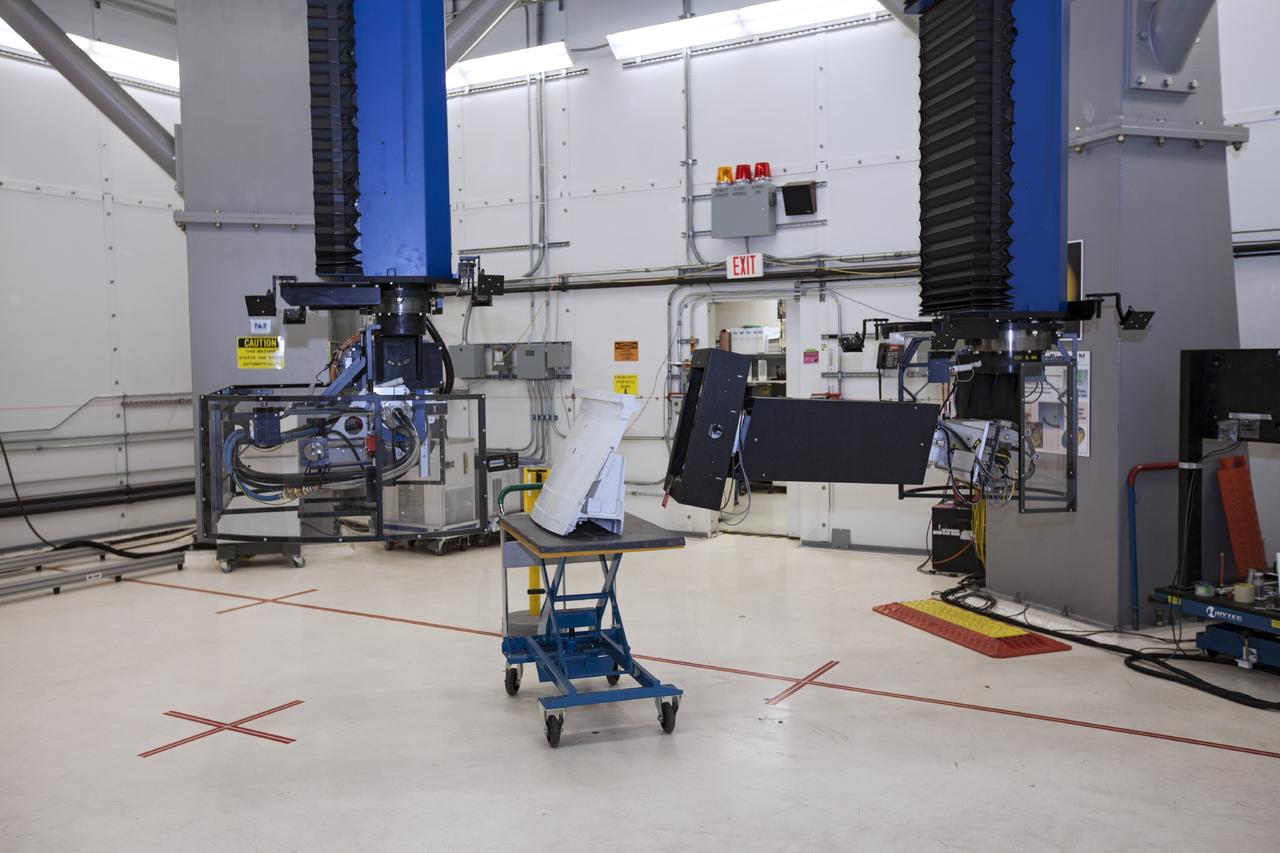
CAPE CANAVERAL, Fla. – In Hangar N at Cape Canaveral Air Force Station, an 11-axis robotic X-ray system takes images of hardware for evaluation. The activity is part of work performed by PaR Systems, Inc. under a partnership agreement with NASA. NASA's Kennedy Space Center in Florida recently established a partnership agreement with PaR Systems, Inc. of Shoreview, Minn., for operation of the Hangar N facility and its nondestructive testing and evaluation equipment. As the spaceport transitions from a historically government-only launch facility to a multi-user spaceport for both federal and commercial customers, partnerships between the space agency and other organizations will be a key element in that effort. Hangar N is located at Cape Canaveral Air Force Station adjacent to Kennedy and houses a unique inventory of test and evaluation equipment and the capability for current and future mission spaceflight support. Photo credit: NASA/ Dimitri Gerondidakis
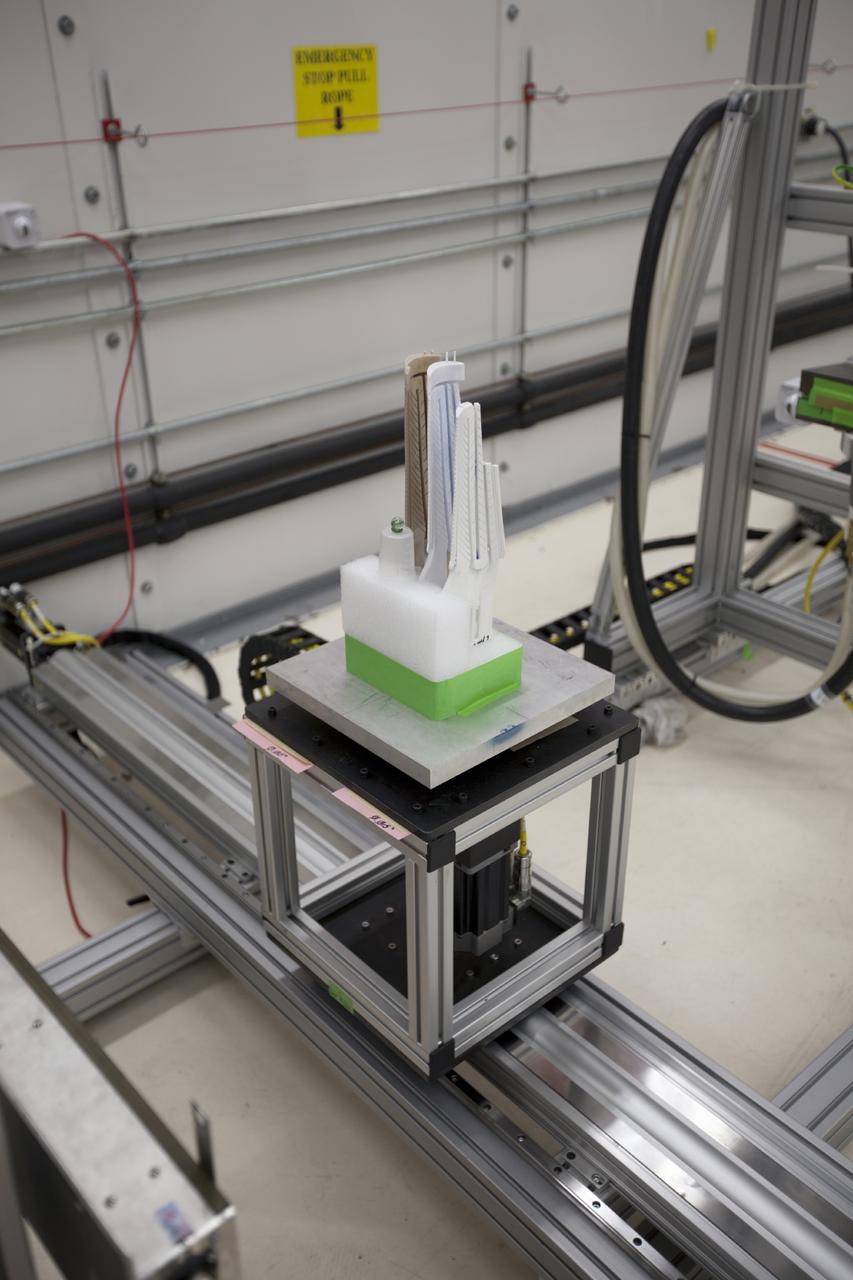
CAPE CANAVERAL, Fla. – In Hangar N at Cape Canaveral Air Force Station, ceramic materials are positioned for Advanced Partial Angle Computed Tomography testing. The activity is part of work performed by PaR Systems, Inc. under a partnership agreement with NASA. NASA's Kennedy Space Center in Florida recently established a partnership agreement with PaR Systems, Inc. of Shoreview, Minn., for operation of the Hangar N facility and its nondestructive testing and evaluation equipment. As the spaceport transitions from a historically government-only launch facility to a multi-user spaceport for both federal and commercial customers, partnerships between the space agency and other organizations will be a key element in that effort. Hangar N is located at Cape Canaveral Air Force Station adjacent to Kennedy and houses a unique inventory of test and evaluation equipment and the capability for current and future mission spaceflight support. Photo credit: NASA/ Dimitri Gerondidakis
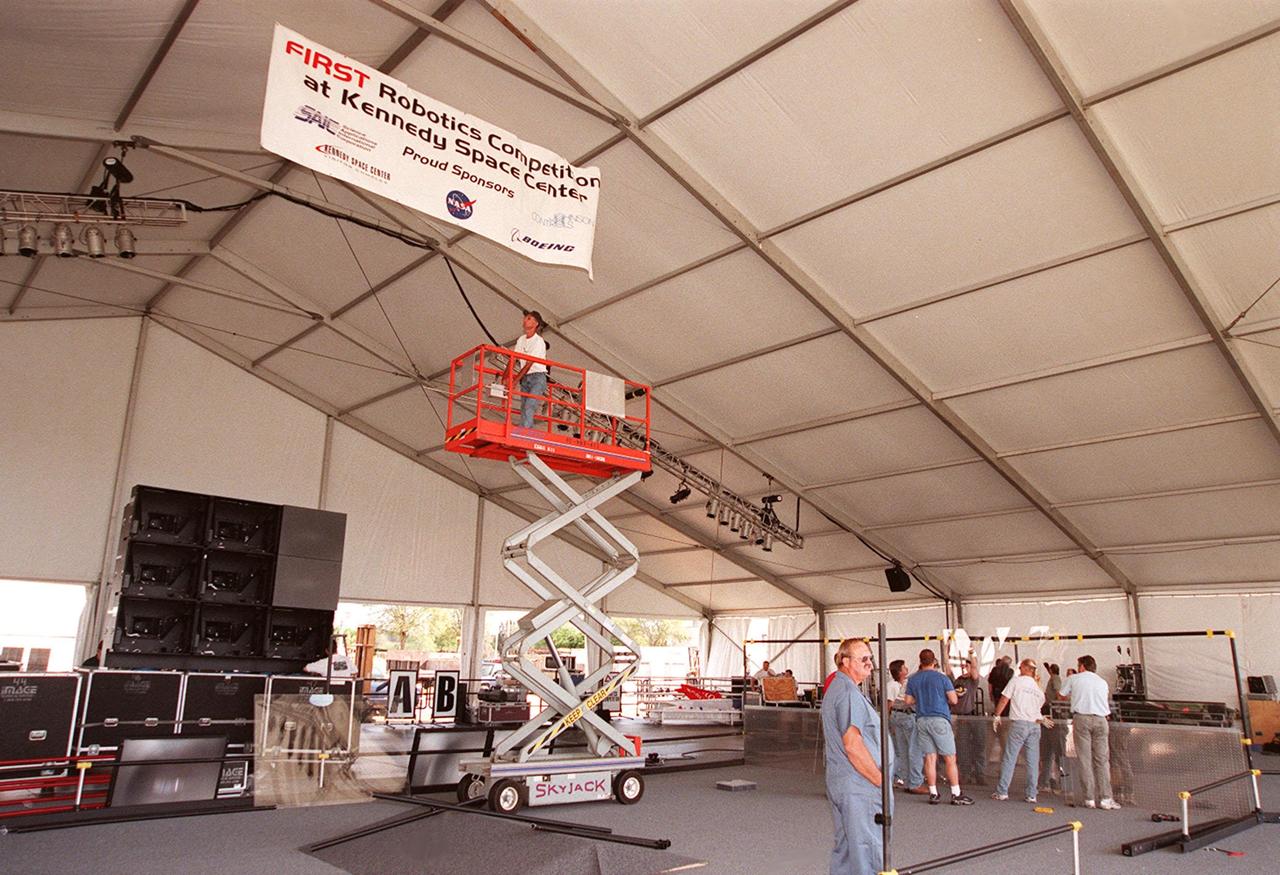
Workers at the Kennedy Space Center Visitor Complex make final preparations in the huge tent for the FIRST (For Inspiration and Recognition of Science and Technology) Southeast Regional competition March 9-11. Teams of high school students are testing the limits of their imagination using robots they have designed, with the support of business and engineering professionals and corporate sponsors, to compete in a technological battle against other schools' robots. Of the 30 high school teams competing at KSC, 16 are Florida teams co-sponsored by NASA and KSC contractors. Local high schools participating are Astronaut, Bayside, Cocoa Beach, Eau Gallie, Melbourne, Melbourne Central Catholic, Palm Bay, Rockledge, Satellite, and Titusville
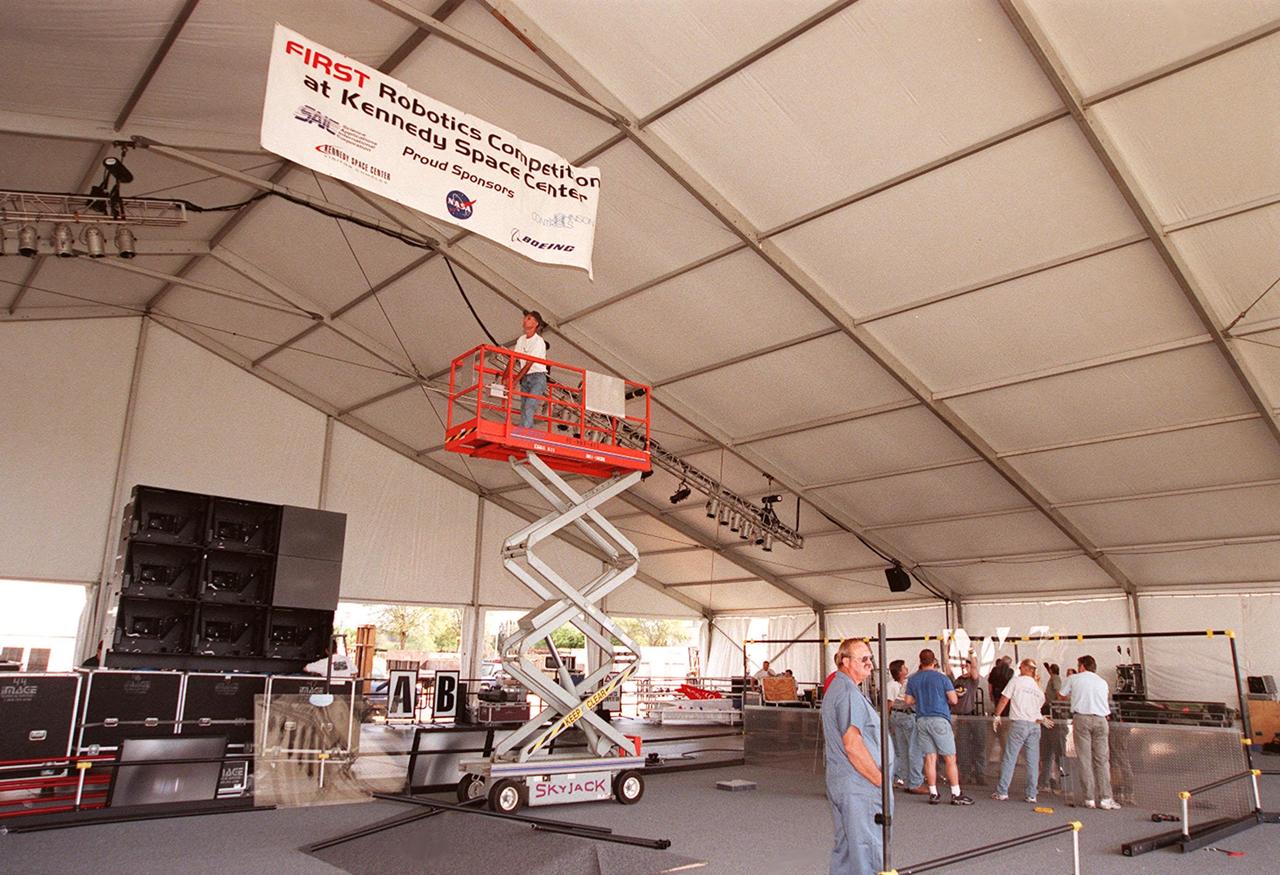
Workers at the Kennedy Space Center Visitor Complex make final preparations in the huge tent for the FIRST (For Inspiration and Recognition of Science and Technology) Southeast Regional competition March 9-11. Teams of high school students are testing the limits of their imagination using robots they have designed, with the support of business and engineering professionals and corporate sponsors, to compete in a technological battle against other schools' robots. Of the 30 high school teams competing at KSC, 16 are Florida teams co-sponsored by NASA and KSC contractors. Local high schools participating are Astronaut, Bayside, Cocoa Beach, Eau Gallie, Melbourne, Melbourne Central Catholic, Palm Bay, Rockledge, Satellite, and Titusville

At the construction site of the Reusable Launch Vehicle (RLV) complex at KSC, a worker takes a measurement. Located near the Shuttle Landing Facility, the complex will include facilities for related ground support equipment and administrative/ technical support. It will be available to accommodate the Space Shuttle; the X-34 RLV technology demonstrator; the L-1011 carrier aircraft for Pegasus and X-34; and other RLV and X-vehicle programs. The complex is jointly funded by the Spaceport Florida Authority, NASA's Space Shuttle Program and KSC. The facility will be operational in early 2000
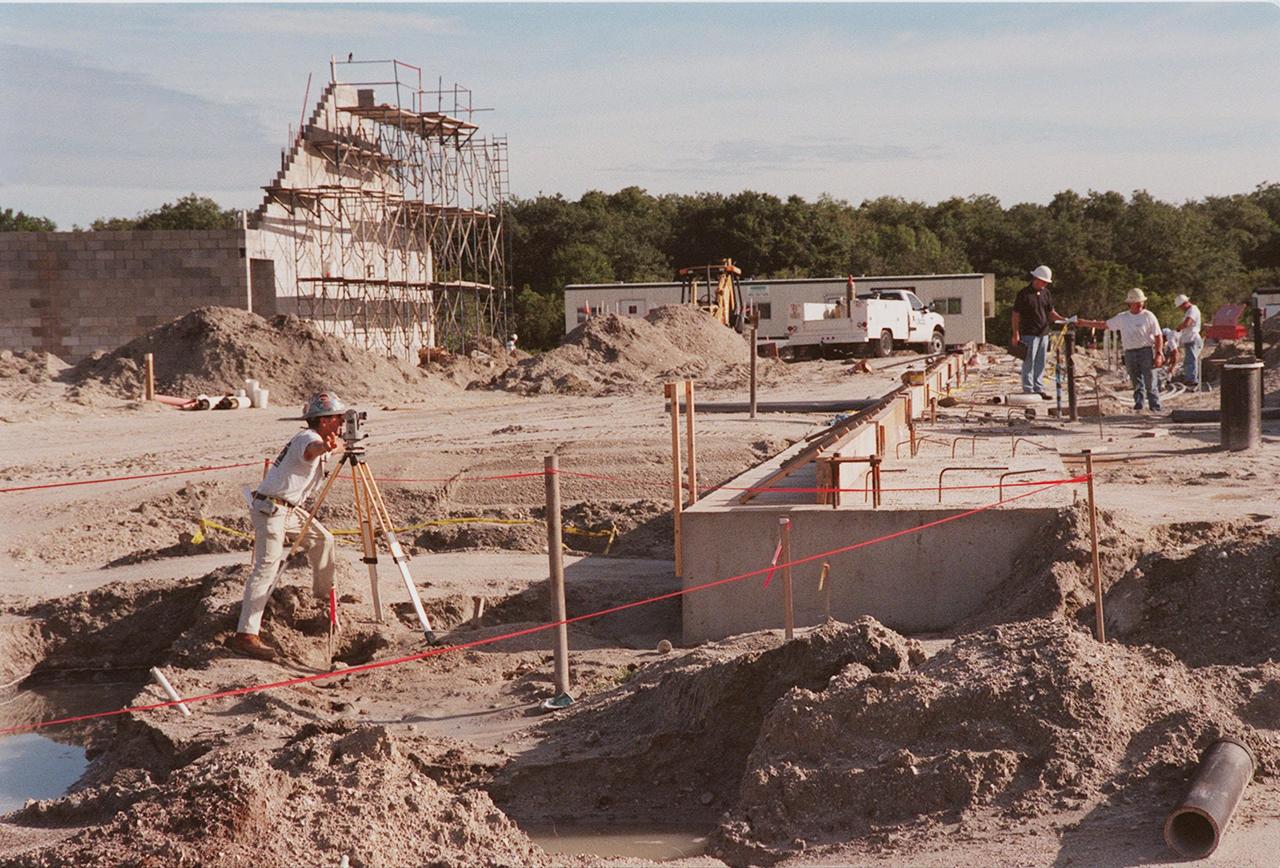
At the construction site of the Reusable Launch Vehicle (RLV) complex at KSC, workers take measurements for one of the buildings. Located near the Shuttle Landing Facility, the complex will include facilities for related ground support equipment and administrative/ technical support. It will be available to accommodate the Space Shuttle; the X-34 RLV technology demonstrator; the L-1011 carrier aircraft for Pegasus and X-34; and other RLV and X-vehicle programs. The complex is jointly funded by the Spaceport Florida Authority, NASA's Space Shuttle Program and KSC. The facility will be operational in early 2000
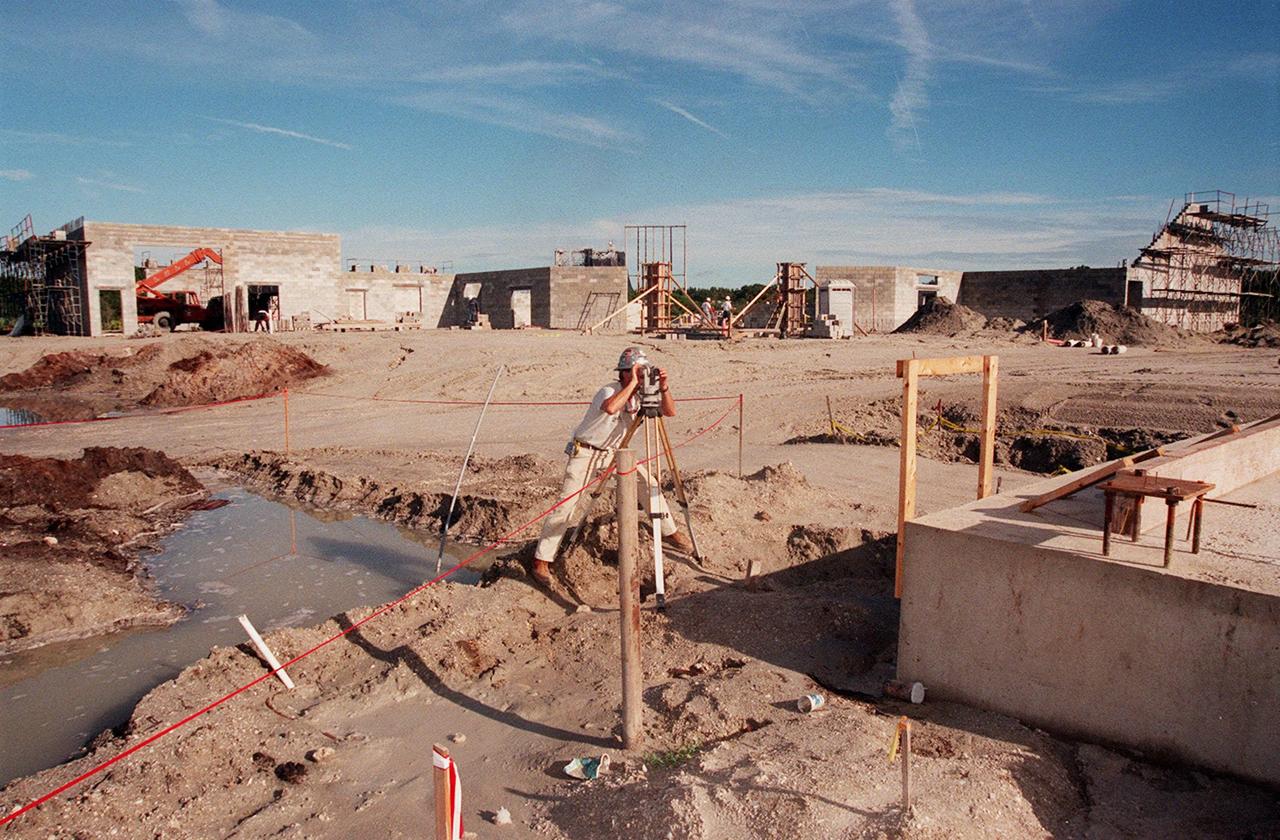
A worker takes a measurement for construction of the Reusable Launch Vehicle (RLV) complex at KSC. Located near the Shuttle Landing Facility, the complex will include facilities for related ground support equipment and administrative/ technical support. It will be available to accommodate the Space Shuttle; the X-34 RLV technology demonstrator; the L-1011 carrier aircraft for Pegasus and X-34; and other RLV and X-vehicle programs. The complex is jointly funded by the Spaceport Florida Authority, NASA's Space Shuttle Program and KSC. The facility will be operational in early 2000
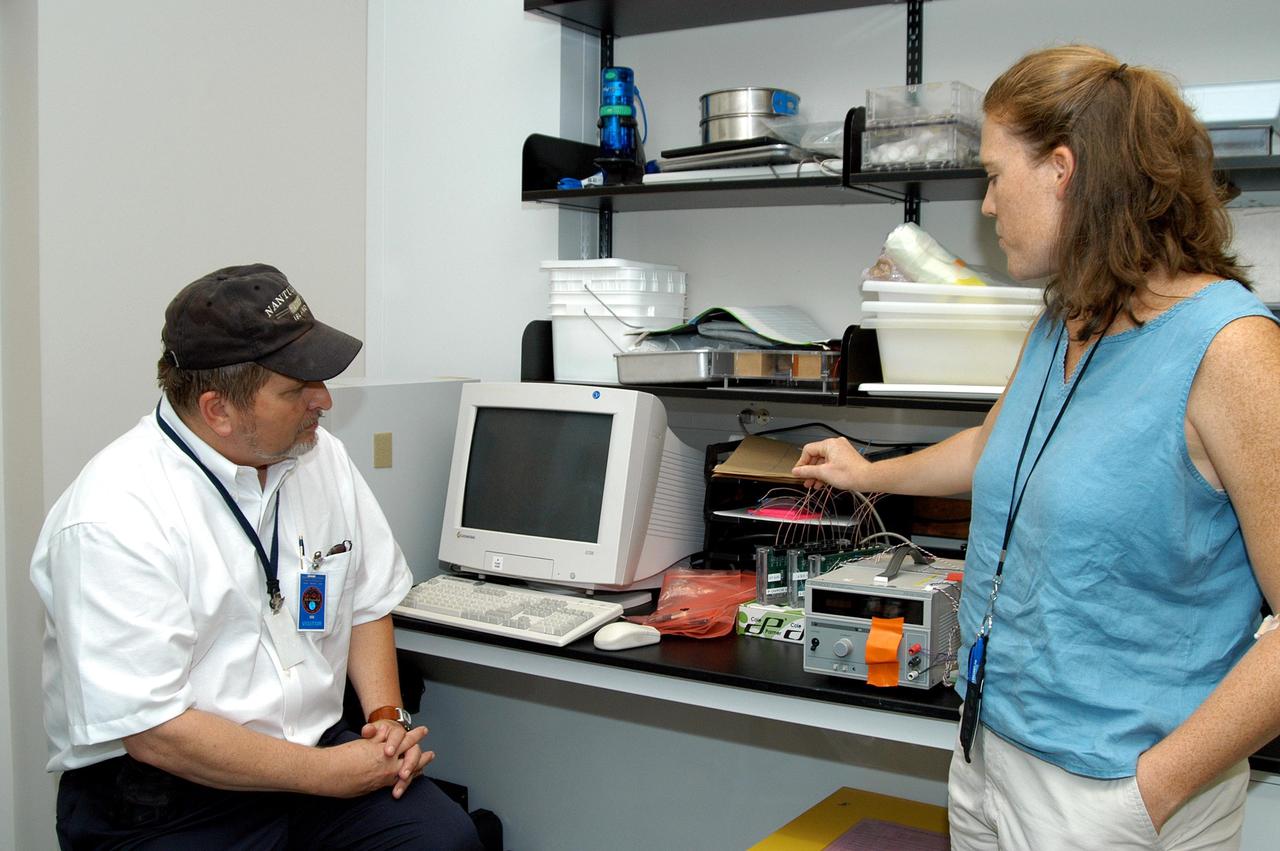
KENNEDY SPACE CENTER, FLA. - Paul Curto (left), chief technologist with NASA’s Inventions and Contributions Board, learns about research being done in the Space Life Sciences Lab from Jessica Prenger, senior agricultural engineer. Curto is visiting KSC to talk to innovators and encourage workers to submit technologies for future Space Act Awards. The Inventions and Contributions Board, established in 1958, is a major contributor in rewarding outstanding scientific or technical contributions sponsored, adopted, supported or used by NASA that are significant to aeronautics and space activities.
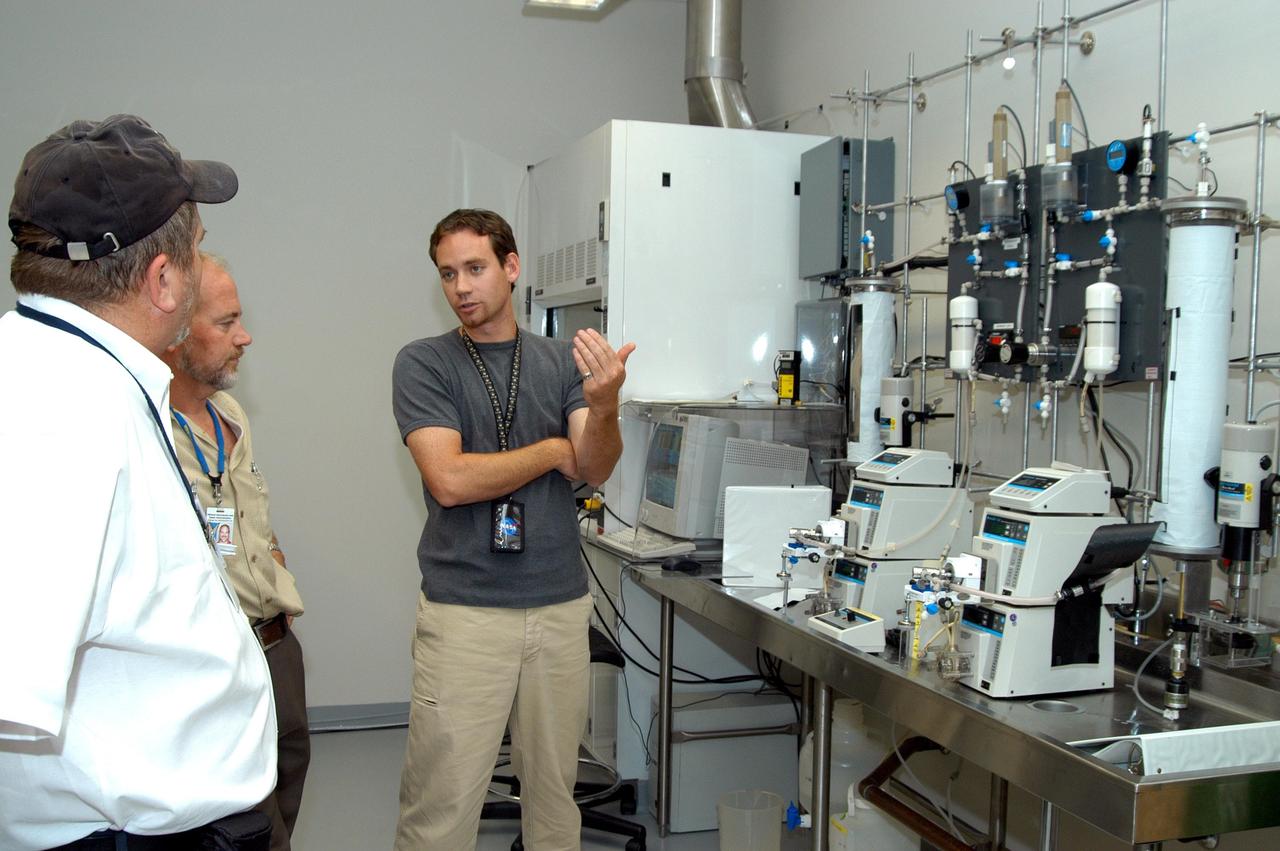
KENNEDY SPACE CENTER, FLA. - Paul Curto (left), chief technologist with NASA’s Inventions and Contributions Board, learns from bioengineer Tony Rector (right) about a wastewater processing project Rector is working on in the Space Life Sciences Lab. Curto is visiting KSC to talk to innovators and encourage workers to submit technologies for future Space Act Awards. The Inventions and Contributions Board, established in 1958, is a major contributor in rewarding outstanding scientific or technical contributions sponsored, adopted, supported or used by NASA that are significant to aeronautics and space activities.
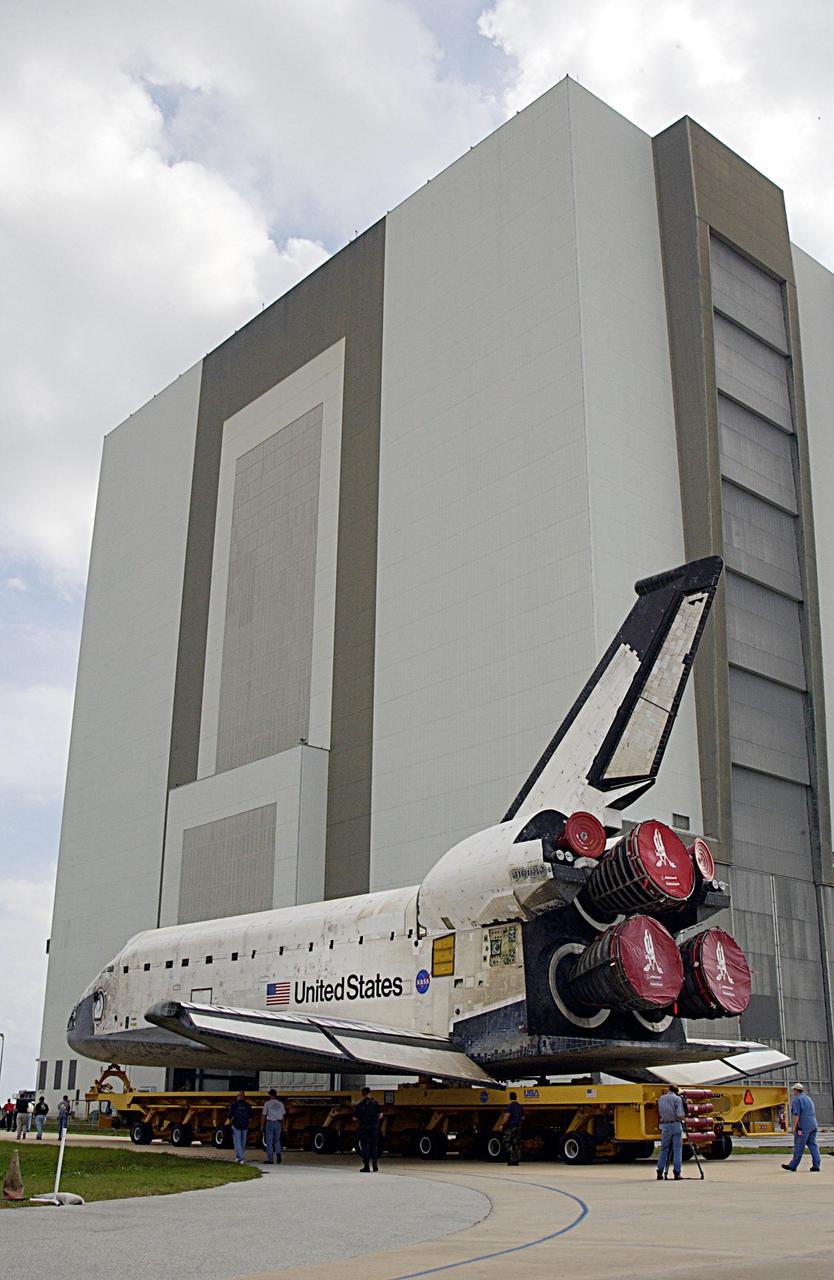
KENNEDY SPACE CENTER, FLA. -- KSC workers accompany Space Shuttle Columbia as it is moved towards the Vehicle Assembly Building where processing will continue for the flight of mission STS-107. Launch is now targeted for no earlier than Jan. 16, 2003. The STS-107 mission will be dedicated to microgravity research. The payloads include the Hitchhiker Bridge, a carrier for the Fast Reaction Experiments Enabling Science, Technology, Applications and Research (FREESTAR) incorporating eight high priority secondary attached Shuttle experiments, and the SHI Research Double Module (SHI/RDM), also known as SPACEHAB.
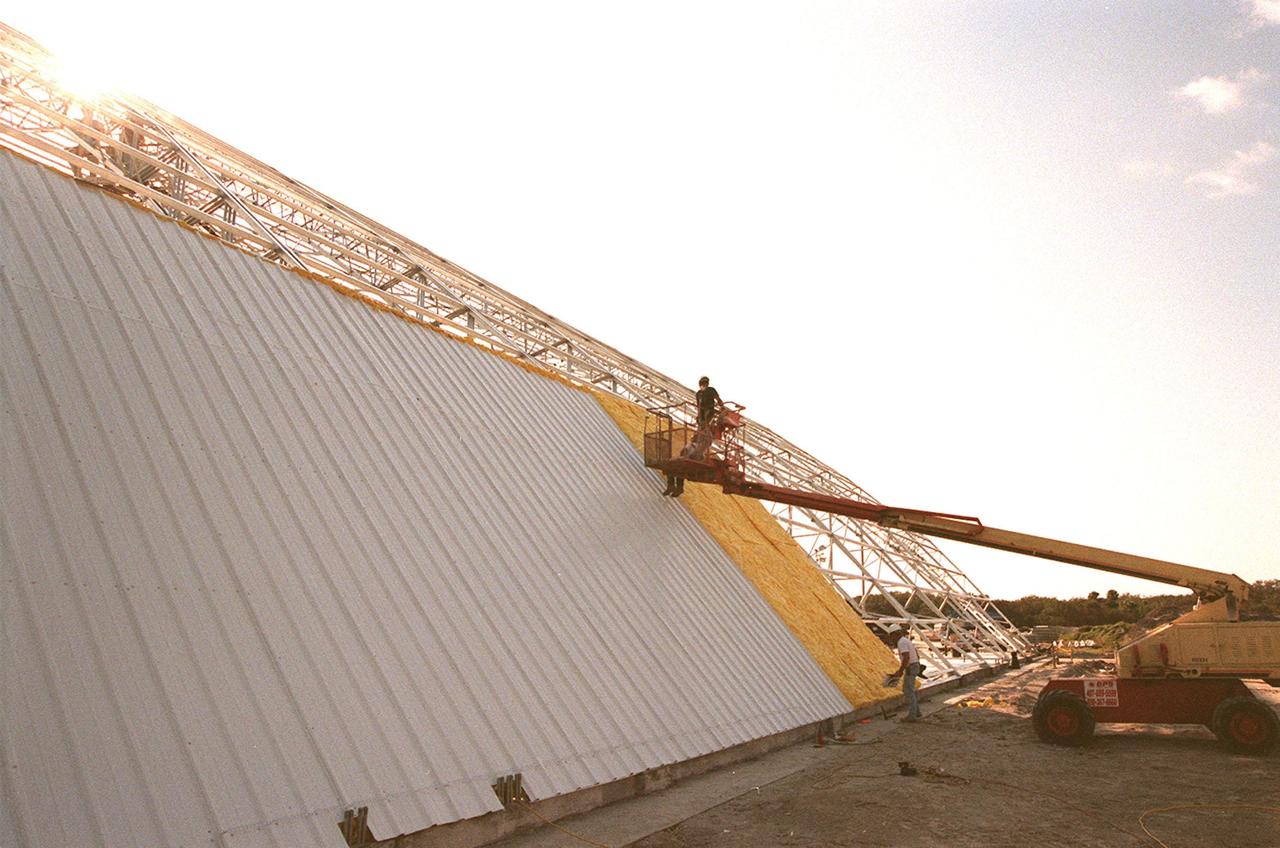
Workers place the first roof panels on the multi-purpose hangar at the site of the $8 million Reusable Launch Vehicle (RLV) Support Complex at Kennedy Space Center. The RLV complex, which includes the hangar and a building for related ground support equipment and administrative/technical support, will be available to accommodate the Space Shuttle; the X-34 RLV technology demonstrator; the L-1011 carrier aircraft for Pegasus and X-34; and other RLV and X-vehicle programs. The complex is jointly funded by the Spaceport Florida Authority, NASA's Space Shuttle Program and KSC. The facility will be operational in early 2000
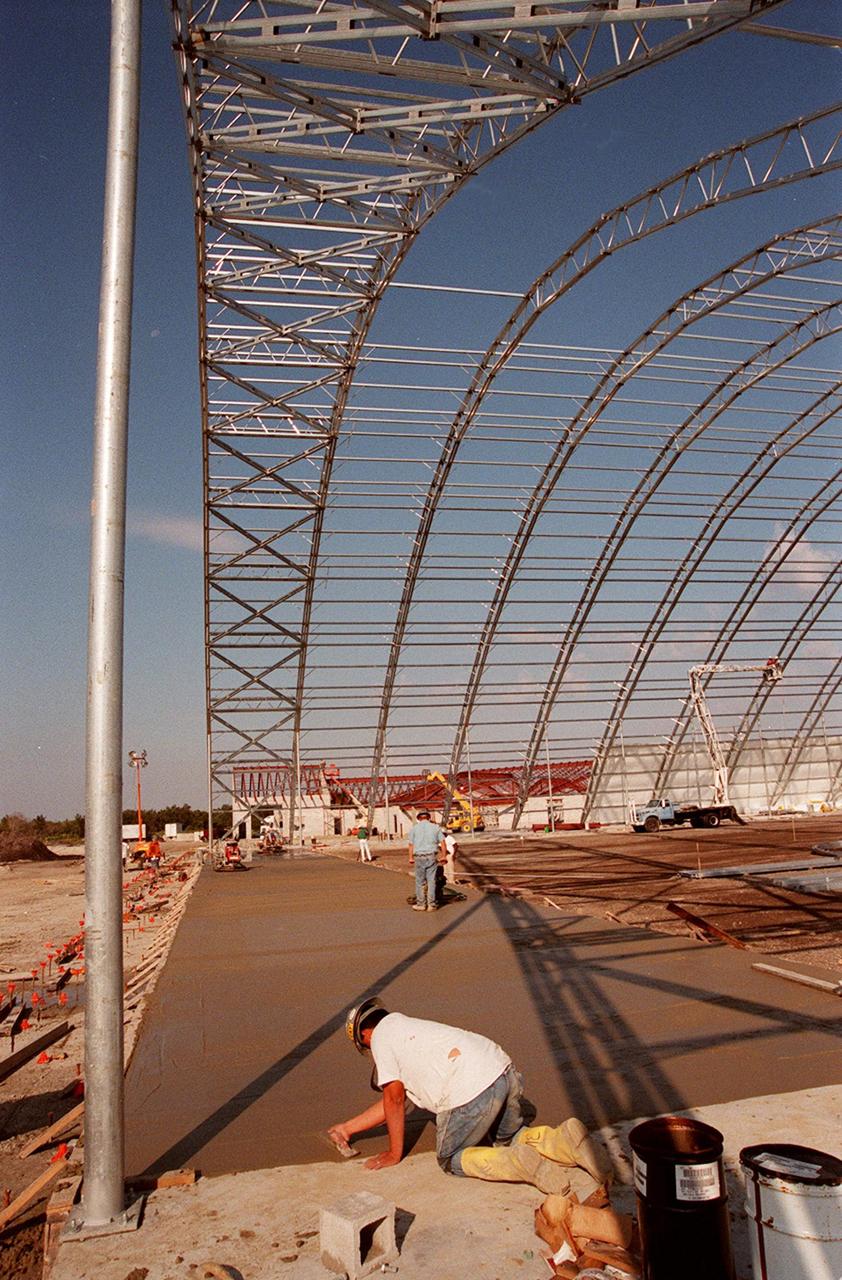
A worker smoothes the recently poured foundation of the multi-purpose hangar at the site of the $8 million Reusable Launch Vehicle (RLV) Support Complex at Kennedy Space Center. In the background can be seen the new construction for the building that will house related ground support equipment and administrative/technical support. The RLV complex will be available to accommodate the Space Shuttle; the X-34 RLV technology demonstrator; the L-1011 carrier aircraft for Pegasus and X-34; and other RLV and X-vehicle programs. The complex is jointly funded by the Spaceport Florida Authority, NASA's Space Shuttle Program and KSC. The facility will be operational in early 2000
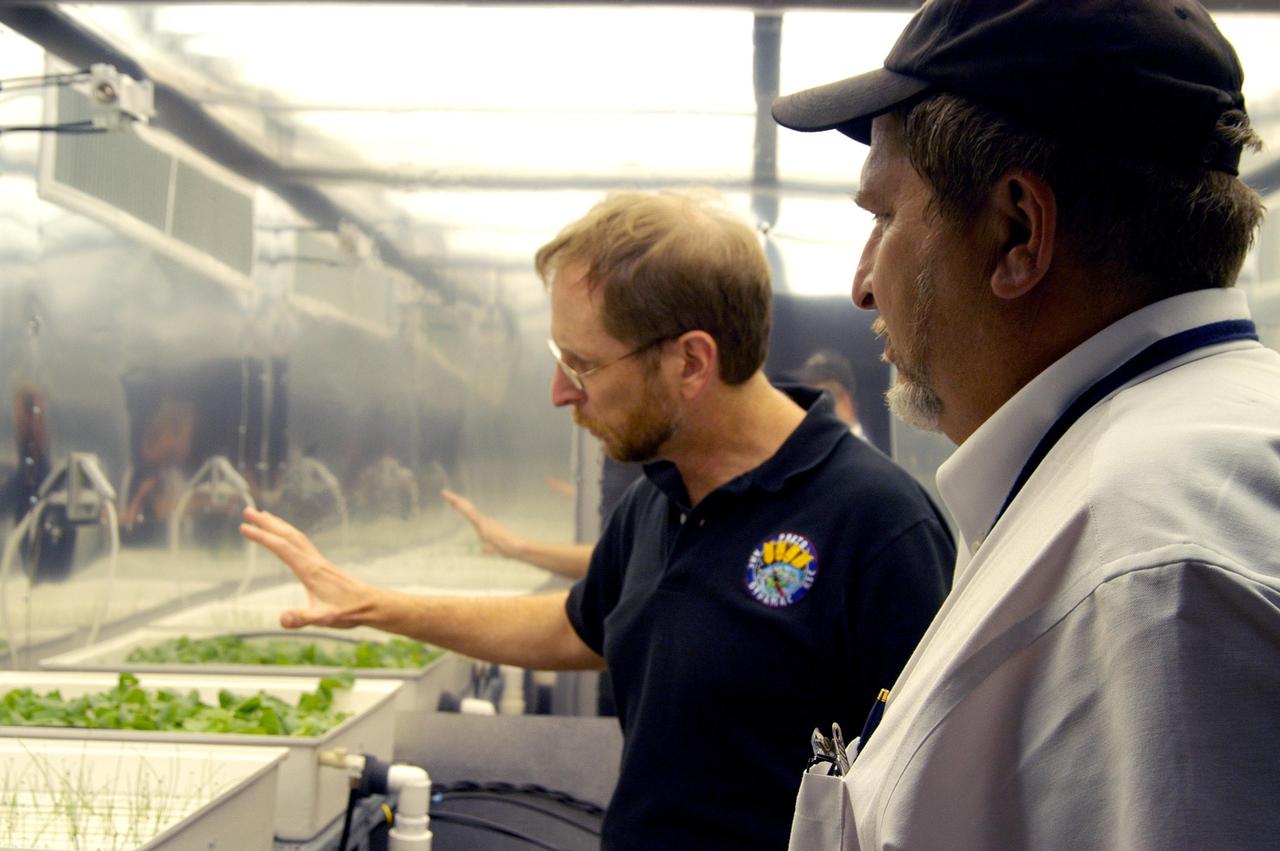
KENNEDY SPACE CENTER, FLA. - Dr. Gary Stutte explains to Paul Curto (right), chief technologist with NASA’s Inventions and Contributions Board, the research being done in this plant growth chamber in the Space Life Sciences Lab. Stutte is a senior research scientist with Dynamac Corp. Curto is visiting KSC to talk to innovators and encourage workers to submit technologies for future Space Act Awards. The Inventions and Contributions Board, established in 1958, is a major contributor in rewarding outstanding scientific or technical contributions sponsored, adopted, supported or used by NASA that are significant to aeronautics and space activities.

Construction workers are silhouetted against the sky as they work on the girders of a support building, part of the new $8 million Reusable Launch Vehicle (RLV) Support Complex at Kennedy Space Center. The building is to be used for related ground support equipment and administrative/technical support. The RLV complex also includes a multi-purpose hangar. The complex will be available to accommodate the Space Shuttle; the X-34 RLV technology demonstrator; the L-1011 carrier aircraft for Pegasus and X-34; and other RLV and X-vehicle programs. The facility, jointly funded by the Spaceport Florida Authority, NASA's Space Shuttle Program and KSC, will be operational in early 2000
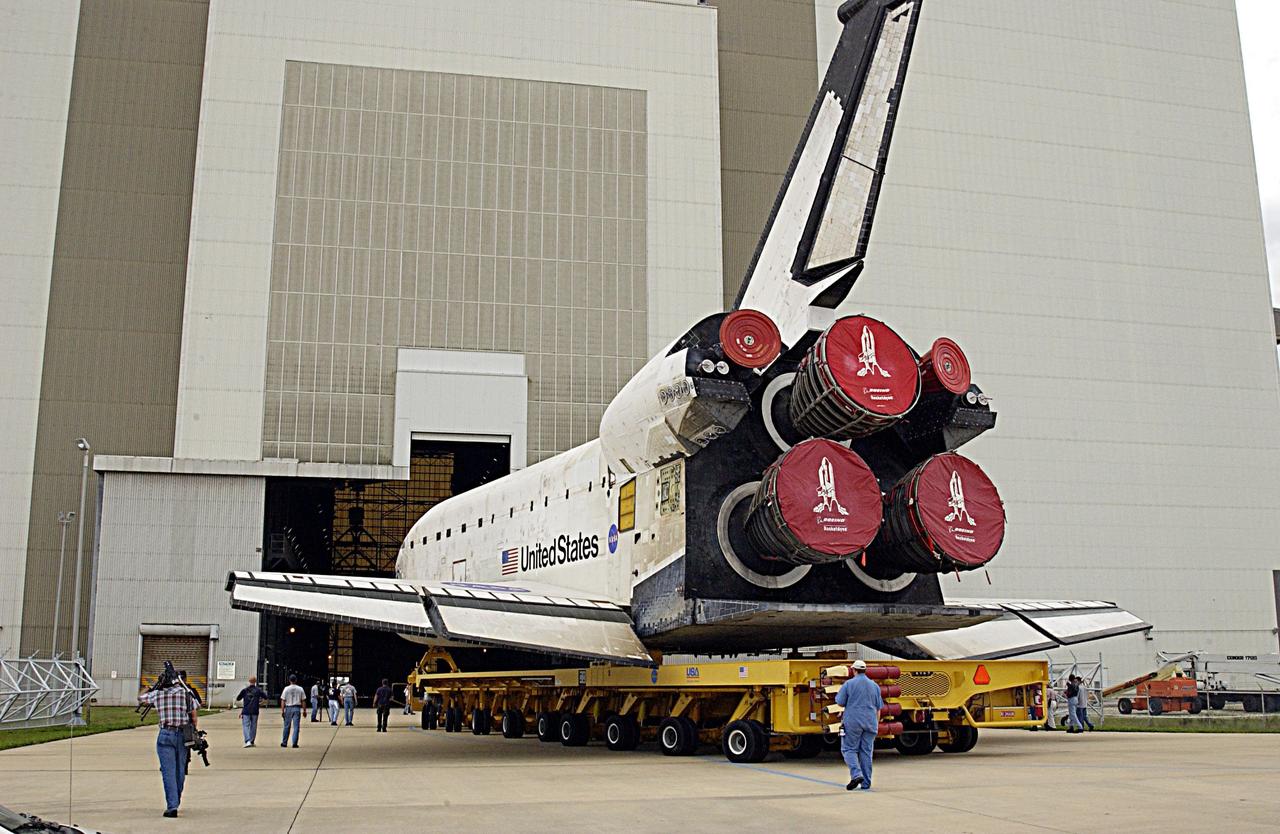
KENNEDY SPACE CENTER, FLA. -- KSC workers accompany Space Shuttle Columbia as it is moved inside the Vehicle Assembly Building where processing will continue for the flight of mission STS-107. Launch is now targeted for no earlier than Jan. 16, 2003. The STS-107 mission will be dedicated to microgravity research. The payloads include the Hitchhiker Bridge, a carrier for the Fast Reaction Experiments Enabling Science, Technology, Applications and Research (FREESTAR) incorporating eight high priority secondary attached Shuttle experiments, and the SHI Research Double Module (SHI/RDM), also known as SPACEHAB.
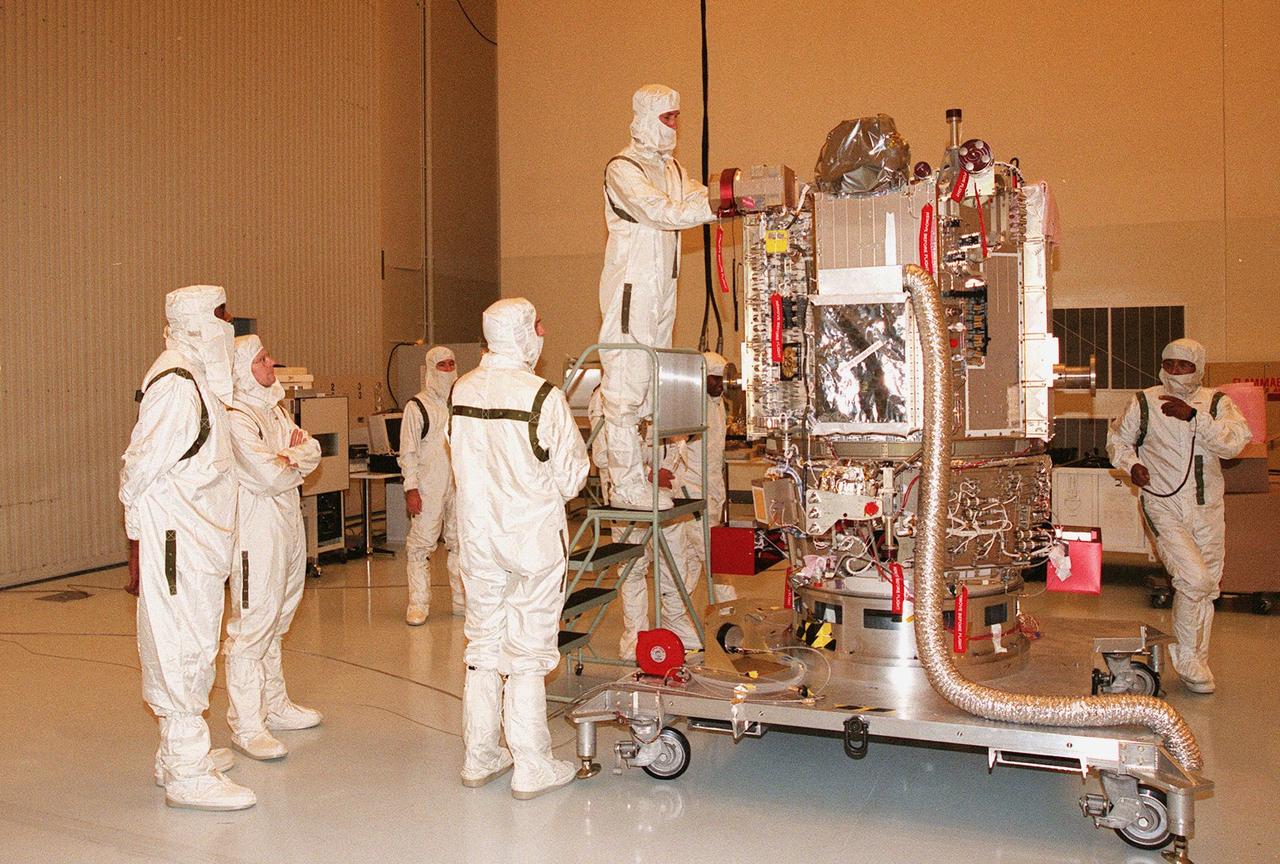
KENNEDY SPACE CENTER, FLA. -- Wearing special protective suits, workers ready NASA’s Deep Space 1 spacecraft for prelaunch processing in the Payload Hazardous Servicing Facility at KSC. Targeted for launch on a Boeing Delta 7326 rocket on Oct. 15, 1998, the first flight in NASA’s New Millennium Program is designed to validate 12 new technologies for scientific space missions of the next century. Onboard experiments include an ion propulsion engine and software that tracks celestial bodies so the spacecraft can make its own navigation decisions without the intervention of ground controllers. Deep Space 1 will complete most of its mission objectives within the first two months, but will also do a flyby of a near-Earth asteroid, 1992 KD, in July 1999
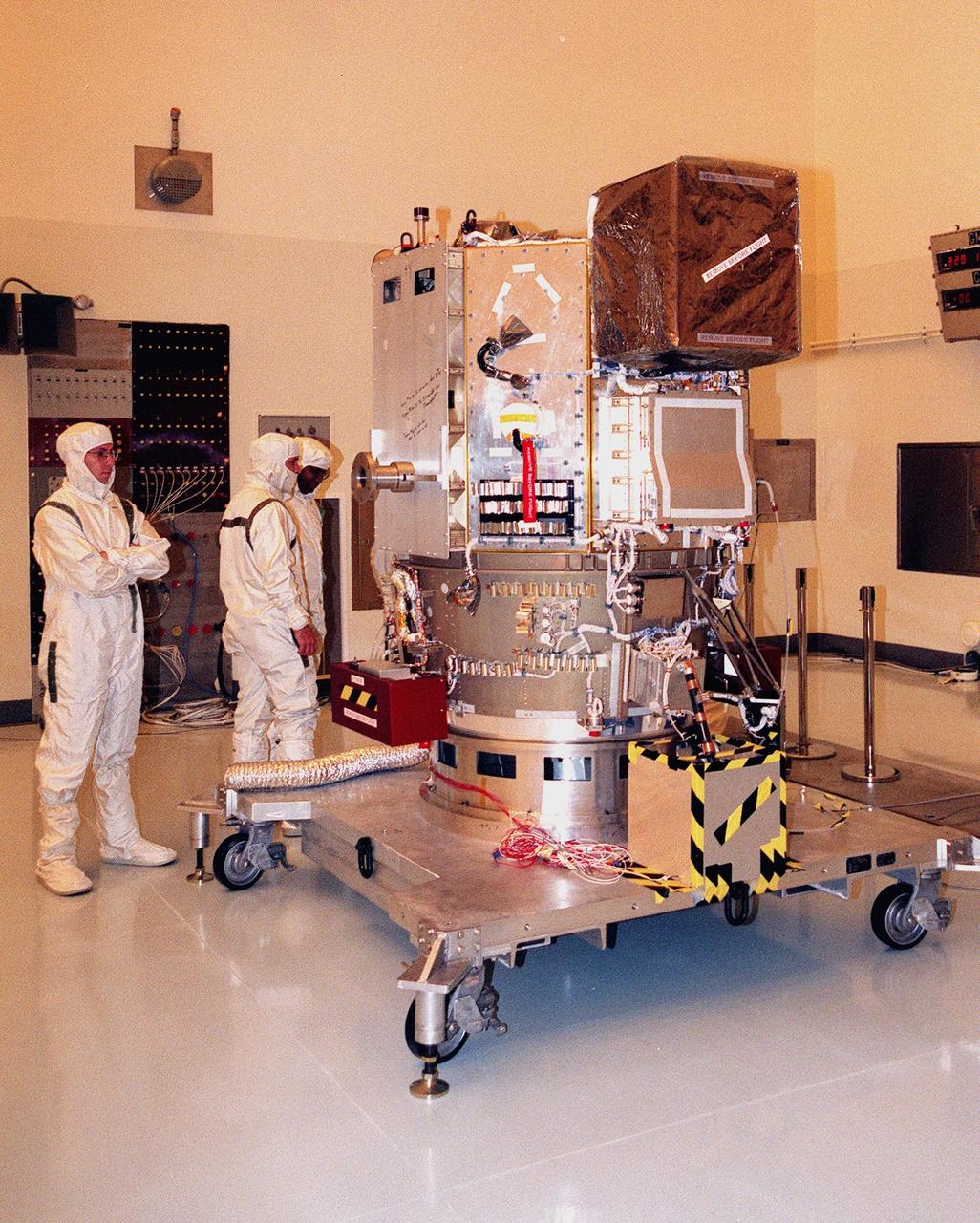
KENNEDY SPACE CENTER, FLA. -- Wearing special protective suits, workers look over NASA’s Deep Space 1 spacecraft before prelaunch processing in the Payload Hazardous Servicing Facility at KSC. Targeted for launch on a Boeing Delta 7326 rocket on Oct. 15, 1998, the first flight in NASA’s New Millennium Program is designed to validate 12 new technologies for scientific space missions of the next century. Onboard experiments include an ion propulsion engine and software that tracks celestial bodies so the spacecraft can make its own navigation decisions without the intervention of ground controllers. Deep Space 1 will complete most of its mission objectives within the first two months, but will also do a flyby of a near-Earth asteroid, 1992 KD, in July 1999
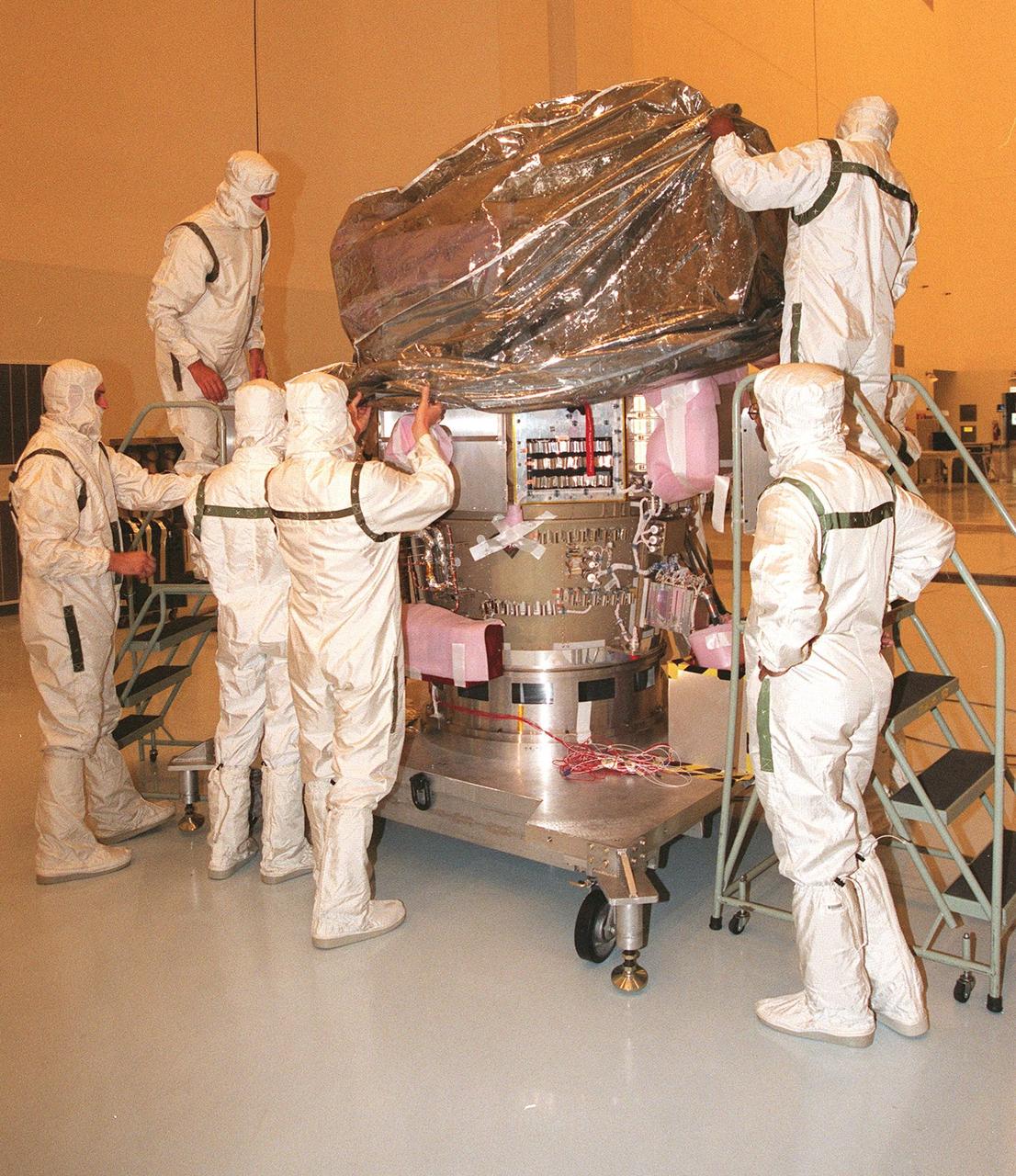
KENNEDY SPACE CENTER, FLA. -- Wearing special protective suits, workers remove the protective covering from NASA’s Deep Space 1 spacecraft in the Payload Hazardous Servicing Facility at KSC to prepare it for prelaunch processing. Targeted for launch on a Boeing Delta 7326 rocket on Oct. 15, 1998, the first flight in NASA’s New Millennium Program is designed to validate 12 new technologies for scientific space missions of the next century. Onboard experiments include an ion propulsion engine and software that tracks celestial bodies so the spacecraft can make its own navigation decisions without the intervention of ground controllers. Deep Space 1 will complete most of its mission objectives within the first two months, but will also do a flyby of a near-Earth asteroid, 1992 KD, in July 1999
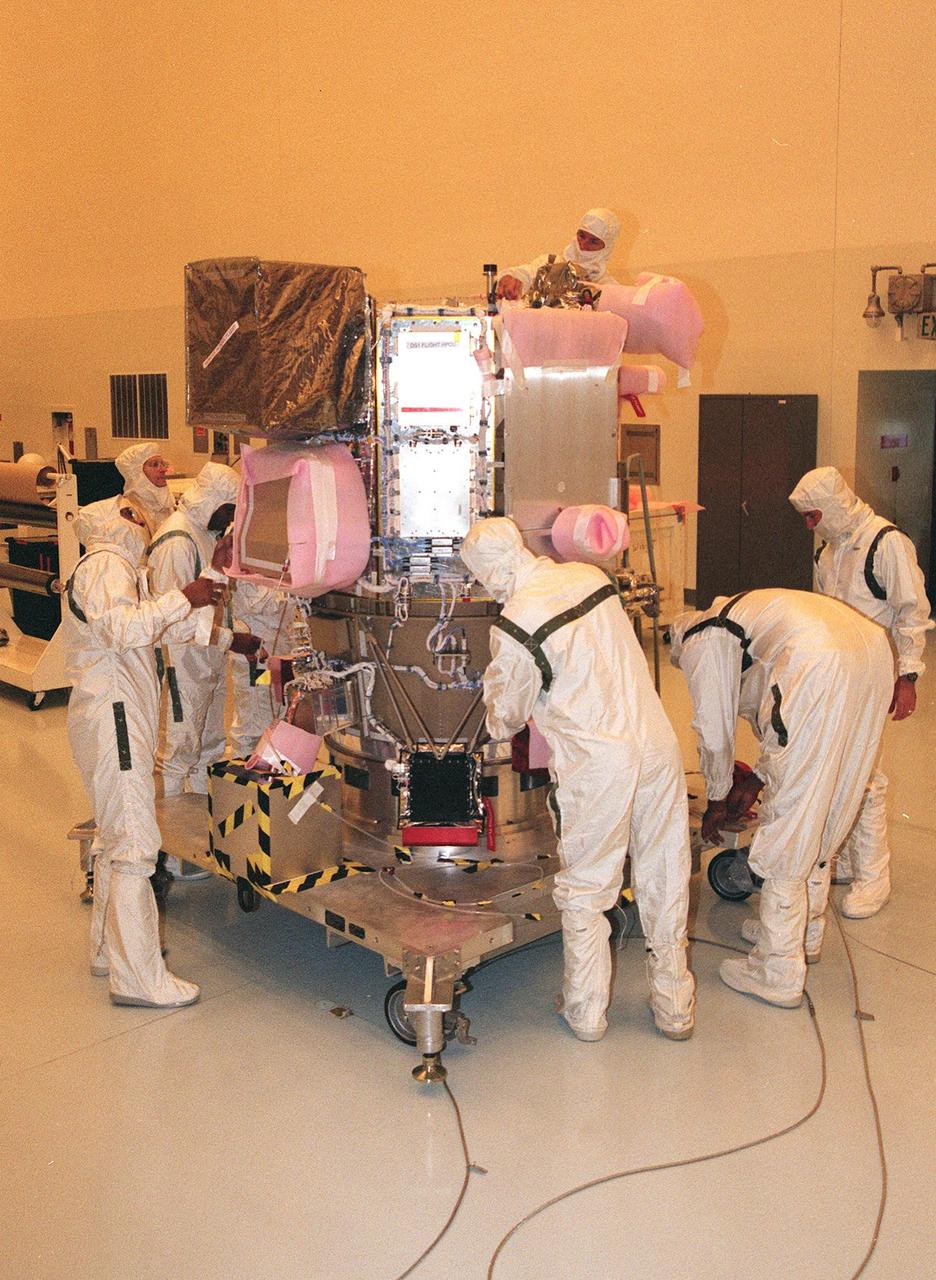
KENNEDY SPACE CENTER, FLA. -- Wearing special protective suits, workers ready NASA’s Deep Space 1 spacecraft for prelaunch processing in the Payload Hazardous Servicing Facility at KSC. Targeted for launch on a Boeing Delta 7326 rocket on Oct. 15, 1998, the first flight in NASA’s New Millennium Program is designed to validate 12 new technologies for scientific space missions of the next century. Onboard experiments include an ion propulsion engine and software that tracks celestial bodies so the spacecraft can make its own navigation decisions without the intervention of ground controllers. Deep Space 1 will complete most of its mission objectives within the first two months, but will also do a flyby of a near-Earth asteroid, 1992 KD, in July 1999
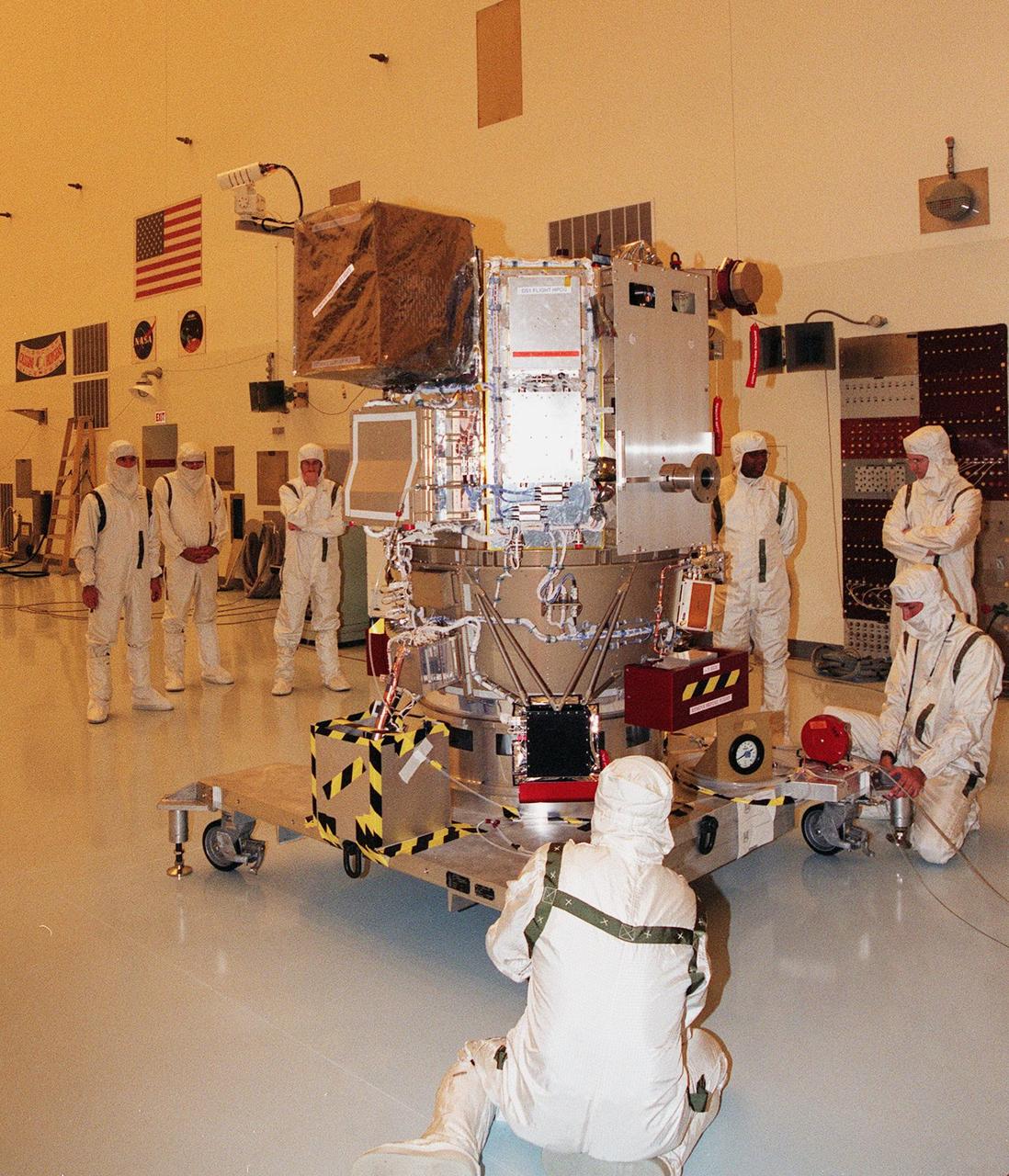
KENNEDY SPACE CENTER, FLA. -- Wearing special protective suits, workers maneuver NASA’s Deep Space 1 spacecraft into place for prelaunch processing in the Payload Hazardous Servicing Facility at KSC. Targeted for launch on a Boeing Delta 7326 rocket on Oct. 15, 1998, the first flight in NASA’s New Millennium Program is designed to validate 12 new technologies for scientific space missions of the next century. Onboard experiments include an ion propulsion engine and software that tracks celestial bodies so the spacecraft can make its own navigation decisions without the intervention of ground controllers. Deep Space 1 will complete most of its mission objectives within the first two months, but will also do a flyby of a near-Earth asteroid, 1992 KD, in July 1999
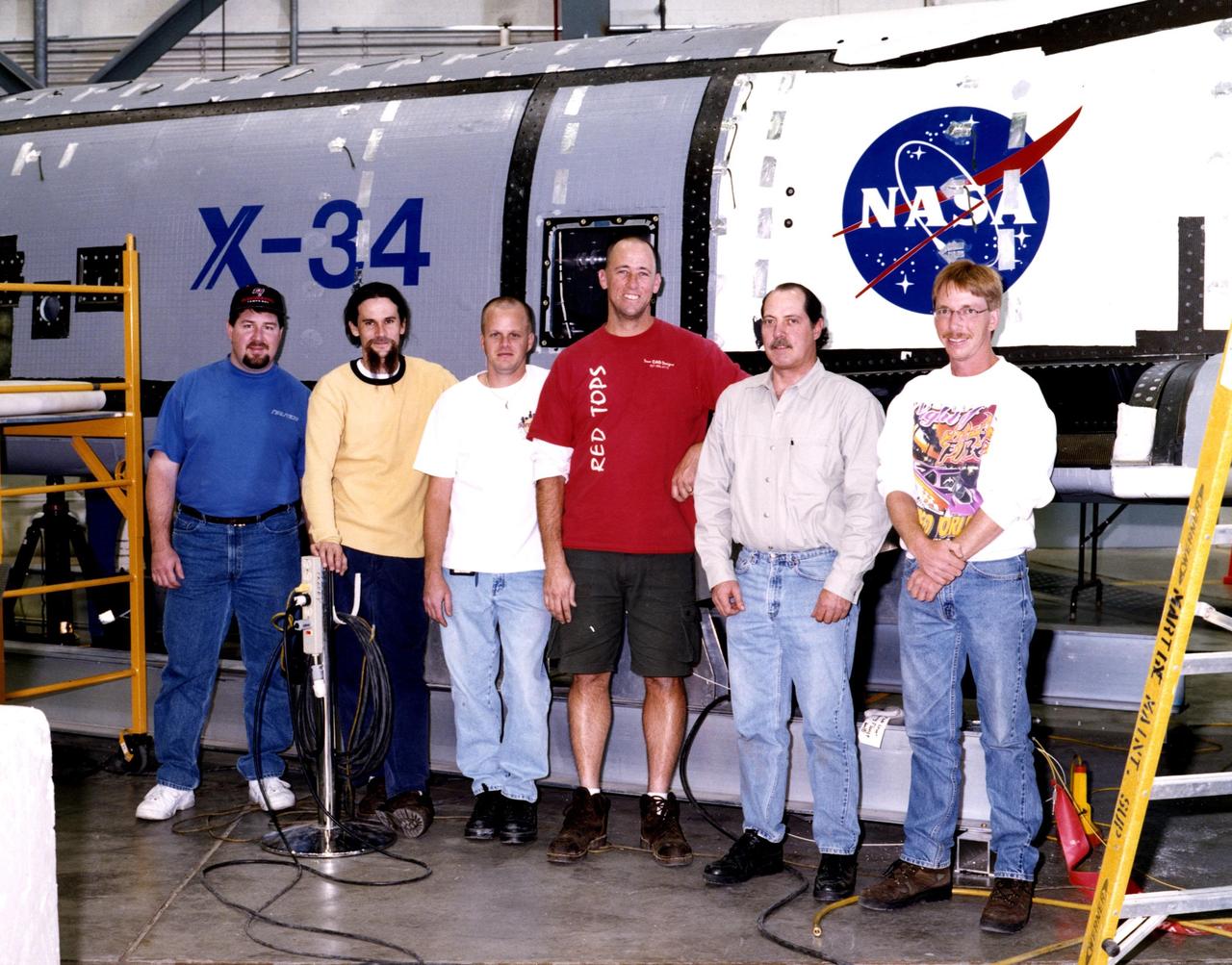
Six of the KSC workers who supported recent X-34 modifications pose in front of the modified A-1A vehicle at Edwards Air Force Base, Calif. From left are Mike Lane, Roger Cartier, Dave Rowell, Mike Dininny, Bryan Taylor and James Niehoff Jr. Not shown are Kevin Boughner and Jerry Moscoso. Since September, the eight NASA engineering technicians from KSC's Engineering Prototype Lab have assisted Orbital Sciences Corporation and NASA's Dryden Flight Research Center in the complex process of converting the X-34 A-1 vehicle from captive carry status to unpowered flight status, known as A-1A. The X-34 is 58.3 feet long, 27.7 feet wide from wing tip to wing tip, and 11.5 feet tall from the bottom of the fuselage to the top of the tail. The autonomously operated technology demonstrator will be air-launched from an L-1011 airplane and should be capable of flying eight times the speed of sound, reaching an altitude of 250,000 feet. The X-34 Project is managed by NASA's Marshall Space Flight Center in Huntsville, Ala
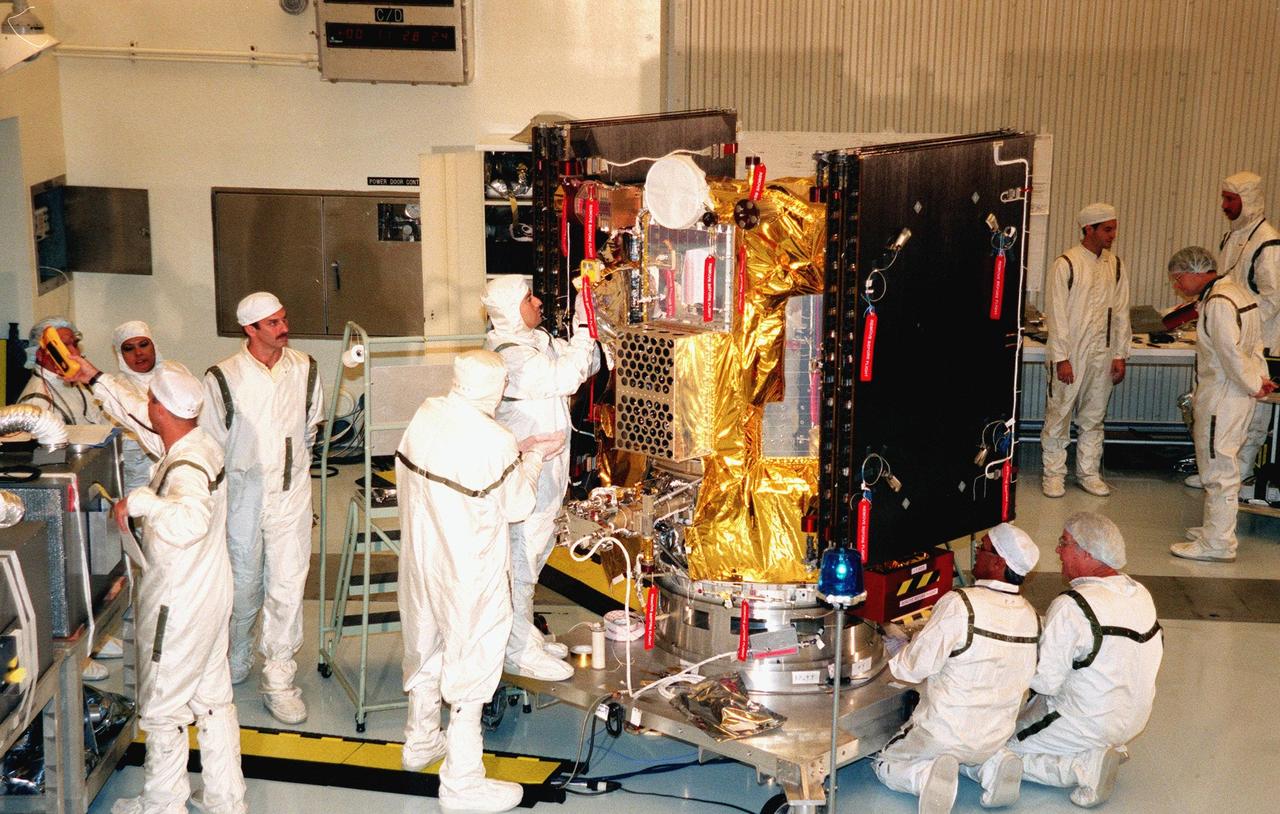
KENNEDY SPACE CENTER, FLA. -- In the Payload Hazardous Servicing Facility, KSC workers place insulating blankets on Deep Space 1 to prepare it for launch. The first flight in NASA's New Millennium Program, Deep Space 1 is designed to validate 12 new technologies for scientific space missions of the next century. Onboard experiments include an ion propulsion engine and software that tracks celestial bodies so the spacecraft can make its own navigation decisions without the intervention of ground controllers. Deep Space 1 will complete most of its mission objectives within the first two months, but may also do a flyby of a near-Earth asteroid, 1992 KD, in July 1999. Deep Space 1 will be launched aboard a Boeing Delta 7326 rocket from Launch Pad 17A, Cape Canaveral Air Station, in October. Delta II rockets are medium capacity expendable launch vehicles derived from the Delta family of rockets built and launched since 1960. Since then there have been more than 245 Delta launches
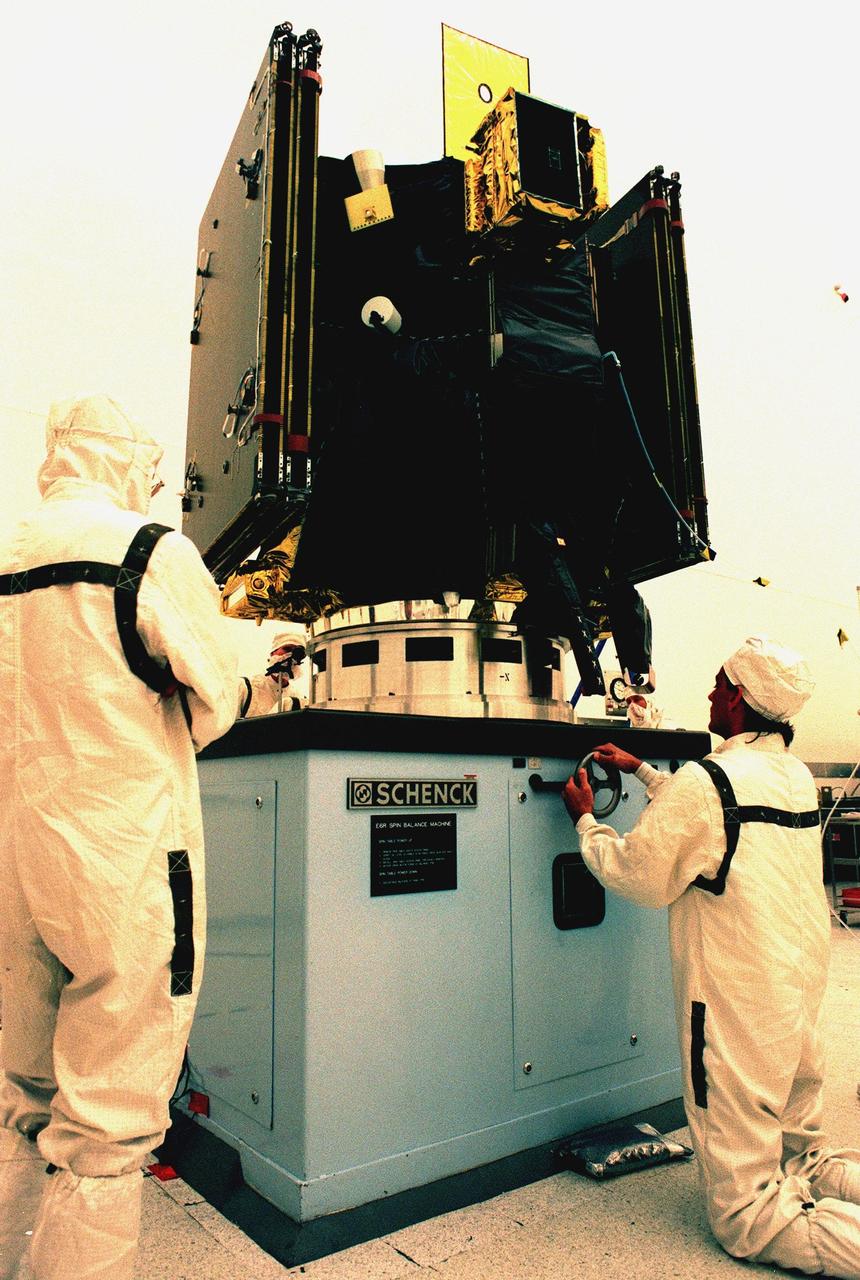
KENNEDY SPACE CENTER, FLA. -- KSC workers give a final check to Deep Space 1 before starting a spin test on the spacecraft at the Defense Satellite Communications System Processing Facility (DPF), Cape Canaveral Air Station. The first flight in NASA's New Millennium Program, Deep Space 1 is designed to validate 12 new technologies for scientific space missions of the next century. Onboard experiments include a solar-powered ion propulsion engine and software that tracks celestial bodies so the spacecraft can make its own navigation decisions without the intervention of ground controllers. The ion propulsion engine is the first non-chemical propulsion to be used as the primary means of propelling a spacecraft. Deep Space 1 will complete most of its mission objectives within the first two months, but may also do a flyby of a near-Earth asteroid, 1992 KD, in July 1999. The spacecraft will be launched aboard a Boeing Delta 7326 rocket from Launch Pad 17A, Cape Canaveral Air Station, in October. Delta II rockets are medium capacity expendable launch vehicles derived from the Delta family of rockets built and launched since 1960. Since then there have been more than 245 Delta launches
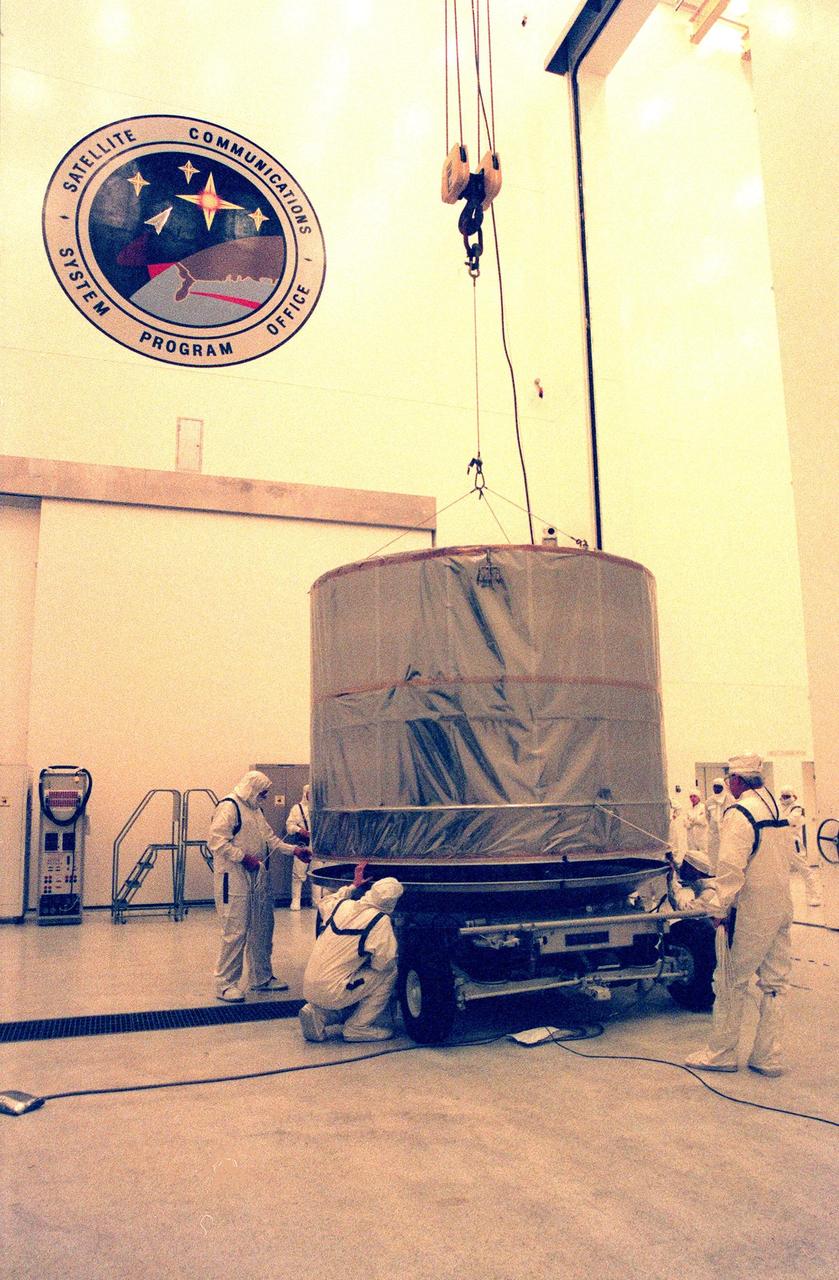
Workers at this clean room facility, Cape Canaveral Air Station, prepare to lift the protective can that covered Deep Space 1 during transportation from KSC. The spacecraft will undergo spin testing at the site. Deep Space 1, the first flight in NASA's New Millennium Program, is designed to validate 12 new technologies for scientific space missions of the next century. Onboard experiments include a solar-powered ion propulsion engine and software that tracks celestial bodies so the spacecraft can make its own navigation decisions without the intervention of ground controllers. The ion propulsion engine is the first non-chemical propulsion to be used as the primary means of propelling a spacecraft. Deep Space 1 will complete most of its mission objectives within the first two months, but may also do a flyby of a near-Earth asteroid, 1992 KD, in July 1999. The spacecraft will be launched aboard a Boeing Delta 7326 rocket from Launch Pad 17A, Cape Canaveral Air Station, in October. Delta II rockets are medium capacity expendable launch vehicles derived from the Delta family of rockets built and launched since 1960. Since then there have been more than 245 Delta launches
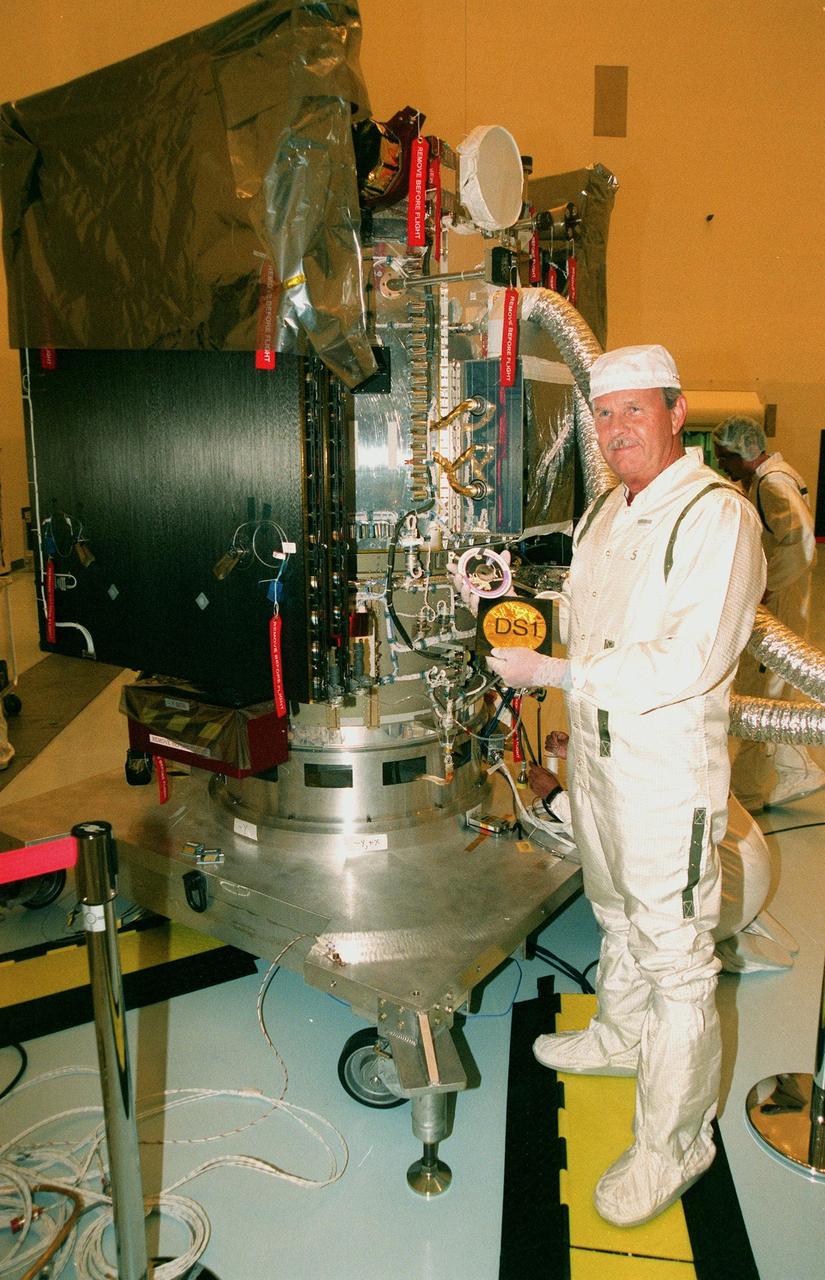
KENNEDY SPACE CENTER, FLA. -- In the Payload Hazardous Servicing Facility, Tom Shain, project manager on Deep Space 1, displays a CD containing 350,000 names of KSC workers that he will place in a pouch and insert inside the spacecraft. The first flight in NASA's New Millennium Program, Deep Space 1 is designed to validate 12 new technologies for scientific space missions of the next century. Onboard experiments include an ion propulsion engine and software that tracks celestial bodies so the spacecraft can make its own navigation decisions without the intervention of ground controllers. Deep Space 1 will complete most of its mission objectives within the first two months, but may also do a flyby of a near-Earth asteroid, 1992 KD, in July 1999. Deep Space 1 will be launched aboard a Boeing Delta 7326 rocket from Launch Pad 17A, Cape Canaveral Air Station, in October. Delta II rockets are medium capacity expendable launch vehicles derived from the Delta family of rockets built and launched since 1960. Since then there have been more than 245 Delta launches

KENNEDY SPACE CENTER, FLA. -- KSC workers lower the "can" over Deep Space 1. The can will protect the spacecraft during transport to the Defense Satellite Communications System Processing Facility (DPF), Cape Canaveral Air Station, for testing. The first flight in NASA's New Millennium Program, Deep Space 1 is designed to validate 12 new technologies for scientific space missions of the next century. Onboard experiments include a solar-powered ion propulsion engine and software that tracks celestial bodies so the spacecraft can make its own navigation decisions without the intervention of ground controllers. The ion propulsion engine is the first non-chemical propulsion to be used as the primary means of propelling a spacecraft. Deep Space 1 will complete most of its mission objectives within the first two months, but may also do a flyby of a near-Earth asteroid, 1992 KD, in July 1999. The spacecraft will be launched aboard a Boeing Delta 7326 rocket from Launch Pad 17A, Cape Canaveral Air Station, in October. Delta II rockets are medium capacity expendable launch vehicles derived from the Delta family of rockets built and launched since 1960. Since then there have been more than 245 Delta launches
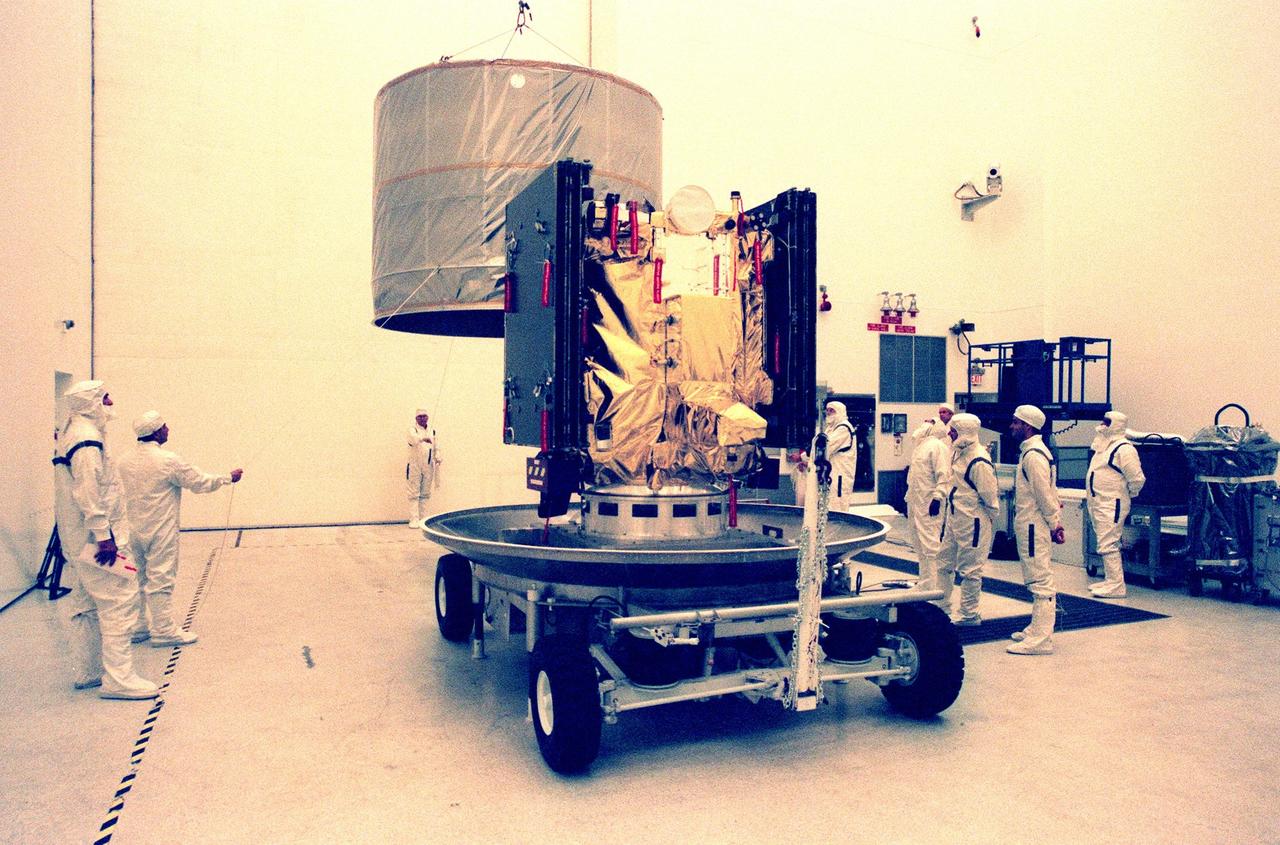
Workers at this clean room facility, Cape Canaveral Air Station, maneuver the protective can that covered Deep Space 1 during transportation from KSC away from the spacecraft. Deep Space 1 will undergo spin testing at the site. The first flight in NASA's New Millennium Program, Deep Space 1 is designed to validate 12 new technologies for scientific space missions of the next century. Onboard experiments include a solar-powered ion propulsion engine and software that tracks celestial bodies so the spacecraft can make its own navigation decisions without the intervention of ground controllers. The ion propulsion engine is the first non-chemical propulsion to be used as the primary means of propelling a spacecraft. Deep Space 1 will complete most of its mission objectives within the first two months, but may also do a flyby of a near-Earth asteroid, 1992 KD, in July 1999. The spacecraft will be launched aboard a Boeing Delta 7326 rocket from Launch Pad 17A, Cape Canaveral Air Station, in October. Delta II rockets are medium capacity expendable launch vehicles derived from the Delta family of rockets built and launched since 1960. Since then there have been more than 245 Delta launches
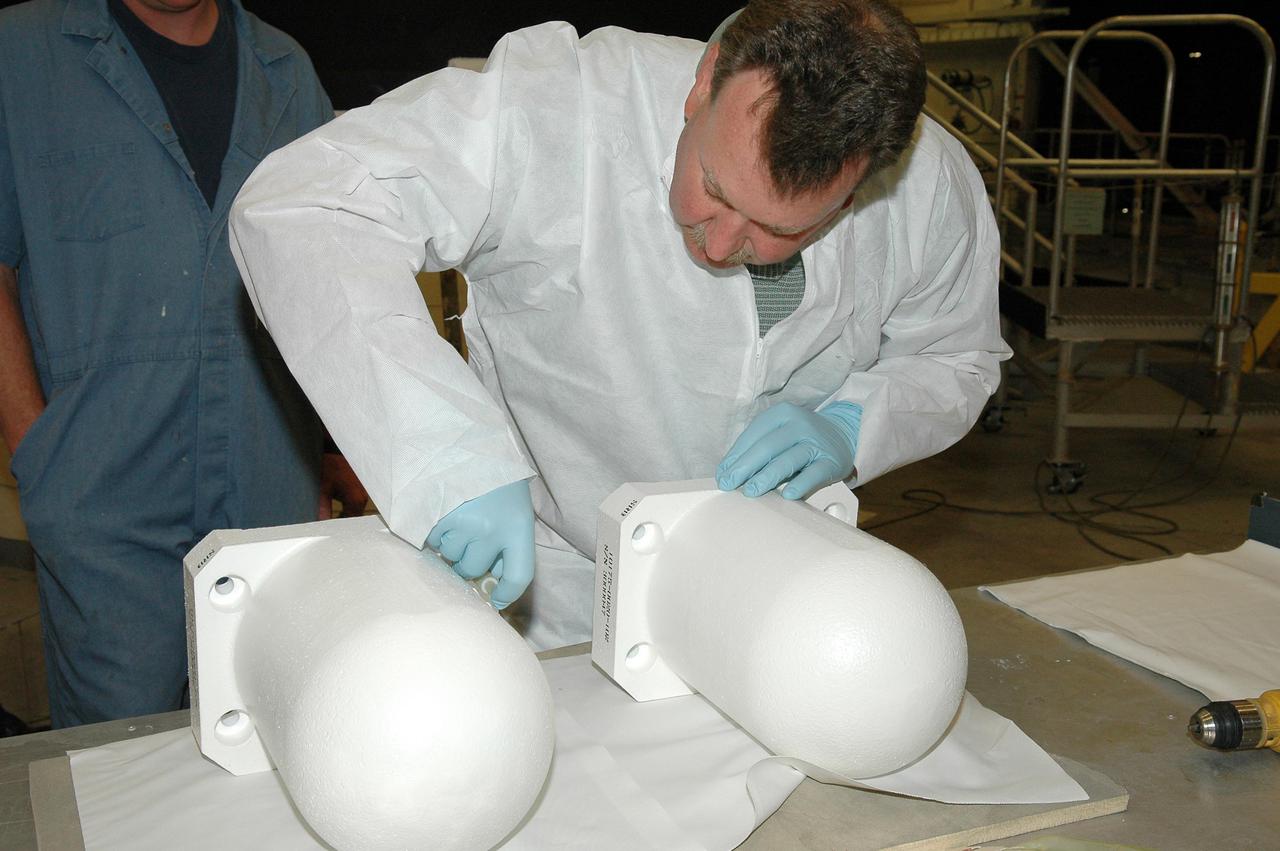
KENNEDY SPACE CENTER, FLA. - In the Vehicle Assembly Building, workers prepare these two bolt catchers for installation on orbiter Discovery’s External Tank. A bolt catcher is a vertical bolt mechanism at the forward end of the External Tank that attaches each booster to the tank. At approximately two minutes into launch, SRB separation begins when pyrotechnic devices fire to break the 25-inch, 62-pound steel bolts. One half of the bolt is caught in canister-like 'bolt catchers' located on the tank; the other half remains with the boosters. Discovery is flying with a modified bolt catcher, which was upgraded from a two-piece welded design to a one-piece, machine-made design as part of NASA's effort to return to safe, reliable spaceflight. Eliminating the weld makes a structurally stronger bolt catcher design. Though the bolt catcher is mounted on the External Tank, it is considered part of the Solid Rocket Booster element design. It is built by Summa Technologies, Inc. in Huntsville, Ala., insulated at Lockheed Martin’s Michoud Assembly Facility in New Orleans, and installed on the External Tank at KSC.
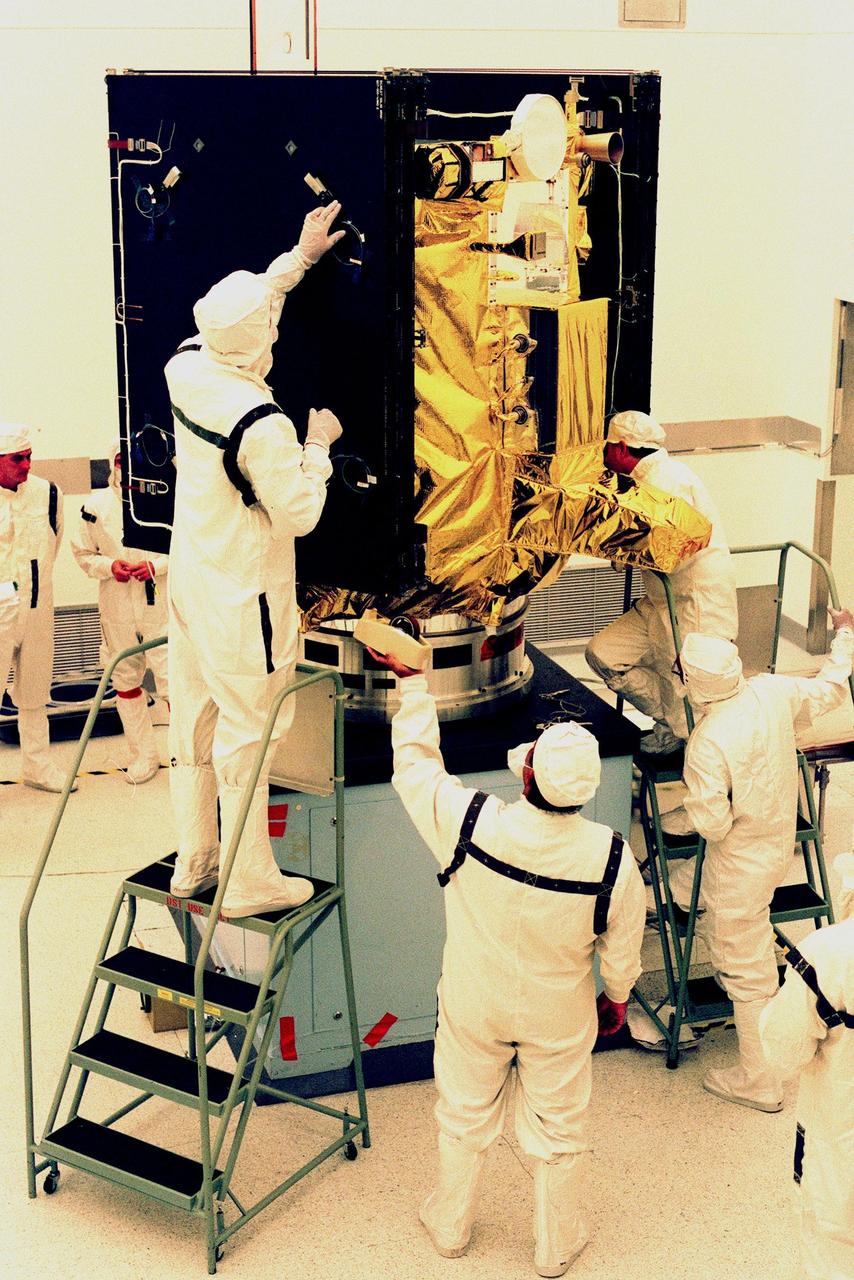
KENNEDY SPACE CENTER, FLA. -- KSC workers prepare Deep Space 1 for a spin test on the E6R Spin Balance Machine at the Defense Satellite Communications System Processing Facility (DPF), Cape Canaveral Air Station. The first flight in NASA's New Millennium Program, Deep Space 1 is designed to validate 12 new technologies for scientific space missions of the next century. Onboard experiments include a solar-powered ion propulsion engine and software that tracks celestial bodies so the spacecraft can make its own navigation decisions without the intervention of ground controllers. The ion propulsion engine is the first non-chemical propulsion to be used as the primary means of propelling a spacecraft. Deep Space 1 will complete most of its mission objectives within the first two months, but may also do a flyby of a near-Earth asteroid, 1992 KD, in July 1999. The spacecraft will be launched aboard a Boeing Delta 7326 rocket from Launch Pad 17A, Cape Canaveral Air Station, in October. Delta II rockets are medium capacity expendable launch vehicles derived from the Delta family of rockets built and launched since 1960. Since then there have been more than 245 Delta launches
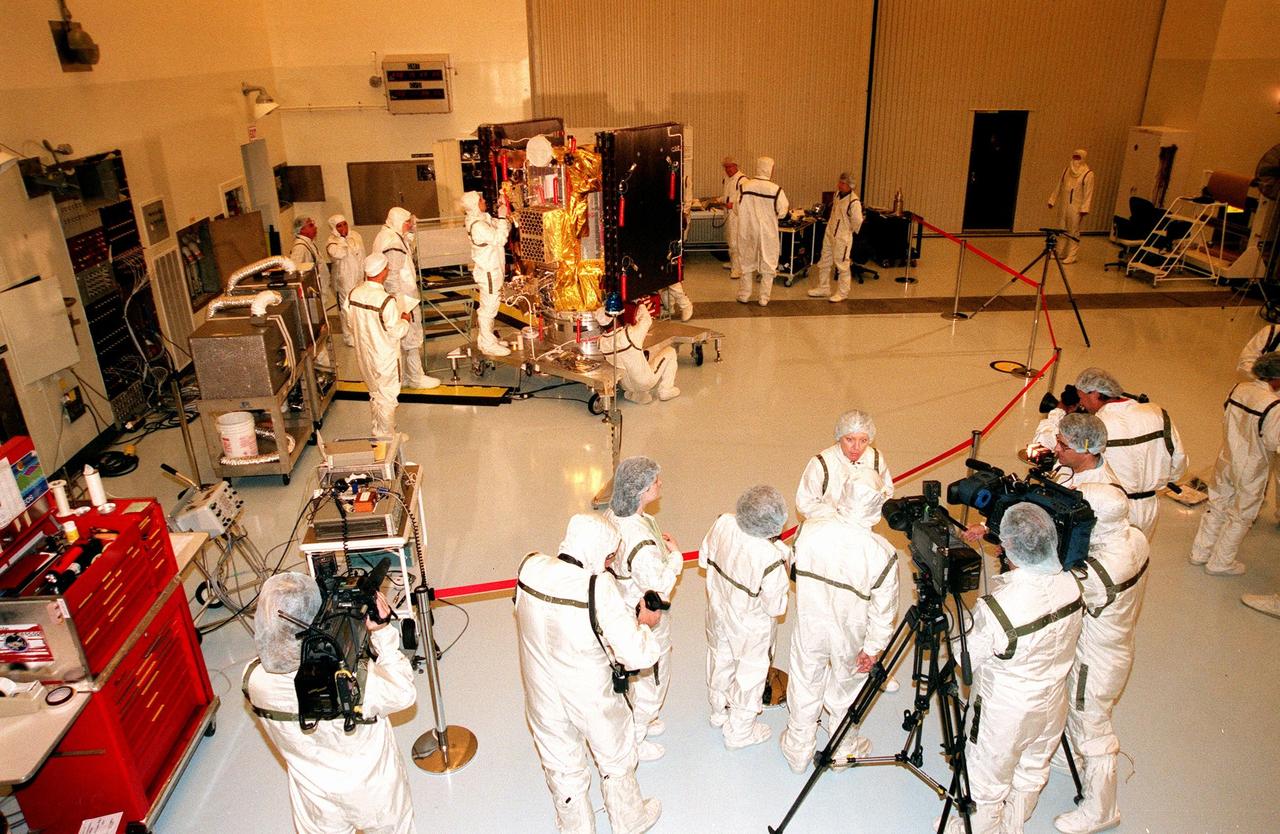
KENNEDY SPACE CENTER, FLA. -- In the Payload Hazardous Servicing Facility, the media (below), dressed in "bunny" suits, learn about Deep Space 1 from Leslie Livesay (facing cameras), Deep Space 1 spacecraft manager from the Jet Propulsion Laboratory. In the background, KSC workers place insulating blankets on Deep Space 1. The first flight in NASA's New Millennium Program, Deep Space 1 is designed to validate 12 new technologies for scientific space missions of the next century. Onboard experiments include an ion propulsion engine and software that tracks celestial bodies so the spacecraft can make its own navigation decisions without the intervention of ground controllers. Deep Space 1 will complete most of its mission objectives within the first two months, but may also do a flyby of a near-Earth asteroid, 1992 KD, in July 1999. Deep Space 1 will be launched aboard a Boeing Delta 7326 rocket from Launch Pad 17A, Cape Canaveral Air Station, in October. Delta II rockets are medium capacity expendable launch vehicles derived from the Delta family of rockets built and launched since 1960. Since then there have been more than 245 Delta launches