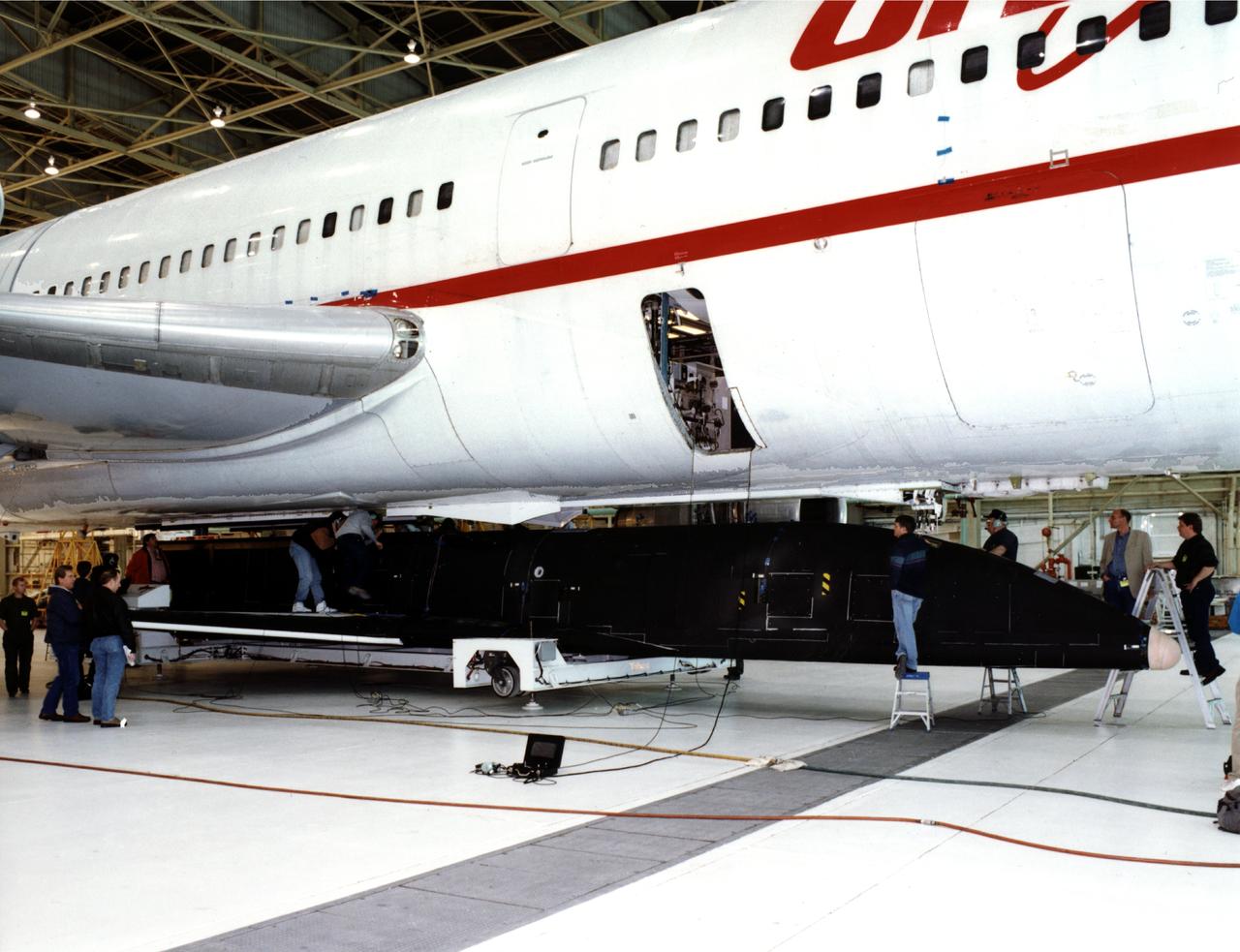
This is the X-34 Technology Testbed Demonstrator being mated with the L-1011 mothership. The X-34 will demonstrate key vehicle and operational technologies applicable to future low-cost resuable launch vehicles.
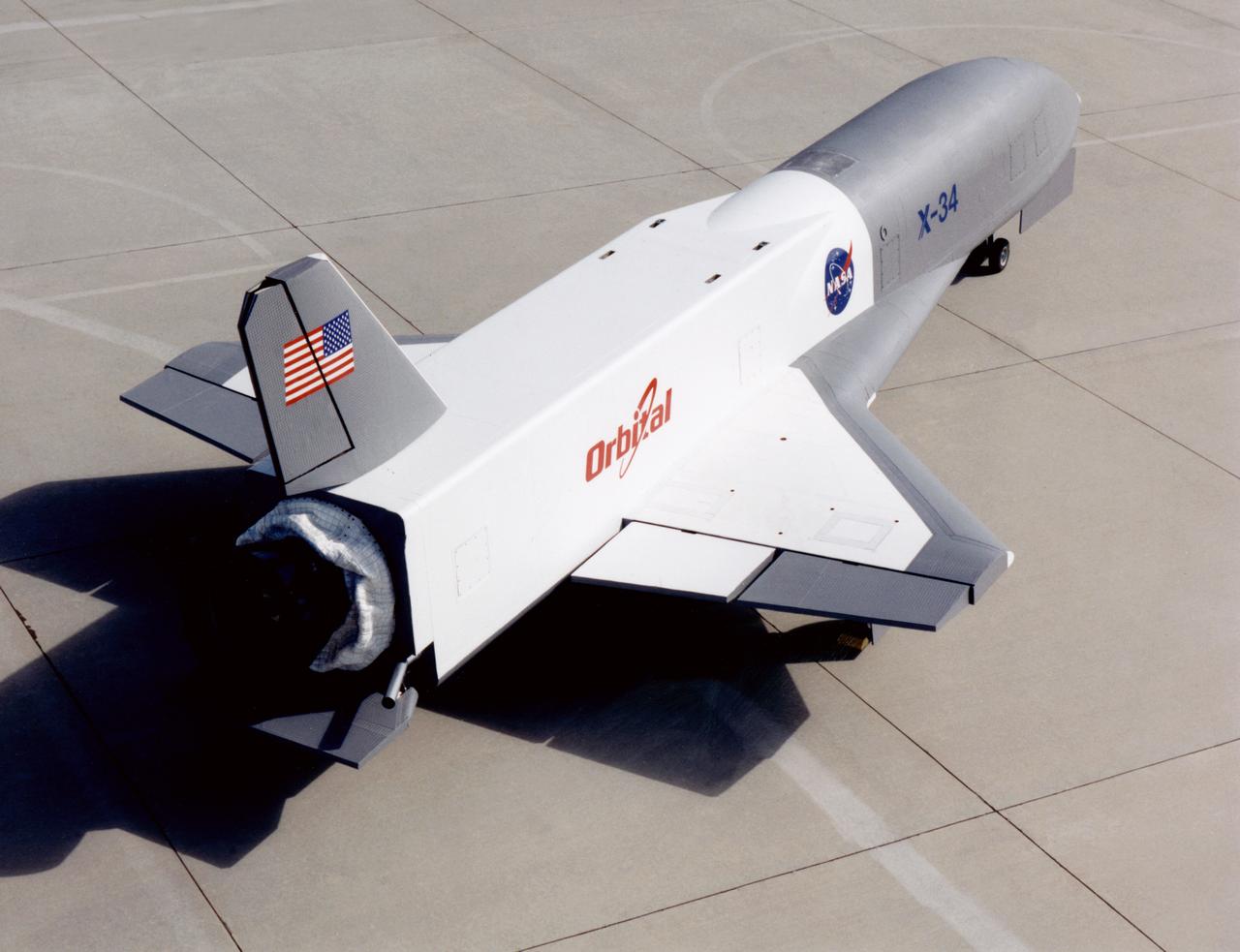
X-34 Technology Testbed Demonstrator on NASA Dryden ramp
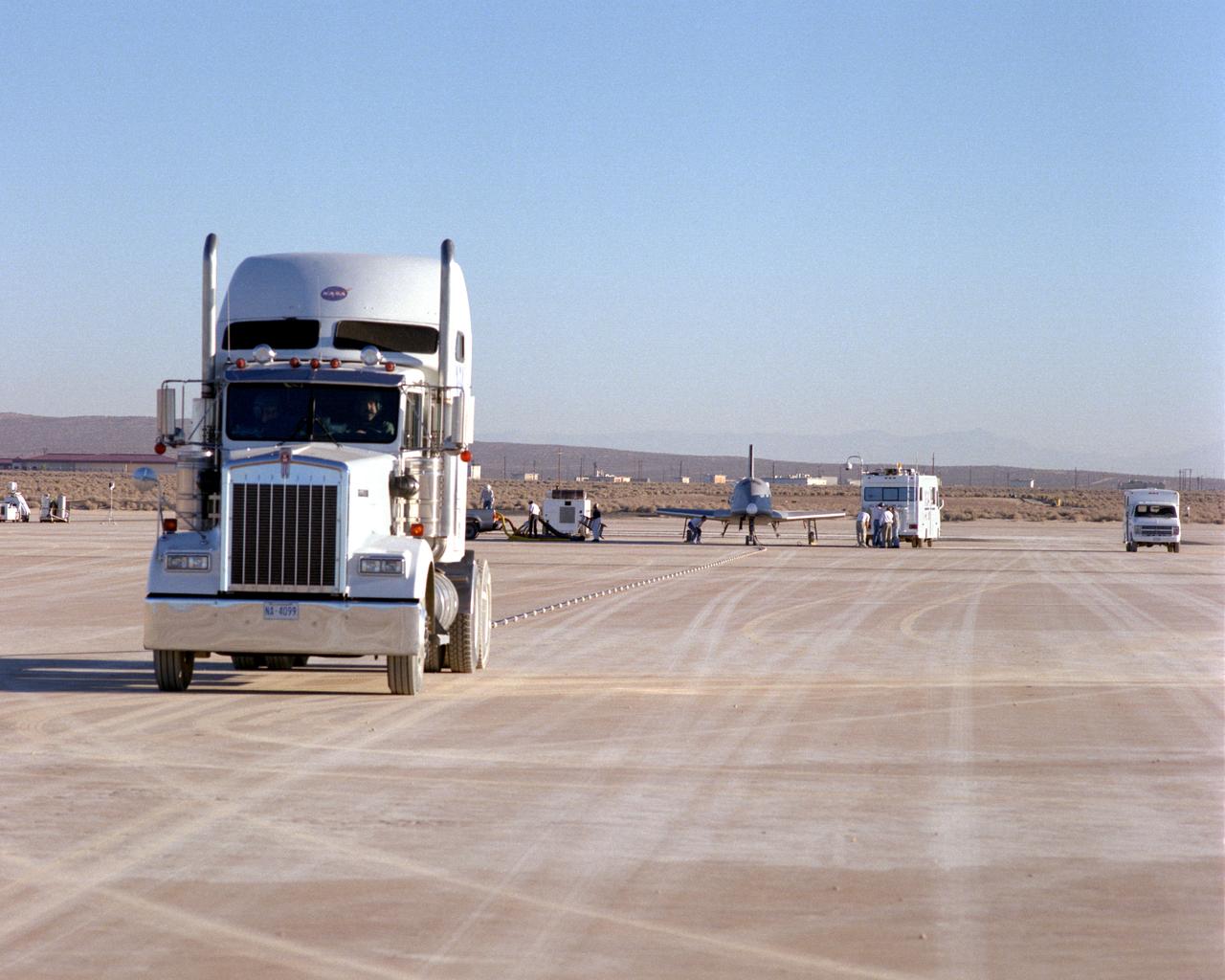
Following initial captive flight tests last year at NASA's Dryden Flight Research Center, Edwards Air Force Base, California, the X-34 technology demonstrator began a new series of tests last week in which it is being towed behind a semi-truck and released to coast on the Edwards dry lakebed. On July 20, 2000, it was towed and released twice at speeds of five and 10 miles per hour. On July 24, 2000, it was towed and released twice at 10 and 30 miles per hour. Twelve tests are planned during which the X-34 will be towed for distances up to 10,000 feet and released at speeds up to 80 miles per hour. The test series is expected to last at least six weeks.
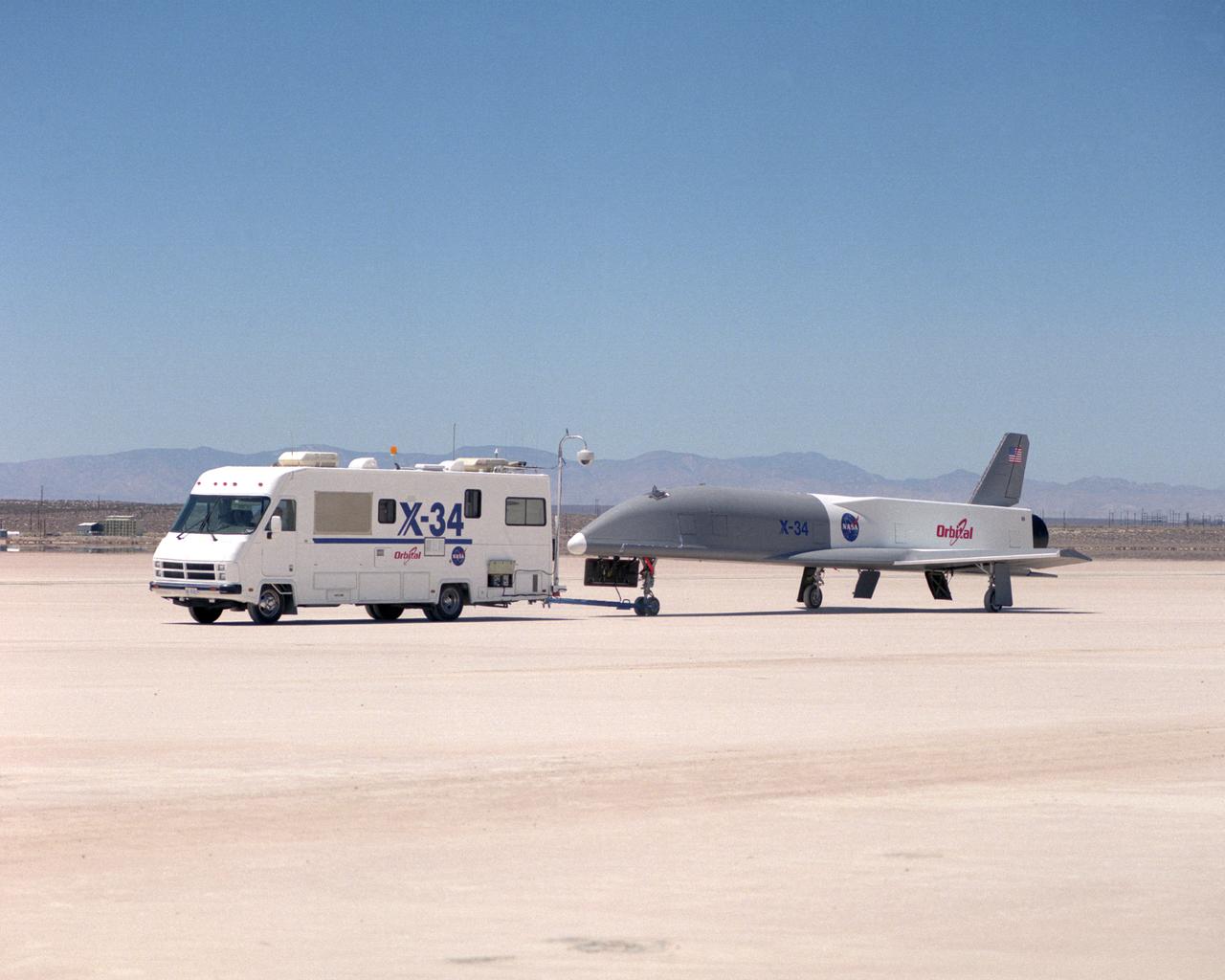
Following initial captive flight tests last year at NASA's Dryden Flight Research Center, Edwards Air Force Base, California, the X-34 technology demonstrator began a new series of tests last week in which it is being towed behind a semi-truck and released to coast on the Edwards dry lakebed. On July 20, 2000, it was towed and released twice at speeds of five and 10 miles per hour. On July 24, 2000, it was towed and released twice at 10 and 30 miles per hour. Twelve tests are planned during which the X-34 will be towed for distances up to 10,000 feet and released at speeds up to 80 miles per hour. The test series is expected to last at least six weeks.
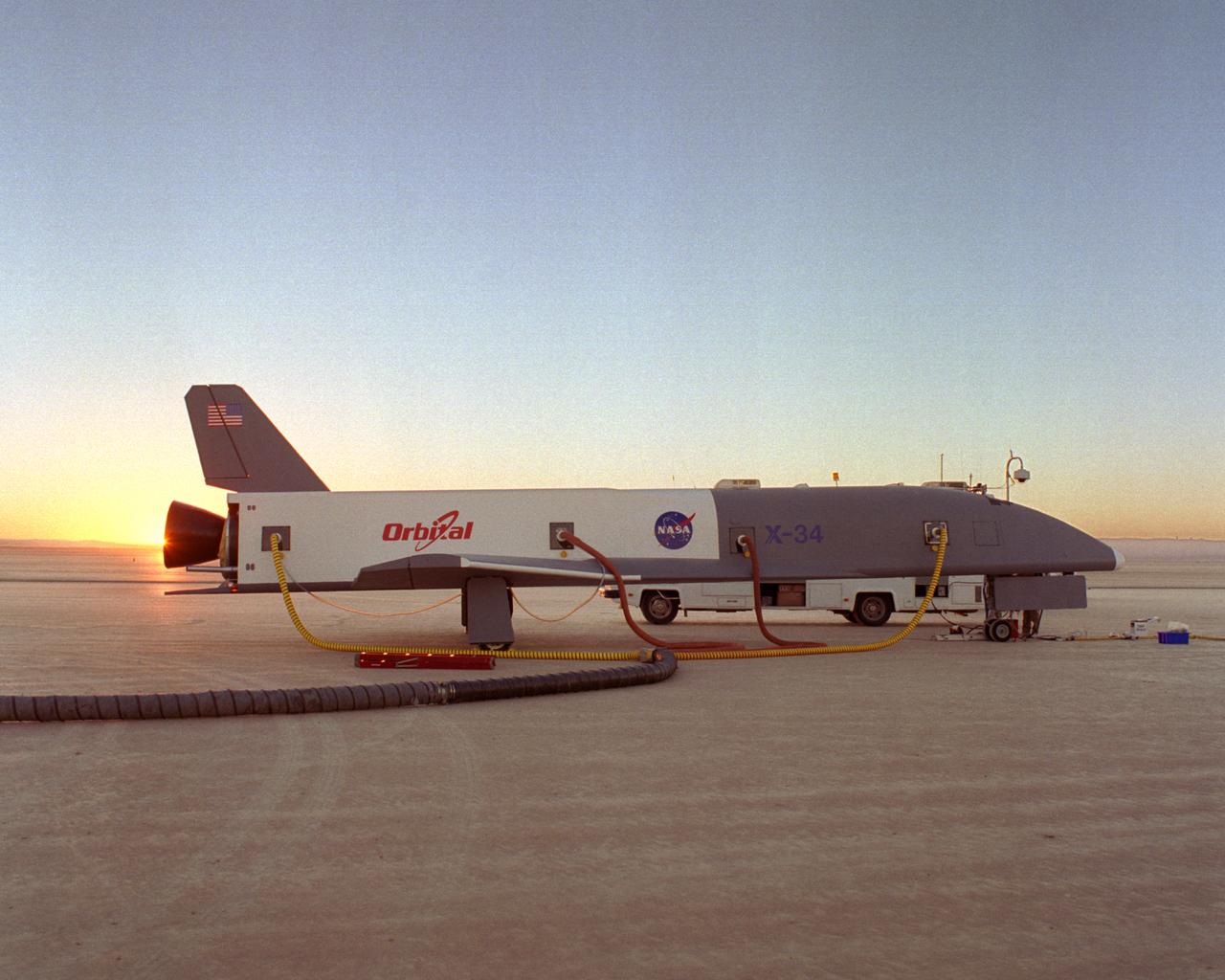
Following initial captive flight tests last year at NASA's Dryden Flight Research Center, Edwards Air Force Base, California, the X-34 technology demonstrator began a new series of tests last week in which it is being towed behind a semi-truck and released to coast on the Edwards dry lakebed. On July 20, 2000, it was towed and released twice at speeds of five and 10 miles per hour. On July 24, 2000, it was towed and released twice at 10 and 30 miles per hour. Twelve tests are planned during which the X-34 will be towed for distances up to 10,000 feet and released at speeds up to 80 miles per hour. The test series is expected to last at least six weeks.
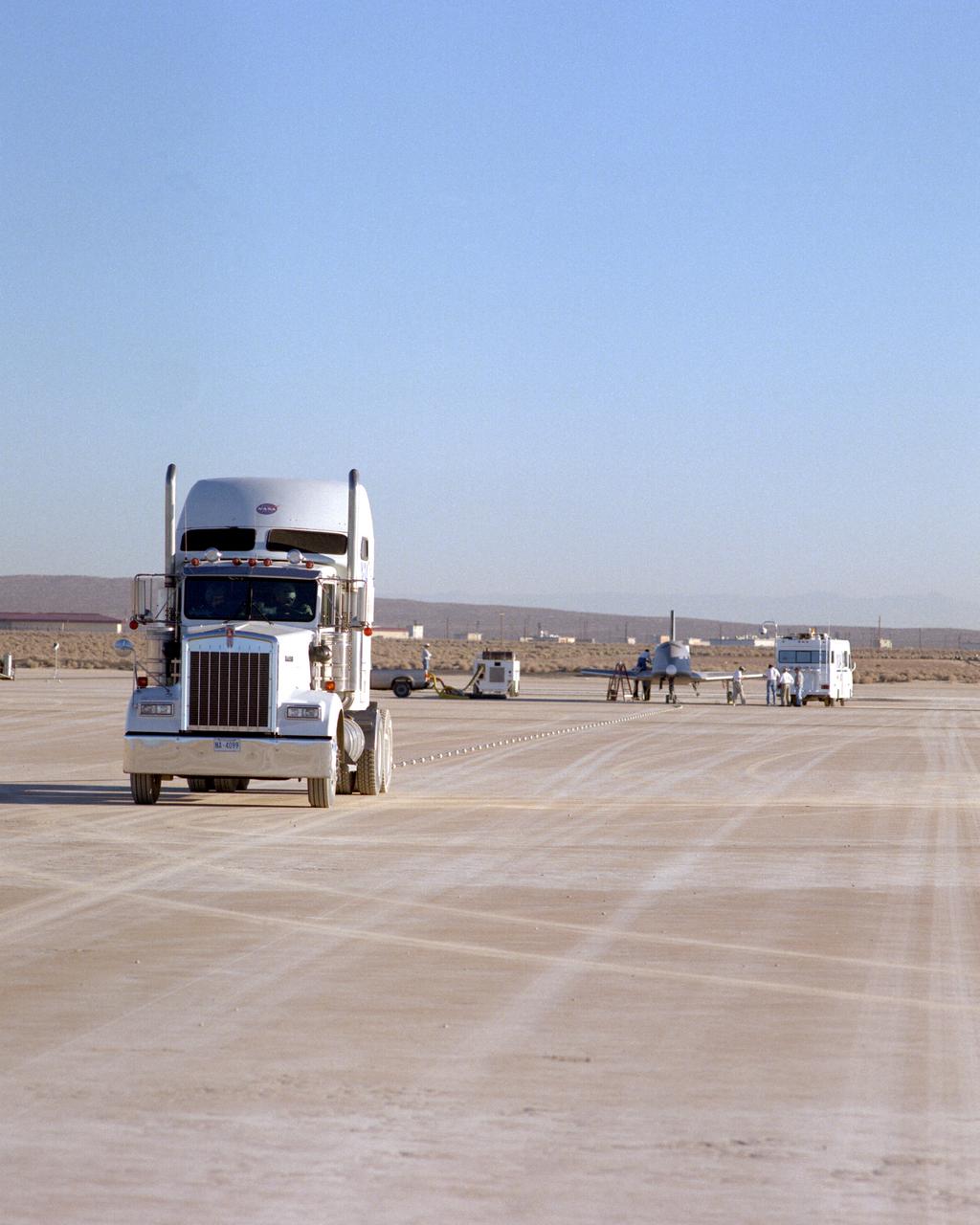
Following initial captive flight tests last year at NASA's Dryden Flight Research Center, Edwards Air Force Base, California, the X-34 technology demonstrator began a new series of tests last week in which it is being towed behind a semi-truck and released to coast on the Edwards dry lakebed. On July 20, 2000, it was towed and released twice at speeds of five and 10 miles per hour. On July 24, 2000, it was towed and released twice at 10 and 30 miles per hour. Twelve tests are planned during which the X-34 will be towed for distances up to 10,000 feet and released at speeds up to 80 miles per hour. The test series is expected to last at least six weeks.
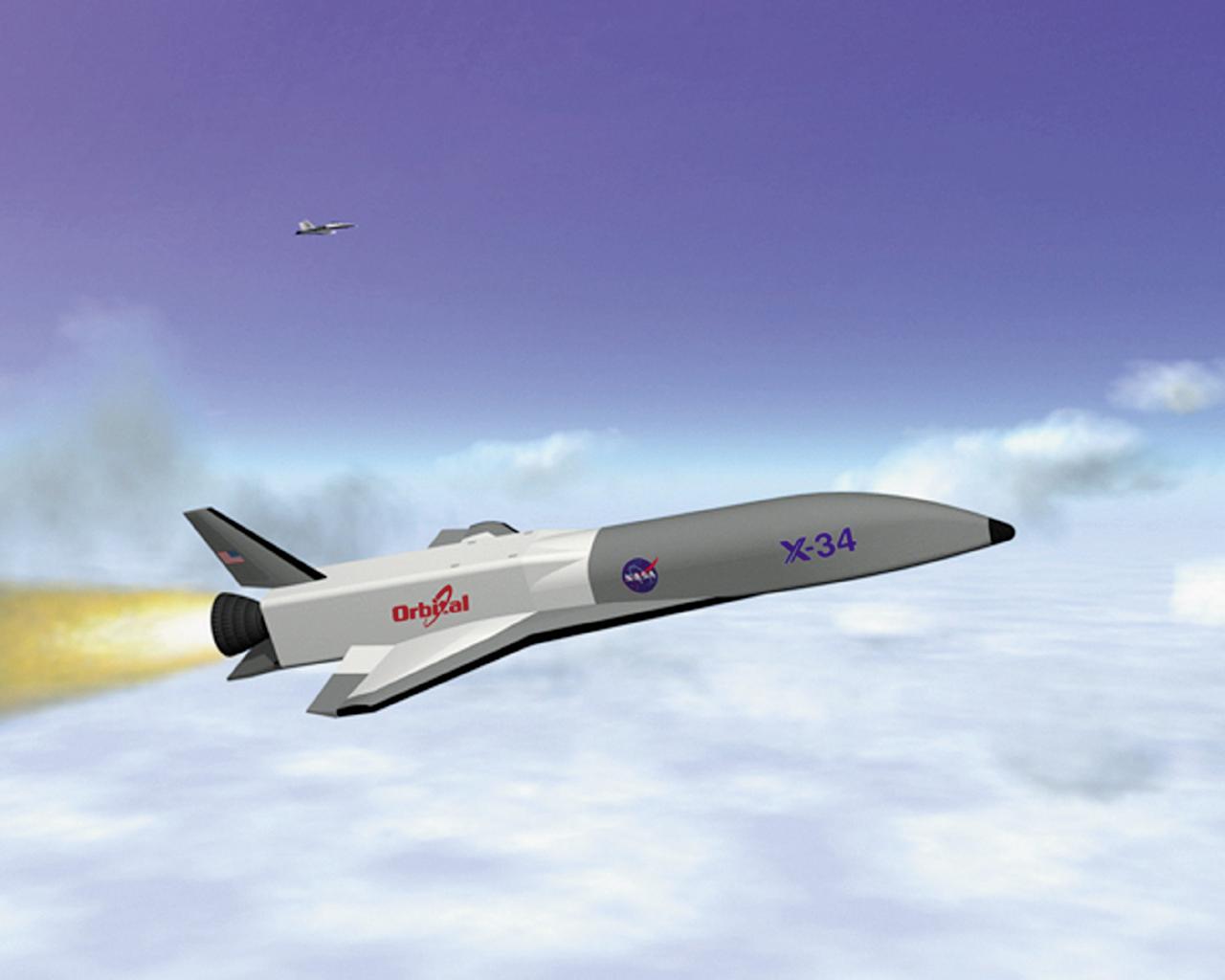
This artist's concept depicts the X-34 Demonstrator in flight. Part of the Pathfinder Program, the X-34 was a reusable technology testbed vehicle that was designed and built by the Marshall Space Flight Center to demonstrate technologies that were essential to lowering the cost of access to space. Powered by a LOX and RP-1 liquid Fastrac engine, the X-34 would be capable of speeds up to Mach 8 and altitudes of 250,000-feet. The X-34 program was cancelled in 2001.
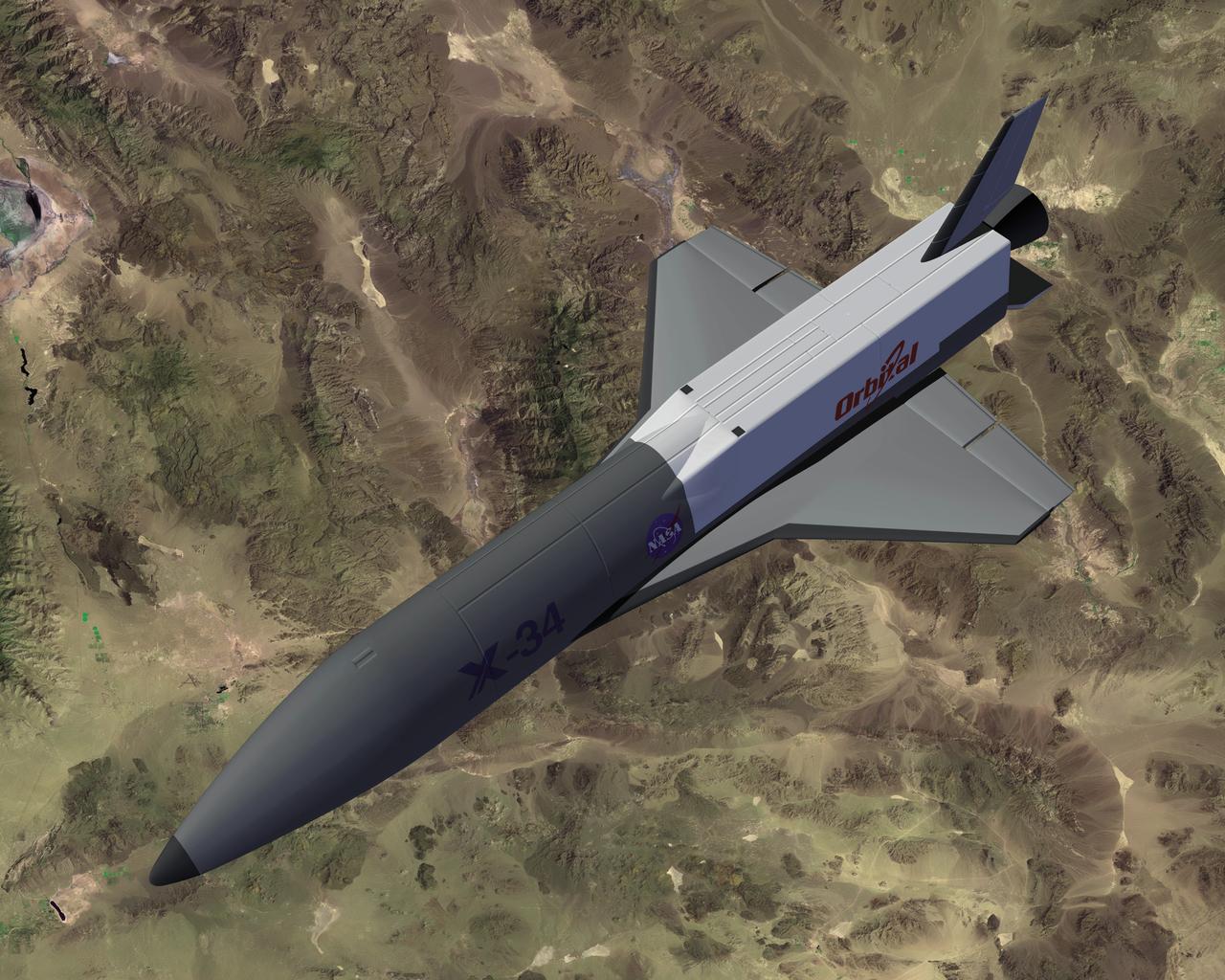
This artist's concept depicts the X-34 Demonstrator in flight. Part of the Pathfinder Program, the X-34 was a reusable technology testbed vehicle that was designed and built by the Marshall Space Flight Center to demonstrate technologies that were essential to lowering the cost of access to space. Powered by a LOX and RP-1 liquid Fastrac engine, the X-34 would be capable of speeds up to Mach 8 and altitudes of 250,000-feet. The X-34 program was cancelled in 2001.
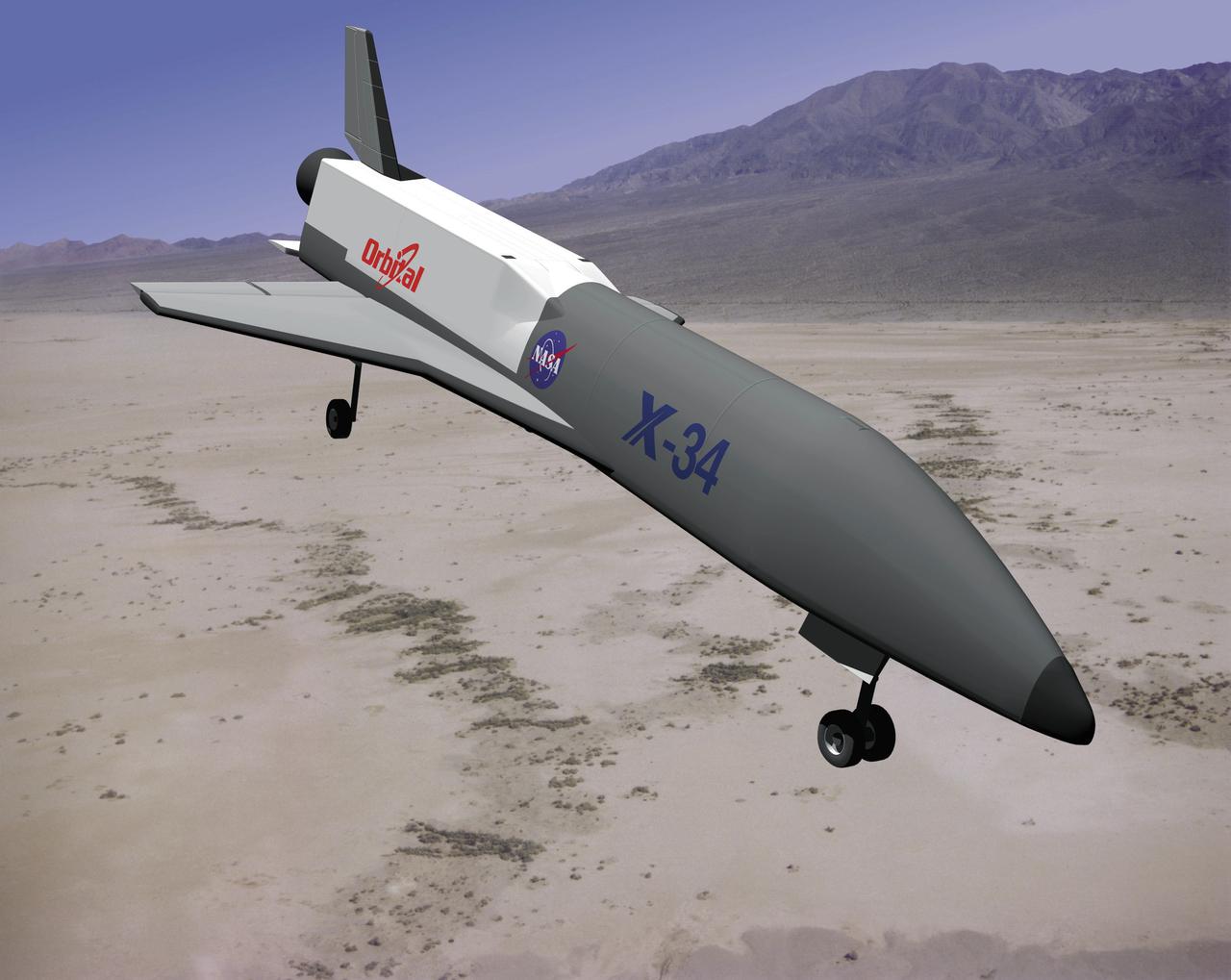
This artist's concept depicts the X-34 Demonstrator landing in a dessert. Part of the Pathfinder Program, the X-34 was a reusable technology testbed vehicle that was designed and built by the Marshall Space Flight Center to demonstrate technologies that were essential to lowering the cost of access to space. Powered by a LOX and RP-1 liquid Fastrac engine, the X-34 would be capable of speeds up to Mach 8 and altitudes of 250,000-feet. The X-34 program was cancelled in 2001.
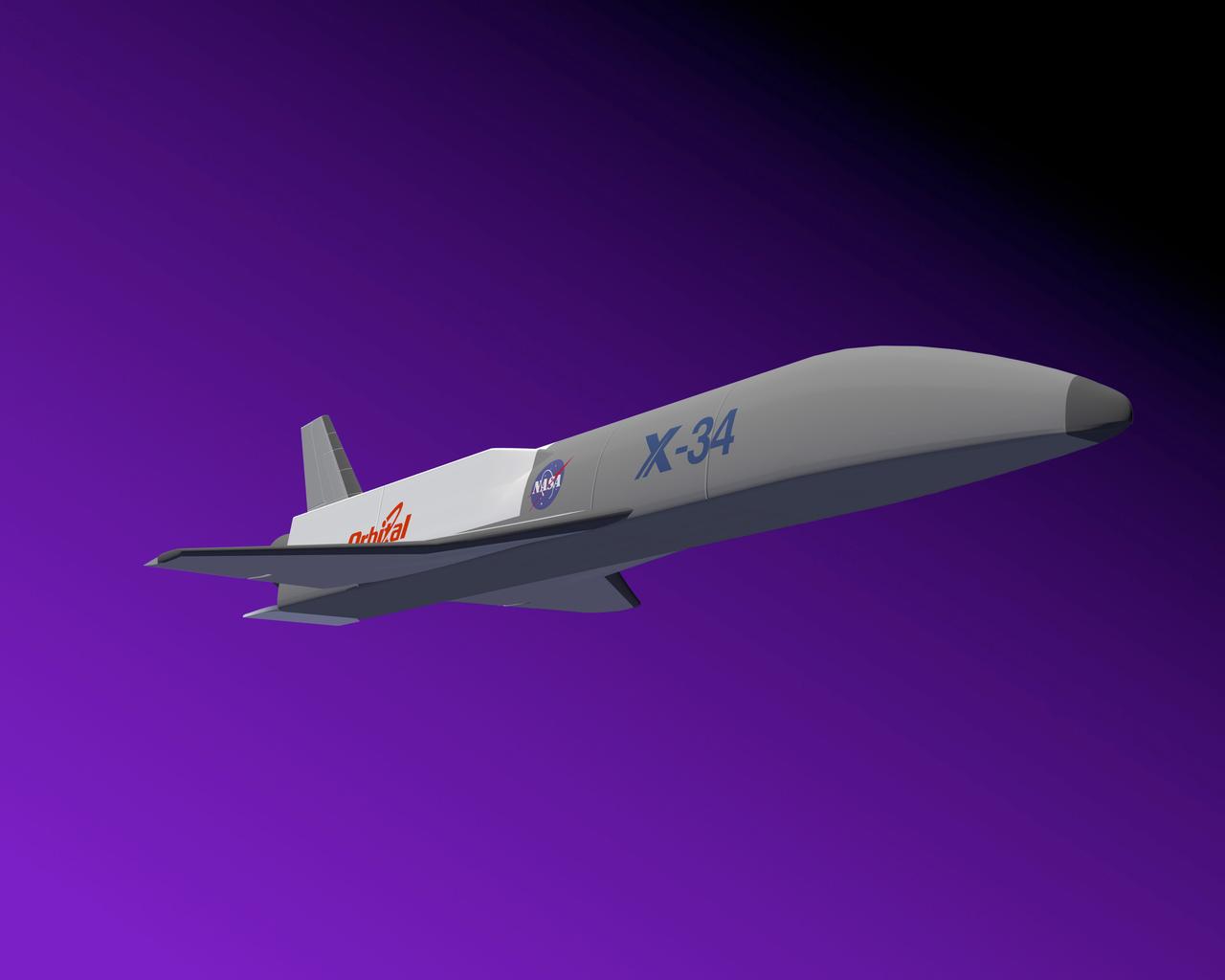
This is an artist's concept of the X-34 Demonstrator, a reusable technology testbed vehicle that was designed to demonstrate technologies that were essential to lowering the cost of access to space. Powered by a LOX and RP-1 liquid Fastrac engine that was designed and built by the Marshall Space Flight Center, the X-34 would be capable of speeds up to Mach 8 and altitudes of 250,000-feet. The X-34 program was cancelled in 2001.
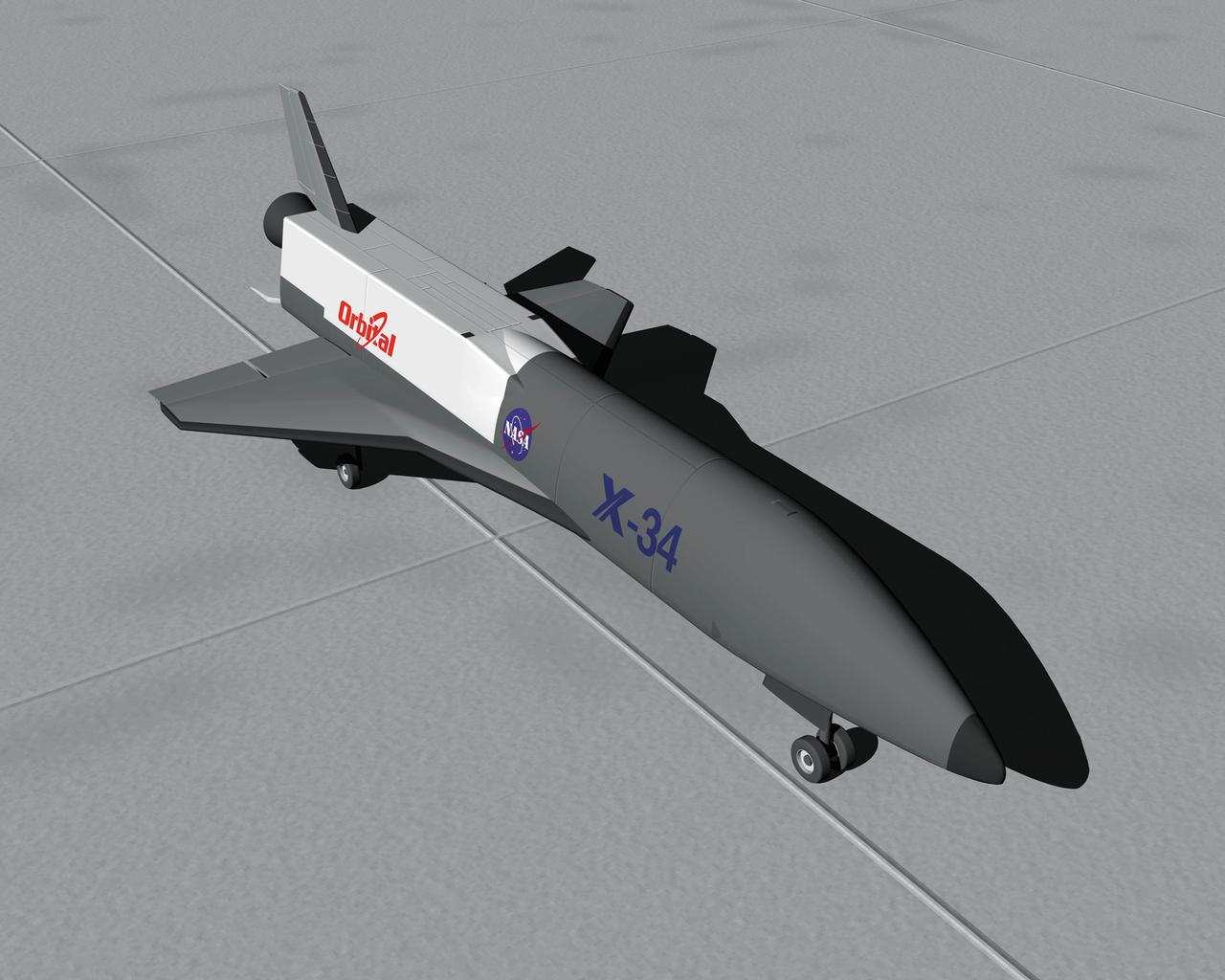
This artist's concept depicts the X-34 Demonstrator sitting on a runway. Part of the Pathfinder Program, the X-34 was a reusable technology testbed vehicle that was designed and built by the Marshall Space Flight Center to demonstrate technologies that were essential to lowering the cost of access to space. Powered by a LOX and RP-1 liquid Fastrac engine, the X-34 would be capable of speeds up to Mach 8 and altitudes of 250,000-feet. The X-34 program was cancelled in 2001.
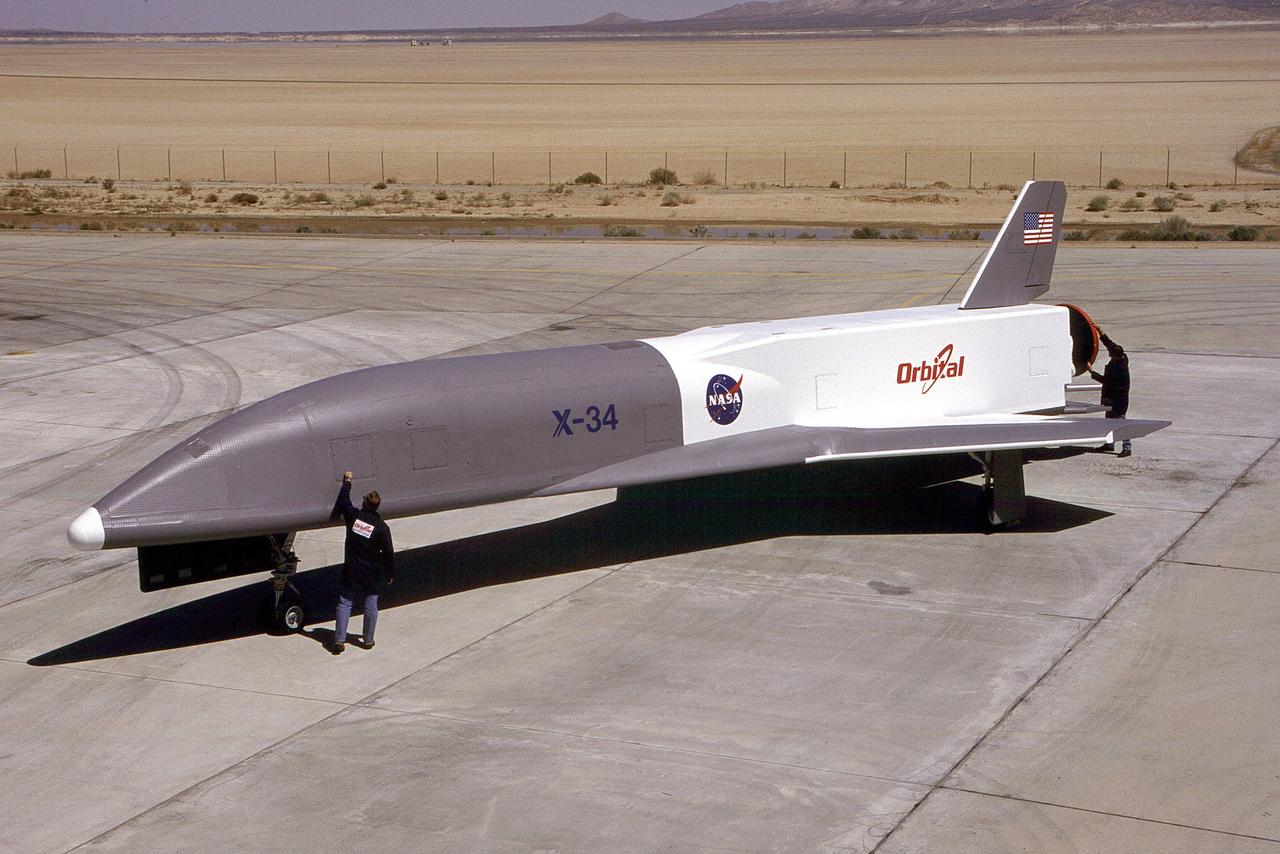
Pictured is the X-34 Demonstrator parked on the runway. Part of the Pathfinder Program, the X-34 was a reusable technology testbed vehicle that was designed and built by the Marshall Space Flight Center to demonstrate technologies that are essential to lowering the cost of access to space. Powered by a LOX and RP-1 liquid Fastrac engine, the X-34 would be capable of speeds up to Mach 8 and altitudes of 250,000-feet. The X-34 program was cancelled in 2001.
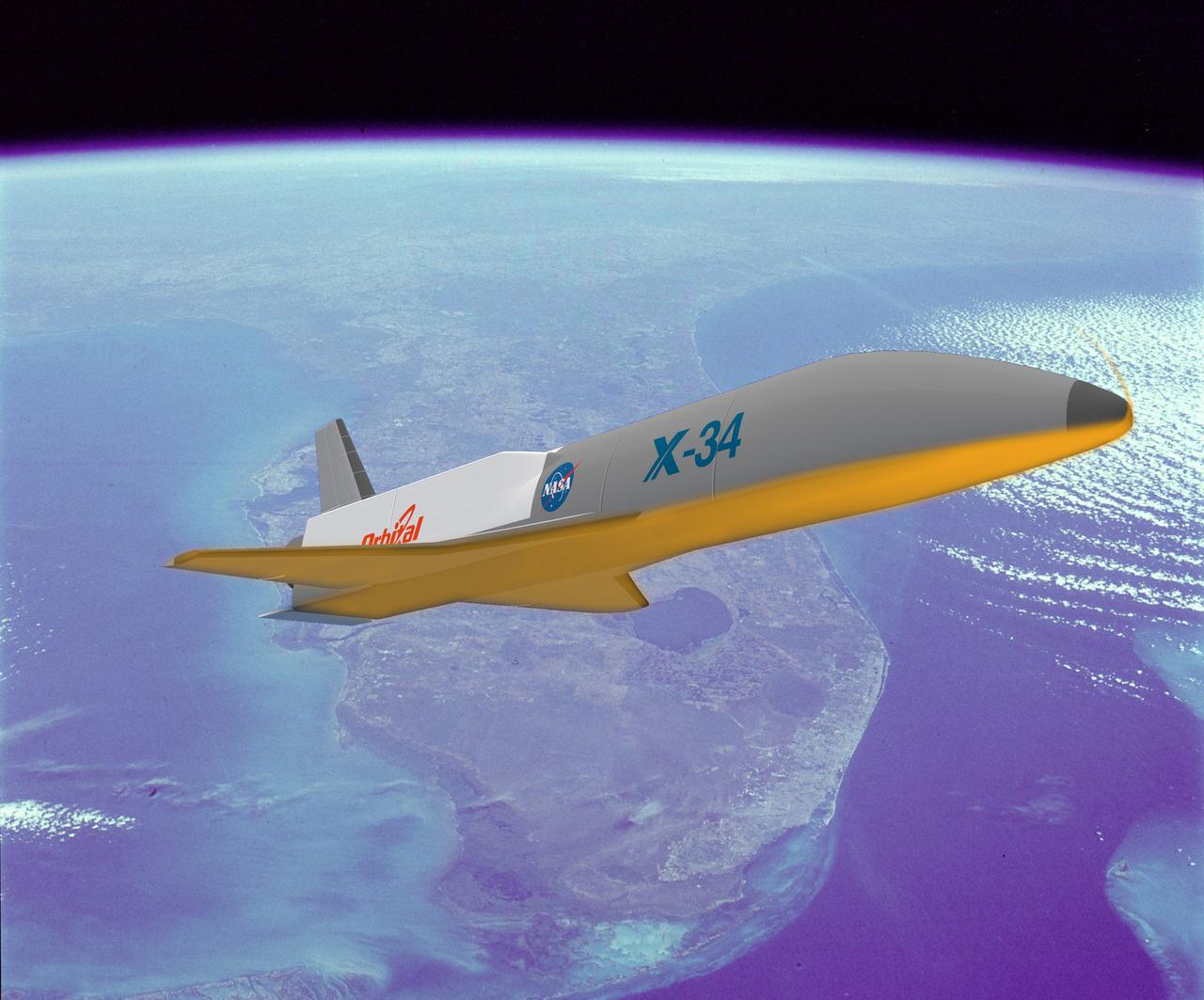
This is an artist's concept of the X-34 reusable technology testbed vehicle that was designed to demonstrate technologies that were essential to lowering the cost of access to space. Powered by a LOX and RP-1 liquid Fastrac engine that was designed and built by the Marshall Space Flight Center, the X-34 was capable of speeds up to Mach 8 and altitudes of 250,000-feet. The X-34 program was cancelled in 2001.
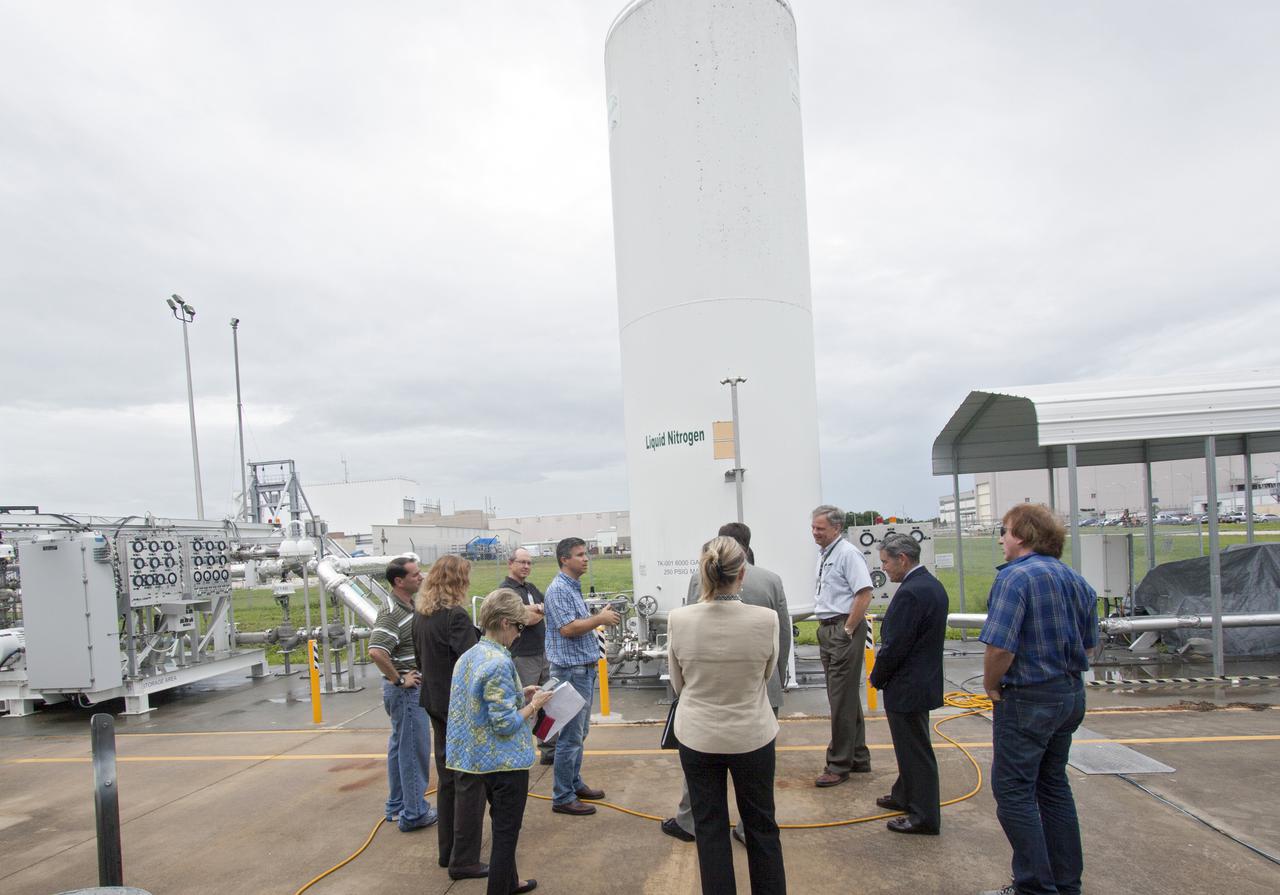
CAPE CANAVERAL, Fla. – At NASA’s Kennedy Space Center in Florida, Robert Lightfoot, NASA associate director, partially hidden in the center, learns about Integrated Ground Operations Demonstration Units, or IGODU, technology during a tour of the Cyrogenics Testbed Laboratory. Second from left is Kennedy Director Bob Cabana. Photo credit: NASA_Jim Grossmann
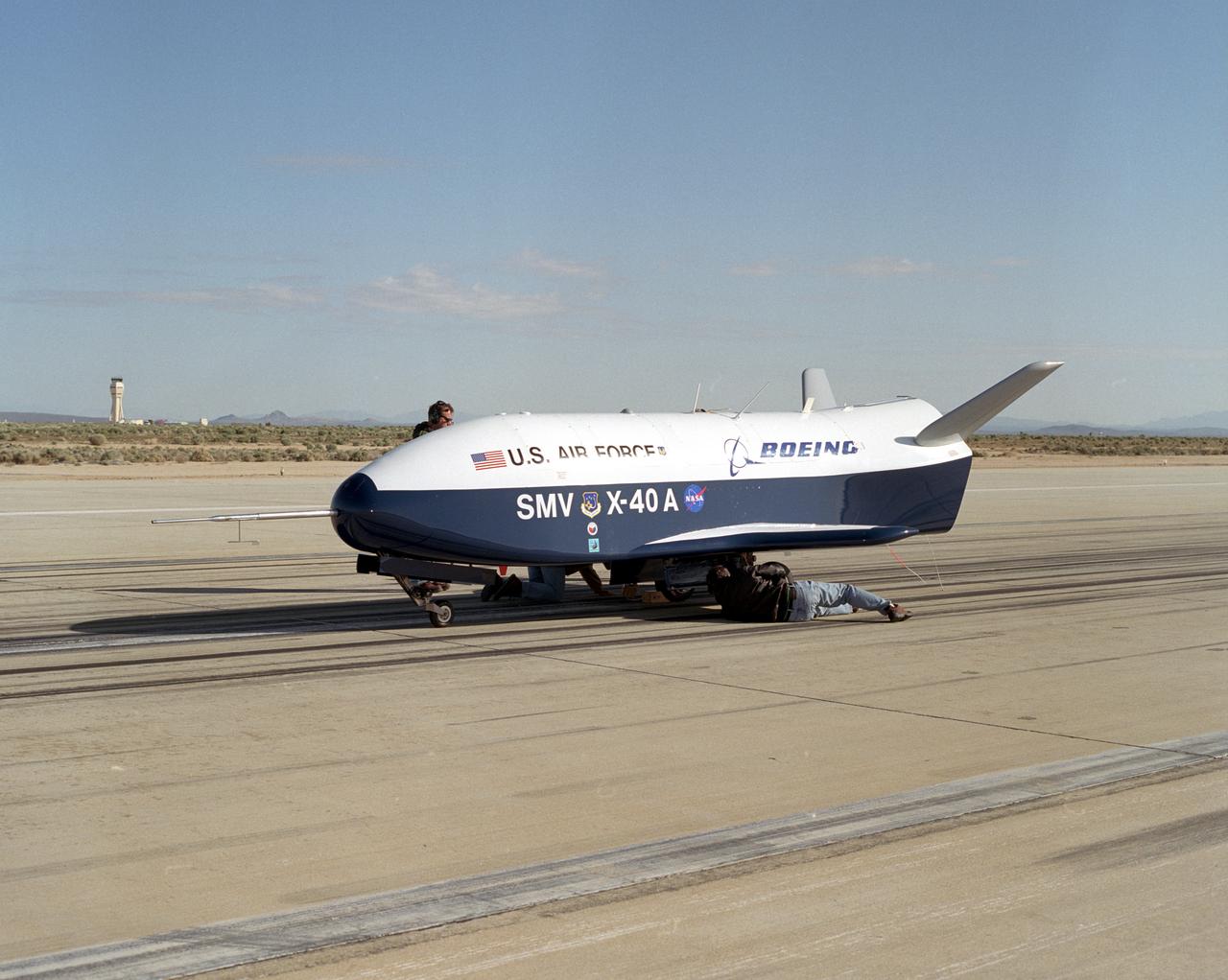
Second free-flight of the X-40A at the NASA Dryden Flight Research Center, on Edwards AFB, Calif., was made on Apr. 12, 2001. The unpowered X-40A, an 85 percent scale risk reduction version of the proposed X-37, is proving the capability of an autonomous flight control and landing system in a series of glide flights at Edwards. The April 12 flight introduced complex vehicle maneuvers during the landing sequence. The X-40A was released from an Army Chinook helicopter flying 15,050 feet overhead. Ultimately, the unpiloted X-37 is intended as an orbital testbed and technology demonstrator, capable of landing like an airplane and being quickly serviced for a follow-up mission.
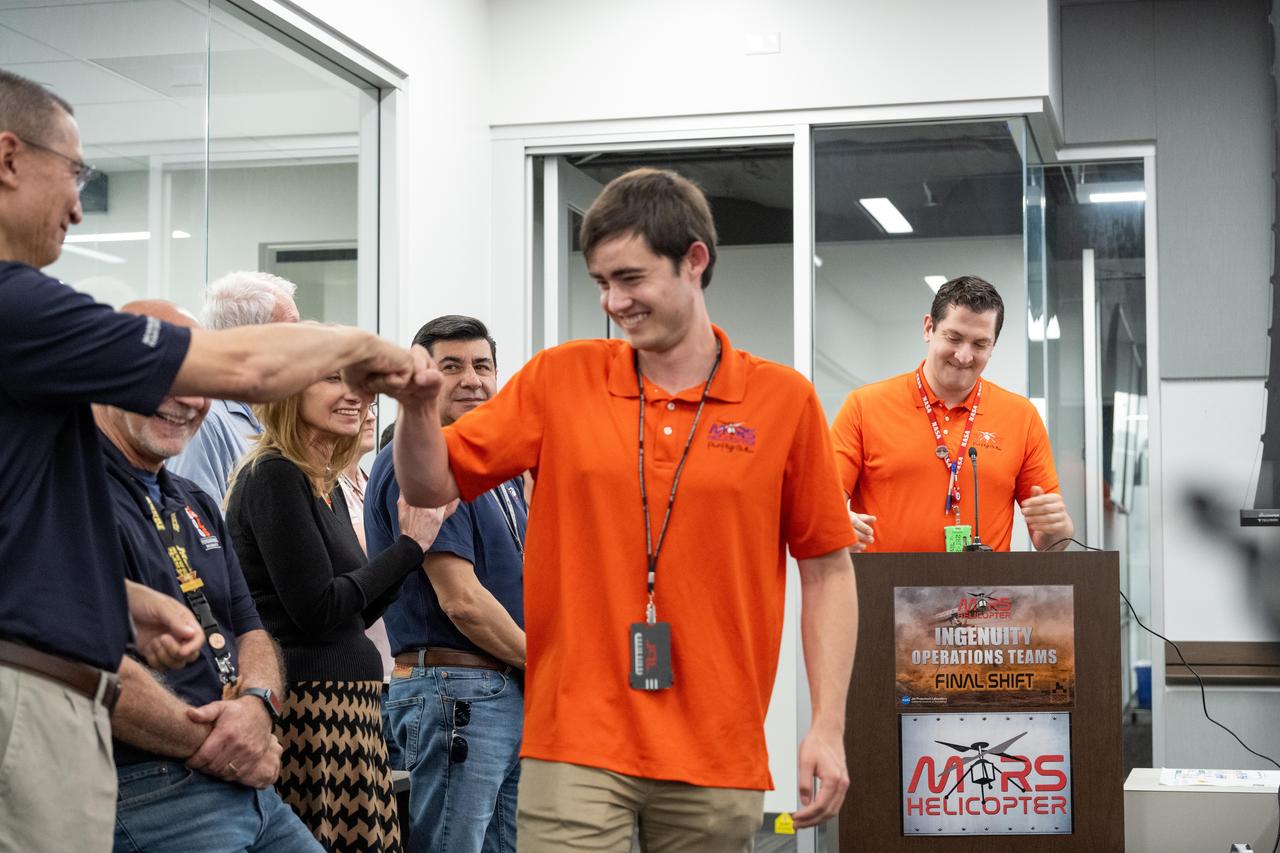
Ingenuity team lead Josh Anderson celebrates with Perseverance rover deputy project manager Steve Lee during the final shift for engineers working on NASA's Ingenuity Mars Helicopter at the agency's Jet Propulsion Laboratory on April 16, 2024. The team for the first aircraft on another world gathered to review a transmission that confirmed a software patch allowing Ingenuity to act as a stationary testbed and collect data that could benefit future explorers of the Red Planet. Originally designed as short-lived technology demonstration mission that would perform up to five experimental test flights over 30 days, the first aircraft on another world operated from the Martian surface for almost three years, flew more than 14 times farther than planned, and logged more than two hours of total flight time. Its 72nd and final flight was Jan. 18, 2024. https://photojournal.jpl.nasa.gov/catalog/PIA26317
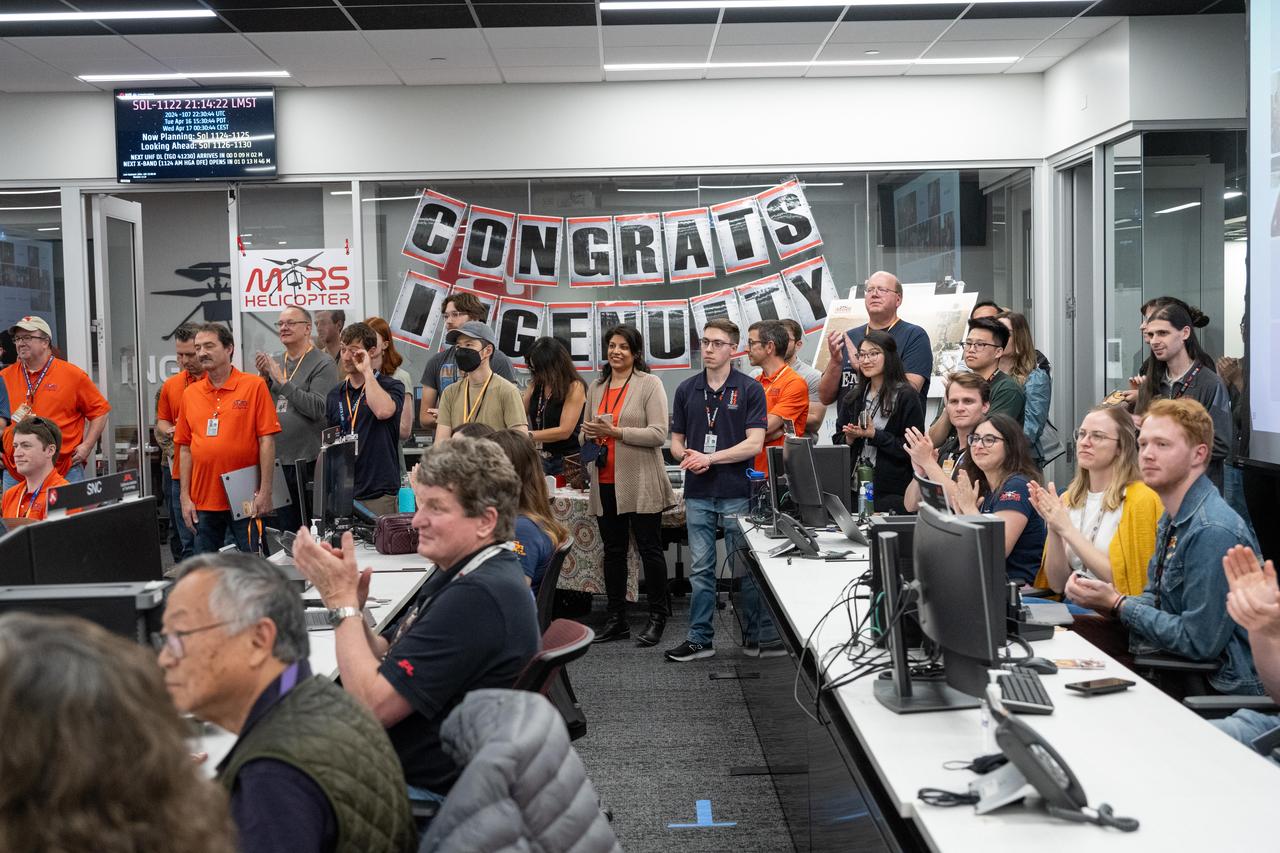
Engineers working on NASA's Ingenuity Mars Helicopter gathered together in a control room for one last time to monitor a transmission from the history-making helicopter at the agency's Jet Propulsion Laboratory on April 16, 2024. The transmission confirmed the operation of a software patch that will allow Ingenuity to act as a stationary testbed and collect data that could benefit future explorers of the Red Planet. Originally designed as short-lived technology demonstration mission that would perform up to five experimental test flights over 30 days, the first aircraft on another world operated from the Martian surface for almost three years, flew more than 14 times farther than planned, and logged more than two hours of total flight time. Its 72nd and final flight was Jan. 18, 2024. https://photojournal.jpl.nasa.gov/catalog/PIA26318
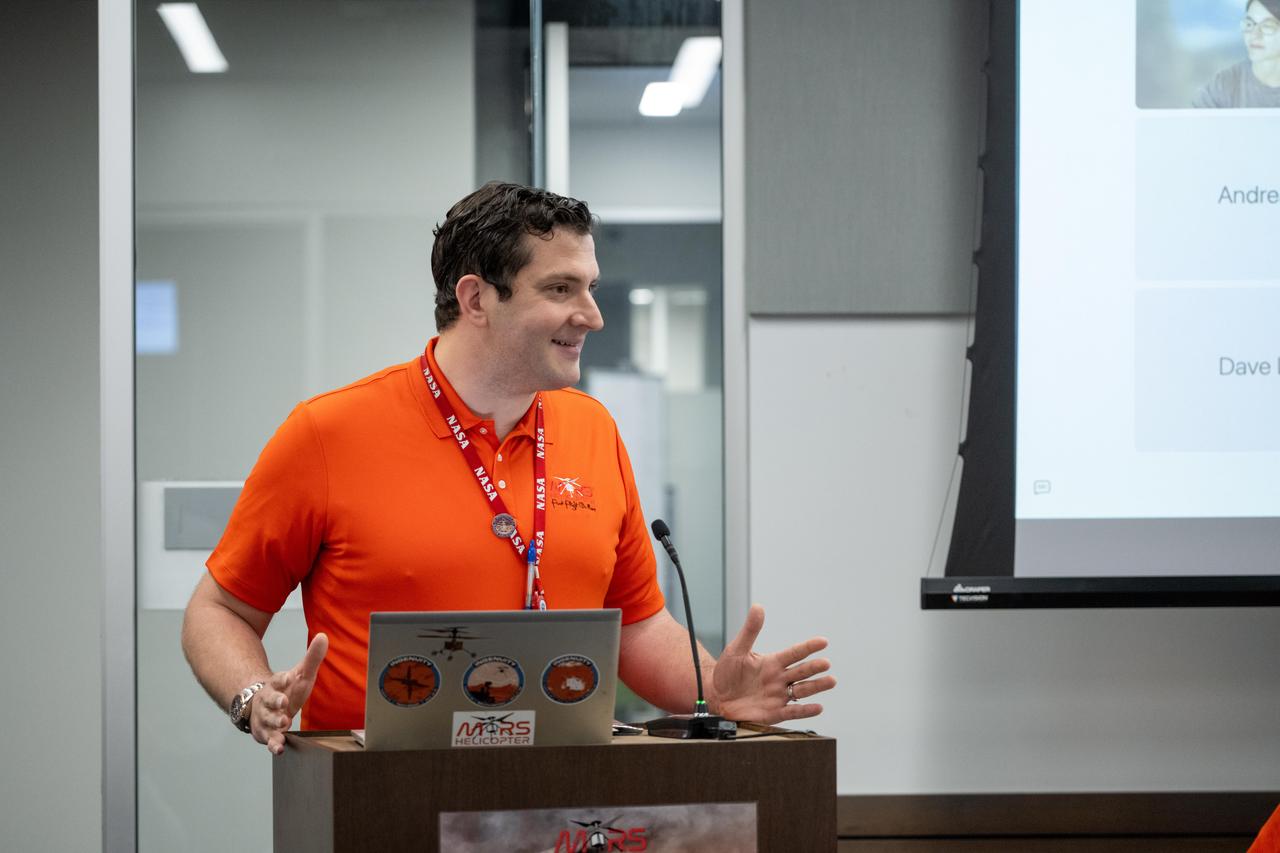
Teddy Tzanetos, project manager for NASA's Ingenuity Mars Helicopter, addresses members of the team during their final shift at the agency's Jet Propulsion Laboratory on April 16, 2024. The team for the first aircraft on another world gathered to review a transmission that confirmed the operation of a software patch allowing Ingenuity to act as a stationary testbed and collect data that could benefit future explorers of the Red Planet. Originally designed as short-lived technology demonstration mission that would perform up to five experimental test flights over 30 days, the first aircraft on another world operated from the Martian surface for almost three years, flew more than 14 times farther than planned, and logged more than two hours of total flight time. Its 72nd and final flight was Jan. 18, 2024. https://photojournal.jpl.nasa.gov/catalog/PIA26316
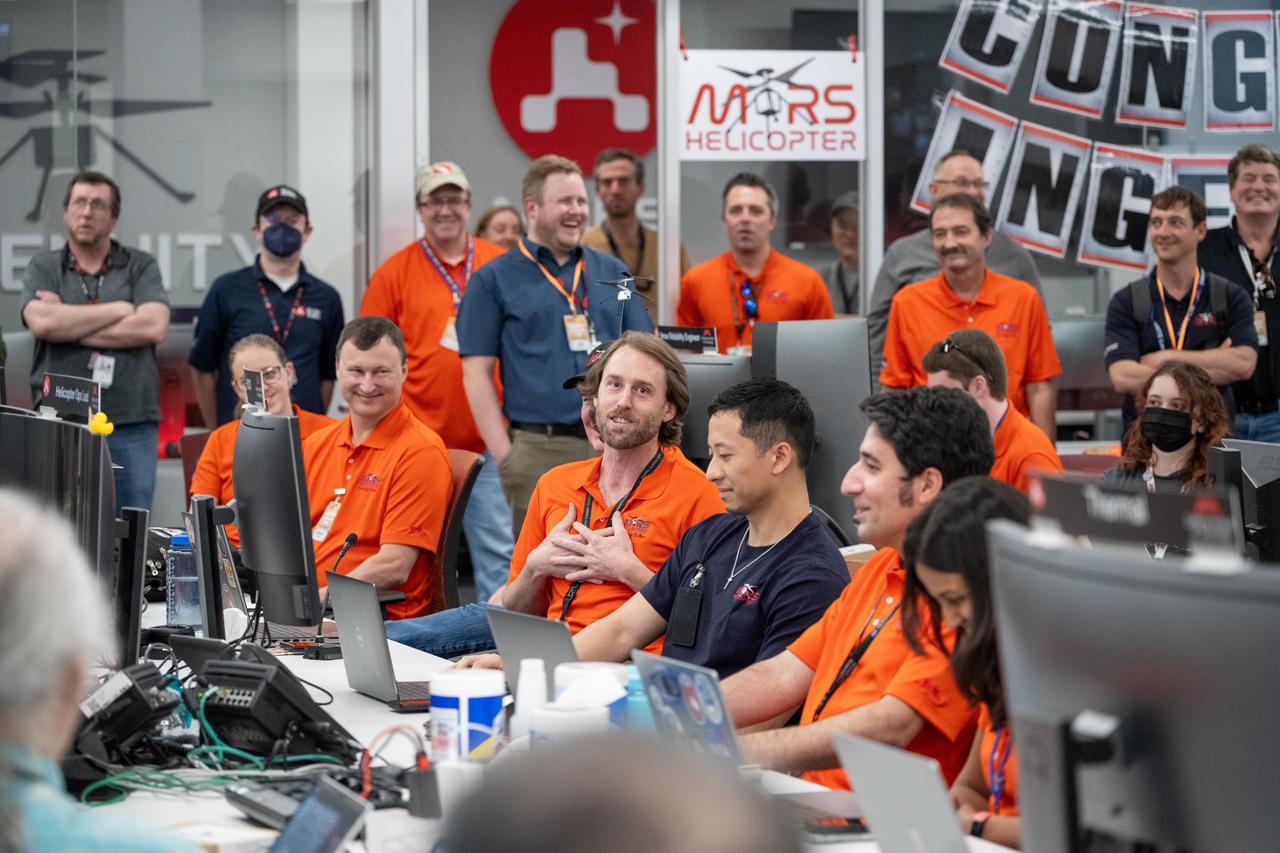
The Ingenuity team celebrates during their final shift working on NASA's Ingenuity Mars Helicopter at the agency's Jet Propulsion Laboratory on April 16, 2024. The team gathered to review a transmission from the helicopter that confirmed the operation of a software patch allowing Ingenuity to act as a stationary testbed and collect data that could benefit future explorers of the Red Planet. Originally designed as short-lived technology demonstration mission that would perform up to five experimental test flights over 30 days, the first aircraft on another world operated from the Martian surface for almost three years, flew more than 14 times farther than planned, and logged more than two hours of total flight time. Its 72nd and final flight was Jan. 18, 2024. https://photojournal.jpl.nasa.gov/catalog/PIA26319
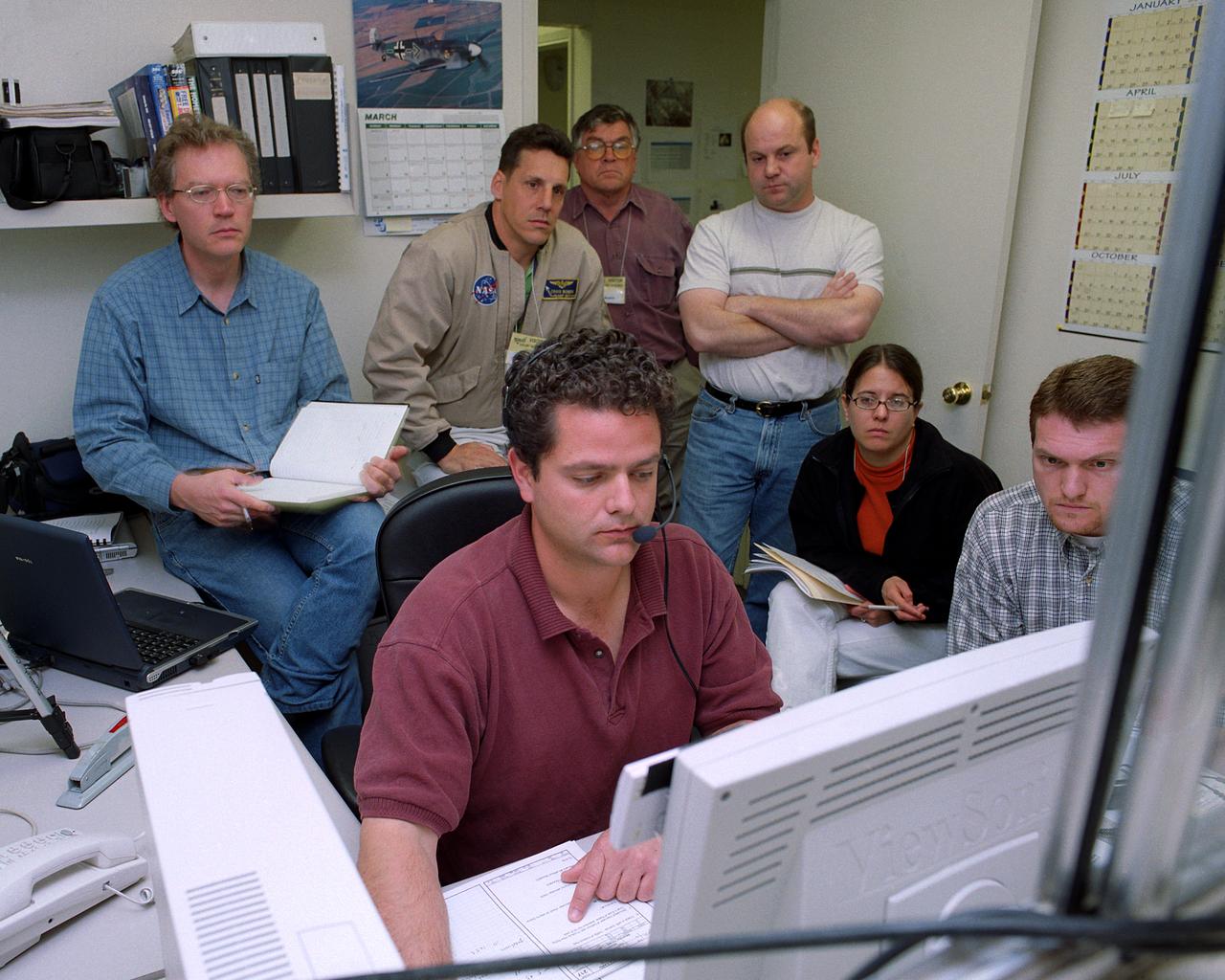
Proteus DSA control room in Mojave, CA (L to R) Jean-Pierre Soucy; Amphitech International Software engineer Craig Bomben; NASA Dryden Test Pilot Pete Siebold; (with headset, at computer controls) Scaled Composites pilot Bob Roehm; New Mexico State University (NMSU) UAV Technical Analysis Application Center (TAAC) Chuck Coleman; Scaled Composites Pilot Kari Sortland; NMSU TAAC Russell Wolfe; Modern Technology Solutions, Inc. Scaled Composites' unique tandem-wing Proteus was the testbed for a series of UAV collision-avoidance flight demonstrations. An Amphitech 35GHz radar unit installed below Proteus' nose was the primary sensor for the Detect, See and Avoid tests.
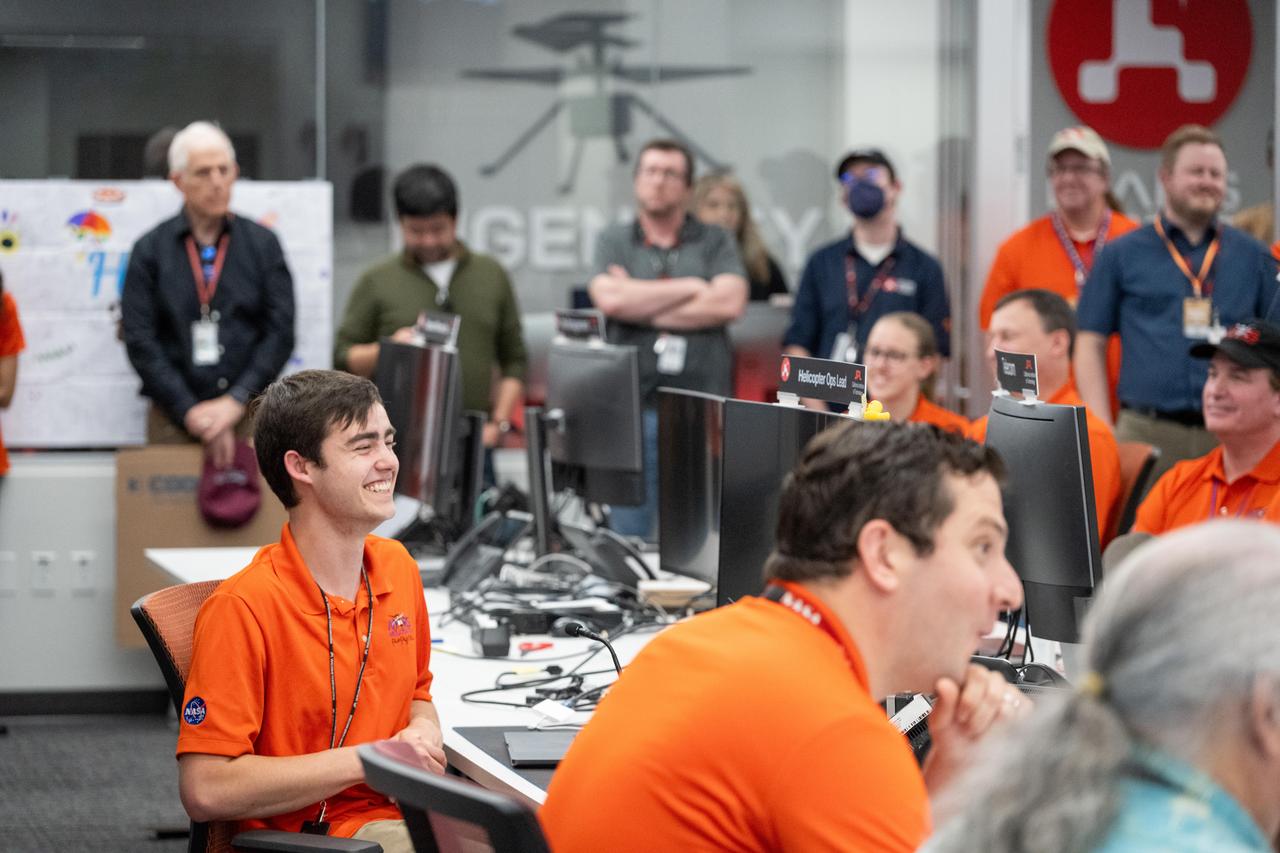
Ingenuity team lead Josh Anderson (seated left) and project manager Teddy Tzanetos (seated center) react during during the final shift for engineers working on NASA's Ingenuity Mars Helicopter at the agency's Jet Propulsion Laboratory on April 16, 2024. The team gathered to review a transmission from the helicopter that confirmed the operation of a software patch allowing Ingenuity to act as a stationary testbed and collect data that could benefit future explorers of the Red Planet. Originally designed as short-lived technology demonstration mission that would perform up to five experimental test flights over 30 days, the first aircraft on another world operated from the Martian surface for almost three years, flew more than 14 times farther than planned, and logged more than two hours of total flight time. Its 72nd and final flight was Jan. 18, 2024. https://photojournal.jpl.nasa.gov/catalog/PIA26315

The left wing of NASA's Altair unmanned aerial vehicle (UAV) rests in a jig during construction at General Atomics Aeronautical Systems, Inc., (GA-ASI) facility at Adelanto, Calif.
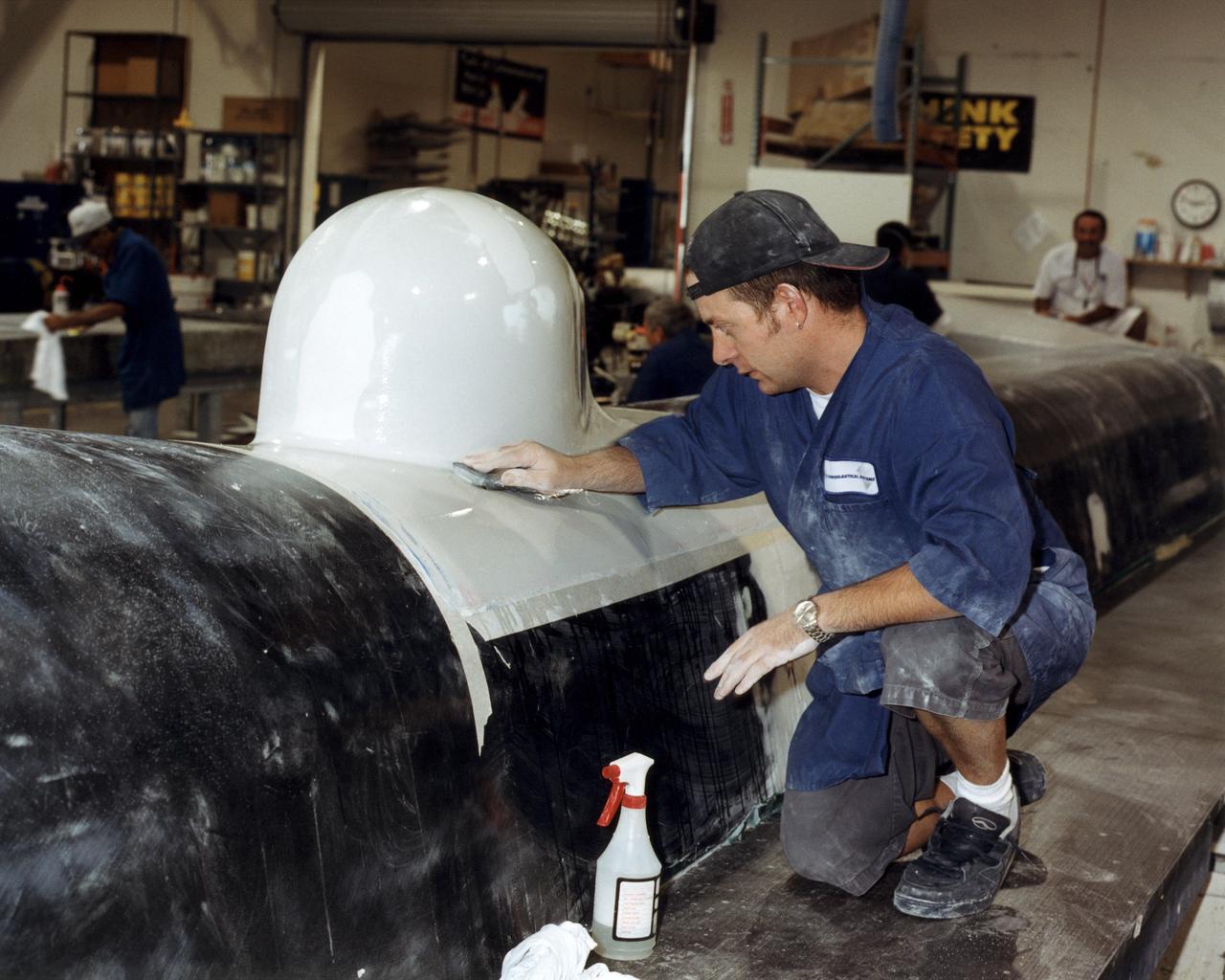
Technician Shawn Warren carefully smoothes out the composite skin of an instrument fairing<br>atop the upper fuselage of the Altair unmanned aerial vehicle (UAV) at General Atomics Aeronautical Systems, Inc., facility at Adelanto, Calif.