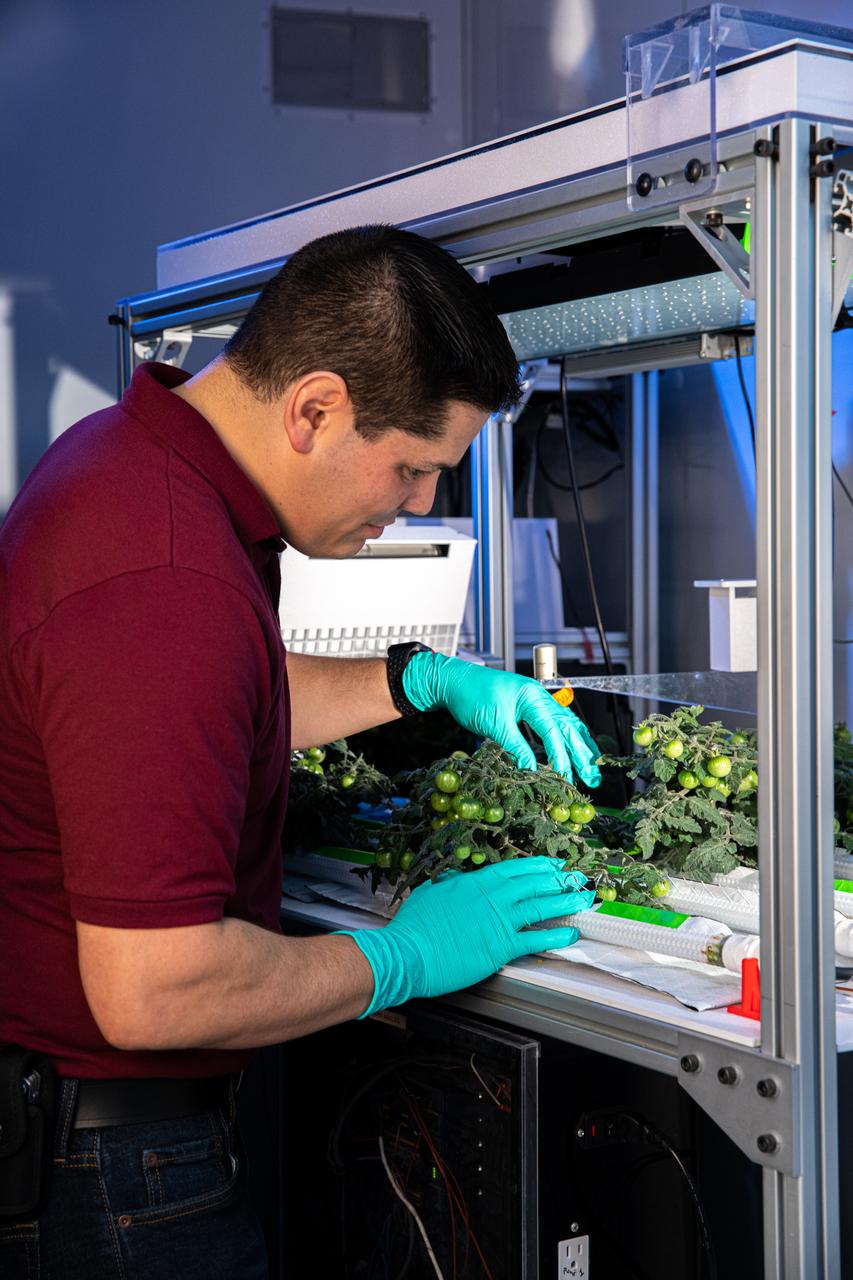
A multidisciplinary team of engineers, biologists, and horticulturalists working out of NASA's Kennedy Space Center in Florida supports the use of technology and automation in plant growth research that looks to supplement the diet of astronauts so they can undertake longer and more distant space exploration missions than ever before.
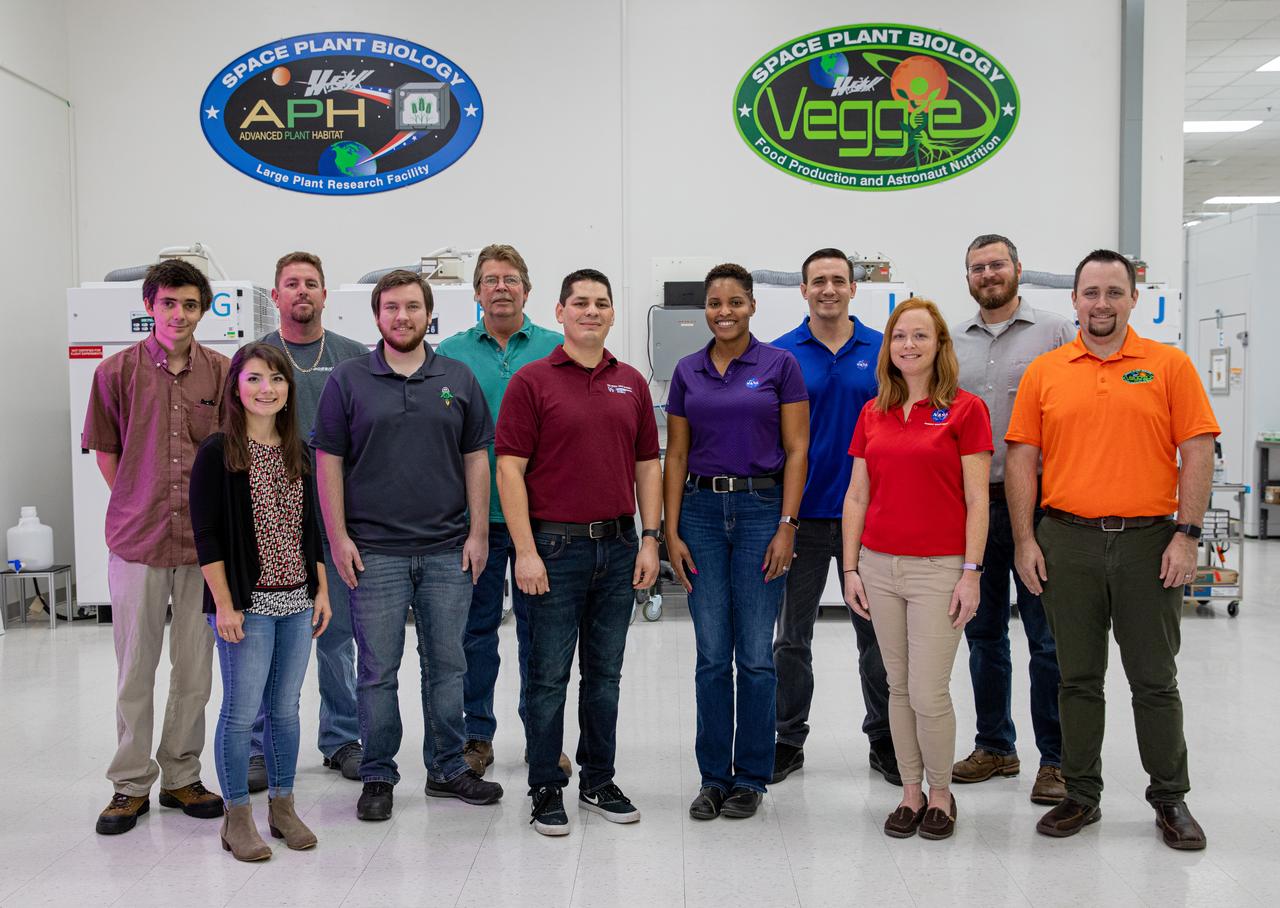
A multidisciplinary team of engineers, biologists, and horticulturalists working out of NASA's Kennedy Space Center in Florida supports the use of technology and automation in plant growth research that looks to supplement the diet of astronauts so they can undertake longer and more distant space exploration missions than ever before.
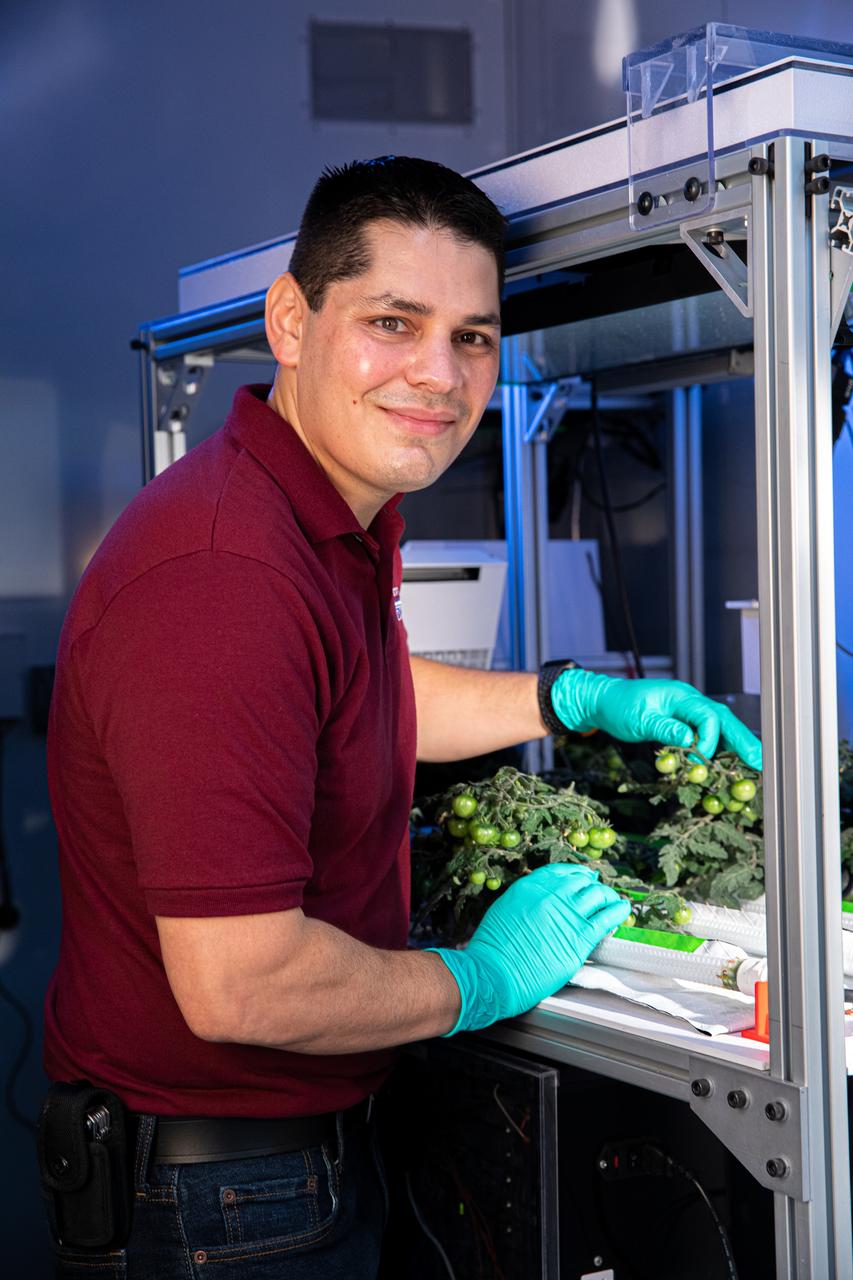
A multidisciplinary team of engineers, biologists, and horticulturalists working out of NASA's Kennedy Space Center in Florida supports the use of technology and automation in plant growth research that looks to supplement the diet of astronauts so they can undertake longer and more distant space exploration missions than ever before.
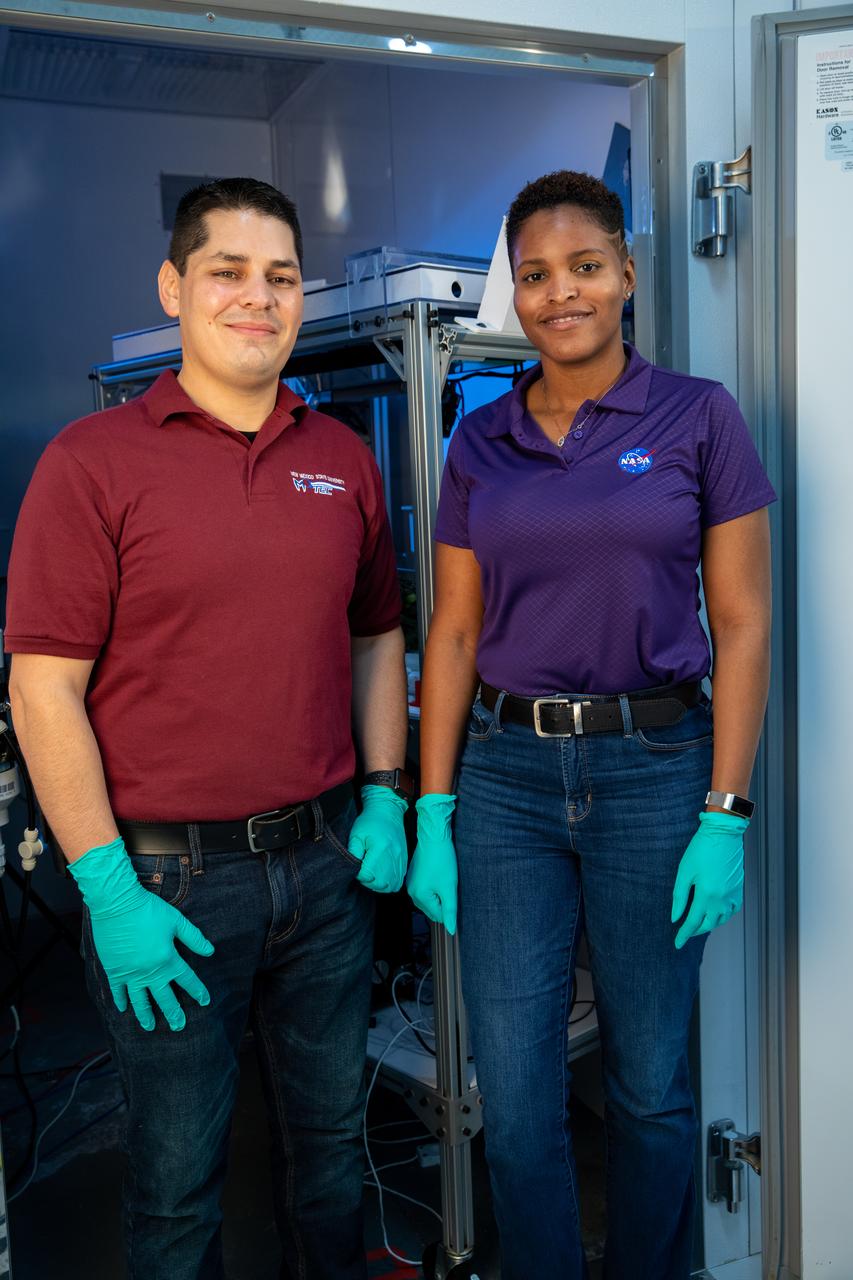
A multidisciplinary team of engineers, biologists, and horticulturalists working out of NASA's Kennedy Space Center in Florida supports the use of technology and automation in plant growth research that looks to supplement the diet of astronauts so they can undertake longer and more distant space exploration missions than ever before.
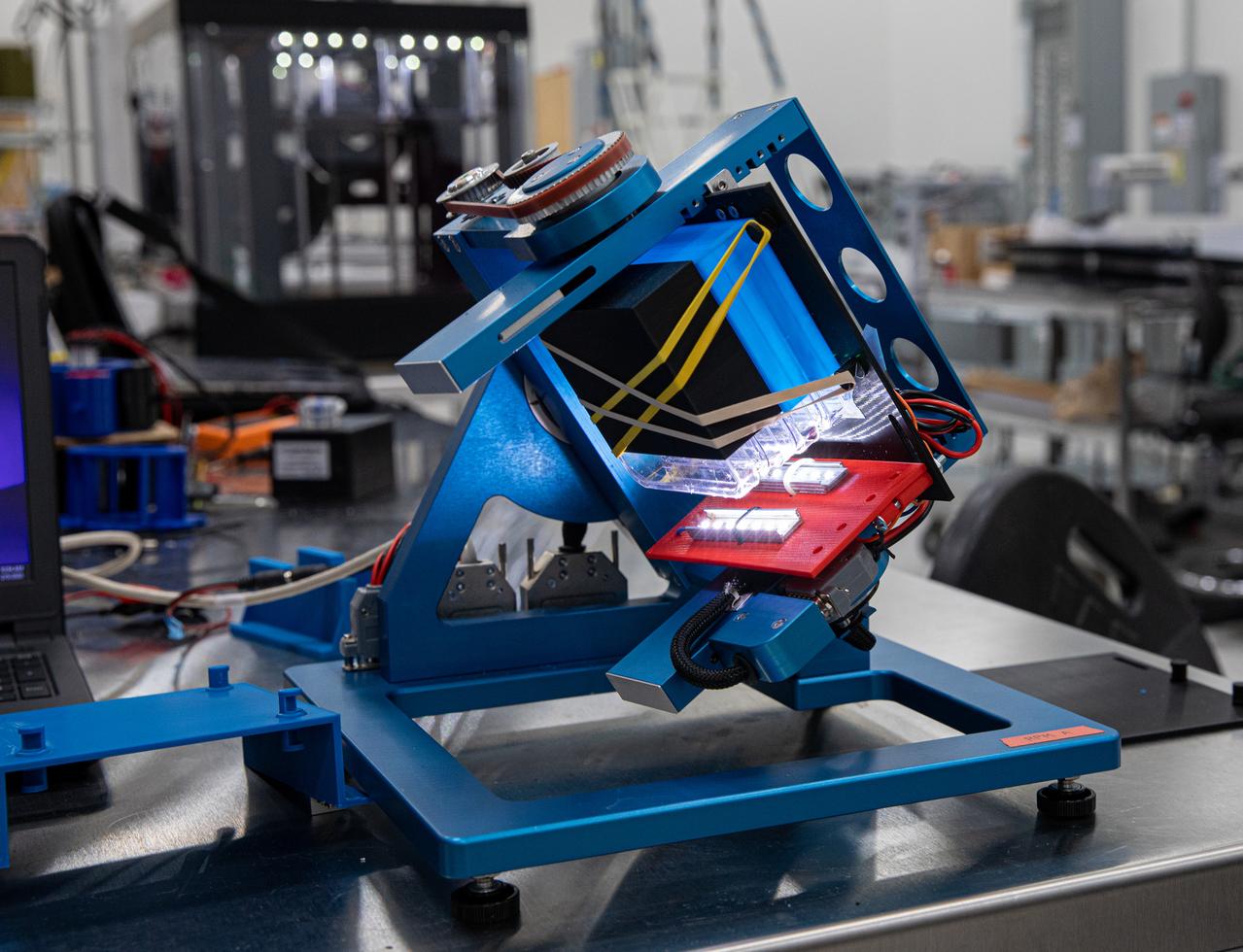
A multidisciplinary team of engineers, biologists, and horticulturalists working out of NASA's Kennedy Space Center in Florida supports the use of technology and automation in plant growth research that looks to supplement the diet of astronauts so they can undertake longer and more distant space exploration missions than ever before.
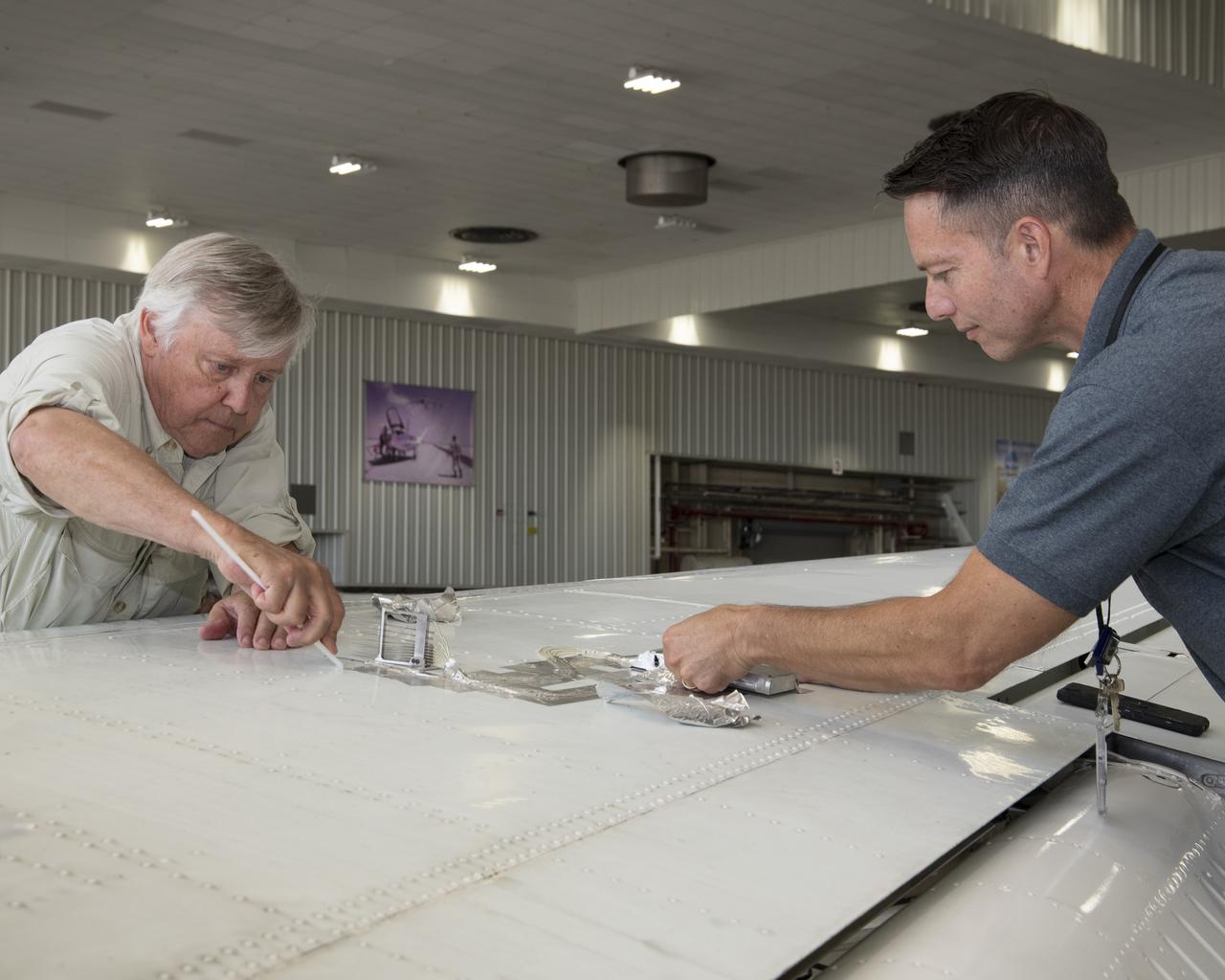
Cal Poly San Luis Obispo Professor Russ Westphal, left, and NASA Armstrong’s Technology Transfer Officer Benjamin Tomlinson remove the Boundary Layer Data System (BLDS) sensor attached to the wing of a Beechcraft Beech 200 Super King Air. The BLDS was flight tested at NASA’s Armstrong Flight Research Center to showcase rapid and flexible flight-testing capabilities.
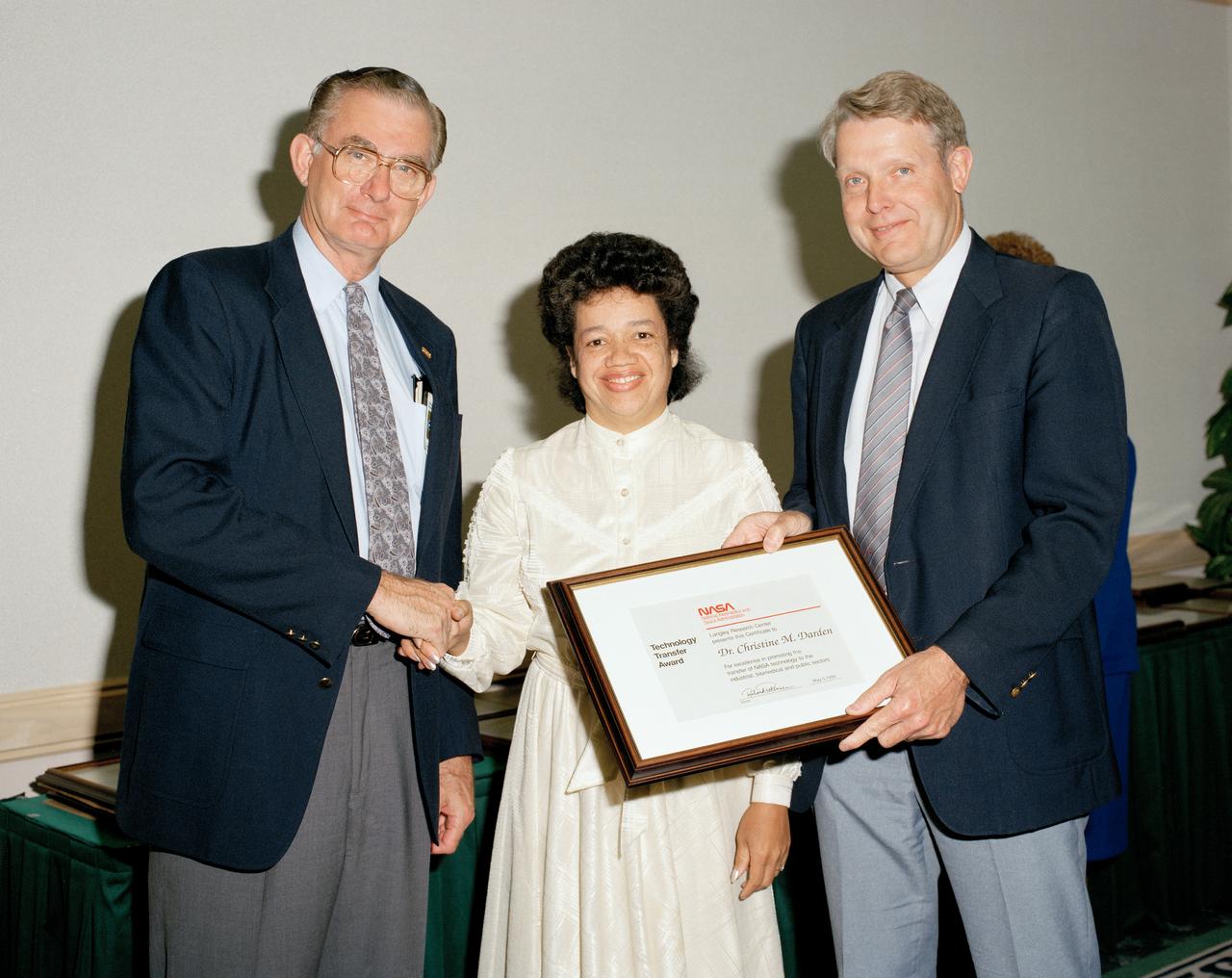
Technology Transfer Awards, Dr. Christine M. Darden, with Center Director Richard W. Peterson on the right.
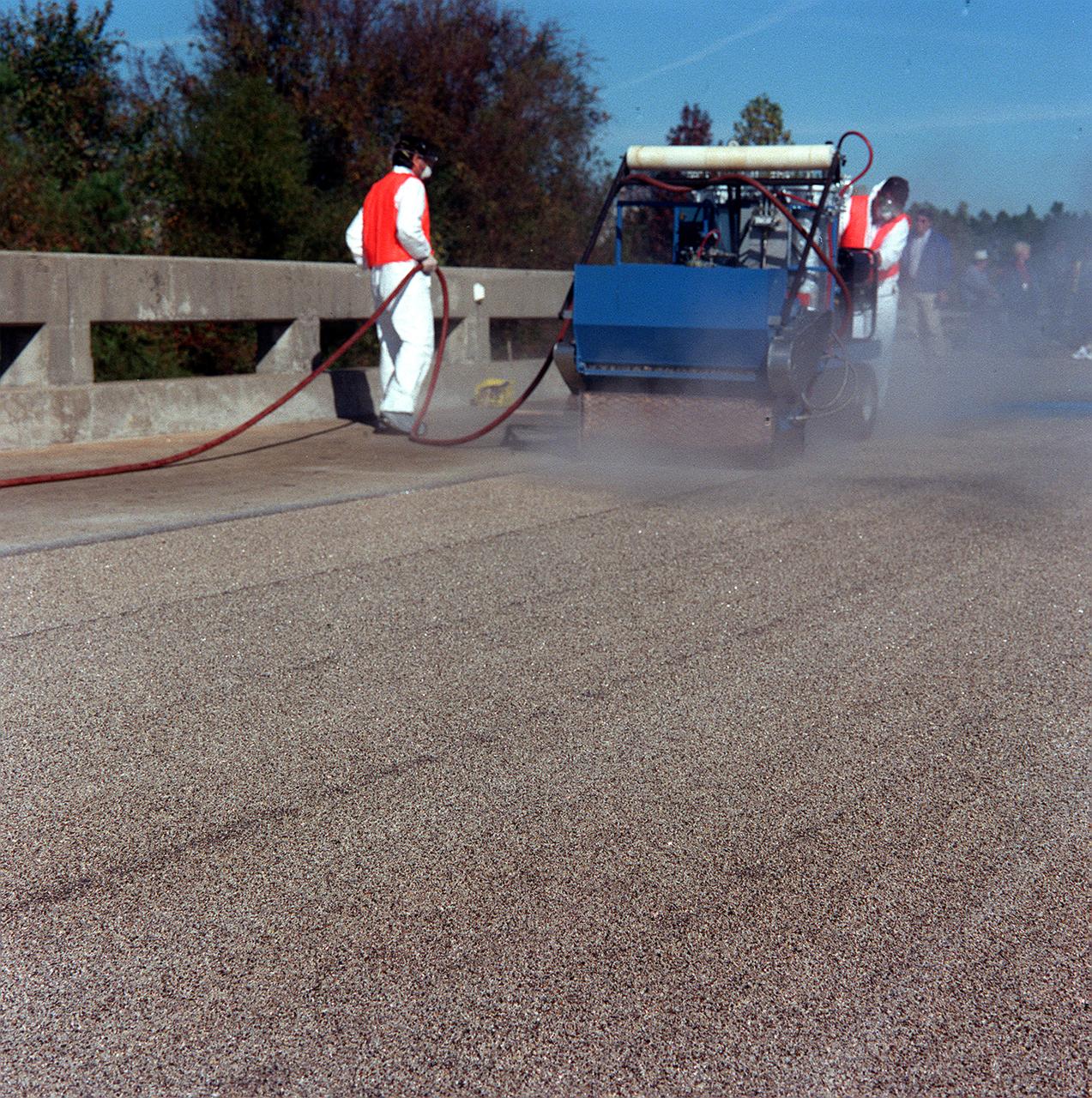
Alabama Department of Transportation workers utilize Convergent Spray Technology used to resurface a bridge on Interstate 65 near Lacon, Alabama. Originally developed by USBI to apply a heat resistant coating to the Space Shuttle's Solid Rocket Boosters, the environment-friendly technology reduces the required worktime from days to hours.
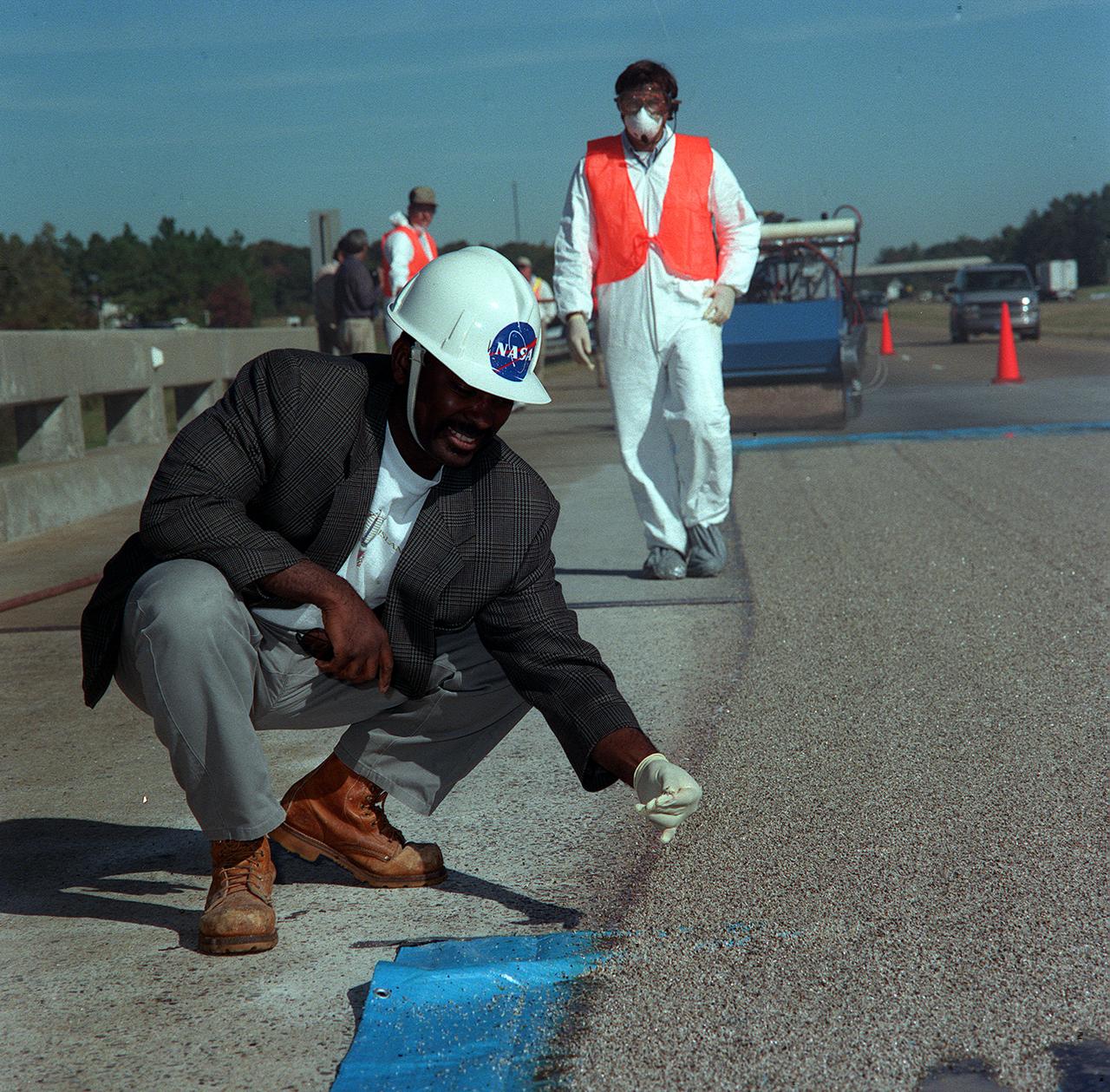
A NASA official inspects the results of Convergent Spray Technology used to resurface a bridge on Interstate 65 near Lacon, Alabama. Originally developed by USBI to apply a heat resistant coating to the Space Shuttle's Solid Rocket Boosters, the environment-friendly technology reduces the required worktime from days to hours.
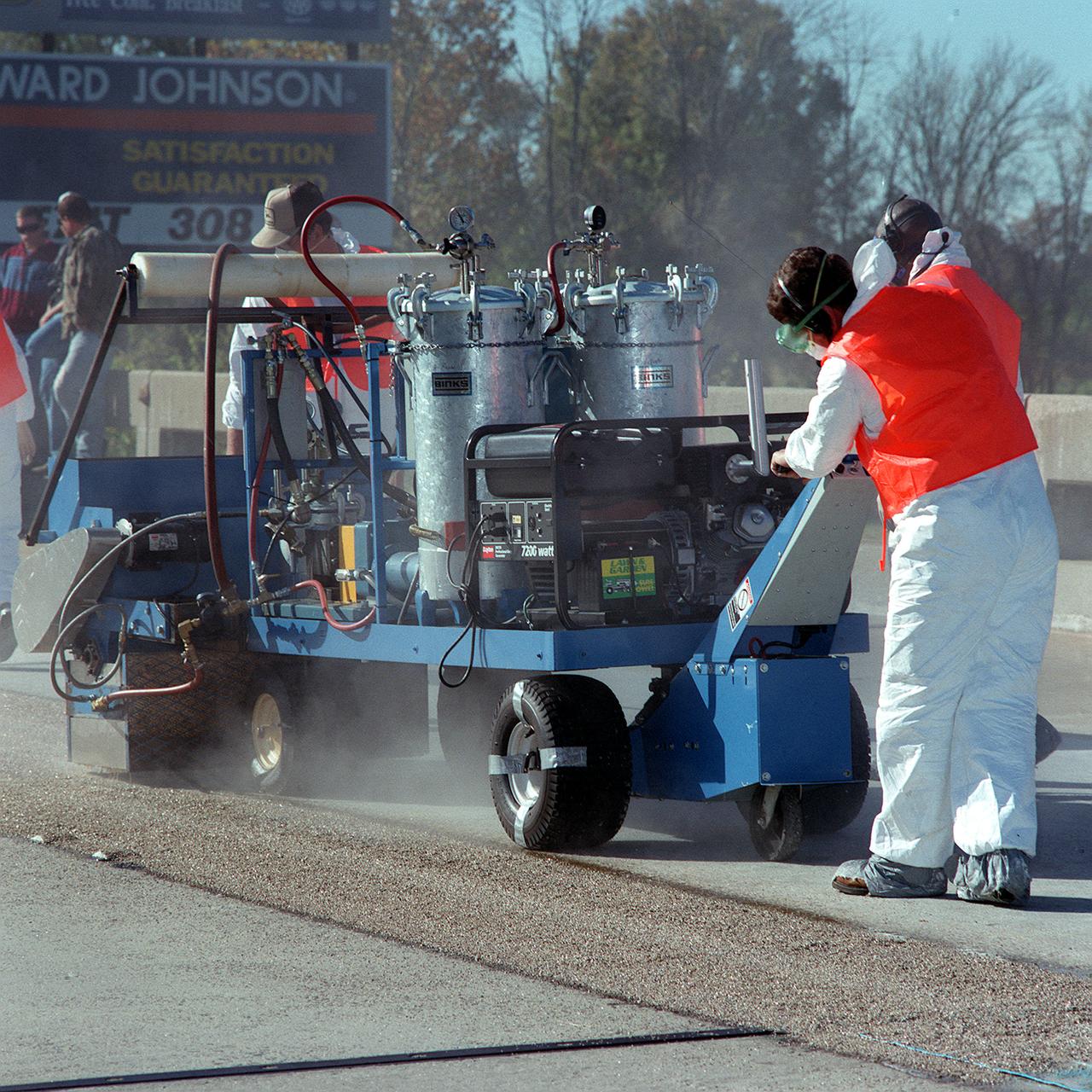
Alabama Department of Transportation workers utilize Convergent Spray Technology to resurface a bridge on Interstate 65 near Lacon, Alabama. Originally developed by USBI to apply a heat resistant coating to the Space Shuttle's Solid Rocket Boosters, the environment-friendly technology reduces the required worktime from days to hours.
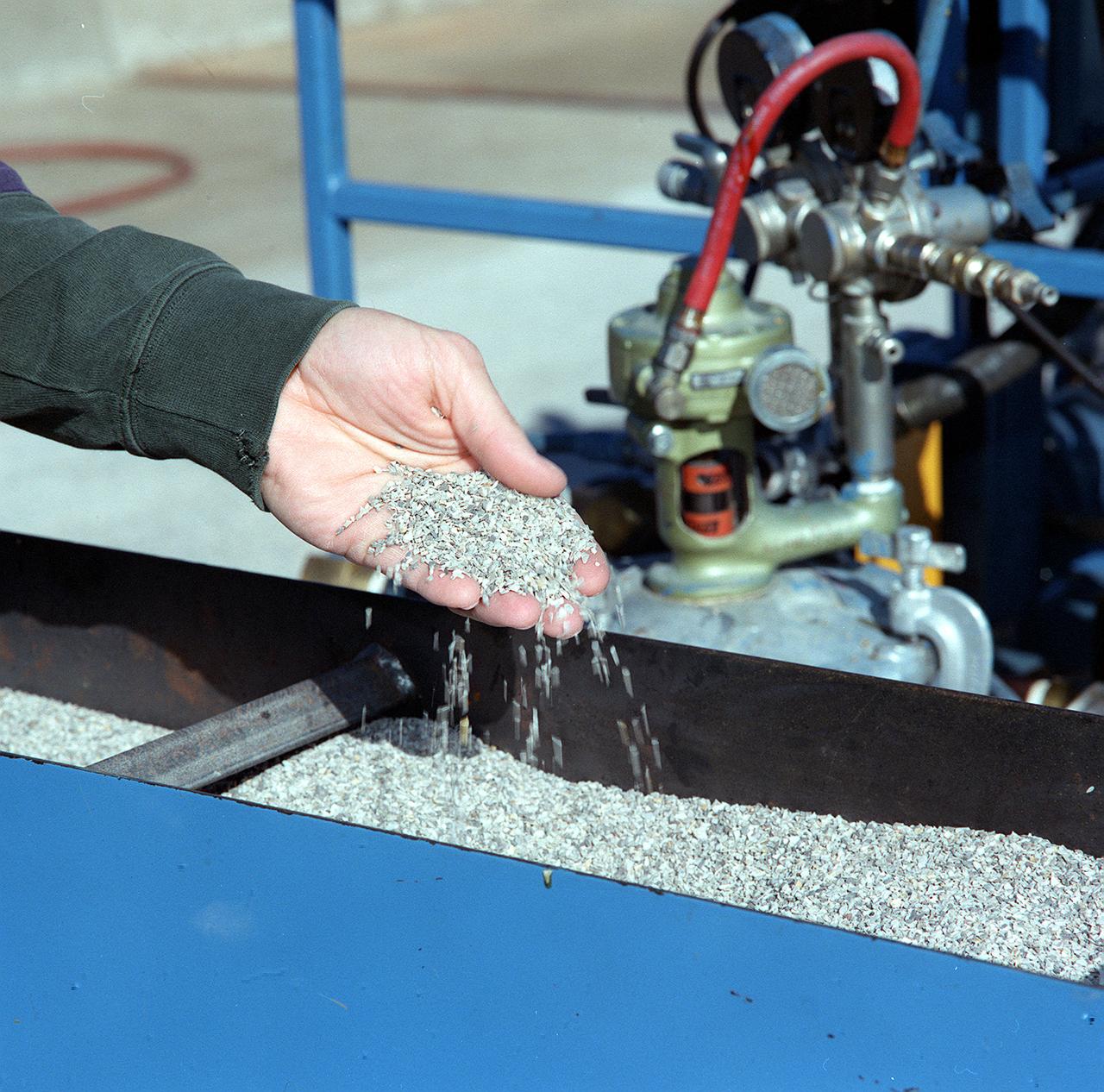
A workman inspects the results of Convergent Spray Technology used to resurface a bridge on Interstate 65 near Lacon, Alabama. Originally developed by USBI to apply a heat resistant coating to the Space Shuttle's Solid Rocket Boosters, the environment-friendly technology reduces the required worktime from days to hours.
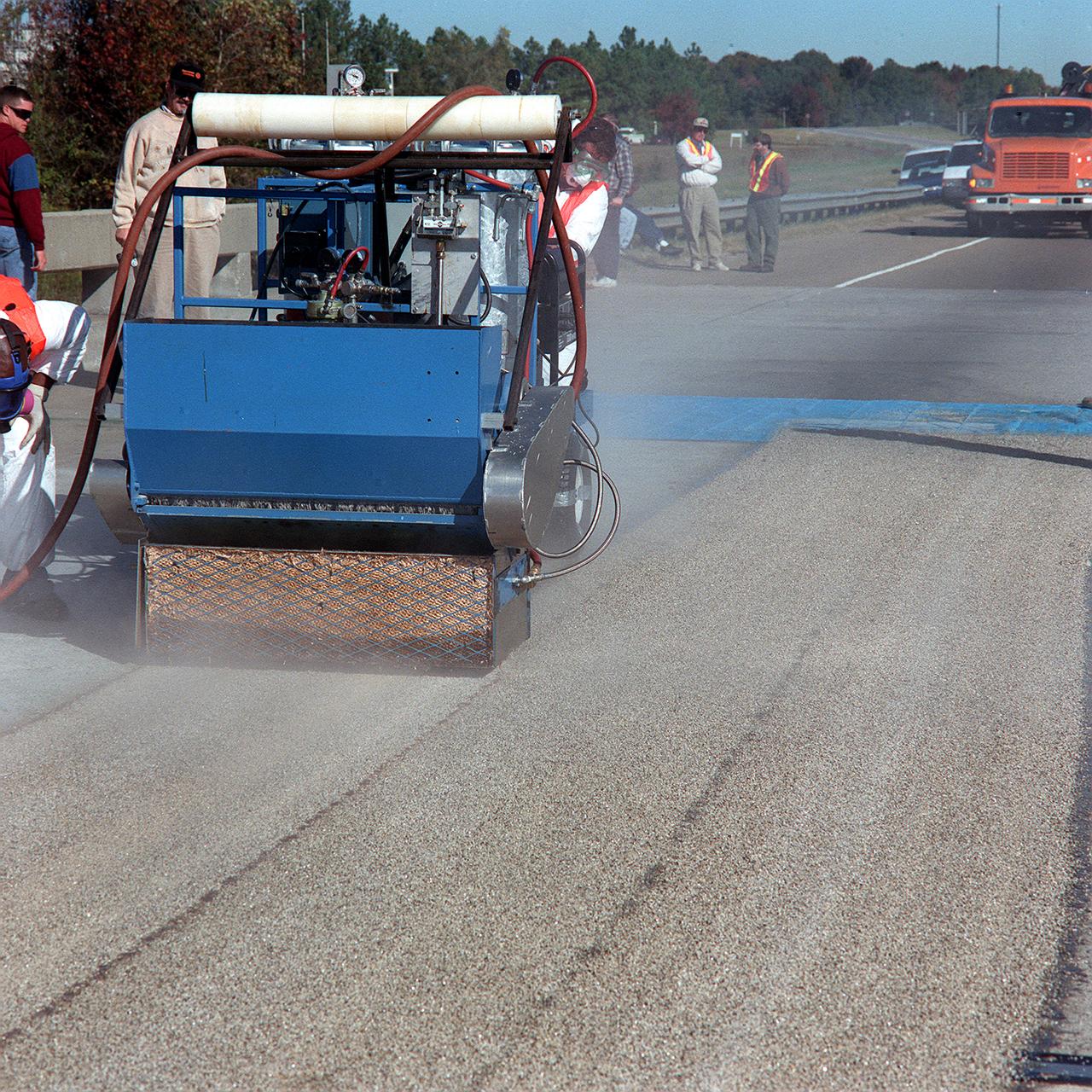
Alabama Department of Transportation workers utilize Convergent Spray Technology to resurface a bridge on Interstate 65 near Lacon, Alabama. Originally developed by USBI to apply a heat resistant coating to the Space Shuttle's Solid Rocket Boosters, the environment-friendly technology reduces the required worktime from days to hours.
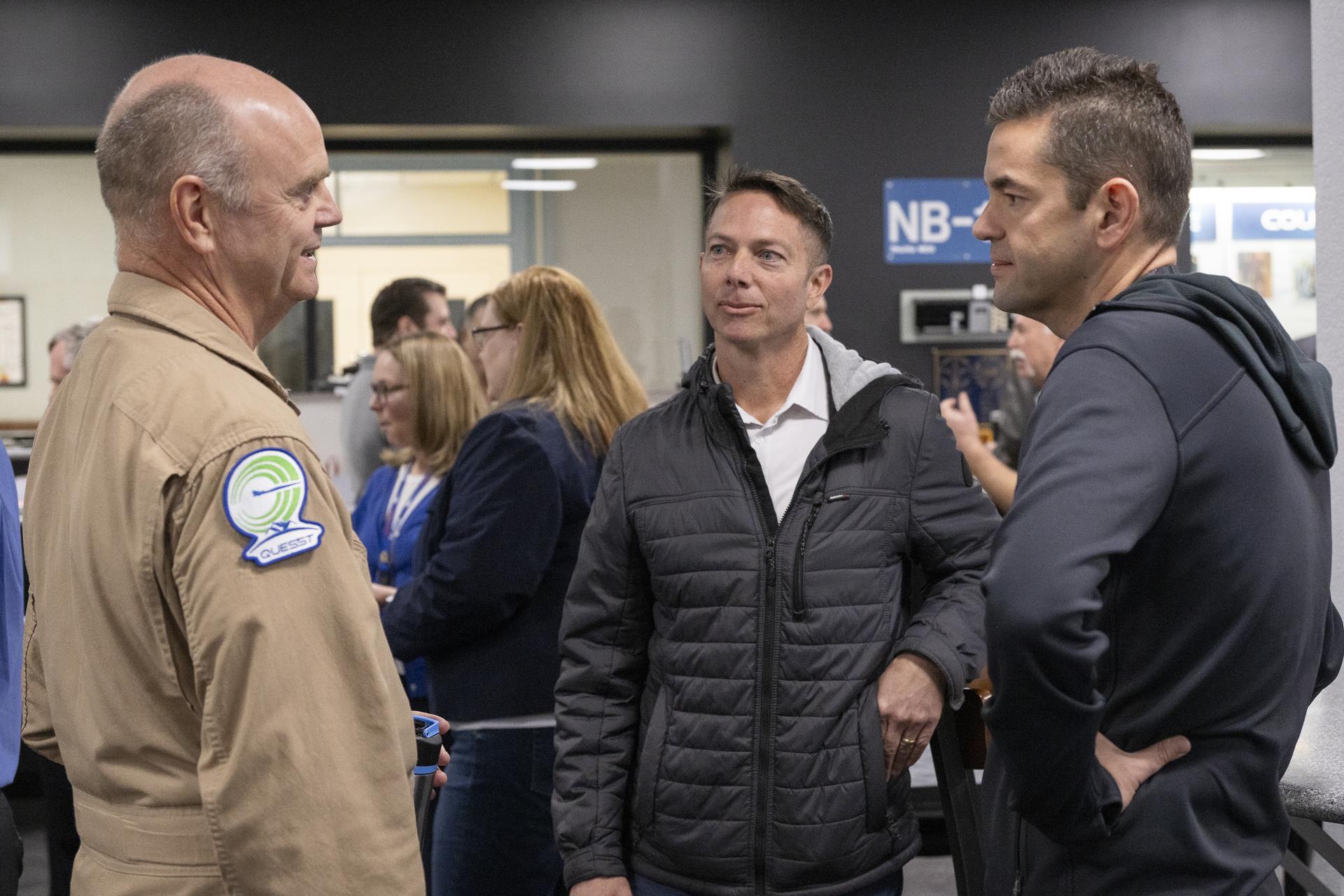
NASA Administrator Jared Isaacman speaks with Armstrong X-59 pilot Nils Larson and Technology Transfer Officer Benjamin Tomlinson.
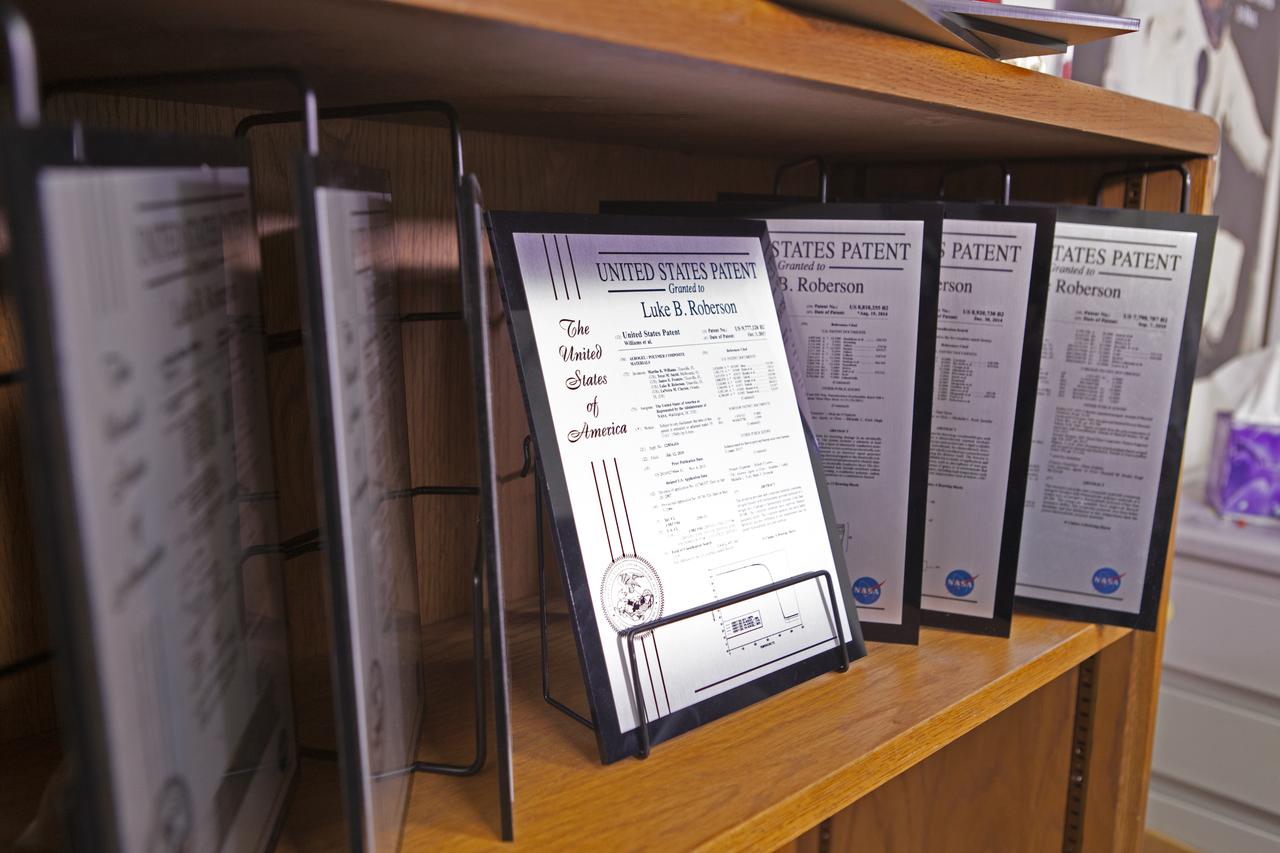
Kennedy Space Center’s Luke Roberson, a principal investigator with the flight technology branch, has received several patents from the United States Patent and Trademark Office. Certificates recognizing those patents are on display in his office at the Florida spaceport’s Space Station Processing Facility.
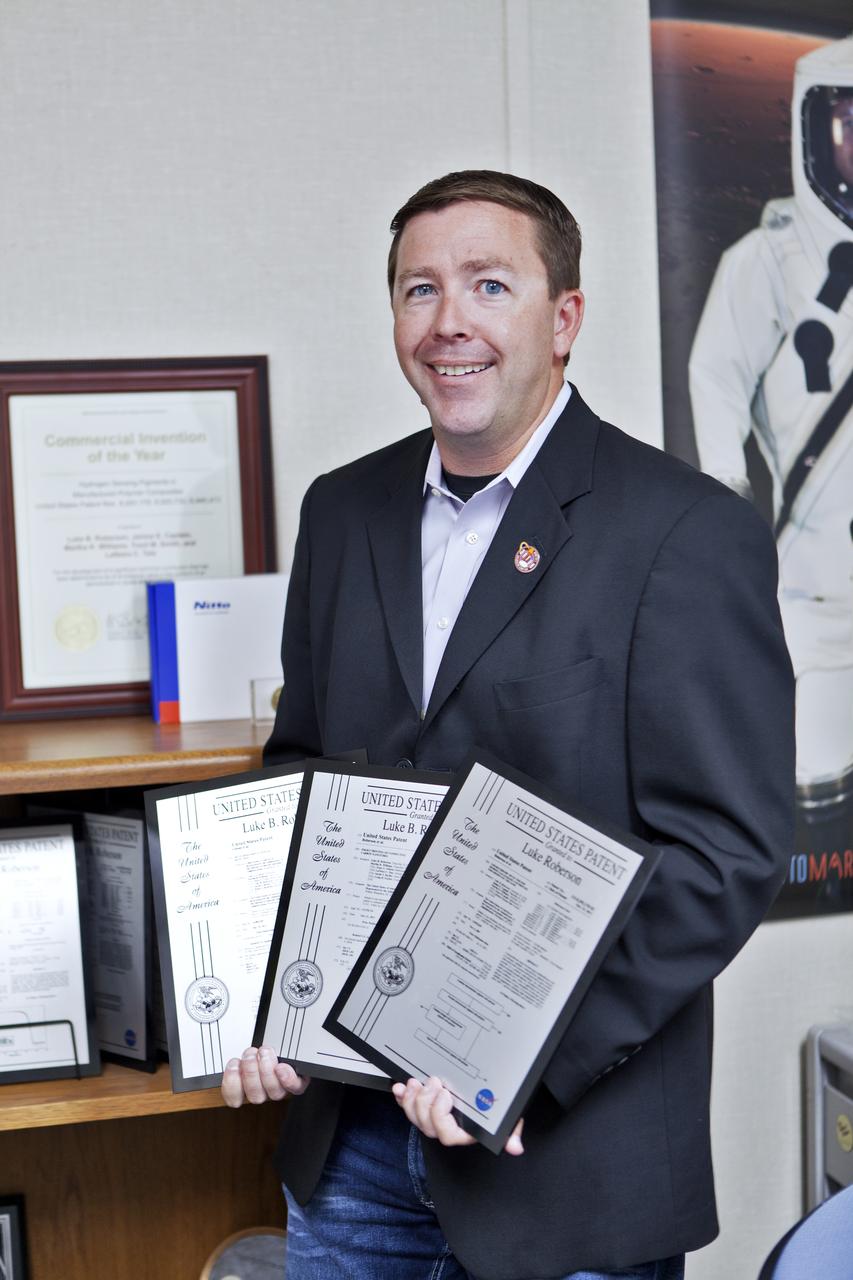
Luke Roberson, a principal investigator with the flight technology branch at NASA’s Kennedy Space Center in Florida, discusses patents and new technology reports for a video that targets internal audiences at NASA. Roberson’s contributions are reflected in multiple U.S. patents.
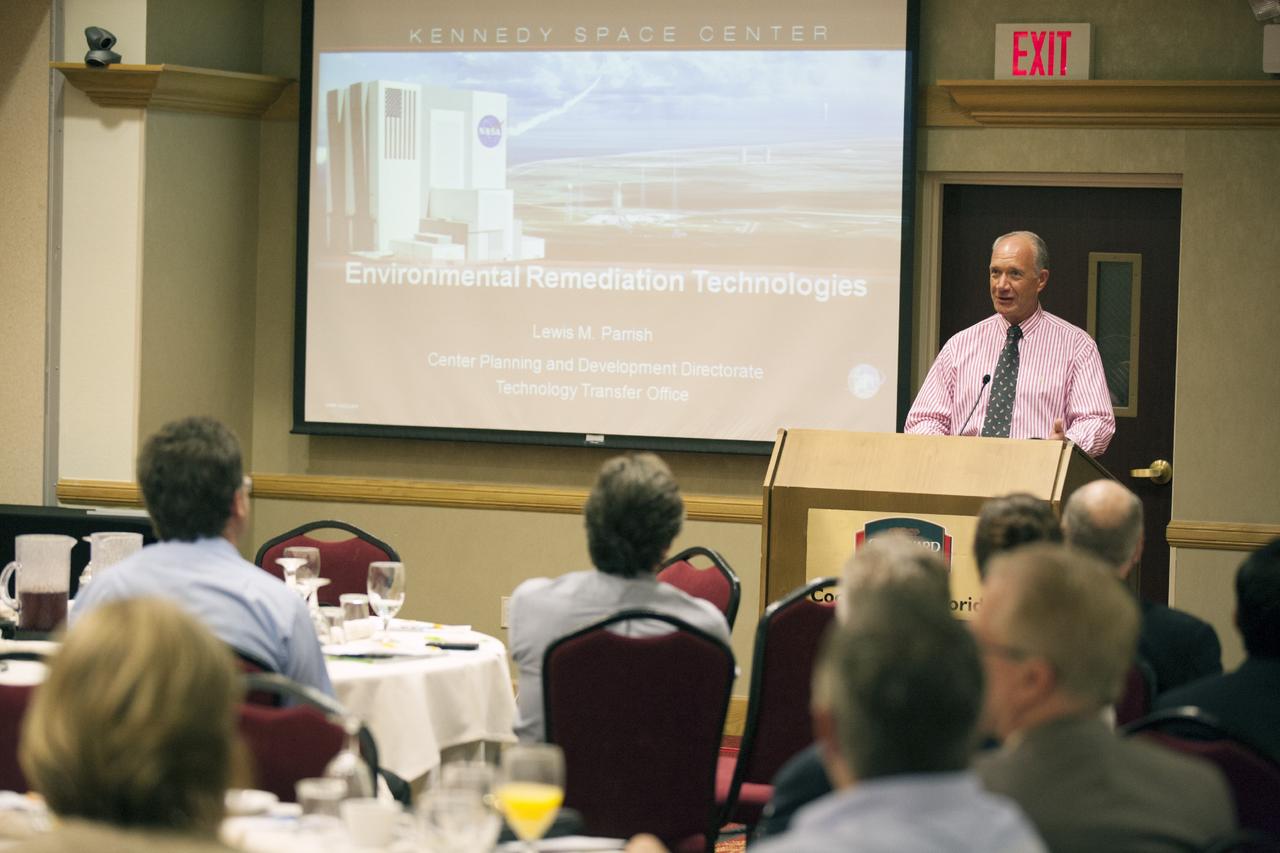
CAPE CANAVERAL, Fla. – Lewis Parrish, senior Technology Transfer specialist for Qinetiq at NASA's Kennedy Space Center in Florida, discusses technology transfer with attendees at the Technology Transfer Forum of the Economic Development Commission of Florida's Space Coast. A goal of the session was to showcase ways commercial businesses can work with NASA to develop technology and apply existing technology to commercial uses. Photo credit: NASA/Glenn Benson
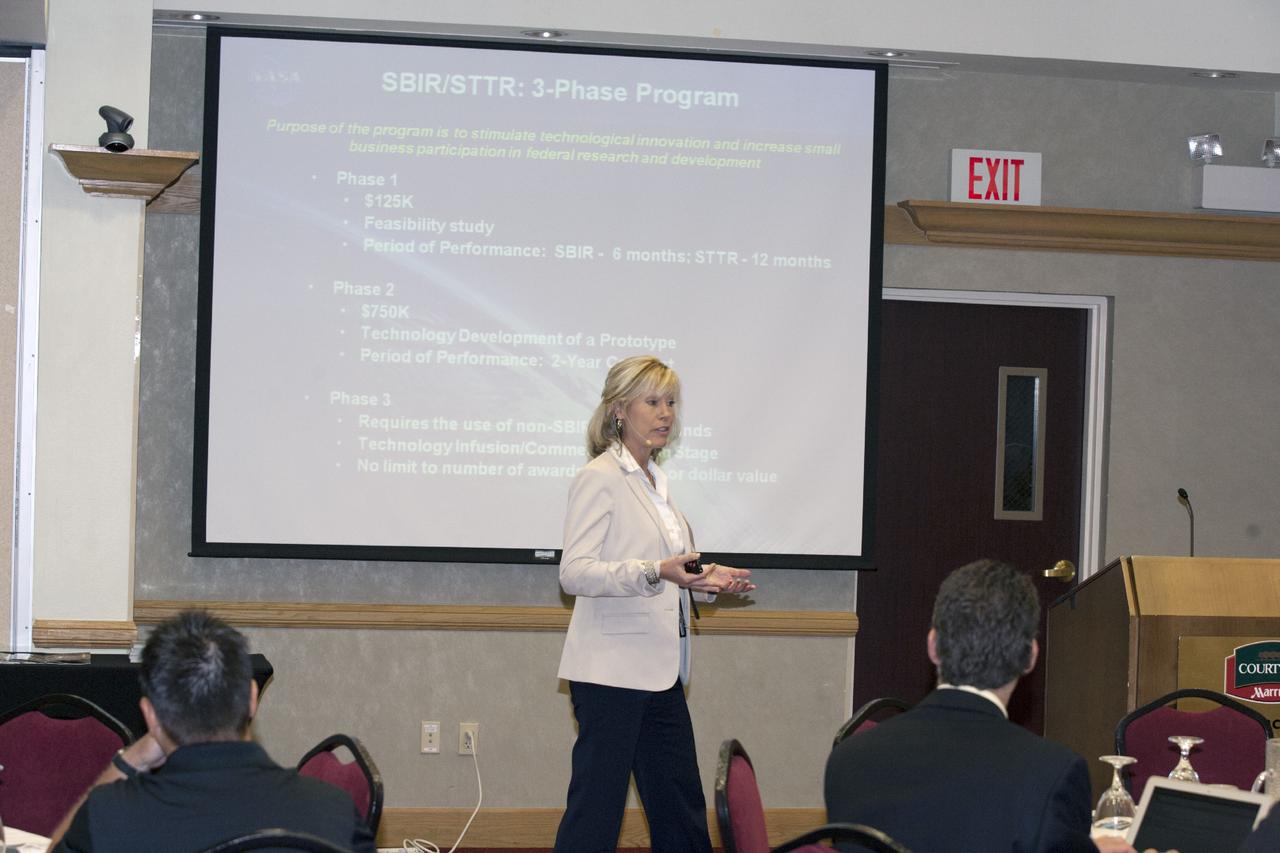
CAPE CANAVERAL, Fla. – Joni Richards, Technology Infusion specialist at NASA's Kennedy Space Center in Florida, discusses technology transfer with attendees at the Technology Transfer Forum of the Economic Development Commission of Florida's Space Coast. A goal of the session was to showcase ways commercial businesses can work with NASA to develop technology and apply existing technology to commercial uses. Photo credit: NASA/Glenn Benson
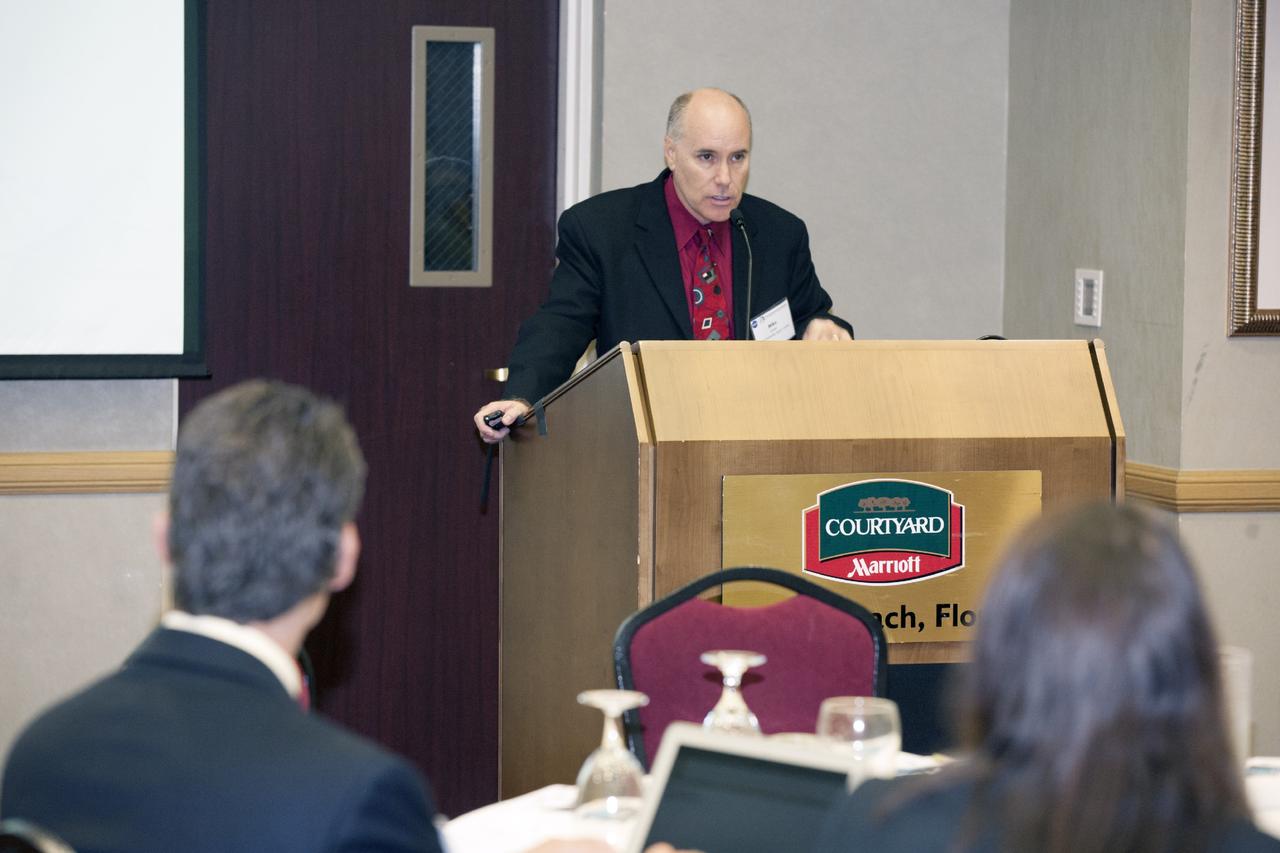
CAPE CANAVERAL, Fla. – Mike Lester, Research and Technology Partnership manager at NASA's Kennedy Space Center in Florida, discusses technology transfer with attendees at the Technology Transfer Forum of the Economic Development Commission of Florida's Space Coast. A goal of the session was to showcase ways commercial businesses can work with NASA to develop technology and apply existing technology to commercial uses. Photo credit: NASA/Glenn Benson
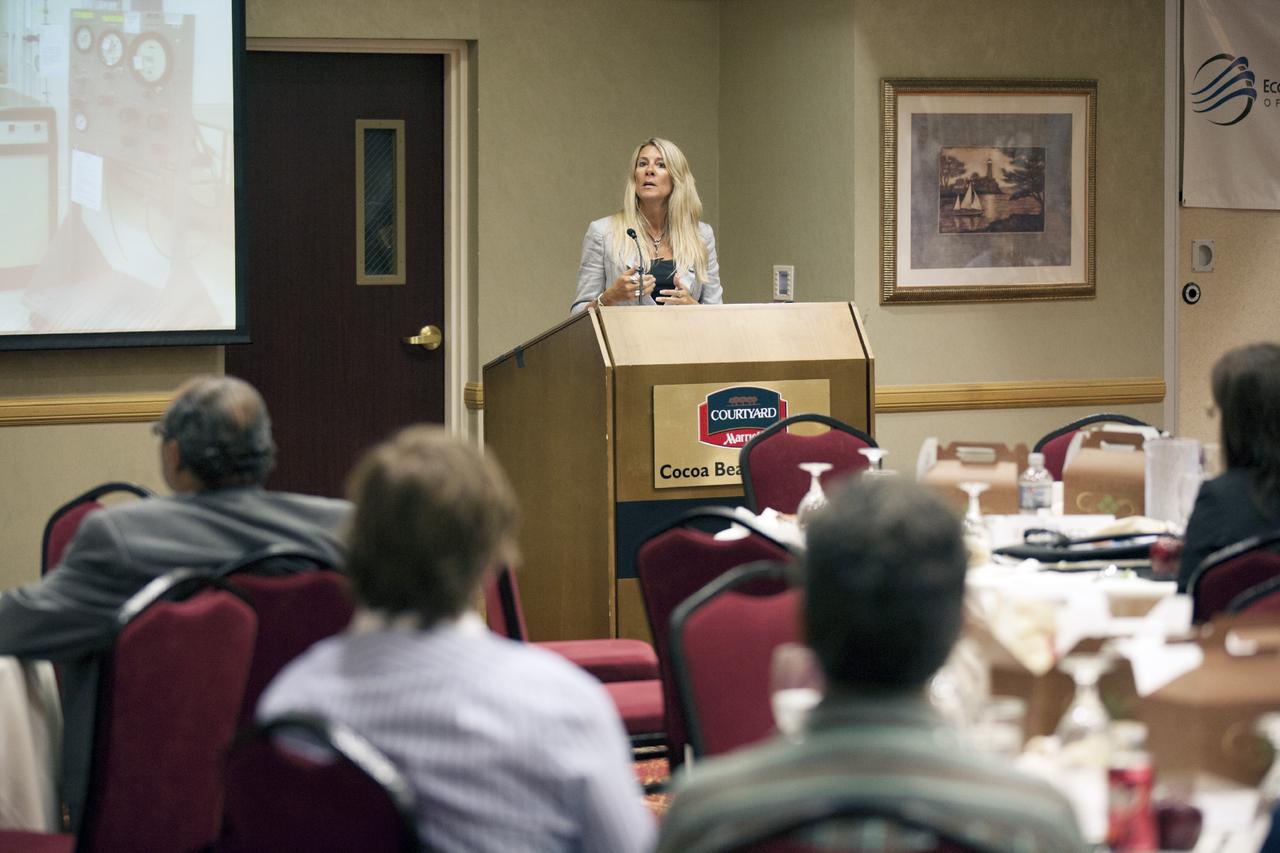
CAPE CANAVERAL, Fla. – Carol Craig, founder and CEO of Craig Technologies, discusses technology transfer with attendees at the Technology Transfer Forum of the Economic Development Commission of Florida's Space Coast. A goal of the session was to showcase ways commercial businesses can work with NASA to develop technology and apply existing technology to commercial uses. Photo credit: NASA/Glenn Benson
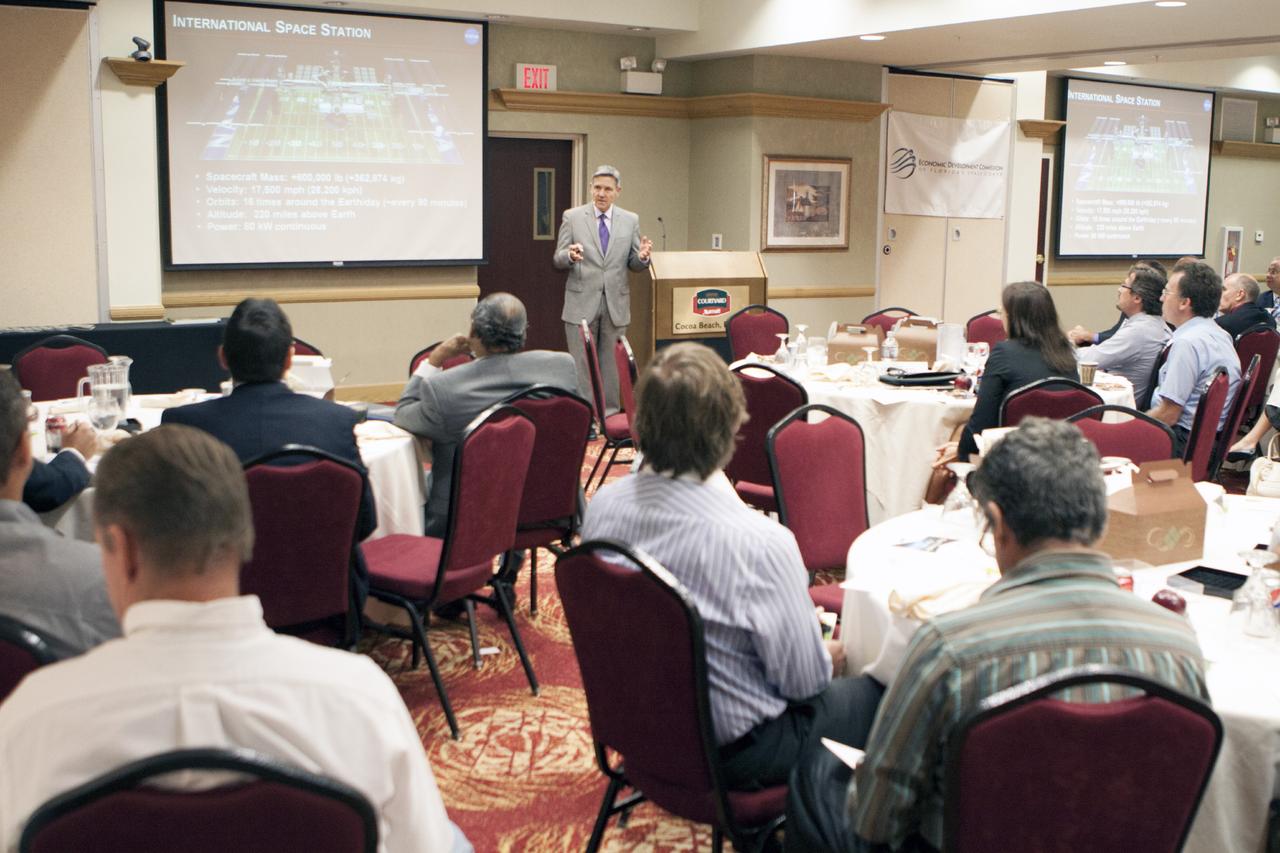
CAPE CANAVERAL, Fla. – Bob Cabana, director of NASA's Kennedy Space Center in Florida, discusses technology transfer with attendees at the Technology Transfer Forum of the Economic Development Commission of Florida's Space Coast. A goal of the session was to showcase ways commercial businesses can work with NASA to develop technology and apply existing technology to commercial uses. Photo credit: NASA/Glenn Benson
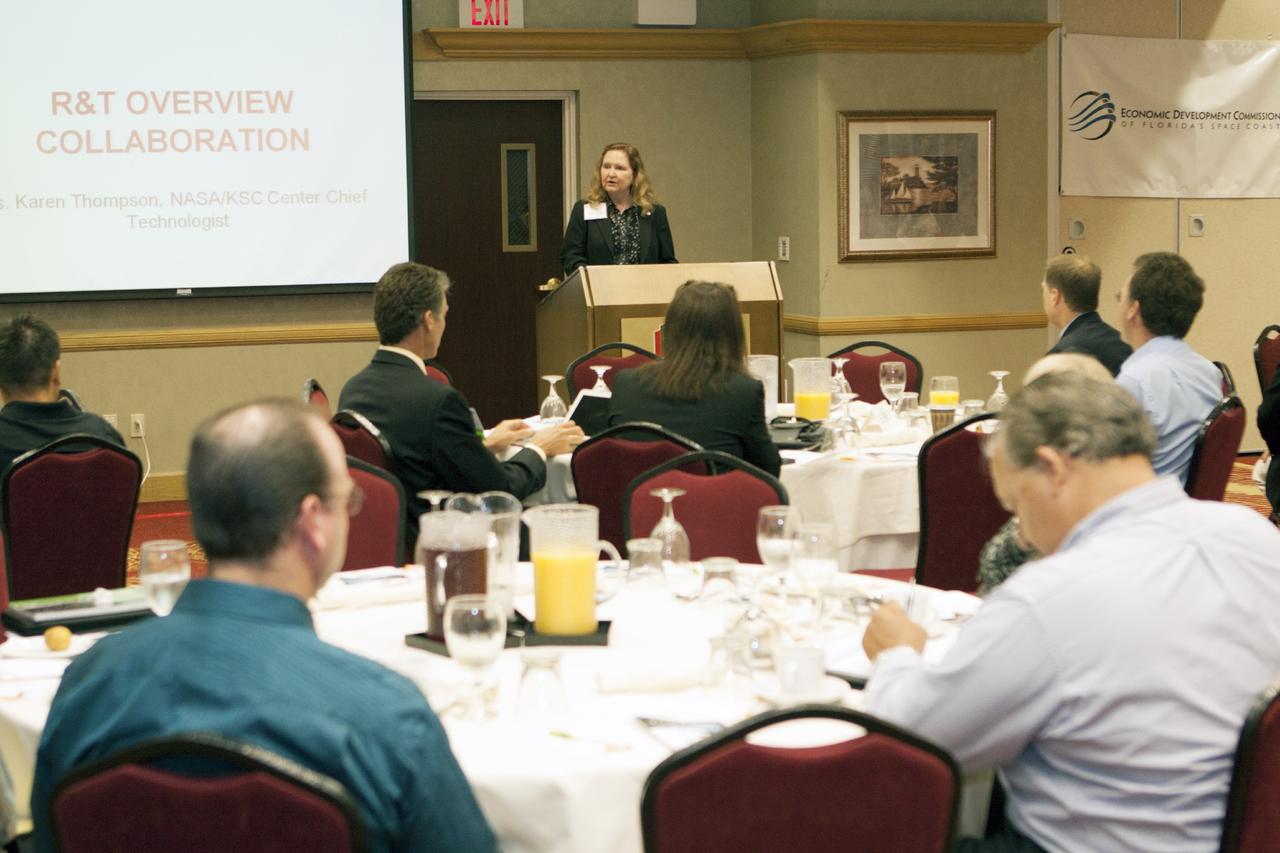
CAPE CANAVERAL, Fla. – Karen Thompson, chief technologist at NASA's Kennedy Space Center in Florida, discusses technology transfer with attendees at the Technology Transfer Forum of the Economic Development Commission of Florida's Space Coast. A goal of the session was to showcase ways commercial businesses can work with NASA to develop technology and apply existing technology to commercial uses. Photo credit: NASA/Glenn Benson
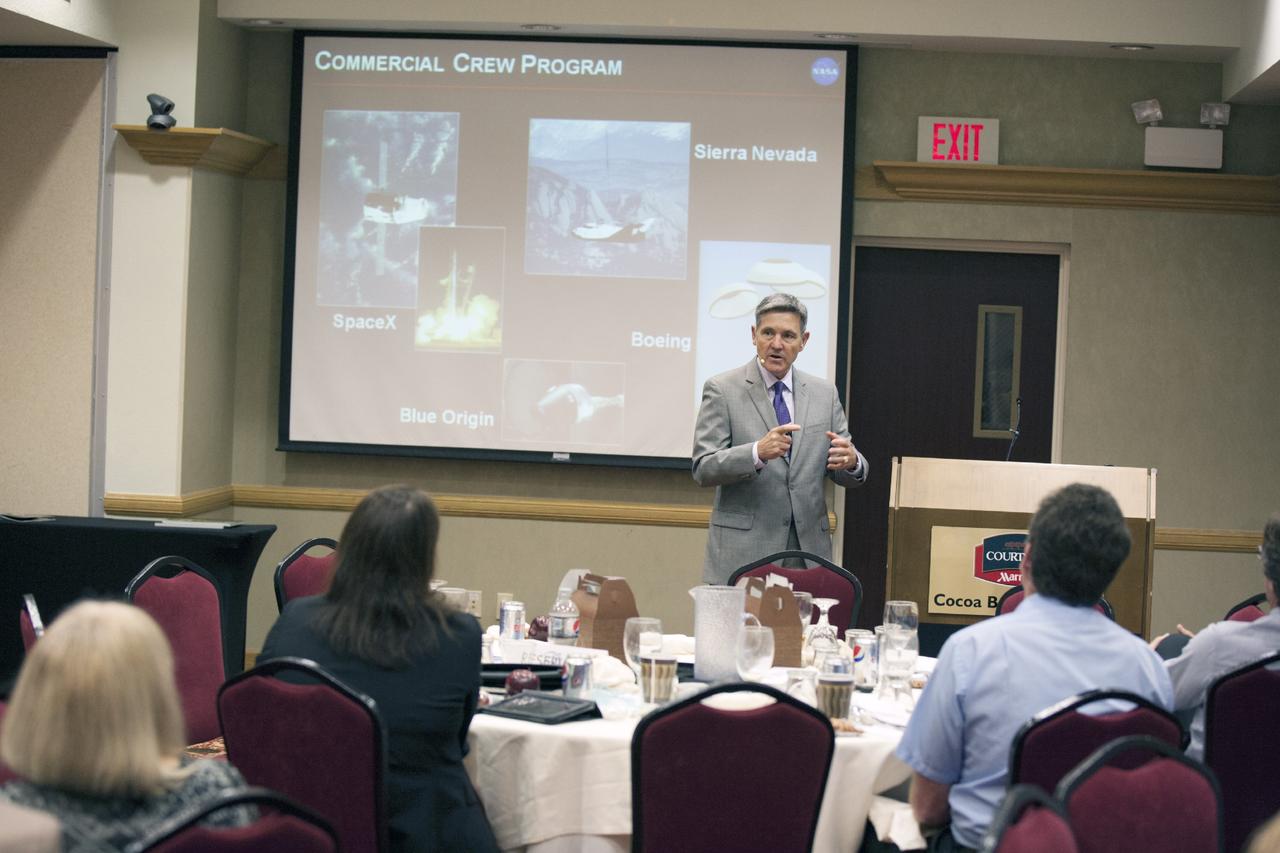
CAPE CANAVERAL, Fla. – Bob Cabana, director of NASA's Kennedy Space Center in Florida, discusses technology transfer with attendees at the Technology Transfer Forum of the Economic Development Commission of Florida's Space Coast. A goal of the session was to showcase ways commercial businesses can work with NASA to develop technology and apply existing technology to commercial uses. Photo credit: NASA/Glenn Benson
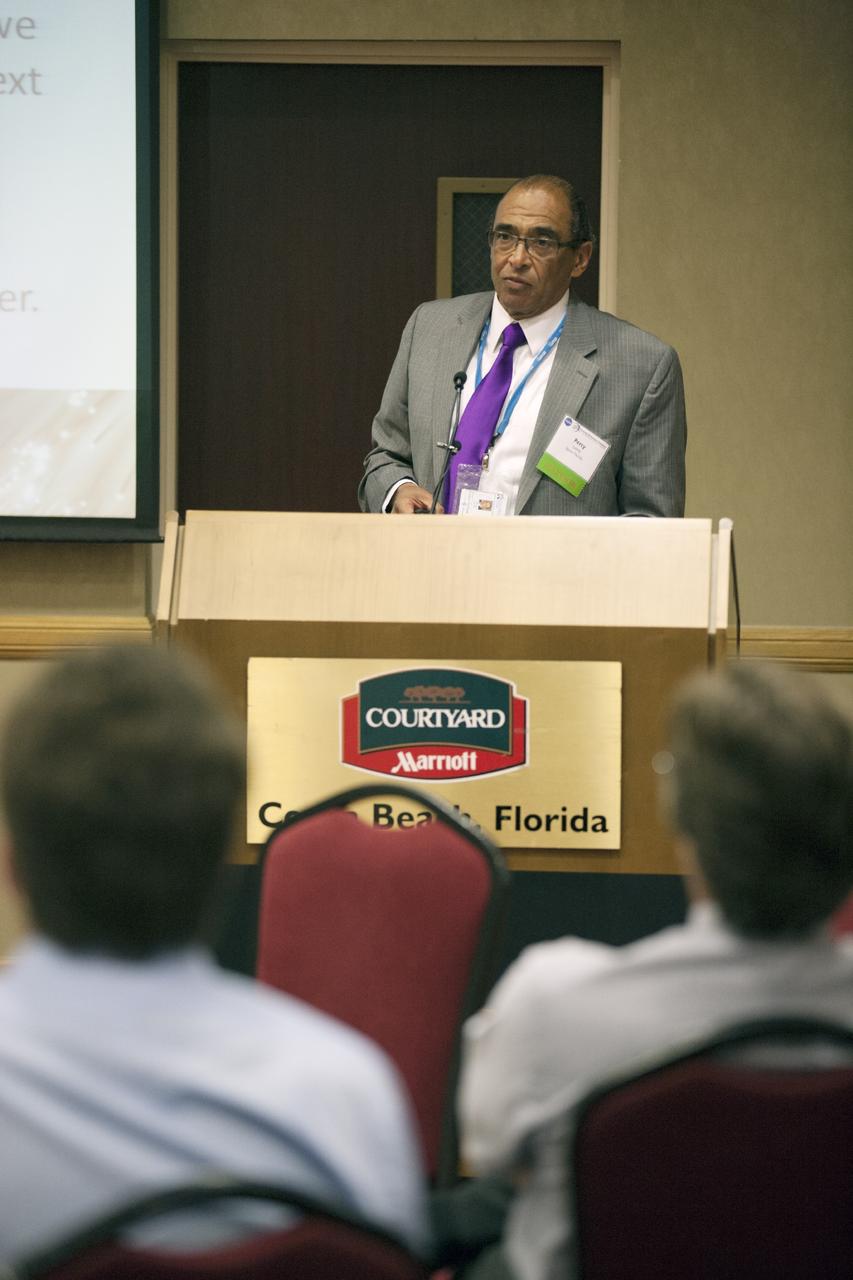
CAPE CANAVERAL, Fla. – Percy Luney of Space Florida discusses technology transfer with attendees at the Technology Transfer Forum of the Economic Development Commission of Florida's Space Coast. A goal of the session was to showcase ways commercial businesses can work with NASA to develop technology and apply existing technology to commercial uses. Photo credit: NASA/Glenn Benson
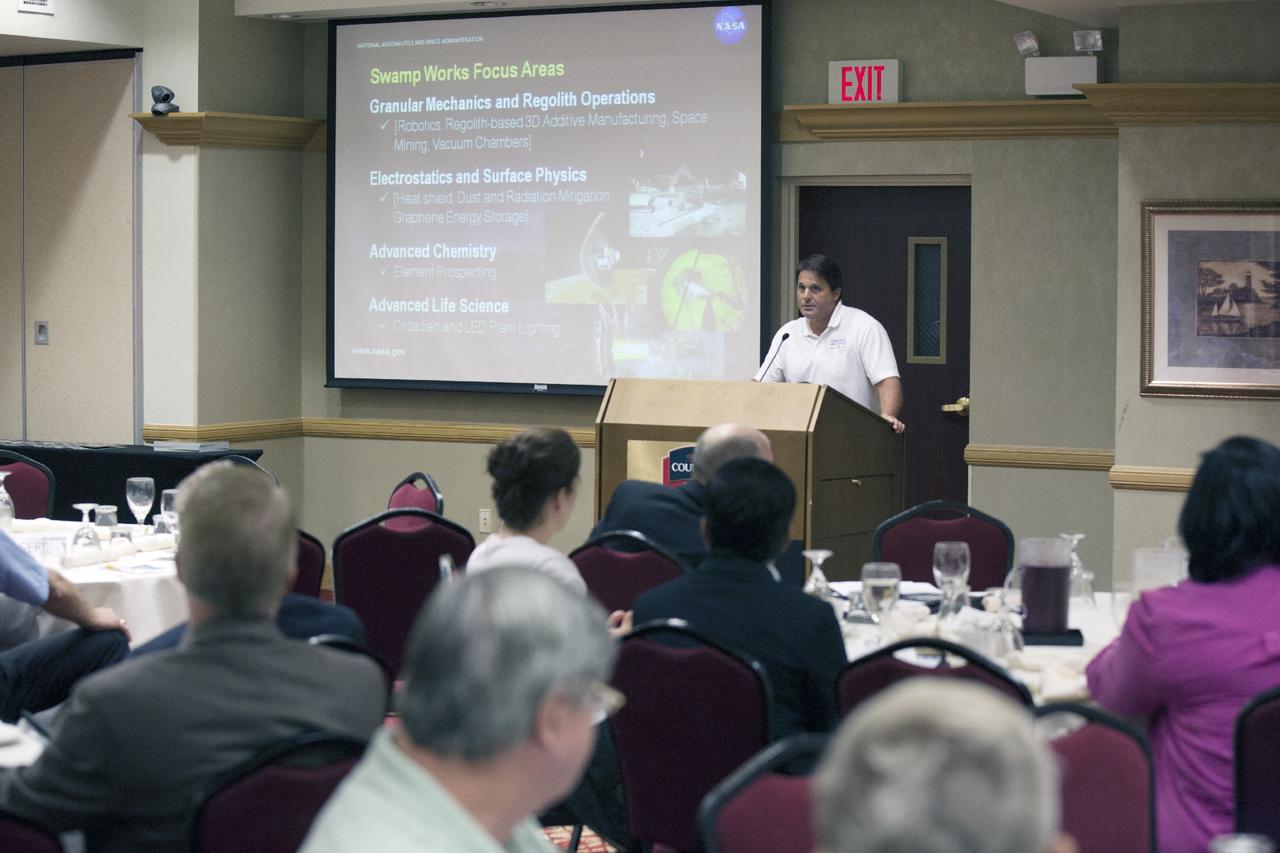
CAPE CANAVERAL, Fla. – Mike Galluzzi, lead business strategist for the Swamp Works at NASA's Kennedy Space Center in Florida, discusses robotics and technology transfer with attendees at the Technology Transfer Forum of the Economic Development Commission of Florida's Space Coast. A goal of the session was to showcase ways commercial businesses can work with NASA to develop technology and apply existing technology to commercial uses. Photo credit: NASA/Glenn Benson
Technology Transfer and Partnership Office, TTPO 2009 Accomplishments Summary

NASA Technology Transfer Program Executive Daniel Lockney moderates the NASA Future Forum panel titled "Transferring and Commercializing Technology to Benefit Our Lives and Our Economy" at The Ohio State University on Tuesday, Feb. 21, 2012 in Columbus, Ohio. The NASA Future Forum features panel discussions on the importance of education to our nation's future in space, the benefit of commercialized space technology to our economy and lives here on Earth, and the shifting roles for the public, commercial and international communities in space. Photo Credit: (NASA/Bill Ingalls)
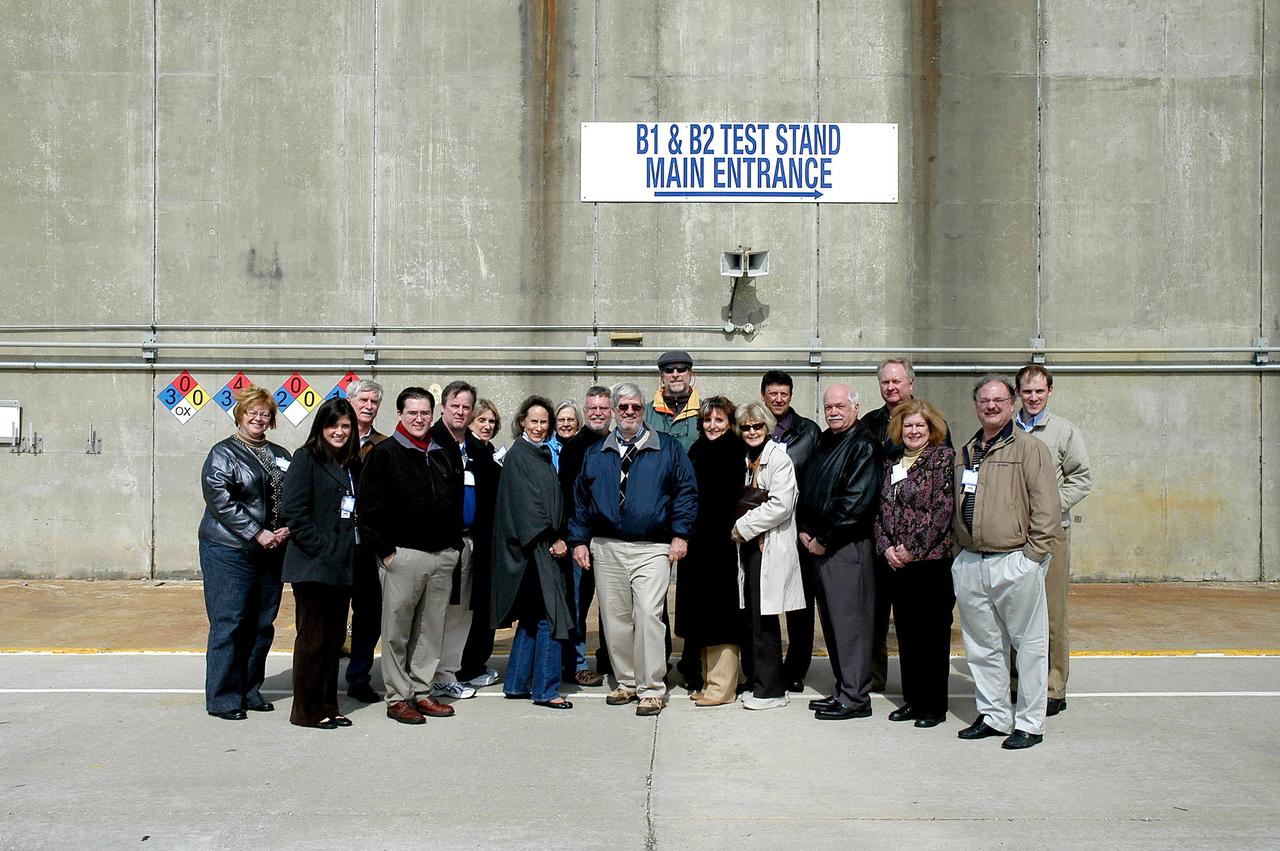
Members of the Southeast U.S. Federal Laboratory Consortium for Technology Transfer gather at the base of the B-1/B-2 Test Stand during a Feb. 10 visit to John C. Stennis Space Center. The group visited Stennis to tour facilities and receive briefings on work at the rocket engine test site. They also visited the INFINITY at NASA Stennis Space Center site and received a briefing on construction of the new science center. The FLC is a nationwide network of federal laboratories to facilitate technology transfers between federal agencies and commercial companies.
Workers prepare the Robotic Refueling Mission-3 (RRM3) payload for transport from the Fuel Transfer Building to the SpaceX facility on Oct. 30, 2018, at NASA's Kennedy Space Center in Florida. The payload will be carried to the International Space Station on SpaceX's 16th Commercial Resupply Services mission. RRM3 demonstrates the transfer of xenon gas and liquid methane in microgravity, and advances technologies for storing and manipulating these cryogenic fuels robotically. RRM3 also supports development of technology for the Restore-L mission, a robotic spacecraft equipped to service satellites in-orbit.
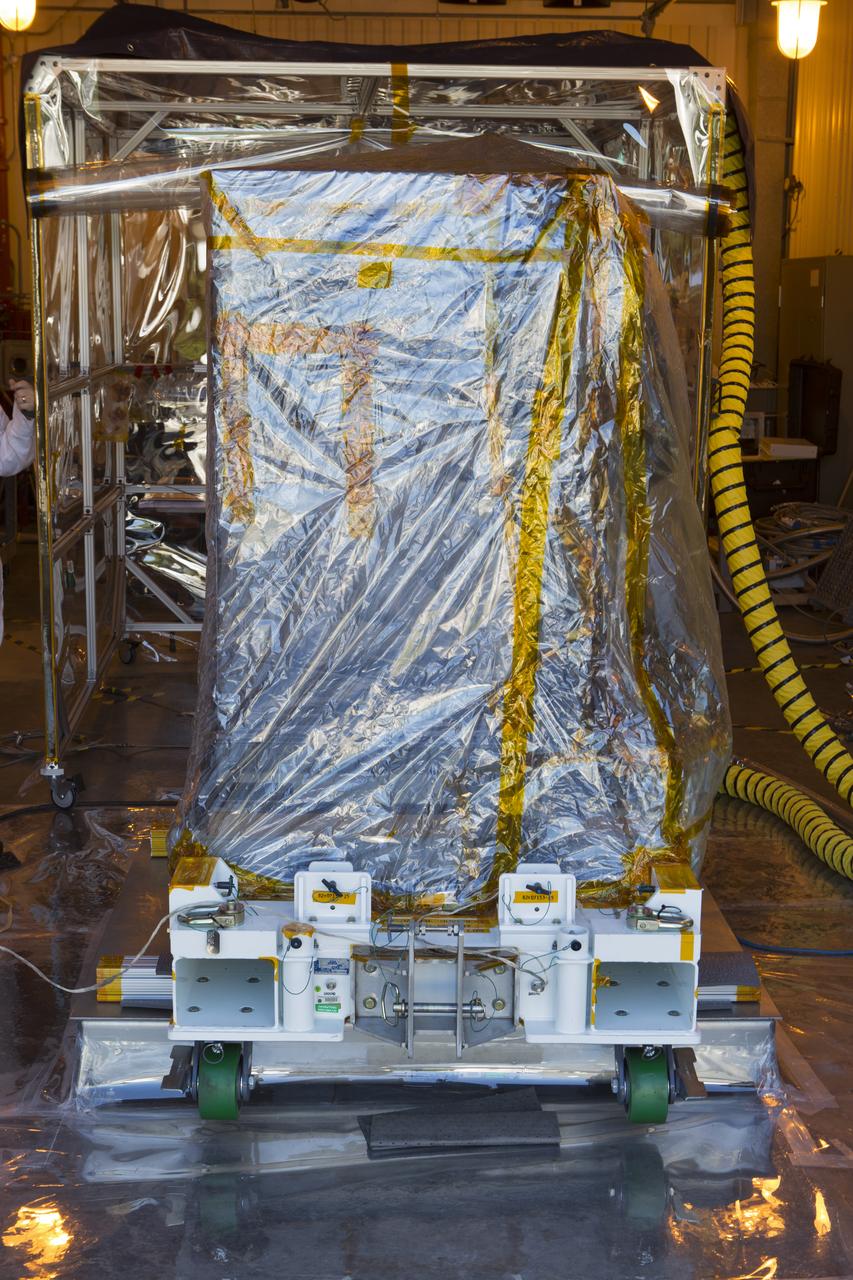
The Robotic Refueling Mission-3 (RRM3) payload is being prepared to be moved from the Fuel Transfer Building to the SpaceX facility on Oct. 30, 2018, at NASA's Kennedy Space Center in Florida. The payload will be carried to the International Space Station on SpaceX's 16th Commercial Resupply Services mission. RRM3 demonstrates the transfer of xenon gas and liquid methane in microgravity, and advances technologies for storing and manipulating these cryogenic fuels robotically. RRM3 also supports development of technology for the Restore-L mission, a robotic spacecraft equipped to service satellites in-orbit.
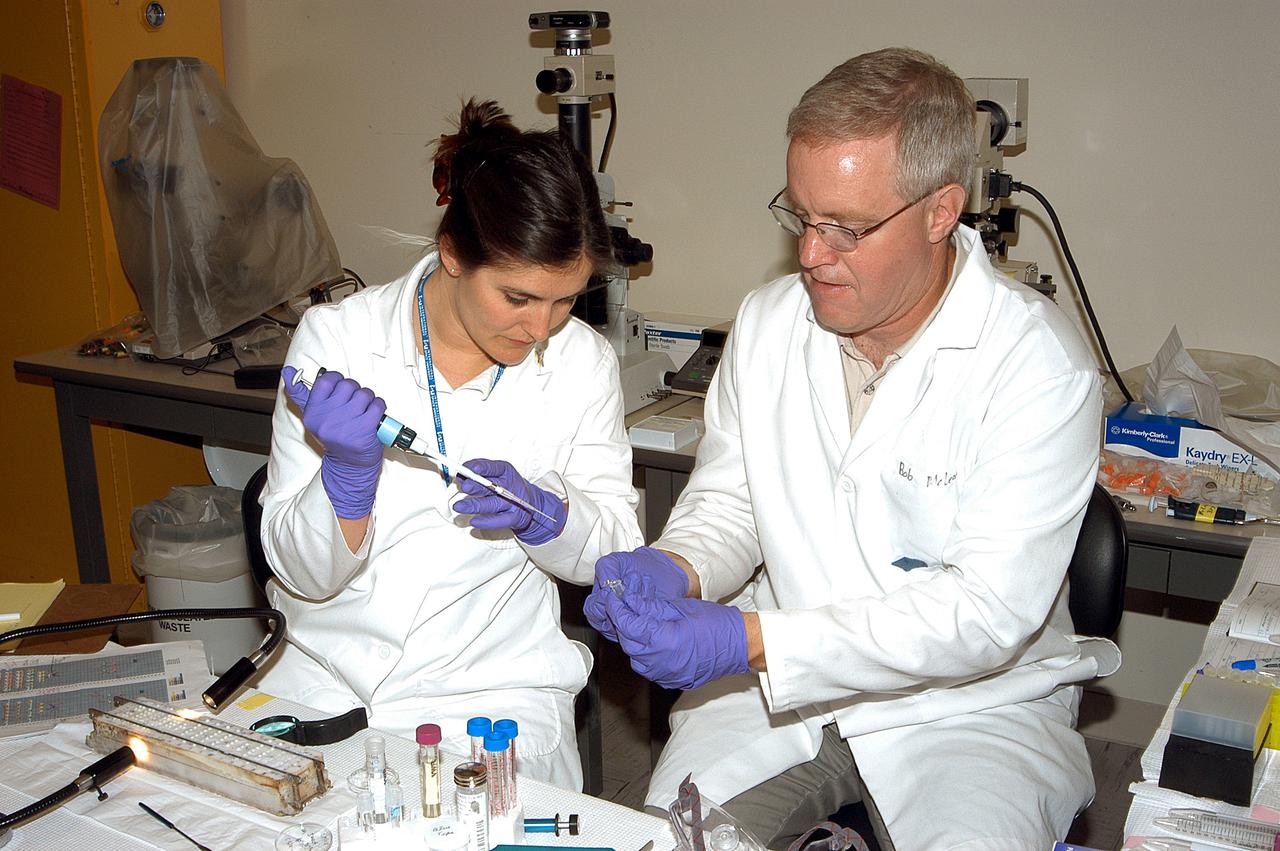
KENNEDY SPACE CENTER, FLA. - Valerie Cassanto, with Instrumentation Technology Associates, Inc., and Bob McLean, from the Southwest Texas State University, transfer to a new container material from one of the experiments carried on mission STS-107. Several experiments were found during the search for Columbia debris. Included in the Commercial ITA Biomedical Experiments payload on mission STS-107 are urokinase cancer research, microencapsulation of drugs, the Growth of Bacterial Biofilm on Surfaces during Spaceflight (GOBBSS), and tin crystal formation.

Carlos Grodsinsky, Vice Presiden of Technology, Zin Technologies, talks during the NASA Future Forum panel titled "Transferring and Commercializing Technology to Benefit Our Lives and Our Economy" at The Ohio State University on Tuesday, Feb. 21, 2012 in Columbus, Ohio. The NASA Future Forum features panel discussions on the importance of education to our nation's future in space, the benefit of commercialized space technology to our economy and lives here on Earth, and the shifting roles for the public, commercial and international communities in space. Photo Credit: (NASA/Bill Ingalls)
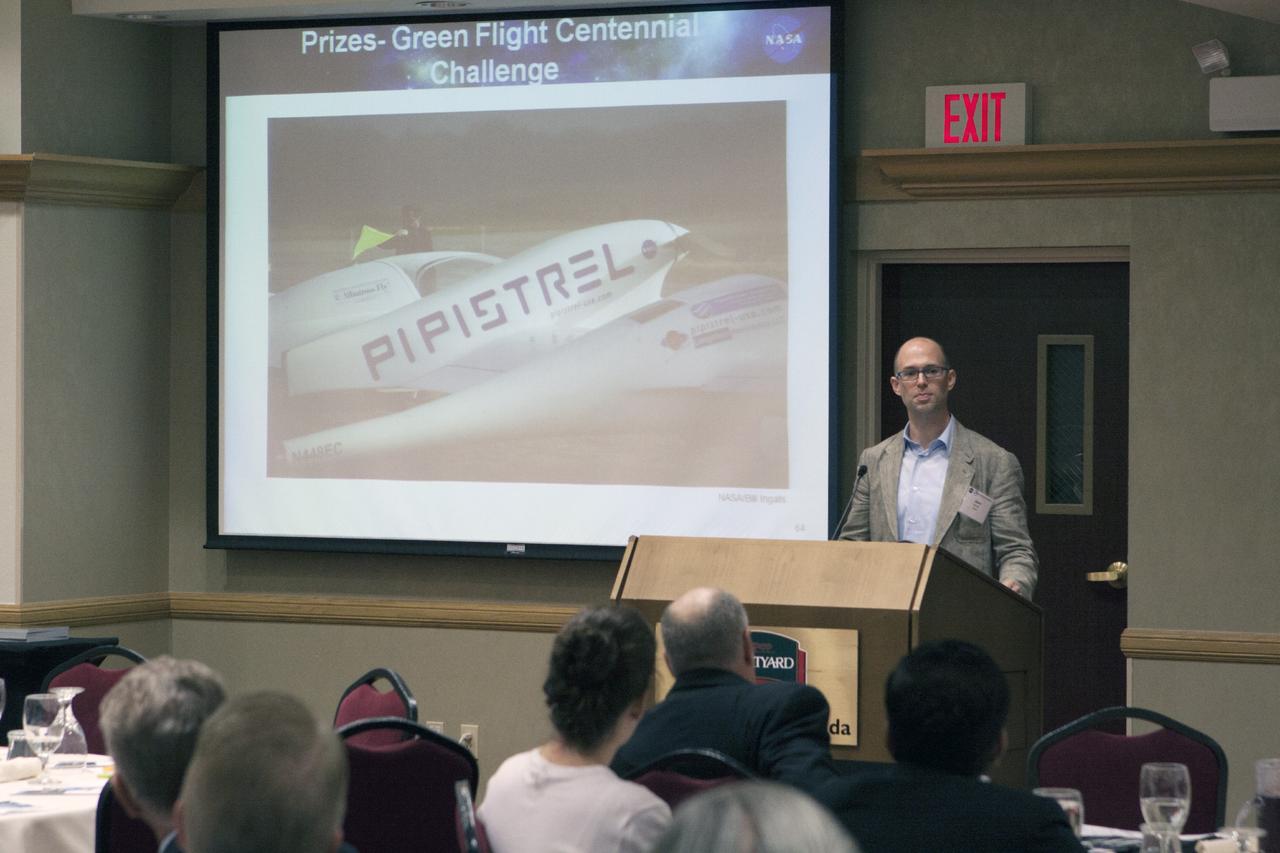
CAPE CANAVERAL, Fla. – Jason Kessler, NASA Asteroid Grand Challenge program executive, discusses the Asteroid Grand Challenge program opportunities with attendees at the Technology Transfer Forum of the Economic Development Commission of Florida's Space Coast. A goal of the session was to showcase ways commercial businesses can work with NASA to develop technology and apply existing technology to commercial uses. Photo credit: NASA/Glenn Benson

CAPE CANAVERAL, Fla. – Tracey Kickbusch, chief of computational sciences at NASA's Kennedy Space Center in Florida, discusses modeling and simulations with attendees at the Technology Transfer Forum of the Economic Development Commission of Florida's Space Coast. A goal of the session was to showcase ways commercial businesses can work with NASA to develop technology and apply existing technology to commercial uses. Photo credit: NASA/Glenn Benson
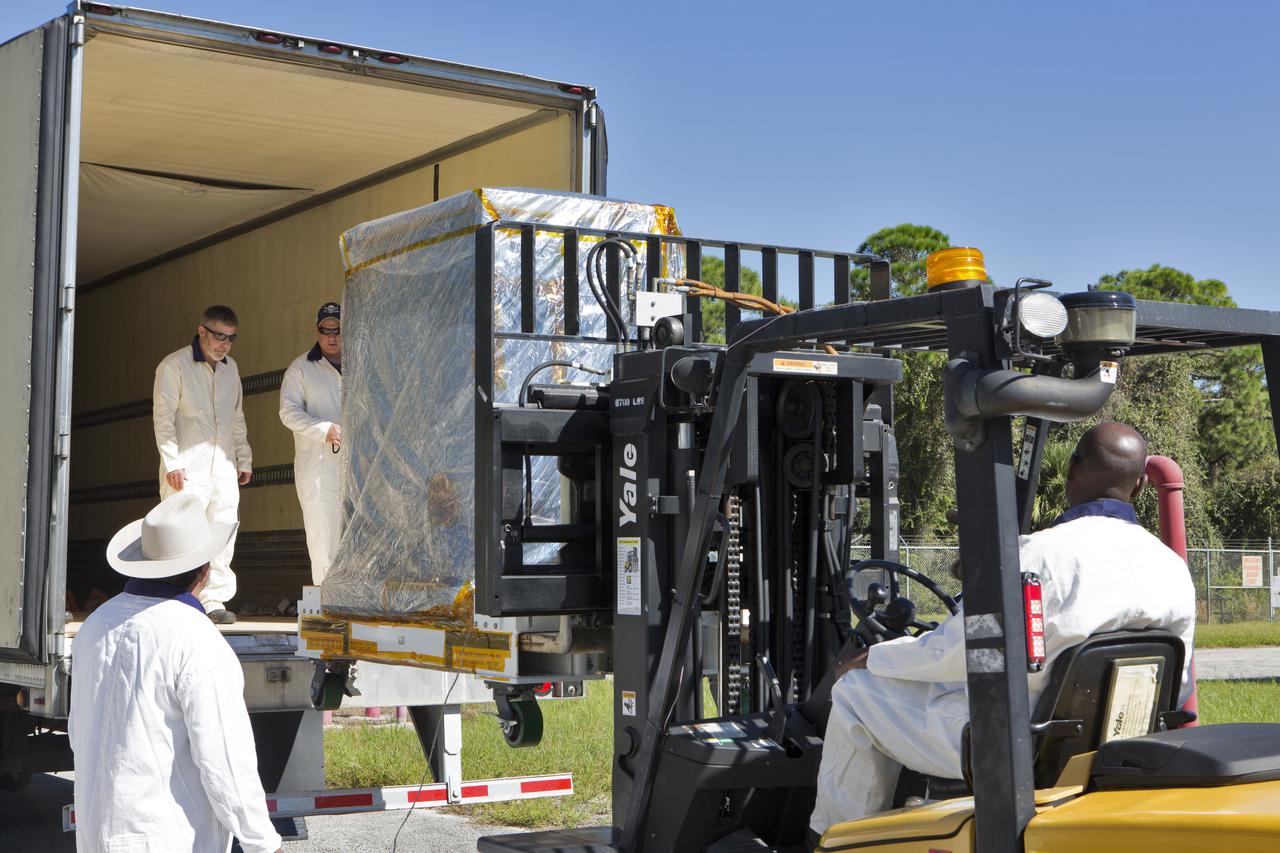
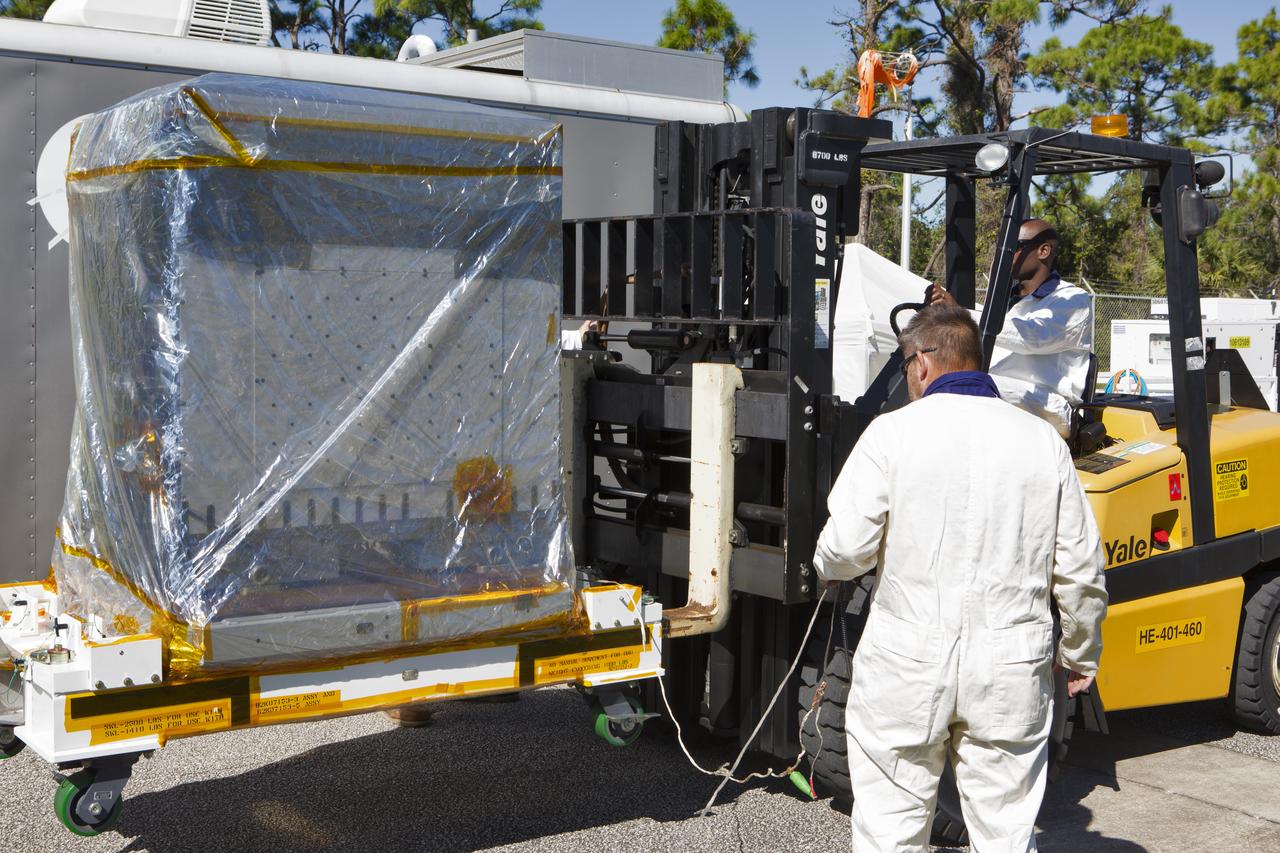
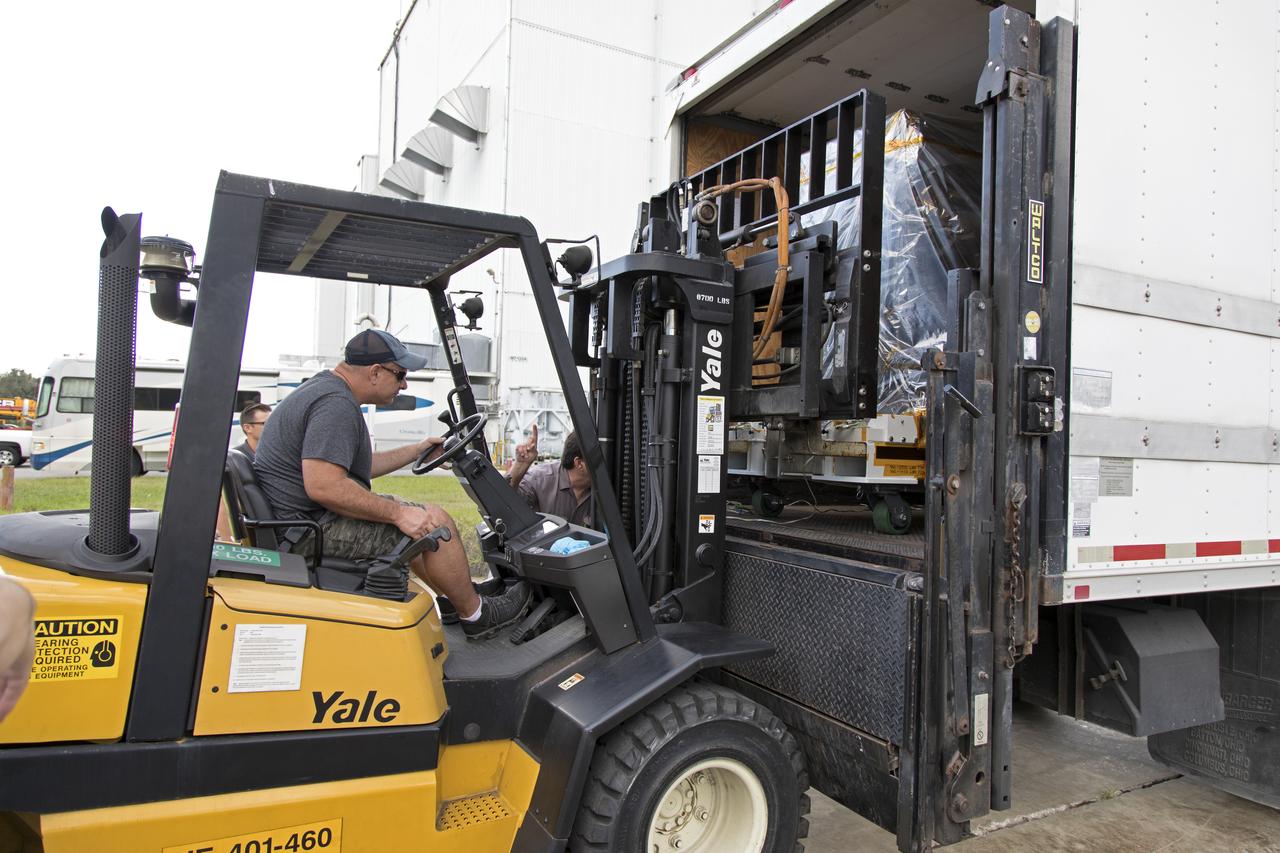
A forklift is used to load the Robotic Refueling Mission-3 (RRM3) payload onto a truck at the Fuel Transfer Building for transport to the SpaceX facility on Oct. 30, 2018, at NASA's Kennedy Space Center in Florida. The payload will be carried to the International Space Station on SpaceX's 16th Commercial Resupply Services mission. RRM3 demonstrates the transfer of xenon gas and liquid methane in microgravity, and advances technologies for storing and manipulating these cryogenic fuels robotically. RRM3 also supports development of technology for the Restore-L mission, a robotic spacecraft equipped to service satellites in-orbit.
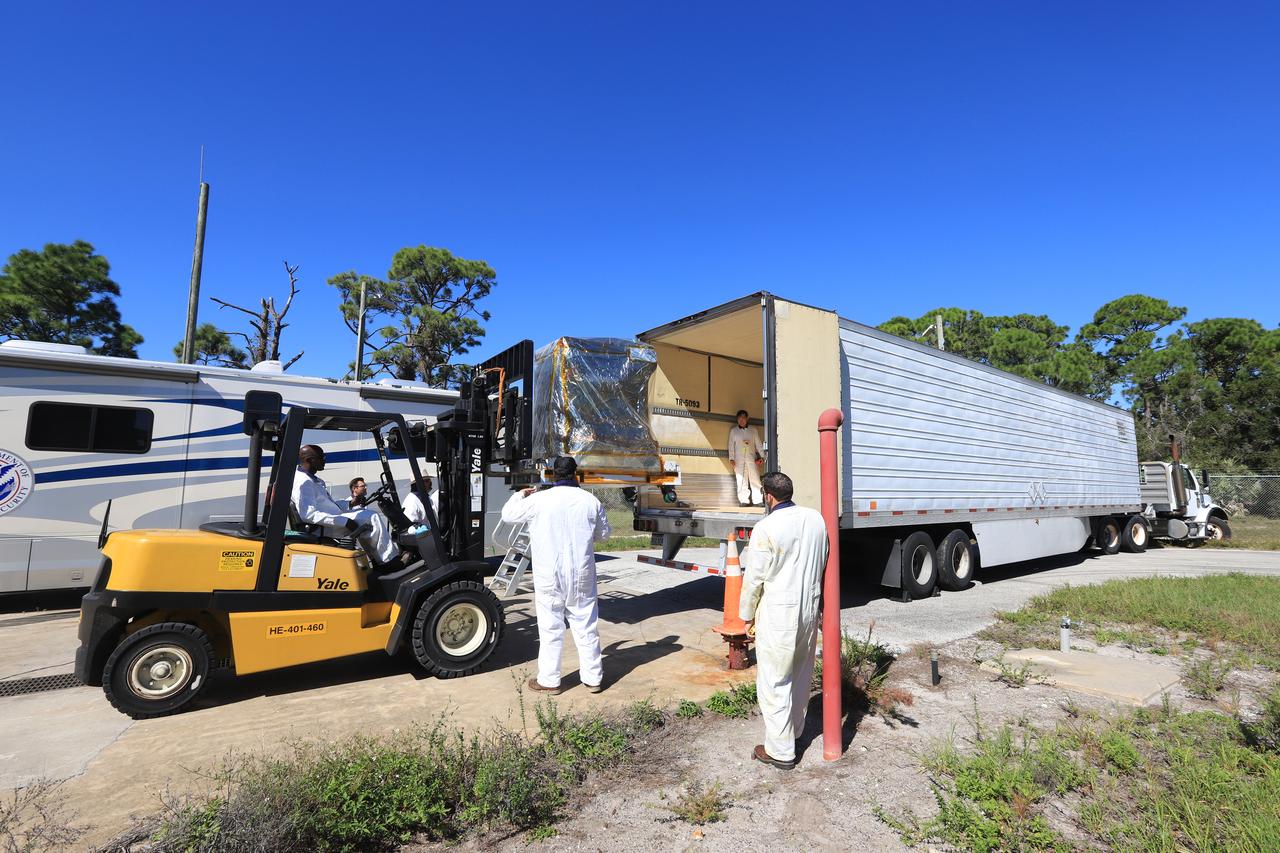
A forklift is used to load the Robotic Refueling Mission-3 (RRM3) payload onto a truck at the Fuel Transfer Building for transport to the SpaceX facility on Oct. 30, 2018, at NASA's Kennedy Space Center in Florida. The payload will be carried to the International Space Station on SpaceX's 16th Commercial Resupply Services mission. RRM3 demonstrates the transfer of xenon gas and liquid methane in microgravity, and advances technologies for storing and manipulating these cryogenic fuels robotically. RRM3 also supports development of technology for the Restore-L mission, a robotic spacecraft equipped to service satellites in-orbit.
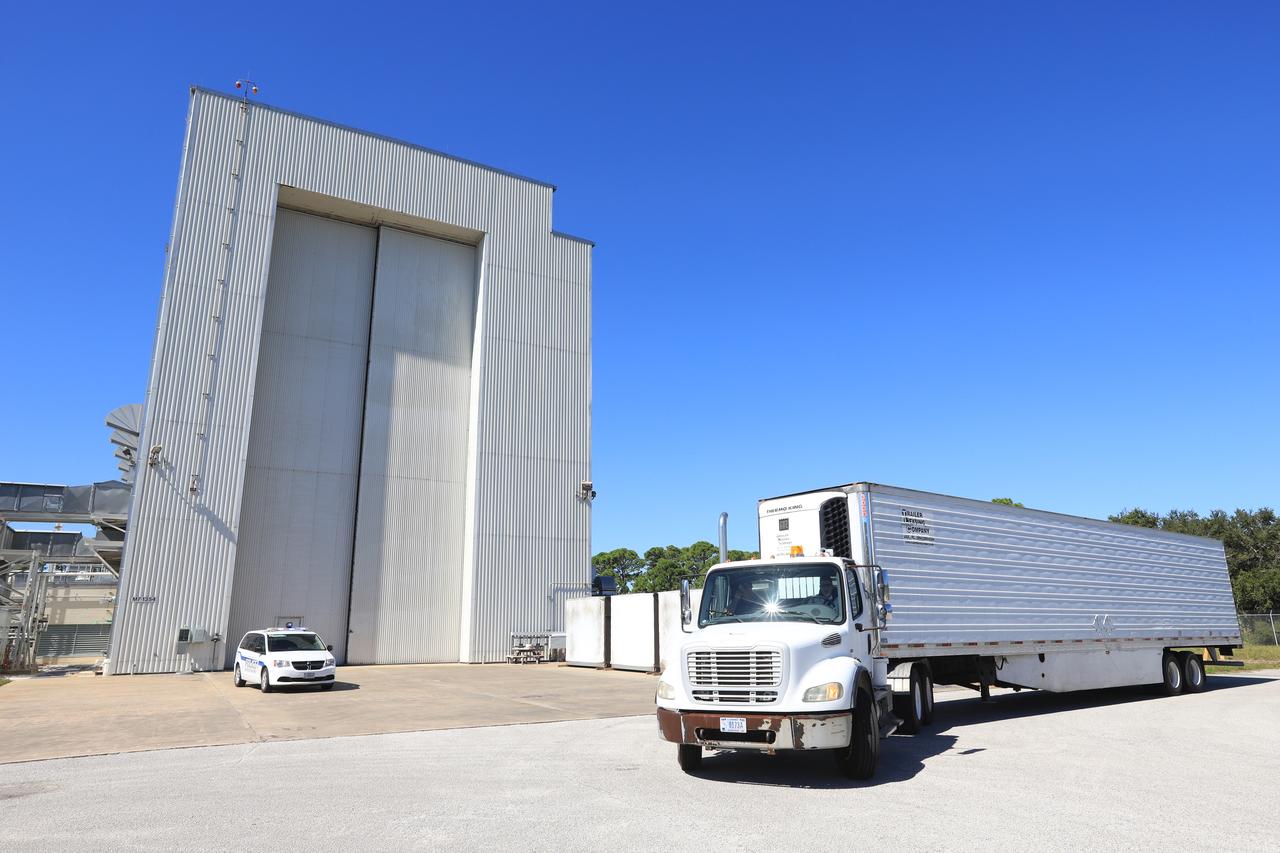
A truck containing the Robotic Refueling Mission-3 (RRM3) payload departs the Fuel Transfer Building near the Payload Hazardous Servicing Facility for transport to the SpaceX facility on Oct. 30, 2018, at NASA's Kennedy Space Center in Florida. The payload will be carried to the International Space Station on SpaceX's 16th Commercial Resupply Services mission. RRM3 demonstrates the transfer of xenon gas and liquid methane in microgravity, and advances technologies for storing and manipulating these cryogenic fuels robotically. RRM3 also supports development of technology for the Restore-L mission, a robotic spacecraft equipped to service satellites in-orbit.
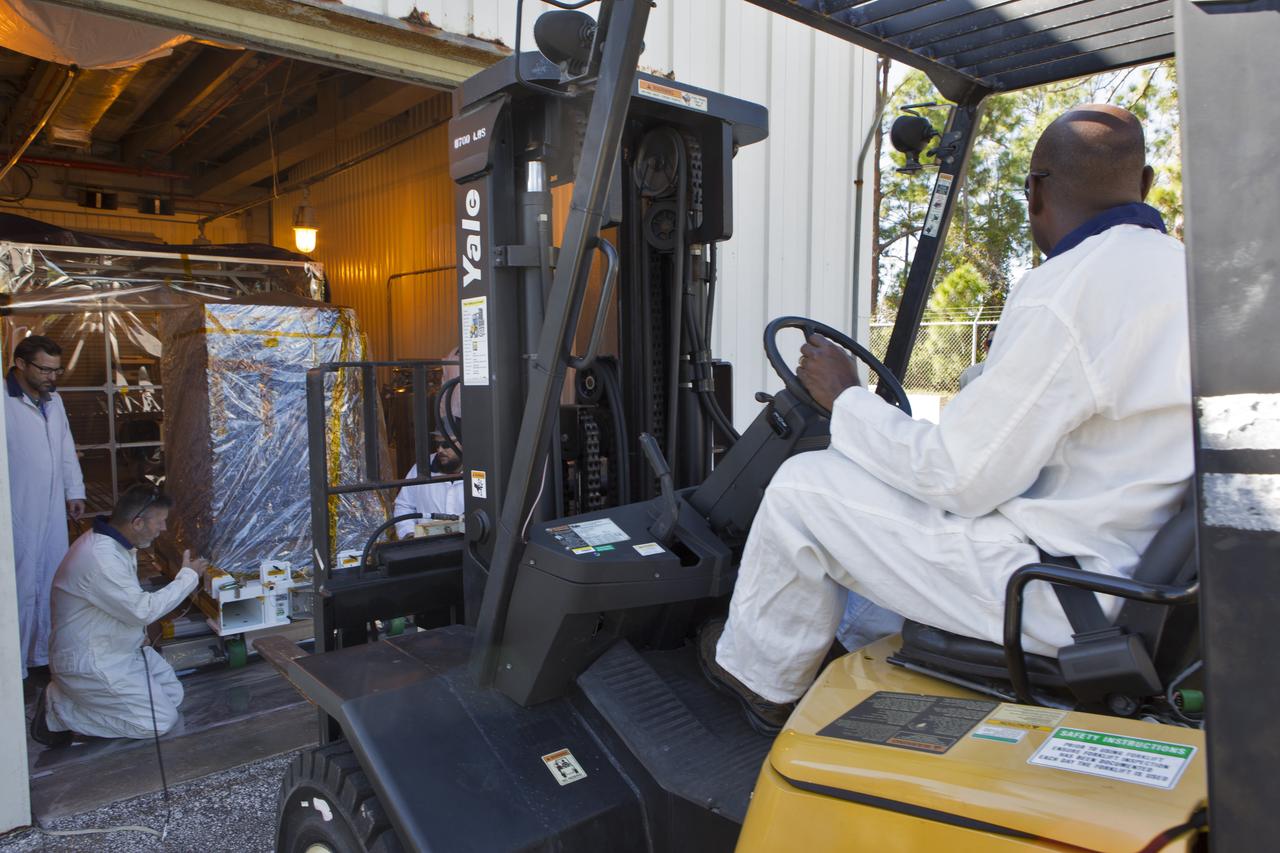
A forklift is being used to lift the Robotic Refueling Mission-3 (RRM3) payload out of the Fuel Transfer Building on Oct. 30, 2018, to be transported to the SpaceX facility at NASA's Kennedy Space Center in Florida. The payload will be carried to the International Space Station on SpaceX's 16th Commercial Resupply Services mission. RRM3 demonstrates the transfer of xenon gas and liquid methane in microgravity, and advances technologies for storing and manipulating these cryogenic fuels robotically. RRM3 also supports development of technology for the Restore-L mission, a robotic spacecraft equipped to service satellites in-orbit.
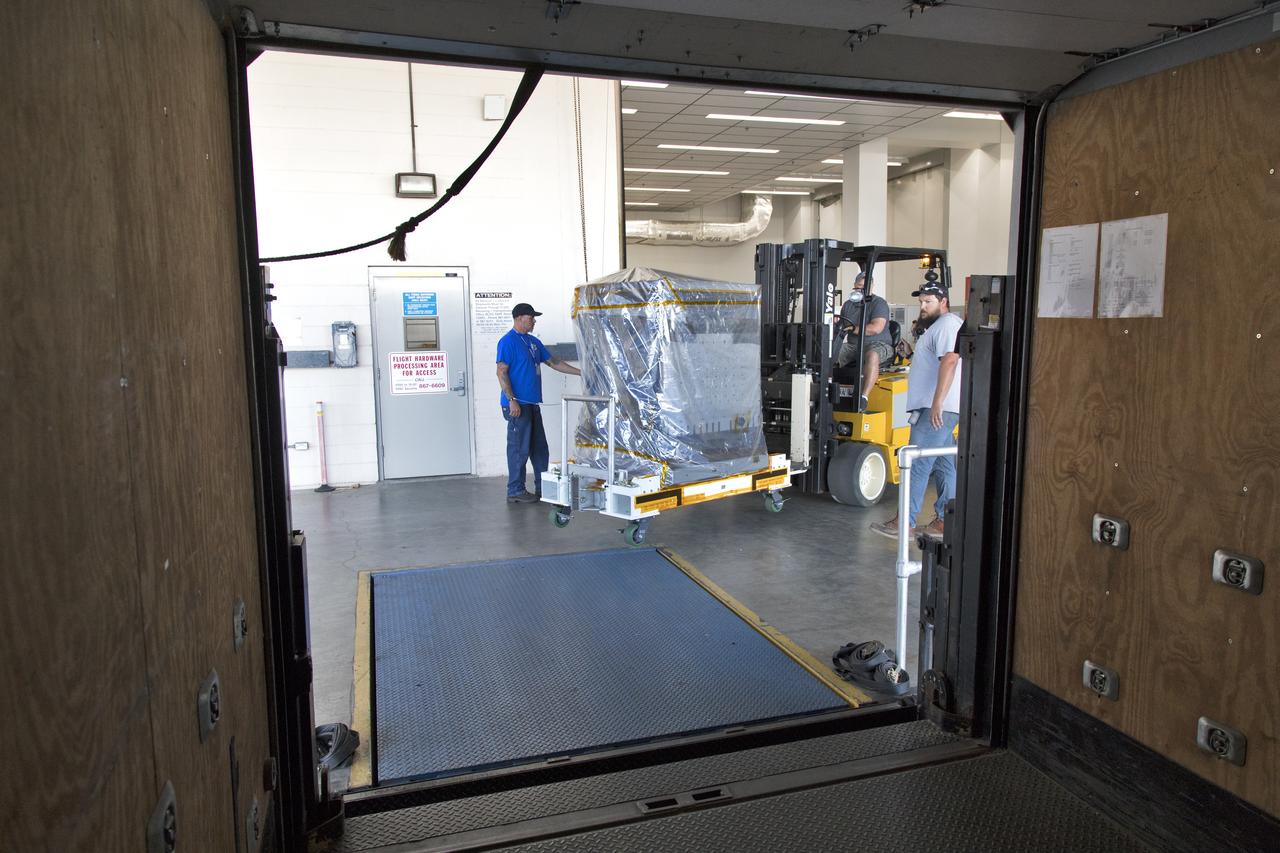
Workers prepare to transfer the Robotic Refueling Mission-3 (RRM3) payload from the Space Station Processing Facility high bay to the Payload Hazardous Servicing Facility on Oct. 3, 2018, at NASA's Kennedy Space Center in Florida. The payload will be carried to the International Space Station on SpaceX's 16th Commercial Resupply Services mission. RRM3 demonstrates the transfer of xenon gas and liquid methane in microgravity, and advances technologies for storing and manipulating these cryogenic fuels robotically. RRM3 also supports development of technology for the Restore-L mission, a robotic spacecraft equipped to service satellites in-orbit.
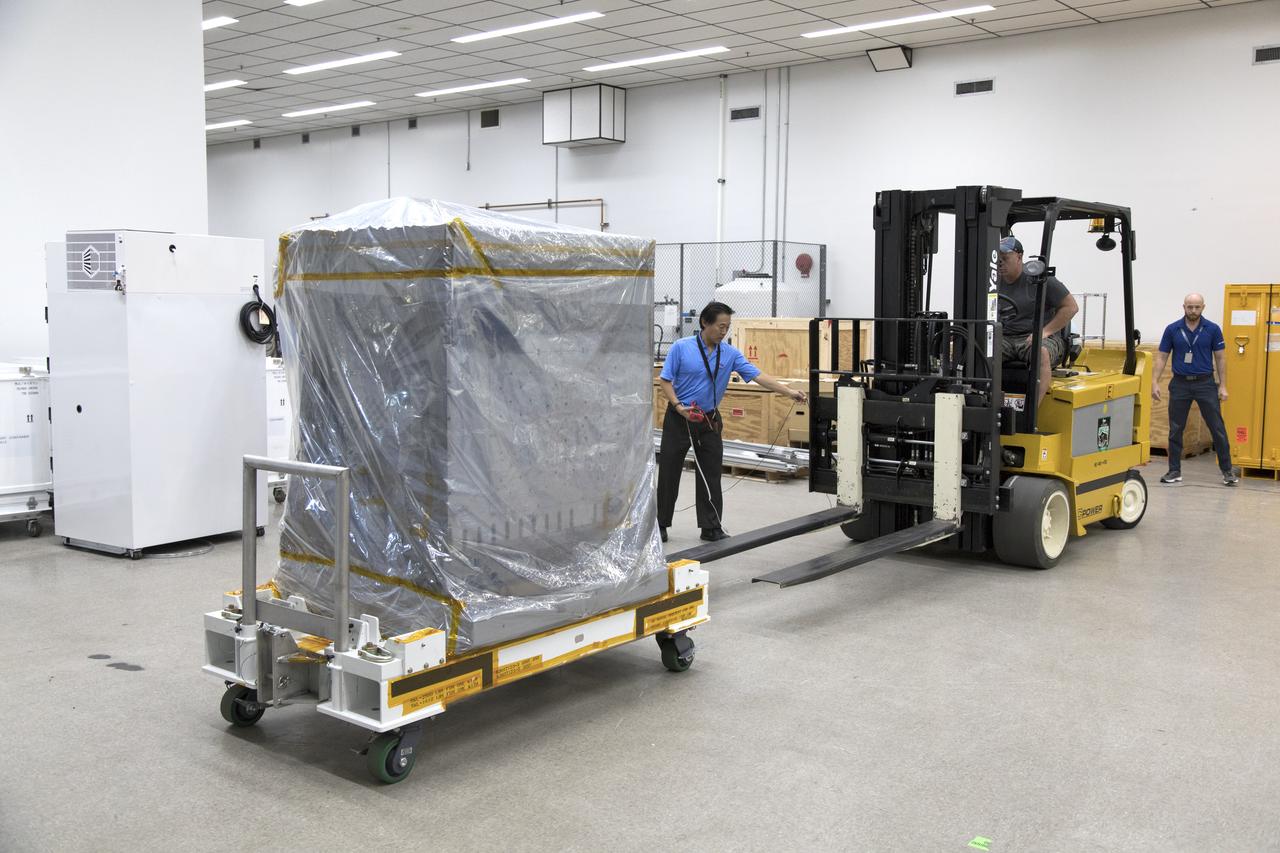
Workers prepare the Robotic Refueling Mission-3 (RRM3) payload to be transferred from the Space Station Processing Facility high bay to the Payload Hazardous Servicing Facility on Oct. 3, 2018, at NASA's Kennedy Space Center in Florida. The payload will be carried to the International Space Station on SpaceX's 16th Commercial Resupply Services mission. RRM3 demonstrates the transfer of xenon gas and liquid methane in microgravity, and advances technologies for storing and manipulating these cryogenic fuels robotically. RRM3 also supports development of technology for the Restore-L mission, a robotic spacecraft equipped to service satellites in-orbit.
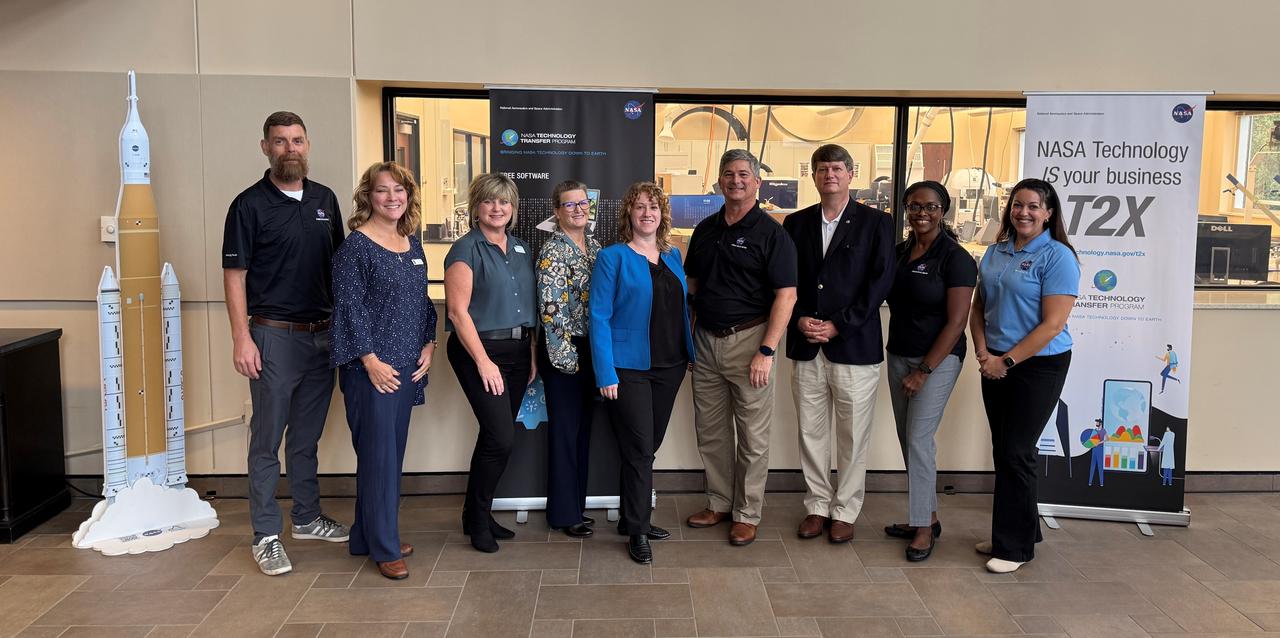
Participants in A Day with NASA at The Accelerator in Hattiesburg, Mississippi, included: (left to right) Marc Shoemaker with the NASA Stennis Small Business Innovation Research/Small Business Technology Transfer Office; Kay Doane with the NASA Stennis Office of Small Business Programs; Sandy Crist with the Mississippi Manufacturers Association Manufacturing Extension Program; Dr. Monica Tisack with the Mississippi Polymer Institute; Caitlyne Shirley with the Mississippi Polymer Institute; Top Lipski with the NASA Stennis Technology Transfer Expansion Team; Thom Jacks with the NASA Stennis Engineering and Test Directorate; Dawn Davis with the NASA Stennis Engineering and Test Directorate; Kelly McCarthy with the NASA Stennis Office of STEM Engagement; and Janet Parker with Innovate Mississippi.
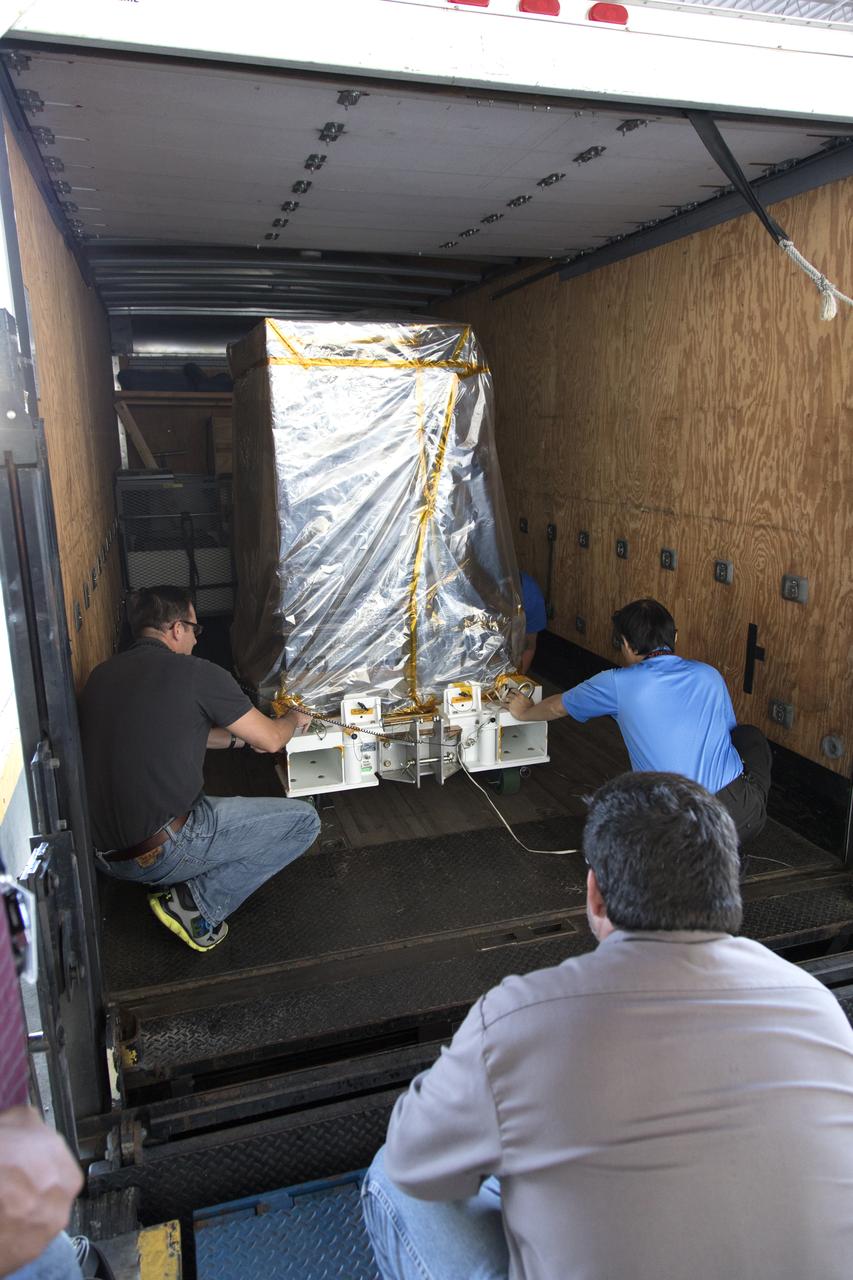
Workers load the Robotic Refueling Mission-3 (RRM3) payload onto a truck at the Space Station Processing Facility for transfer to the Payload Hazardous Servicing Facility on Oct. 3, 2018, at NASA's Kennedy Space Center in Florida. The payload will be carried to the International Space Station on SpaceX's 16th Commercial Resupply Services mission. RRM3 demonstrates the transfer of xenon gas and liquid methane in microgravity, and advances technologies for storing and manipulating these cryogenic fuels robotically. RRM3 also supports development of technology for the Restore-L mission, a robotic spacecraft equipped to service satellites in-orbit.
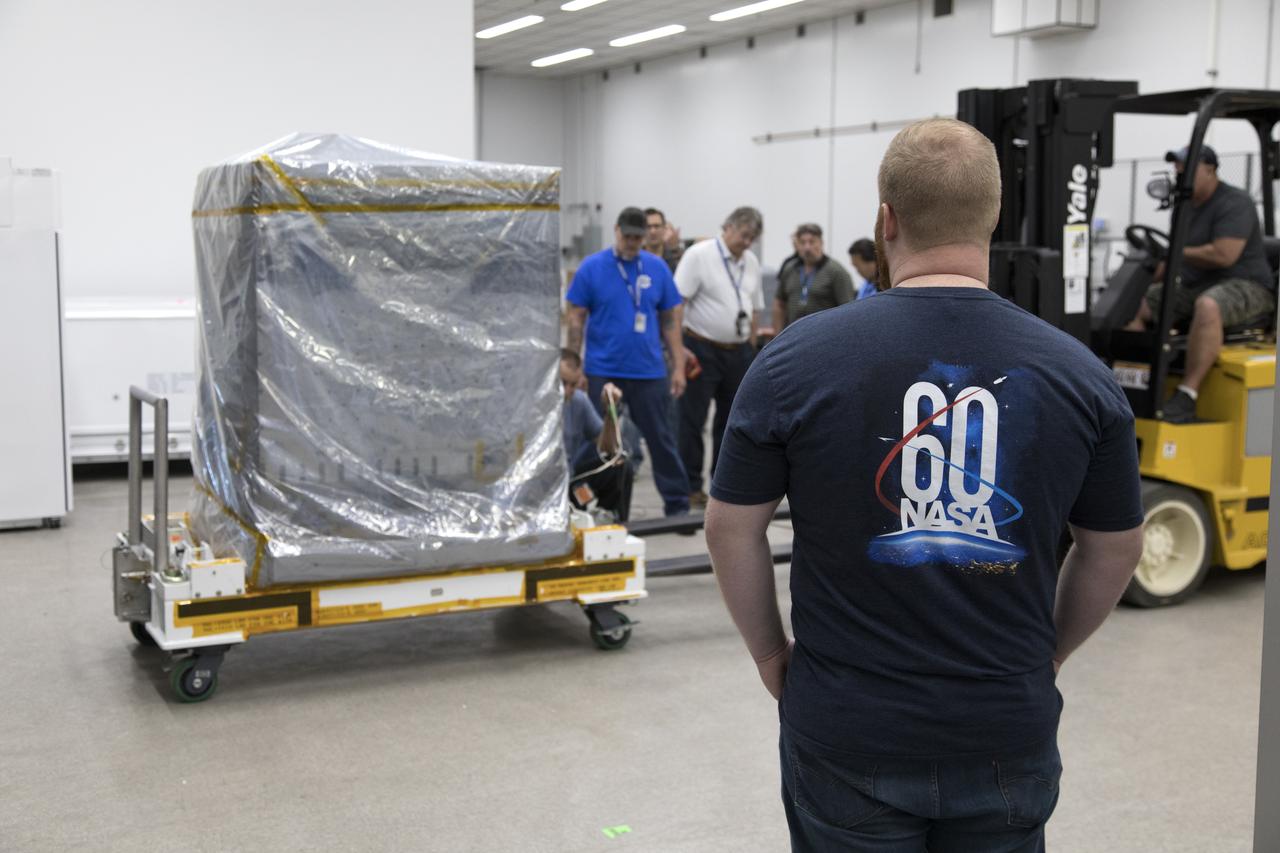
Workers prepare the Robotic Refueling Mission-3 (RRM3) payload to be transferred from the Space Station Processing Facility high bay to the Payload Hazardous Servicing Facility on Oct. 3, 2018, at NASA's Kennedy Space Center in Florida. The payload will be carried to the International Space Station on SpaceX's 16th Commercial Resupply Services mission. RRM3 demonstrates the transfer of xenon gas and liquid methane in microgravity, and advances technologies for storing and manipulating these cryogenic fuels robotically. RRM3 also supports development of technology for the Restore-L mission, a robotic spacecraft equipped to service satellites in-orbit.
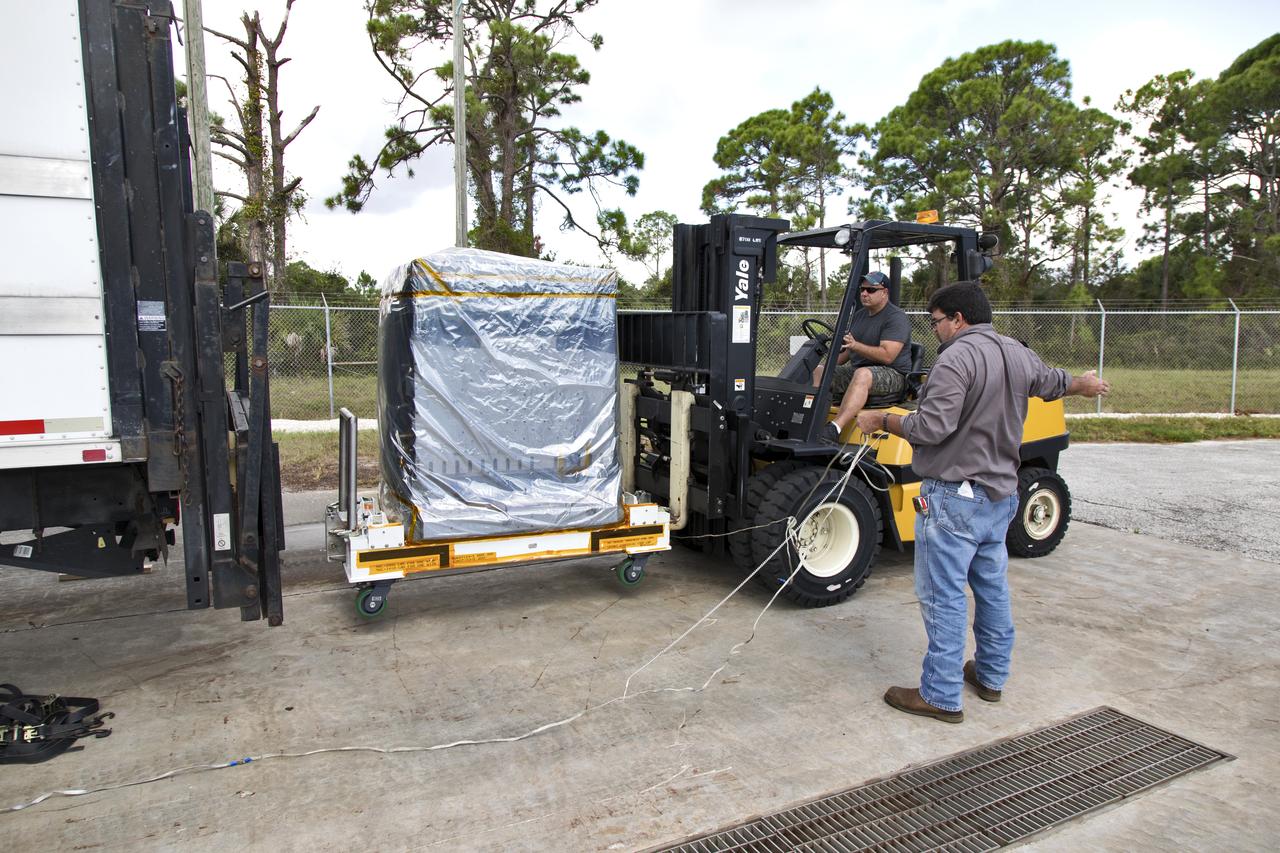
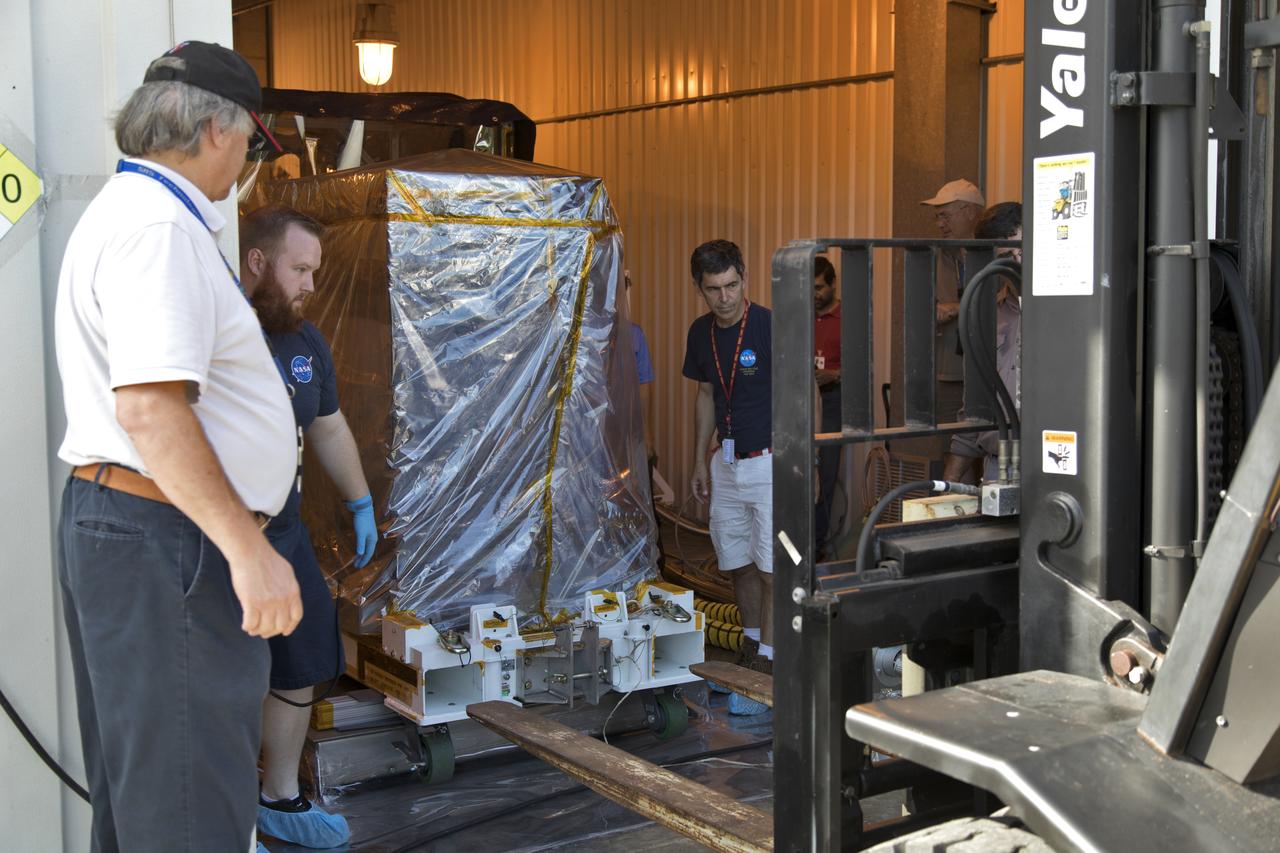
A worker uses a forklift to unload the Robotic Refueling Mission-3 (RRM3) payload from a truck at the Payload Hazardous Servicing Facility on Oct. 3, 2018, at NASA's Kennedy Space Center in Florida. The payload will be carried to the International Space Station on SpaceX's 16th Commercial Resupply Services mission. RRM3 demonstrates the transfer of xenon gas and liquid methane in microgravity, and advances technologies for storing and manipulating these cryogenic fuels robotically. RRM3 also supports development of technology for the Restore-L mission, a robotic spacecraft equipped to service satellites in-orbit.
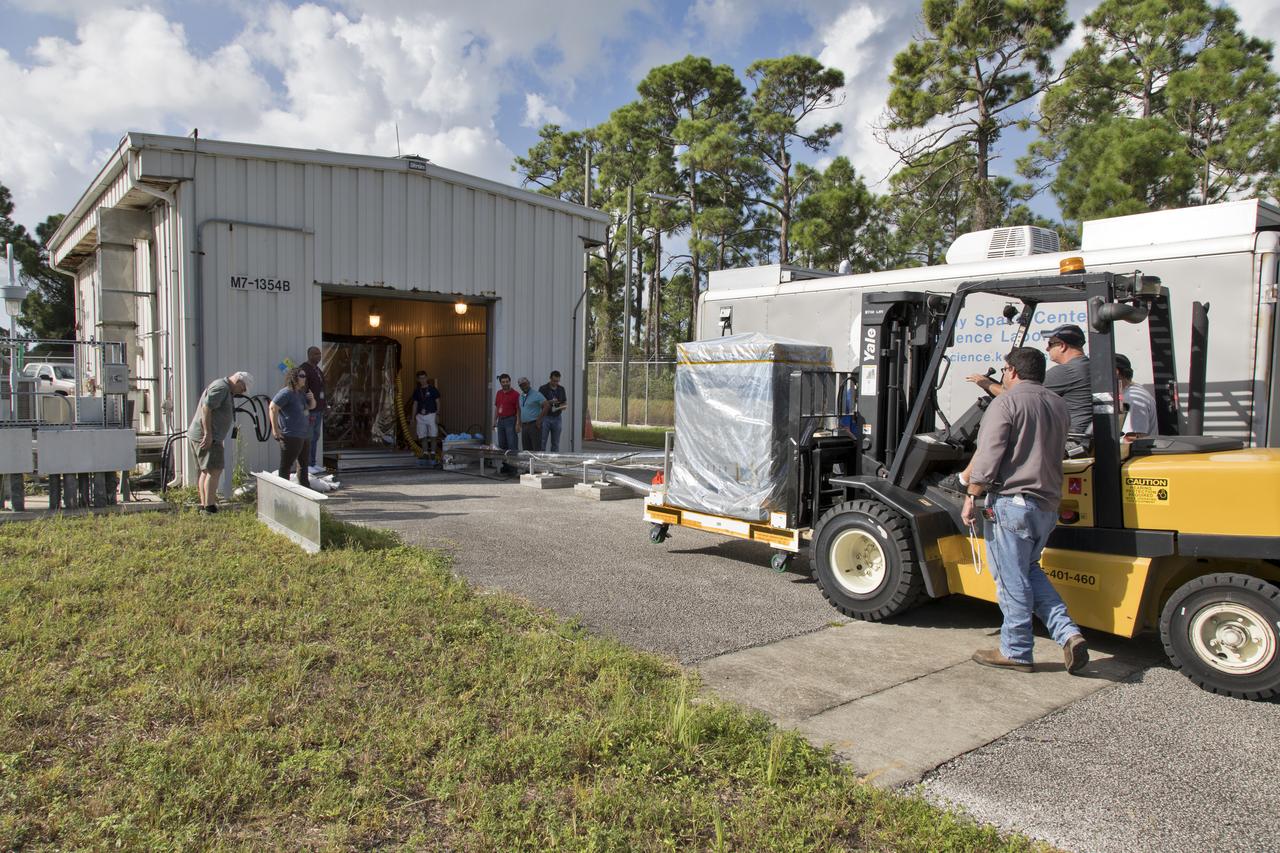
A worker uses a forklift to carry the Robotic Refueling Mission-3 (RRM3) payload to the entrance of the Payload Hazardous Servicing Facility on Oct. 3, 2018, at NASA's Kennedy Space Center in Florida. The payload will be carried to the International Space Station on SpaceX's 16th Commercial Resupply Services mission. RRM3 demonstrates the transfer of xenon gas and liquid methane in microgravity, and advances technologies for storing and manipulating these cryogenic fuels robotically. RRM3 also supports development of technology for the Restore-L mission, a robotic spacecraft equipped to service satellites in-orbit.
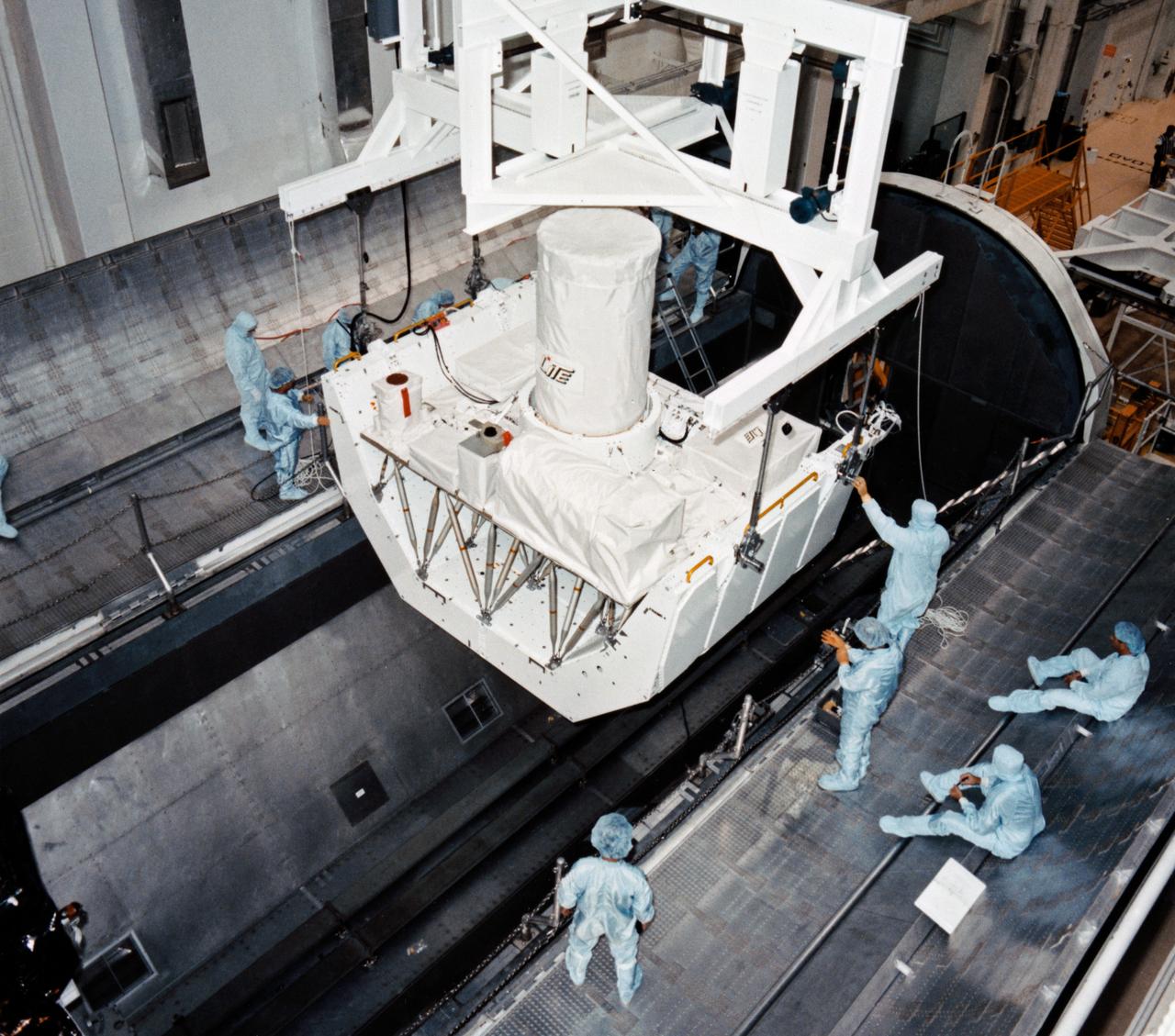
S94-40916 (5 July 1994) --- Workers in the Operations and Checkout Building are transporting the Lidar In-Space Technology Experiment (LITE-1) into the payload canister transporter for transfer to the Orbiter Processing Facility, where it will be installed into the cargo bay of the space shuttle Discovery. LITE-1, which will demonstrate the technology of a spaceborne Lidar instrument, is scheduled to fly on STS-64 later this year. Photo credit: NASA or National Aeronautics and Space Administration
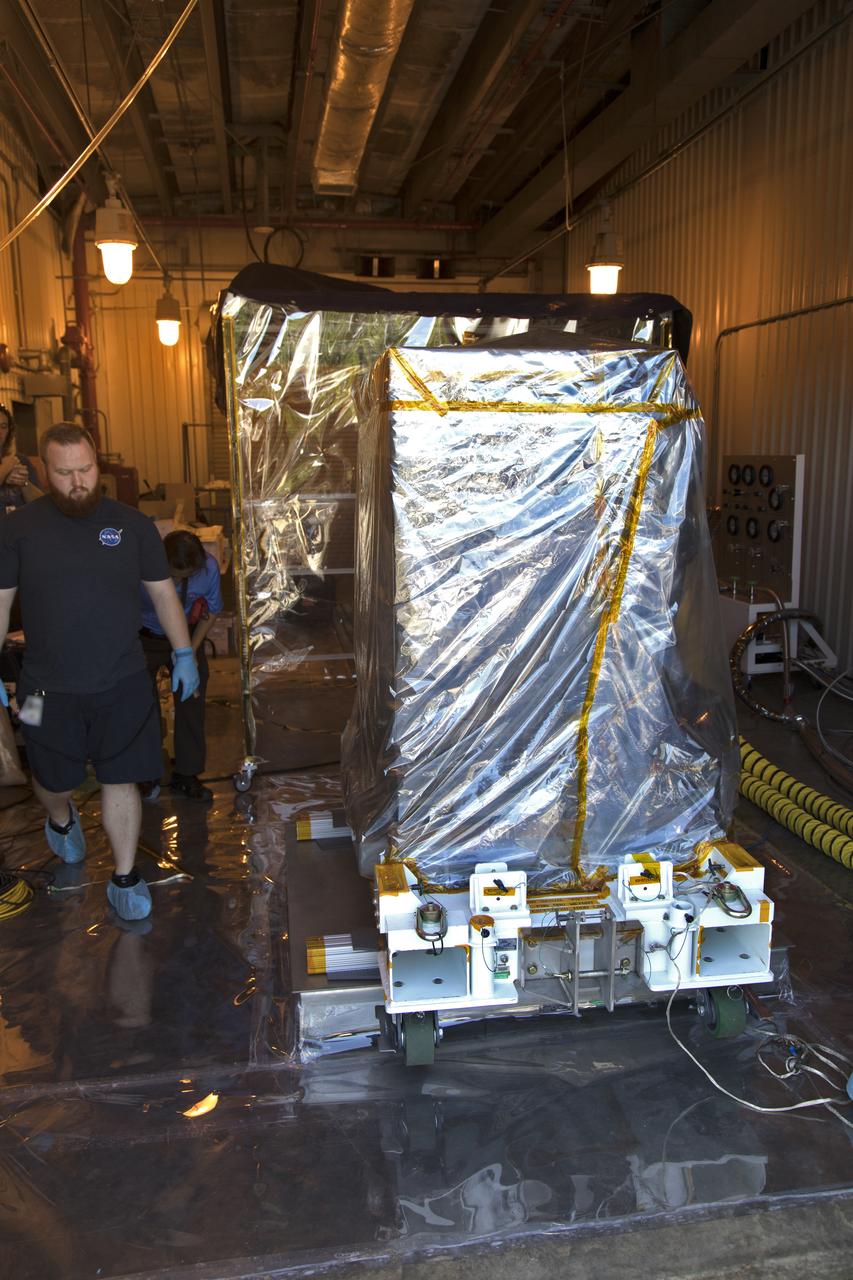
The Robotic Refueling Mission-3 (RRM3) payload is inside the Payload Hazardous Servicing Facility on Oct. 3, 2018, at NASA's Kennedy Space Center in Florida. The payload will be carried to the International Space Station on SpaceX's 16th Commercial Resupply Services mission. RRM3 demonstrates the transfer of xenon gas and liquid methane in microgravity, and advances technologies for storing and manipulating these cryogenic fuels robotically. RRM3 also supports development of technology for the Restore-L mission, a robotic spacecraft equipped to service satellites in-orbit.
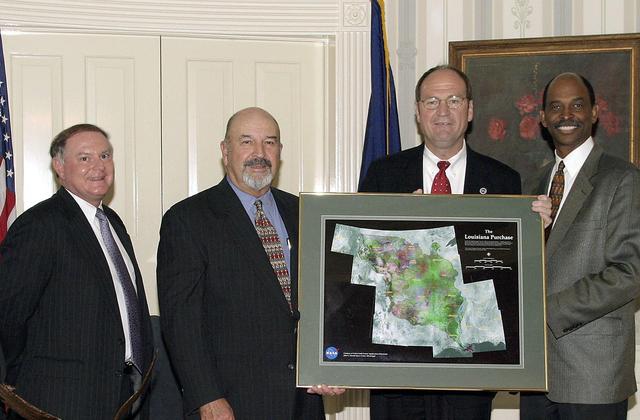
NASA Stennis Space Center (SSC) Interim Center Director Michael Rudolphi (second from right) presents Louisiana Gov. Mike Foster (second from left) an image from space of the area that comprised the Louisiana Purchase. Gov. Foster and Rudolphi signed a Memorandum of Understanding (MOU) between SSC and the state of Louisiana to promote technology transfer partnerships. Also pictured are Charles D'Agostino (left), executive director of the Louisiana Business and Technology Center, and Don Hutchison, secretary of the Louisiana Department of Economic Development.
A worker uses a forklift to unload the Robotic Refueling Mission-3 (RRM3) payload from a truck at the Payload Hazardous Servicing Facility on Oct. 3, 2018, at NASA's Kennedy Space Center in Florida. The payload will be carried to the International Space Station on SpaceX's 16th Commercial Resupply Services mission. RRM3 demonstrates the transfer of xenon gas and liquid methane in microgravity, and advances technologies for storing and manipulating these cryogenic fuels robotically. RRM3 also supports development of technology for the Restore-L mission, a robotic spacecraft equipped to service satellites in-orbit.
The Robotic Refueling Mission-3 (RRM3) payload is unloaded from a forklift inside the Payload Hazardous Servicing Facility on Oct. 3, 2018, at NASA's Kennedy Space Center in Florida. The payload will be carried to the International Space Station on SpaceX's 16th Commercial Resupply Services mission. RRM3 demonstrates the transfer of xenon gas and liquid methane in microgravity, and advances technologies for storing and manipulating these cryogenic fuels robotically. RRM3 also supports development of technology for the Restore-L mission, a robotic spacecraft equipped to service satellites in-orbit.
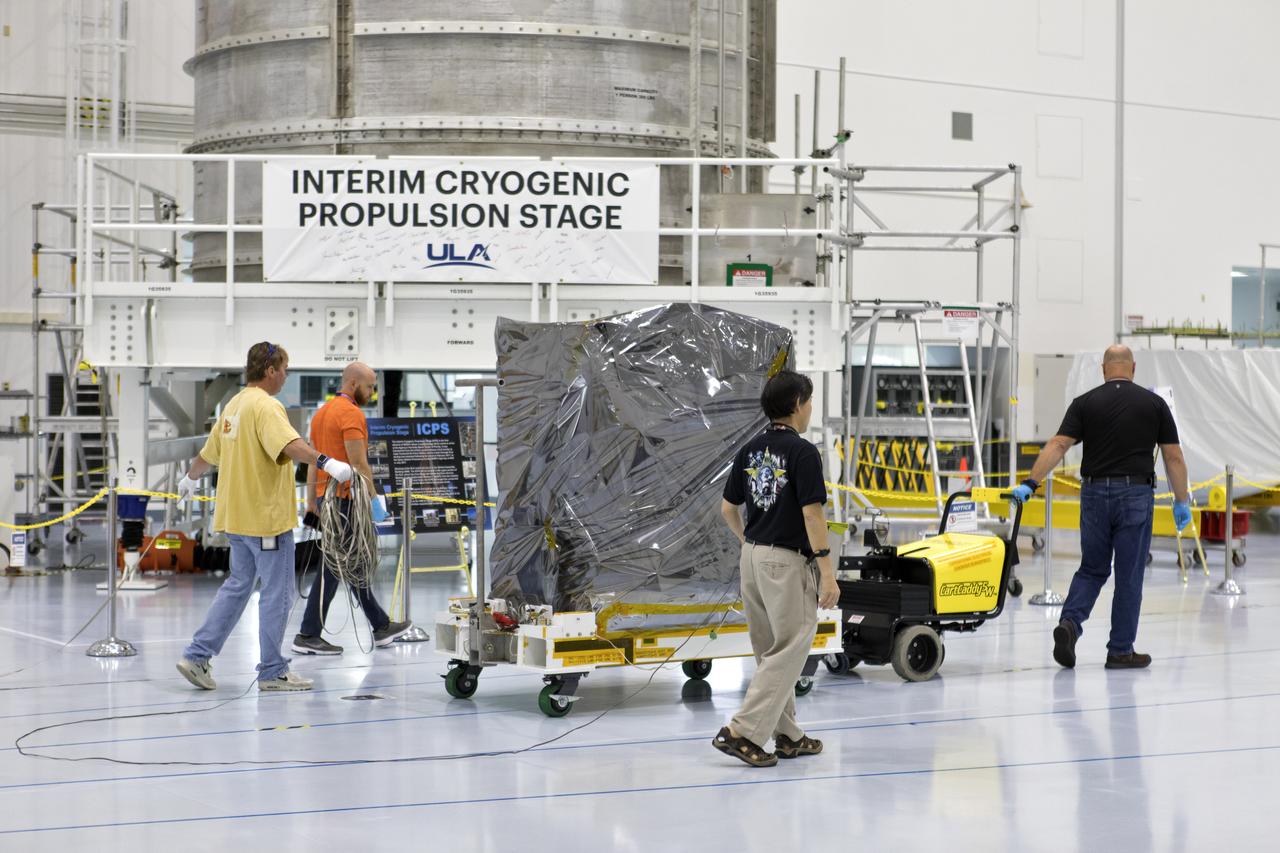
The technology to replenish crucial satellite supplies in space currently does not exist. NASA is looking to help change that with Robotic Refueling Mission 3 (RRM3). The fluid transfer module arrived at Kennedy Space Center on May 8, and is planned to launch to the International Space Station later this year.
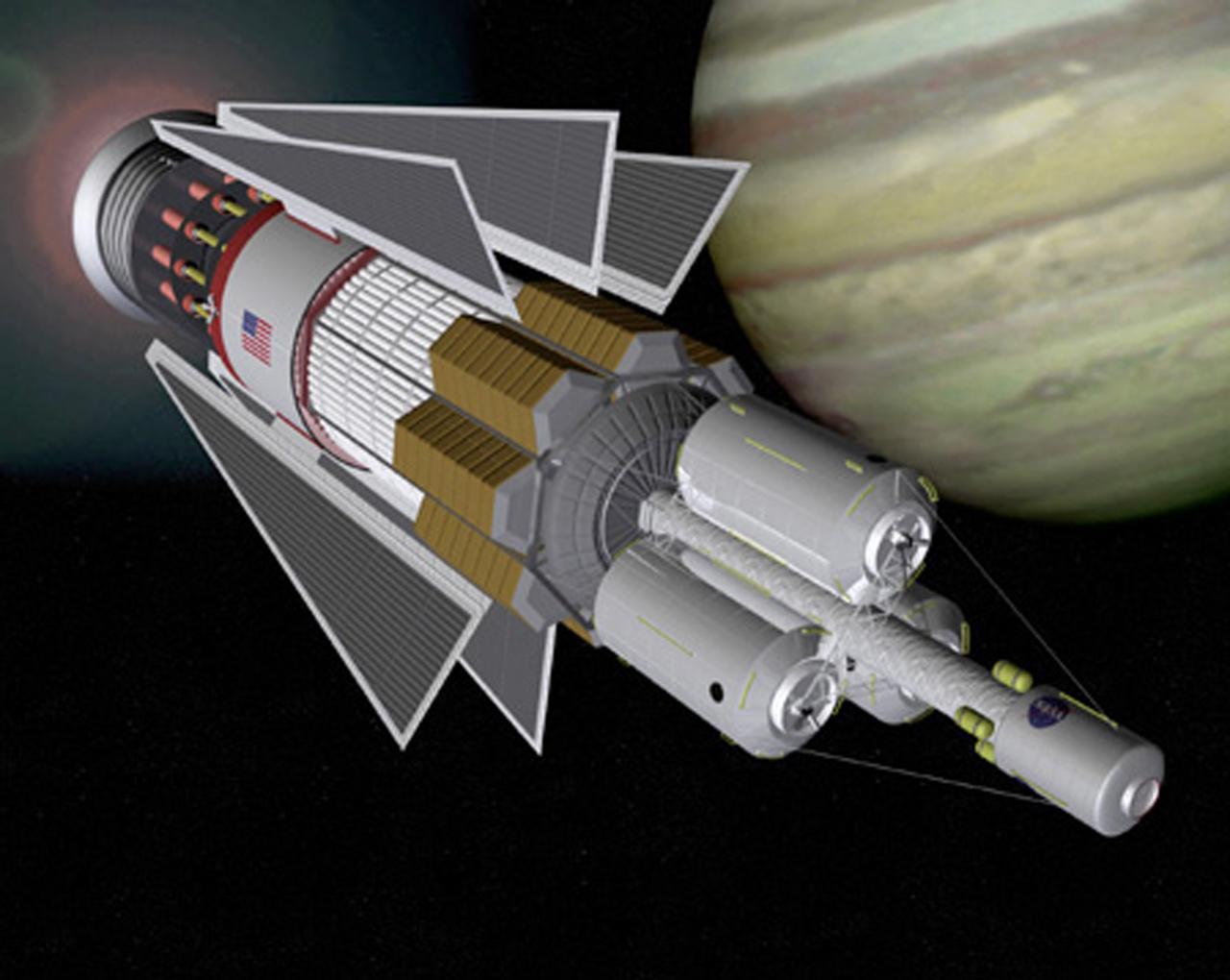
In the 1960's U.S. Government laboratories, under Project Orion, investigated a pulsed nuclear fission propulsion system. Based on Project Orion, an interplanetary vehicle using pulsed fission propulsion would incorporate modern technologies for momentum transfer, thermal management, and habitation design.
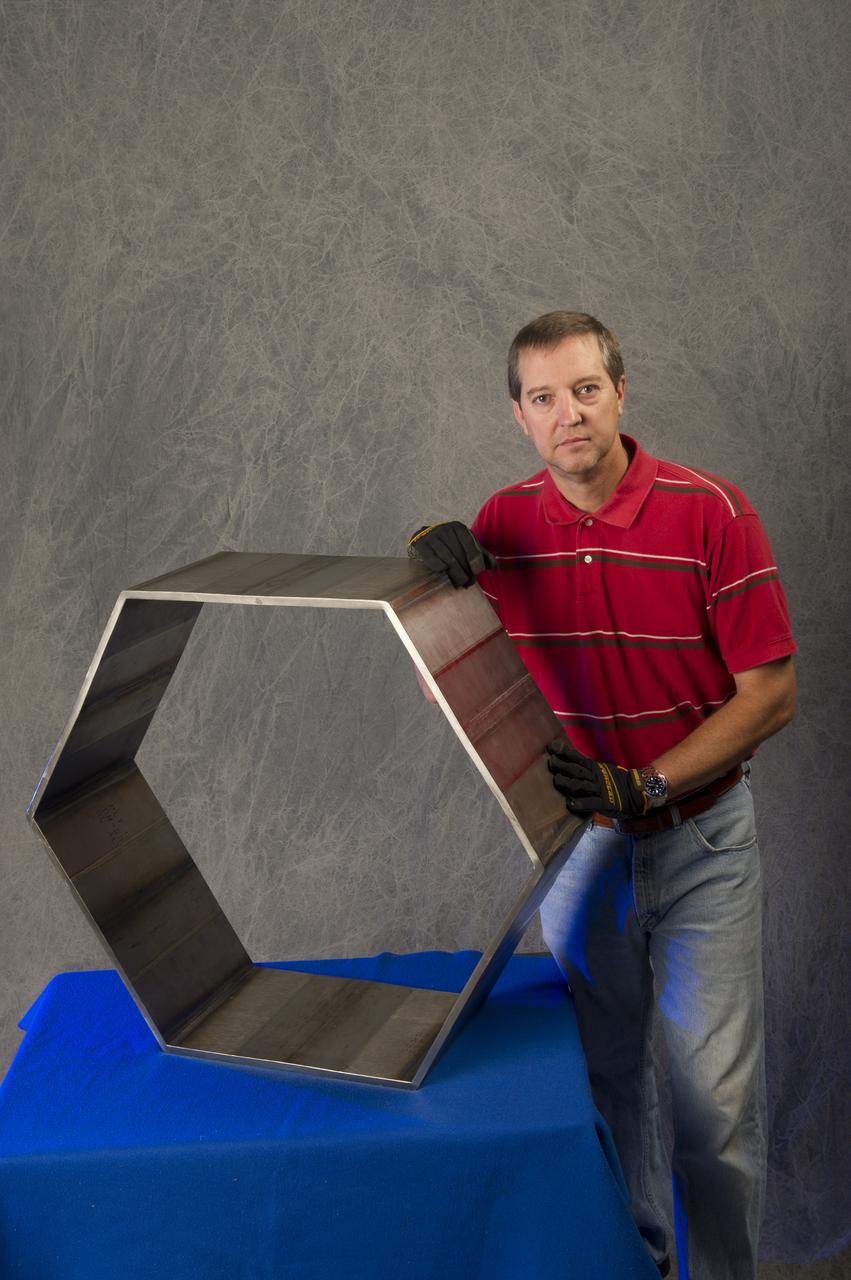
ANDRÉ PASEUR (WELD TECHNICIAN, JACOBS ESTS GROUP/ERC) DISPLAYS A HEXAGON THAT WAS FABRICATED FROM FRICTION STIR WELDED PLATES OF 6AL-4V TITANIUM (ELI) USING THERMAL STIR WELDING. THIS WORK WAS PERFORMED FOR A NASA TECHNOLOGY TRANSFER INDUSTRIAL PARTNER (KEYSTONE SYNERGETIC ENTERPRISES, INC.) IN SUPPORT OF A PROJECT FOR THE U.S. NAVY
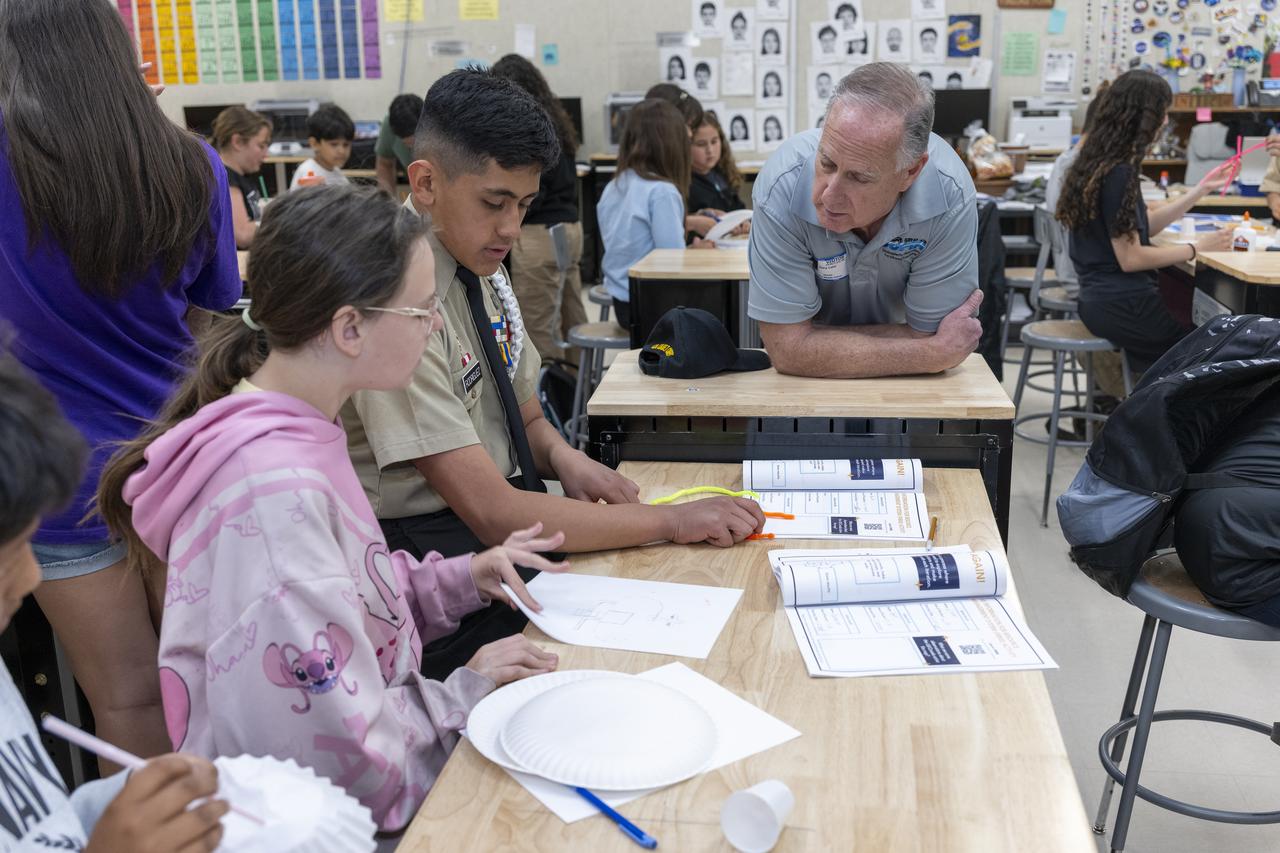
Gary Laier, center liaison for the Small Business Innovation Research/Small Business Technology Transfer (SBIR/STTR) program at NASA’s Armstrong Flight Research Center in Edwards, California, teaches students about aeronautics during Aero Fair at Tropico Middle School in Rosamond, California, on April 9, 2025.
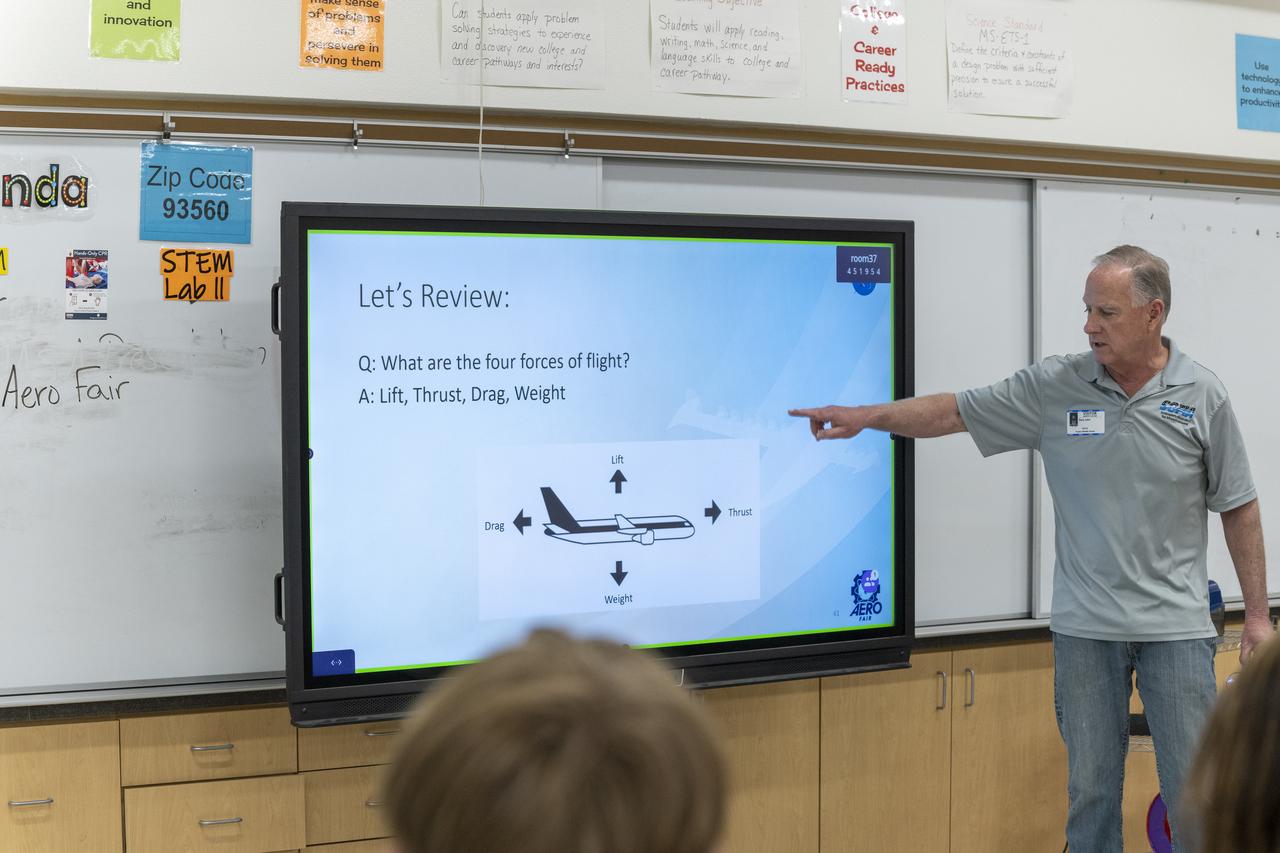
Gary Laier, center liaison for the Small Business Innovation Research/Small Business Technology Transfer (SBIR/STTR) program at NASA’s Armstrong Flight Research Center in Edwards, California, teaches students about aeronautics during Aero Fair at Tropico Middle School in Rosamond, California, on April 9, 2025.
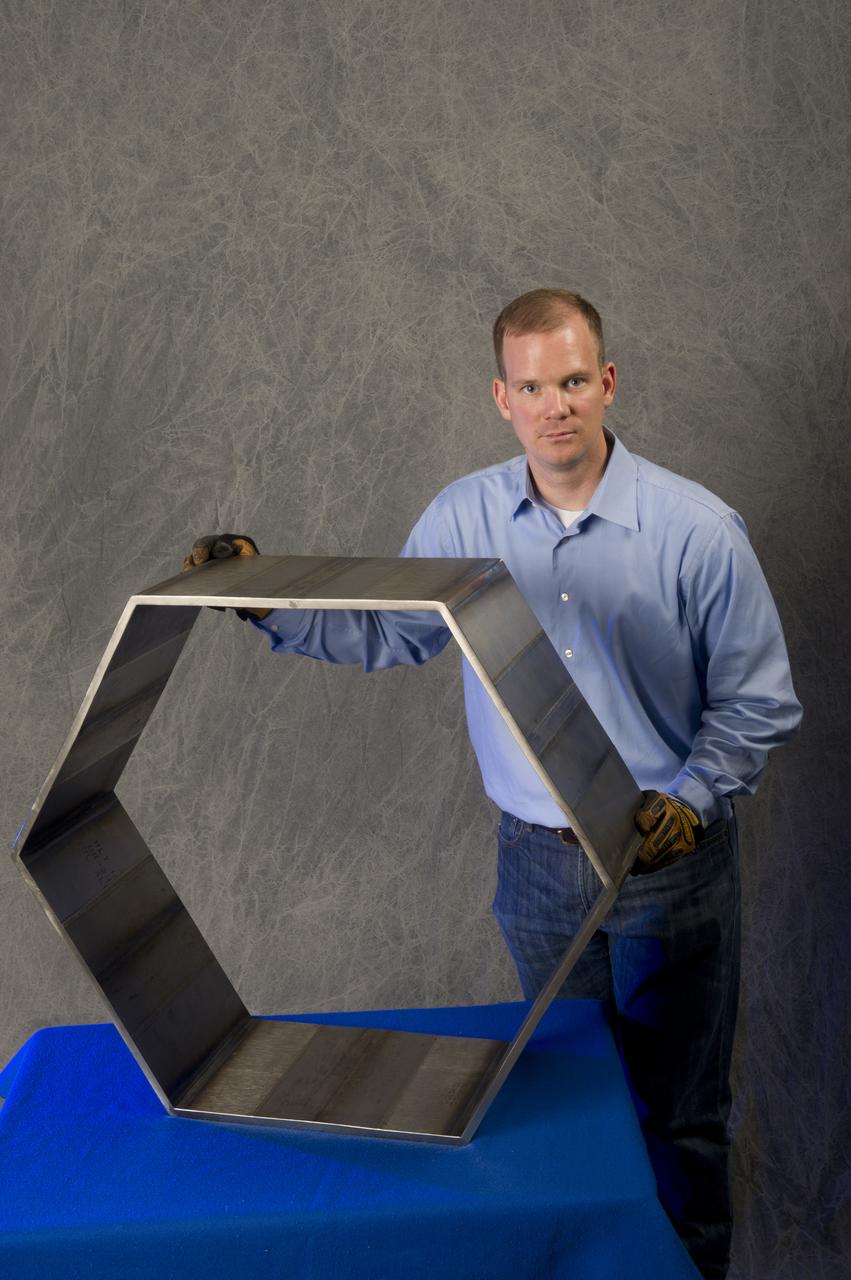
SAMUEL SMITH (WELD TECHNICIAN, JACOBS ESTS GROUP/ALL POINTS) DISPLAYS A HEXAGON THAT WAS FABRICATED FROM FRICTION STIR WELDED PLATES OF 6AL-4V TITANIUM (ELI) USING THERMAL STIR WELDING. THIS WORK WAS PERFORMED FOR A NASA TECHNOLOGY TRANSFER INDUSTRIAL PARTNER (KEYSTONE SYNERGETIC ENTERPRISES, INC.) IN SUPPORT OF A PROJECT FOR THE U.S. NAVY
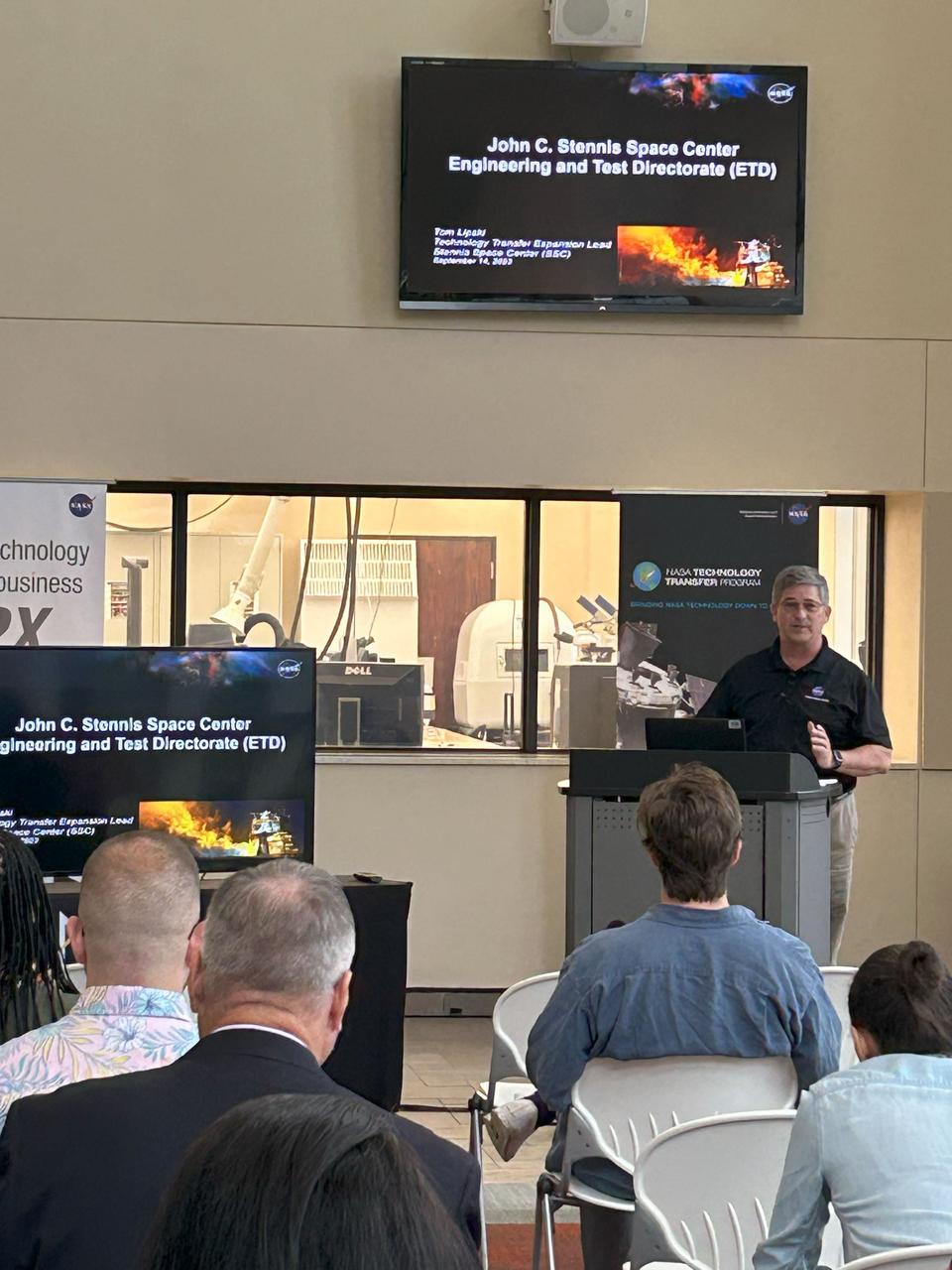
Tom Lipski, NASA Stennis Technology Transfer Expansion team lead, speaks at the “A Day with NASA” event at The Accelerator in Hattiesburg, Mississippi, on Nov. 7. NASA speakers focused on providing updates on agency resources available to help companies grow and on different ways to do business with the agency. They also offered information about how businesses could build partnerships with the agency to commercialize NASA-developed technologies. Participants had the opportunity to meet one-on-one with members of the NASA Stennis business and technology team as well. The Mississippi Polymer Institute, with funding from the Mississippi Manufacturer’s Association Manufacturing Extension Partnership, hosted the event.
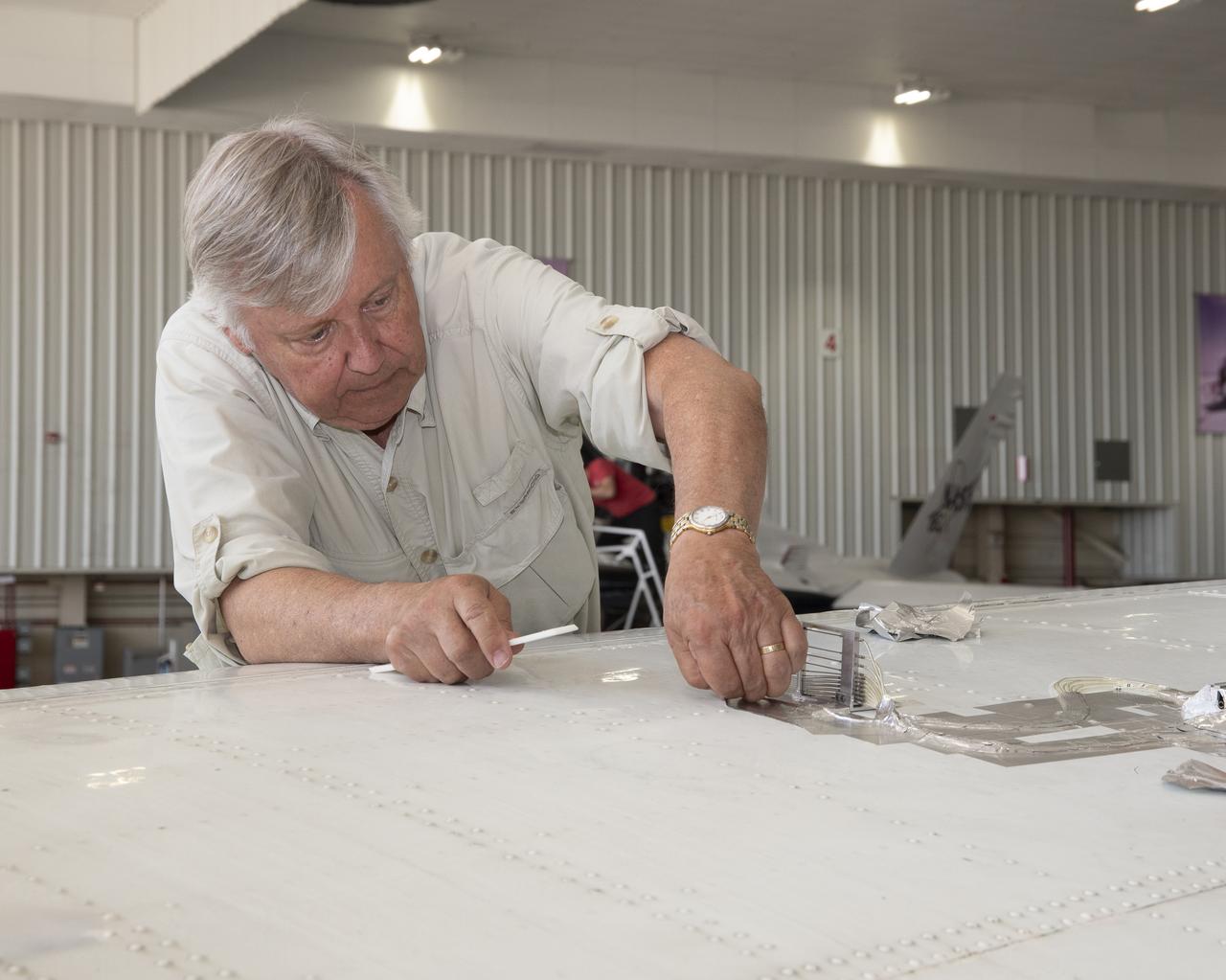
Cal Poly San Luis Obispo Professor Russ Westphal works on the Boundary Layer Data System (BLDS) attached to the wing of a Beechcraft Beech 200 Super King Air aircraft. The BLDS was attached to the aircraft with removable adhesives for a flight test at NASA’s Armstrong Flight Research Center.
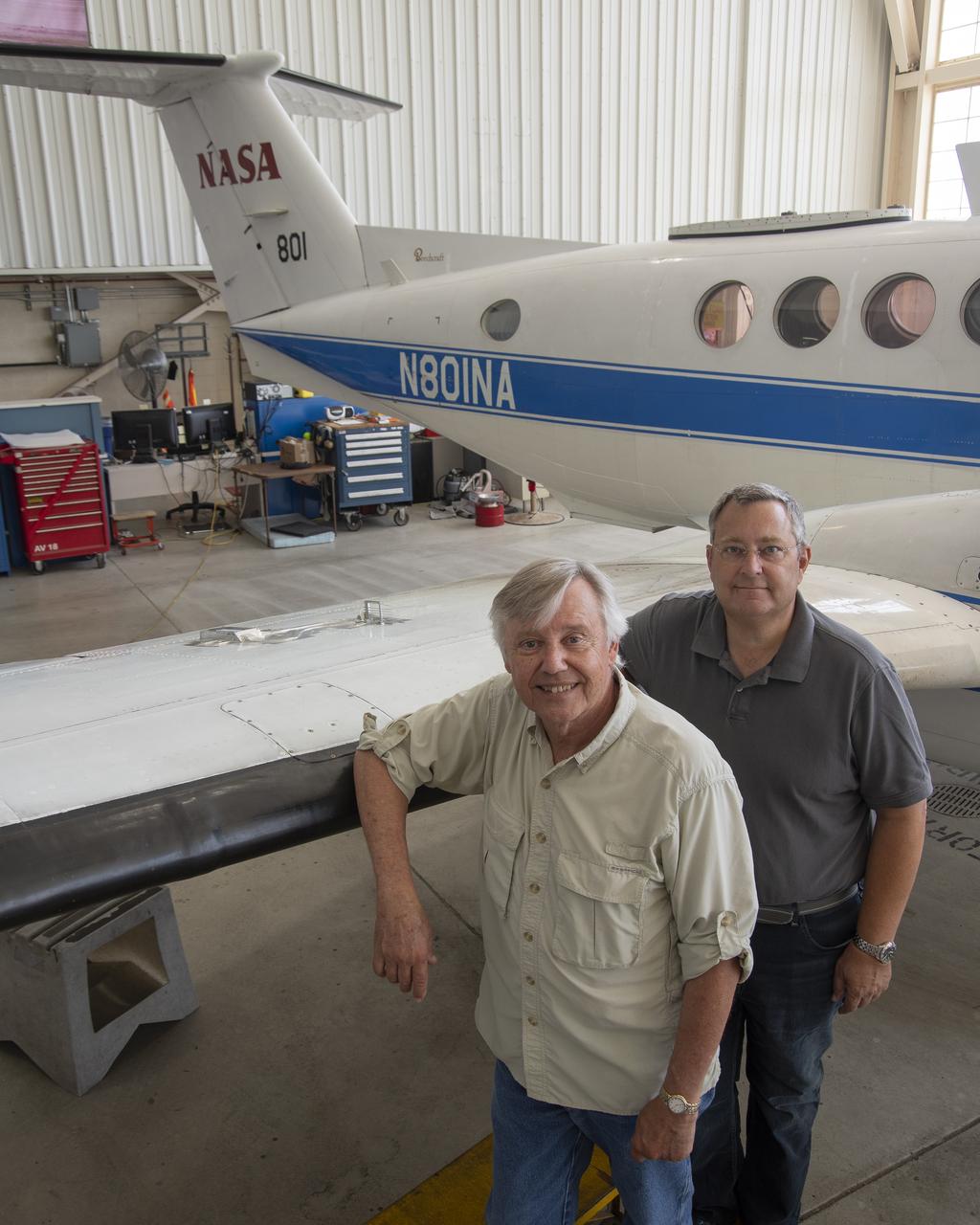
Cal Poly San Luis Obispo professors Russ Westphal, left, and Aaron Drake posed next to NASA Armstrong Flight Research Center’s Beechcraft Beech 200 Super King Air aircraft. On the King Air’s wing is the Boundary Layer Data System (BLDS), a sensor developed by Cal Poly and Northrop Grumman. BLDS was flown at NASA Armstrong as a step towards creating a process allowing universities, small businesses and other interested parties to quickly test flight technologies.
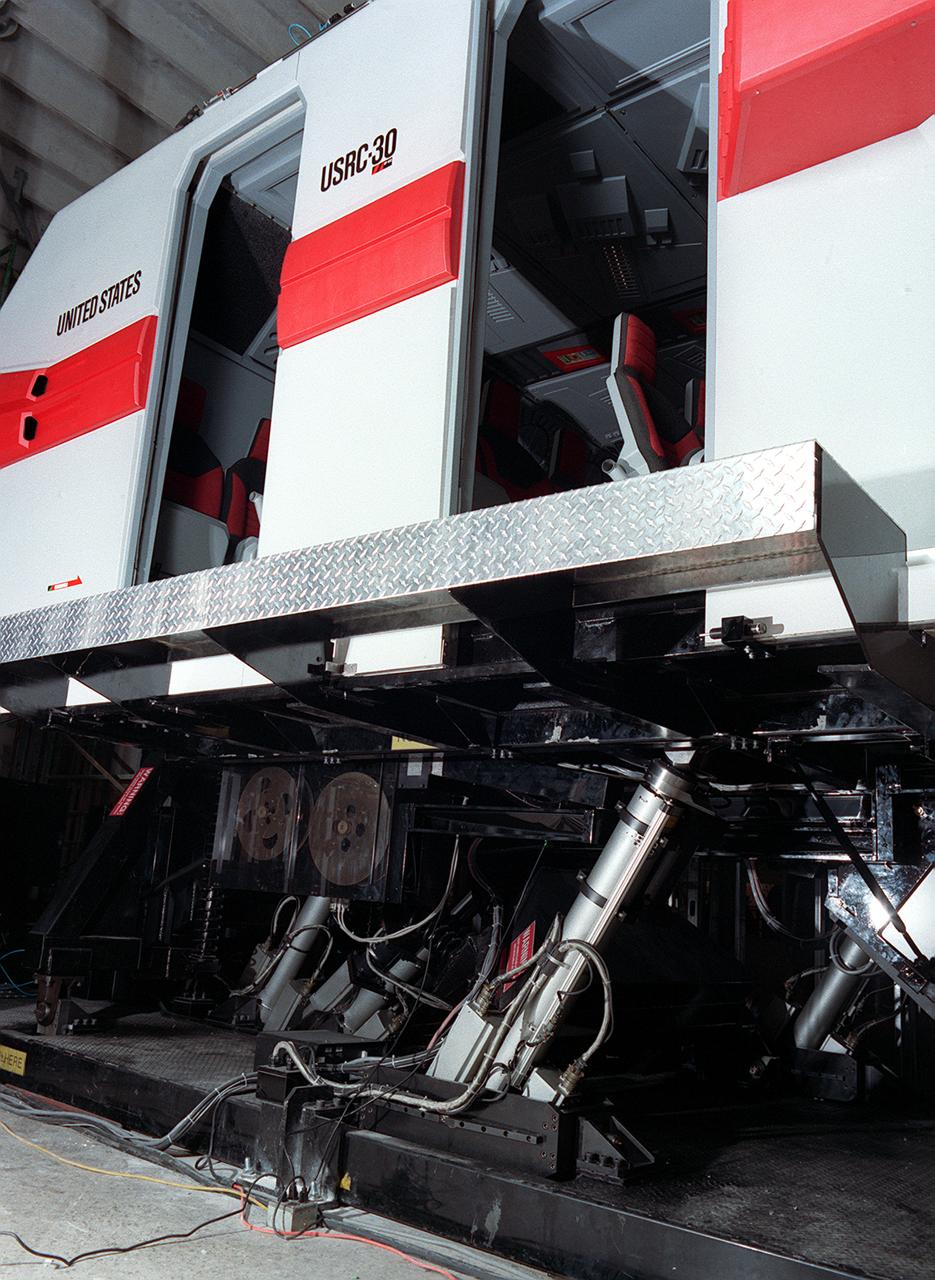
The development of the electric space actuator represents an unusual case of space technology transfer wherein the product was commercialized before it was used for the intended space purpose. MOOG, which supplies the thrust vector control hydraulic actuators for the Space Shuttle and brake actuators for the Space Orbiter, initiated development of electric actuators for aerospace and industrial use in the early 1980s. NASA used the technology to develop an electric replacement for the Space Shuttle main engine TVC actuator. An electric actuator is used to take passengers on a realistic flight to Jupiter at the US Space and Rocket Center, Huntsville, Alabama.
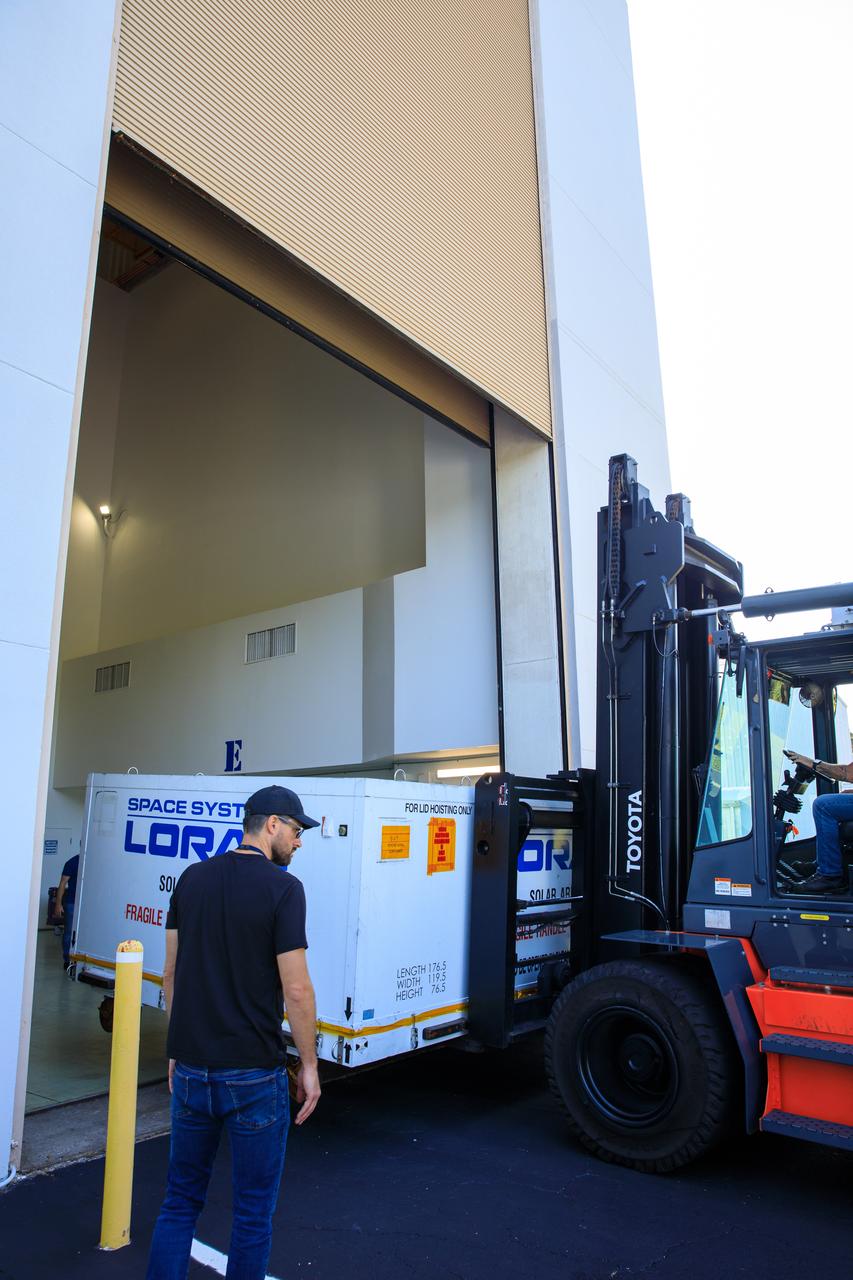
The transport carrier containing the twin solar arrays for NASA’s Psyche spacecraft is transferred into the Astrotech Space Operations Facility near the agency’s Kennedy Space Center in Florida on July 15, 2023. The solar arrays were shipped from Maxar Technologies, in San Jose, California. They are part of the solar electric propulsion system, provided by Maxar, that will power the spacecraft on its journey to explore a metal-rich asteroid. Psyche will launch atop a SpaceX Falcon Heavy rocket from Launch Complex 39A at Kennedy. Launch is targeted for Oct. 5, 2023. Riding with Psyche is a pioneering technology demonstration, NASA’s Deep Space Optical Communications (DSOC) experiment.
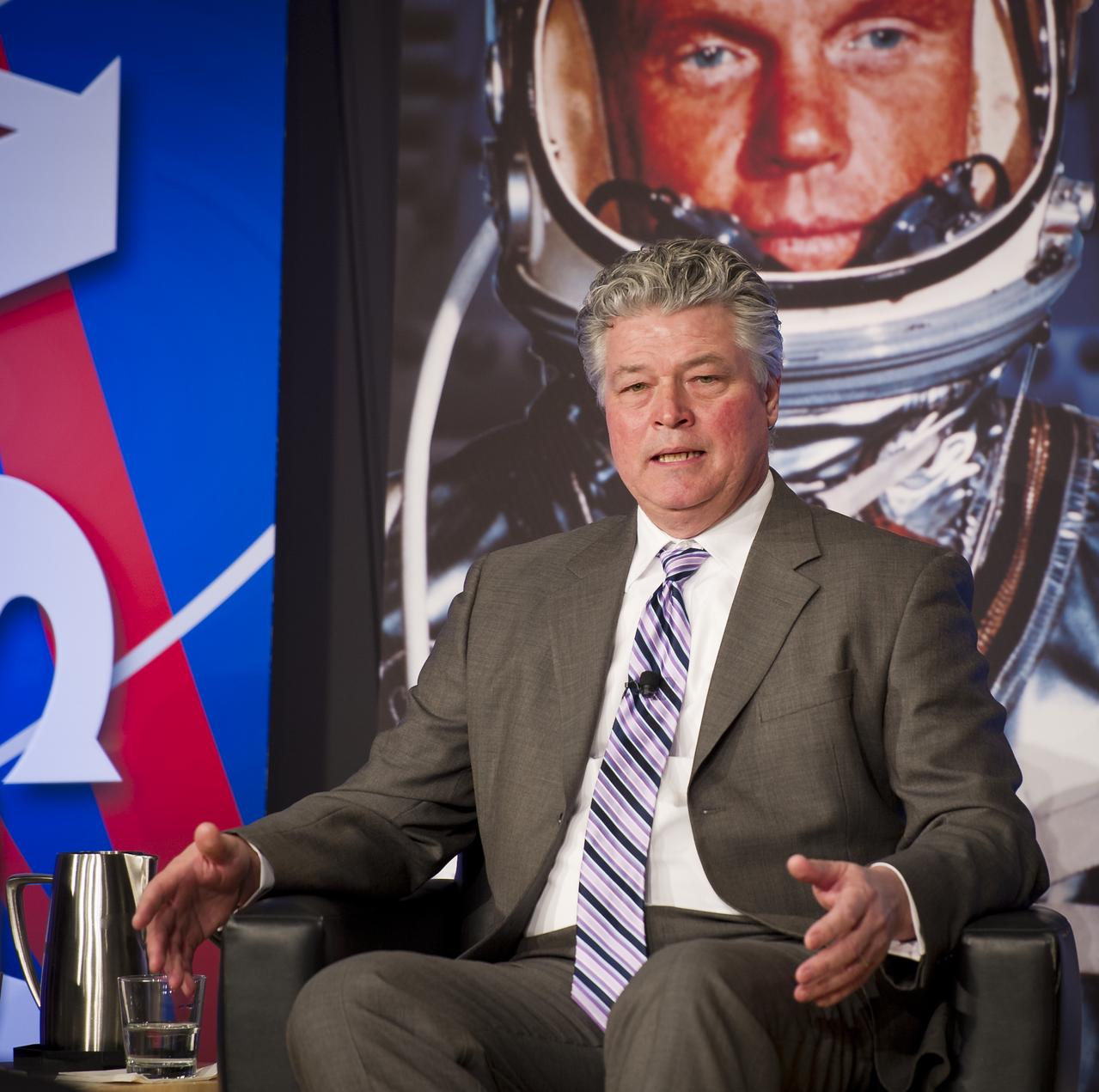
Fayette Collier, Aeronautics Research Mission Directorate, NASA Headquarters talks during the NASA Future Forum panel titled "Transferring and Commercializing Technology to Benefit Our Lives and Our Economy" at The Ohio State University on Tuesday, Feb. 21, 2012 in Columbus, Ohio. The NASA Future Forum features panel discussions on the importance of education to our nation's future in space, the benefit of commercialized space technology to our economy and lives here on Earth, and the shifting roles for the public, commercial and international communities in space. Photo Credit: (NASA/Bill Ingalls)
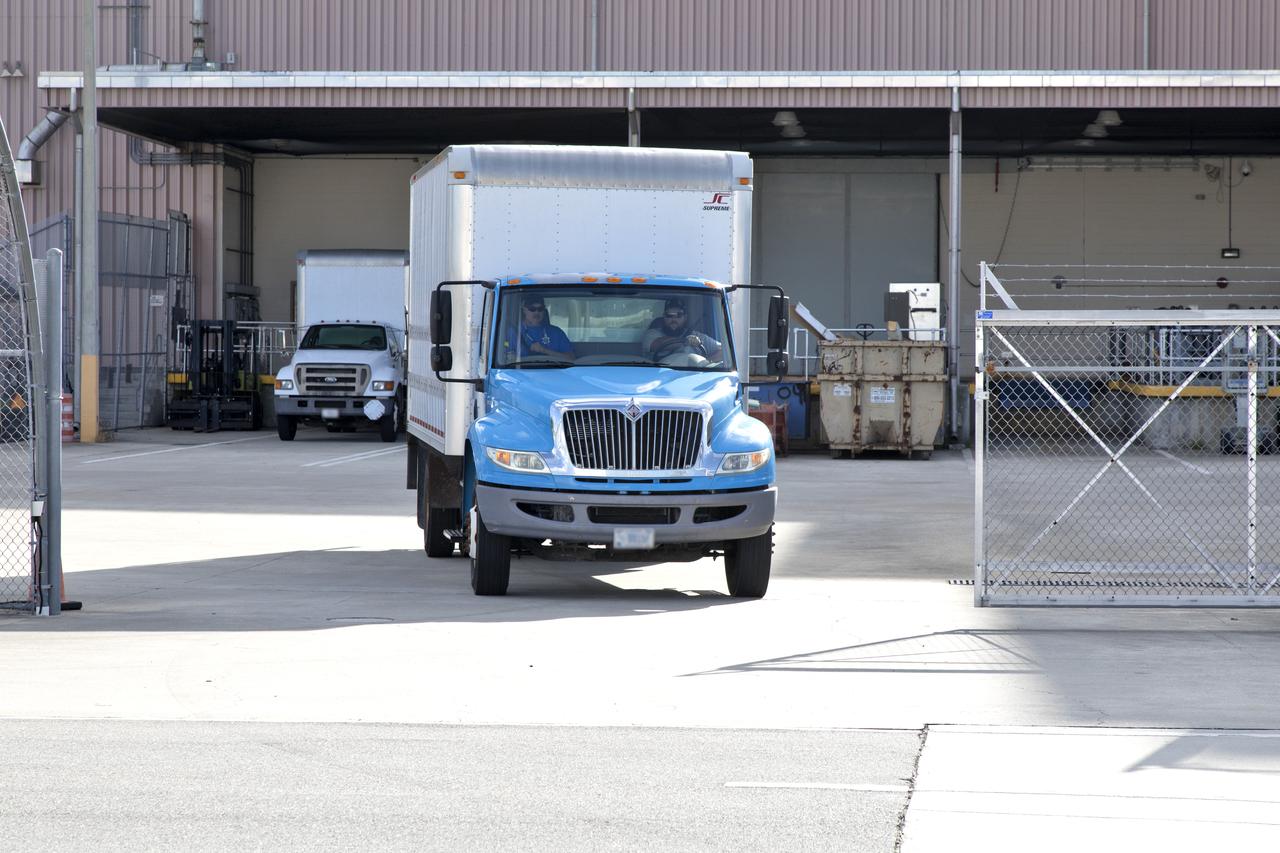
A truck carrying the Robotic Refueling Mission-3 (RRM3) payload departs from the Space Station Processing Facility on its way to the Payload Hazardous Servicing Facility on Oct. 3, 2018, at NASA's Kennedy Space Center in Florida. The payload will be carried to the International Space Station on SpaceX's 16th Commercial Resupply Services mission. RRM3 demonstrates the transfer of xenon gas and liquid methane in microgravity, and advances technologies for storing and manipulating these cryogenic fuels robotically. RRM3 also supports development of technology for the Restore-L mission, a robotic spacecraft equipped to service satellites in-orbit.
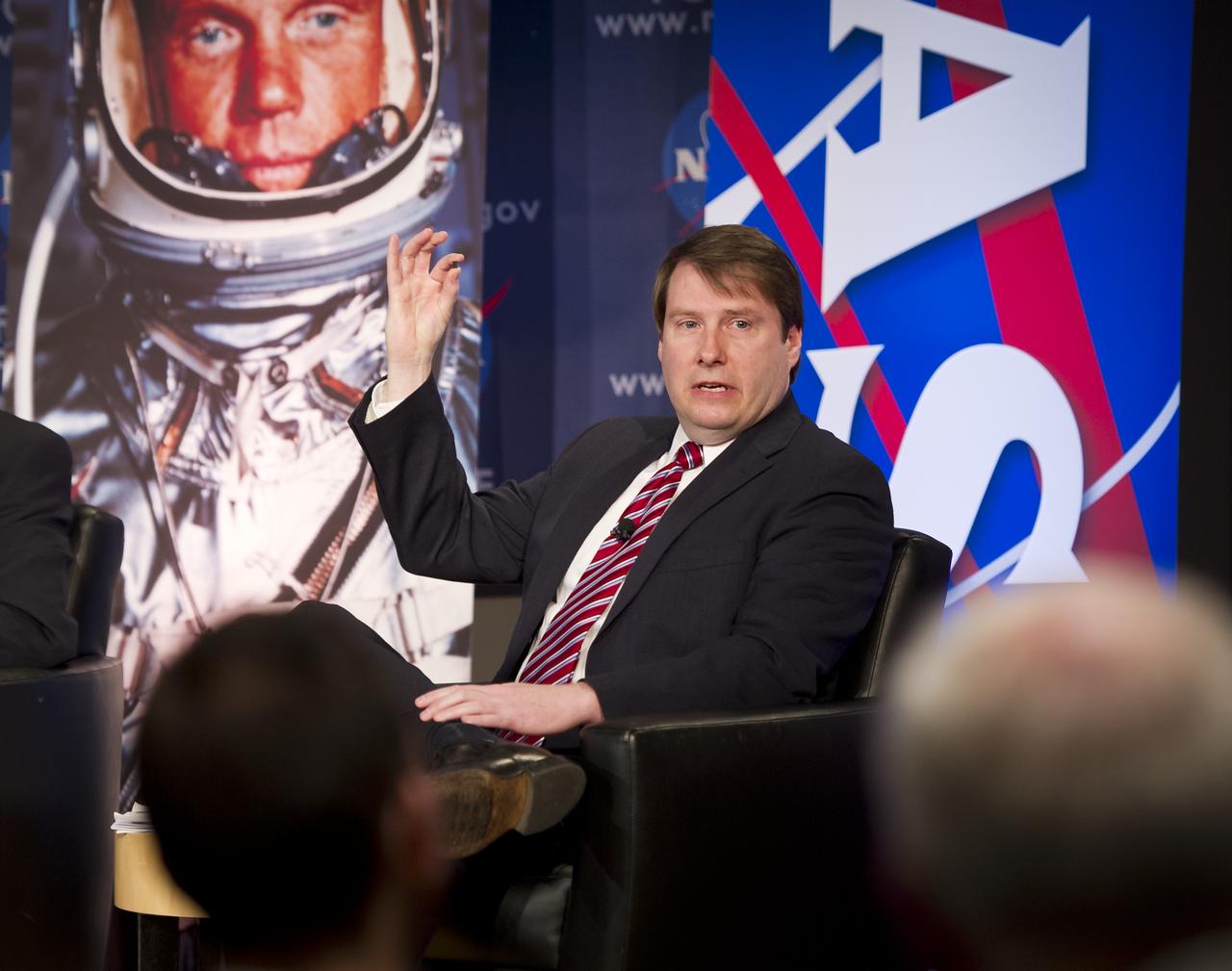
Neal Seater, President, Greenfield Solar, holds up a small solar chip during the NASA Future Forum panel titled "Transferring and Commercializing Technology to Benefit Our Lives and Our Economy" at The Ohio State University on Tuesday, Feb. 21, 2012 in Columbus, Ohio. The NASA Future Forum features panel discussions on the importance of education to our nation's future in space, the benefit of commercialized space technology to our economy and lives here on Earth, and the shifting roles for the public, commercial and international communities in space. Photo Credit: (NASA/Bill Ingalls)
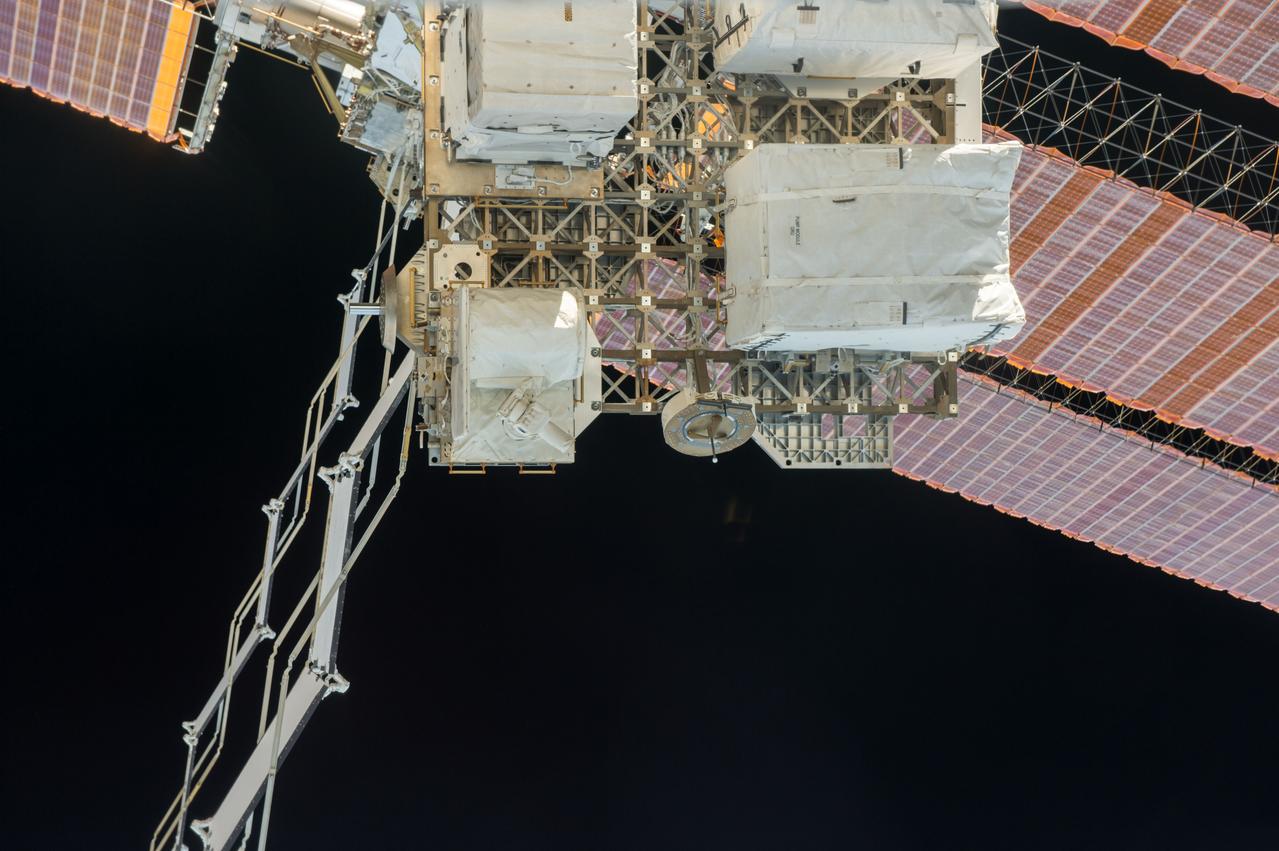
iss048e057073 (8/12/2016) --- A view of Optical Payload for Lasercomm Science (OPALS) installed on ExPRESS (Expedite the Processing of Experiments to Space Station) Logistics Carrier-1 (ELC-1). The Optical Payload for Lasercomm Science (OPALS) aims to demonstrate optical communications technology. This is accomplished by transferring a video from hardware onboard the ISS to our ground receiver at JPL’s Optical Communications Telescope Laboratory (OCTL) in Wrightwood, California.
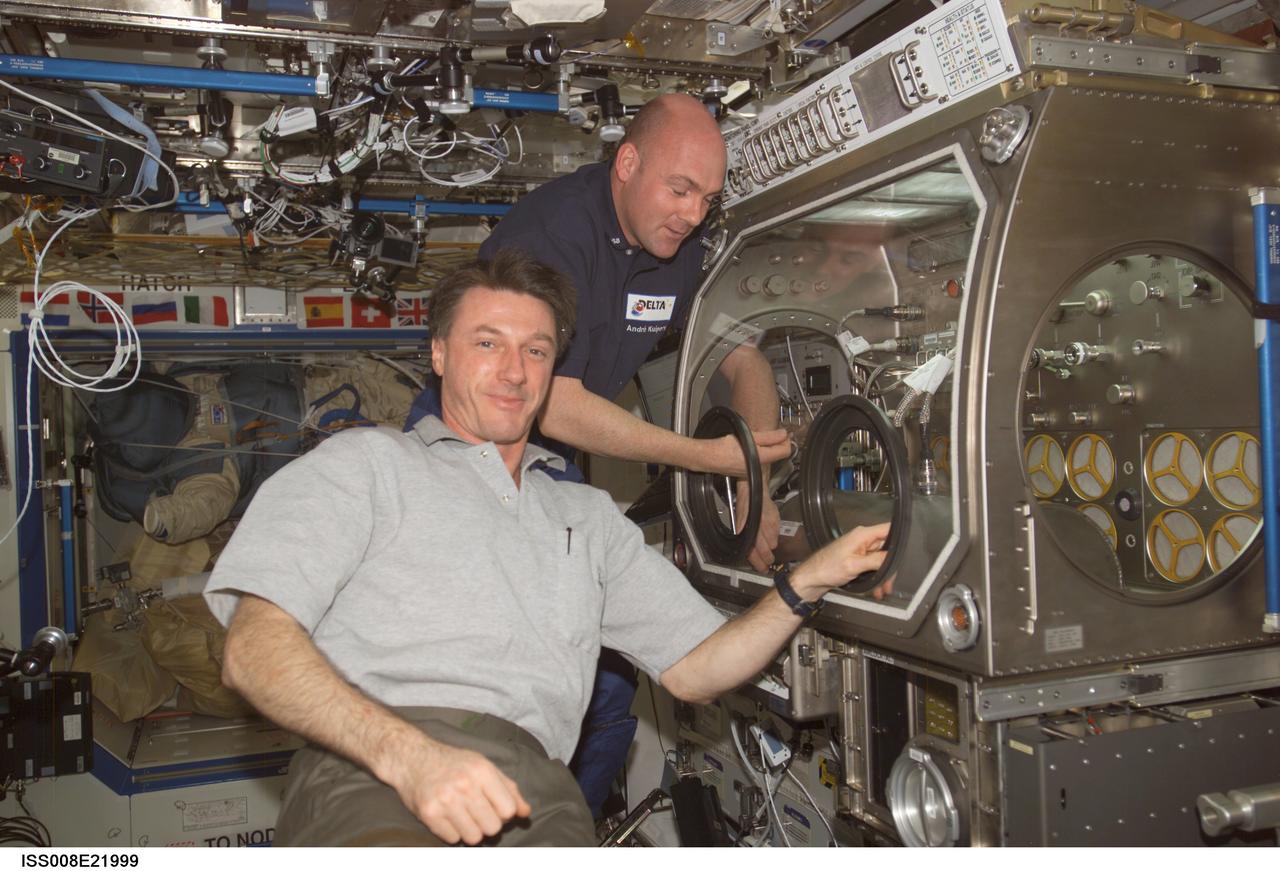
ISS008-E-21999 (22 April 2004) --- Astronaut C. Michael Foale (foreground), Expedition 8 commander and NASA ISS science officer, and European Space Agency (ESA) astronaut Andre Kuipers of the Netherlands work with the HEAT experiment in the Microgravity Science Glovebox (MSG) in the Destiny laboratory of the International Space Station (ISS). The main aim of the HEAT technology demonstration is the characterization of the heat transfer performance of a grooved heat pipe in weightlessness.
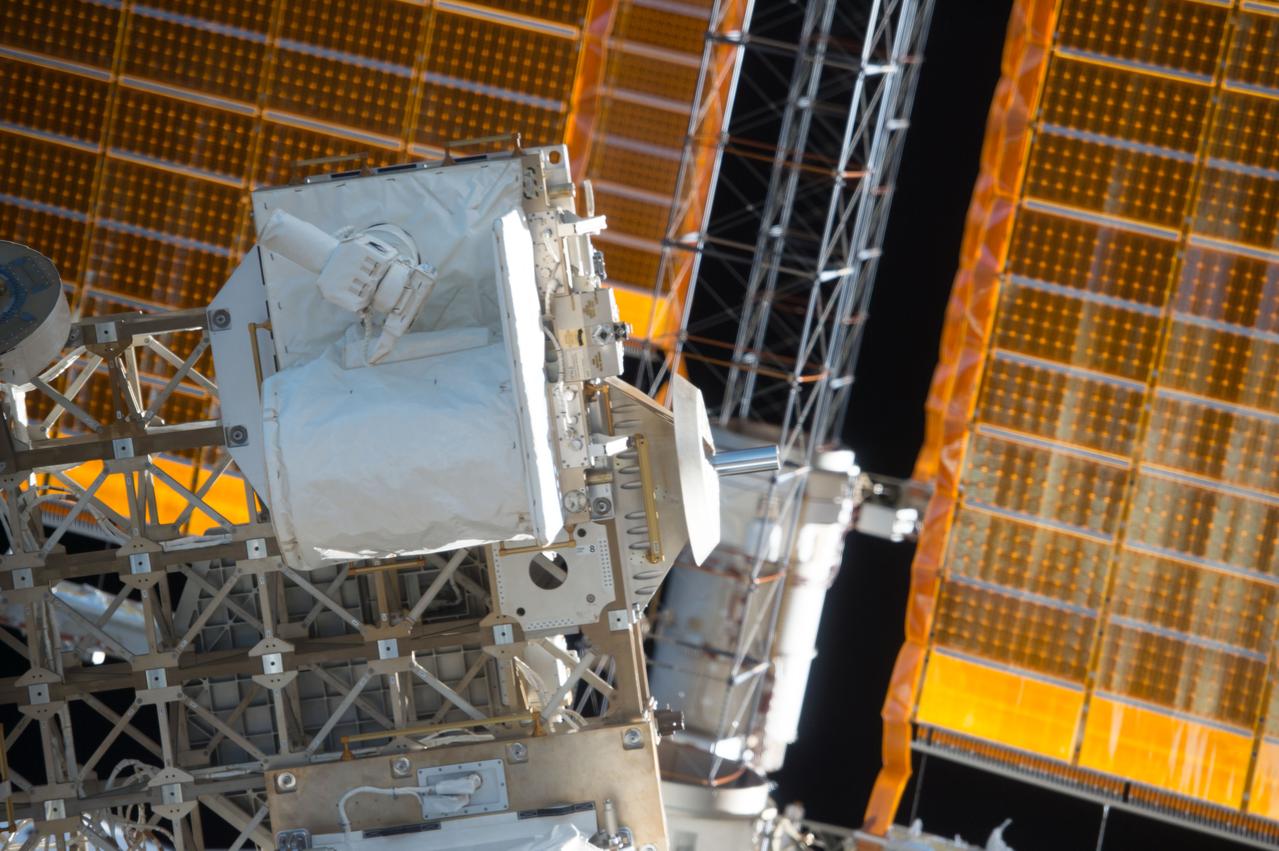
iss048e052292 (8/6/2016) --- A view of Optical Payload for Lasercomm Science (OPALS) installed on ExPRESS (Expedite the Processing of Experiments to Space Station) Logistics Carrier-1 (ELC-1). The Optical Payload for Lasercomm Science (OPALS) aims to demonstrate optical communications technology. This is accomplished by transferring a video from hardware onboard the ISS to our ground receiver at JPL’s Optical Communications Telescope Laboratory (OCTL) in Wrightwood, California.
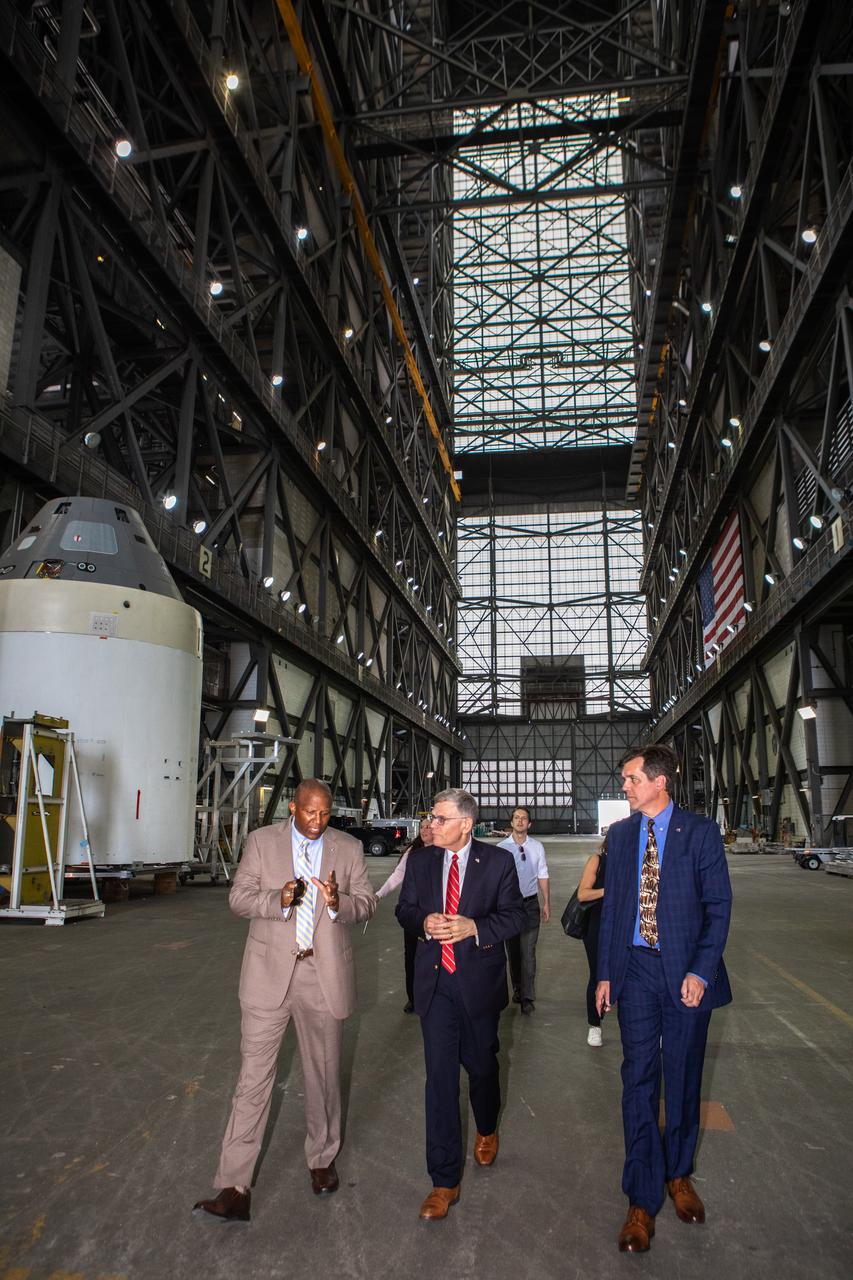
Kelvin Manning, left, associate director, technical, of NASA’s Kennedy Space Center in Florida, speaks to White House Office of Science and Technology Policy Director Kelvin Droegemeier, center, and NASA Associate Administrator for STEM Engagement Mike Kincade, right, inside the transfer aisle of the Vehicle Assembly Building on July 10, 2019, at NASA’s Kennedy Space Center in Florida. Droegemeier visited the iconic rocket-assembly facility in the heart of Kennedy’s Launch Complex 39 Area during a tour of the multi-user spaceport.
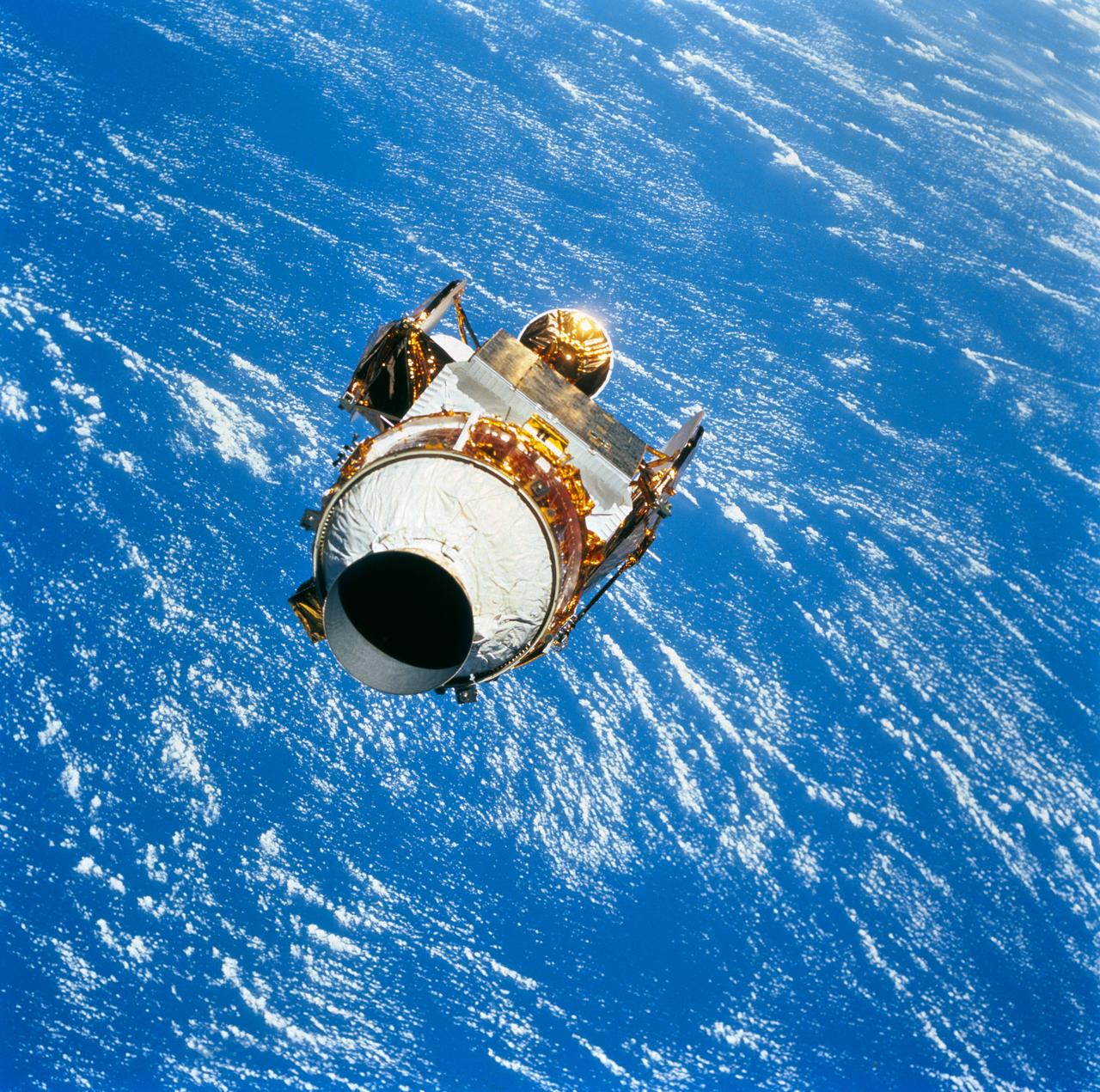
STS051-71-054 (12 Sept 1993) --- The Advanced Communications Technology Satellite (ACTS) with its Transfer Orbit Stage (TOS) is backdropped over the blue ocean following its release from the Earth-orbiting Space Shuttle Discovery. ACTS/TOS deploy was the first major task performed on the almost ten-day mission. The frame was exposed with a 70mm handheld Hasselblad camera from Discovery's flight deck.
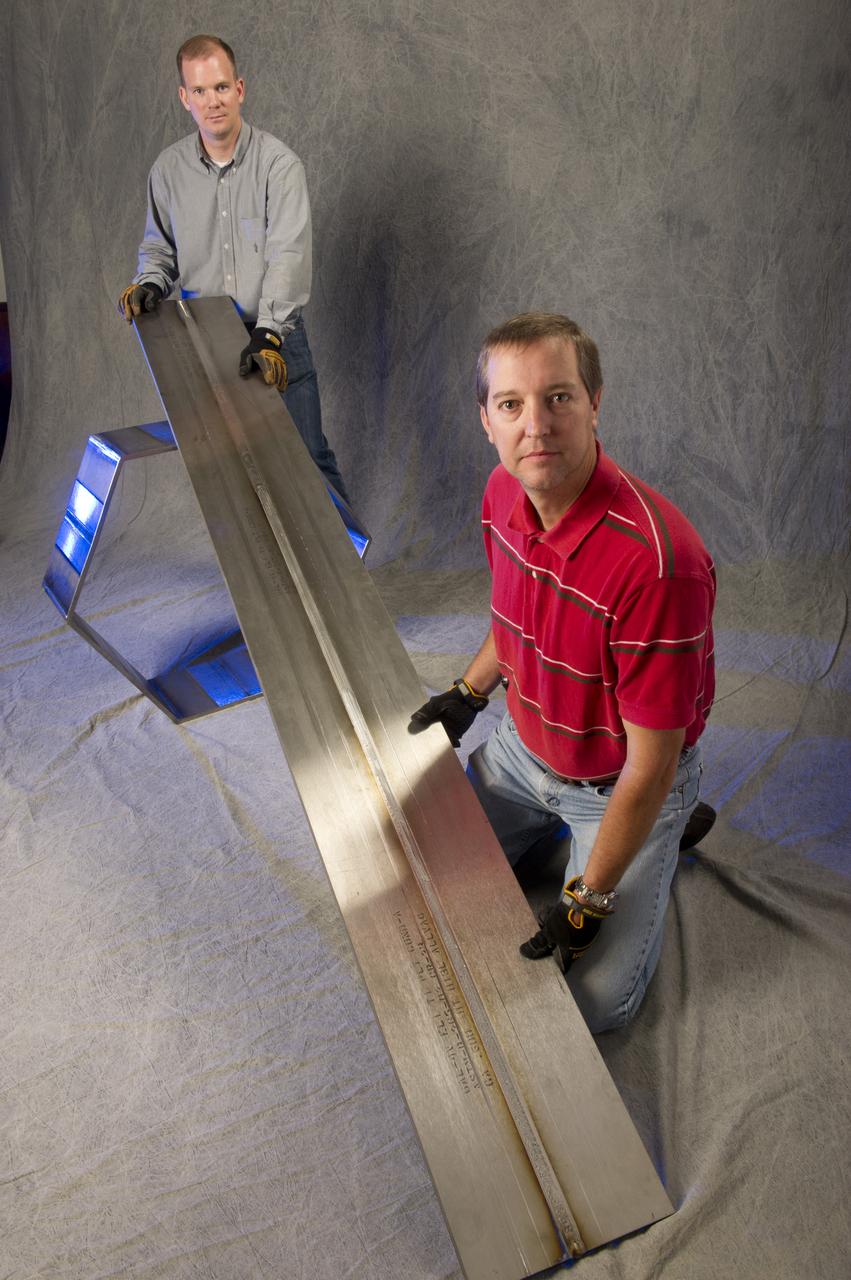
SAMUEL SMITH (WELD TECHNICIAN, JACOBS ESTS GROUP/ALL POINTS) AND ANDRÉ PASEUR (WELD TECHNICIAN, JACOBS ESTS GROUP/ERC) DISPLAY TWO PROCESS DEMONSTRATION ARTICLES – A 9-FOOT BUTT WELD (FOREGROUND) AND A HEXAGON FABRICATED FROM FRICTION STIR WELDED PLATES (BACKGROUND) – THAT WERE FABRICATED FROM 6AL-4V TITANIUM (ELI) USING THERMAL STIR WELDING. THIS WORK WAS PERFORMED FOR A NASA TECHNOLOGY TRANSFER INDUSTRIAL PARTNER (KEYSTONE SYNERGETIC ENTERPRISES, INC.) IN SUPPORT OF A PROJECT FOR THE U.S. NAVY
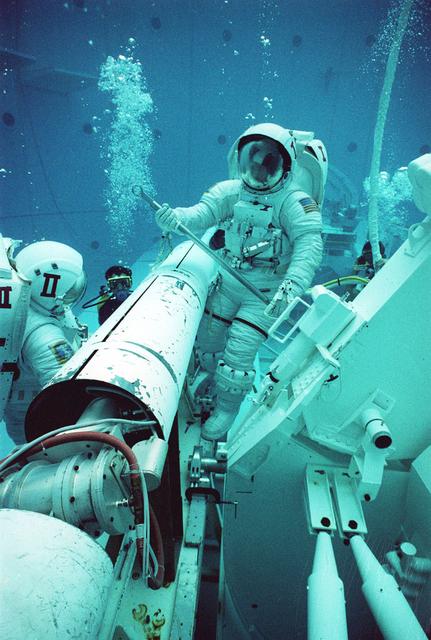
Two years prior to being used during a shuttle mission, the Transfer to Orbit System (TOS) is being demonstrated at Marshall Space Flight Center's (MSFC) Neutral Buoyancy Simulator (NBS). TOS is an upper stage launch system used to place satellites into higher orbits. TOS was used only once, on September 12, 1993 when the Space Shuttle Discovery (STS51) deployed ACTS (Advanced Communications Technology Satellite). The test pictured was to provide an evaluation of the extravehicular activity (EVA) tools that were to be used by future shuttle crews.
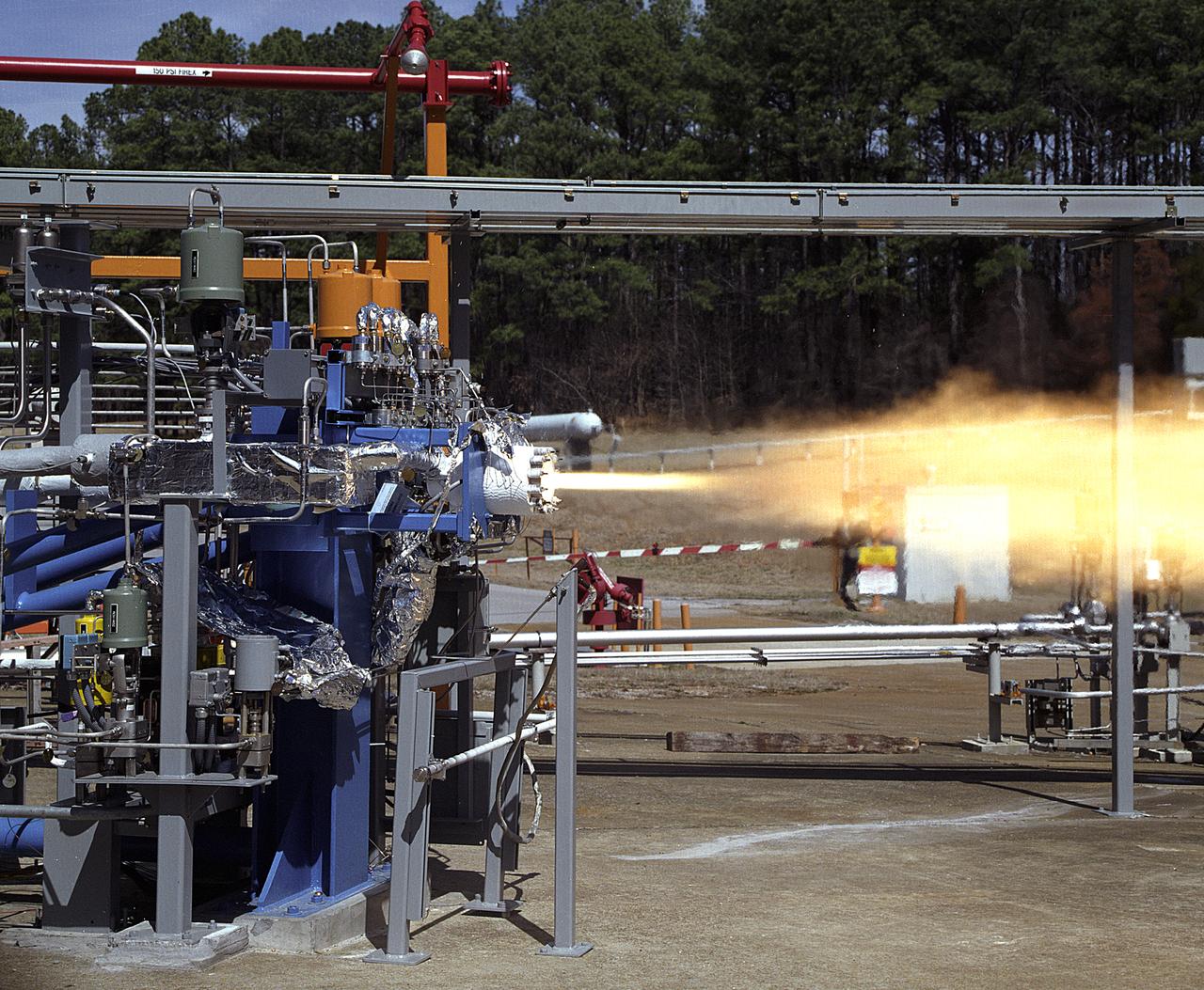
NASA's Marshall Space Flight Center (MSFC) in Huntsville, Alabama, has begun a series of engine tests on the Reaction Control Engine developed by TRW Space and Electronics for NASA's Space Launch Initiative (SLI). SLI is a technology development effort aimed at improving the safety, reliability, and cost effectiveness of space travel for reusable launch vehicles. The engine in this photo, the first engine tested at MSFC that includes SLI technology, was tested for two seconds at a chamber pressure of 185 pounds per square inch absolute (psia). Propellants used were liquid oxygen as an oxidizer and liquid hydrogen as fuel. Designed to maneuver vehicles in orbit, the engine is used as an auxiliary propulsion system for docking, reentry, fine-pointing, and orbit transfer while the vehicle is in orbit. The Reaction Control Engine has two unique features. It uses nontoxic chemicals as propellants, which creates a safer environment with less maintenance and quicker turnaround time between missions, and it operates in dual thrust modes, combining two engine functions into one engine. The engine operates at both 25 and 1,000 pounds of force, reducing overall propulsion weight and allowing vehicles to easily maneuver in space. The force of low level thrust allows the vehicle to fine-point maneuver and dock, while the force of the high level thrust is used for reentry, orbital transfer, and course positioning.

KENNEDY SPACE CENTER, FLA. - At Vandenberg Air Force Base in California, the Demonstration of Autonomous Rendezvous Technology (DART) spacecraft (right) is ready for mating with the upper stage (behind it) in preparation for launch on the Orbital Sciences Pegasus XL. DART was designed and built for NASA by Orbital Sciences Corporation as an advanced flight demonstrator to locate and maneuver near an orbiting satellite. DART weighs about 800 pounds and is nearly 6 feet long and 3 feet in diameter. The Pegasus XL will launch DART into a circular polar orbit of approximately 475 miles. DART is designed to demonstrate technologies required for a spacecraft to locate and rendezvous, or maneuver close to, other craft in space. Results from the DART mission will aid in the development of NASA’s Crew Exploration Vehicle and will also assist in vehicle development for crew transfer and crew rescue capability to and from the International Space Station.
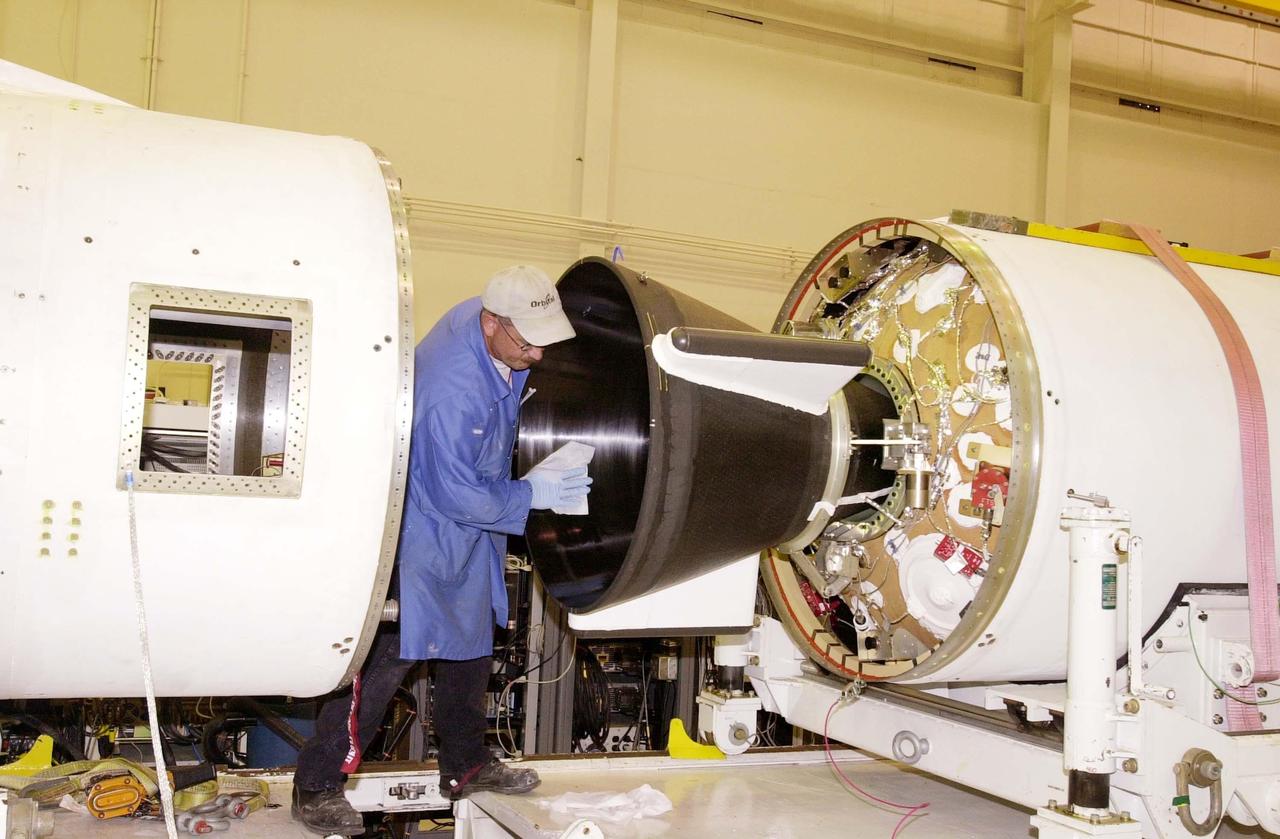
KENNEDY SPACE CENTER, FLA. - At Vandenberg Air Force Base in California, a worker prepares the second and third stages of the Orbital Sciences Pegasus XL launch vehicle for mating. The Pegasus XL will launch the Demonstration of Autonomous Rendezvous Technology (DART) spacecraft. DART was designed and built for NASA by Orbital Sciences Corporation as an advanced flight demonstrator to locate and maneuver near an orbiting satellite. DART weighs about 800 pounds and is nearly 6 feet long and 3 feet in diameter. The Pegasus XL will launch DART into a circular polar orbit of approximately 475 miles. DART is designed to demonstrate technologies required for a spacecraft to locate and rendezvous, or maneuver close to, other craft in space. Results from the DART mission will aid in the development of NASA’s Crew Exploration Vehicle and will also assist in vehicle development for crew transfer and crew rescue capability to and from the International Space Station.
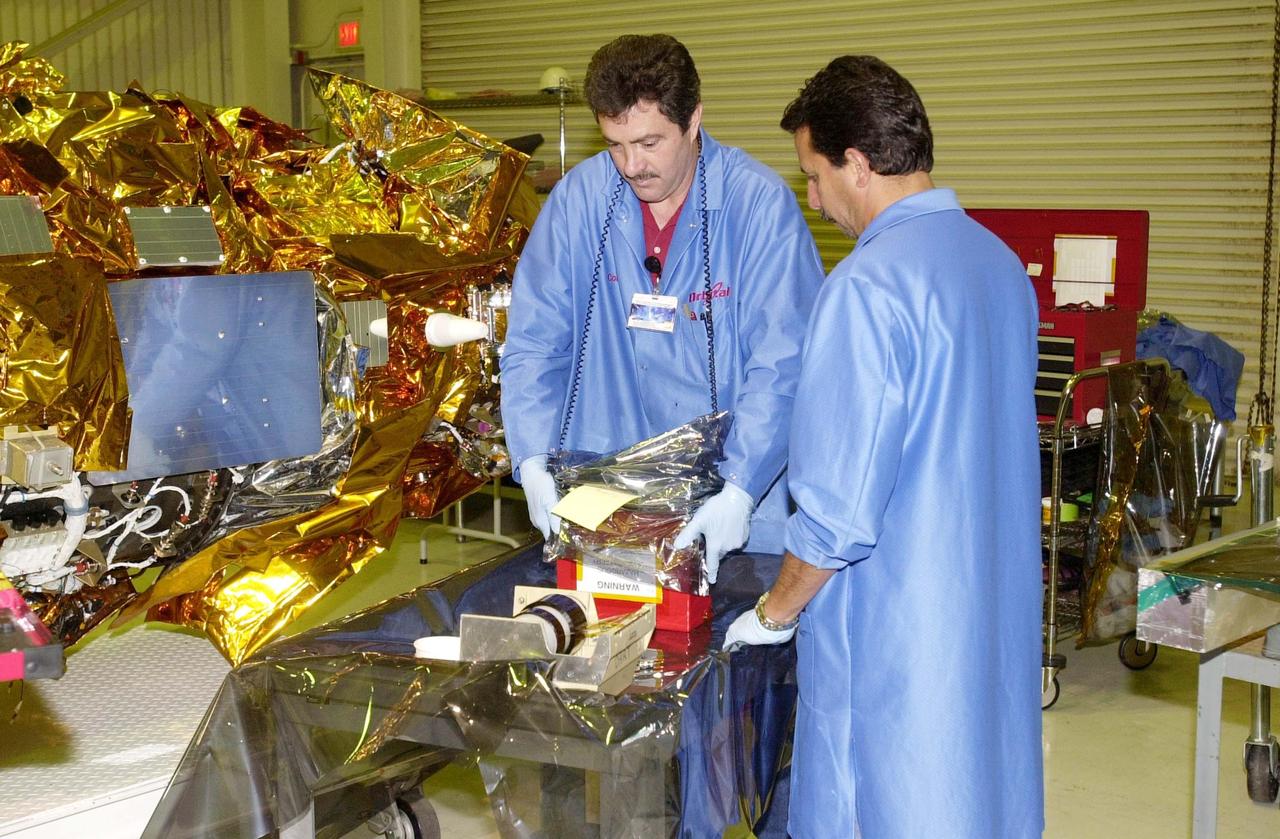
KENNEDY SPACE CENTER, FLA. - At Vandenberg Air Force Base in California, Corky Philyaw (left) and Edgar Suarez (right) prepare the flight battery for installation on the Demonstration of Autonomous Rendezvous Technology (DART) spacecraft (far left). DART was designed and built for NASA by Orbital Sciences Corporation as an advanced flight demonstrator to locate and maneuver near an orbiting satellite. It is designed to demonstrate technologies required for a spacecraft to locate and rendezvous, or maneuver close to, other craft in space. Results from the DART mission will aid in the development of NASA's Crew Exploration Vehicle and will also assist in vehicle development for crew transfer and crew rescue capability to and from the International Space Station. DART will be launched from an Orbital Sciences Pegasus XL rocket no earlier than Oct. 26.
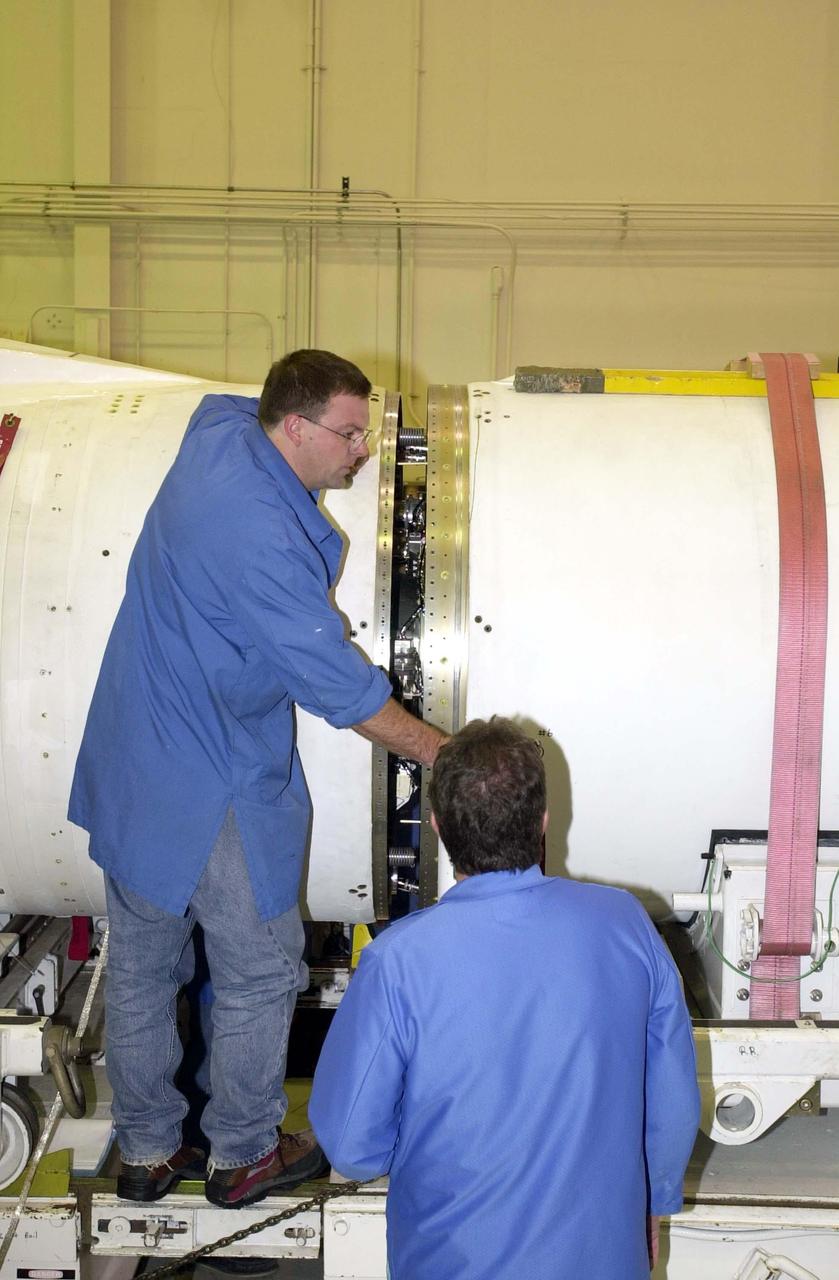
KENNEDY SPACE CENTER, FLA. - At Vandenberg Air Force Base in California, workers begin closing the gap between the second and third stages of the Orbital Sciences Pegasus XL launch vehicle that will launch the Demonstration of Autonomous Rendezvous Technology (DART) spacecraft. DART was designed and built for NASA by Orbital Sciences Corporation as an advanced flight demonstrator to locate and maneuver near an orbiting satellite. DART weighs about 800 pounds and is nearly 6 feet long and 3 feet in diameter. The Pegasus XL will launch DART into a circular polar orbit of approximately 475 miles. DART is designed to demonstrate technologies required for a spacecraft to locate and rendezvous, or maneuver close to, other craft in space. Results from the DART mission will aid in the development of NASA's Crew Exploration Vehicle and will also assist in vehicle development for crew transfer and crew rescue capability to and from the International Space Station.
KENNEDY SPACE CENTER, FLA. - At Vandenberg Air Force Base in California, workers maneuver the Demonstration of Autonomous Rendezvous Technology (DART) spacecraft and mated upper stage toward the second stage behind them in preparation or launch aboard the Orbital Sciences Pegasus XL launch vehicle. Pegasus will launch DART into a circular polar orbit of approximately 475 miles. Built for NASA by Orbital Sciences Corporation, DART was designed as an advanced flight demonstrator to locate and maneuver near an orbiting satellite. DART weighs about 800 pounds and is nearly 6 feet long and 3 feet in diameter. DART is designed to demonstrate technologies required for a spacecraft to locate and rendezvous, or maneuver close to, other craft in space. Results from the DART mission will aid in the development of NASA’s Crew Exploration Vehicle and will also assist in vehicle development for crew transfer and crew rescue capability to and from the International Space Station.
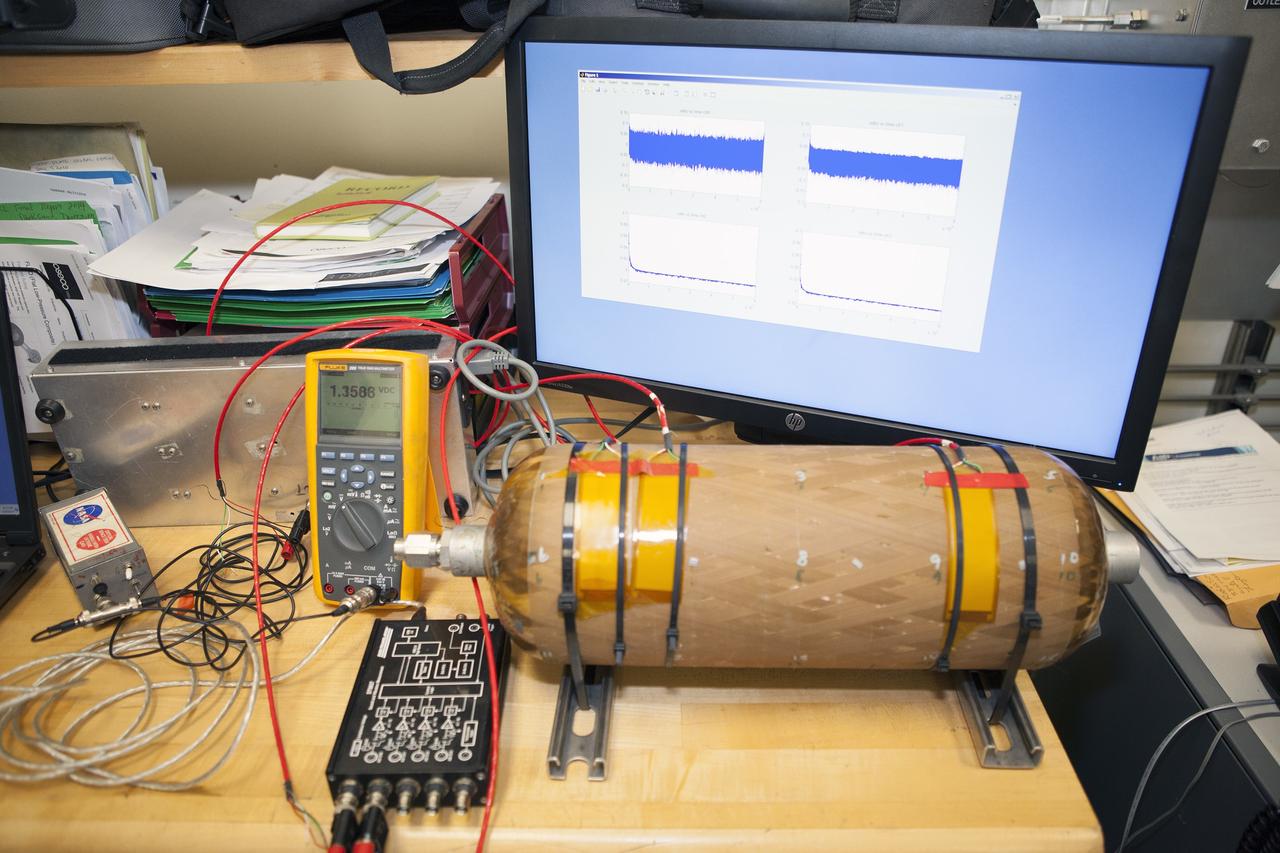
CAPE CANAVERAL, Fla. – Several Lead Zirconate Titanate, or PZT, mass gaging sensors have been attached to a composite tank during a test inside a laboratory at the Cryogenics Testbed Facility at NASA's Kennedy Space Center in Florida. The PZT-based system was developed at Kennedy as a way to measure the mass of a fluid and the structural health of a tank using vibration signatures on Earth or in reduced/zero g gravity. The mass gaging technology has received approval to be on the first sub-orbital flight on the Virgin Galactic Space Plane in 2015. NASA experiments using the PZT technology will be used by Embry-Riddle Aeronautical University in conjunction with Carthage College on a fluid transfer experiment. Photo credit: NASA/Daniel Casper
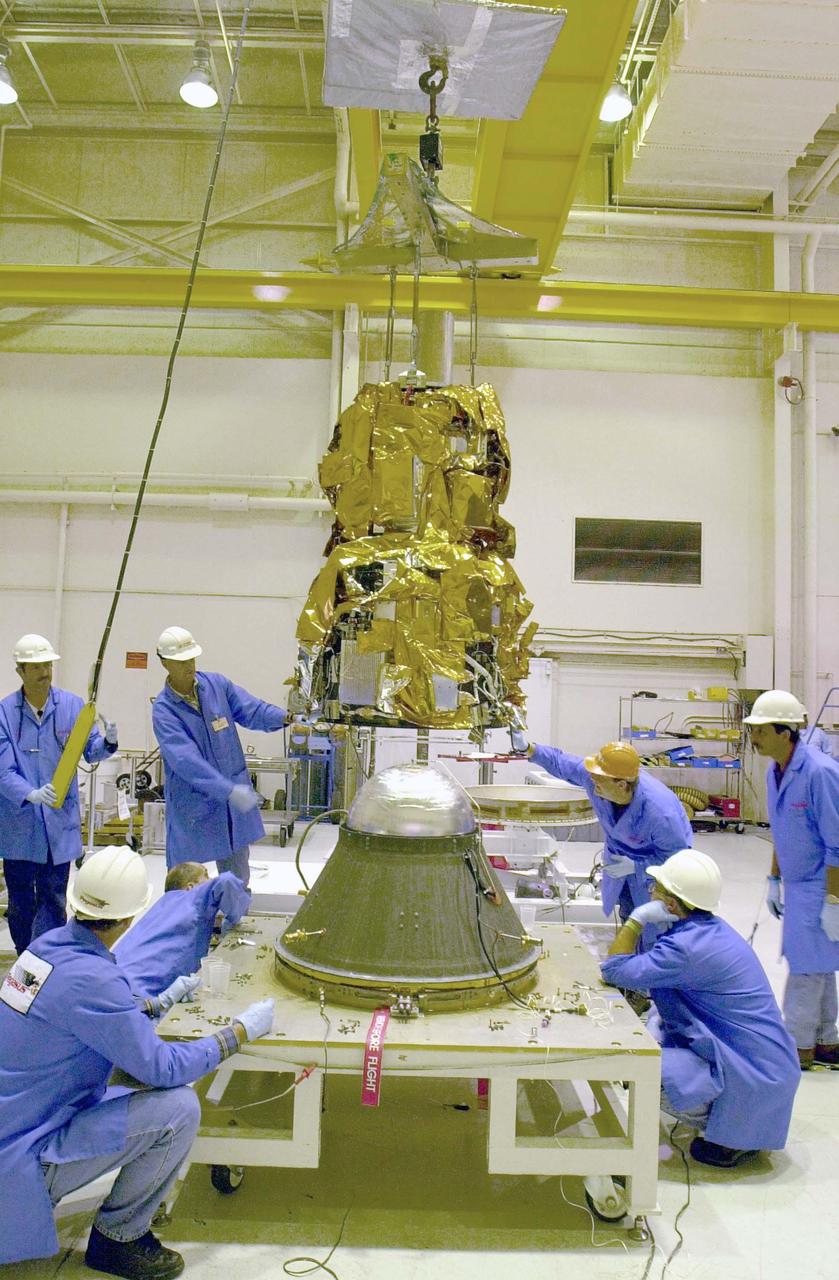
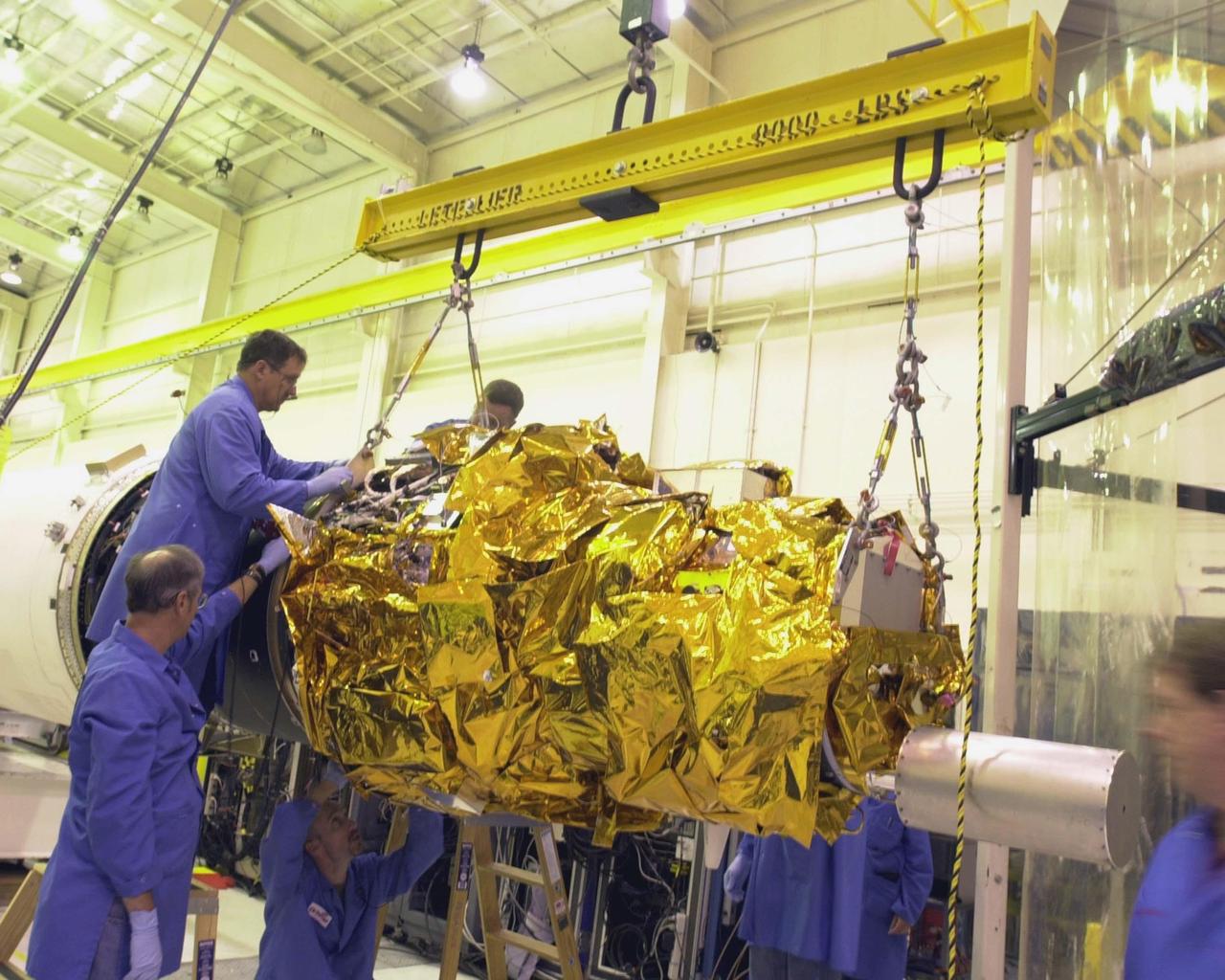
KENNEDY SPACE CENTER, FLA. - At Vandenberg Air Force Base in California, workers maneuver the Demonstration of Autonomous Rendezvous Technology (DART) spacecraft, suspended by a crane, over the upper stage in preparation for launch on the Orbital Sciences Pegasus XL. The Pegasus XL will launch DART into a circular polar orbit of approximately 475 miles. Built for NASA by Orbital Sciences Corporation, DART was designed as an advanced flight demonstrator to locate and maneuver near an orbiting satellite. DART weighs about 800 pounds and is nearly 6 feet long and 3 feet in diameter. DART is designed to demonstrate technologies required for a spacecraft to locate and rendezvous, or maneuver close to, other craft in space. Results from the DART mission will aid in the development of NASA’s Crew Exploration Vehicle and will also assist in vehicle development for crew transfer and crew rescue capability to and from the International Space Station.

KENNEDY SPACE CENTER, FLA. - At Vandenberg Air Force Base in California, workers begin mating the second and third stages of the Orbital Sciences Pegasus XL launch vehicle that will launch the Demonstration of Autonomous Rendezvous Technology (DART) spacecraft. DART was designed and built for NASA by Orbital Sciences Corporation as an advanced flight demonstrator to locate and maneuver near an orbiting satellite. DART weighs about 800 pounds and is nearly 6 feet long and 3 feet in diameter. The Pegasus XL will launch DART into a circular polar orbit of approximately 475 miles. DART is designed to demonstrate technologies required for a spacecraft to locate and rendezvous, or maneuver close to, other craft in space. Results from the DART mission will aid in the development of NASA's Crew Exploration Vehicle and will also assist in vehicle development for crew transfer and crew rescue capability to and from the International Space Station.
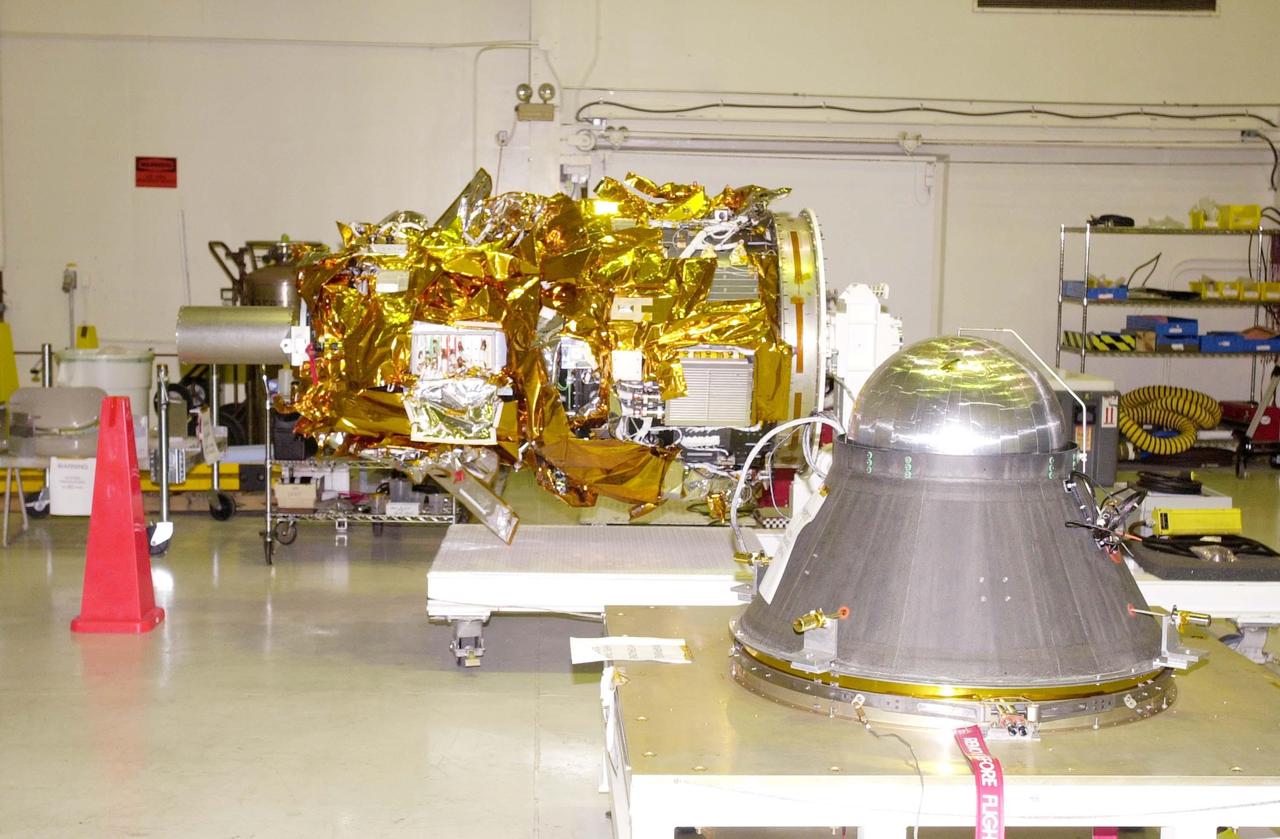
KENNEDY SPACE CENTER, FLA. - At Vandenberg Air Force Base in California, the Demonstration of Autonomous Rendezvous Technology (DART) spacecraft (in background) has been rotated from vertical to horizontal and is ready for mating with the upper stage (foreground). DART was designed and built for NASA by Orbital Sciences Corporation as an advanced flight demonstrator to locate and maneuver near an orbiting satellite. DART weighs about 800 pounds and is nearly 6 feet long and 3 feet in diameter. The Orbital Sciences Pegasus XL will launch DART into a circular polar orbit of approximately 475 miles. DART is designed to demonstrate technologies required for a spacecraft to locate and rendezvous, or maneuver close to, other craft in space. Results from the DART mission will aid in the development of NASA’s Crew Exploration Vehicle and will also assist in vehicle development for crew transfer and crew rescue capability to and from the International Space Station.
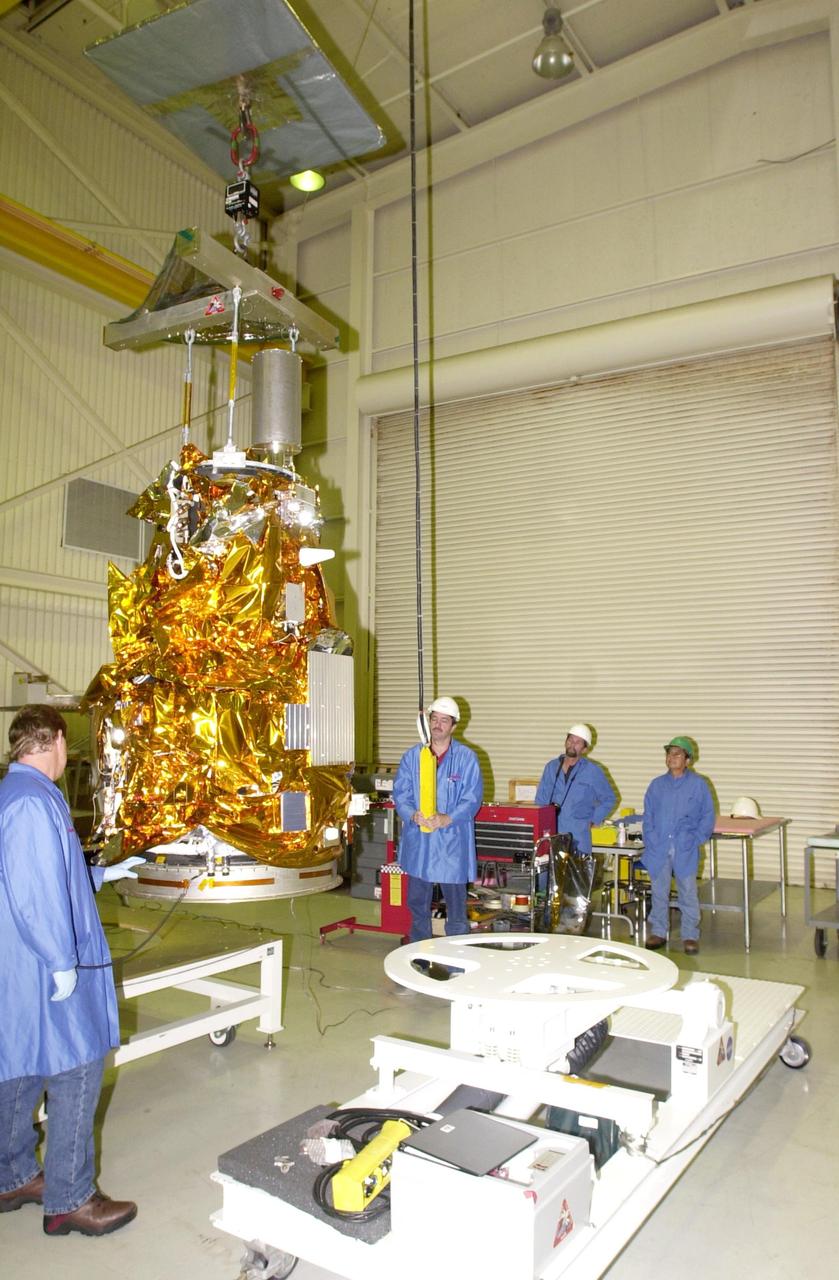
KENNEDY SPACE CENTER, FLA. - At Vandenberg Air Force Base in California, workers stand by while an overhead crane moves the Demonstration of Autonomous Rendezvous Technology (DART) spacecraft onto the mobile stand at right. DART was designed and built for NASA by Orbital Sciences Corporation as an advanced flight demonstrator to locate and maneuver near an orbiting satellite. DART weighs about 800 pounds and is nearly 6 feet long and 3 feet in diameter. The Orbital Sciences Pegasus XL will launch DART into a circular polar orbit of approximately 475 miles. DART is designed to demonstrate technologies required for a spacecraft to locate and rendezvous, or maneuver close to, other craft in space. Results from the DART mission will aid in the development of NASA’s Crew Exploration Vehicle and will also assist in vehicle development for crew transfer and crew rescue capability to and from the International Space Station.
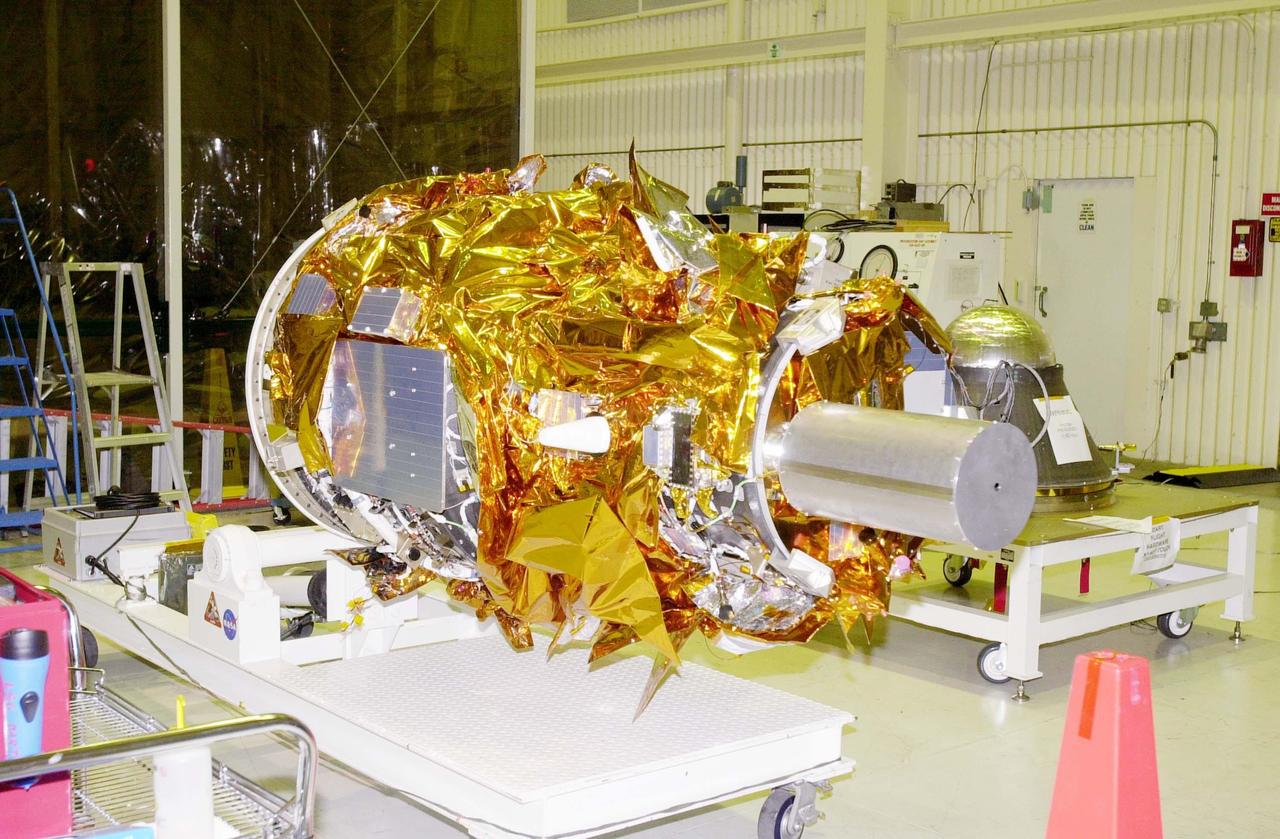
KENNEDY SPACE CENTER, FLA. - At Vandenberg Air Force Base in California, the Demonstration of Autonomous Rendezvous Technology (DART) spacecraft is ready for mating with the upper stage of the Orbital Sciences Pegasus XL behind it (right). DART was designed and built for NASA by Orbital Sciences Corporation as an advanced flight demonstrator to locate and maneuver near an orbiting satellite. DART weighs about 800 pounds and is nearly 6 feet long and 3 feet in diameter. The Pegasus XL will launch DART into a circular polar orbit of approximately 475 miles. DART is designed to demonstrate technologies required for a spacecraft to locate and rendezvous, or maneuver close to, other craft in space. Results from the DART mission will aid in the development of NASA’s Crew Exploration Vehicle and will also assist in vehicle development for crew transfer and crew rescue capability to and from the International Space Station.

KENNEDY SPACE CENTER, FLA. - At Vandenberg Air Force Base in California, workers maneuver the Demonstration of Autonomous Rendezvous Technology (DART) spacecraft and mated upper stage toward the second stage at right in preparation or launch aboard the Orbital Sciences Pegasus XL launch vehicle. Pegasus will launch DART into a circular polar orbit of approximately 475 miles. Built for NASA by Orbital Sciences Corporation, DART was designed as an advanced flight demonstrator to locate and maneuver near an orbiting satellite. DART weighs about 800 pounds and is nearly 6 feet long and 3 feet in diameter. DART is designed to demonstrate technologies required for a spacecraft to locate and rendezvous, or maneuver close to, other craft in space. Results from the DART mission will aid in the development of NASA’s Crew Exploration Vehicle and will also assist in vehicle development for crew transfer and crew rescue capability to and from the International Space Station.
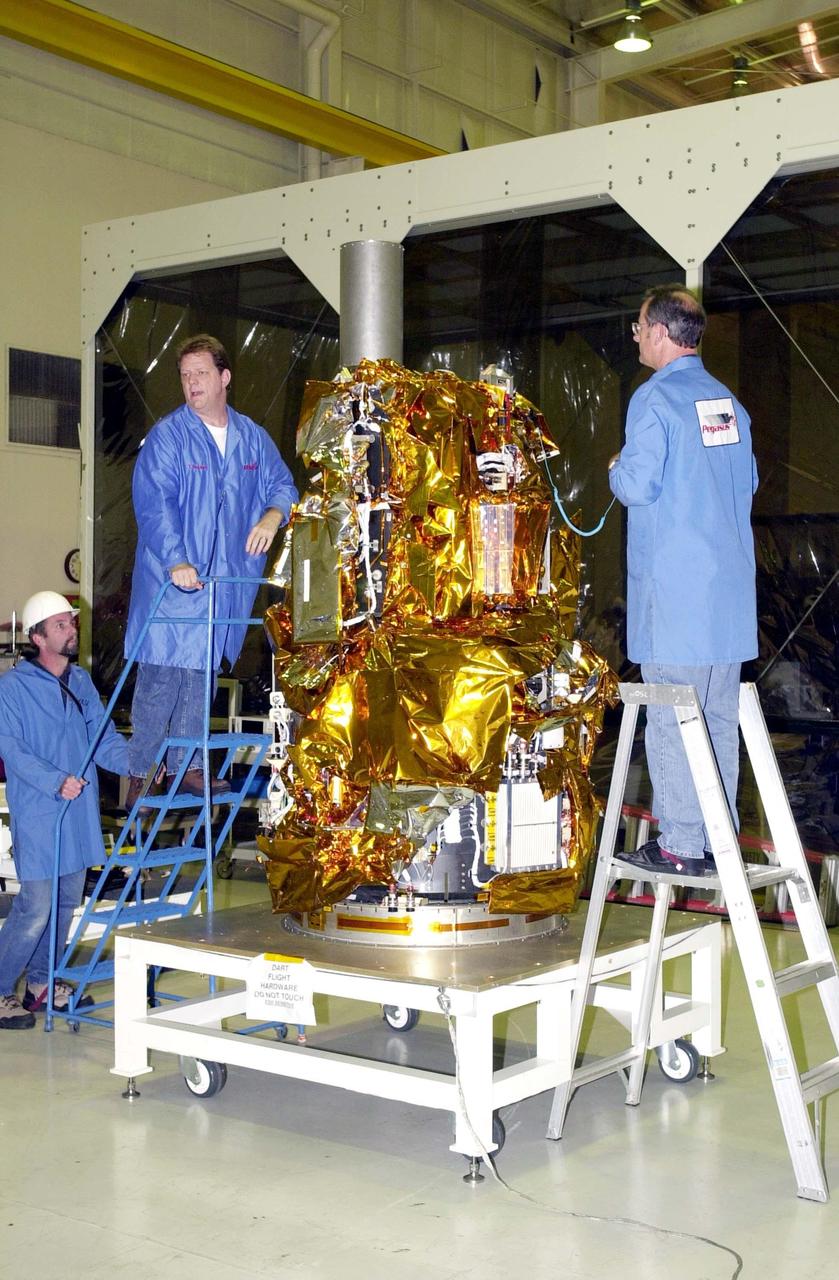
KENNEDY SPACE CENTER, FLA. - At Vandenberg Air Force Base in California, workers prepare the Demonstration of Autonomous Rendezvous Technology (DART) spacecraft for launch. DART was designed and built for NASA by Orbital Sciences Corporation as an advanced flight demonstrator to locate and maneuver near an orbiting satellite. DART weighs about 800 pounds and is nearly 6 feet long and 3 feet in diameter. The Orbital Sciences Pegasus XL will launch DART into a circular polar orbit of approximately 475 miles. DART is designed to demonstrate technologies required for a spacecraft to locate and rendezvous, or maneuver close to, other craft in space. Results from the DART mission will aid in the development of NASA’s Crew Exploration Vehicle and will also assist in vehicle development for crew transfer and crew rescue capability to and from the International Space Station.
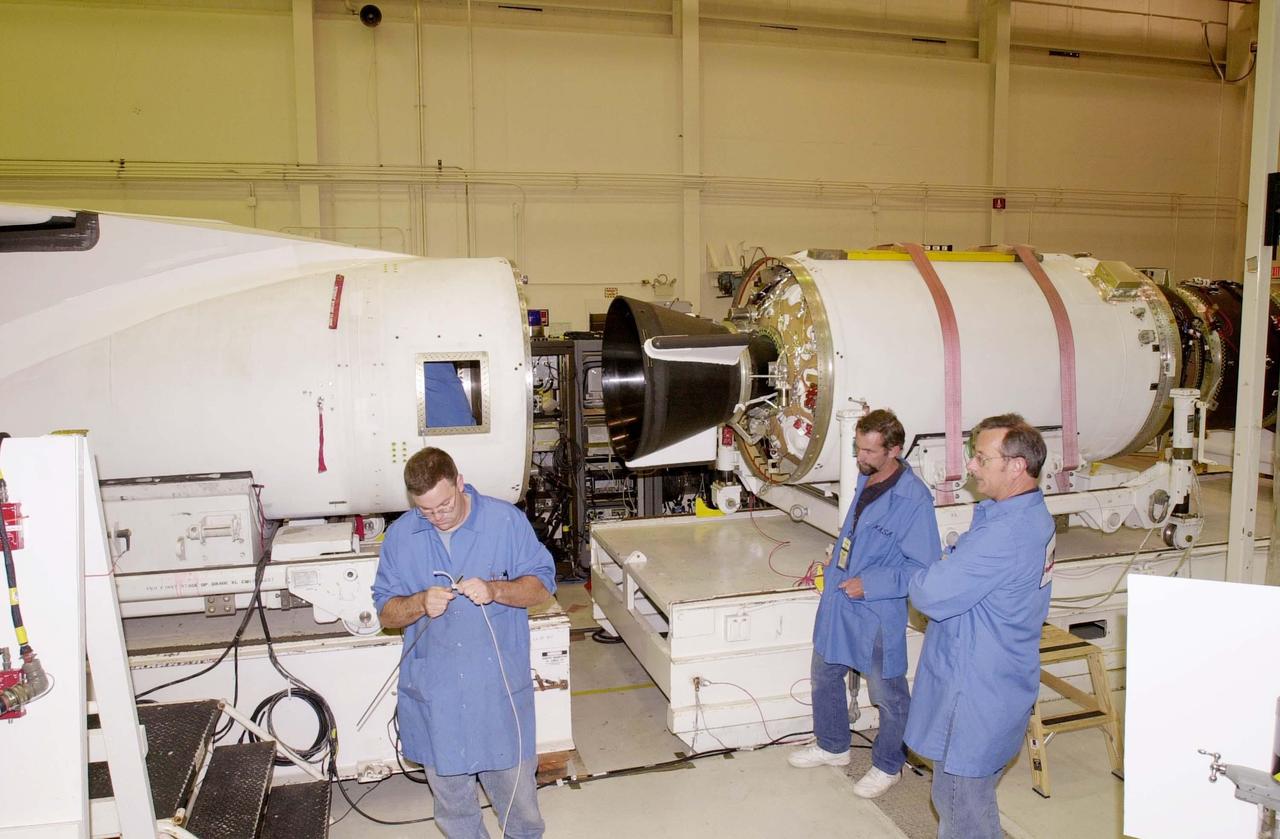
KENNEDY SPACE CENTER, FLA. - At Vandenberg Air Force Base in California, workers prepare to mate the second and third stages of the Orbital Sciences Pegasus XL launch vehicle that will launch the Demonstration of Autonomous Rendezvous Technology (DART) spacecraft. DART was designed and built for NASA by Orbital Sciences Corporation as an advanced flight demonstrator to locate and maneuver near an orbiting satellite. DART weighs about 800 pounds and is nearly 6 feet long and 3 feet in diameter. The Pegasus XL will launch DART into a circular polar orbit of approximately 475 miles. DART is designed to demonstrate technologies required for a spacecraft to locate and rendezvous, or maneuver close to, other craft in space. Results from the DART mission will aid in the development of NASA's Crew Exploration Vehicle and will also assist in vehicle development for crew transfer and crew rescue capability to and from the International Space Station.
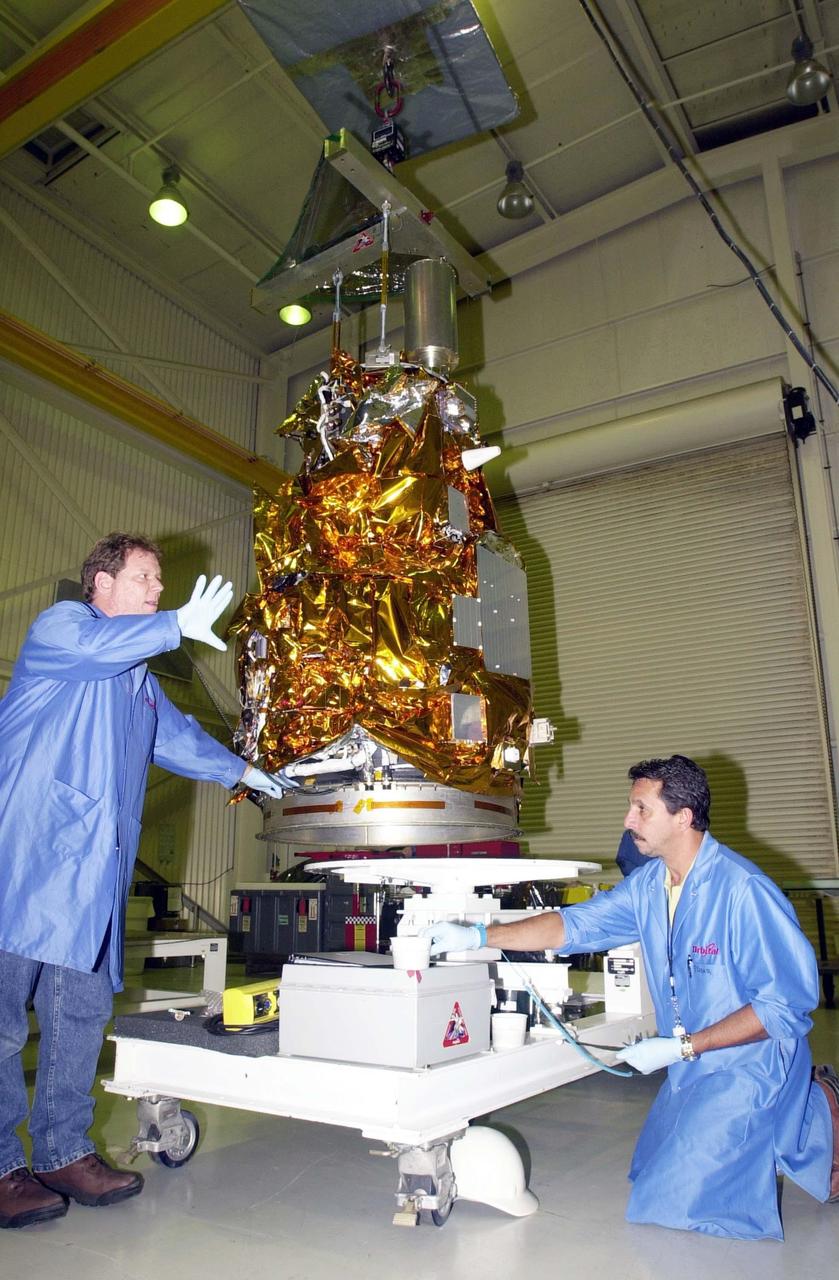
KENNEDY SPACE CENTER, FLA. - At Vandenberg Air Force Base in California, workers help guide the Demonstration of Autonomous Rendezvous Technology (DART) spacecraft onto the mobile stand below. DART was designed and built for NASA by Orbital Sciences Corporation as an advanced flight demonstrator to locate and maneuver near an orbiting satellite. DART weighs about 800 pounds and is nearly 6 feet long and 3 feet in diameter. The Orbital Sciences Pegasus XL will launch DART into a circular polar orbit of approximately 475 miles. DART is designed to demonstrate technologies required for a spacecraft to locate and rendezvous, or maneuver close to, other craft in space. Results from the DART mission will aid in the development of NASA’s Crew Exploration Vehicle and will also assist in vehicle development for crew transfer and crew rescue capability to and from the International Space Station.
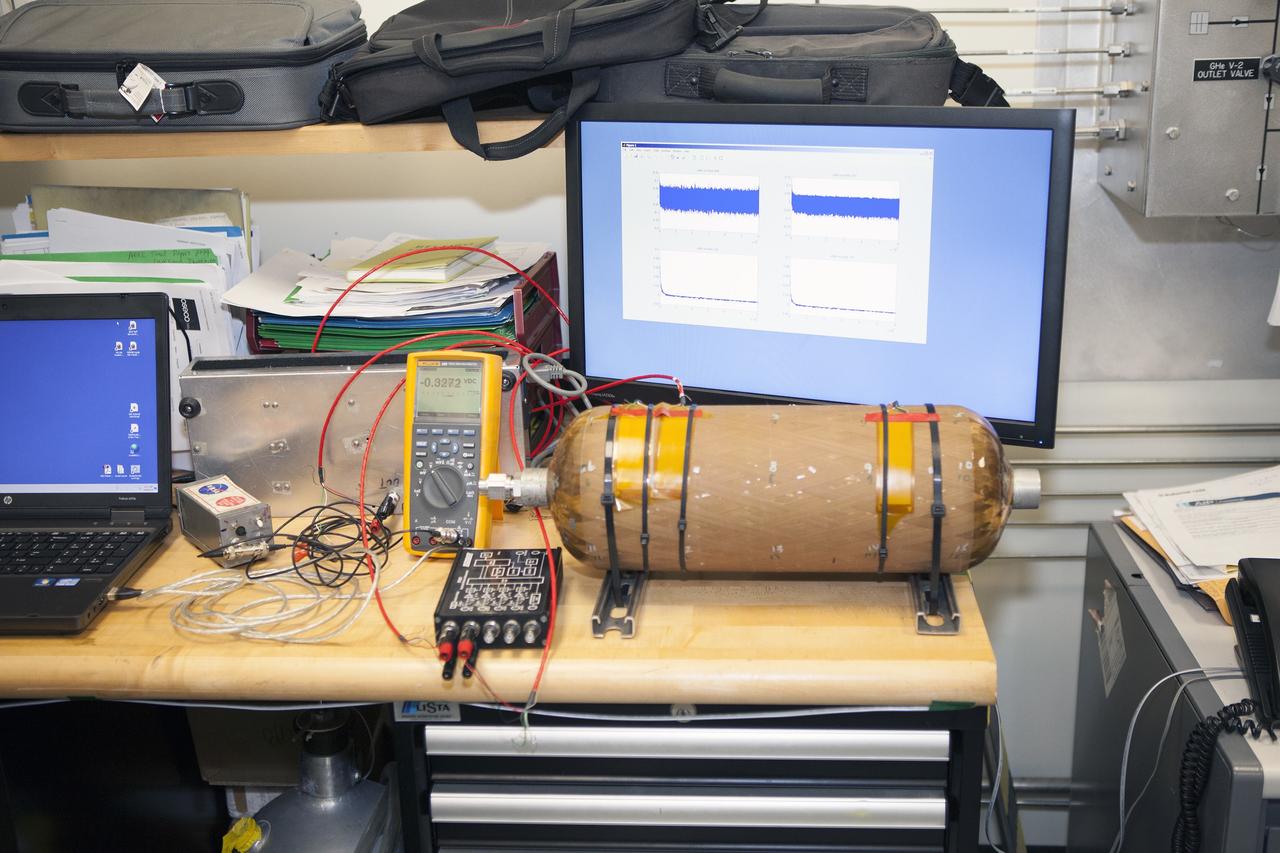
CAPE CANAVERAL, Fla. – Several Lead Zirconate Titanate, or PZT, mass gaging sensors have been attached to a composite tank during a test inside a laboratory at the Cryogenics Testbed Facility at NASA's Kennedy Space Center in Florida. The PZT-based system was developed at Kennedy as a way to measure the mass of a fluid and the structural health of a tank using vibration signatures on Earth or in reduced/zero g gravity. The mass gaging technology has received approval to be on the first sub-orbital flight on the Virgin Galactic Space Plane in 2015. NASA experiments using the PZT technology will be used by Embry-Riddle Aeronautical University in conjunction with Carthage College on a fluid transfer experiment. Photo credit: NASA/Daniel Casper

KENNEDY SPACE CENTER, FLA. - At Vandenberg Air Force Base in California, the Demonstration of Autonomous Rendezvous Technology (DART) spacecraft (right) is ready for mating with the upper stage (foreground) in preparation for launch on the Orbital Sciences Pegasus XL. DART was designed and built for NASA by Orbital Sciences Corporation as an advanced flight demonstrator to locate and maneuver near an orbiting satellite. DART weighs about 800 pounds and is nearly 6 feet long and 3 feet in diameter. The Pegasus XL will launch DART into a circular polar orbit of approximately 475 miles. DART is designed to demonstrate technologies required for a spacecraft to locate and rendezvous, or maneuver close to, other craft in space. Results from the DART mission will aid in the development of NASA’s Crew Exploration Vehicle and will also assist in vehicle development for crew transfer and crew rescue capability to and from the International Space Station.
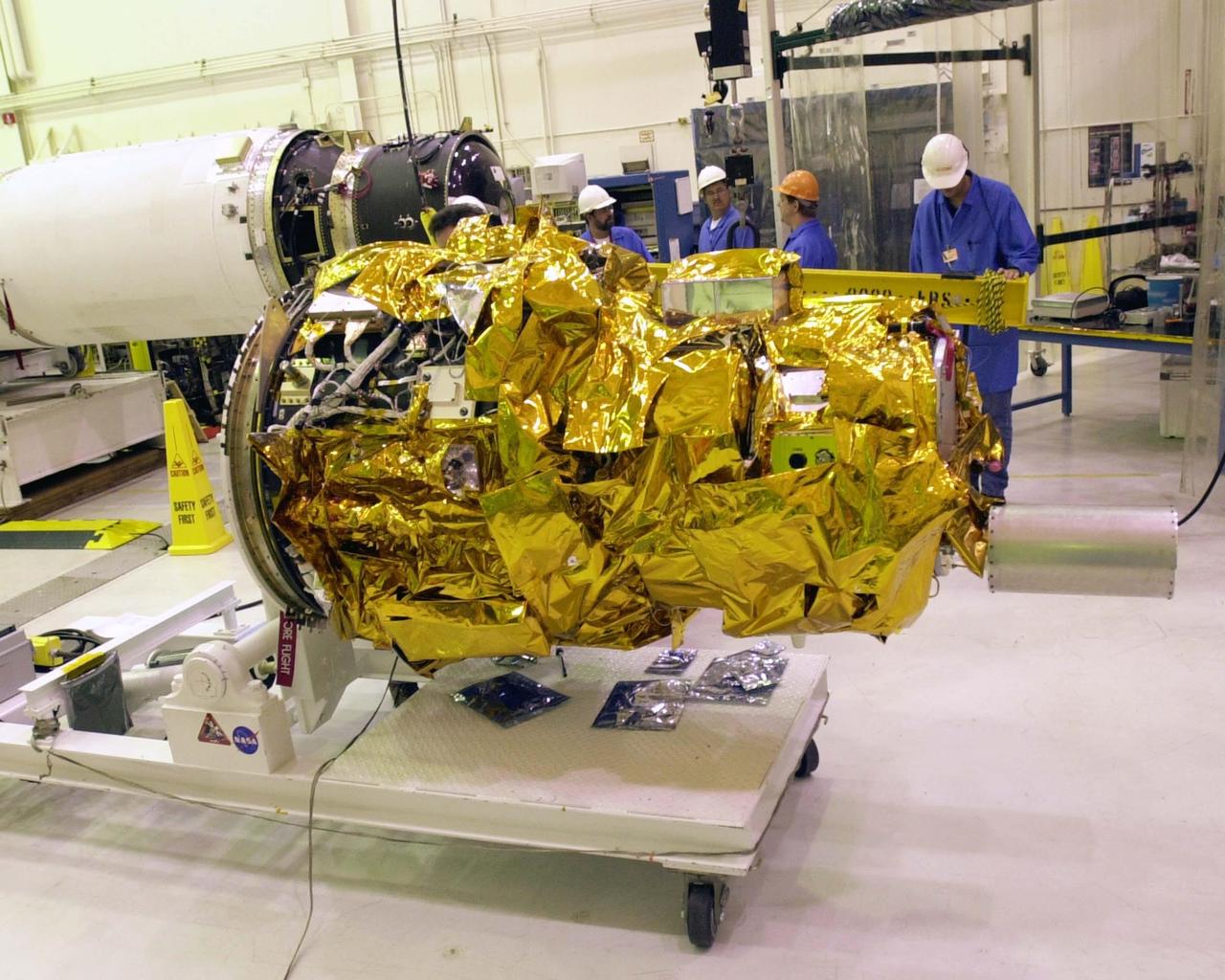
KENNEDY SPACE CENTER, FLA. - At Vandenberg Air Force Base in California, the Demonstration of Autonomous Rendezvous Technology (DART) spacecraft (foreground) is ready to be mated to second and third stages in preparation for the launch aboard the Orbital Sciences Pegasus XL launch vehicle. Pegasus will launch DART into a circular polar orbit of approximately 475 miles. Built for NASA by Orbital Sciences Corporation, DART was designed as an advanced flight demonstrator to locate and maneuver near an orbiting satellite. DART weighs about 800 pounds and is nearly 6 feet long and 3 feet in diameter. DART is designed to demonstrate technologies required for a spacecraft to locate and rendezvous, or maneuver close to, other craft in space. Results from the DART mission will aid in the development of NASA’s Crew Exploration Vehicle and will also assist in vehicle development for crew transfer and crew rescue capability to and from the International Space Station.
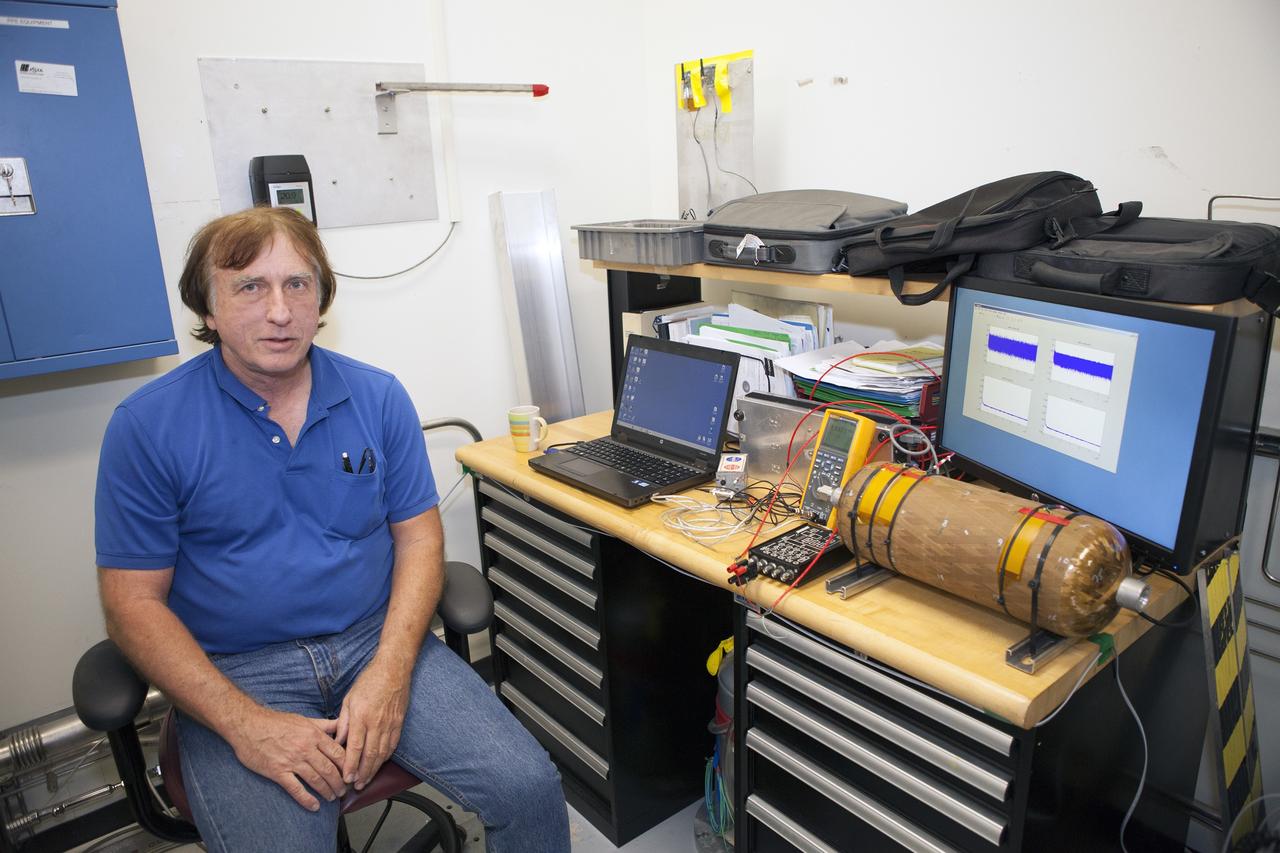
CAPE CANAVERAL, Fla. – Rudy Werlink, a fluid systems engineer in the Engineering Directorate at NASA's Kennedy Space Center in Florida, monitors a test in a lab at the Cryogenics Testbed Facility using the Lead Zirconate Titanate, or PZT-based system that he developed. Werlink developed the PZT-based system at Kennedy as a way to measure the mass of a fluid and the structural health of a tank using vibration signatures on Earth or in reduced/zero g gravity. The mass gaging technology has received approval to be on the first sub-orbital flight on the Virgin Galactic Space Plane in 2015. NASA experiments using the PZT technology will be used by Embry-Riddle Aeronautical University in conjunction with Carthage College on a fluid transfer experiment. Photo credit: NASA/Daniel Casper
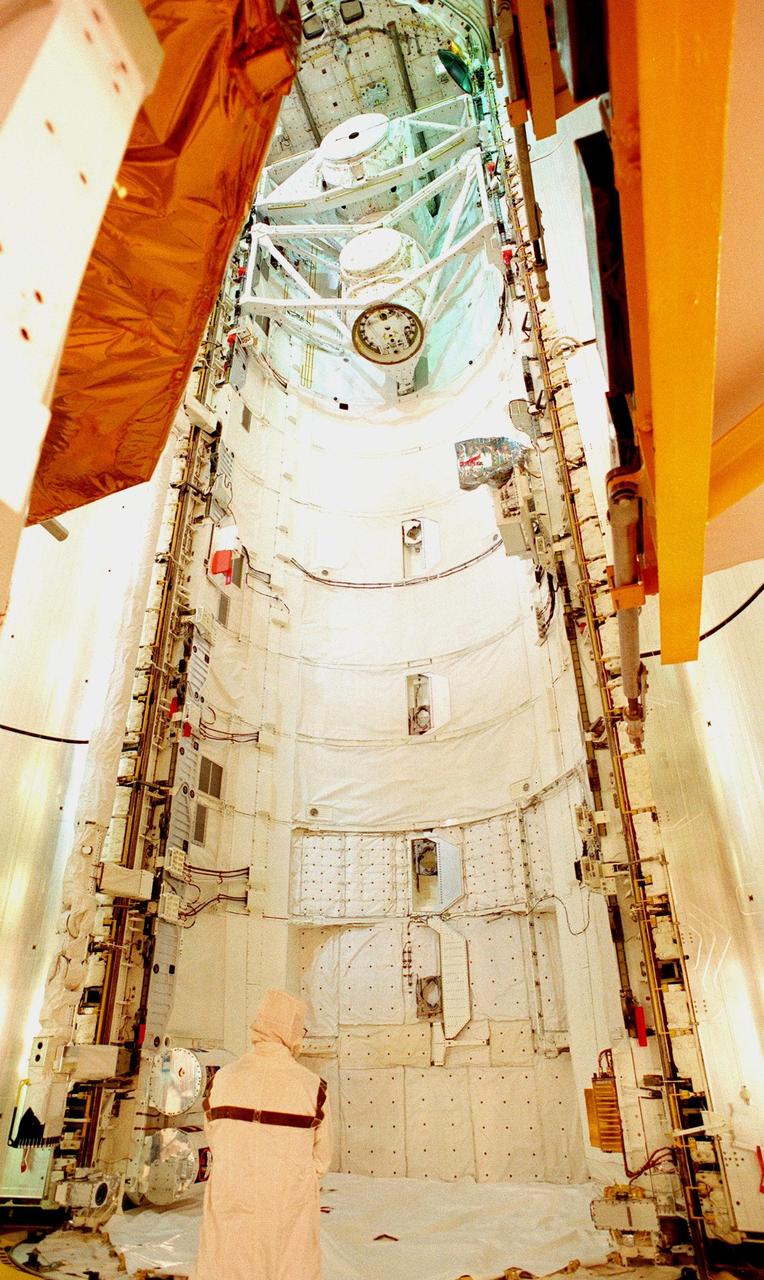
The open doors of the payload bay on Space Shuttle Discovery await the transfer of four of the payloads on mission STS-95: the SPACEHAB single module, Spartan, the Hubble Space Telescope Orbiting Systems Test Platform (HOST), and the International Extreme Ultraviolet Hitchhiker (IEH-3). At the top of bay are the airlock (used for depressurization and repressurization during extravehicular activity and transfer to Mir) and the tunnel adapter (enables the flight crew members to transfer from the pressurized middeck crew compartment to Spacelab's pressurized shirt-sleeve environment). SPACEHAB involves experiments on space flight and the aging process. Spartan is a solar physics spacecraft designed to perform remote sensing of the hot outer layers of the sun's atmosphere or corona. HOST carries four experiments to validate components planned for installation during the third Hubble Space Telescope servicing mission and to evaluate new technologies in an Earth-orbiting environment. IEH-3 comprises several experiments that will study the Jovian planetary system, hot stars, planetary and reflection nebulae, other stellar objects and their environments through remote observation of EUV/FUV emissions; study spacecraft interactions, Shuttle glow, thruster firings, and contamination; and measure the solar constant and identify variations in the value during a solar cycle. Discovery is scheduled to launch on Oct. 29, 1998
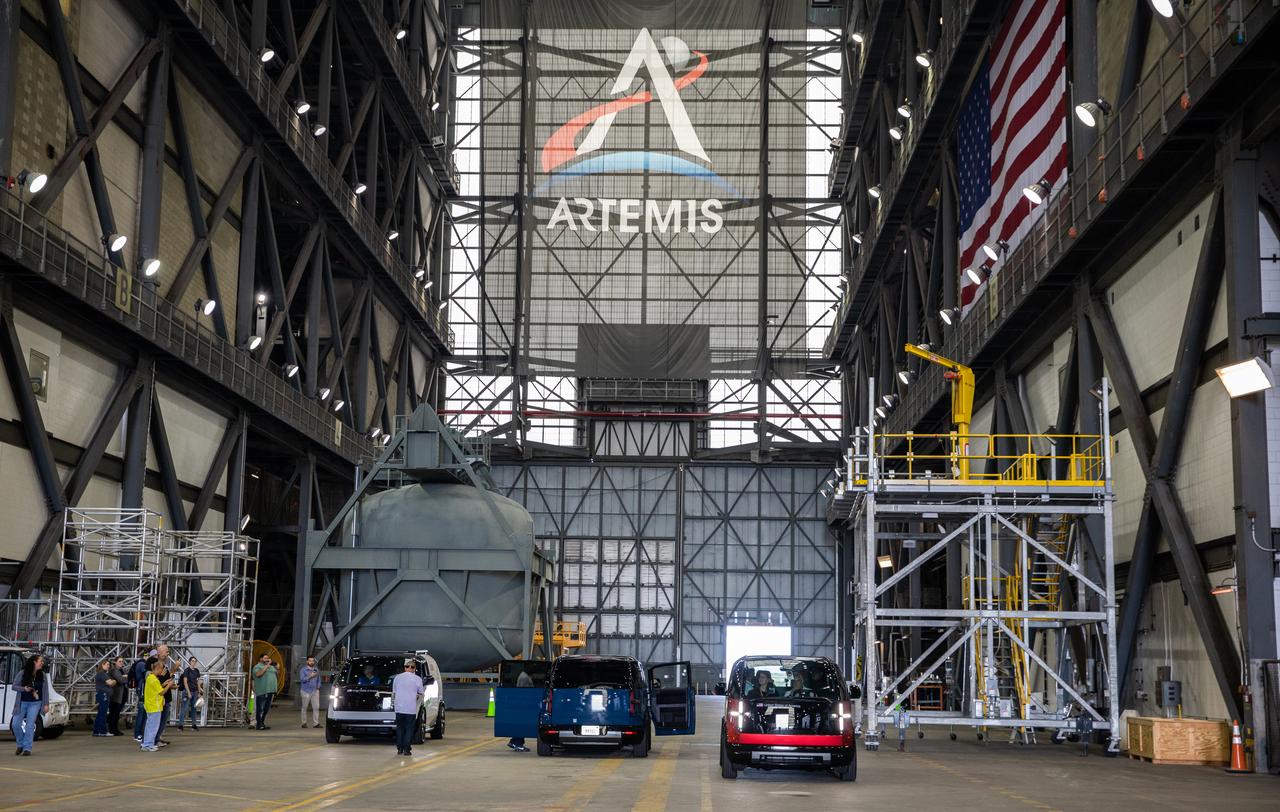
Several concept designs for Artemis crew transportation vehicles (CTV) are lined up in the transfer aisle of the Vehicle Assembly Building at NASA’s Kennedy Space Center in Florida on May 11, 2022. Canoo Technologies Inc., was awarded a contract to design and provide the next generation of CTVs for the Artemis crewed missions. Representatives with Canoo were at the spaceport demonstrating the environmentally friendly fleet of vehicles. Artemis II will be the first Artemis mission flying crew aboard Orion. In later missions, NASA will land the first woman and the first person of color on the surface of the Moon, paving the way for a long-term lunar presence and serving as a steppingstone on the way to Mars.
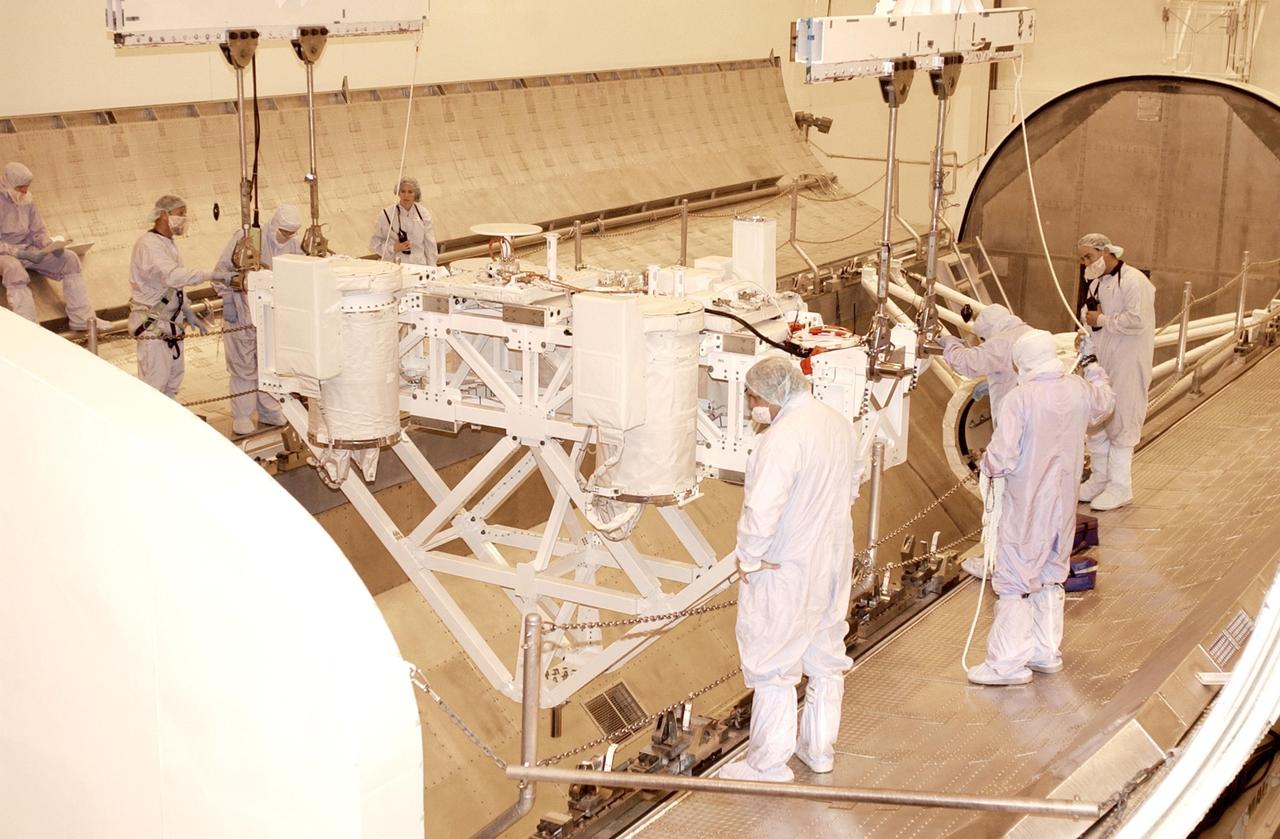
KENNEDY SPACE CENTER, FLA. -- The Hitchhiker Bridge with GetAway Special canisters (GAS cans) is placed into the payload canister. The bridge, a carrier for the Fast Reaction Experiments Enabling Science, Technology, Applications and Research (FREESTAR) that incorporates eight high priority secondary attached shuttle experiments, is being transferred to the payload canister below it. The bridge will be installed in Columbia's payload bay as part of mission STS-107. A research mission, STS-107 will also carry the SHI Research Double Module (SHI/RDM), known as SPACEHAB. Experiments on the module range from material sciences to life sciences (many rats). STS-107 is scheduled to launch July 19, 2002

KENNEDY SPACE CENTER, FLA. - An overhead crane lowers the Hitchhiker Bridge with GetAway Special canisters (GAS cans) into the payload canister below. The bridge, a carrier for the Fast Reaction Experiments Enabling Science, Technology, Applications and Research (FREESTAR) that incorporates eight high priority secondary attached shuttle experiments, is being transferred to the payload canister below it. The bridge will be installed in Columbia's payload bay as part of mission STS-107. A research mission, STS-107 will also carry the SHI Research Double Module (SHI_RDM), known as SPACEHAB. Experiments on the module range from material sciences to life sciences (many rats). STS-107 is scheduled to launch July 19, 2002
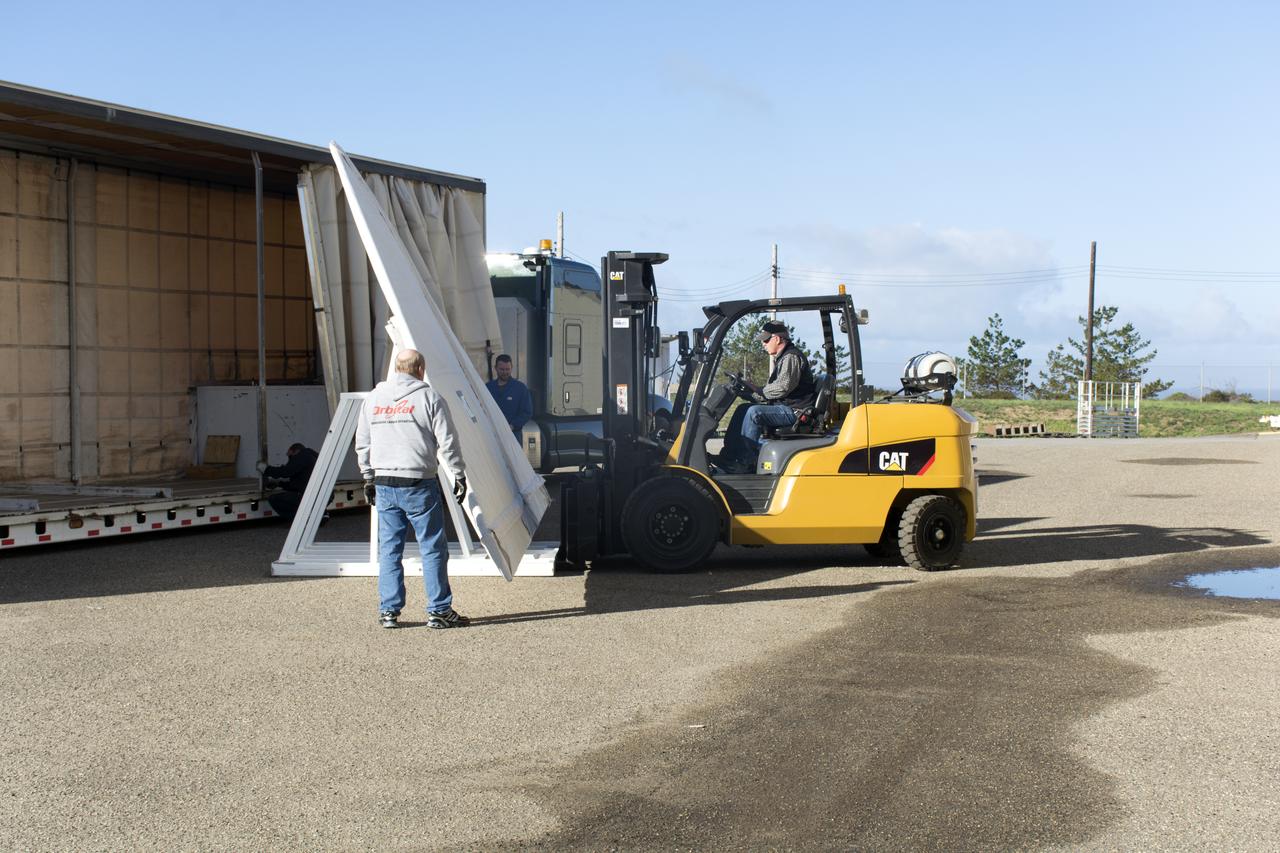
Workers transfer the wing for the Orbital ATK Pegasus XL rocket from a truck to a forklift at Building 1555 at Vandenberg Air Force Base in California. The rocket is being prepared for NASA's Ionospheric Connection Explorer, or ICON, mission. ICON will launch from the Kwajalein Atoll aboard the Pegasus XL on Dec. 8, 2017. ICON will study the frontier of space - the dynamic zone high in Earth's atmosphere where terrestrial weather from below meets space weather above. The explorer will help determine the physics of Earth's space environment and pave the way for mitigating its effects on our technology, communications systems and society.
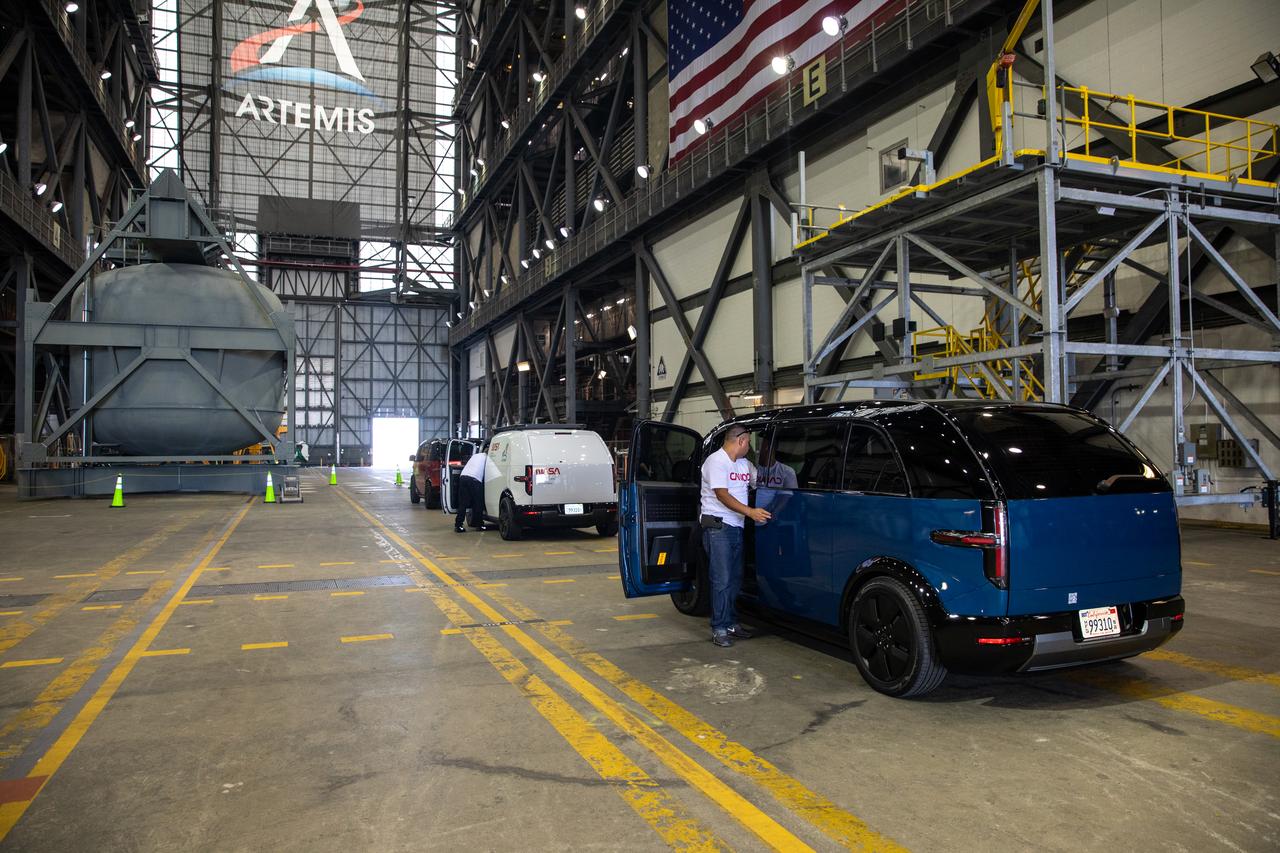
Several concept designs for Artemis crew transportation vehicles (CTV) are lined up in the transfer aisle of the Vehicle Assembly Building at NASA’s Kennedy Space Center in Florida on May 11, 2022. Canoo Technologies Inc., was awarded a contract to design and provide the next generation of CTVs for the Artemis crewed missions. Representatives with Canoo were at the spaceport demonstrating the environmentally friendly fleet of vehicles. Artemis II will be the first Artemis mission flying crew aboard Orion. In later missions, NASA will land the first woman and the first person of color on the surface of the Moon, paving the way for a long-term lunar presence and serving as a steppingstone on the way to Mars.
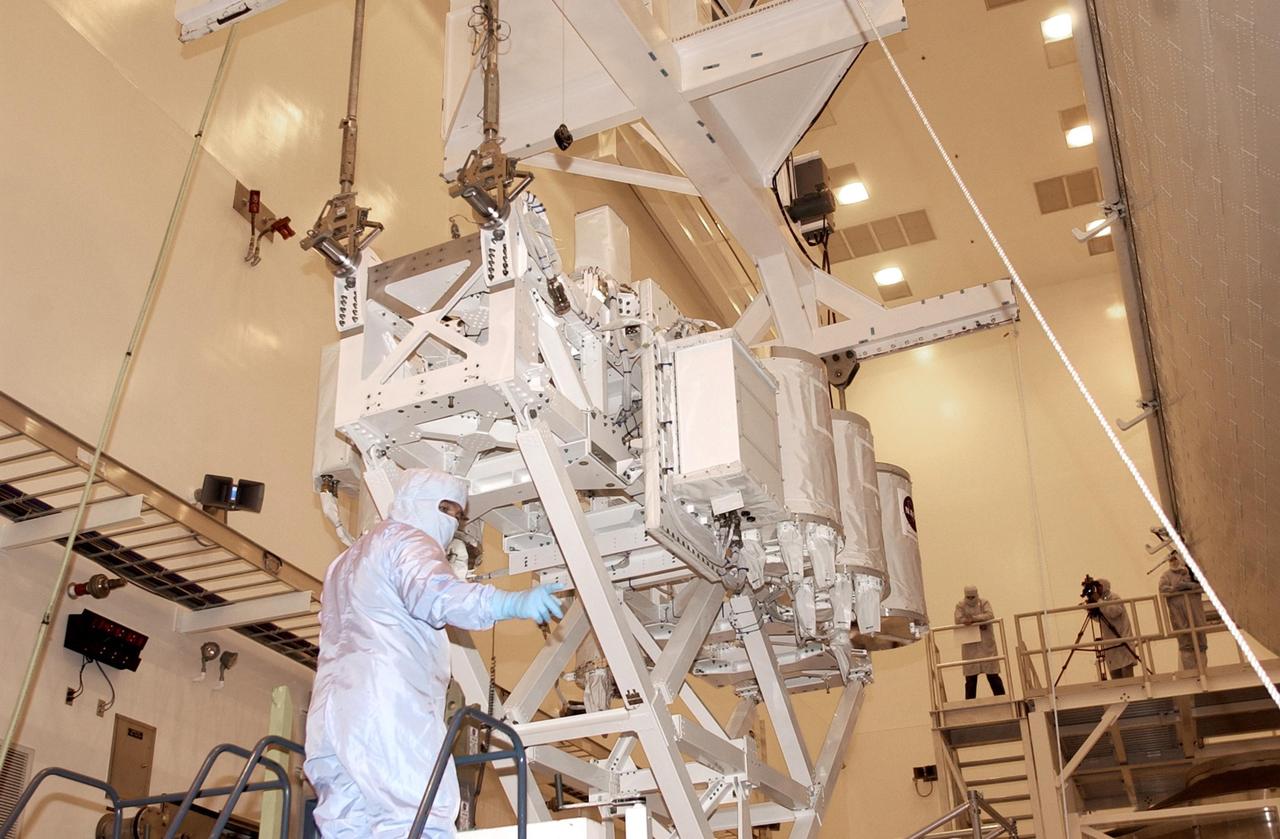
KENNEDY SPACE CENTER, FLA. -- In the Multi-Payload Processing Facility, an overhead crane is attached to the Hitchhiker Bridge with GetAway Special canisters (GAS cans). The bridge, a carrier for the Fast Reaction Experiments Enabling Science, Technology, Applications and Research (FREESTAR) that incorporates eight high priority secondary attached shuttle experiments, is being transferred to the payload canister. The bridge will be installed in Columbia's payload bay as part of mission STS-107. A research mission, STS-107 will also carry the SHI Research Double Module (SHI/RDM), known as SPACEHAB. Experiments on the module range from material sciences to life sciences (many rats). STS-107 is scheduled to launch July 19, 2002
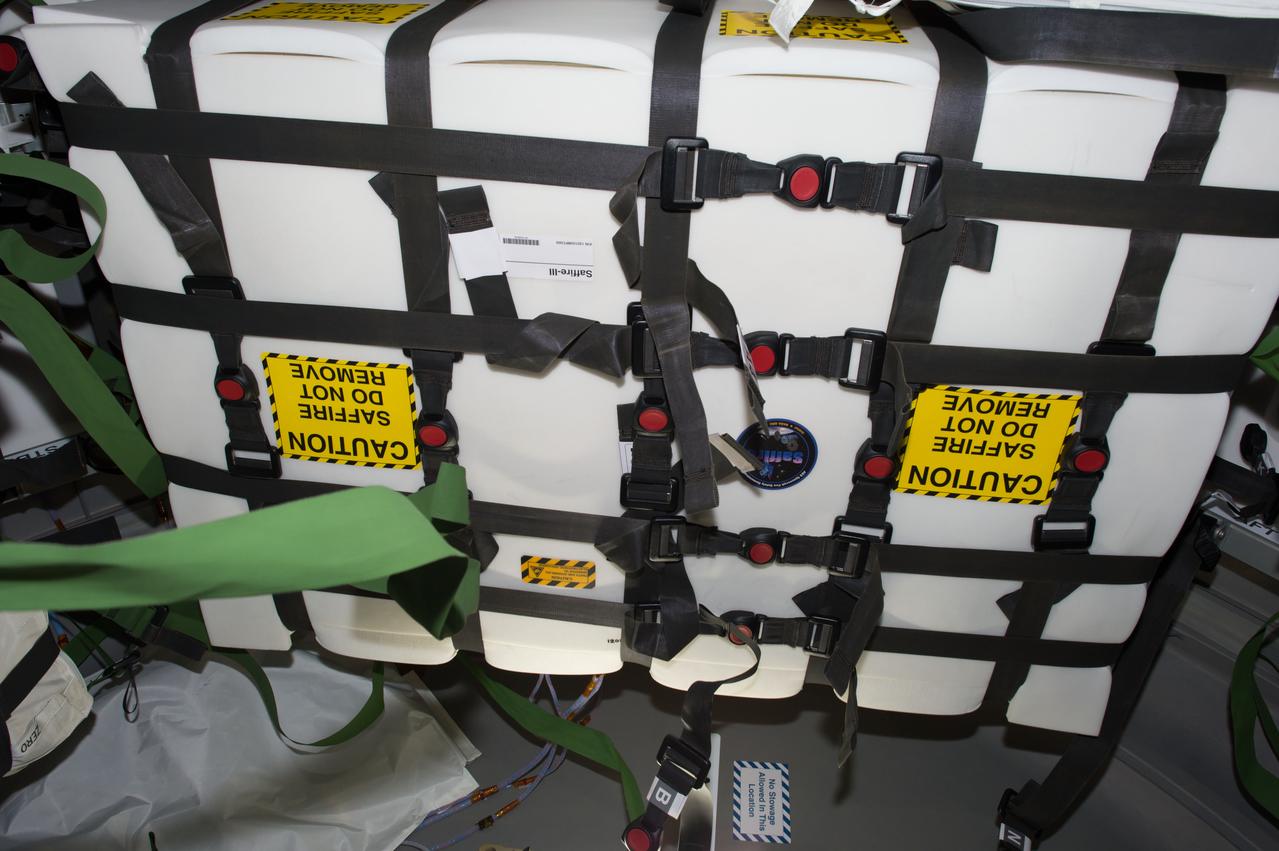
iss051e039882 (5/8/2017) --- A view of Spacecraft Fire Experiment-III (Saffire-III) award the John Glenn Orbital ATK 7 (OA-7) Cygnus spacecraft, taken during cargo transfer operations (OPS). The NASA Advanced Exploration Systems program began a project to develop and demonstrate spacecraft fire safety technologies in relevant environments. The keystone of these demonstrations is a large-scale fire safety experiment conducted on an International Space Station (ISS) re-supply vehicle after it has undocked from the ISS and before it enters the atmosphere.

Teams conduct powerup and docking operations for the Sensor Test for Orion Relative Navigation Risk Mitigation (STORRM) in a payload support room at Johnson Space Center’s Mission Control Center in Houston on May 18, 2011. STORMM was successfully demonstrated on Space Shuttle Endeavour’s STS-134 mission to the International Space Station..The goal of STORRM was to validate a new relative navigation sensor based on advanced laser and detector technology that will make docking and undocking spacecraft easier and safer. It also tested the hardware in the same environment that the sensors would experience on the first Orion rendezvous to another vehicle. Part of Batch image transfer from Flickr.

KENNEDY SPACE CENTER, FLA. -- In the Space Station Processing Facility at NASA's Kennedy Space Center, the integrated cargo carrier-lite, or ICC-L, is ready to be lifted and placed in the payload canister for mission STS-122. Seen here are two of the elements mounted on top: on the left, the European technology Exposure Facility composed of nine science instruments and an autonomous temperature measurement unit, and on the right, the SOLAR payload designed for sun observation. The SOLAR will be transferred and stowed on the Columbus module during the third spacewalk of the mission. STS-122 is targeted for launch on Dec. 6 on space shuttle Atlantis. Photo credit: NASA/Amanda Diller