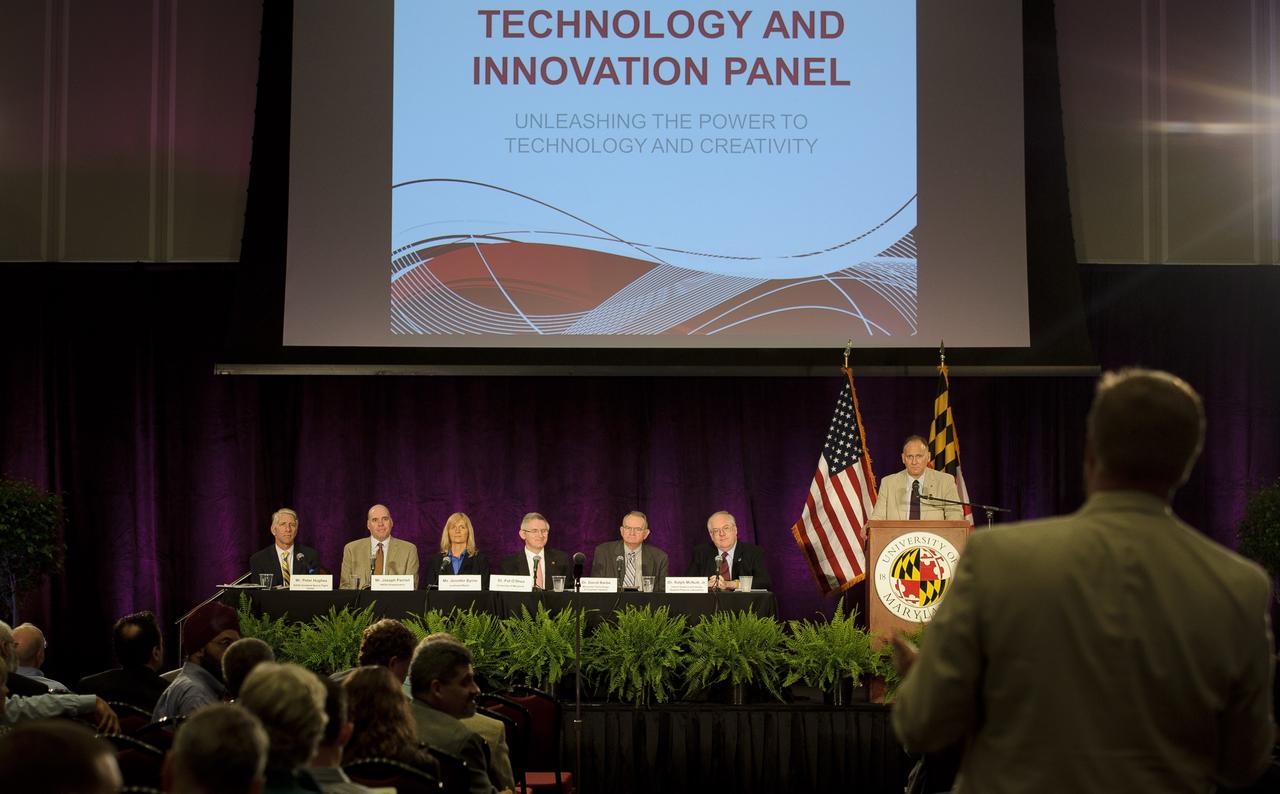
A member of the audience asks a question to the technology and innovation panel at the 2011 NASA Future Forum, Thursday, Aug. 11, 2011, at the Riggs Alumni Center on the campus of the University of Maryland in College Park, Md. Photo Credit: (NASA/Paul E. Alers)

ORLANDO, Fla. -- Attendees of the 2010 Tom Joyner Family Reunion talk with NASA astronaut Mike Foreman at the Gaylord Palms Convention Center in Orlando, Fla. To encourage student attendees to focus on pursuing careers in science, technology, engineering and mathematics (STEM), NASA featured some of its greatest legends and trailblazers during a panel discussion at the reunion event. NASA's Education Office sponsored the panel discussion and educational activities as part of the agency's "Summer of Innovation" initiative and the federal "Educate to Innovate" campaign. Photo credit: NASA/Amanda Diller

ORLANDO, Fla. -- Attendees of the 2010 Tom Joyner Family Reunion use astronaut gloves to perform a task at the Gaylord Palms Convention Center in Orlando, Fla. To encourage student attendees to focus on pursuing careers in science, technology, engineering and mathematics (STEM), NASA featured some of its greatest legends and trailblazers during a panel discussion at the reunion event. NASA's Education Office sponsored the panel discussion and educational activities as part of the agency's "Summer of Innovation" initiative and the federal "Educate to Innovate" campaign. Photo credit: NASA/Amanda Diller

ORLANDO, Fla. -- During the 2010 Tom Joyner Family Reunion, NASA astronaut Leland Melvin talks to attendees at the Gaylord Palms Convention Center in Orlando, Fla. To encourage student attendees to focus on pursuing careers in science, technology, engineering and mathematics (STEM), NASA featured some of its greatest legends and trailblazers during a panel discussion at the reunion event. Panel members, sitting from left, are Christine Darden, Lew Braxton, Robyn Gordon, Jim Jennings, and space activist and actress Nichelle Nichols. NASA's Education Office sponsored the panel discussion and educational activities as part of the agency's "Summer of Innovation" initiative and the federal "Educate to Innovate" campaign. Photo credit: NASA/Amanda Diller

ORLANDO, Fla. -- During the 2010 Tom Joyner Family Reunion, space activist and actress Nichelle Nichols talks to attendees at the Gaylord Palms Convention Center in Orlando, Fla. To encourage student attendees to focus on pursuing careers in science, technology, engineering and mathematics (STEM), NASA featured some of its greatest legends and trailblazers during a panel discussion at the reunion event. Other panel members included NASA astronaut Leland Melvin, Christine Darden, Lew Braxton, Robyn Gordon and Jim Jennings. NASA's Education Office sponsored the panel discussion and educational activities as part of the agency's "Summer of Innovation" initiative and the federal "Educate to Innovate" campaign. Photo credit: NASA/Amanda Diller
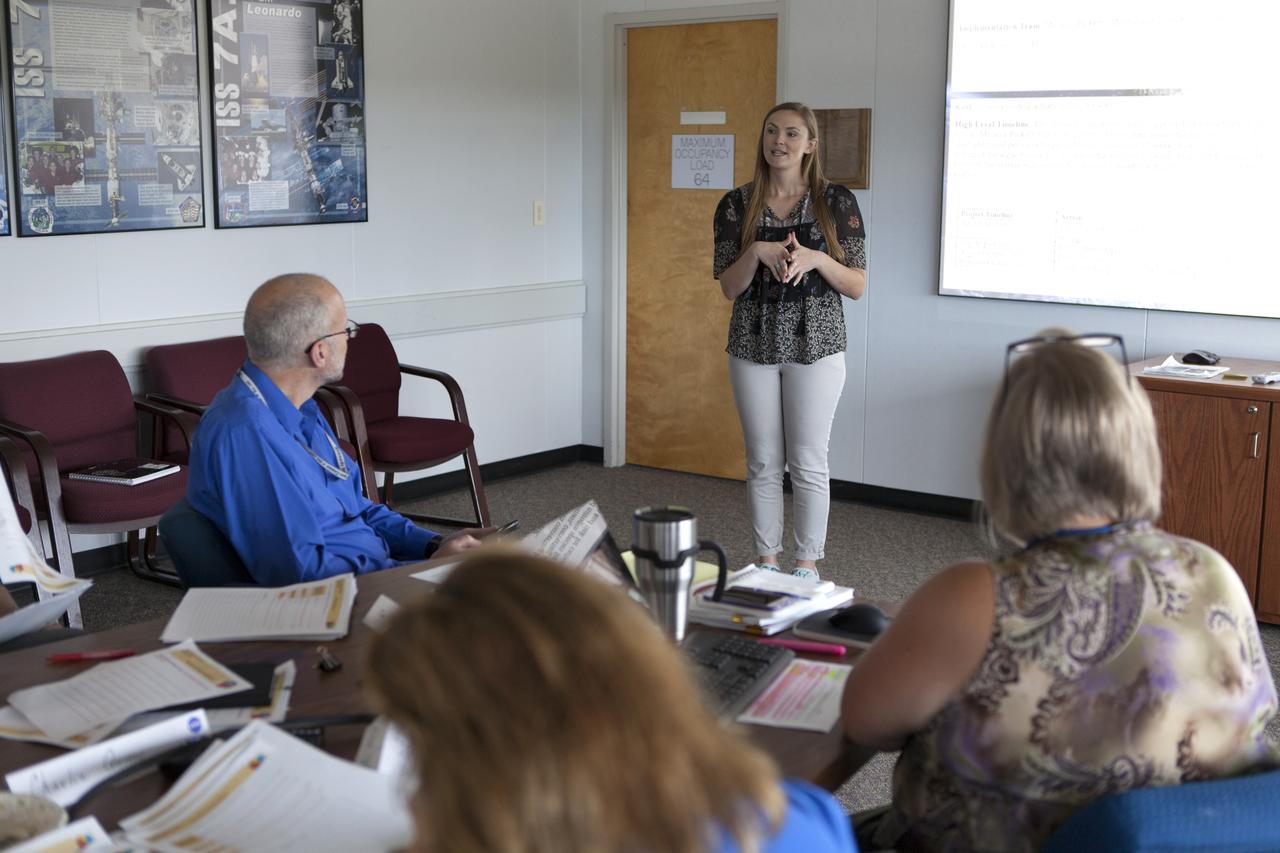
Melanie Pickett, from the Exploration Research and Technology Programs directorate, presents her proposal during the “Innovation Without Boundaries” event held in the Space Station Processing Facility at Kennedy Space Center in Florida on Thursday, Aug. 2. There were 39 proposals featuring a wide range of innovative ideas as part of the Chief Technologist Innovation Call. Presenters had two minutes to highlight their idea, followed by a three-minute question-and-answer period. The judging panel included senior staff, contractors and representatives throughout Kennedy.
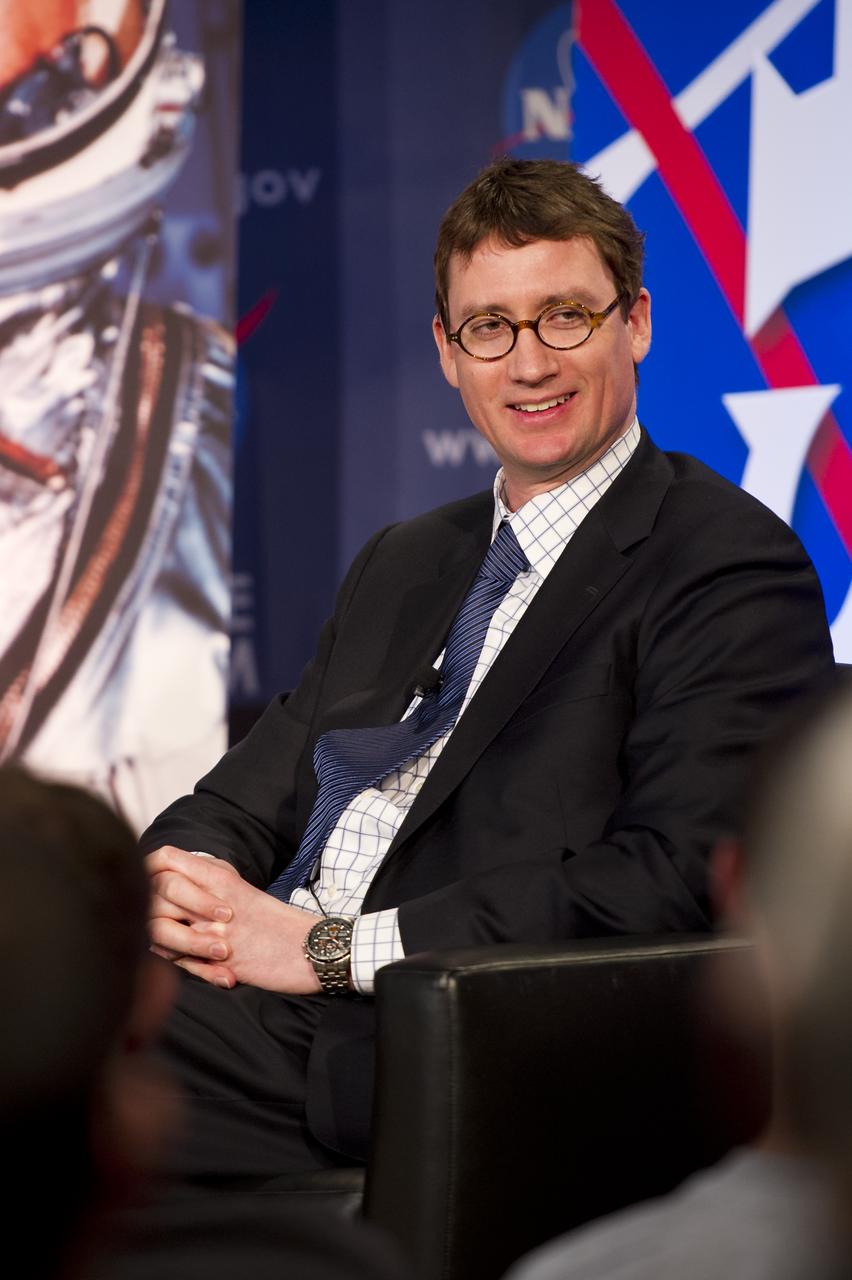
Jordan Hansell, chairman and CEO, NetJets Inc. talks during the NASA Future Forum panel titled "Importance of Technology, Science and Innovation for our Economic Future" at The Ohio State University on Tuesday, Feb. 21, 2012 in Columbus, Ohio. The NASA Future Forum features panel discussions on the importance of education to our nation's future in space, the benefit of commercialized space technology to our economy and lives here on Earth, and the shifting roles for the public, commercial and international communities in space. Photo Credit: (NASA/Bill Ingalls)

Laurie Leshin, dean of the School of Science, Rensselaer Polytechnic Institute, moderates the NASA Future Forum panel titled "Importance of Technology, Science and Innovation for our Economic Future" at The Ohio State University on Tuesday, Feb. 21, 2012 in Columbus, Ohio. The NASA Future Forum features panel discussions on the importance of education to our nation's future in space, the benefit of commercialized space technology to our economy and lives here on Earth, and the shifting roles for the public, commercial and international communities in space. Photo Credit: (NASA/Bill Ingalls)
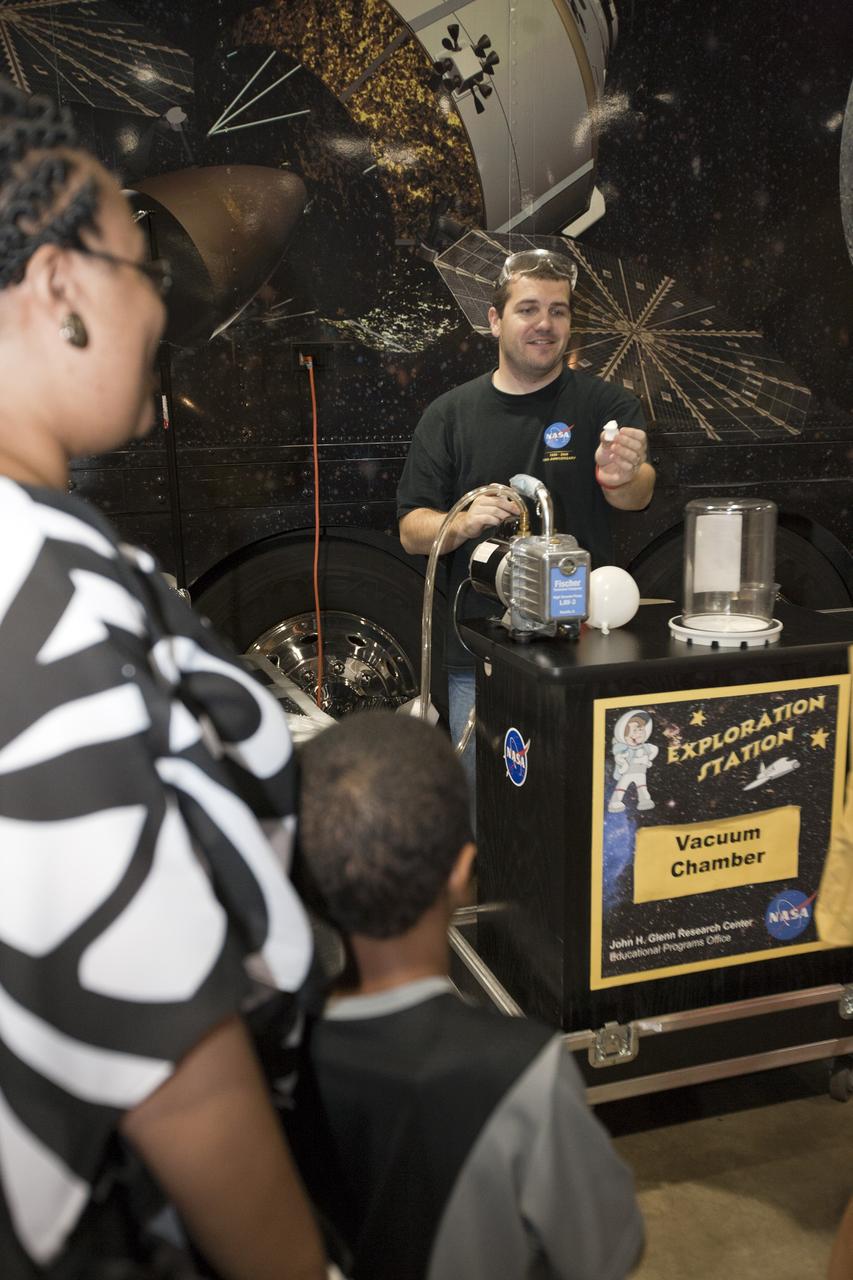
ORLANDO, Fla. -- Attendees of the 2010 Tom Joyner Family Reunion learn about packing food for space from NASA education specialist Chris Hartenstine at the Gaylord Palms Convention Center in Orlando, Fla. To encourage student attendees to focus on pursuing careers in science, technology, engineering and mathematics (STEM), NASA featured some of its greatest legends and trailblazers during a panel discussion at the reunion event. NASA's Education Office sponsored the panel discussion and educational activities as part of the agency's "Summer of Innovation" initiative and the federal "Educate to Innovate" campaign. Photo credit: NASA/Amanda Diller
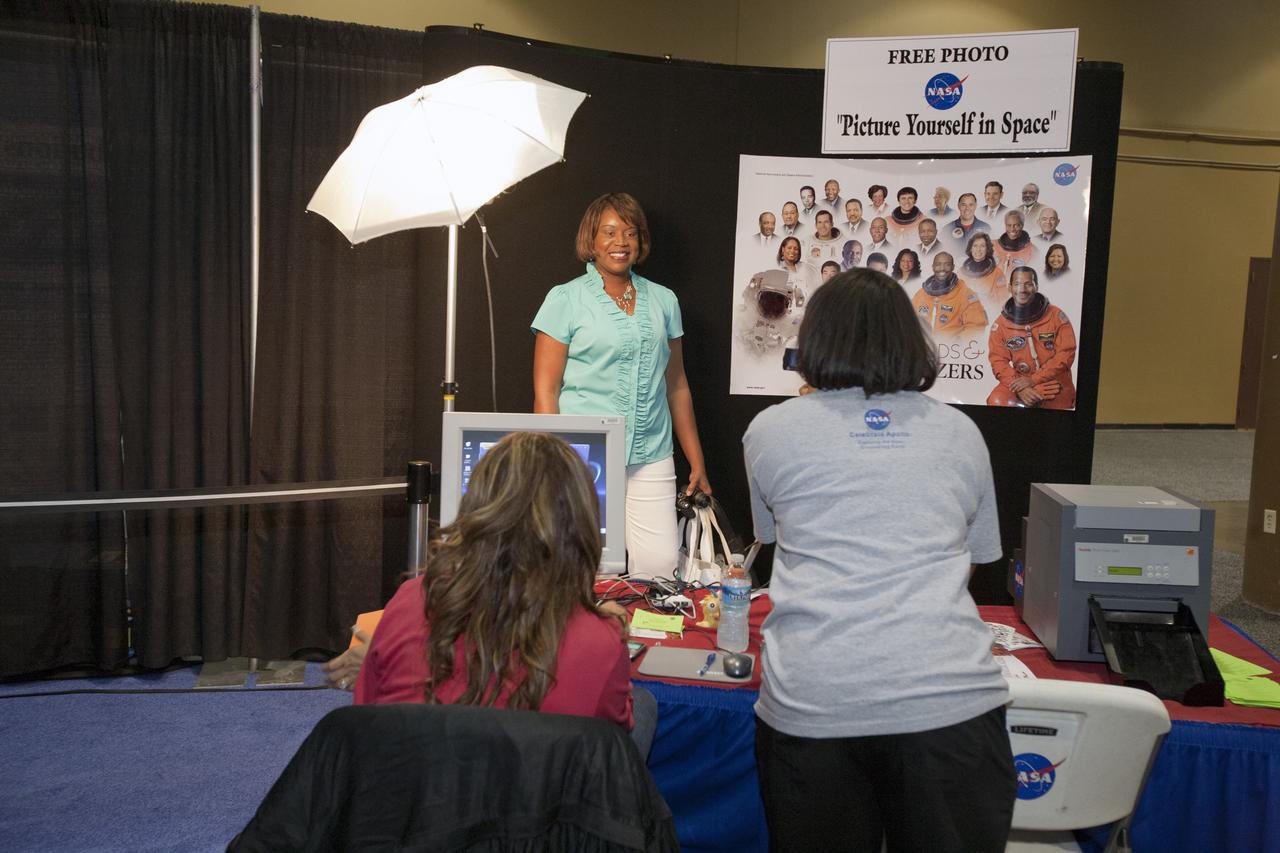
ORLANDO, Fla. -- Attendees of the 2010 Tom Joyner Family Reunion were photographed and then their faces were put into a NASA "Legends and Trailblazers" poster at the Gaylord Palms Convention Center in Orlando, Fla. To encourage student attendees to focus on pursuing careers in science, technology, engineering and mathematics (STEM), NASA featured some of its greatest legends and trailblazers during a panel discussion at the reunion event. NASA's Education Office sponsored the panel discussion and educational activities as part of the agency's "Summer of Innovation" initiative and the federal "Educate to Innovate" campaign. Photo credit: NASA/Amanda Diller
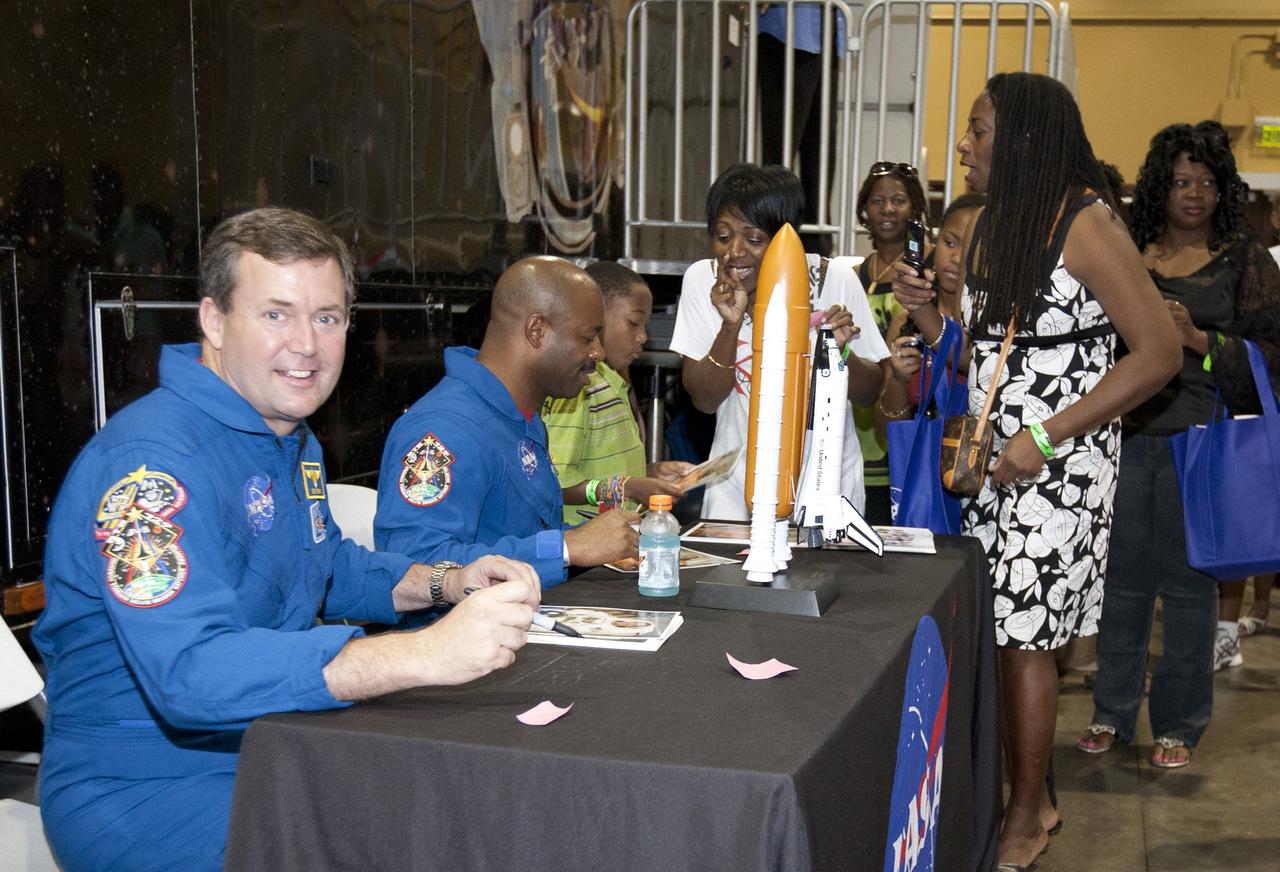
ORLANDO, Fla. -- Attendees of the 2010 Tom Joyner Family Reunion stand in line to receive an autograph from NASA astronauts Mike Foreman, left, and Leland Melvin at the Gaylord Palms Convention Center in Orlando, Fla. To encourage student attendees to focus on pursuing careers in science, technology, engineering and mathematics (STEM), NASA featured some of its greatest legends and trailblazers during a panel discussion at the reunion event. Foreman and Melvin are both veterans of two space shuttle missions. NASA's Education Office sponsored the panel discussion and educational activities as part of the agency's "Summer of Innovation" initiative and the federal "Educate to Innovate" campaign. Photo credit: NASA/Amanda Diller

ORLANDO, Fla. -- Attendees of the 2010 Tom Joyner Family Reunion stand in line to receive an autograph from NASA astronaut Leland Melvin at the Gaylord Palms Convention Center in Orlando, Fla. To encourage student attendees to focus on pursuing careers in science, technology, engineering and mathematics (STEM), NASA featured some of its greatest legends and trailblazers during a panel discussion at the reunion event. NASA's Education Office sponsored the panel discussion and educational activities as part of the agency's "Summer of Innovation" initiative and the federal "Educate to Innovate" campaign. Photo credit: NASA/Amanda Diller
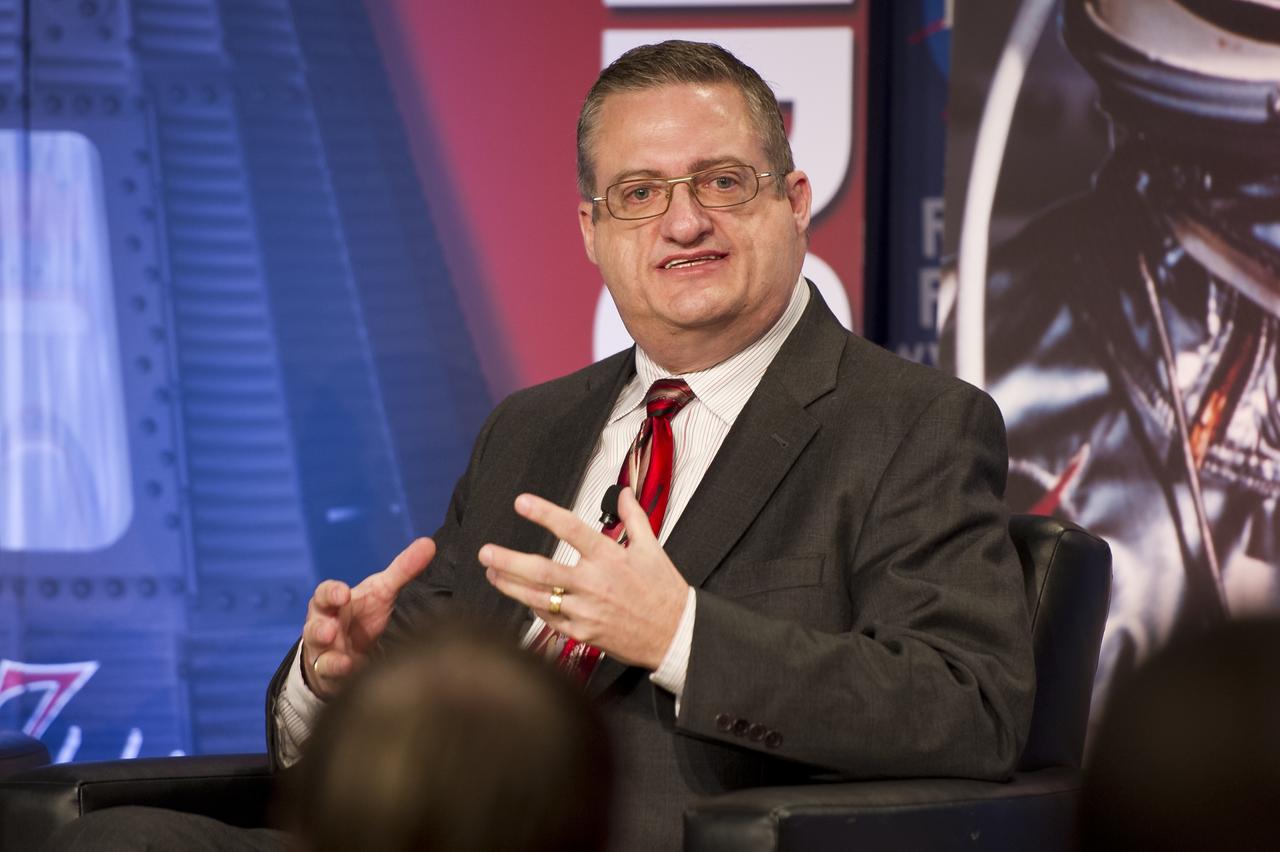
Michael Donovan, technology consultant, New Services Development, Hewlett-Packard Company talks during the NASA Future Forum panel titled "Importance of Technology, Science and Innovation for our Economic Future" at The Ohio State University on Tuesday, Feb. 21, 2012 in Columbus, Ohio. The NASA Future Forum features panel discussions on the importance of education to our nation's future in space, the benefit of commercialized space technology to our economy and lives here on Earth, and the shifting roles for the public, commercial and international communities in space. Photo Credit: (NASA/Bill Ingalls)
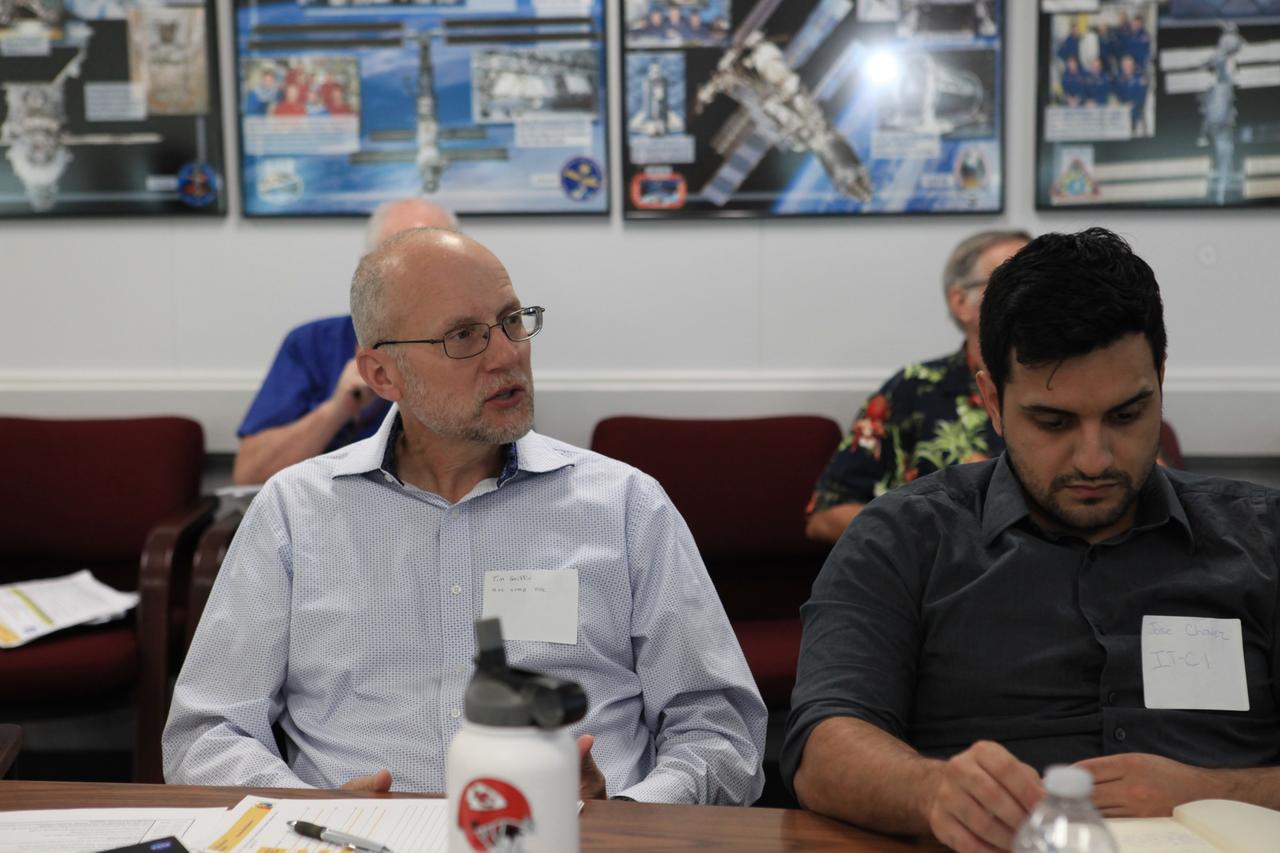
Tim Griffin, NASA’s Kennedy Space Center’s Space Technology Mission Directorate representative for this year’s “Innovation Without Boundaries” event held in Kennedy’s Space Station Processing Facility on June 14, 2019, asks a participant a question. A number of employees, including civil servants and contractors that opted to take part, presented their proposals to a panel of judges as part of the Chief Technologist Innovation Call. The three categories of awards were innovative ideas that had little cost, ideas with great returns on investment up to $20,000 and big ideas where participants could socialize ideas for projects that would take more than $20,000 to implement.
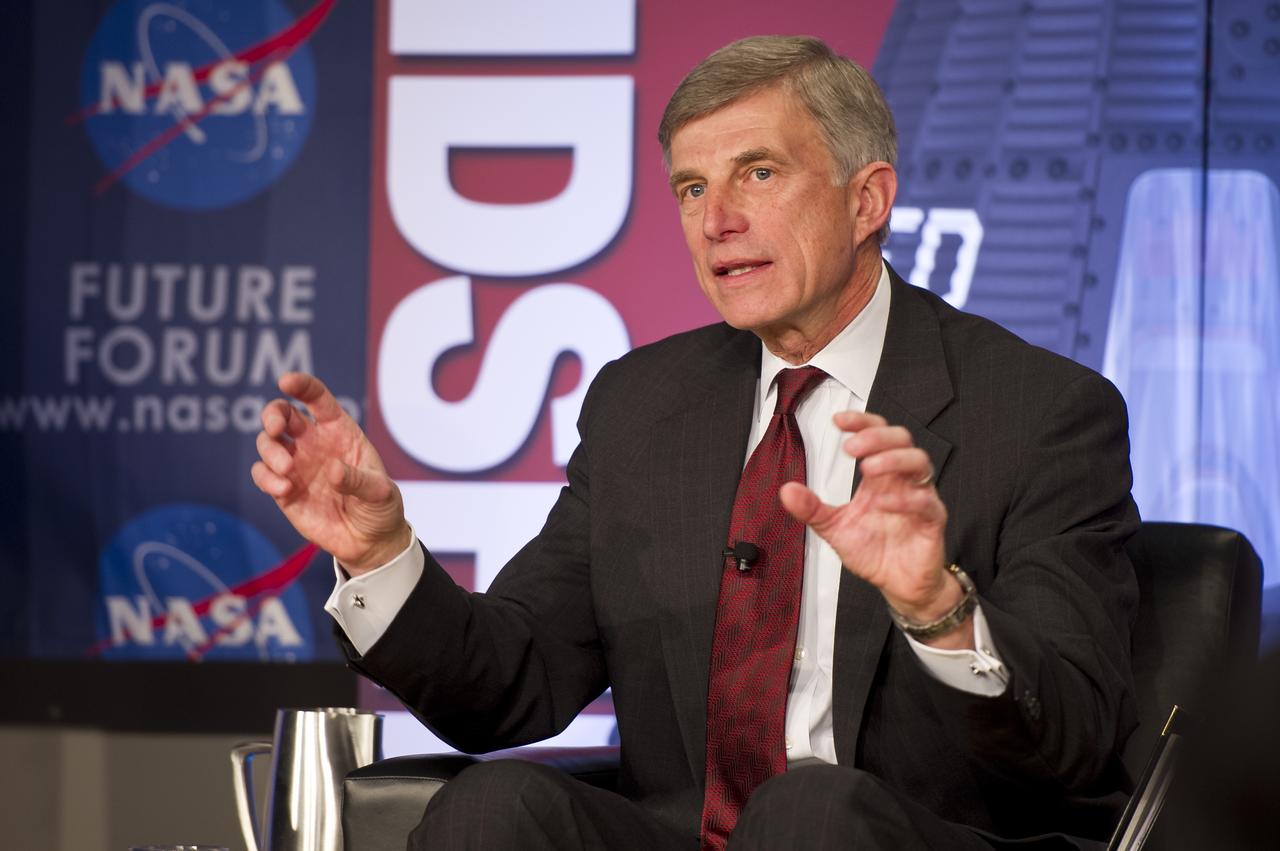
Ron Sega, Vice president and enterprise executive for Energy and the Environment, The Ohio State University and Colorado State University talks during the NASA Future Forum panel titled "Importance of Technology, Science and Innovation for our Economic Future" at The Ohio State University on Tuesday, Feb. 21, 2012 in Columbus, Ohio. The NASA Future Forum features panel discussions on the importance of education to our nation's future in space, the benefit of commercialized space technology to our economy and lives here on Earth, and the shifting roles for the public, commercial and international communities in space. Photo Credit: (NASA/Bill Ingalls)
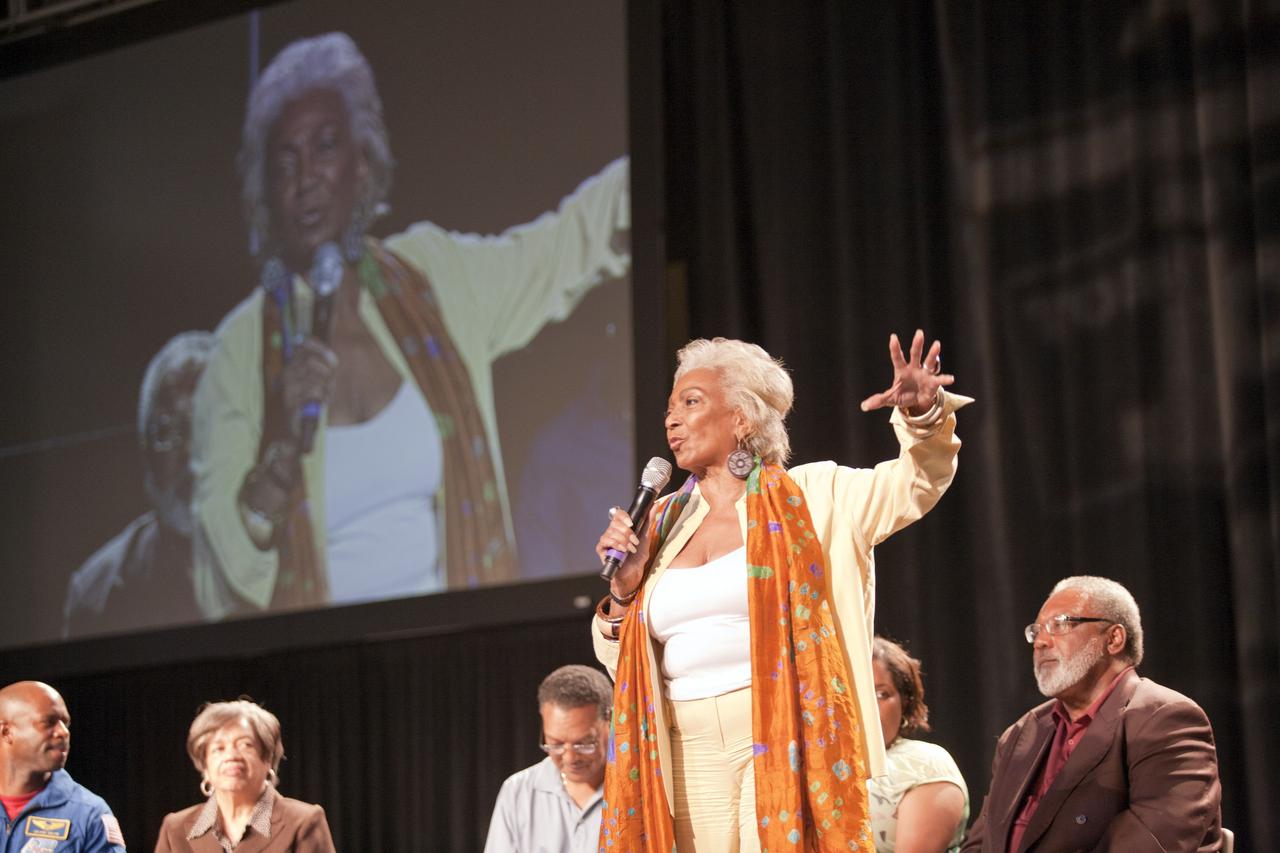
ORLANDO, Fla. -- During the 2010 Tom Joyner Family Reunion, space activist and actress Nichelle Nichols talks to attendees at the Gaylord Palms Convention Center in Orlando, Fla. To encourage student attendees to focus on pursuing careers in science, technology, engineering and mathematics (STEM), NASA featured some of its greatest legends and trailblazers during a panel discussion at the reunion event. In the 1960s, Nichols played communications officer Lieutenant Uhura in the Star Trek television series. Other panel members included NASA astronaut Leland Melvin, Christine Darden, Lew Braxton, Robyn Gordon and Jim Jennings. NASA's Education Office sponsored the panel discussion and educational activities as part of the agency's "Summer of Innovation" initiative and the federal "Educate to Innovate" campaign. Photo credit: NASA/Amanda Diller
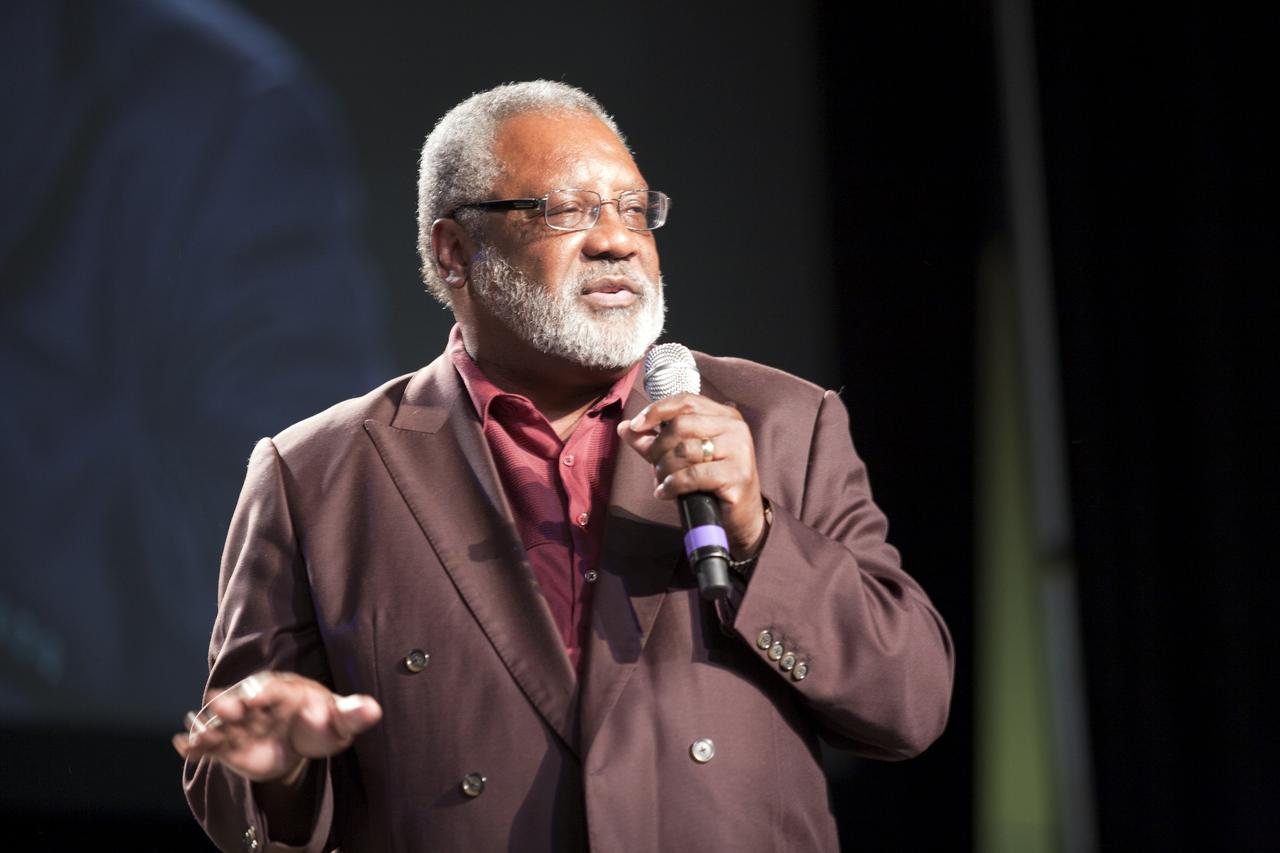
ORLANDO, Fla. -- During the 2010 Tom Joyner Family Reunion, Jim Jennings talks to attendees at the Gaylord Palms Convention Center in Orlando, Fla. To encourage student attendees to focus on pursuing careers in science, technology, engineering and mathematics (STEM), NASA featured some of its greatest legends and trailblazers during a panel discussion at the reunion event. Other panel members included NASA astronaut Leland Melvin, Christine Darden, Lew Braxton, Robyn Gordon, Jim Jennings, and space activist and actress Nichelle Nichols. NASA's Education Office sponsored the panel discussion and educational activities as part of the agency's "Summer of Innovation" initiative and the federal "Educate to Innovate" campaign. Photo credit: NASA/Amanda Diller
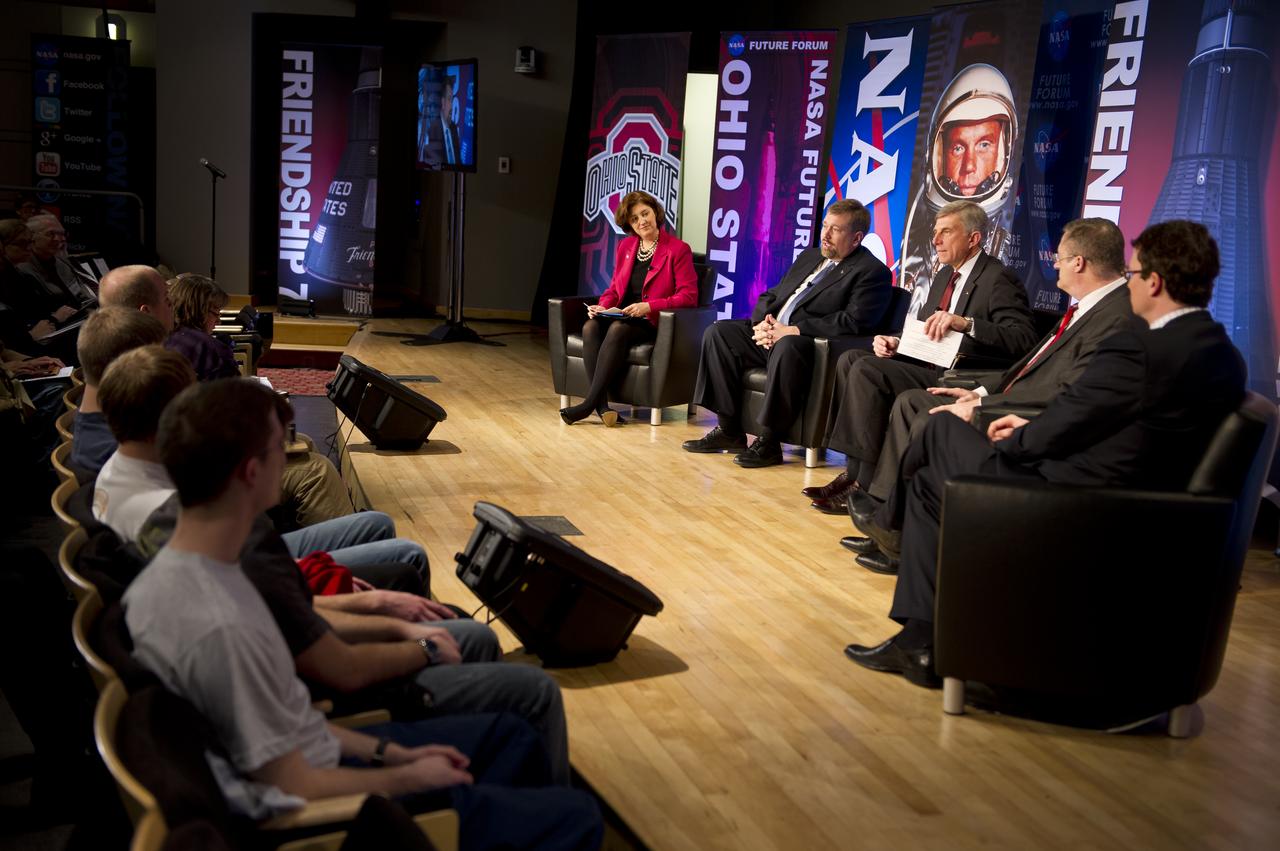
Laurie Leshin, dean of the School of Science, Rensselaer Polytechnic Institute, left, Mason Peck, NASA Chief Technologist, 2nd from left, Ron Sega, Vice president and enterprise executive for Energy and the Environment, The Ohio State University and Colorado State University, Michael Donovan, technology consultant, New Services Development, Hewlett-Packard Company, and, Jordan Hansell, chairman and CEO, NetJets Inc., right, participate in the NASA Future Forum panel titled "Importance of Technology, Science and Innovation for our Economic Future" at The Ohio State University on Tuesday, Feb. 21, 2012 in Columbus, Ohio. The NASA Future Forum features panel discussions on the importance of education to our nation's future in space, the benefit of commercialized space technology to our economy and lives here on Earth, and the shifting roles for the public, commercial and international communities in space. Photo Credit: (NASA/Bill Ingalls)
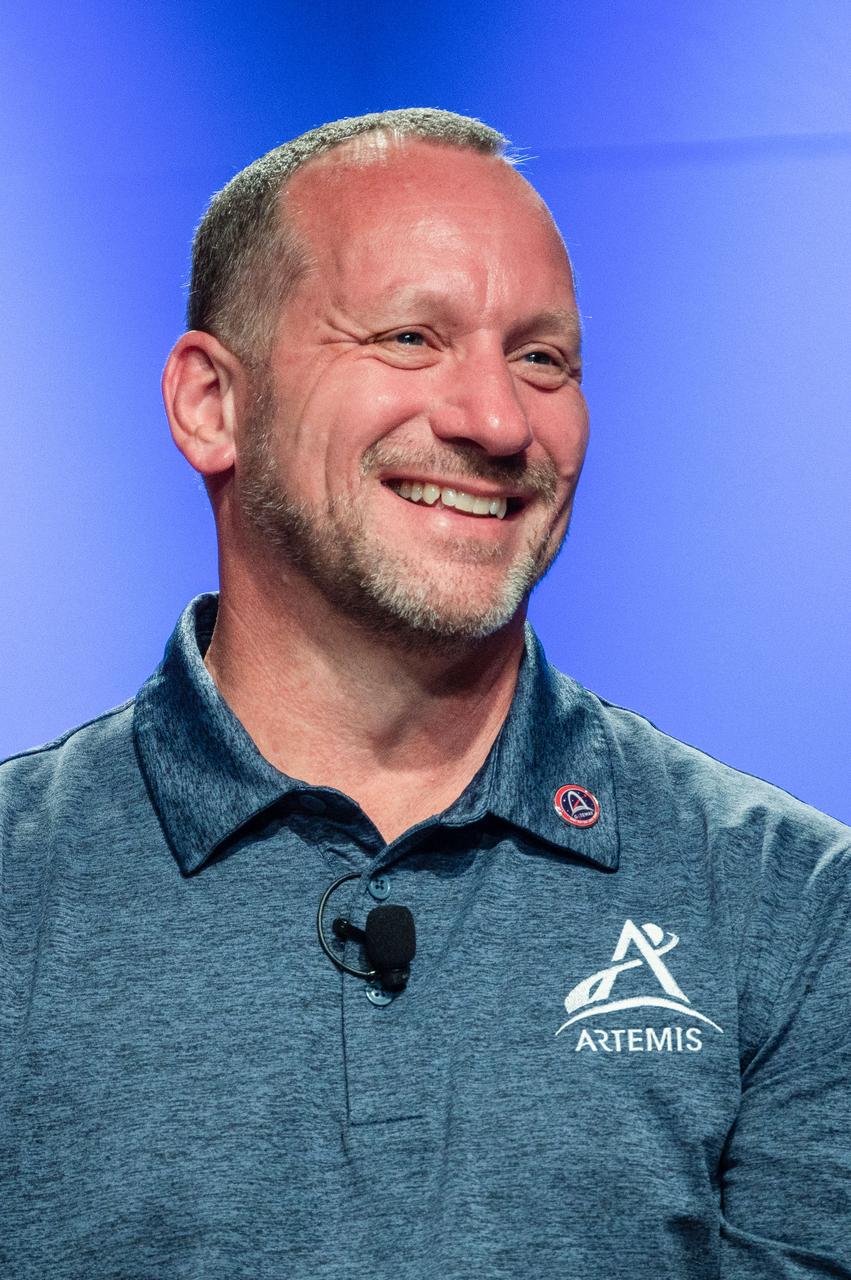
jsc2024e055770 (July 26, 2024) -- Dr. Jon Olansen, Gateway Program Manager, shares insights during "The Historic Artemis II Mission" forum held at EAA AirVenture Oshkosh 2024. The panel, held at the Theater in the Woods on July 26, discussed NASA's upcoming Artemis II mission and the innovative technologies enabling humanity's return to the Moon. Photo Credit: NASA/Andrew Carlsen
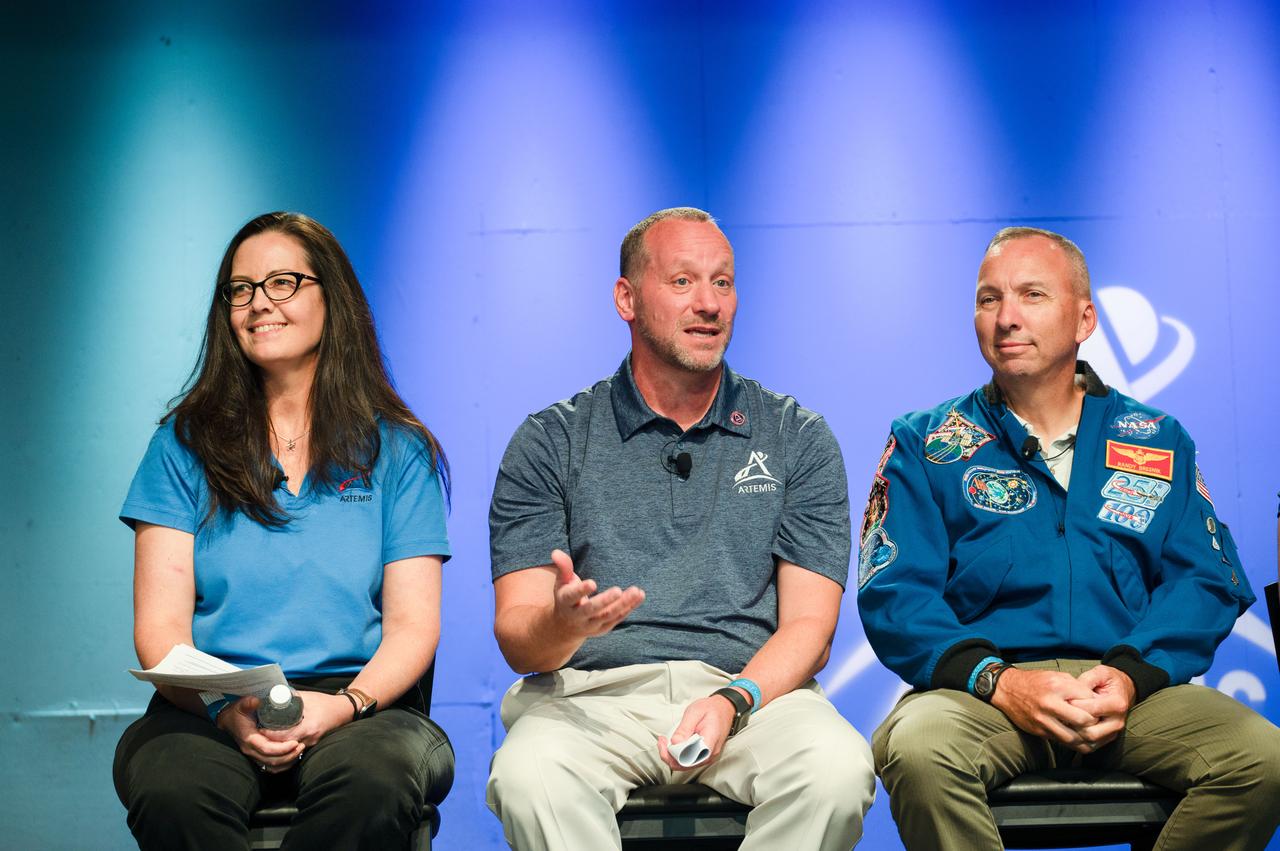
jsc2024e055766 (July 26, 2024) -- Dr. Jon Olansen, Gateway Program Manager, shares insights during "The Historic Artemis II Mission" forum held at EAA AirVenture Oshkosh 2024. The panel, held at the Theater in the Woods on July 26, discussed NASA's upcoming Artemis II mission and the innovative technologies enabling humanity's return to the Moon. Photo Credit: NASA/Andrew Carlsen
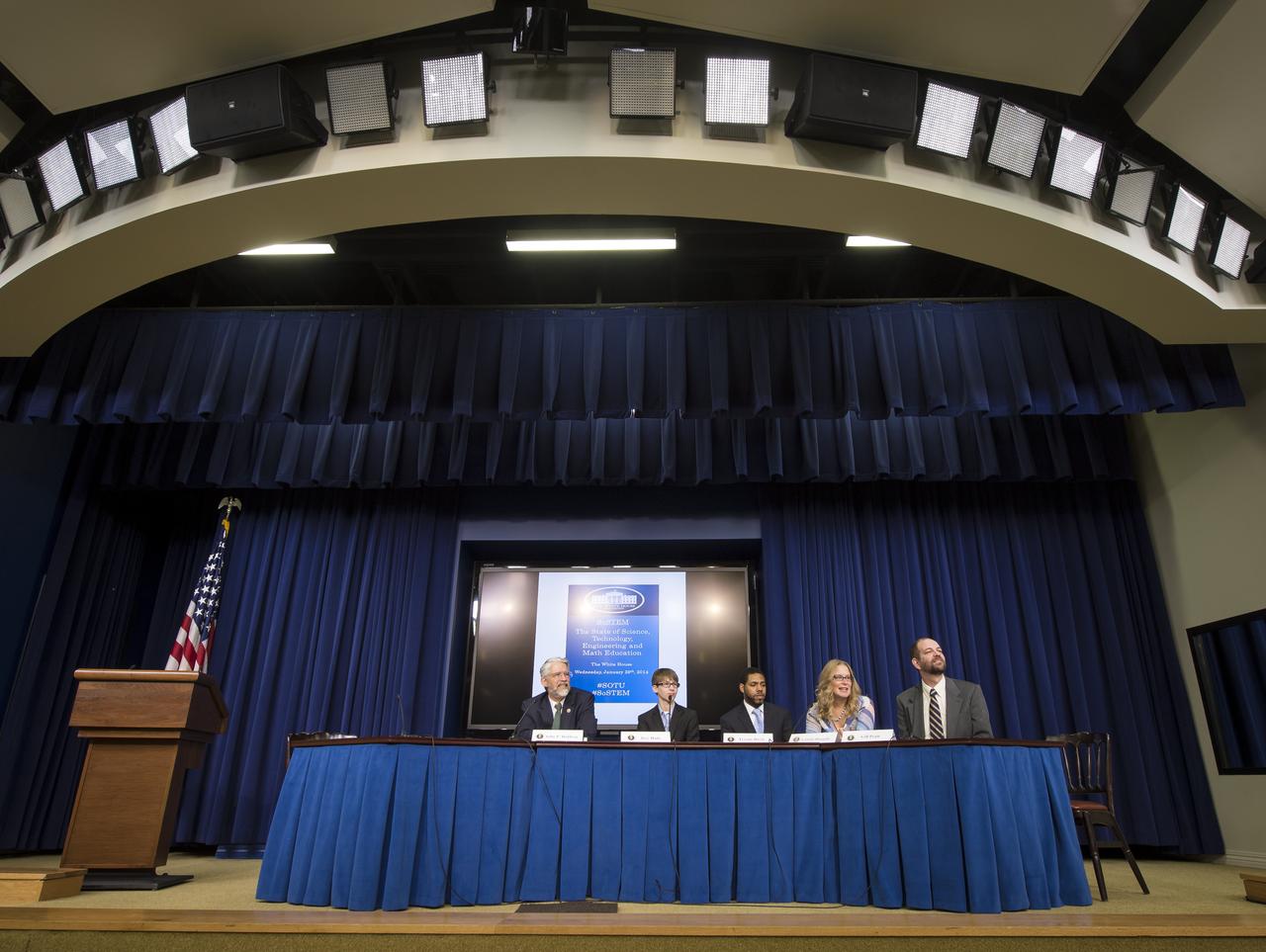
Panels participants, from left, Dr. John P. Holdren, Assistant to the President for Science and Technology and Director of the White House Office of Science & Technology Policy, former White House Science Fair participant Joey Hudy, Environmentalist and third-year law student at Elon University School of Law Tyrone Davis, White House innovation expert Cristin Dorgelo, and Defense Advanced Research Projects Agency (DARPA) Gill Pratt, take a question from the audience during the annual White House State of Science, Technology, Engineering, and Math (SoSTEM) address, Wednesday, Jan. 29, 2014, in the South Court Auditorium in the Eisenhower Executive Office Building on the White House complex in Washington. Photo Credit: (NASA/Bill Ingalls)
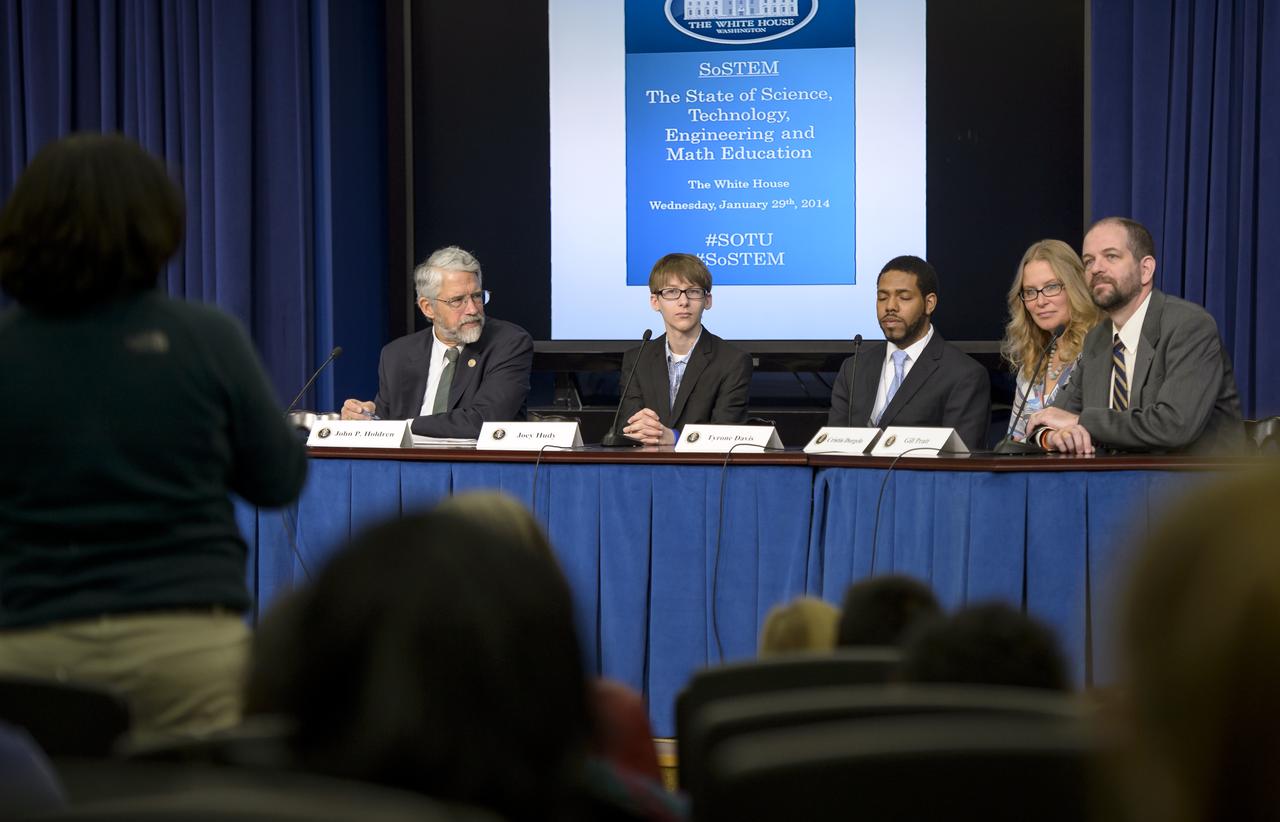
Panels participants, from left, Dr. John P. Holdren, Assistant to the President for Science and Technology and Director of the White House Office of Science & Technology Policy, former White House Science Fair participant Joey Hudy, Environmentalist and third-year law student at Elon University School of Law Tyrone Davis, White House innovation expert Cristin Dorgelo, and Defense Advanced Research Projects Agency (DARPA) Gill Pratt, take a question from the audience during the annual White House State of Science, Technology, Engineering, and Math (SoSTEM) address, Wednesday, Jan. 29, 2014, in the South Court Auditorium in the Eisenhower Executive Office Building on the White House complex in Washington. Photo Credit: (NASA/Bill Ingalls)
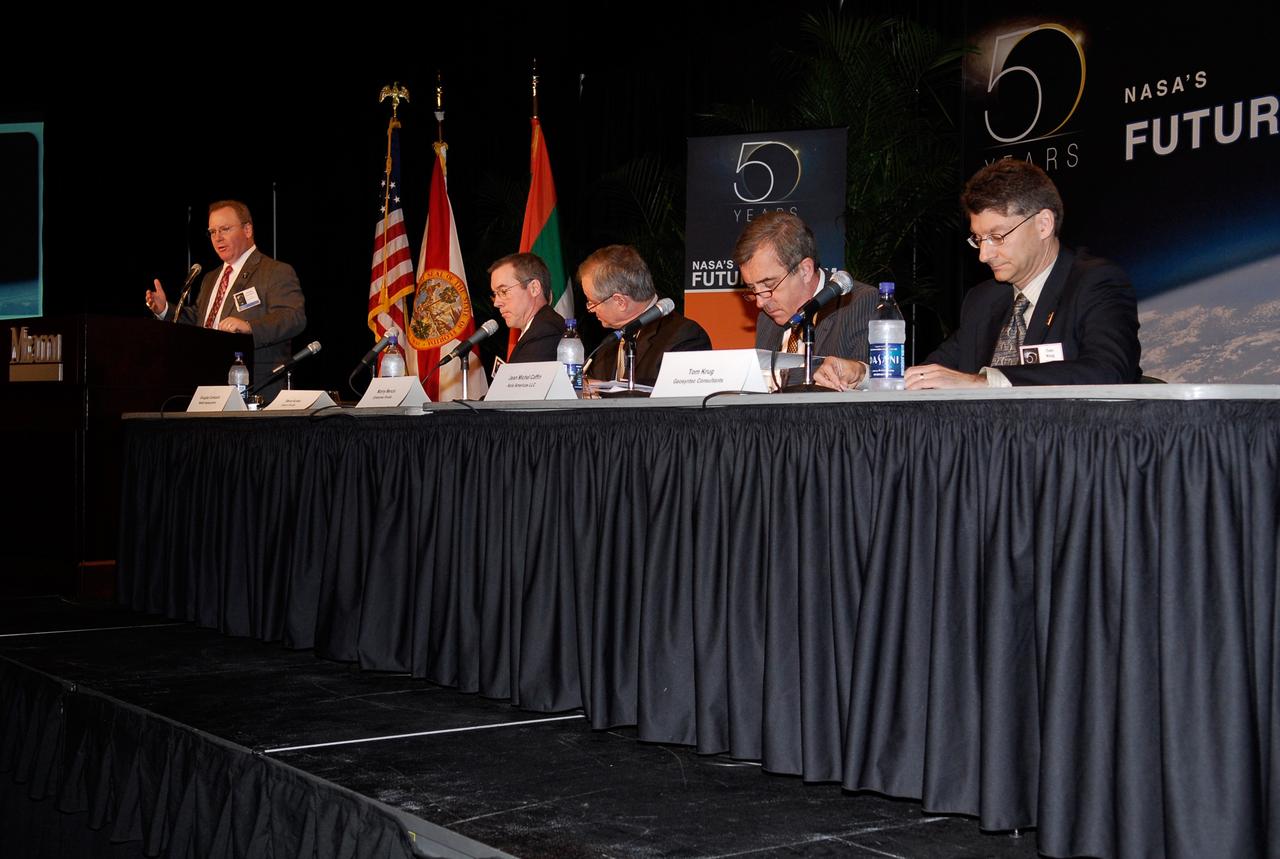
CAPE CANAVERAL, Fla. -- From the podium, Douglas Comstock, director of NASA's Innovative Partnership Program, moderates a panel presenting the topic “Unleashing the Power of Technology and Creativity” during NASA’s Future Forum in Miami. Others on the panel are (left to right), Steve Kohler, president and CEO of Space Florida; Manny Mencia Sr., vice president for international trade and business development of Enterprise Florida; Jean Michel Caffin, managing partner of Axis Americas and Beacon Council Executive Cabinet; and Tom Krug, associate and senior engineer with Geosyntec Consultants. The forum focused on how space exploration benefits Florida's economy. The event, which included presentations and panels, was held at the University of Miami's BankUnited Center. Among those participating were NASA Deputy Administrator Shana Dale, astronaut Carl Walz, director of the Advanced Capabilities Division in NASA's Exploration Systems Mission Directorate, and Russell Romanella, director, International Space Station and Spacecraft Processing. Photo credit: NASA/Kim Shiflett
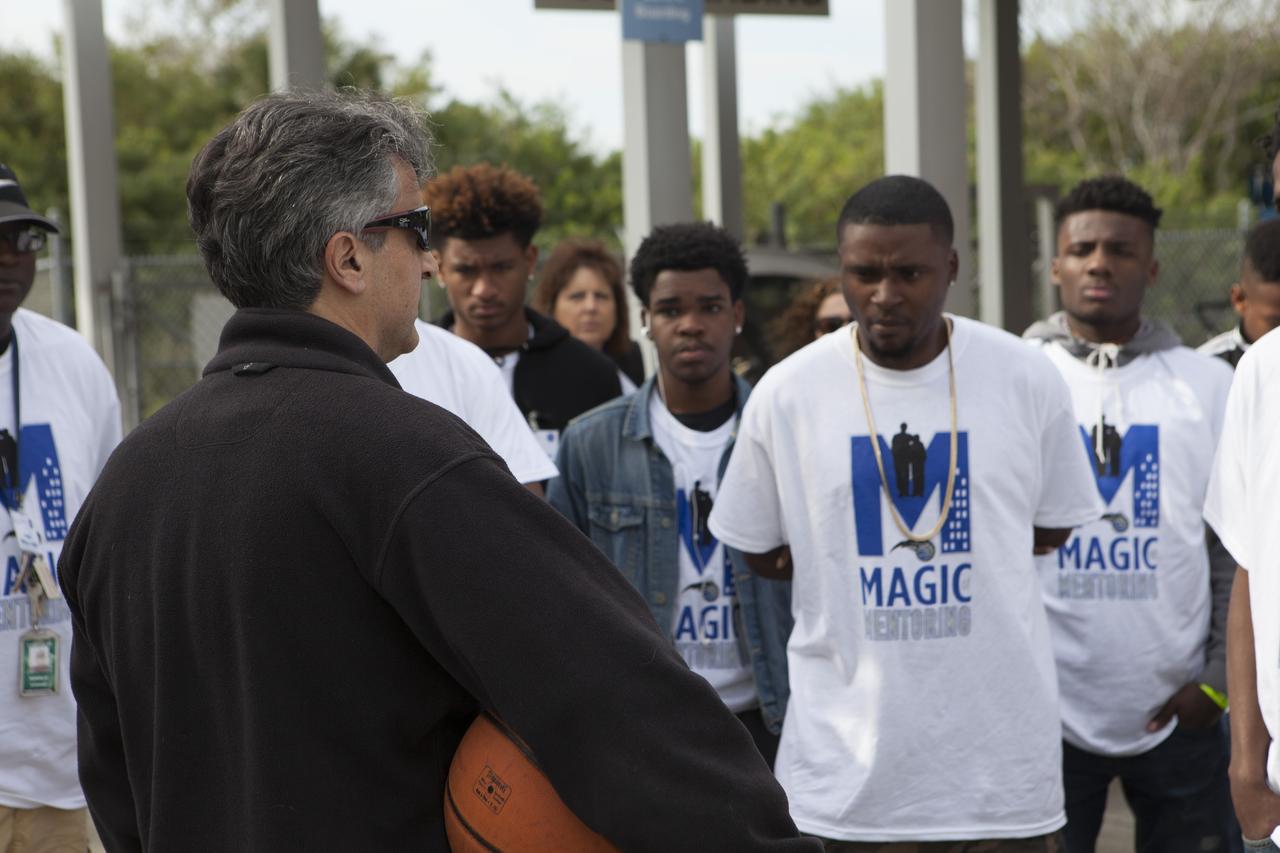
Jose Nunez of NASA Kennedy Space Center’s Exploration Research and Technology Programs talks to students in the My Brother’s Keeper program outside the Florida spaceport’s Swamp Works Lab. Kennedy is one of six NASA centers that participated in My Brother’s Keeper National Lab Week. The event is a nationwide effort to bring youth from underrepresented communities into federal labs and centers for hands-on activities, tours and inspirational speakers. Sixty students from the nearby cities of Orlando and Sanford visited Kennedy, where they toured the Vehicle Assembly Building, the Space Station Processing Facility and the center’s innovative Swamp Works Labs. The students also had a chance to meet and ask questions of a panel of subject matter experts from across Kennedy.
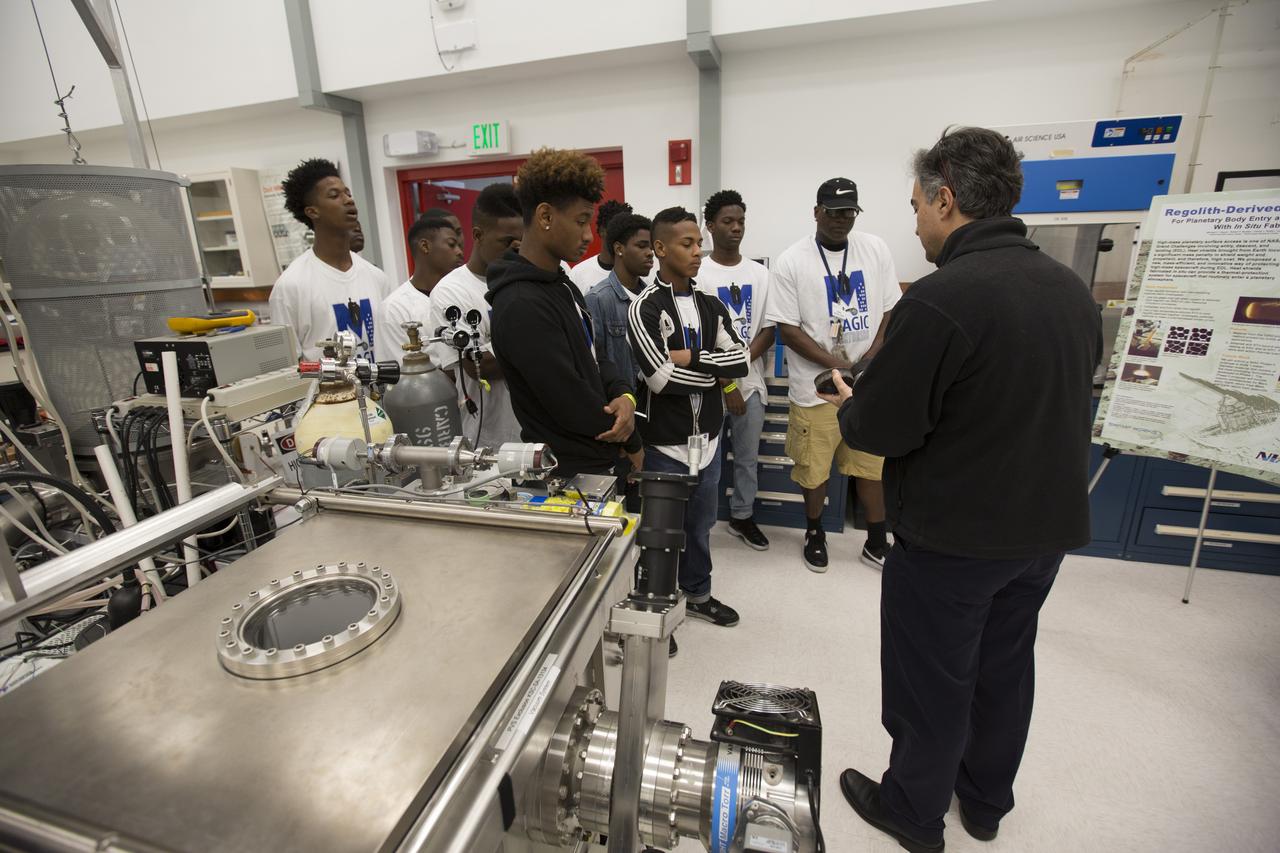
Students in the My Brother’s Keeper program watch as Jose Nunez of NASA Kennedy Space Center’s Exploration Research and Technology Programs demonstrates some of the hardware in the Electrostatic and Surface Physics Lab at the Florida spaceport. Kennedy is one of six NASA centers that participated in My Brother’s Keeper National Lab Week. The event is a nationwide effort to bring youth from underrepresented communities into federal labs and centers for hands-on activities, tours and inspirational speakers. Sixty students from the nearby cities of Orlando and Sanford visited Kennedy, where they toured the Vehicle Assembly Building, the Space Station Processing Facility and the center’s innovative Swamp Works Labs. The students also had a chance to meet and ask questions of a panel of subject matter experts from across Kennedy.
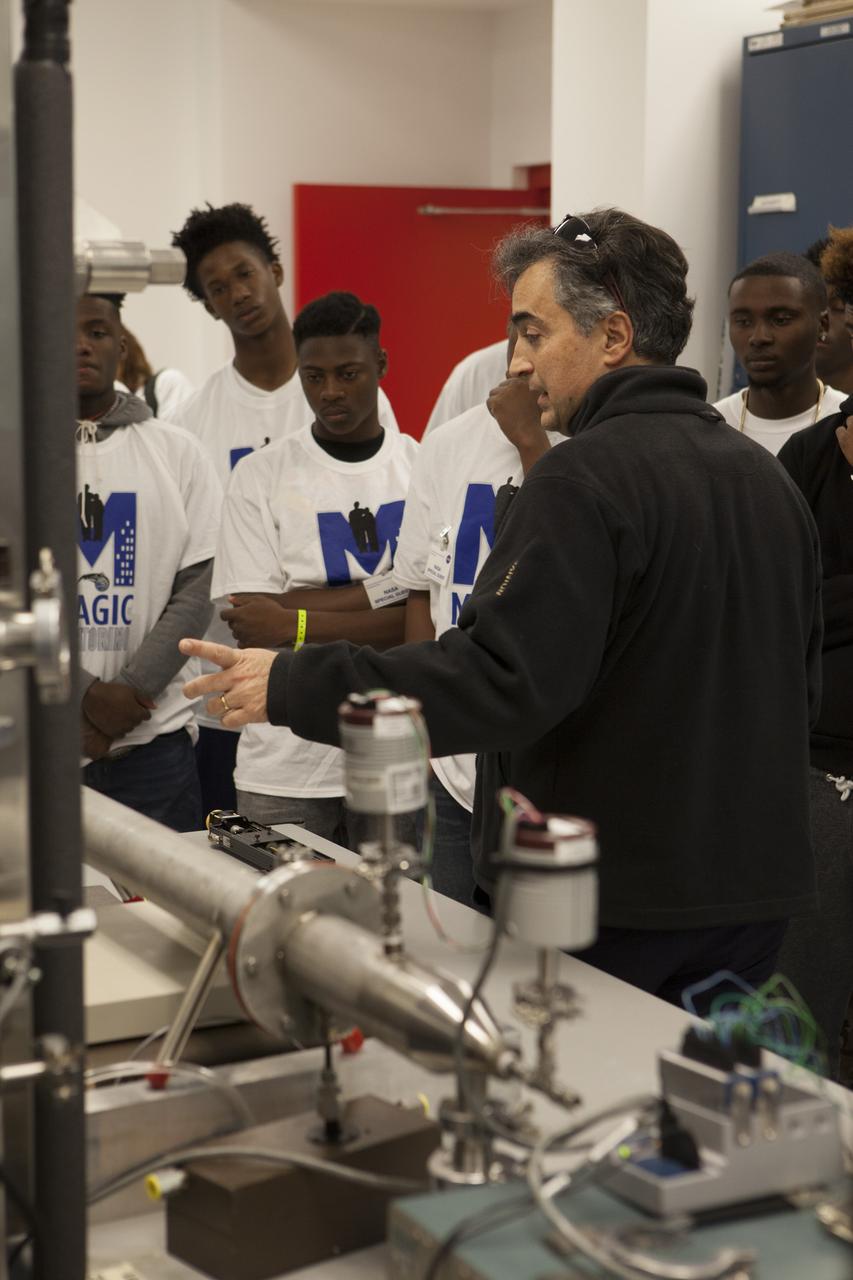
Students in the My Brother’s Keeper program listen as Jose Nunez of NASA Kennedy Space Center’s Exploration Research and Technology Programs explains some of the hardware in the Electrostatic and Surface Physics Lab at the Florida spaceport. Kennedy is one of six NASA centers that participated in My Brother’s Keeper National Lab Week. The event is a nationwide effort to bring youth from underrepresented communities into federal labs and centers for hands-on activities, tours and inspirational speakers. Sixty students from the nearby cities of Orlando and Sanford visited Kennedy, where they toured the Vehicle Assembly Building, the Space Station Processing Facility and the center’s innovative Swamp Works Labs. The students also had a chance to meet and ask questions of a panel of subject matter experts from across Kennedy.
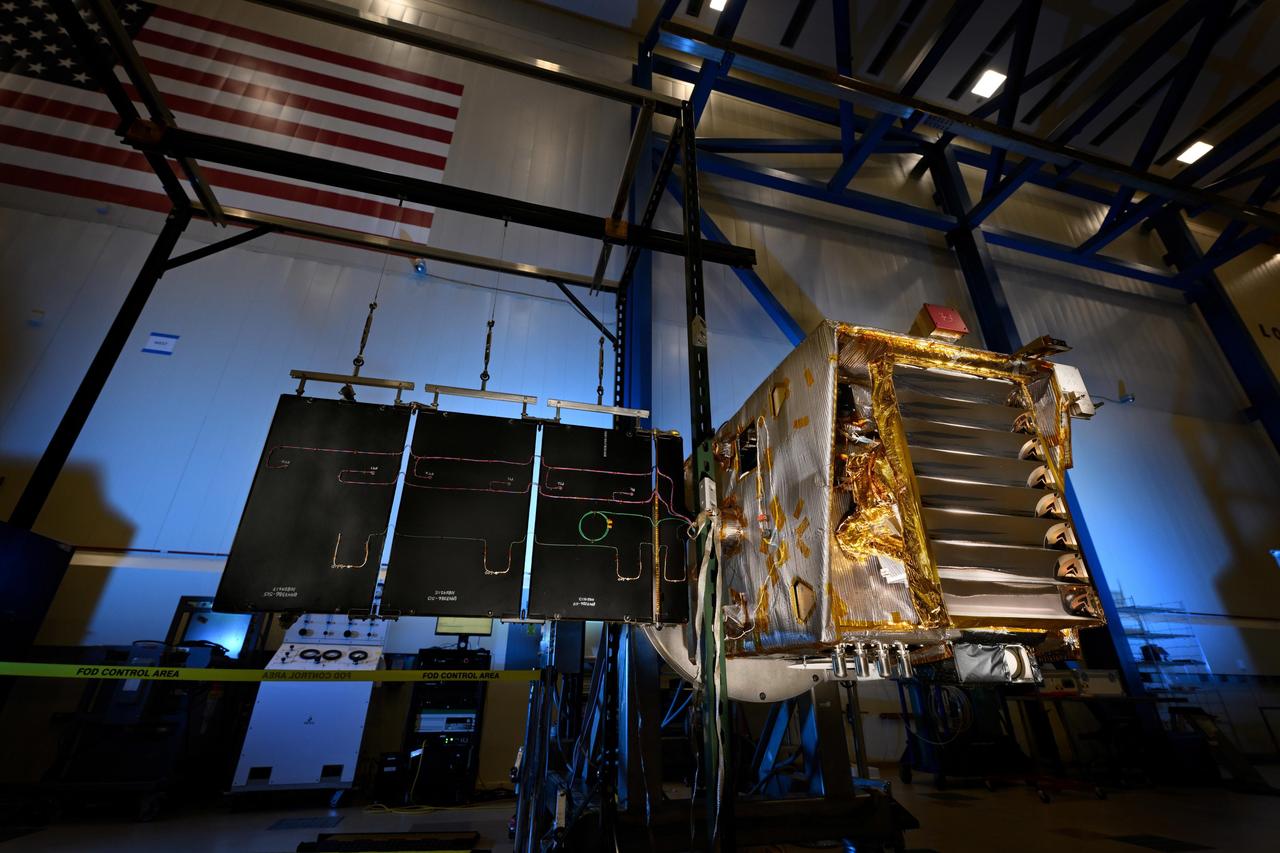
NASA's Lunar Trailblazer spacecraft sits in a clean room in August 2024 after undergoing environmental testing at Lockheed Martin Space in Littleton, Colorado. Now that those tests are done, the orbiter and its science instruments will go through flight system software tests that simulate key aspects of launch, maneuvers, and the science mission while in orbit around the Moon. This photo shows Lunar Trailblazer with a solar array deployed. The large silver grate attached to the spacecraft is the radiator for the High-resolution Volatiles and Minerals Moon Mapper (HVM³) instrument. HVM³ is one of two instruments that will be used by the mission to detect and map water on the Moon's surface to determine its abundance, location, form, and how it changes over time. This data will be key to our understanding of this crucial resource on the Moon for future exploration. The spacecraft is just 440 pounds (200 kilograms) and 11.5 feet (3.5 meters) wide with its solar panels fully deployed. The project is led by Principal Investigator Bethany Ehlmann of Caltech and managed by NASA's Jet Propulsion Laboratory in Southern California, which is also providing systems engineering, navigation, and mission assurance. Caltech manages JPL for the agency. Lunar Trailblazer is part of NASA's Small Innovative Missions for Planetary Exploration (SIMPLEx) program, which provides opportunities for low-cost, high-risk science missions that are responsive to requirements for flexibility. These lower-cost missions serve as an ideal platform for technical and architecture innovation, contributing to NASA's science research and technology development objectives. SIMPLEx mission investigations are managed by the Planetary Missions Program Office at NASA's Marshall Space Flight Center in Huntsville, Alabama, as part of the Discovery Program at NASA Headquarters in Washington. IPAC leads mission operations, including planning, scheduling, and sequencing all science and spacecraft activities. https://photojournal.jpl.nasa.gov/catalog/PIA26390
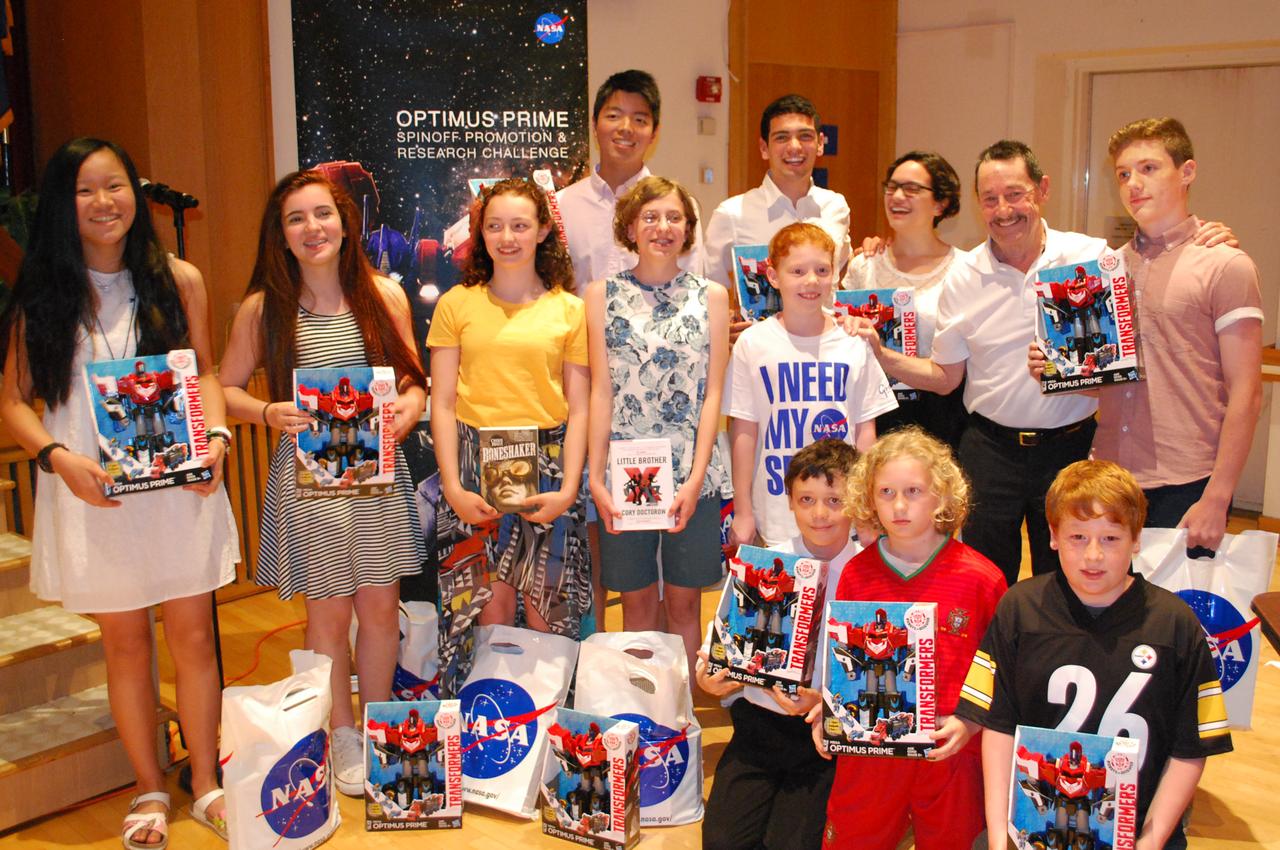
From June 28 through 30, 2016, the OPTIMUS PRIME Spinoff Promotion and Research Challenge (OPSPARC) gave the contest’s winning students the opportunity to explore NASA’s Goddard Space Flight Center in Greenbelt, Maryland. Three teams of students from elementary, middle and high school won the contest by creating the most popular ideas to use NASA technology in new and innovative ways. The students used an online platform called Glogster to make posters about their ideas, and the general public voted for their favorites. Sophia Sheehan won the elementary school prize for her invention of the “blow coat,” which would be powered by solar panels and blow warm air into winter coats, helping people in her hometown of Chicago stay warm in the winter. Heidi Long, Aubrey Nesti, Katherine Valbuena and Jasmine Wu won in the middle school category for their idea called Tent-cordion, which would use spacesuit and satellite insulation materials in a foldable tent to house refugees and the homeless. Finally, Jake Laddis, Alex Li, Isaac Wecht and Isabel Wecht won in the high school category for their idea to use James Webb Space Telescope sunshield technology to shield houses from summer heat and reduce the need for air conditioning around the world. The high school winners also had the opportunity to compete in the NASA InWorld challenge, sponsored by the James Webb Space Telescope project, and continued developing their idea in a virtual world and gaming environment. During their three-day workshop at Goddard, the students toured the center, met with scientists and engineers, took a look at the James Webb Space Telescope in Goddard’s clean room, and even made their own videos in Goddard’s TV studio. One of the students talked about how the experience inspired her. Read more: <a href="http://go.nasa.gov/298fGdQ" rel="nofollow">go.nasa.gov/298fGdQ</a>
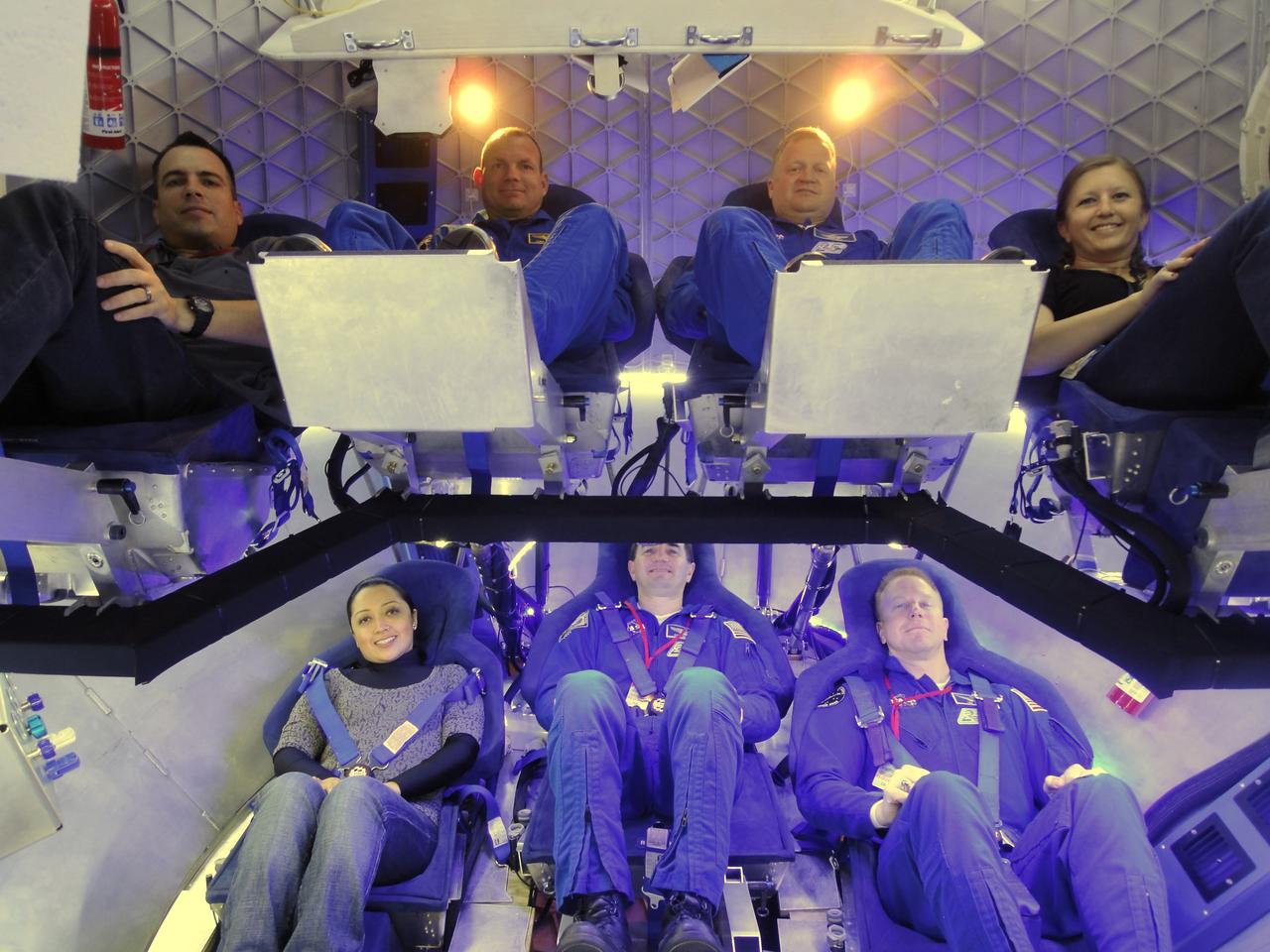
HAWTHORNE, Calif. -- NASA astronauts and industry experts check out the crew accommodations in the Dragon spacecraft under development by Space Exploration Technologies SpaceX of Hawthorne, Calif., for the agency's Commercial Crew Program. On top, from left, are NASA Crew Survival Engineering Team Lead Dustin Gohmert, NASA astronauts Tony Antonelli and Eric Boe and SpaceX Mission Operations Engineer Laura Crabtree. On bottom, from left, are SpaceX Thermal Engineer Brenda Hernandez and NASA astronauts Rex Walheim and Tim Kopra. This is the second crew accommodation check that allowed passengers to get a feel for Dragon’s interior, including displays and simulated control panels. In 2011, NASA selected SpaceX during Commercial Crew Development Round 2 CCDev2) activities to mature the design and development of a crew transportation system with the overall goal of accelerating a United States-led capability to the International Space Station. The goal of CCP is to drive down the cost of space travel as well as open up space to more people than ever before by balancing industry’s own innovative capabilities with NASA's 50 years of human spaceflight experience. Six other aerospace companies also are maturing launch vehicle and spacecraft designs under CCDev2, including Alliant Techsystems Inc. ATK, The Boeing Co., Excalibur Almaz Inc., Blue Origin, Sierra Nevada, and United Launch Alliance ULA. For more information, visit www.nasa.gov/commercialcrew. Image credit: Space Exploration Technologies
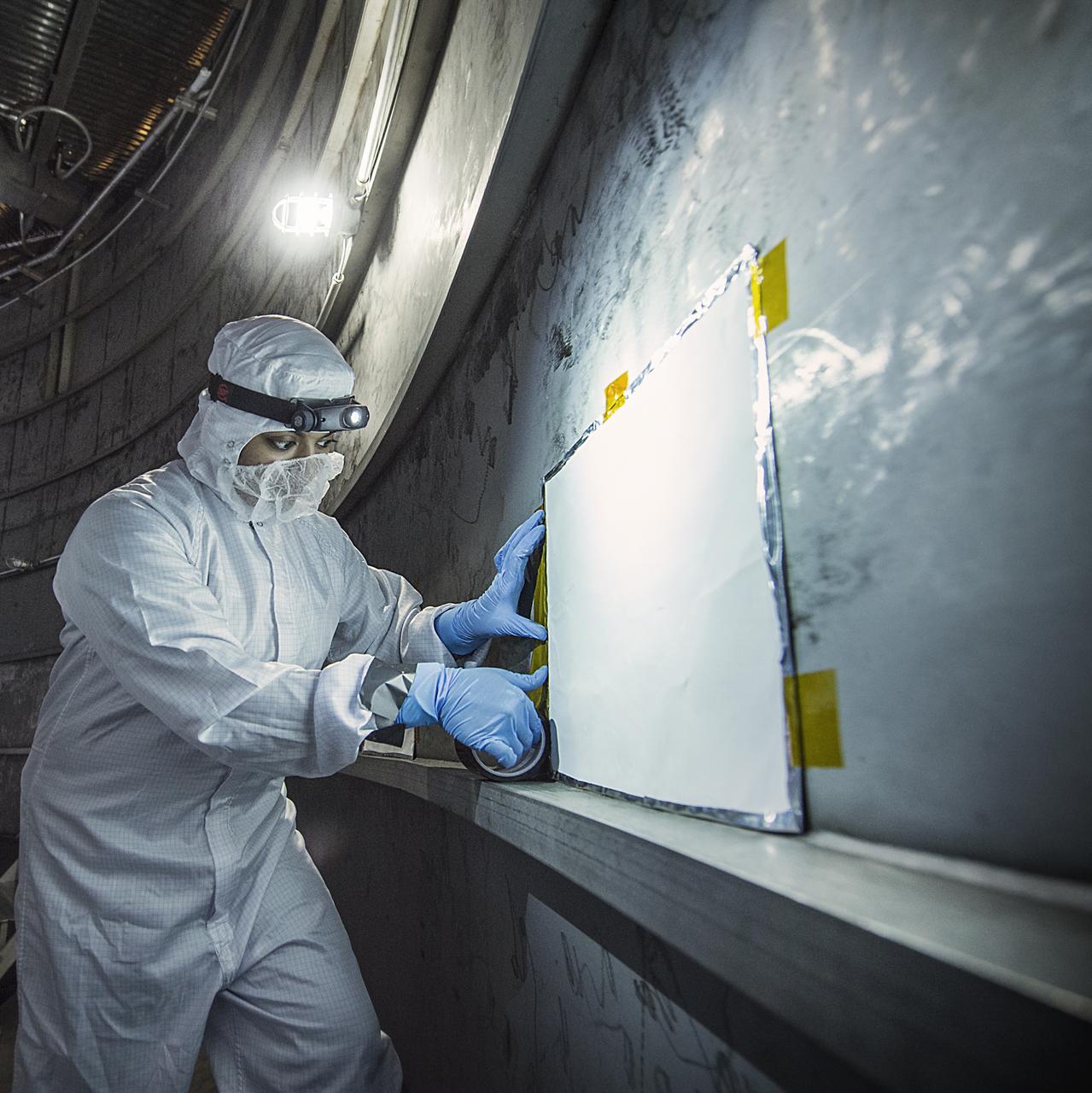
Contamination from organic molecules can harm delicate instruments and engineers are taking special care at NASA to prevent that from affecting the James Webb Space Telescope (and all satellites and instruments). Recently, Nithin Abraham, a Thermal Coatings Engineer placed Molecular Adsorber Coating or "MAC" panels in the giant chamber where the Webb telescope will be tested. This contamination can occur through a process when a vapor or odor is emitted by a substance. This is called "outgassing." The "new car smell" is an example of that, and is unhealthy for people and sensitive satellite instruments. So, NASA engineers have created a new way to protect those instruments from the damaging effects of contamination coming from outgassing. "The Molecular Adsorber Coating (MAC) is a NASA Goddard coatings technology that was developed to adsorb or entrap outgassed molecular contaminants for spaceflight applications," said Nithin Abraham, Thermal Coatings Engineer at NASA's Goddard Space Flight Center in Greenbelt, Maryland. MAC is currently serving as an innovative contamination mitigation tool for Chamber A operations at NASA Johnson Space Center in Houston, Texas. MAC can be used to keep outgassing from coming in from outside areas or to capture outgassing directly from hardware, components, and within instrument cavities. In this case, MAC is helping by capturing outgassed contaminants outside the test chamber from affecting the Webb components. MAC is expected to capture the outgassed contaminants that exist in the space of the vacuum chamber (not from the Webb components). Credit: NASA/GoddardChris Gunn Read more: <a href="http://www.nasa.gov/feature/goddard/nasa-technology-protects-webb-telescope-from-contamination" rel="nofollow">www.nasa.gov/feature/goddard/nasa-technology-protects-web...</a> <b><a href="http://www.nasa.gov/audience/formedia/features/MP_Photo_Guidelines.html" rel="nofollow">NASA image use policy.</a></b> <b><a href="http://www.nasa.gov/centers/goddard/home/index.html" rel="nofollow">NASA Goddard Space Flight Center</a></b> enables NASA’s mission through four scientific endeavors: Earth Science, Heliophysics, Solar System Exploration, and Astrophysics. Goddard plays a leading role in NASA’s accomplishments by contributing compelling scientific knowledge to advance the Agency’s mission. <b>Follow us on <a href="http://twitter.com/NASAGoddardPix" rel="nofollow">Twitter</a></b> <b>Like us on <a href="http://www.facebook.com/pages/Greenbelt-MD/NASA-Goddard/395013845897?ref=tsd" rel="nofollow">Facebook</a></b> <b>Find us on <a href="http://instagrid.me/nasagoddard/?vm=grid" rel="nofollow">Instagram</a></b>