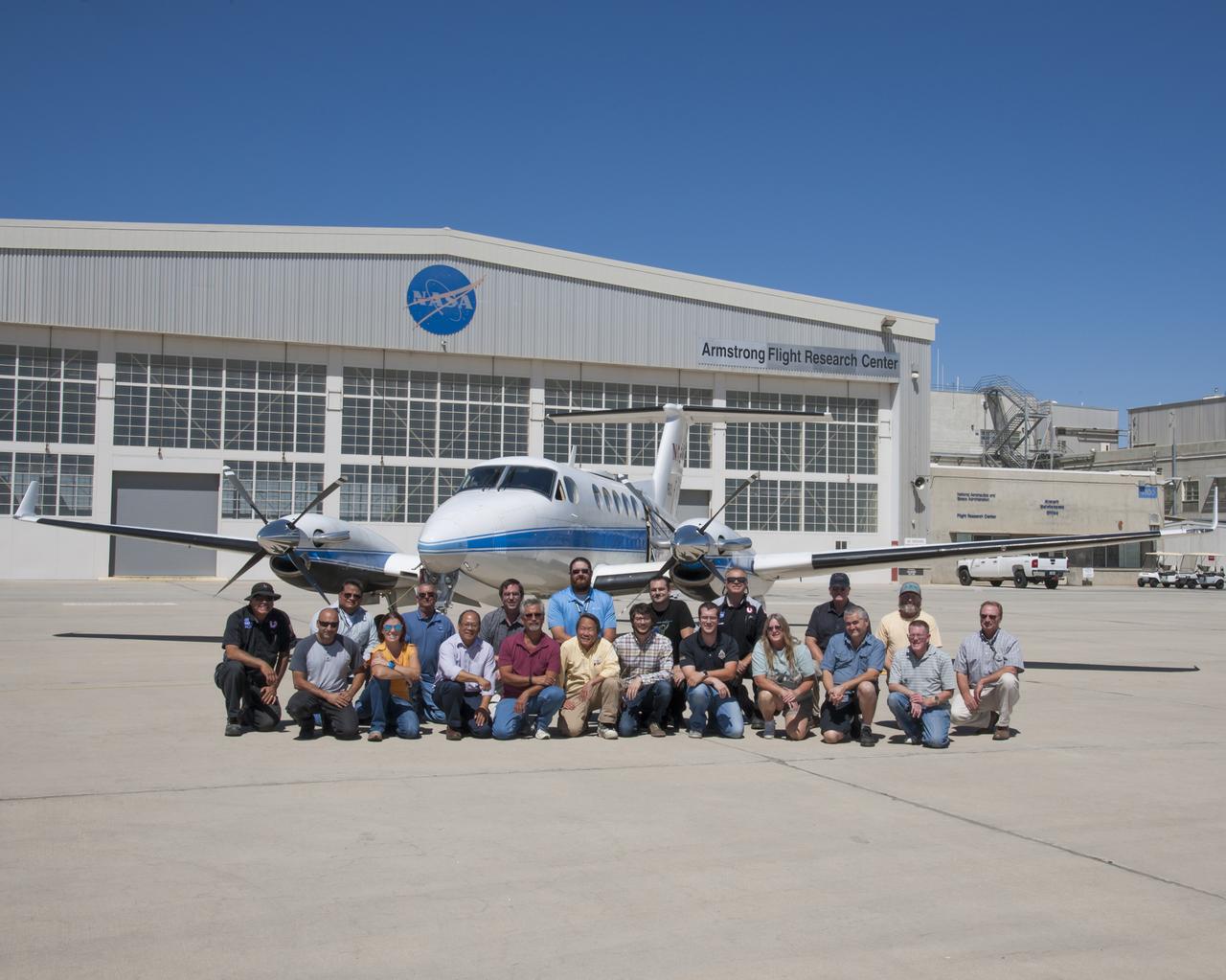
The Advanced Data Acquisition and Telemetry System team includes front row from left Mario Soto, Sam Habbal, Tiffany Titas, RIchard Hang, Randy Torres, Thang Quach, Otto Schnarr, Matthew Waldersen, Karen Estes, Andy Olvera, Stanley Wertenberger and Rick Cordes. In the second row from left are John Atherly, Doug Boston, Tom Horn, Brady Rennie, Chris Birkinbine, Jim McNally, Martin Munday and Tony Lorek.
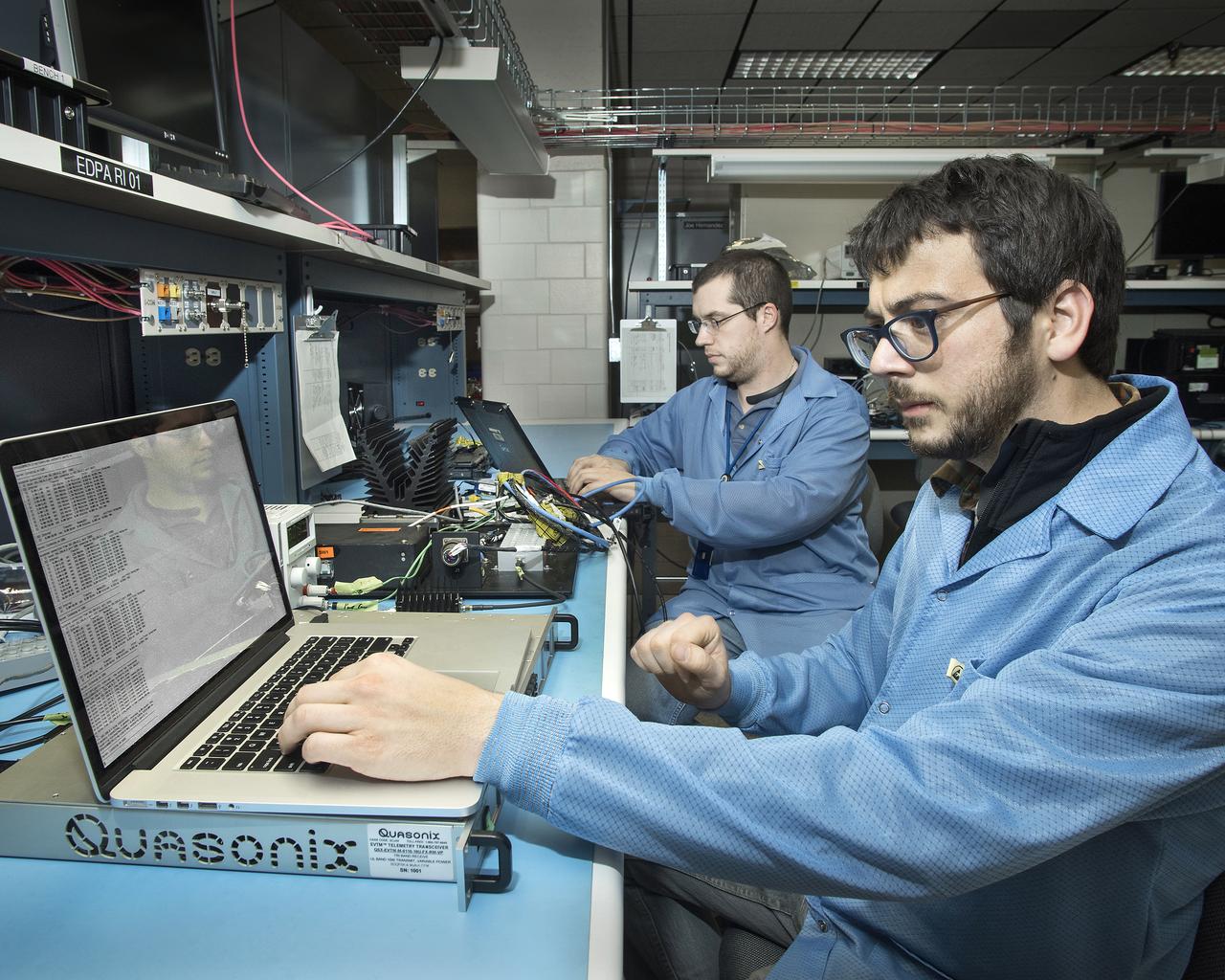
Otto Schnarr, front, and Matthew Waldersen check out the Advanced Data Acquisition and Telemetry System in an Armstrong laboratory.

Otto Schnarr and Matthew Waldersen check out the Advanced Data Acquisition and Telemetry System in an Armstrong laboratory.
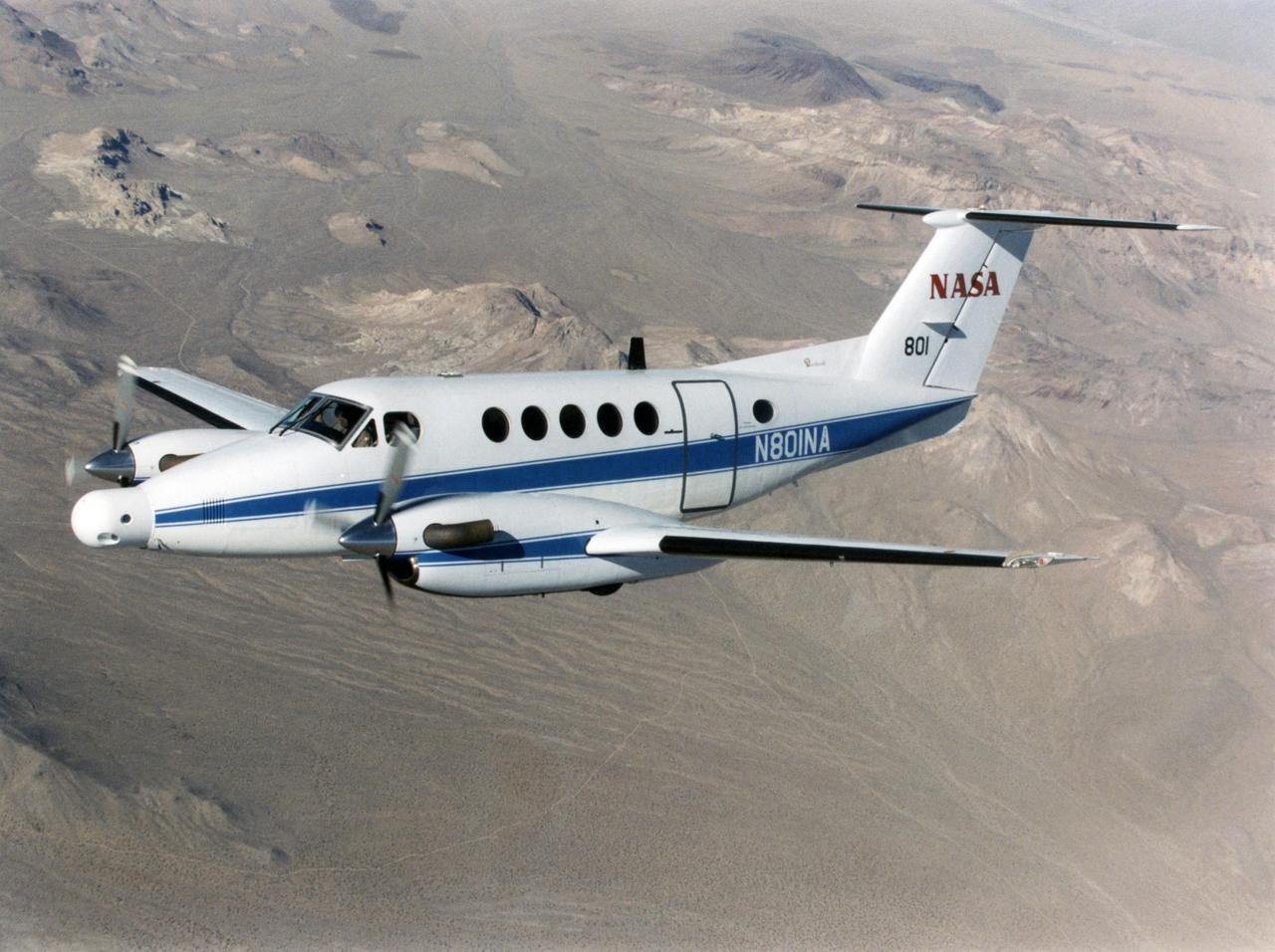
A NASA King Air successfully tested the Advanced Data Acquisition and Telemetry System during a recent series of three research flights.
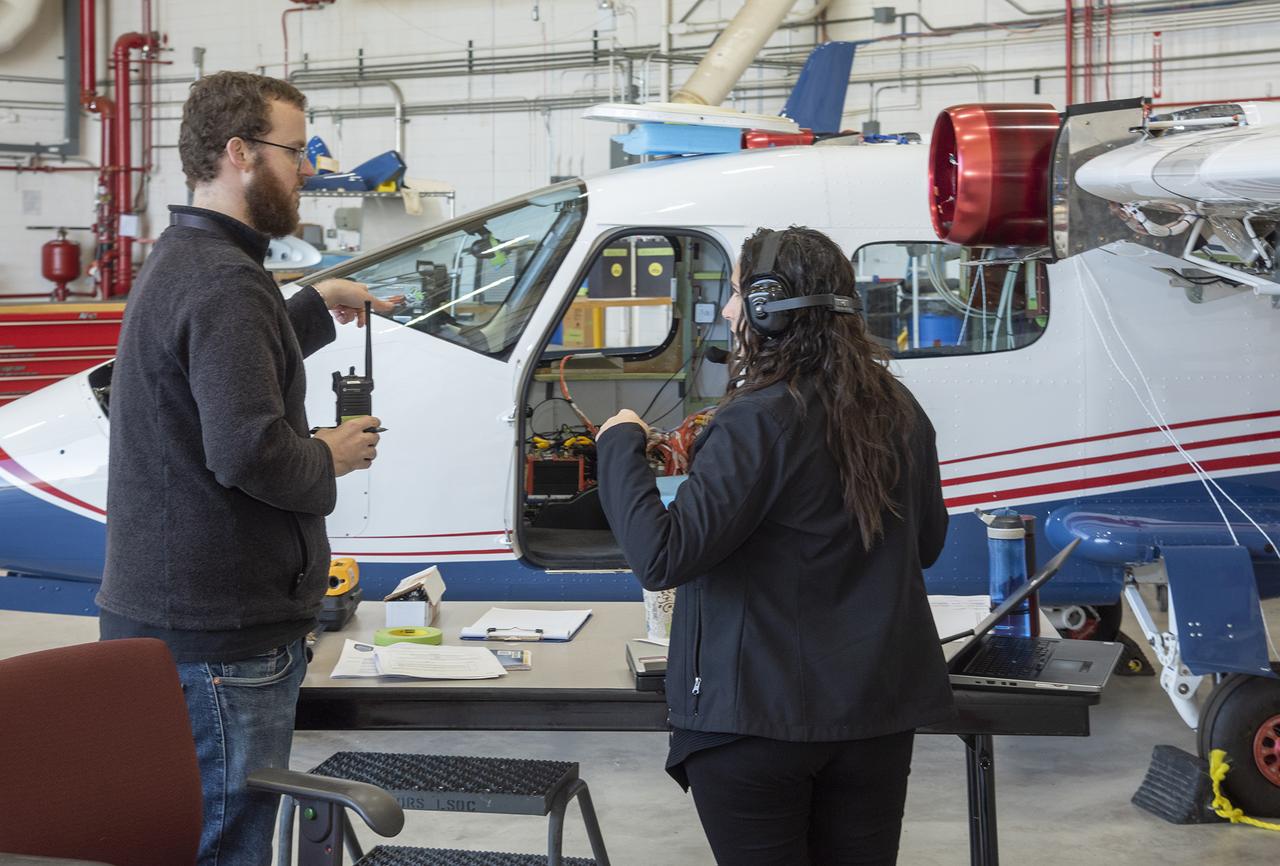
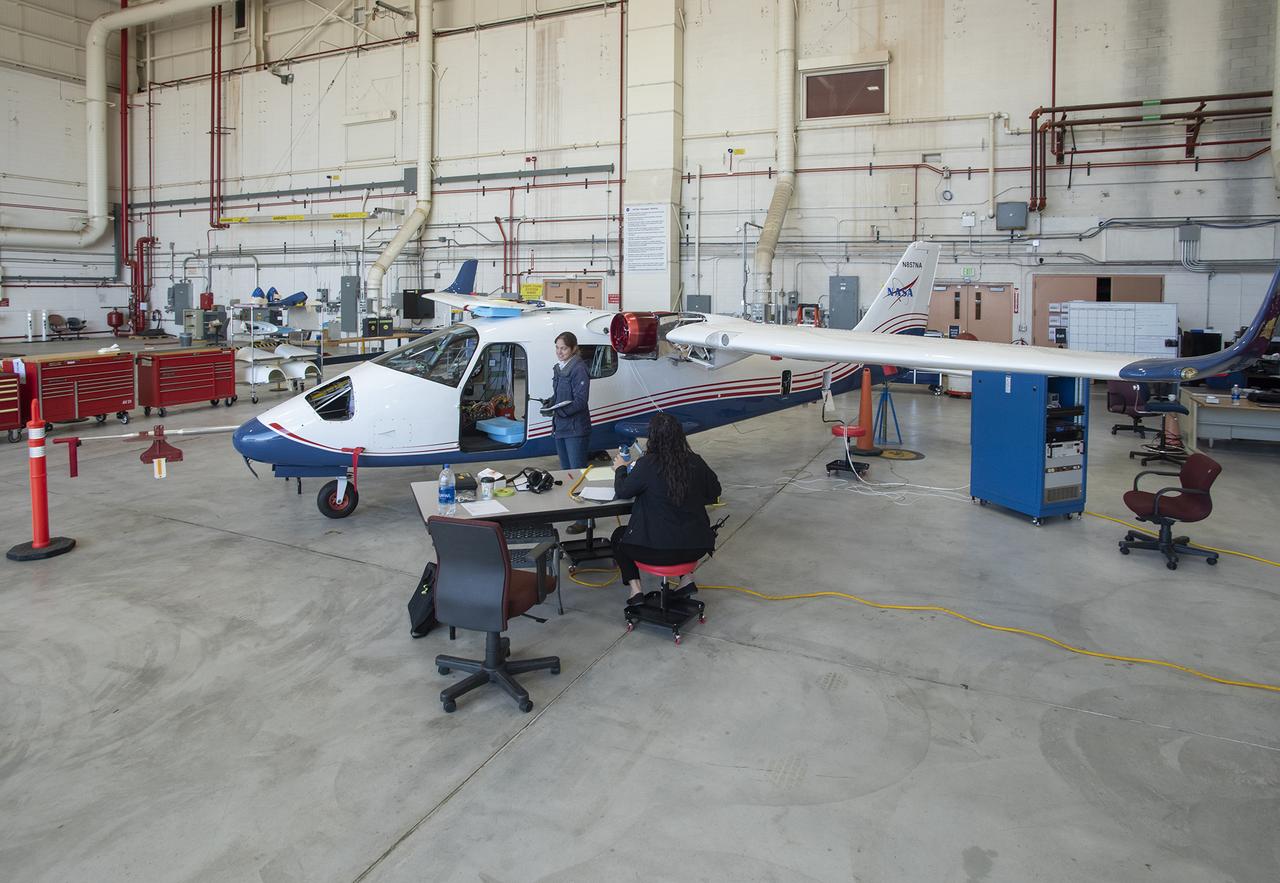
The X-57 operations crew at NASA's Armstrong Flight Research Center prepare for telemetry testing on NASA's first all-electric X-plane, the X-57 Maxwell. Shown here in its first all-electric configuration, known as Mod II, X-57's series of functional tests helps engineers confirm that the vehicle will be ready for taxi and flight tests, and the telemetry testing confirms the ability of the aircraft to transmit location and test data to the ground. X-57 will help set certification standards for emerging electric aircraft markets.
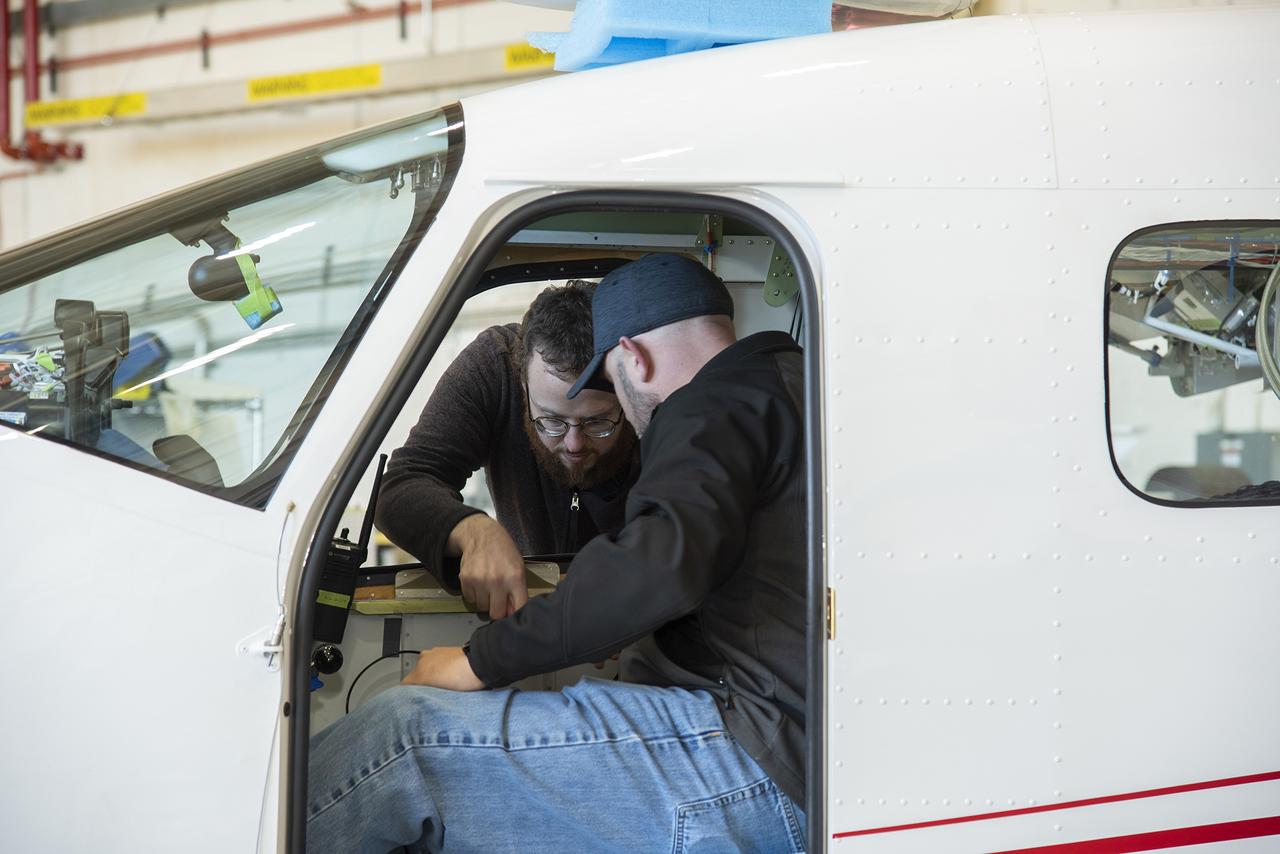
The X-57 operations crew at NASA's Armstrong Flight Research Center prepare for telemetry testing on NASA's first all-electric X-plane, the X-57 Maxwell. Shown here in its first all-electric configuration, known as Mod II, X-57's series of functional tests helps engineers confirm that the vehicle will be ready for taxi and flight tests, and the telemetry testing confirms the ability of the aircraft to transmit location and test data to the ground. X-57 will help set certification standards for emerging electric aircraft markets.

Telemetry testing begins on the X-57 Maxwell, NASA’s first all-electric X-plane, as the operations crew at NASA’s Armstrong Flight Research Center records the results. Telemetry testing is a critical phase in X-57’s functional test series. In addition to confirming the ability of the X-57 aircraft to transmit speed, altitude, direction, and location to teams on the ground, telemetry testing also confirms the ability to transmit mission-critical-data, such as voltage, power consumption, and structural integrity. X-57’s goal is to help set certification standards for emerging electric aircraft markets.
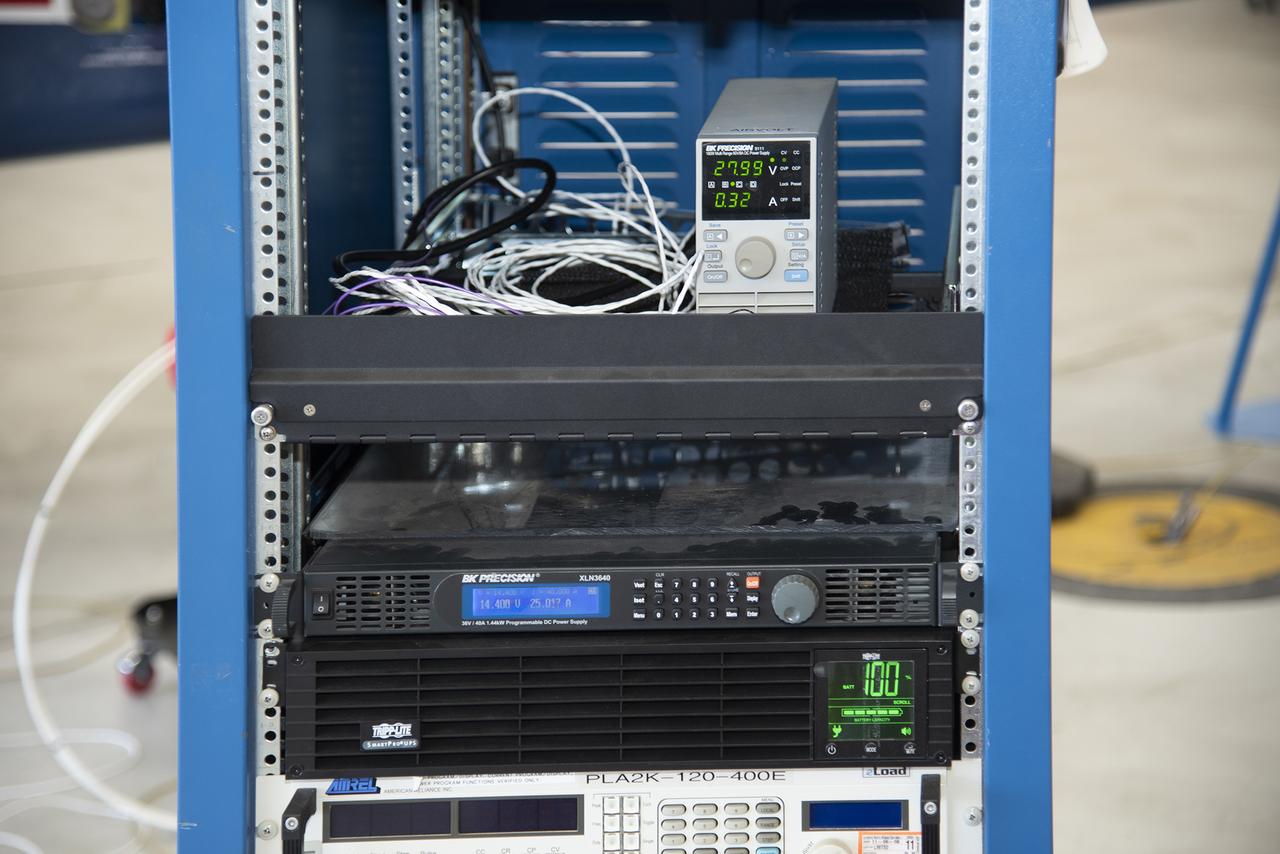
Telemetry testing begins on the X-57 Maxwell, NASA’s first all-electric X-plane, as the operations crew at NASA’s Armstrong Flight Research Center records the results. Telemetry testing is a critical phase in X-57’s functional test series. In addition to confirming the ability of the X-57 aircraft to transmit speed, altitude, direction, and location to teams on the ground, telemetry testing also confirms the ability to transmit mission-critical-data, such as voltage, power consumption, and structural integrity. X-57’s goal is to help set certification standards for emerging electric aircraft markets.
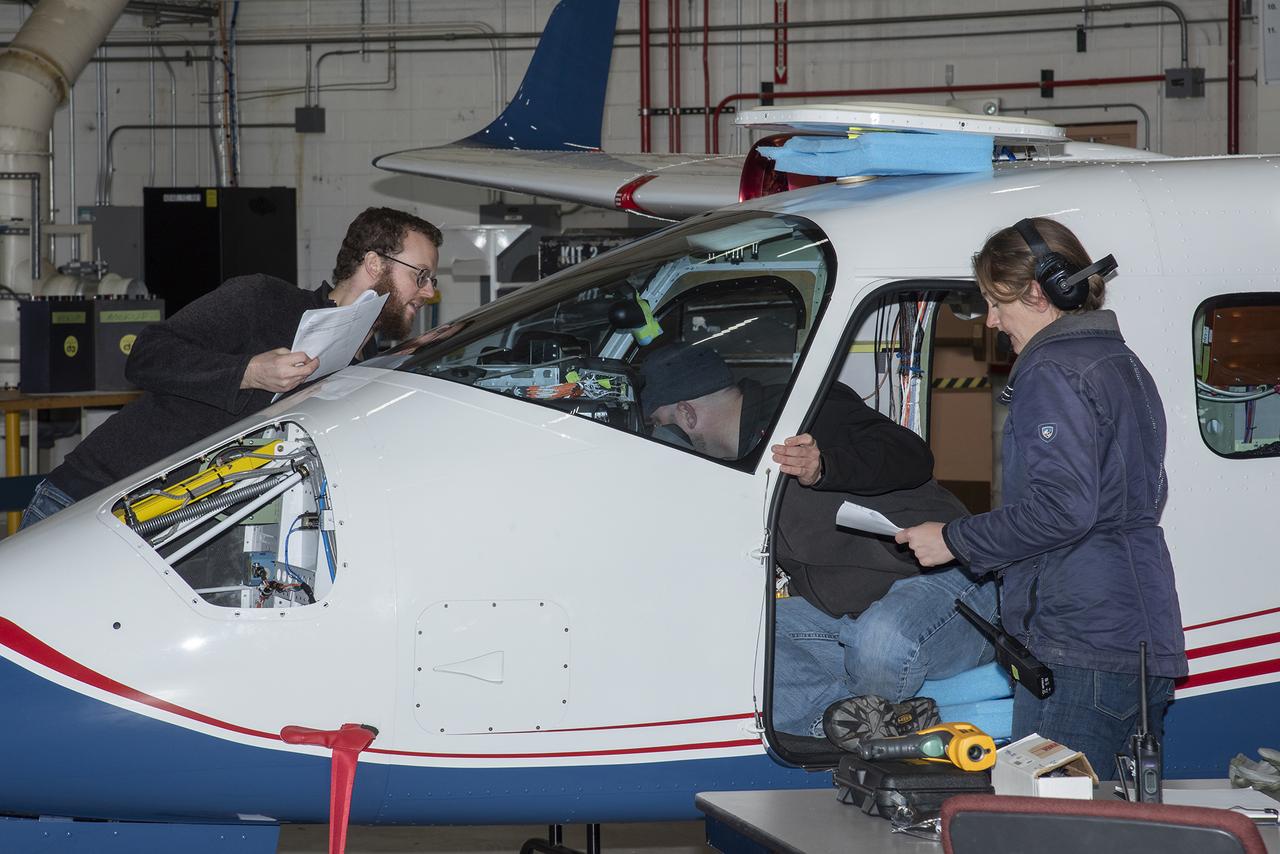
Telemetry testing begins on the X-57 Maxwell, NASA’s first all-electric X-plane, as the operations crew at NASA’s Armstrong Flight Research Center records the results. Telemetry testing is a critical phase in X-57’s functional test series. In addition to confirming the ability of the X-57 aircraft to transmit speed, altitude, direction, and location to teams on the ground, telemetry testing also confirms the ability to transmit mission-critical-data, such as voltage, power consumption, and structural integrity. X-57’s goal is to help set certification standards for emerging electric aircraft markets.

Telemetry testing begins on the X-57 Maxwell, NASA's first all-electric X-plane, as the operations crew at NASA's Armstrong Flight Research Center records the results. Telemetry testing is a critical phase in X-57's functional test series. In addition to confirming the ability of the X-57 aircraft to transmit speed, altitude, direction, and location to teams on the ground, telemetry testing also confirms the ability to transmit mission-critical-data, such as voltage, power consumption, and structural integrity. X-57's goal is to help set certification standards for emerging electric aircraft markets.
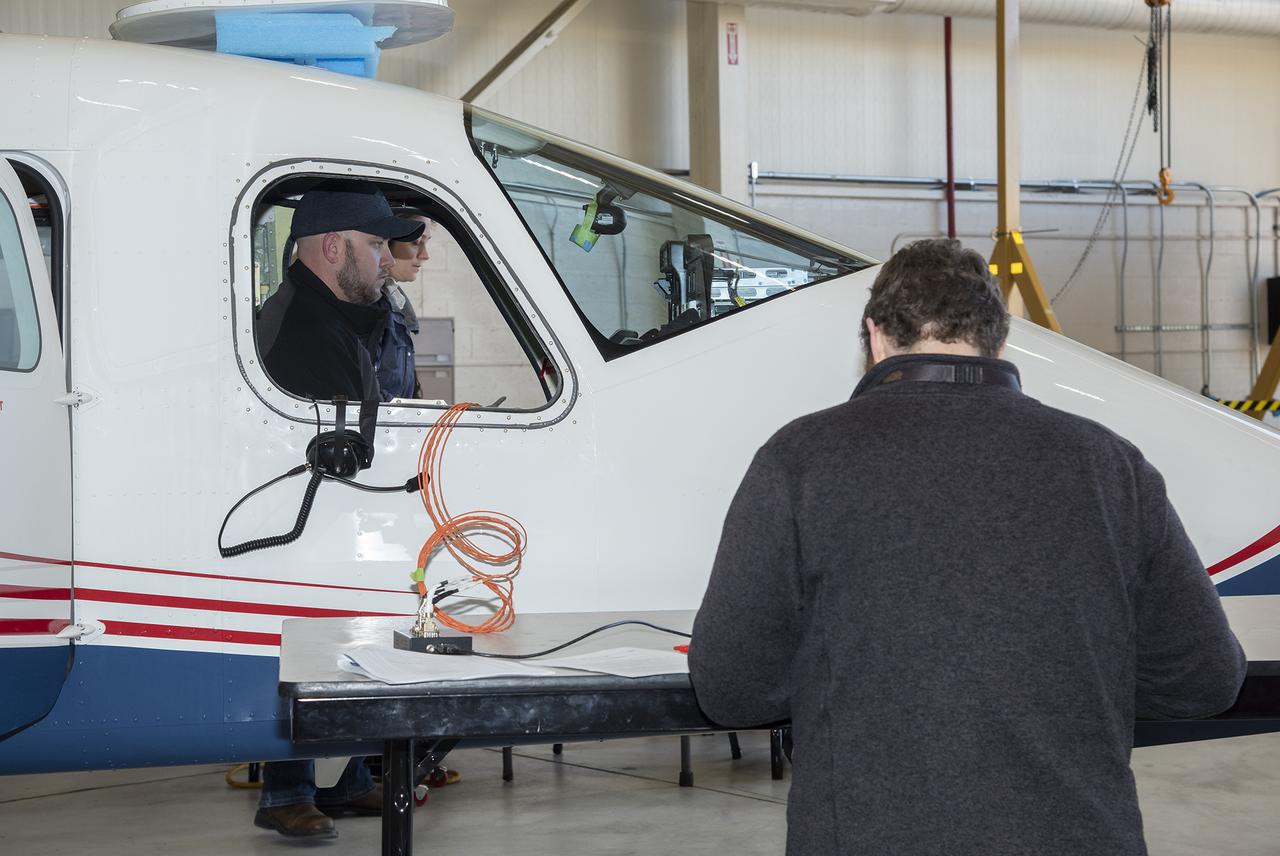
Telemetry testing begins on the X-57 Maxwell, NASA’s first all-electric X-plane, as the operations crew at NASA’s Armstrong Flight Research Center records the results. Telemetry testing is a critical phase in X-57’s functional test series. In addition to confirming the ability of the X-57 aircraft to transmit speed, altitude, direction, and location to teams on the ground, telemetry testing also confirms the ability to transmit mission-critical-data, such as voltage, power consumption, and structural integrity. X-57’s goal is to help set certification standards for emerging electric aircraft markets.
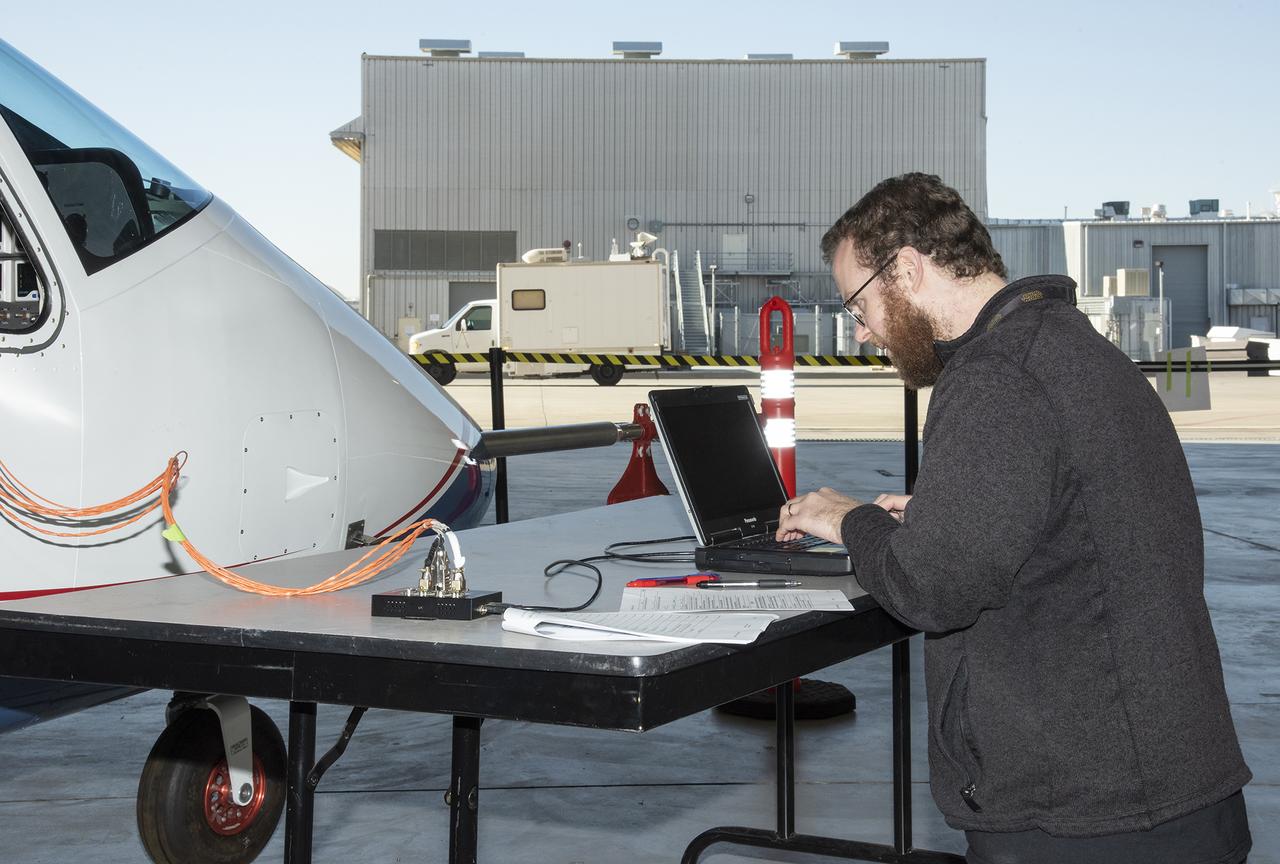
Telemetry testing begins on the X-57 Maxwell, NASA’s first all-electric X-plane, as the operations crew at NASA’s Armstrong Flight Research Center records the results. Telemetry testing is a critical phase in X-57’s functional test series. In addition to confirming the ability of the X-57 aircraft to transmit speed, altitude, direction, and location to teams on the ground, telemetry testing also confirms the ability to transmit mission-critical-data, such as voltage, power consumption, and structural integrity. X-57’s goal is to help set certification standards for emerging electric aircraft markets.
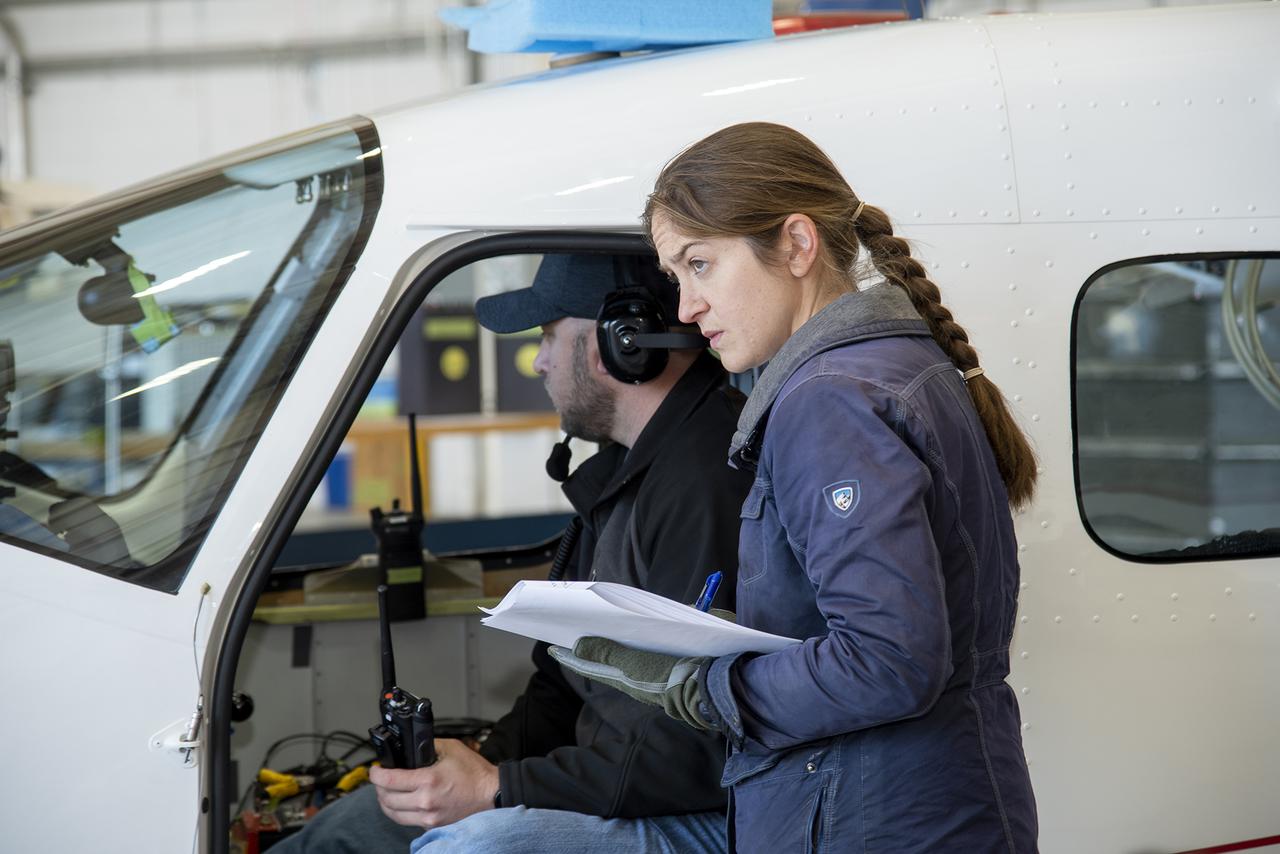
Telemetry testing begins on the X-57 Maxwell, NASA's first all-electric X-plane, as the operations crew at NASA's Armstrong Flight Research Center records the results. Telemetry testing is a critical phase in X-57's functional test series. In addition to confirming the ability of the X-57 aircraft to transmit speed, altitude, direction, and location to teams on the ground, telemetry testing also confirms the ability to transmit mission-critical-data, such as voltage, power consumption, and structural integrity. X-57's goal is to help set certification standards for emerging electric aircraft markets.
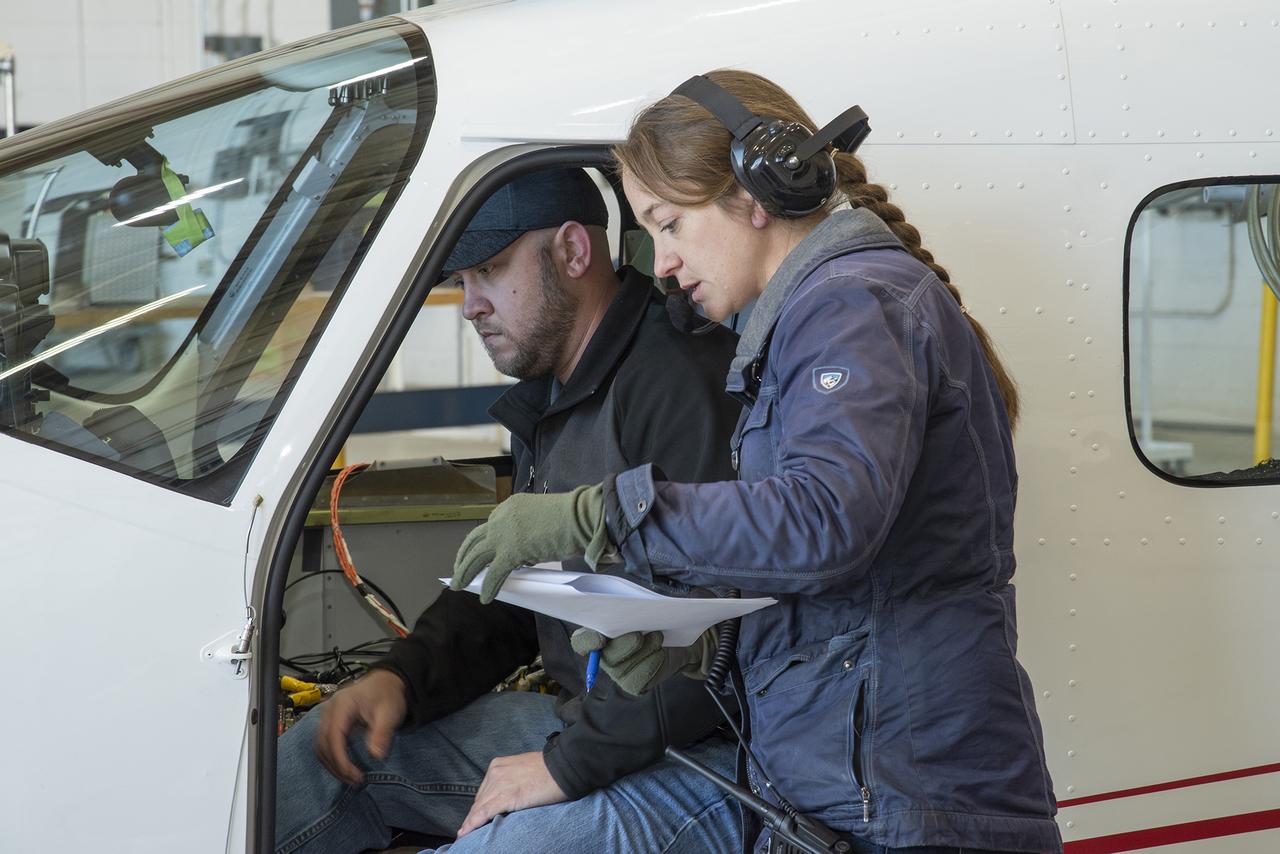
Telemetry testing begins on the X-57 Maxwell, NASA's first all-electric X-plane, as the operations crew at NASA's Armstrong Flight Research Center records the results. Telemetry testing is a critical phase in X-57's functional test series. In addition to confirming the ability of the X-57 aircraft to transmit speed, altitude, direction, and location to teams on the ground, telemetry testing also confirms the ability to transmit mission-critical-data, such as voltage, power consumption, and structural integrity. X-57's goal is to help set certification standards for emerging electric aircraft markets.
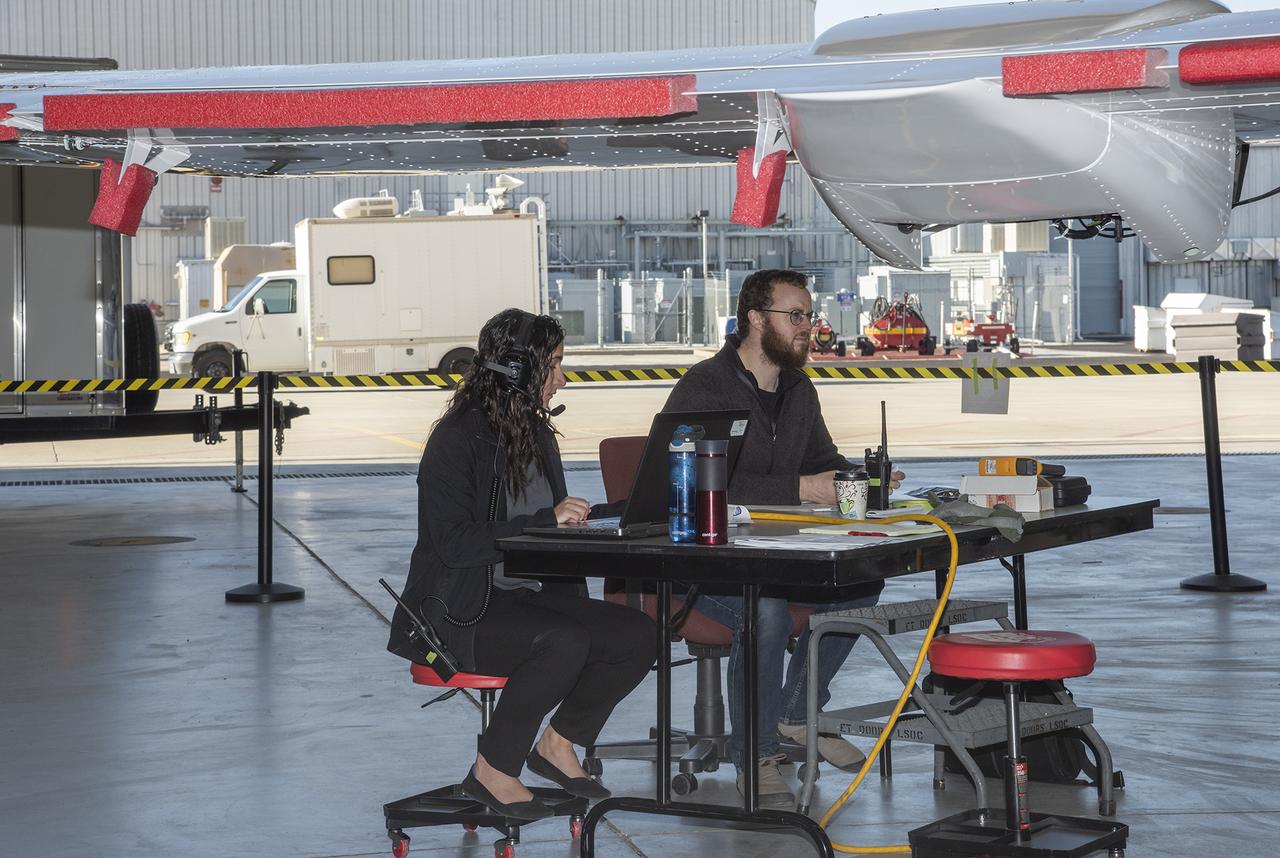
Telemetry testing begins on the X-57 Maxwell, NASA's first all-electric X-plane, as the operations crew at NASA's Armstrong Flight Research Center records the results. Telemetry testing is a critical phase in X-57's functional test series. In addition to confirming the ability of the X-57 aircraft to transmit speed, altitude, direction, and location to teams on the ground, telemetry testing also confirms the ability to transmit mission-critical-data, such as voltage, power consumption, and structural integrity. X-57's goal is to help set certification standards for emerging electric aircraft markets.
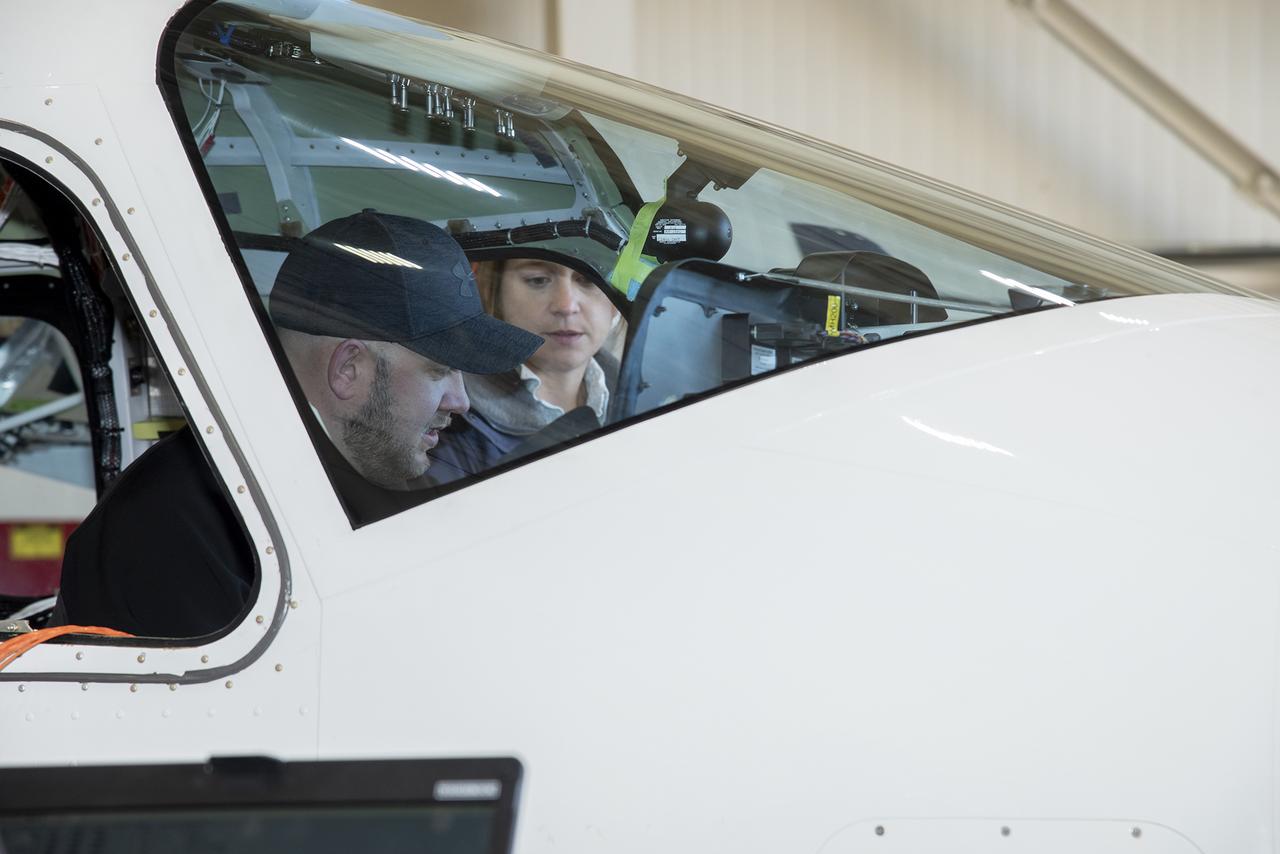
Telemetry testing begins on the X-57 Maxwell, NASA’s first all-electric X-plane, as the operations crew at NASA’s Armstrong Flight Research Center records the results. Telemetry testing is a critical phase in X-57’s functional test series. In addition to confirming the ability of the X-57 aircraft to transmit speed, altitude, direction, and location to teams on the ground, telemetry testing also confirms the ability to transmit mission-critical-data, such as voltage, power consumption, and structural integrity. X-57’s goal is to help set certification standards for emerging electric aircraft markets.
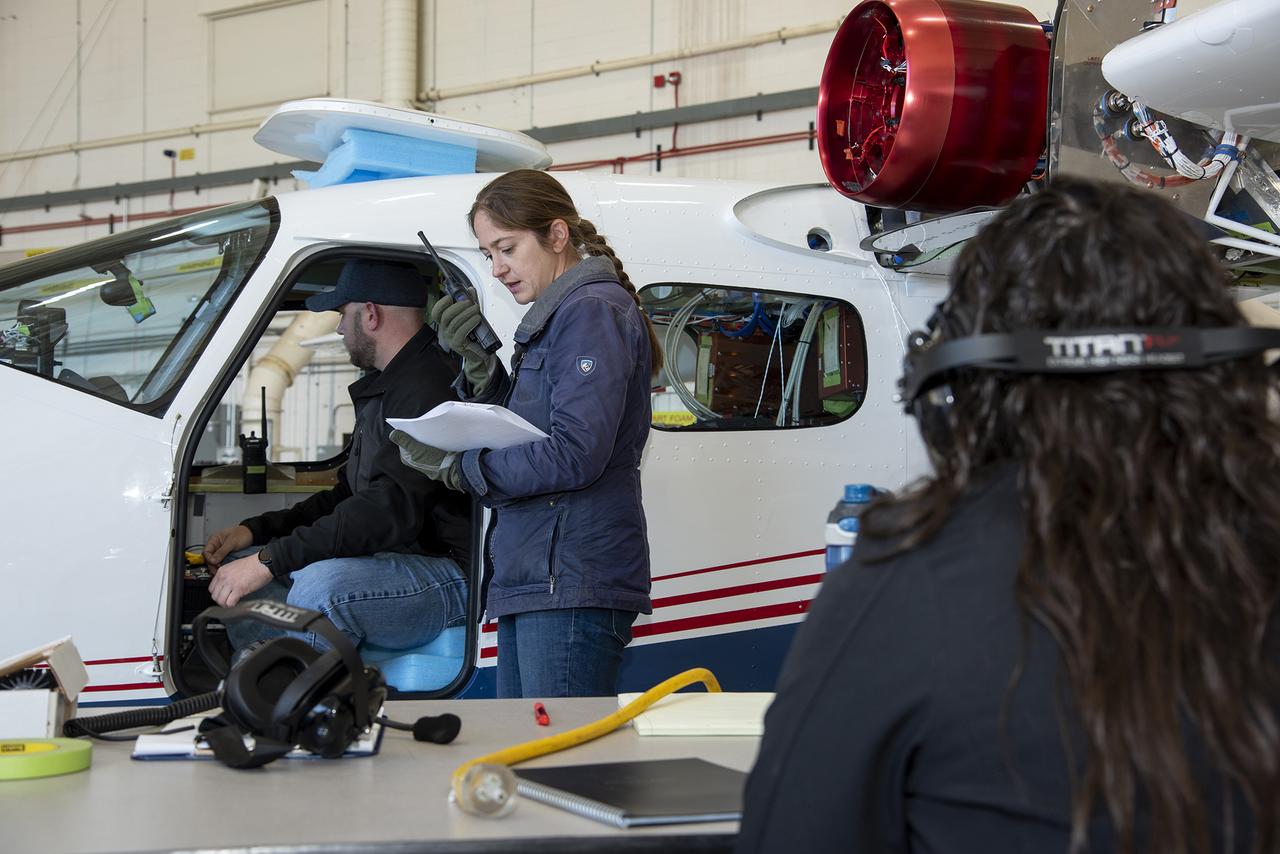
Telemetry testing begins on the X-57 Maxwell, NASA’s first all-electric X-plane, as the operations crew at NASA’s Armstrong Flight Research Center records the results. Telemetry testing is a critical phase in X-57’s functional test series. In addition to confirming the ability of the X-57 aircraft to transmit speed, altitude, direction, and location to teams on the ground, telemetry testing also confirms the ability to transmit mission-critical-data, such as voltage, power consumption, and structural integrity. X-57’s goal is to help set certification standards for emerging electric aircraft markets.
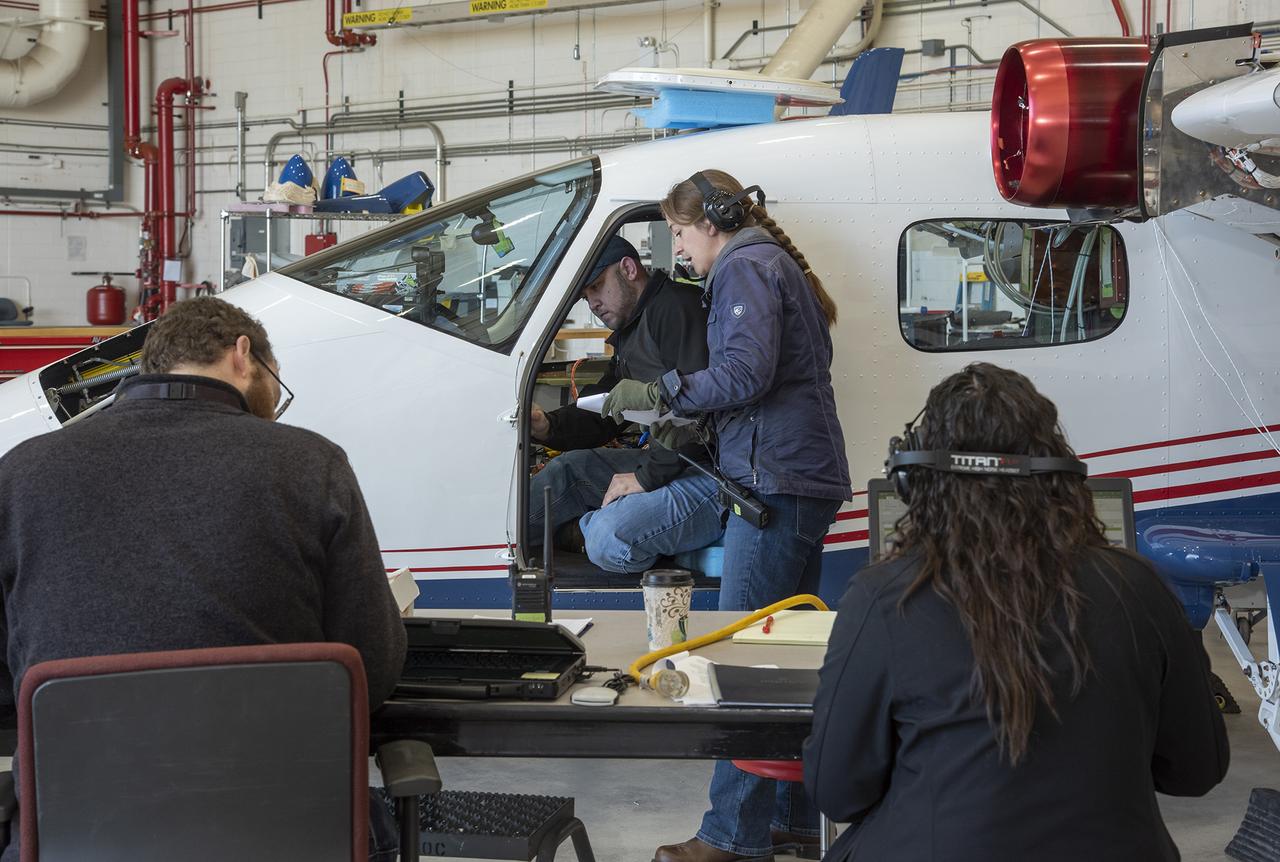
Telemetry testing begins on the X-57 Maxwell, NASA's first all-electric X-plane, as the operations crew at NASAâ' Armstrong Flight Research Center records the results. Telemetry testing is a critical phase in X-57's functional test series. In addition to confirming the ability of the X-57 aircraft to transmit speed, altitude, direction, and location to teams on the ground, telemetry testing also confirms the ability to transmit mission-critical-data, such as voltage, power consumption, and structural integrity. X-57's goal is to help set certification standards for emerging electric aircraft markets.

Telemetry testing begins on the X-57 Maxwell, NASA's first all-electric X-plane, as the operations crew at NASA's Armstrong Flight Research Center records the results. Telemetry testing is a critical phase in X-57's functional test series. In addition to confirming the ability of the X-57 aircraft to transmit speed, altitude, direction, and location to teams on the ground, telemetry testing also confirms the ability to transmit mission-critical-data, such as voltage, power consumption, and structural integrity. X-57's goal is to help set certification standards for emerging electric aircraft markets.
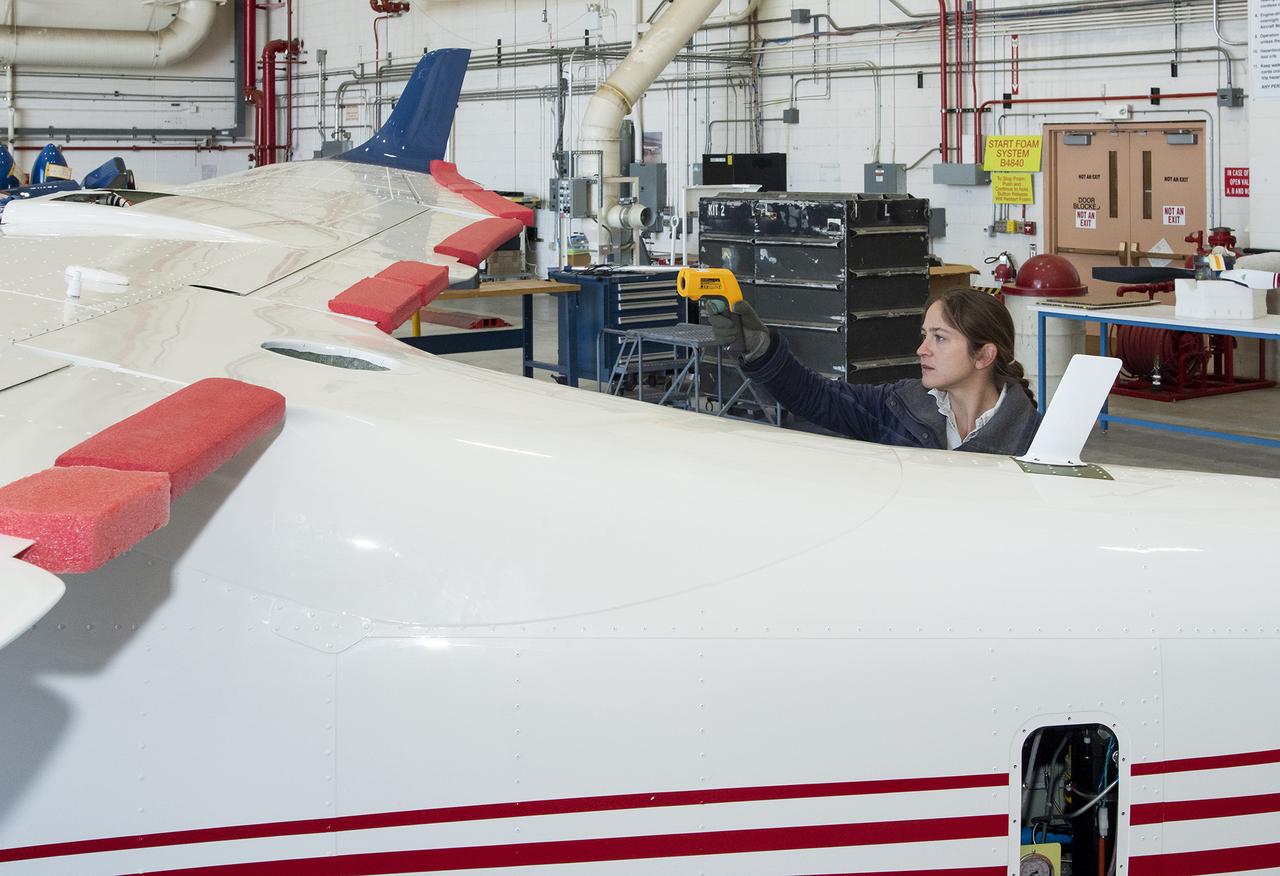
NASA engineers put the X-57 Maxwell, NASA’s first all-electric X-plane, through its initial telemetry tests at NASA’s Armstrong Flight Research Center in California, testing the aircraft’s ability to transmit data to teams on the ground. The data is packaged and transmitted down to ground assets, where it’s decoded into a format that can be presented to a flight control team to look at screens in real time for flight operations. X-57’s goal is to help set certification standards for emerging electric aircraft markets.
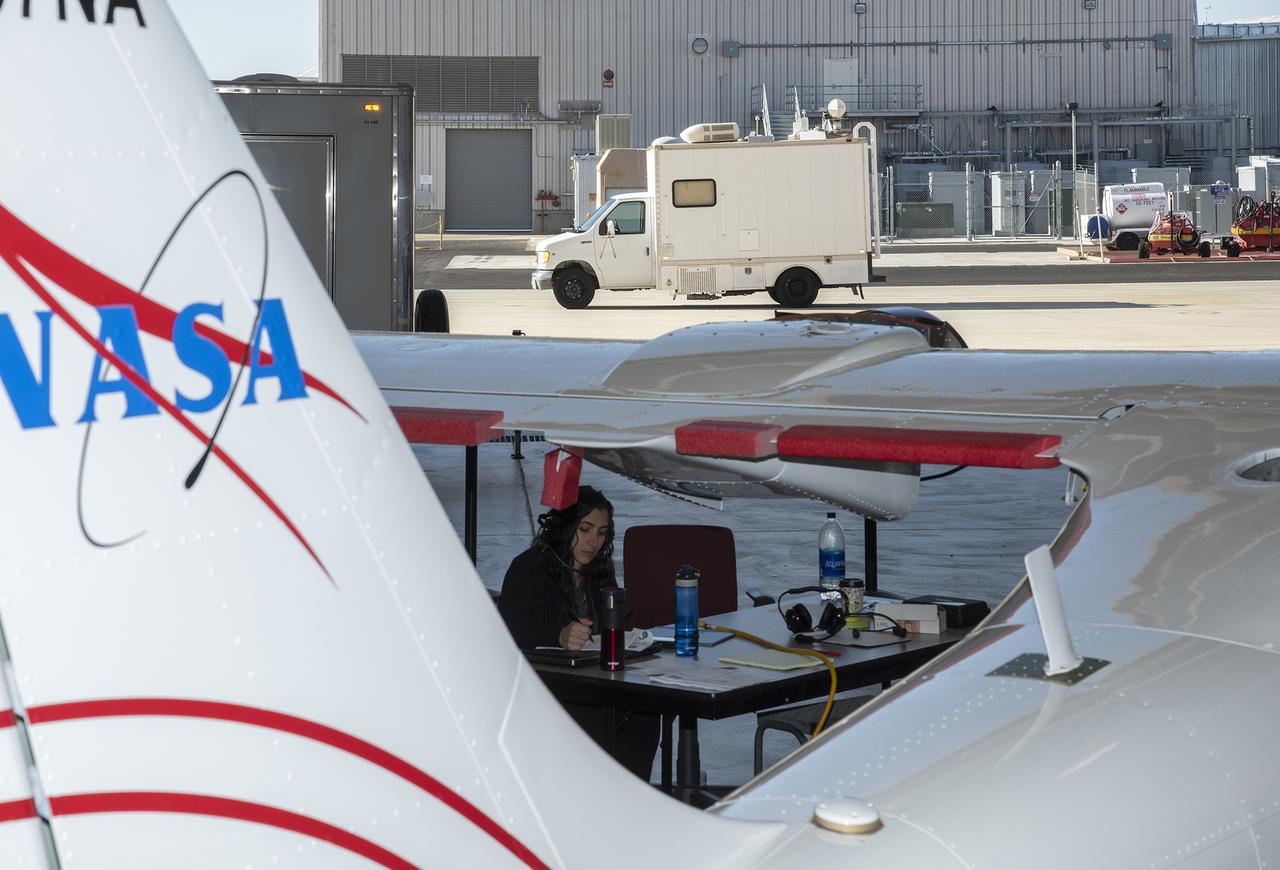
NASA engineers put the X-57 Maxwell, NASA's first all-electric X-plane, through its initial telemetry tests at NASA's Armstrong Flight Research Center in California, testing the aircraft's ability to transmit data to teams on the ground. The data is packaged and transmitted down to ground assets, where it's decoded into a format that can be presented to a flight control team to look at screens in real time for flight operations. X-57's goal is to help set certification standards for emerging electric aircraft markets.
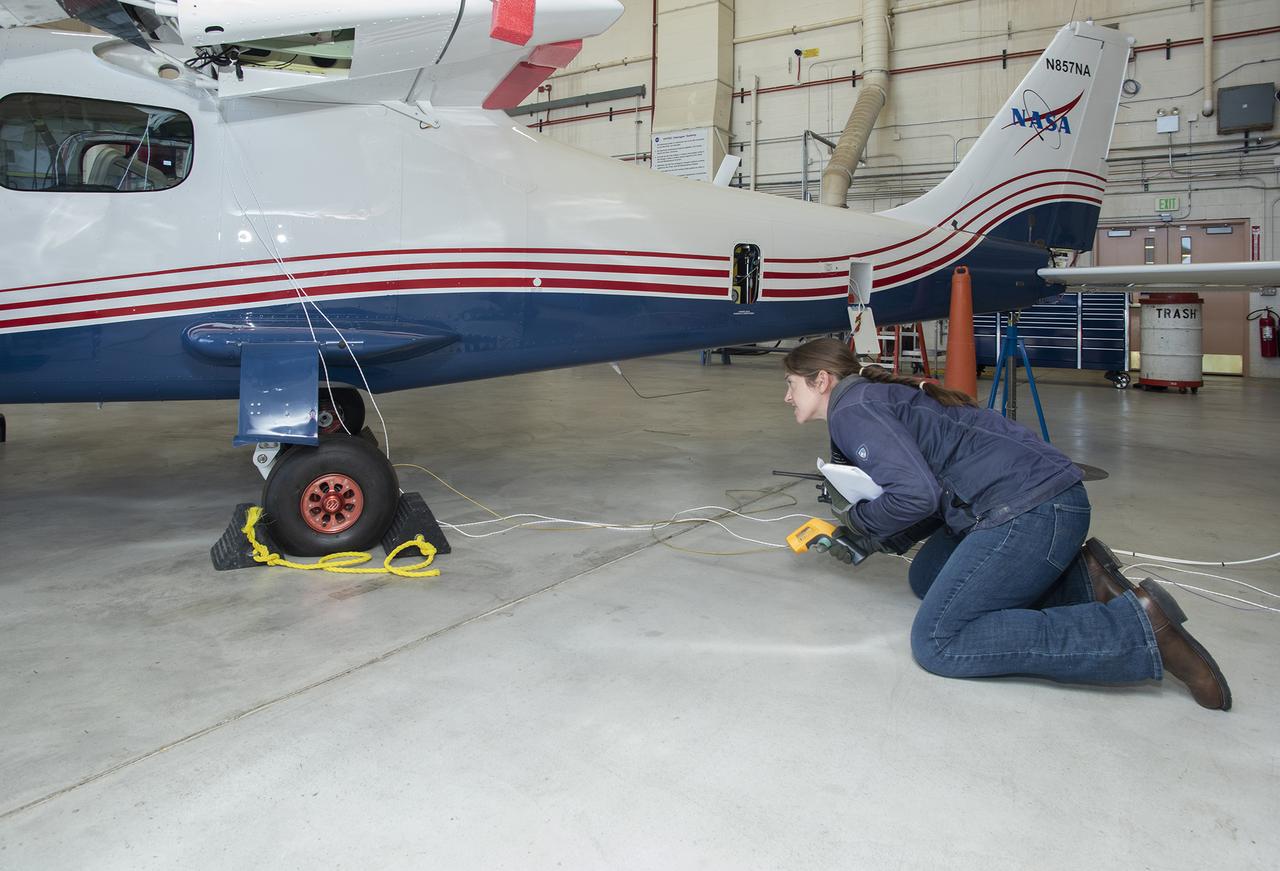
NASA engineers put the X-57 Maxwell, NASA’s first all-electric X-plane, through its initial telemetry tests at NASA’s Armstrong Flight Research Center in California, testing the aircraft’s ability to transmit data to teams on the ground. The data is packaged and transmitted down to ground assets, where it’s decoded into a format that can be presented to a flight control team to look at screens in real time for flight operations. X-57’s goal is to help set certification standards for emerging electric aircraft markets.
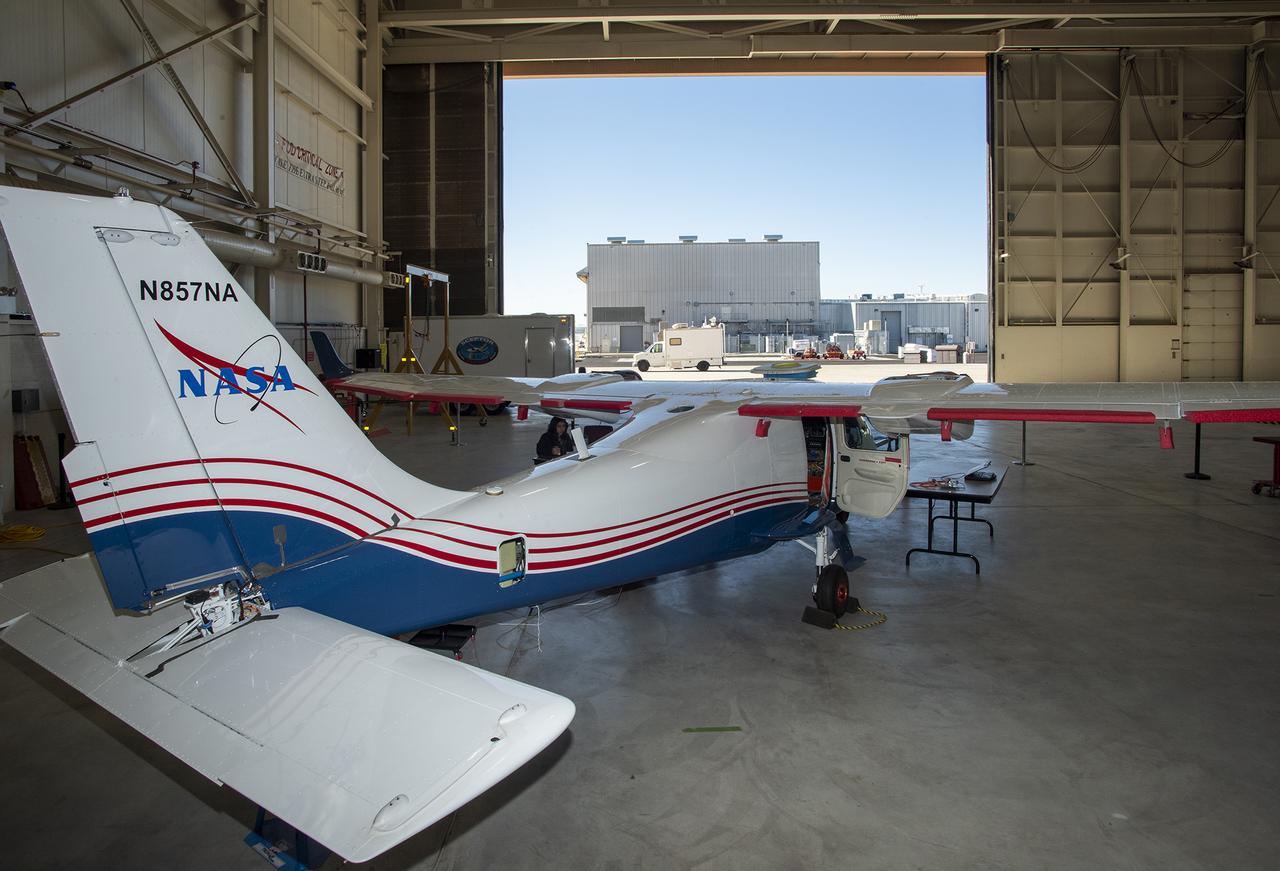
NASA engineers put the X-57 Maxwell, NASA's first all-electric X-plane, through its initial telemetry tests at NASA's Armstrong Flight Research Center in California, testing the aircraft's ability to transmit data to teams on the ground. The data is packaged and transmitted down to ground assets, where it's decoded into a format that can be presented to a flight control team to look at screens in real time for flight operations. X-57's goal is to help set certification standards for emerging electric aircraft markets.
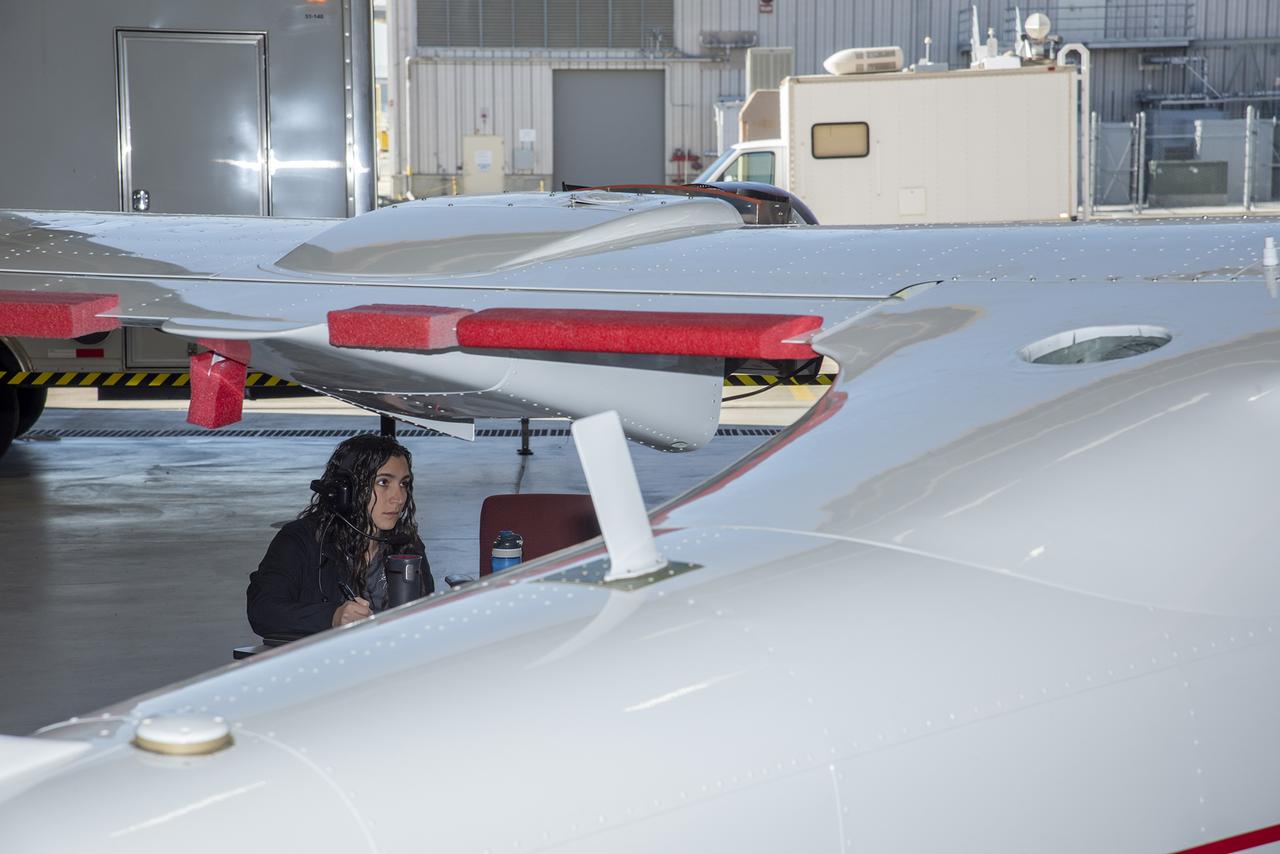
NASA engineers put the X-57 Maxwell, NASA’s first all-electric X-plane, through its initial telemetry tests at NASA’s Armstrong Flight Research Center in California, testing the aircraft’s ability to transmit data to teams on the ground. The data is packaged and transmitted down to ground assets, where it’s decoded into a format that can be presented to a flight control team to look at screens in real time for flight operations. X-57’s goal is to help set certification standards for emerging electric aircraft markets.

NASA engineers put the X-57 Maxwell, NASA's first all-electric X-plane, through its initial telemetry tests at NASA's Armstrong Flight Research Center in California, testing the aircraft's ability to transmit data to teams on the ground. The data is packaged and transmitted down to ground assets, where it's decoded into a format that can be presented to a flight control team to look at screens in real time for flight operations. X-57's goal is to help set certification standards for emerging electric aircraft markets.
NASA engineers put the X-57 Maxwell, NASA’s first all-electric X-plane, through its initial telemetry tests at NASA’s Armstrong Flight Research Center in California, testing the aircraft’s ability to transmit data to teams on the ground. The data is packaged and transmitted down to ground assets, where it’s decoded into a format that can be presented to a flight control team to look at screens in real time for flight operations. X-57’s goal is to help set certification standards for emerging electric aircraft markets.
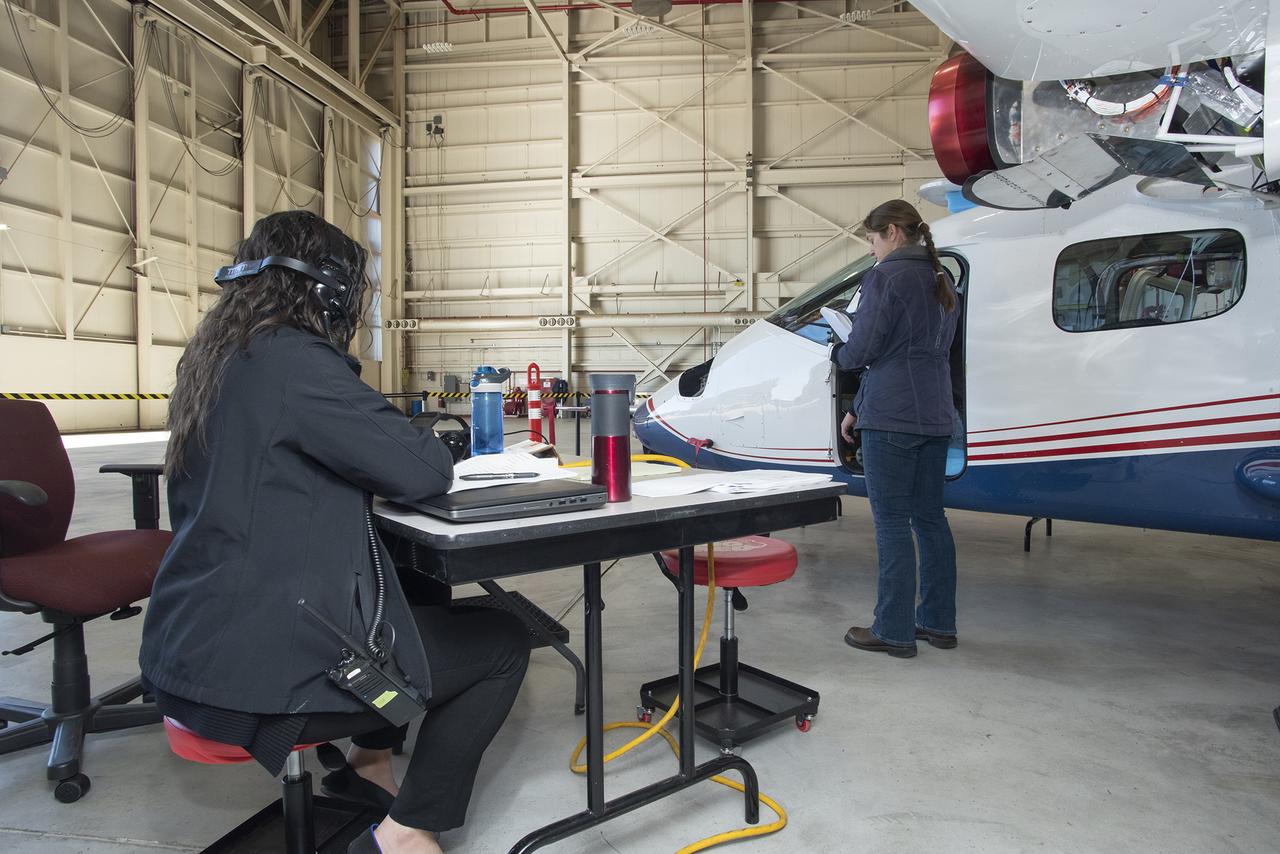
NASA engineers put the X-57 Maxwell, NASA's first all-electric X-plane, through its initial telemetry tests at NASA's Armstrong Flight Research Center in California, testing the aircraft's ability to transmit data to teams on the ground. The data is packaged and transmitted down to ground assets, where it's decoded into a format that can be presented to a flight control team to look at screens in real time for flight operations. X-57's goal is to help set certification standards for emerging electric aircraft markets.
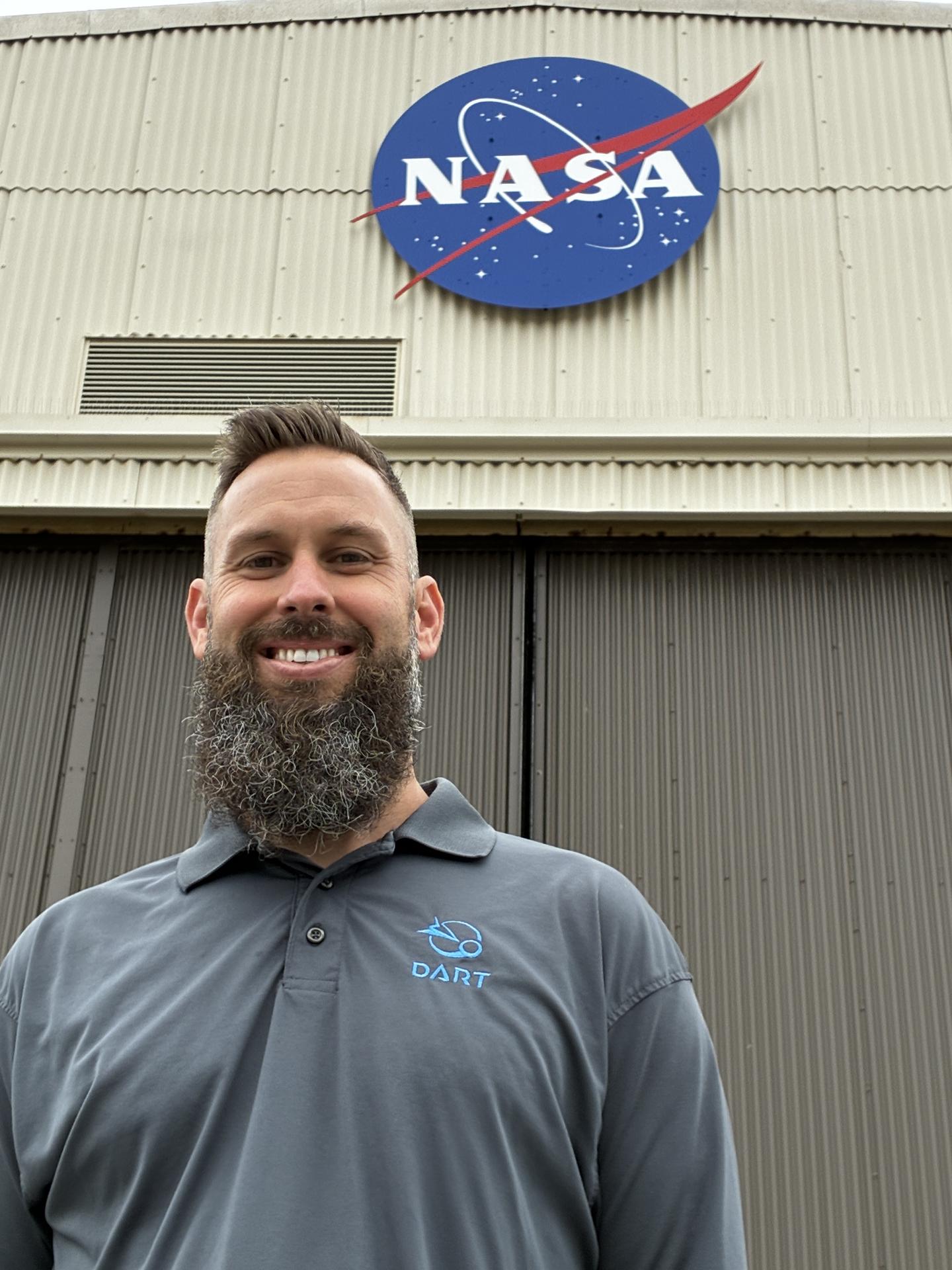
At Vandenberg Space Force Base in California, Eric Fernandez stands in front of Building 836, where he performs work as a telemetry engineer for NASA.

The Triplex 7M telemetry antenna at far right and the two radars to the left are a few assets of the Dryden Aeronautical Test Range at NASA’s Armstrong Flight Research Center in California.
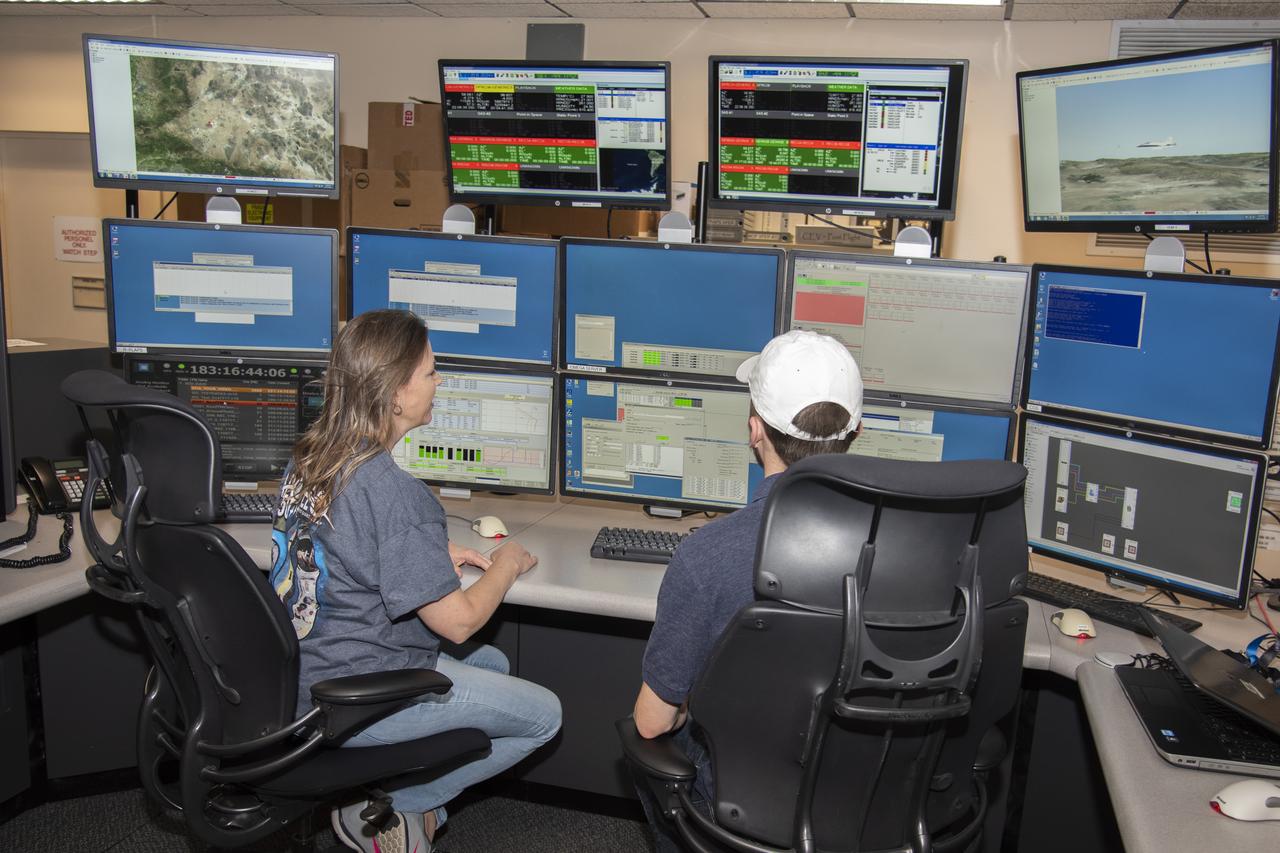
Sonja Belcher and Zach Springer show some of what they would do during a flight mission at a Telemetry and Radar Acquisition Processing System at NASA’s Armstrong Flight Research Center in California
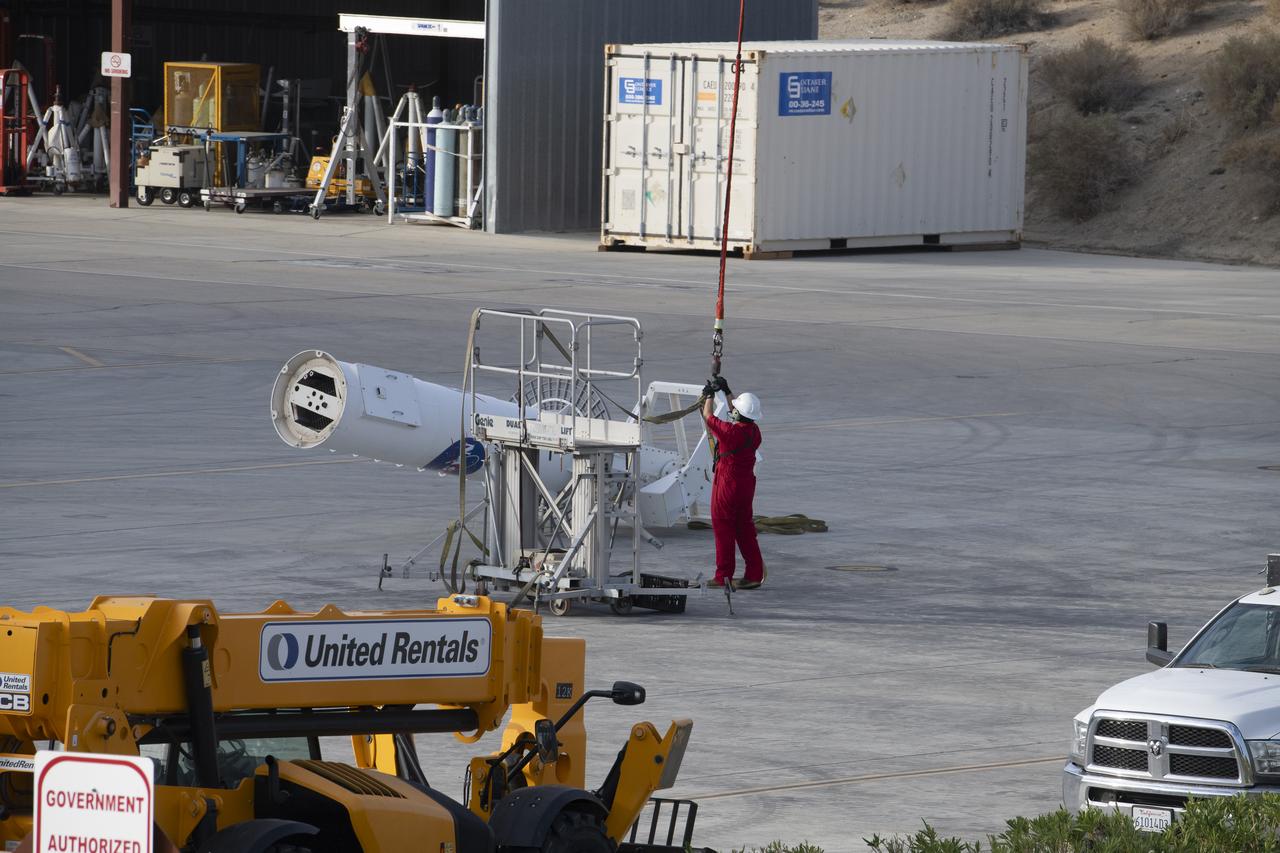
A pedestal carried by a helicopter is positioned for a gentle placement on the ground. The helicopter removed the pedestal from the rooftop of Building 4800 at NASA’s Armstrong Flight Research Center in Edwards, California, on Oct. 4, 2024. The pedestal was used since the 1950s to 2015 to house different telemetry dishes to collect data from research aircraft.
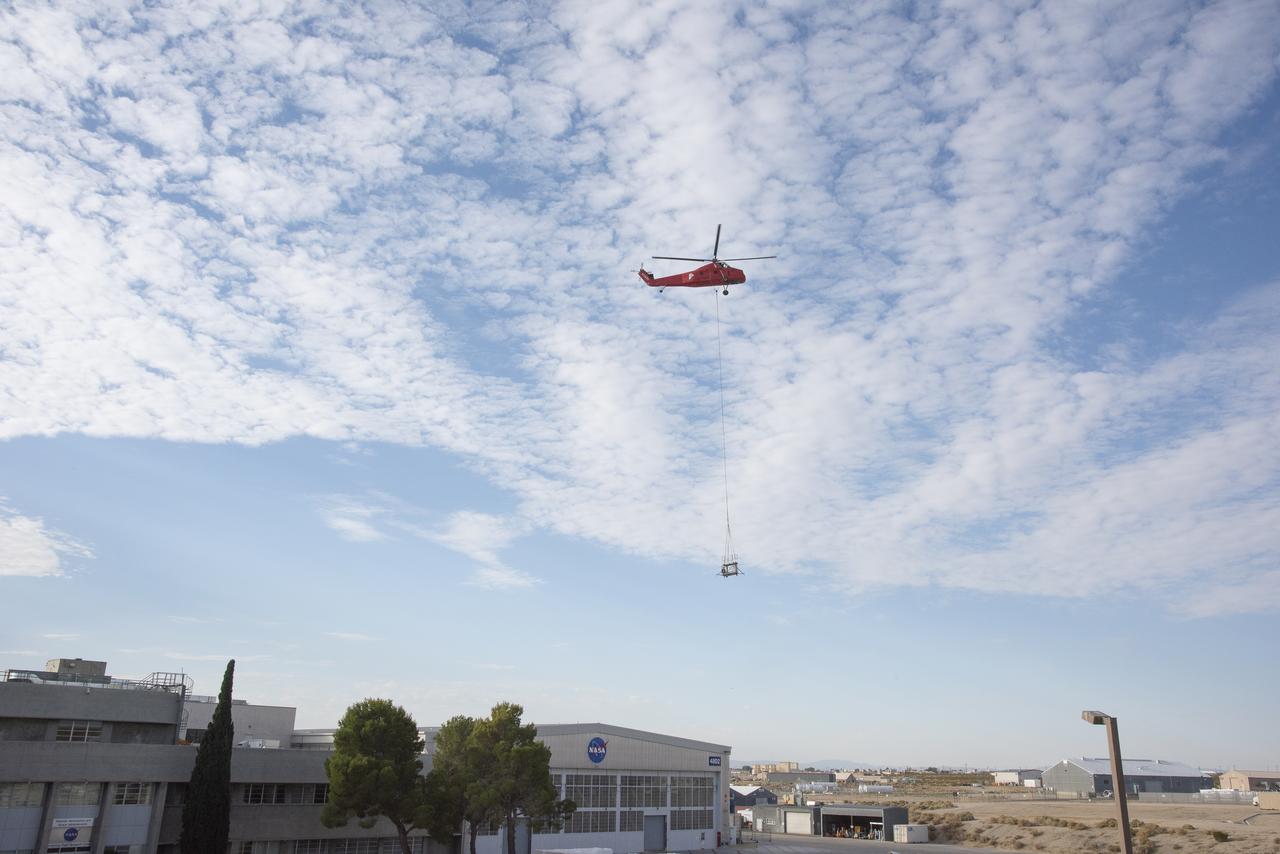
A helicopter carries a rooftop pedestal it removed from Building 4800 at NASA’s Armstrong Flight Research Center in Edwards, California, on Oct. 4, 2024. The pedestal was used since the 1950s to 2015 to house different telemetry dishes to collect data from research aircraft.
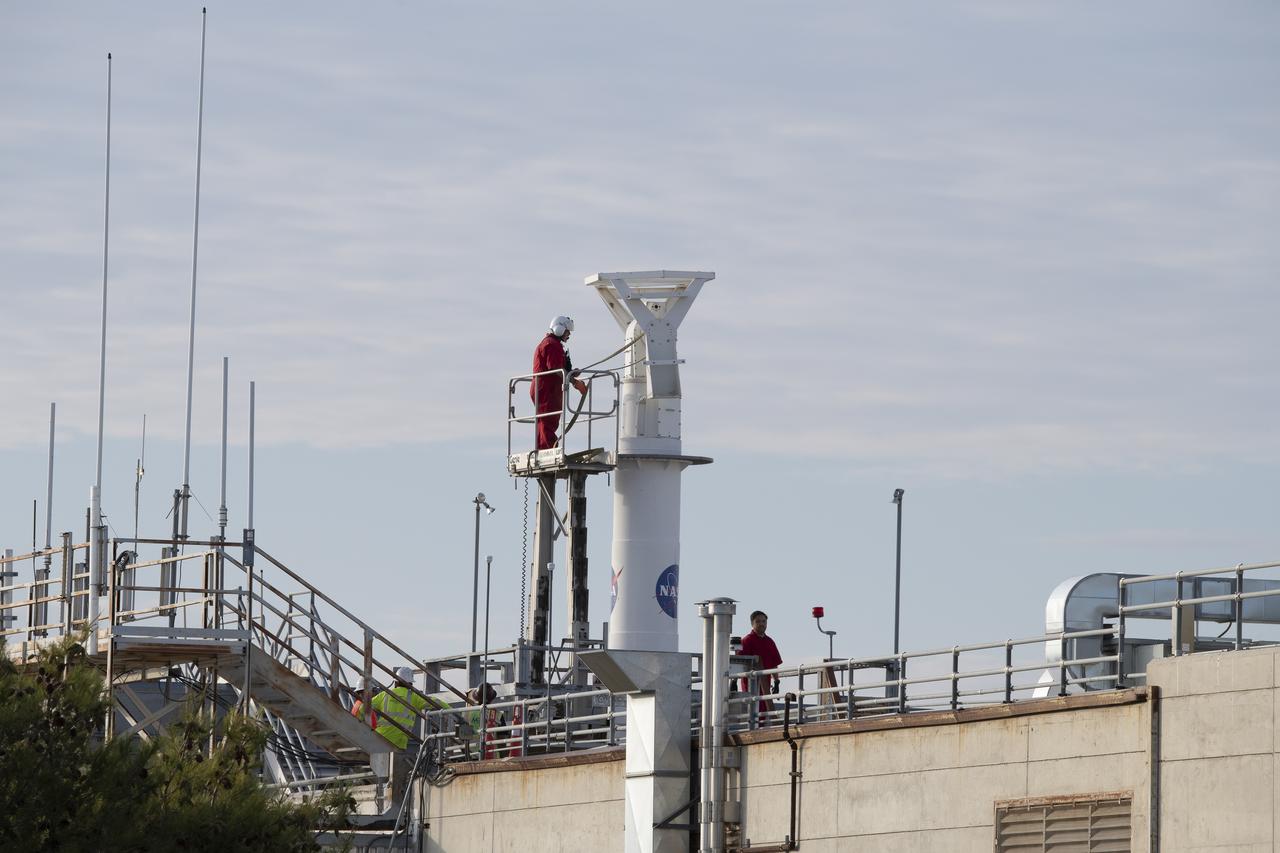
A cable is secured on a rooftop pedestal located on Building 4800 at NASA’s Armstrong Flight Research Center in Edwards, California, on Oct. 4, 2024. The pedestal, which was prepared for a helicopter lift to remove it from the roof, was used since the 1950s until 2015 to enable different telemetry dishes to collect data from research aircraft.
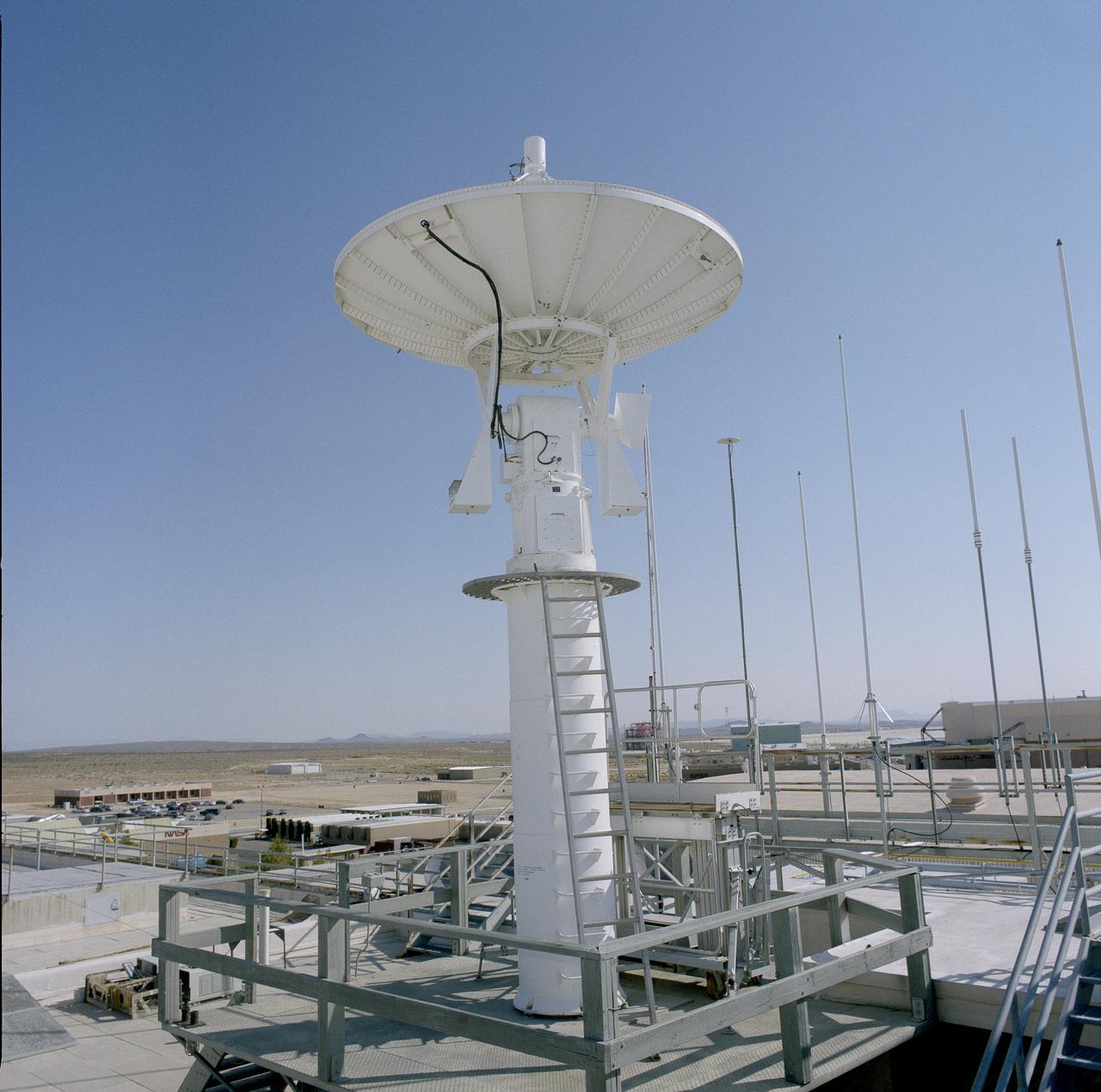
A rooftop pedestal and telemetry dish gathered information from research aircraft at Building 4800 at NASA’s Armstrong Flight Research Center in Edwards, California. The pedestal was used since the 1950s to 2015 to house different dishes to collect data from research aircraft. On Oct. 4, 2024, a helicopter was used to remove the pedestal from the roof.
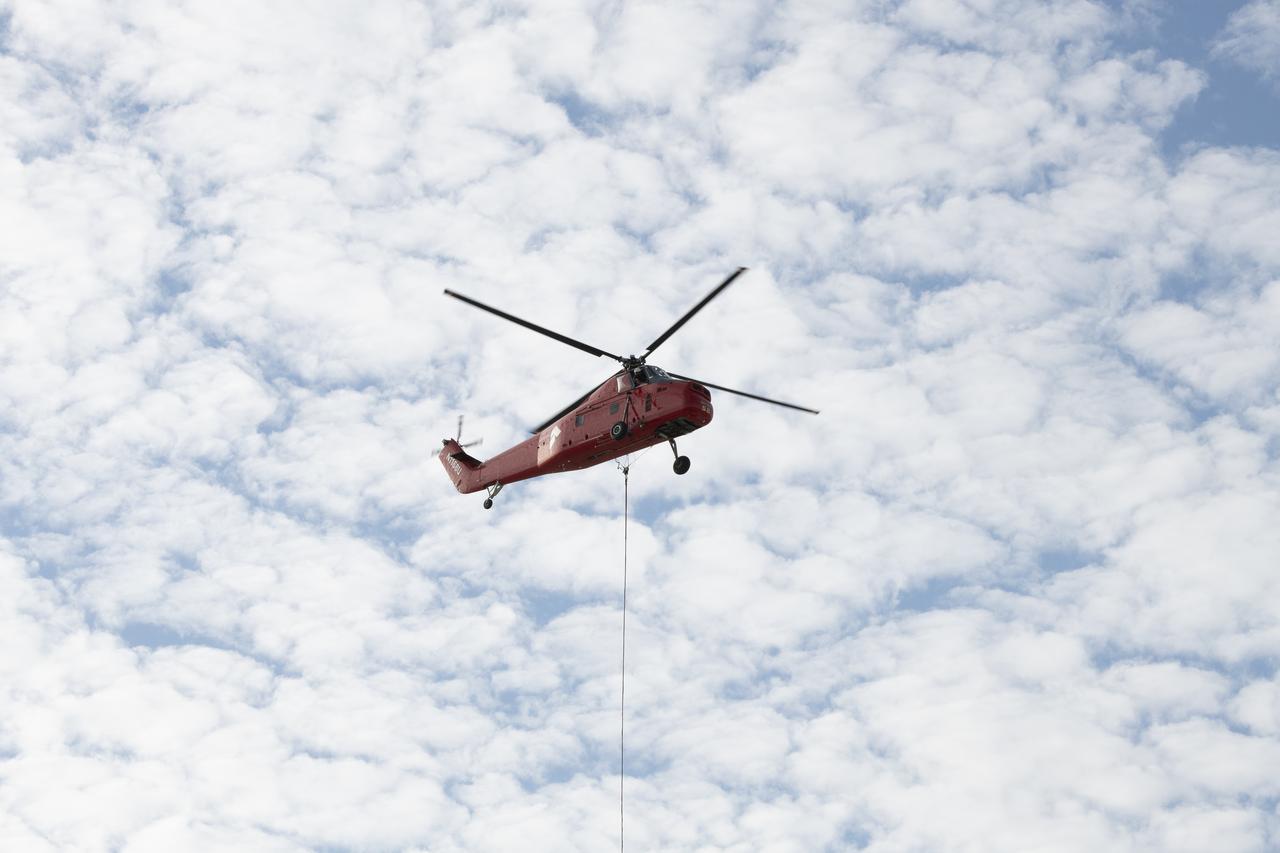
A helicopter is positioned to remove a rooftop pedestal from Building 4800 at NASA’s Armstrong Flight Research Center in Edwards, California, on Oct. 4, 2024. The pedestal was used since the 1950s to 2015 to house different telemetry dishes to collect data from research aircraft.
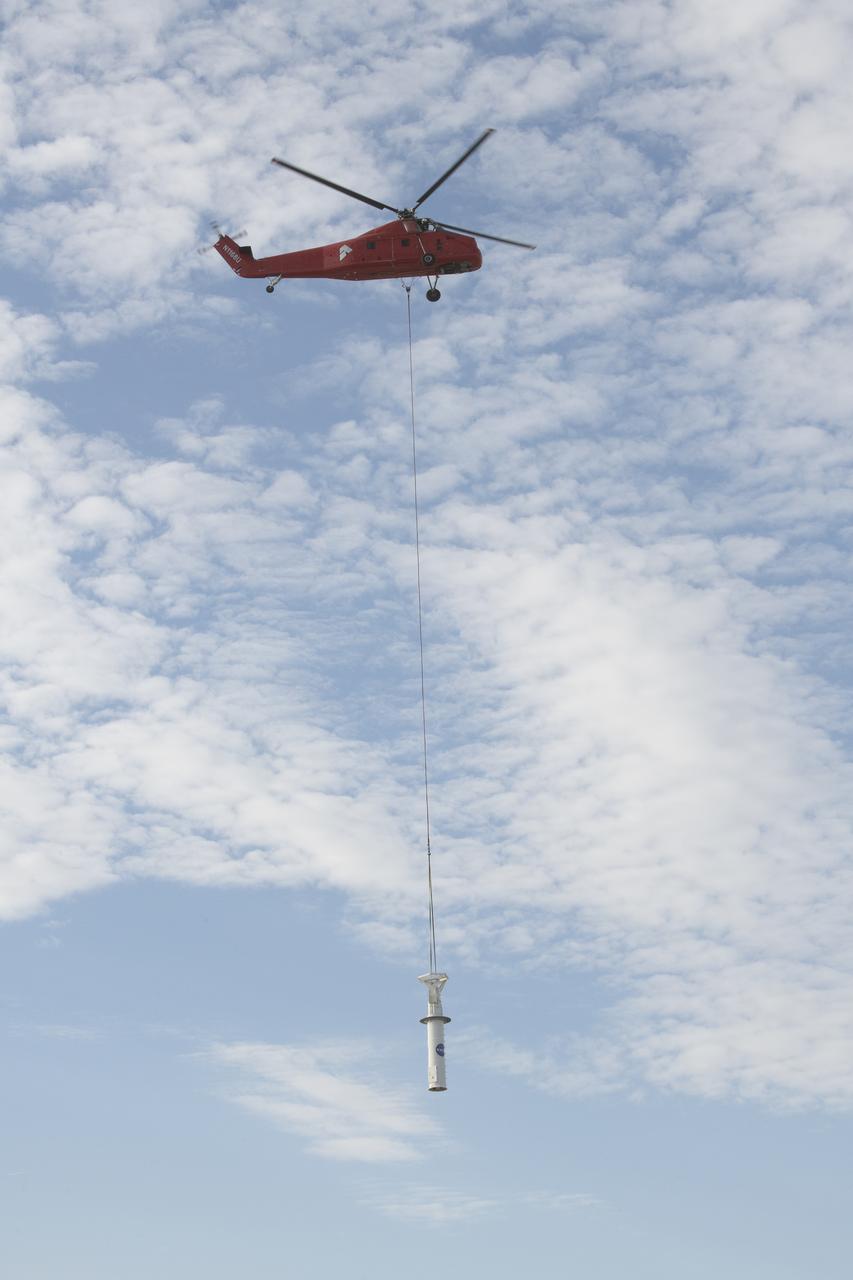
A helicopter carries a rooftop pedestal it removed from Building 4800 at NASA’s Armstrong Flight Research Center in Edwards, California, on Oct. 4, 2024. The pedestal was used since the 1950s to 2015 to house different telemetry dishes to collect data from research aircraft.

Pill Transmitter. Advanced Telemetry Devices - Fetal Health Monitor.
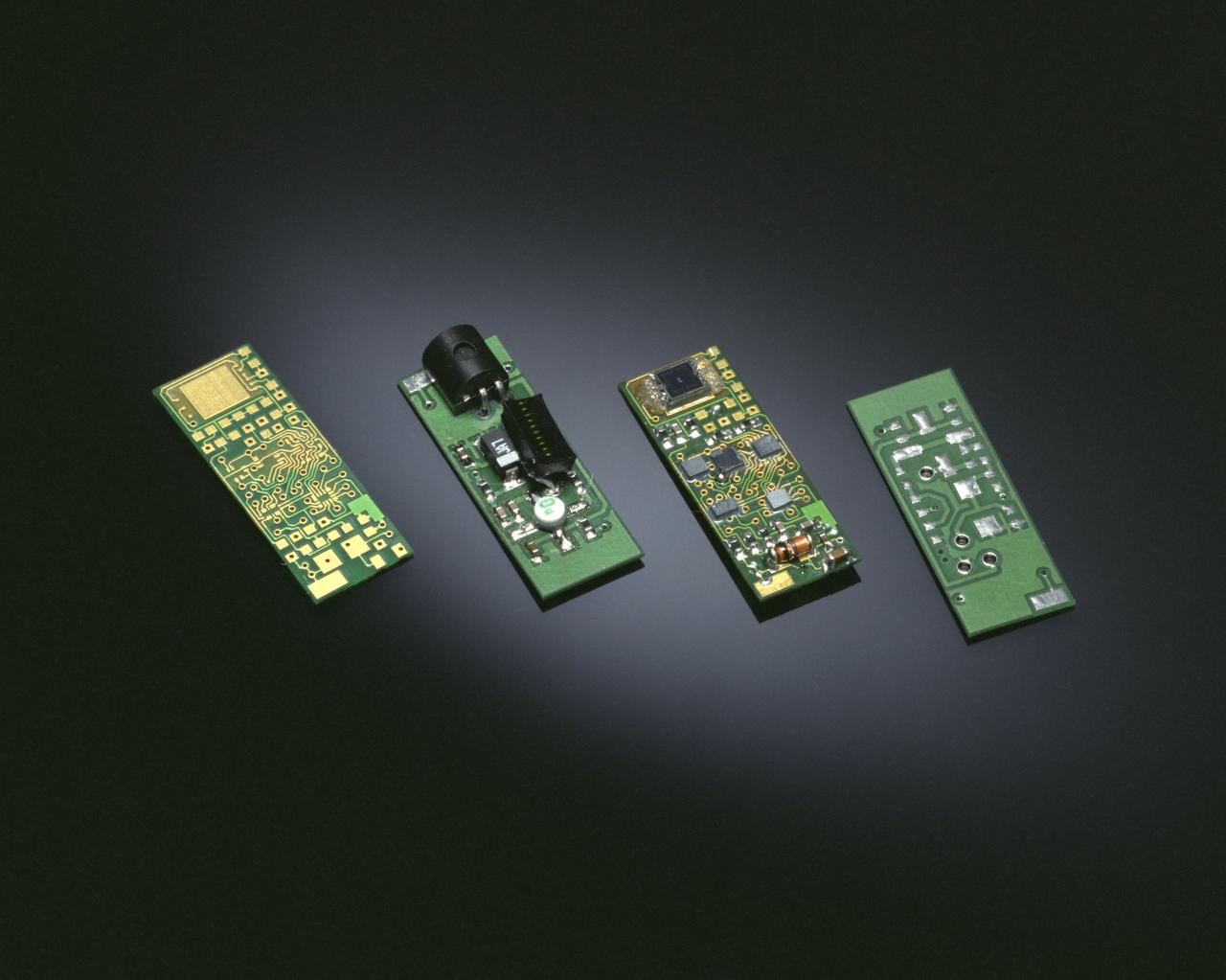
Pill Transmitter. Advanced Telemetry Devices - Fetal Health Monitor.
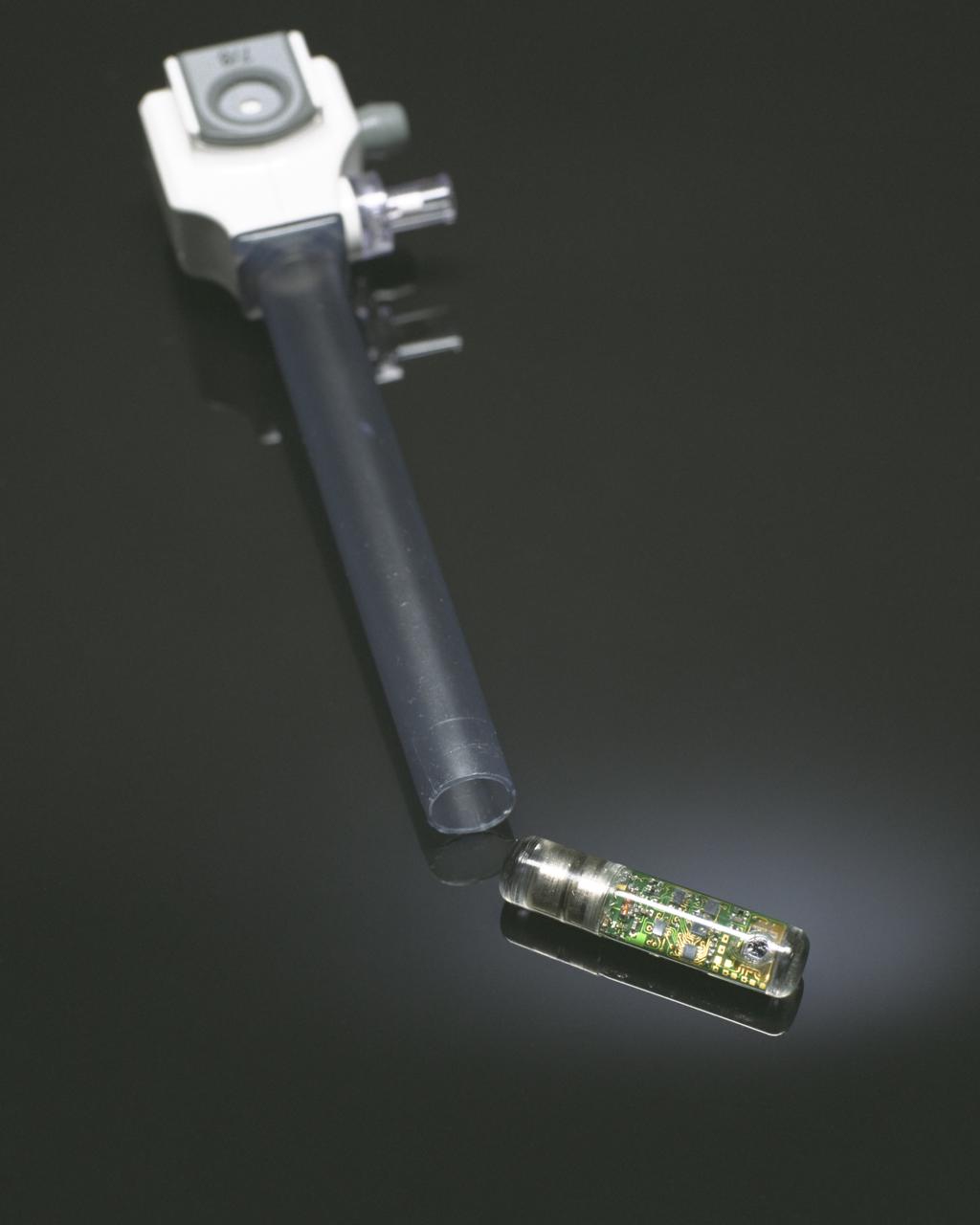
Pill Transmitter. Advanced Telemetry Devices - Fetal Health Monitor.
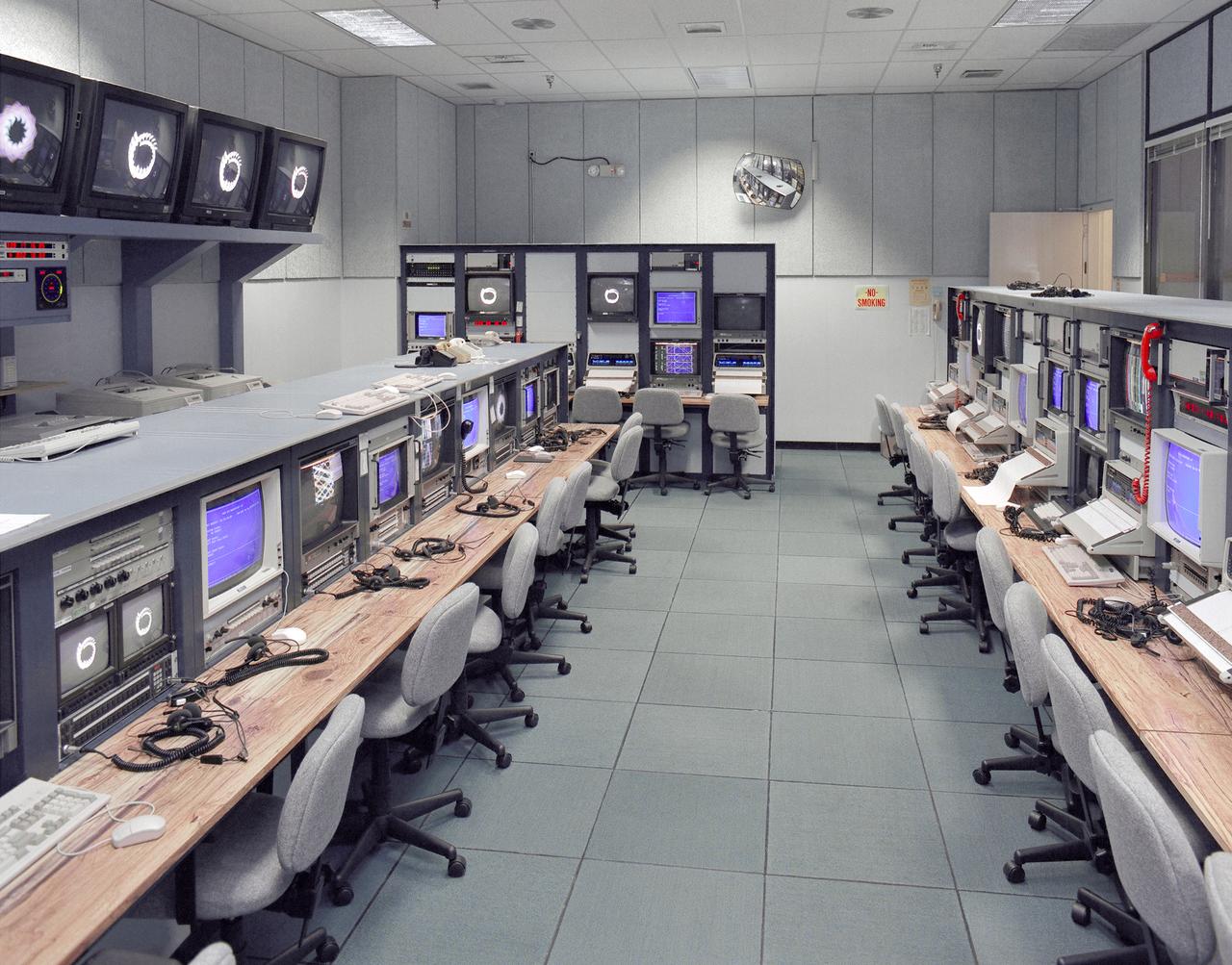
Mission control Blue Room, seen here, in building 4800 at NASA's Dryden Flight Research Center, is part of the Western Aeronautical Test Range (WATR). All aspects of a research mission are monitored from one of two of these control rooms at Dryden. The WATR consists of a highly automated complex of computer controlled tracking, telemetry, and communications systems and control room complexes that are capable of supporting any type of mission ranging from system and component testing, to sub-scale and full-scale flight tests of new aircraft and reentry systems. Designated areas are assigned for spin/dive tests, corridors are provided for low, medium, and high-altitude supersonic flight, and special STOL/VSTOL facilities are available at Ames Moffett and Crows Landing. Special use airspace, available at Edwards, covers approximately twelve thousand square miles of mostly desert area. The southern boundary lies to the south of Rogers Dry Lake, the western boundary lies midway between Mojave and Bakersfield, the northern boundary passes just south of Bishop, and the eastern boundary follows about 25 miles west of the Nevada border except in the northern areas where it crosses into Nevada.

Photos of the Launch Vehicle Data Center (LVDC) in Hangar AE - Telemetry Room - showing the engineering consule upgrades.
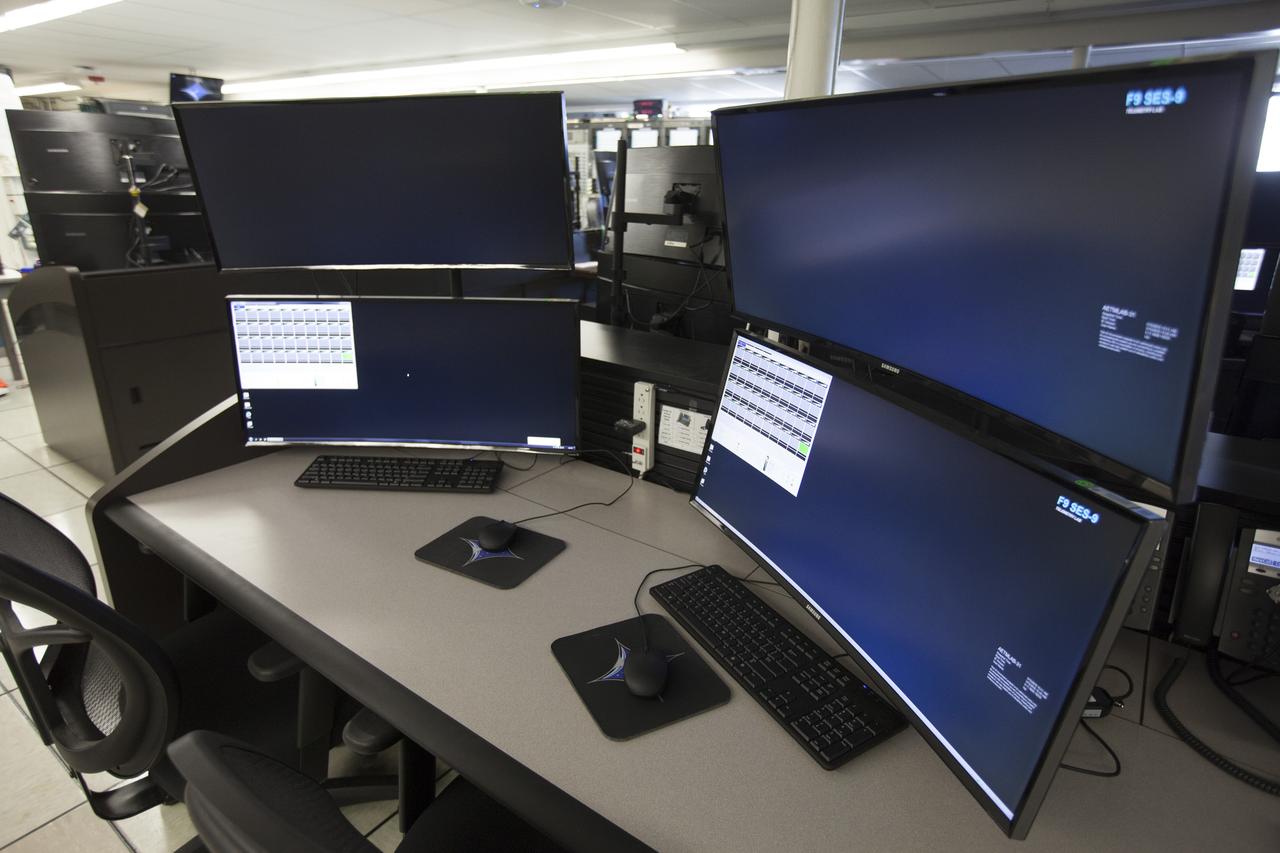
Photos of the Launch Vehicle Data Center (LVDC) in Hangar AE - Telemetry Room - showing the engineering consule upgrades.
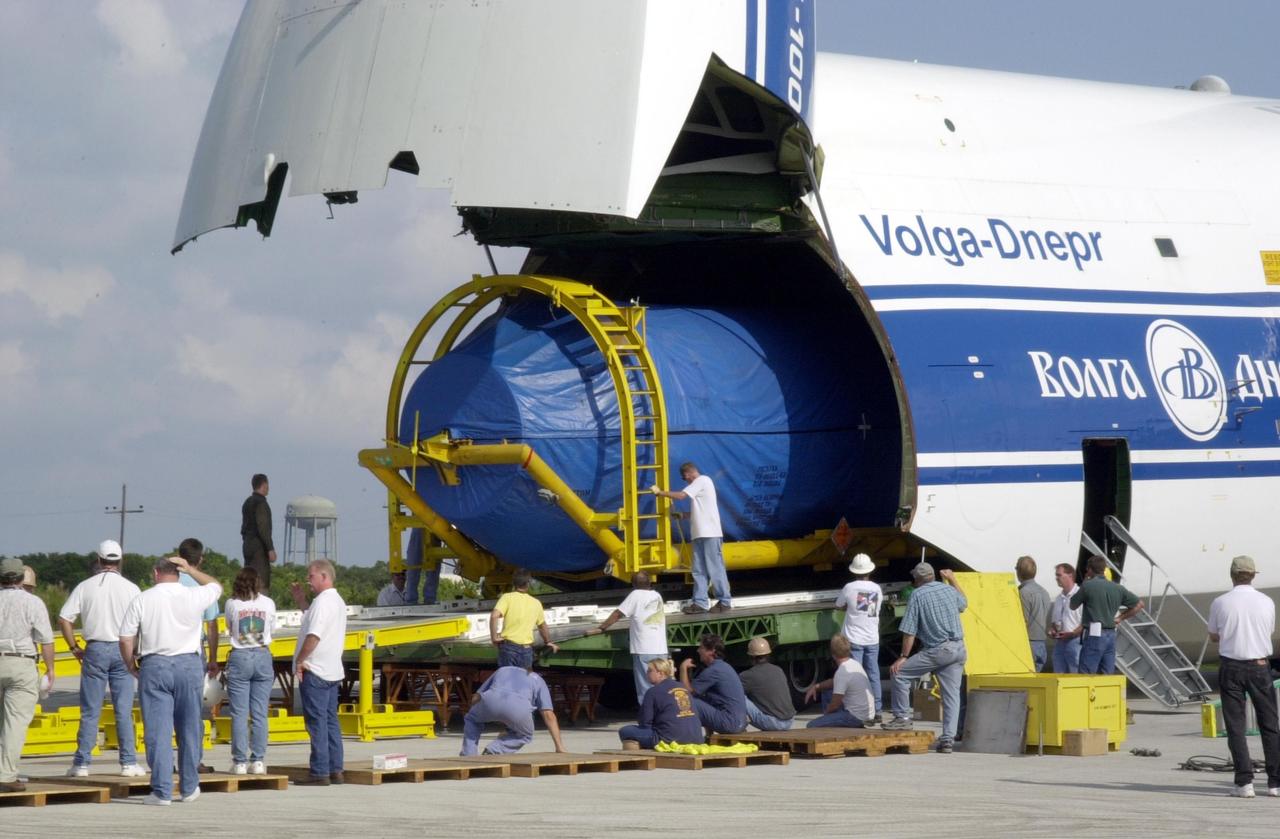
KENNEDY SPACE CENTER, FLA. -- An Atlas/Centaur booster arrives at Cape Canaveral Air Force Station in preparation for the launch of TDRS-J. The third in a series of telemetry satellites, TDRS-J will help replenish the current constellation of geosynchronous TDRS satellites. The TDRS System is the primary source of space-to-ground voice, data and telemetry for the Space Shuttle. It also provides communications with the International Space Station and scientific spacecraft in low-Earth orbit such as the Hubble Space Telescope. This new advanced series of satellites will extend the availability of TDRS communications services until about 2017.
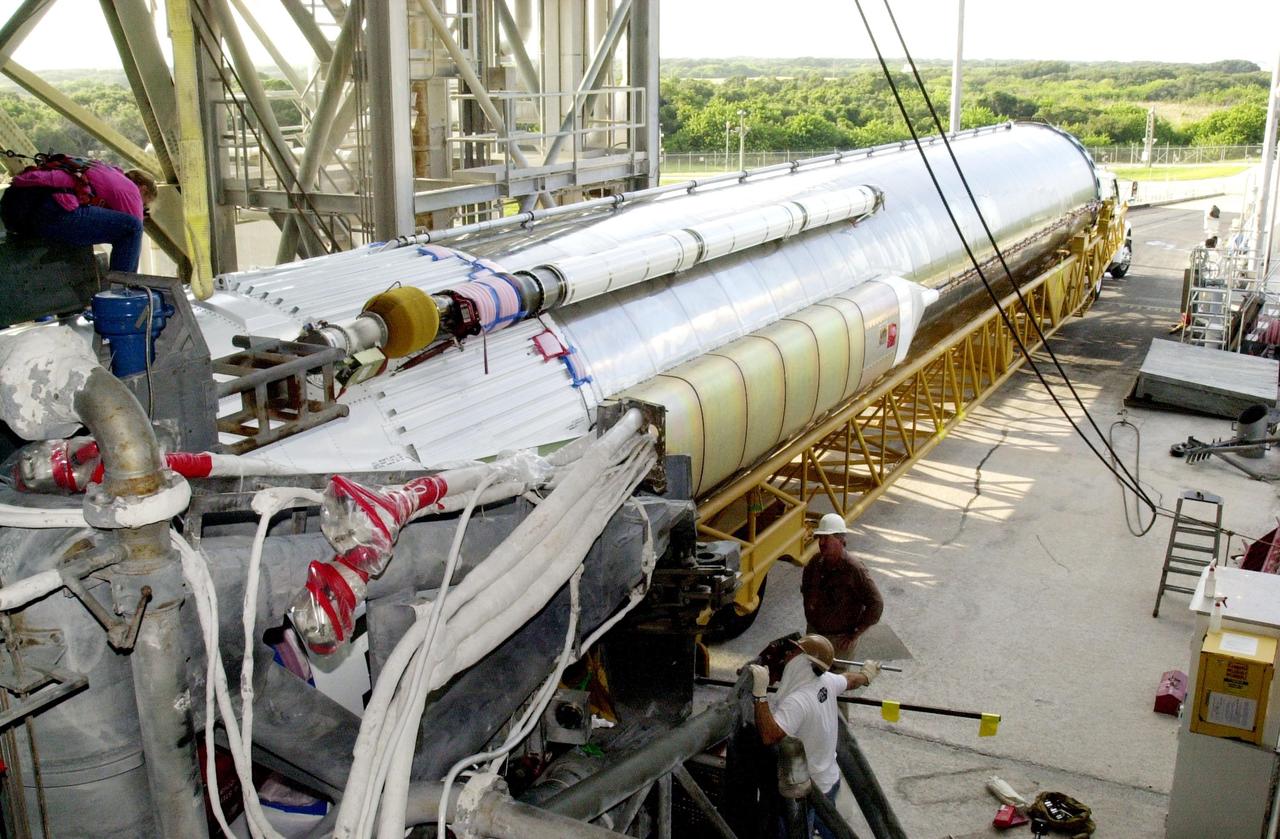
KENNEDY SPACE CENTER, FLA. -- The first stage of an Atlas/Centaur booster (AC-144) is delivered to Launch Complex 36A at Cape Canaveral Air Force Station in preparation for the launch of TDRS-J. The third in a series of telemetry satellites, TDRS-J will help replenish the current constellation of geosynchronous TDRS satellites. The TDRS System is the primary source of space-to-ground voice, data and telemetry for the Space Shuttle. It also provides communications with the International Space Station and scientific spacecraft in low-Earth orbit, such as the Hubble Space Telescope. This new advanced series of satellites will extend the availability of TDRS communications services until about 2017.
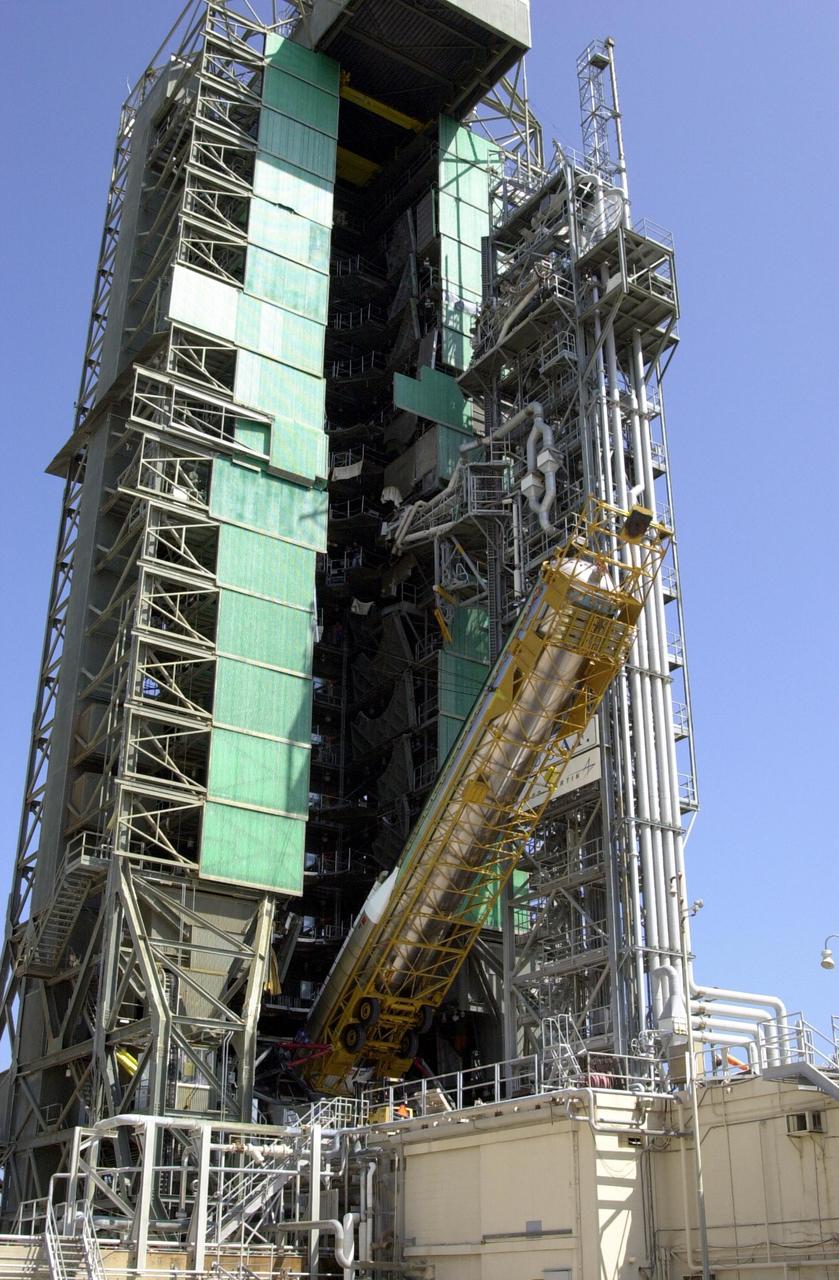
KENNEDY SPACE CENTER, FLA. -- The first stage of an Atlas/Centaur booster (AC-144) is lifted into an upright position at Launch Complex 36A at Cape Canaveral Air Force Station in preparation for the launch of TDRS-J. The third in a series of telemetry satellites, TDRS-J will help replenish the current constellation of geosynchronous TDRS satellites. The TDRS System is the primary source of space-to-ground voice, data and telemetry for the Space Shuttle. It also provides communications with the International Space Station and scientific spacecraft in low-Earth orbit, such as the Hubble Space Telescope. This new advanced series of satellites will extend the availability of TDRS communications services until about 2017.
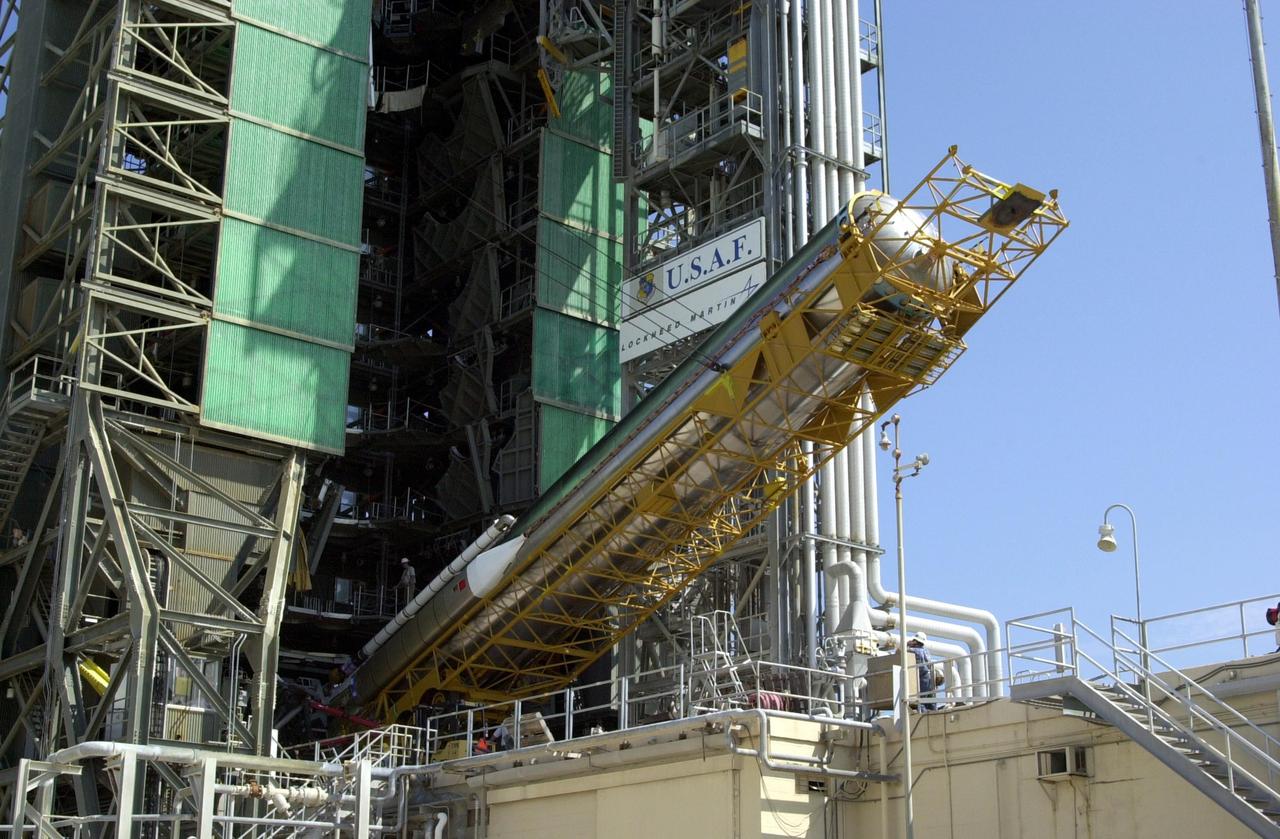
KENNEDY SPACE CENTER, FLA. -- The first stage of an Atlas/Centaur booster (AC-144) is lifted into an upright position at Launch Complex 36A at Cape Canaveral Air Force Station in preparation for the launch of TDRS-J. The third in a series of telemetry satellites, TDRS-J will help replenish the current constellation of geosynchronous TDRS satellites. The TDRS System is the primary source of space-to-ground voice, data and telemetry for the Space Shuttle. It also provides communications with the International Space Station and scientific spacecraft in low-Earth orbit, such as the Hubble Space Telescope. This new advanced series of satellites will extend the availability of TDRS communications services until about 2017.
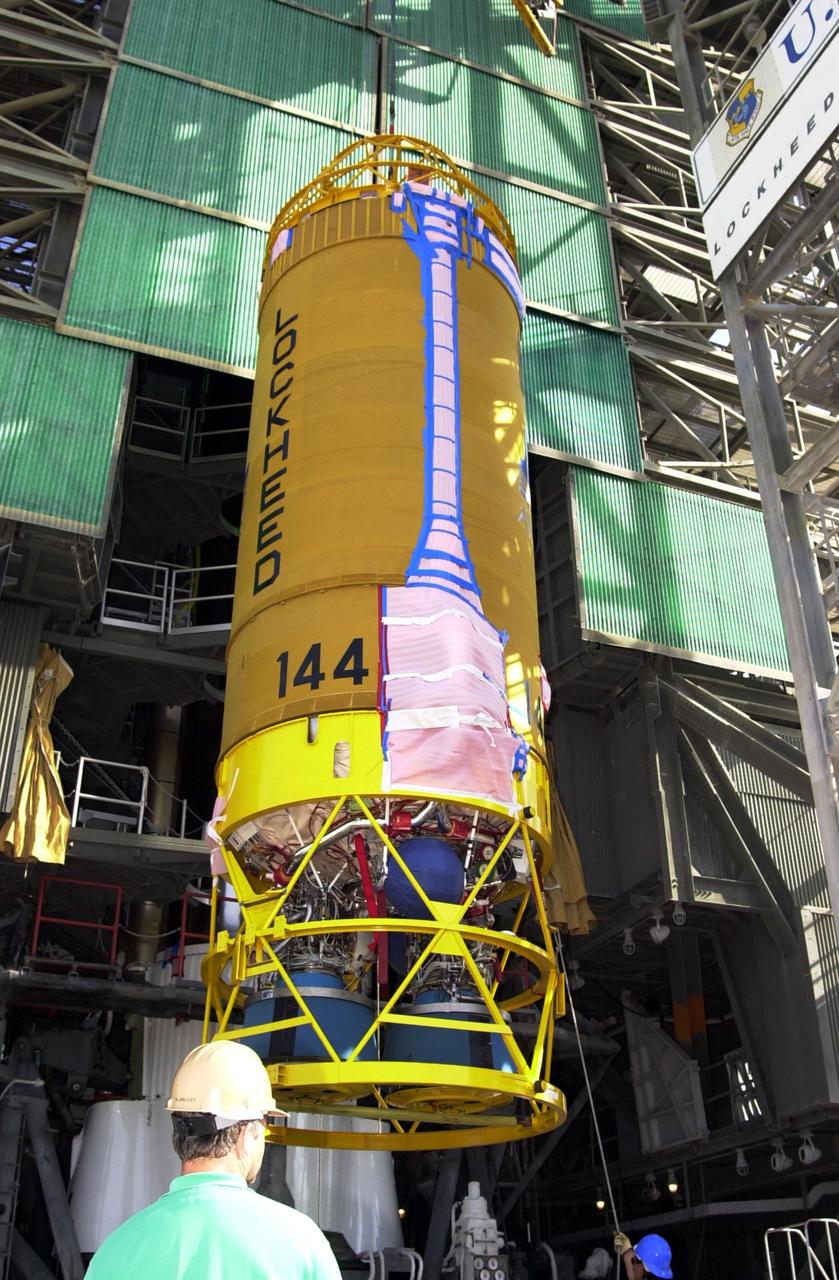
KENNEDY SPACE CENTER, FLA. -- At Launch Complex 36-A, Cape Canaveral Air Force Station, a Lockheed Martin Atlas Centaur IIA (AC-144) rocket is lifted up the launch tower. The rocket will be used in the launch of TDRS-J, scheduled for Nov. 20. The third in a series of telemetry satellites, TDRS-J will help replenish the current constellation of geosynchronous TDRS satellites. The TDRS System is the primary source of space-to-ground voice, data and telemetry for the Space Shuttle. It also provides communications with the International Space Station and scientific spacecraft in low-Earth orbit such as the Hubble Space Telescope. This new advanced series of satellites will extend the availability of TDRS communications services until about 2017.
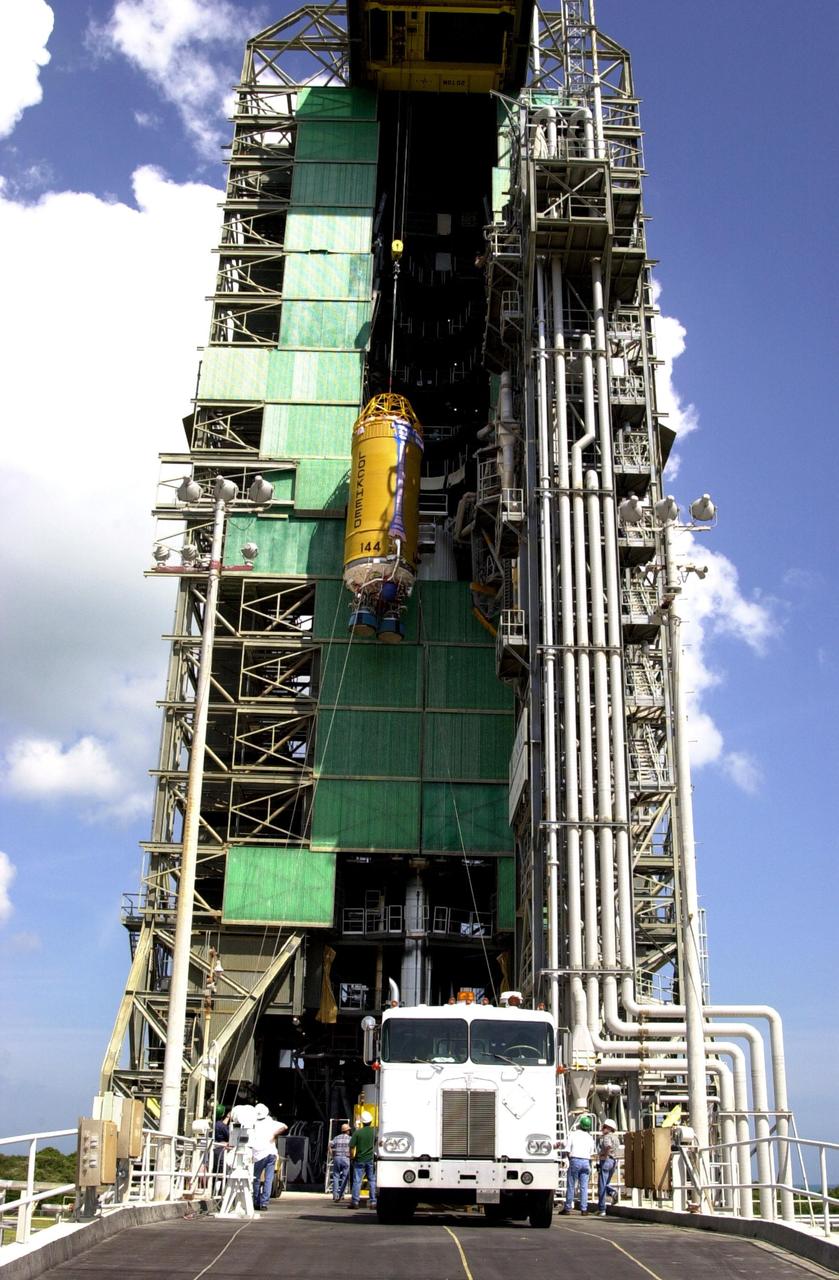
KENNEDY SPACE CENTER, FLA. -- At Launch Complex 36-A, Cape Canaveral Air Force Station, a Lockheed Martin Atlas Centaur IIA (AC-144) rocket is halfway up the launch tower . The rocket will be used in the launch of TDRS-J, scheduled for Nov. 20. The third in a series of telemetry satellites, TDRS-J will help replenish the current constellation of geosynchronous TDRS satellites. The TDRS System is the primary source of space-to-ground voice, data and telemetry for the Space Shuttle. It also provides communications with the International Space Station and scientific spacecraft in low-Earth orbit such as the Hubble Space Telescope. This new advanced series of satellites will extend the availability of TDRS communications services until about 2017.
KENNEDY SPACE CENTER, FLA. - On Launch Complex 36-A, Cape Canaveral Air Force Station, the Atlas IIA launch vehicle with the TDRS-J satellite aboard is ready for launch Dec. 4. The launch window is 9:42 to 10:22 p.m. EST. TDRS-J, the third in a series of telemetry satellites, will help replenish the current constellation of geosynchronous TDRS satellites that are the primary source of space-to-ground voice, data and telemetry for the Space Shuttle. The satellites also provide communications with the International Space Station and scientific spacecraft in low-Earth orbit such as the Hubble Space Telescope. This new advanced series of satellites will extend the availability of TDRS communications services until about 2017.
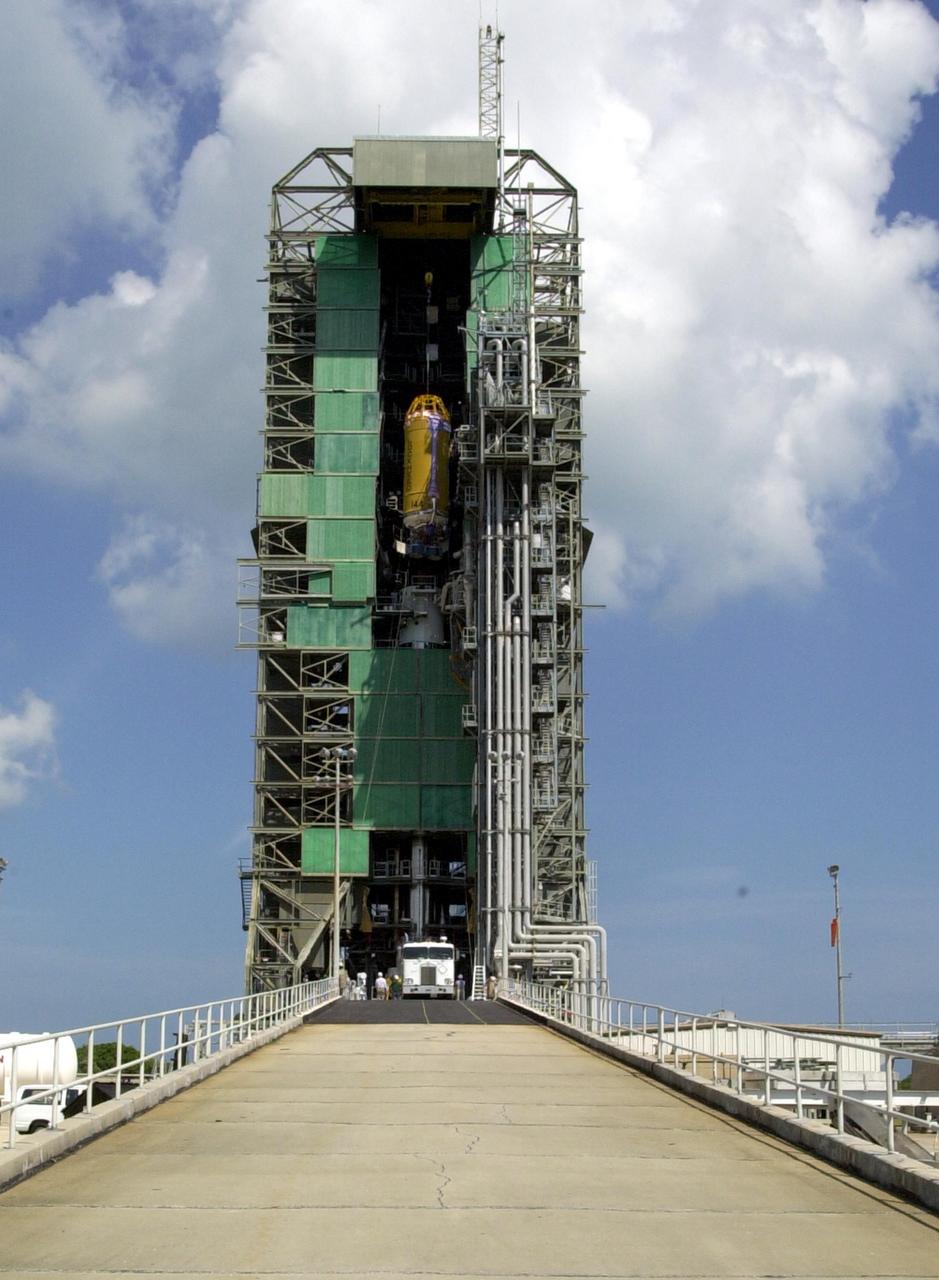
KENNEDY SPACE CENTER, FLA. -- At Launch Complex 36-A, Cape Canaveral Air Force Station, a Lockheed Martin Atlas Centaur IIA (AC-144) rocket nears the top of the launch tower. The rocket will be used in the launch of TDRS-J, scheduled for Nov. 20. The third in a series of telemetry satellites, TDRS-J will help replenish the current constellation of geosynchronous TDRS satellites. The TDRS System is the primary source of space-to-ground voice, data and telemetry for the Space Shuttle. It also provides communications with the International Space Station and scientific spacecraft in low-Earth orbit such as the Hubble Space Telescope. This new advanced series of satellites will extend the availability of TDRS communications services until about 2017.
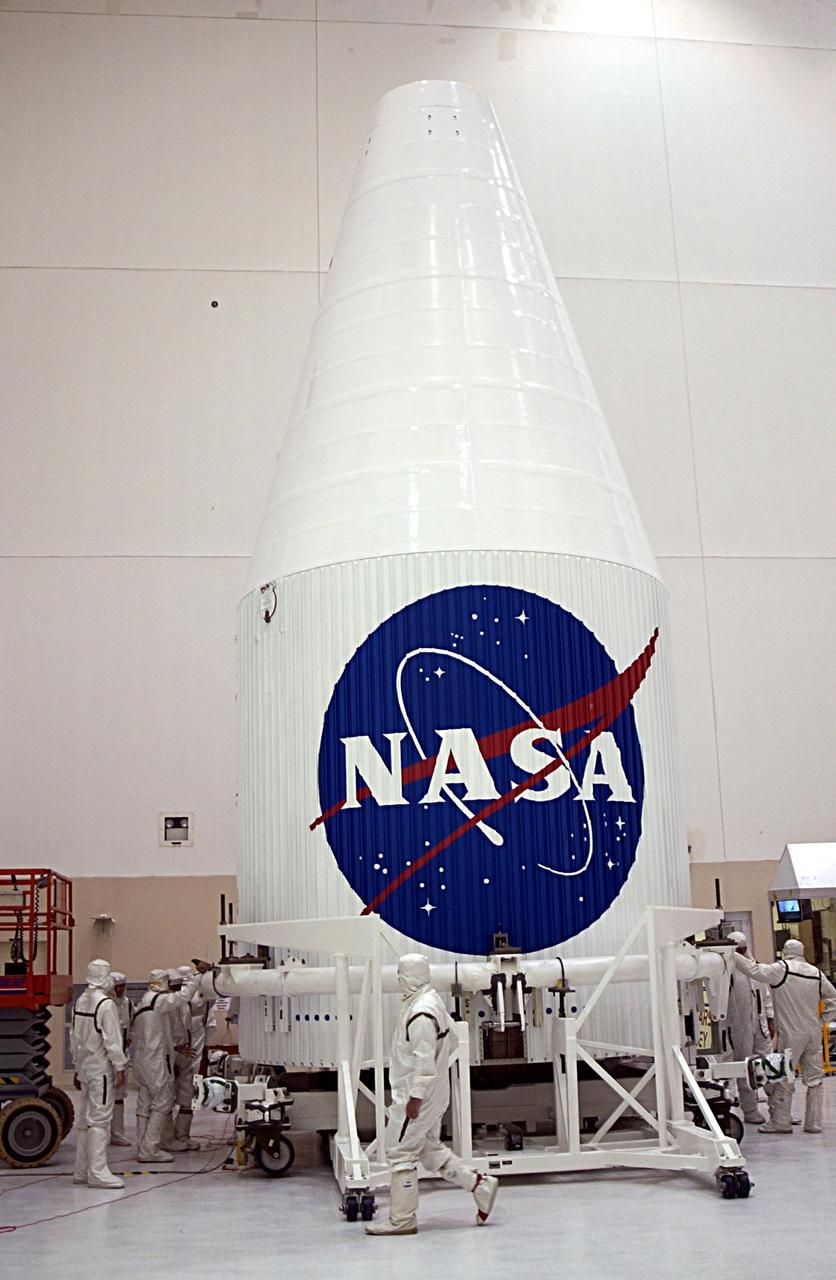
KENNEDY SPACE CENTER, FLA. -- The TDRS-J satellite is fully encapsulated and ready for transport to Launch Complex 36-A, Cape Canaveral Air Force Station, Fla. There it will be mated with the Lockheed Martin Atlas IIA-Centaur rocket for launch on Dec. 4. The third in a series of telemetry satellites, TDRS-J will help replenish the current constellation of geosynchronous TDRS satellites. The TDRS System is the primary source of space-to-ground voice, data and telemetry for the Space Shuttle. It also provides communications with the International Space Station and scientific spacecraft in low-Earth orbit such as the Hubble Space Telescope. This new advanced series of satellites will extend the availability of TDRS communications services until about 2017.
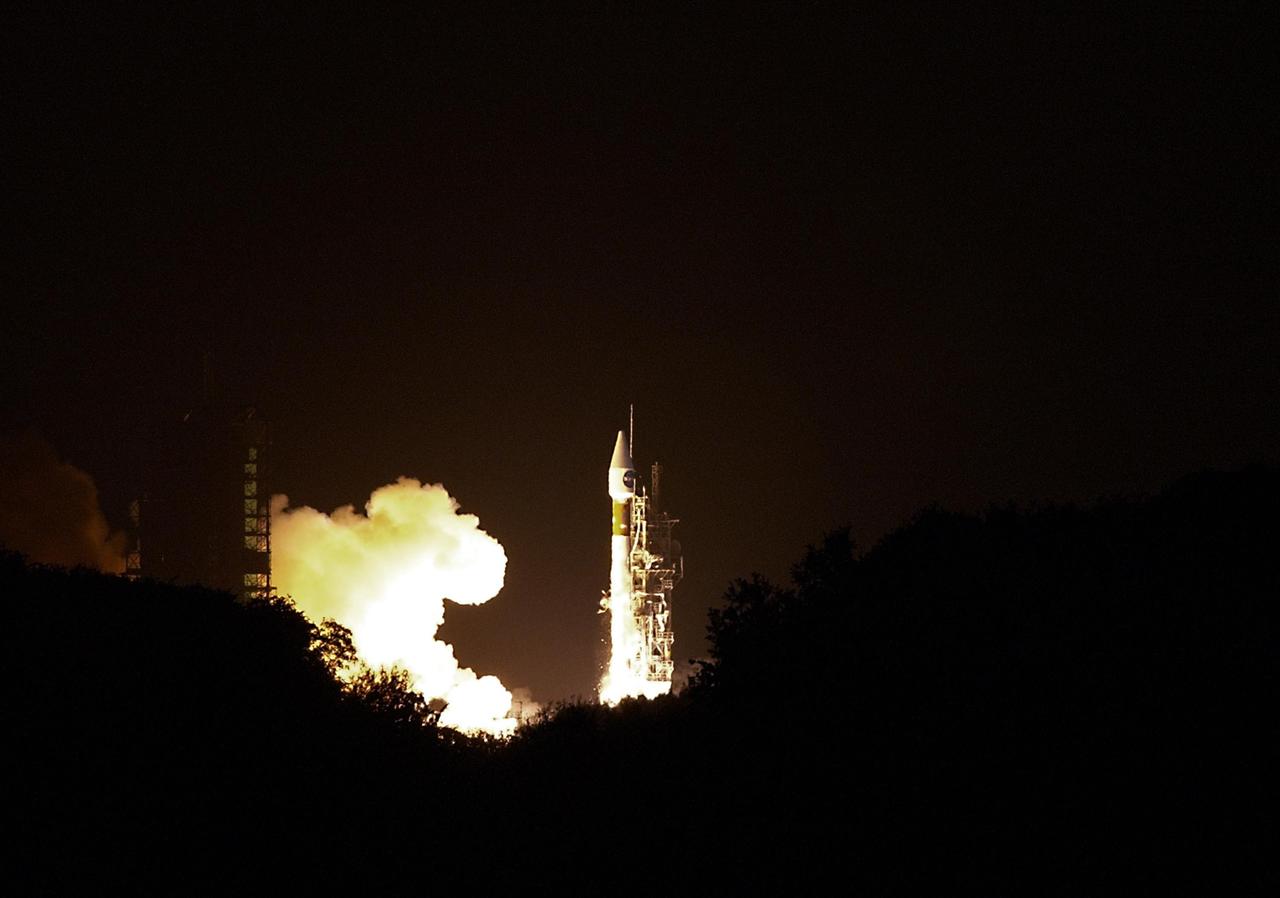
KENNEDY SPACE CENTER, FLA. - At Launch Complex 36-A, Cape Canaveral Air Force Station, the TDRS-J satellite launches aboard an Atlas IIA vehicle on Dec. 4 at the beginning of the launch window at 9:42 p.m. EST. TDRS-J, the third in a series of telemetry satellites, will help replenish the current constellation of geosynchronous TDRS satellites that are the primary source of space-to-ground voice, data and telemetry for the Space Shuttle. The satellites also provide communications with the International Space Station and scientific spacecraft in low-Earth orbit such as the Hubble Space Telescope. This new advanced series of satellites will extend the availability of TDRS communications services until about 2017.

KENNEDY SPACE CENTER, FLA. --At Launch Complex 36-A, Cape Canaveral Air Force Station, the TDRS-J satellite clears the tower as it launches aboard an Atlas IIA vehicle at the beginning of the launch window at 9:42 p.m. EST. TDRS-J, the third in a series of telemetry satellites and 10th overall, will help replenish the current constellation of geosynchronous TDRS satellites that are the primary source of space-to-ground voice, data and telemetry for the Space Shuttle. The satellites also provide communications with the International Space Station and scientific spacecraft in low-Earth orbit such as the Hubble Space Telescope. This new advanced series of satellites will extend the availability of TDRS communications services until about 2017.
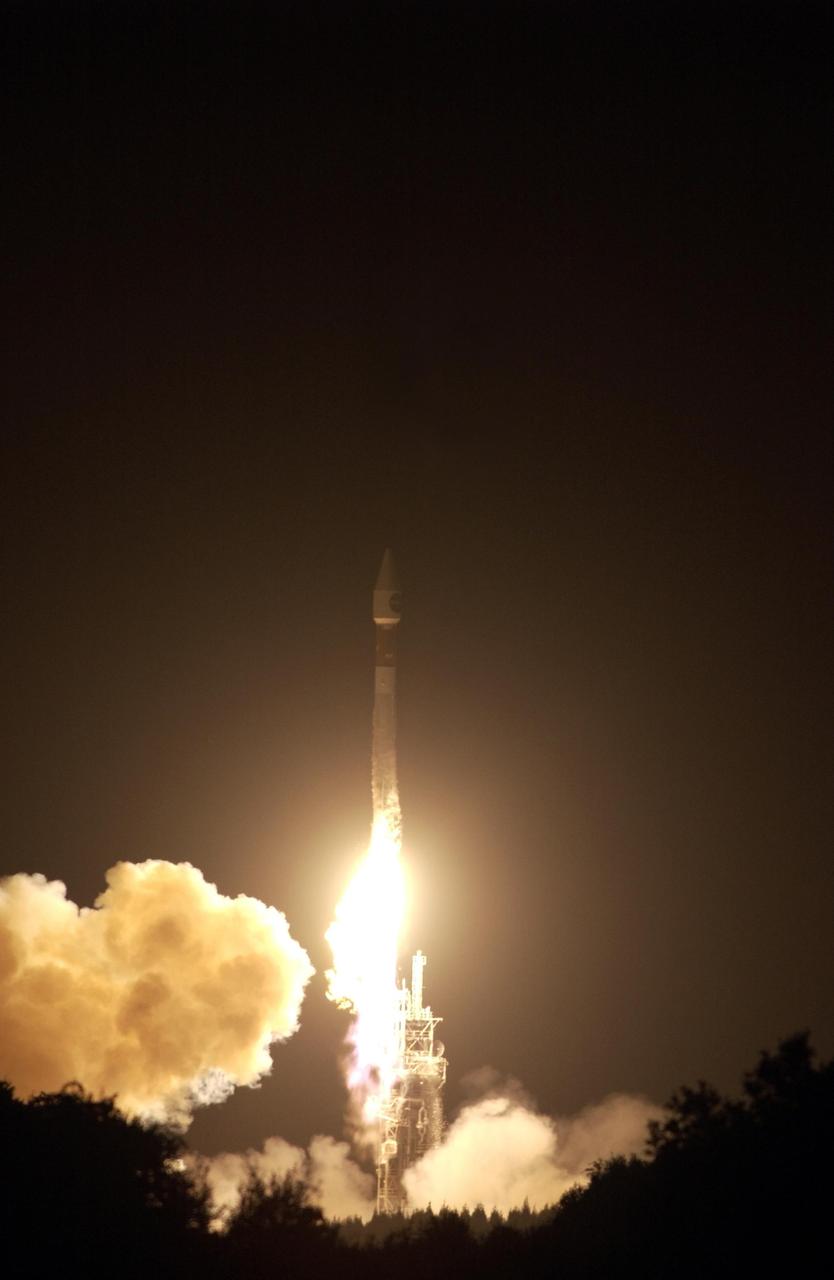
KENNEDY SPACE CENTER, FLA. - At Launch Complex 36-A, Cape Canaveral Air Force Station, the TDRS-J satellite launches aboard an Atlas IIA vehicle on Dec. 4 at the beginning of the launch window at 9:42 p.m. EST. TDRS-J, the third in a series of telemetry satellites, will help replenish the current constellation of geosynchronous TDRS satellites that are the primary source of space-to-ground voice, data and telemetry for the Space Shuttle. The satellites also provide communications with the International Space Station and scientific spacecraft in low-Earth orbit such as the Hubble Space Telescope. This new advanced series of satellites will extend the availability of TDRS communications services until about 2017.
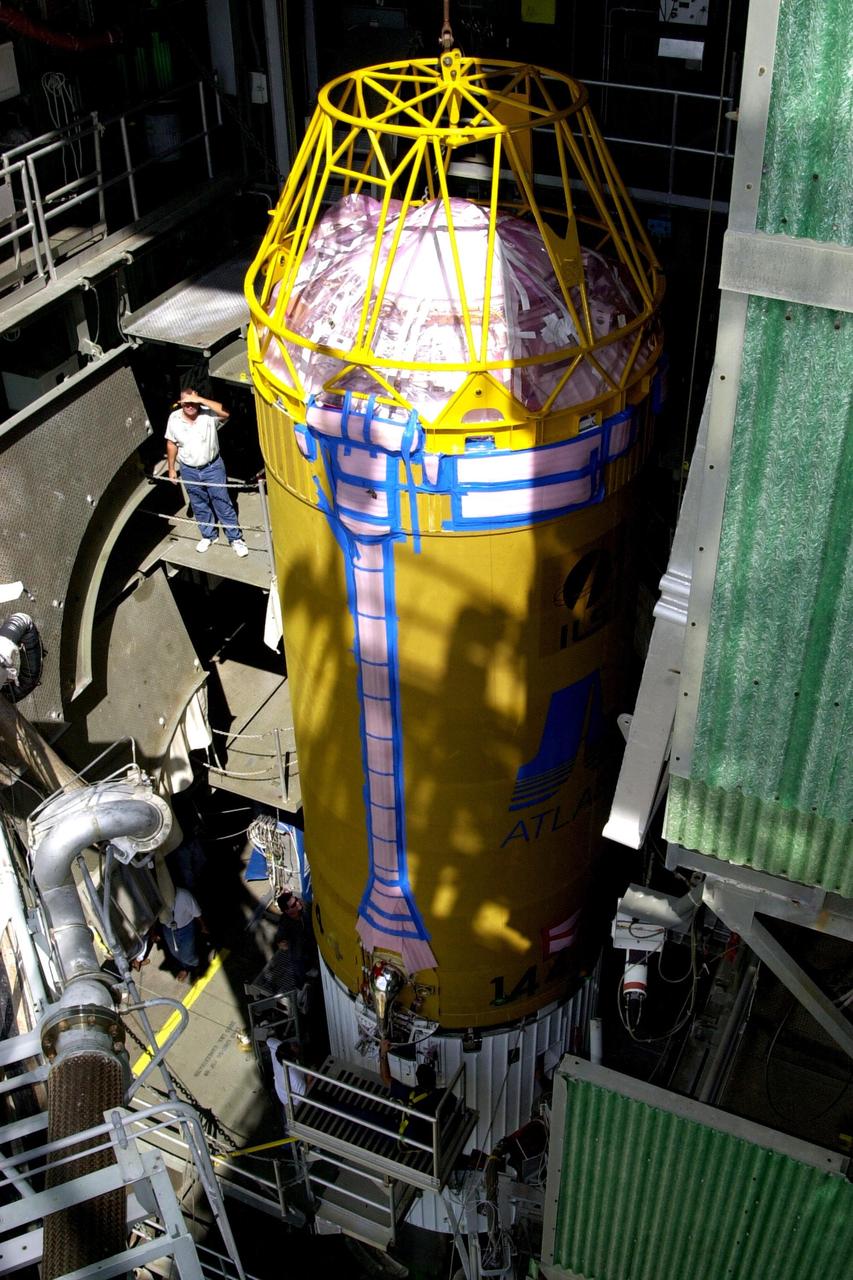
KENNEDY SPACE CENTER, FLA. -- At Launch Complex 36-A, Cape Canaveral Air Force Station, a Lockheed Martin Atlas Centaur IIA (AC-144) rocket arrives at the top of the launch tower. The rocket will be used in the launch of TDRS-J, scheduled for Nov. 20. The third in a series of telemetry satellites, TDRS-J will help replenish the current constellation of geosynchronous TDRS satellites. The TDRS System is the primary source of space-to-ground voice, data and telemetry for the Space Shuttle. It also provides communications with the International Space Station and scientific spacecraft in low-Earth orbit such as the Hubble Space Telescope. This new advanced series of satellites will extend the availability of TDRS communications services until about 2017.
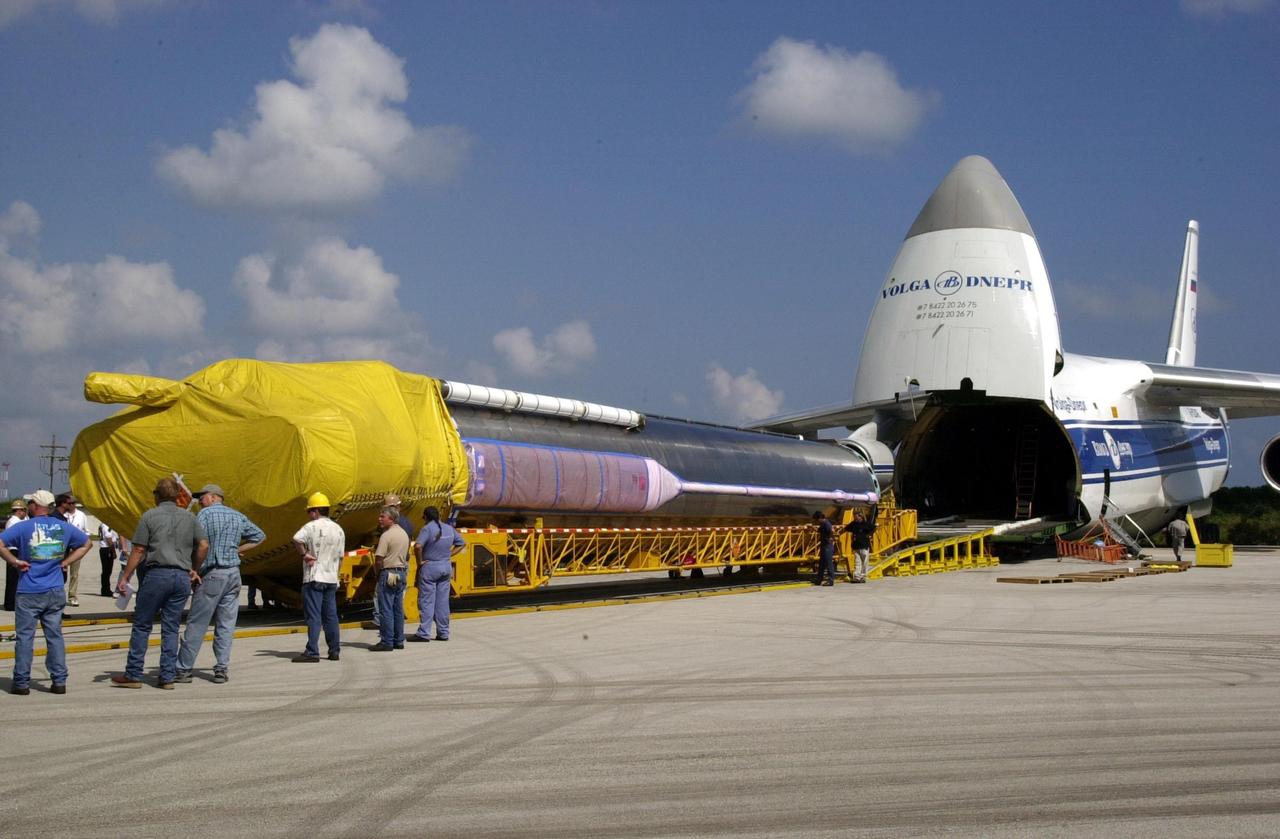
KENNEDY SPACE CENTER, FLA. -- Following its arrival at Cape Canaveral Air Force Station, an Atlas/Centaur booster is ready for its move to Launch Pad 36A in preparation for the launch of TDRS-J. The third in a series of telemetry satellites, TDRS-J will help replenish the current constellation of geosynchronous TDRS satellites. The TDRS System is the primary source of space-to-ground voice, data and telemetry for the Space Shuttle. It also provides communications with the International Space Station and scientific spacecraft in low-Earth orbit such as the Hubble Space Telescope. This new advanced series of satellites will extend the availability of TDRS communications services until about 2017.

KENNEDY SPACE CENTER, FLA. -- Following its arrival at Cape Canaveral Air Force Station, an Atlas/Centaur booster emerges from the nose of its transport aircraft. The booster is being offloaded and readied to move to Launch Pad 36A in preparation for the launch of TDRS-J. The third in a series of telemetry satellites, TDRS-J will help replenish the current constellation of geosynchronous TDRS satellites. The TDRS System is the primary source of space-to-ground voice, data and telemetry for the Space Shuttle. It also provides communications with the International Space Station and scientific spacecraft in low-Earth orbit such as the Hubble Space Telescope. This new advanced series of satellites will extend the availability of TDRS communications services until about 2017.
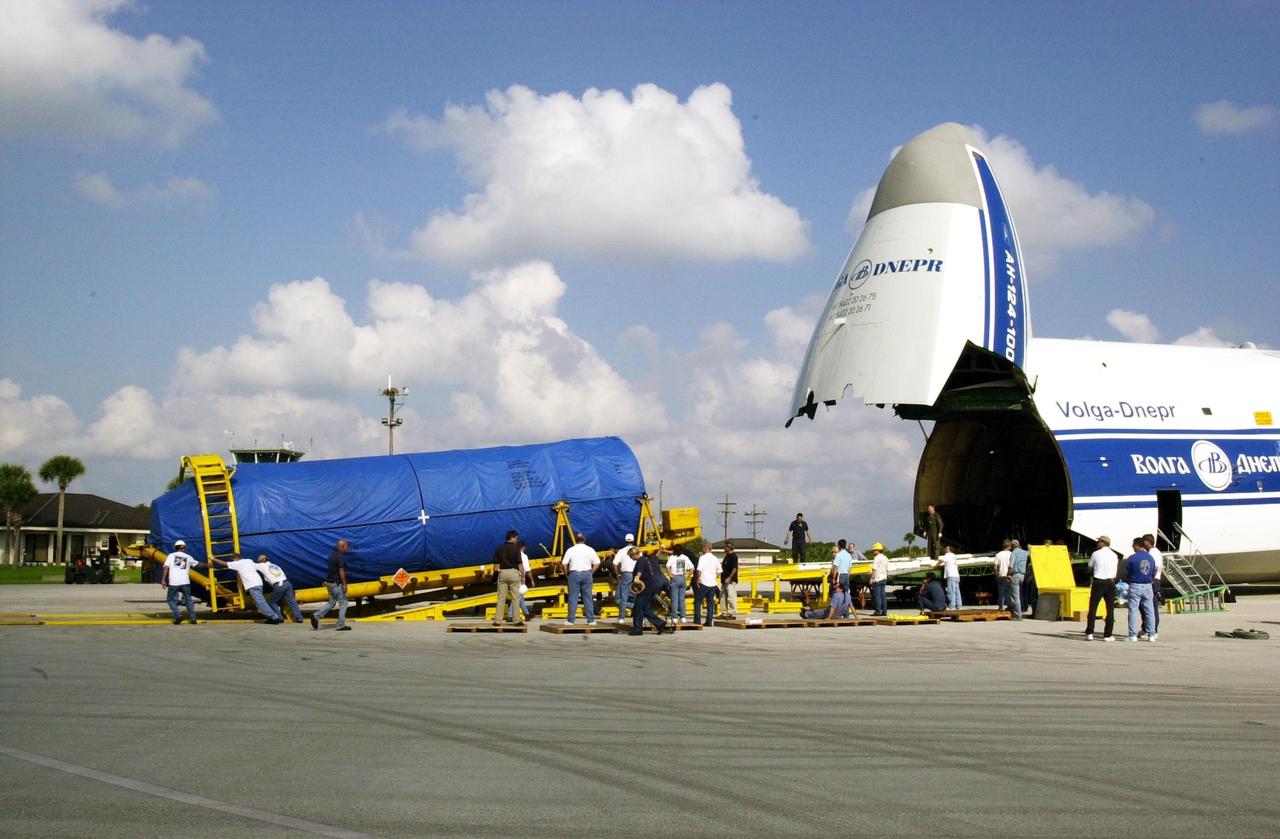
KENNEDY SPACE CENTER, FLA. -- Following its arrival at Cape Canaveral Air Force Station, an Atlas/Centaur booster is offloaded and readied for its move to Launch Pad 36A in preparation for the launch of TDRS-J. The third in a series of telemetry satellites, TDRS-J will help replenish the current constellation of geosynchronous TDRS satellites. The TDRS System is the primary source of space-to-ground voice, data and telemetry for the Space Shuttle. It also provides communications with the International Space Station and scientific spacecraft in low-Earth orbit such as the Hubble Space Telescope. This new advanced series of satellites will extend the availability of TDRS communications services until about 2017.
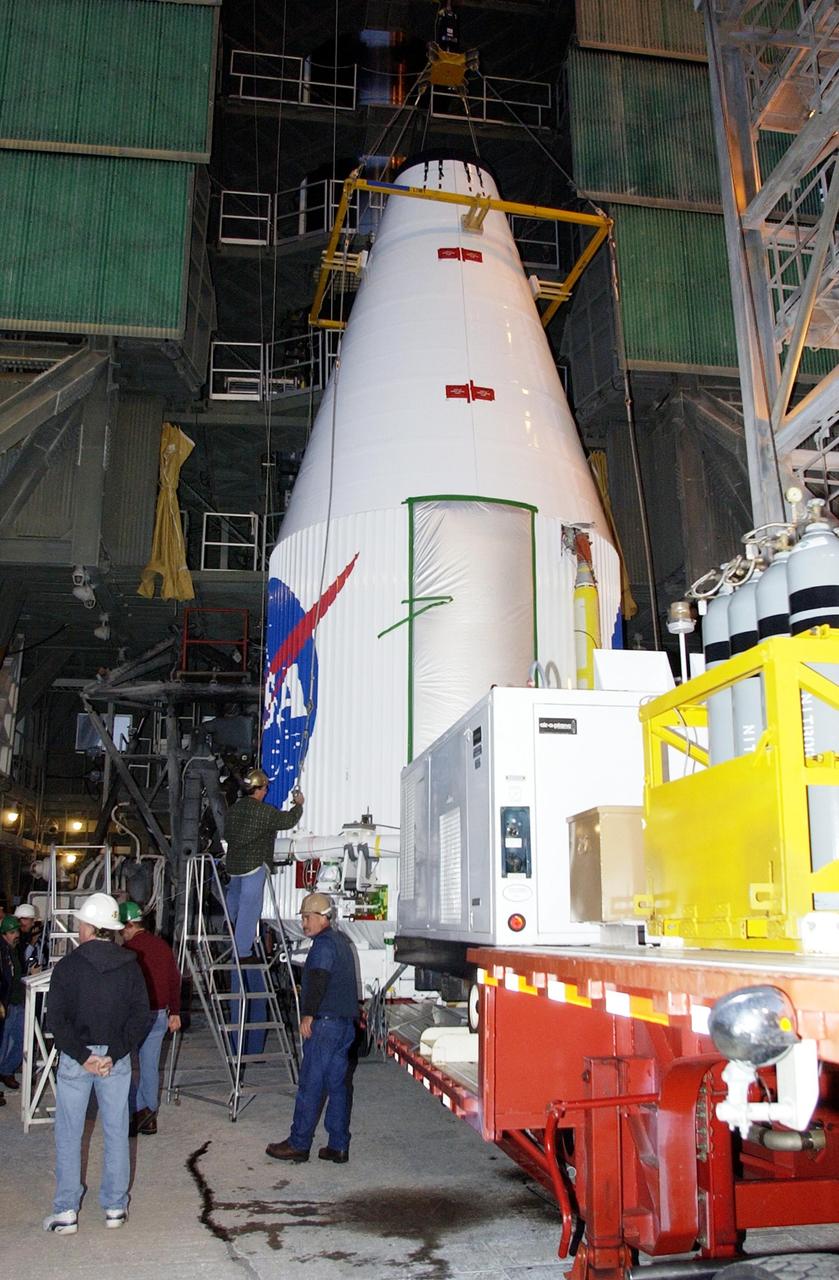
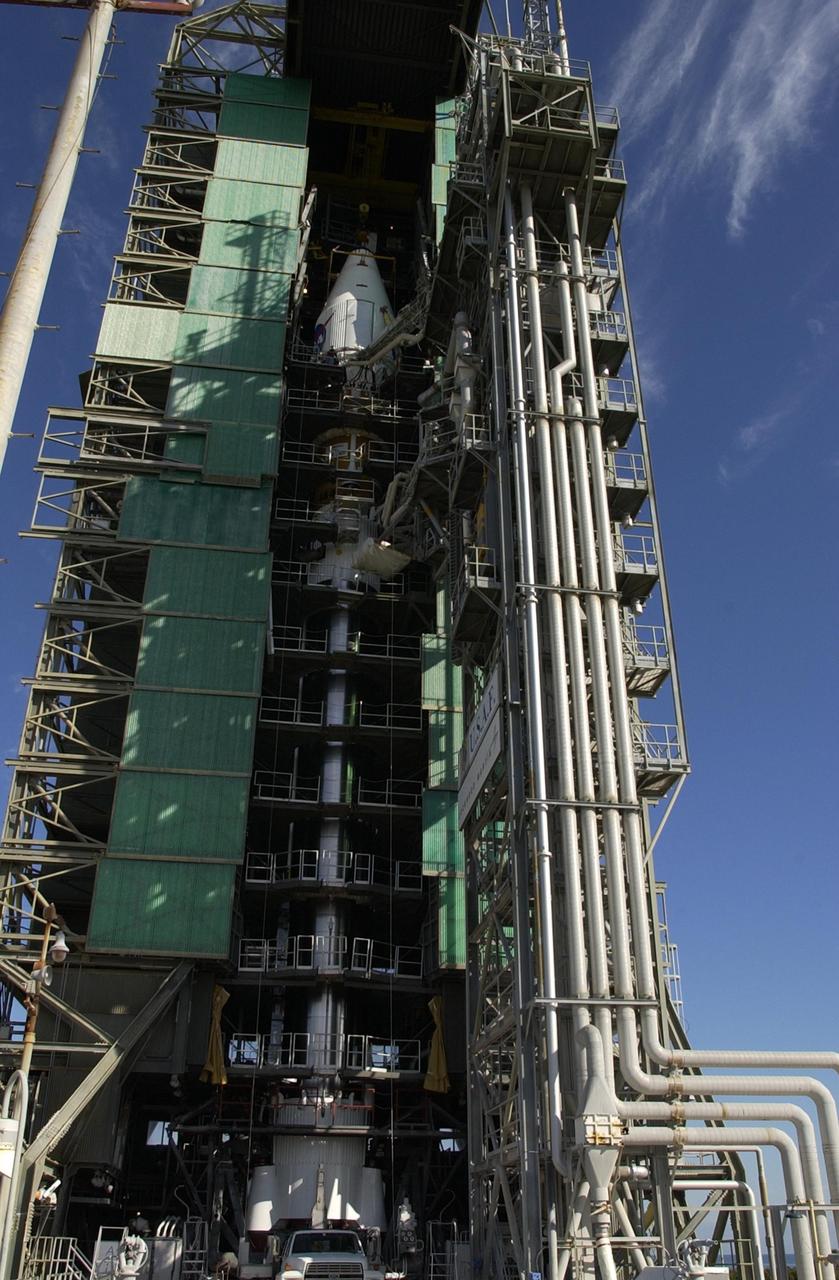
KENNEDY SPACE CENTER, FLA. - The TDRS-J satellite arrives at the gantry on Launch Complex 36-A, Cape Canaveral Air Force Station. The satellite is scheduled to be launched Dec. 4 aboard an Atlas IIA vehicle. The launch window is 9:42 to 10:22 p.m. EST. TDRS-J, the third in a series of telemetry satellites, will help replenish the current constellation of geosynchronous TDRS satellites that are the primary source of space-to-ground voice, data and telemetry for the Space Shuttle. The satellites also provide communications with the International Space Station and scientific spacecraft in low-Earth orbit such as the Hubble Space Telescope. This new advanced series of satellites will extend the availability of TDRS communications services until about 2017.
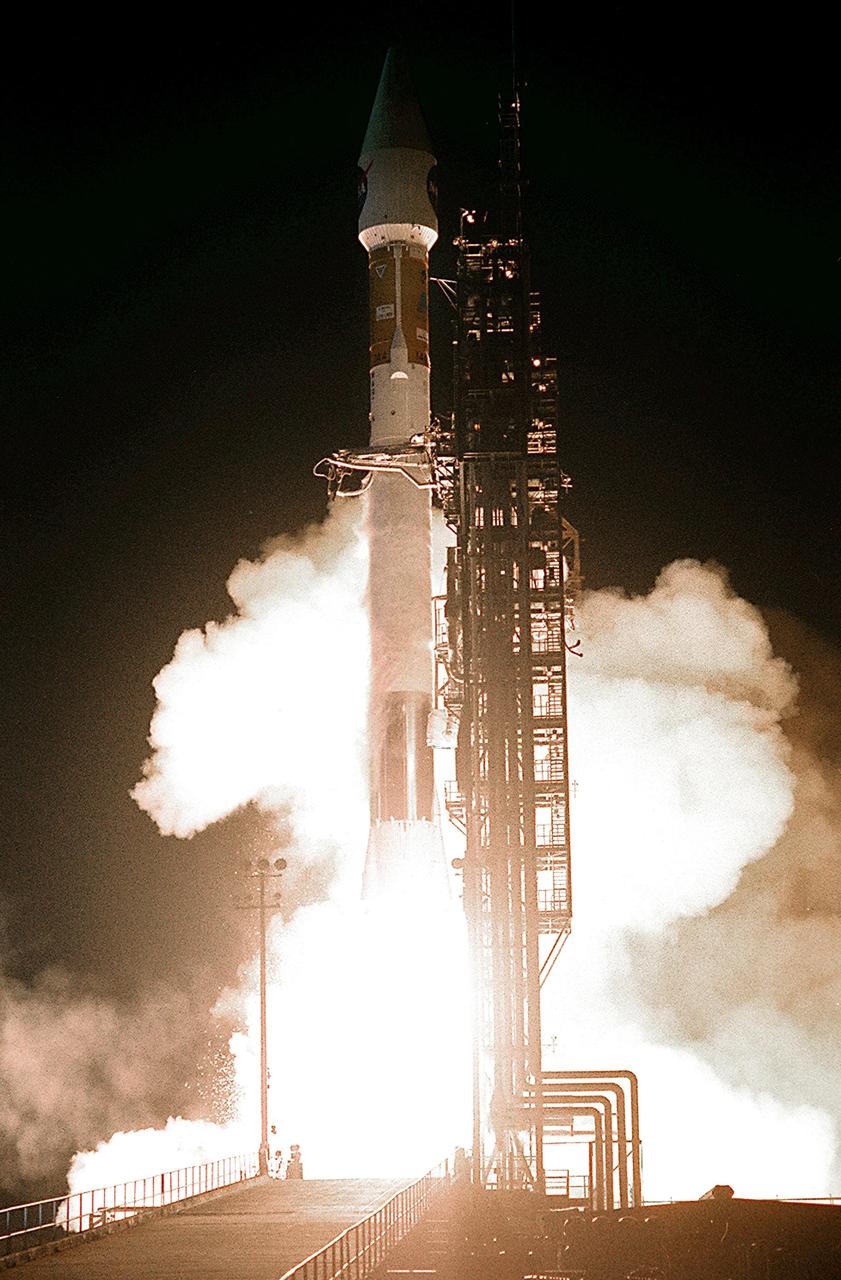
KENNEDY SPACE CENTER, FLA. --At Launch Complex 36-A, Cape Canaveral Air Force Station, the TDRS-J satellite launches aboard an Atlas IIA vehicle at the beginning of the launch window at 9:42 p.m. EST. TDRS-J, the third in a series of telemetry satellites, will help replenish the current constellation of geosynchronous TDRS satellites that are the primary source of space-to-ground voice, data and telemetry for the Space Shuttle. The satellites also provide communications with the International Space Station and scientific spacecraft in low-Earth orbit such as the Hubble Space Telescope. This new advanced series of satellites will extend the availability of TDRS communications services until about 2017.
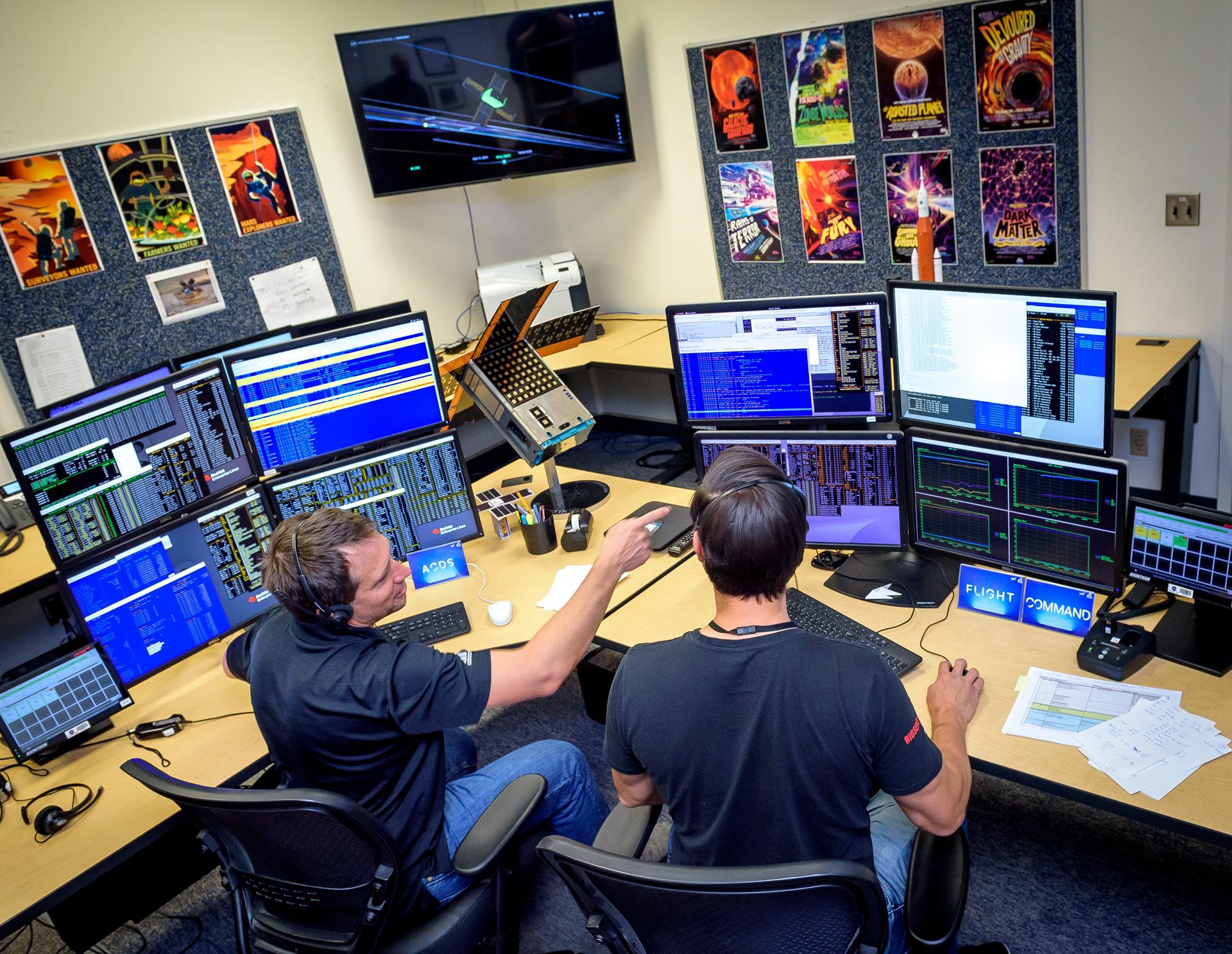
Jesse Fusco, left, and James Milsk at the BioSentinel command console in the Ames Multi-Mission Operations Center (MMOC), N240 Annex, Ceres control room 172, receiving spacecraft telemetry at the 3-year anniversary since launch on Artemis I.
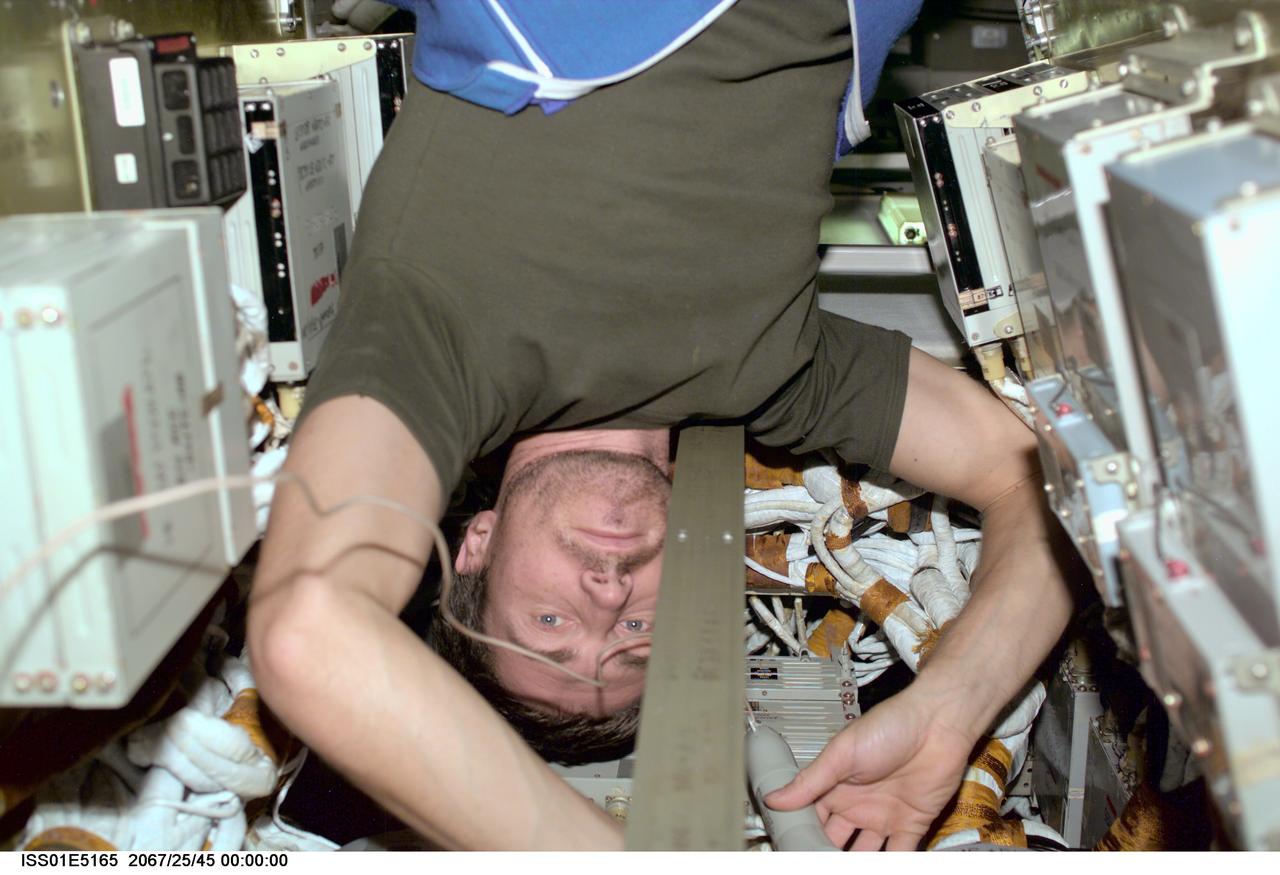
ISS01-E-5165 (December 2000) --- Inside the International Space Station's Zvezda Service Module, cosmonaut Sergei K. Krikalev, Expedition One flight engineer, uses a flashlight to check connections on a memory device in the telemetry system for the station.
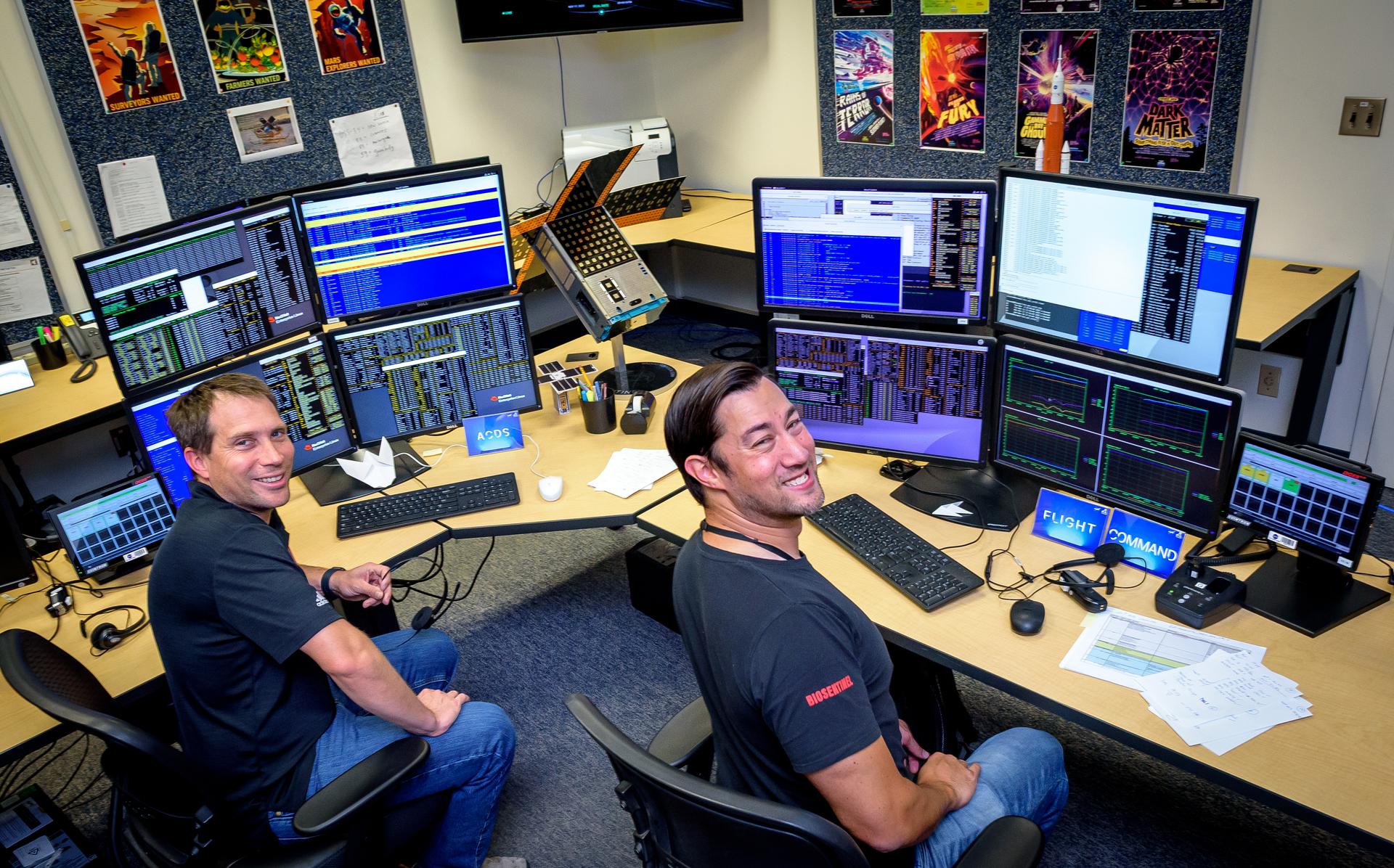
Jesse Fusco, left, and James Milsk at the BioSentinel command console in the Ames Multi-Mission Operations Center (MMOC), N240 Annex, Ceres control room 172, receiving spacecraft telemetry at the 3-year anniversary since launch on Artemis I.
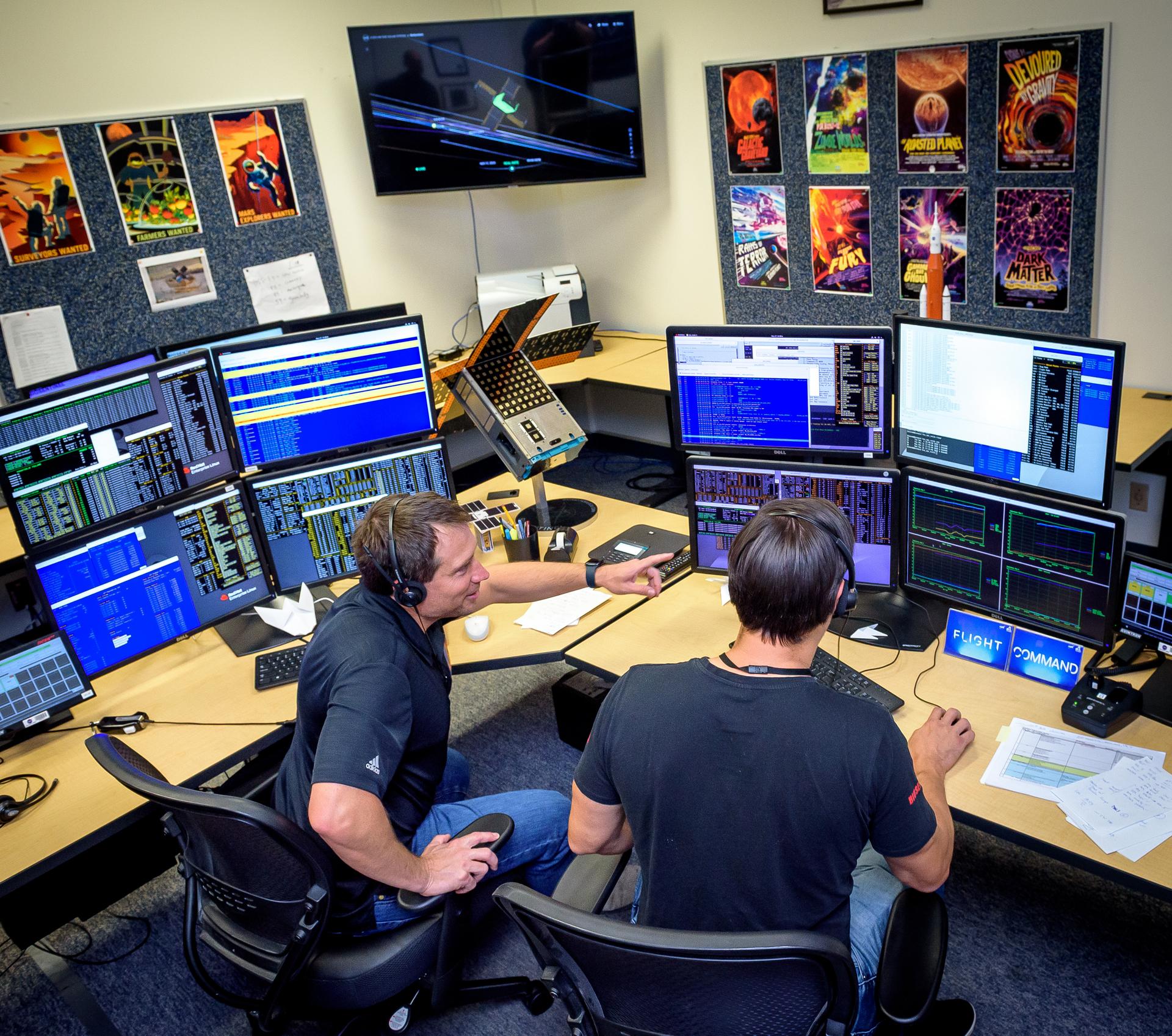
Jesse Fusco, left, and James Milsk at the BioSentinel command console in the Ames Multi-Mission Operations Center (MMOC), N240 Annex, Ceres control room 172, receiving spacecraft telemetry at the 3-year anniversary since launch on Artemis I.
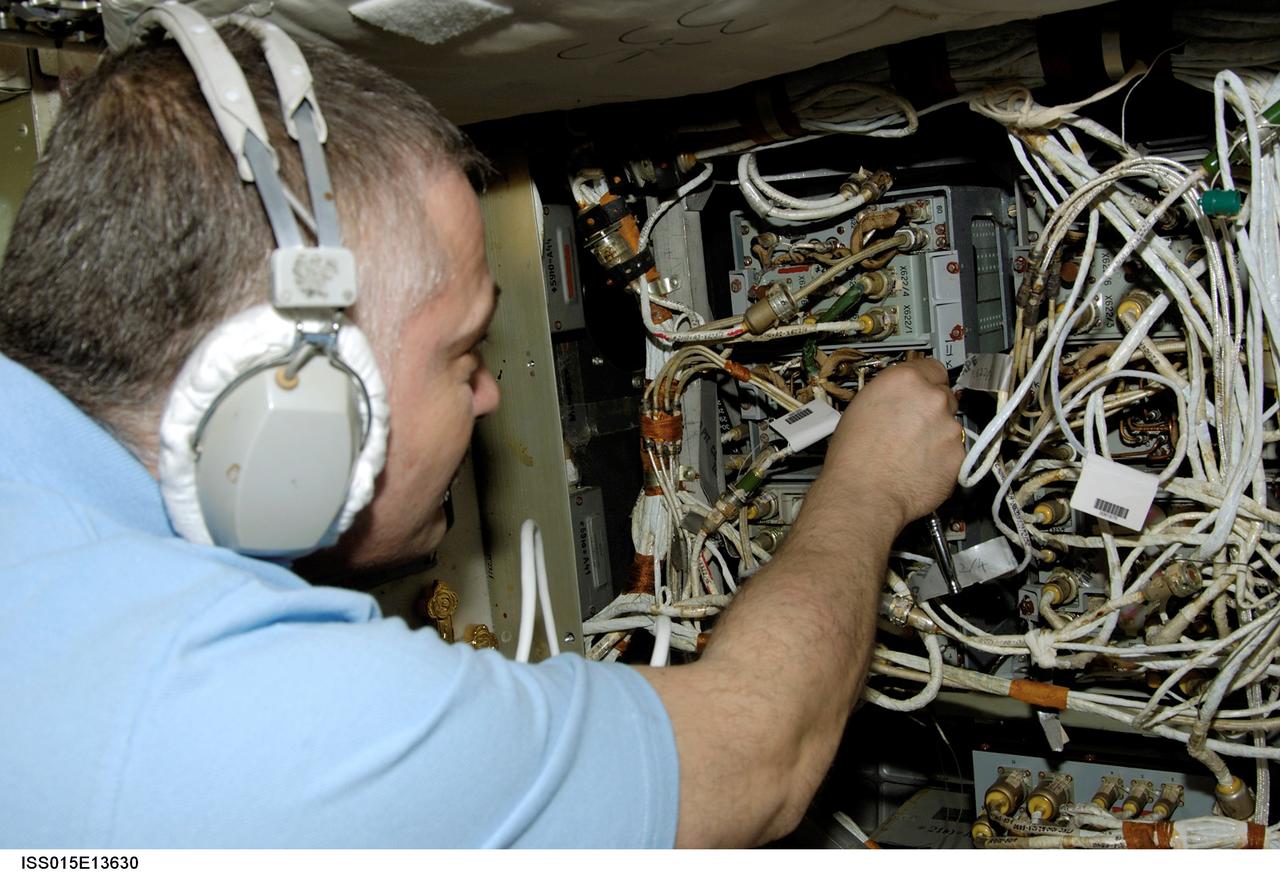
ISS015-E-13630 (25 June 2007) --- Cosmonaut Fyodor N. Yurchikhin, Expedition 15 commander representing Russia's Federal Space Agency, wears communication headgear as he performs in-flight maintenance (IFM) on telemetry hardware in the Zvezda Service Module of the International Space Station.
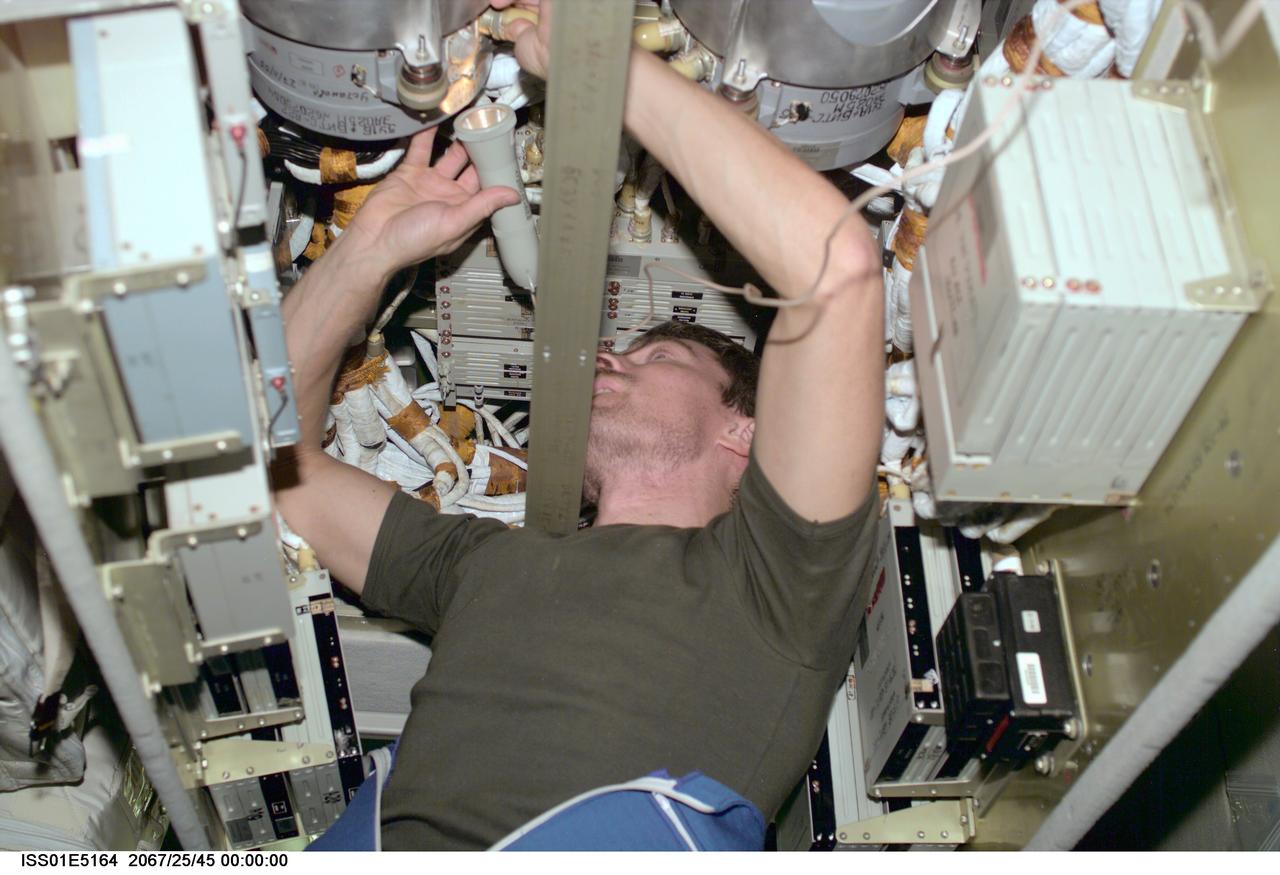
ISS01-E-5164 (December 2000) --- Inside the International Space Station's Zvezda Service Module, cosmonaut Sergei K. Krikalev, Expedition One flight engineer, uses a flashlight to check connections on a memory device in the telemetry system for the station.
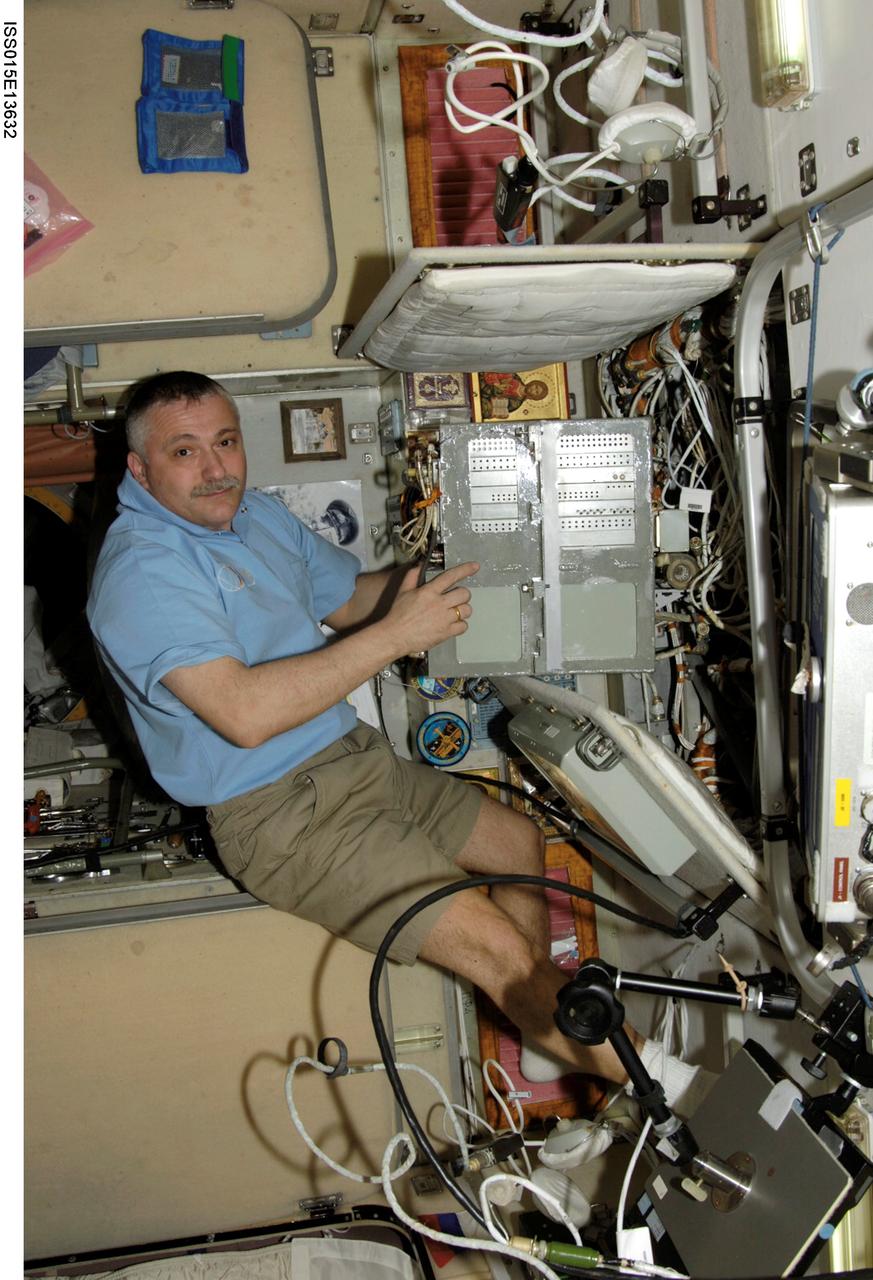
ISS015-E-13632 (25 June 2007) --- Cosmonaut Fyodor N. Yurchikhin, Expedition 15 commander representing Russia's Federal Space Agency, performs in-flight maintenance (IFM) on telemetry hardware in the Zvezda Service Module of the International Space Station.
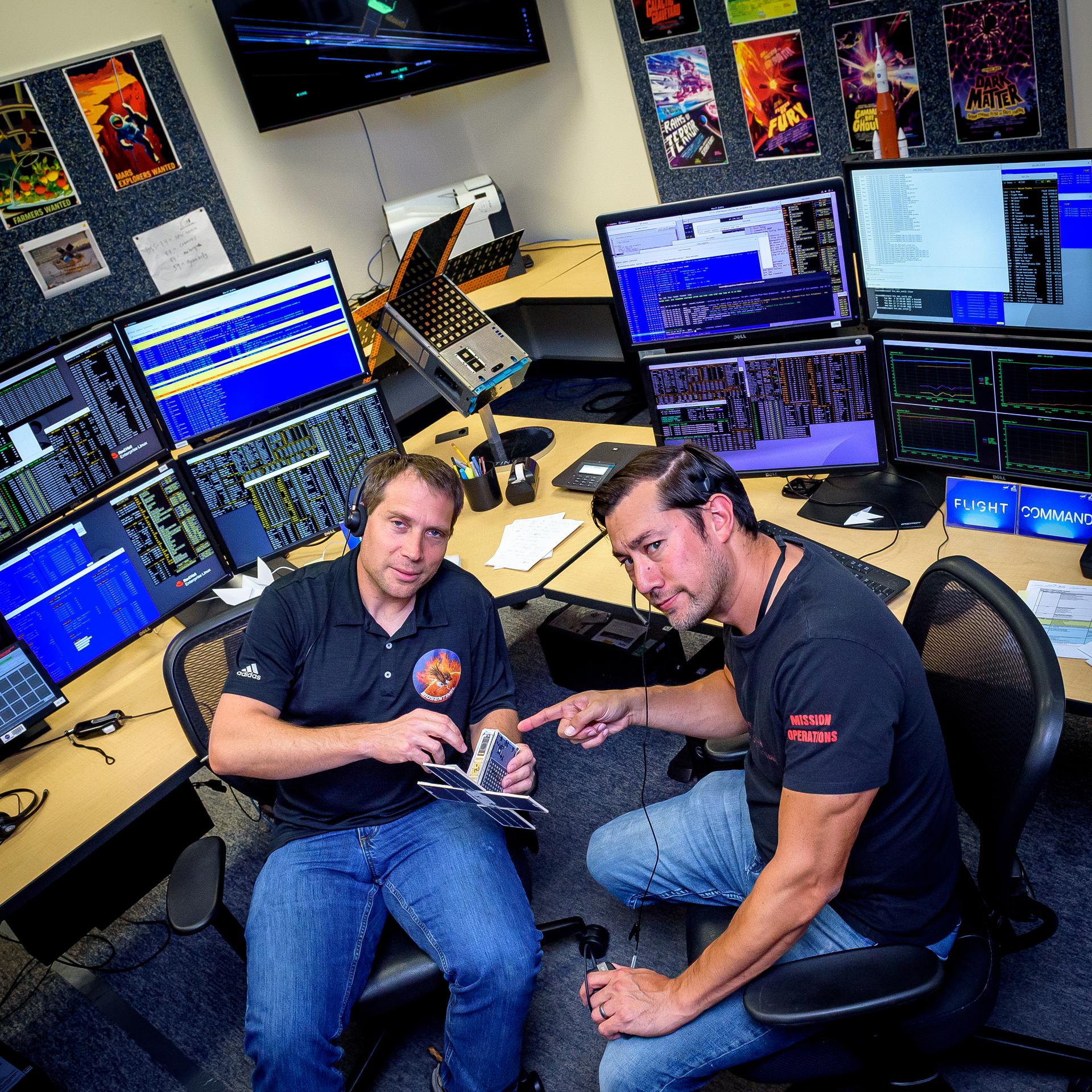
Jesse Fusco, left, and James Milsk at the BioSentinel command console in the Ames Multi-Mission Operations Center (MMOC), N240 Annex, Ceres control room 172, receiving spacecraft telemetry at the 3-year anniversary since launch on Artemis I.
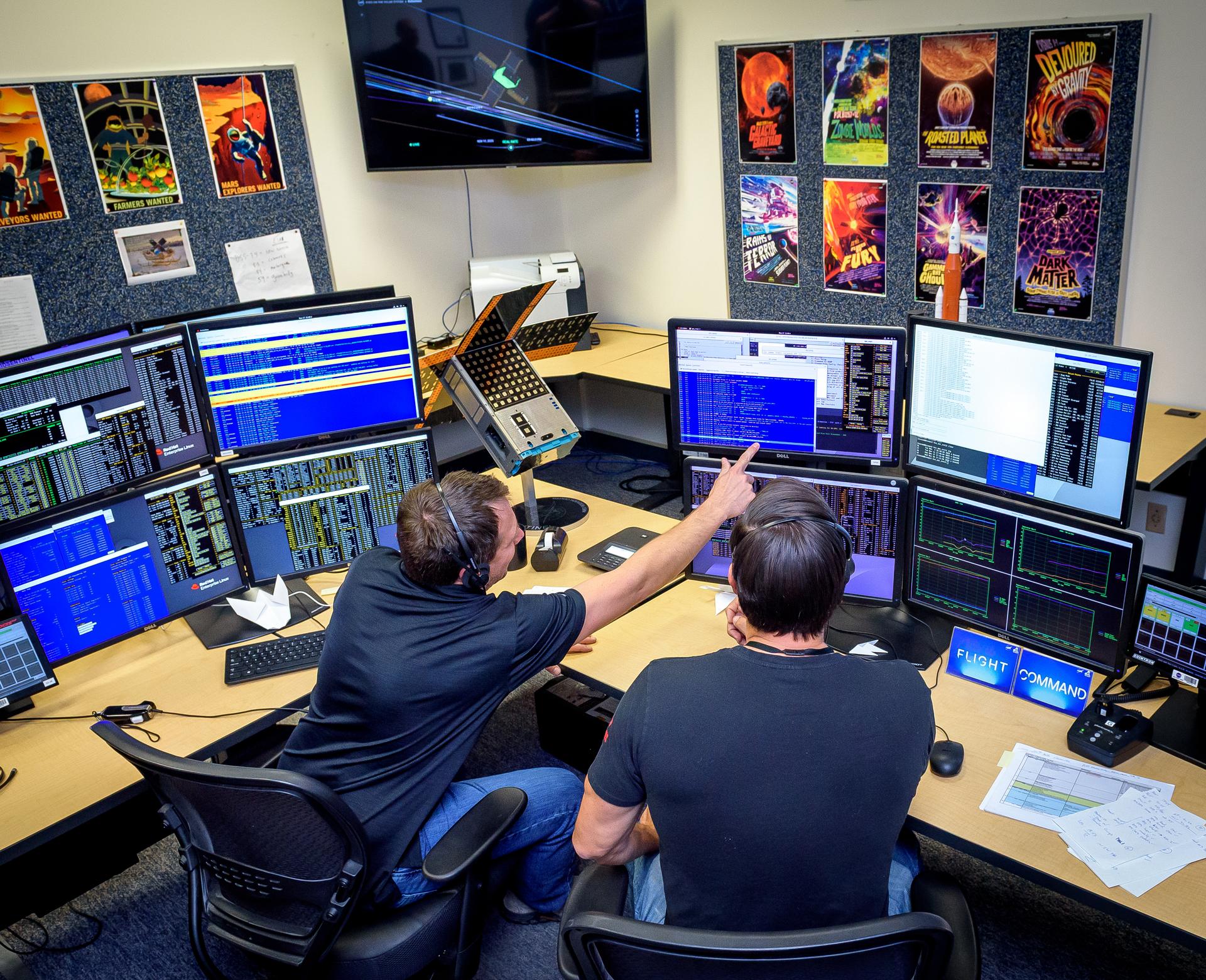
Jesse Fusco, left, and James Milsk at the BioSentinel command console in the Ames Multi-Mission Operations Center (MMOC), N240 Annex, Ceres control room 172, receiving spacecraft telemetry at the 3-year anniversary since launch on Artemis I.
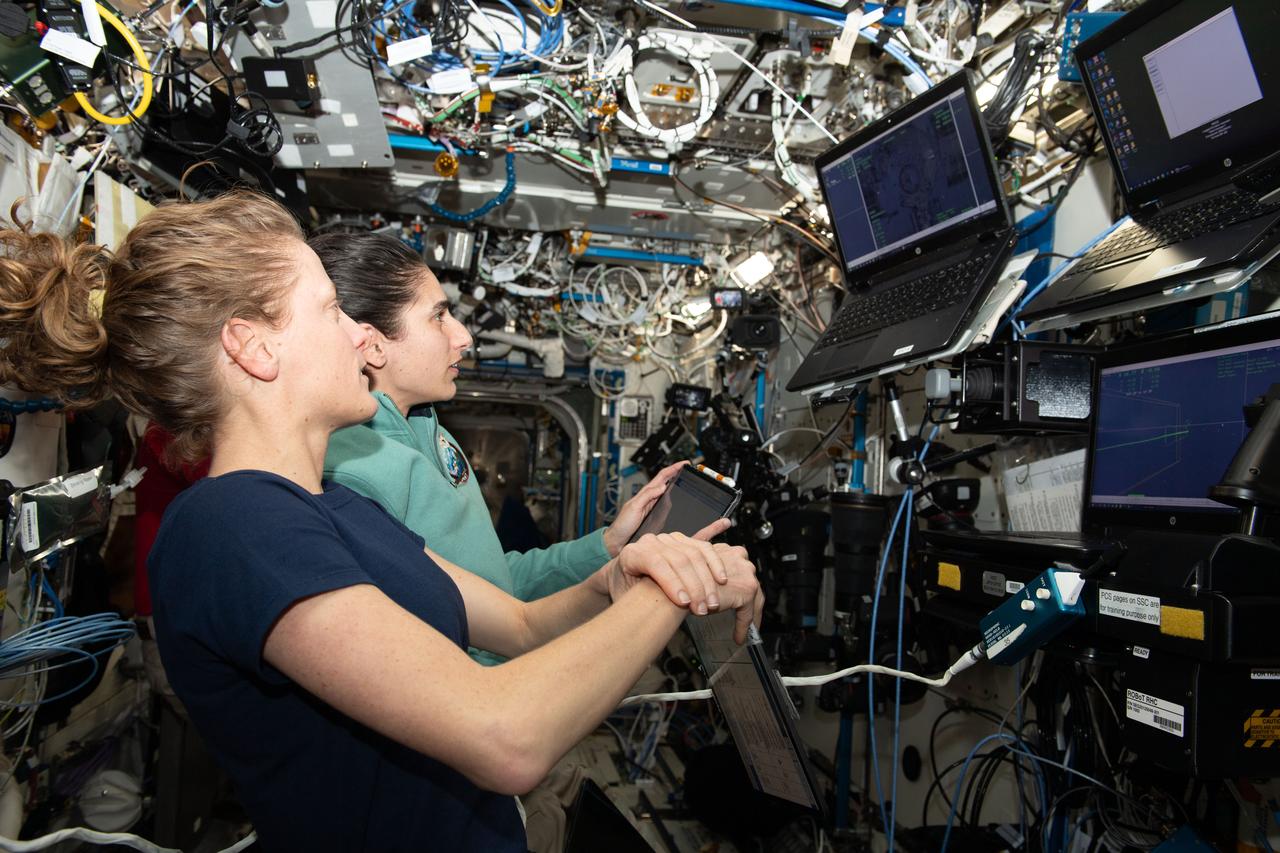
iss070e023504 (Nov. 11, 2023) --- Expedition 70 Flight Engineers (from left) Loral O'Hara and Jasmin Moghbeli, both from NASA, work inside the Destiny laboratory module monitoring communications and telemetry data from the SpaceX Dragon cargo spacecraft as it approaches the International Space Station for a docking.
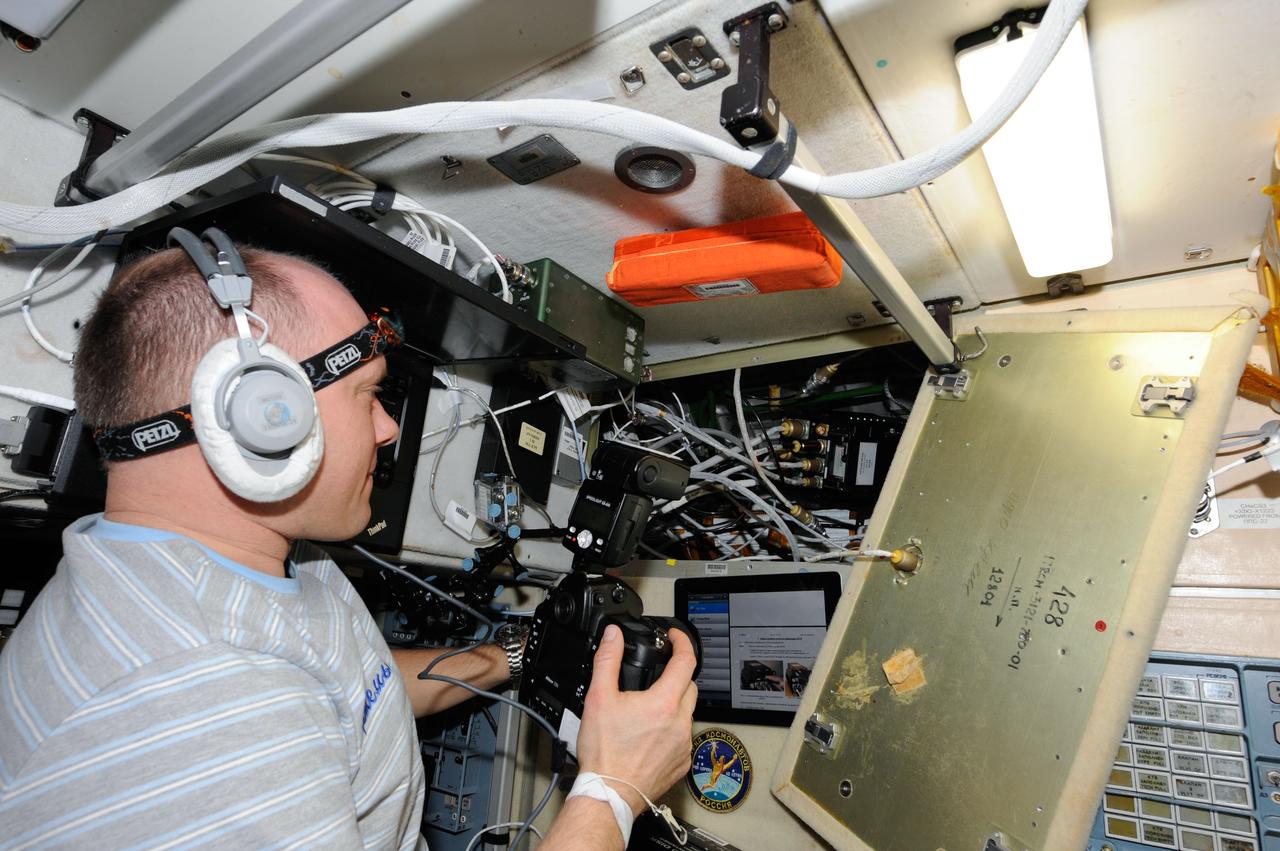
ISS039-E-014665 (23 April 2014) --- Cosmonaut Artemyev, Expedition 39 flight engineer representing Russia's Federal Space Agency (Roscosmos) replaces the telemetry storage unit in a Russian experiment inside the Zvezda service module of the International Space Station.
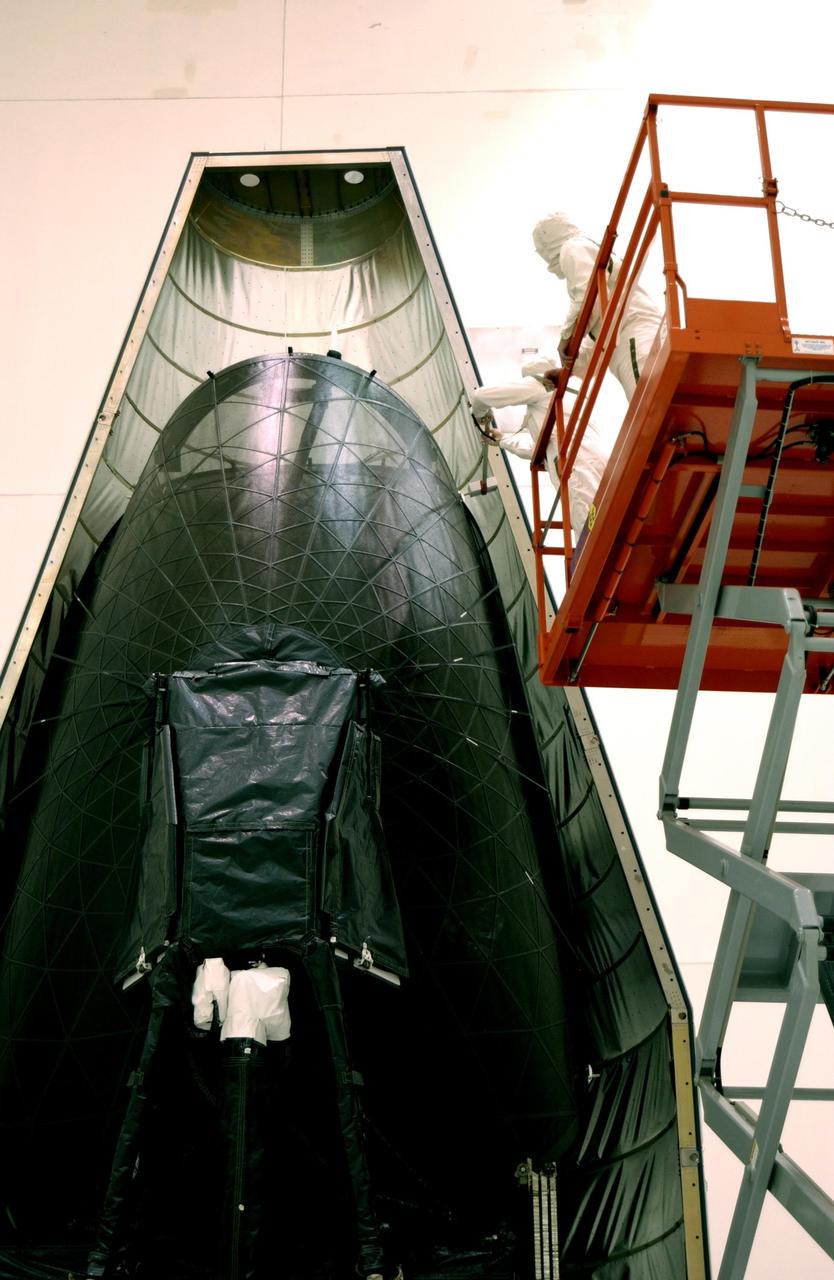
KENNEDY SPACE CENTER, FLA. -- The TDRS-J satellite rests inside the first half of the fairing during encapsulation. The satellite is scheduled to be launched aboard a Lockheed Martin Atlas IIA-Centaur rocket from Launch Complex 36-A, Cape Canaveral Air Force Station, Fla., on Dec. 4. The third in a series of telemetry satellites, TDRS-J will help replenish the current constellation of geosynchronous TDRS satellites. The TDRS System is the primary source of space-to-ground voice, data and telemetry for the Space Shuttle. It also provides communications with the International Space Station and scientific spacecraft in low-Earth orbit such as the Hubble Space Telescope. This new advanced series of satellites will extend the availability of TDRS communications services until about 2017.
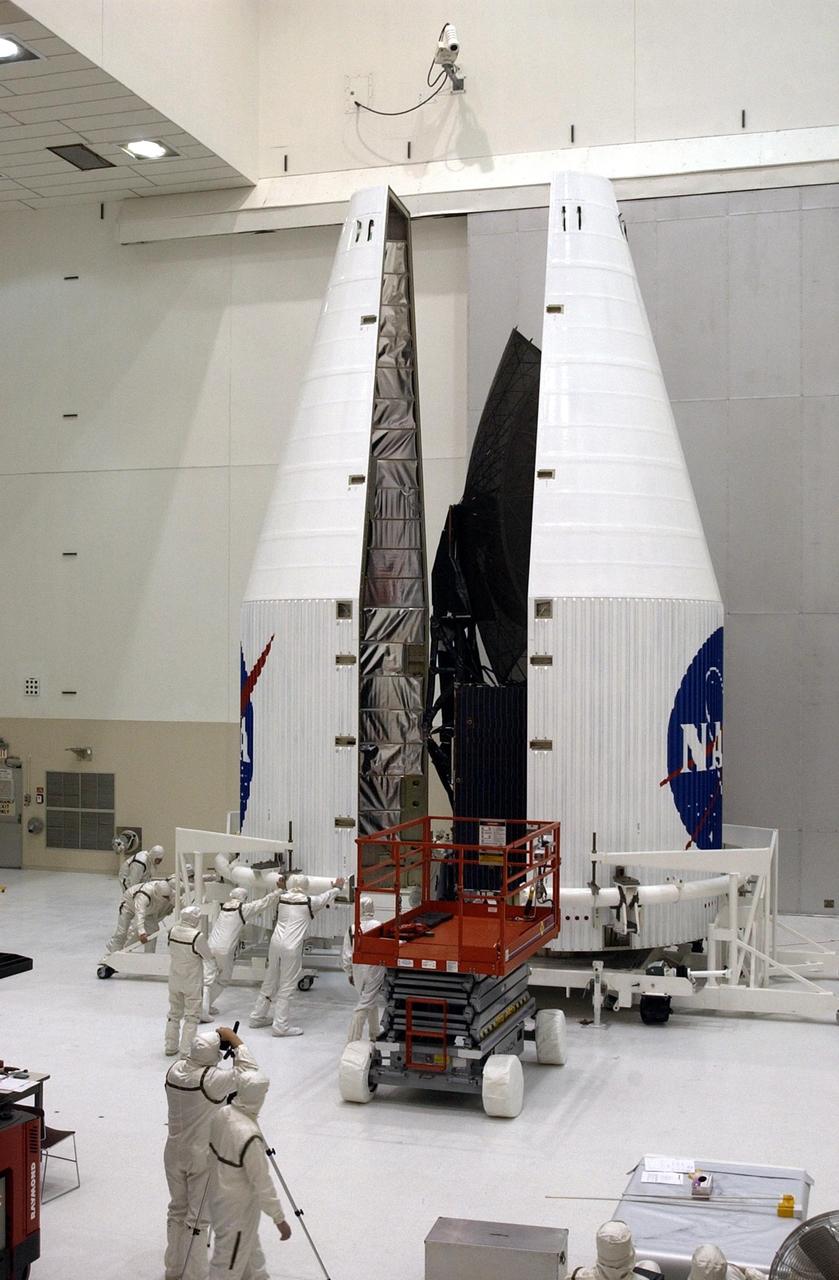
KENNEDY SPACE CENTER, FLA. -- Workers in the Spacecraft Assembly and Encapsulation Facility-2 (SAEF-2) push the second half of the nose fairing (left) toward the Tracking and Data Relay Satellite-I (TDRS-I) already enclosed by the first half. The second in a new series of telemetry satellites, TDRS-I replenishes the existing on-orbit fleet of six spacecraft. The TDRS System is the primary source of space-to-ground voice, data and telemetry for the Space Shuttle. It also provides communications with the International Space Station and scientific spacecraft in low-Earth orbit such as the Hubble Space Telescope. This new advanced series of satellites will extend the availability of TDRS communications services until about 2017. Launch of TDRS-I is scheduled for March 8 aboard a Lockheed Martin Atlas IIA rocket from Pad 36-A, Cape Canaveral Air Force Station
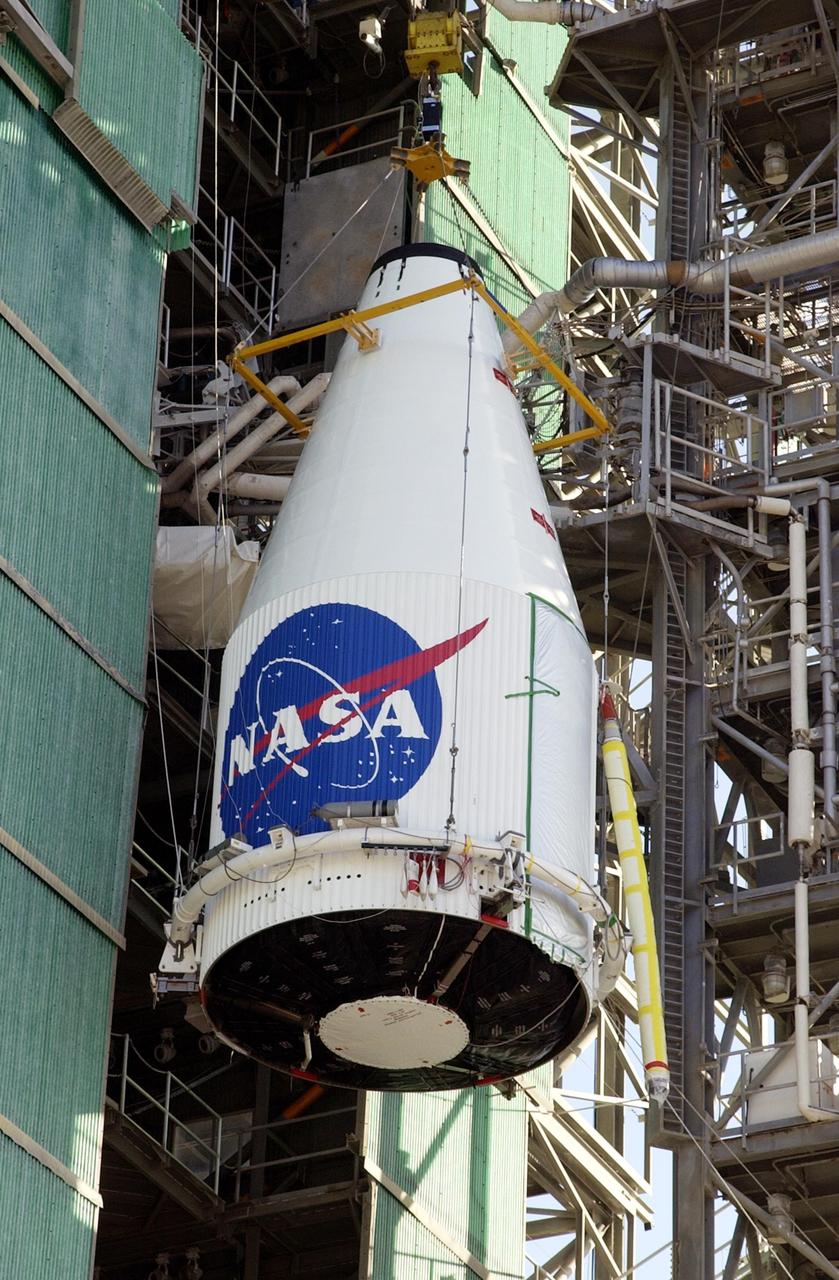
KENNEDY SPACE CENTER, FLA. -- The TDRS-J satellite is lifted up the gantry on Launch Complex 36-A, Cape Canaveral Air Force Station. The satellite is scheduled to be launched Dec. 4 aboard an Atlas IIA vehicle. The launch window is 9:42 to 10:22 p.m. EST. TDRS-J, the third in a series of telemetry satellites, will help replenish the current constellation of geosynchronous TDRS satellites that are the primary source of space-to-ground voice, data and telemetry for the Space Shuttle. The satellites also provide communications with the International Space Station and scientific spacecraft in low-Earth orbit such as the Hubble Space Telescope. This new advanced series of satellites will extend the availability of TDRS communications services until about 2017.
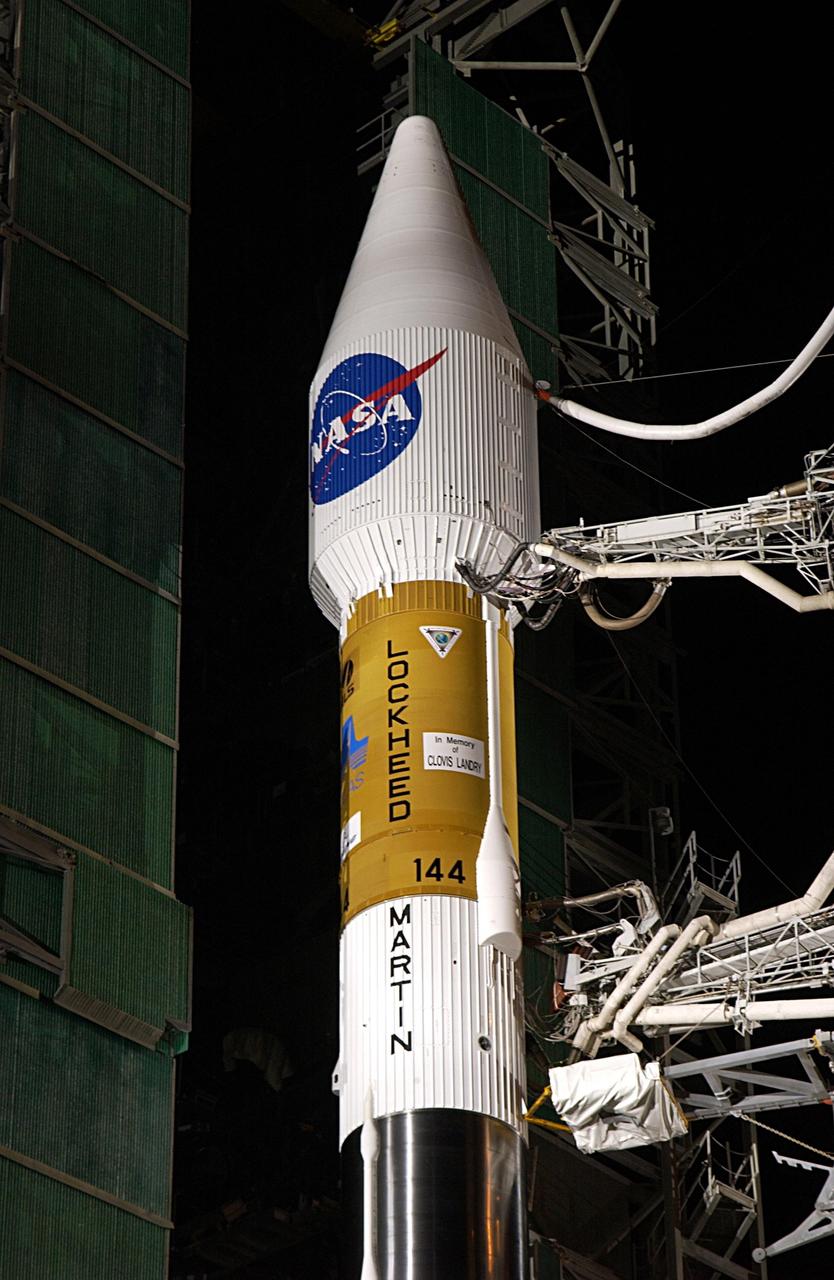
KENNEDY SPACE CENTER, FLA. - At Launch Complex 36-A, Cape Canaveral Air Force Station, the mobile service tower is rolled back to reveal the encapsulated TDRS-J satellite aboard an Atlas IIA vehicle awaiting launch on Dec. 4. The launch window is 9:42 to 10:22 p.m. EST. TDRS-J, the third in a series of telemetry satellites, will help replenish the current constellation of geosynchronous TDRS satellites that are the primary source of space-to-ground voice, data and telemetry for the Space Shuttle. The satellites also provide communications with the International Space Station and scientific spacecraft in low-Earth orbit such as the Hubble Space Telescope. This new advanced series of satellites will extend the availability of TDRS communications services until about 2017.

KENNEDY SPACE CENTER, Fla. - The Tracking and Data Relay Satellite-I (TDRS-I) is lifted from a workstand in the Spacecraft Assembly and Encapsulation Facility-2 (SAEF-2) as preparations are made to mate it with the adapter of its nose fairing. The second in a new series of telemetry satellites, TDRS-I replenishes the existing on-orbit fleet of six spacecraft. The TDRS System is the primary source of space-to-ground voice, data and telemetry for the Space Shuttle. It also provides communications with the International Space Station and scientific spacecraft in low-Earth orbit such as the Hubble Space Telescope. This new advanced series of satellites will extend the availability of TDRS communications services until about 2017. Launch of TDRS-I is scheduled for March 8 aboard a Lockheed Martin Atlas IIA rocket from Pad 36-A, Cape Canaveral Air Force Station
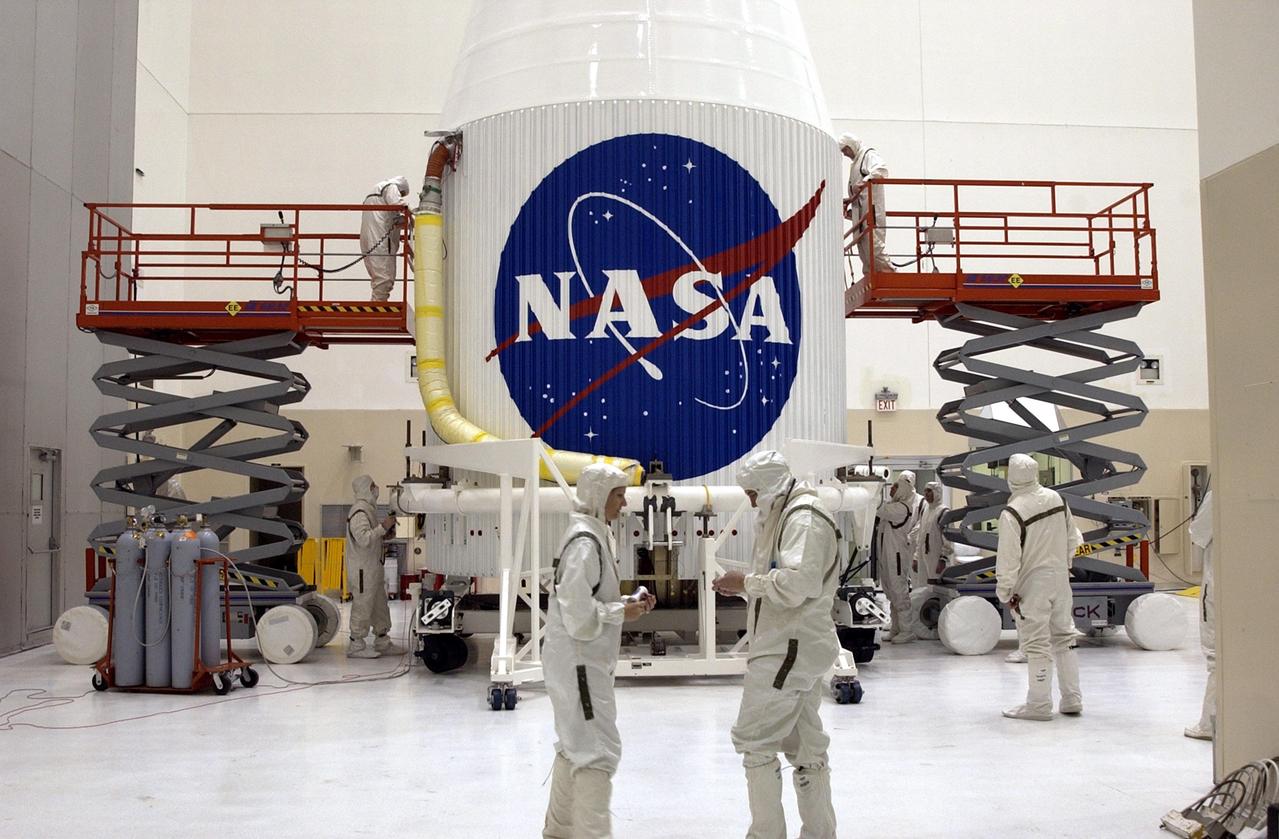
KENNEDY SPACE CENTER, FLA. -- Workers in the Spacecraft Assembly and Encapsulation Facility-2 (SAEF-2) make final adjustments on the nose fairing surrounding the Tracking and Data Relay Satellite-I (TDRS-I). The second in a new series of telemetry satellites, TDRS-I replenishes the existing on-orbit fleet of six spacecraft. The TDRS System is the primary source of space-to-ground voice, data and telemetry for the Space Shuttle. It also provides communications with the International Space Station and scientific spacecraft in low-Earth orbit such as the Hubble Space Telescope. This new advanced series of satellites will extend the availability of TDRS communications services until about 2017. Launch of TDRS-I is scheduled for March 8 aboard a Lockheed Martin Atlas IIA rocket from Pad 36-A, Cape Canaveral Air Force Station
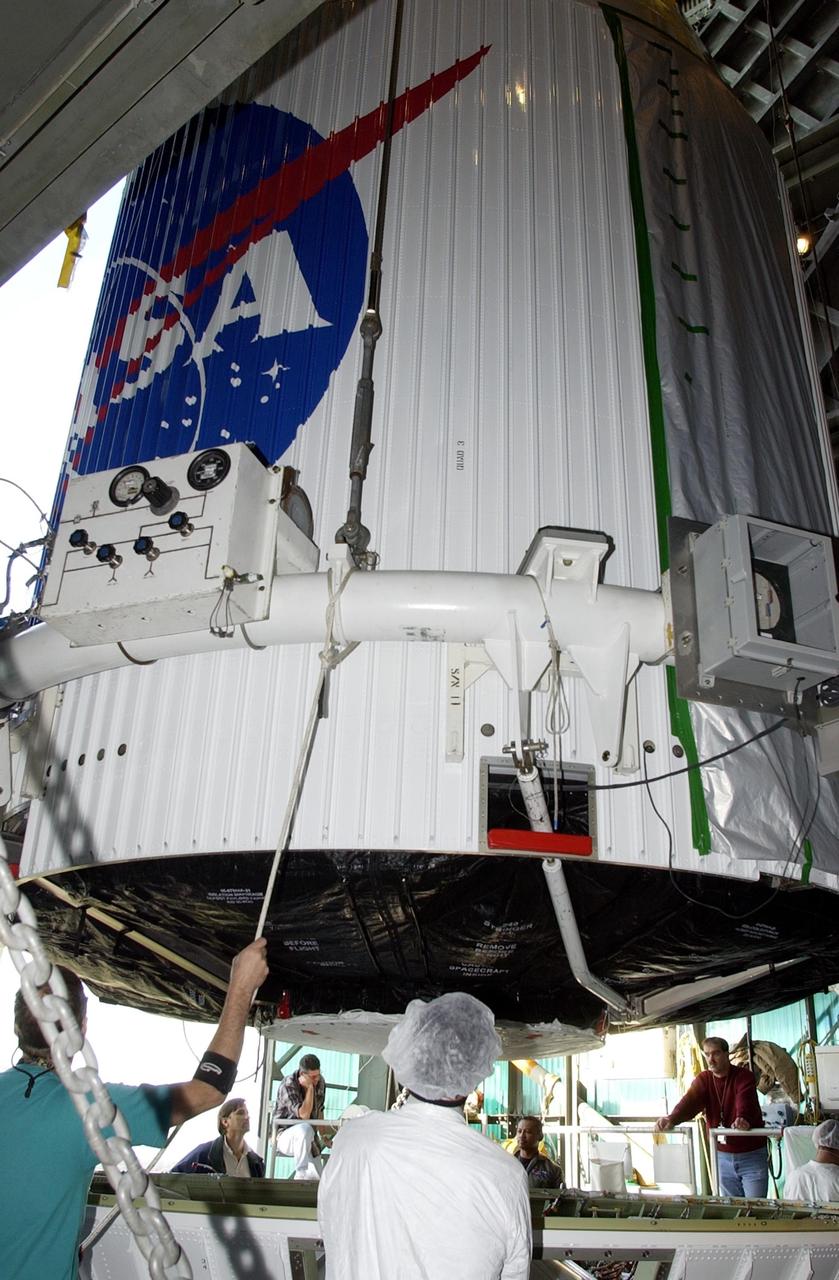
KENNEDY SPACE CENTER, FLA. -- The encapsulated TDRS-J satellite is lowered toward the Atlas IIA launch vehicle on Launch Complex 36-A, Cape Canaveral Air Force Station. The satellite is scheduled to be launched Dec. 4 aboard an Atlas IIA vehicle. The launch window is 9:42 to 10:22 p.m. EST. TDRS-J, the third in a series of telemetry satellites, will help replenish the current constellation of geosynchronous TDRS satellites that are the primary source of space-to-ground voice, data and telemetry for the Space Shuttle. The satellites also provide communications with the International Space Station and scientific spacecraft in low-Earth orbit such as the Hubble Space Telescope. This new advanced series of satellites will extend the availability of TDRS communications services until about 2017..

KENNEDY SPACE CENTER, FLA. -- On Pad 36-A, Cape Canaveral Air Force Station, Fla., the nose fairing encapsulating the Tracking and Data Relay Satellite-I (TDRS-I) is mated to the Lockheed Martin Atlas IIA rocket. The second in a new series of telemetry satellites, TDRS-I replenishes the existing on-orbit fleet of six spacecraft. The TDRS System is the primary source of space-to-ground voice, data and telemetry for the Space Shuttle. It also provides communications with the International Space Station and scientific spacecraft in low-Earth orbit such as the Hubble Space Telescope. This new advanced series of satellites will extend the availability of TDRS communications services until about 2017. Launch of TDRS-I is scheduled for March 8 between 5:39 - 6:19 p.m. EST
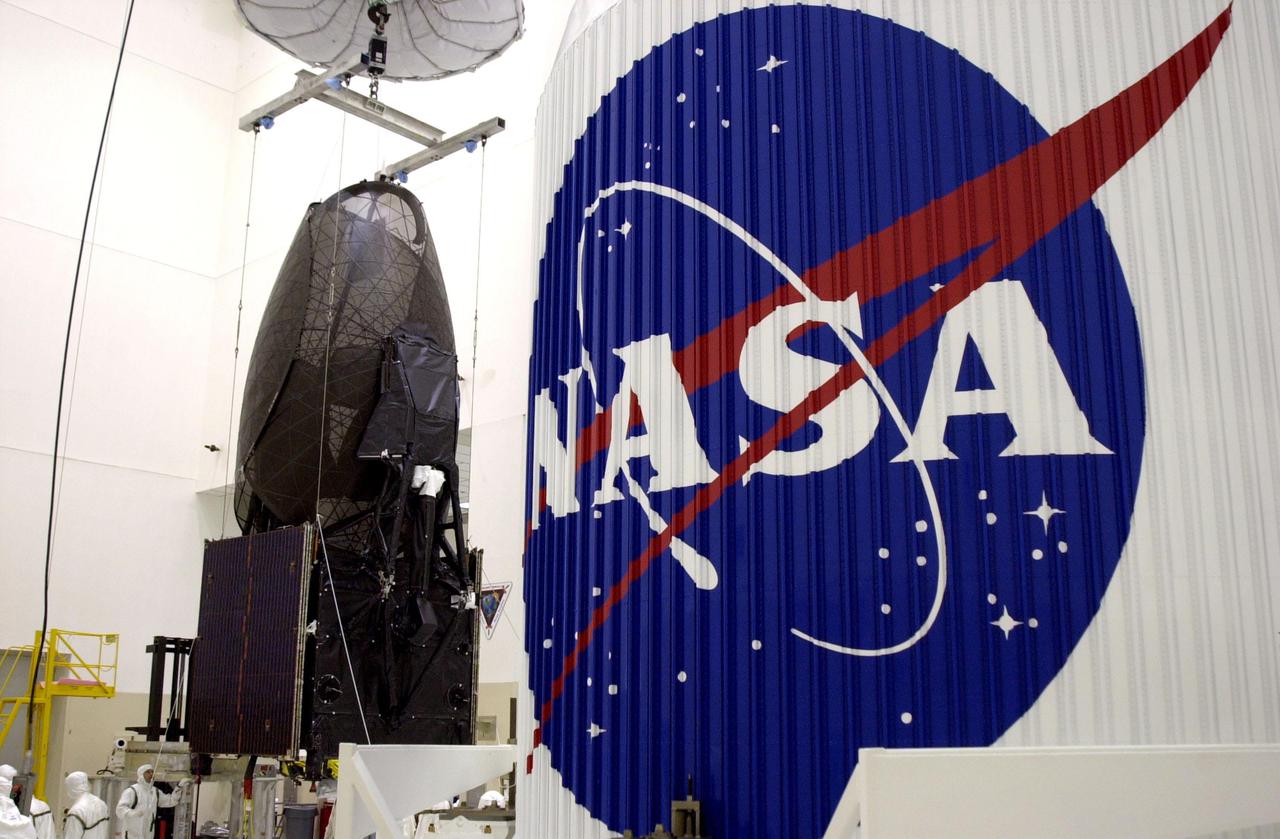
KENNEDY SPACE CENTER, Fla. - The Tracking and Data Relay Satellite-I (TDRS-I) is readied for mating with its nose fairing (in foreground) in the Spacecraft Assembly and Encapsulation Facility-2 (SAEF-2). The second in a new series of telemetry satellites, TDRS-I replenishes the existing on-orbit fleet of six spacecraft. The TDRS System is the primary source of space-to-ground voice, data and telemetry for the Space Shuttle. It also provides communications with the International Space Station and scientific spacecraft in low-Earth orbit such as the Hubble Space Telescope. This new advanced series of satellites will extend the availability of TDRS communications services until about 2017. Launch of TDRS-I is scheduled for March 8 aboard a Lockheed Martin Atlas IIA rocket from Pad 36-A, Cape Canaveral Air Force Station
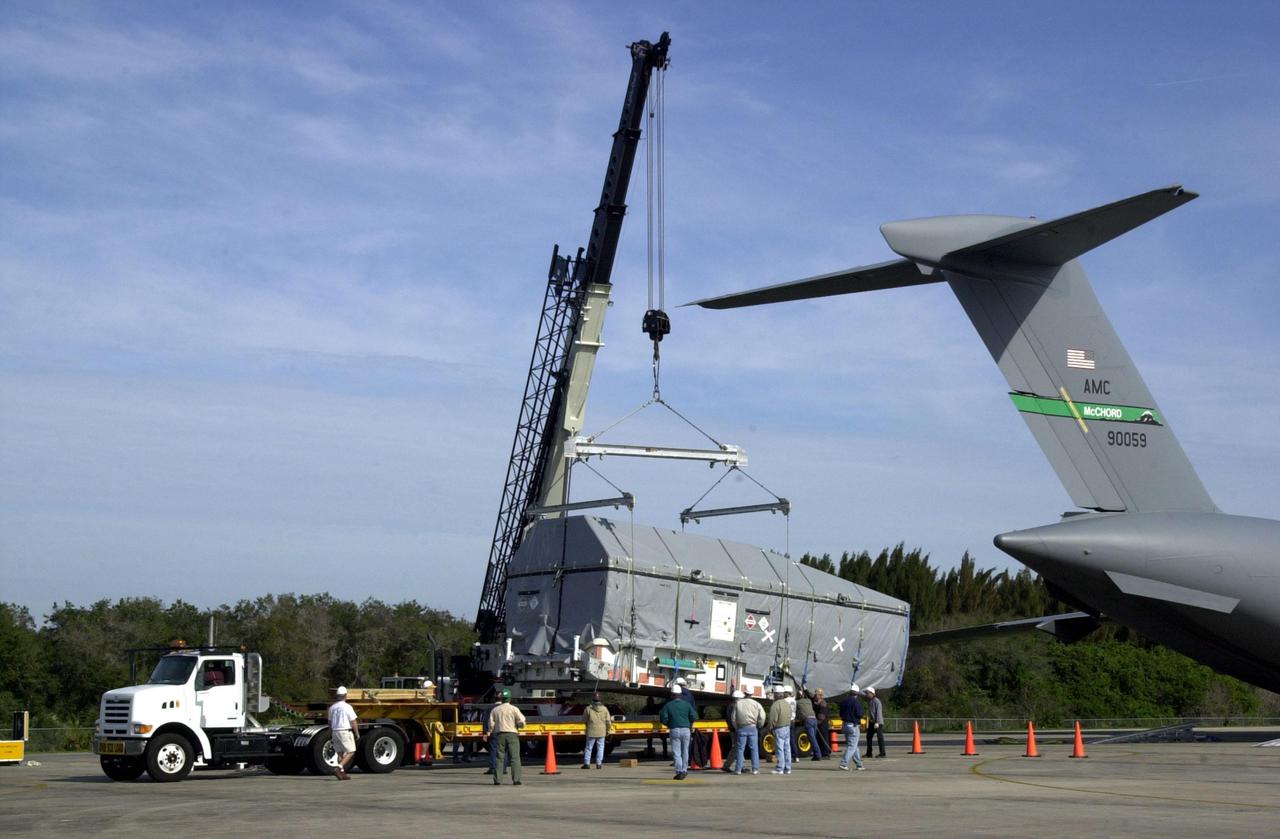
KENNEDY SPACE CENTER, FLA. -- At KSC's Shuttle Landing Facility, the Tracking and Data Relay Satellite-I (TDRS-I) is lifted onto a transporter after being offloaded from the Air Force C-17 air cargo plane at right. The second in a new series of telemetry satellites, TDRS-I replenishes the existing on-orbit fleet of six spacecraft. The TDRS System is the primary source of space-to-ground voice, data and telemetry for the Space Shuttle. It also provides communications with the International Space Station and scientific spacecraft in low-Earth orbit such as the Hubble Space Telescope. This new advanced series of satellites will extend the availability of TDRS communications services until about 2017. TDRS-I will undergo processing in the Spacecraft Assembly and Encapsulation Facility-2 (SAEF-2) to prepare it for launch March 8 aboard a Lockheed Martin Atlas IIA rocket from Pad 36-A, Cape Canaveral Air Force Station
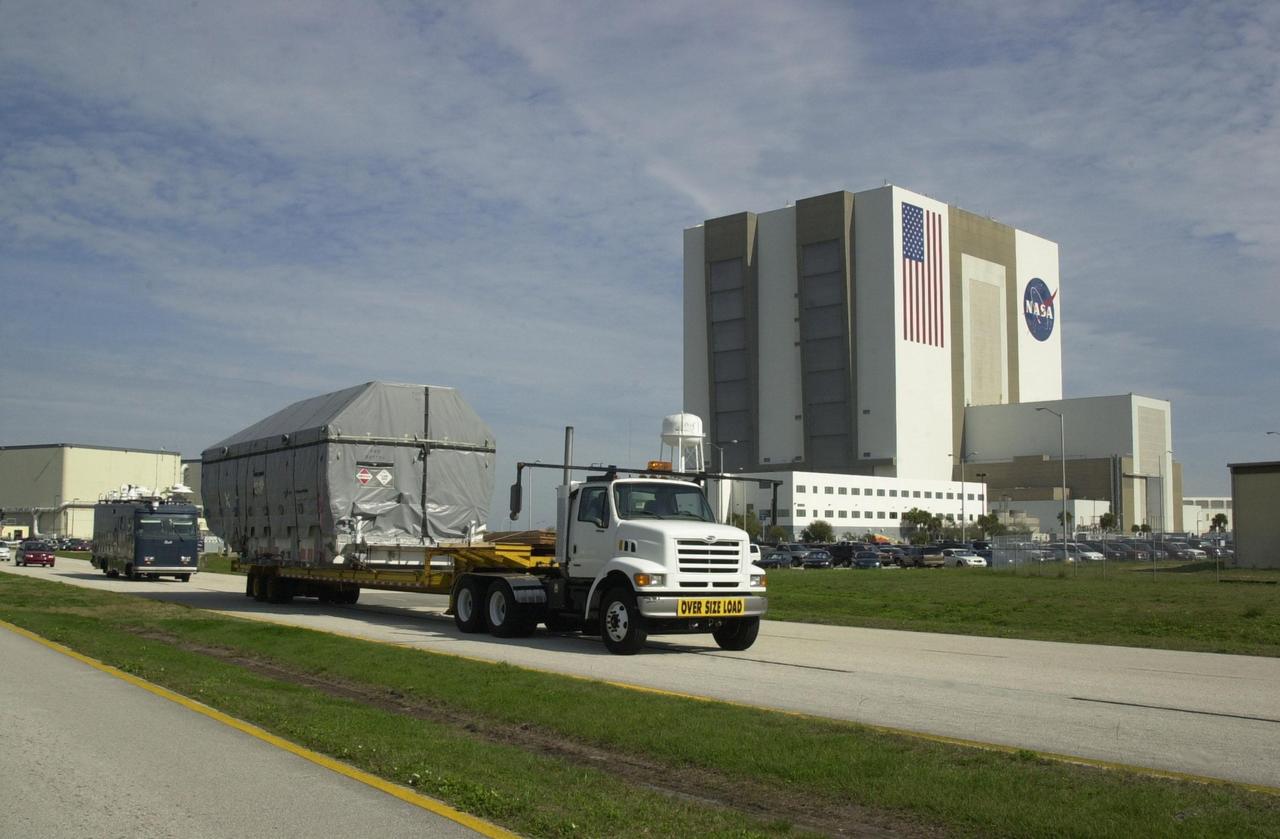
KENNEDY SPACE CENTER, FLA. -- -- At KSC's Shuttle Landing Facility, the Tracking and Data Relay Satellite-I (TDRS-I) is transported from the Shuttle Landing Facility to the Spacecraft Assembly and Encapsulation Facility-2 (SAEF-2). The second in a new series of telemetry satellites, TDRS-I replenishes the existing on-orbit fleet of six spacecraft. The TDRS System is the primary source of space-to-ground voice, data and telemetry for the Space Shuttle. It also provides communications with the International Space Station and scientific spacecraft in low-Earth orbit such as the Hubble Space Telescope. This new advanced series of satellites will extend the availability of TDRS communications services until about 2017. In the SAEF-2 TDRS-I will undergo processing to prepare it for launch March 8 aboard a Lockheed Martin Atlas IIA rocket from Pad 36-A, Cape Canaveral Air Force Station
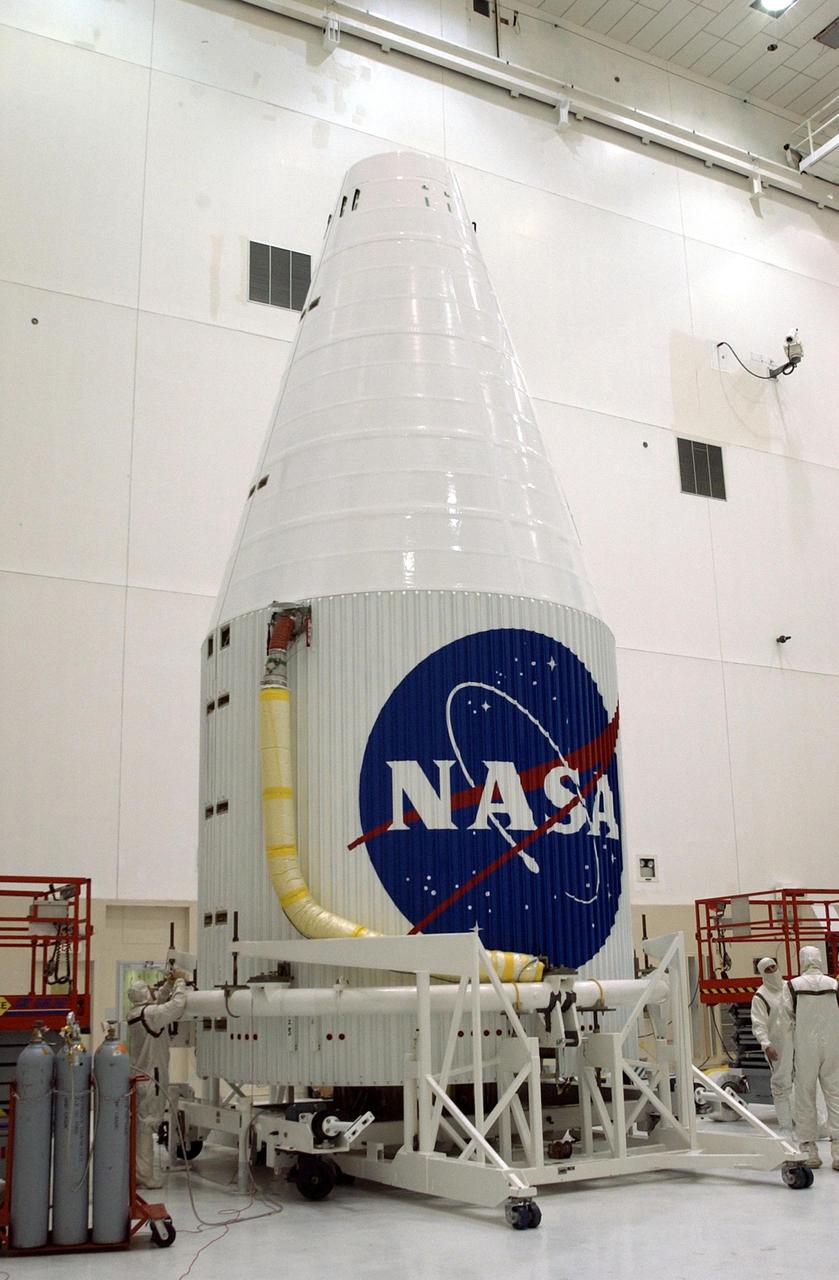
KENNEDY SPACE CENTER, FLA. - The fully encapsulated Tracking and Data Relay Satellite-I (TDRS-I) waits in the Spacecraft Assembly and Encapsulation Facility-2 (SAEF-2) for transfer to Cape Canaveral Air Force Station. The second in a new series of telemetry satellites, TDRS-I replenishes the existing on-orbit fleet of six spacecraft. The TDRS System is the primary source of space-to-ground voice, data and telemetry for the Space Shuttle. It also provides communications with the International Space Station and scientific spacecraft in low-Earth orbit such as the Hubble Space Telescope. This new advanced series of satellites will extend the availability of TDRS communications services until about 2017. Launch of TDRS-I is scheduled for March 8 aboard a Lockheed Martin Atlas IIA rocket from Pad 36-A

KENNEDY SPACE CENTER, FLA. -- The TDRS-J satellite sits between the two halves of the fairing before encapsulation for launch. The satellite is scheduled to be launched aboard a Lockheed Martin Atlas IIA-Centaur rocket from Launch Complex 36-A, Cape Canaveral Air Force Station, Fla., on Dec. 4. The third in a series of telemetry satellites, TDRS-J will help replenish the current constellation of geosynchronous TDRS satellites. The TDRS System is the primary source of space-to-ground voice, data and telemetry for the Space Shuttle. It also provides communications with the International Space Station and scientific spacecraft in low-Earth orbit such as the Hubble Space Telescope. This new advanced series of satellites will extend the availability of TDRS communications services until about 2017.
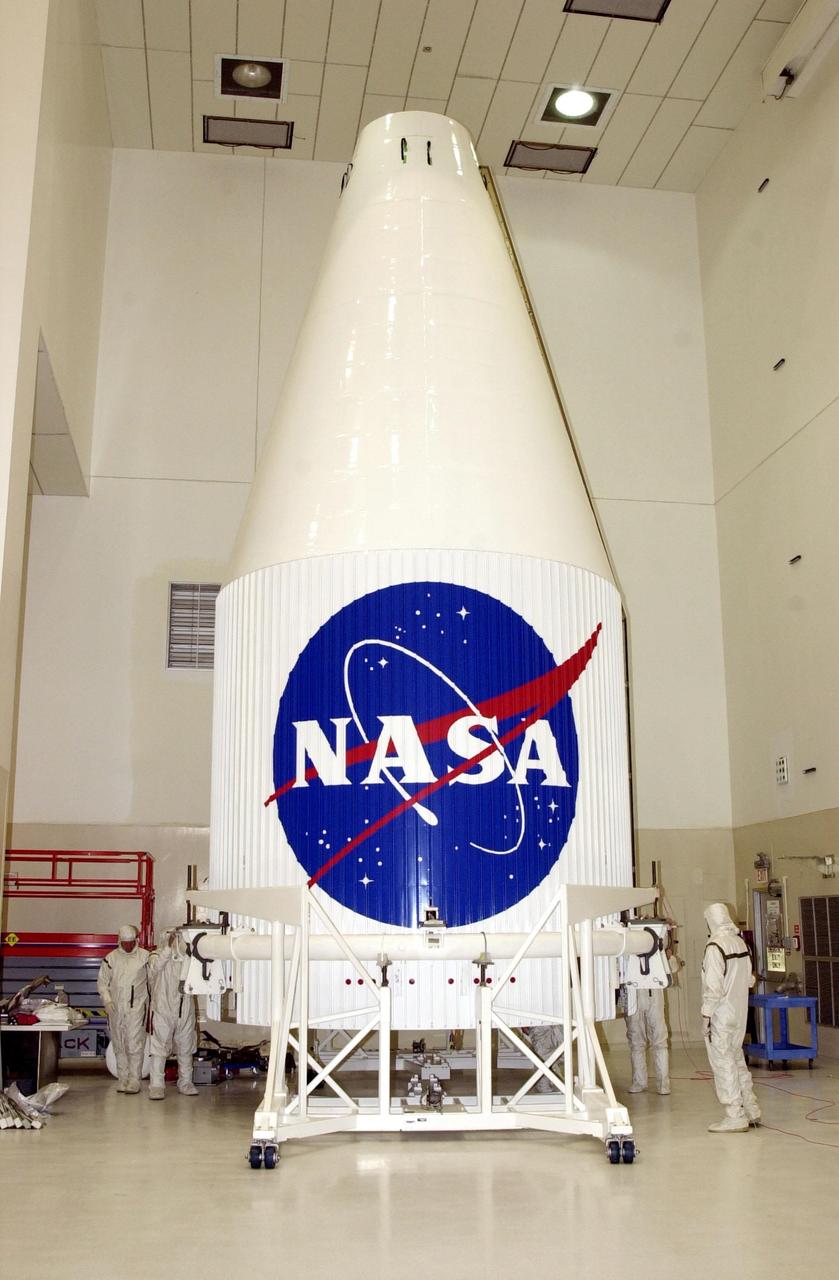
KENNEDY SPACE CENTER, Fla. - The nose fairing for the Tracking and Data Relay Satellite-I (TDRS-I) rests on a workstand in the Spacecraft Assembly and Encapsulation Facility-2 (SAEF-2) where the satellite is being prepared for launch. The second in a new series of telemetry satellites, TDRS-I replenishes the existing on-orbit fleet of six spacecraft. The TDRS System is the primary source of space-to-ground voice, data and telemetry for the Space Shuttle. It also provides communications with the International Space Station and scientific spacecraft in low-Earth orbit such as the Hubble Space Telescope. This new advanced series of satellites will extend the availability of TDRS communications services until about 2017. Launch of TDRS-I is scheduled for March 8 aboard a Lockheed Martin Atlas IIA rocket from Pad 36-A, Cape Canaveral Air Force Station
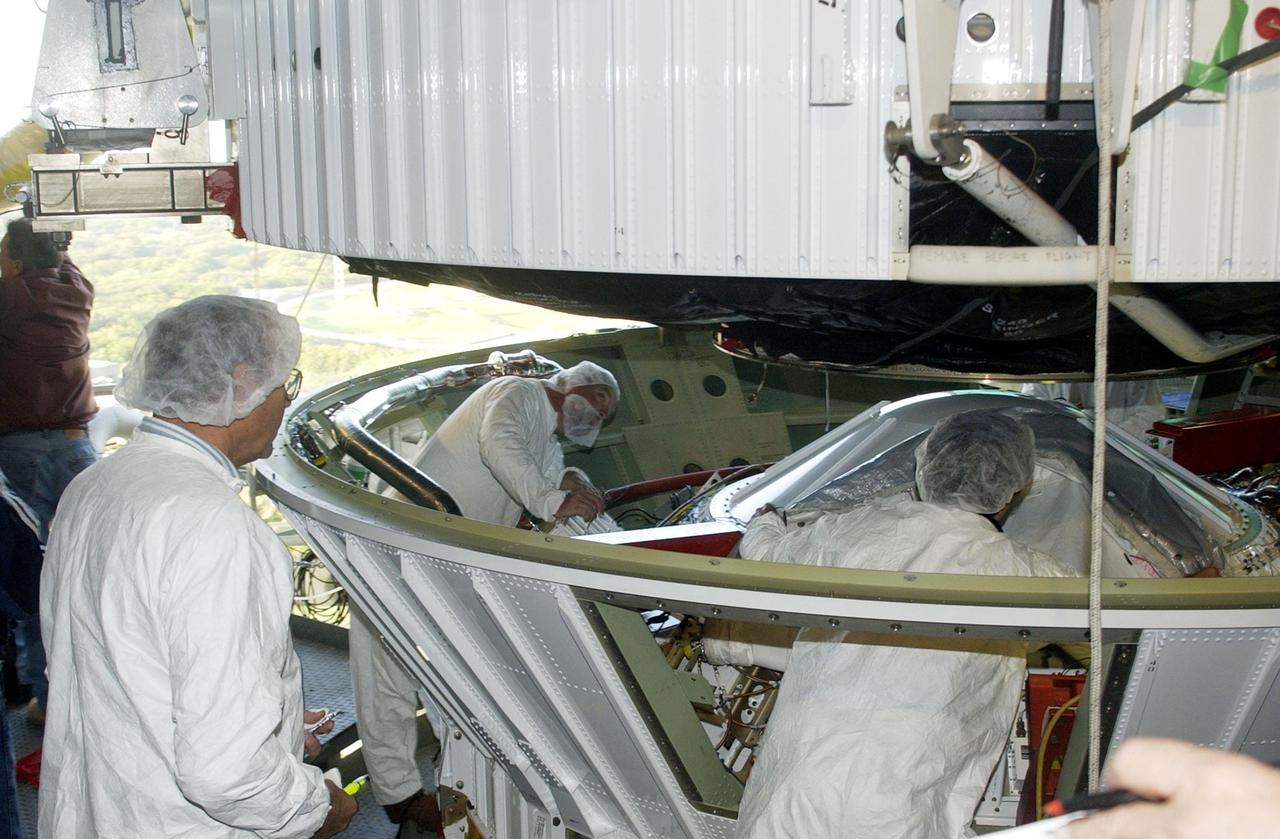
KENNEDY SPACE CENTER, FLA. -- On Pad 36-A, Cape Canaveral Air Force Station, Fla., workers check the placement of the nose fairing as it is lowered toward the Lockheed Martin Atlas IIA rocket. The fairing encapsulates the Tracking and Data Relay Satellite-I (TDRS-I). The second in a new series of telemetry satellites, TDRS-I replenishes the existing on-orbit fleet of six spacecraft. The TDRS System is the primary source of space-to-ground voice, data and telemetry for the Space Shuttle. It also provides communications with the International Space Station and scientific spacecraft in low-Earth orbit such as the Hubble Space Telescope. This new advanced series of satellites will extend the availability of TDRS communications services until about 2017. Launch of TDRS-I is scheduled for March 8 between 5:39 - 6:19 p.m. EST
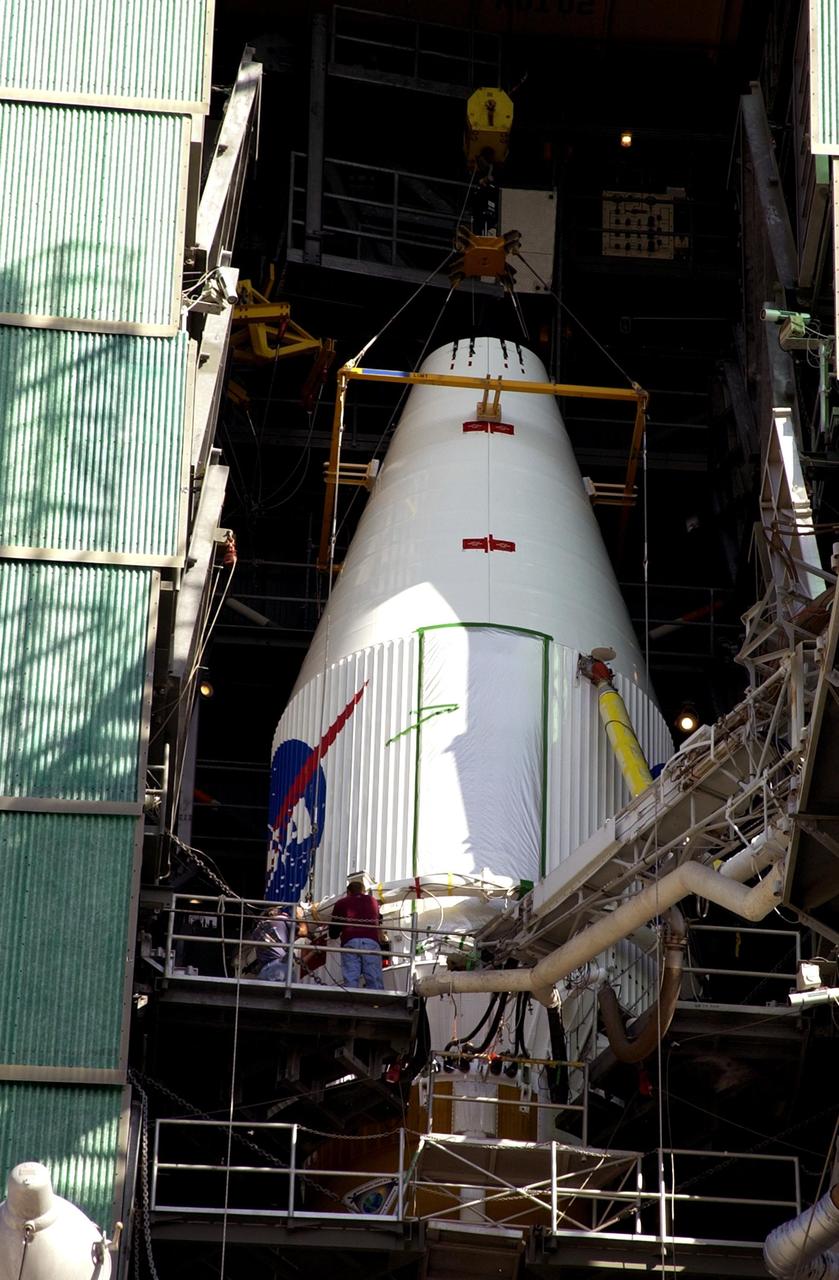
KENNEDY SPACE CENTER, FLA. -- The encapsulated TDRS-J satellite is mated with the Atlas IIA launch vehicle on Launch Complex 36-A, Cape Canaveral Air Force Station. The satellite is scheduled to be launched Dec. 4 aboard an Atlas IIA vehicle. The launch window is 9:42 to 10:22 p.m. EST. TDRS-J, the third in a series of telemetry satellites, will help replenish the current constellation of geosynchronous TDRS satellites that are the primary source of space-to-ground voice, data and telemetry for the Space Shuttle. The satellites also provide communications with the International Space Station and scientific spacecraft in low-Earth orbit such as the Hubble Space Telescope. This new advanced series of satellites will extend the availability of TDRS communications services until about 2017.
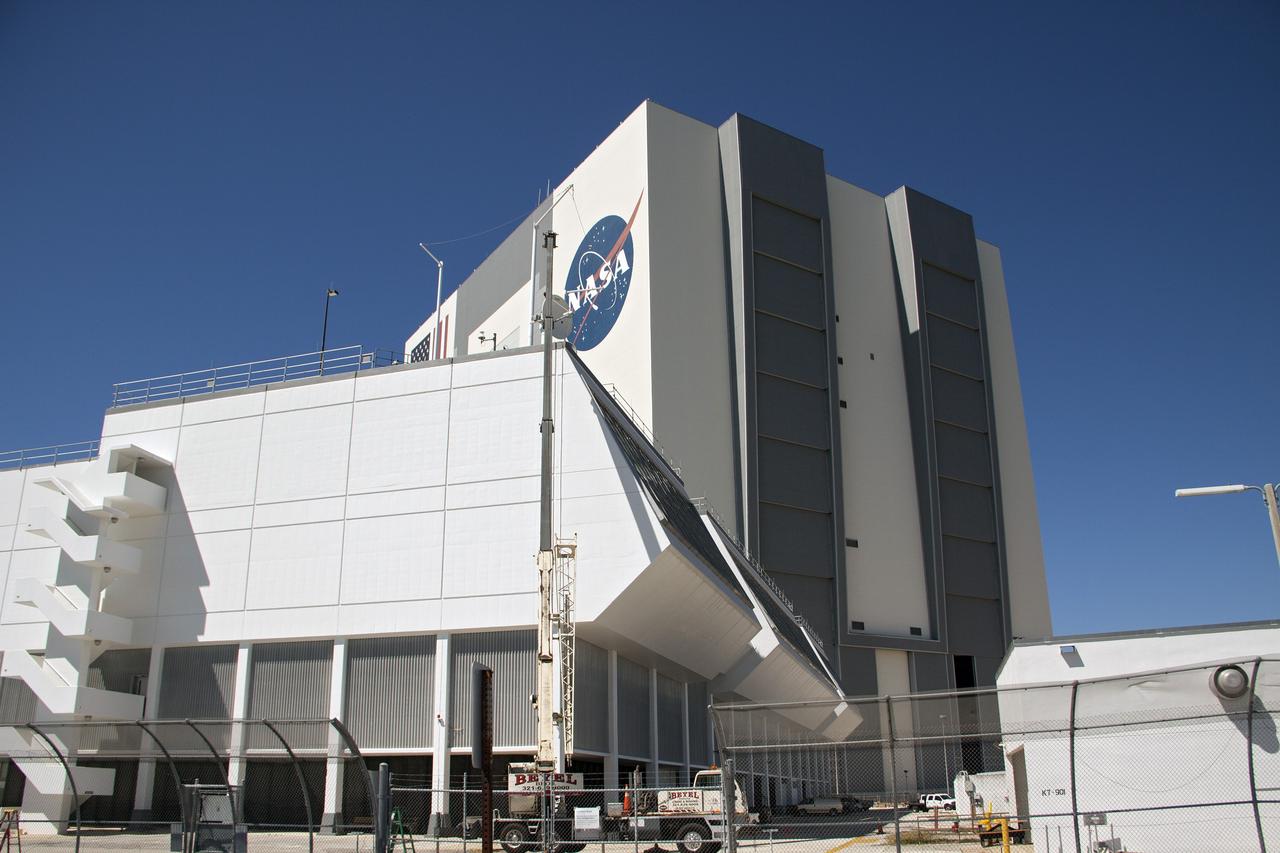
CAPE CANAVERAL, Fla. – A telemetry antenna and tracker camera is attached to the roof of the Launch Control Center, or LCC, in Launch Complex 39 at NASA's Kennedy Space Center in Florida. This antenna and camera system is the first of three to be installed on the LCC roof for the Radio Frequency and Telemetry Station RFTS, which will be used to monitor radio frequency communications from a launch vehicle at Launch Pad 39A or B as well as provide radio frequency relay for a launch vehicle in the Vehicle Assembly Building. The RFTS replaces the shuttle-era communications and tracking labs at Kennedy. The modern RFTS checkout station is designed to primarily support NASA's Space Launch System, or SLS, and Orion spacecraft, but can support multi-user radio frequency tests as the space center transitions to support a variety of rockets and spacecraft. For more information on the modernization efforts at Kennedy, visit the Ground Systems Development and Operations, or GSDO, website at http://go.nasa.gov/groundsystems. Photo credit: NASA/Jim Grossmann

KENNEDY SPACE CENTER, FLA. - On Launch Pad 36-A, Cape Canaveral Air Force Station, the tower is rolled away from the Lockheed Martin Atlas/Centaur rocket prior to launch. The rocket will carry the Tracking and Data Relay Satellite-I (TDRS-I) into orbit. The second in a new series of telemetry satellites, TDRS-I replenishes the existing on-orbit fleet of six spacecraft. The TDRS System is the primary source of space-to-ground voice, data and telemetry for the Space Shuttle. It also provides communications with the International Space Station and scientific spacecraft in low-Earth orbit such as the Hubble Space Telescope. This new advanced series of satellites will extend the availability of TDRS communications services until about 2017. Launch of TDRS-I is scheduled between 5:39 - 6:19 p.m. EST
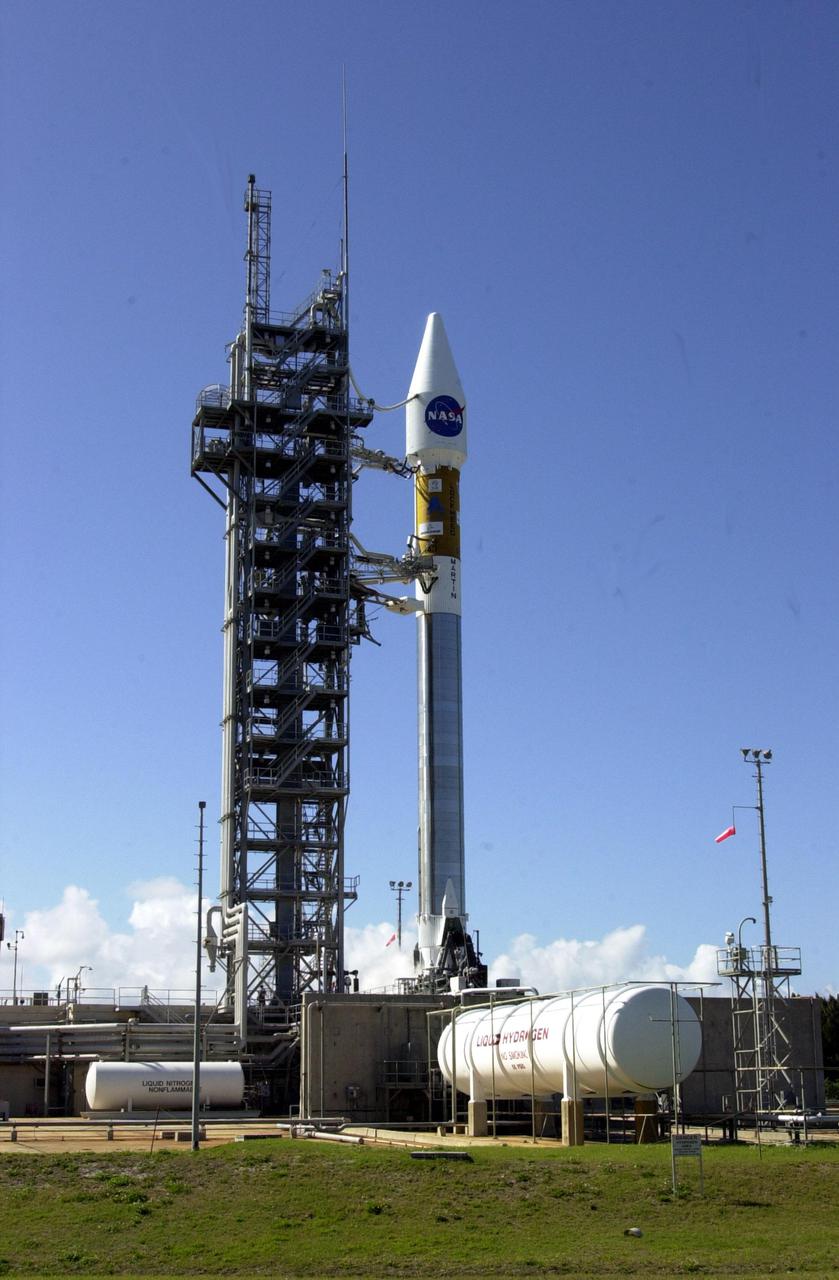
KENNEDY SPACE CENTER, FLA. -- After tower rollback, this Lockheed Martin Atlas_Centaur rocket waits for launch to carry the Tracking and Data Relay Satellite-I (TDRS-I) into orbit. The second in a new series of telemetry satellites, TDRS-I replenishes the existing on-orbit fleet of six spacecraft. The TDRS System is the primary source of space-to-ground voice, data and telemetry for the Space Shuttle. It also provides communications with the International Space Station and scientific spacecraft in low-Earth orbit such as the Hubble Space Telescope. This new advanced series of satellites will extend the availability of TDRS communications services until about 2017. Launch of TDRS-I atop the Atlas rocket is scheduled between 5:39 - 6:19 p.m. EST from Launch Pad 36-A, Cape Canaveral Air Force Station
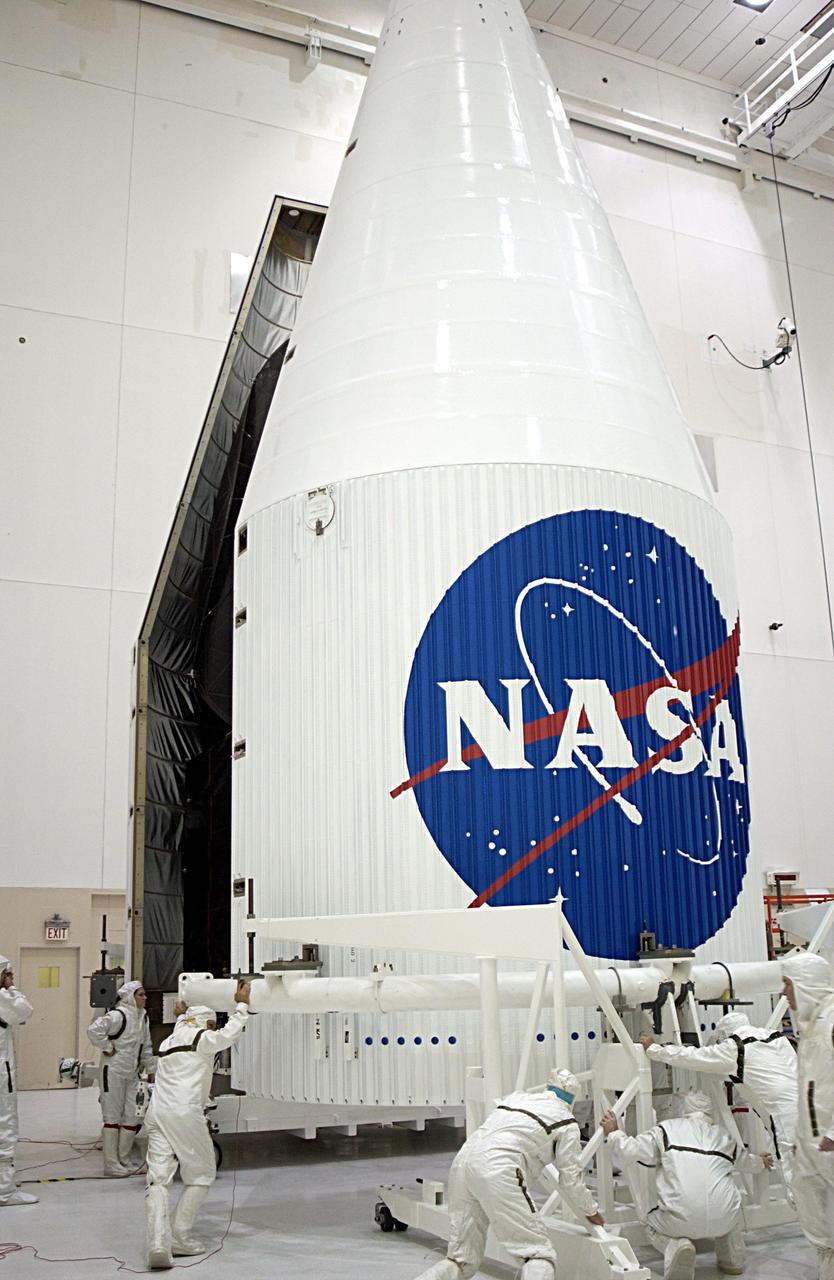
KENNEDY SPACE CENTER, FLA. -- Workers move the second half of the fairing around the TDRS-J satellite to complete encapsulation. The satellite is scheduled to be launched aboard a Lockheed Martin Atlas IIA-Centaur rocket from Launch Complex 36-A, Cape Canaveral Air Force Station, Fla., on Dec. 4. The third in a series of telemetry satellites, TDRS-J will help replenish the current constellation of geosynchronous TDRS satellites. The TDRS System is the primary source of space-to-ground voice, data and telemetry for the Space Shuttle. It also provides communications with the International Space Station and scientific spacecraft in low-Earth orbit such as the Hubble Space Telescope. This new advanced series of satellites will extend the availability of TDRS communications services until about 2017.
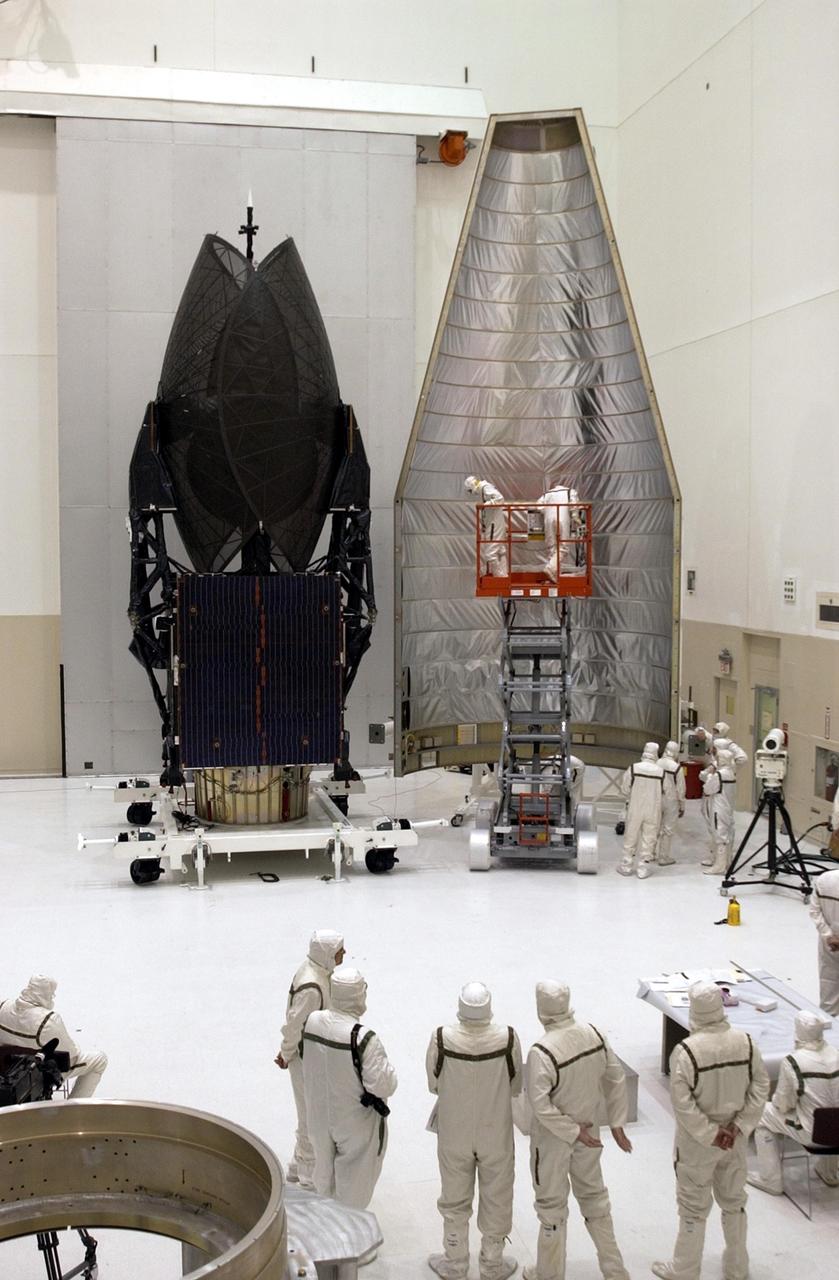
KENNEDY SPACE CENTER, FLA. -- In the Spacecraft Assembly and Encapsulation Facility-2 (SAEF-2), the Tracking and Data Relay Satellite-I (TDRS-I) (left) waits for encapsulation in the first half of the nose fairing , in preparation for launch. The second in a new series of telemetry satellites, TDRS-I replenishes the existing on-orbit fleet of six spacecraft. The TDRS System is the primary source of space-to-ground voice, data and telemetry for the Space Shuttle. It also provides communications with the International Space Station and scientific spacecraft in low-Earth orbit such as the Hubble Space Telescope. This new advanced series of satellites will extend the availability of TDRS communications services until about 2017. Launch of TDRS-I is scheduled for March 8 aboard a Lockheed Martin Atlas IIA rocket from Pad 36-A, Cape Canaveral Air Force Station
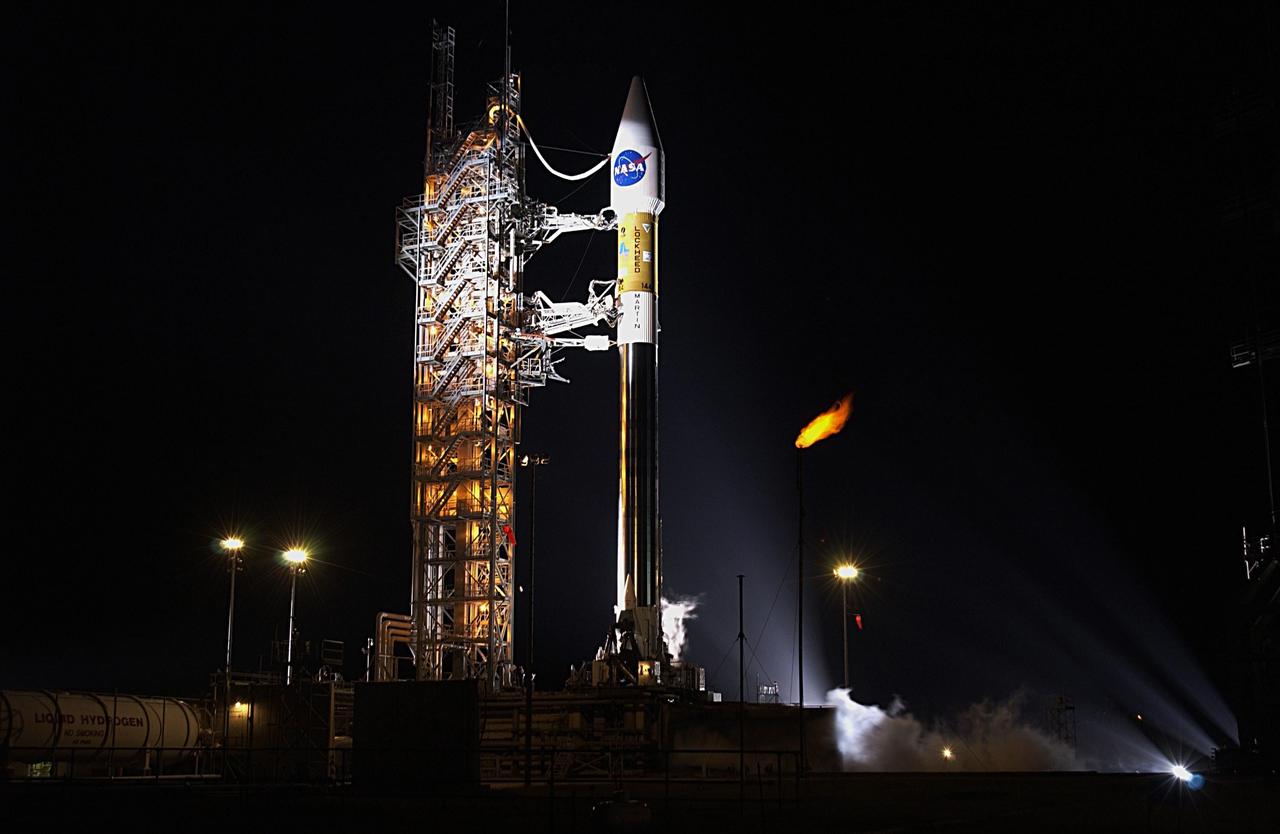
KENNEDY SPACE CENTER, FLA. - At Launch Complex 36-A, Cape Canaveral Air Force Station, the mobile service tower is rolled back to reveal the encapsulated TDRS-J satellite aboard an Atlas IIA vehicle awaiting launch on Dec. 4. The launch window is 9:42 to 10:22 p.m. EST. TDRS-J, the third in a series of telemetry satellites, will help replenish the current constellation of geosynchronous TDRS satellites that are the primary source of space-to-ground voice, data and telemetry for the Space Shuttle. The satellites also provide communications with the International Space Station and scientific spacecraft in low-Earth orbit such as the Hubble Space Telescope. This new advanced series of satellites will extend the availability of TDRS communications services until about 2017.

KENNEDY SPACE CENTER, FLA. -- The nose fairing arrives at Pad 36-A, Cape Canaveral Air Force Station, Fla., with the Tracking and Data Relay Satellite-I (TDRS-I) inside. The fairing will be attached to the Lockheed Martin Atlas IIA rocket for launch. The second in a new series of telemetry satellites, TDRS-I replenishes the existing on-orbit fleet of six spacecraft. The TDRS System is the primary source of space-to-ground voice, data and telemetry for the Space Shuttle. It also provides communications with the International Space Station and scientific spacecraft in low-Earth orbit such as the Hubble Space Telescope. This new advanced series of satellites will extend the availability of TDRS communications services until about 2017. Launch of TDRS-I is scheduled for March 8 between 5:39 - 6:19 p.m. EST
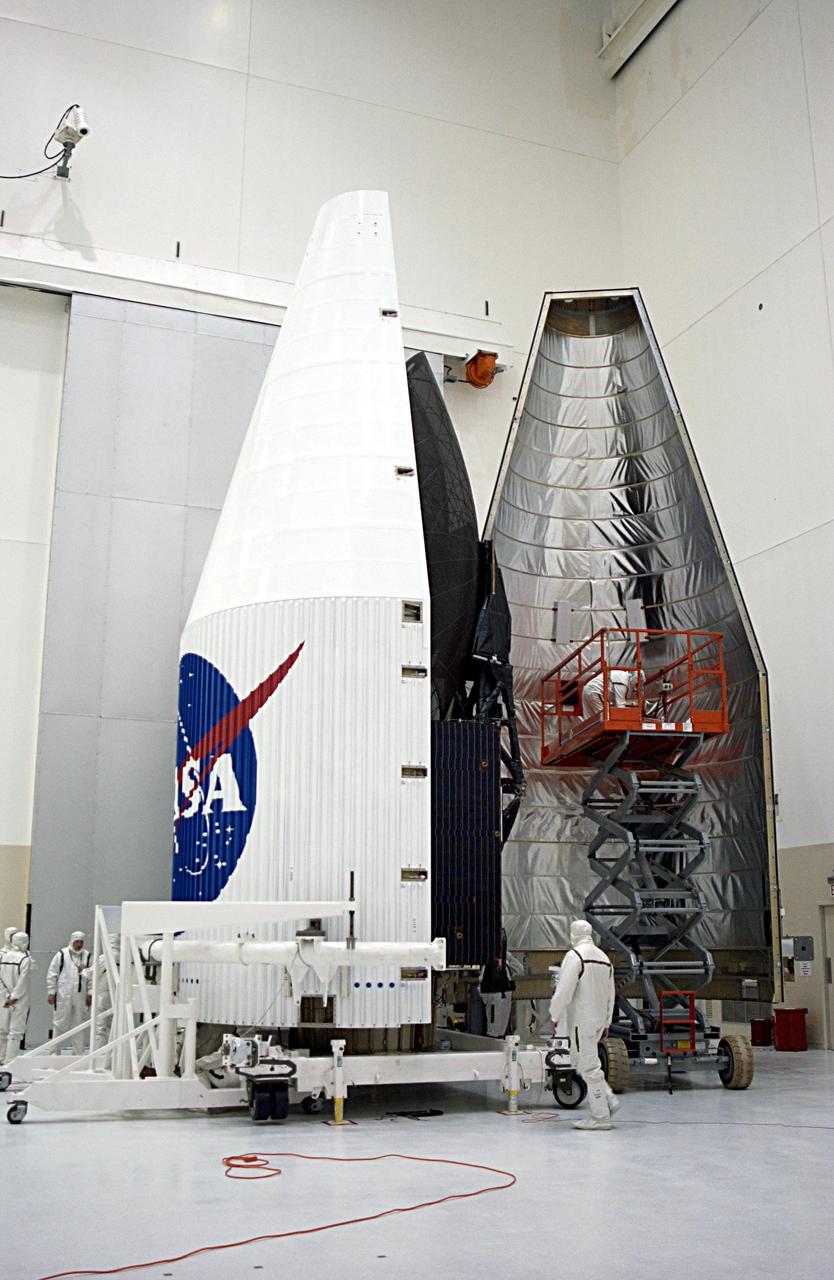
KENNEDY SPACE CENTER, FLA. -- The second half of the fairing (right) is prepared for mating with the first half and encapsulating the TDRS-J satellite for launch. The satellite is scheduled to be launched aboard a Lockheed Martin Atlas IIA-Centaur rocket from Launch Complex 36-A, Cape Canaveral Air Force Station, Fla., on Dec. 4. The third in a series of telemetry satellites, TDRS-J will help replenish the current constellation of geosynchronous TDRS satellites. The TDRS System is the primary source of space-to-ground voice, data and telemetry for the Space Shuttle. It also provides communications with the International Space Station and scientific spacecraft in low-Earth orbit such as the Hubble Space Telescope. This new advanced series of satellites will extend the availability of TDRS communications services until about 2017.
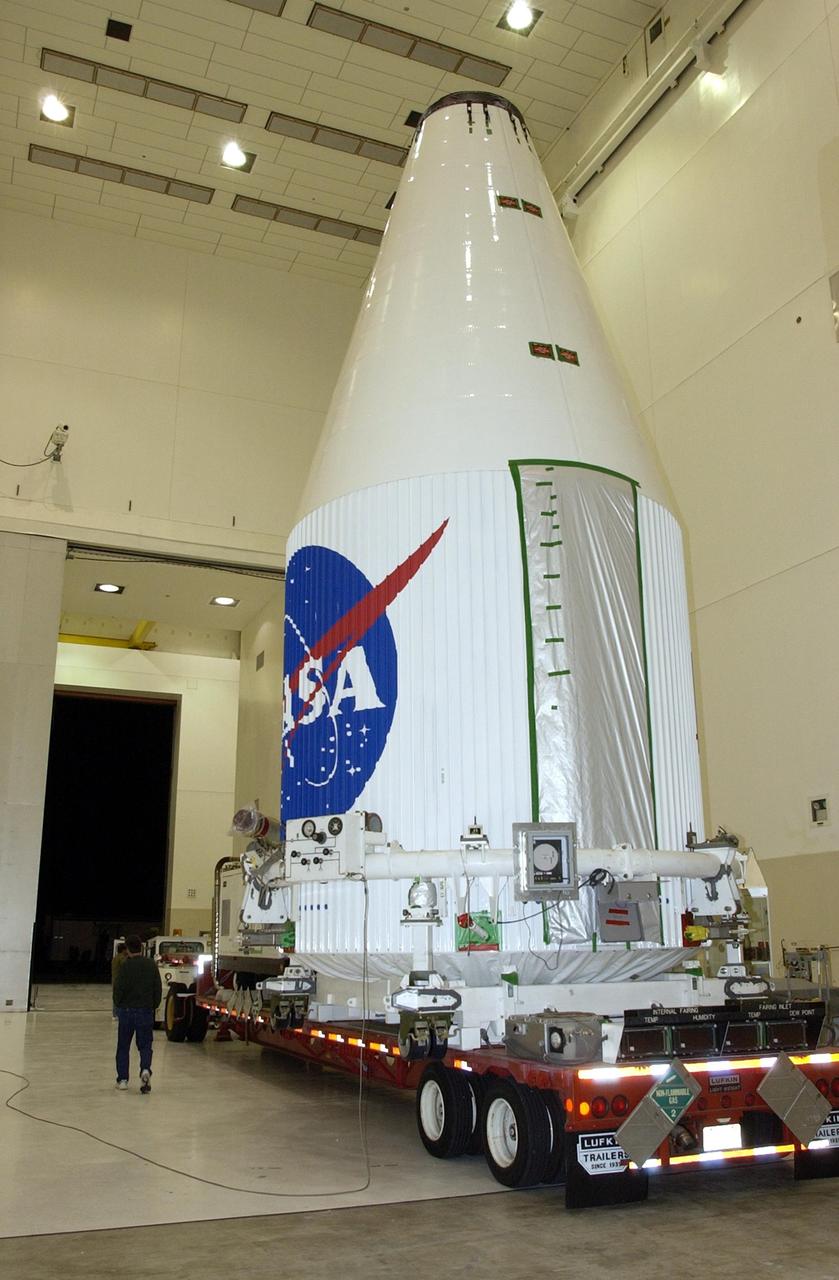
KENNEDY SPACE CENTER, FLA. - A transporter carrying the encapsulated TDRS-J satellite makes its way to the exit. The satellite is being taken to Launch Complex 36-A, Cape Canaveral Air Force Station, for a launch aboard an Atlas IIA vehicle Dec. 4. The launch window is 9:42 to 10:22 p.m. EST. TDRS-J, the third in a series of telemetry satellites, will help replenish the current constellation of geosynchronous TDRS satellites that are the primary source of space-to-ground voice, data and telemetry for the Space Shuttle. The satellites also provide communications with the International Space Station and scientific spacecraft in low-Earth orbit such as the Hubble Space Telescope. This new advanced series of satellites will extend the availability of TDRS communications services until about 2017.
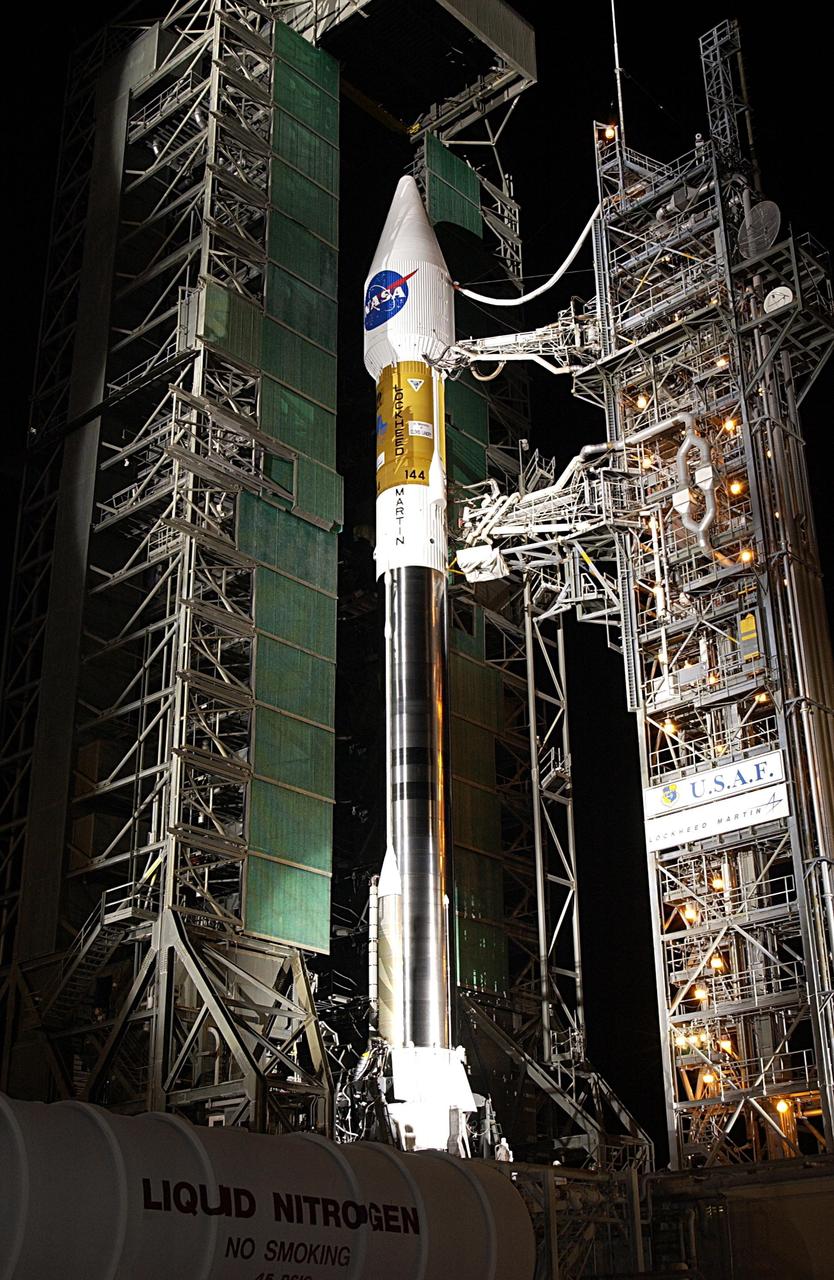
KENNEDY SPACE CENTER, FLA. - At Launch Complex 36-A, Cape Canaveral Air Force Station, the mobile service tower is rolled back to reveal the encapsulated TDRS-J satellite aboard an Atlas IIA vehicle awaiting launch on Dec. 4. The launch window is 9:42 to 10:22 p.m. EST. TDRS-J, the third in a series of telemetry satellites, will help replenish the current constellation of geosynchronous TDRS satellites that are the primary source of space-to-ground voice, data and telemetry for the Space Shuttle. The satellites also provide communications with the International Space Station and scientific spacecraft in low-Earth orbit such as the Hubble Space Telescope. This new advanced series of satellites will extend the availability of TDRS communications services until about 2017.
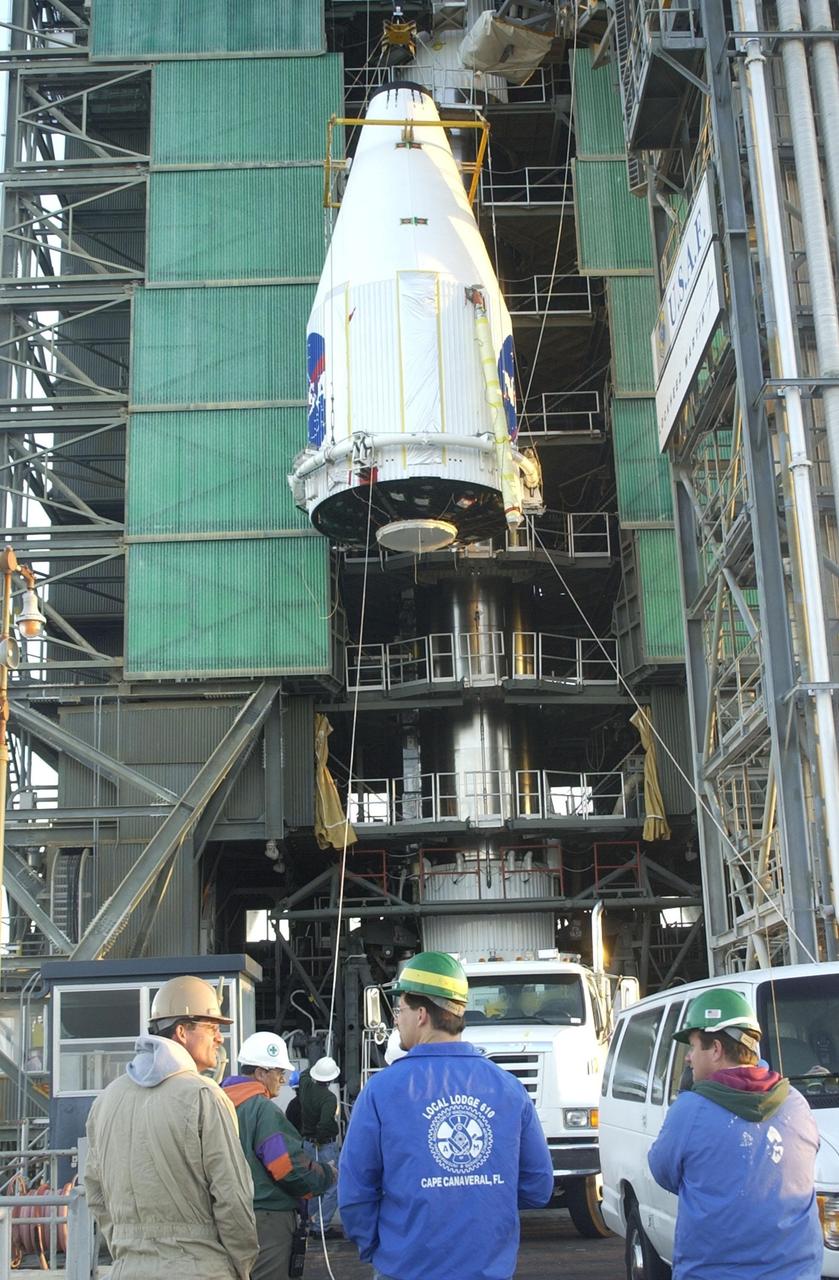
KENNEDY SPACE CENTER, FLA. -- The nose fairing arrives at Pad 36-A, Cape Canaveral Air Force Station, Fla., with the Tracking and Data Relay Satellite-I (TDRS-I) inside. The fairing will be attached to the Lockheed Martin Atlas IIA rocket for launch. The second in a new series of telemetry satellites, TDRS-I replenishes the existing on-orbit fleet of six spacecraft. The TDRS System is the primary source of space-to-ground voice, data and telemetry for the Space Shuttle. It also provides communications with the International Space Station and scientific spacecraft in low-Earth orbit such as the Hubble Space Telescope. This new advanced series of satellites will extend the availability of TDRS communications services until about 2017. Launch of TDRS-I is scheduled for March 8 between 5:39 - 6:19 p.m. EST
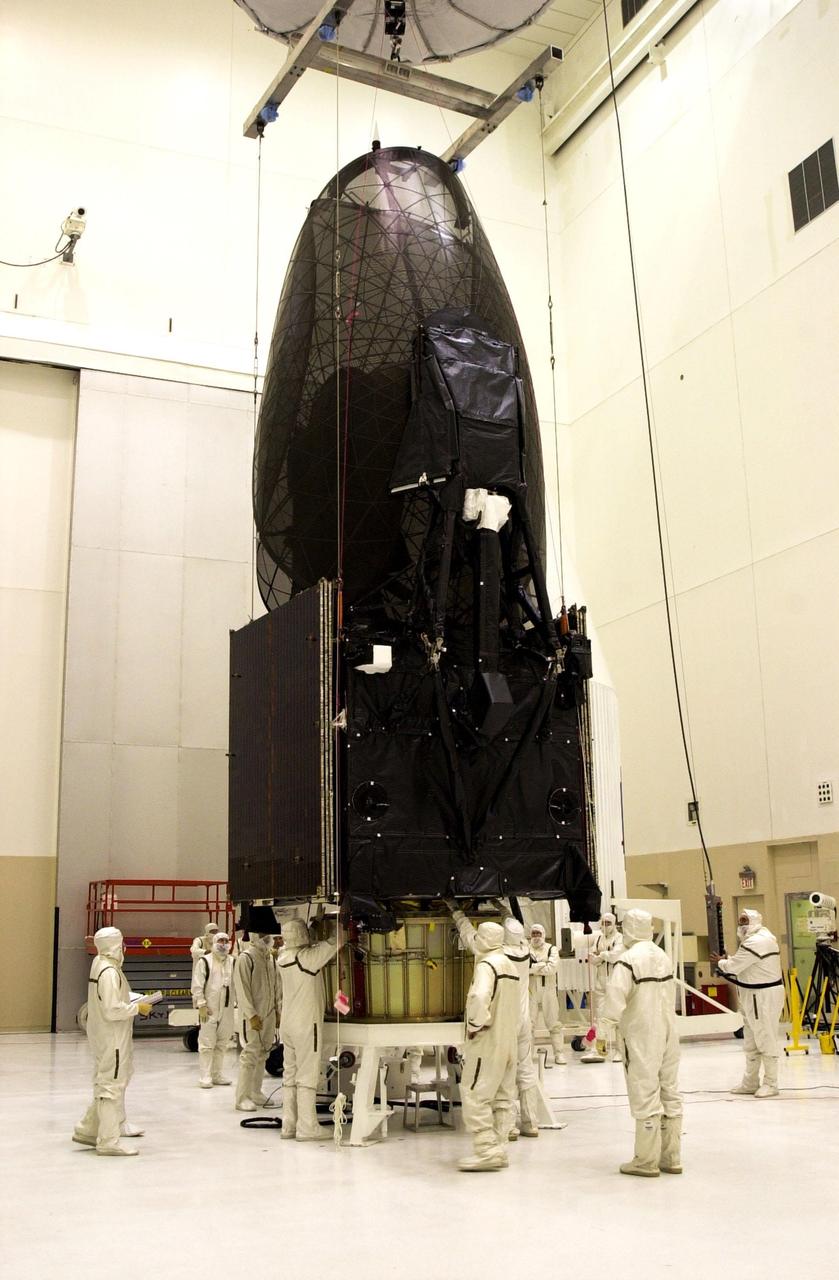
KENNEDY SPACE CENTER, Fla. - The Tracking and Data Relay Satellite-I (TDRS-I) is lifted for mating with the adapter of its nose fairing in the Spacecraft Assembly and Encapsulation Facility-2 (SAEF-2). The second in a new series of telemetry satellites, TDRS-I replenishes the existing on-orbit fleet of six spacecraft. The TDRS System is the primary source of space-to-ground voice, data and telemetry for the Space Shuttle. It also provides communications with the International Space Station and scientific spacecraft in low-Earth orbit such as the Hubble Space Telescope. This new advanced series of satellites will extend the availability of TDRS communications services until about 2017. Launch of TDRS-I is scheduled for March 8 aboard a Lockheed Martin Atlas IIA rocket from Pad 36-A, Cape Canaveral Air Force Station

KENNEDY SPACE CENTER, FLA. -- The TDRS-J satellite rests inside the first half of the fairing during encapsulation. The satellite is scheduled to be launched aboard a Lockheed Martin Atlas IIA-Centaur rocket from Launch Complex 36-A, Cape Canaveral Air Force Station, Fla., on Dec. 4. The third in a series of telemetry satellites, TDRS-J will help replenish the current constellation of geosynchronous TDRS satellites. The TDRS System is the primary source of space-to-ground voice, data and telemetry for the Space Shuttle. It also provides communications with the International Space Station and scientific spacecraft in low-Earth orbit such as the Hubble Space Telescope. This new advanced series of satellites will extend the availability of TDRS communications services until about 2017.