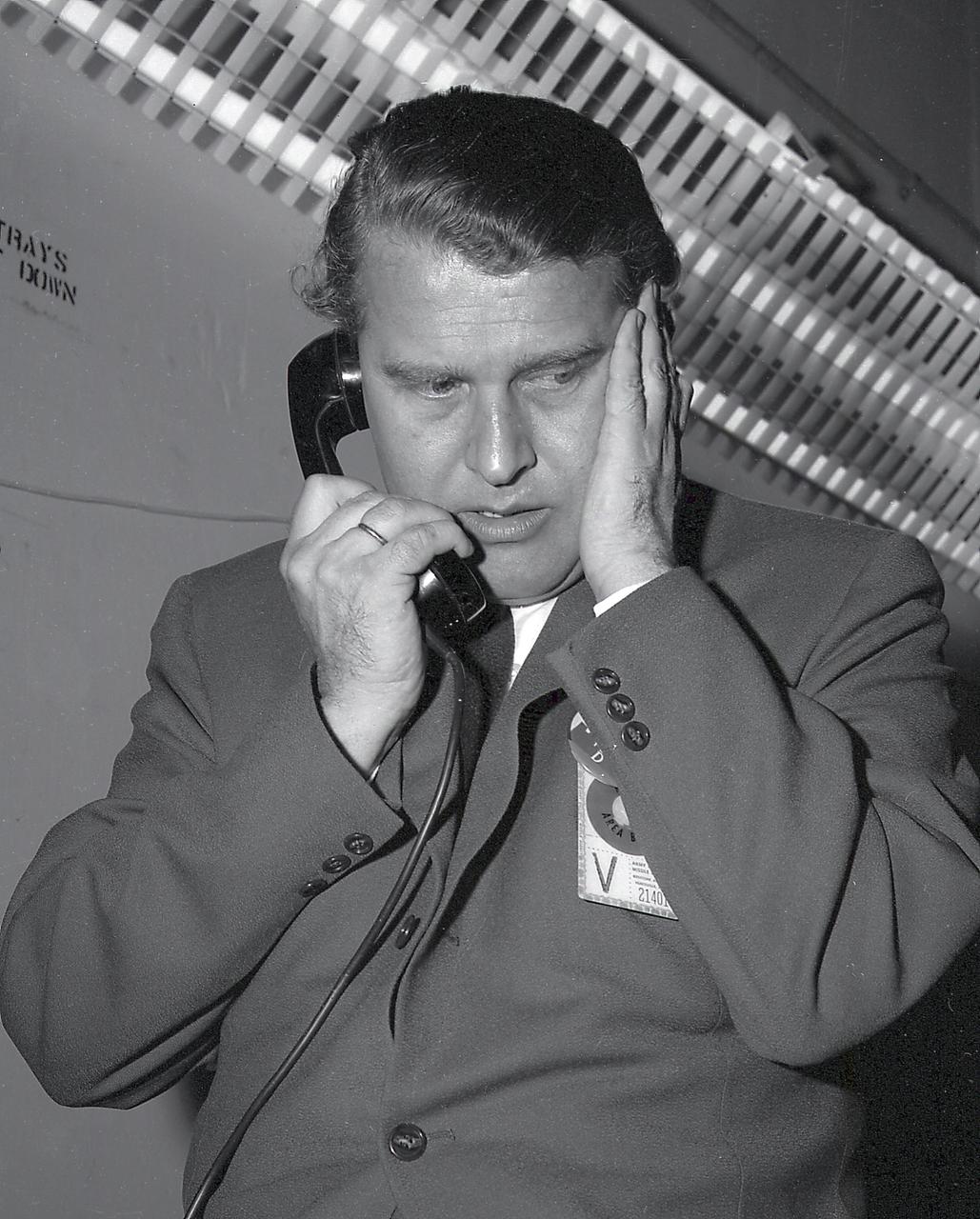
Dr. von Braun on the telephone prior to the launch of the Pioneer IV, March 1, 1959.
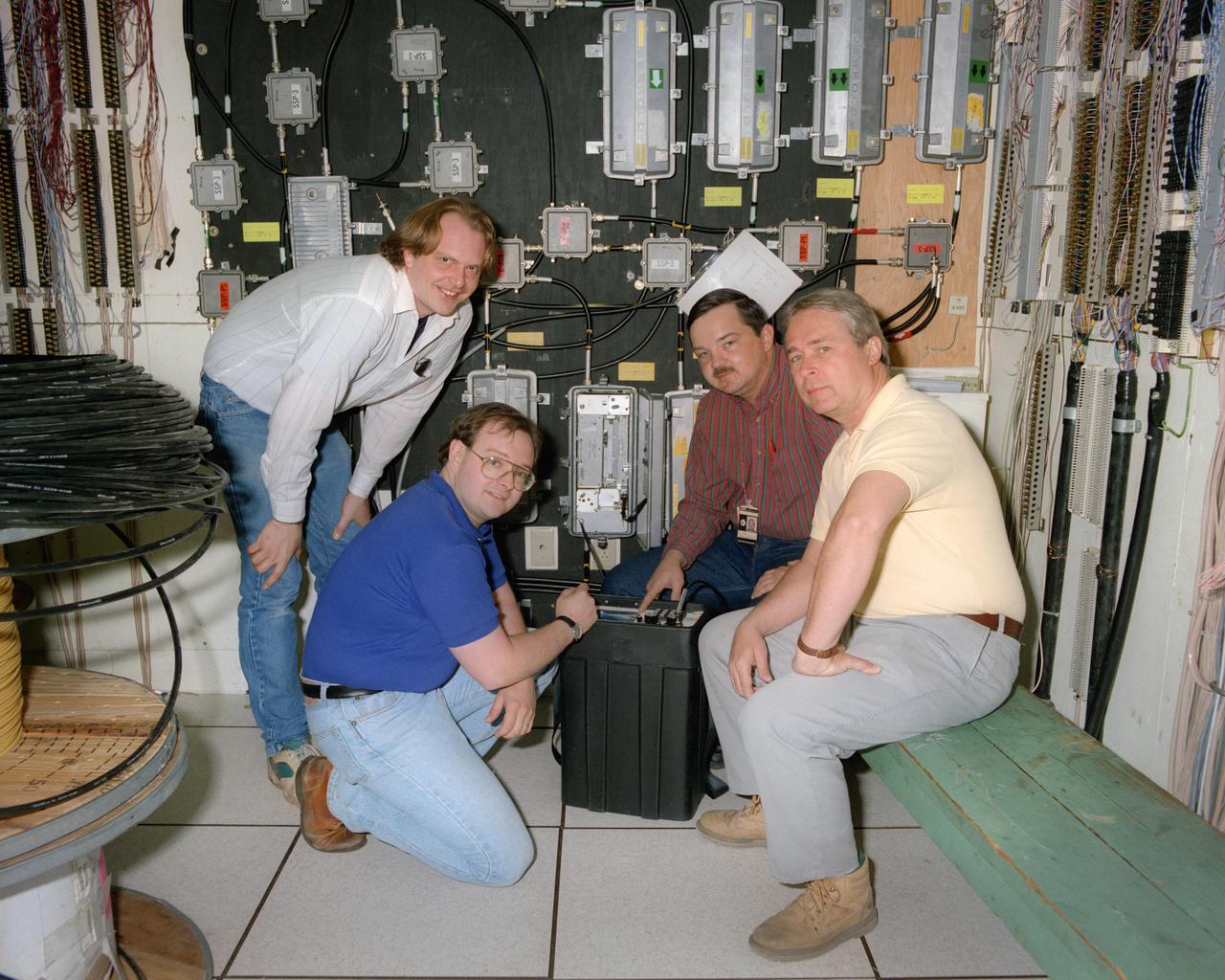
Pictured is the Communications room in the RAC building, Research Analysis Center. This is the hub for the CATV and Lynk system and also the telephone system as seen from the twisted pair wires. The test gear LAN 450 is on the floor and is a spectrum analyzer made specifically for CATV. The Large boxes on the wall are Trunk amps and the smaller boxes are Splitters or combiners.
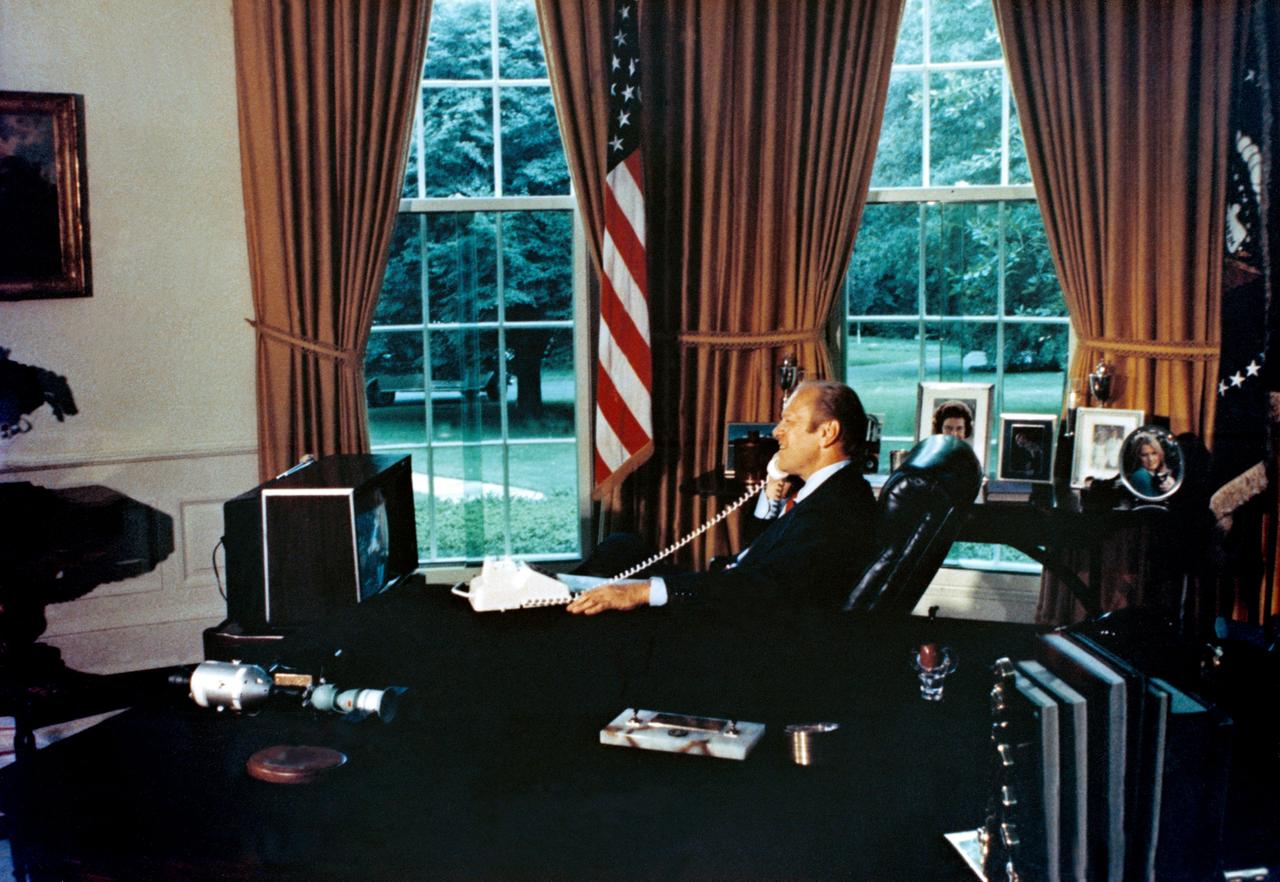
S75-30515 (18 July 1975) --- President Gerald R. Ford watches ASTP crewmen Thomas P. Stafford, Donald K. Slayton and Valeriy N. Kubasov on television as he talks to them via radio-telephone while they orbited Earth on July 18, 1975. The American Apollo spacecraft and Soviet Soyuz spacecraft were docked. The five ASTP crewmen visited each other?s spacecraft while the Soyuz and Apollo were linked in space.
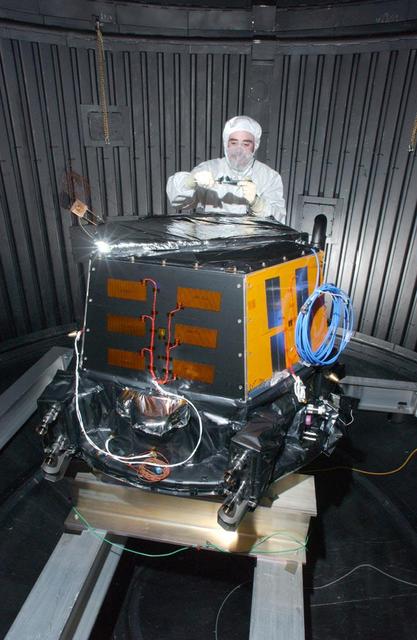
This image shows NASA Deep Impact spacecraft being built at Ball Aerospace & Technologies Corporation, Boulder, Colo. On July 2, 2005. The impactor S-band antenna is the rectangle-shaped object seen on the top of the impactor.
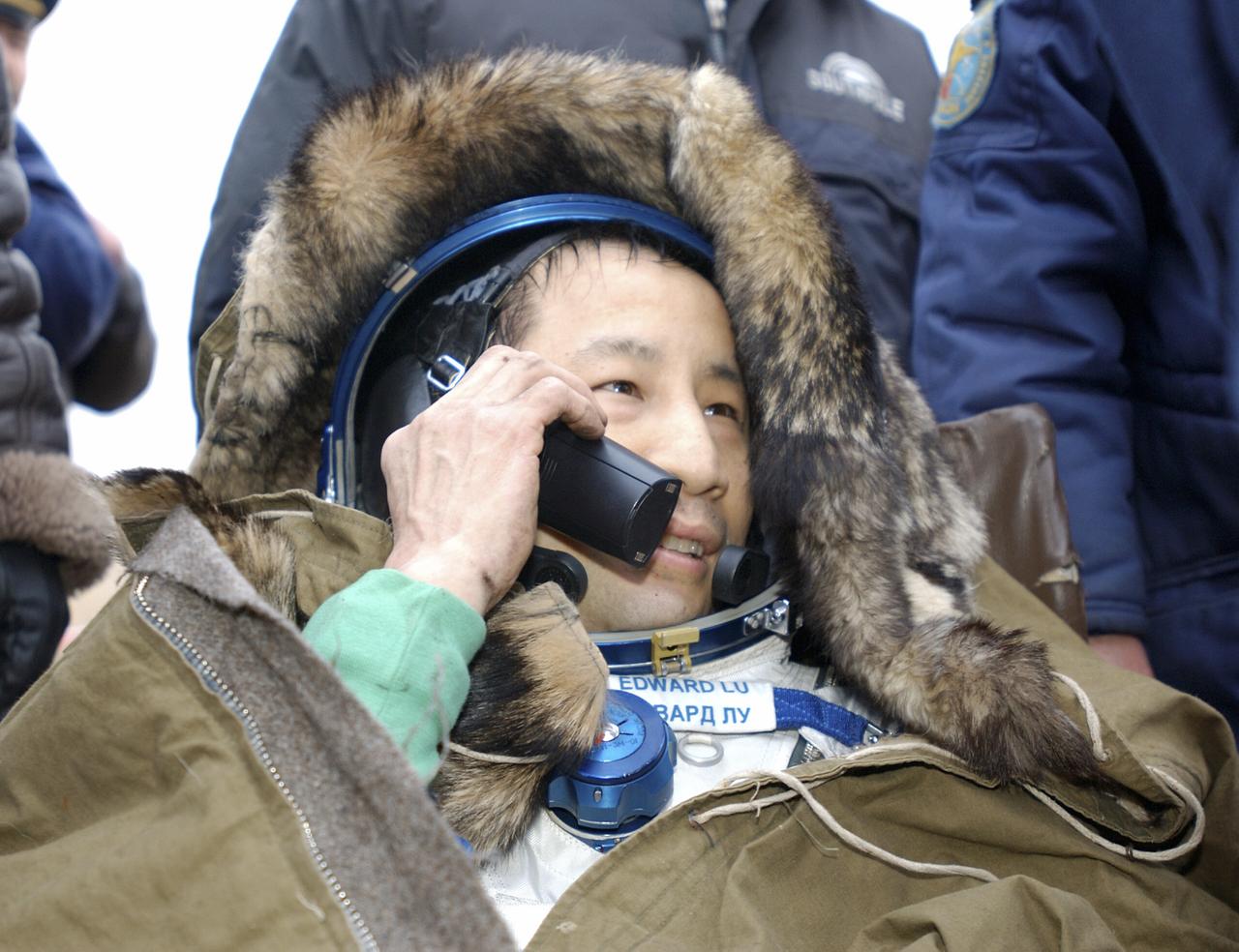
Astronaut Edward T. Lu, Expedition 7 NASA International Space Station Science Officer and Flight Engineer, talks on the telephone after landing in the Soyuz TMA-2 spacecraft in Kazakhstan on Monday, October 27, 2003 at 9:41 p.m. (EST). Photo Credit: (NASA/Bill Ingalls)
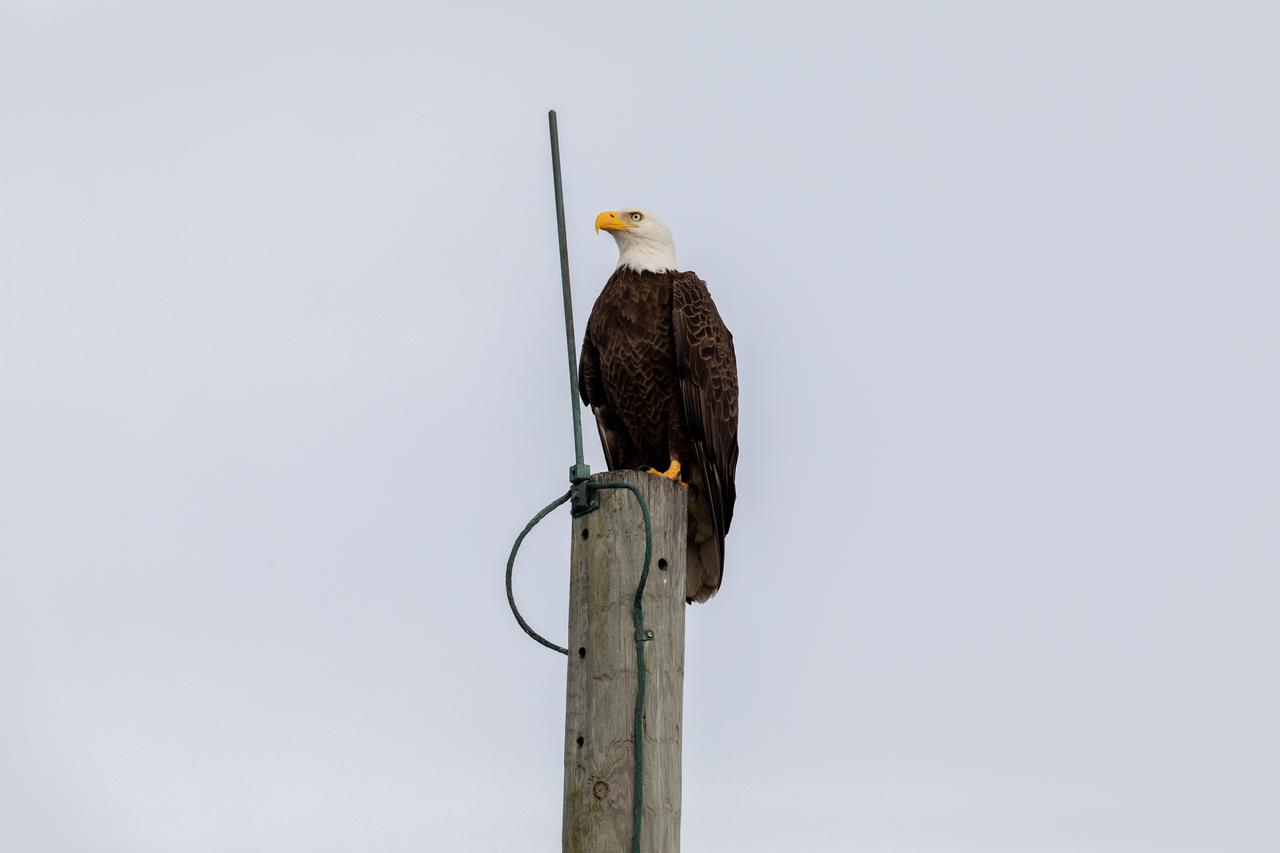
An American bald eagle perches on top of a telephone pole at NASA’s Kennedy Space Center in Florida. Kennedy shares a border with the Merritt Island National Wildlife Refuge, consisting of 140,000 acres of land, water, and marshes. Within the refuge, many species of birds, reptiles, fish, amphibians, and mammals can be found.
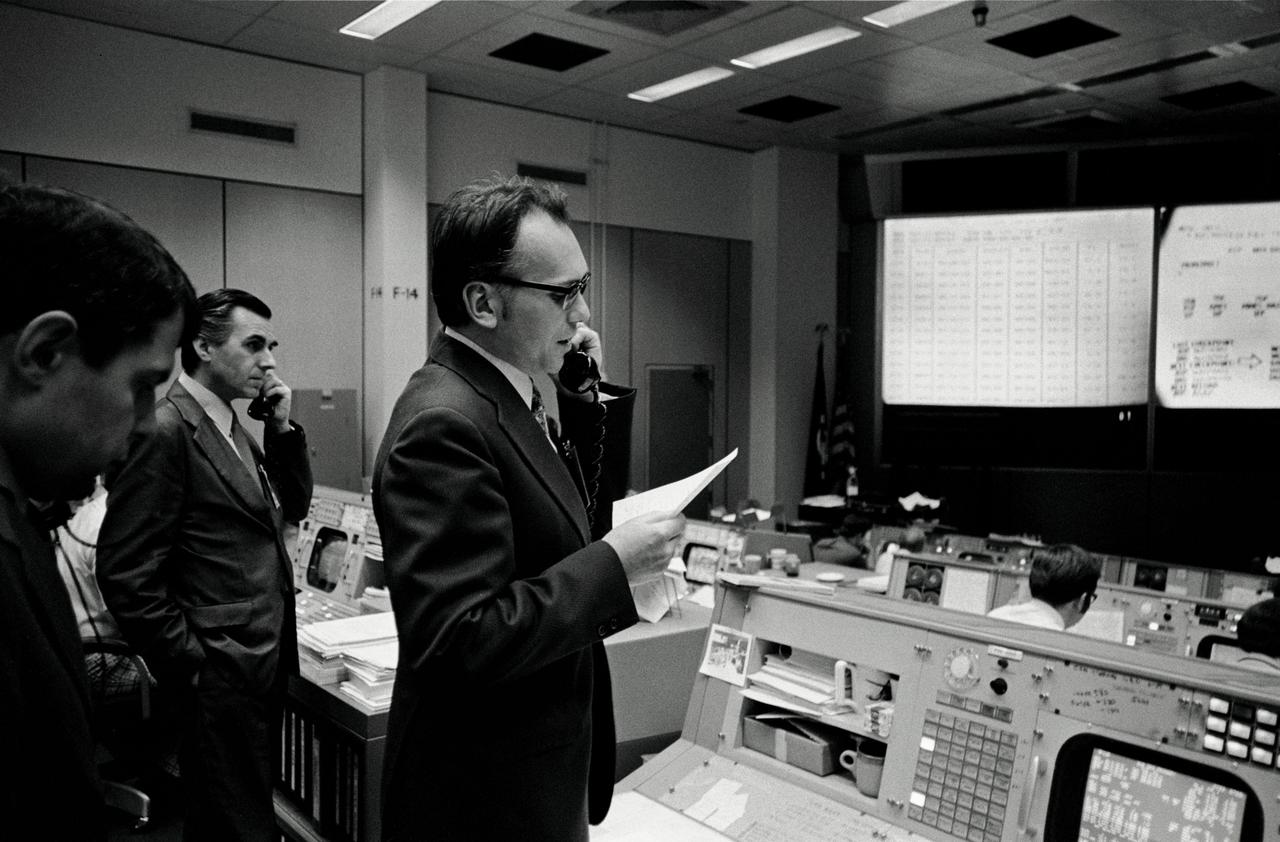
S74-15064 (28 Dec. 1973) --- Dr. Lubos Kohoutek, discoverer of the Comet Kohoutek, is seen in the Mission Operations Control Room in the Mission Control Center during a visit to the Johnson Space Center. He is talking over a radio-telephone with the Skylab 4 crewmen in the Skylab space station in Earth orbit. Professor Kohoutek, a well-known Czechoslovakian astronomer who works at the Hamburg Observatory in West Germany, discussed the comet with astronauts Gerald P. Carr, Edward G. Gibson and William R. Pogue. One of the major objectives of the Skylab 4 mission is to monitor the passing of the Comet Kohoutek. Dr. Zdenek Sekania, who accompanied Dr. Kohoutek on the visit to JSC, is on the telephone in the left background. Dr. Sekania is with the Smithsonian Observatory in Cambridge, Massachusetts. Photo credit: NASA

KENNEDY SPACE CENTER, FLA. -- A pair of breeding ospreys share a nest constructed on a speaker pole in the lower parking lot of the KSC Press Site. Eggs have been sighted in the nest. The NASA logo in the background is painted on an outer wall of the 525-foot-tall Vehicle Assembly Building nearby. Known as a fish hawk, the osprey selects sites of opportunity in which to nest -- from trees and telephone poles to rocks or even flat ground. In North America, it is found from Alaska and Newfoundland to Florida and the Gulf Coast. Osprey nests are found throughout the Kennedy Space Center and surrounding Merritt Island National Wildlife Refuge.
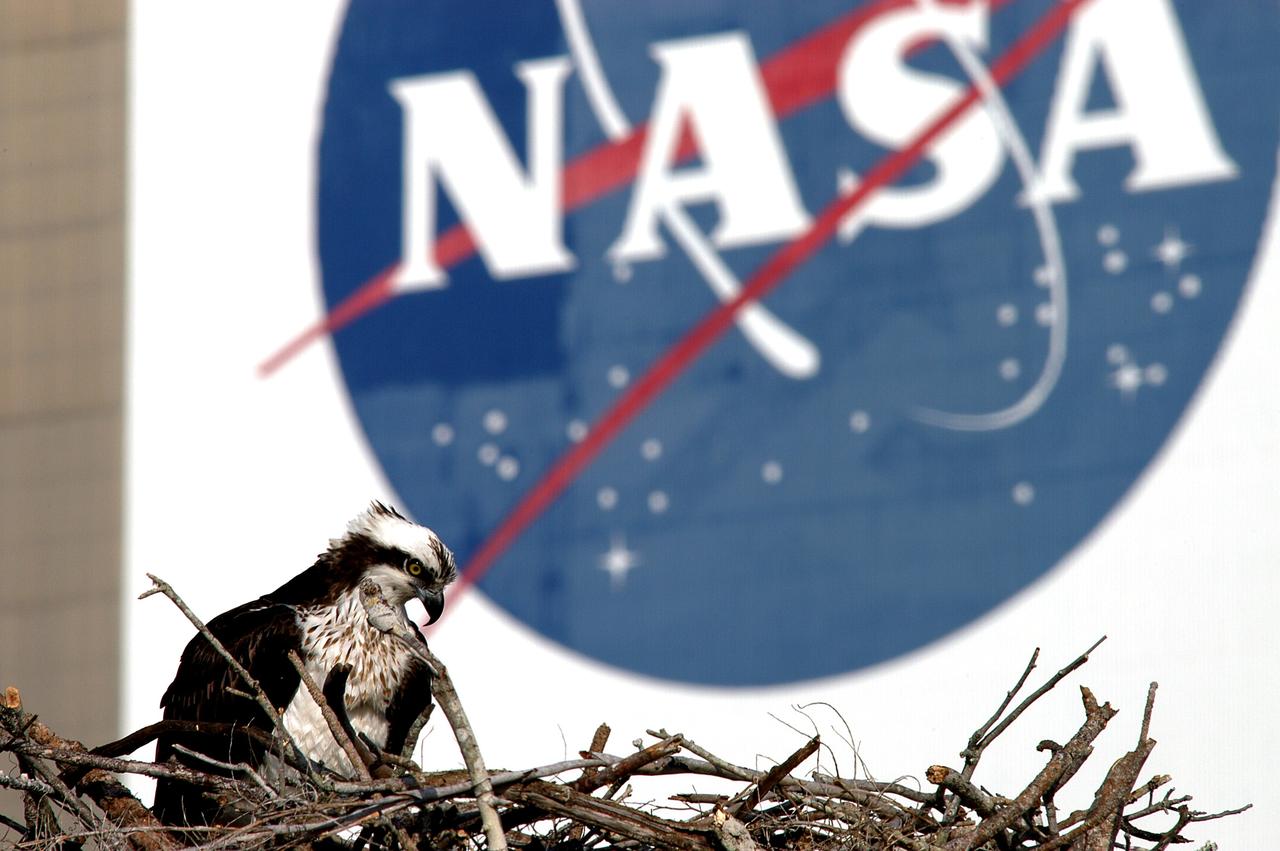
KENNEDY SPACE CENTER, FLA. -- A breeding osprey occupies a nest constructed on a speaker pole in the lower parking lot of the KSC Press Site. Eggs have been sighted in the nest. The NASA logo in the background is painted on an outer wall of the 525-foot-tall Vehicle Assembly Building nearby. Known as a fish hawk, the osprey selects sites of opportunity in which to nest -- from trees and telephone poles to rocks or even flat ground. In North America, it is found from Alaska and Newfoundland to Florida and the Gulf Coast. Osprey nests are found throughout the Kennedy Space Center and surrounding Merritt Island National Wildlife Refuge.
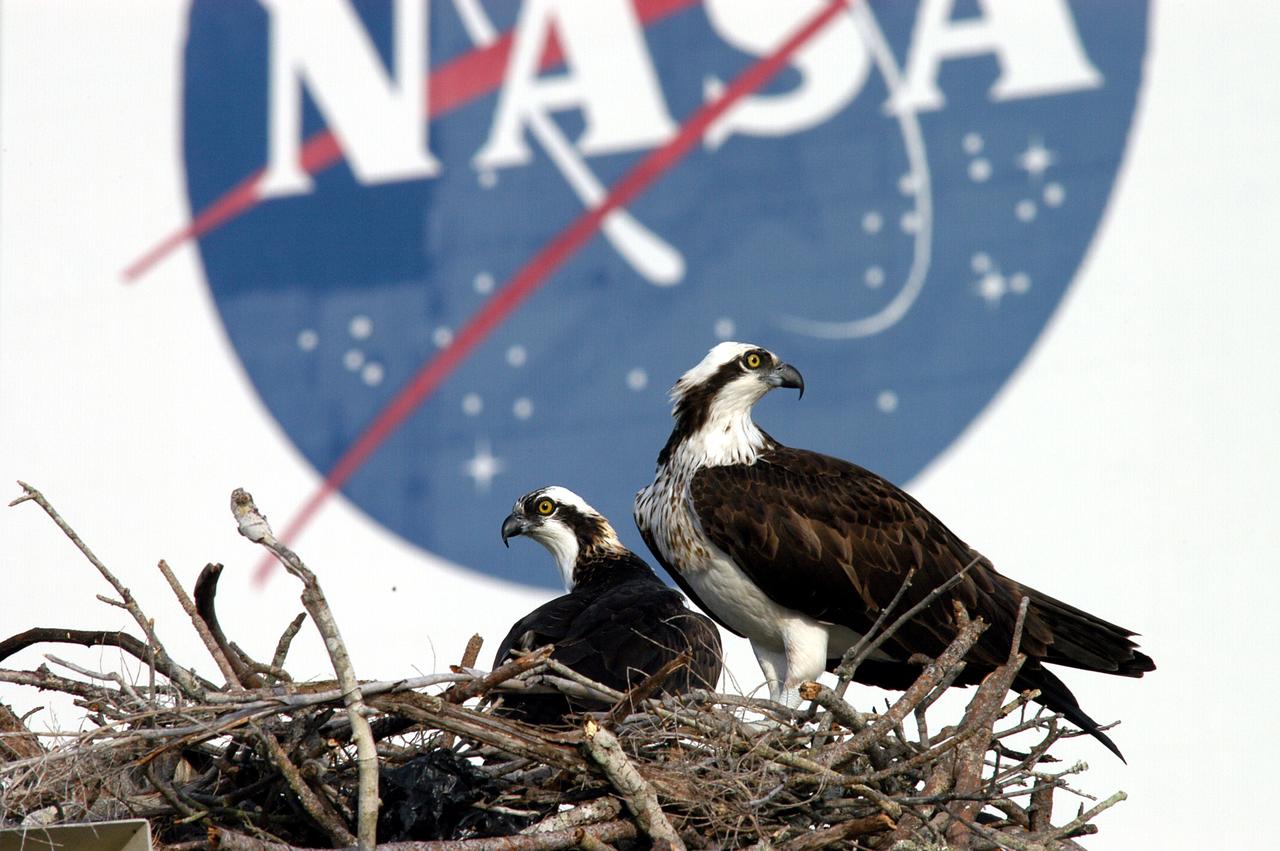
KENNEDY SPACE CENTER, FLA. -- A pair of breeding ospreys have taken up residence in a nest constructed on a speaker pole in the lower parking lot of the KSC Press Site. Eggs have been sighted in the nest. The NASA logo in the background is painted on an outer wall of the 525-foot-tall Vehicle Assembly Building nearby. Known as a fish hawk, the osprey selects sites of opportunity in which to nest -- from trees and telephone poles to rocks or even flat ground. In North America, it is found from Alaska and Newfoundland to Florida and the Gulf Coast. Osprey nests are found throughout the Kennedy Space Center and surrounding Merritt Island National Wildlife Refuge.
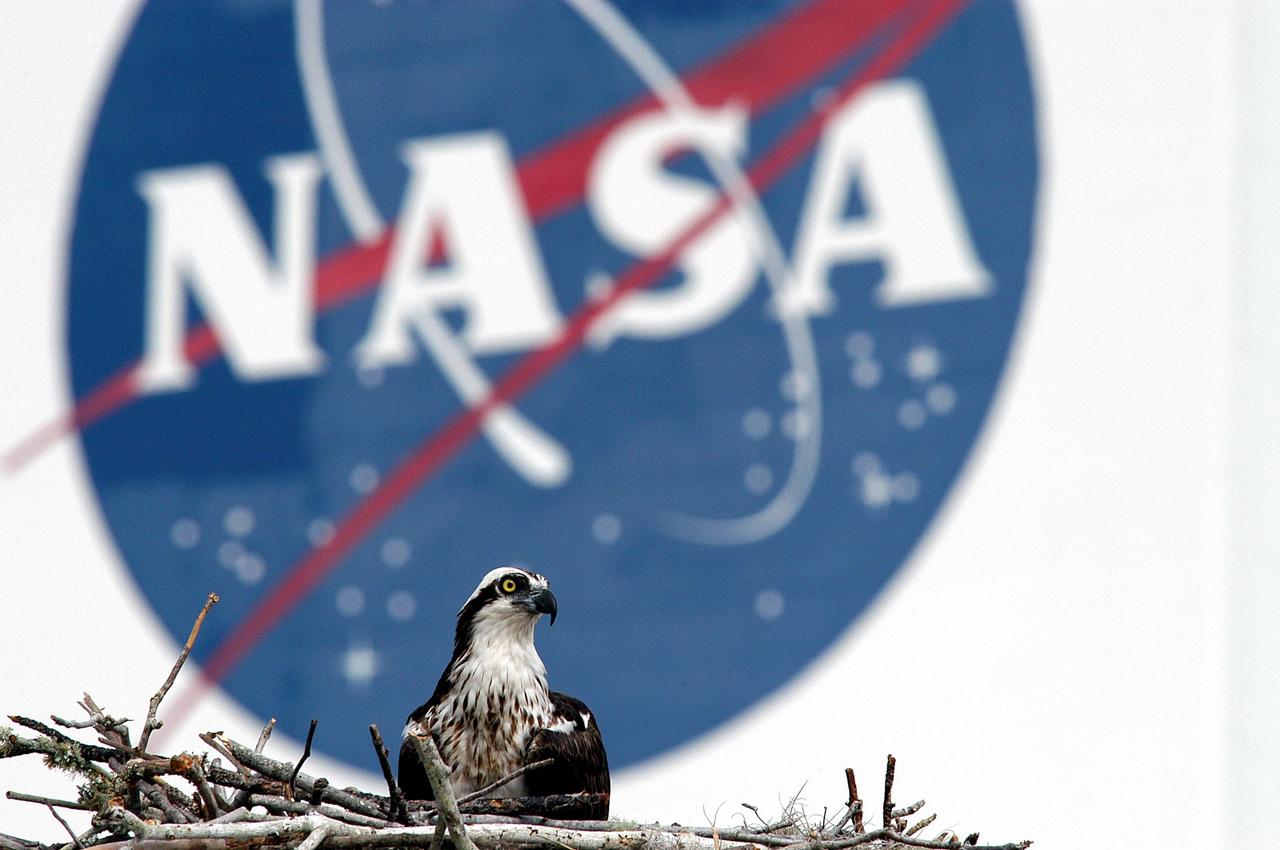
KENNEDY SPACE CENTER, Fla. - Framed by the NASA insignia, on the outside of the Vehicle Assembly Building, this osprey stares out from the nest it has built on top of speakers in a nearby parking lot. Known as a fish hawk, the osprey selects sites of opportunity, from trees and telephone poles to rocks or even flat ground. In the United States it is found from Alaska and Newfoundland to Florida and the Gulf Coast. Osprey nests are found throughout the Kennedy Space Center and nearby Merritt Island National Wildlife Refuge.

KENNEDY SPACE CENTER, FLA. - An osprey likes the view atop this American flag, which flies near the NASA KSC News Center. It’s nest is located atop a speaker in the parking lot. Known as a fish hawk, ospreys select sites of opportunity, from trees and telephone poles to rocks or even flat ground. In the United States they are found from Alaska to Florida and the Gulf Coast. Osprey nests are found throughout the Kennedy Space Center and nearby Merritt Island National Wildlife Refuge.

KENNEDY SPACE CENTER, FLA. - Framed by the NASA insignia, on the outside of the Vehicle Assembly Building, this osprey stares out from the nest it has built on top of speakers in a nearby parking lot. Known as a fish hawk, the osprey selects sites of opportunity, from trees and telephone poles to rocks or even flat ground. In the United States it is found from Alaska and Newfoundland to Florida and the Gulf Coast. Osprey nests are found throughout the Kennedy Space Center and nearby Merritt Island National Wildlife Refuge.
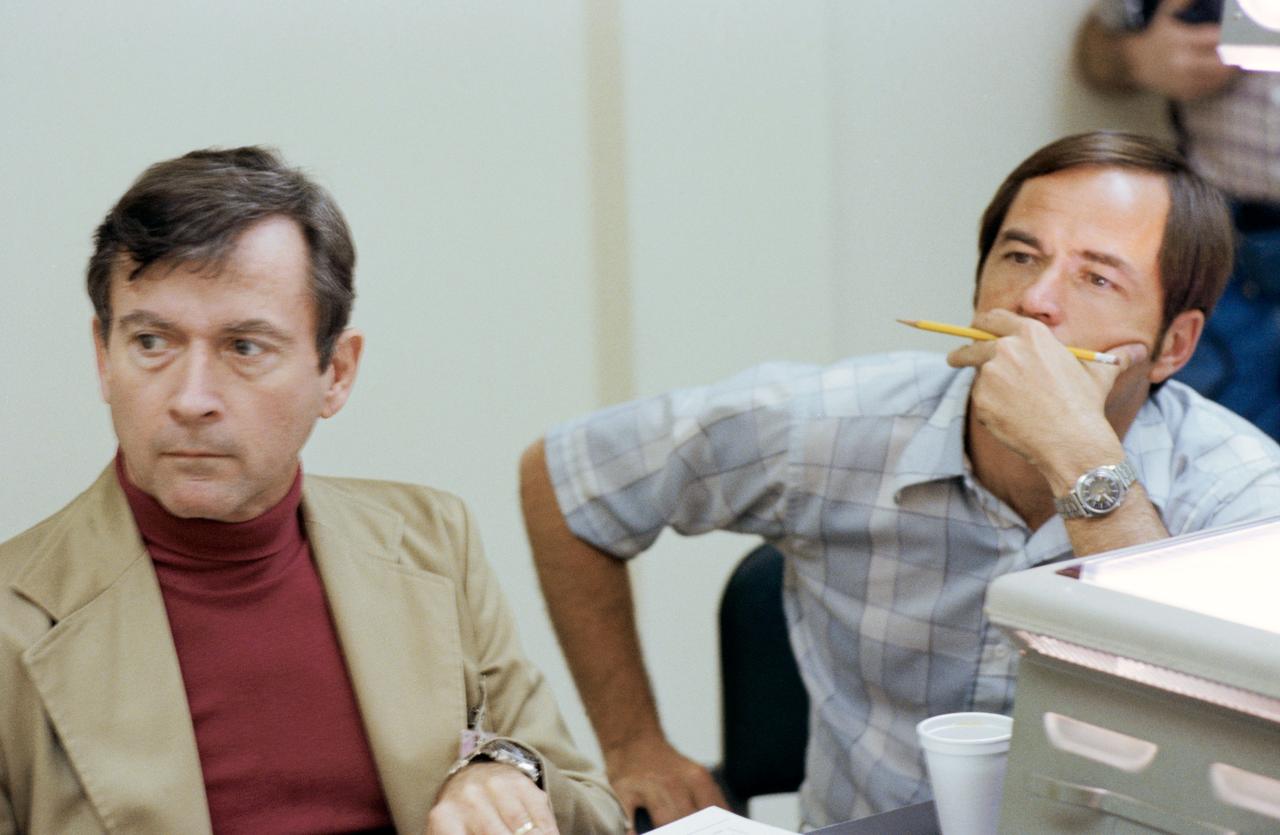
S81-29619 (6 April 1981) --- STS-1 astronauts John W. Young, left, and Robert L. Crippen direct their attention to a chart on a screen in a small briefing room at NASA's Johnson Space Center (JSC). They are taking part in a three-way telephone conference call, which involved engineers at JSC and at the Rockwell International facility in California. Later this week the two will man the space shuttle orbiter Columbia for STS-1. Photo credit: NASA
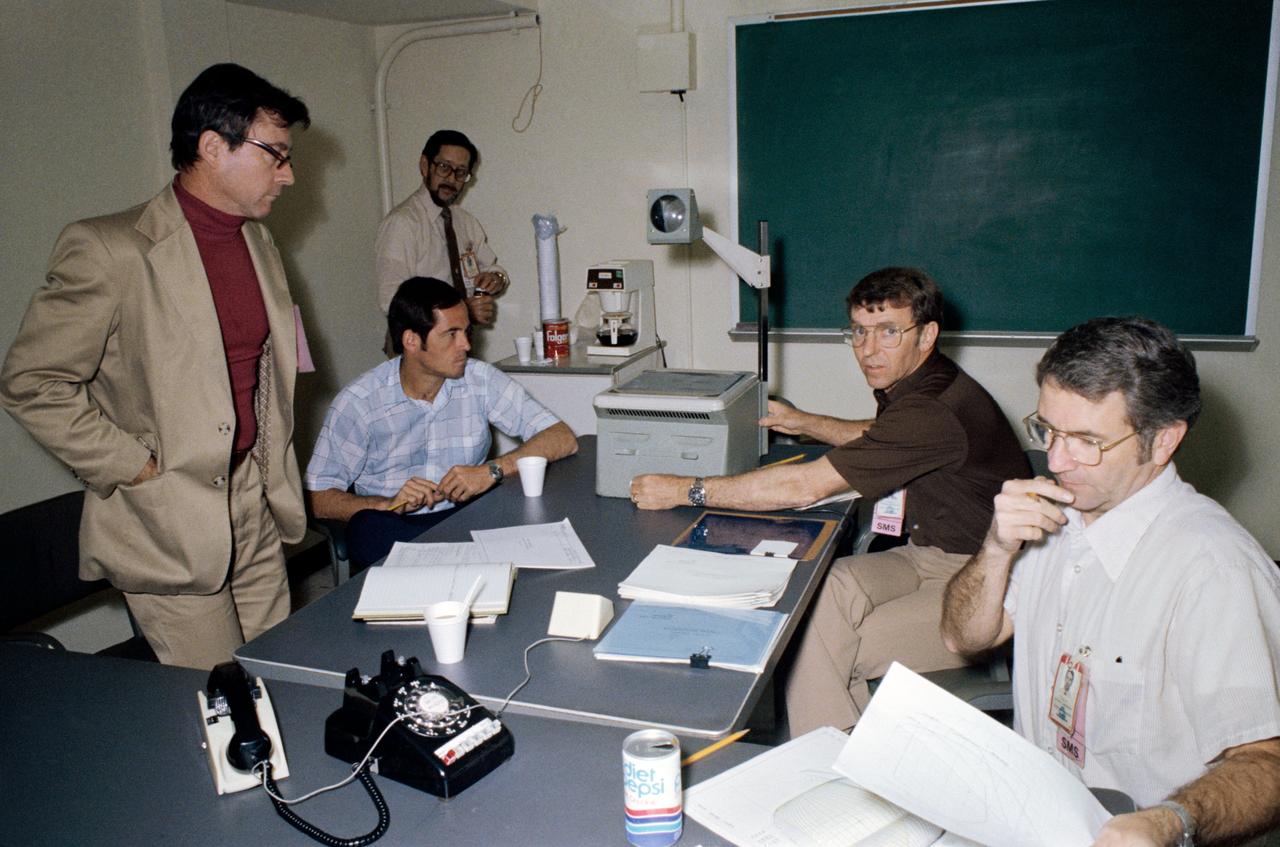
S81-29620 (6 April 1981) --- Prime and backup crew members for STS-1 take part in a briefing with engineers located in another building at NASA's Johnson Space Center (JSC) and with Rockwell International representatives in California via telephone. Astronauts John W. Young, left, and Robert L. Crippen, second from left, are STS-1 prime crewmen. Backup crewmen are astronauts Joe H. Engle, second from right, and Richard H. Truly. Photo credit: NASA
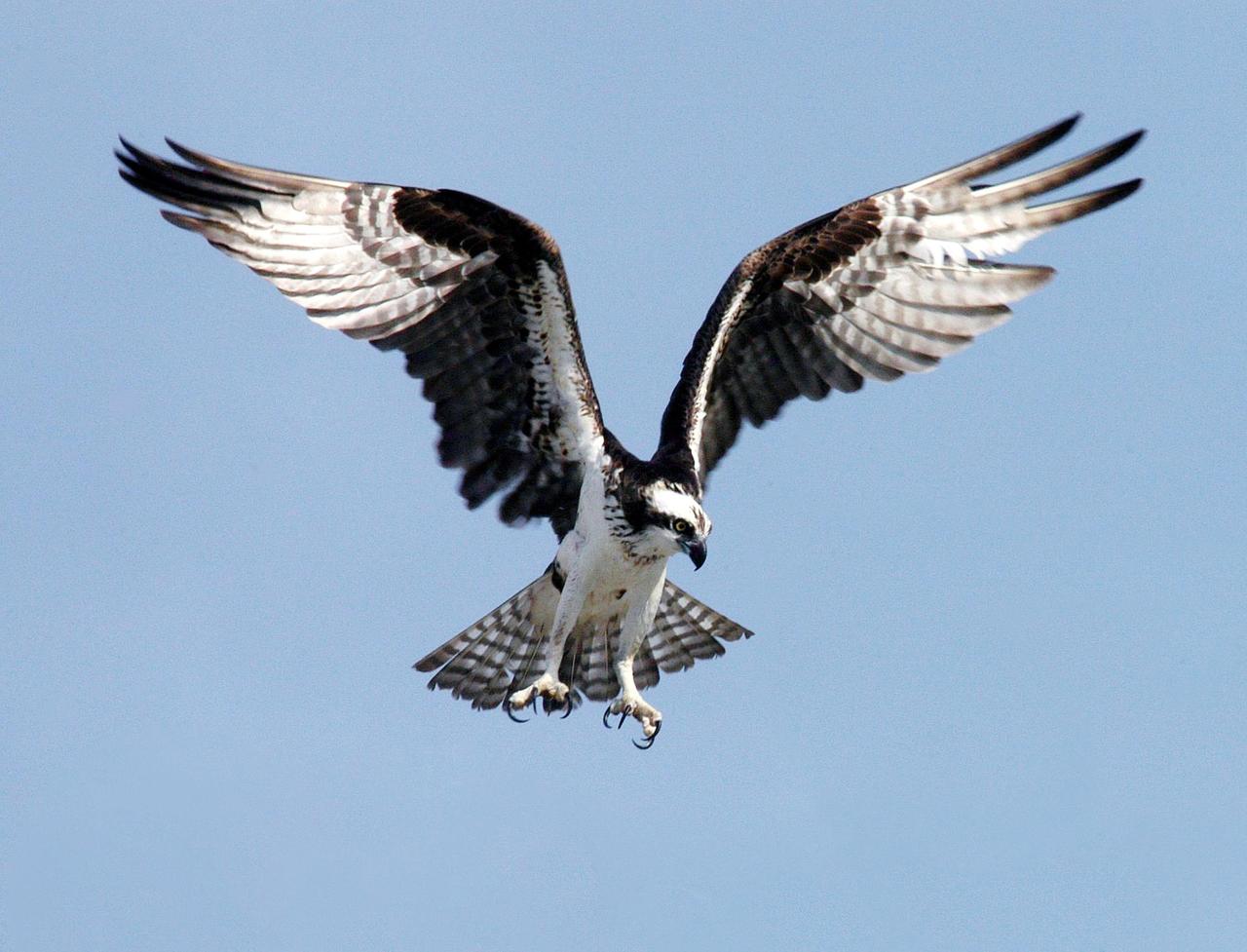
KENNEDY SPACE CENTER, FLA. - An osprey stares intently at prey as it extends its talons. Known as a fish hawk, ospreys often can be seen flying overhead with a fish in their talons. Fish are their sole source of food. Ospreys select nesting sites of opportunity, from trees and telephone poles to rocks or even flat ground, often near water. Osprey nests are found throughout the Kennedy Space Center and nearby Merritt Island National Wildlife Refuge.
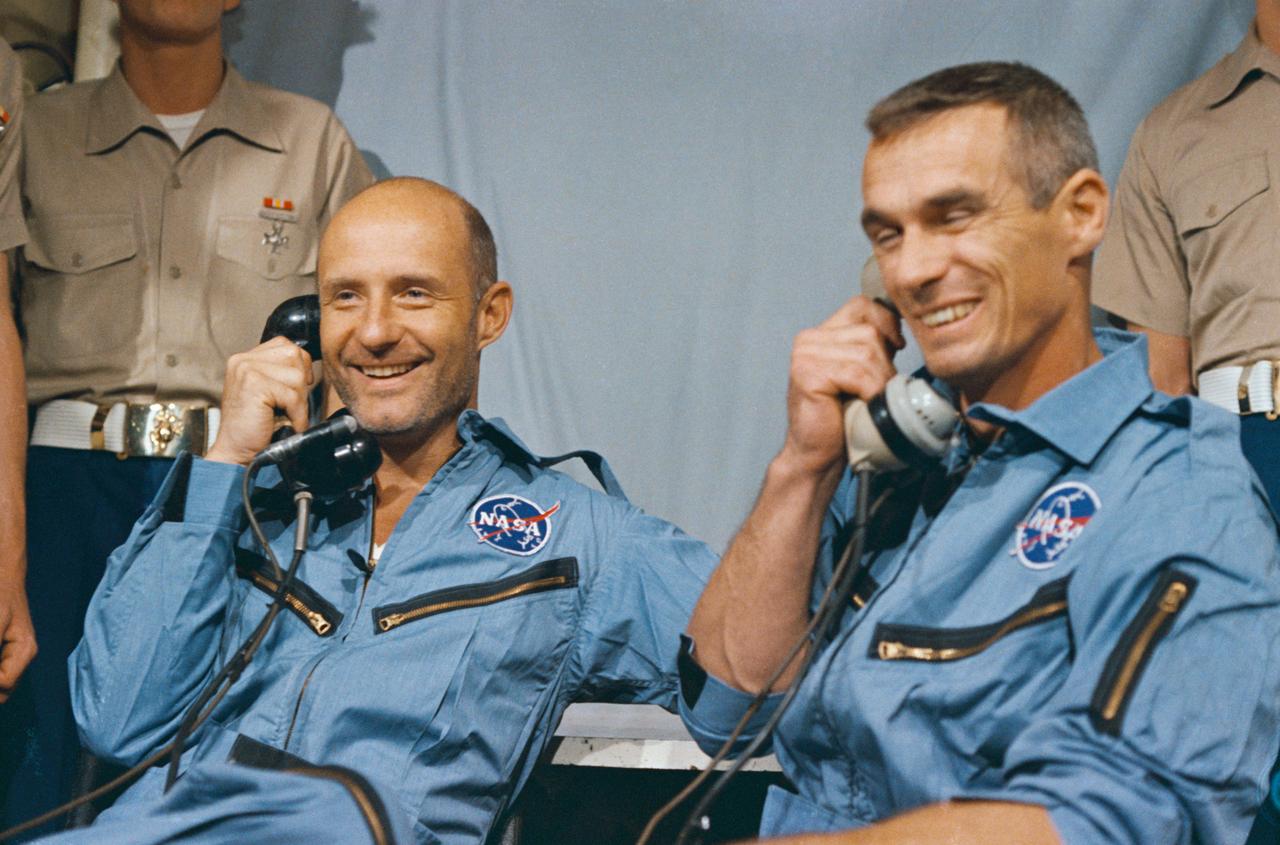
S66-34111 (6 June 1966) --- Astronauts Thomas P. Stafford (left) and Eugene A. Cernan talk to President Lyndon B. Johnson via ship-to-shore telephone from aboard the aircraft carrier USS Wasp. Gemini-9A splashed down only 3.5 miles from the recovery ship at 9 a.m. (EST), June 6, 1966, 345 miles east of Cape Kennedy, to conclude a 72-hour, 21-minute mission in space. Photo credit: NASA
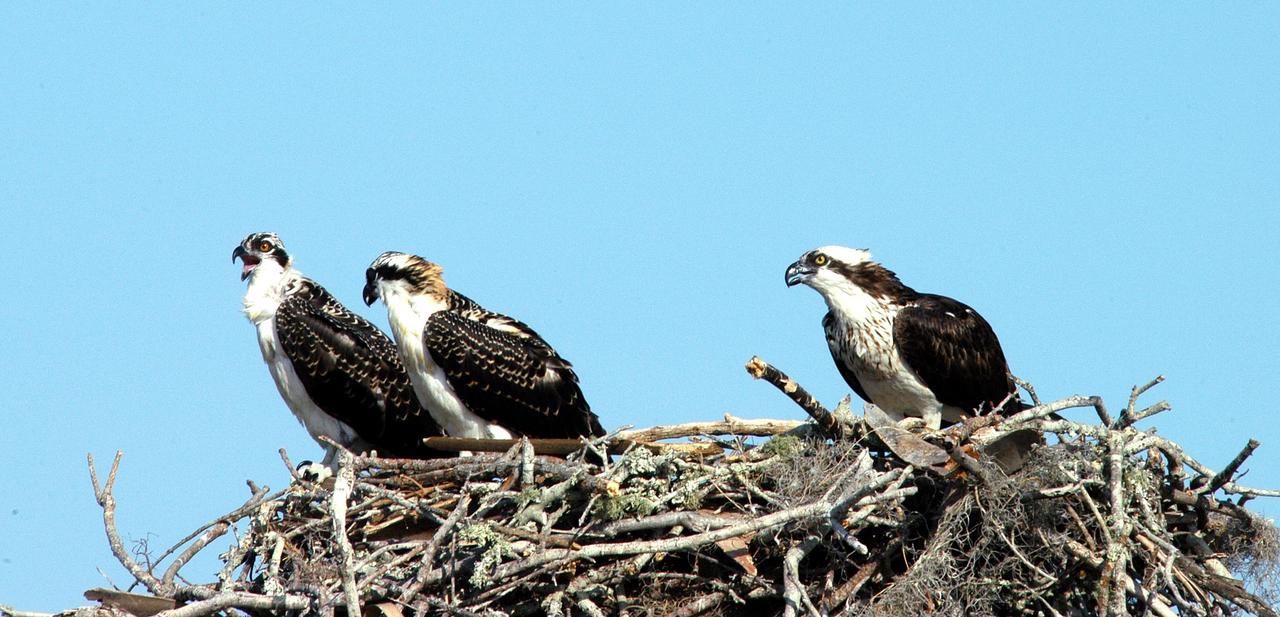
KENNEDY SPACE CENTER, FLA. -- - Three osprey fledglings are ready to test their wings from the nest at the NASA News Center parking lot. Ospreys select nesting sites of opportunity, from trees and telephone poles to rocks or even flat ground. In the United States they are found from Alaska to Florida and the Gulf Coast. Osprey nests are found throughout the Kennedy Space Center and nearby Merritt Island National Wildlife Refuge. Known as a fish hawk, ospreys often can be seen flying overhead with a fish in their talons.
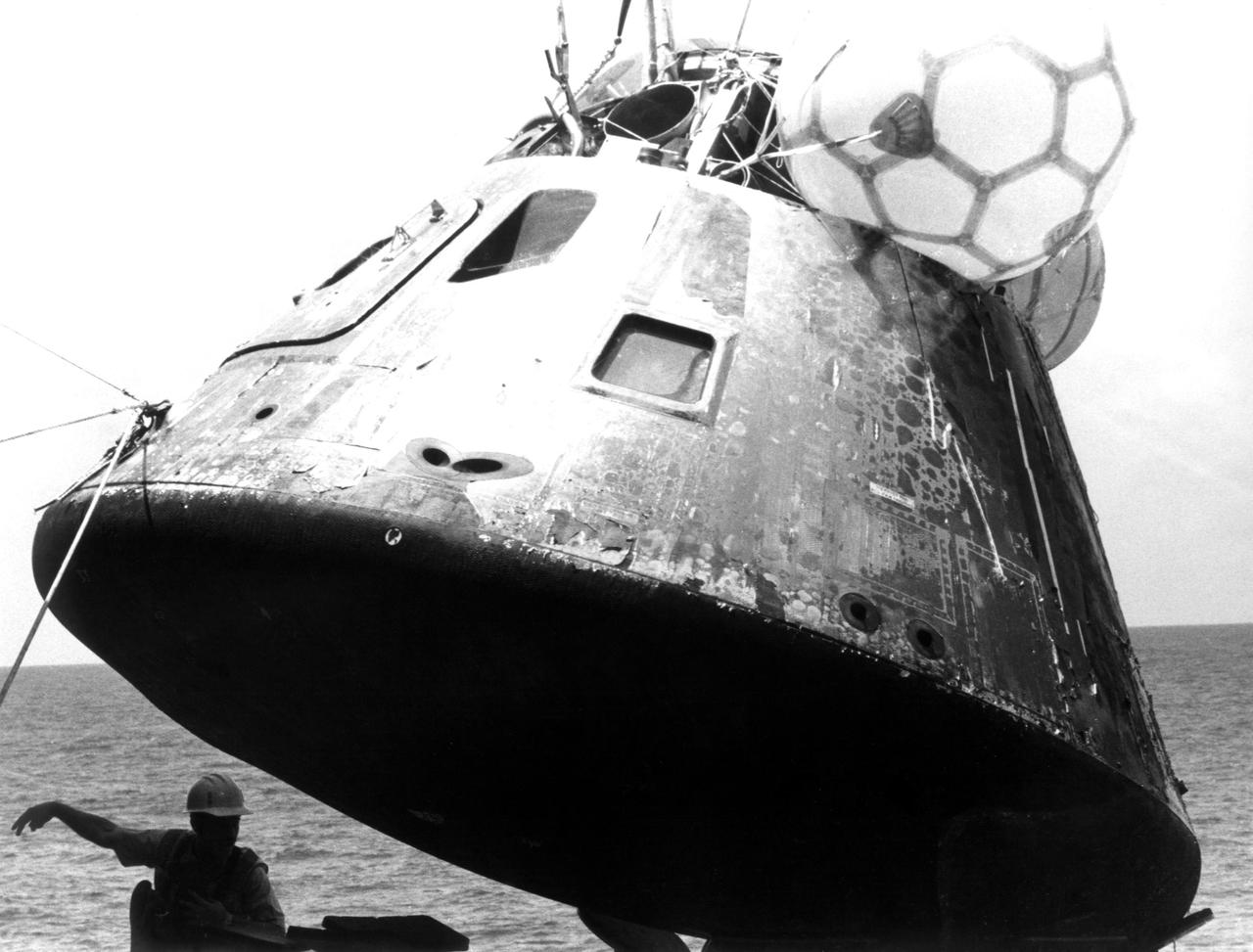
KENNEDY SPACE CENTER, FLA. -- The ASTP Apollo Command Module is lowered onto the deck of the USS New Orleans following splashdown in the Pacific Ocean, west of Hawaii, at 5:18 p.m. today. Once aboard the ship, the ASTP astronauts Thomas Stafford, Vance Brand, and Donald Slayton emerged from the spacecraft and participated in ceremonies during which they spoke by telephone to President Gerald Ford. The splashdown ended the crew's historic nine-day mission, highlighted by their rendezvous and docking with a Soviet Soyuz spacecraft while in Earth orbit.
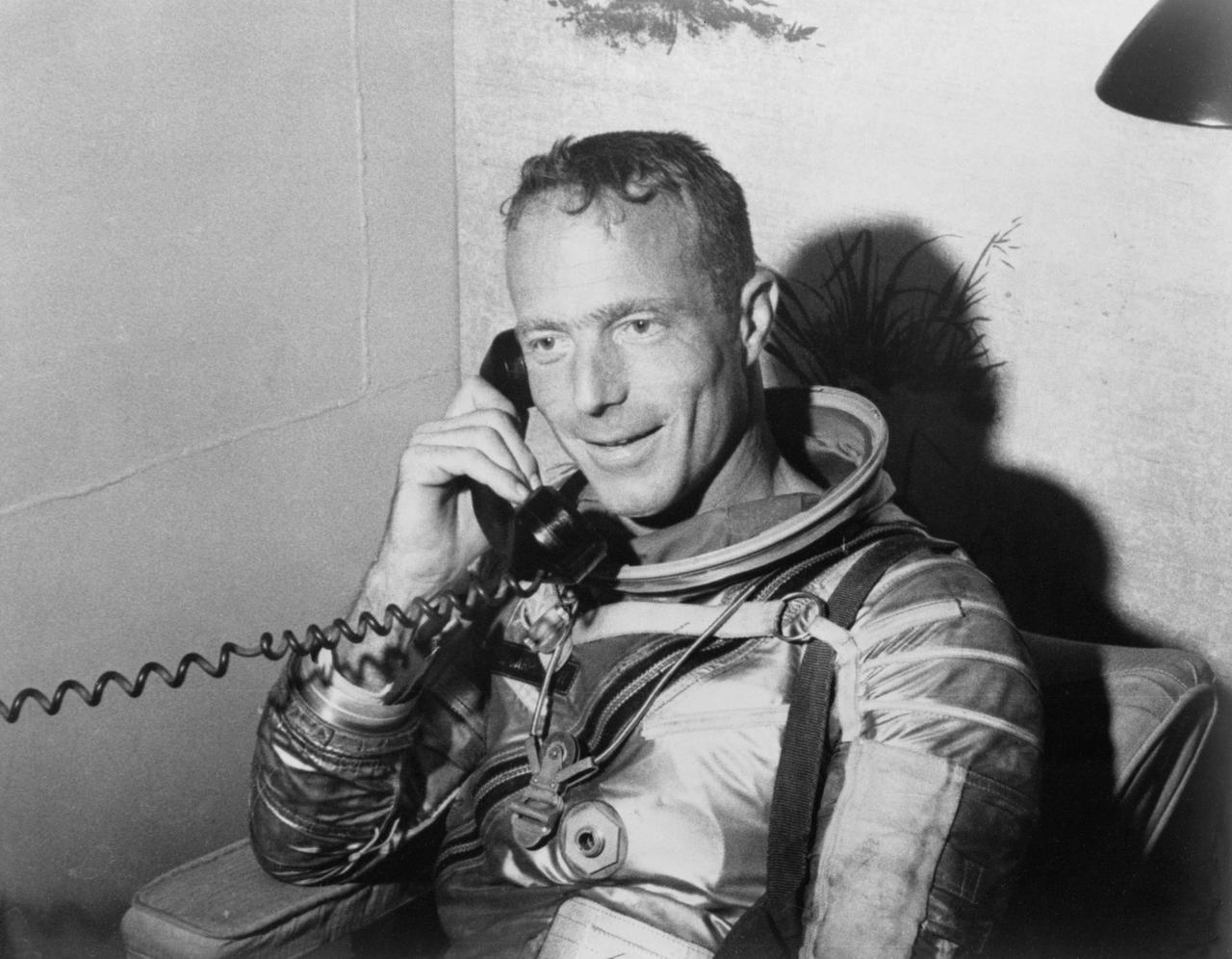
S62-04057 (24 May 1962) --- Astronaut M. Scott Carpenter, prime pilot for the Mercury-Atlas 7 (MA-7) mission, talks with President John F. Kennedy via radio-telephone from aboard the carrier USS Intrepid. Carpenter was recovered by a helicopter and taken to the Intrepid after a four-hour and 56-minute mission in space. Photo credit: NASA
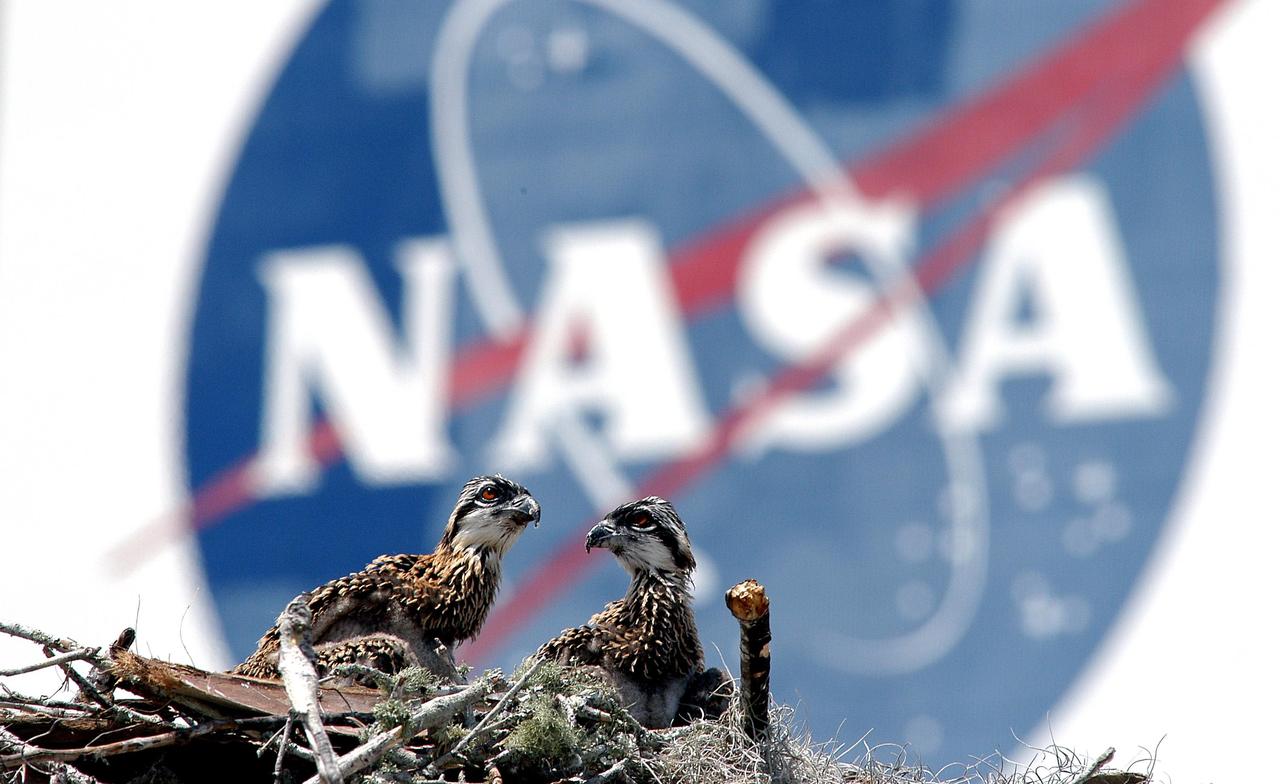
KENNEDY SPACE CENTER, FLA. - Two fledgling ospreys occupy a nest near the NASA-KSC News Center, across from the Vehicle Assembly Building. Known as a fish hawk, ospreys select sites of opportunity, from trees and telephone poles to rocks or even flat ground. In the United States they are found from Alaska to Florida and the Gulf Coast. Osprey nests are found throughout the Kennedy Space Center and nearby Merritt Island National Wildlife Refuge.
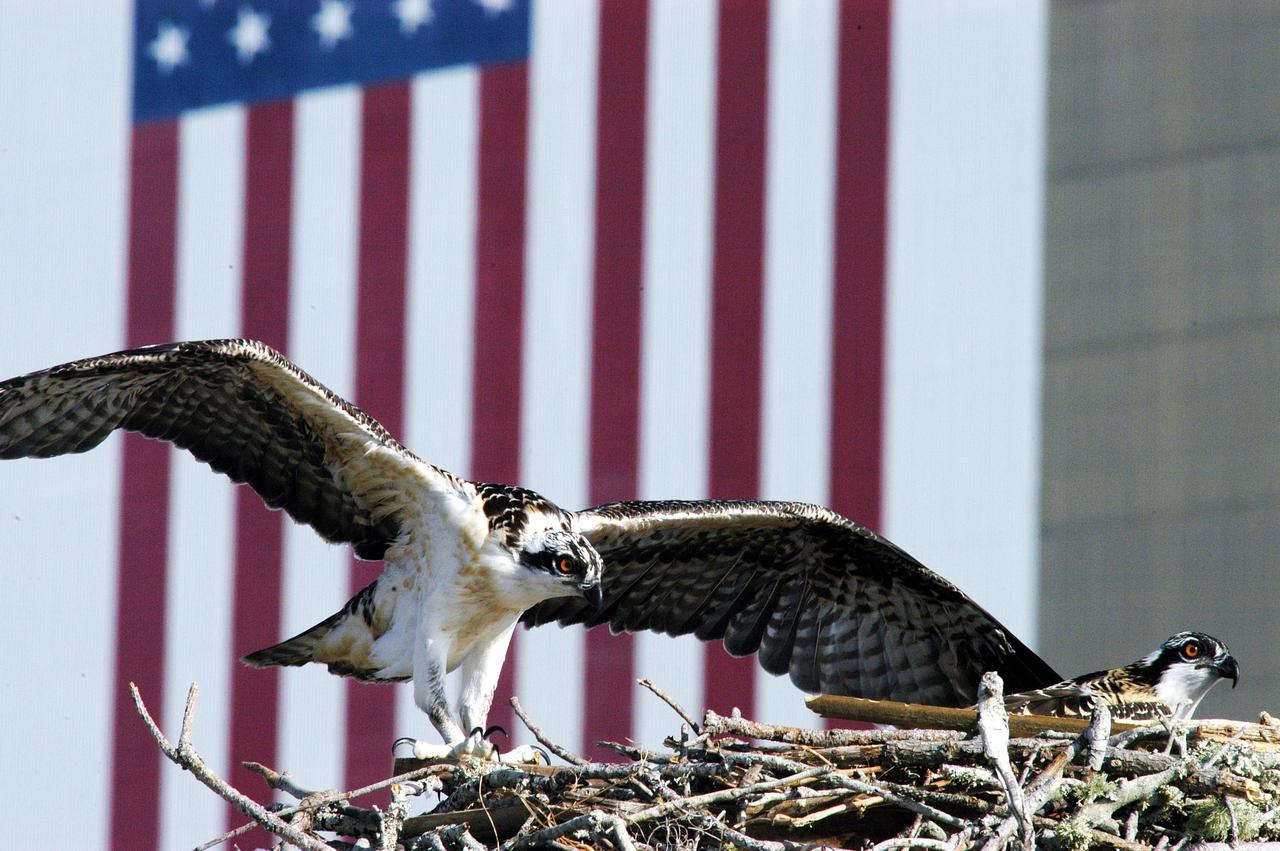
KENNEDY SPACE CENTER, FLA. -- One of three osprey fledglings spreads its wings, anticipating flight. The nest is in the NASA News Center parking lot, across from the Vehicle Assembly Building, with its 209-foot-high American flag painted on the south side. Ospreys select nesting sites of opportunity, from trees and telephone poles to rocks or even flat ground. In the United States they are found from Alaska to Florida and the Gulf Coast. Osprey nests are found throughout the Kennedy Space Center and nearby Merritt Island National Wildlife Refuge. Known as a fish hawk, ospreys often can be seen flying overhead with a fish in their talons.
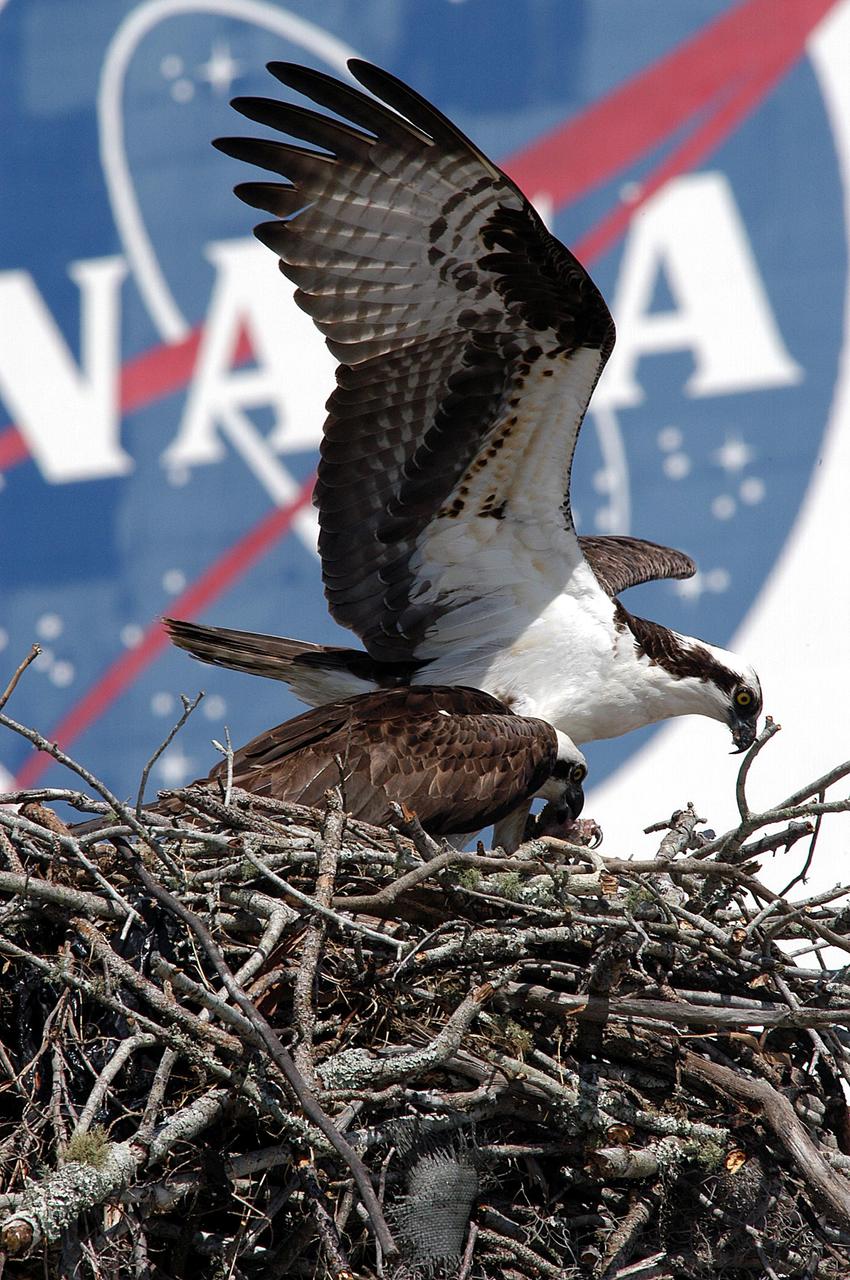
KENNEDY SPACE CENTER, FLA. -- While the female osprey eats fish brought by her mate, the male guards the nest, recently constructed on a speaker in the lower parking lot of the Press Site. Eggs have been sighted in the nest. The NASA logo seen in the background is on the nearby Vehicle Assembly Building. Known as a fish hawk, the osprey selects sites of opportunity, from trees and telephone poles to rocks or even flat ground. In the United States it is found from Alaska and Newfoundland to Florida and the Gulf Coast. Osprey nests are found throughout the Kennedy Space Center and surrounding Merritt Island National Wildlife Refuge.
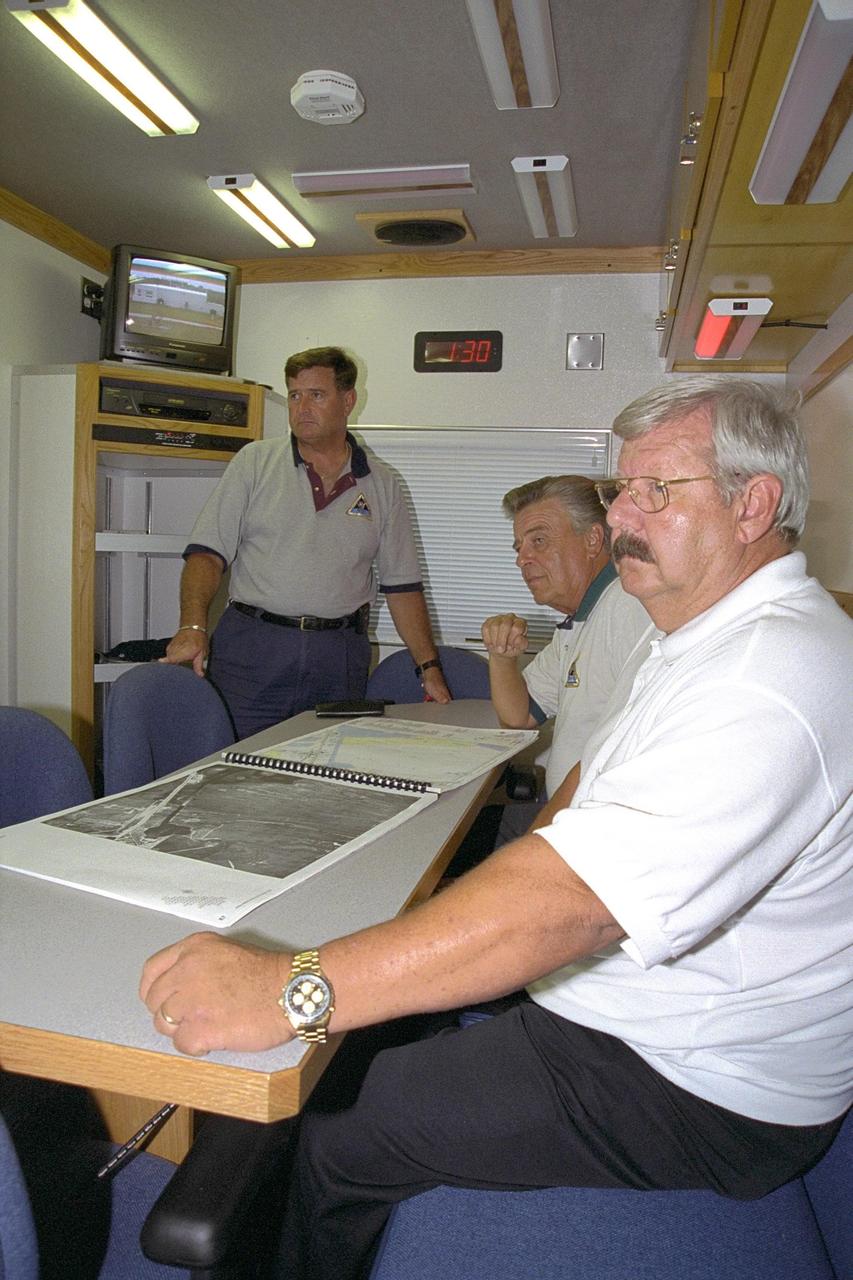
Charles Street, Roger Scheidt and Robert ZiBerna, the Emergency Preparedness team at KSC, sit in the conference room inside the Mobile Command Center, a specially equipped vehicle. Nicknamed “The Brute,” it also features computer work stations, mobile telephones and a fax machine. It also can generate power with its onboard generator. Besides being ready to respond in case of emergencies during launches, the vehicle must be ready to help address fires, security threats, chemical spills, terrorist attaches, weather damage or other critical situations that might face KSC or Cape Canaveral Air Force Station

Charles Street, part of the Emergency Preparedness team at KSC, uses a phone on the specially equipped emergency response vehicle. The vehicle, nicknamed “The Brute,” serves as a mobile command center for emergency preparedness staff and other support personnel when needed. It features a conference room, computer work stations, mobile telephones and a fax machine. It also can generate power with its onboard generator. Besides being ready to respond in case of emergencies during launches, the vehicle must be ready to help address fires, security threats, chemical spills, terrorist attaches, weather damage or other critical situations that might face KSC or Cape Canaveral Air Force Station
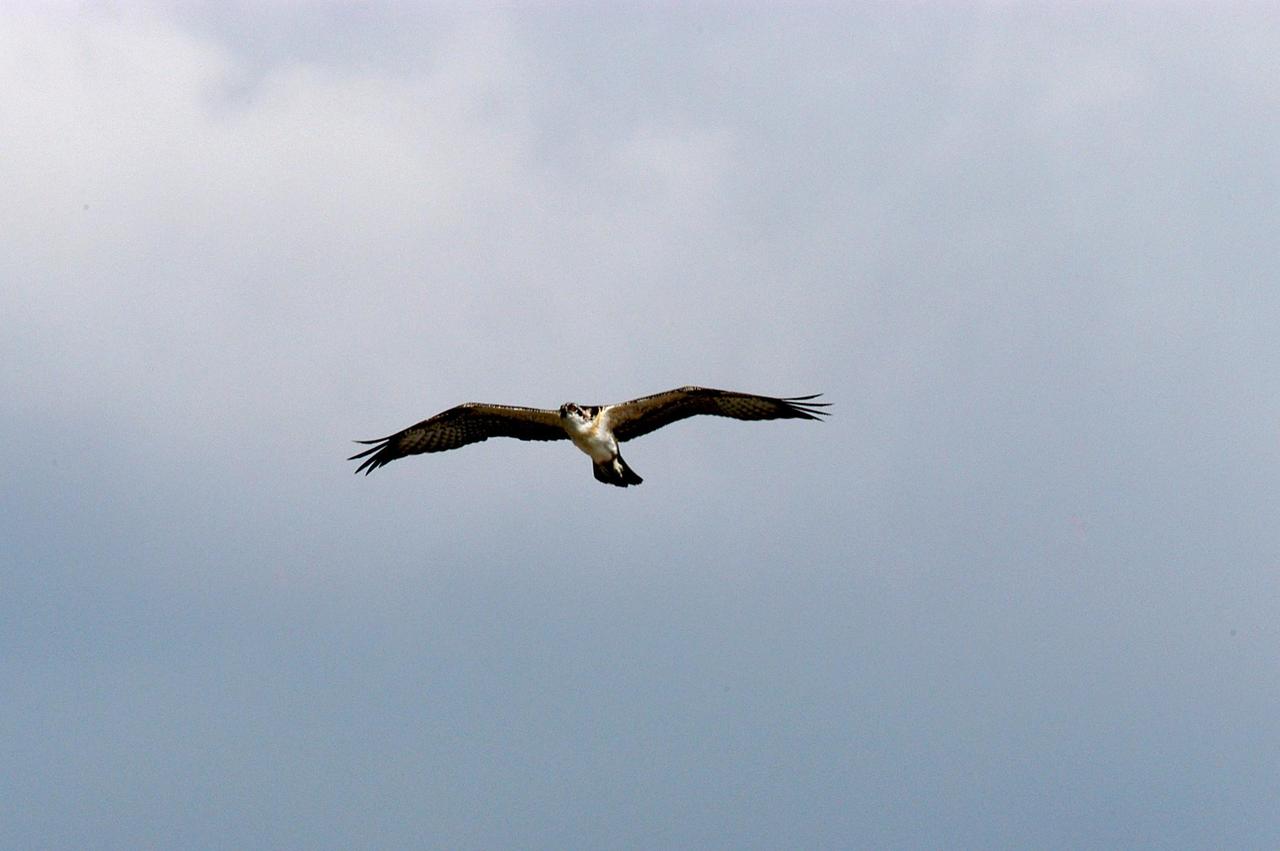
KENNEDY SPACE CENTER, FLA. -- A fledgling osprey soars above its nest, located in the NASA KSC News Center parking lot. Ospreys select nesting sites of opportunity, from trees and telephone poles to rocks or even flat ground. In the United States they are found from Alaska to Florida and the Gulf Coast. Osprey nests are found throughout the Kennedy Space Center and nearby Merritt Island National Wildlife Refuge. Known as a fish hawk, ospreys often can be seen flying overhead with a fish in their talons. Fish are their sole source of food.
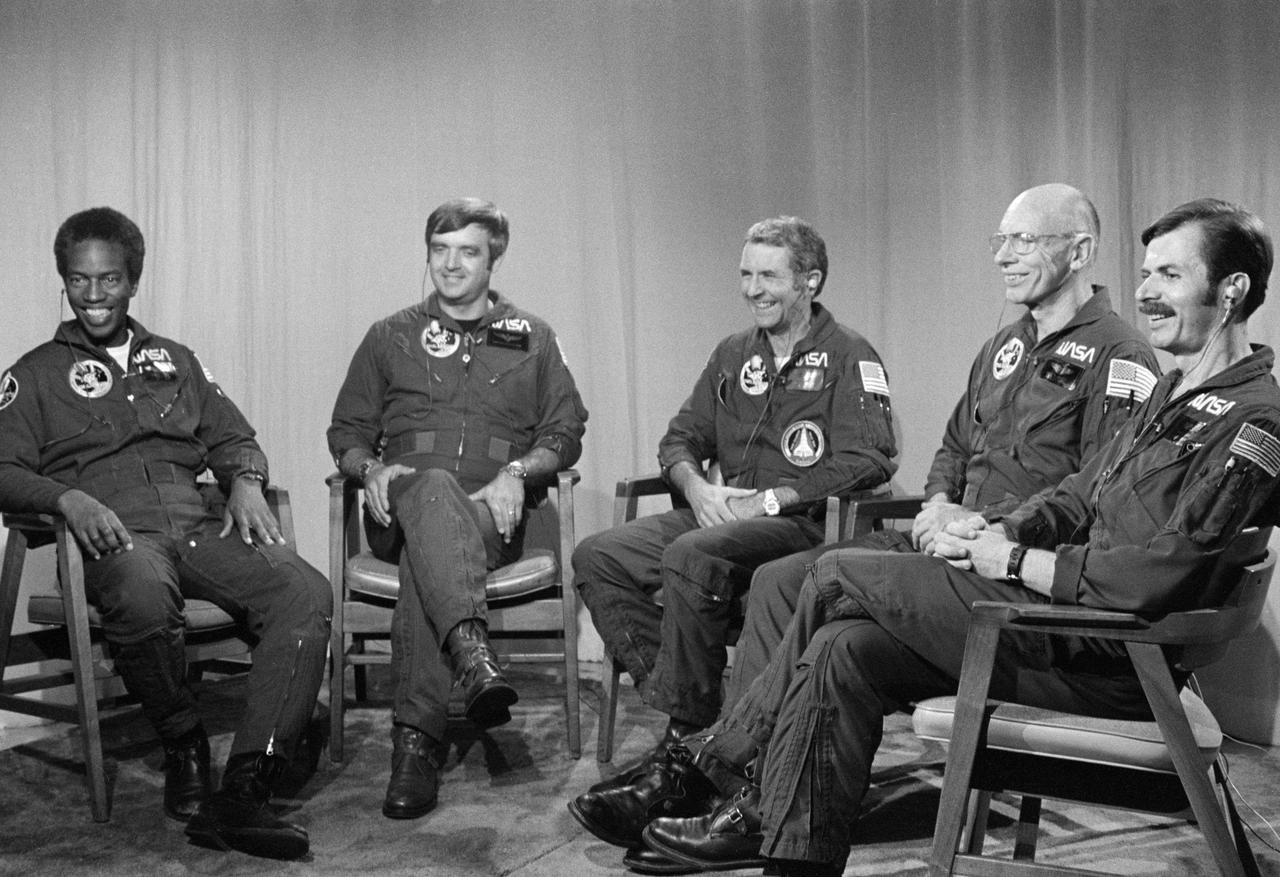
S83-39696 (5 Sept 1983) --- The five member astronaut crew of the Space Shuttle Challenger for STS-8 responds to a comment made by President Ronald Reagan during a post flight telephone conversation with the chief executive. The five astronauts earlier today landed the reusable spacecraft at Edwards Air Force Base in California and were flown to JSC via NASA aircraft. Richard H. Truly, center, is crew commander. Pilot for the six day flight was Daniel C. Brandenstein, second left. The mission specialist were Guion S. Bluford, left: Dr. William S. Thornton, second right, and Dale A. Gardner, right. Photo credit: NASA
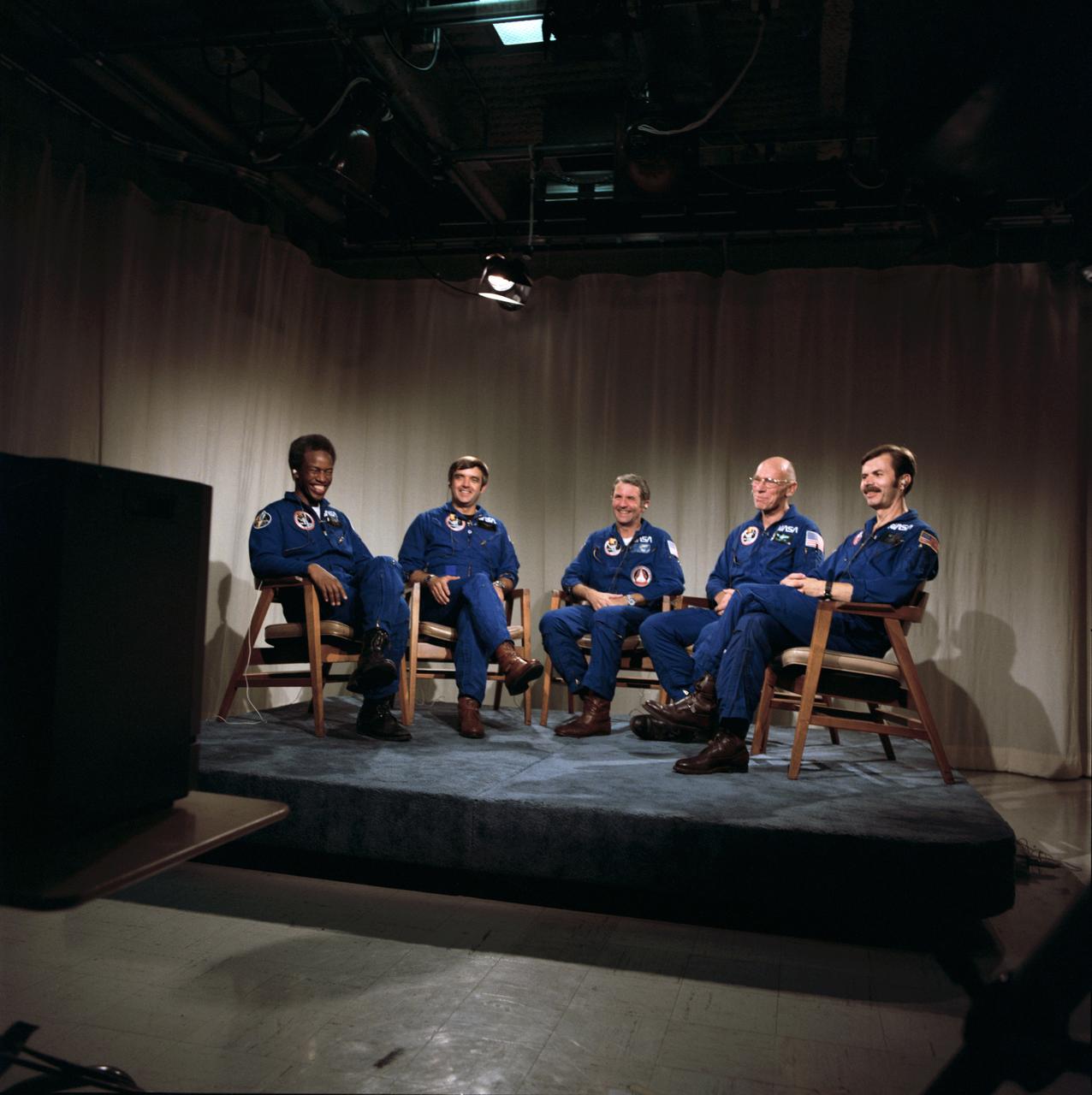
S83-39693 (5 Sept 1983) --- The five member astronaut crew of the Space Shuttle Challenger for STS-8 responds to a comment made by President Ronald Reagan during a post flight telephone conversation with the chief executive. The five astronauts earlier today landed the reusable spacecraft at Edwards Air Force Base in California and were flown to JSC via NASA aircraft. Richard H. Truly, center, is crew commander. Pilot for the six day flight was Daniel C. Brandenstein, second left. The mission specialist were Guion S. Bluford, left: Dr. William S. Thornton, second right, and Dale A. Gardner, right.
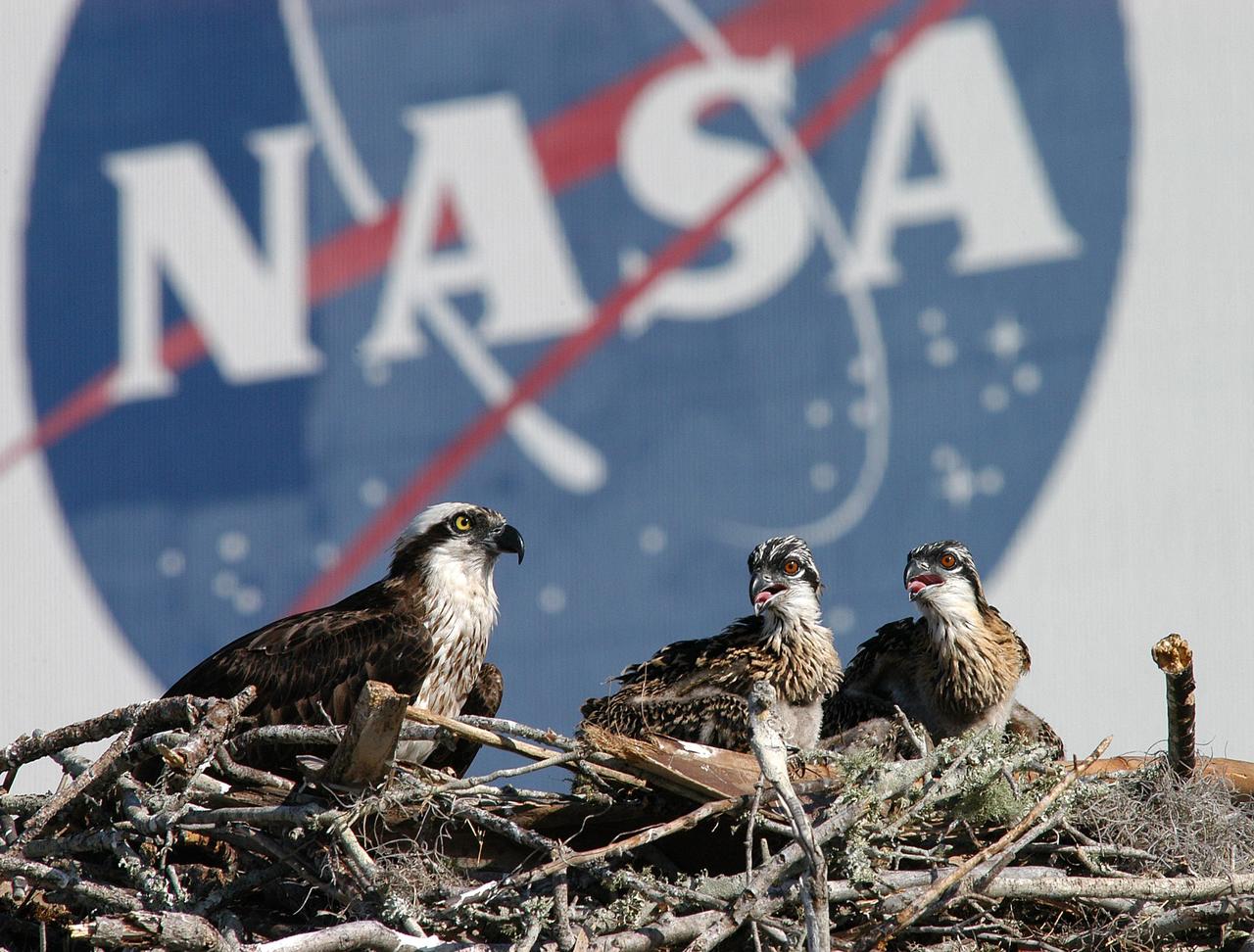
KENNEDY SPACE CENTER, FLA. - Against the background of the NASA logo on the Vehicle Assembly Building, the osprey nest in the nearby parking lot reveals two fledglings and one of the adult ospreys. Known as a fish hawk, they often can be seen flying overhead with a fish in their talons. Ospreys select nesting sites of opportunity, from trees and telephone poles to rocks or even flat ground. In the United States they are found from Alaska to Florida and the Gulf Coast. Osprey nests are found throughout the Kennedy Space Center and nearby Merritt Island National Wildlife Refuge.

KENNEDY SPACE CENTER, FLA. -- A pair of nesting ospreys now occupy a nest recently constructed on a speaker in the lower parking lot of the Press Site. Eggs have been sighted in the nest. The NASA logo seen in the background is on the nearby Vehicle Assembly Building. Known as a fish hawk, the osprey selects sites of opportunity, from trees and telephone poles to rocks or even flat ground. In the United States it is found from Alaska to Florida and the Gulf Coast. Osprey nests are found throughout the Kennedy Space Center and surrounding Merritt Island National Wildlife Refuge.
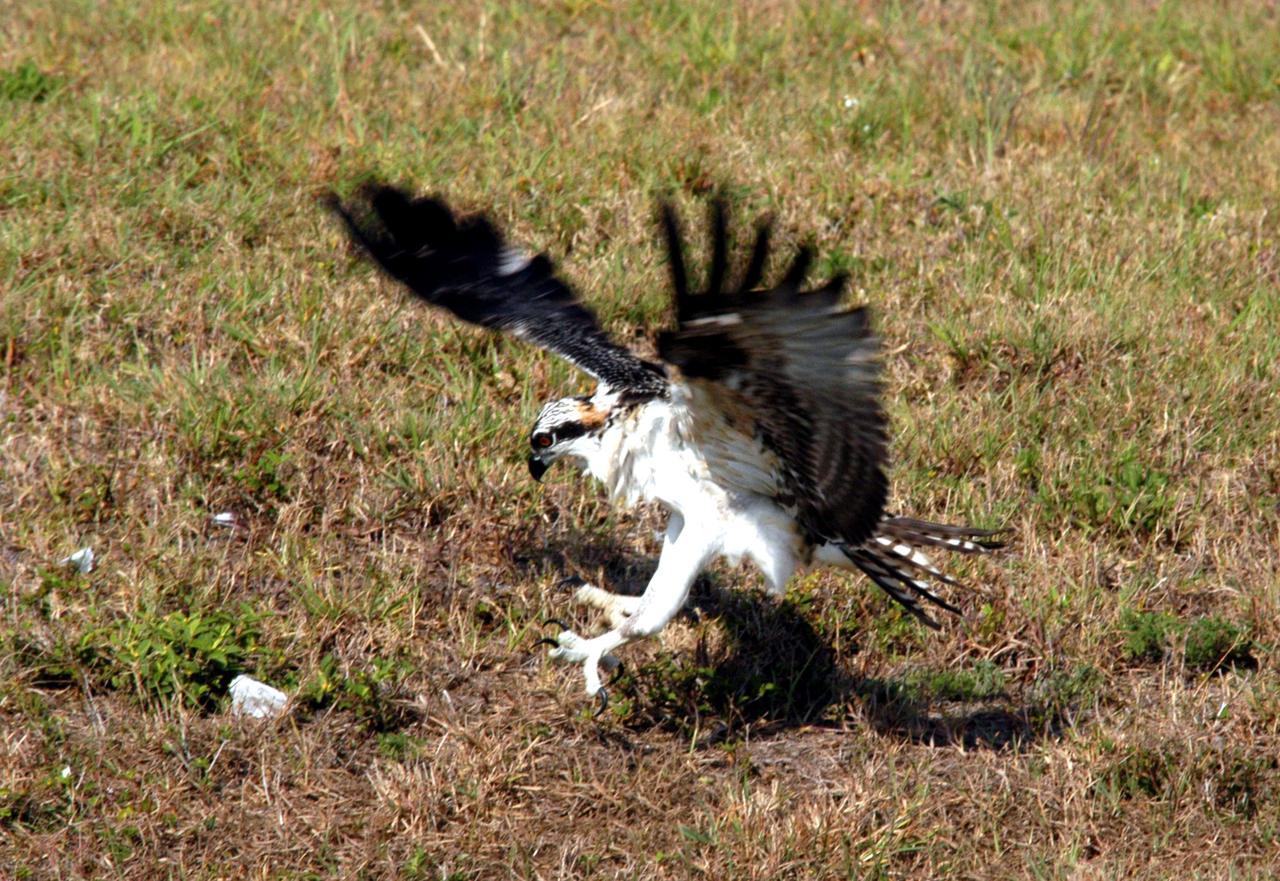
KENNEDY SPACE CENTER, FLA. -- One of the fledgling ospreys from the nest in the NASA KSC News Center parking lot comes down for a rough landing in the nearby grass. Ospreys select nesting sites of opportunity, from trees and telephone poles to rocks or even flat ground. In the United States they are found from Alaska and Newfoundland to Florida and the Gulf Coast. Osprey nests are found throughout the Kennedy Space Center and nearby Merritt Island National Wildlife Refuge. Known as a fish hawk, ospreys often can be seen flying overhead with a fish in their talons. Fish are their sole source of food.
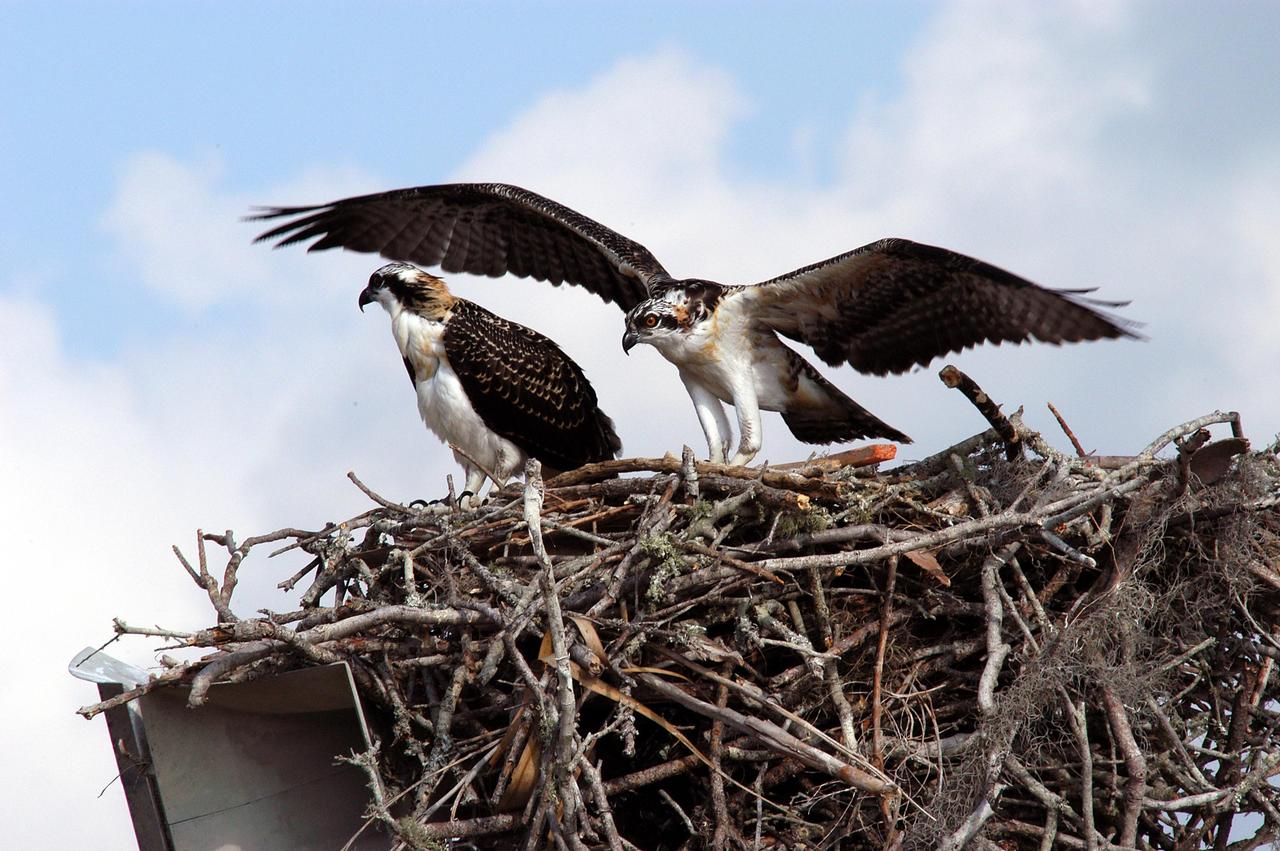
KENNEDY SPACE CENTER, FLA. -- One of two fledgling ospreys still in the nest stretches its wings to fly away. The stick-built nest is located in the NASA KSC News Center parking lot. Ospreys select nesting sites of opportunity, from trees and telephone poles to rocks or even flat ground. In the United States they are found from Alaska to Florida and the Gulf Coast. Osprey nests are found throughout the Kennedy Space Center and nearby Merritt Island National Wildlife Refuge. Known as a fish hawk, ospreys often can be seen flying overhead with a fish in their talons. Fish are their sole source of food.
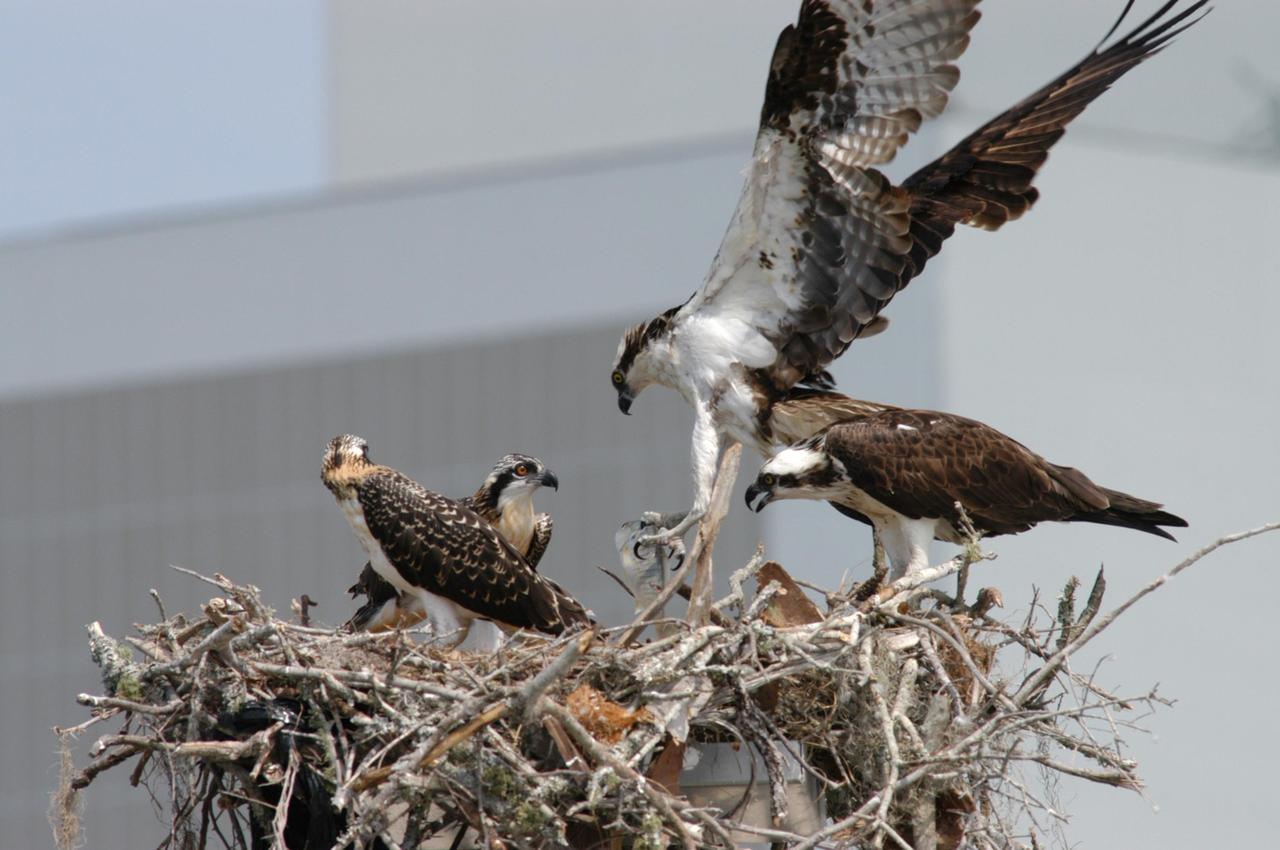
KENNEDY SPACE CENTER, FLA. -- These osprey chicks wait for lunch from one of their parents (look for the fish in the claws of the upper osprey). The nest is located on a pole in the parking lot of the NASA News Center. This is the third year the ospreys have raised a family at the site. Known as a fish hawk, ospreys select sites of opportunity, from trees and telephone poles to rocks or even flat ground. In the United States they are found from Alaska and Newfoundland to Florida and the Gulf Coast. Osprey nests are found throughout the Kennedy Space Center and nearby Merritt Island National Wildlife Refuge, which shares a boundary with the Center. Photo credit: NASA/George Shelton
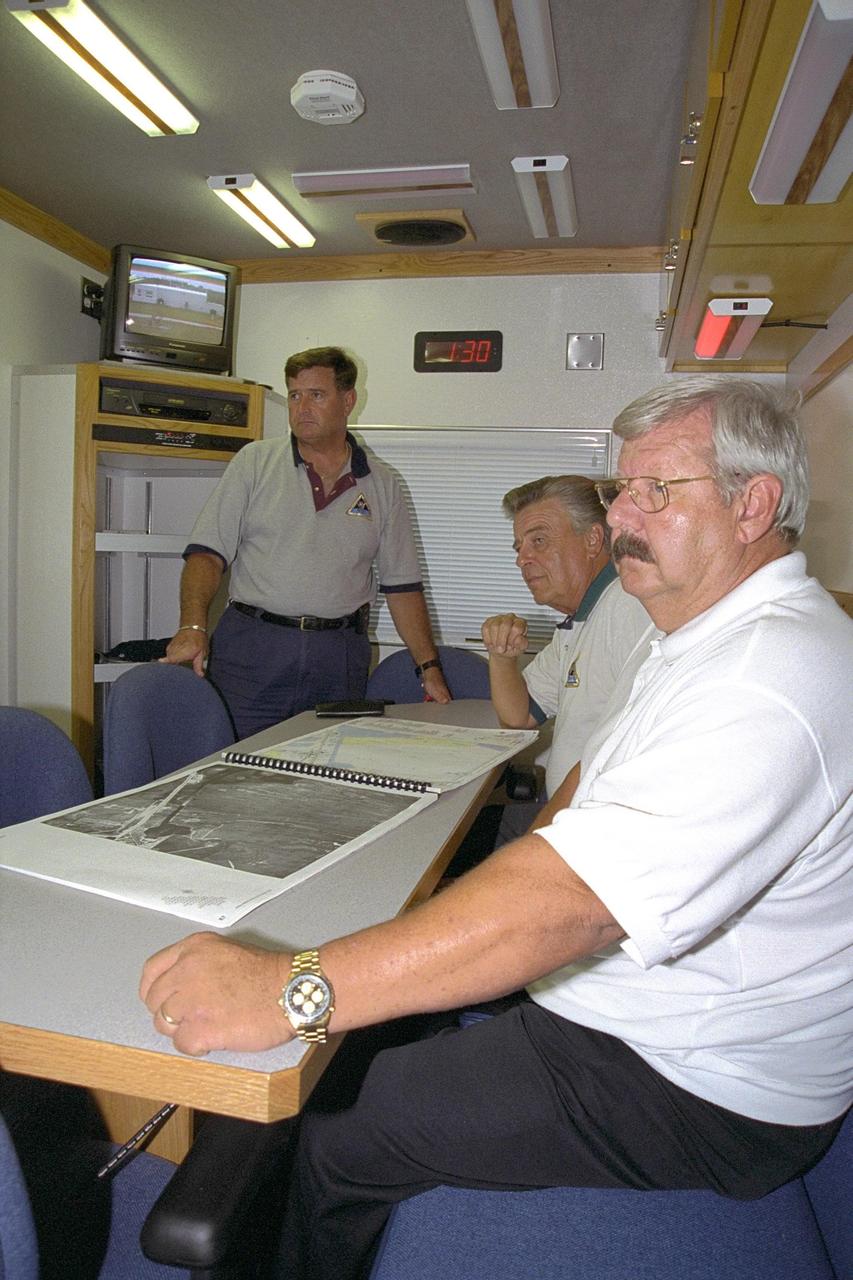
Charles Street, Roger Scheidt and Robert ZiBerna, the Emergency Preparedness team at KSC, sit in the conference room inside the Mobile Command Center, a specially equipped vehicle. Nicknamed “The Brute,” it also features computer work stations, mobile telephones and a fax machine. It also can generate power with its onboard generator. Besides being ready to respond in case of emergencies during launches, the vehicle must be ready to help address fires, security threats, chemical spills, terrorist attaches, weather damage or other critical situations that might face KSC or Cape Canaveral Air Force Station
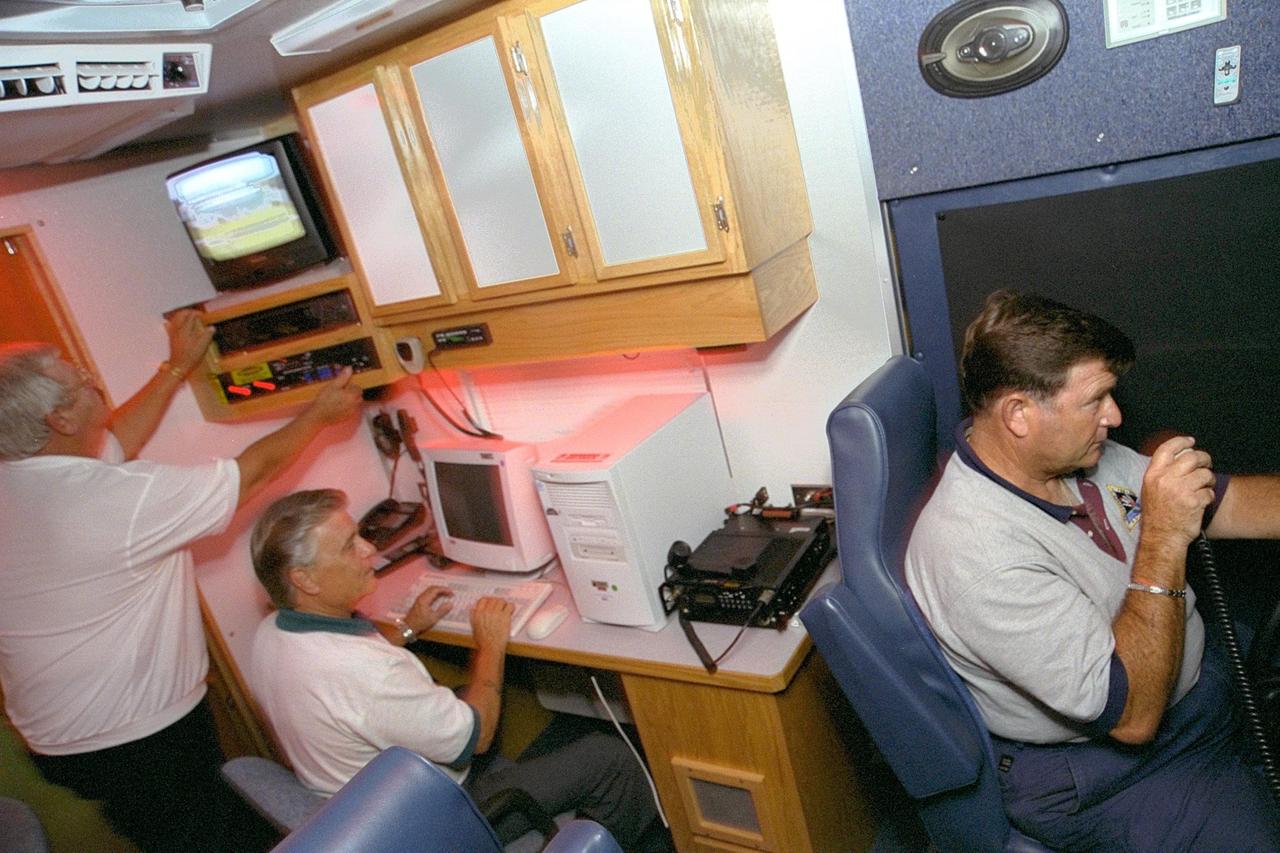
Robert ZiBerna, Roger Scheidt and Charles Street, the Emergency Preparedness team at KSC, practice for an emergency scenario inside the Mobile Command Center, a specially equipped vehicle. It features a conference room, computer work stations, mobile telephones and a fax machine. It also can generate power with its onboard generator. Besides being ready to respond in case of emergencies during launches, the vehicle must be ready to help address fires, security threats, chemical spills, terrorist attaches, weather damage or other critical situations that might face KSC or Cape Canaveral Air Force Station
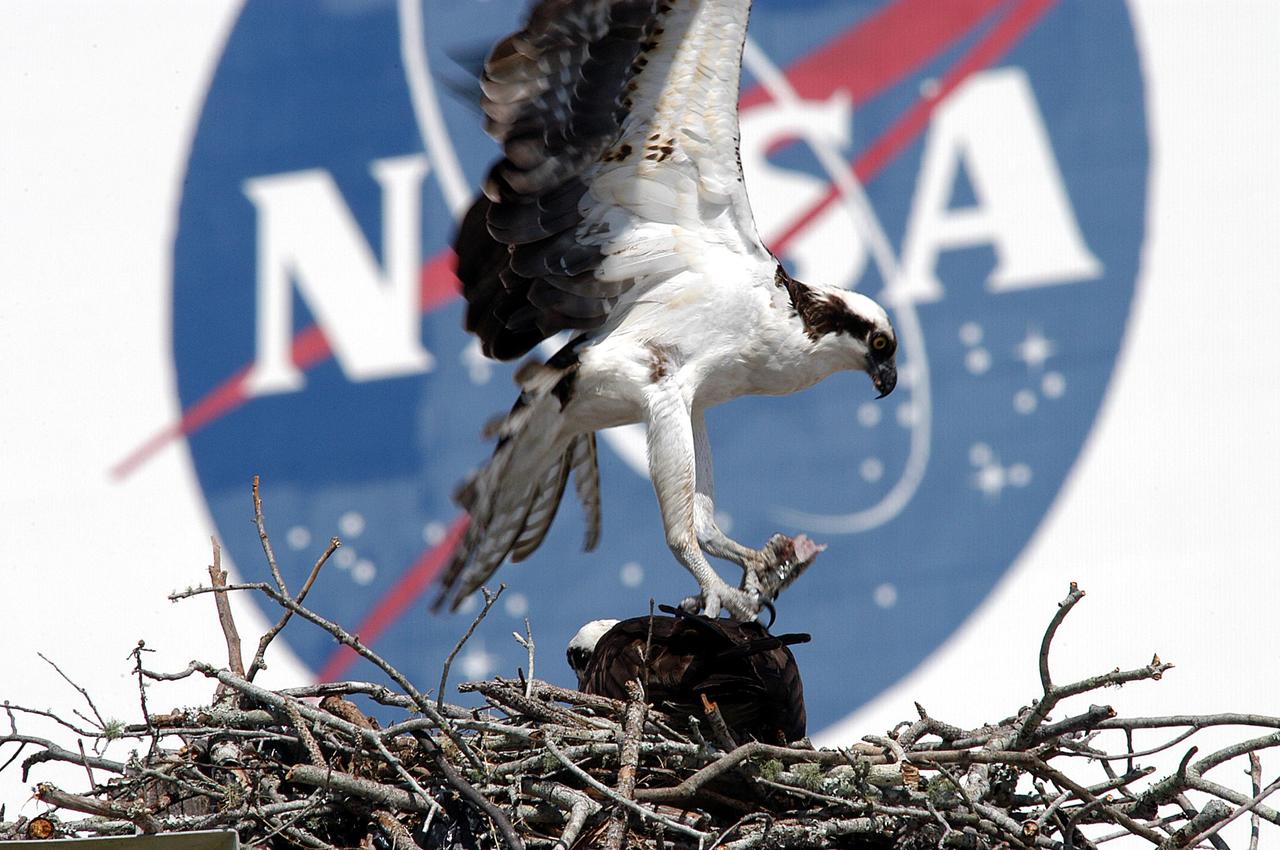
KENNEDY SPACE CENTER, FLA. -- A male osprey returns to its nest with a piece of fish in its talons for its mate. The nest was recently constructed on a speaker in the lower parking lot of the Press Site. Eggs have been sighted in the nest. The NASA logo seen in the background is on the nearby Vehicle Assembly Building. Known as a fish hawk, the osprey selects sites of opportunity, from trees and telephone poles to rocks or even flat ground. In the United States it is found from Alaska and Newfoundland to Florida and the Gulf Coast. Osprey nests are found throughout the Kennedy Space Center and surrounding Merritt Island National Wildlife Refuge.
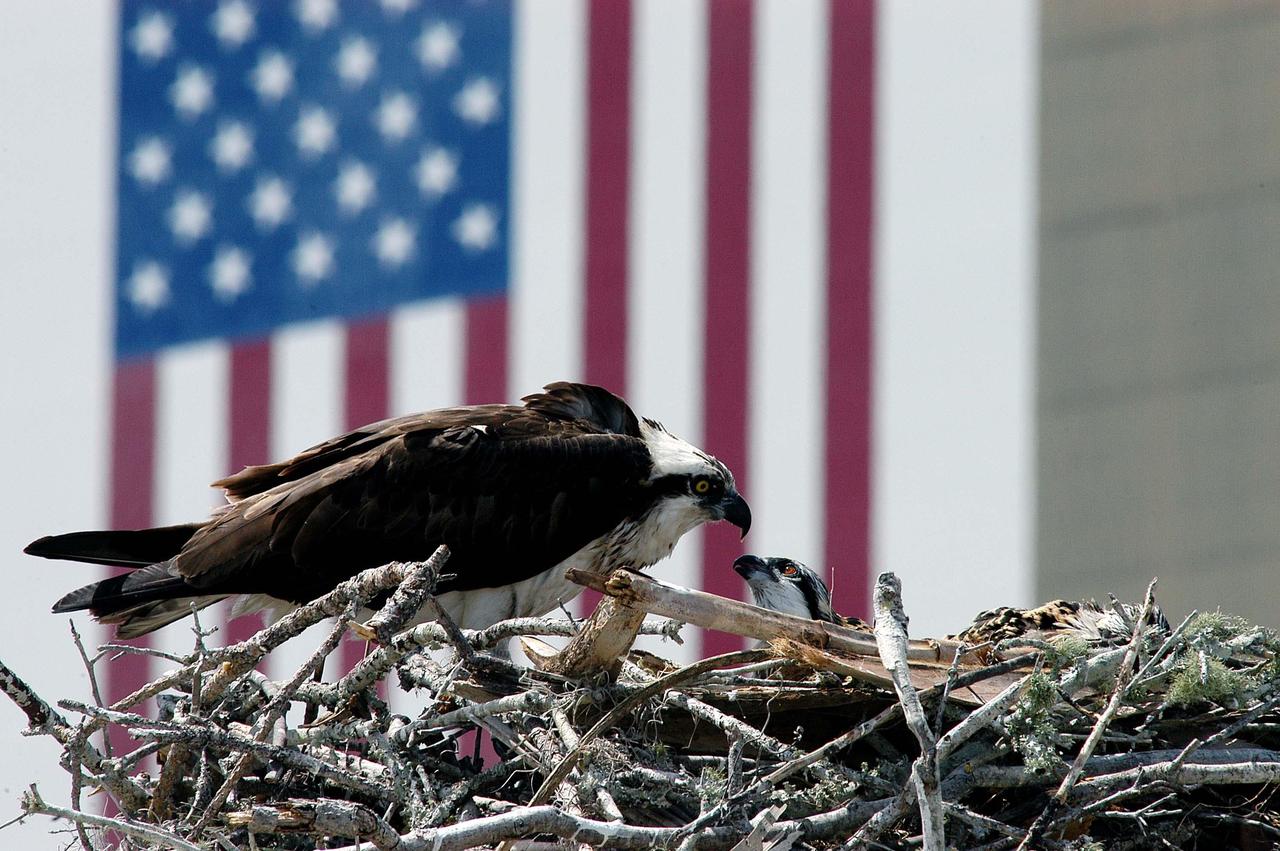
KENNEDY SPACE CENTER, FLA. - Against the backdrop of the American flag, painted on the side of the Vehicle Assembly Building, an osprey checks its fledglings in the nest. The young bird seen is one of three hatched this season. The osprey nest sits atop a speaker in the parking lot of the NASA KSC News Center. Known as a fish hawk, ospreys select sites of opportunity, from trees and telephone poles to rocks or even flat ground. In the United States they are found from Alaska to Florida and the Gulf Coast. Osprey nests are found throughout the Kennedy Space Center and nearby Merritt Island National Wildlife Refuge.
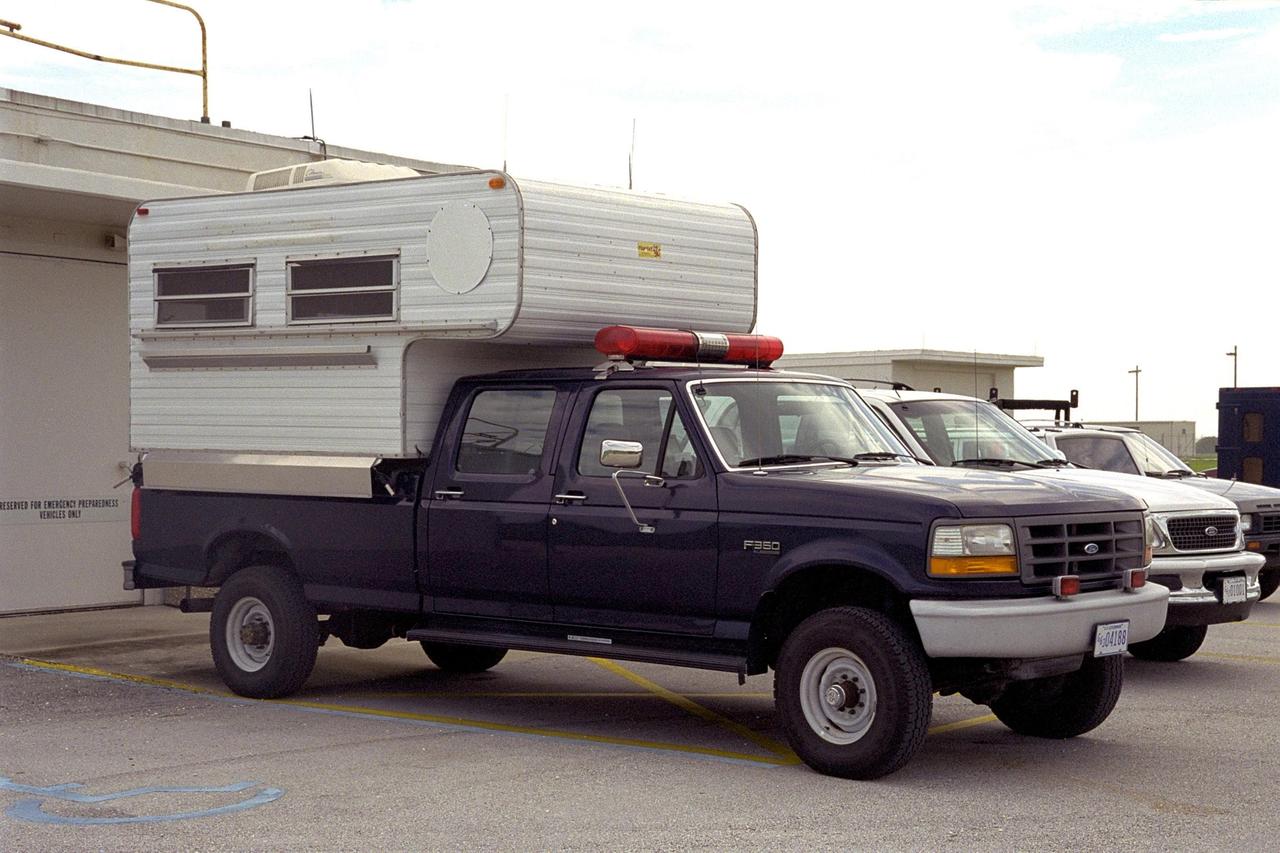
This camper-equipped truck known as “Old Blue” served as mobile field command center for the Emergency Preparedness team at KSC. It has been replaced with a larger vehicle that includes a conference room, computer work stations, mobile telephones and a fax machine, plus its own onboard generator. Besides being ready to respond in case of emergencies during launches, the vehicle must be ready to help address fires, security threats, chemical spills, terrorist attaches, weather damage or other critical situations that might face KSC or Cape Canaveral Air Force Station
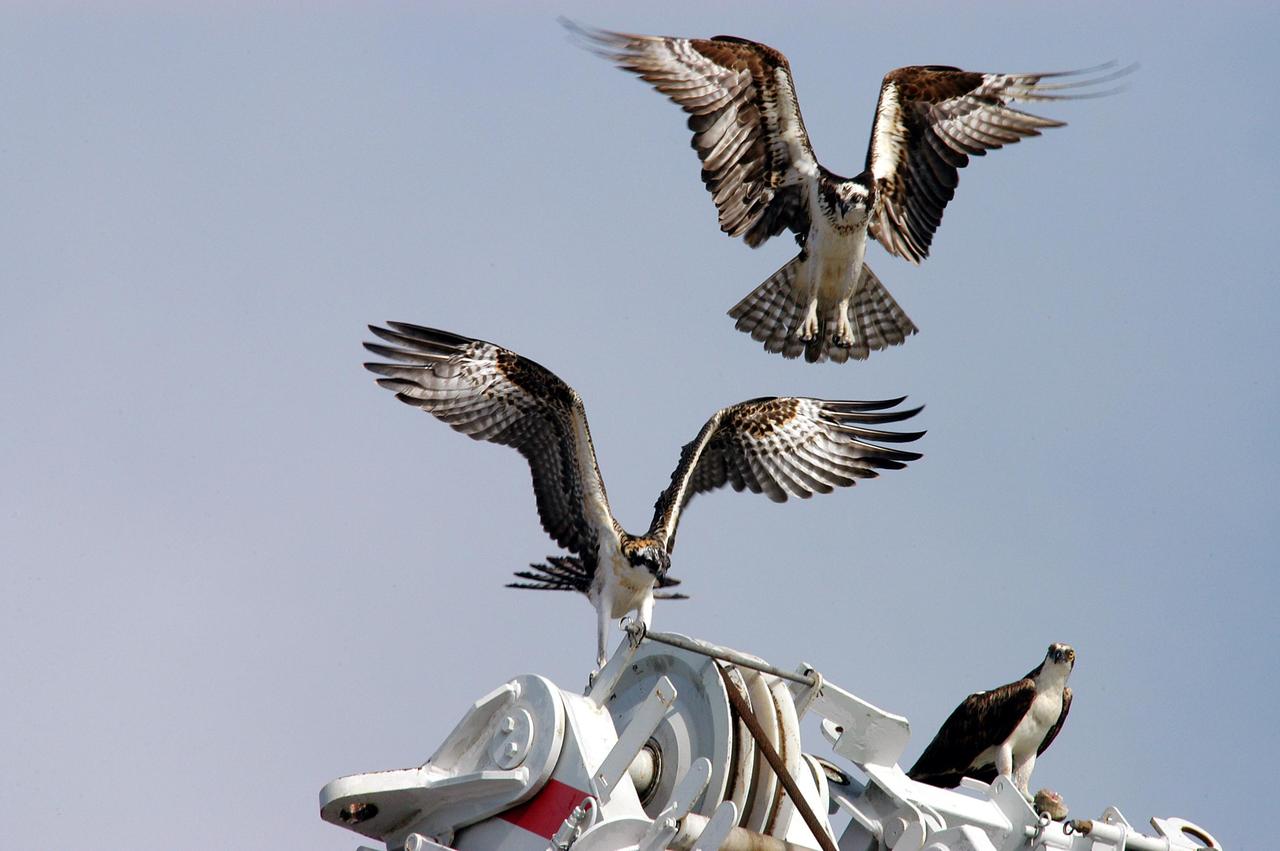
KENNEDY SPACE CENTER, FLA. -- Two fledgling ospreys begin flight lessons with their parent nearby (right). Their nest is located in the NASA KSC News Center parking lot. Ospreys select nesting sites of opportunity, from trees and telephone poles to rocks or even flat ground. In the United States they are found from Alaska to Florida and the Gulf Coast. Osprey nests are found throughout the Kennedy Space Center and nearby Merritt Island National Wildlife Refuge. Known as a fish hawk, ospreys often can be seen flying overhead with a fish in their talons. Fish are their sole source of food.
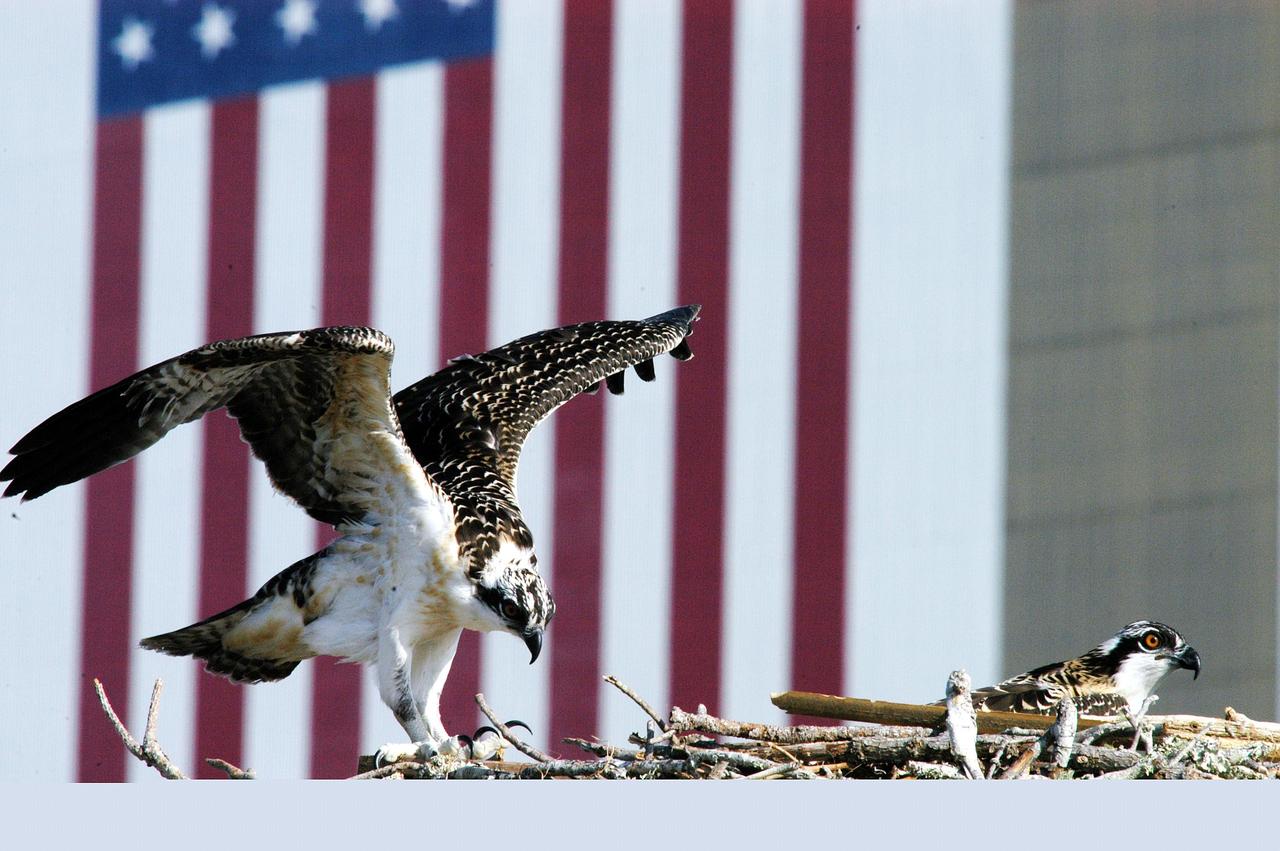
KENNEDY SPACE CENTER, FLA. -- One of three osprey fledglings exercises its wings, anticipating flight. The nest is in the NASA News Center parking lot, across from the Vehicle Assembly Building, with its 209-foot-high American flag painted on the south side. Ospreys select nesting sites of opportunity, from trees and telephone poles to rocks or even flat ground. In the United States they are found from Alaska to Florida and the Gulf Coast. Osprey nests are found throughout the Kennedy Space Center and nearby Merritt Island National Wildlife Refuge. Known as a fish hawk, ospreys often can be seen flying overhead with a fish in their talons.

S69-40217 (27 July 1969) --- Neil A. Armstrong, commander of the Apollo 11 flight, greets his son Mark, on telephone intercom system, while his wife Jan and another son Eric look on. Armstrong had just arrived in early morning with the Mobile Quarantine Facility (MQF) at Ellington Air Force Base. Armstrong and fellow astronauts will remain in the MQF until arrival and confinement in the Crew Reception Area (CRA) of the Lunar Receiving Laboratory (LRL) at the Manned Spacecraft Center (MSC). Quarantine period will end on Aug. 11, 1969.
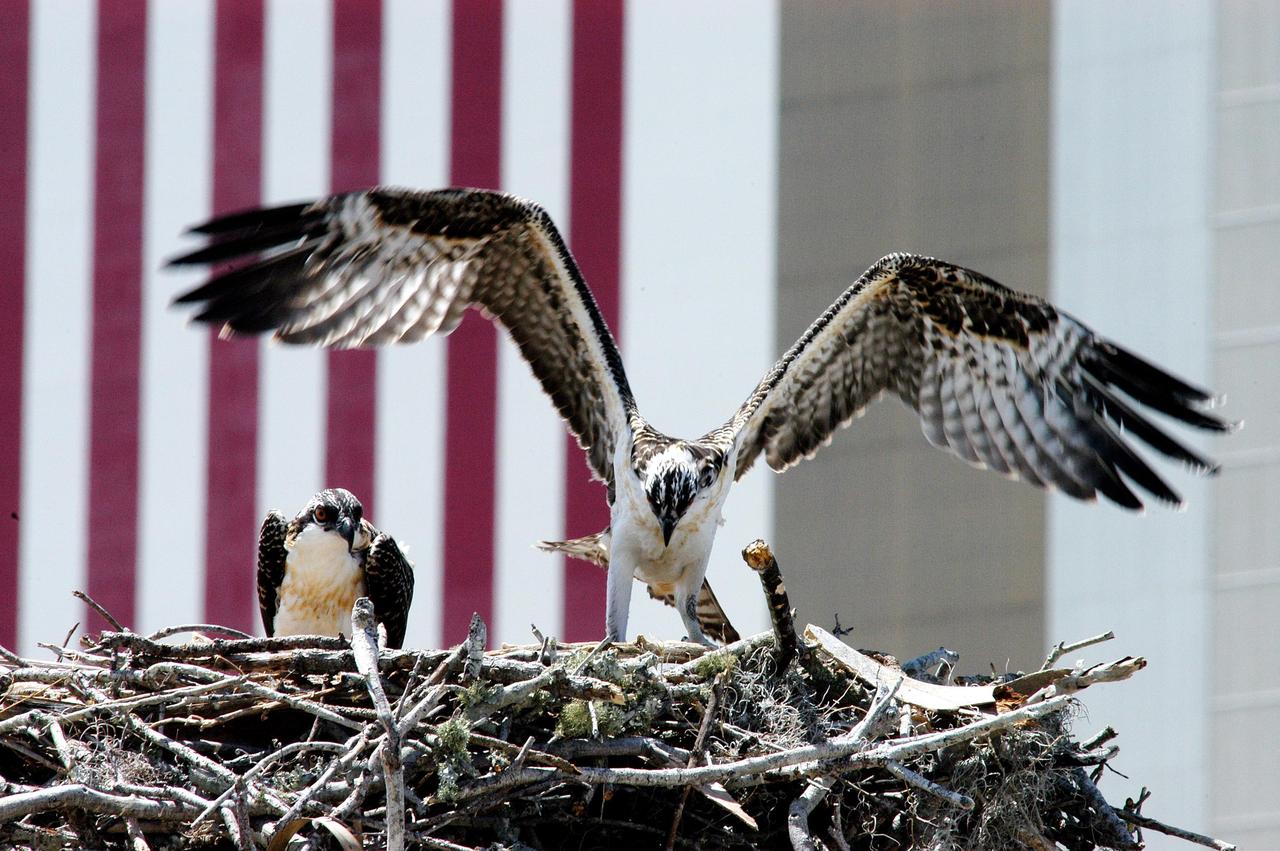
KENNEDY SPACE CENTER, FLA. -- One of three osprey fledglings exercises its wings, anticipating flight. The nest is in the NASA News Center parking lot, across from the Vehicle Assembly Building, with its 209-foot-high American flag painted on the south side. Ospreys select nesting sites of opportunity, from trees and telephone poles to rocks or even flat ground. In the United States they are found from Alaska to Florida and the Gulf Coast. Osprey nests are found throughout the Kennedy Space Center and nearby Merritt Island National Wildlife Refuge. Known as a fish hawk, ospreys often can be seen flying overhead with a fish in their talons.
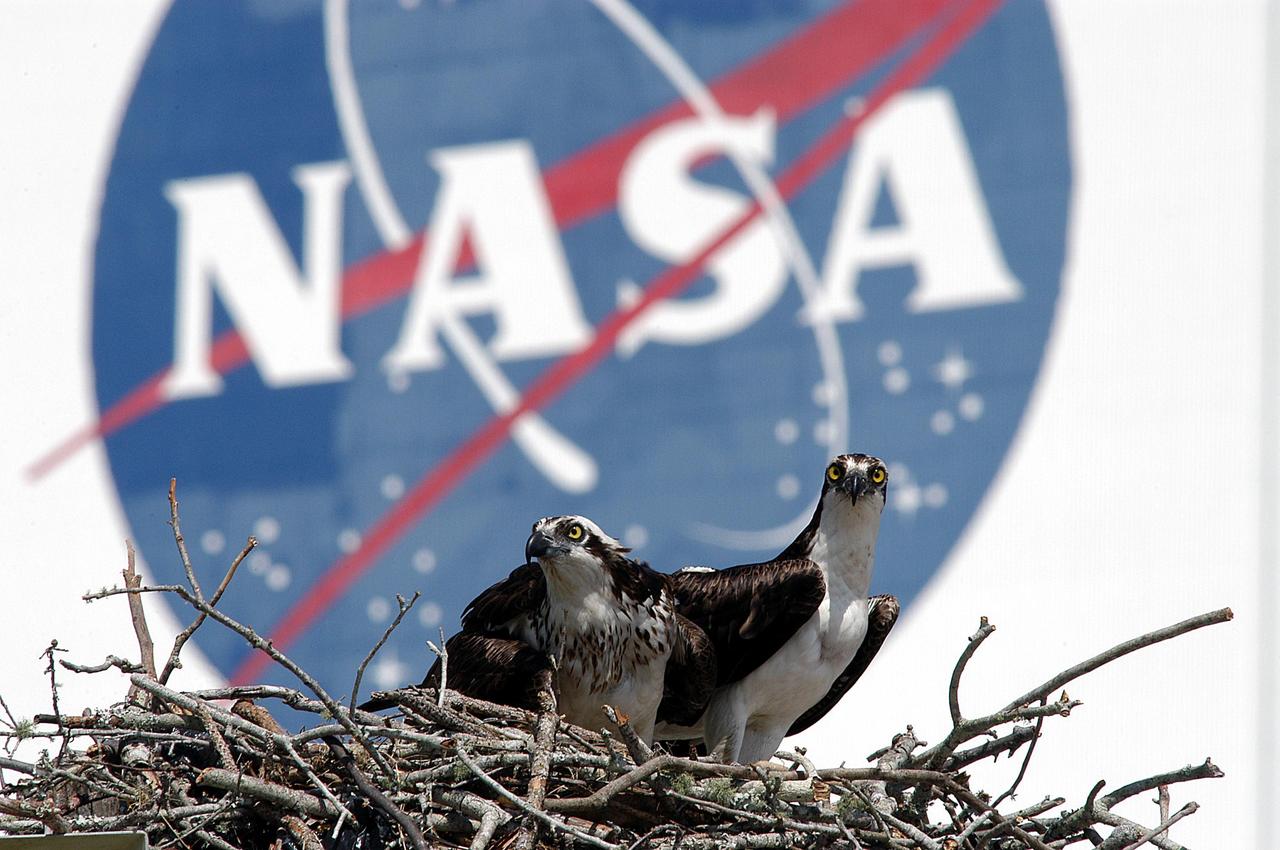
KENNEDY SPACE CENTER, FLA. -- A pair of nesting ospreys now occupy a nest recently constructed on a speaker in the lower parking lot of the Press Site. Eggs have been sighted in the nest. The NASA logo seen in the background is on the nearby Vehicle Assembly Building. Known as a fish hawk, the osprey selects sites of opportunity, from trees and telephone poles to rocks or even flat ground. In the United States it is found from Alaska to Florida and the Gulf Coast. Osprey nests are found throughout the Kennedy Space Center and surrounding Merritt Island National Wildlife Refuge.
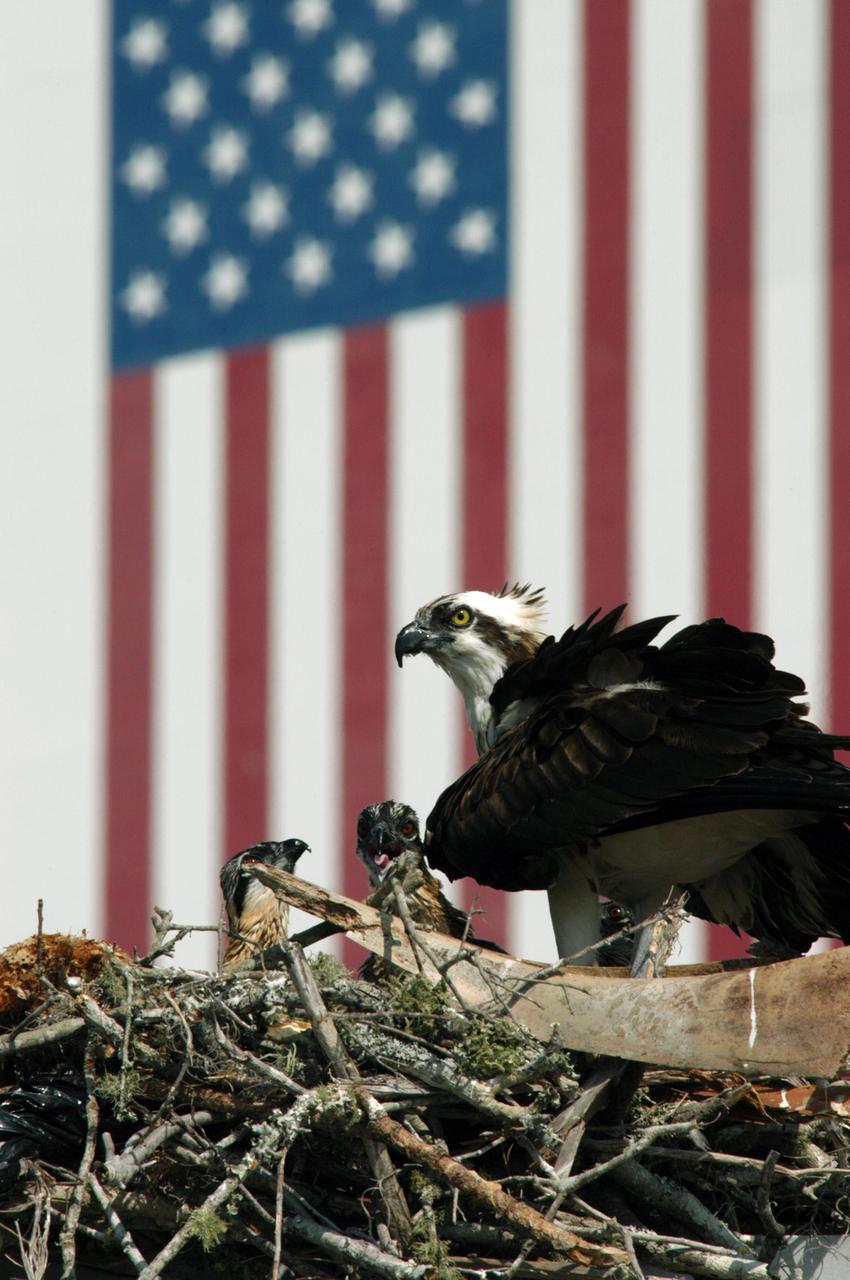
KENNEDY SPACE CENTER, FLA. -- A mother osprey watches over her chicks in a nest near the NASA News Center at Kennedy Space Center. This is the third year the ospreys have raised a family at the site. Known as a fish hawk, ospreys select sites of opportunity, from trees and telephone poles to rocks or even flat ground. In the United States they are found from Alaska and Newfoundland to Florida and the Gulf Coast. Osprey nests are found throughout the Kennedy Space Center and nearby Merritt Island National Wildlife Refuge, which shares a boundary with the Center. Photo credit: NASA/George Shelton
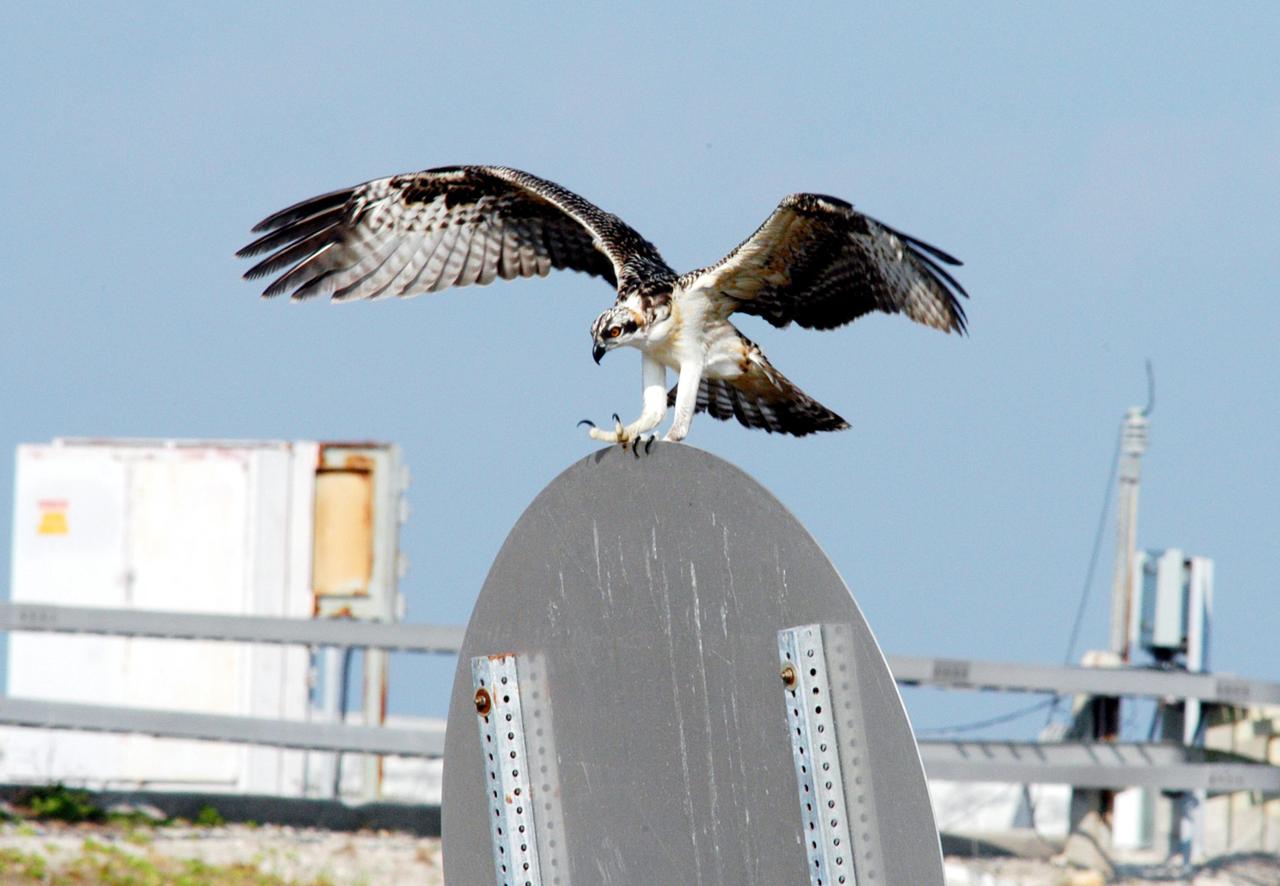
KENNEDY SPACE CENTER, FLA. -- One of the fledgling ospreys from the nest in the NASA KSC News Center parking lot lands on a sign after testing its wings. Ospreys select nesting sites of opportunity, from trees and telephone poles to rocks or even flat ground. In the United States they are found from Alaska to Florida and the Gulf Coast. Osprey nests are found throughout the Kennedy Space Center and nearby Merritt Island National Wildlife Refuge. Known as a fish hawk, ospreys often can be seen flying overhead with a fish in their talons. Fish are their sole source of food.
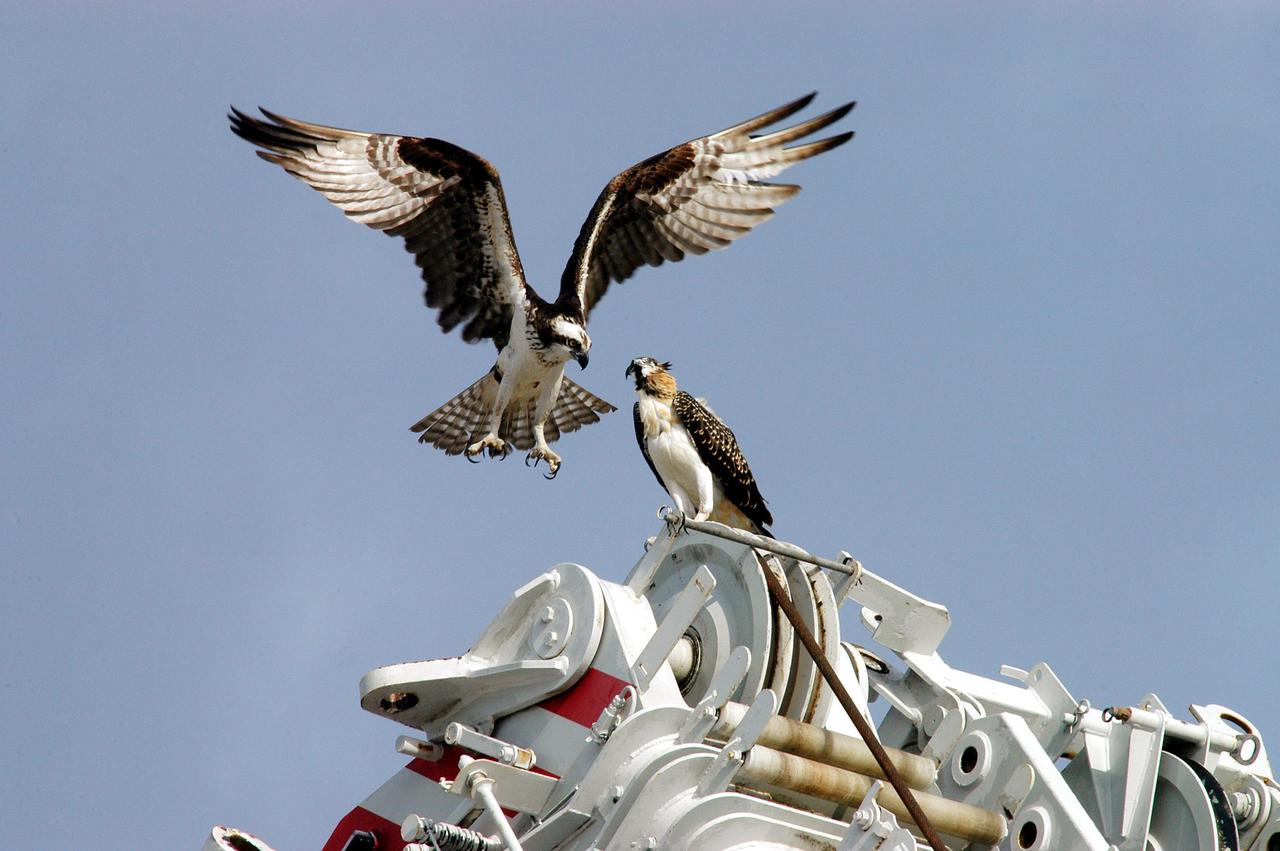
KENNEDY SPACE CENTER, FLA. -- One young osprey tests its wings while another waits nearby. Their nest is located in the NASA KSC News Center parking lot. Ospreys select nesting sites of opportunity, from trees and telephone poles to rocks or even flat ground. In the United States they are found from Alaska to Florida and the Gulf Coast. Osprey nests are found throughout the Kennedy Space Center and nearby Merritt Island National Wildlife Refuge. Known as a fish hawk, ospreys often can be seen flying overhead with a fish in their talons. Fish are their sole source of food.

STS054-S-023 (15 Jan 1993) --- Casper holds up a paper boomerang before sailing it across Endeavour's middeck. The demonstration was part of a lengthy "physics of toys" program conducted by all five crewmembers on their third day aboard the Shuttle. Through telephone and TV downlinks, students in four schools around the country participated in a special lesson to discover how specific toys function differently in the classroom compared to those on the Shuttle. The boomerang was used to demonstrate Bernouli's principle and gyroscopic stability. The entire collection of toys will be videotaped for an educational program to be distributed to schools in the autumn. The scene was downlinked at 18:11:04:26 GMT, Jan. 15, 1993.

This new specially equipped vehicle serves as a mobile command center for emergency preparedness staff and other support personnel when needed at KSC or Cape Canaveral Air Force Station. It features a conference room, computer work stations, mobile telephones and a fax machine. It also can generate power with its onboard generator. Besides being ready to respond in case of emergencies during launches, the vehicle must be ready to help address fires, security threats, chemical spills, terrorist attaches, weather damage or other critical situations that might face KSC or CCAFS
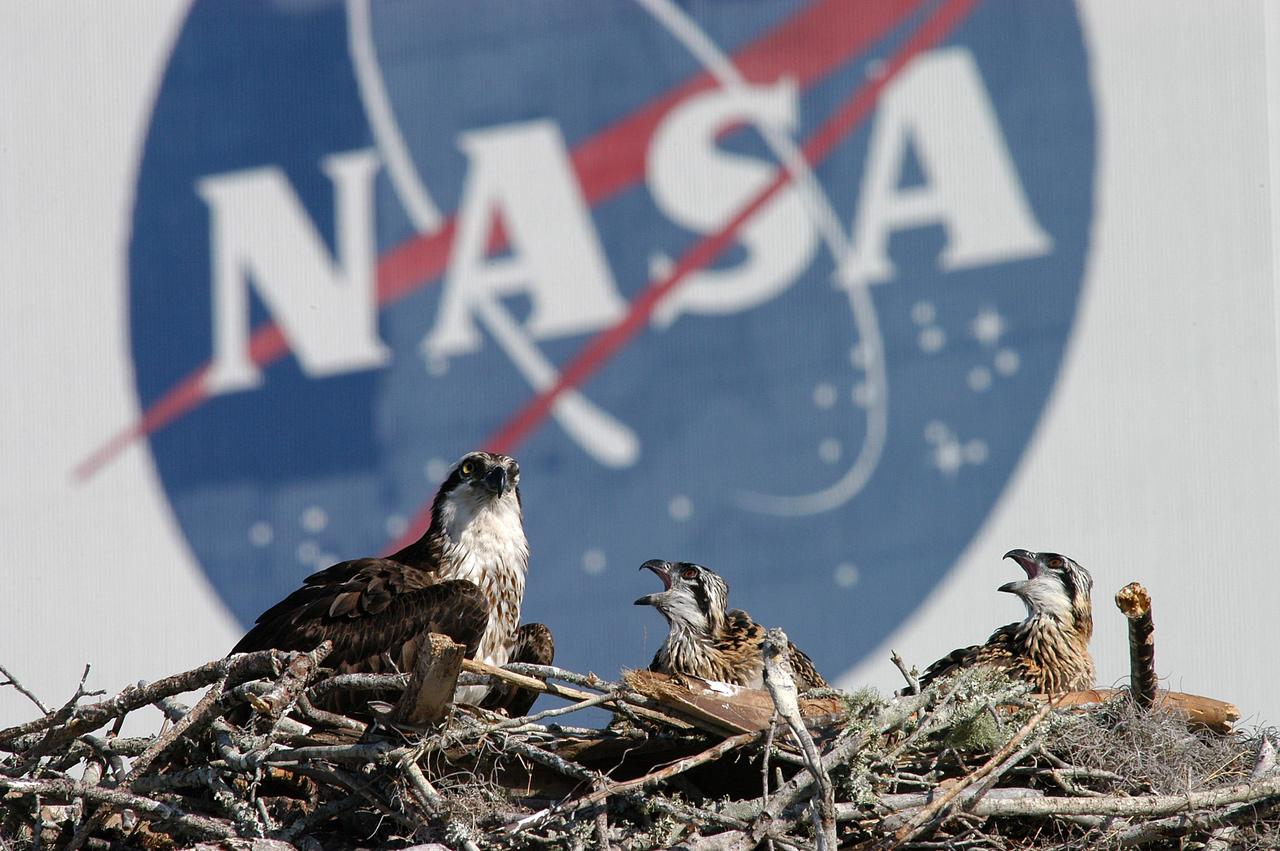
KENNEDY SPACE CENTER, FLA. - Against the background of the NASA logo on the Vehicle Assembly Building, the osprey nest in the nearby parking lot reveals two fledglings and one of the adult ospreys. Known as a fish hawk, they often can be seen flying overhead with a fish in their talons. Ospreys select nesting sites of opportunity, from trees and telephone poles to rocks or even flat ground. In the United States they are found from Alaska to Florida and the Gulf Coast. Osprey nests are found throughout the Kennedy Space Center and nearby Merritt Island National Wildlife Refuge.
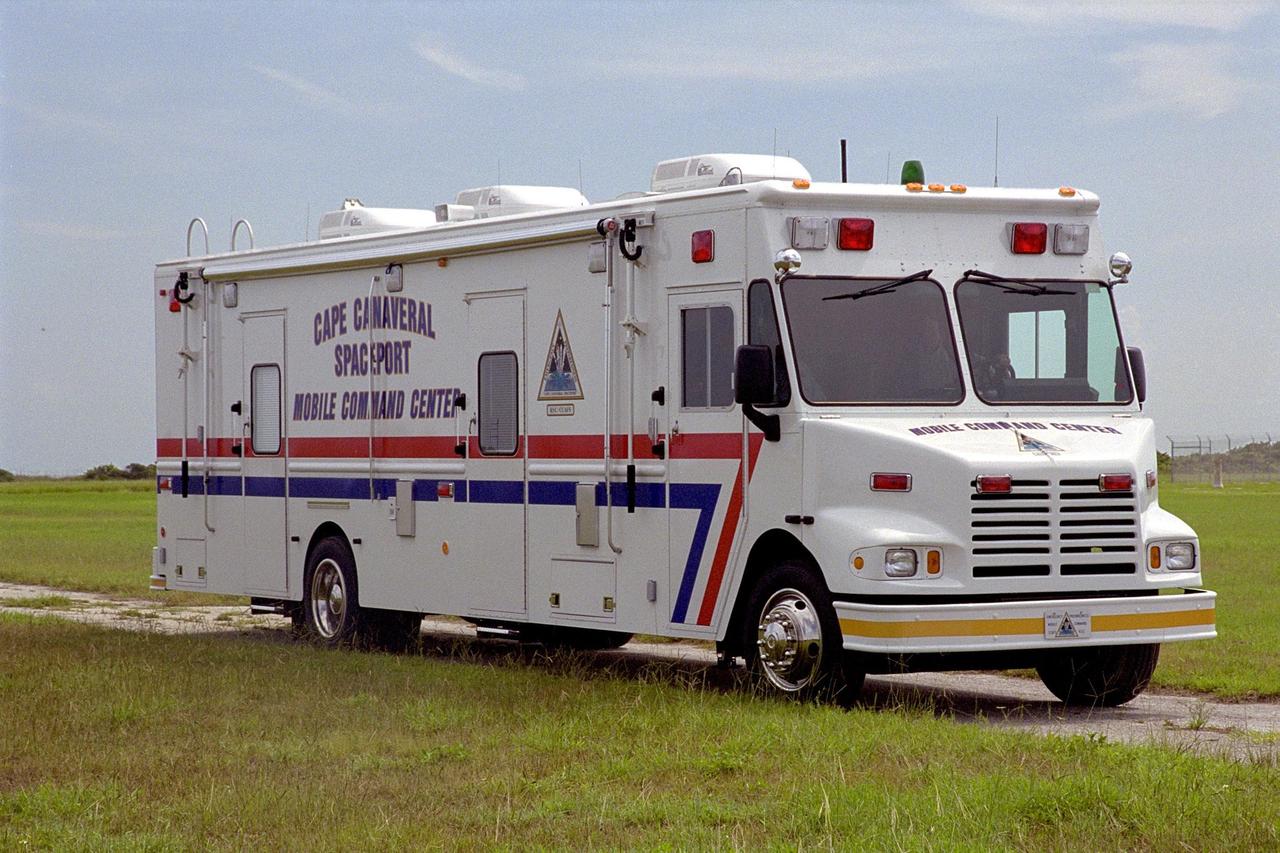
This new specially equipped vehicle serves as a mobile command center for emergency preparedness staff and other support personnel when needed at KSC or Cape Canaveral Air Force Station. It features a conference room, computer work stations, mobile telephones and a fax machine. It also can generate power with its onboard generator. Besides being ready to respond in case of emergencies during launches, the vehicle must be ready to help address fires, security threats, chemical spills, terrorist attaches, weather damage or other critical situations that might face KSC or CCAFS
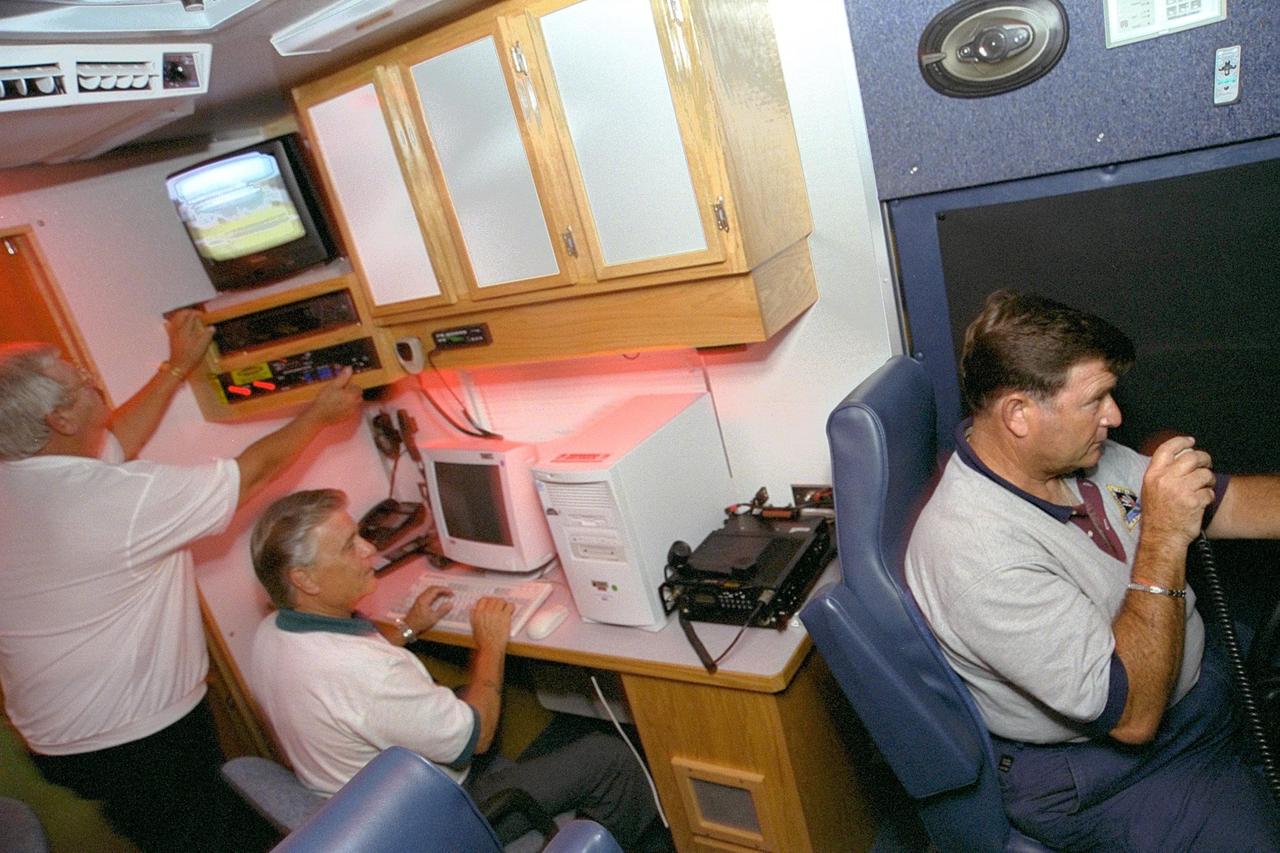
Robert ZiBerna, Roger Scheidt and Charles Street, the Emergency Preparedness team at KSC, practice for an emergency scenario inside the Mobile Command Center, a specially equipped vehicle. It features a conference room, computer work stations, mobile telephones and a fax machine. It also can generate power with its onboard generator. Besides being ready to respond in case of emergencies during launches, the vehicle must be ready to help address fires, security threats, chemical spills, terrorist attaches, weather damage or other critical situations that might face KSC or Cape Canaveral Air Force Station

Charles Street, part of the Emergency Preparedness team at KSC, uses a phone on the specially equipped emergency response vehicle. The vehicle, nicknamed “The Brute,” serves as a mobile command center for emergency preparedness staff and other support personnel when needed. It features a conference room, computer work stations, mobile telephones and a fax machine. It also can generate power with its onboard generator. Besides being ready to respond in case of emergencies during launches, the vehicle must be ready to help address fires, security threats, chemical spills, terrorist attaches, weather damage or other critical situations that might face KSC or Cape Canaveral Air Force Station
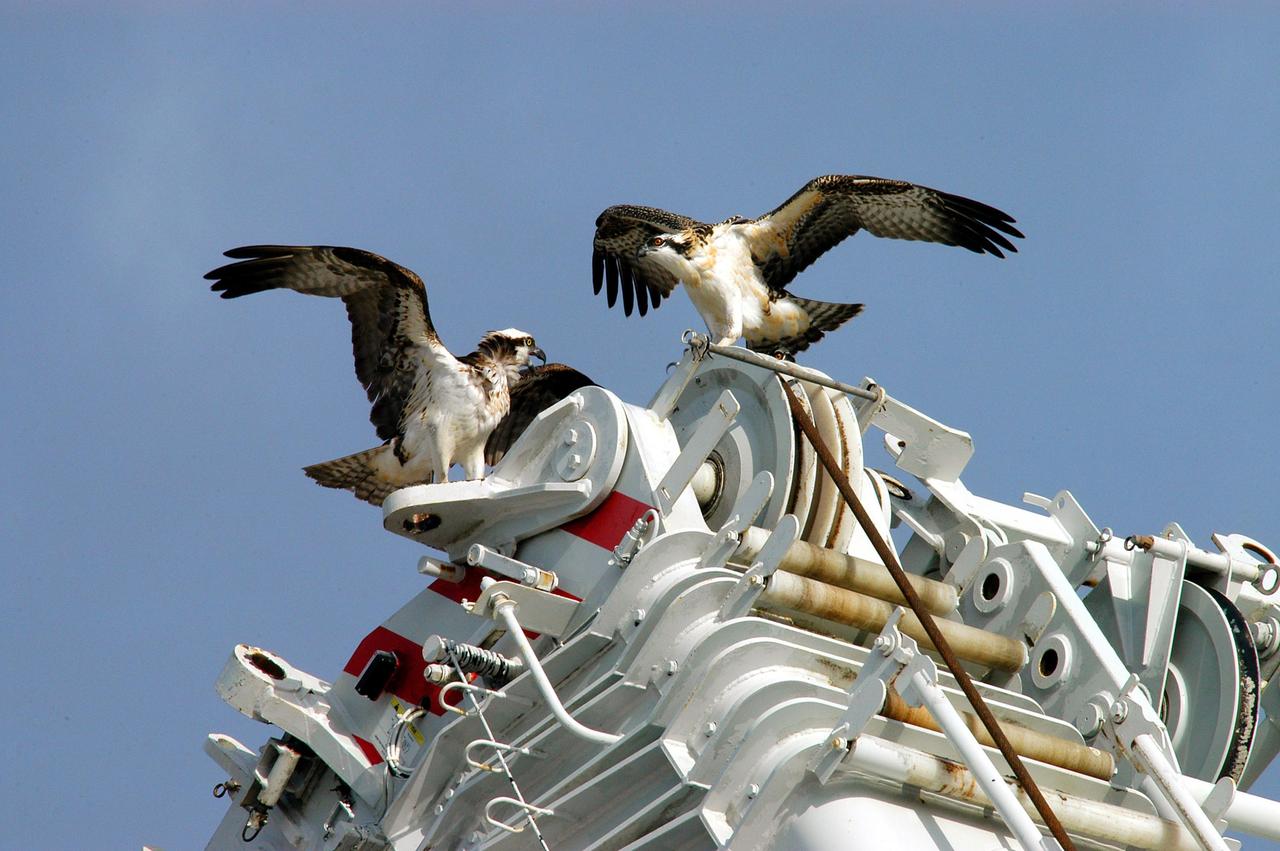
KENNEDY SPACE CENTER, FLA. -- - Two young ospreys flex their wings for flight. Their nest is located in the NASA KSC News Center parking lot. Ospreys select nesting sites of opportunity, from trees and telephone poles to rocks or even flat ground. In the United States they are found from Alaska to Florida and the Gulf Coast. Osprey nests are found throughout the Kennedy Space Center and nearby Merritt Island National Wildlife Refuge. Known as a fish hawk, ospreys often can be seen flying overhead with a fish in their talons. Fish are their sole source of food.
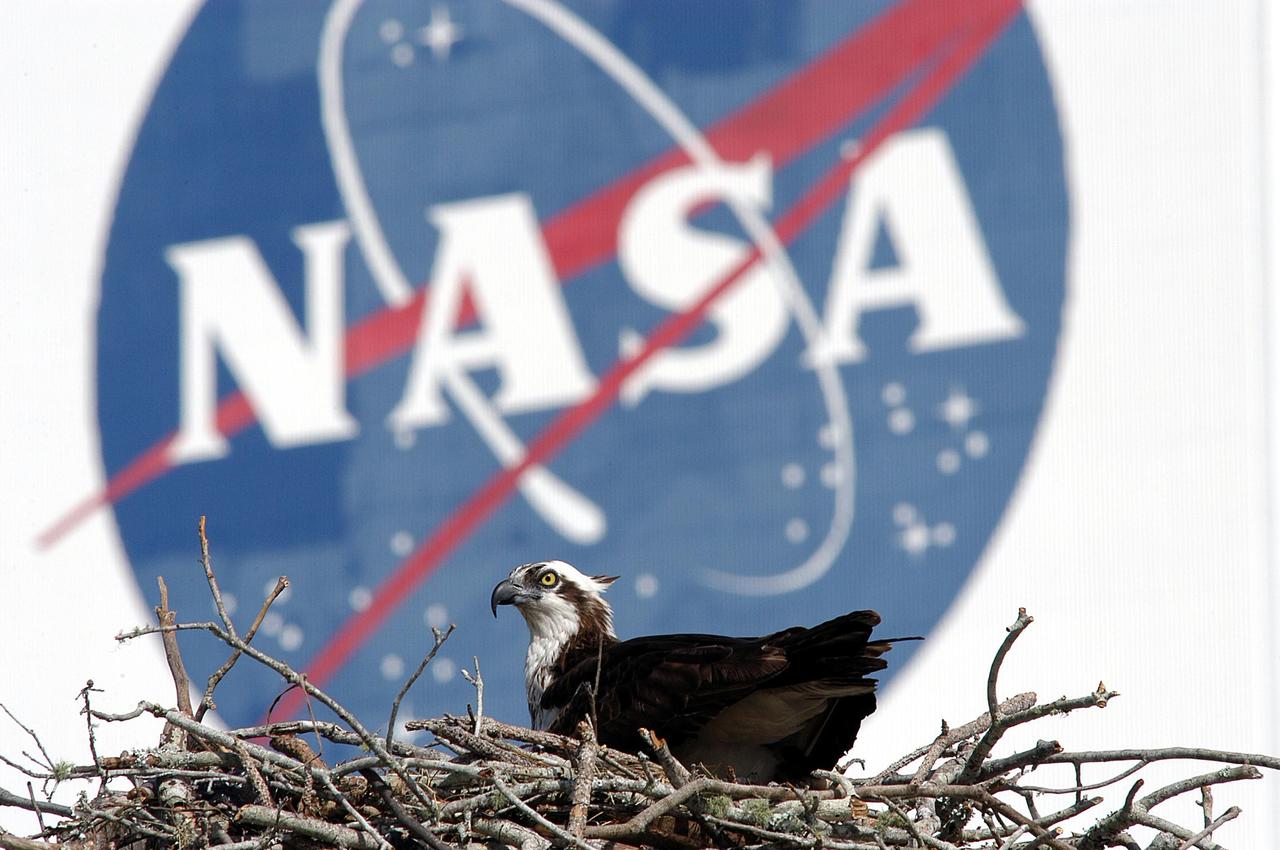
KENNEDY SPACE CENTER, FLA. - A female osprey occupies a nest recently constructed on a speaker in the lower parking lot of the Press Site. Eggs have been sighted in the nest. The NASA logo seen in the background is on the nearby Vehicle Assembly Building. Known as a fish hawk, the osprey selects sites of opportunity, from trees and telephone poles to rocks or even flat ground. In the United States it is found from Alaska to Florida and the Gulf Coast. Osprey nests are found throughout the Kennedy Space Center and surrounding Merritt Island National Wildlife Refuge.
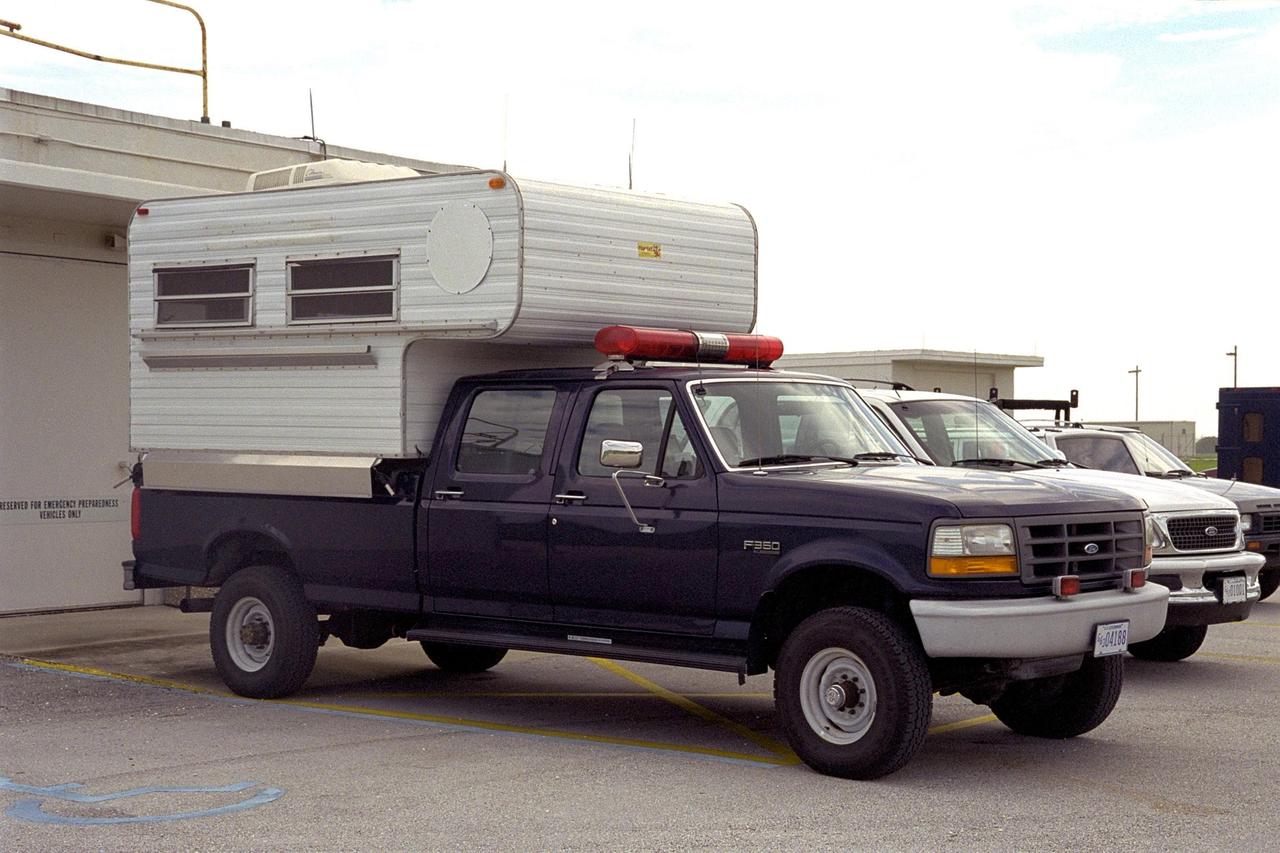
This camper-equipped truck known as “Old Blue” served as mobile field command center for the Emergency Preparedness team at KSC. It has been replaced with a larger vehicle that includes a conference room, computer work stations, mobile telephones and a fax machine, plus its own onboard generator. Besides being ready to respond in case of emergencies during launches, the vehicle must be ready to help address fires, security threats, chemical spills, terrorist attaches, weather damage or other critical situations that might face KSC or Cape Canaveral Air Force Station
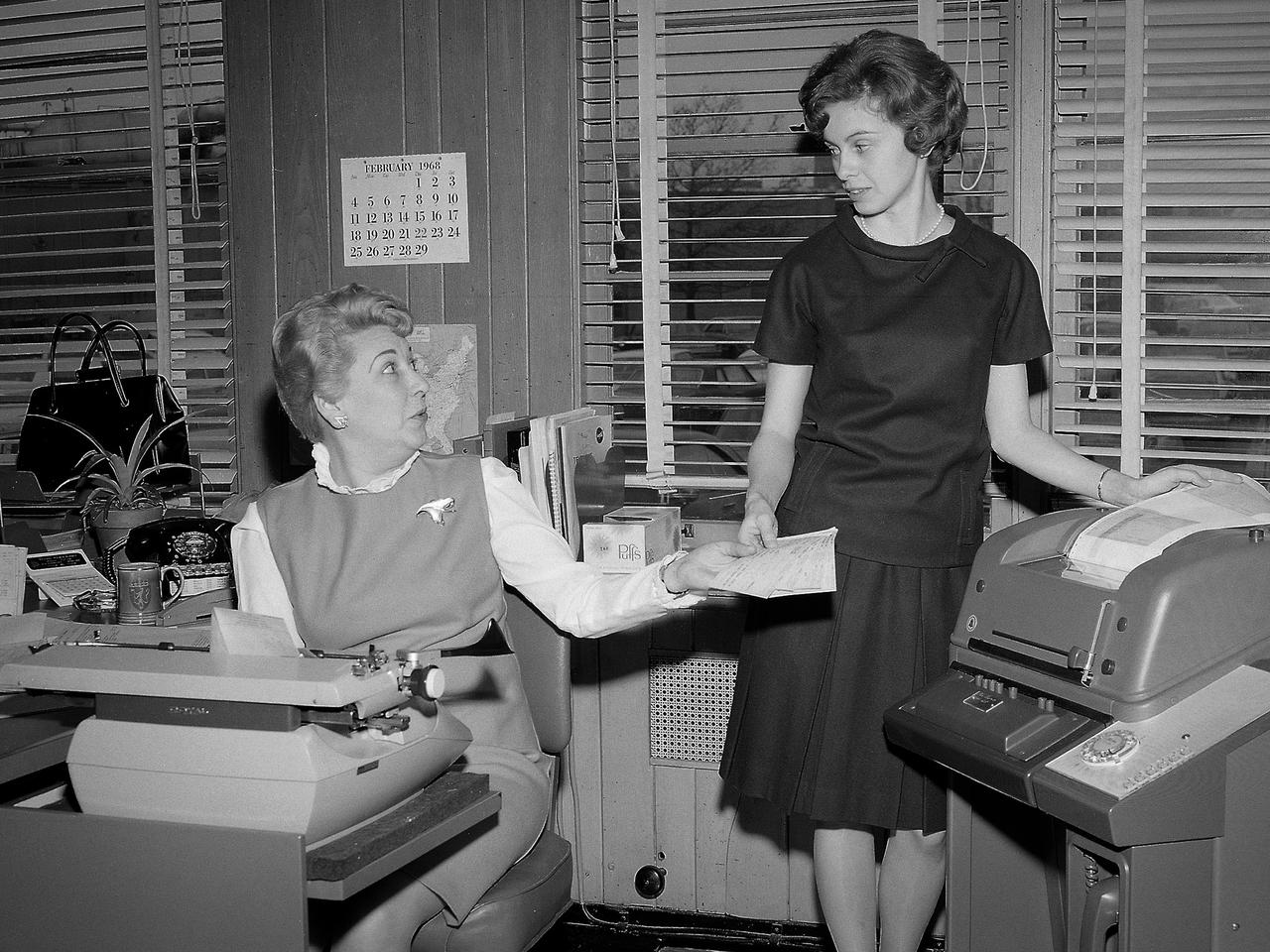
Peggy Heintz, left, receives an airline ticket from supervisor Judy Kuebeler in the Administrative Services Building at the National Aeronautics and Space Administration (NASA) Lewis Research Center. The center had recently purchased a teleticket machine that automatically printed airline tickets as directed by the airline’s computer system. The Administrative Services Branch had 55 staff members performing a variety of roles. They served as telephone operators and set up communications with other centers. They operated the motor pool, handled all travel arrangements, prepared forms and work instructions, and planned offices. The staff was also responsible for records management and storage. It was reported that the staff processed 65 bags of incoming mail per day, which was said to be on par with a city of 15,000 to 20,000 people.

CAPE CANAVERAL, Fla. – During a news conference at NASA's Kennedy Space Center in Florida, agency and contractor officials discussed science and technology experiment payloads being transported to the International Space Station by the SpaceX-3 Commercial Resupply Services mission. Andy Petro of the agency's Space Technology Mission Directorate participated in the briefing by telephone from NASA Headquarters in Washington D.C. Scheduled for launch on April 14, 2014 atop a Falcon 9 rocket, the Dragon spacecraft will be marking its fourth trip to the space station. The SpaceX-3 mission carrying almost 2.5 tons of supplies, technology and science experiments is the third of 12 flights contracted by NASA to resupply the orbiting laboratory. For more information, visit http://www.nasa.gov/mission_pages/station/structure/launch/index.html Photo credit: NASA/ Kim Shiflett
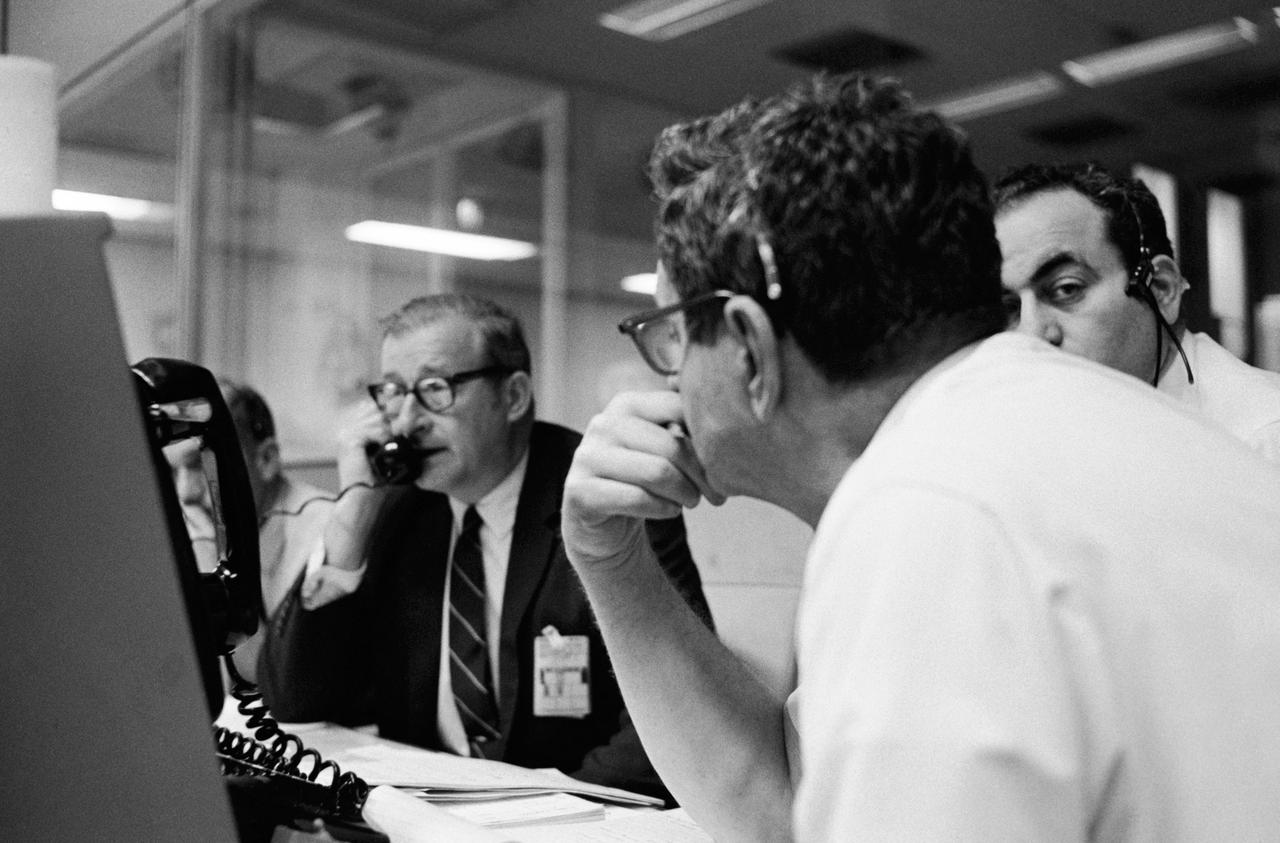
S70-34903 (14 April 1970) --- Dr. Thomas O. Paine, Administrator, National Aeronautics and Space Administration (NASA), talks on the telephone to President Richard M. Nixon. Dr. Paine is seated at his console in the Mission Operations Control Room (MOCR) at the Mission Control Center (MCC), Manned Spacecraft Center (MSC). Also pictured are Dr. Rocco Petrone, Apollo program director, Office Manned Spaceflight, NASA Headquarters (facing camera); and Chester M. Lee, Apollo mission director, Office of Manned Spaceflight, NASA Headquarters (HQ). Dr. Paine and the President were discussing the revised Apollo 13 flight plan following discovery of an oxygen cell failure in the Apollo 13 spacecraft several hours earlier.
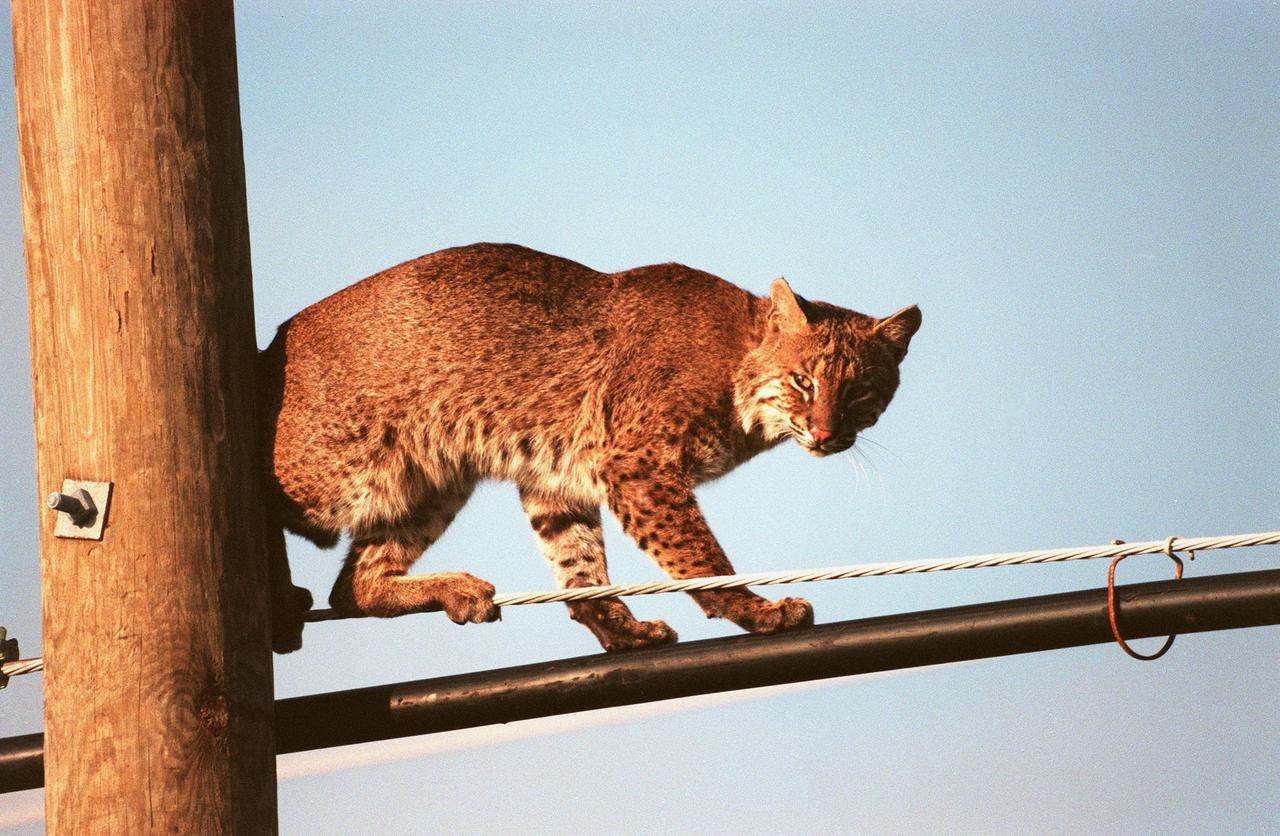
KENNEDY SPACE CENTER, FLA. -- A young, male bobcat balances gingerly on telephone pole cables next to the south-bound lane of Kennedy Parkway. The cat is nocturnal and is seldom observed during the day unless scared from its daytime shelter in the grass or beneath a shrub. Usually found in broken sections of heavily wooded or brushy country, bobcats are reported as common in scrub strand and roadside or weedy grass habitats at KSC. The bobcat is known to inhabit mangrove habitats and will readily swim across small bodies of water. The bobcat occurs across southern Canada then south over the entire United States, except for the midwestern corn belt, to southern Mexico. It is the last large mammalian predator remaining on KSC. The Merritt Island National Wildlife Refuge, which is located on Kennedy Space Center property, is home to many species of wild animals, including the bobcat.
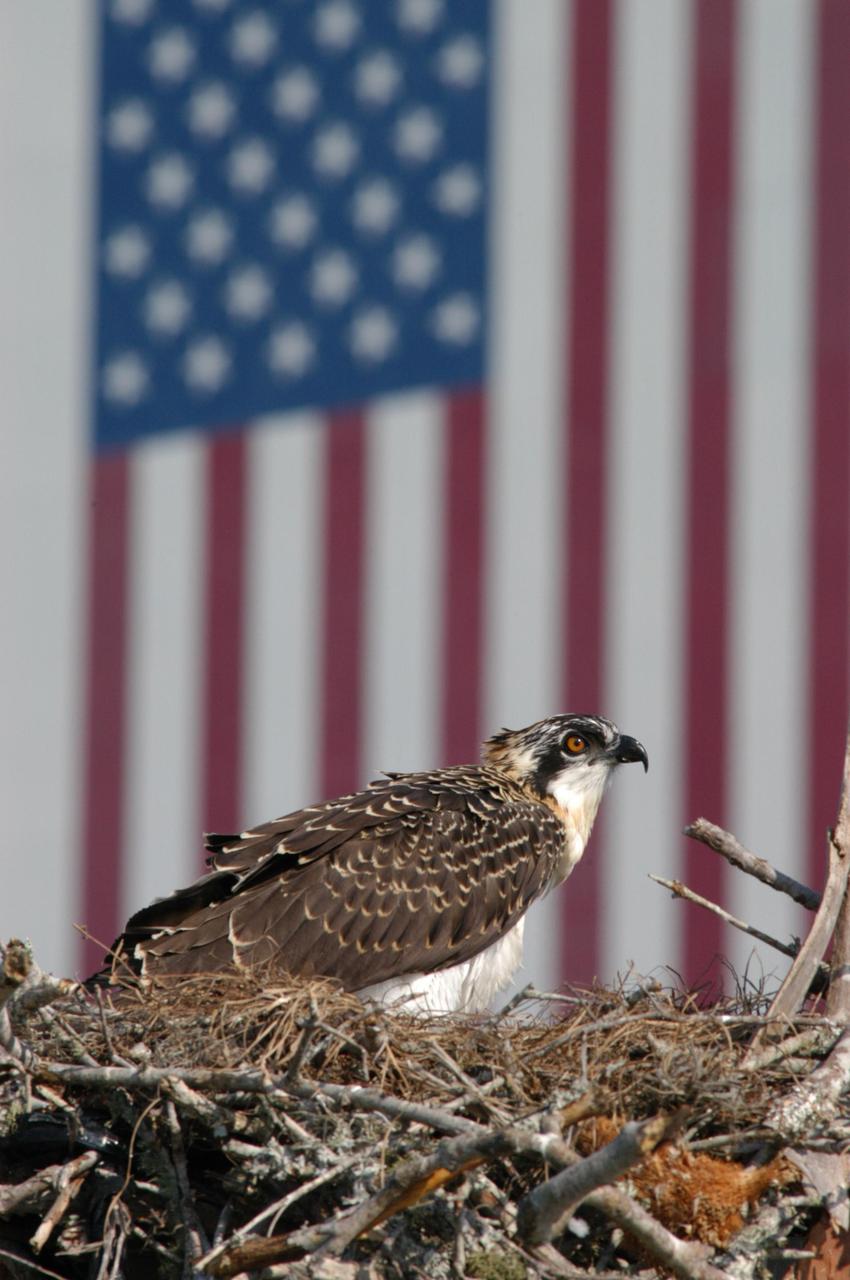
KENNEDY SPACE CENTER, FLA. -- A baby osprey sits on its nest situated at the top of a pole in the parking lot at the NASA News Center at Kennedy Space Center. Behind the nest can be seen the immense flag painted on the side of the Vehicle Assembly Building. This is the third year the ospreys have raised a family at the News Center. Known as a fish hawk, ospreys select sites of opportunity, from trees and telephone poles to rocks or even flat ground. In the United States they are found from Alaska and Newfoundland to Florida and the Gulf Coast. Osprey nests are found throughout the Kennedy Space Center and nearby Merritt Island National Wildlife Refuge, which shares a boundary with the Center. Photo credit: NASA/George Shelton
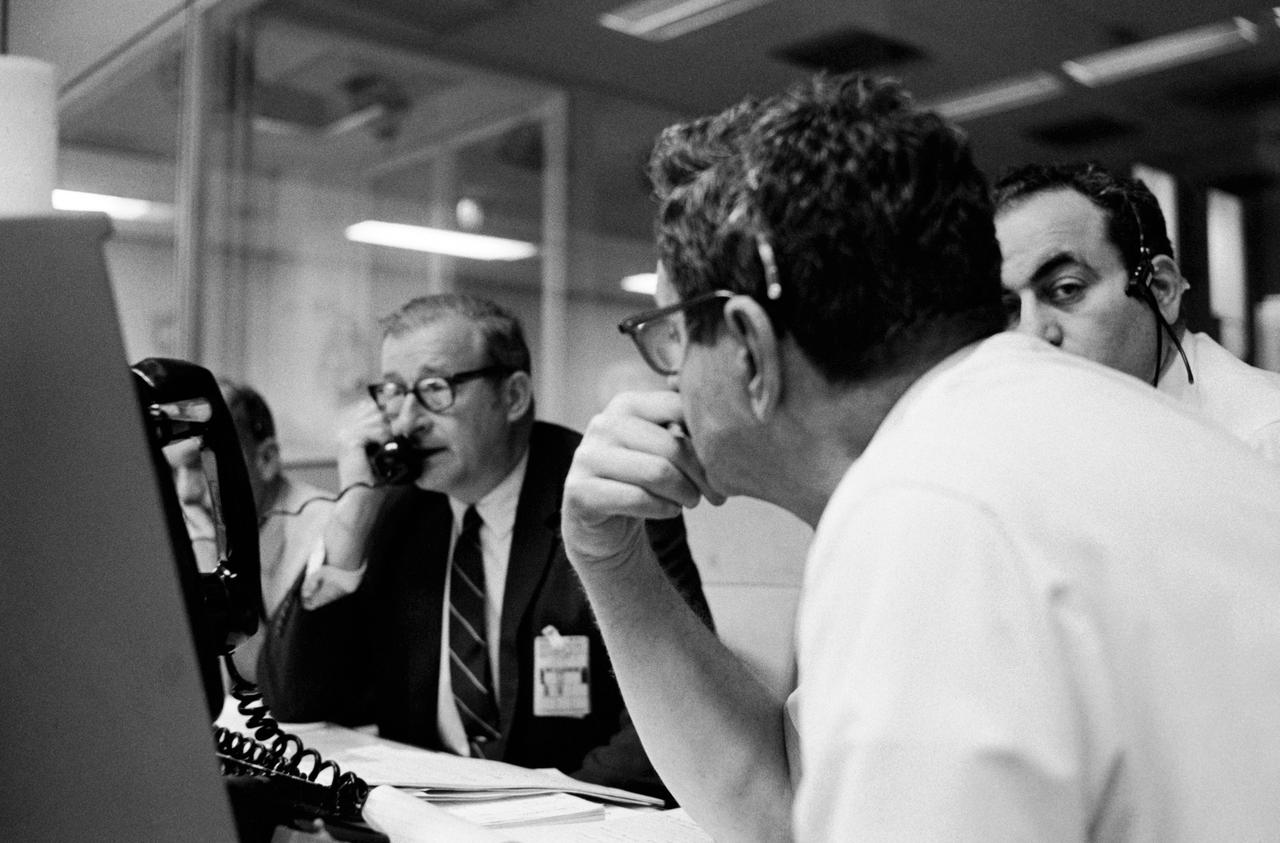
S70-34903 (14 April 1970) --- Dr. Thomas O. Paine, Administrator, National Aeronautics and Space Administration (NASA), talks on the telephone to President Richard M. Nixon. Dr. Paine is seated at his console in the Mission Operations Control Room (MOCR) at the Mission Control Center (MCC), Manned Spacecraft Center (MSC). Also pictured are Dr. Rocco Petrone, Apollo program director, Office Manned Spaceflight, NASA Headquarters (facing camera); and Chester M. Lee, Apollo mission director, Office of Manned Spaceflight, NASA Headquarters (HQ). Dr. Paine and the President were discussing the revised Apollo 13 flight plan following discovery of an oxygen cell failure in the Apollo 13 spacecraft several hours earlier.
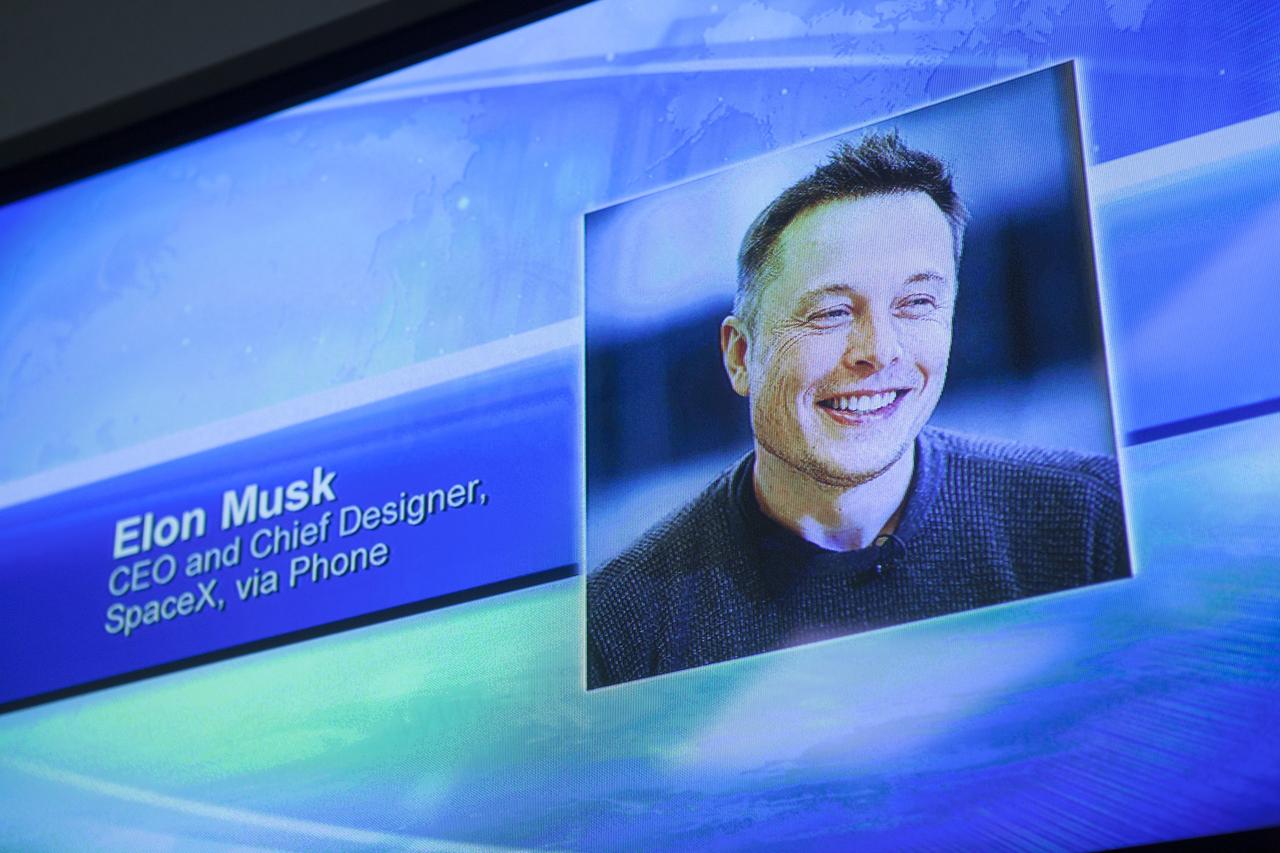
CAPE CANAVERAL, Fla. - An image of SpaceX CEO and chief designer Elon Musk is displayed in the NASA Press Site news auditorium at Kennedy Space Center in Florida during a SpaceX-3 post-launch news conference. Musk participated in the conference by telephone. SpaceX-3 launched at 3:25 p.m. EDT aboard a Falcon 9 rocket carrying a Dragon capsule from Space Launch Complex 40 on Cape Canaveral Air Force Station. Dragon is making its fourth trip to the space station. The SpaceX-3 mission, carrying almost 2.5 tons of supplies, technology and science experiments, is the third of 12 flights through a $1.6 billion NASA Commercial Resupply Services contract. Dragon's cargo will support more than 150 experiments that will be conducted during the station's Expeditions 39 and 40. For more information, visit http://www.nasa.gov/mission_pages/station/structure/launch/index.html. Photo credit: NASA/Kim Shiflett
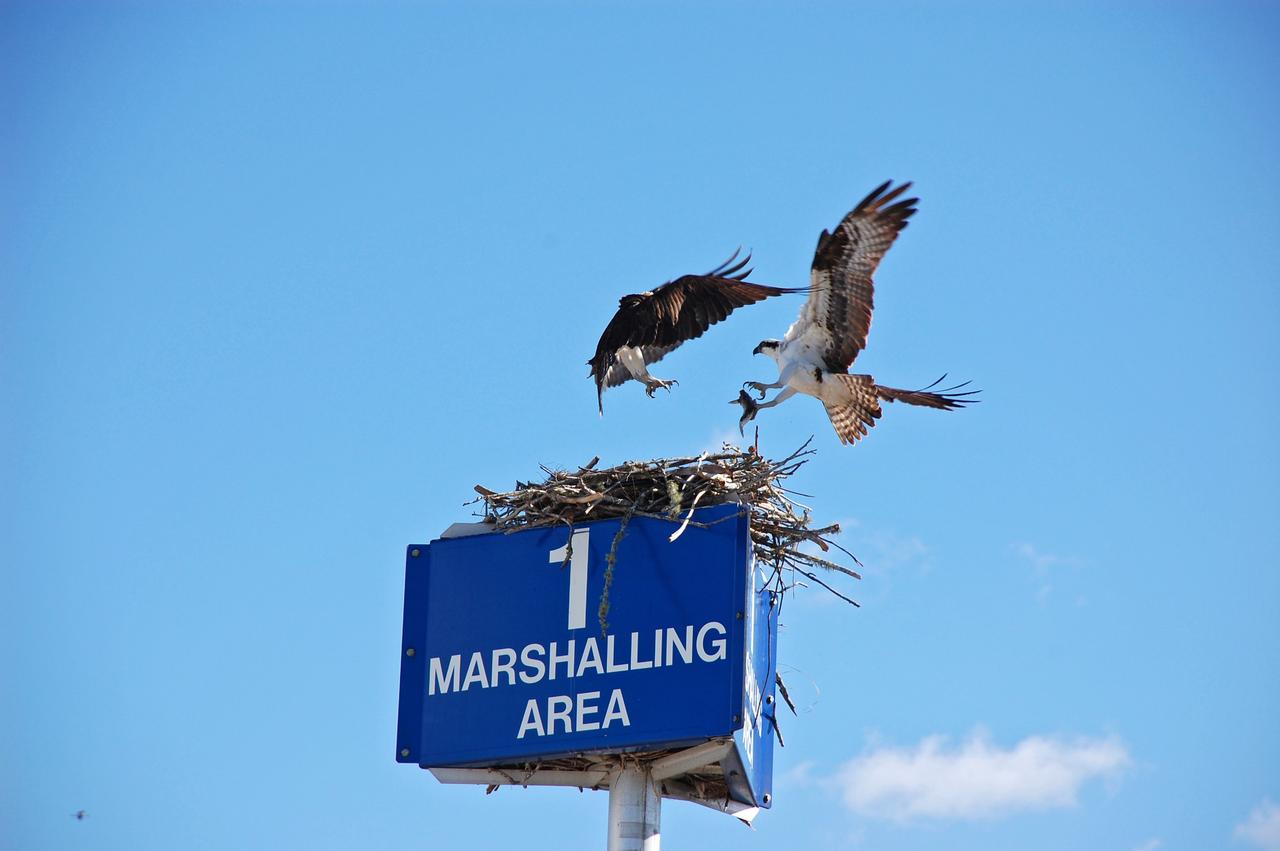
CAPE CANAVERAL, Fla. – A pair of ospreys perform an aerial dance around their nest near the NASA News Center at NASA's Kennedy Space Center in Florida. The bird at right is carrying a fish in its talons, the sole source of its diet. The osprey, also called fish hawk, is well adapted for capturing fish, which make up its entire diet. The soles of the birds' feet are equipped with sharp, spiny projections that give the bird a firm grip on its slippery prey. Nests of ospreys are bulky masses of sticks and debris placed in a tree, on rocks, flat ground or telephone poles. Many nests exist around the Launch Complex 39 Area at the center. The bird is one of more than 500 species of birds that co-exist at the center and the surrounding Merritt Island National Wildlife Refuge. Photo credit: NASA/Ben Smelgelsky
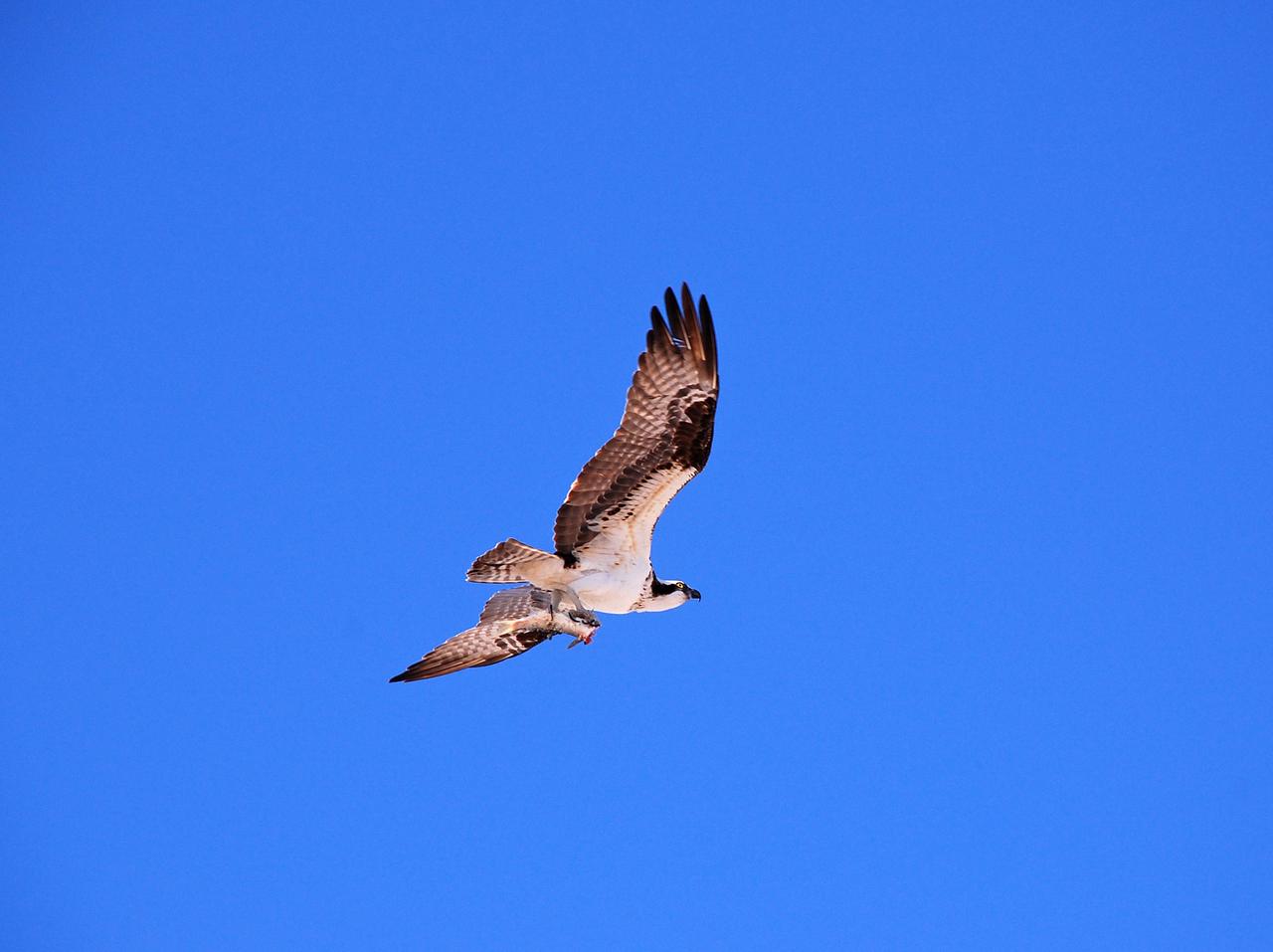
CAPE CANAVERAL, Fla. – An osprey carries its food in its talons as it flies to its nest near the NASA News Center at NASA's Kennedy Space Center in Florida. The osprey, also called fish hawk, is well adapted for capturing fish, which make up its entire diet. The soles of the birds' feet are equipped with sharp, spiny projections that give the bird a firm grip on its slippery prey. Nests of ospreys are bulky masses of sticks and debris placed in a tree, on rocks, flat ground or telephone poles. Many nests exist around the Launch Complex 39 Area at the center. The bird is one of more than 500 species of birds that co-exist at the center and the surrounding Merritt Island National Wildlife Refuge. Photo credit: NASA/Ben Smelgelsky
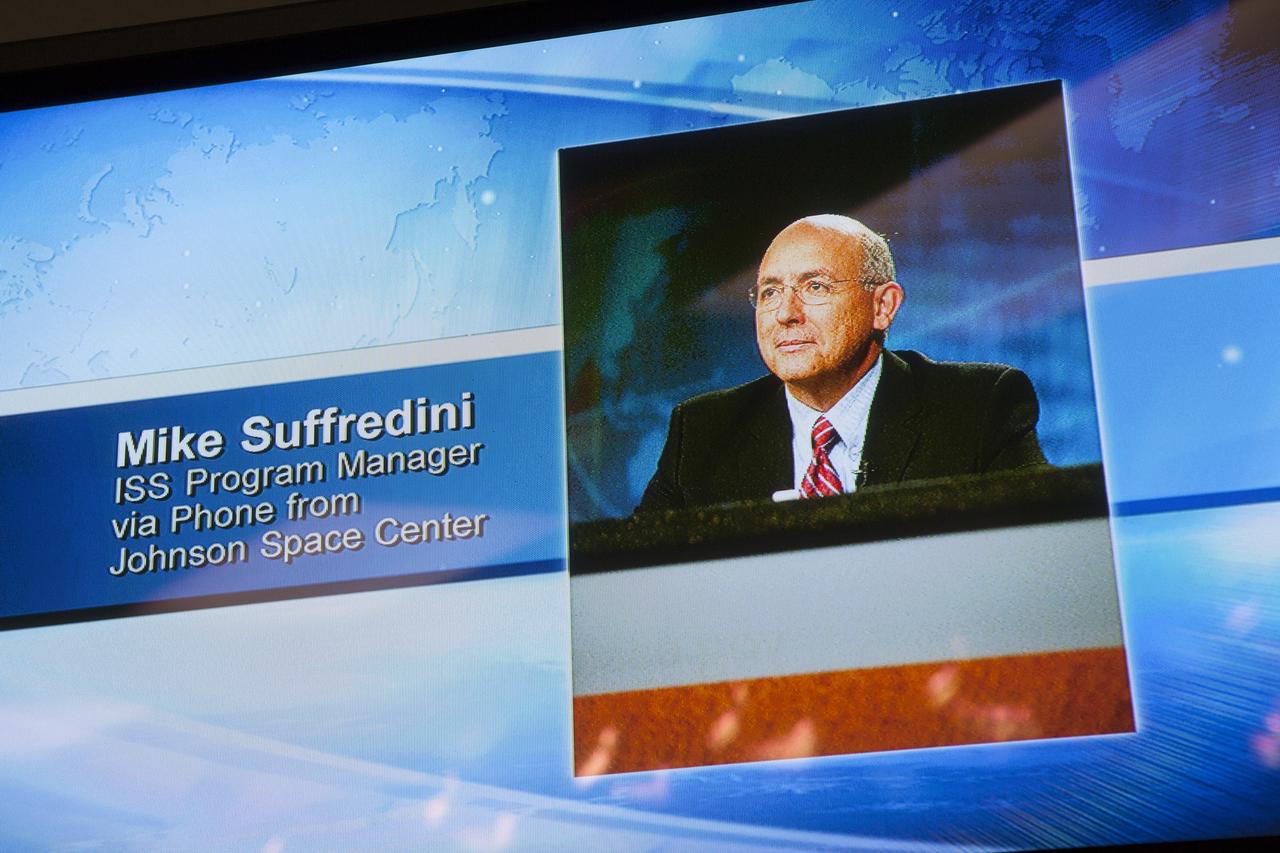
CAPE CANAVERAL, Fla. – During a news conference at NASA's Kennedy Space Center in Florida, agency and contractor officials discussed preparations for the launch of the SpaceX-3 Commercial Resupply Services mission to the International Space Station. Mike Suffredini, NASA's ISS program manager, participated in the briefing by telephone from the agency's Johnson Space Center. Scheduled for launch on April 14, 2014 atop a Falcon 9 rocket, Dragon spacecraft will be marking its fourth trip to the space station. The SpaceX-3 mission carrying almost 2.5 tons of supplies, technology and science experiments is the third of 12 flights contracted by NASA to resupply the orbiting laboratory. For more information, visit http://www.nasa.gov/mission_pages/station/structure/launch/index.html Photo credit: NASA/Kim Shiflett
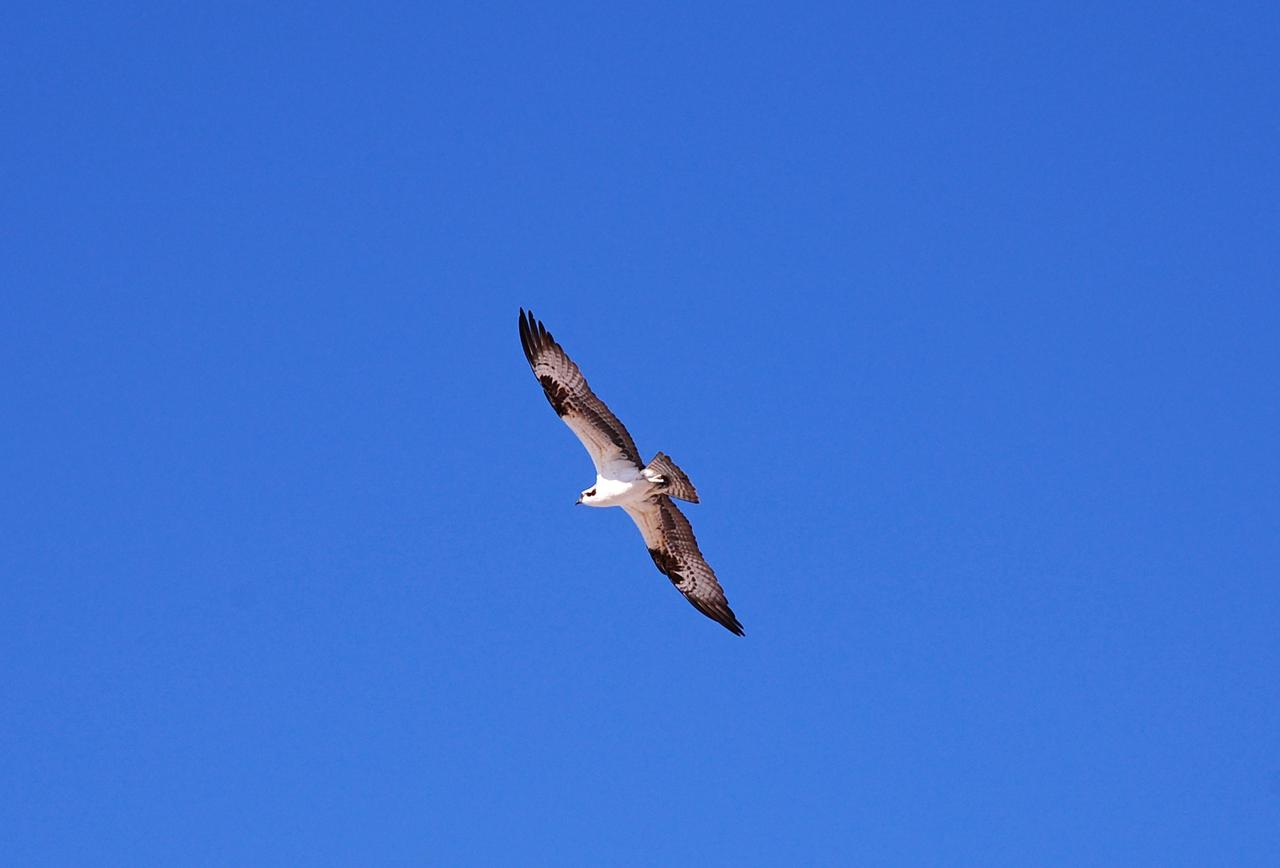
CAPE CANAVERAL, Fla. – An osprey flies high near the NASA News Center at NASA's Kennedy Space Center in Florida returning to its nest nearby. The osprey, also called fish hawk, is well adapted for capturing fish, which make up its entire diet. The soles of the birds' feet are equipped with sharp, spiny projections that give the bird a firm grip on its slippery prey. Nests of ospreys are bulky masses of sticks and debris placed in a tree, on rocks, flat ground or telephone poles. Many nests exist around the Launch Complex 39 Area at the center. The bird is one of more than 500 species of birds that co-exist at the center and the surrounding Merritt Island National Wildlife Refuge. Photo credit: NASA/Ben Smelgelsky
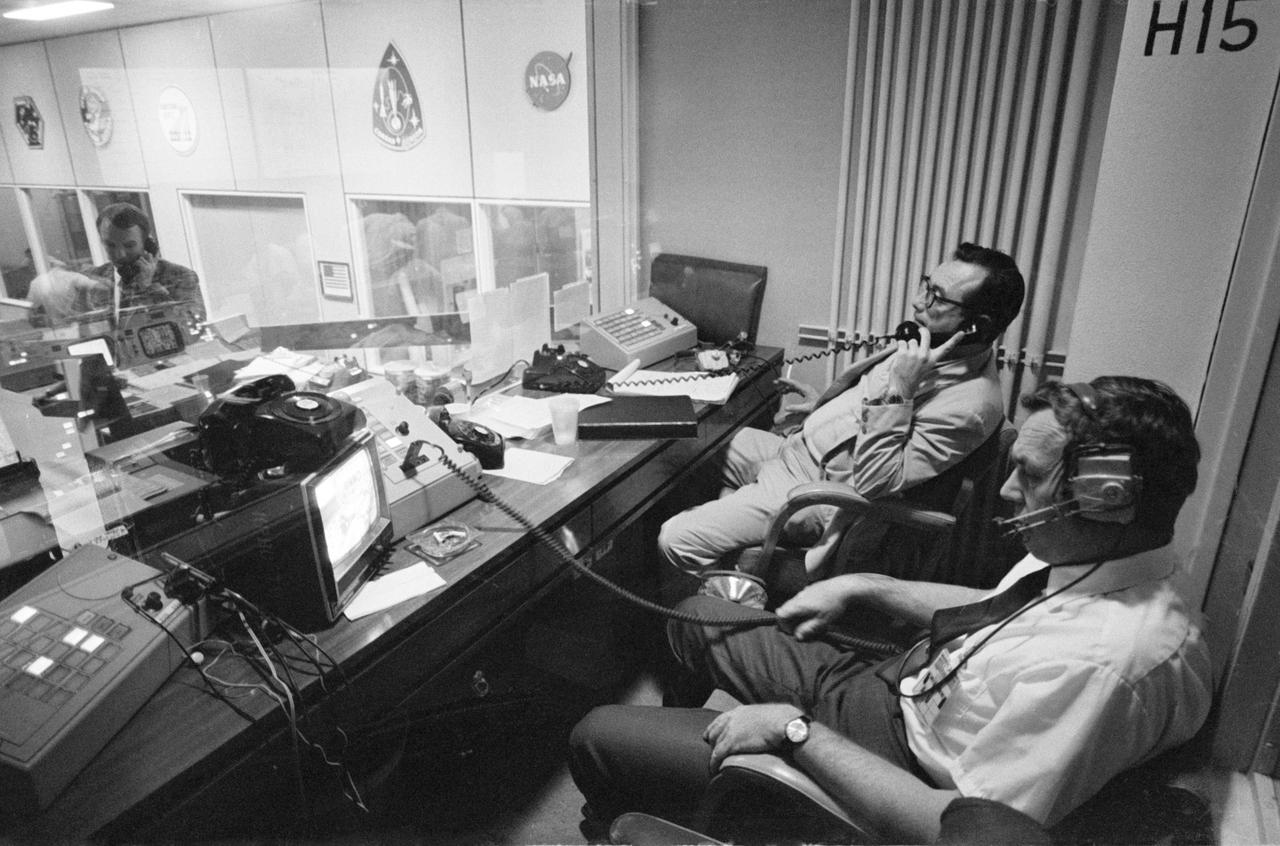
S70-35012 (15 April 1970) --- Two phases of busy activity during critical moments of the Apollo 13 mission are reflected in this view in the Mission Control Center, Building 30, Manned Spacecraft Center. In the foreground, Henry Simmons (left) of Newsweek magazine and John E. Riley, public information specialist, Public Affairs Office, MSC, man their positions in the Press Room. At extreme left of photo, Gerald D. Griffin, Shift 2 flight director, talks on telephone in Mission Operations Control Room. When this photograph was taken, the Apollo 13 lunar landing had been canceled, and the problem-plagued Apollo 13 crewmen were in trans-Earth trajectory attempting to bring their crippled spacecraft back home.
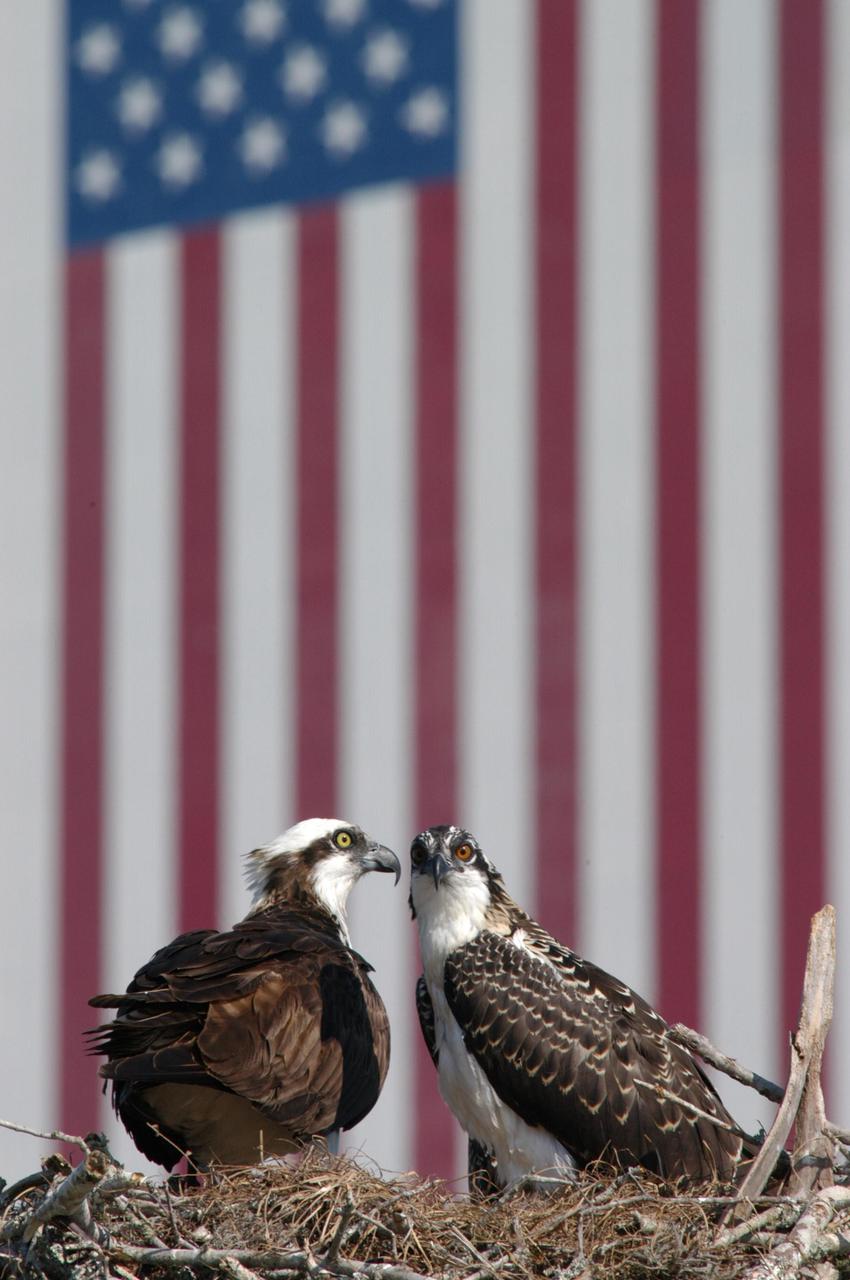
KENNEDY SPACE CENTER, FLA. -- A mother osprey (left) sits protectively next to one of her chicks in the nest situated at the top of a pole in the parking lot at the NASA News Center at Kennedy Space Center. Behind the nest can be seen the immense flag painted on the side of the Vehicle Assembly Building. This is the third year the ospreys have raised a family at the News Center. Known as a fish hawk, ospreys select sites of opportunity, from trees and telephone poles to rocks or even flat ground. In the United States they are found from Alaska and Newfoundland to Florida and the Gulf Coast. Osprey nests are found throughout the Kennedy Space Center and nearby Merritt Island National Wildlife Refuge, which shares a boundary with the Center. Photo credit: NASA/George Shelton
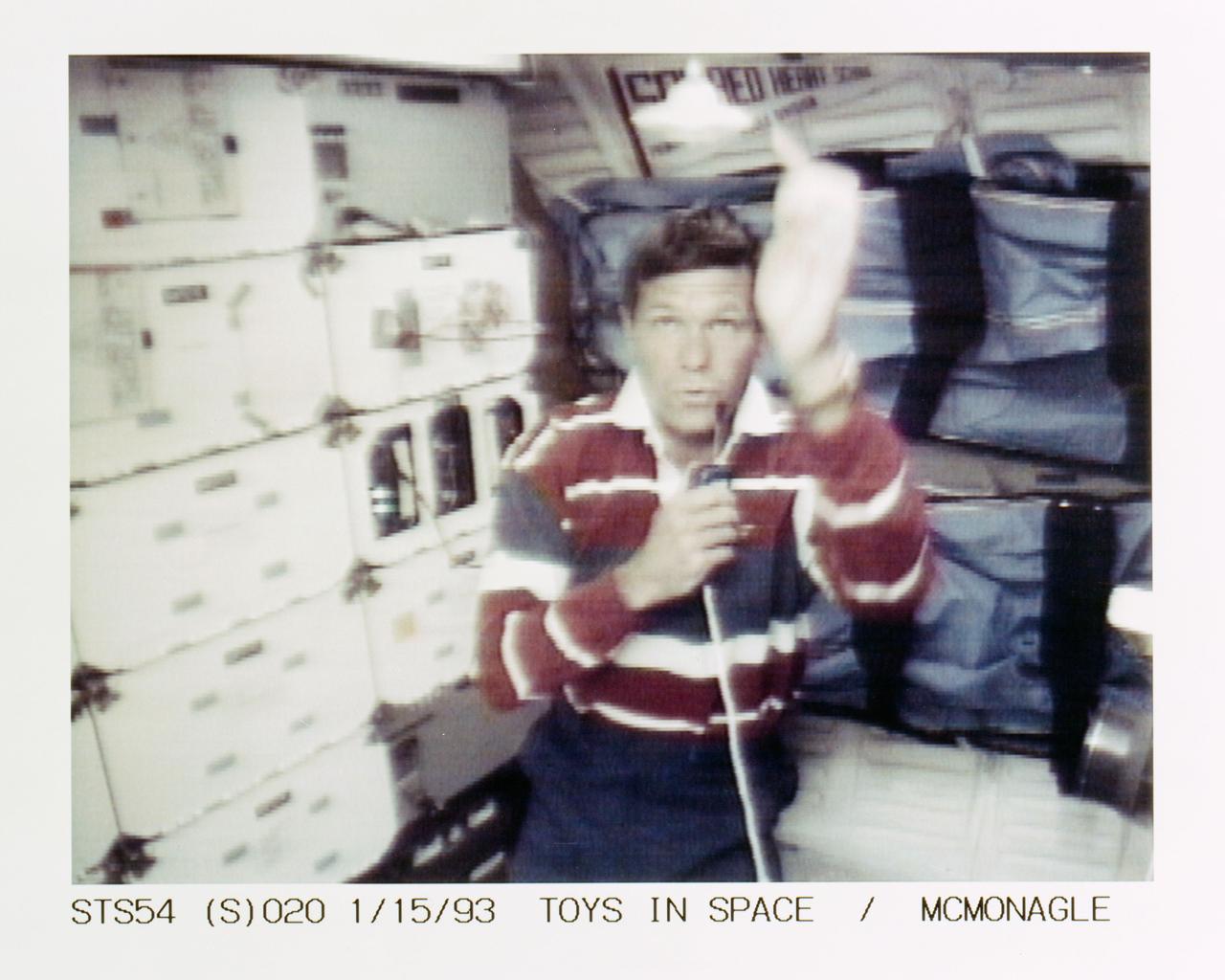
STS054-S-020 (15 Jan 1993) --- McMonagle watches as a top spins above his head on the middeck of the Earth-orbiting Endeavour. The demonstration was part of a lengthy "physics of toys" program conducted by all five crewmembers on their third day aboard the Shuttle. Through telephone and TV downlinks, students in four schools around the country participated in a special lesson to discover how specific toys function differently in the classroom compared to those on the Shuttle. Students at Westwood Elementary School in Flint, Michigan -- McMonagle's hometown -- asked him questions about the several toys he demonstrated. The top demonstrates gyroscopic motion, the center of mass and angular momentum. The entire collection of toys will be videotaped for an educational program to be distributed to schools in the autumn. The scene was downlinked at 18:01:59:11 GMT, Jan. 15, 1993.
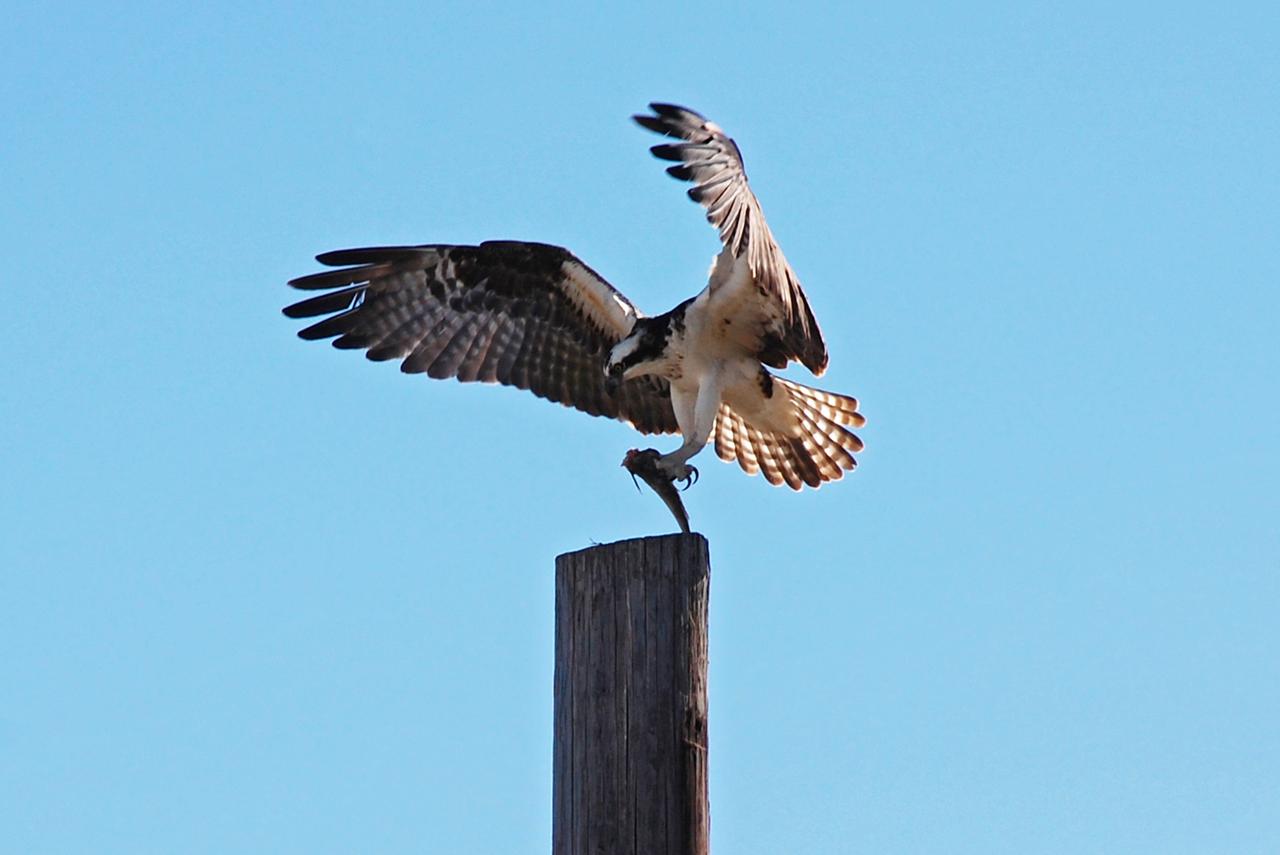
CAPE CANAVERAL, Fla. – Near the NASA News Center at NASA's Kennedy Space Center in Florida, the osprey prepares to land on a pole with its meal in its talons. The osprey, also called fish hawk, is well adapted for capturing fish, which make up its entire diet. The soles of the birds' feet are equipped with sharp, spiny projections that give the bird a firm grip on its slippery prey. Nests of ospreys are bulky masses of sticks and debris placed in a tree, on rocks, flat ground or telephone poles. Many nests exist around the Launch Complex 39 Area at the center. The bird is one of more than 500 species of birds that co-exist at the center and the surrounding Merritt Island National Wildlife Refuge. Photo credit: NASA/Ben Smelgelsky
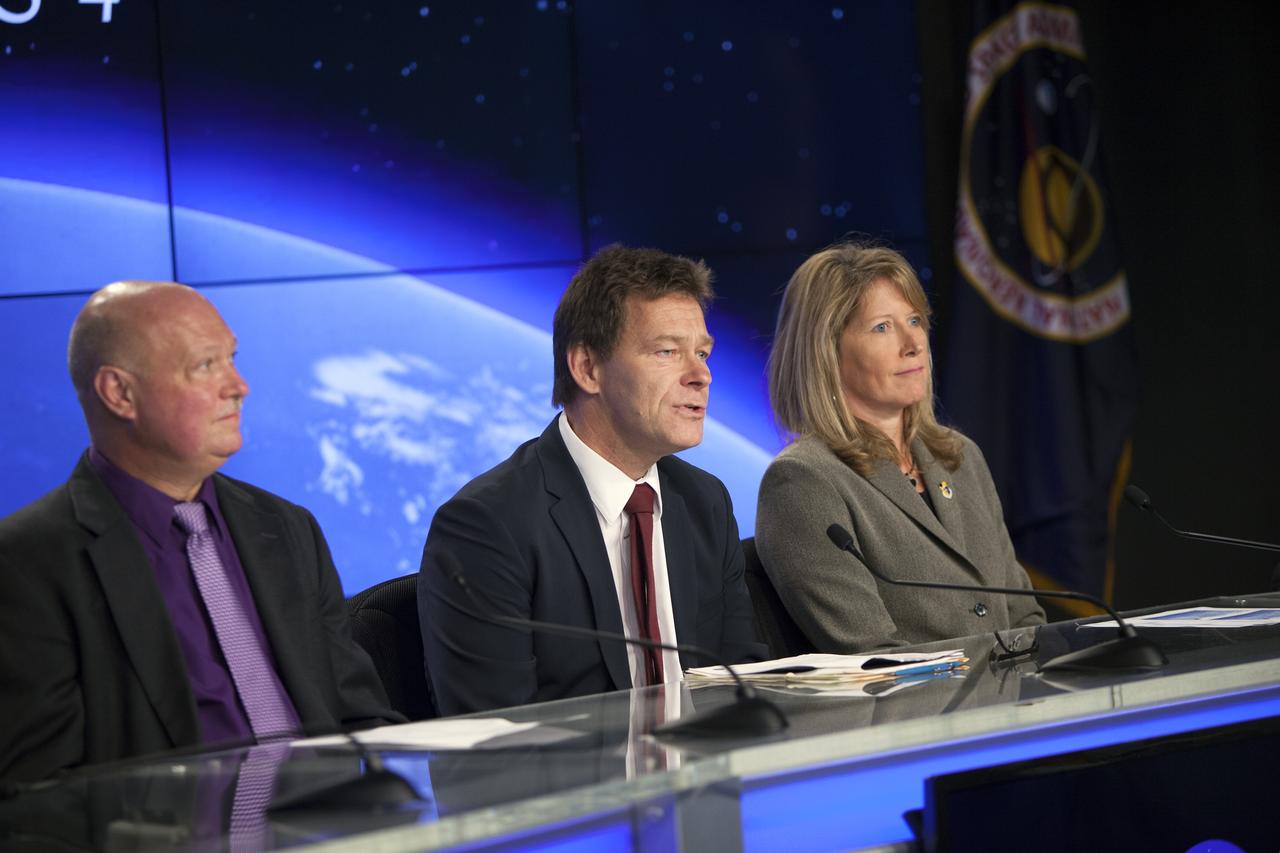
CAPE CANAVERAL, Fla. – In the Kennedy Space Center’s Press Site auditorium, members of news media are briefed on preparations for the launch of the SpaceX CRS-4 mission to resupply the International Space Station. From left are Mike Curie of NASA Public Affairs, Hans Koenigsmann, vice president of Mission Assurance with SpaceX, and Kathy Winters, launch weather officer for the 45th Weather Squadron. Dan Hartman, deputy program manager of the International Space Station Program, participated by telephone. The mission is the fourth of 12 SpaceX flights NASA contracted with the company to resupply the space station. It will be the fifth trip by a Dragon spacecraft to the orbiting laboratory. The spacecraft’s 2.5 tons of supplies, science experiments, and technology demonstrations include critical materials to support 255 science and research investigations that will occur during the station's Expeditions 41 and 42. Liftoff is targeted for an instantaneous window at 2:14 a.m. EDT. To learn more about the mission, visit http://www.nasa.gov/mission_pages/station/structure/launch/index.html Photo credit: NASA/Jim Grossmann
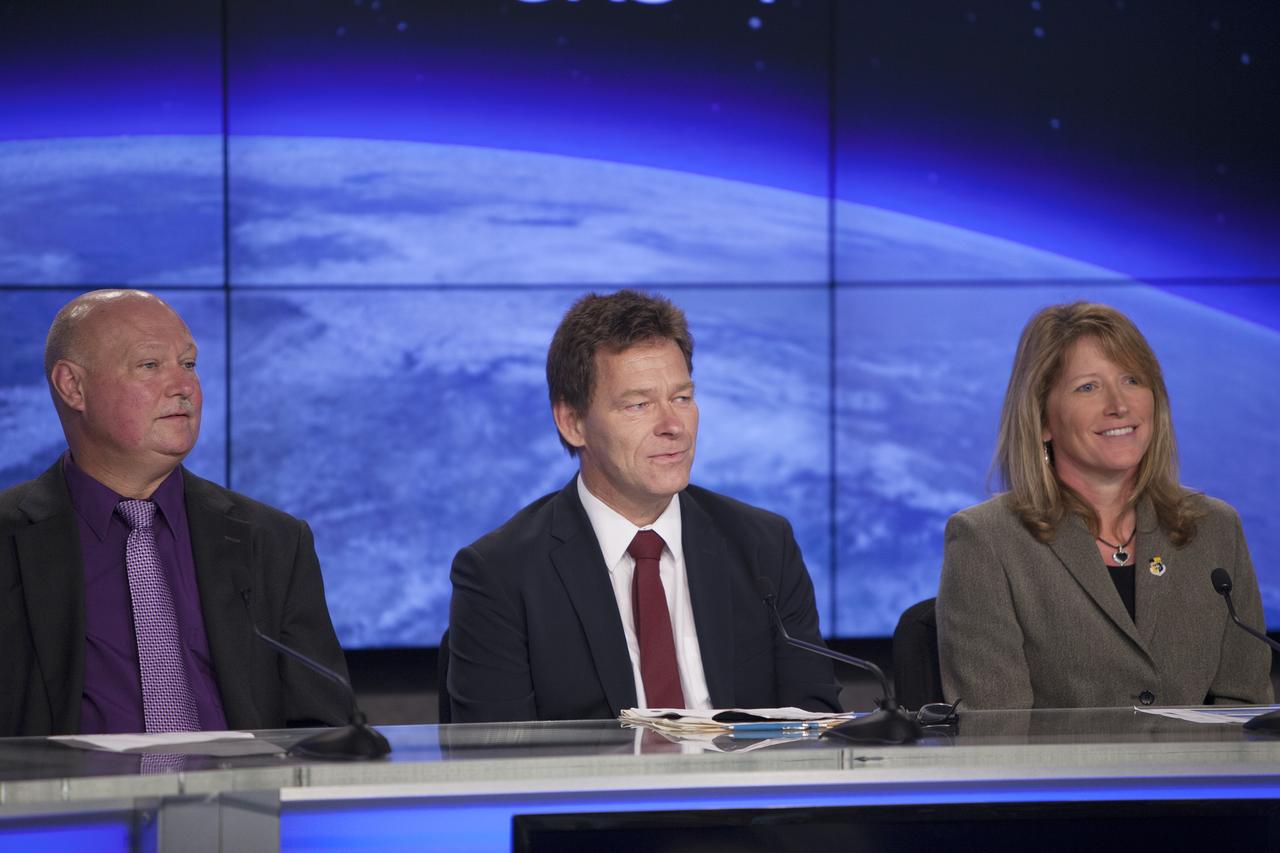
CAPE CANAVERAL, Fla. – In the Kennedy Space Center’s Press Site auditorium, members of news media are briefed on preparations for the launch of the SpaceX CRS-4 mission to resupply the International Space Station. From left are Mike Curie of NASA Public Affairs, Hans Koenigsmann, vice president of Mission Assurance with SpaceX, and Kathy Winters, launch weather officer for the 45th Weather Squadron. Dan Hartman, deputy program manager of the International Space Station Program, participated by telephone. The mission is the fourth of 12 SpaceX flights NASA contracted with the company to resupply the space station. It will be the fifth trip by a Dragon spacecraft to the orbiting laboratory. The spacecraft’s 2.5 tons of supplies, science experiments, and technology demonstrations include critical materials to support 255 science and research investigations that will occur during the station's Expeditions 41 and 42. Liftoff is targeted for an instantaneous window at 2:14 a.m. EDT. To learn more about the mission, visit http://www.nasa.gov/mission_pages/station/structure/launch/index.html Photo credit: NASA/Jim Grossmann
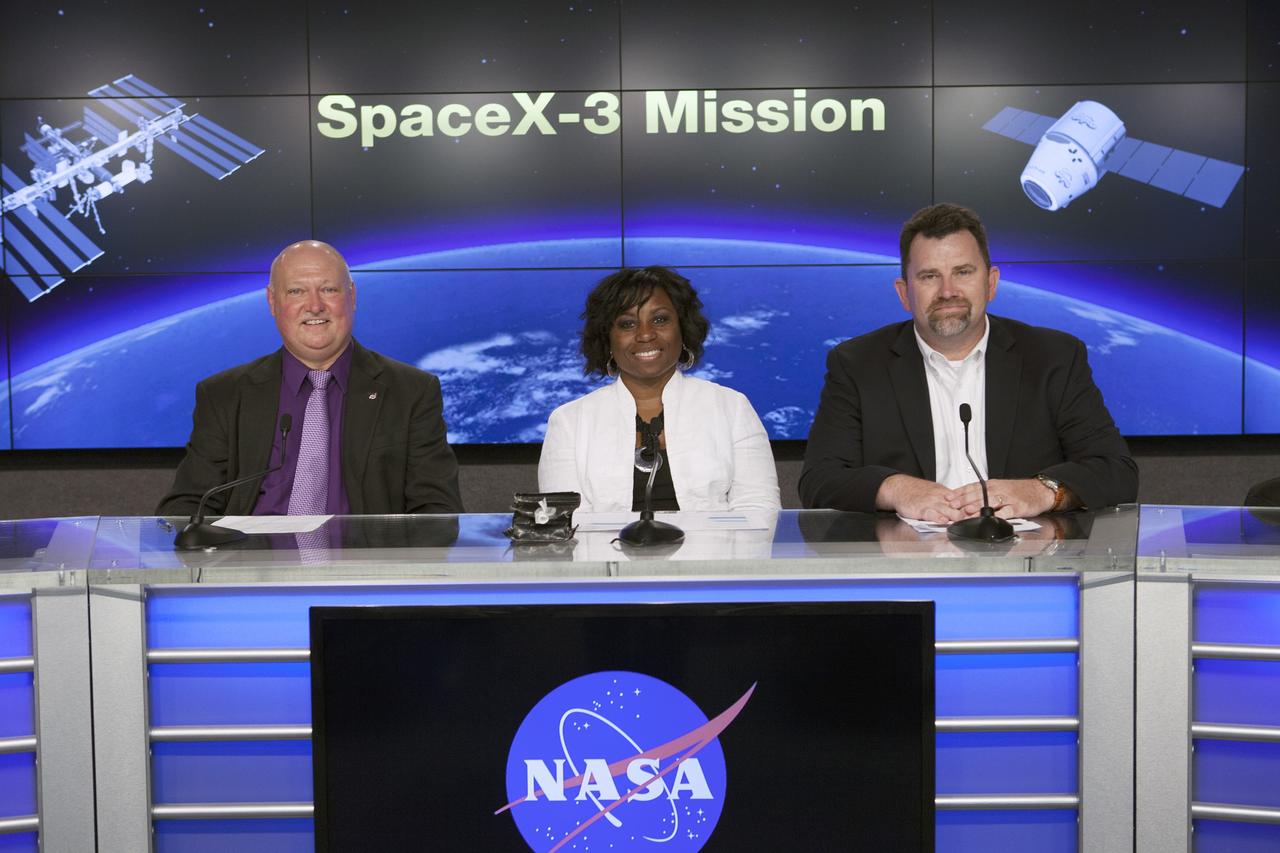
CAPE CANAVERAL, Fla. – During a news conference at NASA's Kennedy Space Center in Florida, agency and contractor officials discussed science and technology experiment payloads being transported to the International Space Station by the SpaceX-3 Commercial Resupply Services mission. Participating in the briefing, from the left, are Mike Curie of NASA Public Affairs, Camille Alleyne, assistant program scientist in the NASA ISS Program Science Office, and Michael Roberts, senior research pathway manager with the Center for the Advancement of Science in Space CASIS. Andy Petro of the agency's Space Technology Mission Directorate participated in the briefing by telephone from NASA Headquarters in Washington D.C. Scheduled for launch on April 14, 2014 atop a Falcon 9 rocket, the Dragon spacecraft will be marking its fourth trip to the space station. The SpaceX-3 mission carrying almost 2.5 tons of supplies, technology and science experiments is the third of 12 flights contracted by NASA to resupply the orbiting laboratory. For more information, visit http://www.nasa.gov/mission_pages/station/structure/launch/index.html Photo credit: NASA/ Kim Shiflett
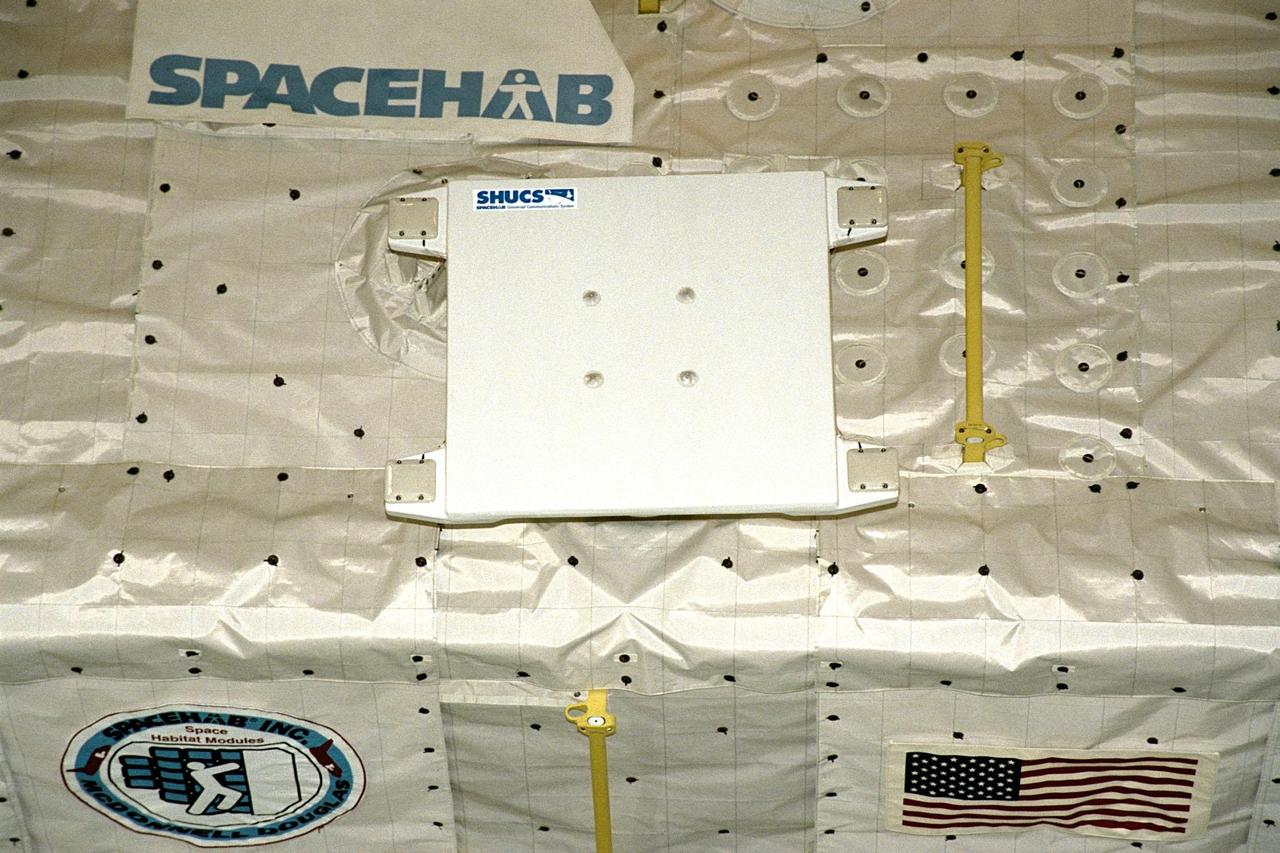
The SPACEHAB Single Module, is shown from the aft, with the SPACEHAB Universal Communication System (SHUCS) payload attached, in Discovery's payload bay shortly before the payload bay doors are closed for the flight of STS-91 at Launch Pad 39A. Launch is planned for June 2 with a window opening around 6:10 p.m. EDT. The single SPACEHAB module houses experiments to be performed by the astronauts and serves as a cargo carrier for items to be transferred to and from the Russian Space Station Mir. Flying for the first time, the SHUCS payload will be used to send and receive telephone voice and faxes, as well as provide video images of the crew from the SPACEHAB module, to test the improved availability of payload uplink and downlink communications with the ground. STS-91 will also feature the ninth Shuttle docking with the Russian Space Station Mir, the first Mir docking for Discovery, the conclusion of Phase I of the joint U.S.-Russian International Space Station Program, and the first flight of the new Space Shuttle super lightweight external tank. The STS-91 flight crew includes Commander Charles Precourt; Pilot Dominic Gorie; and Mission Specialists Wendy B. Lawrence; Franklin Chang-Diaz, Ph.D.; Janet Kavandi, Ph.D.; and Valery Ryumin, with the Russian Space Agency. Andrew Thomas, Ph.D., will be returning to Earth with the crew after living more than four months aboard Mir
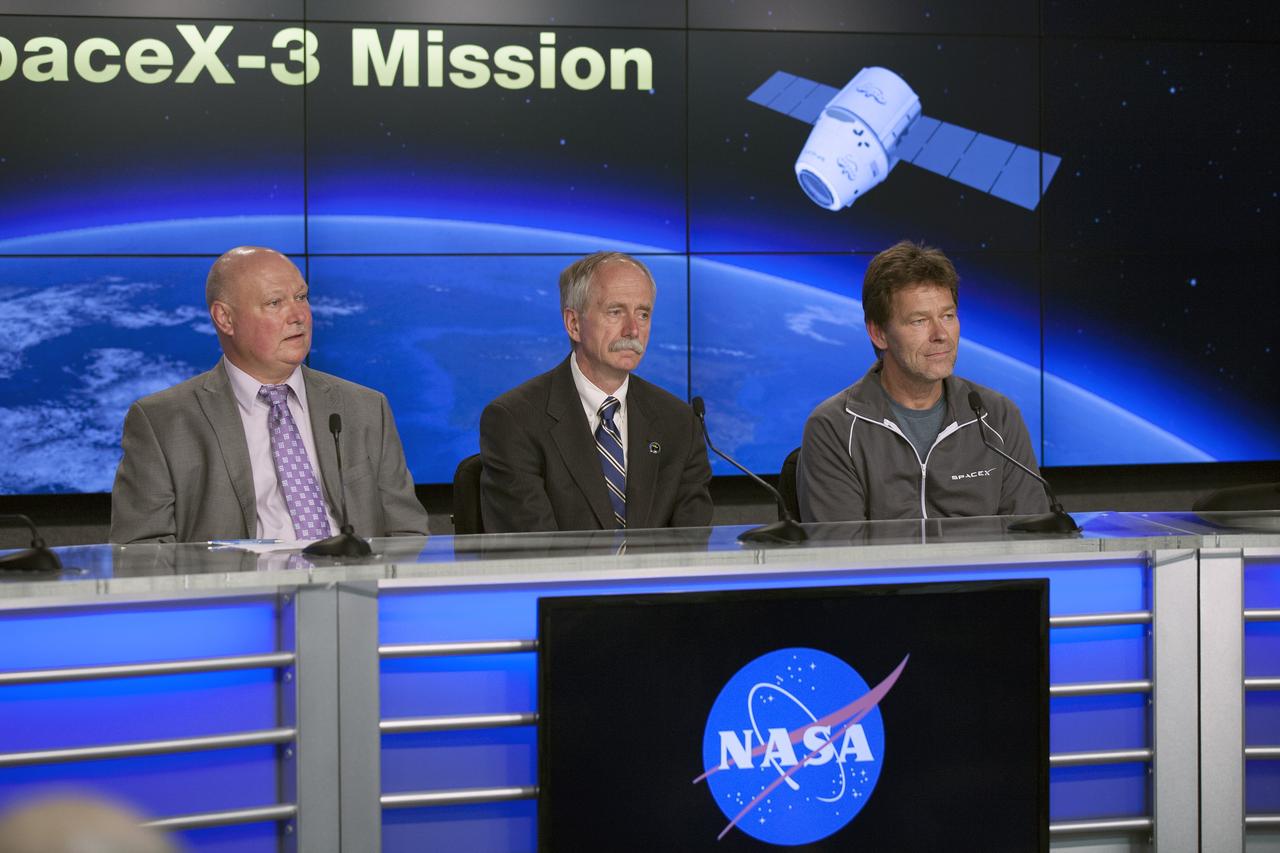
CAPE CANAVERAL, Fla. - Participating in a SpaceX-3 post-launch news conference in the NASA Press Site television auditorium at Kennedy Space Center in Florida are, from left, Michael Curie, NASA Public Affairs, William Gersteinmeier, NASA associate administrator for Human Exploration and Operations, and Hans Koenigsmann, SpaceX vice president of Mission Assurance. SpaceX CEO and chief designer Elon Musk participated in the conference by telephone. SpaceX-3 launched at 3:25 p.m. EDT aboard a Falcon 9 rocket carrying a Dragon capsule from Space Launch Complex 40 on Cape Canaveral Air Force Station. Dragon is making its fourth trip to the space station. The SpaceX-3 mission, carrying almost 2.5 tons of supplies, technology and science experiments, is the third of 12 flights through a $1.6 billion NASA Commercial Resupply Services contract. Dragon's cargo will support more than 150 experiments that will be conducted during the station's Expeditions 39 and 40. For more information, visit http://www.nasa.gov/mission_pages/station/structure/launch/index.html. Photo credit: NASA/Kim Shiflett
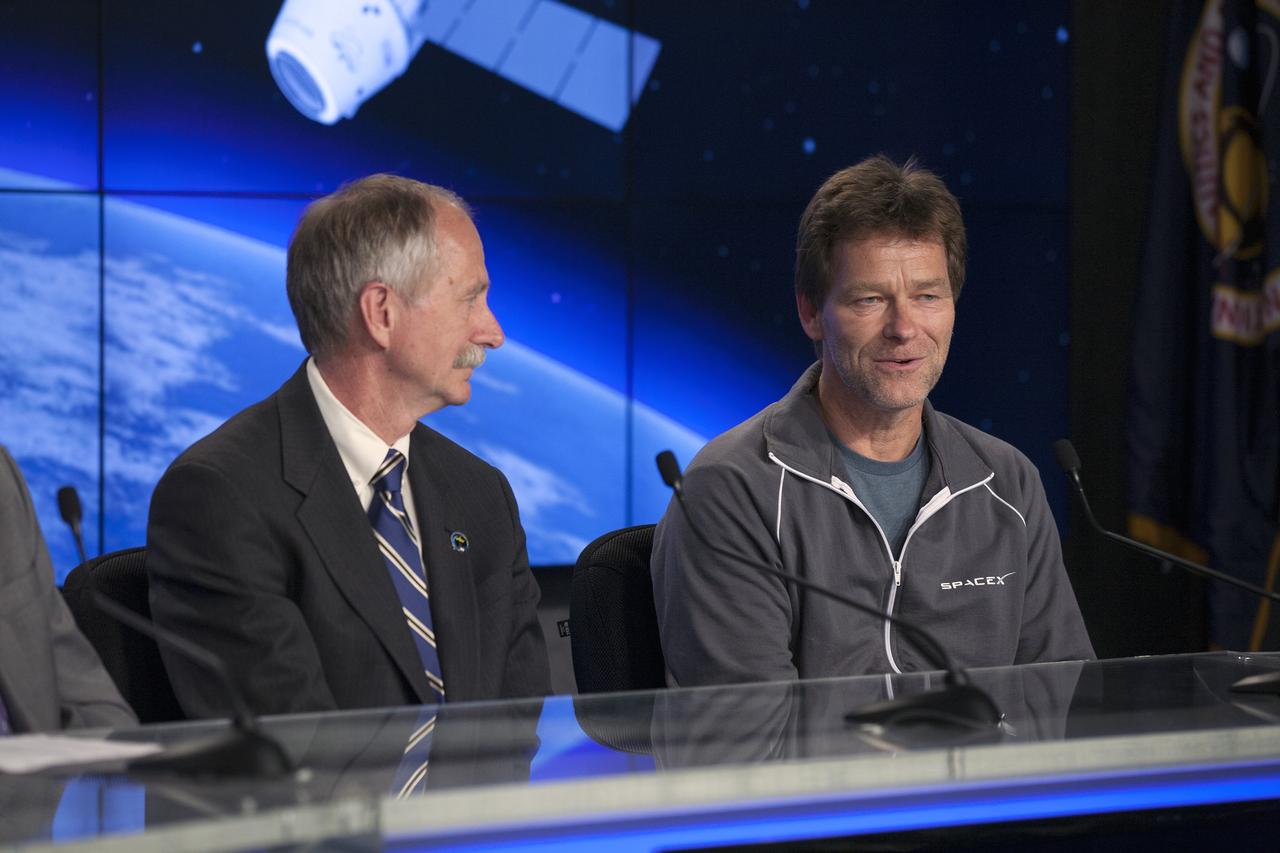
CAPE CANAVERAL, Fla. - Participating in a SpaceX-3 post-launch news conference in the NASA Press Site television auditorium at Kennedy Space Center in Florida are, from left, William Gersteinmeier, NASA associate administrator for Human Exploration and Operations, and Hans Koenigsmann, SpaceX vice president of Mission Assurance. SpaceX CEO and chief designer Elon Musk participated in the conference by telephone. SpaceX-3 launched at 3:25 p.m. EDT aboard a Falcon 9 rocket carrying a Dragon capsule from Space Launch Complex 40 on Cape Canaveral Air Force Station. Dragon is making its fourth trip to the space station. The SpaceX-3 mission, carrying almost 2.5 tons of supplies, technology and science experiments, is the third of 12 flights through a $1.6 billion NASA Commercial Resupply Services contract. Dragon's cargo will support more than 150 experiments that will be conducted during the station's Expeditions 39 and 40. For more information, visit http://www.nasa.gov/mission_pages/station/structure/launch/index.html. Photo credit: NASA/Kim Shiflett
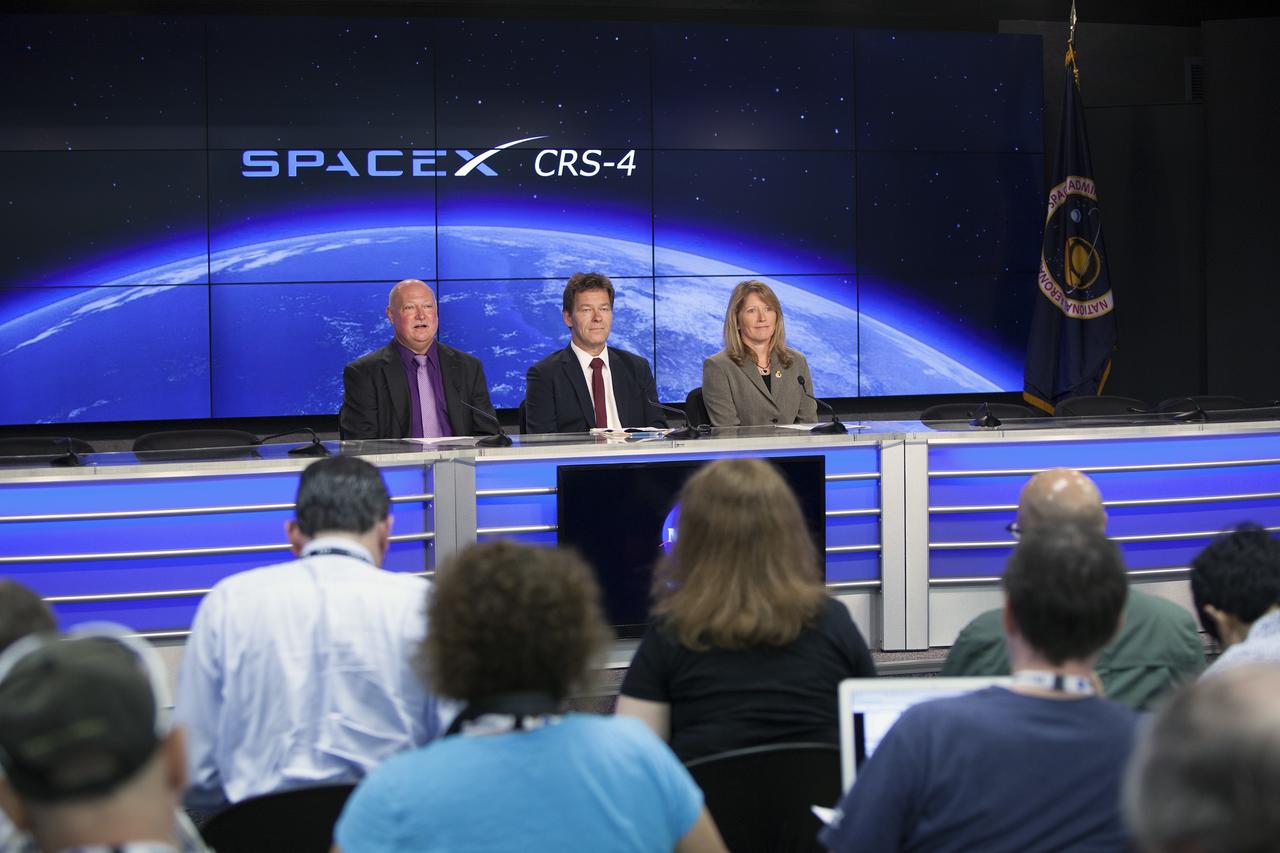
CAPE CANAVERAL, Fla. – In the Kennedy Space Center’s Press Site auditorium, members of news media are briefed on preparations for the launch of the SpaceX CRS-4 mission to resupply the International Space Station. From left are Mike Curie of NASA Public Affairs, Hans Koenigsmann, vice president of Mission Assurance with SpaceX, and Kathy Winters, launch weather officer for the 45th Weather Squadron. Dan Hartman, deputy program manager of the International Space Station Program, participated by telephone. The mission is the fourth of 12 SpaceX flights NASA contracted with the company to resupply the space station. It will be the fifth trip by a Dragon spacecraft to the orbiting laboratory. The spacecraft’s 2.5 tons of supplies, science experiments, and technology demonstrations include critical materials to support 255 science and research investigations that will occur during the station's Expeditions 41 and 42. Liftoff is targeted for an instantaneous window at 2:14 a.m. EDT. To learn more about the mission, visit http://www.nasa.gov/mission_pages/station/structure/launch/index.html Photo credit: NASA/Jim Grossmann
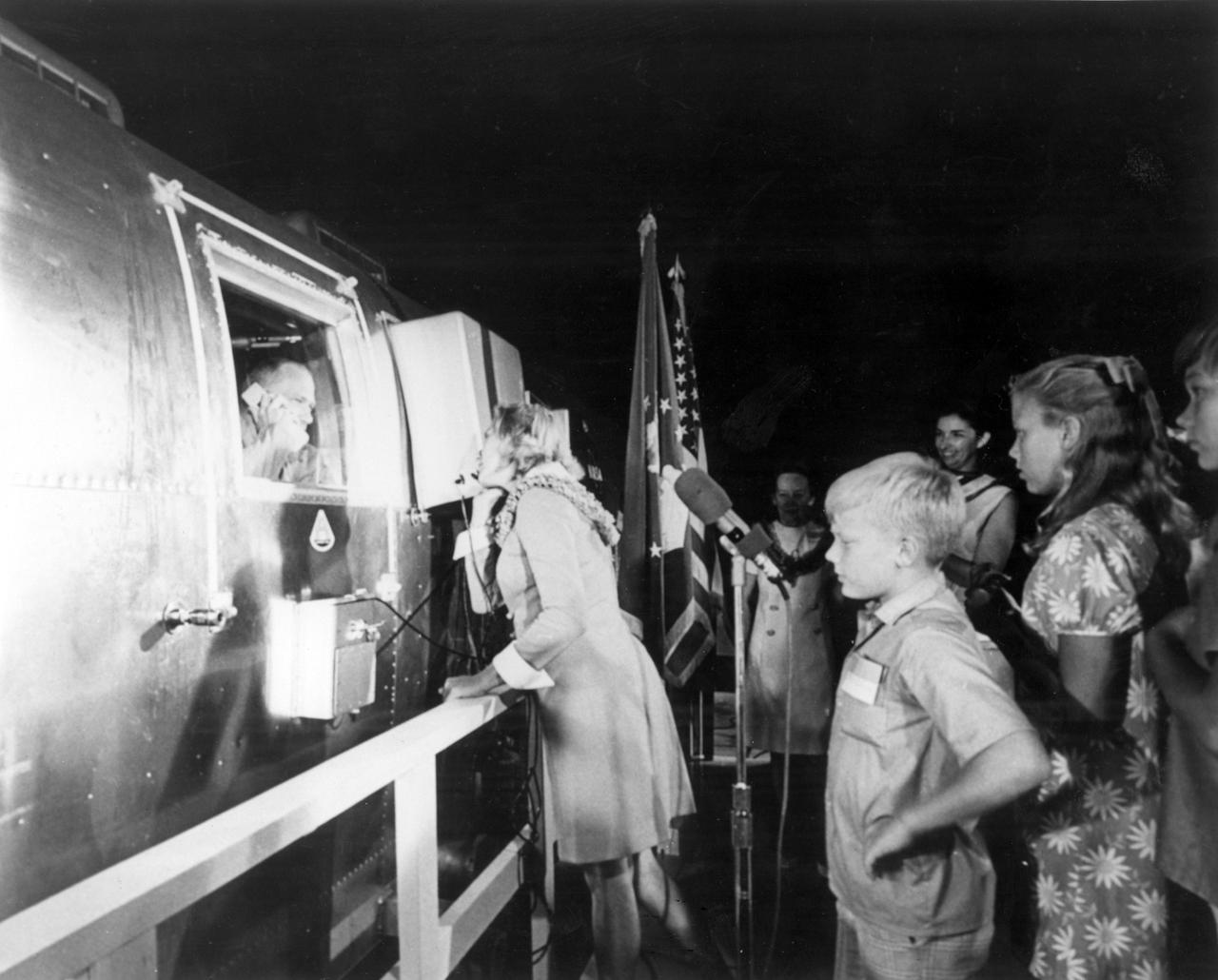
The Apollo 11 mission, the first manned lunar mission, launched from the Kennedy Space Center, Florida via the Marshall Space Flight Center (MSFC) developed Saturn V launch vehicle on July 16, 1969 and safely returned to Earth on July 24, 1969. Aboard the space craft were astronauts Neil A. Armstrong, commander; Michael Collins, Command Module (CM) pilot; and Edwin E. (Buzz) Aldrin Jr., Lunar Module (LM) pilot. The CM, piloted by Michael Collins remained in a parking orbit around the Moon while the LM, named “Eagle’’, carrying astronauts Neil Armstrong and Edwin Aldrin, landed on the Moon. During 2½ hours of surface exploration, the crew collected 47 pounds of lunar surface material for analysis back on Earth. The recovery operation took place in the Pacific Ocean where Navy para-rescue men recovered the capsule housing the 3-man Apollo 11 crew. The crew was airlifted to safety aboard the U.S.S. Hornet, where they were quartered in a Mobile Quarantine Facility (MQF) which served as their home until they reached the NASA Manned Spacecraft Center (MSC) Lunar Receiving Laboratory in Houston, Texas. On arrival at Ellington Air Force base near the MSC, the crew, still under a 21 day quarantine in the MQF, were greeted by their wives. Pictured here is Joan Aldrin, wife of Buzz Aldrin, speaking with her husband via telephone patch.
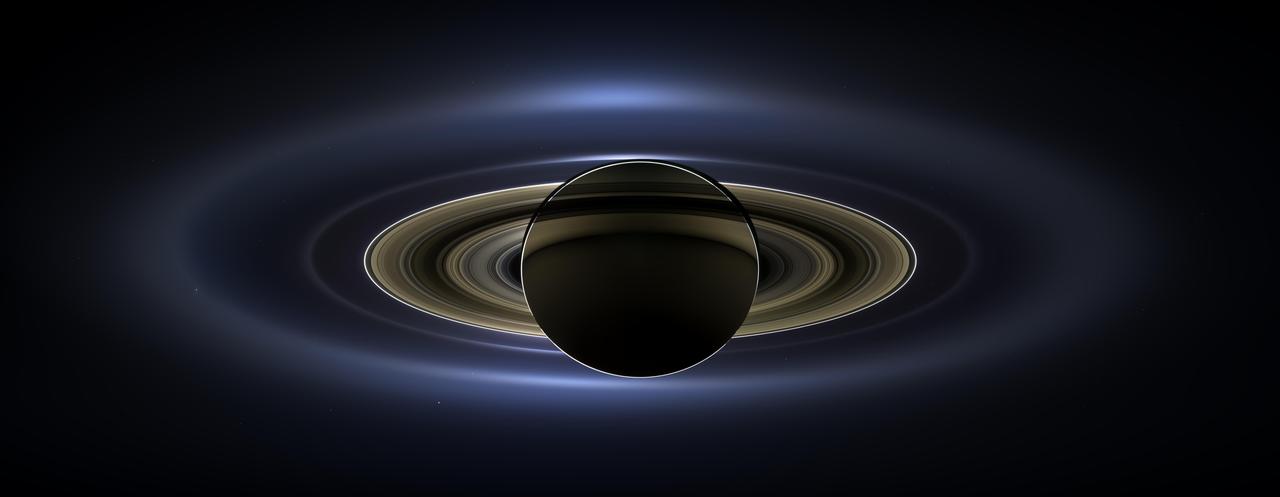
On July 19, 2013, in an event celebrated the world over, NASA's Cassini spacecraft slipped into Saturn's shadow and turned to image the planet, seven of its moons, its inner rings -- and, in the background, our home planet, Earth. With the sun's powerful and potentially damaging rays eclipsed by Saturn itself, Cassini's onboard cameras were able to take advantage of this unique viewing geometry. They acquired a panoramic mosaic of the Saturn system that allows scientists to see details in the rings and throughout the system as they are backlit by the sun. This mosaic is special as it marks the third time our home planet was imaged from the outer solar system; the second time it was imaged by Cassini from Saturn's orbit; and the first time ever that inhabitants of Earth were made aware in advance that their photo would be taken from such a great distance. With both Cassini's wide-angle and narrow-angle cameras aimed at Saturn, Cassini was able to capture 323 images in just over four hours. This final mosaic uses 141 of those wide-angle images. Images taken using the red, green and blue spectral filters of the wide-angle camera were combined and mosaicked together to create this natural-color view. A brightened version with contrast and color enhanced (Figure 1), a version with just the planets annotated (Figure 2), and an annotated version (Figure 3) are shown above. This image spans about 404,880 miles (651,591 kilometers) across. The outermost ring shown here is Saturn's E ring, the core of which is situated about 149,000 miles (240,000 kilometers) from Saturn. The geysers erupting from the south polar terrain of the moon Enceladus supply the fine icy particles that comprise the E ring; diffraction by sunlight gives the ring its blue color. Enceladus (313 miles, or 504 kilometers, across) and the extended plume formed by its jets are visible, embedded in the E ring on the left side of the mosaic. At the 12 o'clock position and a bit inward from the E ring lies the barely discernible ring created by the tiny, Cassini-discovered moon, Pallene (3 miles, or 4 kilometers, across). (For more on structures like Pallene's ring, see PIA08328). The next narrow and easily seen ring inward is the G ring. Interior to the G ring, near the 11 o'clock position, one can barely see the more diffuse ring created by the co-orbital moons, Janus (111 miles, or 179 kilometers, across) and Epimetheus (70 miles, or 113 kilometers, across). Farther inward, we see the very bright F ring closely encircling the main rings of Saturn. Following the outermost E ring counter-clockwise from Enceladus, the moon Tethys (662 miles, or 1,066 kilometers, across) appears as a large yellow orb just outside of the E ring. Tethys is positioned on the illuminated side of Saturn; its icy surface is shining brightly from yellow sunlight reflected by Saturn. Continuing to about the 2 o'clock position is a dark pixel just outside of the G ring; this dark pixel is Saturn's Death Star moon, Mimas (246 miles, or 396 kilometers, across). Mimas appears, upon close inspection, as a very thin crescent because Cassini is looking mostly at its non-illuminated face. The moons Prometheus, Pandora, Janus and Epimetheus are also visible in the mosaic near Saturn's bright narrow F ring. Prometheus (53 miles, or 86 kilometers, across) is visible as a faint black dot just inside the F ring and at the 9 o'clock position. On the opposite side of the rings, just outside the F ring, Pandora (50 miles, or 81 kilometers, across) can be seen as a bright white dot. Pandora and Prometheus are shepherd moons and gravitational interactions between the ring and the moons keep the F ring narrowly confined. At the 11 o'clock position in between the F ring and the G ring, Janus (111 miles, or 179 kilometers, across) appears as a faint black dot. Janus and Prometheus are dark for the same reason Mimas is mostly dark: we are looking at their non-illuminated sides in this mosaic. Midway between the F ring and the G ring, at about the 8 o'clock position, is a single bright pixel, Epimetheus. Looking more closely at Enceladus, Mimas and Tethys, especially in the brightened version of the mosaic, one can see these moons casting shadows through the E ring like a telephone pole might cast a shadow through a fog. In the non-brightened version of the mosaic, one can see bright clumps of ring material orbiting within the Encke gap near the outer edge of the main rings and immediately to the lower left of the globe of Saturn. Also, in the dark B ring within the main rings, at the 9 o'clock position, one can see the faint outlines of two spoke features, first sighted by NASA's Voyager spacecraft in the early 1980s and extensively studied by Cassini. Finally, in the lower right of the mosaic, in between the bright blue E ring and the faint but defined G ring, is the pale blue dot of our planet, Earth. Look closely and you can see the moon protruding from the Earth's lower right. (For a higher resolution view of the Earth and moon taken during this campaign, see PIA14949.) Earth's twin, Venus, appears as a bright white dot in the upper left quadrant of the mosaic, also between the G and E rings. Mars also appears as a faint red dot embedded in the outer edge of the E ring, above and to the left of Venus. For ease of visibility, Earth, Venus, Mars, Enceladus, Epimetheus and Pandora were all brightened by a factor of eight and a half relative to Saturn. Tethys was brightened by a factor of four. In total, 809 background stars are visible and were brightened by a factor ranging from six, for the brightest stars, to 16, for the faintest. The faint outer rings (from the G ring to the E ring) were also brightened relative to the already bright main rings by factors ranging from two to eight, with the lower-phase-angle (and therefore fainter) regions of these rings brightened the most. The brightened version of the mosaic was further brightened and contrast-enhanced all over to accommodate print applications and a wide range of computer-screen viewing conditions. Some ring features -- such as full rings traced out by tiny moons -- do not appear in this version of the mosaic because they require extreme computer enhancement, which would adversely affect the rest of the mosaic. This version was processed for balance and beauty. This view looks toward the unlit side of the rings from about 17 degrees below the ring plane. Cassini was approximately 746,000 miles (1.2 million kilometers) from Saturn when the images in this mosaic were taken. Image scale on Saturn is about 45 miles (72 kilometers) per pixel. This mosaic was made from pictures taken over a span of more than four hours while the planets, moons and stars were all moving relative to Cassini. Thus, due to spacecraft motion, these objects in the locations shown here were not in these specific places over the entire duration of the imaging campaign. Note also that Venus appears far from Earth, as does Mars, because they were on the opposite side of the sun from Earth. http://photojournal.jpl.nasa.gov/catalog/PIA17172