Trojan Telesto
Squinting at Telesto
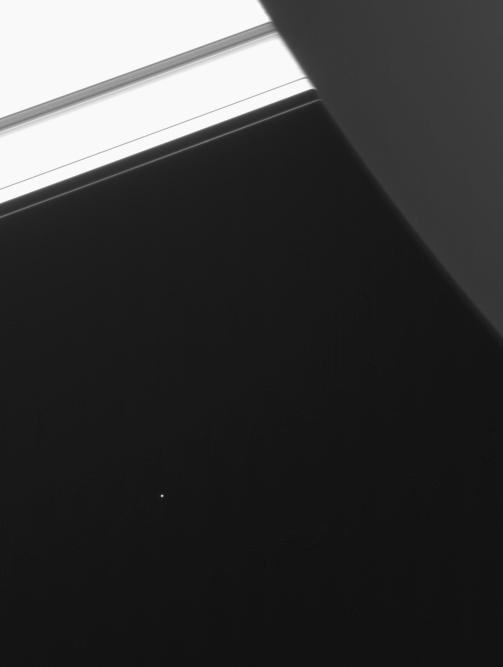
Telesto: Companion of Tethys
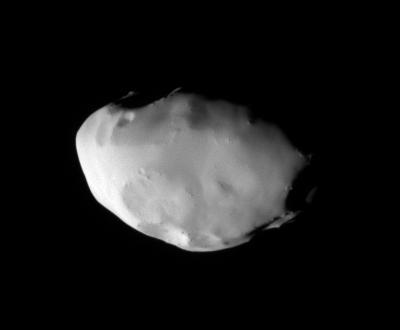
A Closer Look at Telesto Monochrome
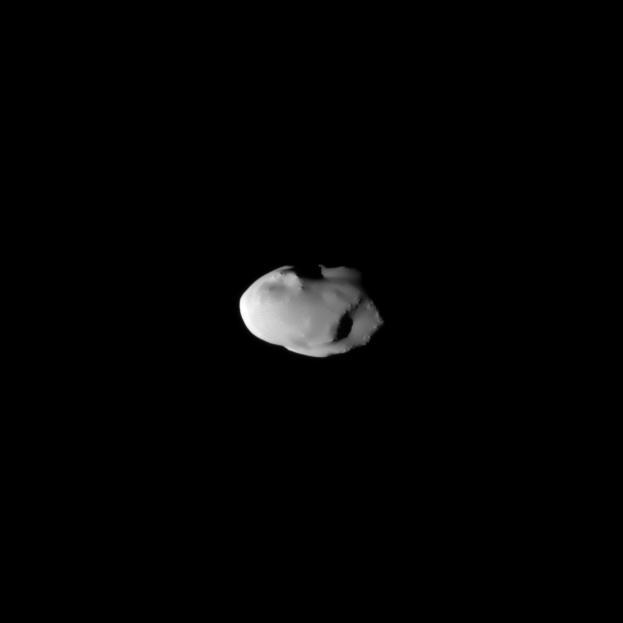
The smooth surface of Saturn moon Telesto is documented in this image captured during the NASA Cassini spacecraft Aug. 27, 2009, flyby.
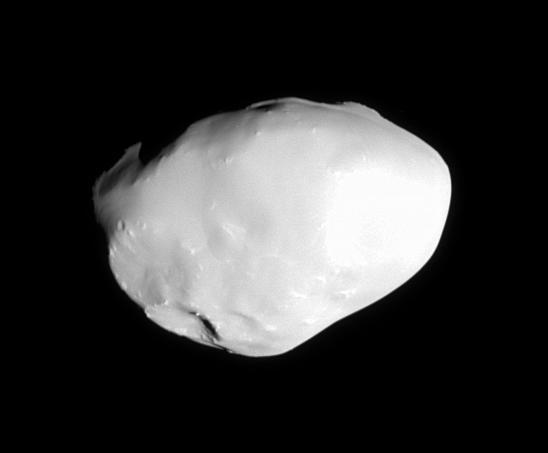
NASA Cassini spacecraft passed within a cosmic stone throw of Telesto in October, 2005 capturing this shot of the tiny Trojan moon
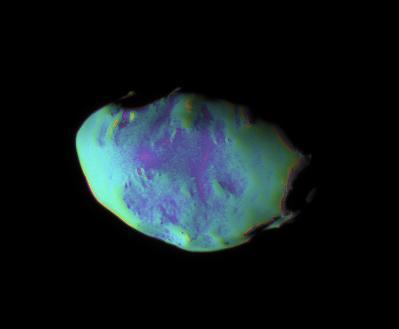
These views show surface features and color variation on the Trojan moon Telesto. The smooth surface of this moon suggests that, like Pandora, it is covered with a mantle of fine, dust-sized icy material. The monochrome image was taken in visible light (see PIA07696). To create the false-color view, ultraviolet, green and infrared images were combined into a single black and white picture that isolates and maps regional color differences. This "color map" was then superposed over a clear-filter image. The origin of the color differences is not yet understood, but may be caused by subtle differences in the surface composition or the sizes of grains making up the icy soil. Tiny Telesto is a mere 24 kilometers (15 miles) wide. The image was acquired with the Cassini spacecraft narrow-angle camera on Dec. 25, 2005 at a distance of approximately 20,000 kilometers (12,000 miles) from Telesto and at a Sun-Telesto-spacecraft, or phase, angle of 58 degrees. Image scale is 118 meters (387 feet) per pixel. http://photojournal.jpl.nasa.gov/catalog/PIA07697
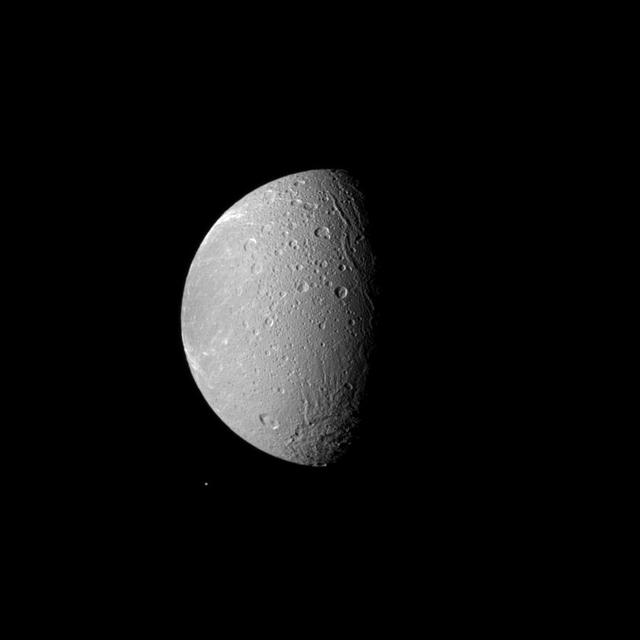
Saturn moon Dione dwarfs the moon Telesto in this image captured by NASA Cassini spacecraft image. Dione is the fourth largest of Saturn moons, and it dominates this view. Tiny Telesto can be seen below and to the left of Dione.
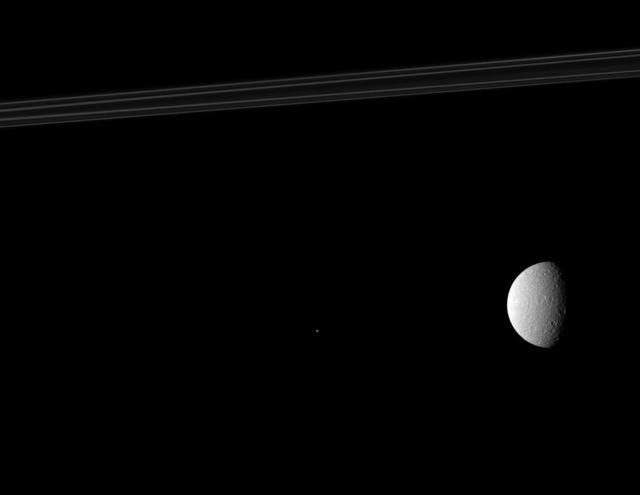
NASA Cassini spacecraft composition features Saturn rings top of image, its second largest moon, Rhea on right of image, and one of the planet tiny moons, Telesto near the middle of image appears as a bright speck.
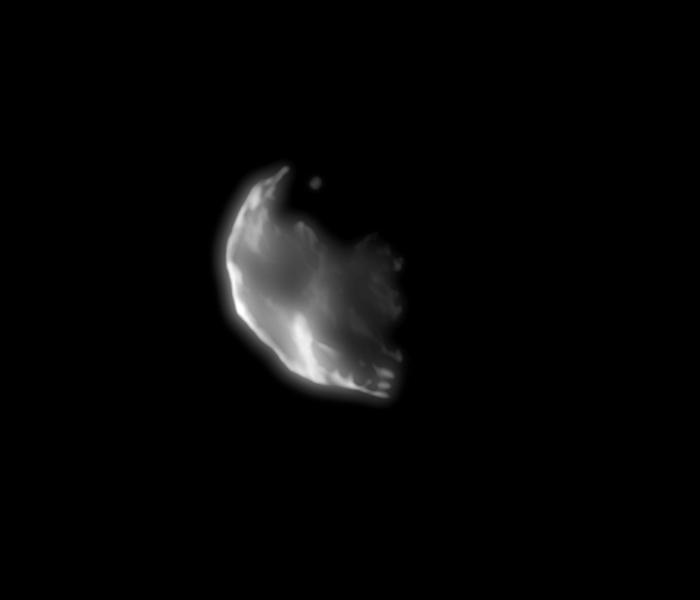
Cassini came close to Saturn small moon Helene on Feb. 25, 2006, acquiring this high-resolution view. This object seems to be buried in its own crater debris, like another Saturnian moon, Telesto