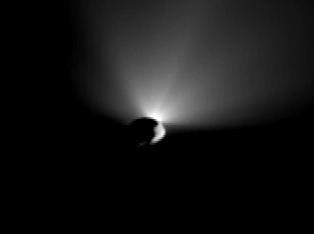
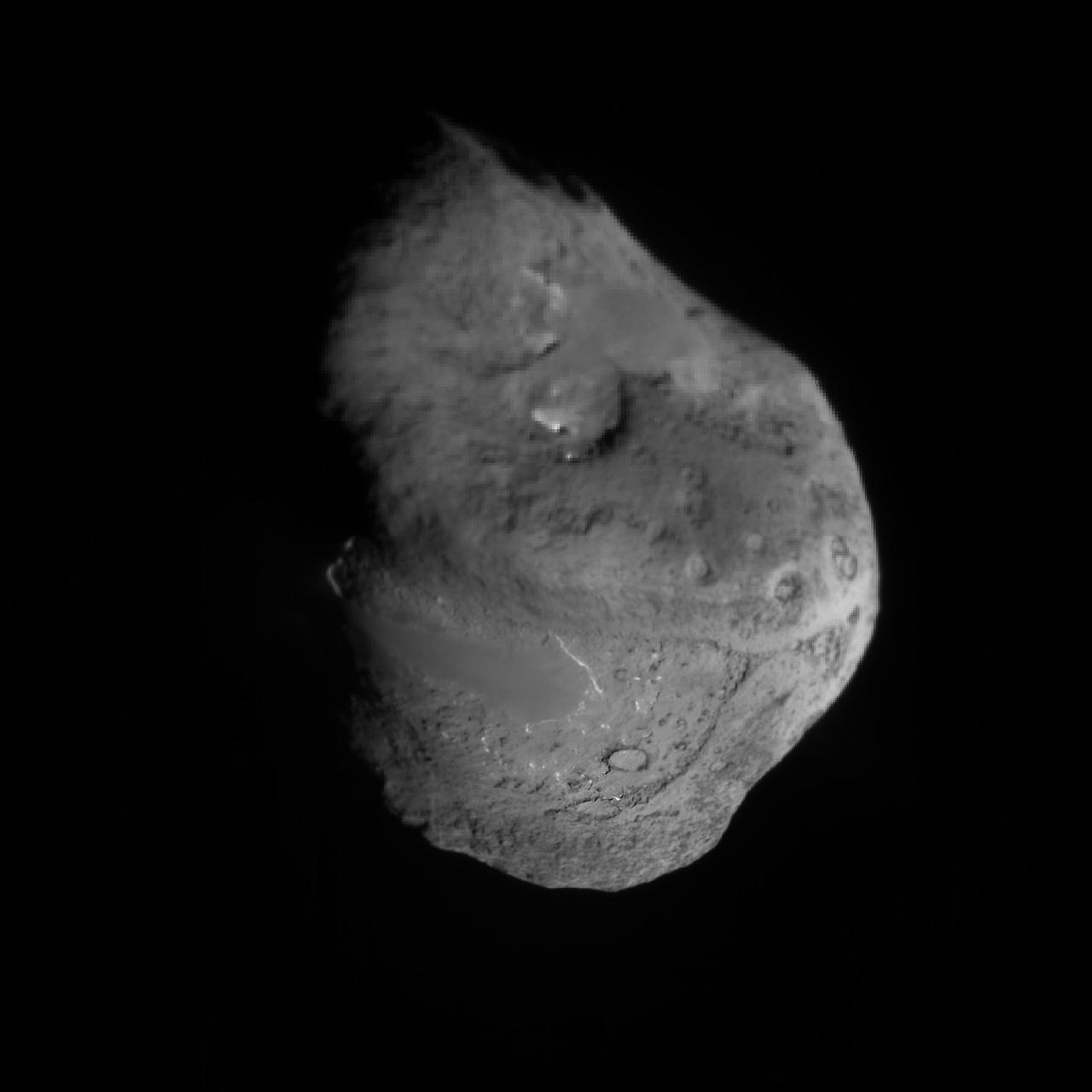
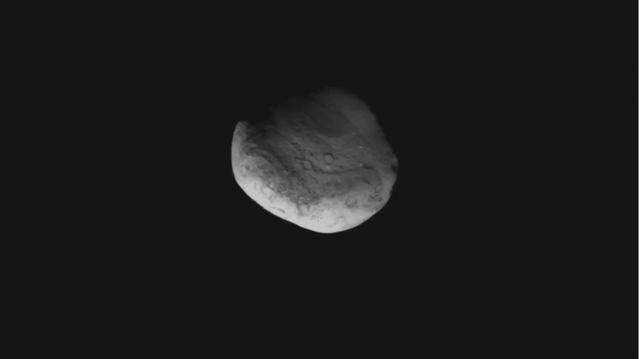
NASA Deep Impact flyby spacecraft took this image after it turned around to capture last shots of a receding comet Tempel 1. Earlier, the mission probe had smashed into the surface of Tempel 1.
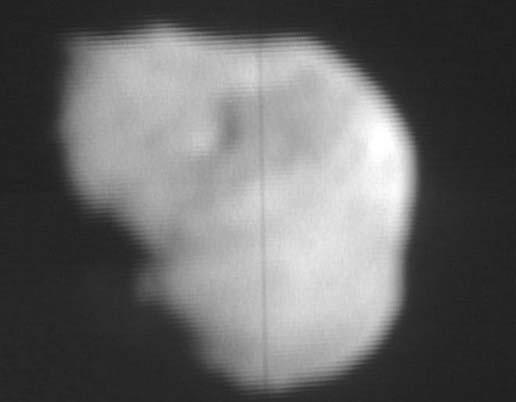
This image from NASA TV shows the nucleus of comet Tempel 1 from Deep Impact flyby high-resolution imager.
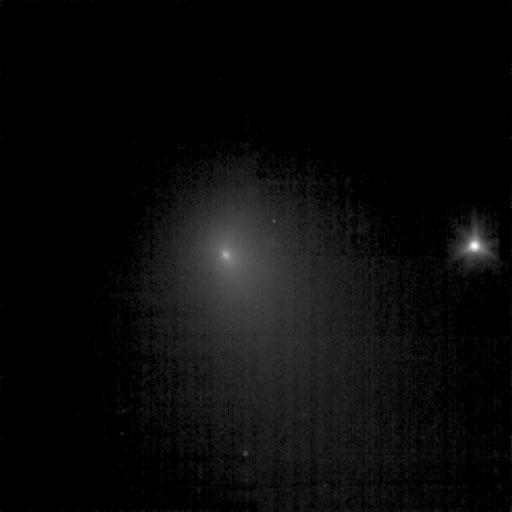
This image of Tempel 1 is a compilation of nine images that were taken on June 19, 2005 by NASA Deep Impact spacecraft.
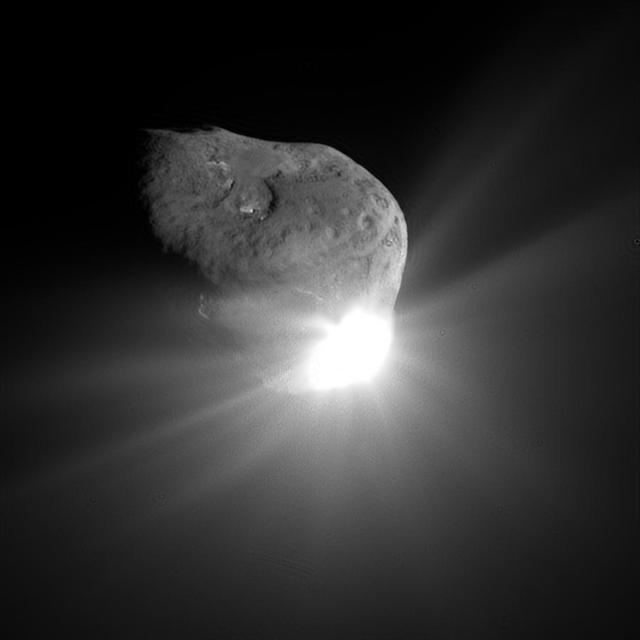
This spectacular image of comet Tempel 1 was taken 67 seconds after it obliterated NASA Deep Impact impactor spacecraft.
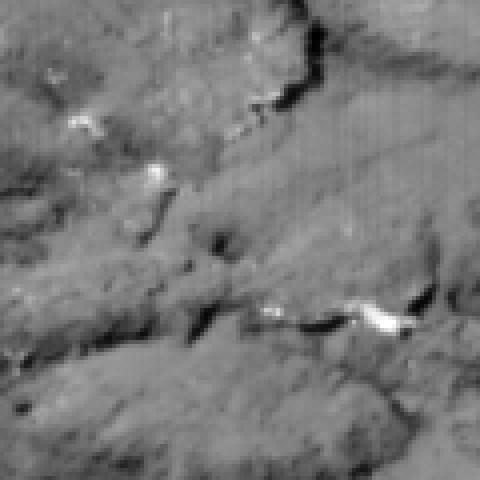
This image shows comet Tempel 1 approximately 30 seconds before NASA Deep Impact probe smashed into its surface. It was taken by the probe impactor targeting sensor.

This image of Tempel 1 is a compilation of nine images that were taken on June 15, 2005 by NASA Deep Impact spacecraft.

This image of Tempel 1 is a compilation of nine images that were taken on June 15, 2005 by NASA Deep Impact spacecraft.

This pair of images shows the before-and-after comparison of the part of comet Tempel 1 that was hit by the impactor from NASA Deep Impact spacecraft.
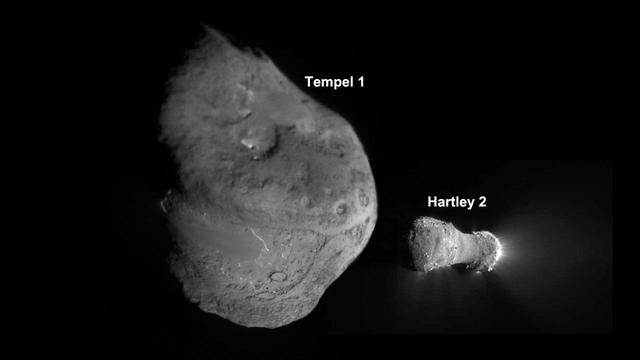
This image shows the nuclei of comets Tempel 1 and Hartley 2, as imaged by NASA Deep Impact spacecraft, which continued as an extended mission known as EPOXI.
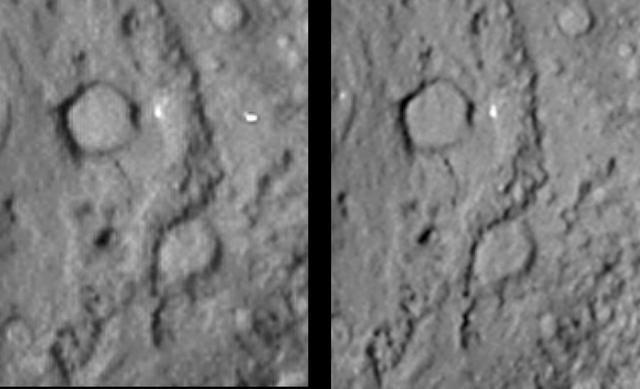
This pair of images shows the before-and-after comparison of the part of comet Tempel 1 that was hit by the impactor from NASA Deep Impact spacecraft.
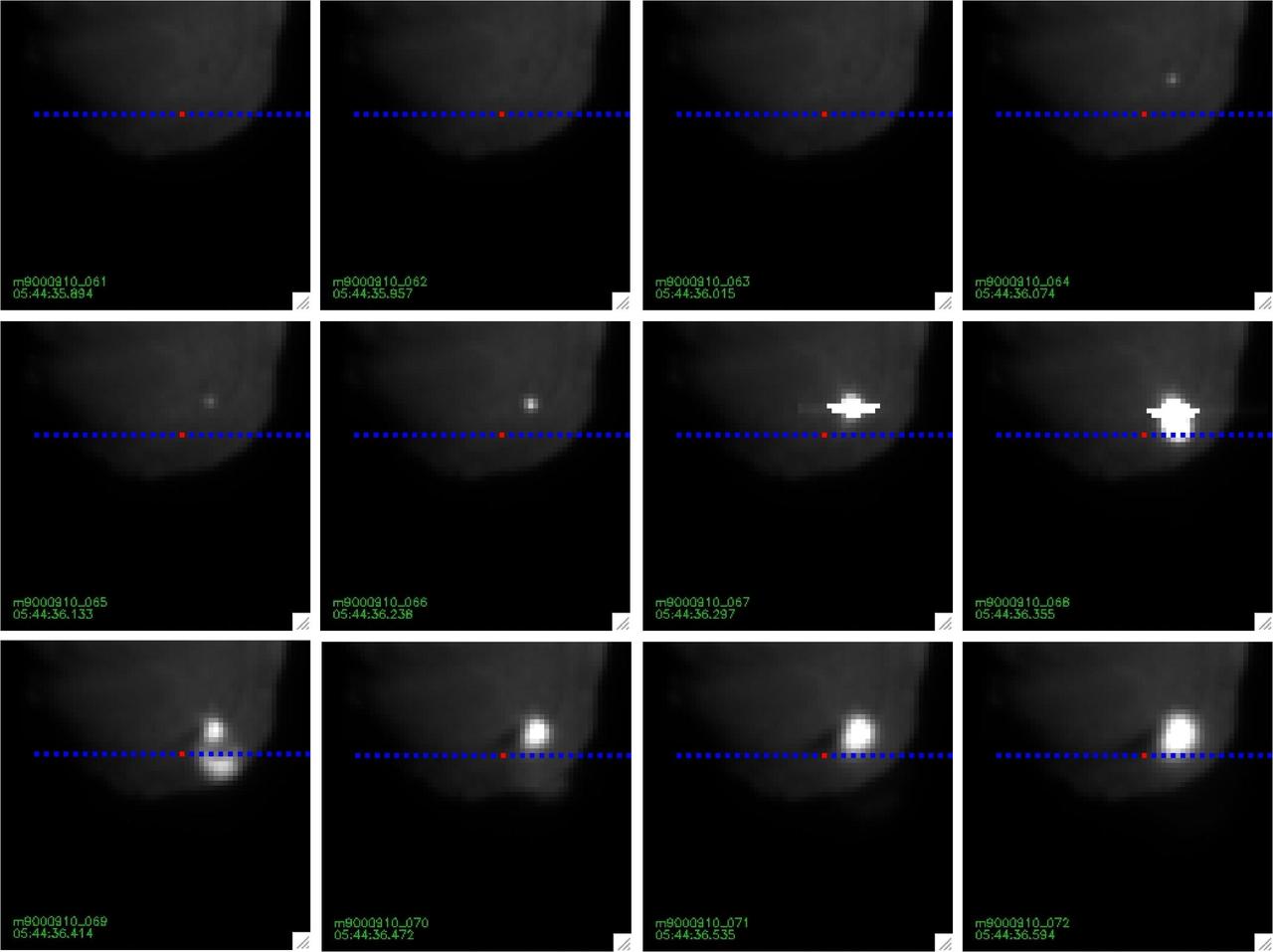
NASA Deep Impact Tempel 1 Mission Update. Images of impact taken with the medium resolution imager. The blue dotted line is the position of the spectrometer slit.
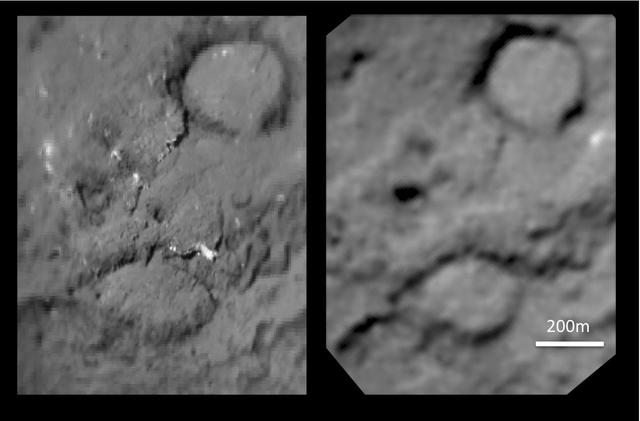
This pair of images shows the before-and-after comparison of the part of comet Tempel 1 that was hit by the impactor from NASA Deep Impact spacecraft.

This pair of images shows a before-and-after comparison of the area on comet Tempel 1 targeted by an impactor from NASA Deep Impact spacecraft in July 2005.
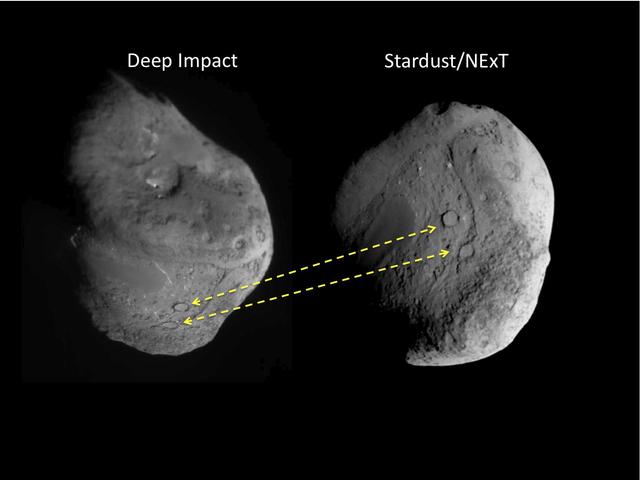
These two images show the different views of comet Tempel 1 seen by NASA Deep Impact spacecraft left and NASA Stardust spacecraft right.
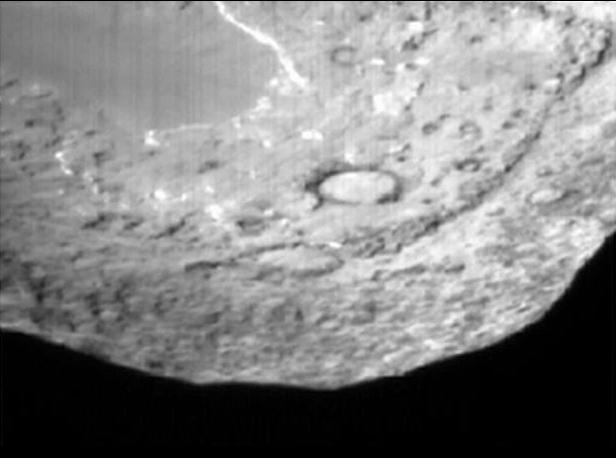
This image shows NASA Deep Impact impactor probe approaching comet Tempel 1. It is made up of images taken by the probe impactor targeting sensor on July 4, 2005. Animation available at the Photojournal.
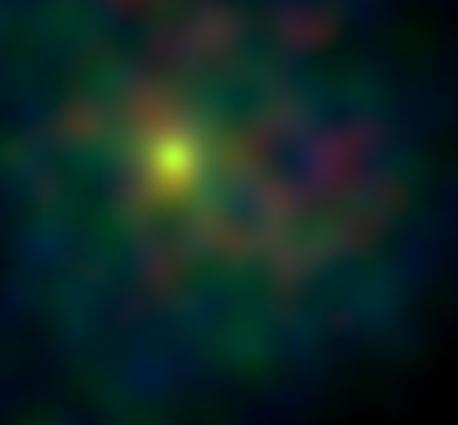
This false-color image shows comet Tempel 1 as seen by NASA Chandra X-ray Observatory on June 30, 2005, Universal Time. The comet was bright and condensed.
This Tempel 1 image was built up from scaling images from NASA Deep Impact to 5 meters/pixel and aligned to fixed points. Each image at closer range replaced equivalent locations observed at a greater distance.

This is a Tempel 1 temperature map of the nucleus with different spatial resolutions from NASA Deep Impact mission. The color bar in the middle gives temperature in Kelvins. The sun is to the right in all images.
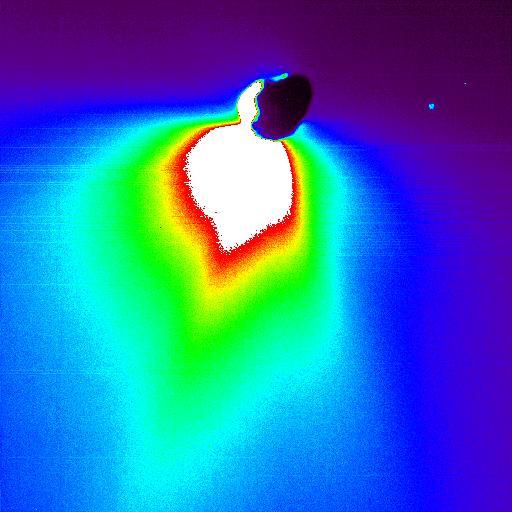
This false-color image shows comet Tempel 1 about 50 minutes after NASA Deep Impact probe smashed into its surface. The impact site is located on the far side of the comet in this view.
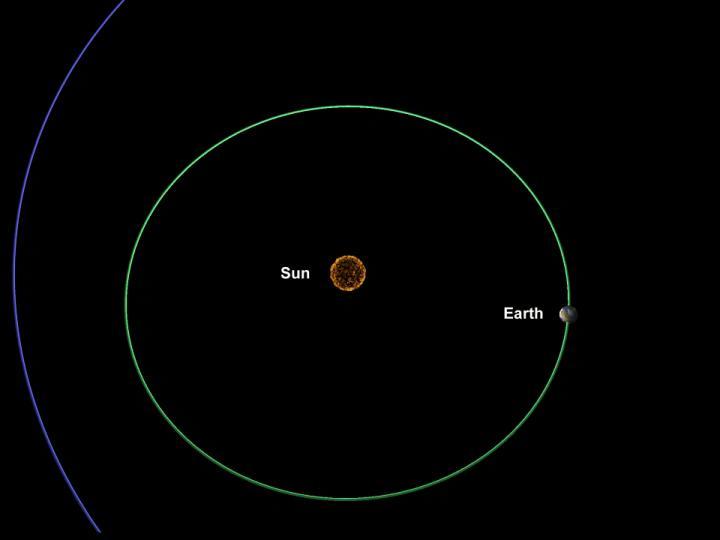
This image is from an animation that chronicles the travels of NASA Deep Impact spacecraft, from its launch in January of 2005 to its dramatic impact 172 days later with comet Tempel 1.
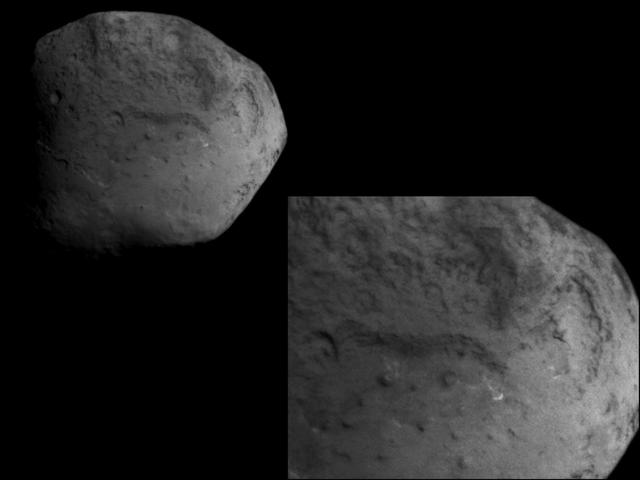
This image obtained by NASA Stardust spacecraft shows a side of the nucleus of comet Tempel 1 that has never been seen before; three terraces of different elevations are visible, with dark, banded scarps, or slopes, separating them.
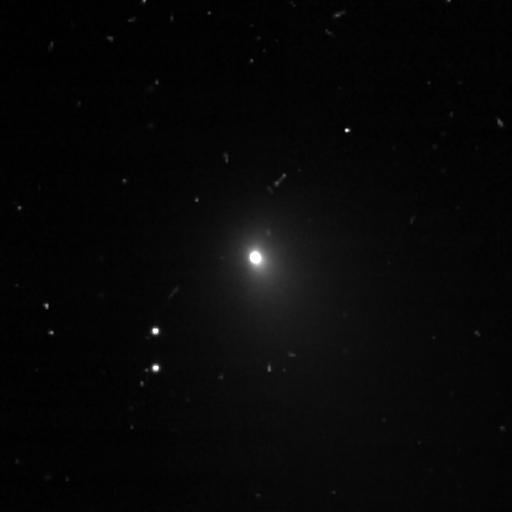
This image is a compilation of four images that were taken on June 13, 2005 by NASA Deep Impact. The spacecraft is 18,675,137.9 kilometers 11,604,190 miles away from comet Tempel 1.
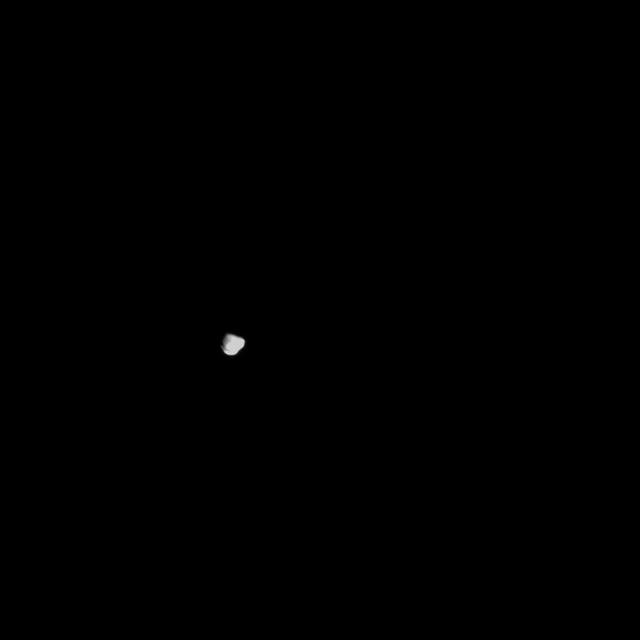
NASA Stardust-NExT mission transmitted the first image it took during its approach to comet Tempel 1 at 8:35 p.m. PST 11:35 p.m. EST on Feb. 14, 2011.

This image mosaic shows four different views of comet Tempel 1 as seen by NASA Stardust spacecraft as it flew by on Feb. 14, 2011. The images progress in time beginning at upper left, upper right, to lower left, then lower right.
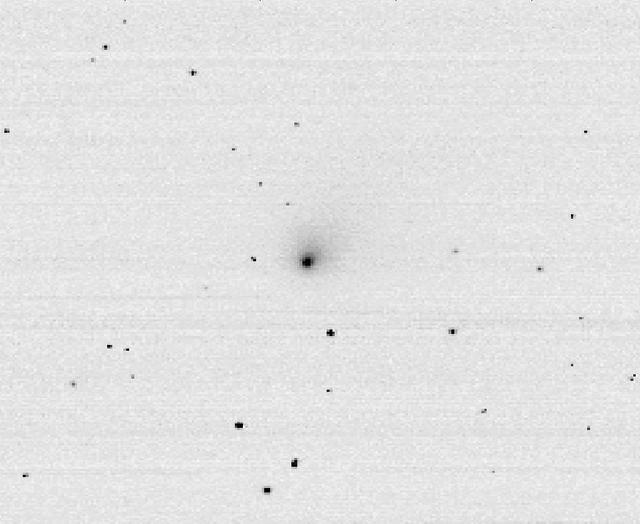
On April 25, 2005 NASA Deep Impact spacecraft obtained its first optical navigation Op-Nav image of comet Tempel 1. At the time the picture was taken the distance between spacecraft and comet was 64 million kilometers 39.7 million miles away.
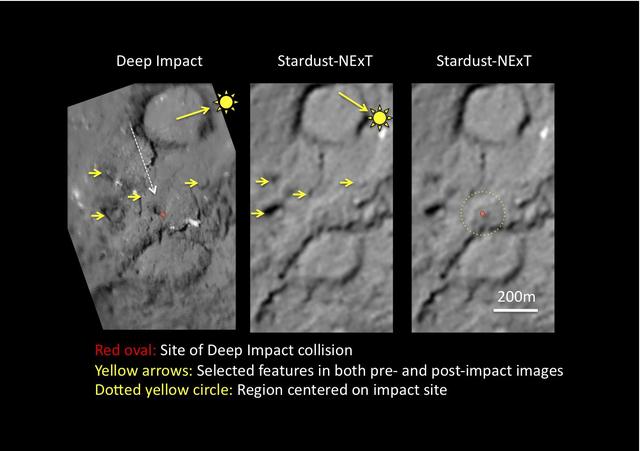
This image shows the surface of comet Tempel 1 before and after NASA Deep Impact mission sent a probe into the comet in 2005. The region was imaged by Deep Impact before the collision left, then six years later on by NASA Stardust-NExT mission.
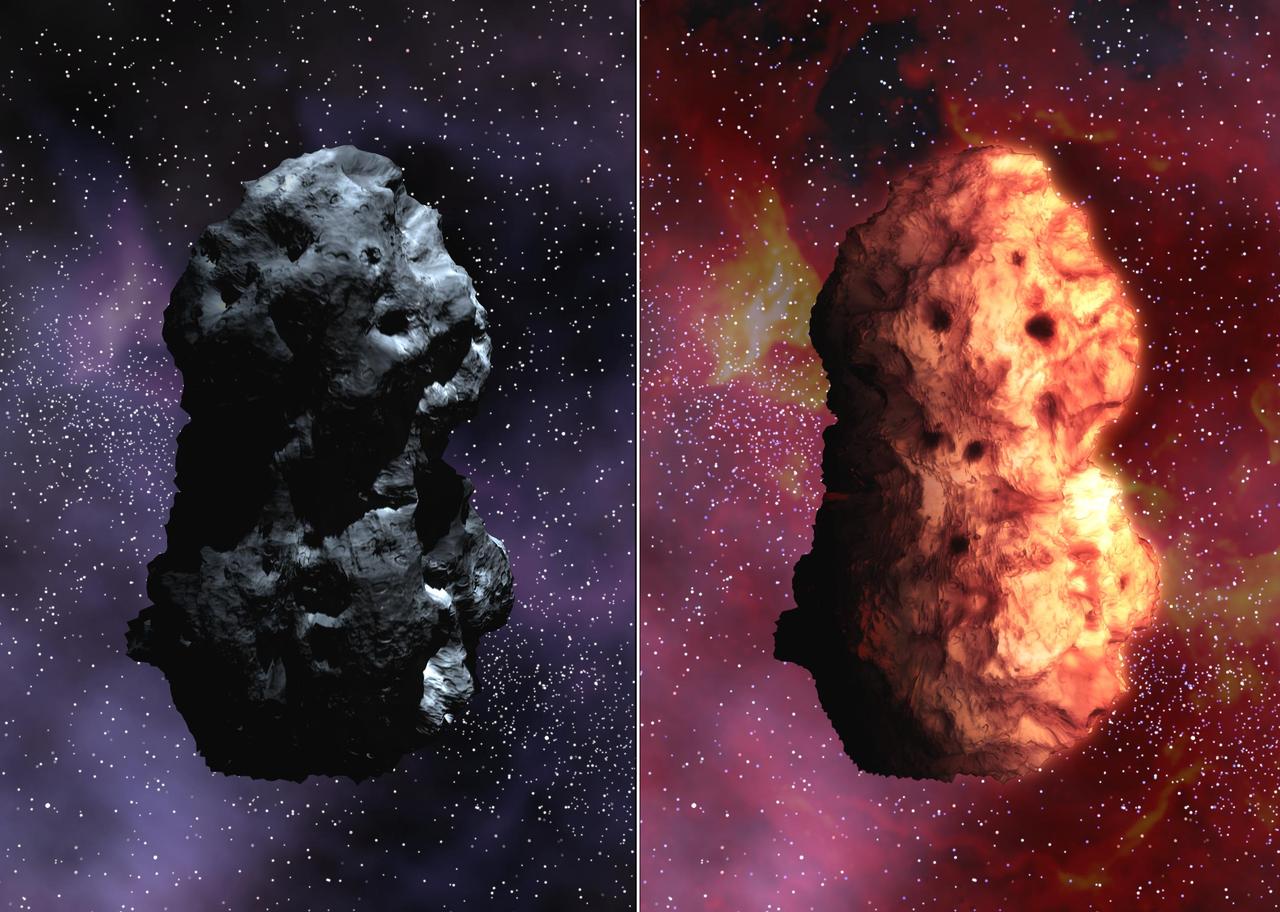
These artist concepts illustrate Tempel 1 shape, reflectivity, rotation rate and surface temperature, based on information from NASA Hubble Space Telescope and Spitzer Space Telescope.
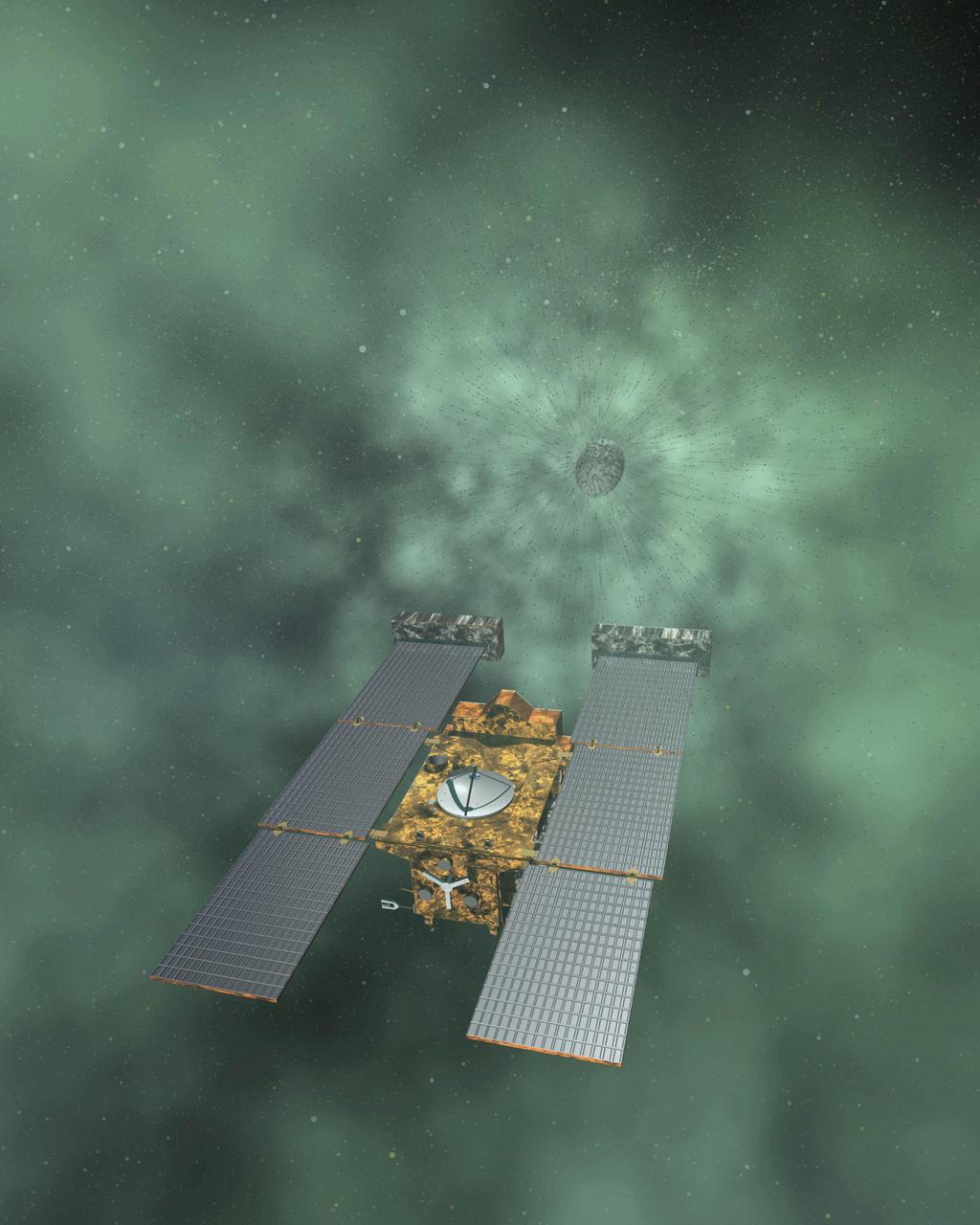
Artist concept of NASA Stardust-NExT mission, which will fly by comet Tempel 1 on Feb. 14, 2011.
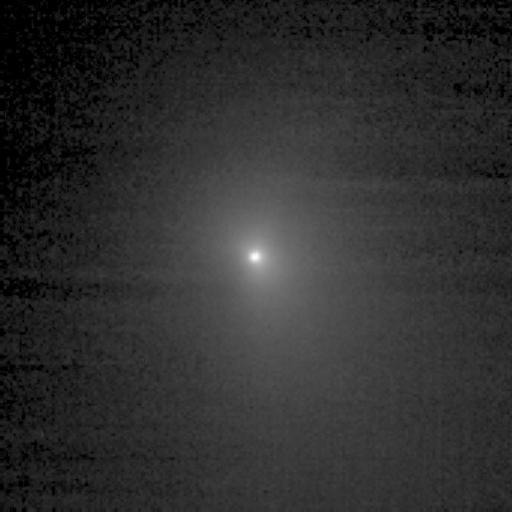
This image shows comet Tempel 1 as seen through the clear filter of the medium resolution imager camera on NASA Deep Impact. It was taken on June 27, 2005.
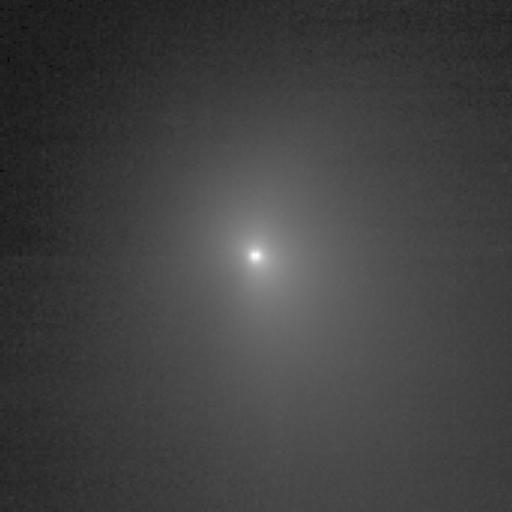
This image shows comet Tempel 1 as seen through the clear filter of the medium resolution imager camera on NASA Deep Impact. It was taken on June 25, 2005.
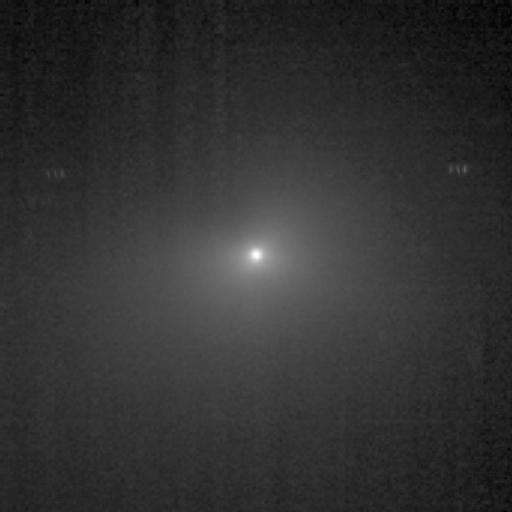
This image shows comet Tempel 1 as seen through the clear filter of the medium resolution imager camera on NASA Deep Impact. It was taken on June 30, 2005.
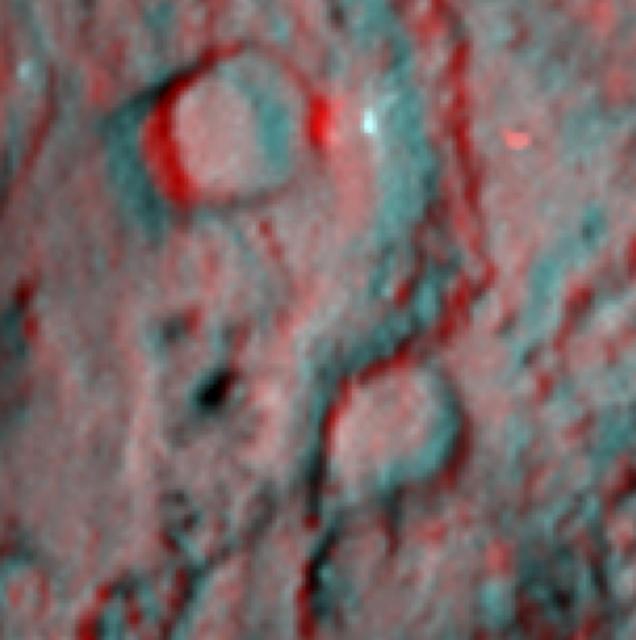
This anaglyph shows the region where NASA Deep Impact mission sent a probe into the surface of comet Tempel 1 in 2005. 3D glasses are necessary to view this image.
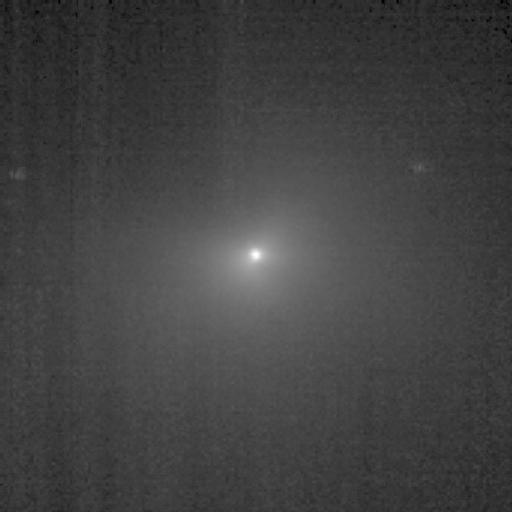
This image shows comet Tempel 1 as seen through the clear filter of the medium resolution imager camera on NASA Deep Impact. It was taken on July 1, 2005.
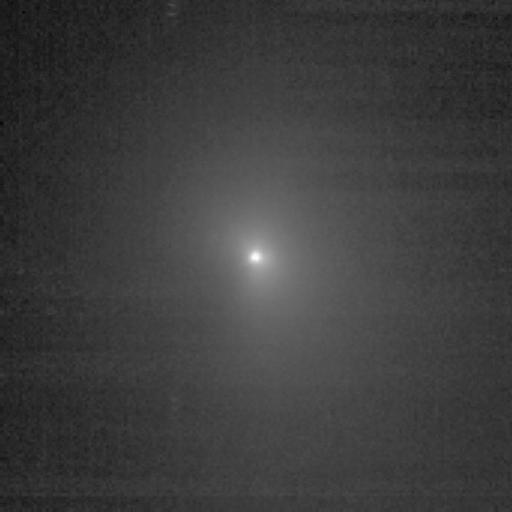
This image shows comet Tempel 1 as seen through the clear filter of the medium resolution imager camera on NASA Deep Impact. It was taken on June 29, 2005.
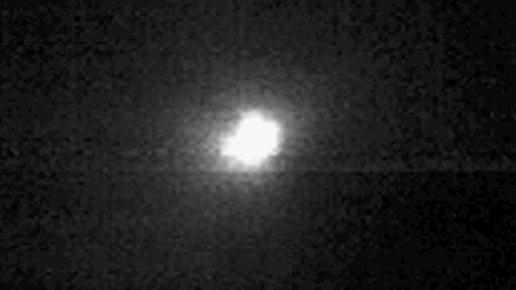
This image from an animation shows comet Tempel 1 as seen through the clear filter of the medium resolution imager camera on NASA Deep Impact.
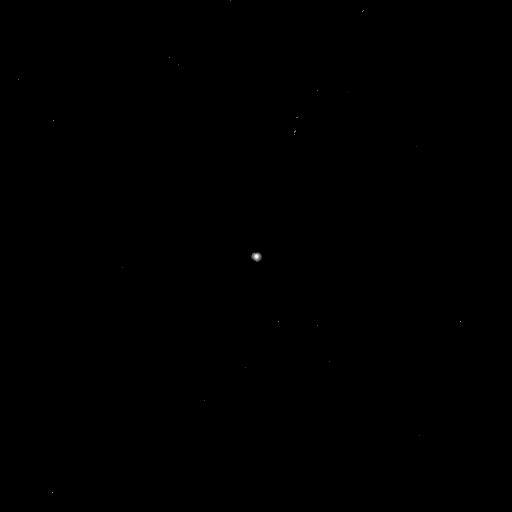
Comet Tempel 1 as seen by the NASA Deep Impact impactor targeting sensor at 7:44 Universal Time, July 3, 2005.
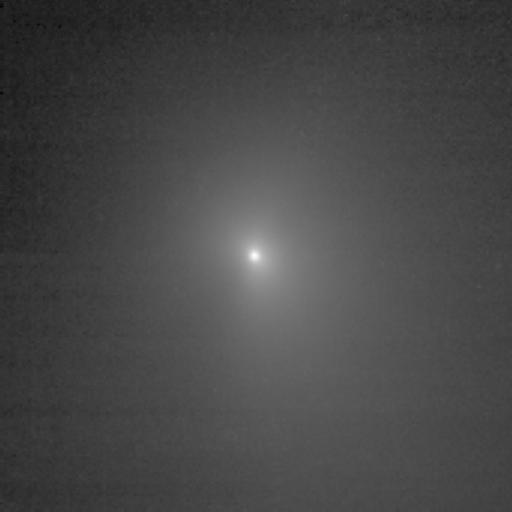
This image shows comet Tempel 1 as seen through the clear filter of the medium resolution imager camera on NASA Deep Impact. It was taken on June 26, 2005.

These pictures of comet Tempel 1 were taken by NASA Hubble Space Telescope. They show the comet before and after it ran over NASA Deep Impact probe.
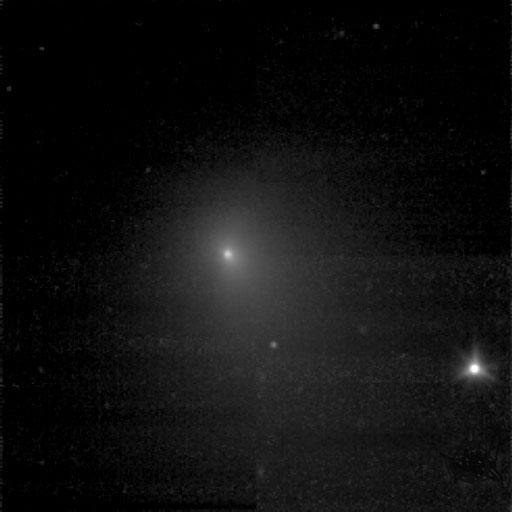
One of the two pictures of Tempel 1 (see also PIA02101) taken by Deep Impact's medium-resolution camera is shown next to data of the comet taken by the spacecraft's infrared spectrometer. This instrument breaks apart light like a prism to reveal the "fingerprints," or signatures, of chemicals. Even though the spacecraft was over 10 days away from the comet when these data were acquired, it detected some of the molecules making up the comet's gas and dust envelope, or coma. The signatures of these molecules -- including water, hydrocarbons, carbon dioxide and carbon monoxide -- can be seen in the graph, or spectrum. Deep Impact's impactor spacecraft is scheduled to collide with Tempel 1 at 10:52 p.m. Pacific time on July 3 (1:52 a.m. Eastern time, July 4). The mission's flyby spacecraft will use its infrared spectrometer to sample the ejected material, providing the first look at the chemical composition of a comet's nucleus. These data were acquired from June 20 to 21, 2005. The picture of Tempel 1 was taken by the flyby spacecraft's medium-resolution instrument camera. The infrared spectrometer uses the same telescope as the high-resolution instrument camera. http://photojournal.jpl.nasa.gov/catalog/PIA02100
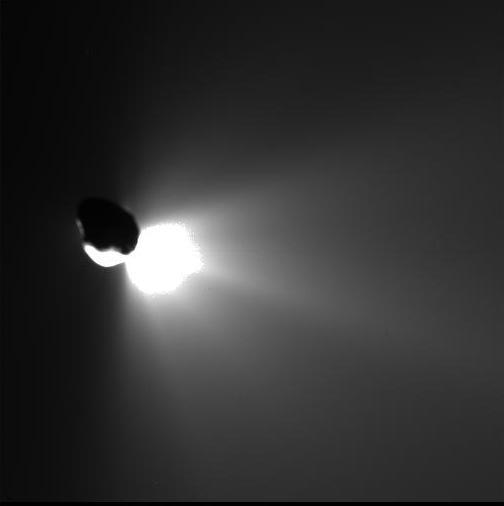
This image shows the view from NASA Deep Impact flyby spacecraft as it turned back to look at comet Tempel 1. Fifty minutes earlier, the spacecraft probe was run over by the comet.
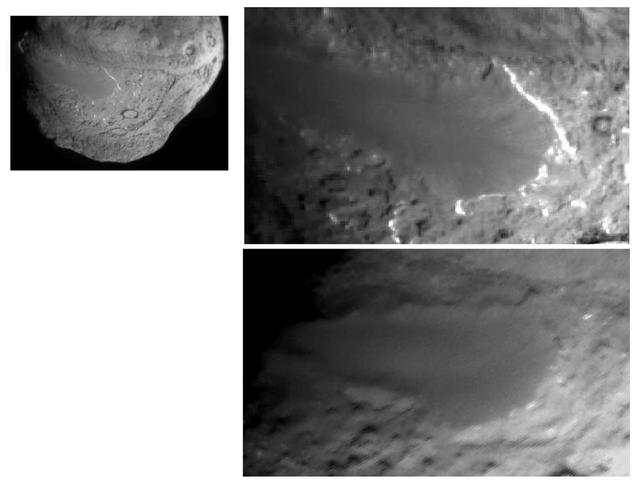
This image layout depicts changes in the surface of comet Tempel 1, observed first by NASA Deep Impact Mission in 2005 top right and again by NASA Stardust-NExT mission on Feb. 14, 2011 bottom right.
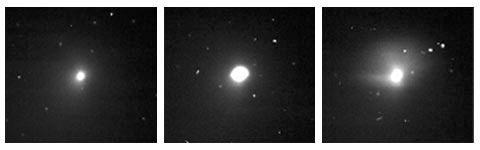
These images shows comet Tempel 1 as seen through the clear filter of the medium resolution imager camera on NASA Deep Impact. The images were acquired between June 22 and June 24, 2005.

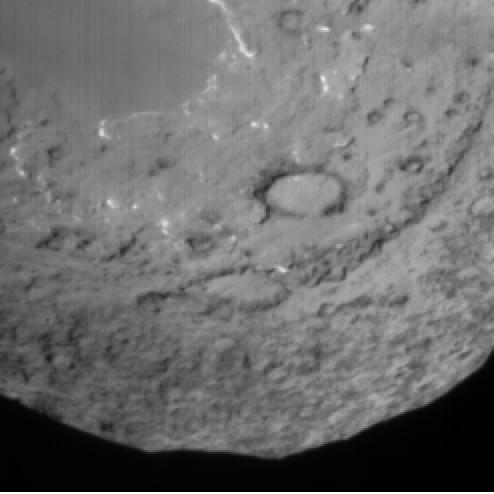
This image of the surface of comet Tempel 1 was taken about 20 seconds before NASA Deep Impact probe crashed into the comet on July 3, 2005. This particular region contains the impact site.
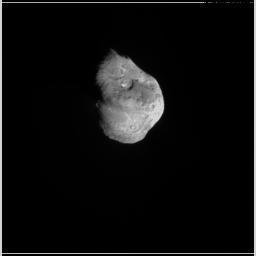
This frame from a movie shows NASA Deep Impact impactor probe approaching comet Tempel 1. It is made up of images taken by the probe impactor targeting sensor in 2005.
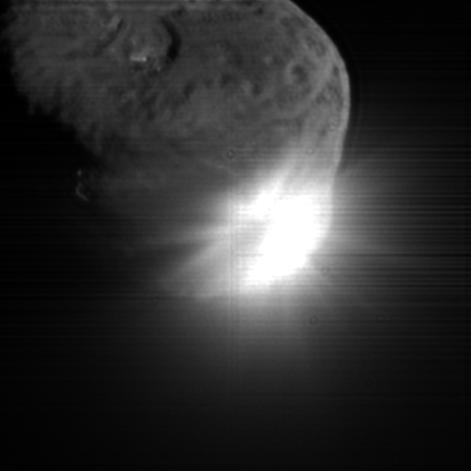
This image shows the initial ejecta that resulted when NASA Deep Impact probe collided with comet Tempel 1 on July 3, 2005. It was taken by the spacecraft high-resolution camera 13 seconds after impact.
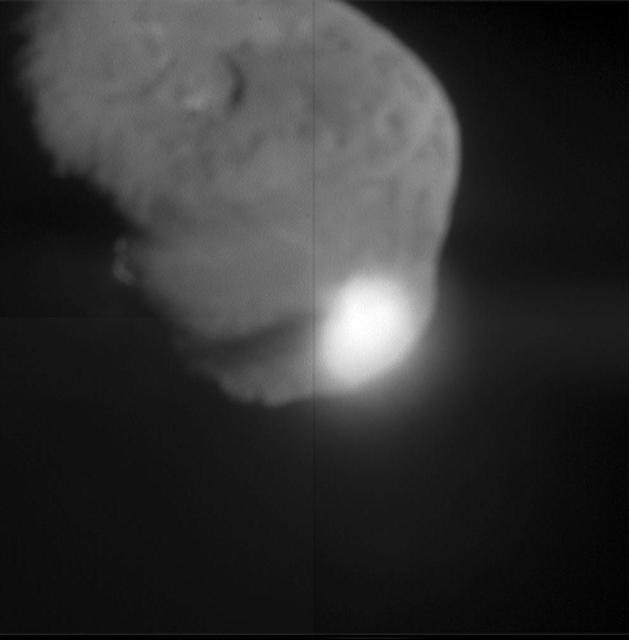
When NASA Deep Impact probe collided with Tempel 1, a bright, small flash was created, which rapidly expanded above the surface of the comet. This flash lasted for more than a second.
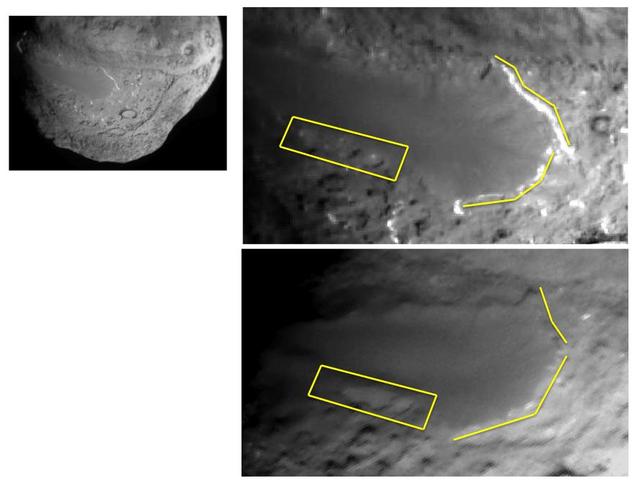
This image layout depicts changes in the surface of comet Tempel 1, observed first by NASA Deep Impact Mission in 2005 top right and again by NASA Stardust-NExT mission on Feb. 14, 2011 bottom right.
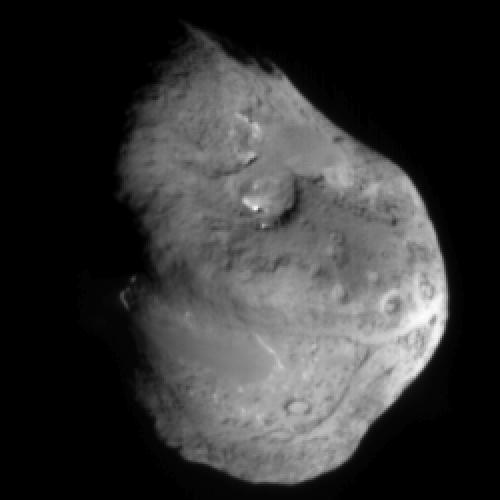
This image shows comet Tempel 1 approximately 5 minutes before NASA Deep Impact probe smashed into its surface. It was taken by the probe impactor targeting sensor.
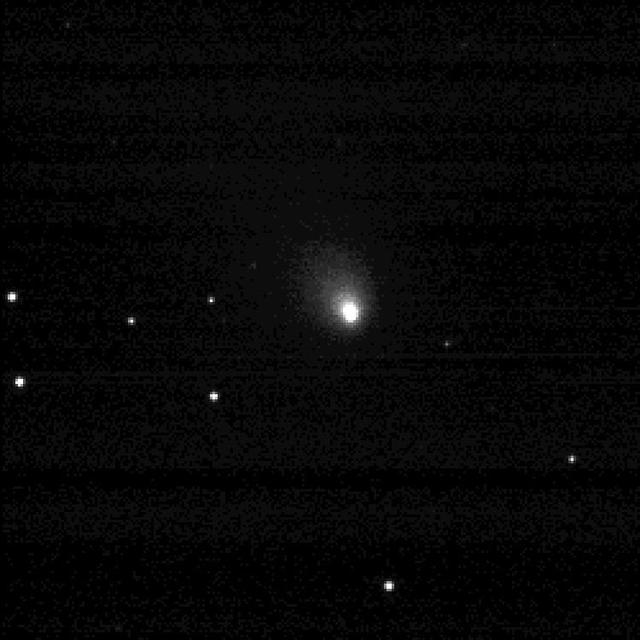
Taken on April 25, 2005, sixty-nine days before it gets up-close-and-personal with a comet, NASA Deep Impact spacecraft successfully photographed its quarry, comet Tempel 1, at a distance of 39.7 million miles.
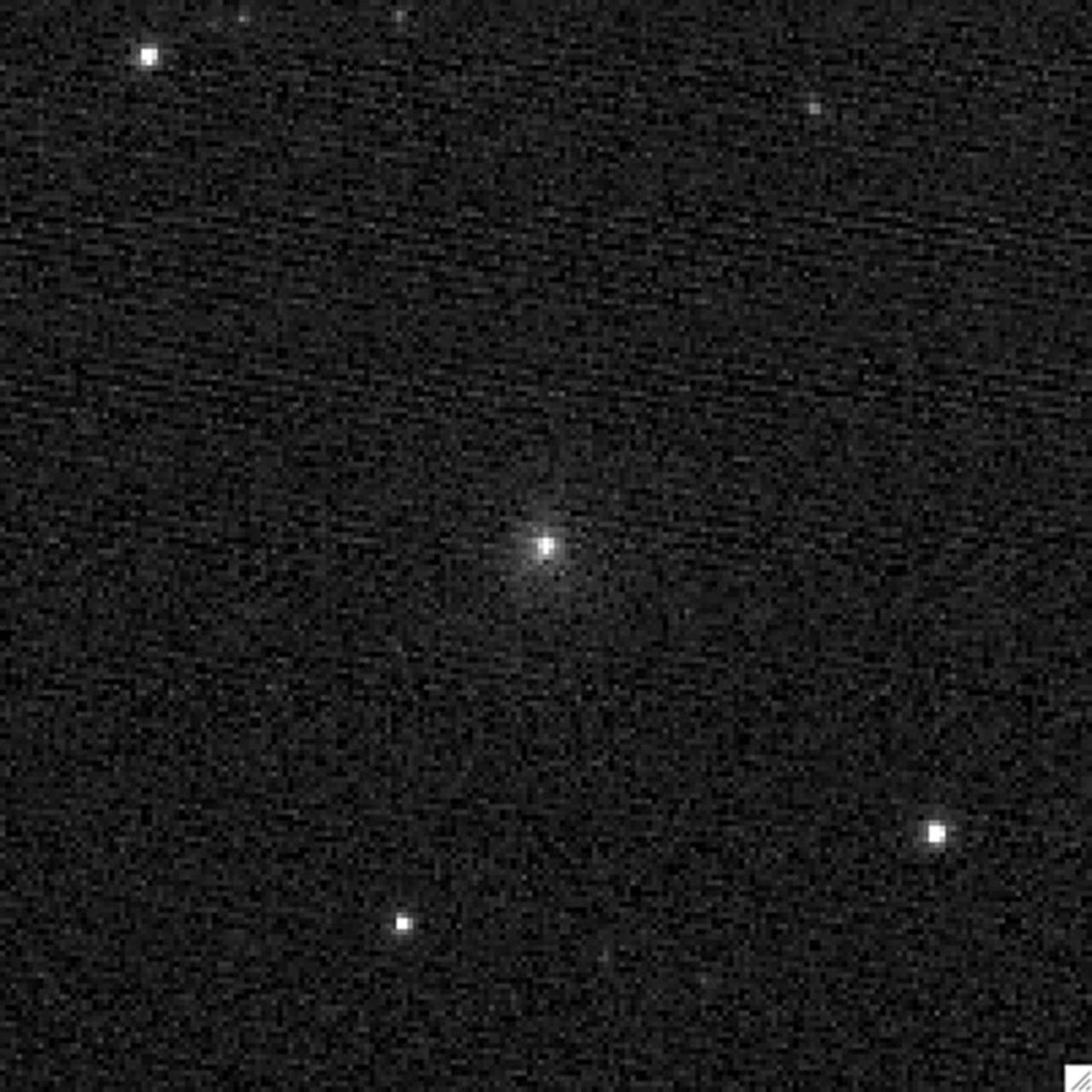
This composite image was taken by NASA Stardust navigation camera 42 hours before its encounter with comet Tempel 1. The spacecraft is due to encounter the comet in the evening hours of Feb. 14, 2011.
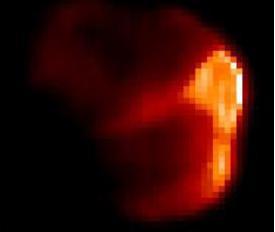
This image composite shows comet Tempel 1 in infrared light . The infrared picture highlights the warm, or sunlit, side of the comet, where NASA Deep Impact probe later hit.
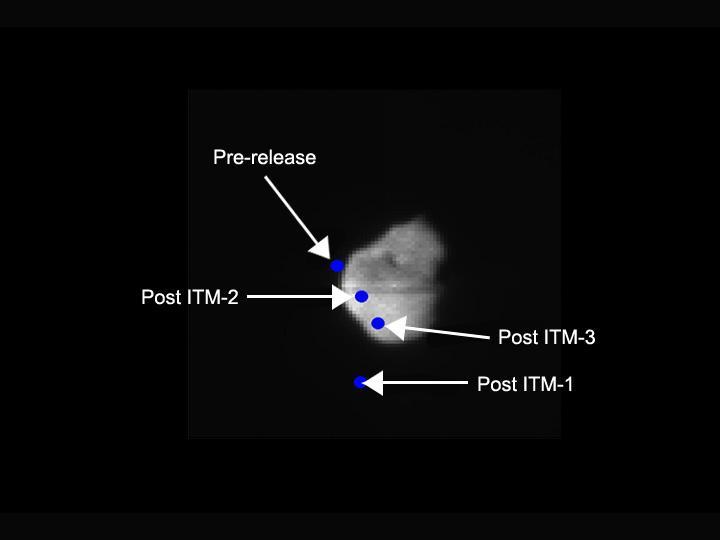
This image shows how NASA Deep Impact impactor targeted comet Tempel 1 as the spacecraft made its final approach in the early morning hours of July 4, 2005.
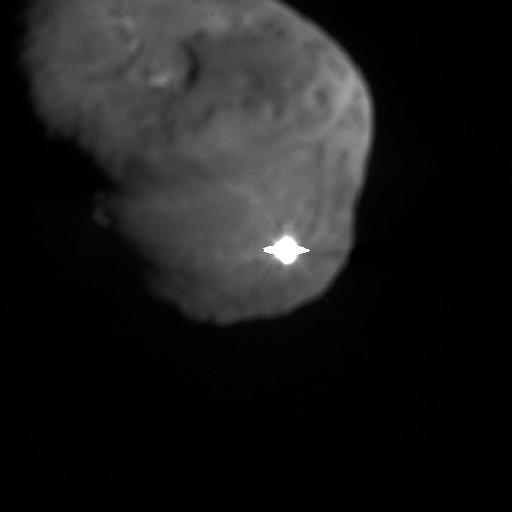
The image depicts the first moments after NASA Deep Impact probe interfaced with comet Tempel 1. The illuminated, and possibly incandescent, debris is expanding from the impact site.
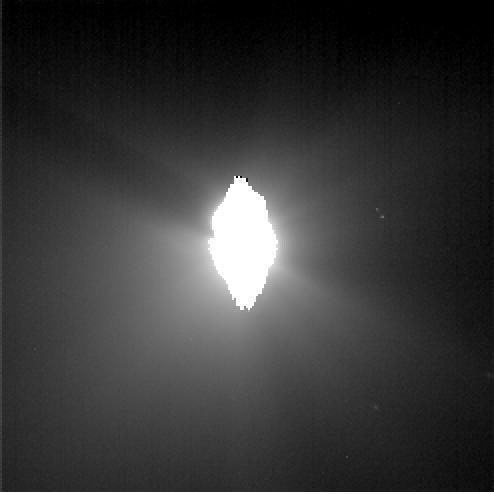
This image shows the view from NASA Deep Impact probe 30 minutes before it was pummeled by comet Tempel 1. The picture brightness has been enhanced to show the jets of dust streaming away from the comet.
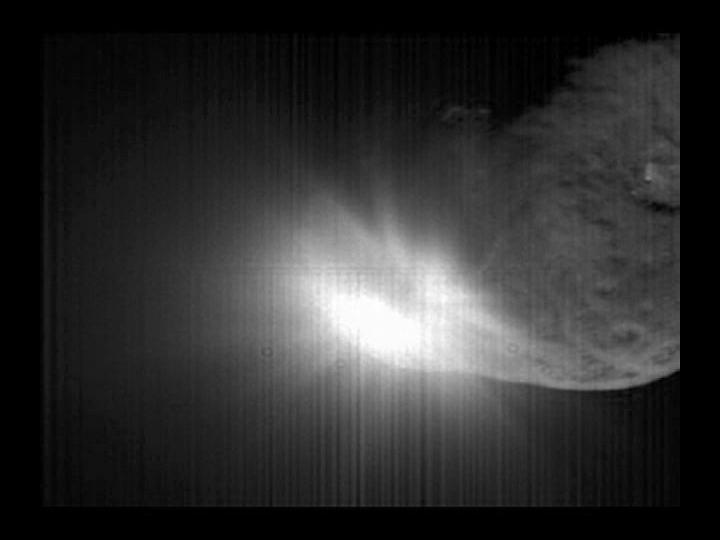
NASA Deep Impact flyby spacecraft shows the flash that occurred when comet Tempel 1 ran over the spacecraft probe taken by the high-resolution camera over a period of 40 seconds.
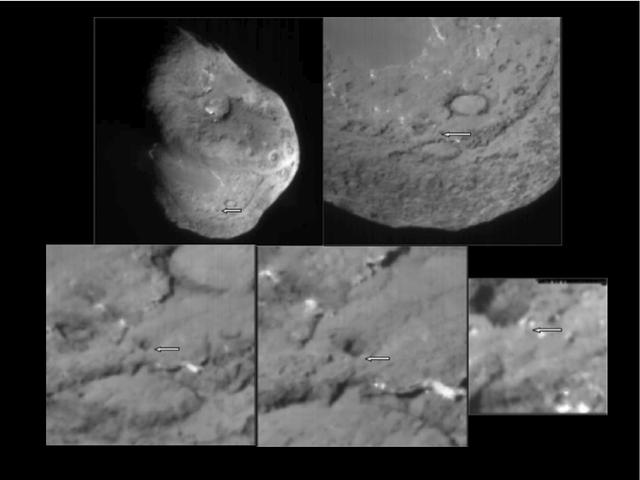
This series of images shows the area where NASA Deep Impact probe collided with the surface of comet Tempel 1 in 2005. The view zooms in as the images progress from top left to right, and then bottom left to right.
This image shows comet Tempel 1 approximately 90 seconds before NASA Deep Impact probe smashed into its surface. It was taken by the probe impactor targeting sensor.
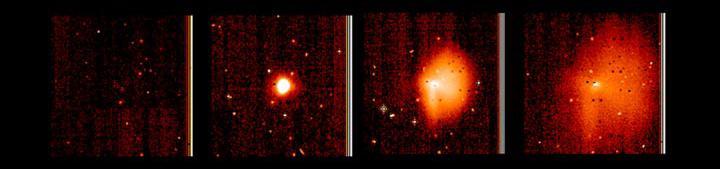
This display shows highly processed images of the outburst of comet Tempel 1 between June 22 and 23, 2005. The pictures were taken by NASA Deep Impact medium-resolution camera.
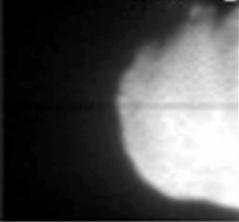
This movie was taken by Deep Impact flyby spacecraft shows the flash that occurred when comet Tempel 1 ran over the spacecraft probe. It was taken by the flyby craft medium-resolution camera.
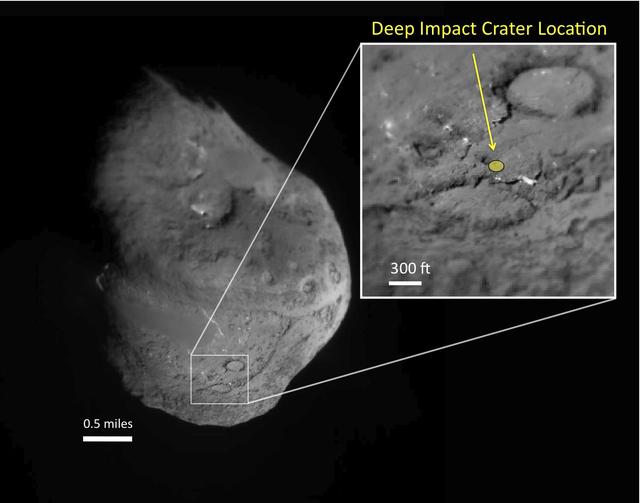
This pair of images shows the area affected by the impactor released by NASA Deep Impact spacecraft in July 2005.
This image shows the location of the newly discovered planet-like object, dubbed Sedna, in relation to the rest of the solar system in 2004.
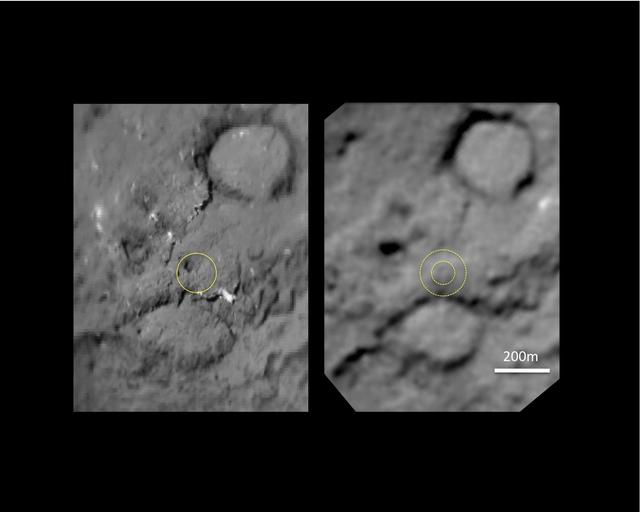
This pair of images shows the area affected by the impactor released by NASA Deep Impact spacecraft in July 2005.
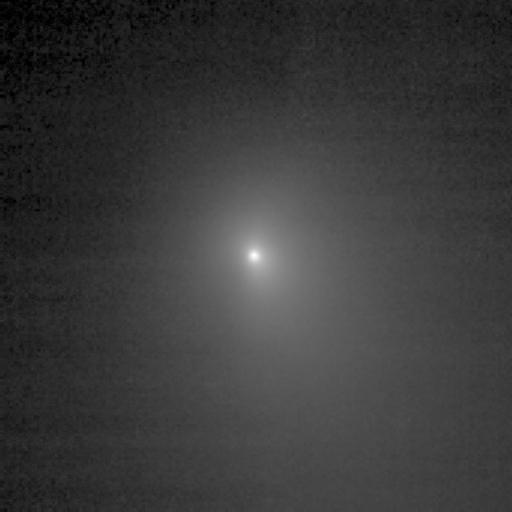
This picture of Tempel 1 was taken by NASA Deep Impact. Even though the spacecraft was over 10 days away from the comet when these data were acquired, it detected some of the molecules making up the comet gas and dust envelope, or coma.
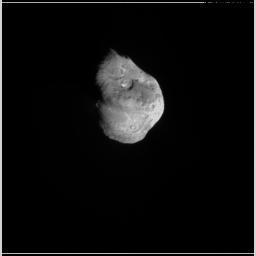
This image shows comet Tempel 1 six minutes before it ran over NASA Deep Impact probe at 10:52 a.m. Pacific time, July 3 1:52 a.m. Eastern time, July 4, 2005.
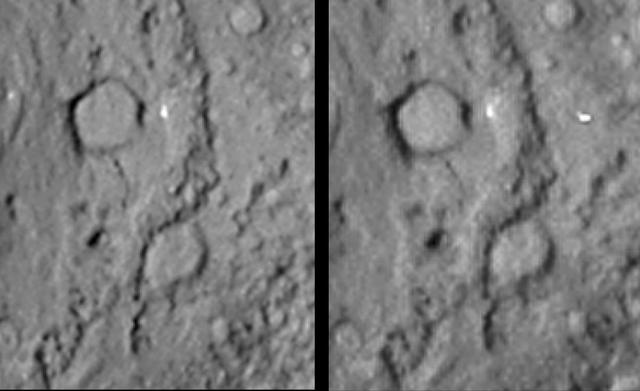
This image shows comet Tempel 1 sixty seconds before it ran over NASA Deep Impact probe at 10:52 p.m. Pacific time, July 3 1:52 a.m. Eastern time, July 4., 2005.
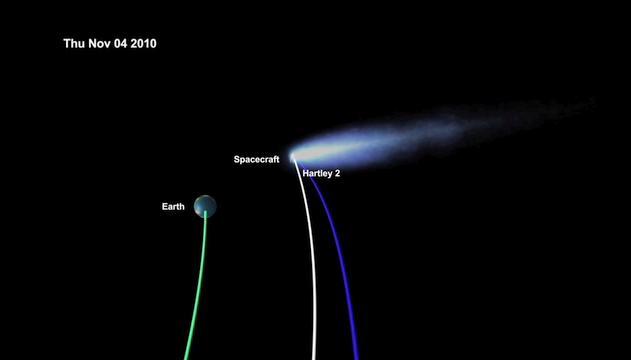
This frame from a movie begins with the launch of NASA Deep Impact on Jan. 12, 2005, from Cape Canaveral, Fla. On July 4, 2005, the mission released a probe into Comet Tempel 1, revealing its pristine, inner material.
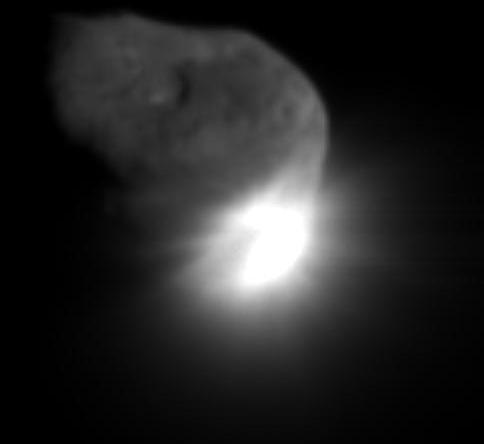
This image shows the initial ejecta that resulted when NASA Deep Impact probe collided with comet Tempel 1 at 10:52 p.m. Pacific time, July 3 1:52 a.m. Eastern time, July 4, 2005.
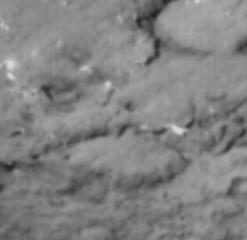
Reversed stereo image pair covering the region of NASA Deep Impact site from the Stardust-NExT mission.
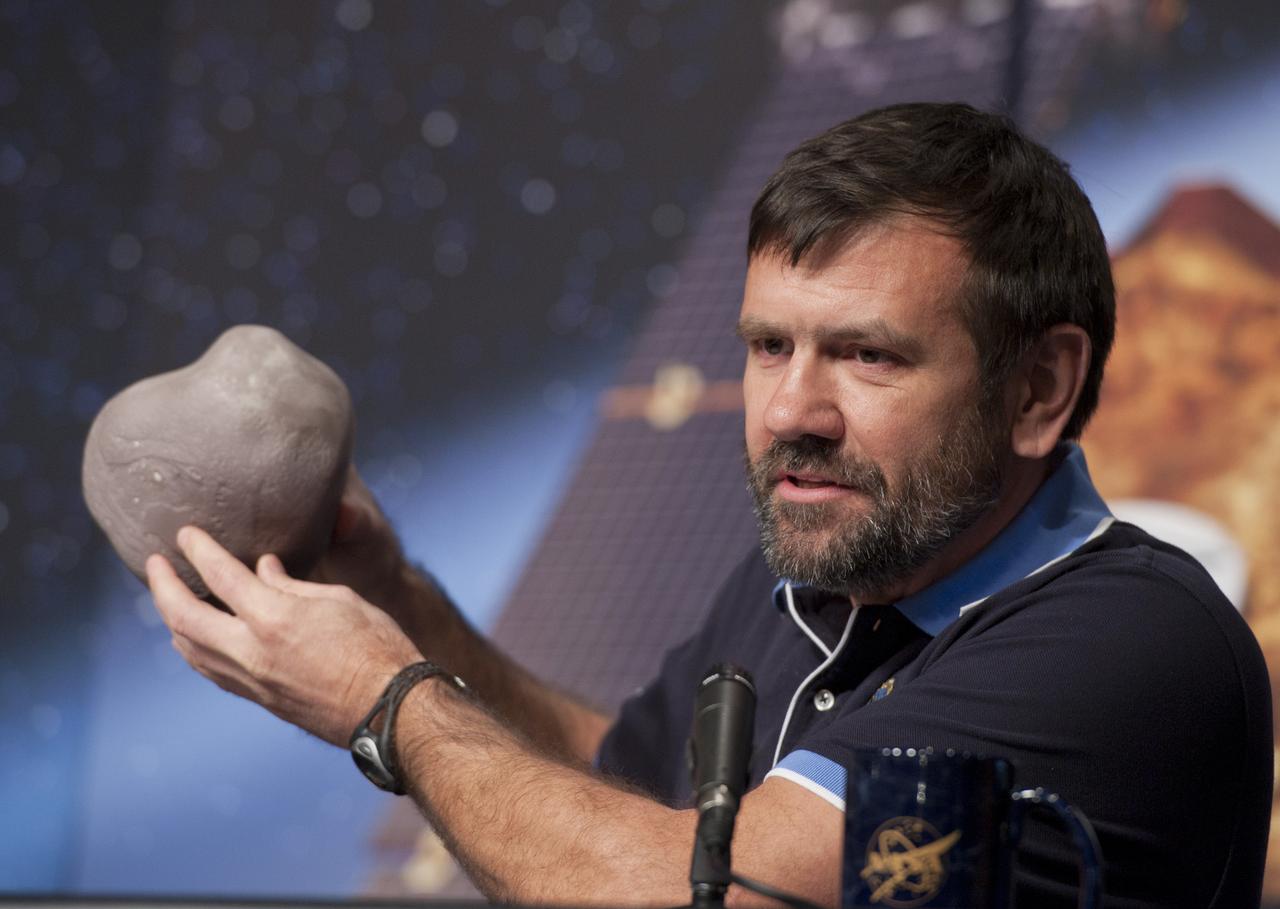
Steve Chesley, Stardust NExT co-investigator, the Jet Propulsion Laboratory, holds up a model of Comet Tempel 1 during a news briefing, Wednesday, Jan. 19, 2011, at NASA Headquarters in Washington. On Feb. 14, 2011 NASA's Stardust-NExT (New Exploration of Tempel 1) mission will encounter Comet Tempel 1, providing a unique opportunity to measure the dust properties which will also provide a comparison between two observations of a single comet, Tempel 1, taken before and after a single orbital pass around the sun. Photo Credit: (NASA/Paul E. Alers)
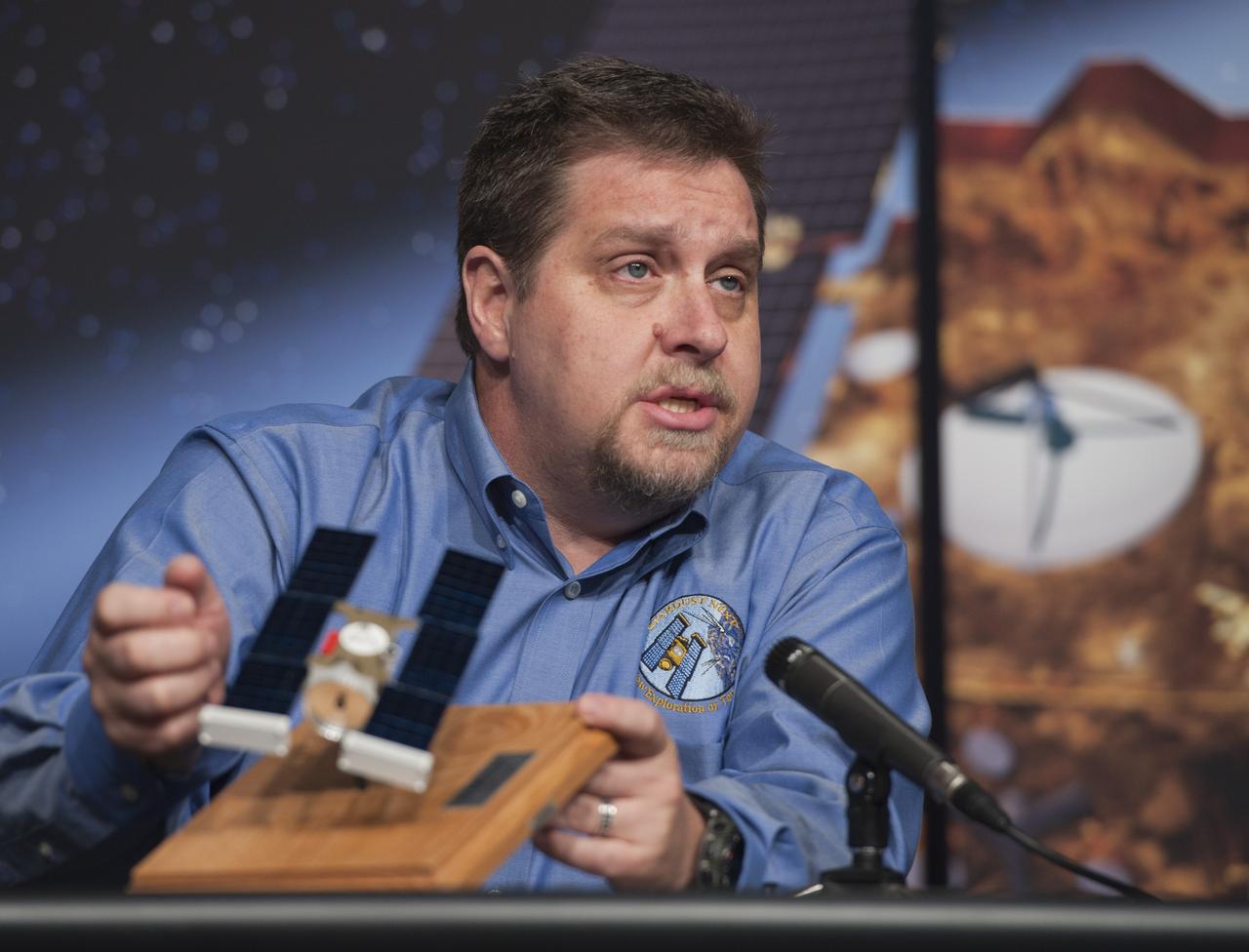
Tim Larson, Stardust NExT Project Manager, speaks during a news briefing, Wednesday, Jan. 19, 2011, at NASA Headquarters in Washington. On Feb. 14, 2011 NASA's Stardust-NExT (New Exploration of Tempel 1) mission will encounter Comet Tempel 1, providing a unique opportunity to measure the dust properties which will also provide a comparison between two observations of a single comet, Tempel 1, taken before and after a single orbital pass around the sun. Photo Credit: (NASA/Paul E. Alers)
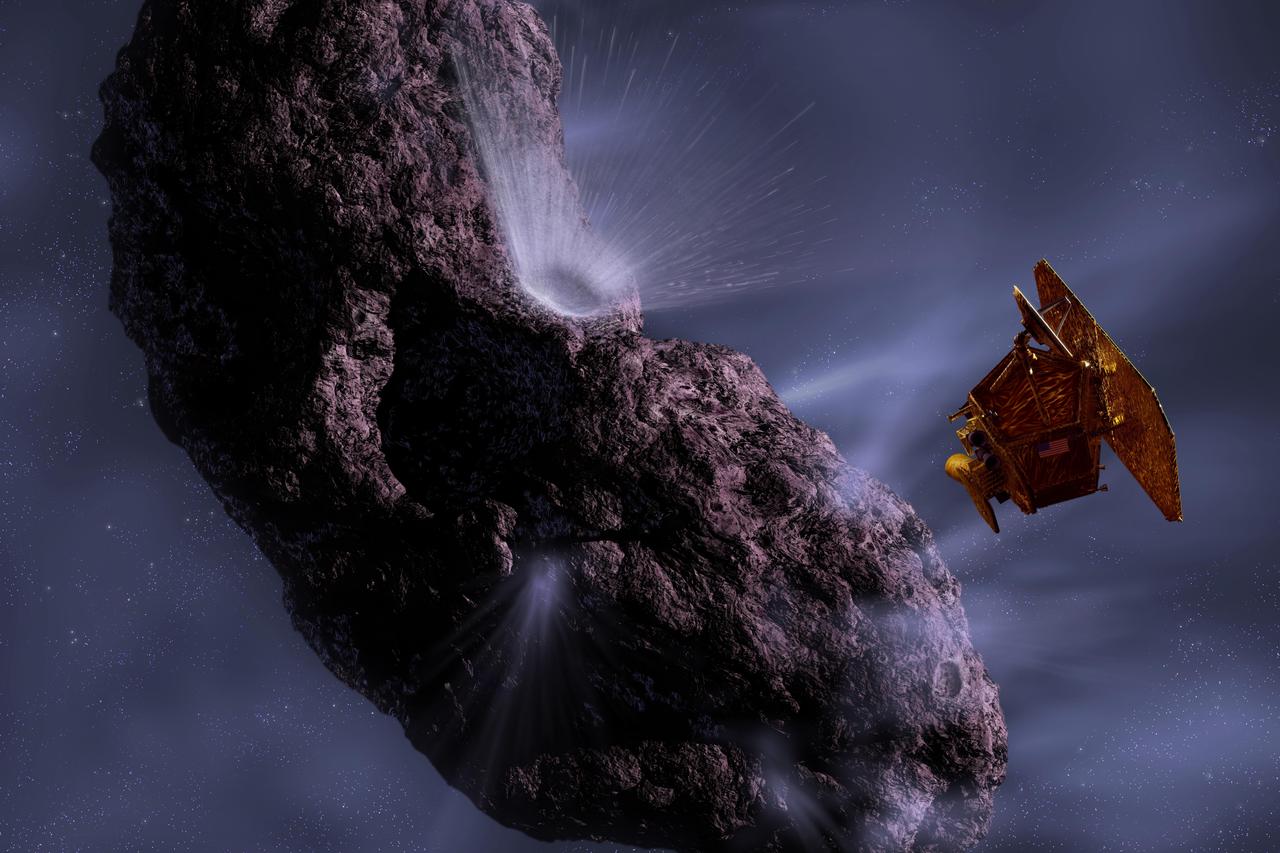
This artist concept gives us a look at the moment of impact and the forming of the crater.

Pete Schultz, Stardust NExT co-investigator, from Brown University, speaks during a news briefing, Wednesday, Jan. 19, 2011, at NASA Headquarters in Washington. On Feb. 14, 2011 NASA's Stardust-NExT (New Exploration of Tempel 1) mission will encounter Comet Tempel 1, providing a unique opportunity to measure the dust properties which will also provide a comparison between two observations of a single comet, Tempel 1, taken before and after a single orbital pass around the sun. Photo Credit: (NASA/Paul E. Alers)

Joe Ververka, Stardust NExT Principal Investigator, from Cornell University, speaks during a news briefing, Wednesday, Jan. 19, 2011, at NASA Headquarters in Washington. On Feb. 14, 2011 NASA's Stardust-NExT (New Exploration of Tempel 1) mission will encounter Comet Tempel 1, providing a unique opportunity to measure the dust properties which will also provide a comparison between two observations of a single comet, Tempel 1, taken before and after a single orbital pass around the sun. Photo Credit: (NASA/Paul E. Alers)
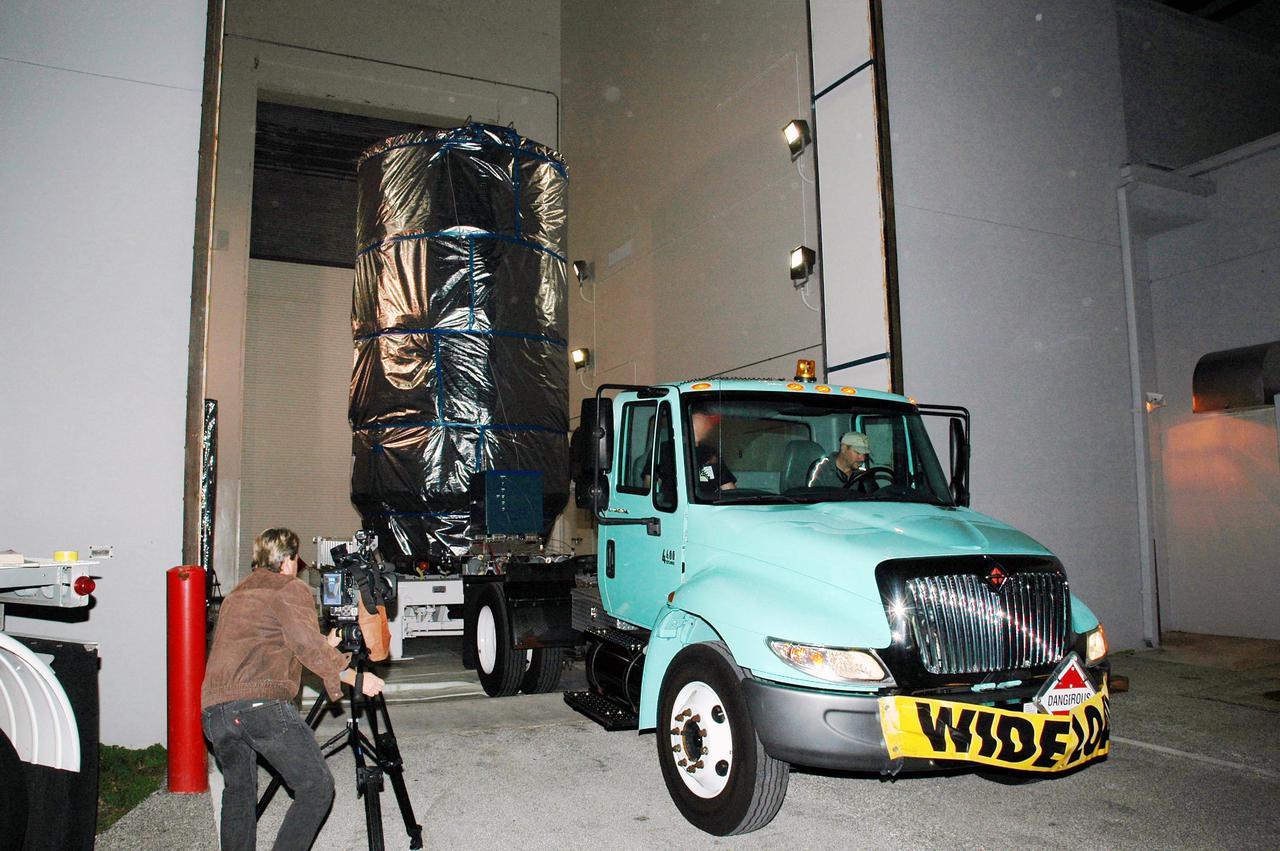
KENNEDY SPACE CENTER, FLA. - The Deep Impact spacecraft leaves Astrotech Space Operations in Titusville, Fla., in the pre-dawn hours on a journey to Launch Pad 17-B at Cape Canaveral Air Force Station, Fla. There the spacecraft will be attached to the second stage of the Boeing Delta II rocket. Next the fairing will be installed around the spacecraft. The fairing is a molded structure that fits flush with the outside surface of the Delta II upper stage booster and forms an aerodynamically smooth joint, protecting the spacecraft during launch and ascent. Scheduled for liftoff Jan. 12, Deep Impact will probe beneath the surface of Comet Tempel 1 on July 4, 2005, when the comet is 83 million miles from Earth. After releasing a 3- by 3-foot projectile to crash onto the surface, Deep Impact’s flyby spacecraft will reveal the secrets of its interior by collecting pictures and data of how the crater forms, measuring the crater’s depth and diameter as well as the composition of the interior of the crater and any material thrown out, and determining the changes in natural outgassing produced by the impact. It will send the data back to Earth through the antennas of the Deep Space Network. Deep Impact is a NASA Discovery mission.
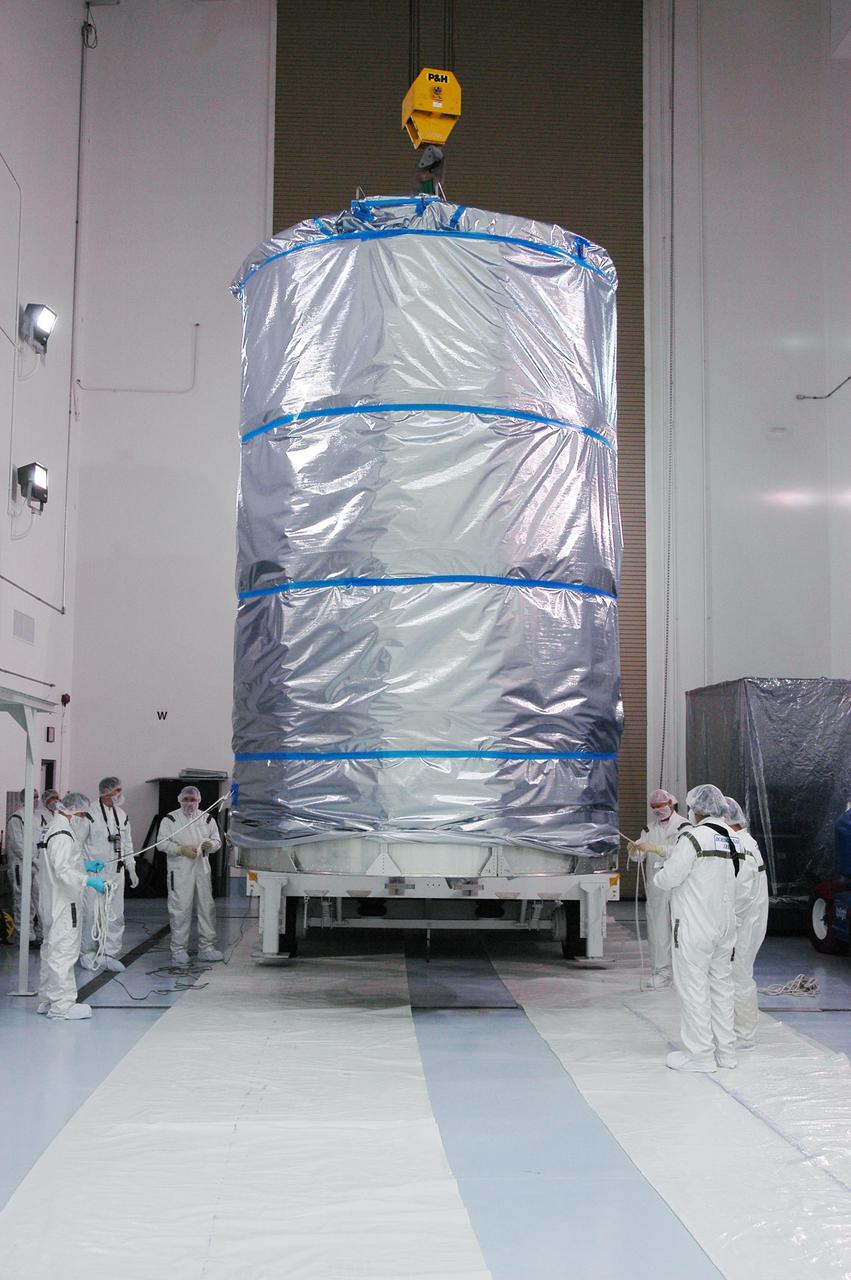
KENNEDY SPACE CENTER, FLA. - At Astrotech Space Operations in Titusville, Fla., technicians install a crane onto the upper canister before lifting it to install around the Deep Impact spacecraft. Once the spacecraft is completely covered, it will be transferred to Launch Pad 17-B on Cape Canaveral Air Force Station, Fla. Then, in the mobile service tower, the fairing will be installed around the spacecraft. The fairing is a molded structure that fits flush with the outside surface of the Delta II upper stage booster and forms an aerodynamically smooth joint, protecting the spacecraft during launch. Scheduled for liftoff Jan. 12, Deep Impact will probe beneath the surface of Comet Tempel 1 on July 4, 2005, when the comet is 83 million miles from Earth. After releasing a 3- by 3-foot projectile to crash onto the surface, Deep Impact’s flyby spacecraft will reveal the secrets of its interior by collecting pictures and data of how the crater forms, measuring the crater’s depth and diameter as well as the composition of the interior of the crater and any material thrown out, and determining the changes in natural outgassing produced by the impact. It will send the data back to Earth through the antennas of the Deep Space Network. Deep Impact is a NASA Discovery mission.
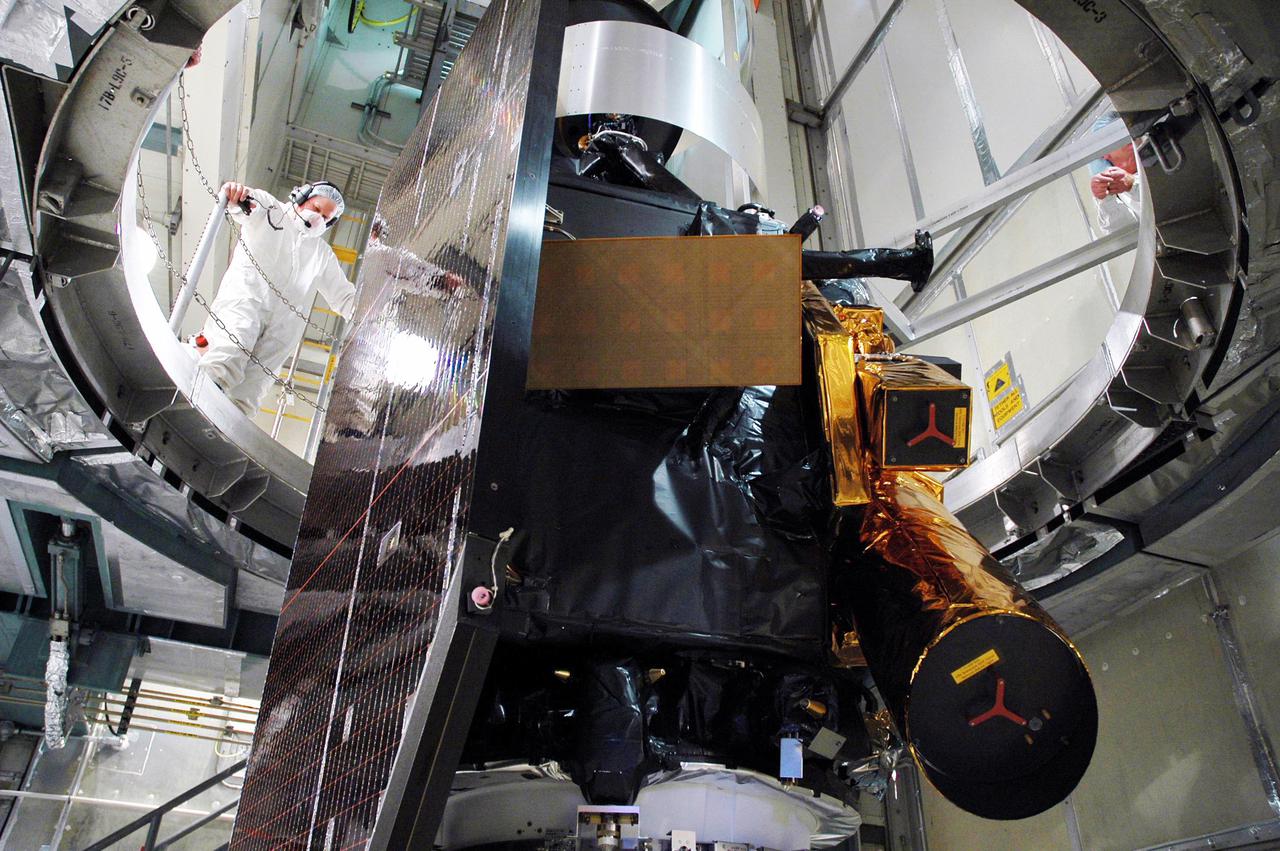
KENNEDY SPACE CENTER, FLA. - From a vantage point above, a worker observes the Deep Impact spacecraft exposed after removal of the canister and protective cover. Next the fairing will be installed around the spacecraft. The fairing is a molded structure that fits flush with the outside surface of the Delta II upper stage booster and forms an aerodynamically smooth joint, protecting the spacecraft during launch and ascent. Scheduled for liftoff Jan. 12, Deep Impact will probe beneath the surface of Comet Tempel 1 on July 4, 2005, when the comet is 83 million miles from Earth. After releasing a 3- by 3-foot projectile to crash onto the surface, Deep Impact’s flyby spacecraft will reveal the secrets of its interior by collecting pictures and data of how the crater forms, measuring the crater’s depth and diameter as well as the composition of the interior of the crater and any material thrown out, and determining the changes in natural outgassing produced by the impact. It will send the data back to Earth through the antennas of the Deep Space Network. Deep Impact is a NASA Discovery mission.
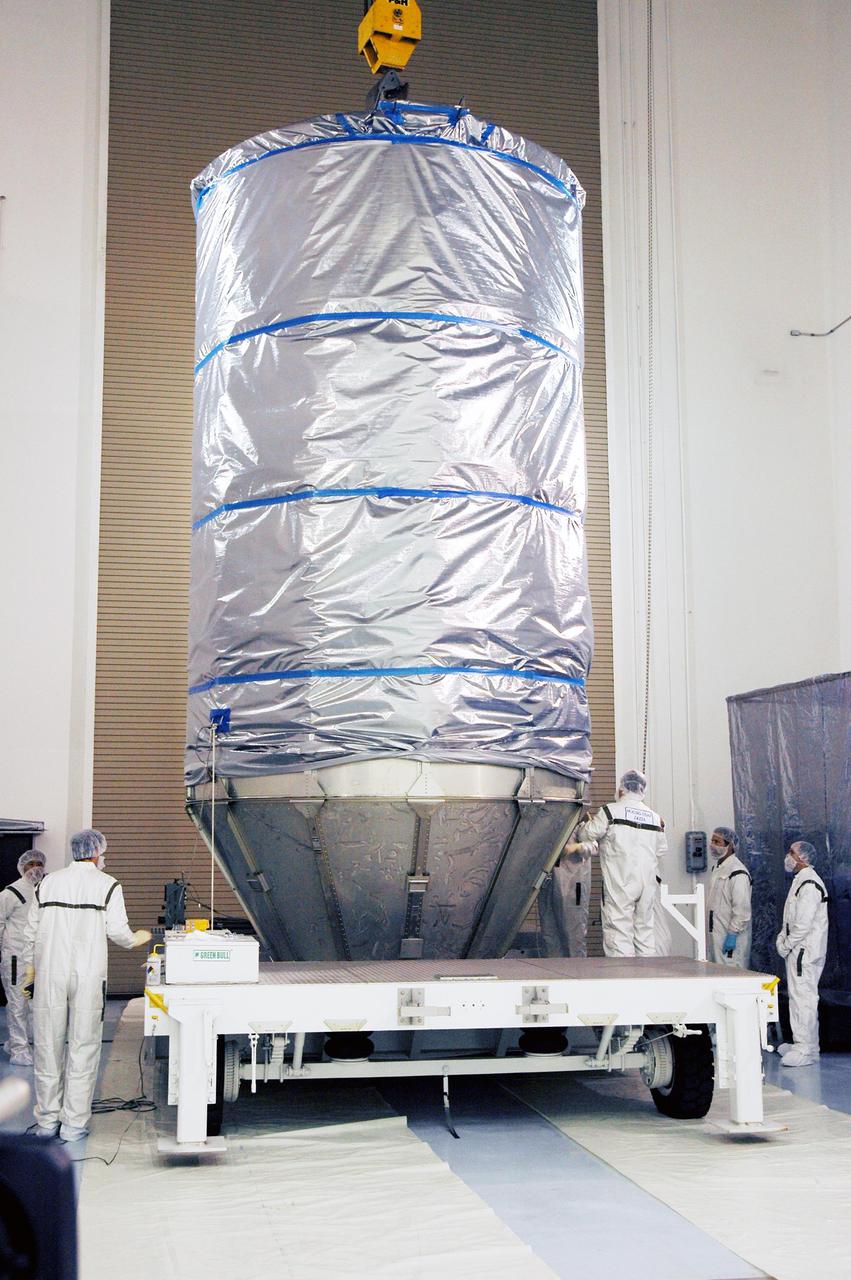
KENNEDY SPACE CENTER, FLA. - At Astrotech Space Operations in Titusville, Fla., the Deep Impact spacecraft is secure in the canister for its move to Launch Pad 17-B on Cape Canaveral Air Force Station, Fla. Then, in the mobile service tower, the fairing will be installed around the spacecraft. The fairing is a molded structure that fits flush with the outside surface of the Delta II upper stage booster and forms an aerodynamically smooth joint, protecting the spacecraft during launch. Scheduled for liftoff Jan. 12, Deep Impact will probe beneath the surface of Comet Tempel 1 on July 4, 2005, when the comet is 83 million miles from Earth. After releasing a 3- by 3-foot projectile to crash onto the surface, Deep Impact’s flyby spacecraft will reveal the secrets of its interior by collecting pictures and data of how the crater forms, measuring the crater’s depth and diameter as well as the composition of the interior of the crater and any material thrown out, and determining the changes in natural outgassing produced by the impact. It will send the data back to Earth through the antennas of the Deep Space Network. Deep Impact is a NASA Discovery mission.
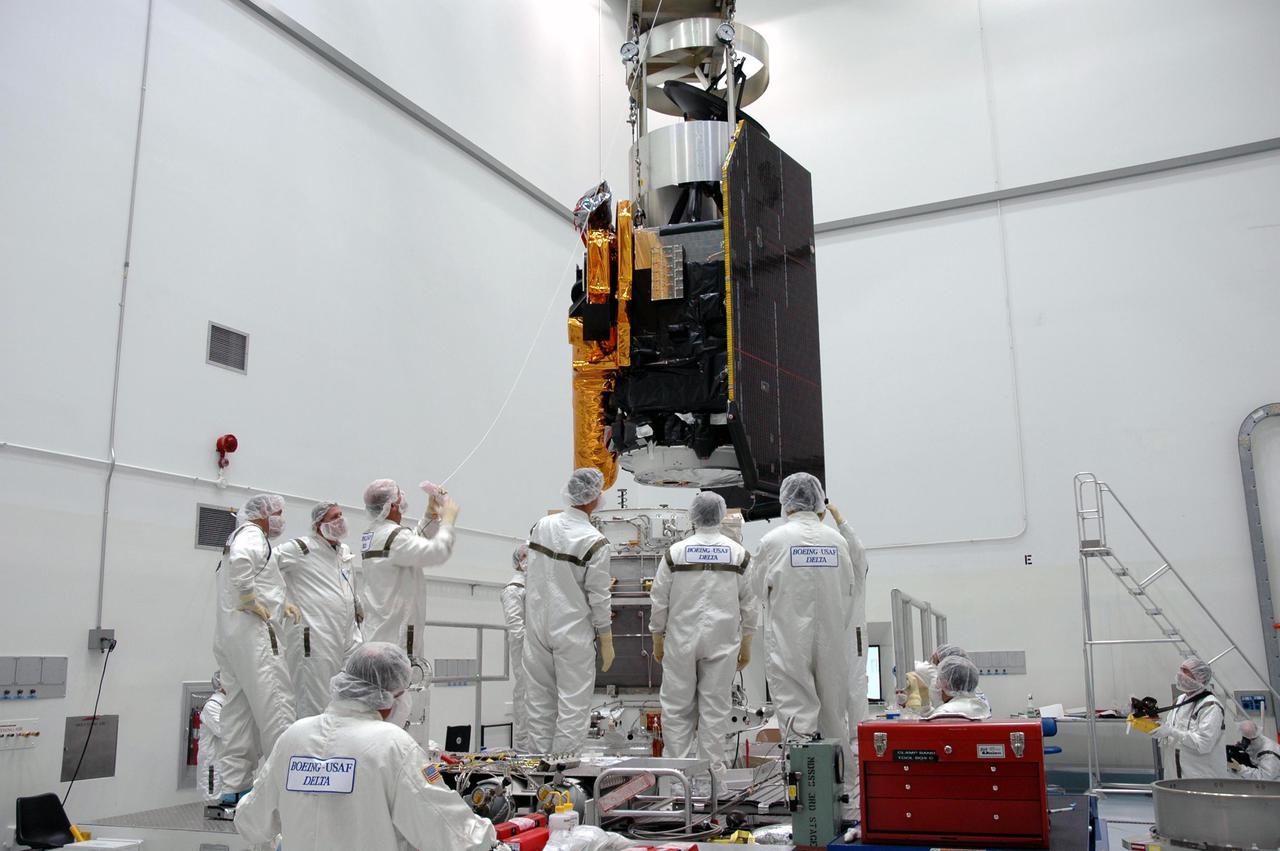
KENNEDY SPACE CENTER, FLA. - At Astrotech Space Operations in Titusville, Fla., Boeing technicians watch as an overhead crane lowers the Deep Impact spacecraft onto the Delta II third stage for mating. When the spacecraft and third stage are mated, they will be moved to Launch Pad 17-B at Cape Canaveral Air Force Station, Fla. There they will be mated to the Delta II rocket and the fairing installed around them for protection during launch and ascent. Scheduled for liftoff Jan. 12, Deep Impact will probe beneath the surface of Comet Tempel 1 on July 4, 2005, when the comet is 83 million miles from Earth. After releasing a 3- by 3-foot projectile to crash onto the surface, Deep Impact’s flyby spacecraft will reveal the secrets of its interior by collecting pictures and data of how the crater forms, measuring the crater’s depth and diameter as well as the composition of the interior of the crater and any material thrown out, and determining the changes in natural outgassing produced by the impact. It will send the data back to Earth through the antennas of the Deep Space Network. Deep Impact is a NASA Discovery mission.

KENNEDY SPACE CENTER, FLA. - In the mobile service tower on Launch Pad 17-B at Cape Canaveral Air Force Station, Fla., workers watch as the protective cover surrounding the Deep Impact spacecraft is lifted away. Next the fairing will be installed around the spacecraft. The fairing is a molded structure that fits flush with the outside surface of the Delta II upper stage booster and forms an aerodynamically smooth joint, protecting the spacecraft during launch and ascent. Scheduled for liftoff Jan. 12, Deep Impact will probe beneath the surface of Comet Tempel 1 on July 4, 2005, when the comet is 83 million miles from Earth. After releasing a 3- by 3-foot projectile to crash onto the surface, Deep Impact’s flyby spacecraft will reveal the secrets of its interior by collecting pictures and data of how the crater forms, measuring the crater’s depth and diameter as well as the composition of the interior of the crater and any material thrown out, and determining the changes in natural outgassing produced by the impact. It will send the data back to Earth through the antennas of the Deep Space Network. Deep Impact is a NASA Discovery mission.
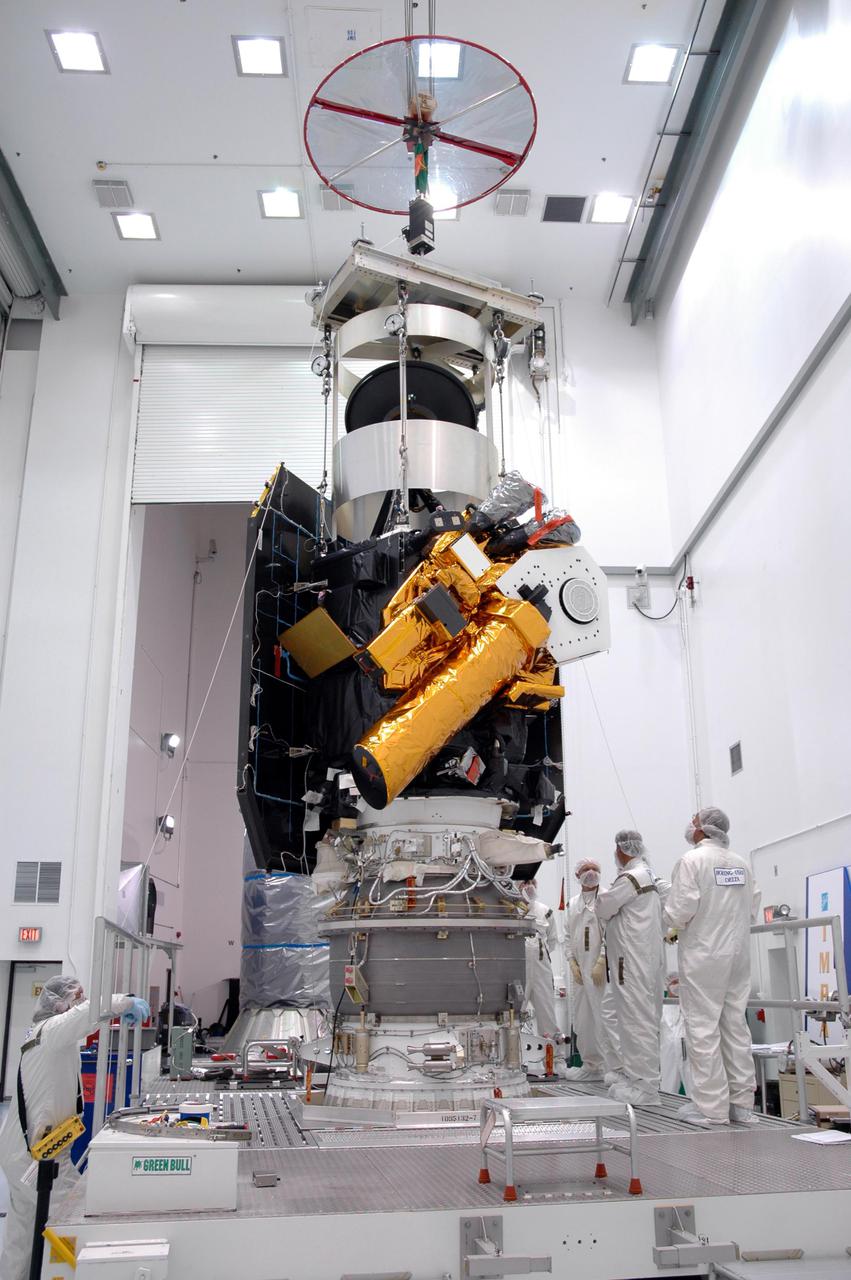
KENNEDY SPACE CENTER, FLA. - At Astrotech Space Operations in Titusville, Fla., the Deep Impact spacecraft is mated to the Boeing Delta II third stage. When the spacecraft and third stage are mated, they will be moved to Launch Pad 17-B at Cape Canaveral Air Force Station, Fla. There they will be mated to the Delta II rocket and the fairing installed around them for protection during launch and ascent. Scheduled for liftoff Jan. 12, Deep Impact will probe beneath the surface of Comet Tempel 1 on July 4, 2005, when the comet is 83 million miles from Earth. After releasing a 3- by 3-foot projectile to crash onto the surface, Deep Impact’s flyby spacecraft will reveal the secrets of its interior by collecting pictures and data of how the crater forms, measuring the crater’s depth and diameter as well as the composition of the interior of the crater and any material thrown out, and determining the changes in natural outgassing produced by the impact. It will send the data back to Earth through the antennas of the Deep Space Network. Deep Impact is a NASA Discovery mission.
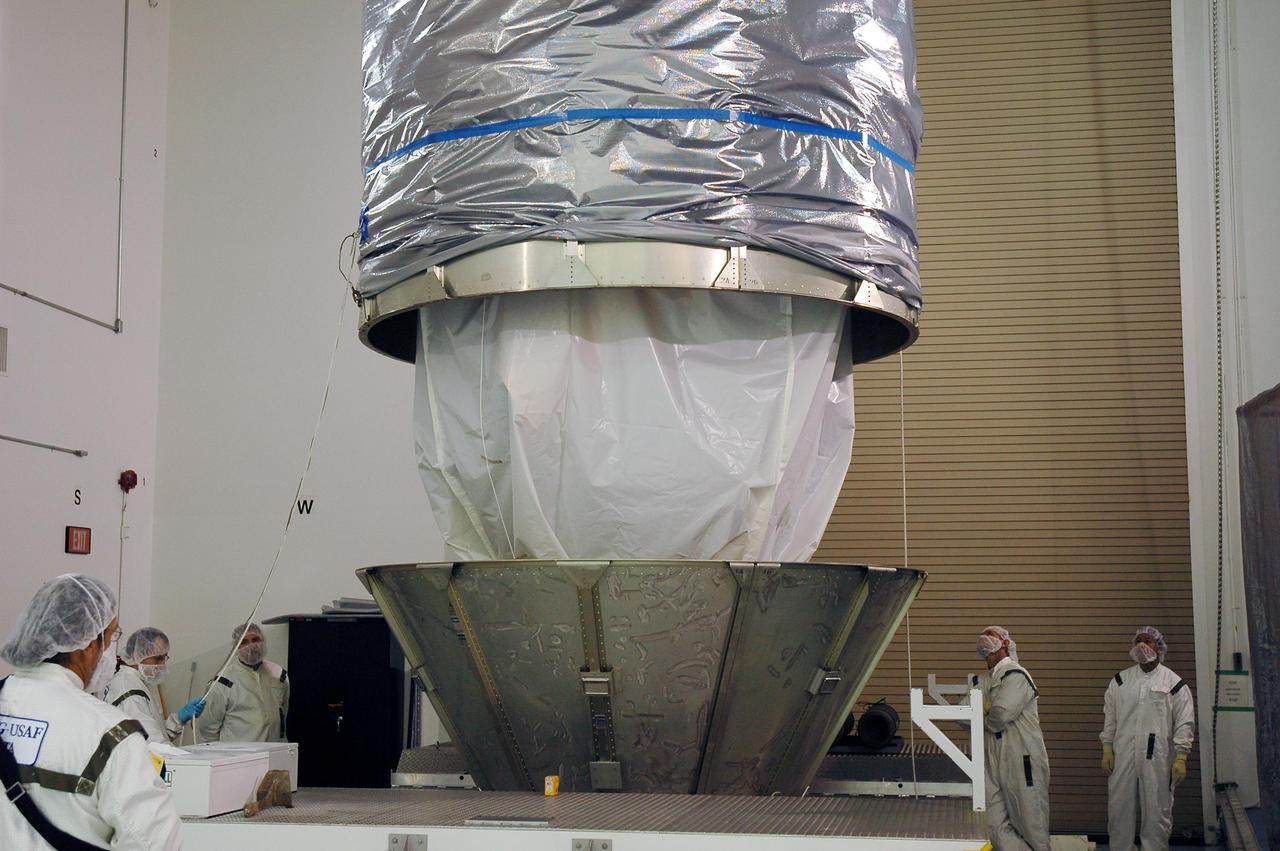
KENNEDY SPACE CENTER, FLA. - At Astrotech Space Operations in Titusville, Fla., technicians lower the upper canister toward the Deep Impact spacecraft. It will be attached to the lower segments already surrounding the spacecraft. Once the spacecraft is completely covered, it will be transferred to Launch Pad 17-B on Cape Canaveral Air Force Station, Fla. Then, in the mobile service tower, the fairing will be installed around the spacecraft. The fairing is a molded structure that fits flush with the outside surface of the Delta II upper stage booster and forms an aerodynamically smooth joint, protecting the spacecraft during launch. Scheduled for liftoff Jan. 12, Deep Impact will probe beneath the surface of Comet Tempel 1 on July 4, 2005, when the comet is 83 million miles from Earth. After releasing a 3- by 3-foot projectile to crash onto the surface, Deep Impact’s flyby spacecraft will reveal the secrets of its interior by collecting pictures and data of how the crater forms, measuring the crater’s depth and diameter as well as the composition of the interior of the crater and any material thrown out, and determining the changes in natural outgassing produced by the impact. It will send the data back to Earth through the antennas of the Deep Space Network. Deep Impact is a NASA Discovery mission.
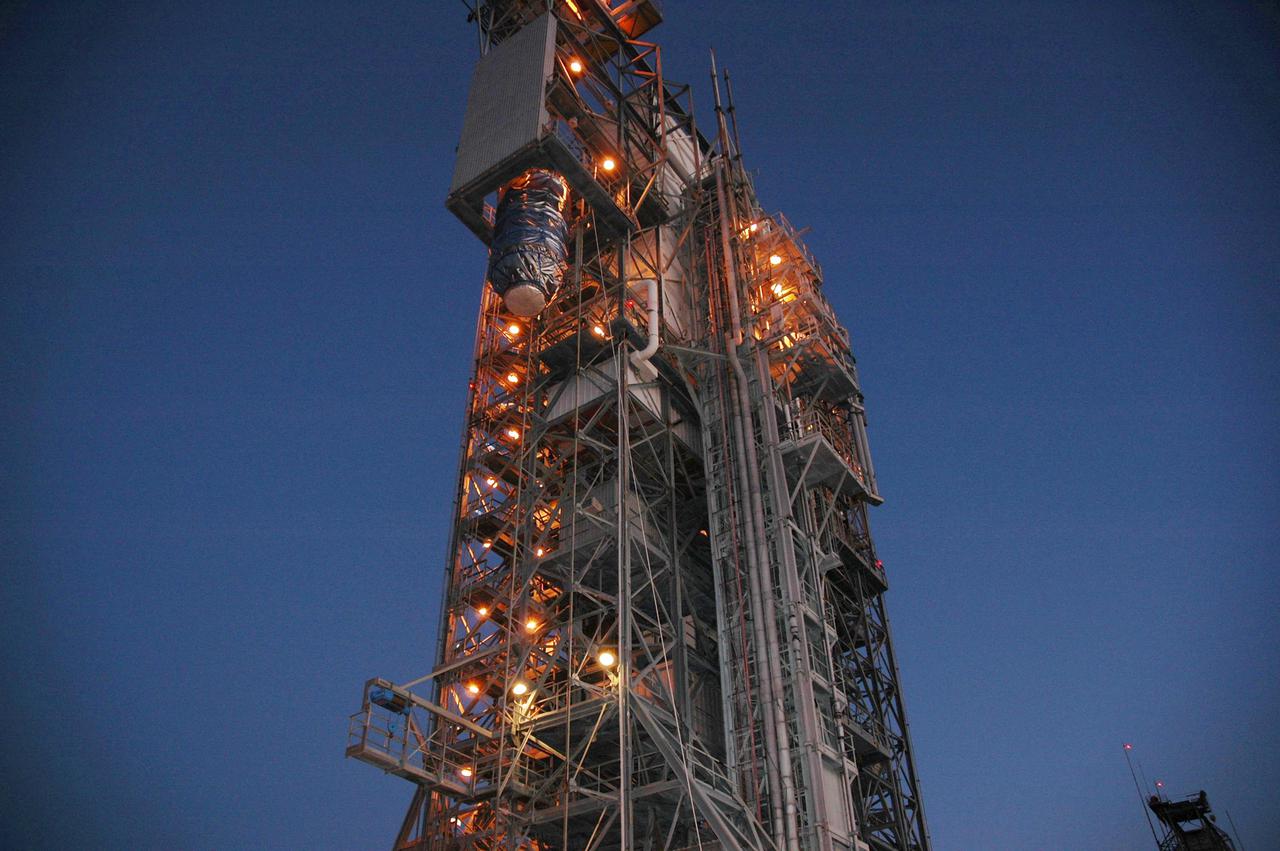
KENNEDY SPACE CENTER, FLA. - The Deep Impact spacecraft is lifted into the top of the mobile service tower on Launch Pad 17-B at Cape Canaveral Air Force Station, Fla. the spacecraft will be attached to the second stage of the Boeing Delta II rocket. Next the fairing will be installed around the spacecraft. The fairing is a molded structure that fits flush with the outside surface of the Delta II upper stage booster and forms an aerodynamically smooth joint, protecting the spacecraft during launch and ascent. Scheduled for liftoff Jan. 12, Deep Impact will probe beneath the surface of Comet Tempel 1 on July 4, 2005, when the comet is 83 million miles from Earth. After releasing a 3- by 3-foot projectile to crash onto the surface, Deep Impact’s flyby spacecraft will reveal the secrets of its interior by collecting pictures and data of how the crater forms, measuring the crater’s depth and diameter as well as the composition of the interior of the crater and any material thrown out, and determining the changes in natural outgassing produced by the impact. It will send the data back to Earth through the antennas of the Deep Space Network. Deep Impact is a NASA Discovery mission.
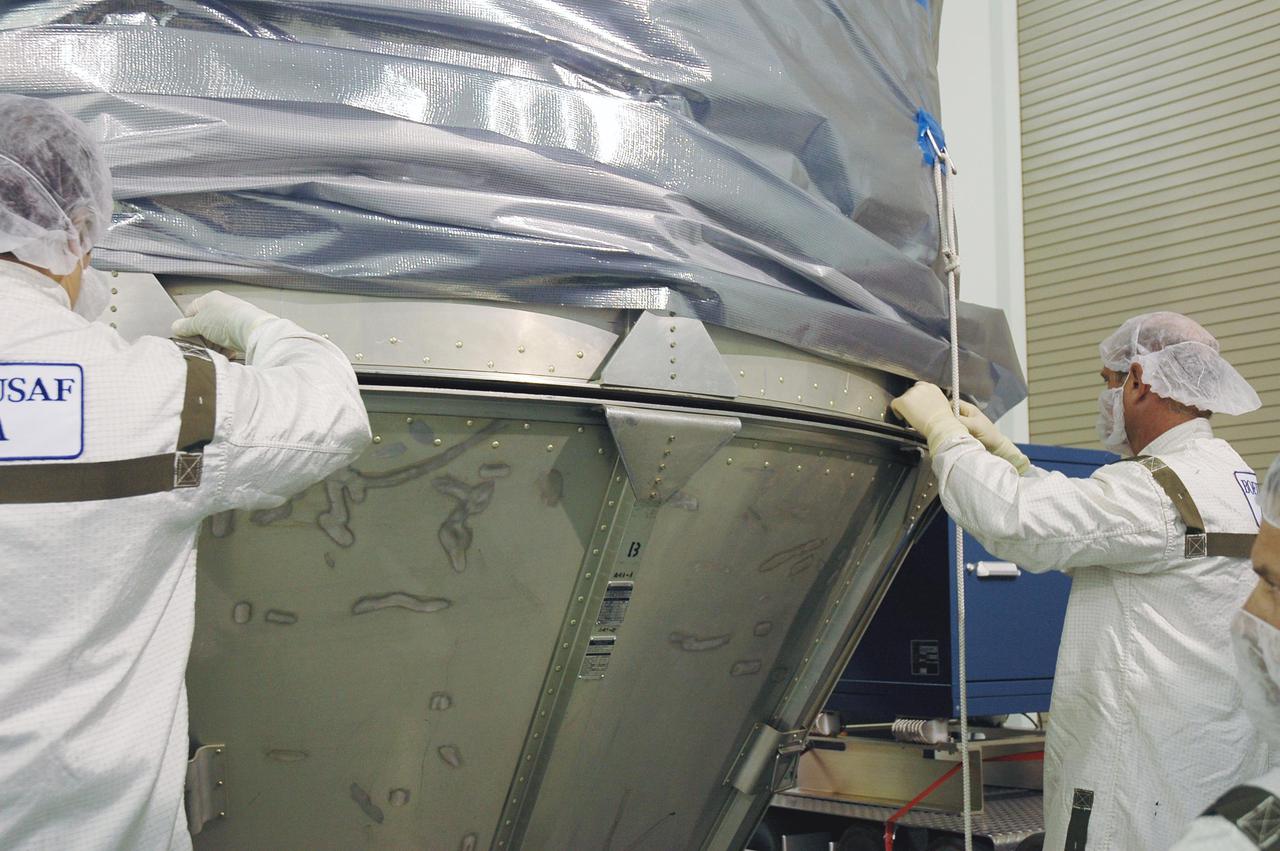
KENNEDY SPACE CENTER, FLA. - At Astrotech Space Operations in Titusville, Fla., Boeing technicians attach the upper canister with the lower segments surrounding the Deep Impact spacecraft. Once the spacecraft is completely covered, it will be transferred to Launch Pad 17-B on Cape Canaveral Air Force Station, Fla. Then, in the mobile service tower, the fairing will be installed around the spacecraft. The fairing is a molded structure that fits flush with the outside surface of the Delta II upper stage booster and forms an aerodynamically smooth joint, protecting the spacecraft during launch. Scheduled for liftoff Jan. 12, Deep Impact will probe beneath the surface of Comet Tempel 1 on July 4, 2005, when the comet is 83 million miles from Earth. After releasing a 3- by 3-foot projectile to crash onto the surface, Deep Impact’s flyby spacecraft will reveal the secrets of its interior by collecting pictures and data of how the crater forms, measuring the crater’s depth and diameter as well as the composition of the interior of the crater and any material thrown out, and determining the changes in natural outgassing produced by the impact. It will send the data back to Earth through the antennas of the Deep Space Network. Deep Impact is a NASA Discovery mission.
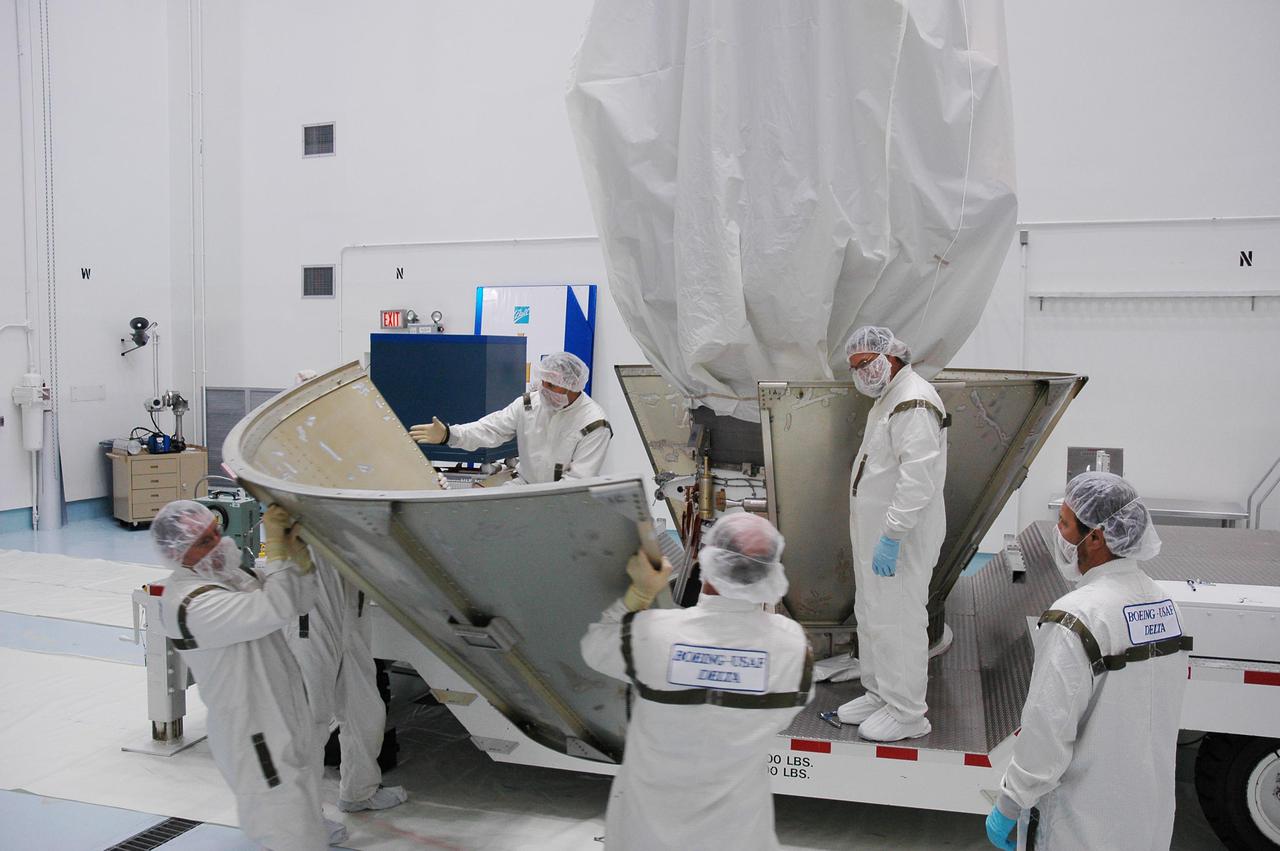
KENNEDY SPACE CENTER, FLA. - At Astrotech Space Operations in Titusville, Fla., Boeing technicians place the lower segments of a protective canister around the Deep Impact spacecraft. Once the spacecraft is completely covered, it will be transferred to Launch Pad 17-B on Cape Canaveral Air Force Station, Fla. Then, in the mobile service tower, the fairing will be installed around the spacecraft. The fairing is a molded structure that fits flush with the outside surface of the Delta II upper stage booster and forms an aerodynamically smooth joint, protecting the spacecraft during launch. Scheduled for liftoff Jan. 12, Deep Impact will probe beneath the surface of Comet Tempel 1 on July 4, 2005, when the comet is 83 million miles from Earth. After releasing a 3- by 3-foot projectile to crash onto the surface, Deep Impact’s flyby spacecraft will reveal the secrets of its interior by collecting pictures and data of how the crater forms, measuring the crater’s depth and diameter as well as the composition of the interior of the crater and any material thrown out, and determining the changes in natural outgassing produced by the impact. It will send the data back to Earth through the antennas of the Deep Space Network. Deep Impact is a NASA Discovery mission.
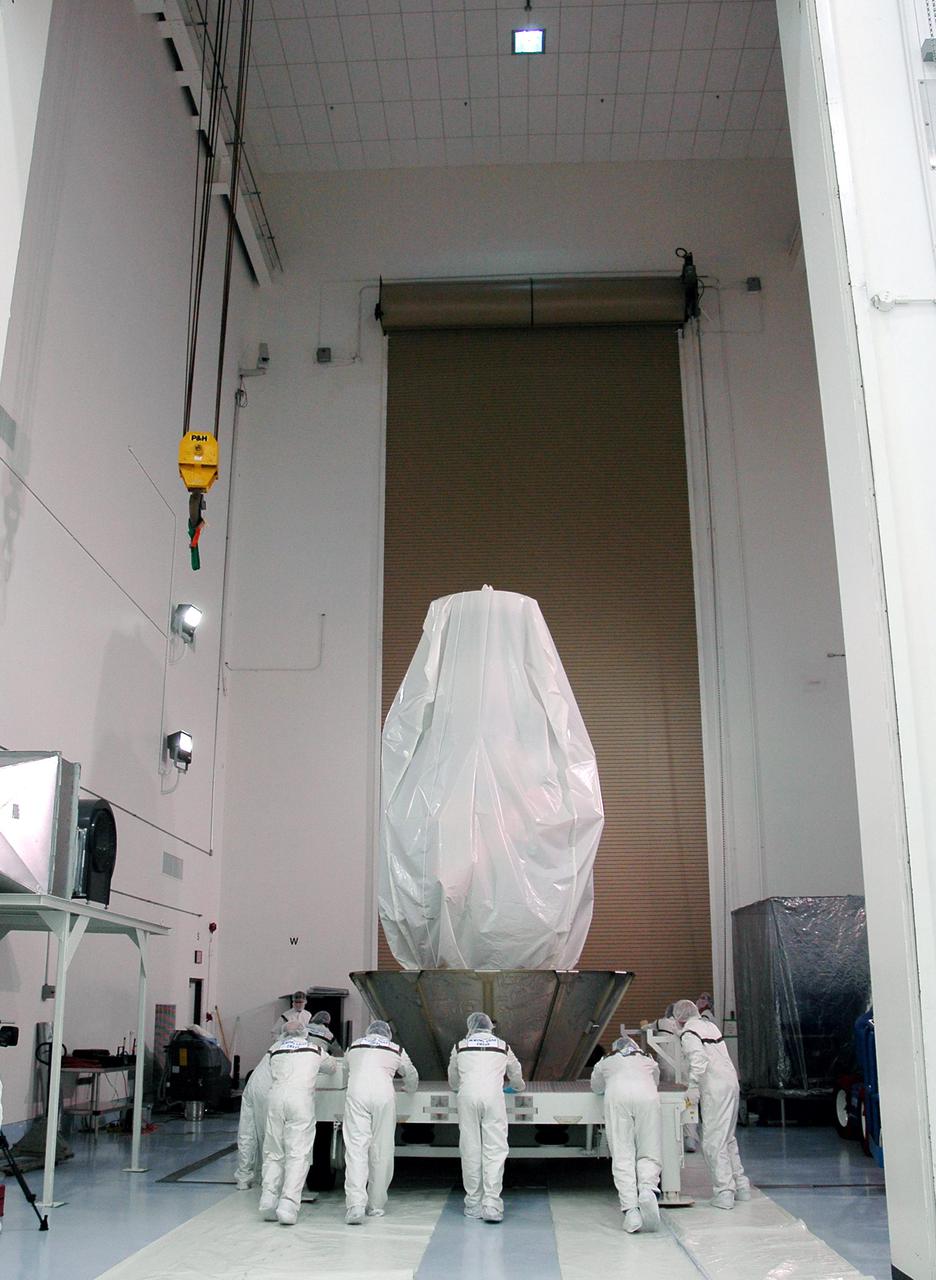
KENNEDY SPACE CENTER, FLA. - At Astrotech Space Operations in Titusville, Fla., Boeing technicians roll the Deep Impact spacecraft into another area where the upper canister can be lowered around it. Once the spacecraft is completely covered, it will be transferred to Launch Pad 17-B on Cape Canaveral Air Force Station, Fla. Then, in the mobile service tower, the fairing will be installed around the spacecraft. The fairing is a molded structure that fits flush with the outside surface of the Delta II upper stage booster and forms an aerodynamically smooth joint, protecting the spacecraft during launch. Scheduled for liftoff Jan. 12, Deep Impact will probe beneath the surface of Comet Tempel 1 on July 4, 2005, when the comet is 83 million miles from Earth. After releasing a 3- by 3-foot projectile to crash onto the surface, Deep Impact’s flyby spacecraft will reveal the secrets of its interior by collecting pictures and data of how the crater forms, measuring the crater’s depth and diameter as well as the composition of the interior of the crater and any material thrown out, and determining the changes in natural outgassing produced by the impact. It will send the data back to Earth through the antennas of the Deep Space Network. Deep Impact is a NASA Discovery mission.
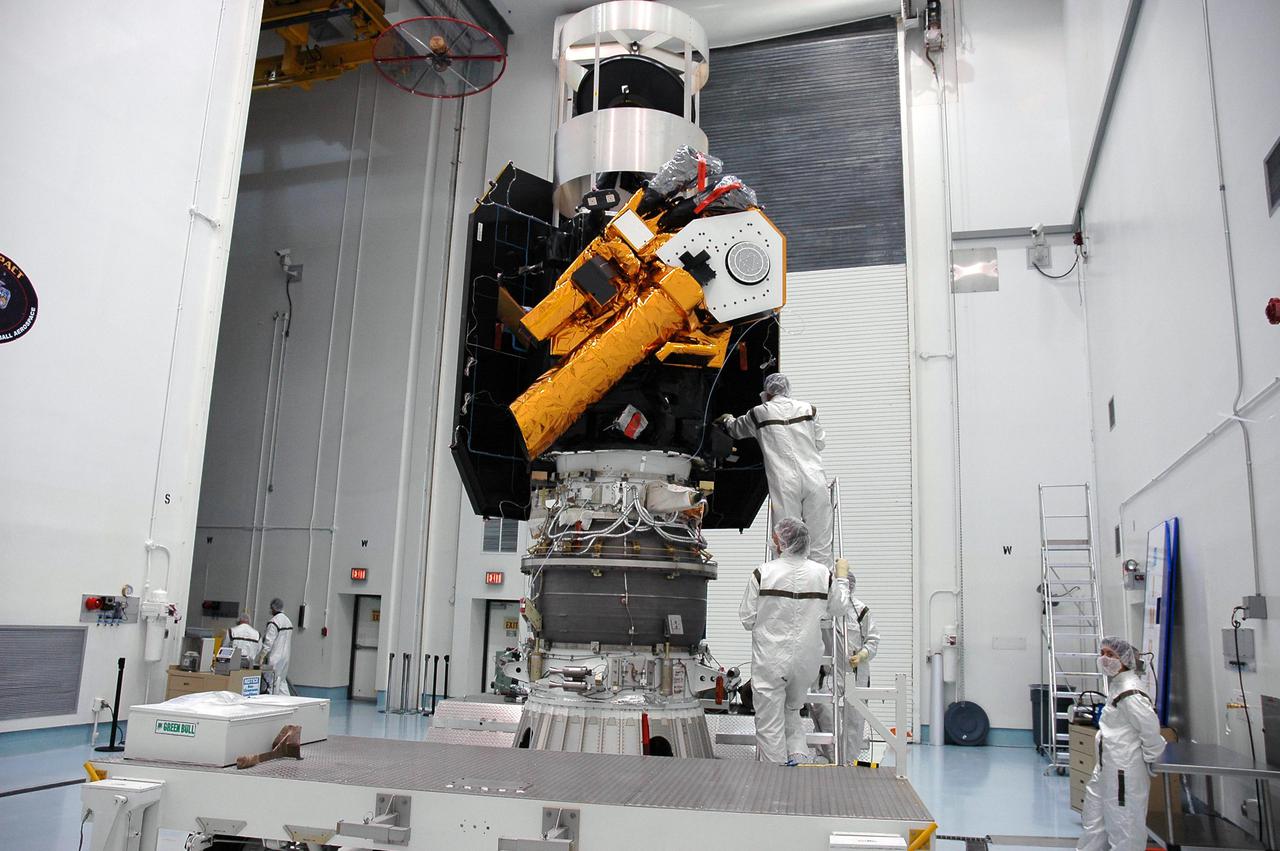
KENNEDY SPACE CENTER, FLA. - The Deep Impact spacecraft waits at Astrotech Space Operations in Titusville, Fla., for placement of a protective cover before the canister is installed around it. Once the spacecraft is completely covered, it will be transferred to Launch Pad 17-B on Cape Canaveral Air Force Station, Fla. Then, in the mobile service tower, the fairing will be installed around the spacecraft. The fairing is a molded structure that fits flush with the outside surface of the Delta II upper stage booster and forms an aerodynamically smooth joint, protecting the spacecraft during launch. Scheduled for liftoff Jan. 12, Deep Impact will probe beneath the surface of Comet Tempel 1 on July 4, 2005, when the comet is 83 million miles from Earth. After releasing a 3- by 3-foot projectile to crash onto the surface, Deep Impact’s flyby spacecraft will reveal the secrets of its interior by collecting pictures and data of how the crater forms, measuring the crater’s depth and diameter as well as the composition of the interior of the crater and any material thrown out, and determining the changes in natural outgassing produced by the impact. It will send the data back to Earth through the antennas of the Deep Space Network. Deep Impact is a NASA Discovery mission.
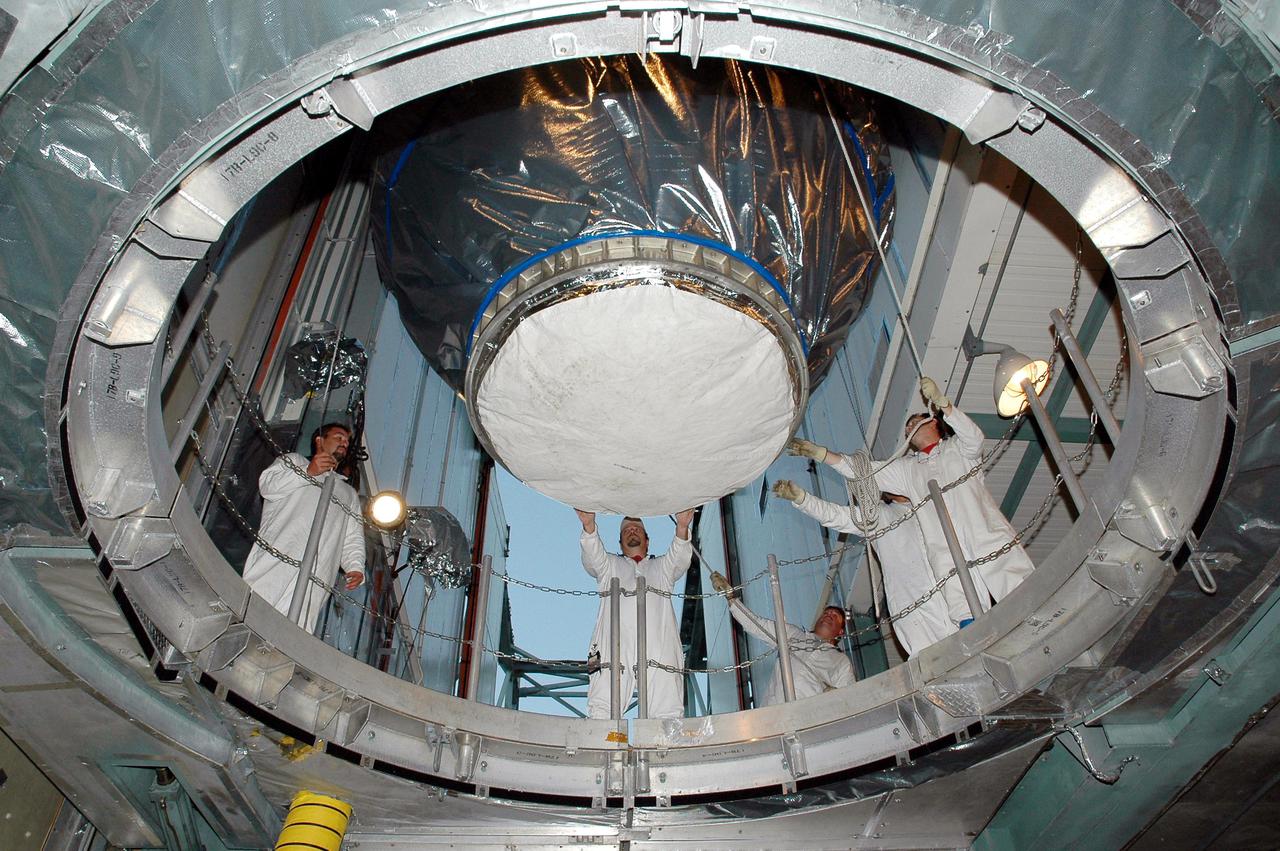
KENNEDY SPACE CENTER, FLA. - In the mobile service tower on Launch Pad 17-B at Cape Canaveral Air Force Station, Fla., workers begin lowering the Deep Impact spacecraft toward the second stage of the Boeing Delta II launch vehicle below for mating. Next the fairing will be installed around the spacecraft. The fairing is a molded structure that fits flush with the outside surface of the Delta II upper stage booster and forms an aerodynamically smooth joint, protecting the spacecraft during launch and ascent. Scheduled for liftoff Jan. 12, Deep Impact will probe beneath the surface of Comet Tempel 1 on July 4, 2005, when the comet is 83 million miles from Earth. After releasing a 3- by 3-foot projectile to crash onto the surface, Deep Impact’s flyby spacecraft will reveal the secrets of its interior by collecting pictures and data of how the crater forms, measuring the crater’s depth and diameter as well as the composition of the interior of the crater and any material thrown out, and determining the changes in natural outgassing produced by the impact. It will send the data back to Earth through the antennas of the Deep Space Network. Deep Impact is a NASA Discovery mission.
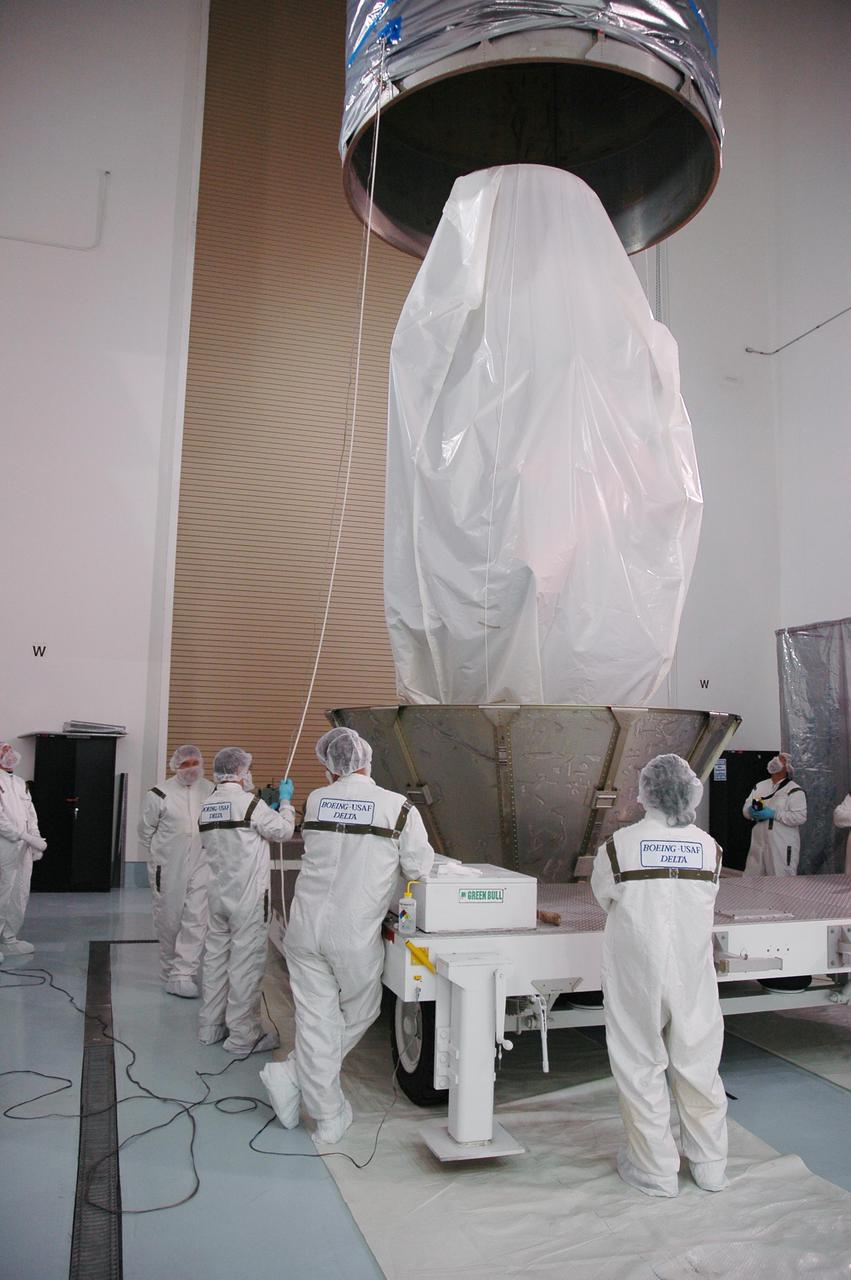
KENNEDY SPACE CENTER, FLA. - At Astrotech Space Operations in Titusville, Fla., technicians lower the upper canister toward the Deep Impact spacecraft. It will be attached to the lower segments already surrounding the spacecraft. Once the spacecraft is completely covered, it will be transferred to Launch Pad 17-B on Cape Canaveral Air Force Station, Fla. Then, in the mobile service tower, the fairing will be installed around the spacecraft. The fairing is a molded structure that fits flush with the outside surface of the Delta II upper stage booster and forms an aerodynamically smooth joint, protecting the spacecraft during launch. Scheduled for liftoff Jan. 12, Deep Impact will probe beneath the surface of Comet Tempel 1 on July 4, 2005, when the comet is 83 million miles from Earth. After releasing a 3- by 3-foot projectile to crash onto the surface, Deep Impact’s flyby spacecraft will reveal the secrets of its interior by collecting pictures and data of how the crater forms, measuring the crater’s depth and diameter as well as the composition of the interior of the crater and any material thrown out, and determining the changes in natural outgassing produced by the impact. It will send the data back to Earth through the antennas of the Deep Space Network. Deep Impact is a NASA Discovery mission.
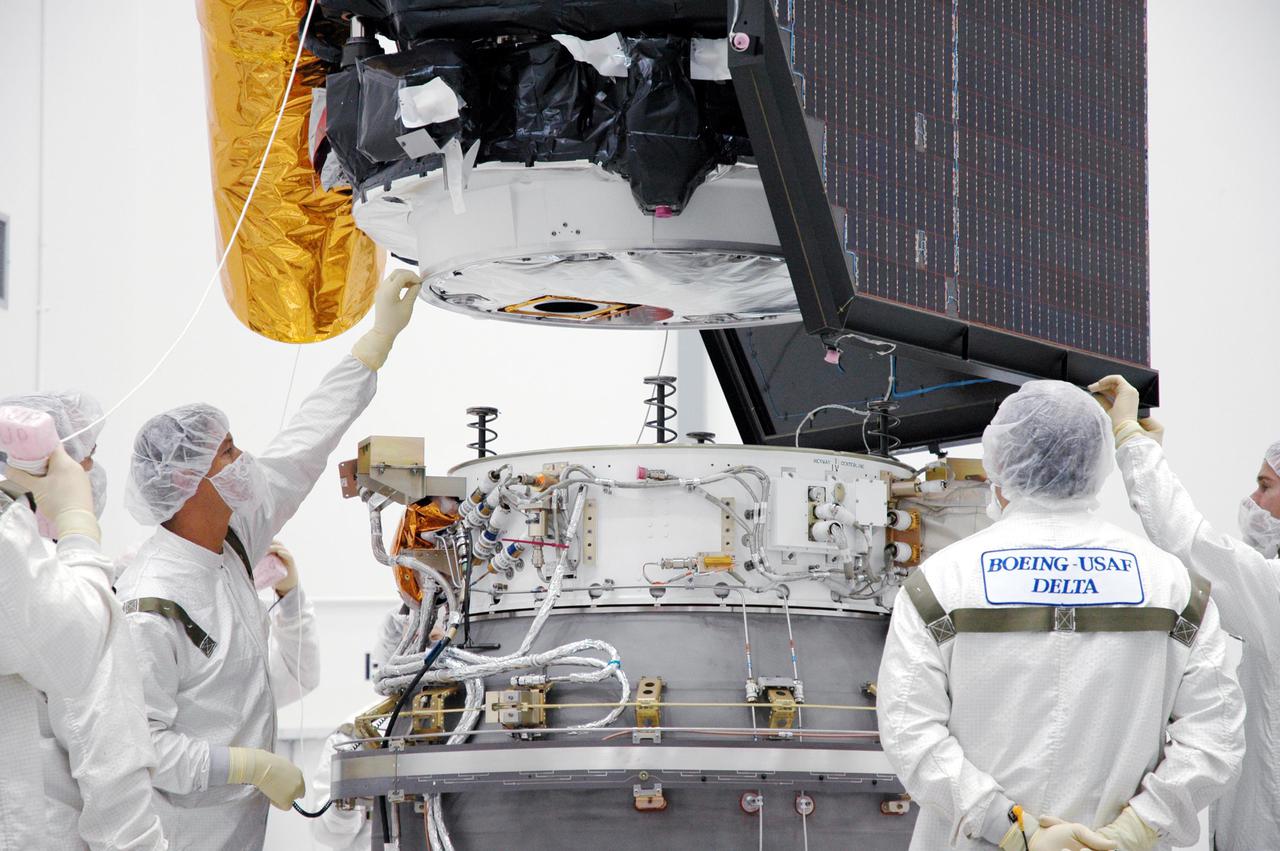
KENNEDY SPACE CENTER, FLA. - At Astrotech Space Operations in Titusville, Fla., Boeing technicians oversee the final movement of the Deep Impact spacecraft being lowered onto the Delta II third stage for mating. When the spacecraft and third stage are mated, they will be moved to Launch Pad 17-B at Cape Canaveral Air Force Station, Fla. There they will be mated to the Delta II rocket and the fairing installed around them for protection during launch and ascent. Scheduled for liftoff Jan. 12, Deep Impact will probe beneath the surface of Comet Tempel 1 on July 4, 2005, when the comet is 83 million miles from Earth. After releasing a 3- by 3-foot projectile to crash onto the surface, Deep Impact’s flyby spacecraft will reveal the secrets of its interior by collecting pictures and data of how the crater forms, measuring the crater’s depth and diameter as well as the composition of the interior of the crater and any material thrown out, and determining the changes in natural outgassing produced by the impact. It will send the data back to Earth through the antennas of the Deep Space Network. Deep Impact is a NASA Discovery mission.
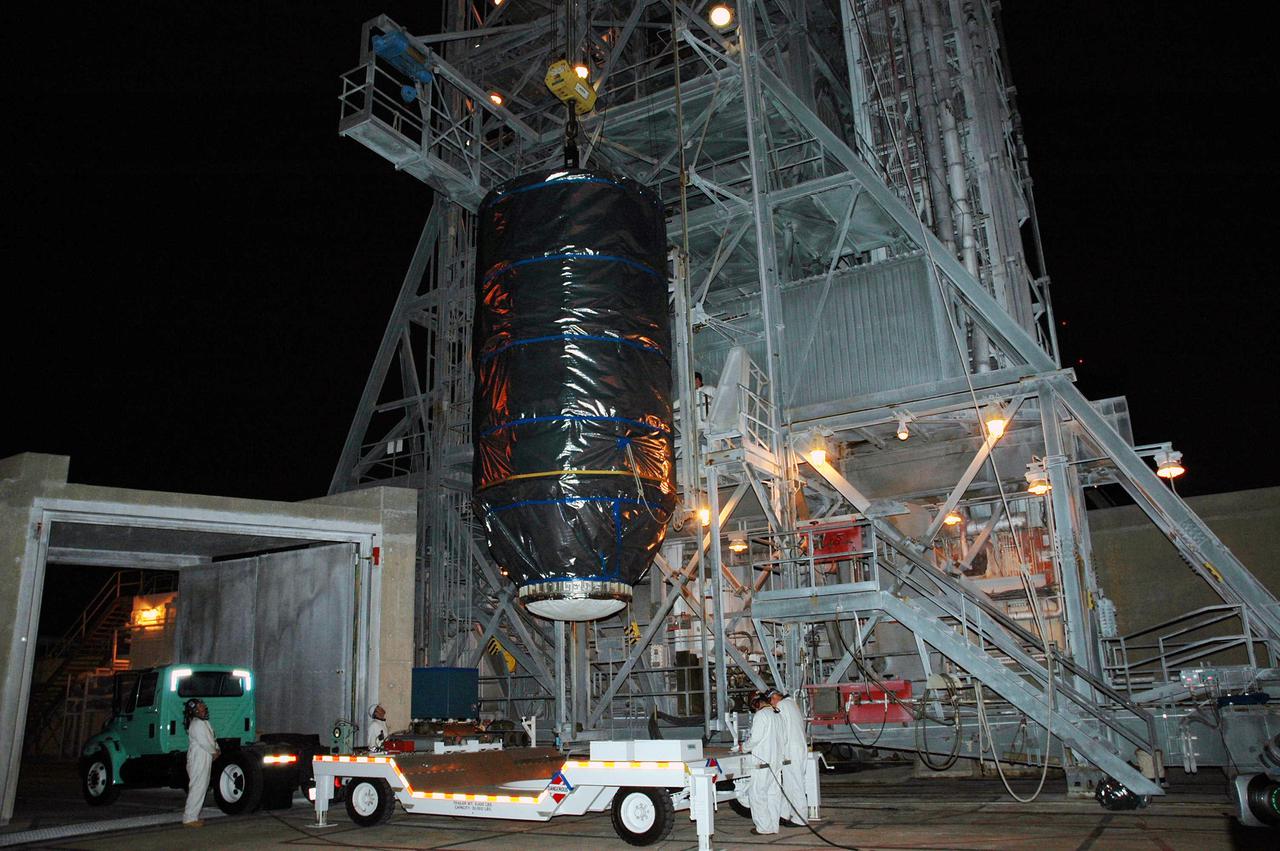
KENNEDY SPACE CENTER, FLA. - The Deep Impact spacecraft is lifted from its transporter into the mobile service tower on Launch Pad 17-B at Cape Canaveral Air Force Station, Fla. the spacecraft will be attached to the second stage of the Boeing Delta II rocket. Next the fairing will be installed around the spacecraft. The fairing is a molded structure that fits flush with the outside surface of the Delta II upper stage booster and forms an aerodynamically smooth joint, protecting the spacecraft during launch and ascent. Scheduled for liftoff Jan. 12, Deep Impact will probe beneath the surface of Comet Tempel 1 on July 4, 2005, when the comet is 83 million miles from Earth. After releasing a 3- by 3-foot projectile to crash onto the surface, Deep Impact’s flyby spacecraft will reveal the secrets of its interior by collecting pictures and data of how the crater forms, measuring the crater’s depth and diameter as well as the composition of the interior of the crater and any material thrown out, and determining the changes in natural outgassing produced by the impact. It will send the data back to Earth through the antennas of the Deep Space Network. Deep Impact is a NASA Discovery mission.
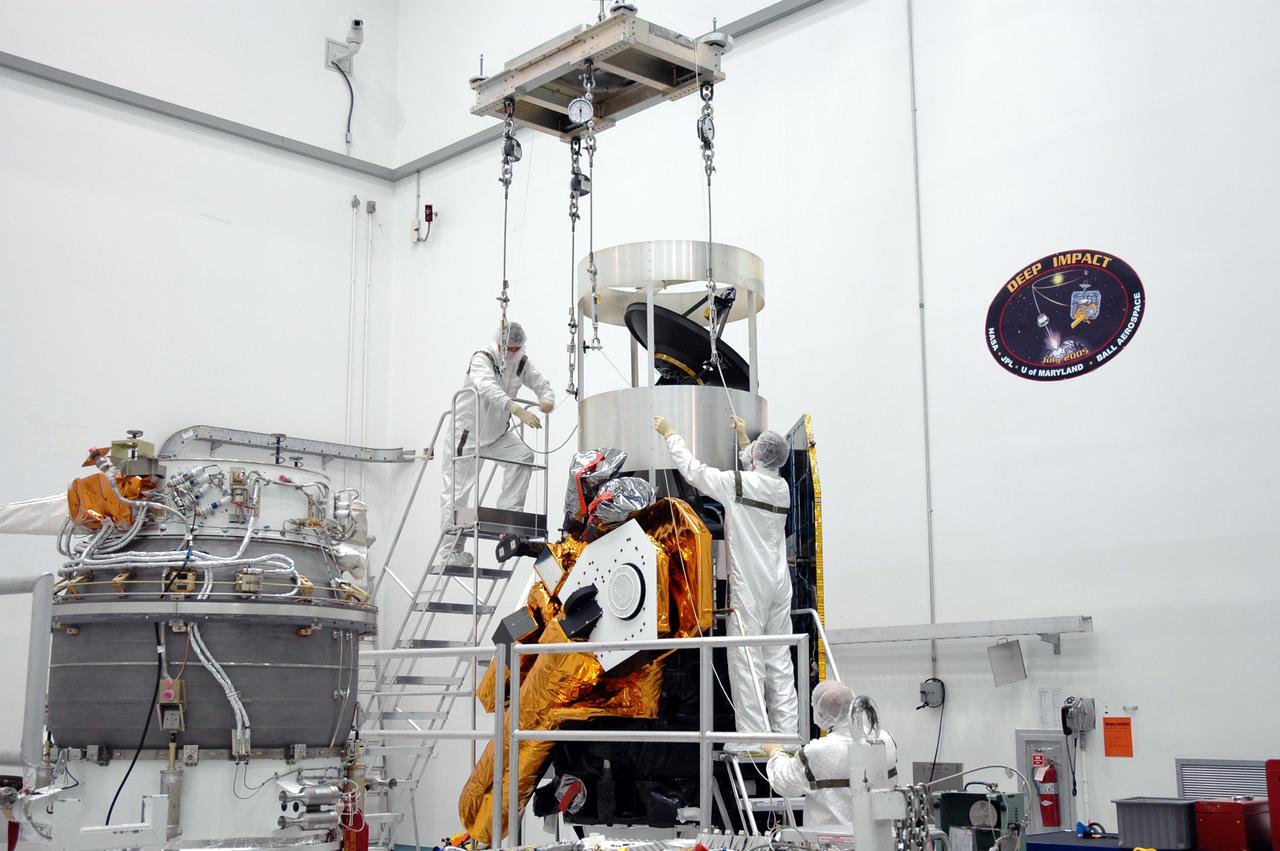
KENNEDY SPACE CENTER, FLA. - At Astrotech Space Operations in Titusville, Fla., Boeing technicians attach a crane to the Deep Impact spacecraft in order to move it to the Delta II third stage at left for mating. When the spacecraft and third stage are mated, they will be moved to Launch Pad 17-B at Cape Canaveral Air Force Station, Fla. There they will be mated to the Delta II rocket and the fairing installed around them for protection during launch and ascent. Scheduled for liftoff Jan. 12, Deep Impact will probe beneath the surface of Comet Tempel 1 on July 4, 2005, when the comet is 83 million miles from Earth. After releasing a 3- by 3-foot projectile to crash onto the surface, Deep Impact’s flyby spacecraft will reveal the secrets of its interior by collecting pictures and data of how the crater forms, measuring the crater’s depth and diameter as well as the composition of the interior of the crater and any material thrown out, and determining the changes in natural outgassing produced by the impact. It will send the data back to Earth through the antennas of the Deep Space Network. Deep Impact is a NASA Discovery mission.
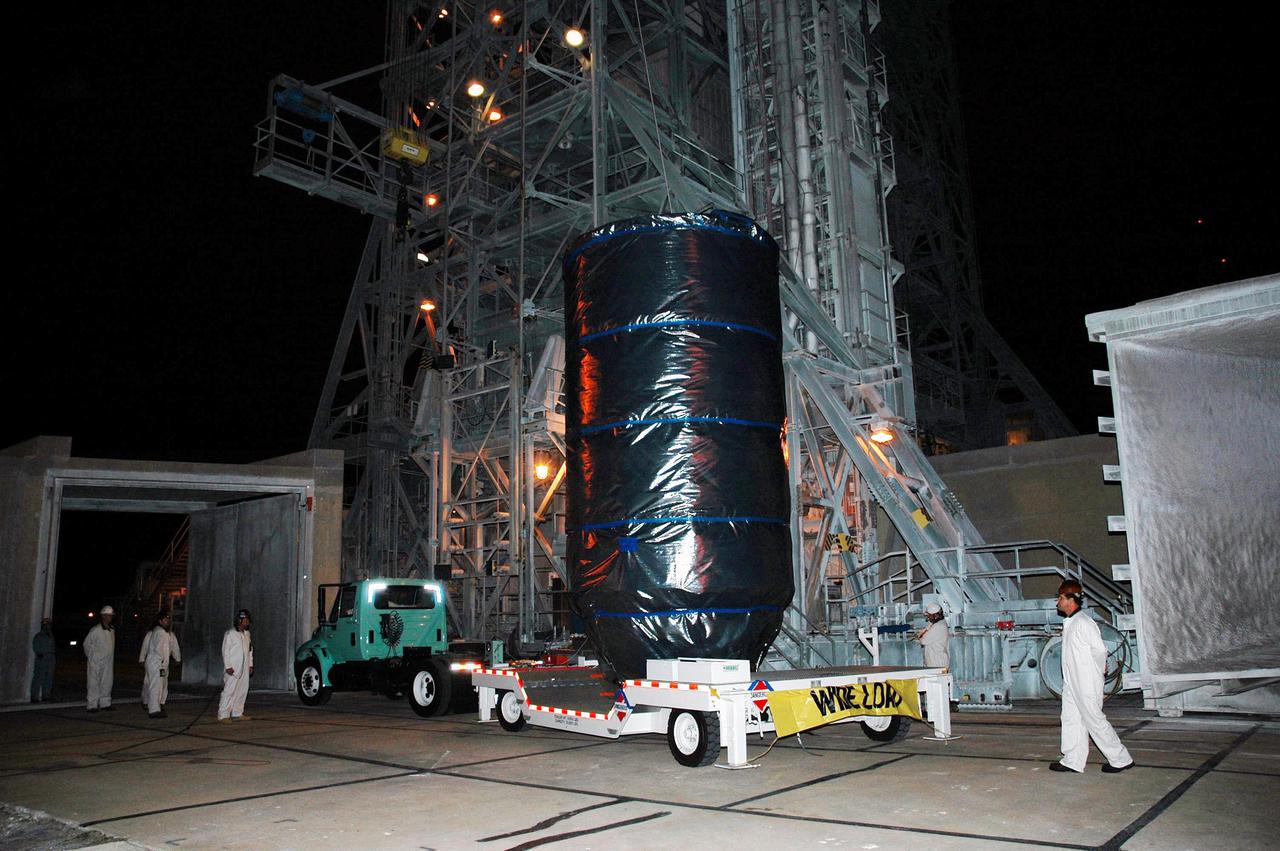
KENNEDY SPACE CENTER, FLA. - The Deep Impact spacecraft arrives before dawn at the mobile service tower on Launch Pad 17-B at Cape Canaveral Air Force Station, Fla. The spacecraft will be attached to the second stage of the Boeing Delta II rocket. Next the fairing will be installed around the spacecraft. The fairing is a molded structure that fits flush with the outside surface of the Delta II upper stage booster and forms an aerodynamically smooth joint, protecting the spacecraft during launch and ascent. Scheduled for liftoff Jan. 12, Deep Impact will probe beneath the surface of Comet Tempel 1 on July 4, 2005, when the comet is 83 million miles from Earth. After releasing a 3- by 3-foot projectile to crash onto the surface, Deep Impact’s flyby spacecraft will reveal the secrets of its interior by collecting pictures and data of how the crater forms, measuring the crater’s depth and diameter as well as the composition of the interior of the crater and any material thrown out, and determining the changes in natural outgassing produced by the impact. It will send the data back to Earth through the antennas of the Deep Space Network. Deep Impact is a NASA Discovery mission.
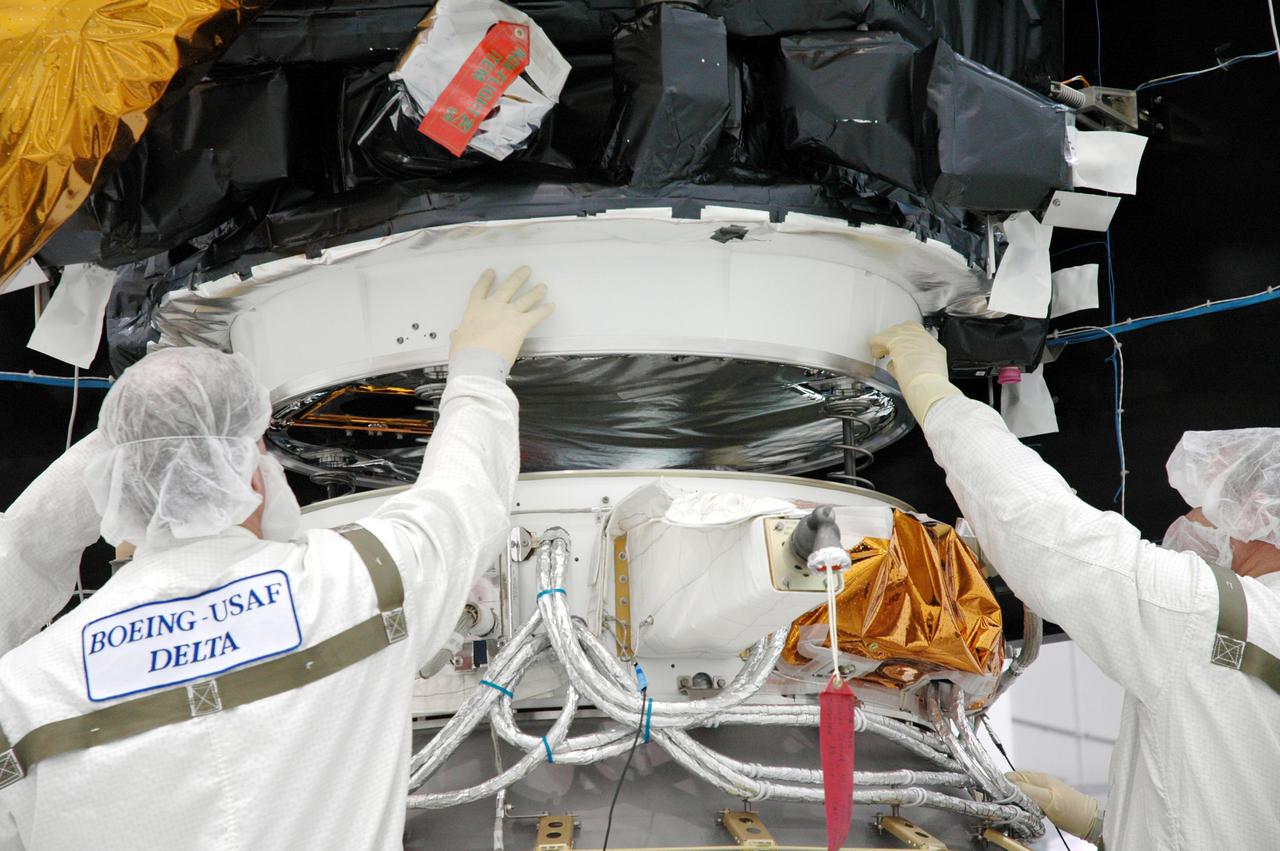
KENNEDY SPACE CENTER, FLA. - At Astrotech Space Operations in Titusville, Fla., Boeing technicians oversee the final movement of the Deep Impact spacecraft being lowered onto the Delta II third stage for mating. When the spacecraft and third stage are mated, they will be moved to Launch Pad 17-B at Cape Canaveral Air Force Station, Fla. There they will be mated to the Delta II rocket and the fairing installed around them for protection during launch and ascent. Scheduled for liftoff Jan. 12, Deep Impact will probe beneath the surface of Comet Tempel 1 on July 4, 2005, when the comet is 83 million miles from Earth. After releasing a 3- by 3-foot projectile to crash onto the surface, Deep Impact’s flyby spacecraft will reveal the secrets of its interior by collecting pictures and data of how the crater forms, measuring the crater’s depth and diameter as well as the composition of the interior of the crater and any material thrown out, and determining the changes in natural outgassing produced by the impact. It will send the data back to Earth through the antennas of the Deep Space Network. Deep Impact is a NASA Discovery mission.
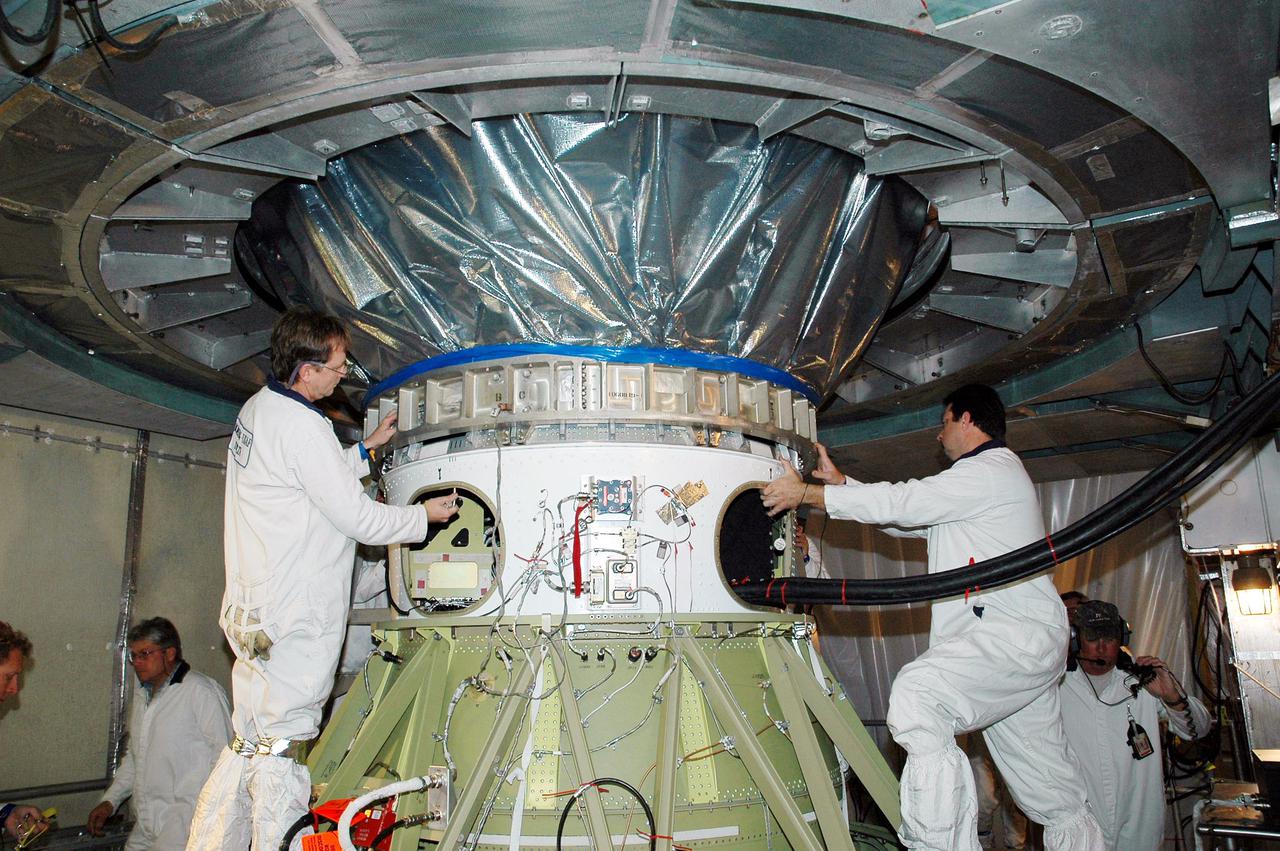
KENNEDY SPACE CENTER, FLA. - In the mobile service tower on Launch Pad 17-B at Cape Canaveral Air Force Station, Fla., workers attach the third stage motor, connected to the Deep Impact spacecraft, to the spin table on the second stage of the Boeing Delta II launch vehicle below. Next the fairing will be installed around the spacecraft. The fairing is a molded structure that fits flush with the outside surface of the Delta II upper stage booster and forms an aerodynamically smooth joint, protecting the spacecraft during launch and ascent. Scheduled for liftoff Jan. 12, Deep Impact will probe beneath the surface of Comet Tempel 1 on July 4, 2005, when the comet is 83 million miles from Earth. After releasing a 3- by 3-foot projectile to crash onto the surface, Deep Impact’s flyby spacecraft will reveal the secrets of its interior by collecting pictures and data of how the crater forms, measuring the crater’s depth and diameter as well as the composition of the interior of the crater and any material thrown out, and determining the changes in natural outgassing produced by the impact. It will send the data back to Earth through the antennas of the Deep Space Network. Deep Impact is a NASA Discovery mission.
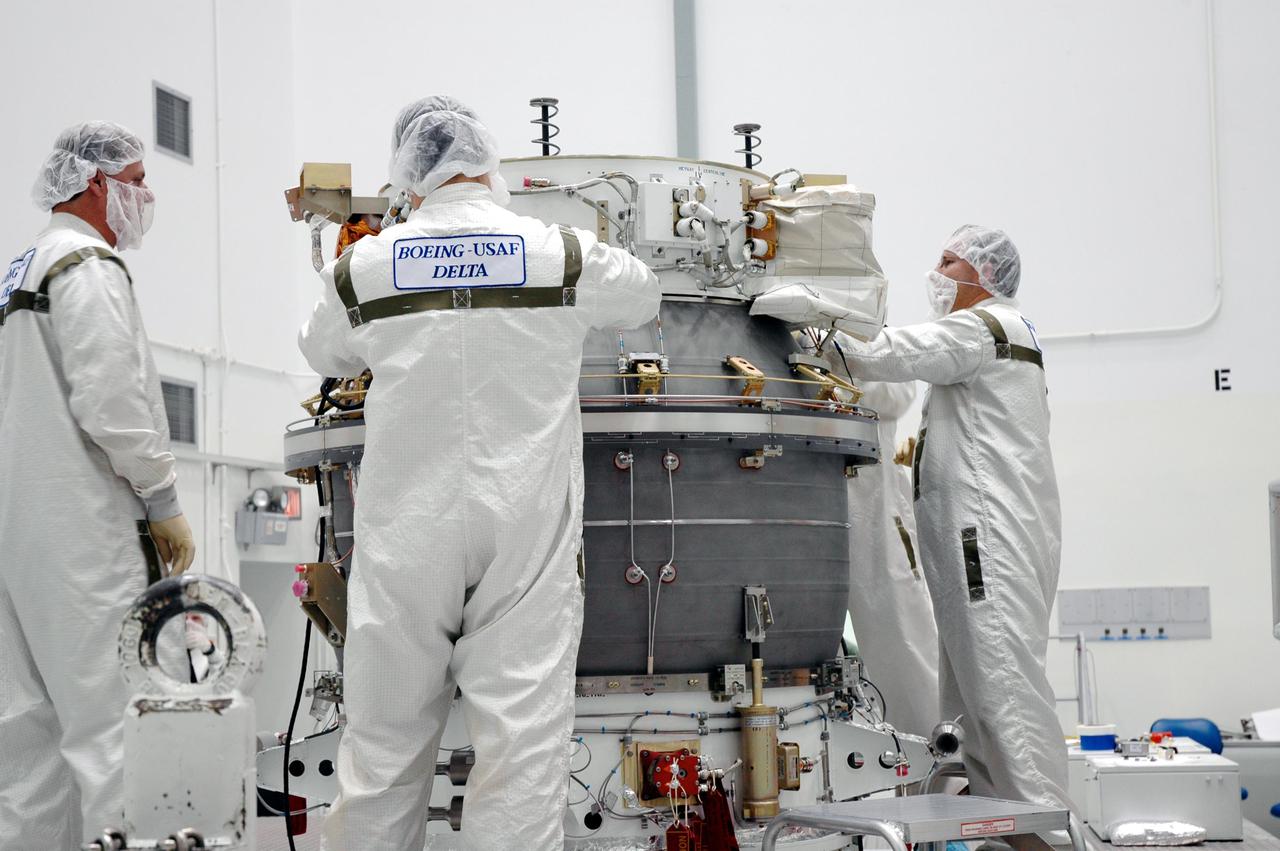
KENNEDY SPACE CENTER, FLA. - Boeing technicians at Astrotech Space Operations in Titusville, Fla., prepare the third stage of a Delta II rocket for mating with the Deep Impact spacecraft. When the spacecraft and third stage are mated, they will be moved to Launch Pad 17-B at Cape Canaveral Air Force Station, Fla. There they will be mated to the Delta II rocket and the fairing installed around them for protection during launch and ascent. Scheduled for liftoff Jan. 12, Deep Impact will probe beneath the surface of Comet Tempel 1 on July 4, 2005, when the comet is 83 million miles from Earth. After releasing a 3- by 3-foot projectile to crash onto the surface, Deep Impact’s flyby spacecraft will reveal the secrets of its interior by collecting pictures and data of how the crater forms, measuring the crater’s depth and diameter as well as the composition of the interior of the crater and any material thrown out, and determining the changes in natural outgassing produced by the impact. It will send the data back to Earth through the antennas of the Deep Space Network. Deep Impact is a NASA Discovery mission.
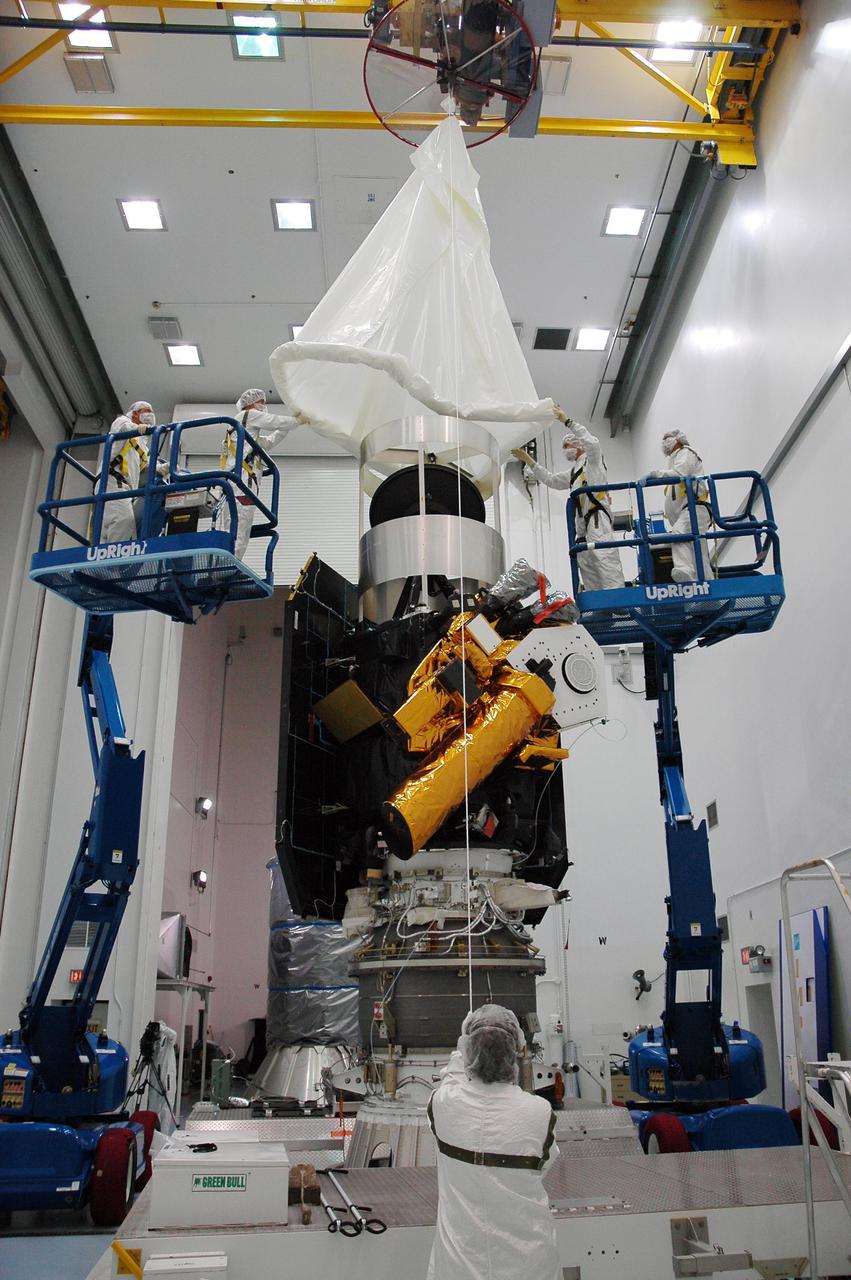
KENNEDY SPACE CENTER, FLA. - At Astrotech Space Operations in Titusville, Fla., a protective cover is being lowered over the Deep Impact spacecraft to protect it before the canister is installed around it. Once the spacecraft is completely covered, it will be transferred to Launch Pad 17-B on Cape Canaveral Air Force Station, Fla. Then, in the mobile service tower, the fairing will be installed around the spacecraft. The fairing is a molded structure that fits flush with the outside surface of the Delta II upper stage booster and forms an aerodynamically smooth joint, protecting the spacecraft during launch. Scheduled for liftoff Jan. 12, Deep Impact will probe beneath the surface of Comet Tempel 1 on July 4, 2005, when the comet is 83 million miles from Earth. After releasing a 3- by 3-foot projectile to crash onto the surface, Deep Impact’s flyby spacecraft will reveal the secrets of its interior by collecting pictures and data of how the crater forms, measuring the crater’s depth and diameter as well as the composition of the interior of the crater and any material thrown out, and determining the changes in natural outgassing produced by the impact. It will send the data back to Earth through the antennas of the Deep Space Network. Deep Impact is a NASA Discovery mission.
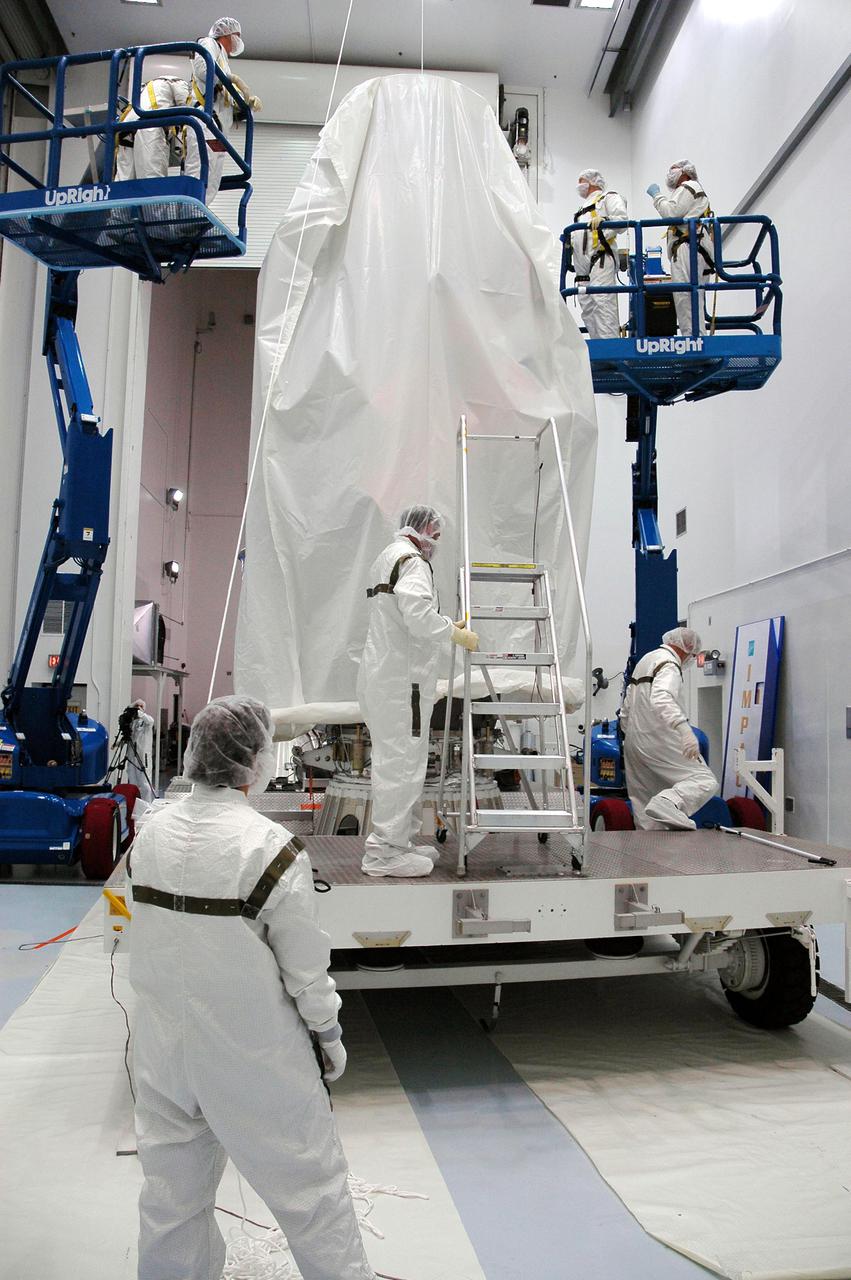
KENNEDY SPACE CENTER, FLA. - At Astrotech Space Operations in Titusville, Fla., Boeing technicians lower a protective cover over the Deep Impact spacecraft to protect it before the canister is installed around it. Once the spacecraft is completely covered, it will be transferred to Launch Pad 17-B on Cape Canaveral Air Force Station, Fla. Then, in the mobile service tower, the fairing will be installed around the spacecraft. The fairing is a molded structure that fits flush with the outside surface of the Delta II upper stage booster and forms an aerodynamically smooth joint, protecting the spacecraft during launch. Scheduled for liftoff Jan. 12, Deep Impact will probe beneath the surface of Comet Tempel 1 on July 4, 2005, when the comet is 83 million miles from Earth. After releasing a 3- by 3-foot projectile to crash onto the surface, Deep Impact’s flyby spacecraft will reveal the secrets of its interior by collecting pictures and data of how the crater forms, measuring the crater’s depth and diameter as well as the composition of the interior of the crater and any material thrown out, and determining the changes in natural outgassing produced by the impact. It will send the data back to Earth through the antennas of the Deep Space Network. Deep Impact is a NASA Discovery mission.
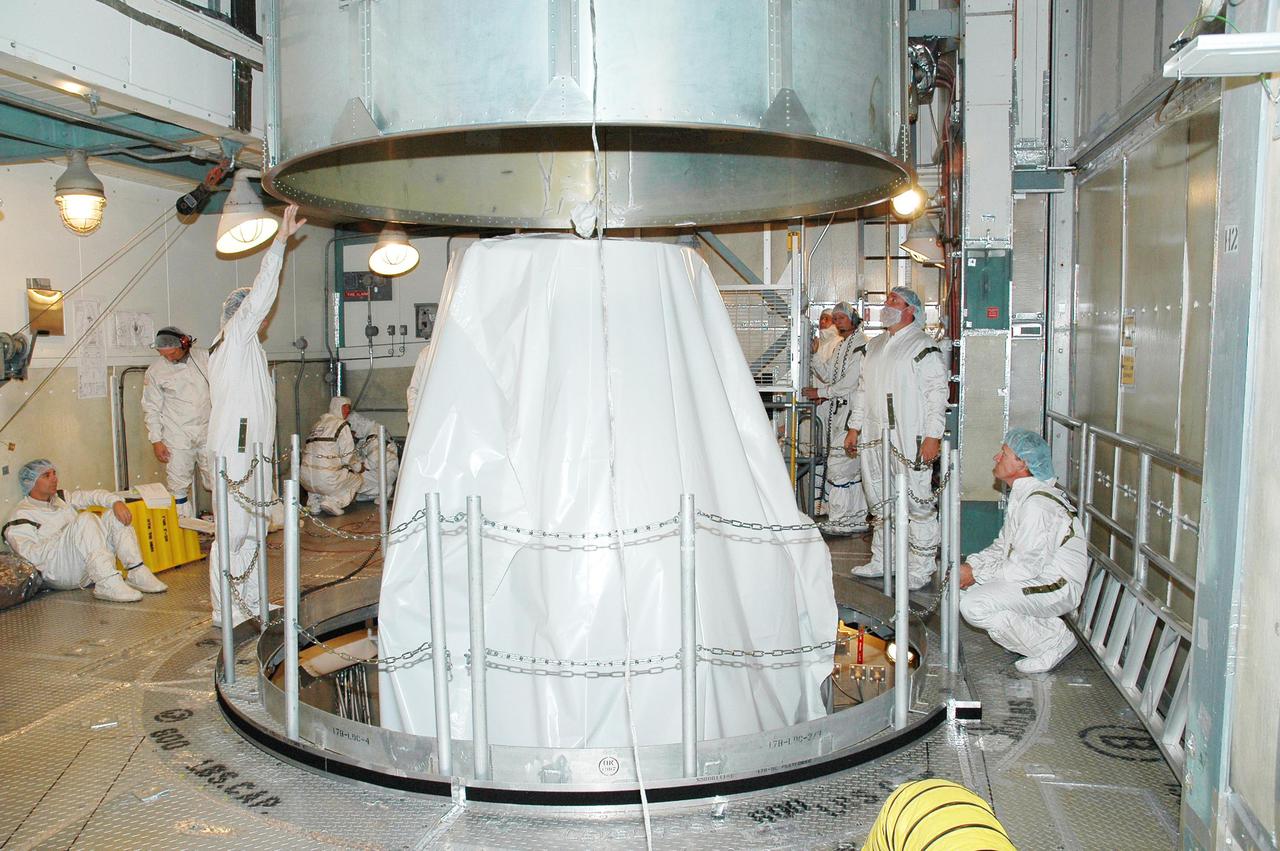
KENNEDY SPACE CENTER, FLA. - In the mobile service tower on Launch Pad 17-B at Cape Canaveral Air Force Station, Fla., workers stand by as the canister is lifted away from the Deep Impact spacecraft. Next the fairing will be installed around the spacecraft. The fairing is a molded structure that fits flush with the outside surface of the Delta II upper stage booster and forms an aerodynamically smooth joint, protecting the spacecraft during launch and ascent. Scheduled for liftoff Jan. 12, Deep Impact will probe beneath the surface of Comet Tempel 1 on July 4, 2005, when the comet is 83 million miles from Earth. After releasing a 3- by 3-foot projectile to crash onto the surface, Deep Impact’s flyby spacecraft will reveal the secrets of its interior by collecting pictures and data of how the crater forms, measuring the crater’s depth and diameter as well as the composition of the interior of the crater and any material thrown out, and determining the changes in natural outgassing produced by the impact. It will send the data back to Earth through the antennas of the Deep Space Network. Deep Impact is a NASA Discovery mission.
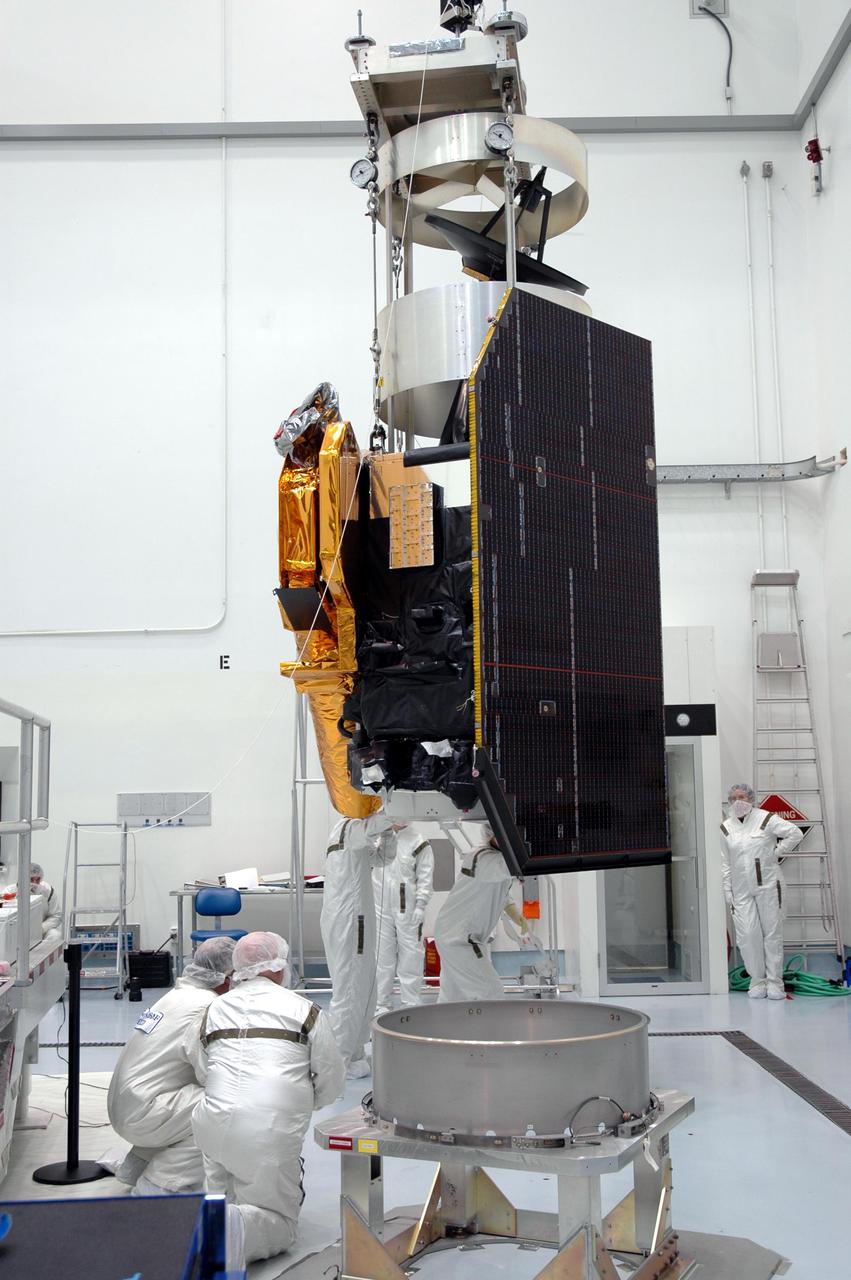
KENNEDY SPACE CENTER, FLA. - At Astrotech Space Operations in Titusville, Fla., Boeing technicians watch as an overhead crane lifts the Deep Impact spacecraft, which is being moved for mating to the Delta II third stage. When the spacecraft and third stage are mated, they will be moved to Launch Pad 17-B at Cape Canaveral Air Force Station, Fla. There they will be mated to the Delta II rocket and the fairing installed around them for protection during launch and ascent. Scheduled for liftoff Jan. 12, Deep Impact will probe beneath the surface of Comet Tempel 1 on July 4, 2005, when the comet is 83 million miles from Earth. After releasing a 3- by 3-foot projectile to crash onto the surface, Deep Impact’s flyby spacecraft will reveal the secrets of its interior by collecting pictures and data of how the crater forms, measuring the crater’s depth and diameter as well as the composition of the interior of the crater and any material thrown out, and determining the changes in natural outgassing produced by the impact. It will send the data back to Earth through the antennas of the Deep Space Network. Deep Impact is a NASA Discovery mission.
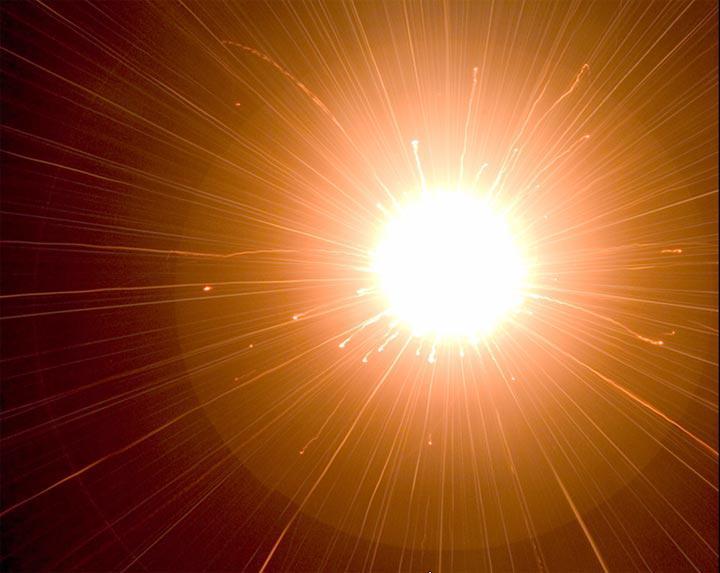
This image shows a flash produced in a laboratory by a high-velocity bead slamming into dust. Scientists at Ames Research Center say that the collision between Deep Impact impactor and comet Tempel 1 may have produce a similar flash.