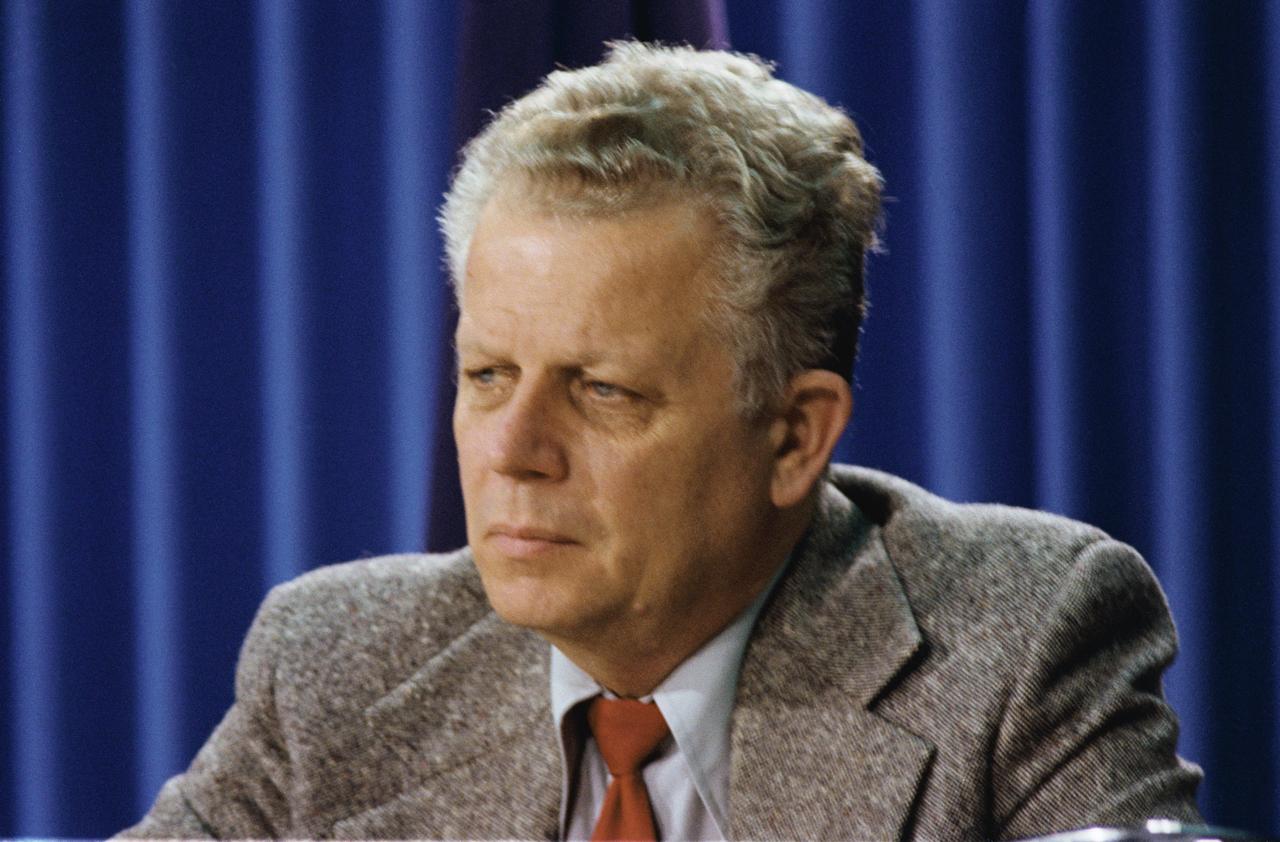
Terry White during a change-of-shift briefing in the JSC public affairs facility briefing room. White acted as one of the on-orbit public affairs officers and the landing PAO during the Challenger's STS-6 flight.
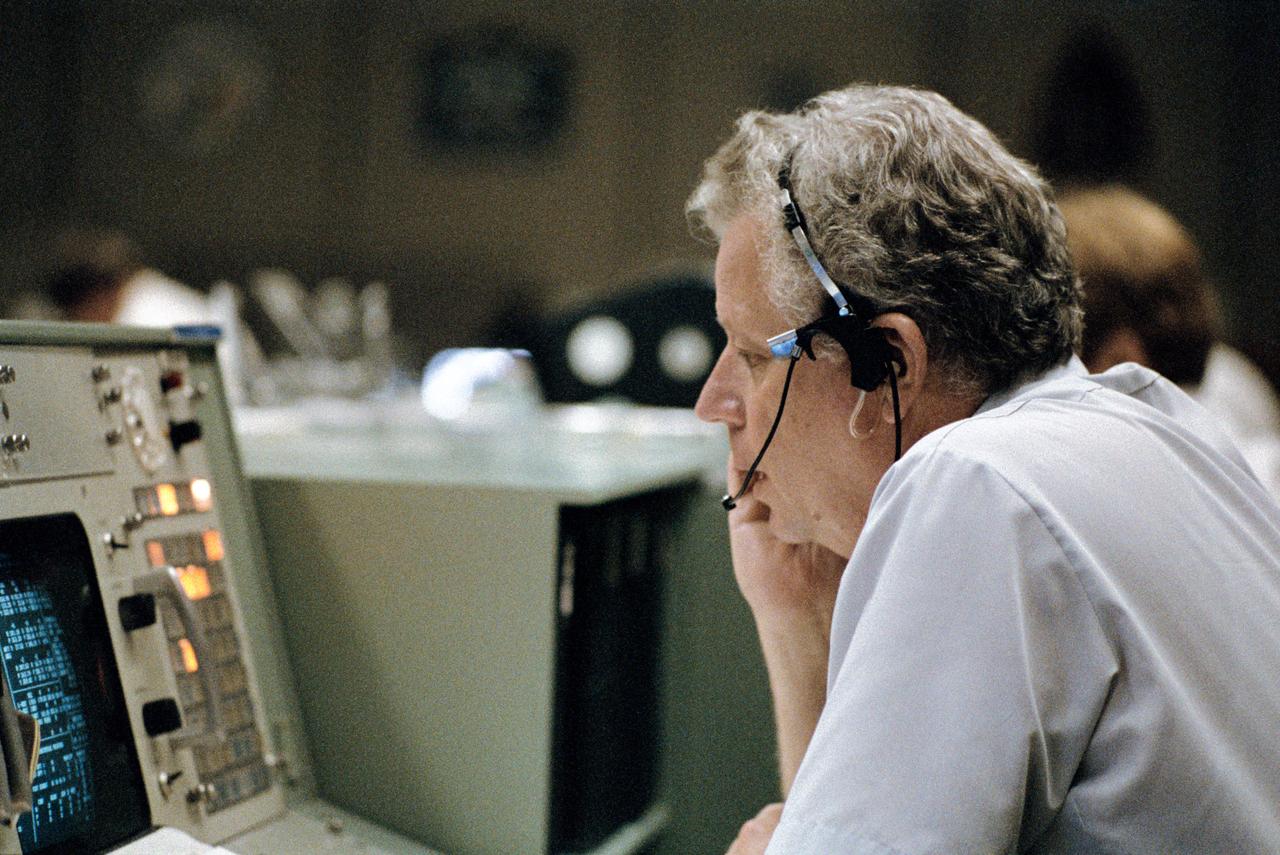
Terry White, serving as public affairs office commentator in the mission operations control room (MOCR) of JSC's mission control center, reads a status report on the STS-8 mission.
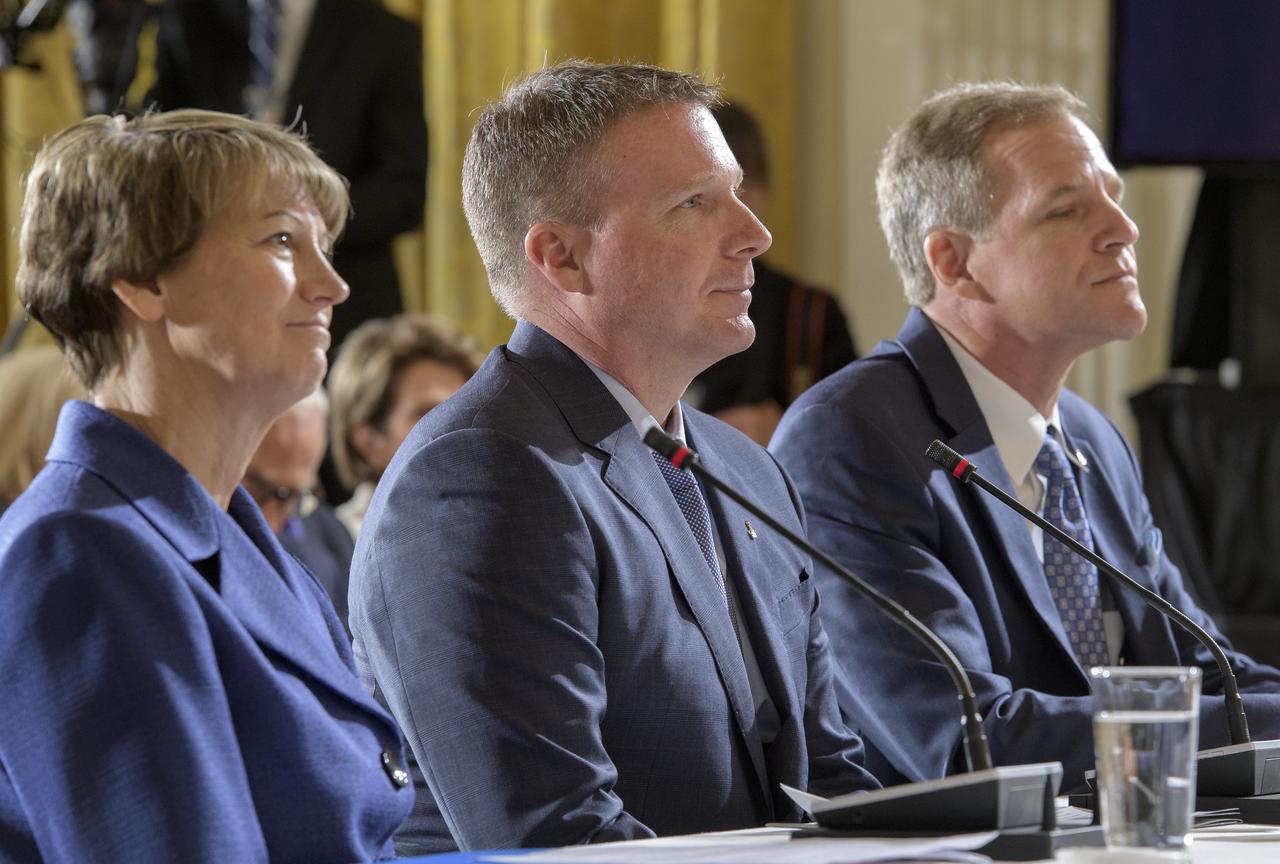
Former NASA astronauts Eileen Collins, left, Terry Virts, center, and Scott Parazynski are seen during a meeting of the National Space Council in the East Room of the White House, Monday, June 18, 2018, in Washington. Chaired by the Vice President, the council's role is to advise the President regarding national space policy and strategy, and review the nation's long-range goals for space activities. Photo Credit: (NASA/Bill Ingalls)
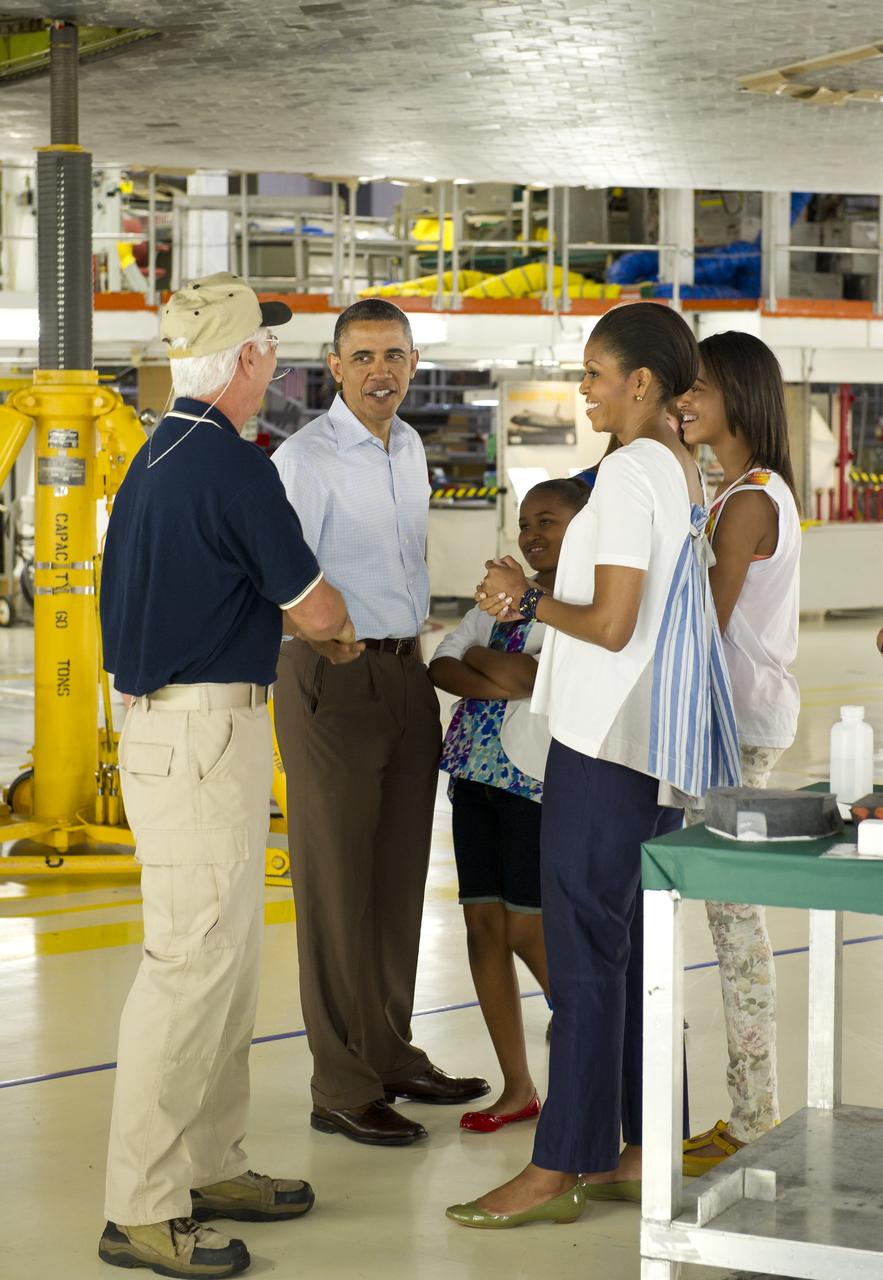
Terry White, United Space Alliance project lead for thermal protection systems, left, sakes hands with President Barack Obama after showing his family, Sasha, First Lady Michelle Obama, Malia, and Marian Robinson, how tiles work on the space shuttle during their visit to the Orbital Processing Facility at the NASA Kennedy Space Center in Cape Canaveral, Fla., Friday, April 29, 2011. Photo Credit: (NASA/Bill Ingalls)
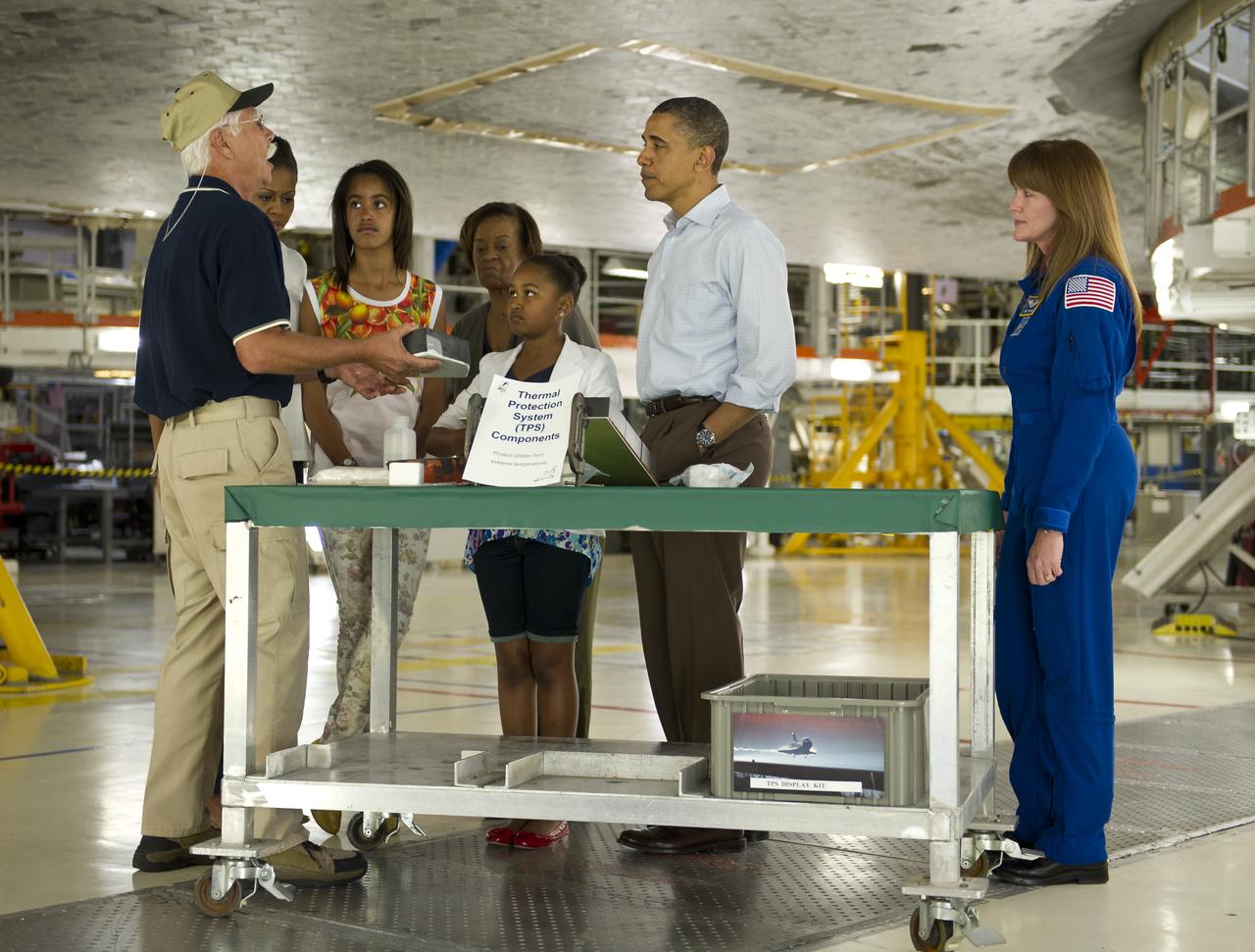
Terry White, United Space Alliance project lead for thermal protection systems, left, shows President Barack Obama and his family, from left, First Lady Michelle Obama, Malia, Marian Robinson and Sasha, how tiles work on the space shuttle during their visit to the Orbital Processing Facility at the NASA Kennedy Space Center in Cape Canaveral, Fla., Friday, April 29, 2011. Looking on is Director of Flight Crew Operations for the Johnson Space Center and Astronaut, Janet Kavandi. Photo Credit: (NASA/Bill Ingalls)
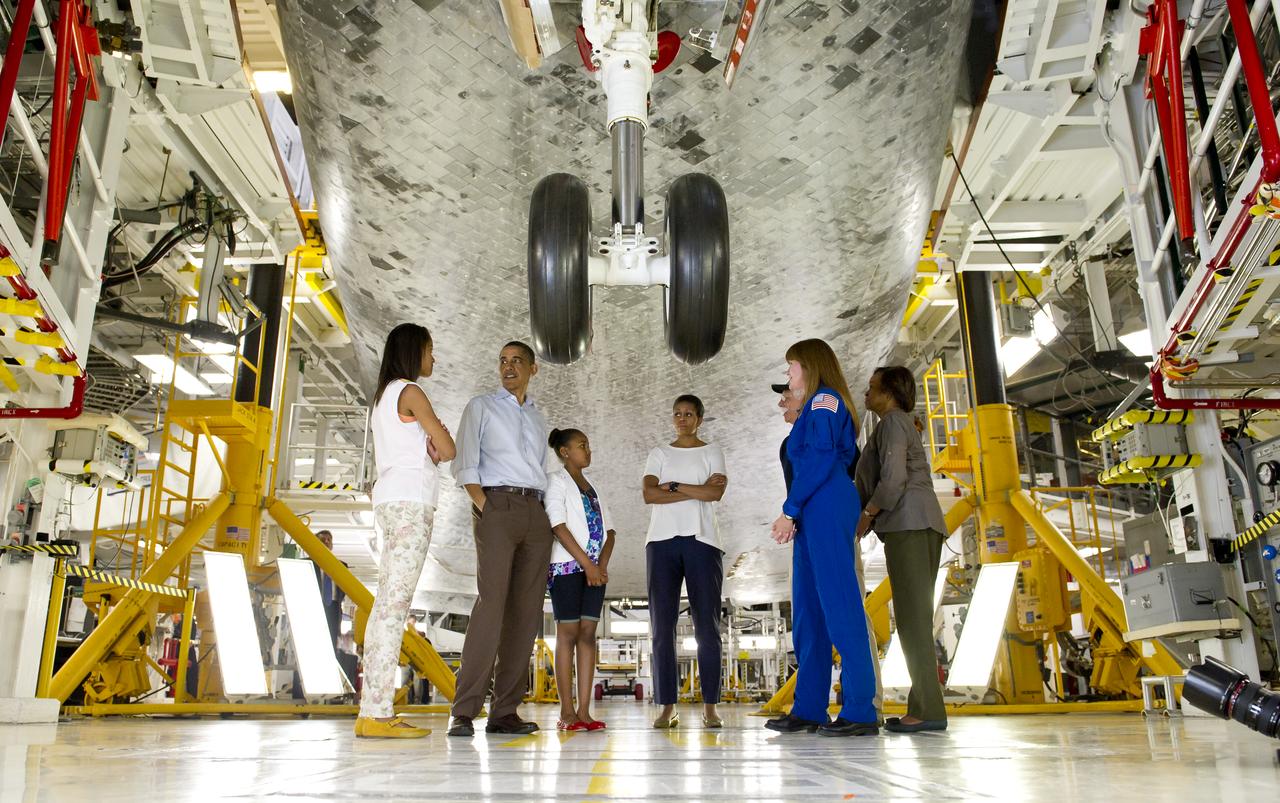
President Barack Obama, First Lady Michelle Obama, daughters Malia, left, Sasha, Marian Robinson, Astronaut Janet Kavandi and United Space Alliance project lead for thermal protection systems Terry White, walk under the landing gear of the space shuttle Atlantis as they visit Kennedy Space Center in Cape Canaveral, Fla., Friday, April 29, 2011. Photo Credit: (NASA/Bill Ingalls)
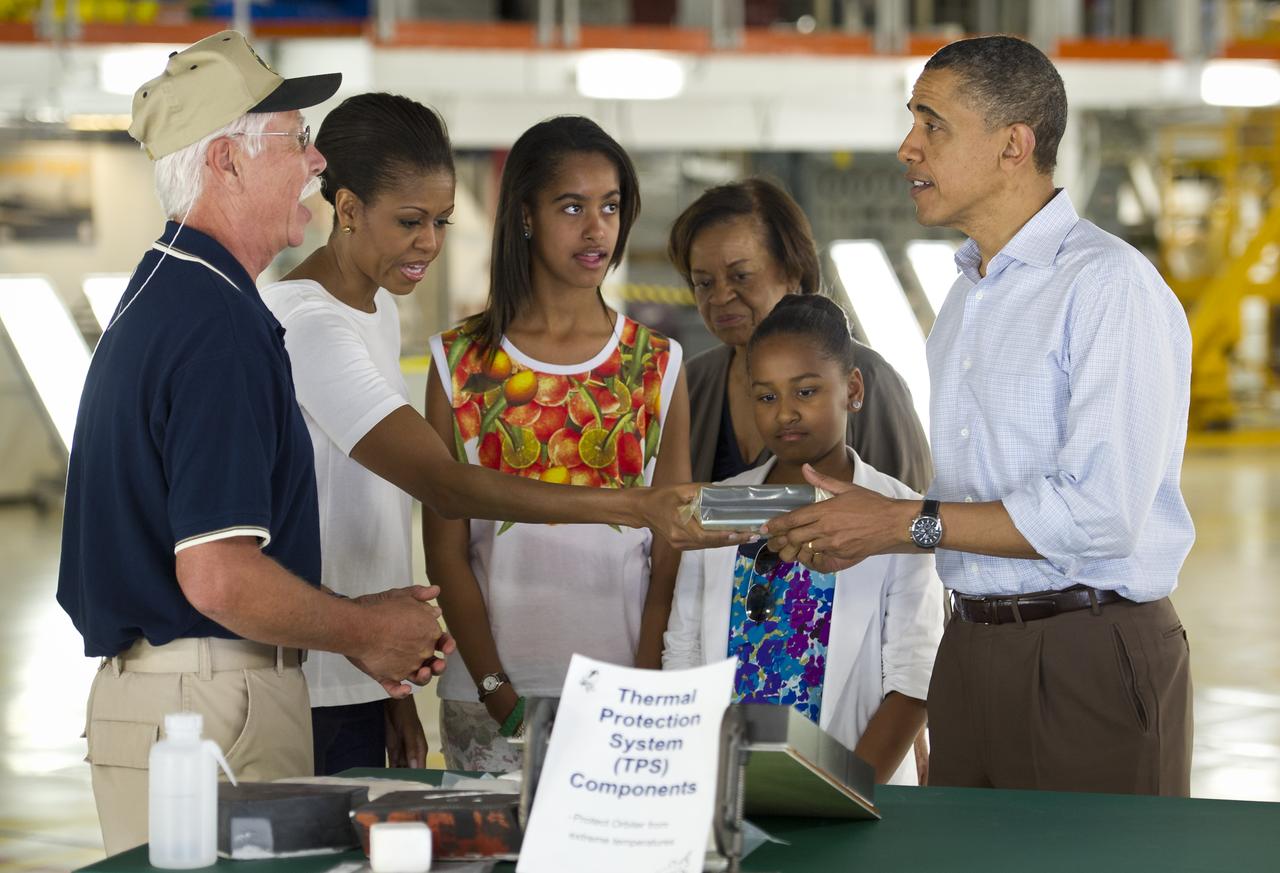
Terry White, United Space Alliance project lead for thermal protection systems, left, shows President Barack Obama and his family, from left, First Lady Michelle Obama, Malia, Marian Robinson and Sasha, how tiles work on the space shuttle during their visit to the Orbital Processing Facility at the NASA Kennedy Space Center in Cape Canaveral, Fla., Friday, April 29, 2011. Photo Credit: (NASA/Bill Ingalls)
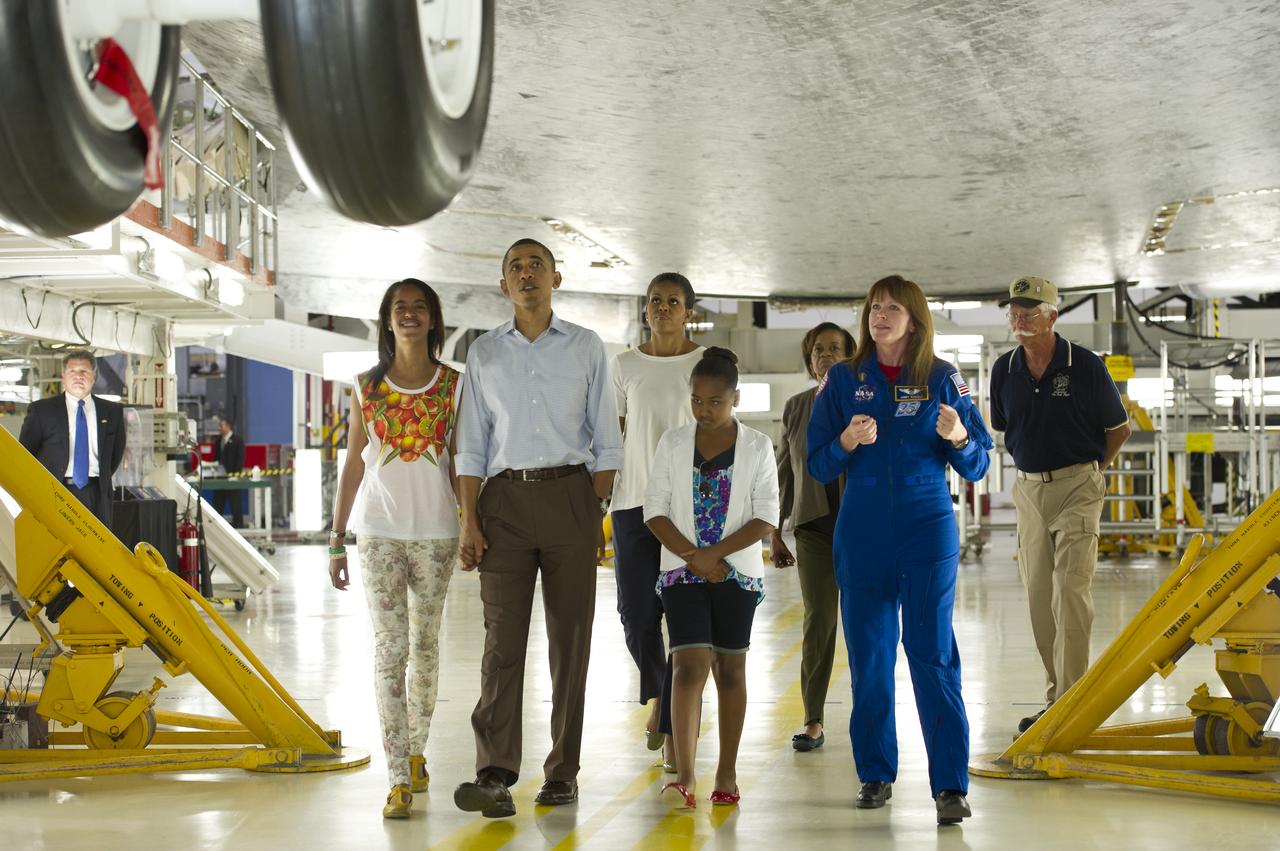
President Barack Obama holds hands with his daughter Malia as they walk under the space shuttle Atlantis with First Lady Michelle Obama, Sasha, and Marian Robinson during a tour they received of the NASA Orbital Processing Facility given by Astronaut, Janet Kavandi, and United Space Alliance project lead for thermal protection systems Terry White, right, at the NASA Kennedy Space Center in Cape Canaveral, Fla., Friday, April 29, 2011. Photo Credit: (NASA/Bill Ingalls)
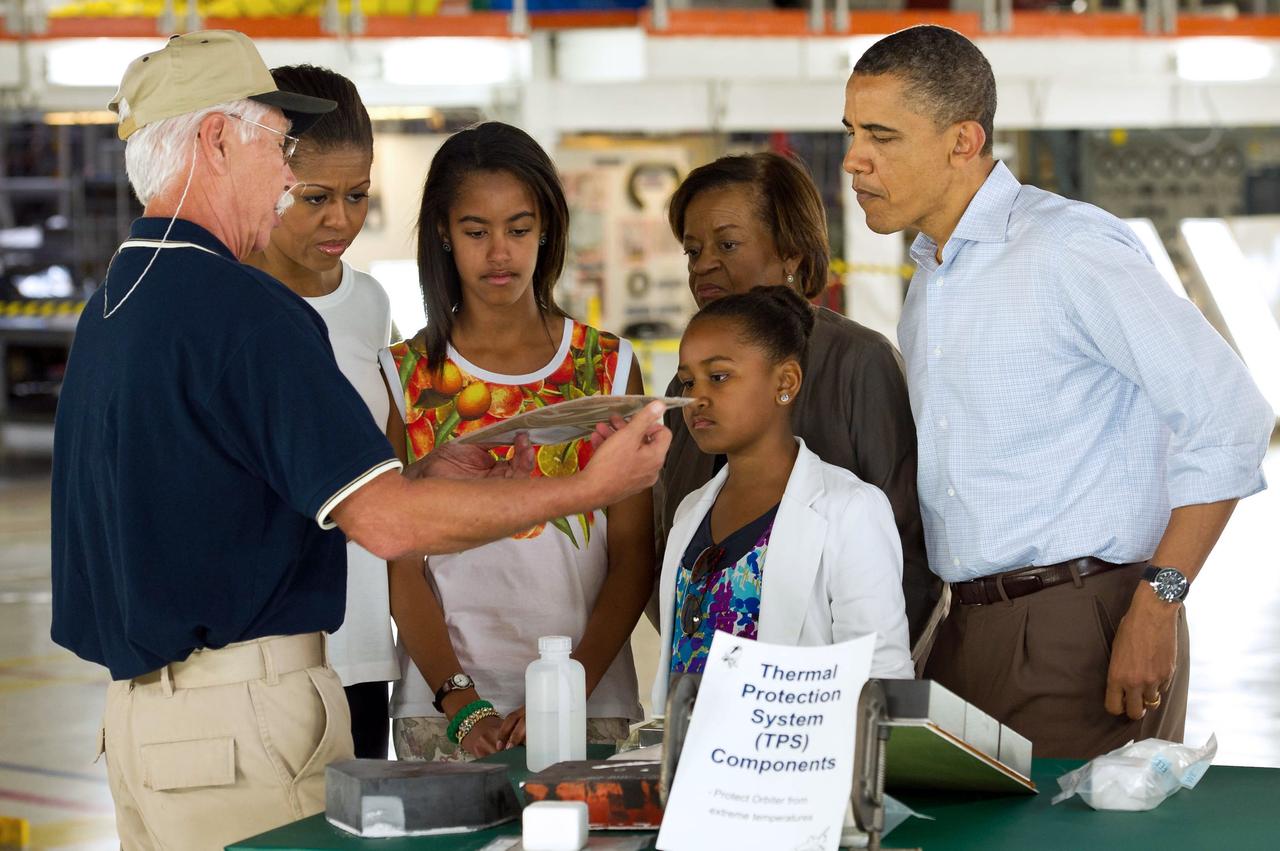
Terry White, United Space Alliance project lead for thermal protection systems, left, shows President Barack Obama and his family, from left, First Lady Michelle Obama, Malia, Marian Robinson and Sasha, how tiles work on the space shuttle during their visit to the Orbital Processing Facility at the NASA Kennedy Space Center in Cape Canaveral, Fla., Friday, April 29, 2011. Photo Credit: (NASA/Bill Ingalls)

KENNEDY SPACE CENTER, FLA. - United Space Alliance employee Terry White checks out Space Shuttle Atlantis in the Orbiter Processing Facility following Hurricane Frances. The storm's path over Florida took it through Cape Canaveral and KSC property during Labor Day weekend. There was no damage to the Space Shuttle orbiters or to any other flight hardware.
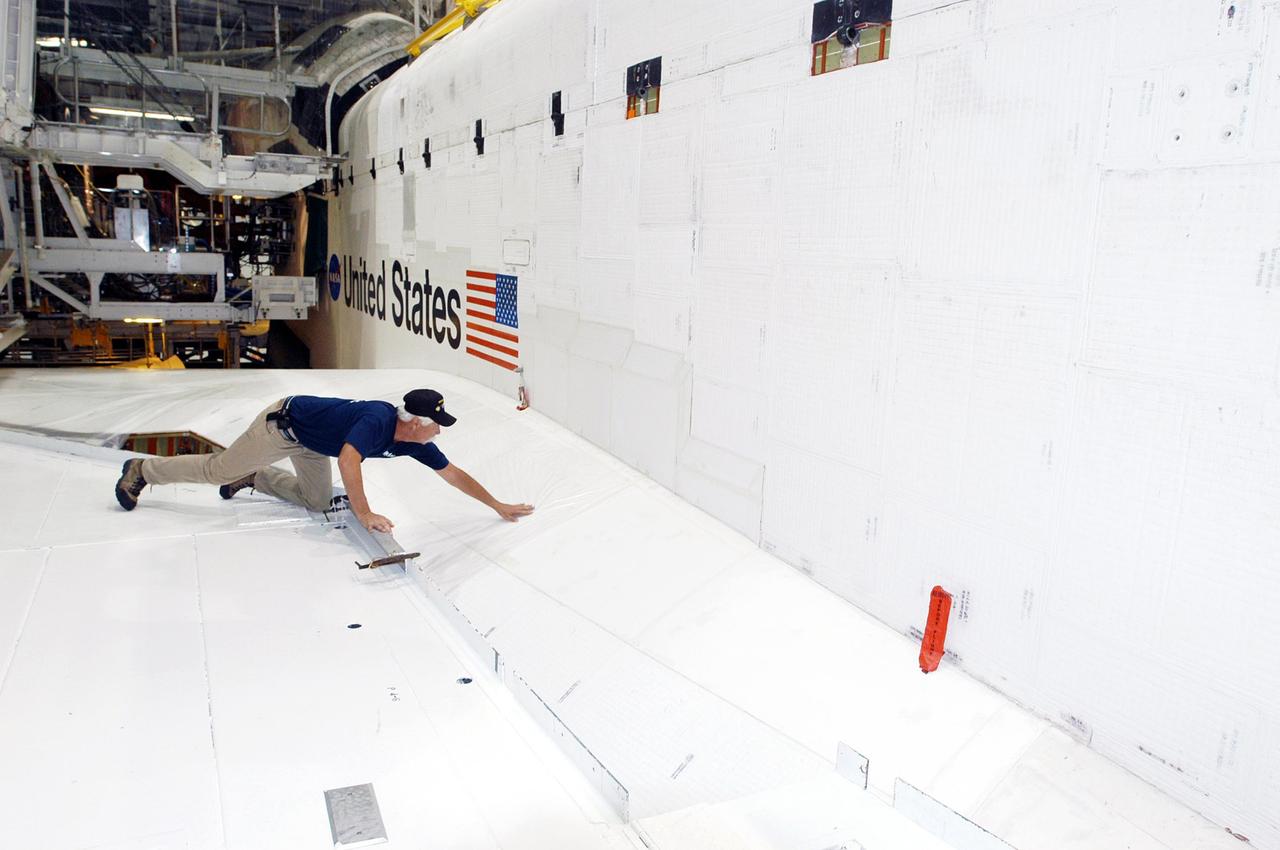
KENNEDY SPACE CENTER, FLA. - United Space Alliance employee Terry White inspects Space Shuttle Atlantis in the Orbiter Processing Facility following Hurricane Frances. The storm's path over Florida took it through Cape Canaveral and KSC property during Labor Day weekend. There was no damage to the Space Shuttle orbiters or to any other flight hardware.
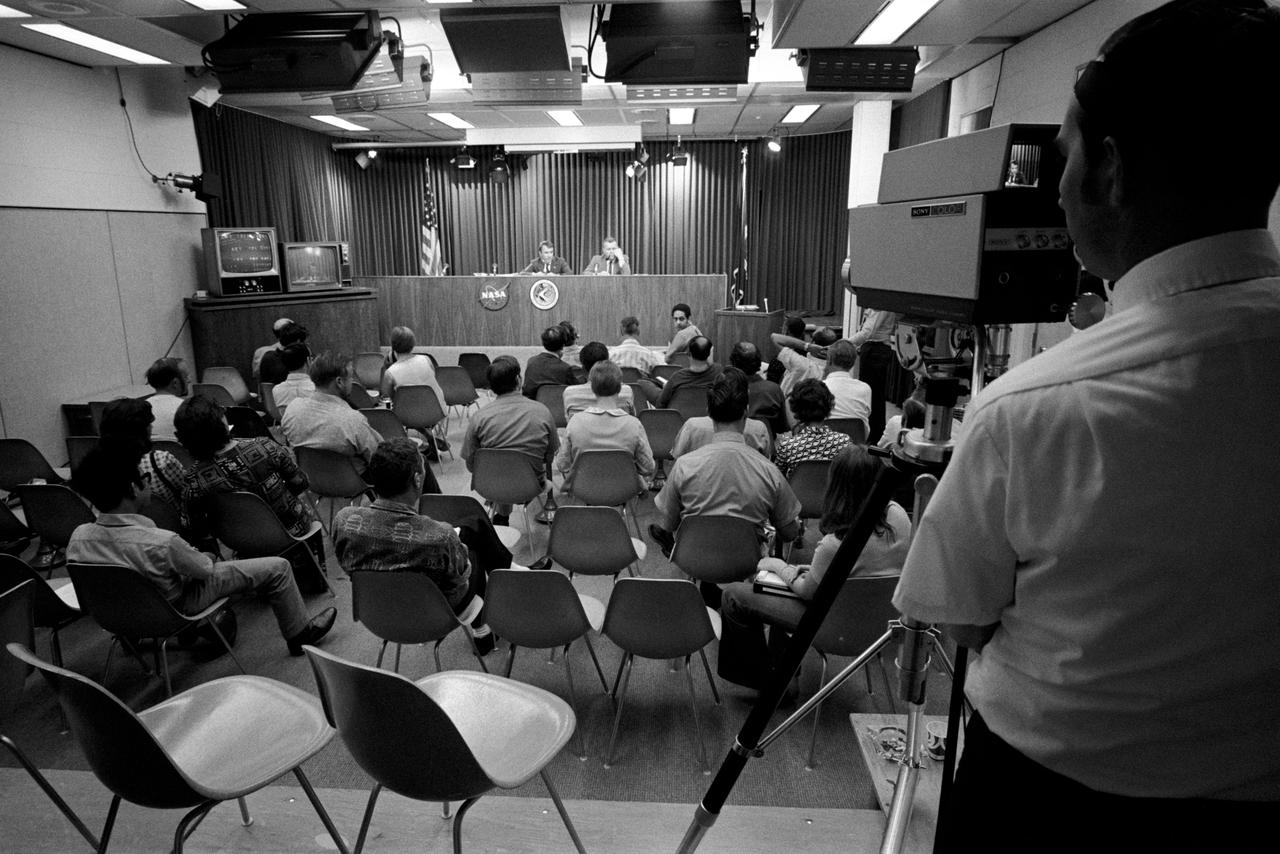
S71-41842 (July 1971) --- Newsmen put questions to Gerald D. Griffin, left at lectern, a flight director for the Apollo 15 lunar landing mission, during a change of shift briefing in the small briefing room in Building One at the Manned Spacecraft Center (MSC). Representing Public Affairs Office at the briefing is Terry White, right at lectern.

Vice President Mike Pence ask questions of former NASA astronauts Eileen Collins, Terry Virts and Scott Parazynski during a meeting of the National Space Council in the East Room of the White House, Monday, June 18, 2018, in Washington. Chaired by the Vice President, the council's role is to advise the President regarding national space policy and strategy, and review the nation's long-range goals for space activities. Photo Credit: (NASA/Bill Ingalls)

KENNEDY SPACE CENTER, FLA. - United Space Alliance employee Terry White inspects Space Shuttle Atlantis in the Orbiter Processing Facility following Hurricane Frances. The storm's path over Florida took it through Cape Canaveral and KSC property during Labor Day weekend. There was no damage to the Space Shuttle orbiters or to any other flight hardware.
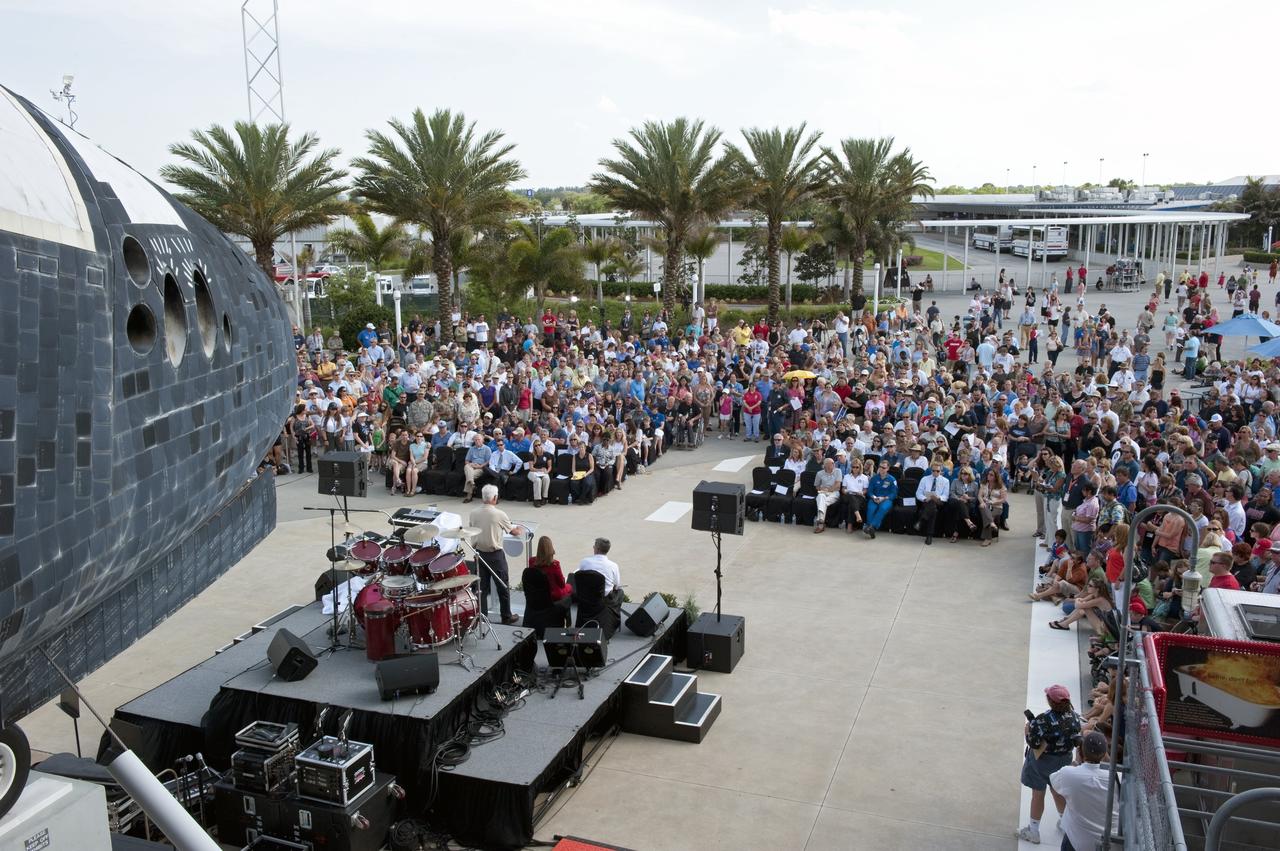
CAPE CANAVERAL, Fla. -- This overhead view shows an audience of NASA officials, Florida representatives, Kennedy employees and visitors as they listen to Terry White with United Space Alliance speak during the 30th anniversary celebration in honor of the Space Shuttle Program's first shuttle launch. The event is being held at NASA's Kennedy Space Center Visitor Complex in Florida. The celebration followed an announcement by NASA Administrator Charles Bolden where the four orbiters will be placed for permanent display after retirement. Photo credit: NASA/Kim Shiflett
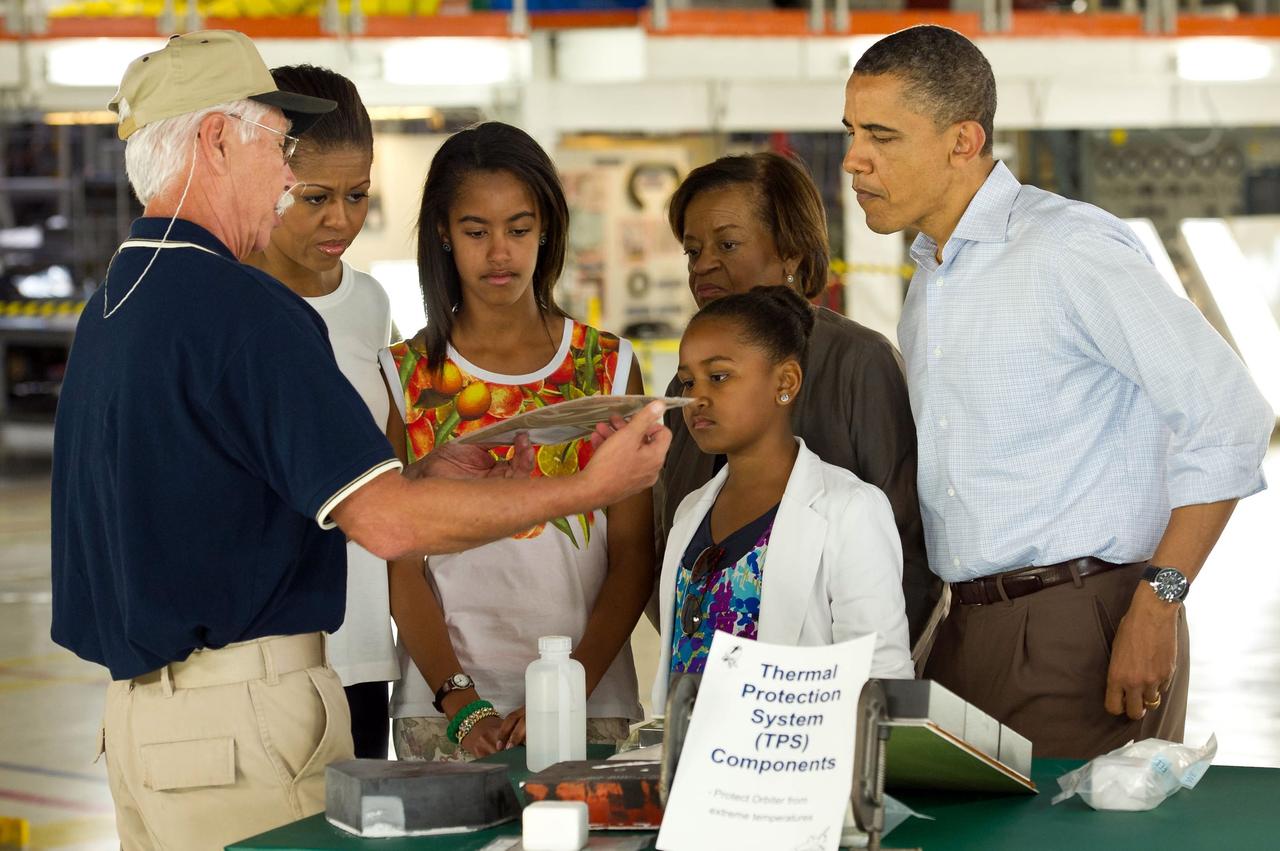
CAPE CANAVERAL, Fla. – (201104290015HQ) Terry White, United Space Alliance project lead for thermal protection systems, left, shows President Barack Obama and his family, from left, First Lady Michelle Obama, Malia, Marian Robinson and Sasha, how tiles work on the space shuttle during their visit to the Orbital Processing Facility at the NASA Kennedy Space Center in Florida.
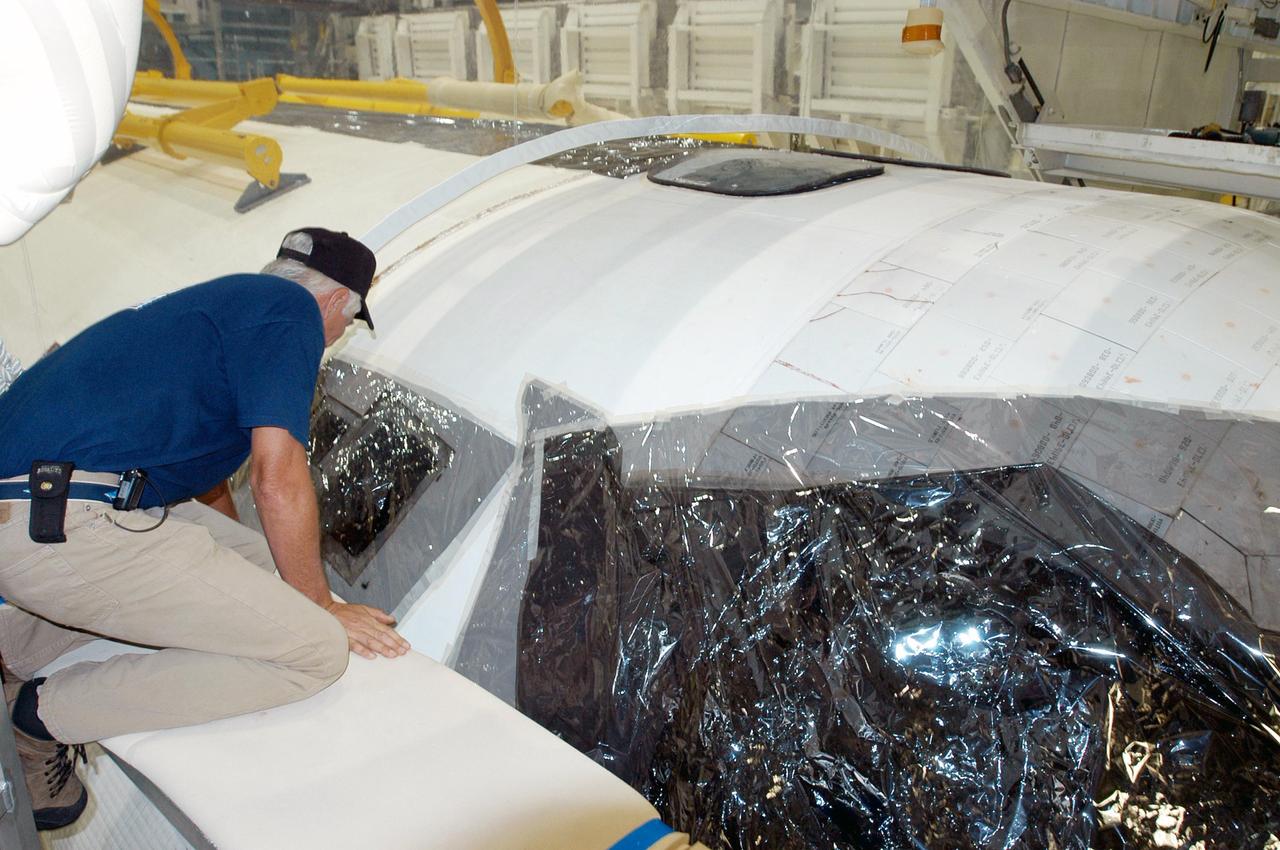
KENNEDY SPACE CENTER, FLA. - United Space Alliance employee Terry White inspects Space Shuttle Atlantis in the Orbiter Processing Facility following Hurricane Frances. The storm's path over Florida took it through Cape Canaveral and KSC property during Labor Day weekend. There was no damage to the Space Shuttle orbiters or to any other flight hardware.
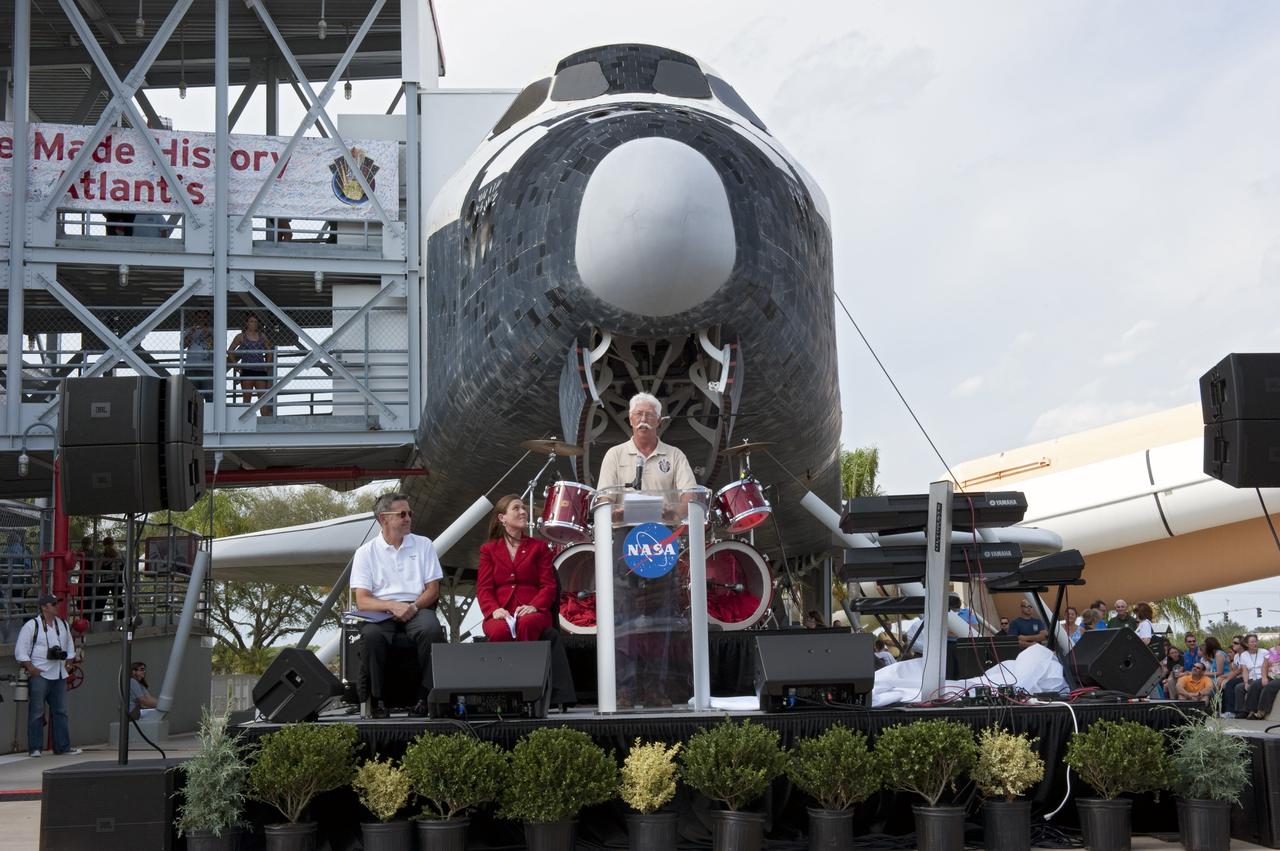
CAPE CANAVERAL, Fla. -- Standing in front of a replica of a space shuttle at NASA's Kennedy Space Center Visitor Complex in Florida, Terry White with United Space Alliance speaks to the audience attending a 30th anniversary celebration in honor of the Space Shuttle Program's first shuttle launch. The celebration followed an announcement by NASA Administrator Charles Bolden where the four orbiters will be placed for permanent display after retirement. Photo credit: NASA/Kim Shiflett
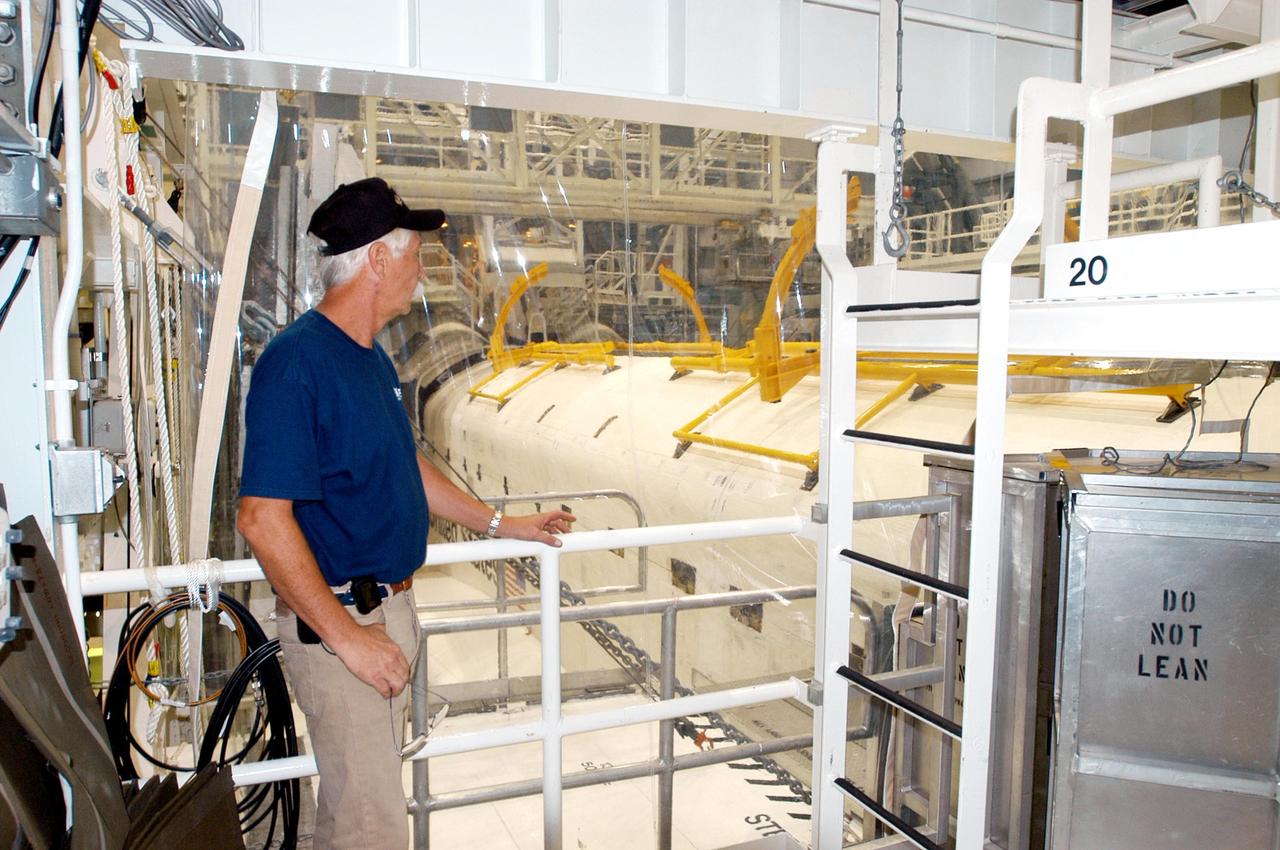
KENNEDY SPACE CENTER, FLA. - United Space Alliance employee Terry White surveys Space Shuttle Atlantis in the Orbiter Processing Facility following Hurricane Frances. The storm's path over Florida took it through Cape Canaveral and KSC property during Labor Day weekend. There was no damage to the Space Shuttle orbiters or to any other flight hardware.
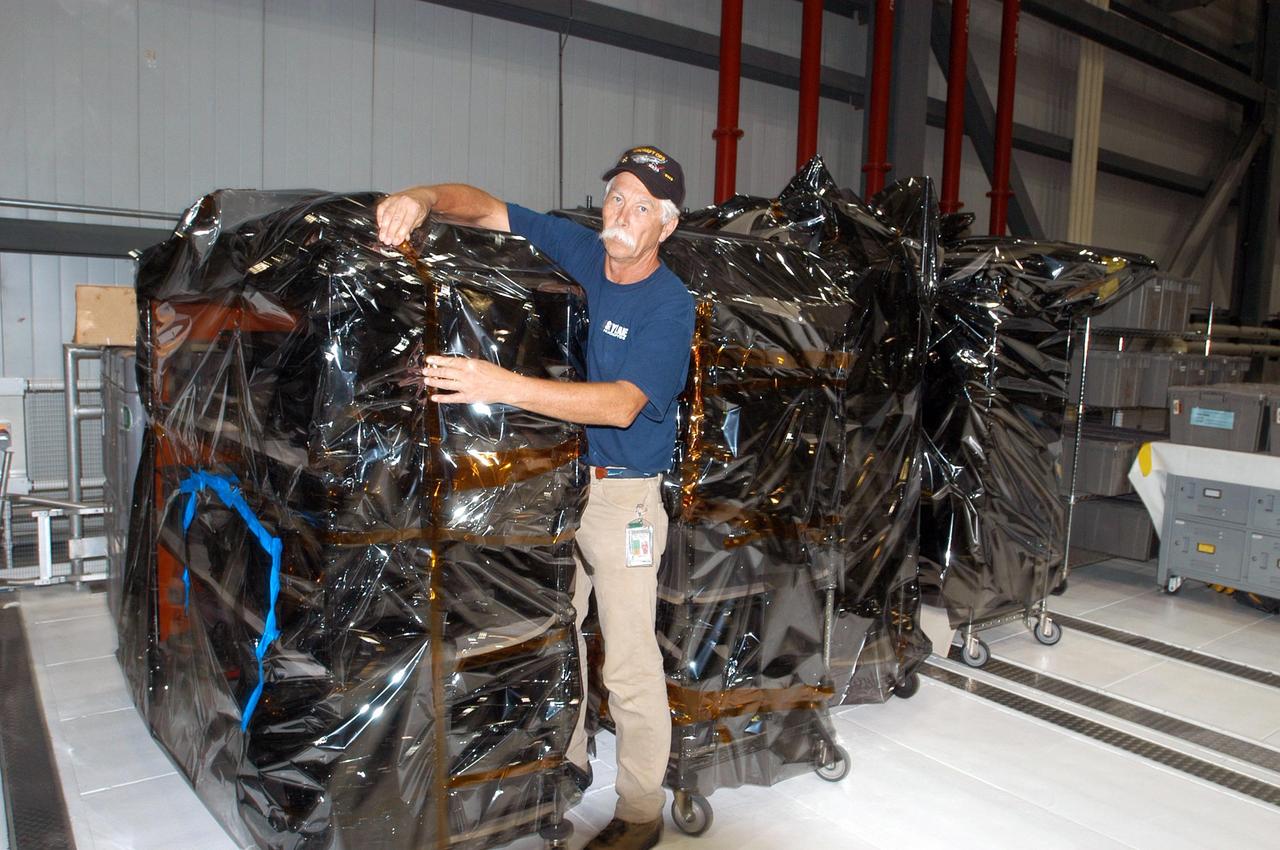
KENNEDY SPACE CENTER, FLA. - United Space Alliance employee Terry White inspects plastic-covered flight hardware in the Orbiter Processing Facility following Hurricane Frances. The storm's path over Florida took it through Cape Canaveral and KSC property during Labor Day weekend. There was no damage to the Space Shuttle orbiters or to any other flight hardware.
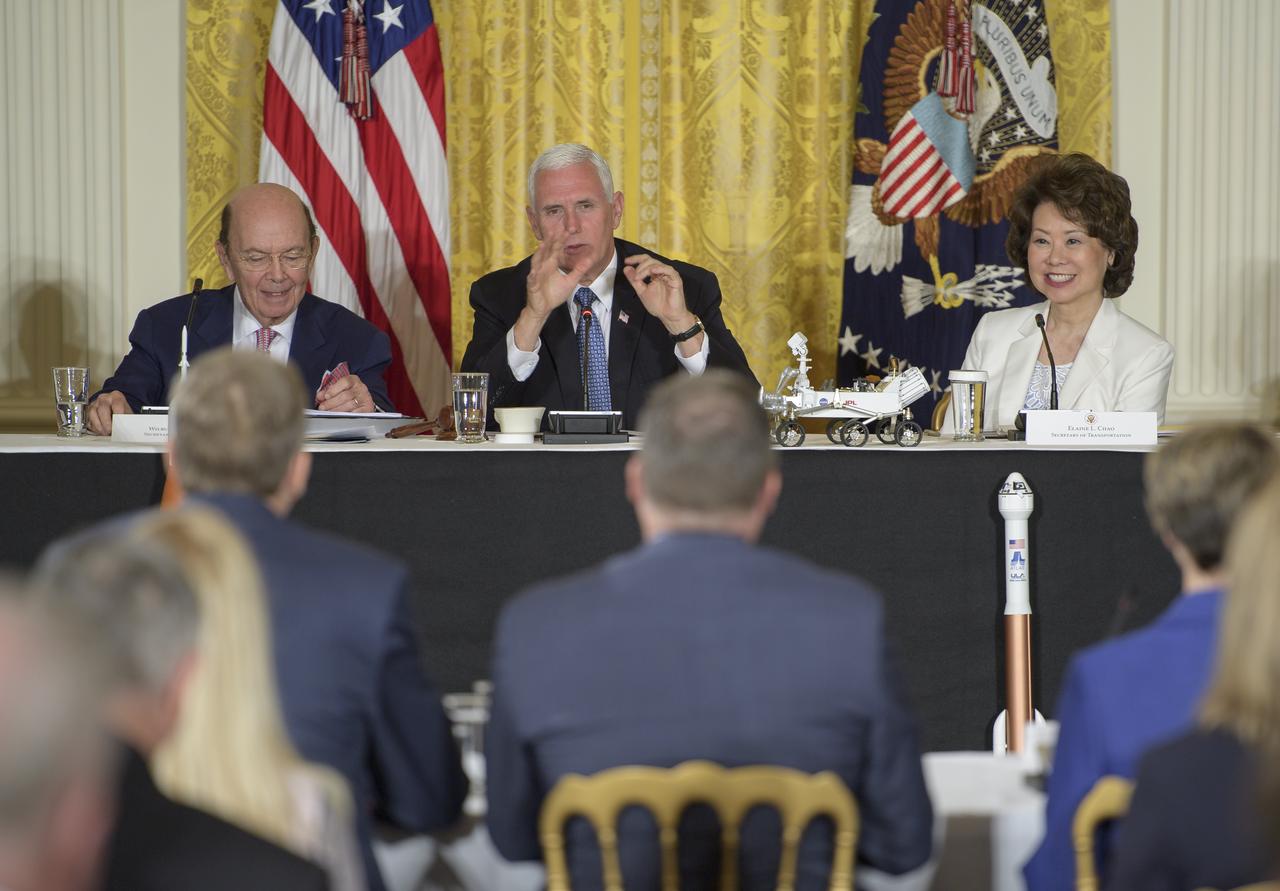
Vice President Mike Pence ask questions of former NASA astronauts Eileen Collins, Terry Virts and Scott Parazynski during a meeting of the National Space Council in the East Room of the White House, Monday, June 18, 2018, in Washington. Chaired by the Vice President, the council's role is to advise the President regarding national space policy and strategy, and review the nation's long-range goals for space activities. Photo Credit: (NASA/Bill Ingalls)
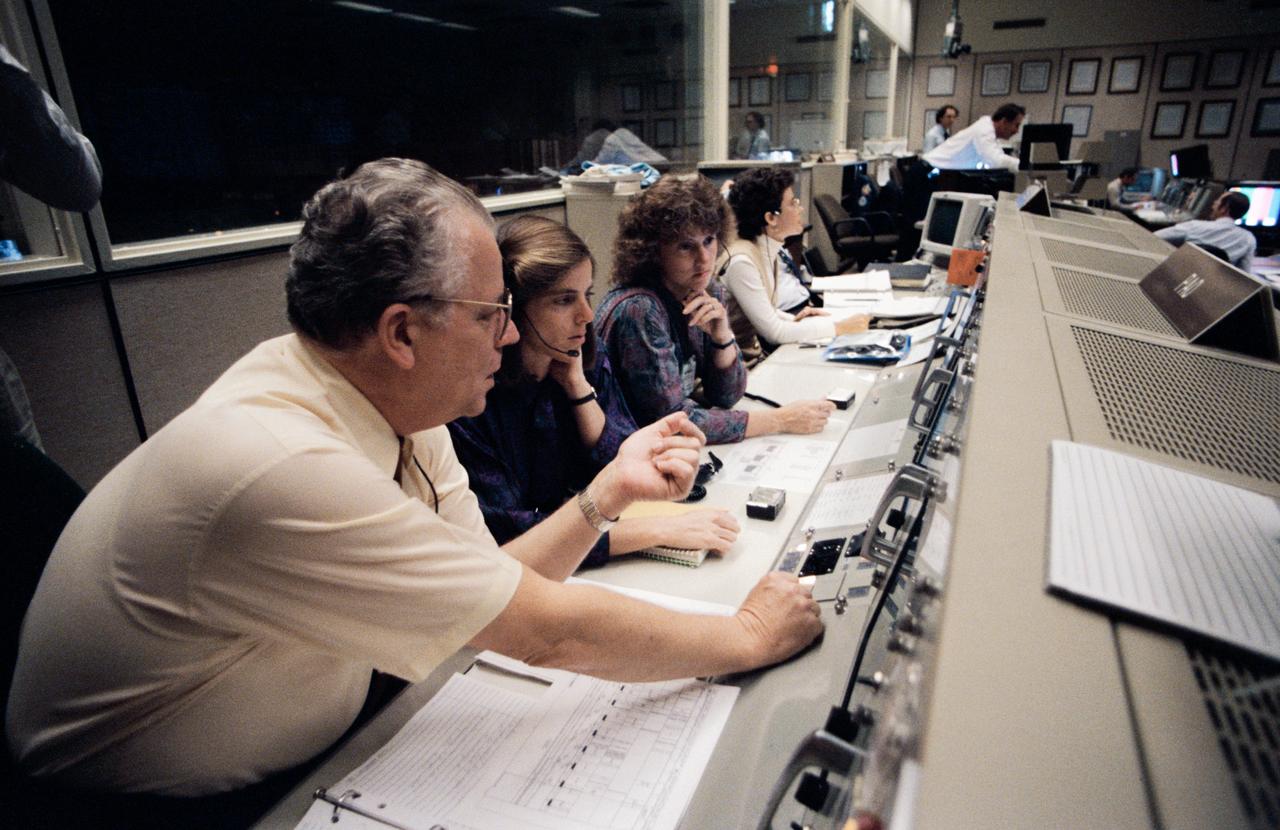
61A-S-135 (5 Nov 1985) --- Two school teachers in training at the Johnson Space Center got their first ?real time? exposure to a Space Shuttle mission as they monitor activity aboard the Spacelab D-1 science module from the mission control center. Sharon Christa McAuliffe (frame center) and Barbara R. Morgan are briefed by Terry White at the Public Affairs console during a television downlink from the Earth-orbiting Space Shuttle Challenger. McAuliffe is scheduled to fly as teacher/citizen observer on the STS 51-L mission early next year; and Morgan is in training as her backup.
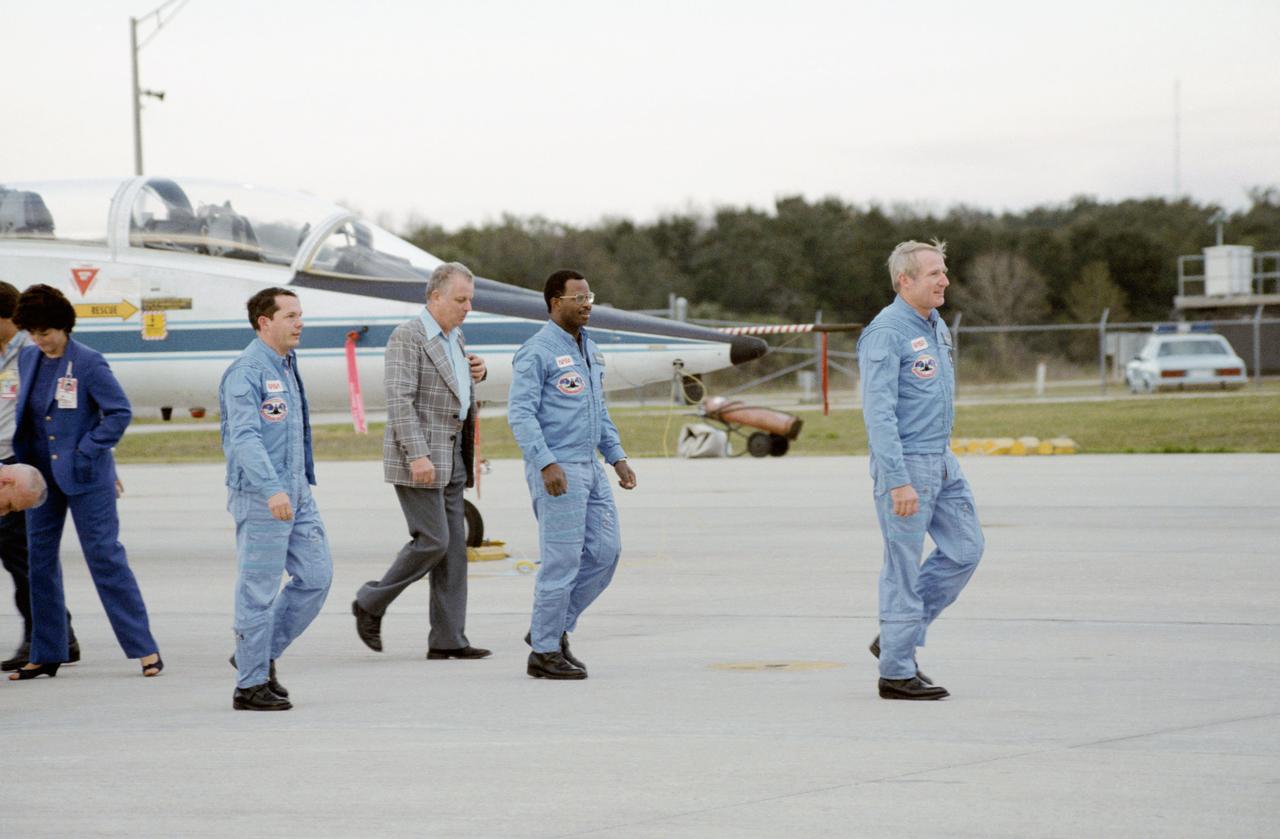
S84-26935 (31 Jan 1984) --- Three members of the STS 41-B astronaut crew arrive in Florida following a brief T-38 flight from Houston. Leading the crew from the flight line is Astronaut Vance D. Brand (right), crew commander. Following behind (in blue flight suits) are Astronauts Ronald E. McNair (center) and Robert L. Stewart (both mission specialists. They were met by Terry White (pictured), JSC public information industrial relations manager. Not pictured are Astronauts Robert L. Gibson, pilot; and Bruce McCandless II, mission specialist. Launch is scheduled for February 3, 1983.
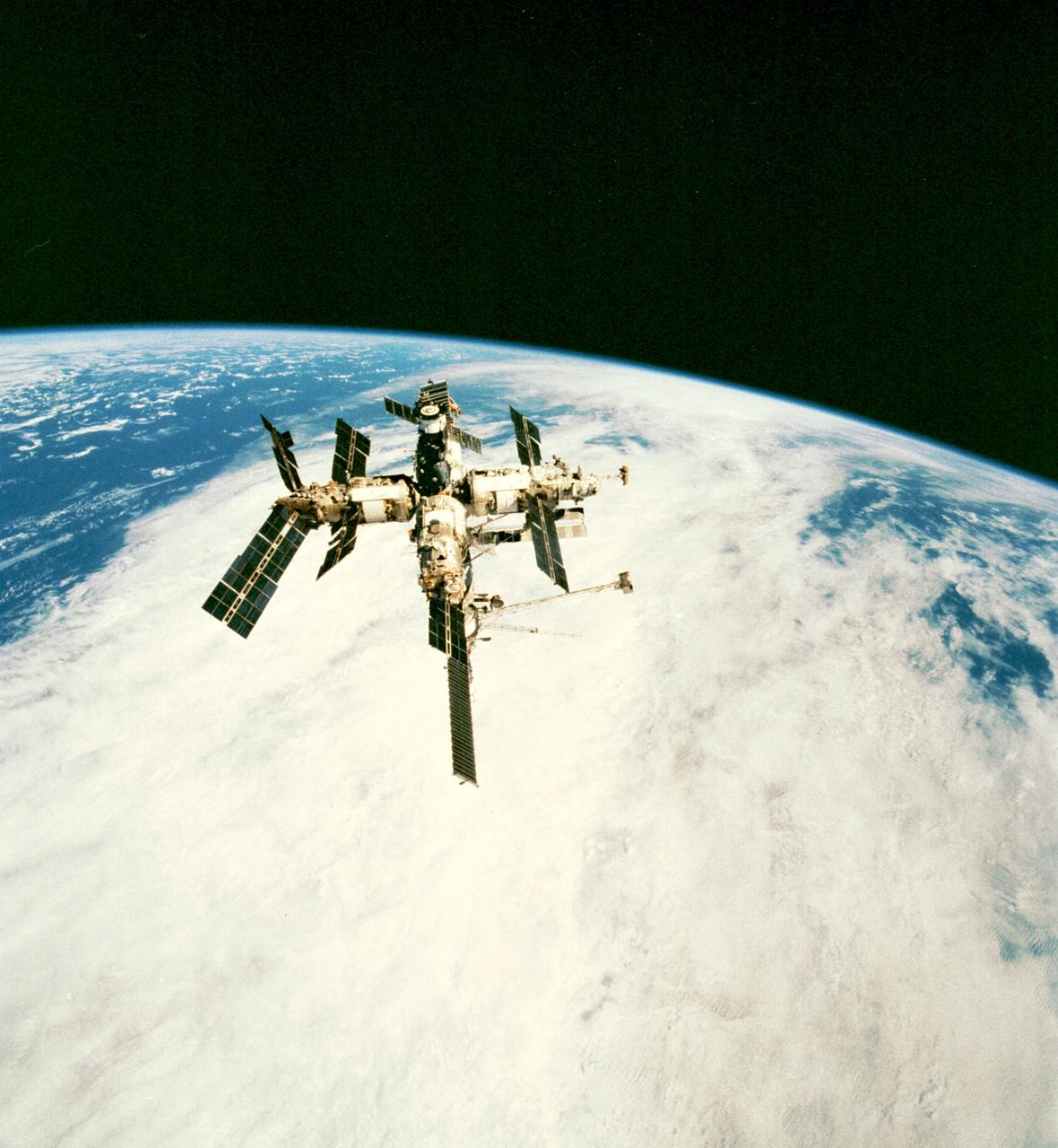
STS089-714-066 (22-31 Jan. 1998) --- A series of 70mm still shots was recorded of Russia's Mir Space Station from the Earth-orbiting space shuttle Endeavour following undocking of the two spacecraft. A large blanket of white clouds cover thousands of square miles in this oblique panorama. Onboard the Mir at this point were cosmonaut Anatoly Y. Solovyev, commander; Pavel V. Vinogradov, flight engineer; and Andrew S. W. Thomas, cosmonaut guest researcher. Onboard Endeavour were Terrence W. (Terry) Wilcutt, commander; Joe F. Edwards Jr., pilot; Bonnie J. Dunbar, payload commander; mission specialists David A. Wolf (former cosmonaut guest researcher), Michael P. Anderson, James F. Reilly, and Salizhan S. Sharipov representing Russian Space Agency (RSA). Photo credit: NASA
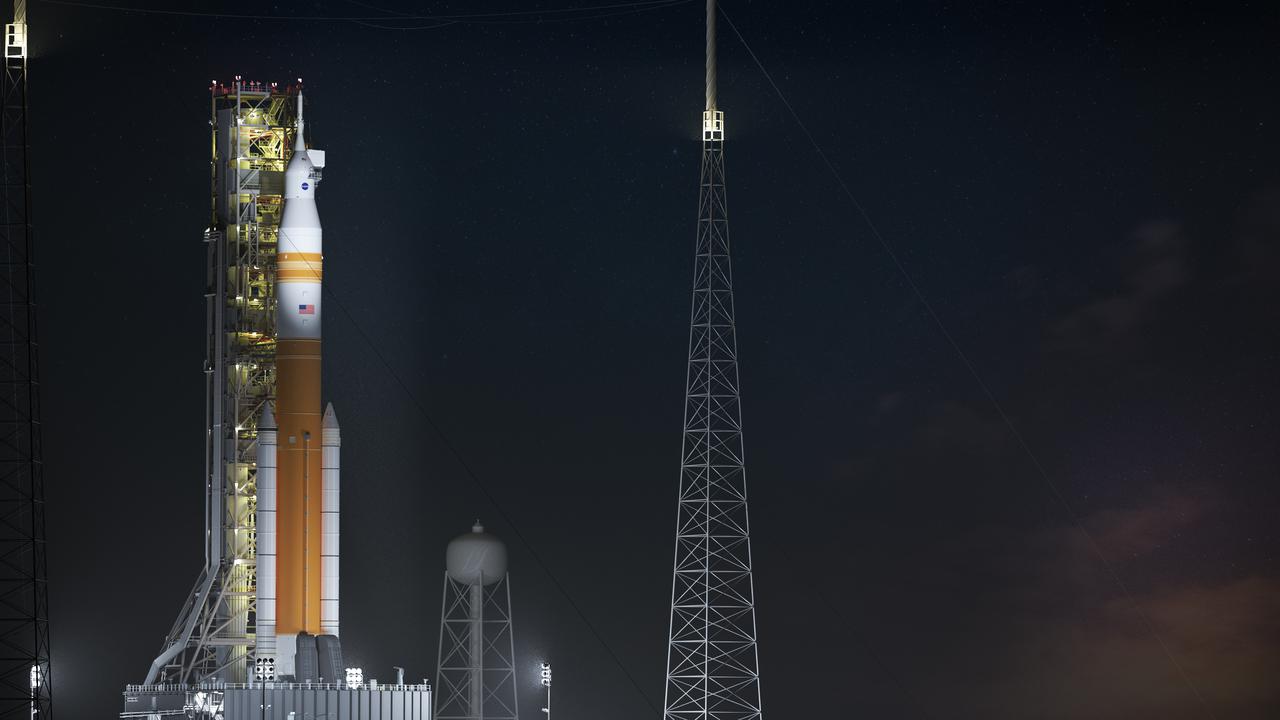
Illustration of nighttime scene of the evolved SLS Block 1B Crew variant on Pad 39B.. This configuration of the rocket, with the Exploration Upper Stage, will provide in-space propulsion to send astronauts in NASA’s Orion spacecraft and heavy cargo on a precise trajectory to the Moon. The evolution of the rocket to SLS Block 1B configuration with EUS enables SLS to launch 40% more cargo to the Moon along with the crew. Manufacturing both the core stage and Exploration Upper Stage is a collaborative effort between NASA and Boeing, the lead contractor for EUS and the SLS core stage. SLS is the only rocket that can send Orion, astronauts, and supplies to the Moon in a single mission. The SLS rocket, NASA’s Orion spacecraft, Gateway, and human landing system are part of NASA’s backbone for deep space exploration. Under the Artemis program, NASA is working to land the first woman and the next man on the Moon to pave the way for sustainable exploration at the Moon and future missions to Mars. (NASA)
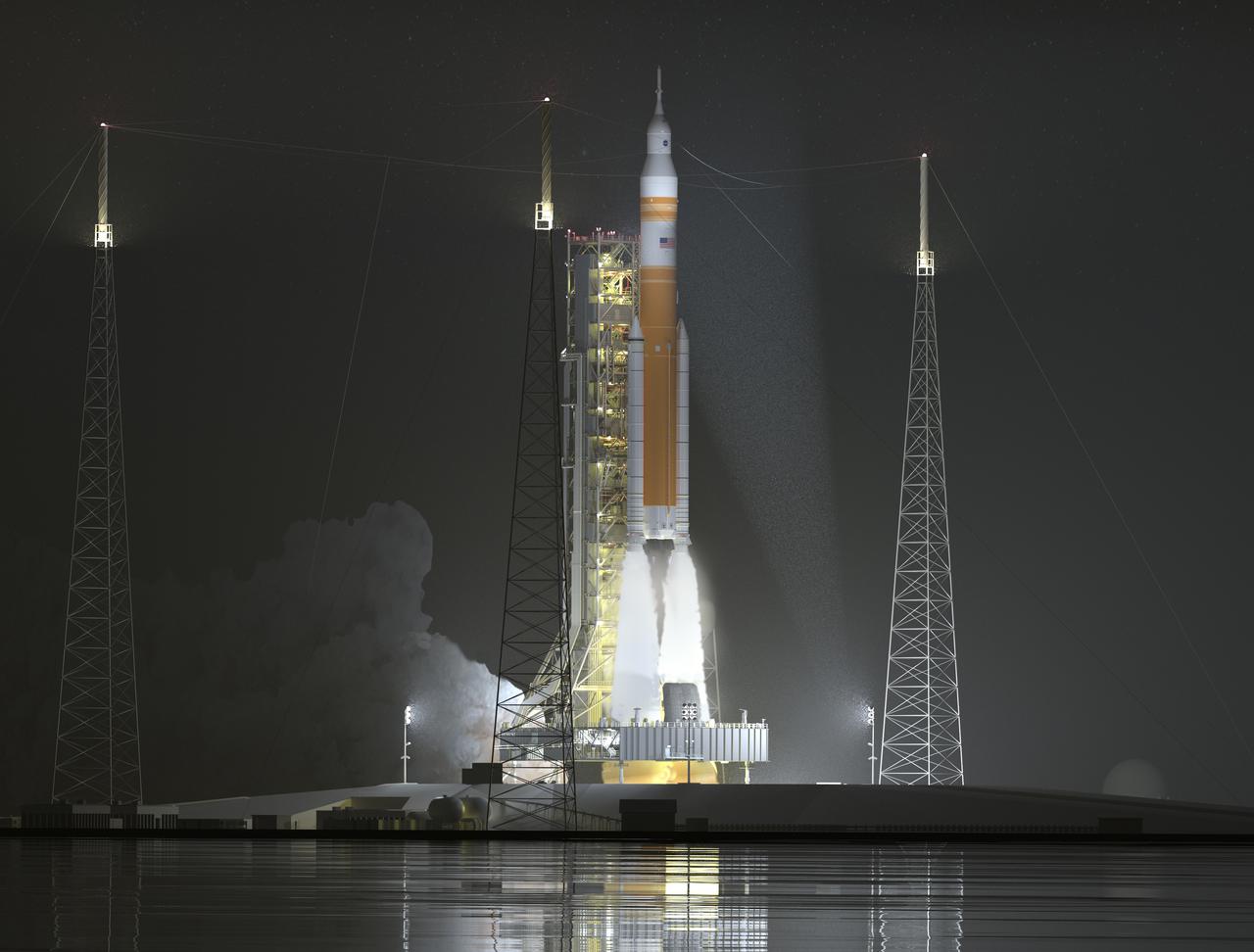
Illustration of the evolved SLS Block 1B Crew variant night launch. This configuration of the rocket, with the Exploration Upper Stage, will provide in-space propulsion to send astronauts in NASA’s Orion spacecraft and heavy cargo on a precise trajectory to the Moon. The evolution of the rocket to SLS Block 1B configuration with EUS enables SLS to launch 40% more cargo to the Moon along with the crew. Manufacturing both the core stage and Exploration Upper Stage is a collaborative effort between NASA and Boeing, the lead contractor for EUS and the SLS core stage. SLS is the only rocket that can send Orion, astronauts, and supplies to the Moon in a single mission. The SLS rocket, NASA’s Orion spacecraft, Gateway, and human landing system are part of NASA’s backbone for deep space exploration. Under the Artemis program, NASA is working to land the first woman and the next man on the Moon to pave the way for sustainable exploration at the Moon and future missions to Mars. (NASA) In album: B1B_Crew_SLS
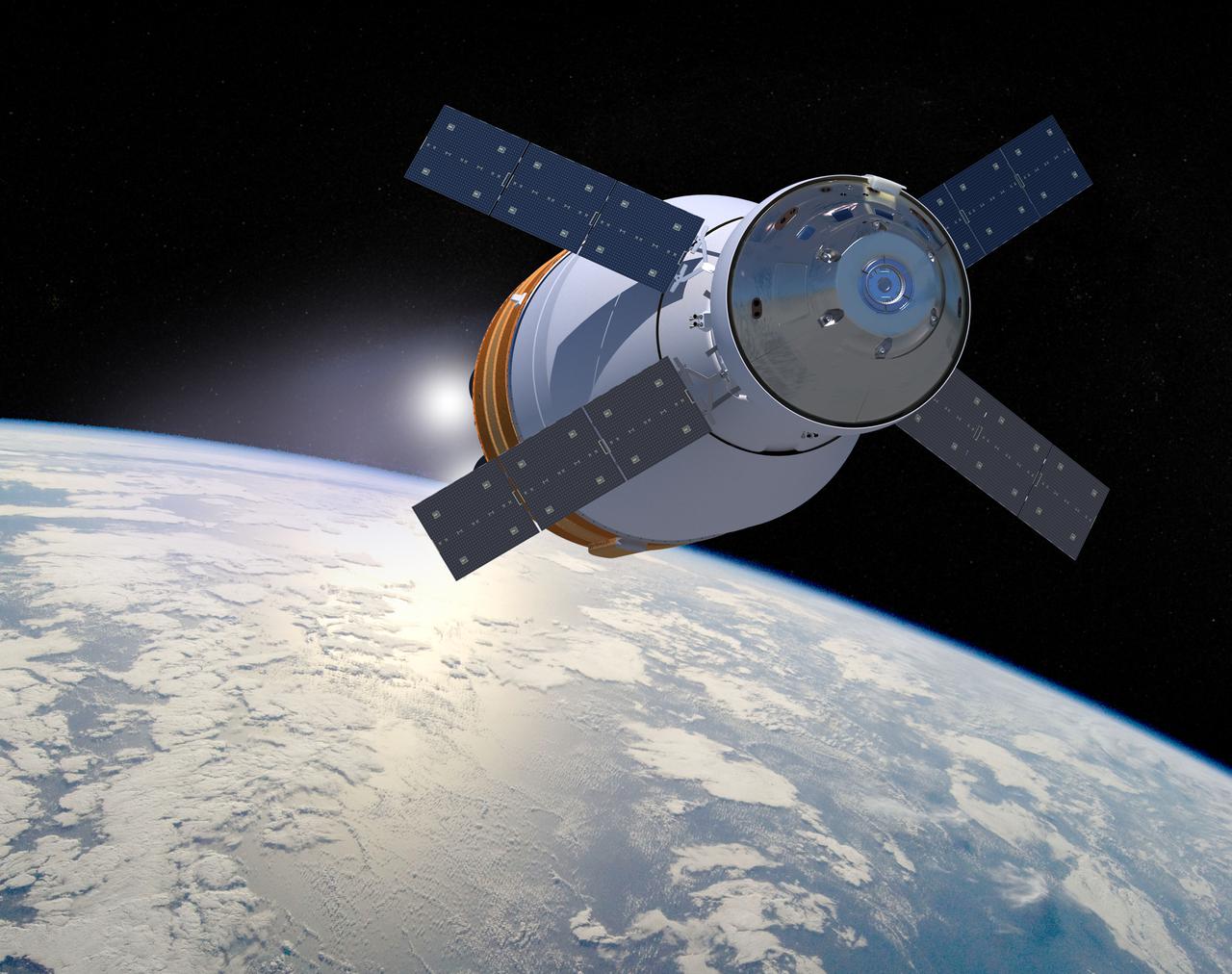
Seen here is an image of the SLS Exploration Upper Stage with the Orion Space craft on its way to a deep space mission. The Exploration Upper Stage will be used on the second configuration of the SLS rocket, known as Block 1B, and will provide in-space propulsion to send astronauts in NASA’s Orion spacecraft and heavy cargo on a precise trajectory to the Moon. The evolution of the rocket to SLS Block 1B configuration with EUS enables SLS to launch 40% more cargo to the Moon along with the crew. Manufacturing both the core stage and Exploration Upper Stage is a collaborative effort between NASA and Boeing, the lead contractor for EUS and the SLS core stage. SLS is the only rocket that can send Orion, astronauts, and supplies to the Moon in a single mission. The SLS rocket, NASA’s Orion spacecraft, Gateway, and human landing system are part of NASA’s backbone for deep space exploration. Under the Artemis program, NASA is working to land the first woman and the next man on the Moon to pave the way for sustainable exploration at the Moon and future missions to Mars. (NASA)

Illustration of the SLS Exploration Upper Stage, or EUS. The Exploration Upper Stage will be used on the second configuration of the SLS rocket, known as Block 1B, and will provide in-space propulsion to send astronauts in NASA’s Orion spacecraft and heavy cargo on a precise trajectory to the Moon. The evolution of the rocket to SLS Block 1B configuration with EUS enables SLS to launch 40% more cargo to the Moon along with the crew. Manufacturing both the core stage and Exploration Upper Stage is a collaborative effort between NASA and Boeing, the lead contractor for EUS and the SLS core stage. SLS is the only rocket that can send Orion, astronauts, and supplies to the Moon in a single mission. The SLS rocket, NASA’s Orion spacecraft, Gateway, and human landing system are part of NASA’s backbone for deep space exploration. Under the Artemis program, NASA is working to land the first woman and the next man on the Moon to pave the way for sustainable exploration at the Moon and future missions to Mars. (NASA)
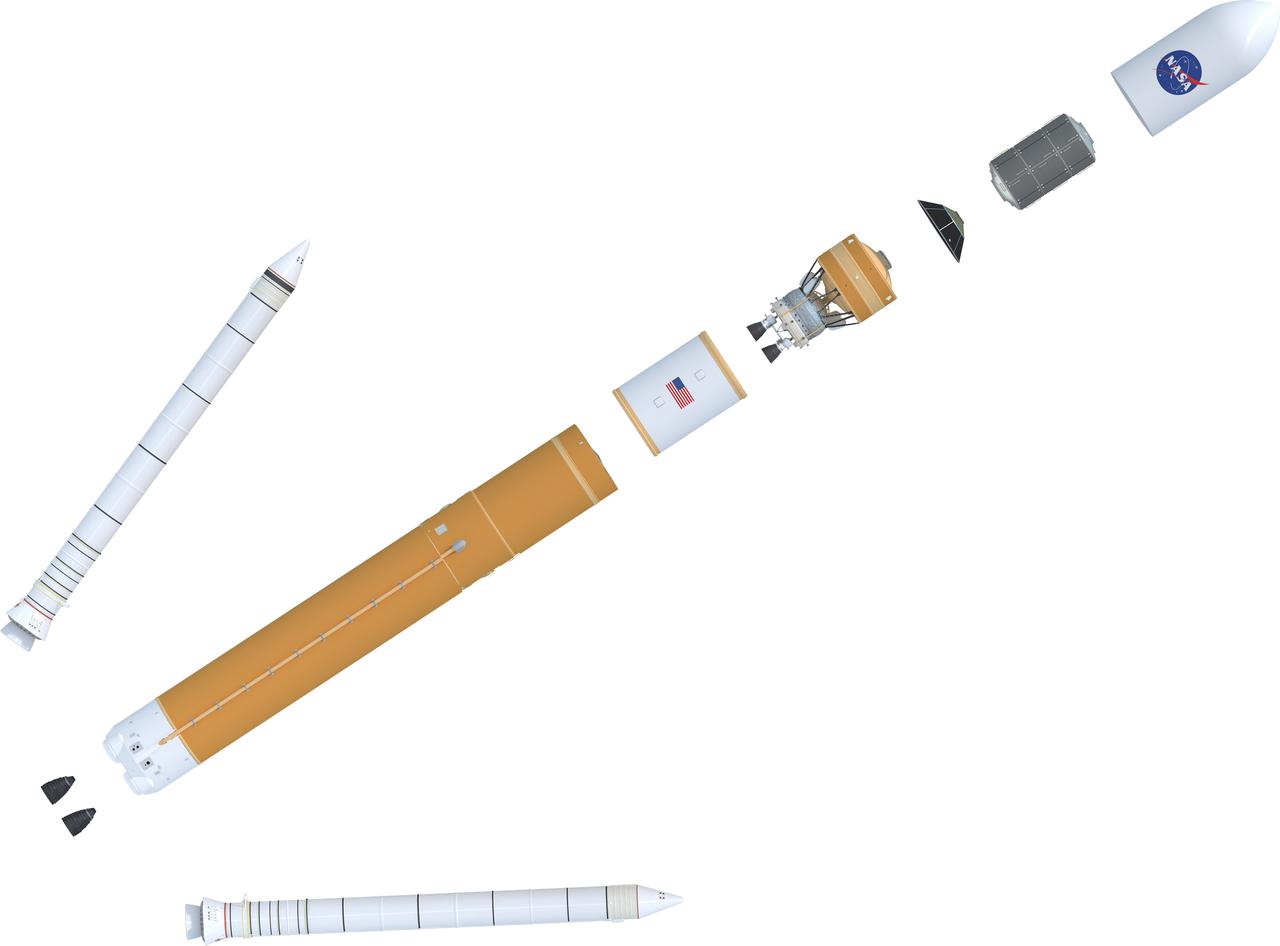
Expanded view illustration of elements of the evolved SLS Block 1B Crew variant. This configuration of the rocket, with the Exploration Upper Stage, will provide in-space propulsion to send astronauts in NASA’s Orion spacecraft and heavy cargo on a precise trajectory to the Moon. The evolution of the rocket to SLS Block 1B configuration with EUS enables SLS to launch 40% more cargo to the Moon along with the crew. Manufacturing both the core stage and Exploration Upper Stage is a collaborative effort between NASA and Boeing, the lead contractor for EUS and the SLS core stage. SLS is the only rocket that can send Orion, astronauts, and supplies to the Moon in a single mission. The SLS rocket, NASA’s Orion spacecraft, Gateway, and human landing system are part of NASA’s backbone for deep space exploration. Under the Artemis program, NASA is working to land the first woman and the next man on the Moon to pave the way for sustainable exploration at the Moon and future missions to Mars. (NASA)

Illustration of the SLS Exploration Upper Stage, or EUS. This configuration of the rocket, with the Exploration Upper Stage, will provide in-space propulsion to send astronauts in NASA’s Orion spacecraft and heavy cargo on a precise trajectory to the Moon. The evolution of the rocket to SLS Block 1B configuration with EUS enables SLS to launch 40% more cargo to the Moon along with the crew. Manufacturing both the core stage and Exploration Upper Stage is a collaborative effort between NASA and Boeing, the lead contractor for EUS and the SLS core stage. SLS is the only rocket that can send Orion, astronauts, and supplies to the Moon in a single mission. The SLS rocket, NASA’s Orion spacecraft, Gateway, and human landing system are part of NASA’s backbone for deep space exploration. Under the Artemis program, NASA is working to land the first woman and the next man on the Moon to pave the way for sustainable exploration at the Moon and future missions to Mars. (NASA)
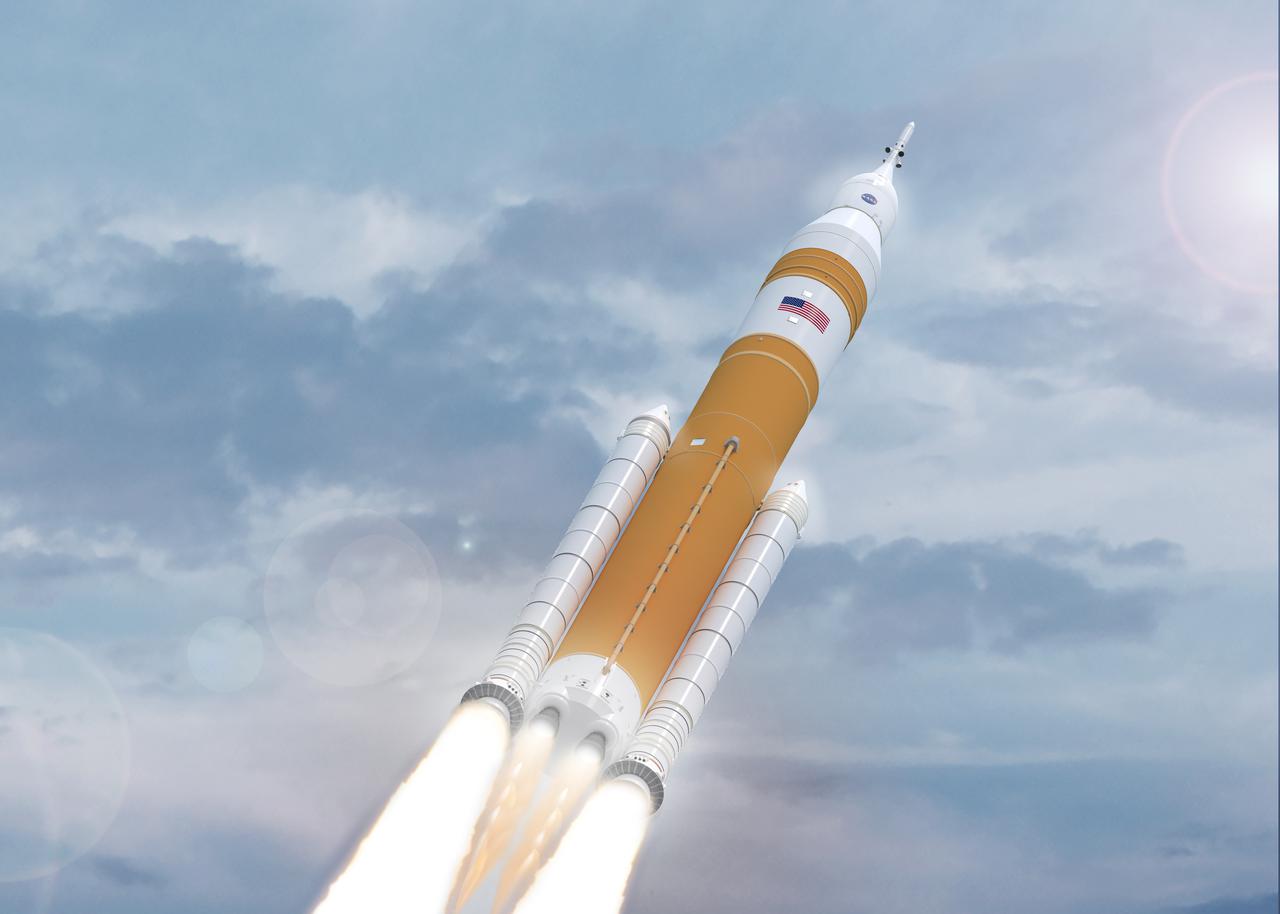
Illustration of evolved SLS Block 1B Crew variant in flight. This configuration of the rocket, with the Exploration Upper Stage, will provide in-space propulsion to send astronauts in NASA’s Orion spacecraft and heavy cargo on a precise trajectory to the Moon. The evolution of the rocket to SLS Block 1B configuration with EUS enables SLS to launch 40% more cargo to the Moon along with the crew. Manufacturing both the core stage and Exploration Upper Stage is a collaborative effort between NASA and Boeing, the lead contractor for EUS and the SLS core stage. SLS is the only rocket that can send Orion, astronauts, and supplies to the Moon in a single mission. The SLS rocket, NASA’s Orion spacecraft, Gateway, and human landing system are part of NASA’s backbone for deep space exploration. Under the Artemis program, NASA is working to land the first woman and the next man on the Moon to pave the way for sustainable exploration at the Moon and future missions to Mars. (NASA)

Illustration of the evolved SLS Block 1B Crew variant outer mold line. This configuration of the rocket, with the Exploration Upper Stage, will provide in-space propulsion to send astronauts in NASA’s Orion spacecraft and heavy cargo on a precise trajectory to the Moon. The evolution of the rocket to SLS Block 1B configuration with EUS enables SLS to launch 40% more cargo to the Moon along with the crew. Manufacturing both the core stage and Exploration Upper Stage is a collaborative effort between NASA and Boeing, the lead contractor for EUS and the SLS core stage. SLS is the only rocket that can send Orion, astronauts, and supplies to the Moon in a single mission. The SLS rocket, NASA’s Orion spacecraft, Gateway, and human landing system are part of NASA’s backbone for deep space exploration. Under the Artemis program, NASA is working to land the first woman and the next man on the Moon to pave the way for sustainable exploration at the Moon and future missions to Mars. (NASA)

Seen here, is a nighttime rendering of the evolved SLS Block 1B Crew variant positioned on the mobile launcher. This configuration of the rocket, with the Exploration Upper Stage, will provide in-space propulsion to send astronauts in NASA’s Orion spacecraft and heavy cargo on a precise trajectory to the Moon. The evolution of the rocket to SLS Block 1B configuration with EUS enables SLS to launch 40% more cargo to the Moon along with the crew. Manufacturing both the core stage and Exploration Upper Stage is a collaborative effort between NASA and Boeing, the lead contractor for EUS and the SLS core stage. SLS is the only rocket that can send Orion, astronauts, and supplies to the Moon in a single mission. The SLS rocket, NASA’s Orion spacecraft, Gateway, and human landing system are part of NASA’s backbone for deep space exploration. Under the Artemis program, NASA is working to land the first woman and the next man on the Moon to pave the way for sustainable exploration at the Moon and future missions to Mars. (NASA)
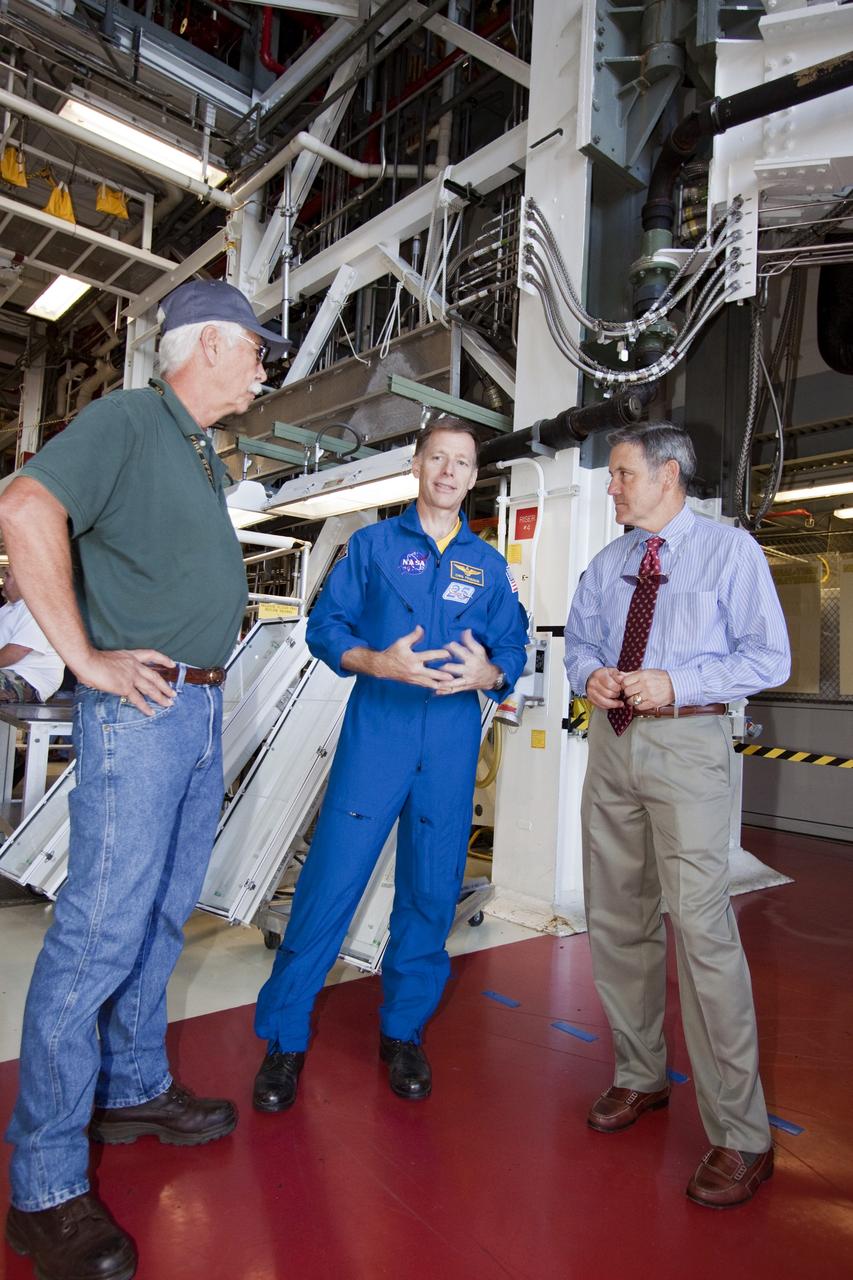
CAPE CANAVERAL, Fla. -- STS-135 Commander Chris Ferguson talks with United Space Alliance tile technician Terry White, left, and NASA Kennedy Space Center Director Bob Cabana, right, in Orbiter Processing Facility-1 during shuttle Atlantis' final planned move to the Vehicle Assembly Building. The move called "rollover" is a major milestone in processing for the STS-135 mission to the International Space Station. Inside the VAB, the shuttle will be attached to its external fuel tank and solid rocket boosters. Ferguson, along with Pilot Doug Hurley and Mission Specialists Rex Walheim and Sandra Magnus are targeted to launch in early July, taking with them the Raffaello multipurpose logistics module packed with supplies, logistics and spare parts. The STS-135 mission also will fly a system to investigate the potential for robotically refueling existing spacecraft and return a failed ammonia pump module to help NASA better understand the failure mechanism and improve pump designs for future systems. STS-135 will be the 33rd flight of Atlantis, the 37th shuttle mission to the space station, and the 135th and final mission of NASA's Space Shuttle Program. For more information visit, www.nasa.gov/mission_pages/shuttle/shuttlemissions/sts135/index.html. Photo credit: NASA/Jack Pfaller
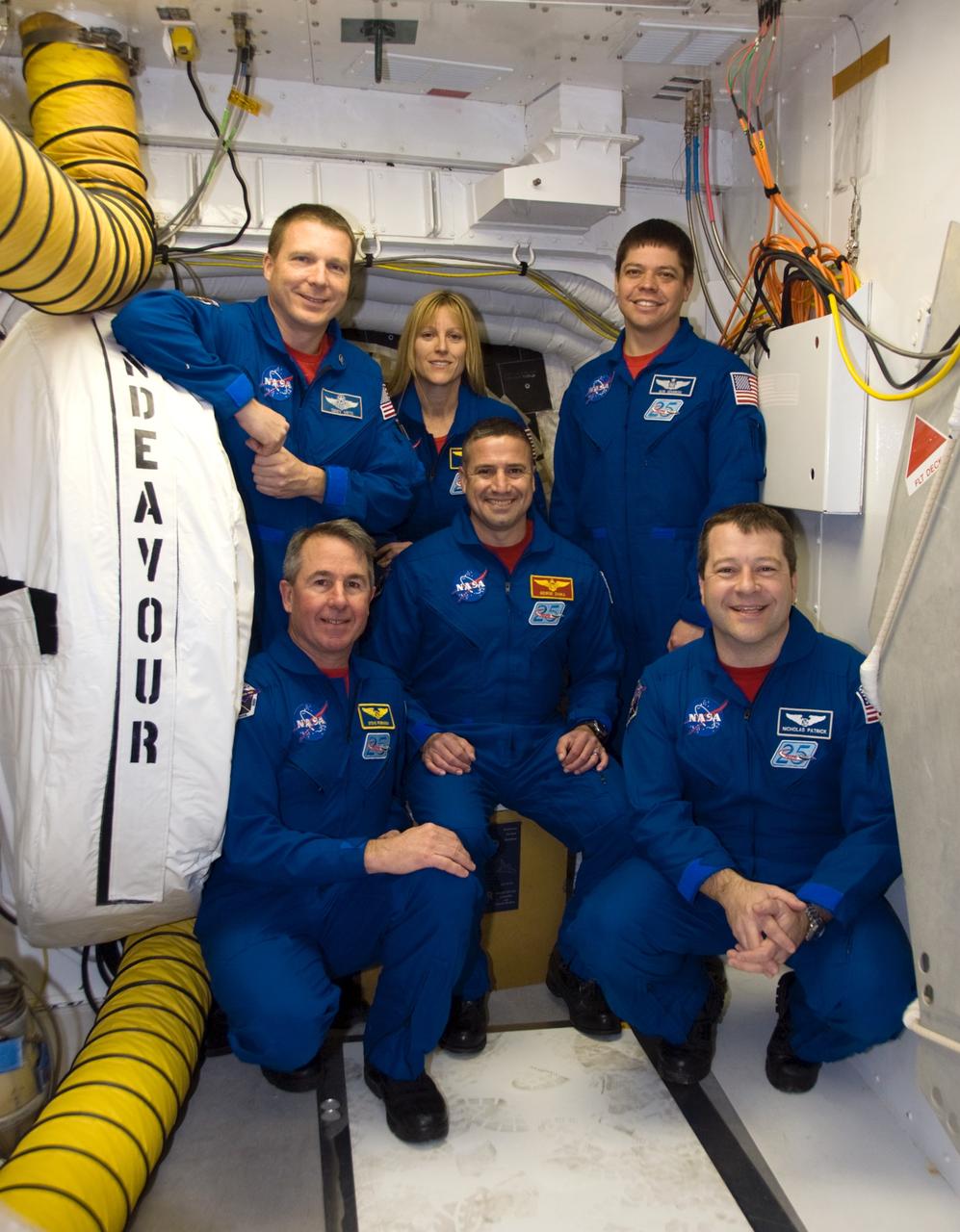
CAPE CANAVERAL, Fla. - At NASA's Kennedy Space Center in Florida, the crew members of space shuttle Endeavour's STS-130 mission take time out from their emergency exit training at Launch Pad 39A to pose for a group portrait in the White Room. Standing, from left, are Pilot Terry Virts and Mission Specialists Kathryn Hire and Robert Behnken. Kneeling, from left, are Mission Specialist Stephen Robinson, Commander George Zamka and Mission Specialist Nicholas Patrick. The crew members of space shuttle Endeavour's upcoming mission are at Kennedy for training related to their launch dress rehearsal, the Terminal Countdown Demonstration Test. The primary payload on STS-130 is the International Space Station's Node 3, Tranquility, a pressurized module that will provide room for many of the station's life support systems. Attached to one end of Tranquility is a cupola, a unique work area with six windows on its sides and one on top. Endeavour's launch is targeted for Feb. 7. For information on the STS-130 mission and crew, visit http://www.nasa.gov/mission_pages/shuttle/shuttlemissions/sts130/index.html. Photo credit: NASA/Kim Shiflett
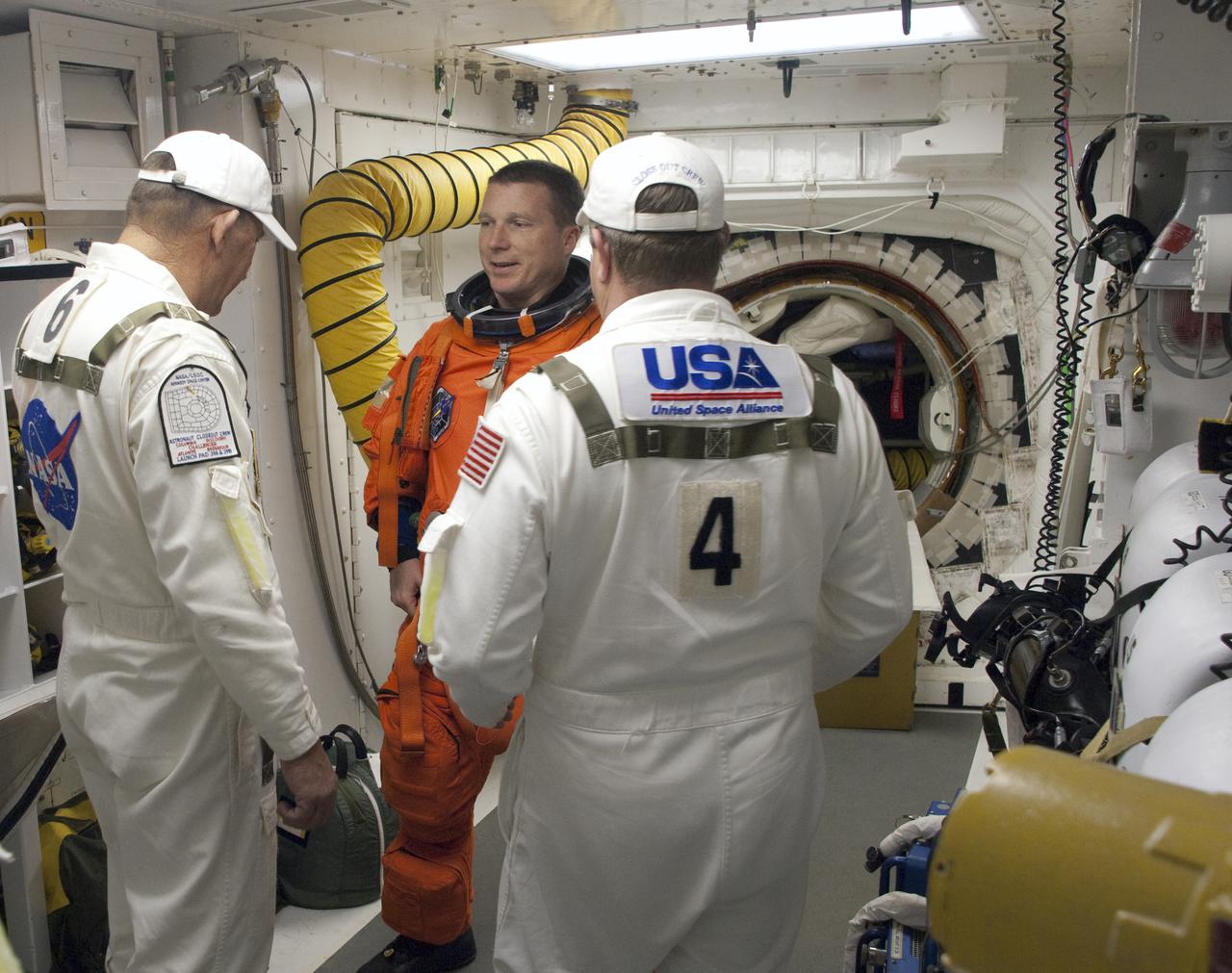
CAPE CANAVERAL, Fla. - In the White Room at Launch Pad 39A on NASA's Kennedy Space Center in Florida, United Space Alliance suit technicians and NASA quality inspectors ensure the proper fit of the launch-and-entry suit of STS-130 Pilot Terry Virts as he prepares to enter space shuttle Endeavour for launch. This is the second launch attempt for space shuttle Endeavour's STS-130 crew. The first attempt on Feb. 7 was scrubbed due to unfavorable weather. The primary payload for the STS-130 mission to the International Space Station is the Tranquility node, a pressurized module that will provide additional room for crew members and many of the station's life support and environmental control systems. Attached to one end of Tranquility is a cupola, a unique work area with six windows on its sides and one on top. The cupola resembles a circular bay window and will provide a vastly improved view of the station's exterior. The multi-directional view will allow the crew to monitor spacewalks and docking operations, as well as provide a spectacular view of Earth and other celestial objects. The module was built in Turin, Italy, by Thales Alenia Space for the European Space Agency. Endeavour's launch is set for Feb. 8 at 4:14 a.m. EST. For information on the STS-130 mission and crew, visit http:__www.nasa.gov_mission_pages_shuttle_shuttlemissions_sts130_index.html. Photo credit: NASA_Sandra Joseph and Kevin O'Connell