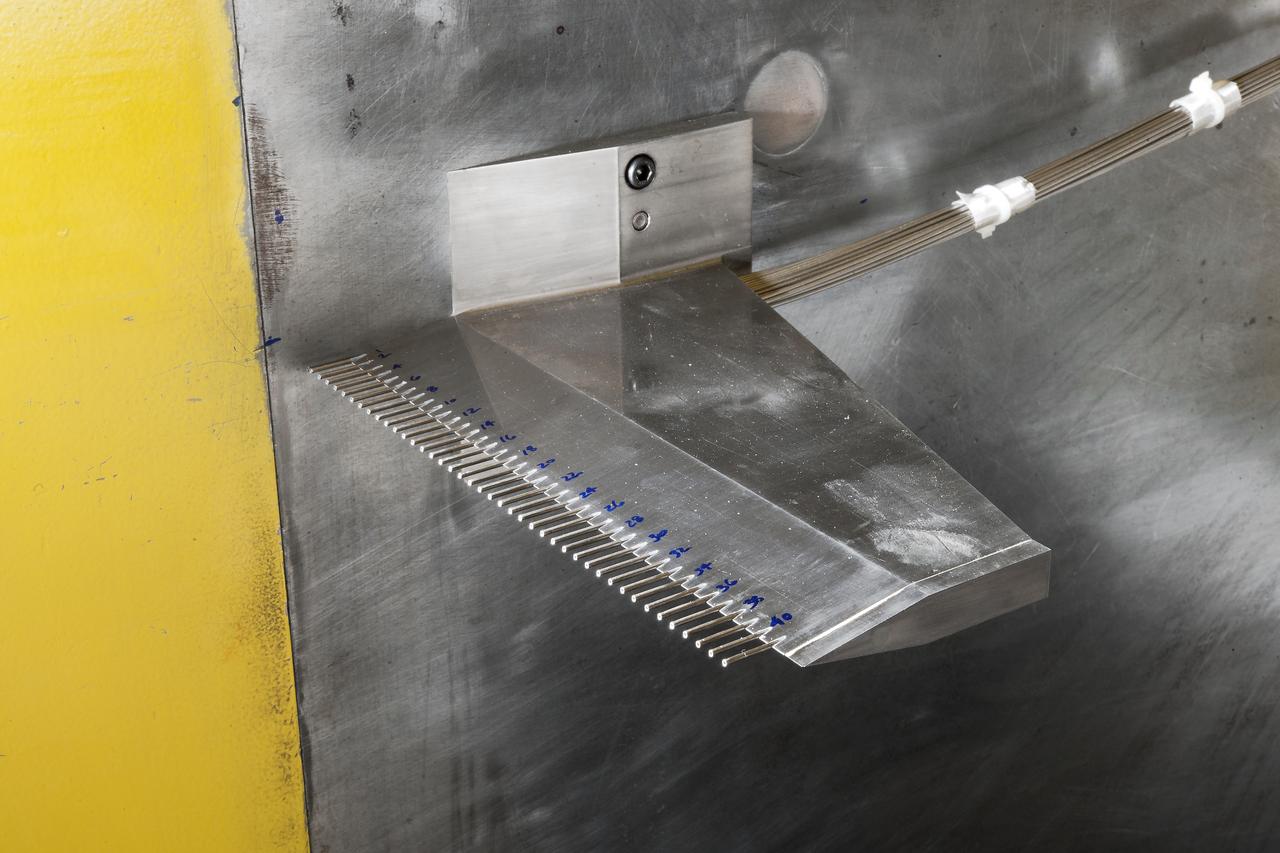
UPWT Test 1998 Continuous Data Sonic Boom Test. Sonic Boom Hardward Mounted in the Langley Unitary Plan wind Tunnel(UPWT). Conical survey probes, wedge probe, and wind tunnel wall boundary layer rake. Rectangular box with wedge front end is a transducer box to that held pressure transducer for the conical probes.
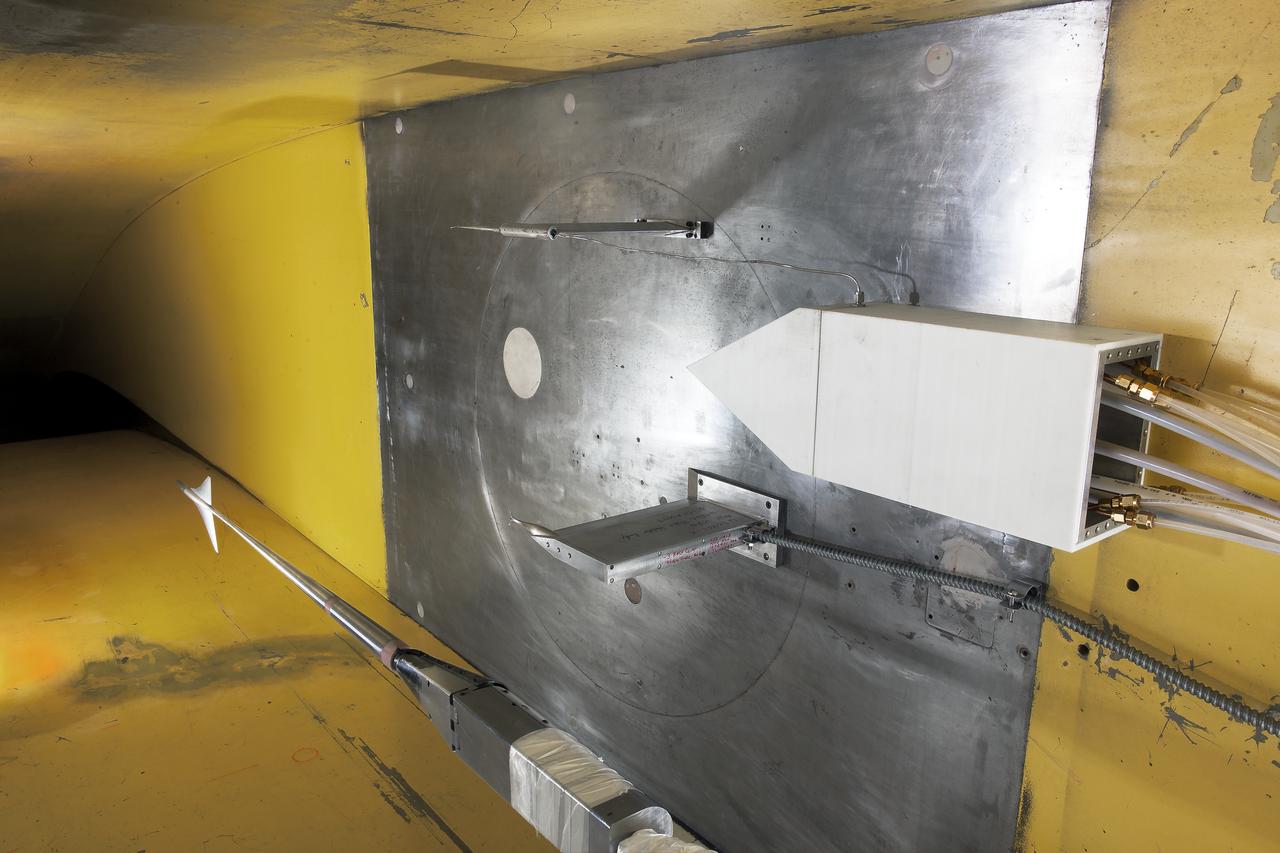
UPWT Test 1998 Continuous Data Sonic Boom Test. Sonic Boom Hardward Mounted in the Langley Unitary Plan wind Tunnel(UPWT). Conical survey probes, wedge probe, and wind tunnel wall boundary layer rake. Rectangular box with wedge front end is a transducer box to that held pressure transducer for the conical probes.
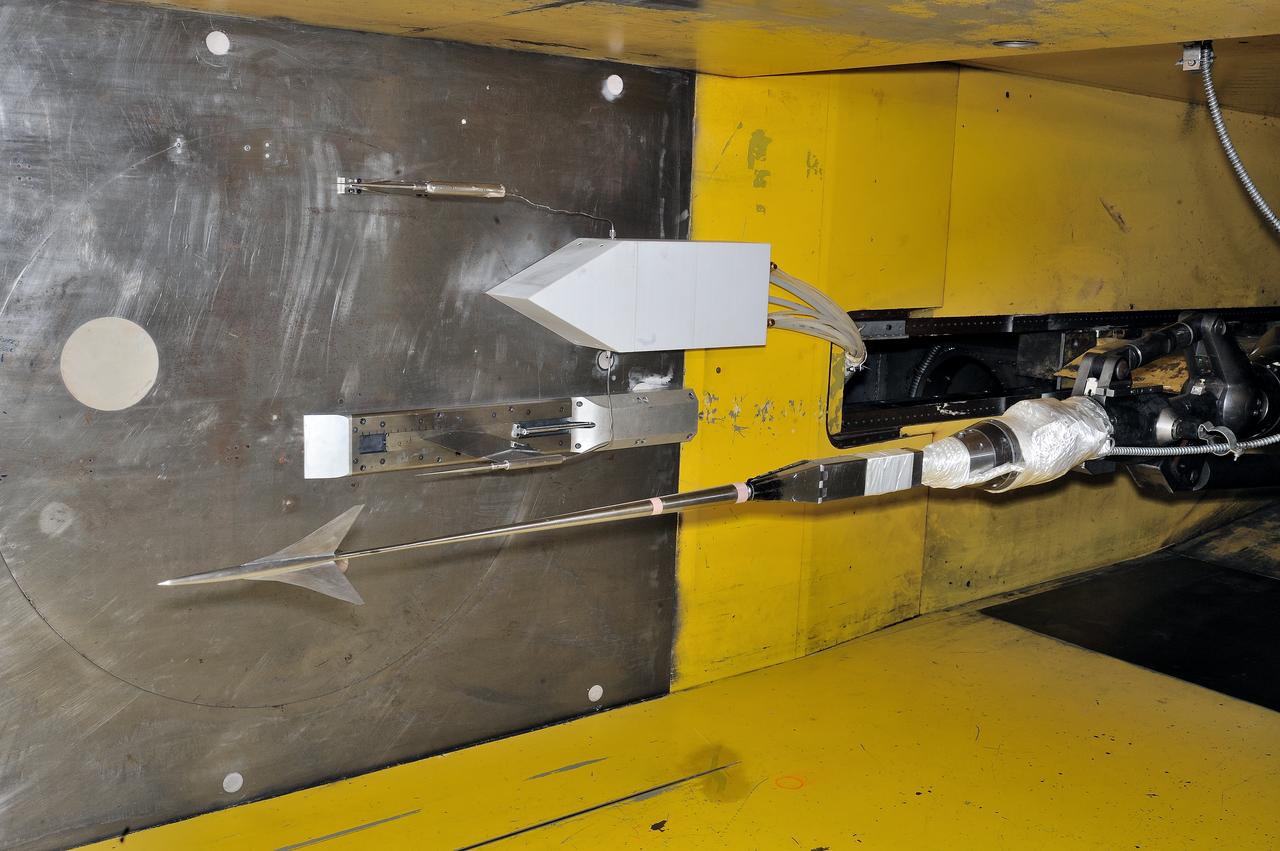
UPWT Test 1998 Continuous Data Sonic Boom Test. Sonic Boom Hardward Mounted in the Langley Unitary Plan wind Tunnel(UPWT). Conical survey probes, wedge probe, and wind tunnel wall boundary layer rake. Rectangular box with wedge front end is a transducer box to that held pressure transducer for the conical probes.
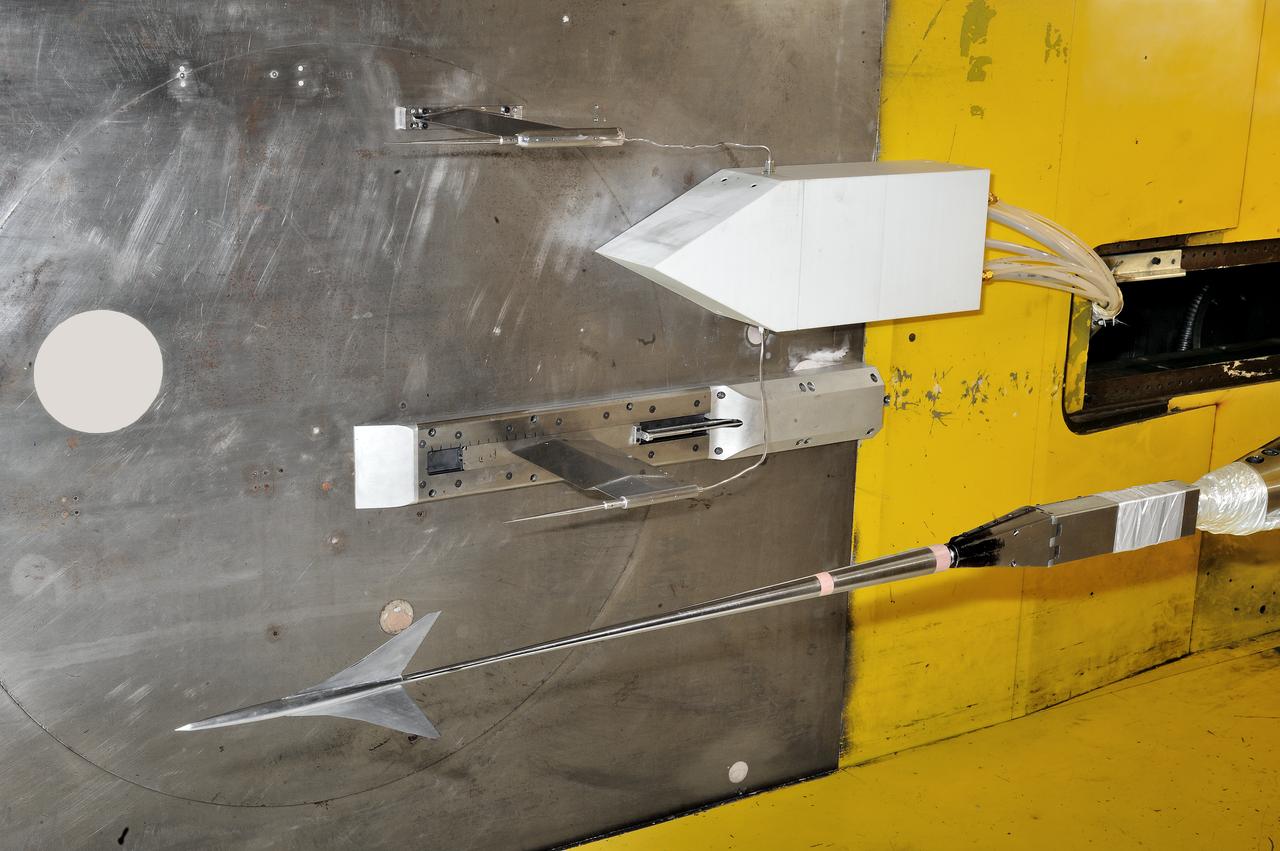
UPWT Test 1998 Continuous Data Sonic Boom Test. Sonic Boom Hardward Mounted in the Langley Unitary Plan wind Tunnel(UPWT). Conical survey probes, wedge probe, and wind tunnel wall boundary layer rake. Rectangular box with wedge front end is a transducer box to that held pressure transducer for the conical probes.
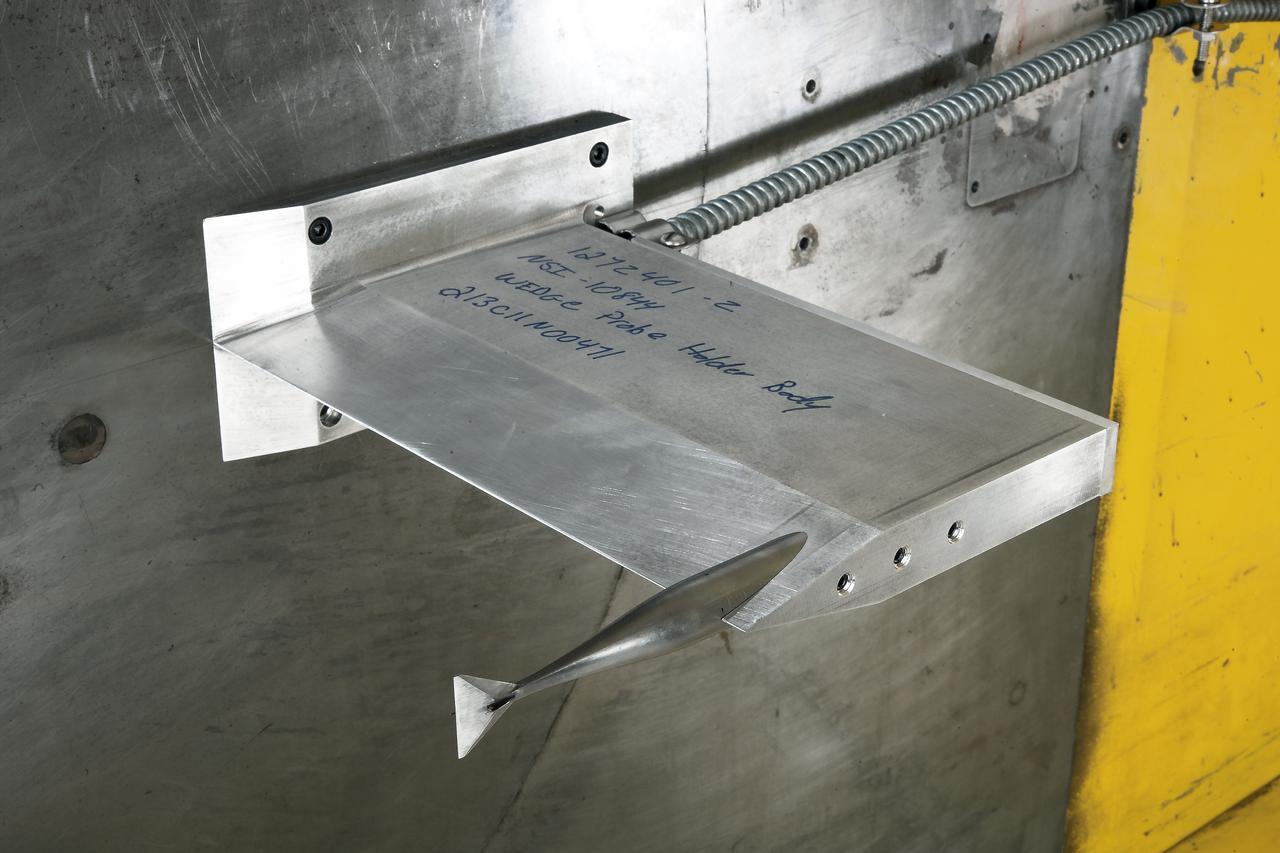
UPWT Test 1998 Continuous Data Sonic Boom Test. Sonic Boom Hardward Mounted in the Langley Unitary Plan wind Tunnel(UPWT). Conical survey probes, wedge probe, and wind tunnel wall boundary layer rake. Rectangular box with wedge front end is a transducer box to that held pressure transducer for the conical probes.
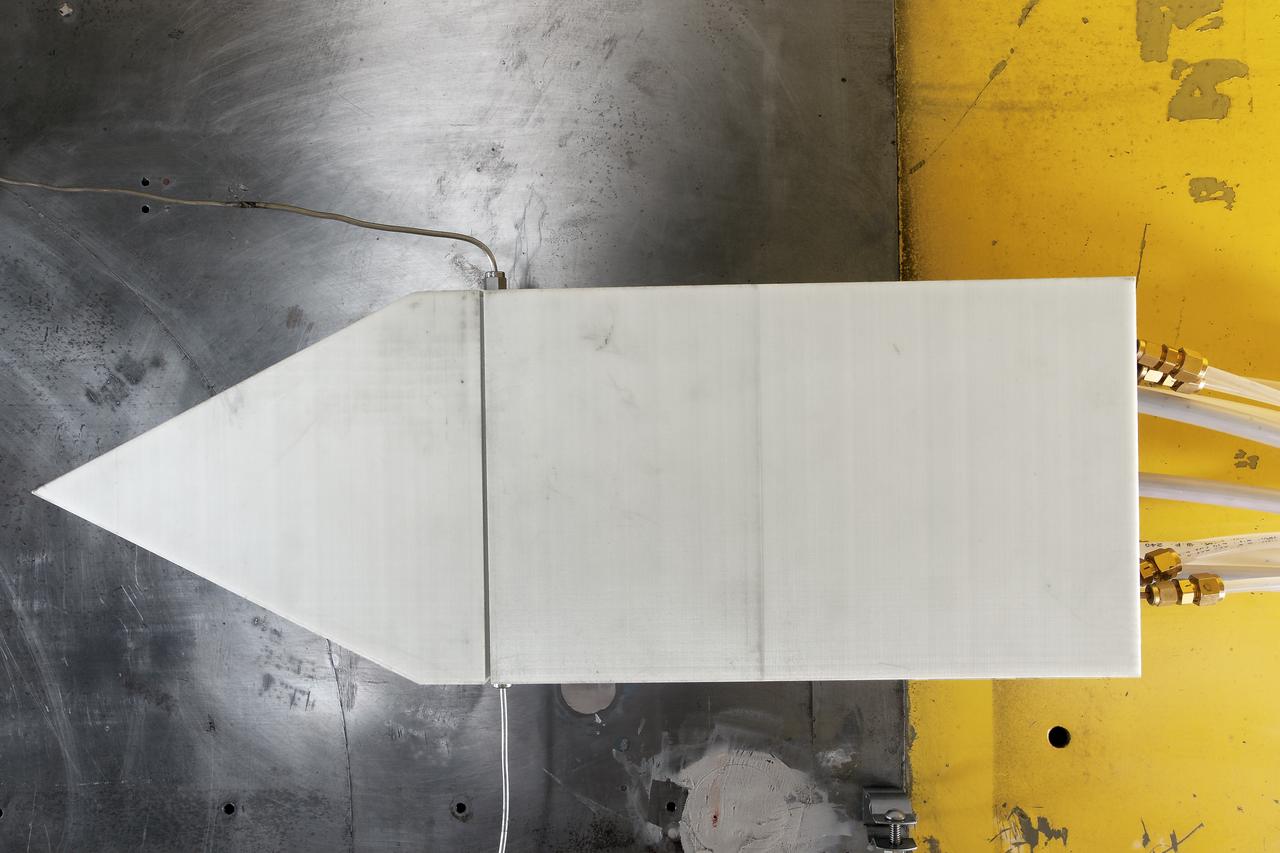
UPWT Test 1998 Continuous Data Sonic Boom Test. Sonic Boom Hardward Mounted in the Langley Unitary Plan wind Tunnel(UPWT). Conical survey probes, wedge probe, and wind tunnel wall boundary layer rake. Rectangular box with wedge front end is a transducer box to that held pressure transducer for the conical probes.
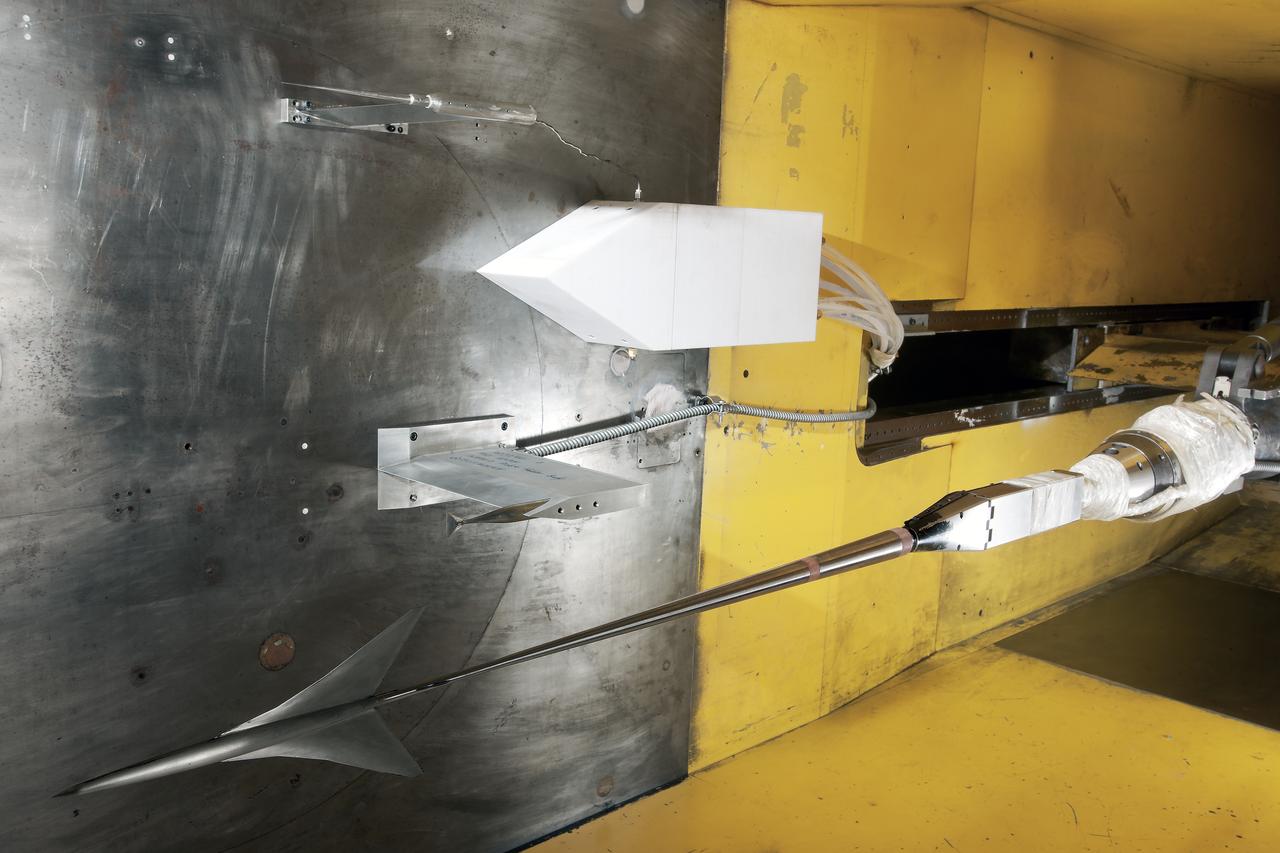
UPWT Test 1998 Continuous Data Sonic Boom Test. Sonic Boom Hardward Mounted in the Langley Unitary Plan wind Tunnel(UPWT). Conical survey probes, wedge probe, and wind tunnel wall boundary layer rake. Rectangular box with wedge front end is a transducer box to that held pressure transducer for the conical probes.
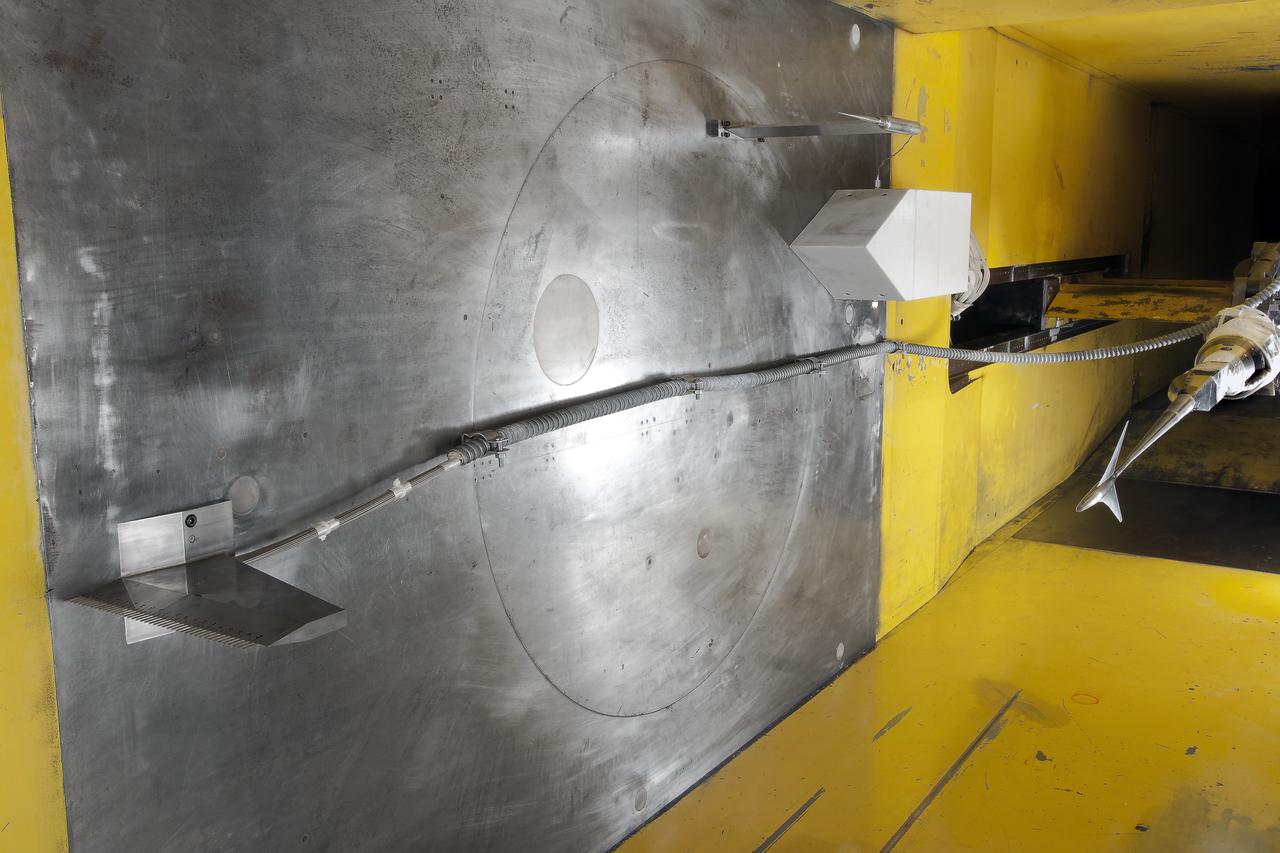
UPWT Test 1998 Continuous Data Sonic Boom Test. Sonic Boom Hardward Mounted in the Langley Unitary Plan wind Tunnel(UPWT). Conical survey probes, wedge probe, and wind tunnel wall boundary layer rake. Rectangular box with wedge front end is a transducer box to that held pressure transducer for the conical probes.

UPWT Test 1998 Continuous Data Sonic Boom Test. Sonic Boom Hardward Mounted in the Langley Unitary Plan wind Tunnel(UPWT). Conical survey probes, wedge probe, and wind tunnel wall boundary layer rake. Rectangular box with wedge front end is a transducer box to that held pressure transducer for the conical probes.
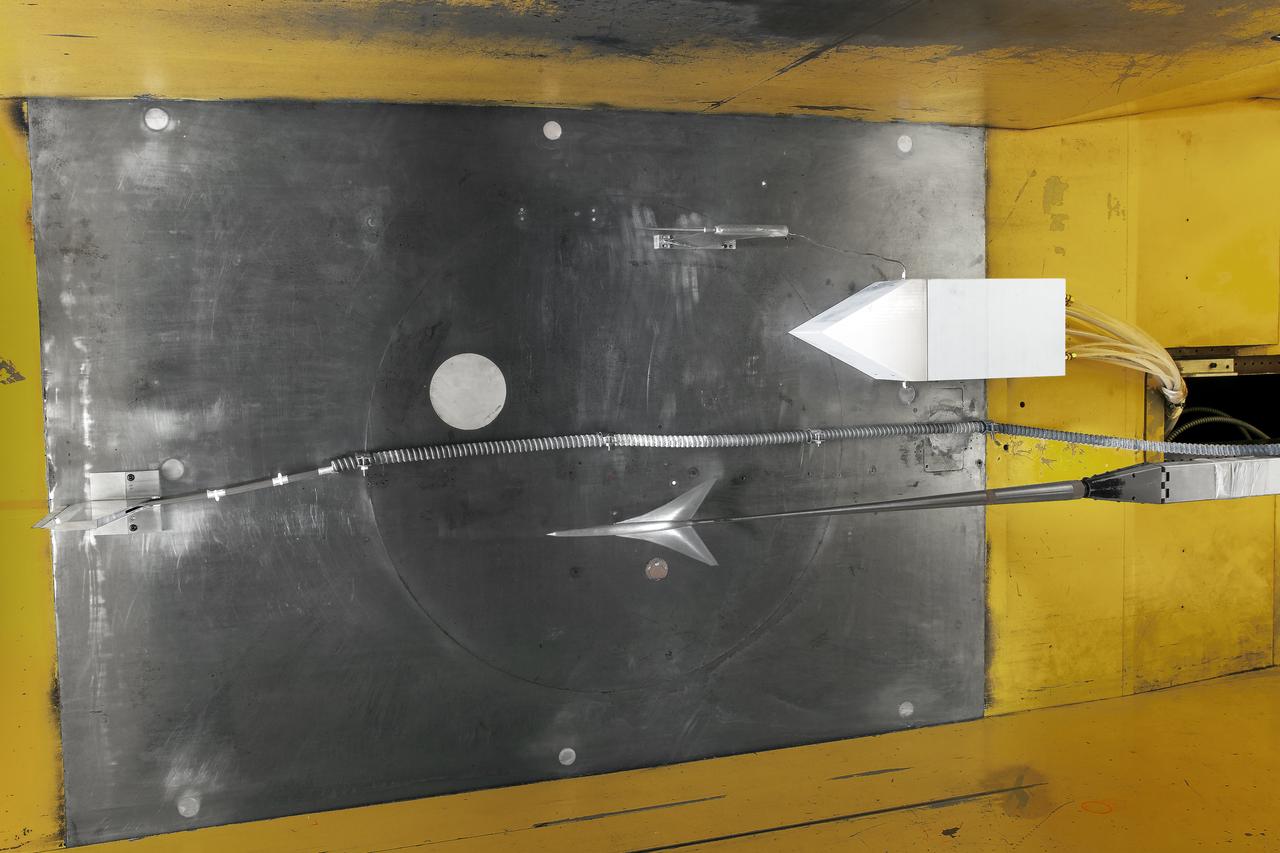
UPWT Test 1998 Continuous Data Sonic Boom Test. Sonic Boom Hardward Mounted in the Langley Unitary Plan wind Tunnel(UPWT). Conical survey probes, wedge probe, and wind tunnel wall boundary layer rake. Rectangular box with wedge front end is a transducer box to that held pressure transducer for the conical probes.
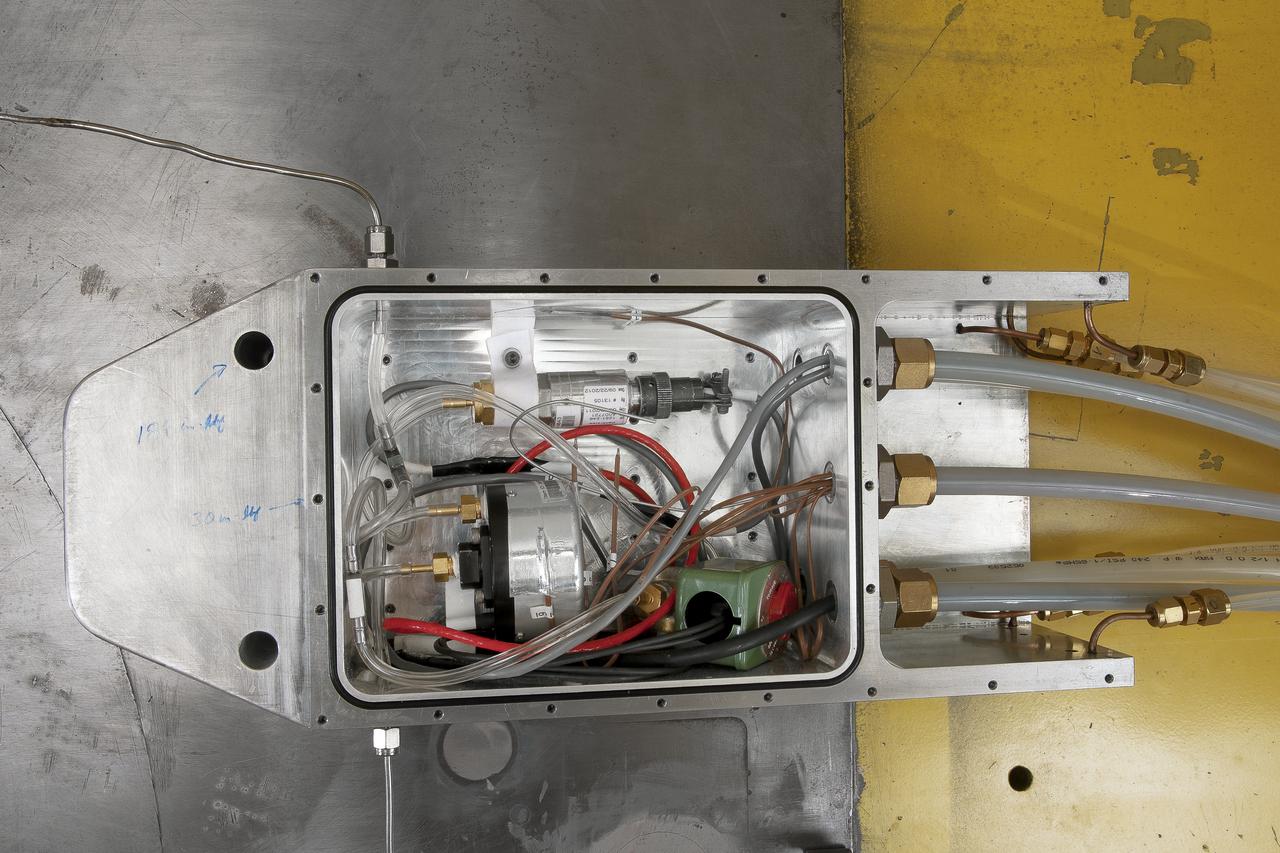
UPWT Test 1998 Continuous Data Sonic Boom Test. Sonic Boom Hardward Mounted in the Langley Unitary Plan wind Tunnel(UPWT). Conical survey probes, wedge probe, and wind tunnel wall boundary layer rake. Rectangular box with wedge front end is a transducer box to that held pressure transducer for the conical probes.
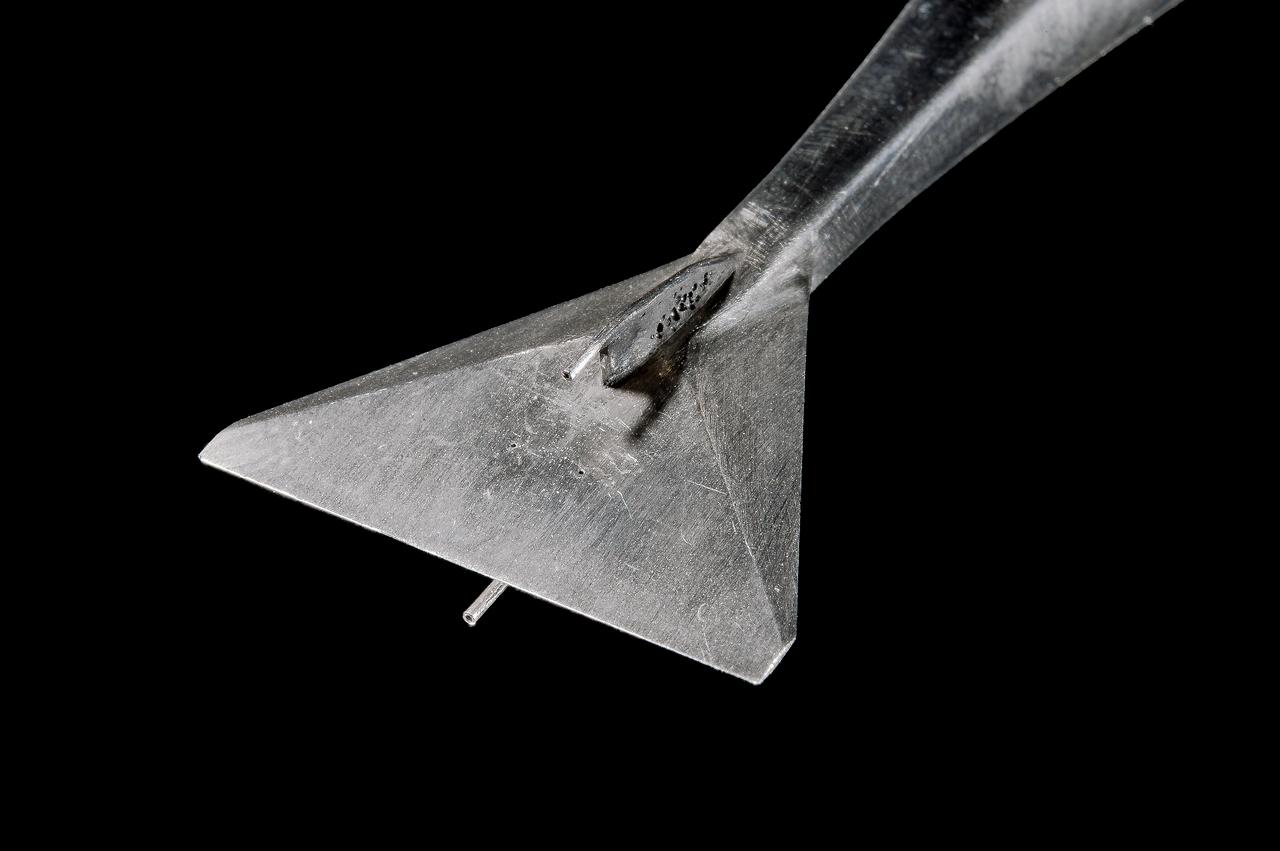
Two images left out of the original order in 2011 L numbers 3800-3810 2011. UPWT Test 1998 Continuous Data Sonic Boom Test. Sonic Boom Hardware Mounted in the Langley Unitary Plan wind Tunnel(UPWT). Conical survey probes, wedge probe, and wind tunnel wall boundary layer rake. Rectangular box with wedge front end is a transducer box to that held pressure transducer for the conical probes.
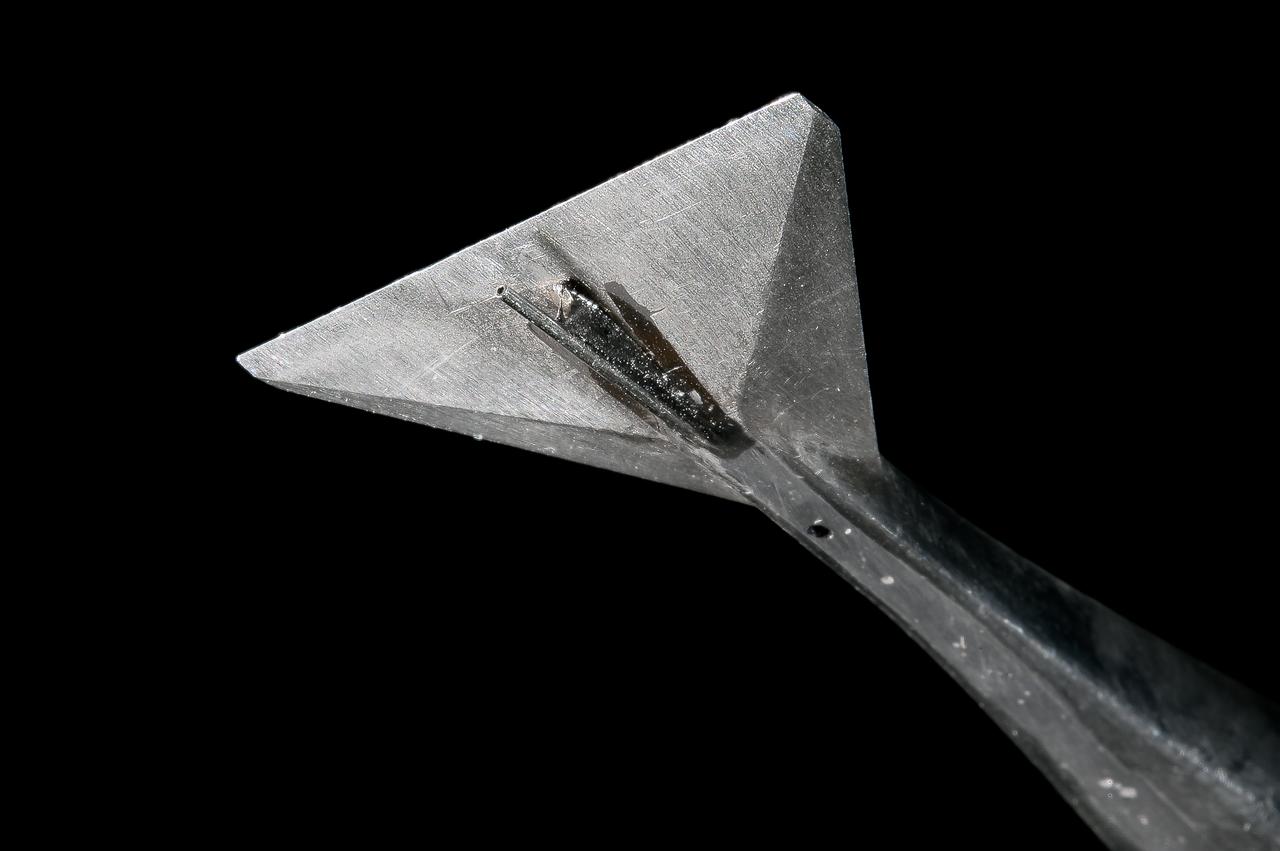
Two images left out of the original order in 2011 L numbers 3800-3810 2011. UPWT Test 1998 Continuous Data Sonic Boom Test. Sonic Boom Hardware Mounted in the Langley Unitary Plan wind Tunnel(UPWT). Conical survey probes, wedge probe, and wind tunnel wall boundary layer rake. Rectangular box with wedge front end is a transducer box to that held pressure transducer for the conical probes.
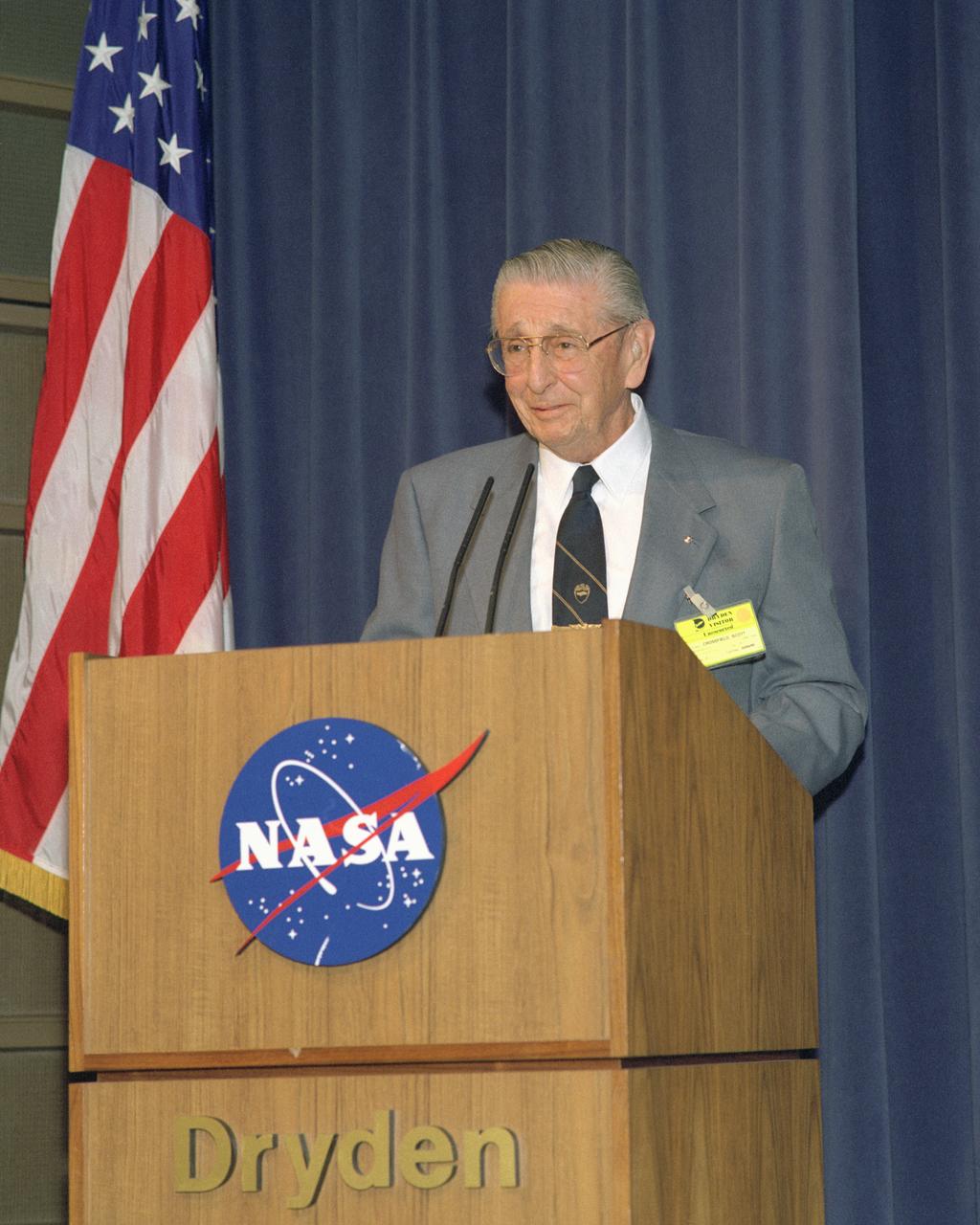
Former NACA test pilot Scott Crossfield at the 1998 "Men of Mach 2" symposium, an event celebrating his work in the 1950's on the D-558-II Skyrocket aircraft.
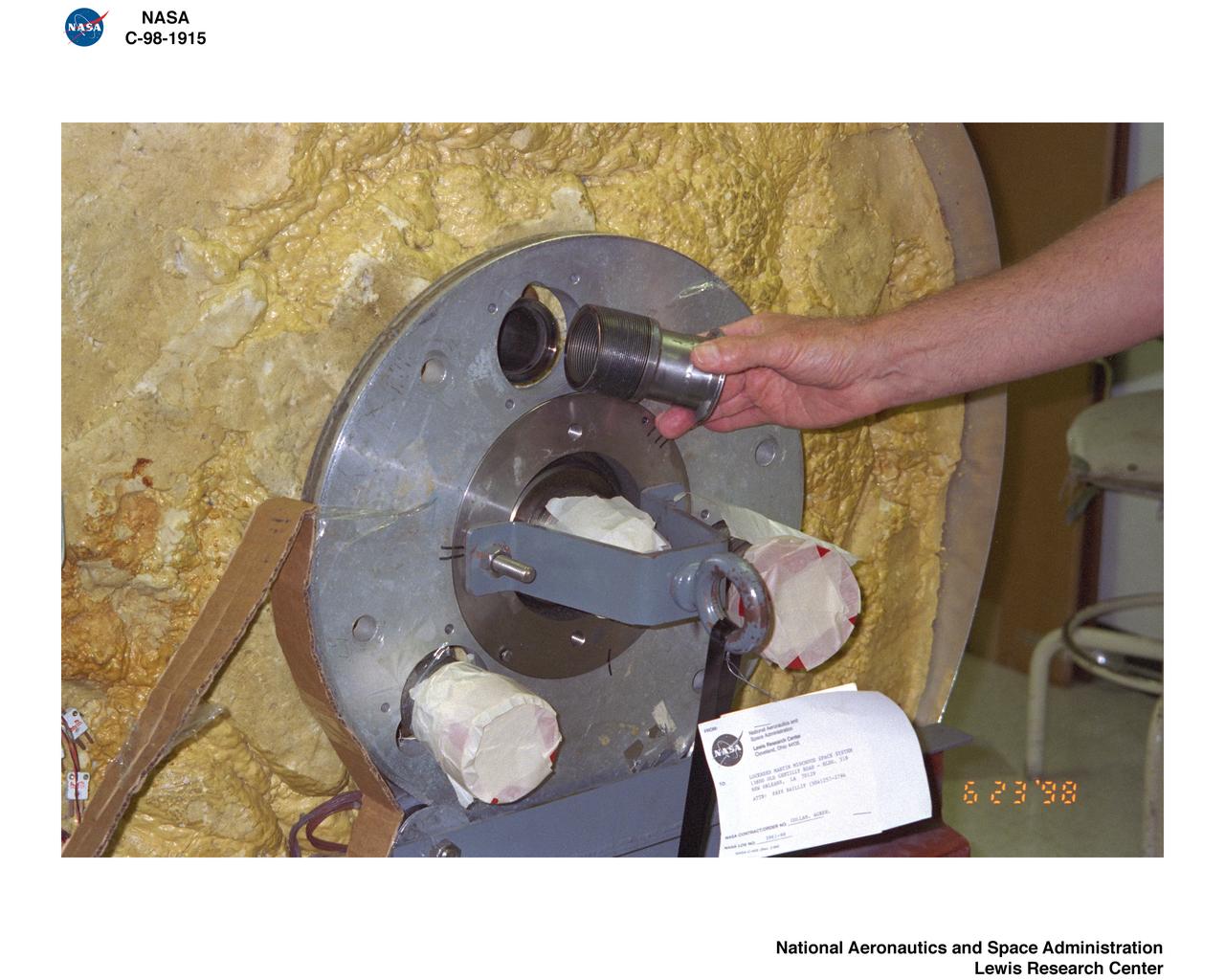
HYBRID THERMAL CONTROL TESTING AT THE SUPPLEMENTAL MULTI LAYER INSULATION RESEARCH FACILITY - SEE ALSO C-1998-1923 THRU C-1998-1941
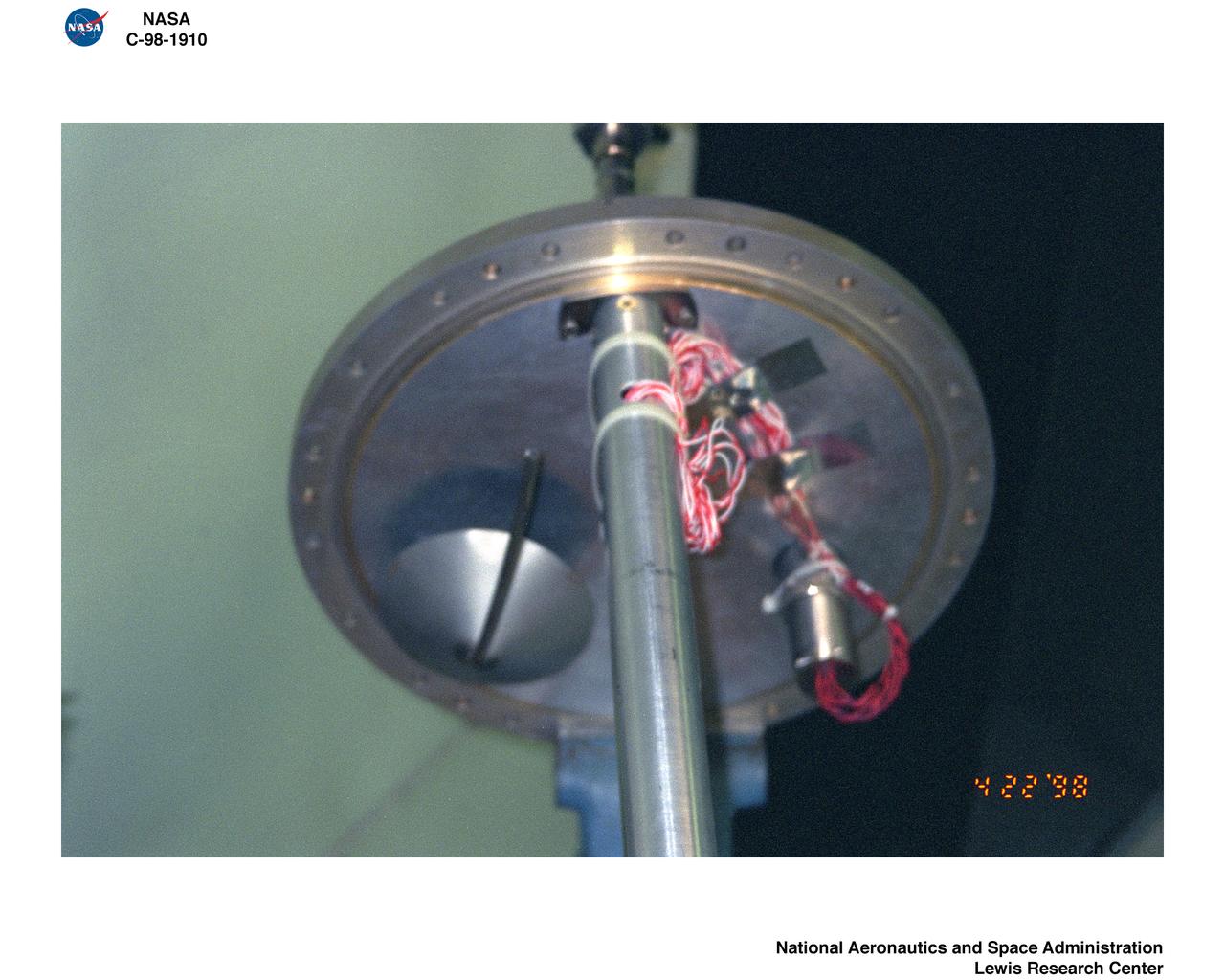
HYBRID THERMAL CONTROL TESTING AT THE SUPPLEMENTAL MULTI LAYER INSULATION RESEARCH FACILITY - SEE ALSO C-1998-1923 THRU C-1998-1941
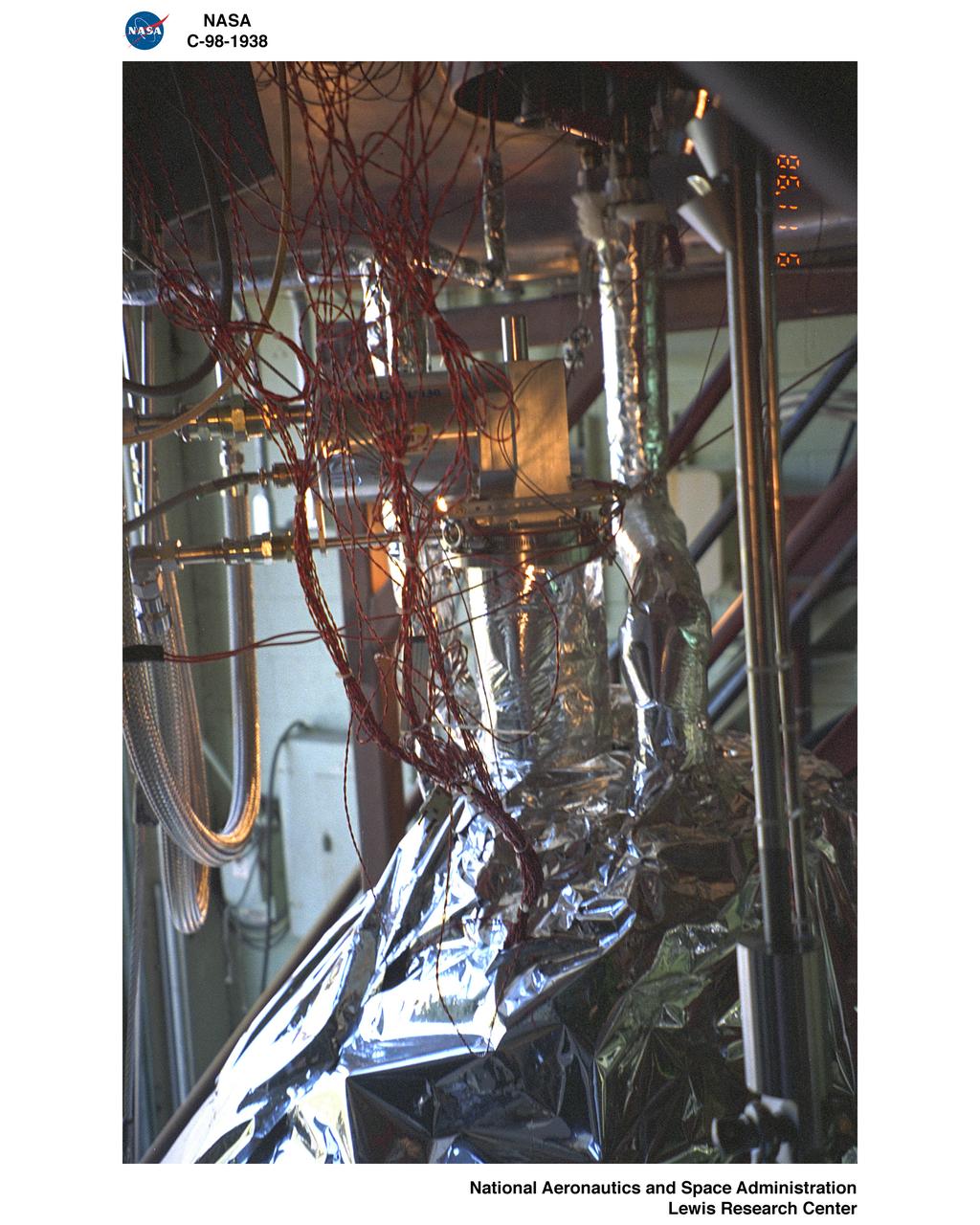
HYBRID THERMAL CONTROL TESTING AT THE SUPPLEMENTAL MULTI LAYER INSULATION RESEARCH FACILITY - SEE ALSO C-1998-1907 THRU C-1998-1922
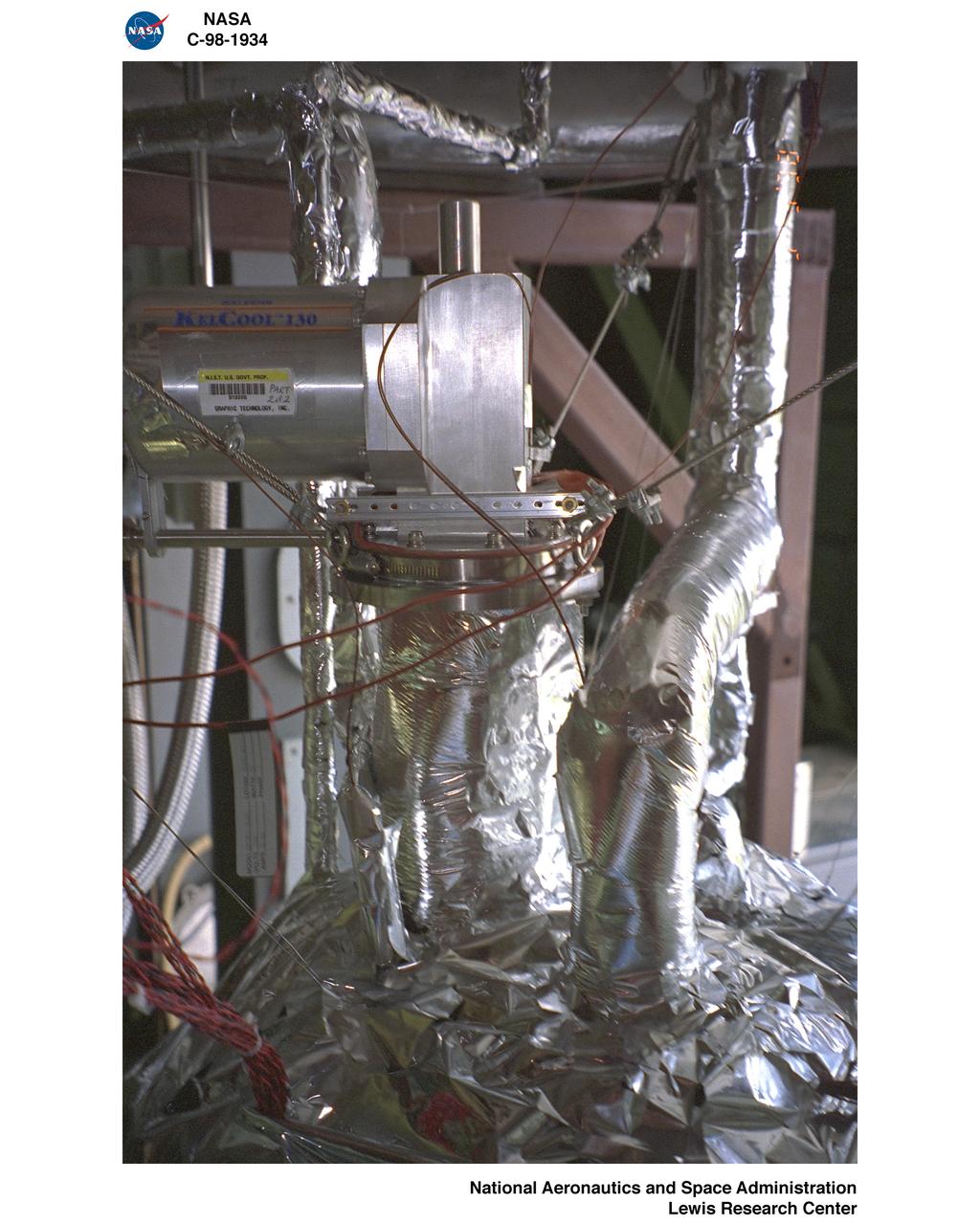
HYBRID THERMAL CONTROL TESTING AT THE SUPPLEMENTAL MULTI LAYER INSULATION RESEARCH FACILITY - SEE ALSO C-1998-1907 THRU C-1998-1922
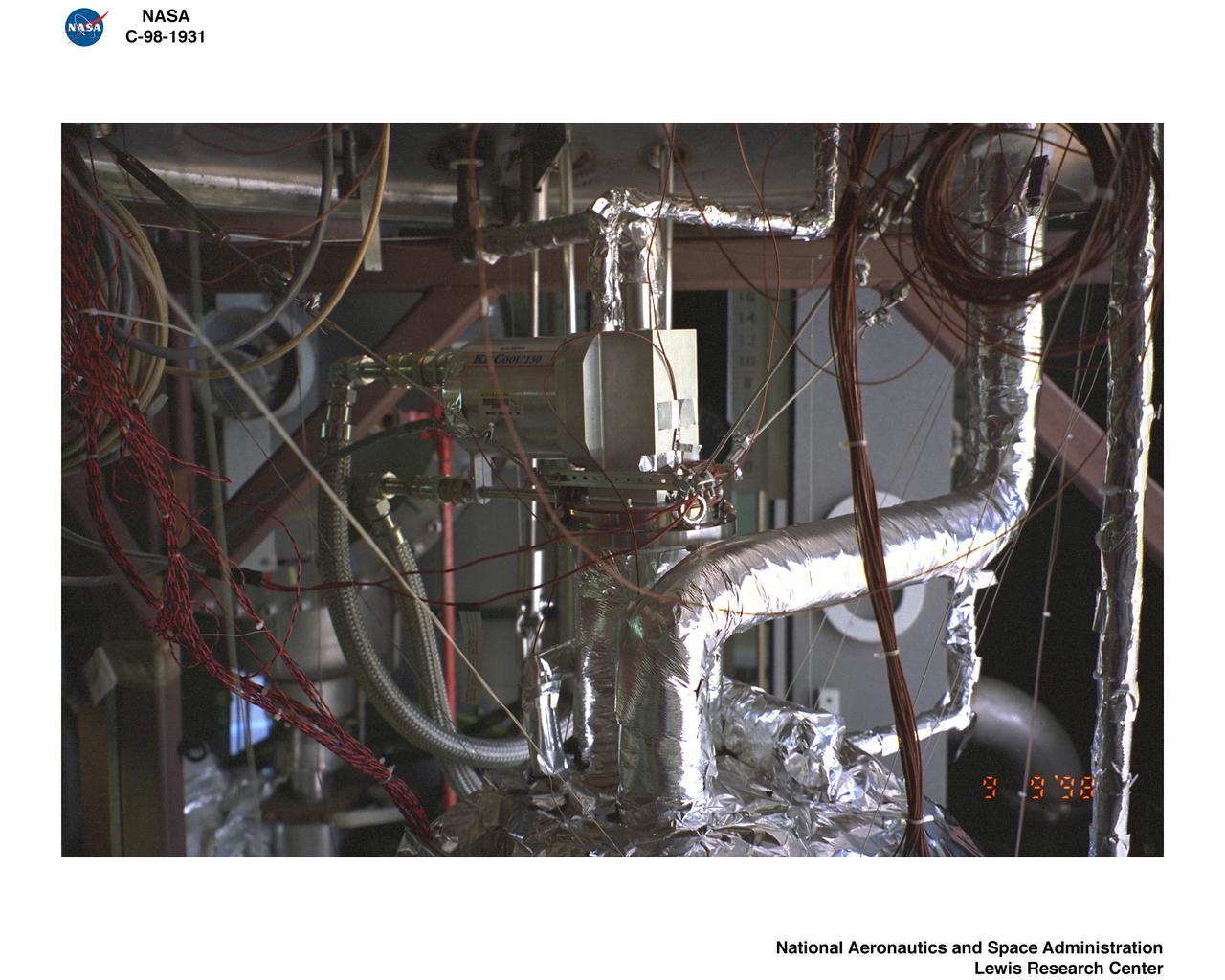
HYBRID THERMAL CONTROL TESTING AT THE SUPPLEMENTAL MULTI LAYER INSULATION RESEARCH FACILITY - SEE ALSO C-1998-1907 THRU C-1998-1922
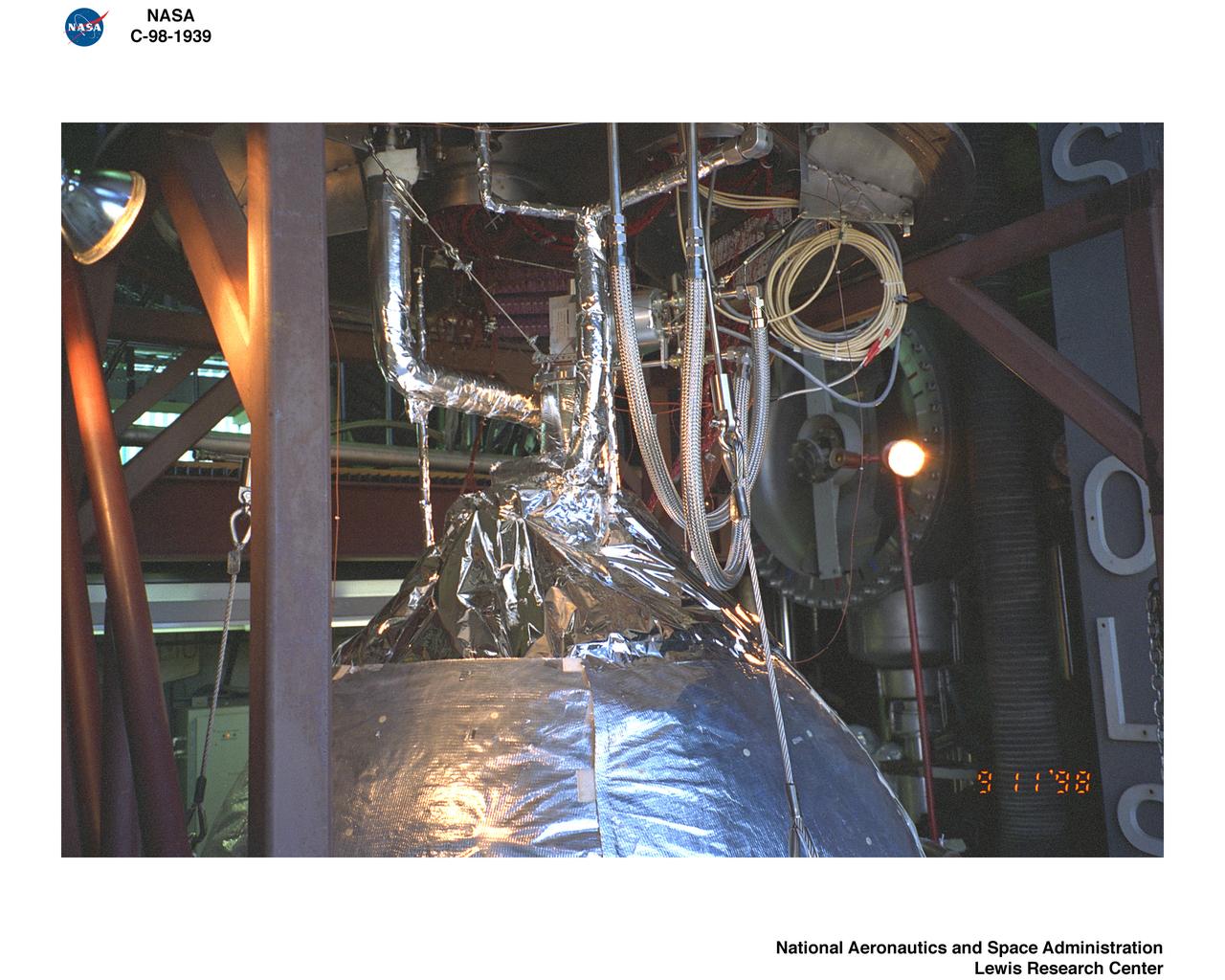
HYBRID THERMAL CONTROL TESTING AT THE SUPPLEMENTAL MULTI LAYER INSULATION RESEARCH FACILITY - SEE ALSO C-1998-1907 THRU C-1998-1922
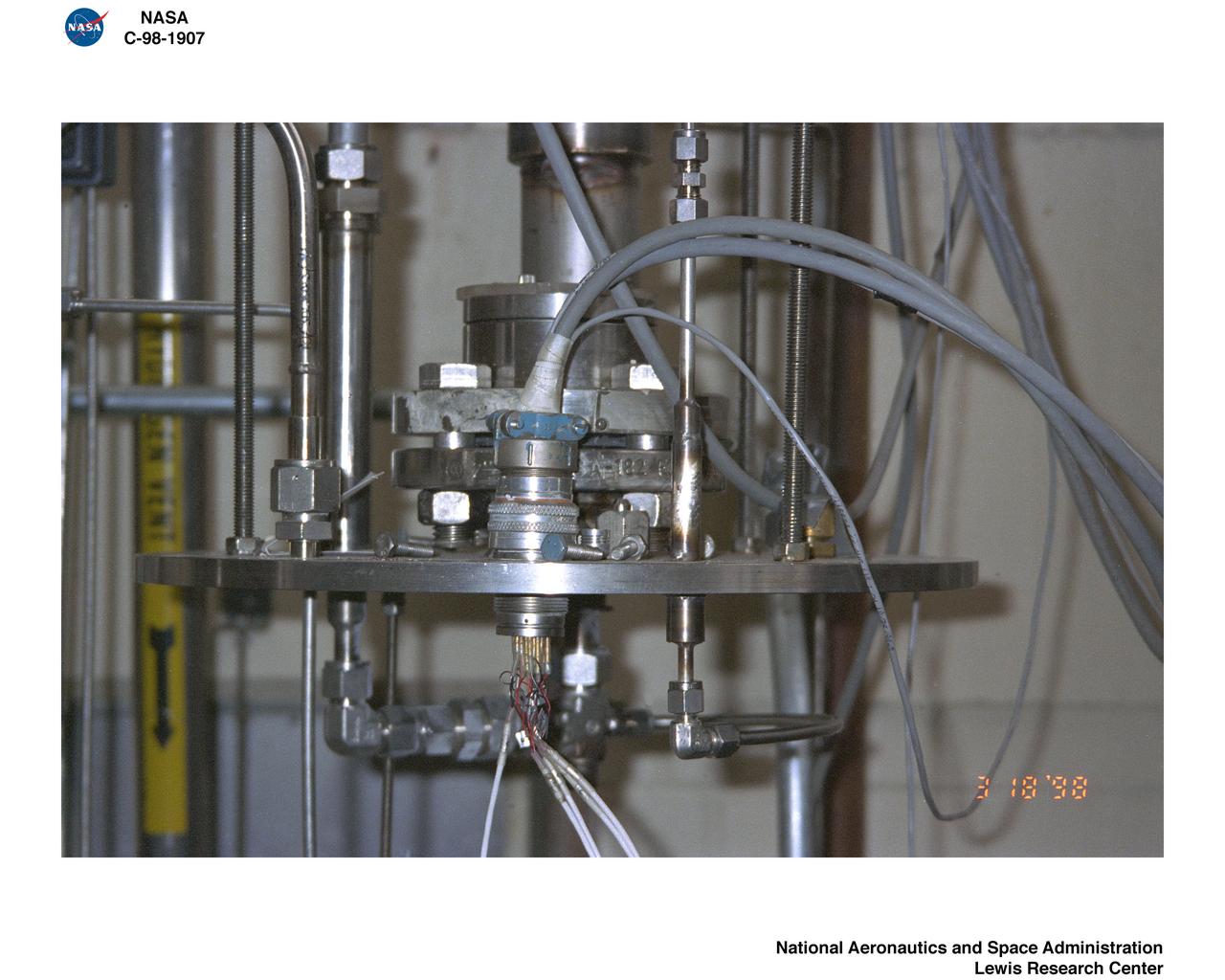
HYBRID THERMAL CONTROL TESTING AT THE SUPPLEMENTAL MULTI LAYER INSULATION RESEARCH FACILITY - SEE ALSO C-1998-1923 THRU C-1998-1941
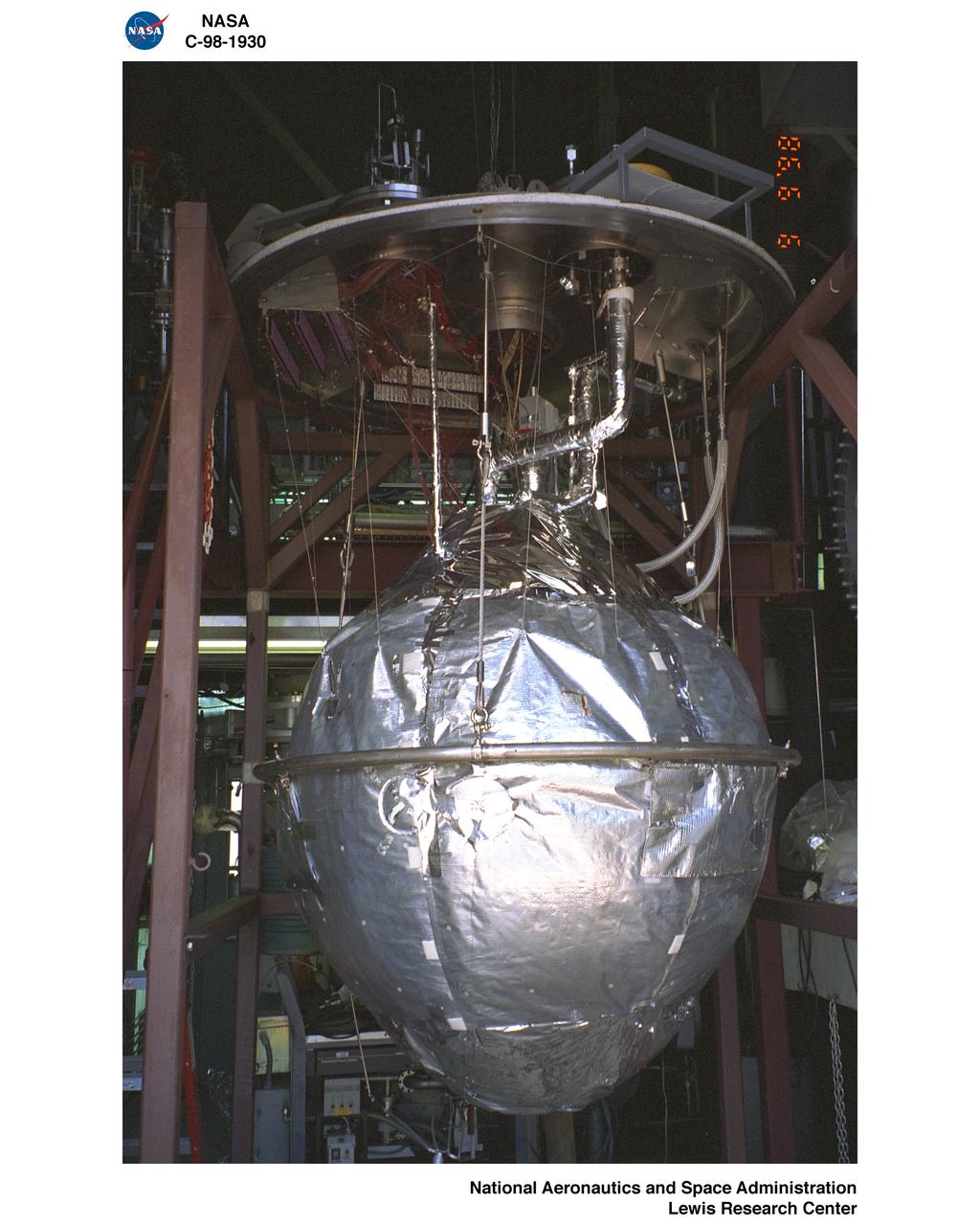
HYBRID THERMAL CONTROL TESTING AT THE SUPPLEMENTAL MULTI LAYER INSULATION RESEARCH FACILITY - SEE ALSO C-1998-1907 THRU C-1998-1922
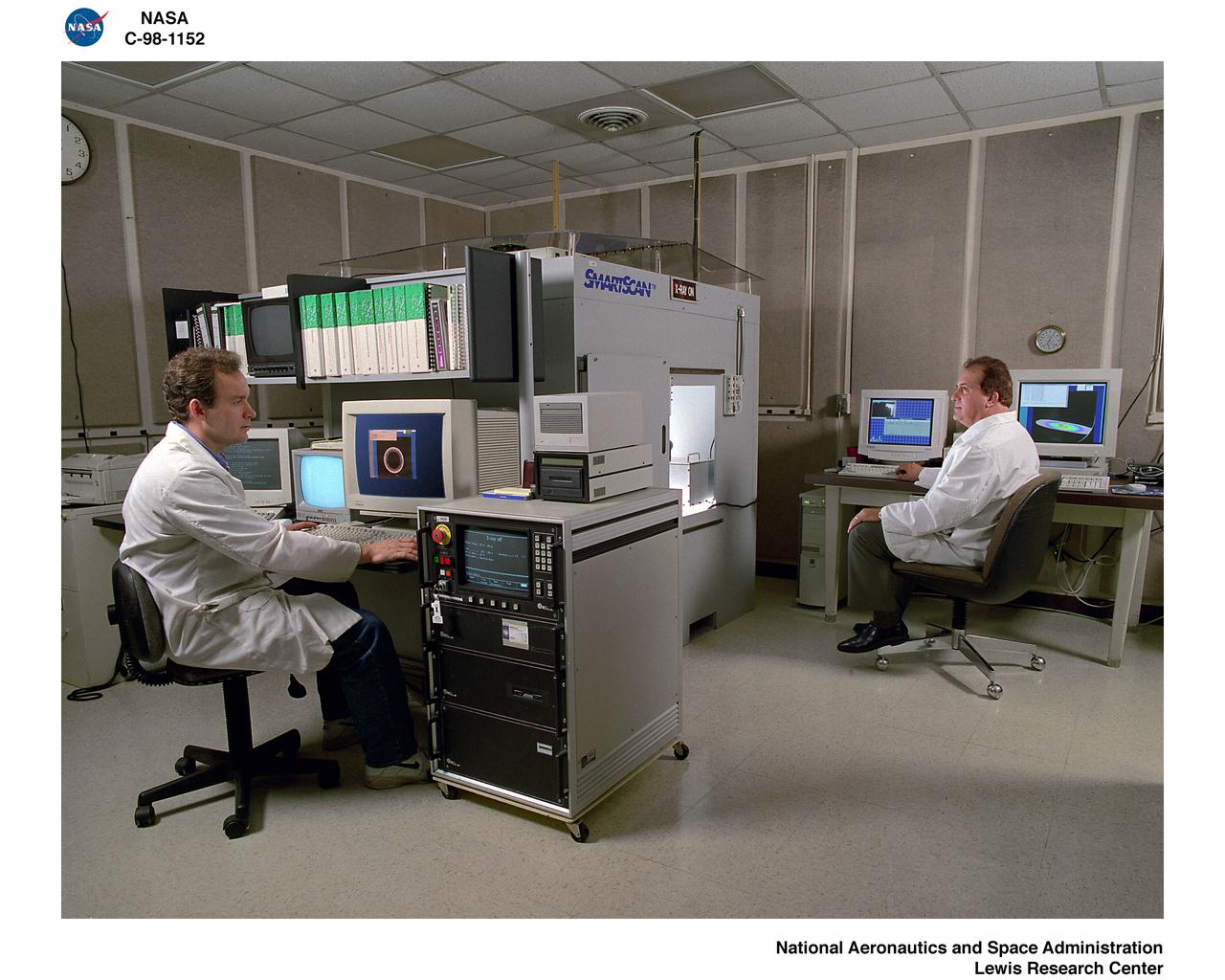
NON DESTRUCTIVE TESTING FACILITIES - SEE C-1998-1180 FOR CROSS REFERENCE
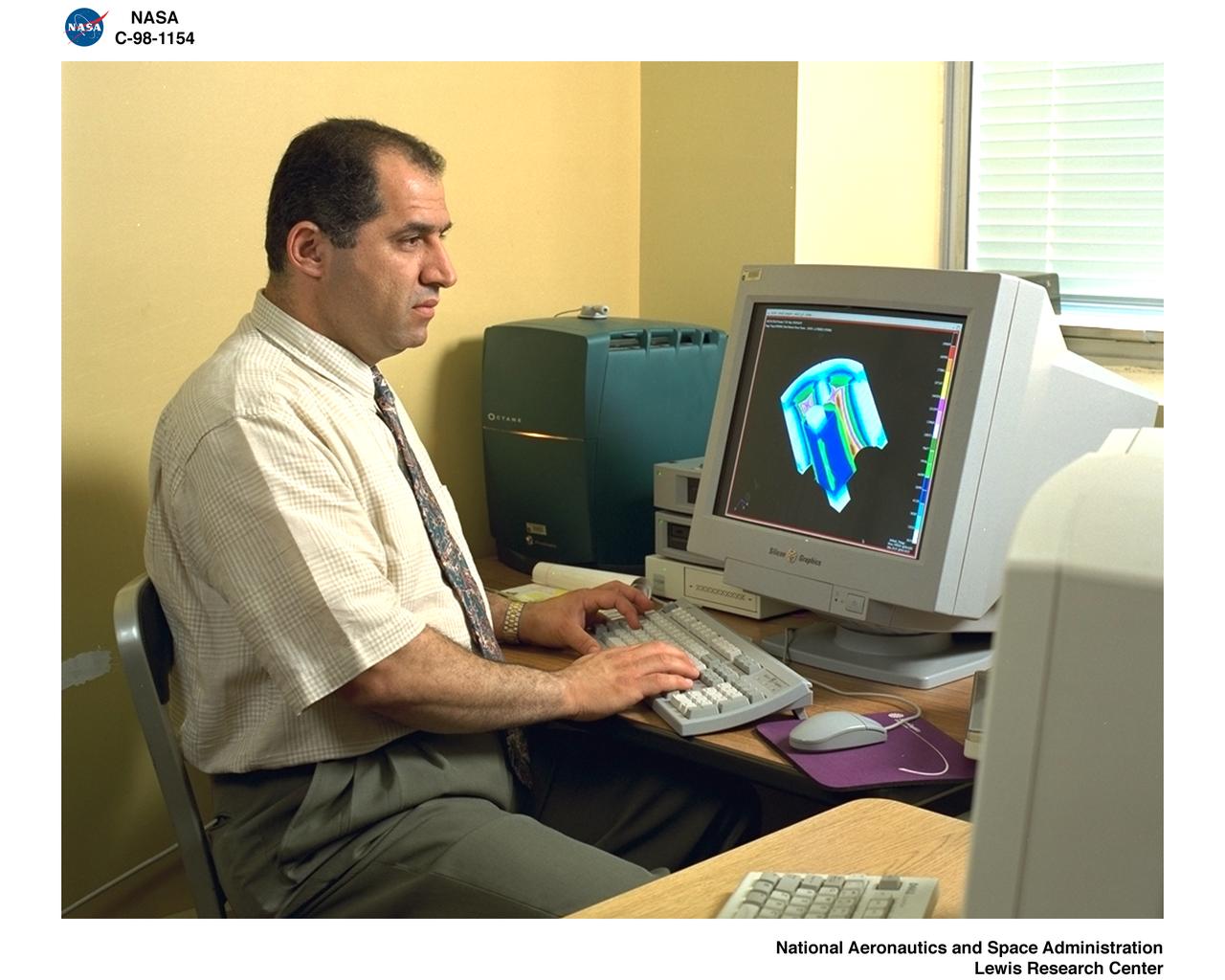
NON DESTRUCTIVE TESTING FACILITIES - SEE C-1998-1180 FOR CROSS REFERENCE
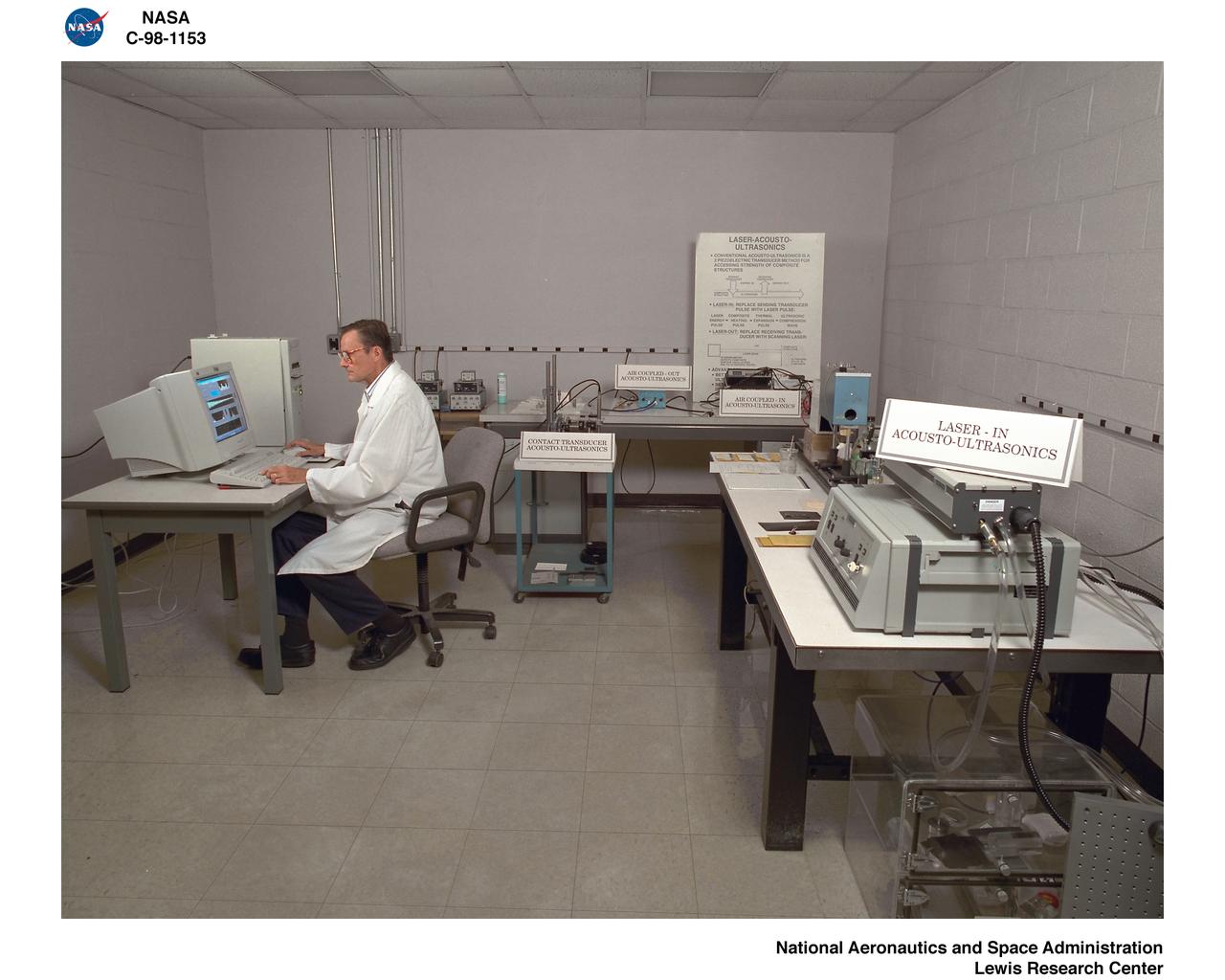
NON DESTRUCTIVE TESTING FACILITIES - SEE C 1998-1180 FOR CROSS REFERENCE
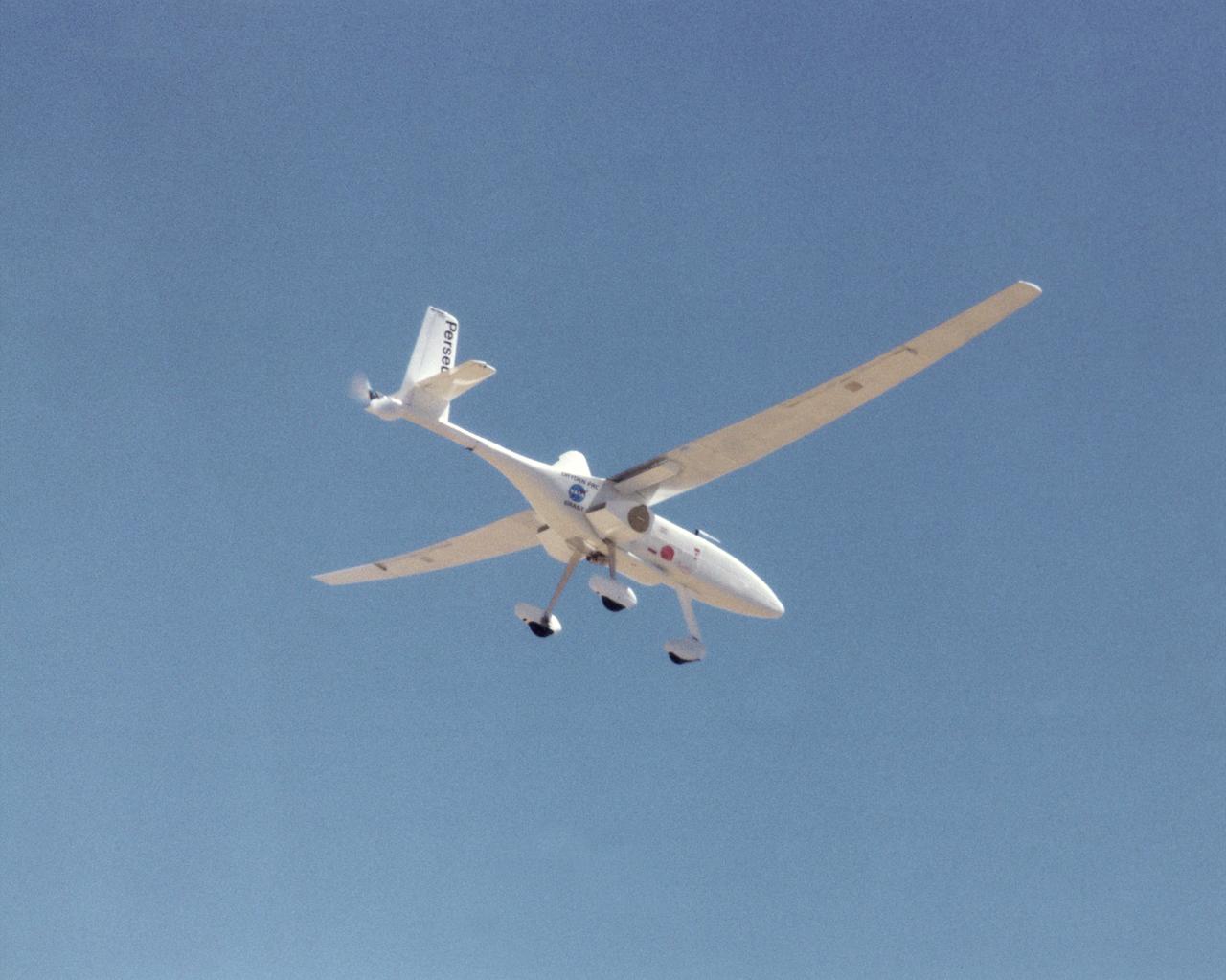
A long, slender wing and a pusher propeller at the rear characterize the Perseus B remotely piloted research aircraft, seen here during a test flight in June 1998.
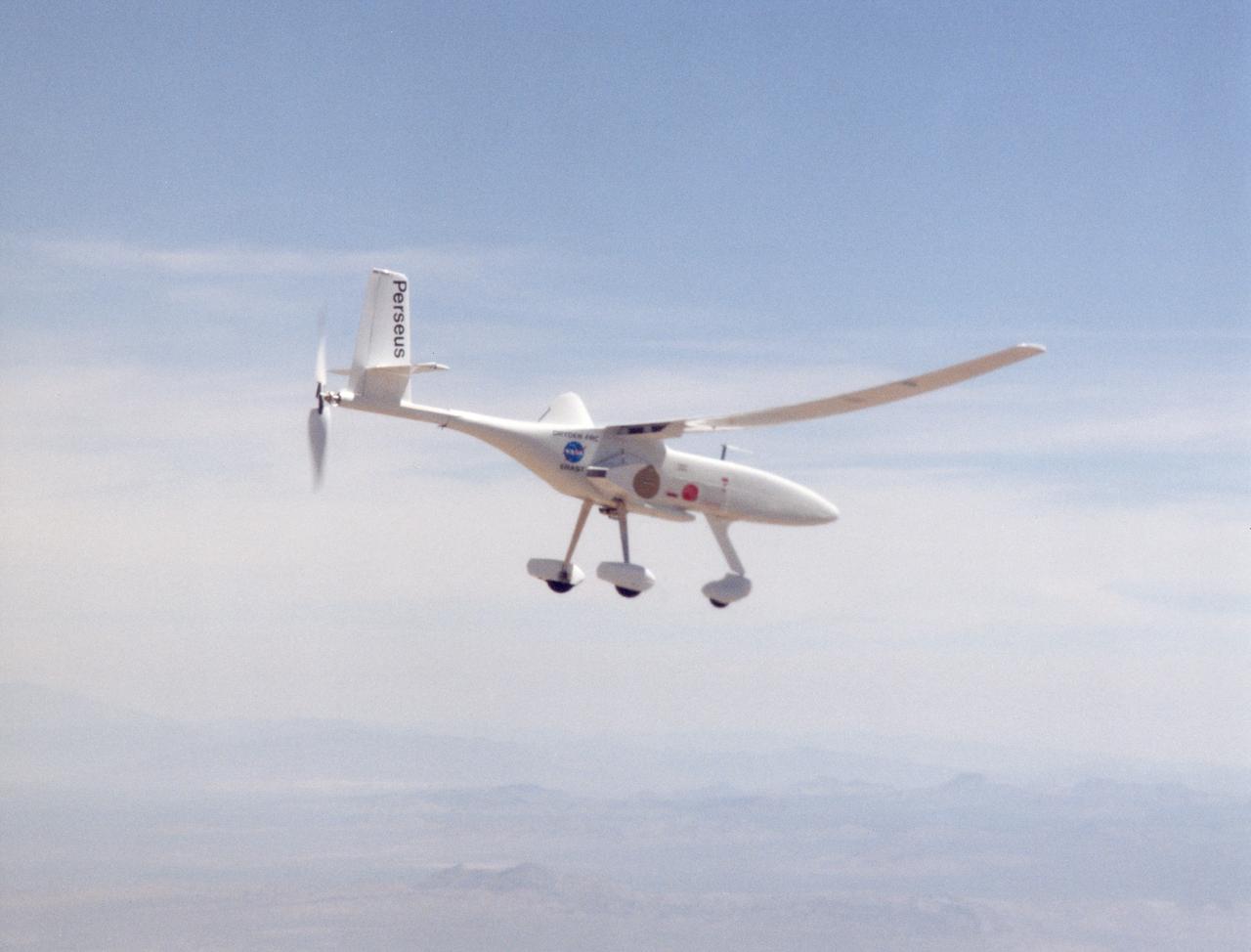
A long, slender wing and a pusher propeller at the rear characterize the Perseus B remotely piloted research aircraft, seen here during a test flight in June 1998.
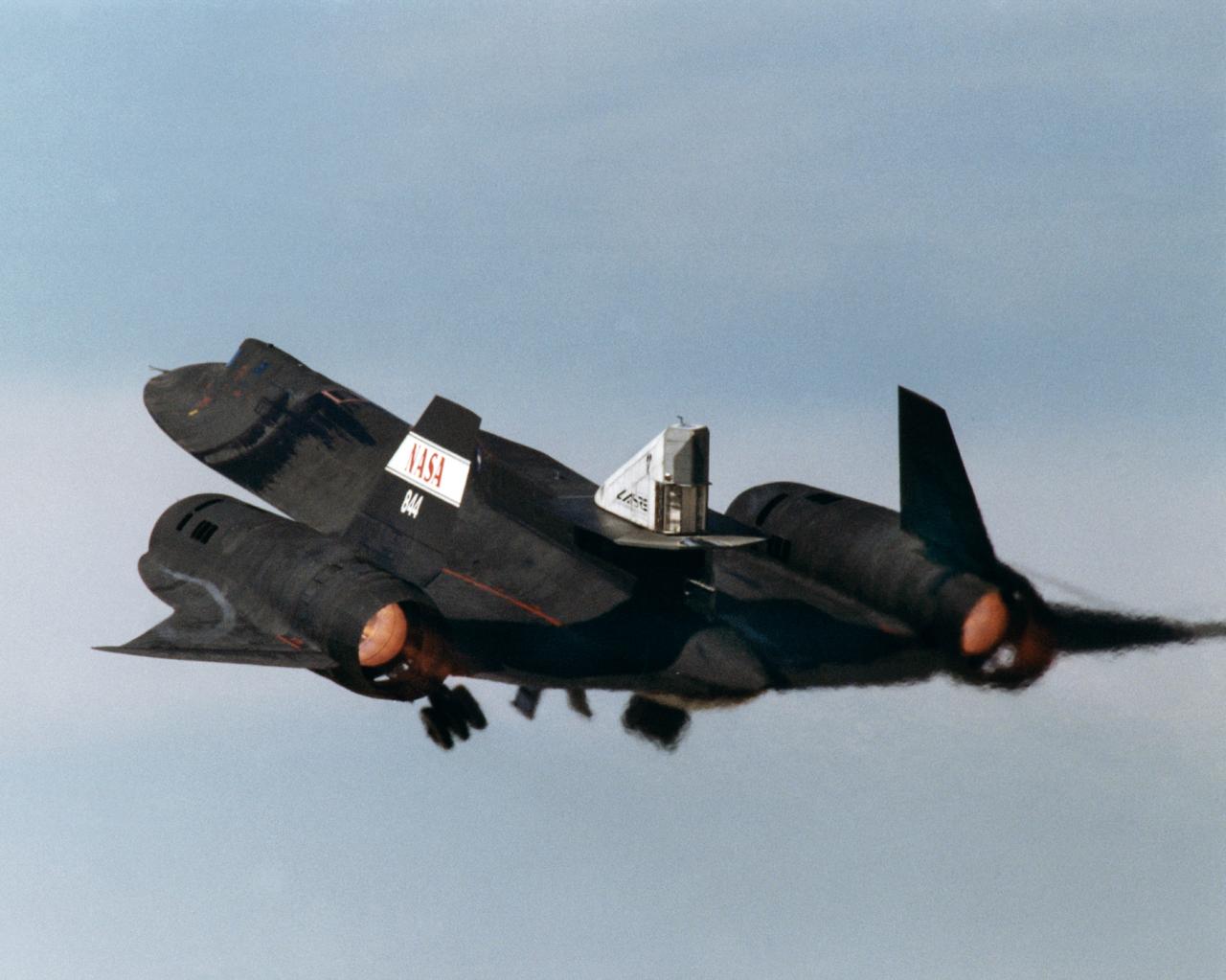
This photograph shows the LASRE pod on the upper rear fuselage of an SR-71 aircraft during take-off of the first flight to experience an in-flight cold flow test. The flight occurred on 4 March 1998.
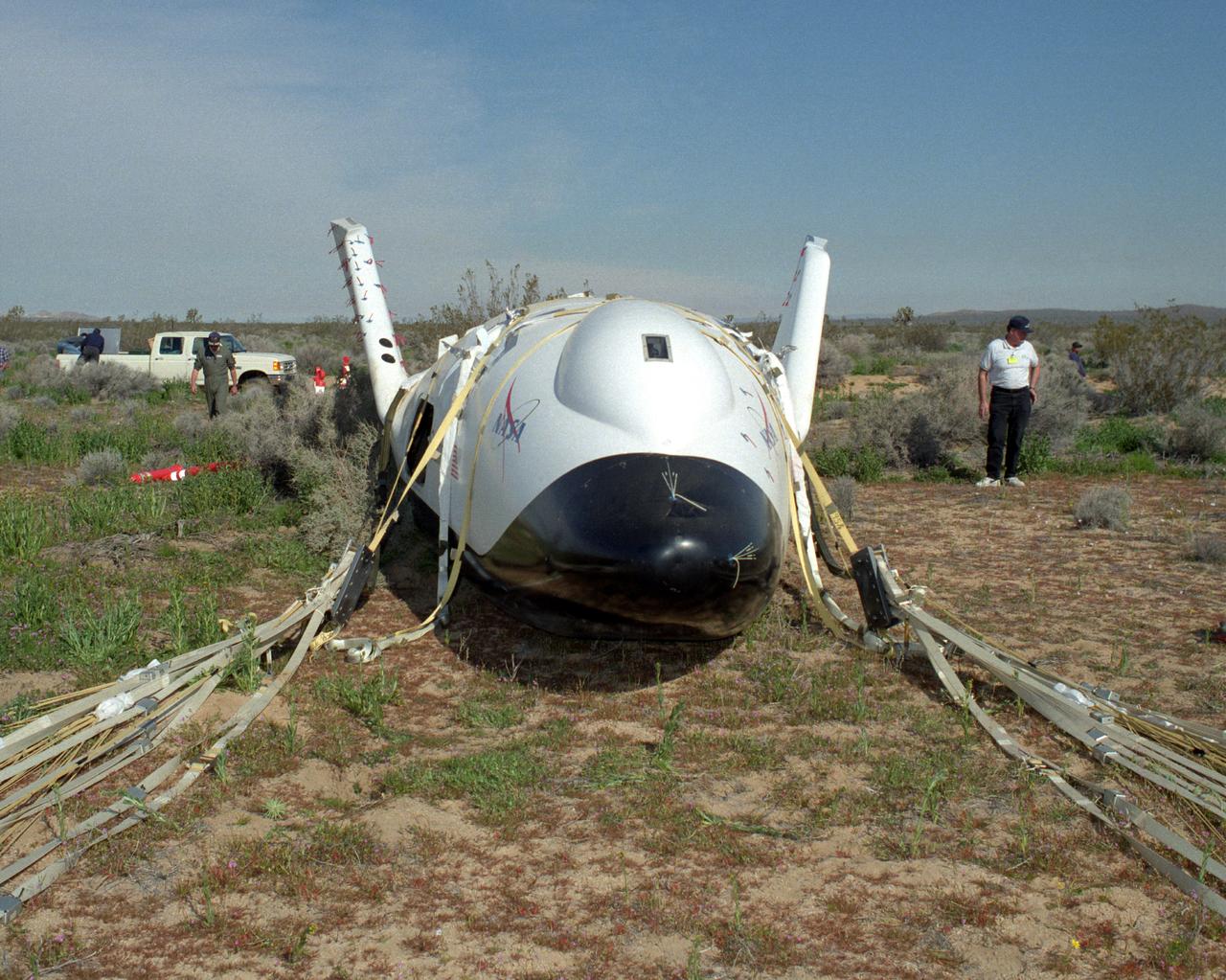
Crew members surround the X-38 lifting body research vehicle after a successful test flight and landing in March 1998. The flight was the first free flight for the vehicle and took place at the Dryden Flight Research Center, Edwards, California.
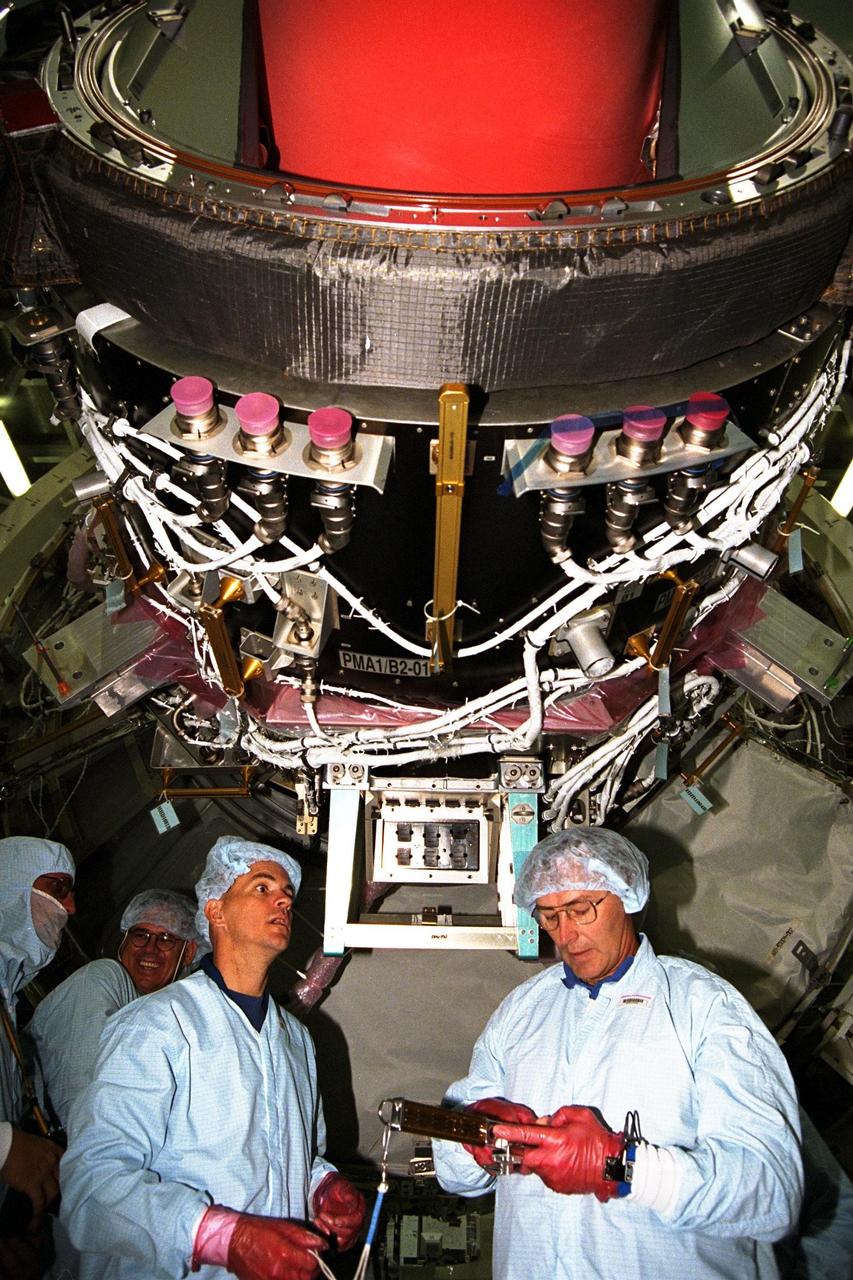
Pilot Rick Sturckow and Mission Specialist Jerry Ross, both members of the STS-88 crew, participate with technicians in the Crew Equipment Interface Test for that mission in KSC's Space Station Processing Facility. STS-88, the first International Space Station assembly flight, is targeted for launch in July 1998 aboard Space Shuttle Endeavour
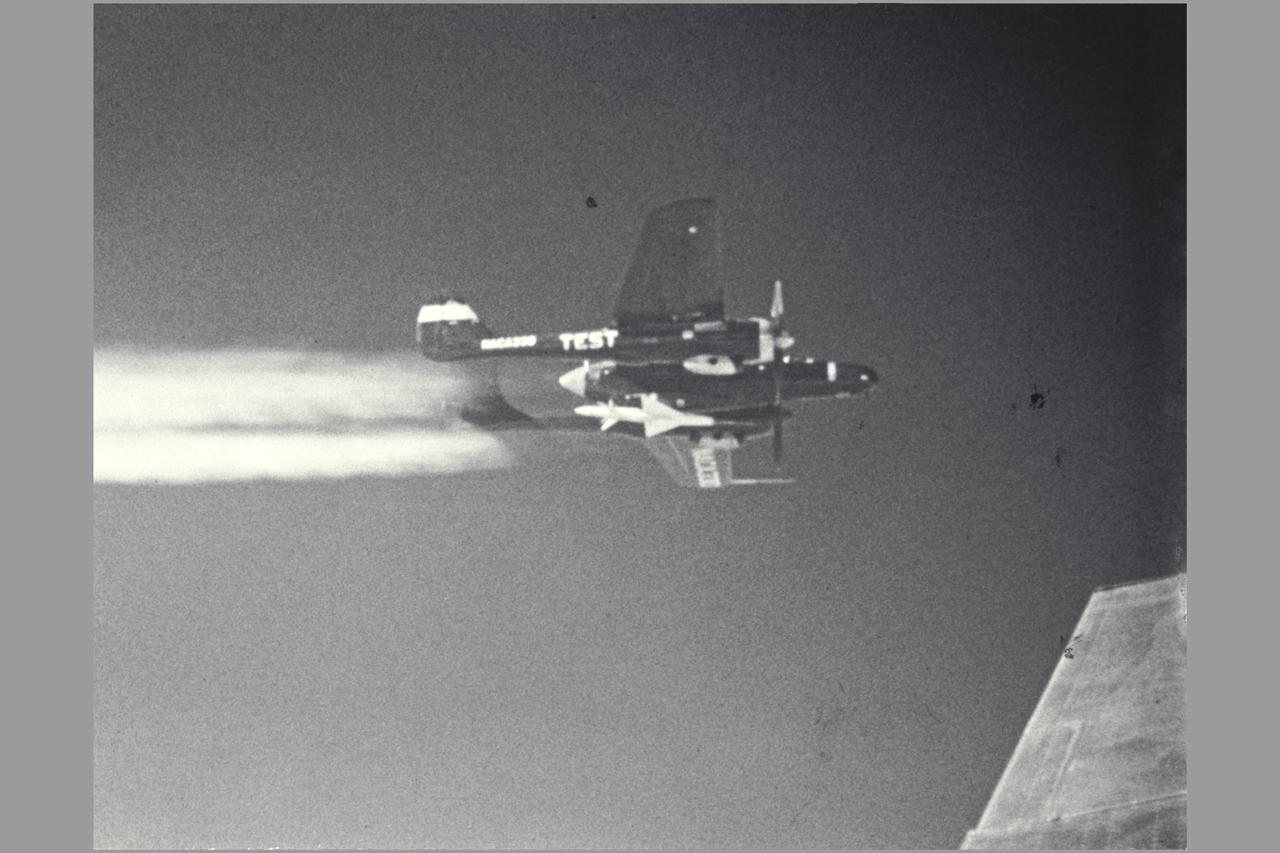
NACA Photographer (DFRC) ERF-61C-1-NO (AAF43-8330 NACA 330, NACA 111) mother ship for RECOVERABLE-BODY TECHNIQUE. Transonic Model Testing. Fig. 13 NASA SP-1998-3300 Flight Research at Ames: 57 Years of Development and Validation of Aeronautical Technology
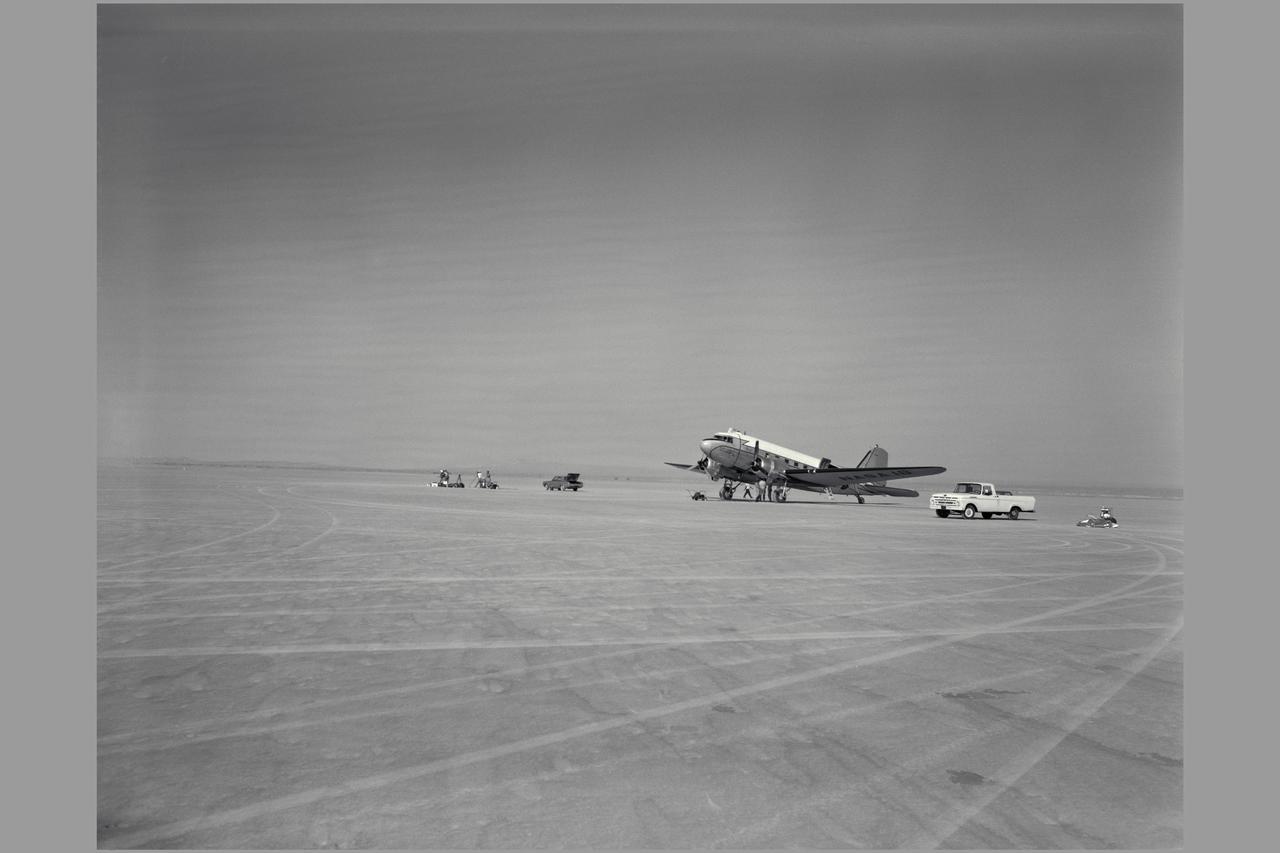
R4D-6 (Bu. No. 99827 NACA 18, NASA 701). TAKE-OFF MONITOR TEST, EDWARDS AIR FORCE BASE. Gunsight Tracking and Guidance and Control Displays. Note: Used in publication in Flight Research at Ames; 57 Years of Development and Validation of Aeronautical Technology NASA SP-1998-3300 fig 76

STS095-E-5055 (30 Oct. 1998) --- U.S. Sen. John H. Glenn Jr. drinks from a rehydratable beverage tube during a busy day of medical tests onboard Discovery. The photograph was taken with an electronic still camera (ESC) at 10:42:55 GMT, Oct. 30.
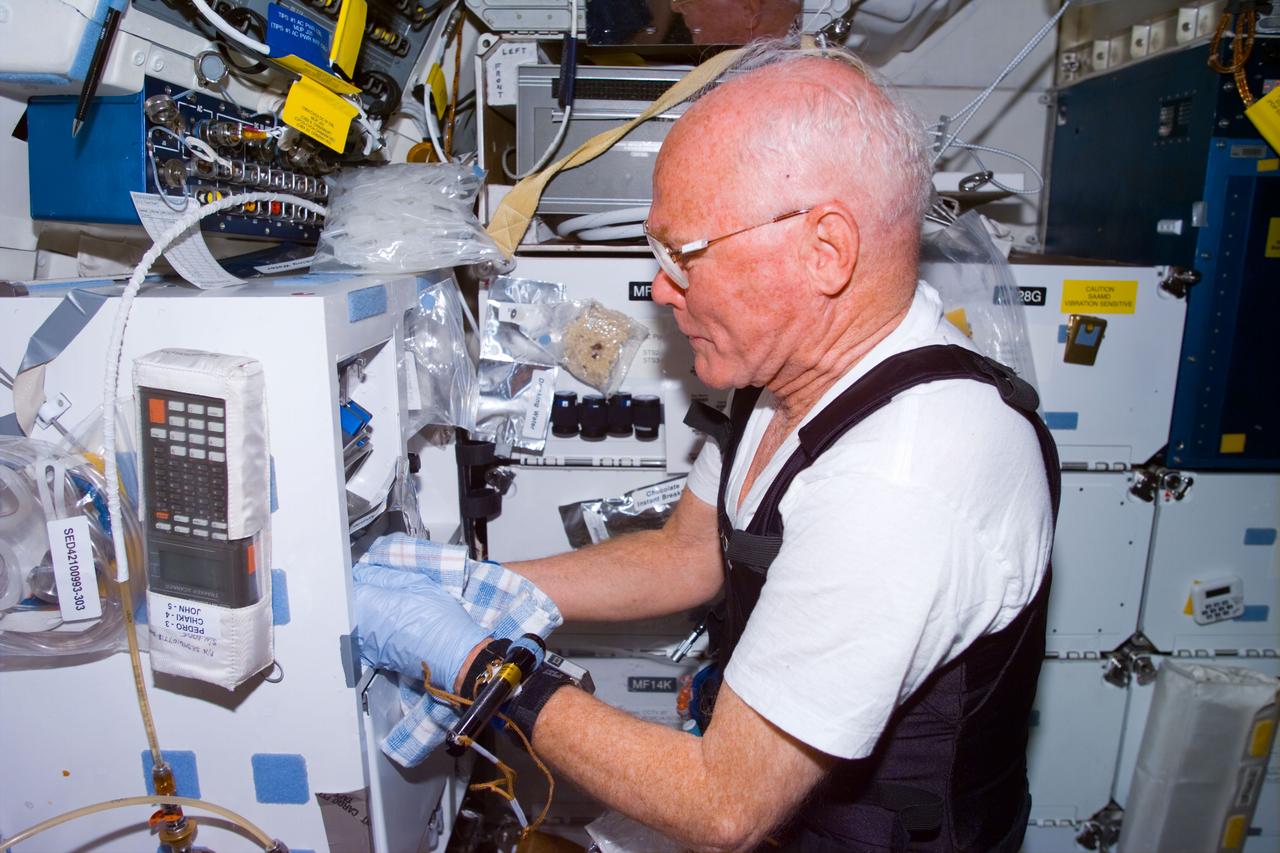
STS095-E-5206 (4 Nov. 1998) --- U.S. Sen. John H. Glenn Jr., STS-95 payload specialist, keeps up his busy test agenda during Flight Day 7 onboard Discovery. The photo was taken with an electronic still camera (ESC) at 19:05:17 GMT, Nov. 4.
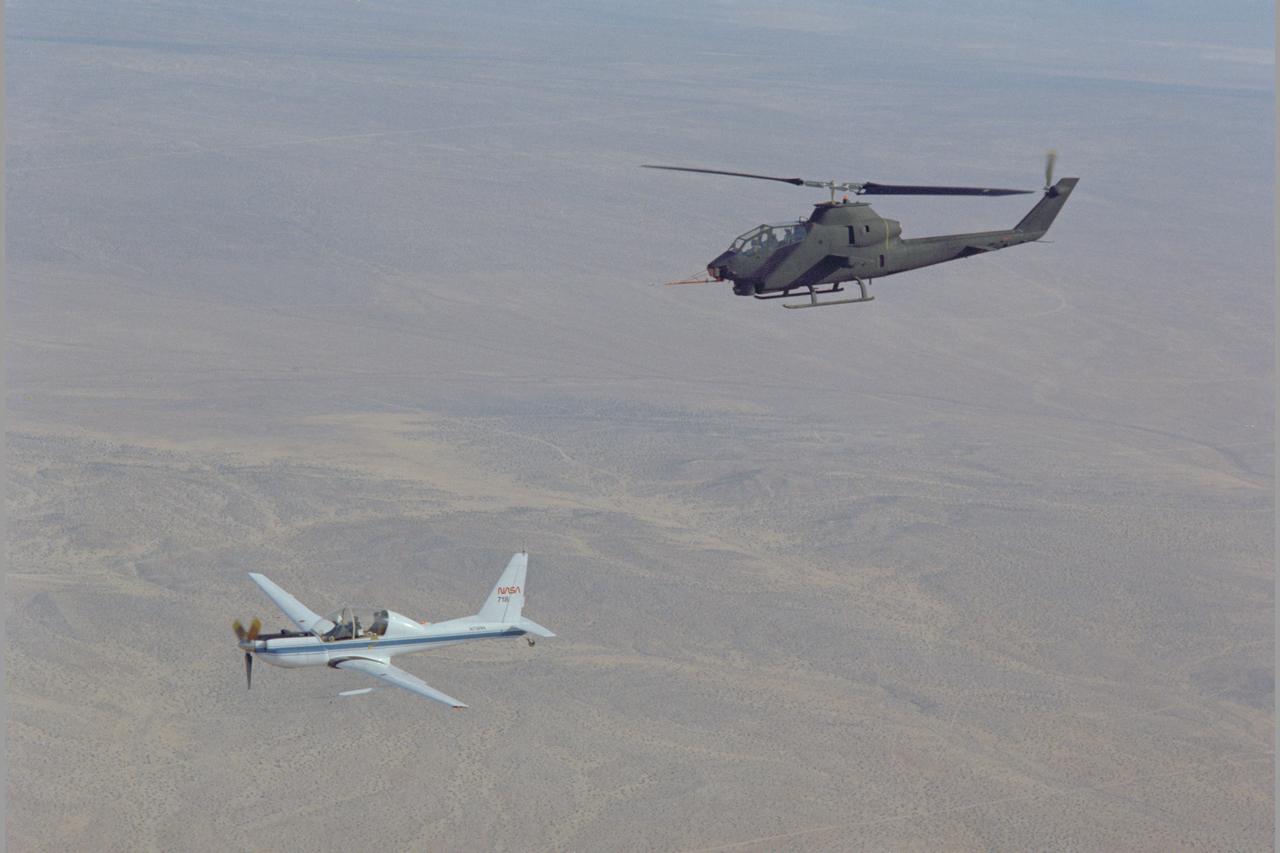
Lockheed YO-3A (USA 69-18010 NASA 718) A/C & BELL COBRA HELICOPTER FLIGHT & GROUND TESTS AT EDWARDS AIR FORCE BASE. Rotorcraft Research. NASA SP-1998-3300 Flight Research at Ames: 57 Years of Development and Validation of Aeronautical Technology Fig. 143
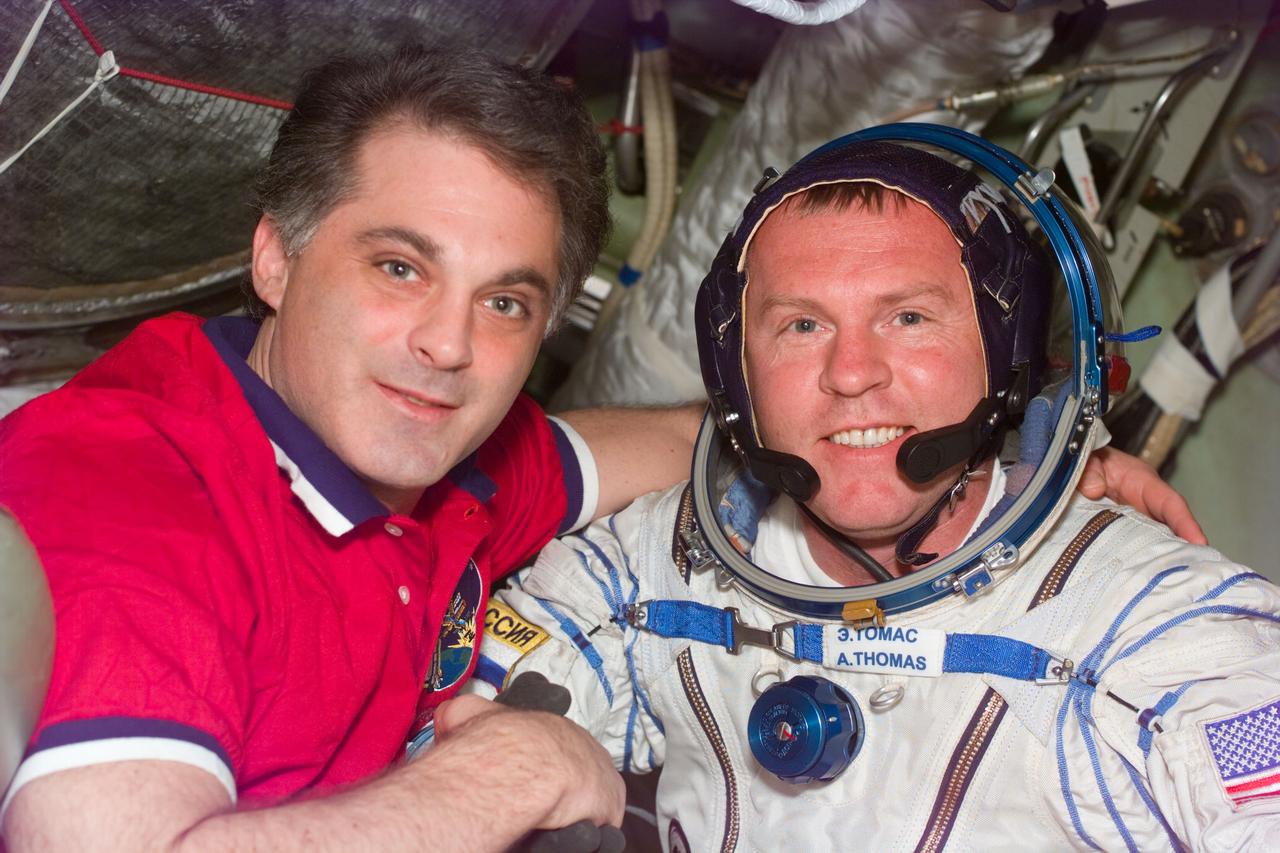
S89-E-5239 (26 Jan 1998) --- This Electronic Still Camera (ESC) image shows astronauts David A. Wolf and Andrew S. W. Thomas embracing after Thomas' second Russian Sokol spacesuit test, onboard the Russian Mir Space Station. Thomas is to replace Wolf as cosmonaut guest researcher. Upon Thomas' arrival to Mir he had problems with his Sokol suit, however, following suit modifications the suit fit properly. Thomas will be the last American astronaut to serve a tour onboard Mir. This ESC view was taken on January 26, 1998, at 12:56:15 MET.
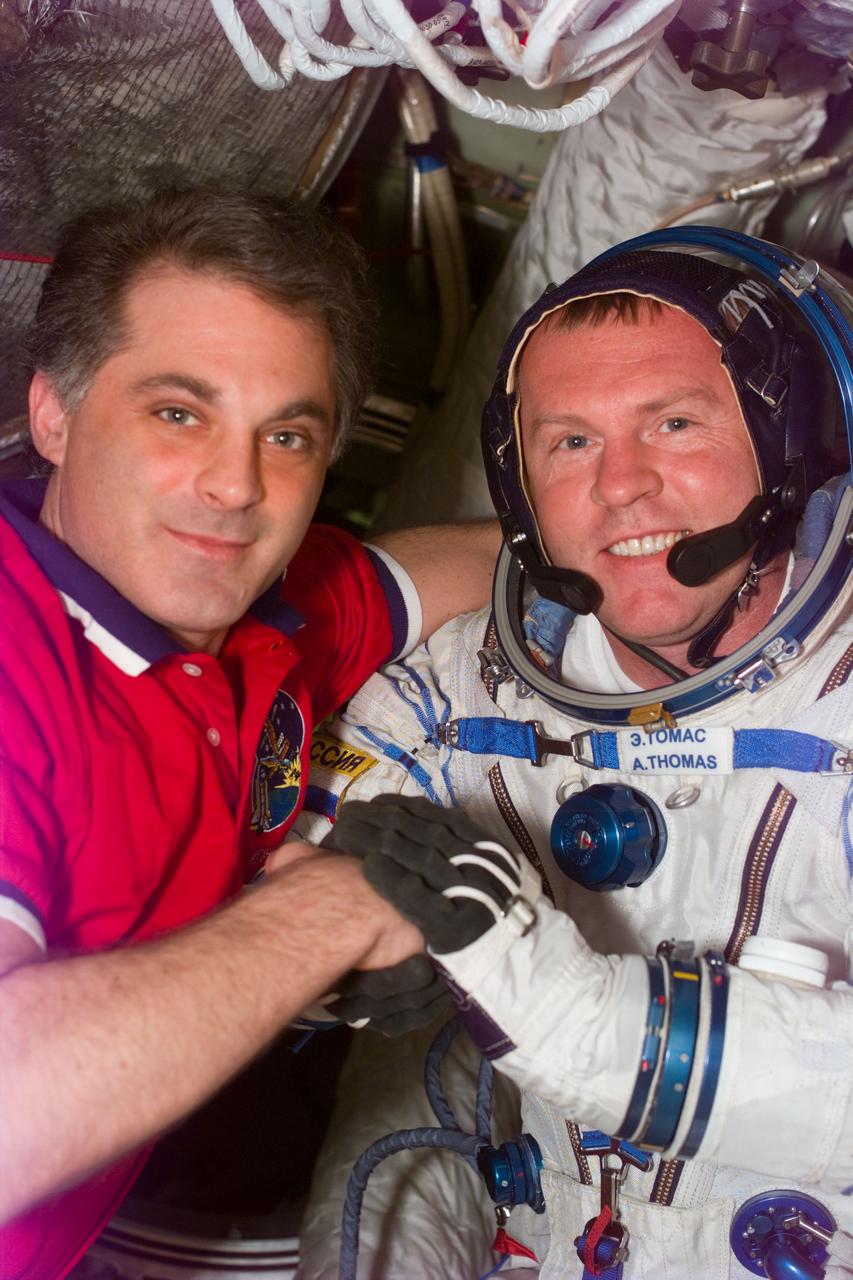
S89-E-5240 (26 Jan 1998) --- This Electronic Still Camera (ESC) image shows astronauts David A. Wolf and Andrew S. W. Thomas embracing, after Thomas' second Russian Sokol spacesuit test, onboard the Russian Mir Space Station. Upon Thomas' arrival to Mir he had problems with his Sokol suit, however, following suit modifications the suit fit properly. Thomas, now replacing Wolf as cosmonaut guest researcher, will be the last American astronaut to serve a tour onboard Mir. This ESC view was taken on January 26, 1998, at 12:56:21 MET.
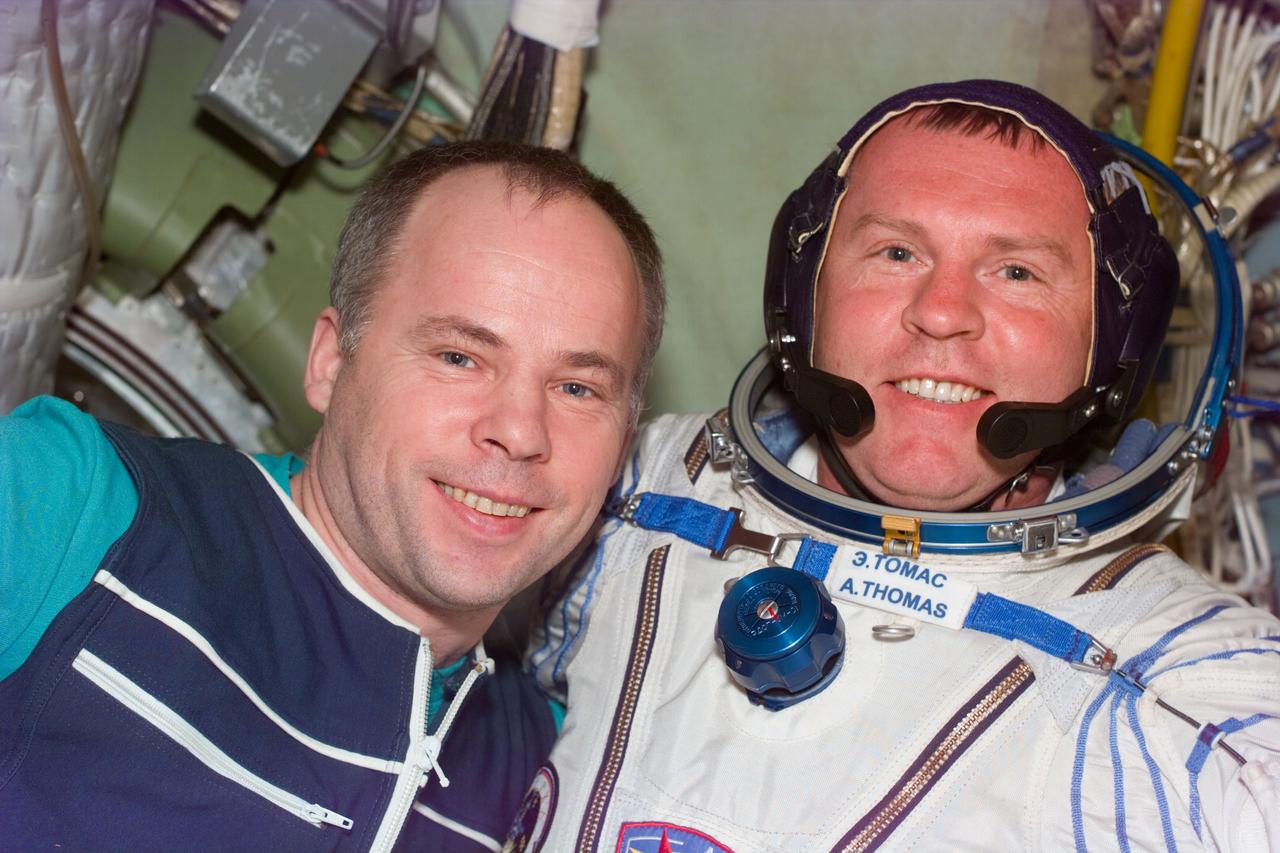
S89-E-5236 (26 Jan 1998) --- This Electronic Still Camera (ESC) image shows cosmonaut Anatoliy Y. Solovyev, Mir-24 commander, and Andrew S. W. Thomas, cosmonaut guest researcher, embracing after Thomas' second Sokol suit test. Thomas had to have modifications made to his Russian Sokol spacesuit shortly after his arrival to the Russian Mir Space Station. Thomas, replacing astronaut David A. Wolf as cosmonaut guest researcher, will be the last American astronaut to serve a tour onboard the Mir. This ESC view was taken on January 26, 1998, at 12:55:07 MET.
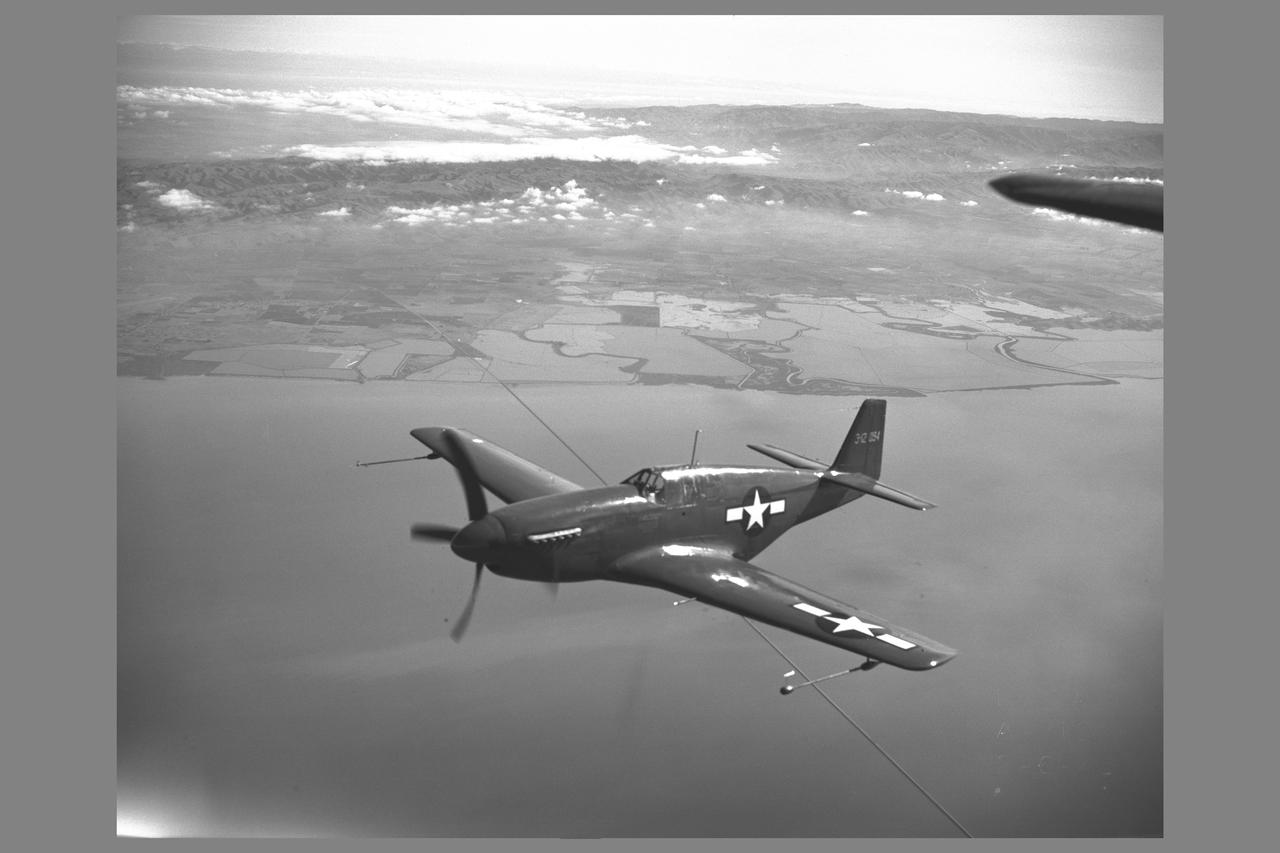
North American P-51B 'Mustang' fighter in flight over bay area. The P-51 with its new laminar-flow wing sections developed by NACA was the first airplane selected for testing of airplane drag in flight and wind tunnel comparison NOTE: used in NASA Publication; Flight Research at Ames: 57 Years of Development and Validation of Aeronautical Technology' Transonic Model Testing fig. 9 NASA SP-1998-3300
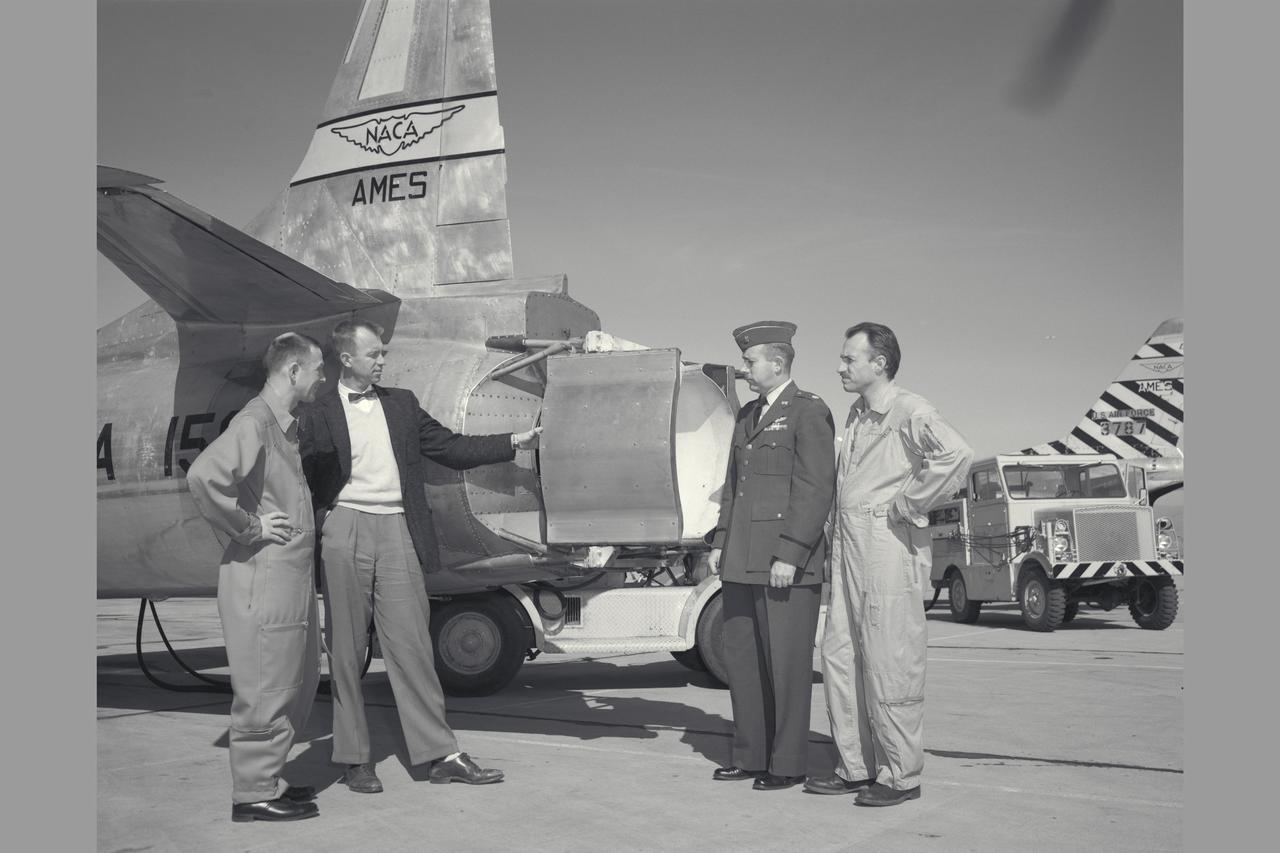
NACA Photographer Thrust reverser on F-94C-1 (AF50-956 NACA 156) Starfire (l to R) Air Force Major E. Sommerich; Ames Engineer Seth Anderson, Lt. Col. Tavasti; and Ames Chief test pilot George Cooper discussing phases of flight evaluation tests. Note: Used in publication in Flight Research at Ames; 57 Years of Development and Validation of Aeronautical Technology NASA SP-1998-3300 fig 91
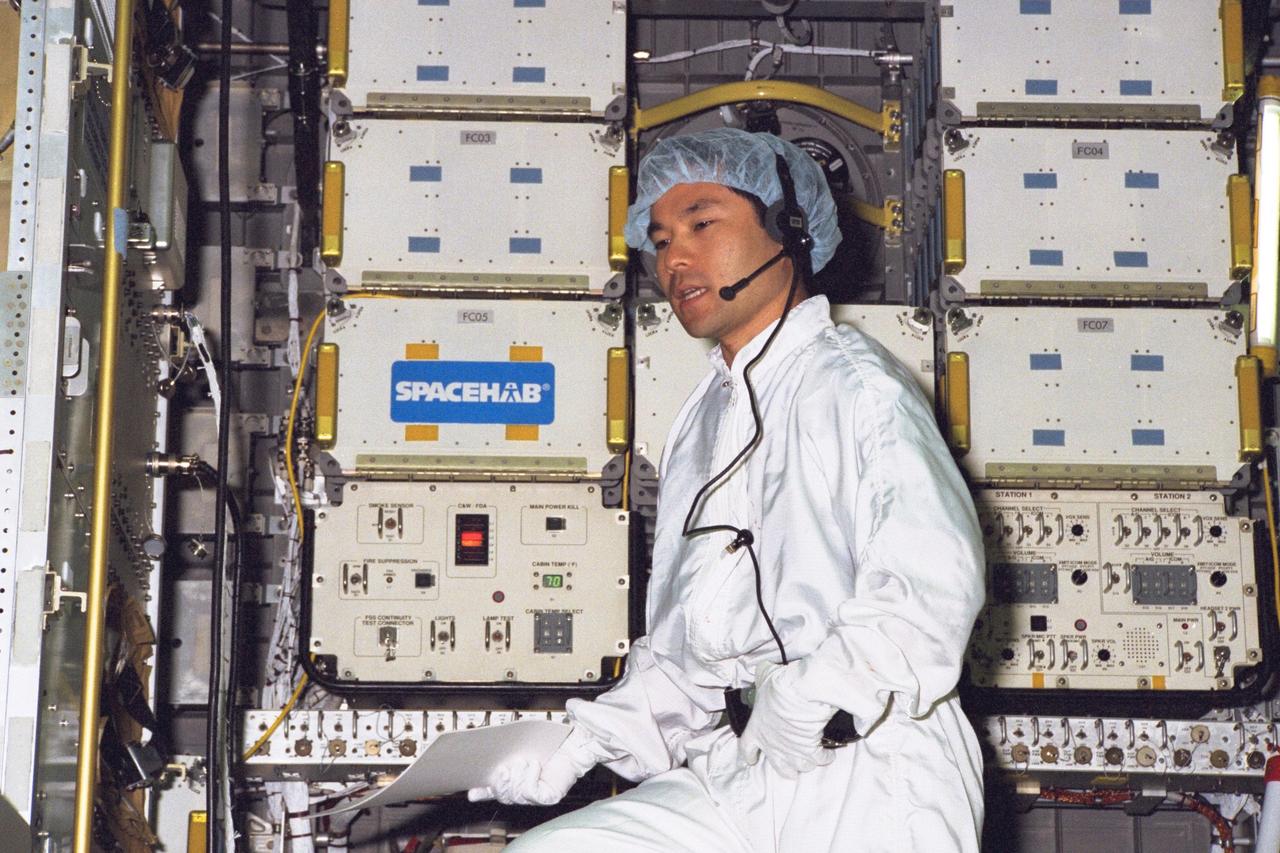
KENNEDY SPACE CENTER, FLA. -- A technician from the National Space Development Agency of Japan (NASDA) tests the real-time radiation monitoring device on SPACEHAB at Kennedy Space Center in preparation for the STS-89 mission, slated to be the first Shuttle launch of 1998. STS-89 will be the eighth of nine scheduled Mir dockings and will include a double module of SPACEHAB, used mainly as a large pressurized cargo container for science, logistical equipment and supplies to be exchanged between the orbiter Endeavour and the Russian Space Station Mir. The nine-day flight of STS-89 also is scheduled to include the transfer of the seventh American to live and work aboard the Russian orbiting outpost. Liftoff of Endeavour and its seven-member crew is targeted for Jan. 15, 1998, at 1:03 a.m. EDT from Launch Pad 39A
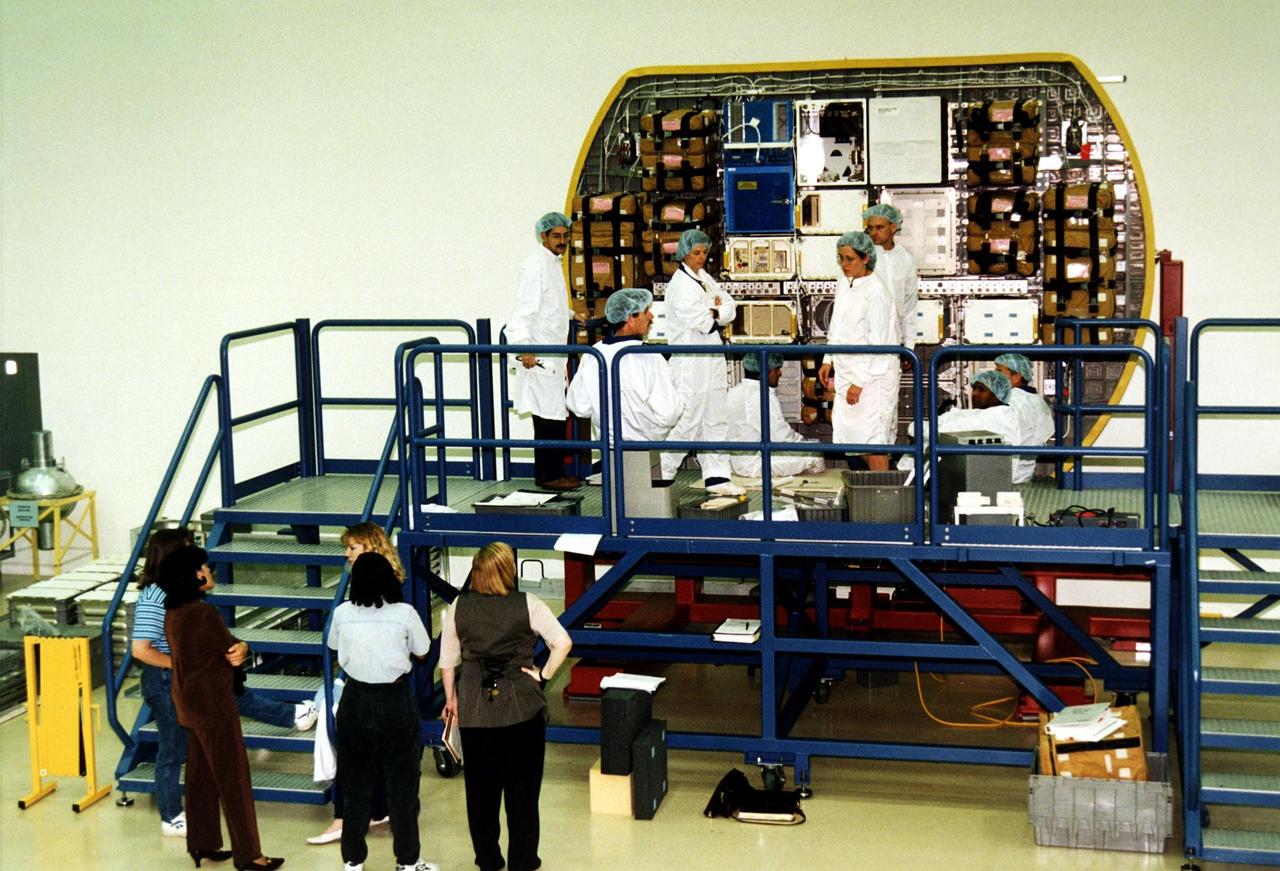
KENNEDY SPACE CENTER, FLA. -- STS-89 crew members and technicians participate in the Crew Equipment Interface Test (CEIT) in front of the back cap of the SPACEHAB module at the SPACEHAB Payload Processing Facility at Port Canaveral in preparation for the mission, slated to be the first Shuttle launch of 1998. The CEIT gives astronauts an opportunity to get a hands-on look at the payloads with which they will be working onorbit. STS-89 will be the eighth of nine scheduled Mir dockings and will include a double module of SPACEHAB, used mainly as a large pressurized cargo container for science, logistical equipment and supplies to be exchanged between the orbiter Endeavour and the Russian Space Station Mir. The nine-day flight of STS-89 also is scheduled to include the transfer of the seventh American to live and work aboard the Russian orbiting outpost. Liftoff of Endeavour and its seven-member crew is targeted for Jan. 15, 1998, at 1:03 a.m. EDT from Launch Pad 39A
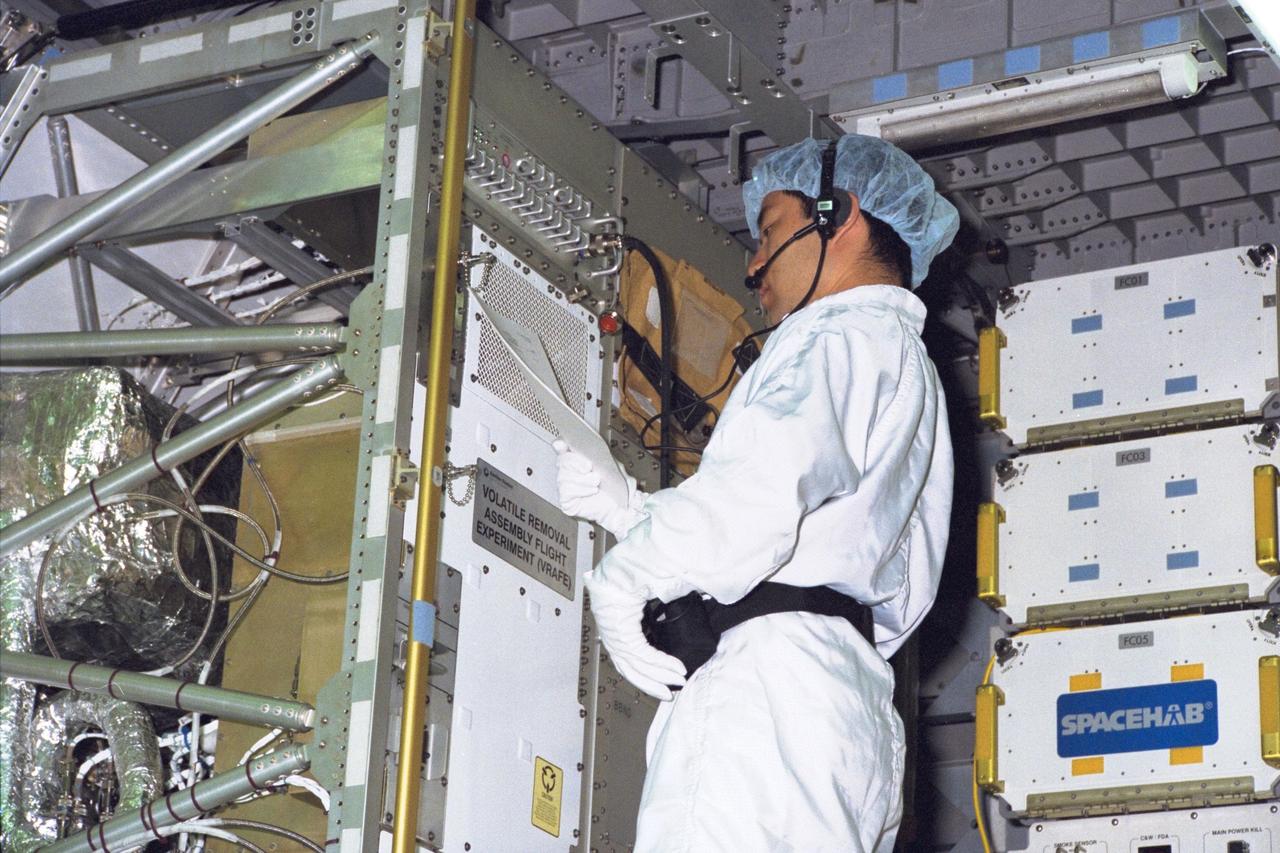
KENNEDY SPACE CENTER, FLA. -- A technician from the National Space Development Agency of Japan (NASDA) tests the real-time radiation monitoring device on SPACEHAB at Kennedy Space Center in preparation for the STS-89 mission, slated to be the first Shuttle launch of 1998. STS-89 will be the eighth of nine scheduled Mir dockings and will include a double module of SPACEHAB, used mainly as a large pressurized cargo container for science, logistical equipment and supplies to be exchanged between the orbiter Endeavour and the Russian Space Station Mir. The nine-day flight of STS-89 also is scheduled to include the transfer of the seventh American to live and work aboard the Russian orbiting outpost. Liftoff of Endeavour and its seven-member crew is targeted for Jan. 15, 1998, at 1:03 a.m. EDT from Launch Pad 39A
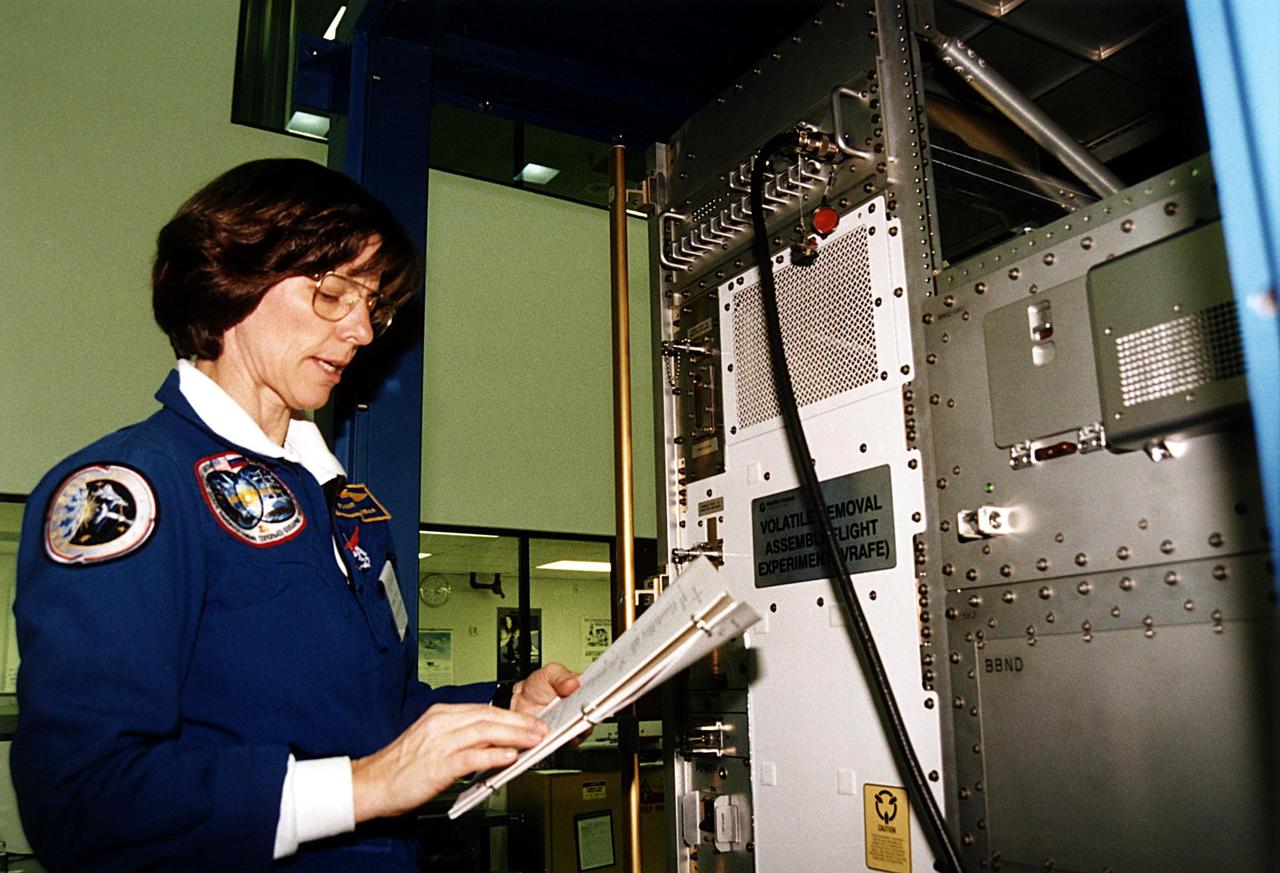
KENNEDY SPACE CENTER, FLA. -- STS-89 Mission Specialist Bonnie Dunbar, Ph.D., participates in the Crew Equipment Interface Test (CEIT) in front of the Real-time Radiation Monitoring Device (RRMD) at the SPACEHAB Payload Processing Facility at Port Canaveral in preparation for the mission, slated to be the first Shuttle launch of 1998. The CEIT gives astronauts an opportunity to get a hands-on look at the payloads with which they will be working on-orbit. STS-89 will be the eighth of nine scheduled Mir dockings and will include a double module of SPACEHAB, used mainly as a large pressurized cargo container for science, logistical equipment and supplies to be exchanged between the orbiter Endeavour and the Russian Space Station Mir. The nineday flight of STS-89 also is scheduled to include the transfer of the seventh American to live and work aboard the Russian orbiting outpost. Liftoff of Endeavour and its sevenmember crew is targeted for Jan. 15, 1998, at 1:03 a.m. EDT from Launch Pad 39A
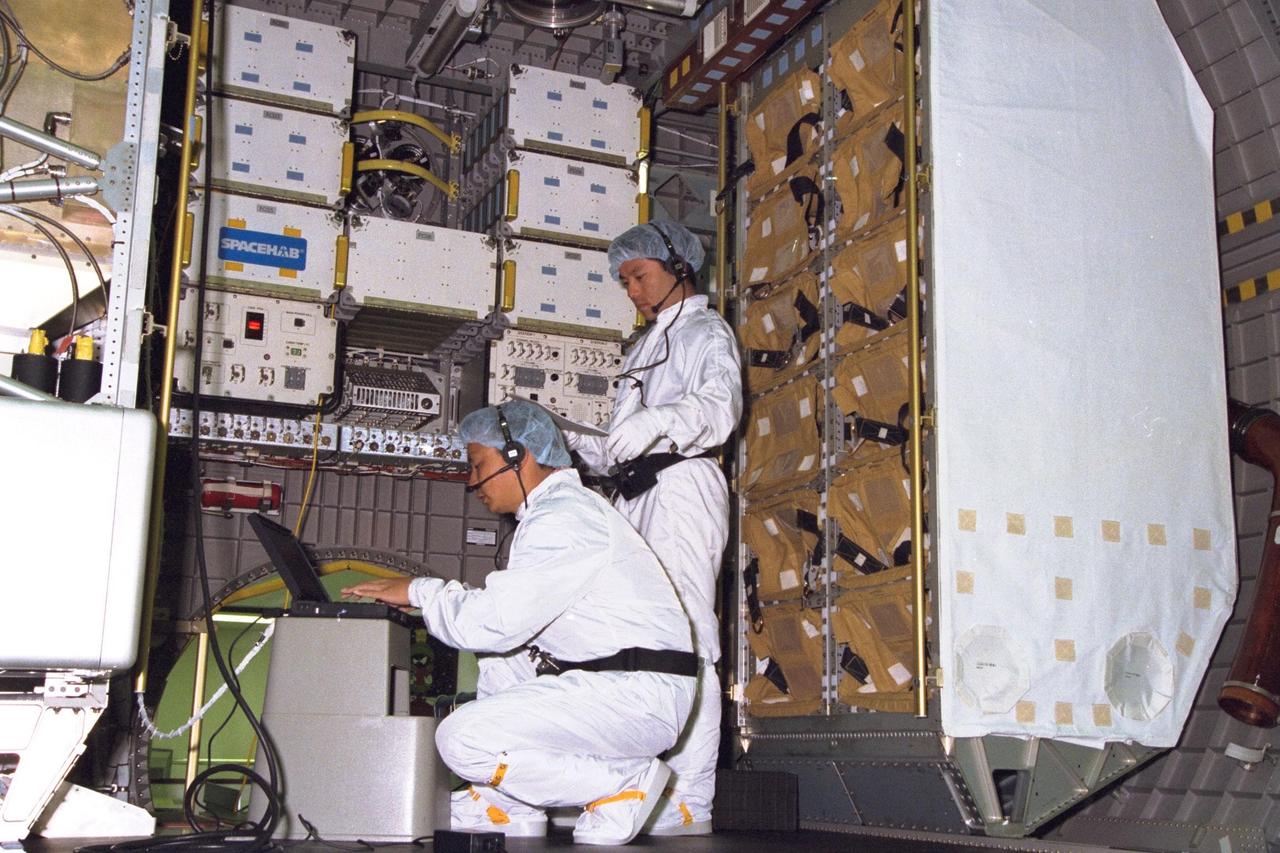
KENNEDY SPACE CENTER, FLA. -- Technicians from the National Space Development Agency of Japan (NASDA) test the real-time radiation monitoring device on SPACEHAB at Kennedy Space Center in preparation for the STS-89 mission, slated to be the first Shuttle launch of 1998. STS-89 will be the eighth of nine scheduled Mir dockings and will include a double module of SPACEHAB, used mainly as a large pressurized cargo container for science, logistical equipment and supplies to be exchanged between the orbiter Endeavour and the Russian Space Station Mir. The nine-day flight of STS-89 also is scheduled to include the transfer of the seventh American to live and work aboard the Russian orbiting outpost. Liftoff of Endeavour and its seven-member crew is targeted for Jan. 15, 1998, at 1:03 a.m. EDT from Launch Pad 39A
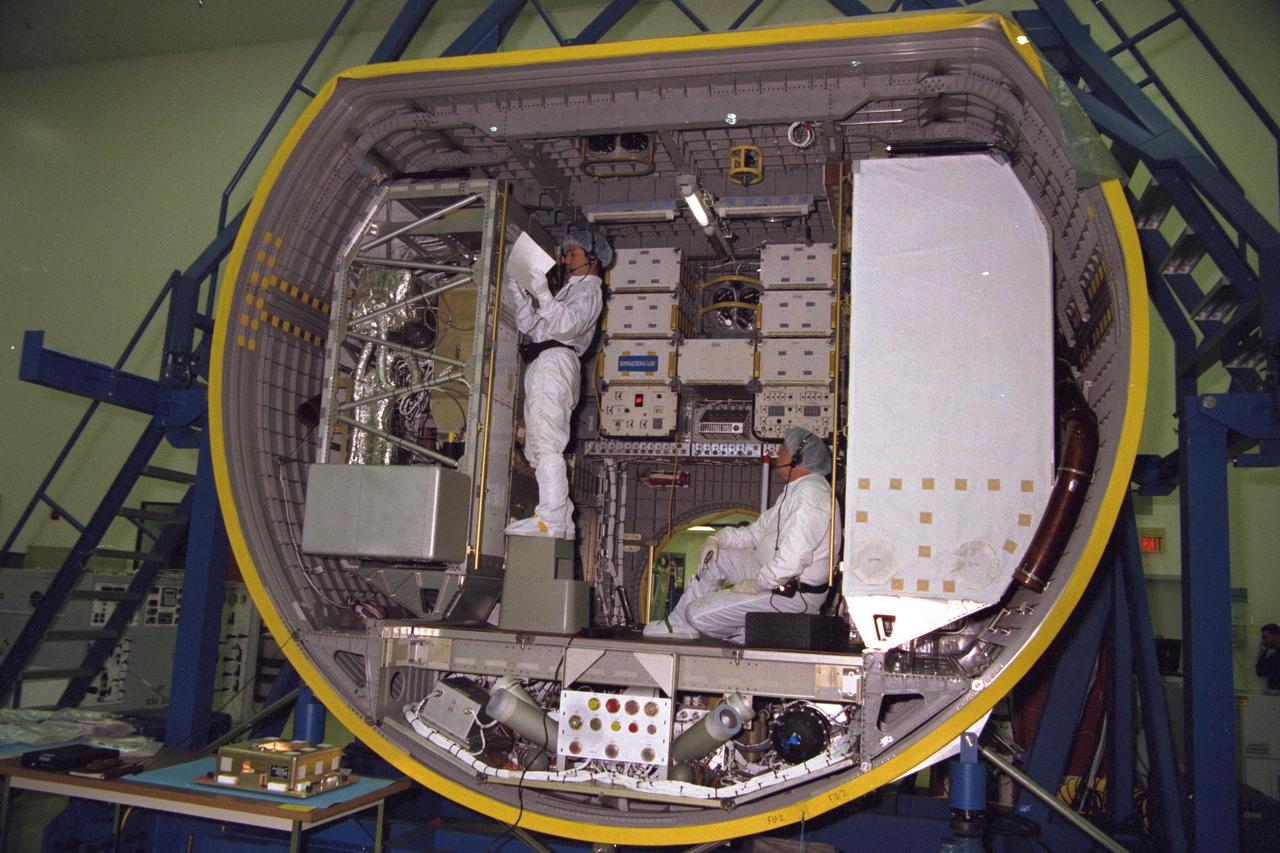
KENNEDY SPACE CENTER, FLA. -- Technicians from the National Space Development Agency of Japan (NASDA) test the real-time radiation monitoring device on SPACEHAB at Kennedy Space Center in preparation for the STS-89 mission, slated to be the first Shuttle launch of 1998. STS-89 will be the eighth of nine scheduled Mir dockings and will include a double module of SPACEHAB, used mainly as a large pressurized cargo container for science, logistical equipment and supplies to be exchanged between the orbiter Endeavour and the Russian Space Station Mir. The nine-day flight of STS-89 also is scheduled to include the transfer of the seventh American to live and work aboard the Russian orbiting outpost. Liftoff of Endeavour and its seven-member crew is targeted for Jan. 15, 1998, at 1:03 a.m. EDT from Launch Pad 39A
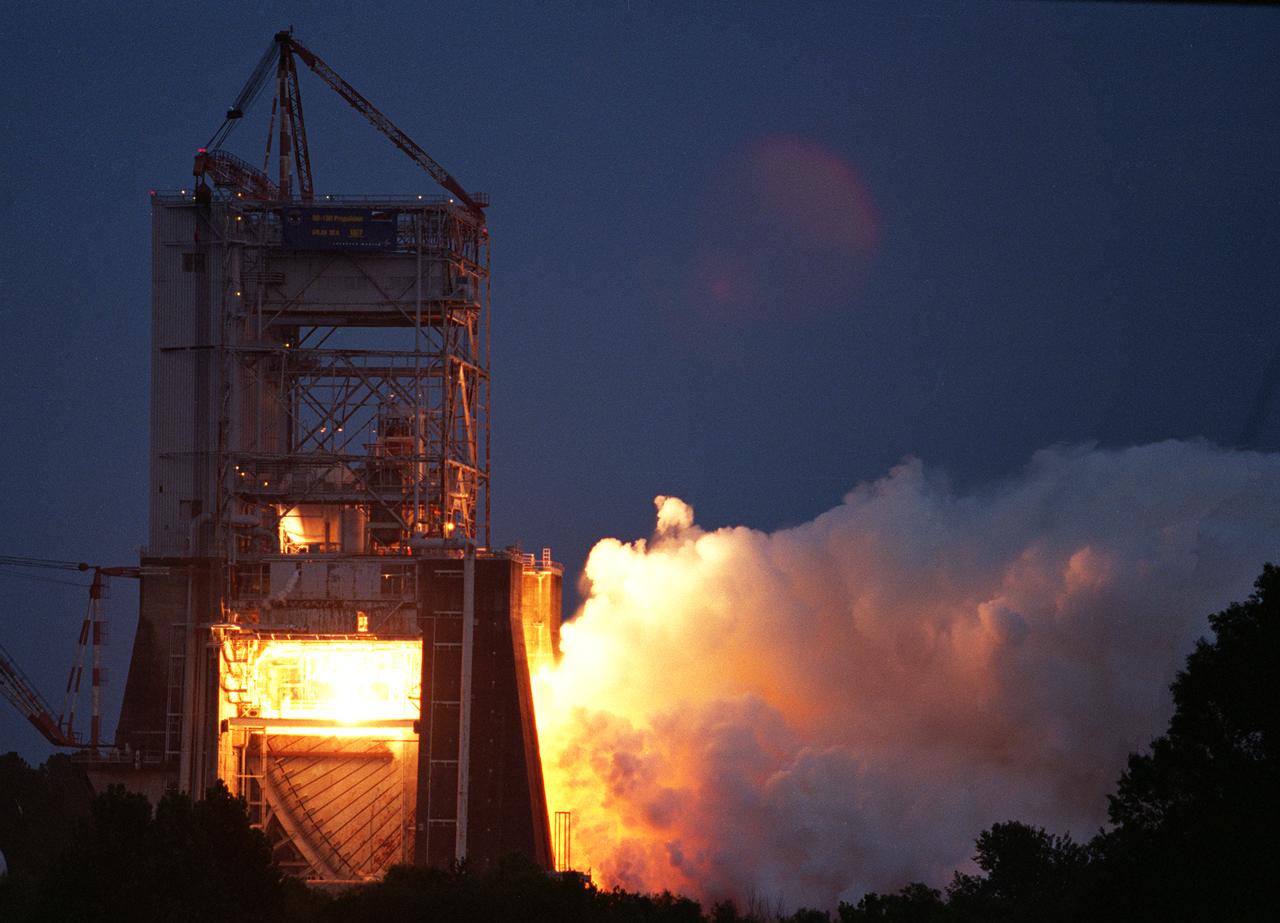
NASA engineers successfully tested a Russian-built rocket engine on November 4, 1998 at the Marshall Space Flight Center (MSFC) Advanced Engine Test Facility, which had been used for testing the Saturn V F-1 engines and Space Shuttle Main engines. The MSFC was under a Space Act Agreement with Lockheed Martin Astronautics of Denver to provide a series of test firings of the Atlas III propulsion system configured with the Russian-designed RD-180 engine. The tests were designed to measure the performance of the Atlas III propulsion system, which included avionics and propellant tanks and lines, and how these components interacted with the RD-180 engine. The RD-180 is powered by kerosene and liquid oxygen, the same fuel mix used in Saturn rockets. The RD-180, the most powerful rocket engine tested at the MSFC since Saturn rocket tests in the 1960s, generated 860,000 pounds of thrust.
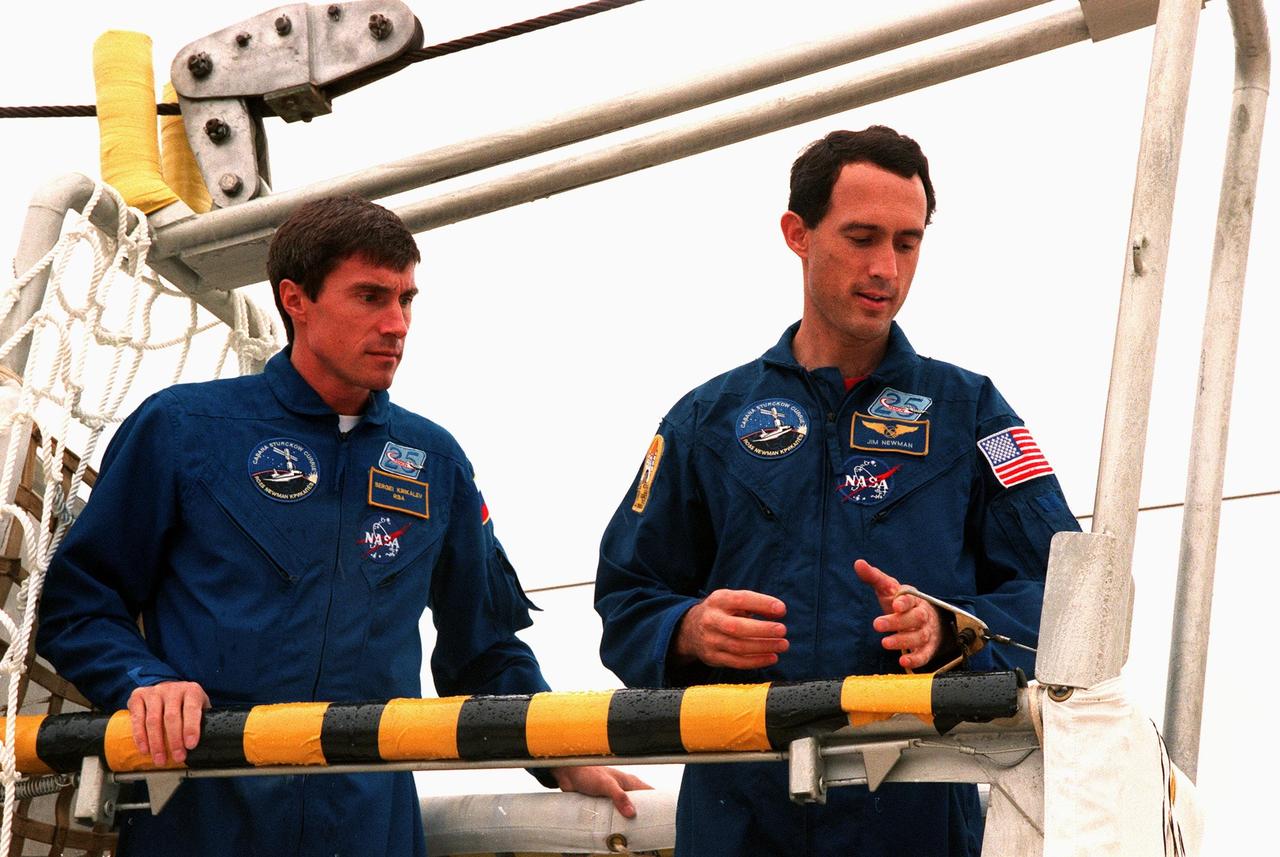
KENNEDY SPACE CENTER, Fla. -- STS-88 Mission Specialists Sergei Krikalev and James H. Newman practice emergency egress procedures in a slidewire basket at Launch Pad 39A as part of Terminal Countdown Demonstration Test (TCDT) activities, a dress rehearsal for launch. Mission STS-88 is targeted for launch on Dec. 3, 1998. It is the first U.S. flight for the assembly of the International Space Station and will carry the Unity connecting module
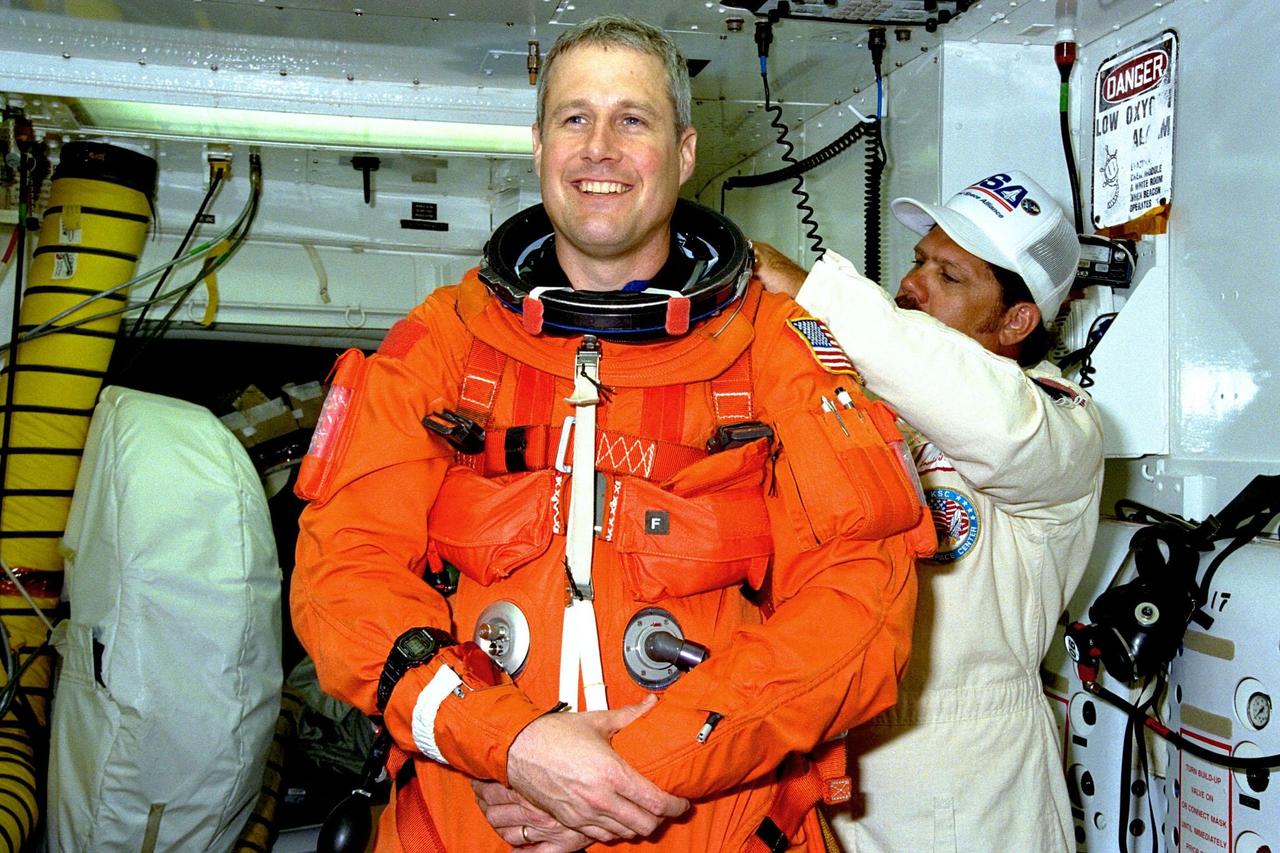
The crew of STS-90 participate in Terminal Countdown Demonstration Test (TCDT) activities at KSC's Launch Pad 39B. The TCDT is held at KSC prior to each Space Shuttle flight to provide crews with the opportunity to participate in simulated countdown activities. Here, Payload Specialist Jay Buckey, M.D., is assisted with his orange launch and re-entry suit by a USA technician. Columbia is targeted for launch of STS-90 on April 16 at 2:19 p.m. EDT and will be the second mission of 1998. The mission is scheduled to last nearly 17 days
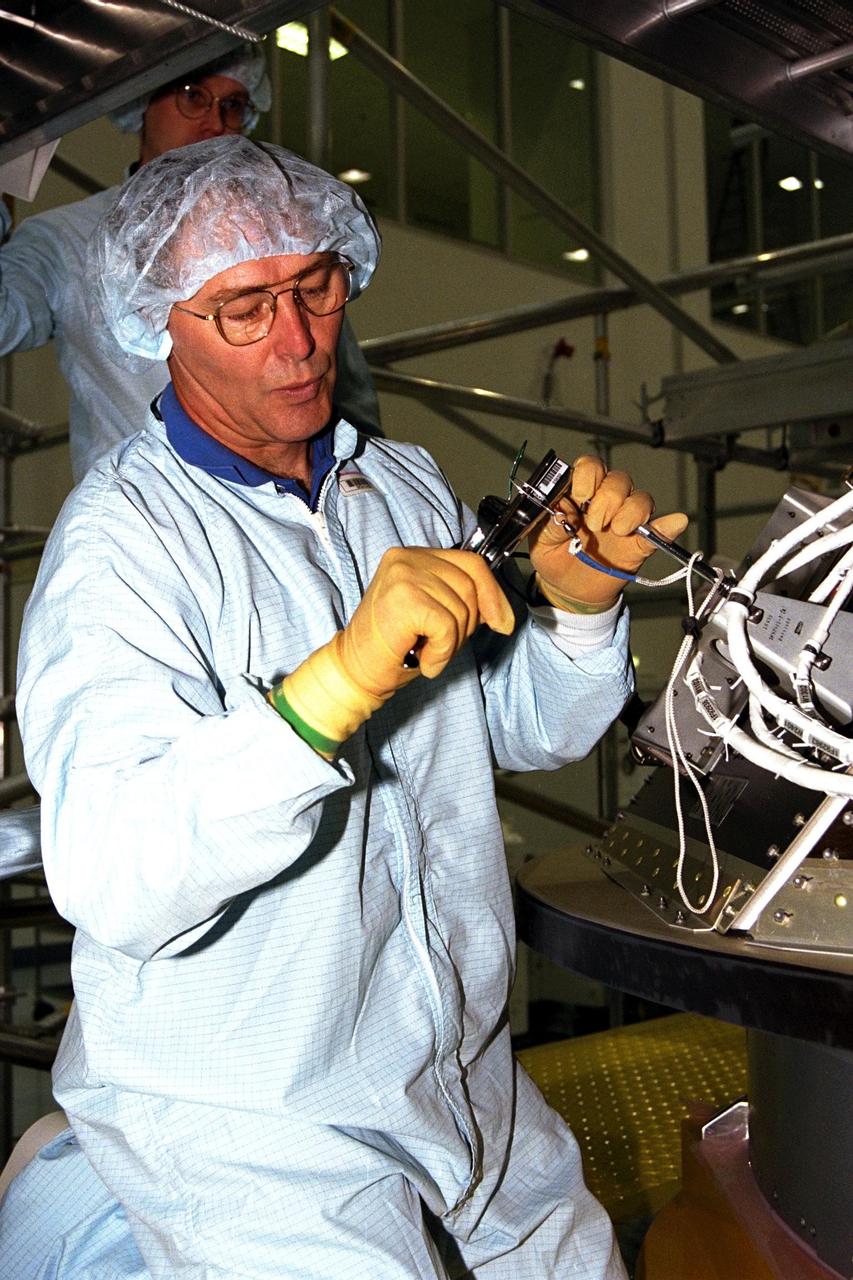
Mission Specialist Jerry Ross participates in the Crew Equipment Interface Test (CEIT) for STS-88 in KSC's Space Station Processing Facility. The CEIT gives astronauts an opportunity to get a hands-on look at the payloads with which they will be working on-orbit. Here, Ross is inspecting electrical connections that will be used in assembly of the International Space Station (ISS). STS-88, the first ISS assembly flight, is targeted for launch in July 1998 aboard Space Shuttle Endeavour
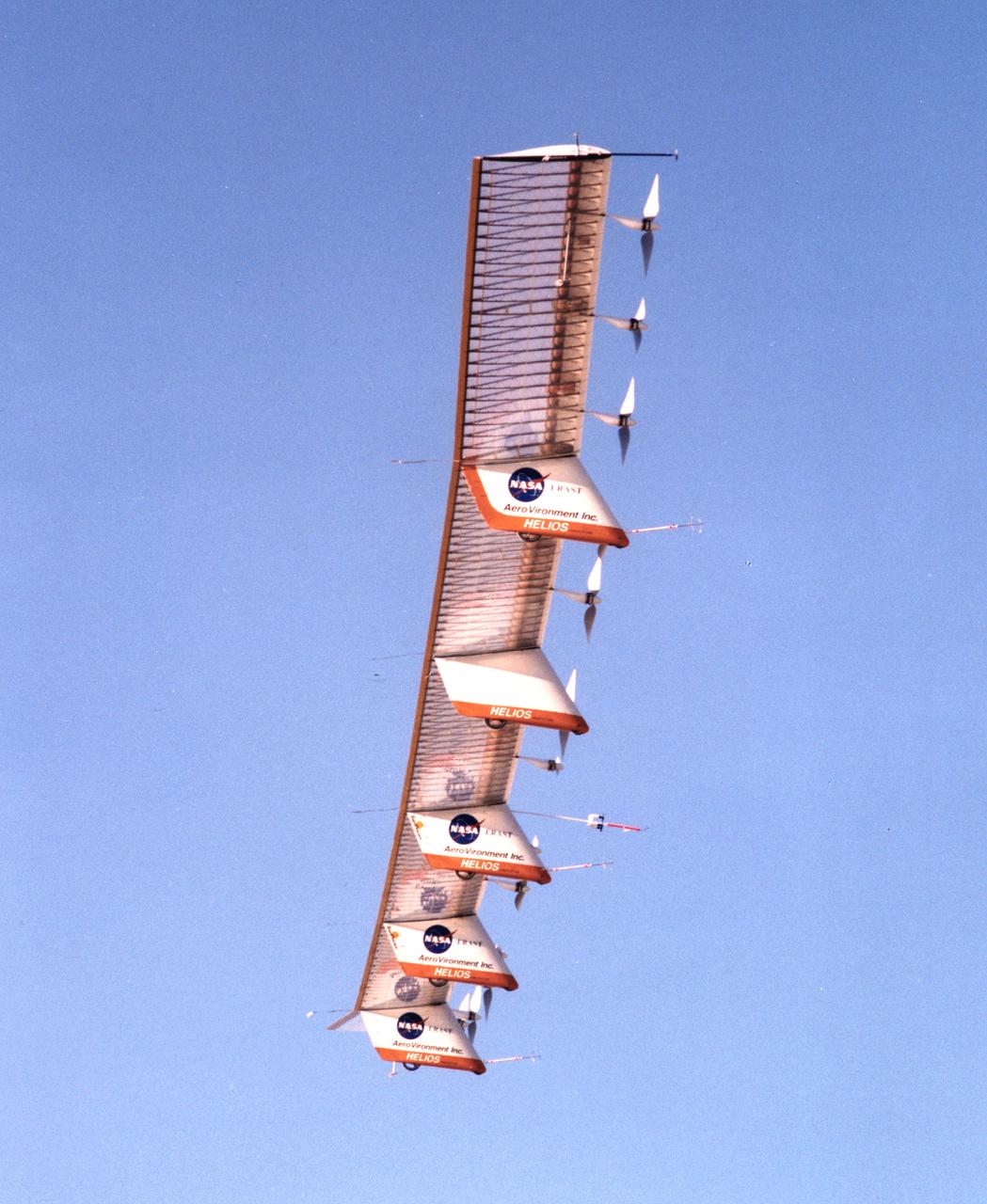
The Helios Prototype is an enlarged version of the Centurion flying wing, which flew a series of test flights at Dryden in late 1998. The craft has a wingspan of 247 feet, 41 feet greater than the Centurion, 2 1/2 times that of its solar-powered Pathfinder flying wing, and longer than either the Boeing 747 jetliner or Lockheed C-5 transport aircraft.
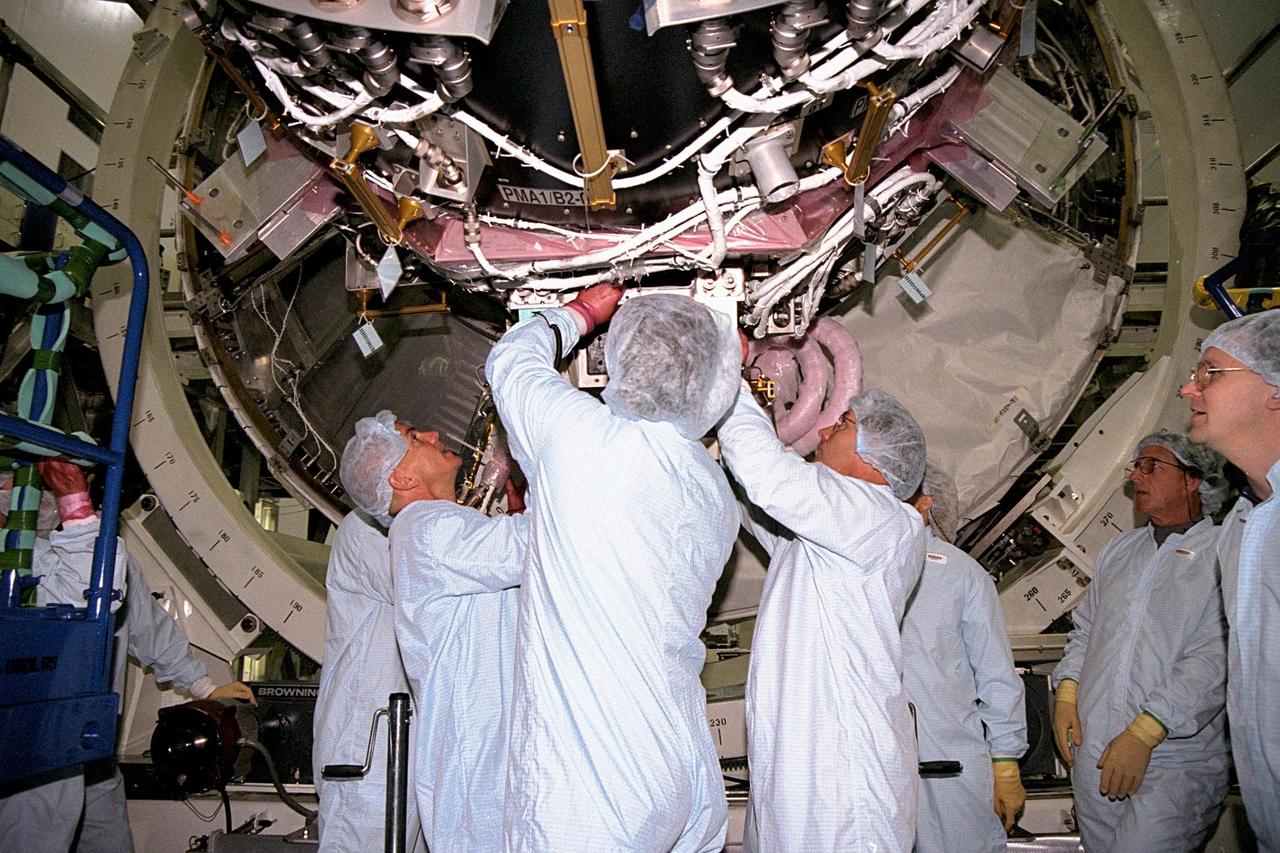
Pilot Rick Sturckow, left of center, and Mission Specialist Jerry Ross, right of center, participate in the Crew Equipment Interface Test (CEIT) for STS-88 in KSC's Space Station Processing Facility. The CEIT gives astronauts an opportunity to get a hands-on look at the payloads with which they will be working on-orbit. Here, the crew is inspecting electrical connections that will be used in assembly of the International Space Station (ISS). STS-88, the first ISS assembly flight, is targeted for launch in July 1998 aboard Space Shuttle Endeavour
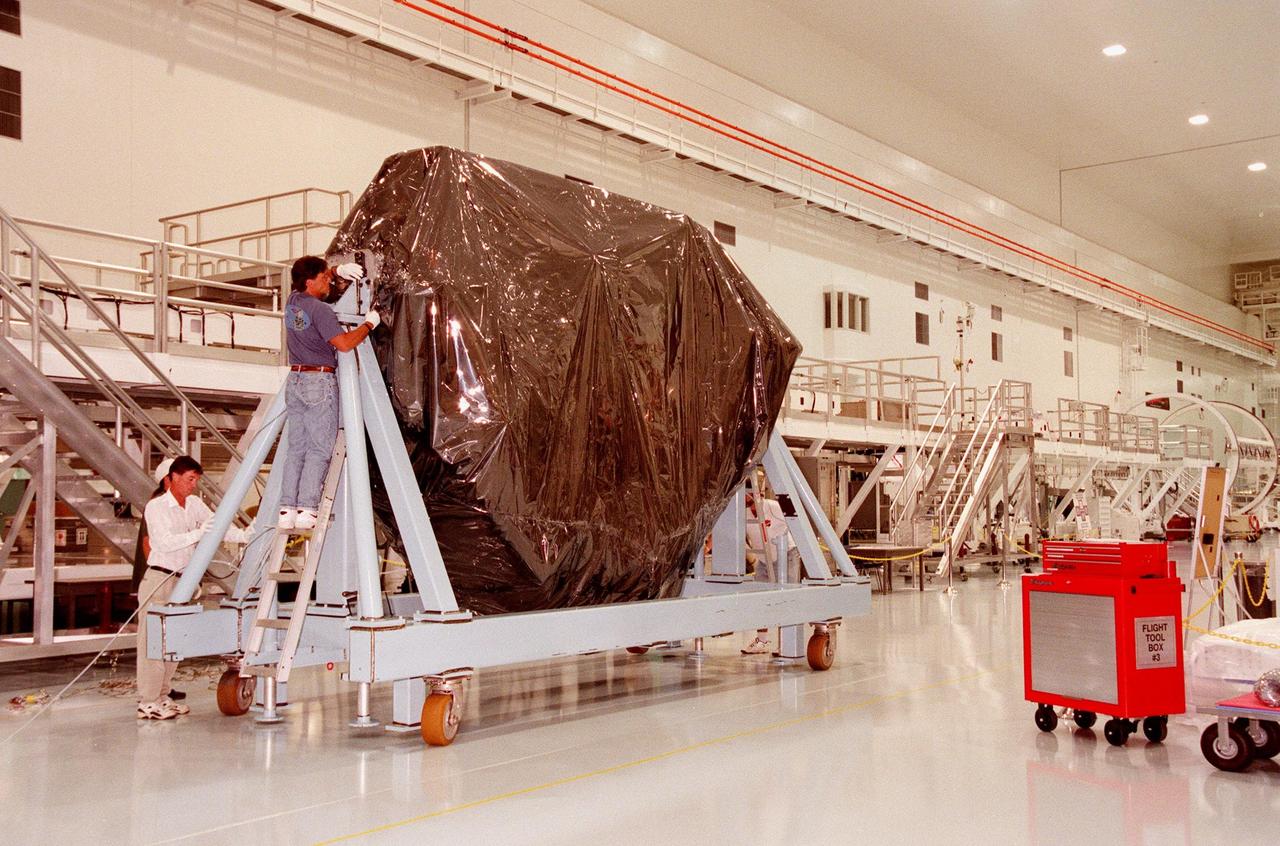
The HOST (the Hubble Space Telescope Orbital Systems Test) payload is moved into the high bay of the Space Station Processing Facility (SSPF). HOST is scheduled to fly on the STS-95 mission, planned for launch on Oct. 29, 1998. The mission includes other research payloads such as the Spartan solar-observing deployable spacecraft, the International Extreme Ultraviolet Hitchhiker, as well as the SPACEHAB single module with experiments on space flight and the aging process
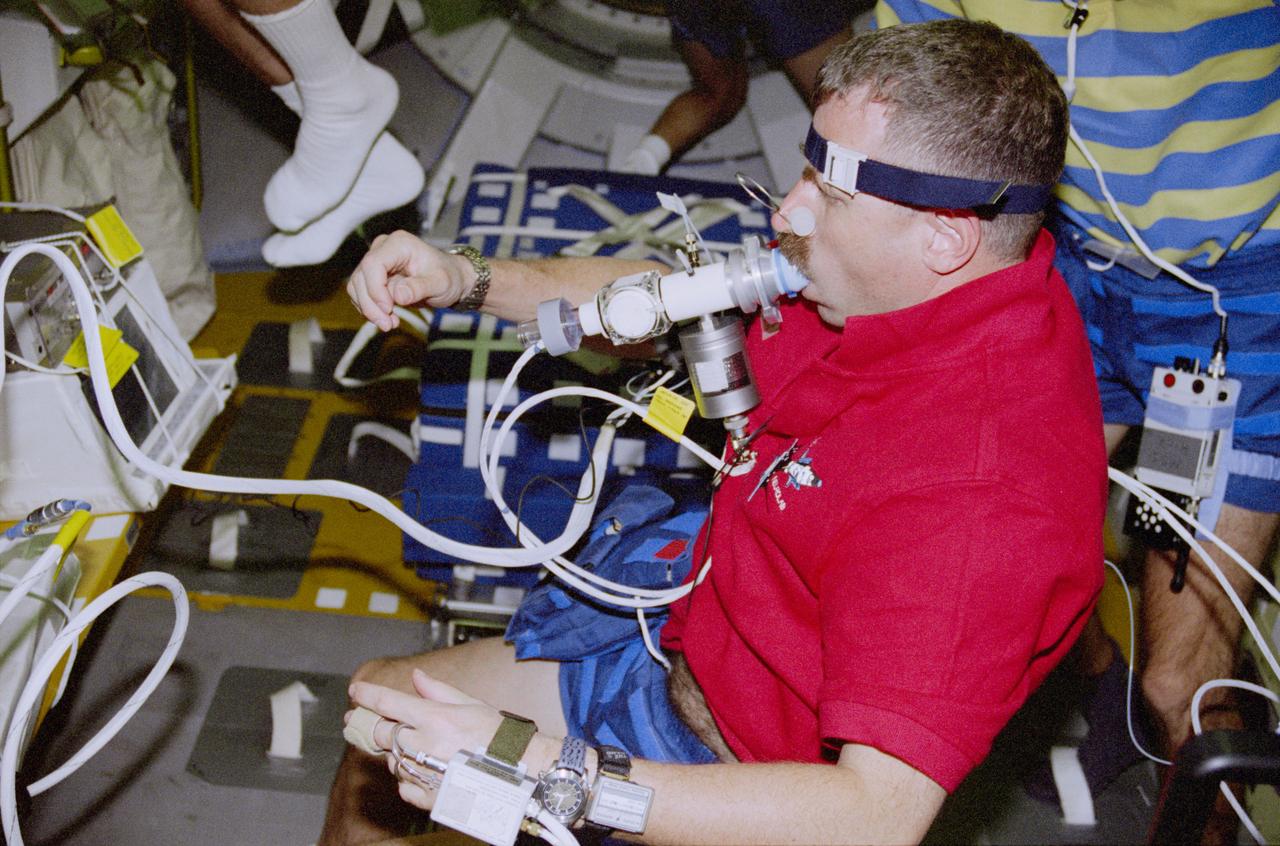
STS090-350-002 (17 April - 3 May 1998) --- Astronaut Dafydd R. (Dave) Williams, mission specialist representing the Canadian Space Agency (CSA), is pictured during a Neurolab pulmonary function test. Williams joined four NASA astronauts and two payload specialists for 16-days aboard the Space Shuttle Columbia in support of the Neurolab mission.
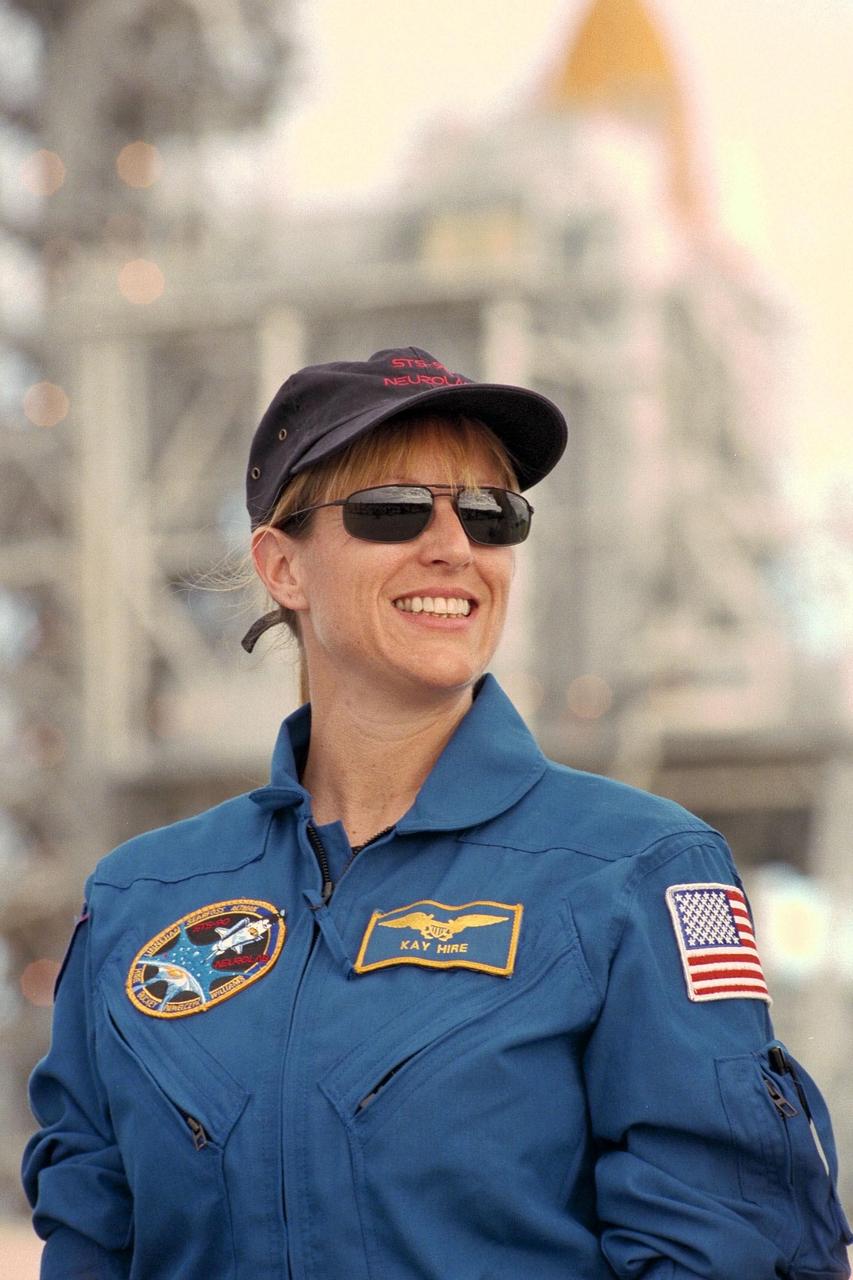
STS-90 Mission Specialist Kathryn (Kay) Hire participates in Terminal Countdown Demonstration Test (TCDT) activities at KSC's Launch Pad 39B. The TCDT is held at KSC prior to each Space Shuttle flight to provide crews with the opportunity to participate in simulated countdown activities. Columbia is targeted for launch of STS-90 on April 16 at 2:19 p.m. EDT and will be the second mission of 1998. The mission is scheduled to last nearly 17 days
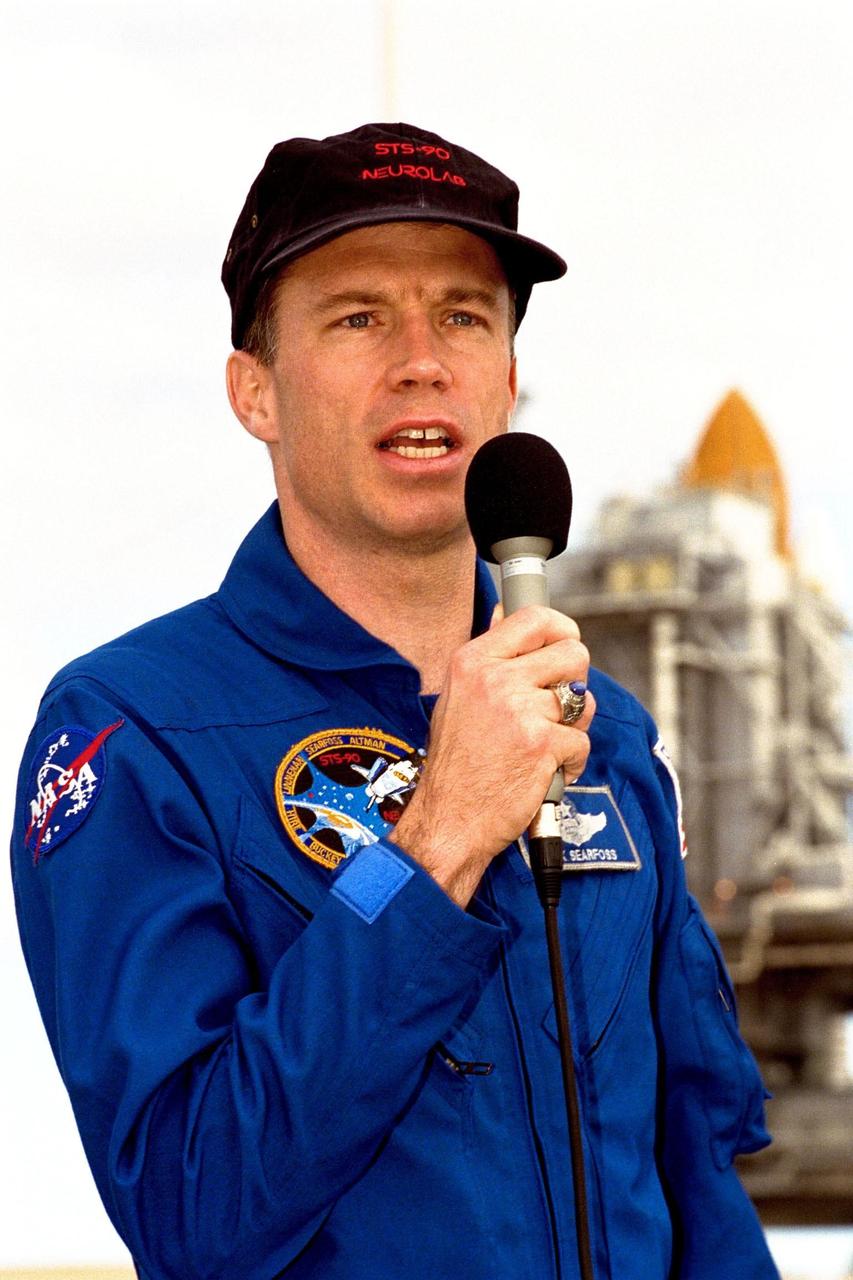
STS-90 Commander Richard Searfoss addresses the media at KSC's Launch Pad 39B, where the crew are participating in Terminal Countdown Demonstration Test (TCDT) activities. The TCDT is held at KSC prior to each Space Shuttle flight to provide crews with the opportunity to participate in simulated countdown activities. Columbia is targeted for launch of STS-90 on April 16 at 2:19 p.m. EDT and will be the second mission of 1998. The mission is scheduled to last nearly 17 days
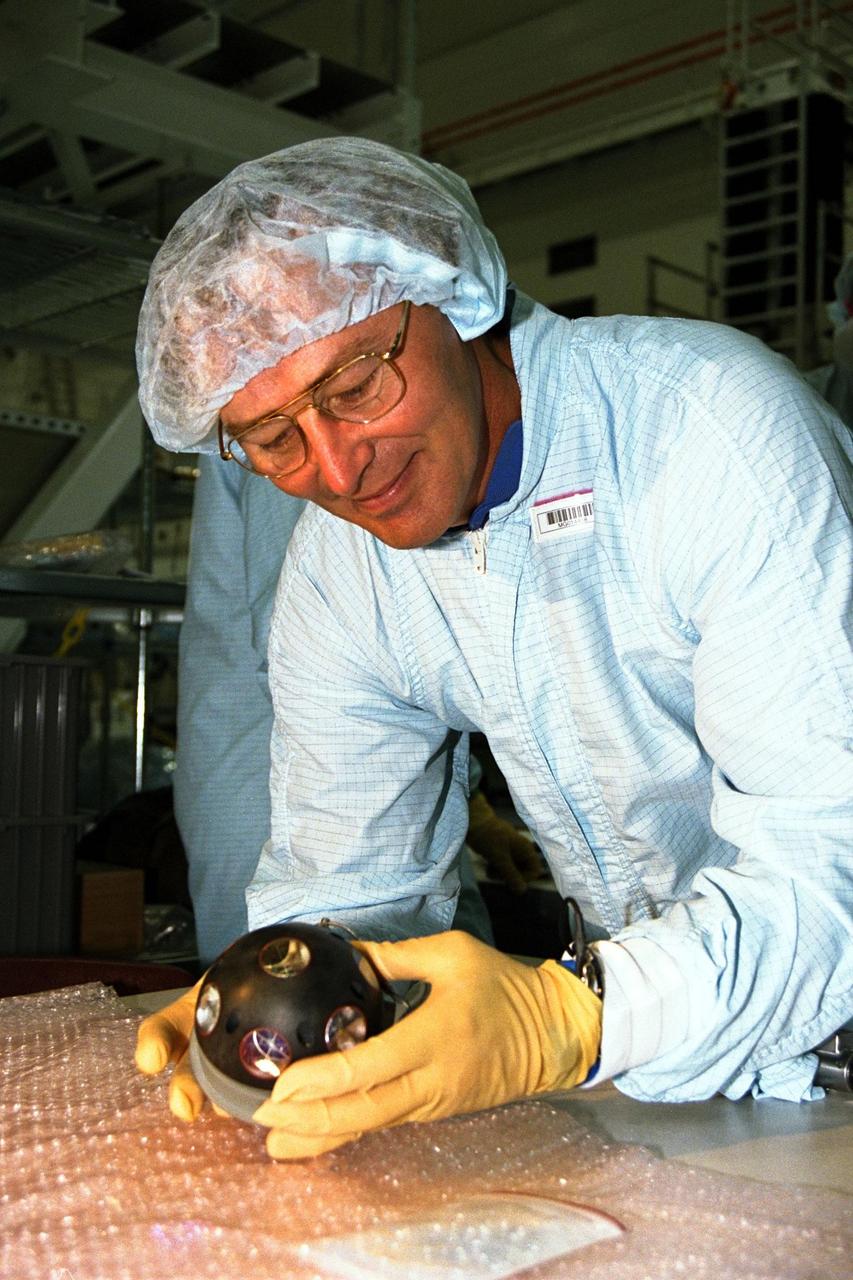
Mission Specialist Jerry Ross participates in the Crew Equipment Interface Test (CEIT) for STS-88 in KSC's Space Station Processing Facility. The CEIT gives astronauts an opportunity to get a hands-on look at the payloads with which they will be working on-orbit. STS-88, the first International Space Station assembly flight, is targeted for launch in July 1998 aboard Space Shuttle Endeavour
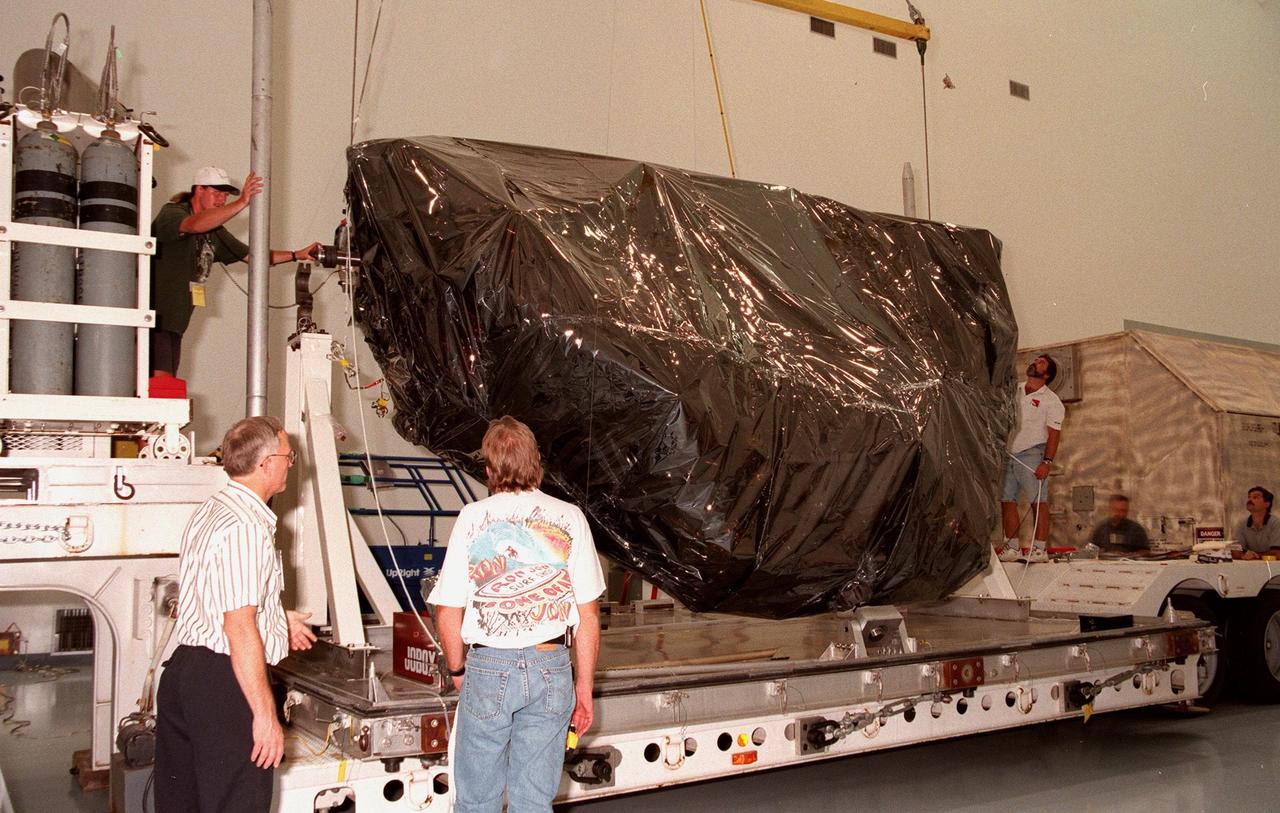
The HOST (the Hubble Space Telescope Orbital Systems Test) payload is prepared for moving to the high bay of the Space Station Processing Facility (SSPF). HOST is scheduled to fly on the STS-95 mission, planned for launch on Oct. 29, 1998. The mission includes other research payloads such as the Spartan solar-observing deployable spacecraft, the International Extreme Ultraviolet Hitchhiker, as well as the SPACEHAB single module with experiments on space flight and the aging process
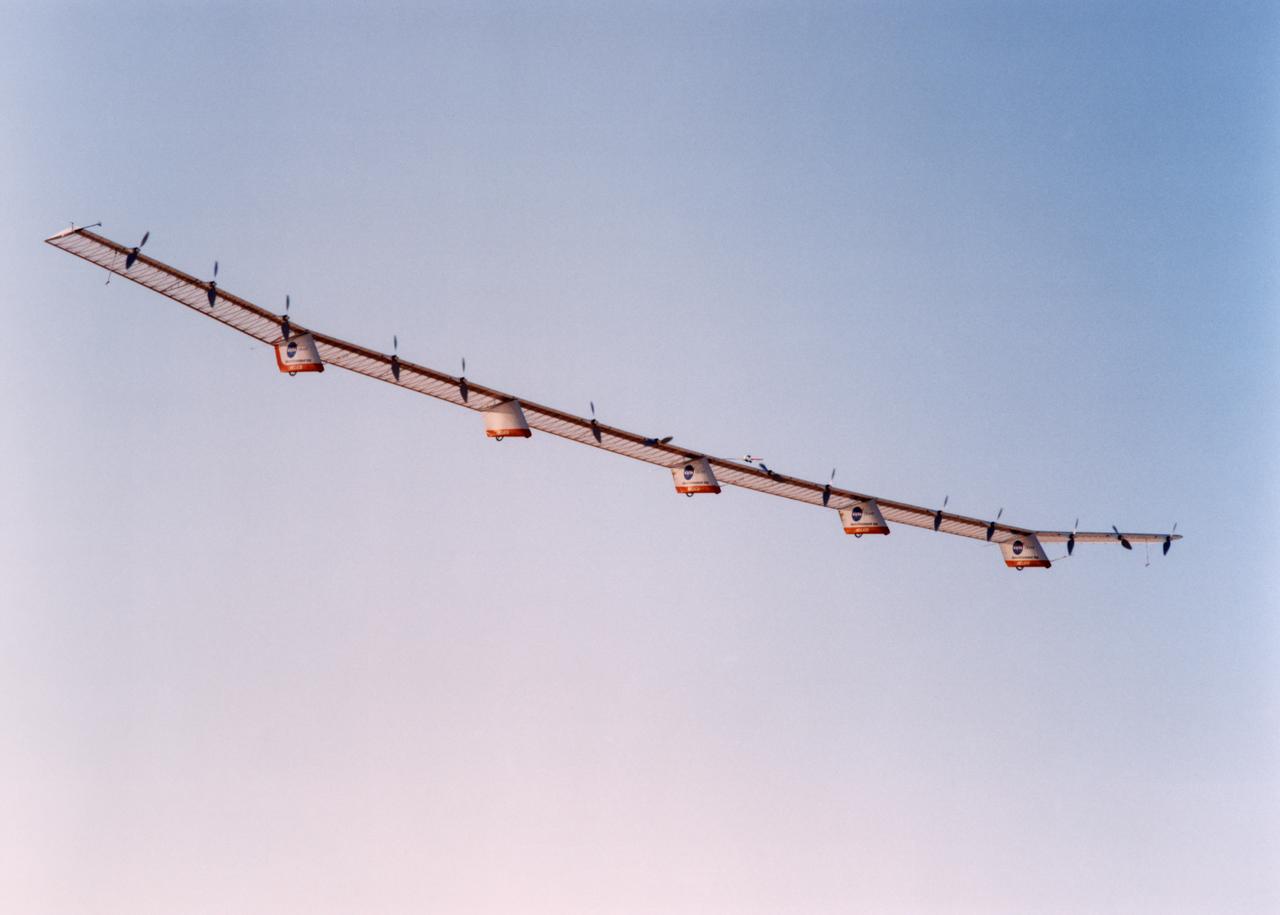
The Helios Prototype is an enlarged version of the Centurion flying wing, which flew a series of test flights at Dryden in late 1998. The craft has a wingspan of 247 feet, 41 feet greater than the Centurion, 2 1/2 times that of its solar-powered Pathfinder flying wing, and longer than either the Boeing 747 jetliner or Lockheed C-5 transport aircraft.
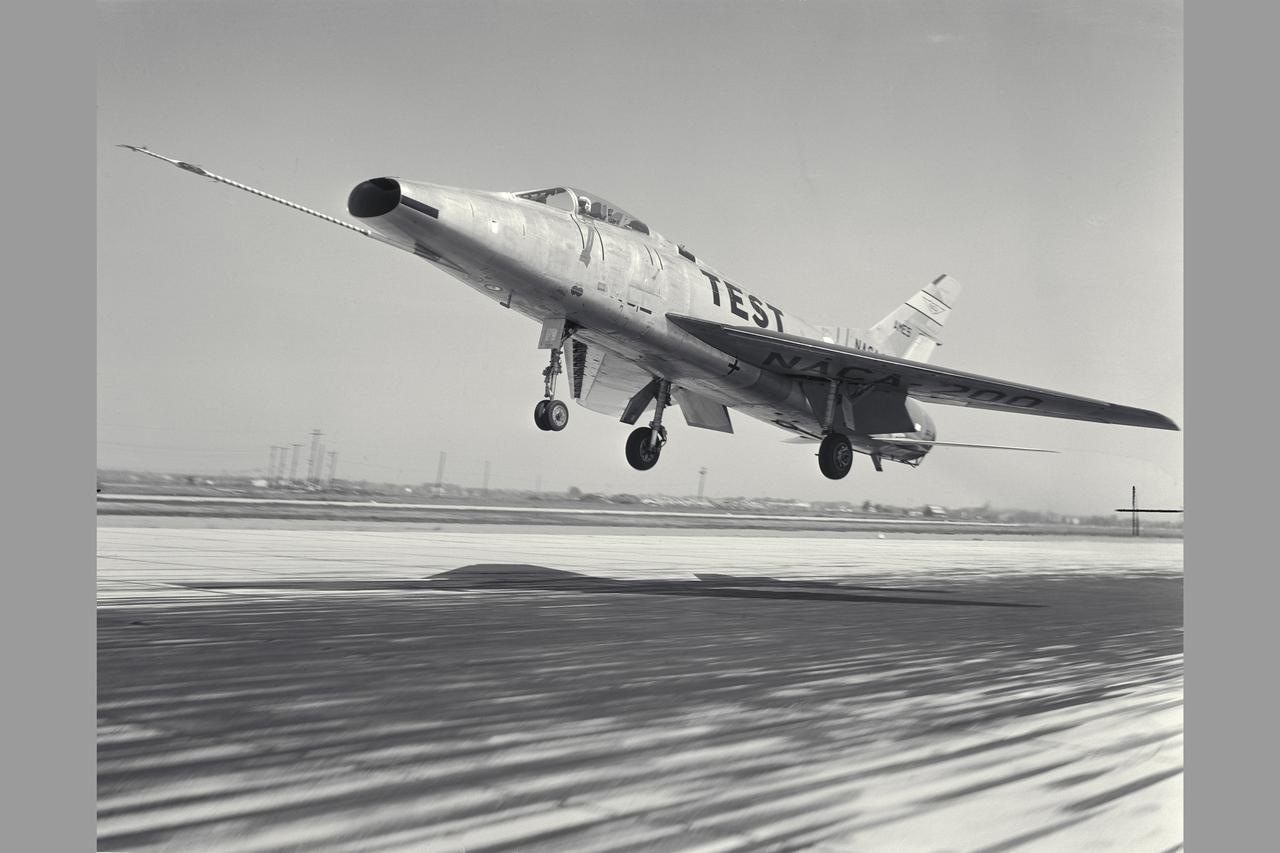
NACA Photographer North American F-100A (NACA-200) Super Sabre Airplane take-off. The blowing-tupe boundary-layer control on the leading- and trailing-edge provided large reductions in takeoff and landing approach speeds. Approach speeds were reduced by about 10 knots (Mar 1960). Note: Used in publication in Flight Research at Ames; 57 Years of Development and Validation of Aeronautical Technology NASA SP-1998-3300 fig. 102 and and Memoirs of a Flight Test Engneer NASA SP-2002-4525
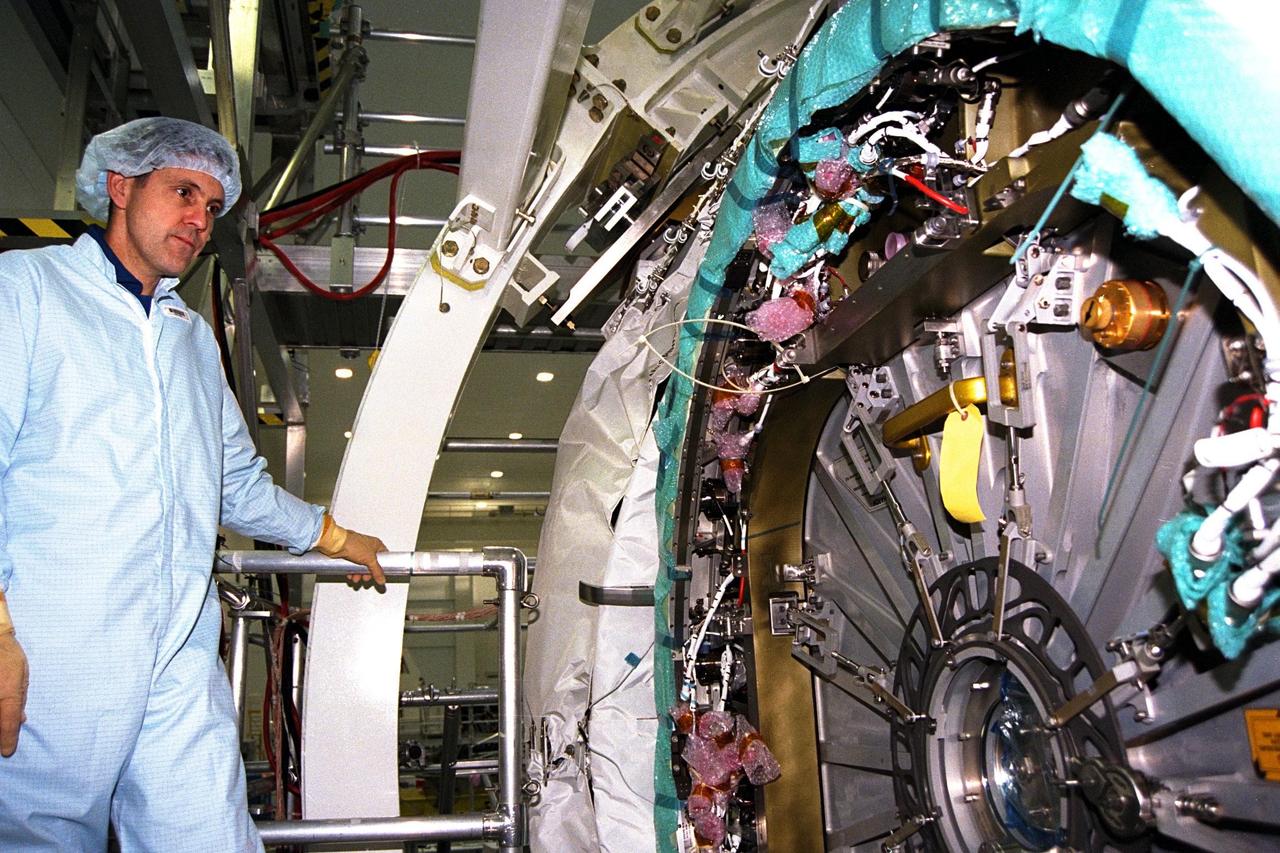
Commander Bob Cabana participates in the Crew Equipment Interface Test (CEIT) for STS-88 in KSC's Space Station Processing Facility. The CEIT gives astronauts an opportunity to get a hands-on look at the payloads with which they will be working on-orbit. Here, Cabana inspects one of the six hatches on Node 1 of the International Space Station (ISS). STS-88, the first ISS assembly flight, is targeted for launch in July 1998 aboard Space Shuttle Endeavour
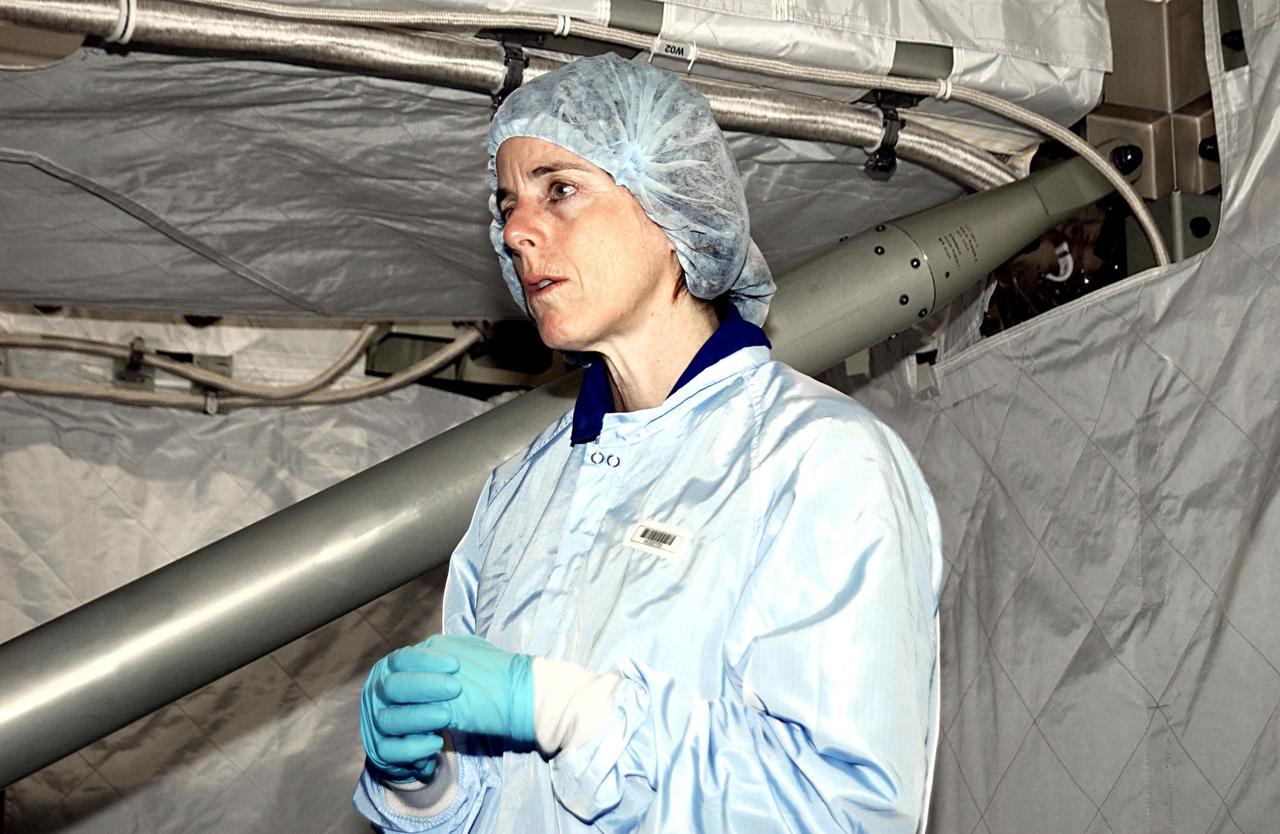
KENNEDY SPACE CENTER, FLA. - STS-118 Mission Specialist Barbara Morgan is seen in the Space Station Processing Facility during Crew Equipment Interface Test activities. Morgan was selected by NASA in January 1998 as the first Educator Astronaut. The mission to the International Space Station will be delivering the third starboard truss segment, the ITS S5, which will be attached to the station, and a SPACEHAB Single Cargo Module with supplies and equipment. Launch aboard Space Shuttle Columbia is scheduled for Nov. 13, 2003.
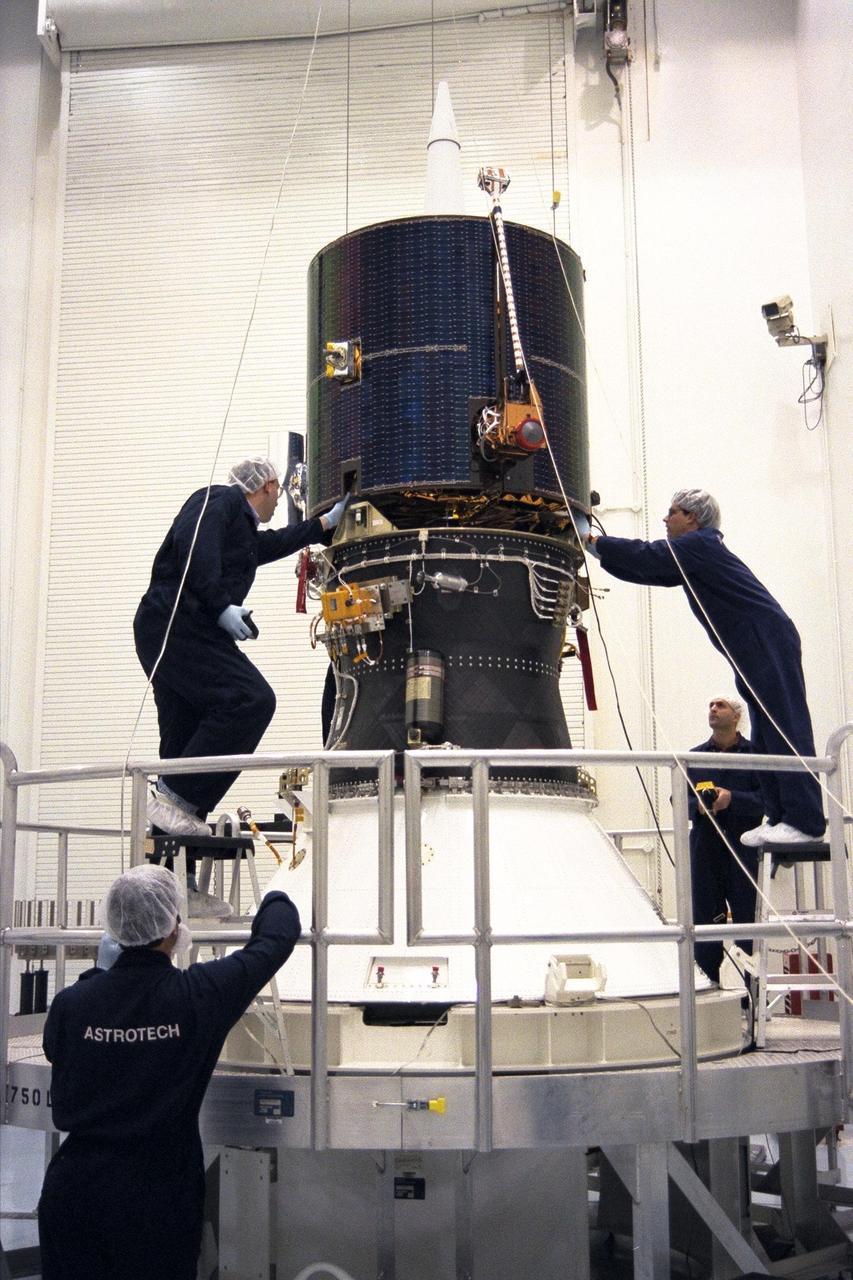
Lockheed Martin Missile Systems integration and test staff join NASA’s Lunar Prospector spacecraft to the Trans Lunar Injection Module of the spacecraft at Astrotech, a commercial payload processing facility, in Titusville, Fla. The small robotic spacecraft, to be launched on an Athena II launch vehicle by Lockheed Martin, is designed to provide the first global maps of the Moon’s surface compositional elements and its gravitational and magnetic fields. The launch of Lunar Prospector is scheduled for Jan. 5, 1998 at 8:31 p.m
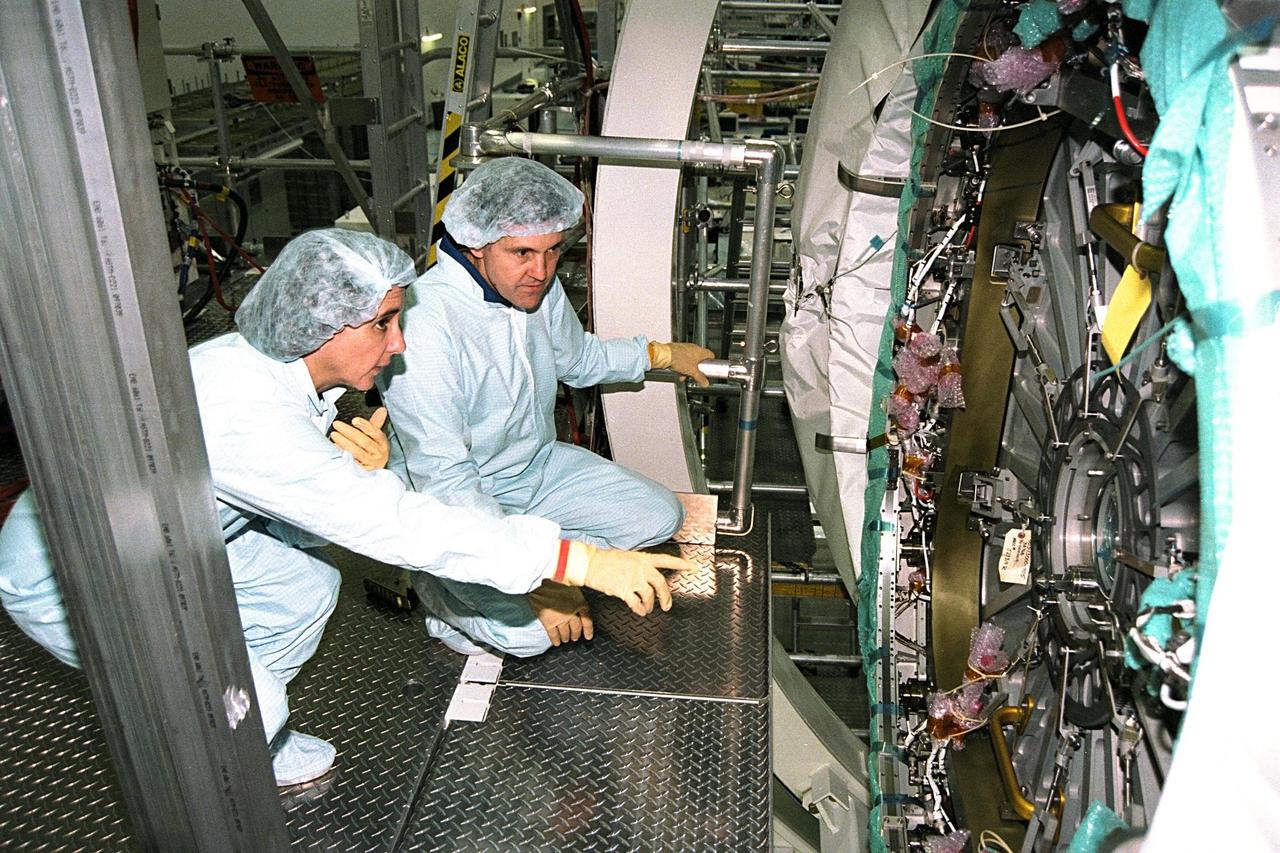
Mission Specialist Nancy Currie and Commander Bob Cabana participate in the Crew Equipment Interface Test (CEIT) for STS-88 in KSC's Space Station Processing Facility. The CEIT gives astronauts an opportunity to get a hands-on look at the payloads with which they will be working on-orbit. Here, Currie and Cabana inspect one of the six hatches on Node 1 of the International Space Station (ISS). STS-88, the first ISS assembly flight, is targeted for launch in July 1998 aboard Space Shuttle Endeavour
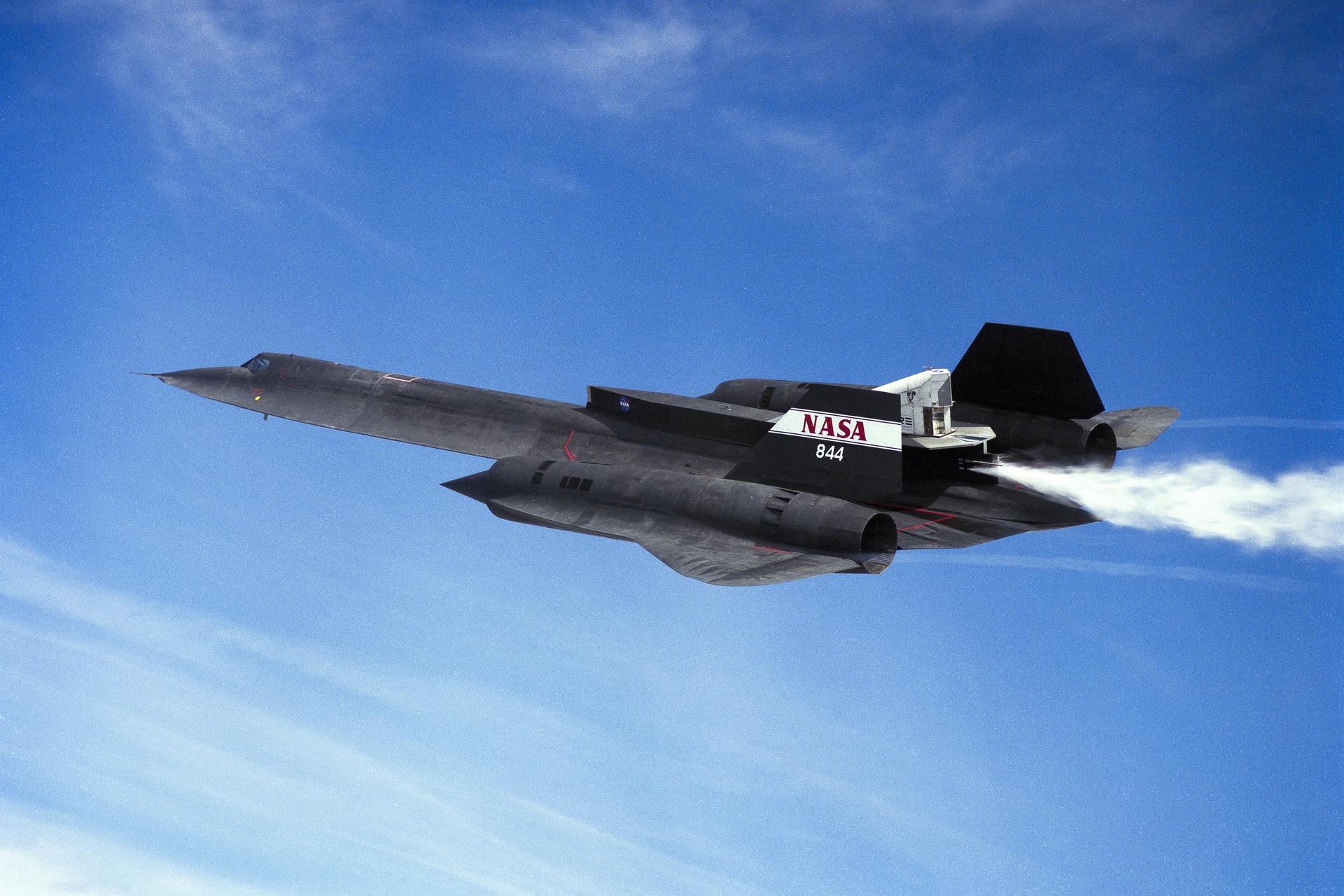
The NASA SR-71 triple-supersonic aircraft carries the Linear Aerospike Experiment on Wednesday, March 4, 1998, during a flight from NASA’s Armstrong (then Dryden) Flight Research Center in Edwards, California. Gaseous helium and liquid nitrogen cycled through the linear aerospike engine during the flight to check the engine’s plumbing system for leaks and to check the engine operating characteristics. Cold-flow tests must be accomplished successfully before firing the rocket engine experiment in flight.
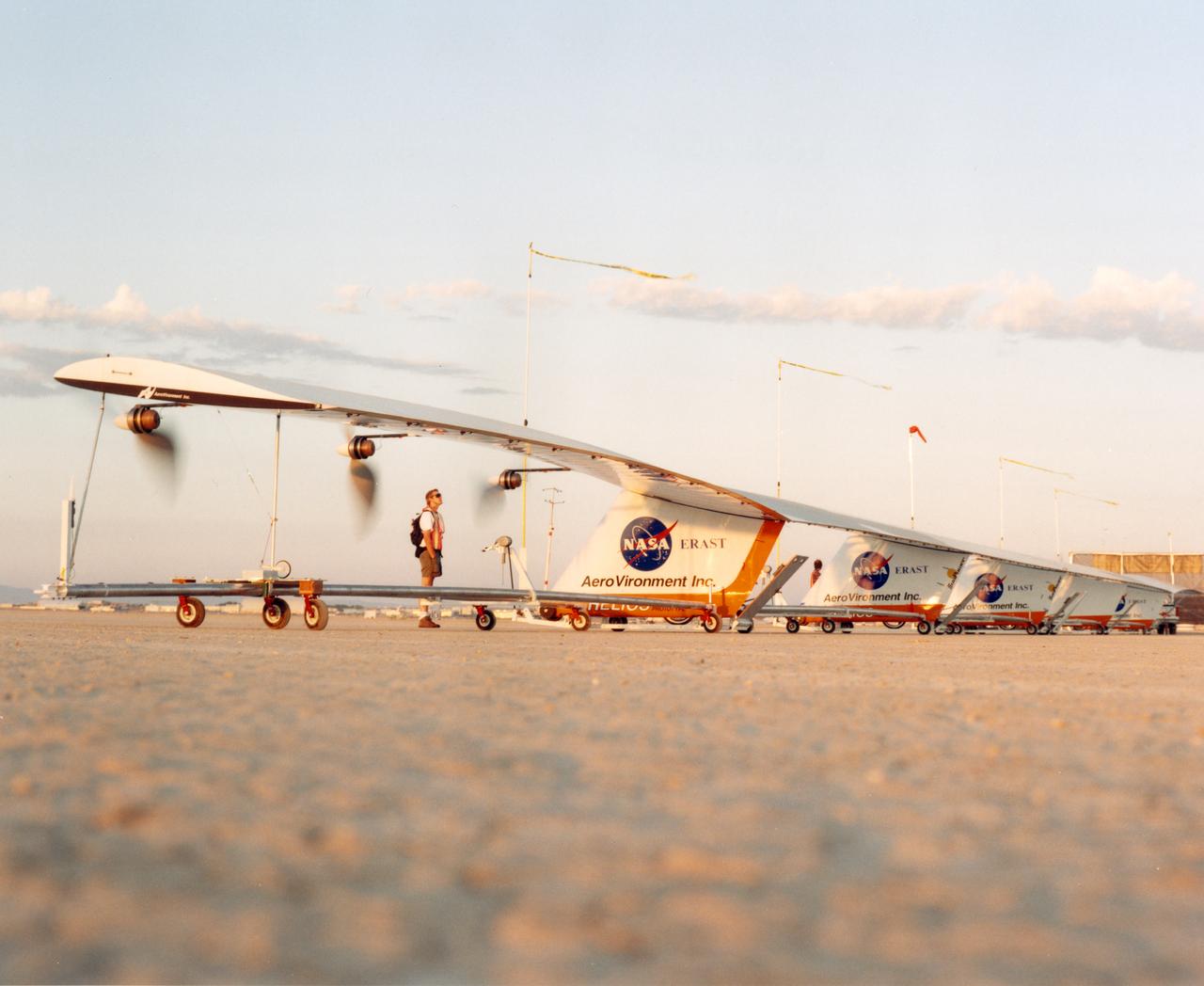
The Helios Prototype is an enlarged version of the Centurion flying wing, which flew a series of test flights at Dryden in late 1998. The craft has a wingspan of 247 feet, 41 feet greater than the Centurion, 2 1/2 times that of its solar-powered Pathfinder flying wing, and longer than either the Boeing 747 jetliner or Lockheed C-5 transport aircraft.
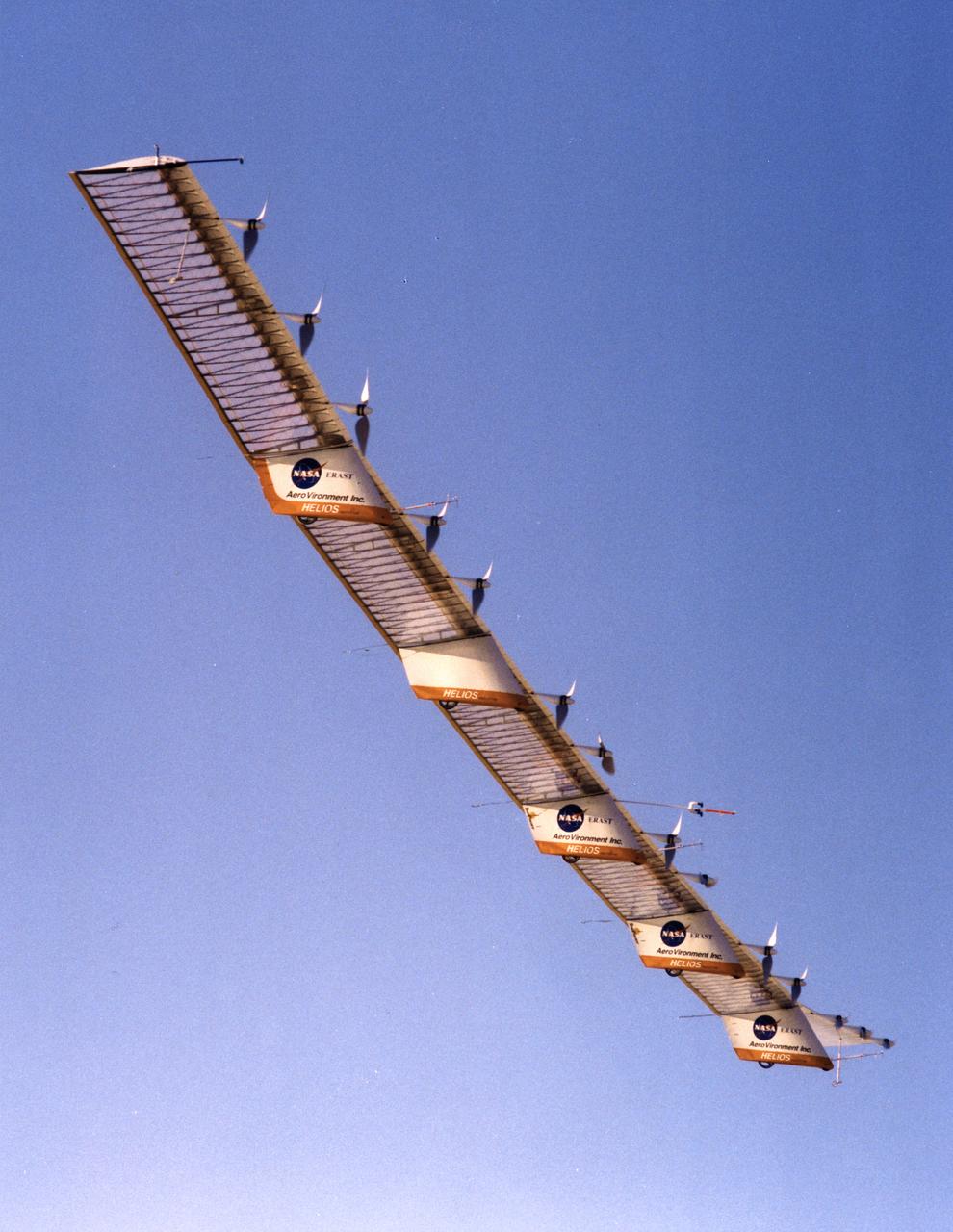
The Helios Prototype is an enlarged version of the Centurion flying wing, which flew a series of test flights at Dryden in late 1998. The craft has a wingspan of 247 feet, 41 feet greater than the Centurion, 2 1/2 times that of its solar-powered Pathfinder flying wing, and longer than either the Boeing 747 jetliner or Lockheed C-5 transport aircraft.
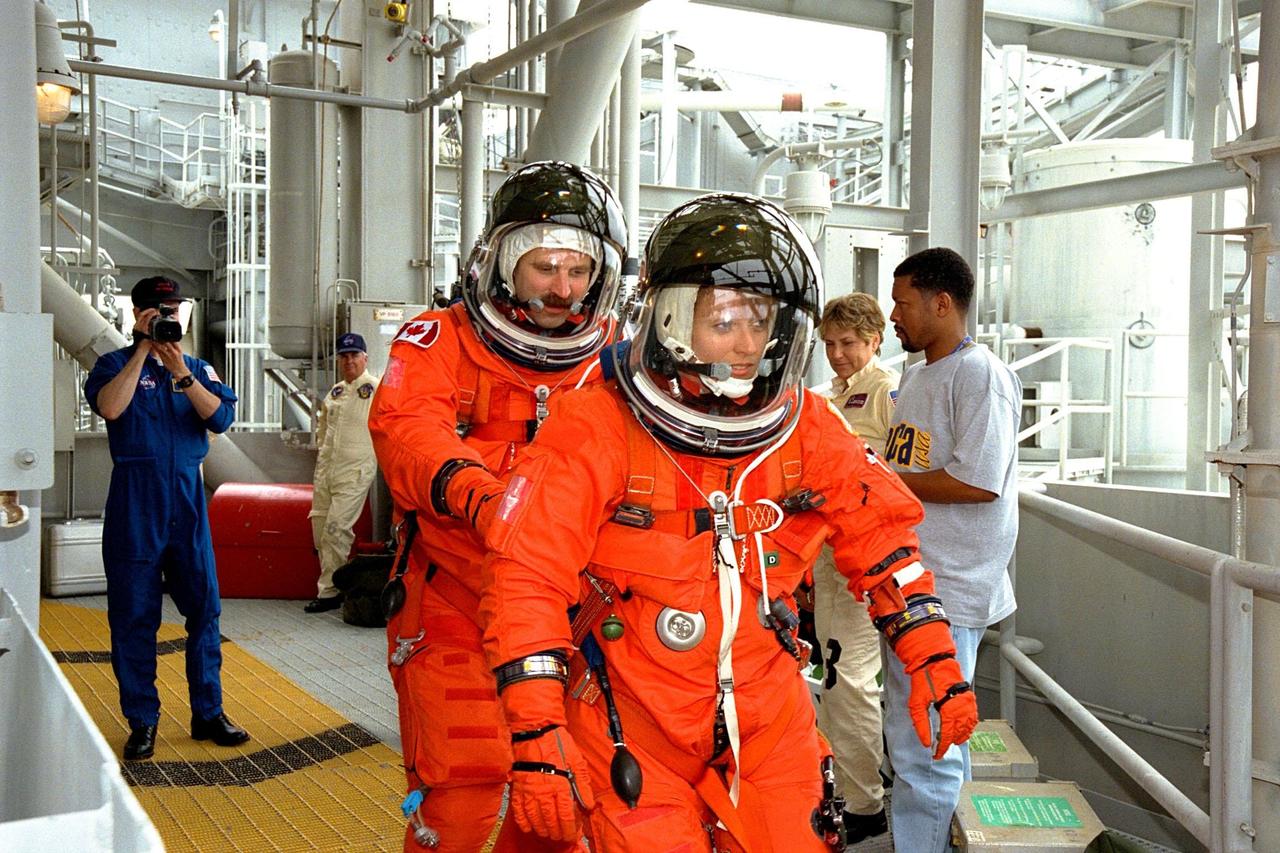
STS-90 Mission Specialists Dafydd (Dave) Williams with the Canadian Space Agency and Kathryn (Kay) Hire participate in Terminal Countdown Demonstration Test (TCDT) activities at KSC's Launch Pad 39B. The TCDT is held at KSC prior to each Space Shuttle flight to provide crews with the opportunity to participate in simulated countdown activities. The Space Shuttle Columbia is targeted for launch of STS-90 on April 16 at 2:19 p.m. EDT and will be the second mission of 1998. The mission is scheduled to last nearly 17 days

Flight evaluation and comparison of a NACA submerged inlet and a scoop inlet on the North American YF-93A (AF48-317 NACA-139). The YF-93A's were the first aircraft to use flush NACA engine inlets. aircraft to use flush NACA engine inlets. Note: Used in publication in Flight Research at Ames; 57 Years of Development and Validation of Aeronautical Technology NASA SP-1998-3300 and Memoirs of a Flight Test Engineer NASA SP-2001-4525
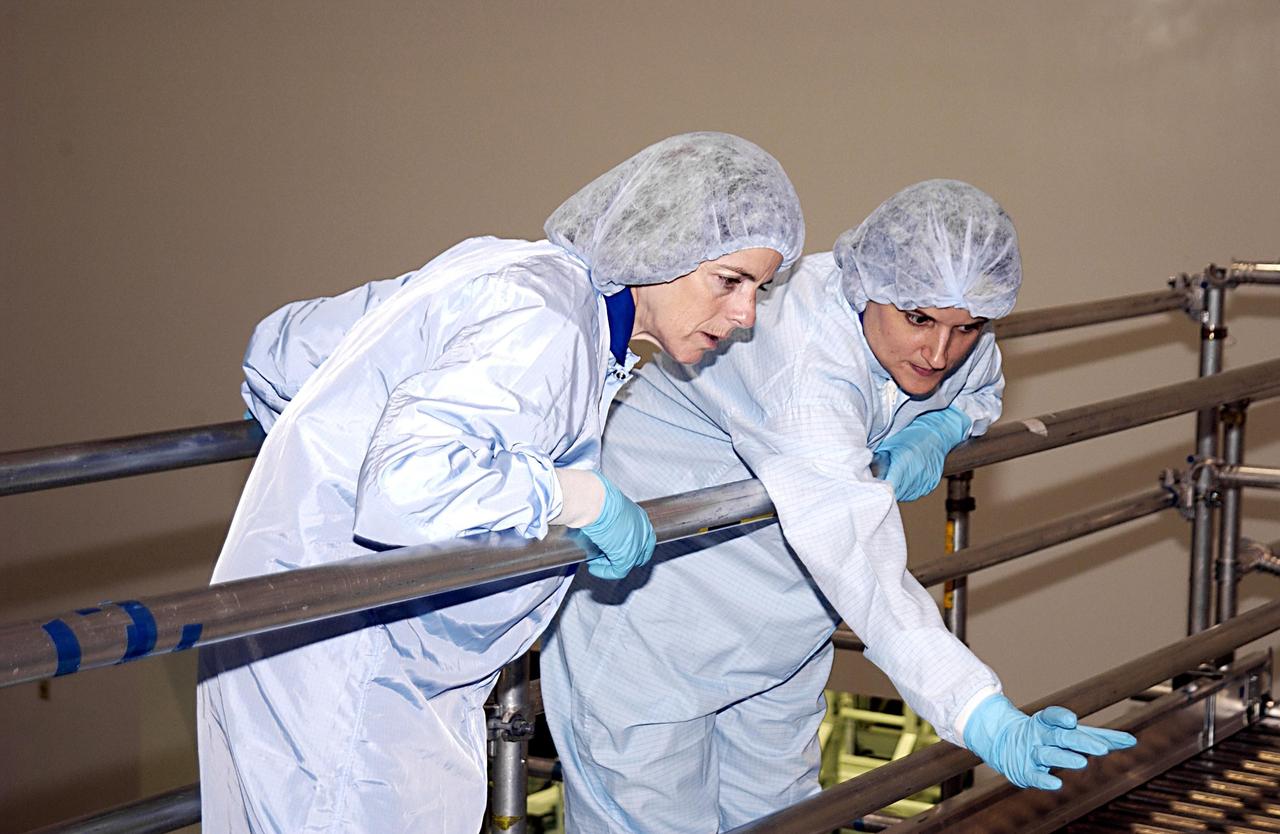
KENNEDY SPACE CENTER, FLA. - STS-118 Mission Specialist Barbara Morgan (left) listens to a technician in the Space Station Processing Facility during Crew Equipment Interface Test activities. Morgan was selected by NASA in January 1998 as the first Educator Astronaut. The mission to the International Space Station will be delivering the third starboard truss segment, the ITS S5, which will be attached to the station, and a SPACEHAB Single Cargo Module with supplies and equipment. Launch aboard Space Shuttle Columbia is scheduled for Nov. 13, 2003.
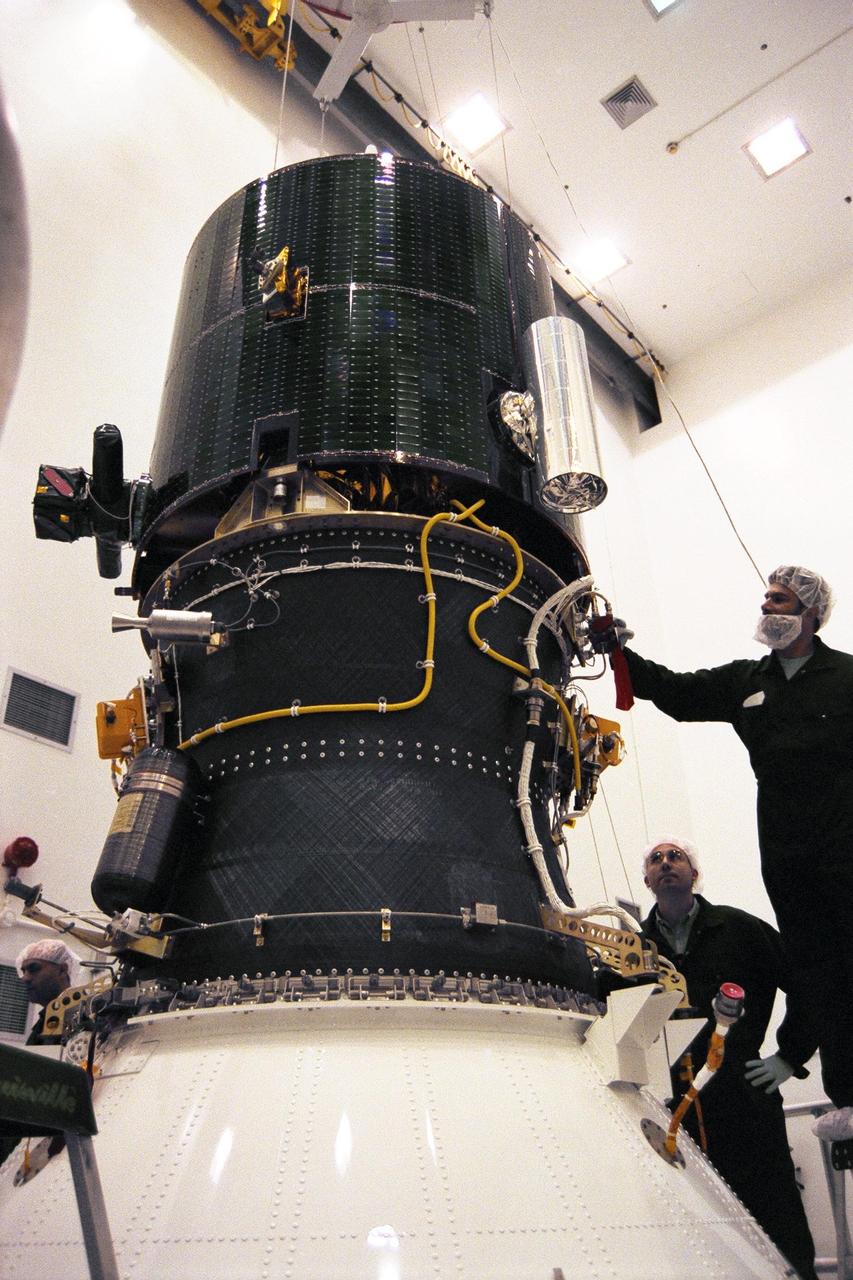
Lockheed Martin Missile Systems integration and test staff join NASA’s Lunar Prospector spacecraft atop the Trans Lunar Injection Module of the spacecraft at Astrotech, a commercial payload processing facility, in Titusville, Fla. The small robotic spacecraft, to be launched on an Athena II launch vehicle by Lockheed Martin, is designed to provide the first global maps of the Moon’s surface compositional elements and its gravitational and magnetic fields. The launch of Lunar Prospector is scheduled for Jan. 5, 1998 at 8:31 p.m
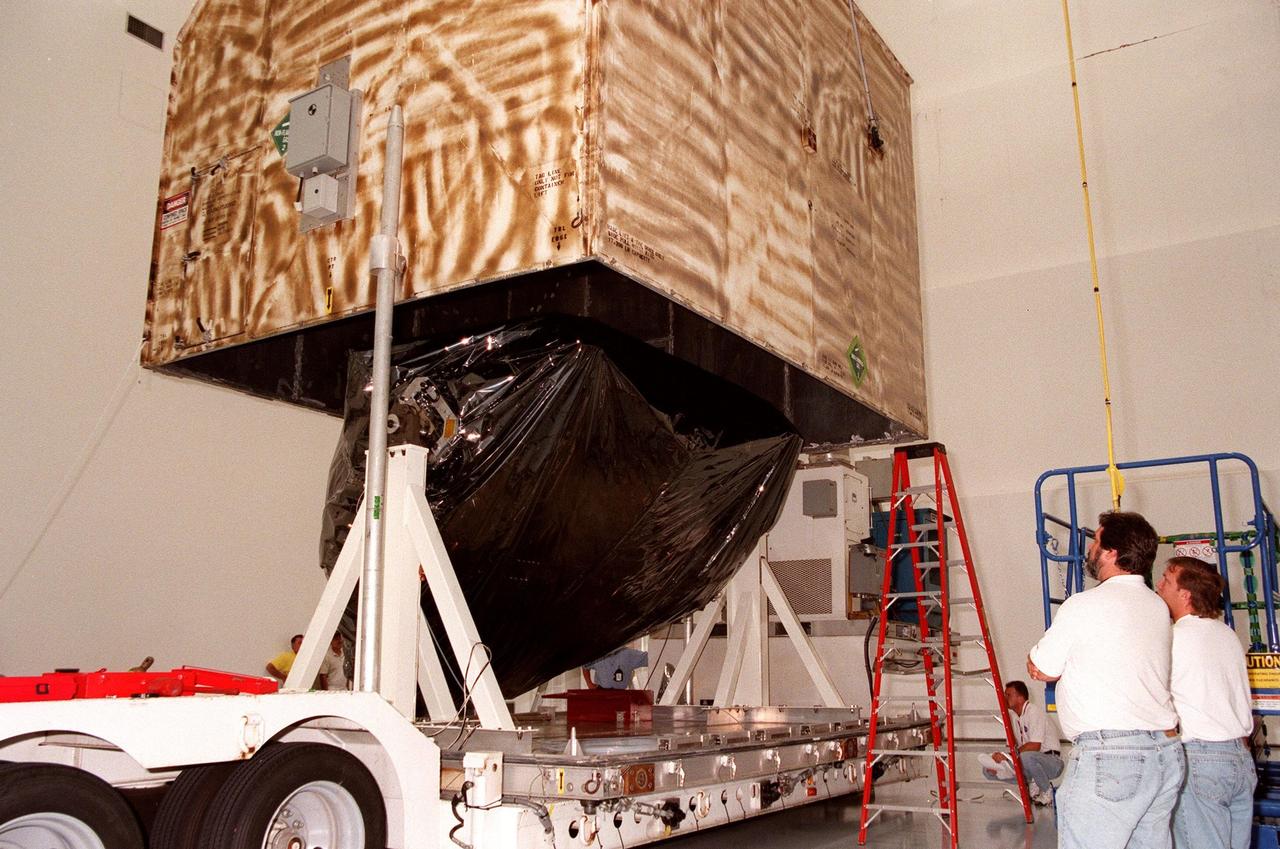
The HOST (the Hubble Space Telescope Orbital Systems Test) payload is uncrated in the Space Station Processing Facility (SSPF). HOST is scheduled to fly on the STS-95 mission, planned for launch on Oct. 29, 1998. The mission includes other research payloads such as the Spartan solar-observing deployable spacecraft, the International Extreme Ultraviolet Hitchhiker, as well as the SPACEHAB single module with experiments on space flight and the aging process
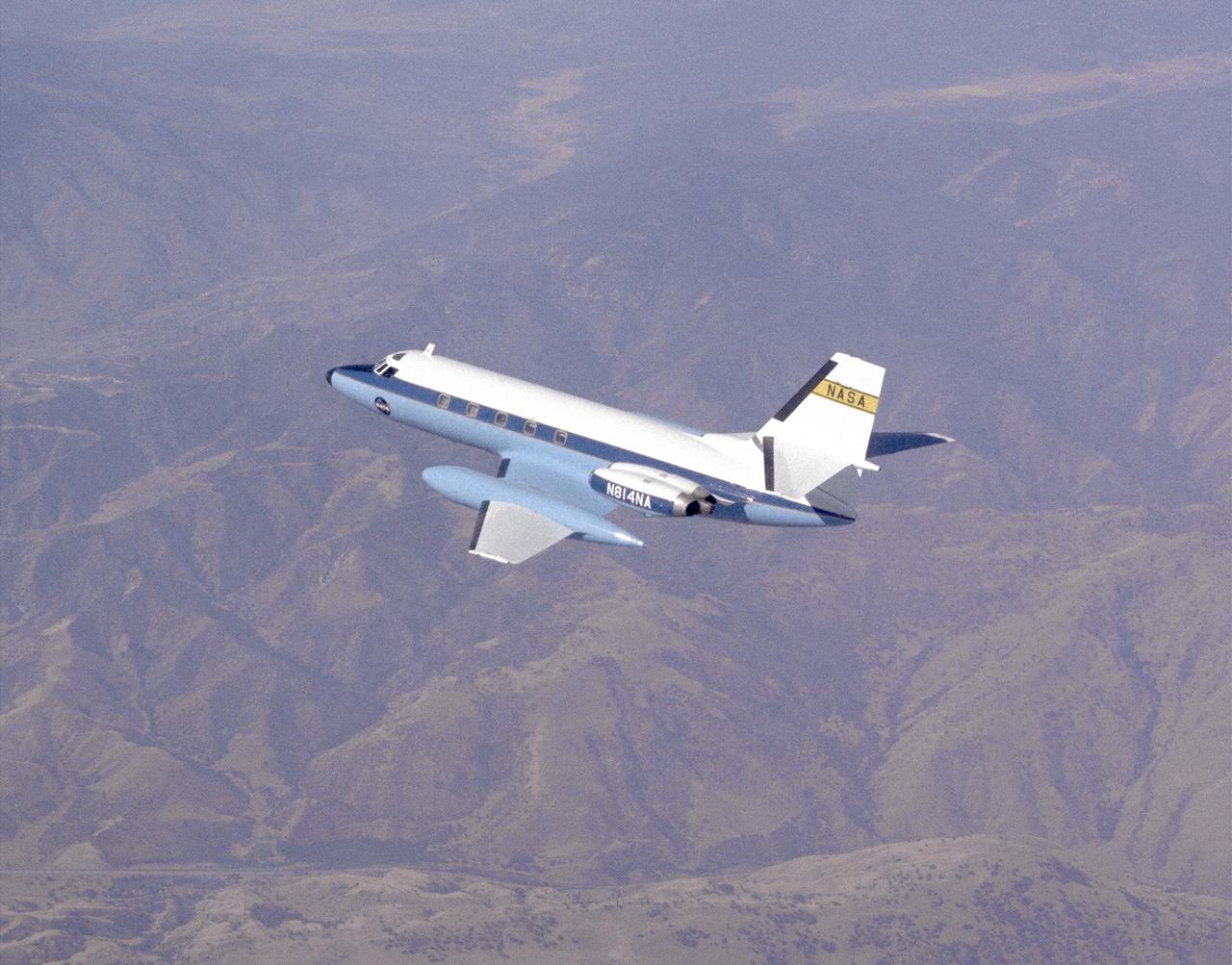
The C-140 JetStar was reconfigured as the General Purpose Airborne Simulator (GPAS) to simulate the flight characteristics of other aircraft. The JetStar was used for research for supersonic transports, general aviation aircraft, and as a training support aircraft for the Space Shuttle Approach and Landing tests at Dryden Flight Research Center (under different names) at Edwards, CA, in 1977. One of the engineers on the GPAS program was Ken Szalai, who later became Dryden's director from 1990 to August 1998.
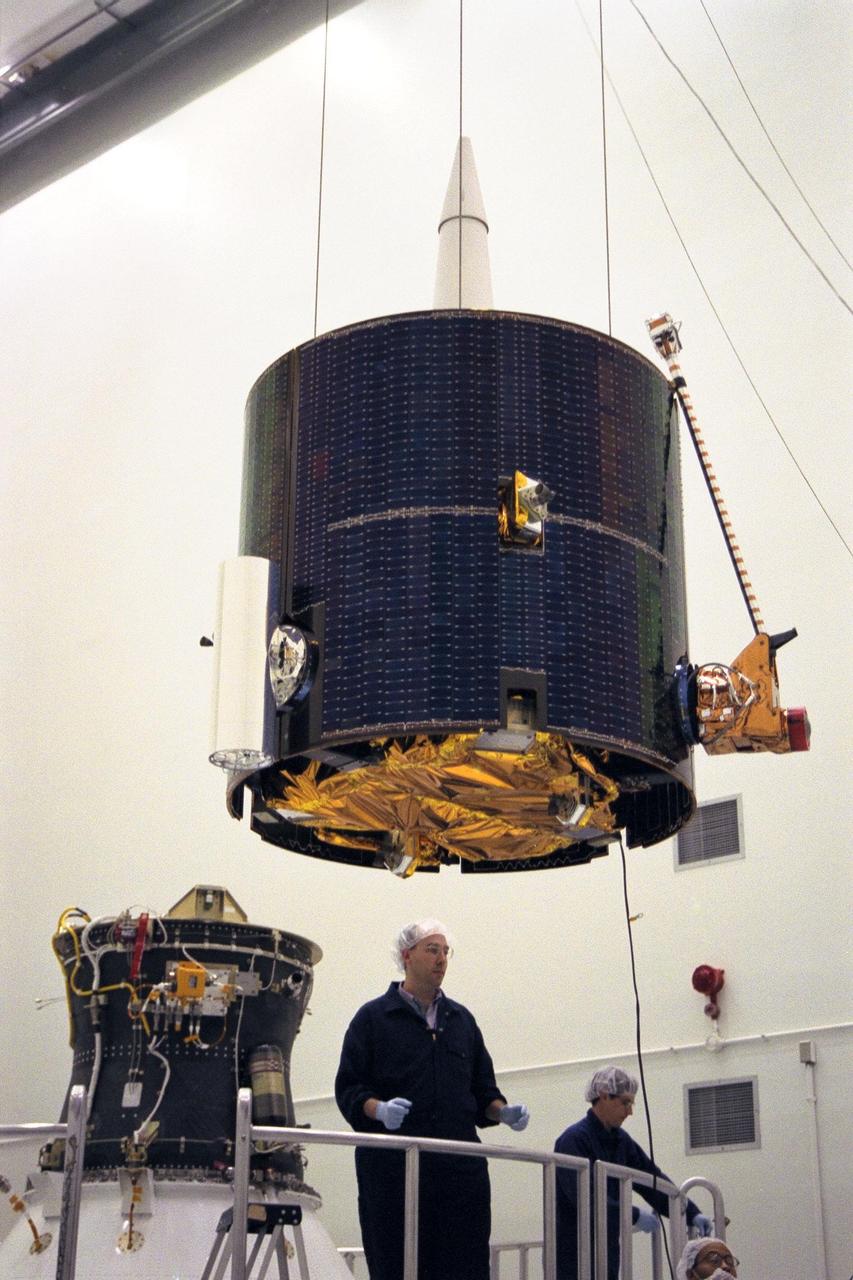
Lockheed Martin Missile Systems integration and test staff prepare NASA’s Lunar Prospector spacecraft for mating to the Trans Lunar Injection Module of the spacecraft at Astrotech, a commercial payload processing facility, in Titusville, Fla. The small robotic spacecraft, to be launched for NASA on an Athena II launch vehicle by Lockheed Martin, is designed to provide the first global maps of the Moon’s surface compositional elements and its gravitational and magnetic fields. The launch of Lunar Prospector is scheduled for Jan. 5, 1998 at 8:31 p.m
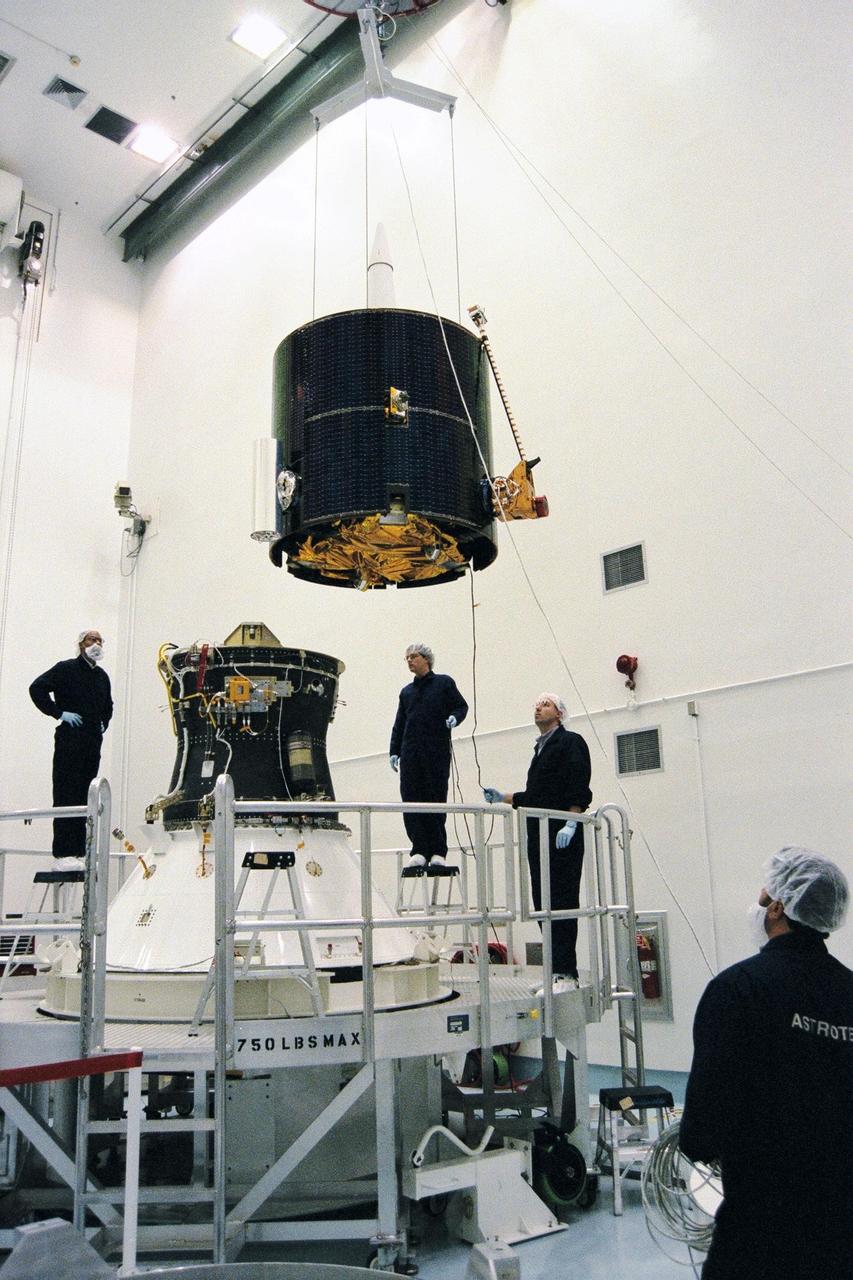
Lockheed Martin Missile Systems integration and test staff move NASA’s Lunar Prospector spacecraft over the Trans Lunar Injection Module of the spacecraft at Astrotech, a commercial payload processing facility, in Titusville, Fla. The small robotic spacecraft, to be launched on an Athena II launch vehicle by Lockheed Martin, is designed to provide the first global maps of the Moon’s surface compositional elements and its gravitational and magnetic fields. The launch of Lunar Prospector is scheduled for Jan. 5, 1998 at 8:31 p.m
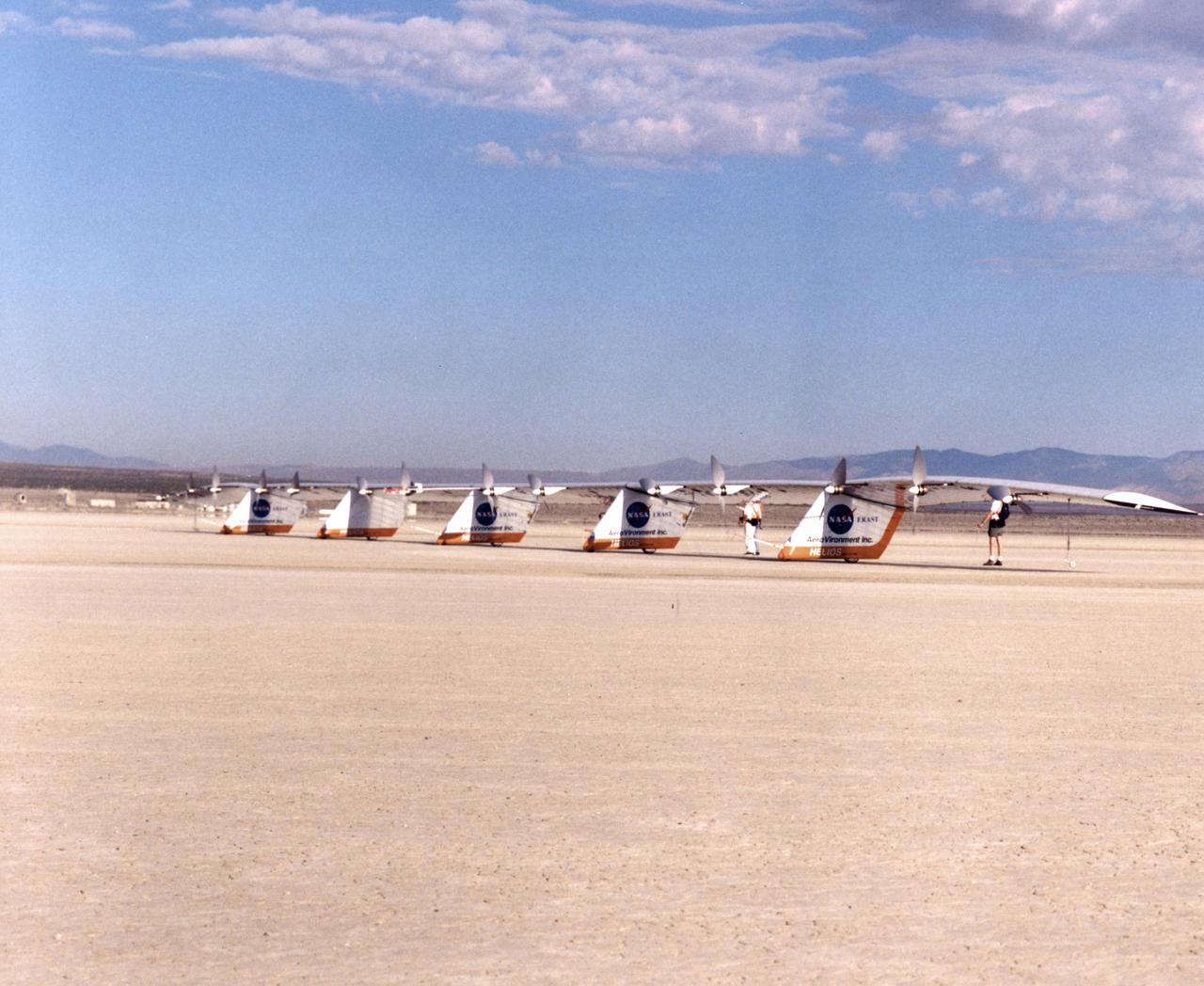
The Helios Prototype is an enlarged version of the Centurion flying wing, which flew a series of test flights at Dryden in late 1998. The craft has a wingspan of 247 feet, 41 feet greater than the Centurion, 2 1/2 times that of its solar-powered Pathfinder flying wing, and longer than either the Boeing 747 jetliner or Lockheed C-5 transport aircraft.
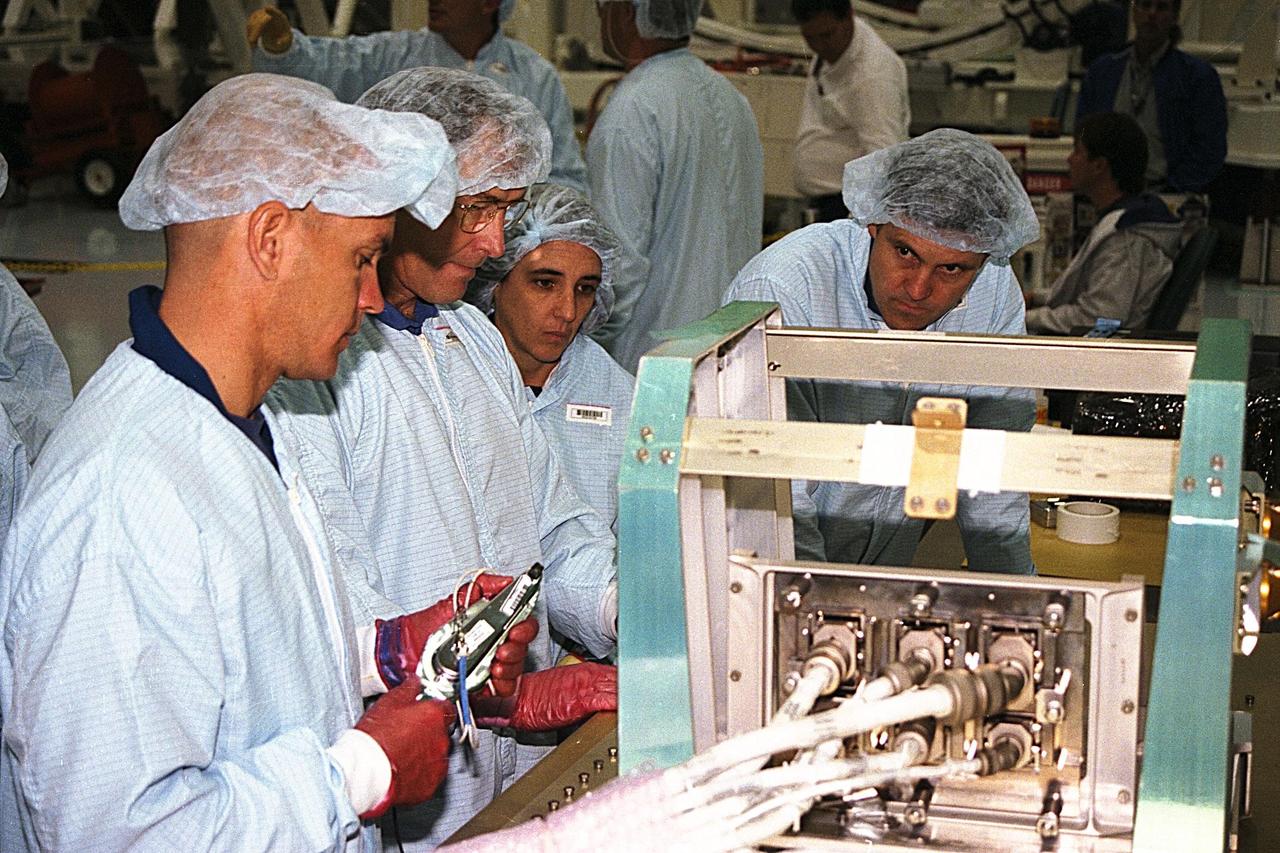
STS-88 crew members participate in the Crew Equipment Interface Test (CEIT) for that mission in KSC's Space Station Processing Facility. Discussing the mission are, from left to right, Pilot Rick Sturckow, Mission Specialists Jerry Ross and Nancy Currie, and Commander Bob Cabana. The CEIT gives astronauts an opportunity to get a hands-on look at the payloads with which they will be working on-orbit. STS-88, the first ISS assembly flight, is targeted for launch in July 1998 aboard Space Shuttle Endeavour
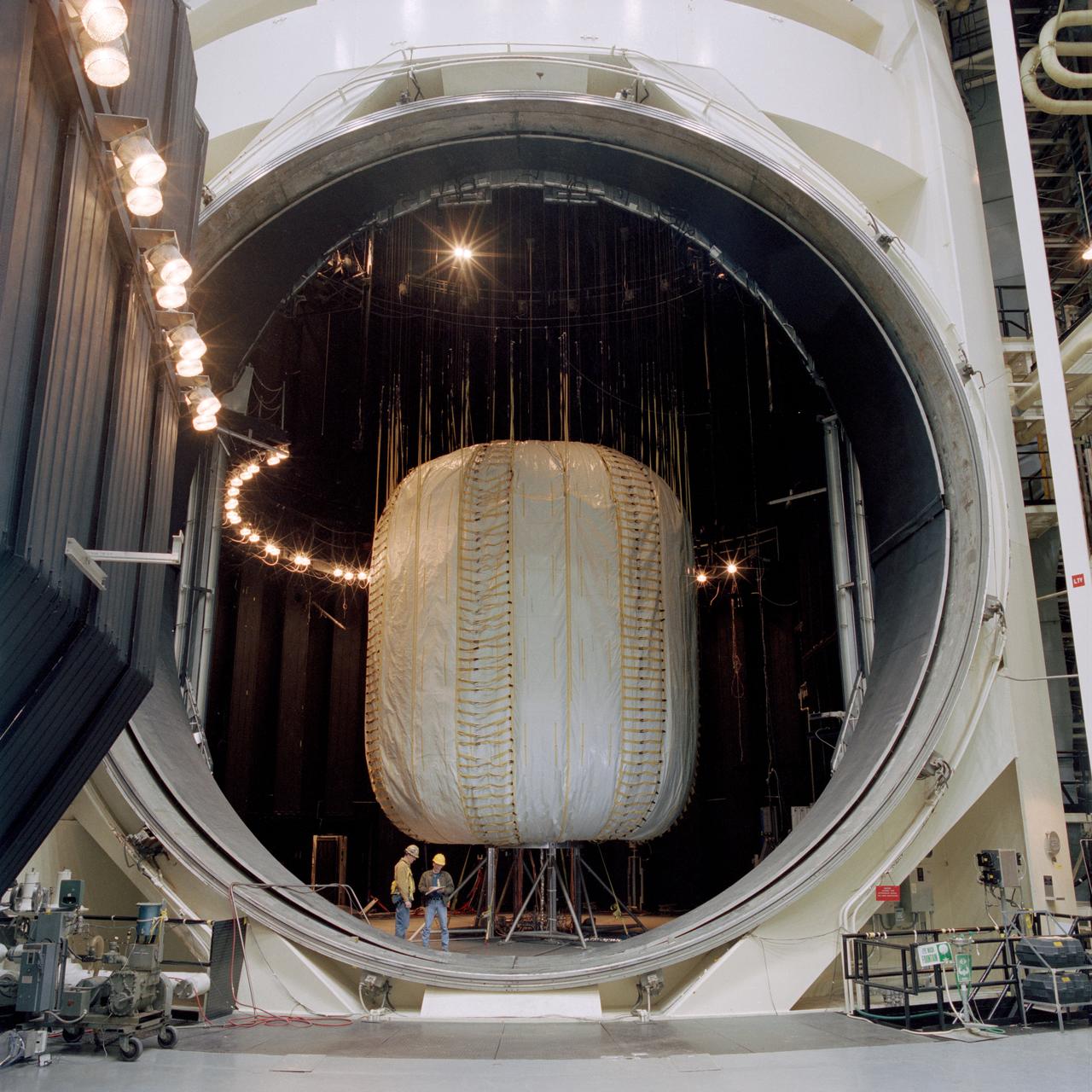
S98-00157 --- A mock-up of TransHab, the large-volume inflatable space vehicle, is seen during 1998 testing at the Johnson Space Center’s Space Environment Simulation Laboratory (SESL). SESL houses the giant Chamber A, the door of which has a 40-foot diameter and weight of 40 tons. TransHab, the large-volume inflatable space vehicle, was a proposed design for a habitation element for lengthy space missions. It is not part of NASA’s current plans. Photo credit: NASA or National Aeronautics and Space Administration
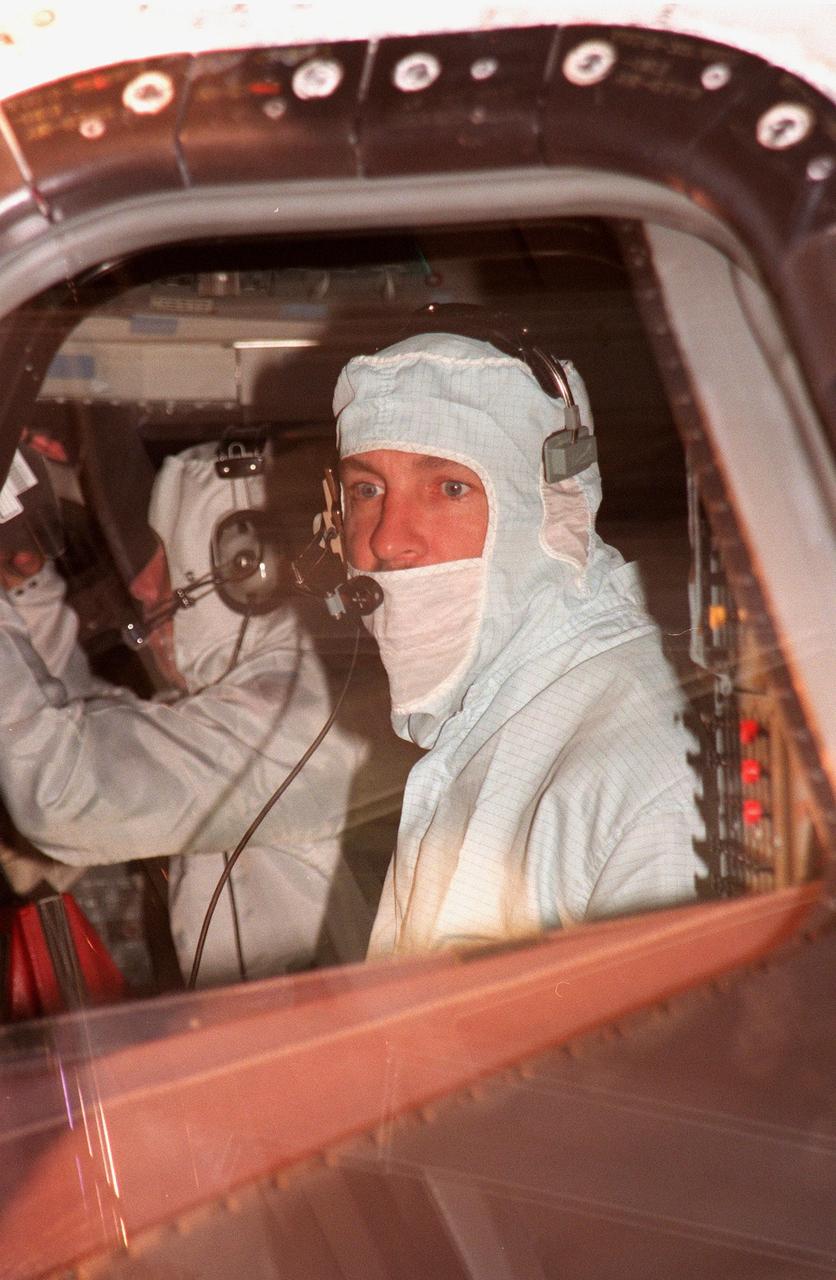
(Foreground) STS-95 Mission Commander Curtis L. Brown Jr. inspects the window of the orbiter Discovery during a Crew Equipment Interface Test (CEIT) for their mission. Pilot Steven Lindsey is in the background. The CEIT gives astronauts an opportunity for a hands-on look at the payloads on which they will be working on orbit. The launch of the STS-95 mission, aboard Space Shuttle Discovery, is scheduled for Oct. 29, 1998. The mission includes research payloads such as the Spartan solar-observing deployable spacecraft, the Hubble Space Telescope Orbital Systems Test Platform, the International Extreme Ultraviolet Hitchhiker, as well as the SPACEHAB single module with experiments on space flight and the aging process
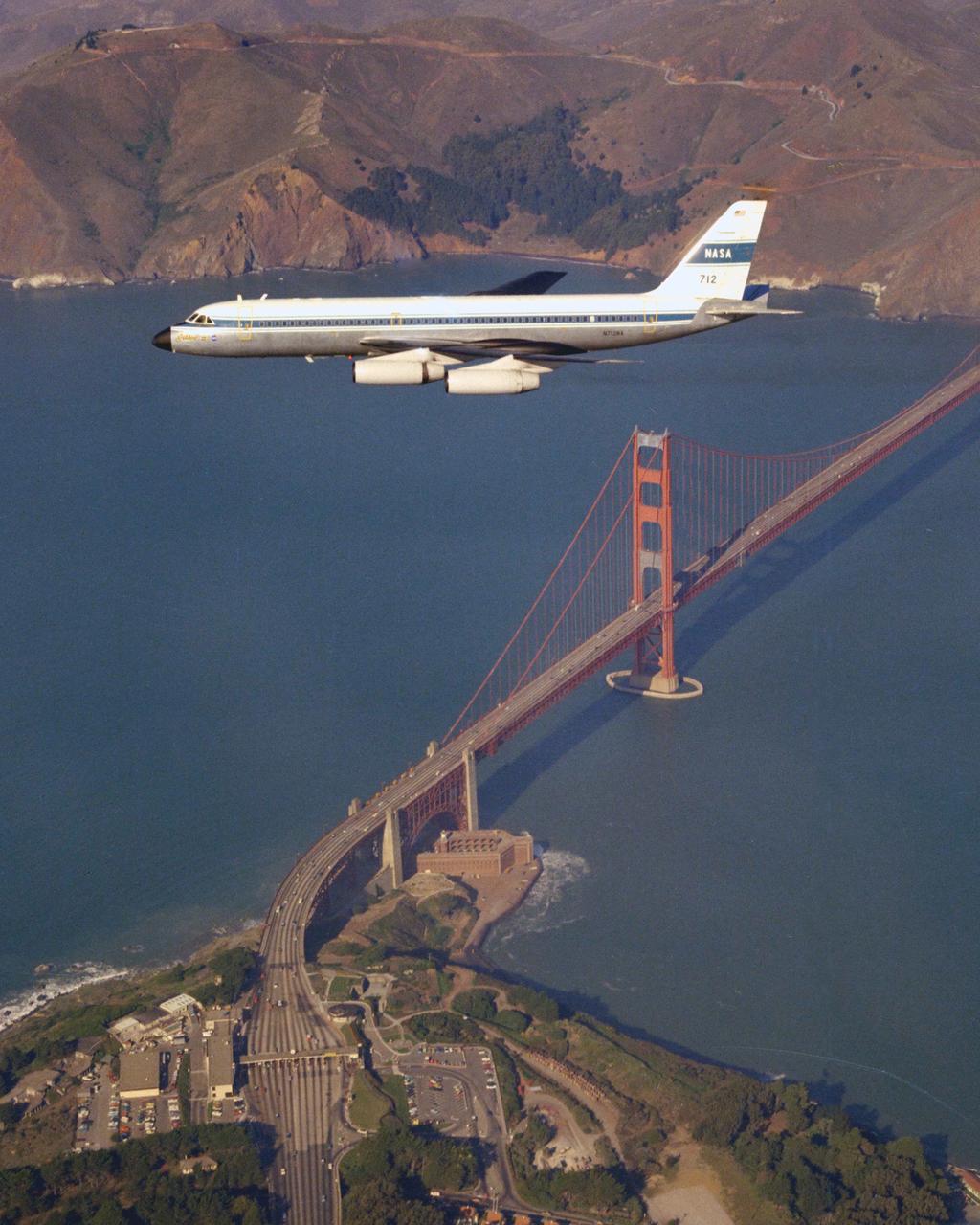
CV-990 (NASA-712) Galileo II aircraft in flight over the San Francisco's Golden Gate Bridge. A digital navigation, guidance and autopilot system tested on Galileo 1 and Galileo II in 1975 looked at the feasibility of energy-management approach concepts for an unpowered vehicle. Flight tests carried out by pilot Fred Drinkwater with technical direction by Fred Edwards and John D Foster along with significant input from Gordon Hardy on the pilot's system interface. Note: Used in publication in Flight Research at Ames; 57 Years of Development and Validation of Aeronautical Technology NASA SP-1998-3300 fig 95 ref 99

(Foreground) STS-95 Pilot Steven Lindsey inspects the window of the orbiter Discovery during a Crew Equipment Interface Test (CEIT) for their mission. The CEIT gives astronauts an opportunity for a hands-on look at the payloads on which they will be working on orbit. The launch of the STS-95 mission, aboard Space Shuttle Discovery, is scheduled for Oct. 29, 1998. The mission includes research payloads such as the Spartan solar-observing deployable spacecraft, the Hubble Space Telescope Orbital Systems Test Platform, the International Extreme Ultraviolet Hitchhiker, as well as the SPACEHAB single module with experiments on space flight and the aging process
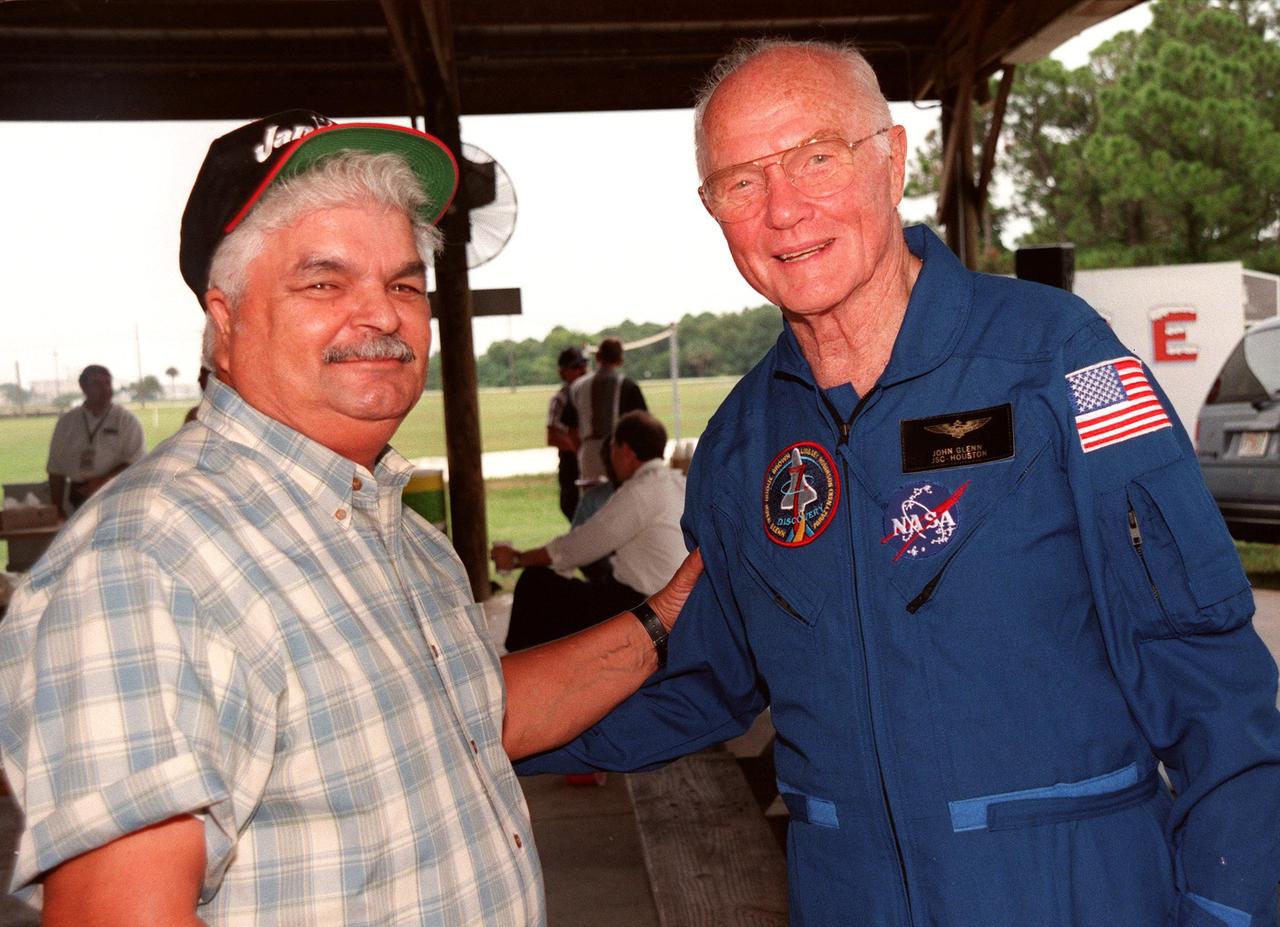
During a break in the Crew Equipment Interface Test (CEIT), Payload Specialist John H. Glenn Jr., a senator from Ohio, greets Bobby Miranda. Miranda was a NASA photographer for Glenn's first flight on Friendship 7, February 1962. The CEIT gives astronauts an opportunity for a hands-on look at the payloads and equipment with which they will be working on orbit. The launch of the STS-95 mission is scheduled for Oct. 29, 1998, on the Space Shuttle Discovery. The mission includes research payloads such as the Spartan solar-observing deployable spacecraft, the Hubble Space Telescope Orbital Systems Test Platform, the International Extreme Ultraviolet Hitchhiker, as well as the SPACEHAB single module with experiments on space flight and the aging process
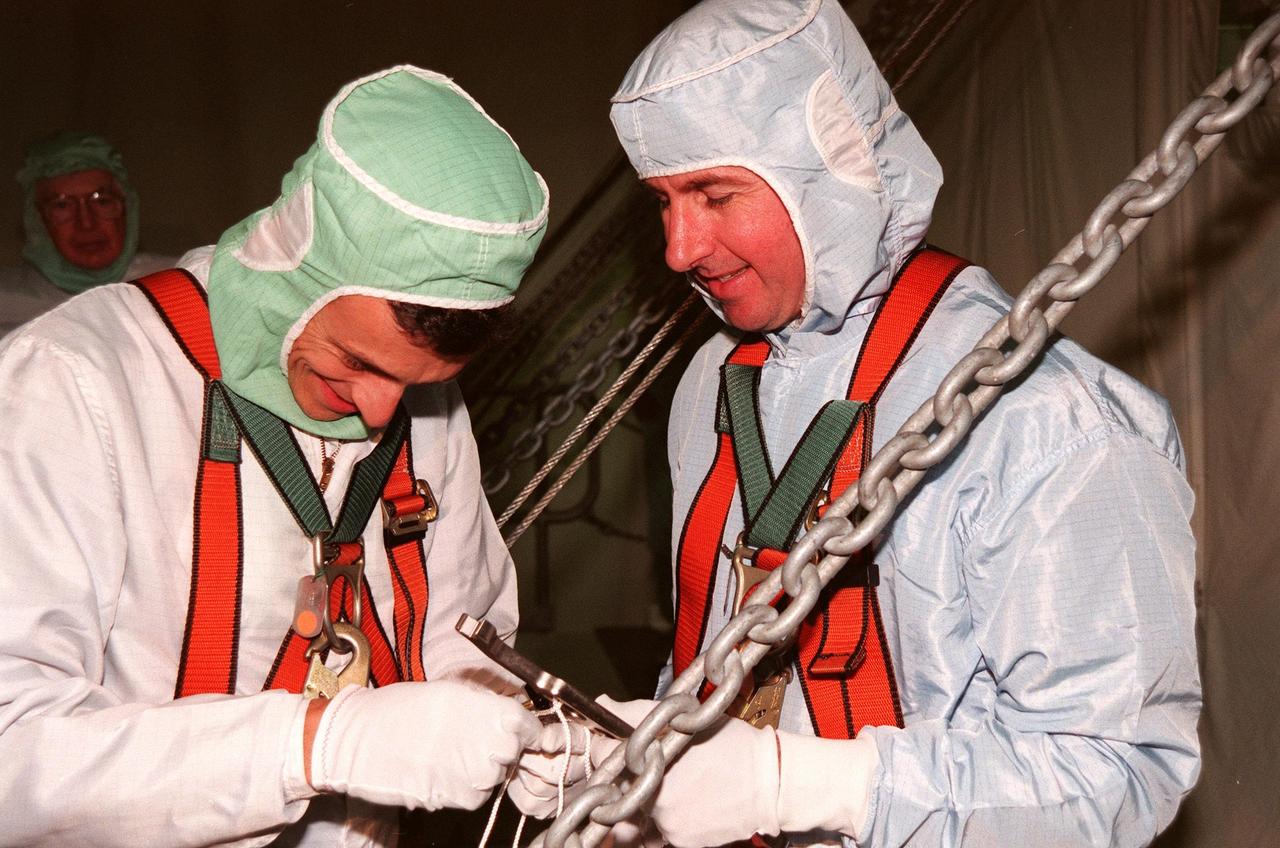
During the Crew Equipment Interface Test (CEIT) in the payload bay of Discovery, STS-95 Mission Specialist Pedro Duque (left), of the European Space Agency, tethers a wrench held by Mission Specialist Stephen K. Robinson (right) that they will use during the mission. The CEIT gives astronauts an opportunity for a hands-on look at the payloads and equipment with which they will be working on orbit. The launch of the STS-95 mission is scheduled for Oct. 29, 1998. The mission includes research payloads such as the Spartan solar-observing deployable spacecraft, the Hubble Space Telescope Orbital Systems Test Platform, the International Extreme Ultraviolet Hitchhiker, as well as the SPACEHAB single module with experiments on space flight and the aging process
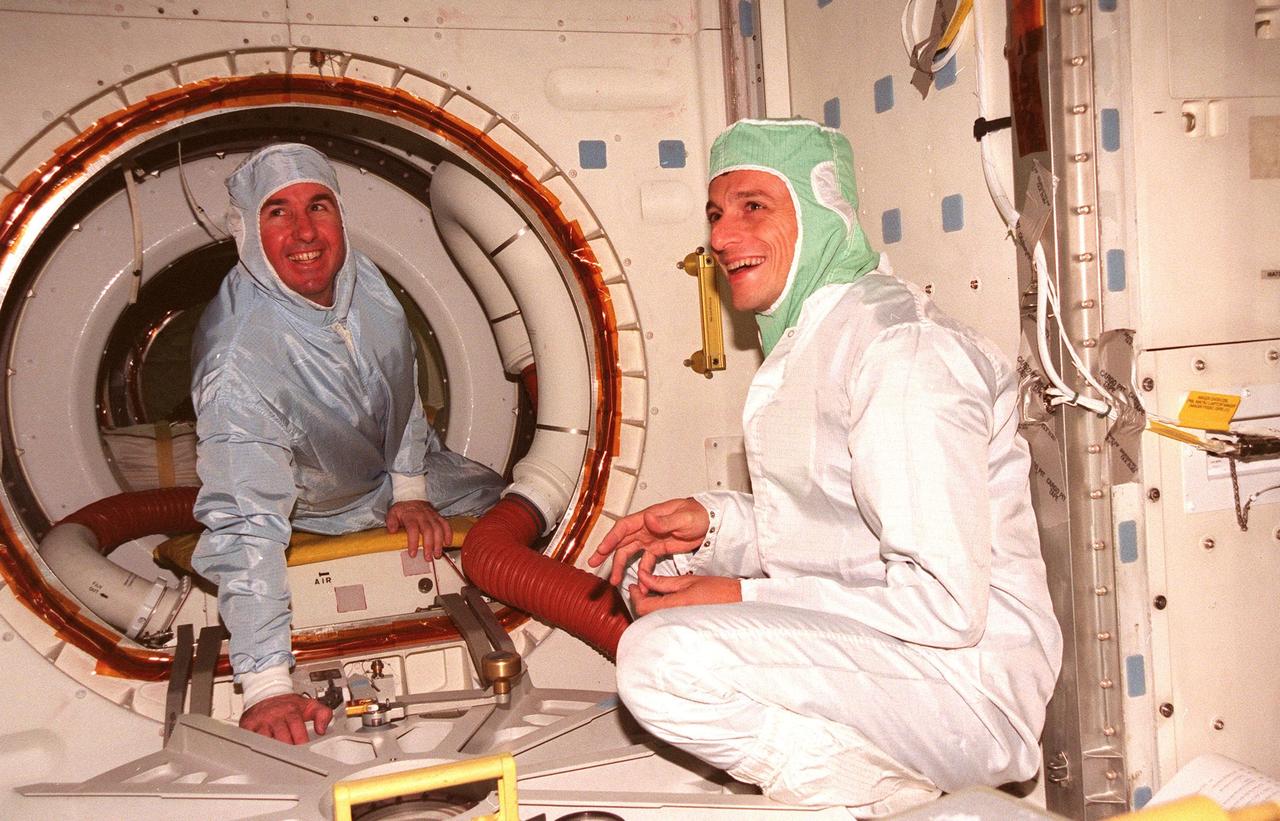
STS-95 Mission Specialists Stephen Robinson and Pedro Duque, with the European Space Agency, take part in a Crew Equipment Interface Test (CEIT) for their mission. The CEIT gives astronauts an opportunity for a hands-on look at the payloads on whcih they will be working on orbit. The launch of the STS-95 mission, aboard Space Shuttle Discovery, is scheduled for Oct. 29, 1998. The mission includes research payloads such as the Spartan solar-observing deployable spacecraft, the Hubble Space Telescope Orbital Systems Test Platform, the International Extreme Ultraviolet Hitchhiker, as well as the SPACEHAB single module with experiments on space flight and the aging process
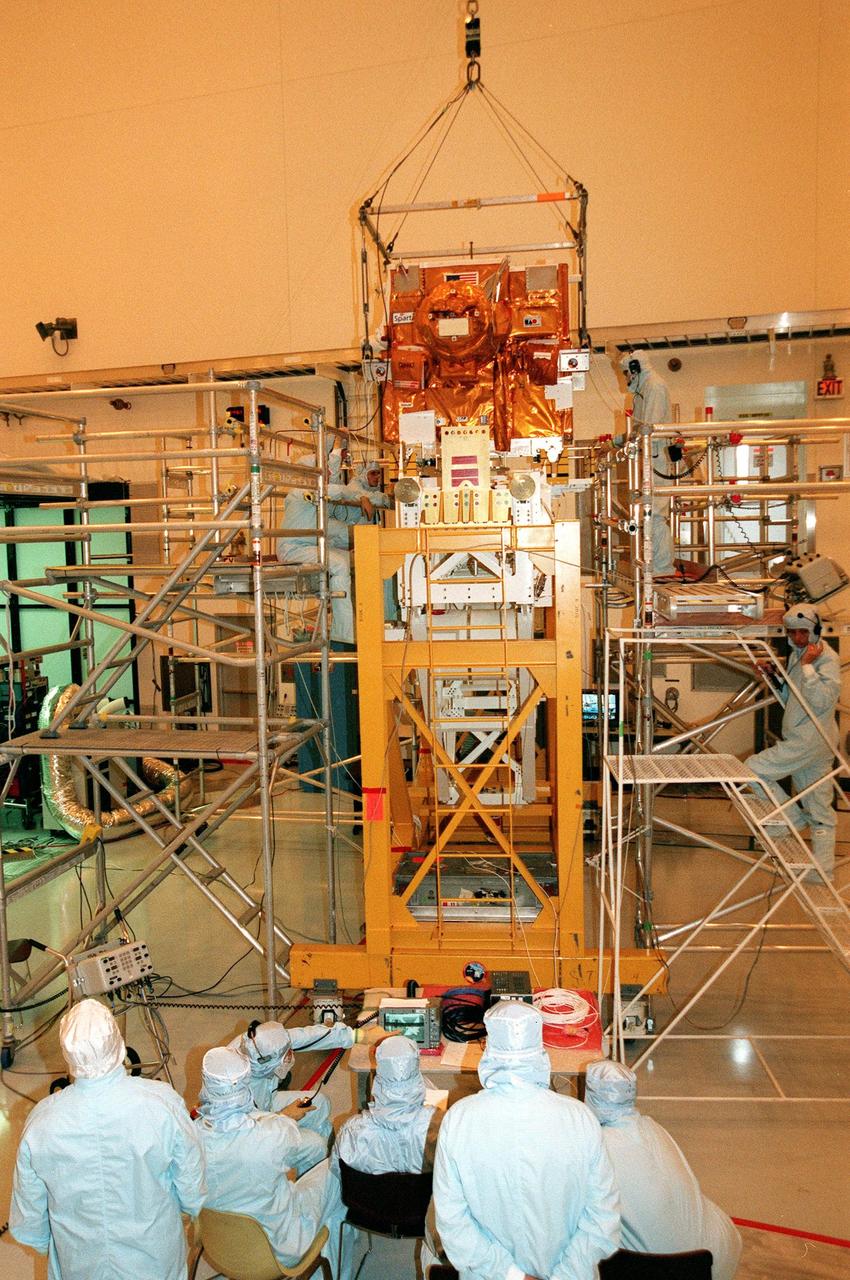
During Crew Equipment Interface Test (CEIT), STS-95 crew members watch a monitor displaying the Spartan payload above as it is maneuvered on a stand. The CEIT gives astronauts an opportunity for a hands-on look at the payloads and equipment with which they will be working on orbit. The launch of the STS-95 mission is scheduled for Oct. 29, 1998. The mission includes research payloads such as the Spartan solar-observing deployable spacecraft, the Hubble Space Telescope Orbital Systems Test Platform, the International Extreme Ultraviolet Hitchhiker, as well as the SPACEHAB single module with experiments on space flight and the aging process
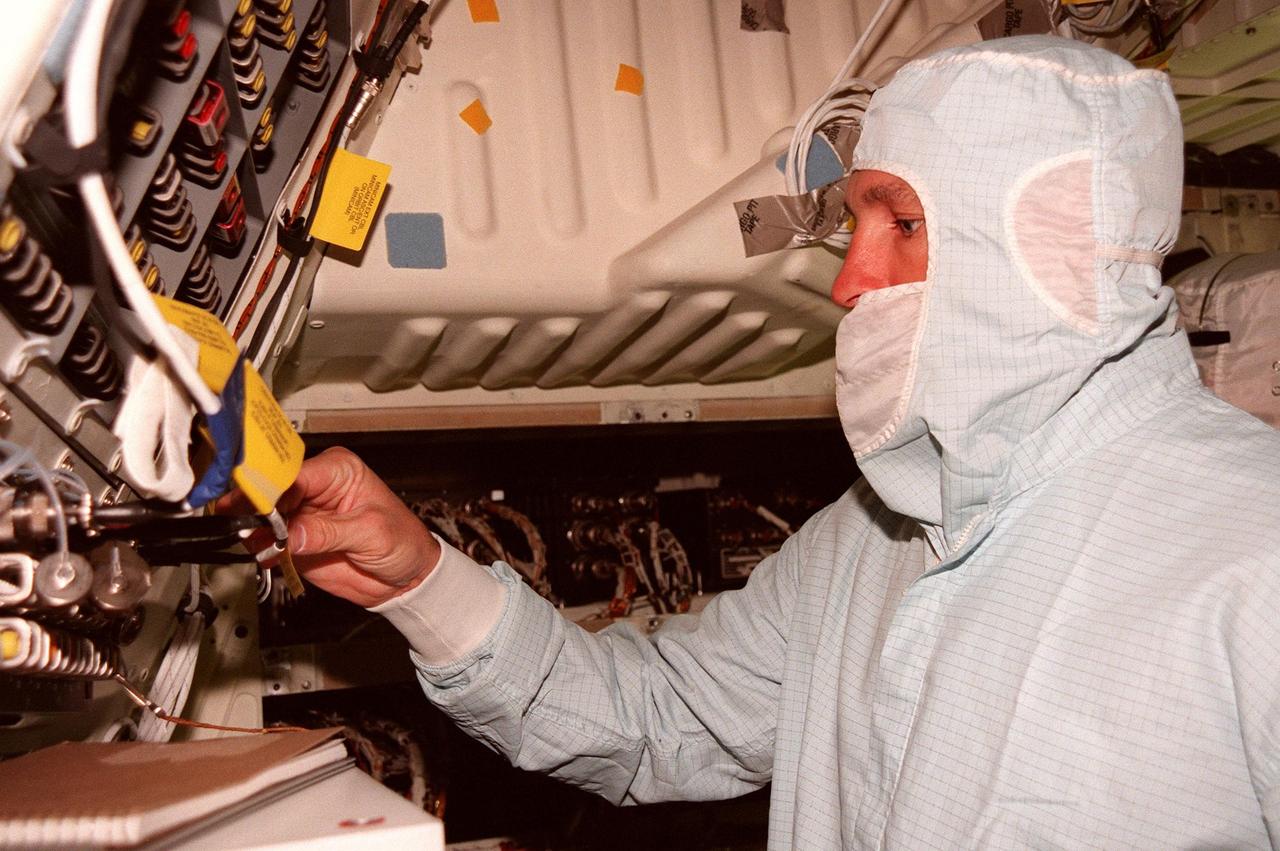
(Foreground) STS-95 Mission Commander Curtis L. Brown Jr. inspects equipment in the orbiter Discovery during a Crew Equipment Interface Test (CEIT) for their mission. The CEIT gives astronauts an opportunity for a hands-on look at the payloads on which they will be working on orbit. The launch of the STS-95 mission, aboard Space Shuttle Discovery, is scheduled for Oct. 29, 1998. The mission includes research payloads such as the Spartan solar-observing deployable spacecraft, the Hubble Space Telescope Orbital Systems Test Platform, the International Extreme Ultraviolet Hitchhiker, as well as the SPACEHAB single module with experiments on space flight and the aging process
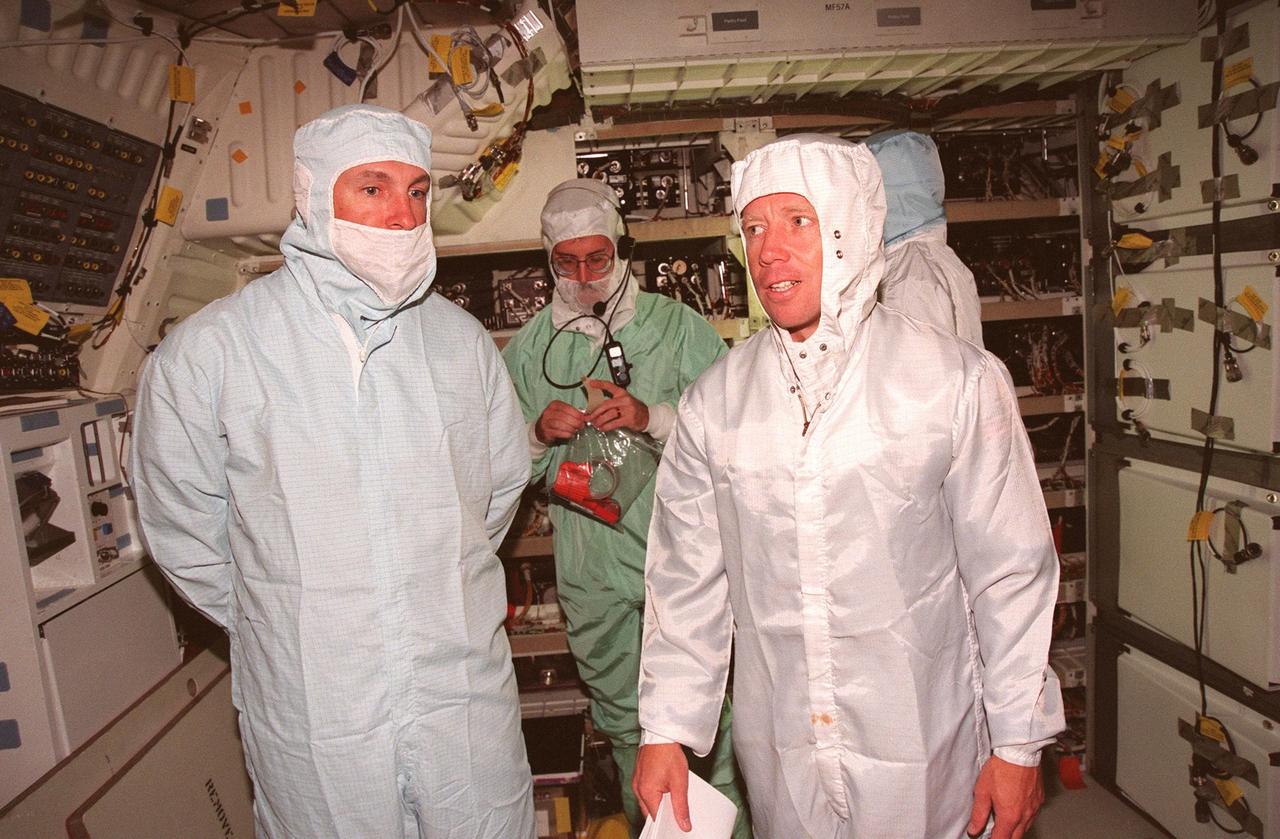
STS-95 Mission Commander Curtis L. Brown Jr. (left) and Pilot Steven Lindsey (right) are in Discovery's midbody checking electrical connections during a Crew Equipment Interface Test (CEIT) for their mission. The CEIT gives astronauts an opportunity for a hands-on look at the payloads on which they will be working on orbit. The launch of the STS-95 mission, aboard Space Shuttle Discovery, is scheduled for Oct. 29, 1998. The mission includes research payloads such as the Spartan solar-observing deployable spacecraft, the Hubble Space Telescope Orbital Systems Test Platform, the International Extreme Ultraviolet Hitchhiker, as well as the SPACEHAB single module with experiments on space flight and the aging process
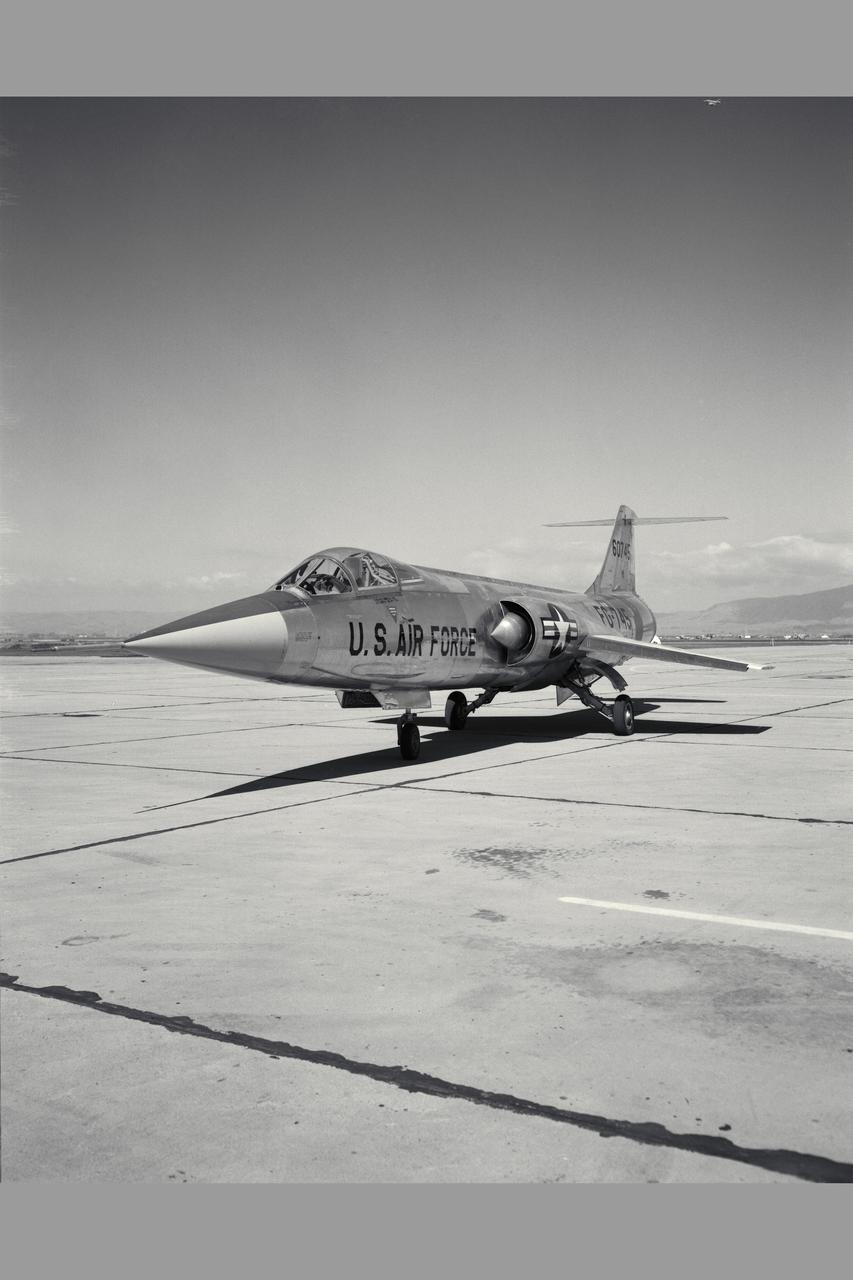
Lockheed JF-104A (AF56-745A Tail No. 60745) Starfighter airplane piloted by Fred Drinkwater conducted flight testing that demonstrated steep approaches that were ultimately used by the space shuttle. Steep descent testing, including power-off landing approaches and demonstration of minimum lift-to-drag ratio (L/D) landings came out of the interest in the use of low L/D lifting bodies for recovery to landing from space. Note: Used in publication in Flight Research at Ames; 57 Years of Development and Validation of Aeronautical Technology NASA SP-1998-3300 fig 93
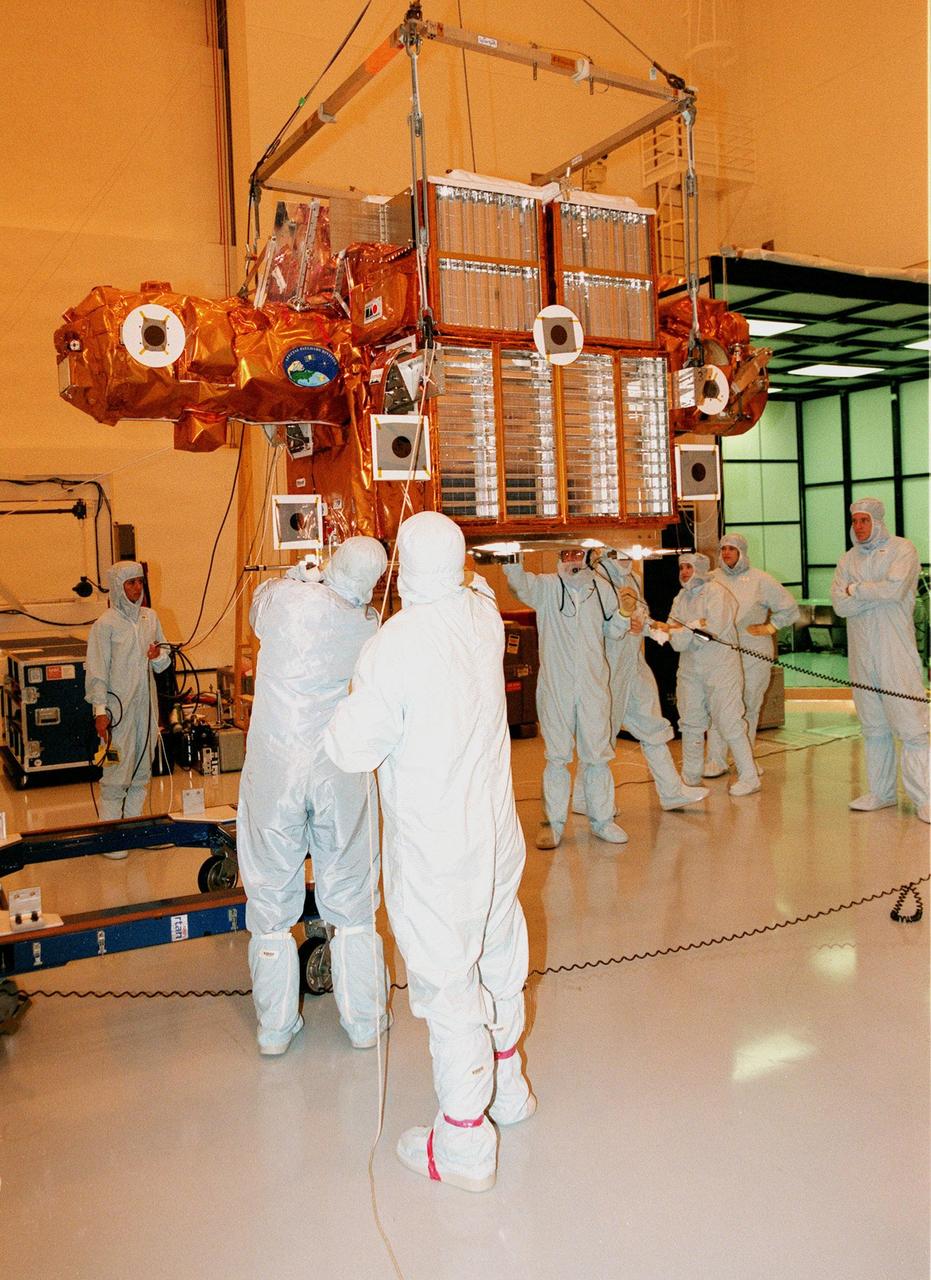
During Crew Equipment Interface Test (CEIT), STS-95 crew members watch as workers move the Spartan payload inside the Multi-Payload Processing Facility. At far right is Mission Specialist Scott E. Parazynski. The CEIT gives astronauts an opportunity for a hands-on look at the payloads and equipment with which they will be working on orbit. The launch of the STS-95 mission is scheduled for Oct. 29, 1998. The mission includes research payloads such as the Spartan solar-observing deployable spacecraft, the Hubble Space Telescope Orbital Systems Test Platform, the International Extreme Ultraviolet Hitchhiker, as well as the SPACEHAB single module with experiments on space flight and the aging process
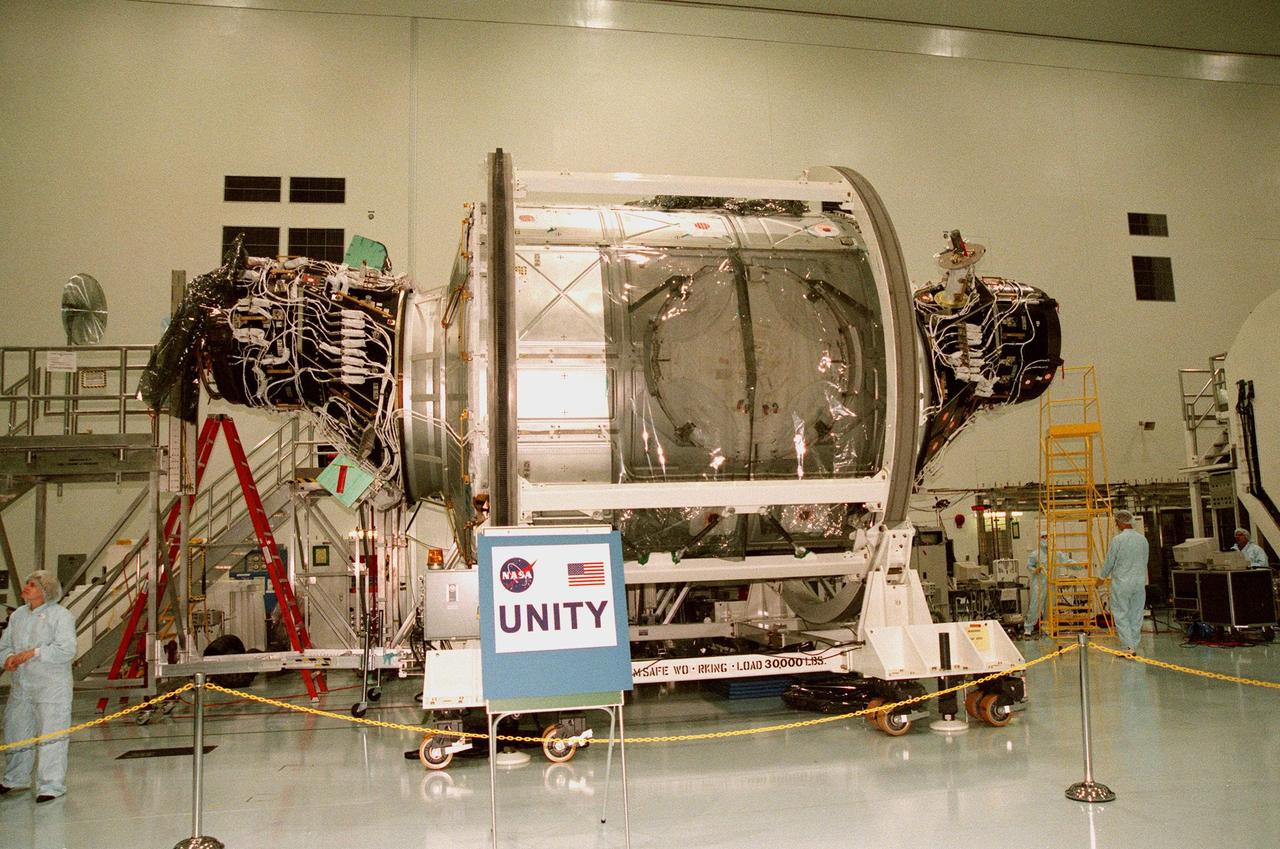
In the Space Station Processing Facility, the Unity connecting module, part of the International Space Station, is shown with Pressurized Mating Adapters 1 (left) and 2 (right) attached. Unity is scheduled to undergo testing of the common berthing mechanism to which other space station elements will dock. Unity is the primary payload on mission STS-88, targeted to launch Dec. 3, 1998. Other testing includes the Pad Demonstration Test to verify the compatibility of the module with the Space Shuttle as well as the ability of the astronauts to send and receive commands to Unity from the flight deck of the orbiter. Unity is expected to be ready for installation into the payload canister on Oct. 25, and transported to Launch Pad 39-A on Oct. 27. The Unity will be mated to the Russian-built Zarya control module which should already be in orbit at that time
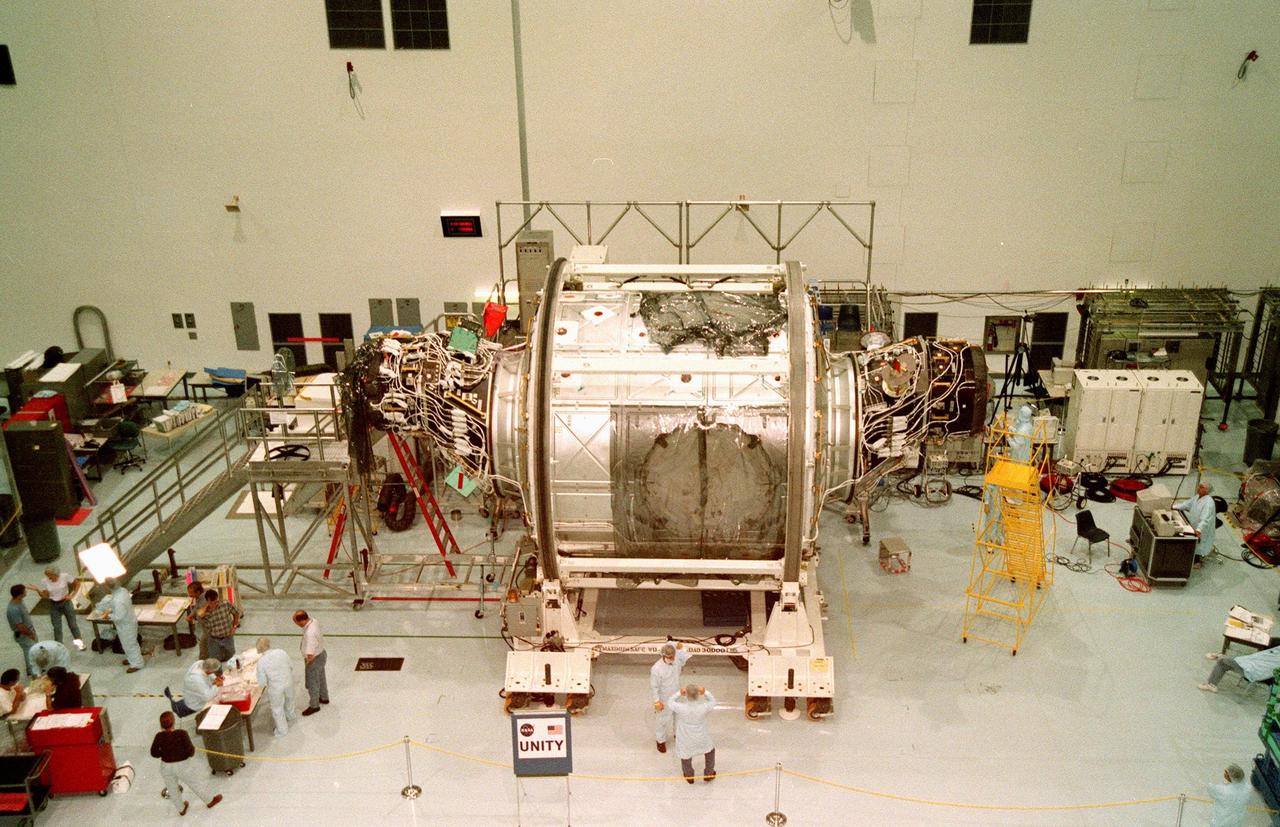
In the Space Station Processing Facility, the Unity connecting module, part of the International Space Station, is shown with Pressurized Mating Adapters 1 (left) and 2 (right) attached. Unity is scheduled to undergo testing of the common berthing mechanism to which other space station elements will dock. Unity is the primary payload on mission STS-88, targeted to launch Dec. 3, 1998. Other testing includes the Pad Demonstration Test to verify the compatibility of the module with the Space Shuttle as well as the ability of the astronauts to send and receive commands to Unity from the flight deck of the orbiter. Unity is expected to be ready for installation into the payload canister on Oct. 25, and transported to Launch Pad 39-A on Oct. 27. The Unity will be mated to the Russian-built Zarya control module which should already be in orbit at that time
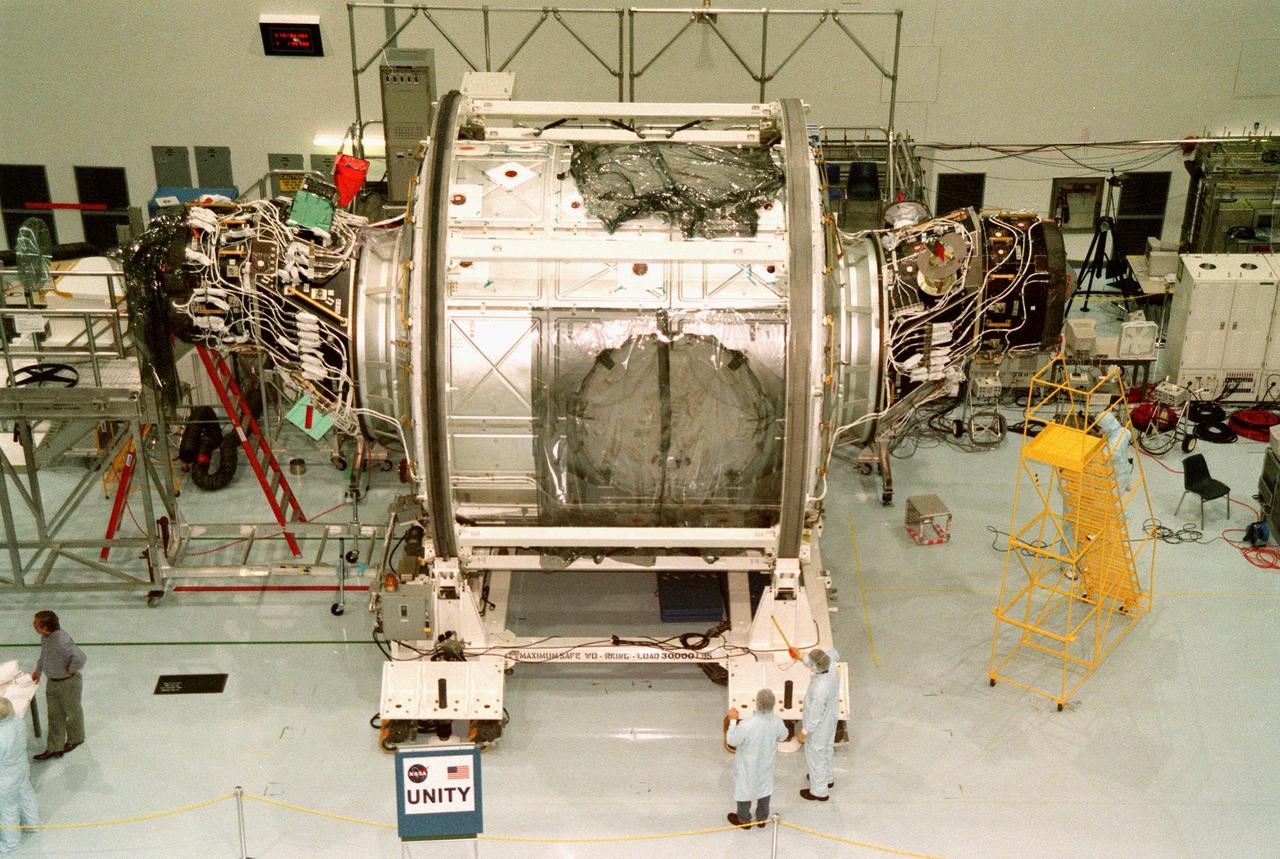
In the Space Station Processing Facility, the Unity connecting module, part of the International Space Station, is shown with Pressurized Mating Adapters 1 (left) and 2 (right) attached. Unity is scheduled to undergo testing of the common berthing mechanism to which other space station elements will dock. Unity is the primary payload on mission STS-88, targeted to launch Dec. 3, 1998. Other testing includes the Pad Demonstration Test to verify the compatibility of the module with the Space Shuttle as well as the ability of the astronauts to send and receive commands to Unity from the flight deck of the orbiter. Unity is expected to be ready for installation into the payload canister on Oct. 25, and transported to Launch Pad 39-A on Oct. 27. The Unity will be mated to the Russian-built Zarya control module which should already be in orbit at that time
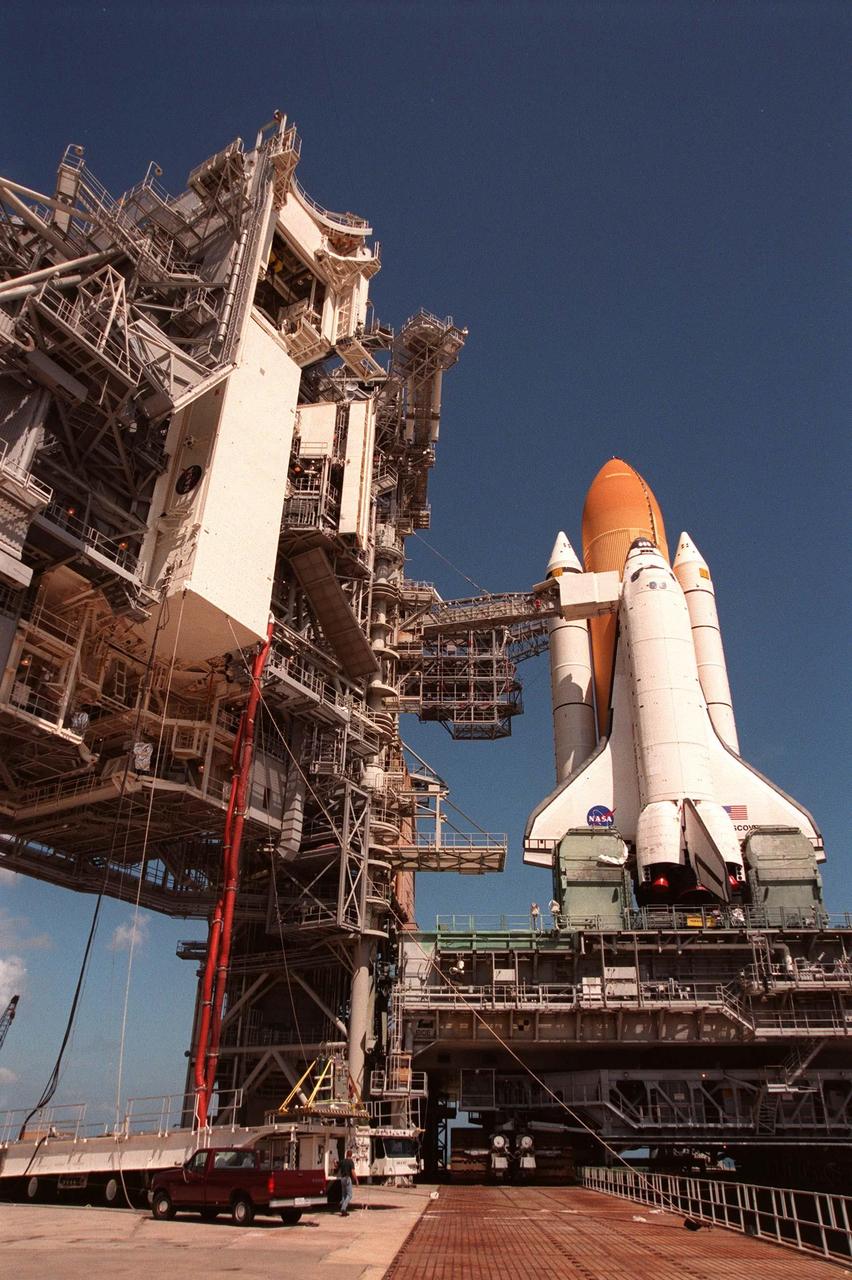
KENNEDY SPACE CENTER, FLA. -- At left, the payload canister for Space Shuttle Discovery is lifted from its canister movement vehicle to the top of the Rotating Service Structure on Launch Pad 39-B. Discovery (right), sitting atop the Mobile Launch Platform and next to the Fixed Service Structure, is scheduled for launch on Oct. 29, 1998, for the STS-95 mission. That mission includes the International Extreme Ultraviolet Hitchhiker (IEH-3), the Hubble Space Telescope Orbital Systems Test Platform, the Spartan solar-observing deployable spacecraft, and the SPACEHAB single module with experiments on space flight and the aging process
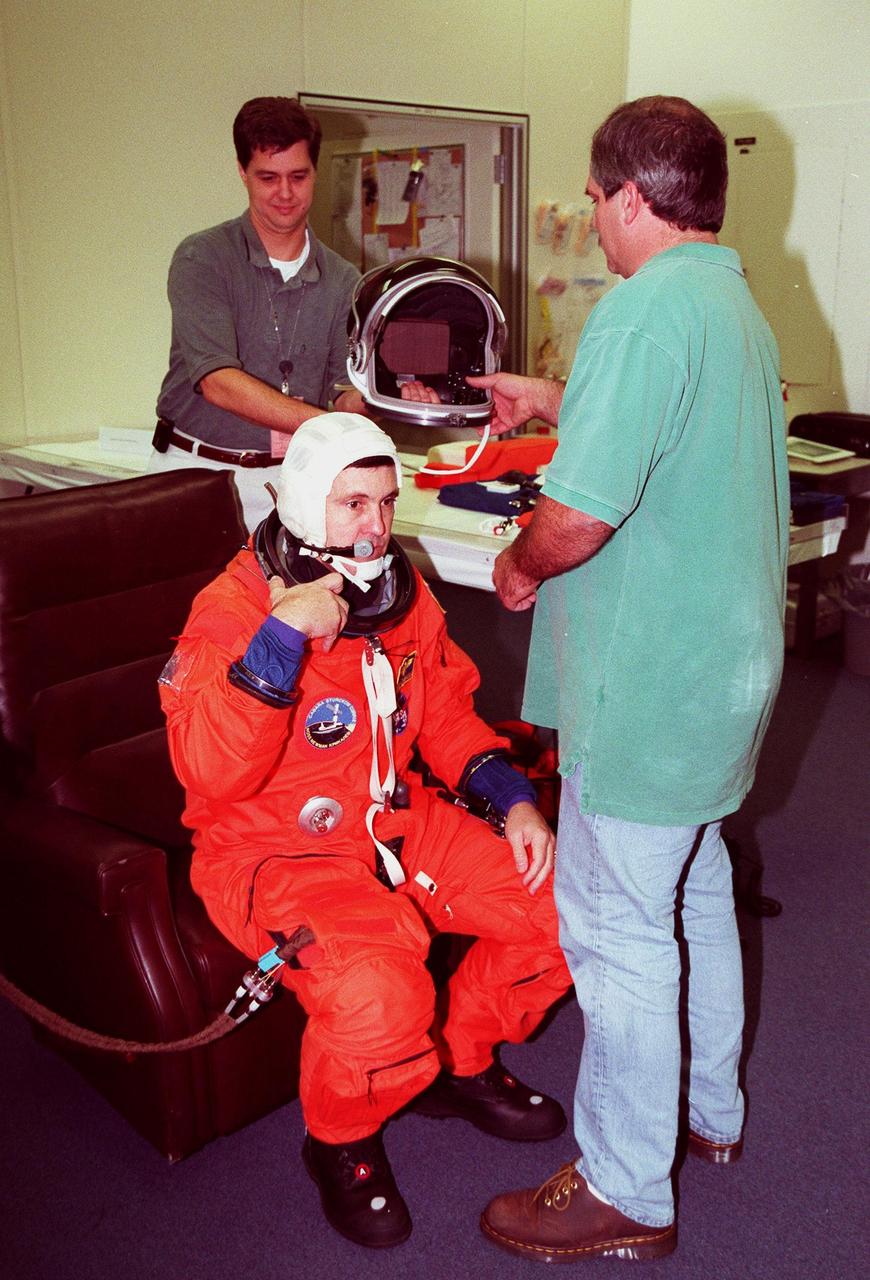
STS-88 Mission Commander Robert D. Cabana suits up in the Operations and Checkout Building prior, as part of flight crew equipment fit check, to his trip to Launch Pad 39A. He is helped by suit tech (right) Lloyd Armintor and an unidentified KSC worker. The crew are at KSC to participate in the Terminal Countdown Demonstration Test (TCDT) which includes mission familiarization activities, emergency egress training, and the simulated main engine cut-off exercise. This is Cabana's fourth space flight. Mission STS-88 is targeted for launch on Dec. 3, 1998. It is the first U.S. flight for the assembly of the International Space Station and will carry the Unity connecting module
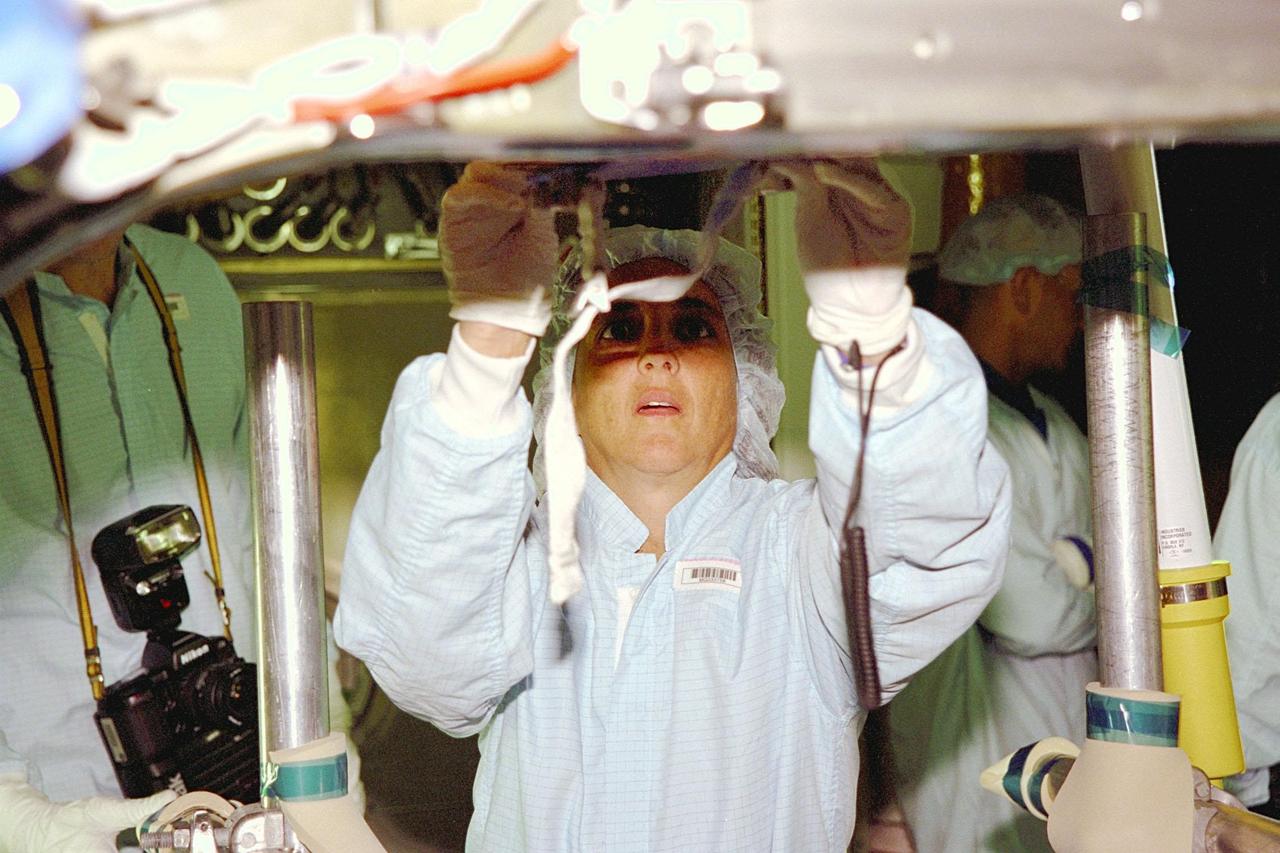
KENNEDY SPACE CENTER, FLA. -- STS-88 Mission Specialist Nancy J. Currie works on a foot restraint attached to the Unity connecting module, part of the International Space Station, in the Space Station Processing Facility at KSC. During the mission, the Unity connecting module will be mated to the Zarya control module, which will already be in orbit. The STS-88 crew is participating in a Crew Equipment Interface Test, which gives astronauts an opportunity for a hands-on look at the payloads on which they will be working while on orbit. STS-88 will be the first Space Shuttle launch for the International Space Station. Launch is scheduled for December 1998
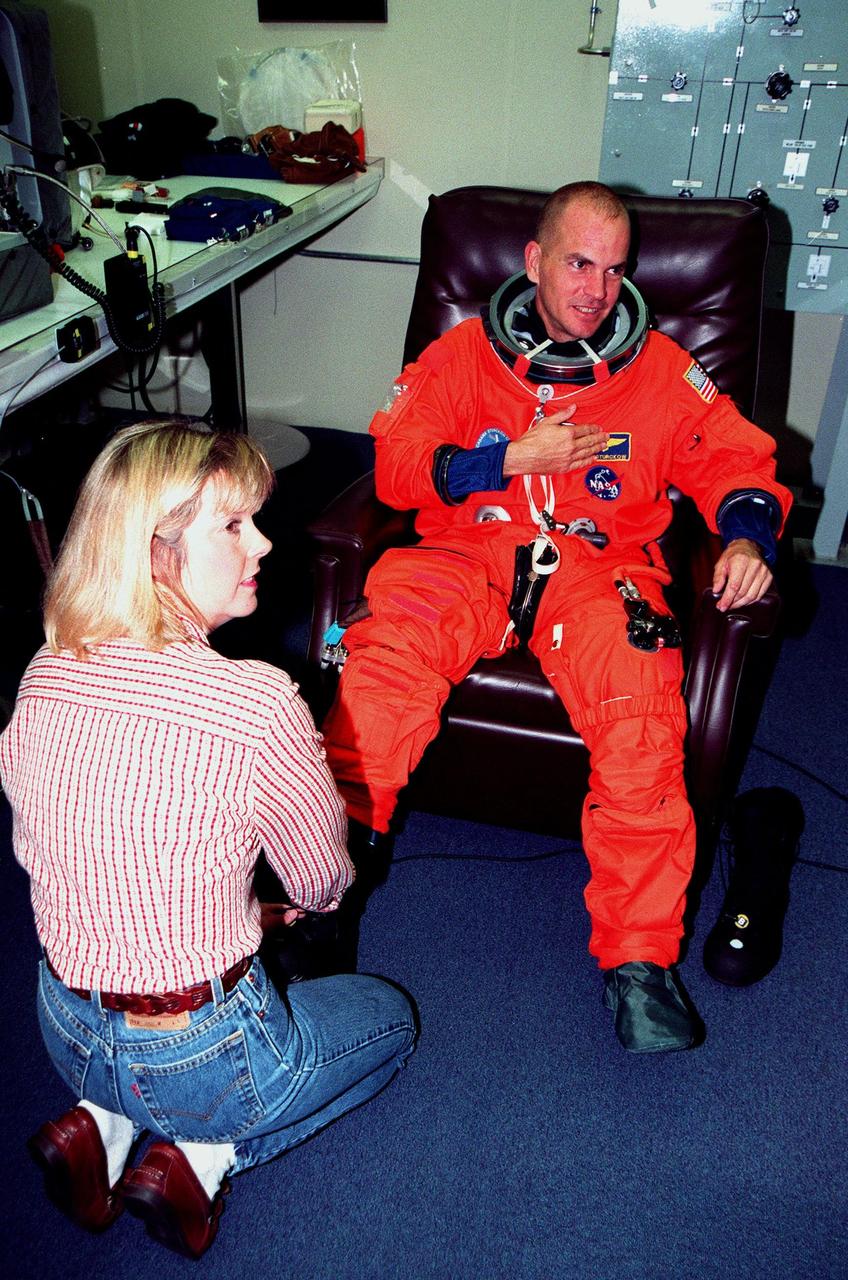
STS-88 Pilot Frederick W. "Rick" Sturckow suits up in the Operations and Checkout Building, as part of flight crew equipment fit check, prior to his trip to Launch Pad 39A. He is helped by suit tech Terri McKinney. The crew are at KSC to participate in the Terminal Countdown Demonstration Test (TCDT) which includes mission familiarization activities, emergency egress training, and the simulated main engine cut-off exercise. This is Sturckow's first space flight. Mission STS-88 is targeted for launch on Dec. 3, 1998. It is the first U.S. flight for the assembly of the International Space Station and will carry the Unity connecting module
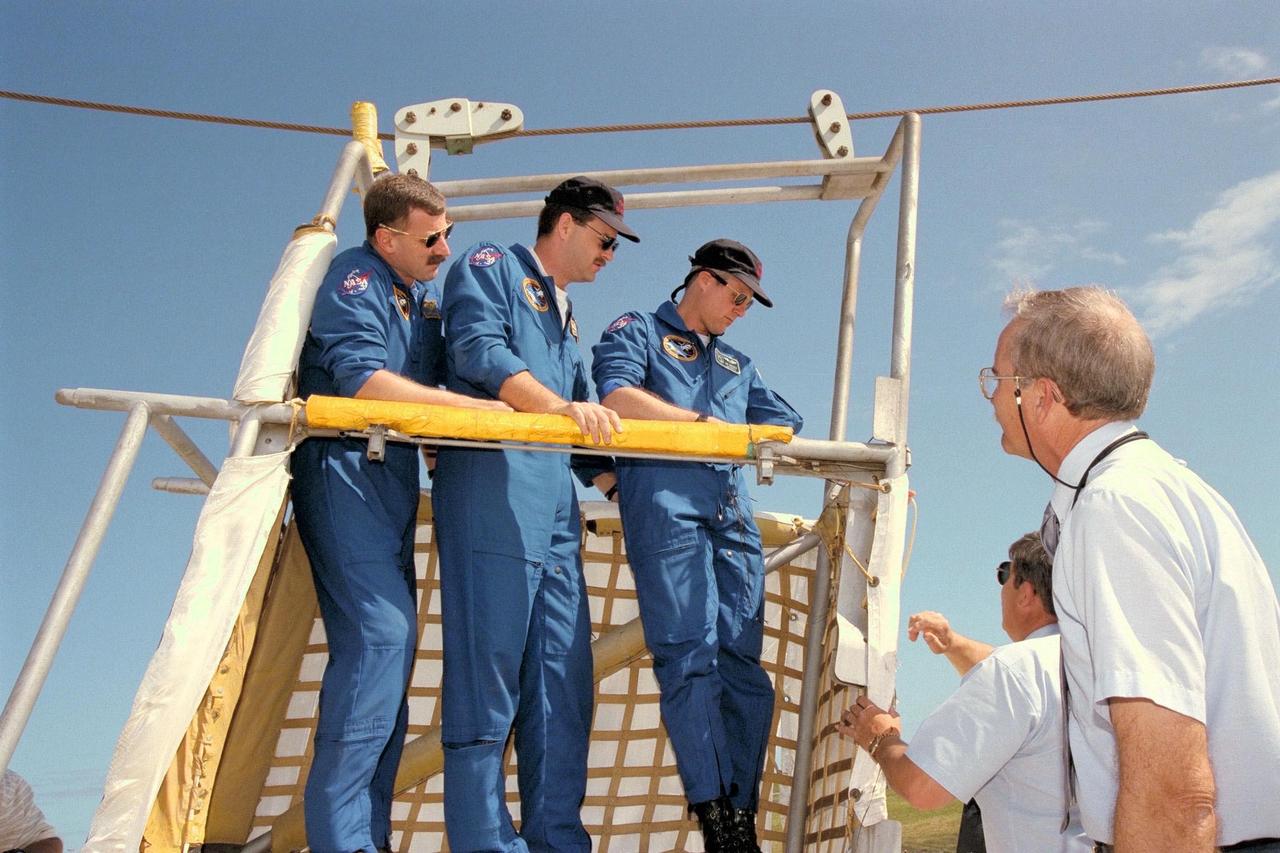
STS-90 Mission Specialist Dafydd (Dave) Williams, M.D., with the Canadian Space Agency, Pilot Scott Altman, and Payload Specialist Jay Buckey, M.D., train in an emergency egress system slidewire basket at Launch Pad 39B during Terminal Countdown Demonstration Test (TCDT) activities. The TCDT is held at KSC prior to each Space Shuttle flight to provide crews with the opportunity to participate in simulated countdown activities. Columbia is targeted for launch of STS-90 on April 16 at 2:19 p.m. EDT and will be the second mission of 1998. The mission is scheduled to last nearly 17 days
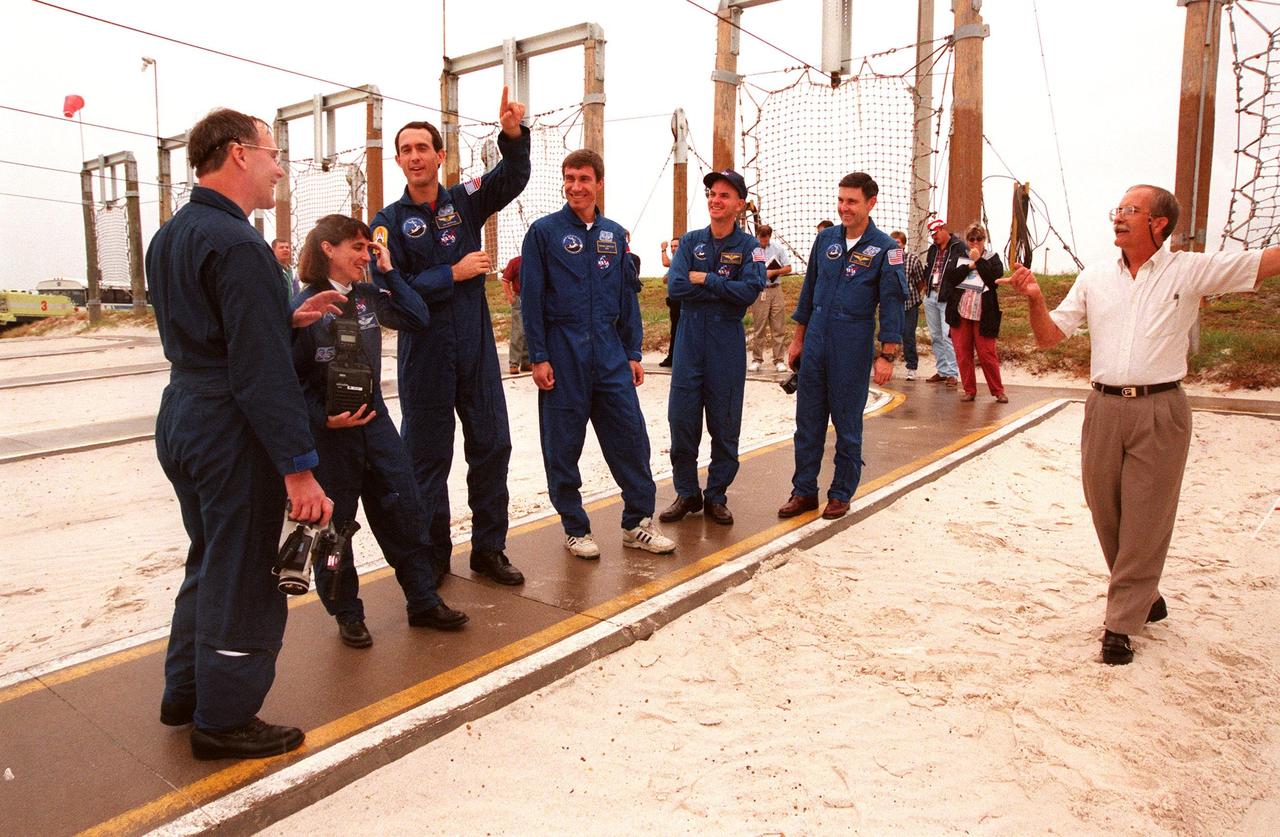
KENNEDY SPACE CENTER, Fla. -- The STS-88 crew get instruction from Ken Clark, at right, a training instructor with United Space Alliance (USA), on emergency egress procedures from launch pad 39A. From left, they are Mission Specialists Jerry L. Ross, Nancy J. Currie, James H. Newman and Sergei Krikalev, a Russian cosmonaut, Pilot Frederick W. "Rick" Sturckow, and Mission Commander Robert D. Cabana. The crew are at KSC to participate in the Terminal Countdown Demonstration Test (TCDT), a dress rehearsal for launch. Mission STS-88 is targeted for launch on Dec. 3, 1998. It is the first U.S. flight for the assembly of the International Space Station and will carry the Unity connecting module
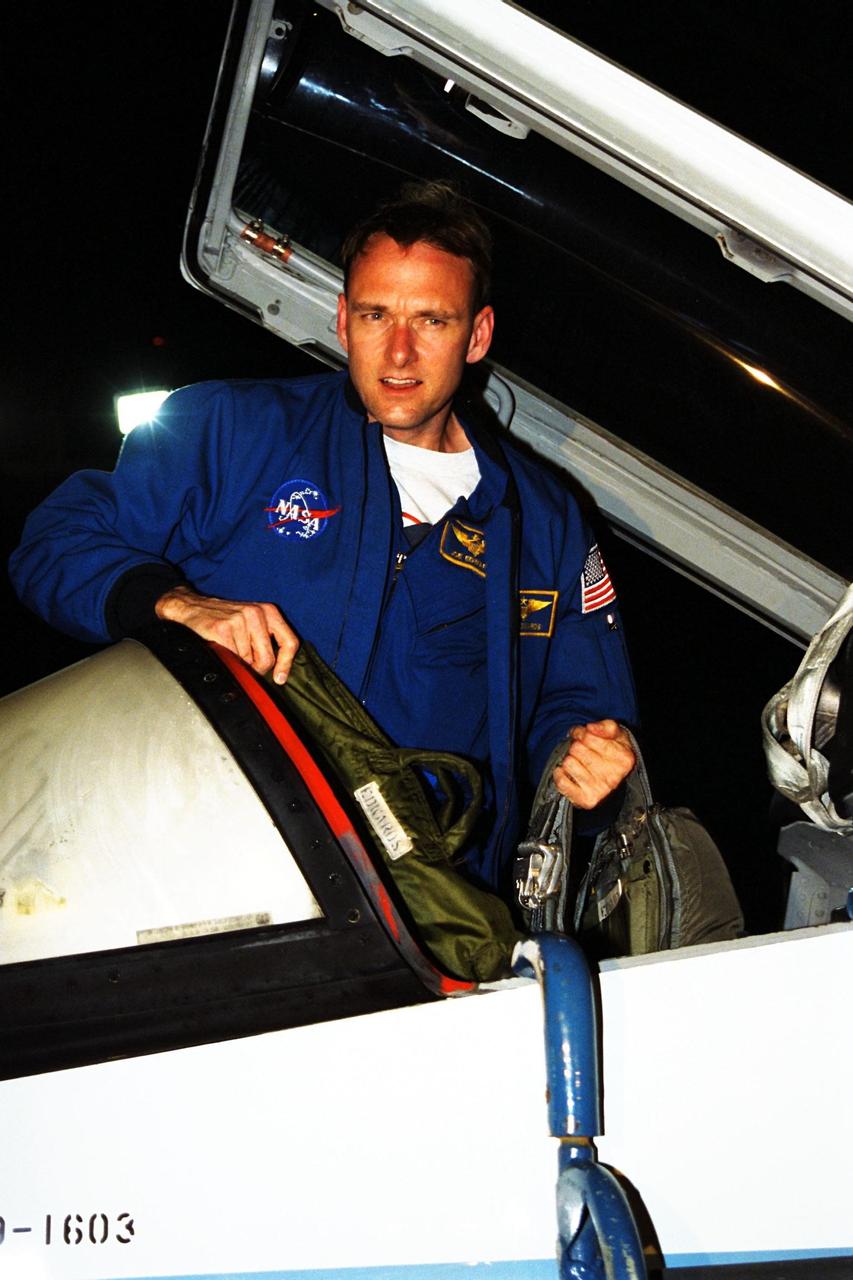
STS-89 Pilot Joe Edwards Jr., poses in his T-38 jet trainer after landing with other members of the flight crew at KSC’s Shuttle Landing Facility from NASA’s Johnson Space Center to begin Terminal Countdown Demonstration Test (TCDT) activities. The TCDT is held at KSC prior to each Space Shuttle flight to provide crews with the opportunity to participate in simulated countdown activities. Endeavour is targeted for launch of STS-89 on Jan. 22 at 9:48 p.m. EST, which will be the first mission of 1998 and the eighth to dock with Russia’s Mir Space Station. The mission is scheduled to last nine days
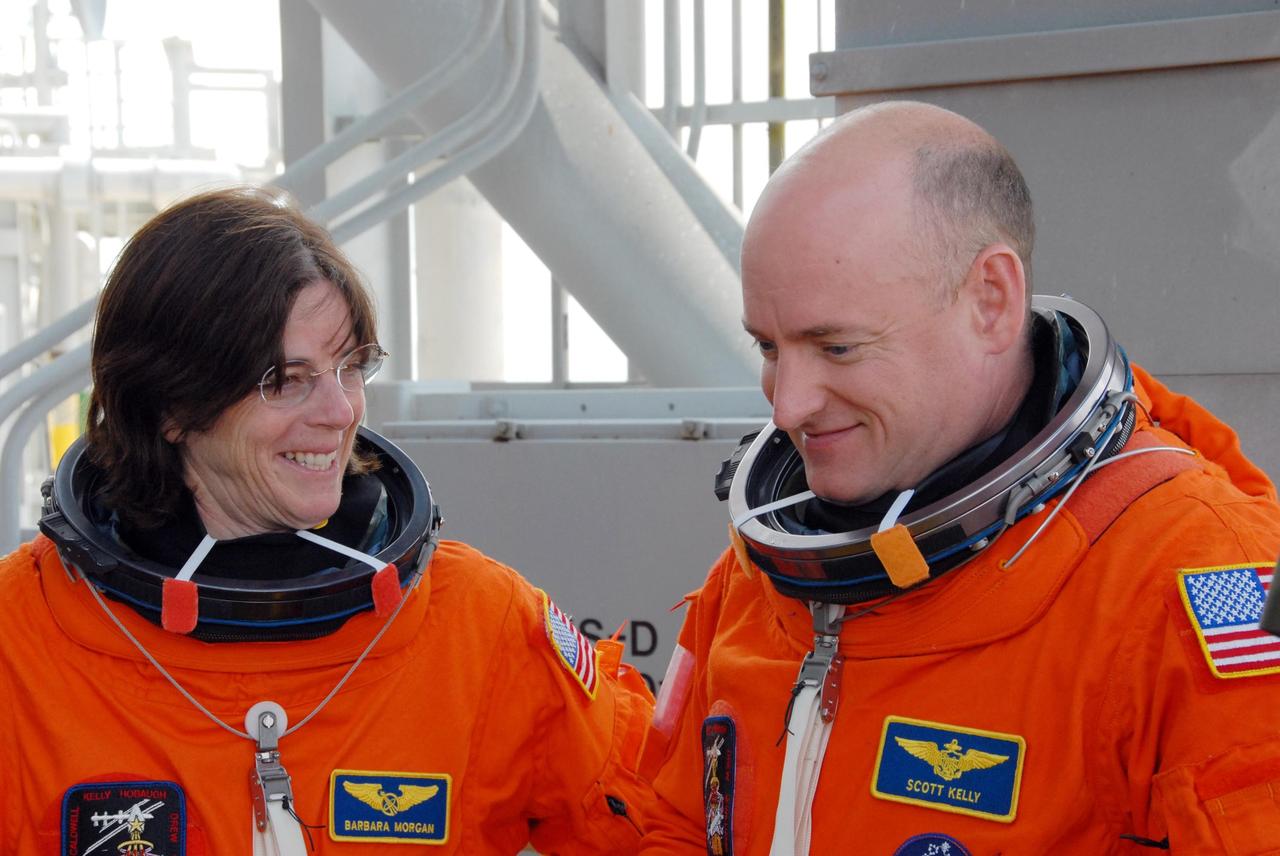
KENNEDY SPACE CENTER, Fla. -- After practicing emergency egress from Launch Pad 39A, STS-118 Mission Specialist Barbara R. Morgan and Commander Scott Kelly relax for a moment. Morgan, who is making her first space flight, joined NASA's Teacher in Space program in 1985 and was selected as an astronaut in 1998. The crew is concluding the terminal countdown demonstration test. The STS-118 mission on Space Shuttle Endeavour is the 22nd flight to the International Space Station and will carry a payload including the S5 truss, a SPACEHAB module and external stowage platform 3. STS-118 is targeted for launch on Aug. 7. Photo credit: NASA/George Shelton