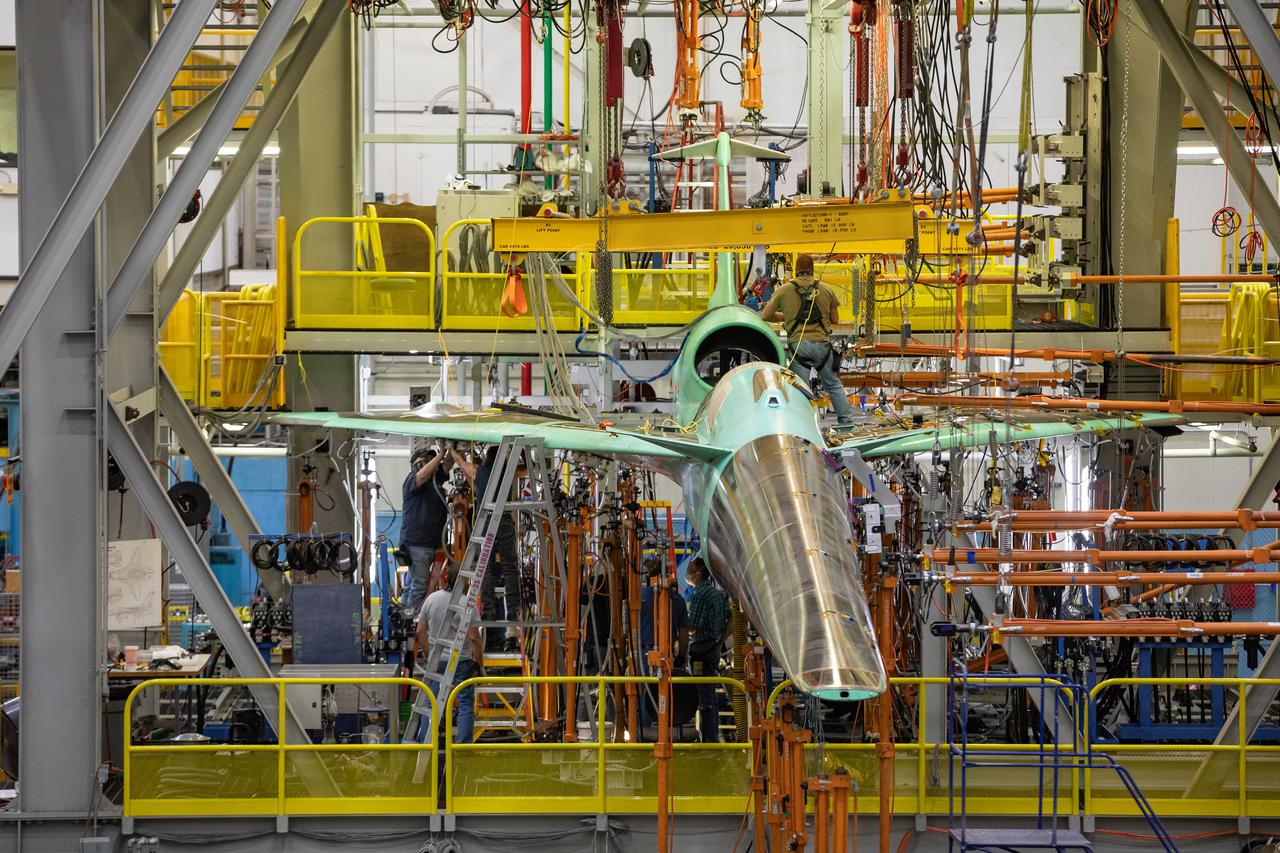
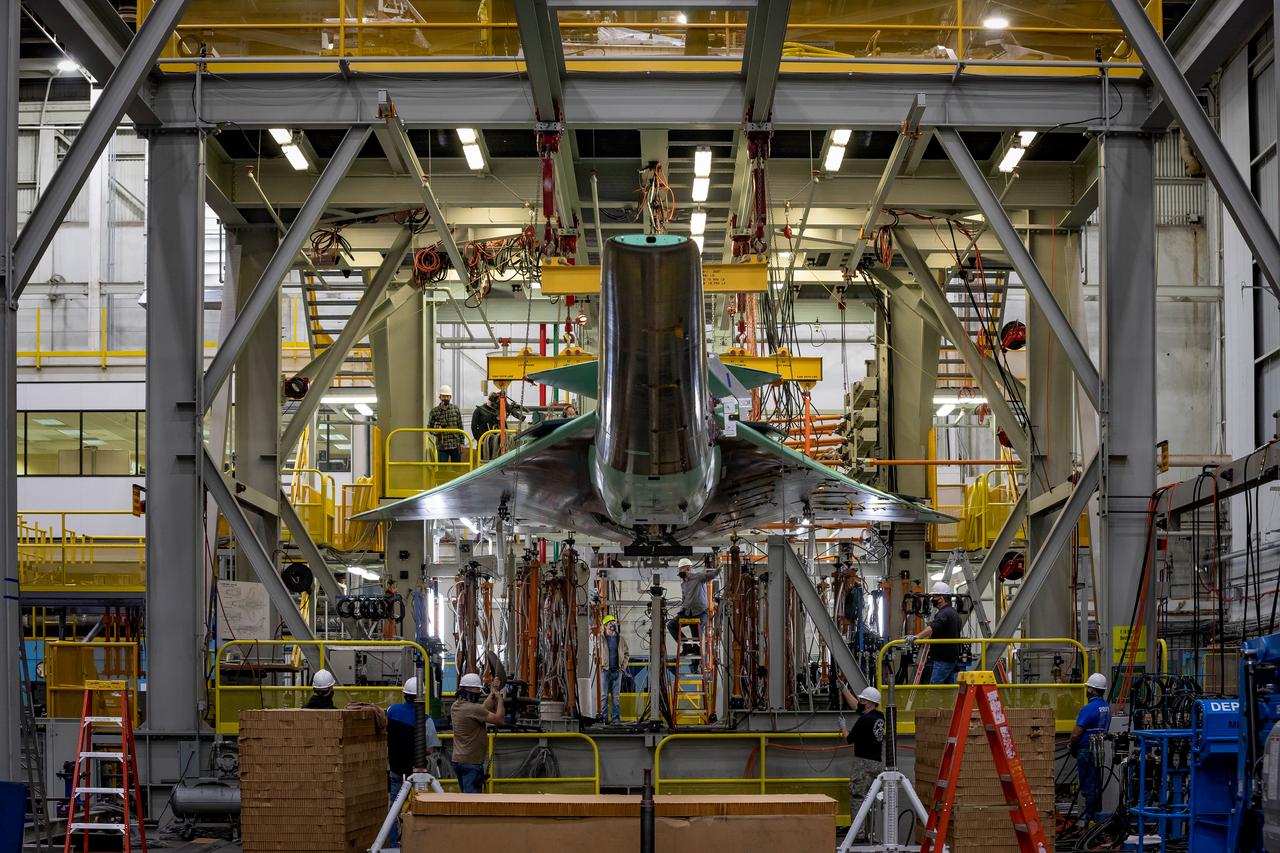
NASA’s X-59 Quiet SuperSonic Technology airplane undergoes structural stress tests at a Lockheed Martin facility in Fort Worth, Texas.  Lockheed Martin Aeronautics Company - Fort Worth - Chris Hanoch Subject: X-59 - Various Angles in Test Fixture FP#: 21-03420 POC: Analiese Smith, Chris Higgins Other info: X-59 in Fort Worth, testing; high angle shots in fixture 1-10-22
X-59 - Various Angles in Test Fixture
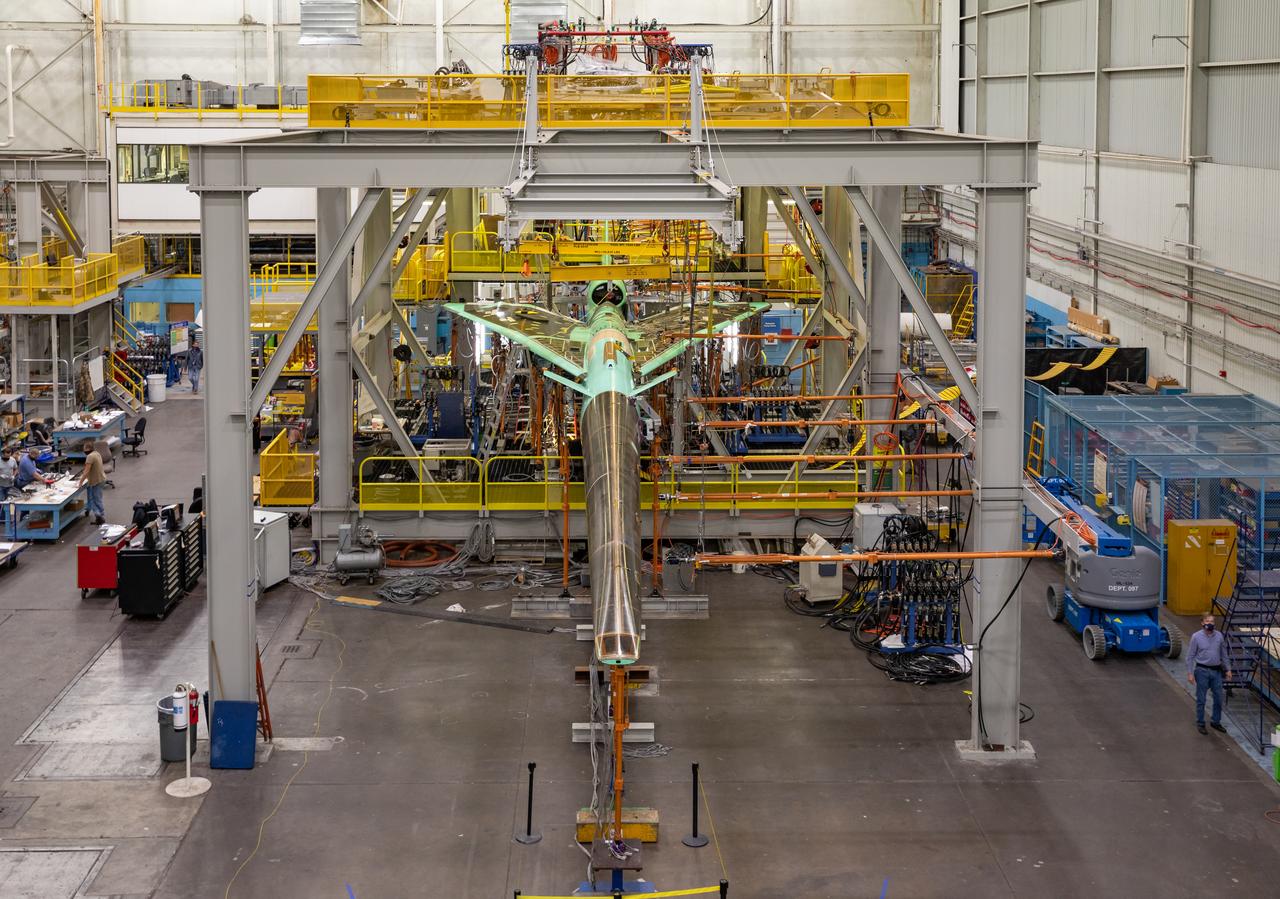
NASA’s X-59 is lowered into the test fixture as it prepares to undergo structural stress tests at  Lockheed Martin in Fort Worth, Texas. The X-59 is a one-of-a-kind airplane designed to fly at supersonic speeds without making a startling sonic boom sound for the communities below. This is part of NASA’s Quesst mission which plans to help  enable supersonic air travel over land.
Test Fixture Installation
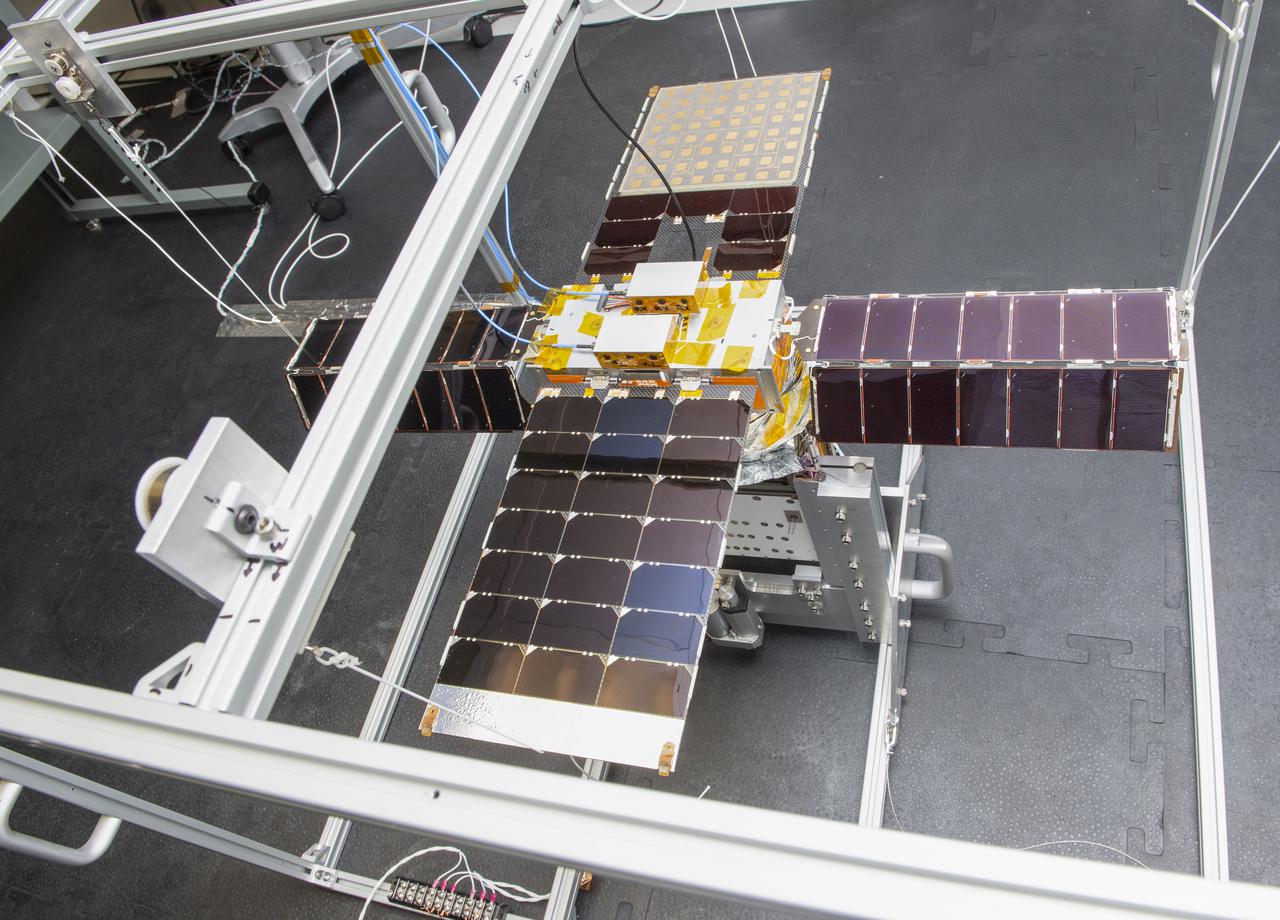
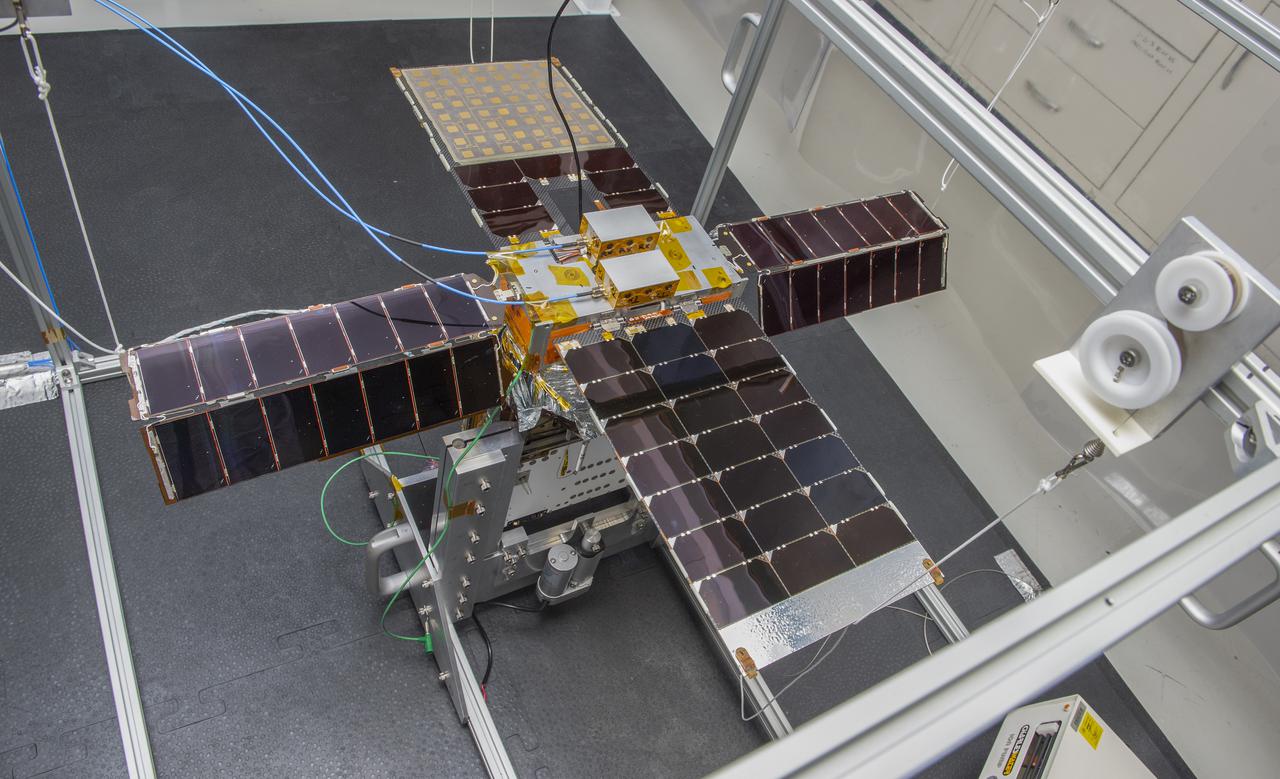
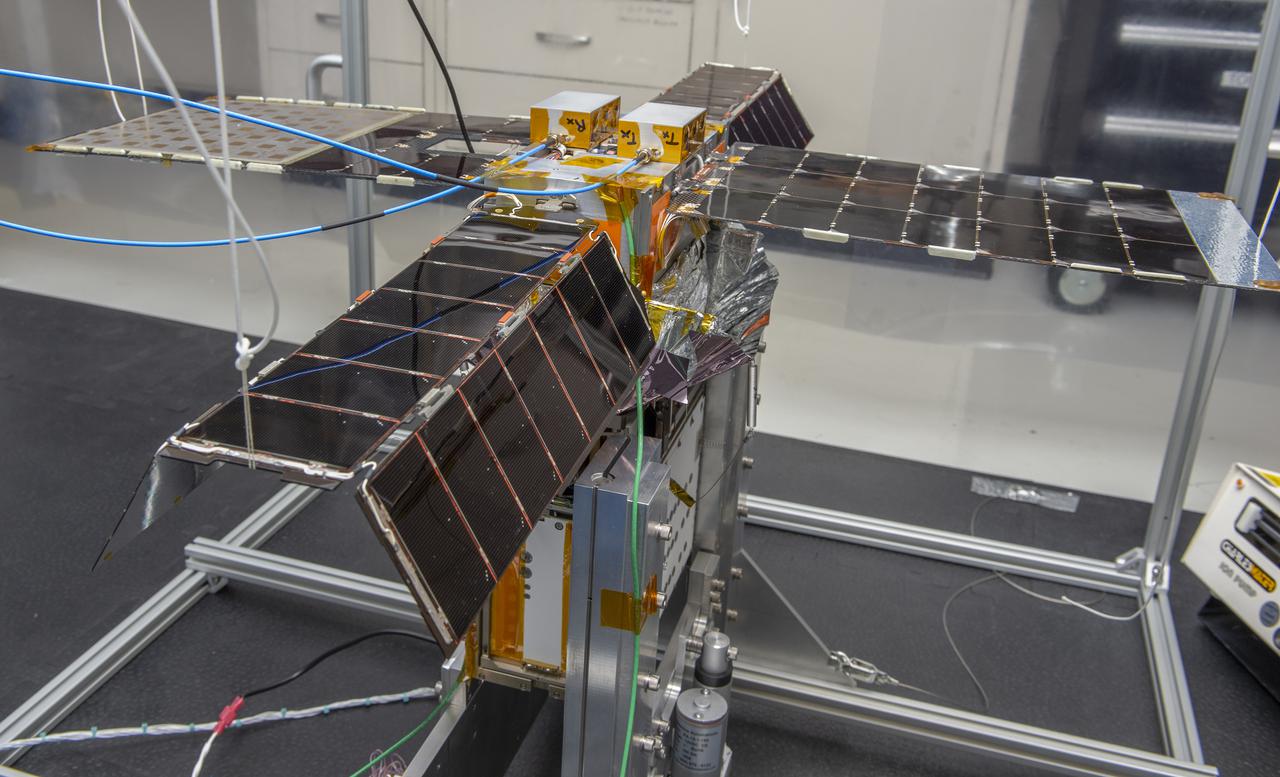
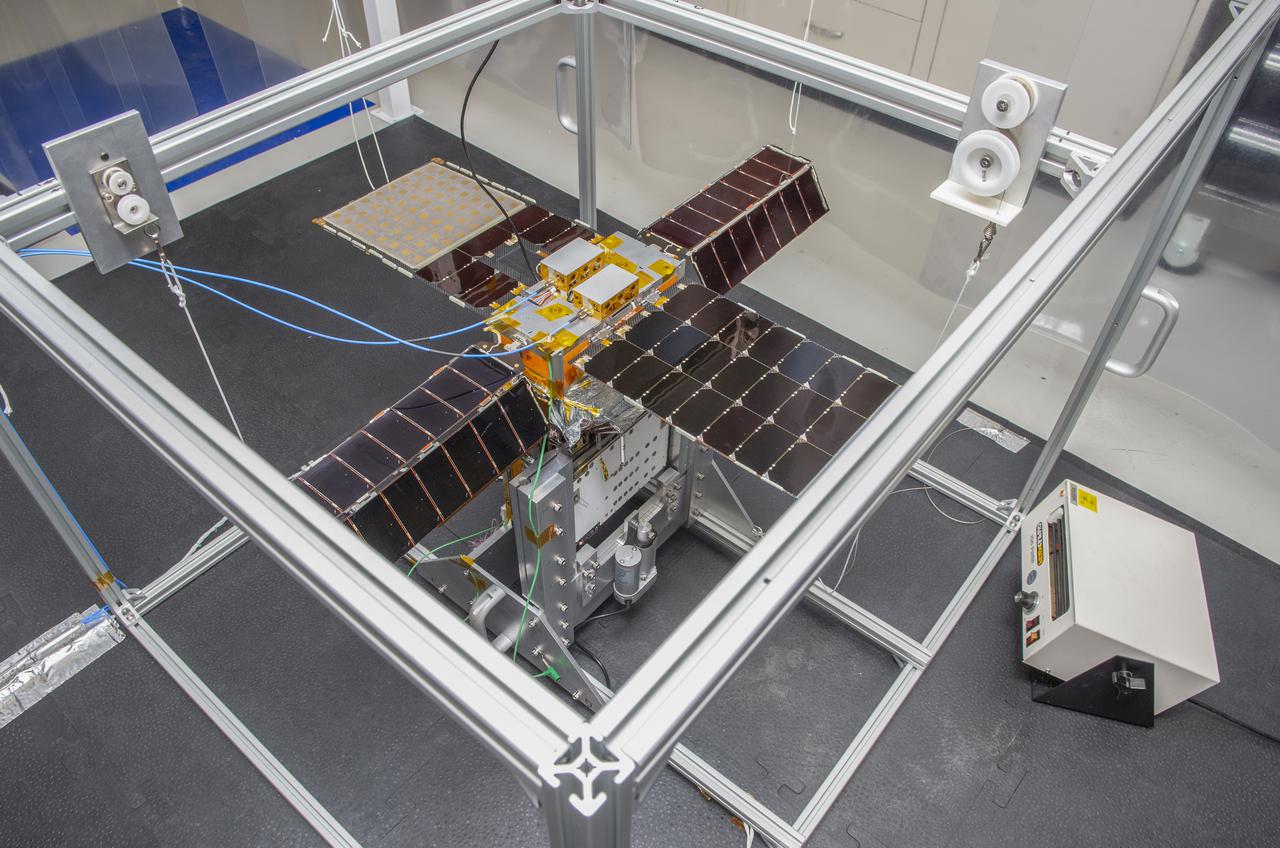
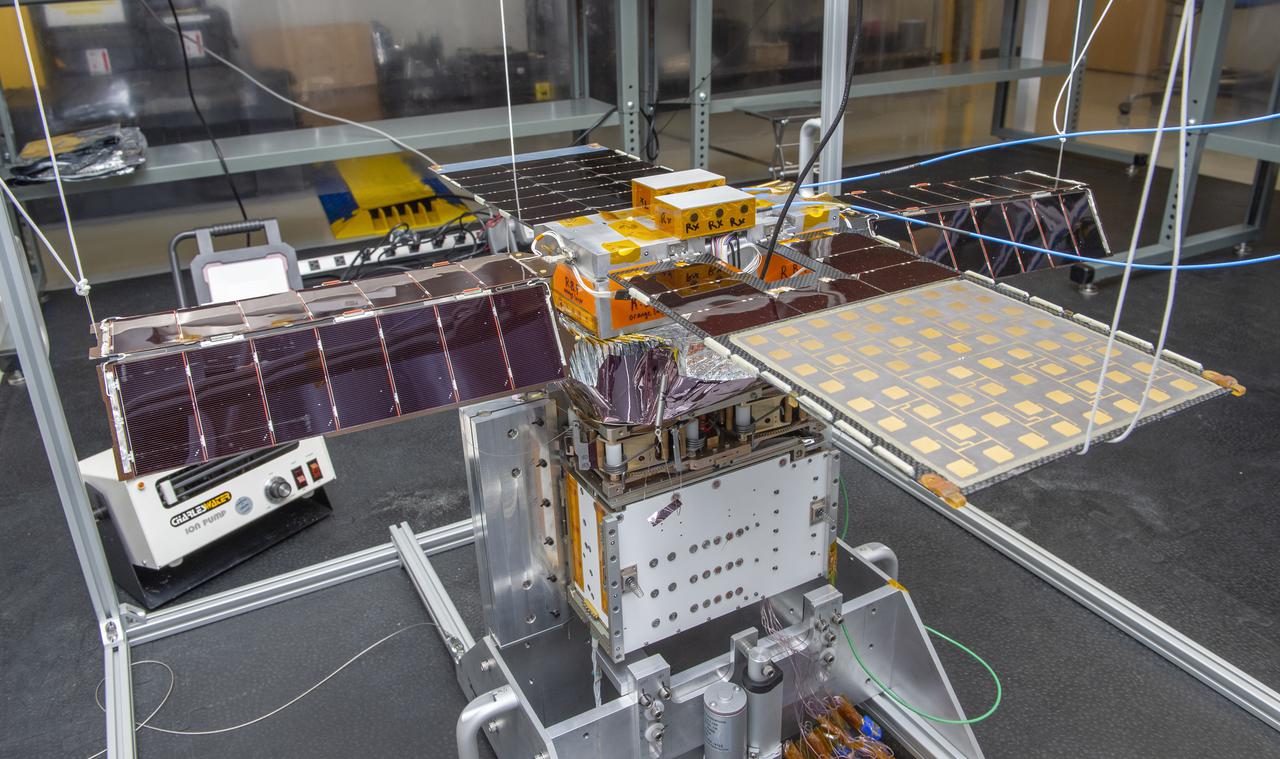
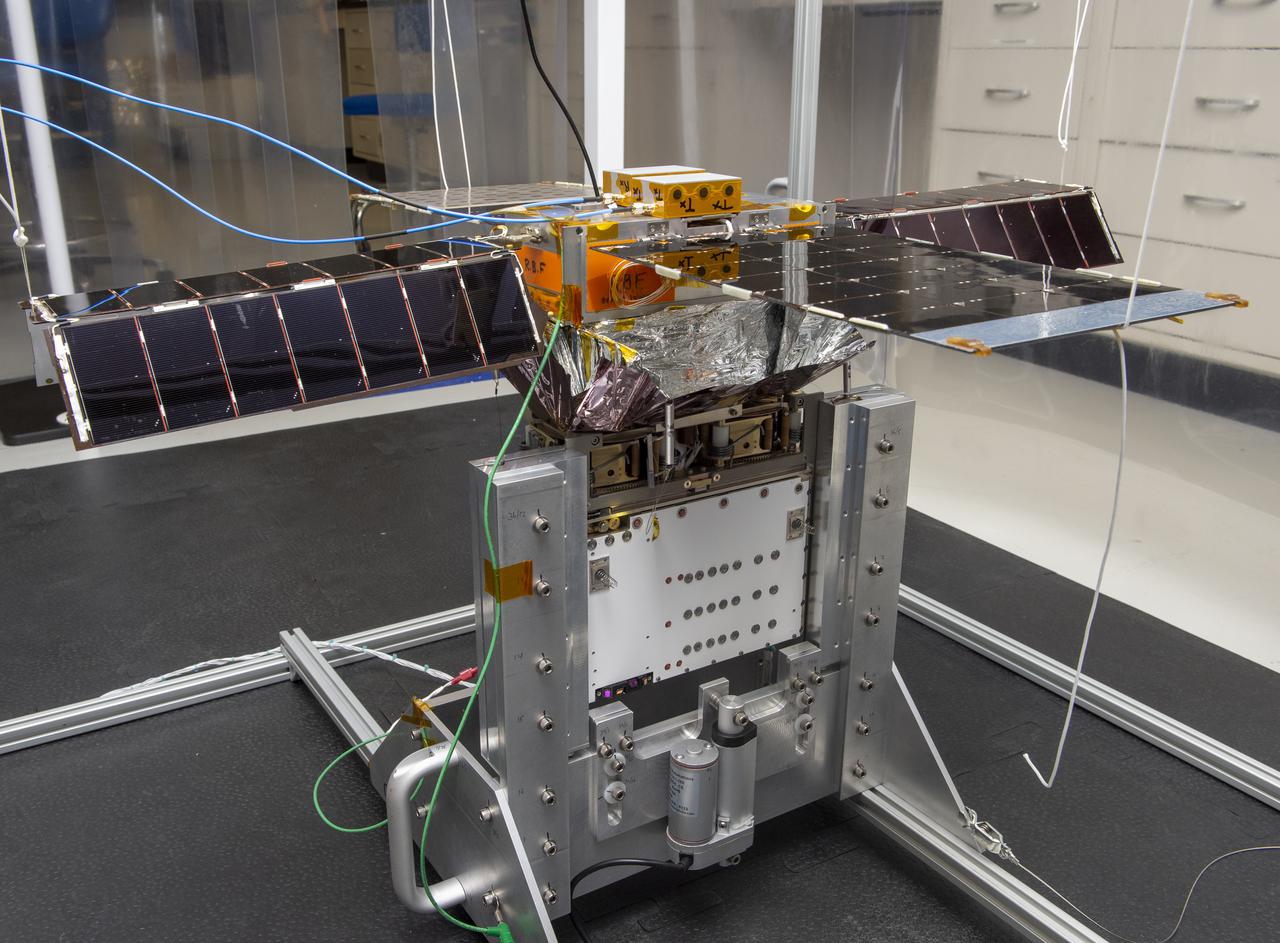
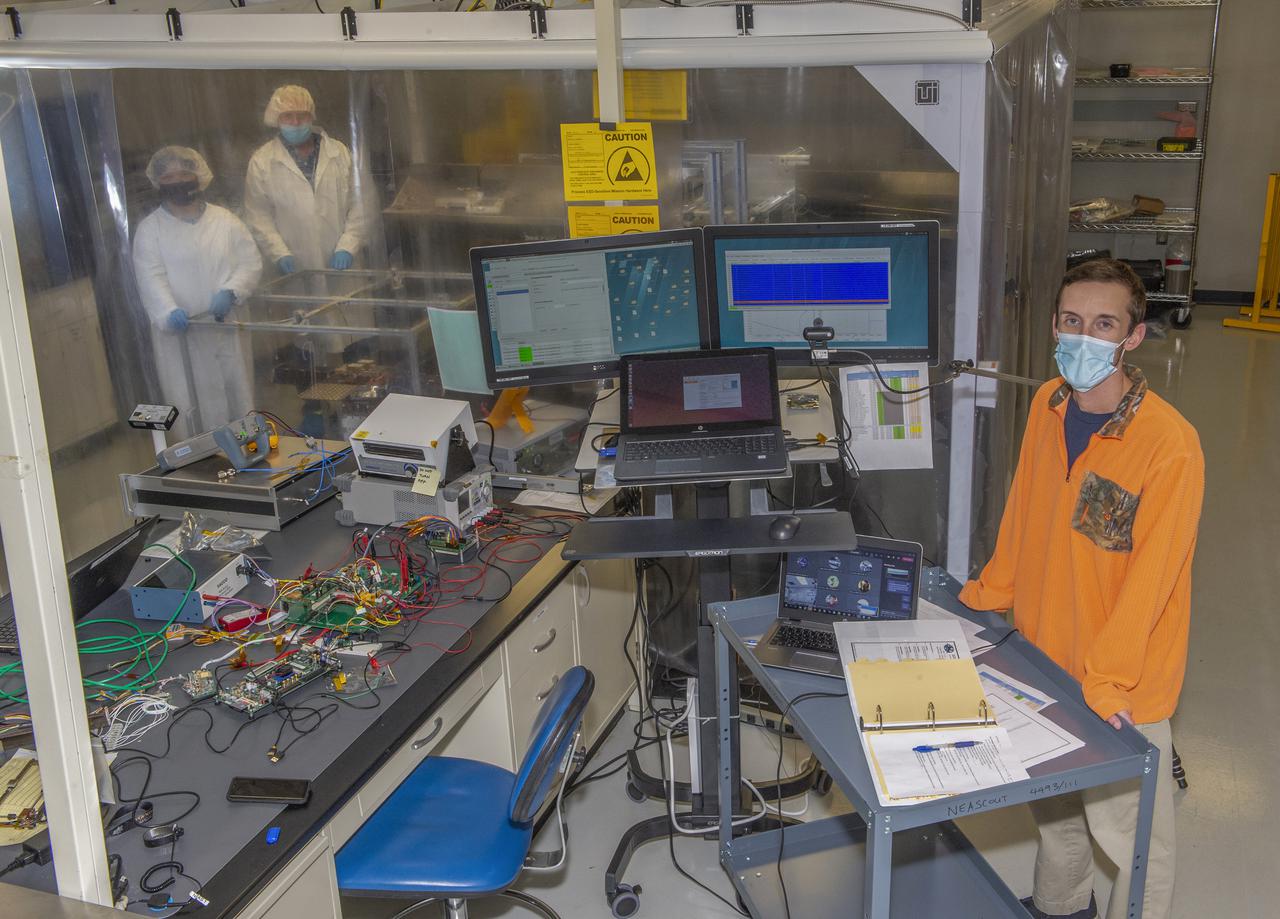
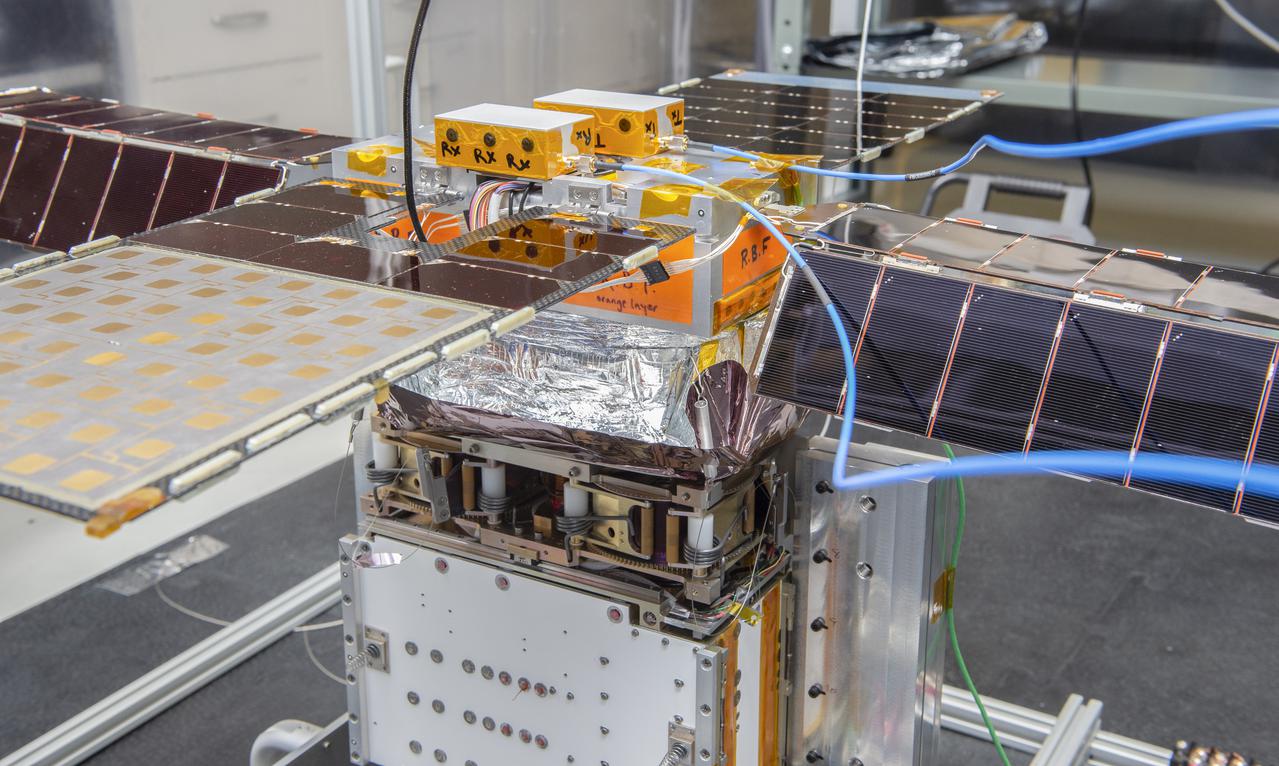
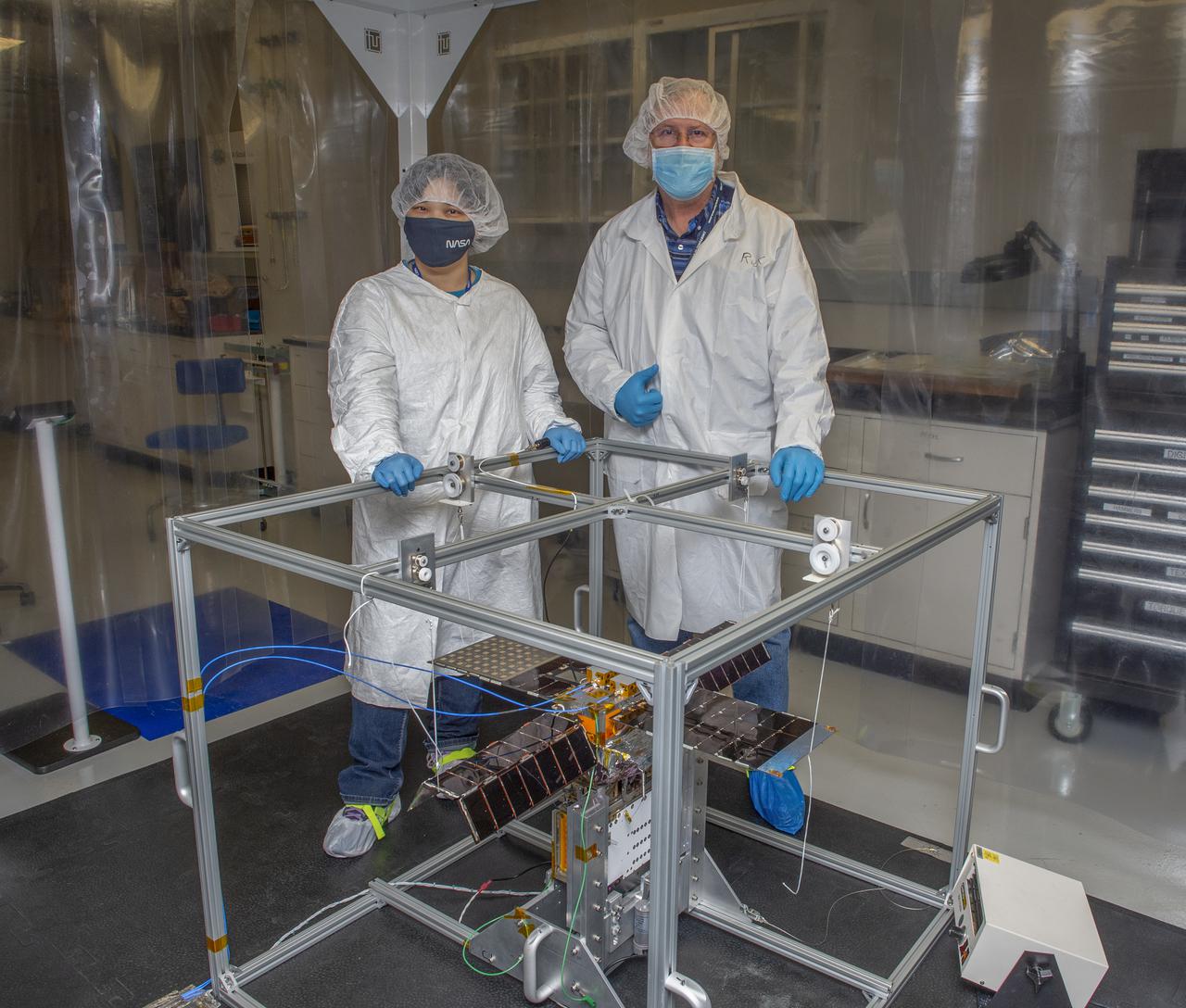
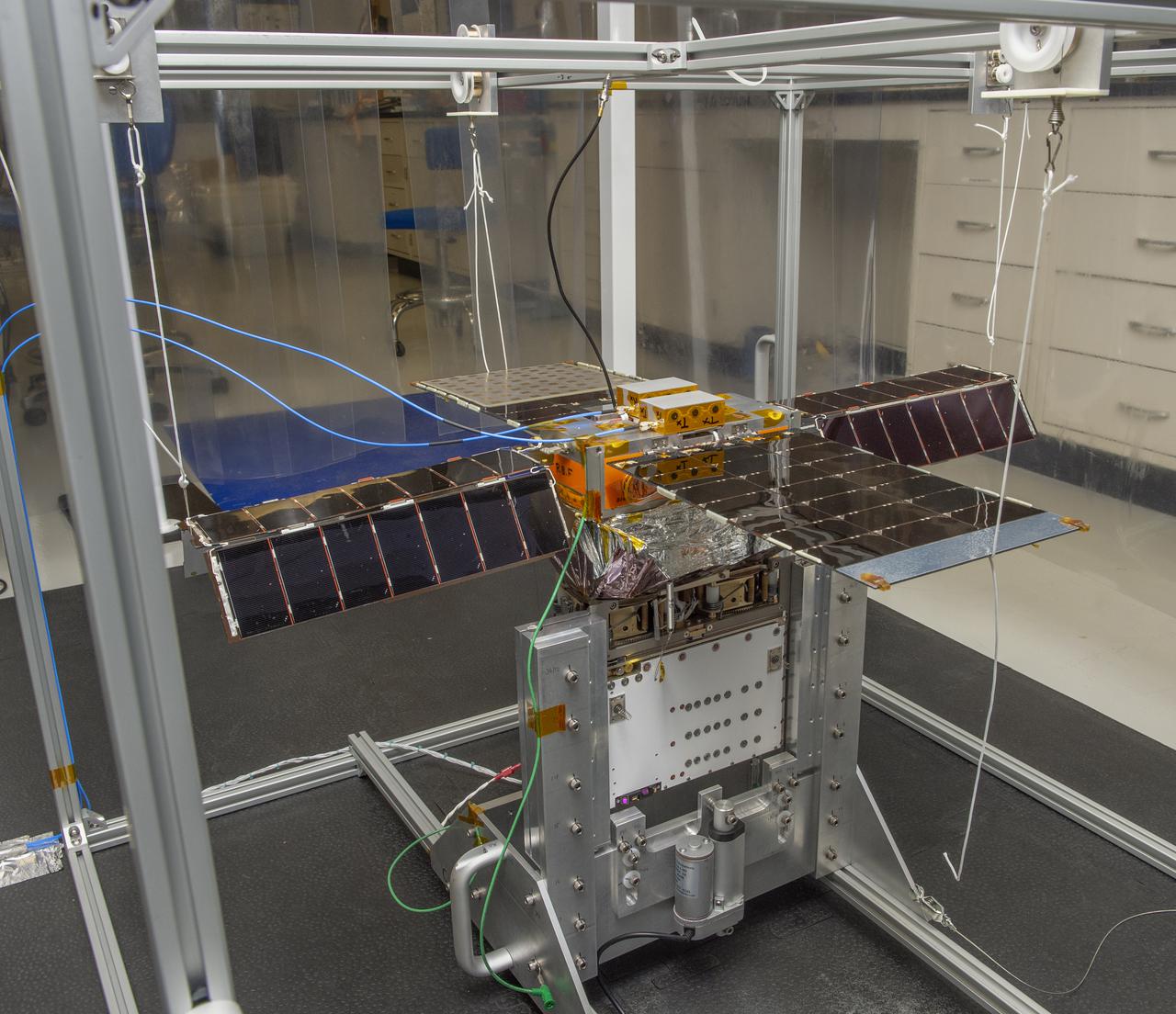
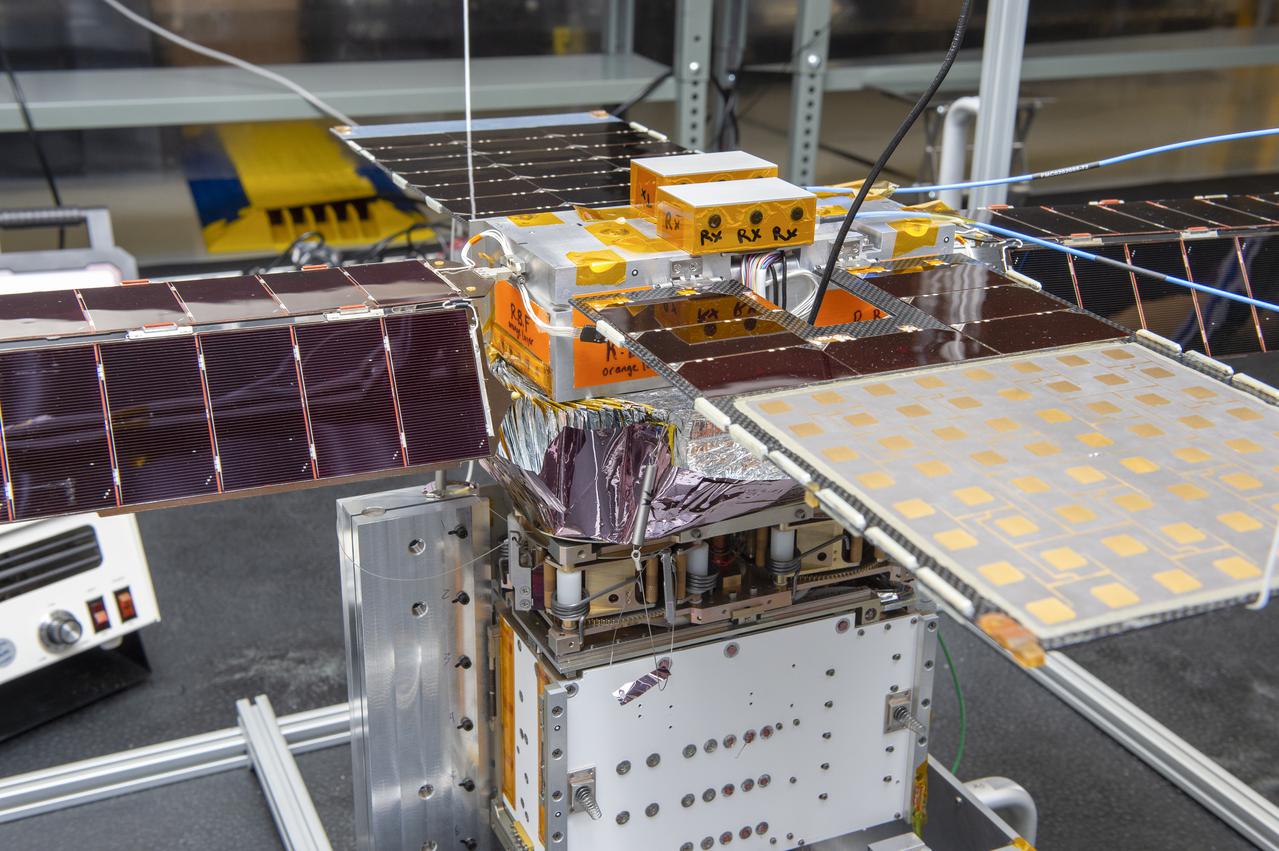
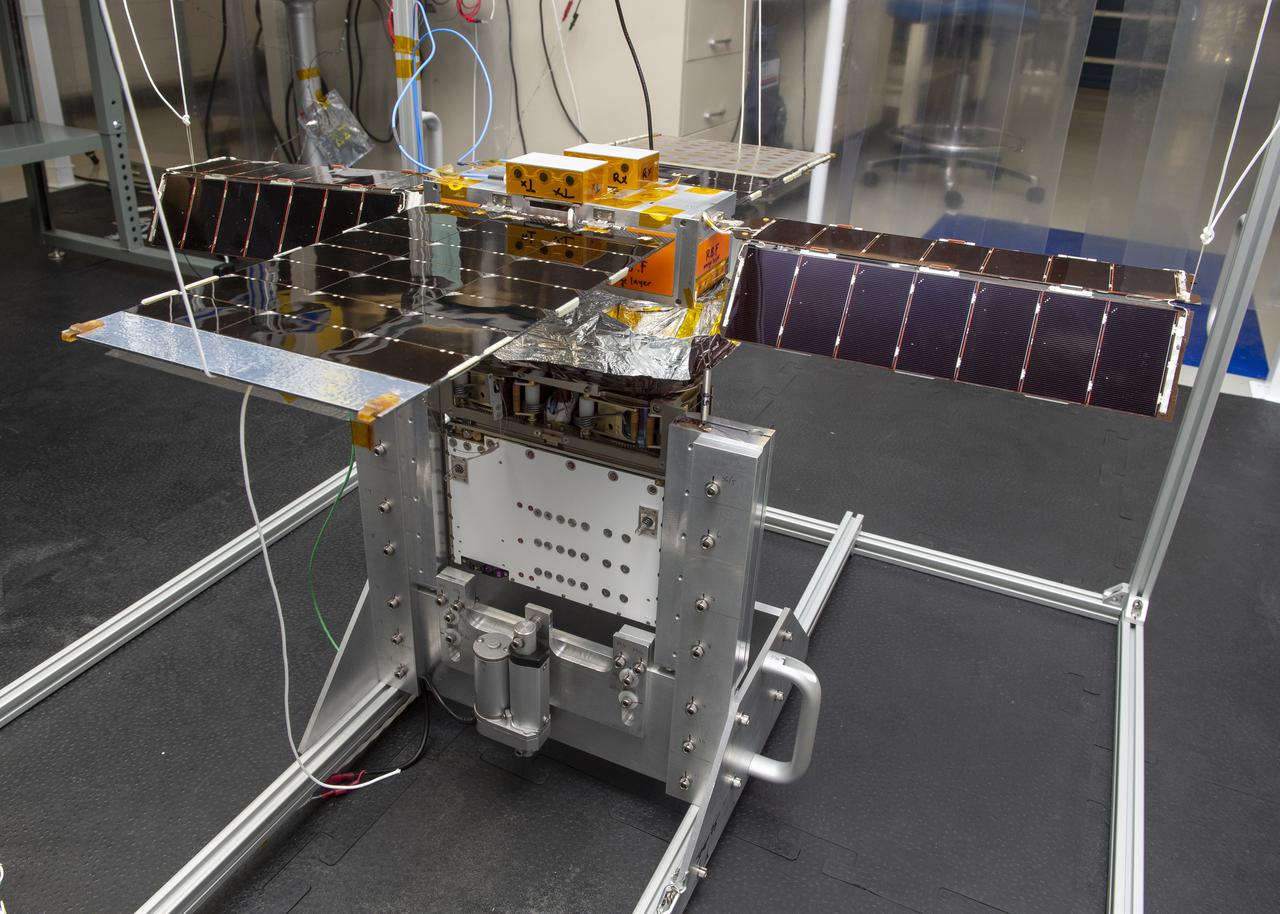
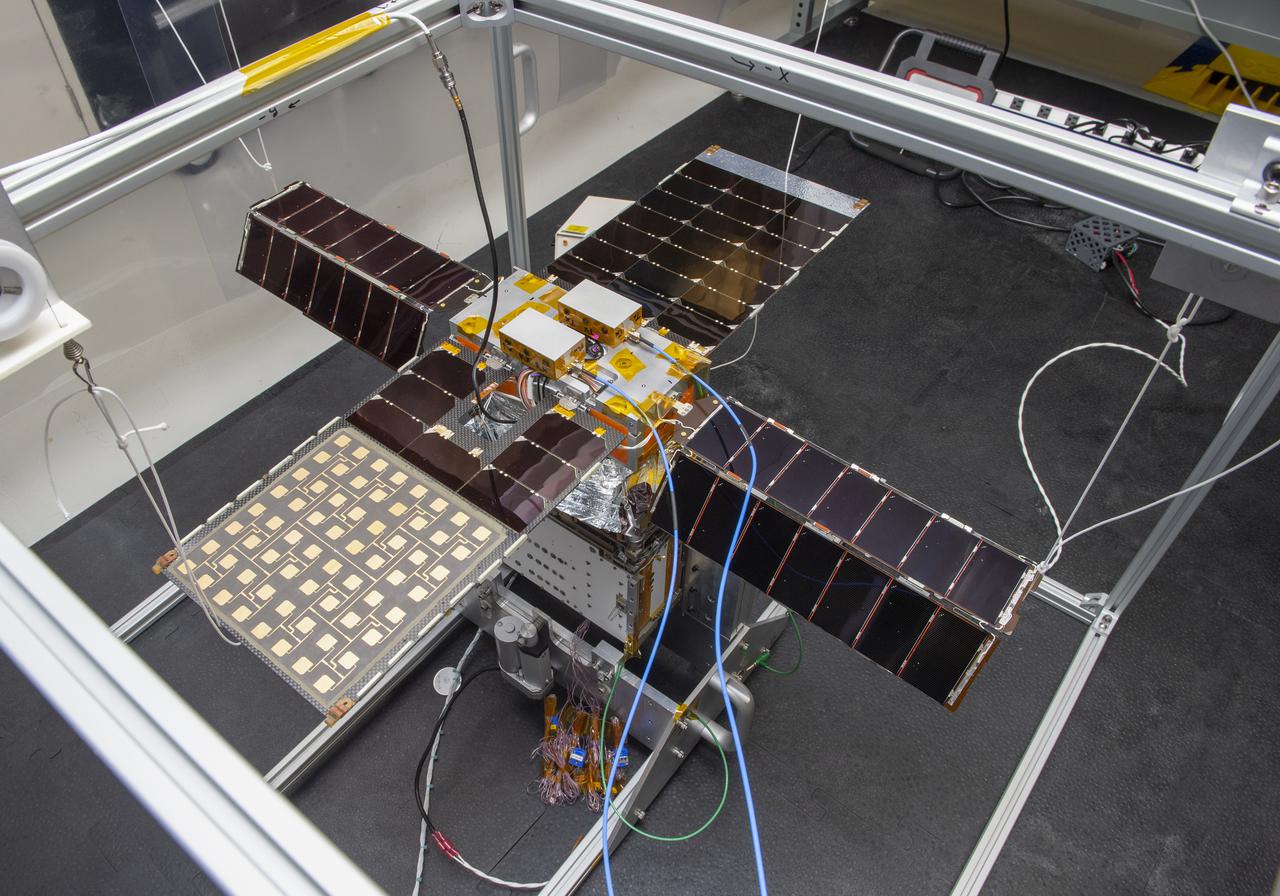
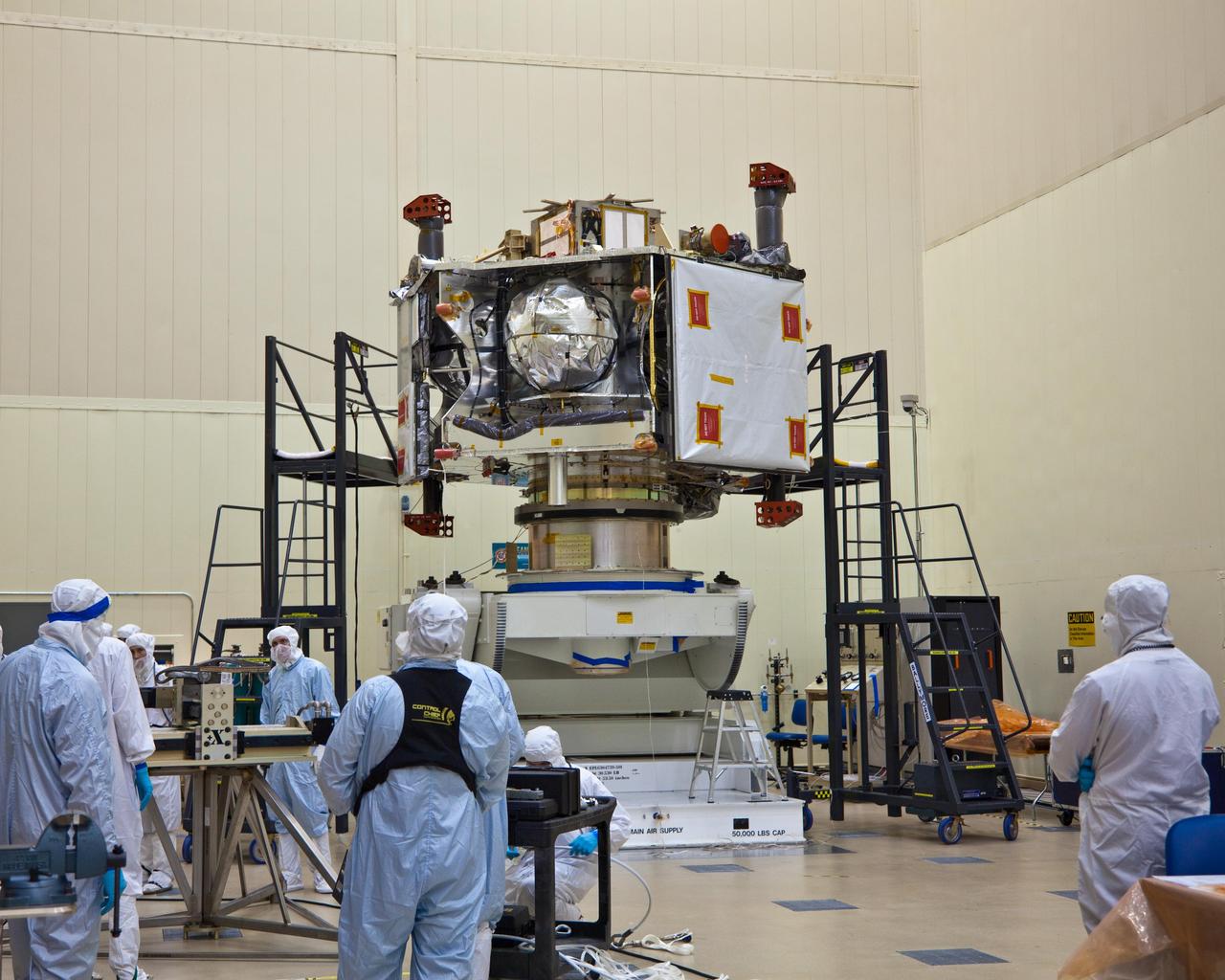
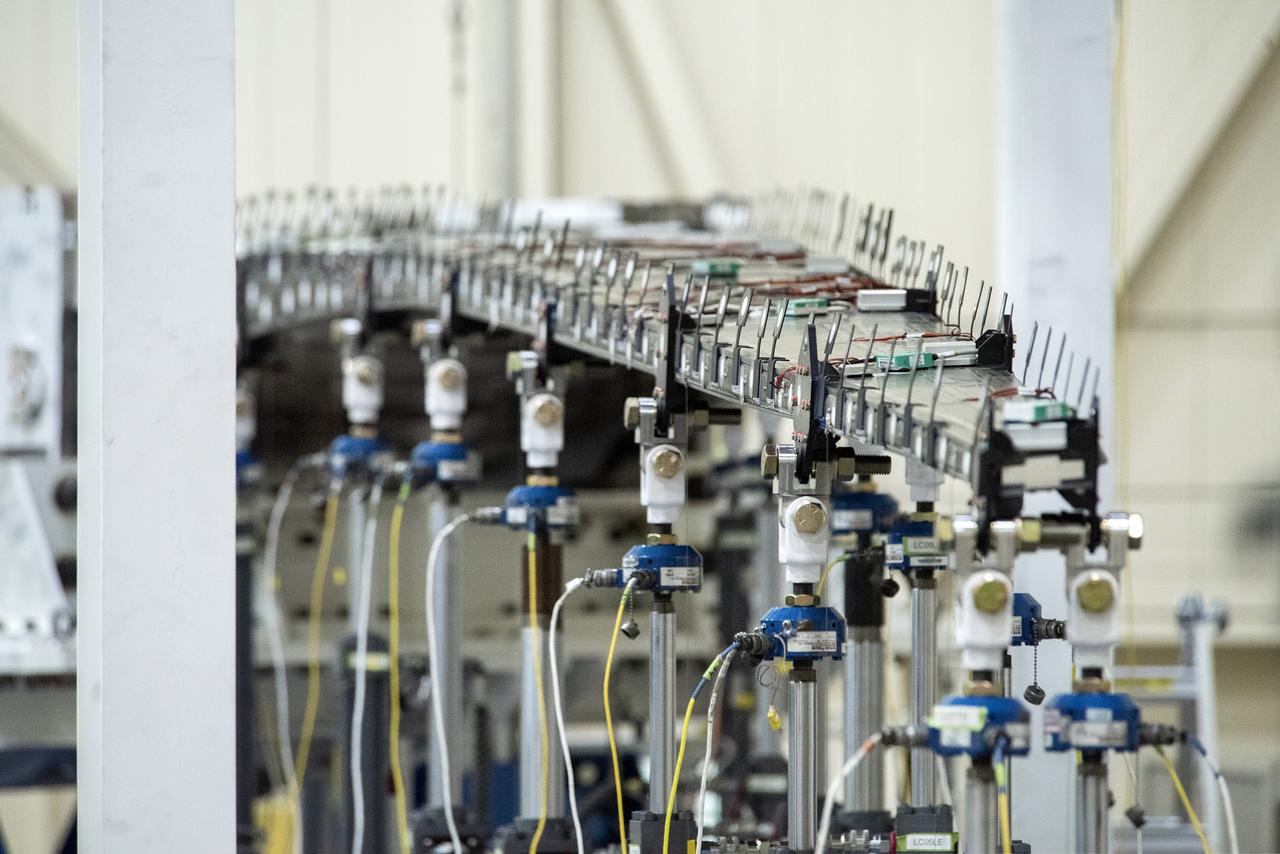
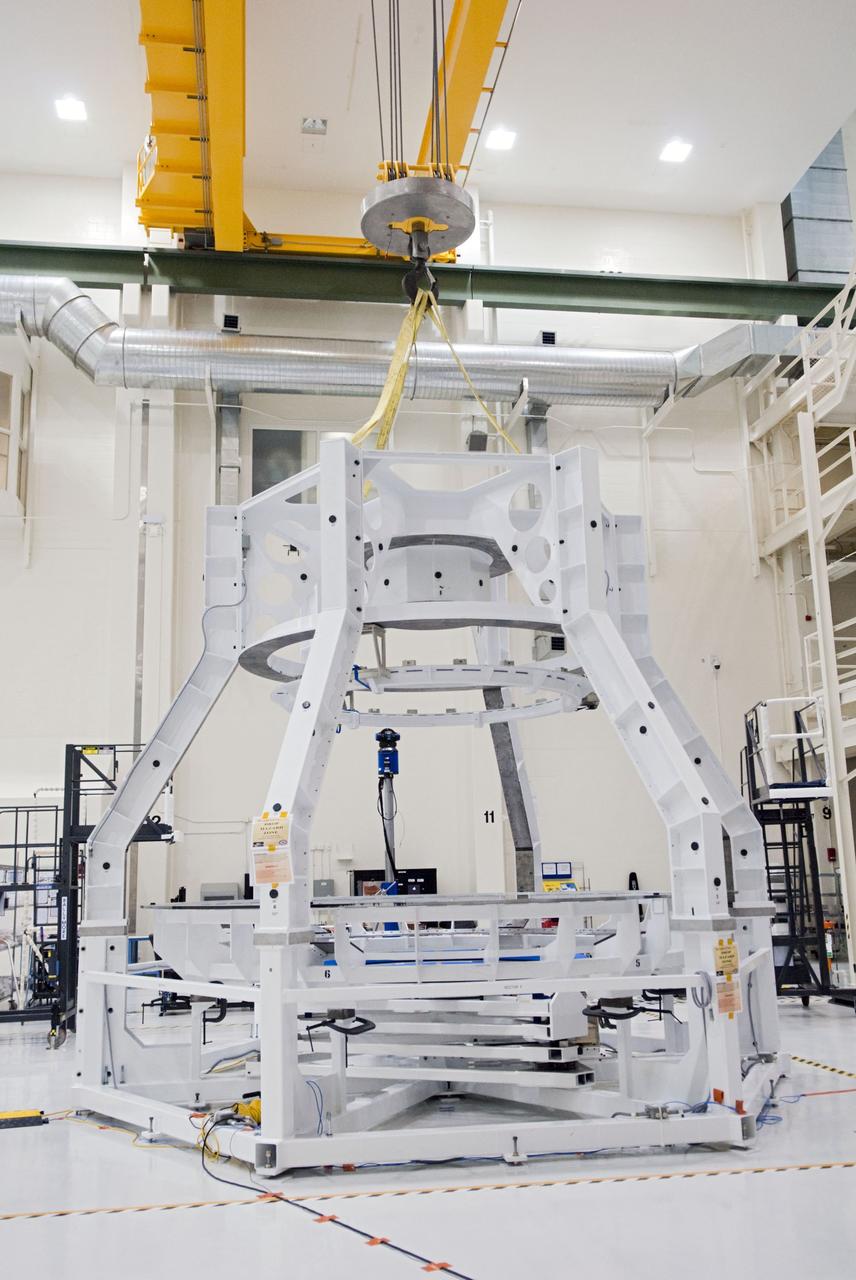
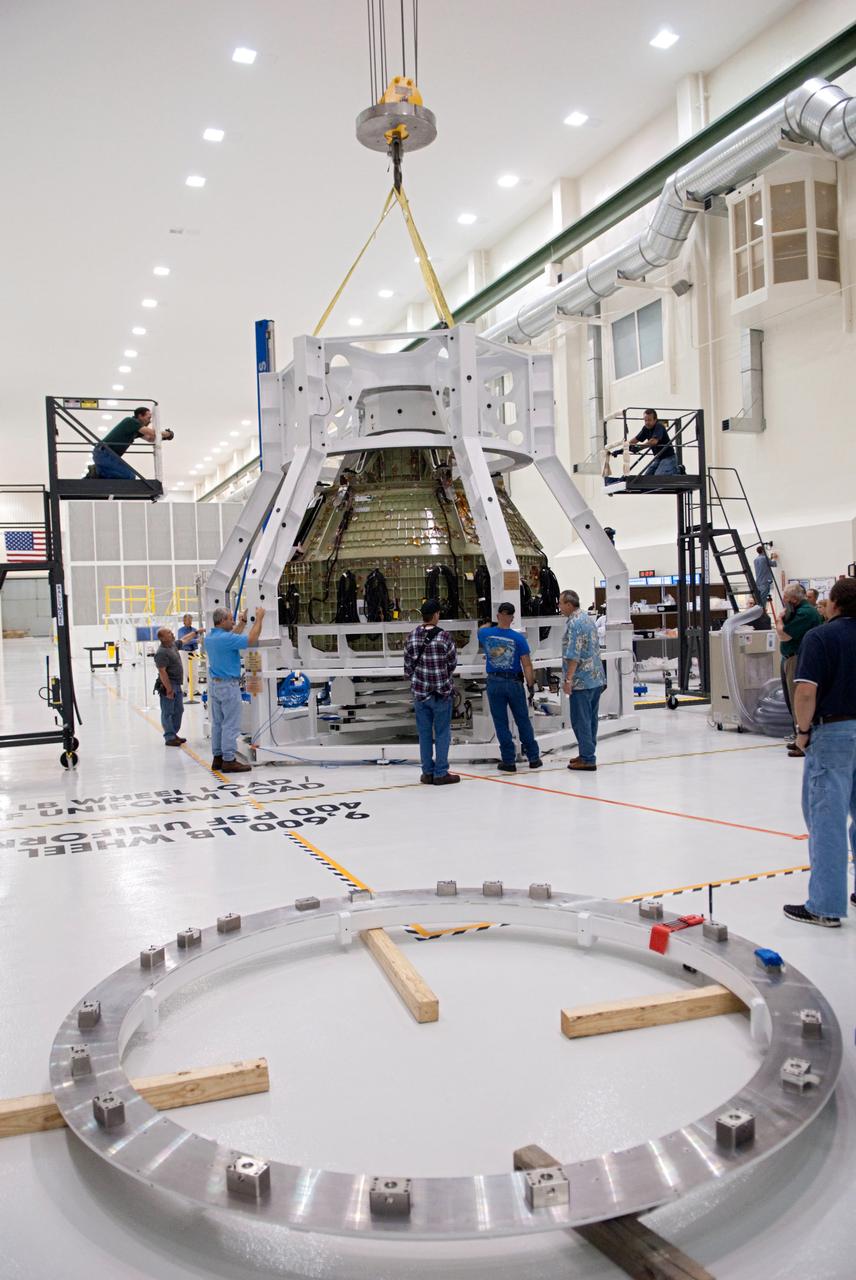
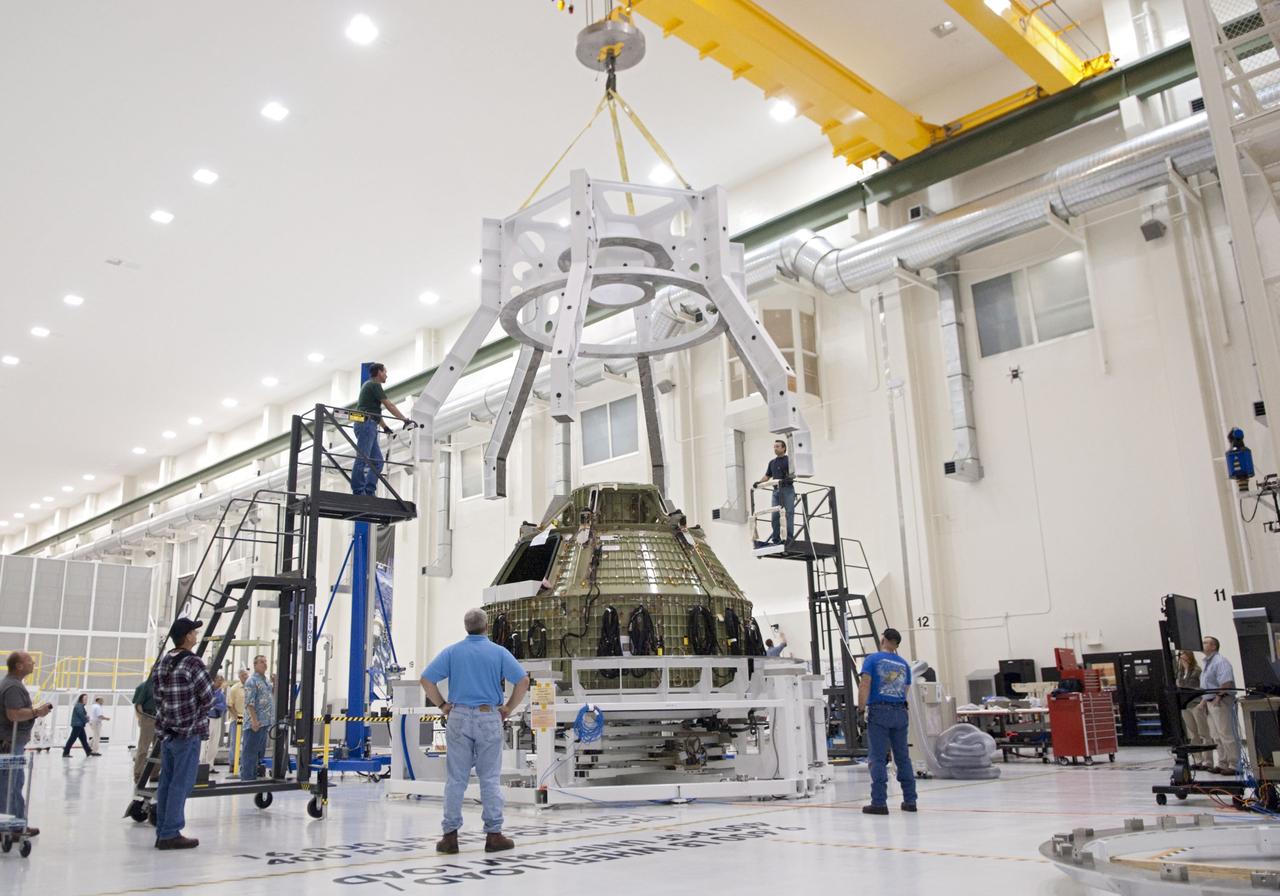
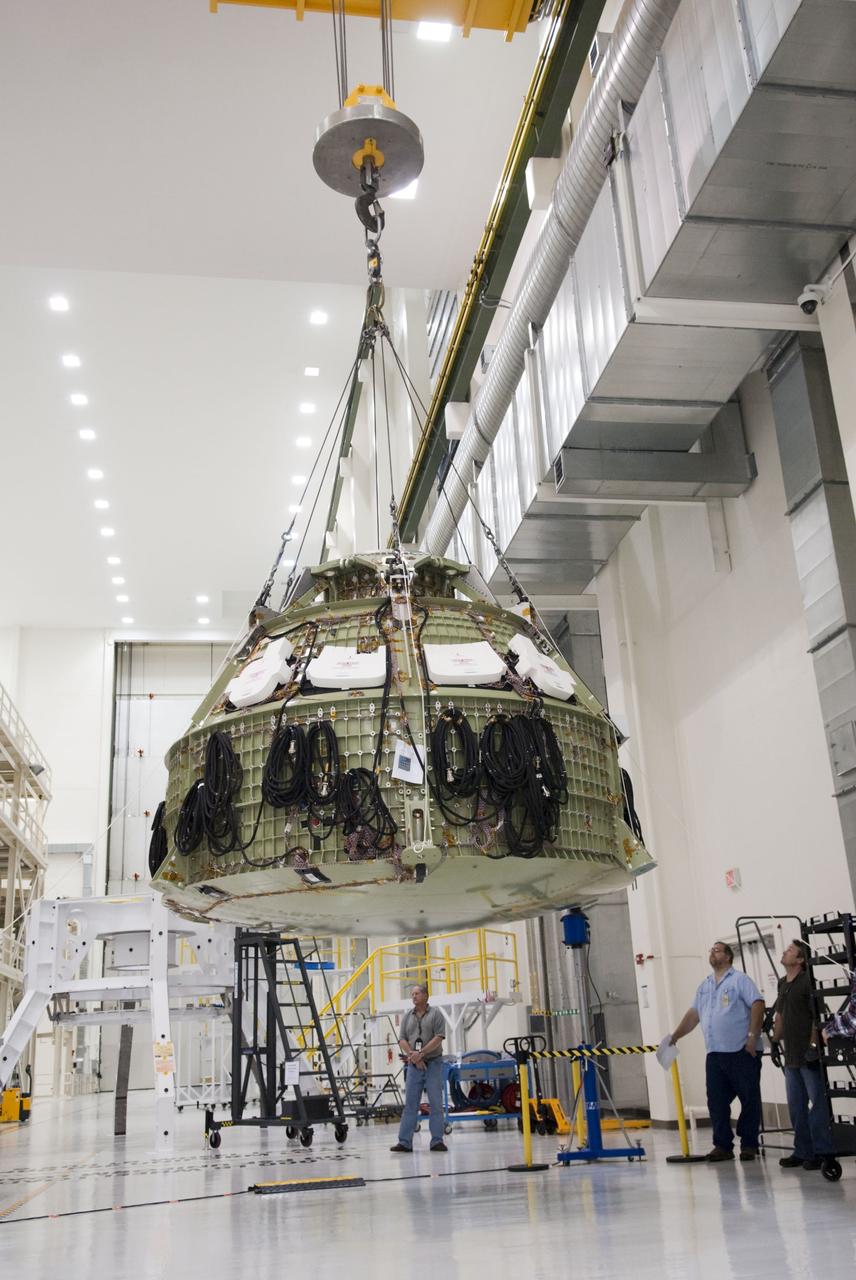
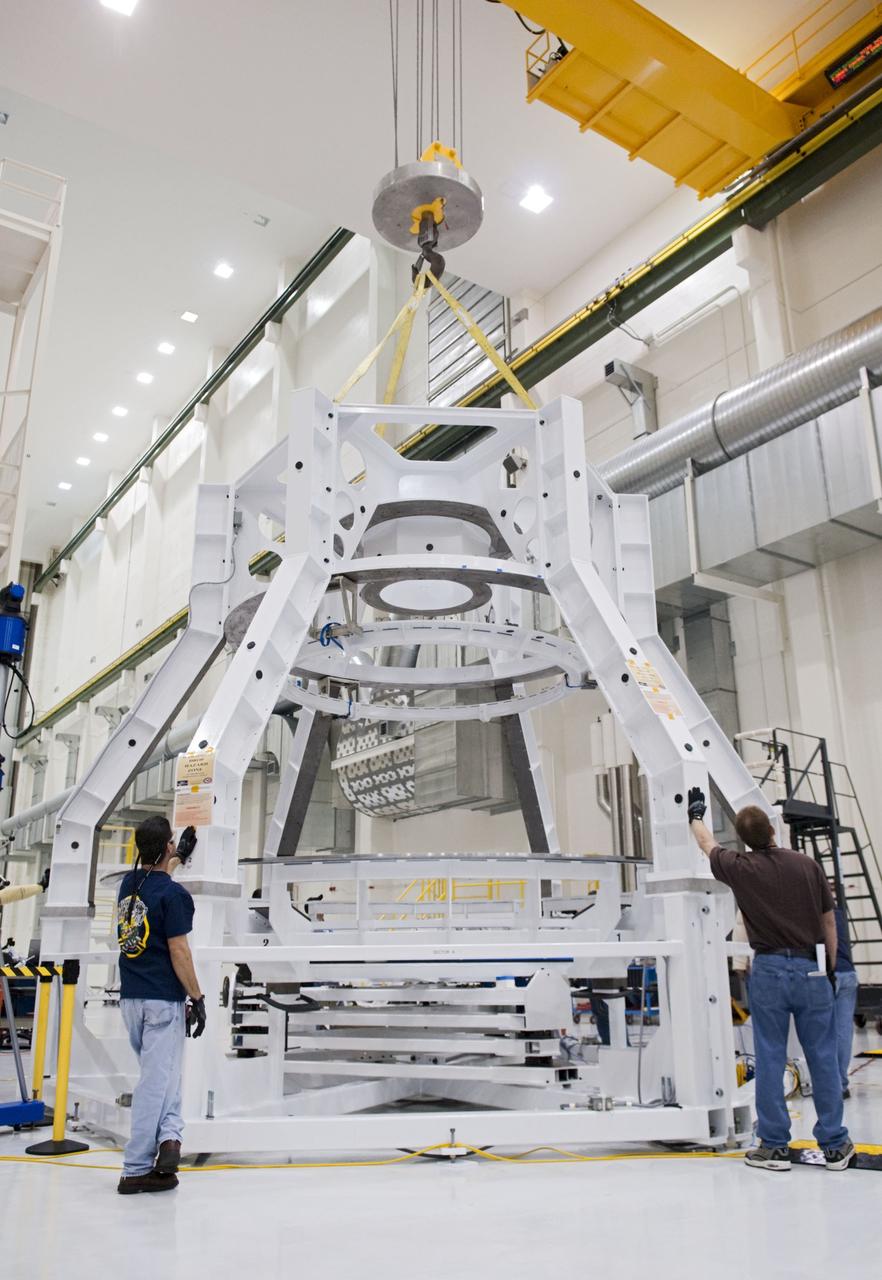
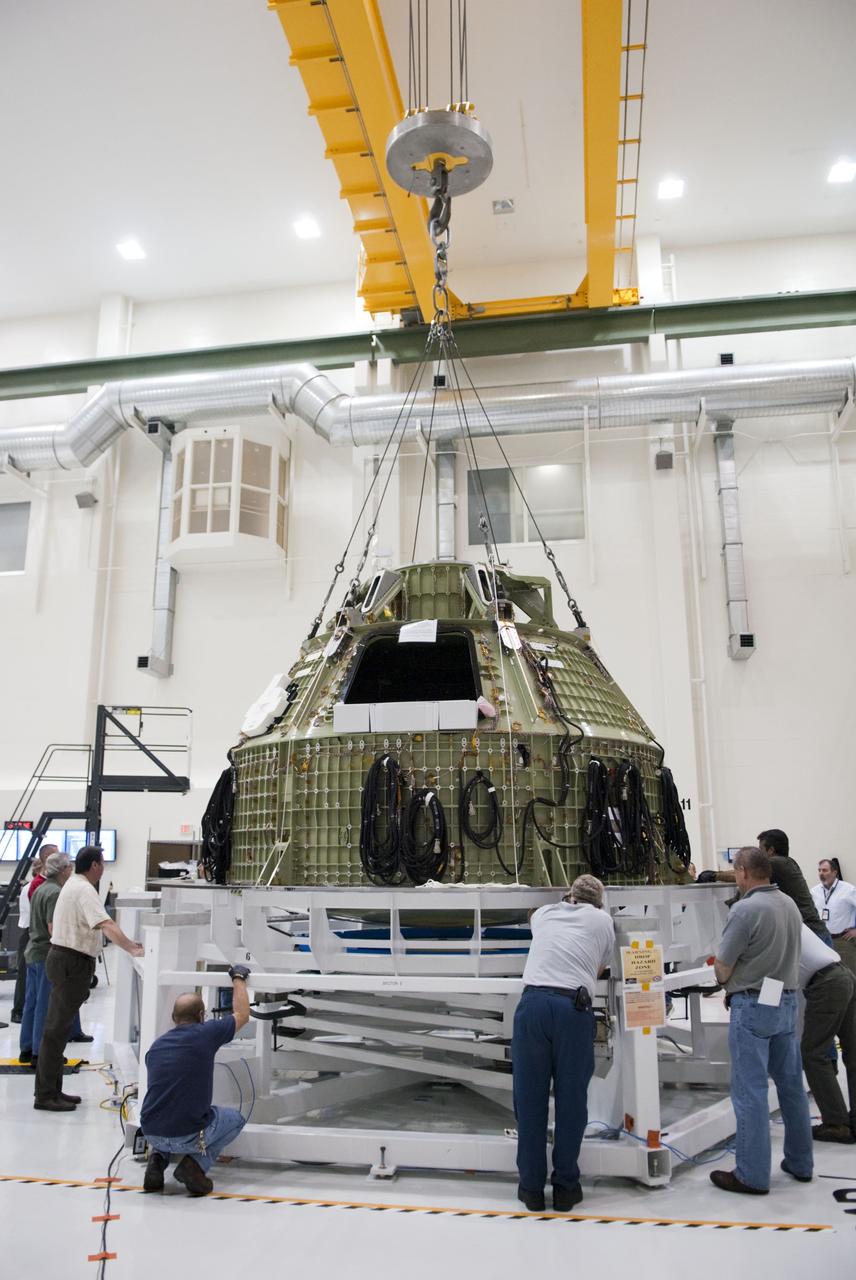
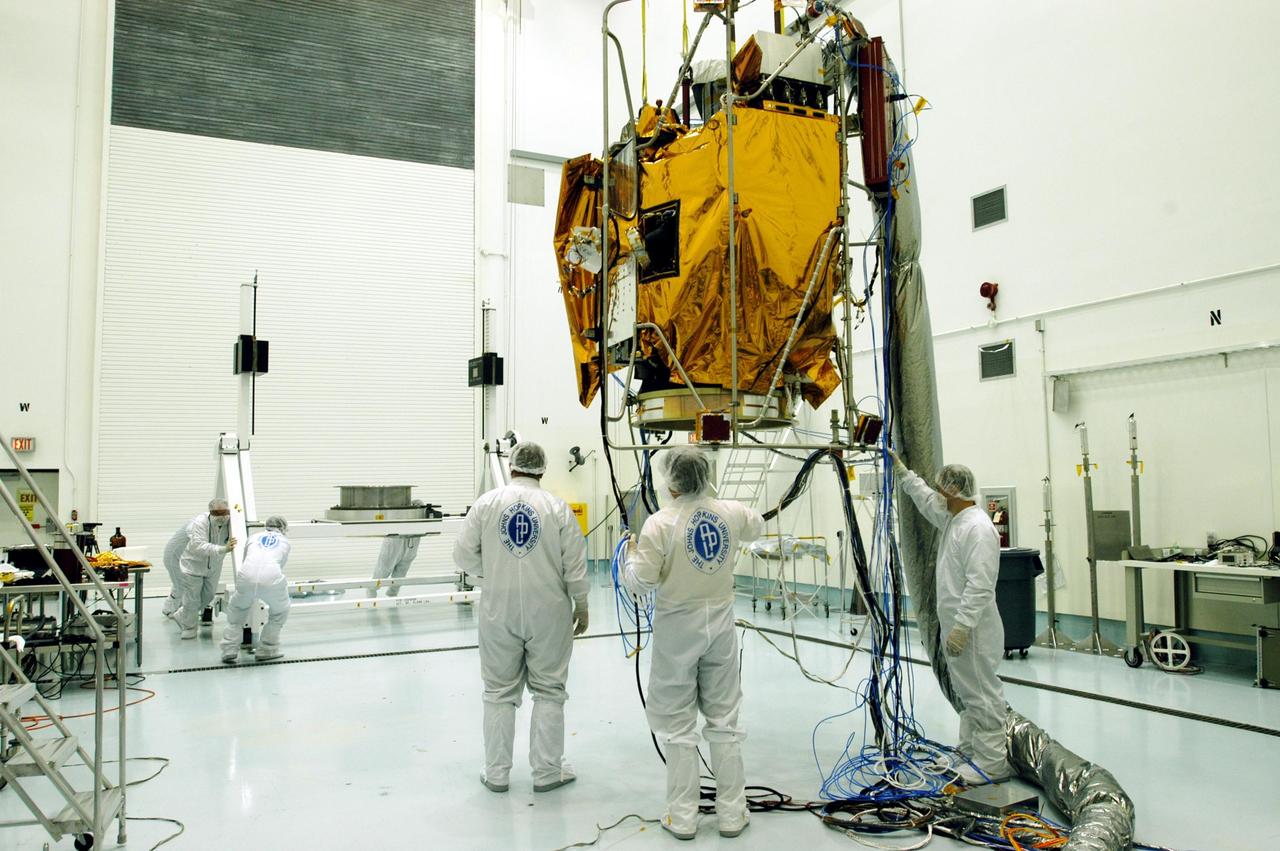
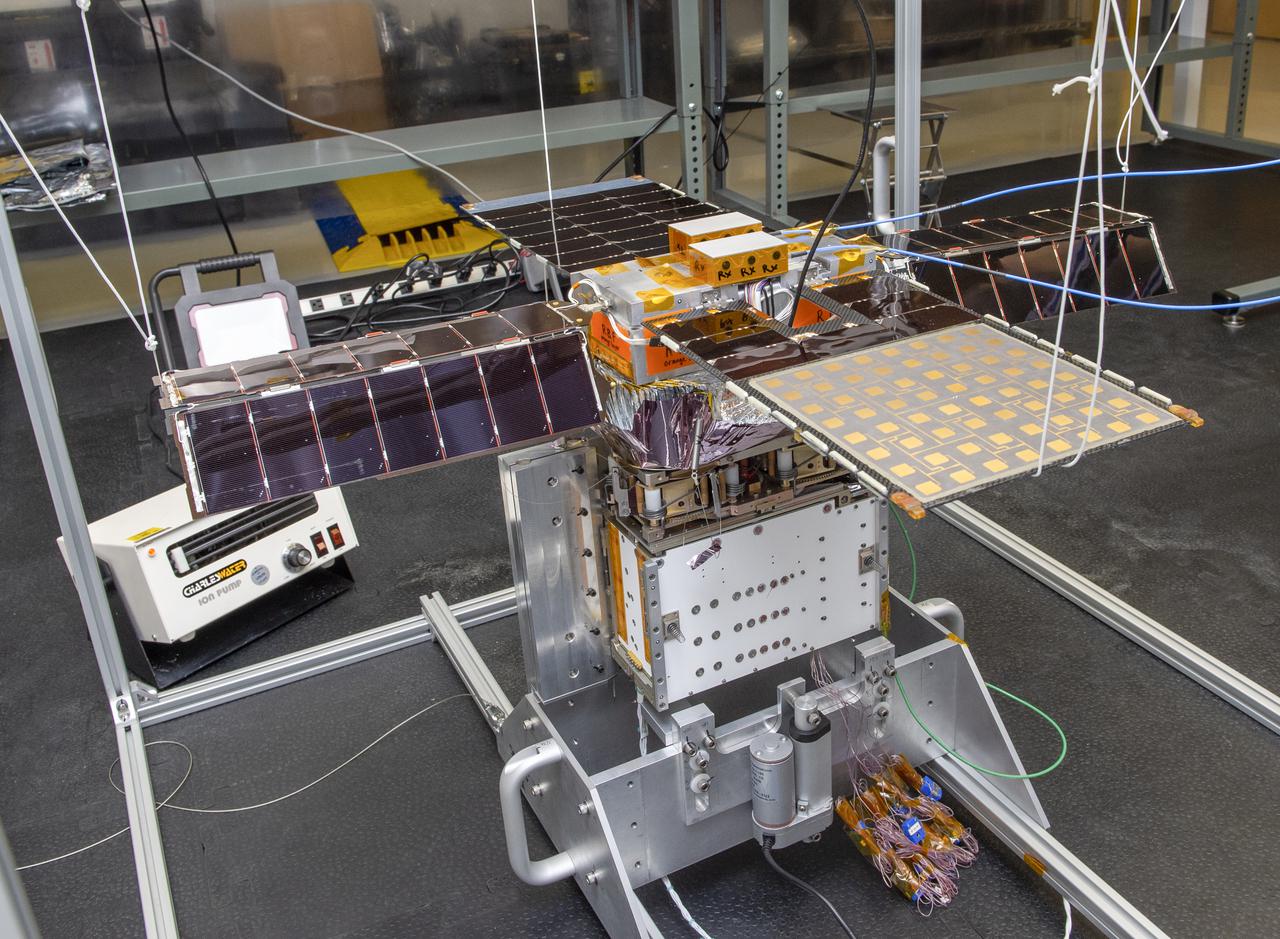
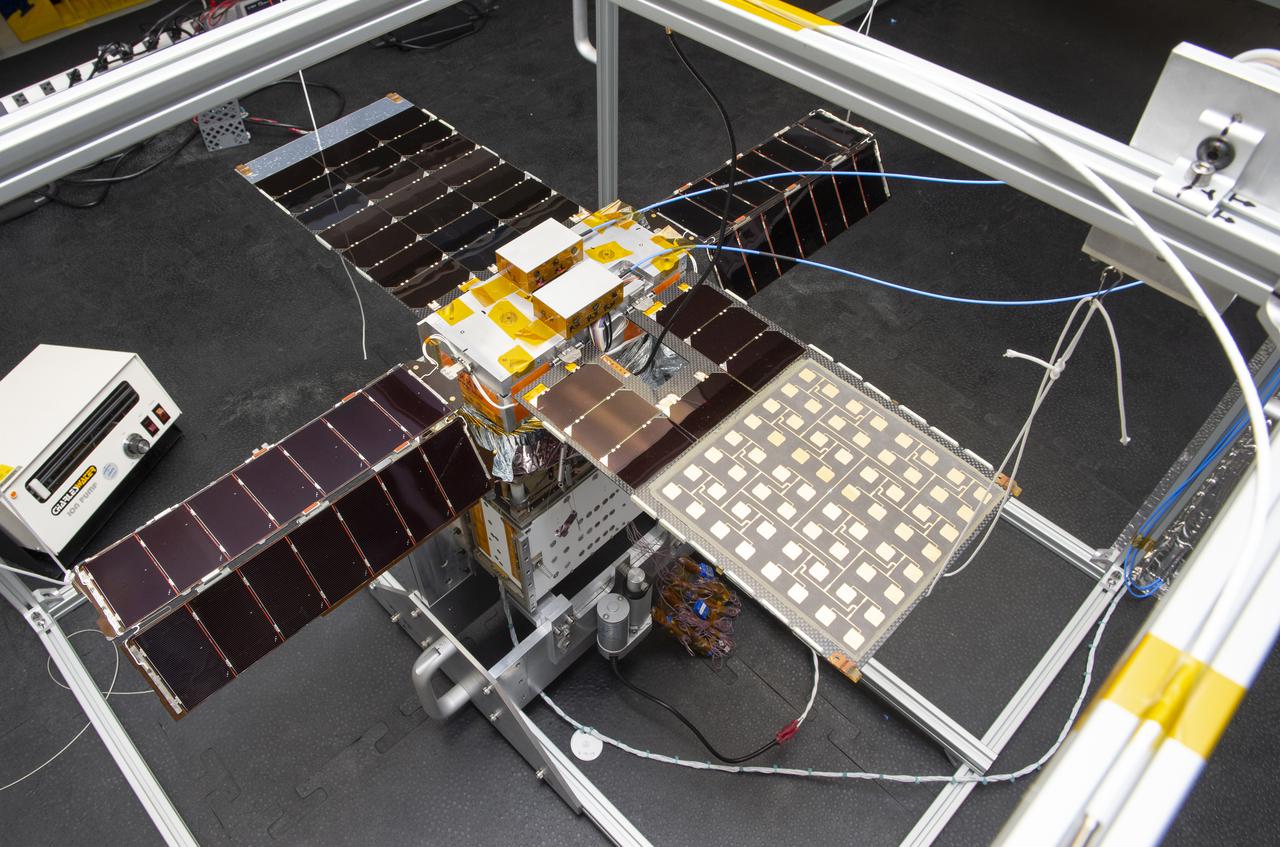
Spacecraft in Gravity Off-load Fixture (GOLF), System Test configuration - Arisa Waddle – Test Engineer,  Rick Wilson – Lead Test Engineer
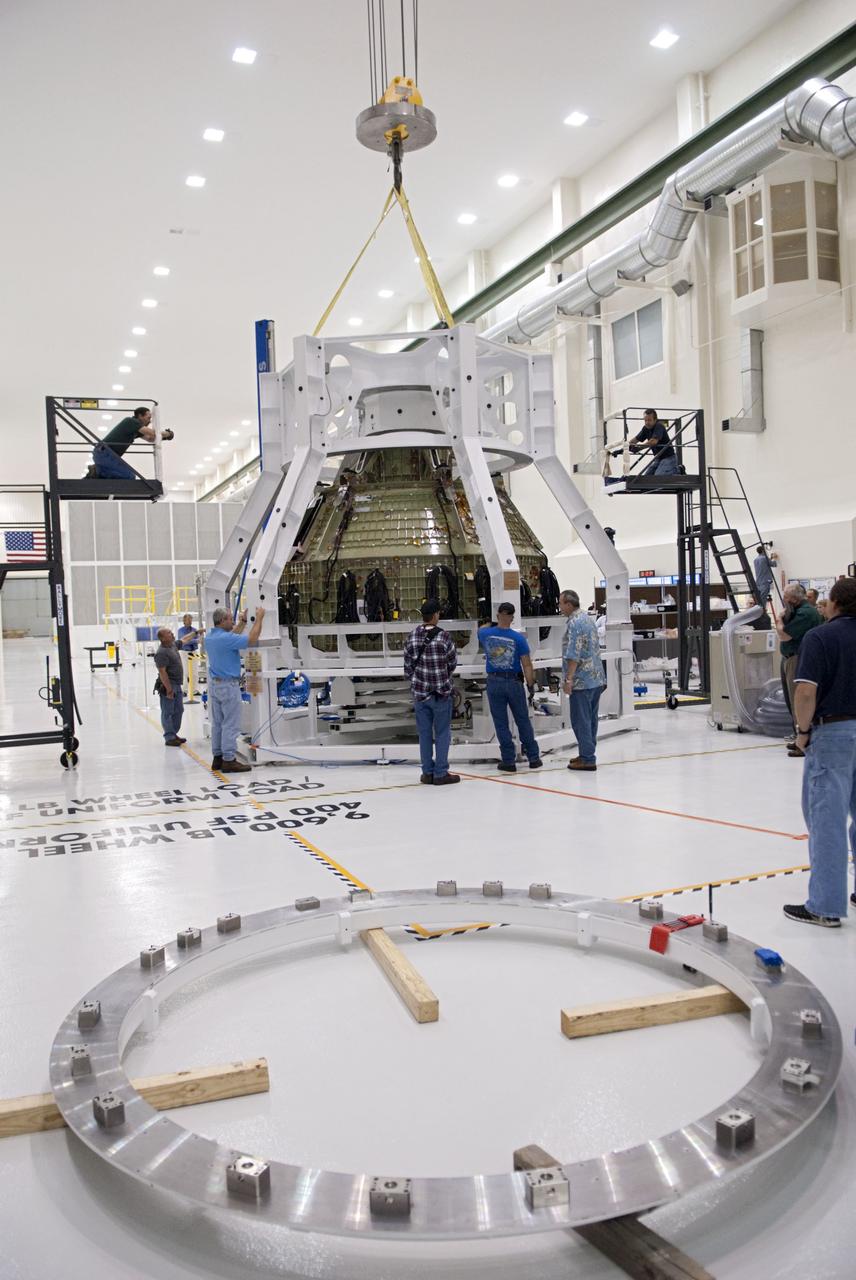
Spacecraft in Gravity Off-load Fixture (GOLF), System Test configuration - Arisa Waddle – Test Engineer, Rick Wilson – Lead Test Engineer
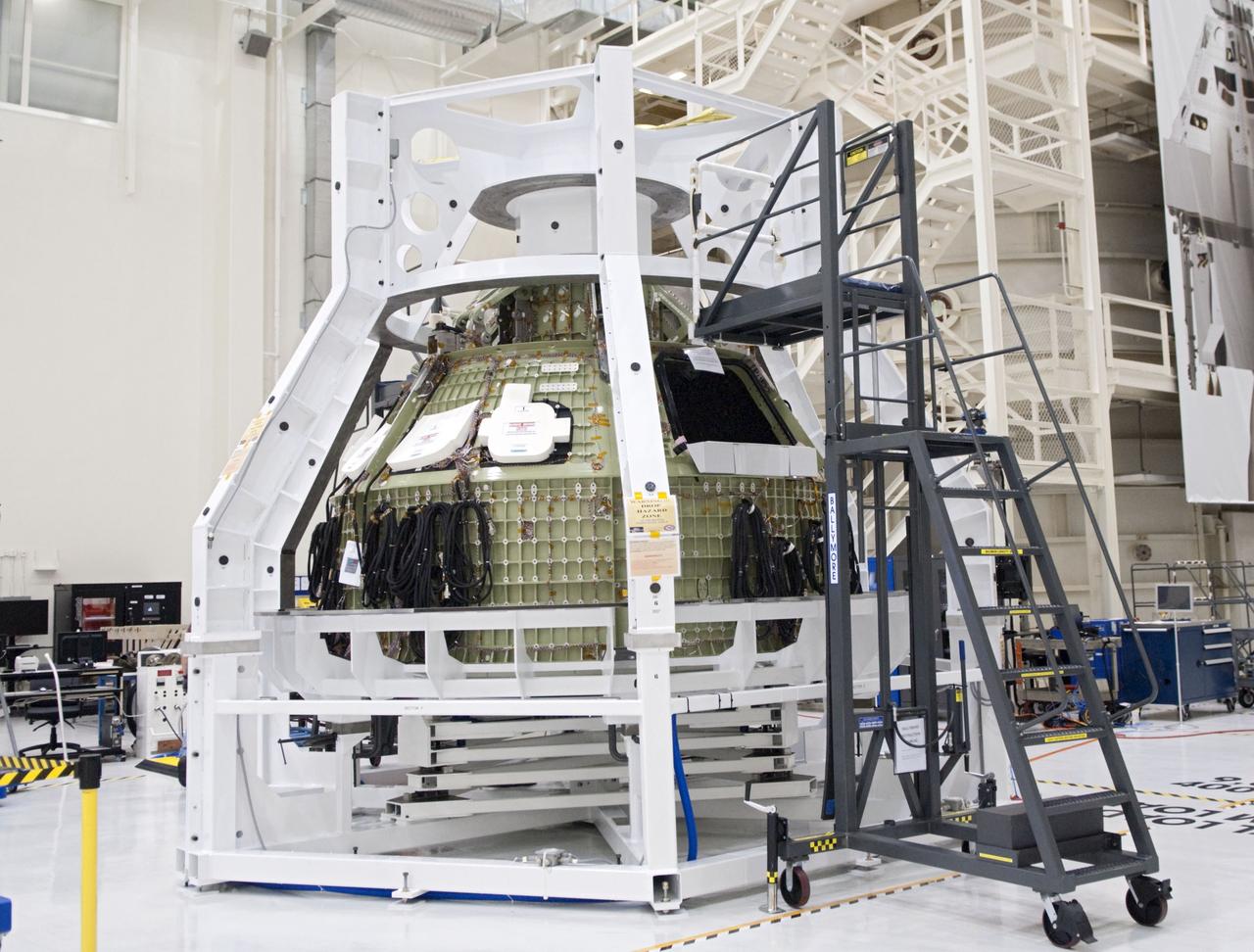
Spacecraft in Gravity Off-load Fixture (GOLF), System Test configuration - Arisa Waddle – Test Engineer,  Rick Wilson – Lead Test Engineer
Spacecraft in Gravity Off-load Fixture (GOLF), System Test configuration - Arisa Waddle – Test Engineer, Rick Wilson – Lead Test Engineer
Spacecraft in Gravity Off-load Fixture (GOLF), System Test configuration - Arisa Waddle – Test Engineer,  Rick Wilson – Lead Test Engineer
Spacecraft in Gravity Off-load Fixture (GOLF), System Test configuration - Arisa Waddle – Test Engineer, Rick Wilson – Lead Test Engineer
Spacecraft in Gravity Off-load Fixture (GOLF), System Test configuration - Arisa Waddle – Test Engineer,  Rick Wilson – Lead Test Engineer
Spacecraft in Gravity Off-load Fixture (GOLF), System Test configuration - Arisa Waddle – Test Engineer, Rick Wilson – Lead Test Engineer
Spacecraft in Gravity Off-load Fixture (GOLF), System Test configuration - Arisa Waddle – Test Engineer,  Rick Wilson – Lead Test Engineer
Spacecraft in Gravity Off-load Fixture (GOLF), System Test configuration - Arisa Waddle – Test Engineer, Rick Wilson – Lead Test Engineer
Spacecraft in Gravity Off-load Fixture (GOLF), System Test configuration - Arisa Waddle – Test Engineer,  Rick Wilson – Lead Test Engineer
Spacecraft in Gravity Off-load Fixture (GOLF), System Test configuration - Arisa Waddle – Test Engineer, Rick Wilson – Lead Test Engineer
Spacecraft in Gravity Off-load Fixture (GOLF), System Test configuration - Arisa Waddle – Test Engineer,  Rick Wilson – Lead Test Engineer
Spacecraft in Gravity Off-load Fixture (GOLF), System Test configuration - Arisa Waddle – Test Engineer, Rick Wilson – Lead Test Engineer
Spacecraft in Gravity Off-load Fixture (GOLF), System Test configuration - Arisa Waddle – Test Engineer,  Rick Wilson – Lead Test Engineer
Spacecraft in Gravity Off-load Fixture (GOLF), System Test configuration - Arisa Waddle – Test Engineer, Rick Wilson – Lead Test Engineer
Spacecraft in Gravity Off-load Fixture (GOLF), System Test configuration - Arisa Waddle – Test Engineer,  Rick Wilson – Lead Test Engineer
Spacecraft in Gravity Off-load Fixture (GOLF), System Test configuration - Arisa Waddle – Test Engineer, Rick Wilson – Lead Test Engineer
Spacecraft in Gravity Off-load Fixture (GOLF), System Test configuration - Arisa Waddle – Test Engineer,  Rick Wilson – Lead Test Engineer
Spacecraft in Gravity Off-load Fixture (GOLF), System Test configuration - Arisa Waddle – Test Engineer, Rick Wilson – Lead Test Engineer
Spacecraft in Gravity Off-load Fixture (GOLF), System Test configuration - Arisa Waddle – Test Engineer,  Rick Wilson – Lead Test Engineer
Spacecraft in Gravity Off-load Fixture (GOLF), System Test configuration - Arisa Waddle – Test Engineer, Rick Wilson – Lead Test Engineer
Spacecraft in Gravity Off-load Fixture (GOLF), System Test configuration - Arisa Waddle – Test Engineer,  Rick Wilson – Lead Test Engineer
Spacecraft in Gravity Off-load Fixture (GOLF), System Test configuration - Arisa Waddle – Test Engineer, Rick Wilson – Lead Test Engineer
Spacecraft in Gravity Off-load Fixture (GOLF), System Test configuration - Arisa Waddle – Test Engineer,  Rick Wilson – Lead Test Engineer
Spacecraft in Gravity Off-load Fixture (GOLF), System Test configuration - Arisa Waddle – Test Engineer, Rick Wilson – Lead Test Engineer
Spacecraft in Gravity Off-load Fixture (GOLF), System Test configuration - Arisa Waddle – Test Engineer,  Rick Wilson – Lead Test Engineer
Spacecraft in Gravity Off-load Fixture (GOLF), System Test configuration - Arisa Waddle – Test Engineer, Rick Wilson – Lead Test Engineer
Spacecraft in Gravity Off-load Fixture (GOLF), System Test configuration - Arisa Waddle – Test Engineer,  Rick Wilson – Lead Test Engineer
Spacecraft in Gravity Off-load Fixture (GOLF), System Test configuration - Arisa Waddle – Test Engineer, Rick Wilson – Lead Test Engineer
Spacecraft in Gravity Off-load Fixture (GOLF), System Test configuration - Arisa Waddle – Test Engineer,  Rick Wilson – Lead Test Engineer
Spacecraft in Gravity Off-load Fixture (GOLF), System Test configuration - Arisa Waddle – Test Engineer, Rick Wilson – Lead Test Engineer
Spacecraft in Gravity Off-load Fixture (GOLF), System Test configuration - Arisa Waddle – Test Engineer,  Rick Wilson – Lead Test Engineer
Spacecraft in Gravity Off-load Fixture (GOLF), System Test configuration - Arisa Waddle – Test Engineer, Rick Wilson – Lead Test Engineer
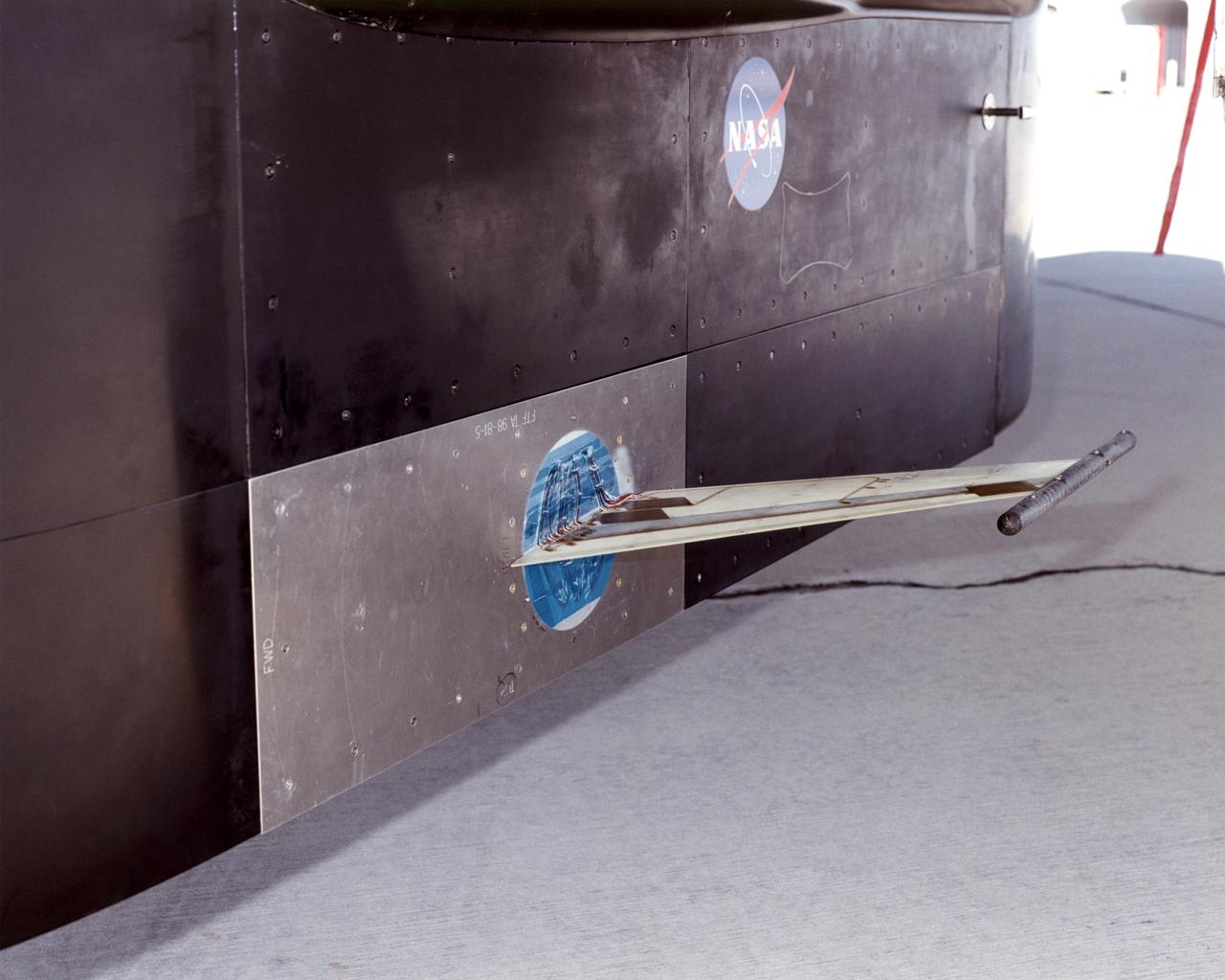
The Aerostructures Test Wing (ATW), which consisted of an 18-inch carbon fiber test wing with surface-mounted piezoelectric strain actuators, was mounted on a special ventral flight test fixture and flown on Dryden's F-15B Research Testbed aircraft
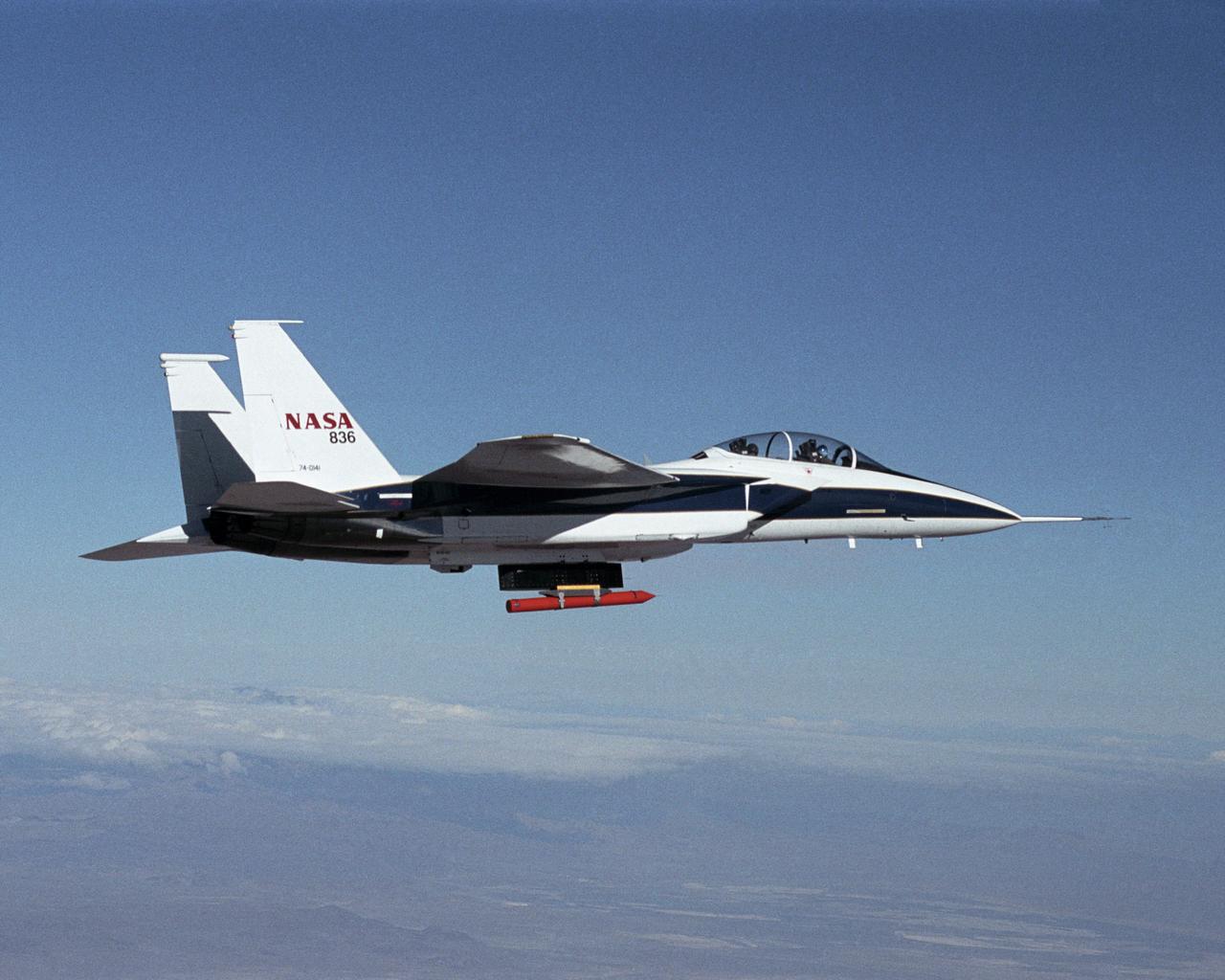
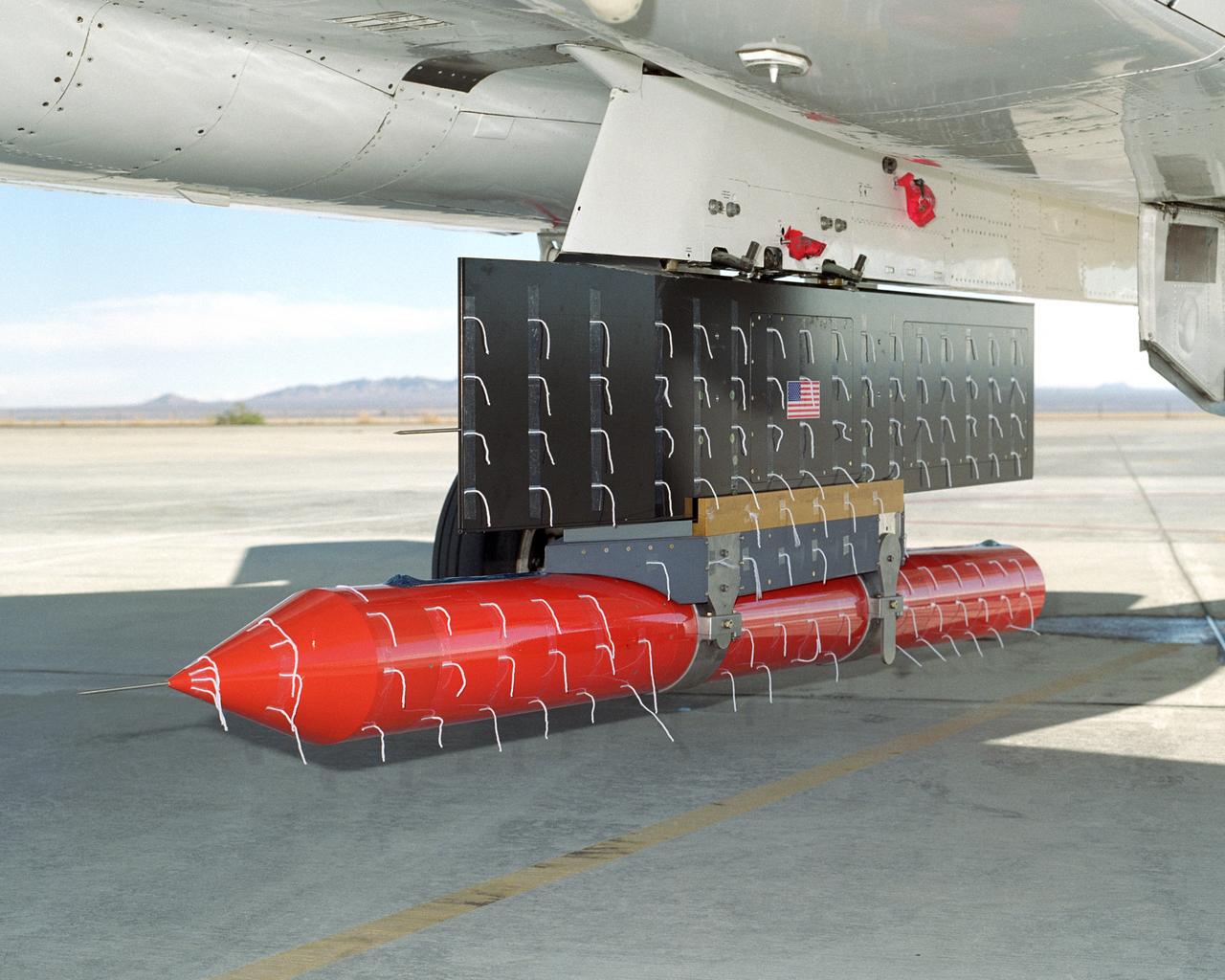
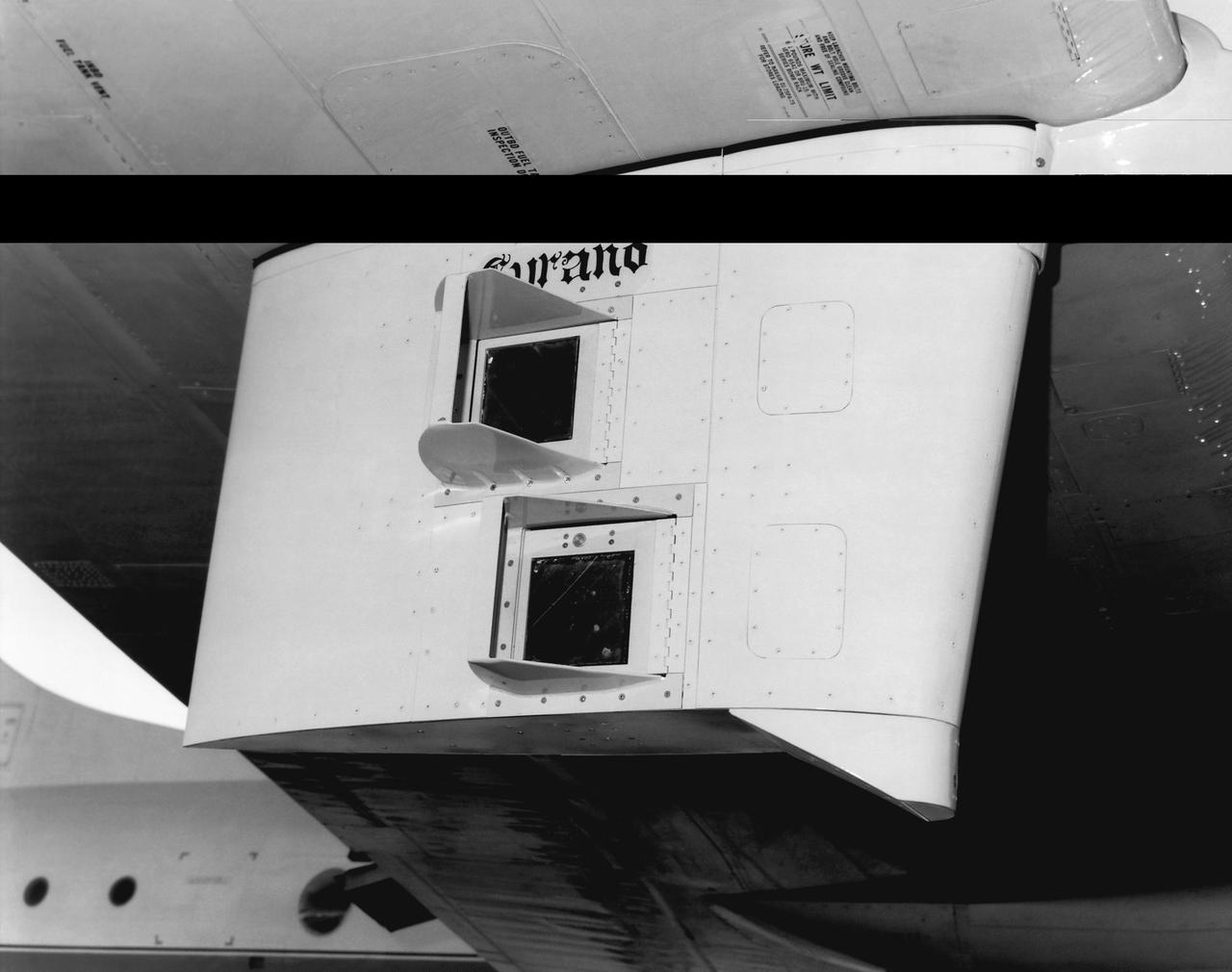
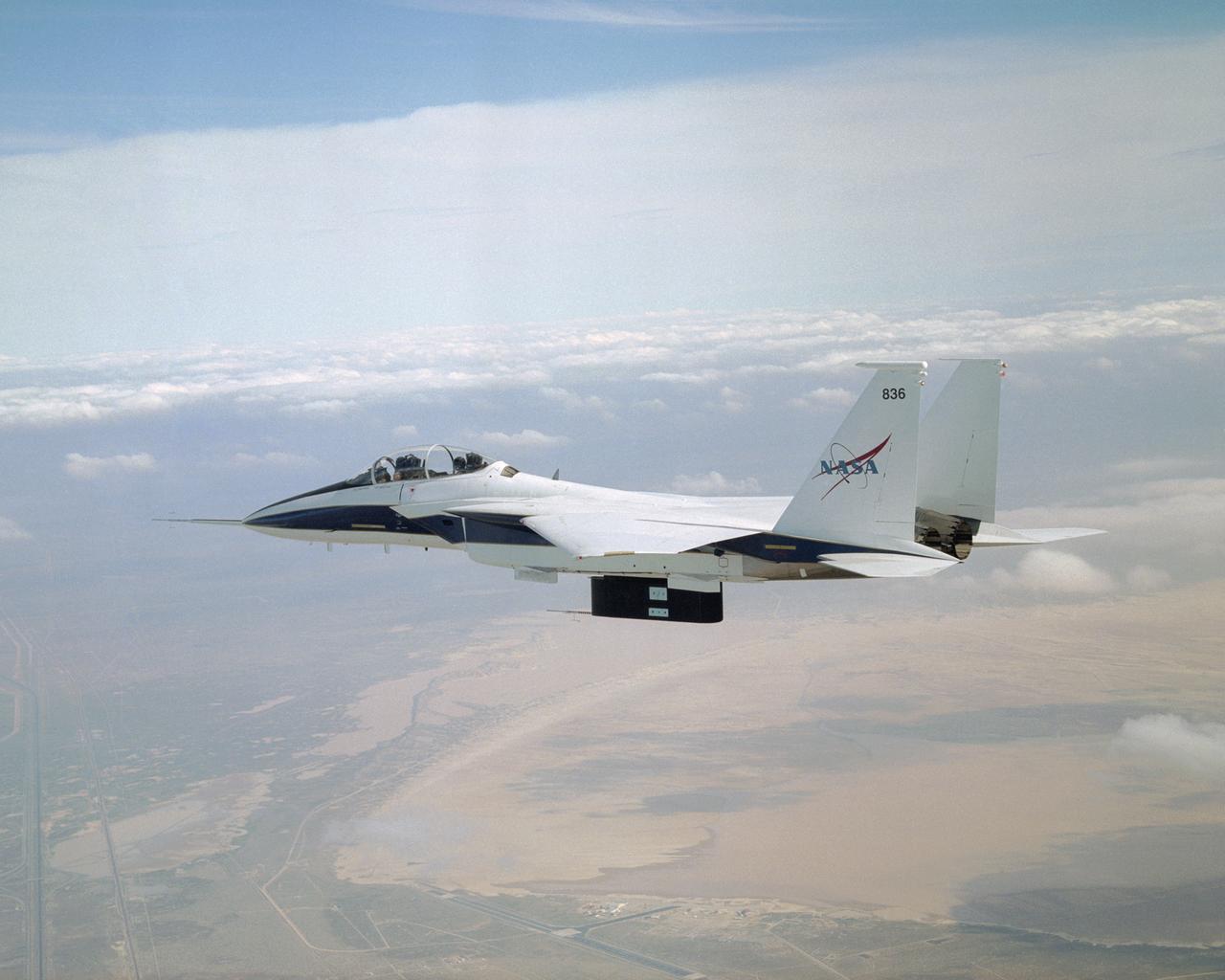
NASA Dryden's new in-house designed Propulsion Flight Test Fixture (PFTF) flew mated to a specially-equipped supersonic F-15B research aircraft during December 2001 and January 2002.
NASA Dryden's new in-house designed Propulsion Flight Test Fixture (PFTF), carried on an F-15B's centerline attachment point, underwent flight envelope expansion in order to verify its design and capabilities.
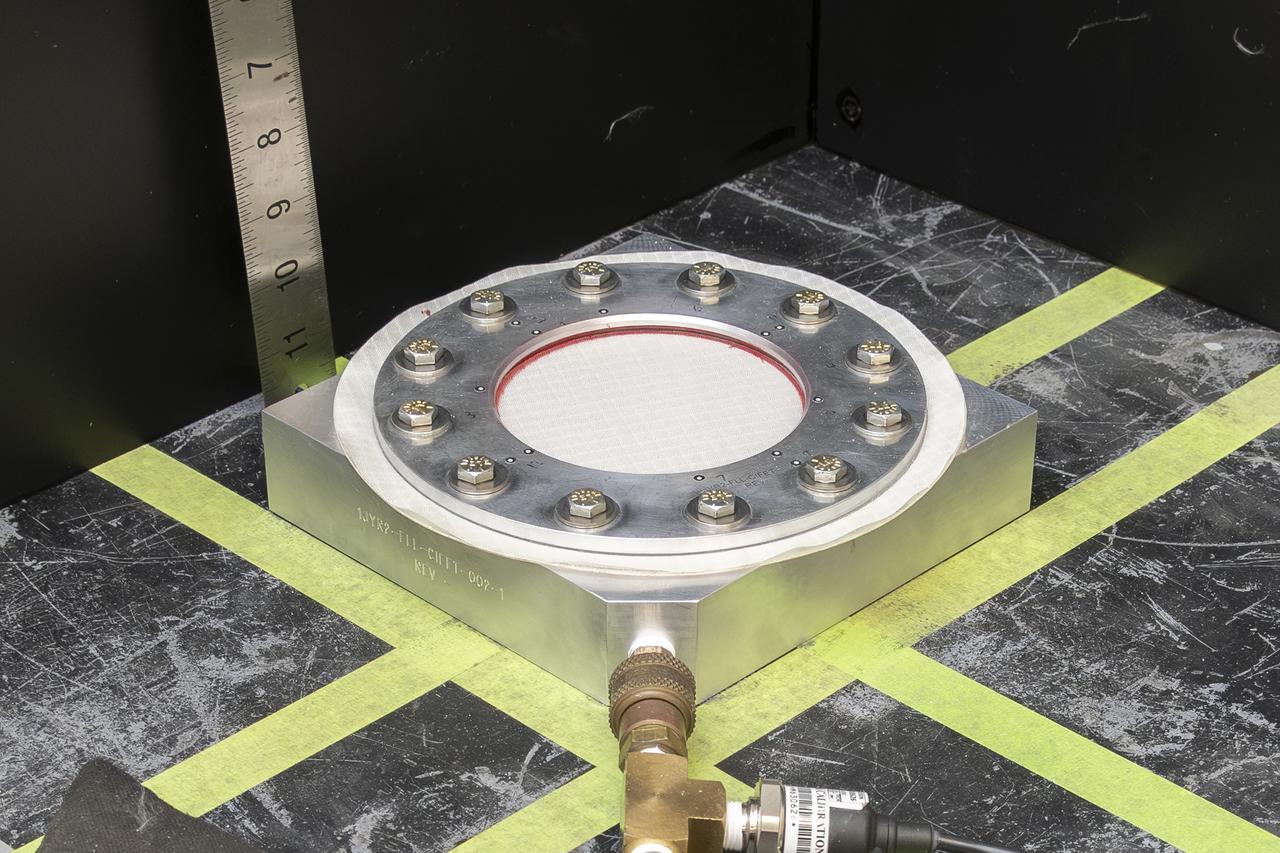
The test team prepares a test fixture with a nylon fabric sample at NASA’s Armstrong Flight Research Center in Edwards, California. The fabric in the test fixture forms a bubble when pressure is applied to the silicone bladder underneath. A similar test can be performed with a sensor on the fabric to verify the sensor will work when stretched in three dimensions.
NASA Parachute Sensor Testing Can Make Mars Landings Safer
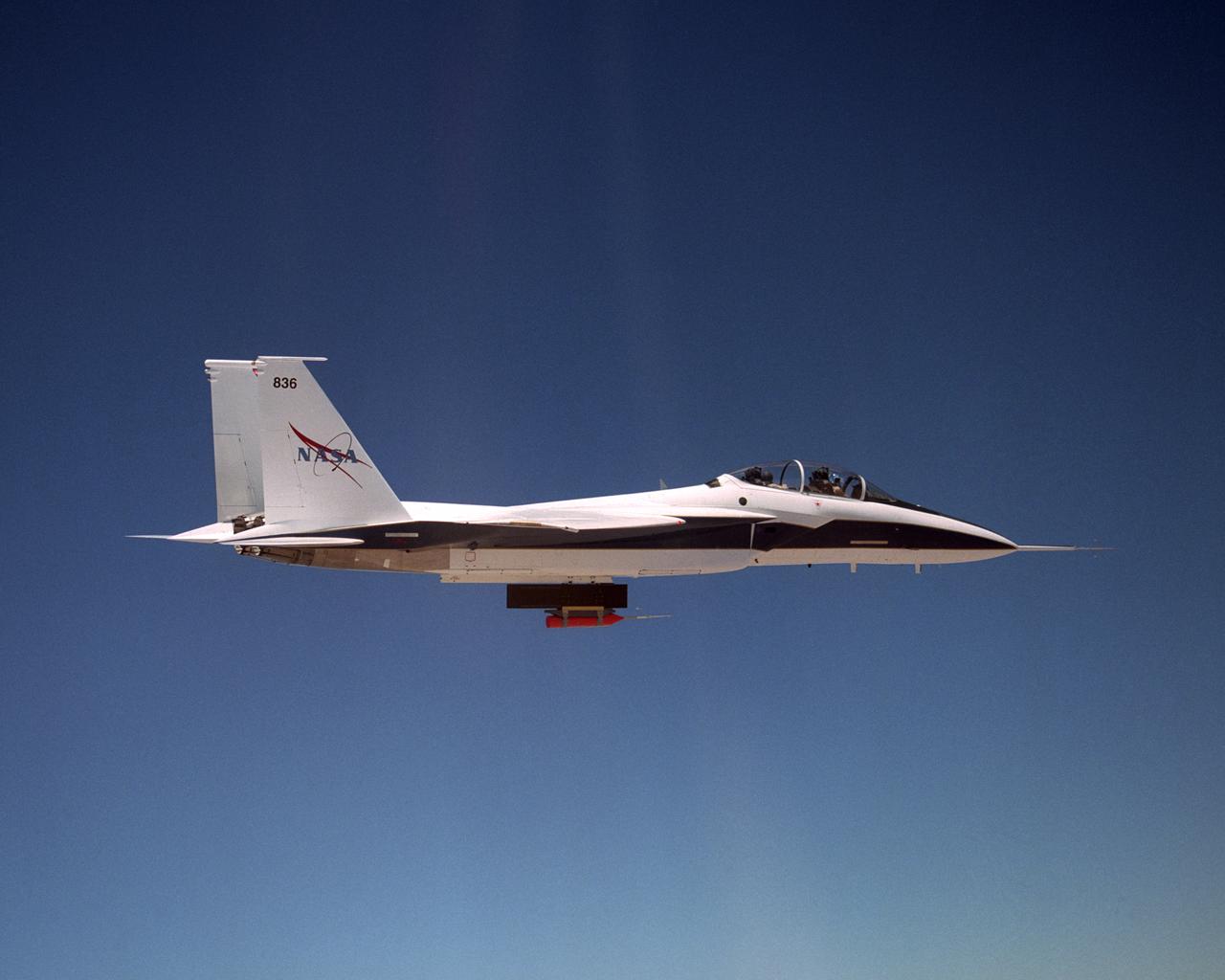
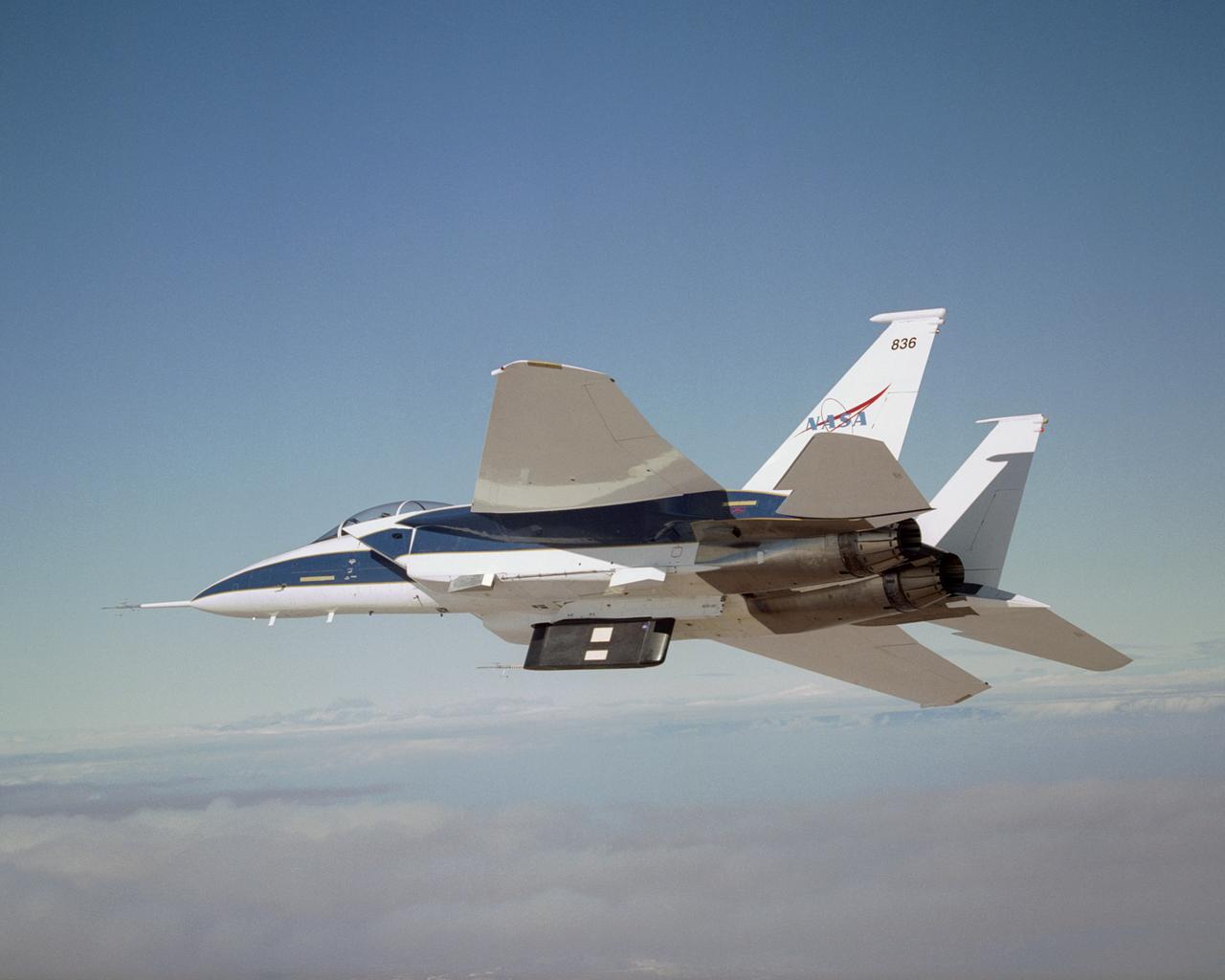
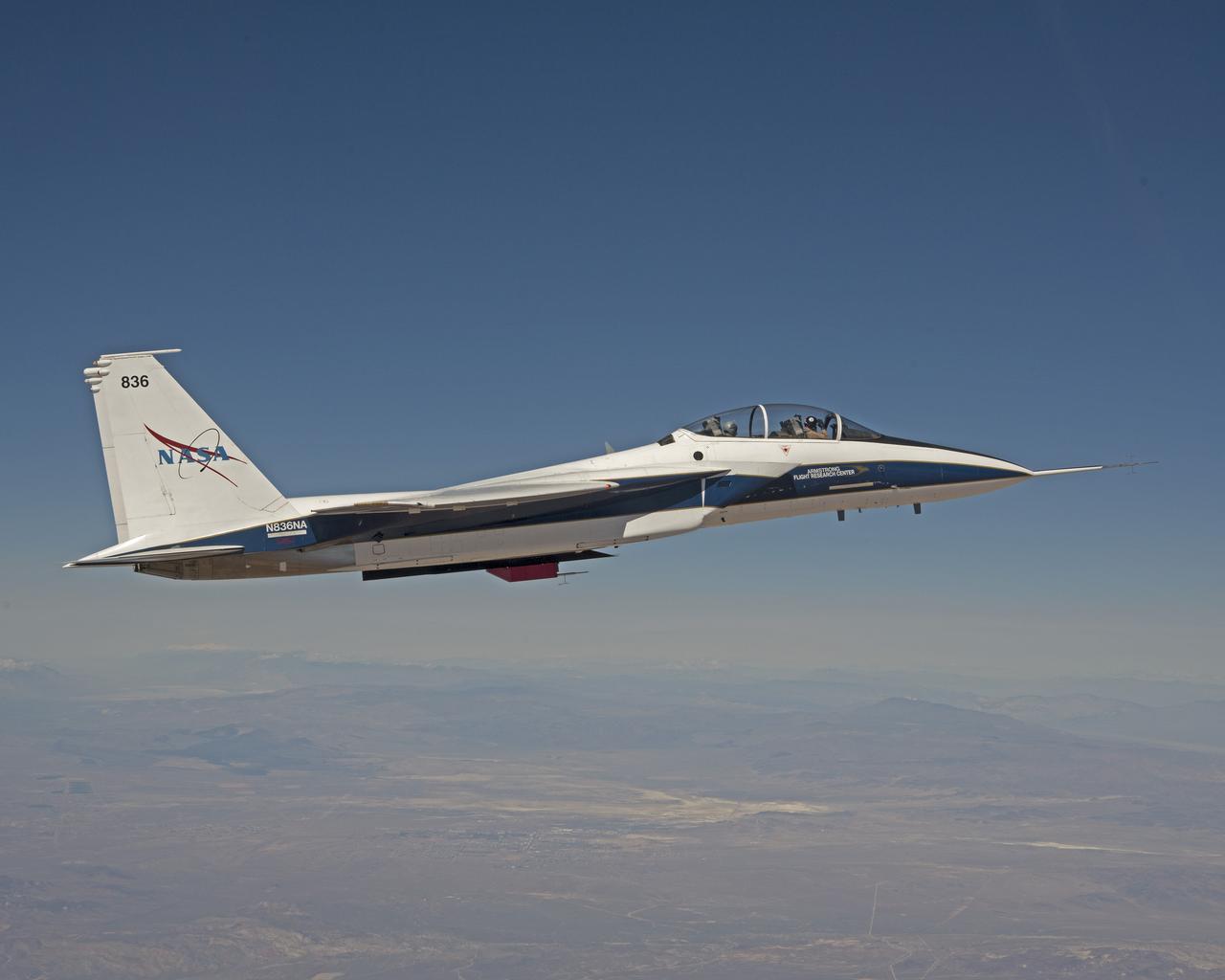
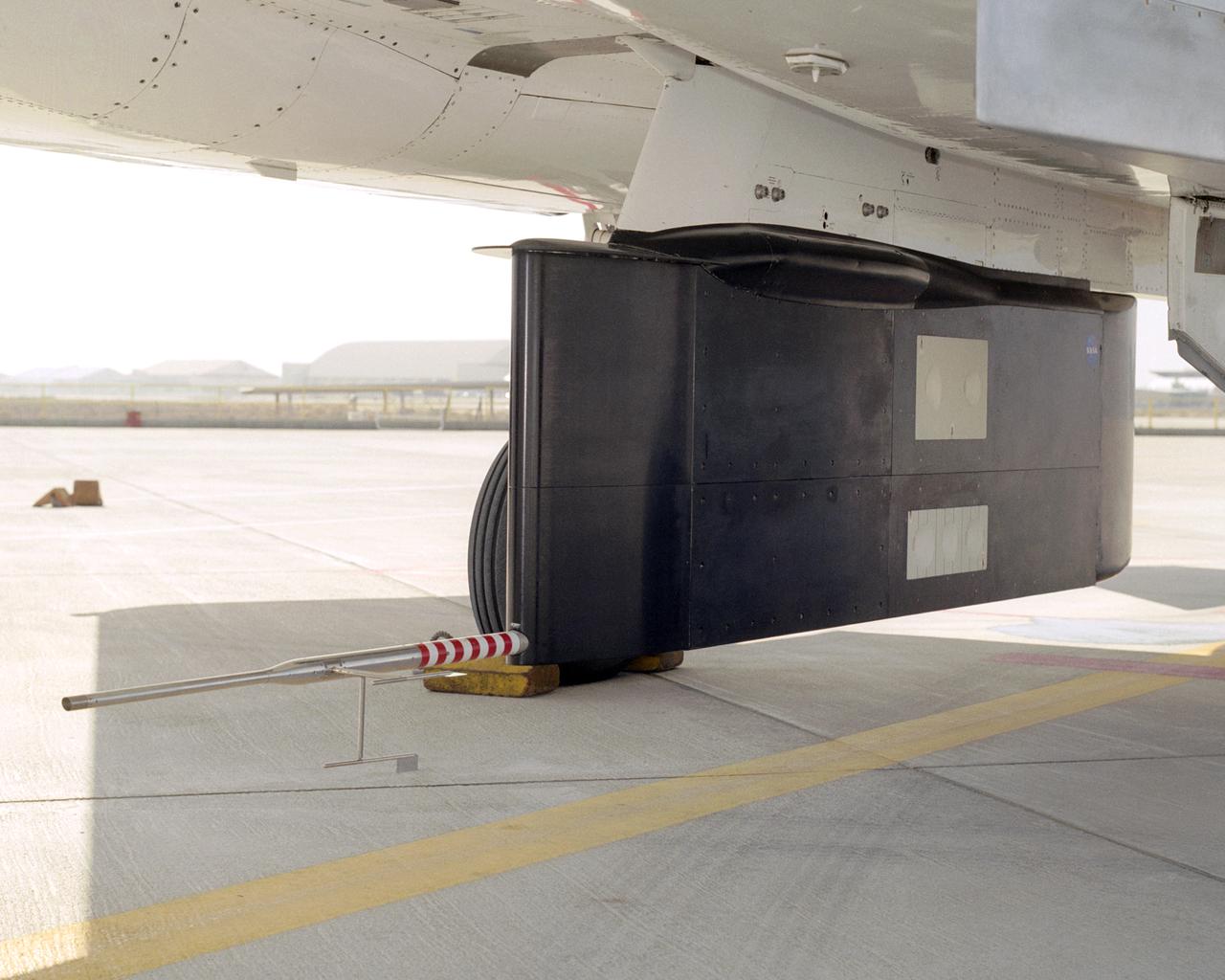
NASA's F-15B Research Testbed aircraft flew instrumentation in June 2004 called the Local Mach Investigation (LMI), designed to gather local airflow data for future research projects using the aircraft's Propulsion Flight Test Fixture (PFTF). The PFTF is the black rectangular fixture attached to the aircraft's belly. The LMI package was located in the orange device attached to the PFTF.
NASA's F-15B conducts a local Mach investigation flight over California's Mojave Desert.
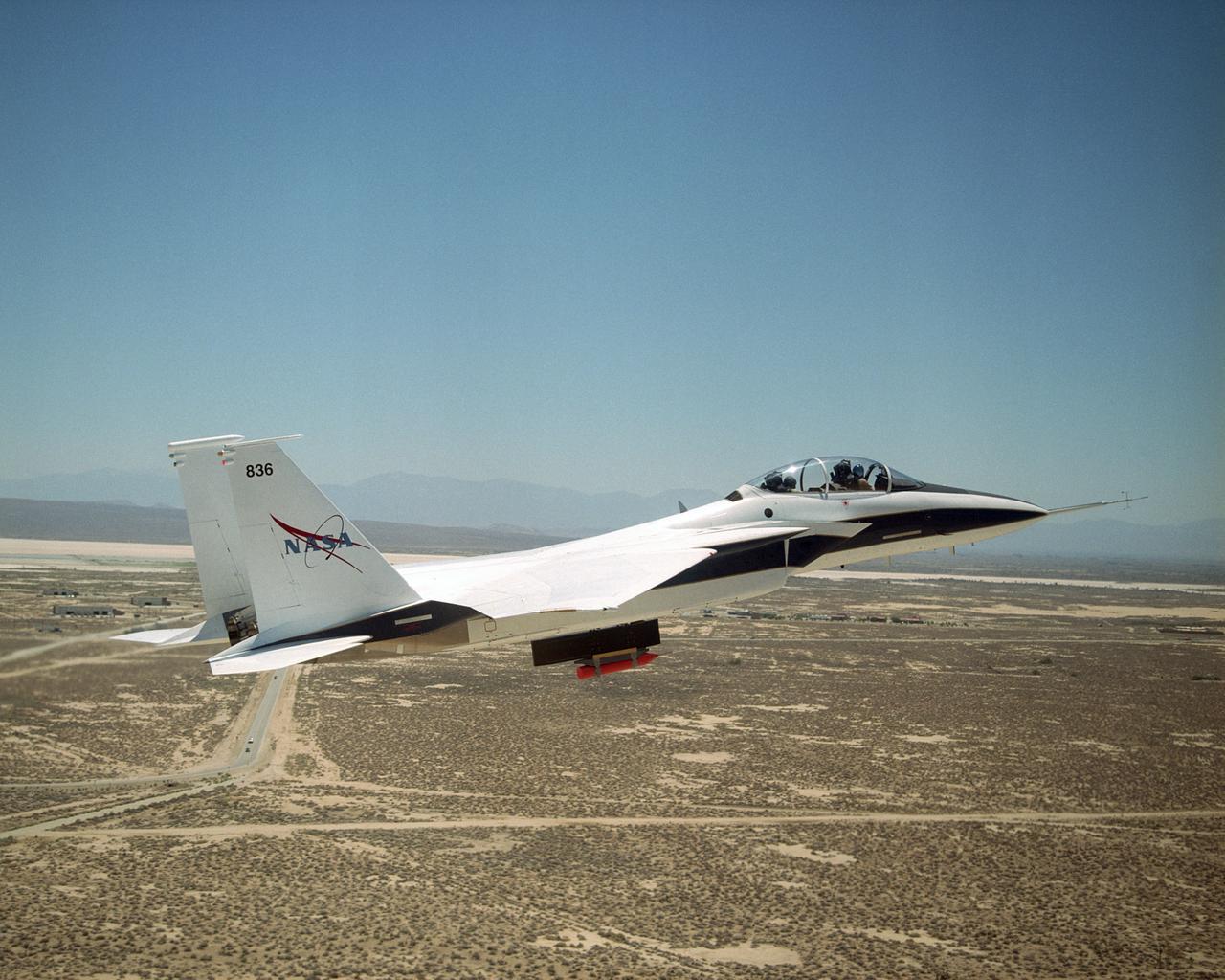
NASA's F-15B Research Testbed aircraft flew instrumentation in June 2004 called the Local Mach Investigation (LMI), designed to gather local airflow data for future research projects using the aircraft's Propulsion Flight Test Fixture (PFTF). The PFTF is the black rectangular fixture attached to the aircraft's belly. The LMI package was located in the orange device attached to the PFTF.
NASA's F-15B conducts a local Mach investigation flight over California's Mojave Desert.
NASA's F-15B Research Testbed aircraft flew instrumentation in June 2004 called the Local Mach Investigation (LMI), designed to gather local airflow data for future research projects using the aircraft's Propulsion Flight Test Fixture (PFTF). The PFTF is the black rectangular fixture attached to the aircraft's belly. The LMI package was located in the orange device attached to the PFTF.
NASA's F-15B conducts a local Mach investigation flight over California's Mojave Desert.
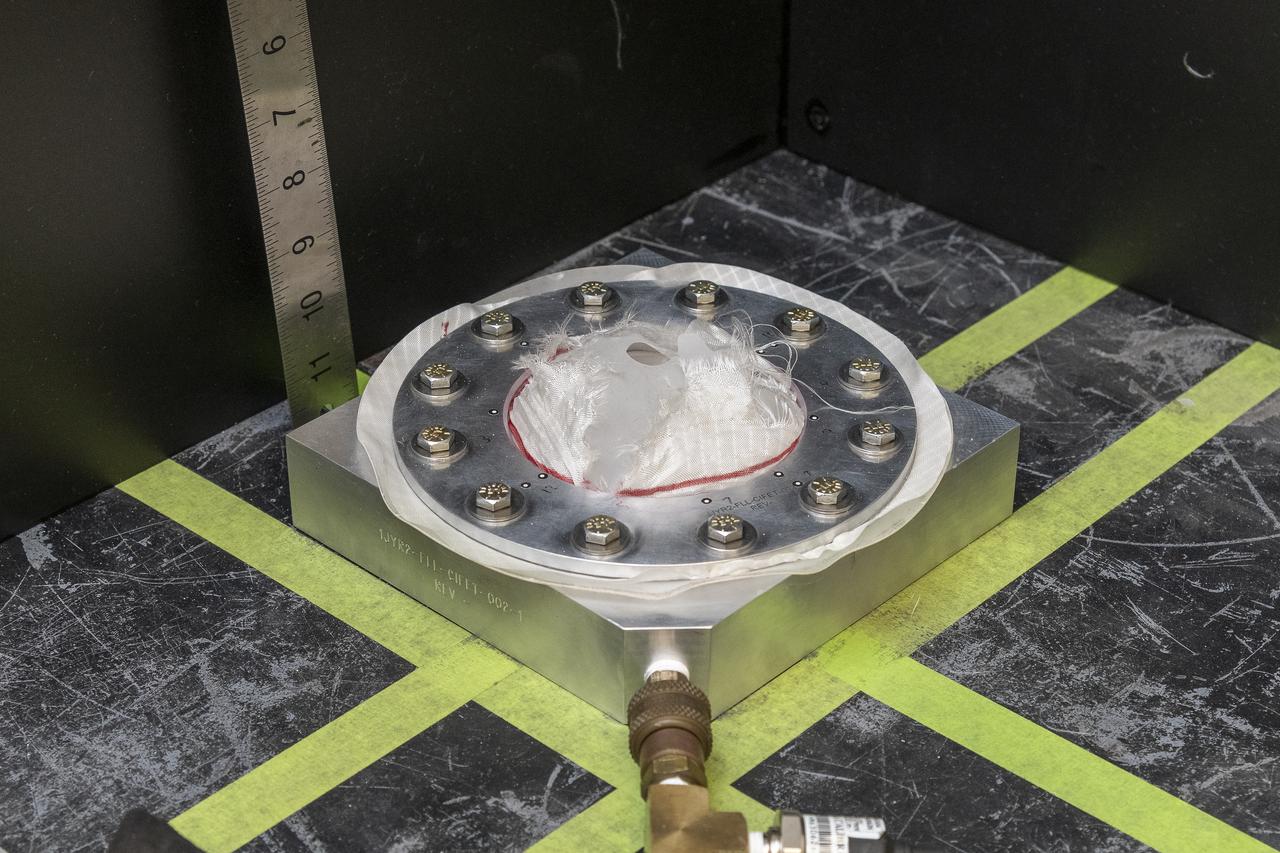
Pressure is applied to a test fixture with a nylon fabric sample until it fails at NASA’s Armstrong Flight Research Center in Edwards, California. The fabric in the test fixture forms a bubble when pressure is applied to the silicone bladder underneath. In this frame, the silicone bladder is visible underneath the torn fabric after it was inflated to failure. A similar test can be performed with a sensor on the fabric to verify the sensor will work when stretched in three dimensions.
NASA Parachute Sensor Testing Can Make Mars Landings Safer
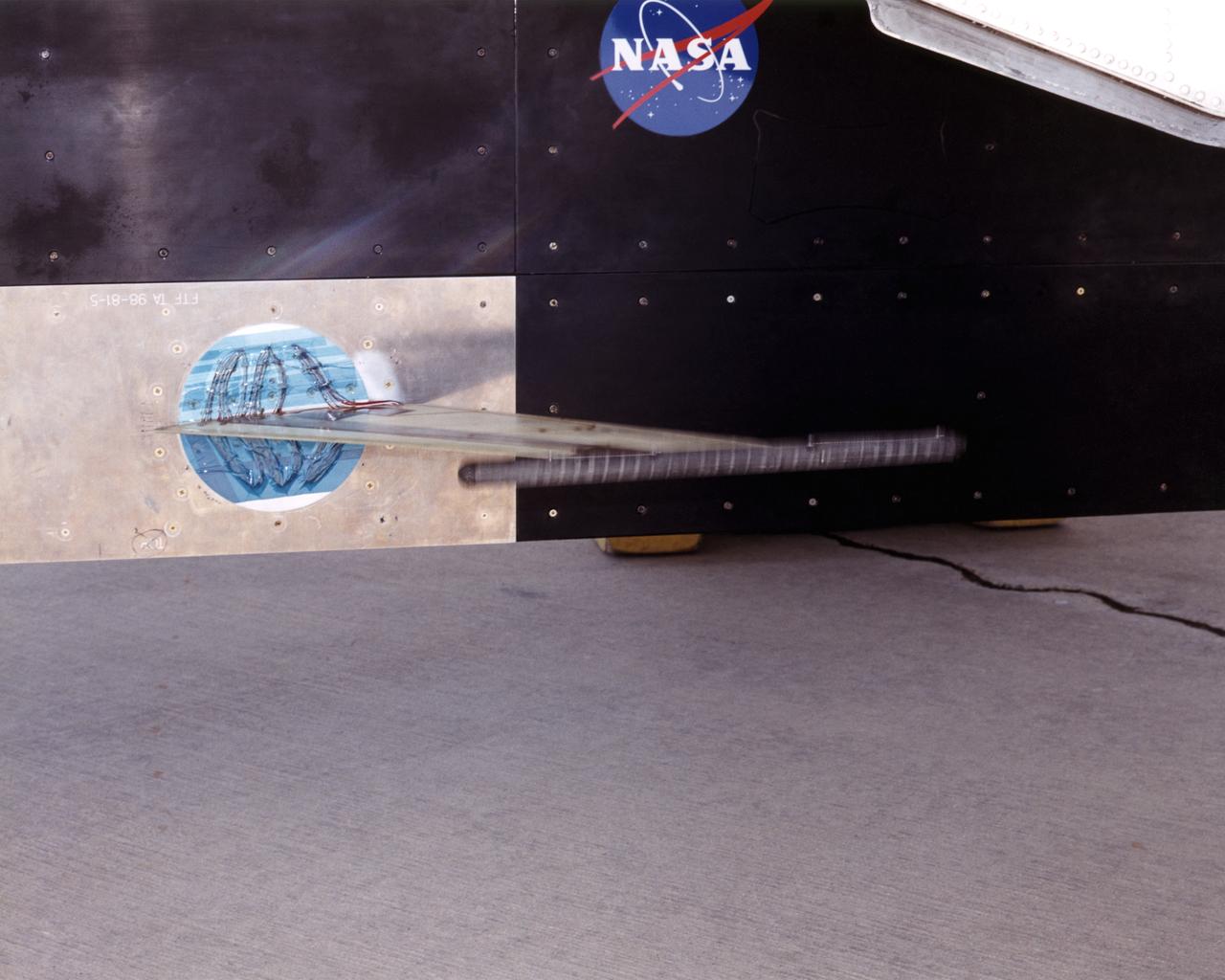
This photo shows the Shuttle tile flight test fixture under the wing of a National Oceanographic and Atmospheric Administration WP-3D aircraft.
Shuttle Tile Flight Test Fixture (FTF) on NOAA WP-3D Orion aircraft
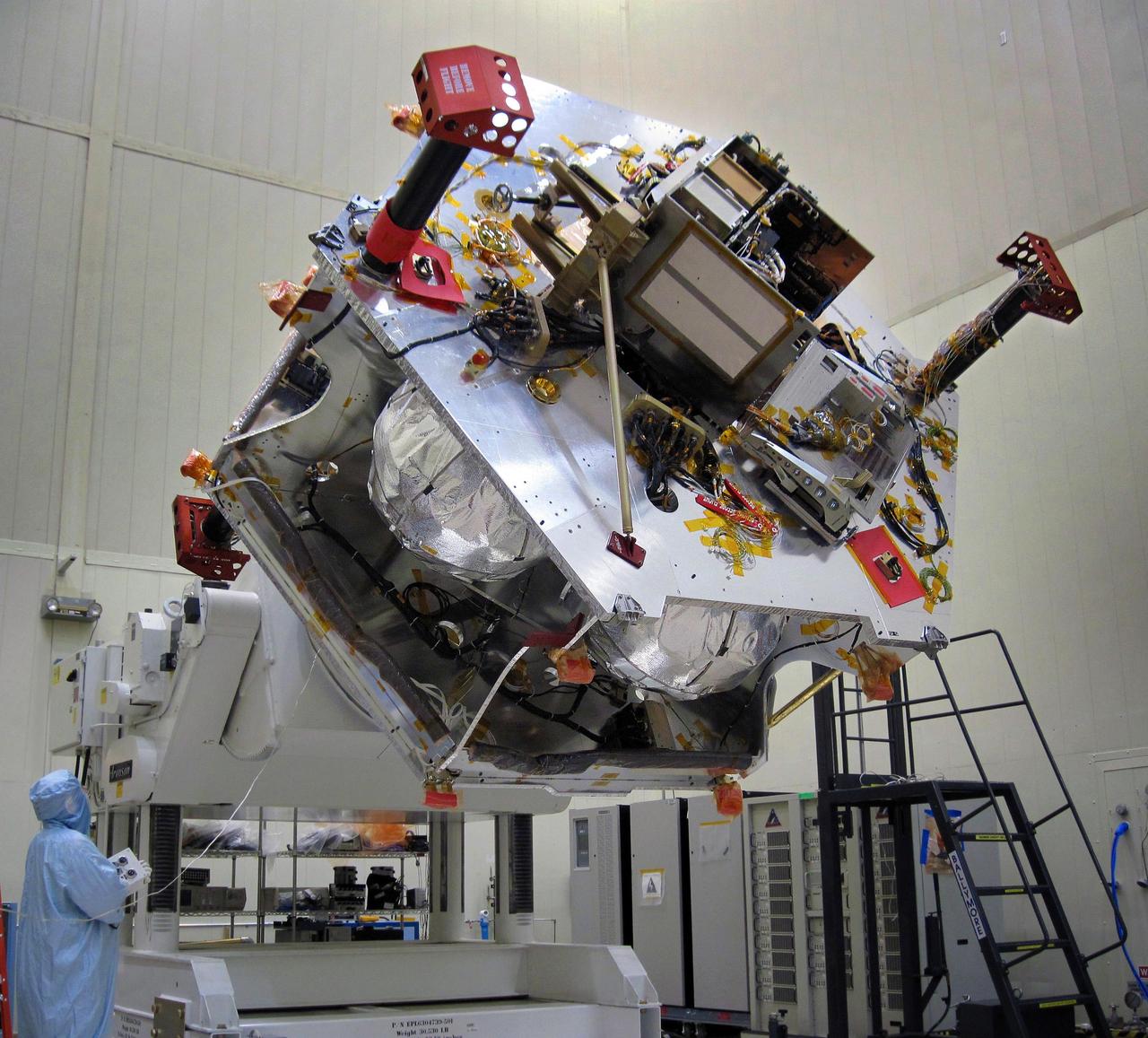
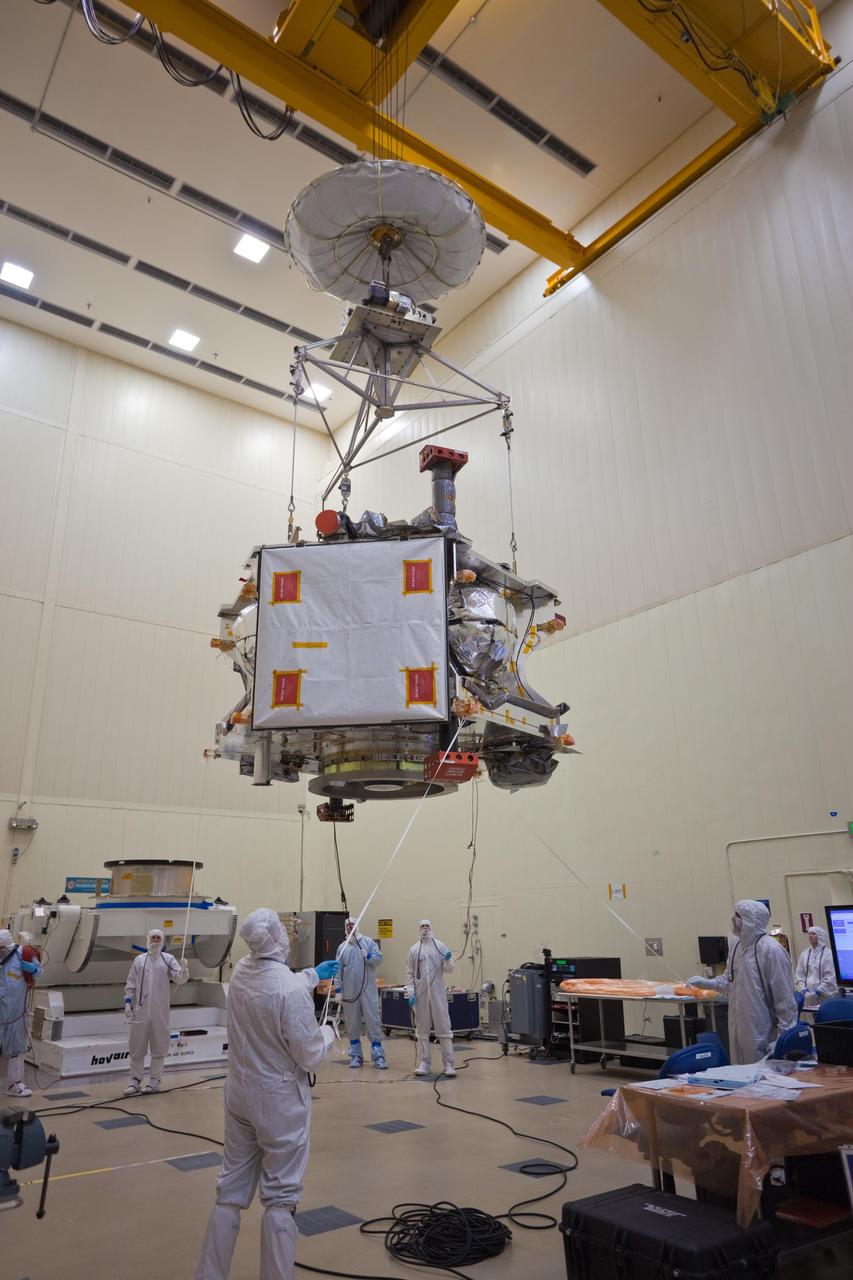
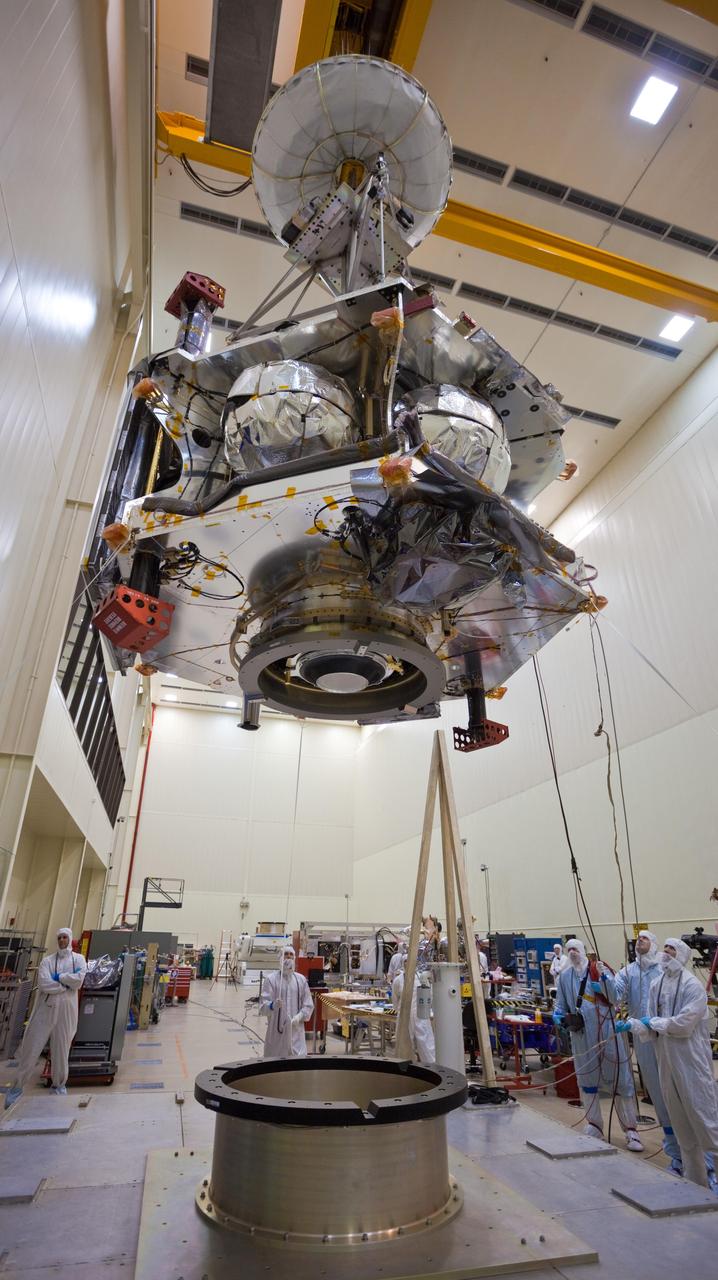
Once the radiation vault was installed on top of the propulsion module, NASA Juno spacecraft was lifted onto a large rotation fixture. The fixture allows the spacecraft to be turned for convenient access for integrating and testing instruments.
Rotating Juno for Integrating Instruments
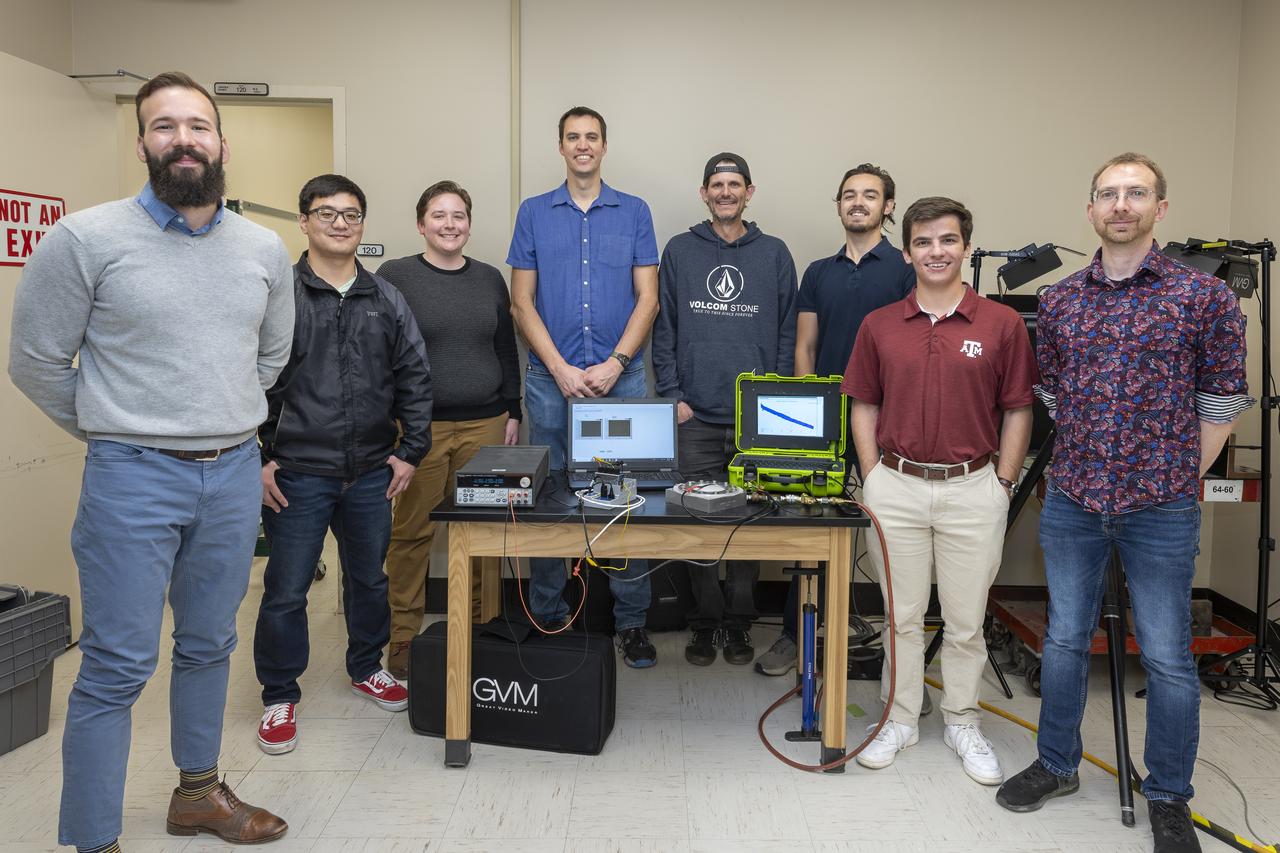
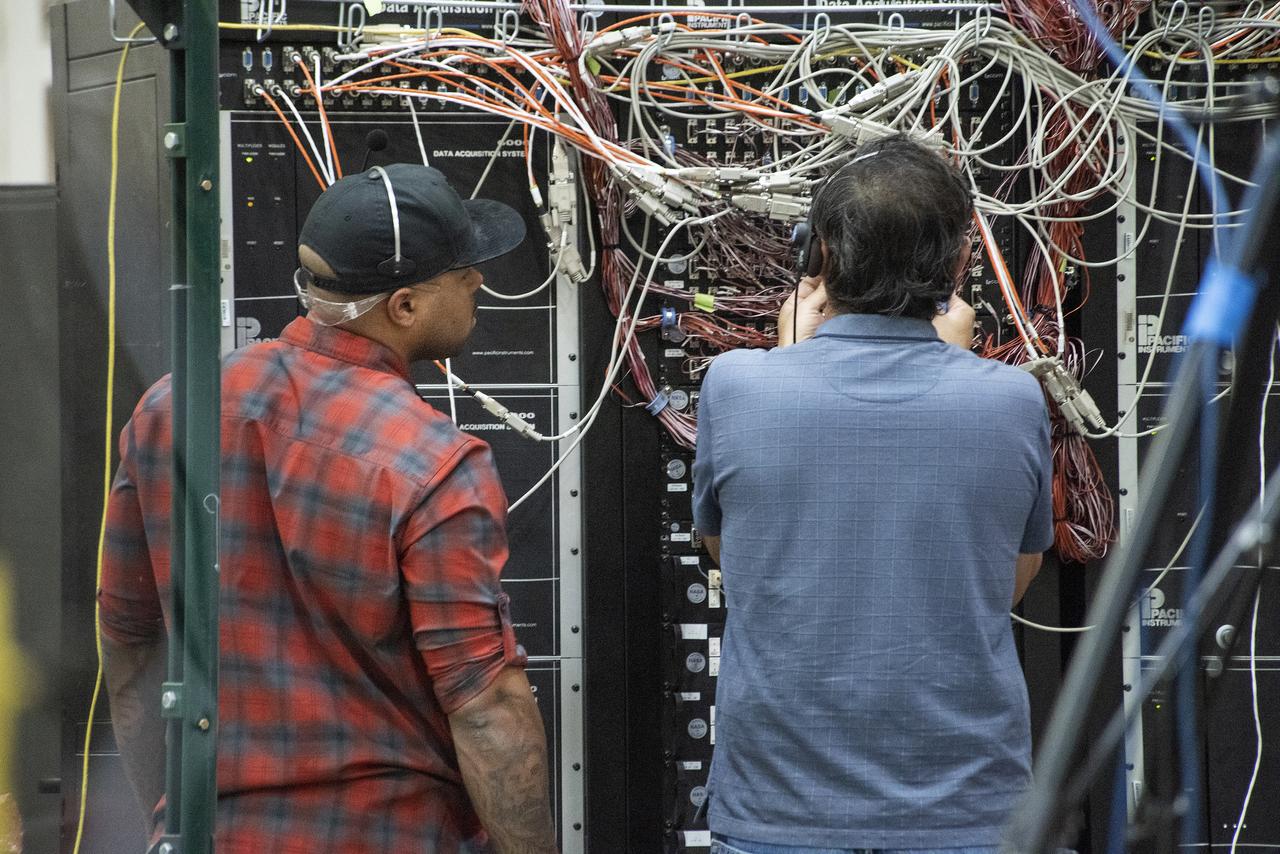
Erick Rossi De La Fuente, from left, John Rudy, L. J. Hantsche, Adam Curry, Jeff Howell, Coby Asselin, Benjamin Mayeux, and Paul Bean pose with a test fixture, material, sensor, and data acquisition systems at NASA’s Armstrong Flight Research Center in Edwards, California. The sensor tests seek to quantify the limits of the material to improve computer models and make more reliable supersonic parachutes.
NASA Parachute Sensor Testing Can Make Mars Landings Safer
A close up of the Flight Test Fixture II, mounted on the underside of the F-15B Aerodynamic Flight Facility aircraft. The Thermal Protection System (TPS) samples, which included metallic Inconel tiles, soft Advanced Flexible Reusable Surface Insulation tiles, and sealing materials, were attached to the forward-left side position of the test fixture. In-flight video from the aircraft's on-board video system, as well as chase aircraft photos and video footage, documented the condition of the TPS during flights. Surface pressures over the TPS was measured by thermocouples contained in instrumentation "islands," to document shear and shock loads.
Closeup of F-15B Flight Test Fixture (FTF) with X-33 Thermal Protection Systems (TPS)
Two panels of Space Shuttle TPS insulation were mounted on the flight test fixture underneath NASA's F-15B during the Lifting Foam Trajectory flight test series.
Two panels of Space Shuttle TPS insulation were mounted on the flight test fixture underneath NASA's F-15B during the Lifting Foam Trajectory flight test series
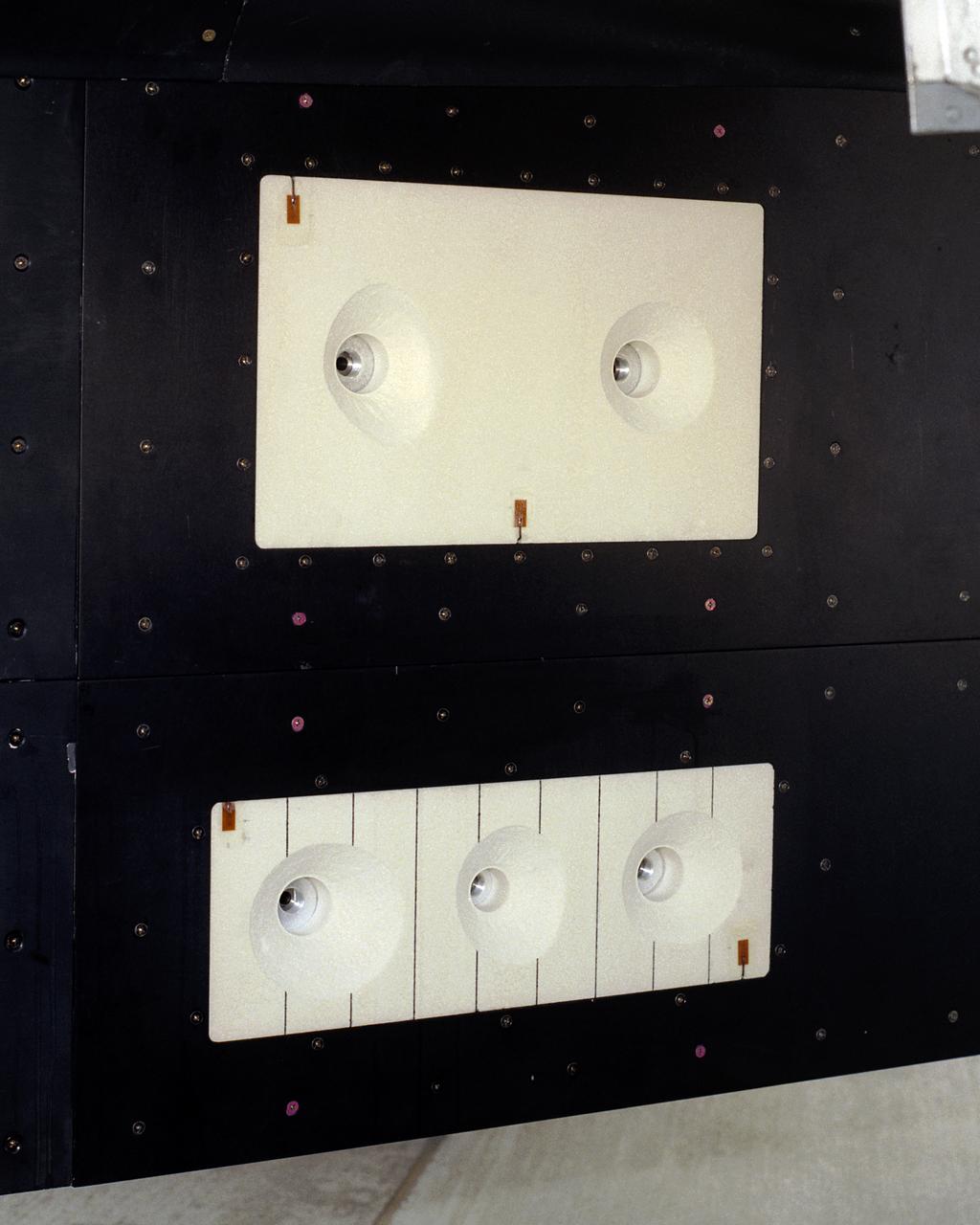
A close-up of the panels on the F-15B's flight test fixture shows five divots of TPS foam were successfully ejected during the LIFT experiment flight #2, the first flight with TPS foam.
A close-up of the panels on the F-15B's flight test fixture shows five divots of TPS foam were successfully ejected during the LIFT experiment.
A post-flight inspection of the panels on the F-15B's flight test fixture shows five divots of TPS foam were successfully ejected during the LIFT experiment flight #2, the first flight with TPS foam.
A post-flight inspection of the panels on the F-15B's flight test fixture shows five divots of TPS foam were successfully ejected during the LIFT experiment.
Technicians transfer NASA Juno spacecraft from its rotation fixture to the base of its shipping container in preparation for a move to environmental testing facilities.
Moving Juno to Environmental Testing
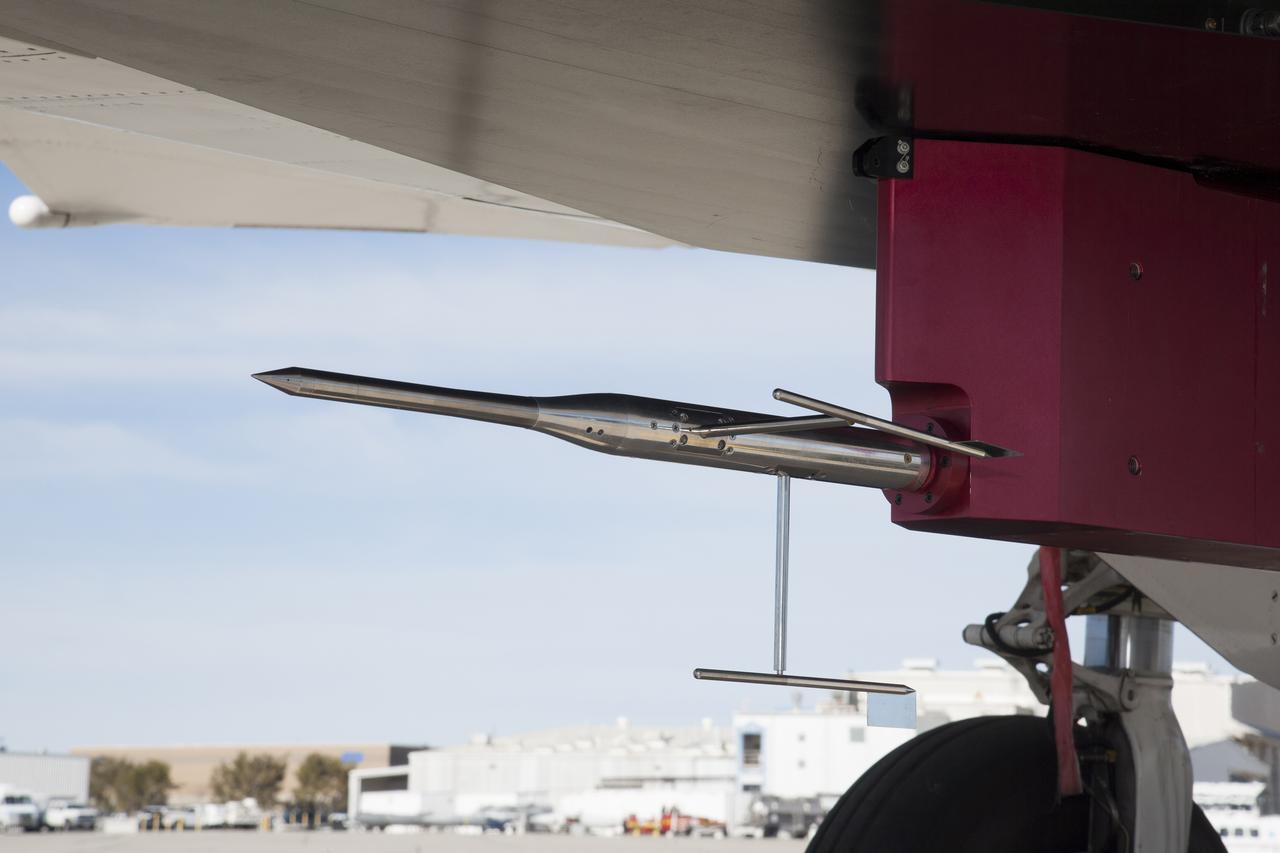
A new supersonic probe seen affixed to a F-15B flight test fixture might one day measure the sonic booms of a new generation of supersonic aircraft.
ED16-0038-69
Research on the Eagle Aero Probe is ongoing from an F-15B flight test fixture, as the aircraft flies missions over the high desert.
AFRC2016-0072-01
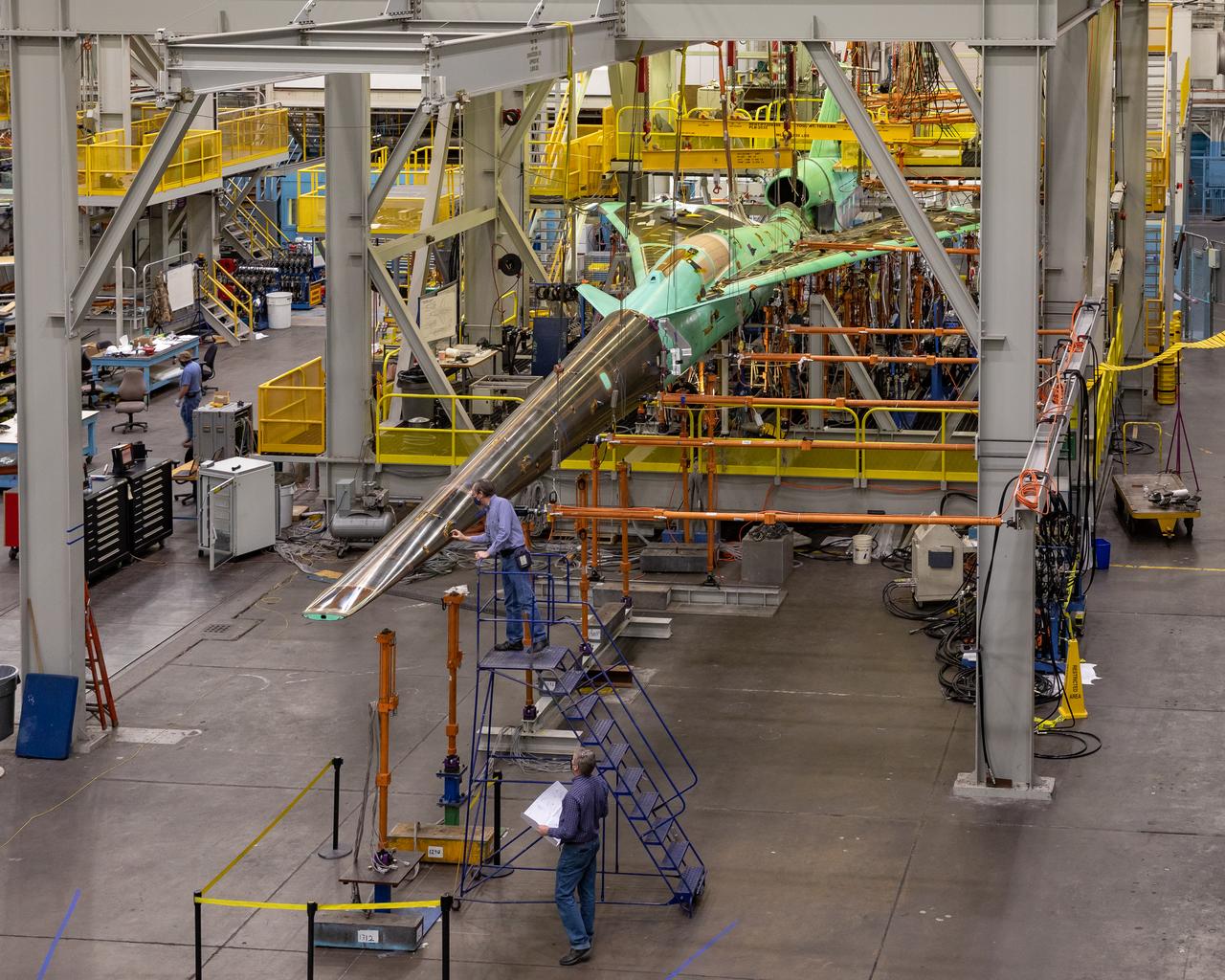
NASA’s X-59 undergoes a structural stress test at Lockheed Martin’s facility at Fort Worth, Texas. The X-59 is a one-of-a-kind airplane designed to fly at supersonic speeds without making a startling sonic boom sound for the communities below. This is part of NASA’s Quesst mission, which plans to help enable supersonic air travel over land.
X-59 - Various Angles in Test Fixture
NASA’s X-59 undergoes a structural stress test at Lockheed Martin’s facility at Fort Worth, Texas. The X-59 is a one-of-a-kind airplane designed to fly at supersonic speeds without making a startling sonic boom sound for the communities below. This is part of NASA’s Quesst mission, which plans to help enable supersonic air travel over land.
X-59 - Various Angles in Test Fixture
NASA’s X-59 undergoes a structural stress test at Lockheed Martin’s facility  in Fort Worth, Texas. The X-59’s nose makes up one third of the aircraft, at 38-feet in length. The X-59 is a one-of-a-kind airplane designed to fly at supersonic speeds without making a startling sonic boom sound for the communities below. This is part of NASA’s Quesst mission, which plans to help  enable supersonic air travel over land
X-59 - Various Angles in Test Fixture
All six divots of thermal insulation foam have been ejected from the flight test fixture on NASA's F-15B testbed as it returns from a LIFT experiment flight.
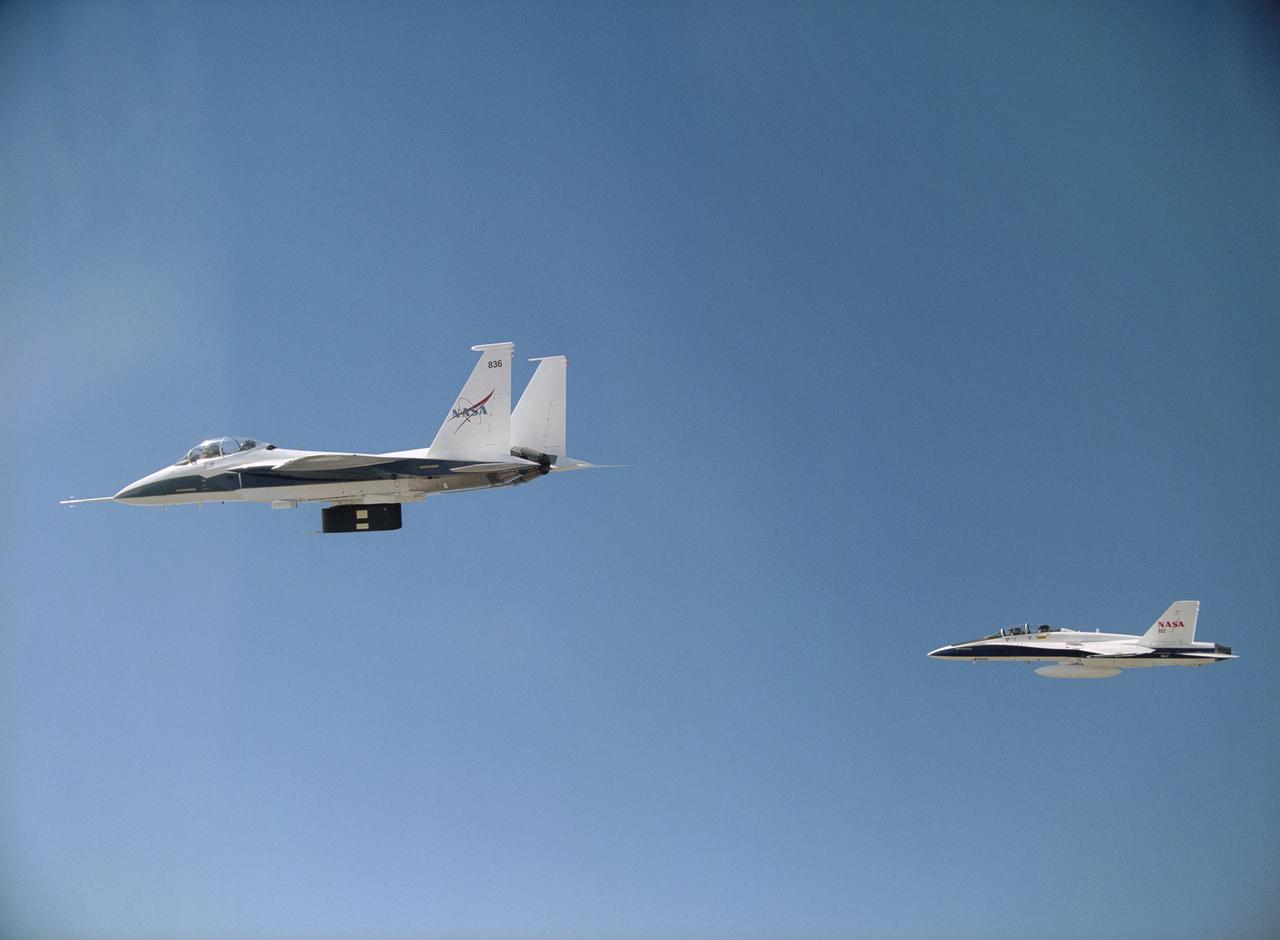
NASA's F-15B carrying thermal insulation foam on its flight test fixture is shadowed by a NASA F-18B chase aircraft during a LIFT experiment research flight.
Technicians transfer NASA Juno spacecraft from its rotation fixture to the base of its shipping container in preparation for a move to environmental testing facilities. Juno’s main engine, its cover closed, is visible on the spacecraft’s underside.
Moving Juno to Environmental Testing
NASA Juno spacecraft rests atop its rotation fixture awaiting transfer to a shipping crate prior to environmental testing; the large white square on the spacecraft right is largest of six microwave radiometer antennas, masked by protective covering.
Preparing Juno for Environmental Testing
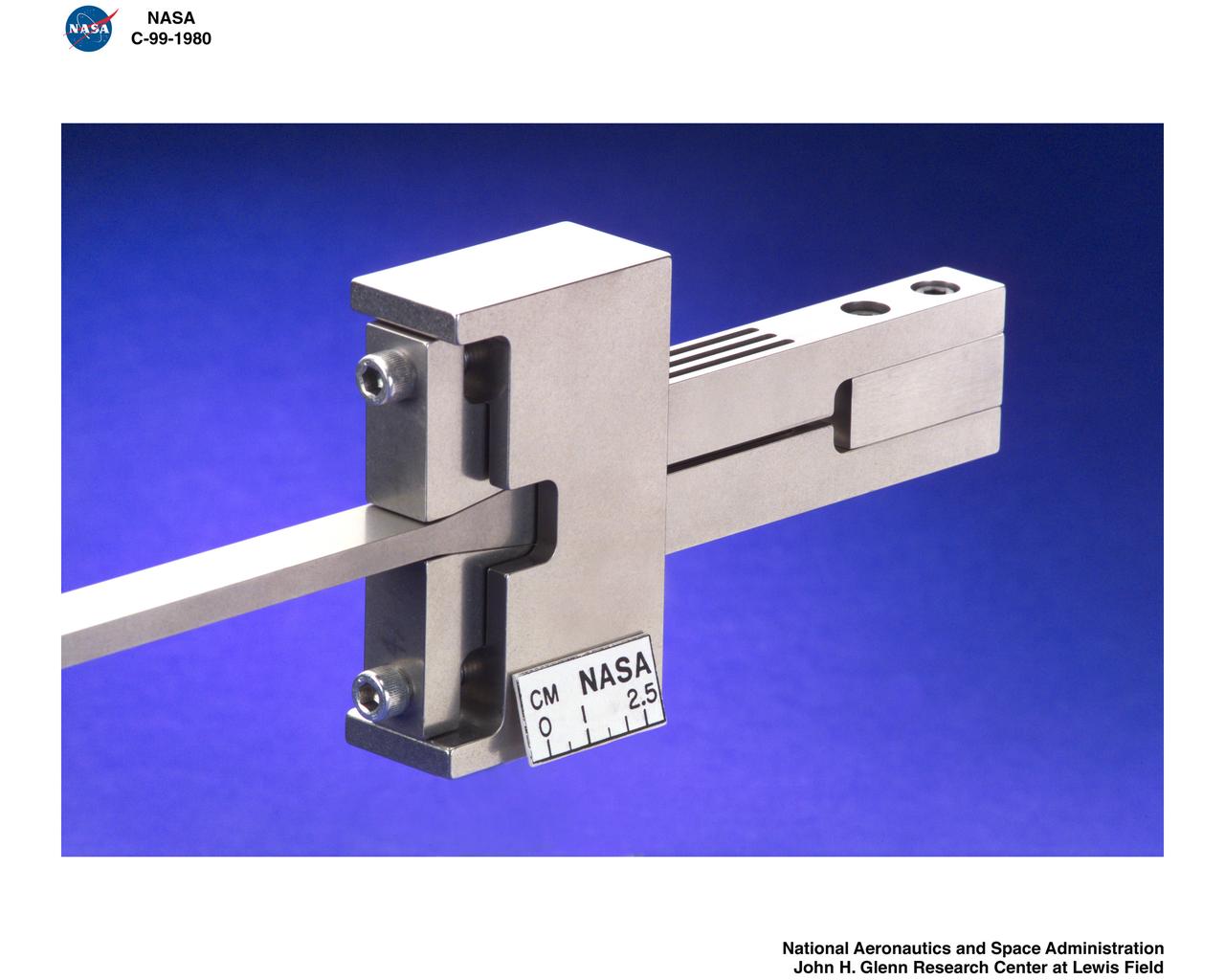
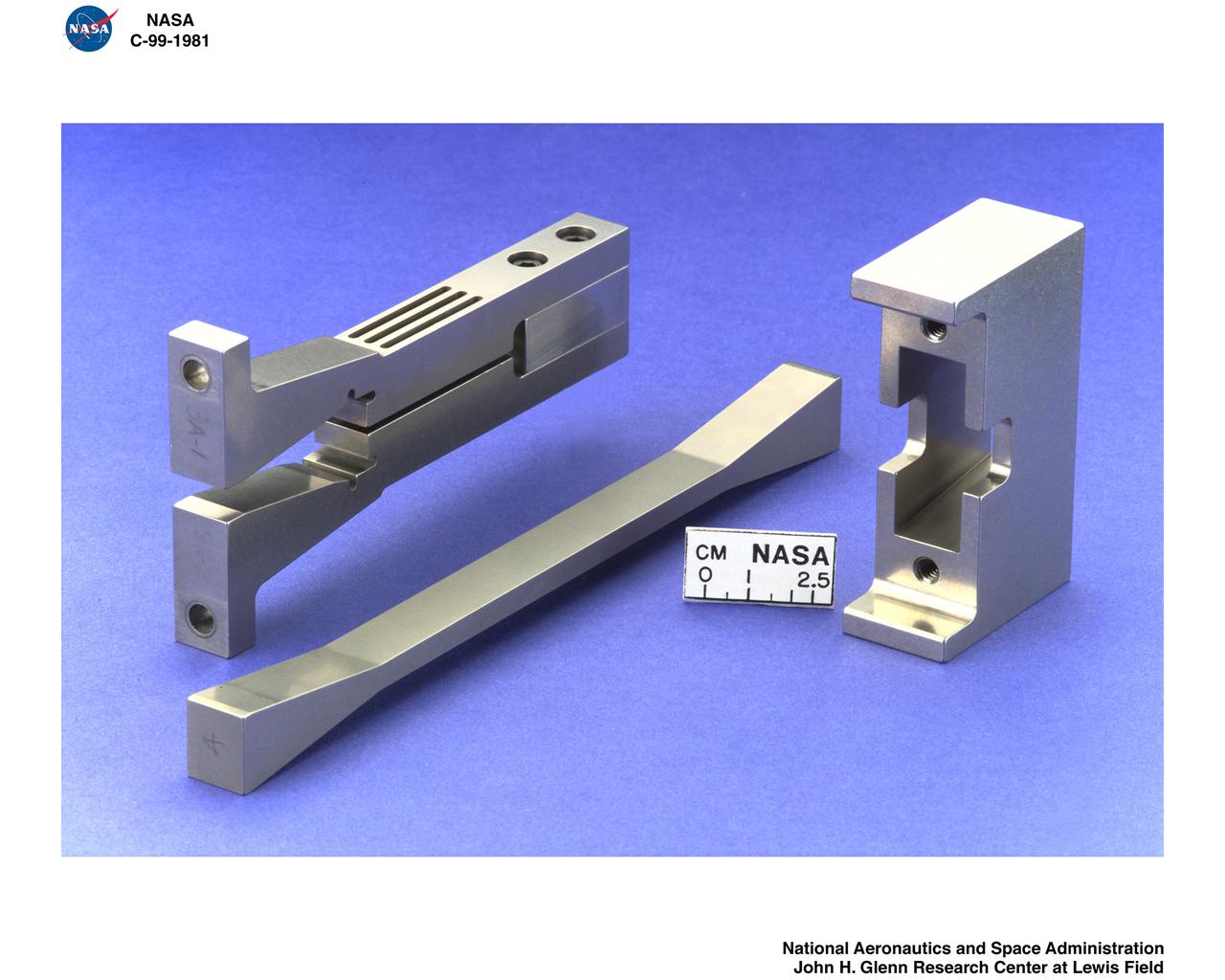
IN-PLANE BIAXIAL TEST FIXTURING
GRC-1999-C-01981
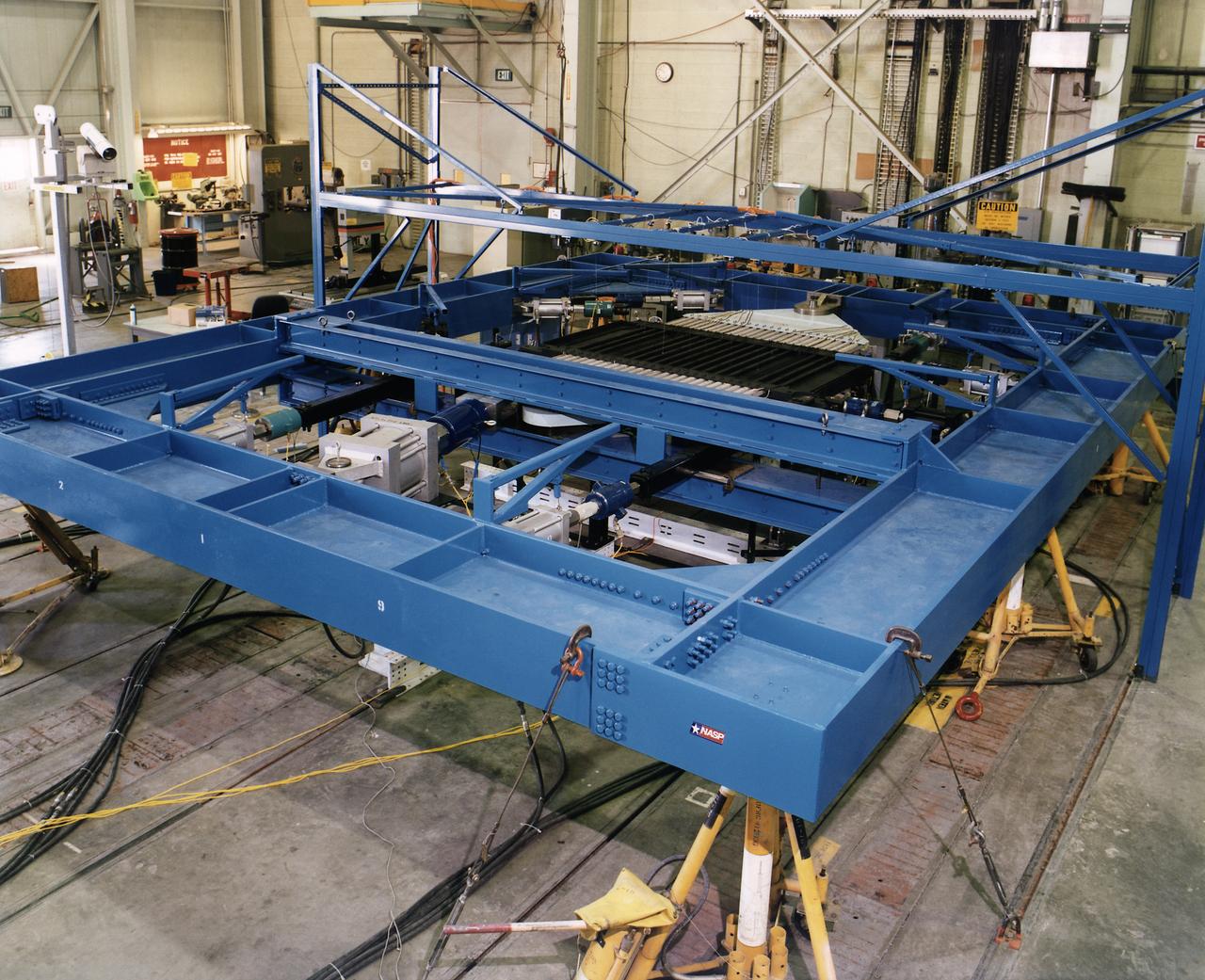
IN-PLANE BIAXIAL TEST FIXTURING
GRC-1999-C-01980
Combined Loads Test Fixture with NASP test article installed
EC94-42663-1
The Passive Aeroelastic Tailored wing is tested in a fixture at the NASA Armstrong Flight Test Center’s Flight Loads Laboratory in California.
Experimental Wing Proving New Design Methods
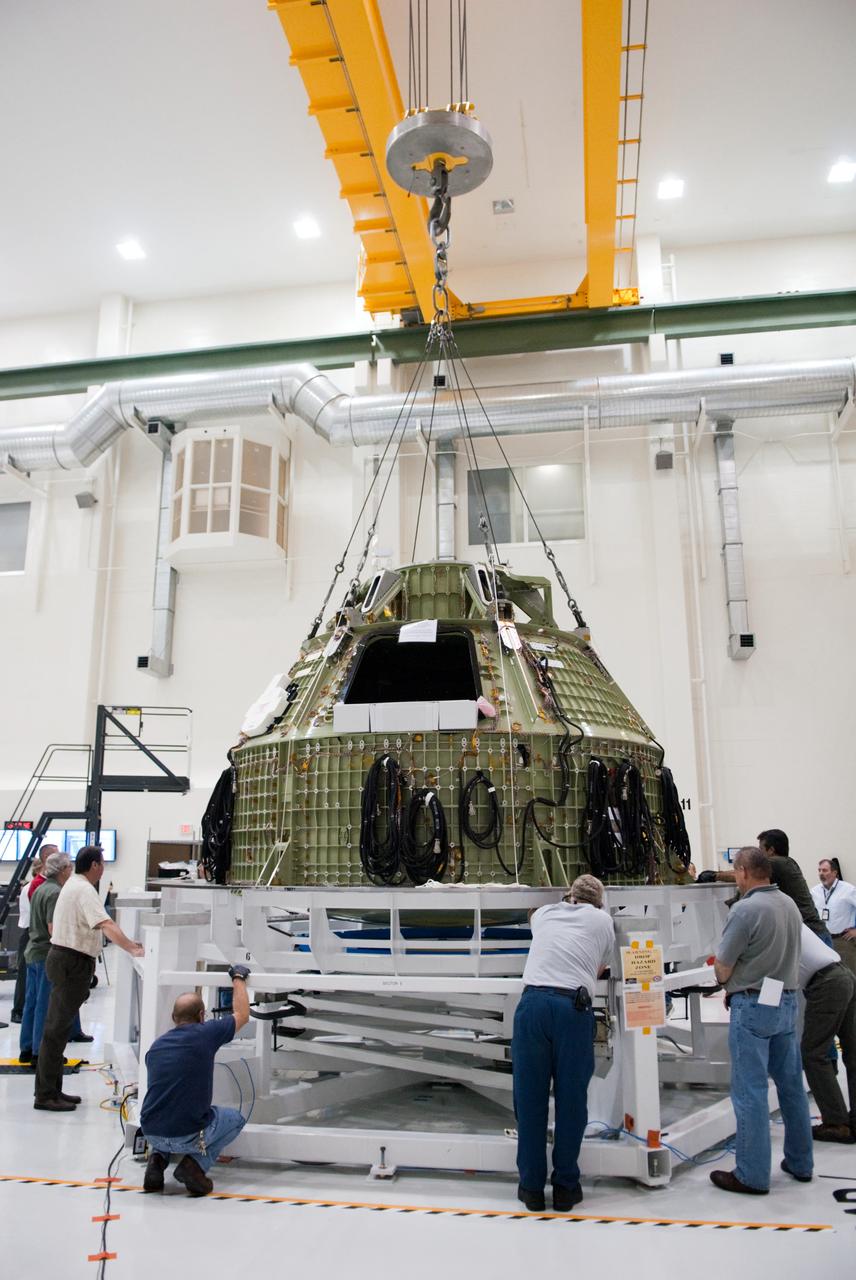
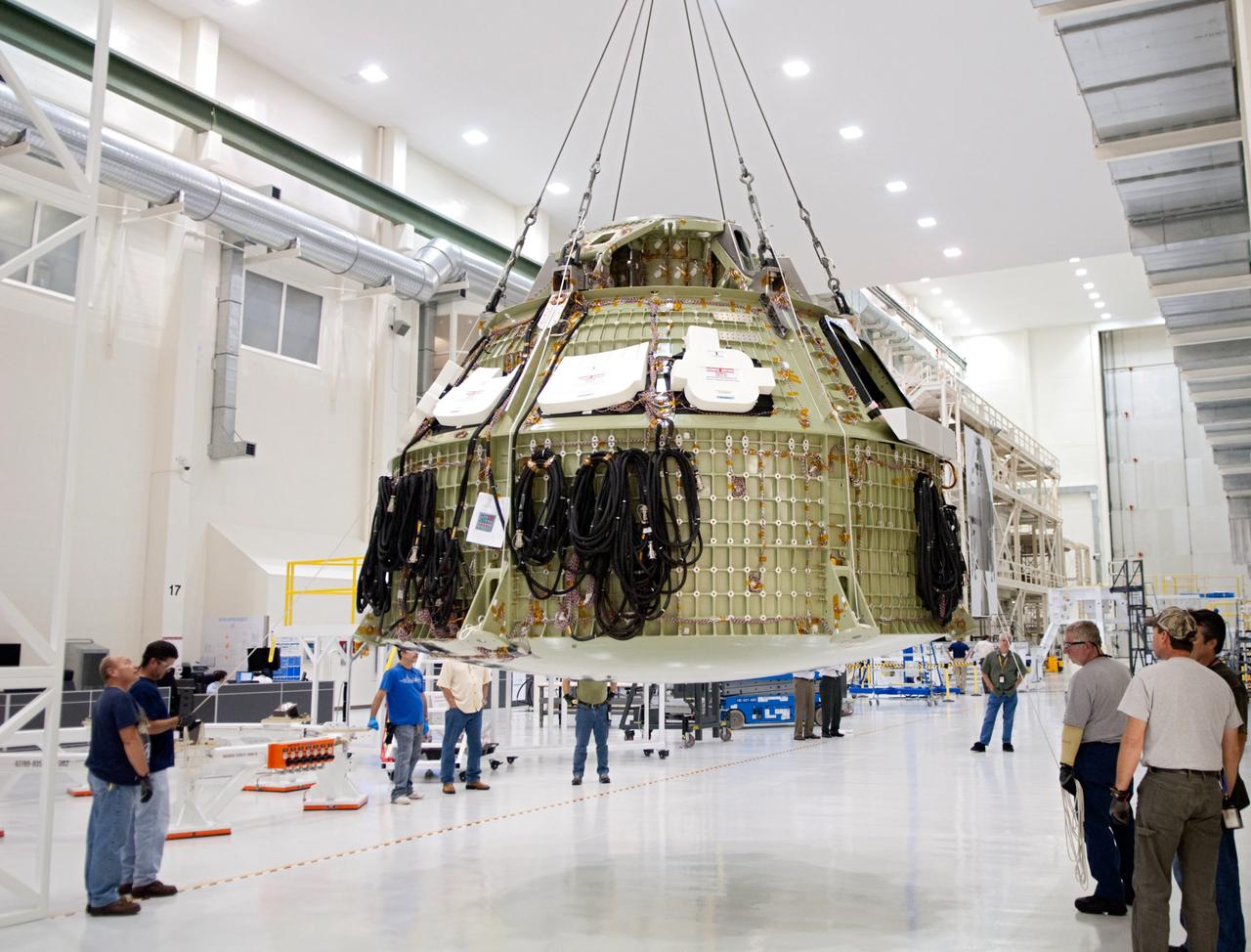
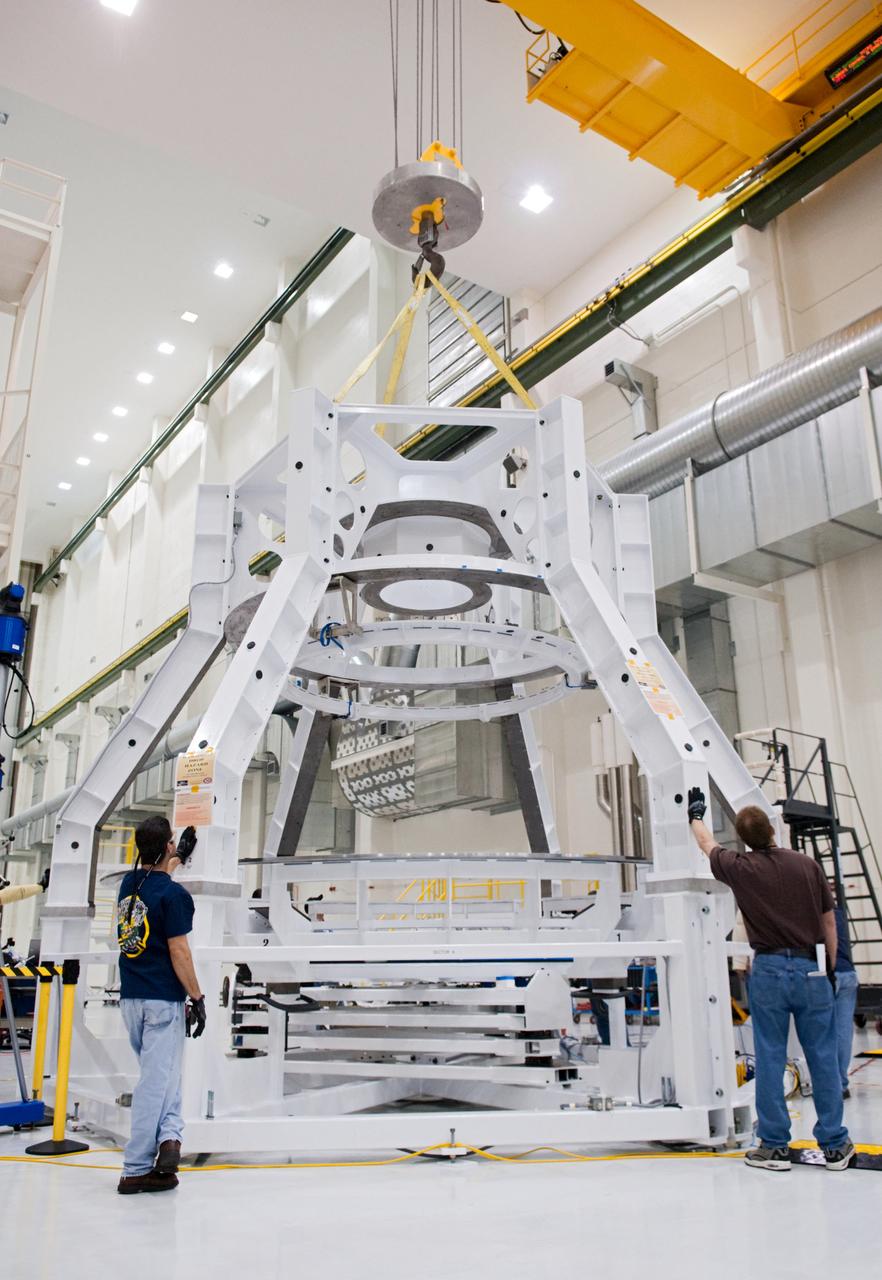
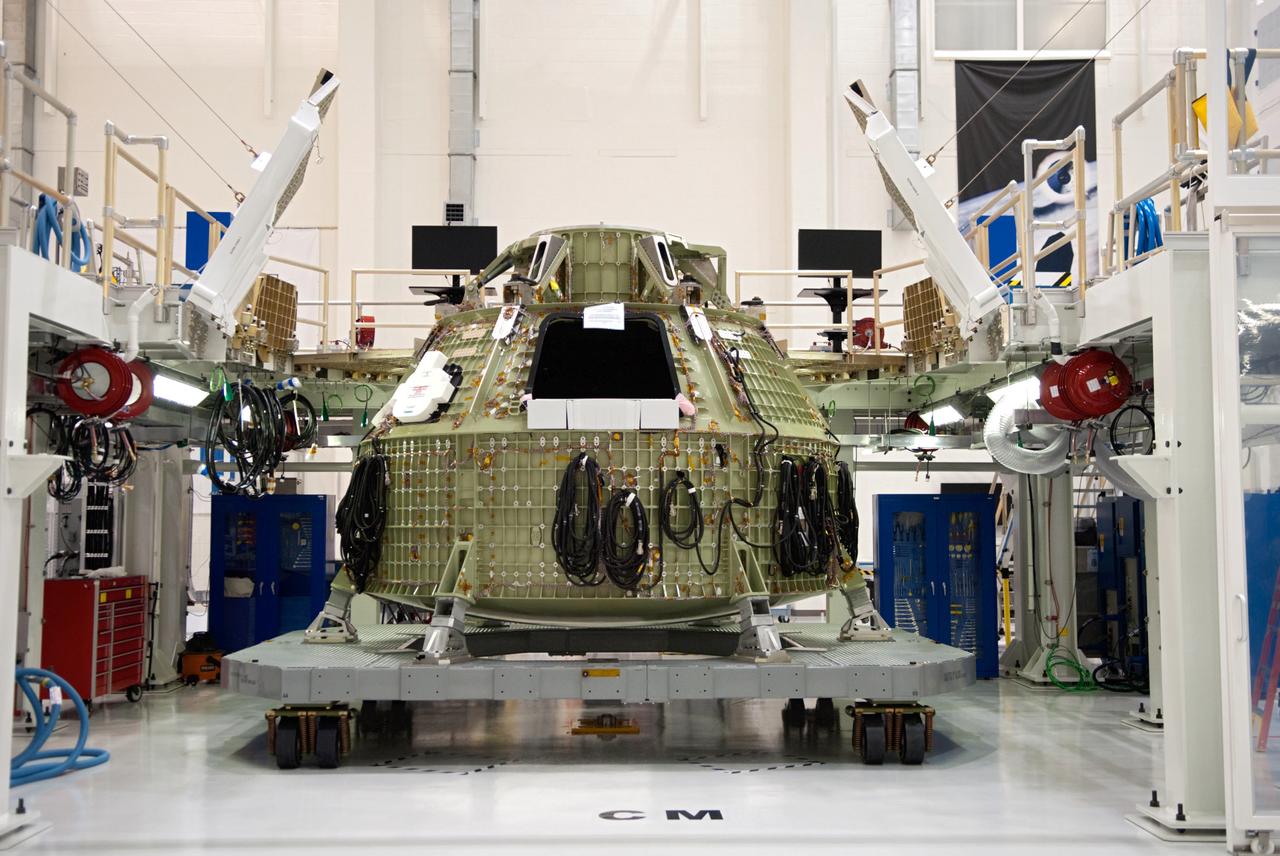
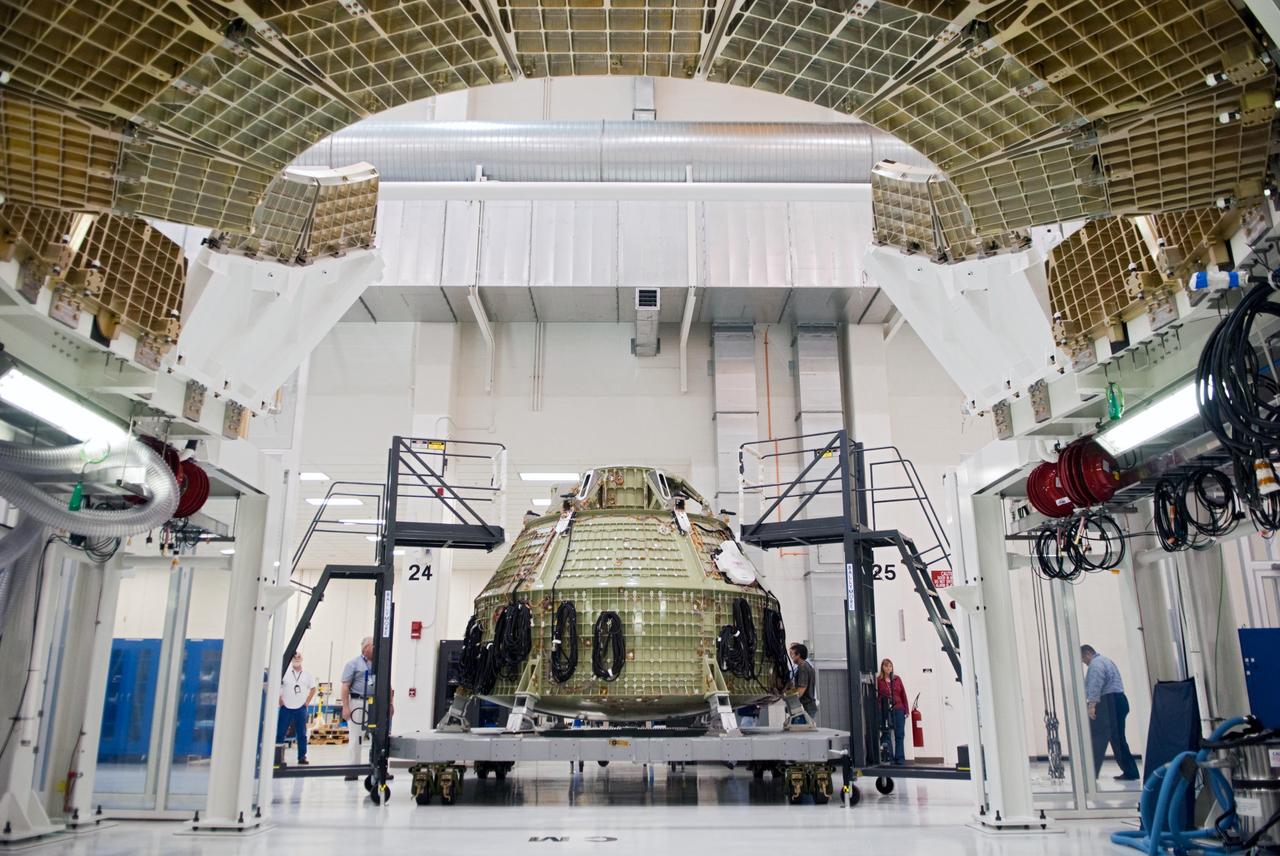
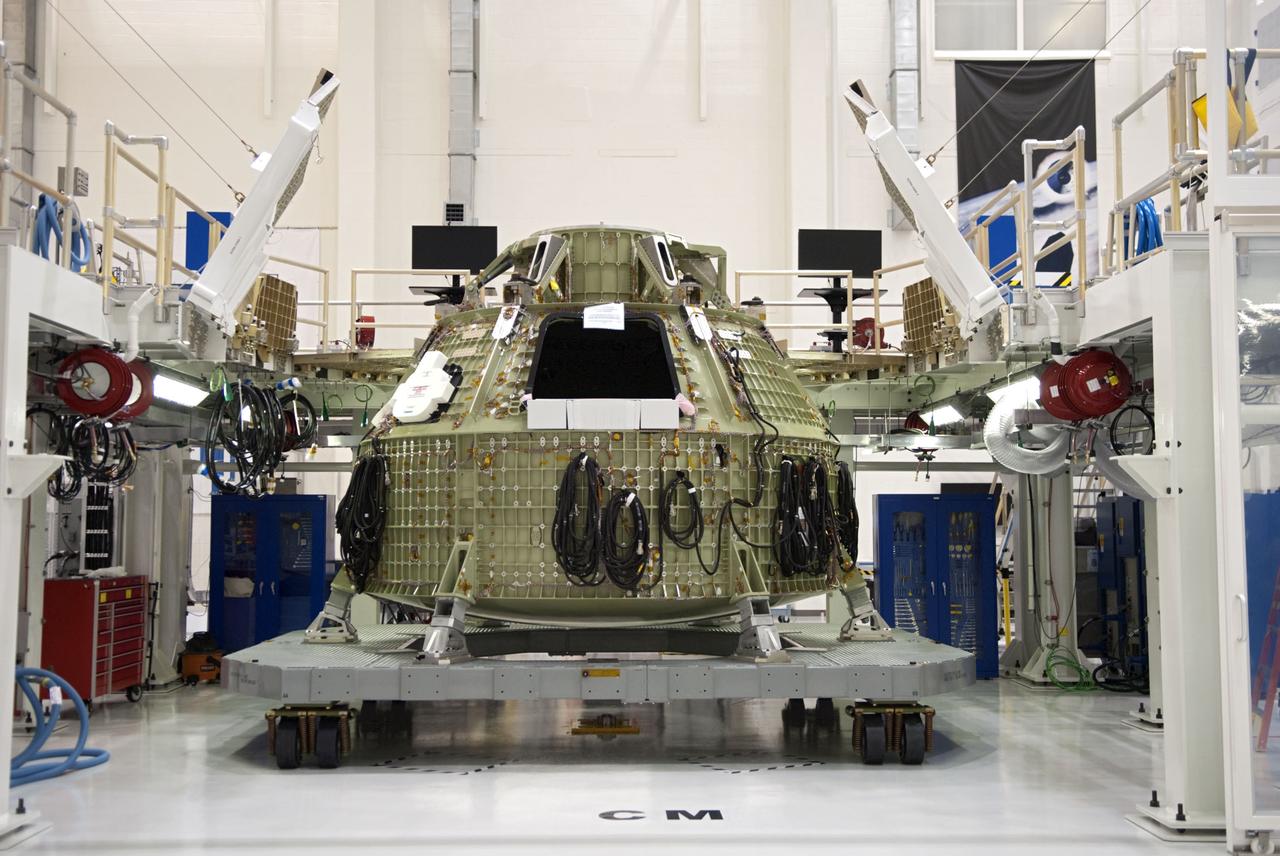
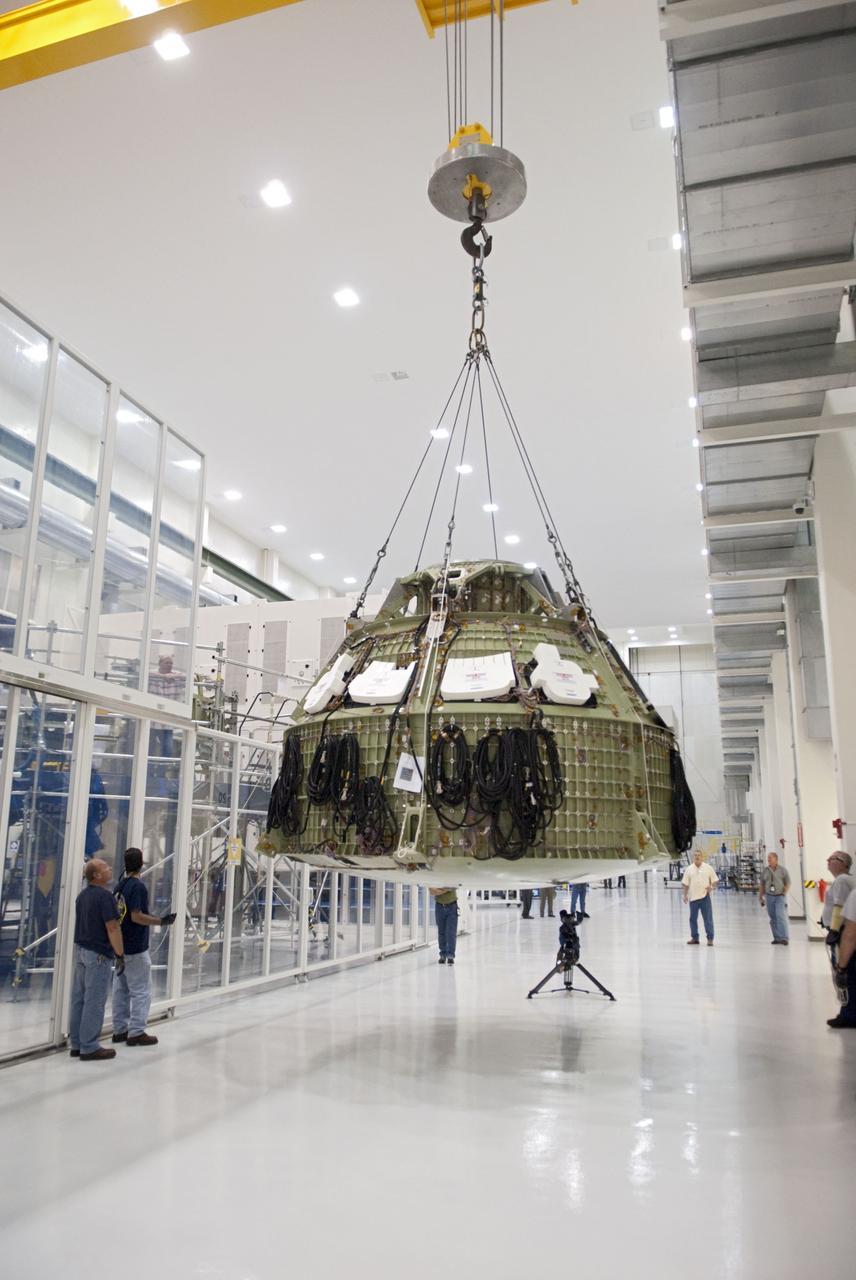
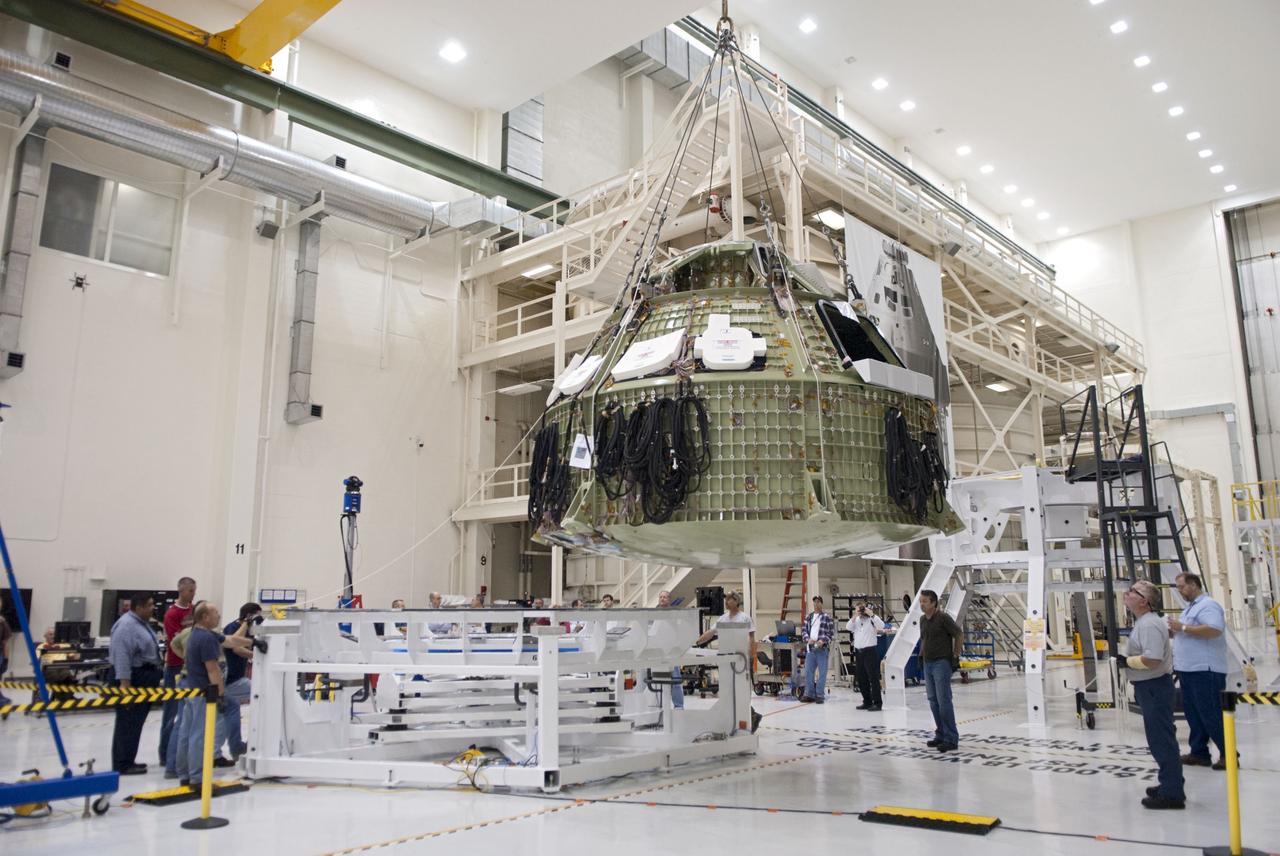
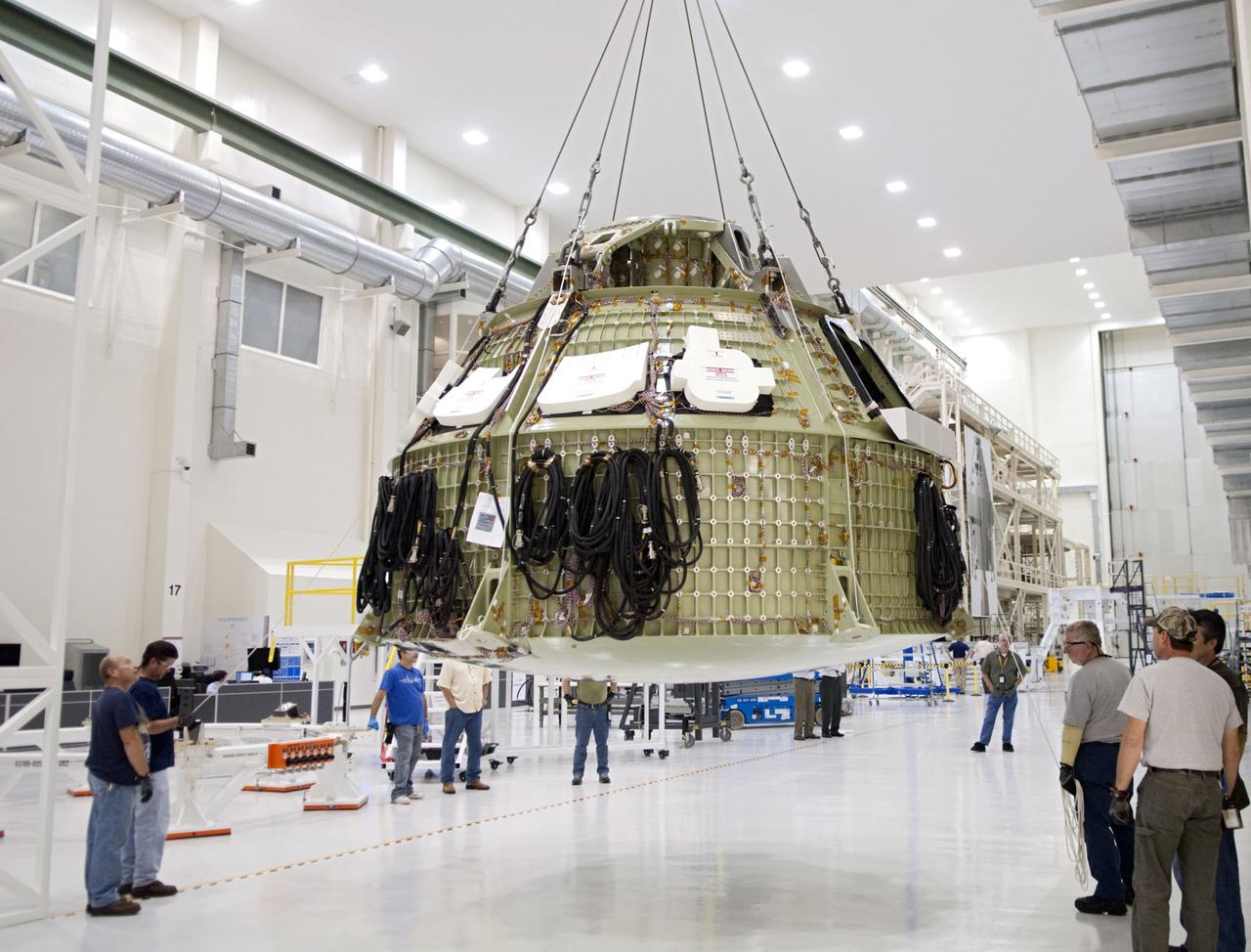
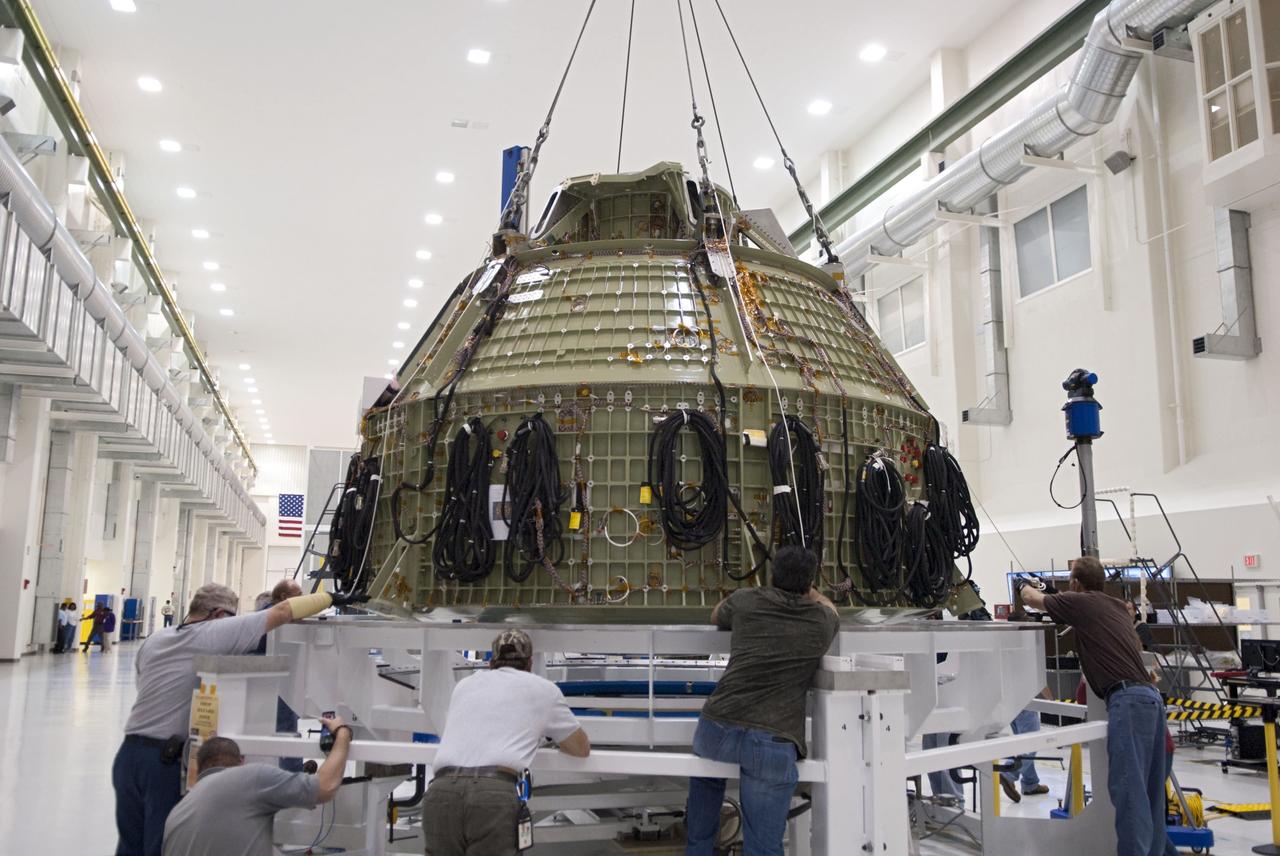
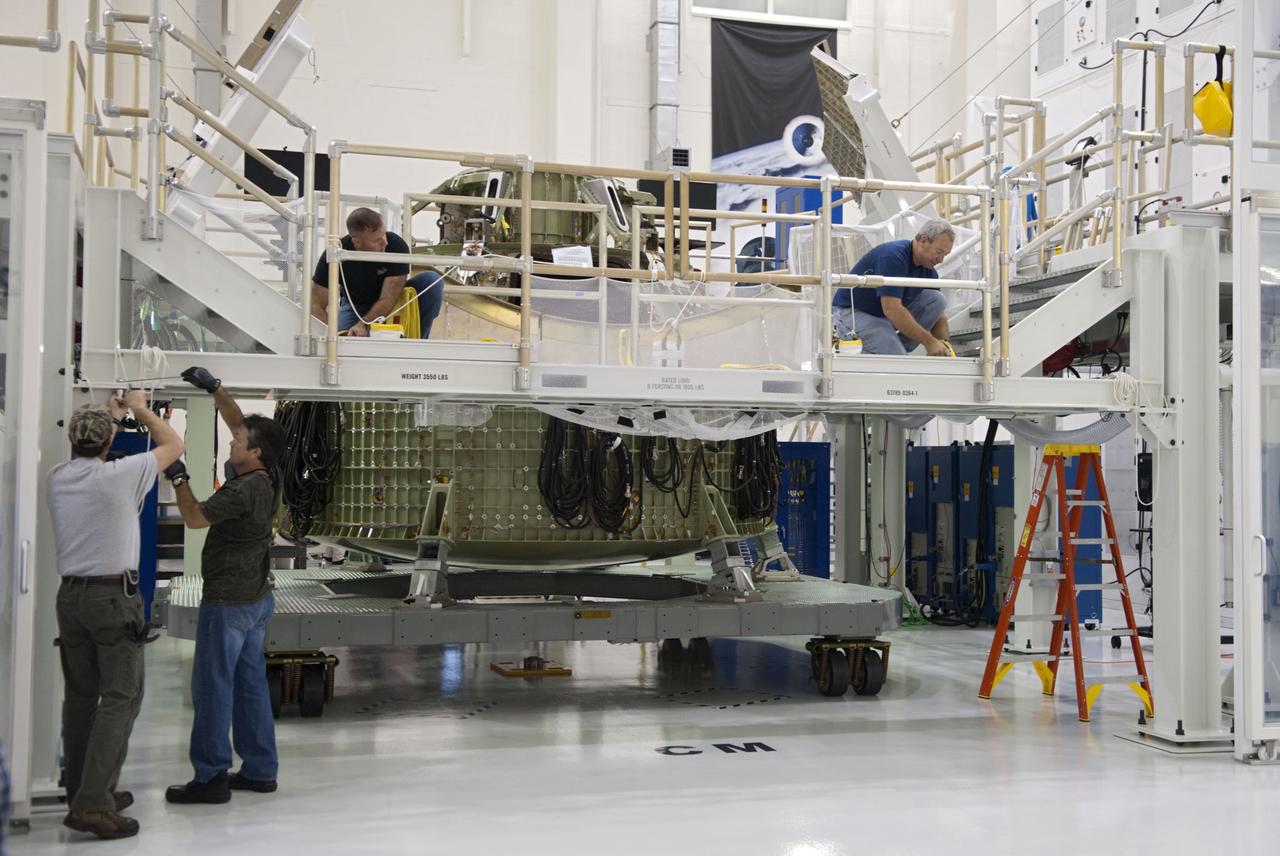
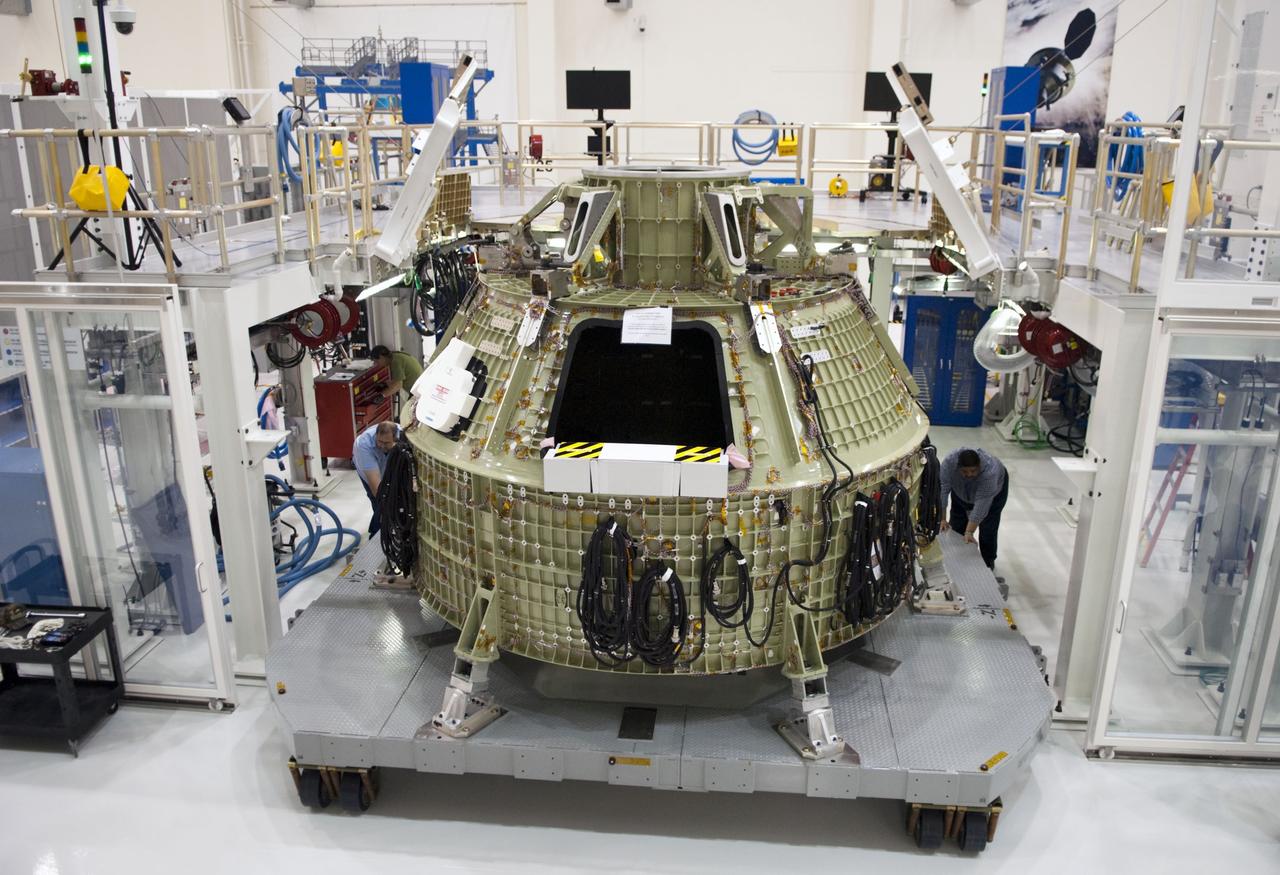
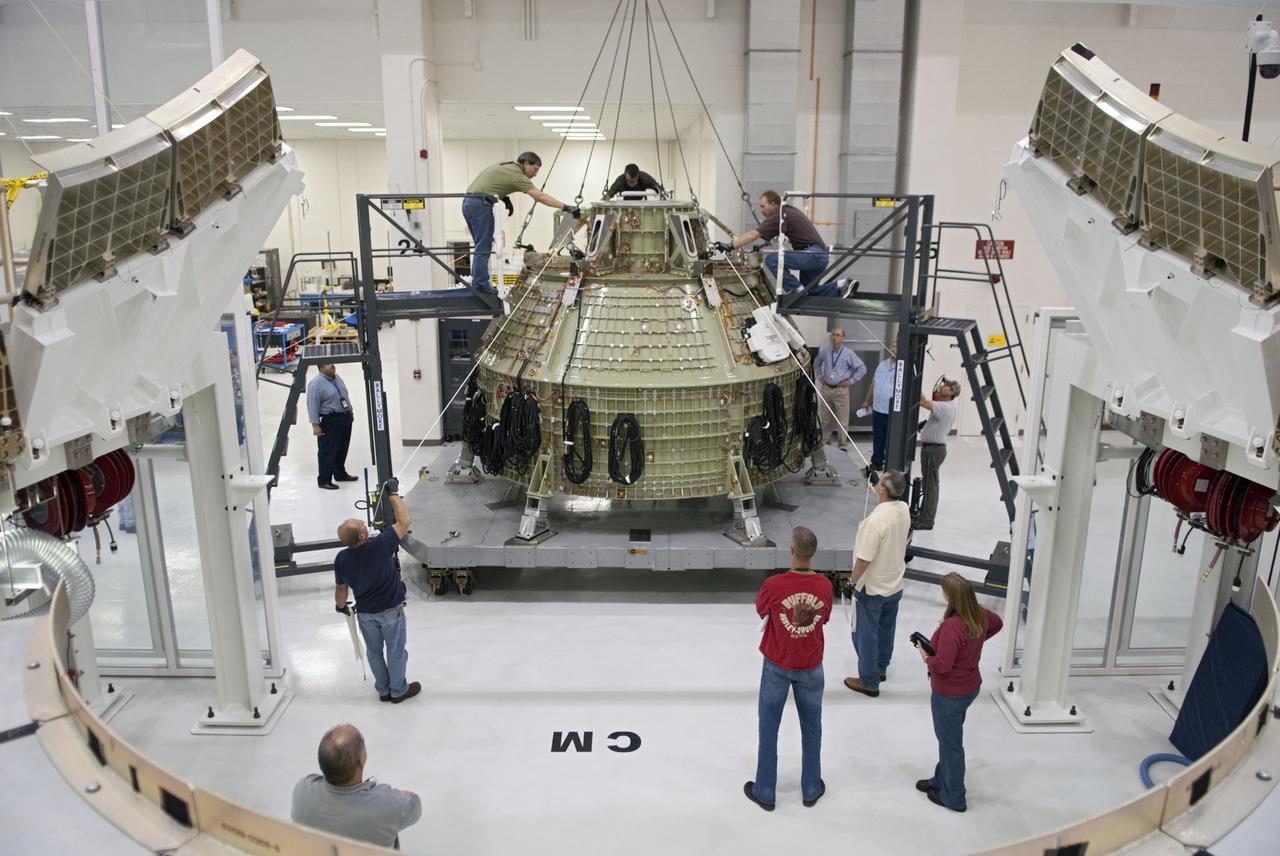
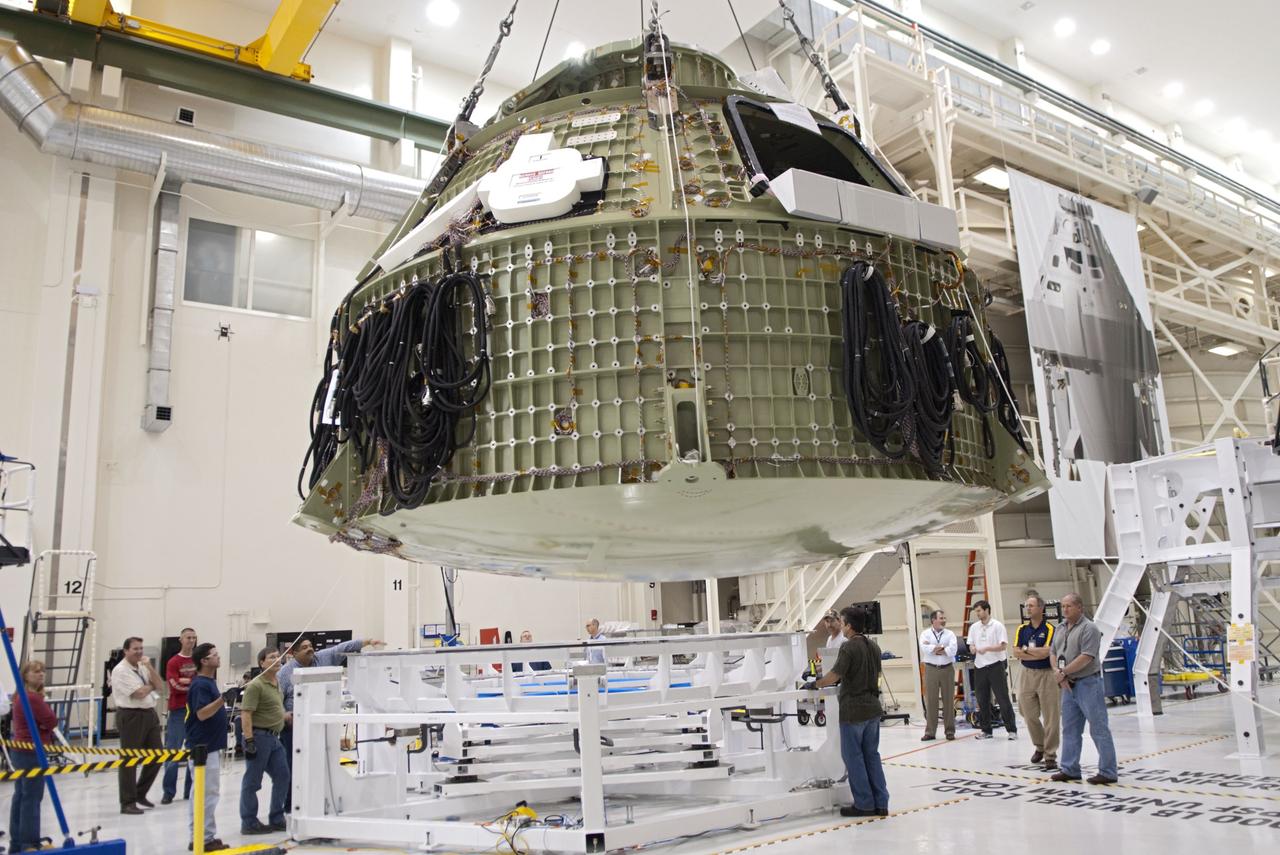
Orion technicians at the Operations and Checkout (O&C) Facility at the Kennedy Space Center move the Orion Exploration Flight Test-1 (EFT-1) crew module from the clean room into the birdcage fixture on Dec. 5, 2012. The fixture is designed to enable precise pre-launch processing of the Orion spacecraft.
Birdcage Fixture
Orion technicians at the Operations and Checkout (O&C) Facility at the Kennedy Space Center move the Orion Exploration Flight Test-1 (EFT-1) crew module from the clean room into the birdcage fixture on Dec. 5, 2012. The fixture is designed to enable precise pre-launch processing of the Orion spacecraft.
Birdcage Fixture
Orion technicians at the Operations and Checkout (O&C) Facility at the Kennedy Space Center move the Orion Exploration Flight Test-1 (EFT-1) crew module from the clean room into the birdcage fixture on Dec. 5, 2012. The fixture is designed to enable precise pre-launch processing of the Orion spacecraft.
Birdcage Fixture
Orion technicians at the Operations and Checkout (O&C) Facility at the Kennedy Space Center move the Orion Exploration Flight Test-1 (EFT-1) crew module from the clean room into the birdcage fixture on Dec. 5, 2012. The fixture is designed to enable precise pre-launch processing of the Orion spacecraft.
Birdcage Fixture
Orion technicians at the Operations and Checkout (O&C) Facility at the Kennedy Space Center move the Orion Exploration Flight Test-1 (EFT-1) crew module from the clean room into the birdcage fixture on Dec. 5, 2012. The fixture is designed to enable precise pre-launch processing of the Orion spacecraft.
Birdcage Fixture
Orion technicians at the Operations and Checkout (O&C) Facility at the Kennedy Space Center move the Orion Exploration Flight Test-1 (EFT-1) crew module from the clean room into the birdcage fixture on Dec. 5, 2012. The fixture is designed to enable precise pre-launch processing of the Orion spacecraft.
Birdcage Fixture
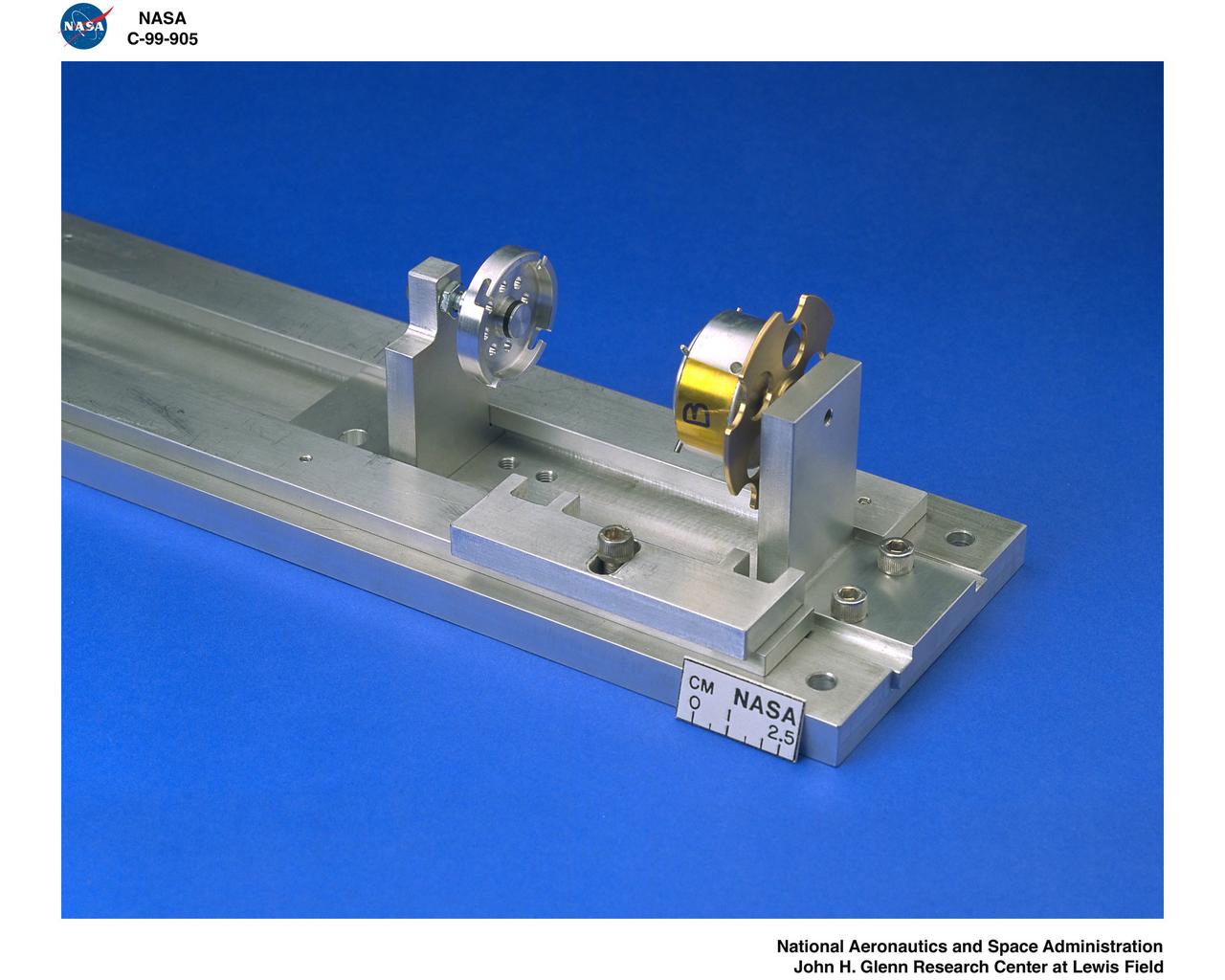
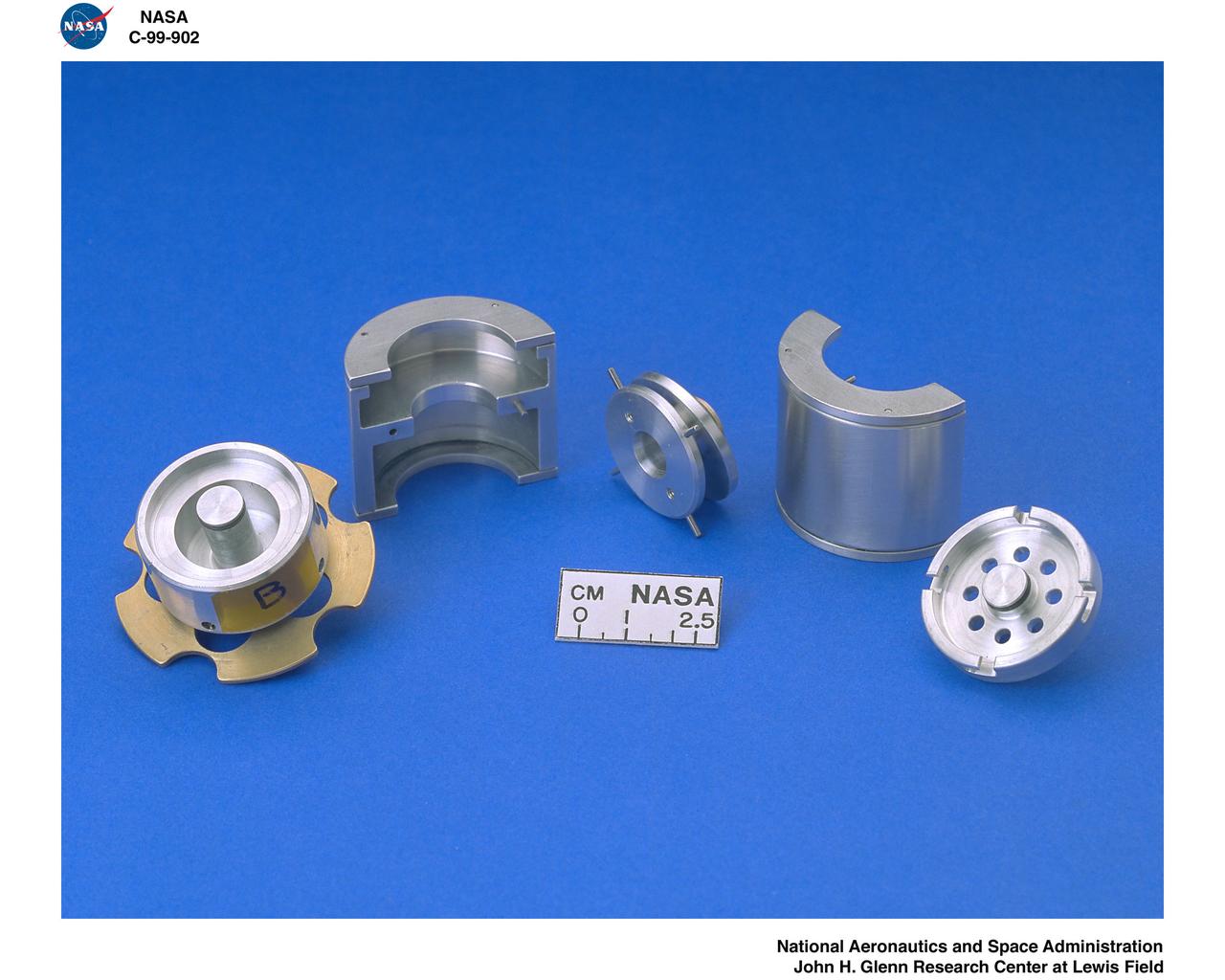
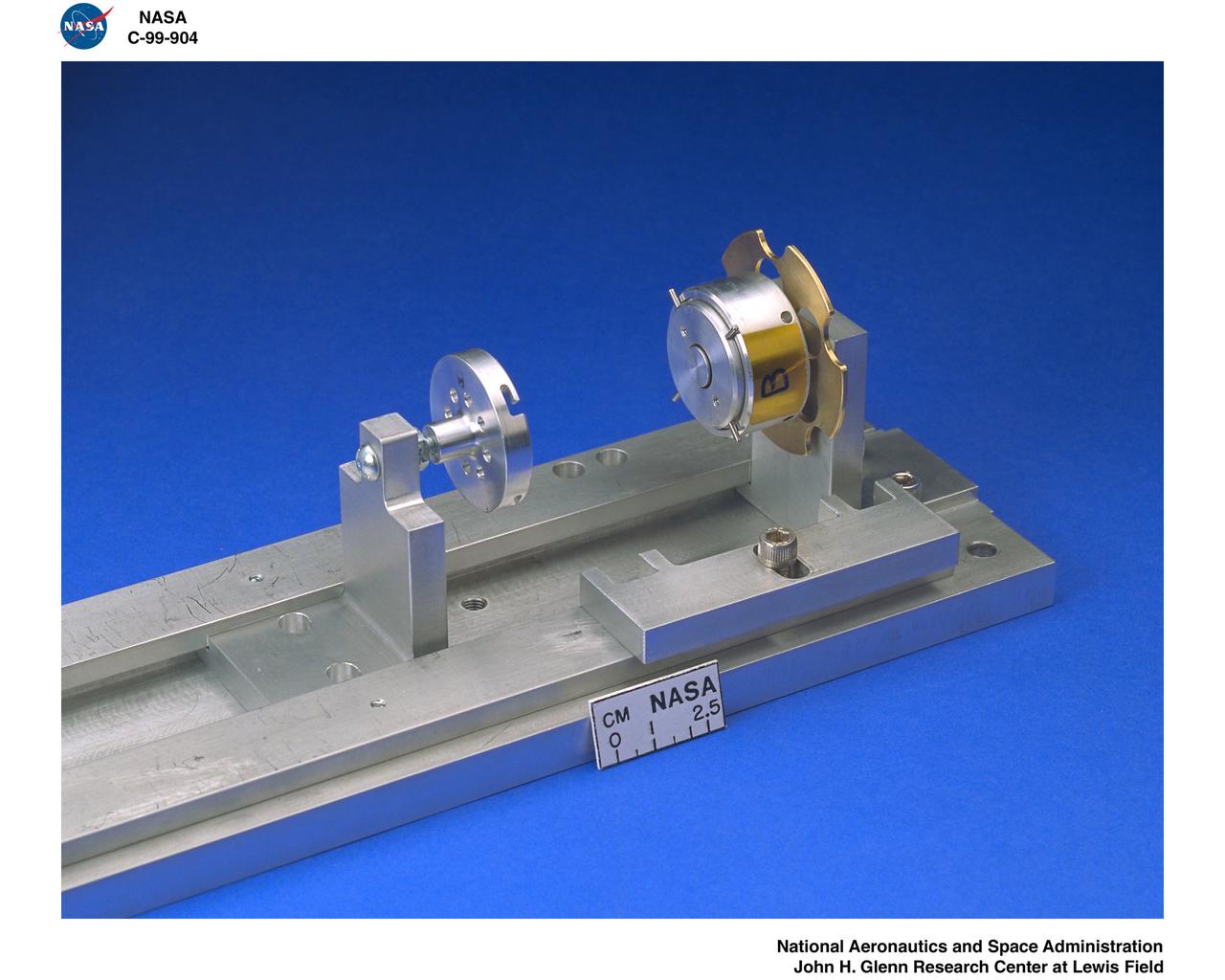
SHEAR EXTENSIONAL RHEOLOGY EXPERIMENT FLUID MODULE AND KC135 AIRCRAFT TEST FIXTURE FOR THE EXTENSIONAL RHEOLOGY GLOVEBOX INVESTIGATION
GRC-1999-C-00902
Eric Sinks, left, and Ron Haraguchi work through a challenge with the wiring from the Passive Aeroelastic Tailored wing to the test fixture.
Experimental Wing Proving New Design Methods
SHEAR EXTENSIONAL RHEOLOGY EXPERIMENT FLUID MODULE AND KC135 AIRCRAFT TEST FIXTURE FOR THE EXTENSIONAL RHEOLOGY GLOVEBOX INVESTIGATION
GRC-1999-C-00905
SHEAR EXTENSIONAL RHEOLOGY EXPERIMENT FLUID MODULE AND KC135 AIRCRAFT TEST FIXTURE FOR THE EXTENSIONAL RHEOLOGY GLOVEBOX INVESTIGATION
GRC-1999-C-00904
The Aerostructures Test Wing (ATW) experiment, which consisted of an 18-inch carbon fiber test wing with surface-mounted piezoelectric strain actuators, undergoing ground testing prior to flight on Dryden's F-15B Research Testbed aircraft
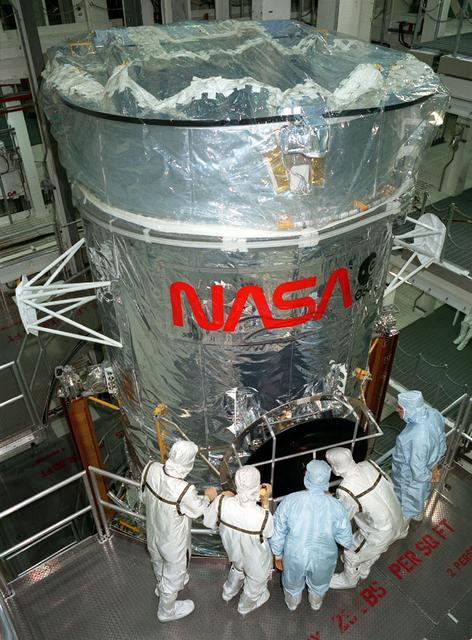
The Hubble Space Telescope (HST) pictured in the Vertical Processing Facility (VPF) support fixture during final testing and verification at the Lockheed assembly plant.
History of Hubble Space Telescope (HST)
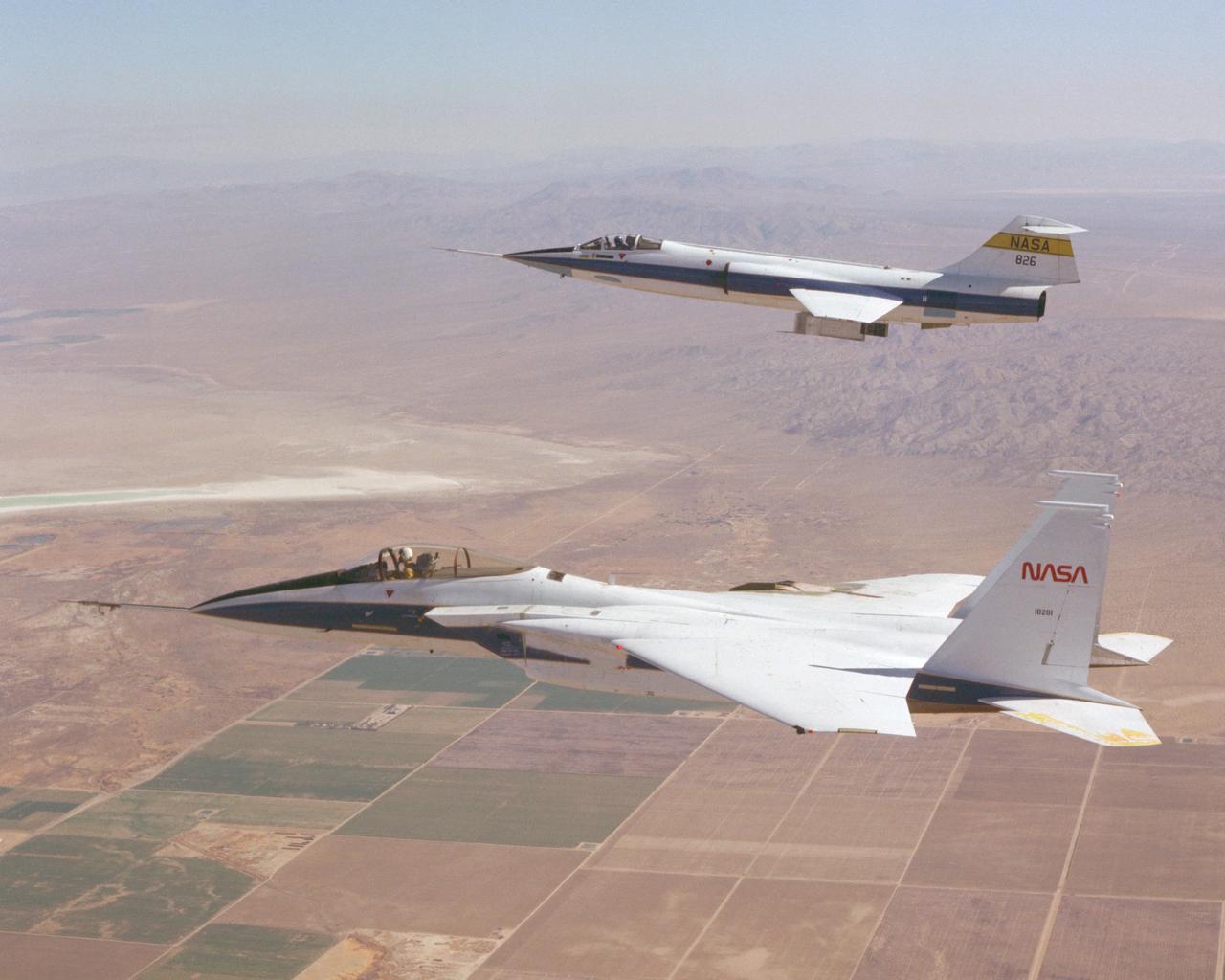
F-15 #281 and F-104 #826 fly in formation during Space Shuttle tile testing. Note the tiles mounted on the right wing of the F-15 and the centerline test fixture of the F-104.
F-15 #281 and F-104 #826 fly in formation during Space Shuttle tile testing.
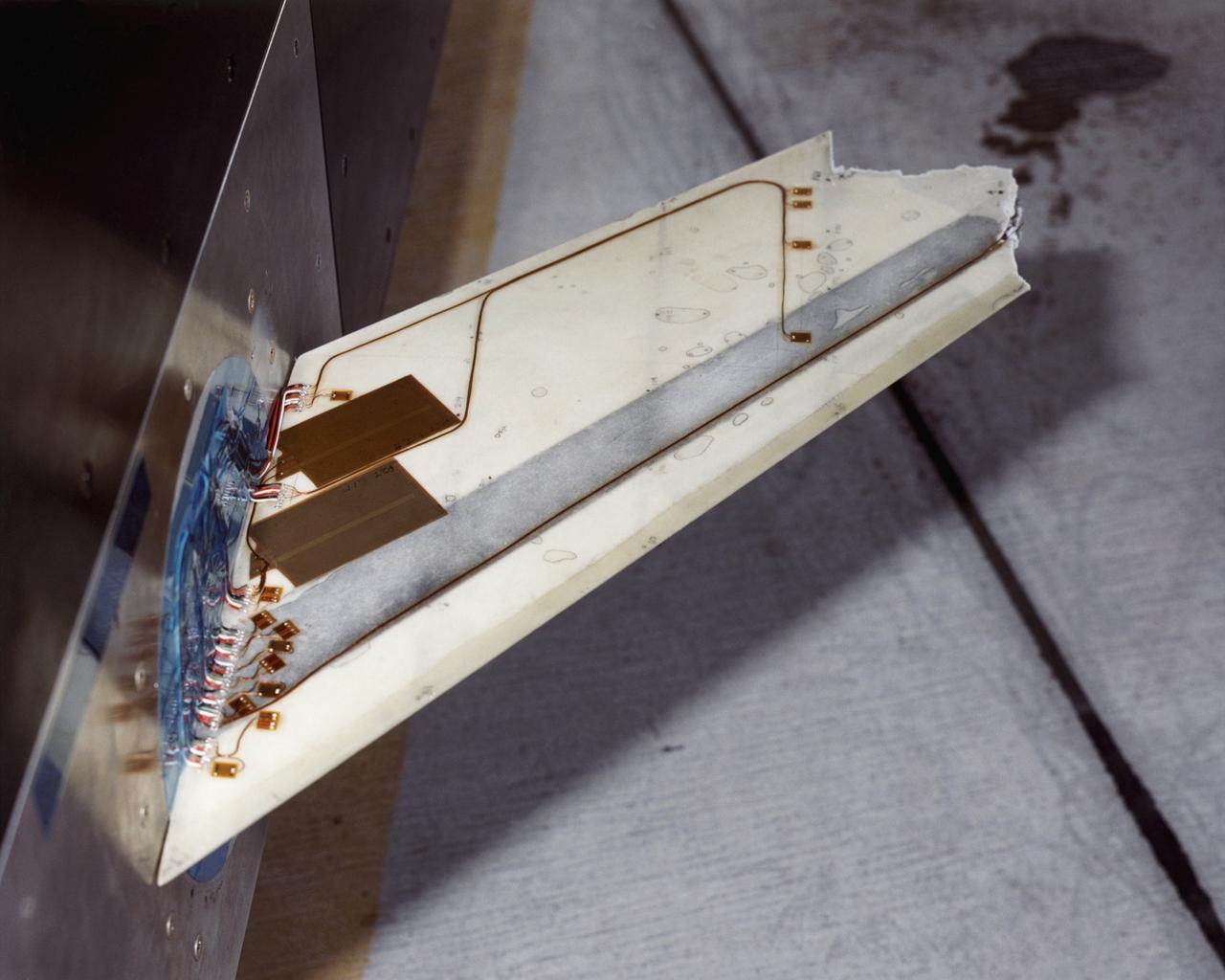
The Aerostructures Test Wing (ATW), which consisted of an 18-inch carbon fiber test wing with surface-mounted piezoelectric strain actuators, following intentional failure on its final flight
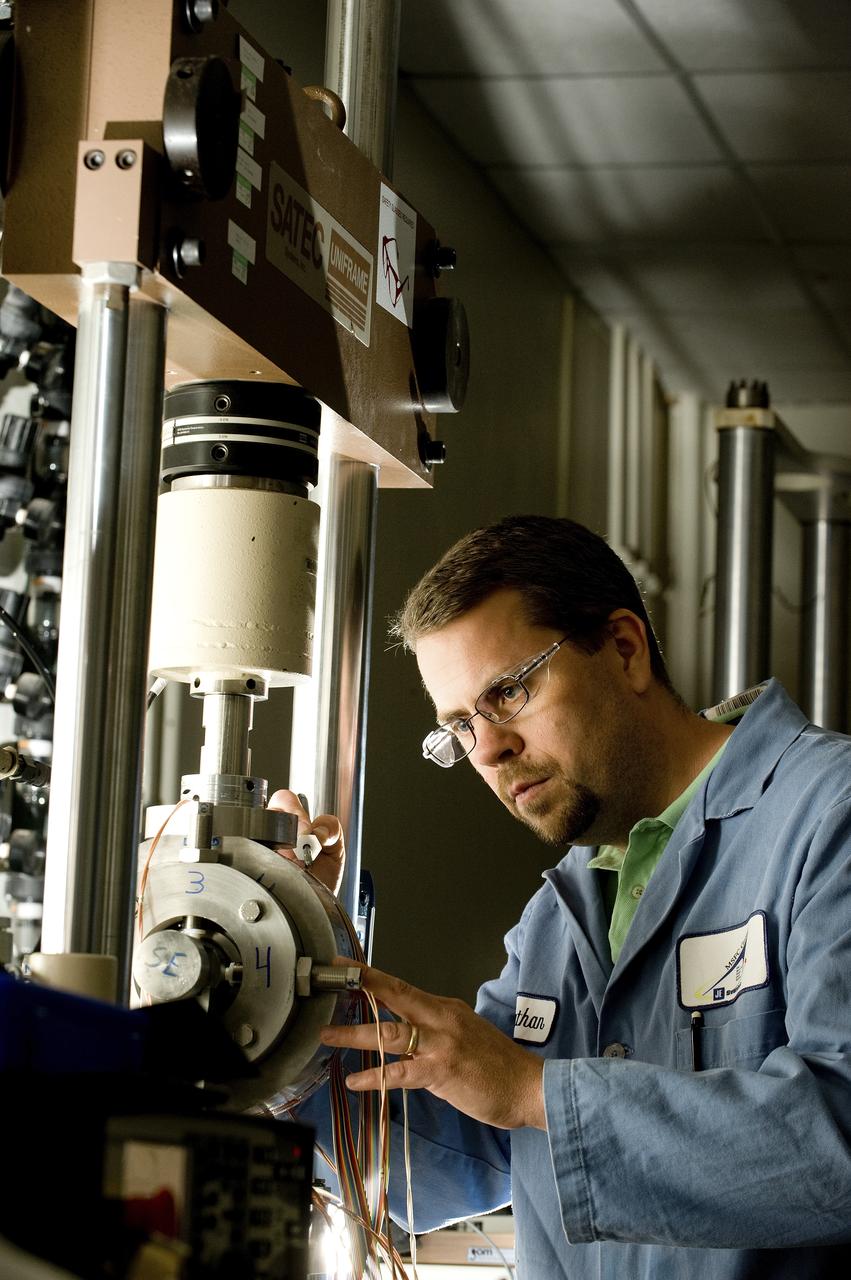
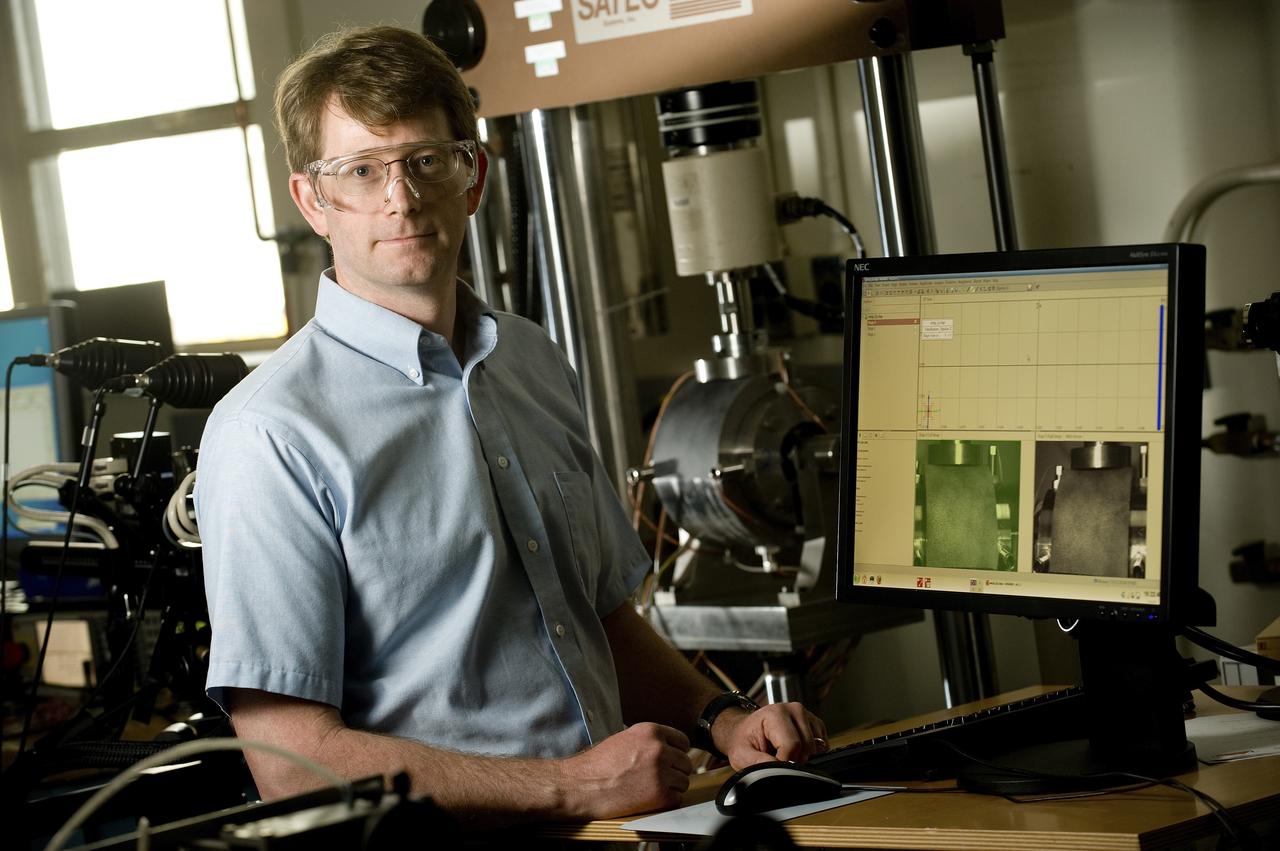
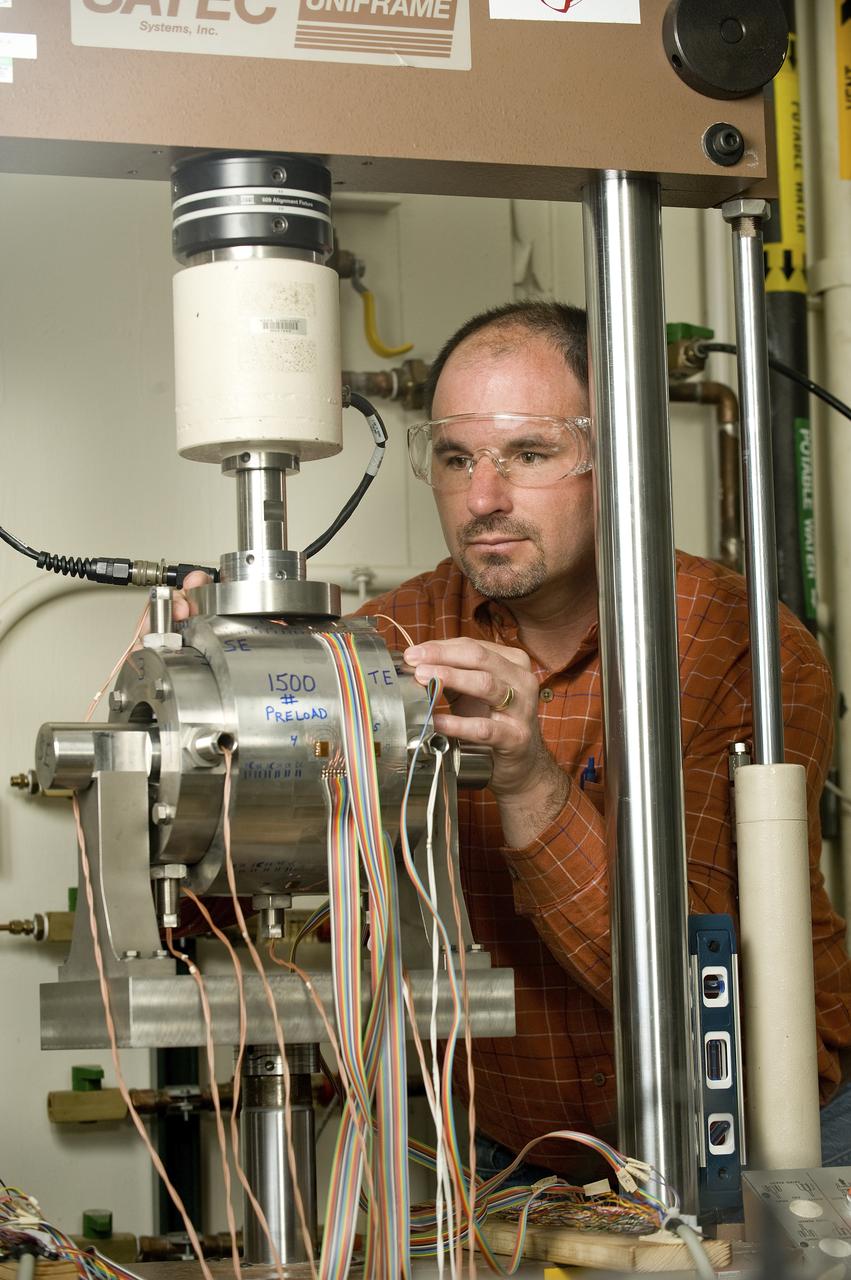
TATHAN COFFEE (EM10 MATERIALS TEST ENGINEER, JACOBS ESTS GROUP/JTI) ADJUSTS A UNIQUE MECHANICAL TEST SETUP THAT MEASURES STRAIN ON A SINGLE SAMPLE, USING TWO DIFFERENT TECHNIQUES AT THE SAME TIME. THE TEST FIXTURE HOLDS A SPECIMEN THAT REPRESENTS A LIQUID OXYGEN (LOX) BEARING FROM THE J2-X ENGINE
1000541
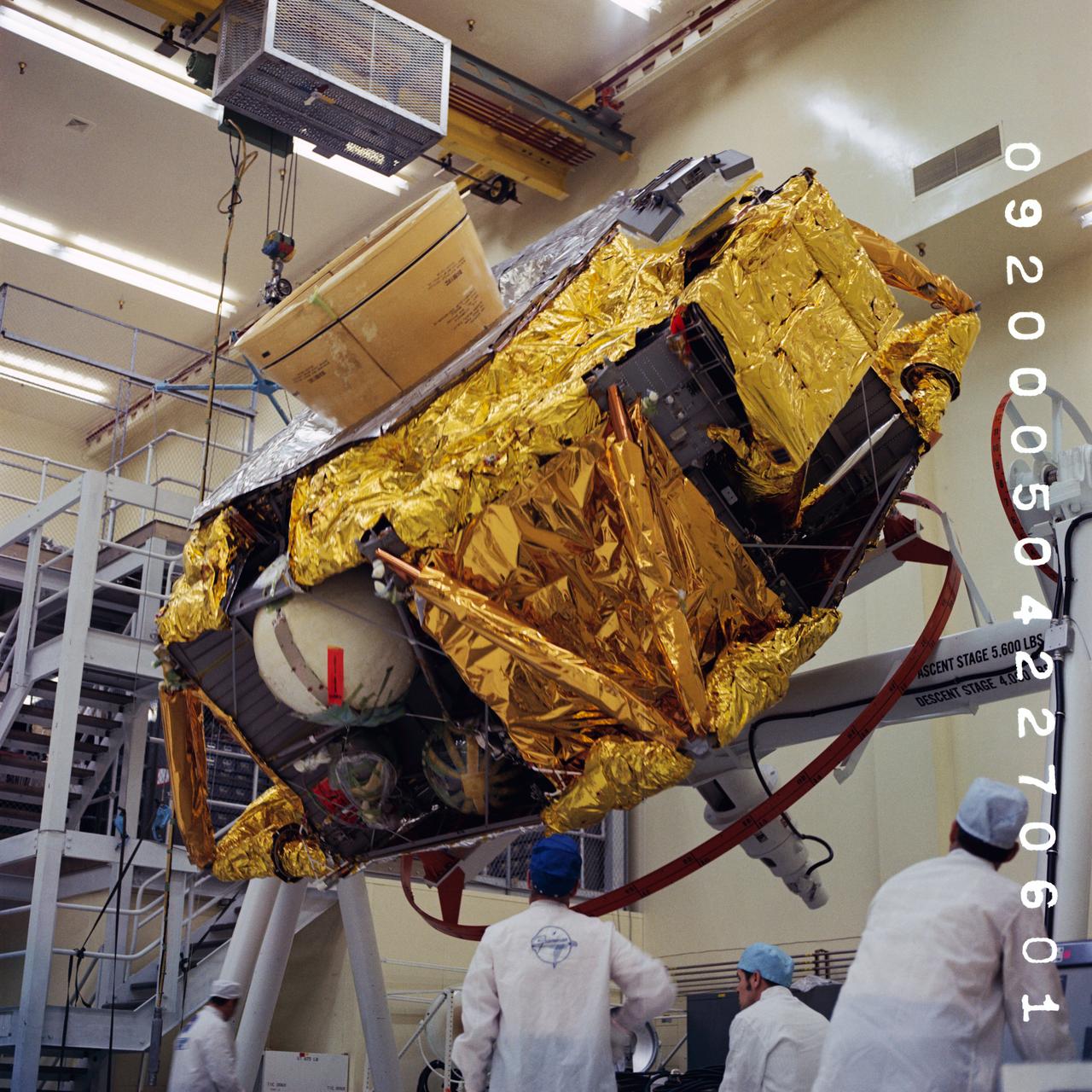
S70-39998 (2 June 1970) --- Manufacturing and testing view of Lunar Module (LM)-9 Descent Stage to Rotate & Clean Fixture at the Grumman, Bethpage, NY, Facility. Photo credit: NASA/Grumman
MANUFACTURING - APOLLO GENERAL - GRUMMAN AIRCRAFT ENG. CORP. (GAEC), NY
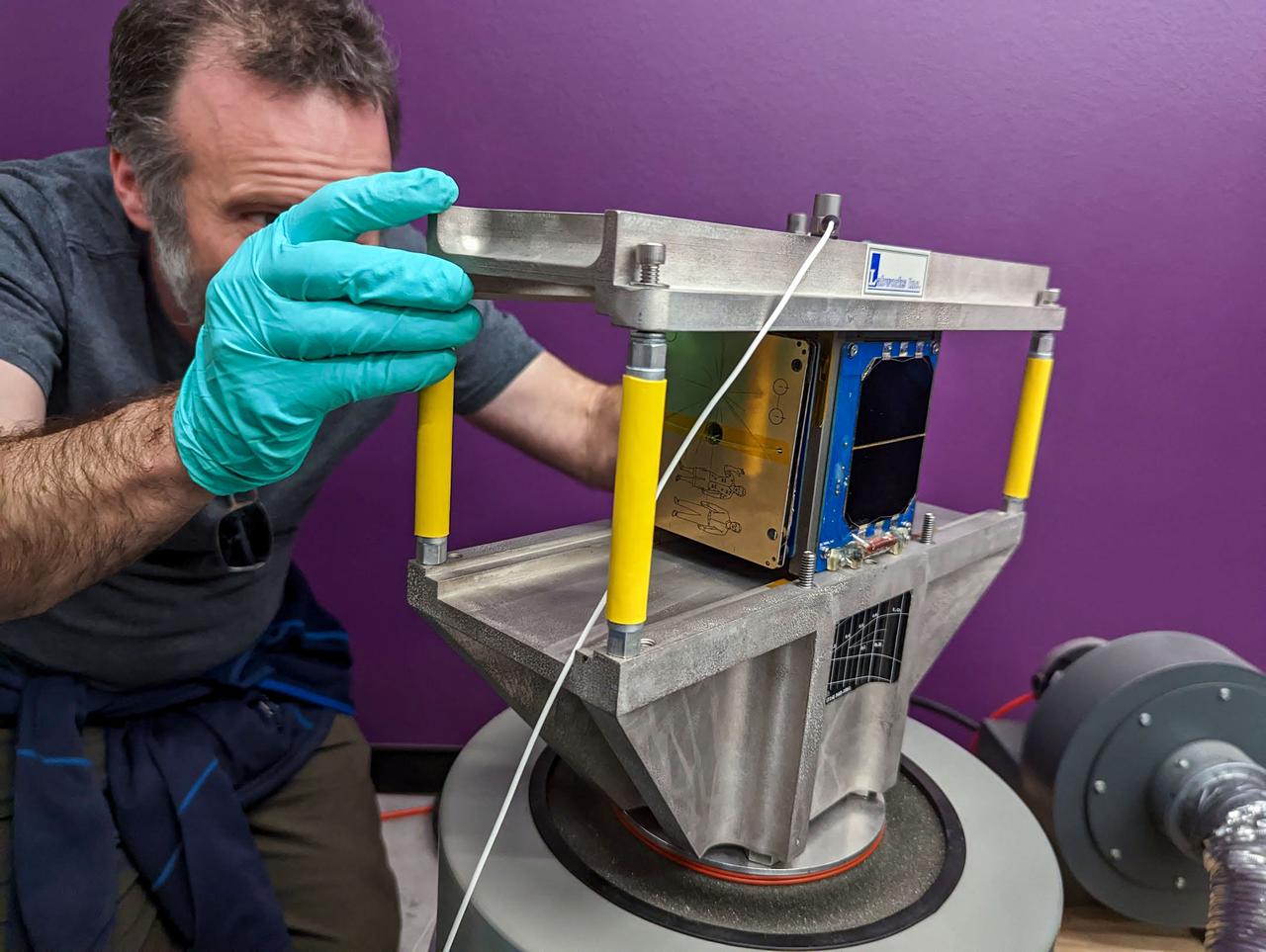
jsc2023e010186 (12/13/2022) --- Professor Danny Jacobs inspects the LightCube inside the Random Vibration Test Fixture. Image courtesy of Jaime Sanchez de la Vega.
jsc2023e010186
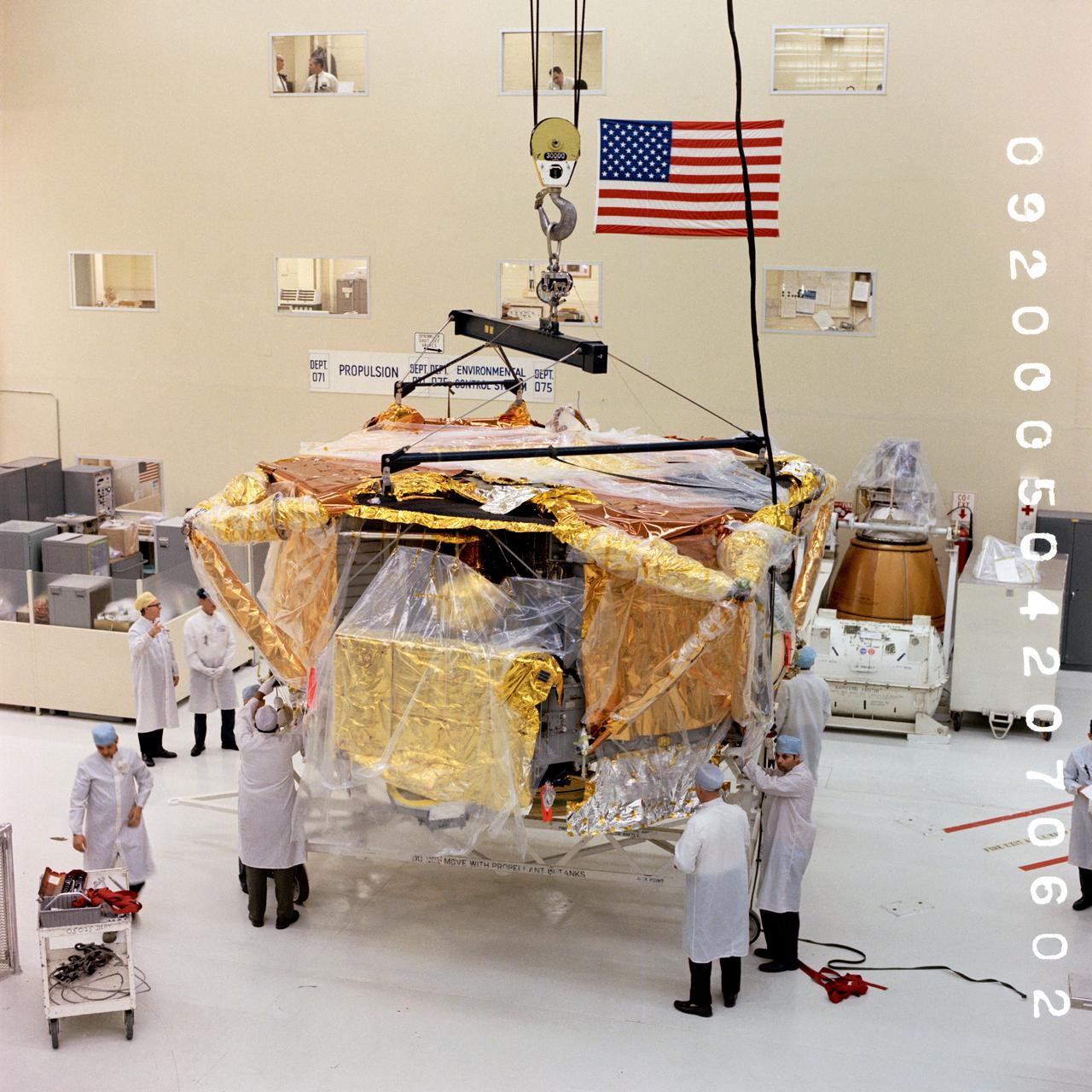
S70-39997 (2 June 1970) --- Manufacturing and testing view of Lunar Module (LM)-9 Descent Stage to Rotate & Clean Fixture at the Grumman, Bethpage, NY, Facility. Photo credit: NASA/Grumman
MANUFACTURING - APOLLO GENERAL - GRUMMAN AIRCRAFT ENG. CORP. (GAEC), NY
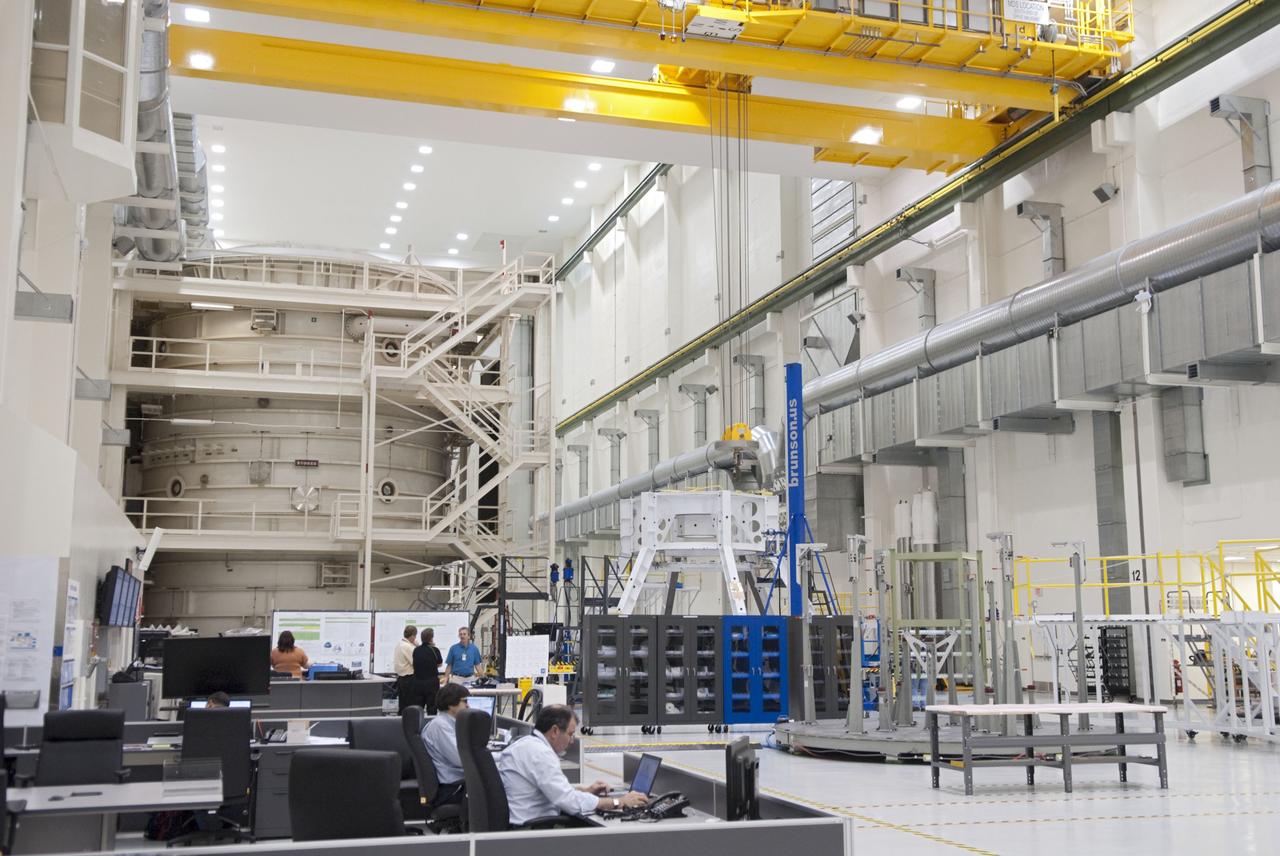
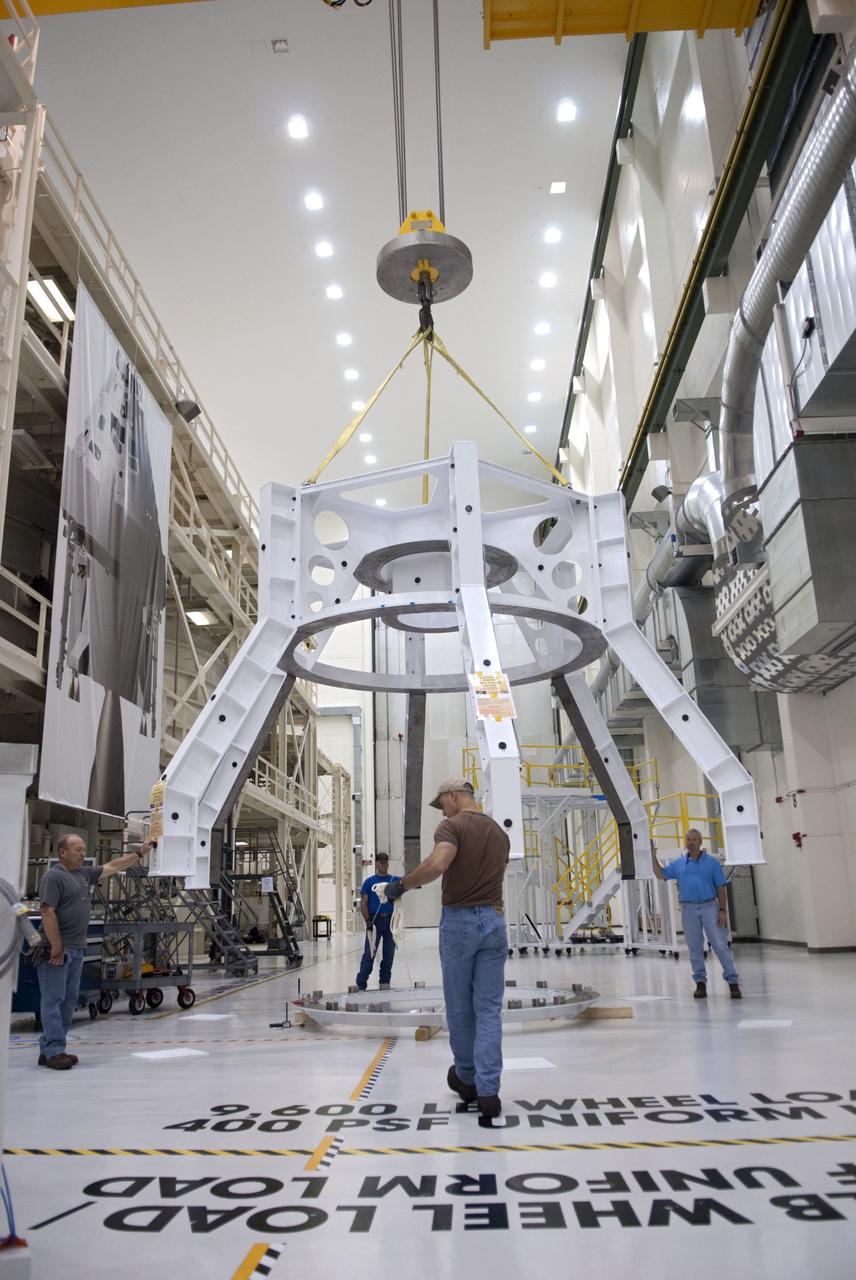
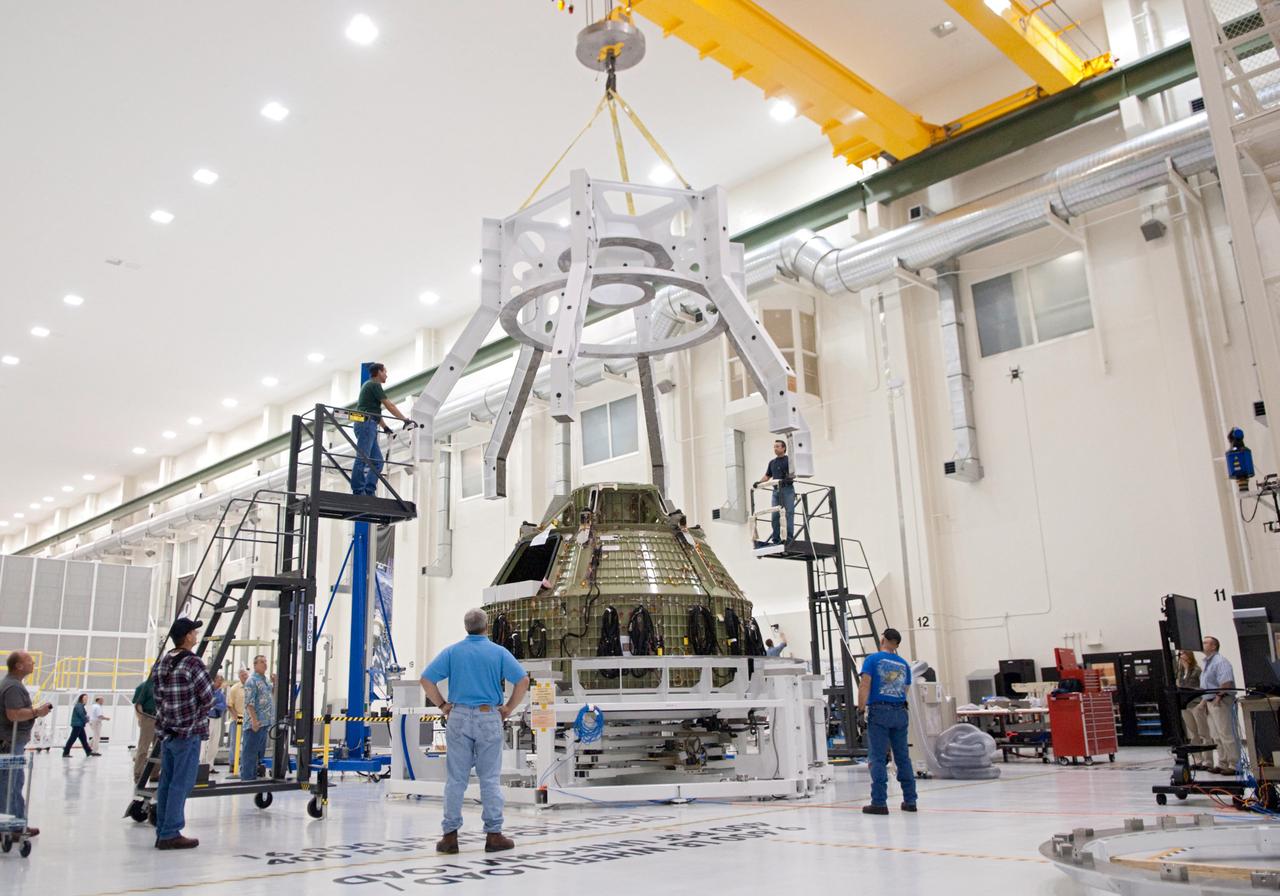
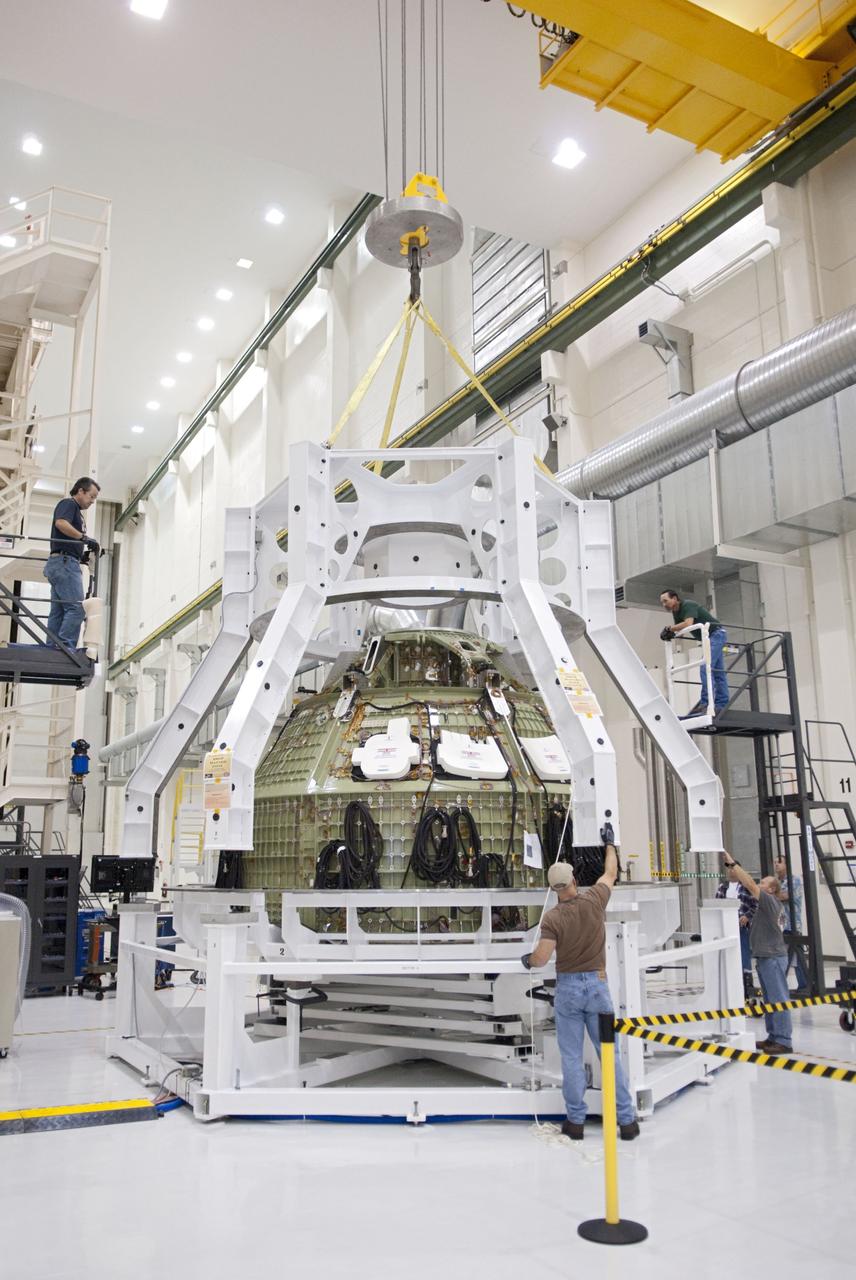
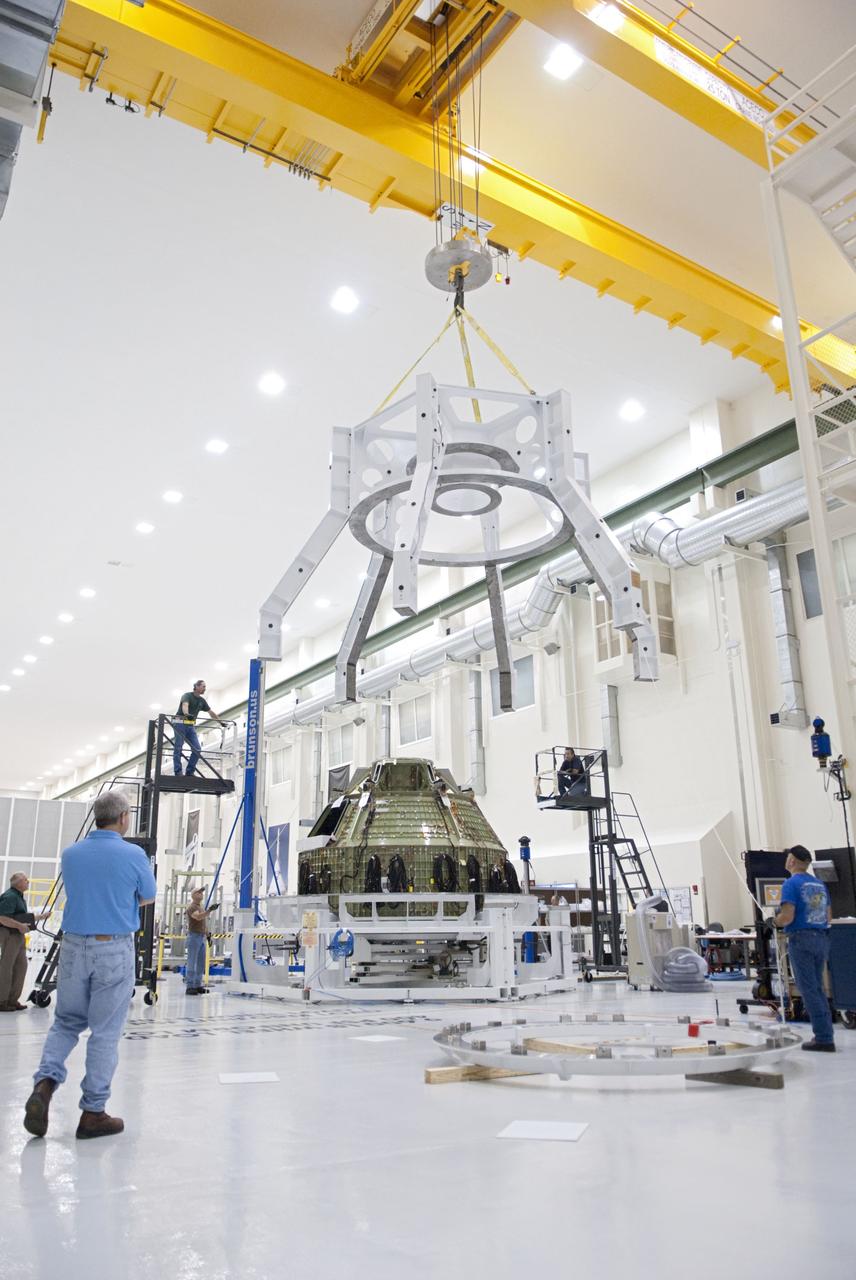
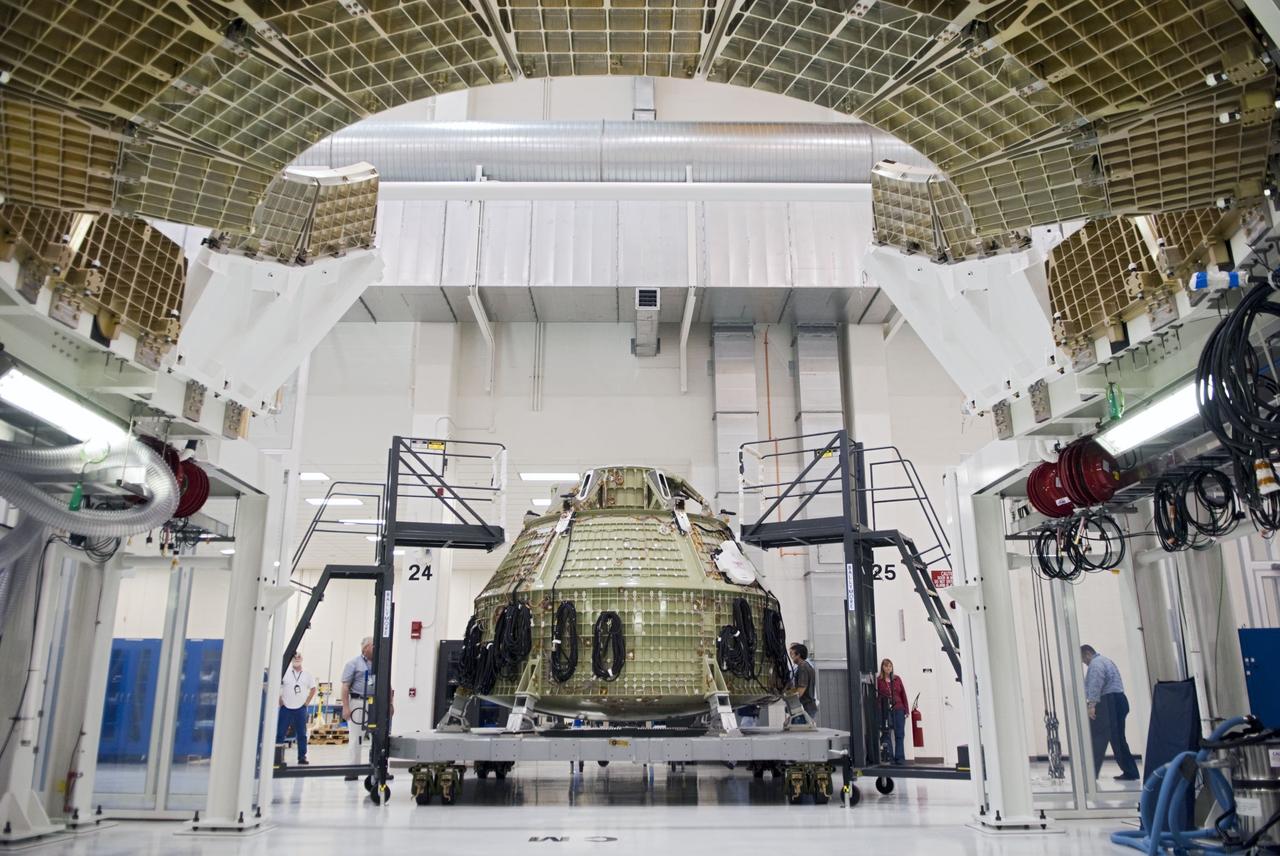
CAPE CANAVERAL, Fla. – Technicians lower a special fixture around an Orion spacecraft inside the high bay of the Operations & Checkout Building at NASA's Kennedy Space Center in Florida. The fixture is designed to enable precise pre-launch processing of the Orion spacecraft. An Orion capsule is being prepared to make a flight test in 2014 on a mission that will not carry any astronauts. Photo by Tim Jacobs
KSC-2012-6448
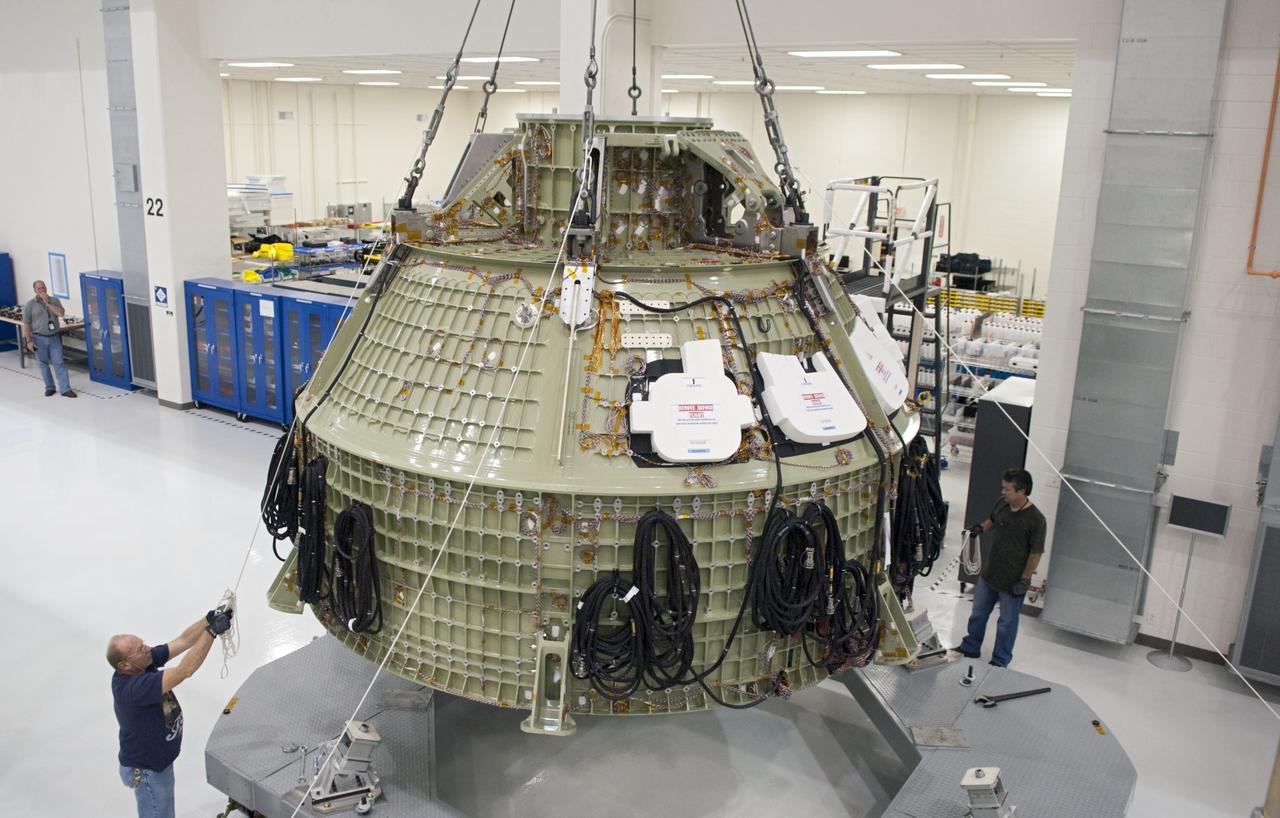
CAPE CANAVERAL, Fla. – Technicians prepare to fit a special fixture around an Orion capsule inside the high bay of the Operations & Checkout Building at NASA's Kennedy Space Center in Florida. The fixture is designed to enable precise pre-launch processing of the Orion spacecraft. An Orion capsule is being prepared to make a flight test in 2014 on a mission that will not carry any astronauts. Photo by Tim Jacobs
KSC-2012-6432
CAPE CANAVERAL, Fla. – Technicians prepare to fit a special fixture around an Orion capsule inside the high bay of the Operations & Checkout Building at NASA's Kennedy Space Center in Florida. The fixture is designed to enable precise pre-launch processing of the Orion spacecraft. An Orion capsule is being prepared to make a flight test in 2014 on a mission that will not carry any astronauts. Photo by Tim Jacobs
KSC-2012-6438
CAPE CANAVERAL, Fla. – Technicians prepare to fit a special fixture around an Orion capsule inside the high bay of the Operations & Checkout Building at NASA's Kennedy Space Center in Florida. The fixture is designed to enable precise pre-launch processing of the Orion spacecraft. An Orion capsule is being prepared to make a flight test in 2014 on a mission that will not carry any astronauts. Photo by Tim Jacobs
KSC-2012-6441
CAPE CANAVERAL, Fla. – Technicians prepare to fit a special fixture around an Orion capsule inside the high bay of the Operations & Checkout Building at NASA's Kennedy Space Center in Florida. The fixture is designed to enable precise pre-launch processing of the Orion spacecraft. An Orion capsule is being prepared to make a flight test in 2014 on a mission that will not carry any astronauts. Photo by Tim Jacobs
KSC-2012-6431
CAPE CANAVERAL, Fla. – Technicians lower a special fixture around an Orion spacecraft inside the high bay of the Operations & Checkout Building at NASA's Kennedy Space Center in Florida. The fixture is designed to enable precise pre-launch processing of the Orion spacecraft. An Orion capsule is being prepared to make a flight test in 2014 on a mission that will not carry any astronauts. Photo by Tim Jacobs
KSC-2012-6449
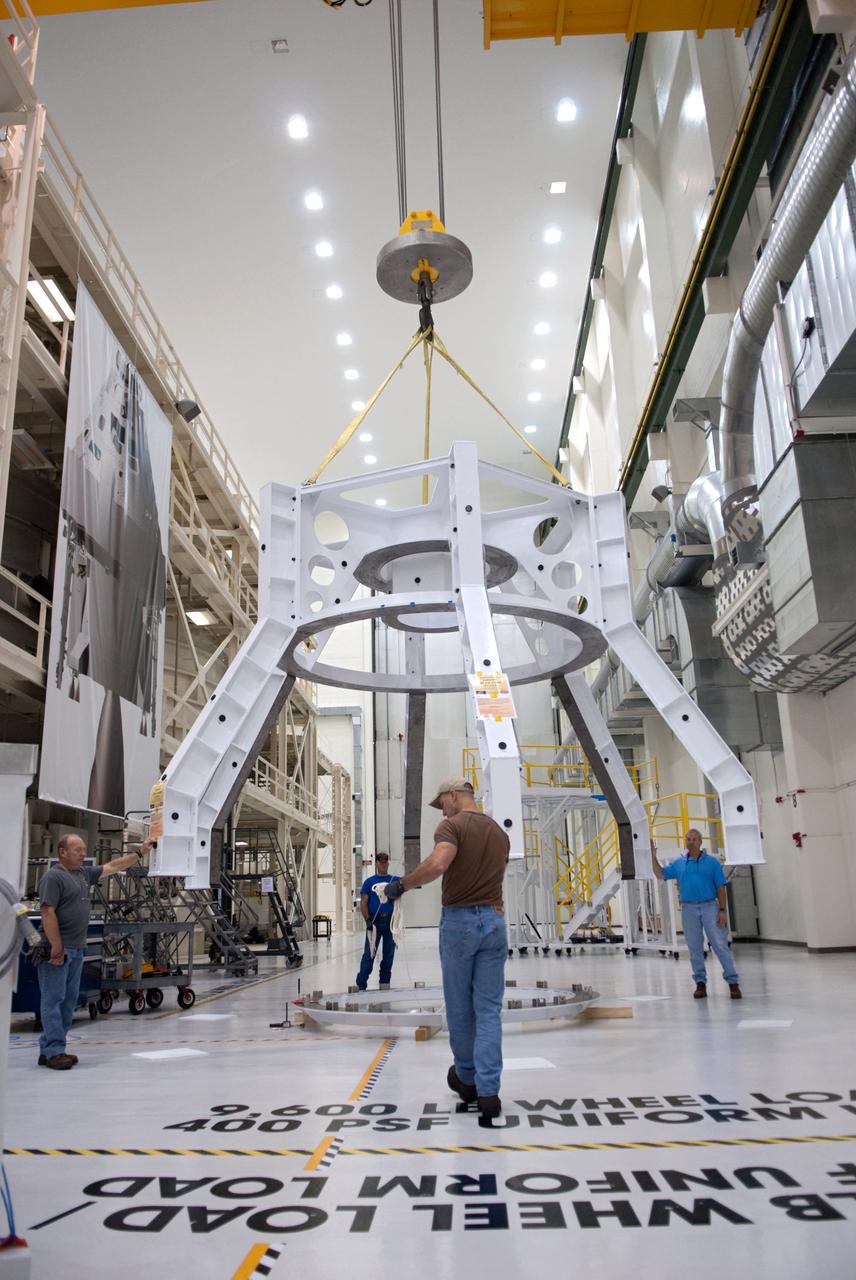
CAPE CANAVERAL, Fla. – Technicians lift a special fixture inside the high bay of the Operations & Checkout Building at NASA's Kennedy Space Center in Florida. The fixture is designed to enable precise pre-launch processing of the Orion spacecraft. An Orion capsule is being prepared to make a flight test in 2014 on a mission that will not carry any astronauts. Photo by Tim Jacobs
KSC-2012-6445
CAPE CANAVERAL, Fla. – Technicians prepare to fit a special fixture around an Orion capsule inside the high bay of the Operations & Checkout Building at NASA's Kennedy Space Center in Florida. The fixture is designed to enable precise pre-launch processing of the Orion spacecraft. An Orion capsule is being prepared to make a flight test in 2014 on a mission that will not carry any astronauts. Photo by Tim Jacobs
KSC-2012-6433
Orion technicians at the Operations and Checkout (O&C) Facility at the Kennedy Space Center move the Orion Exploration Flight Test-1 (EFT-1) crew module from the clean room into the birdcage fixture on Dec. 6, 2012. The fixture is designed to enable precise pre-launch processing of the Orion spacecraft. Part of Batch image transfer from Flickr.
Birdcage Fixture
CAPE CANAVERAL, Fla. – Technicians prepare to fit a special fixture around an Orion capsule inside the high bay of the Operations & Checkout Building at NASA's Kennedy Space Center in Florida. The fixture is designed to enable precise pre-launch processing of the Orion spacecraft. An Orion capsule is being prepared to make a flight test in 2014 on a mission that will not carry any astronauts. Photo by Tim Jacobs
KSC-2012-6437
CAPE CANAVERAL, Fla. – Technicians prepare to fit a special fixture around an Orion capsule inside the high bay of the Operations & Checkout Building at NASA's Kennedy Space Center in Florida. The fixture is designed to enable precise pre-launch processing of the Orion spacecraft. An Orion capsule is being prepared to make a flight test in 2014 on a mission that will not carry any astronauts. Photo by Tim Jacobs
KSC-2012-6439
CAPE CANAVERAL, Fla. – Technicians prepare to fit a special fixture around an Orion capsule inside the high bay of the Operations & Checkout Building at NASA's Kennedy Space Center in Florida. The fixture is designed to enable precise pre-launch processing of the Orion spacecraft. An Orion capsule is being prepared to make a flight test in 2014 on a mission that will not carry any astronauts. Photo by Tim Jacobs
KSC-2012-6434
Orion technicians at the Operations and Checkout (O&C) Facility at the Kennedy Space Center move the Orion Exploration Flight Test-1 (EFT-1) crew module from the clean room into the birdcage fixture on Dec. 6, 2012. The fixture is designed to enable precise pre-launch processing of the Orion spacecraft. Part of Batch image transfer from Flickr.
Birdcage Fixture
CAPE CANAVERAL, Fla. – Technicians prepare to fit a special fixture around an Orion capsule inside the high bay of the Operations & Checkout Building at NASA's Kennedy Space Center in Florida. The fixture is designed to enable precise pre-launch processing of the Orion spacecraft. An Orion capsule is being prepared to make a flight test in 2014 on a mission that will not carry any astronauts. Photo by Tim Jacobs
KSC-2012-6440
CAPE CANAVERAL, Fla. – Technicians lift a special fixture inside the high bay of the Operations & Checkout Building at NASA's Kennedy Space Center in Florida. The fixture is designed to enable precise pre-launch processing of the Orion spacecraft. An Orion capsule is being prepared to make a flight test in 2014 on a mission that will not carry any astronauts. Photo by Tim Jacobs
KSC-2012-6447
CAPE CANAVERAL, Fla. – Technicians prepare to lift a special fixture inside the high bay of the Operations & Checkout Building at NASA's Kennedy Space Center in Florida. The fixture is designed to enable precise pre-launch processing of the Orion spacecraft. An Orion capsule is being prepared to make a flight test in 2014 on a mission that will not carry any astronauts. Photo by Tim Jacobs
KSC-2012-6429
CAPE CANAVERAL, Fla. – Technicians prepare to fit a special fixture around an Orion capsule inside the high bay of the Operations & Checkout Building at NASA's Kennedy Space Center in Florida. The fixture is designed to enable precise pre-launch processing of the Orion spacecraft. An Orion capsule is being prepared to make a flight test in 2014 on a mission that will not carry any astronauts. Photo by Tim Jacobs
KSC-2012-6444
CAPE CANAVERAL, Fla. – Technicians prepare to lift a special fixture inside the high bay of the Operations & Checkout Building at NASA's Kennedy Space Center in Florida. The fixture is designed to enable precise pre-launch processing of the Orion spacecraft. An Orion capsule is being prepared to make a flight test in 2014 on a mission that will not carry any astronauts. Photo by Tim Jacobs
KSC-2012-6430
CAPE CANAVERAL, Fla. – Technicians prepare to lift a special fixture inside the high bay of the Operations & Checkout Building at NASA's Kennedy Space Center in Florida. The fixture is designed to enable precise pre-launch processing of the Orion spacecraft. An Orion capsule is being prepared to make a flight test in 2014 on a mission that will not carry any astronauts. Photo by Tim Jacobs
KSC-2012-6428
Orion technicians at the Operations and Checkout (O&C) Facility at the Kennedy Space Center move the Orion Exploration Flight Test-1 (EFT-1) crew module from the clean room into the birdcage fixture on Dec. 6, 2012. The fixture is designed to enable precise pre-launch processing of the Orion spacecraft. Part of Batch image transfer from Flickr.
Birdcage Fixture
CAPE CANAVERAL, Fla. – Technicians prepare to fit a special fixture around an Orion capsule inside the high bay of the Operations & Checkout Building at NASA's Kennedy Space Center in Florida. The fixture is designed to enable precise pre-launch processing of the Orion spacecraft. An Orion capsule is being prepared to make a flight test in 2014 on a mission that will not carry any astronauts. Photo by Tim Jacobs
KSC-2012-6442
CAPE CANAVERAL, Fla. – Technicians prepare to fit a special fixture around an Orion capsule inside the high bay of the Operations & Checkout Building at NASA's Kennedy Space Center in Florida. The fixture is designed to enable precise pre-launch processing of the Orion spacecraft. An Orion capsule is being prepared to make a flight test in 2014 on a mission that will not carry any astronauts. Photo by Tim Jacobs
KSC-2012-6443
CAPE CANAVERAL, Fla. – Technicians prepare to fit a special fixture around an Orion capsule inside the high bay of the Operations & Checkout Building at NASA's Kennedy Space Center in Florida. The fixture is designed to enable precise pre-launch processing of the Orion spacecraft. An Orion capsule is being prepared to make a flight test in 2014 on a mission that will not carry any astronauts. Photo by Tim Jacobs
KSC-2012-6435
Orion technicians at the Operations and Checkout (O&C) Facility at the Kennedy Space Center move the Orion Exploration Flight Test-1 (EFT-1) crew module from the clean room into the birdcage fixture on Dec. 6, 2012. The fixture is designed to enable precise pre-launch processing of the Orion spacecraft. Part of Batch image transfer from Flickr.
Birdcage Fixture
CAPE CANAVERAL, Fla. – Technicians lift a special fixture inside the high bay of the Operations & Checkout Building at NASA's Kennedy Space Center in Florida. The fixture is designed to enable precise pre-launch processing of the Orion spacecraft. An Orion capsule is being prepared to make a flight test in 2014 on a mission that will not carry any astronauts. Photo by Tim Jacobs
KSC-2012-6446
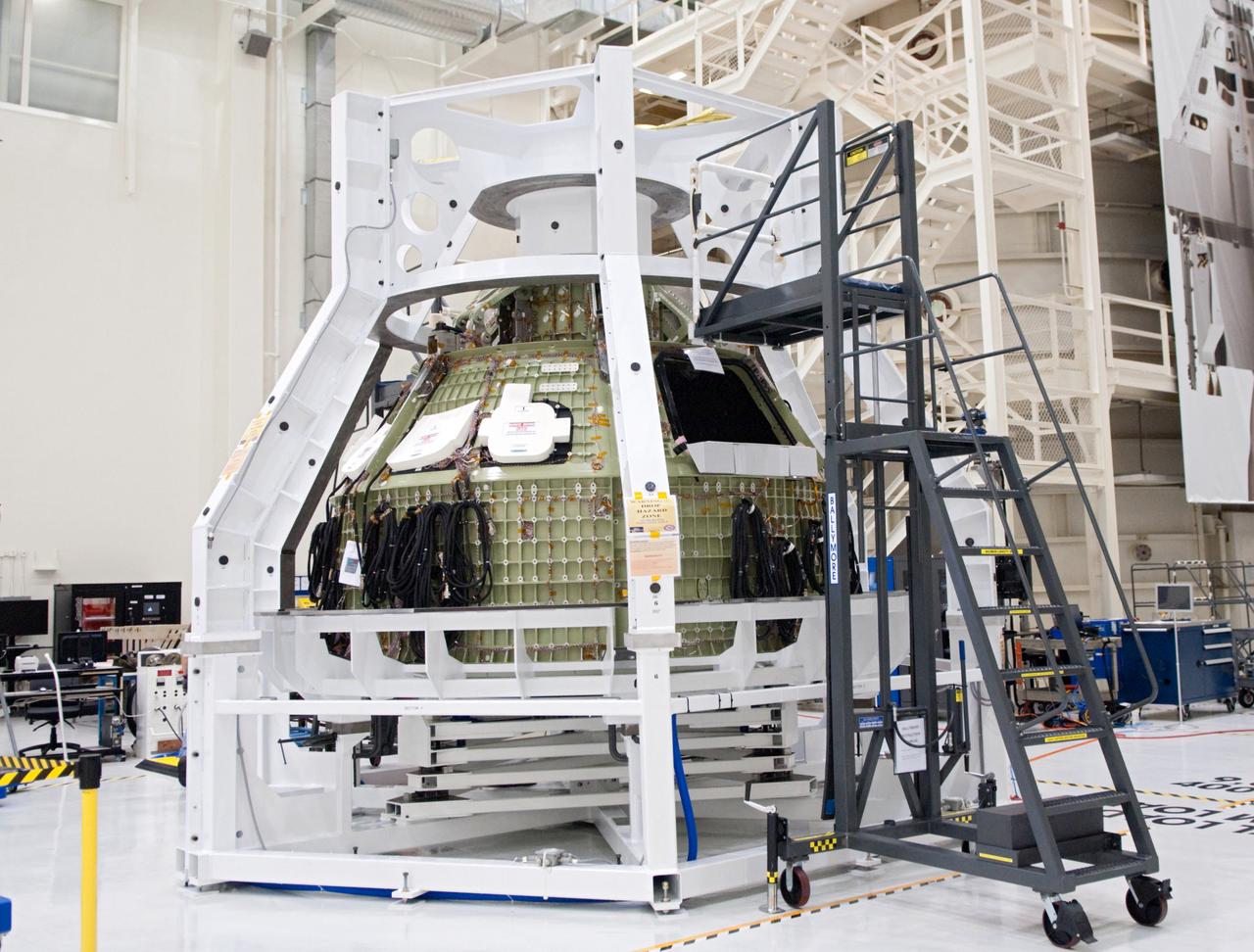
CAPE CANAVERAL, Fla. – A special fixture stands in place around an Orion spacecraft inside the high bay of the Operations & Checkout Building at NASA's Kennedy Space Center in Florida. The fixture is designed to enable precise pre-launch processing of the Orion spacecraft. An Orion capsule is being prepared to make a flight test in 2014 on a mission that will not carry any astronauts. Photo by Tim Jacobs
KSC-2012-6450
CAPE CANAVERAL, Fla. – Technicians prepare to fit a special fixture around an Orion capsule inside the high bay of the Operations & Checkout Building at NASA's Kennedy Space Center in Florida. The fixture is designed to enable precise pre-launch processing of the Orion spacecraft. An Orion capsule is being prepared to make a flight test in 2014 on a mission that will not carry any astronauts. Photo by Tim Jacobs
KSC-2012-6436
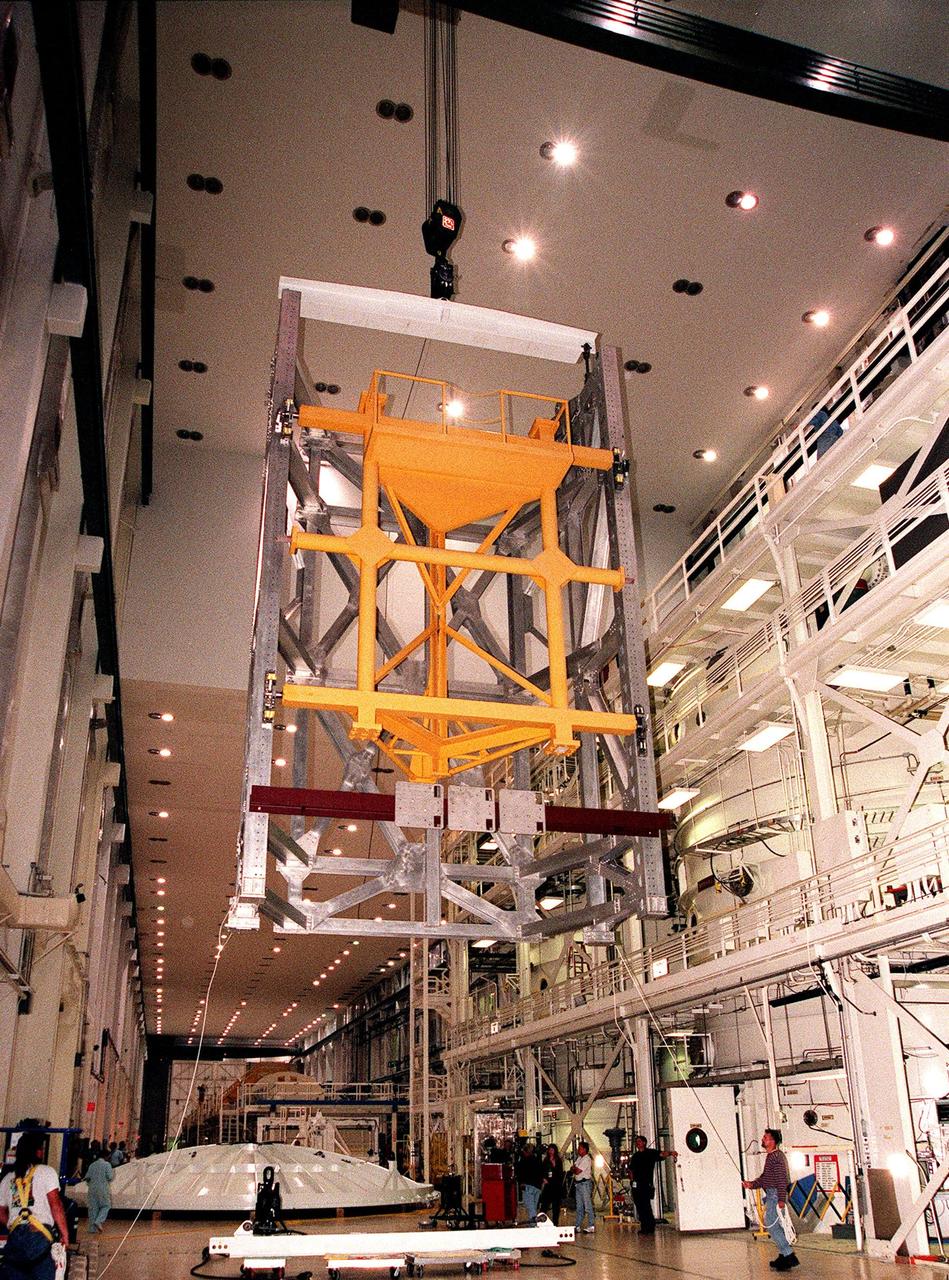
KENNEDY SPACE CENTER, FLA. -- In the Operations and Checkout Building's high bay, a crane lifts the Rotation Handling Fixture (RHF) and simulated module during a test. Under normal operation, the RHF will hold a pressurized module intended for the International Space Station, lifting it up and into an altitude chamber for leak testing. The chamber was recently reactivated after a 24-year hiatus. Originally, two chambers were built to test Apollo Program flight hardware. They were last used in 1975 during the Apollo-Soyuz Test Project. In 1997, in order to increase the probability of successful missions aboard the ISS, NASA decided to perform leak tests on ISS pressurized modules at the launch site. After installation of new vacuum pumping equipment and controls, a new control room, and a new rotation and handling fixture, the chamber again became operational in February 1999. The chamber, which is 33 feet in diameter and 50 feet tall, is constructed of stainless steel. The rotation handling fixture is aluminum. The first module that will be tested for leaks is the U.S. Laboratory. No date has been determined for the test
KSC-99pp0228
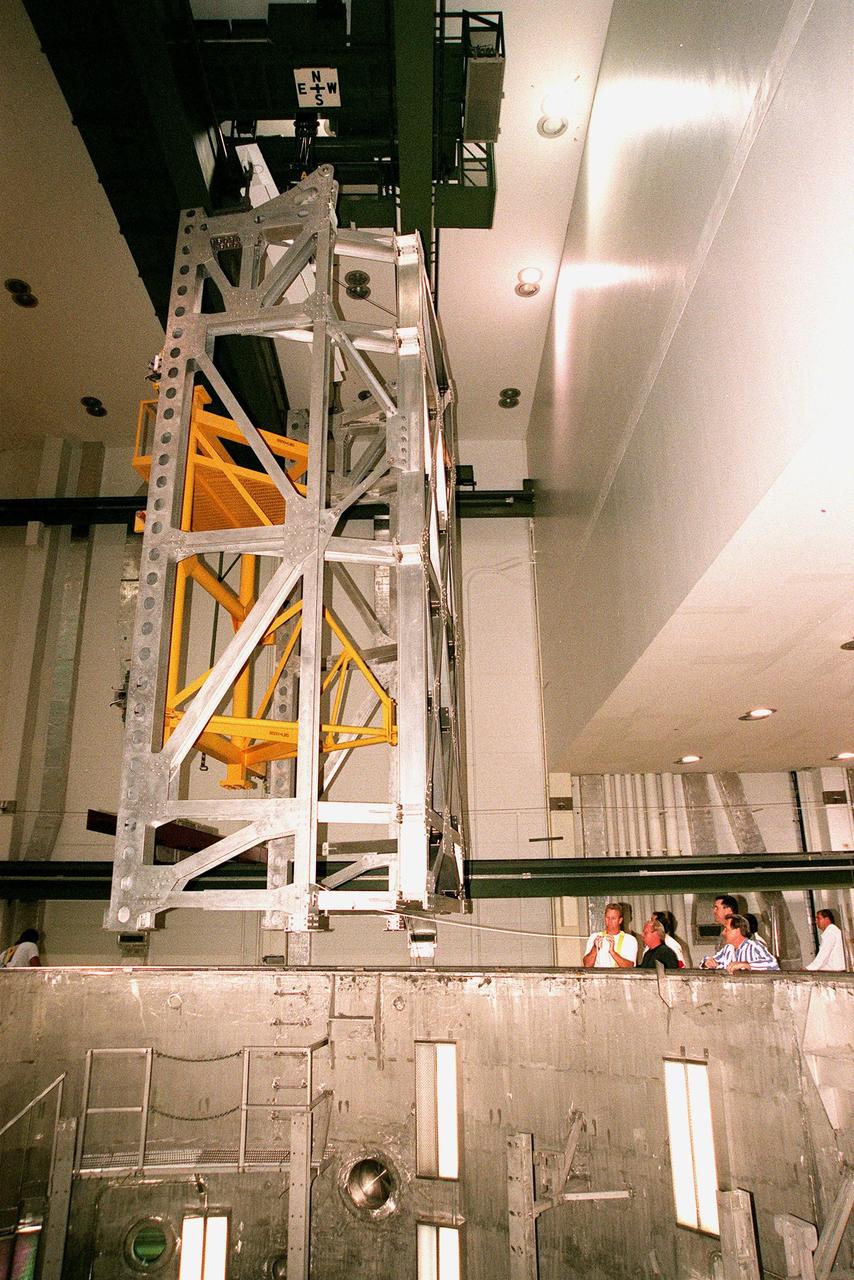
KENNEDY SPACE CENTER, FLA. -- In the Operations and Checkout Building's high bay, the Rotation Handling Fixture (RHF), with a simulated module attached, is lowered by crane into the altitude chamber below during a test. Under normal operation, the RHF will hold a pressurized module intended for the International Space Station, depositing it into the altitude chamber for leak testing. The chamber was recently reactivated after a 24-year hiatus. Originally, two chambers were built to test Apollo Program flight hardware. They were last used in 1975 during the Apollo-Soyuz Test Project. In 1997, in order to increase the probability of successful missions aboard the ISS, NASA decided to perform leak tests on ISS pressurized modules at the launch site. After installation of new vacuum pumping equipment and controls, a new control room, and a new rotation and handling fixture, the chamber again became operational in February 1999. The chamber, which is 33 feet in diameter and 50 feet tall, is constructed of stainless steel. The rotation handling fixture is aluminum. The first module that will be tested for leaks is the U.S. Laboratory. No date has been determined for the test
KSC-99pp0229
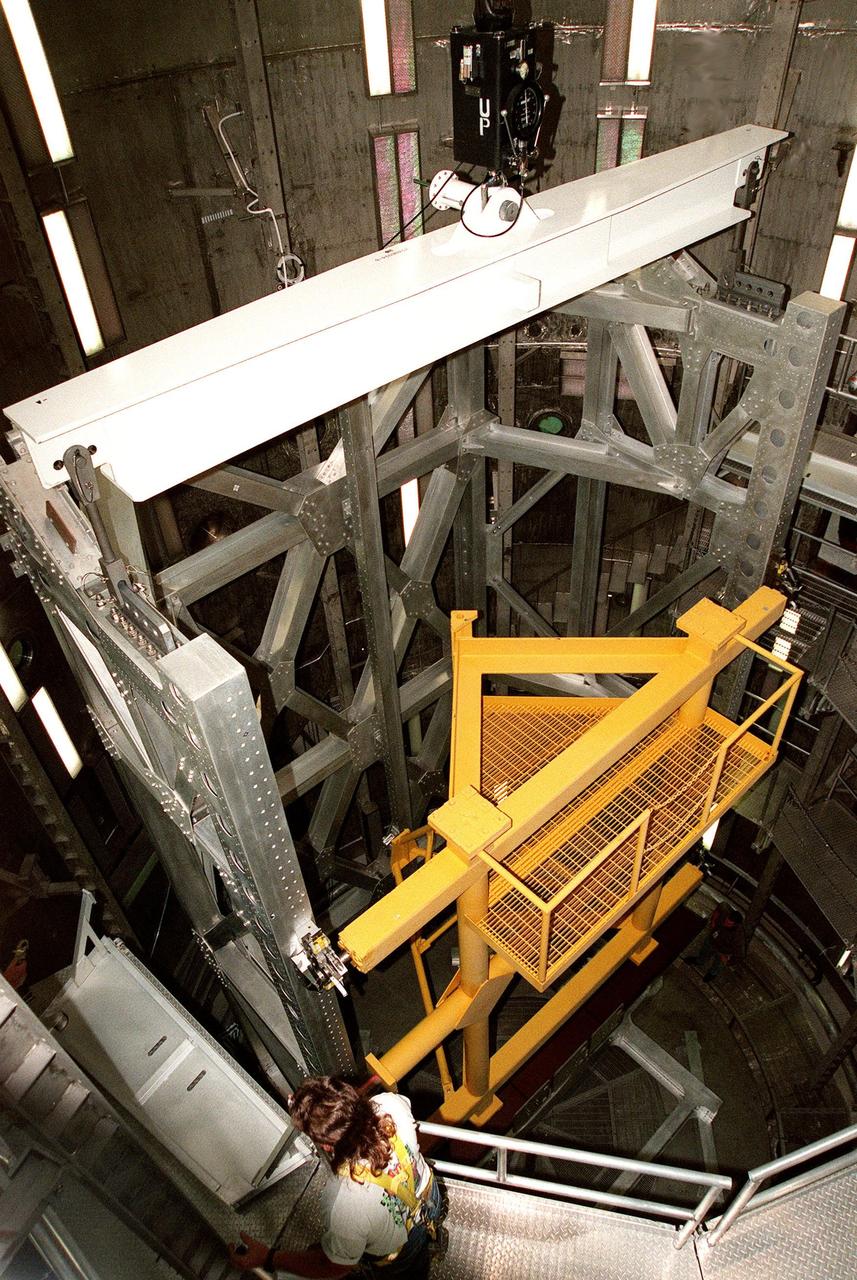
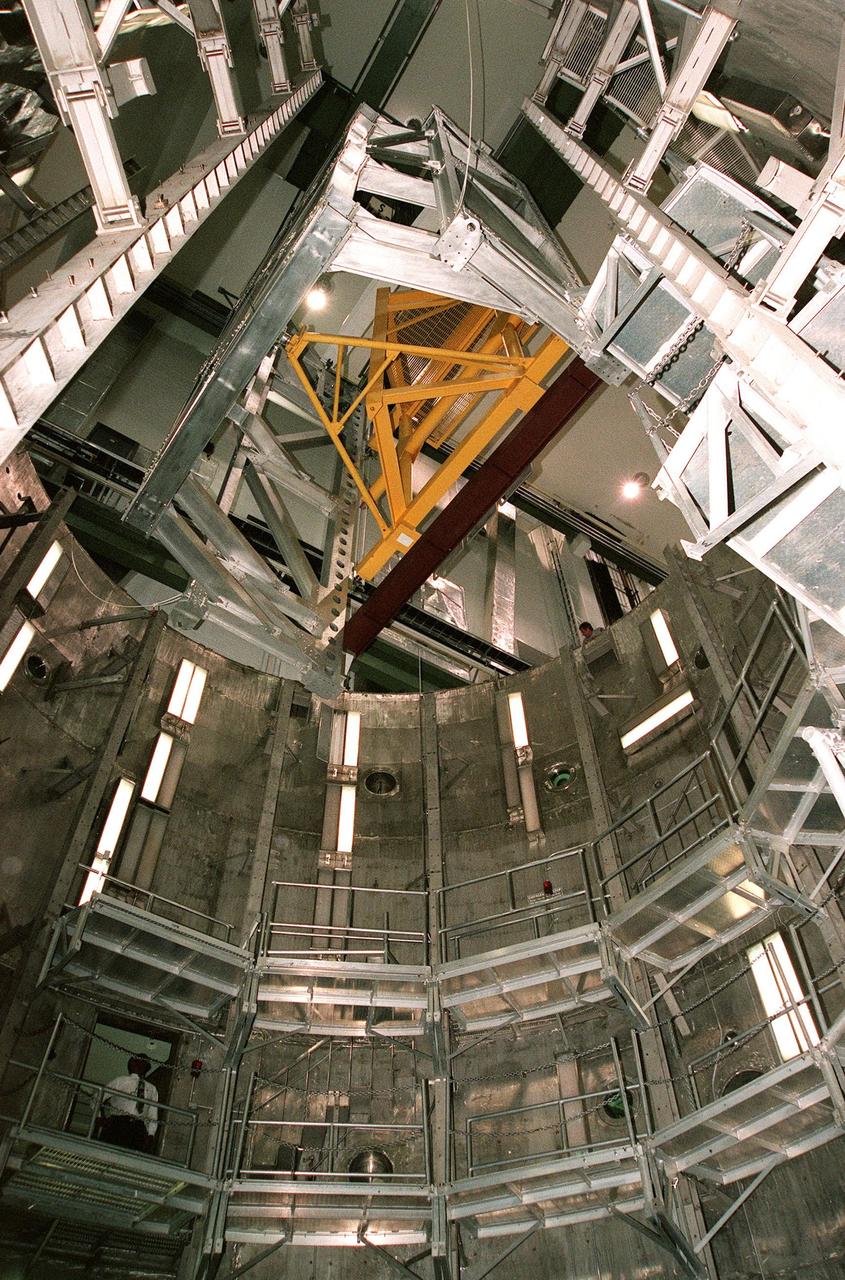
KENNEDY SPACE CENTER, FLA. -- In the Operations and Checkout Building's high bay, the Rotation Handling Fixture (RHF), with a simulated module attached, is viewed from above the altitude chamber into which it was lowered during a test. Under normal operation, the RHF will hold a pressurized module intended for the International Space Station, depositing it into the altitude chamber for leak testing. The chamber was recently reactivated after a 20-year hiatus. Originally, two chambers were built to test Apollo Program flight hardware. They were last used in 1975 during the Apollo-Soyuz Test Project. In 1997, in order to increase the probability of successful missions aboard the ISS, NASA decided to perform leak tests on ISS pressurized modules at the launch site. After installation of new vacuum pumping equipment and controls, a new control room, and a new rotation and handling fixture, the chamber again became operational in February 1999. The chamber, which is 33 feet in diameter and 50 feet tall, is constructed of stainless steel. The rotation handling fixture is aluminum. The first module that will be tested for leaks is the U.S. Laboratory. No date has been determined for the test
KSC-99pp0231
KENNEDY SPACE CENTER, FLA. -- Viewed from inside the altitude chamber in the Operations and Checkout Building's high bay, the Rotation Handling Fixture (RHF), with a simulated module attached, is lowered during a test. Under normal operation, the RHF will hold a pressurized module intended for the International Space Station, depositing it into the altitude chamber for leak testing. The chamber was recently reactivated after a 24-year hiatus. Originally, two chambers were built to test Apollo Program flight hardware. They were last used in 1975 during the Apollo-Soyuz Test Project. In 1997, in order to increase the probability of successful missions aboard the ISS, NASA decided to perform leak tests on ISS pressurized modules at the launch site. After installation of new vacuum pumping equipment and controls, a new control room, and a new rotation and handling fixture, the chamber again became operational in February 1999. The chamber, which is 33 feet in diameter and 50 feet tall, is constructed of stainless steel. The rotation handling fixture is aluminum. The first module that will be tested for leaks is the U.S. Laboratory. No date has been determined for the test
KSC-99pp0230
KENNEDY SPACE CENTER, FLA. -- At Astrotech Space Operations facilities near KSC, workers at left move a turnover fixture toward the Mercury Surface, Space Environment, Geochemistry and Ranging (MESSENGER) spacecraft.  The turnover fixture will rotate the spacecraft for prelaunch testing.   MESSENGER is undergoing prelaunch testing at the site.  Launch is scheduled for May 11 from Pad 17-B, Cape Canaveral Air Force Station. The spacecraft will fly past Venus three times and Mercury twice before starting a year-long orbital study of Mercury in July 2009.
KSC-04pd0669
HORACE STORNG (AEROSPACE ENGINEER, ER31 PROPULSION TURBOMACHINERY DESIGN & DEVELOPMENT BRANCH) ADJUSTS A UNIQUE MECHANICAL TEST SETUP THAT MEASURES STRAIN ON A SINGLE SAMPLE, USING TWO DIFFERENT TECHNIQUES AT THE SAME TIME. THE TEST FIXTURE HOLDS A SPECIMEN THAT REPRESENTS A LIQUID OXYGEN (LOX) BEARING FROM THE J2-X ENGINE
1000542
AYMAN GIRGIS (EM10 MATERIALS TEST ENGINEER, JACOBS ESTS GROUP/JTI) ADJUSTS DUAL LENSES FOR A UNIQUE MECHANICAL TST SETUP THAT MEASURES STRAIN ON A SINGLE SAMPLE, USING TWO DIFFERENT TECHNIQUES AT THE SAME TIME. THE TEST FIXTURE HOLDS A SPECIMEN THAT REPRESENTS A LIQUID OXYGEN (LOX) BEARING FROM THE J2-X ENGINE
1000538