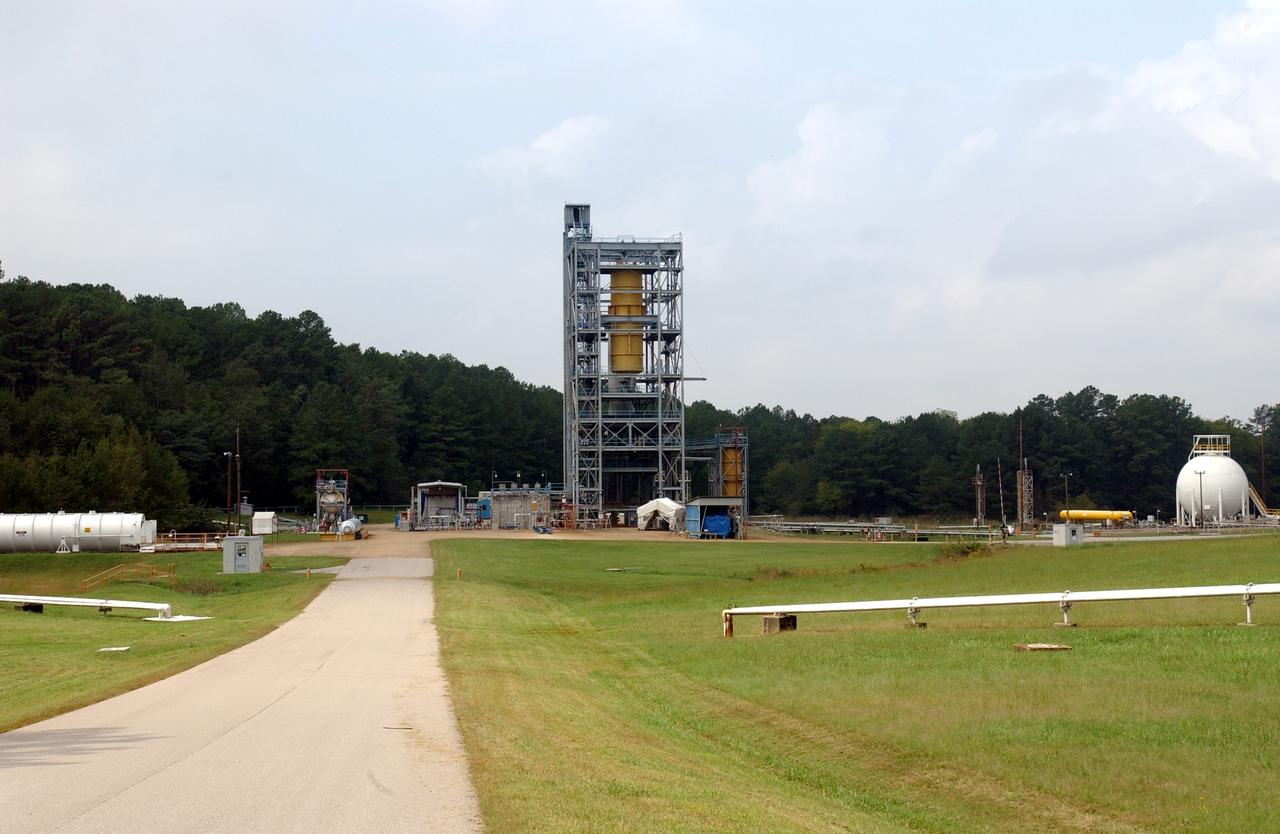
This is a ground level view of Test Stand 500 at the east test area of the Marshall Space Flight Center. Originally constructed in 1966, Test Stand 500 is a multipurpose, dual-position test facility. The stand was utilized to test liquid hydrogen/liquid oxygen turbopumps and combustion devices for the J-2 engine. One test position has a high superstructure with lines and tankage for testing liquid hydrogen and liquid oxygen turbopumps while the other position is adaptable to pressure-fed test programs such as turbo machinery bearings or seals. The facility was modified in 1980 to support Space Shuttle main engine (SSME) bearing testing.
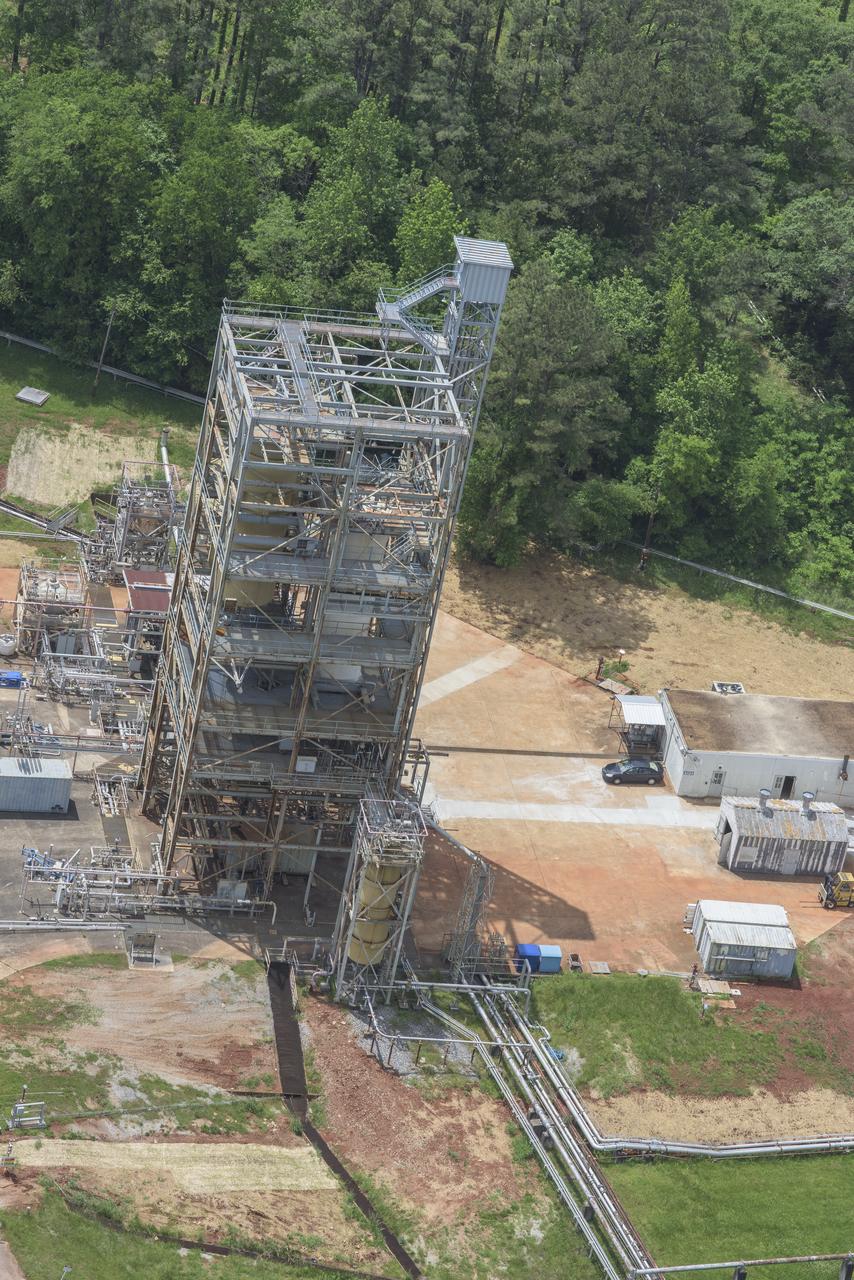
AERIAL PHOTOGRAPHS OF MSFC-TEST STAND 500
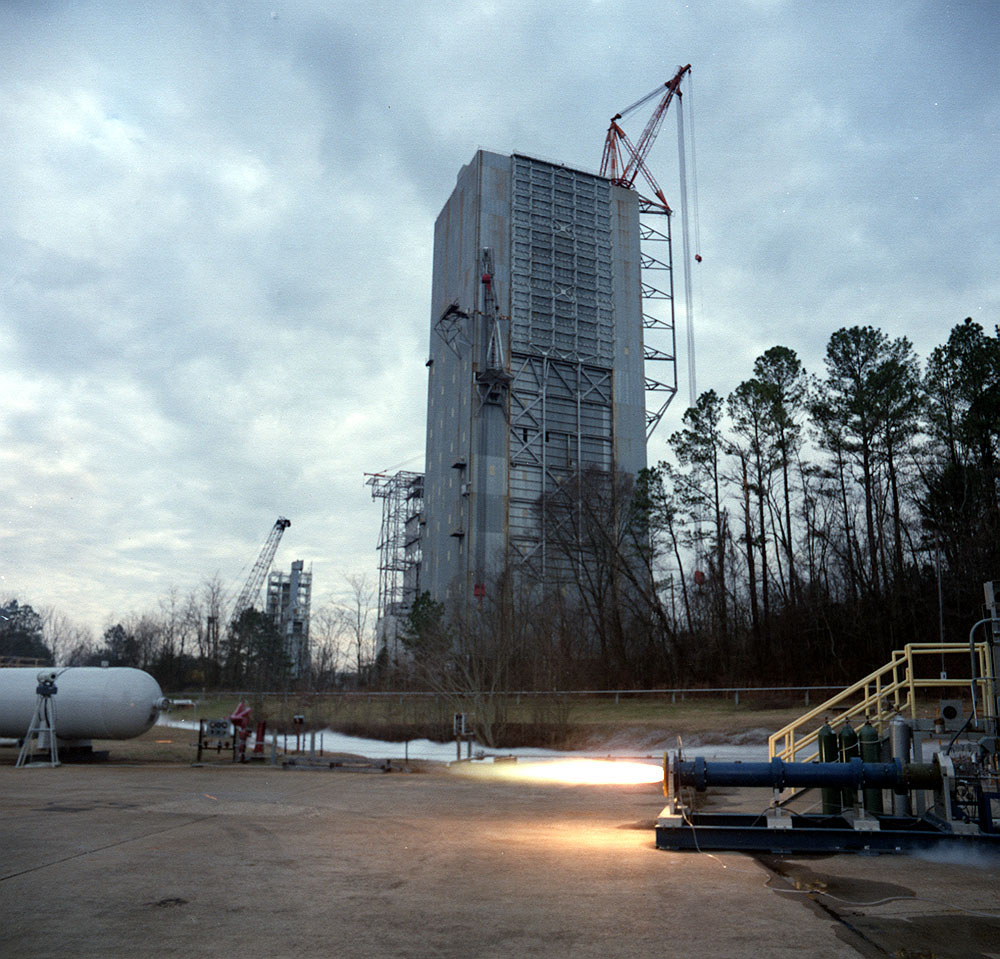
An 11 inch (11) hybrid motor fuel grain variation test firing at Marshall's Test Stand 500.
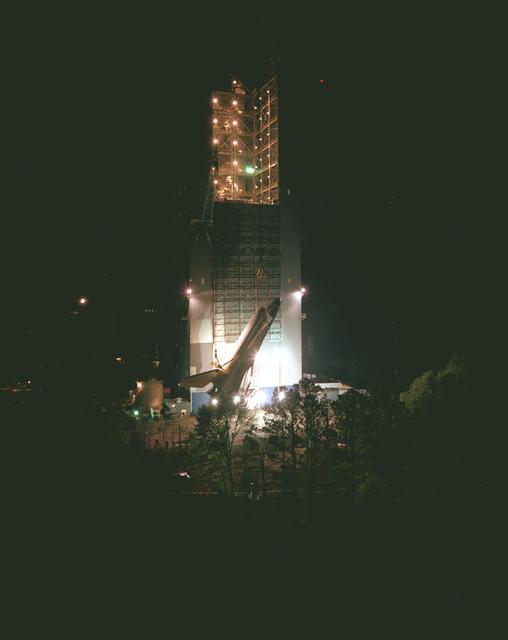
In preparation for the Mated Vertical Ground Vibration Test (MVGVT), the Shuttle Orbiter Enterprise is being erected just prior to installation into the Marshall Space Flight Center's Dynamic Test Stand for testing. This particular view is from Test Stand 500.
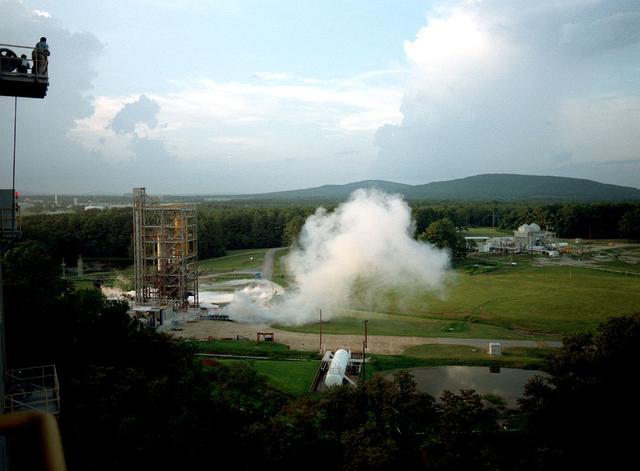
24 inch Hybrid motor test firing at Marshall's Test Stand 500. Liquid/gas are mixed with solid propellents to investigate materials, propellents, and nozzle stability characteristics.
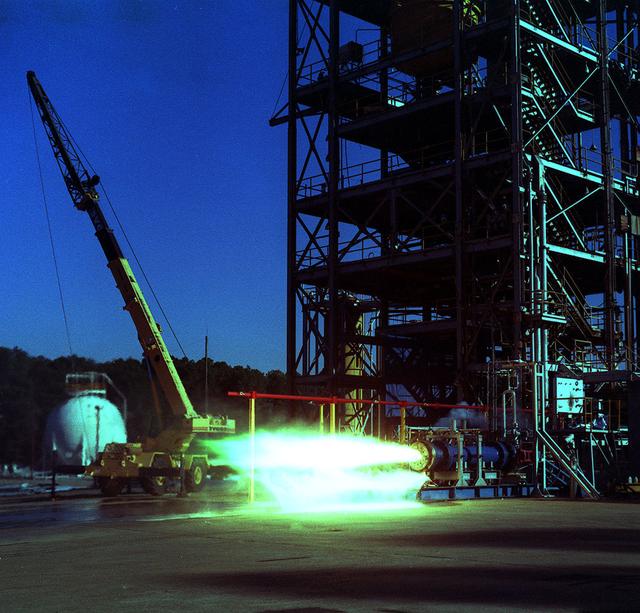
24 inch Hybrid motor test firing at Marshall's Test Stand 500. Liquid/gas are mixed with solid propellents to investigate materials, propellents, and nozzle stability characteristics.
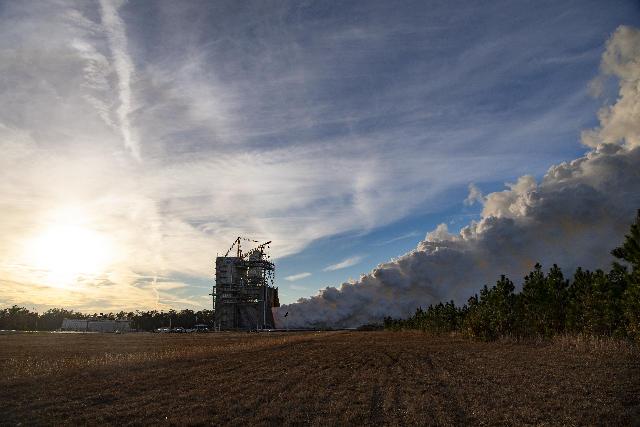
The first hot fire of 2024 takes place on Jan. 17 at NASA’s Stennis Space Center when crews complete a 500-second hot fire on the Fred Haise Test Stand.

Year 2015 got off to a blazing start as NASA conducted its first test of an RS-25 rocket engine on the A-1 Test Stand at Stennis Space Center on Jan. 9, 2015. The 500-second test provided critical data on engine performance. RS-25 engines will help power the core stage of NASA’s new Space Launch System vehicle, being developed to carry humans deeper into space than ever before.
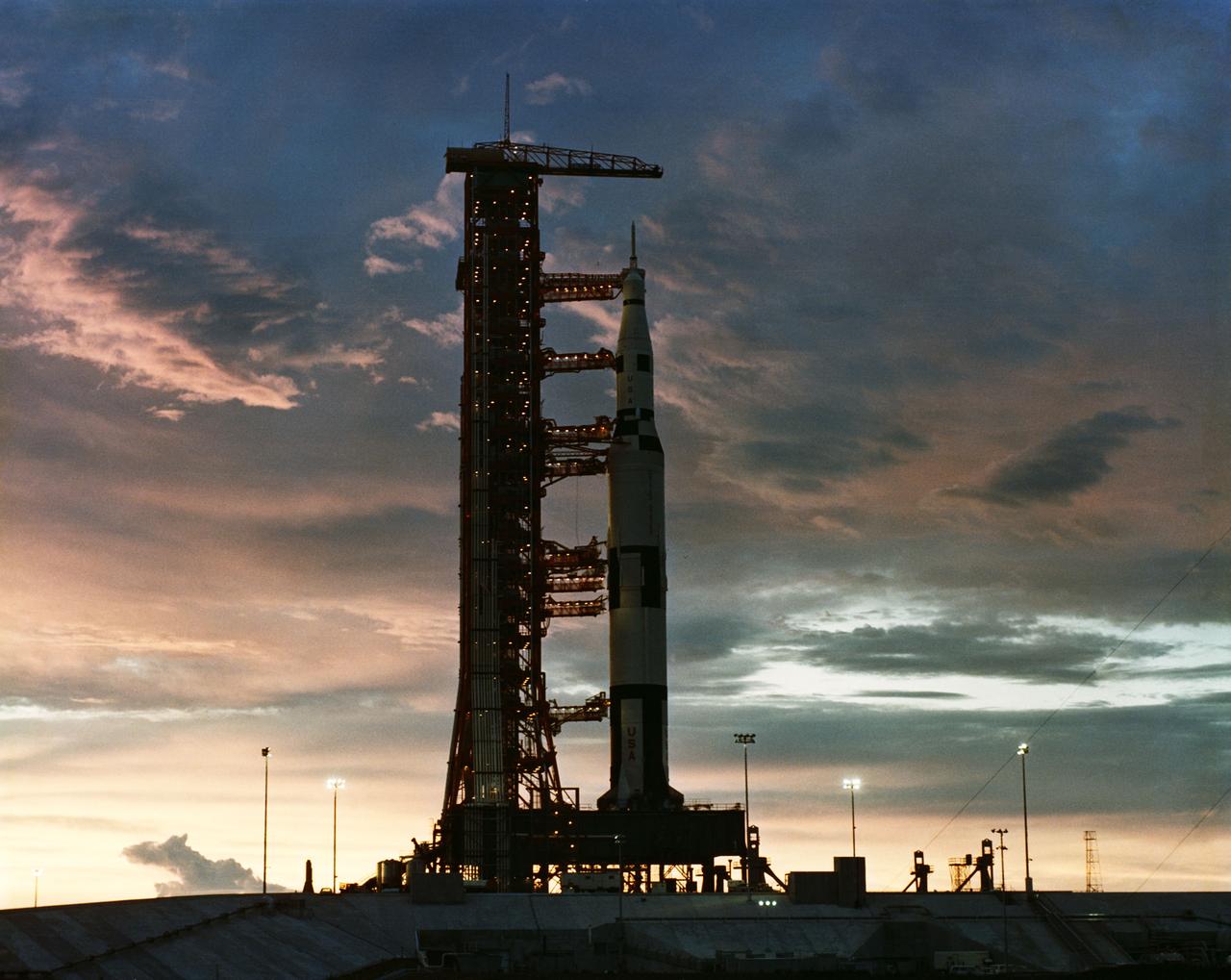
S66-41179 (25 May 1966) --- Sunrise at Pad 39A during a checkout of facilities. An Apollo/Saturn Facilities Test Vehicle and Launch Umbilical Tower (LUT) stand atop the pad's bandstand. This test vehicle, designated Apollo/Saturn 500-F, is being used to verify launch facilities, train launch crews, and develop test and checkout procedures.
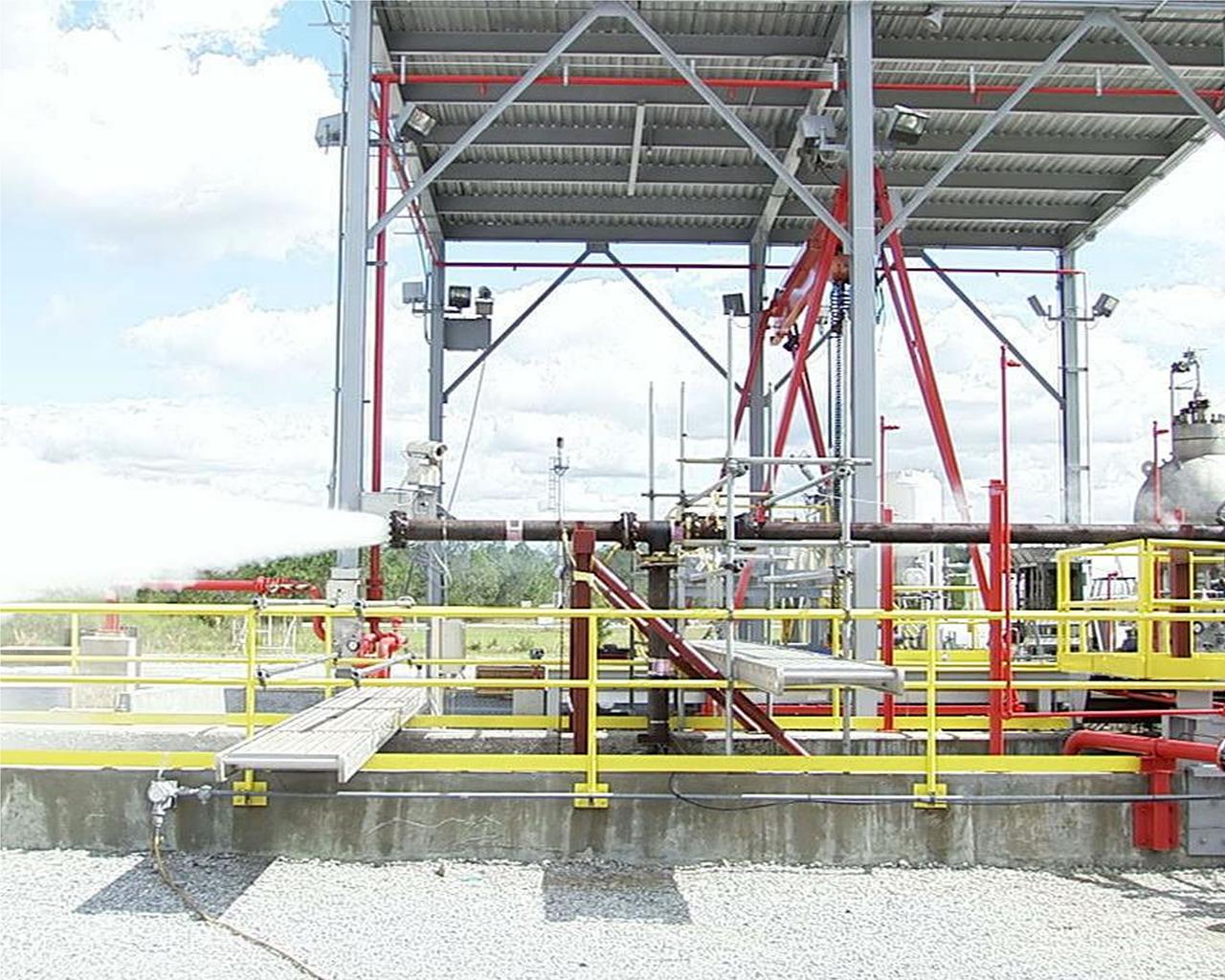
Phase 2 of the A-3 Test Facility Subscale Diffuser Risk Mitigation Project at Stennis Space Center reached a milestone Oct. 25 when the E-3 Test Facility produced superheated (500+ degrees) steam for approximately 3 seconds at more than 400 psi. The test team, led by Barry Robinson of NASA's Test Projects Office, followed that success with further tests to lengthen the duration of steam production. On Nov. 1, they were able to maintain a consistent pressure and temperature of steam for 60 seconds. In December, the team began Phase 3 of the testing, providing data for the design and procurement to build the full-scale version of the steam diffuser for SSC's A-3 Test Stand.
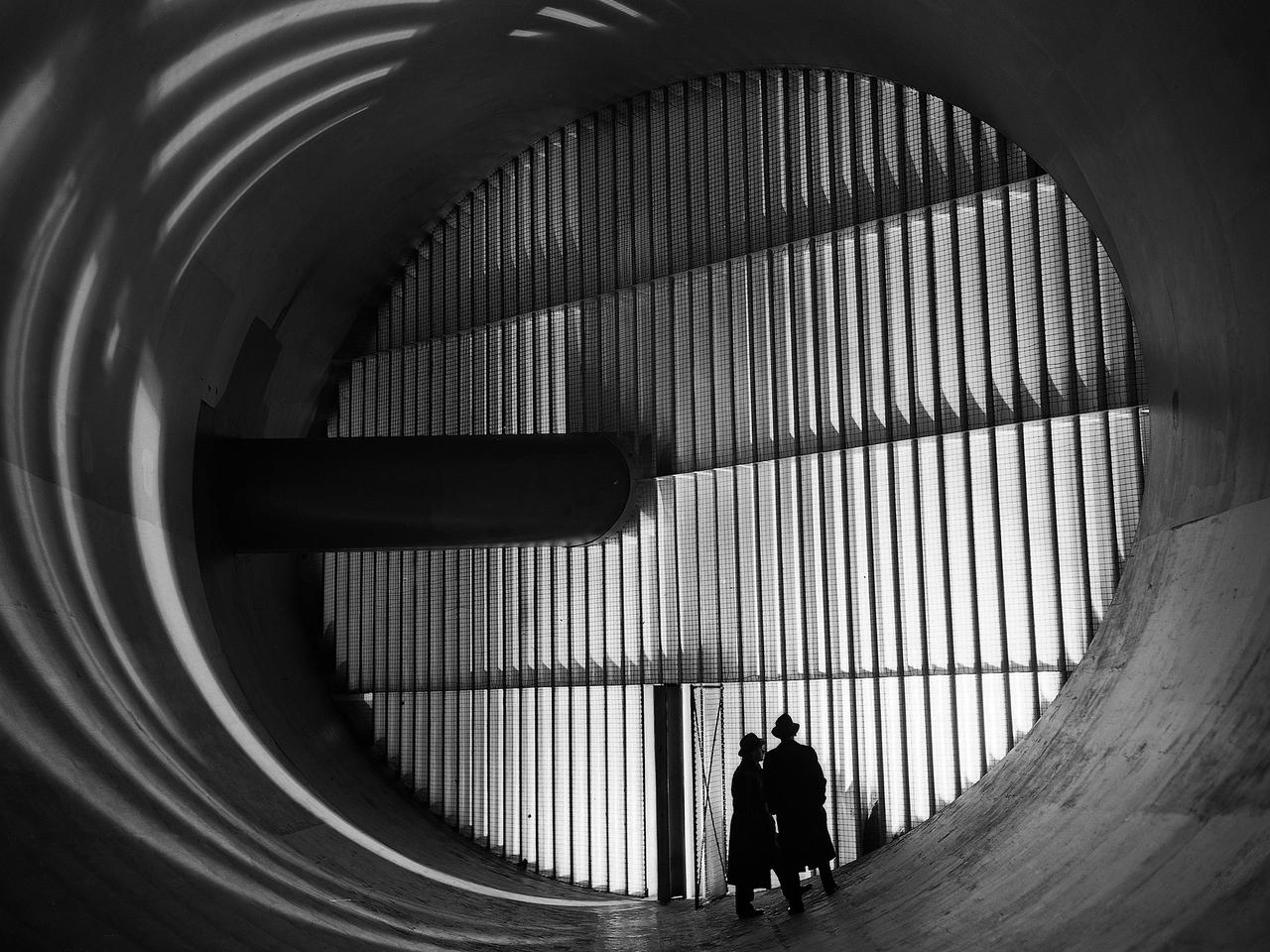
Men stand in front of turning vanes inside the Altitude Wind Tunnel (AWT) at the National Advisory Committee for Aeronautics (NACA) Aircraft Engine Research Laboratory. The AWT was the only wind tunnel capable of testing full-size aircraft engines in simulated altitude conditions. A large wooden drive fan, located on the other side of these vanes, created wind speeds up to 500 miles per hour. The drive shaft connected the fan to the induction motor located in an adjacent building. Turning vanes were located in each corner of the rectangular tunnel to straighten the airflow and direct it around the corners. This set of vanes was located in the 31-foot-diameter southeast corner of the tunnel. These elliptical panels consisted of 36 to 42 vertical vanes that were supported by three horizontal supports. The individual vanes were 2.5 feet long and half-moon shaped. The panel of vanes was affixed to the curved corner rings of the tunnel. Each set of turning vanes had a moveable vane in the middle of the lower level for personnel access. Each set of vanes took weeks to assemble before they were installed during the summer of 1943. This publicity photograph was taken just weeks after the tunnel became operational in February 1944.