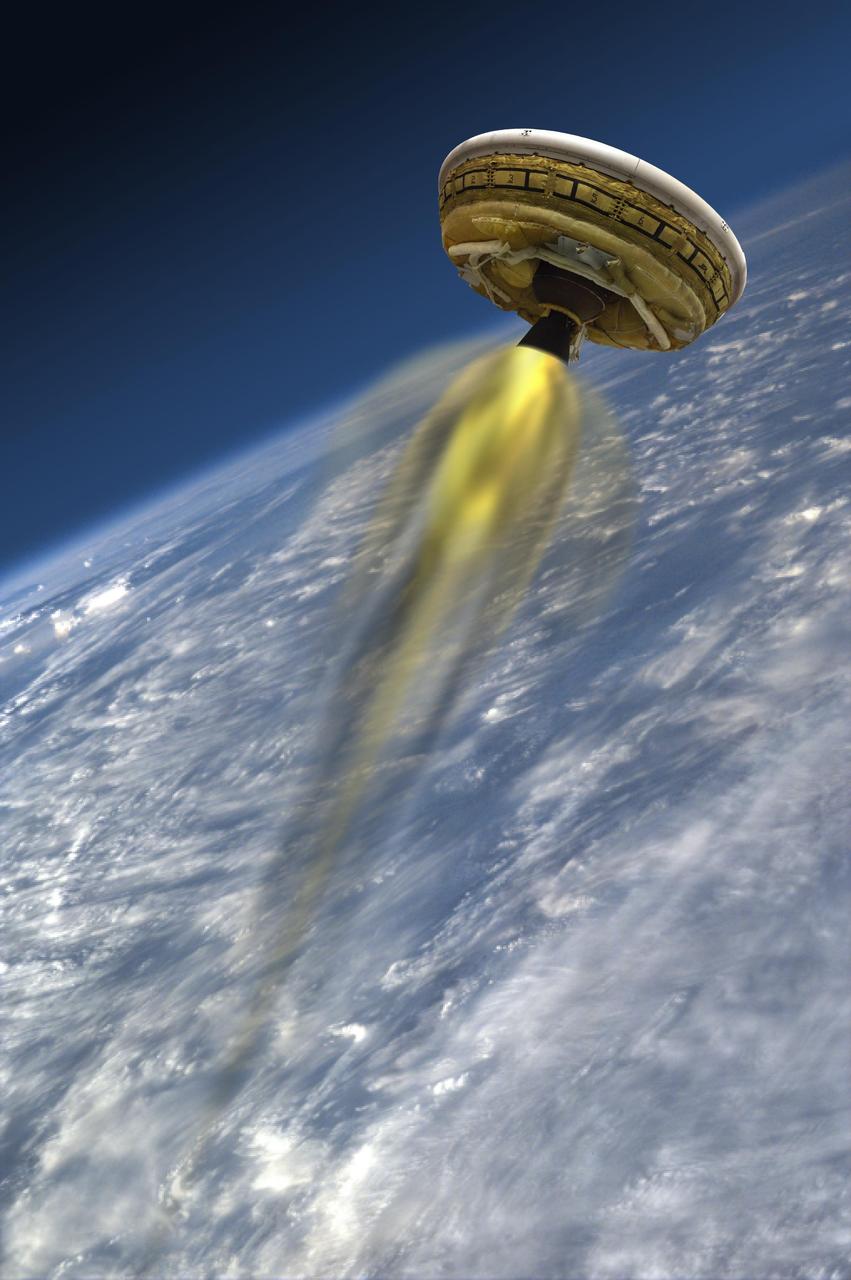
This artist concept shows the test vehicle for NASA Low-Density Supersonic Decelerator LDSD, designed to test landing technologies for future Mars missions.
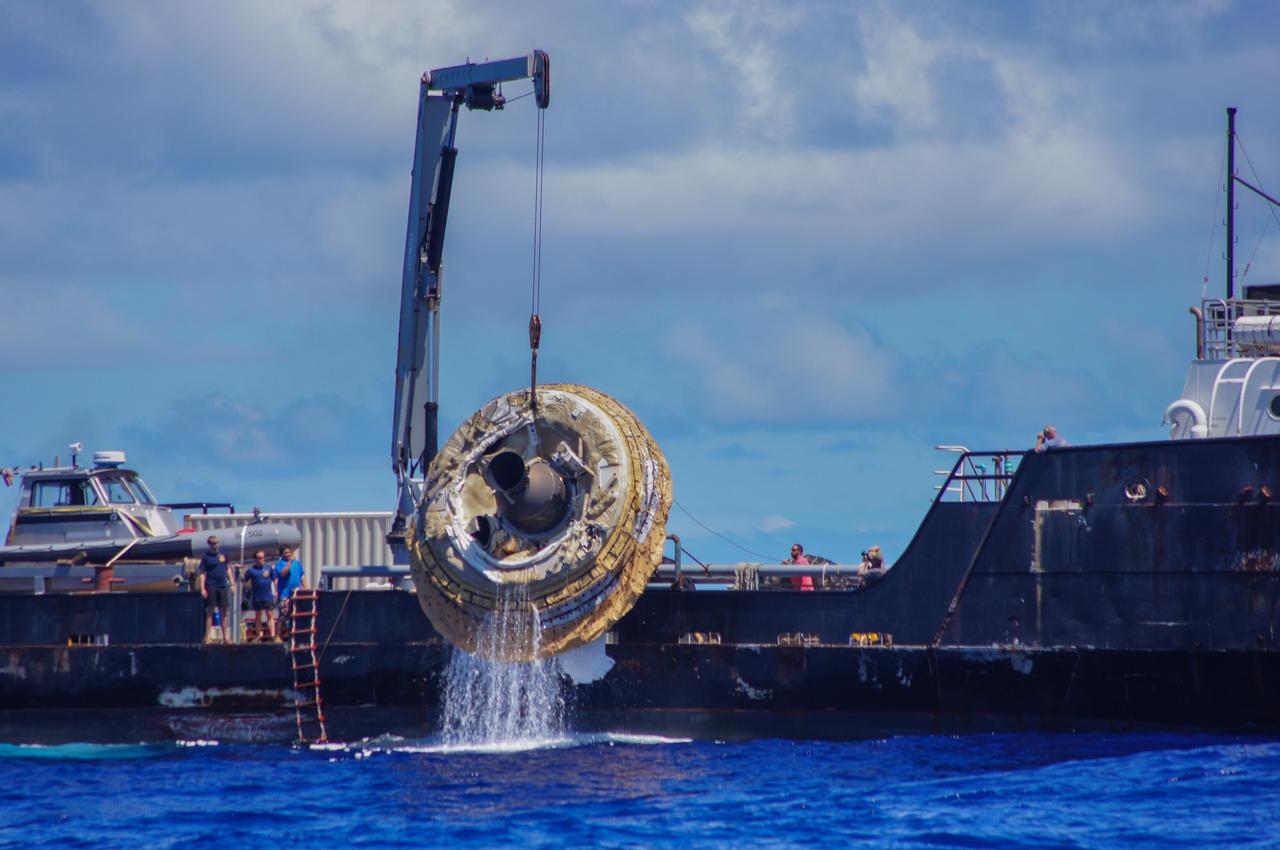
Hours after its successful engineering flight, the first test vehicle for NASA Low-Density Supersonic Decelerator project is lifted aboard the recovery vessel Kahana.
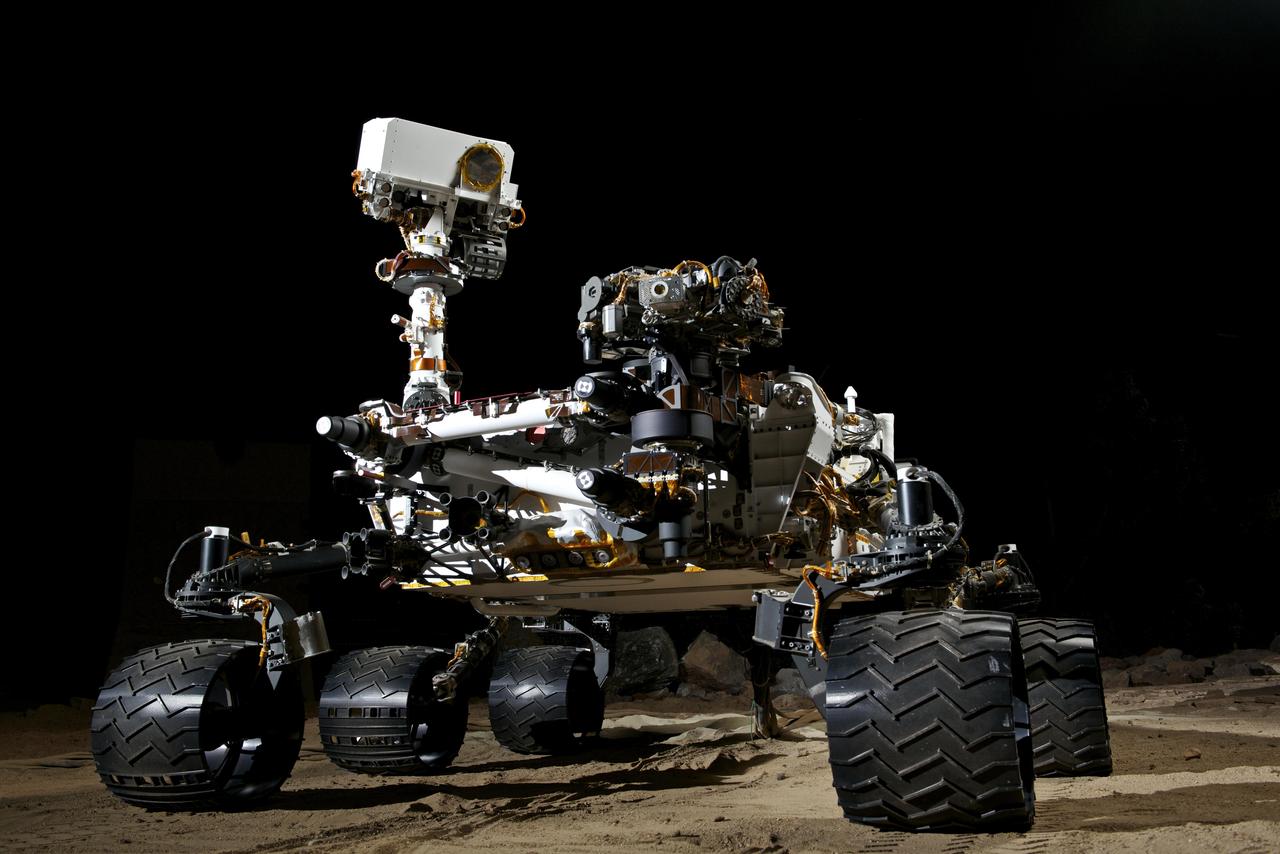
This photograph shows the Vehicle System Test Bed VSTB rover, a nearly identical copy to NASA Curiosity rover on Mars.
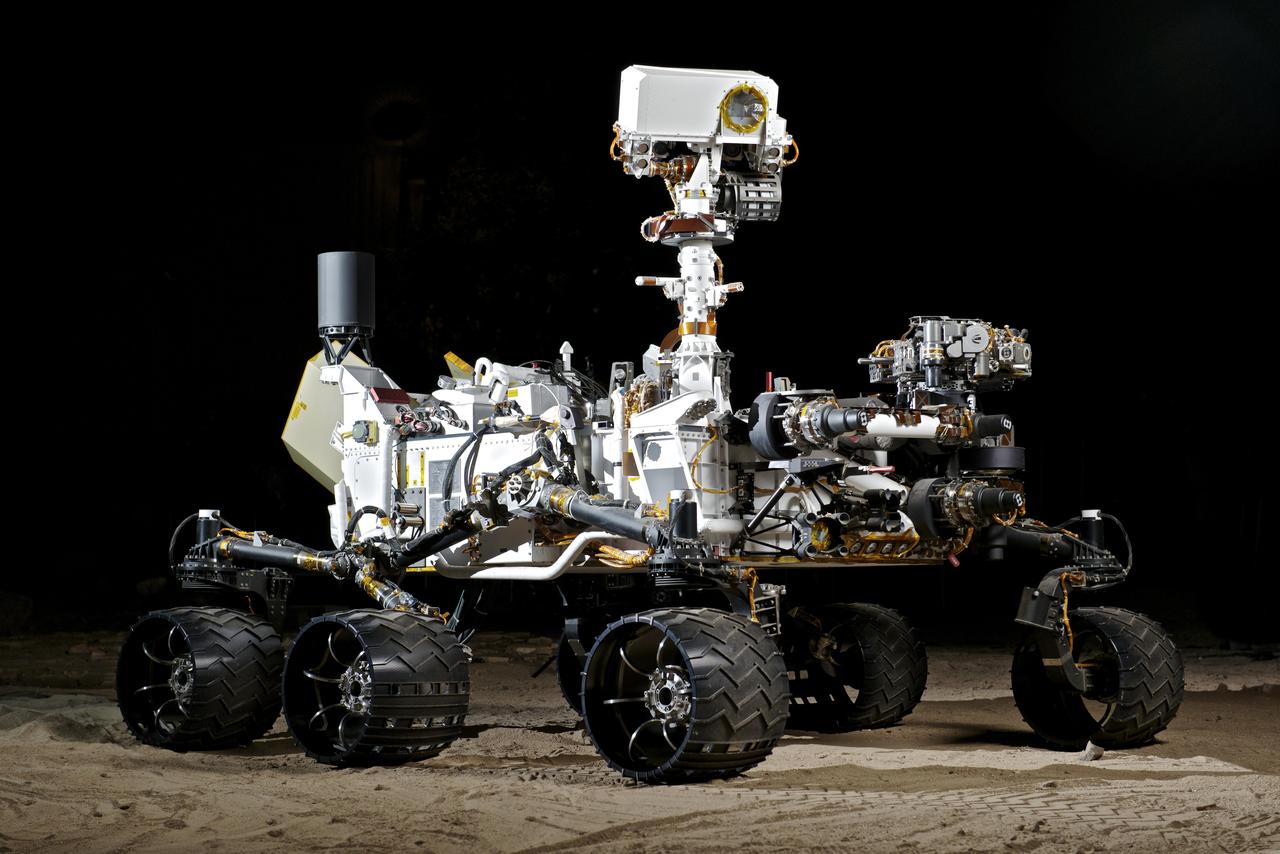
This photograph shows the Vehicle System Test Bed VSTB rover, a nearly identical copy to NASA Curiosity rover on Mars.
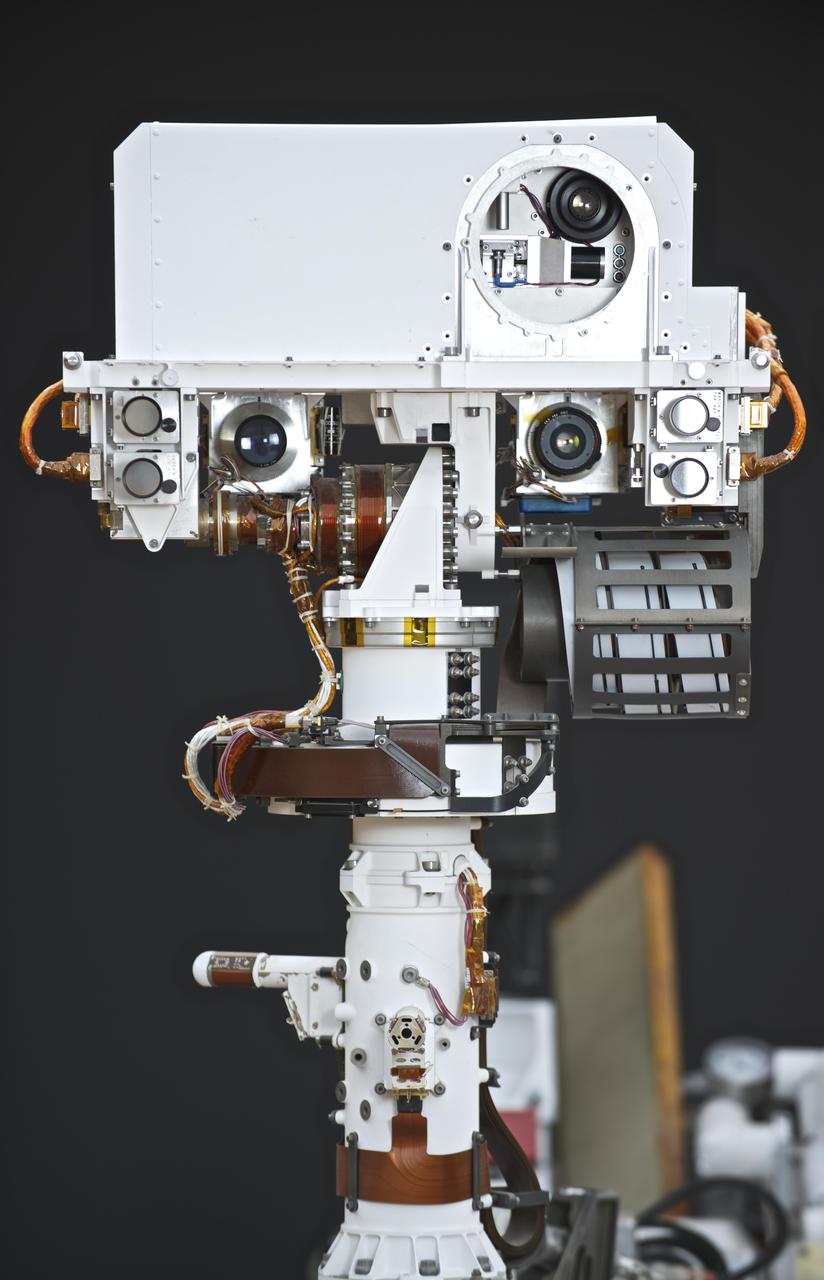
This photograph shows the Vehicle System Test Bed VSTB rover, a nearly identical copy to NASA Curiosity rover on Mars.
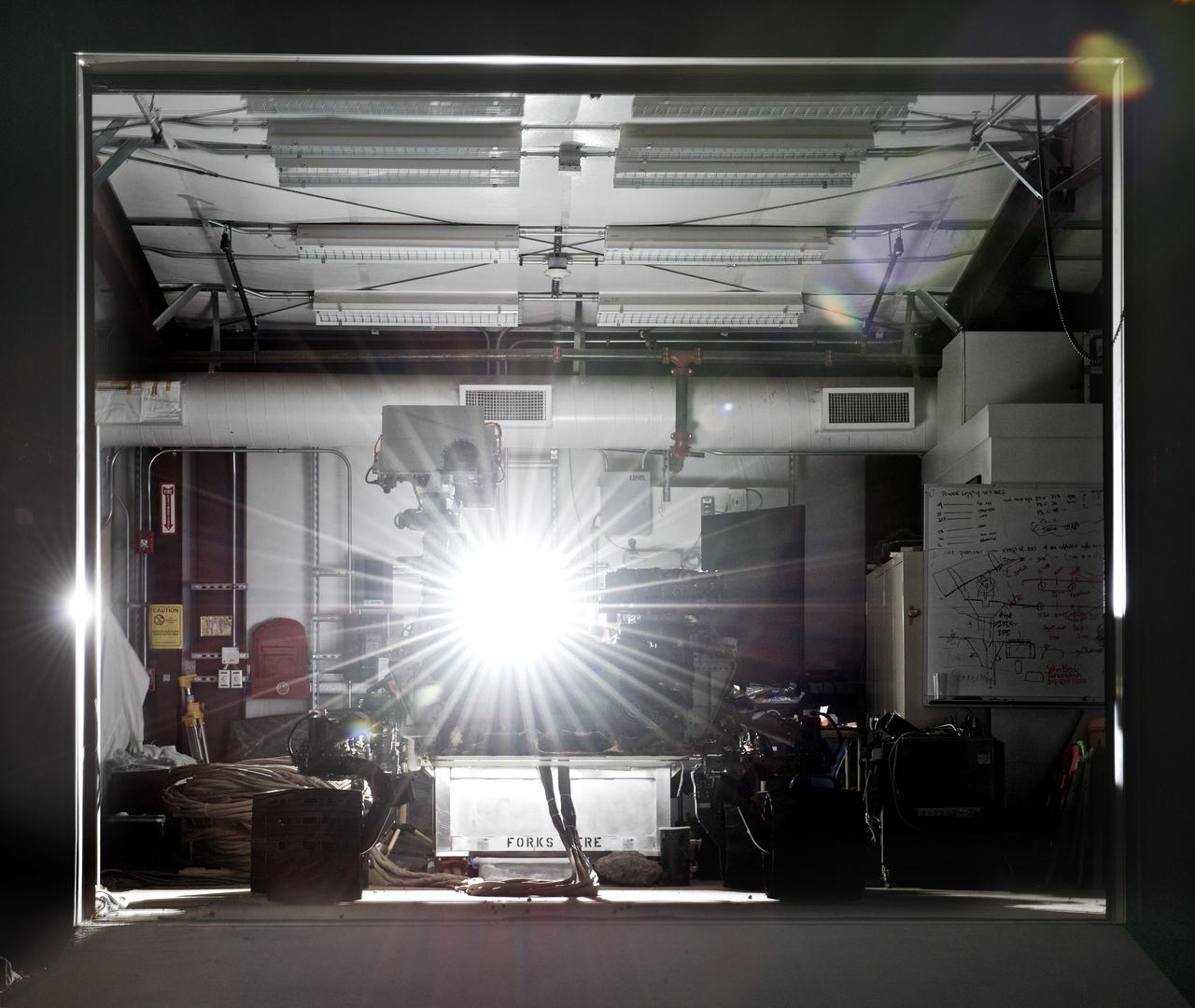
This photograph shows the Vehicle System Test Bed VSTB rover, a nearly identical copy to NASA Curiosity rover on Mars.
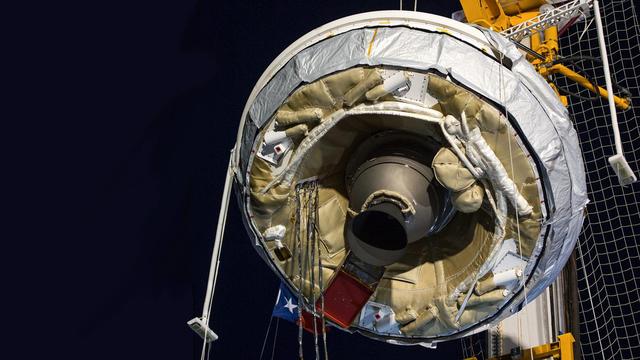
NASA's Low-Density Supersonic Decelerator test vehicle attached to launch tower just prior to take off. LDSD completed its second flight test when the saucer-shaped craft splashed down safely Monday, June 8, 2015, in the Pacific Ocean off the coast of the Hawaiian island of Kauai. http://photojournal.jpl.nasa.gov/catalog/PIA19683

The main structural body of the second flight test vehicle in NASA Low-Density Supersonic Decelerator LDSD project is seen during its assembly in a cleanroom at NASA Jet Propulsion Laboratory.

Teams peform Orion Parachute Test Vehicle (PTV) loading operations on July 22, 2013 in preparation for the July 24 parachute drop test at the U.S. Army Yuma Proving Ground in Arizona. Part of Batch image transfer from Flickr.
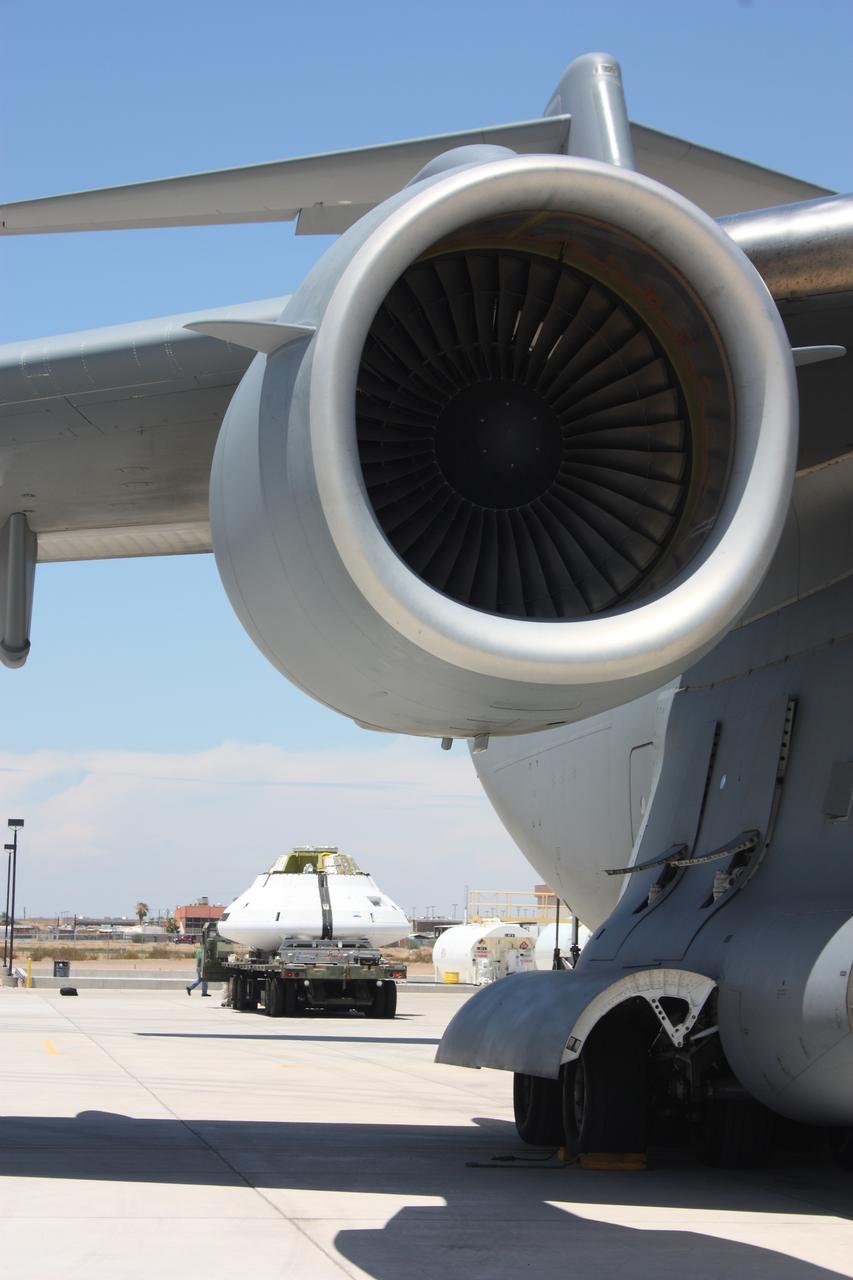
Teams peform Orion Parachute Test Vehicle (PTV) loading operations on July 22, 2013 in preparation for the July 24 parachute drop test at the U.S. Army Yuma Proving Ground in Arizona. Part of Batch image transfer from Flickr.

Teams peform Orion Parachute Test Vehicle (PTV) loading operations on July 22, 2013 in preparation for the July 24 parachute drop test at the U.S. Army Yuma Proving Ground in Arizona. Part of Batch image transfer from Flickr.
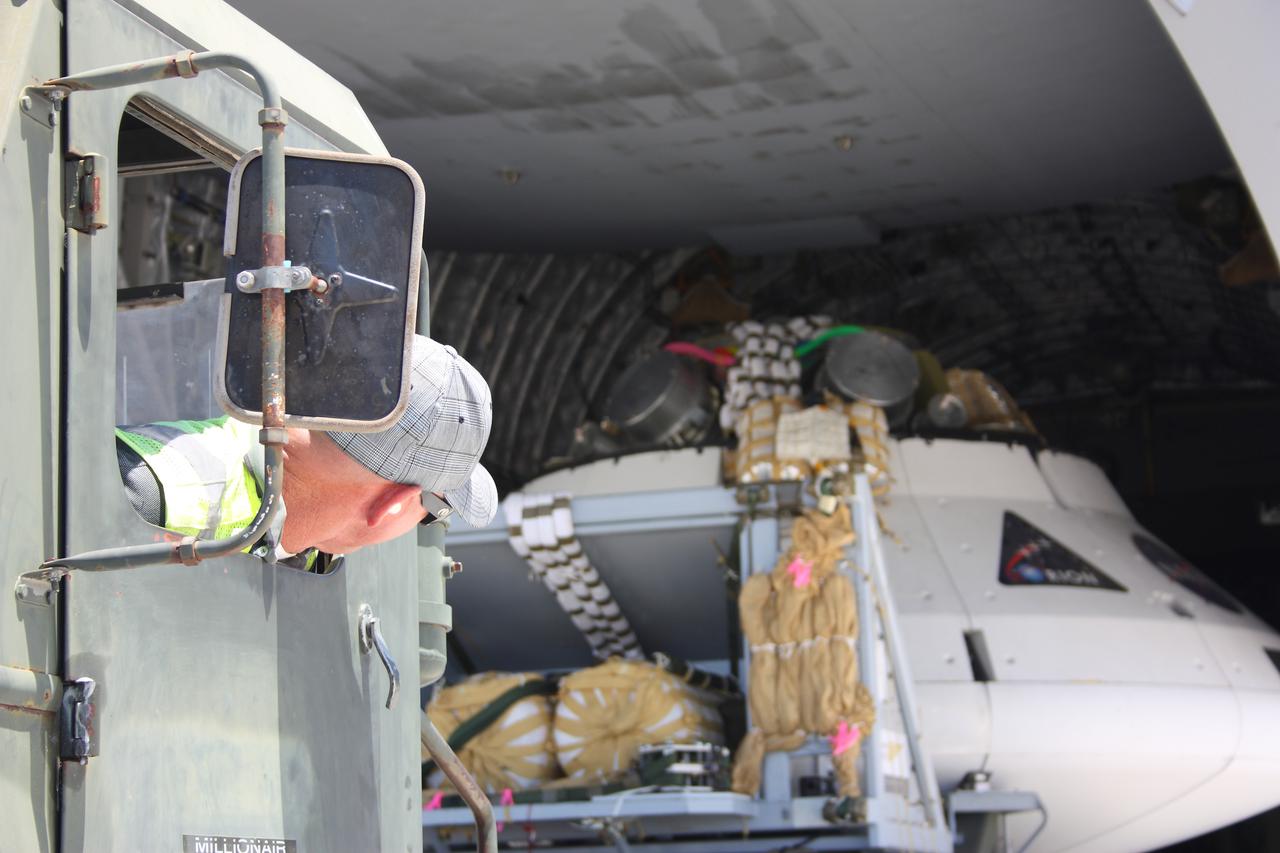
Teams peform Orion Parachute Test Vehicle (PTV) loading operations on July 22, 2013 in preparation for the July 24 parachute drop test at the U.S. Army Yuma Proving Ground in Arizona. Part of Batch image transfer from Flickr.
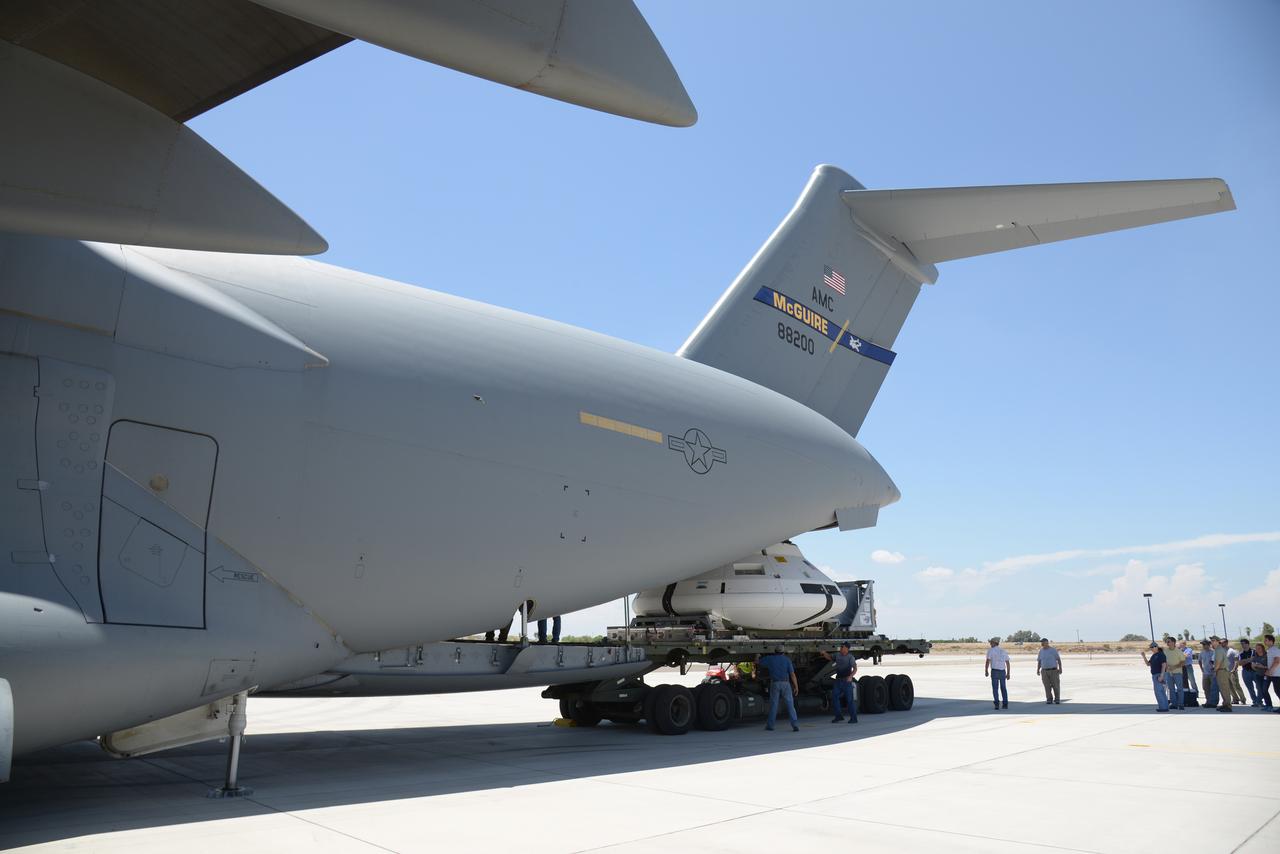
Teams peform Orion Parachute Test Vehicle (PTV) loading operations on July 22, 2013 in preparation for the July 24 parachute drop test at the U.S. Army Yuma Proving Ground in Arizona. Part of Batch image transfer from Flickr.
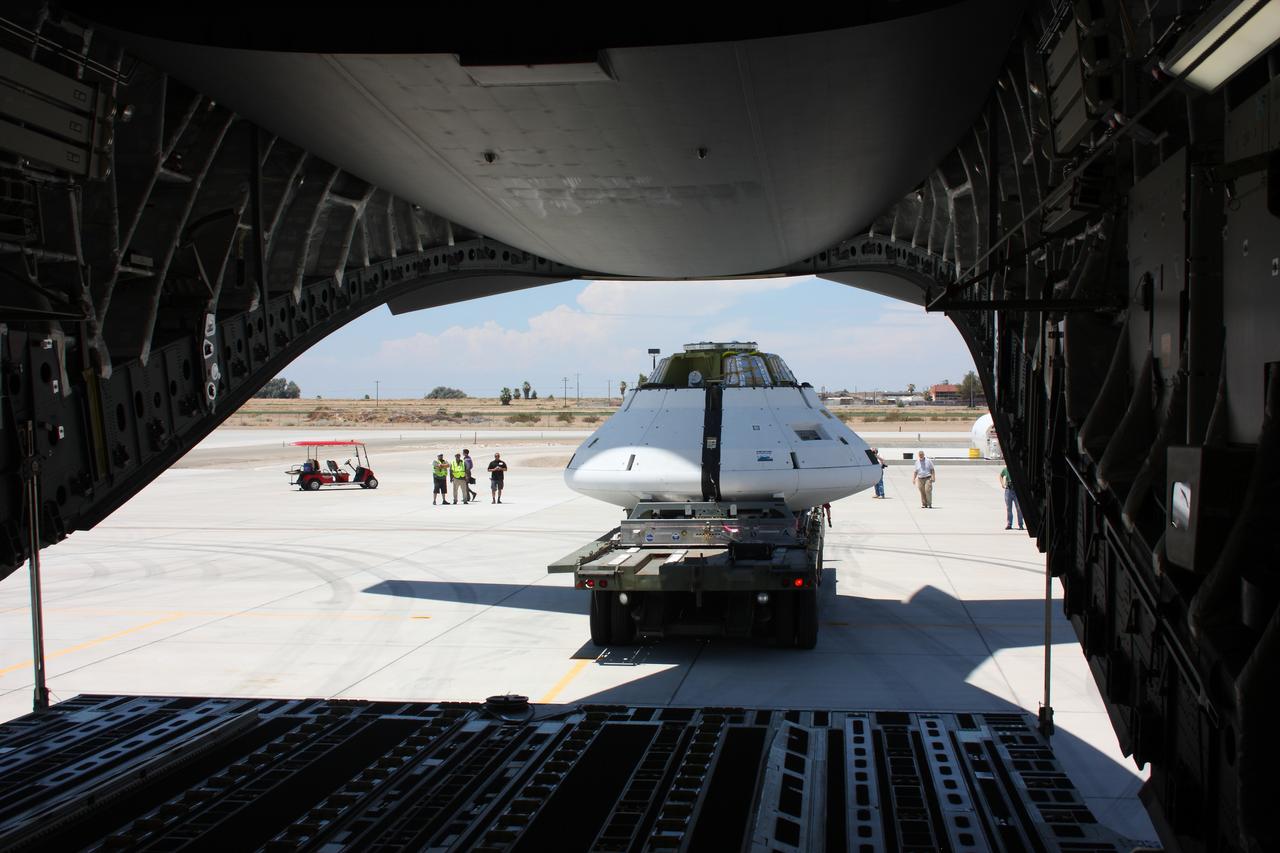
Teams peform Orion Parachute Test Vehicle (PTV) loading operations on July 22, 2013 in preparation for the July 24 parachute drop test at the U.S. Army Yuma Proving Ground in Arizona. Part of Batch image transfer from Flickr.

Teams peform Orion Parachute Test Vehicle (PTV) loading operations on July 22, 2013 in preparation for the July 24 parachute drop test at the U.S. Army Yuma Proving Ground in Arizona. Part of Batch image transfer from Flickr.
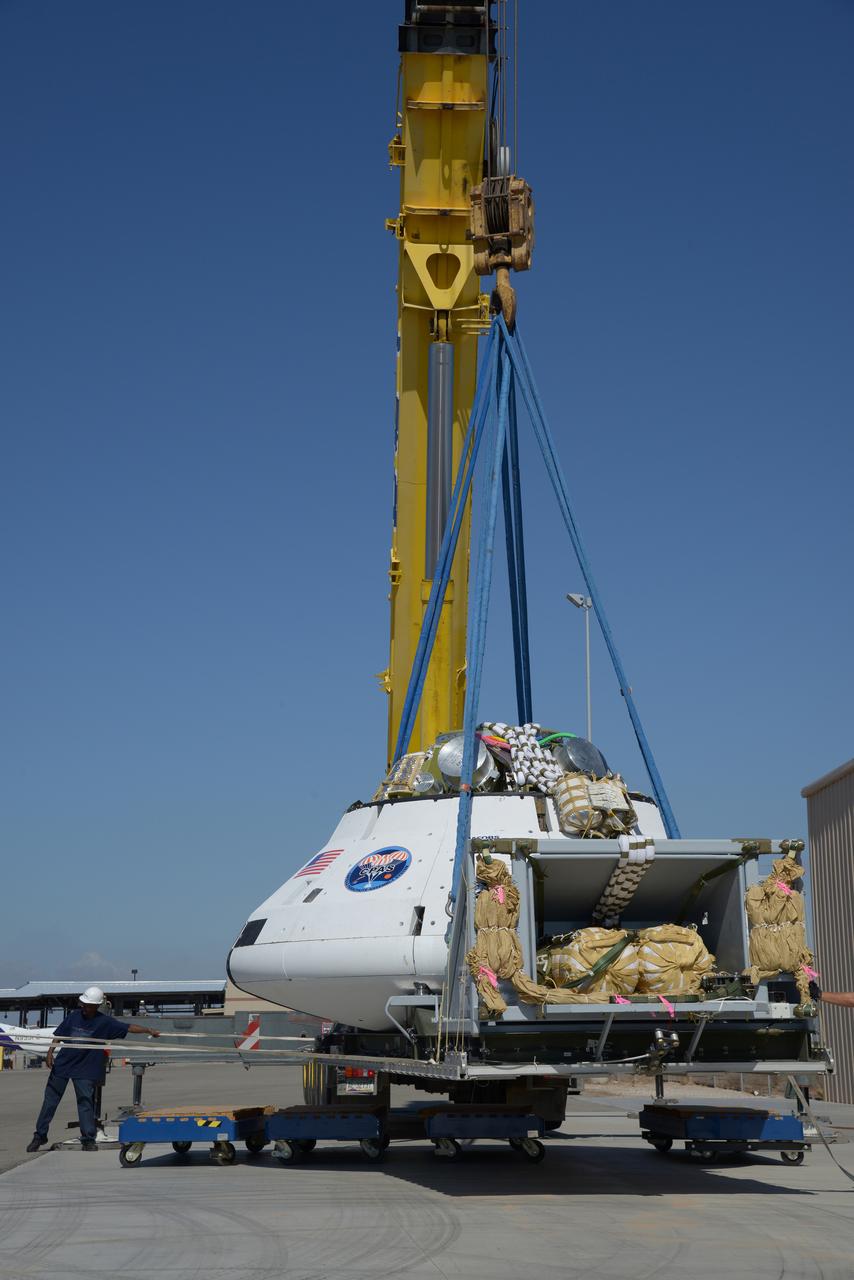
Teams peform Orion Parachute Test Vehicle (PTV) loading operations on July 22, 2013 in preparation for the July 24 parachute drop test at the U.S. Army Yuma Proving Ground in Arizona. Part of Batch image transfer from Flickr.
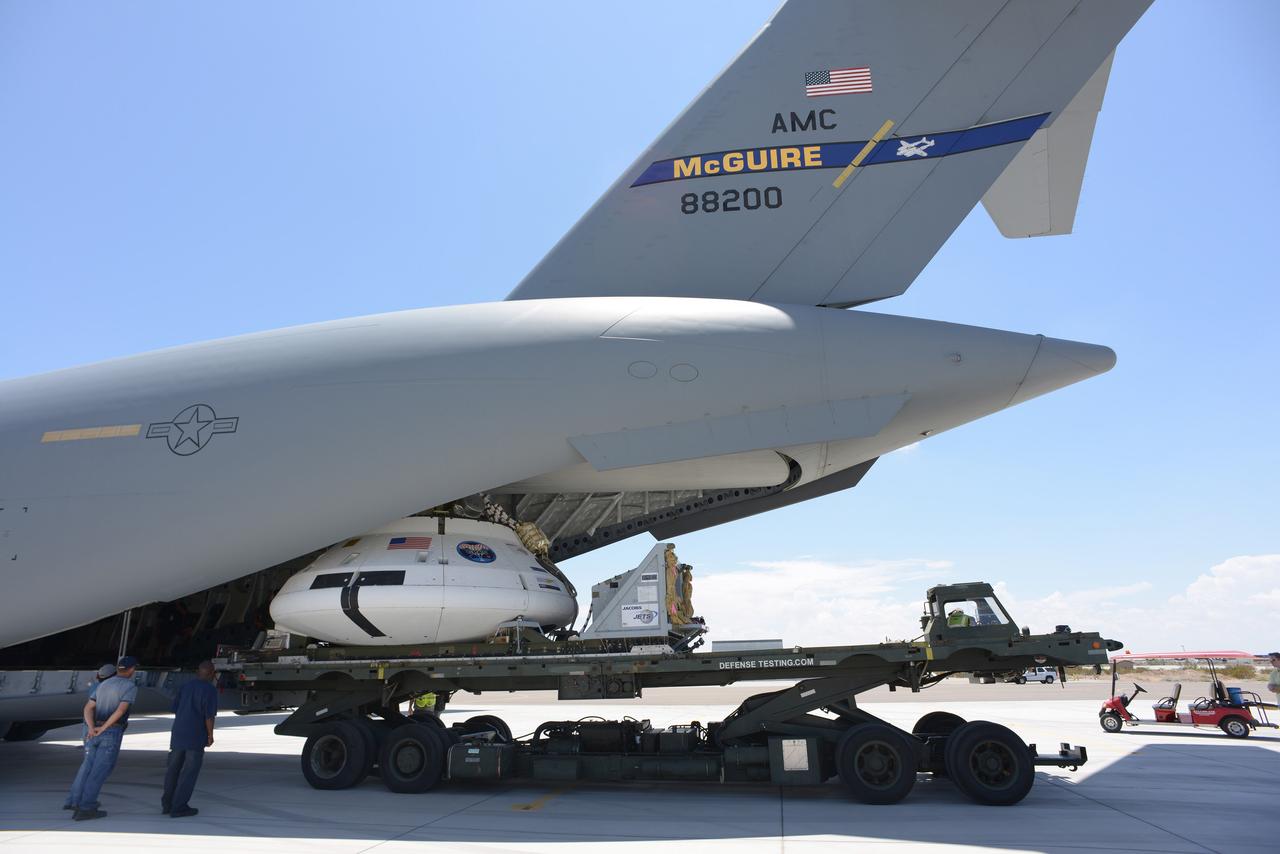
Teams peform Orion Parachute Test Vehicle (PTV) loading operations on July 22, 2013 in preparation for the July 24 parachute drop test at the U.S. Army Yuma Proving Ground in Arizona. Part of Batch image transfer from Flickr.

Teams peform Orion Parachute Test Vehicle (PTV) loading operations on July 22, 2013 in preparation for the July 24 parachute drop test at the U.S. Army Yuma Proving Ground in Arizona. Part of Batch image transfer from Flickr.
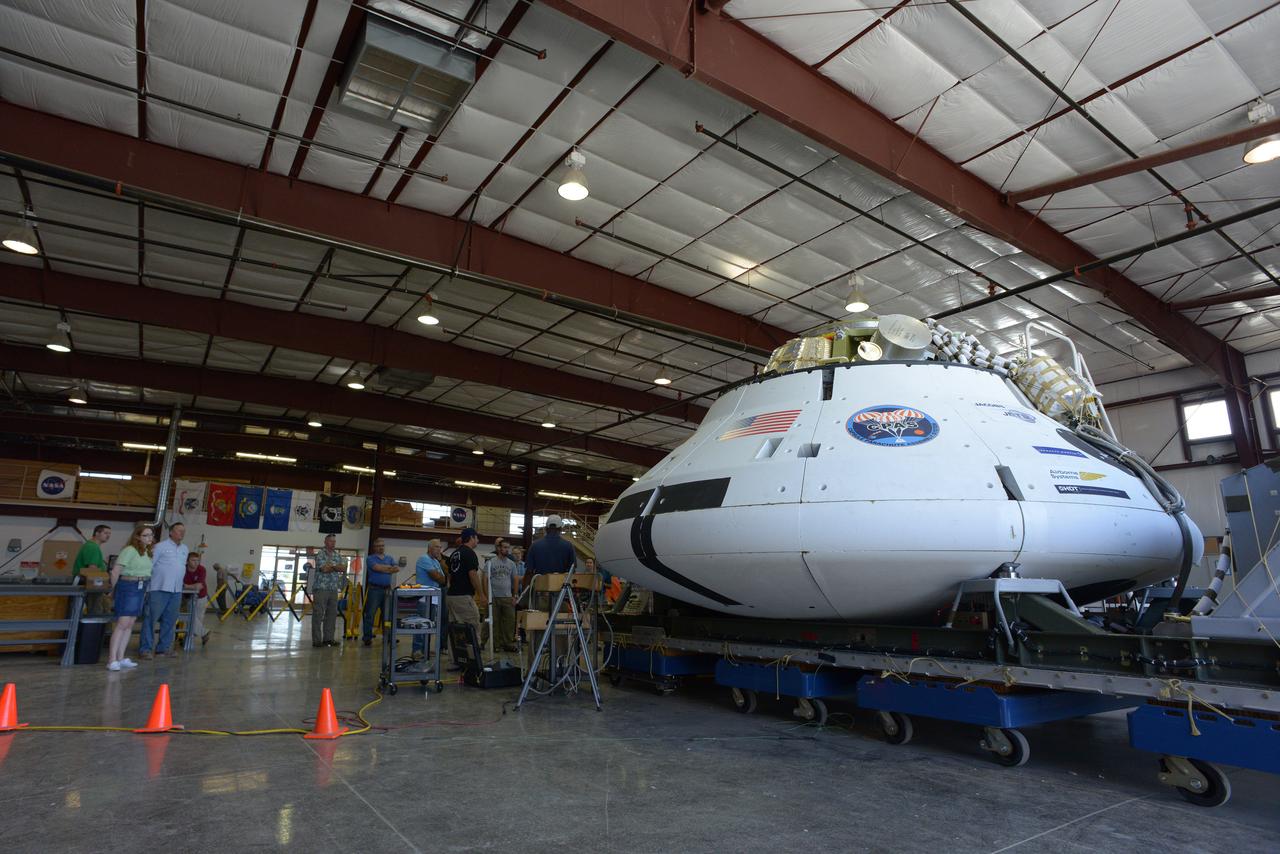
Teams peform Orion Parachute Test Vehicle (PTV) loading operations on July 22, 2013 in preparation for the July 24 parachute drop test at the U.S. Army Yuma Proving Ground in Arizona. Part of Batch image transfer from Flickr.

Teams peform Orion Parachute Test Vehicle (PTV) loading operations on July 22, 2013 in preparation for the July 24 parachute drop test at the U.S. Army Yuma Proving Ground in Arizona. Part of Batch image transfer from Flickr.
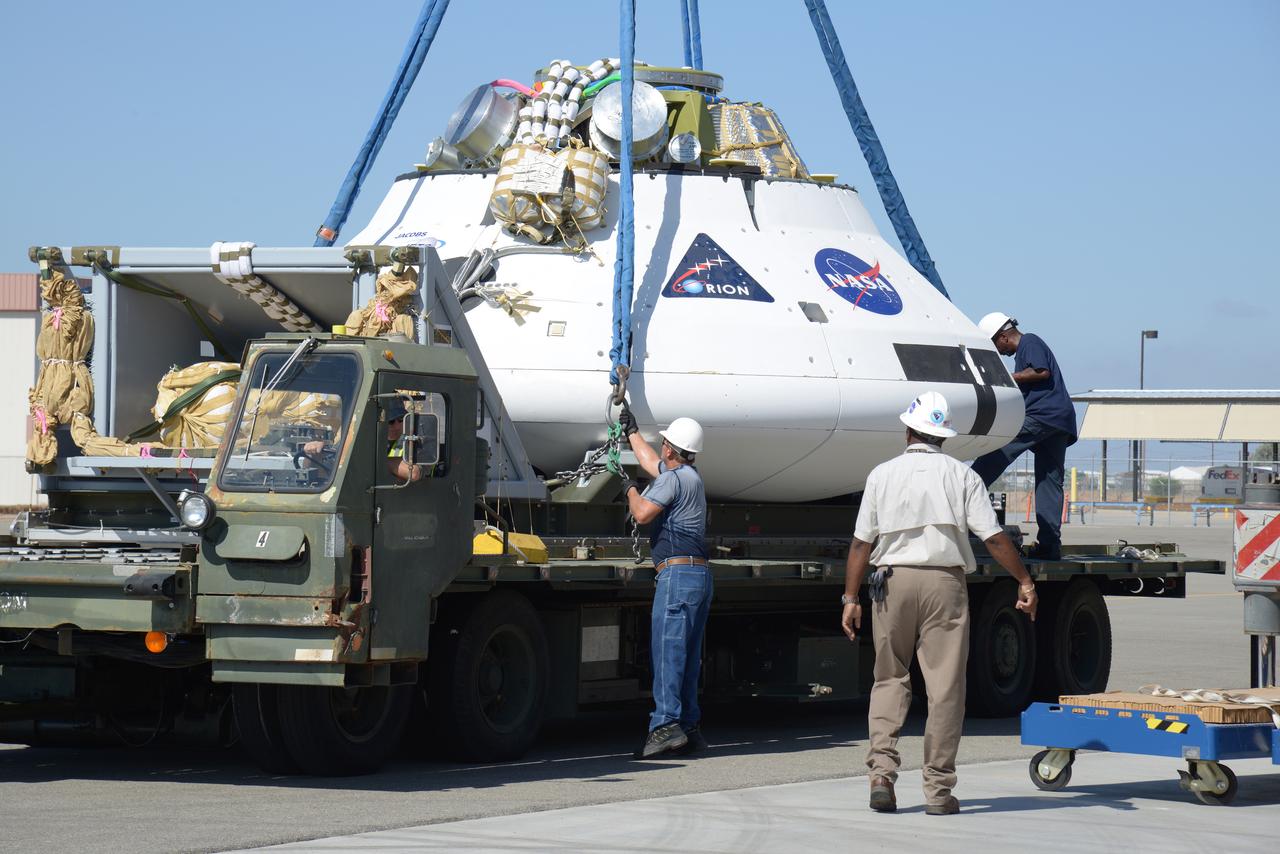
Teams peform Orion Parachute Test Vehicle (PTV) loading operations on July 22, 2013 in preparation for the July 24 parachute drop test at the U.S. Army Yuma Proving Ground in Arizona. Part of Batch image transfer from Flickr.
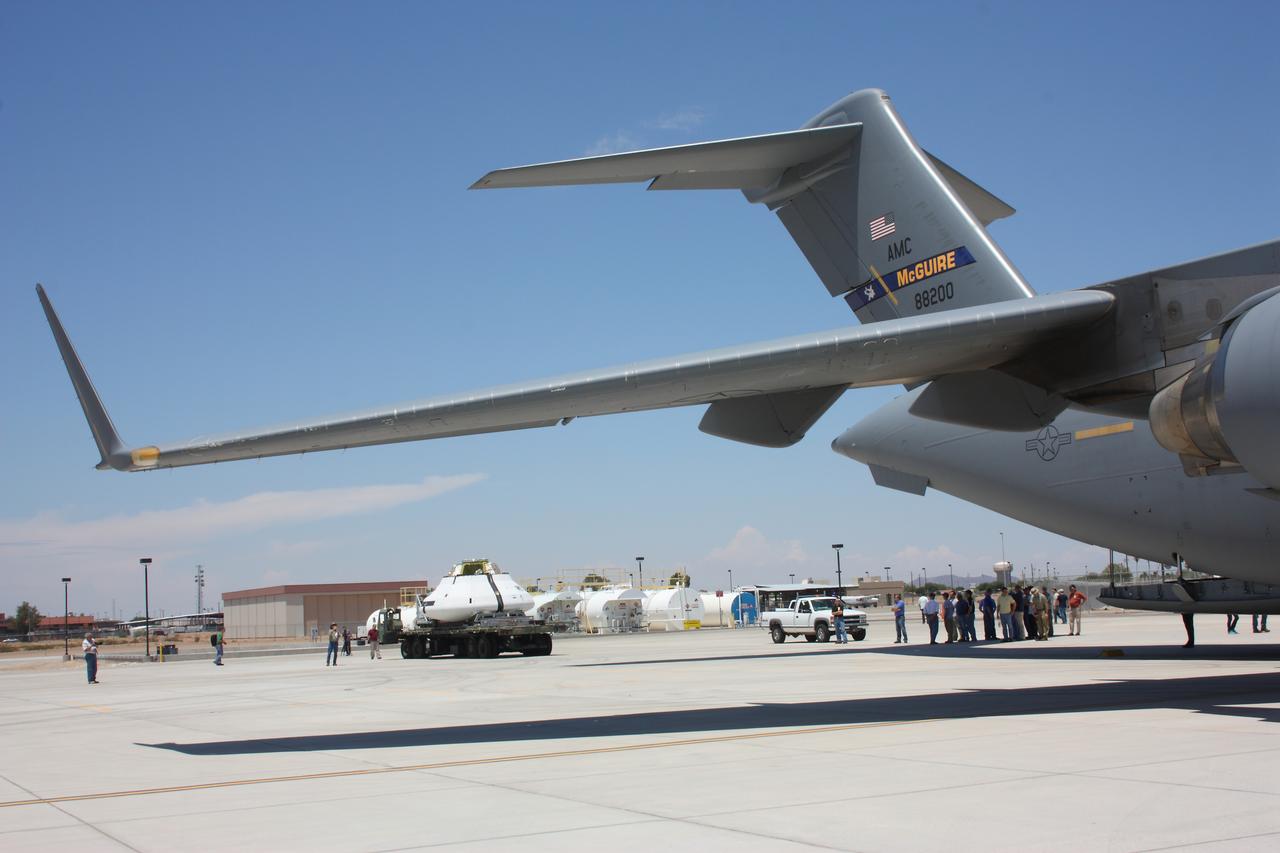
Teams peform Orion Parachute Test Vehicle (PTV) loading operations on July 22, 2013 in preparation for the July 24 parachute drop test at the U.S. Army Yuma Proving Ground in Arizona. Part of Batch image transfer from Flickr.

Teams peform Orion Parachute Test Vehicle (PTV) loading operations on July 22, 2013 in preparation for the July 24 parachute drop test at the U.S. Army Yuma Proving Ground in Arizona. Part of Batch image transfer from Flickr.
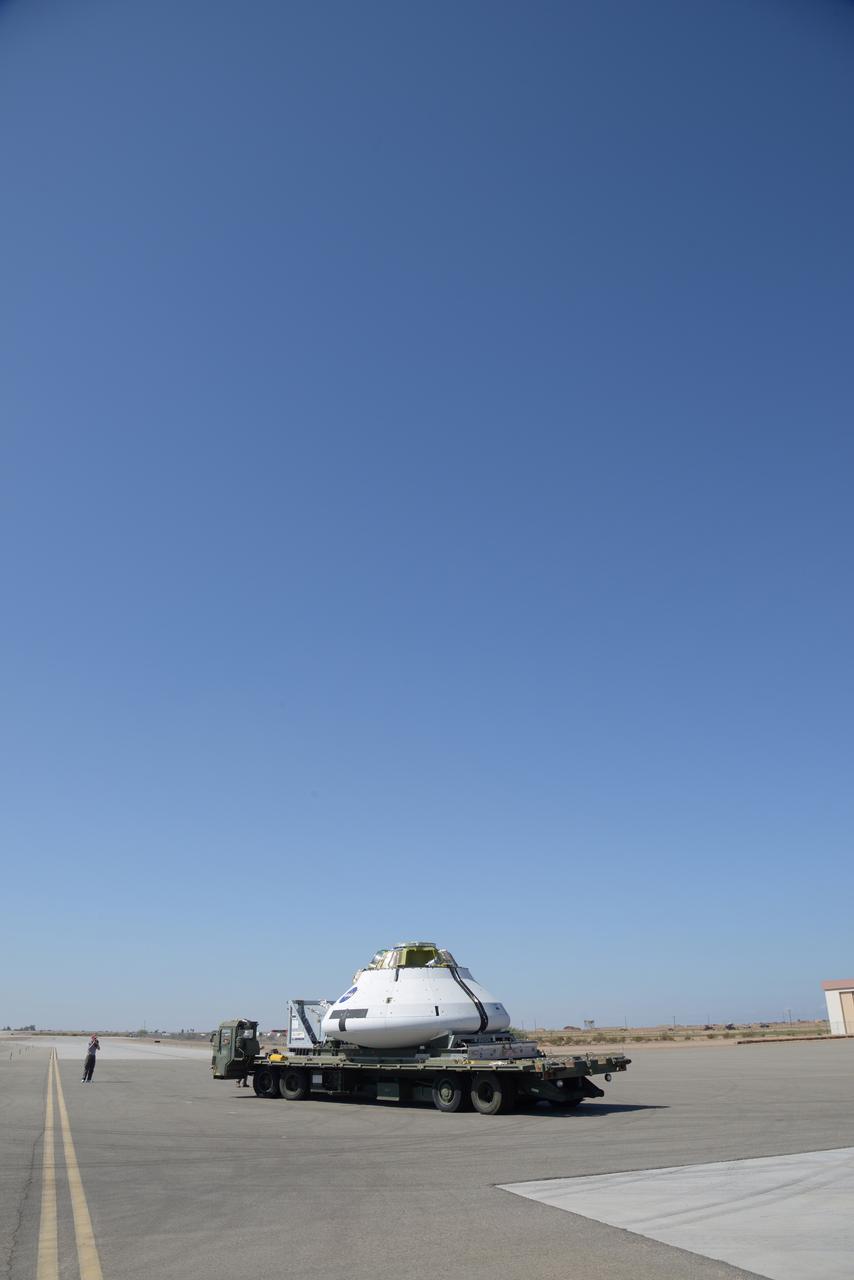
Teams peform Orion Parachute Test Vehicle (PTV) loading operations on July 22, 2013 in preparation for the July 24 parachute drop test at the U.S. Army Yuma Proving Ground in Arizona. Part of Batch image transfer from Flickr.
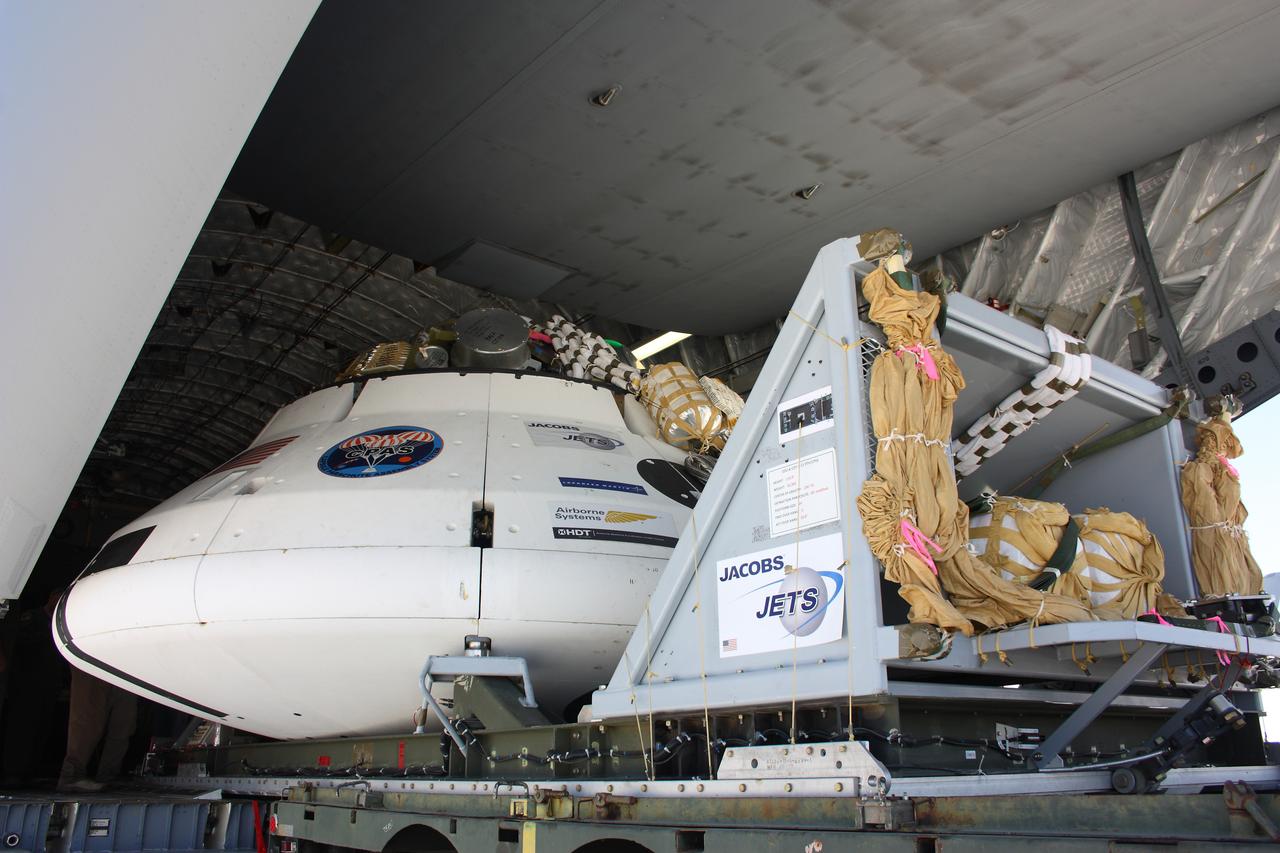
Teams peform Orion Parachute Test Vehicle (PTV) loading operations on July 22, 2013 in preparation for the July 24 parachute drop test at the U.S. Army Yuma Proving Ground in Arizona. Part of Batch image transfer from Flickr.
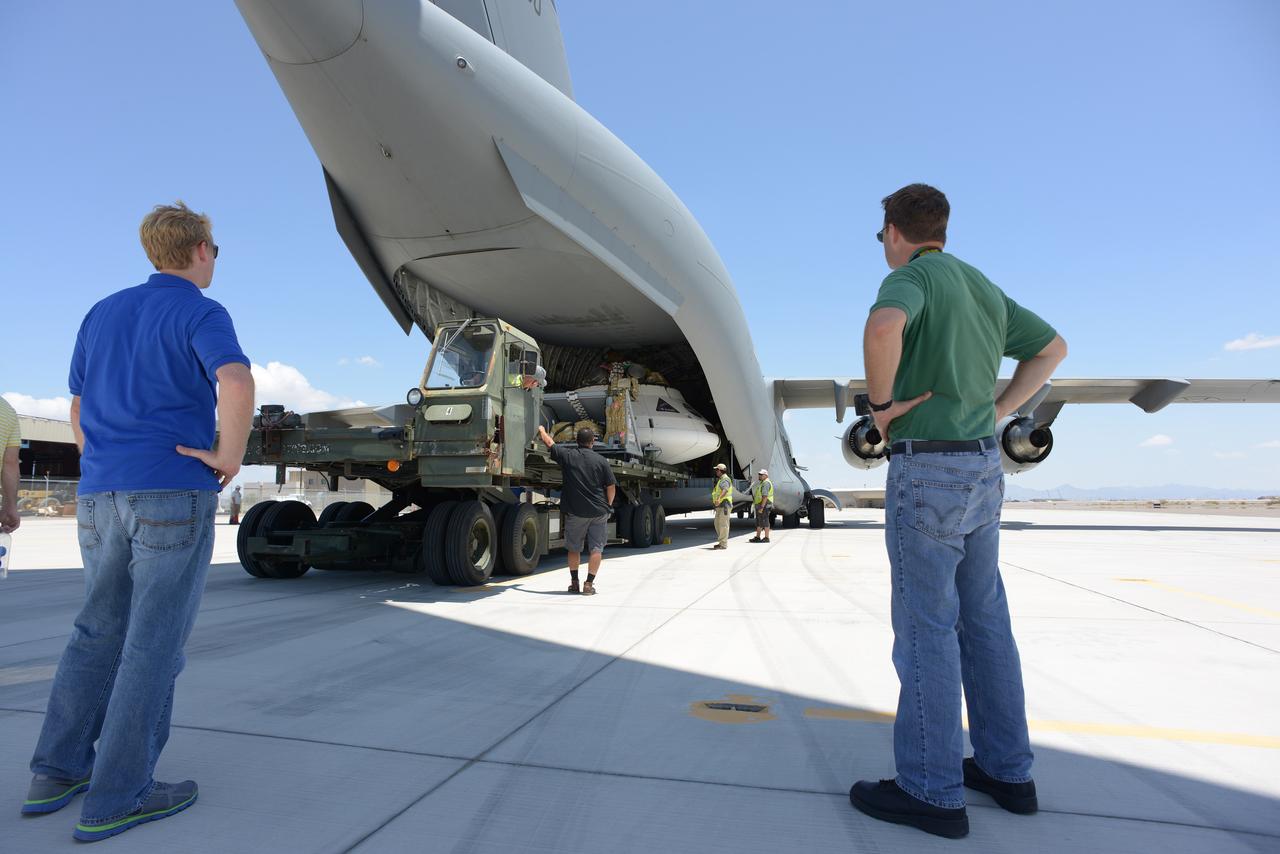
Teams peform Orion Parachute Test Vehicle (PTV) loading operations on July 22, 2013 in preparation for the July 24 parachute drop test at the U.S. Army Yuma Proving Ground in Arizona. Part of Batch image transfer from Flickr.
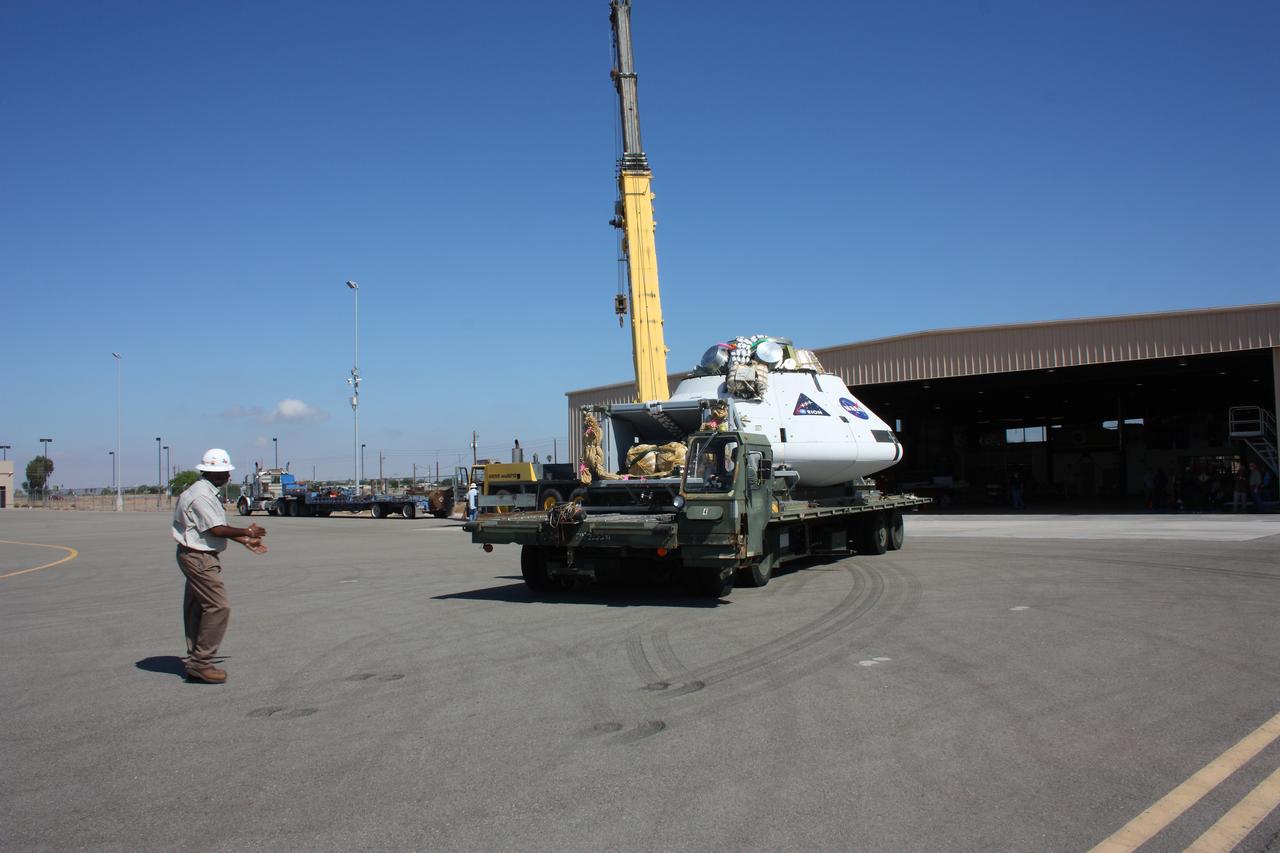
Teams peform Orion Parachute Test Vehicle (PTV) loading operations on July 22, 2013 in preparation for the July 24 parachute drop test at the U.S. Army Yuma Proving Ground in Arizona. Part of Batch image transfer from Flickr.

Teams peform Orion Parachute Test Vehicle (PTV) loading operations on July 22, 2013 in preparation for the July 24 parachute drop test at the U.S. Army Yuma Proving Ground in Arizona. Part of Batch image transfer from Flickr.
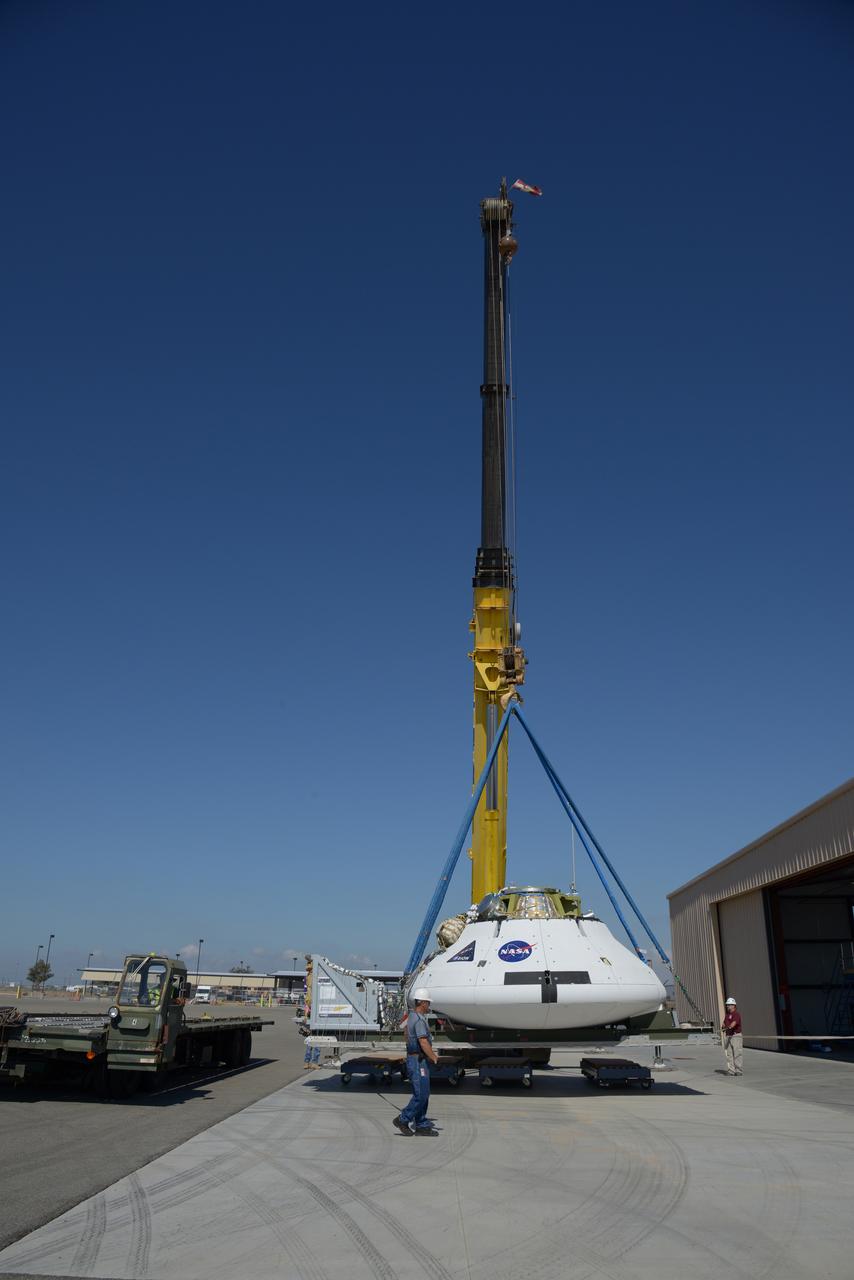
Teams peform Orion Parachute Test Vehicle (PTV) loading operations on July 22, 2013 in preparation for the July 24 parachute drop test at the U.S. Army Yuma Proving Ground in Arizona. Part of Batch image transfer from Flickr.

Teams peform Orion Parachute Test Vehicle (PTV) loading operations on July 22, 2013 in preparation for the July 24 parachute drop test at the U.S. Army Yuma Proving Ground in Arizona. Part of Batch image transfer from Flickr.
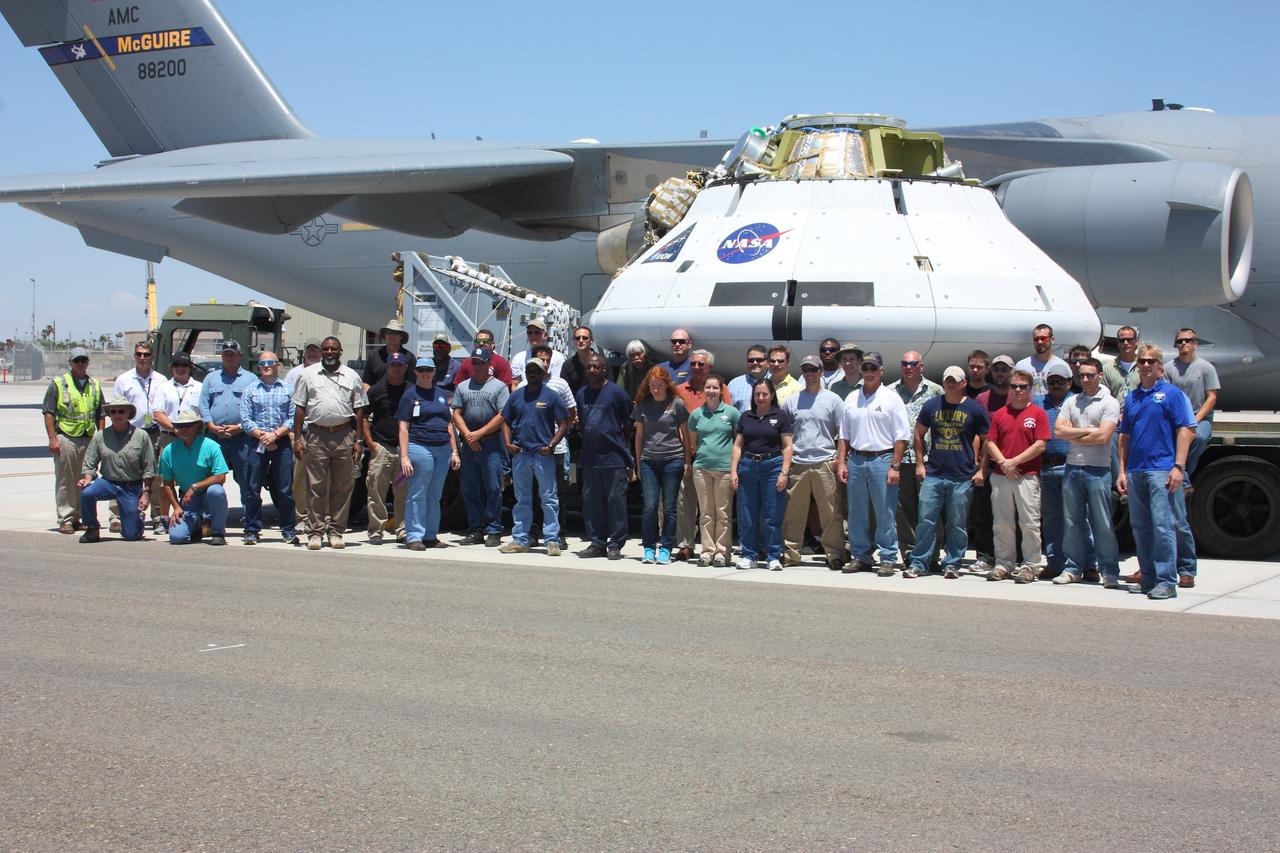
Teams peform Orion Parachute Test Vehicle (PTV) loading operations on July 22, 2013 in preparation for the July 24 parachute drop test at the U.S. Army Yuma Proving Ground in Arizona. Part of Batch image transfer from Flickr.

Teams peform Orion Parachute Test Vehicle (PTV) loading operations on July 22, 2013 in preparation for the July 24 parachute drop test at the U.S. Army Yuma Proving Ground in Arizona. Part of Batch image transfer from Flickr.
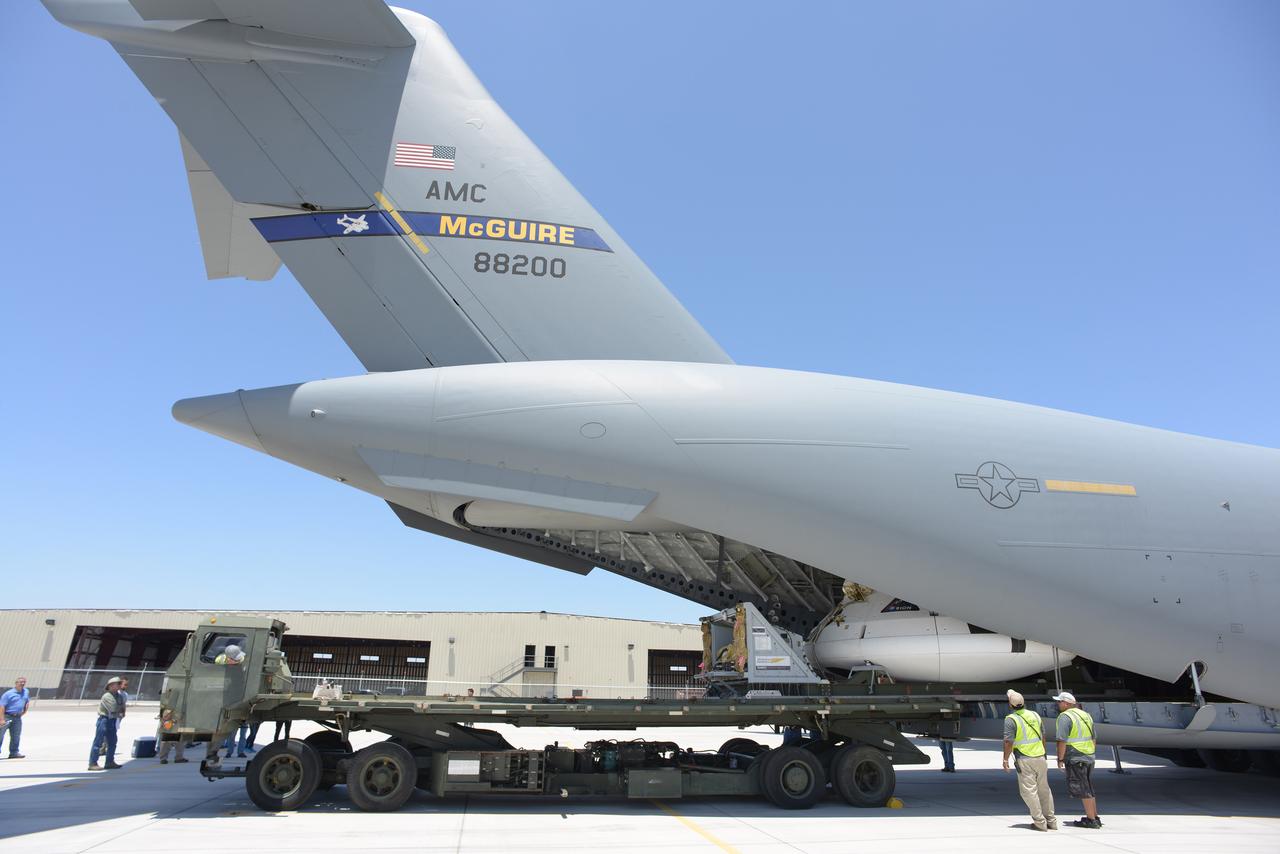
Teams peform Orion Parachute Test Vehicle (PTV) loading operations on July 22, 2013 in preparation for the July 24 parachute drop test at the U.S. Army Yuma Proving Ground in Arizona. Part of Batch image transfer from Flickr.
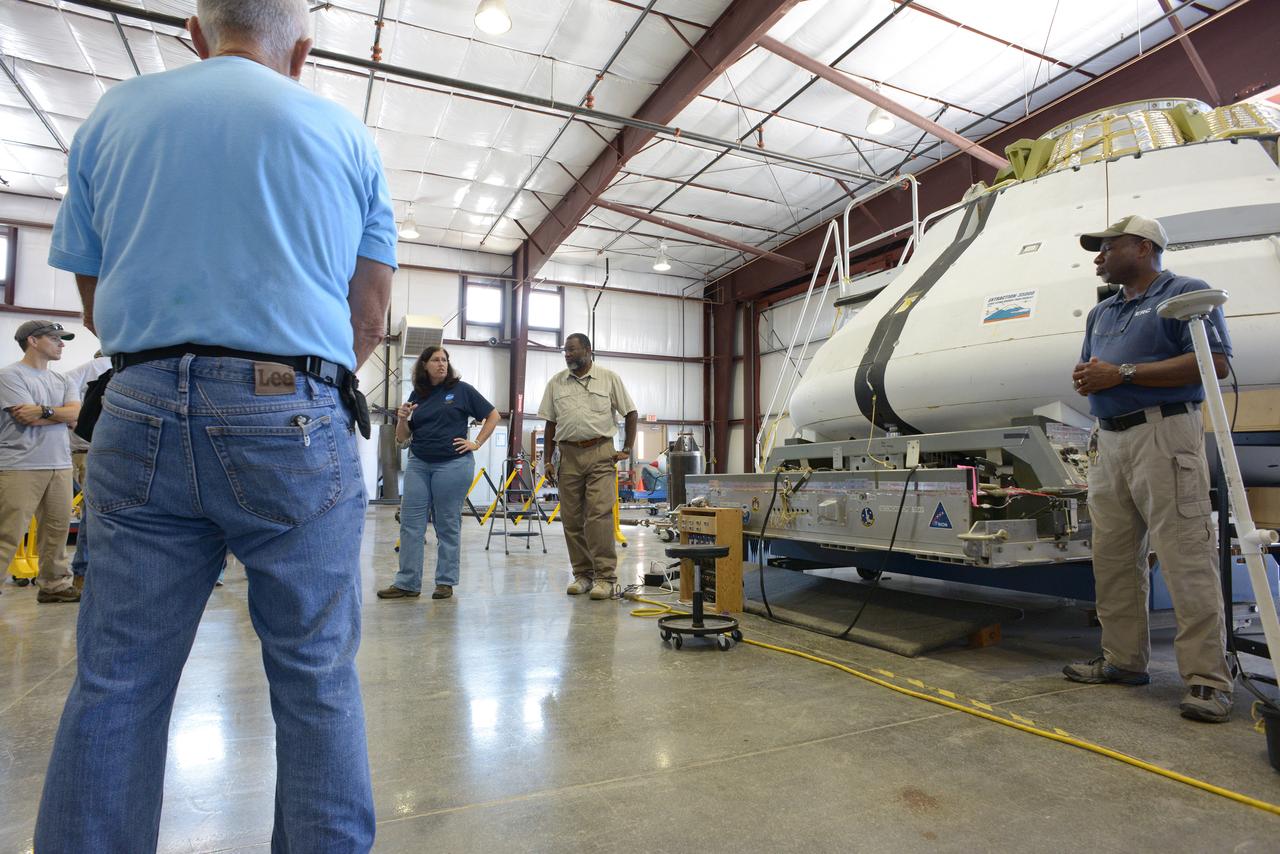
Teams peform Orion Parachute Test Vehicle (PTV) loading operations on July 22, 2013 in preparation for the July 24 parachute drop test at the U.S. Army Yuma Proving Ground in Arizona. Part of Batch image transfer from Flickr.
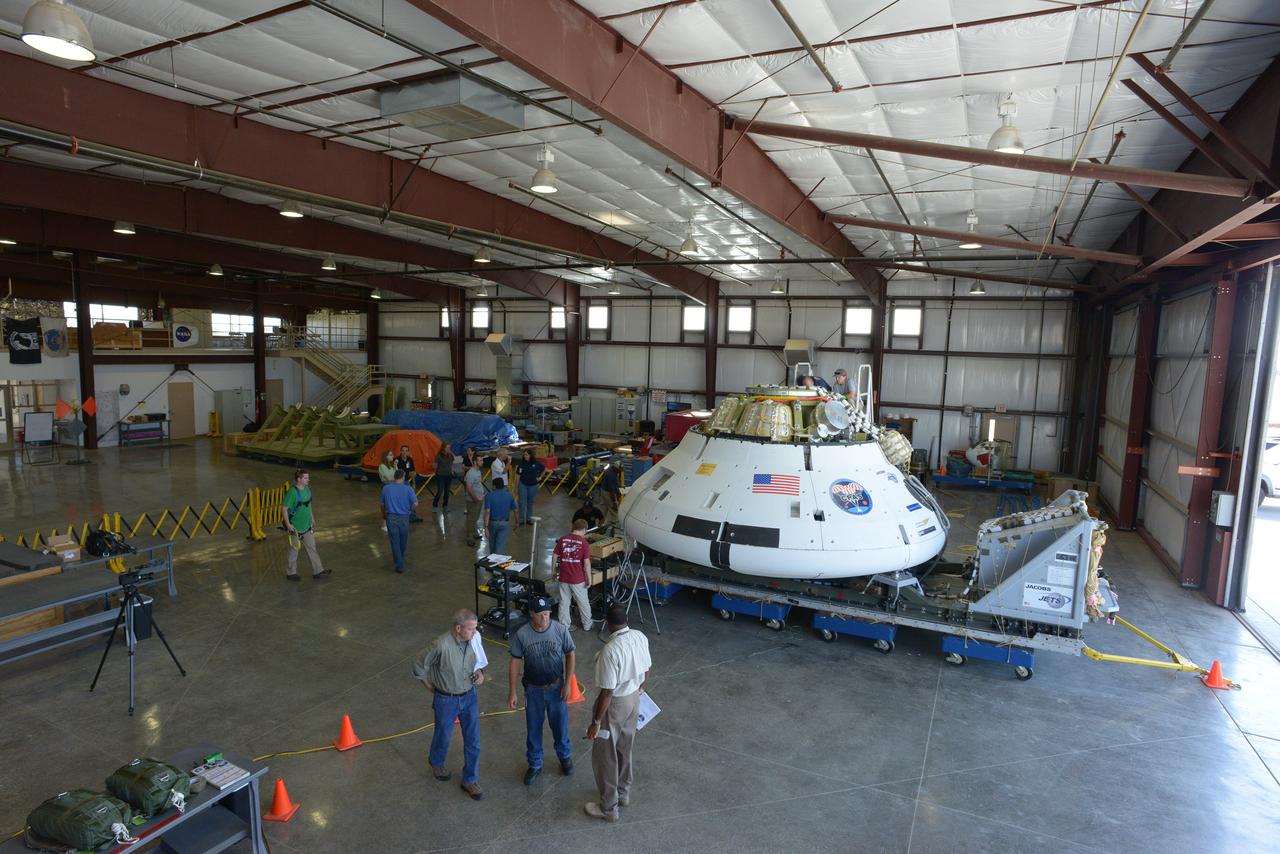
Teams peform Orion Parachute Test Vehicle (PTV) loading operations on July 22, 2013 in preparation for the July 24 parachute drop test at the U.S. Army Yuma Proving Ground in Arizona. Part of Batch image transfer from Flickr.
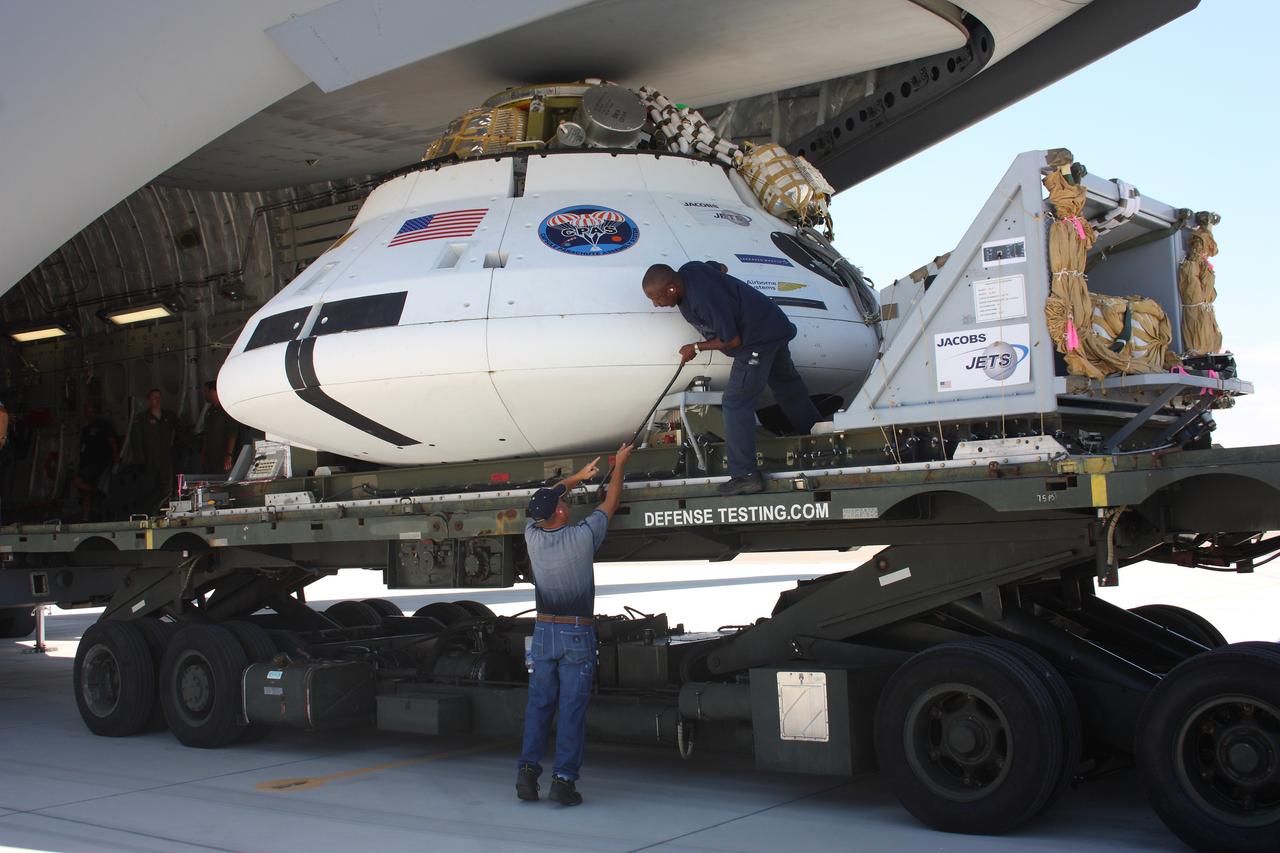
Teams peform Orion Parachute Test Vehicle (PTV) loading operations on July 22, 2013 in preparation for the July 24 parachute drop test at the U.S. Army Yuma Proving Ground in Arizona. Part of Batch image transfer from Flickr.
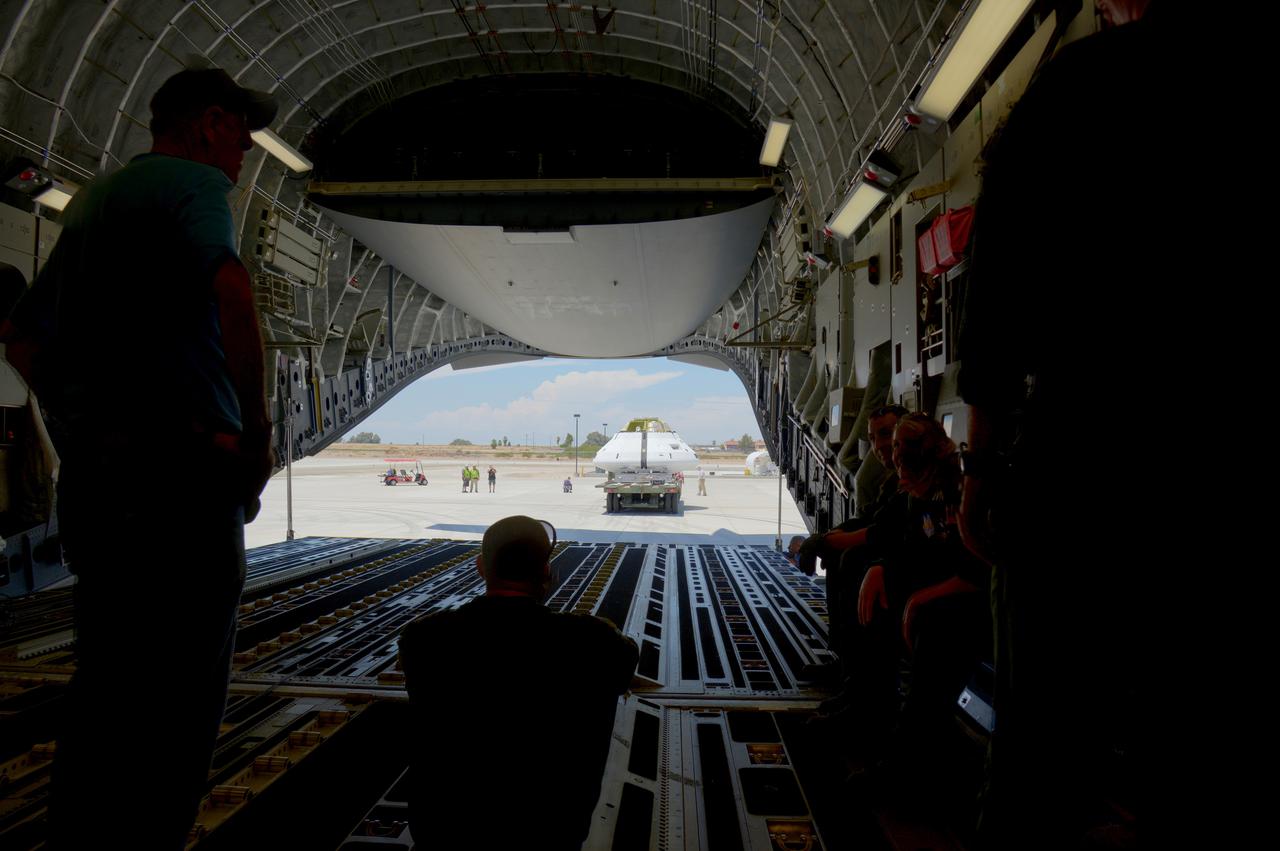
Teams peform Orion Parachute Test Vehicle (PTV) loading operations on July 22, 2013 in preparation for the July 24 parachute drop test at the U.S. Army Yuma Proving Ground in Arizona. Part of Batch image transfer from Flickr.
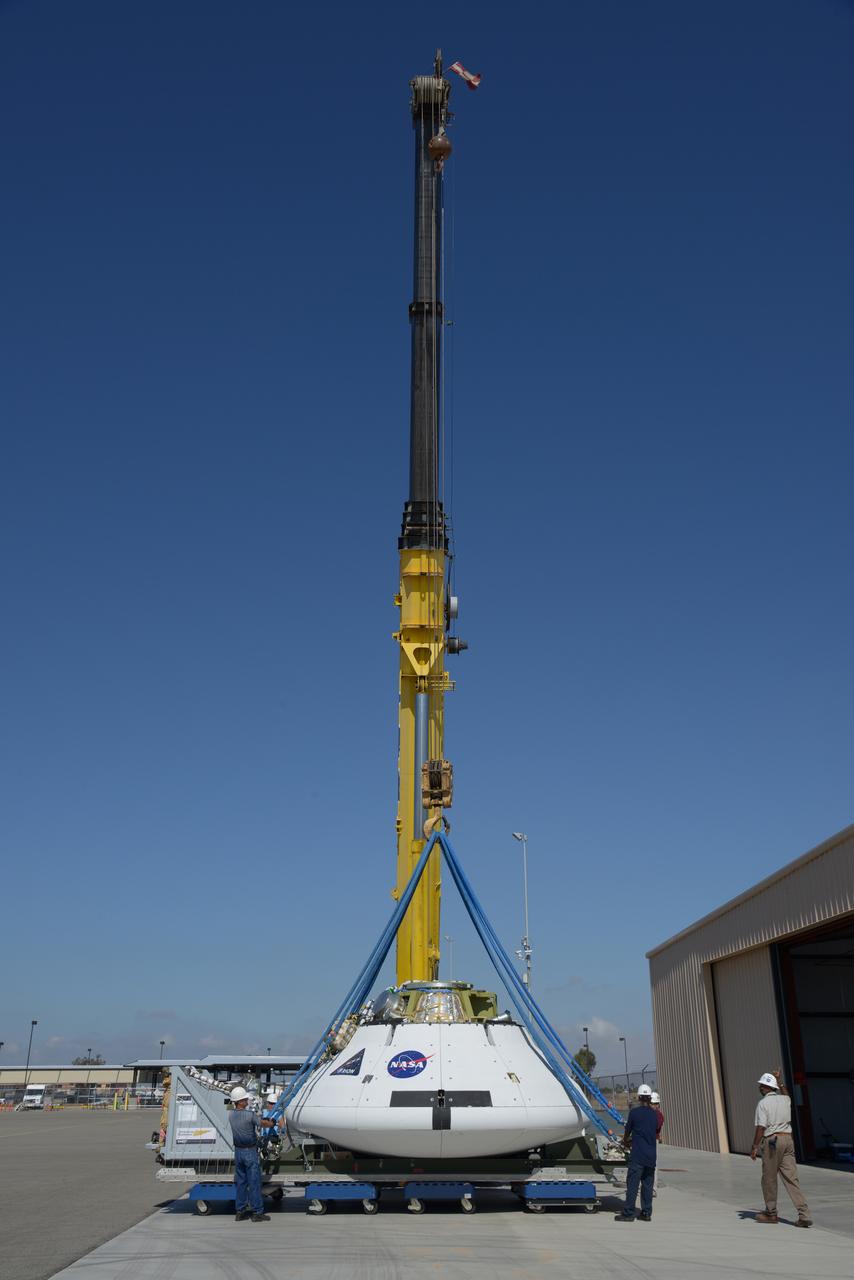
Teams peform Orion Parachute Test Vehicle (PTV) loading operations on July 22, 2013 in preparation for the July 24 parachute drop test at the U.S. Army Yuma Proving Ground in Arizona. Part of Batch image transfer from Flickr.

Teams peform Orion Parachute Test Vehicle (PTV) loading operations on July 22, 2013 in preparation for the July 24 parachute drop test at the U.S. Army Yuma Proving Ground in Arizona. Part of Batch image transfer from Flickr.

NASA astronaut Jessica Watkins stores science payloads on Astrolab’s FLEX lunar terrain vehicle during testing at NASA’s Johnson Space Center. Image Credit: NASA/Robert Markowitz
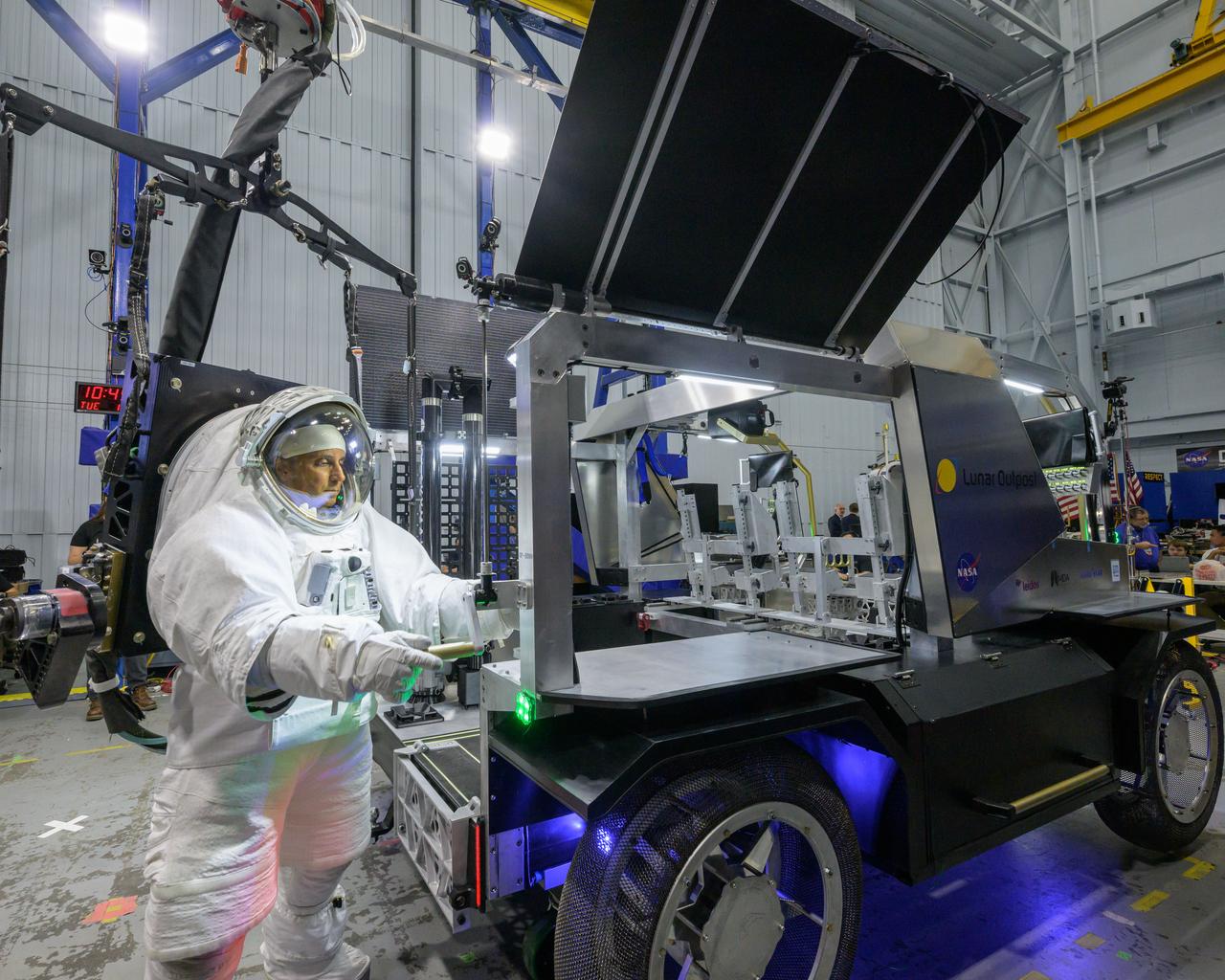
NASA astronaut Joe Acaba raises the solar array panel on Lunar Outpost’s Eagle lunar terrain vehicle during testing at NASA’s Johnson Space Center. Image Credit: NASA/Robert Markowitz
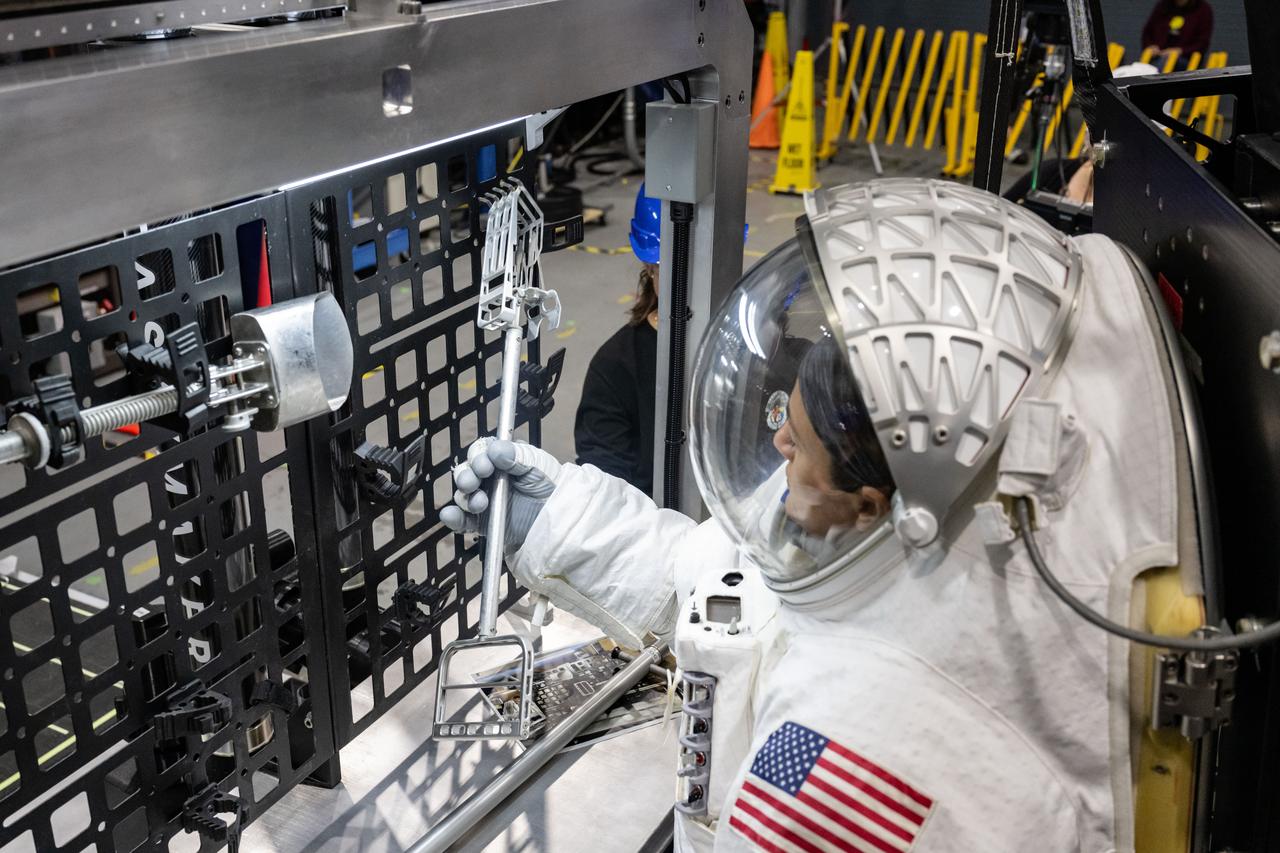
NASA astronaut Jessica Meir grabs a lunar geology tool from a tool rack on Lunar Outpost’s Eagle lunar terrain vehicle during testing at NASA’s Johnson Space Center. Image Credit: NASA/James Blair
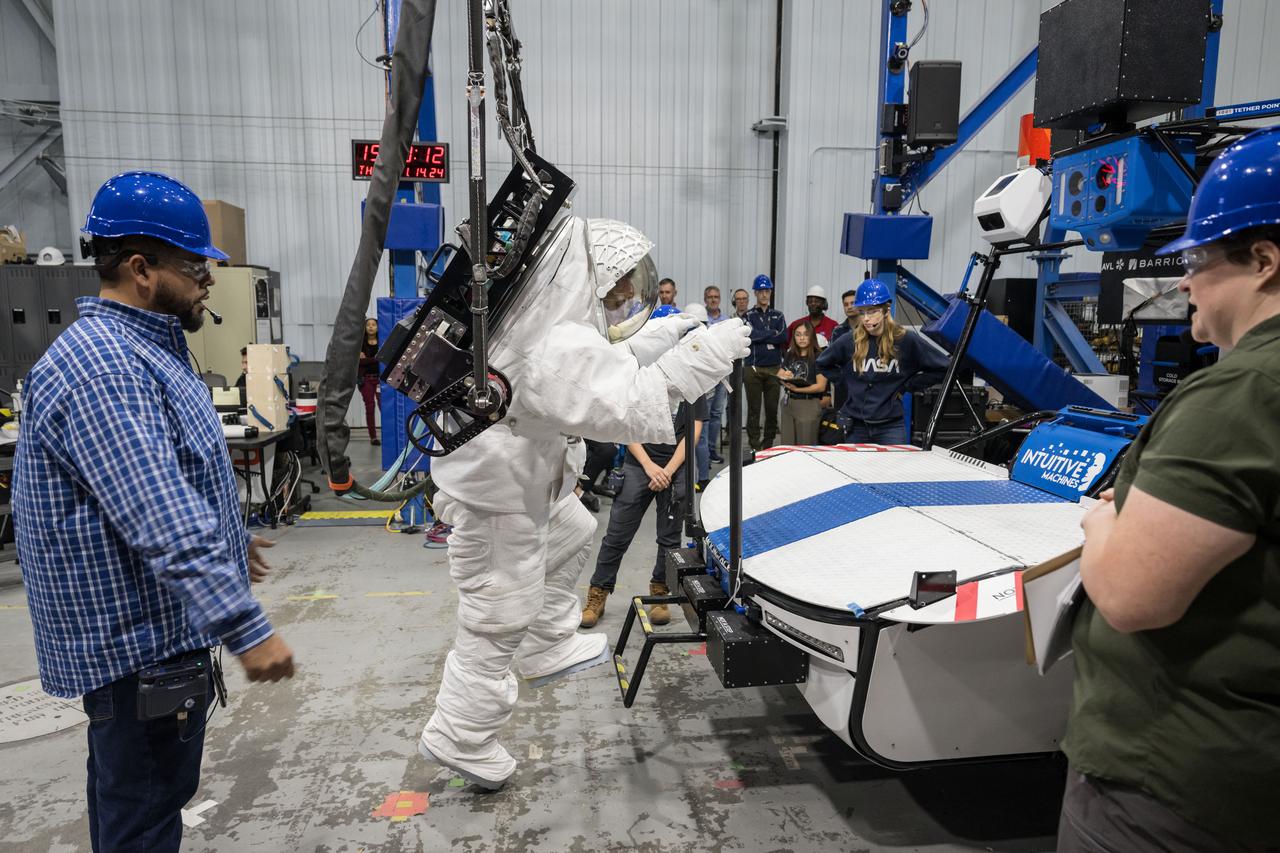
NASA astronaut Joe Acaba prepares to climb on top of Intuitive Machines’ Moon RACER lunar terrain vehicle to get to a science payload during testing at NASA’s Johnson Space Center. Image Credit: NASA/Josh Valcarcel

NASA astronaut Jessica Watkins picks up a lunar geology tool from a stowage drawer on Astrolab’s FLEX lunar terrain vehicle during testing at NASA’s Johnson Space Center. Image Credit: NASA/Robert Markowitz
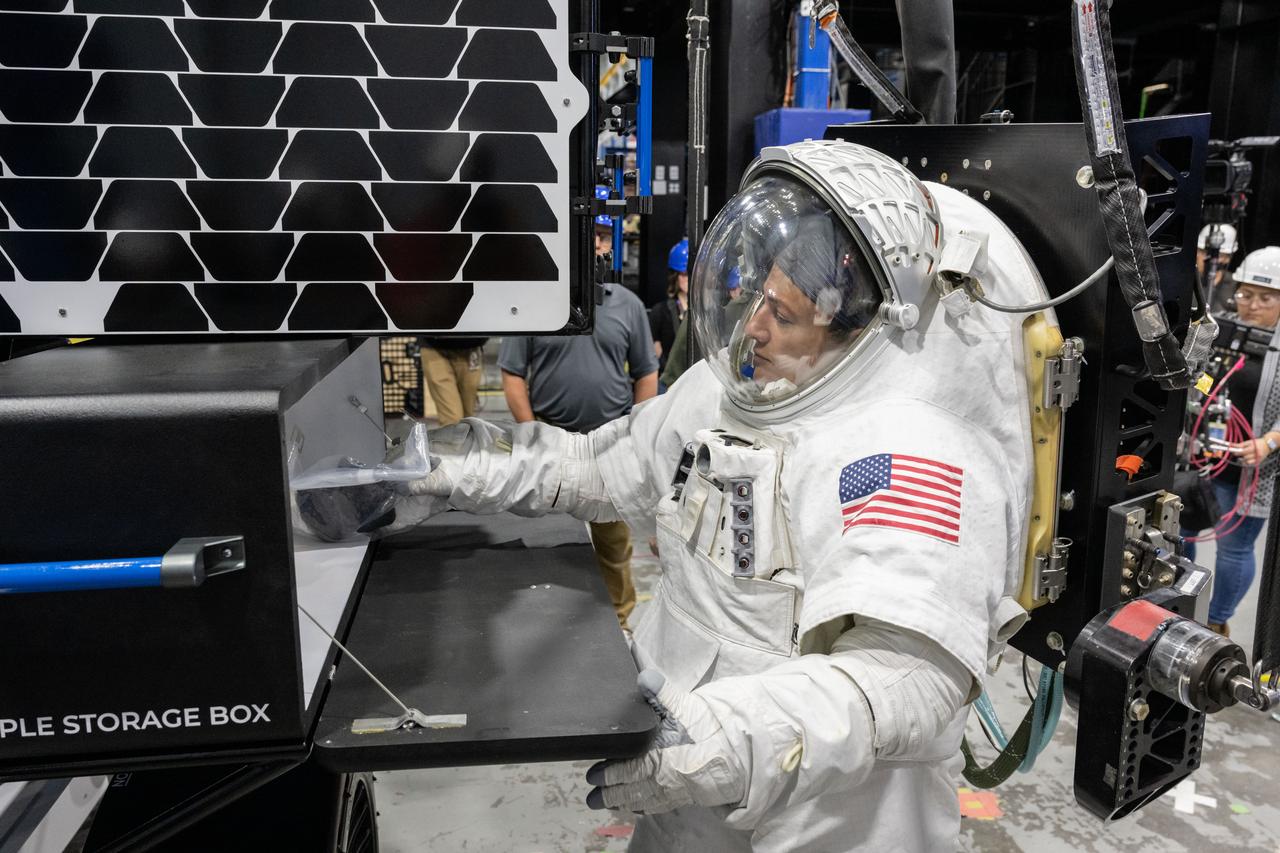
NASA astronaut Jessica Meir puts a science sample inside of a storage box on Intuitive Machines’ Moon RACER lunar terrain vehicle during testing at NASA’s Johnson Space Center. Image Credit: NASA/James Blair
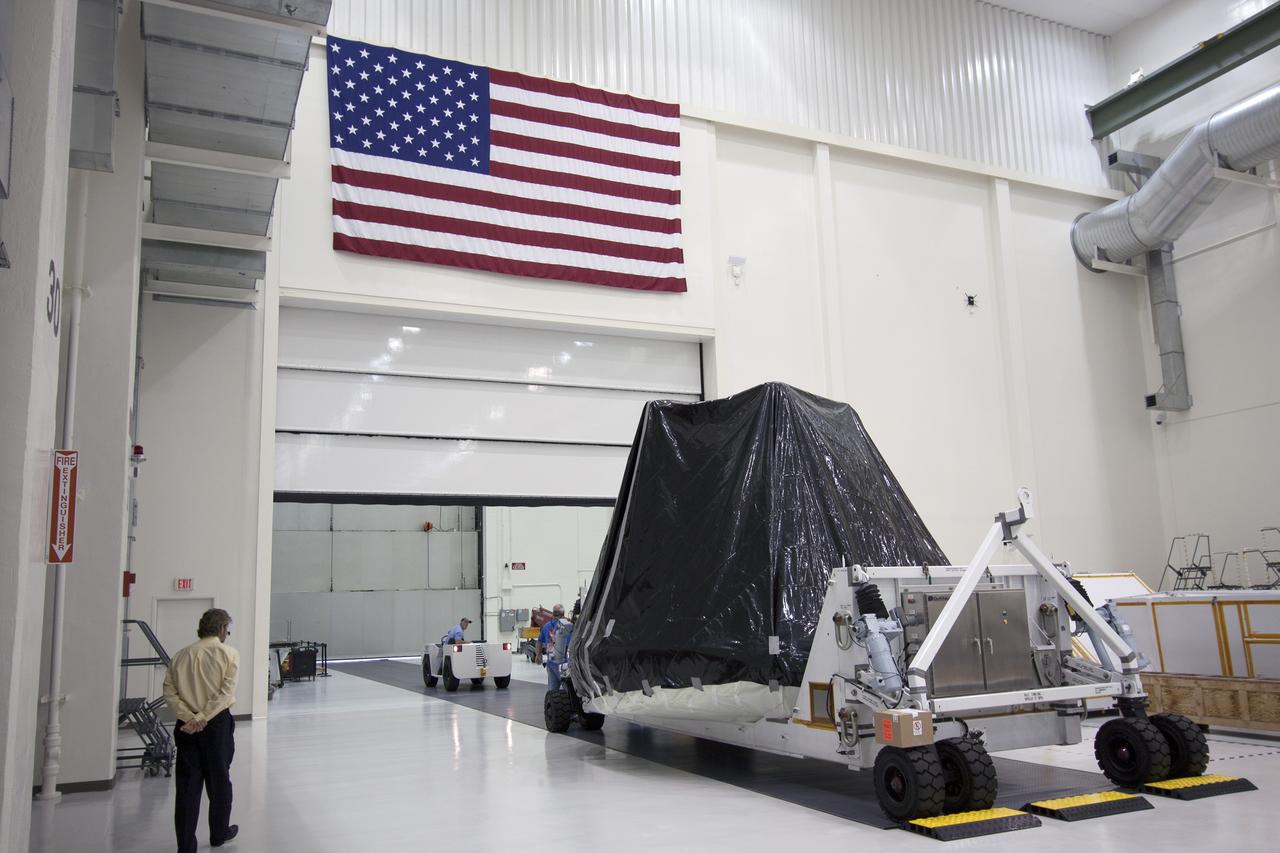
CAPE CANAVERAL, Fla. -- At NASA’s Kennedy Space Center in Florida, workers prepare to move the Orion ground test vehicle, or GTA, from the Operations and Checkout Building to the Launch Equipment Test Facility, or LETF. At the LETF, Lockheed Martin will put the GTA through a series of pyrotechnic bolt tests. The ground test vehicle is being used for path finding operations in the O&C, including simulated manufacturing and assembly procedures. Launching atop NASA's heavy-lift Space Launch System SLS, which also is under development, the Orion Multi-Purpose Crew Vehicle MPCV will serve as the exploration vehicle that will carry astronaut crews beyond low Earth orbit. It also will provide emergency abort capabilities, sustain the crew during space travel and provide safe re-entry from deep space return velocities. For more information, visit www.nasa.gov/orion. Photo credit: Jim Grossman
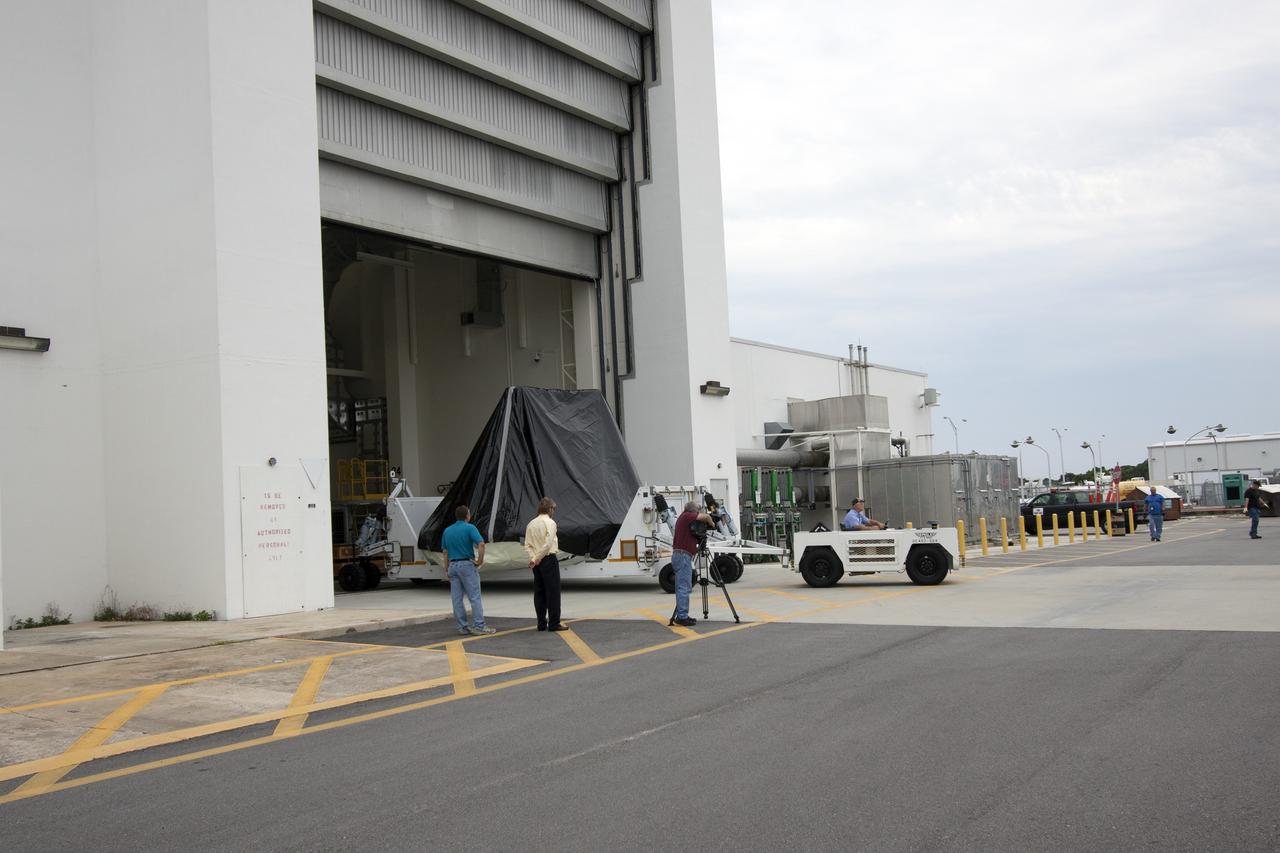
CAPE CANAVERAL, Fla. -- At NASA’s Kennedy Space Center in Florida, workers move the Orion ground test vehicle, or GTA, from the Operations and Checkout Building to the Launch Equipment Test Facility, or LETF. At the LETF, Lockheed Martin will put the GTA through a series of pyrotechnic bolt tests. The ground test vehicle is being used for path finding operations in the O&C, including simulated manufacturing and assembly procedures. Launching atop NASA's heavy-lift Space Launch System SLS, which also is under development, the Orion Multi-Purpose Crew Vehicle MPCV will serve as the exploration vehicle that will carry astronaut crews beyond low Earth orbit. It also will provide emergency abort capabilities, sustain the crew during space travel and provide safe re-entry from deep space return velocities. For more information, visit www.nasa.gov/orion. Photo credit: Jim Grossman
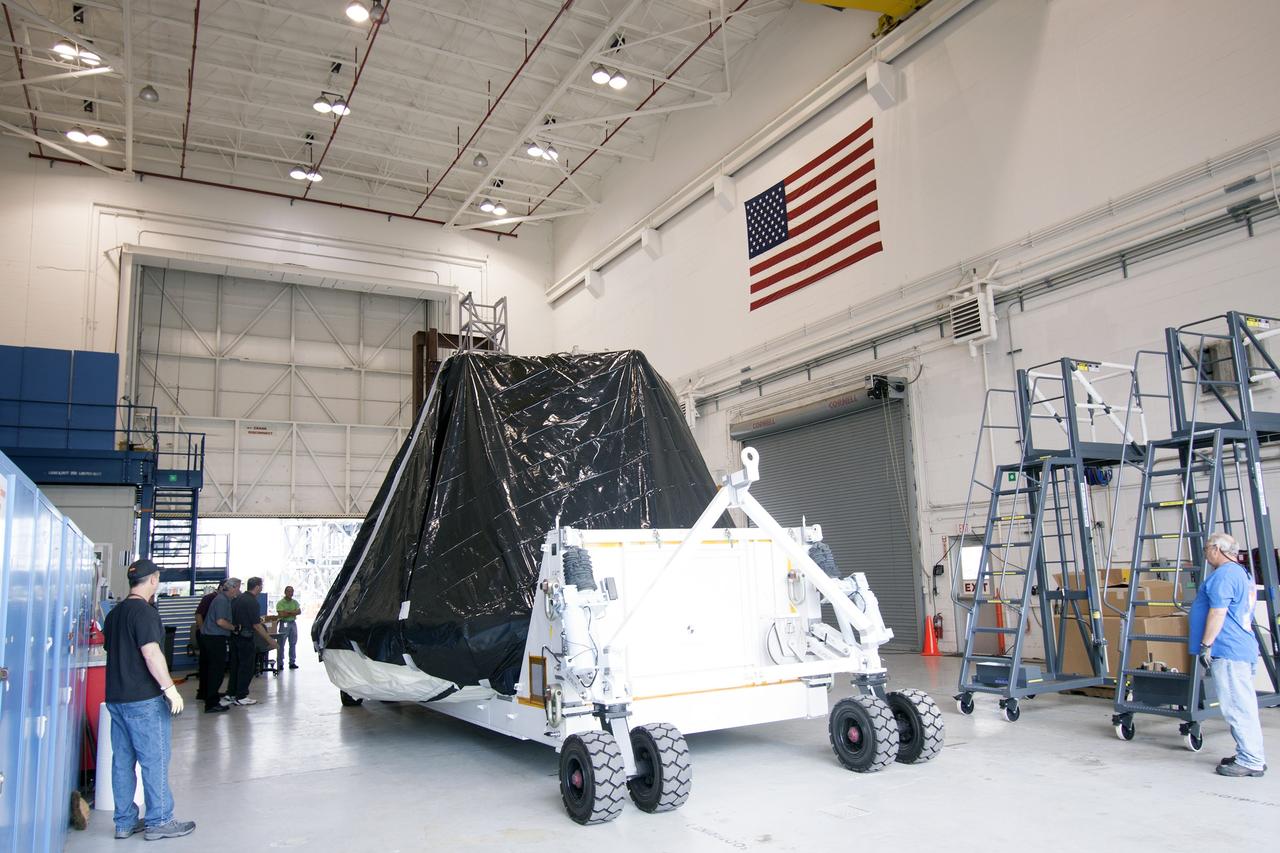
CAPE CANAVERAL, Fla. -- At NASA’s Kennedy Space Center in Florida, workers move the Orion ground test vehicle, or GTA, into the Launch Equipment Test Facility, or LETF, from the Operations and Checkout Building. At the LETF, Lockheed Martin will put the GTA through a series of pyrotechnic bolt tests. The ground test vehicle is being used for path finding operations in the O&C, including simulated manufacturing and assembly procedures. Launching atop NASA's heavy-lift Space Launch System SLS, which also is under development, the Orion Multi-Purpose Crew Vehicle MPCV will serve as the exploration vehicle that will carry astronaut crews beyond low Earth orbit. It also will provide emergency abort capabilities, sustain the crew during space travel and provide safe re-entry from deep space return velocities. For more information, visit www.nasa.gov/orion. Photo credit: Jim Grossman
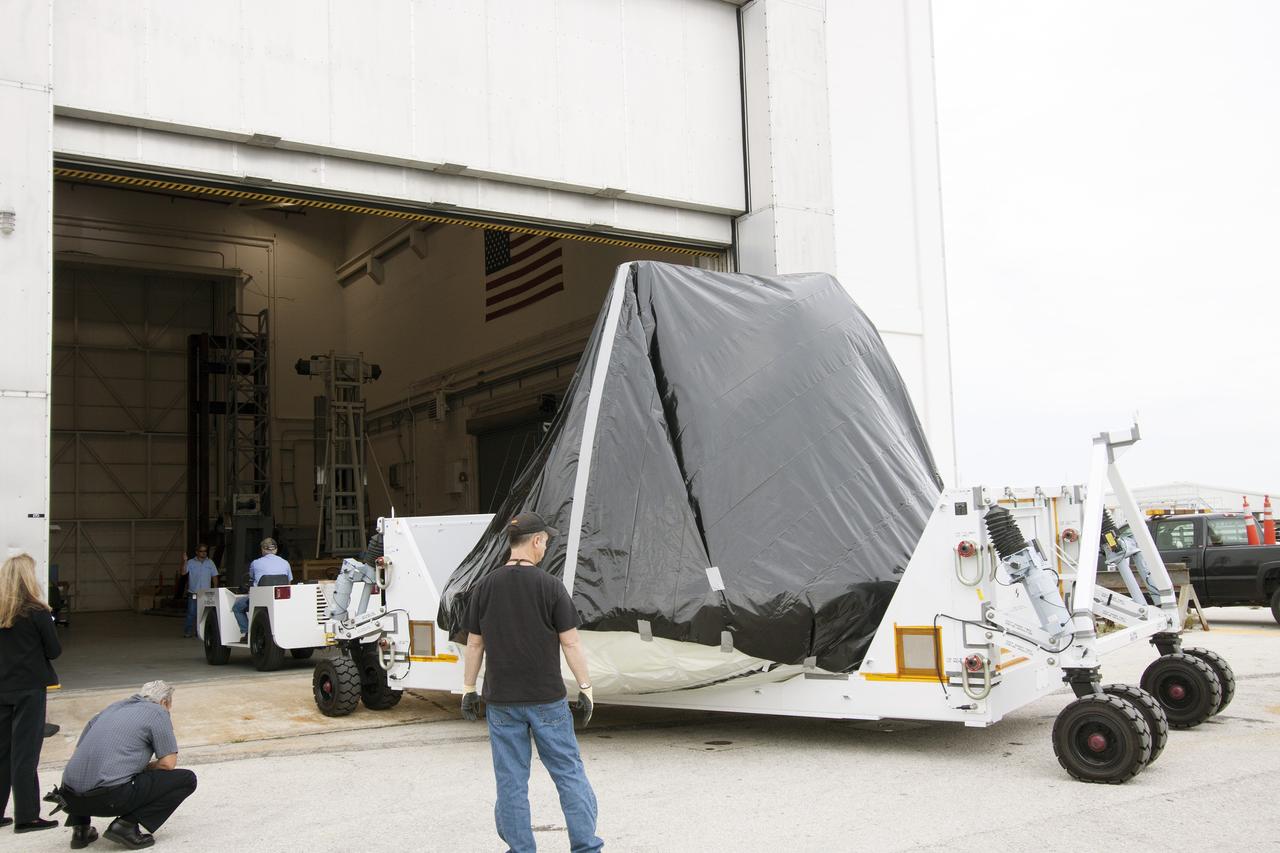
CAPE CANAVERAL, Fla. -- At NASA’s Kennedy Space Center in Florida, workers move the Orion ground test vehicle, or GTA, into the Launch Equipment Test Facility, or LETF, from the Operations and Checkout Building. At the LETF, Lockheed Martin will put the GTA through a series of pyrotechnic bolt tests. The ground test vehicle is being used for path finding operations in the O&C, including simulated manufacturing and assembly procedures. Launching atop NASA's heavy-lift Space Launch System SLS, which also is under development, the Orion Multi-Purpose Crew Vehicle MPCV will serve as the exploration vehicle that will carry astronaut crews beyond low Earth orbit. It also will provide emergency abort capabilities, sustain the crew during space travel and provide safe re-entry from deep space return velocities. For more information, visit www.nasa.gov/orion. Photo credit: Jim Grossman
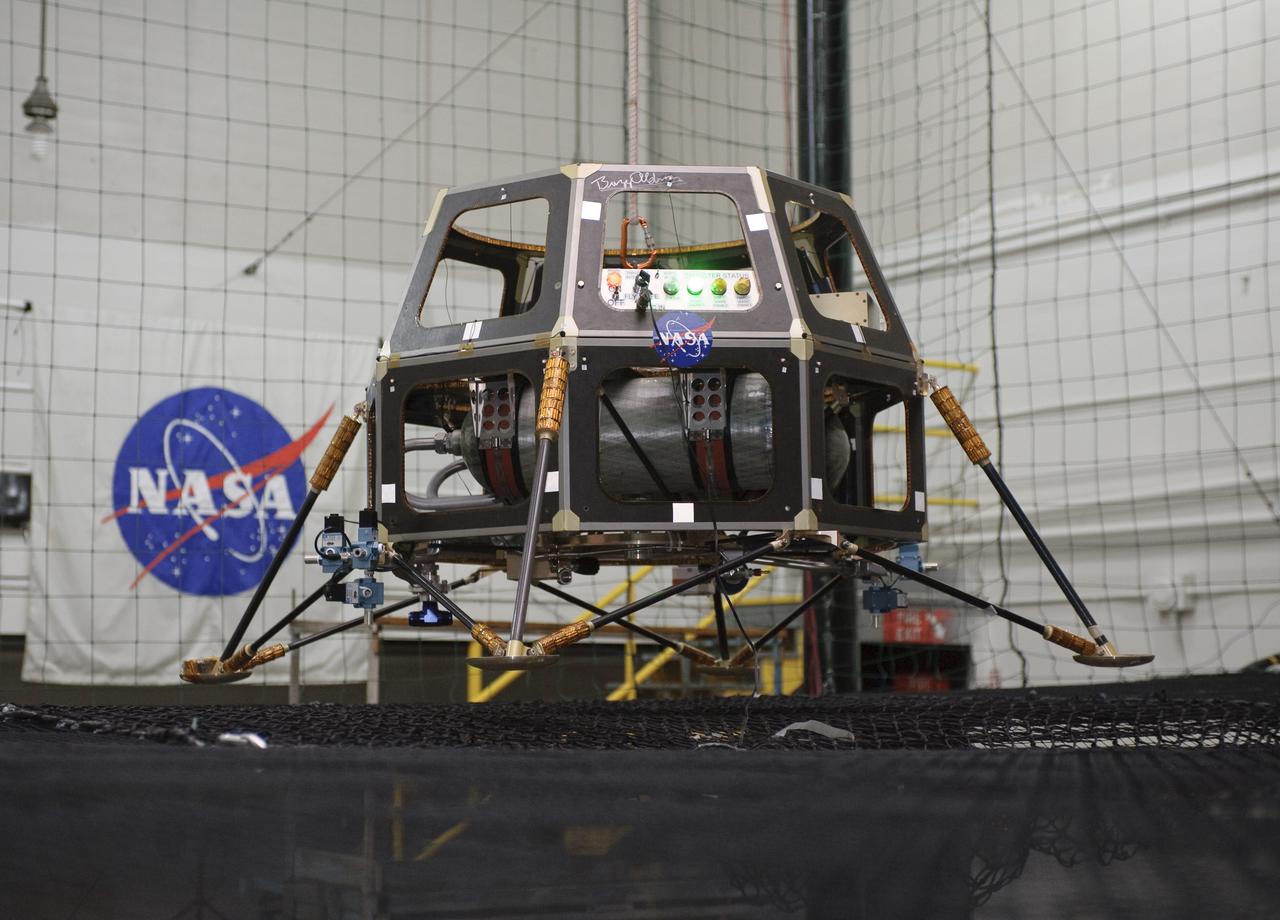
Lunar Atmosphere and Dust Environment Explorer (LADEE) Project in Building 45 Modular Common Spacecraft Bus as a hover test vehicle, here they are installing spacecraft electronics & payloads.
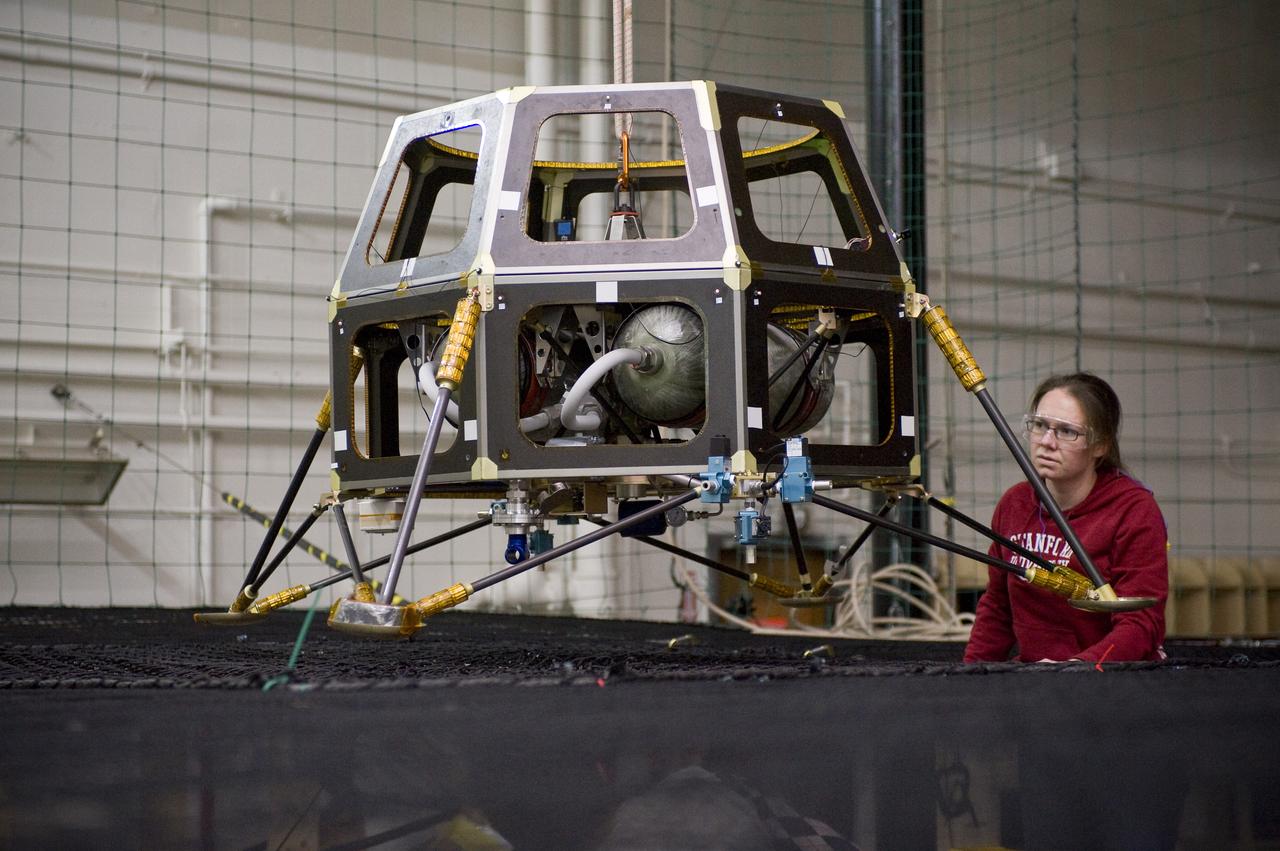
Lunar Atmosphere and Dust Environment Explorer (LADEE) Project in Building 45 Modular Common Spacecraft Bus as a hover test vehicle, here they are installing spacecraft electronics & payloads. With Eleanor Crane.
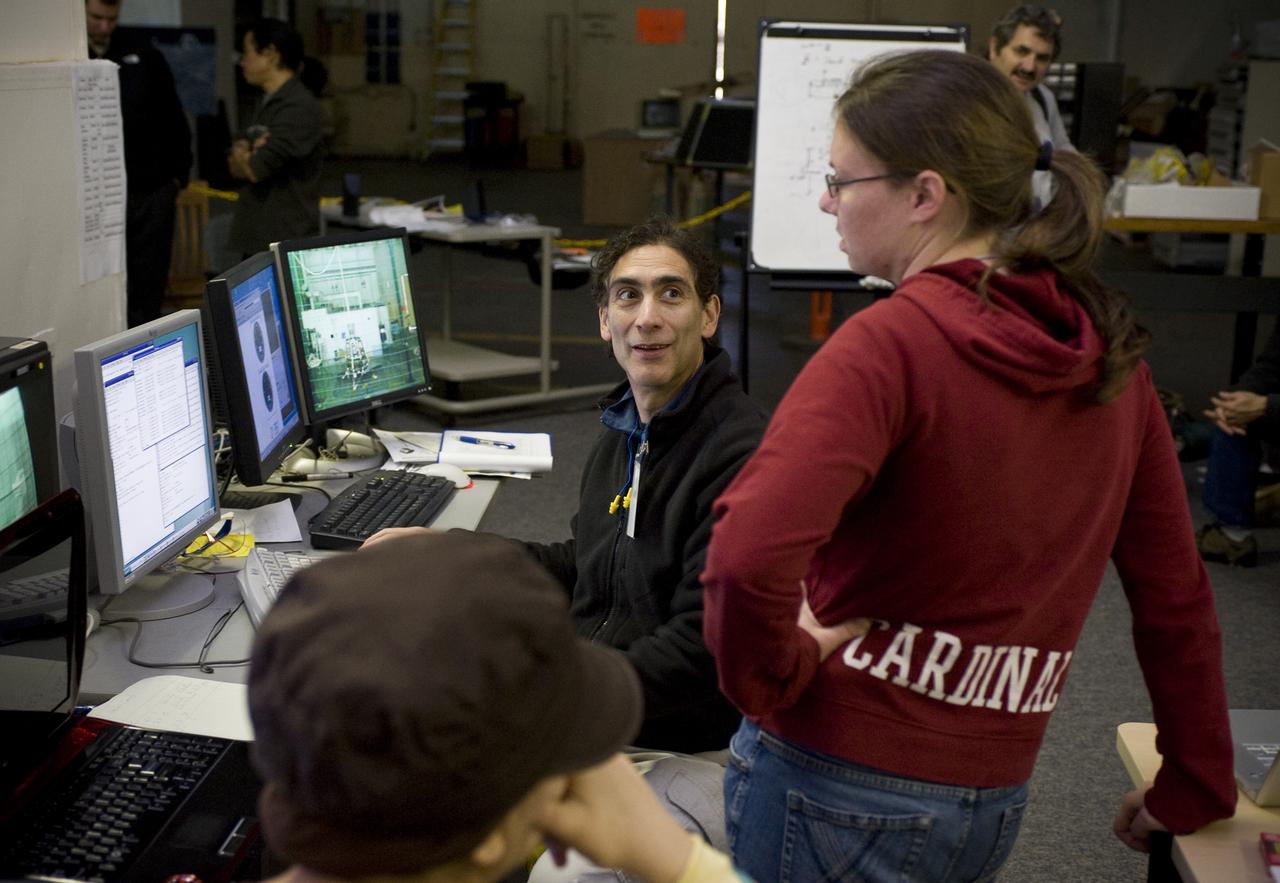
Lunar Atmosphere and Dust Environment Explorer (LADEE) Project in Building 45 Modular Common Spacecraft Bus as a hover test vehicle, here they are installing spacecraft electronics & payloads. Whith Doug Forman (seated) and Eleanor Crane (standing)
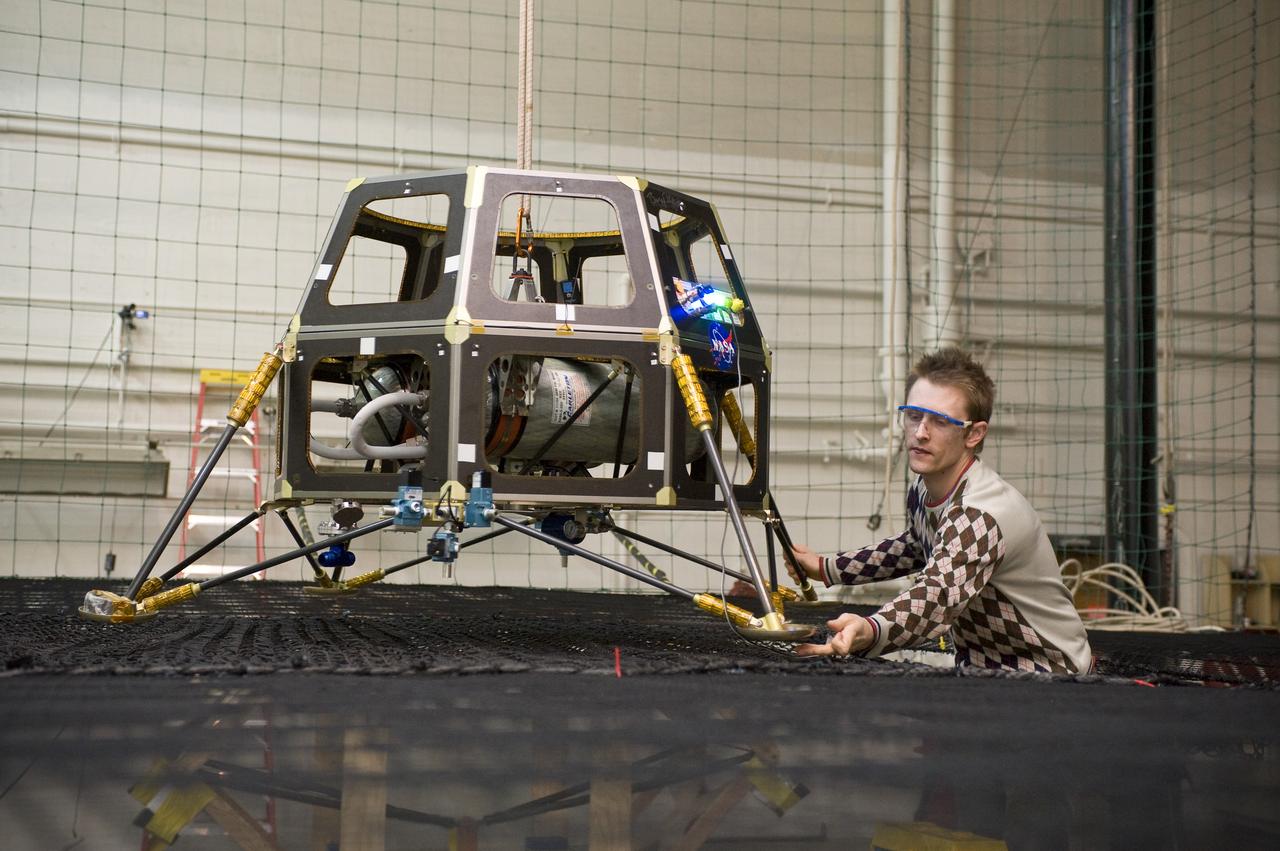
Lunar Atmosphere and Dust Environment Explorer (LADEE) Project in Building 45 Modular Common Spacecraft Bus as a hover test vehicle, here they are installing spacecraft electronics & payloads. With Chris Boshuizen
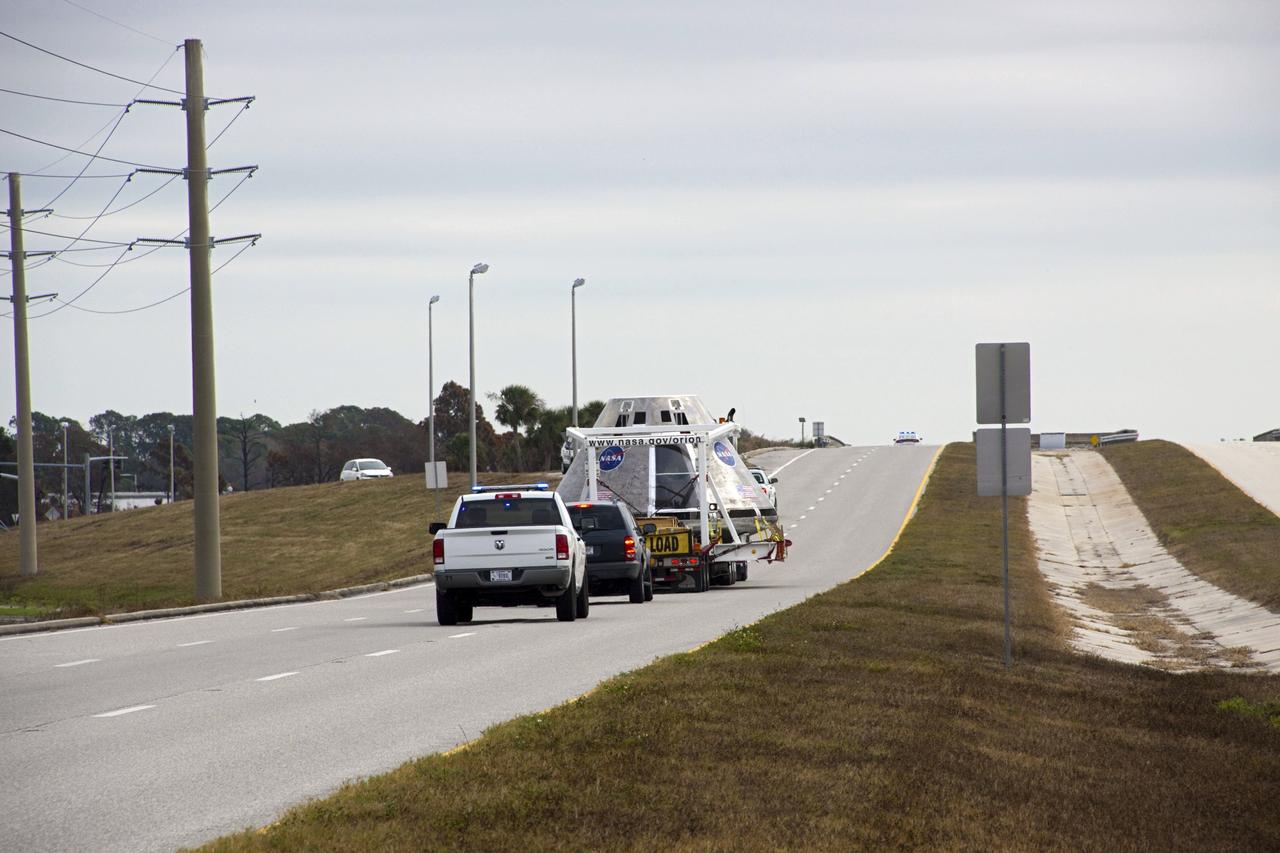
CAPE CANAVERAL, Fla. – A test version of NASA’s Orion spacecraft completed a cross-country journey at NASA’s Kennedy Space Center in Florida on Feb. 8, after giving residents in three states the chance to see a full scale mockup of the craft that will take humans into deep space. The capsule will be stored in Kennedy’s Multi-Payload Processing Facility. The test vehicle was used by ground crews in advance of the launch abort system flight test that took place in New Mexico in 2010. Photo Credit: NASA/Jim Grossmann
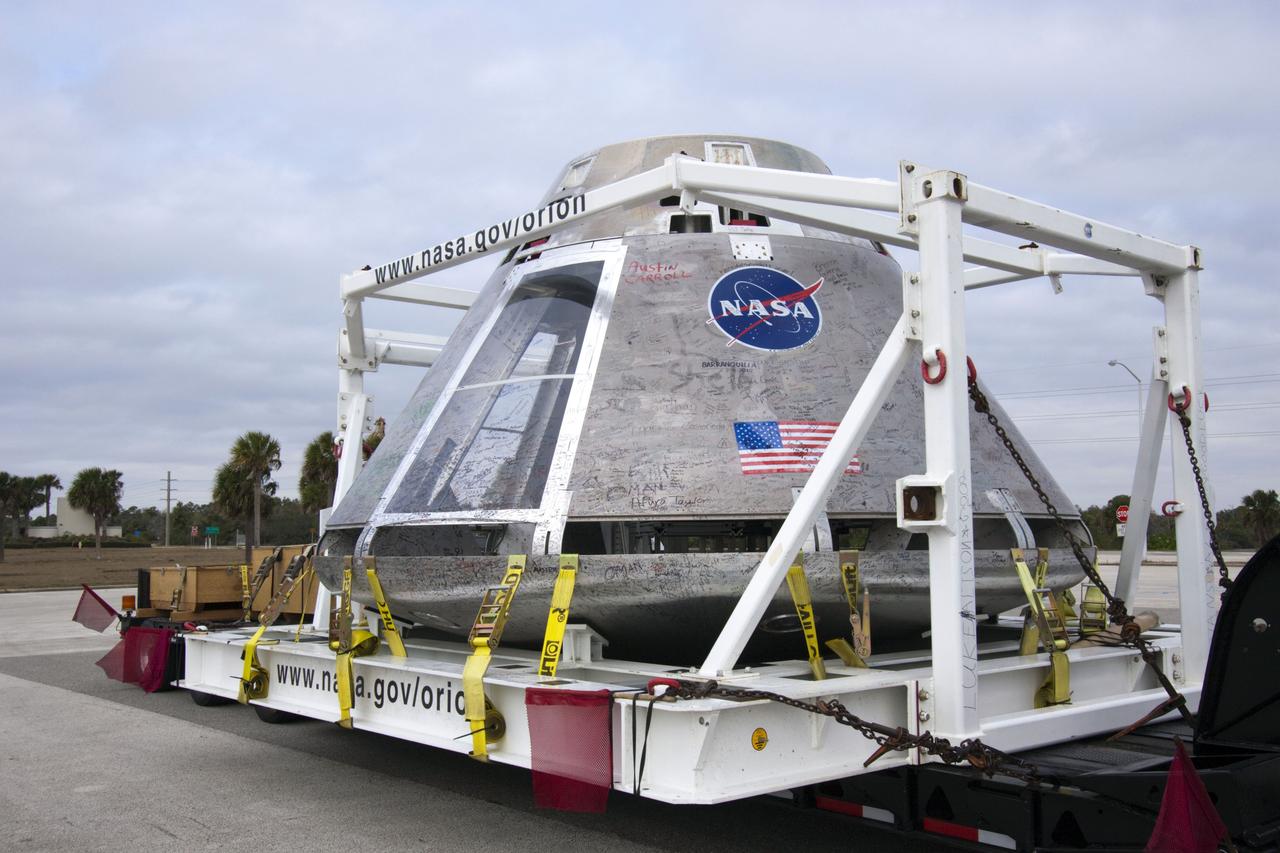
CAPE CANAVERAL, Fla. – A test version of NASA’s Orion spacecraft completed a cross-country journey at NASA’s Kennedy Space Center in Florida on Feb. 8, after giving residents in three states the chance to see a full scale mockup of the craft that will take humans into deep space. The capsule will be stored in Kennedy’s Multi-Payload Processing Facility. The test vehicle was used by ground crews in advance of the launch abort system flight test that took place in New Mexico in 2010. Photo Credit: NASA/Jim Grossmann
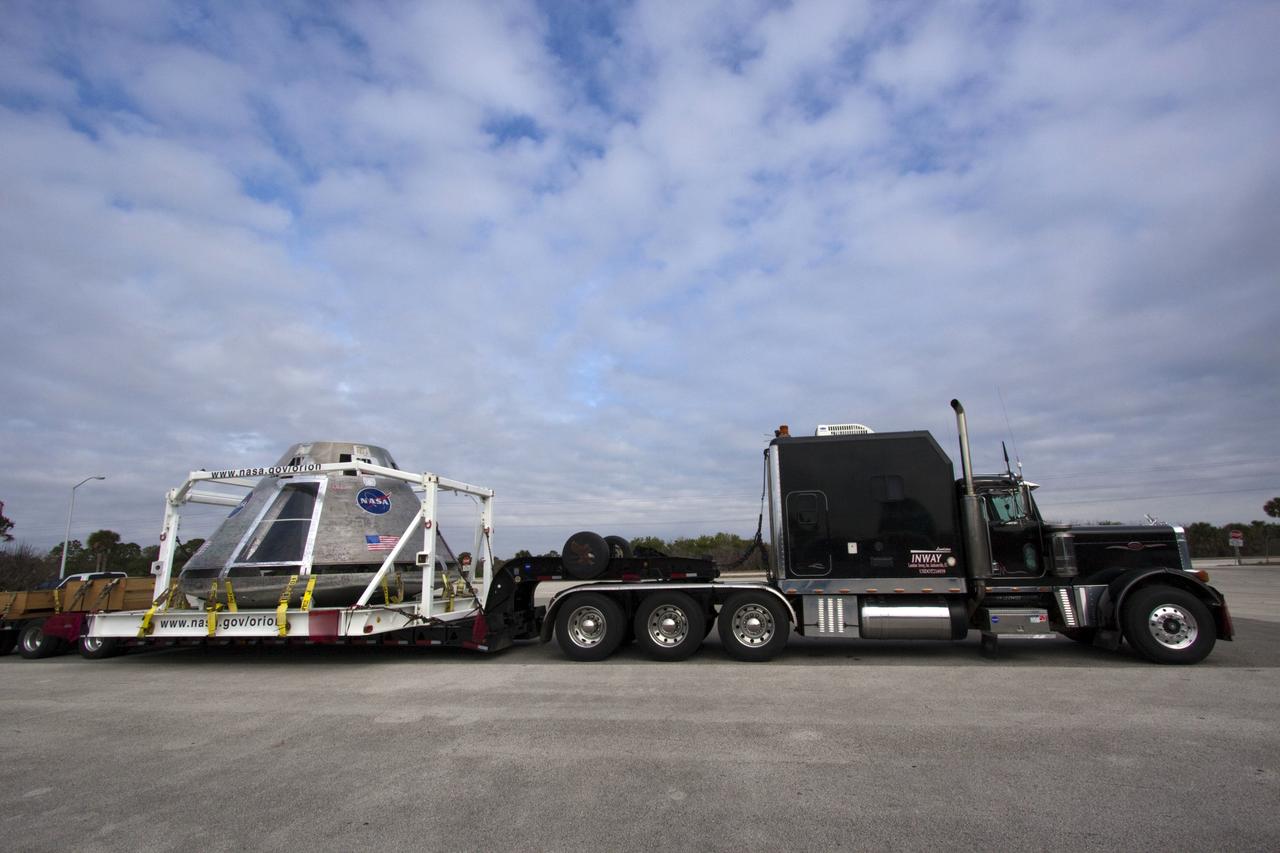
CAPE CANAVERAL, Fla. – A test version of NASA’s Orion spacecraft completed a cross-country journey at NASA’s Kennedy Space Center in Florida on Feb. 8, after giving residents in three states the chance to see a full scale mockup of the craft that will take humans into deep space. The capsule will be stored in Kennedy’s Multi-Payload Processing Facility. The test vehicle was used by ground crews in advance of the launch abort system flight test that took place in New Mexico in 2010. Photo Credit: NASA/Jim Grossmann
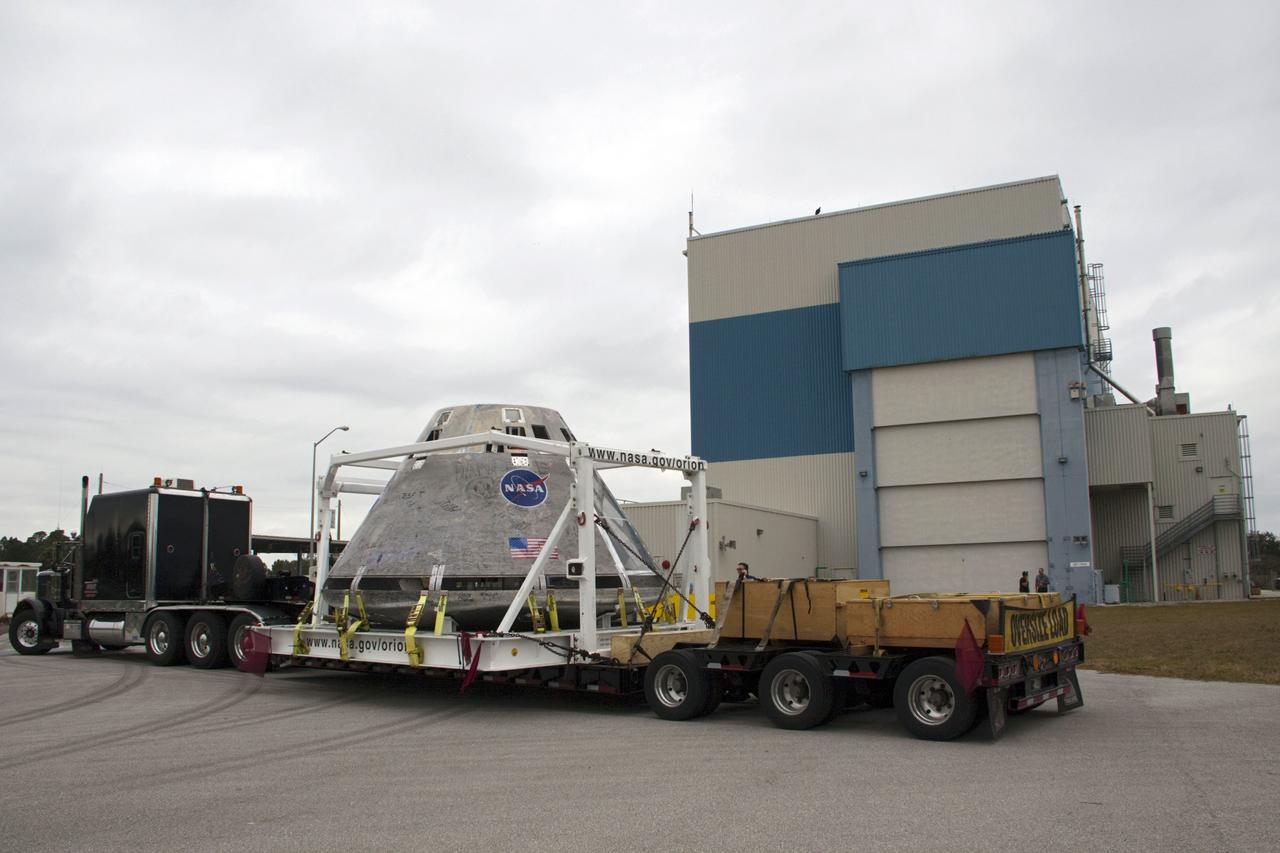
CAPE CANAVERAL, Fla. – A test version of NASA’s Orion spacecraft completed a cross-country journey at NASA’s Kennedy Space Center in Florida on Feb. 8, after giving residents in three states the chance to see a full scale mockup of the craft that will take humans into deep space. The capsule will be stored in Kennedy’s Multi-Payload Processing Facility. The test vehicle was used by ground crews in advance of the launch abort system flight test that took place in New Mexico in 2010. Photo Credit: NASA/Jim Grossmann
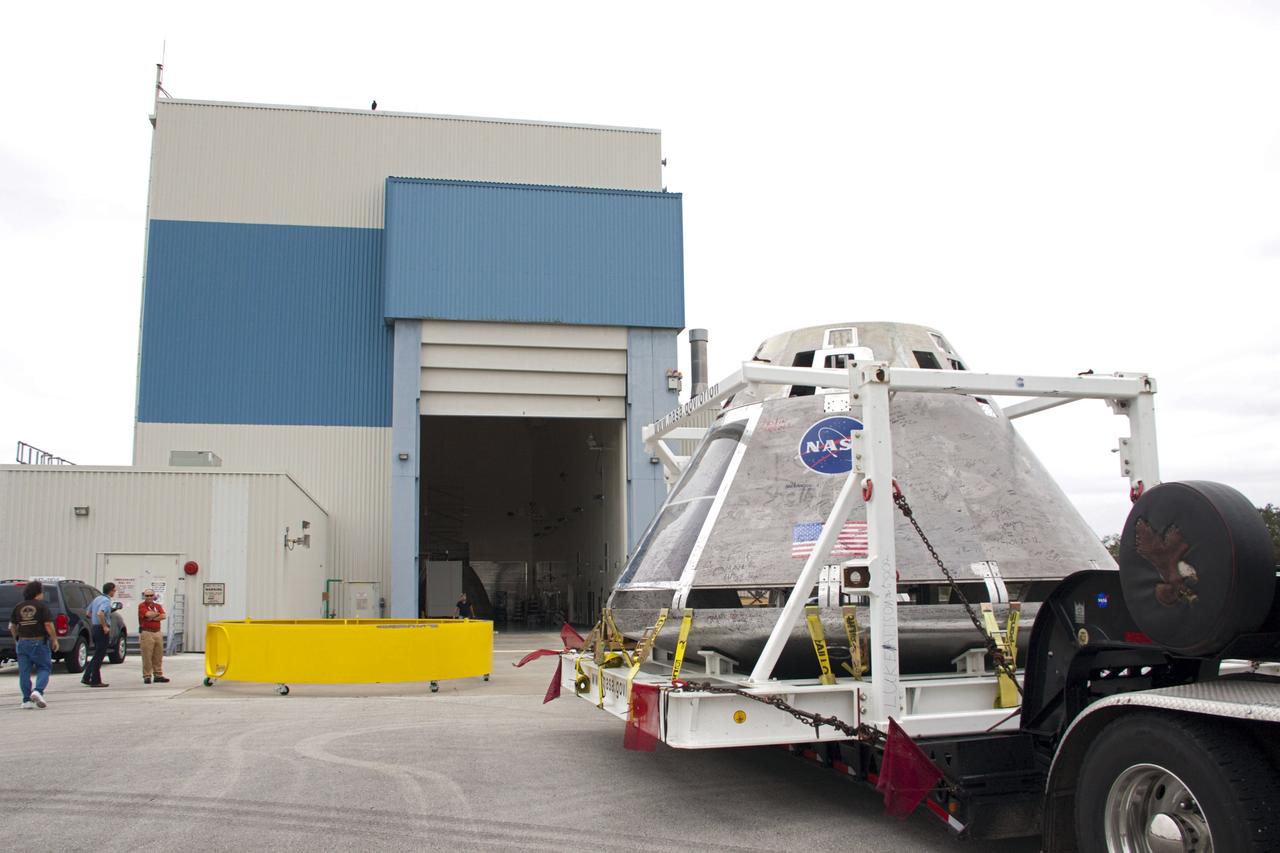
CAPE CANAVERAL, Fla. – A test version of NASA’s Orion spacecraft completed a cross-country journey at NASA’s Kennedy Space Center in Florida on Feb. 8, after giving residents in three states the chance to see a full scale mockup of the craft that will take humans into deep space. The capsule will be stored in Kennedy’s Multi-Payload Processing Facility. The test vehicle was used by ground crews in advance of the launch abort system flight test that took place in New Mexico in 2010. Photo Credit: NASA/Jim Grossmann
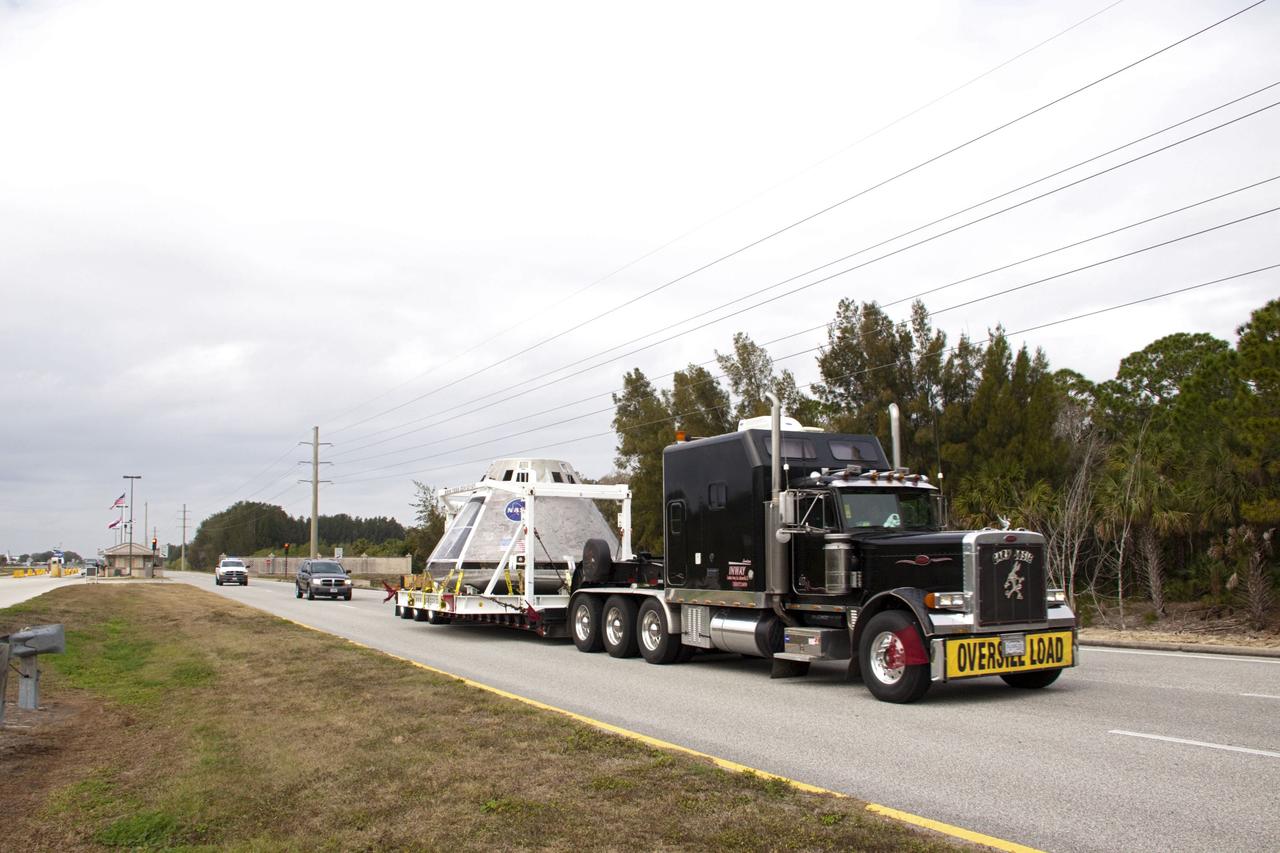
CAPE CANAVERAL, Fla. – A test version of NASA’s Orion spacecraft completed a cross-country journey at NASA’s Kennedy Space Center in Florida on Feb. 8, after giving residents in three states the chance to see a full scale mockup of the craft that will take humans into deep space. The capsule will be stored in Kennedy’s Multi-Payload Processing Facility. The test vehicle was used by ground crews in advance of the launch abort system flight test that took place in New Mexico in 2010. Photo Credit: NASA/Jim Grossmann
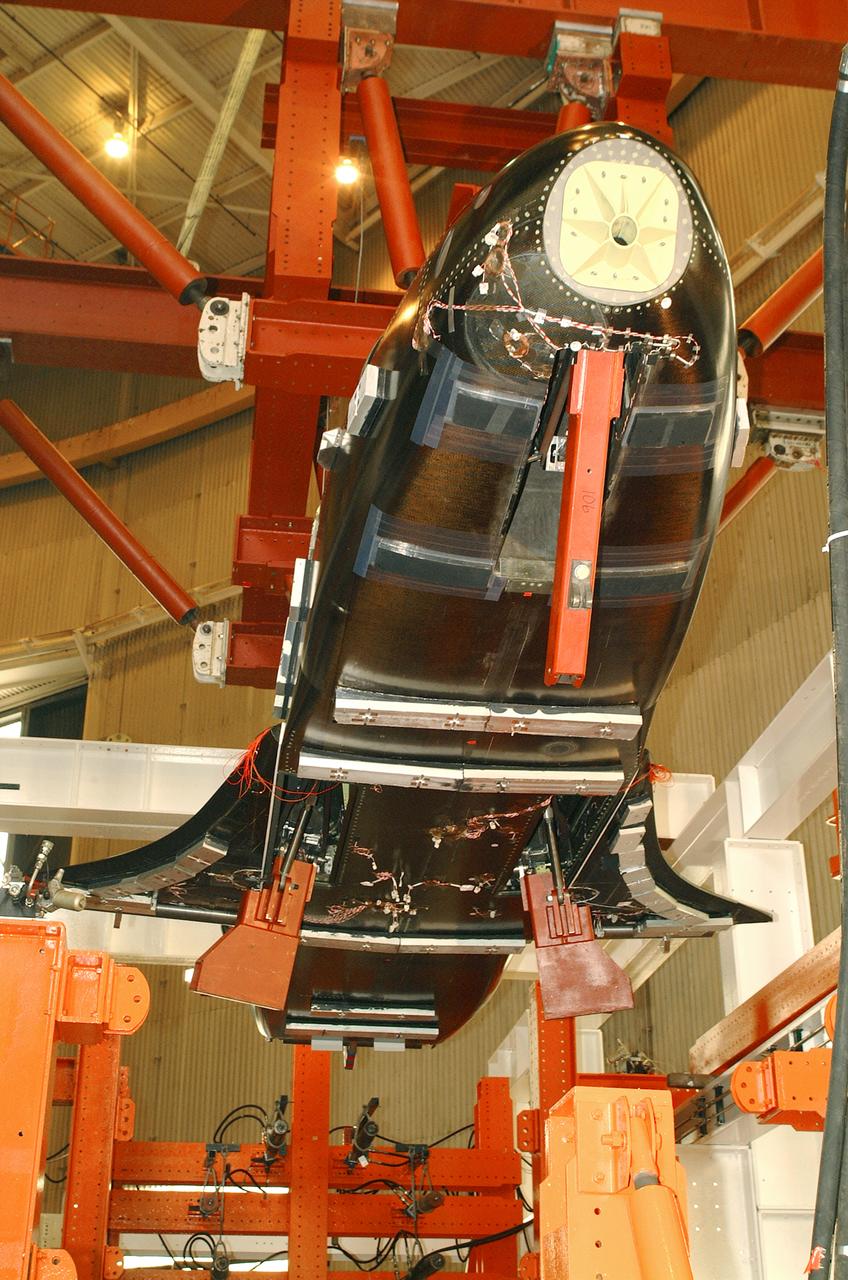
NASA's X-37 Approach and Landing Test Vehicle is installed is a structural facility at Boeing's Huntington Beach, California plant. Tests, completed in July, were conducted to verify the structural integrity of the vehicle in preparation for atmospheric flight tests. Atmospheric flight tests of the Approach and Landing Test Vehicle are scheduled for 2004 and flight tests of the Orbital Vehicle are scheduled for 2006. The X-37 experimental launch vehicle is roughly 27.5 feet (8.3 meters) long and 15 feet (4.5 meters) in wingspan. It's experiment bay is 7 feet (2.1 meters) long and 4 feet (1.2 meters) in diameter. Designed to operate in both the orbital and reentry phases of flight, the X-37 will increase both safety and reliability, while reducing launch costs from $10,000 per pound to $1,000.00 per pound. The X-37 program is managed by the Marshall Space Flight Center and built by the Boeing Company.
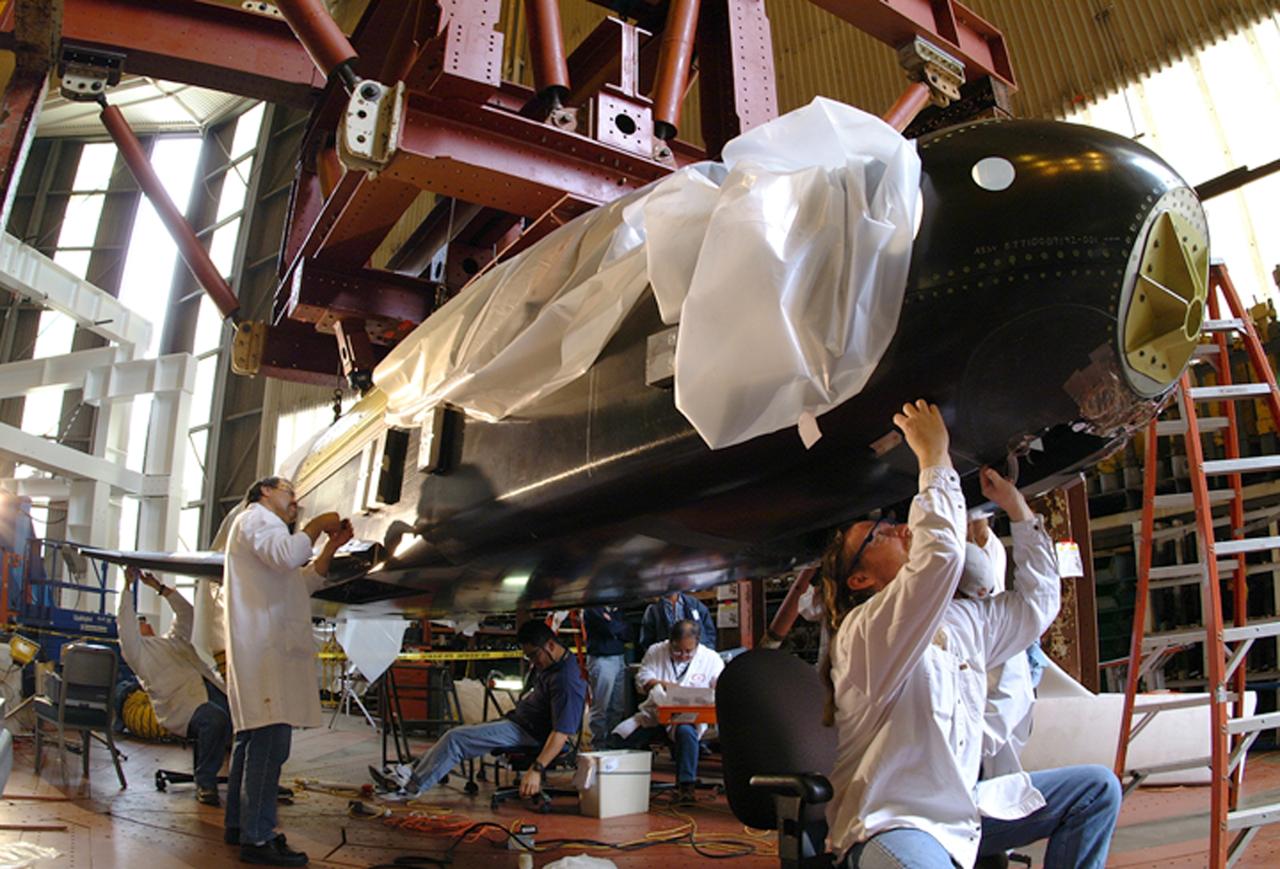
NASA's X-37 Approach and Landing Test Vehicle is installed is a structural facility at Boeing's Huntington Beach, California plant, where technicians make adjustments to composite panels. Tests, completed in July, were conducted to verify the structural integrity of the vehicle in preparation for atmospheric flight tests. Atmospheric flight tests of the Approach and Landing Test Vehicle are scheduled for 2004 and flight tests of the Orbital Vehicle are scheduled for 2006. The X-37 experimental launch vehicle is roughly 27.5 feet (8.3 meters) long and 15 feet (4.5 meters) in wingspan. It's experiment bay is 7 feet (2.1 meters) long and 4 feet (1.2 meters) in diameter. Designed to operate in both the orbital and reentry phases of flight, the X-37 will increase both safety and reliability, while reducing launch costs from $10,000 per pound to $1,000.00 per pound. The X-37 program is managed by the Marshall Space Flight Center and built by the Boeing Company.
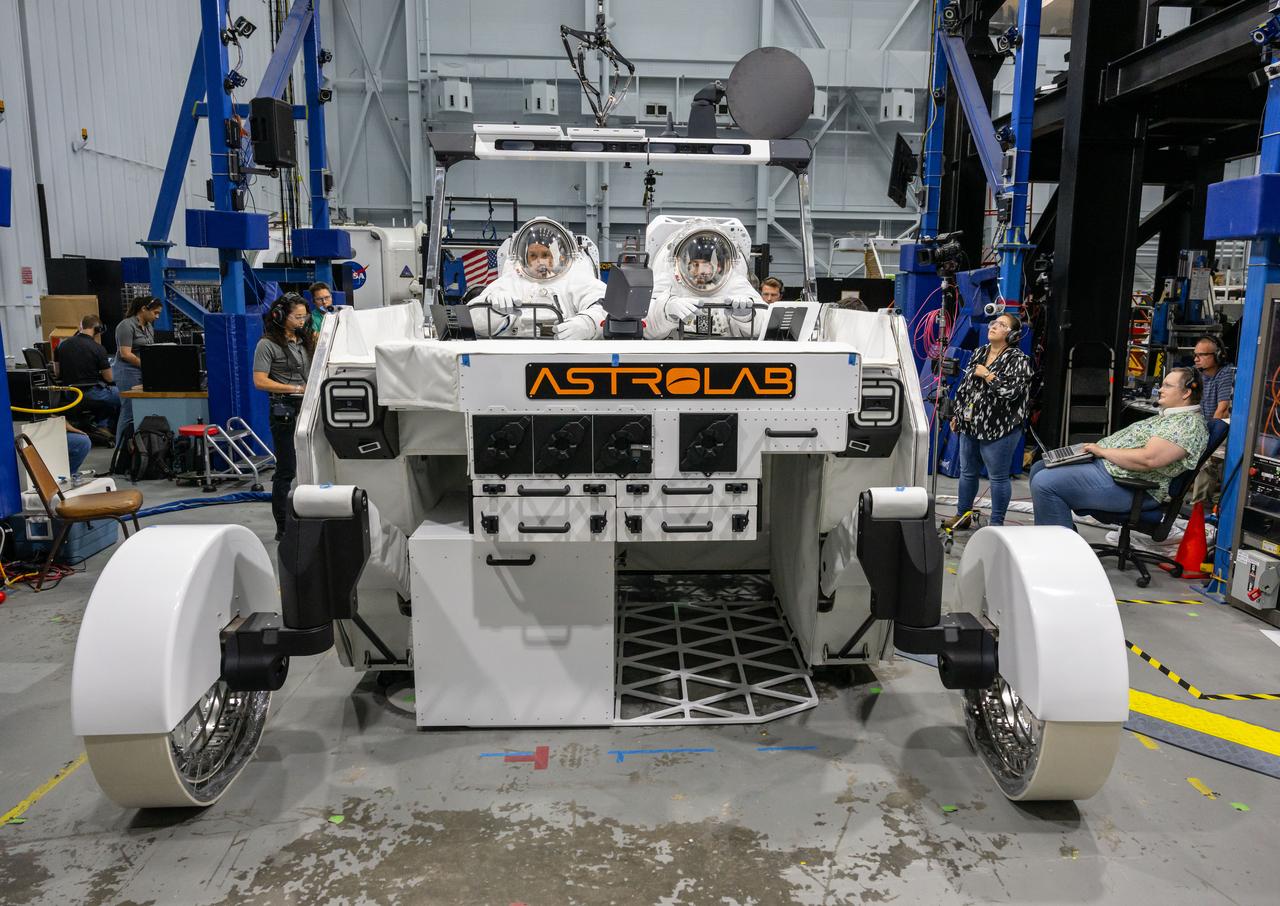
NASA astronaut Frank Rubio (left) and NASA spacesuit engineer Zach Tejral (right) sit inside Astrolab’s FLEX lunar terrain vehicle evaluating the display interfaces during testing at NASA’s Johnson Space Center. Image Credit: NASA/James Blair
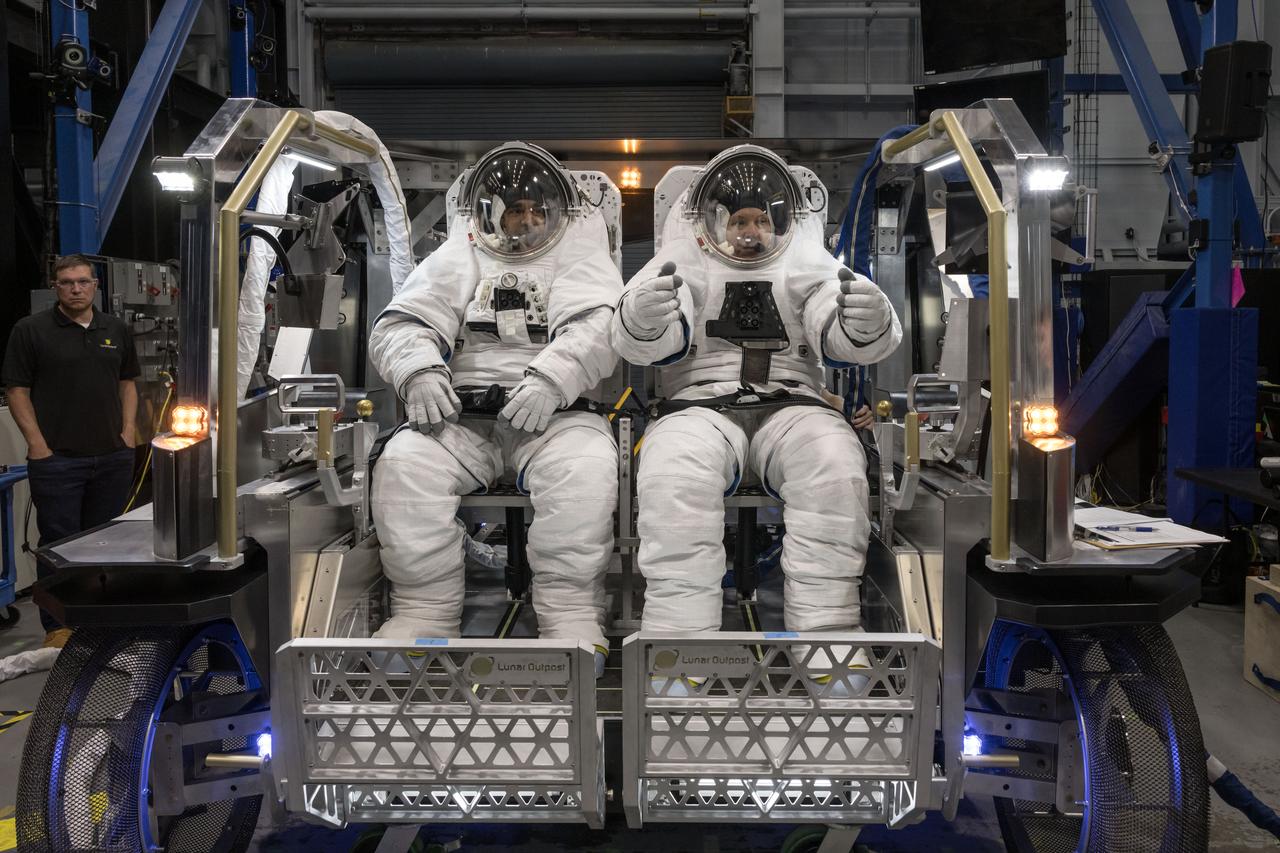
NASA astronauts Raja Chari (left) and Randy Bresnik (right) sit inside Lunar Outpost’s Eagle lunar terrain vehicle evaluating the seat configuration during testing at NASA’s Johnson Space Center. Image Credit: NASA/David DeHoyos
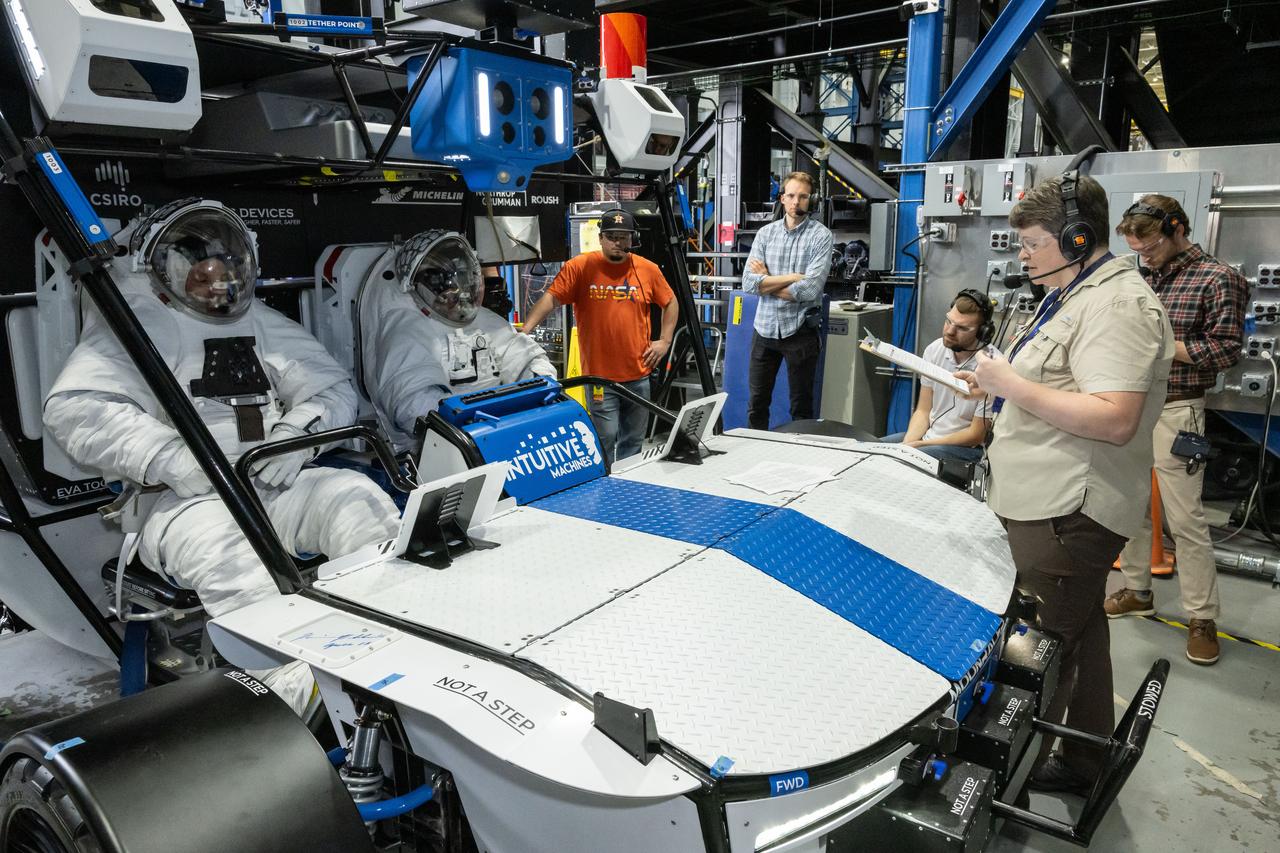
NASA engineer Dave Coan (left) and NASA astronaut Jessica Watkins (right) sit inside Intuitive Machines’ Moon RACER lunar terrain vehicle evaluating the crew compartment during testing at NASA’s Johnson Space Center. Image Credit: NASA/James Blair
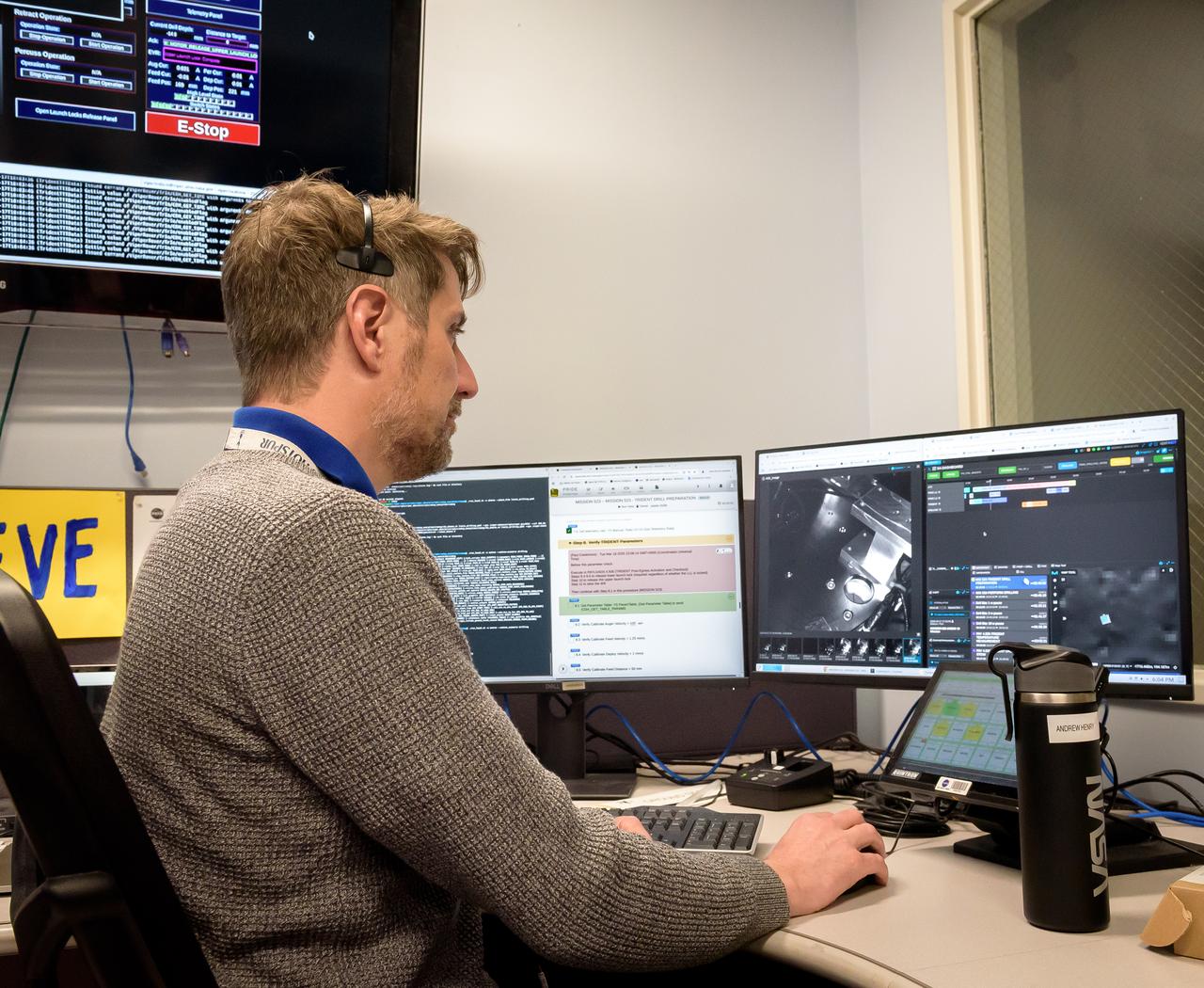
Andrew Henry during the Volatiles Investigating Polar Exploration Rover (VIPER) vehicle operational readiness test in the Multi-Mission Operations Center (MMOC), N240A.
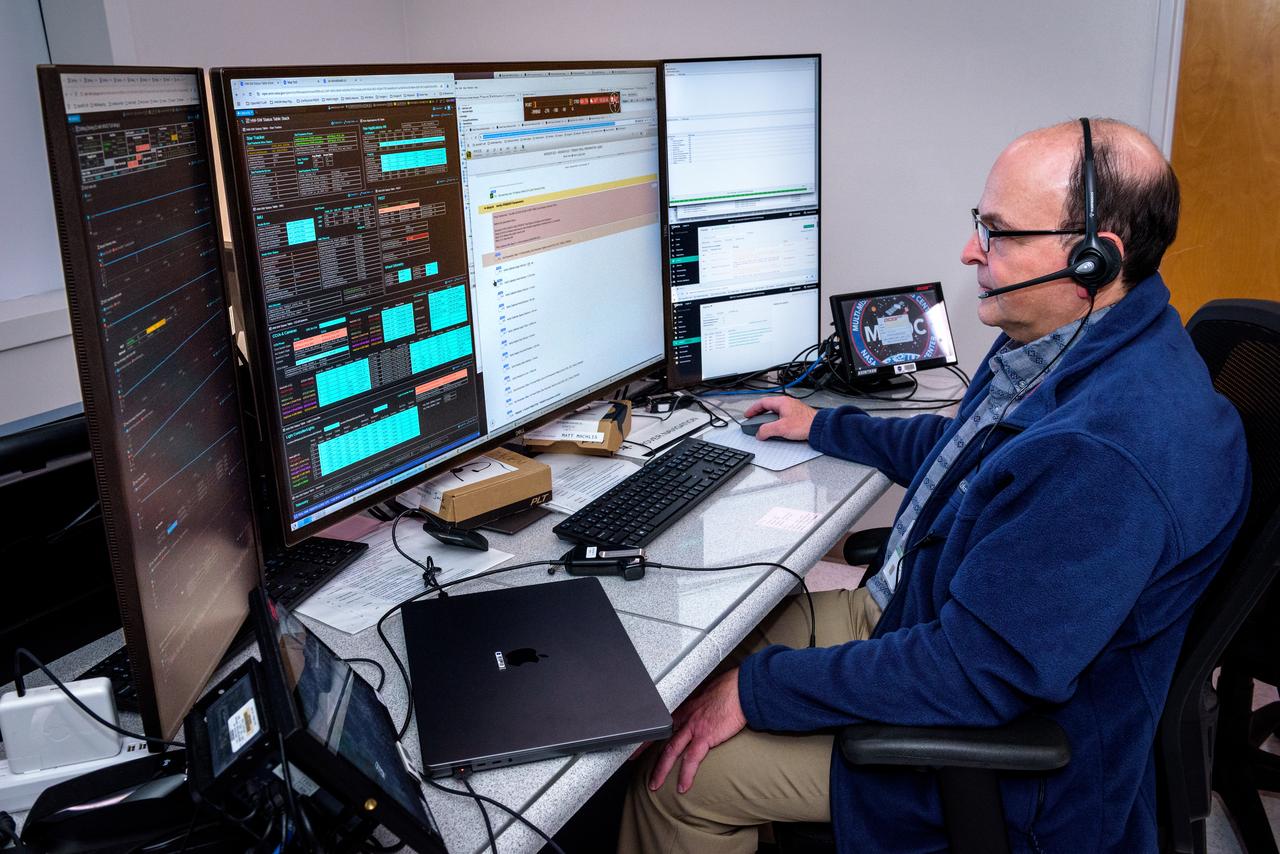
Matt Machlis during the Volatiles Investigating Polar Exploration Rover (VIPER) vehicle operational readiness test in the Multi-Mission Operations Center (MMOC), N240A.
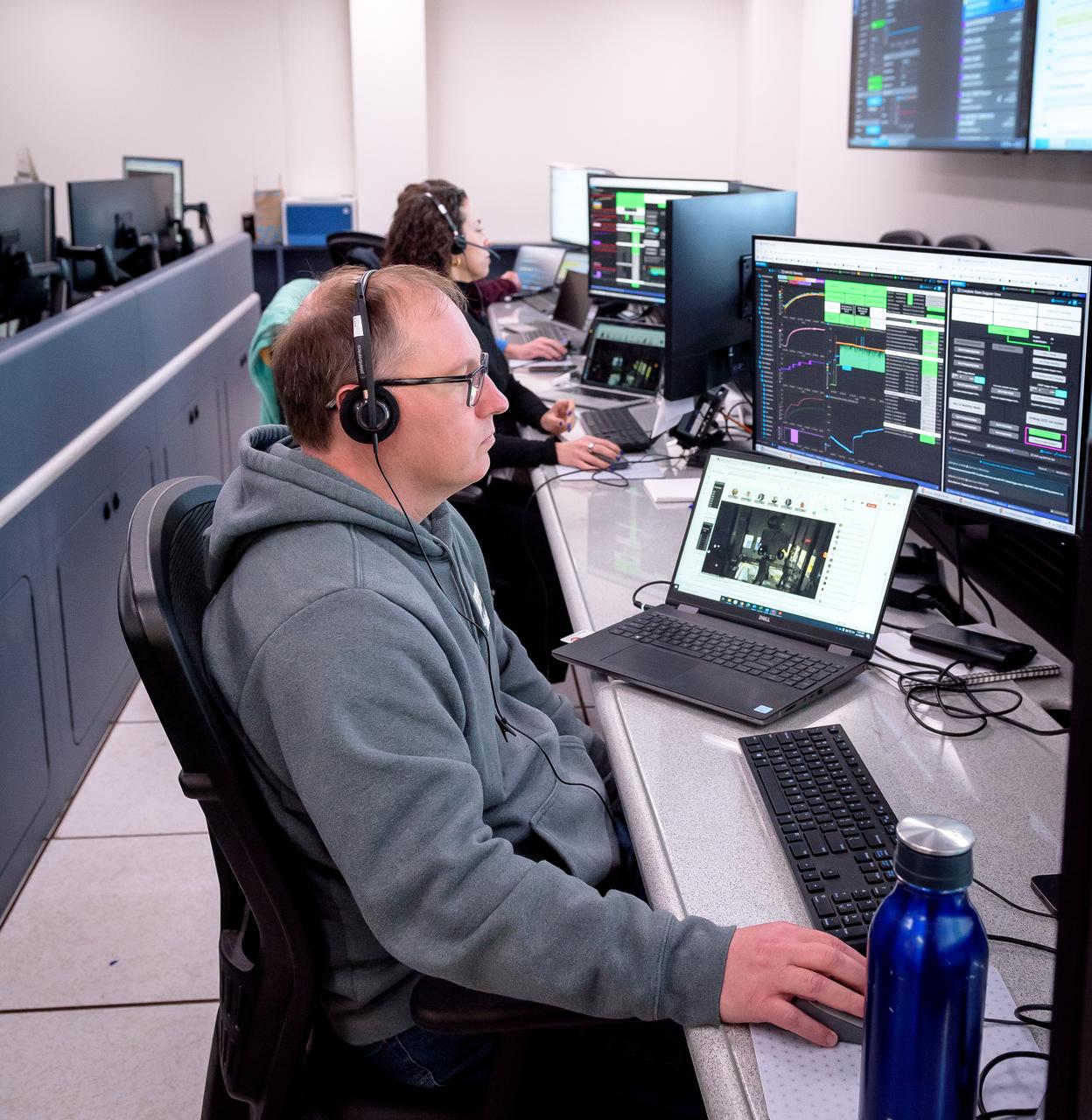
Richard Bielawski during the Volatiles Investigating Polar Exploration Rover (VIPER) vehicle operational readiness test in the Multi-Mission Operations Center (MMOC), N240A.

Hans Thomas during the Volatiles Investigating Polar Exploration Rover (VIPER) vehicle operational readiness test in the Multi-Mission Operations Center (MMOC), N240A.
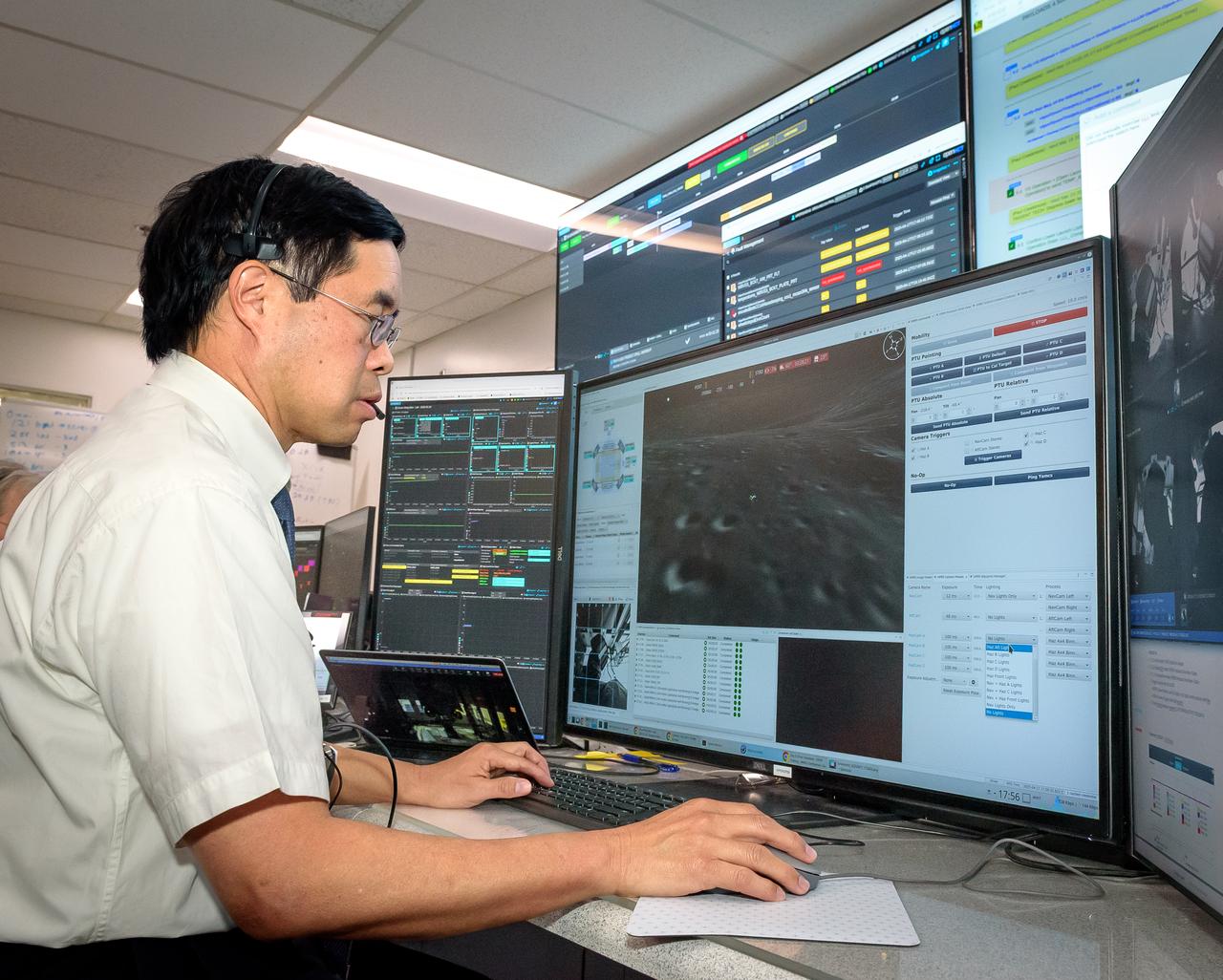
Terry Fong during the Volatiles Investigating Polar Exploration Rover (VIPER) vehicle operational readiness test in the Multi-Mission Operations Center (MMOC), N240A.
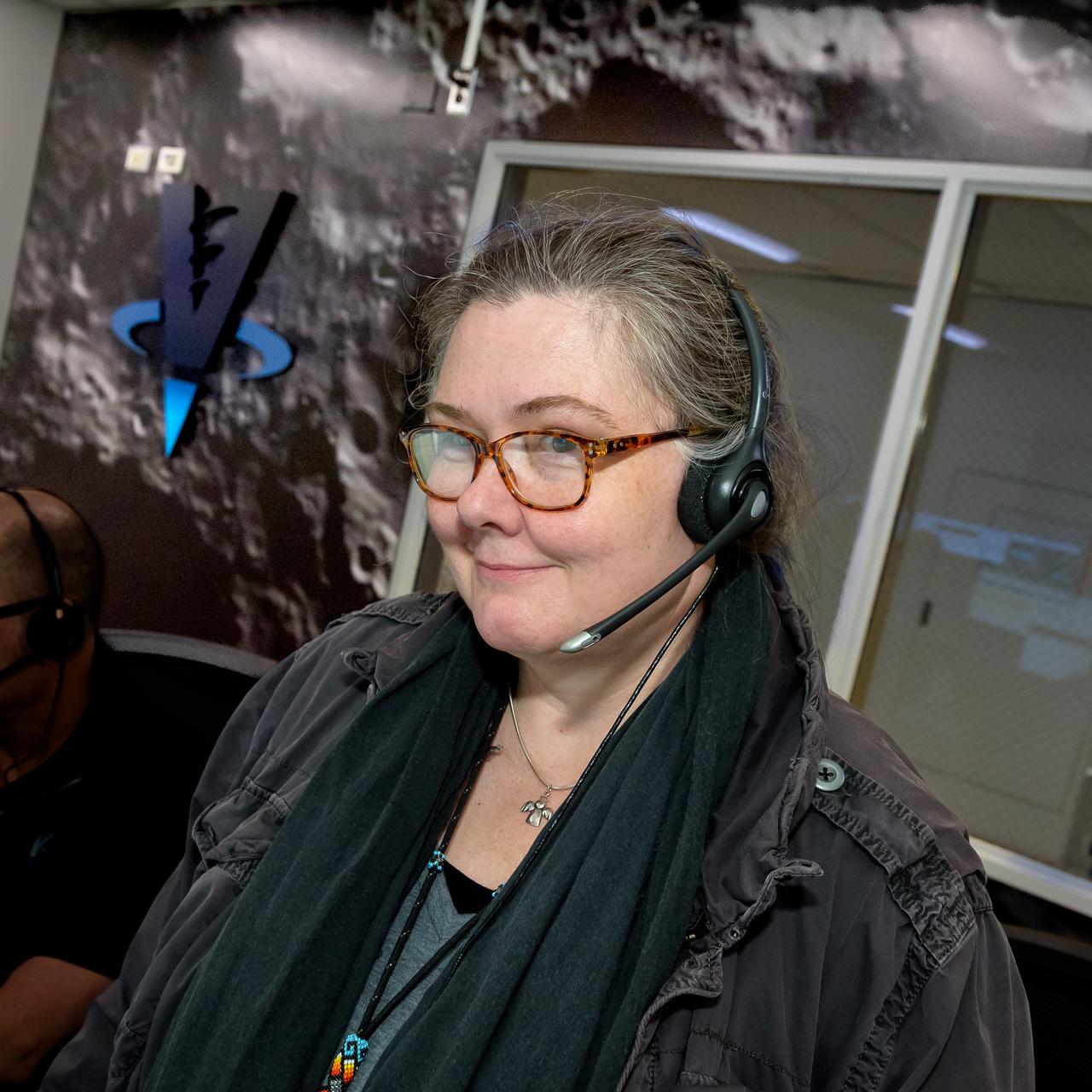
Sybil Adams during the Volatiles Investigating Polar Exploration Rover (VIPER) vehicle operational readiness test in the Multi-Mission Operations Center (MMOC), N240A.

Erin Fritzler during the Volatiles Investigating Polar Exploration Rover (VIPER) vehicle operational readiness test in the Multi-Mission Operations Center (MMOC), N240A.
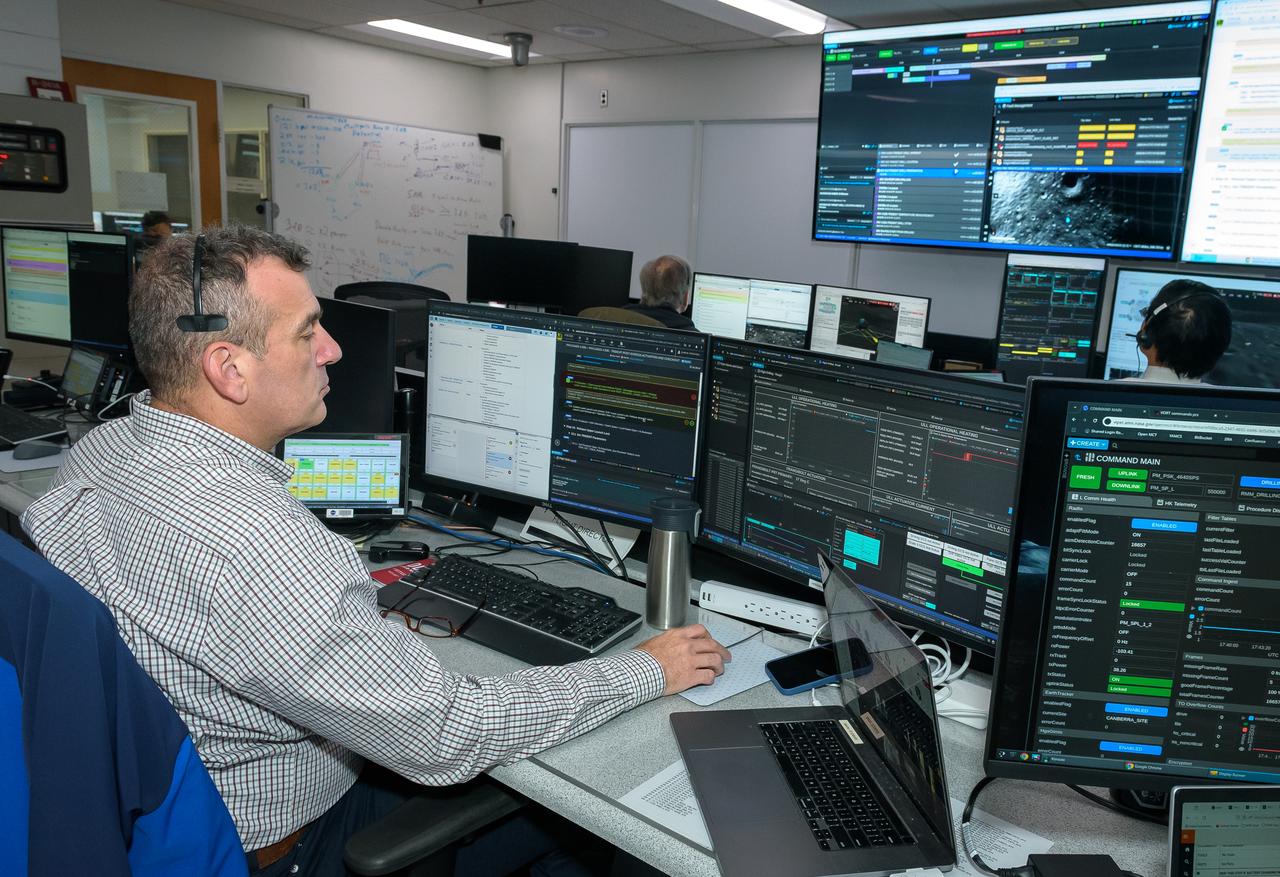
Chris Provencher during the Volatiles Investigating Polar Exploration Rover (VIPER) vehicle operational readiness test in the Multi-Mission Operations Center (MMOC), N240A.

Rusty Hunt during the Volatiles Investigating Polar Exploration Rover (VIPER) vehicle operational readiness test in the Multi-Mission Operations Center (MMOC), N240A.
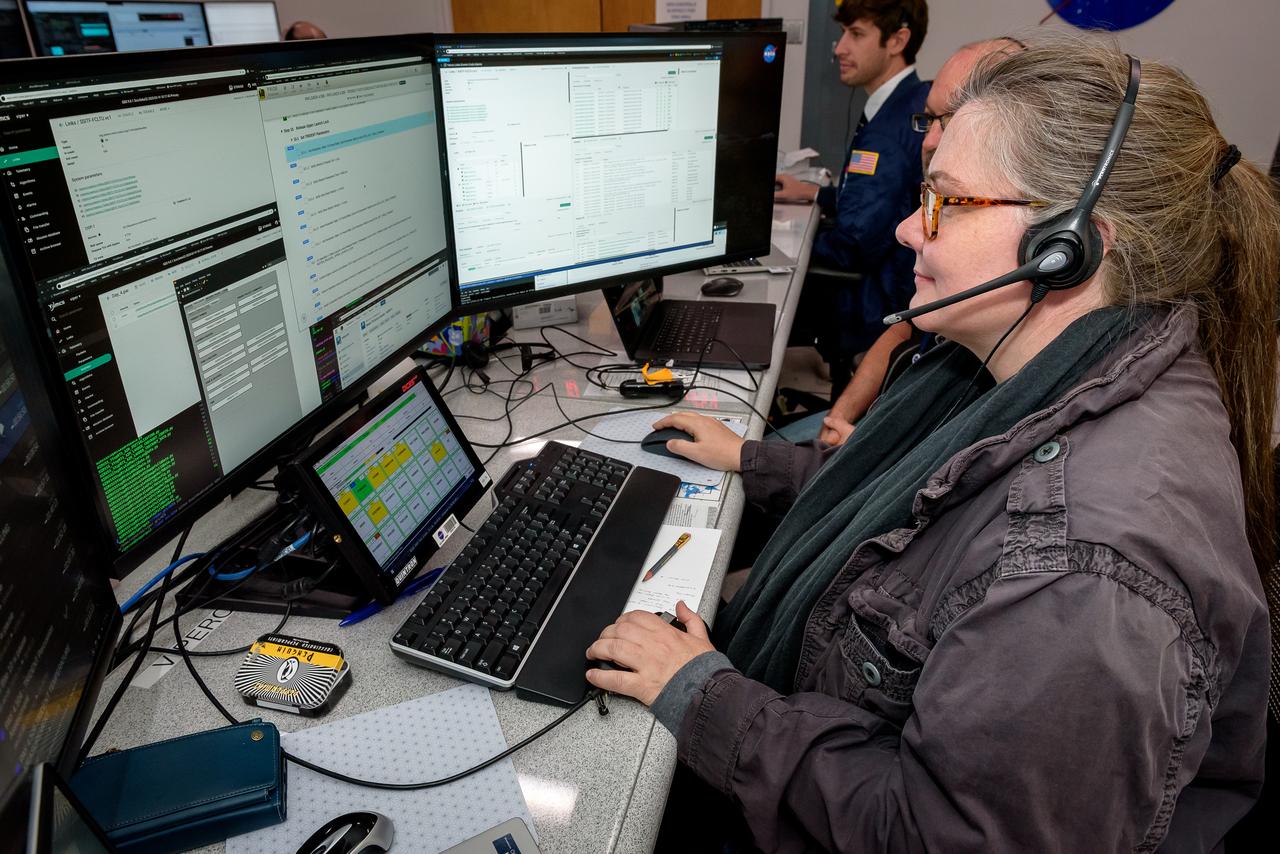
Sybil Adams during the Volatiles Investigating Polar Exploration Rover (VIPER) vehicle operational readiness test in the Multi-Mission Operations Center (MMOC), N240A.

Victoria Moore outside the Volatiles Investigating Polar Exploration Rover (VIPER) vehicle operational readiness test in the Multi-Mission Operations Center (MMOC), N240A.

Kaden Jeppsen during the Volatiles Investigating Polar Exploration Rover (VIPER) vehicle operational readiness test in the Multi-Mission Operations Center (MMOC), N240A.
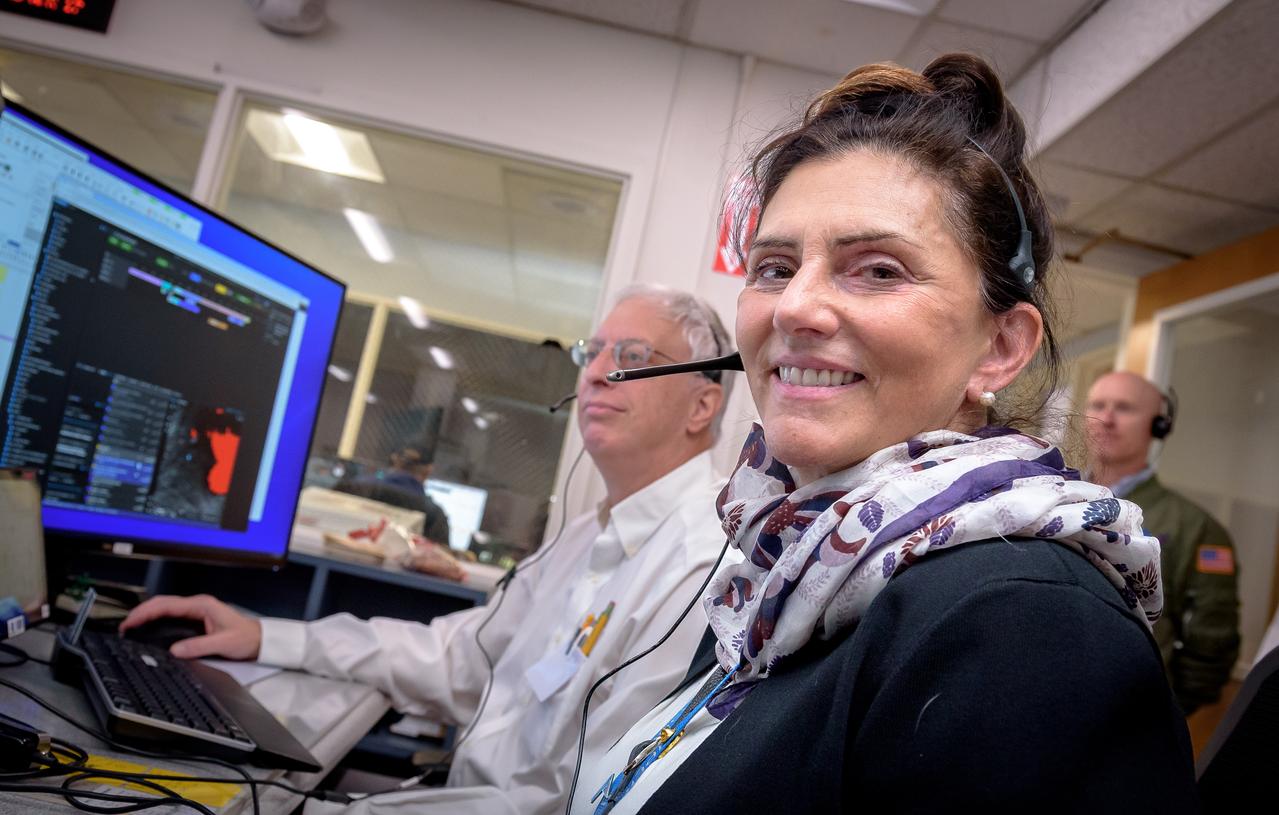
Loretta Falcone during the Volatiles Investigating Polar Exploration Rover (VIPER) vehicle operational readiness test in the Multi-Mission Operations Center (MMOC), N240A.
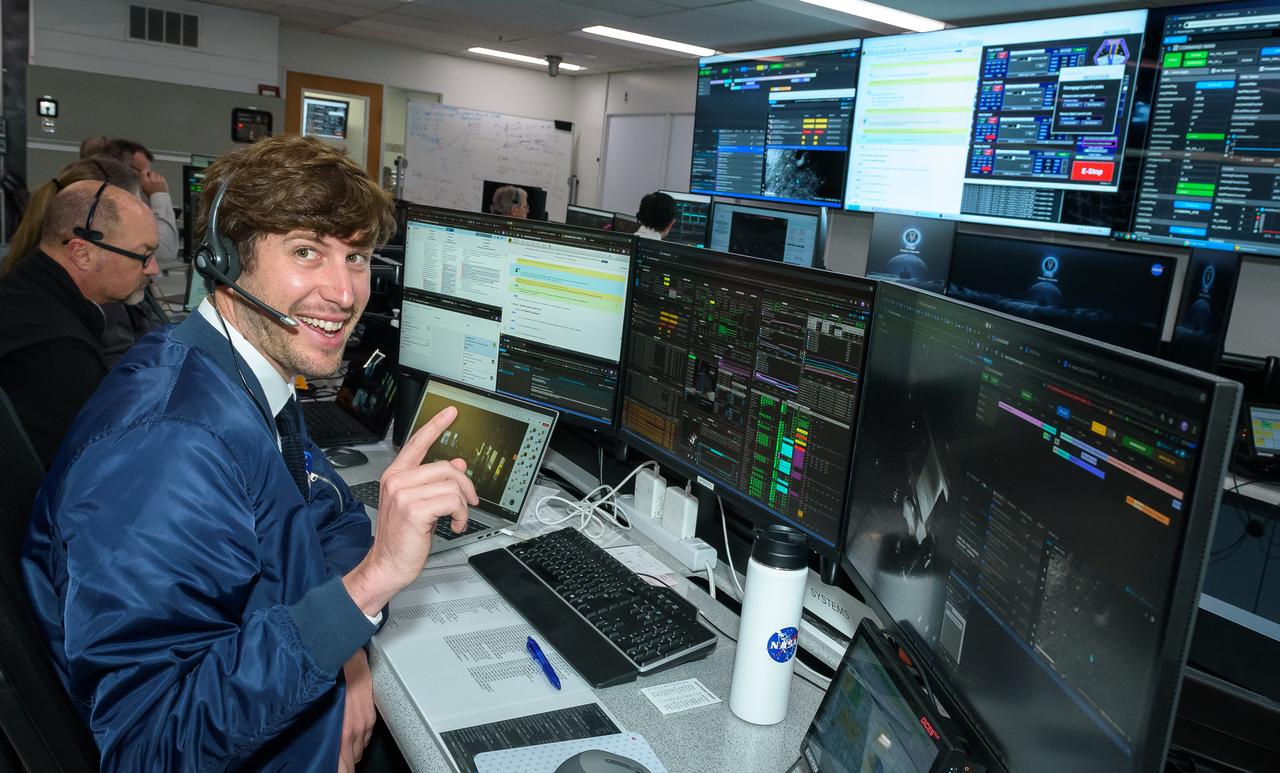
Jasper Wolfe during the Volatiles Investigating Polar Exploration Rover (VIPER) vehicle operational readiness test in the Multi-Mission Operations Center (MMOC), N240A.
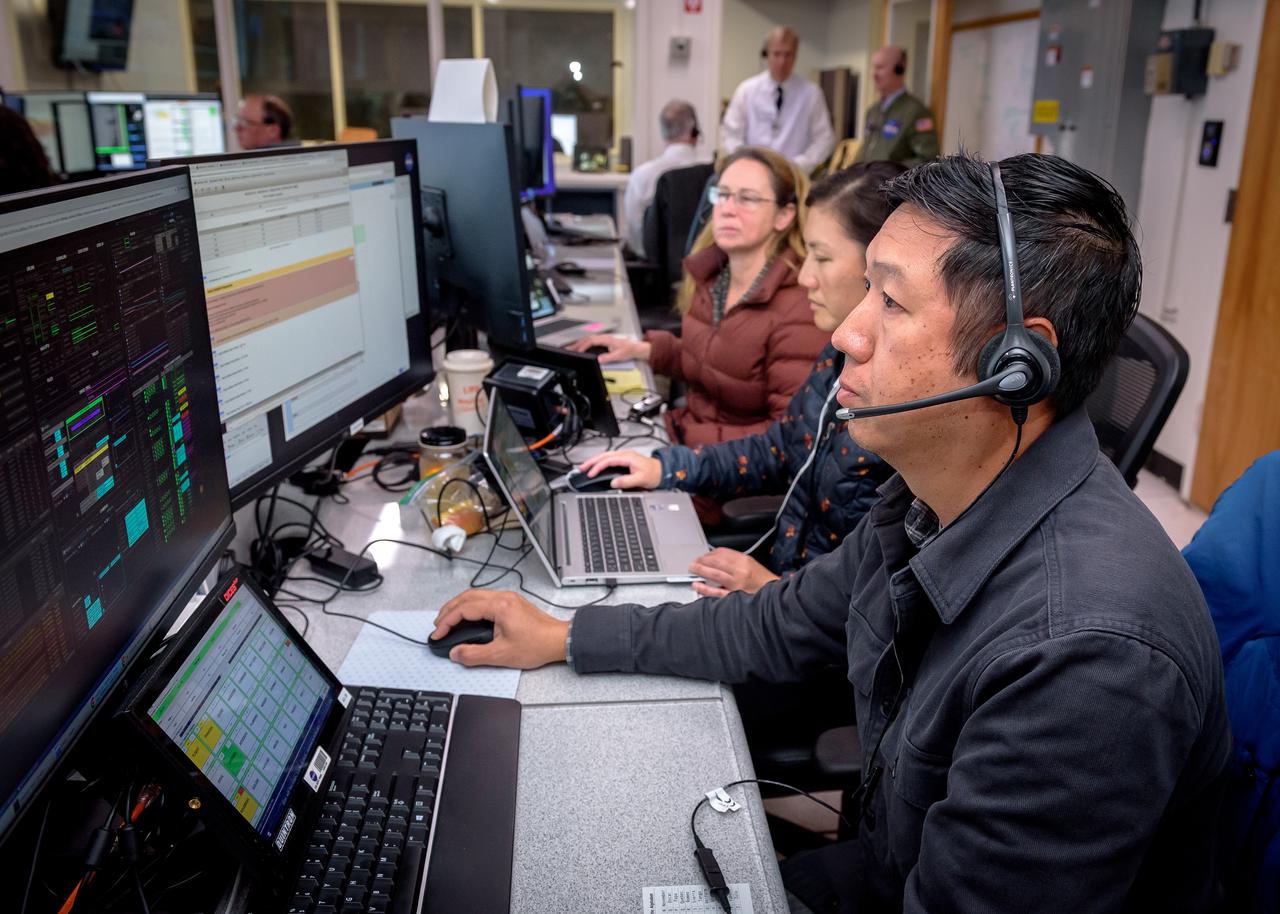
Vinh To during the Volatiles Investigating Polar Exploration Rover (VIPER) vehicle operational readiness test in the Multi-Mission Operations Center (MMOC), N240A.
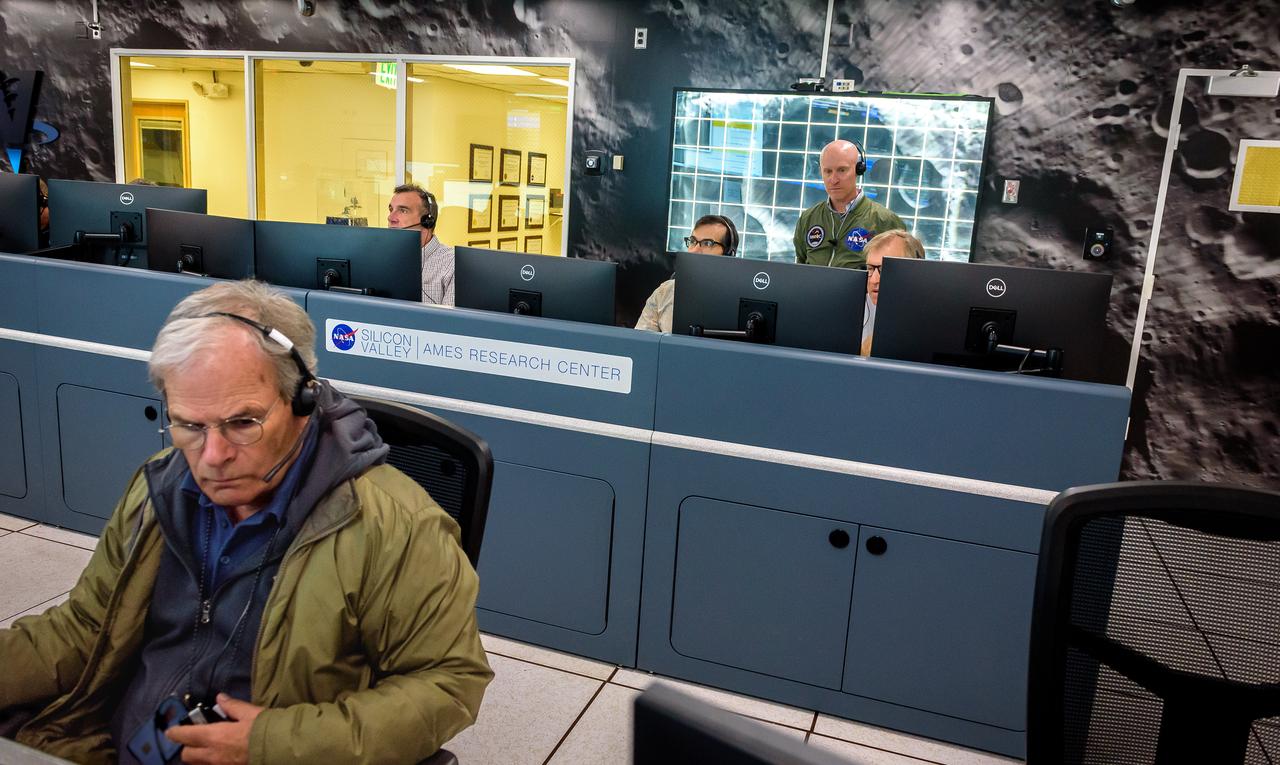
Rick Elphic during the Volatiles Investigating Polar Exploration Rover (VIPER) vehicle operational readiness test in the Multi-Mission Operations Center (MMOC), N240A.
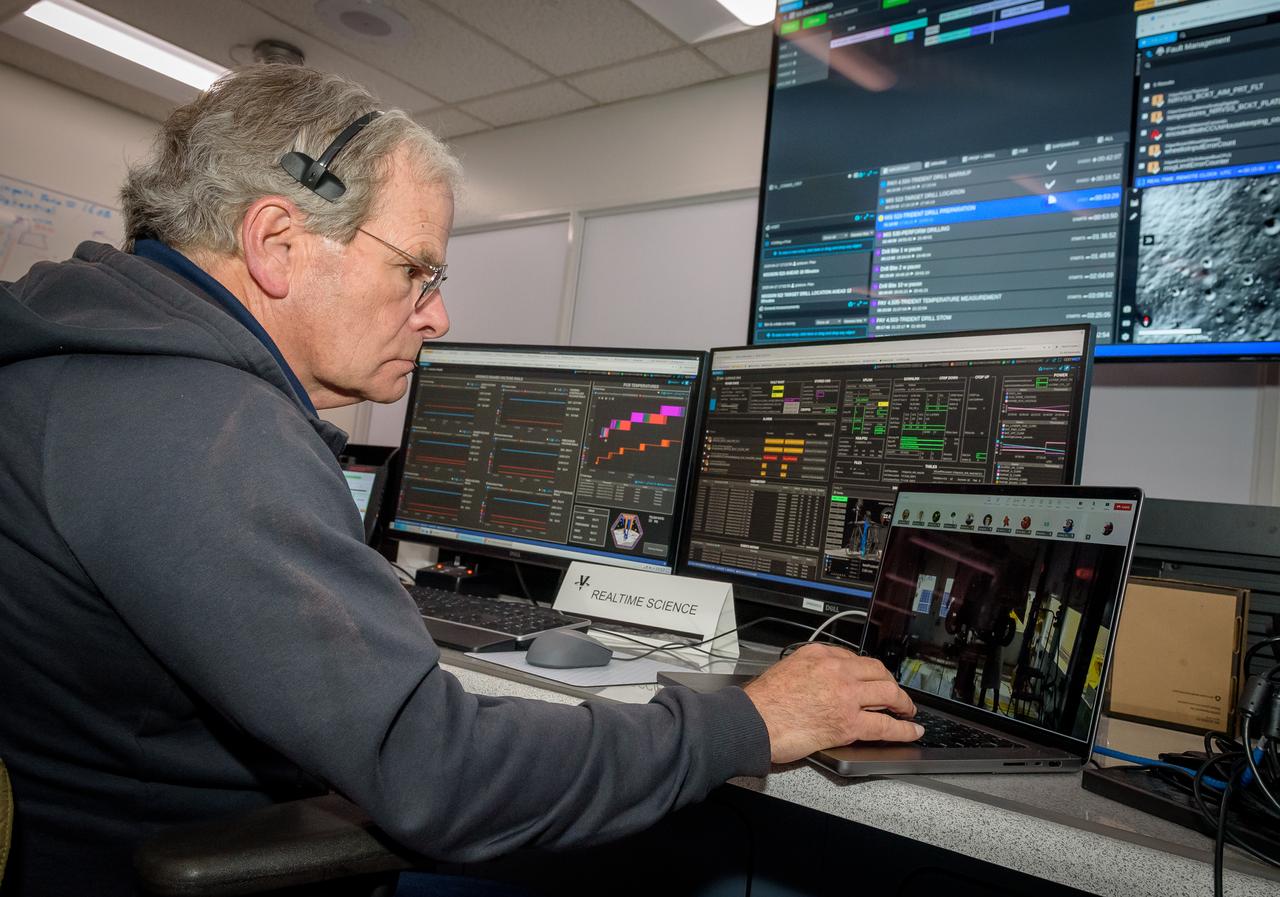
Rick Elphic during the Volatiles Investigating Polar Exploration Rover (VIPER) vehicle operational readiness test in the Multi-Mission Operations Center (MMOC), N240A.
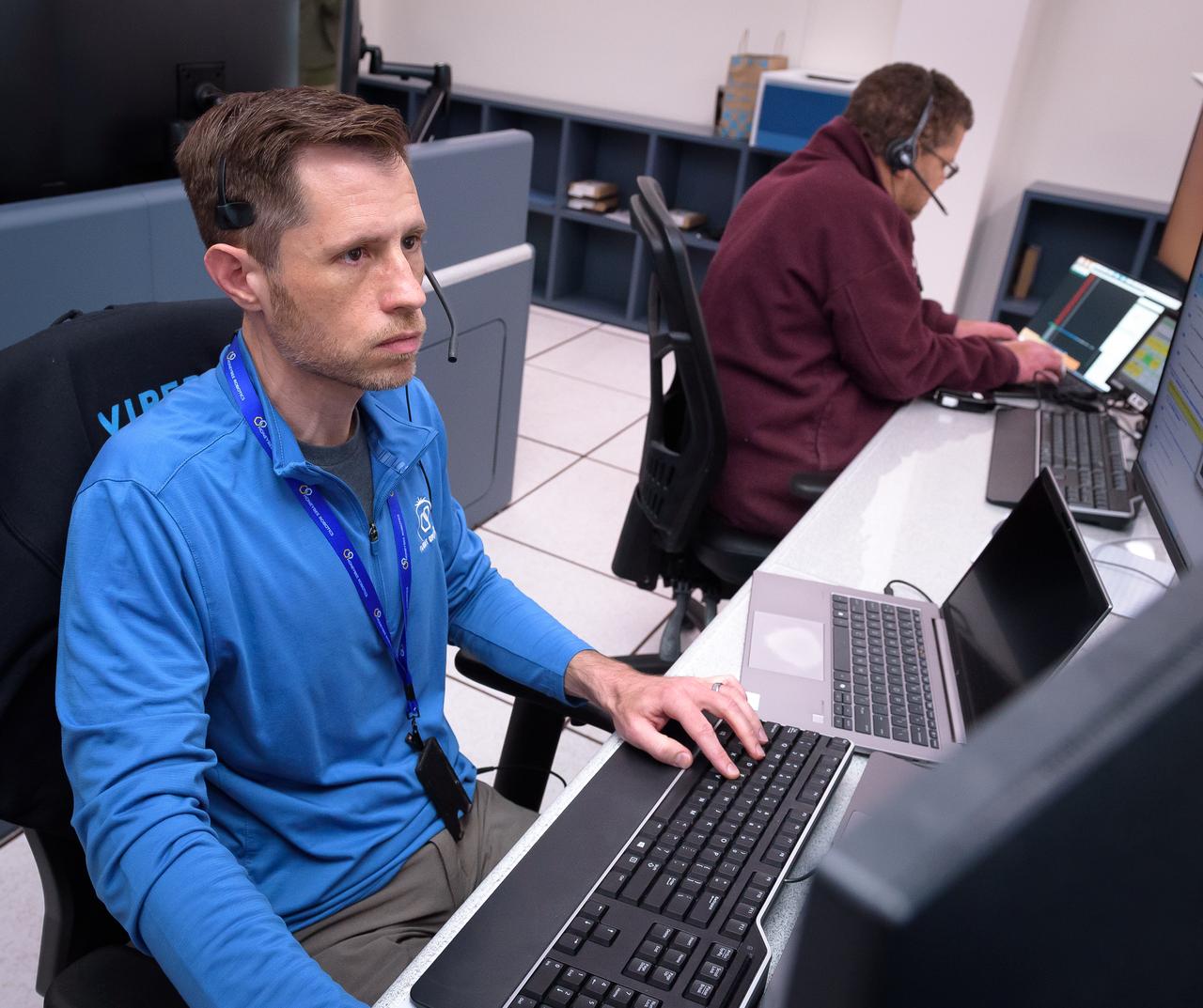
Paul Creekmore during the Volatiles Investigating Polar Exploration Rover (VIPER) vehicle operational readiness test in the Multi-Mission Operations Center (MMOC), N240A.
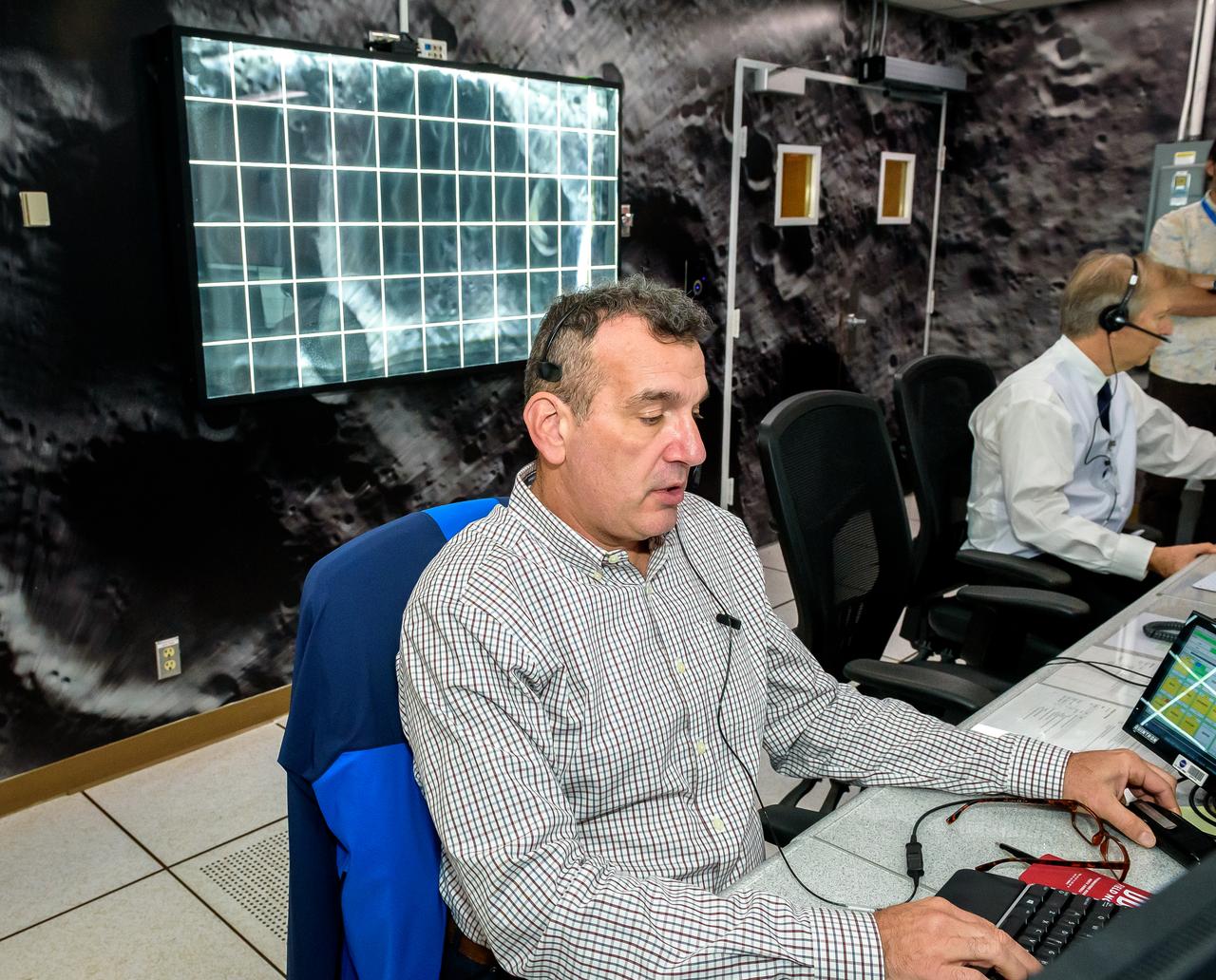
Chris Provencher during the Volatiles Investigating Polar Exploration Rover (VIPER) vehicle operational readiness test in the Multi-Mission Operations Center (MMOC), N240A.

Roshan Kalghatgi during the Volatiles Investigating Polar Exploration Rover (VIPER) vehicle operational readiness test in the Multi-Mission Operations Center (MMOC), N240A.
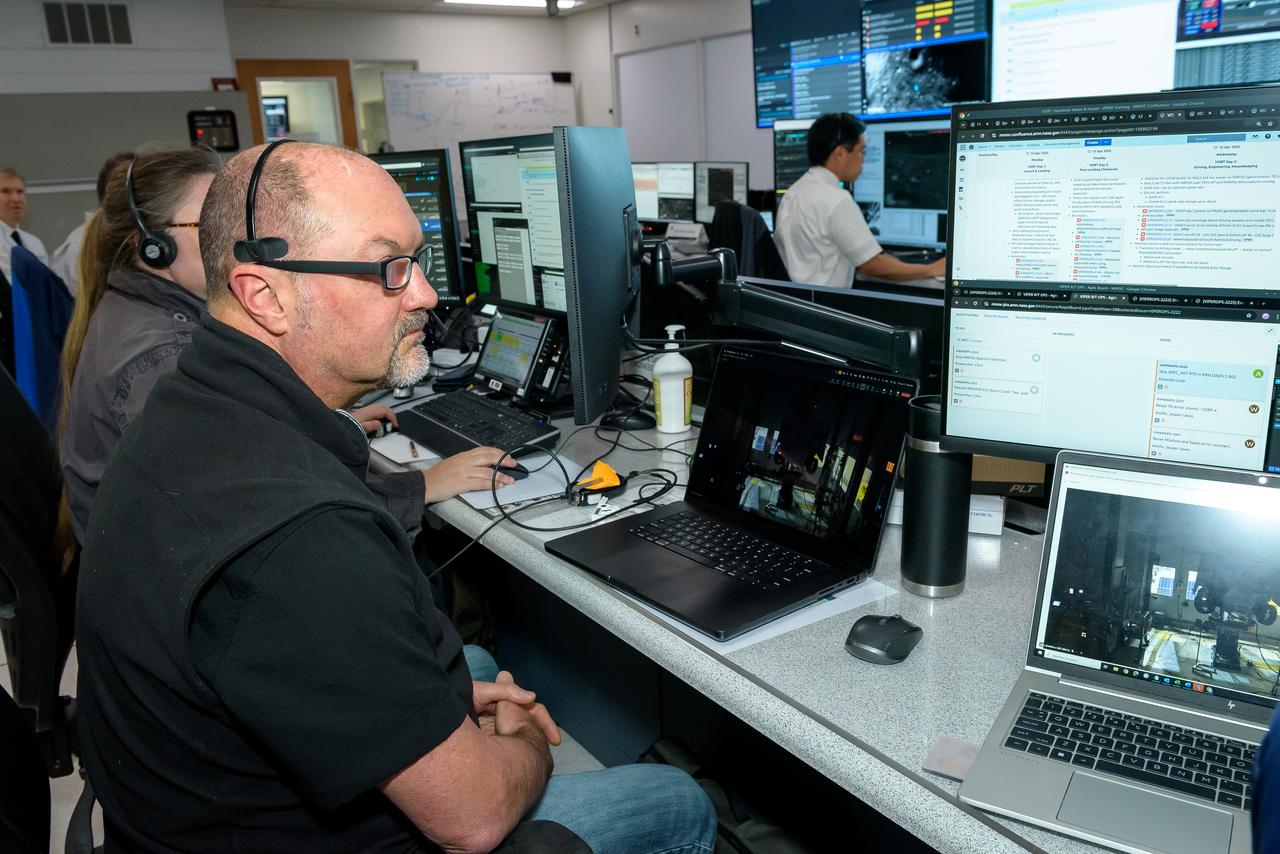
Charles Hacskaylo during the Volatiles Investigating Polar Exploration Rover (VIPER) vehicle operational readiness test in the Multi-Mission Operations Center (MMOC), N240A.
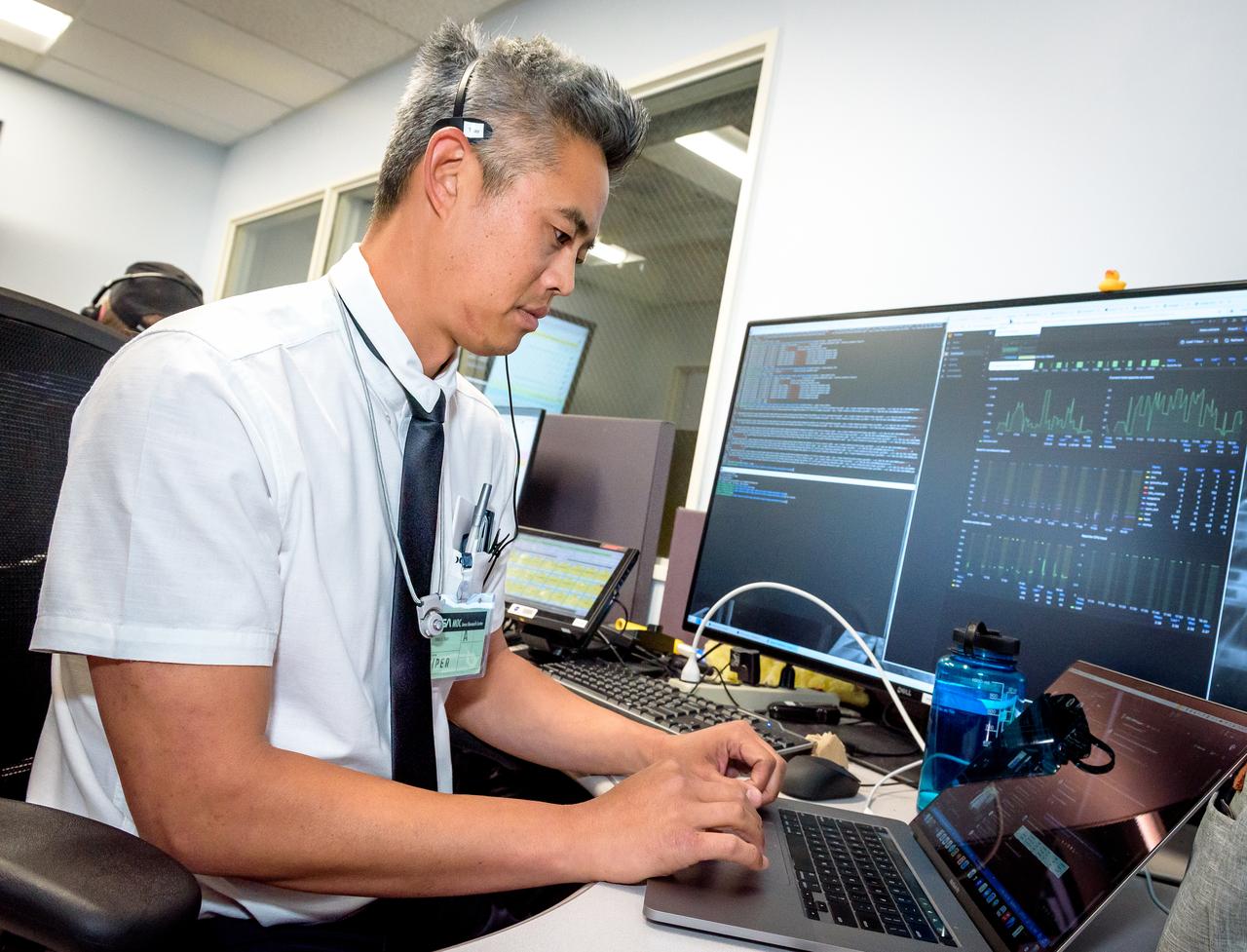
David Tsay during the Volatiles Investigating Polar Exploration Rover (VIPER) vehicle operational readiness test in the Multi-Mission Operations Center (MMOC), N240A.
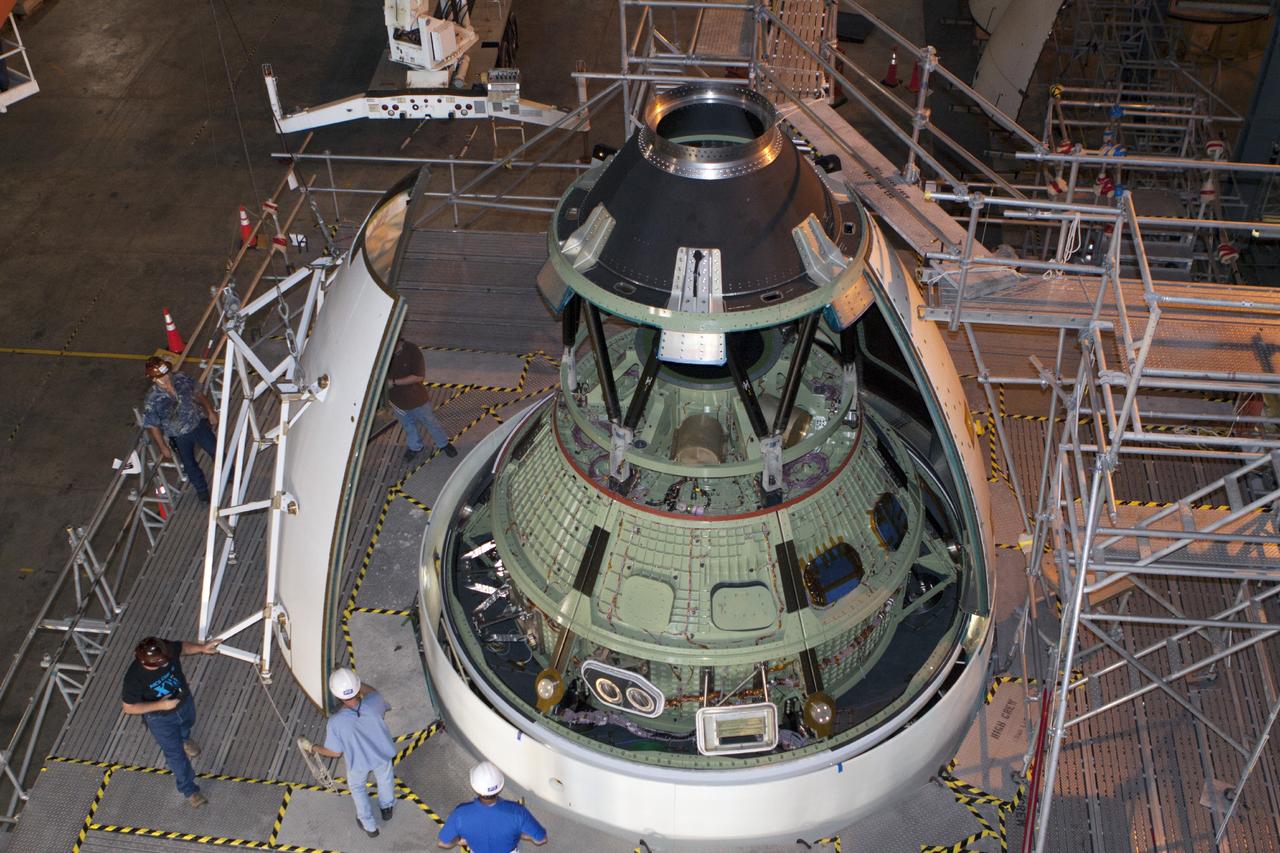
CAPE CANAVERAL, Fla. – At NASA’s Kennedy Space Center in Florida, technicians use a special handling device to bring an ogive panel closer for installation on the Orion ground test vehicle in Vehicle Assembly Building high bay 4. The ogive panels enclose the Orion spacecraft and attach to the Launch Abort System. The test vehicle is being used by the Ground Systems Development and Operations Program for path finding operations, including simulated manufacturing, assembly and stacking procedures. Orion is the exploration spacecraft designed to carry astronauts to destinations not yet explored by humans, including an asteroid and Mars. It will have emergency abort capability, sustain the crew during space travel and provide safe re-entry from deep space return velocities. The first unpiloted test flight of Orion is scheduled to launch in 2014 atop a Delta IV rocket and in 2017 on NASA’s Space Launch System rocket. For more information, visit www.nasa.gov/orion. Photo credit: Kim Shiflett
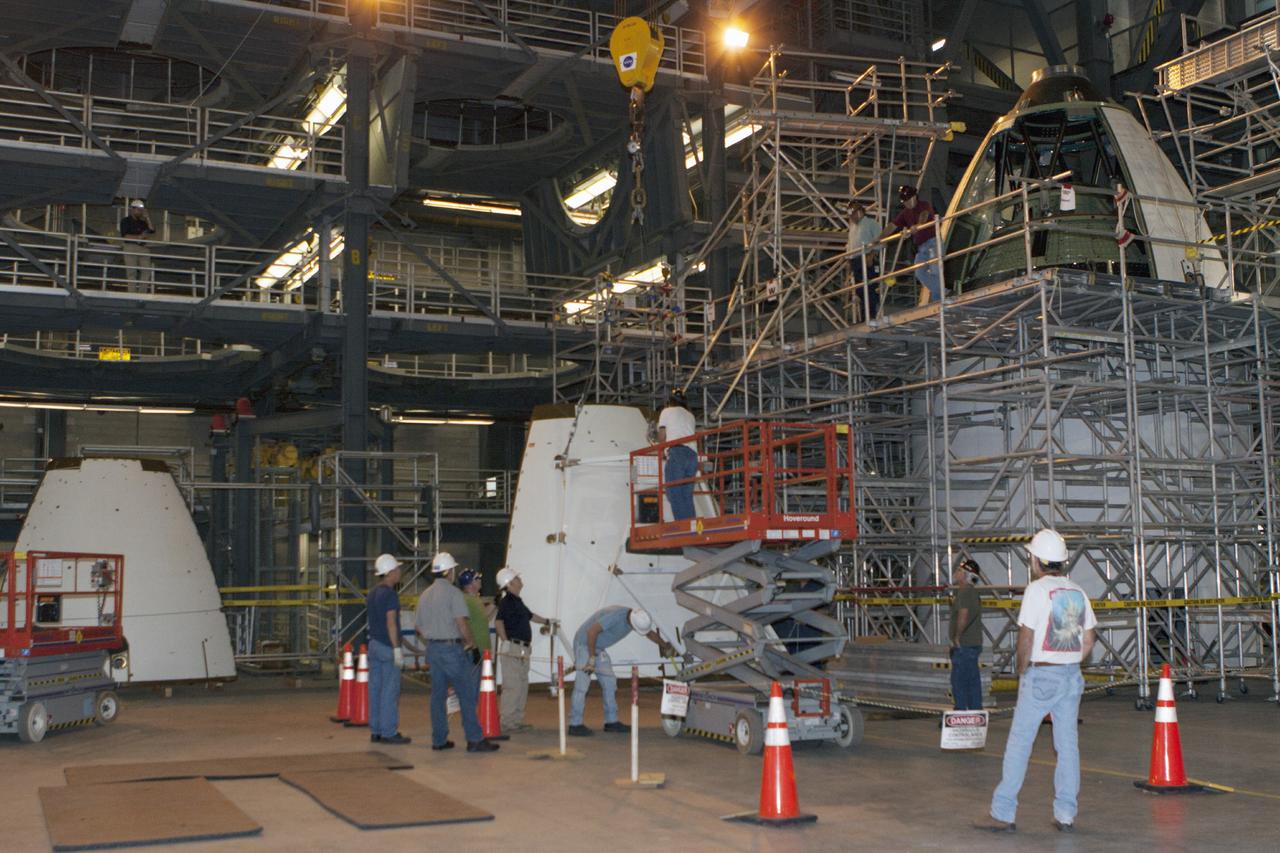
CAPE CANAVERAL, Fla. – At NASA’s Kennedy Space Center in Florida, technicians prepare an ogive panel for lifting by crane so that it can be installed on the Orion ground test vehicle in Vehicle Assembly Building high bay 4. The ogive panels enclose the Orion spacecraft and attach to the Launch Abort System. The test vehicle is being used Ground Systems Development and Operations Program for path finding operations, including simulated manufacturing, assembly and stacking procedures. Orion is the exploration spacecraft designed to carry astronauts to destinations not yet explored by humans, including an asteroid and Mars. It will have emergency abort capability, sustain the crew during space travel and provide safe re-entry from deep space return velocities. The first unpiloted test flight of Orion is scheduled to launch in 2014 atop a Delta IV rocket and in 2017 on NASA’s Space Launch System rocket. For more information, visit www.nasa.gov/orion. Photo credit: Kim Shiflett
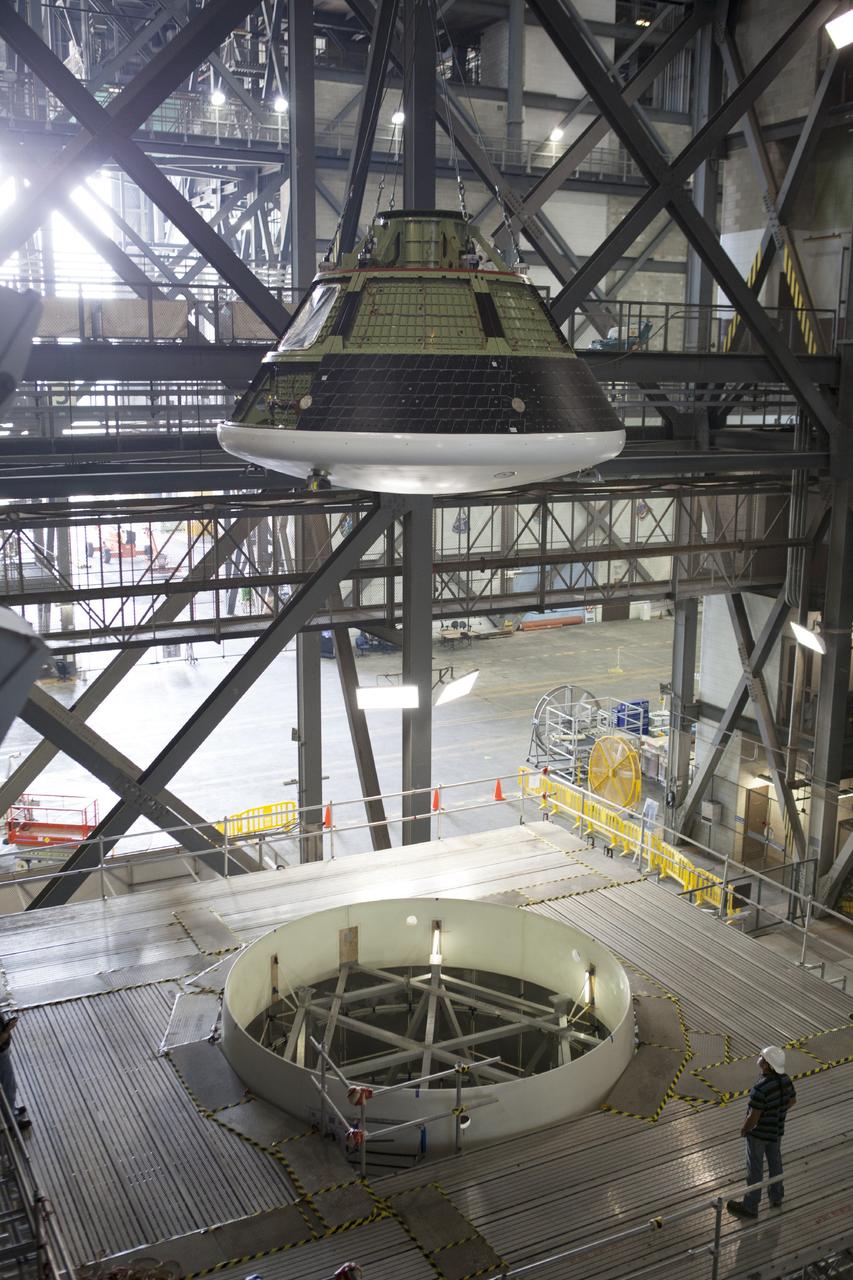
CAPE CANAVERAL, Fla. – At NASA’s Kennedy Space Center in Florida, the Orion ground test vehicle, or GTA, was lifted high in the air by crane in the transfer aisle of the Vehicle Assembly Building and is being lowered toward a mockup of the service module in high bay 4. The ground test vehicle is being used for path finding operations, including simulated manufacturing, assembly and stacking procedures. Orion is the exploration spacecraft designed to carry astronauts to destinations not yet explored by humans, including an asteroid and Mars. It will have emergency abort capability, sustain the crew during space travel and provide safe re-entry from deep space return velocities. The first unpiloted test flight of Orion is scheduled to launch in 2014 atop a Delta IV rocket and in 2017 on NASA’s Space Launch System rocket. For more information, visit www.nasa.gov/orion. Photo credit: Dimitri Gerondidakis
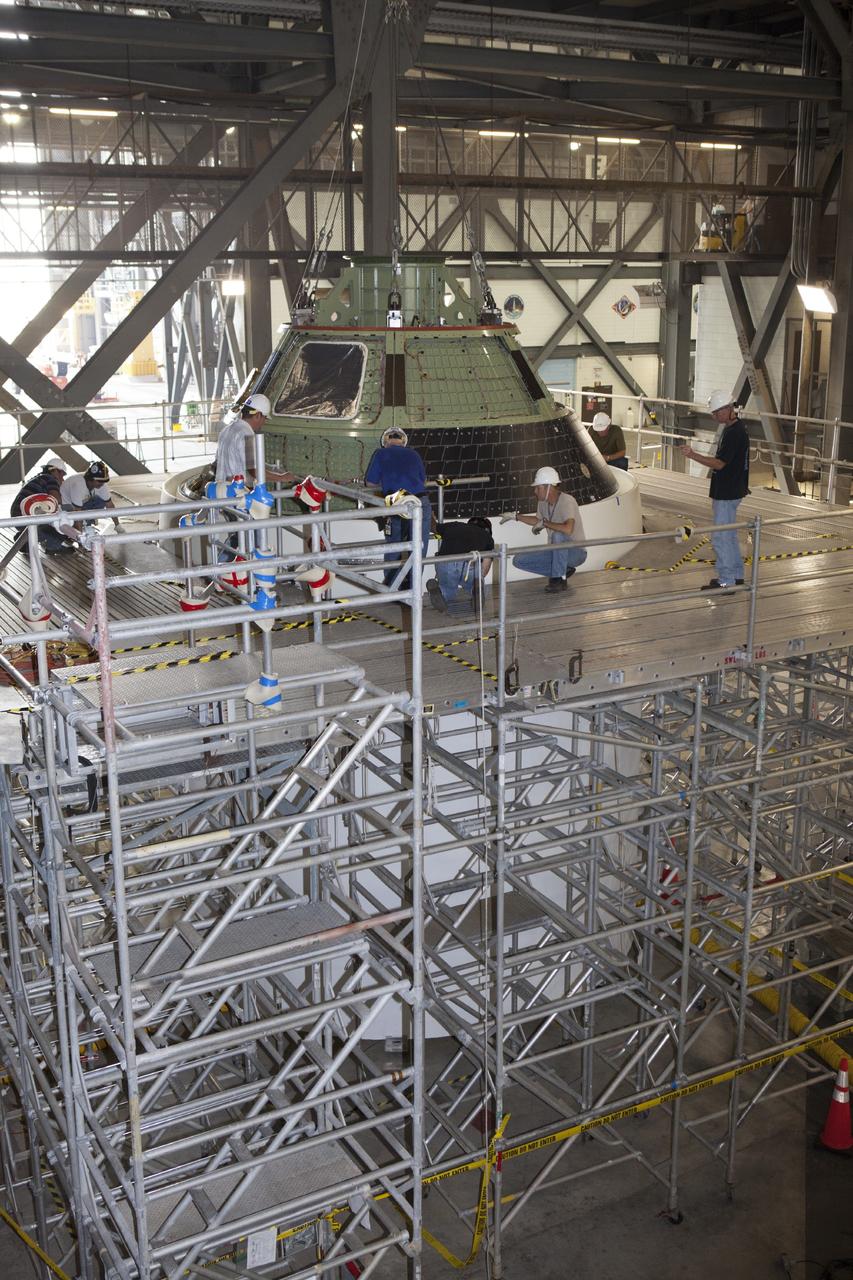
CAPE CANAVERAL, Fla. – At NASA’s Kennedy Space Center in Florida, technicians attach the Orion ground test vehicle, or GTA, to a mockup of the service module in high bay 4 of the Vehicle Assembly Building. The ground test vehicle is being used for path finding operations, including simulated manufacturing, assembly and stacking procedures. Orion is the exploration spacecraft designed to carry astronauts to destinations not yet explored by humans, including an asteroid and Mars. It will have emergency abort capability, sustain the crew during space travel and provide safe re-entry from deep space return velocities. The first unpiloted test flight of Orion is scheduled to launch in 2014 atop a Delta IV rocket and in 2017 on NASA’s Space Launch System rocket. For more information, visit www.nasa.gov/orion. Photo credit: Dimitri Gerondidakis
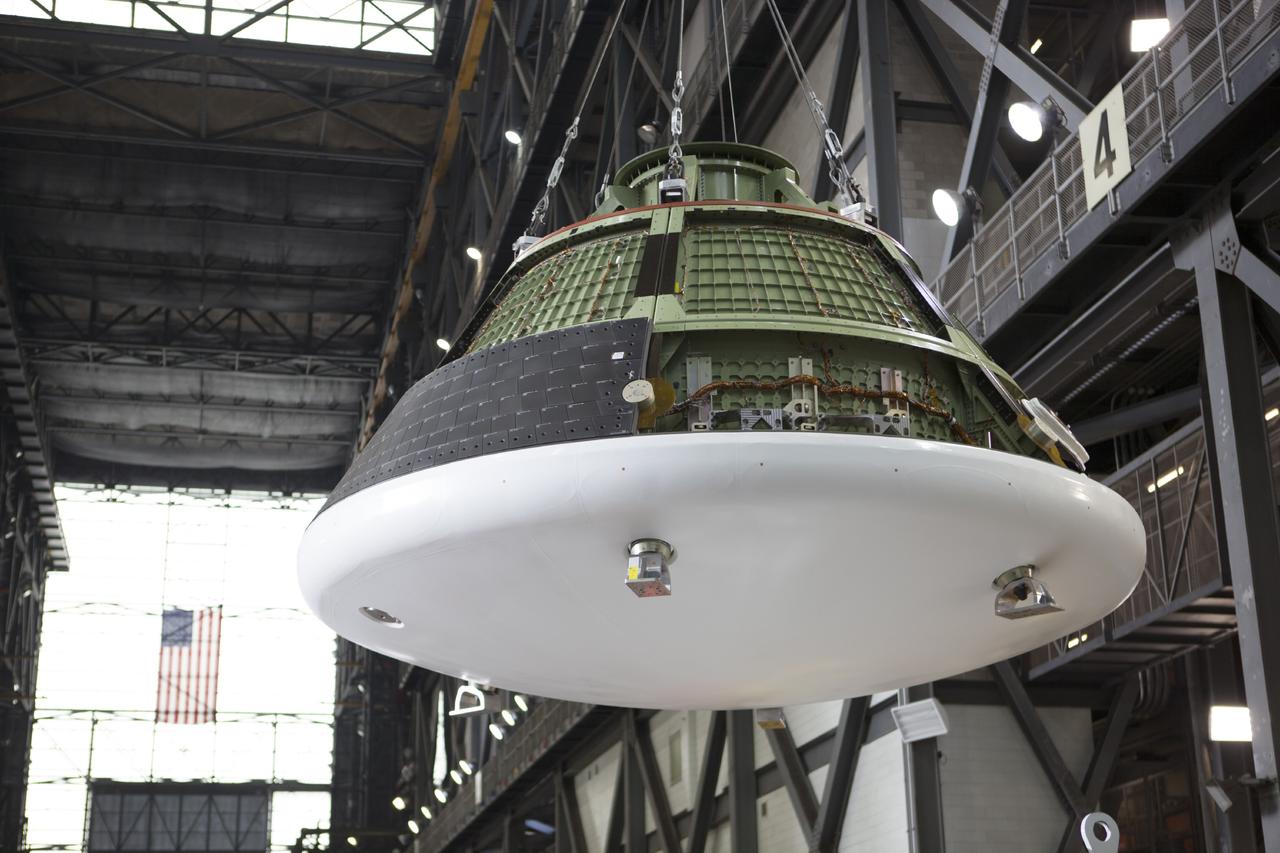
CAPE CANAVERAL, Fla. – At NASA’s Kennedy Space Center in Florida, the Orion test vehicle, or GTA, is lifted by crane in the transfer aisle of the Vehicle Assembly Building. The ground test vehicle is being used for path finding operations, including simulated manufacturing, assembly and stacking procedures. Orion is the exploration spacecraft designed to carry astronauts to destinations not yet explored by humans, including an asteroid and Mars. It will have emergency abort capability, sustain the crew during space travel and provide safe re-entry from deep space return velocities. The first unpiloted test flight of Orion is scheduled to launch in 2014 atop a Delta IV rocket and in 2017 on NASA’s Space Launch System rocket. For more information, visit www.nasa.gov/orion. Photo credit: Dimitri Gerondidakis
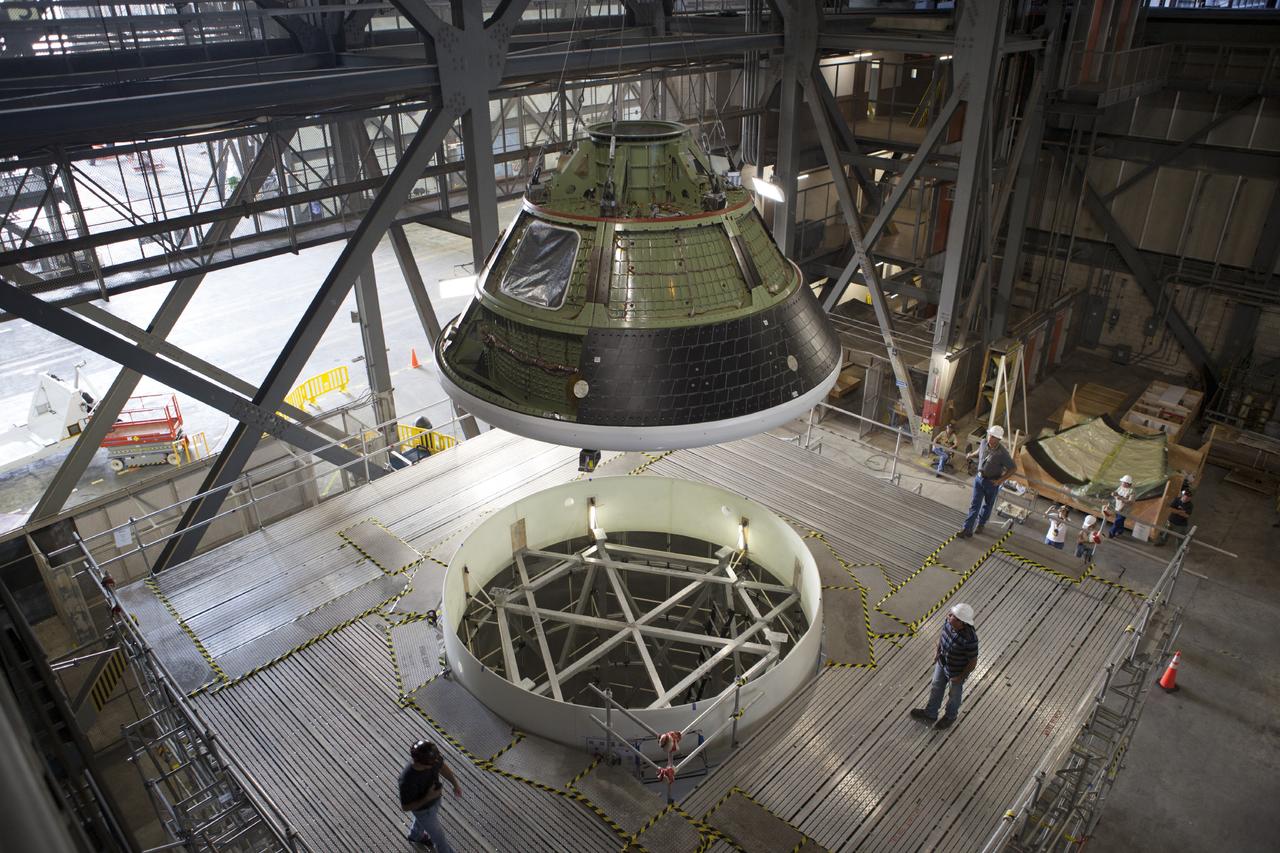
CAPE CANAVERAL, Fla. – At NASA’s Kennedy Space Center in Florida, technicians monitor the progress as the Orion ground test vehicle, or GTA, was lifted high in the air by crane in the transfer aisle of the Vehicle Assembly Building and is being lowered toward a mockup of the service module in high bay 4. The ground test vehicle is being used for path finding operations, including simulated manufacturing, assembly and stacking procedures. Orion is the exploration spacecraft designed to carry astronauts to destinations not yet explored by humans, including an asteroid and Mars. It will have emergency abort capability, sustain the crew during space travel and provide safe re-entry from deep space return velocities. The first unpiloted test flight of Orion is scheduled to launch in 2014 atop a Delta IV rocket and in 2017 on NASA’s Space Launch System rocket. For more information, visit www.nasa.gov/orion. Photo credit: Dimitri Gerondidakis
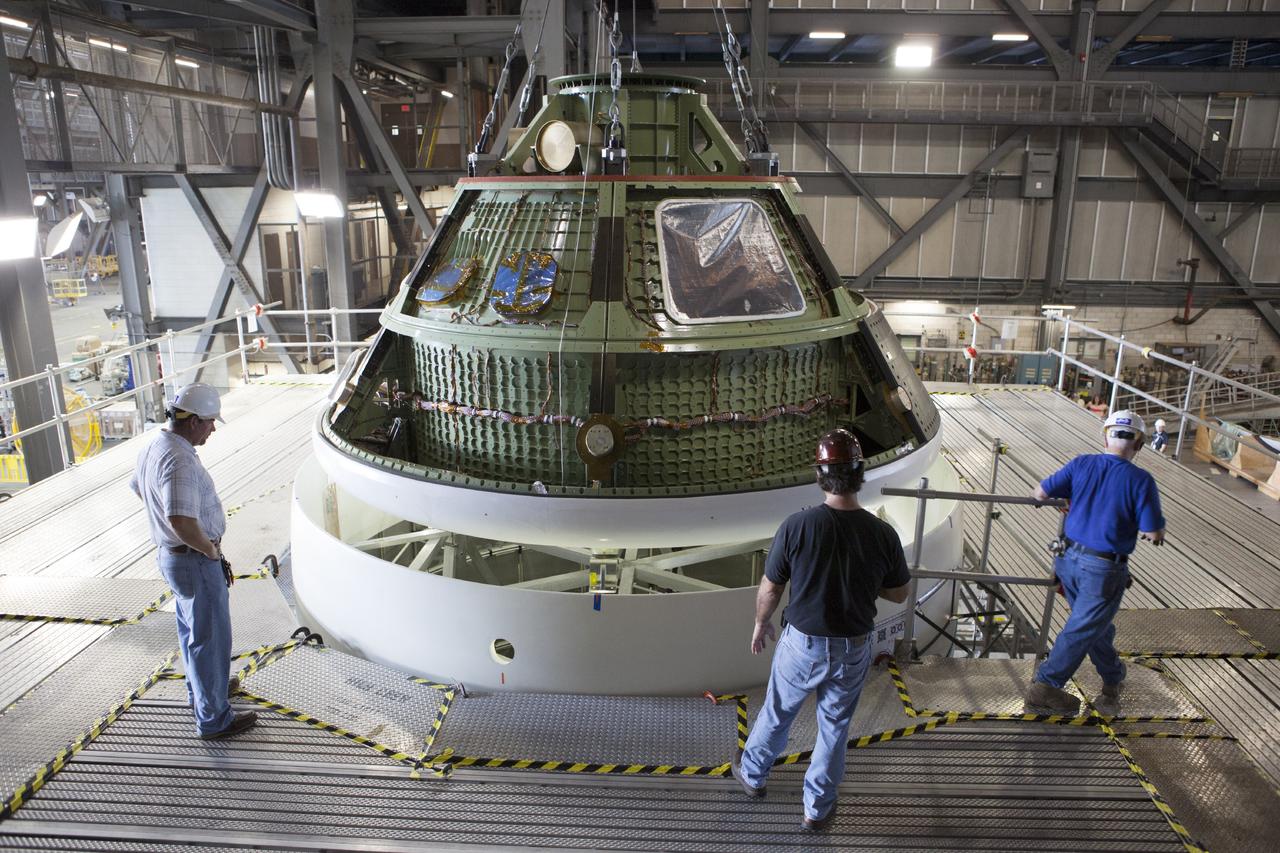
CAPE CANAVERAL, Fla. – At NASA’s Kennedy Space Center in Florida, technicians monitor the progress as the Orion ground test vehicle, or GTA, is lowered by crane toward a mockup of the service module in high bay 4 of the Vehicle Assembly Building. The ground test vehicle is being used for path finding operations, including simulated manufacturing, assembly and stacking procedures. Orion is the exploration spacecraft designed to carry astronauts to destinations not yet explored by humans, including an asteroid and Mars. It will have emergency abort capability, sustain the crew during space travel and provide safe re-entry from deep space return velocities. The first unpiloted test flight of Orion is scheduled to launch in 2014 atop a Delta IV rocket and in 2017 on NASA’s Space Launch System rocket. For more information, visit www.nasa.gov/orion. Photo credit: Dimitri Gerondidakis
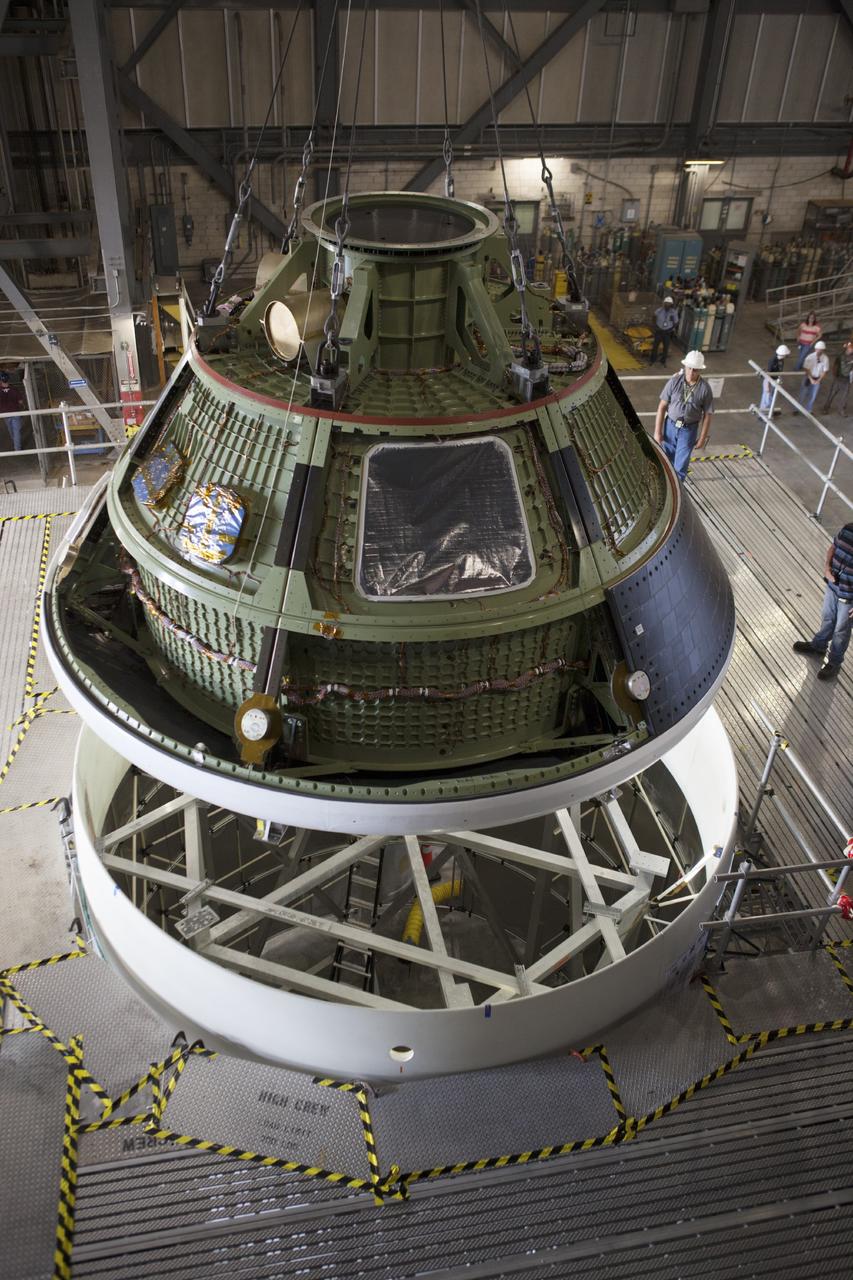
CAPE CANAVERAL, Fla. – At NASA’s Kennedy Space Center in Florida, technicians monitor the progress as the Orion ground test vehicle, or GTA, is being lowered by crane toward a mockup of the service module in high bay 4 of the Vehicle Assembly Building. The ground test vehicle is being used for path finding operations, including simulated manufacturing, assembly and stacking procedures. Orion is the exploration spacecraft designed to carry astronauts to destinations not yet explored by humans, including an asteroid and Mars. It will have emergency abort capability, sustain the crew during space travel and provide safe re-entry from deep space return velocities. The first unpiloted test flight of Orion is scheduled to launch in 2014 atop a Delta IV rocket and in 2017 on NASA’s Space Launch System rocket. For more information, visit www.nasa.gov/orion. Photo credit: Dimitri Gerondidakis
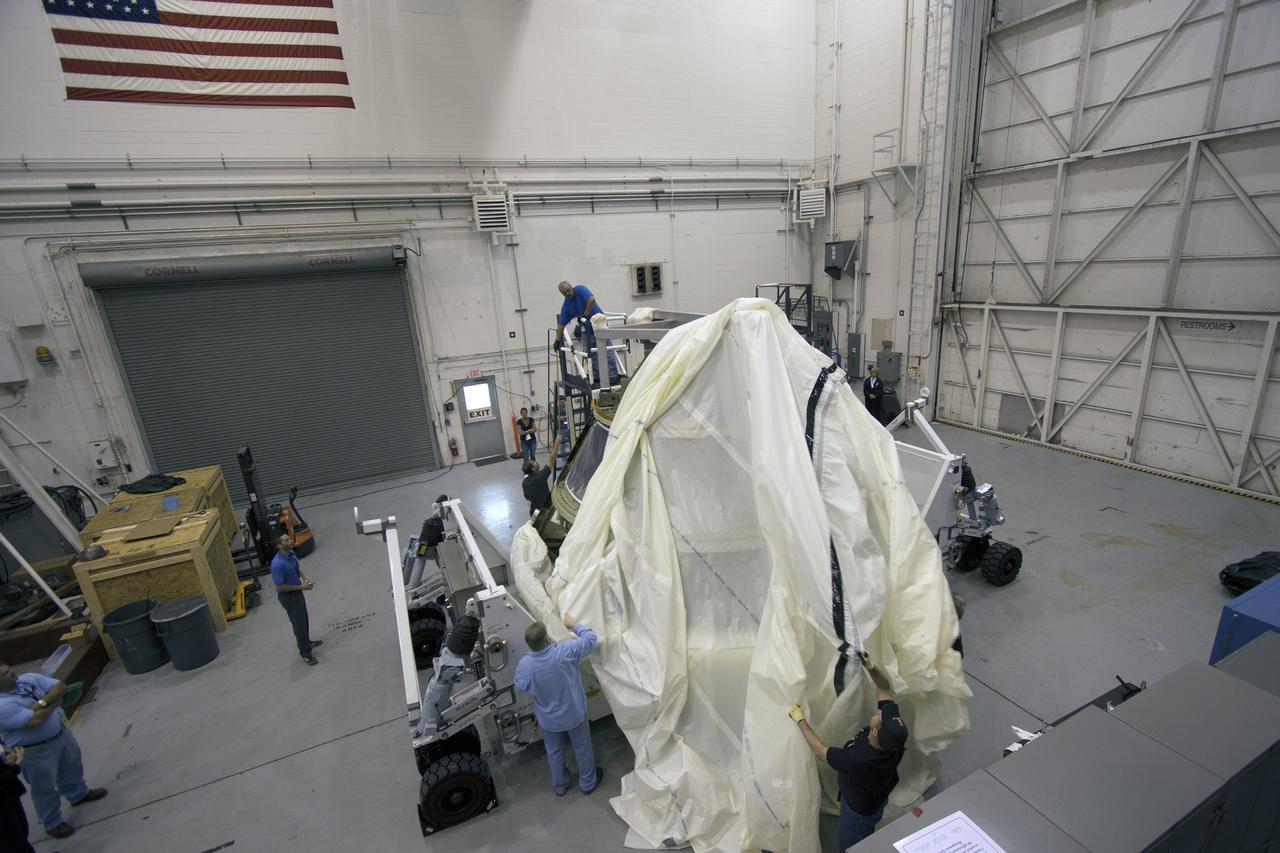
CAPE CANAVERAL, Fla. -- At NASA’s Kennedy Space Center in Florida, Lockheed Martin crews begin uncovering the Orion ground test vehicle in the Launch Equipment Test Facility, or LETF. The GTA was moved from the Operations and Checkout Facility to the LETF for a series of pyrotechnic bolt tests. The GTA is being used for path finding operations in the O&C, including simulated manufacturing and assembly procedures. Launching atop NASA's heavy-lift Space Launch System SLS, which also is under development, the Orion Multi-Purpose Crew Vehicle MPCV will serve as the exploration vehicle that will carry astronaut crews beyond low Earth orbit. It also will provide emergency abort capabilities, sustain the crew during space travel and provide safe re-entry from deep space return velocities. For more information, visit www.nasa.gov/orion. Photo credit: Jim Grossman
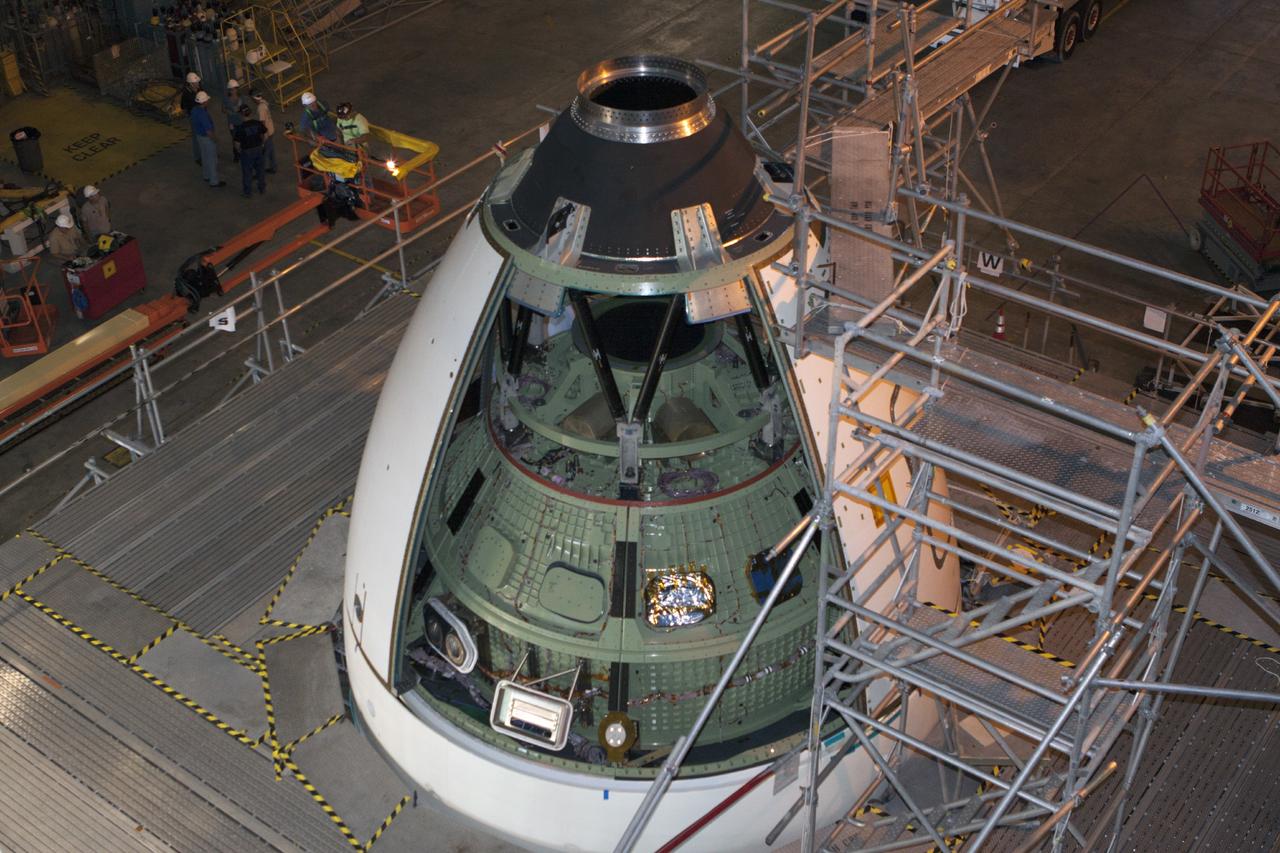
CAPE CANAVERAL, Fla. – At NASA’s Kennedy Space Center in Florida, several ogive panels have been installed on the Orion ground test vehicle in Vehicle Assembly Building high bay 4. The ogive panels enclose the Orion spacecraft and attach to the Launch Abort System. The test vehicle is being used by the Ground Systems Development and Operations Program for path finding operations, including simulated manufacturing, assembly and stacking procedures. Orion is the exploration spacecraft designed to carry astronauts to destinations not yet explored by humans, including an asteroid and Mars. It will have emergency abort capability, sustain the crew during space travel and provide safe re-entry from deep space return velocities. The first unpiloted test flight of Orion is scheduled to launch in 2014 atop a Delta IV rocket and in 2017 on NASA’s Space Launch System rocket. For more information, visit www.nasa.gov/orion. Photo credit: Kim Shiflett
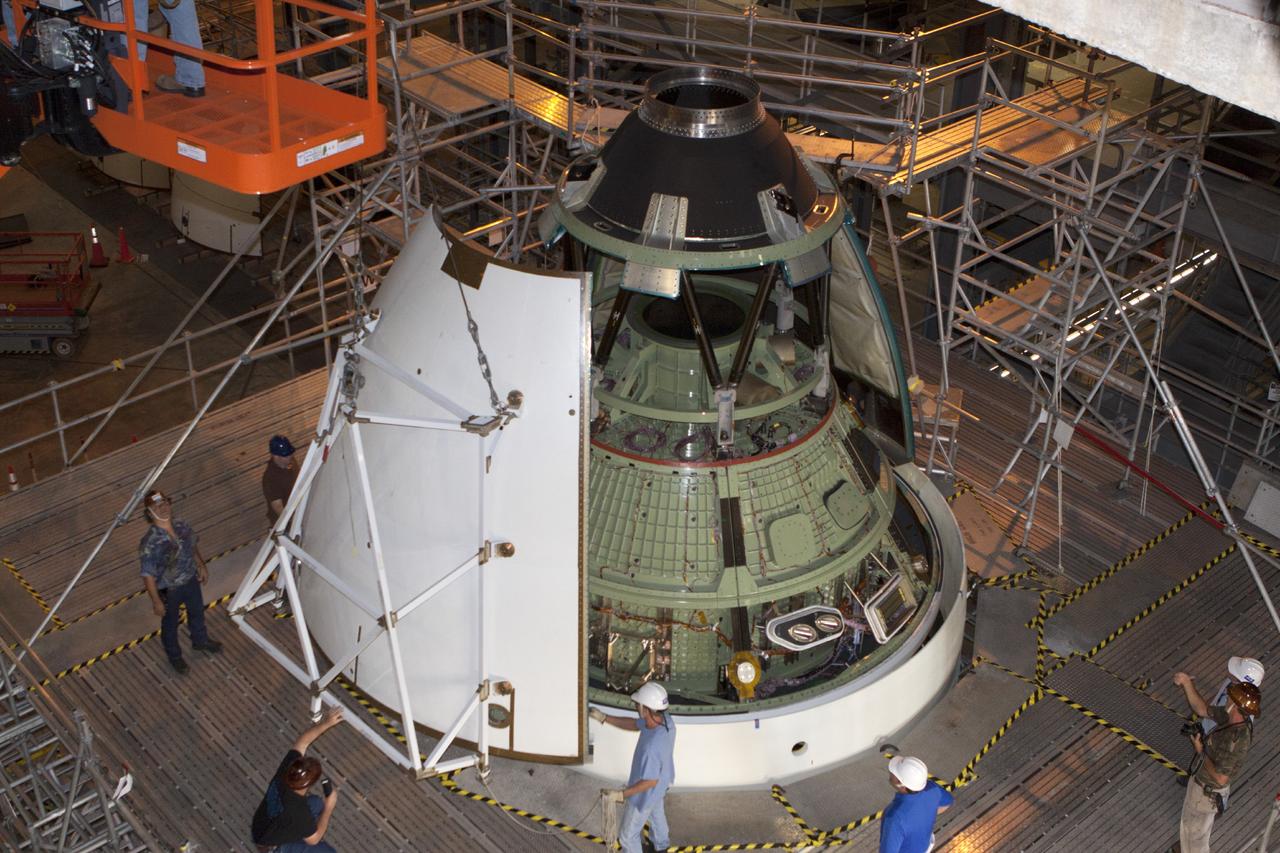
CAPE CANAVERAL, Fla. – At NASA’s Kennedy Space Center in Florida, technicians prepare to attach an ogive panel around the Orion ground test vehicle in Vehicle Assembly Building high bay 4. The ogive panels enclose the Orion spacecraft and attach to the Launch Abort System. The test vehicle is being used by the Ground Systems Development and Operations Program for path finding operations, including simulated manufacturing, assembly and stacking procedures. Orion is the exploration spacecraft designed to carry astronauts to destinations not yet explored by humans, including an asteroid and Mars. It will have emergency abort capability, sustain the crew during space travel and provide safe re-entry from deep space return velocities. The first unpiloted test flight of Orion is scheduled to launch in 2014 atop a Delta IV rocket and in 2017 on NASA’s Space Launch System rocket. For more information, visit www.nasa.gov/orion. Photo credit: Kim Shiflett
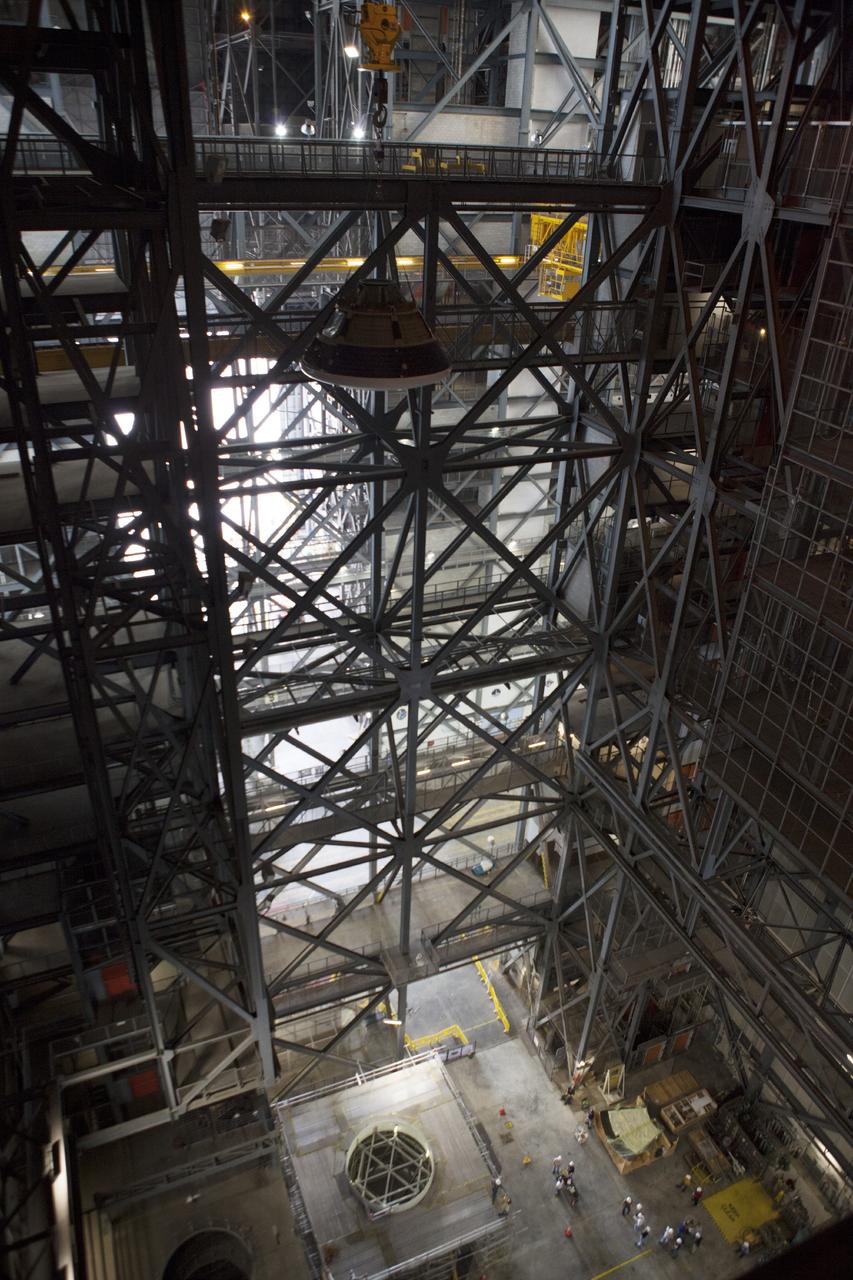
CAPE CANAVERAL, Fla. – At NASA’s Kennedy Space Center in Florida, the Orion ground test vehicle, or GTA, was lifted high in the air by crane in the transfer aisle of the Vehicle Assembly Building and is being lowered toward a mockup of the service module in high bay 4. The ground test vehicle is being used for path finding operations, including simulated manufacturing, assembly and stacking procedures. Orion is the exploration spacecraft designed to carry astronauts to destinations not yet explored by humans, including an asteroid and Mars. It will have emergency abort capability, sustain the crew during space travel and provide safe re-entry from deep space return velocities. The first unpiloted test flight of Orion is scheduled to launch in 2014 atop a Delta IV rocket and in 2017 on NASA’s Space Launch System rocket. For more information, visit www.nasa.gov/orion. Photo credit: Dimitri Gerondidakis
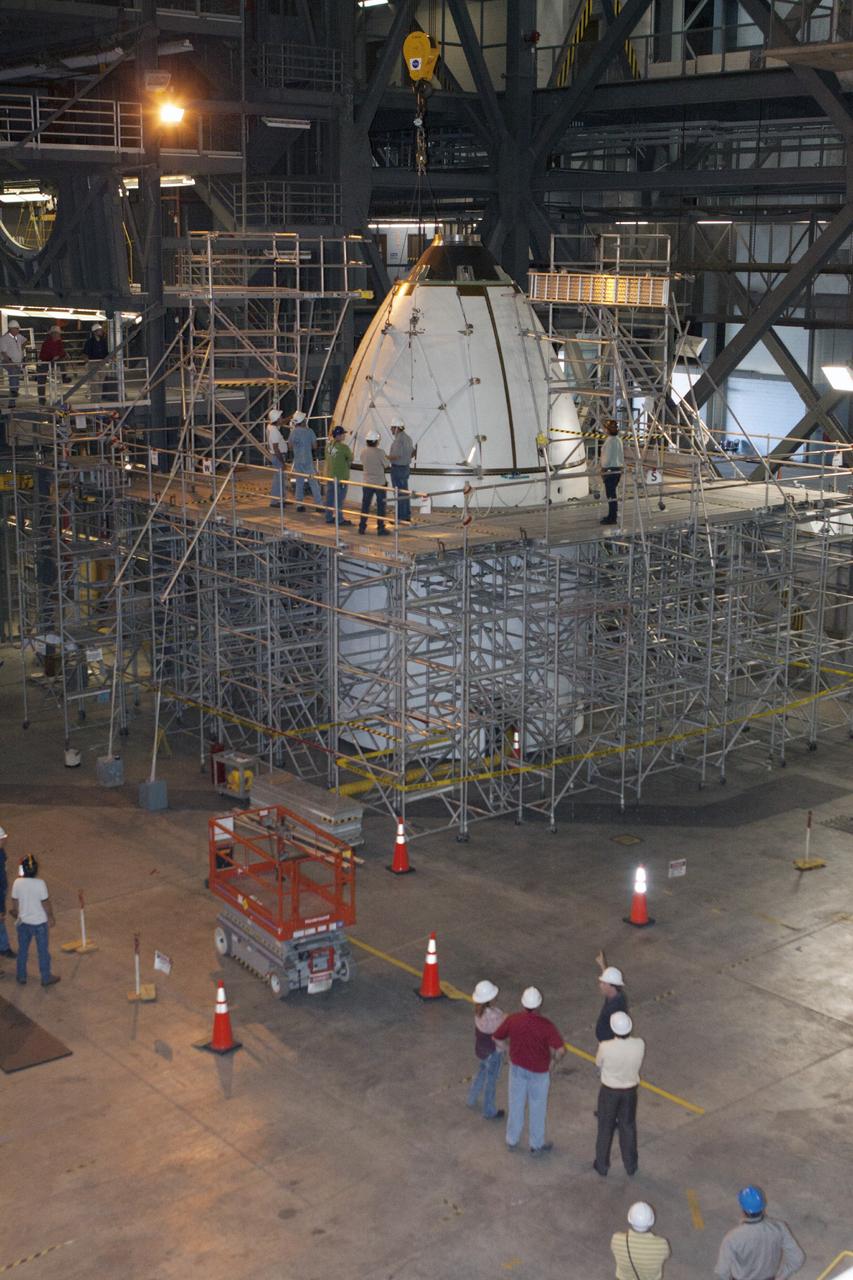
CAPE CANAVERAL, Fla. – At NASA’s Kennedy Space Center in Florida, technicians complete the installation of ogive panels on the Orion ground test vehicle in Vehicle Assembly Building high bay 4. The ogive panels enclose the Orion spacecraft and attach to the Launch Abort System. The test vehicle is being used Ground Systems Development and Operations Program for path finding operations, including simulated manufacturing, assembly and stacking procedures. Orion is the exploration spacecraft designed to carry astronauts to destinations not yet explored by humans, including an asteroid and Mars. It will have emergency abort capability, sustain the crew during space travel and provide safe re-entry from deep space return velocities. The first unpiloted test flight of Orion is scheduled to launch in 2014 atop a Delta IV rocket and in 2017 on NASA’s Space Launch System rocket. For more information, visit www.nasa.gov/orion. Photo credit: Kim Shiflett
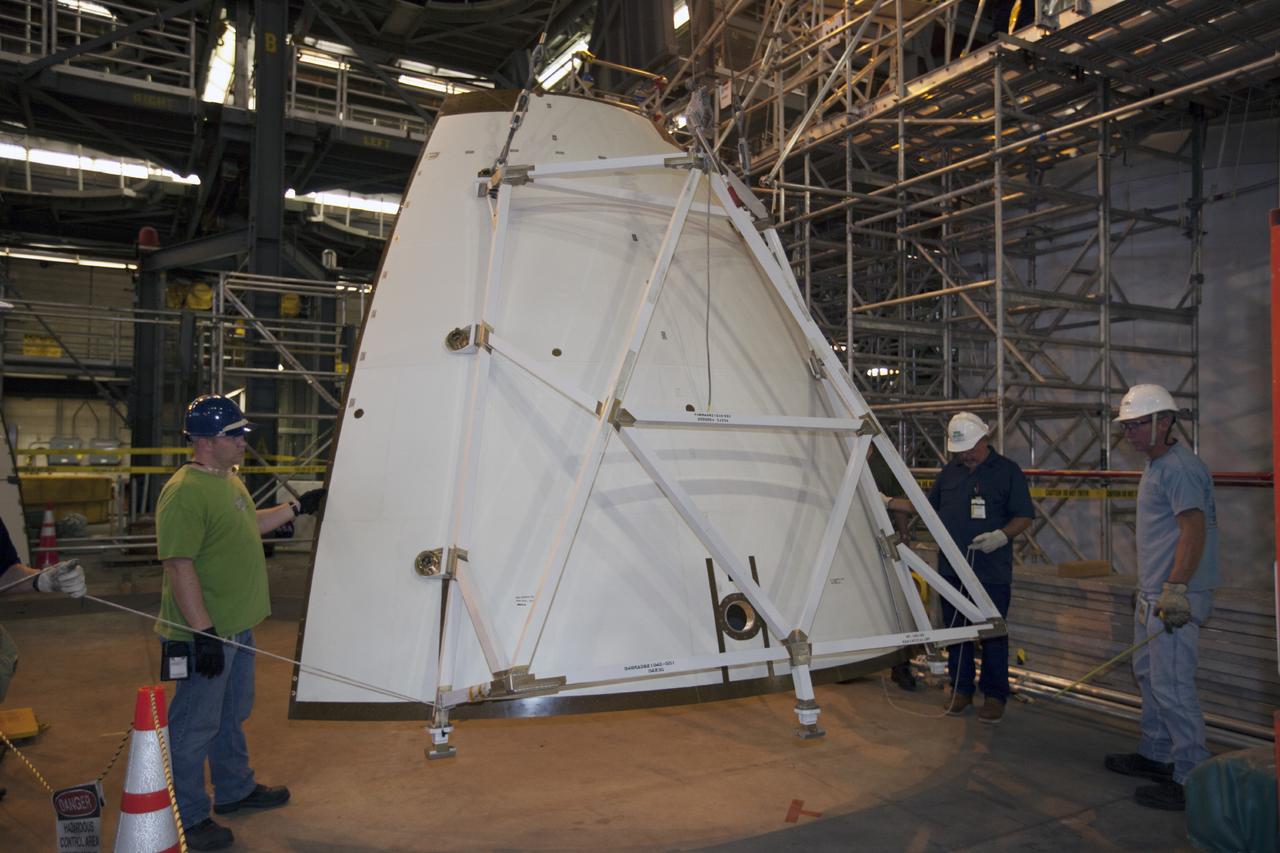
CAPE CANAVERAL, Fla. – At NASA’s Kennedy Space Center in Florida, technicians prepare an ogive panel for installation on the Orion ground test vehicle in Vehicle Assembly Building high bay 4. The ogive panels enclose the Orion spacecraft and attach to the Launch Abort System. The test vehicle is being used by the Ground Systems Development and Operations Program for path finding operations, including simulated manufacturing, assembly and stacking procedures. Orion is the exploration spacecraft designed to carry astronauts to destinations not yet explored by humans, including an asteroid and Mars. It will have emergency abort capability, sustain the crew during space travel and provide safe re-entry from deep space return velocities. The first unpiloted test flight of Orion is scheduled to launch in 2014 atop a Delta IV rocket and in 2017 on NASA’s Space Launch System rocket. For more information, visit www.nasa.gov/orion. Photo credit: Kim Shiflett