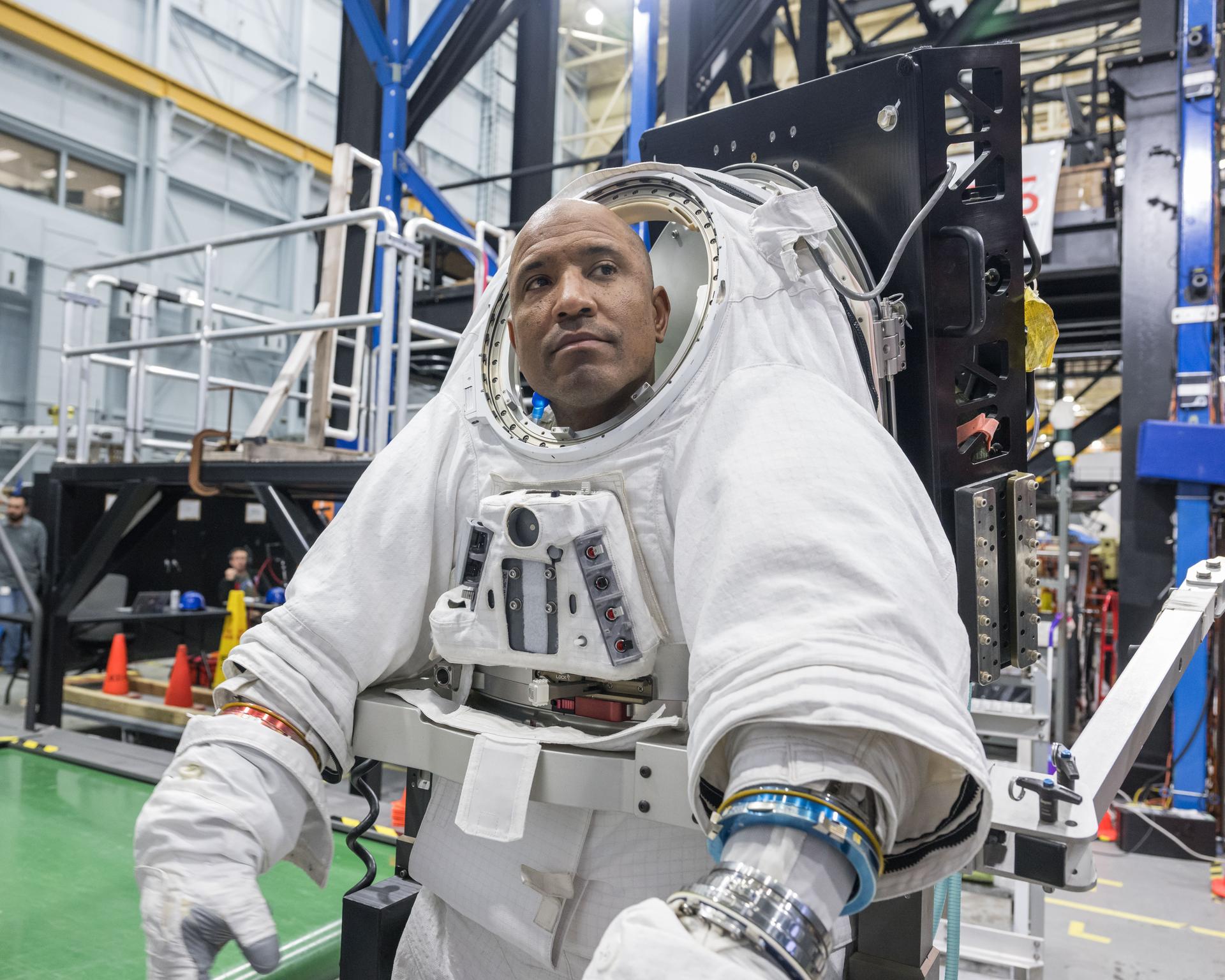
Artemis II astronaut Victor Glover is seen preparing for the Egress Fitness Task Battery during the Artemis Spaceflight Standard Measures Test at NASA’s Johnson Space Center on Jan. 13, 2026. (NASA/Robert Markowitz)
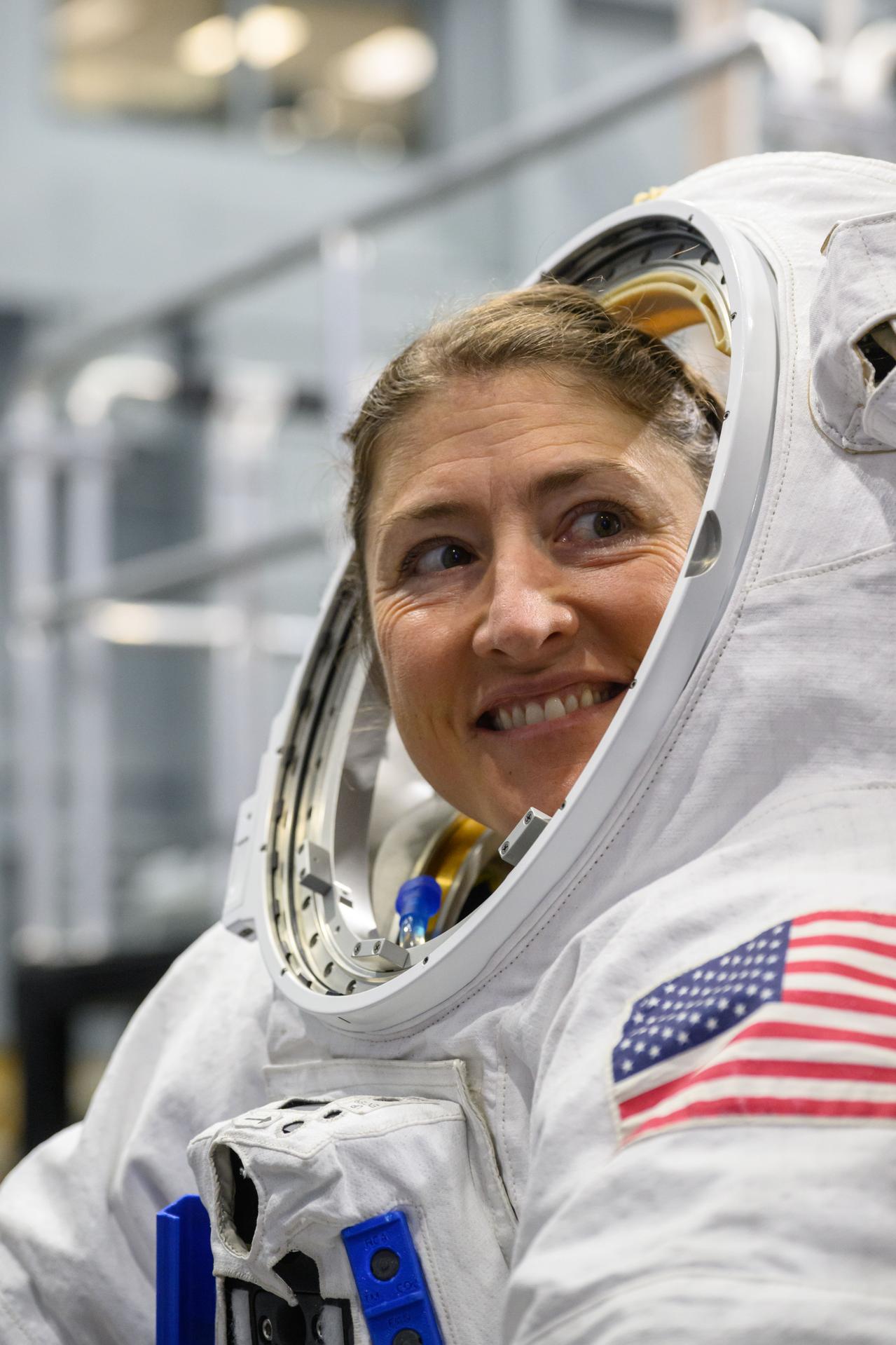
Artemis II astronaut Christina Koch prepares to begin the Egress Fitness Tasks during the Artemis Spaceflight Standard Measures Test at NASA’s Johnson Space Center on Dec. 12, 2025. (NASA/Helen Arase Vargas)
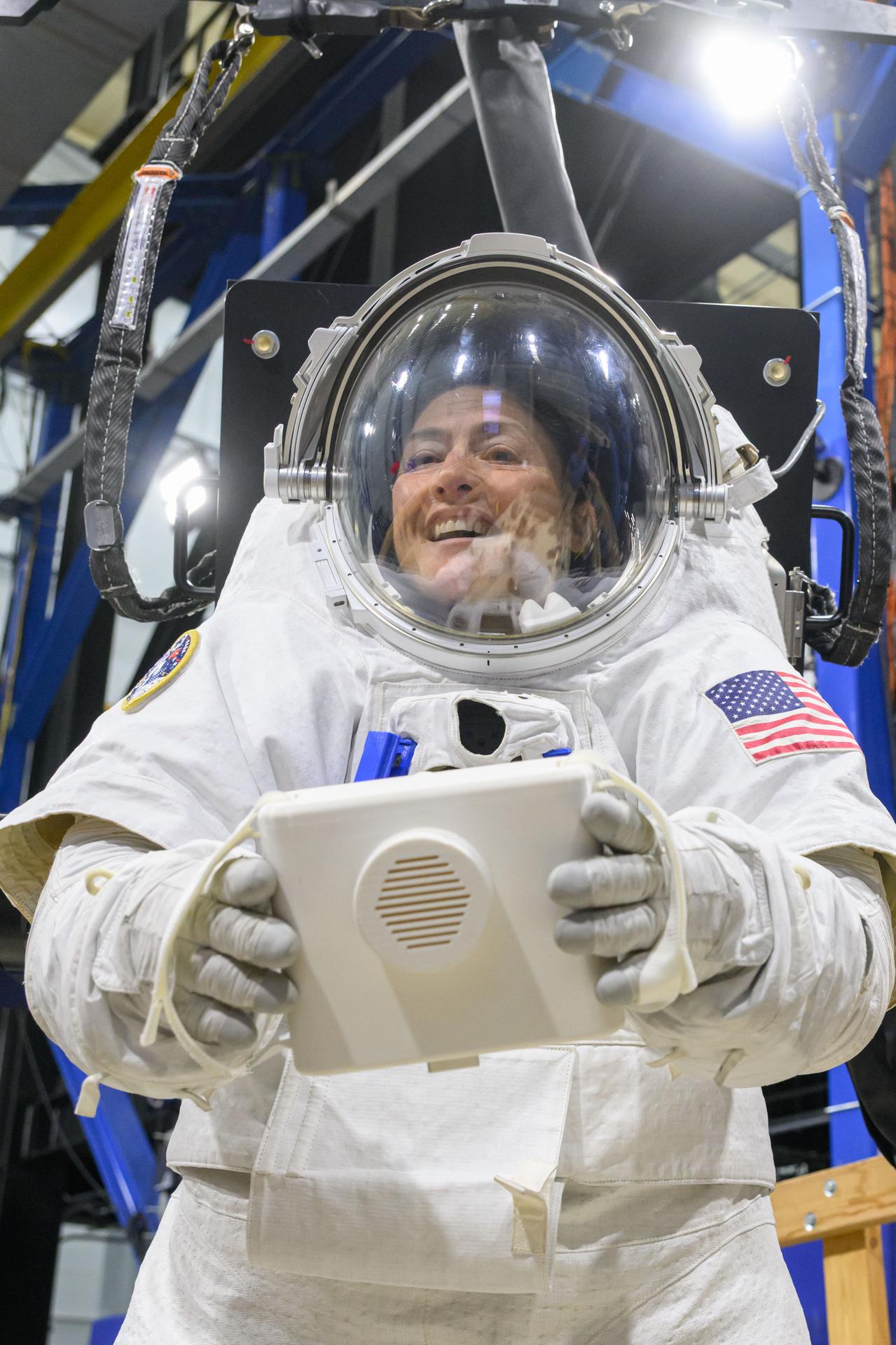
Artemis II astronaut Christina Koch uses a mockup camera as part of performing the Egress Fitness Task series inside the ARGOS test area at NASA’s Johnson Space Center on Dec. 12, 2025. (NASA/Helen Arase Vargas)
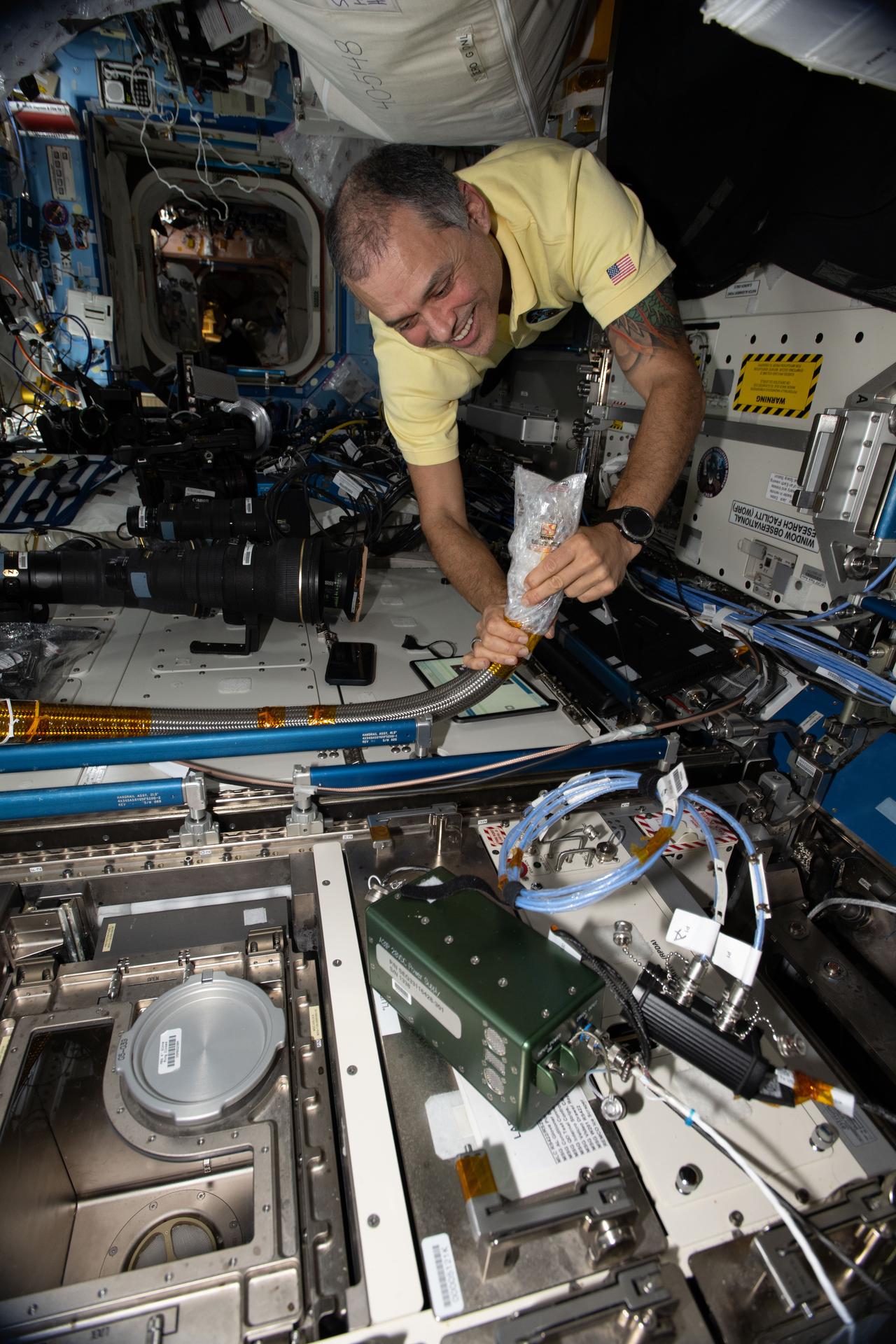
iss075e0144455 (Sept. 23, 2026) --- NASA astronaut and Expedition 75 flight engineer Anil Menon tests and fits components of a new cooling system, called the Supplemental Heat Rejection Evaporative Cooler, that will soon be installed in the Destiny laboratory module. Credit: NASA/Jack Hathaway
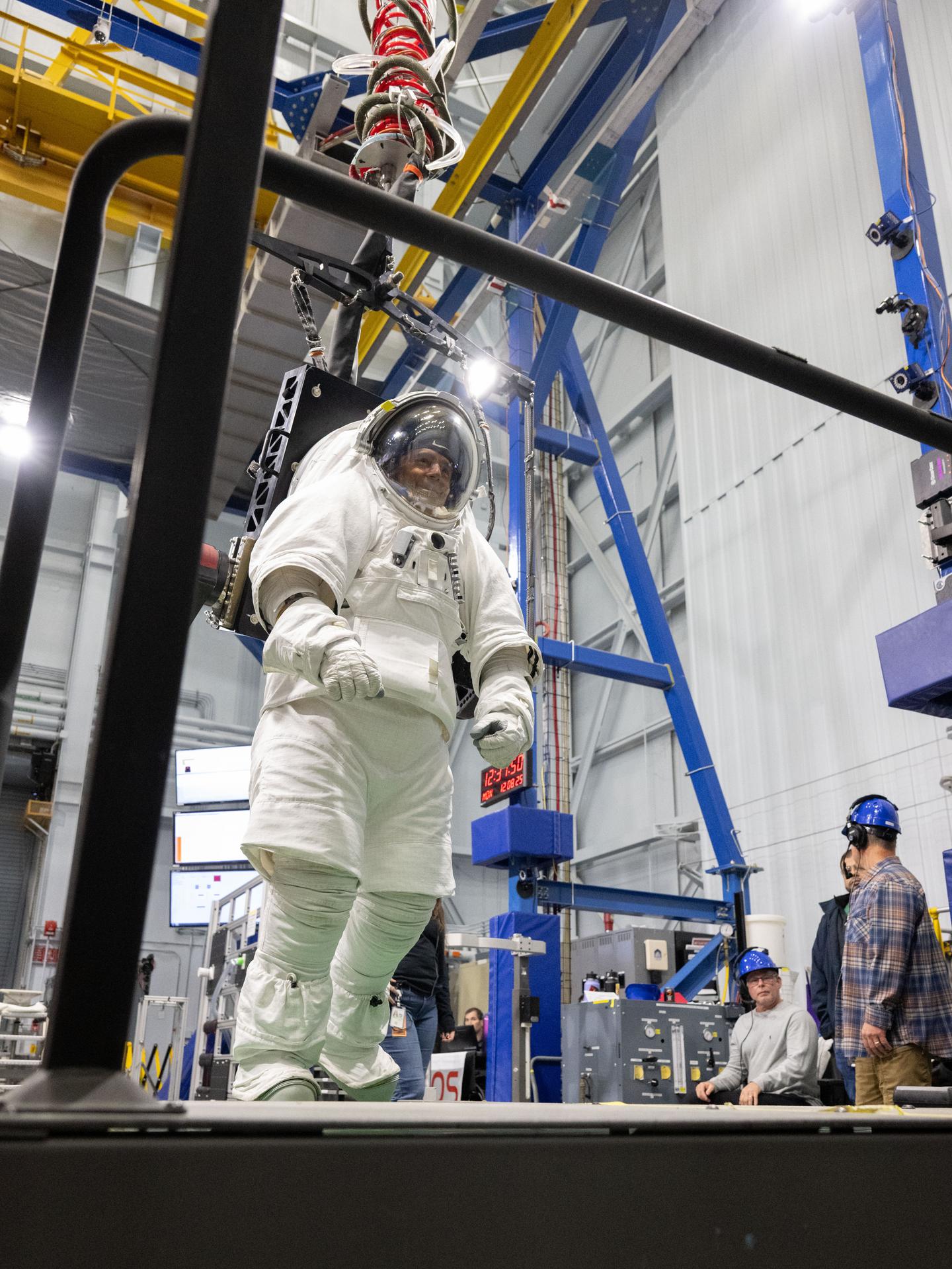
Artemis II astronaut Reid Wiseman walks across a mobility surface as part the Egress Fitness Tasks during the Artemis Spaceflight Standard Measures Test at NASA’s Johnson Space Center on Dec. 8, 2025. (NASA/Josh Valcarcel)
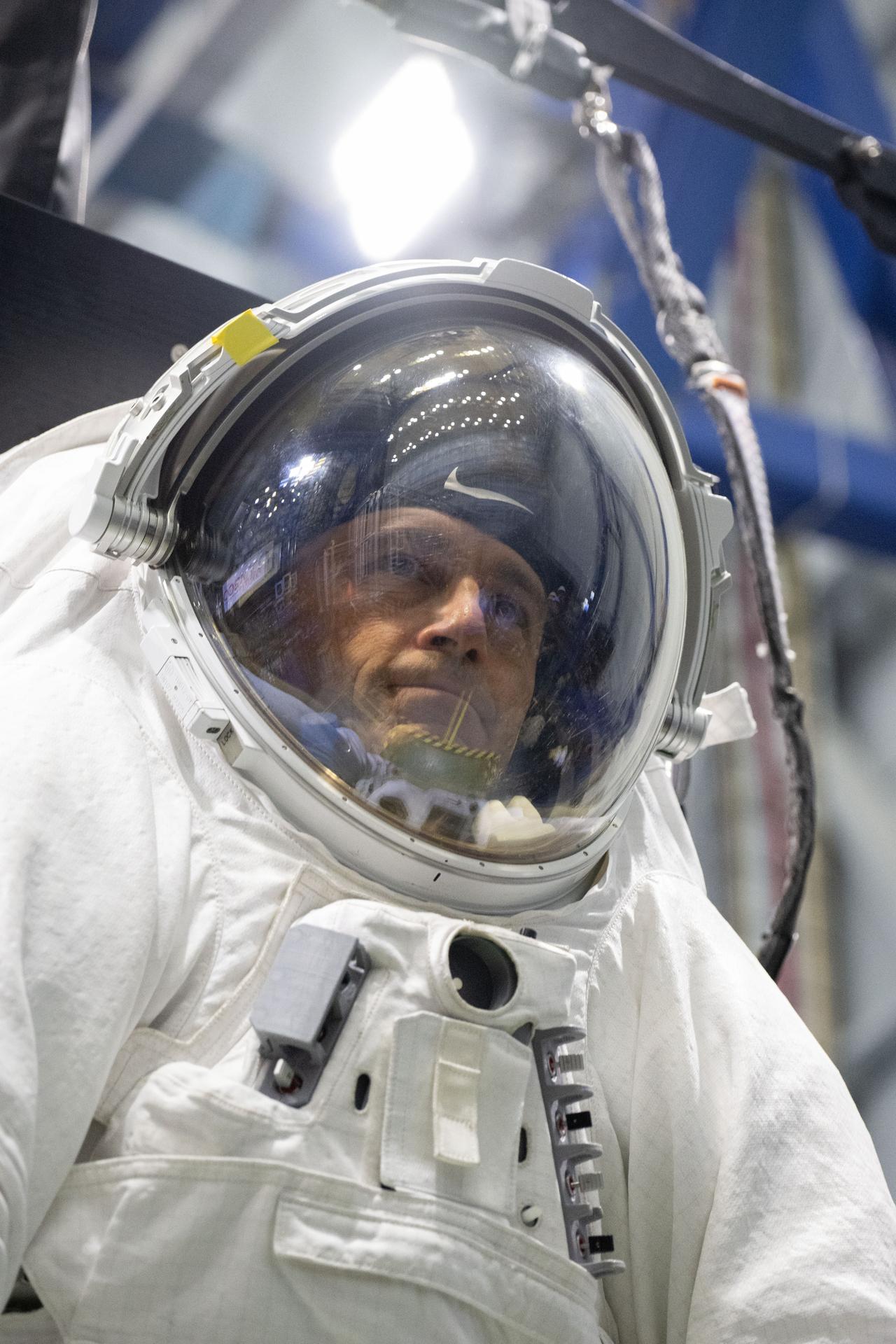
Artemis II astronaut Reid Wiseman is fully suited in the xEMU spacesuit prior to the Egress Fitness Task battery during the Artemis Spaceflight Standard Measures Test at NASA’s Johnson Space Center on Dec. 8, 2025. (NASA/Josh Valcarcel)
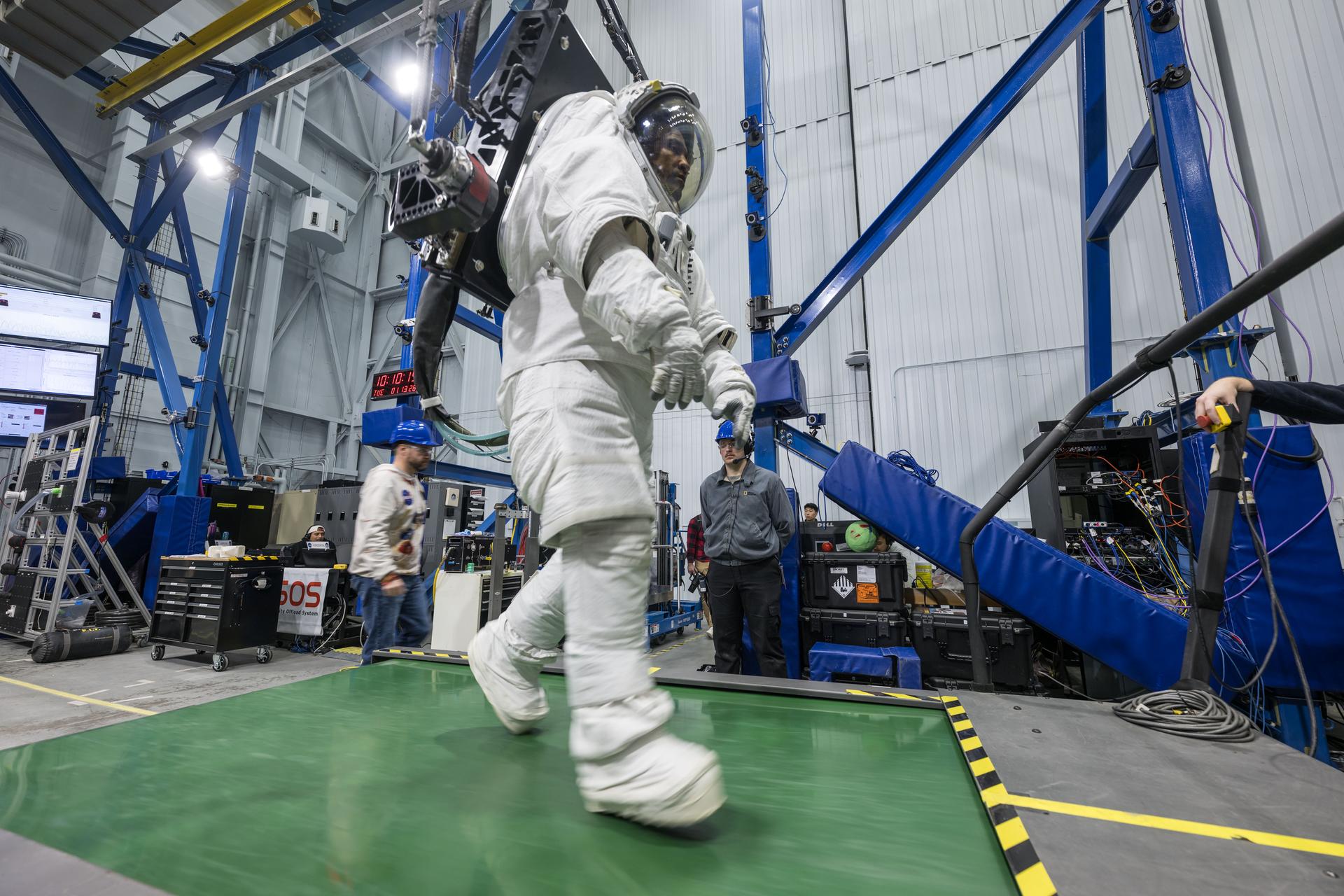
Artemis II astronaut Victor Glover walks across a mobility surface during an Egress Fitness Task evaluation during the Artemis Spaceflight Standard Measures Test at NASA’s Johnson Space Center on Jan. 13, 2026. (NASA/Robert Markowitz)
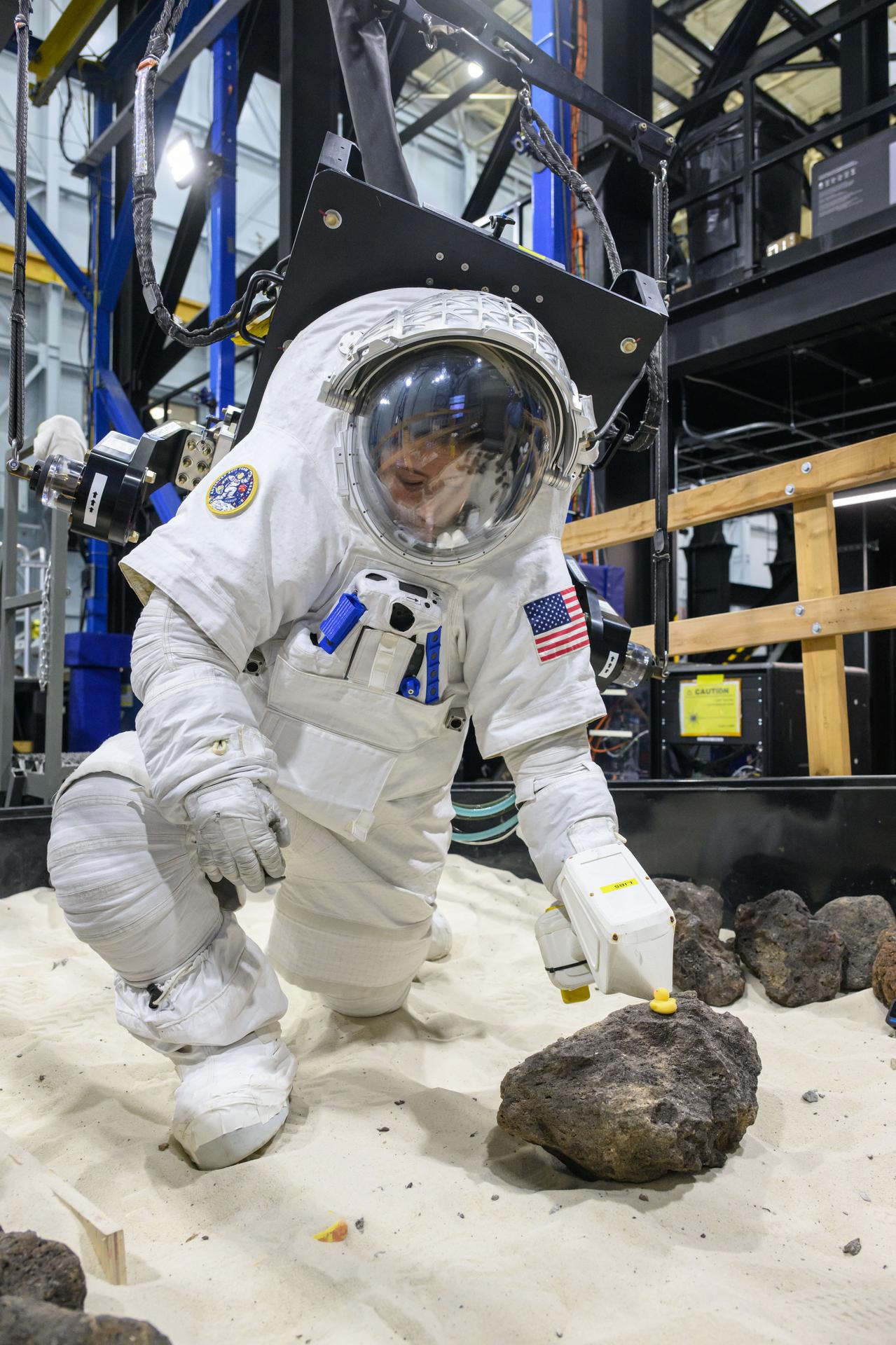
Artemis II astronaut Christina Koch kneels to complete simulated scientific sample of a surface rock as part of the Egress Fitness Tasks during the Artemis Spaceflight Standard Measures Test at NASA’s Johnson Space Center on Dec. 12, 2025. (NASA/Helen Arase Vargas)
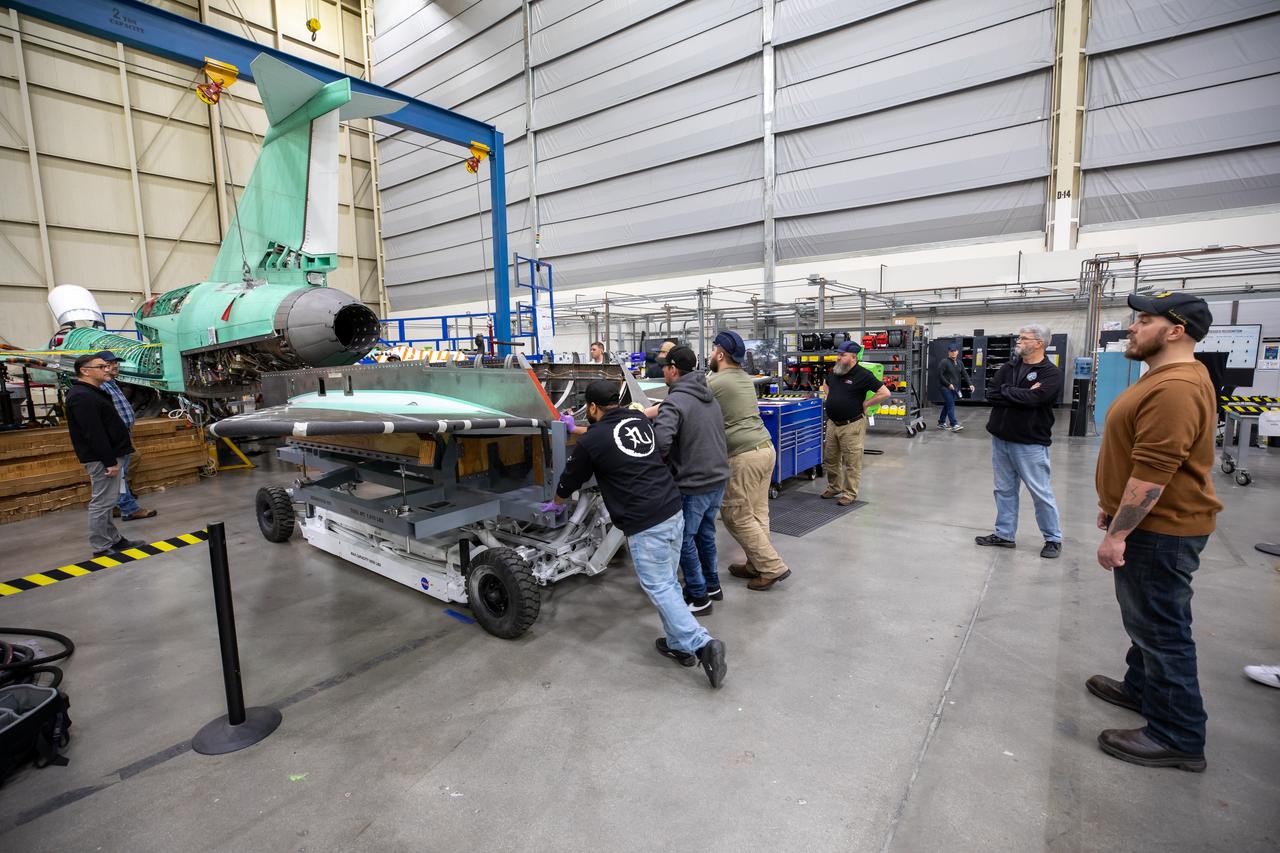
The X-59 team at Lockheed Martin Skunk Works in Palmdale, California, load the lower empennage - the tail section - into place. The surfaces used to control the tilt of the airplane are called stabilators and are connected to the lower empennage. The X-59 is the centerpiece of NASA’s Quesst mission, which could help enable commercial supersonic air travel over land.
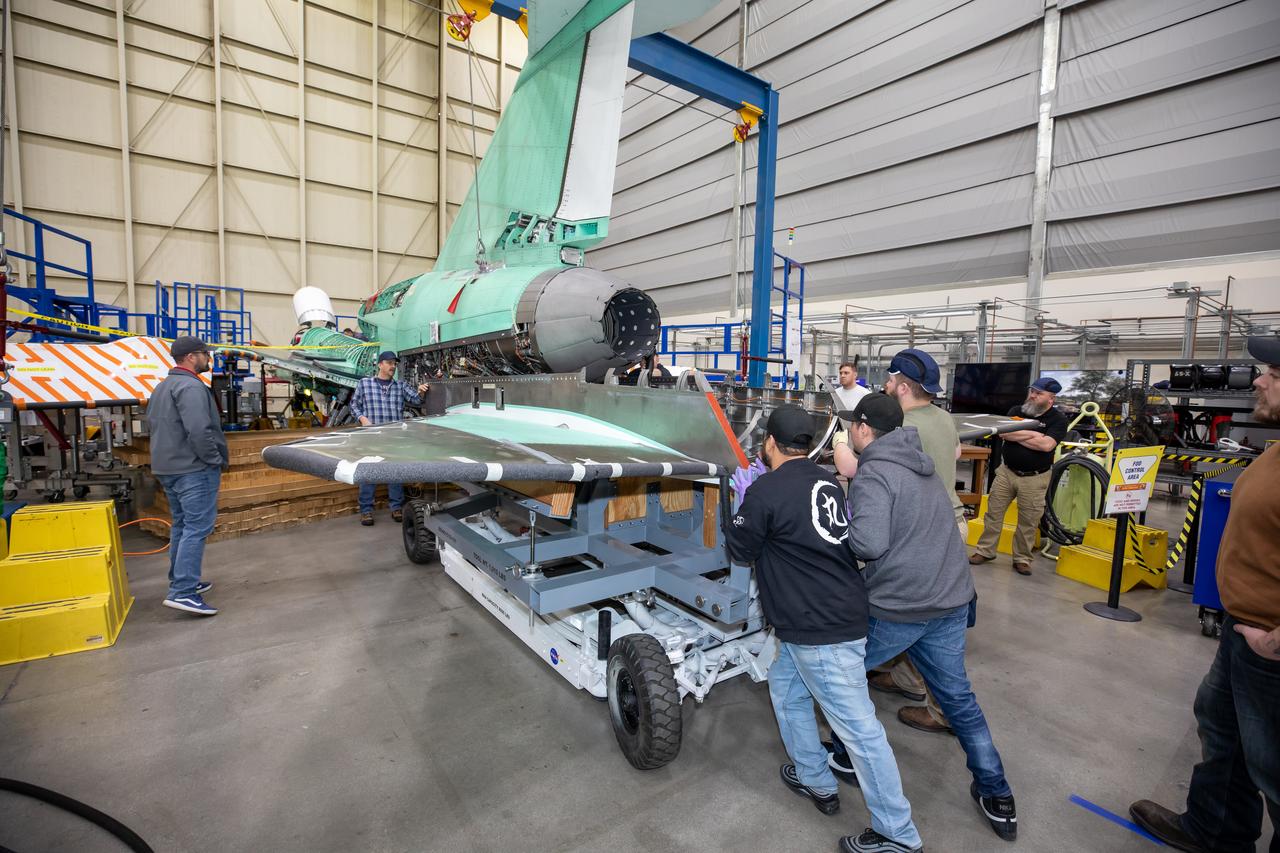
The X-59 team at Lockheed Martin Skunk Works in Palmdale, California, load the lower empennage - the tail section - into place. The surfaces used to control the tilt of the airplane are called stabilators and are connected to the lower empennage. The X-59 is the centerpiece of NASA’s Quesst mission, which could help enable commercial supersonic air travel over land.
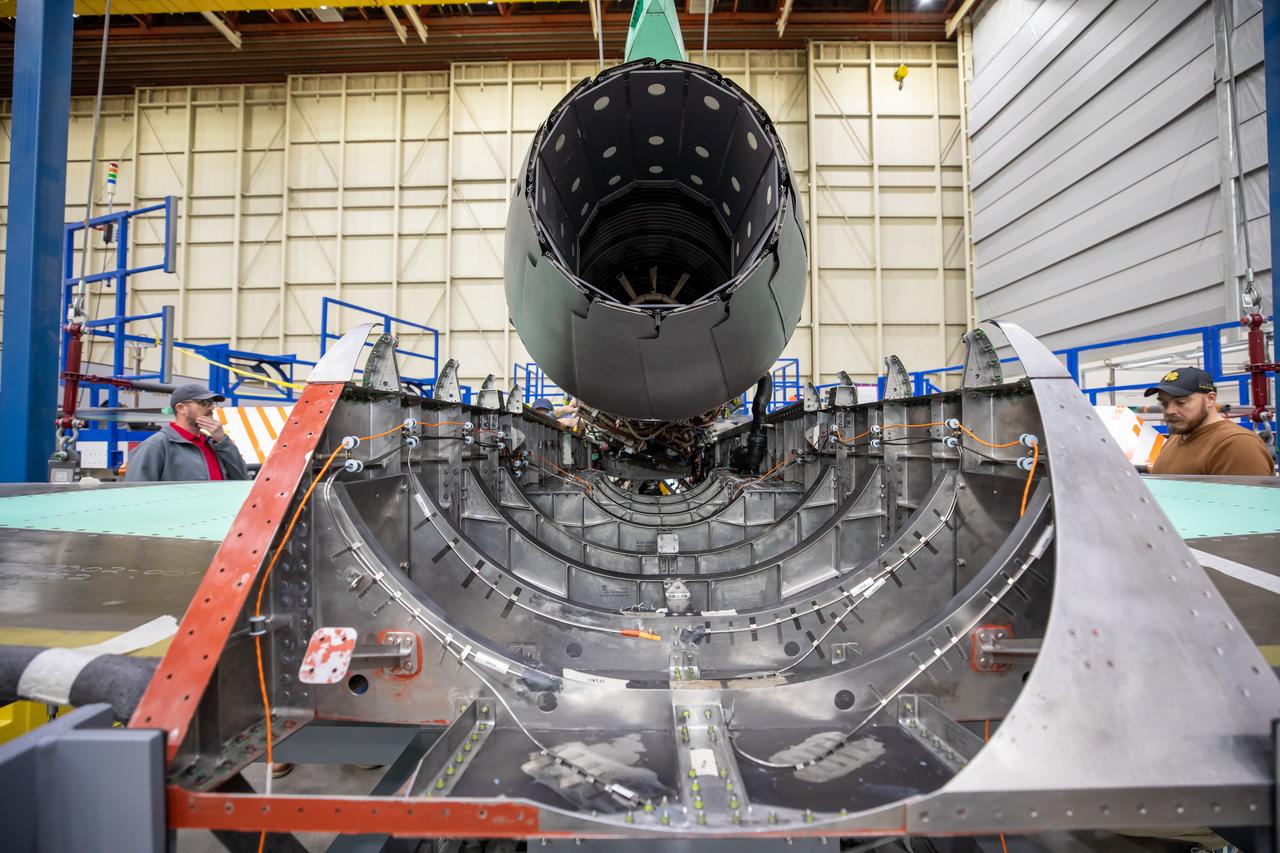
Here is a close-up of the GE F414 engine, from the aft deck or rear, before the tail section of the X-59 is lifted into place and attached to the aircraft. The aft deck helps control the shockwaves at the end of the aircraft and reduce the noise of a sonic boom to more of a sonic thump.
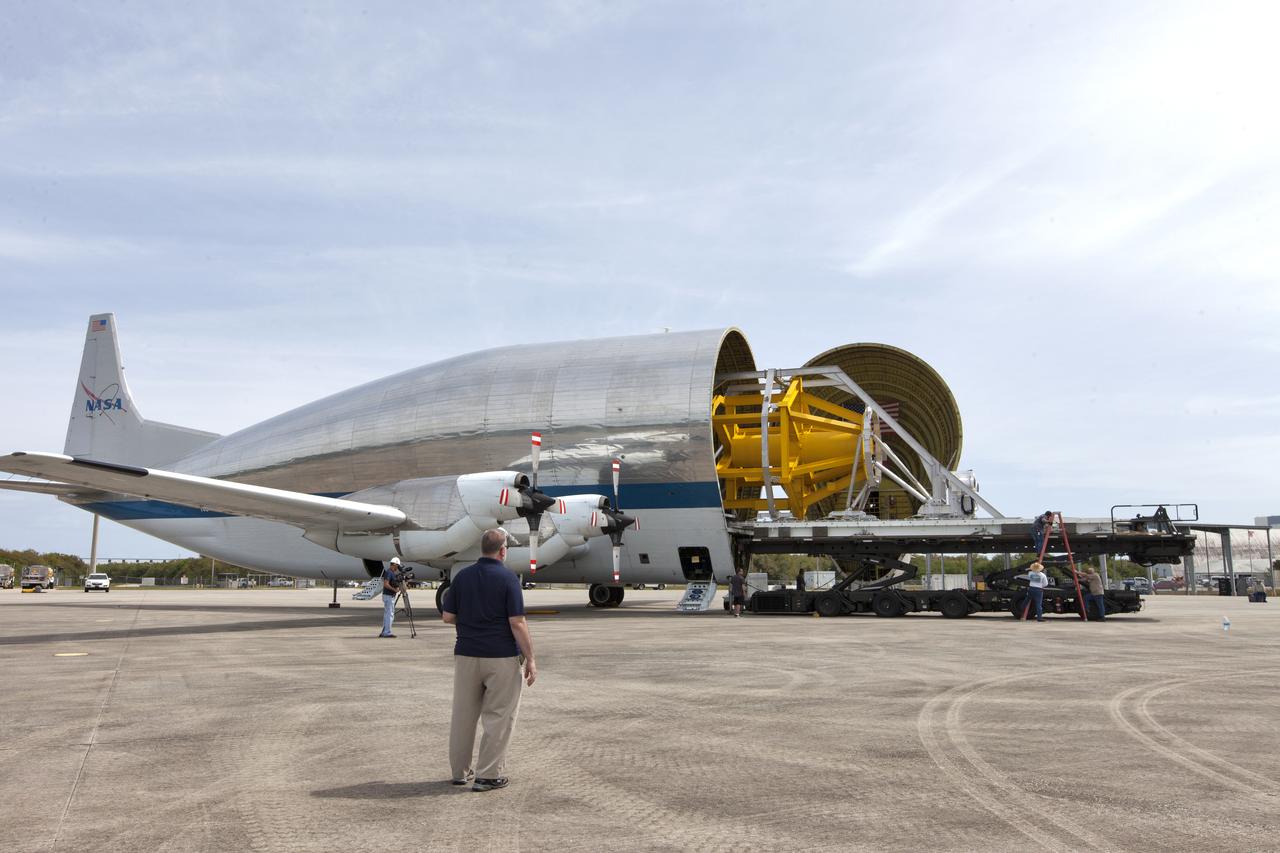
A fit check of the Orion Crew and Service Module Horizontal Transporter (CHT) with NASA's Super Guppy aircraft is underway March 13, 2019, at NASA Kennedy Space Center’s Shuttle Landing Facility in Florida, operated by Space Florida. In this photo, the CHT, secured on the U.S. Air Force aircraft loader, is moved inside the aircraft’s payload bay. The fit check is being performed to confirm loading operations, ensure that the CHT fits inside the Super Guppy and test the electrical interface to aircraft power. The Orion crew and service modules will be readied for a trip to NASA’s Plum Brook Station in Sandusky, Ohio, for full thermal vacuum testing. In this unique facility, the crew and service modules will be put through extensive testing to ensure they can survive the rigors of launch, space travel, re-entry and splashdown. The Orion spacecraft will launch atop the agency's Space Launch System rocket on Exploration Mission-1.
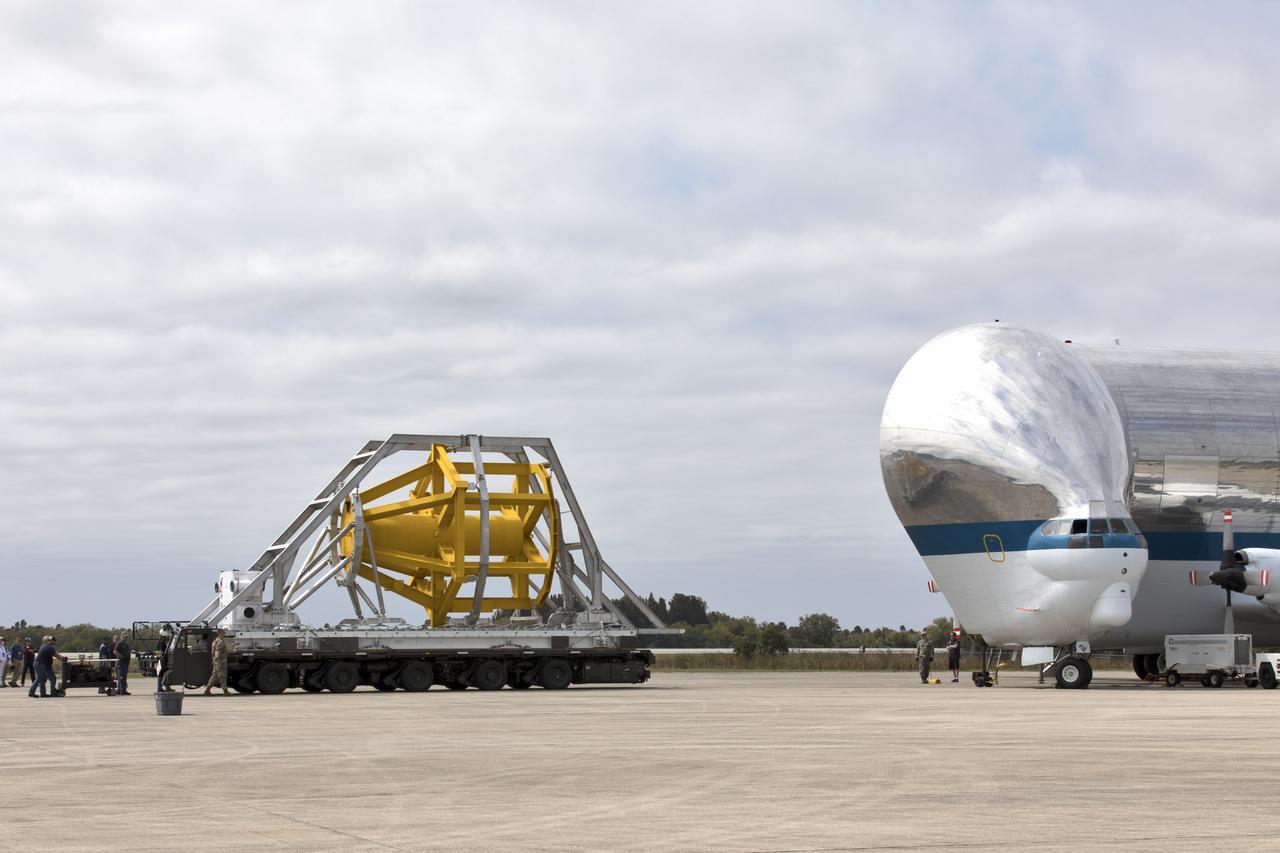
A fit check of the Orion Crew and Service Module Horizontal Transporter (CHT) with NASA's Super Guppy aircraft began March 12, 2019, at NASA Kennedy Space Center’s Shuttle Landing Facility in Florida, operated by Space Florida. In this photo, the U.S. Air Force aircraft loader with the CHT is moved toward the Super Guppy. The fit check is being performed to confirm loading operations, ensure that the CHT fits inside the Super Guppy and test the electrical interface to aircraft power. The Orion crew and service modules will be readied for a trip to NASA’s Plum Brook Station in Sandusky, Ohio, for full thermal vacuum testing. In this unique facility, the crew and service modules will be put through extensive testing to ensure they can survive the rigors of launch, space travel, re-entry and splashdown. The Orion spacecraft will launch atop the agency's Space Launch System rocket on Exploration Mission-1.

A fit check of the Orion Crew and Service Module Horizontal Transporter (CHT) with NASA's Super Guppy aircraft began March 12, 2019, at NASA Kennedy Space Center’s Shuttle Landing Facility in Florida, operated by Space Florida. In this photo, the CHT is secured on the U.S. Air Force aircraft loader. The fit check is being performed to confirm loading operations, ensure that the CHT fits inside the Super Guppy and test the electrical interface to aircraft power. The Orion crew and service modules will be readied for a trip to NASA’s Plum Brook Station in Sandusky, Ohio, for full thermal vacuum testing. In this unique facility, the crew and service modules will be put through extensive testing to ensure they can survive the rigors of launch, space travel, re-entry and splashdown. The Orion spacecraft will launch atop the agency's Space Launch System rocket on Exploration Mission-1.
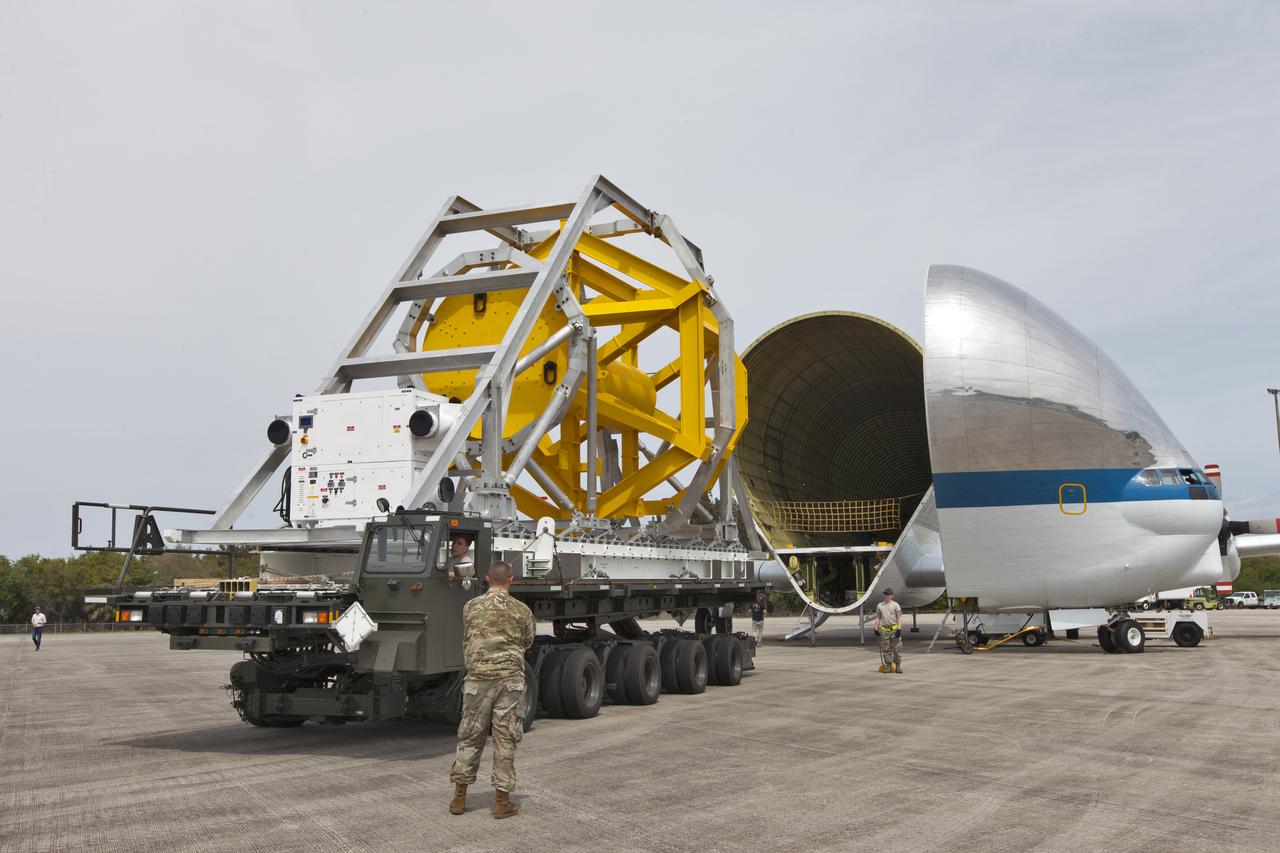
A fit check of the Orion Crew and Service Module Horizontal Transporter (CHT) with NASA's Super Guppy aircraft is underway March 13, 2019, at NASA Kennedy Space Center’s Shuttle Landing Facility in Florida, operated by Space Florida. In this photo, the CHT, secured on the U.S. Air Force aircraft loader, is moved toward the Super Guppy’s open payload bay. The fit check is being performed to confirm loading operations, ensure that the CHT fits inside the Super Guppy and test the electrical interface to aircraft power. The Orion crew and service modules will be readied for a trip to NASA’s Plum Brook Station in Sandusky, Ohio, for full thermal vacuum testing. In this unique facility, the crew and service modules will be put through extensive testing to ensure they can survive the rigors of launch, space travel, re-entry and splashdown. The Orion spacecraft will launch atop the agency's Space Launch System rocket on Exploration Mission-1.
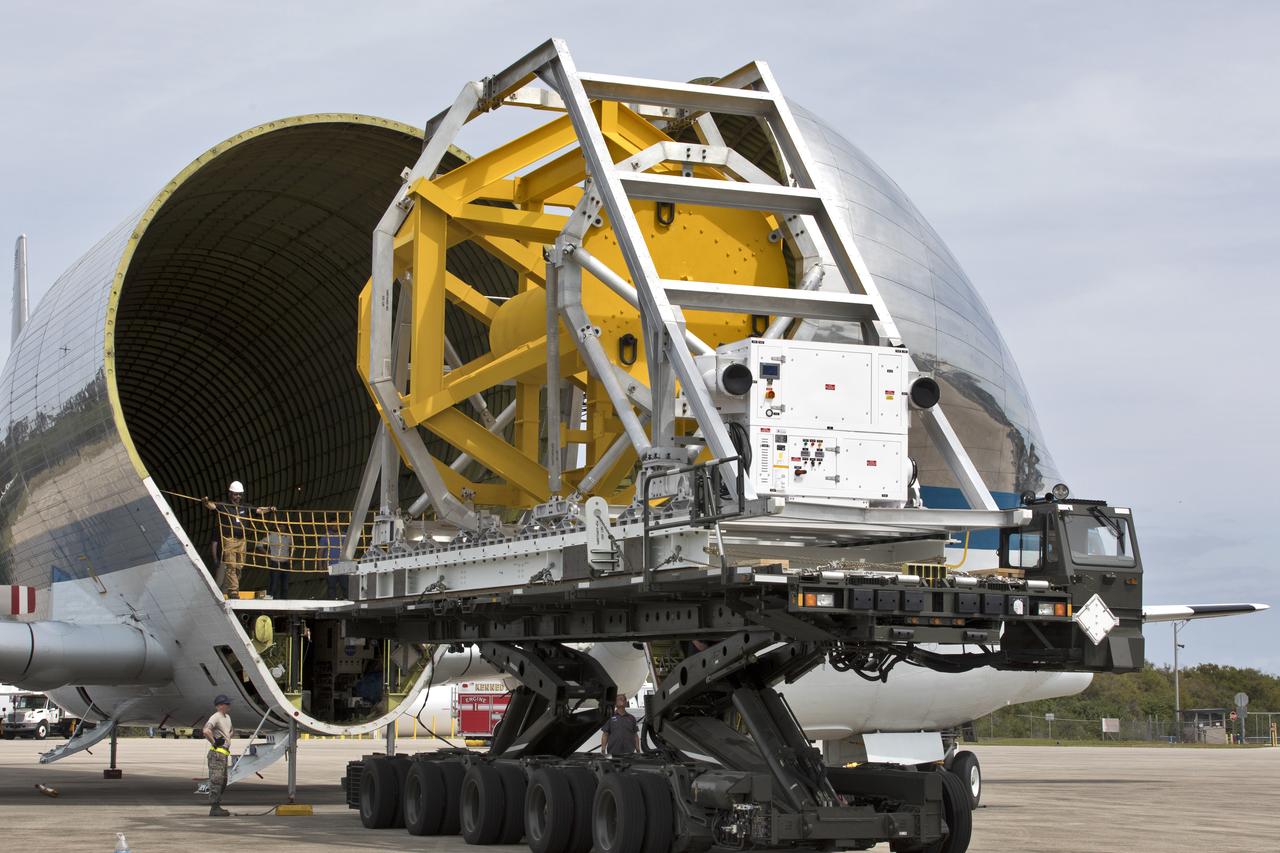
A fit check of the Orion Crew and Service Module Horizontal Transporter (CHT) with NASA's Super Guppy aircraft is underway March 13, 2019, at NASA Kennedy Space Center’s Shuttle Landing Facility in Florida, operated by Space Florida. In this photo, the Super Guppy’s payload bay has been opened and the CHT, secured on the U.S. Air Force aircraft loader, is moved inside the aircraft’s payload bay. The fit check is being performed to confirm loading operations, ensure that the CHT fits inside the Super Guppy and test the electrical interface to aircraft power. The Orion crew and service modules will be readied for a trip to NASA’s Plum Brook Station in Sandusky, Ohio, for full thermal vacuum testing. In this unique facility, the crew and service modules will be put through extensive testing to ensure they can survive the rigors of launch, space travel, re-entry and splashdown. The Orion spacecraft will launch atop the agency's Space Launch System rocket on Exploration Mission-1.
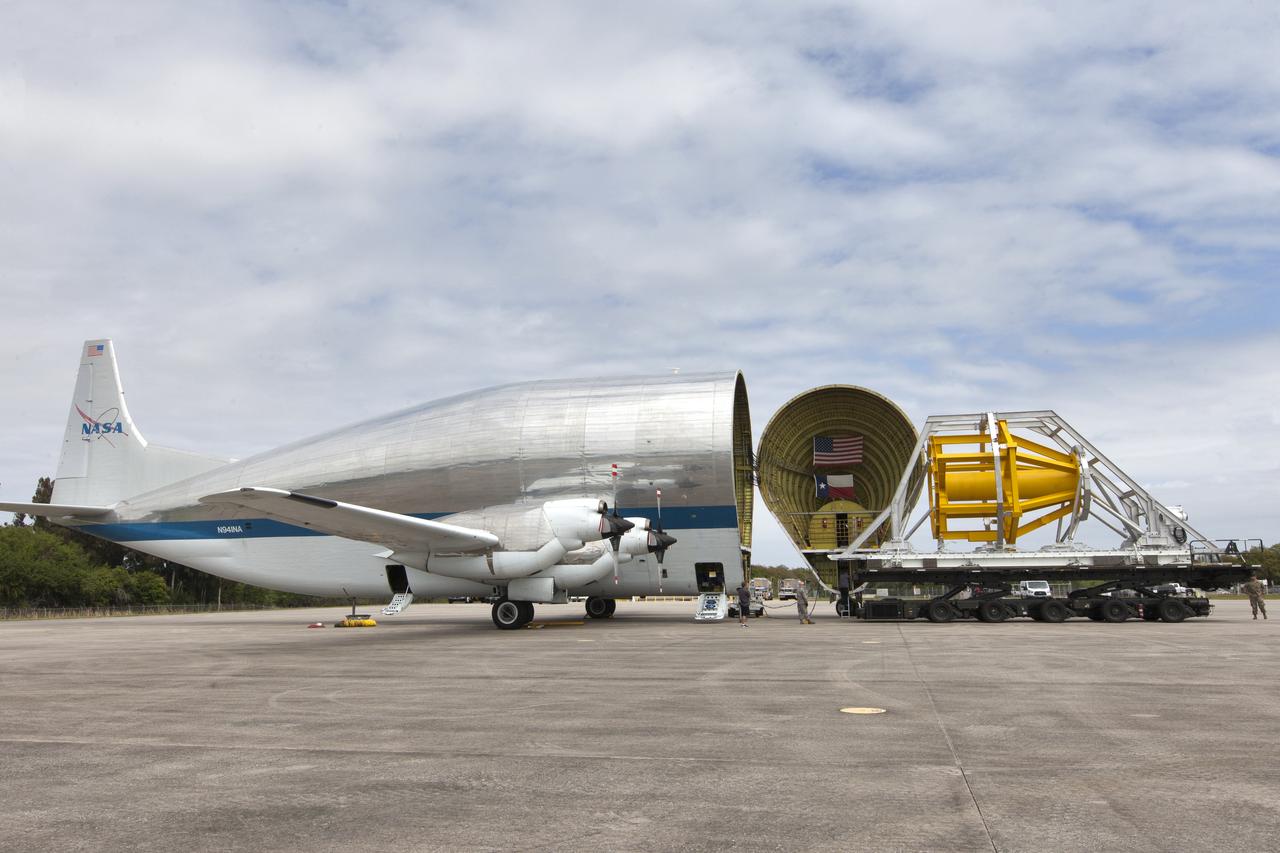
A fit check of the Orion Crew and Service Module Horizontal Transporter (CHT) with NASA's Super Guppy aircraft began March 12, 2019, at NASA Kennedy Space Center’s Shuttle Landing Facility in Florida, operated by Space Florida. In this photo, the Super Guppy’s payload bay is opened as the CHT, secured on the U.S. Air Force aircraft loader, is moved toward the aircraft. The fit check is being performed to confirm loading operations, ensure that the CHT fits inside the Super Guppy and test the electrical interface to aircraft power. The Orion crew and service modules will be readied for a trip to NASA’s Plum Brook Station in Sandusky, Ohio, for full thermal vacuum testing. In this unique facility, the crew and service modules will be put through extensive testing to ensure they can survive the rigors of launch, space travel, re-entry and splashdown. The Orion spacecraft will launch atop the agency's Space Launch System rocket on Exploration Mission-1.
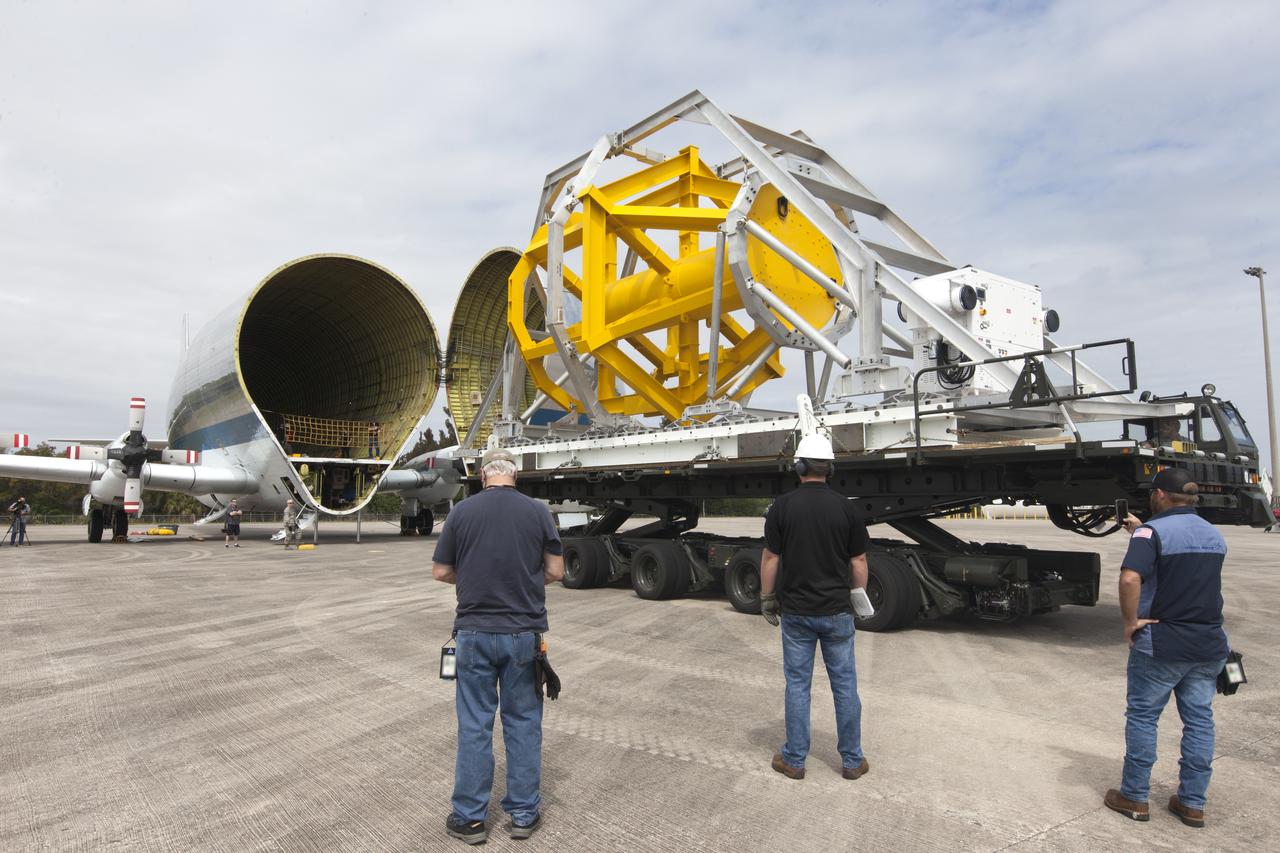
A fit check of the Orion Crew and Service Module Horizontal Transporter (CHT) with NASA's Super Guppy aircraft began March 12, 2019, at NASA Kennedy Space Center’s Shuttle Landing Facility in Florida, operated by Space Florida. In this photo, the Super Guppy’s payload bay is opened as the CHT, secured on the U.S. Air Force aircraft loader, is moved toward the aircraft. The fit check is being performed to confirm loading operations, ensure that the CHT fits inside the Super Guppy and test the electrical interface to aircraft power. The Orion crew and service modules will be readied for a trip to NASA’s Plum Brook Station in Sandusky, Ohio, for full thermal vacuum testing. In this unique facility, the crew and service modules will be put through extensive testing to ensure they can survive the rigors of launch, space travel, re-entry and splashdown. The Orion spacecraft will launch atop the agency's Space Launch System rocket on Exploration Mission-1.

A fit check of the Orion Crew and Service Module Horizontal Transporter (CHT) with NASA's Super Guppy aircraft began March 12, 2019, at NASA Kennedy Space Center’s Shuttle Landing Facility in Florida, operated by Space Florida. In this photo, the Super Guppy’s payload bay is opened as the CHT, secured on the U.S. Air Force aircraft loader, is moved inside the aircraft’s payload bay. The fit check is being performed to confirm loading operations, ensure that the CHT fits inside the Super Guppy and test the electrical interface to aircraft power. The Orion crew and service modules will be readied for a trip to NASA’s Plum Brook Station in Sandusky, Ohio, for full thermal vacuum testing. In this unique facility, the crew and service modules will be put through extensive testing to ensure they can survive the rigors of launch, space travel, re-entry and splashdown. The Orion spacecraft will launch atop the agency's Space Launch System rocket on Exploration Mission-1.

A fit check of the Orion Crew and Service Module Horizontal Transporter (CHT) with NASA's Super Guppy aircraft is underway March 13, 2019, at NASA Kennedy Space Center’s Shuttle Landing Facility in Florida, operated by Space Florida. In this photo, the CHT, secured on the U.S. Air Force aircraft loader, is moved inside the aircraft’s payload bay. The fit check is being performed to confirm loading operations, ensure that the CHT fits inside the Super Guppy and test the electrical interface to aircraft power. The Orion crew and service modules will be readied for a trip to NASA’s Plum Brook Station in Sandusky, Ohio, for full thermal vacuum testing. In this unique facility, the crew and service modules will be put through extensive testing to ensure they can survive the rigors of launch, space travel, re-entry and splashdown. The Orion spacecraft will launch atop the agency's Space Launch System rocket on Exploration Mission-1.
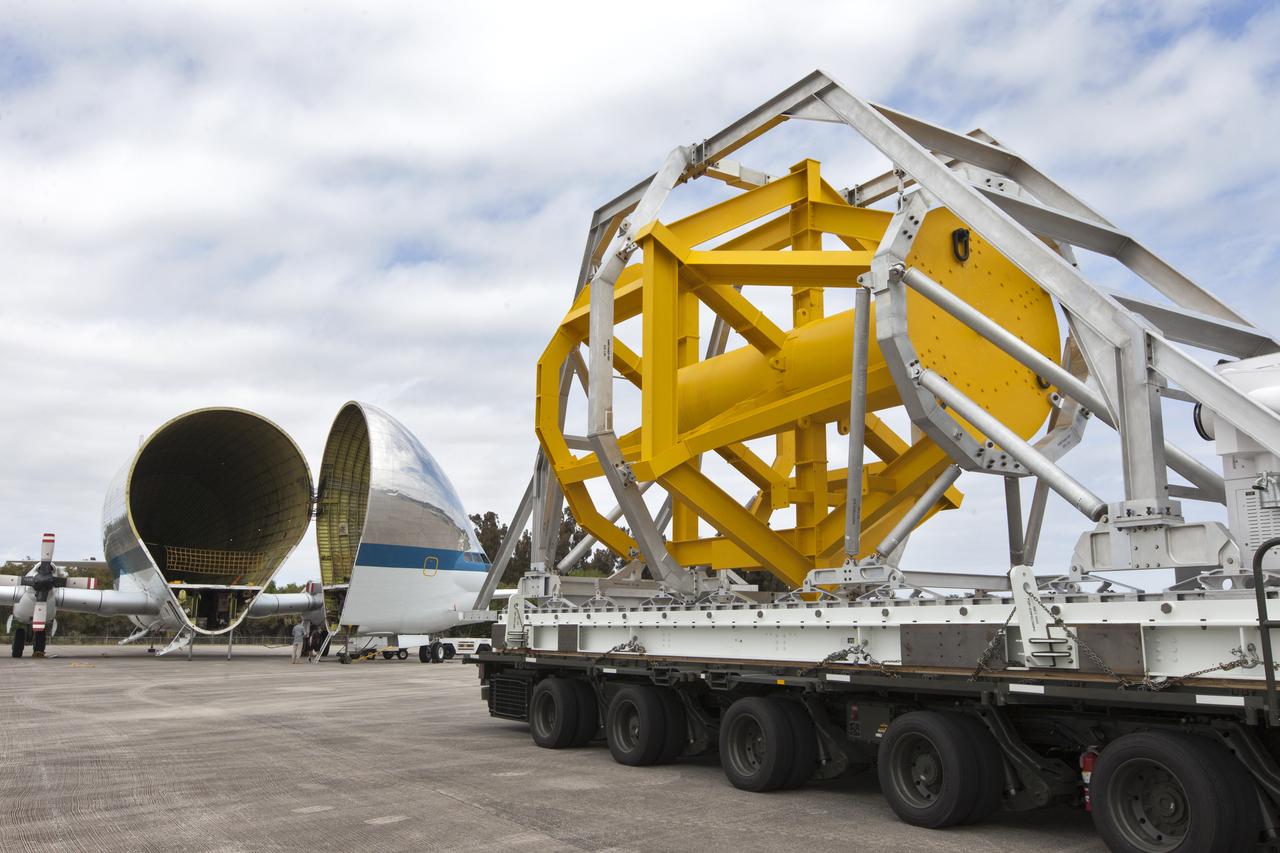
A fit check of the Orion Crew and Service Module Horizontal Transporter (CHT) with NASA's Super Guppy aircraft began March 12, 2019, at NASA Kennedy Space Center’s Shuttle Landing Facility in Florida, operated by Space Florida. In this photo, the Super Guppy’s payload bay is opened as the CHT, secured on the U.S. Air Force aircraft loader, is moved toward the aircraft. The fit check is being performed to confirm loading operations, ensure that the CHT fits inside the Super Guppy and test the electrical interface to aircraft power. The Orion crew and service modules will be readied for a trip to NASA’s Plum Brook Station in Sandusky, Ohio, for full thermal vacuum testing. In this unique facility, the crew and service modules will be put through extensive testing to ensure they can survive the rigors of launch, space travel, re-entry and splashdown. The Orion spacecraft will launch atop the agency's Space Launch System rocket on Exploration Mission-1.
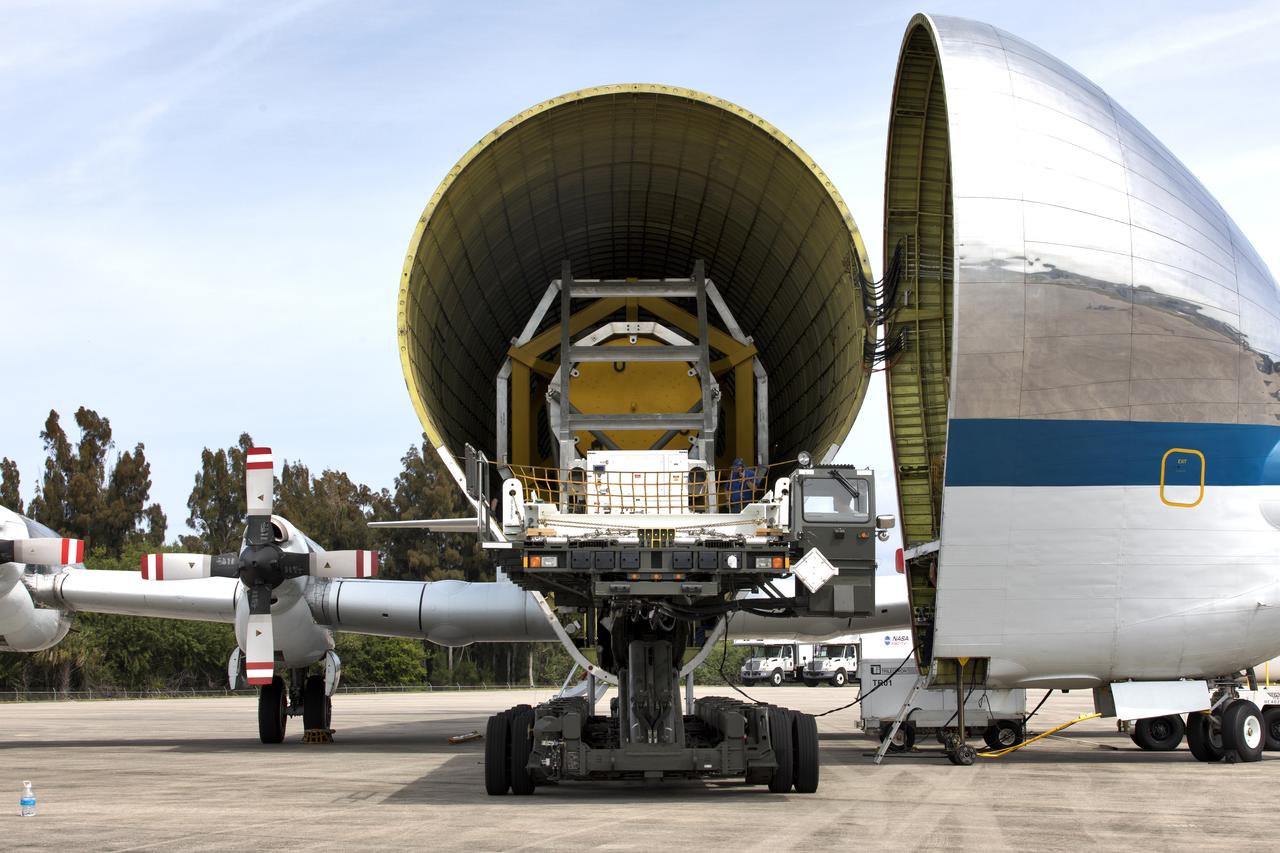
A fit check of the Orion Crew and Service Module Horizontal Transporter (CHT) with NASA's Super Guppy aircraft is underway March 13, 2019, at NASA Kennedy Space Center’s Shuttle Landing Facility in Florida, operated by Space Florida. In this photo, the CHT, secured on the U.S. Air Force aircraft loader, is moved inside the aircraft’s payload bay. The fit check is being performed to confirm loading operations, ensure that the CHT fits inside the Super Guppy and test the electrical interface to aircraft power. The Orion crew and service modules will be readied for a trip to NASA’s Plum Brook Station in Sandusky, Ohio, for full thermal vacuum testing. In this unique facility, the crew and service modules will be put through extensive testing to ensure they can survive the rigors of launch, space travel, re-entry and splashdown. The Orion spacecraft will launch atop the agency's Space Launch System rocket on Exploration Mission-1.
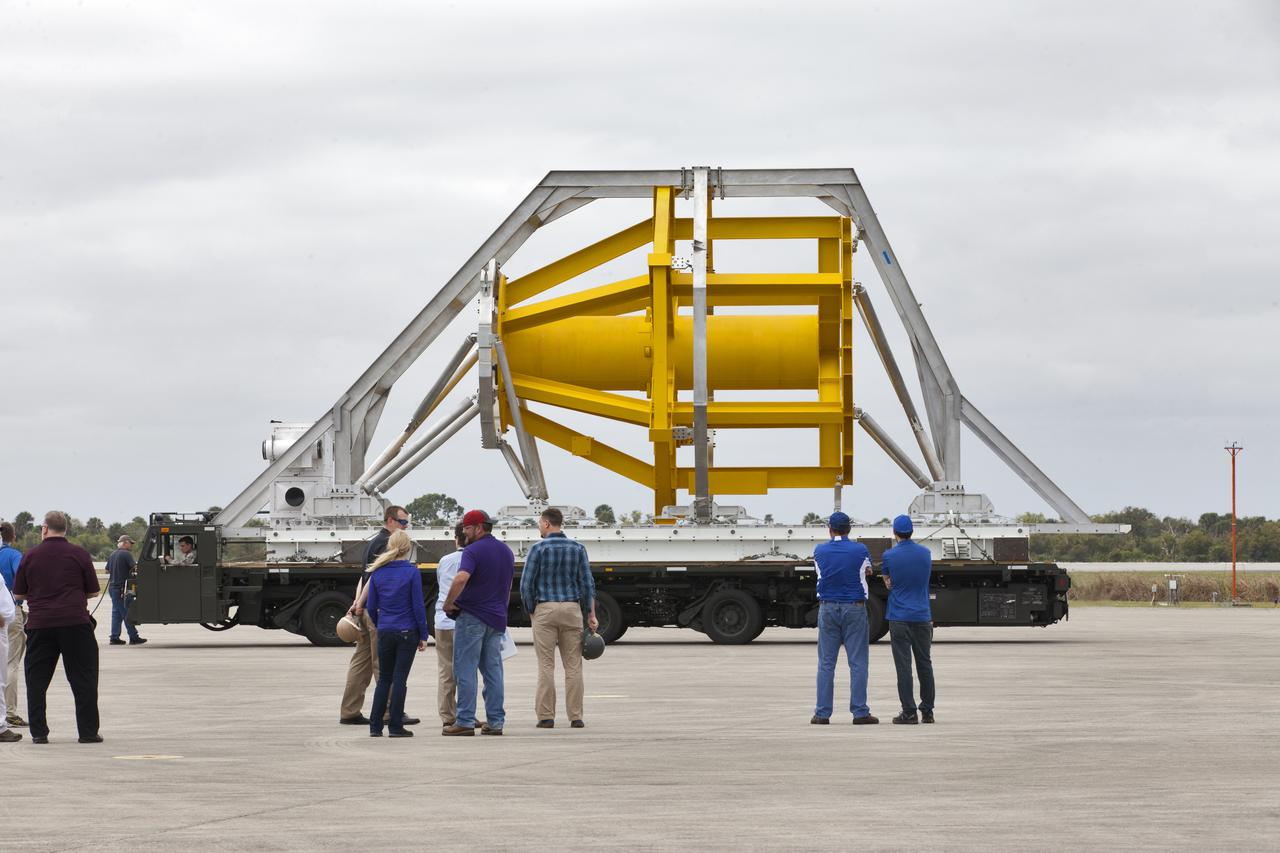
A fit check of the Orion Crew and Service Module Horizontal Transporter (CHT) with NASA's Super Guppy aircraft began March 12, 2019, at NASA Kennedy Space Center’s Shuttle Landing Facility in Florida, operated by Space Florida. In this photo, the CHT is secured on the U.S. Air Force aircraft loader. The fit check is being performed to confirm loading operations, ensure that the CHT fits inside the Super Guppy and test the electrical interface to aircraft power. The Orion crew and service modules will be readied for a trip to NASA’s Plum Brook Station in Sandusky, Ohio, for full thermal vacuum testing. In this unique facility, the crew and service modules will be put through extensive testing to ensure they can survive the rigors of launch, space travel, re-entry and splashdown. The Orion spacecraft will launch atop the agency's Space Launch System rocket on Exploration Mission-1.
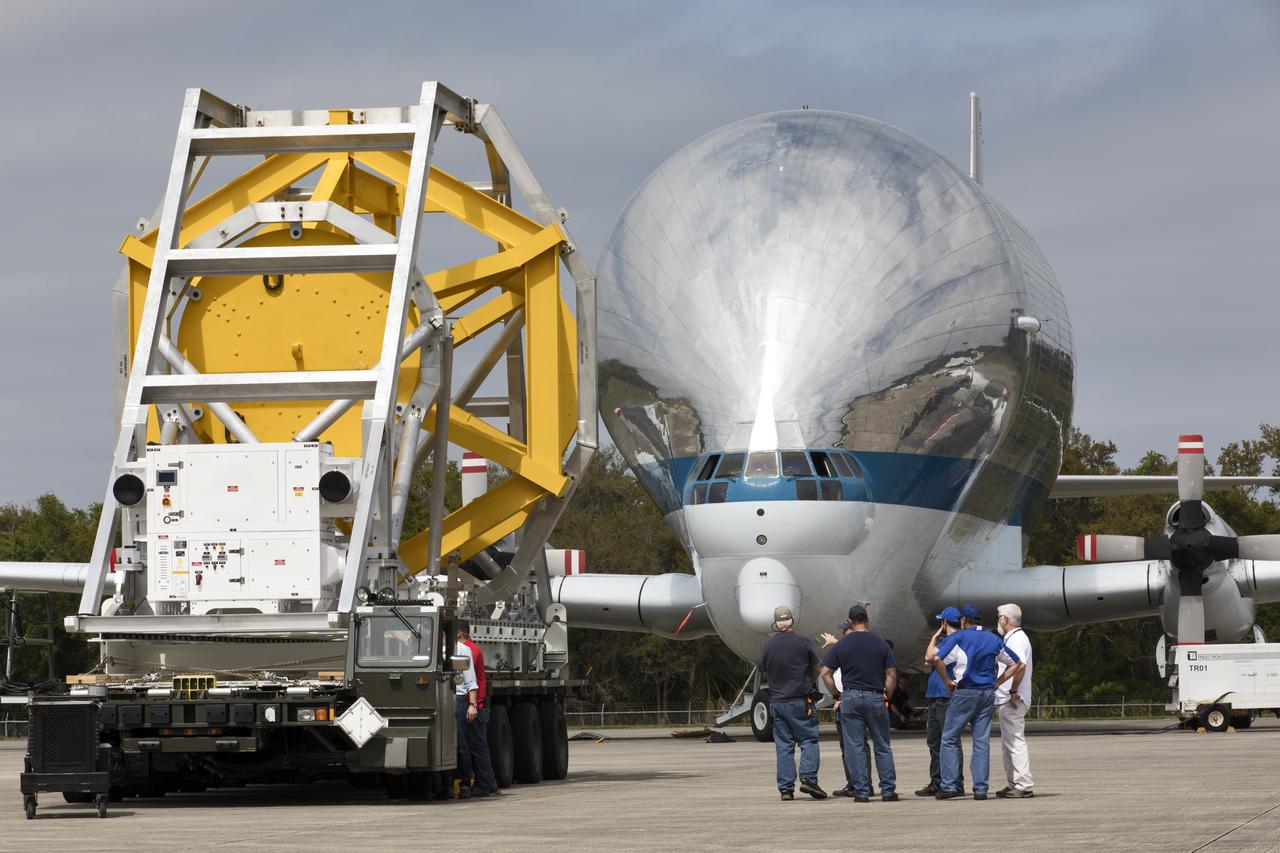
A fit check of the Orion Crew and Service Module Horizontal Transporter (CHT) with NASA's Super Guppy aircraft began March 12, 2019, at NASA Kennedy Space Center’s Shuttle Landing Facility in Florida, operated by Space Florida. In this photo, the CHT is secured on the U.S. Air Force aircraft loader and is moved toward the Super Guppy. The fit check is being performed to confirm loading operations, ensure that the CHT fits inside the Super Guppy and test the electrical interface to aircraft power. The Orion crew and service modules will be readied for a trip to NASA’s Plum Brook Station in Sandusky, Ohio, for full thermal vacuum testing. In this unique facility, the crew and service modules will be put through extensive testing to ensure they can survive the rigors of launch, space travel, re-entry and splashdown. The Orion spacecraft will launch atop the agency's Space Launch System rocket on Exploration Mission-1.
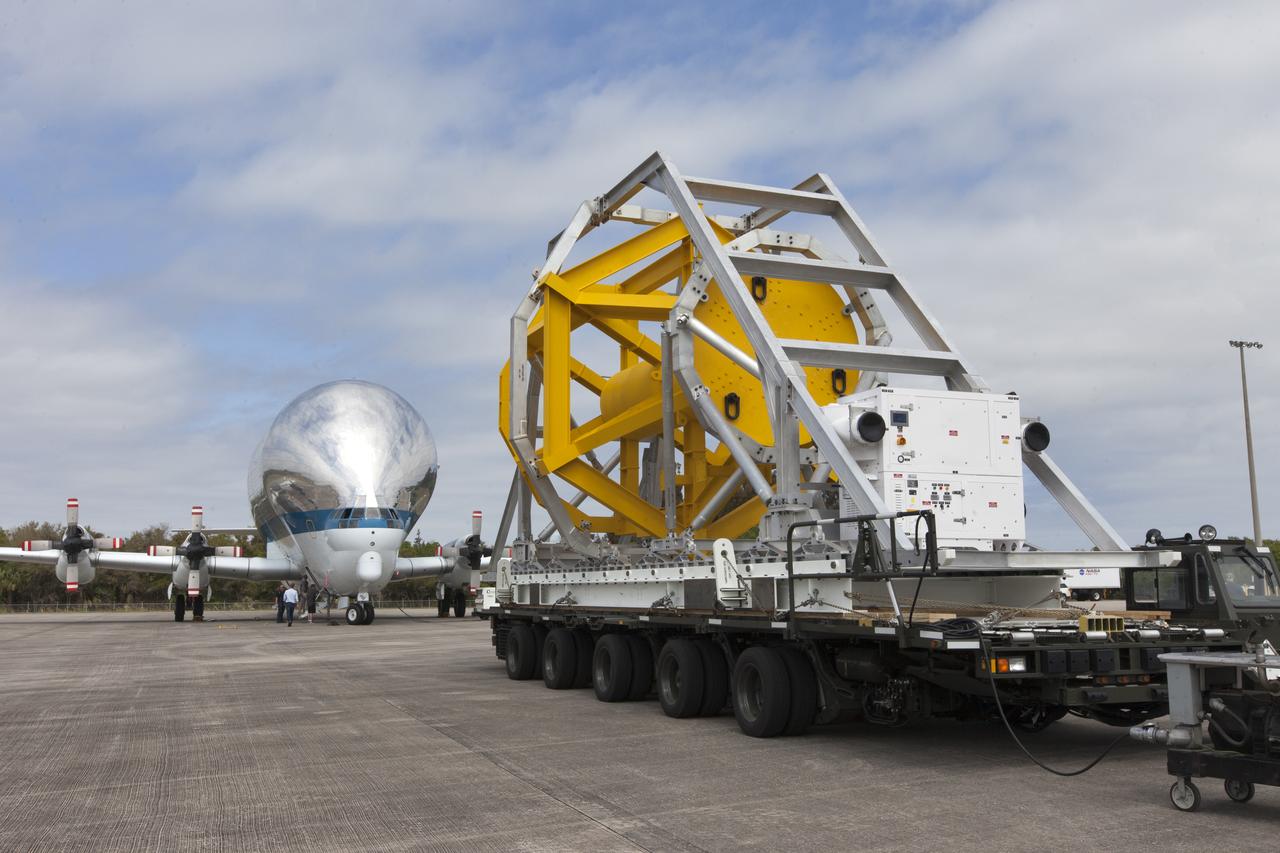
A fit check of the Orion Crew and Service Module Horizontal Transporter (CHT) with NASA's Super Guppy aircraft began March 12, 2019, at NASA Kennedy Space Center’s Shuttle Landing Facility in Florida, operated by Space Florida. In this photo, the CHT is secured on the U.S. Air Force aircraft loader. The fit check is being performed to confirm loading operations, ensure that the CHT fits inside the Super Guppy and test the electrical interface to aircraft power. The Orion crew and service modules will be readied for a trip to NASA’s Plum Brook Station in Sandusky, Ohio, for full thermal vacuum testing. In this unique facility, the crew and service modules will be put through extensive testing to ensure they can survive the rigors of launch, space travel, re-entry and splashdown. The Orion spacecraft will launch atop the agency's Space Launch System rocket on Exploration Mission-1.
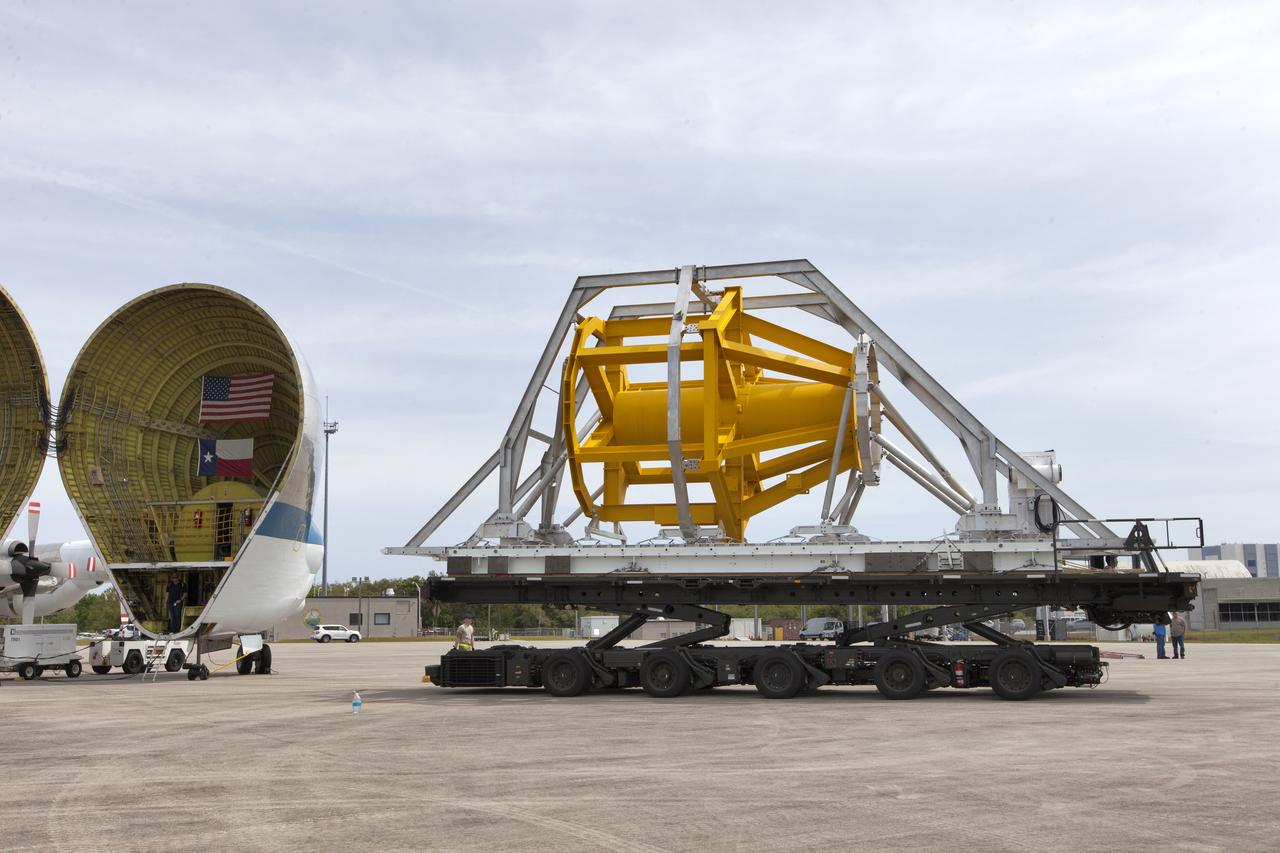
A fit check of the Orion Crew and Service Module Horizontal Transporter (CHT) with NASA's Super Guppy aircraft is underway March 13, 2019, at NASA Kennedy Space Center’s Shuttle Landing Facility in Florida, operated by Space Florida. In this photo, the CHT is secured on the U.S. Air Force aircraft loader and is being moved toward the Super Guppy. The fit check is being performed to confirm loading operations, ensure that the CHT fits inside the Super Guppy and test the electrical interface to aircraft power. The Orion crew and service modules will be readied for a trip to NASA’s Plum Brook Station in Sandusky, Ohio, for full thermal vacuum testing. In this unique facility, the crew and service modules will be put through extensive testing to ensure they can survive the rigors of launch, space travel, re-entry and splashdown. The Orion spacecraft will launch atop the agency's Space Launch System rocket on Exploration Mission-1.
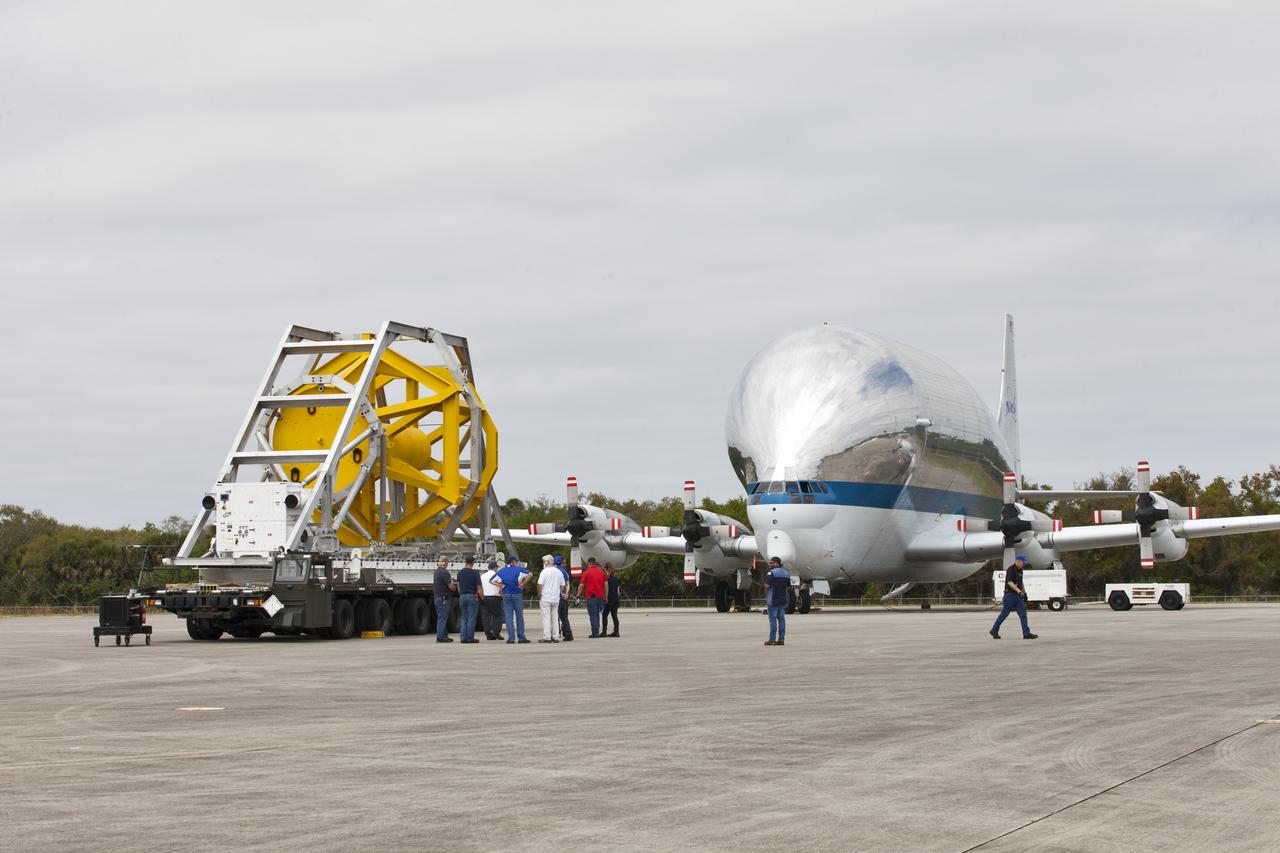
A fit check of the Orion Crew and Service Module Horizontal Transporter (CHT) with NASA's Super Guppy aircraft began March 12, 2019, at NASA Kennedy Space Center’s Shuttle Landing Facility in Florida, operated by Space Florida. In this photo, the CHT is secured on the U.S. Air Force aircraft loader. The fit check is being performed to confirm loading operations, ensure that the CHT fits inside the Super Guppy and test the electrical interface to aircraft power. The Orion crew and service modules will be readied for a trip to NASA’s Plum Brook Station in Sandusky, Ohio, for full thermal vacuum testing. In this unique facility, the crew and service modules will be put through extensive testing to ensure they can survive the rigors of launch, space travel, re-entry and splashdown. The Orion spacecraft will launch atop the agency's Space Launch System rocket on Exploration Mission-1.
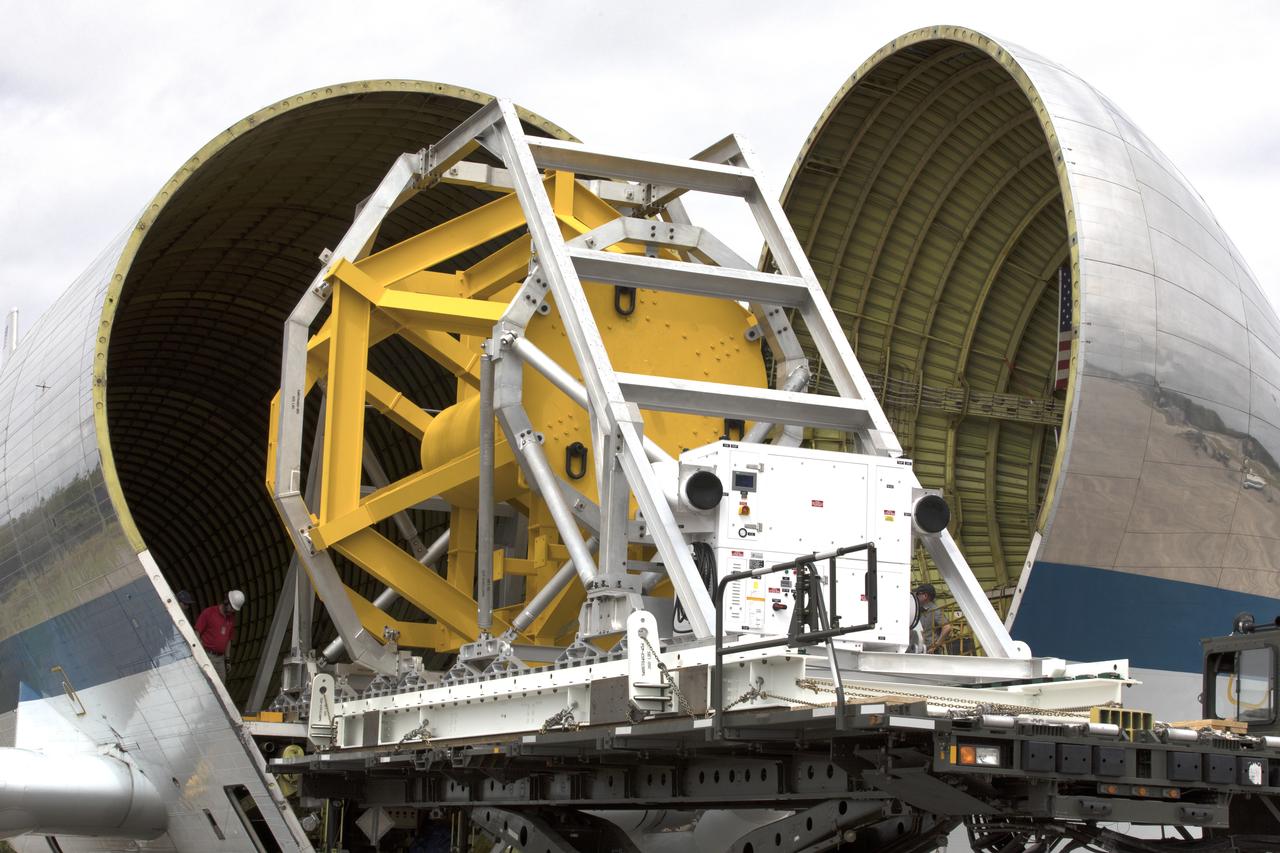
A fit check of the Orion Crew and Service Module Horizontal Transporter (CHT) with NASA's Super Guppy aircraft began March 12, 2019, at NASA Kennedy Space Center’s Shuttle Landing Facility in Florida, operated by Space Florida. In this photo, the Super Guppy’s payload bay is opened as the CHT, secured on the U.S. Air Force aircraft loader, is moved inside the aircraft’s payload bay. The fit check is being performed to confirm loading operations, ensure that the CHT fits inside the Super Guppy and test the electrical interface to aircraft power. The Orion crew and service modules will be readied for a trip to NASA’s Plum Brook Station in Sandusky, Ohio, for full thermal vacuum testing. In this unique facility, the crew and service modules will be put through extensive testing to ensure they can survive the rigors of launch, space travel, re-entry and splashdown. The Orion spacecraft will launch atop the agency's Space Launch System rocket on Exploration Mission-1.
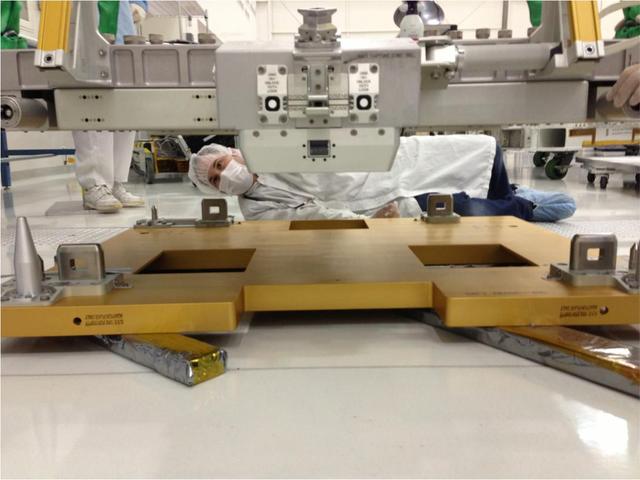
An engineer from NASA Jet Propulsion Laboratory oversees a fit check during the integration & testing of the Optical PAyload for Lasercomm Science OPALS.

Here is an image of the X-59’s 13-foot General Electric F414 engine as the team prepares for a fit check. Making sure components, like the aircraft’s hydraulic lines, which help control functions like brakes or landing gear, and wiring of the engine, fit properly is essential to the aircraft’s safety. Once complete, the X-59 aircraft will demonstrate the ability to fly supersonic while reducing the loud sonic boom to a quiet sonic thump and help enable commercial supersonic air travel over land.
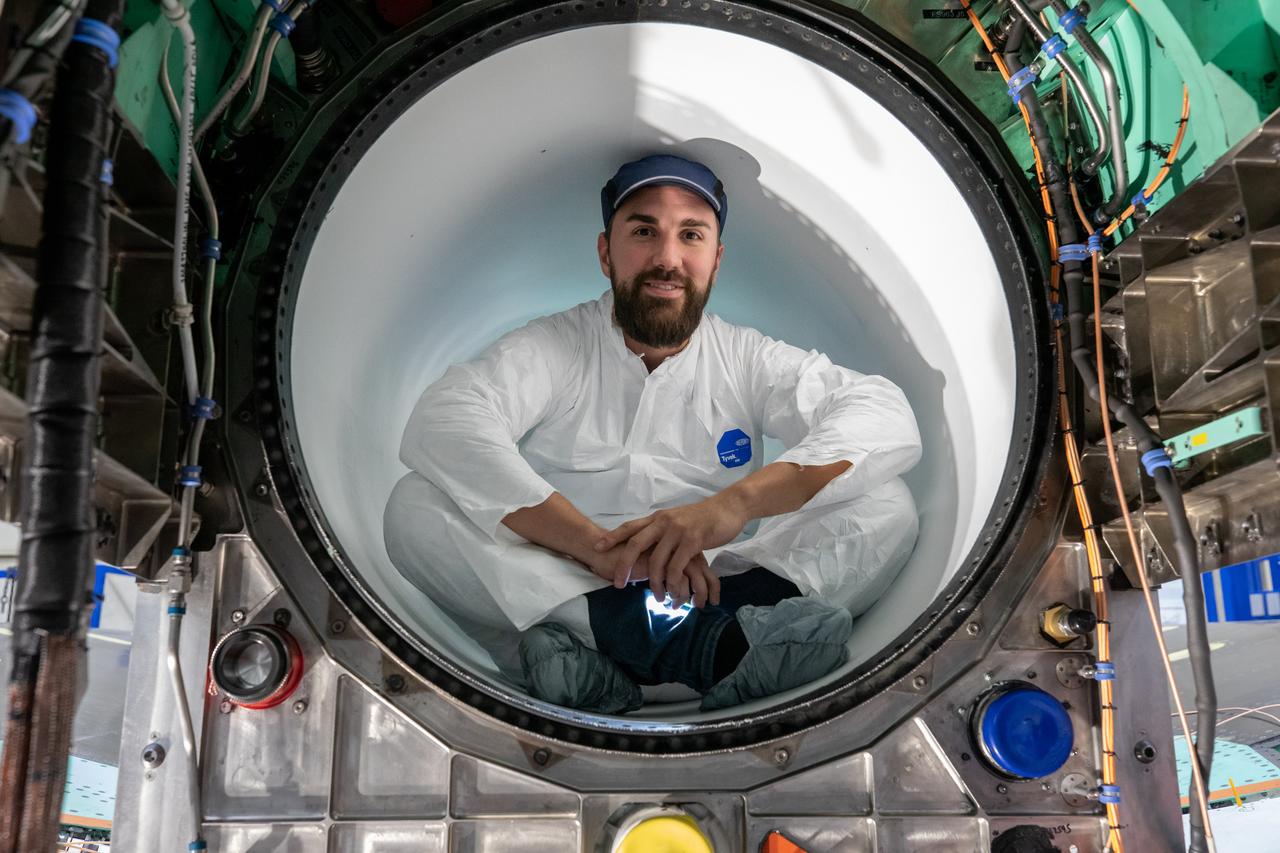
A Lockheed Martin Skunk Works technician takes a break for a photo. Note that the technician is wearing protective clean gear while sitting inside the X-59 engine inlet. Wearing this gear reduces the chance of any foreign objects from damaging the engine inlet.

NASA Dryden technicians take measurements inside a fit-check mockup for prior to systems installation on a boilerplate Orion launch abort test crew capsule. A mockup Orion crew module has been constructed by NASA Dryden Flight Research Center's Fabrication Branch. The mockup is being used to develop integration procedures for avionics and instrumentation in advance of the arrival of the first abort flight test article.
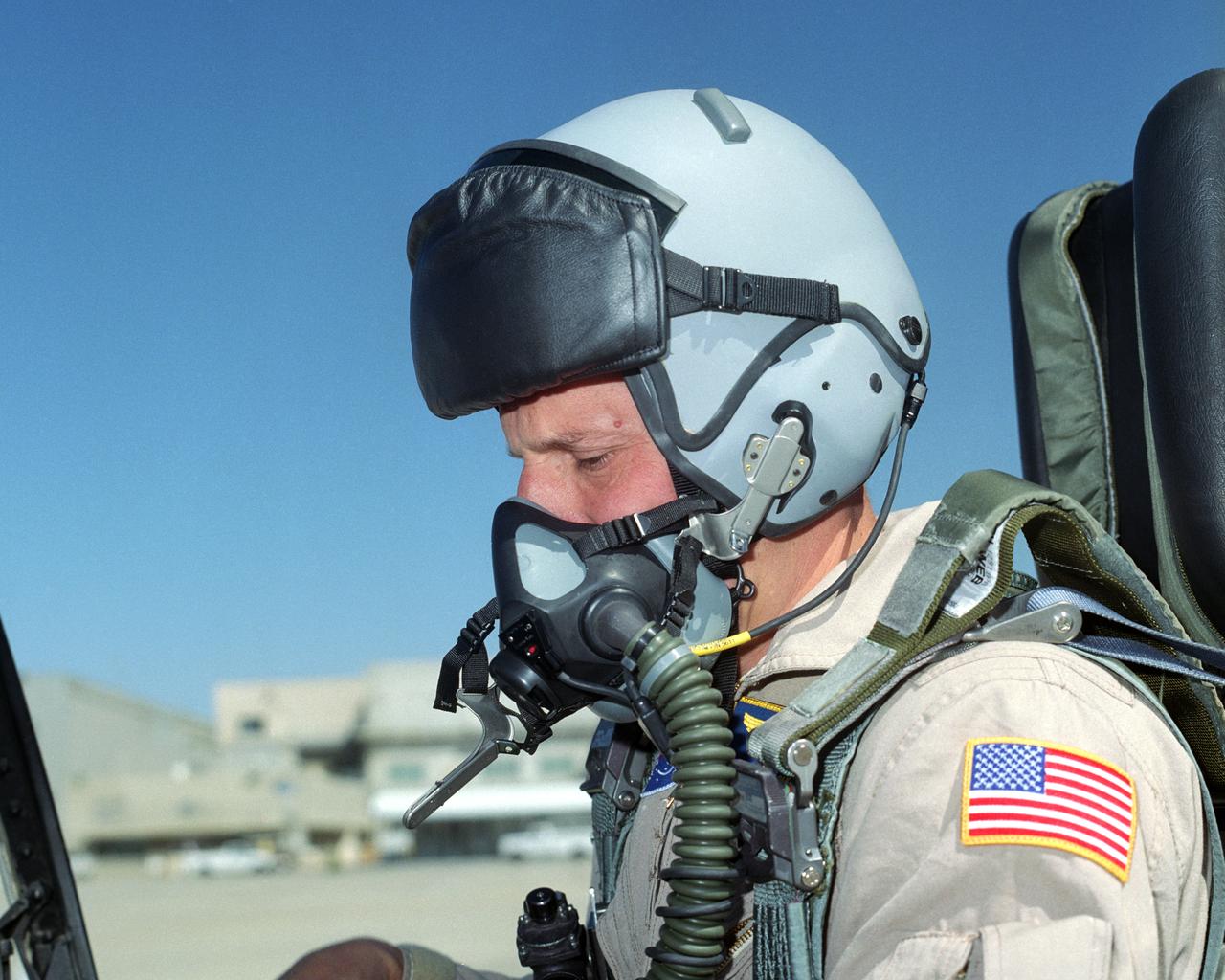
Research pilots from the NASA Dryden Flight Research Center, Edwards, Calif., tested a prototype two-part helmet. Built by Gentex Corp., Carbondale, Pa., the helmet was evaluated by five NASA pilots during the summer and fall of 2002. The objective was to obtain data on helmet fit, comfort and functionality. The inner helmet of the modular system is fitted to the individual crewmember. The outer helmet features a fully integrated spectral mounted helmet display and a binocular helmet mounted display. The helmet will be adaptable to all flying platforms. The Dryden evaluation was overseen by the Center's Life Support office. Assessments have taken place during normal proficiency flights and some air-to-air combat maneuvering. Evaluation platforms included the F-18, B-52 and C-12. The prototype helmet is being developed by the Naval Air Science and Technology Office and the Aircrew Systems Program Office, Patuxent River, Md.
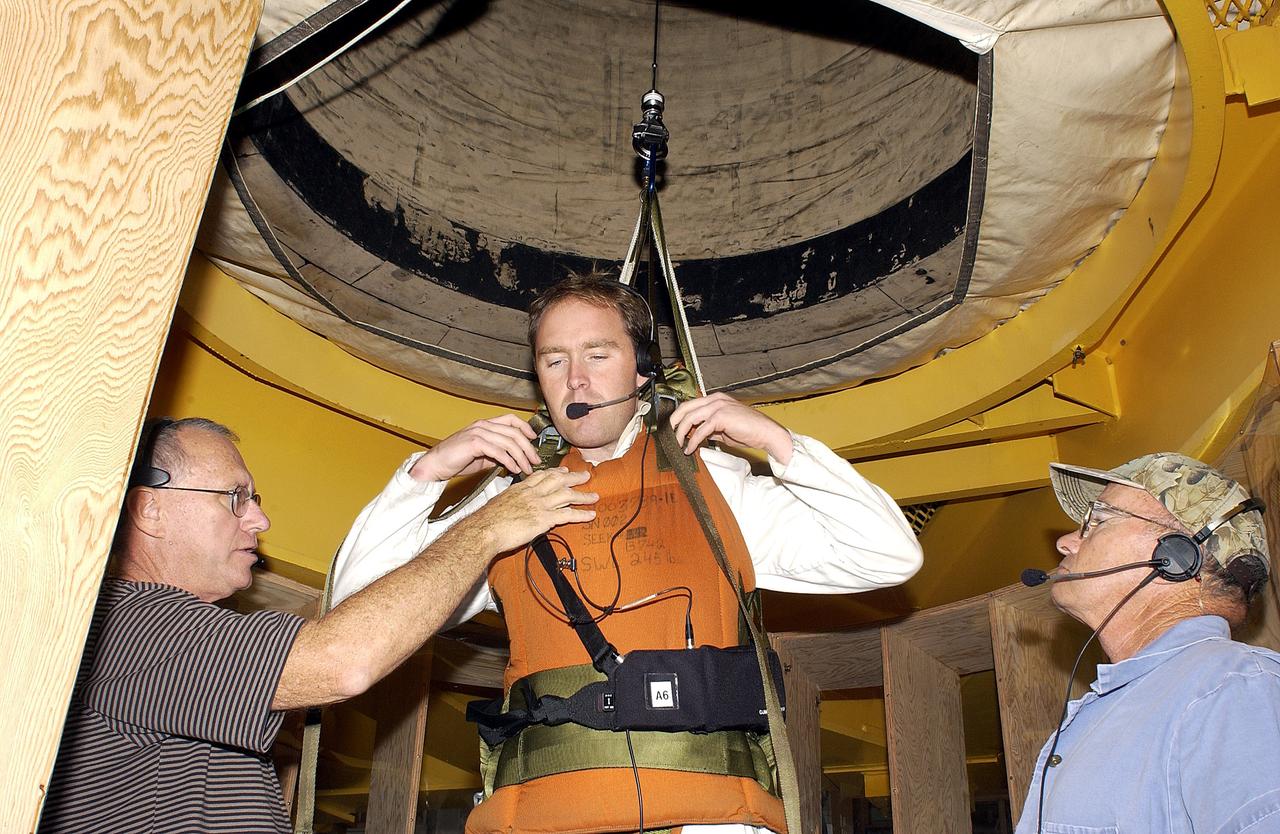
KENNEDY SPACE CENTER, FLA. - Jeff Thon, an SRB mechanic with United Space Alliance, is fitted with a harness to test a vertical solid rocket booster propellant grain inspection technique. Thon will be lowered inside a mockup of two segments of the SRBs. The inspection of segments is required as part of safety analysis.
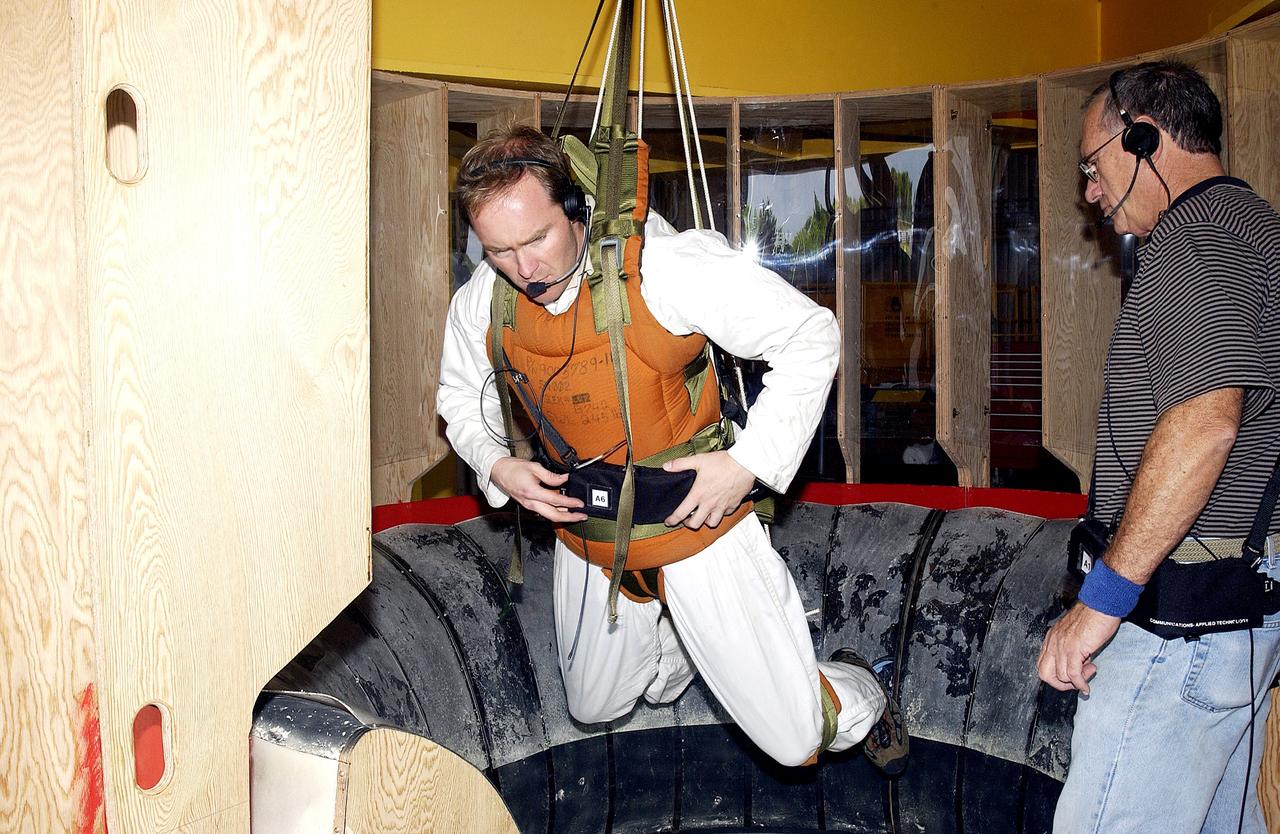
KENNEDY SPACE CENTER, FLA. - Jeff Thon, an SRB mechanic with United Space Alliance, is fitted with a harness to test a vertical solid rocket booster propellant grain inspection technique. Thon will be lowered inside a mockup of two segments of the SRBs. The inspection of segments is required as part of safety analysis.
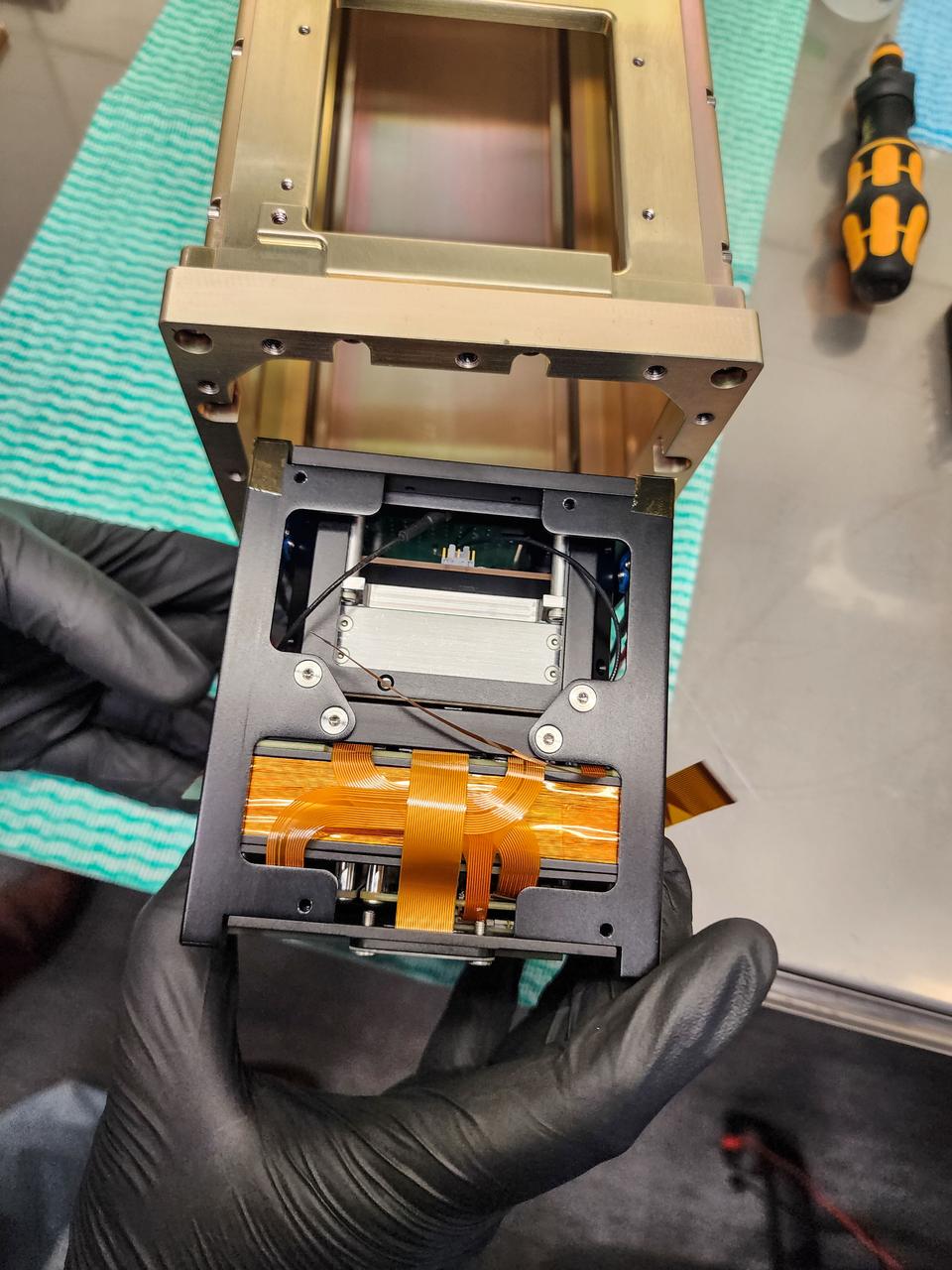
jsc2024e043918 (4/10/2024) ---Binar-2 undergoes deployer fit check testing to ensure all three satellites will be fit for payload integration...Image Credit: Binar Space Program.
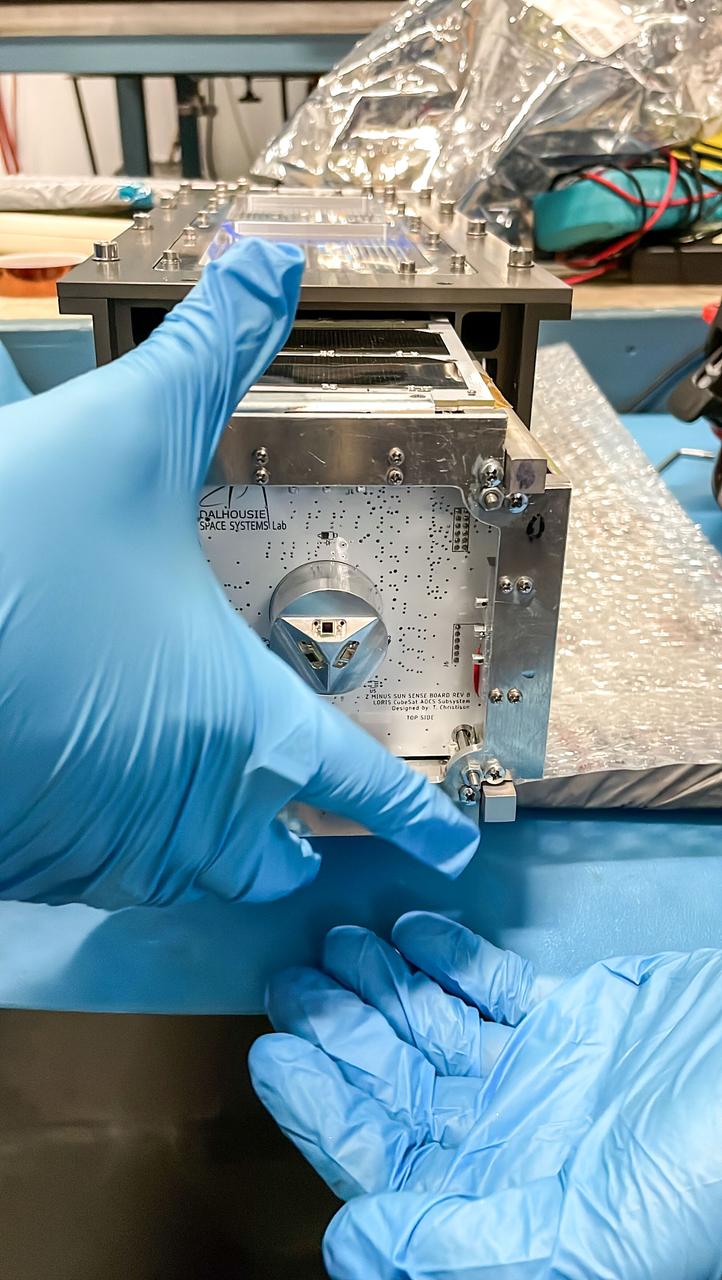
jsc2022e084489 (5/31/2022) --- A preflight view of the Low Orbit Reconnaissance Imagery Satellite (LORIS) being fitted into the fit gauge before the vibration test. Image courtesy of ESL Technologies, Nova Scotia, Canada.
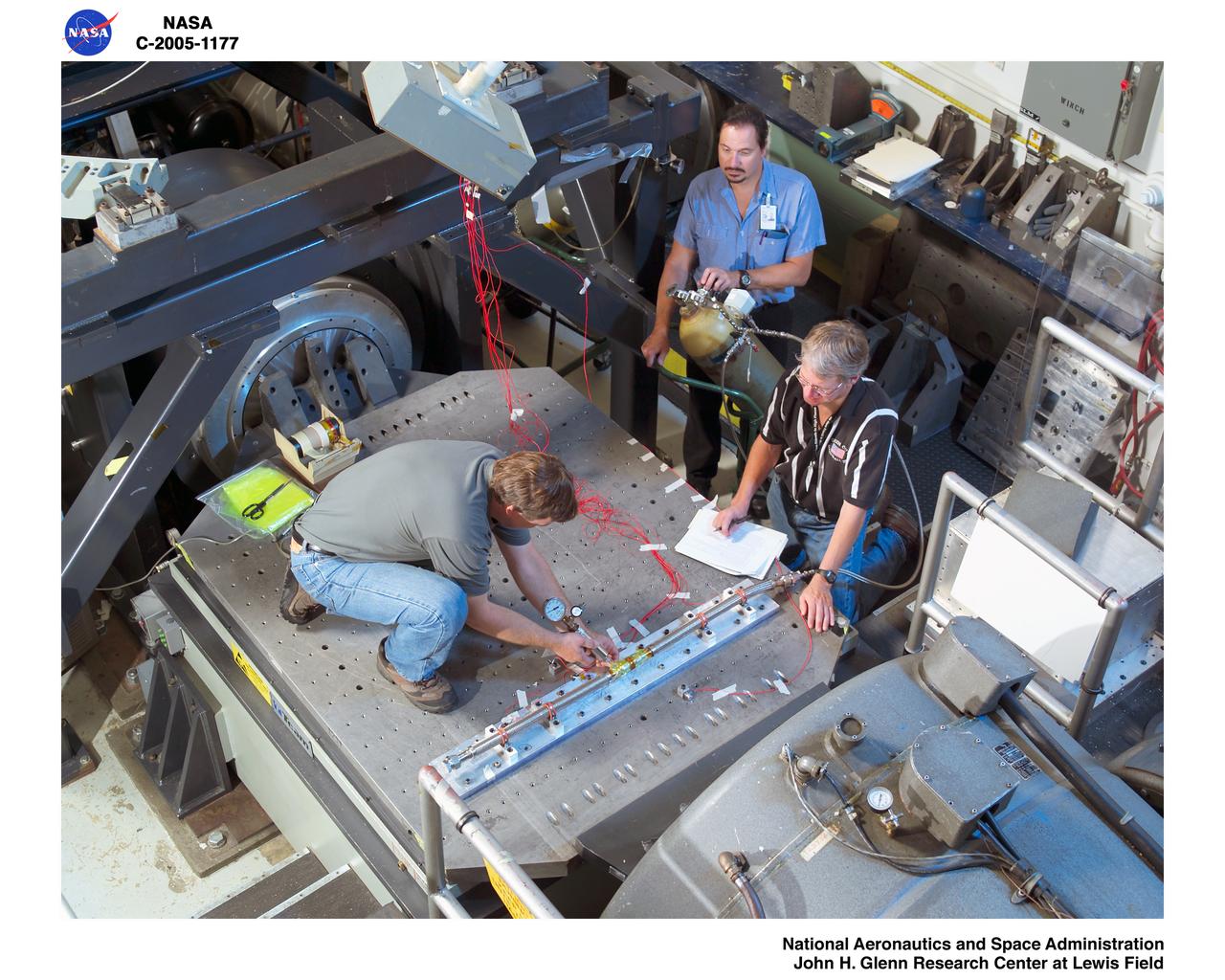
NASA Engineering and Safety Center (NESC) AN Fitting Mimic Test - Helium Leak Testing
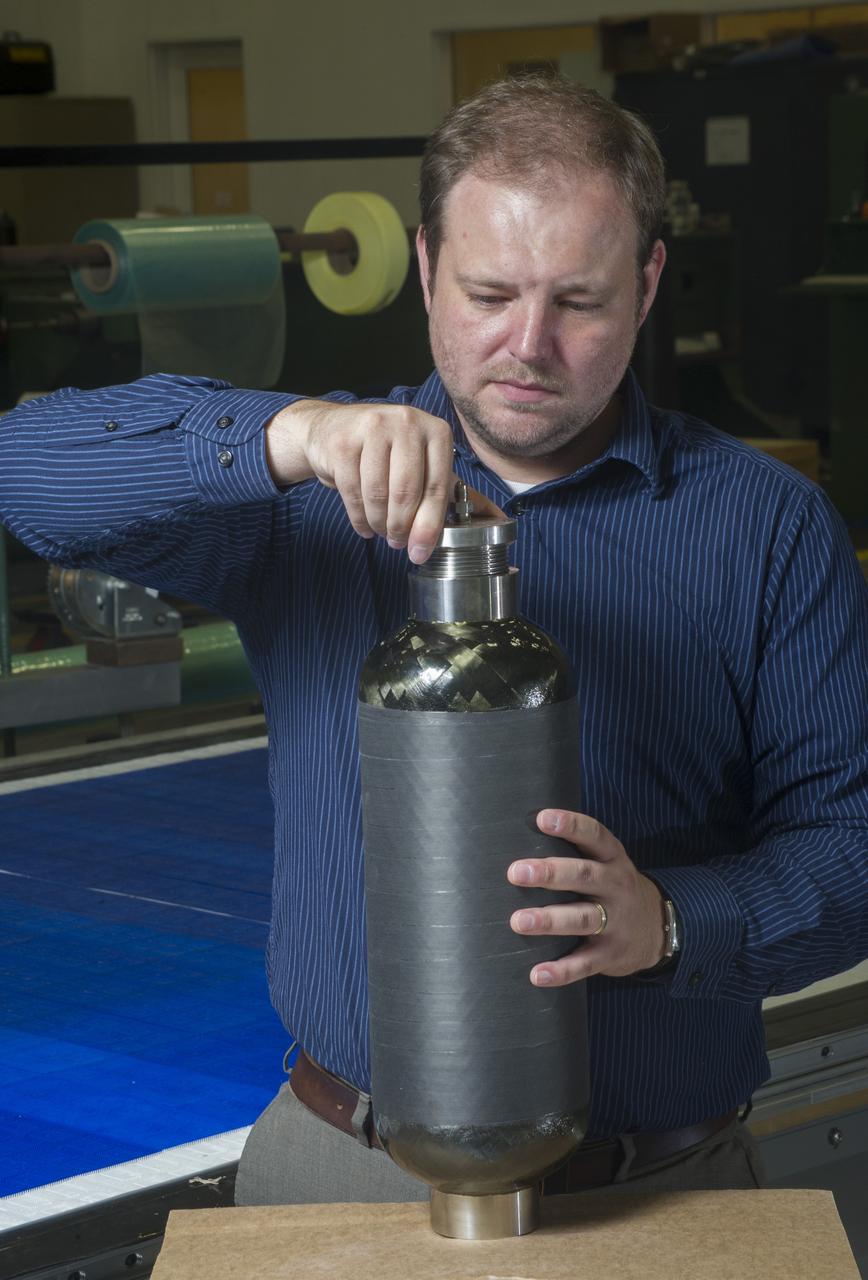
CHAD HASTINGS ATTACHES END FITTING TO BURST TEST ARTICLE
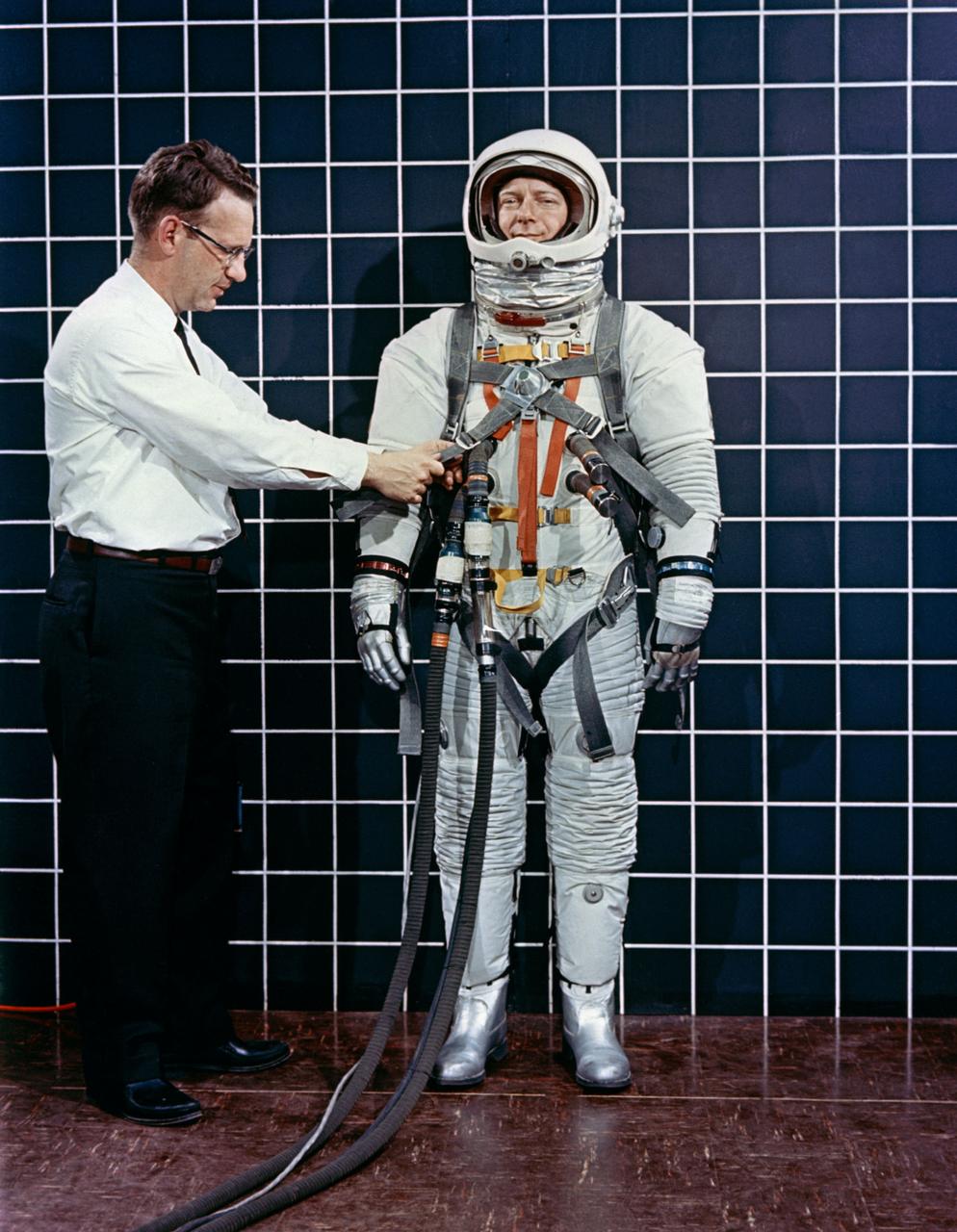
Engineer Bill Peterson fits test pilot Bob Smyth in spacesuit A-3H-024 with the LEM Astronaut restraint harness during suit evaluation study.
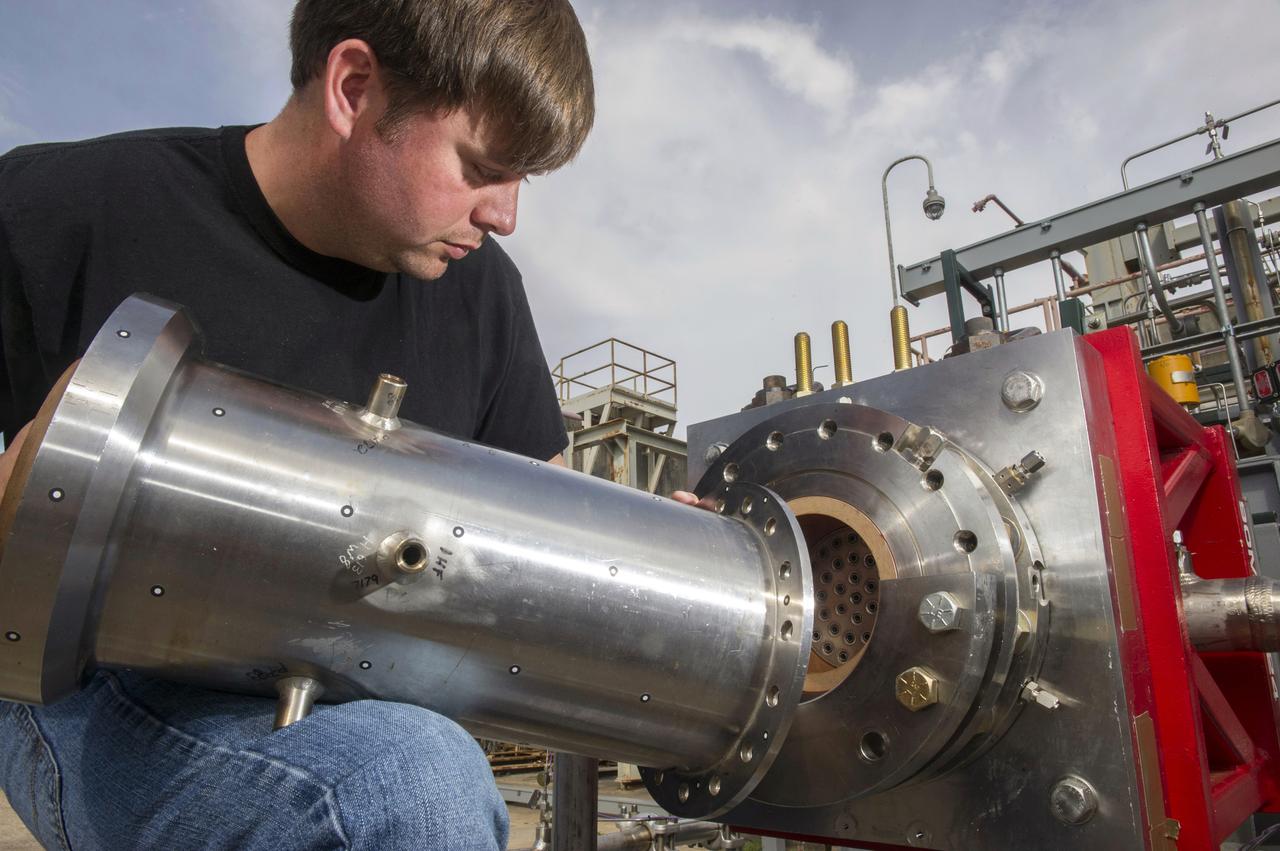
1. ENGINEERS AND TECHNICIANS PREPARE FOR AN UPCOMING HOT-FIRE TEST OF A ROCKET INJECTOR MANUFACTURED USING ADDITIVE MANUFACTURING, OR 3-D PRINTING…RANDALL MCALLISTER, INFOPRO TECHNICIAN, FITS NOZZLE TO ROCKET INJECTOR
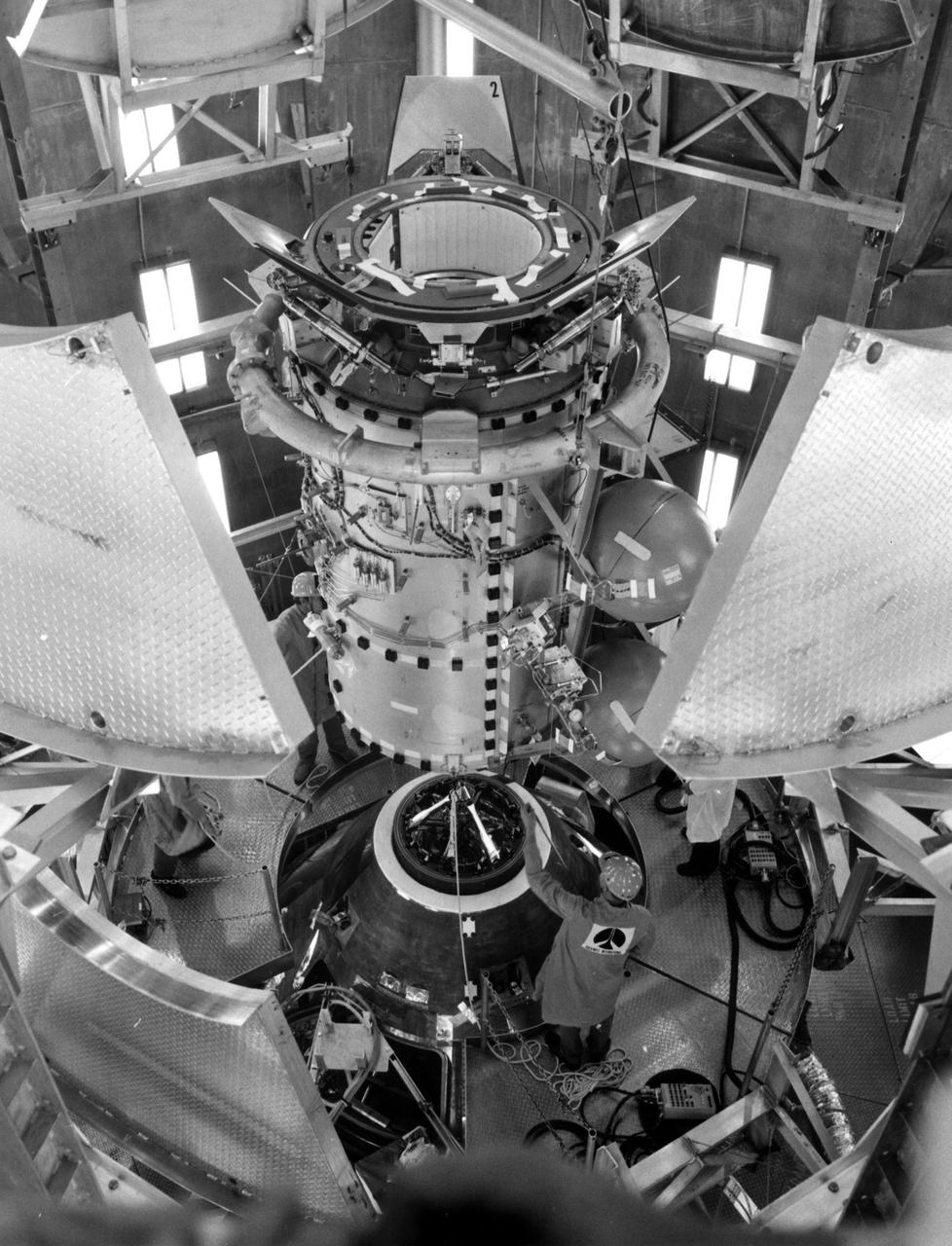
KENNEDY SPACE CENTER, FLA. -- NASA_APOLLO-SOYUZ: Fit checks were performed in an altitude chamber at KSC today between the Apollo spacecraft and the Docking Module to be used during the Apollo Soyuz Test Project.
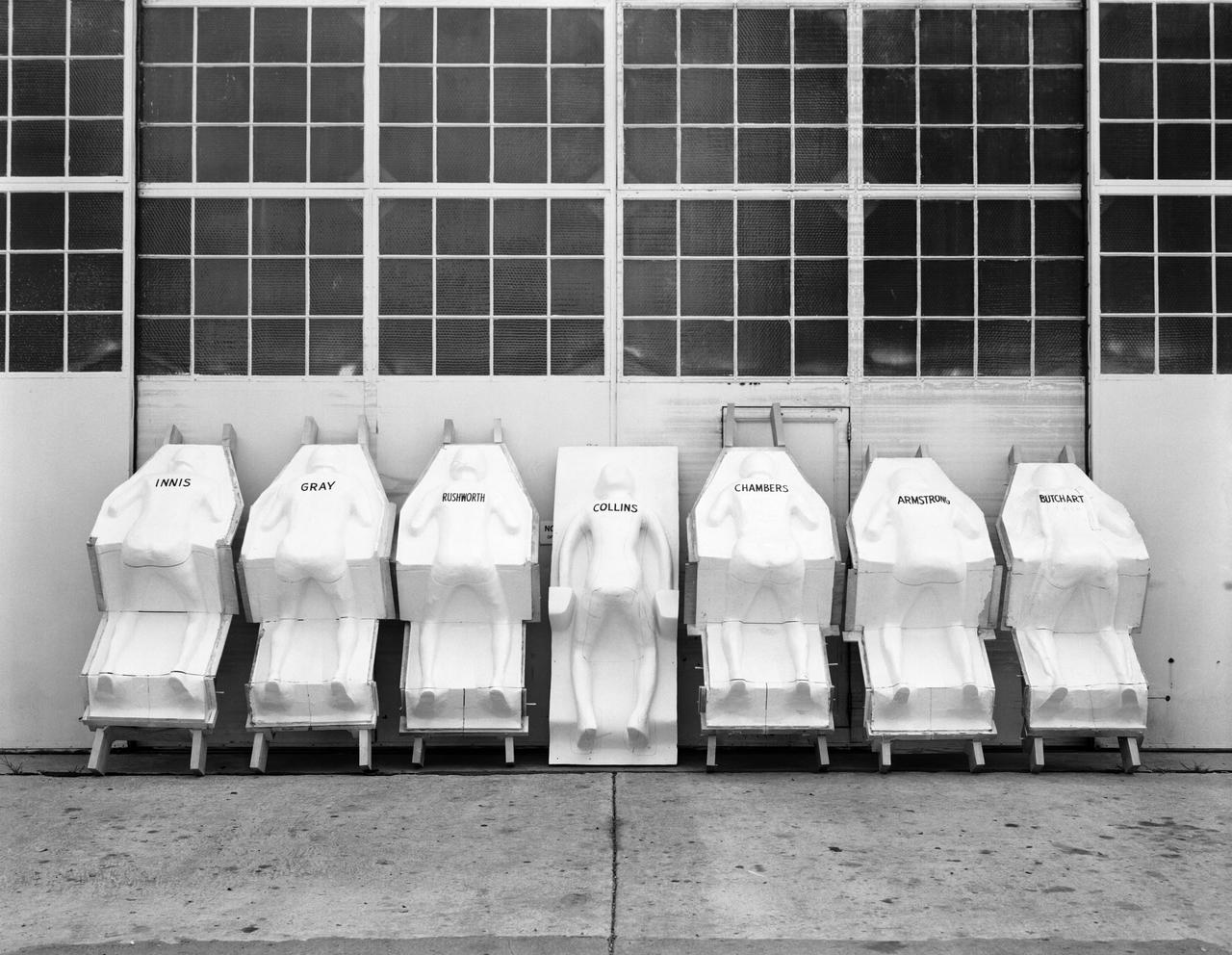
Molds for couches for test pilots, line the NASA Langley Research Centers model shop wall. The names of the test subjects (Langley employees) are written on the back. The couches are similar to those made for each astronaut and fitted into the Mercury capsules for manned spaceflight.
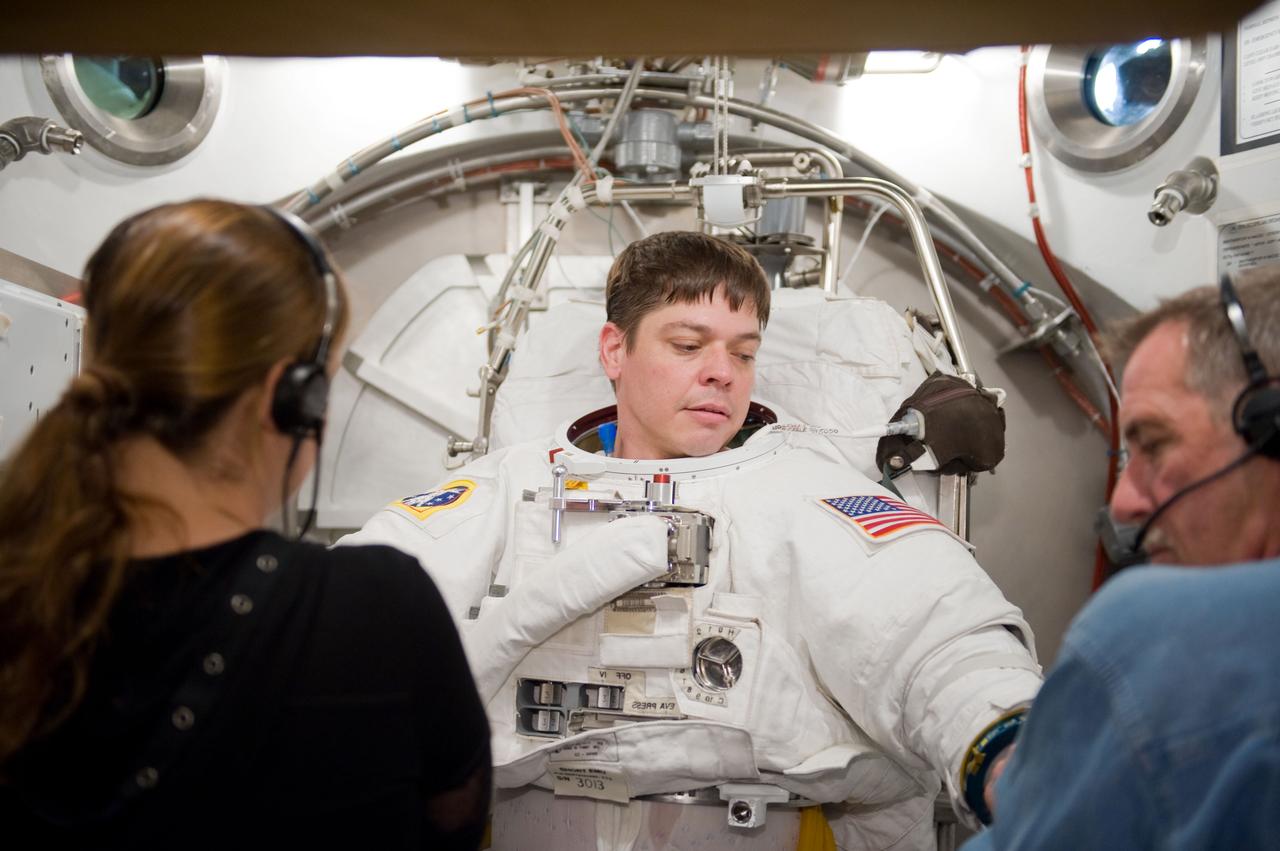
JSC2009-E-226273 (27 Oct. 2009) --- Astronaut Robert Behnken, STS-130 mission specialist, participates in an Extravehicular Mobility Unit (EMU) spacesuit fit check in the Space Station Airlock Test Article (SSATA) in the Crew Systems Laboratory at NASA's Johnson Space Center. Test directors assisted Behnken.
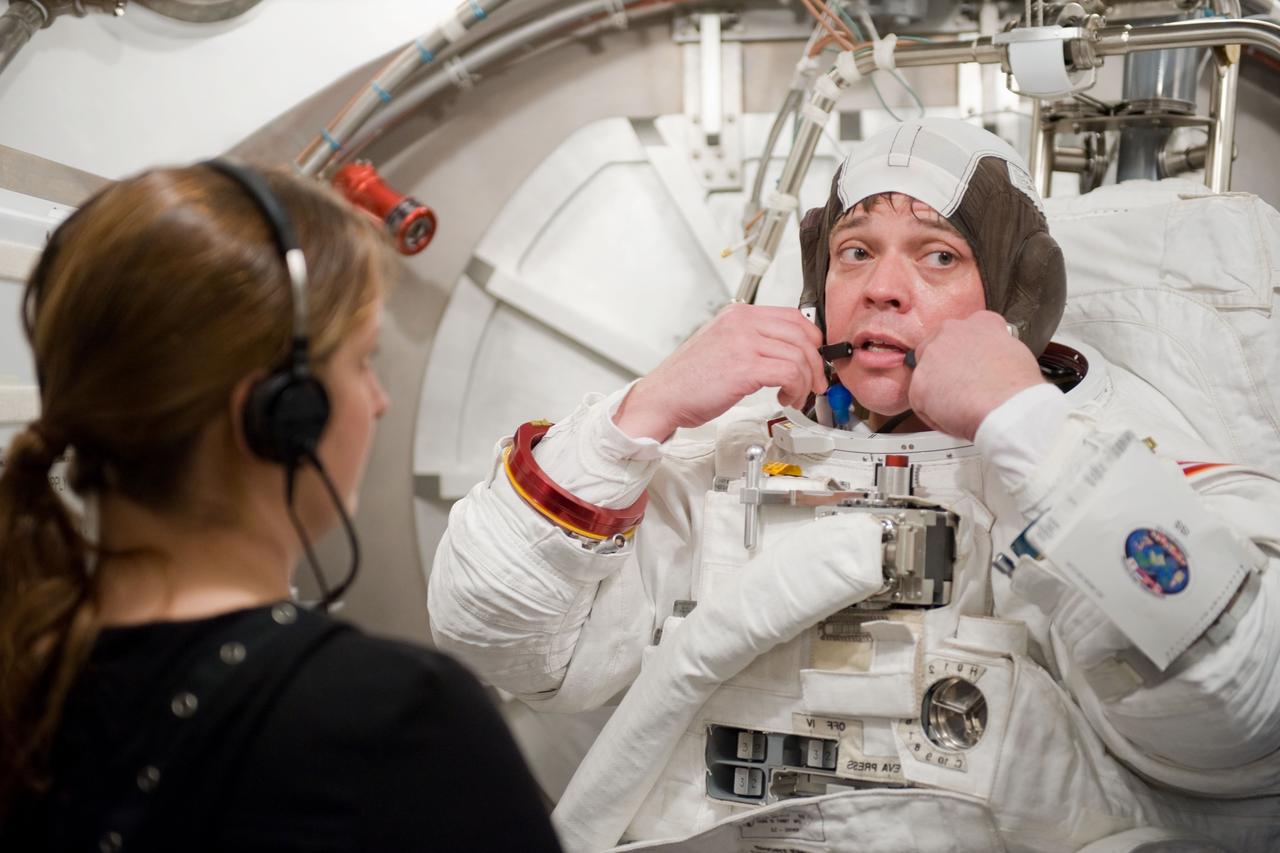
JSC2009-E-226274 (27 Oct. 2009) --- Astronaut Robert Behnken, STS-130 mission specialist, participates in an Extravehicular Mobility Unit (EMU) spacesuit fit check in the Space Station Airlock Test Article (SSATA) in the Crew Systems Laboratory at NASA's Johnson Space Center. Test director Christine Anchondo assisted Behnken.
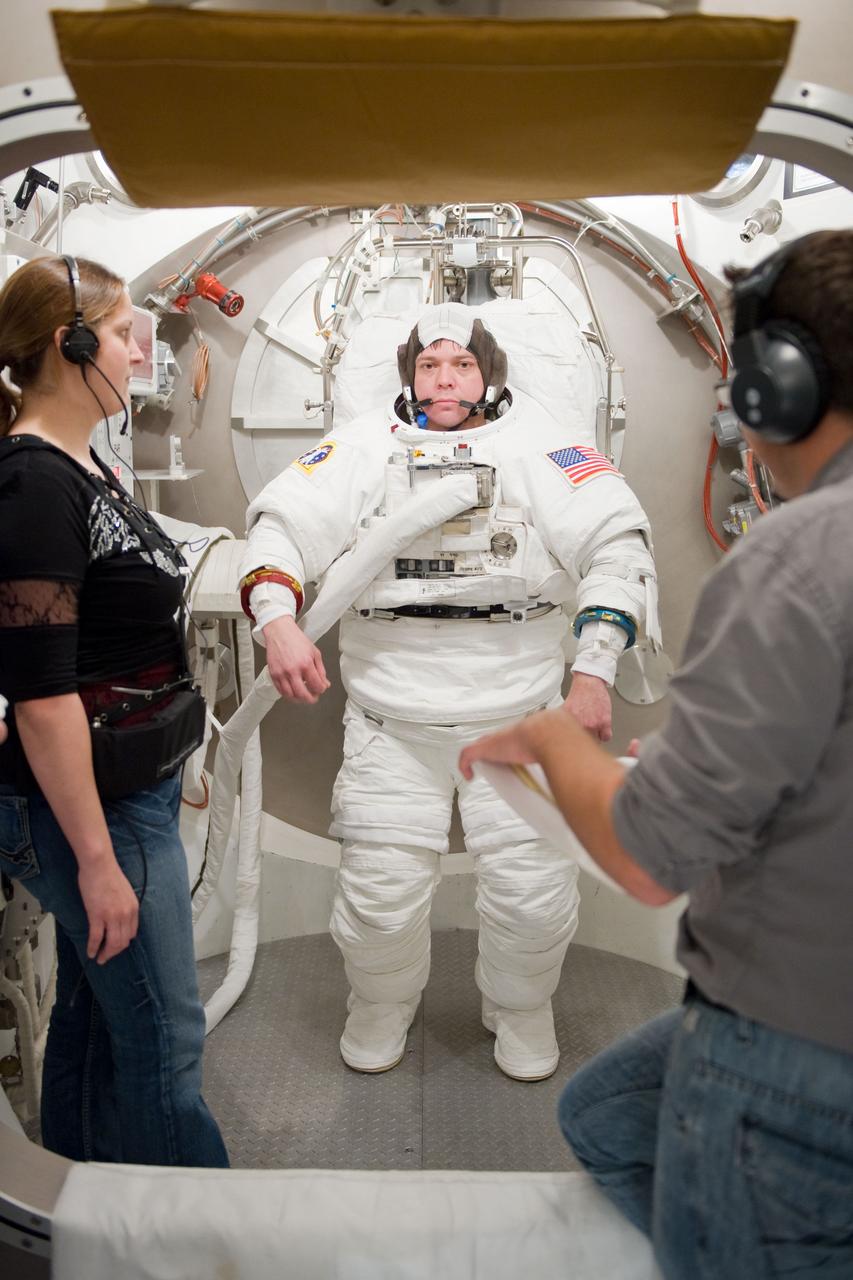
JSC2009-E-226276 (27 Oct. 2009) --- Astronaut Robert Behnken, STS-130 mission specialist, participates in an Extravehicular Mobility Unit (EMU) spacesuit fit check in the Space Station Airlock Test Article (SSATA) in the Crew Systems Laboratory at NASA's Johnson Space Center. Test directors assisted Behnken.
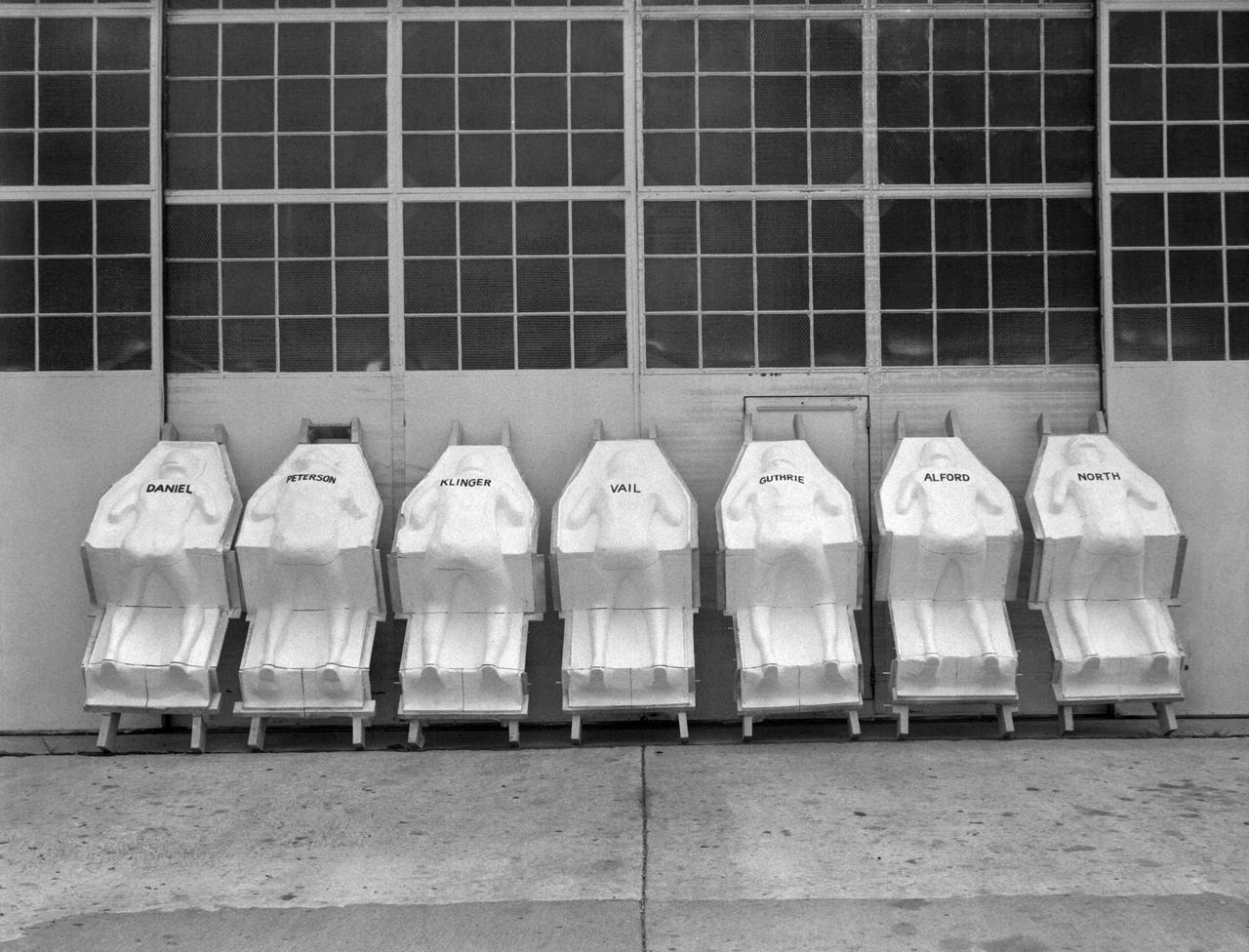
Molds for couches for test pilots, line the NASA Langley Research Centers model shop wall. The names of the test subjects (Langley employees) are written on the back. The couches are similar to those made for each astronaut and fitted into the Mercury capsules for manned spaceflight.
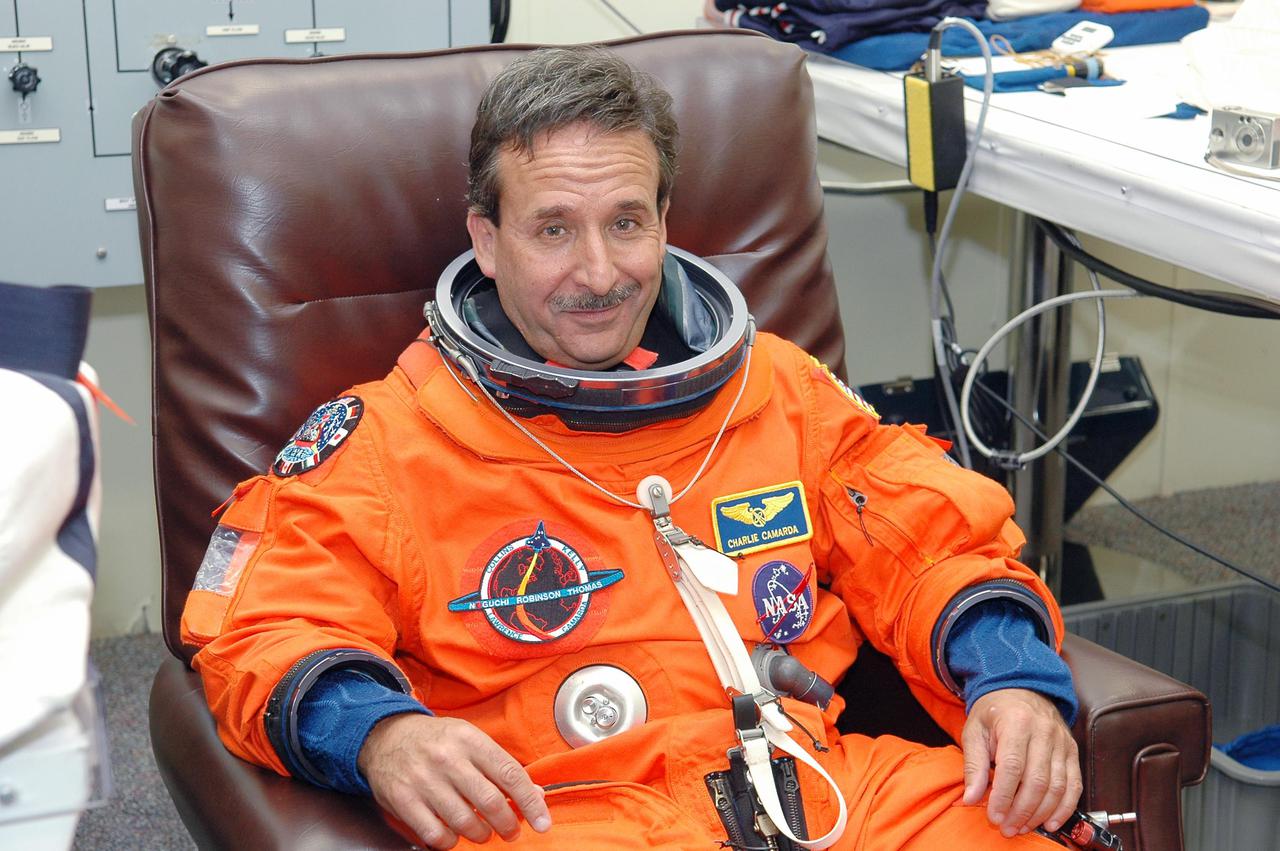
KENNEDY SPACE CENTER, FLA. - As part of pre-pack and fit check for Terminal Countdown Demonstration Test (TCDT) activities, STS-114 Mission Specialist Charles Camarda has his launch suit checked for fit. The TCDT is held at KSC prior to each Space Shuttle flight. It provides the crew of each mission an opportunity to participate in simulated countdown activities. The test ends with a mock launch countdown culminating in a simulated main engine cutoff. The crew also spends time undergoing emergency egress training exercises at the launch pad. STS-114 is the first Return to Flight mission to the International Space Station. The launch window extends July 13 through July 31.
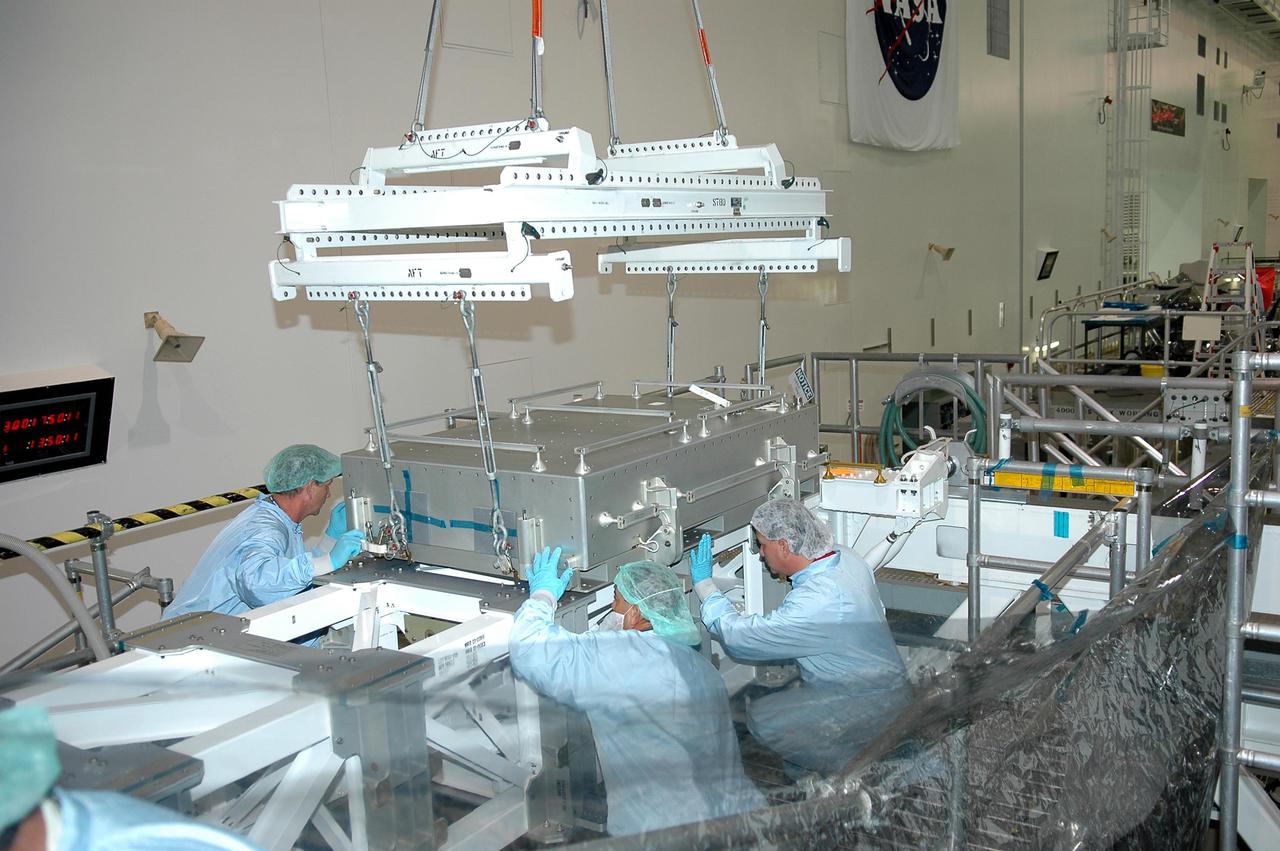
KENNEDY SPACE CENTER, FLA. - Technicians at the Space Station Processing Facility perform a fit check of the Thermal Protection System Sample Box on the Lightweight Multi-Purpose Experiment Support Structure Carrier (LMC). The box is the actual flight hardware scheduled to fly on the Space Shuttle Return to Flight mission STS-114. The fit check is performed to ensure the hardware mates properly with the newly modified LMC and will be returned to NASA’s Johnson Space Center for installation of tile samples in support of the STS-114 mission. The Thermal Protection Detailed Test Objective will enable astronauts to test new on-orbit Thermal Protection System repair techniques. Mission STS-114 is scheduled to launch in May 2005.
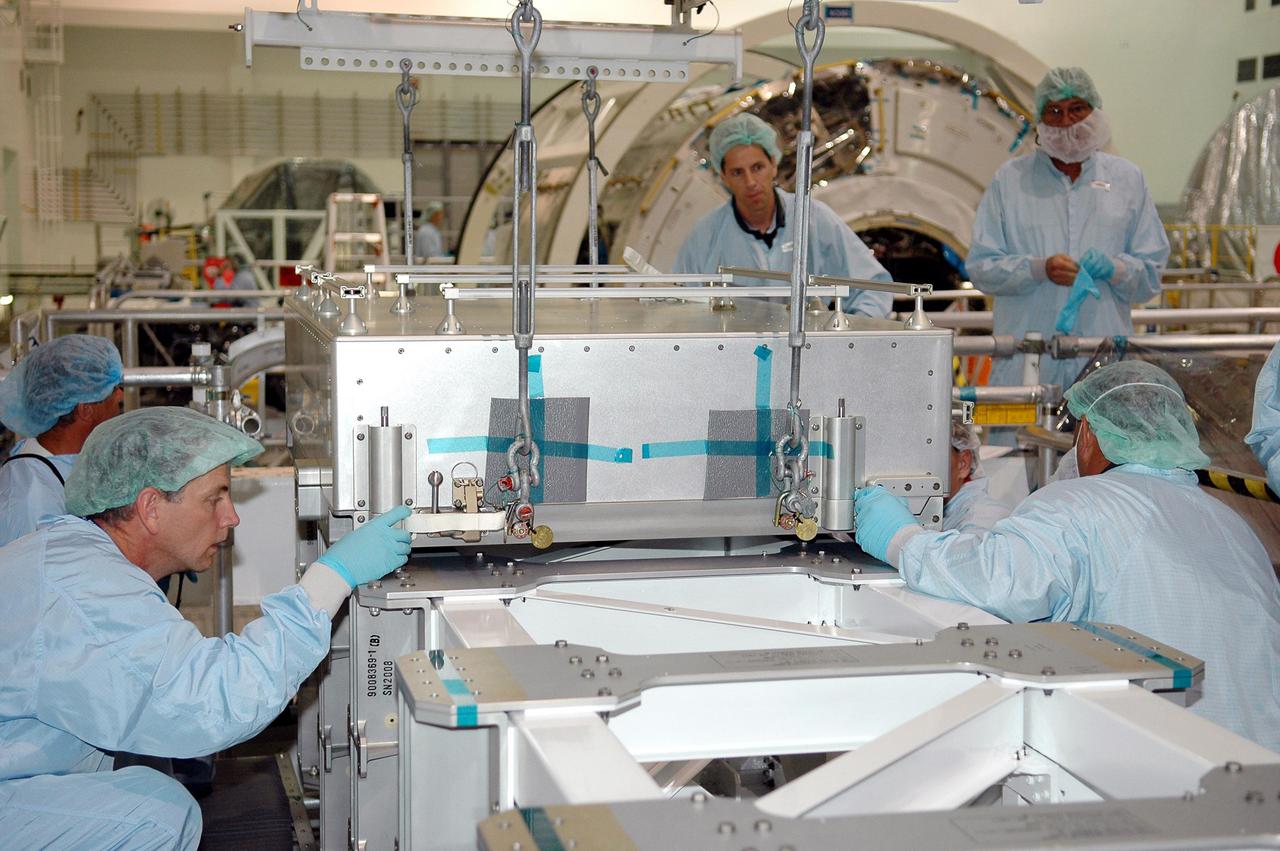
KENNEDY SPACE CENTER, FLA. - Technicians at the Space Station Processing Facility perform a fit check of the Thermal Protection System Sample Box on the Lightweight Multi-Purpose Experiment Support Structure Carrier (LMC). The box is the actual flight hardware scheduled to fly on the Space Shuttle Return to Flight mission STS-114. The fit check is performed to ensure the hardware mates properly with the newly modified LMC and will be returned to NASA’s Johnson Space Center for installation of tile samples in support of the STS-114 mission. The Thermal Protection Detailed Test Objective will enable astronauts to test new on-orbit Thermal Protection System repair techniques. Mission STS-114 is scheduled to launch in May 2005.
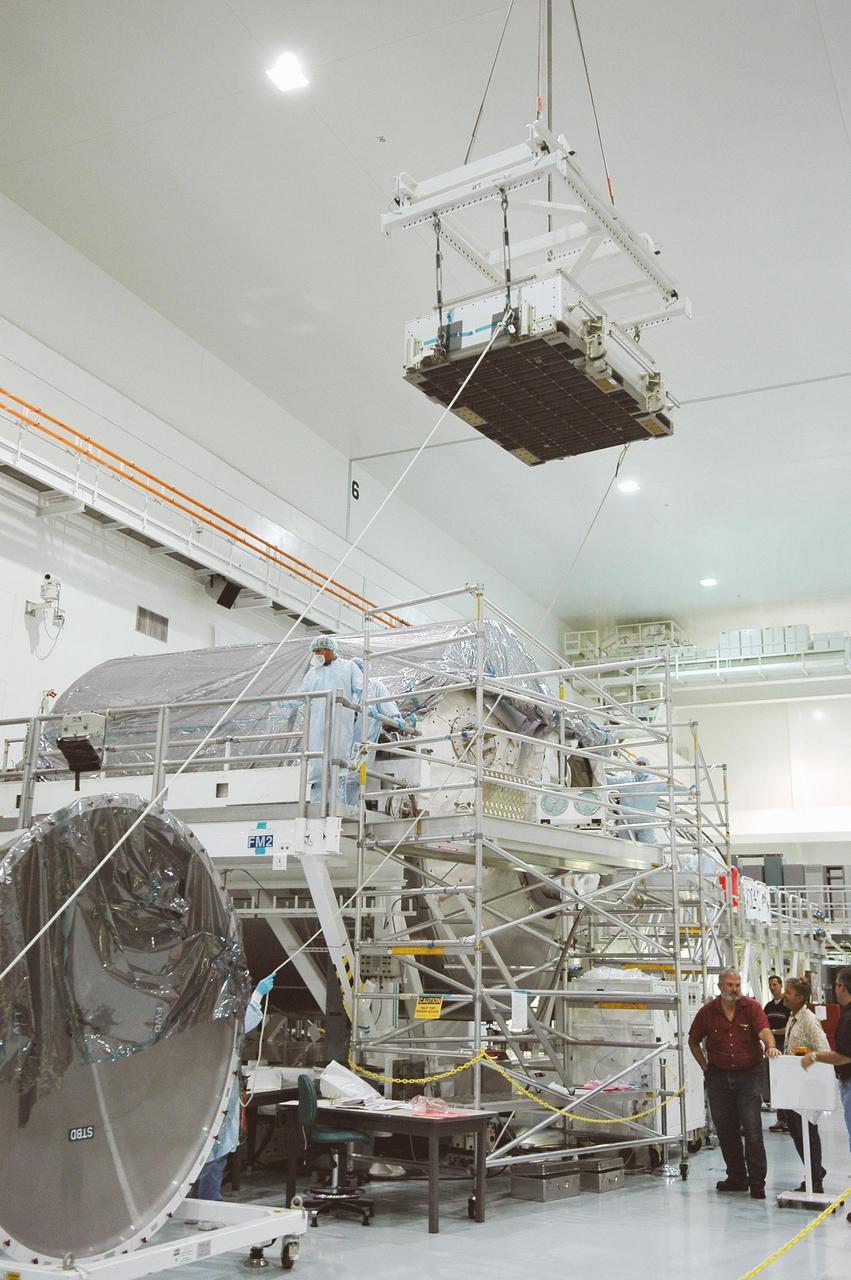
KENNEDY SPACE CENTER, FLA. - In the Space Station Processing Facility, an overhead crane moves a Thermal Protection System Sample Box to the Lightweight Multi-Purpose Experiment Support Structure Carrier (LMC) for a fit check. The box is the actual flight hardware scheduled to fly on the Space Shuttle Return to Flight mission STS-114. The fit check is performed to ensure the hardware mates properly with the newly modified LMC and will be returned to NASA’s Johnson Space Center for installation of tile samples in support of the STS-114 mission. The Thermal Protection Detailed Test Objective will enable astronauts to test new on-orbit Thermal Protection System repair techniques. Mission STS-114 is scheduled to launch in May 2005.

KENNEDY SPACE CENTER, FLA. - As part of pre-pack and fit check for Terminal Countdown Demonstration Test (TCDT) activities, STS-114 Mission Specialist Andrew Thomas has his launch suit checked for fit. The TCDT is held at KSC prior to each Space Shuttle flight. It provides the crew of each mission an opportunity to participate in simulated countdown activities. The test ends with a mock launch countdown culminating in a simulated main engine cutoff. The crew also spends time undergoing emergency egress training exercises at the launch pad. STS-114 is the first Return to Flight mission to the International Space Station. The launch window extends July 13 through July 31.
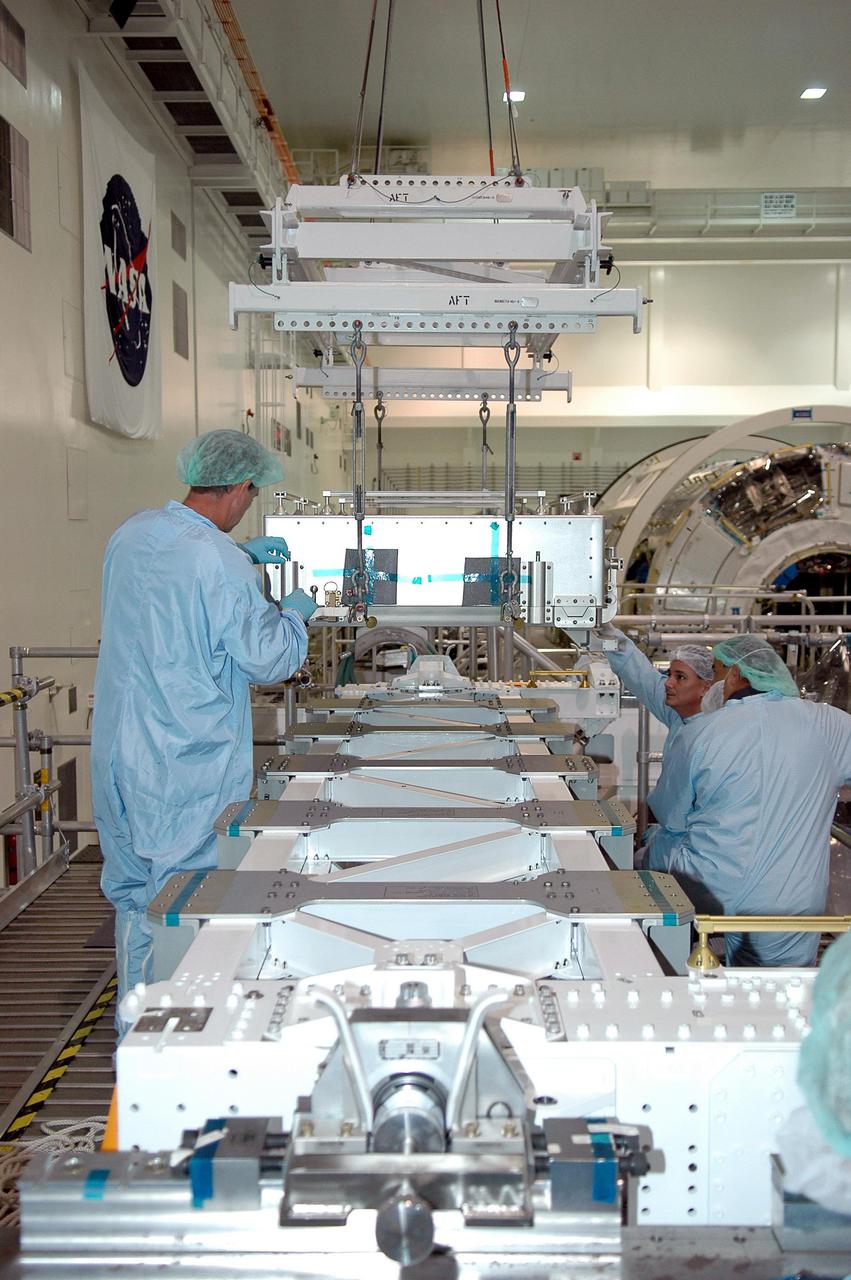
KENNEDY SPACE CENTER, FLA. - Technicians at the Space Station Processing Facility perform a fit check of the Thermal Protection System Sample Box on the Lightweight Multi-Purpose Experiment Support Structure Carrier (LMC). The box is the actual flight hardware scheduled to fly on the Space Shuttle Return to Flight mission STS-114. The fit check is performed to ensure the hardware mates properly with the newly modified LMC and will be returned to NASA’s Johnson Space Center for installation of tile samples in support of the STS-114 mission. The Thermal Protection Detailed Test Objective will enable astronauts to test new on-orbit Thermal Protection System repair techniques. Mission STS-114 is scheduled to launch in May 2005.
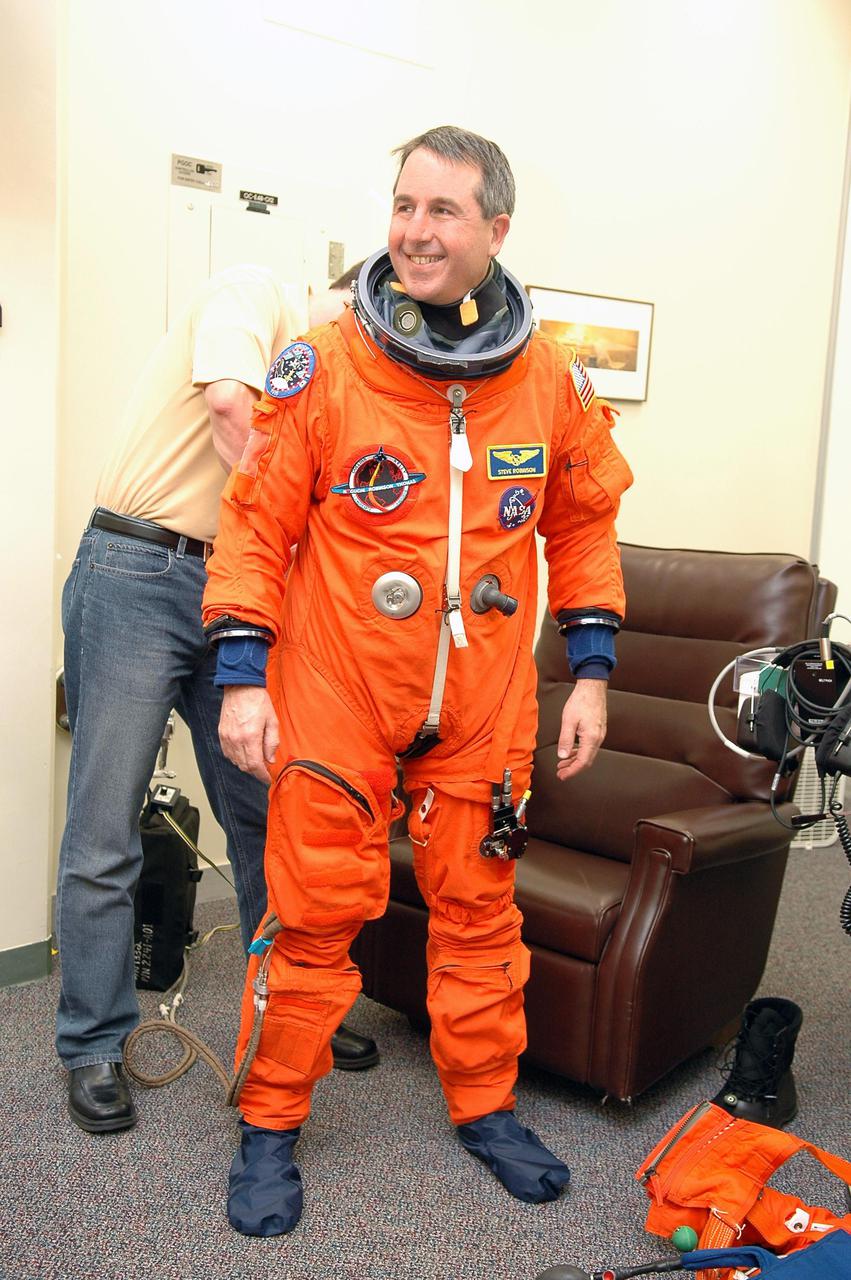
KENNEDY SPACE CENTER, FLA. - As part of pre-pack and fit check for Terminal Countdown Demonstration Test (TCDT) activities, STS-114 Mission Specialist Stephen Robinson has his launch suit checked for fit. The TCDT is held at KSC prior to each Space Shuttle flight. It provides the crew of each mission an opportunity to participate in simulated countdown activities. The test ends with a mock launch countdown culminating in a simulated main engine cutoff. The crew also spends time undergoing emergency egress training exercises at the launch pad. STS-114 is the first Return to Flight mission to the International Space Station. The launch window extends July 13 through July 31.
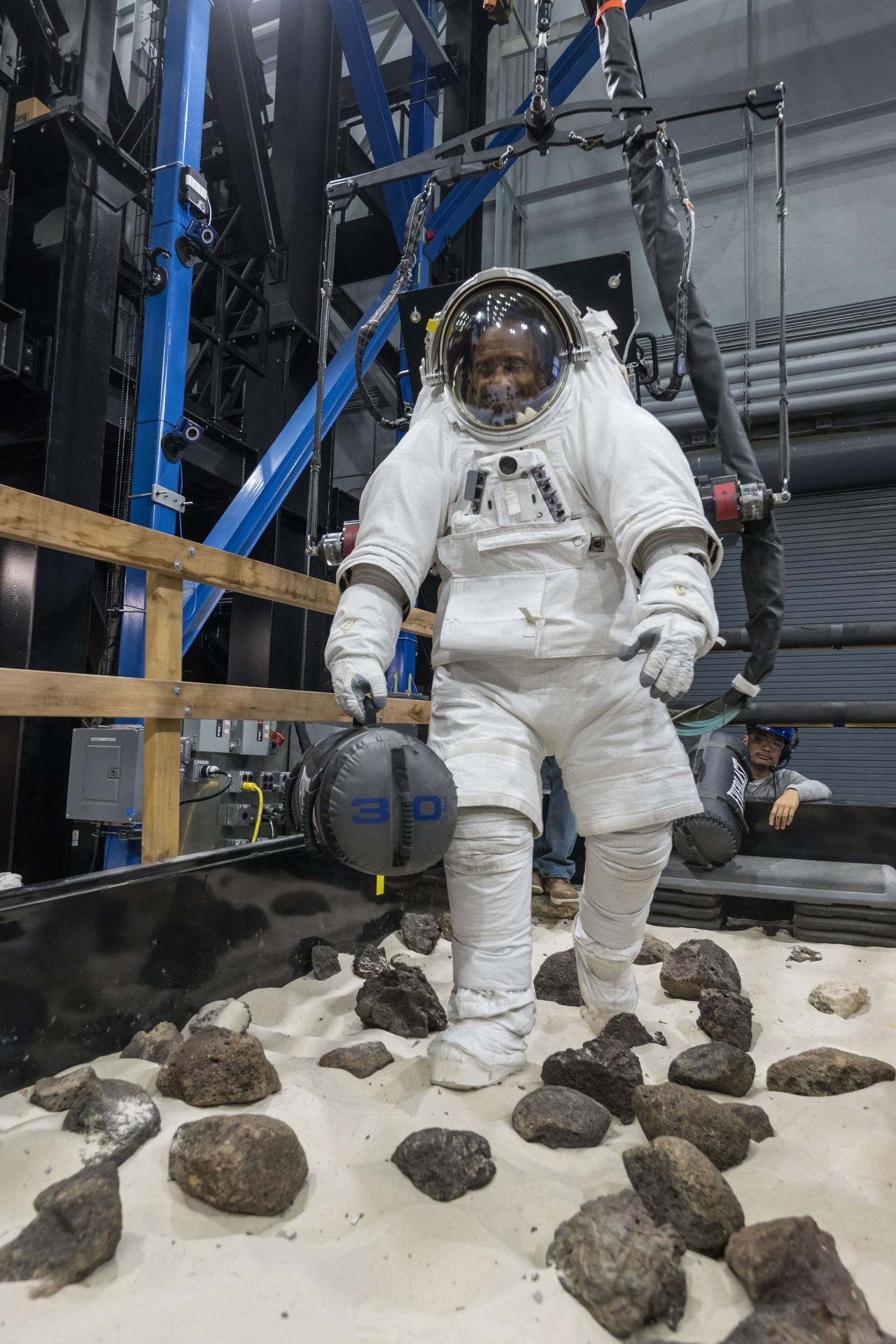
Artemis II astronaut Victor Glover performs a simulated surface logistics task while attached to the ARGOS system during the Egress Fitness Task Battery at NASA’s Johnson Space Center on Jan. 13, 2026. (NASA/Robert Markowitz)
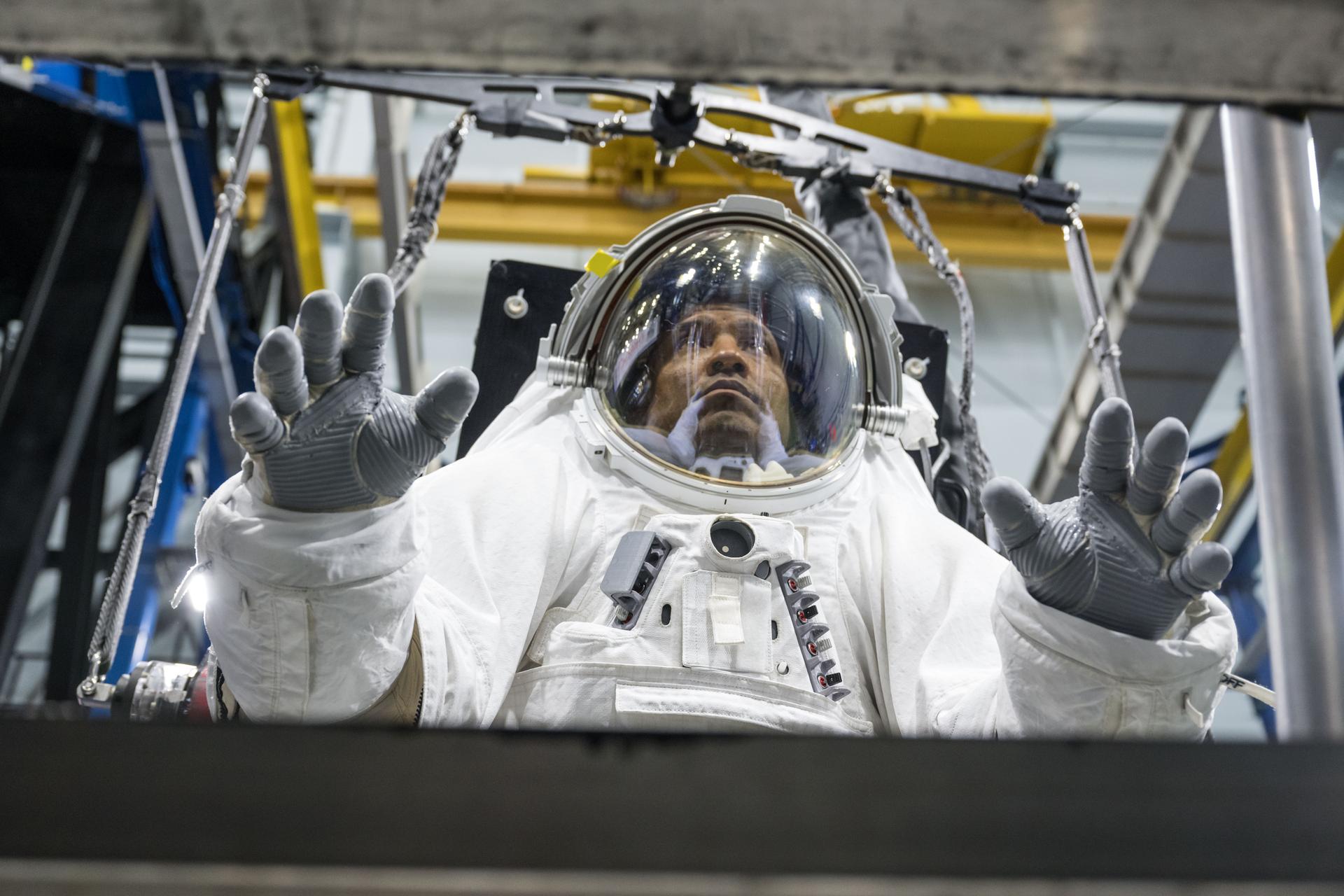
Artemis II astronaut Victor Glover, fully suited, evaluates the mobility of his xEMU spacesuit during the Artemis Spaceflight Standard Measures Test at NASA’s Johnson Space Center on Jan. 13, 2026. (NASA/Robert Markowitz)
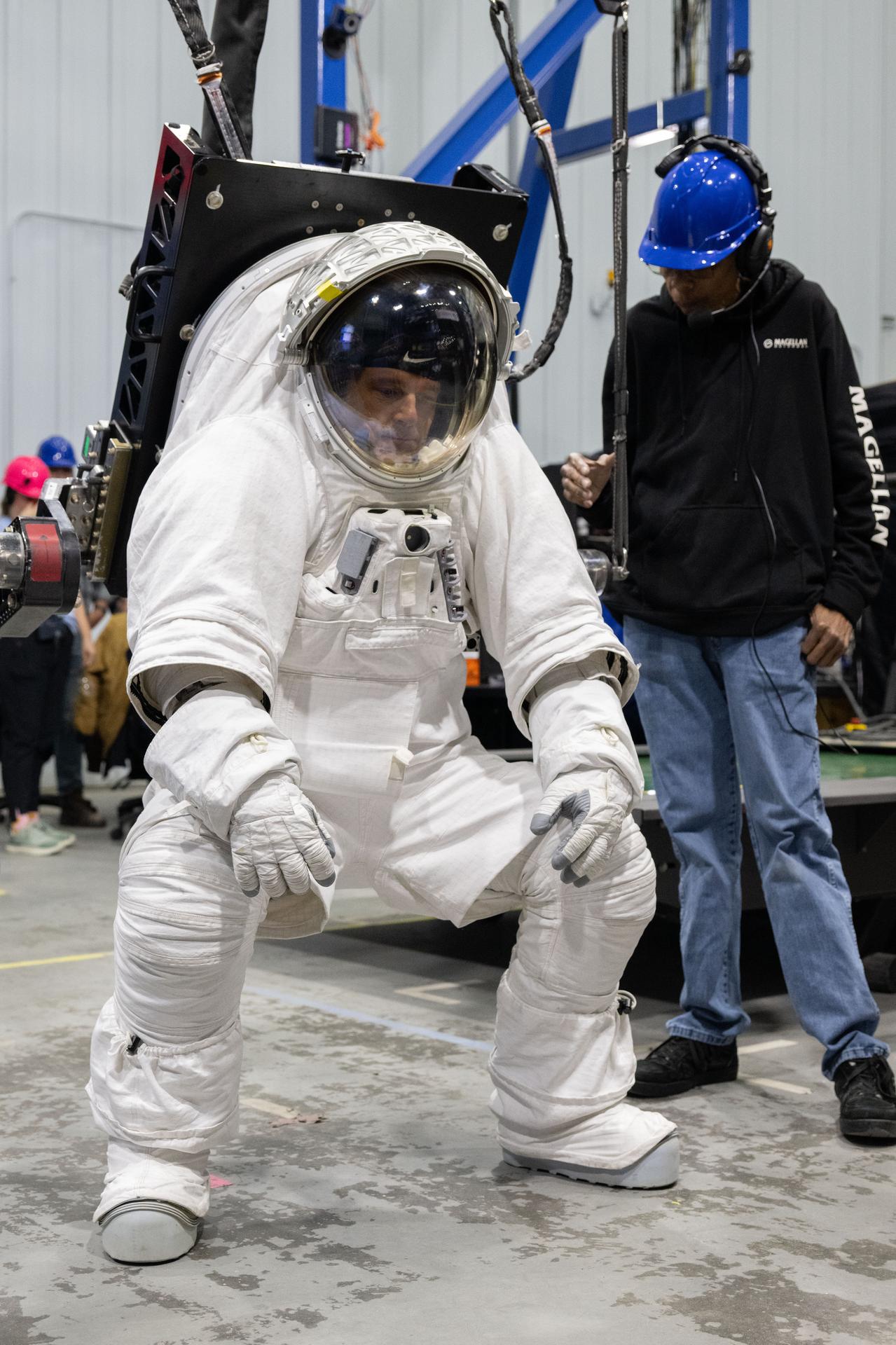
Artemis II astronaut Reid Wiseman assesses lower-body mobility in the xEMU spacesuit during the Artemis Spaceflight Standard Measures Test at NASA’s Johnson Space Center on Dec. 8, 2025. (NASA/Josh Valcarcel)
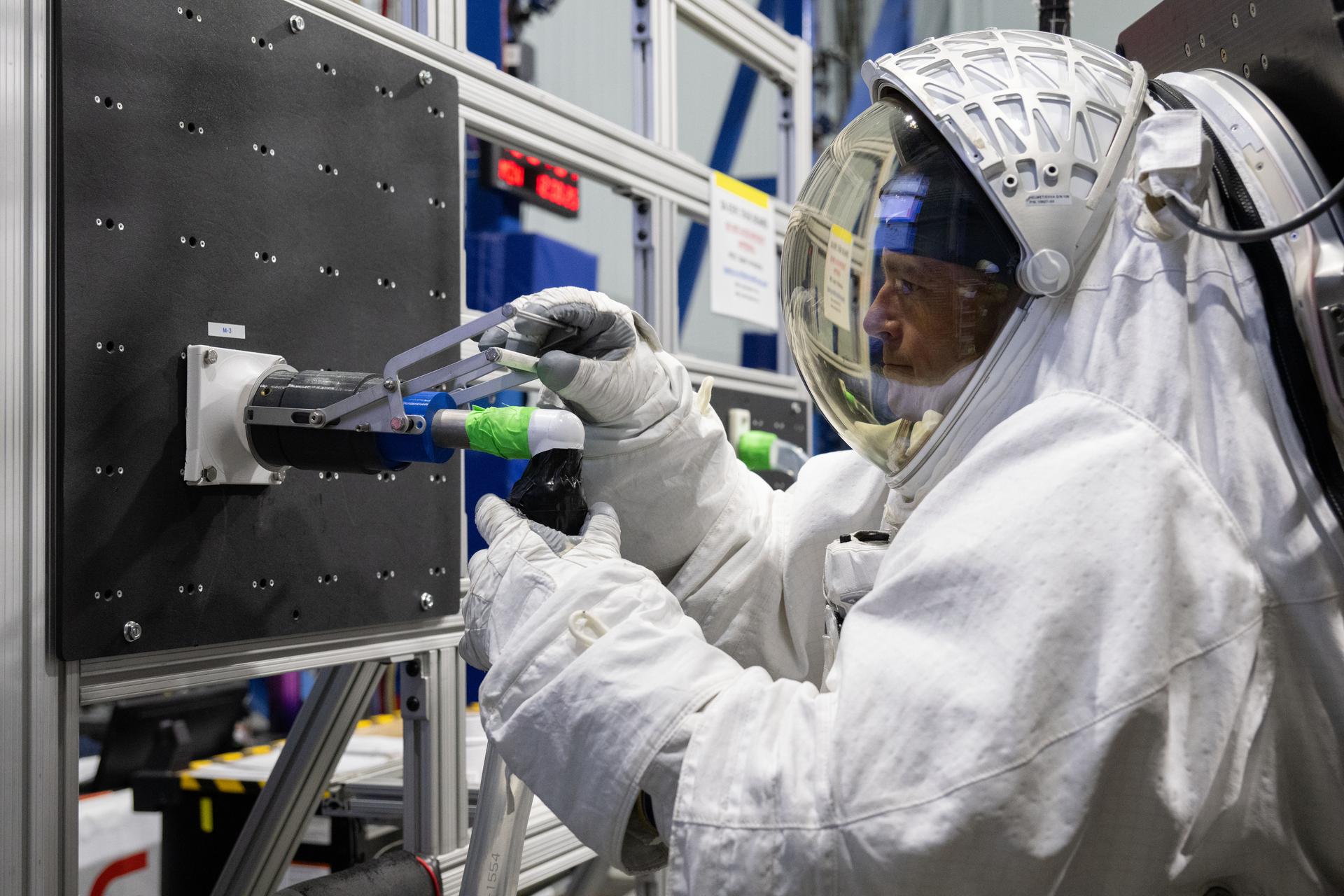
Artemis II astronaut Reid Wiseman completes a simulated fluid quick disconnect task as part of the Egress Fitness Task battery at NASA’s Johnson Space Center on Dec. 8, 2025. (NASA/Josh Valcarcel)
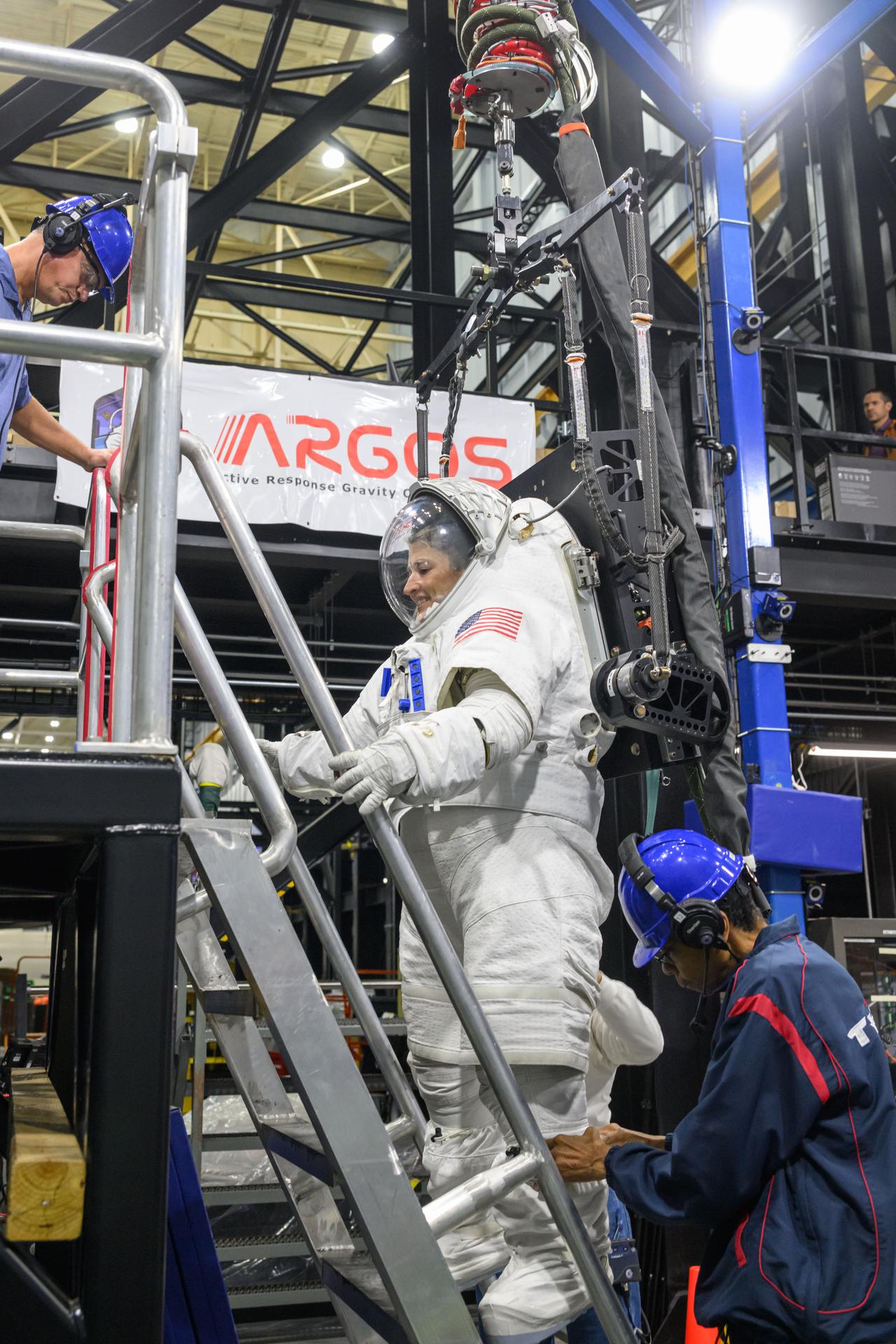
Artemis II astronaut Christina Koch climbs down the ladder of a mockup lander while wearing the xEMU spacesuit during the Artemis Spaceflight Standard Measures Test at NASA’s Johnson Space Center on Dec. 12, 2025. (NASA/Helen Arase Vargas)
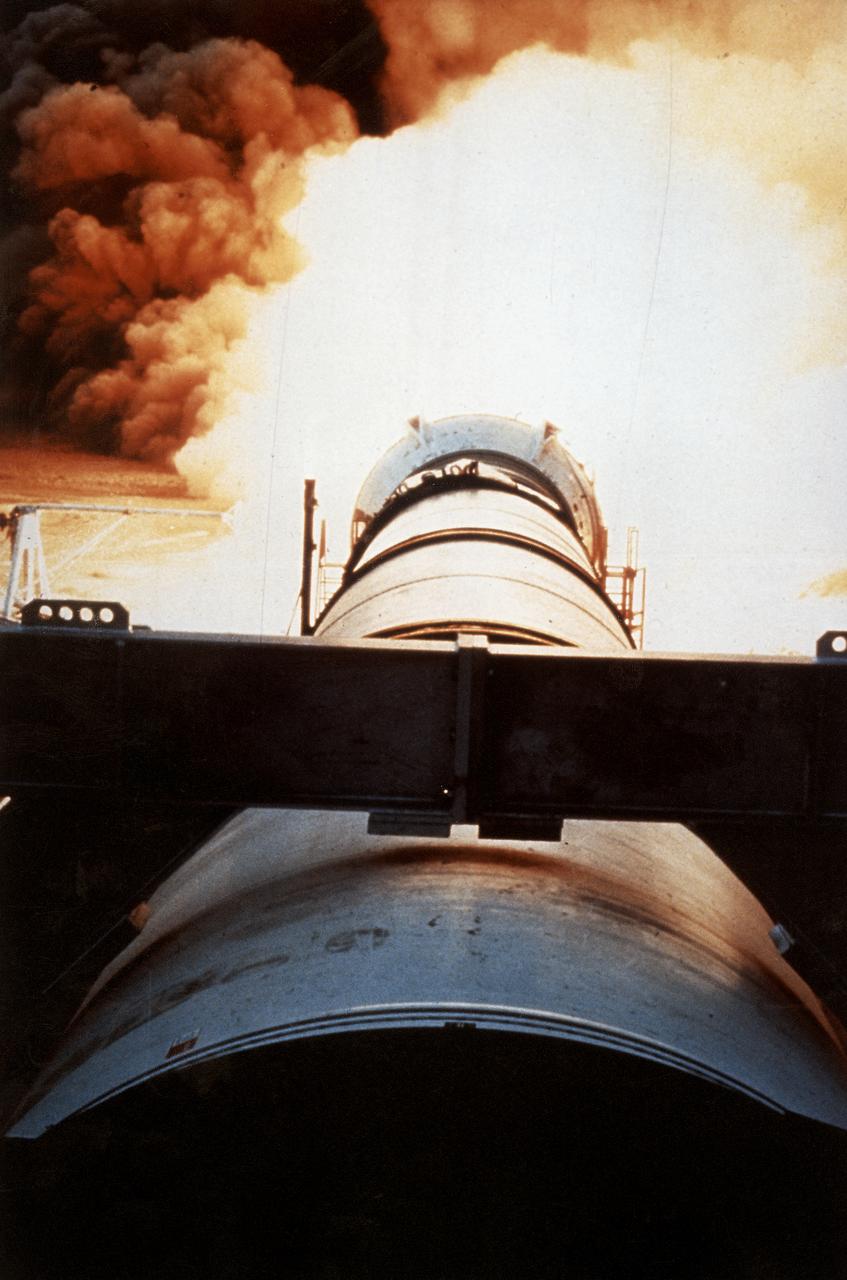
One of the key tests in the effort to return the Space Shuttle to flight following the Challenger accident was testing the development Motor-8 (DM-8). The 126-foot long, 1.2-million-pound motor, designated DM-8, underwent a full-duration horizontal test firing for two minutes at the Thiokol test facility in Utah. It was fitted with more than 500 instruments to measure such things as acceleration, pressure, deflection thrust, strain, temperature, and electrical properties.
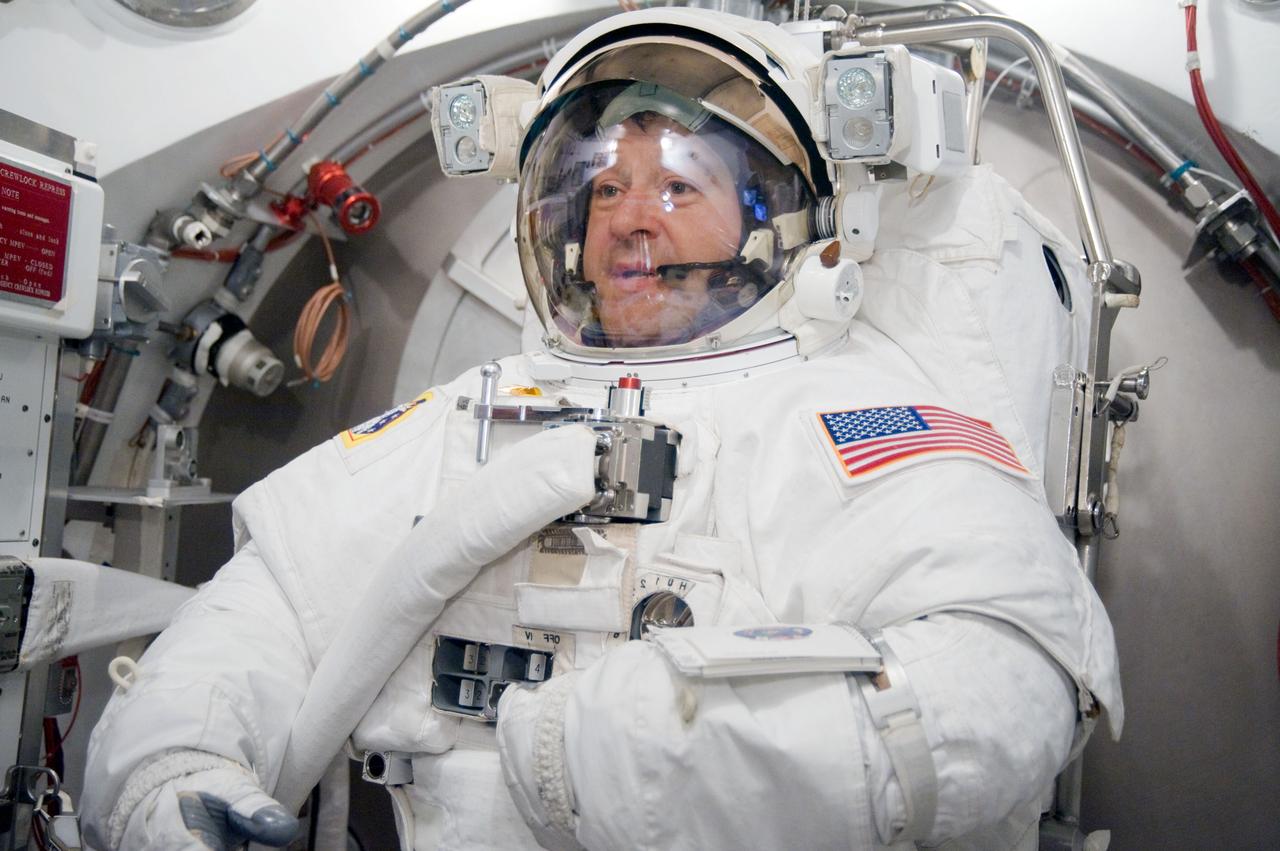
JSC2009-E-228759 (29 Oct. 2009) --- Astronaut Nicholas Patrick, STS-130 mission specialist, participates in an Extravehicular Mobility Unit (EMU) spacesuit fit check in the Space Station Airlock Test Article (SSATA) in the Crew Systems Laboratory at NASA's Johnson Space Center.
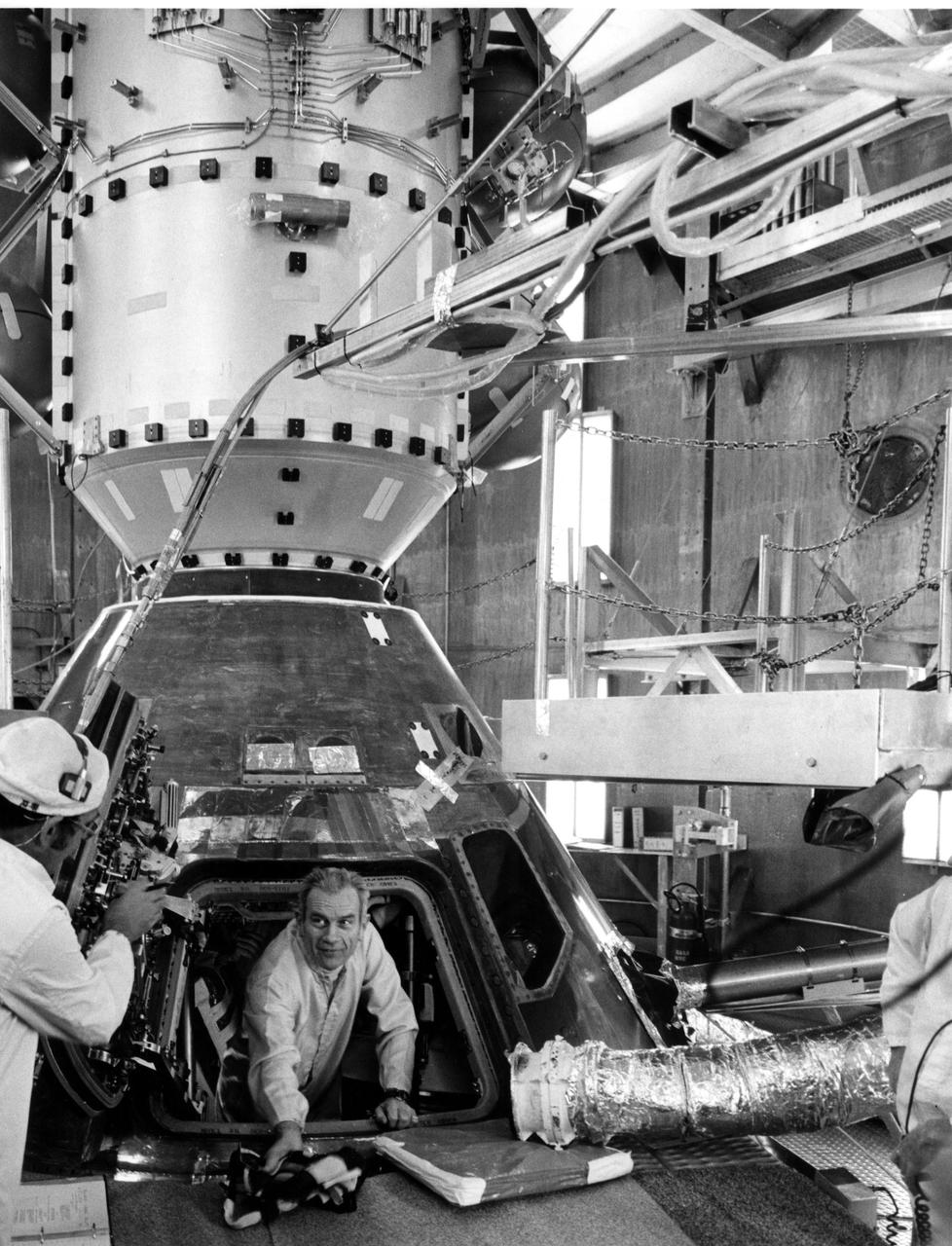
KENNEDY SPACE CENTER, FLA. -- Astronaut Donald Slayton is shown in the Apollo Command Module for July's Apollo-Soyuz Test Project space mission. Slayton was at KSC for fit checks between the Apollo and the Docking Module, which will be used during the mission as a link between the Soviet Soyuz and American Apollo.
JSC2010-E-026875 (26 Feb. 2010) --- NASA astronaut Michael Good, STS-132 mission specialist, participates in an Extravehicular Mobility Unit (EMU) spacesuit fit check in the Space Station Airlock Test Article (SSATA) in the Crew Systems Laboratory at NASA's Johnson Space Center.
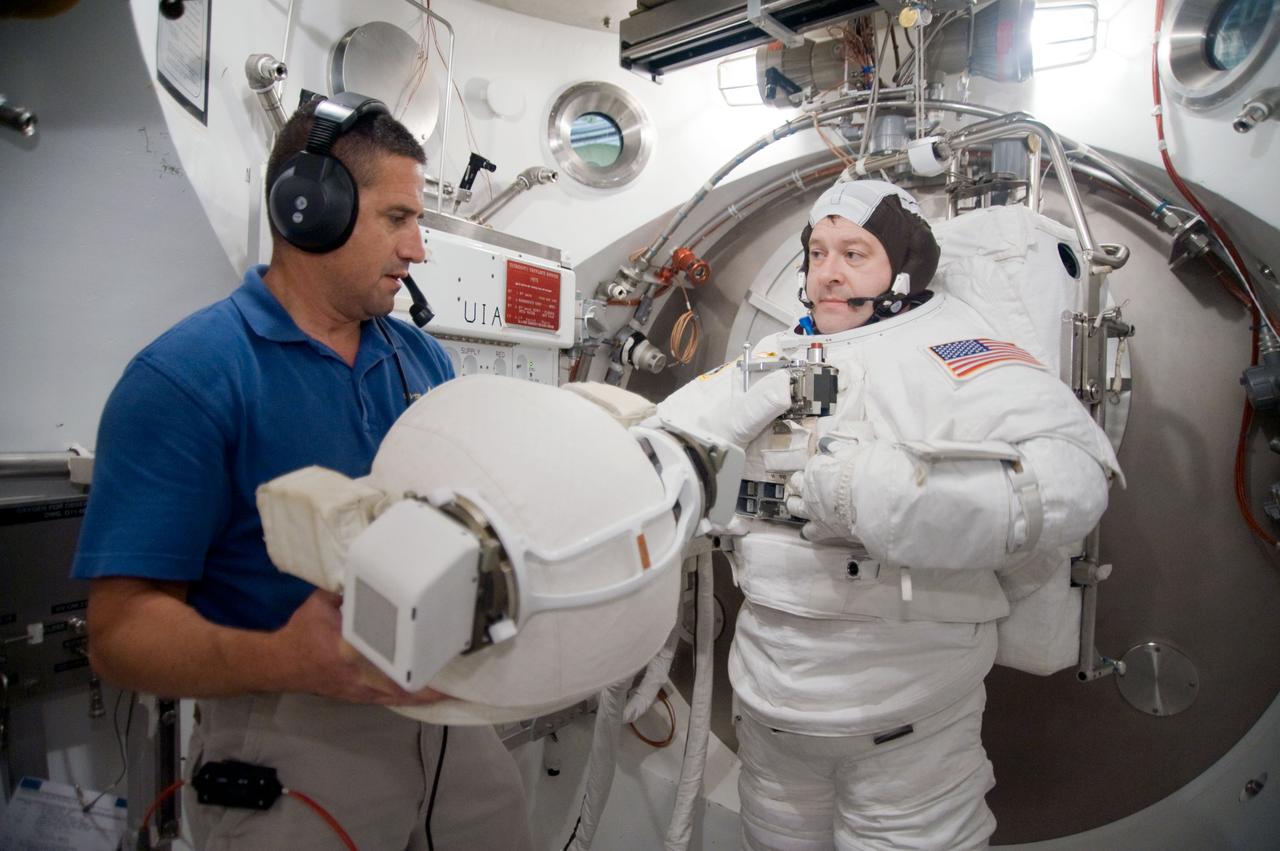
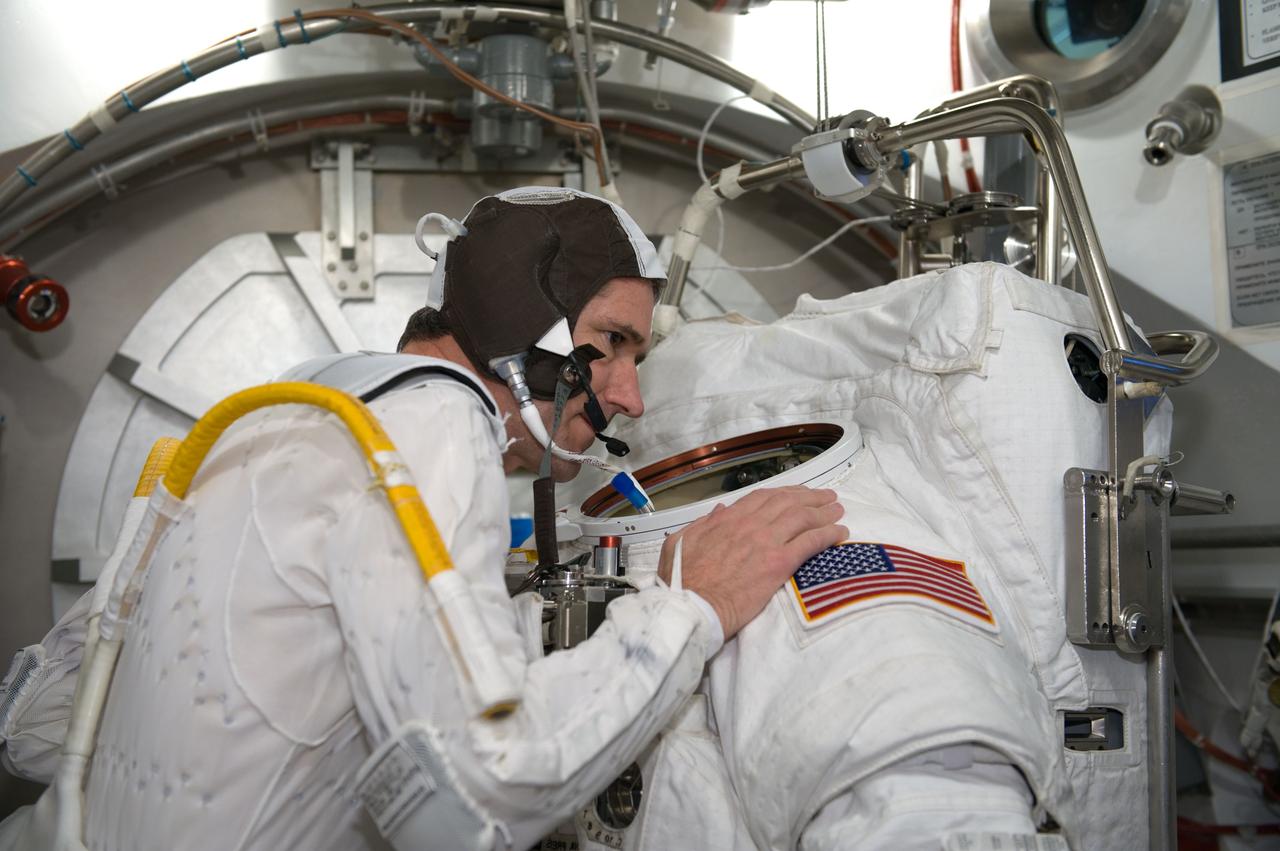
JSC2009-E-228755 (29 Oct. 2009) --- Astronaut Nicholas Patrick, STS-130 mission specialist, participates in an Extravehicular Mobility Unit (EMU) spacesuit fit check in the Space Station Airlock Test Article (SSATA) in the Crew Systems Laboratory at NASA's Johnson Space Center. Astronaut George Zamka, commander, assisted Patrick.
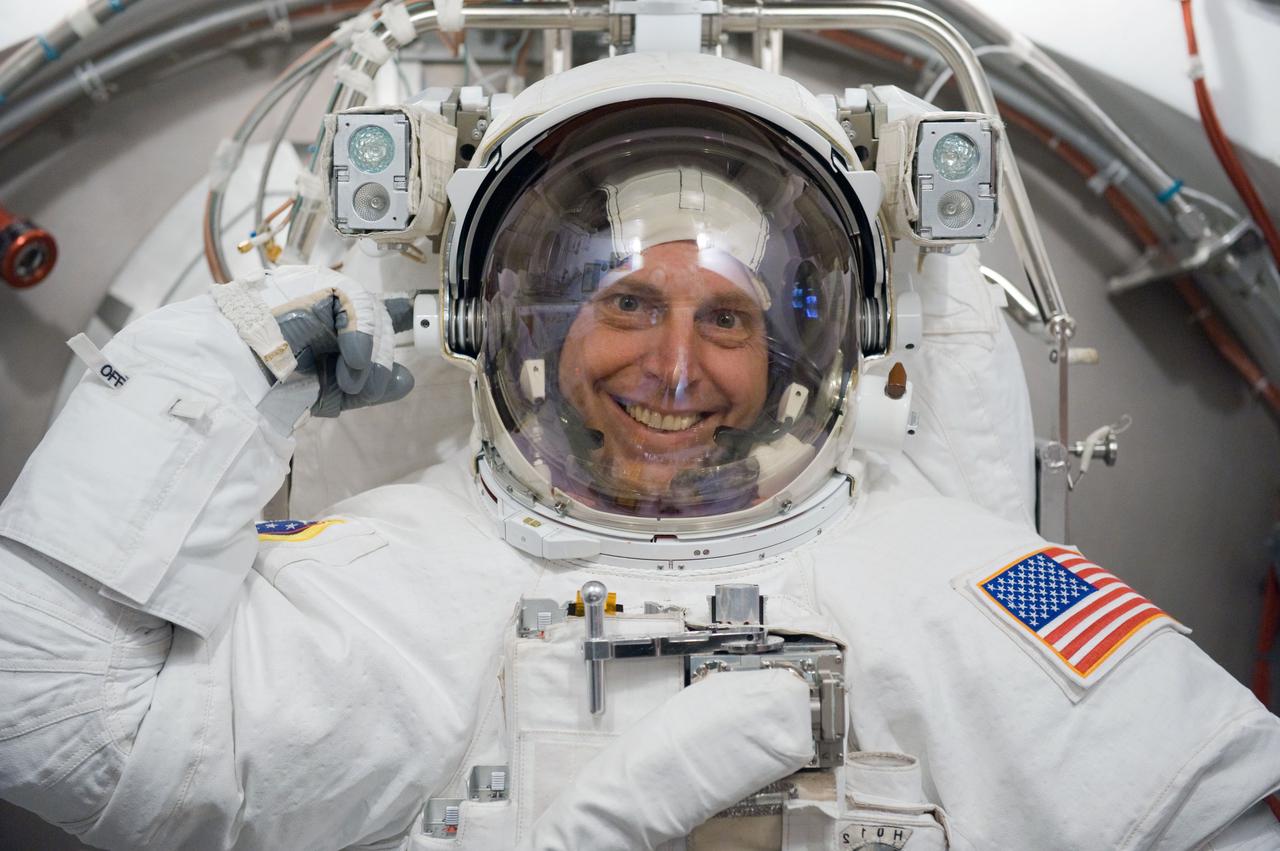
JSC2009-E-240514 (5 Nov. 2009) --- Astronaut Clayton Anderson, STS-131 mission specialist, participates in an Extravehicular Mobility Unit (EMU) spacesuit fit check in the Space Station Airlock Test Article (SSATA) in the Crew Systems Laboratory at NASA's Johnson Space Center.
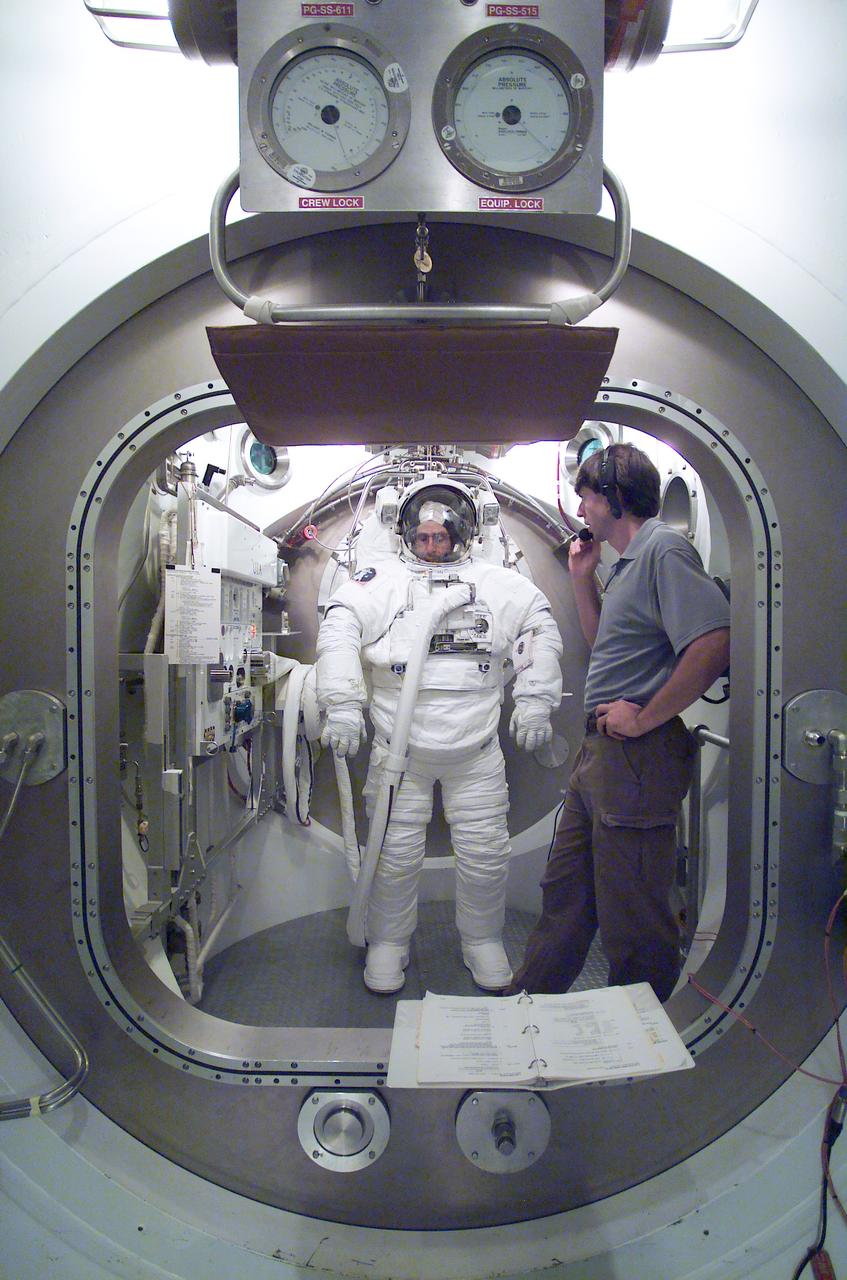
JSC2002-E-36202 (27 August 2002) --- Astronaut Donald R. Pettit, Expedition Six flight engineer, participates in an Extravehicular Mobility Unit (EMU) spacesuit fit check in a Space Station Airlock Test Article (SSATA) in the Crew Systems Laboratory at the Johnson Space Center (JSC). Zebulon L. Scoville assisted Pettit.

JSC2009-E-228746 (29 Oct. 2009) --- Astronaut Nicholas Patrick, STS-130 mission specialist, participates in an Extravehicular Mobility Unit (EMU) spacesuit fit check in the Space Station Airlock Test Article (SSATA) in the Crew Systems Laboratory at NASA's Johnson Space Center. Astronaut George Zamka, commander, assisted Patrick.
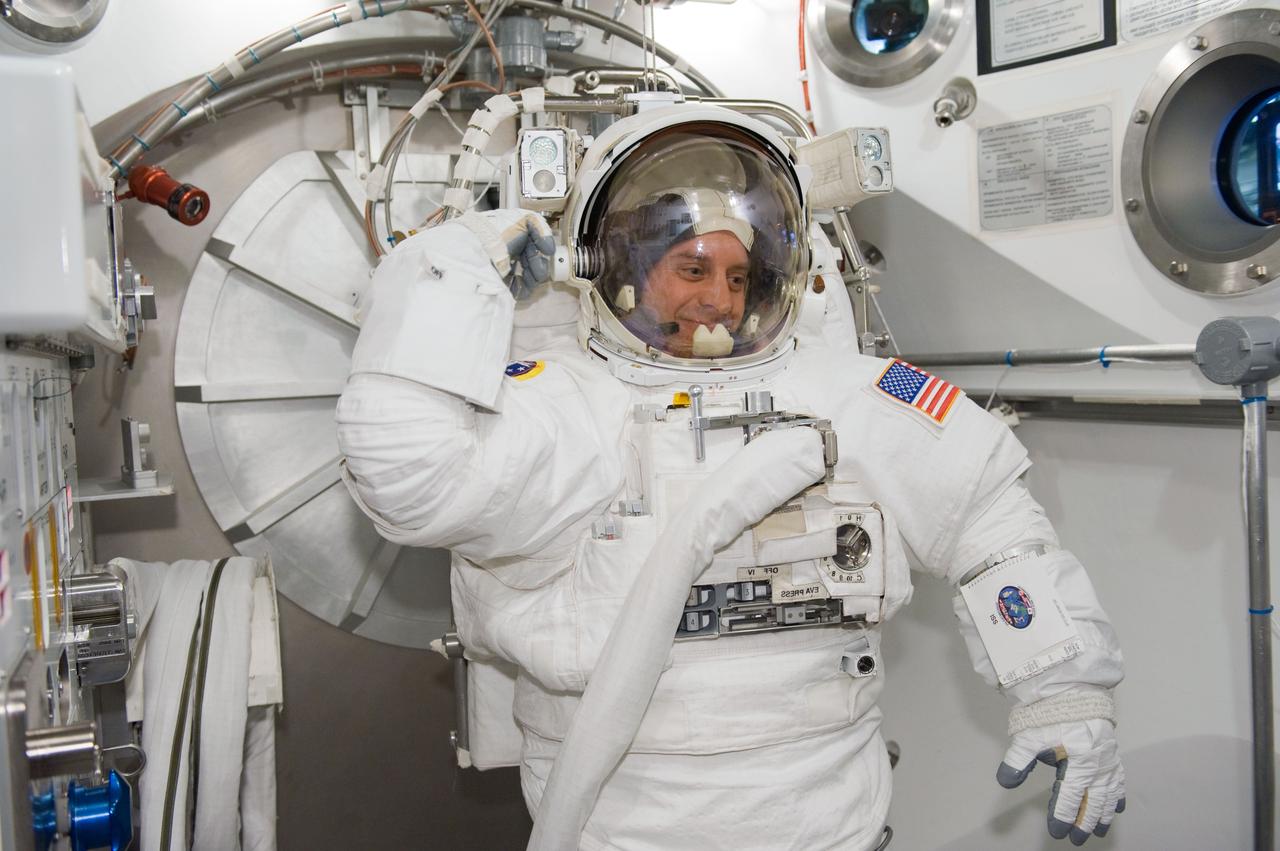
JSC2010-E-041268 (17 March 2010) --- NASA astronaut Garrett Reisman, STS-132 mission specialist, participates in an Extravehicular Mobility Unit (EMU) spacesuit fit check in the Space Station Airlock Test Article (SSATA) in the Crew Systems Laboratory at NASA's Johnson Space Center.
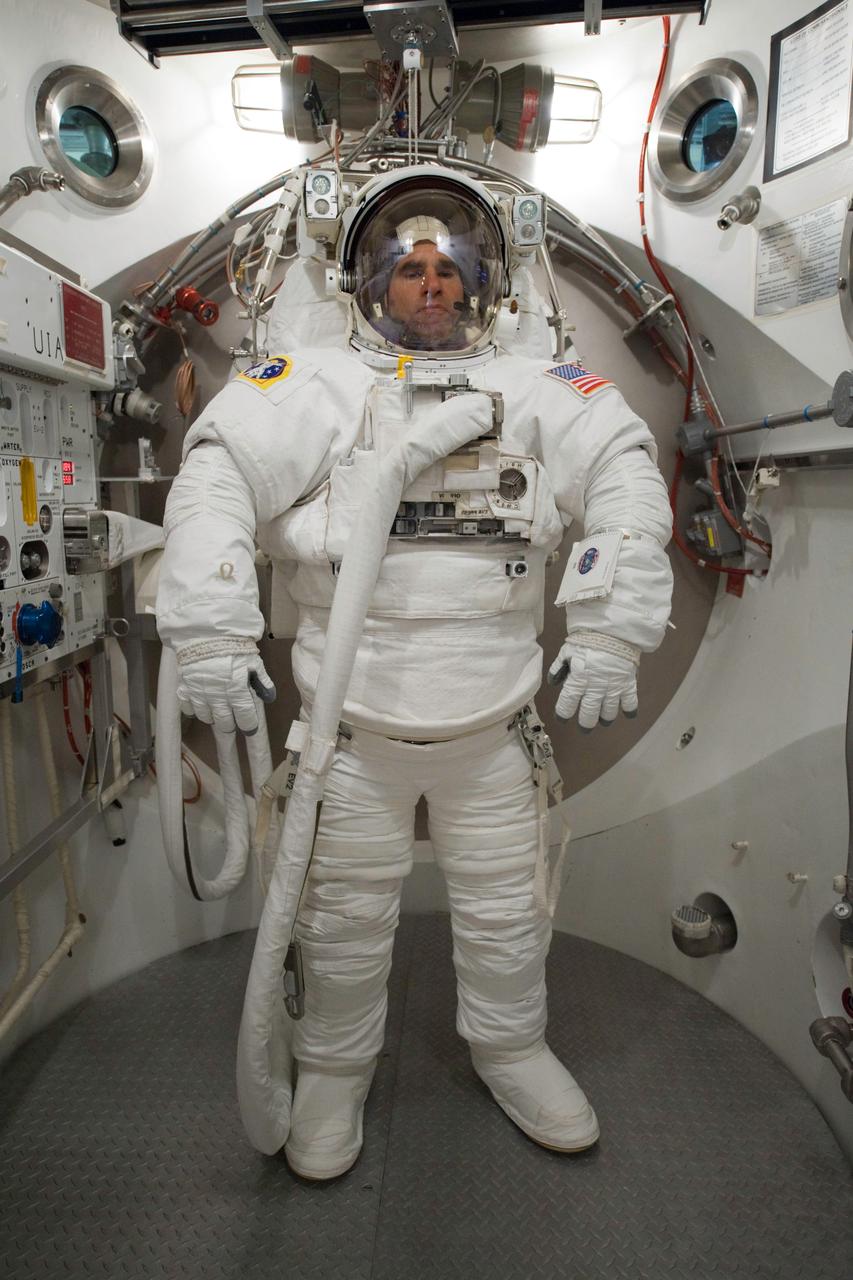
JSC2010-E-060735 (29 April 2010) --- NASA astronaut Greg Chamitoff, STS-134 mission specialist, participates in an Extravehicular Mobility Unit (EMU) spacesuit fit check in the Space Station Airlock Test Article (SSATA) in the Crew Systems Laboratory at NASA's Johnson Space Center.
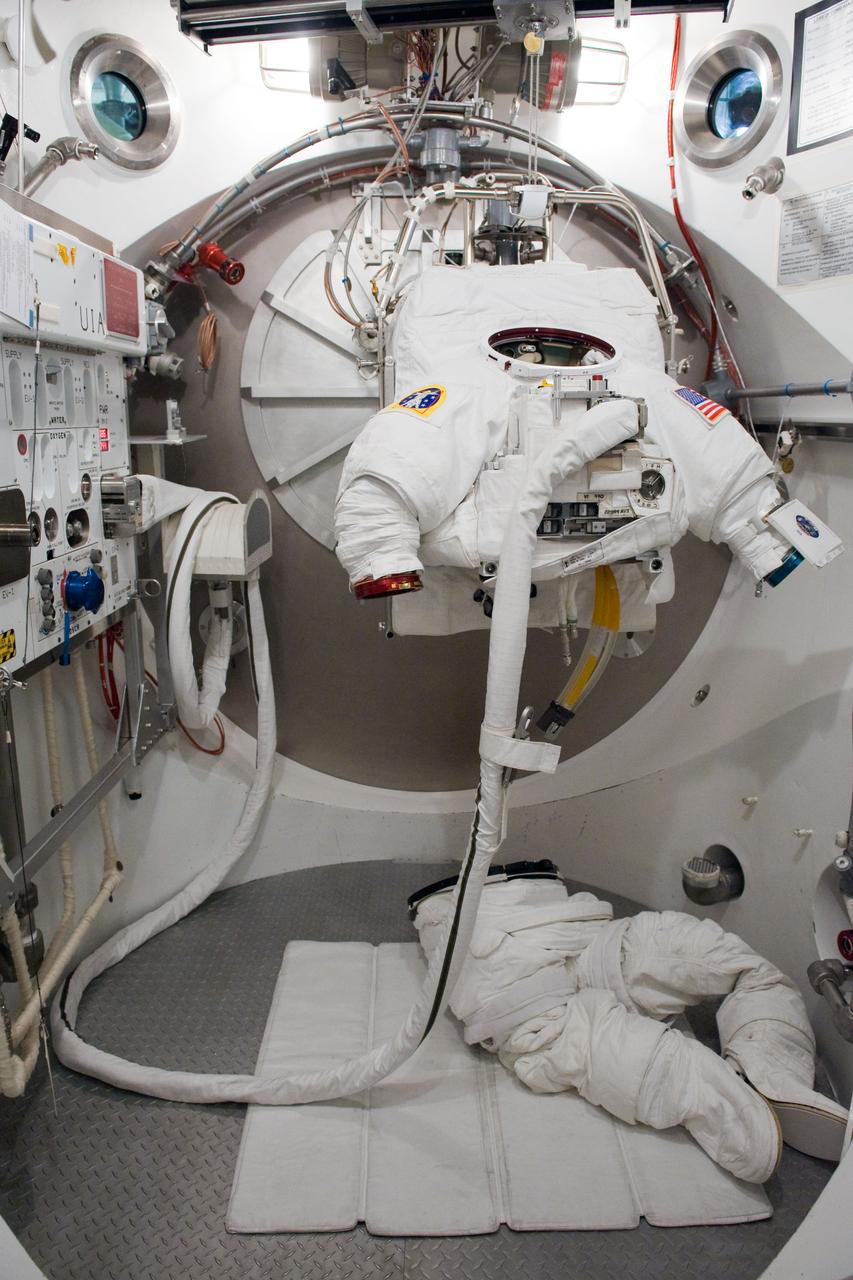
JSC2009-E-240471 (5 Nov. 2009) --- An empty Extravehicular Mobility Unit (EMU) spacesuit is photographed prior to a fit check with astronaut Clayton Anderson (out of frame), STS-131 mission specialist, in the Space Station Airlock Test Article (SSATA) in the Crew Systems Laboratory at NASA's Johnson Space Center.
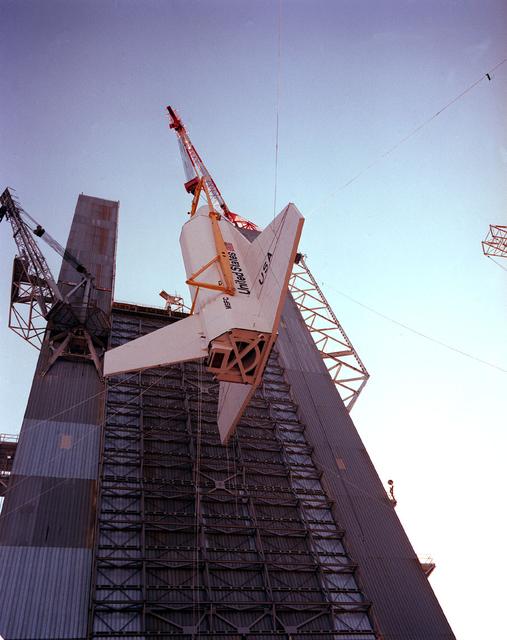
MSFC, Ala. -- The Space Shuttle Orbiter simulator is hoisted into the giant dynamics test stand at NASA's Marshall Space Flight Center, Huntsville, Ala. The simulator was built at the Marshall Center for use in pathfinder activities, such as checking roadway clearances, crane capabilities and fits within structures. It is the same size, shape and weight of an actual Orbiter.

JSC2010-E-098612 (22 June 2010) --- NASA astronaut Tim Kopra, STS-133 mission specialist, participates in an Extravehicular Mobility Unit (EMU) spacesuit fit check in the Space Station Airlock Test Article (SSATA) in the Crew Systems Laboratory at NASA's Johnson Space Center.
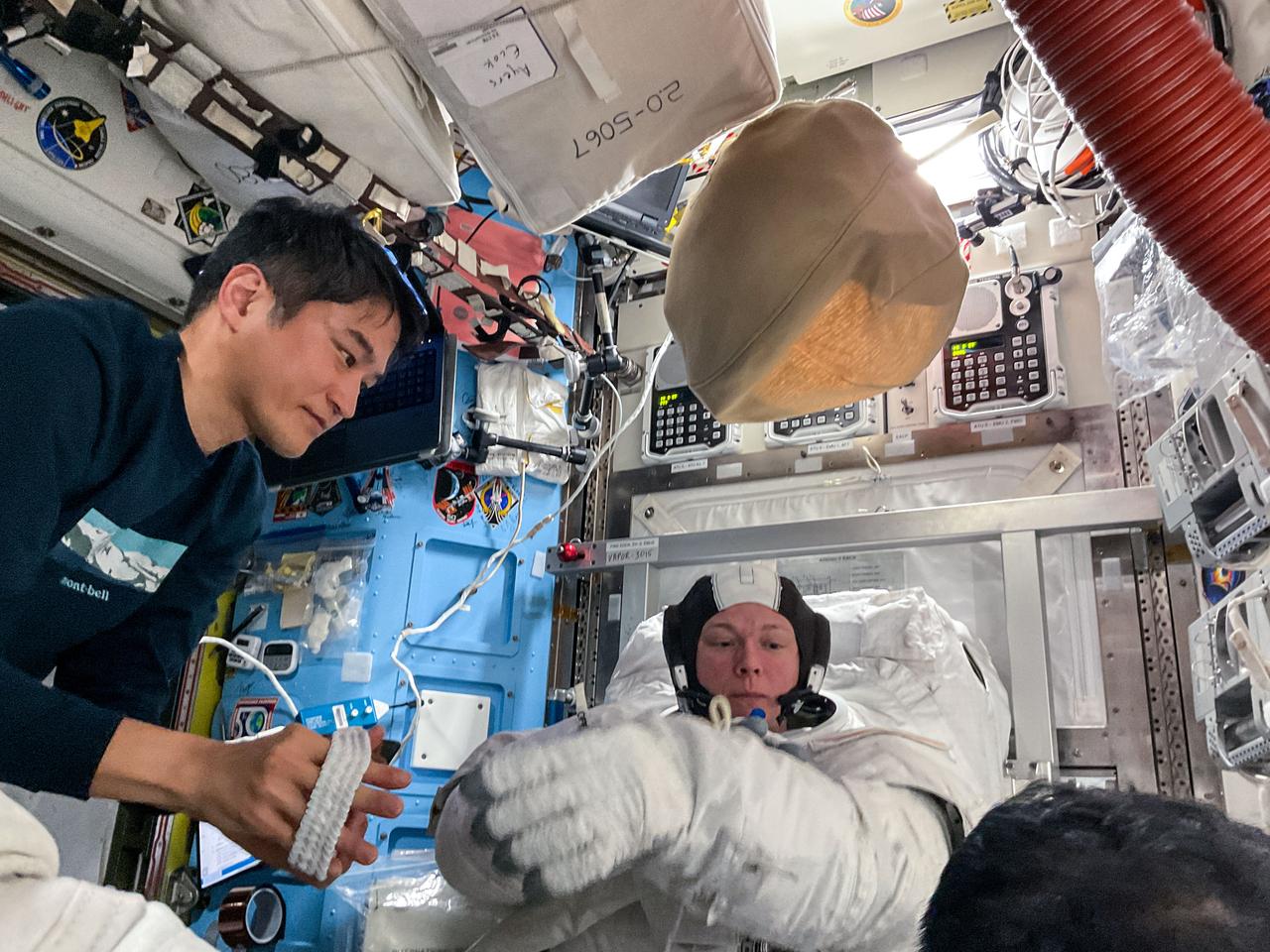
iss073e0379898 (May 1, 2025) --- Expedition 73 Commander Takuya Onishi from JAXA (Japan Aerospace Exploration Agency) assists Flight Engineer Nichole Ayers from NASA as she tries on a spacesuit and tests its components during a fit check inside the International Space Station's Quest airlock.
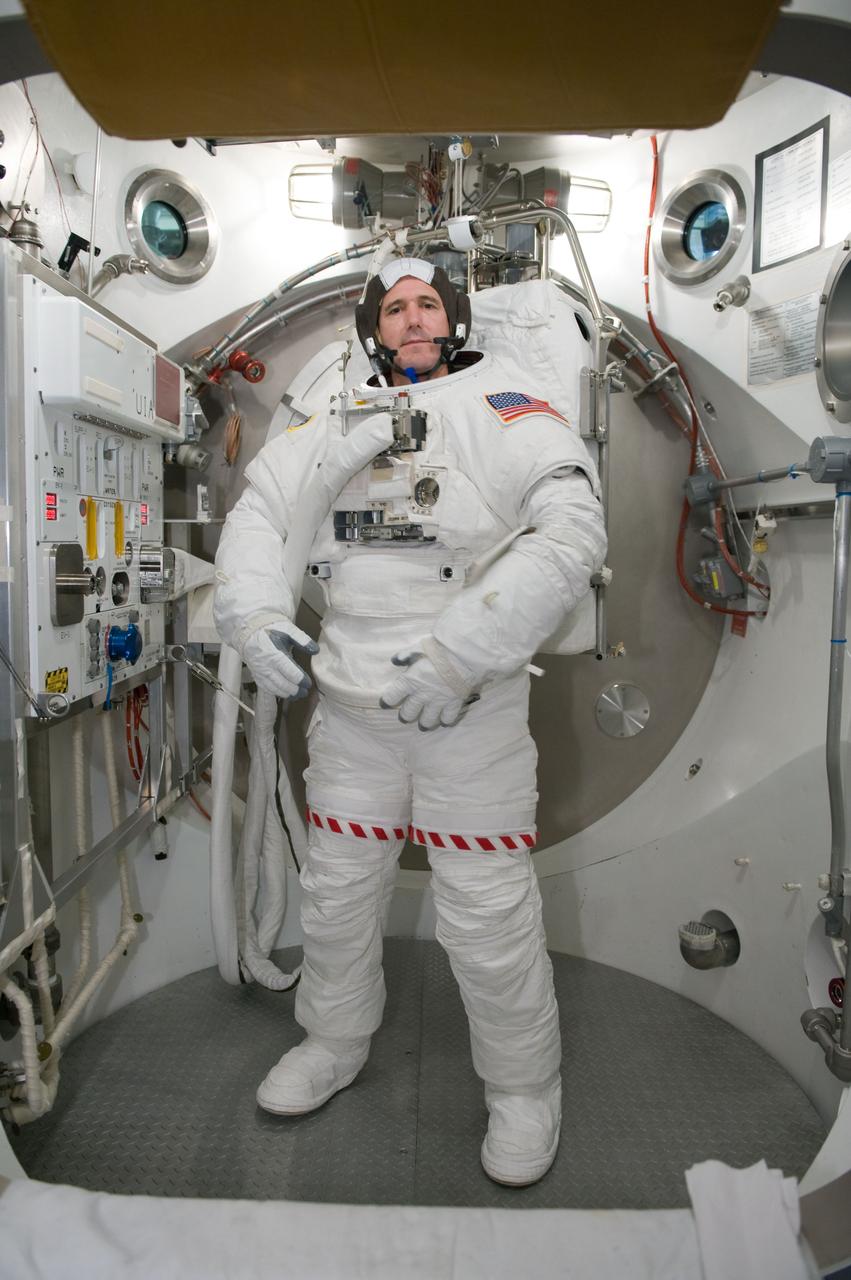
JSC2010-E-026888 (26 Feb. 2010) --- NASA astronaut Michael Good, STS-132 mission specialist, participates in an Extravehicular Mobility Unit (EMU) spacesuit fit check in the Space Station Airlock Test Article (SSATA) in the Crew Systems Laboratory at NASA's Johnson Space Center.
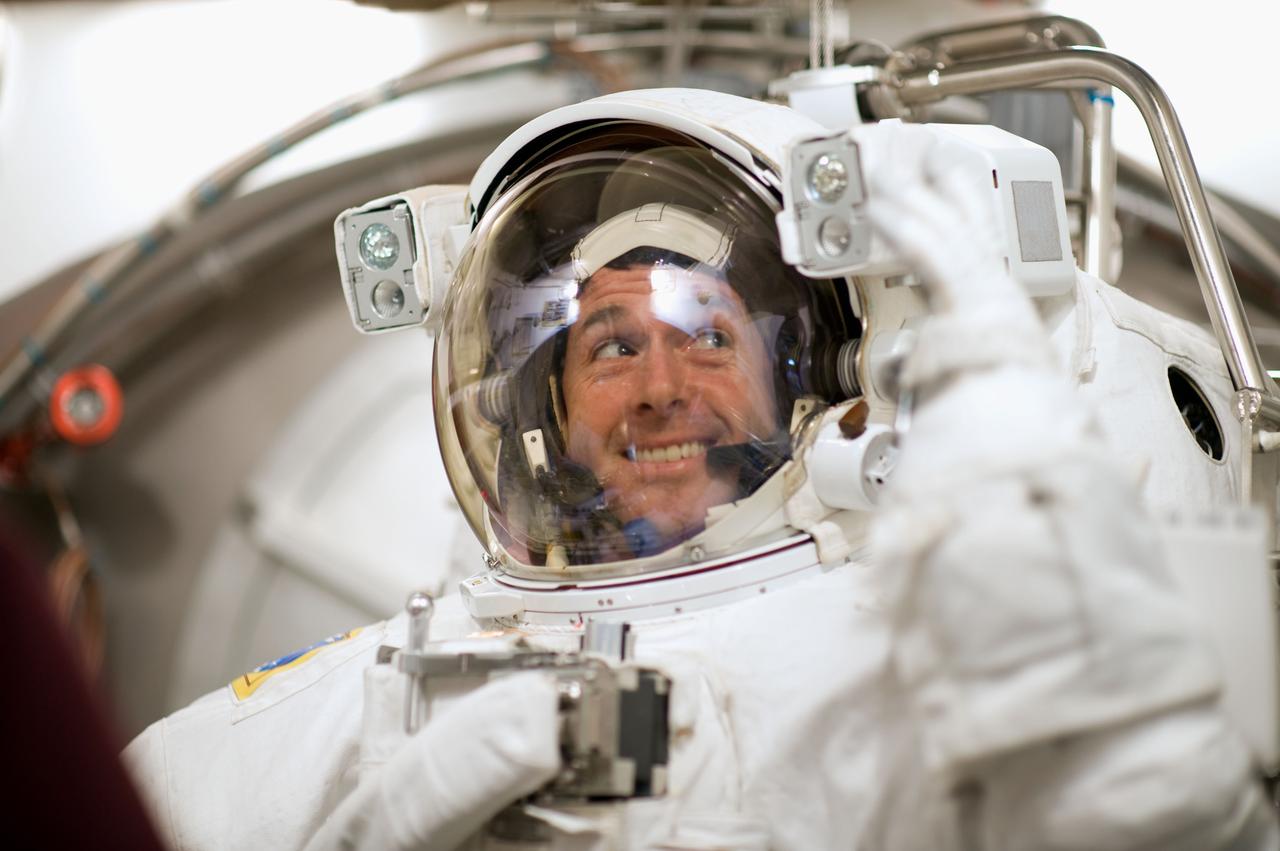
JSC2008-E-050230 (8 July 2008) --- Astronaut Robert S. (Shane) Kimbrough, STS-126 mission specialist, participates in an Extravehicular Mobility Unit (EMU) spacesuit fit check in the Space Station Airlock Test Article (SSATA) in the Crew Systems Laboratory at NASA's Johnson Space Center.
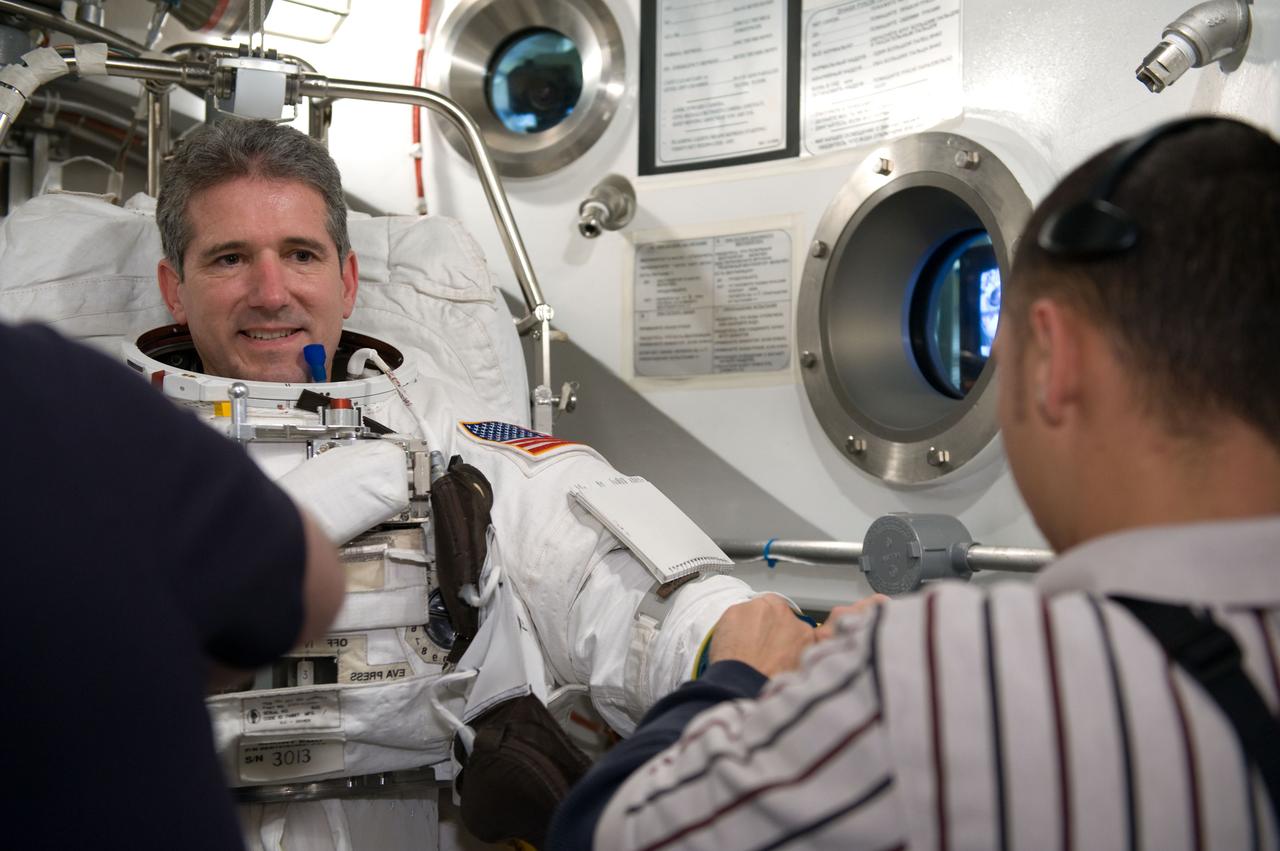
JSC2010-E-026877 (26 Feb. 2010) --- NASA astronaut Michael Good, STS-132 mission specialist, participates in an Extravehicular Mobility Unit (EMU) spacesuit fit check in the Space Station Airlock Test Article (SSATA) in the Crew Systems Laboratory at NASA's Johnson Space Center.
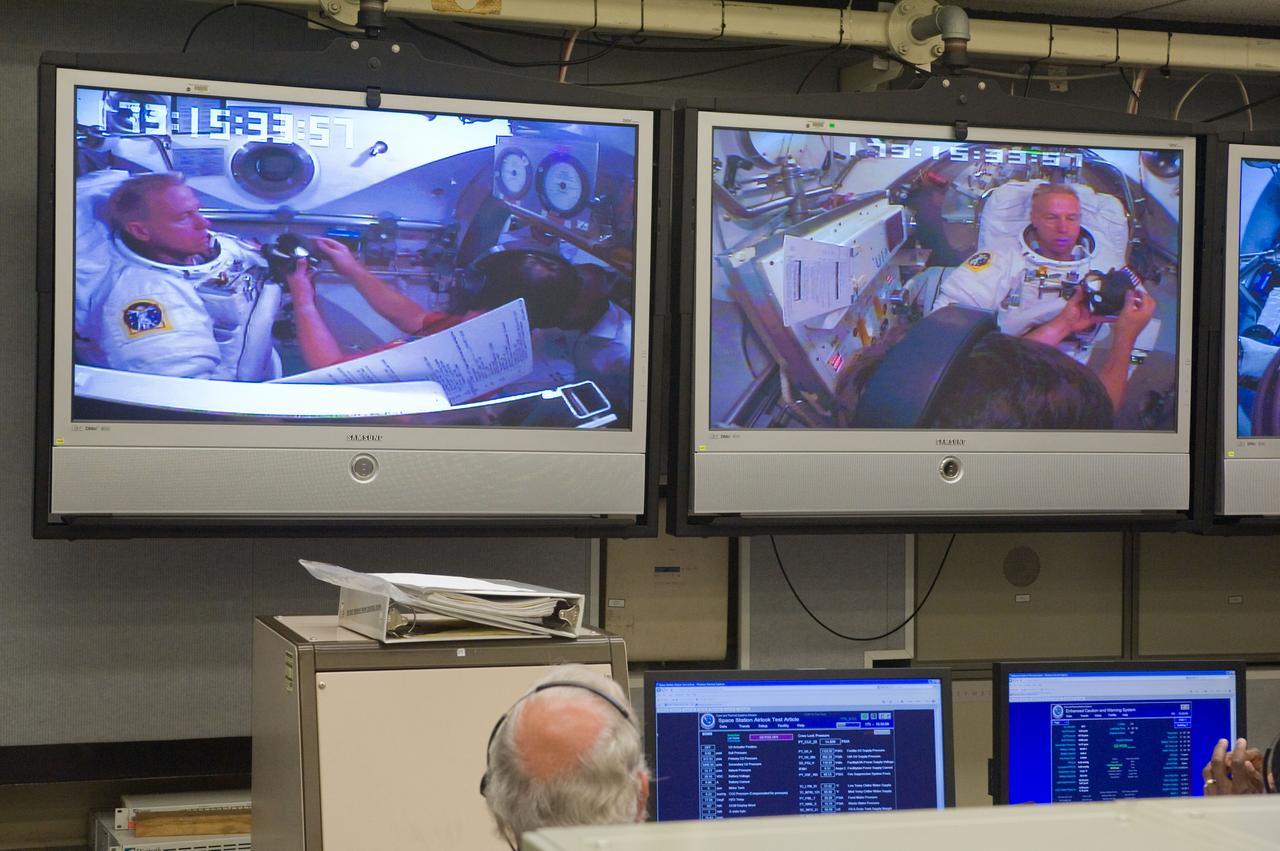
JSC2010-E-098603 (22 June 2010) --- NASA astronaut Tim Kopra, STS-133 mission specialist, is visible on the screens in the Space Station Airlock Test Article (SSATA) Control Room in the Crew Systems Laboratory at NASA?s Johnson Space Center during an Extravehicular Mobility Unit (EMU) spacesuit fit check.
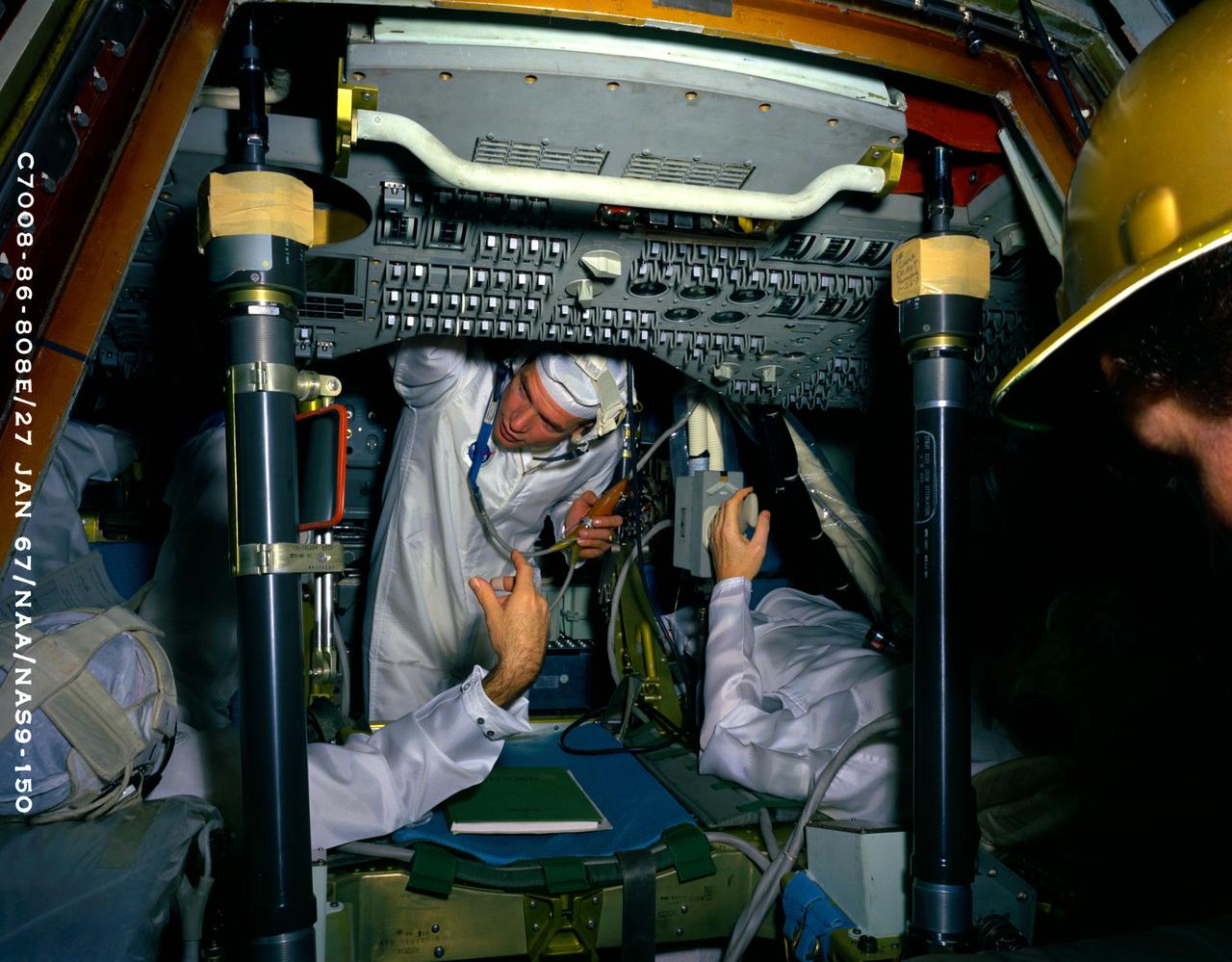
S67-23078 (27 Jan. 1967) --- Three astronauts (later to be named the Apollo 9 prime crew) in Apollo spacecraft 101 Command module during Apollo crew compartment fit and function test. Left to right are astronauts James A. McDivitt, David R. Scott, and Russell L. Schweickart.
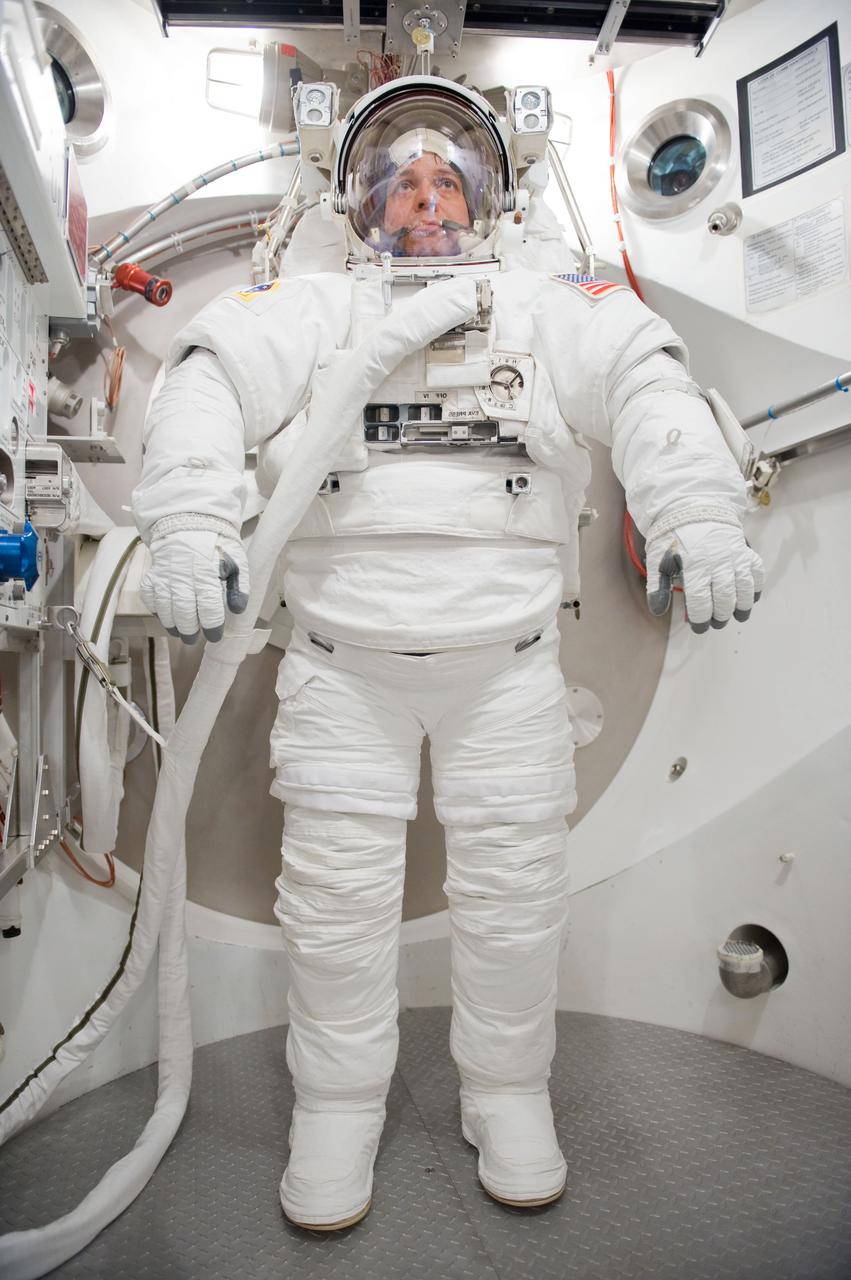
JSC2009-E-226283 (27 Oct. 2009) --- Astronaut Robert Behnken, STS-130 mission specialist, participates in an Extravehicular Mobility Unit (EMU) spacesuit fit check in the Space Station Airlock Test Article (SSATA) in the Crew Systems Laboratory at NASA's Johnson Space Center.
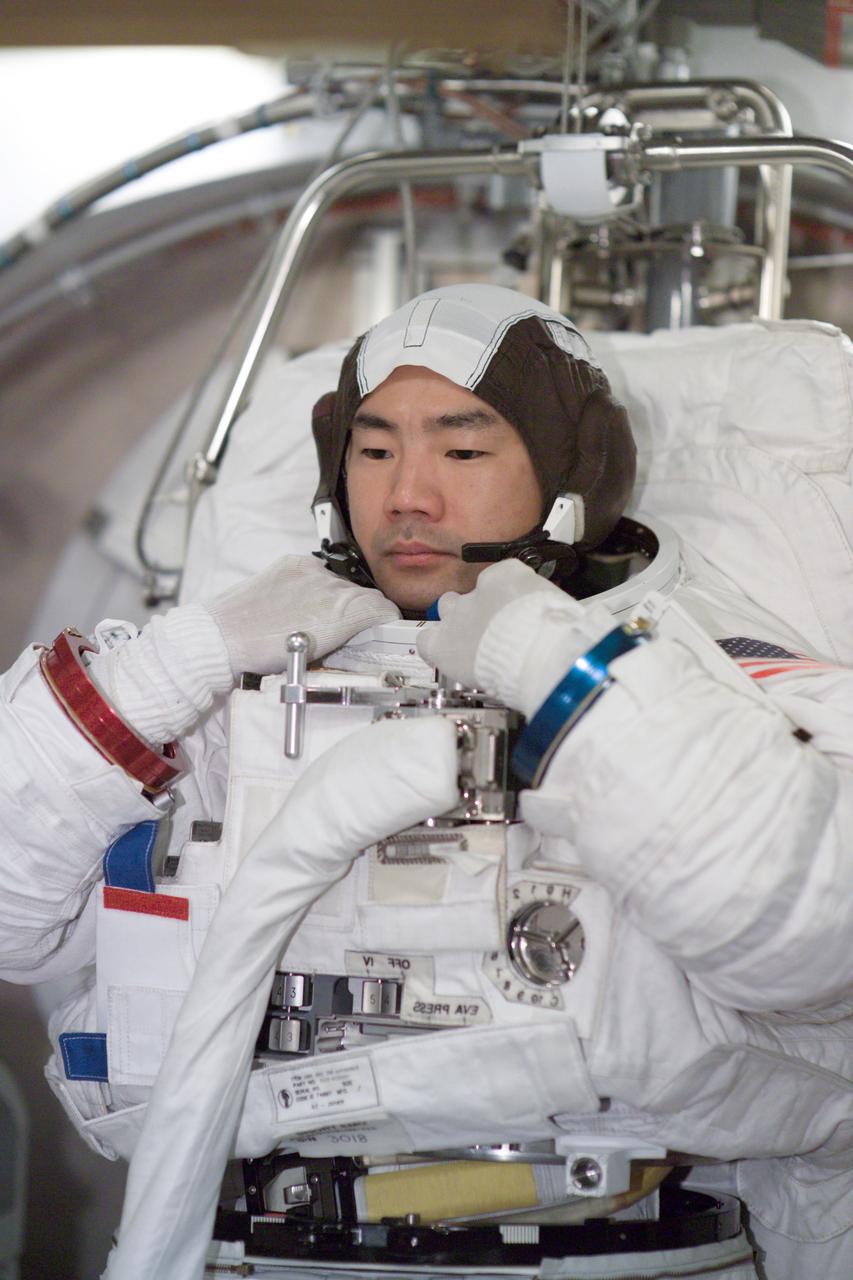
JSC2005-E-12411 (29 March 2005) --- Astronaut Soichi Noguchi, STS-114 mission specialist representing the Japan Aerospace Exploration Agency (JAXA), participates in an Extravehicular Mobility Unit (EMU) spacesuit fit check in the Space Station Airlock Test Article (SSATA) in the Crew Systems Laboratory at the Johnson Space Center (JSC).
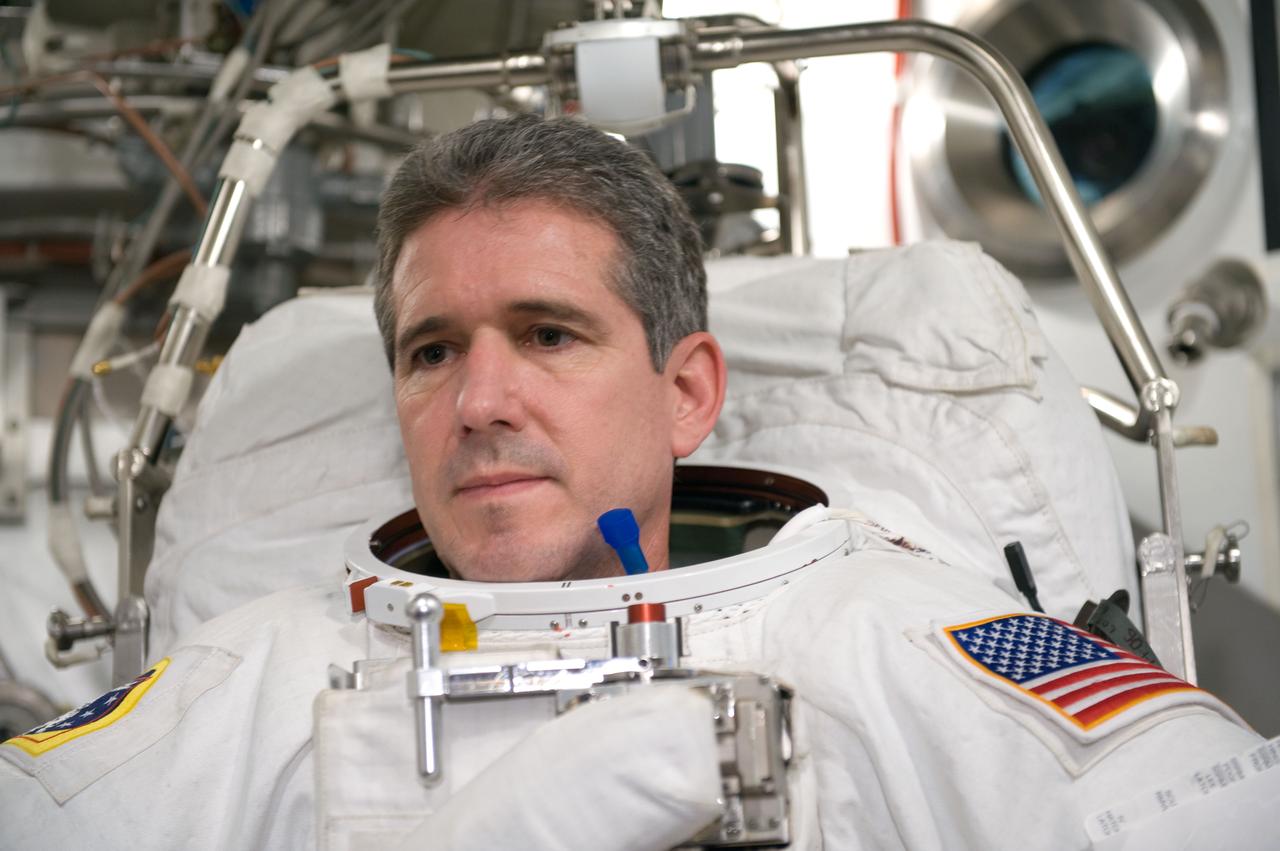
JSC2010-E-026878 (26 Feb. 2010) --- NASA astronaut Michael Good, STS-132 mission specialist, participates in an Extravehicular Mobility Unit (EMU) spacesuit fit check in the Space Station Airlock Test Article (SSATA) in the Crew Systems Laboratory at NASA's Johnson Space Center.
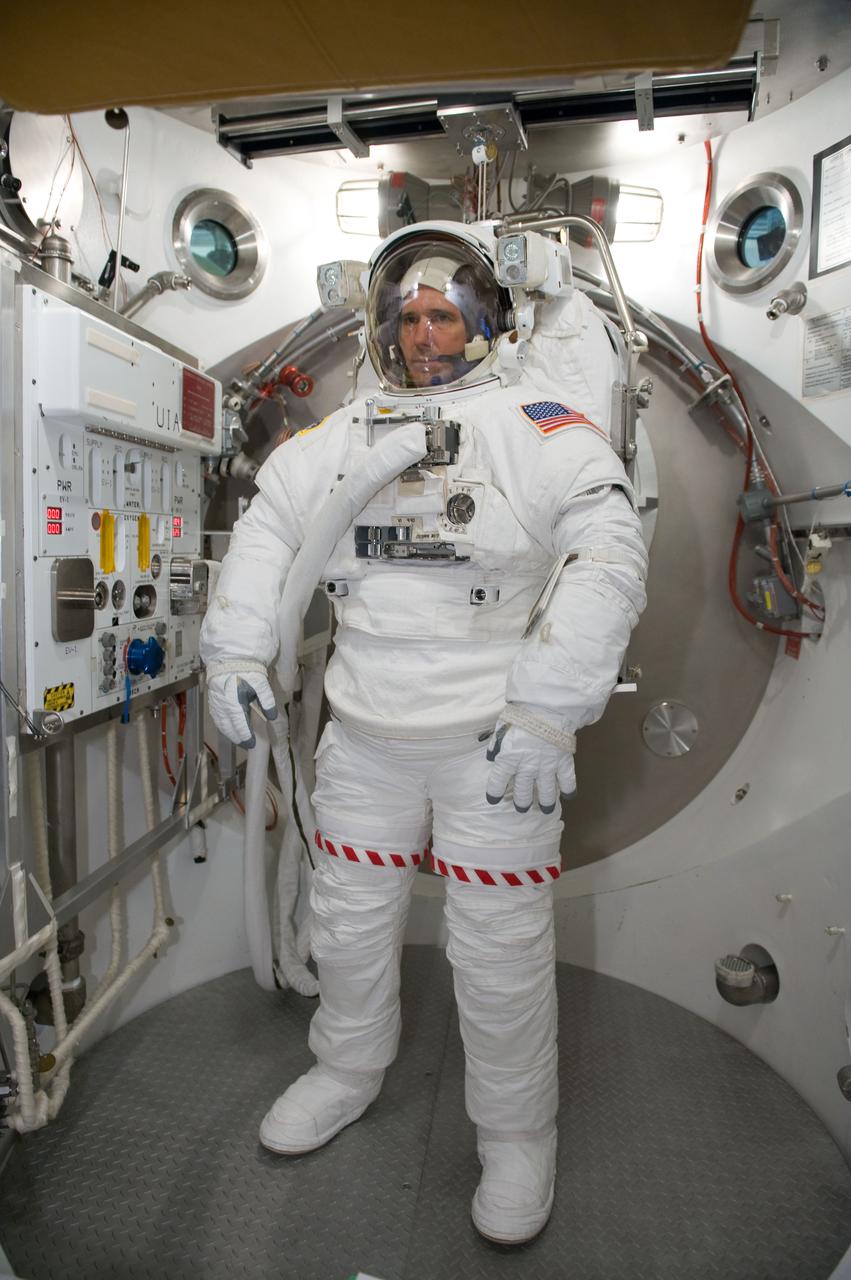
JSC2010-E-026895 (26 Feb. 2010) --- NASA astronaut Michael Good, STS-132 mission specialist, participates in an Extravehicular Mobility Unit (EMU) spacesuit fit check in the Space Station Airlock Test Article (SSATA) in the Crew Systems Laboratory at NASA's Johnson Space Center.
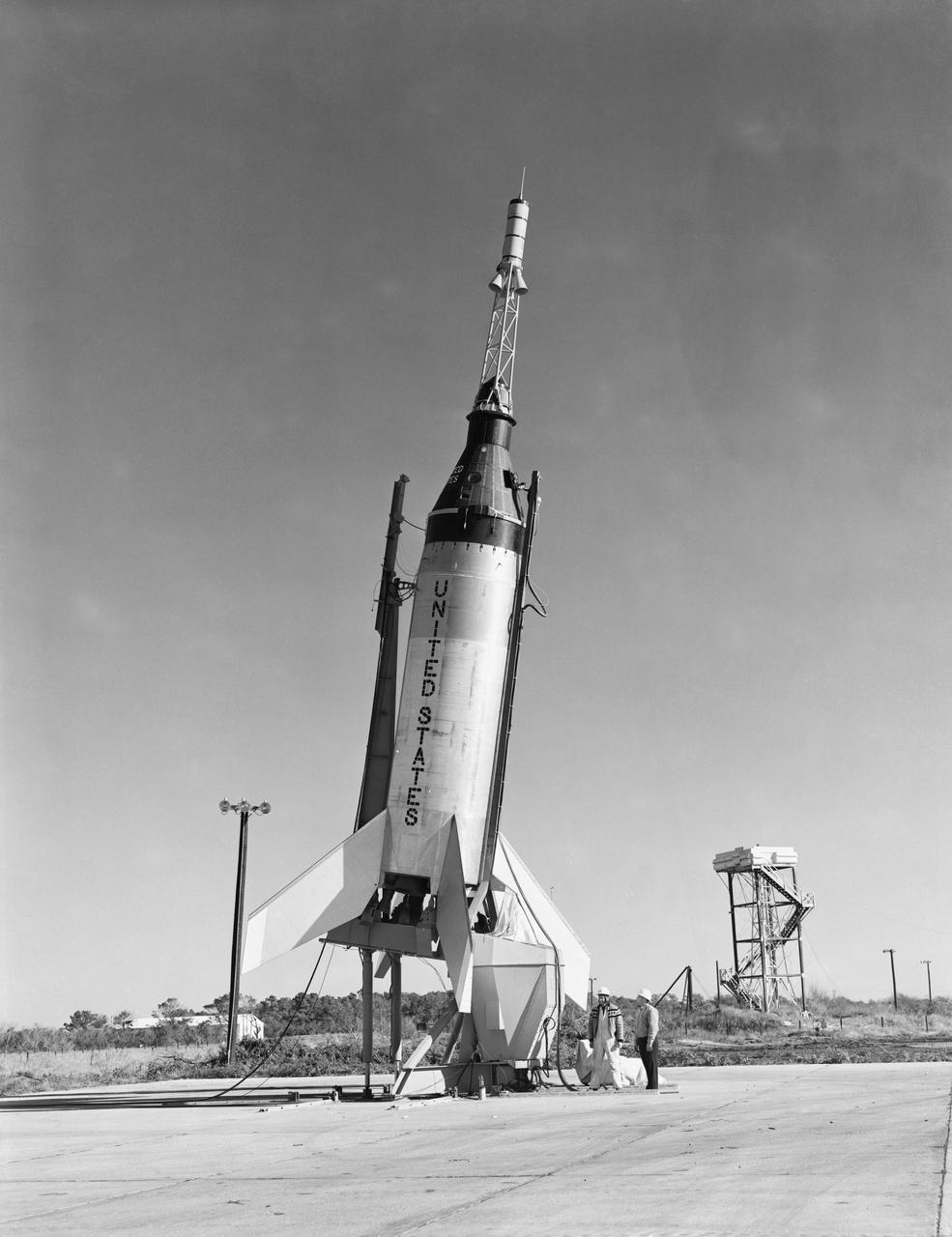
G60-02552 (8 Nov. 1960) --- Little Joe-5 prelaunch fittings shot before flight from Wallops Island. The suborbital test flight was to qualify the capsule system. The capsule did not separate from the booster. Photo credit: NASA
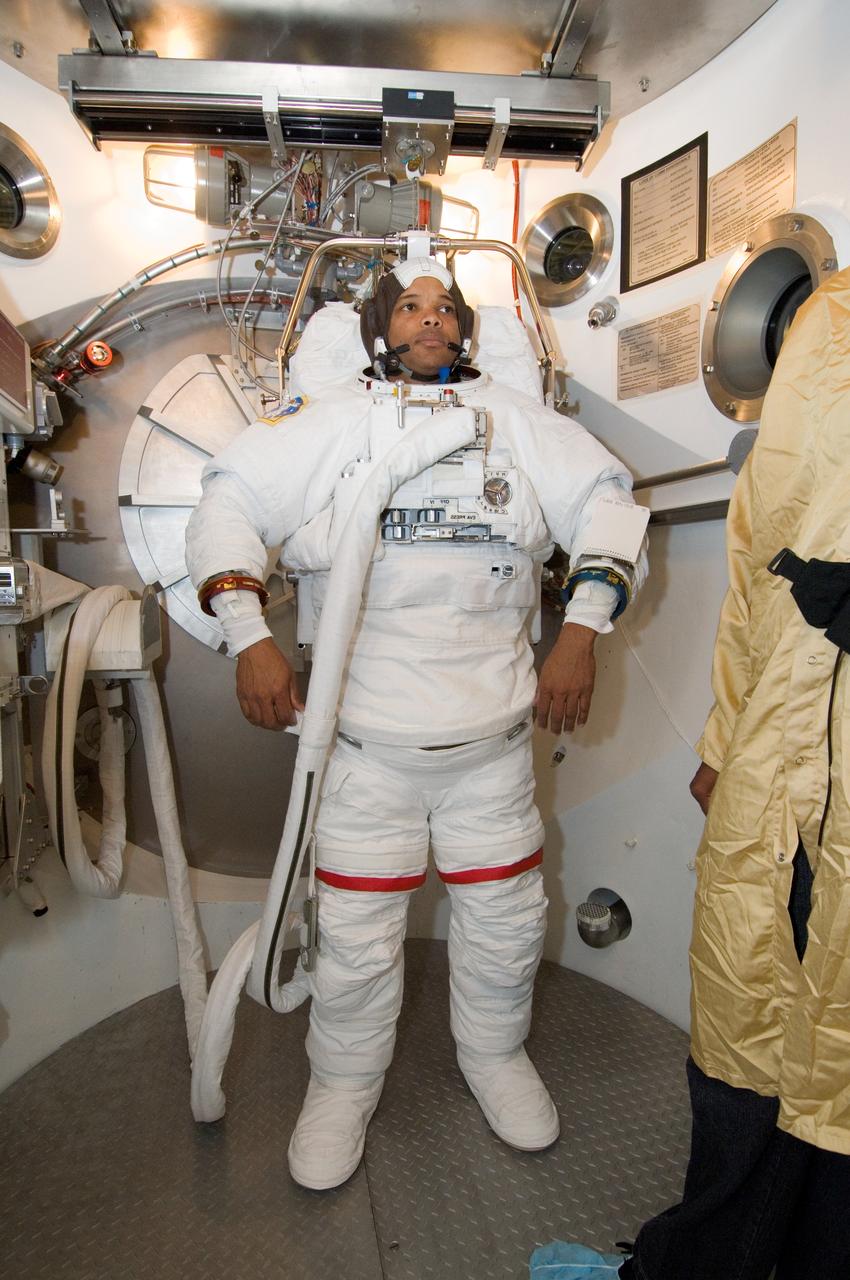
JSC2006-E-41653 (25 Sept. 2006) --- Astronaut Robert L. Curbeam, STS-116 mission specialist, participates in an Extravehicular Mobility Unit (EMU) spacesuit fit check in the Space Station Airlock Test Article (SSATA) in the Crew Systems Laboratory at the Johnson Space Center.
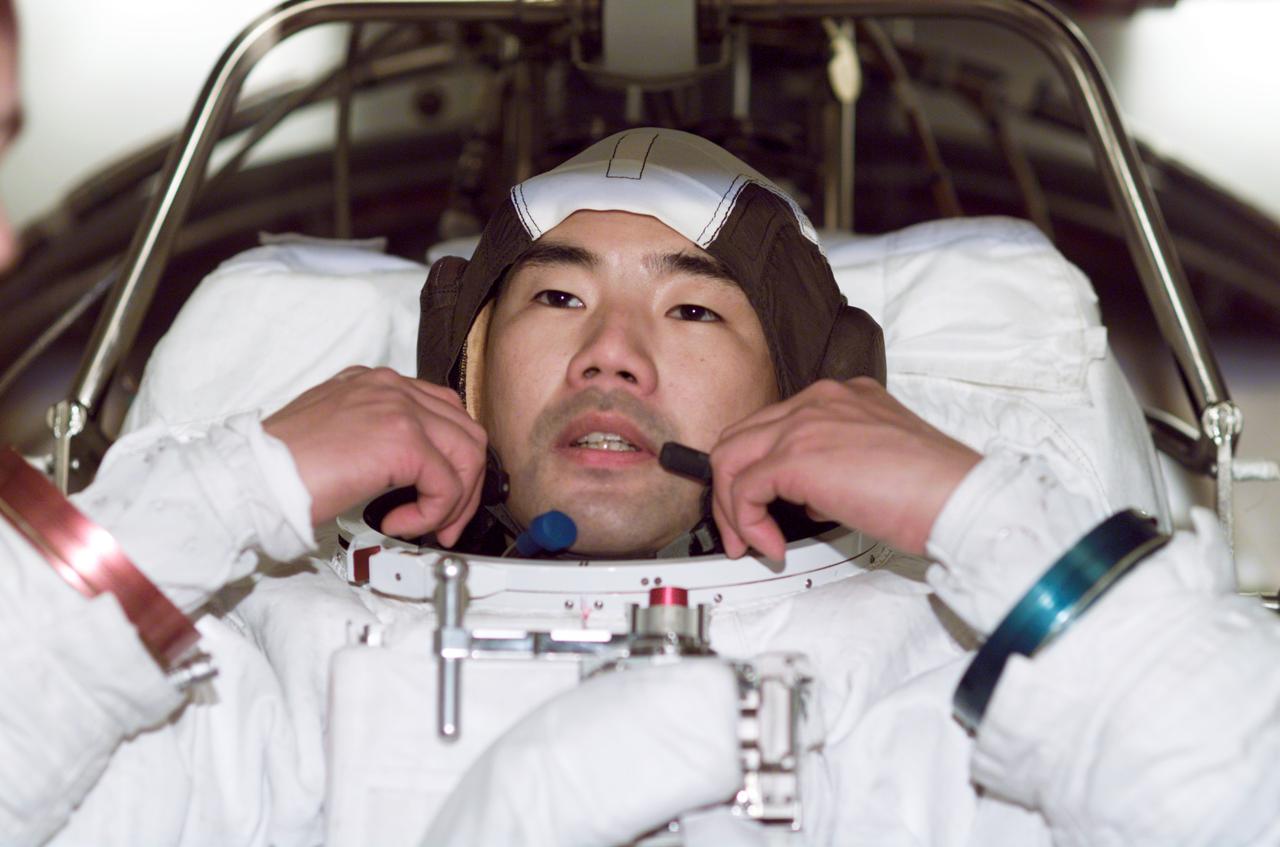
JSC2003-E-01127 (10 January 2003) --- Astronaut Soichi Noguchi, STS-114 mission specialist, participates in an Extravehicular Mobility Unit (EMU) spacesuit fit check in the Space Station Airlock Test Article (SSATA) in the Crew Systems Laboratory at the Johnson Space Center (JSC). Noguchi represents the Japanese Space Agency.
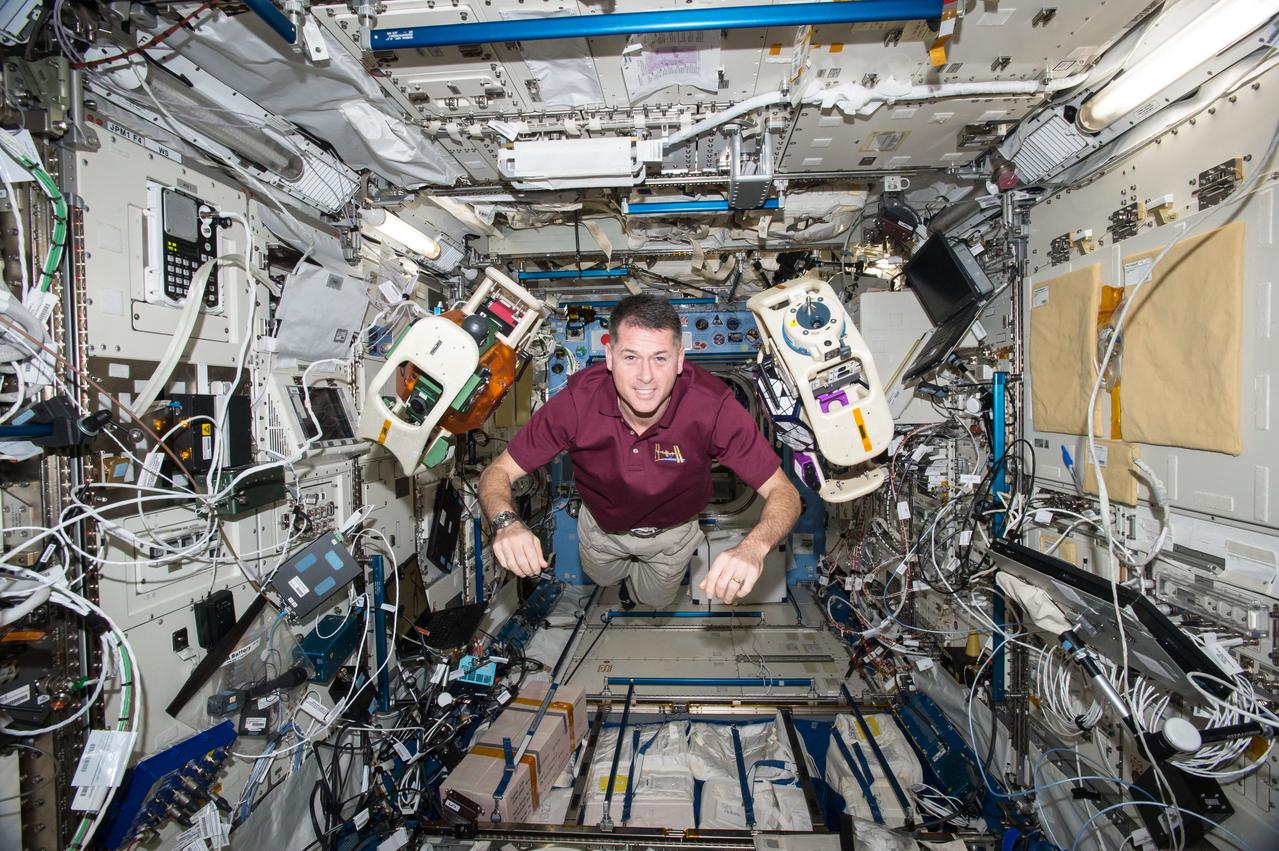
iss050e038043 (02/03/2017) --- NASA astronaut Shane Kimbrough is seen executing the SPHERES-HALO experiment aboard the International Space Station. The investigation uses two small, self-contained satellites (SPHERES) fitted with donut-like rings to test wireless power transfer and formation flight using electromagnetic fields.
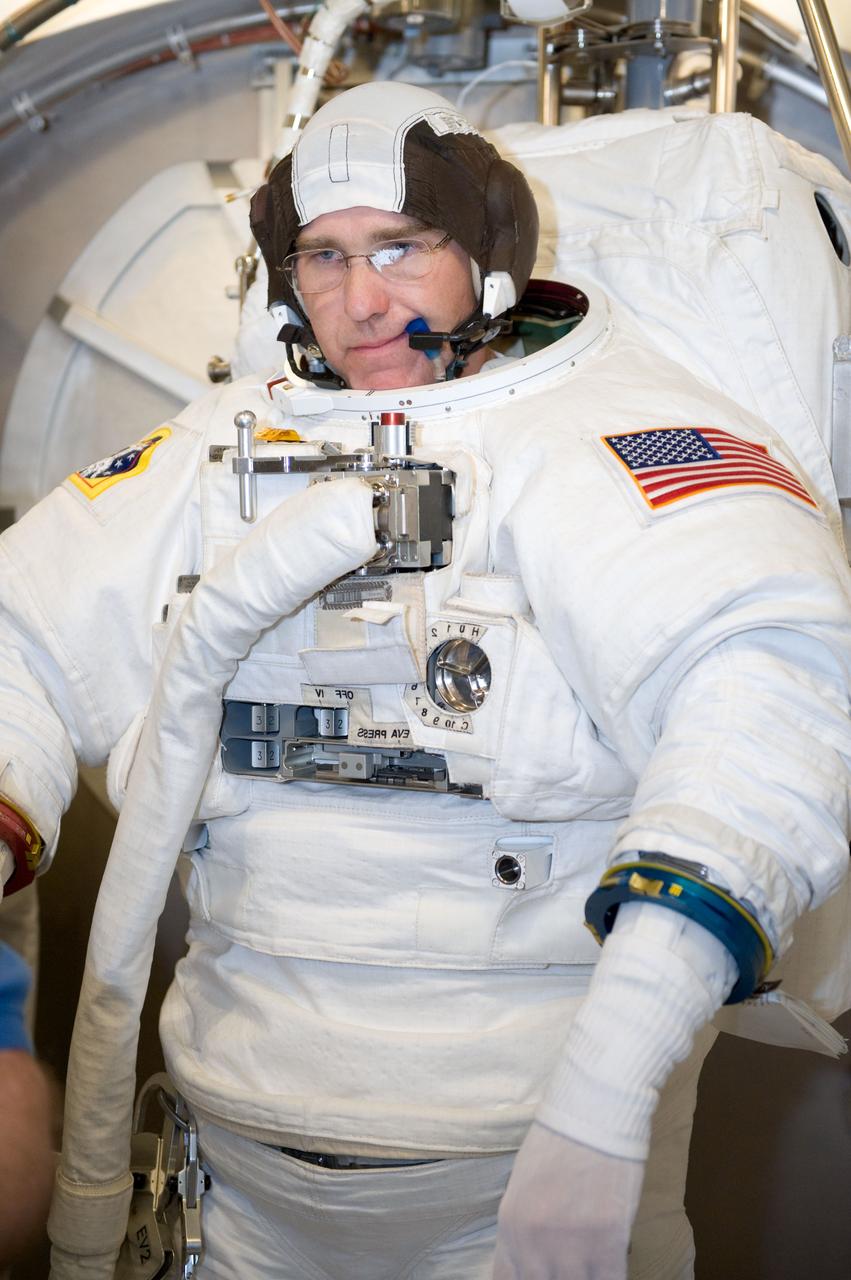
JSC2010-E-039450 (10 March 2010) --- NASA astronaut Steve Bowen, STS-132 mission specialist, participates in an Extravehicular Mobility Unit (EMU) spacesuit fit check in the Space Station Airlock Test Article (SSATA) in the Crew Systems Laboratory at NASA's Johnson Space Center.

JSC2010-E-039463 (10 March 2010) --- NASA astronaut Steve Bowen, STS-132 mission specialist, participates in an Extravehicular Mobility Unit (EMU) spacesuit fit check in the Space Station Airlock Test Article (SSATA) in the Crew Systems Laboratory at NASA's Johnson Space Center.
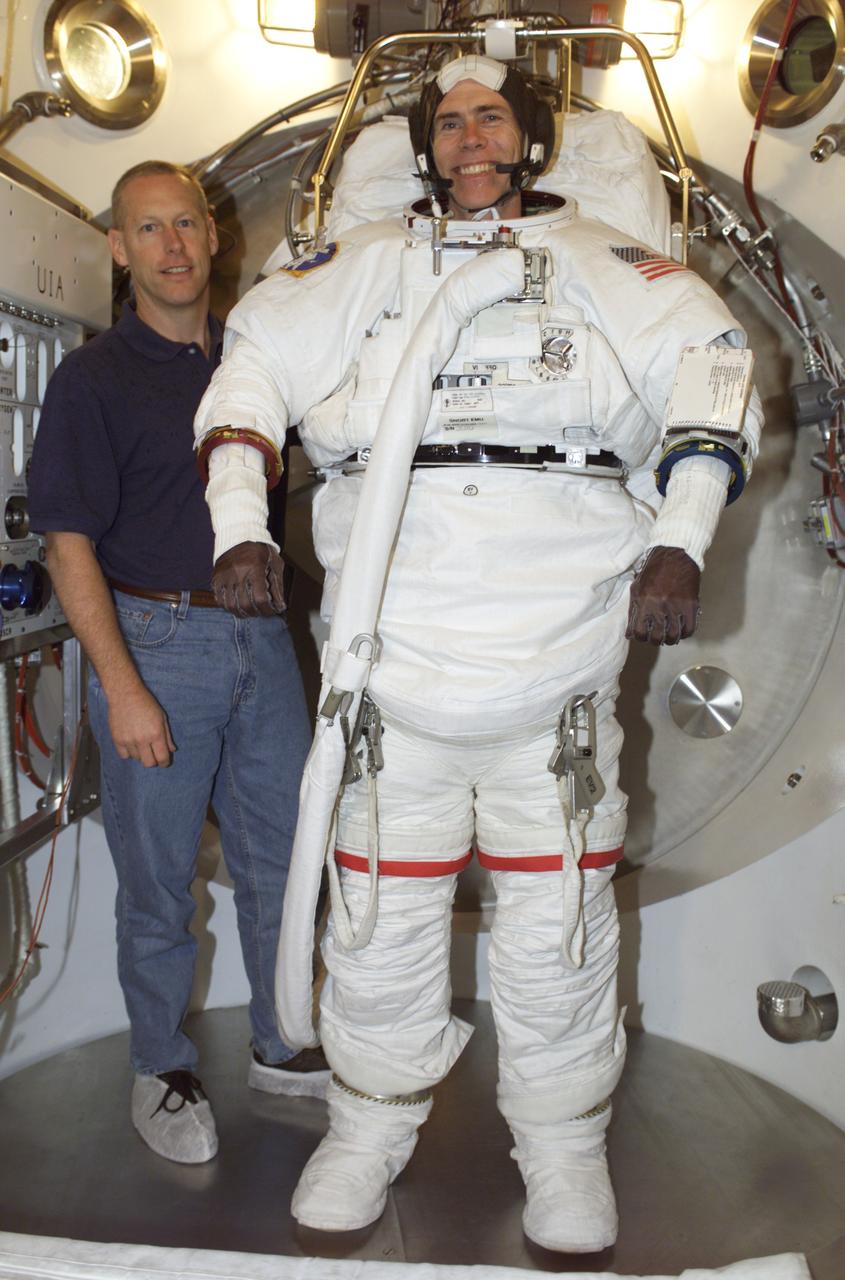
JSC2001-E-18351 (5 June 2001) --- Astronauts Patrick G. Forrester (left) assists Daniel T. Barry, both STS-105 mission specialists, in an Extravehicular Mobility Unit (EMU) fit check in a Space Station Airlock Test Article (SSATA) in the Crew Systems Laboratory at the Johnson Space Center (JSC).
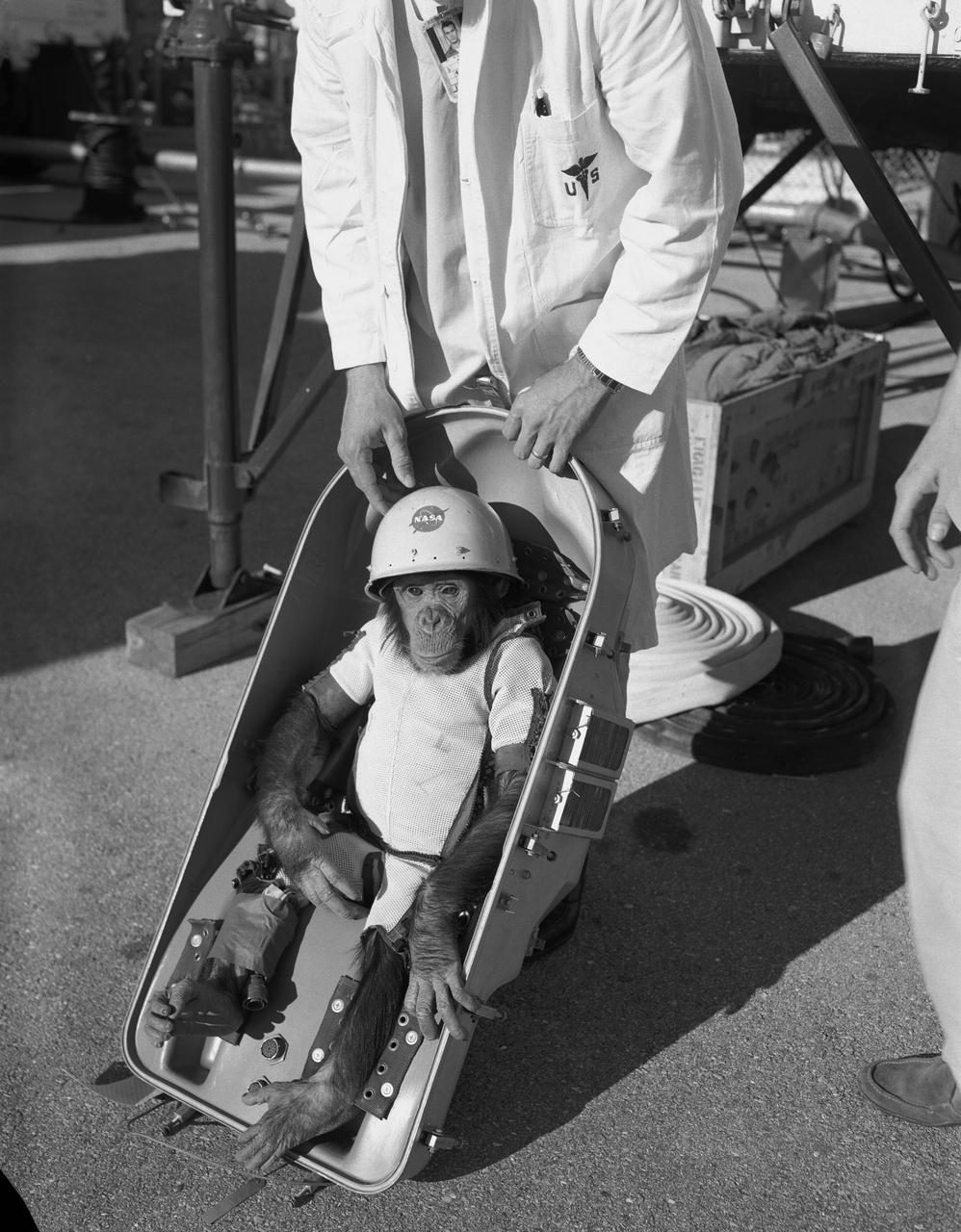
S63-20801 (23 Jan. 1961) --- Primate chimpanzee ?Ham?, in his spacesuit, is fitted into the couch of the Mercury-Redstone 2 (MR-2) capsule #5 prior to its test flight which was conducted on Jan. 31, 1961. Photo credit: NASA
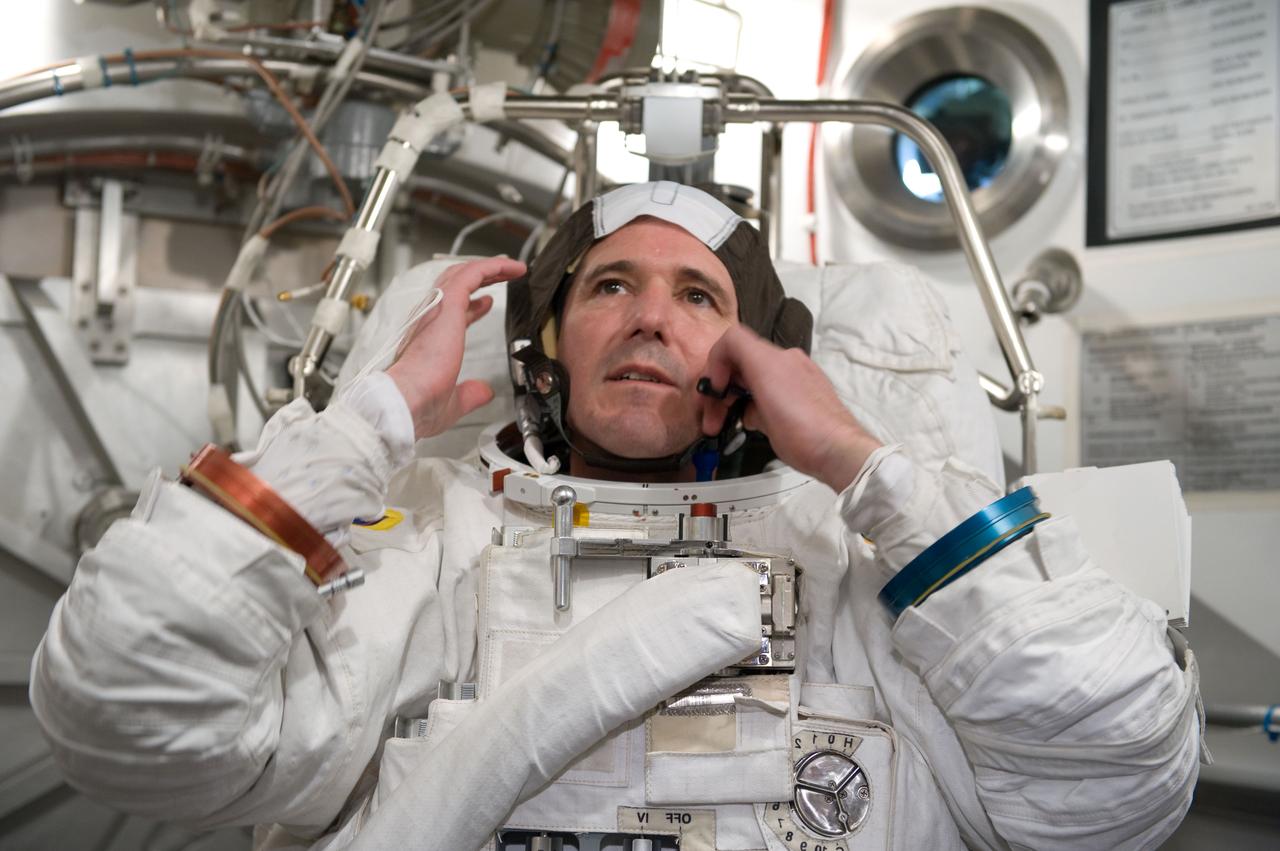
JSC2010-E-026880 (26 Feb. 2010) --- NASA astronaut Michael Good, STS-132 mission specialist, participates in an Extravehicular Mobility Unit (EMU) spacesuit fit check in the Space Station Airlock Test Article (SSATA) in the Crew Systems Laboratory at NASA's Johnson Space Center.
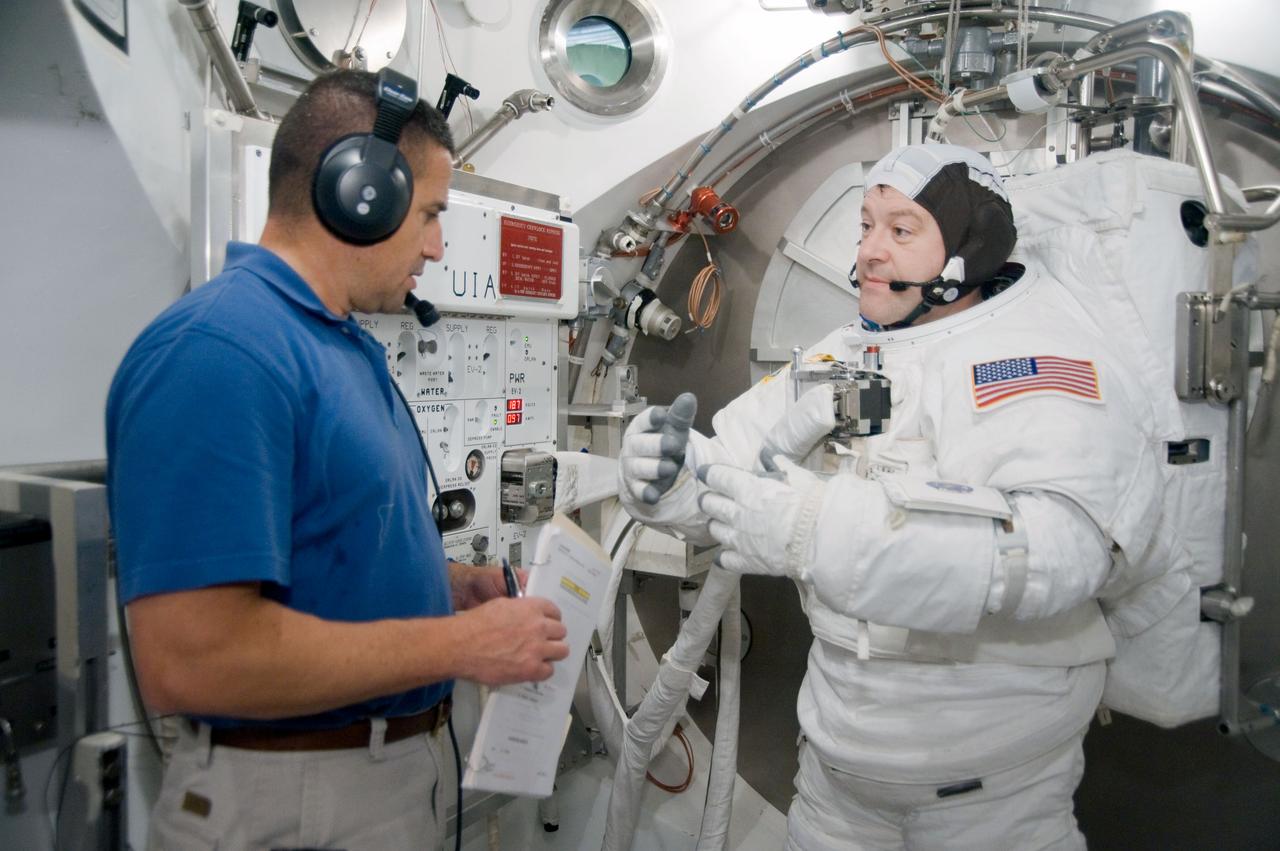
JSC2009-E-228752 (29 Oct. 2009) --- Astronaut Nicholas Patrick, STS-130 mission specialist, participates in an Extravehicular Mobility Unit (EMU) spacesuit fit check in the Space Station Airlock Test Article (SSATA) in the Crew Systems Laboratory at NASA's Johnson Space Center. Astronaut George Zamka, commander, assisted Patrick.
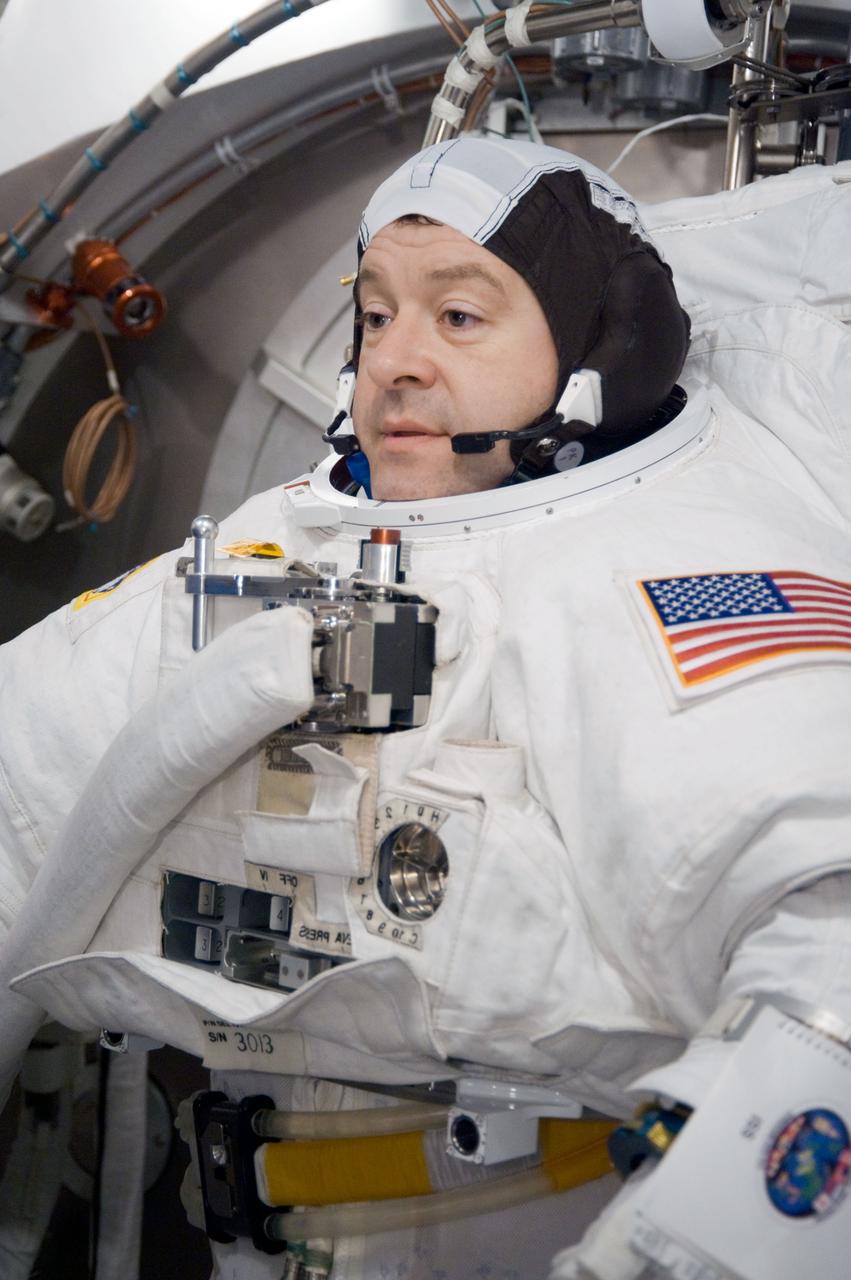
JSC2009-E-228743 (29 Oct. 2009) --- Astronaut Nicholas Patrick, STS-130 mission specialist, participates in an Extravehicular Mobility Unit (EMU) spacesuit fit check in the Space Station Airlock Test Article (SSATA) in the Crew Systems Laboratory at NASA's Johnson Space Center.
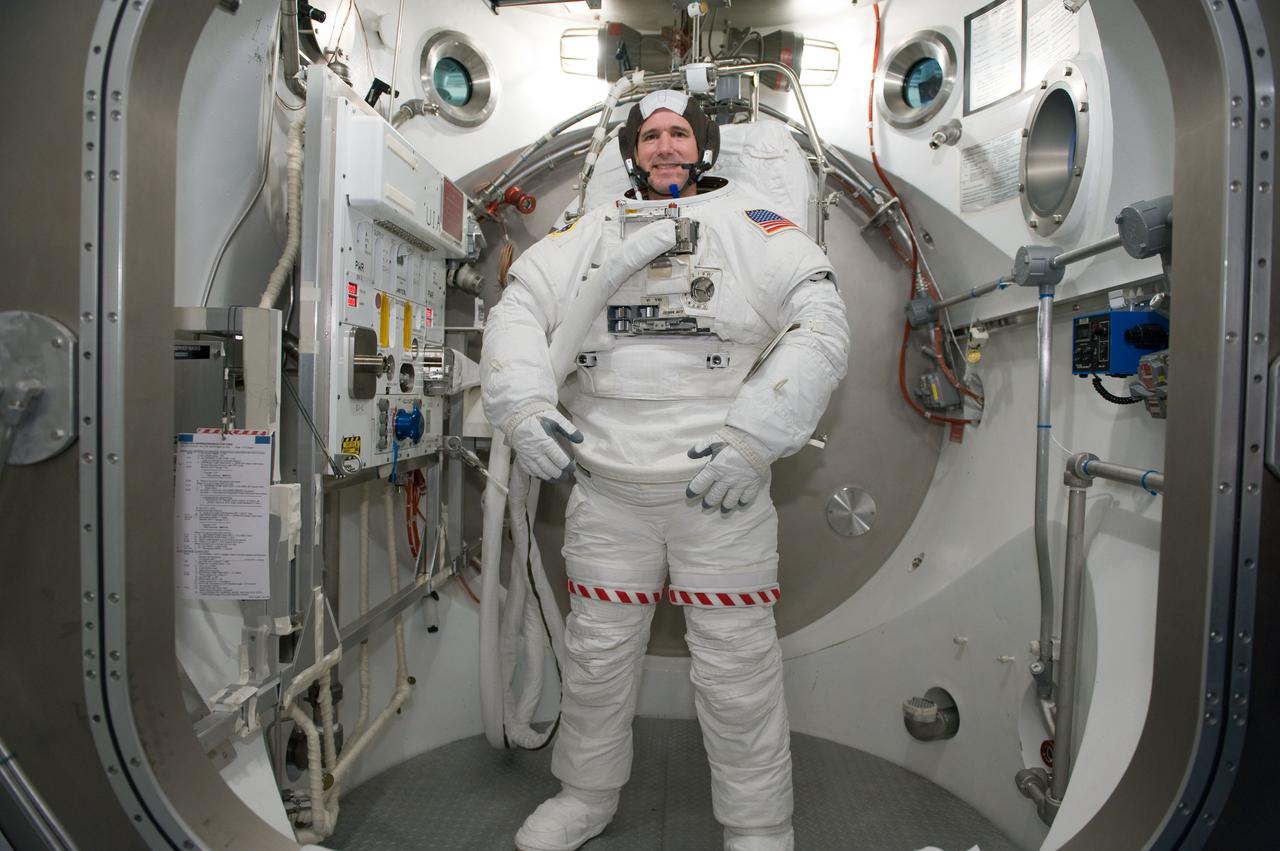
JSC2010-E-026889 (26 Feb. 2010) --- NASA astronaut Michael Good, STS-132 mission specialist, participates in an Extravehicular Mobility Unit (EMU) spacesuit fit check in the Space Station Airlock Test Article (SSATA) in the Crew Systems Laboratory at NASA's Johnson Space Center.
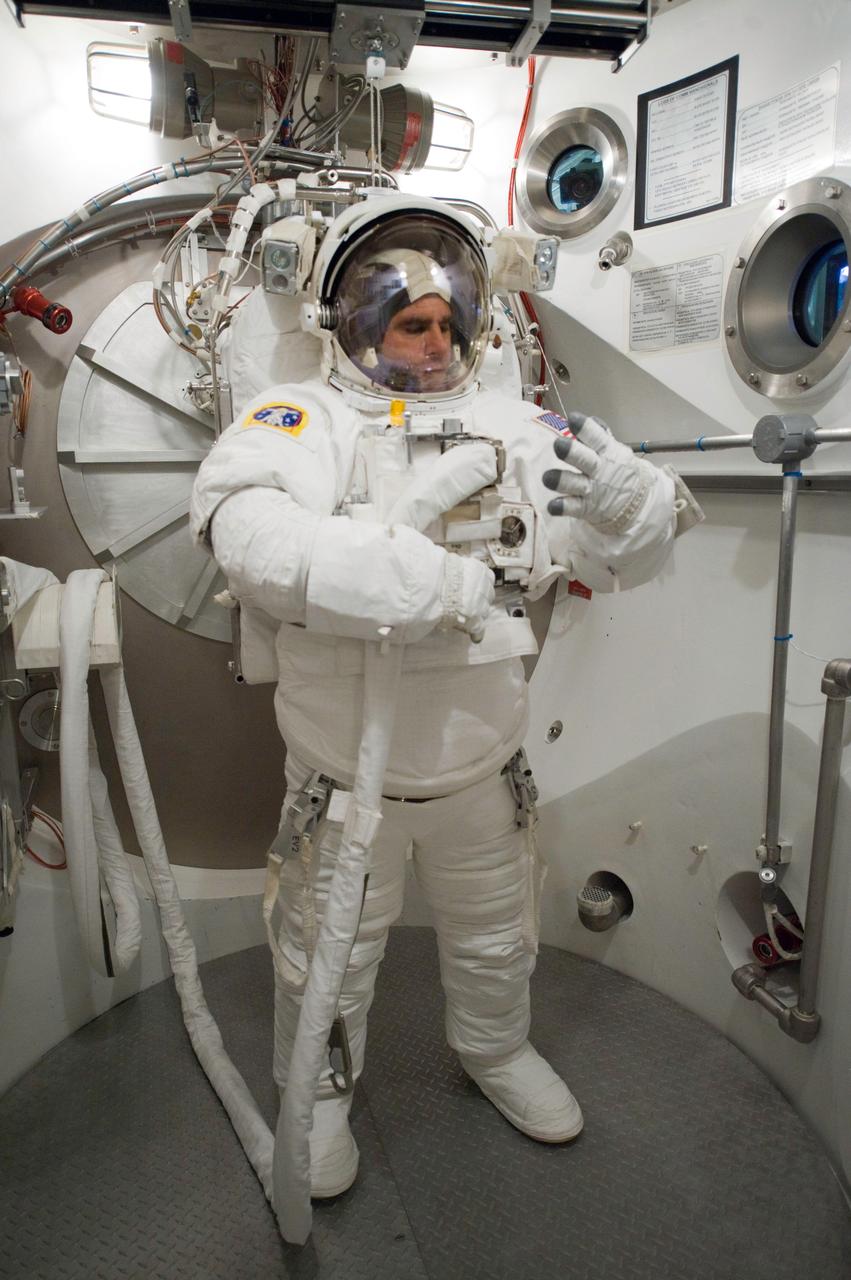
JSC2010-E-060730 (29 April 2010) --- NASA astronaut Greg Chamitoff, STS-134 mission specialist, participates in an Extravehicular Mobility Unit (EMU) spacesuit fit check in the Space Station Airlock Test Article (SSATA) in the Crew Systems Laboratory at NASA's Johnson Space Center.
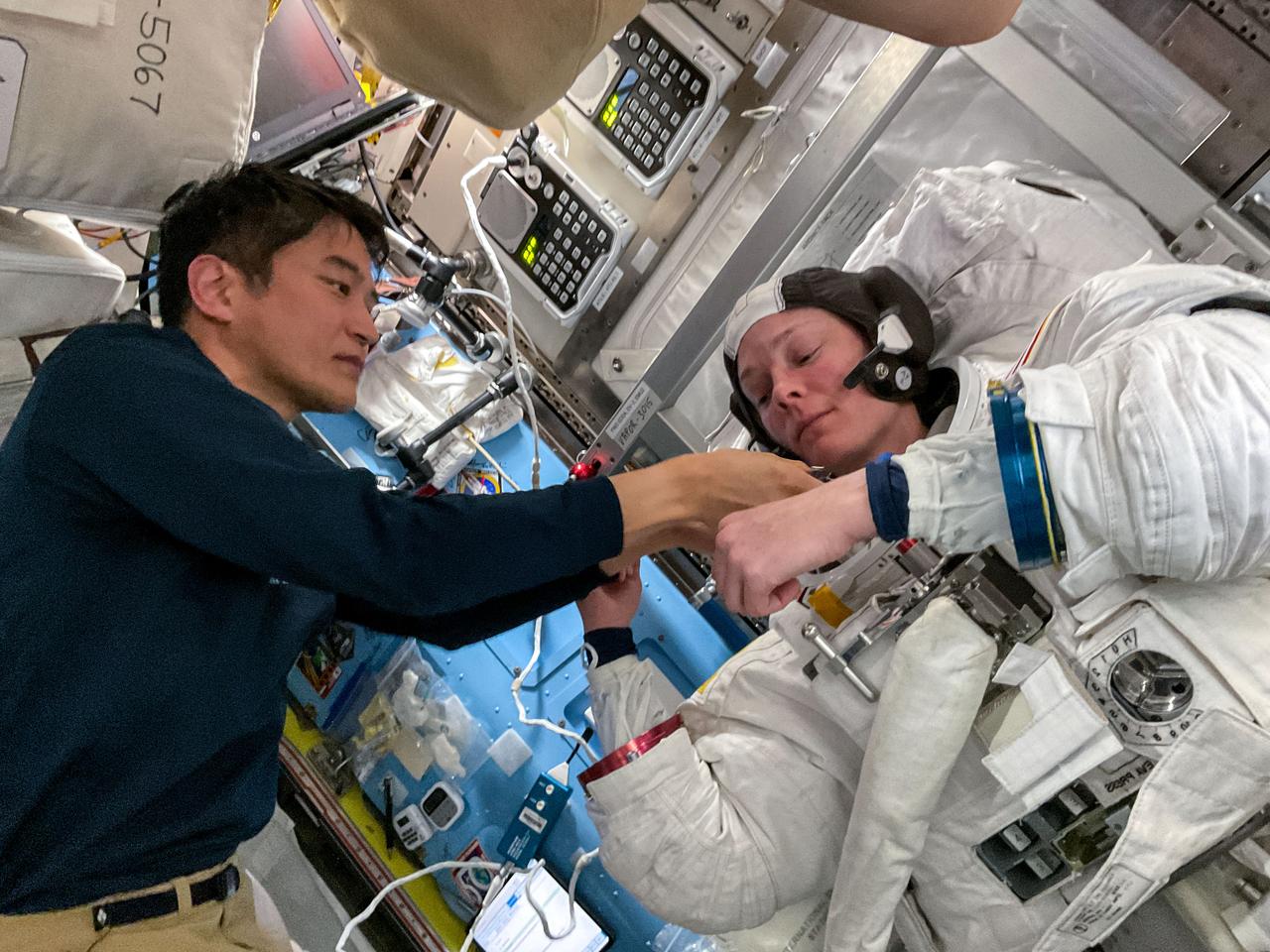
iss073e0379892 (May 1, 2025) --- Expedition 73 Commander Takuya Onishi from JAXA (Japan Aerospace Exploration Agency) assists Flight Engineer Nichole Ayers from NASA as she tries on a spacesuit and tests its components during a fit check inside the International Space Station's Quest airlock.
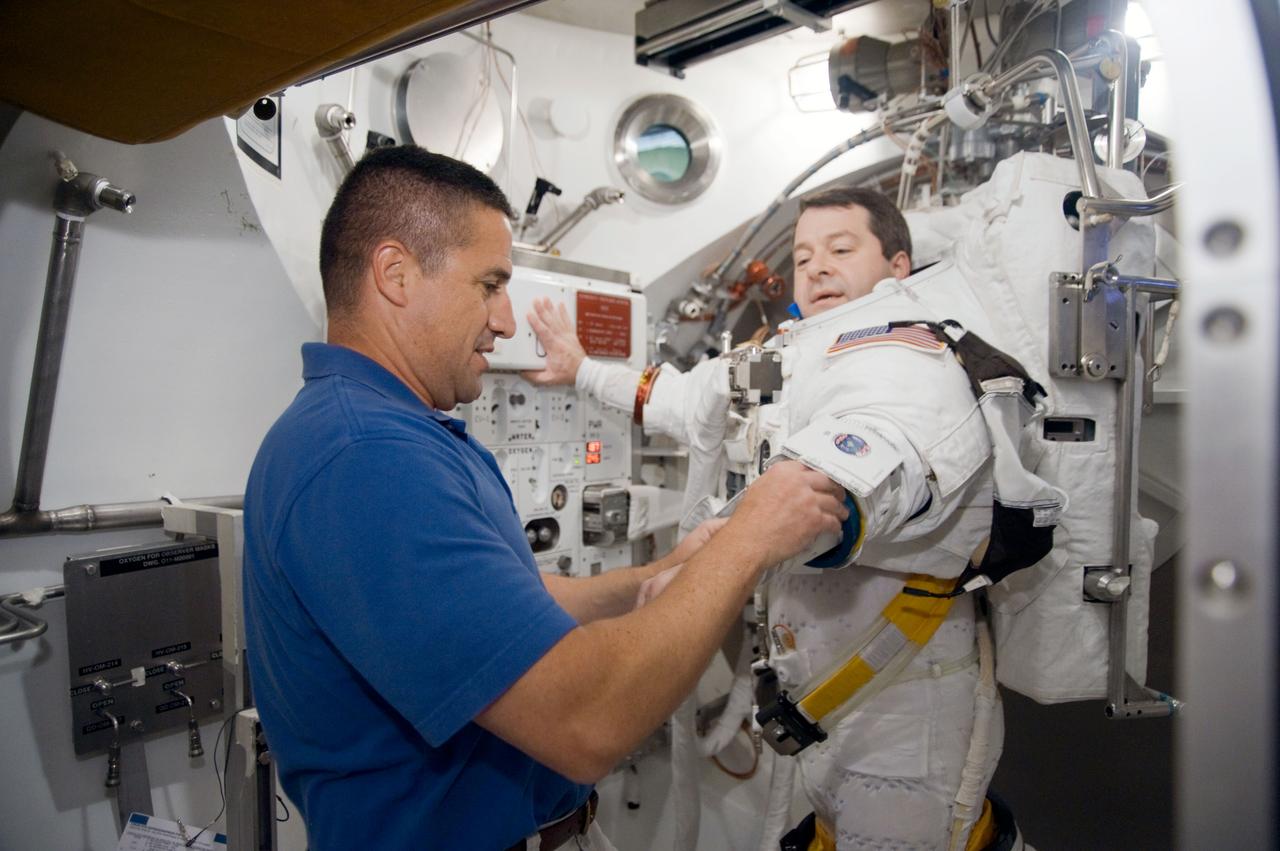
JSC2009-E-228742 (29 Oct. 2009) --- Astronaut Nicholas Patrick, STS-130 mission specialist, participates in an Extravehicular Mobility Unit (EMU) spacesuit fit check in the Space Station Airlock Test Article (SSATA) in the Crew Systems Laboratory at NASA's Johnson Space Center. Astronaut George Zamka, commander, assisted Patrick.
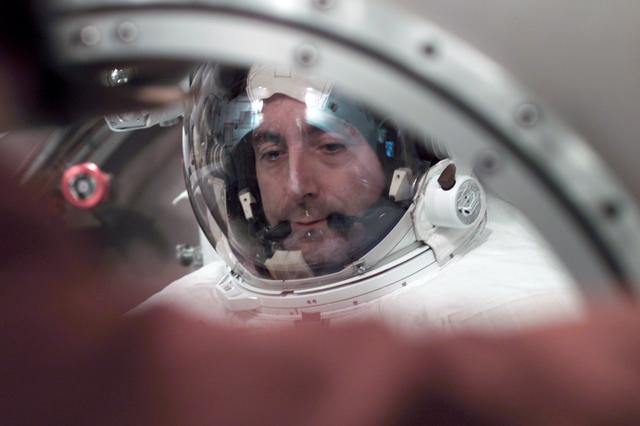
JSC2002-E-08241 (20 February 2002) --- Astronaut Philippe Perrin, STS-111 mission specialist representing CNES, the French Space Agency, is photographed during an Extravehicular Mobility Unit (EMU) fit check in a Space Station Airlock Test Article (SSATA) in the Crew Systems Laboratory at the Johnson Space Center (JSC).
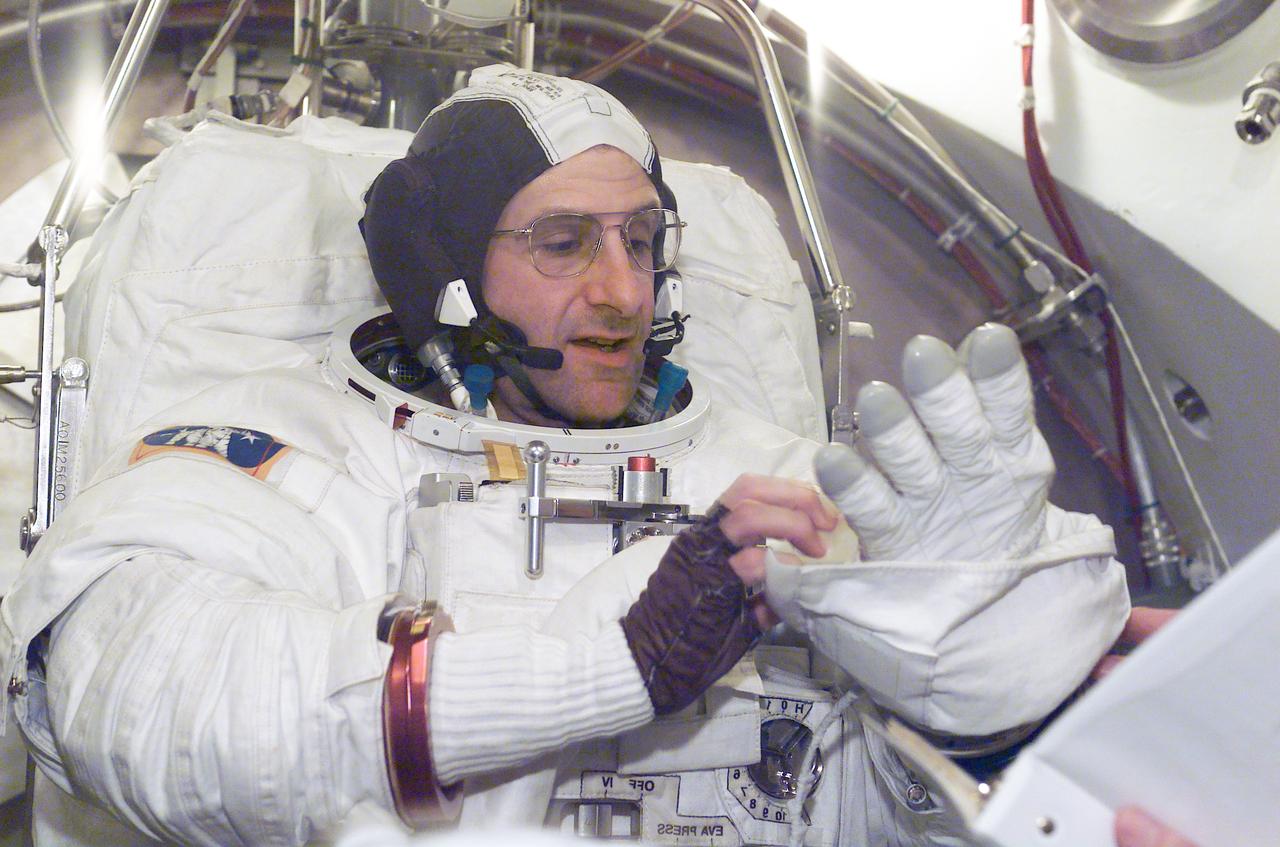
JSC2002-E-36194 (27 August 2002) --- Astronaut Donald R. Pettit, Expedition Six flight engineer, participates in an Extravehicular Mobility Unit (EMU) spacesuit fit check in a Space Station Airlock Test Article (SSATA) in the Crew Systems Laboratory at the Johnson Space Center (JSC).
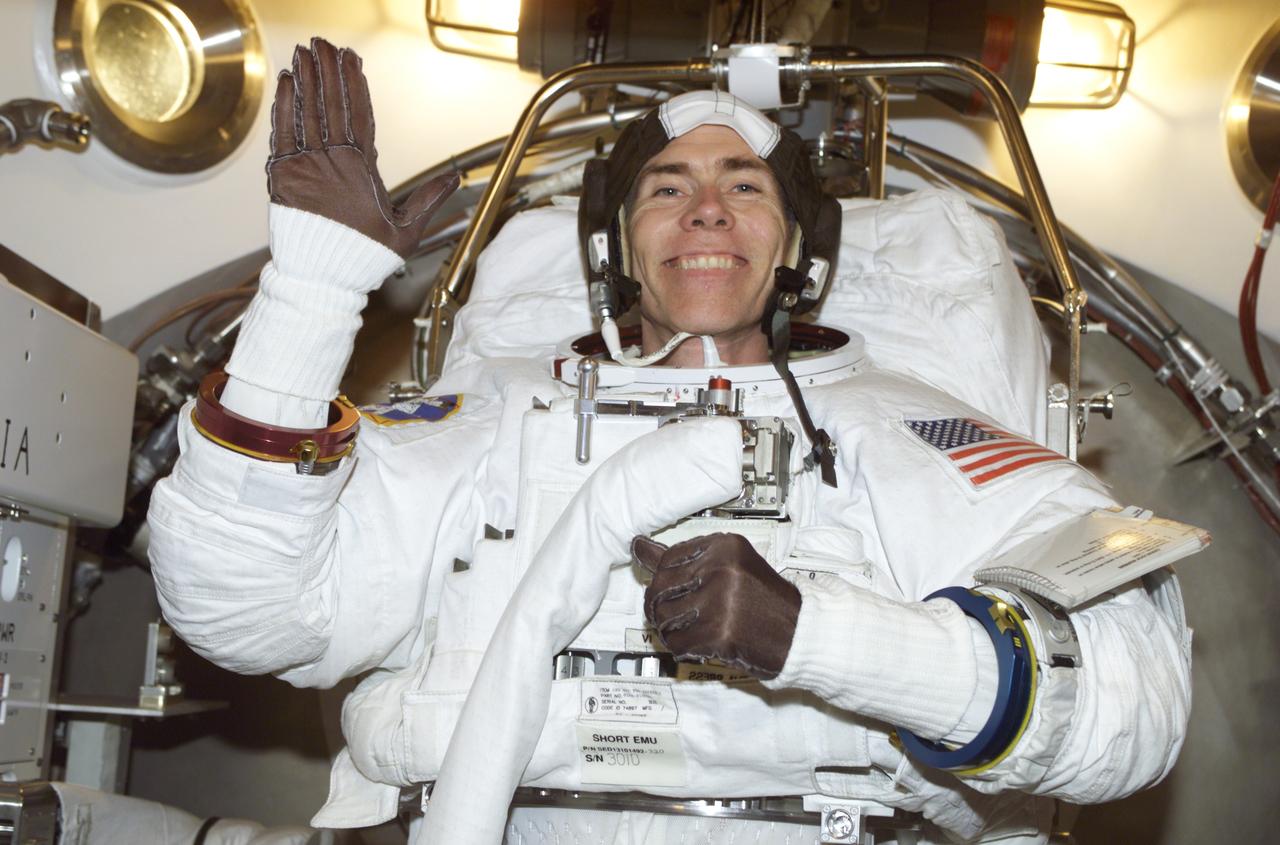
JSC2001-E-18350 (5 June 2001) --- Astronaut Daniel T. Barry, STS-105 mission specialist, is photographed during an Extravehicular Mobility Unit (EMU) fit check in a Space Station Airlock Test Article (SSATA) in the Crew Systems Laboratory at the Johnson Space Center (JSC).