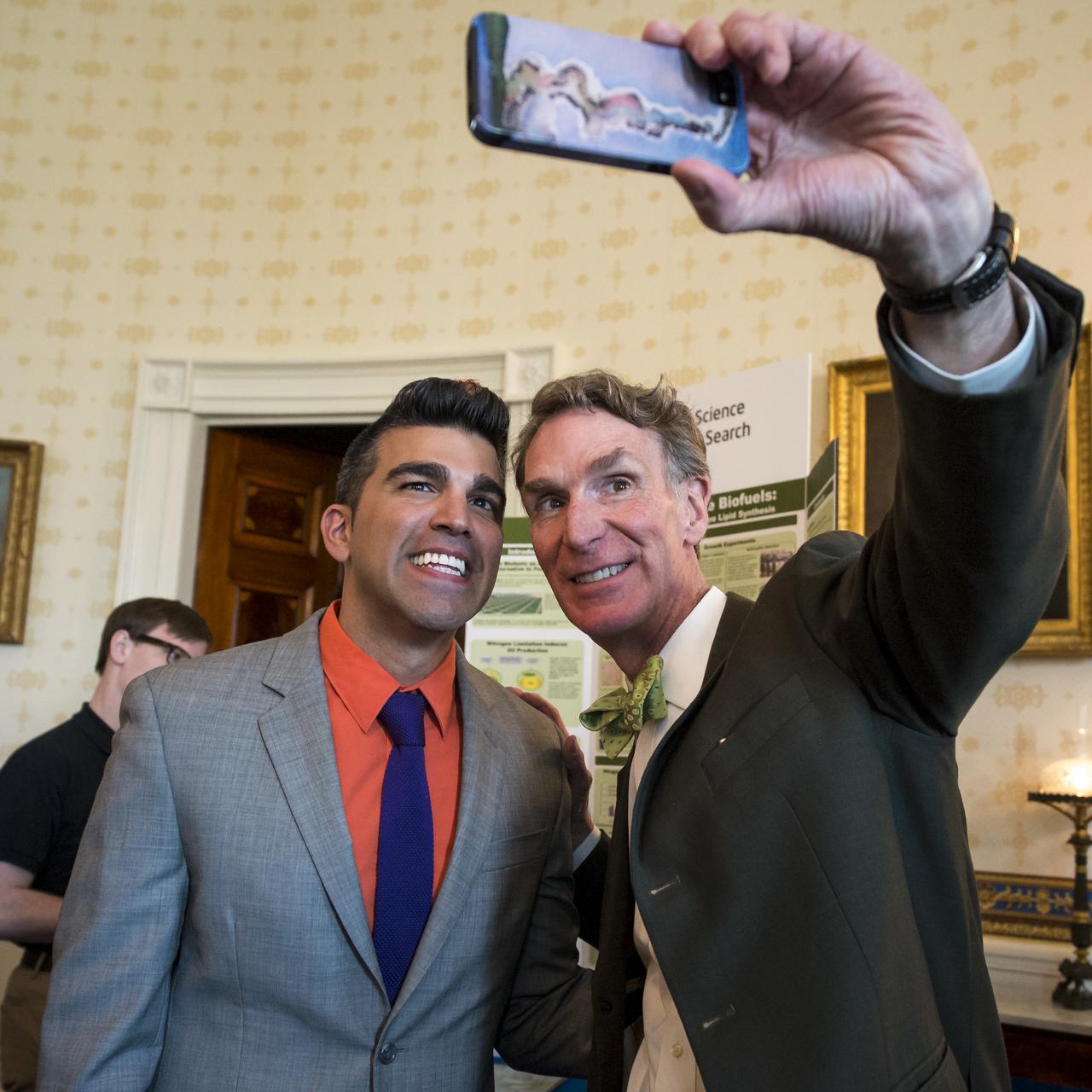
Planetary Society Executive Director and “Bill Nye the Science Guy” host Bill Nye, right, photographs himself with NASA Mars Curiosity Landing mission controller, Bobak "Mohawk Guy" Ferdowsi, during the White House Science Fair held at the White House, April 22, 2013. The science fair celebrated student winners of a broad range of science, technology, engineering and math (STEM) competitions from across the country. Photo Credit: (NASA/Bill Ingalls)

NASA Administrator Charles Bolden (left) and Bill Nye, The Science Guy, speak with some students that participated in the White House Science Fair. The fourth White House Science Fair was held at the White House on May 27, 2014 and included 100 students from more than 30 different states who competed in science, technology, engineering, and math (STEM) competitions. (Photo Credit: NASA/Aubrey Gemignani)
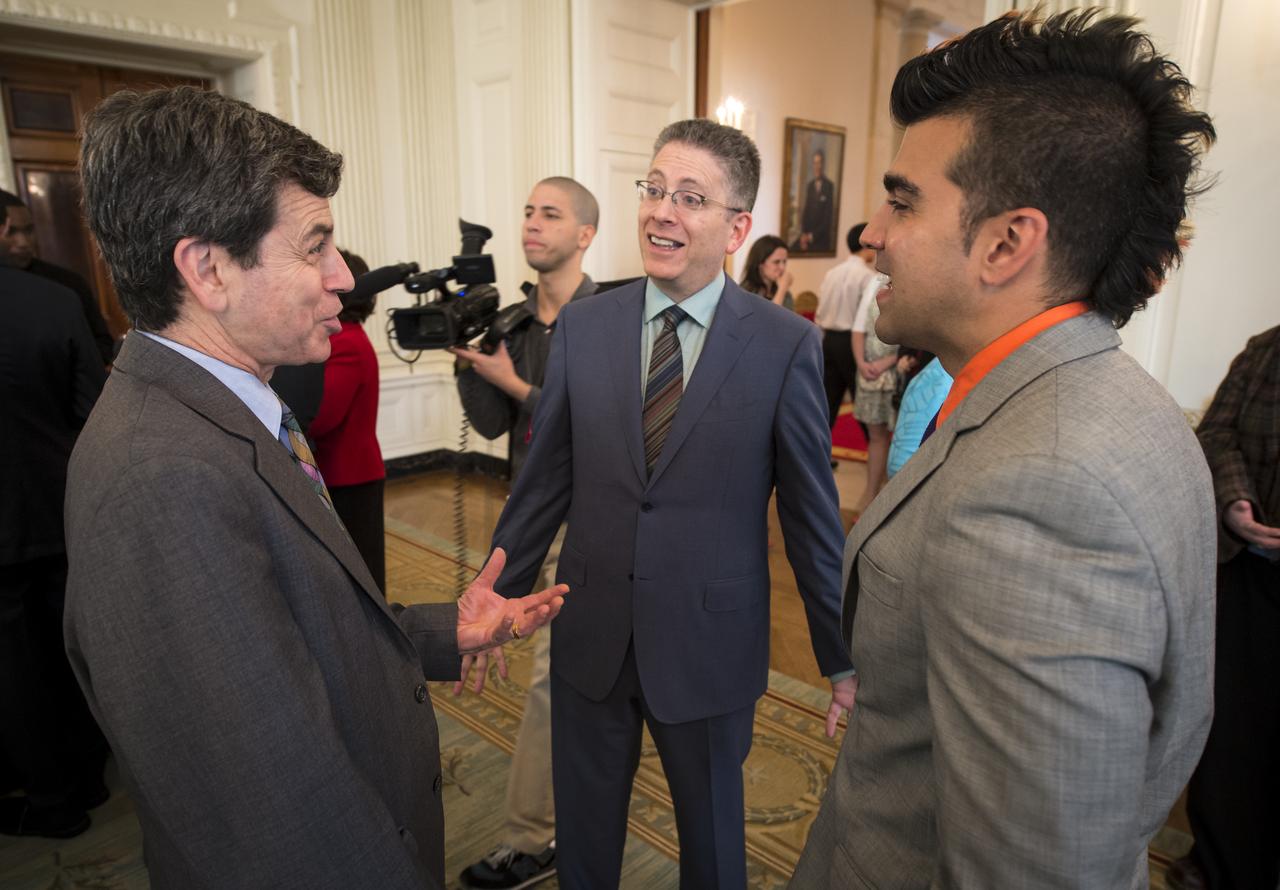
Director of Strategic Communications and Senior Science and Technology Policy Analyst, Office of Science and Technology Policy, Executive Office of the President, Rick Weiss, left, “Big Bang Theory” co-creator Bill Prady, center, and NASA Mars Curiosity Landing mission controller, Bobak "Mohawk Guy" Ferdowsi talk during the White House Science Fair held at the White House, April 22, 2013. The science fair celebrated student winners of a broad range of science, technology, engineering and math (STEM) competitions from across the country. Photo Credit: (NASA/Bill Ingalls)

Bill Nye, known as the Science Guy, takes a photograph of himself with NASA Deputy Administrator Lori Garver at the Planetary Society's 2012 Planetfest on Saturday, Aug. 4, 2012 in Pasadena, Calif. Photo Credit: (NASA/Bill Ingalls)
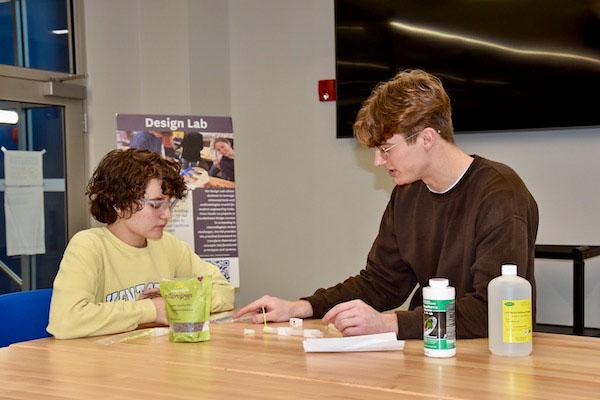
jsc2024e067094 (1/14/2024) --- Kent State University’s co-principal investigators, Mackenzie Guy and Jonathan King from the College of Aeronautics and Engineering, develop their experiment in the Design Lab located in the Aeronautics and Engineering Building. Their experiment, The Effects of Microgravity on Pisum sativum Roots, is part of the Nanoracks-National Center for Earth and Space Science Education-Surveyor-Student Spaceflight Experiments Program Mission 18 to ISS (Nanoracks-NCESSE-Surveyor-SSEP).
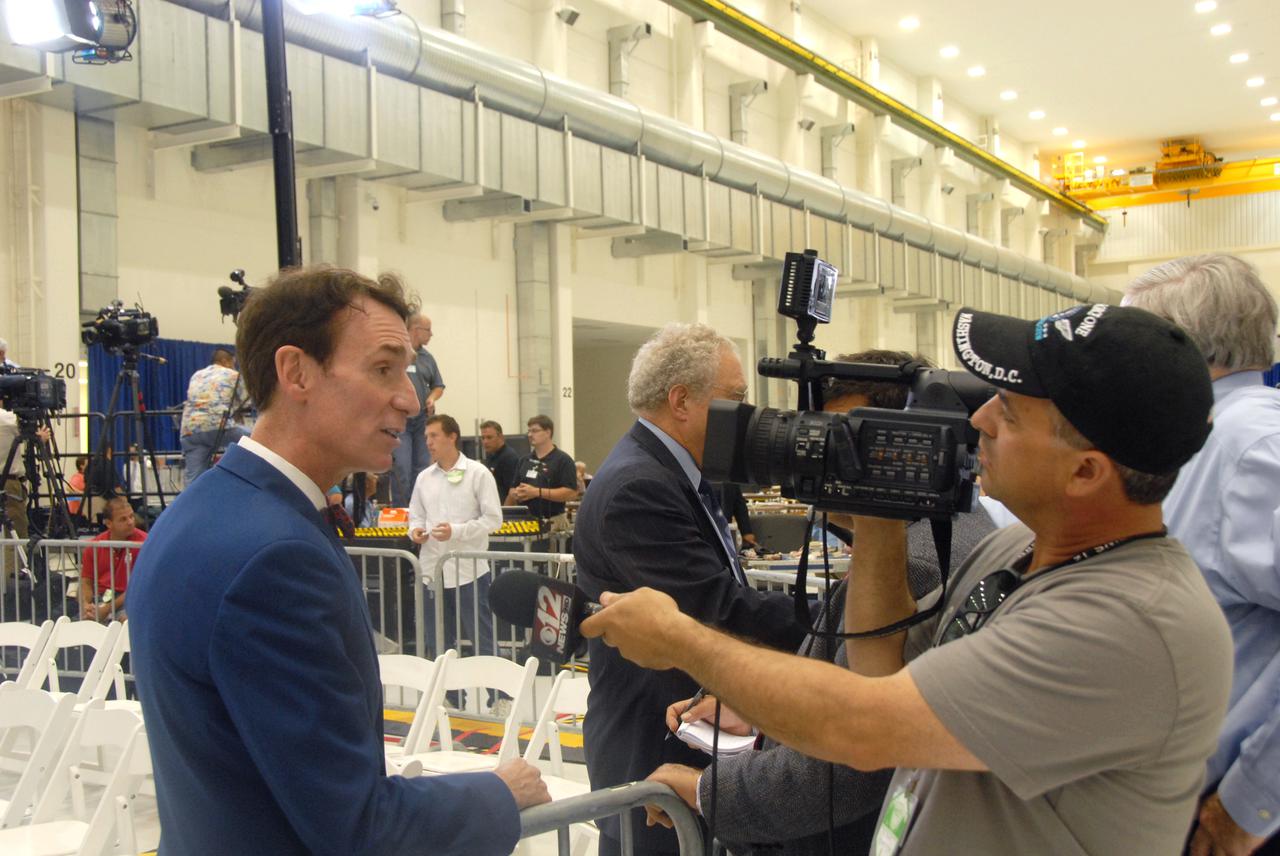
CAPE CANAVERAL, Fla. - In the Operations and Checkout Building at NASA's Kennedy Space Center in Florida, Bill Nye The Science Guy, engineer and television personality, is interviewed by the media during the Conference on the American Space Program for the 21st Century. President Barack Obama opened the Conference on the American Space Program for the 21st Century with remarks on the new course his administration is charting for NASA and the future of U.S. leadership in human spaceflight. Photo credit: NASA_Jim Grossmann

Chief Executive Officer of the Planetary Society, Bill Nye "The Science Guy", acts as emcee from a podium underneath the space shuttle Endeavour during the grand opening ceremony for the center's Samuel Oschin Space Shuttle Endeavour Display Pavilion, Tuesday, Oct. 30, 2012, in Los Angeles. Endeavour, built as a replacement for space shuttle Challenger, completed 25 missions, spent 299 days in orbit, and orbited Earth 4,671 times while traveling 122,883,151 miles. Photo Credit: (NASA/Bill Ingalls)
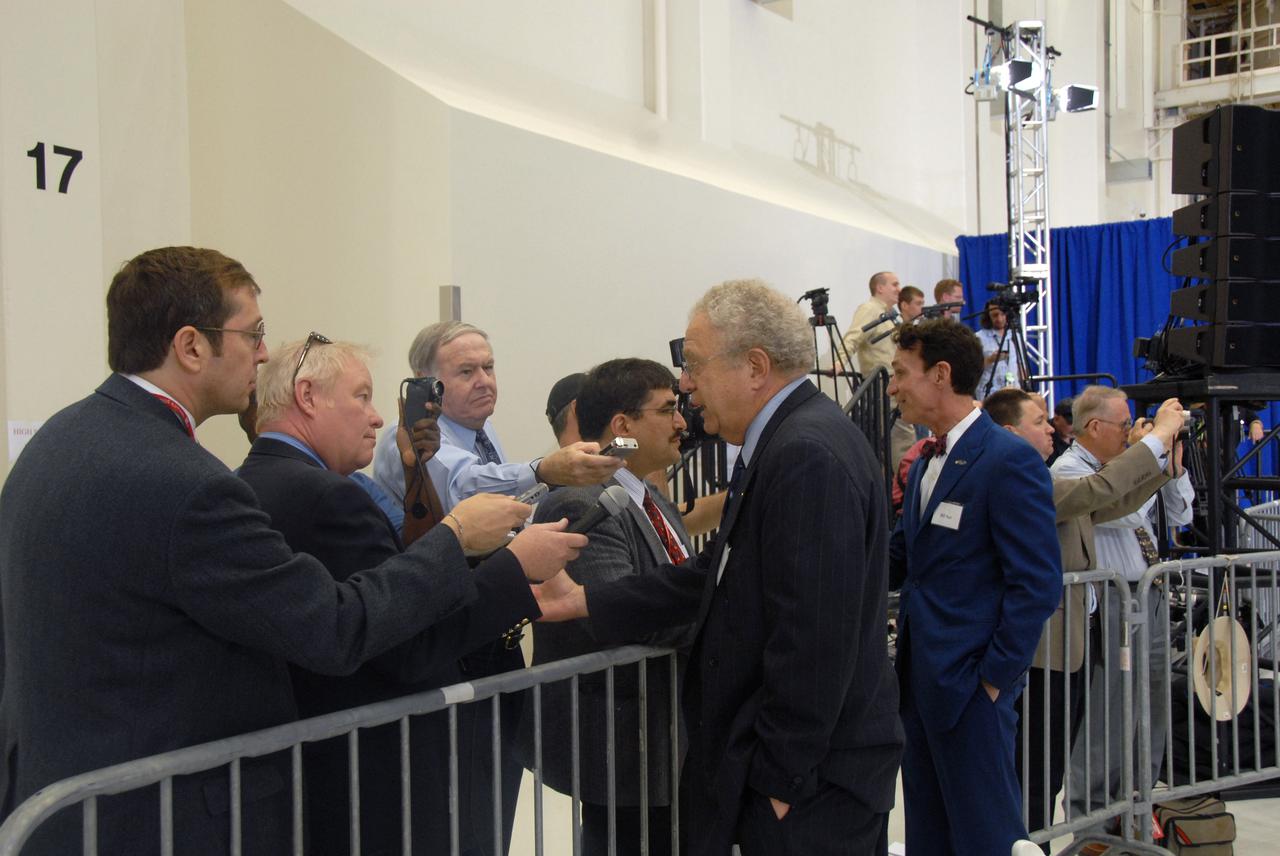
CAPE CANAVERAL, Fla. - In the Operations and Checkout Building at NASA's Kennedy Space Center in Florida, Louis Friedman, founder and executive director, The Planetary Society, at left, and Bill Nye The Science Guy, engineer and television personality, are interviewed by the media during the Conference on the American Space Program for the 21st Century. President Barack Obama opened the Conference on the American Space Program for the 21st Century with remarks on the new course his administration is charting for NASA and the future of U.S. leadership in human spaceflight. Photo credit: NASA_Jim Grossmann
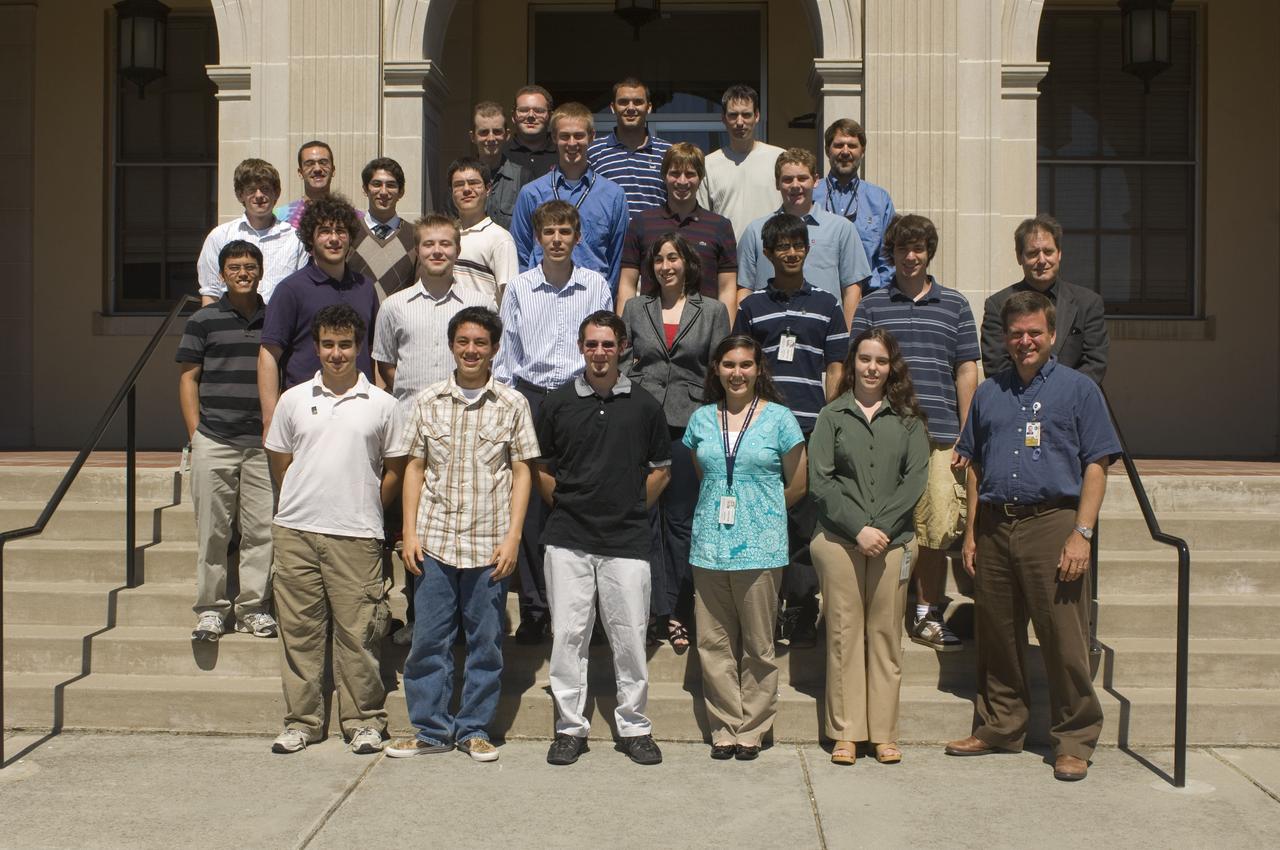
NASA Ames Robotics Academy Interns at the Lunar Science Institute (LSI) building 17 Interns: David Black, Michael Zwach, Guy Chriqui, Mark Mordarski Jr., Katy Levinson, Daniela Buchman, Scott Strutner, Patrick Crownover, Neil Bhateja, Michael Buchman, John Mueller, Michelle Grau, Ben Silver, Jacques Dolan, Alex Golec Windell Jones, Colin Wilson, Joe DeBlasio, Nick Hayes, Jordan Olive, William Shaw, Ames Education Dept., Mark Leon, Ames Robotics, Josh Weiner, jack Biesiadecki, Andrew Pilloud
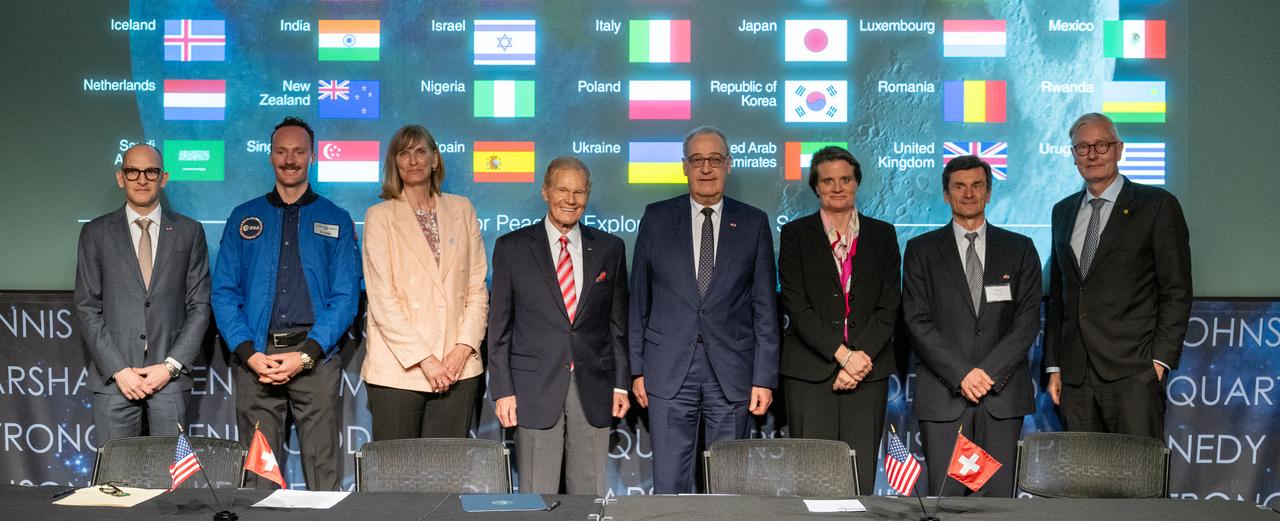
From left to right, Head of Swiss Space Office Renato Krpoun, ESA (European Space Agency) astronaut Marco Sieber, Acting Department of State Deputy Assistant Secretary Valda Vikmanis, NASA Administrator Bill Nelson, Swiss Federal Councillor Guy Parmelin, and Swiss State Secretary Martina Hirayama, University of Bern Director Space & Planetary Sciences Peter Wurz, and Swiss Ambassador to the United States Jacques Pitteloud, pose for a photo during an Artemis Accords signing ceremony, Monday, April 15, 2024, at the Mary W. Jackson NASA Headquarters building in Washington. Switzerland is the 37th country to sign the Artemis Accords, which establish a practical set of principles to guide space exploration cooperation among nations participating in NASA’s Artemis program. Photo Credit: (NASA/Keegan Barber)
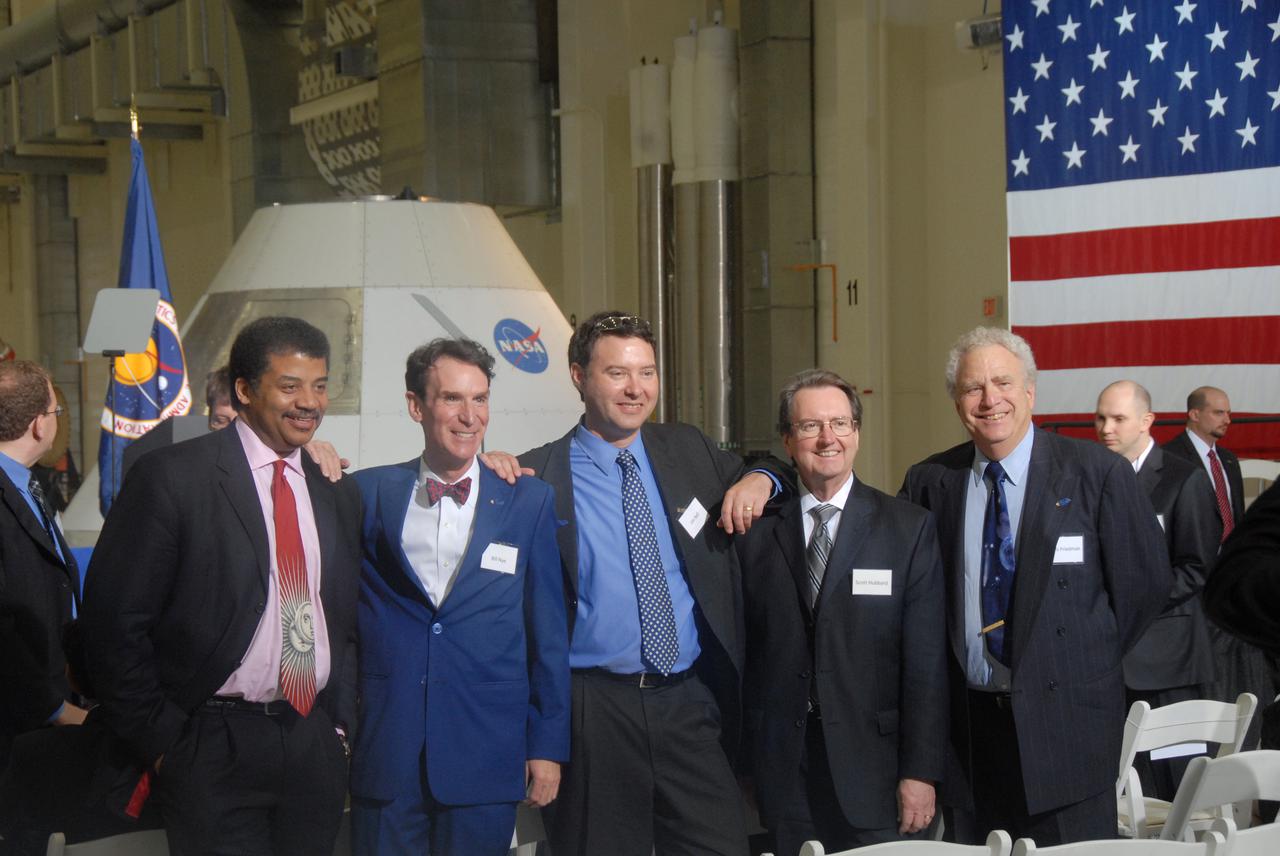
CAPE CANAVERAL, Fla. - In the Operations and Checkout Building at NASA's Kennedy Space Center in Florida, some of the participants and invited guests of the Conference on the American Space Program for the 21st Century pose for a group portrait. From left are Neil deGrasse Tyson, director, Hayden Planetarium, American Museum of Natural History; Bill Nye The Science Guy, engineer and television personality; Jim Bell, professor, Department of Astronomy, Cornell University; Scott Hubbard, former director, NASA's Ames Research Center; and Louis Friedman, founder and executive director, The Planetary Society. President Barack Obama opened the Conference on the American Space Program for the 21st Century with remarks on the new course his administration is charting for NASA and the future of U.S. leadership in human spaceflight. Photo credit: NASA_Jim Grossmann
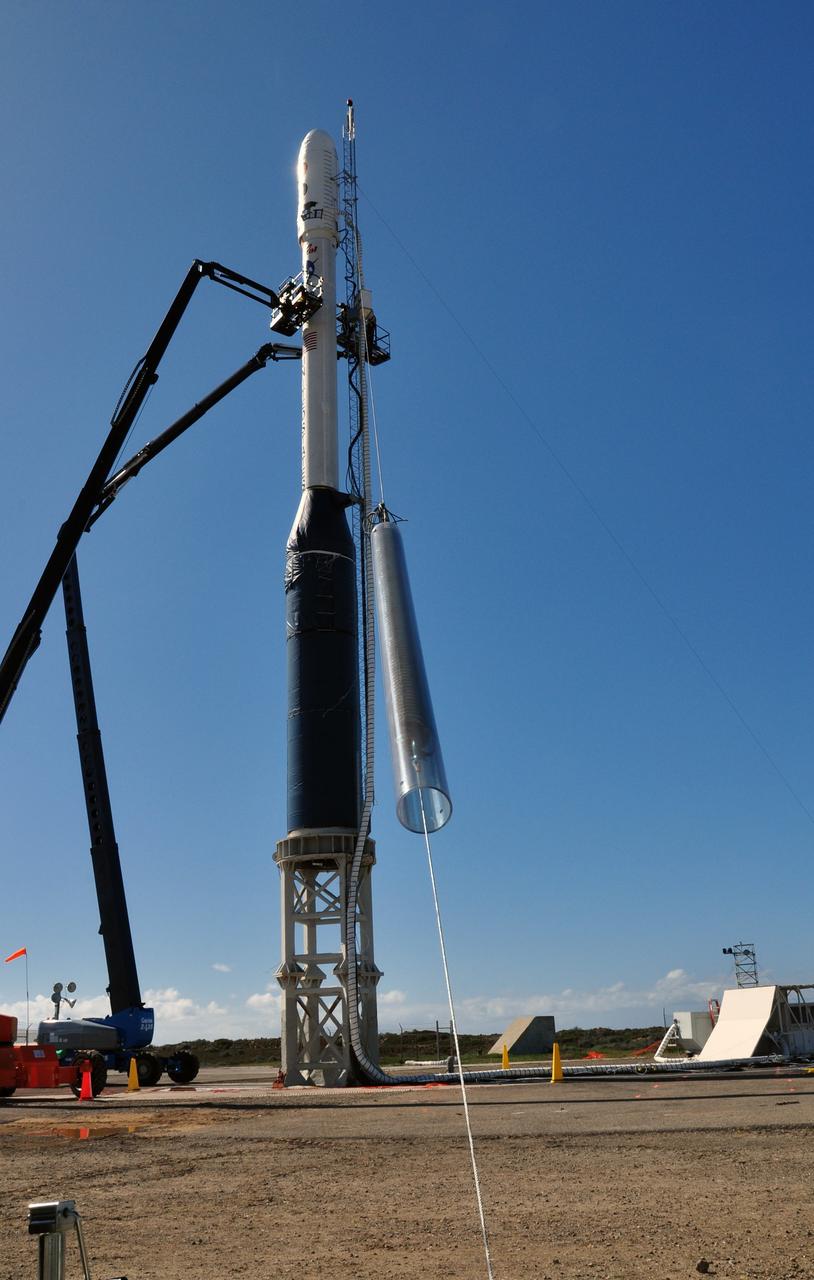
VANDENBERG AIR FORCE BASE, Calif. -- On Space Launch Complex 576-E at Vandenberg Air Force Base in California, workers install one of the two umbilical tower guy wires and springs as part of closeout procedures on the Taurus XL rocket in preparation for launch. The umbilical tower attached to the upper stack will fall away from the spacecraft during liftoff. The Orbital Sciences Taurus XL rocket will launch Glory into low Earth orbit. Once Glory reaches orbit, it will collect data on the properties of aerosols and black carbon. It also will help scientists understand how the sun's irradiance affects Earth's climate. Launch is scheduled for 5:09 a.m. EST Feb. 23. For information, visit www.nasa.gov/glory. Photo credit: NASA/Randy Beaudoin, VAFB
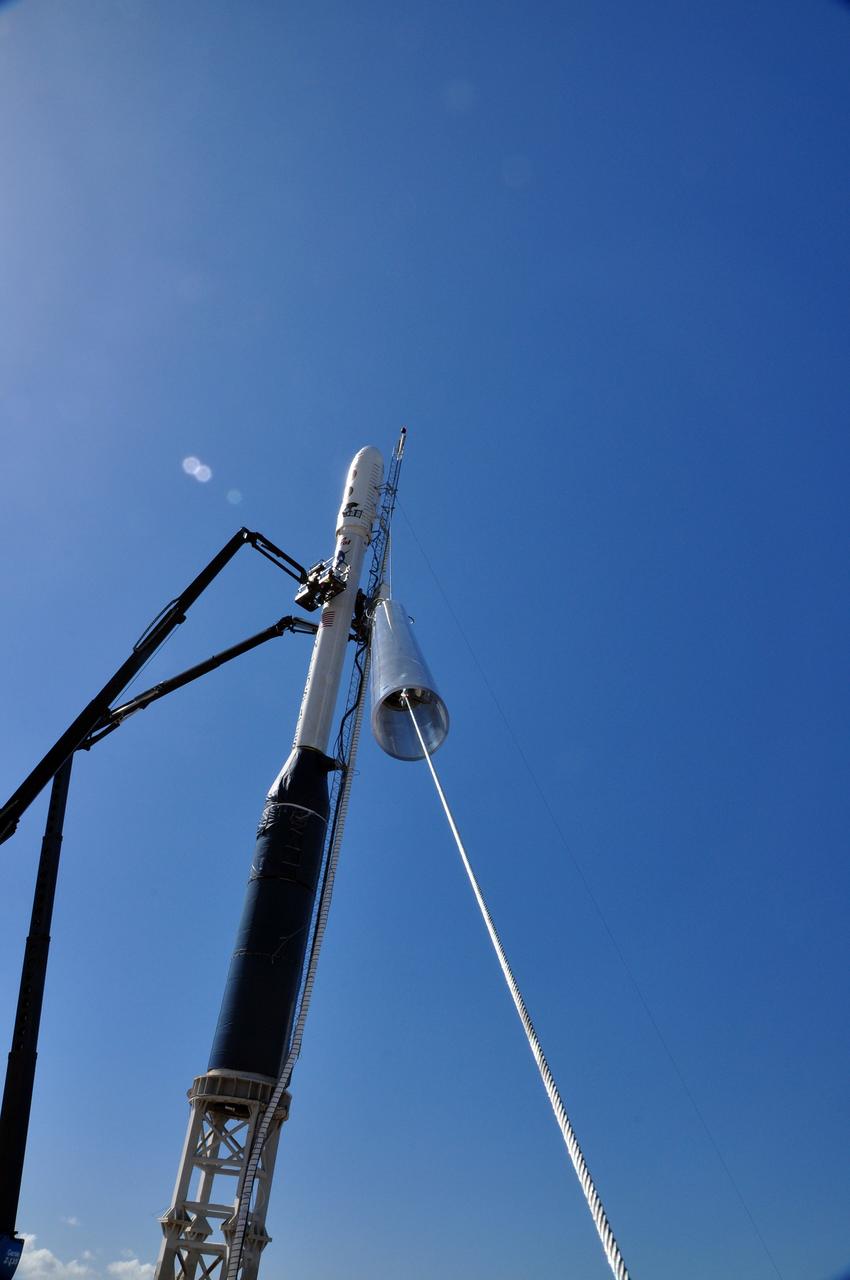
VANDENBERG AIR FORCE BASE, Calif. -- On Space Launch Complex 576-E at Vandenberg Air Force Base in California, workers install one of the two umbilical tower guy wires and springs as part of closeout procedures on the Taurus XL rocket in preparation for launch. The umbilical tower attached to the upper stack will fall away from the spacecraft during liftoff. The Orbital Sciences Taurus XL rocket will launch Glory into low Earth orbit. Once Glory reaches orbit, it will collect data on the properties of aerosols and black carbon. It also will help scientists understand how the sun's irradiance affects Earth's climate. Launch is scheduled for 5:09 a.m. EST Feb. 23. For information, visit www.nasa.gov/glory. Photo credit: NASA/Randy Beaudoin, VAFB

CAPE CANAVERAL, Fla. – Television personality Bill Nye the Science Guy talks to the participants of a NASA Tweetup in a tent set up at NASA Kennedy Space Center's Press Site in Florida during prelaunch activities for the agency’s Mars Science Laboratory (MSL) launch. Participants in the Tweetup are given the opportunity to listen to agency briefings, tour locations on the center normally off limits to visitors, and get a close-up view of Space Launch Complex-41 on Cape Canaveral Air Force Station. The tweeters will share their experiences with followers through the social networking site Twitter. The MSL mission will pioneer precision landing technology and a sky-crane touchdown to place a car-sized rover, Curiosity, near the foot of a mountain inside Gale Crater on Aug. 6, 2012. During a nearly two-year prime mission after landing, the rover will investigate whether the region has ever offered conditions favorable for microbial life, including the chemical ingredients for life. Liftoff of MSL aboard a United Launch Alliance Atlas V rocket from pad 41 is planned during a launch window which extends from 10:02 a.m. to 11:45 a.m. EST on Nov. 26. For more information, visit http://www.nasa.gov/msl. Photo credit: NASA/Frankie Martin
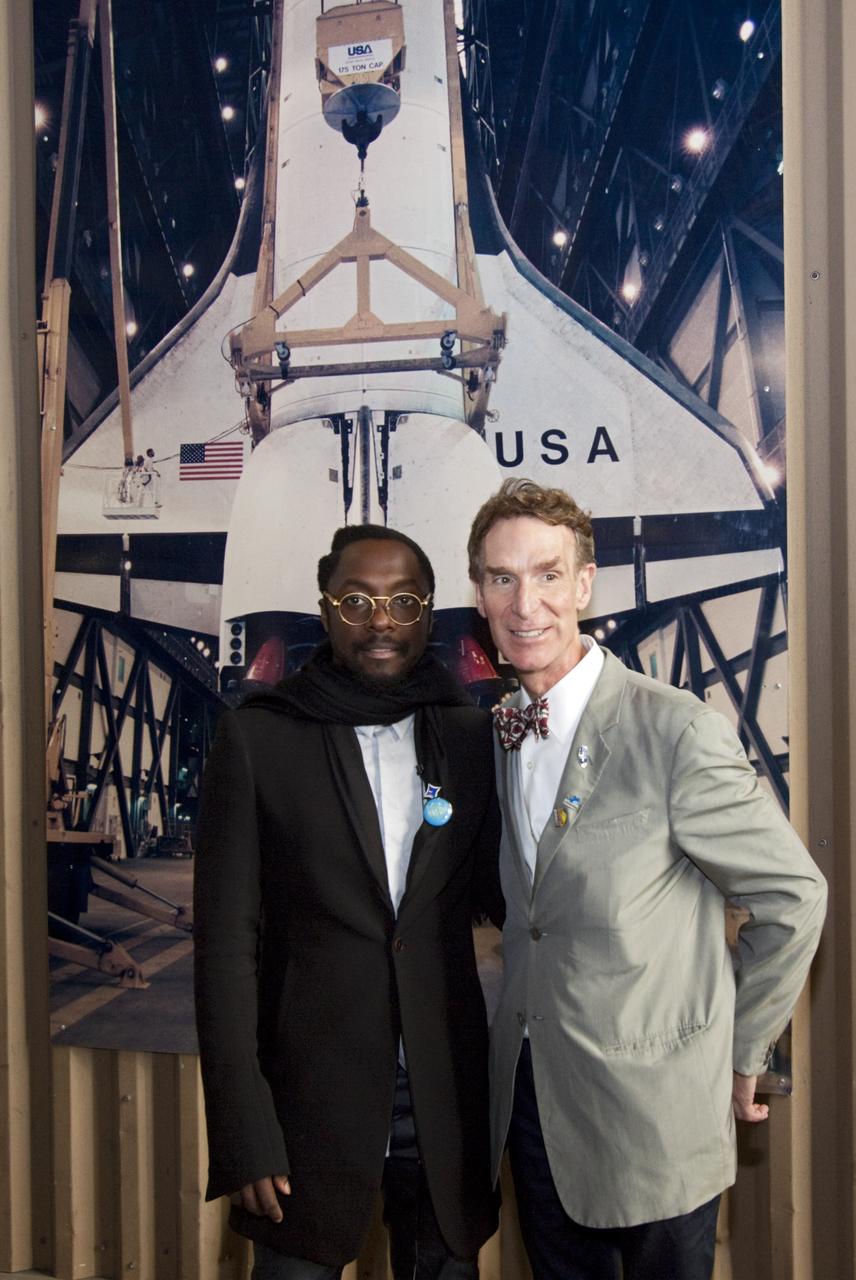
CAPE CANAVERAL, Fla. – In the Vehicle Assembly Building at NASA Kennedy Space Center in Florida, Will.i.am, entertainer and member of The Black Eyed Peas, and television personality Bill Nye the Science Guy pose in front of a picture of a space shuttle being lifted into a high bay following their participation in a NASA Tweetup. The Tweetup is part of prelaunch activities for the agency’s Mars Science Laboratory (MSL) launch and provides the opportunity for tweeters will share their experiences with followers through the social networking site Twitter. The MSL mission will pioneer precision landing technology and a sky-crane touchdown to place a car-sized rover, Curiosity, near the foot of a mountain inside Gale Crater on Aug. 6, 2012. During a nearly two-year prime mission after landing, the rover will investigate whether the region has ever offered conditions favorable for microbial life, including the chemical ingredients for life. Liftoff of MSL aboard a United Launch Alliance Atlas V rocket from Space Launch Complex-41 on Cape Canaveral Air Force Station was at 10:02 a.m. EST on Nov. 26. For more information, visit http://www.nasa.gov/msl. Photo credit: NASA/Jim Grossmann

CAPE CANAVERAL, Fla. – Television personality Bill Nye the Science Guy talks to the participants of a NASA Tweetup in a tent set up at NASA Kennedy Space Center's Press Site in Florida during prelaunch activities for the agency’s Mars Science Laboratory (MSL) launch. Participants in the Tweetup are given the opportunity to listen to agency briefings, tour locations on the center normally off limits to visitors, and get a close-up view of Space Launch Complex-41 on Cape Canaveral Air Force Station. The tweeters will share their experiences with followers through the social networking site Twitter. The MSL mission will pioneer precision landing technology and a sky-crane touchdown to place a car-sized rover, Curiosity, near the foot of a mountain inside Gale Crater on Aug. 6, 2012. During a nearly two-year prime mission after landing, the rover will investigate whether the region has ever offered conditions favorable for microbial life, including the chemical ingredients for life. Liftoff of MSL aboard a United Launch Alliance Atlas V rocket from pad 41 is planned during a launch window which extends from 10:02 a.m. to 11:45 a.m. EST on Nov. 26. For more information, visit http://www.nasa.gov/msl. Photo credit: NASA/Frankie Martin
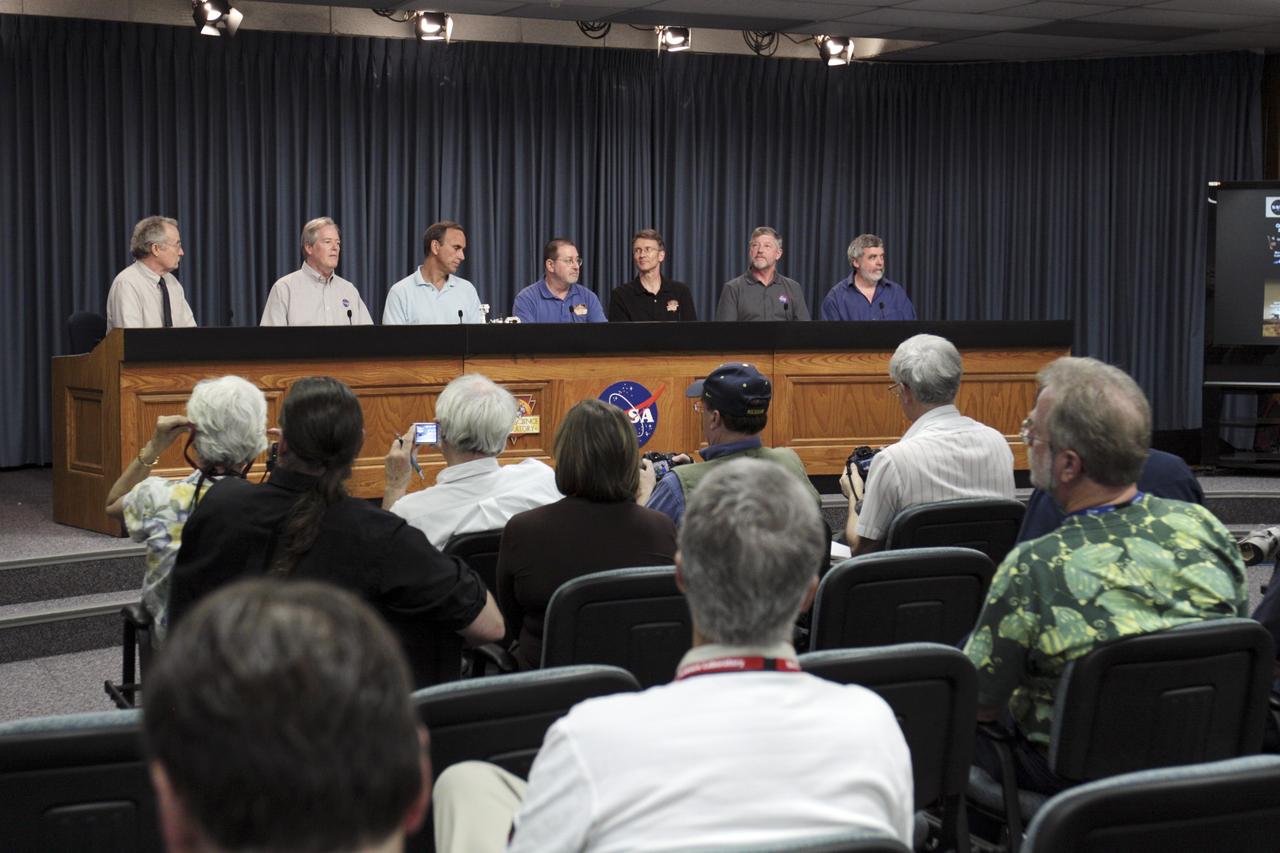
CAPE CANAVERAL, Fla. – NASA’s Kennedy Space Center in Florida is host to a Mars Science Laboratory (MSL) science briefing as part of preflight activities for the MSL mission. From left, NASA Public Affairs Officer Guy Webster moderates the conference featuring Michael Meyer, lead scientist for NASA Mars Exploration Program; John Grotzinger, project scientist for Mars Science Laboratory California Institute of Technology, Pasadena, Calif.; Michael Malin, principal investigator for the Mast Camera and Mars Descent Imager investigations on Curiosity, Malin Space Science Systems; Roger Wiens, principal investigator for Chemistry and Camera investigation on Curiosity, Los Alamos National Laboratory; David Blake, NASA principal investigator for Chemistry and Mineralogy investigation on Curiosity, NASA Ames Research Center; and Paul Mahaffy, NASA principal investigator for Sample Analysis at Mars investigation on Curiosity, NASA Goddard Space Flight Center. MSL’s components include a car-sized rover, Curiosity, which has 10 science instruments designed to search for signs of life, including methane, and help determine if the gas is from a biological or geological source. Launch of MSL aboard a United Launch Alliance Atlas V rocket is scheduled for Nov. 26 from Space Launch Complex 41 on Cape Canaveral Air Force Station in Florida. For more information, visit http://www.nasa.gov/msl. Photo credit: NASA/Kim Shiflett
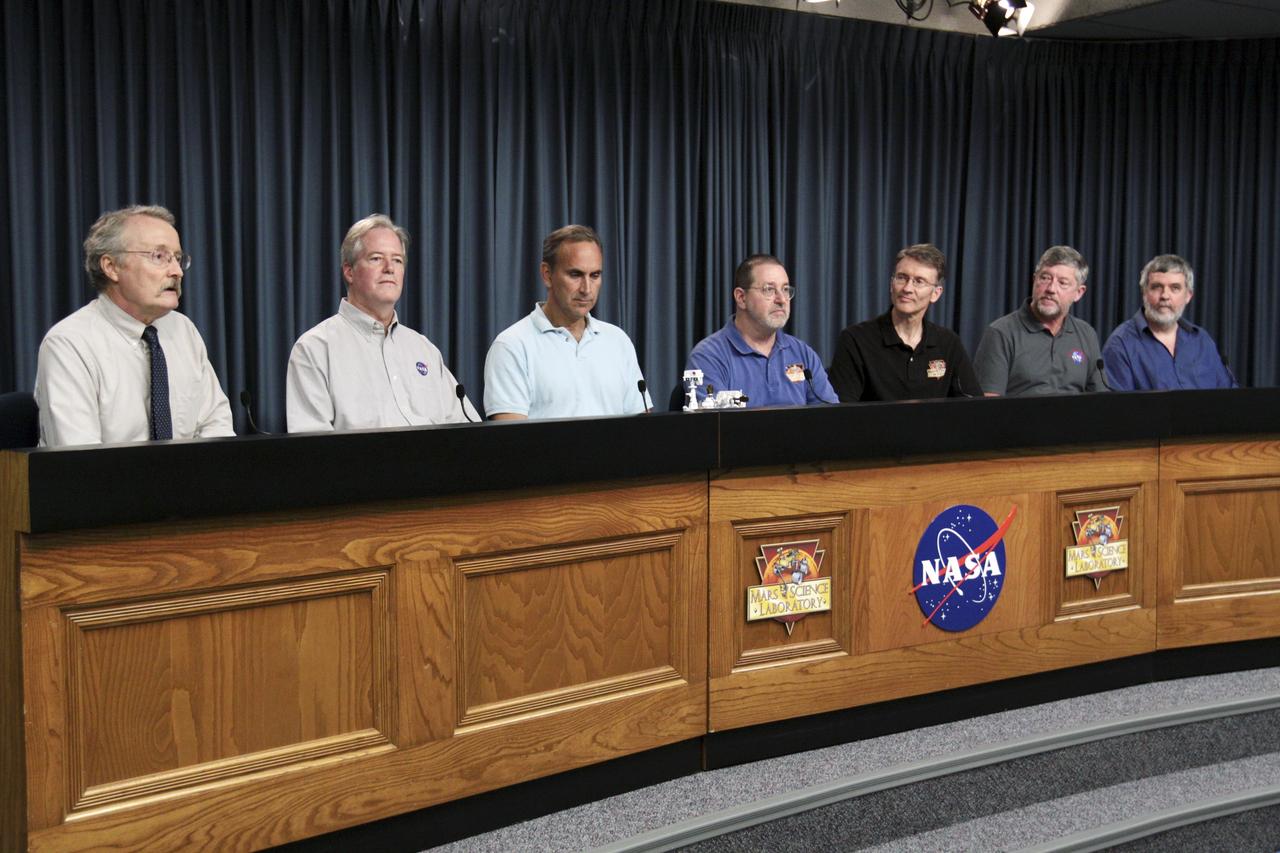
CAPE CANAVERAL, Fla. – NASA’s Kennedy Space Center in Florida is host to a Mars Science Laboratory (MSL) science briefing as part of preflight activities for the MSL mission. From left, NASA Public Affairs Officer Guy Webster moderates the conference featuring Michael Meyer, lead scientist for NASA Mars Exploration Program; John Grotzinger, project scientist for Mars Science Laboratory California Institute of Technology, Pasadena, Calif.; Michael Malin, principal investigator for the Mast Camera and Mars Descent Imager investigations on Curiosity, Malin Space Science Systems; Roger Wiens, principal investigator for Chemistry and Camera investigation on Curiosity, Los Alamos National Laboratory; David Blake, NASA principal investigator for Chemistry and Mineralogy investigation on Curiosity, NASA Ames Research Center; and Paul Mahaffy, NASA principal investigator for Sample Analysis at Mars investigation on Curiosity, NASA Goddard Space Flight Center. MSL’s components include a car-sized rover, Curiosity, which has 10 science instruments designed to search for signs of life, including methane, and help determine if the gas is from a biological or geological source. Launch of MSL aboard a United Launch Alliance Atlas V rocket is scheduled for Nov. 26 from Space Launch Complex 41 on Cape Canaveral Air Force Station in Florida. For more information, visit http://www.nasa.gov/msl. Photo credit: NASA/Kim Shiflett
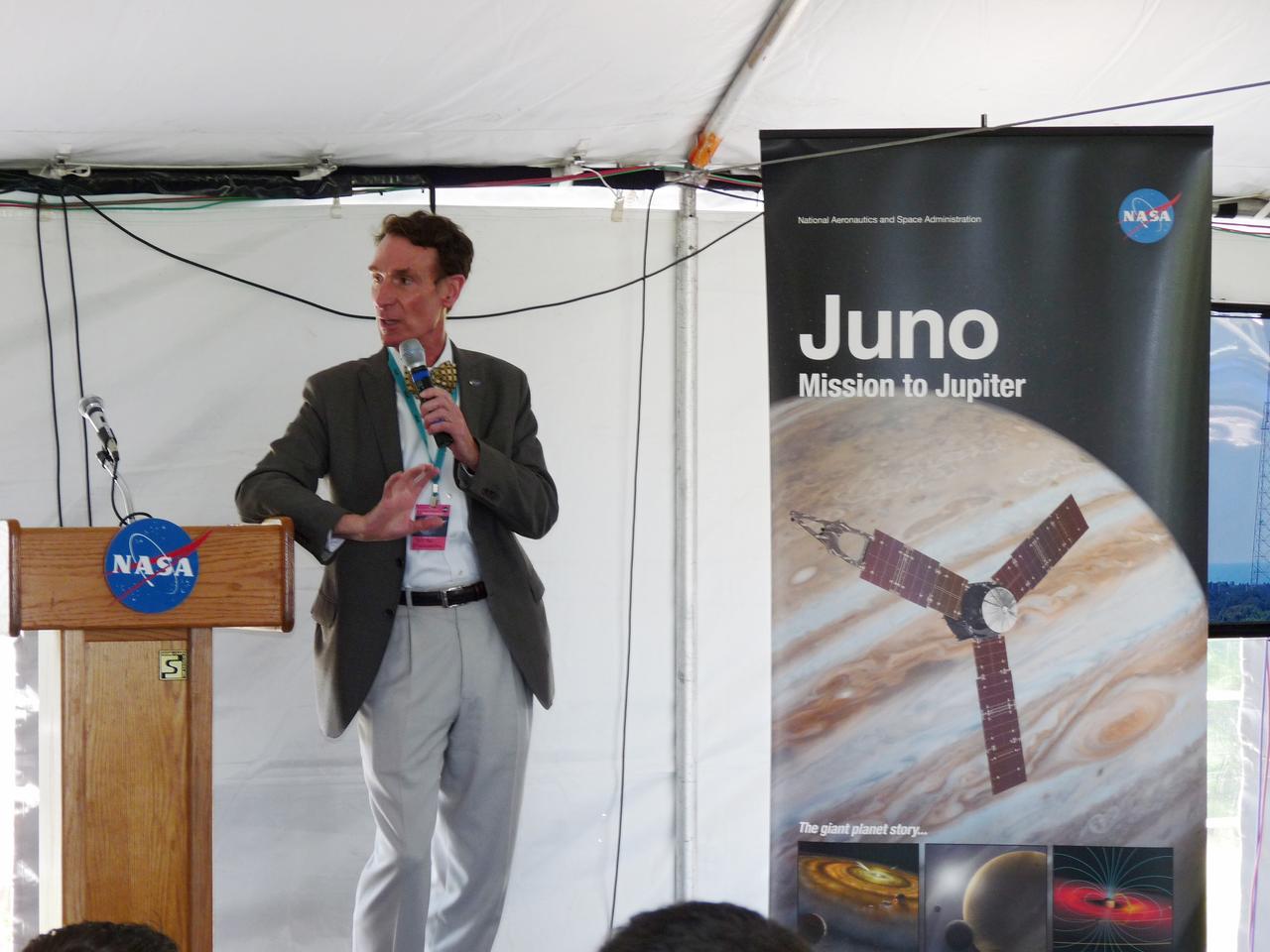
CAPE CANAVERAL, Fla. – At NASA’s Kennedy Space Center in Florida, television personality Bill Nye, the science guy, speaks to about 150 followers of the agency’s Twitter account during Juno Tweetup activities inside a tent at the Press Site. The tweeters are at the center for two days of prelaunch activities. Juno is NASA’s mission to Jupiter to study the giant planet and improve our understanding of the planet’s formation and evolution. The tweeters will share their experiences with followers through the social networking site Twitter. Attendees represent 28 states, the District of Columbia and five other countries: Canada, Finland, Norway, Spain and the United Kingdom. This is the first time NASA has invited Twitter followers to experience the launch of a planetary spacecraft. The Juno spacecraft is scheduled to launch on an Atlas V rocket from Space Launch Complex 41 at Cape Canaveral Air Force Station in Florida, Aug. 5, at 11:34 a.m. EDT. For more information, visit http://www.nasa.gov/juno. Photo credit: NASA/Fletcher Hildreth
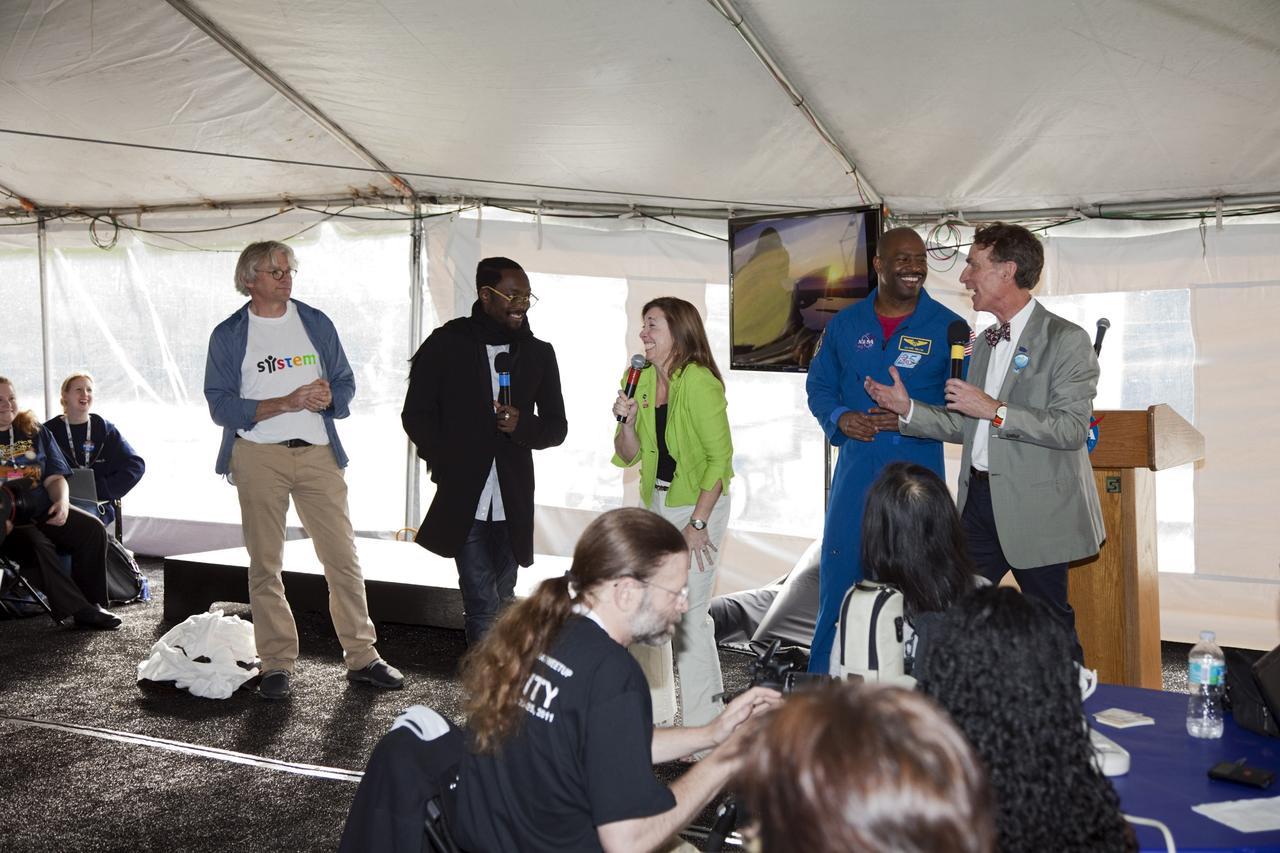
CAPE CANAVERAL, Fla. – From left, Lars Perkins, chair of the Education and Public Outreach Committee of the NASA Advisory Council; Will.i.am, entertainer and member of the pop group The Black Eyed Peas; NASA Deputy Administrator Lori Garver; former astronaut Leland Melvin, NASA associate administrator for Education; and television personality Bill Nye the Science Guy share a light moment with the participants of a NASA Tweetup in a tent set up at NASA Kennedy Space Center's Press Site in Florida during prelaunch activities for the agency’s Mars Science Laboratory (MSL) launch. Participants in the Tweetup are given the opportunity to listen to agency briefings, tour locations on the center normally off limits to visitors, and get a close-up view of Space Launch Complex-41 on Cape Canaveral Air Force Station. The tweeters will share their experiences with followers through the social networking site Twitter. The MSL mission will pioneer precision landing technology and a sky-crane touchdown to place a car-sized rover, Curiosity, near the foot of a mountain inside Gale Crater on Aug. 6, 2012. During a nearly two-year prime mission after landing, the rover will investigate whether the region has ever offered conditions favorable for microbial life, including the chemical ingredients for life. Liftoff of MSL aboard a United Launch Alliance Atlas V rocket from pad 41 is planned during a launch window which extends from 10:02 a.m. to 11:45 a.m. EST on Nov. 26. For more information, visit http://www.nasa.gov/msl. Photo credit: NASA/Frankie Martin
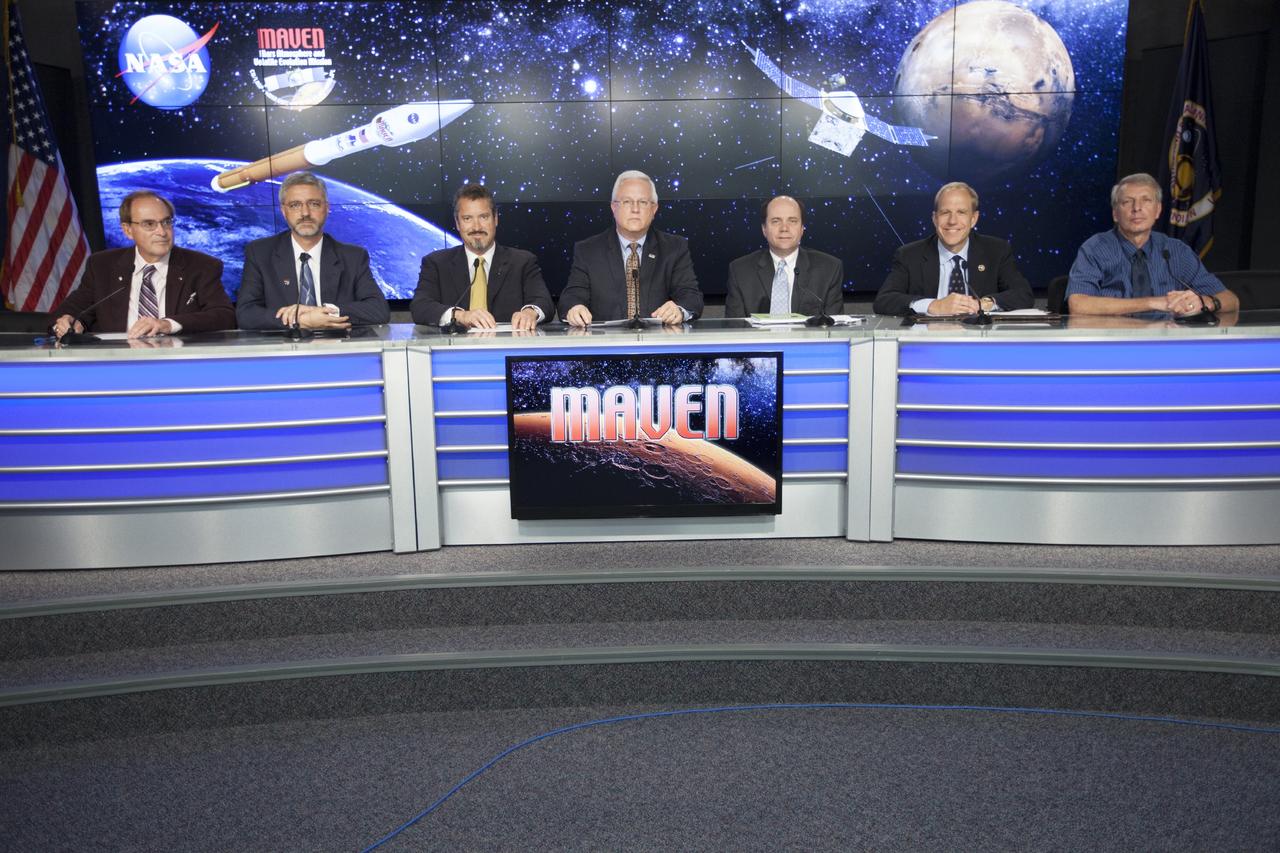
CAPE CANAVERAL, Fla. – During a news conference at NASA's Kennedy Space Center in Florida, agency and contractor officials discussed preparations for the launch of the Mars Atmosphere and Volatile EvolutioN, or MAVEN, mission. Participating in the briefing, from the left, are George Diller of NASA Public Affairs, Geoffrey Yoder, NASA deputy associate administrator of programs in the Science Mission Directorate, Omar Baez, NASA launch director, Vernon Thorp, program manager for NASA Missions with United Launch Alliance in Centennial, Colo., David Mitchell, NASA's MAVEN project manager at the Goddard Space Flight Center in Greenbelt, Md., Guy Beutelschies, Lockheed Martin's MAVEN project manager and Clay Flinn, launch weather officer, 45th Weather Squadron at Cape Canaveral Air Force Station, Fla. MAVEN is being prepared for its scheduled launch on Nov 18, 2013 from Cape Canaveral Air Force Station, Fla. atop a United Launch Alliance Atlas V rocket. Positioned in an orbit above the Red Planet, MAVEN will study the upper atmosphere of Mars in unprecedented detail. For information on the MAVEN mission, visit: http://www.nasa.gov/mission_pages/maven/main/index.html. Photo credit: NASA MAVEN is being prepared for its scheduled launch on Nov 18, 2013 from Cape Canaveral Air Force Station, Fla. atop a United Launch Alliance Atlas V rocket. Positioned in an orbit above the Red Planet, MAVEN will study the upper atmosphere of Mars in unprecedented detail. For more information, visit: http://www.nasa.gov/mission_pages/maven/main/index.html Photo credit: NASA/Kim Shiflett
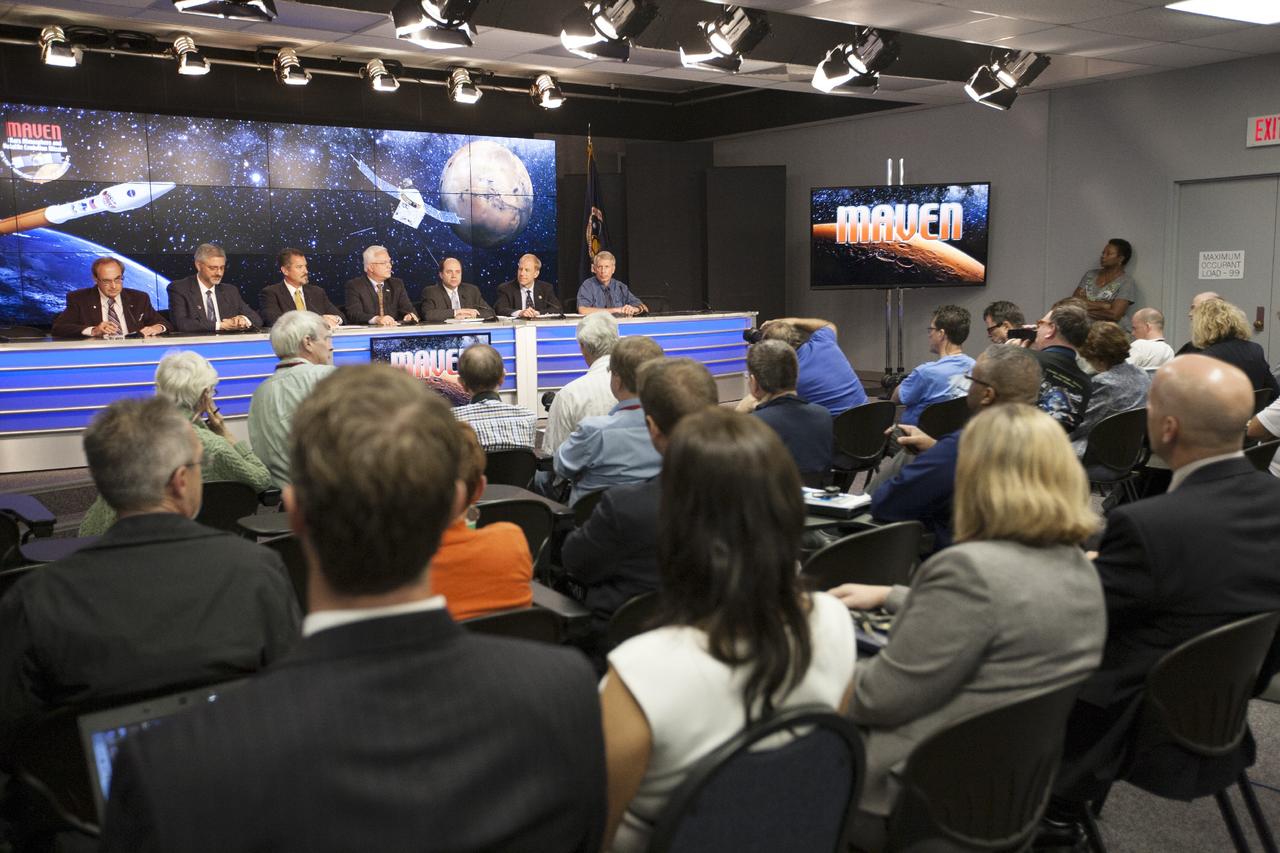
CAPE CANAVERAL, Fla. – During a news conference at NASA's Kennedy Space Center in Florida, agency and contractor officials discussed preparations for the launch of the Mars Atmosphere and Volatile EvolutioN, or MAVEN, mission. Participating in the briefing, from the left, are George Diller of NASA Public Affairs, Geoffrey Yoder, NASA deputy associate administrator of programs in the Science Mission Directorate, Omar Baez, NASA launch director, Vernon Thorp, program manager for NASA Missions with United Launch Alliance in Centennial, Colo., David Mitchell, NASA's MAVEN project manager at the Goddard Space Flight Center in Greenbelt, Md., Guy Beutelschies, Lockheed Martin's MAVEN project manager and Clay Flinn, launch weather officer, 45th Weather Squadron at Cape Canaveral Air Force Station, Fla. MAVEN is being prepared for its scheduled launch on Nov 18, 2013 from Cape Canaveral Air Force Station, Fla. atop a United Launch Alliance Atlas V rocket. Positioned in an orbit above the Red Planet, MAVEN will study the upper atmosphere of Mars in unprecedented detail. For information on the MAVEN mission, visit: http://www.nasa.gov/mission_pages/maven/main/index.html. Photo credit: NASA MAVEN is being prepared for its scheduled launch on Nov 18, 2013 from Cape Canaveral Air Force Station, Fla. atop a United Launch Alliance Atlas V rocket. Positioned in an orbit above the Red Planet, MAVEN will study the upper atmosphere of Mars in unprecedented detail. For more information, visit: http://www.nasa.gov/mission_pages/maven/main/index.html Photo credit: NASA/Kim Shiflett
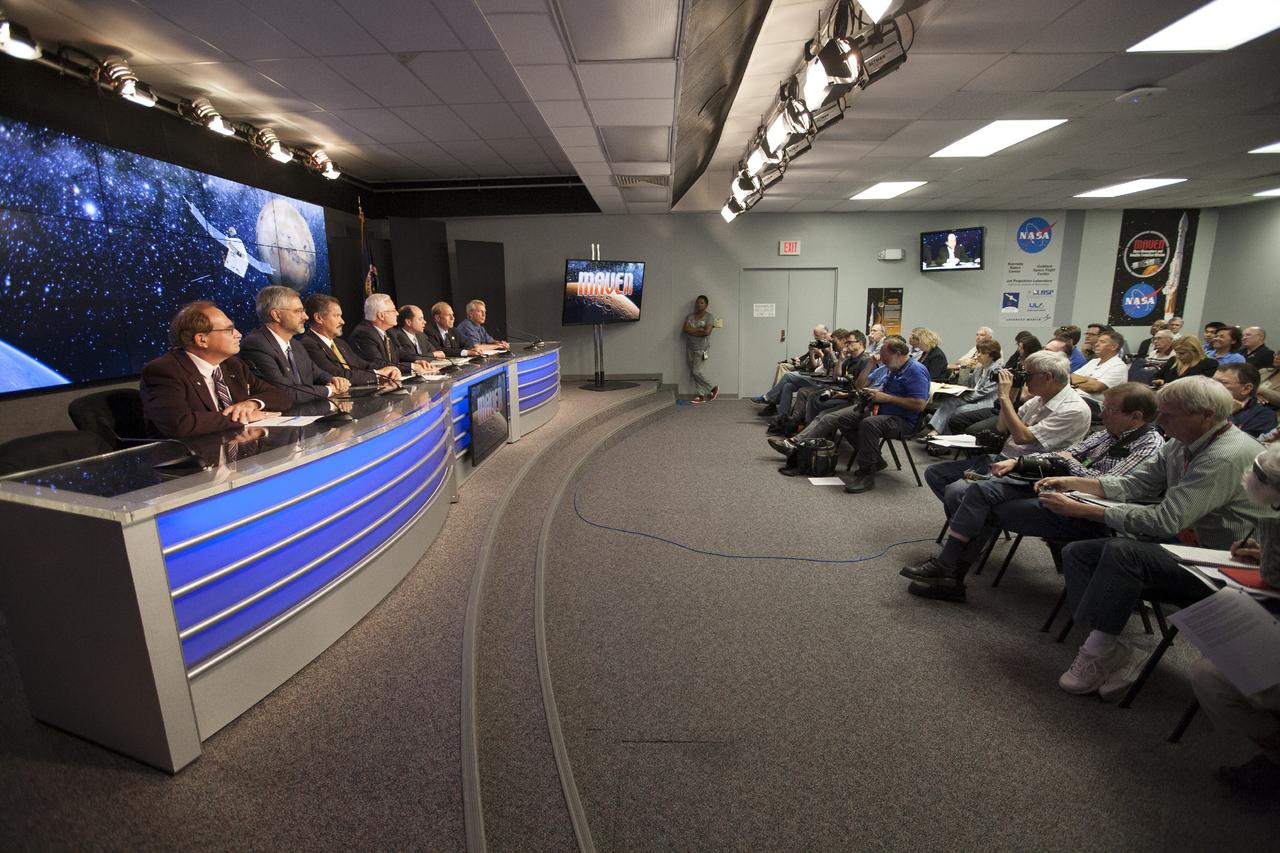
CAPE CANAVERAL, Fla. – During a news conference at NASA's Kennedy Space Center in Florida, agency and contractor officials discussed preparations for the launch of the Mars Atmosphere and Volatile EvolutioN, or MAVEN, mission. Participating in the briefing, from the left, are George Diller of NASA Public Affairs, Geoffrey Yoder, NASA deputy associate administrator of programs in the Science Mission Directorate, Omar Baez, NASA launch director, Vernon Thorp, program manager for NASA Missions with United Launch Alliance in Centennial, Colo., David Mitchell, NASA's MAVEN project manager at the Goddard Space Flight Center in Greenbelt, Md., Guy Beutelschies, Lockheed Martin's MAVEN project manager and Clay Flinn, launch weather officer, 45th Weather Squadron at Cape Canaveral Air Force Station, Fla. MAVEN is being prepared for its scheduled launch on Nov 18, 2013 from Cape Canaveral Air Force Station, Fla. atop a United Launch Alliance Atlas V rocket. Positioned in an orbit above the Red Planet, MAVEN will study the upper atmosphere of Mars in unprecedented detail. For information on the MAVEN mission, visit: http://www.nasa.gov/mission_pages/maven/main/index.html. Photo credit: NASA MAVEN is being prepared for its scheduled launch on Nov 18, 2013 from Cape Canaveral Air Force Station, Fla. atop a United Launch Alliance Atlas V rocket. Positioned in an orbit above the Red Planet, MAVEN will study the upper atmosphere of Mars in unprecedented detail. For more information, visit: http://www.nasa.gov/mission_pages/maven/main/index.html Photo credit: NASA/Kim Shiflett