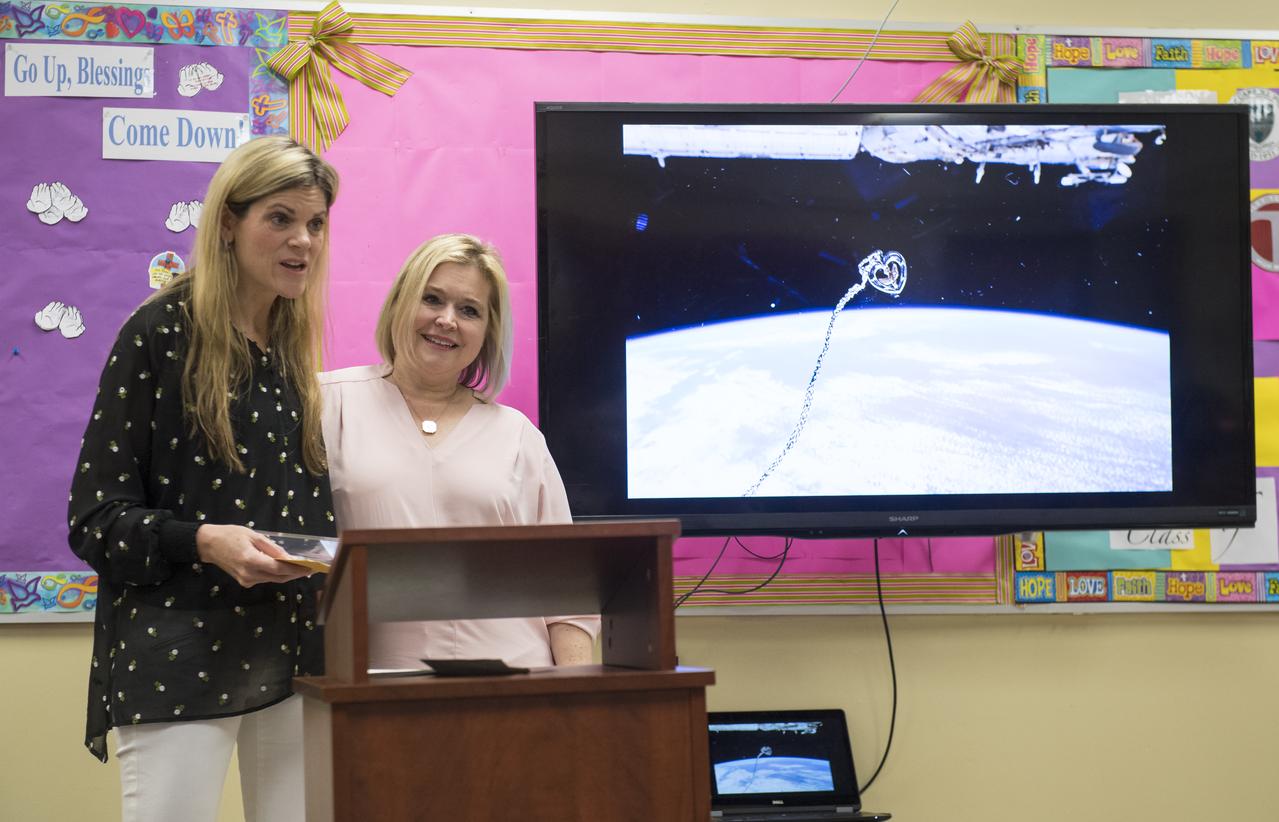
NASA astronaut Randy Bresnik's wife Rebecca and her friend Shiela present the Washington School for Girls a necklace that was flown in space onboard the International Space Station, Friday, May 11, 2018 at the Washington School for Girls in Washington. The necklace is a graduation gift for each student when they complete 8th grade. Photo Credit: (NASA/Aubrey Gemignani)
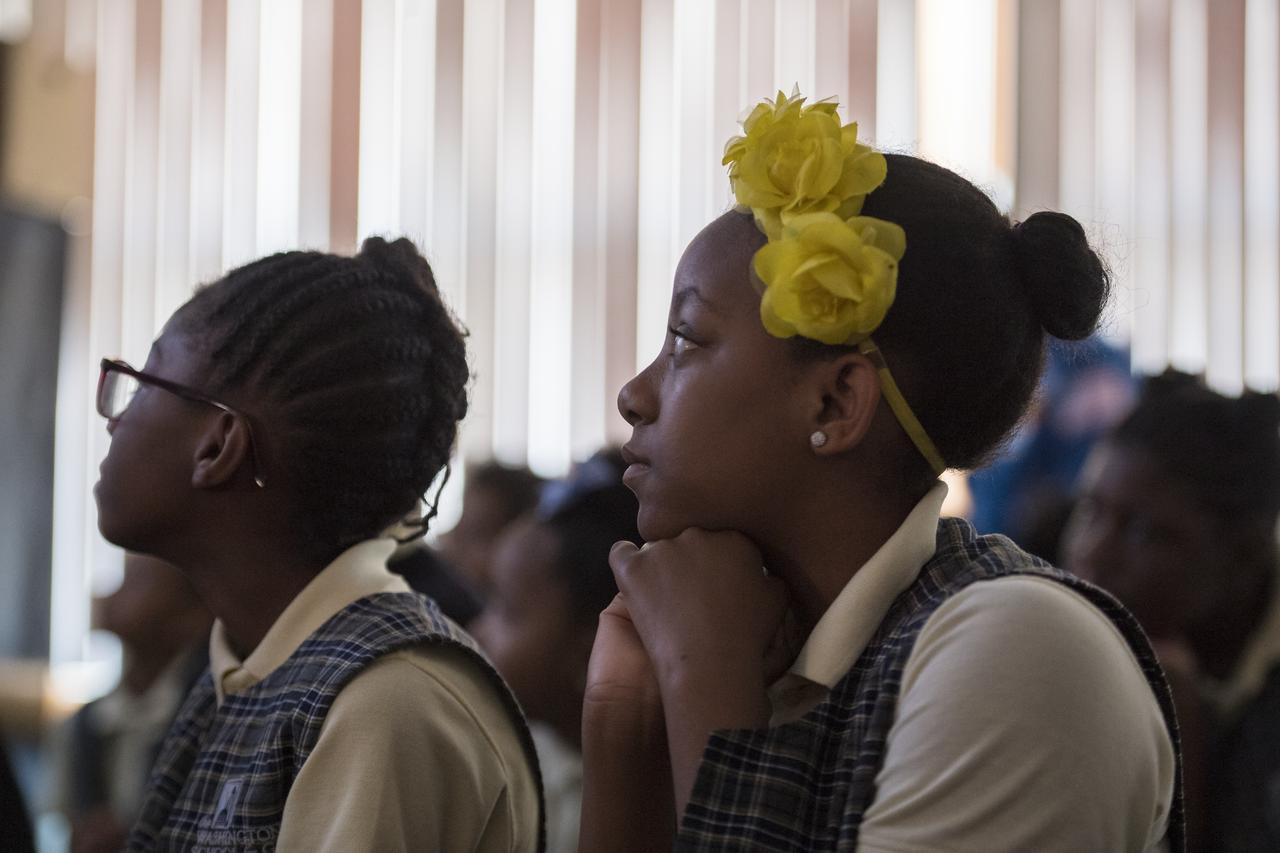
Students listen as NASA astronaut Randy Bresnik and ESA astronaut Paolo Nespoli speak about their time onboard the International Space Station during expeditions 52/53, Friday, May 11, 2018 at the Washington School for Girls in Washington. Photo Credit: (NASA/Aubrey Gemignani)
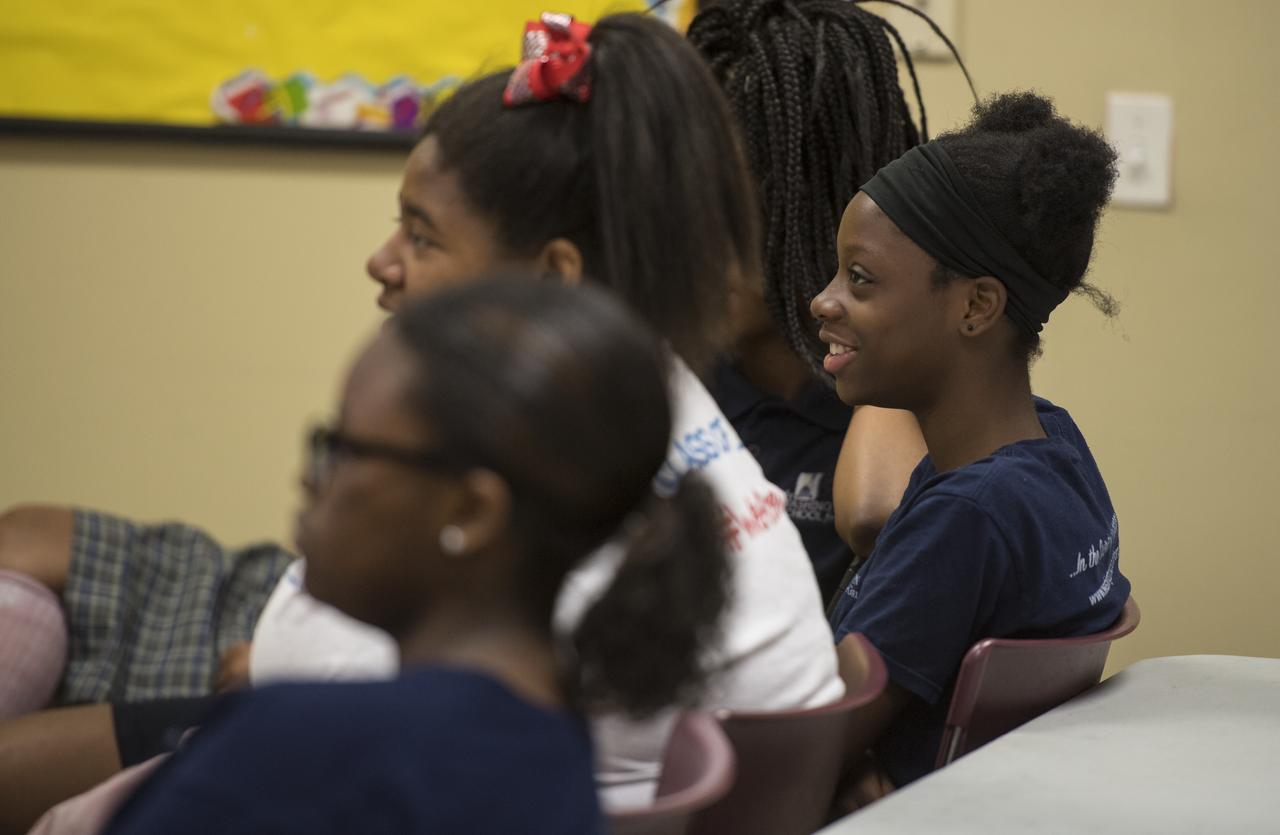
Students listen as NASA astronaut Randy Bresnik and ESA astronaut Paolo Nespoli speak about their time onboard the International Space Station during expeditions 52/53, Friday, May 11, 2018 at the Washington School for Girls in Washington. Photo Credit: (NASA/Aubrey Gemignani)
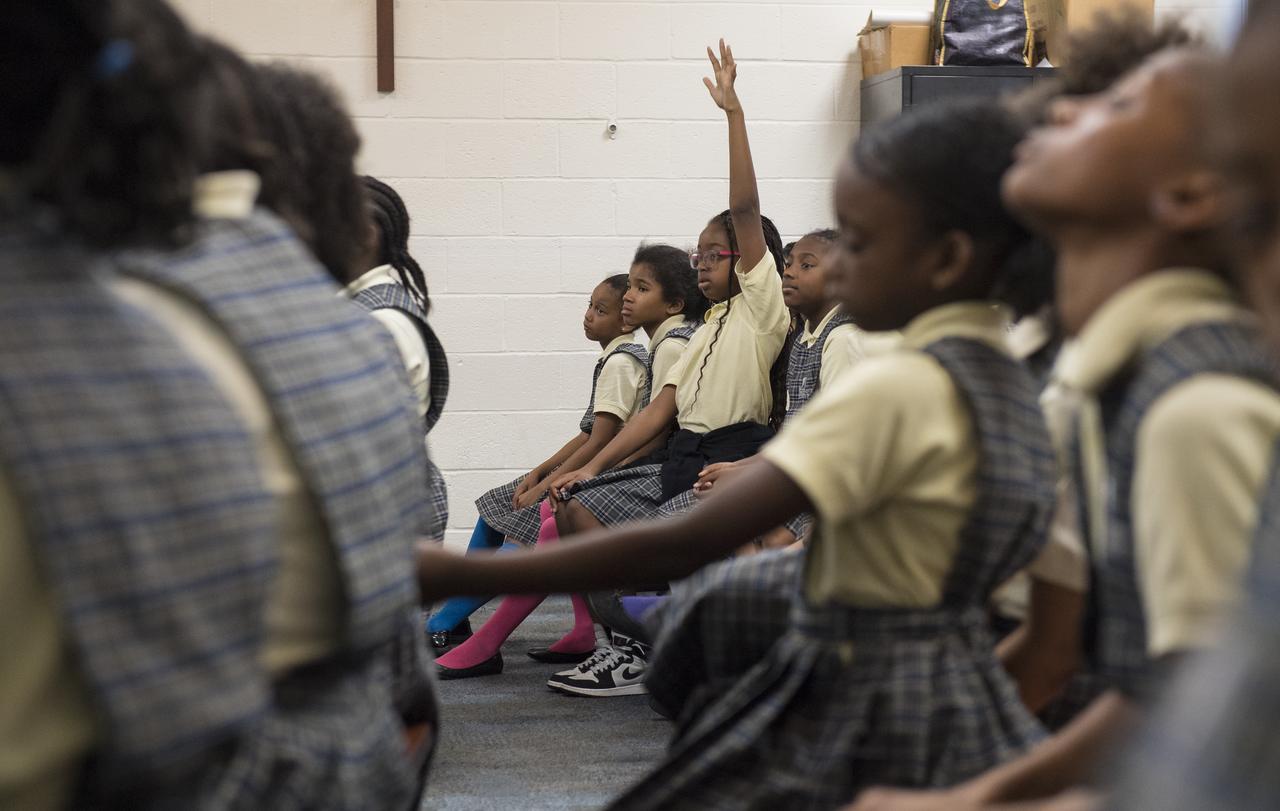
A student raises her hand to ask a question after NASA astronaut Randy Bresnik and ESA astronaut Paolo Nespoli spoke about their time onboard the International Space Station during expeditions 52/53, Friday, May 11, 2018 at the Washington School for Girls in Washington. Photo Credit: (NASA/Aubrey Gemignani)
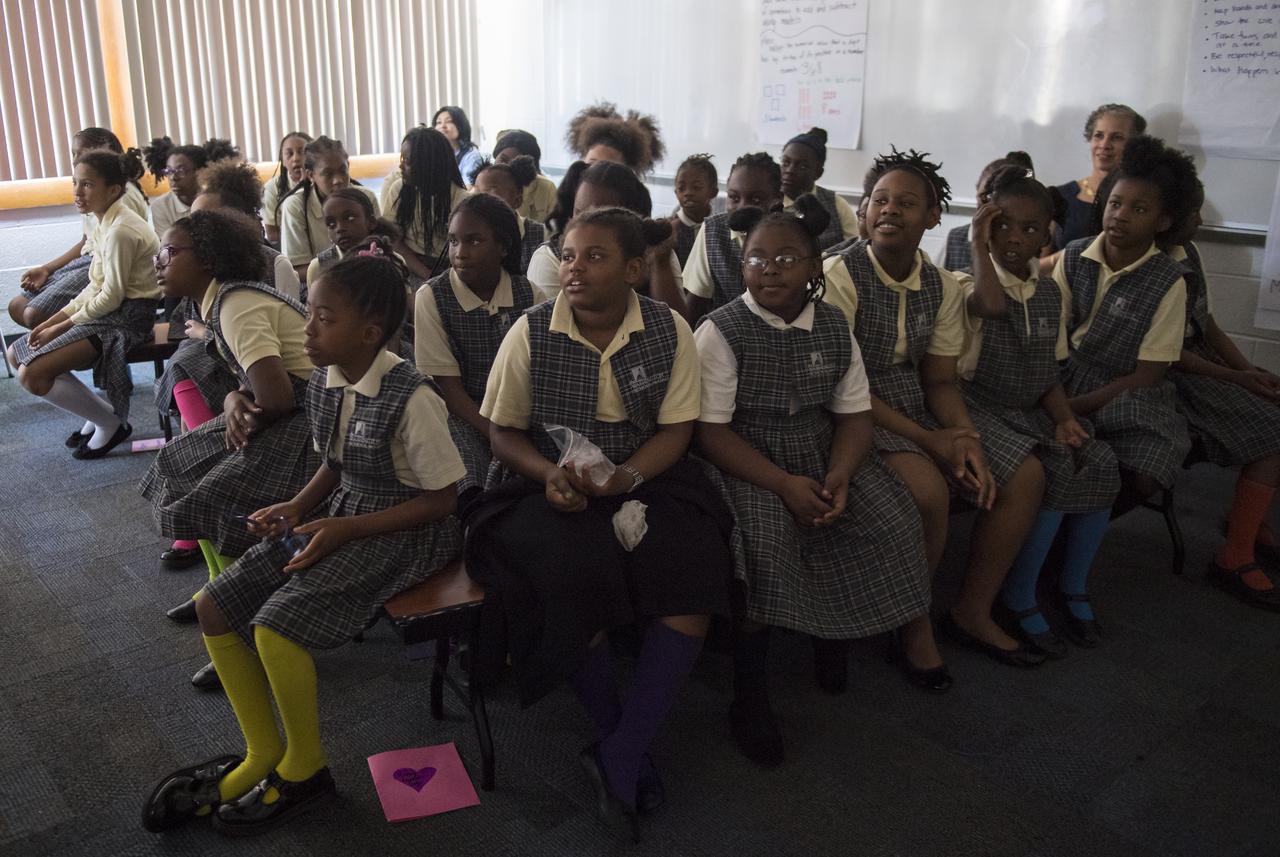
Students listen as NASA astronaut Randy Bresnik and ESA astronaut Paolo Nespoli speak about their time onboard the International Space Station during expeditions 52/53, Friday, May 11, 2018 at the Washington School for Girls in Washington. Photo Credit: (NASA/Aubrey Gemignani)
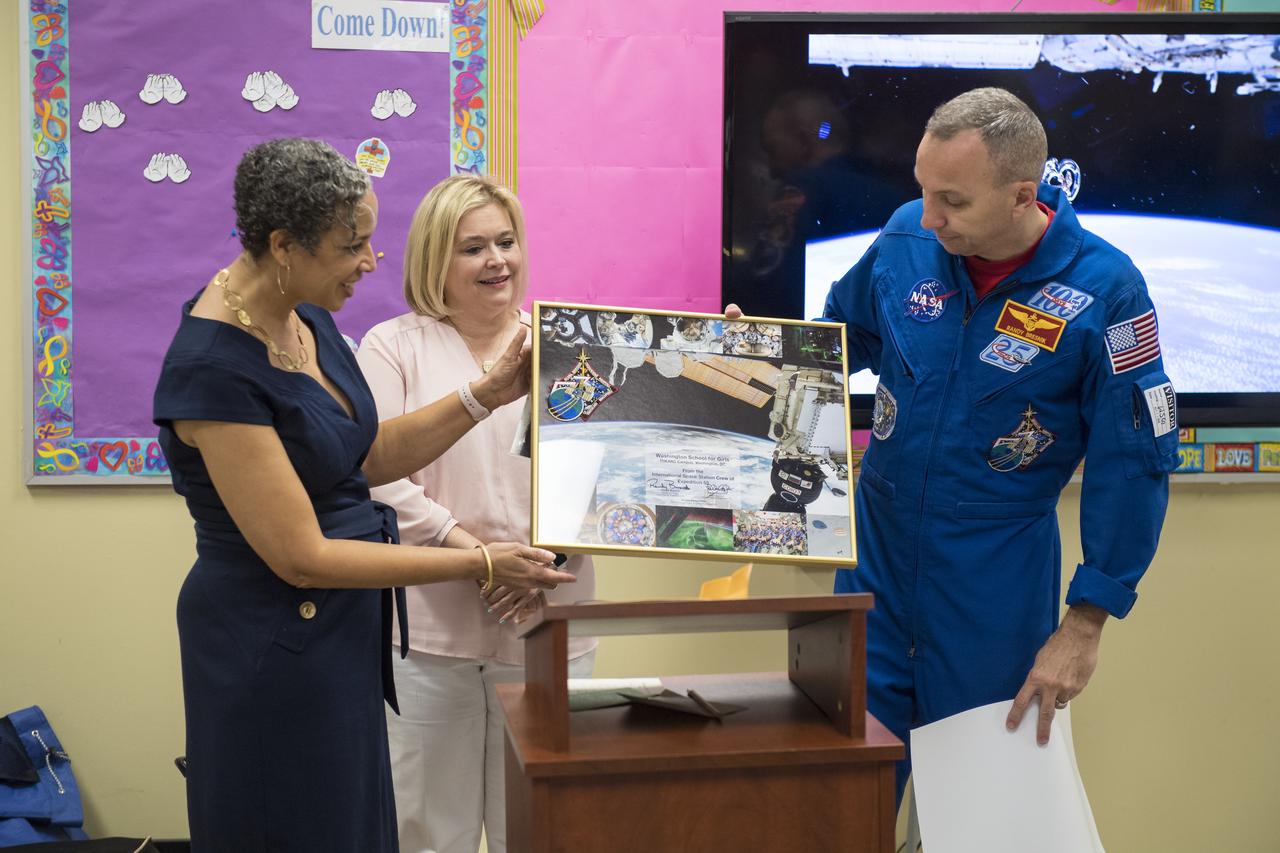
NASA astronaut Randy Bresnik, right, and his friend Shiela, center, present the principle of the school Dr. Beth Reaves, with a montage of images and items from Expedition 53, Friday, May 11, 2018 at the Washington School for Girls in Washington. Photo Credit: (NASA/Aubrey Gemignani)
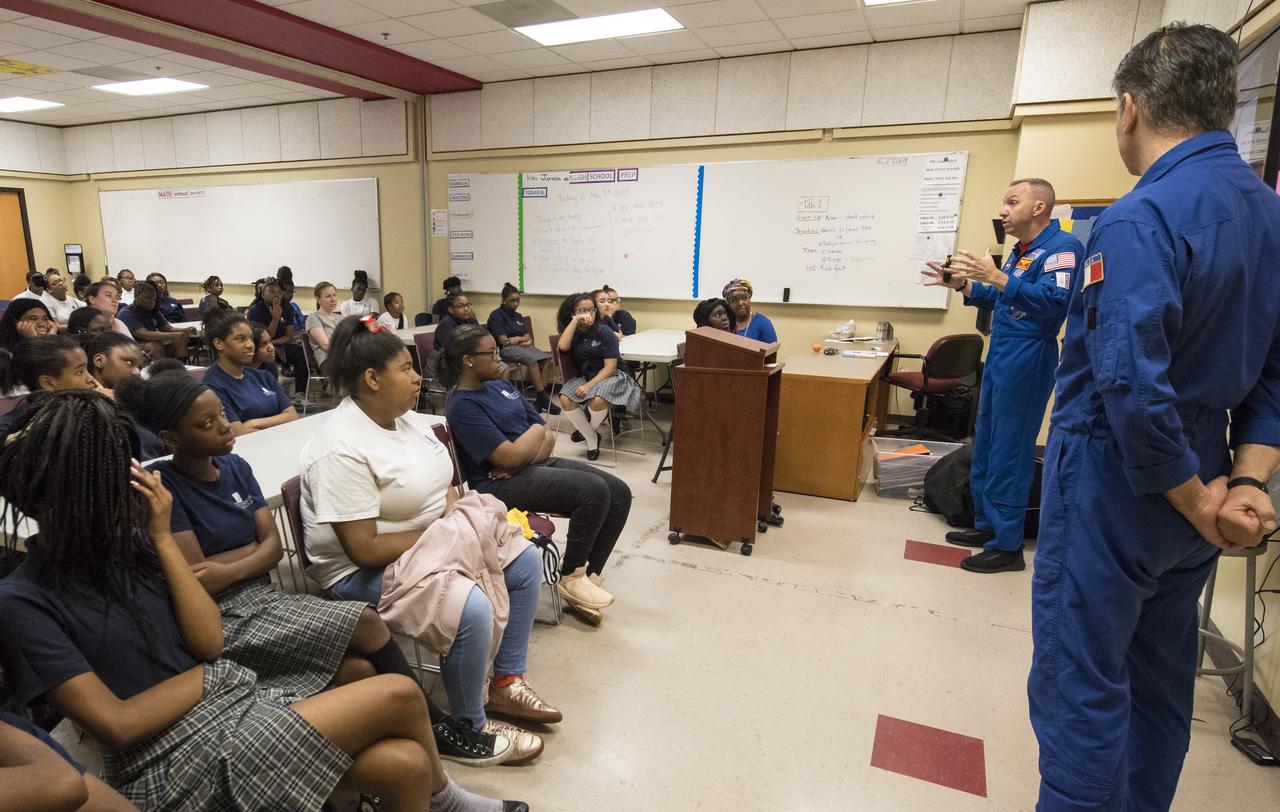
NASA astronaut Randy Bresnik, left, and ESA astronaut Paolo Nespoli speak about their time onboard the International Space Station during expeditions 52/53, Friday, May 11, 2018 at the Washington School for Girls in Washington. Photo Credit: (NASA/Aubrey Gemignani)
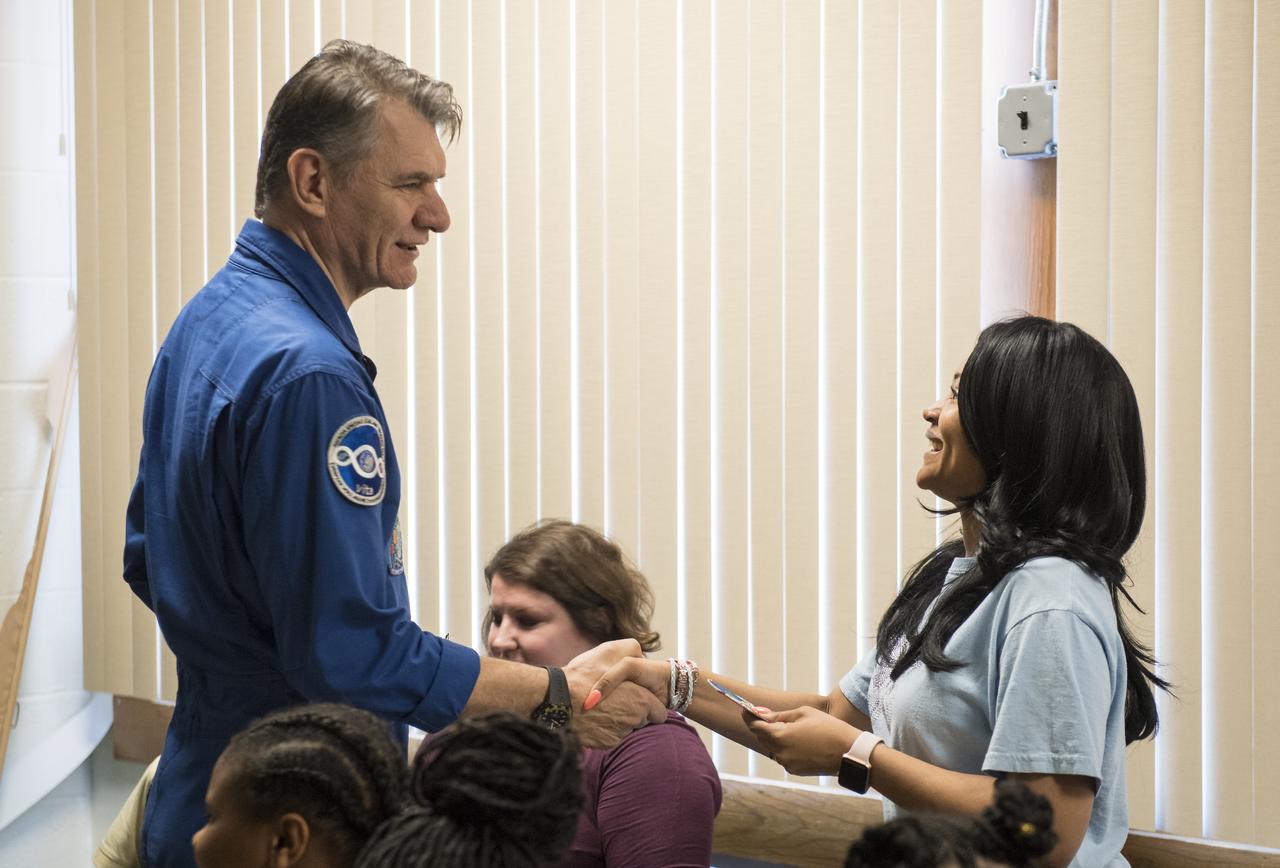
ESA astronaut Paolo Nespoli gives a patch to a teacher for Teacher Appreciation Week after speaking about his time onboard the International Space Station during expeditions 52/53, Friday, May 11, 2018 at the Washington School for Girls in Washington. Photo Credit: (NASA/Aubrey Gemignani)

NASA astronaut Randy Bresnik speaks about his time onboard the International Space Station during expeditions 52/53, Friday, May 11, 2018 at the Washington School for Girls in Washington. Photo Credit: (NASA/Aubrey Gemignani)
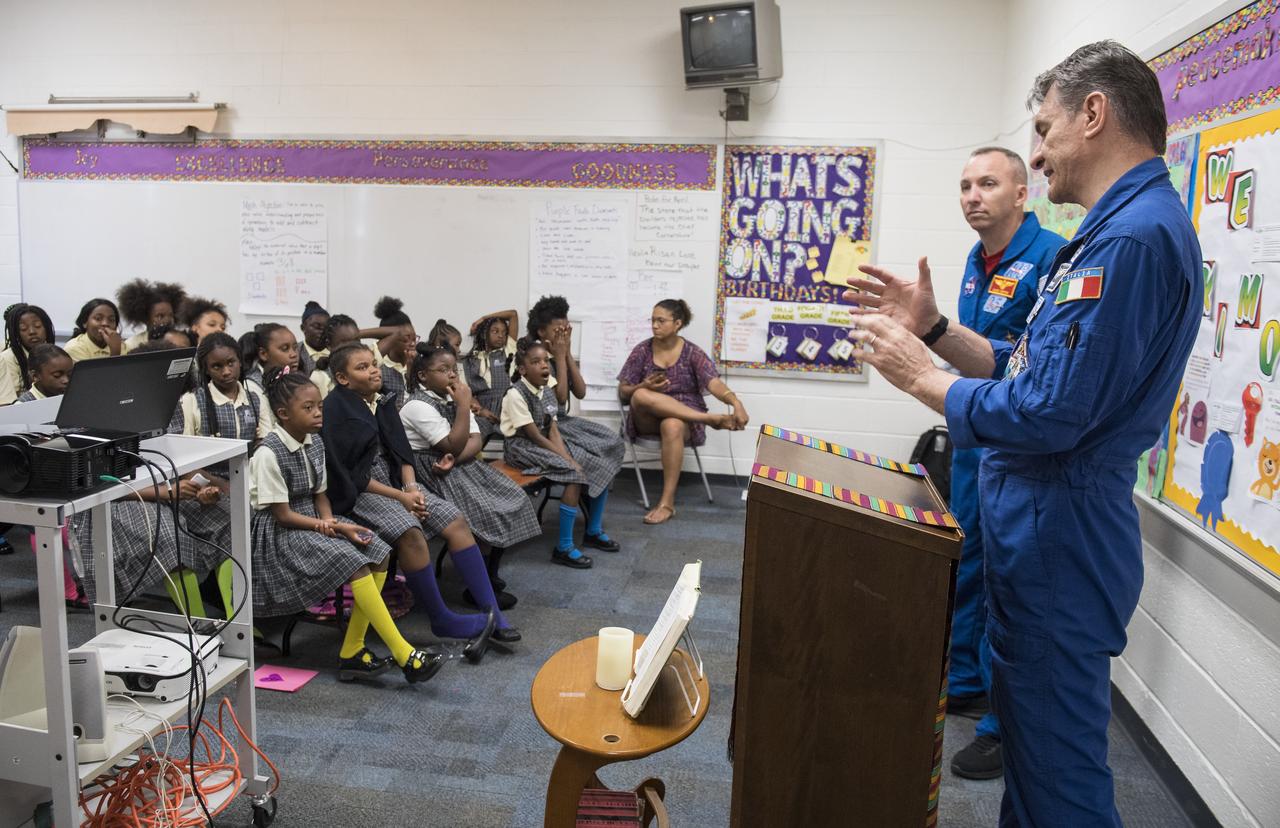
NASA astronaut Randy Bresnik, left, and ESA astronaut Paolo Nespoli answer questions about their time onboard the International Space Station during expeditions 52/53, Friday, May 11, 2018 at the Washington School for Girls in Washington. Photo Credit: (NASA/Aubrey Gemignani)
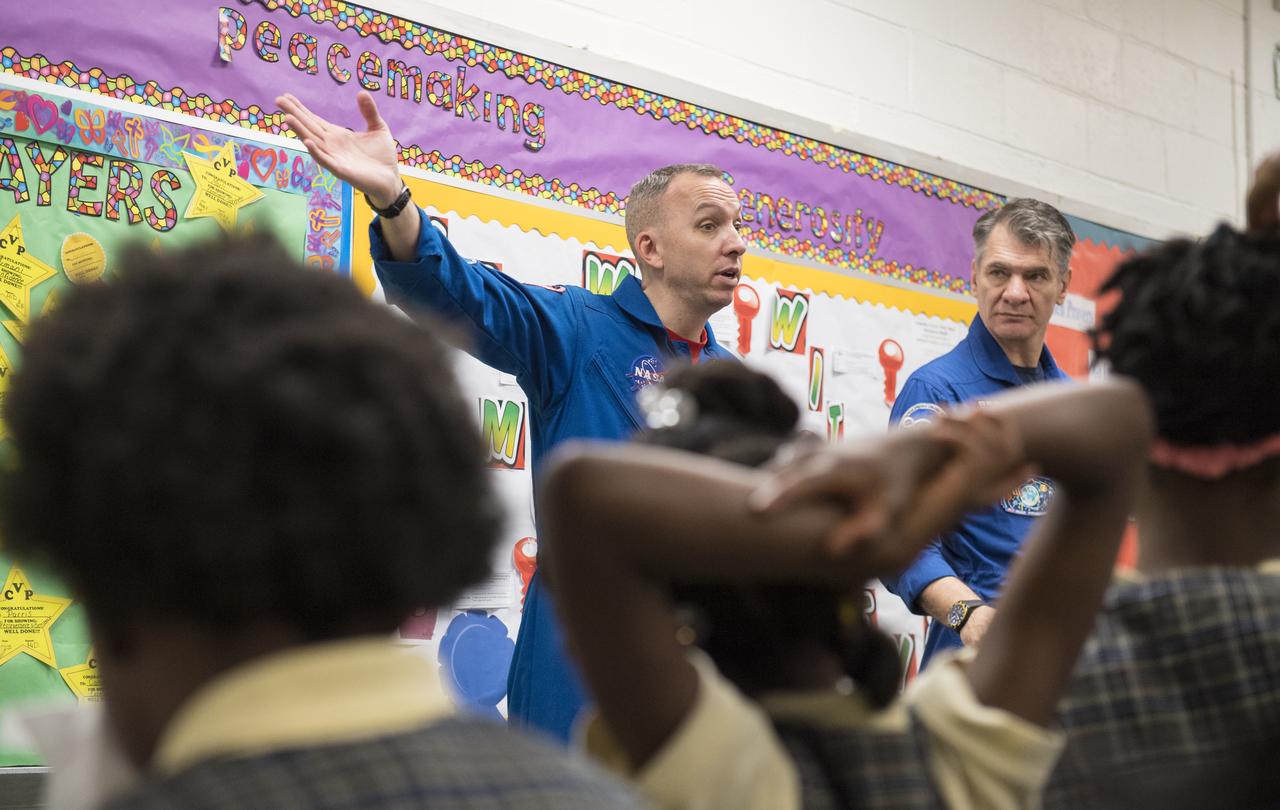
NASA astronaut Randy Bresnik, left, and ESA astronaut Paolo Nespoli answer questions about their time onboard the International Space Station during expeditions 52/53, Friday, May 11, 2018 at the Washington School for Girls in Washington. Photo Credit: (NASA/Aubrey Gemignani)
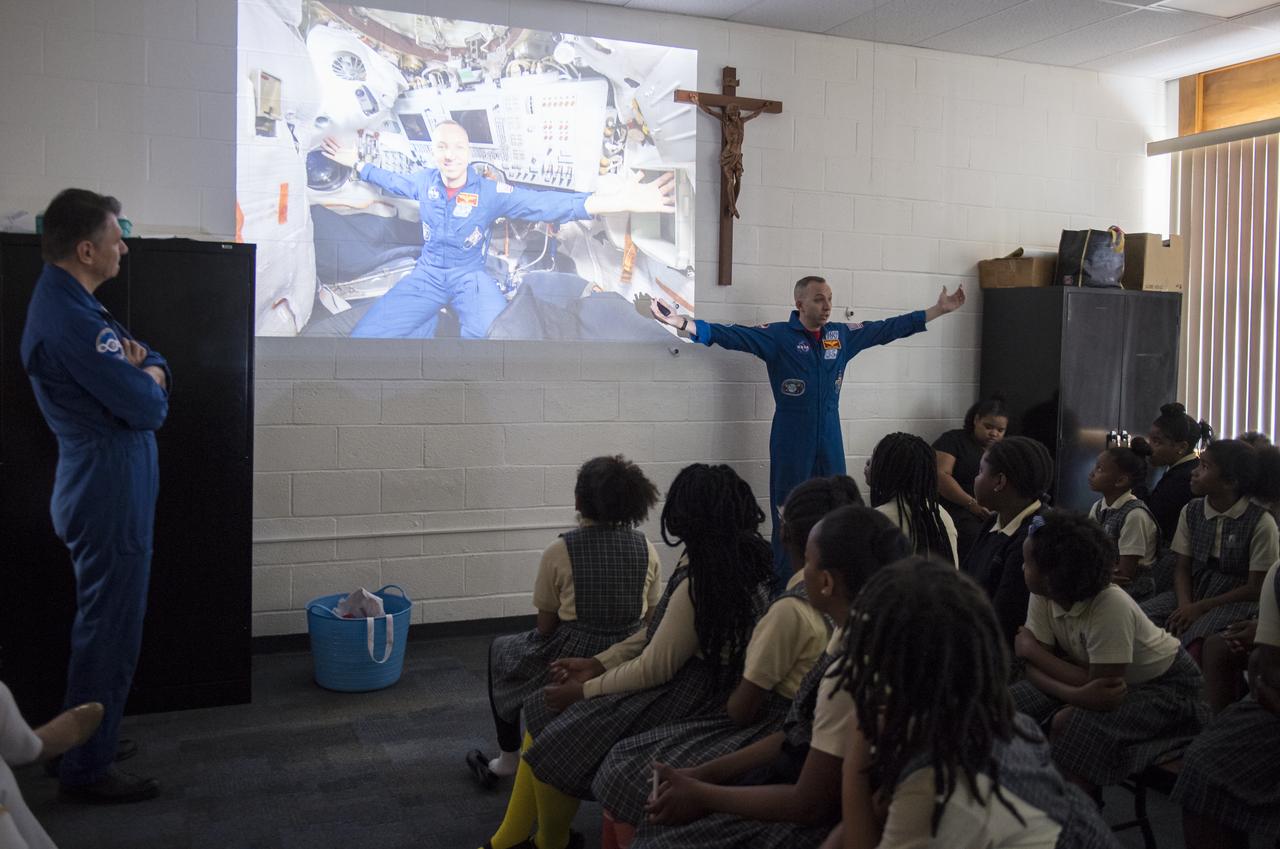
NASA astronaut Randy Bresnik, right, and ESA astronaut Paolo Nespoli, left, speak about their time onboard the International Space Station during expeditions 52/53, Friday, May 11, 2018 at the Washington School for Girls in Washington. Photo Credit: (NASA/Aubrey Gemignani)
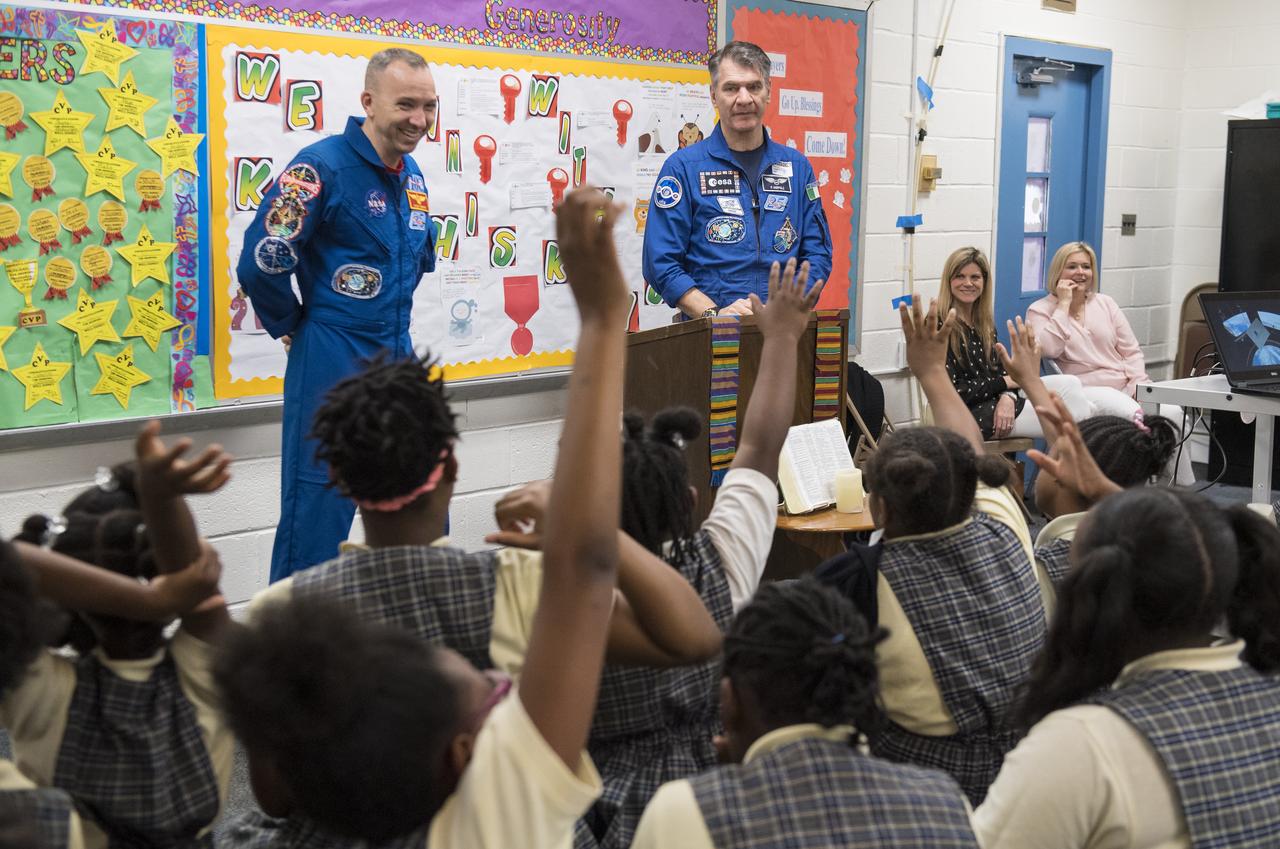
NASA astronaut Randy Bresnik, left, and ESA astronaut Paolo Nespoli answer questions about their time onboard the International Space Station during expeditions 52/53, Friday, May 11, 2018 at the Washington School for Girls in Washington. Photo Credit: (NASA/Aubrey Gemignani)
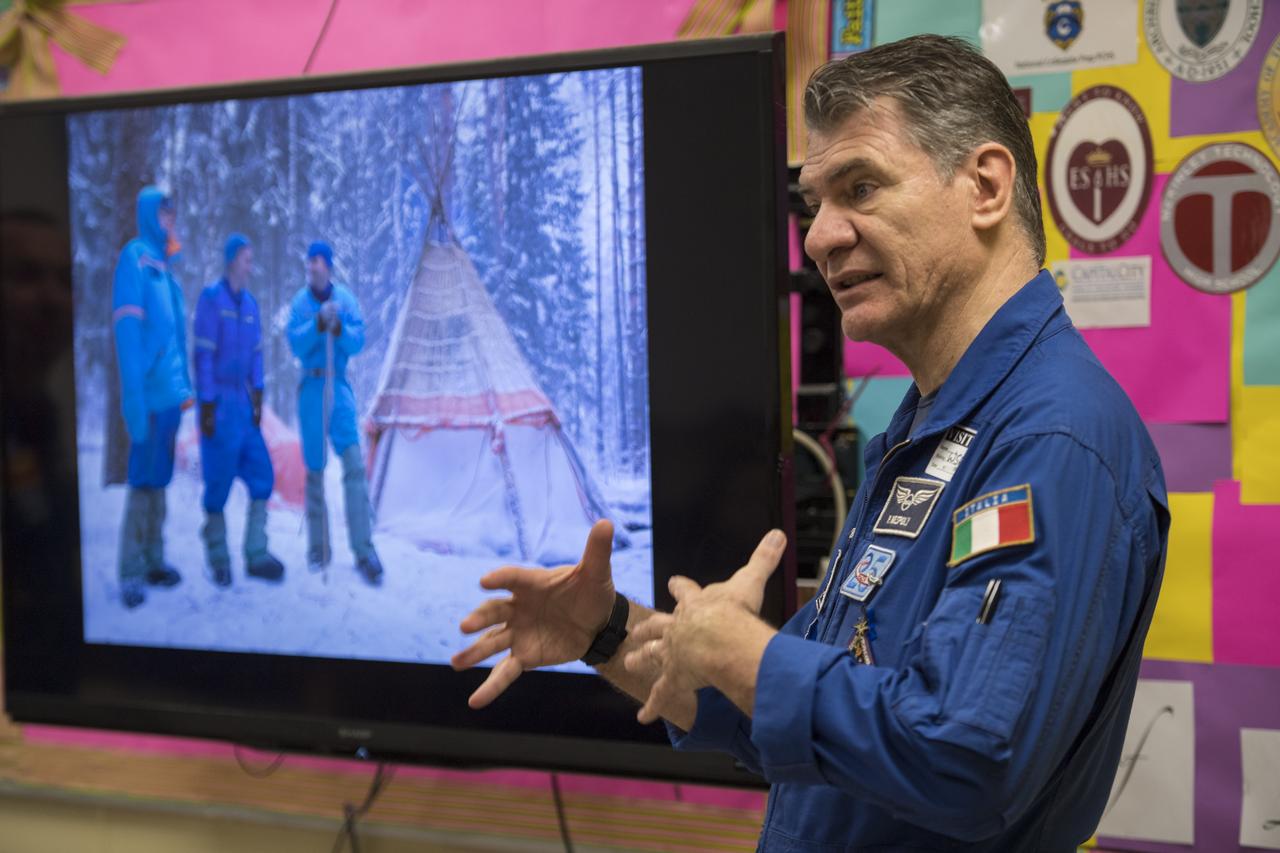
ESA astronaut Paolo Nespoli speaks about his time onboard the International Space Station during expeditions 52/53, Friday, May 11, 2018 at the Washington School for Girls in Washington. Photo Credit: (NASA/Aubrey Gemignani)
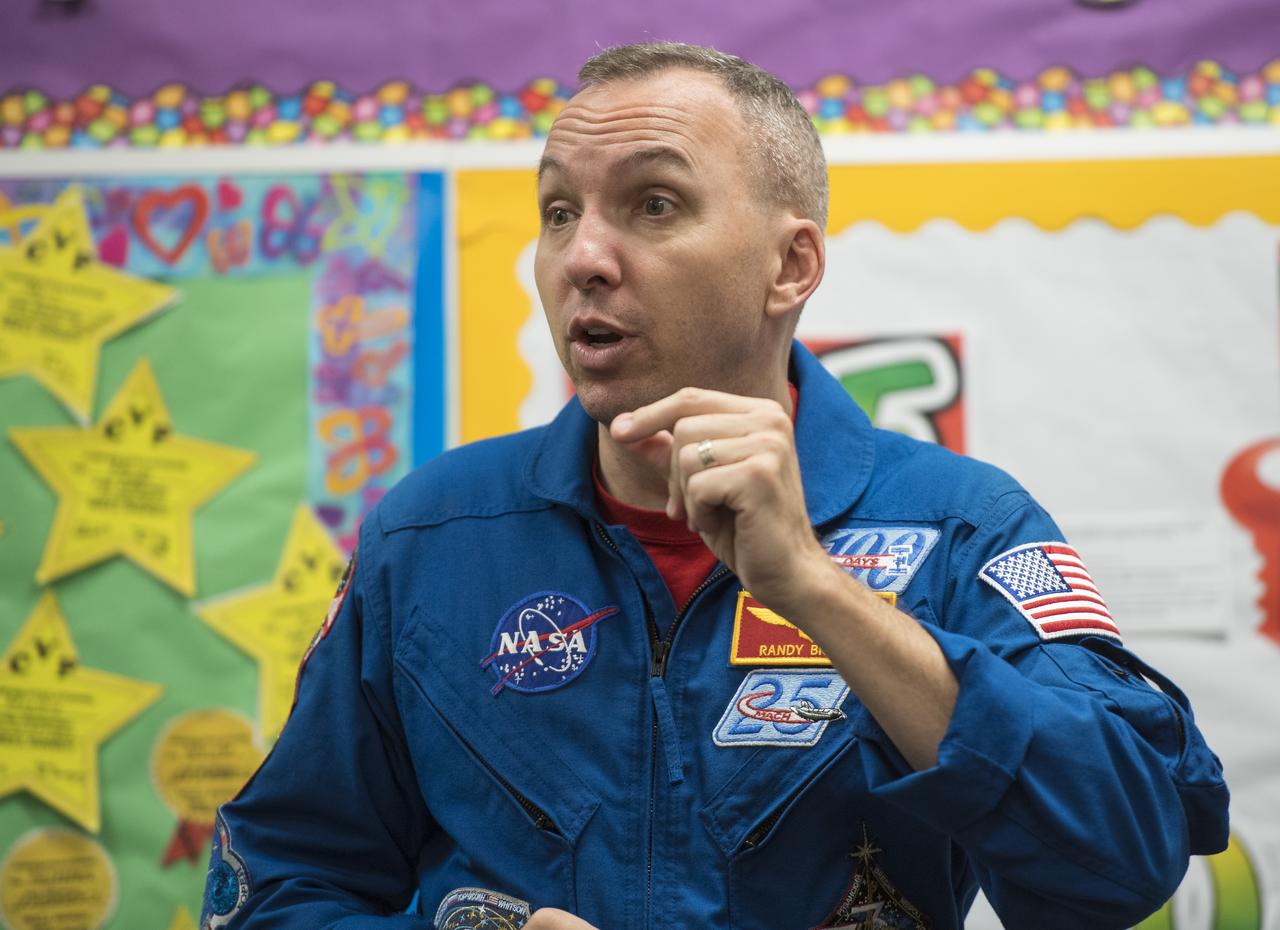
NASA astronaut Randy Bresnik speaks about his time onboard the International Space Station during expeditions 52/53, Friday, May 11, 2018 at the Washington School for Girls in Washington. Photo Credit: (NASA/Aubrey Gemignani)
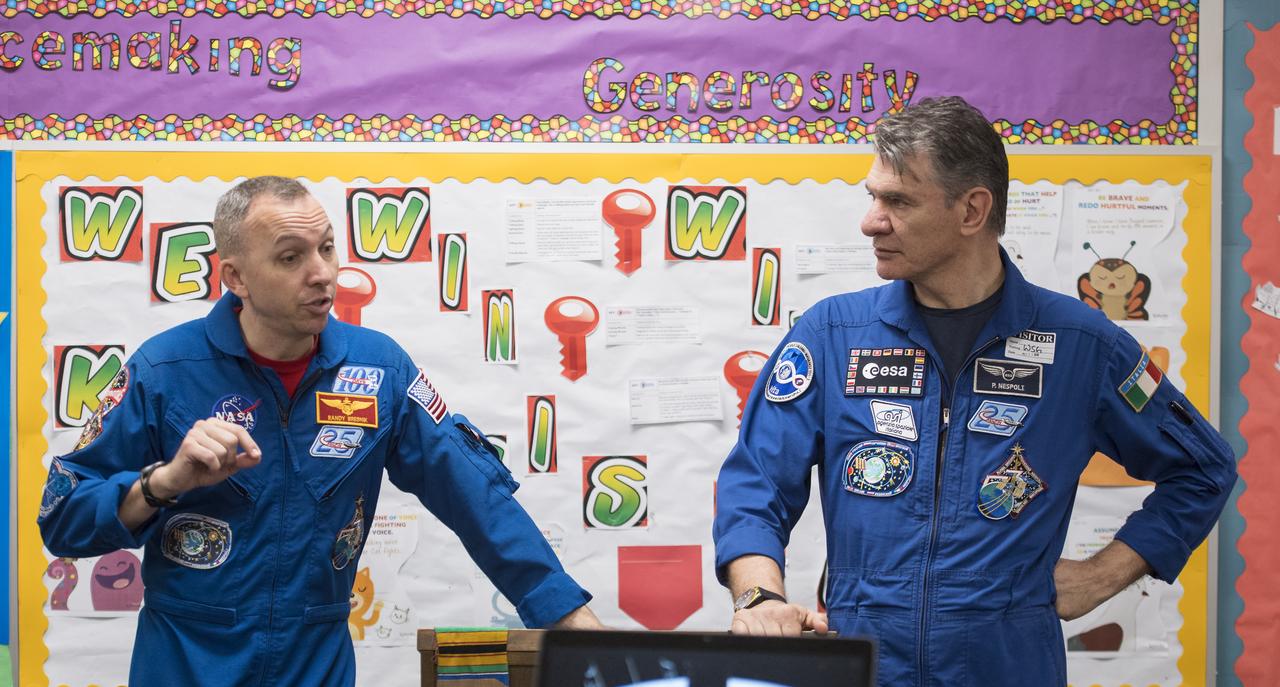
NASA astronaut Randy Bresnik, left, and ESA astronaut Paolo Nespoli speak about their time onboard the International Space Station during expeditions 52/53, Friday, May 11, 2018 at the Washington School for Girls in Washington. Photo Credit: (NASA/Aubrey Gemignani)
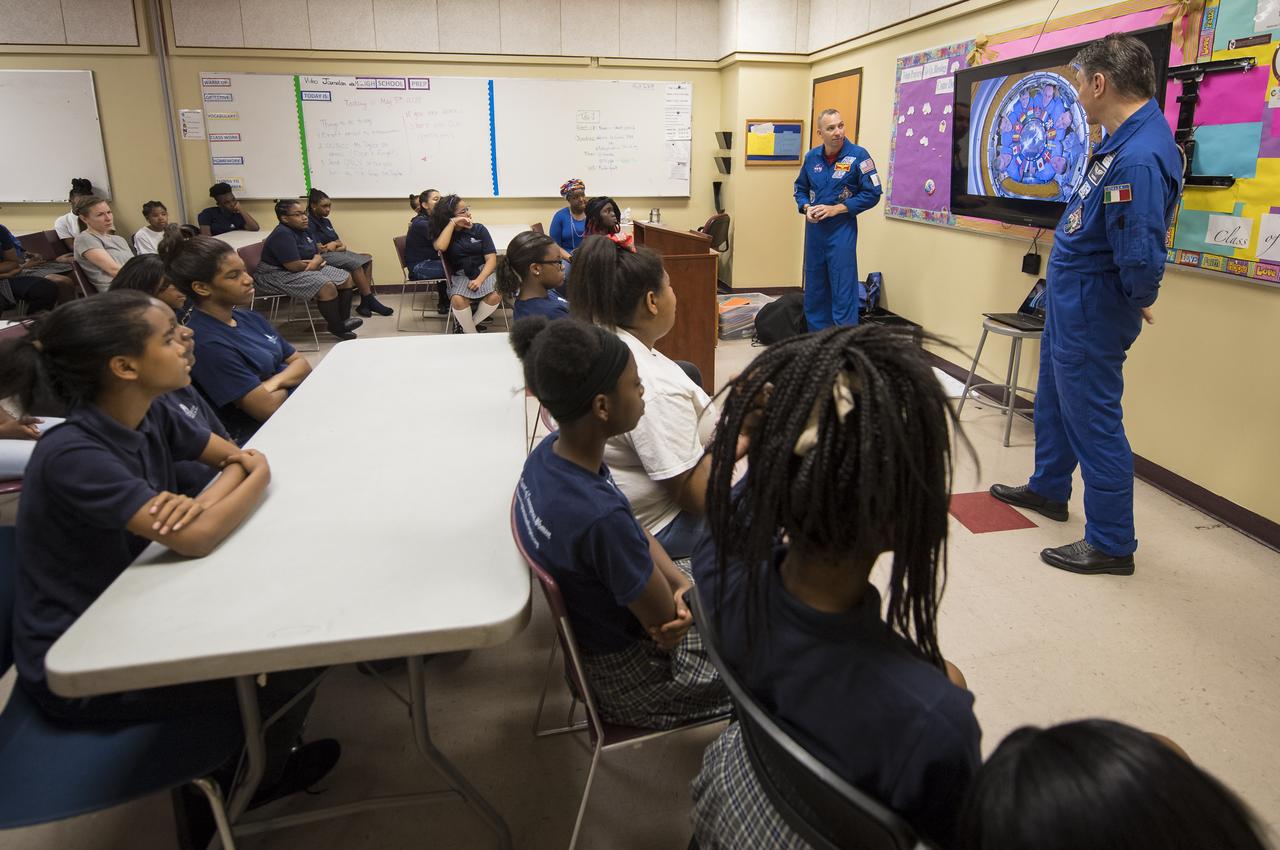
NASA astronaut Randy Bresnik and ESA astronaut Paolo Nespoli speak about their time onboard the International Space Station, Friday, May 11, 2018 at the Washington School for Girls in Washington. Photo Credit: (NASA/Aubrey Gemignani)

The Science Cheerleaders perform at a Women's History Month event for middle school and high school girls on Wednesday, March 16, 2011 at NASA Headquarters in Washington. The Science Cheerleaders are a group professional cheerleaders-turned-scientists and engineers who challenge stereotypes while helping to inspire young women to pursue careers in science, technology, engineering and math. Photo Credit: (NASA/Carla Cioffi)

The Science Cheerleaders perform at a Women's History Month event for middle school and high school girls on Wednesday, March 16, 2011 at NASA Headquarters in Washington. The Science Cheerleaders are a group professional cheerleaders-turned-scientists and engineers who challenge stereotypes while helping to inspire young women to pursue careers in science, technology, engineering and math. Photo Credit: (NASA/Carla Cioffi)
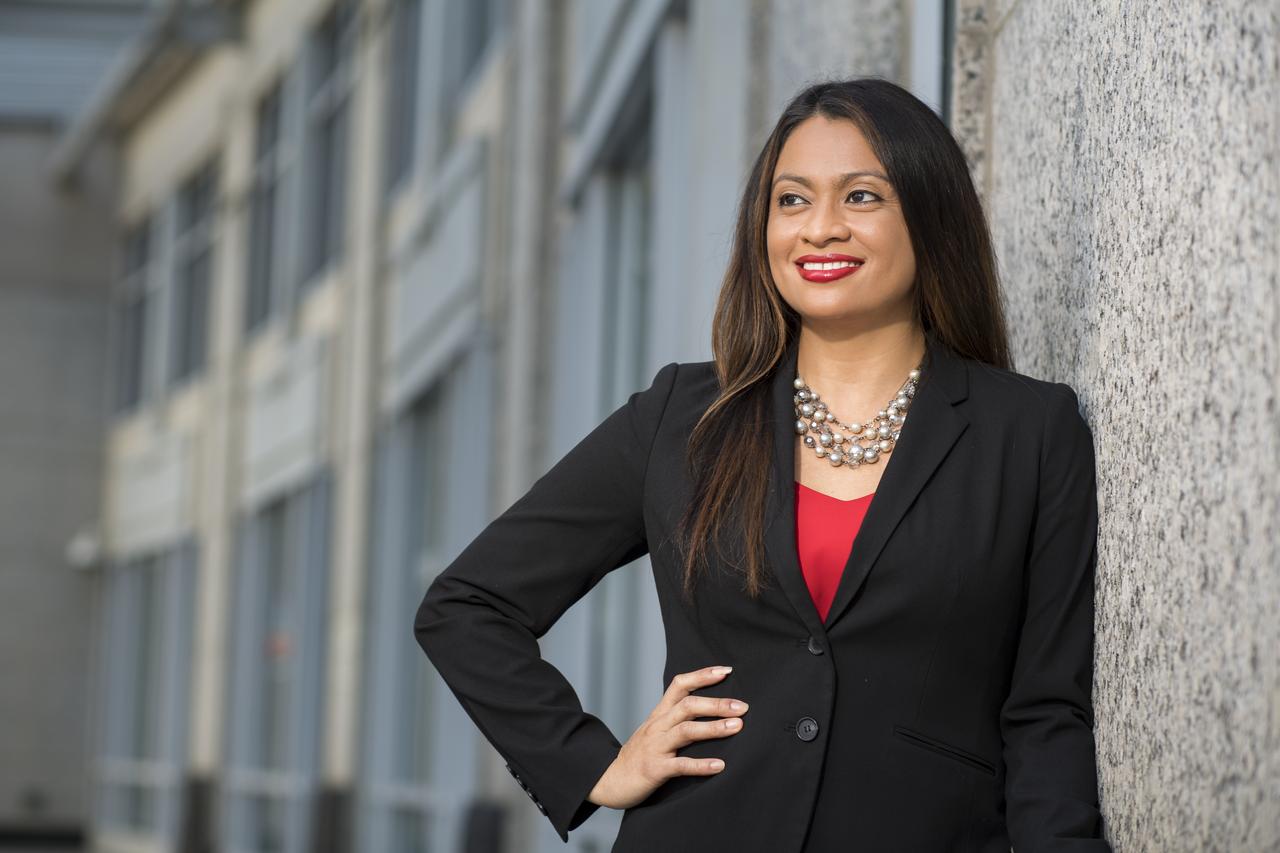
"For me, representation is key. I want people from different backgrounds, different experiences, and different races and ethnicities to see themselves at this agency and across federal government, which is supposed to be representative of the American population. Especially for little girls like me — I grew up poor, the daughter of a former migrant worker. I grew up working in the fields, picking fruits and vegetables during weekends and school breaks. "I’m the first one in my family to get a four-year degree. I didn’t do it because it was what I was expected to do or because it was the obvious next step. I was able to go because I had teachers and advisors who saw potential even when I couldn’t. I was a first generation college student, and now I have nieces and nephews who have obtained or are in the process of obtaining their education." "It’s not only about opening doors, it’s about opening minds — giving people a vision of the possibilities that are out there. Because now you’re broadening that thinking. You’re helping them question their status quo and helping them to see a different version of themselves. When you meet someone who is doing something different but yet, you can relate to them because of what they look like or their background, it makes a huge difference." Portrait, Maria Santos, Tuesday, Oct.1, 2019 at NASA Headquarters in Washington. Photo Credit: (NASA/Aubrey Gemignani)
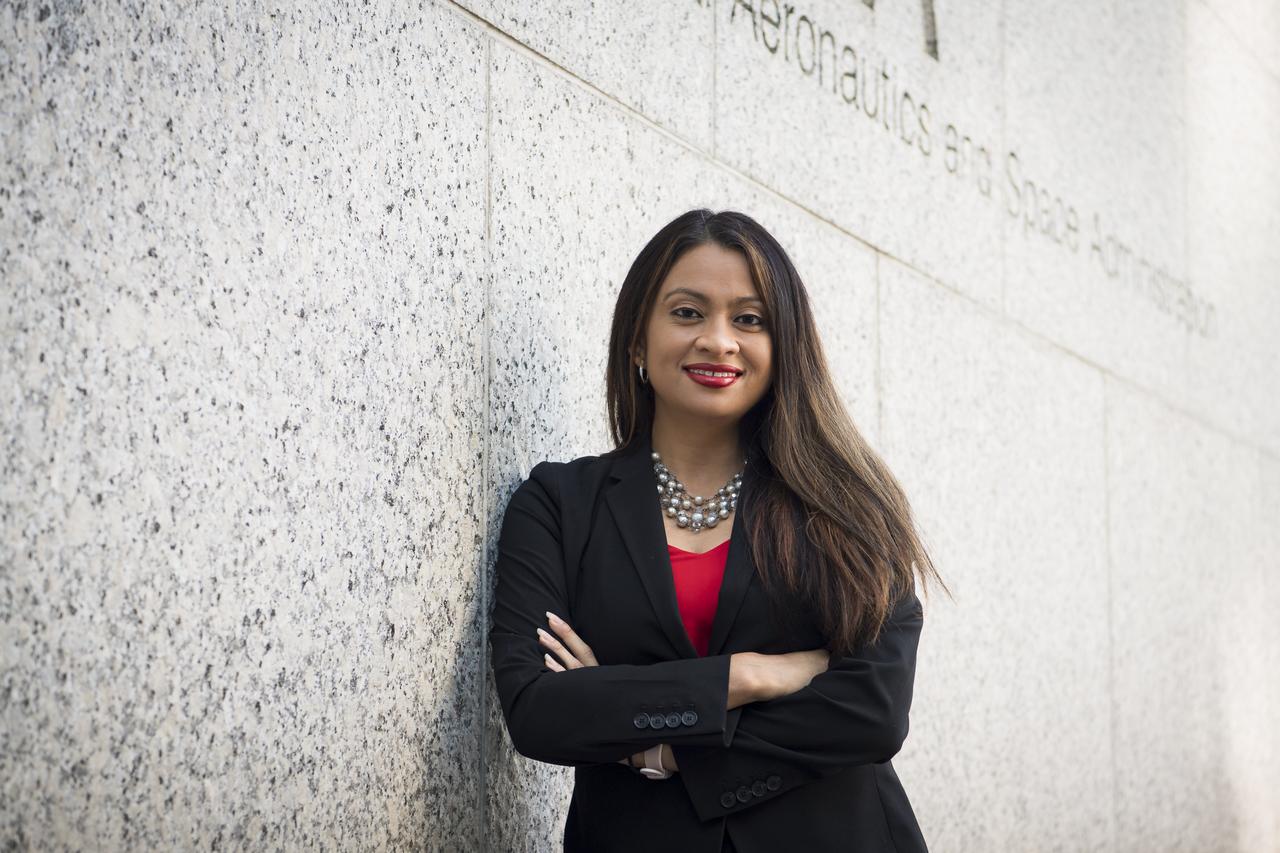
"For me, representation is key. I want people from different backgrounds, different experiences, and different races and ethnicities to see themselves at this agency and across federal government, which is supposed to be representative of the American population. Especially for little girls like me — I grew up poor, the daughter of a former migrant worker. I grew up working in the fields, picking fruits and vegetables during weekends and school breaks. "I’m the first one in my family to get a four-year degree. I didn’t do it because it was what I was expected to do or because it was the obvious next step. I was able to go because I had teachers and advisors who saw potential even when I couldn’t. I was a first generation college student, and now I have nieces and nephews who have obtained or are in the process of obtaining their education." "It’s not only about opening doors, it’s about opening minds — giving people a vision of the possibilities that are out there. Because now you’re broadening that thinking. You’re helping them question their status quo and helping them to see a different version of themselves. When you meet someone who is doing something different but yet, you can relate to them because of what they look like or their background, it makes a huge difference." Portrait, Maria Santos, Tuesday, Oct.1, 2019 at NASA Headquarters in Washington. Photo Credit: (NASA/Aubrey Gemignani)
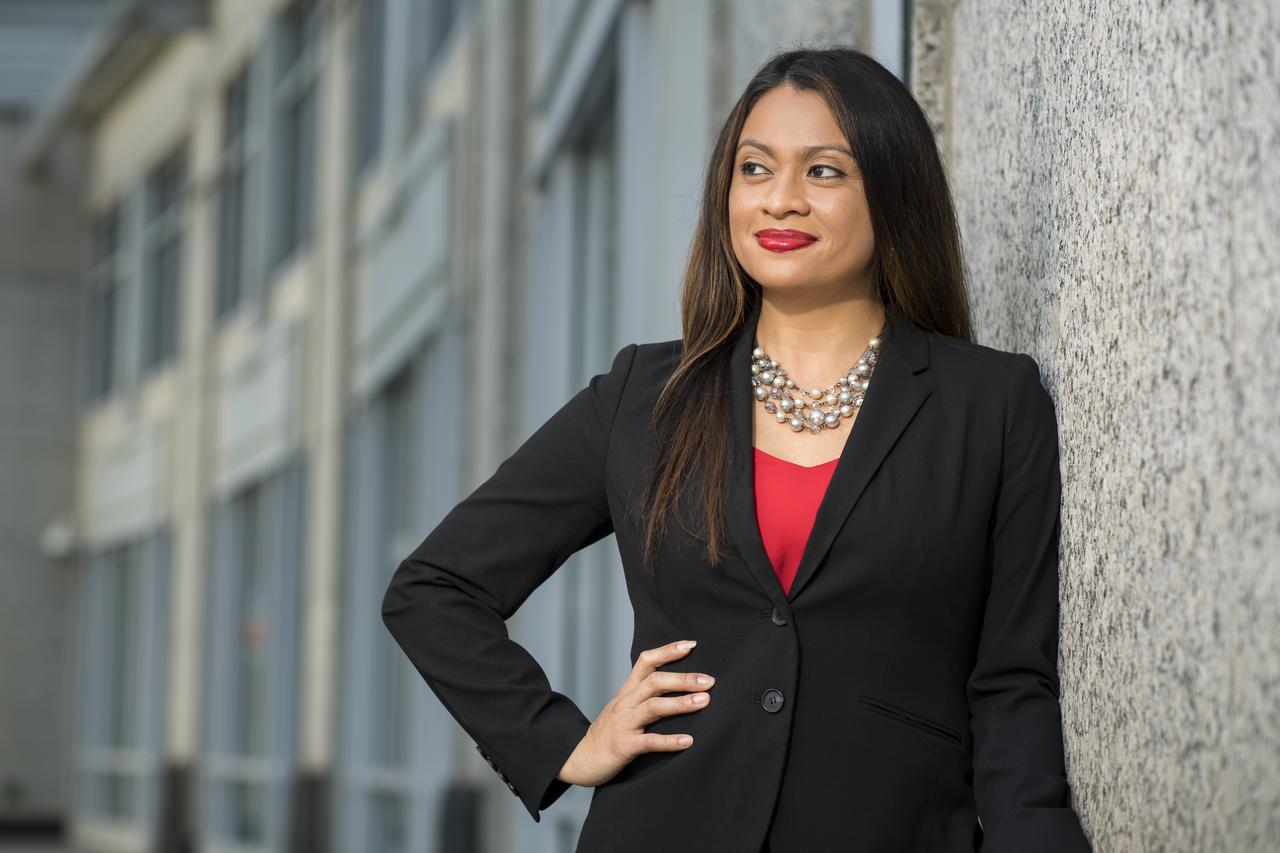
"For me, representation is key. I want people from different backgrounds, different experiences, and different races and ethnicities to see themselves at this agency and across federal government, which is supposed to be representative of the American population. Especially for little girls like me — I grew up poor, the daughter of a former migrant worker. I grew up working in the fields, picking fruits and vegetables during weekends and school breaks. "I’m the first one in my family to get a four-year degree. I didn’t do it because it was what I was expected to do or because it was the obvious next step. I was able to go because I had teachers and advisors who saw potential even when I couldn’t. I was a first generation college student, and now I have nieces and nephews who have obtained or are in the process of obtaining their education." "It’s not only about opening doors, it’s about opening minds — giving people a vision of the possibilities that are out there. Because now you’re broadening that thinking. You’re helping them question their status quo and helping them to see a different version of themselves. When you meet someone who is doing something different but yet, you can relate to them because of what they look like or their background, it makes a huge difference." Portrait, Maria Santos, Tuesday, Oct.1, 2019 at NASA Headquarters in Washington. Photo Credit: (NASA/Aubrey Gemignani)
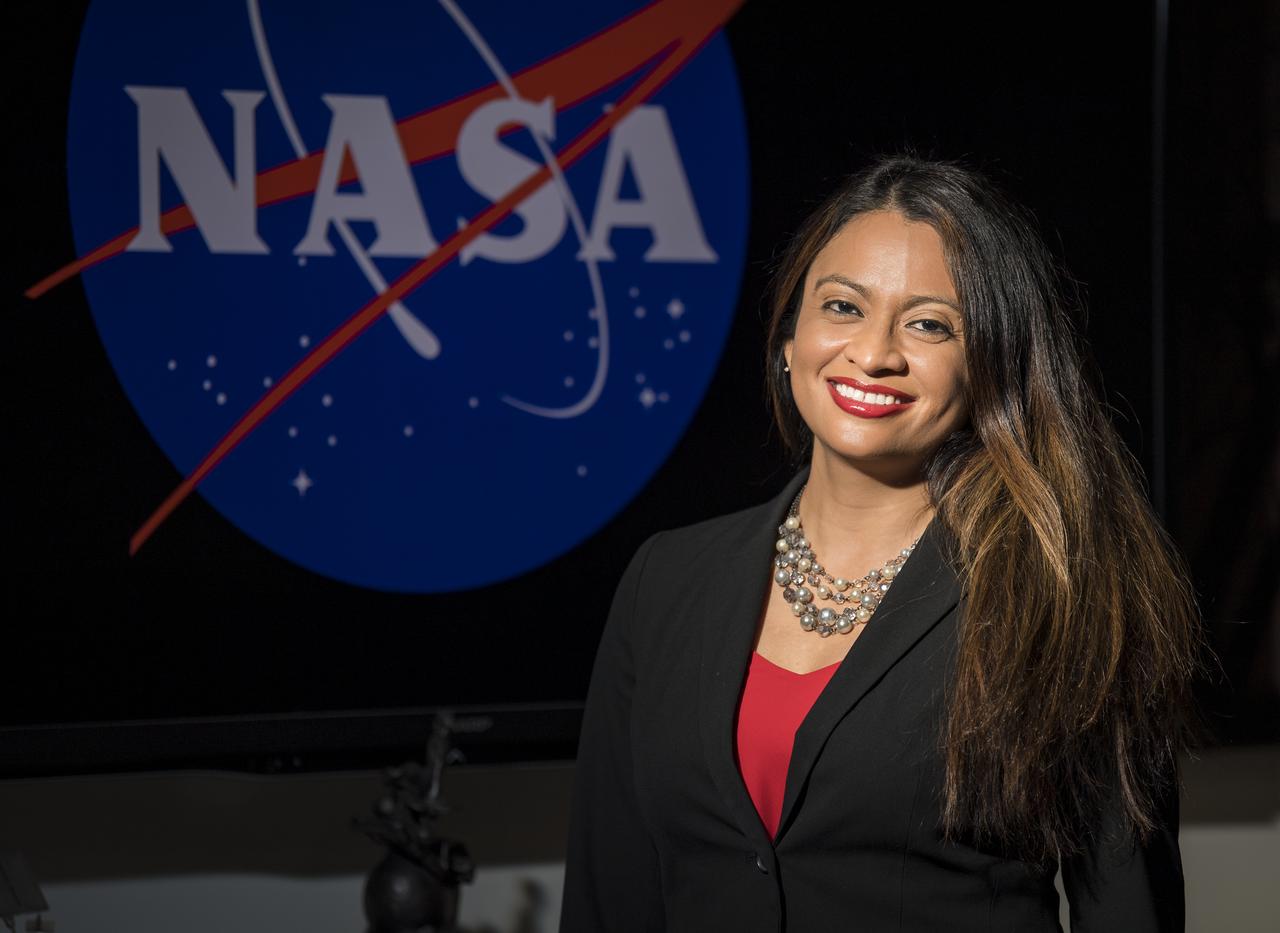
"For me, representation is key. I want people from different backgrounds, different experiences, and different races and ethnicities to see themselves at this agency and across federal government, which is supposed to be representative of the American population. Especially for little girls like me — I grew up poor, the daughter of a former migrant worker. I grew up working in the fields, picking fruits and vegetables during weekends and school breaks. "I’m the first one in my family to get a four-year degree. I didn’t do it because it was what I was expected to do or because it was the obvious next step. I was able to go because I had teachers and advisors who saw potential even when I couldn’t. I was a first generation college student, and now I have nieces and nephews who have obtained or are in the process of obtaining their education." "It’s not only about opening doors, it’s about opening minds — giving people a vision of the possibilities that are out there. Because now you’re broadening that thinking. You’re helping them question their status quo and helping them to see a different version of themselves. When you meet someone who is doing something different but yet, you can relate to them because of what they look like or their background, it makes a huge difference." Portrait, Maria Santos, Tuesday, Oct.1, 2019 at NASA Headquarters in Washington. Photo Credit: (NASA/Aubrey Gemignani)