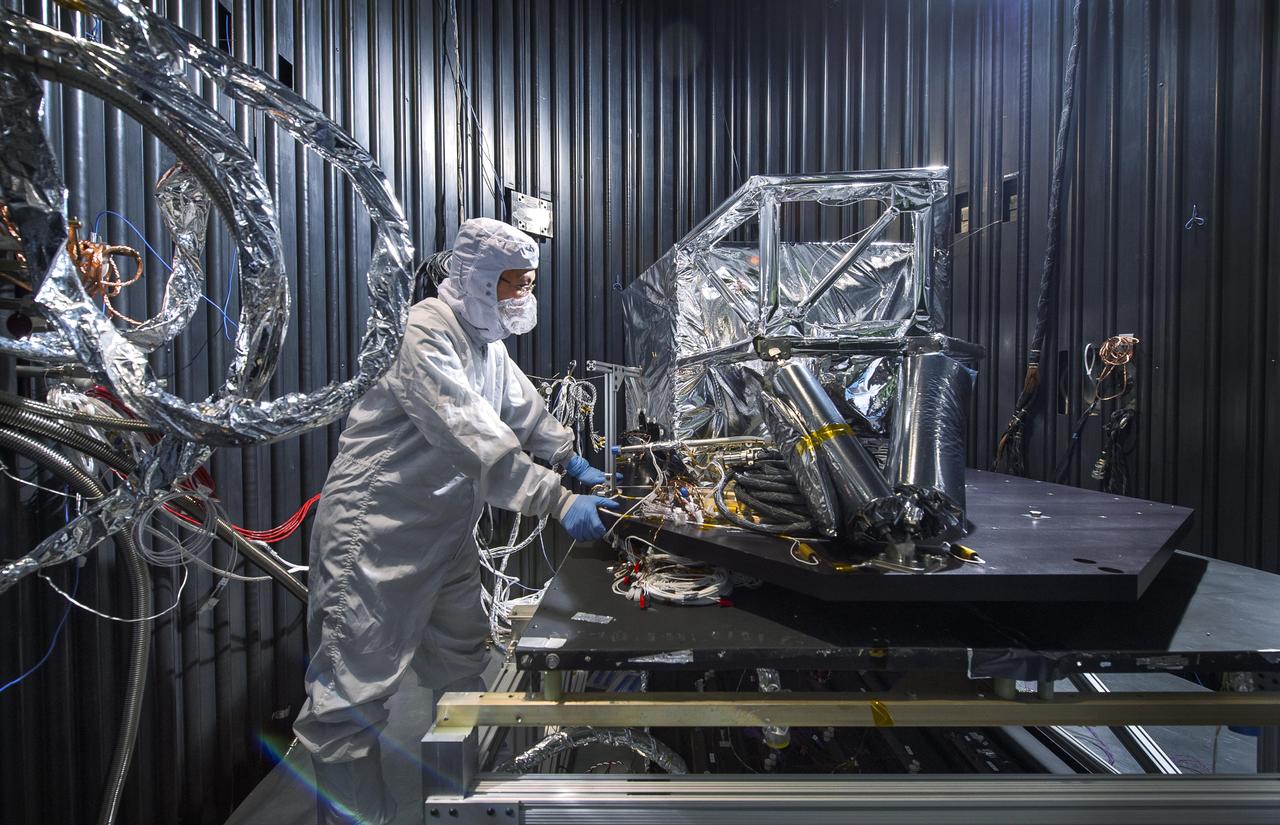
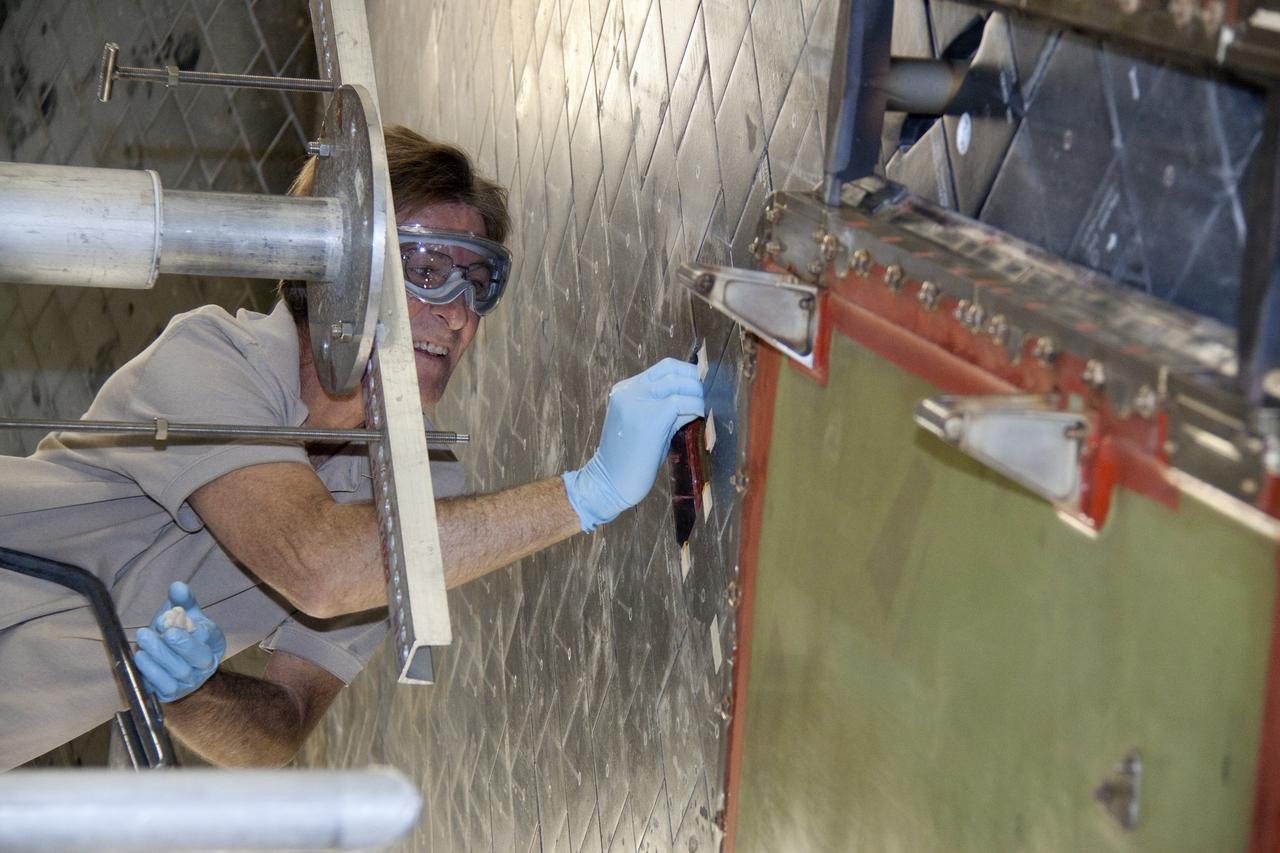
NASA engineer Acey Herrera recently checked out copper test wires inside the thermal shield of the Mid-Infrared Instrument, known as MIRI, that will fly aboard NASA's James Webb Space Telescope. The shield is designed to protect the vital MIRI instrument from excess heat. At the time of the photo, the thermal shield was about to go through rigorous environmental testing to ensure it can perform properly in the extreme cold temperatures that it will encounter in space. Herrera is working in a thermal vacuum chamber at NASA's Goddard Space Flight Center in Greenbelt, Md. As the MIRI shield lead, Herrera along with a thermal engineer and cryo-engineer verify that the shield is ready for testing. On the Webb telescope, the pioneering camera and spectrometer that comprise the MIRI instrument sit inside the Integrated Science Instrument Module flight structure, that holds Webb's four instruments and their electronic systems during launch and operations. Read more: <a href="http://1.usa.gov/15I0wrS" rel="nofollow">1.usa.gov/15I0wrS</a> Credit: NASA/Chris Gunn <b><a href="http://www.nasa.gov/audience/formedia/features/MP_Photo_Guidelines.html" rel="nofollow">NASA image use policy.</a></b> <b><a href="http://www.nasa.gov/centers/goddard/home/index.html" rel="nofollow">NASA Goddard Space Flight Center</a></b> enables NASA’s mission through four scientific endeavors: Earth Science, Heliophysics, Solar System Exploration, and Astrophysics. Goddard plays a leading role in NASA’s accomplishments by contributing compelling scientific knowledge to advance the Agency’s mission. <b>Follow us on <a href="http://twitter.com/NASA_GoddardPix" rel="nofollow">Twitter</a></b> <b>Like us on <a href="http://www.facebook.com/pages/Greenbelt-MD/NASA-Goddard/395013845897?ref=tsd" rel="nofollow">Facebook</a></b> <b>Find us on <a href="http://instagram.com/nasagoddard?vm=grid" rel="nofollow">Instagram</a></b>
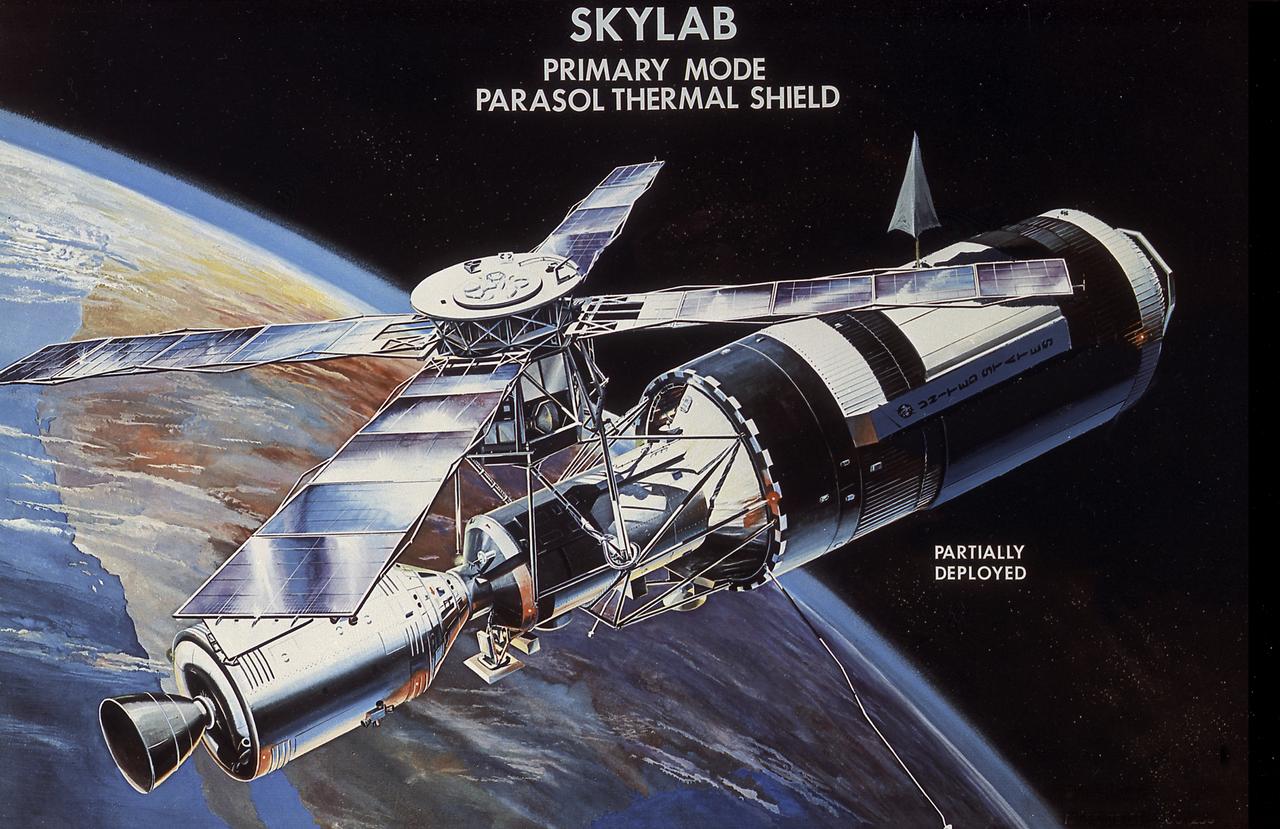
This image illustrates the deployment of the Skylab parasol thermal shield. Skylab lost its thermal protection shield during its launch on May 14, 1973. The Skylab-2 crew deployed a parasol thermal shield to protect the workshop from overheating. The crew attached the canister containing the parasol to the scientific airlock and extended the folded shield through the opening and into space. Slowly, the struts extended and the sunshade took shape and was in place over the workshop's outer surface. This illustration shows the parasol at partial extension. Emergency procedures to repair and salvage the damaged Skylab were a joint effort of the Marshall Space Flight Center, other NASA centers, and contractors.
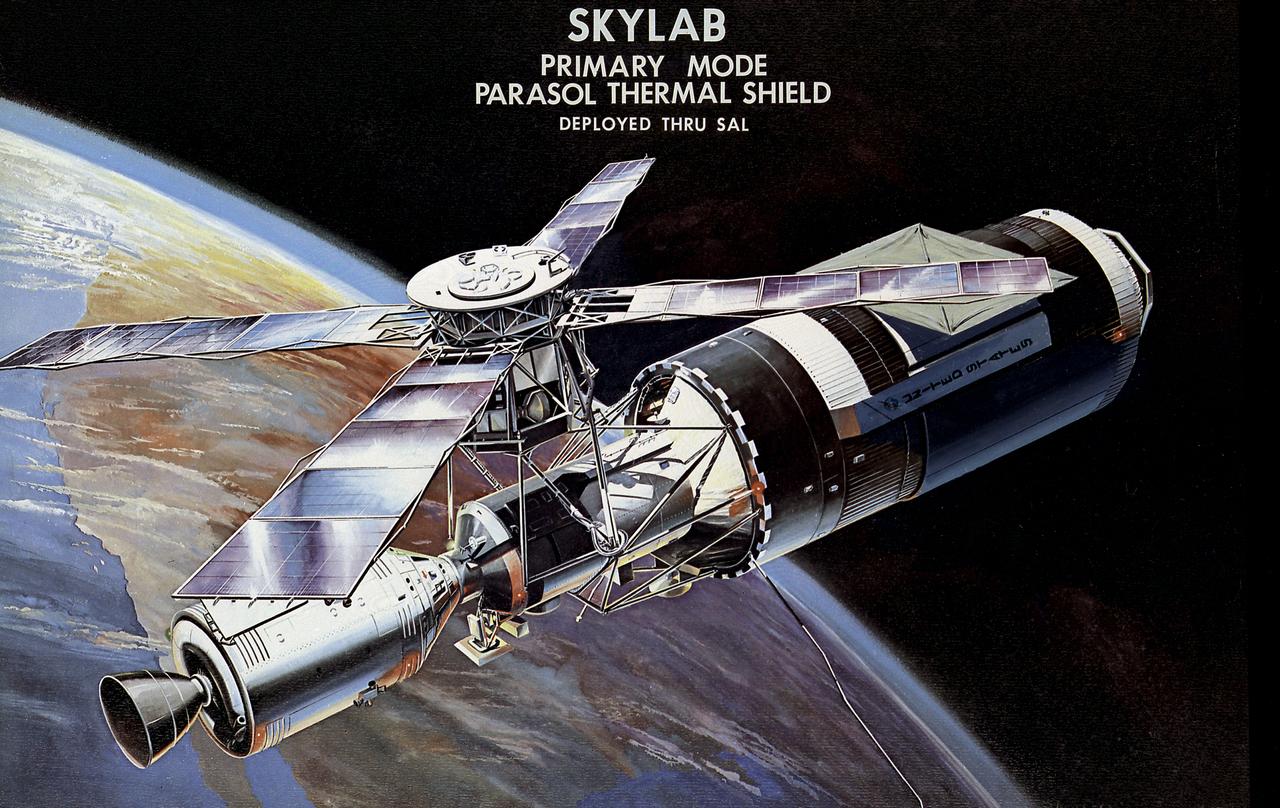
This image illustrates the deployment of the Skylab parasol thermal shield. Skylab lost its thermal protection shield during its launch on May 14, 1973. The Skylab-2 crew deployed a parasol thermal shield to protect the workshop from overheating. The crew attached the canister containing the parasol to the scientific airlock and extended the folded shield through the opening and into space. Slowly, the struts extended, the sunshade took shape, and was in place over the workshop's outer surface. This illustration shows the parasol being fully deployed and retracted for service. Emergency procedures to repair and salvage the damaged Skylab were a joint effort of the Marshall Space Flight Center, other NASA centers, and contractors.
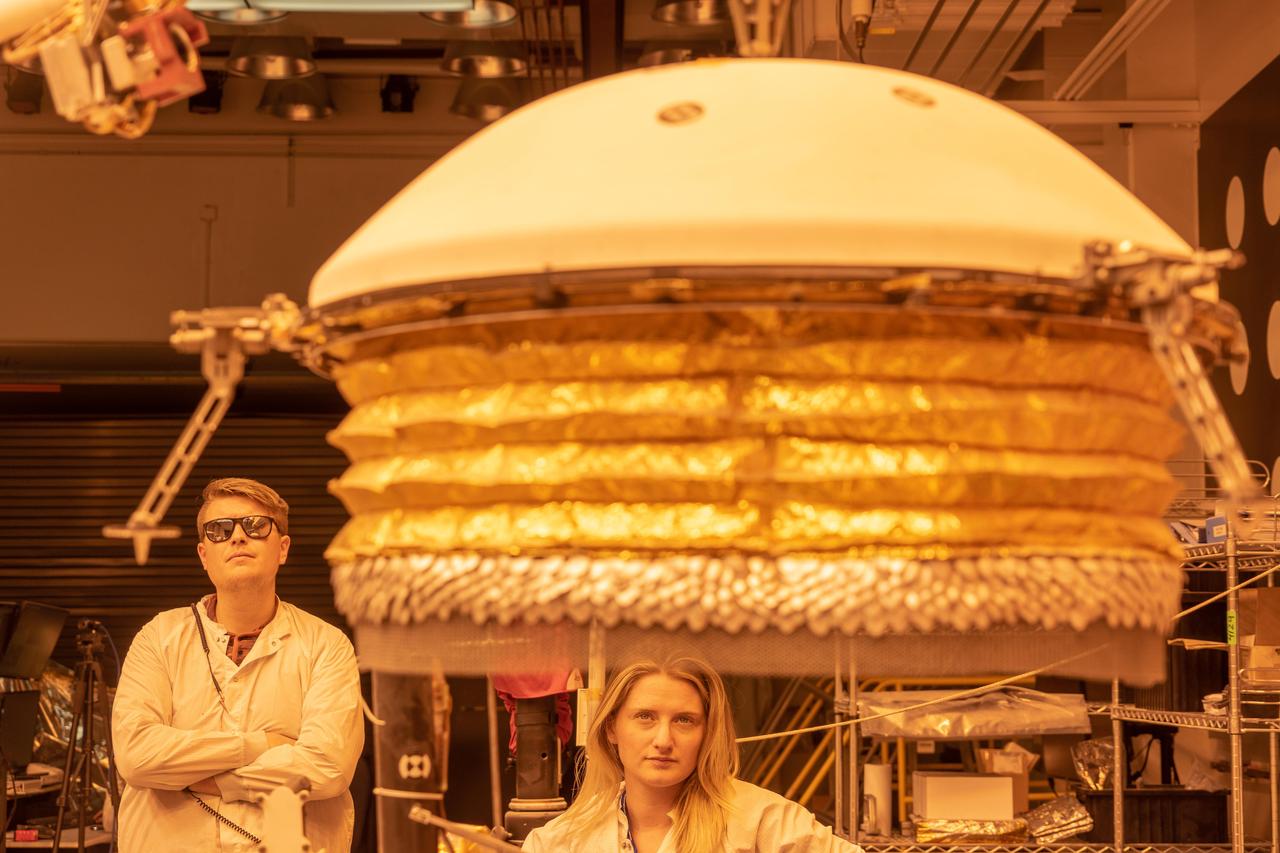
ForeSight, a fully functional, full-size model of NASA's InSight lander, practices deploying a model of the lander's Wind and Thermal Shield while engineers Phil Bailey (left) and Jaime Singer (center) look on. The Wind and Thermal Shield protects InSight's seismometer. This testing was done at NASA's Jet Propulsion Laboratory in Pasadena, California. Bailey is wearing sunglasses to block the bright yellow lights in the test space, which mimic sunlight as it appears on Mars. https://photojournal.jpl.nasa.gov/catalog/PIA22955

NASA's InSight lander deployed its Wind and Thermal Shield on Feb. 2, 2019 (sol 66). The shield covers InSight's seismometer, which was set down onto the Martian surface on Dec. 19, 2018. This image was taken by the Instrument Deployment Camera on the lander's robotic arm. https://photojournal.jpl.nasa.gov/catalog/PIA22959
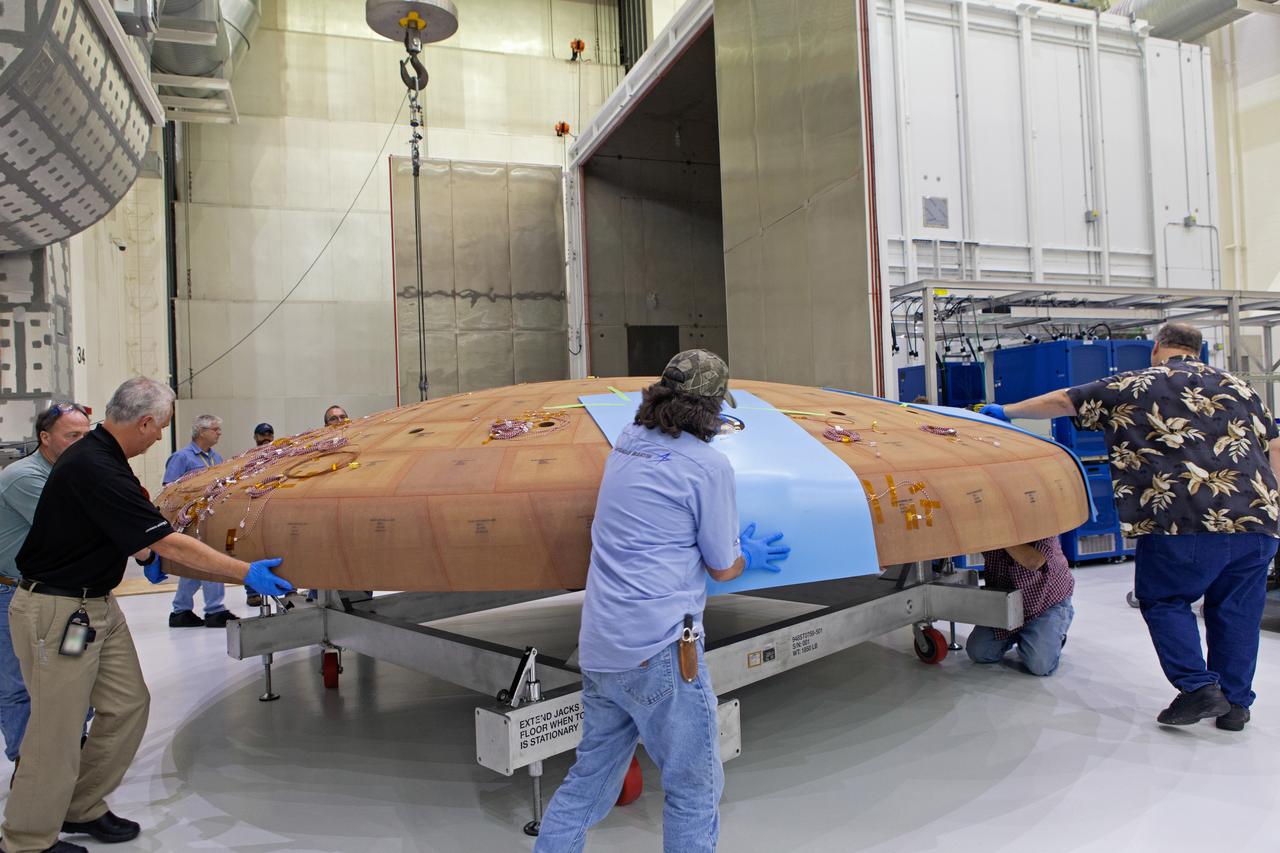
Technicians move the Orion heat shield for Artemis I toward the thermal chamber in the Neil Armstrong Operations and Checkout Building high bay at NASA's Kennedy Space Center in Florida on Oct. 23, 2017. Protective pads were attached to the heat shield surface. The heat shield will undergo a thermal cycle test to verify acceptable workmanship and material quality. The test also serves to verify the heat shield's thermal protection systems have been manufactured and assembled correctly. The Orion spacecraft will launch atop NASA's Space Launch System rocket on it first uncrewed integrated flight.
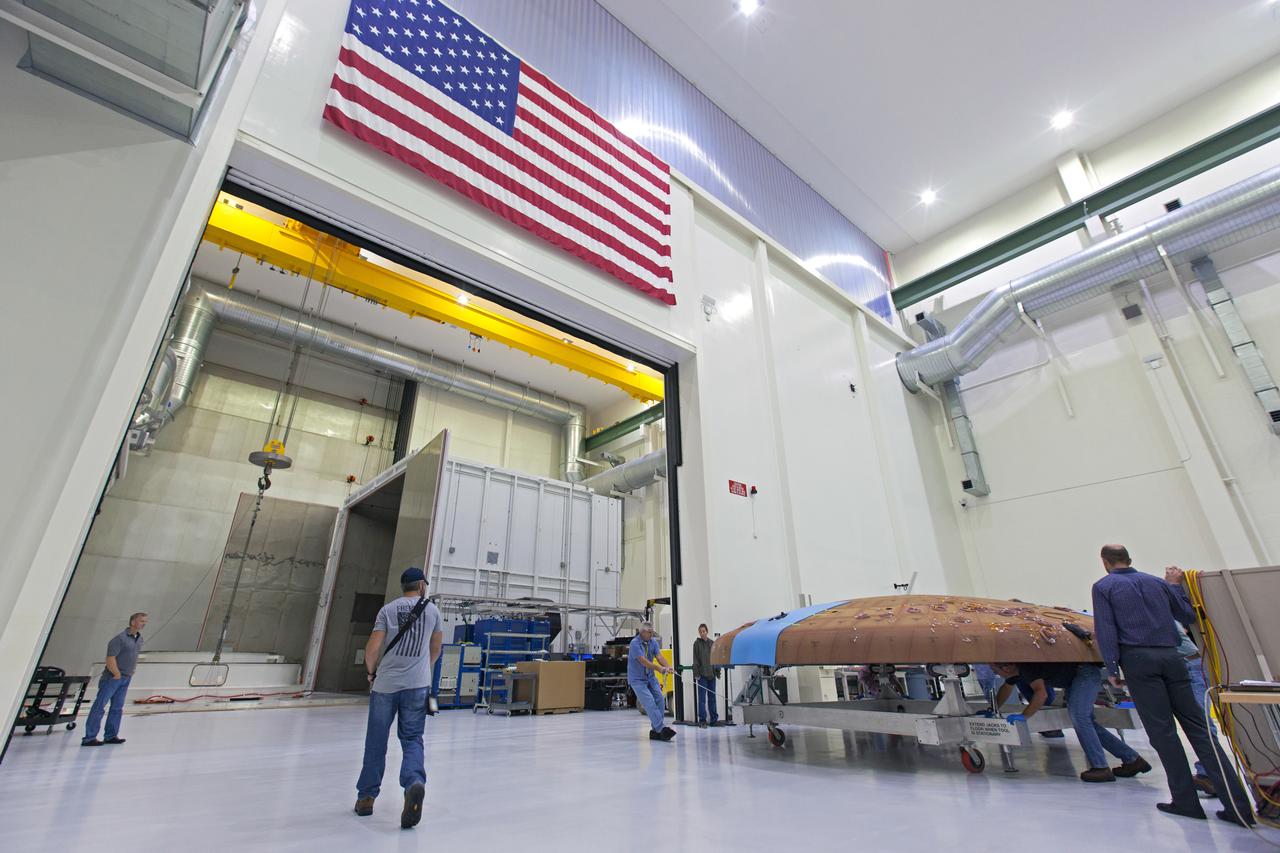
Technicians move the Orion heat shield for Artemis I toward the thermal chamber in the Neil Armstrong Operations and Checkout Building high bay at NASA's Kennedy Space Center in Florida on Oct. 23, 2017. Protective pads were attached to the heat shield surface. The heat shield will undergo a thermal cycle test to verify acceptable workmanship and material quality. The test also serves to verify the heat shield's thermal protection systems have been manufactured and assembled correctly. The Orion spacecraft will launch atop NASA's Space Launch System rocket on it first uncrewed integrated flight.
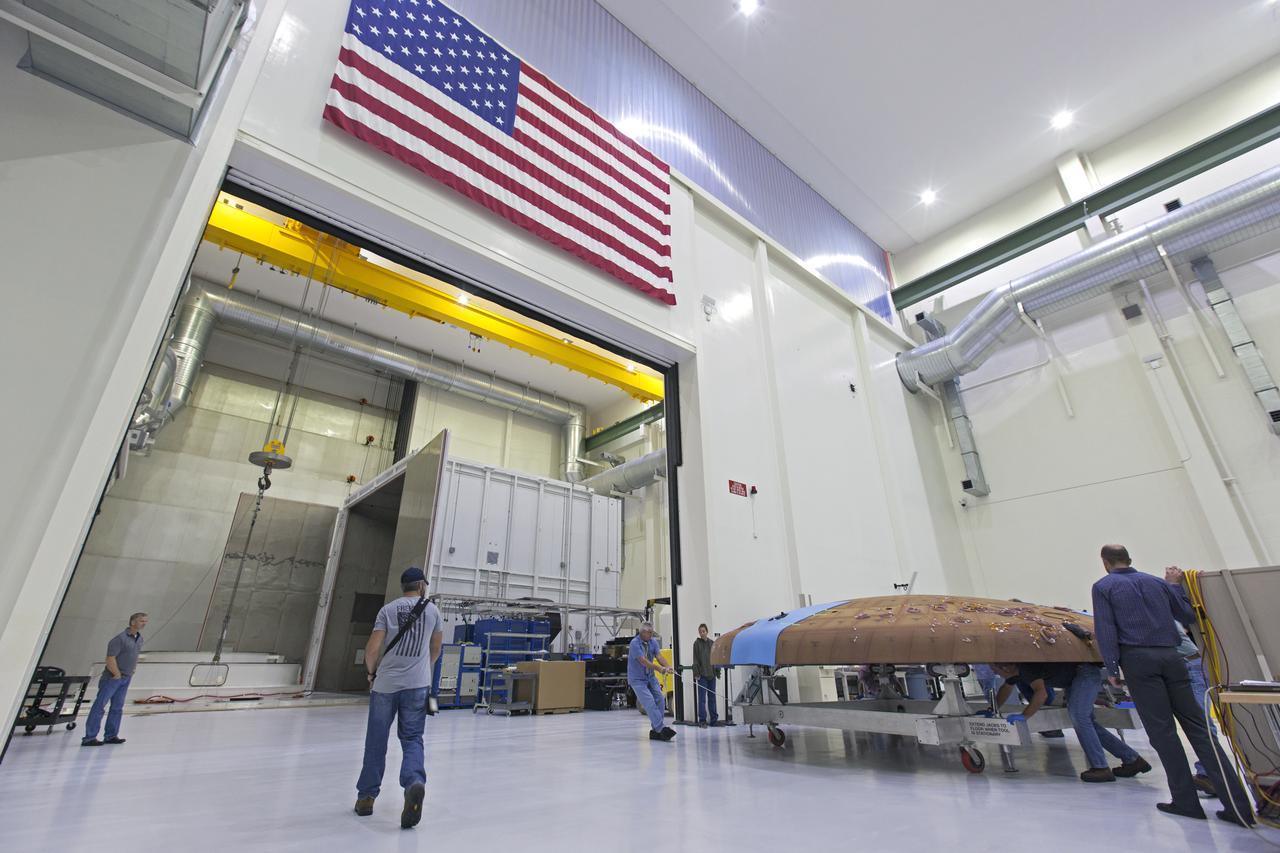
Technicians move the Orion heat shield for Exploration Mission-1 toward the thermal chamber in the Neil Armstrong Operations and Checkout Building high bay at NASA's Kennedy Space Center in Florida. Protective pads are being attached to the heat shield surface. The heat shield will undergo a thermal cycle test to verify acceptable workmanship and material quality. The test also serves to verify the heat shield's thermal protection systems have been manufactured and assembled correctly. The Orion spacecraft will launch atop NASA's Space Launch System rocket on its first uncrewed integrated flight.
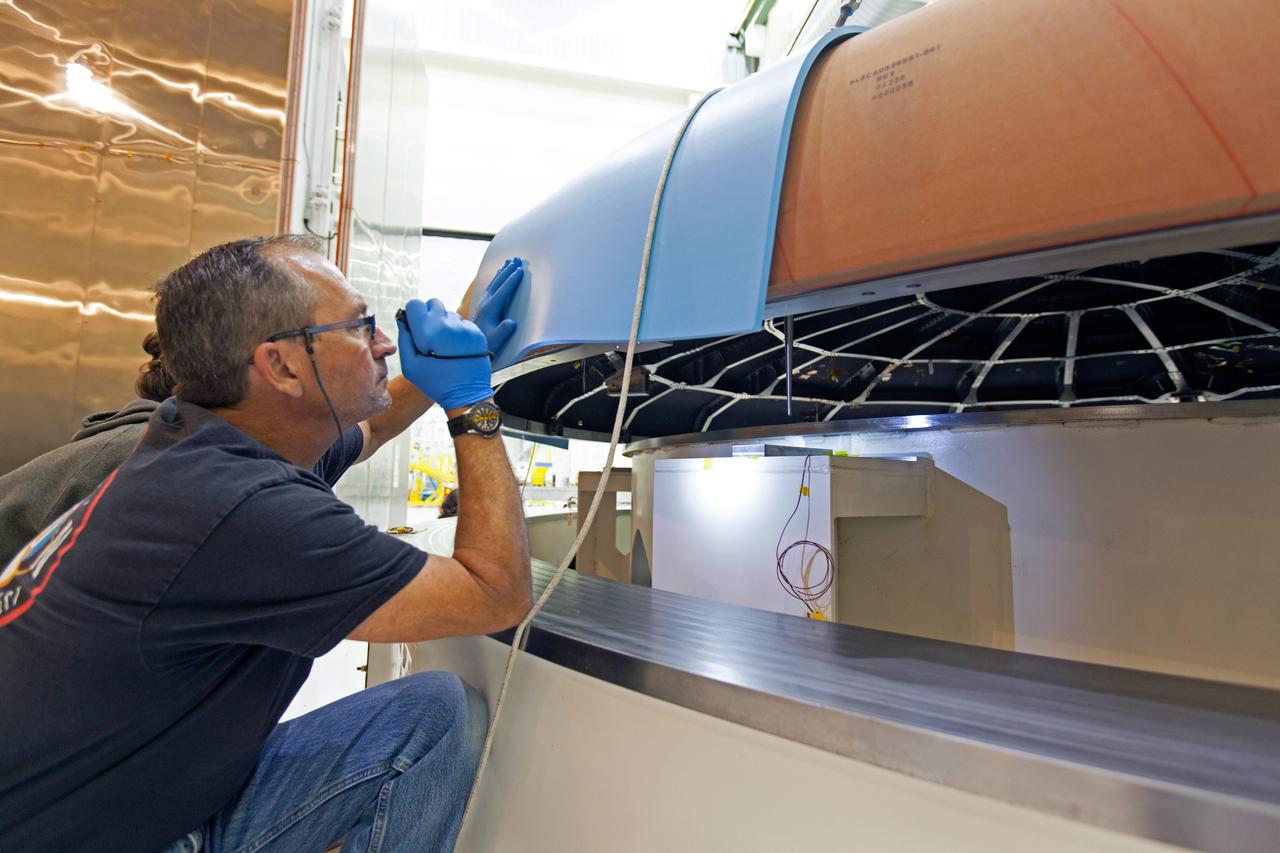
A technician checks the Orion heat shield for Artemis I before it is moved into the thermal chamber in the Neil Armstrong Operations and Checkout Building high bay at NASA's Kennedy Space Center in Florida on Oct. 23, 2017. Protective pads were attached to the heat shield surface. The heat shield will undergo a thermal cycle test to verify acceptable workmanship and material quality. The test also serves to verify the heat shield's thermal protection systems have been manufactured and assembled correctly. The Orion spacecraft will launch atop NASA's Space Launch System rocket on it first uncrewed integrated flight.
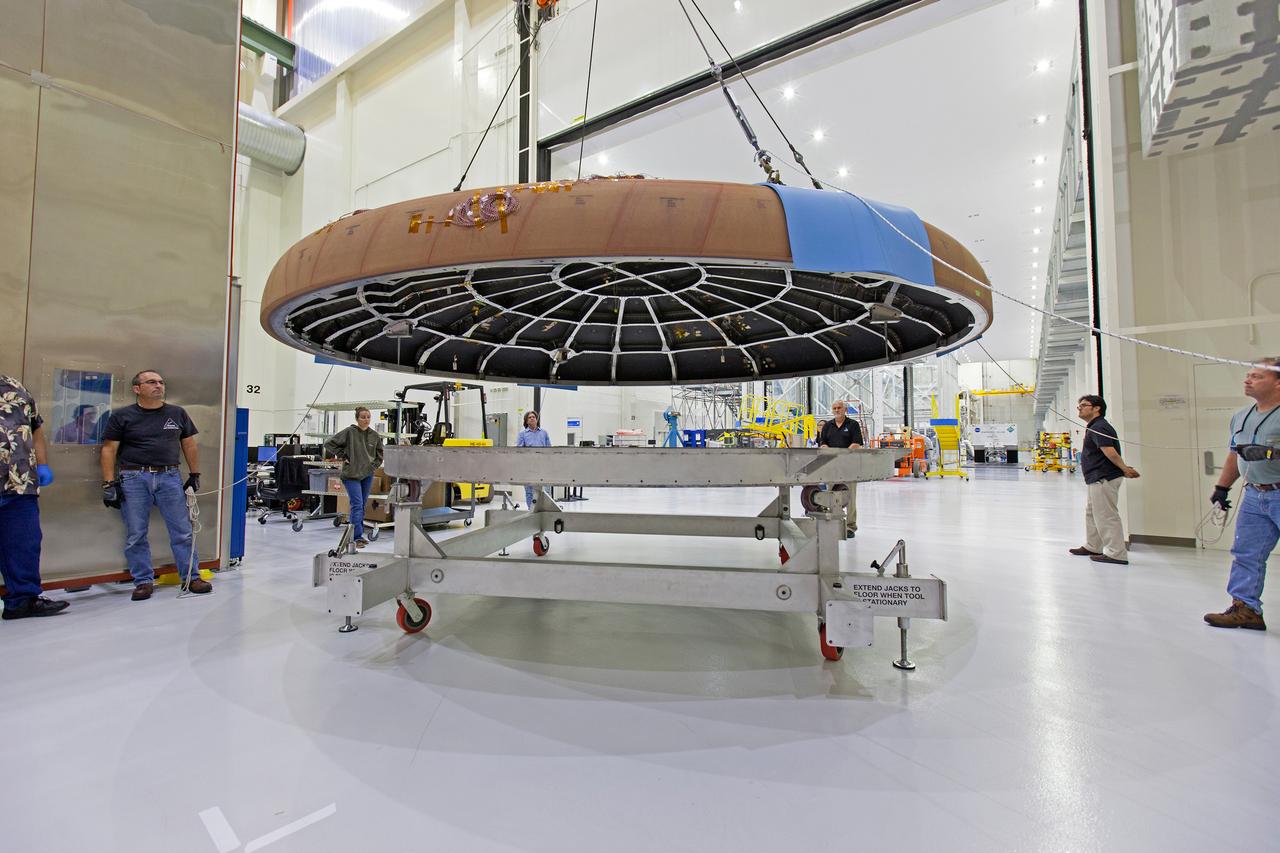
A crane attached to the Orion heat shield for Artemis I moves it toward the thermal chamber in the Neil Armstrong Operations and Checkout Building high bay at NASA's Kennedy Space Center in Florida on Oct. 23, 2017. Protective pads were attached to the heat shield surface. The heat shield will undergo a thermal cycle test to verify acceptable workmanship and material quality. The test also serves to verify the heat shield's thermal protection systems have been manufactured and assembled correctly. The Orion spacecraft will launch atop NASA's Space Launch System rocket on it first uncrewed integrated flight.
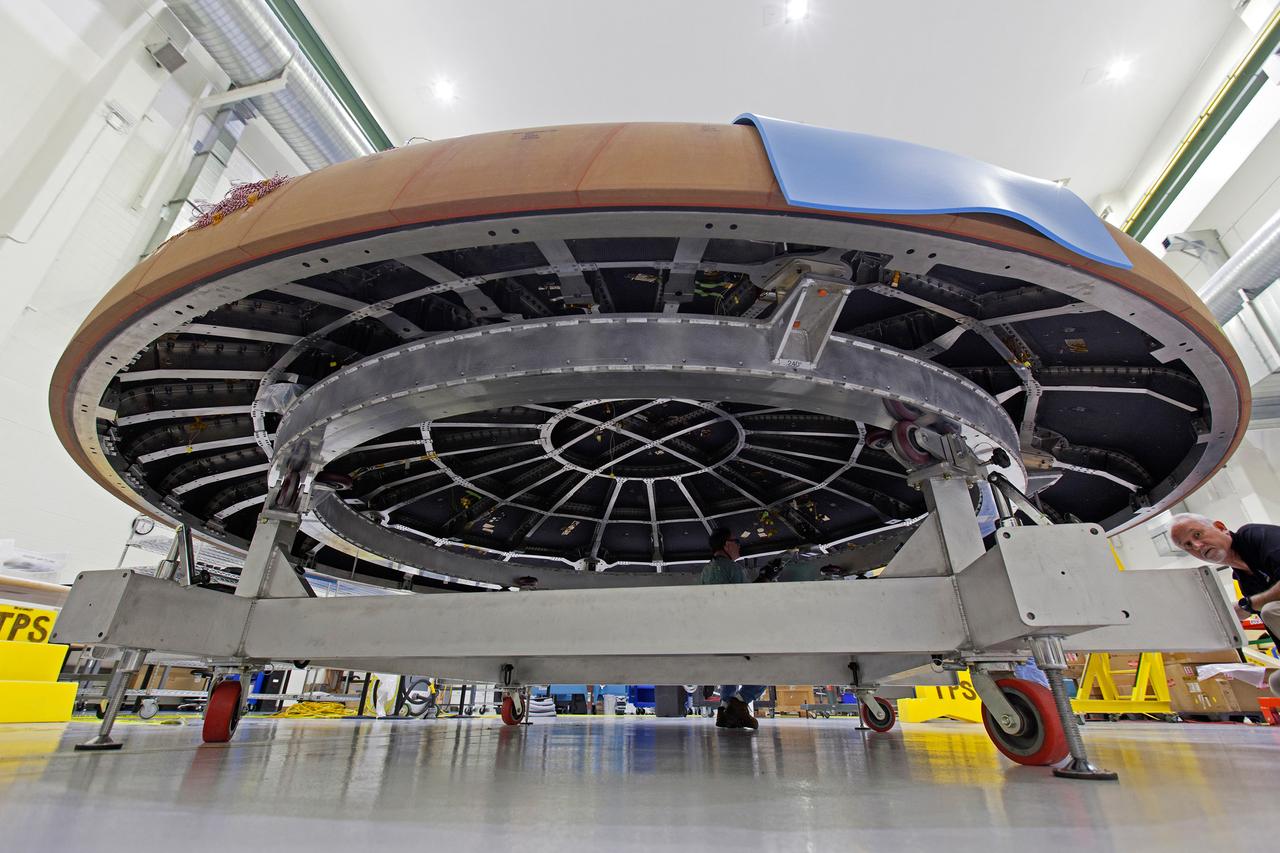
The Orion heat shield for Artemis I is being prepared for its move to the thermal chamber in the Neil Armstrong Operations and Checkout Building high bay at NASA's Kennedy Space Center in Florida on Oct. 23, 2017. Protective pads are being attached to the heat shield surface. The heat shield will undergo a thermal cycle test to verify acceptable workmanship and material quality. The test also serves to verify the heat shield's thermal protection systems have been manufactured and assembled correctly. The Orion spacecraft will launch atop NASA's Space Launch System rocket on its first uncrewed integrated flight.
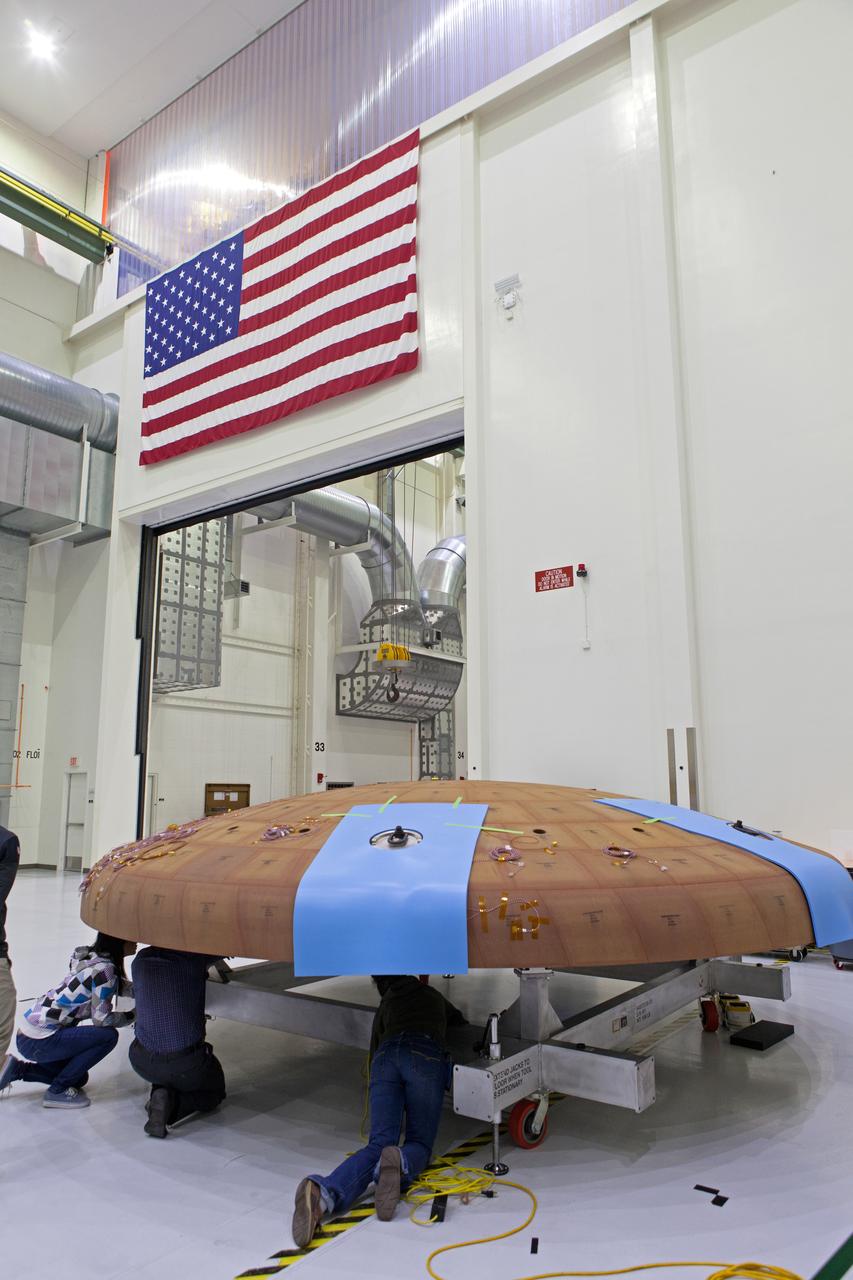
Lockheed Martin engineers and technicians prepare the Orion heat shield for Artemis I for its move to the thermal chamber in the Neil Armstrong Operations and Checkout Building high bay at NASA's Kennedy Space Center in Florida on Oct. 23, 2017. The heat shield will undergo a thermal cycle test to verify acceptable workmanship and material quality. The test serves to verify the heat shield's thermal protection systems have been manufactured and assembled correctly. The Orion spacecraft will launch atop NASA's Space Launch System rocket on its first uncrewed integrated flight.
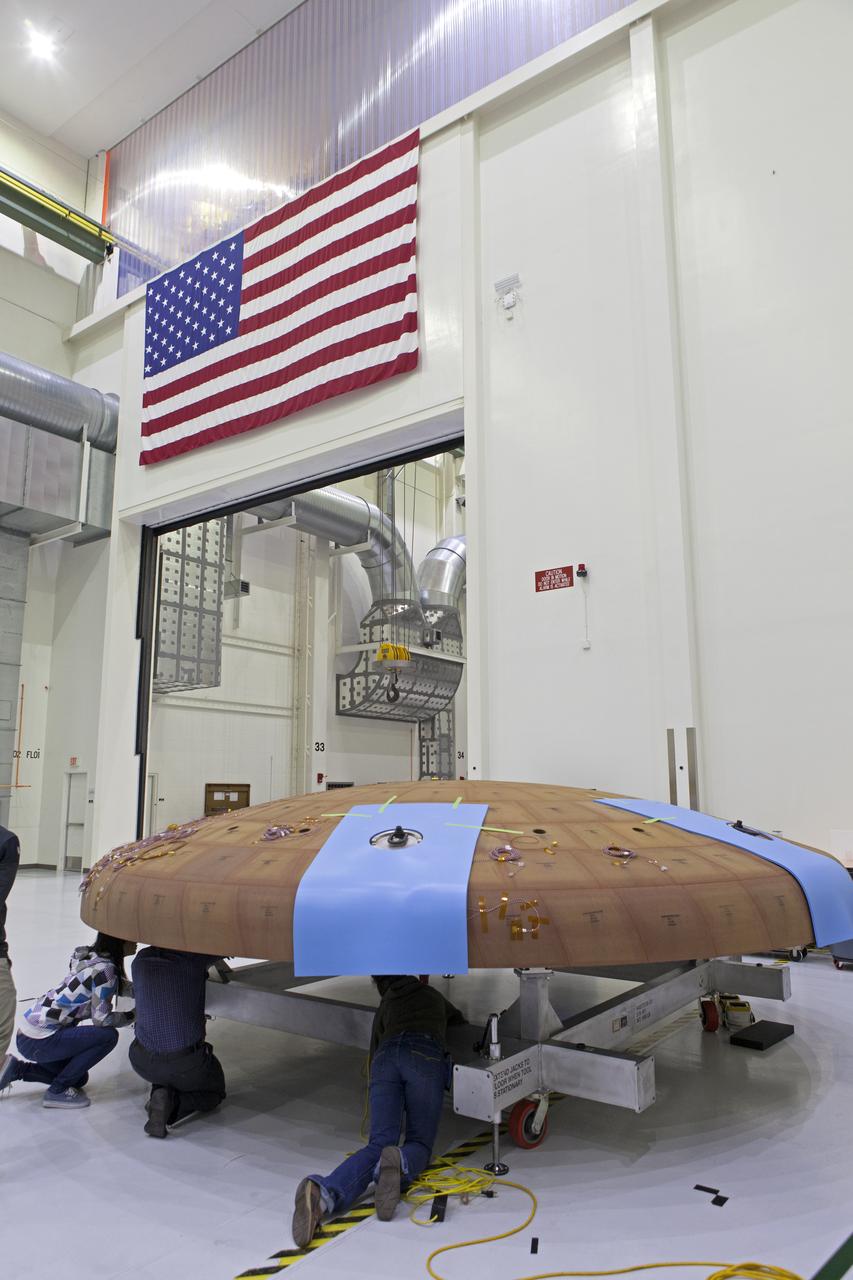
Lockheed Martin engineers and technicians prepare the Orion heat shield for Exploration Mission-1 for its move to the thermal chamber in the Neil Armstrong Operations and Checkout Building high bay at NASA's Kennedy Space Center in Florida. The heat shield will undergo a thermal cycle test to verify acceptable workmanship and material quality. The test serves to verify the heat shield's thermal protection systems have been manufactured and assembled correctly. The Orion spacecraft will launch atop NASA's Space Launch System rocket on its first uncrewed integrated flight.
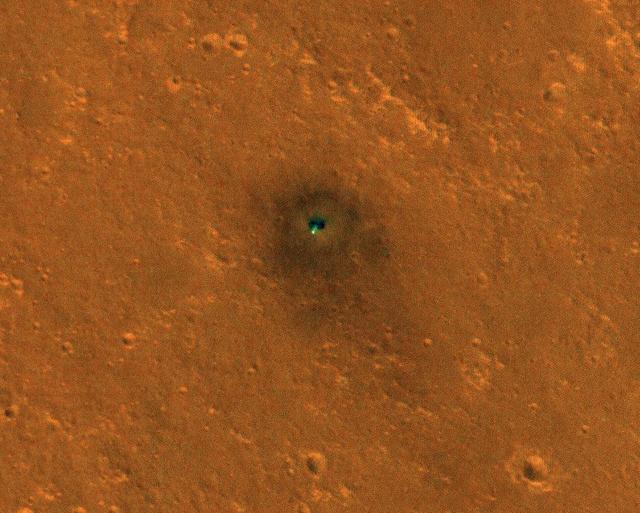
NASA's InSight spacecraft and its recently deployed Wind and Thermal Shield were imaged on Mars on Feb. 4, 2019, by the HiRISE camera aboard NASA's Mars Reconnaissance Orbiter. On Feb. 2, 2019, InSight's robotic arm placed the special shield over its seismometer on the Martian surface to protect the instrument from wind and extreme temperatures. The green object in this image is the InSight lander; the white dot just below it is the shield, which is especially bright and reflective. The shield is a little less than 6 feet (1.8 meters) away from the lander. The dark circles on either side of the lander are its solar panels. The total width of the lander with both panels open is 19 feet, 8 inches (6 meters). The image also shows the darkened ground where InSight's retrorockets blew away lighter-colored dust as the lander touched down on Nov. 26, 2018. Scientists are interested in imaging this location over time to watch how quickly the lighter-colored Martian dust covers that darkened surface. https://photojournal.jpl.nasa.gov/catalog/PIA23043
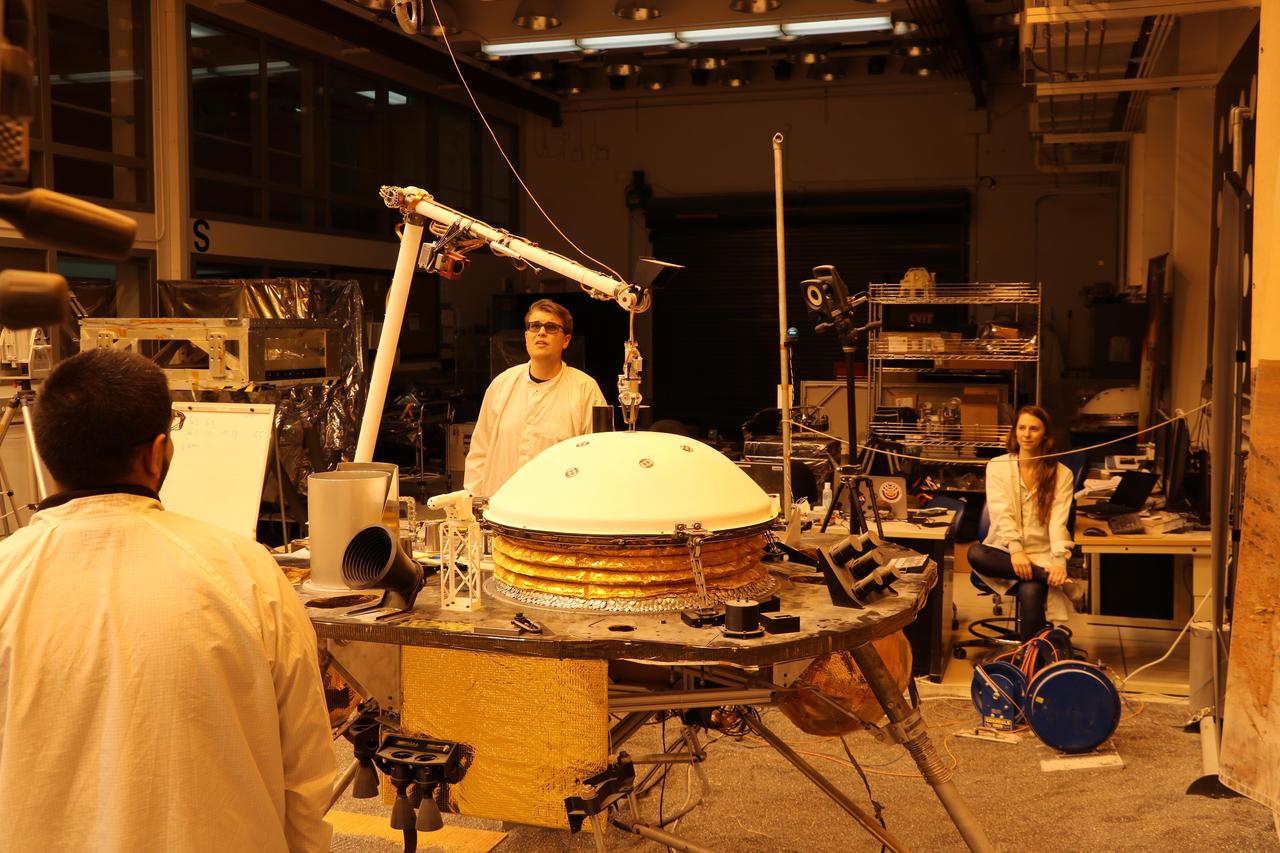
NASA's InSight mission tests an engineering version of the spacecraft's robotic arm in a Mars-like environment at NASA's Jet Propulsion Laboratory. The five-fingered grapple on the end of the robotic arm is lifting up the Wind and Thermal Shield, a protective covering for InSight's seismometer. The test is being conducted under reddish "Mars lighting" to simulate activities on the Red Planet. https://photojournal.jpl.nasa.gov/catalog/PIA22806
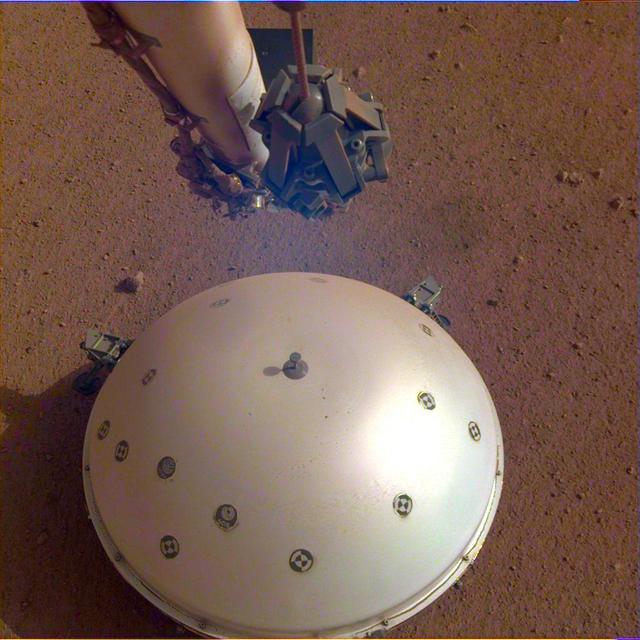
This image shows InSight's domed Wind and Thermal Shield, which covers its seismometer. The image was taken on the 110th Martian day, or sol, of the mission. The seismometer is called Seismic Experiment for Interior Structure, or SEIS. https://photojournal.jpl.nasa.gov/catalog/PIA23177
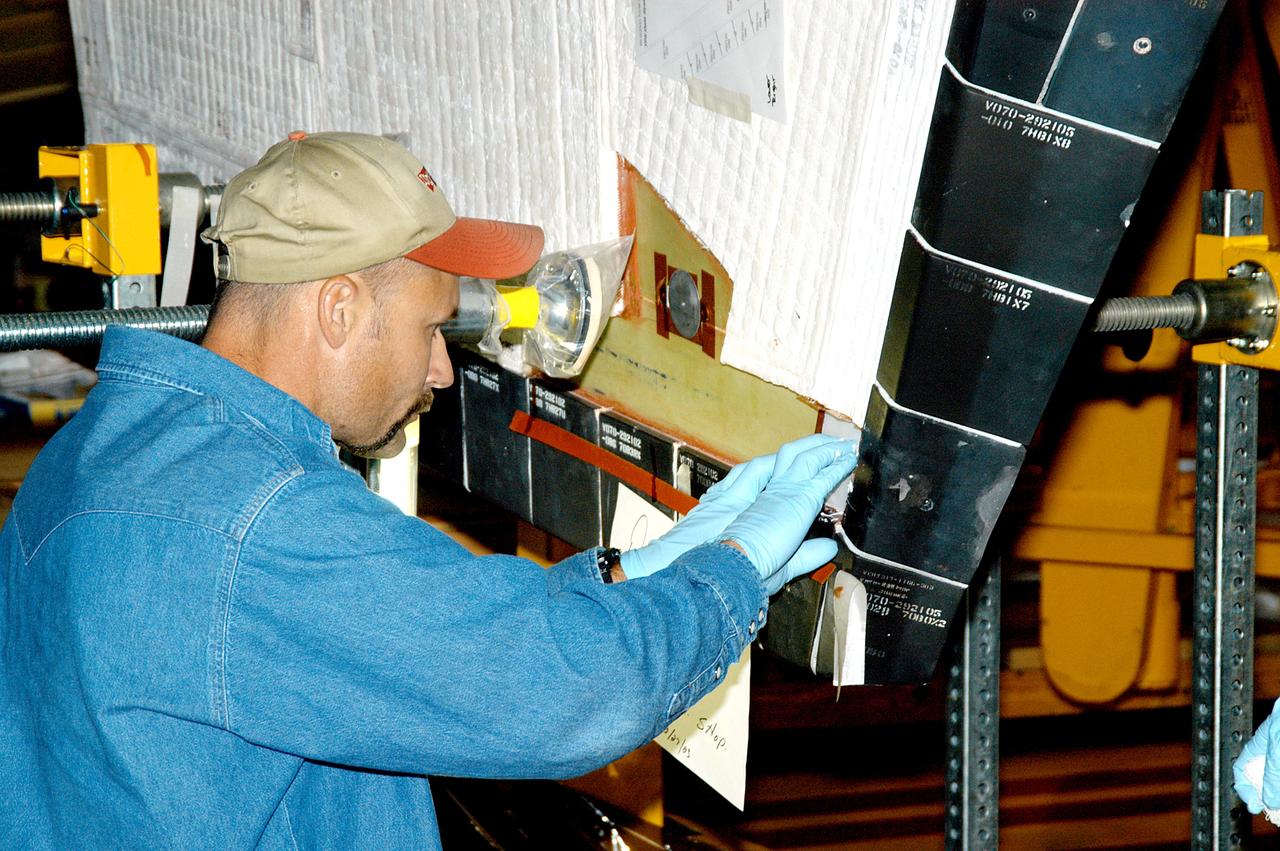
KENNEDY SPACE CENTER, FLA. - In the Orbiter Processing Facility, KSC employee Joel Smith prepares an area on the orbiter Discovery for blanket installation. The blankets are part of the Orbiter Thermal Protection System, thermal shields to protect against temperatures as high as 3,000° Fahrenheit, which are produced during descent for landing. Discovery is scheduled to fly on mission STS-121 to the International Space Station.
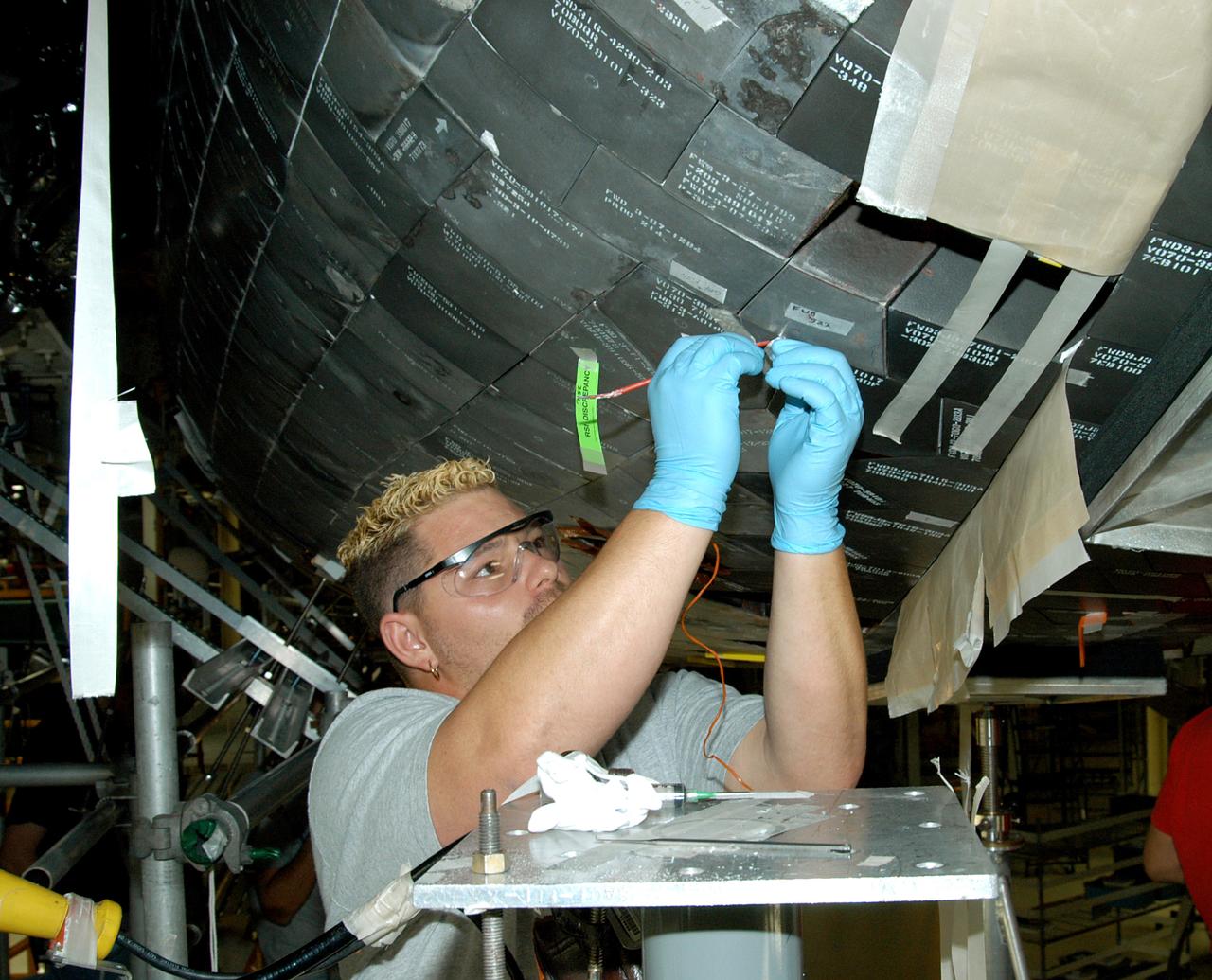
KENNEDY SPACE CENTER, FLA. - In the Orbiter Processing Facility, KSC employee Chris Moore repairs tile on the forward area of the orbiter Discovery. The vehicle has undergone Orbiter Major Modifications in the past year, which includes tile check and repair. The tiles are part of the Orbiter Thermal Protection System, thermal shields to protect against temperatures as high as 3,000° Fahrenheit, which are produced during descent for landing. Discovery is scheduled to fly on mission STS-121 to the International Space Station.
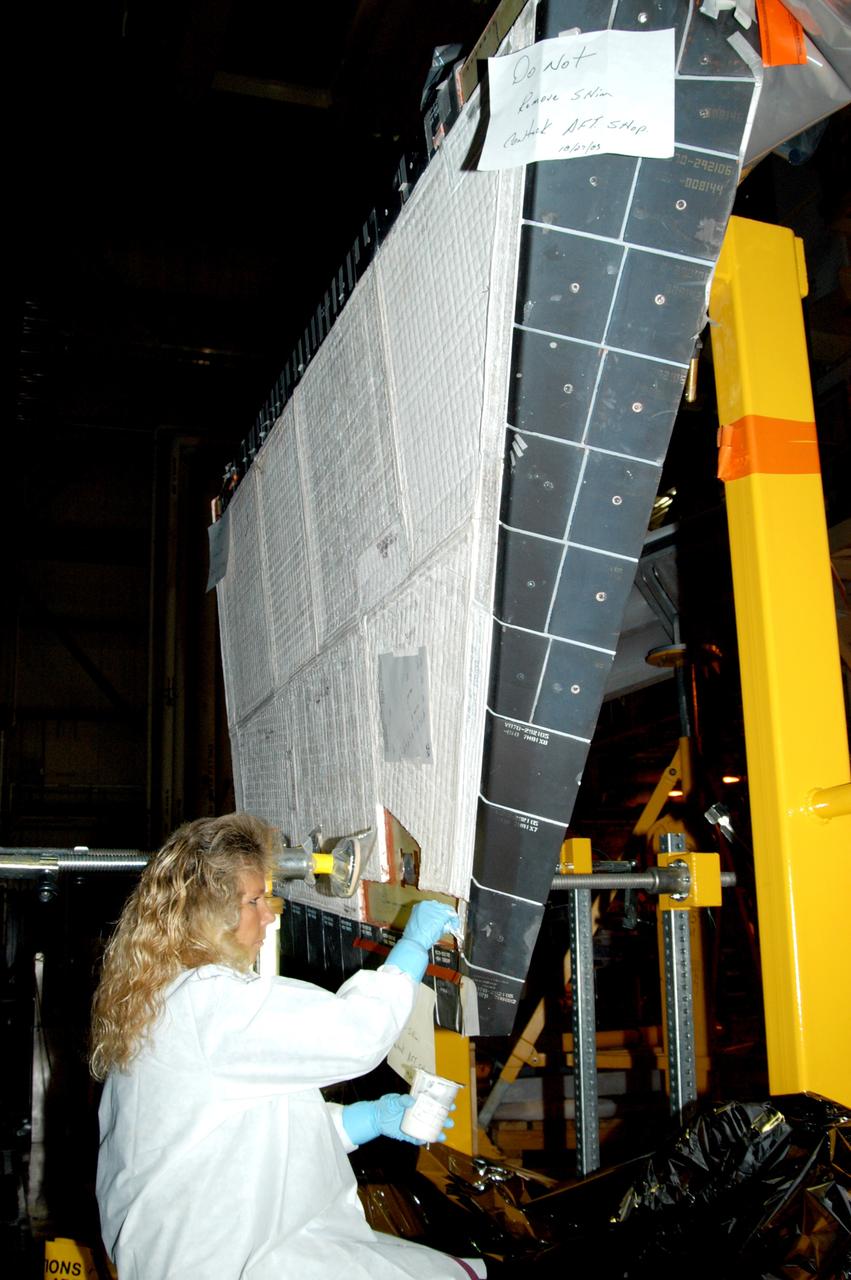
KENNEDY SPACE CENTER, FLA. - In the Orbiter Processing Facility, KSC employee Nadine Phillips prepares an area on the orbiter Discovery for blanket installation. The blankets are part of the Orbiter Thermal Protection System, thermal shields to protect against temperatures as high as 3,000° Fahrenheit, which are produced during descent for landing. Discovery is scheduled to fly on mission STS-121 to the International Space Station.
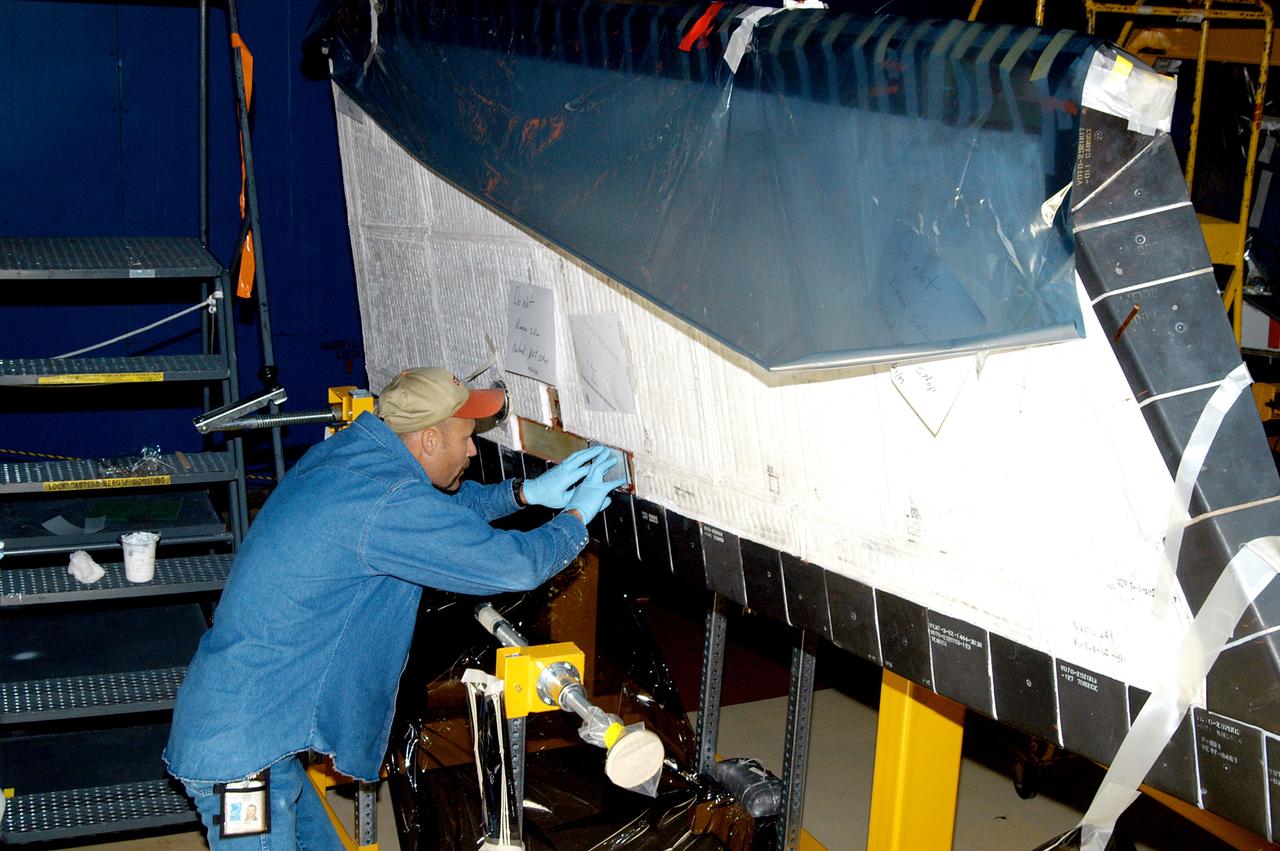
KENNEDY SPACE CENTER, FLA. - In the Orbiter Processing Facility, KSC employee Joel Smith prepares an area on the orbiter Discovery for blanket installation. The blankets are part of the Orbiter Thermal Protection System, thermal shields to protect against temperatures as high as 3,000° Fahrenheit, which are produced during descent for landing. Discovery is scheduled to fly on mission STS-121 to the International Space Station.
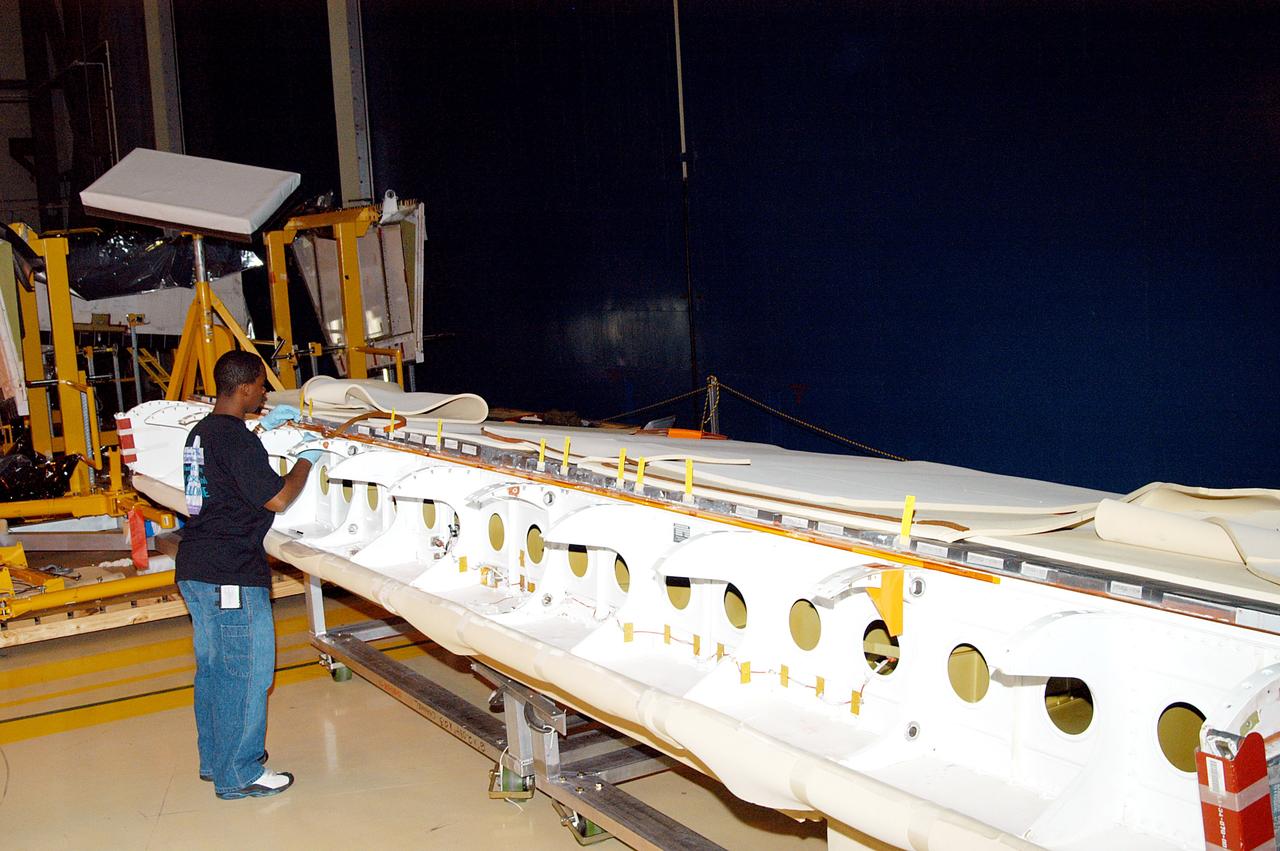
KENNEDY SPACE CENTER, FLA. - In the Orbiter Processing Facility, KSC employee Duane Williams prepares the blanket insulation to be installed on the body flap on orbiter Discovery. The blankets are part of the Orbiter Thermal Protection System, thermal shields to protect against temperatures as high as 3,000° Fahrenheit, which are produced during descent for landing. Discovery is scheduled to fly on mission STS-121 to the International Space Station.
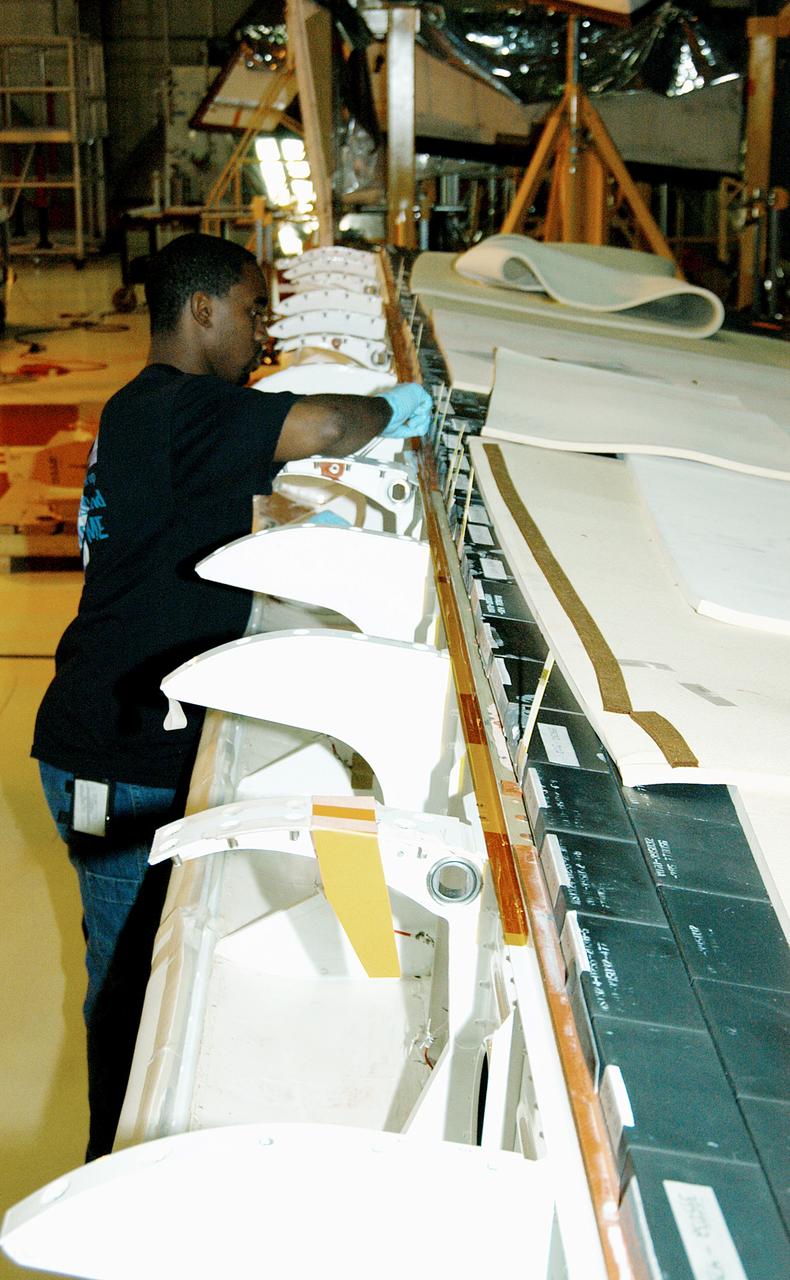
KENNEDY SPACE CENTER, FLA. - In the Orbiter Processing Facility, KSC employee Duane Williams prepares the blanket insulation to be installed on the body flap on orbiter Discovery. The blankets are part of the Orbiter Thermal Protection System, thermal shields to protect against temperatures as high as 3,000° Fahrenheit, which are produced during descent for landing. Discovery is scheduled to fly on mission STS-121 to the International Space Station.

ForeSight, a fully functional, full-size model of NASA's InSight lander, grasps a model of the lander's Wind and Thermal Shield while engineer Maggie Williams looks on. This testing was done at NASA's Jet Propulsion Laboratory in Pasadena, California. Williams is wearing sunglasses to block the bright yellow lights in the test space, which mimic sunlight as it appears on Mars. https://photojournal.jpl.nasa.gov/catalog/PIA22954
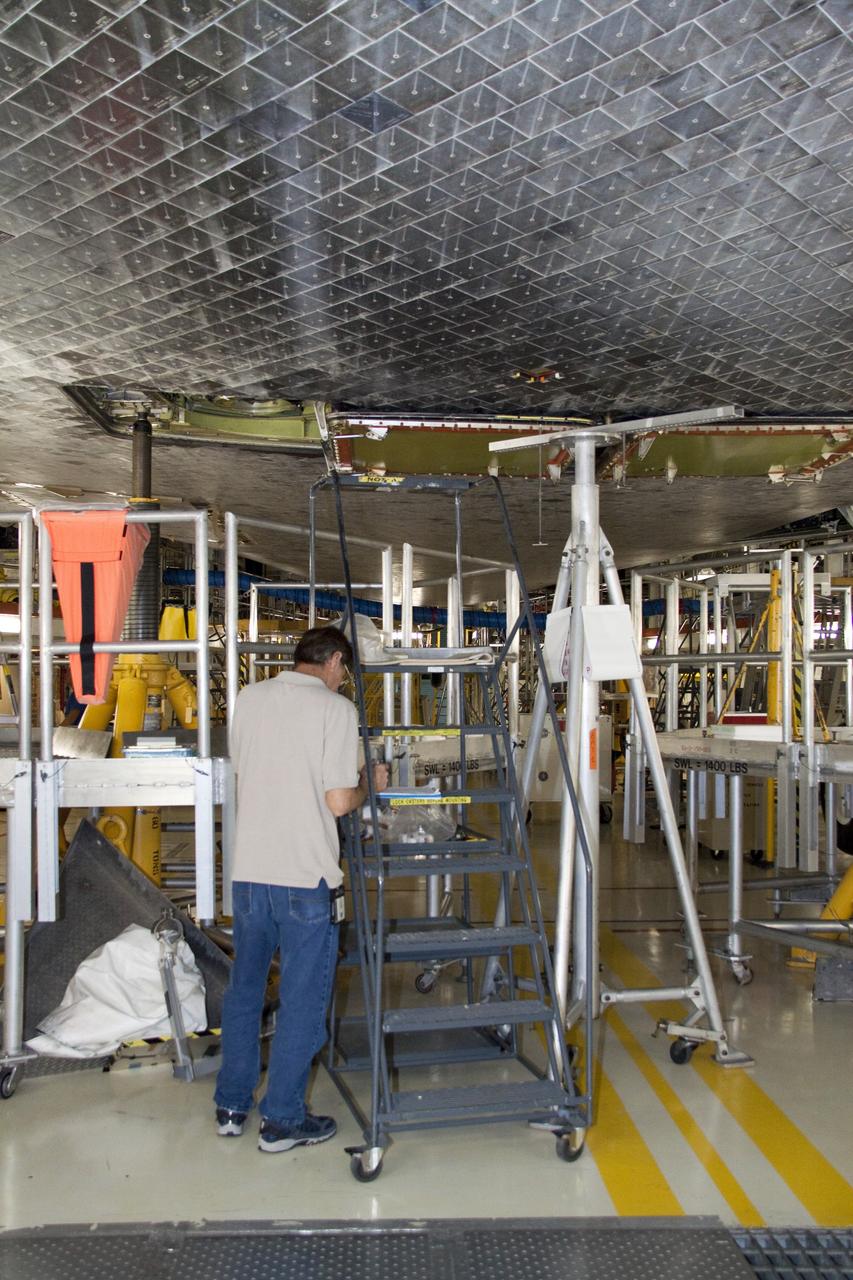
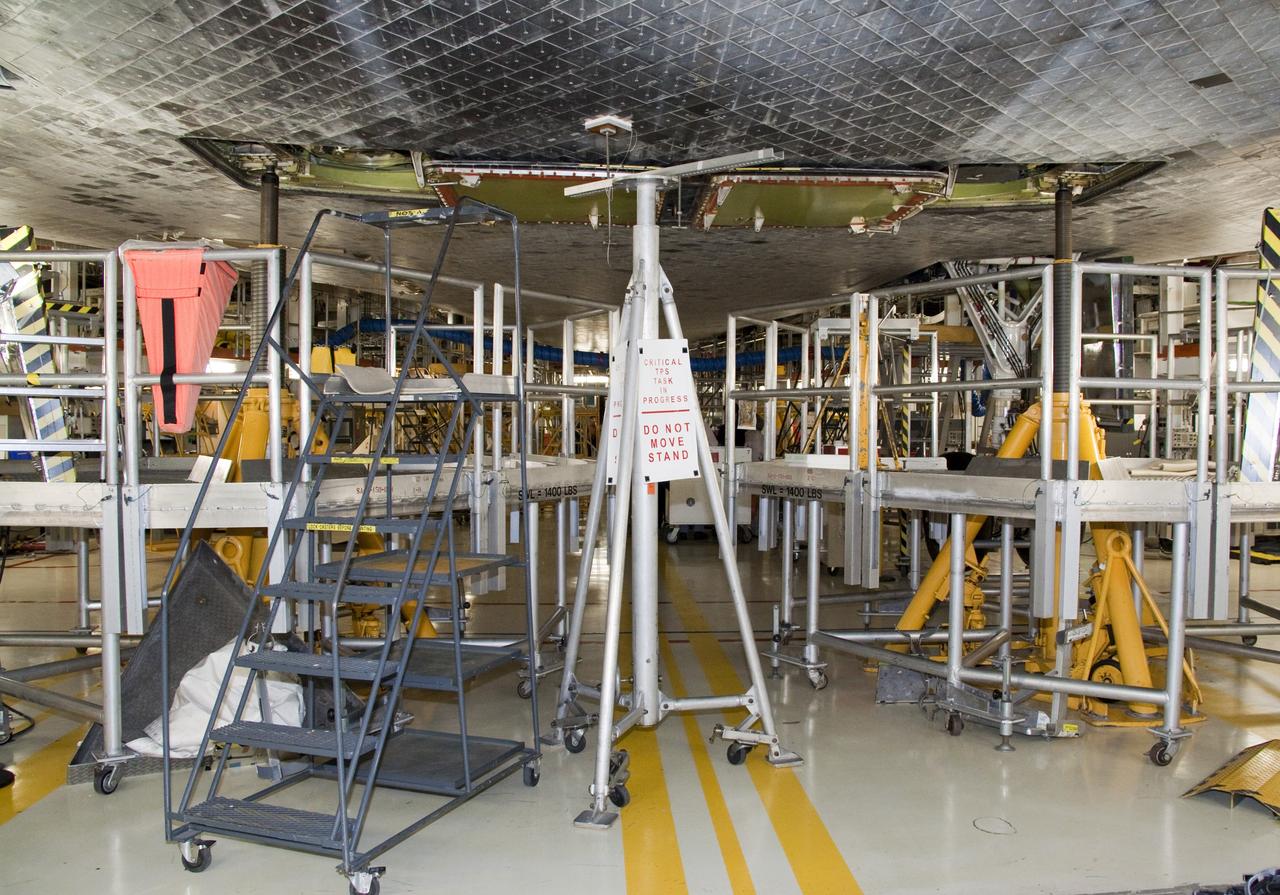
CAPE CANAVERAL, Fla. -- In Orbiter Processing Facility-1 at NASA's Kennedy Space Center in Florida, a thermal protection system technician is ready to work on replacing some of space shuttle Atlantis' heat shield tiles. The tiles are part of the Orbiter Thermal Protection System, thermal shields to protect against temperatures as high as 3,000 degrees Fahrenheit, which are produced during descent for landing. Atlantis is being prepared for the STS-135 mission, which will deliver the Raffaello multi-purpose logistics module packed with supplies, logistics and spare parts to the International Space Station. STS-135 is targeted to launch June 28, and will be the last spaceflight for the Space Shuttle Program. Photo credit: NASA/Jack Pfaller
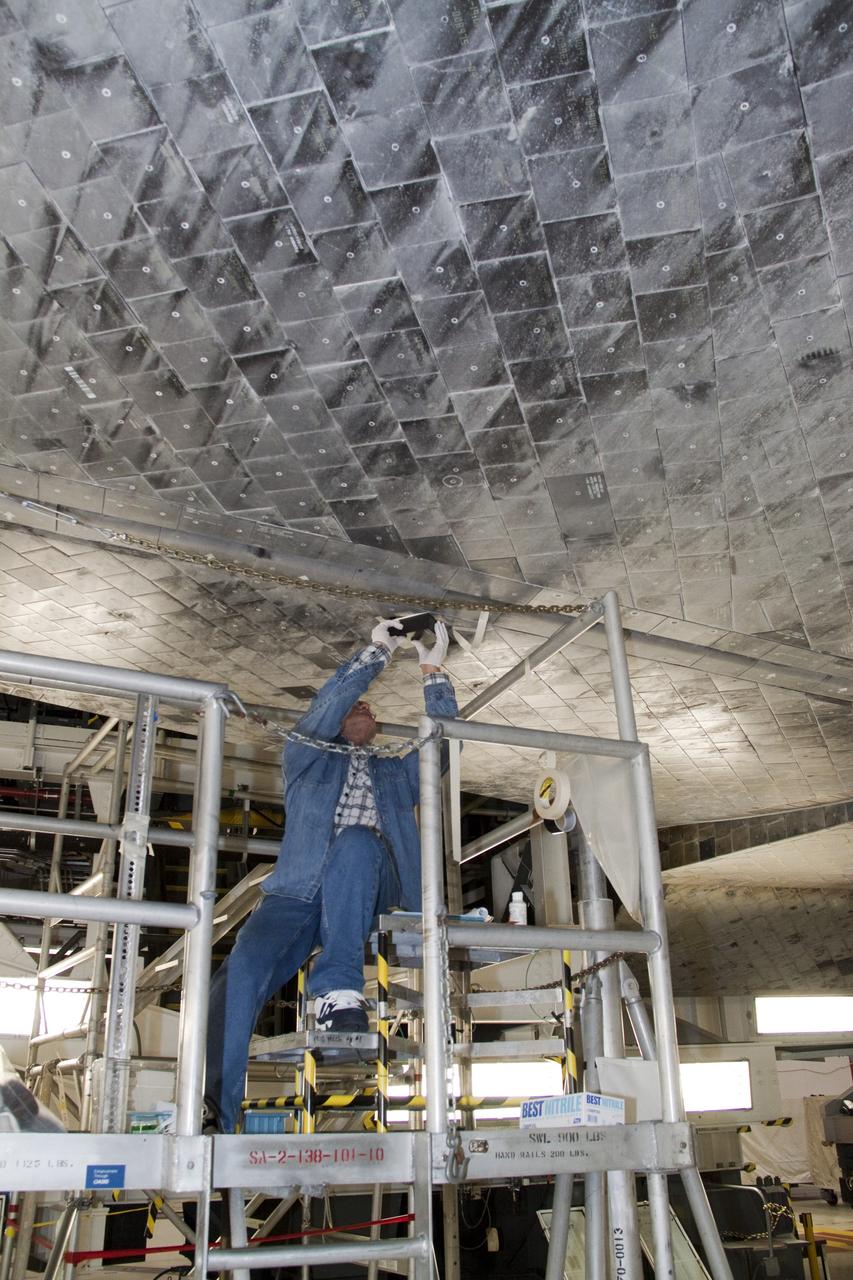
CAPE CANAVERAL, Fla. -- In Orbiter Processing Facility-1 at NASA's Kennedy Space Center in Florida, a thermal protection system technician is replacing a heat shield tile under space shuttle Atlantis. The tiles are part of the Orbiter Thermal Protection System, thermal shields to protect against temperatures as high as 3,000 degrees Fahrenheit, which are produced during descent for landing. Atlantis is being prepared for the STS-135 mission, which will deliver the Raffaello multi-purpose logistics module packed with supplies, logistics and spare parts to the International Space Station. STS-135 is targeted to launch June 28, and will be the last spaceflight for the Space Shuttle Program. Photo credit: NASA/Jack Pfaller
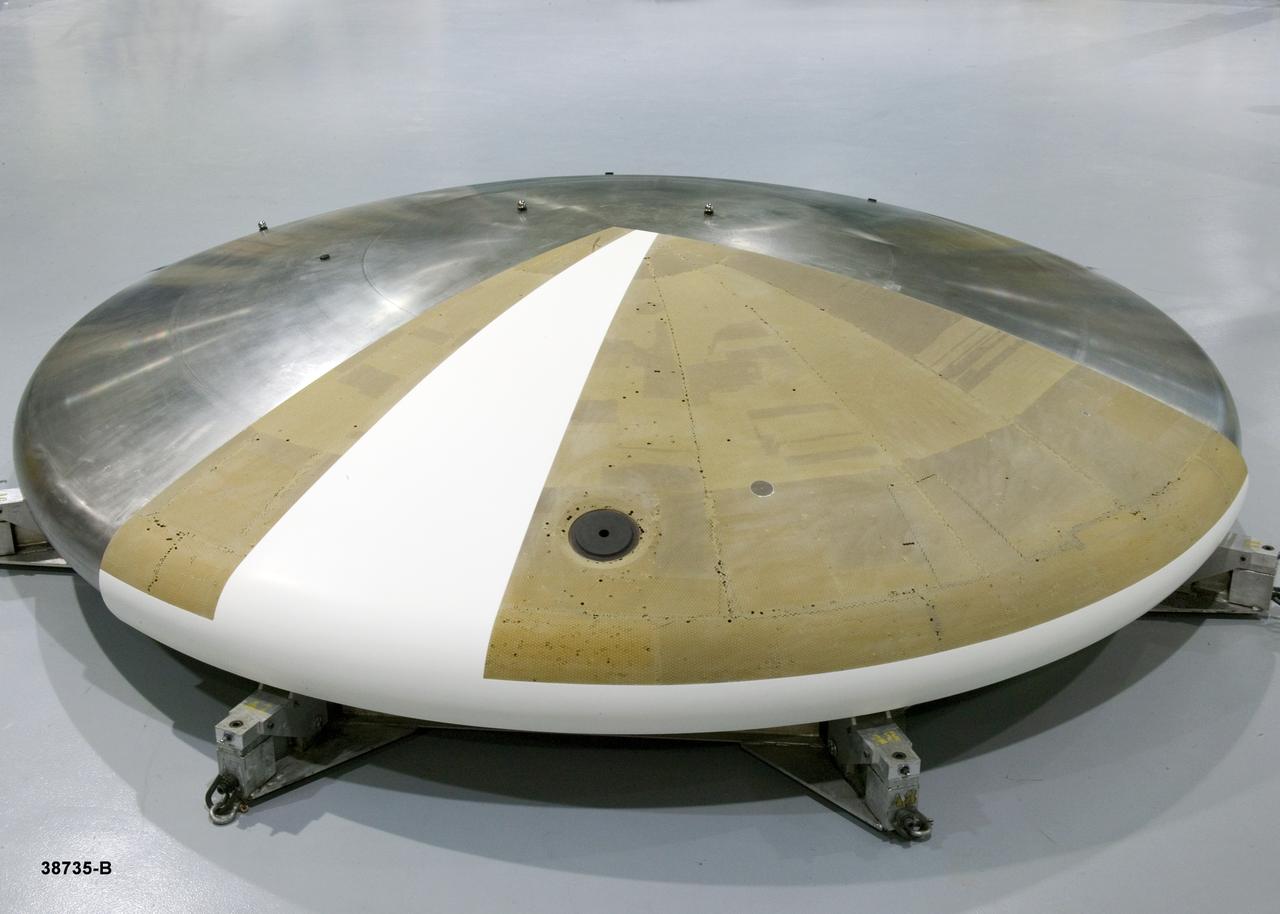
Pictured is the first Avcoat manufacturing demonstration unit for the Orion crew exploration vehicle. Approimately 30 percent of the full five-meter heat shield shows Avcoat thermal protection materail attached (at various stages of completion) to a surrogate Orion heat shield carrier structure. Work being done at Textron.
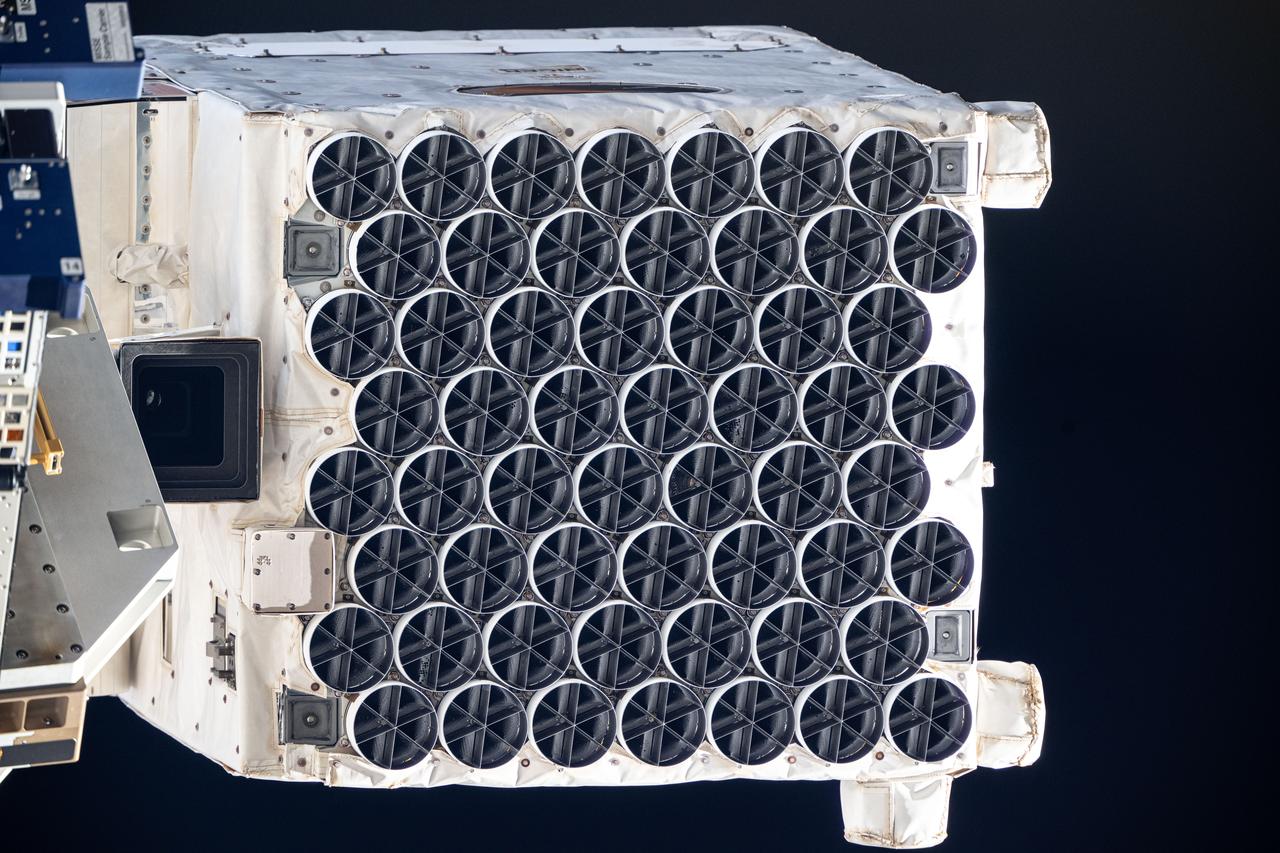
iss072e371351 (Dec. 17, 2024) --- The NICER (Neutron star Interior Composition Explorer) X-ray telescope is pictured installed on the starboard side of the International Space Station's integrated truss segment. NICER's 56 X-ray concentrators are covered by thermal shields, or filters, that block ultraviolet, infrared, and visible light while allowing X-rays to pass through to the mirrors underneath enabling the observation of neutron stars. Several thermal shields have been damaged allowing unwanted sunlight to "leak" into the astrophysics instrument interfering with X-ray measurements. NASA astronauts Nick Hague and Sun Williams will conduct a spacewalk on Jan. 16 to patch the damaged thermal shields and restore NICER for daytime scientific operations.
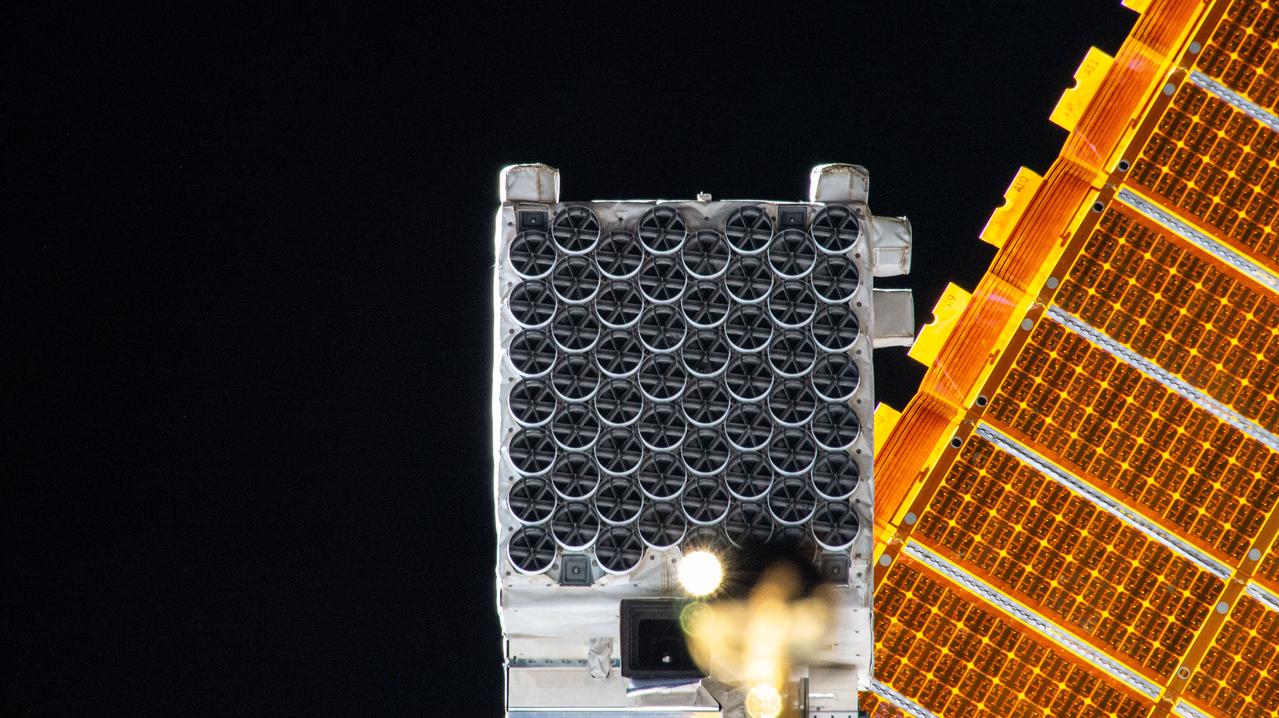
iss072e371305 (Dec. 17, 2024) --- The NICER (Neutron star Interior Composition Explorer) X-ray telescope is pictured installed on the starboard side of the International Space Station's integrated truss segment. NICER's 56 X-ray concentrators are covered by thermal shields, or filters, that block ultraviolet, infrared, and visible light while allowing X-rays to pass through to the mirrors underneath enabling the observation of neutron stars. Several thermal shields have been damaged allowing unwanted sunlight to "leak" into the astrophysics instrument interfering with X-ray measurements. NASA astronauts Nick Hague and Sun Williams will conduct a spacewalk on Jan. 16 to patch the damaged thermal shields and restore NICER for daytime scientific operations.
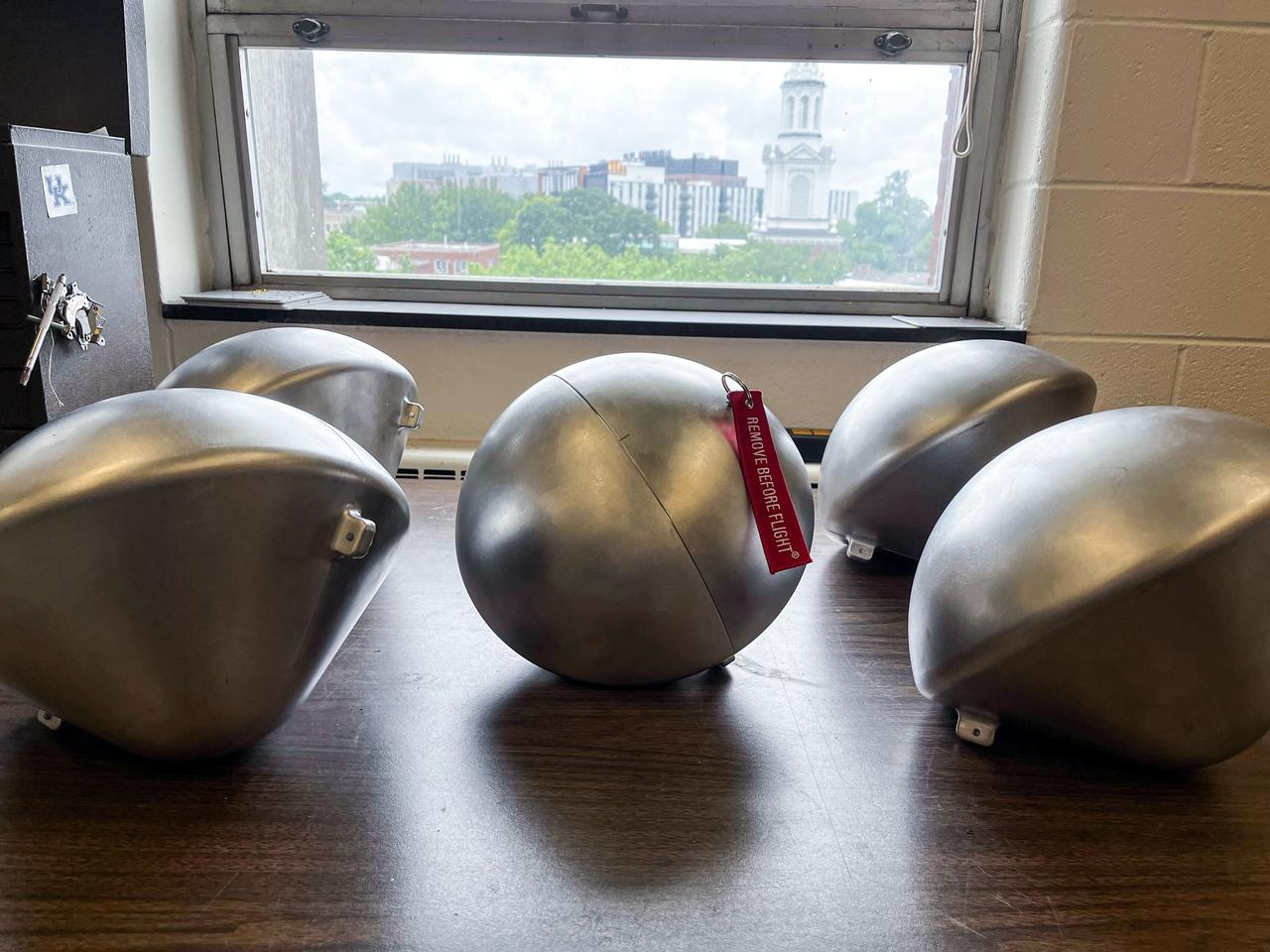
jsc2024e005968 (1/122024) --- The five Kentucky Re-Entry Universal Payload System (KRUPS) capsules of the KREPE-2 mission are pictured on the ground, encapsulated in the ISS-KREM shell. Thermal Protection Systems (TPS) technology uses three capsules outfitted with different heat shield materials and a variety of sensors to obtain data on actual reentry conditions. KREPE-2 tests new heat shields from NASA as well as a heat shield manufactured entirely at the University of Kentucky. Image courtesy of the University of Kentucky.
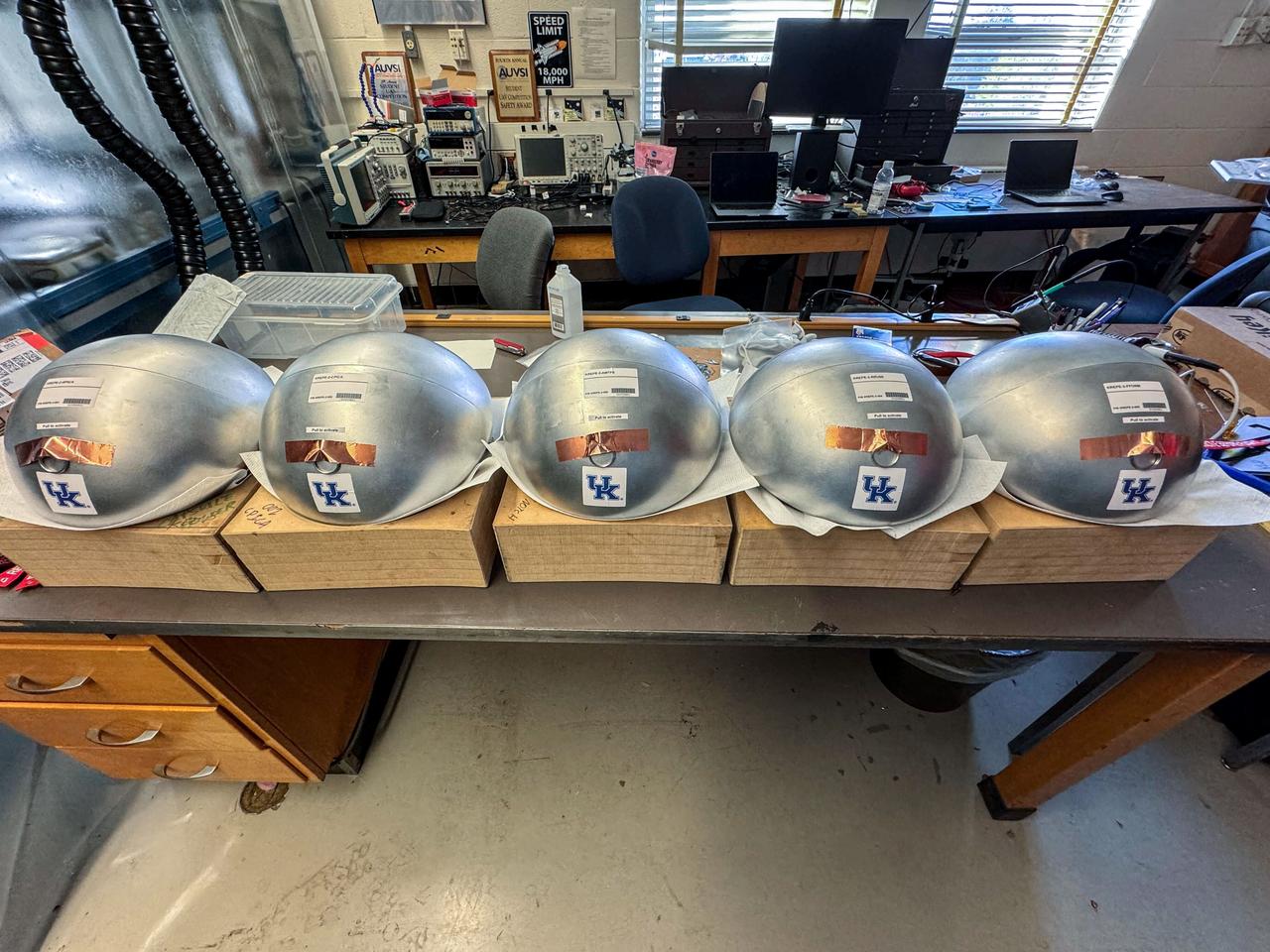
jsc2024e005967 (1/12/2024) --- The five Kentucky Re-Entry Universal Payload System (KRUPS) capsules of the KREPE-2 mission are pictured on the ground, encapsulated in the ISS-KREM shell. Thermal Protection Systems (TPS) technology uses three capsules outfitted with different heat shield materials and a variety of sensors to obtain data on actual reentry conditions. KREPE-2 tests new heat shields from NASA as well as a heat shield manufactured entirely at the University of Kentucky. Image courtesy of the University of Kentucky.
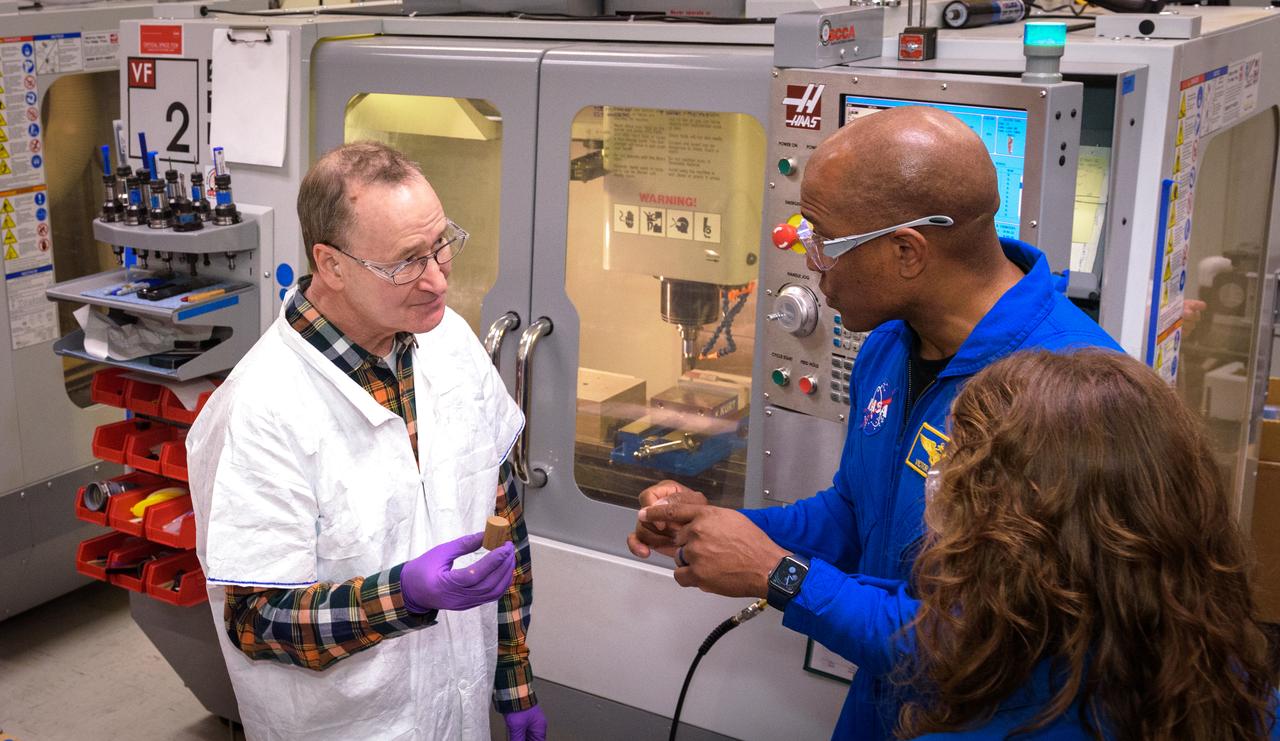
Don Ebaugh, left, shows NASA astronaut Victor J. Glover a thermal couple plug, which measures the temperature inside a heat shield, in STAR Labs, N238.

iss061e143751 (Jan. 25, 2020) --- NASA astronaut Andrew Morgan takes pictures with a camera shielded from the effects of microgravity during a spacewalk to finalize thermal repairs on the Alpha Magnetic Spectrometer, a dark matter and antimatter detector.
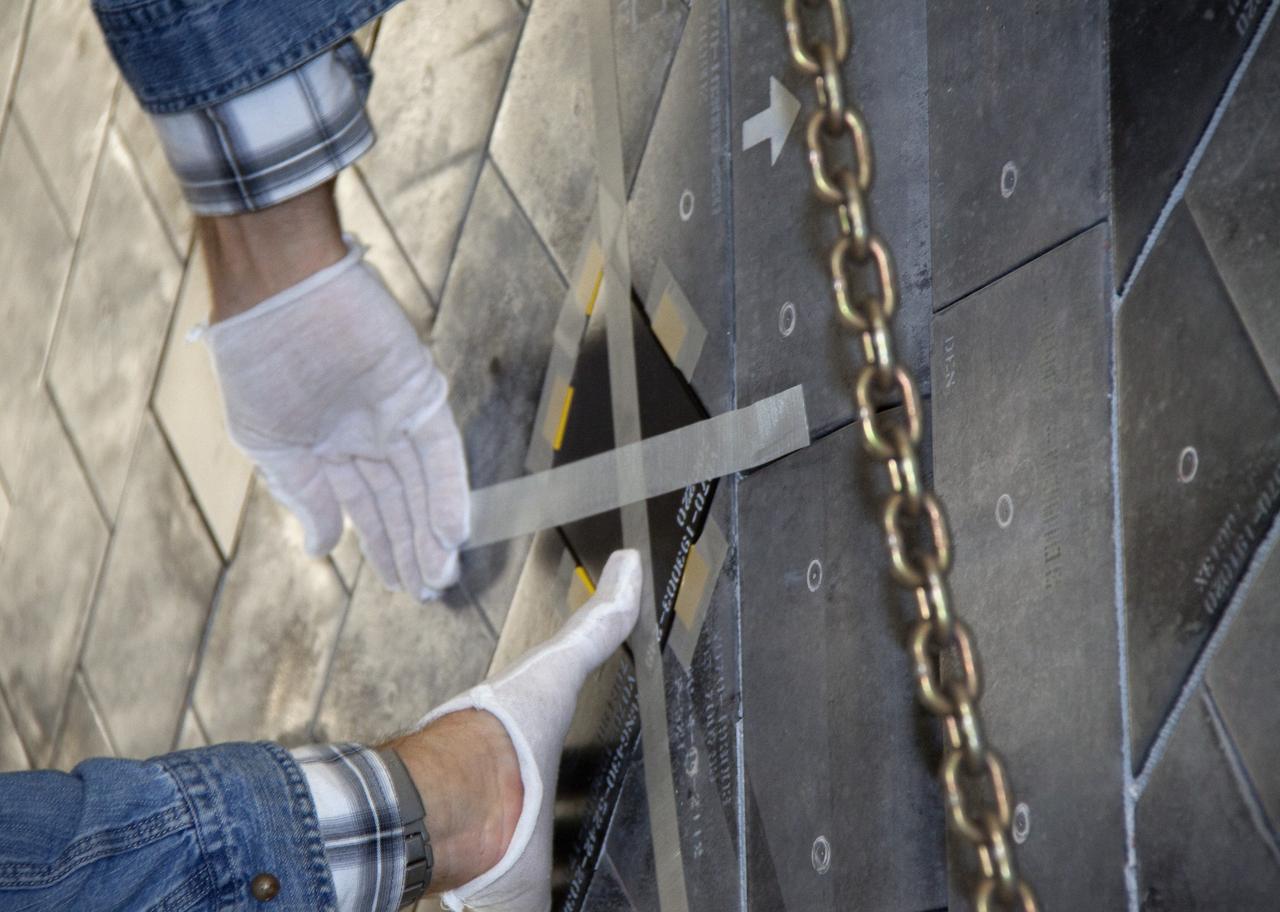
CAPE CANAVERAL, Fla. -- In Orbiter Processing Facility-1 at NASA's Kennedy Space Center in Florida, a thermal protection system technician secures a newly installed heat shield tile in place under space shuttle Atlantis. The tiles are part of the Orbiter Thermal Protection System, thermal shields to protect against temperatures as high as 3,000 degrees Fahrenheit, which are produced during descent for landing. Atlantis is being prepared for the STS-135 mission, which will deliver the Raffaello multi-purpose logistics module packed with supplies, logistics and spare parts to the International Space Station. STS-135 is targeted to launch June 28, and will be the last spaceflight for the Space Shuttle Program. Photo credit: NASA/Jack Pfaller
CAPE CANAVERAL, Fla. -- In Orbiter Processing Facility-1 at NASA's Kennedy Space Center in Florida, a thermal protection system technician has secured a newly installed heat shield tile in place under space shuttle Atlantis with a pressure fitting to ensure a tight bond. The tiles are part of the Orbiter Thermal Protection System, thermal shields to protect against temperatures as high as 3,000 degrees Fahrenheit, which are produced during descent for landing. Atlantis is being prepared for the STS-135 mission, which will deliver the Raffaello multi-purpose logistics module packed with supplies, logistics and spare parts to the International Space Station. STS-135 is targeted to launch June 28, and will be the last spaceflight for the Space Shuttle Program. Photo credit: NASA/Jack Pfaller
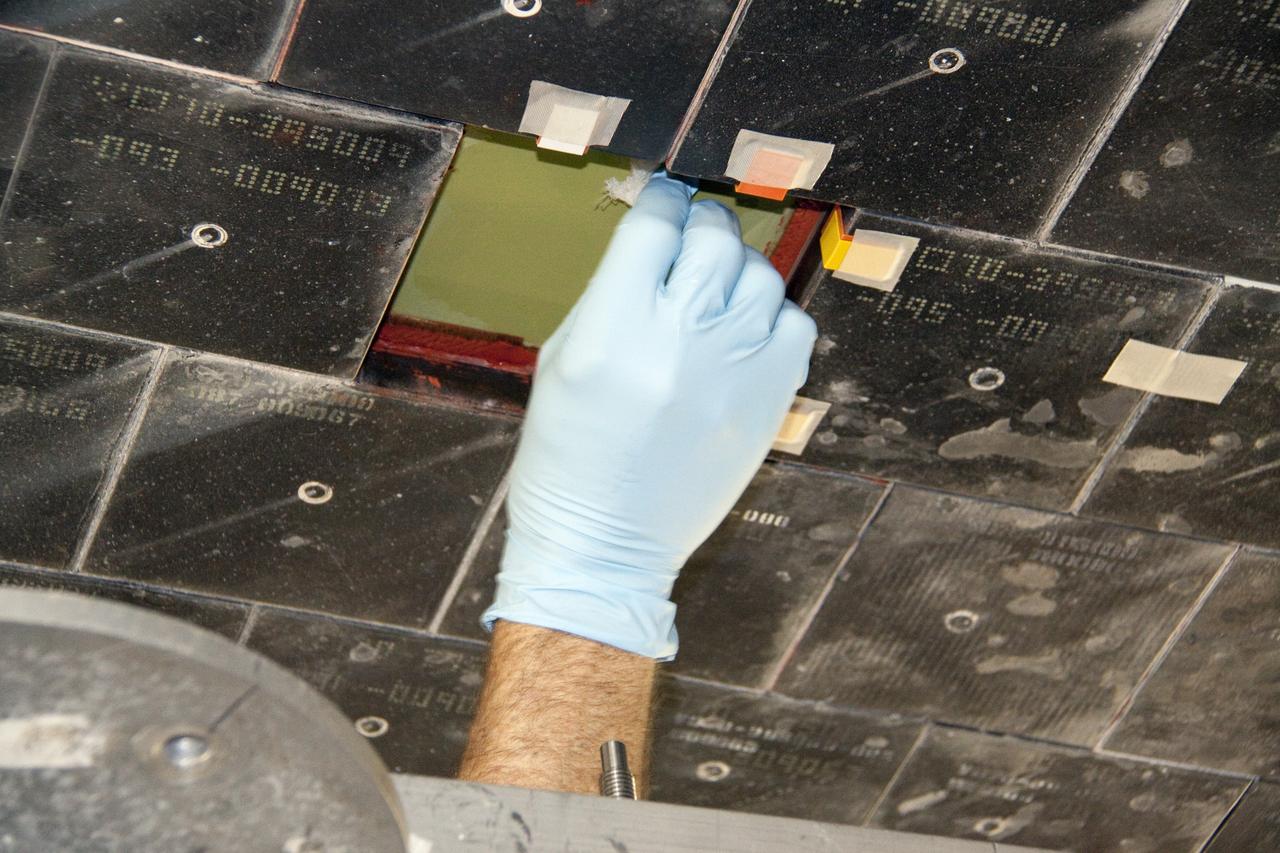
CAPE CANAVERAL, Fla. -- In Orbiter Processing Facility-1 at NASA's Kennedy Space Center in Florida, a thermal protection system technician prepares the surface under space shuttle Atlantis before installing a heat shield tile. The tiles are part of the Orbiter Thermal Protection System, thermal shields to protect against temperatures as high as 3,000 degrees Fahrenheit, which are produced during descent for landing. Atlantis is being prepared for the STS-135 mission, which will deliver the Raffaello multi-purpose logistics module packed with supplies, logistics and spare parts to the International Space Station. STS-135 is targeted to launch June 28, and will be the last spaceflight for the Space Shuttle Program. Photo credit: NASA/Jack Pfaller
CAPE CANAVERAL, Fla. -- In Orbiter Processing Facility-1 at NASA's Kennedy Space Center in Florida, a thermal protection system technician prepares the surface under space shuttle Atlantis before installing a heat shield tile. The tiles are part of the Orbiter Thermal Protection System, thermal shields to protect against temperatures as high as 3,000 degrees Fahrenheit, which are produced during descent for landing. Atlantis is being prepared for the STS-135 mission, which will deliver the Raffaello multi-purpose logistics module packed with supplies, logistics and spare parts to the International Space Station. STS-135 is targeted to launch June 28, and will be the last spaceflight for the Space Shuttle Program. Photo credit: NASA/Jack Pfaller
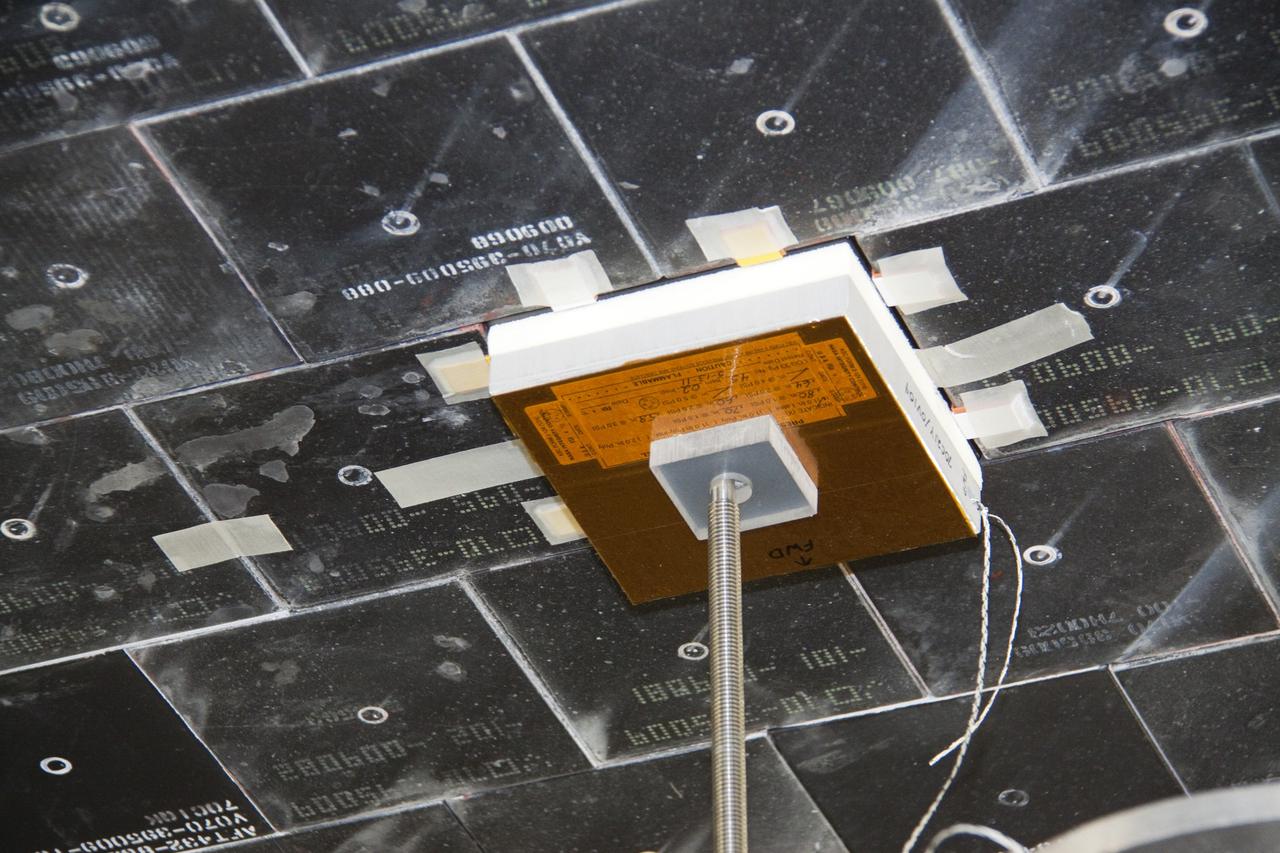
CAPE CANAVERAL, Fla. -- In Orbiter Processing Facility-1 at NASA's Kennedy Space Center in Florida, a thermal protection system technician has secured a newly installed heat shield tile in place under space shuttle Atlantis with a pressure fitting to ensure a tight bond. The tiles are part of the Orbiter Thermal Protection System, thermal shields to protect against temperatures as high as 3,000 degrees Fahrenheit, which are produced during descent for landing. Atlantis is being prepared for the STS-135 mission, which will deliver the Raffaello multi-purpose logistics module packed with supplies, logistics and spare parts to the International Space Station. STS-135 is targeted to launch June 28, and will be the last spaceflight for the Space Shuttle Program. Photo credit: NASA/Jack Pfaller
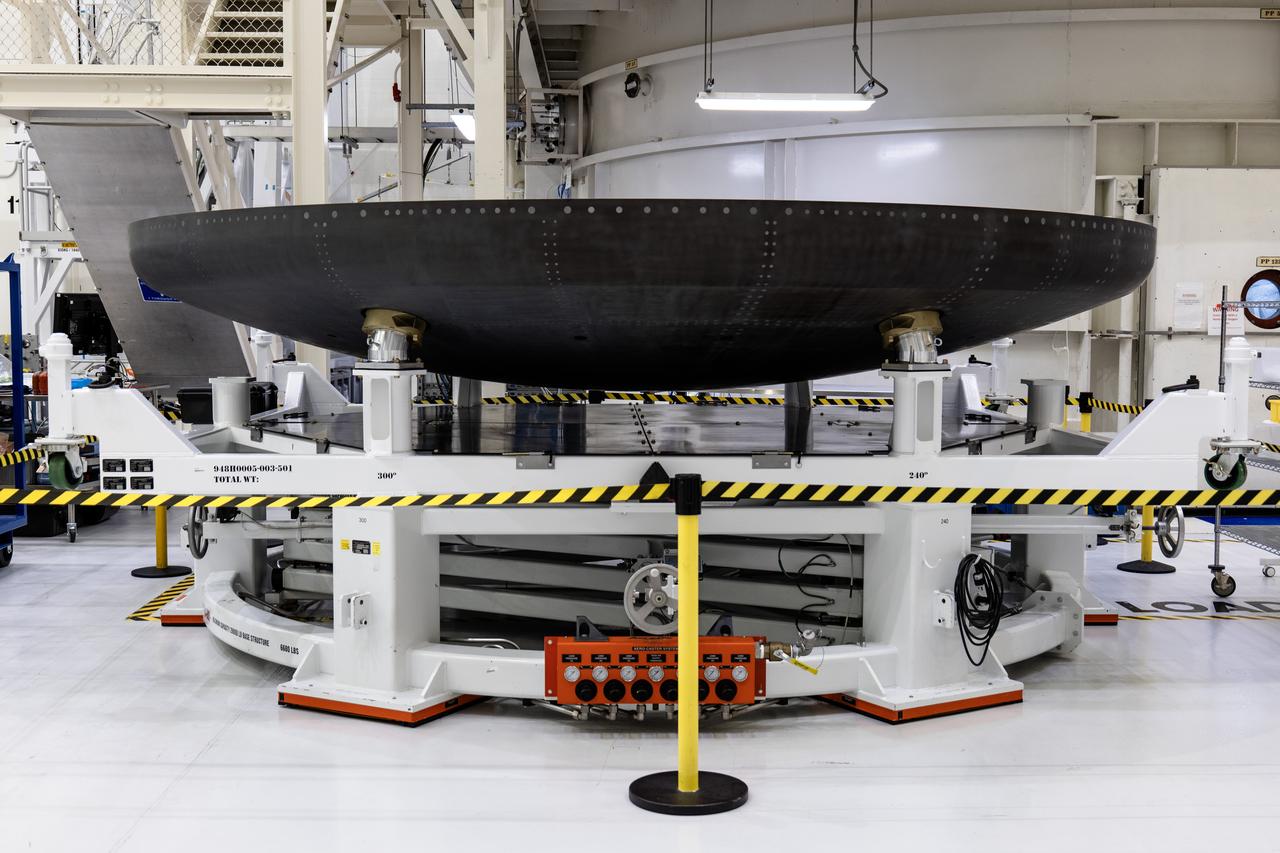
The heat shield carrier for Orion’s Artemis IV mission is in view secured on a work stand in the Neil A. Armstrong Operations and Checkout Building high bay at NASA’s Kennedy Space Center in Florida on Monday, Dec. 15, 2024. The carrier structure holds the thermal protection system heat shield securely to the Orion crew module while facing launch, reentry, and splashdown impact loads.
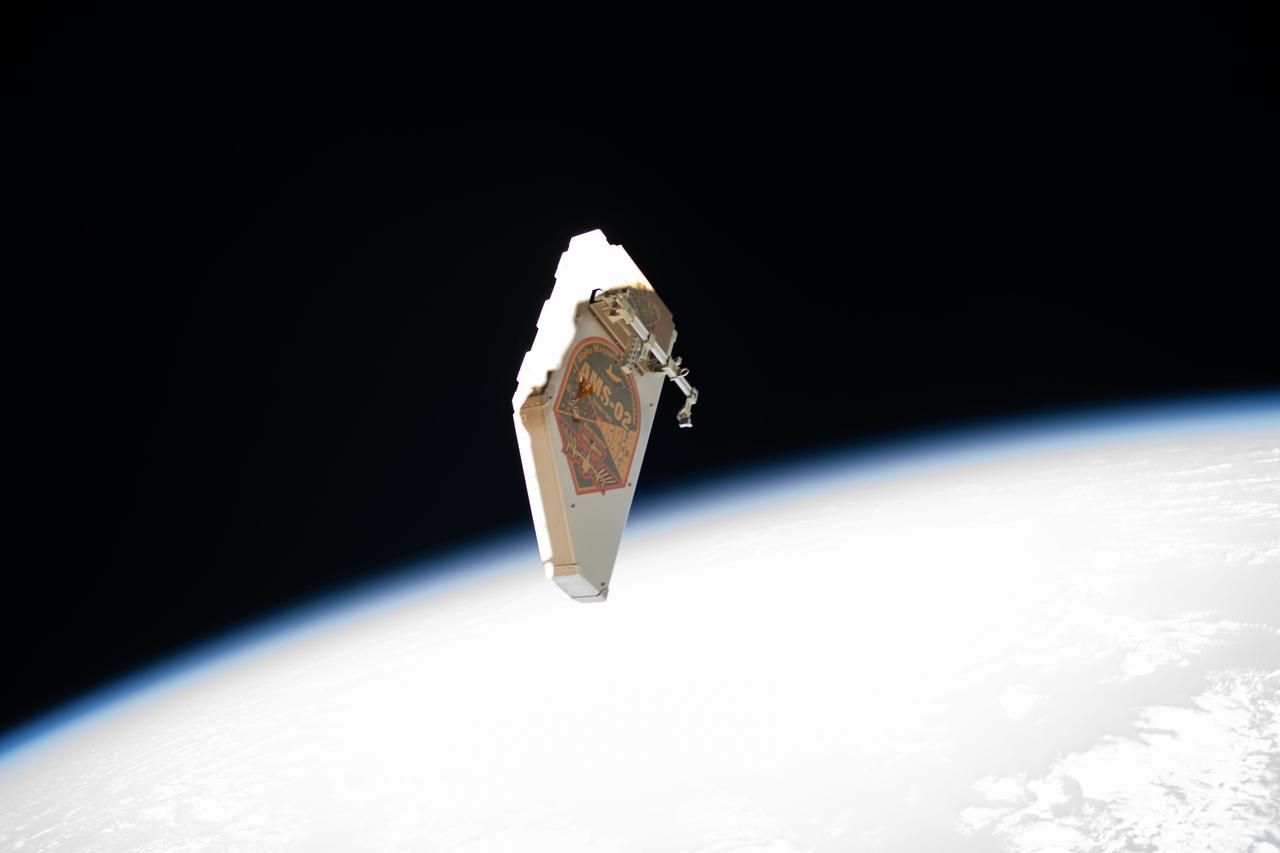
iss061e045319 (Nov. 15, 2019) --- A debris shield that was removed from the Alpha Magnetic Spectrometer (AMS), the International Space Station's cosmic particle detector, is pictured drifting away from the orbiting lab after spacewalkers Andrew Morgan and Luca Parmitano jettisoned it. The debris shield was detached by the spacewalkers so they could access and begin the repairs of the AMS thermal control system.
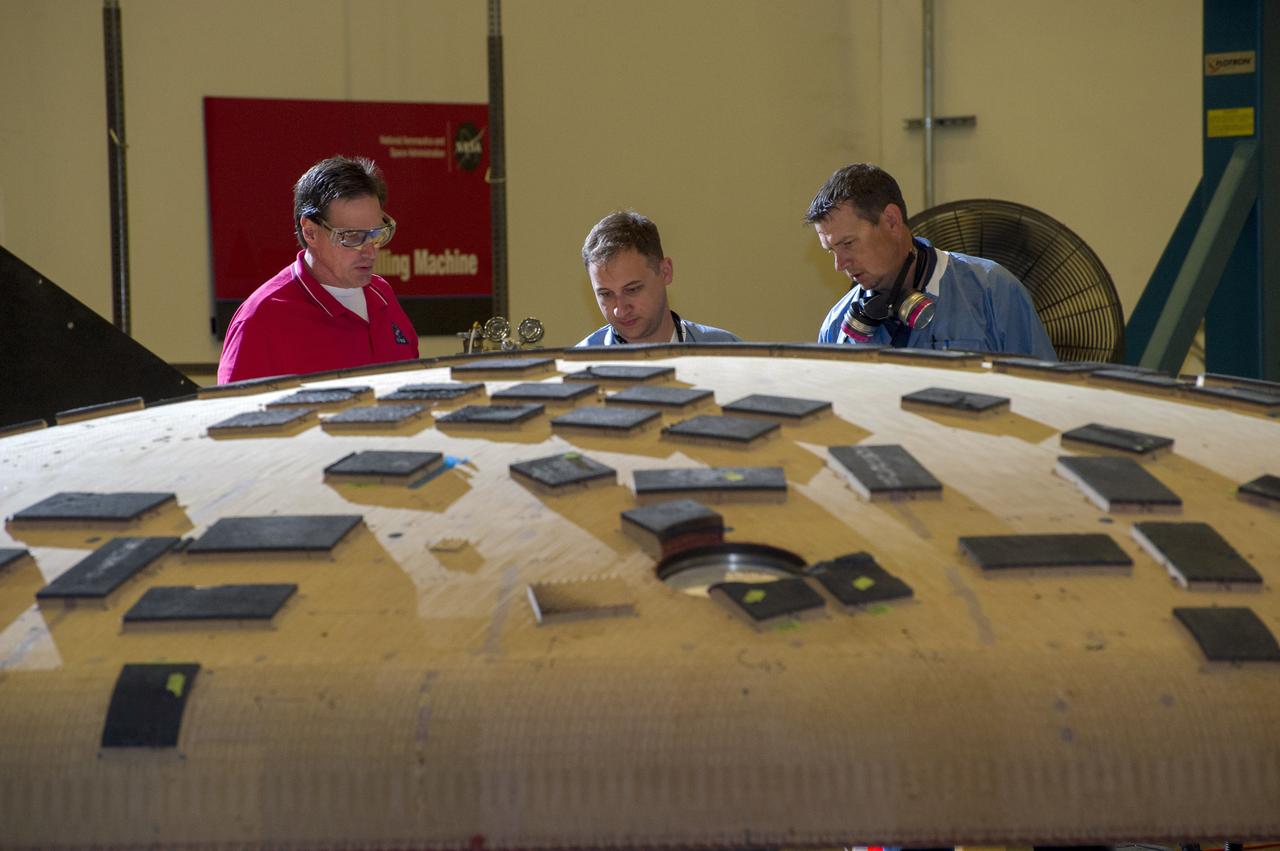
OVERSEEING ORION HEAT SHIELD WORK IN MARSHALL'S SEVEN-AXIS MILLING AND MACHINING FACILITY ARE, FROM LEFT, JOHN KOWAL, MANAGER OF ORION'S THERMAL PROTECTION SYSTEM AT JOHNSON SPACE CENTER; NICHOLAS CROWLEY, AN AMES ENGINEERING TECHNICIAN; AND ROB KORNIENKO, AMES ENGINEERING BRANCH CHIEF. THE HEAT SHIELD FLEW TO SPACE DURING THE EFT-1 FULL SCALE FLIGHT TEST OF ORION IN DECEMBER, 2014

The heat shield carrier for Orion’s Artemis IV mission is in view secured on a work stand in the Neil A. Armstrong Operations and Checkout Building high bay at NASA’s Kennedy Space Center in Florida on Monday, Dec. 15, 2024. The carrier structure holds the thermal protection system heat shield securely to the Orion crew module while facing launch, reentry, and splashdown impact loads.
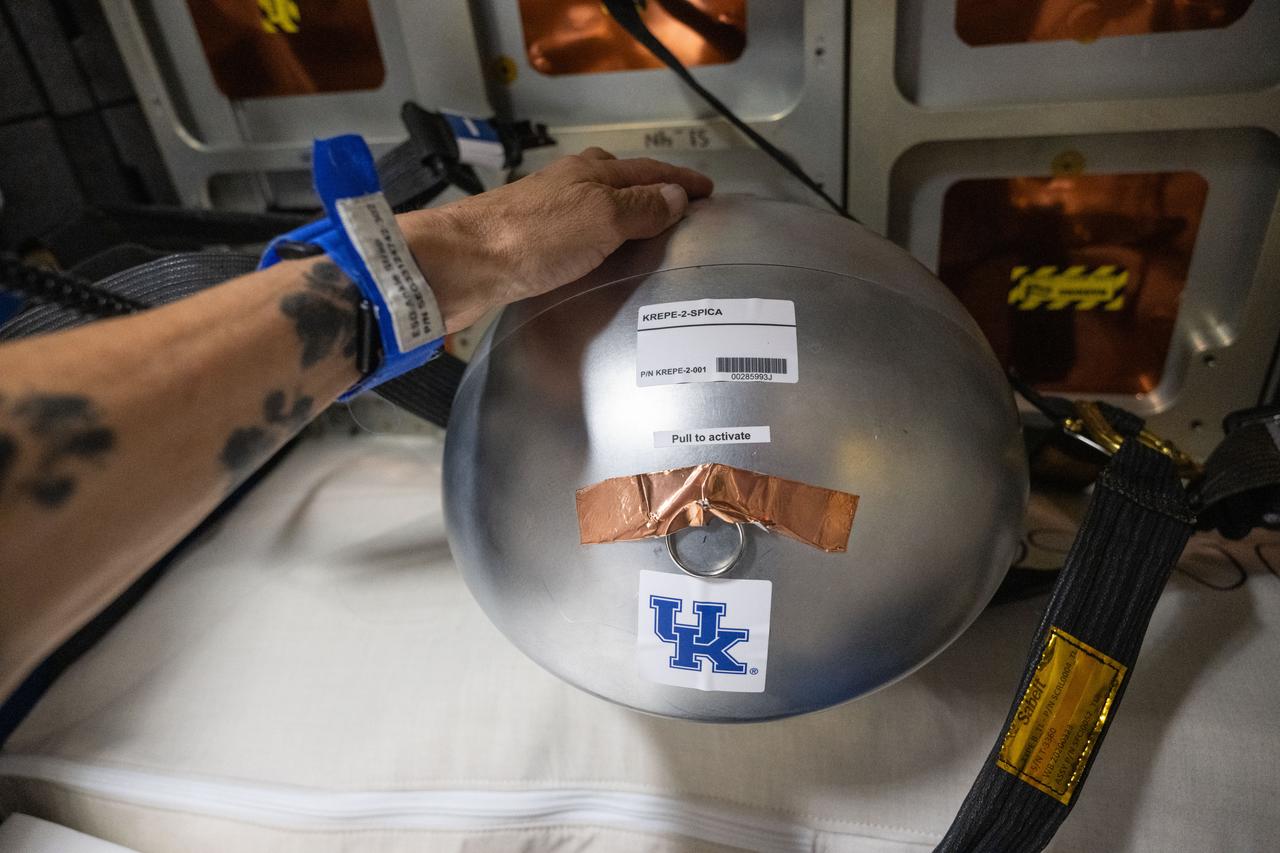
iss071e297164 (7/9/2024) --- One of the five Kentucky Re-Entry Universal Payload System (KRUPS) capsules of the Kentucky Re-entry Probe Experiment-2 (KREPE-2) mission aboard the International Space Station, encapsulated in the ISS-KREM shell. Thermal Protection Systems (TPS) technology uses three capsules outfitted with different heat shield materials and a variety of sensors to obtain data on actual reentry conditions. KREPE-2 tests new heat shields from NASA as well as a heat shield manufactured entirely at the University of Kentucky.
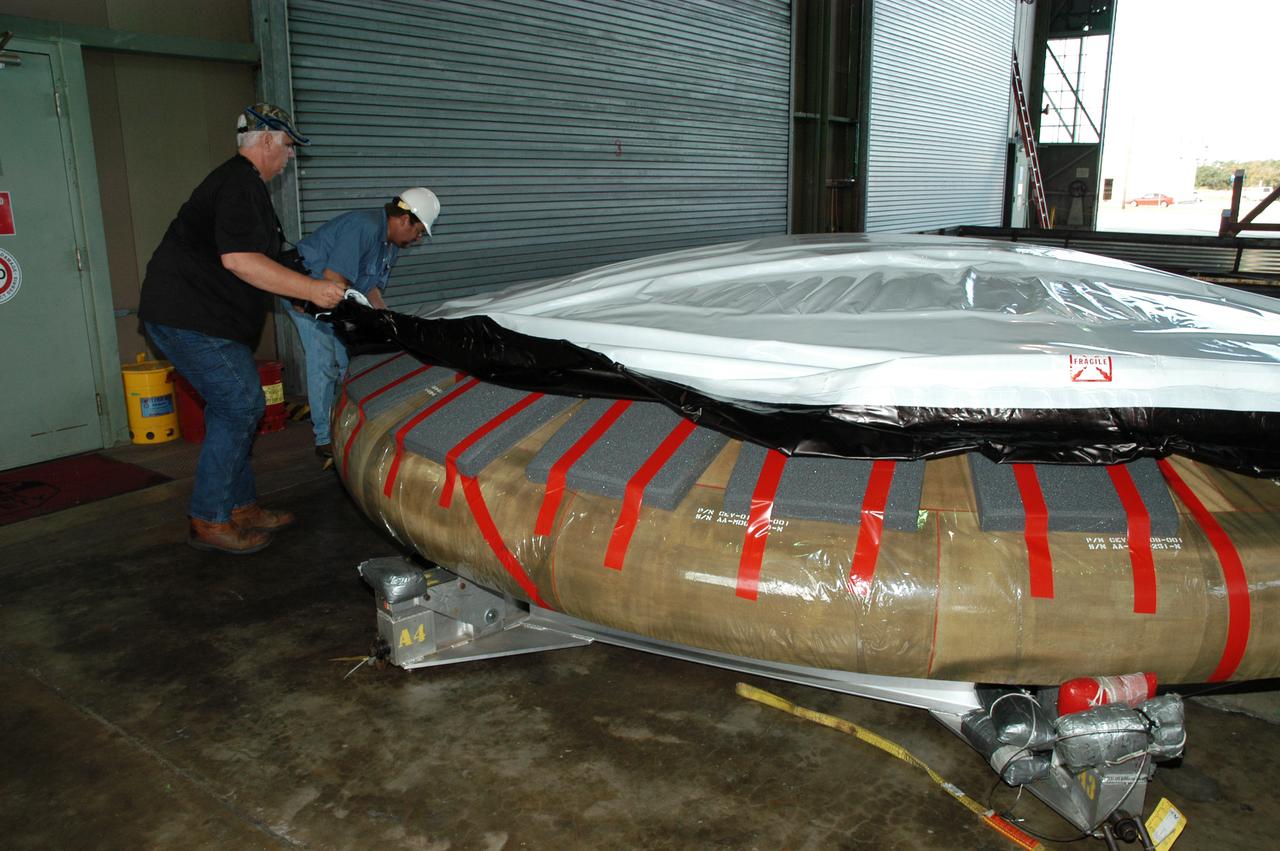
In Hangar N at NASA's Kennedy Space Center, a heat shield for the Constellation crew exploration vehicle, or CEV, is being prepared for a demonstration. A developmental heat shield for the Orion spacecraft is being tested and evaluated at Kennedy. The shield was designed and assembled by the Boeing Company in Huntington Beach, Calif., for NASA's Constellation Program. The thermal protection system manufacturing demonstration unit is designed to protect astronauts from extreme heat during re-entry to Earth's atmosphere from low Earth orbit and lunar missions. The CEV will be used to dock and gain access to the International Space Station, travel to the moon in the 2018 timeframe and play a crucial role in exploring Mars.
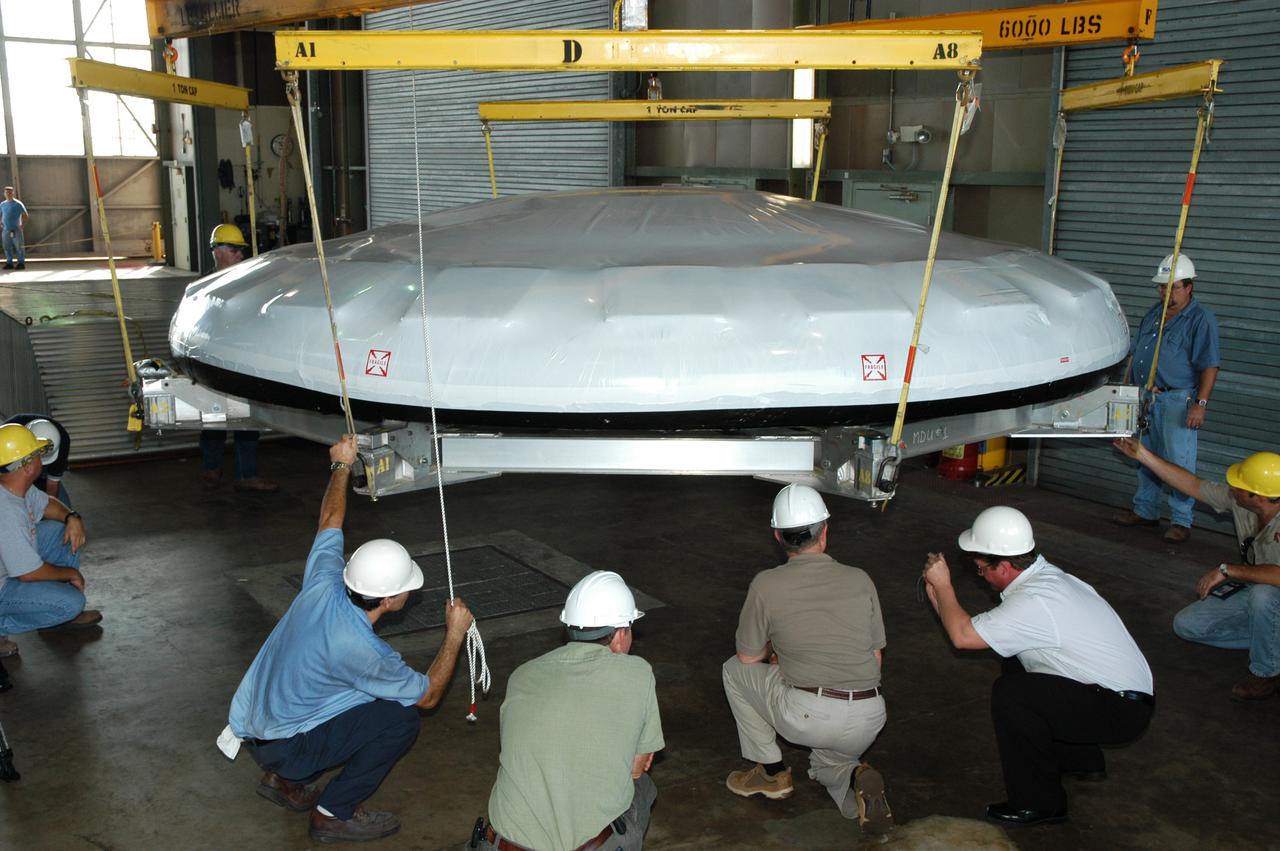
In Hangar N at NASA's Kennedy Space Center, a heat shield for the Constellation crew exploration vehicle, or CEV, is being prepared for a demonstration. A developmental heat shield for the Orion spacecraft is being tested and evaluated at Kennedy. The shield was designed and assembled by the Boeing Company in Huntington Beach, Calif., for NASA's Constellation Program. The thermal protection system manufacturing demonstration unit is designed to protect astronauts from extreme heat during re-entry to Earth's atmosphere from low Earth orbit and lunar missions. The CEV will be used to dock and gain access to the International Space Station, travel to the moon in the 2018 timeframe and play a crucial role in exploring Mars.
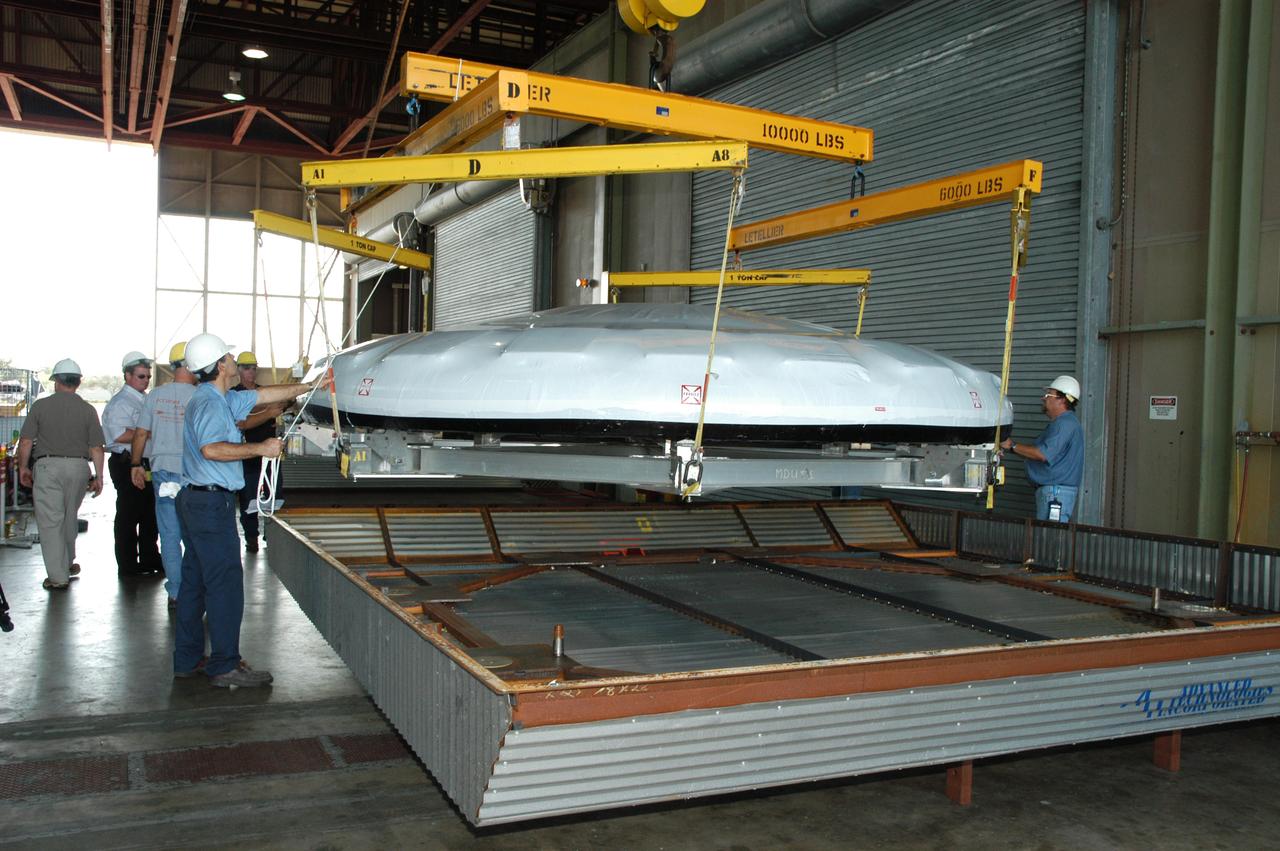
In Hangar N at NASA's Kennedy Space Center, a heat shield for the Constellation crew exploration vehicle, or CEV, is being prepared for a demonstration. A developmental heat shield for the Orion spacecraft is being tested and evaluated at Kennedy. The shield was designed and assembled by the Boeing Company in Huntington Beach, Calif., for NASA's Constellation Program. The thermal protection system manufacturing demonstration unit is designed to protect astronauts from extreme heat during re-entry to Earth's atmosphere from low Earth orbit and lunar missions. The CEV will be used to dock and gain access to the International Space Station, travel to the moon in the 2018 timeframe and play a crucial role in exploring Mars.
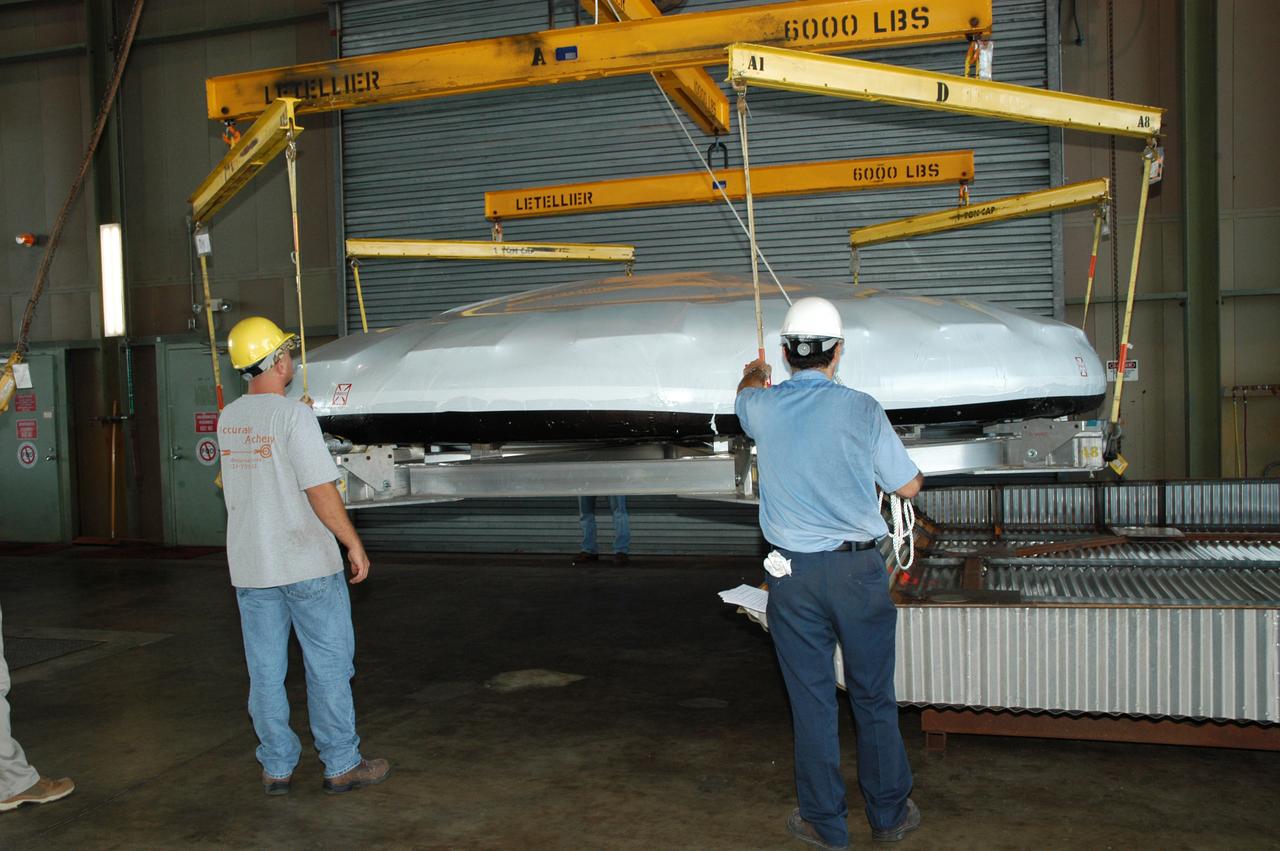
In Hangar N at NASA's Kennedy Space Center, a heat shield for the Constellation crew exploration vehicle, or CEV, is being prepared for a demonstration. A developmental heat shield for the Orion spacecraft is being tested and evaluated at Kennedy. The shield was designed and assembled by the Boeing Company in Huntington Beach, Calif., for NASA's Constellation Program. The thermal protection system manufacturing demonstration unit is designed to protect astronauts from extreme heat during re-entry to Earth's atmosphere from low Earth orbit and lunar missions. The CEV will be used to dock and gain access to the International Space Station, travel to the moon in the 2018 timeframe and play a crucial role in exploring Mars.
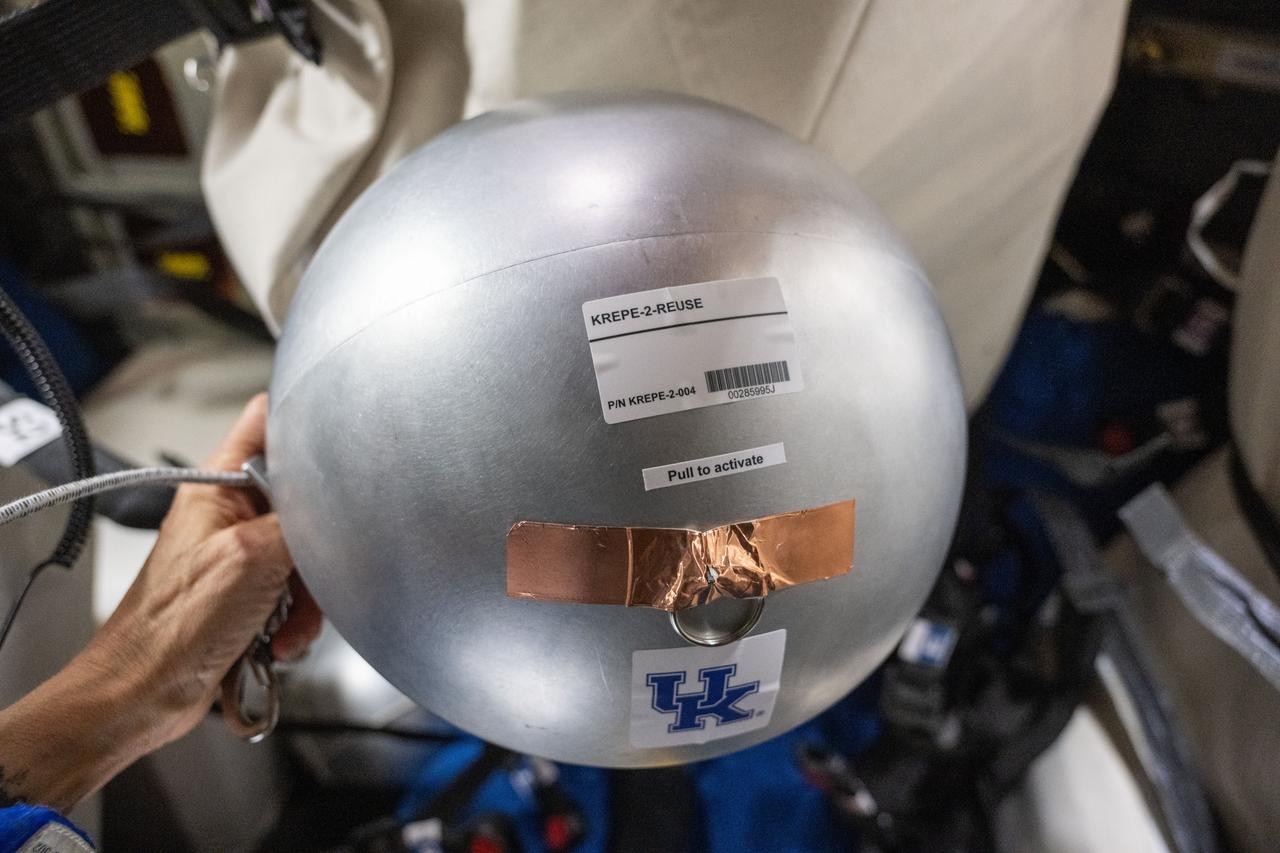
iss071e297186 (7/9/2024) --- One of the five Kentucky Re-Entry Universal Payload System (KRUPS) capsules of the Kentucky Re-entry Probe Experiment-2 (KREPE-2) mission aboard the International Space Station, encapsulated in the ISS-KREM shell. Thermal Protection Systems (TPS) technology uses three capsules outfitted with different heat shield materials and a variety of sensors to obtain data on actual reentry conditions. KREPE-2 tests new heat shields from NASA as well as a heat shield manufactured entirely at the University of Kentucky.
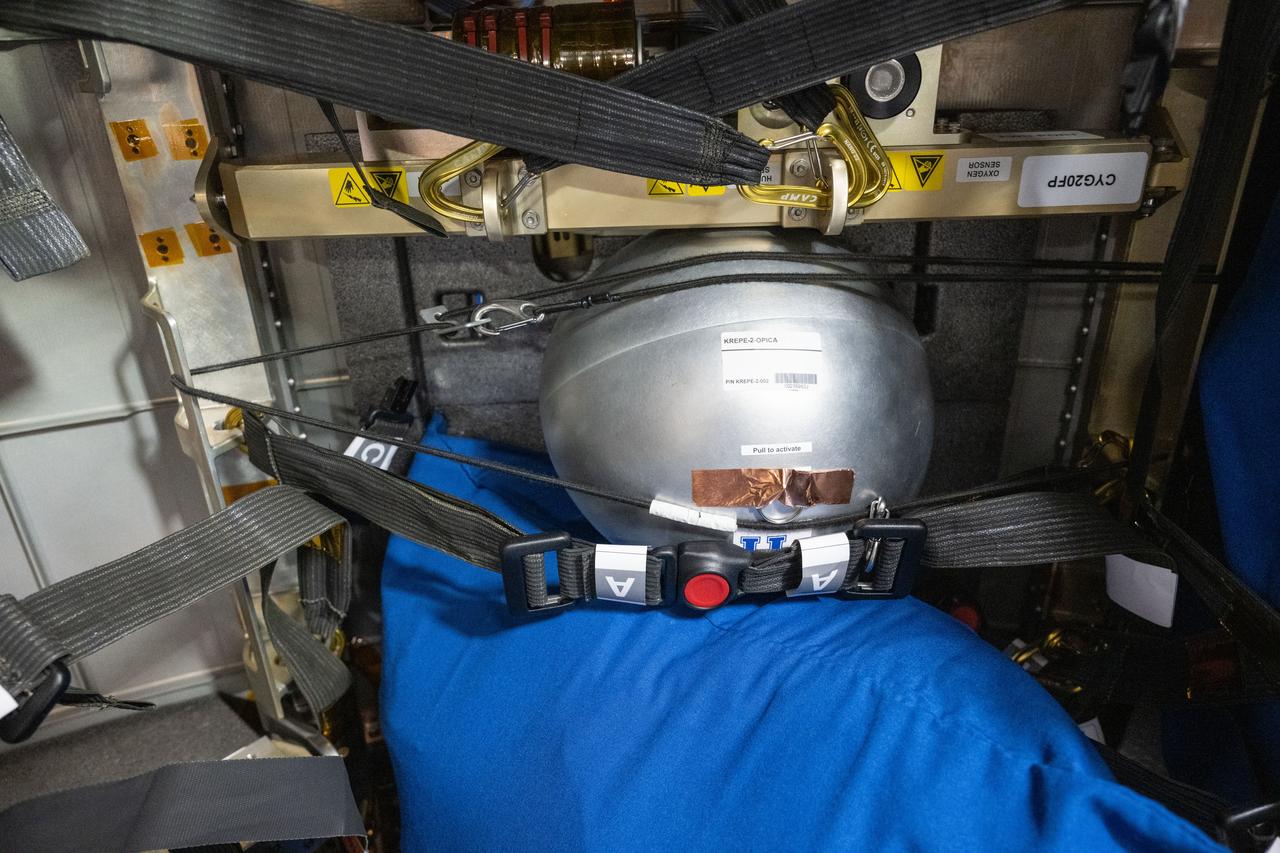
iss071e297176 (7/9/2024) --- One of the five Kentucky Re-Entry Universal Payload System (KRUPS) capsules of the Kentucky Re-entry Probe Experiment-2 (KREPE-2) mission aboard the International Space Station, encapsulated in the ISS-KREM shell. Thermal Protection Systems (TPS) technology uses three capsules outfitted with different heat shield materials and a variety of sensors to obtain data on actual reentry conditions. KREPE-2 tests new heat shields from NASA as well as a heat shield manufactured entirely at the University of Kentucky.
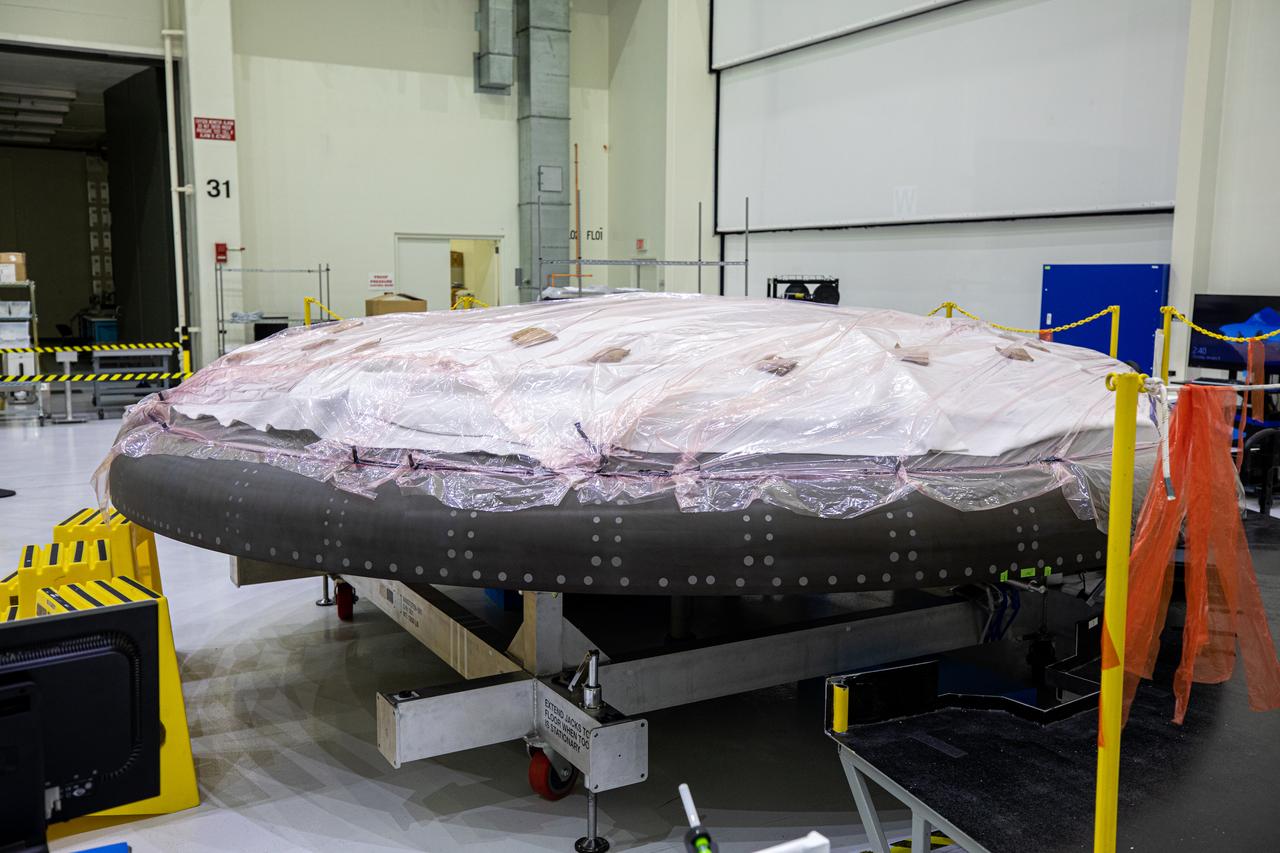
The heat shield for Orion’s Artemis II mission is in view secured on a work stand in the Neil Armstrong Operations and Checkout Building high bay at NASA’s Kennedy Space Center in Florida on Jan. 9, 2020. Work continues to prepare the heat shield for flight, including applying Avcoat, an ablative material that will provide thermal protection. The heat shield, measuring roughly 16 feet in diameter, will protect astronauts upon re-entry on the second mission of Artemis. Artemis II, the first crewed mission in the series of missions to the Moon and on to Mars, will confirm all of the Orion spacecraft’s systems operate as designed in the actual environment of deep space with astronauts aboard.
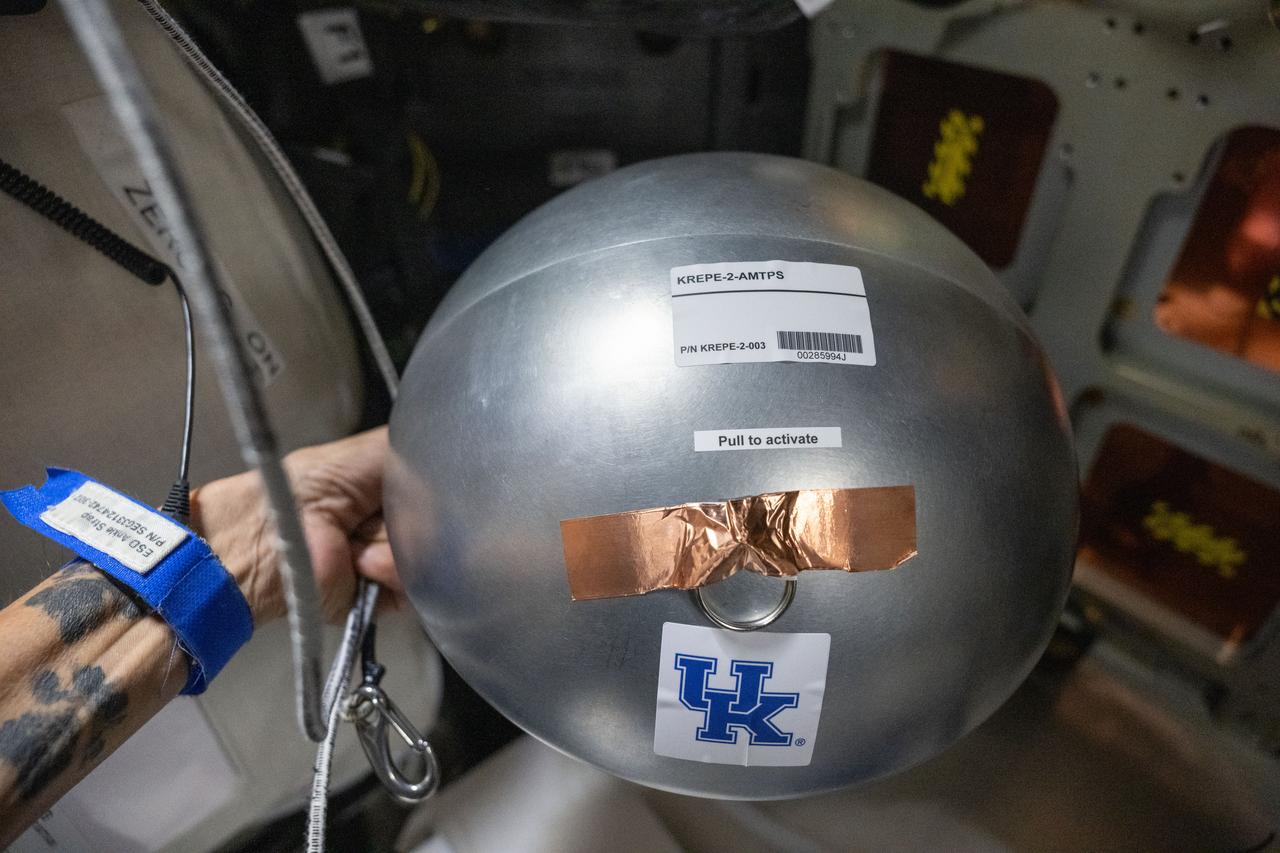
iss071e297177 (7/9/2024) --- One of the five Kentucky Re-Entry Universal Payload System (KRUPS) capsules of the Kentucky Re-entry Probe Experiment-2 (KREPE-2) mission aboard the International Space Station, encapsulated in the ISS-KREM shell. Thermal Protection Systems (TPS) technology uses three capsules outfitted with different heat shield materials and a variety of sensors to obtain data on actual reentry conditions. KREPE-2 tests new heat shields from NASA as well as a heat shield manufactured entirely at the University of Kentucky.
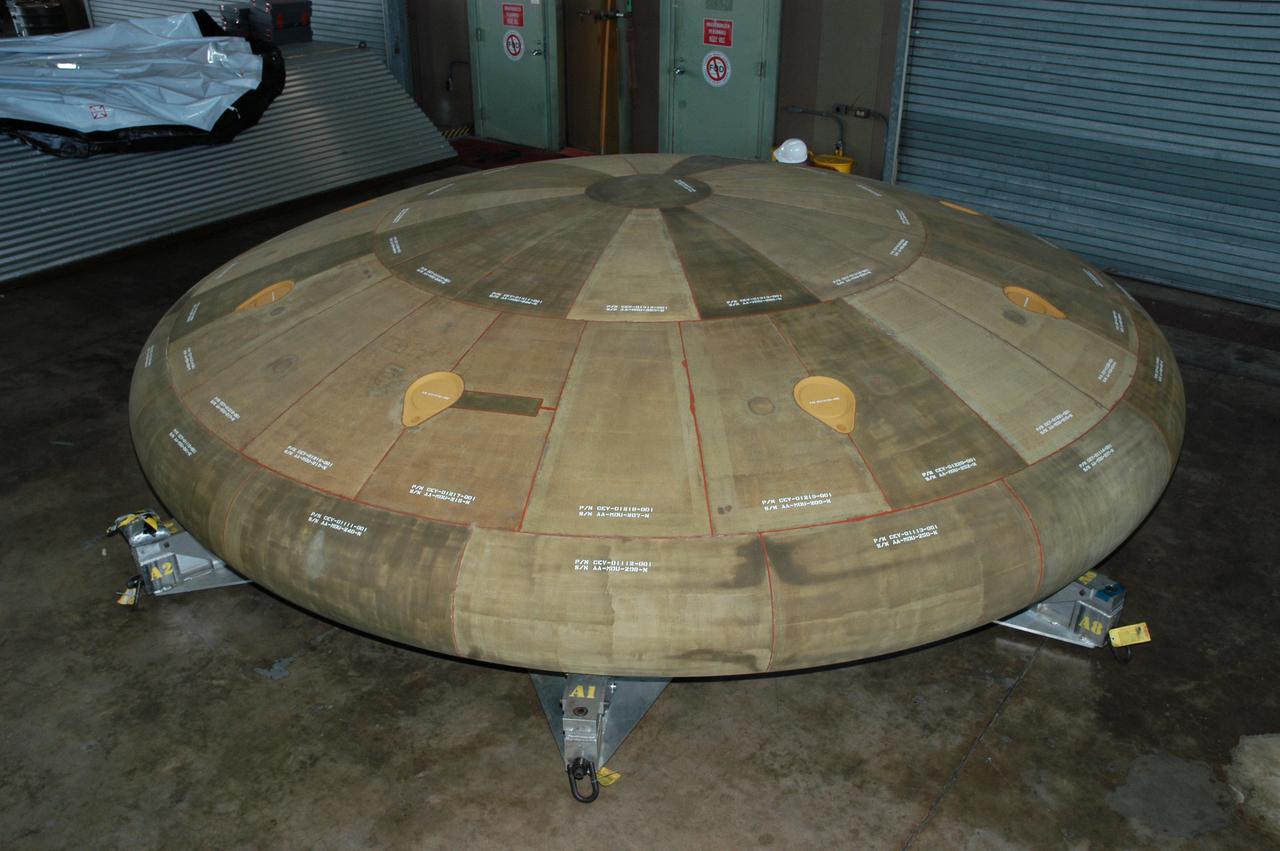
In Hangar N at NASA's Kennedy Space Center, a heat shield for the Constellation crew exploration vehicle, or CEV, is being prepared for a demonstration. A developmental heat shield for the Orion spacecraft is being tested and evaluated at Kennedy. The shield was designed and assembled by the Boeing Company in Huntington Beach, Calif., for NASA's Constellation Program. The thermal protection system manufacturing demonstration unit is designed to protect astronauts from extreme heat during re-entry to Earth's atmosphere from low Earth orbit and lunar missions. The CEV will be used to dock and gain access to the International Space Station, travel to the moon in the 2018 timeframe and play a crucial role in exploring Mars.
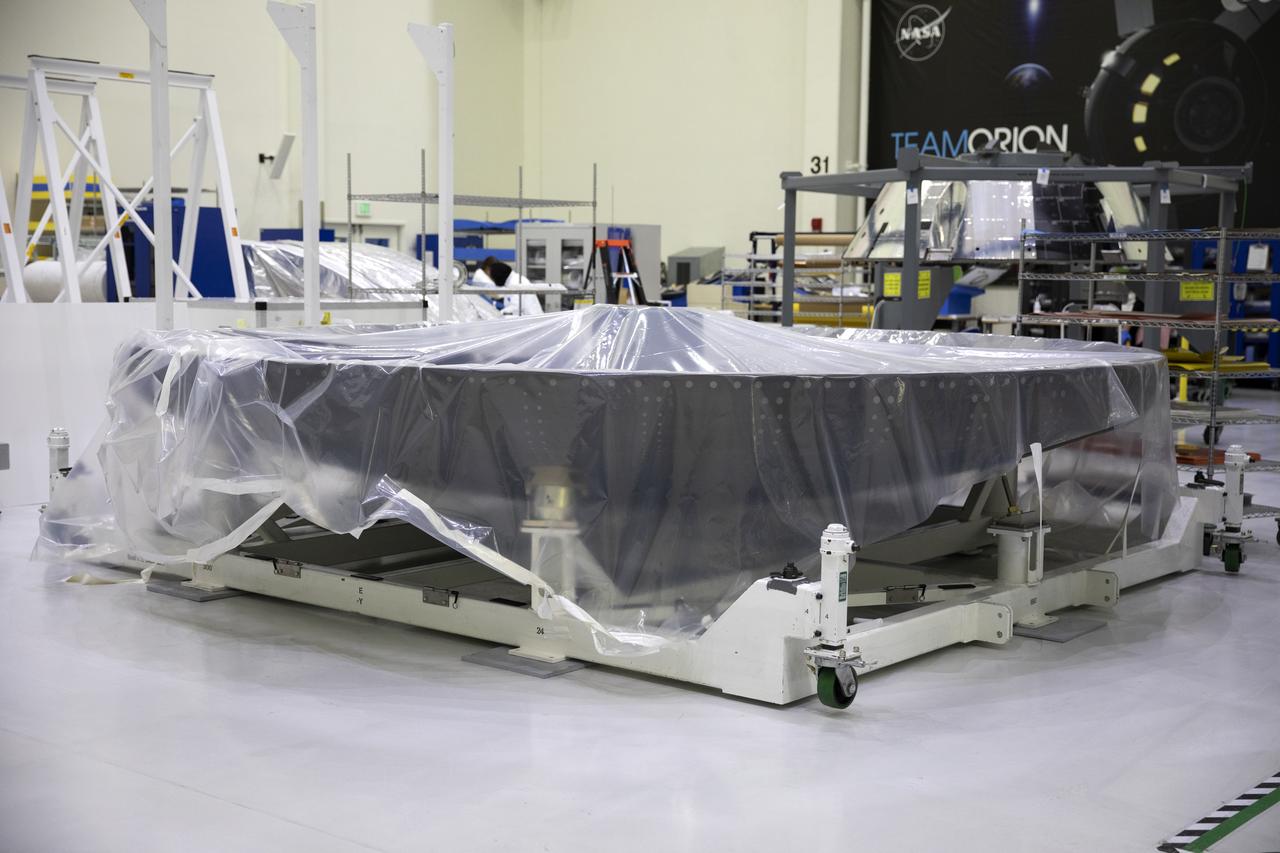
The heat shield for Orion’s Artemis ll, NASA’s first crewed mission, is inside the Neil Armstrong Operations and Checkout Building high bay at the agency’s Kennedy Space Center in Florida on Sept. 17, 2019. The heat shield, measuring roughly 16 feet in diameter, will protect astronauts upon re-entry. The heat shield is a base titanium truss structure. Technicians will apply Avcoat, an ablative material that will provide the thermal protection needed to withstand the harsh environment of space and during re-entry. Artemis ll will confirm all of the spacecraft’s systems operate as designed in the actual environment of deep space with astronauts aboard.
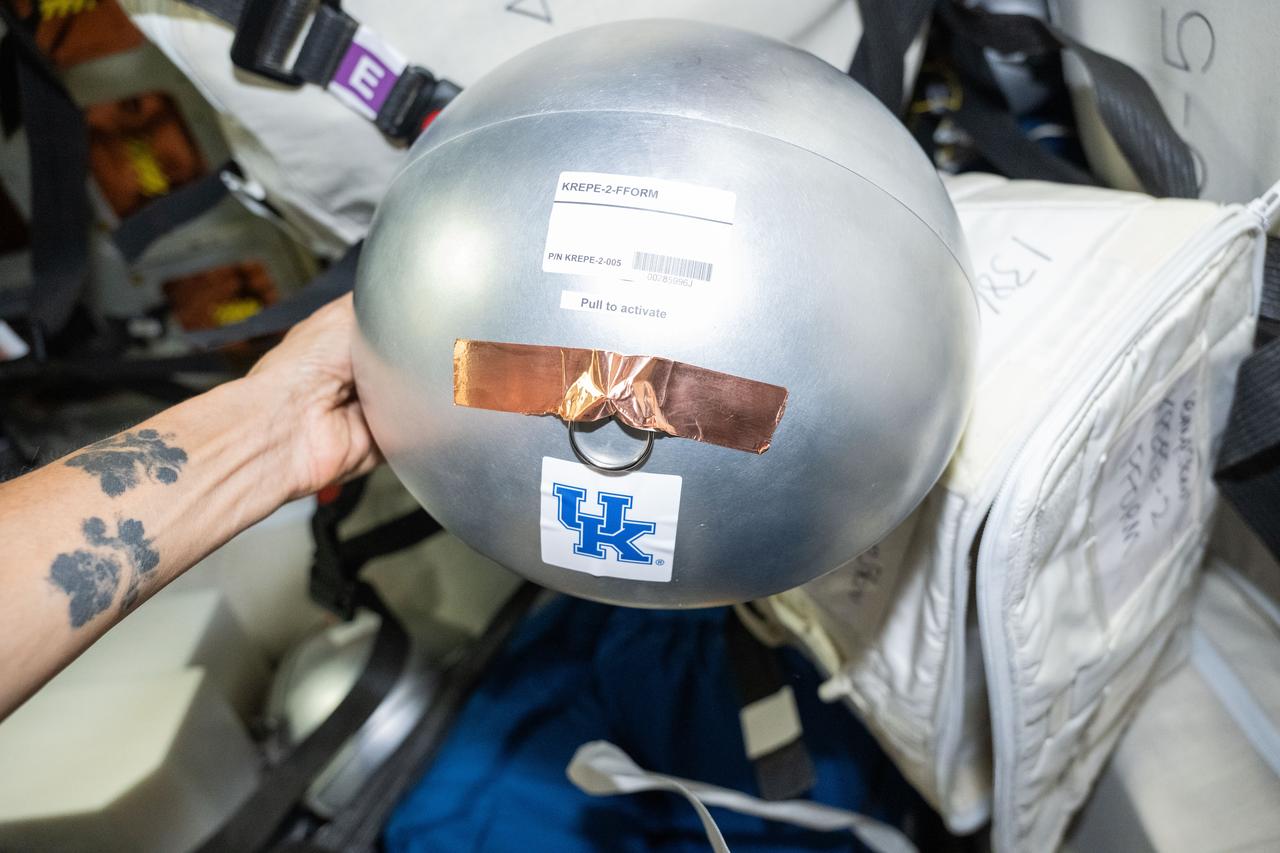
iss071e312452 (7/9/2024) --- One of the five Kentucky Re-Entry Universal Payload System (KRUPS) capsules of the Kentucky Re-entry Probe Experiment-2 (KREPE-2) mission aboard the International Space Station, encapsulated in the ISS-KREM shell. Thermal Protection Systems (TPS) technology uses three capsules outfitted with different heat shield materials and a variety of sensors to obtain data on actual reentry conditions. KREPE-2 tests new heat shields from NASA as well as a heat shield manufactured entirely at the University of Kentucky.
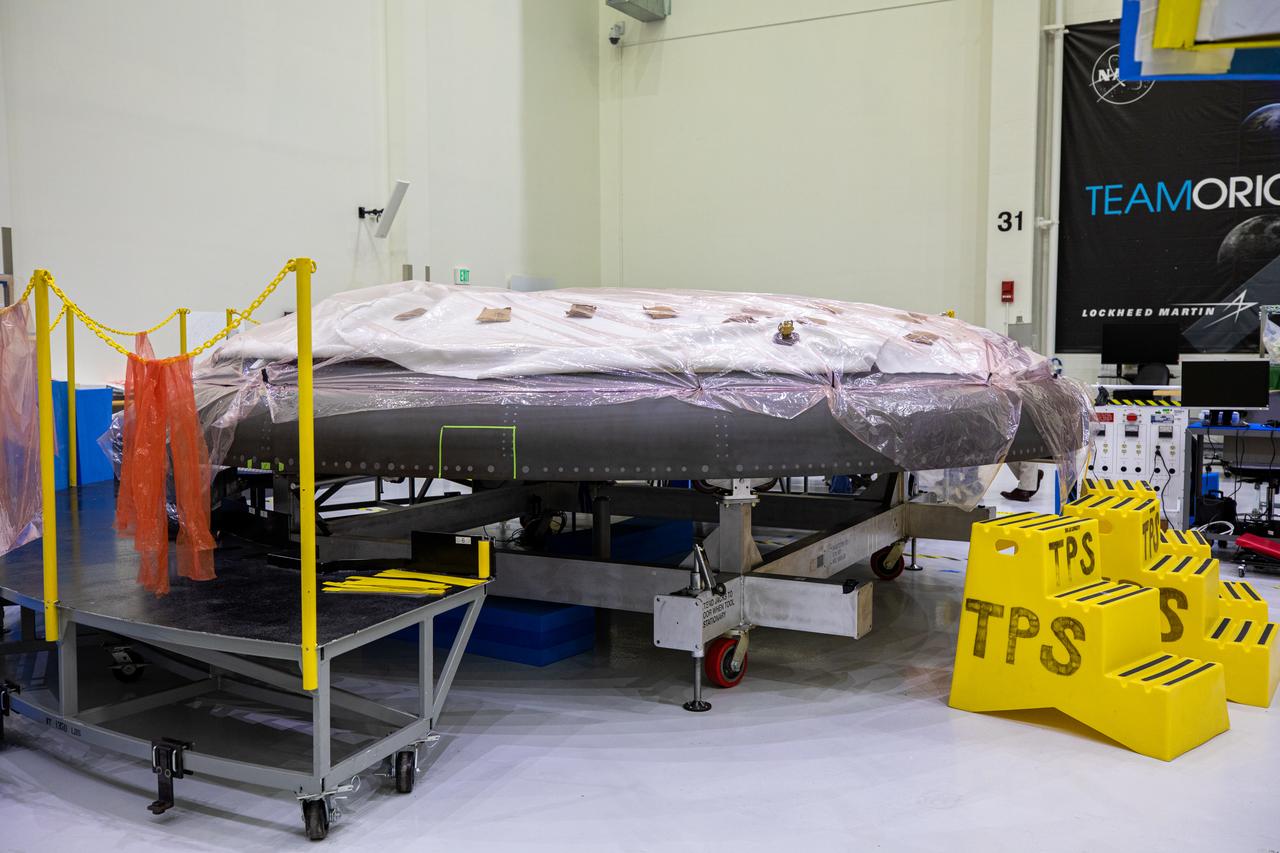
The heat shield for Orion’s Artemis II mission is in view secured on a work stand in the Neil Armstrong Operations and Checkout Building high bay at NASA’s Kennedy Space Center in Florida on Jan. 9, 2020. Work continues to prepare the heat shield for flight, including applying Avcoat, an ablative material that will provide thermal protection. The heat shield, measuring roughly 16 feet in diameter, will protect astronauts upon re-entry on the second mission of Artemis. Artemis II, the first crewed mission in the series of missions to the Moon and on to Mars, will confirm all of the Orion spacecraft’s systems operate as designed in the actual environment of deep space with astronauts aboard.
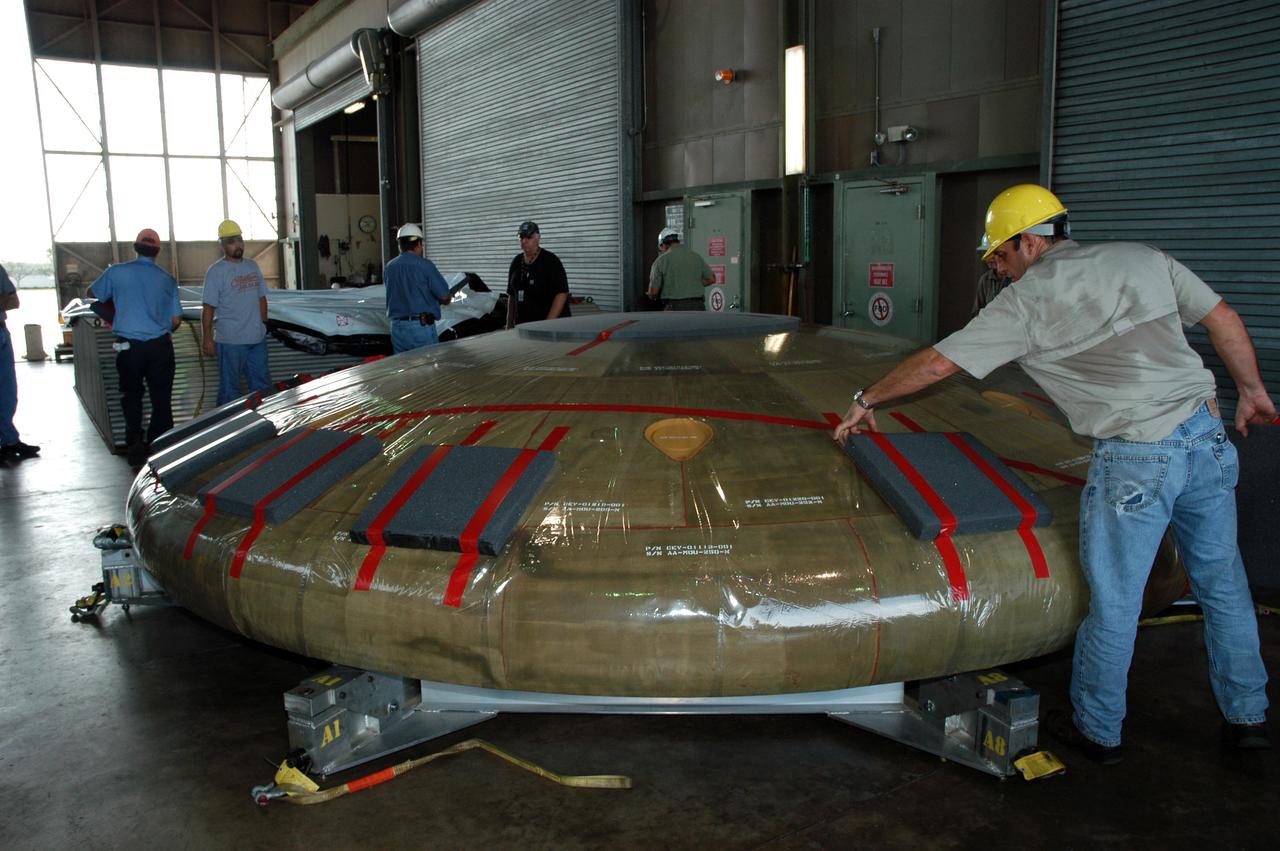
In Hangar N at NASA's Kennedy Space Center, a heat shield for the Constellation crew exploration vehicle, or CEV, is being prepared for a demonstration. A developmental heat shield for the Orion spacecraft is being tested and evaluated at Kennedy. The shield was designed and assembled by the Boeing Company in Huntington Beach, Calif., for NASA's Constellation Program. The thermal protection system manufacturing demonstration unit is designed to protect astronauts from extreme heat during re-entry to Earth's atmosphere from low Earth orbit and lunar missions. The CEV will be used to dock and gain access to the International Space Station, travel to the moon in the 2018 timeframe and play a crucial role in exploring Mars.
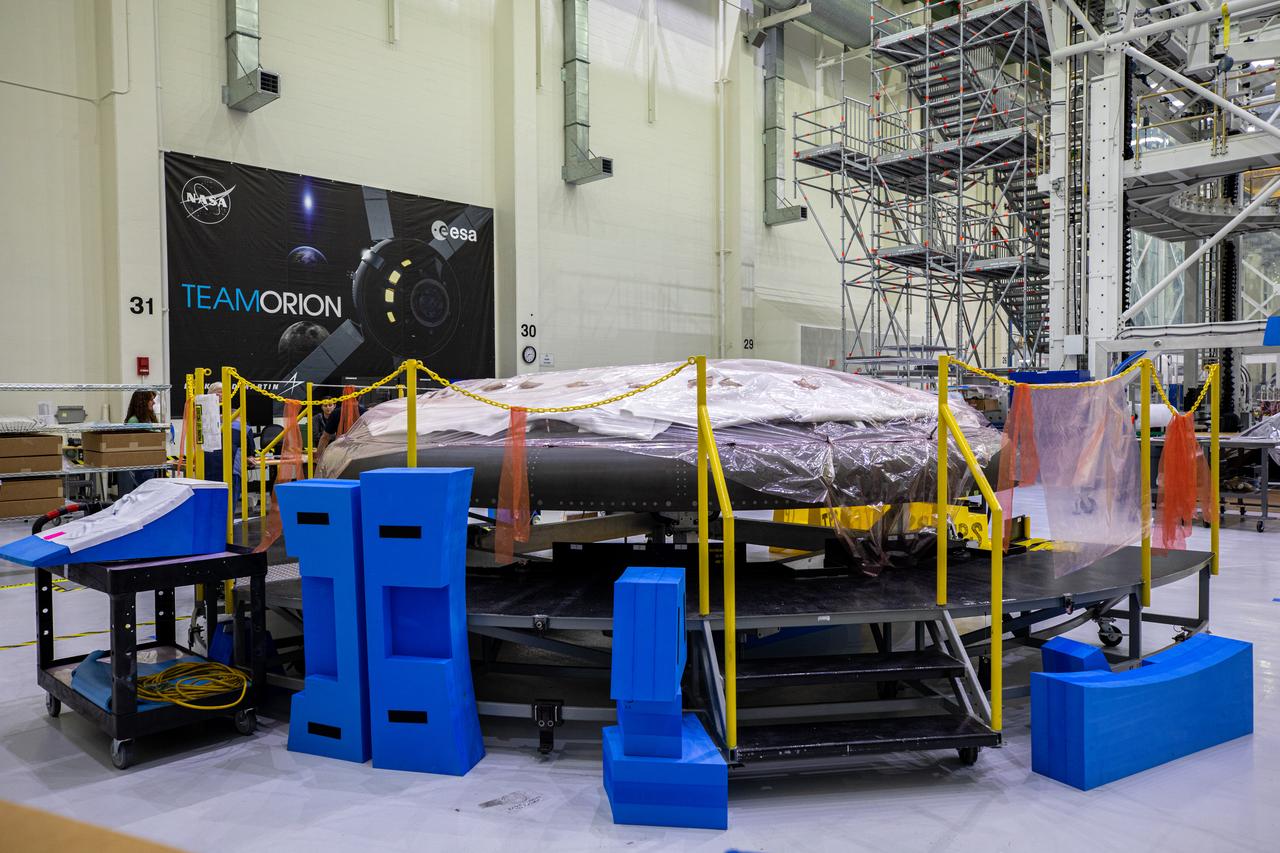
The heat shield for Orion’s Artemis II mission is in view secured on a work stand in the Neil Armstrong Operations and Checkout Building high bay at NASA’s Kennedy Space Center in Florida on Jan. 9, 2020. Work continues to prepare the heat shield for flight, including applying Avcoat, an ablative material that will provide thermal protection. The heat shield, measuring roughly 16 feet in diameter, will protect astronauts upon re-entry on the second mission of Artemis. Artemis II, the first crewed mission in the series of missions to the Moon and on to Mars, will confirm all of the Orion spacecraft’s systems operate as designed in the actual environment of deep space with astronauts aboard.
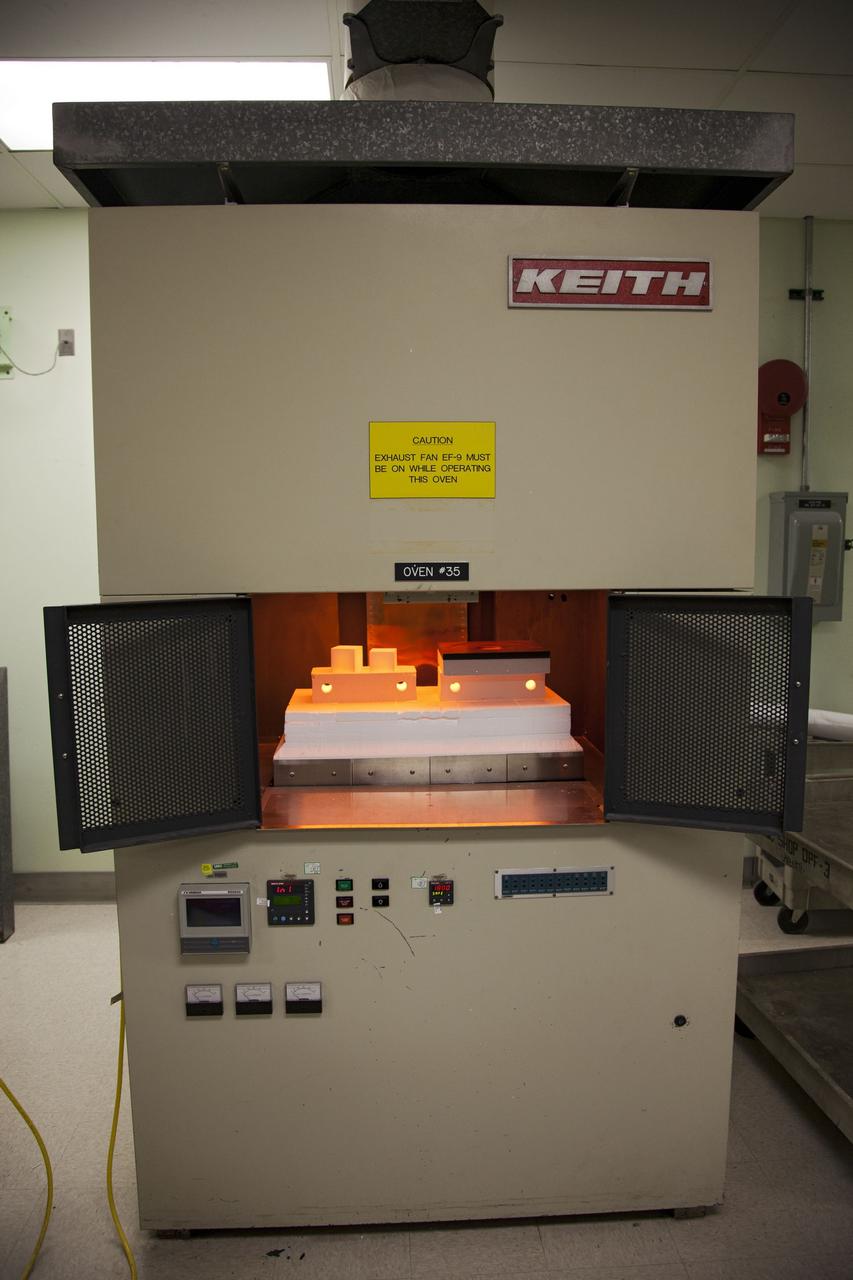
CAPE CANAVERAL, Fla. -- The heat shield tiles that will be installed to the backshell of the Orion Multi-Purpose Crew Vehicle's Exploration Flight Test EFT-1 capsule are in a Keith thermal automation oven in the Thermal Protection System Facility at NASA's Kennedy Space Center in Florida. Inside the oven, the tiles will be baked at 2,200 degrees F to cure their ceramic coating. EFT-1 will be used during Orion's first test flight in space. For more information, visit www.nasa.gov/orion. Photo credit: Frankie Martin
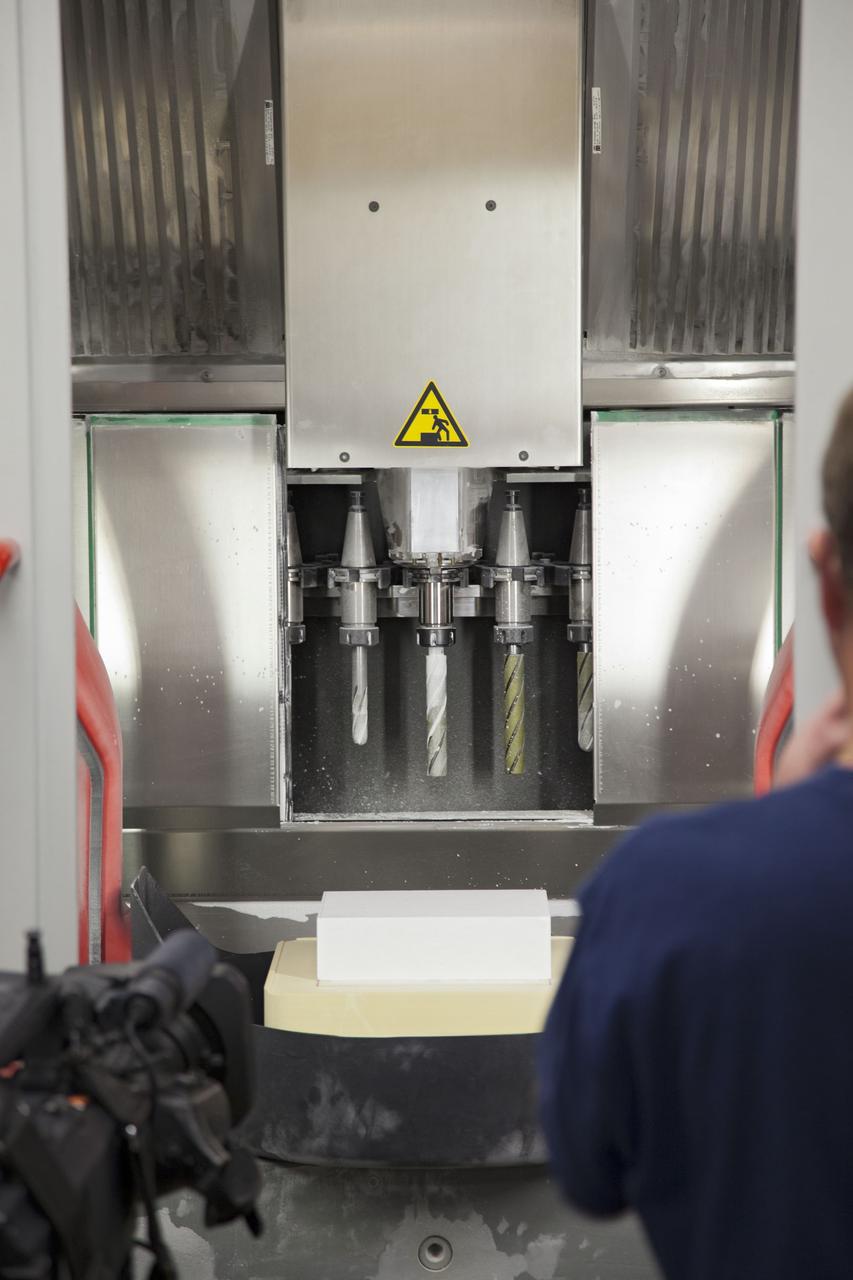
CAPE CANAVERAL, Fla. -- The heat shield tiles that will be installed to the backshell of the Orion Multi-Purpose Crew Vehicle's Exploration Flight Test EFT-1 capsule are manufactured inside the Thermal Protection System Facility at NASA's Kennedy Space Center in Florida. The insulation includes thermal barriers that are used around hatches, thrusters and other open areas of the backshell to protect the joints from heat. EFT-1 will be used during Orion's first test flight in space. For more information, visit www.nasa.gov/orion. Photo credit: Frankie Martin
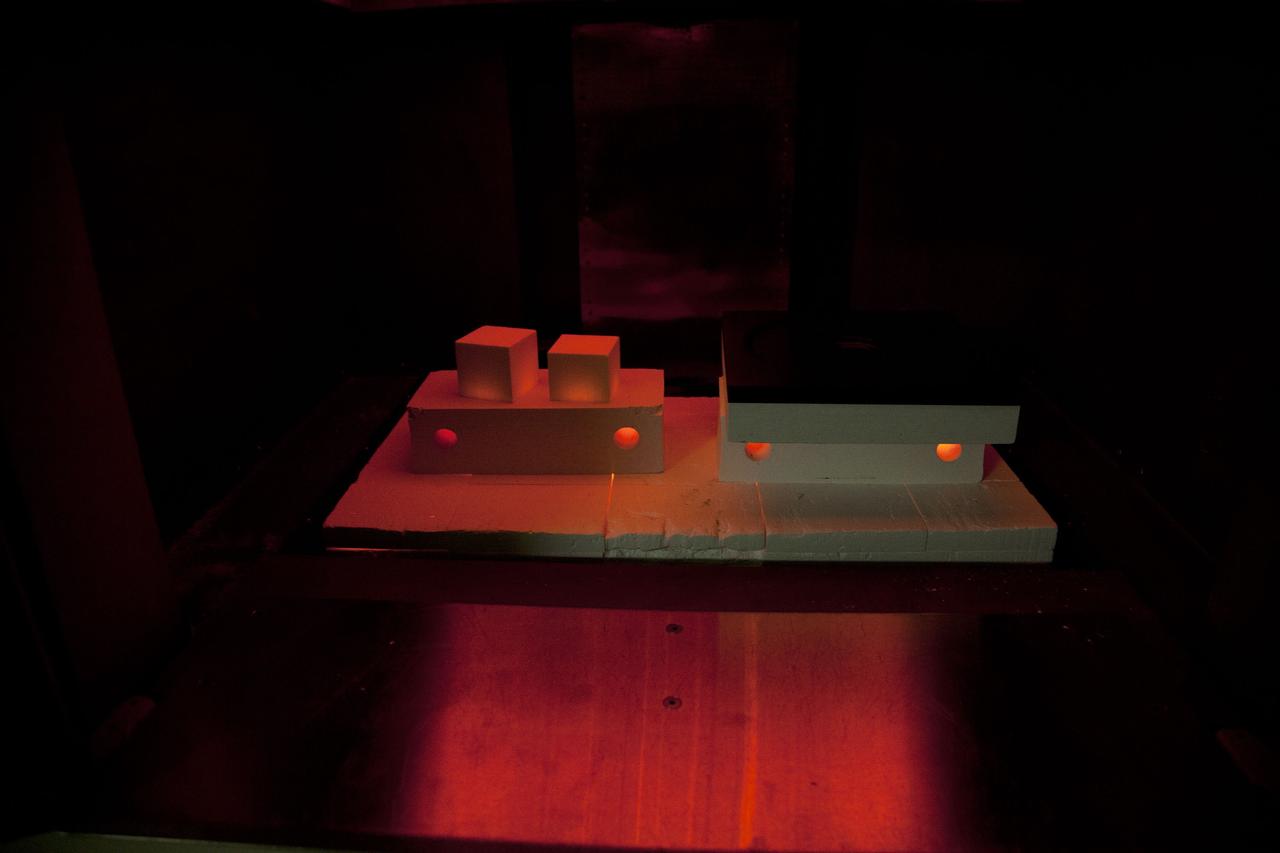
CAPE CANAVERAL, Fla. -- The heat shield tiles that will be installed to the backshell of the Orion Multi-Purpose Crew Vehicle's Exploration Flight Test EFT-1 capsule are in a Keith thermal automation oven in the Thermal Protection System Facility at NASA's Kennedy Space Center in Florida. Inside the oven, the tiles will be baked at 2,200 degrees F to cure their ceramic coating. EFT-1 will be used during Orion's first test flight in space. For more information, visit www.nasa.gov/orion. Photo credit: Frankie Martin
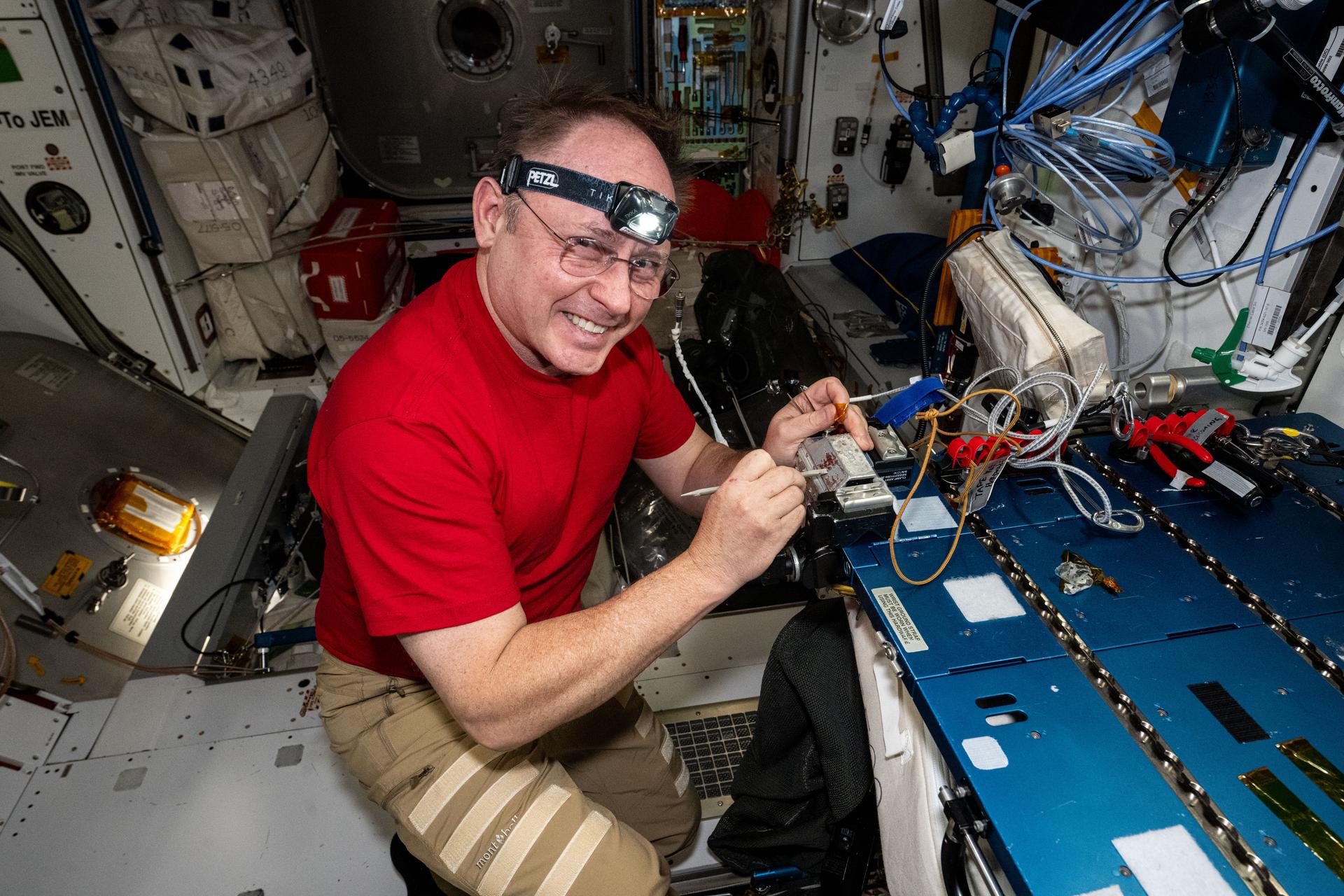
iss073e0510683 (Aug. 18, 2025) --- NASA astronaut and Expedition 73 Flight Engineer Mike Fincke replaces thermal tape on a High Definition Extravehicular Mobility Unit Camera, or HECA. The spacesuit helmet-mounted camera streams real-time, high-definition video of spacewalk activities to mission controllers on the ground, while the thermal tape shields the HECA from the harsh environment of space.
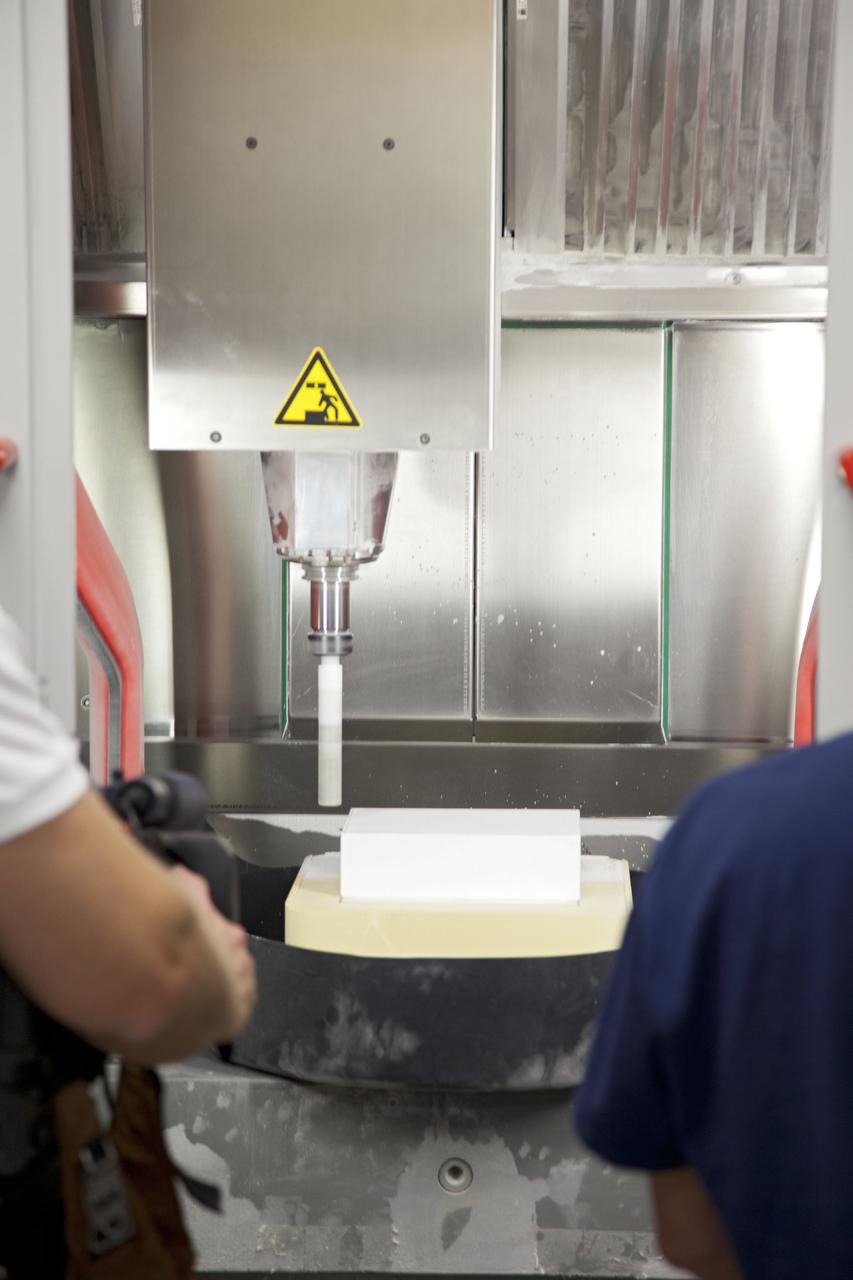
CAPE CANAVERAL, Fla. -- The heat shield tiles that will be installed to the backshell of the Orion Multi-Purpose Crew Vehicle's Exploration Flight Test EFT-1 capsule are manufactured inside the Thermal Protection System Facility at NASA's Kennedy Space Center in Florida. The insulation includes thermal barriers that are used around hatches, thrusters and other open areas of the backshell to protect the joints from heat. EFT-1 will be used during Orion's first test flight in space. For more information, visit www.nasa.gov/orion. Photo credit: Frankie Martin
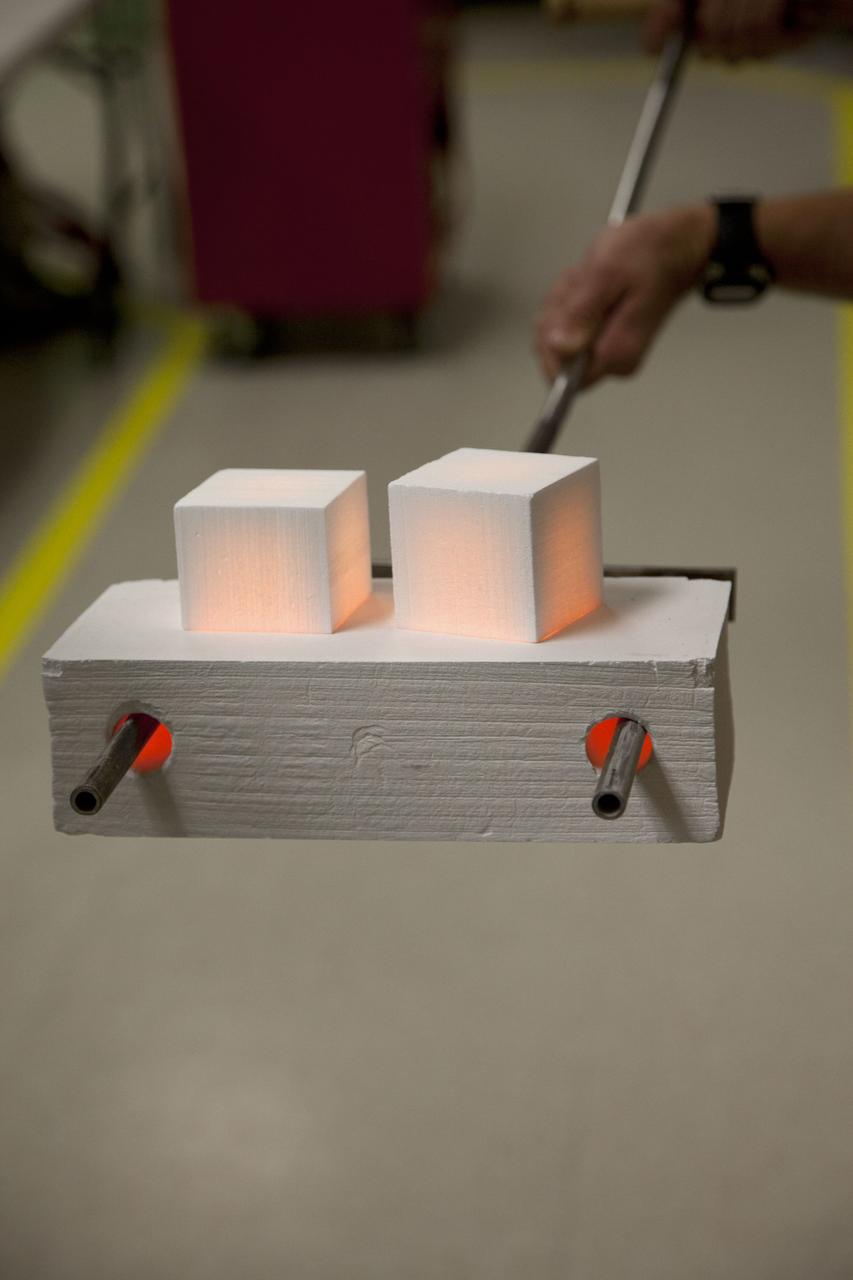
CAPE CANAVERAL, Fla. -- The heat shield tiles that will be installed to the backshell of the Orion Multi-Purpose Crew Vehicle's Exploration Flight Test EFT-1 capsule are removed from a Keith thermal automation oven. Inside, the tiles were baked at 2,200 degrees F to cure their ceramic coating. The work to manufacture and inspect the tiles is taking place in Kennedy's Thermal Protection System Facility. EFT-1 will be used during Orion's first test flight in space. For more information, visit www.nasa.gov/orion. Photo credit: Frankie Martin
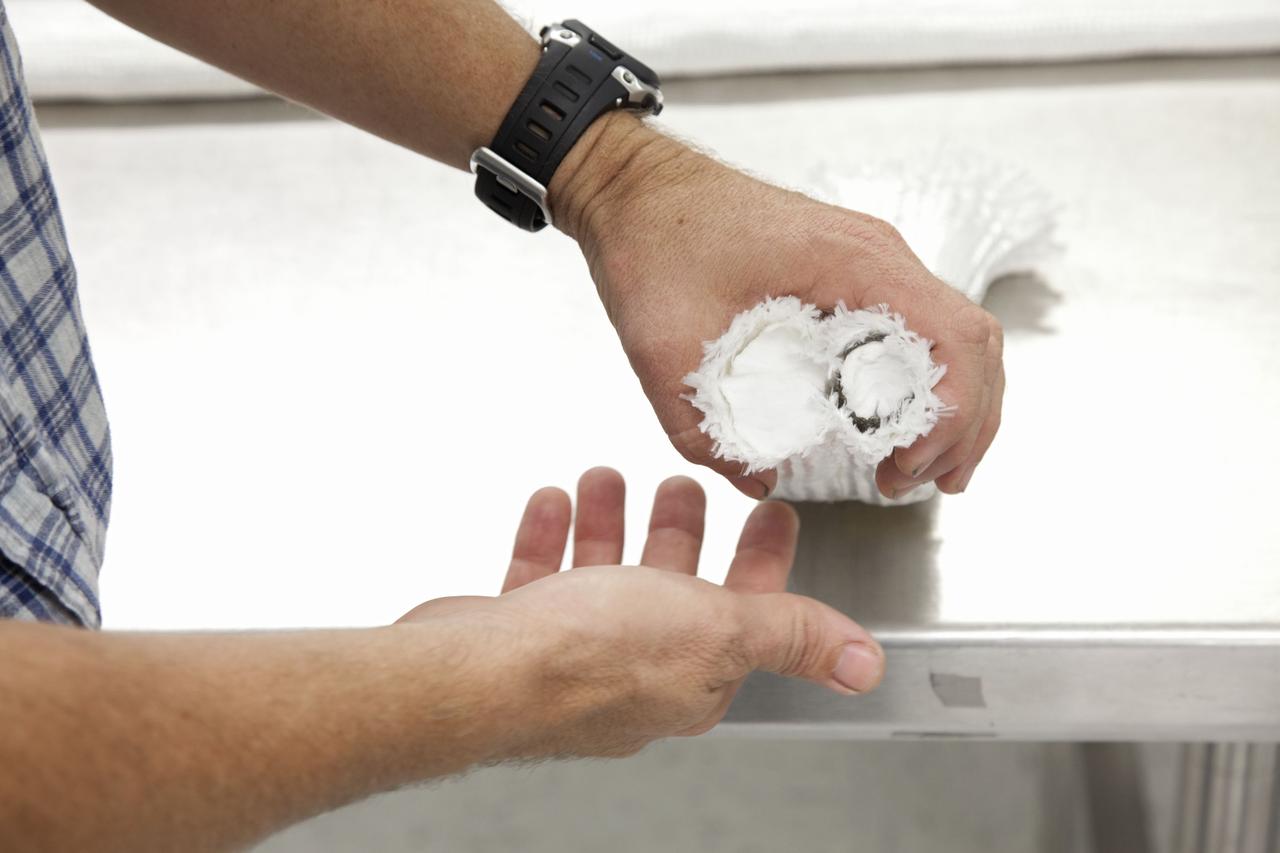
CAPE CANAVERAL, Fla. -- The heat shield tiles that will be installed to the backshell of the Orion Multi-Purpose Crew Vehicle's Exploration Flight Test EFT-1 capsule are manufactured inside the Thermal Protection System Facility at NASA's Kennedy Space Center in Florida. The insulation includes thermal barriers that are used around hatches, thrusters and other open areas of the backshell to protect the joints from heat. EFT-1 will be used during Orion's first test flight in space. For more information, visit www.nasa.gov/orion. Photo credit: Frankie Martin
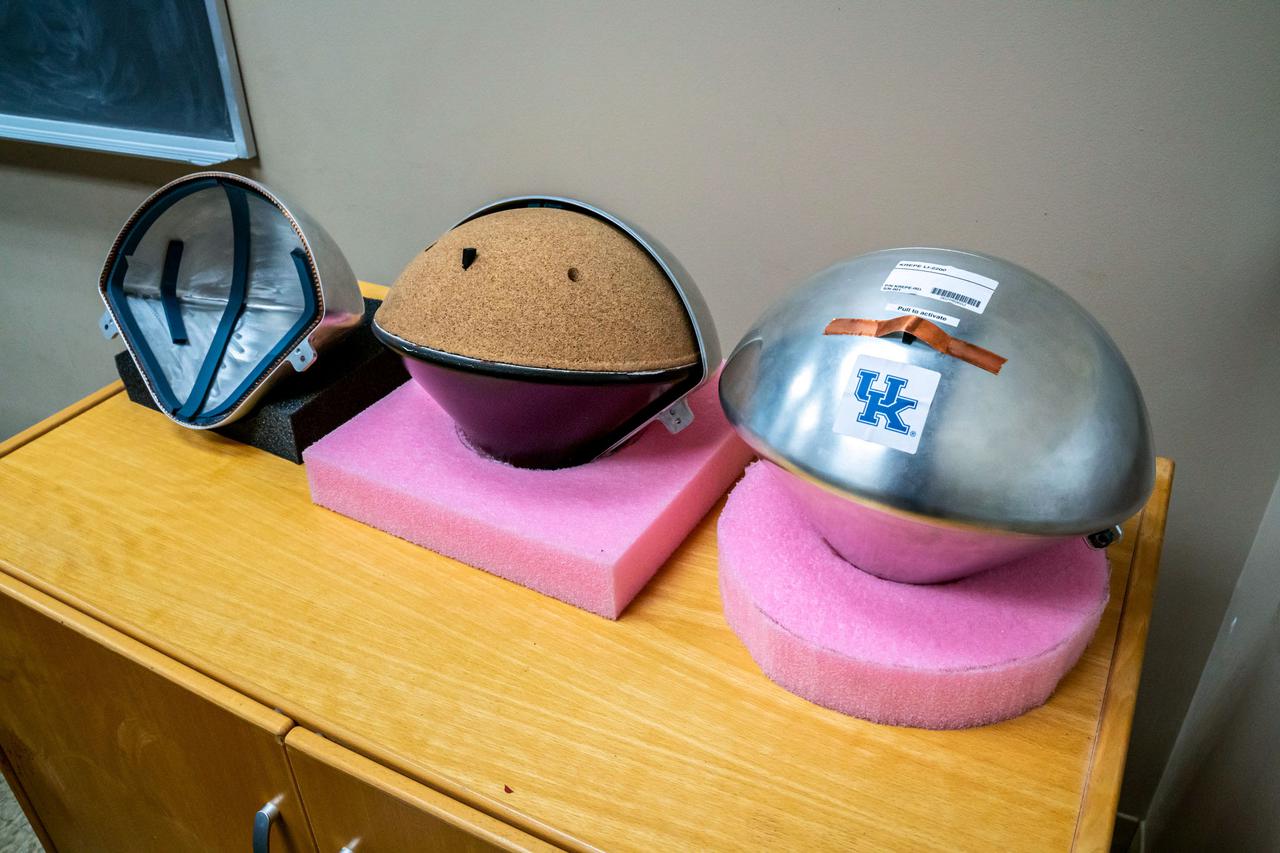
jsc2021e031158 (7/22/2021) --- A preflight view of the heat-shield on the KREPE Capsule. The Kentucky Re-Entry Probe Experiment (KREPE) demonstrates an affordable technology for re-entry experiments and provides flight data on Thermal Protection Systems (TPS) to help validate computational models. Photo courtesy of the University of Kentucky.
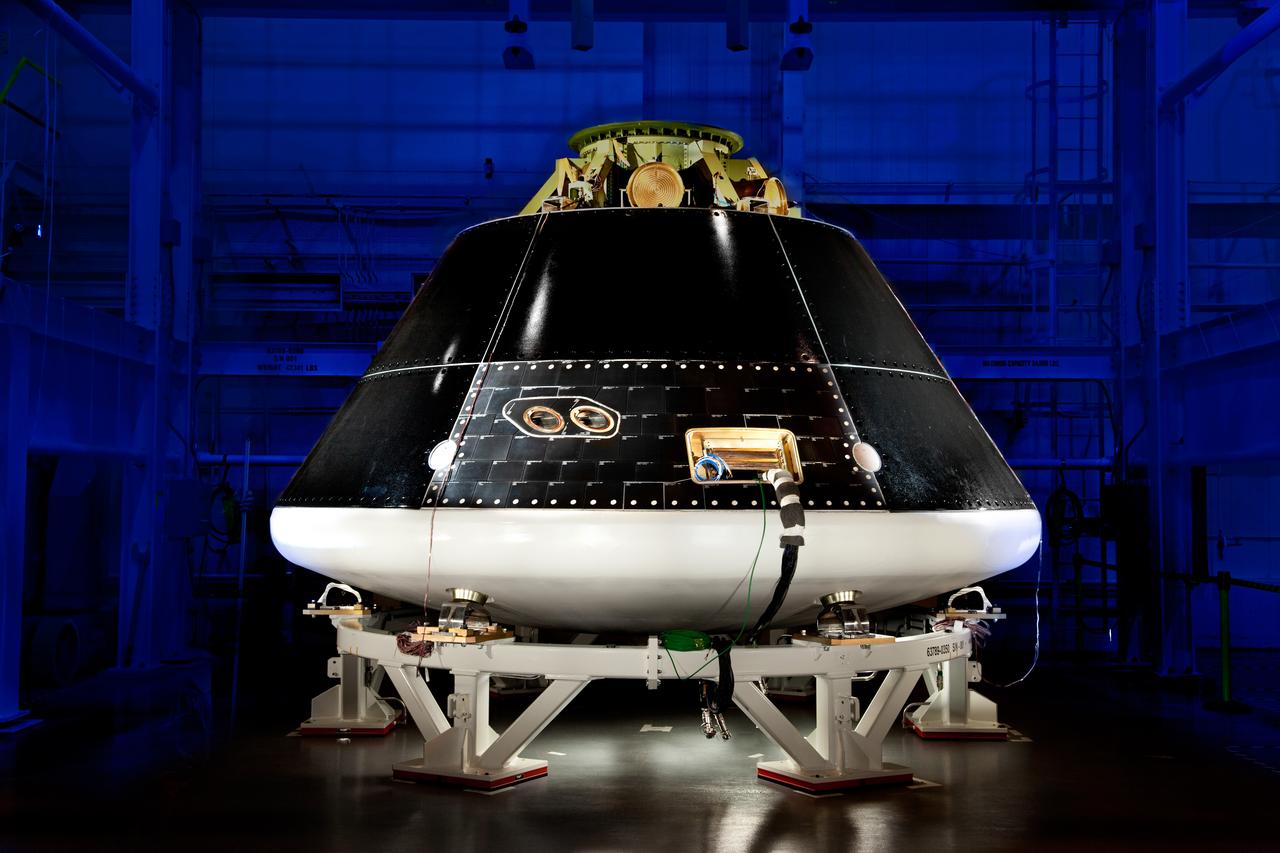
The Orion crew module ground test article sits in the Lockheed Martin Vertical Test Facility in Colorado on June 6, 2011. Work on the heat shield and thermal protection backshell of the test article was completed in preparation for environmental testing. Part of Batch image transfer from Flickr.

NASA Officials gather at Ames Research Center to discuss Spaceship development progress. Constellation is developing the Orion spacecraft and Ares rockets to support an American return to the moon by 2020. Speaker James Reuther, ARC, leader of the Advanced Development Thermal rotection Systems (heat shield) project for the Orion Crew Exploration Vehicle

NASA Officials gather at Ames Research Center to discuss Spaceship development progress. Constellation is developing the Orion spacecraft and Ares rockets to support an American return to the moon by 2020. Speaker James Reuther, ARC, leader of the Advanced Development Thermal rotection Systems (heat shield) project for the Orion Crew Exploration Vehicle
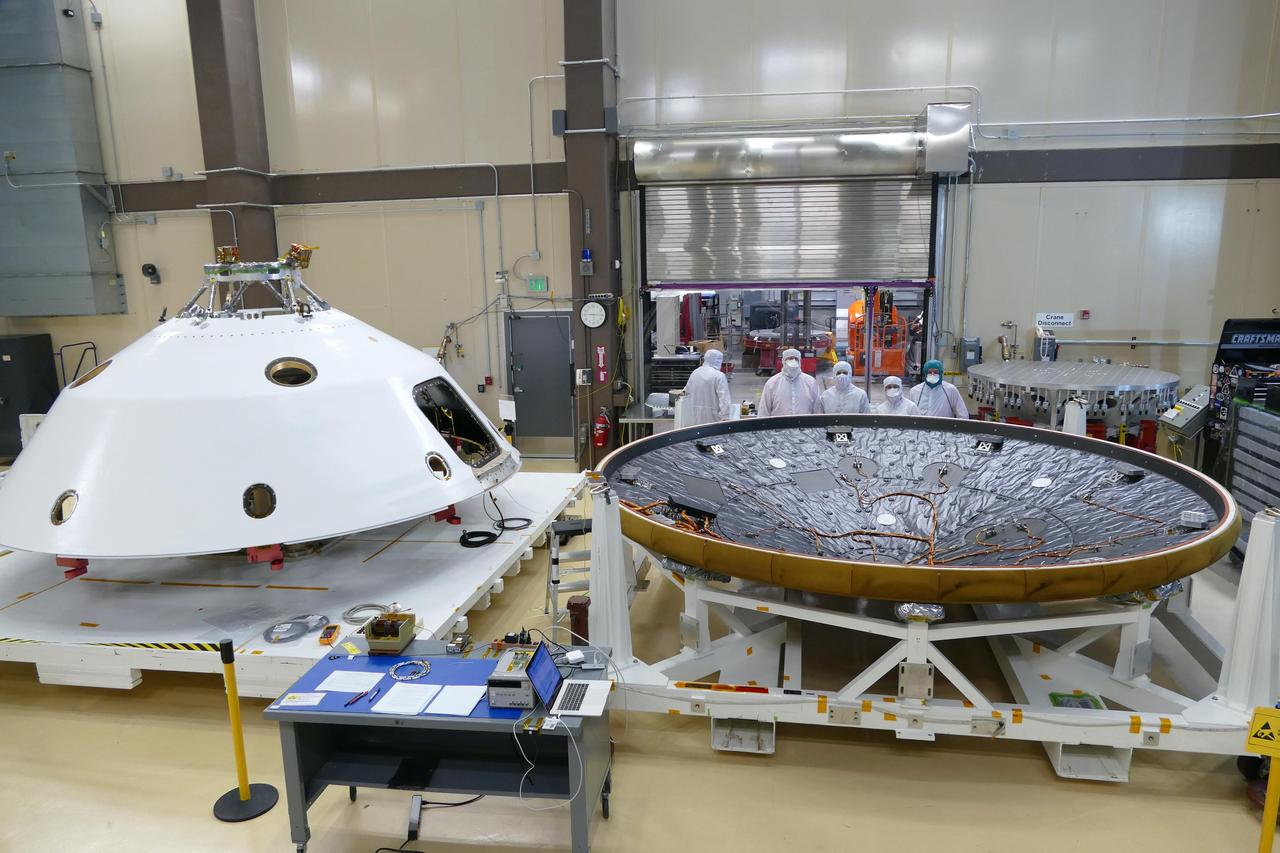
MEDLI2 sensors are installed on the Mars 2020 heat shield and back shell prior to launch. The sensors will measure the environment surrounding the spacecraft and the performance of thermal protection system material during the atmospheric entry phase of NASA's Mars 2020 Perseverance rover mission. https://photojournal.jpl.nasa.gov/catalog/PIA23989
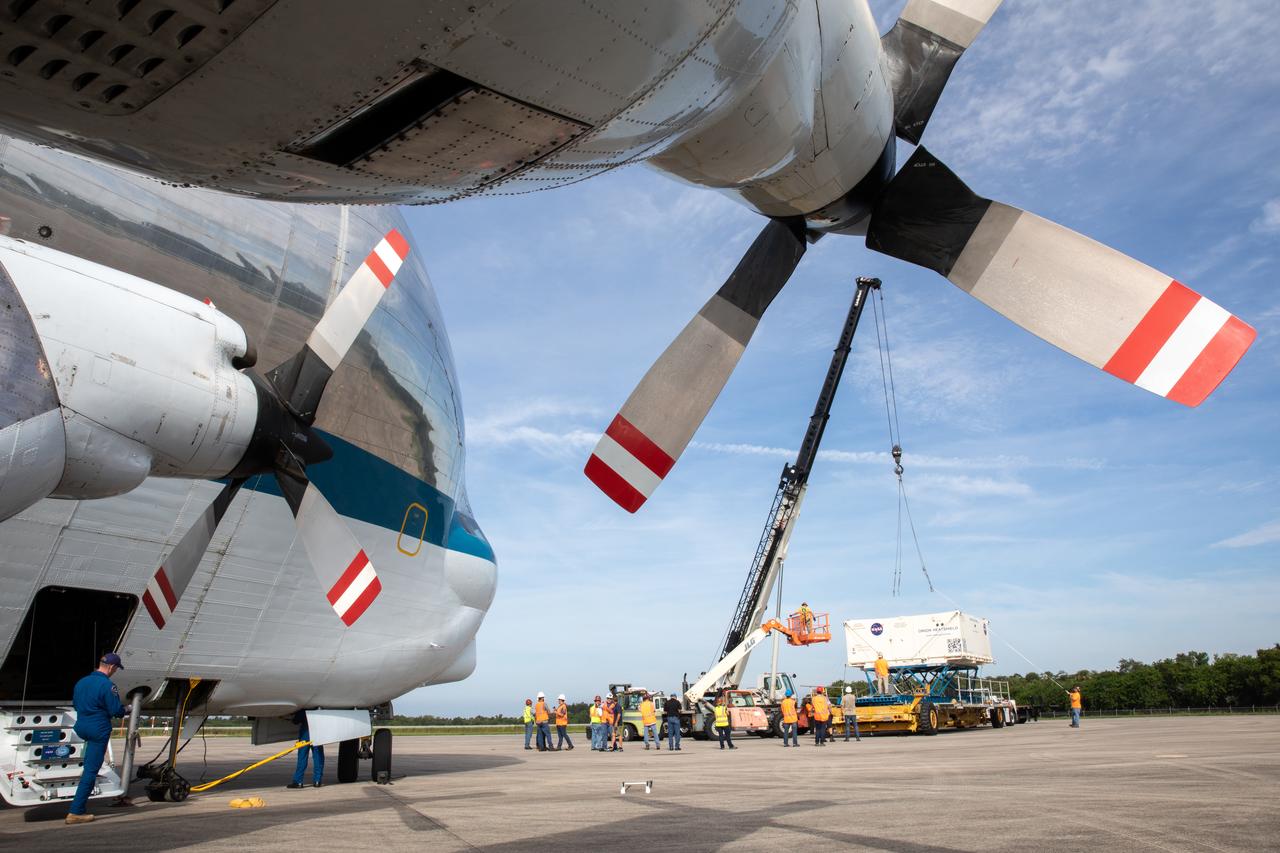
The shipping container carrying the heat shield for Orion’s Artemis 2 mission, NASA’s first crewed mission, has been unloaded from NASA’s Super Guppy aircraft at the agency’s Kennedy Space Center Shuttle Landing Facility in Florida on July 9, 2019. The heat shield, measuring roughly 16 feet in diameter, will protect astronauts upon re-entry on the second mission of Artemis. The heat shield arrived from Lockheed Martin’s manufacturing facility near Denver. It will be delivered to the Neil Armstrong Operations and Checkout facility high bay. The heat shield is a base titanium truss structure. Over the next several months, technicians will apply Avcoat, an ablative material that will provide the thermal protection. Artemis 2 will confirm all of the spacecraft’s systems operate as designed in the actual environment of deep space with astronauts aboard.
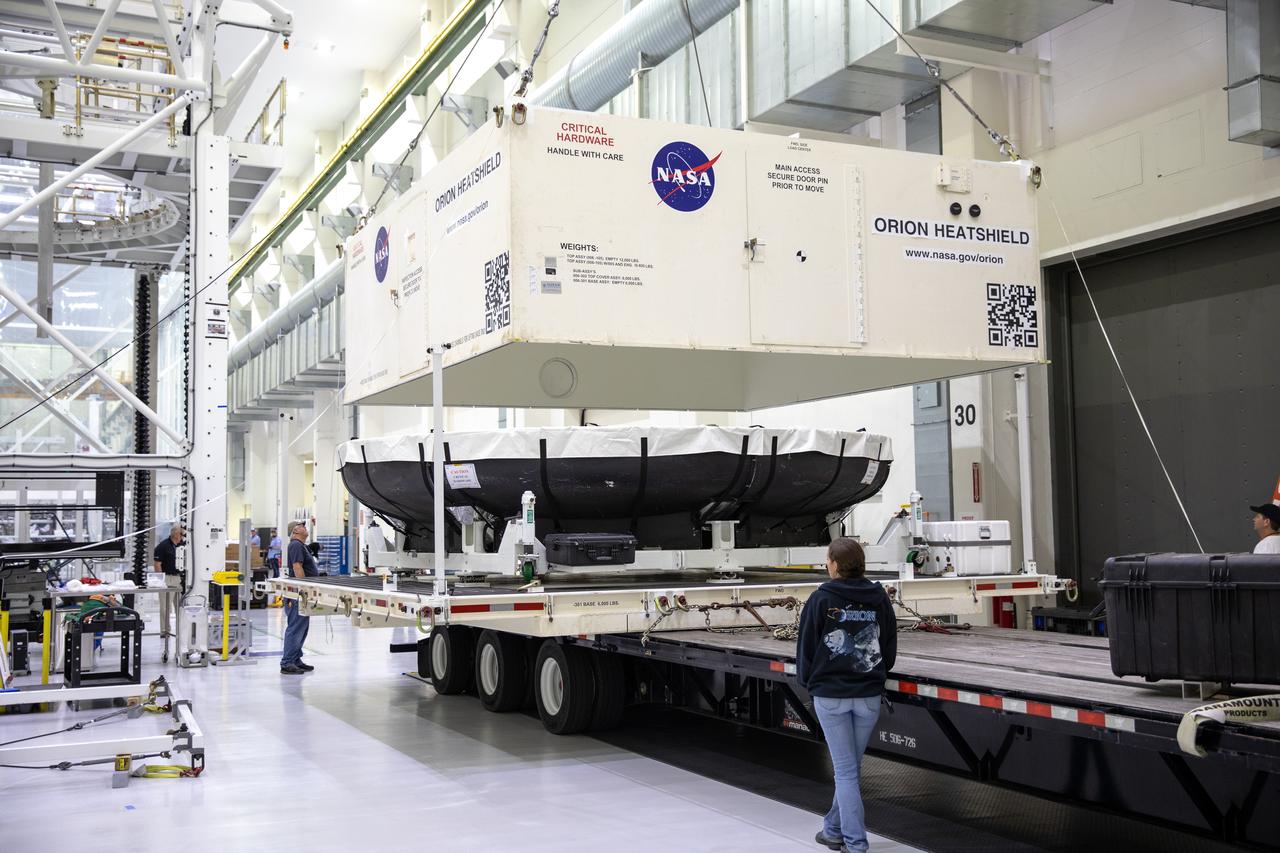
The cover of the shipping container carrying the heat shield for Orion’s Artemis 2 mission, NASA’s first crewed mission, is lifted up inside the Neil Armstrong Operations and Checkout Building high bay at the agency’s Kennedy Space Center in Florida on July 10, 2019. The heat shield, measuring roughly 16 feet in diameter, will protect astronauts upon re-entry on the second mission of Artemis. The heat shield arrived from Lockheed Martin’s manufacturing facility near Denver aboard NASA’s Super Guppy Aircraft. The heat shield is a base titanium truss structure. Over the next several months, technicians will apply Avcoat, an ablative material that will provide the thermal protection. Artemis 2 will confirm all of the spacecraft’s systems operate as designed in the actual environment of deep space with astronauts aboard.
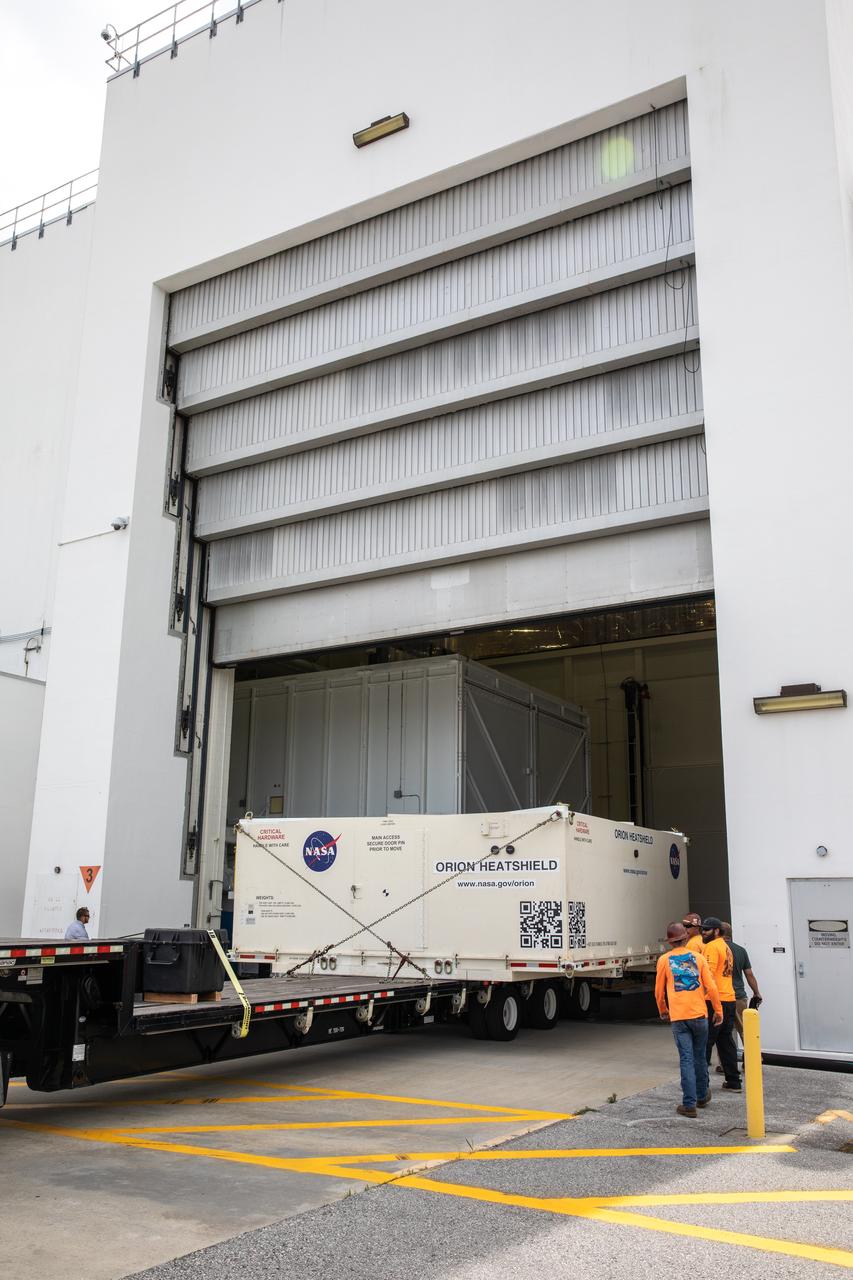
A flatbed truck with the shipping container carrying the heat shield for Orion’s Artemis 2 mission, NASA’s first crewed mission, arrives at the Neil Armstrong Operations and Checkout Building high bay entrance at the agency’s Kennedy Space Center in Florida on July 9, 2019. The heat shield, measuring roughly 16 feet in diameter, will protect astronauts upon re-entry on the second mission of Artemis. The heat shield arrived from Lockheed Martin’s manufacturing facility near Denver aboard NASA’s Super Guppy Aircraft. The heat shield is a base titanium truss structure. Over the next several months, technicians will apply Avcoat, an ablative material that will provide the thermal protection. Artemis 2 will confirm all of the spacecraft’s systems operate as designed in the actual environment of deep space with astronauts aboard.
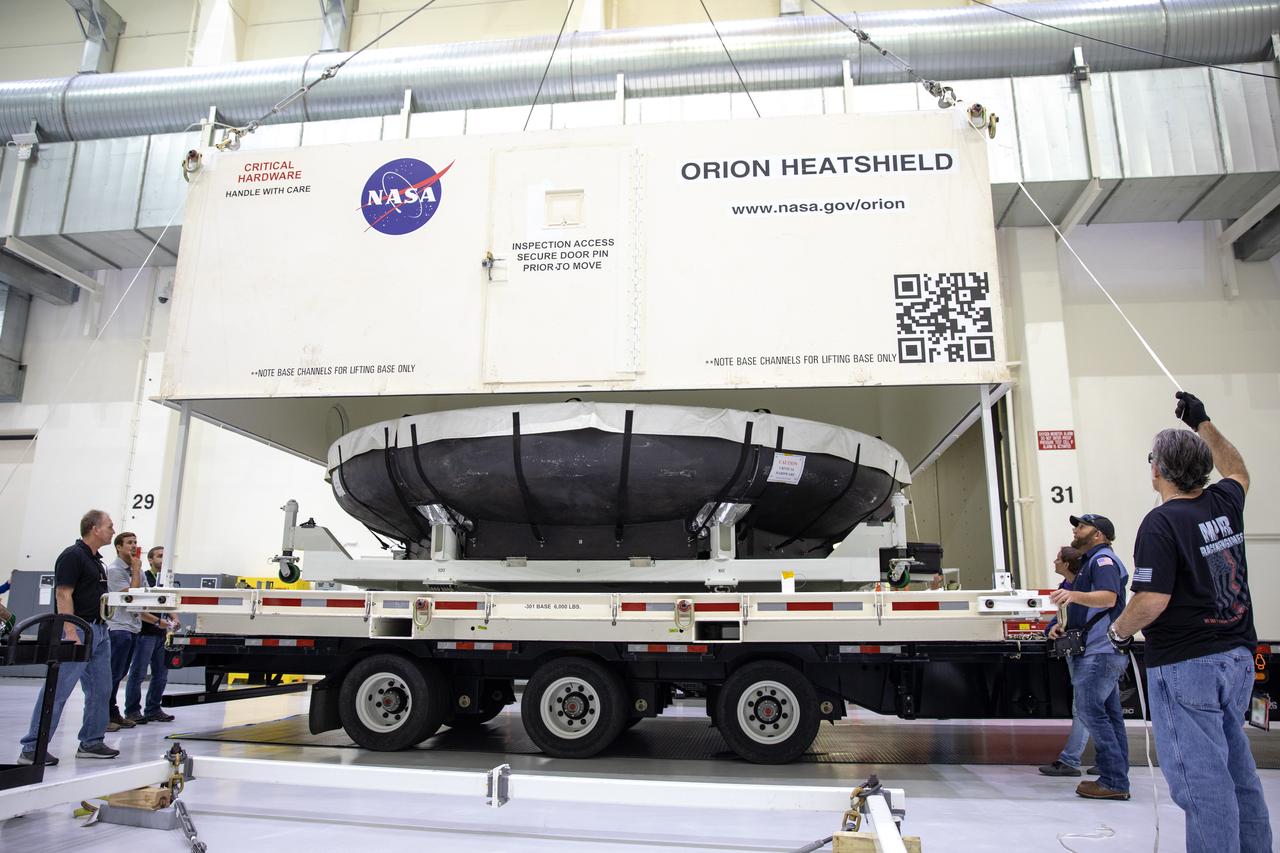
The cover of the shipping container carrying the heat shield for Orion’s Artemis 2 mission, NASA’s first crewed mission, is lifted up inside the Neil Armstrong Operations and Checkout Building high bay at the agency’s Kennedy Space Center in Florida on July 10, 2019. The heat shield, measuring roughly 16 feet in diameter, will protect astronauts upon re-entry on the second mission of Artemis. The heat shield arrived from Lockheed Martin’s manufacturing facility near Denver aboard NASA’s Super Guppy Aircraft. The heat shield is a base titanium truss structure. Over the next several months, technicians will apply Avcoat, an ablative material that will provide the thermal protection. Artemis 2 will confirm all of the spacecraft’s systems operate as designed in the actual environment of deep space with astronauts aboard.
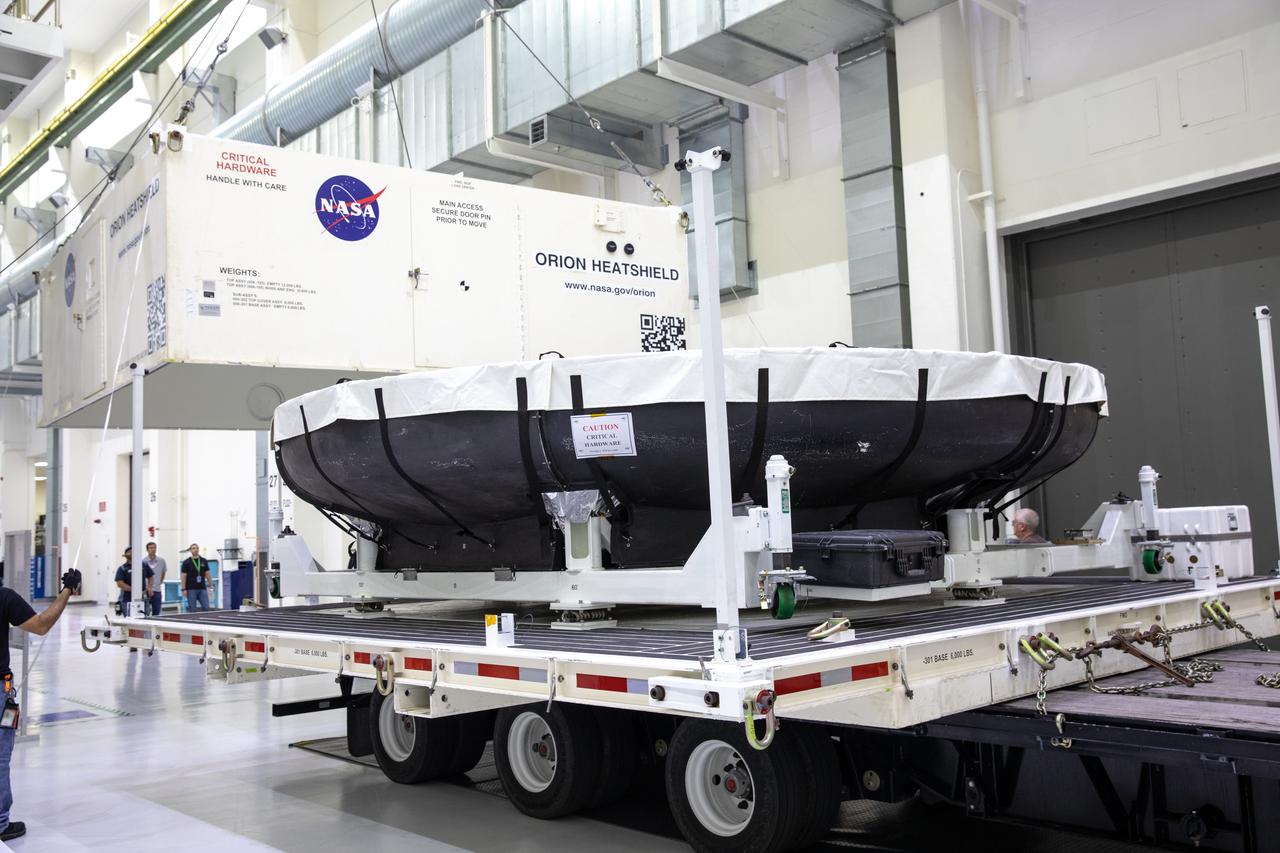
The heat shield for Orion’s Artemis 2 mission, NASA’s first crewed mission, is uncrated from its shipping container inside the Neil Armstrong Operations and Checkout Building high bay at the agency’s Kennedy Space Center in Florida on July 10, 2019. The heat shield, measuring roughly 16 feet in diameter, will protect astronauts upon re-entry on the second mission of Artemis. The heat shield arrived from Lockheed Martin’s manufacturing facility near Denver aboard NASA’s Super Guppy Aircraft. The heat shield is a base titanium truss structure. Over the next several months, technicians will apply Avcoat, an ablative material that will provide the thermal protection. Artemis 2 will confirm all of the spacecraft’s systems operate as designed in the actual environment of deep space with astronauts aboard.
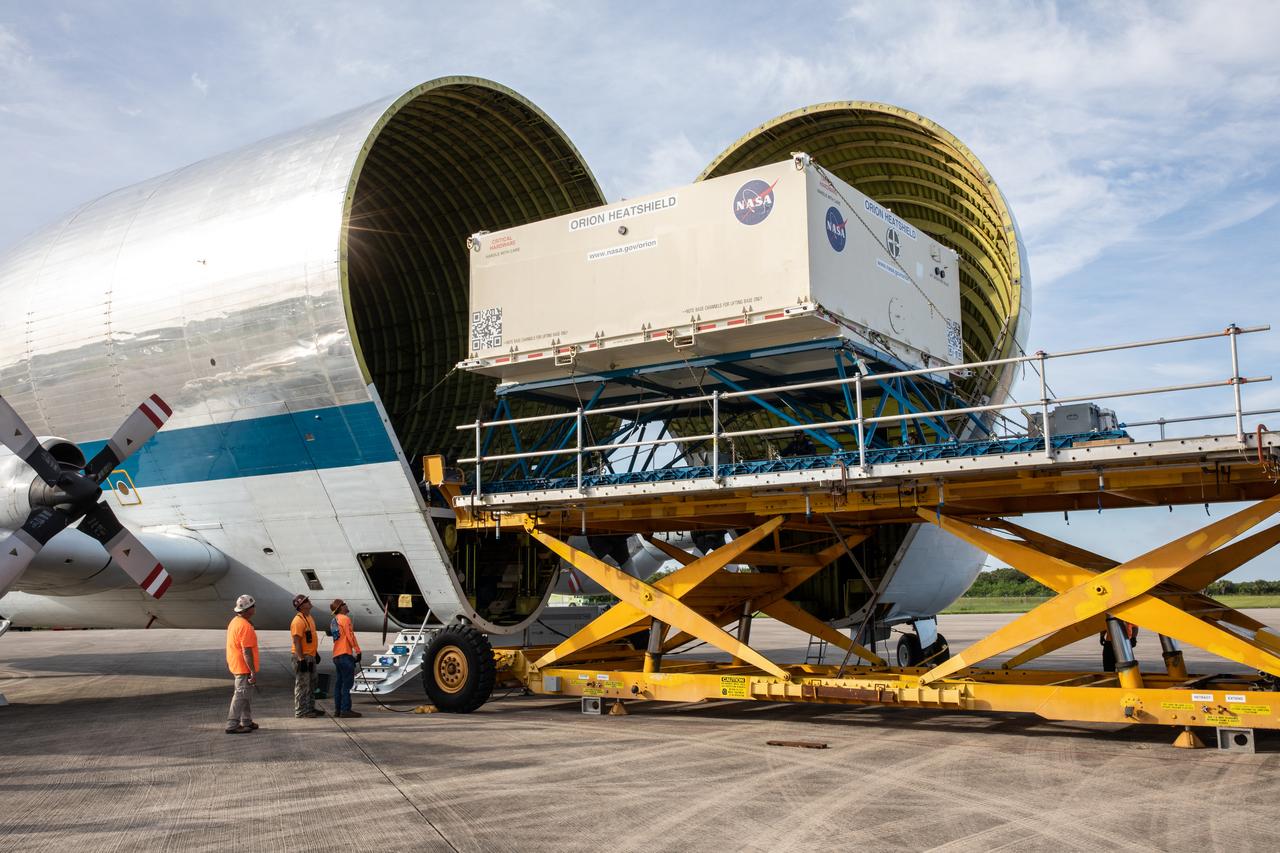
The shipping container carrying the heat shield for Orion’s Artemis 2 mission, NASA’s first crewed mission, is unloaded from NASA’s Super Guppy aircraft at the agency’s Kennedy Space Center Shuttle Landing Facility in Florida on July 9, 2019. The heat shield, measuring roughly 16 feet in diameter, will protect astronauts upon re-entry on the second mission of Artemis. The heat shield arrived from Lockheed Martin’s manufacturing facility near Denver. It will be delivered to the Neil Armstrong Operations and Checkout facility high bay. The heat shield is a base titanium truss structure. Over the next several months, technicians will apply Avcoat, an ablative material that will provide the thermal protection. Artemis 2 will confirm all of the spacecraft’s systems operate as designed in the actual environment of deep space with astronauts aboard.
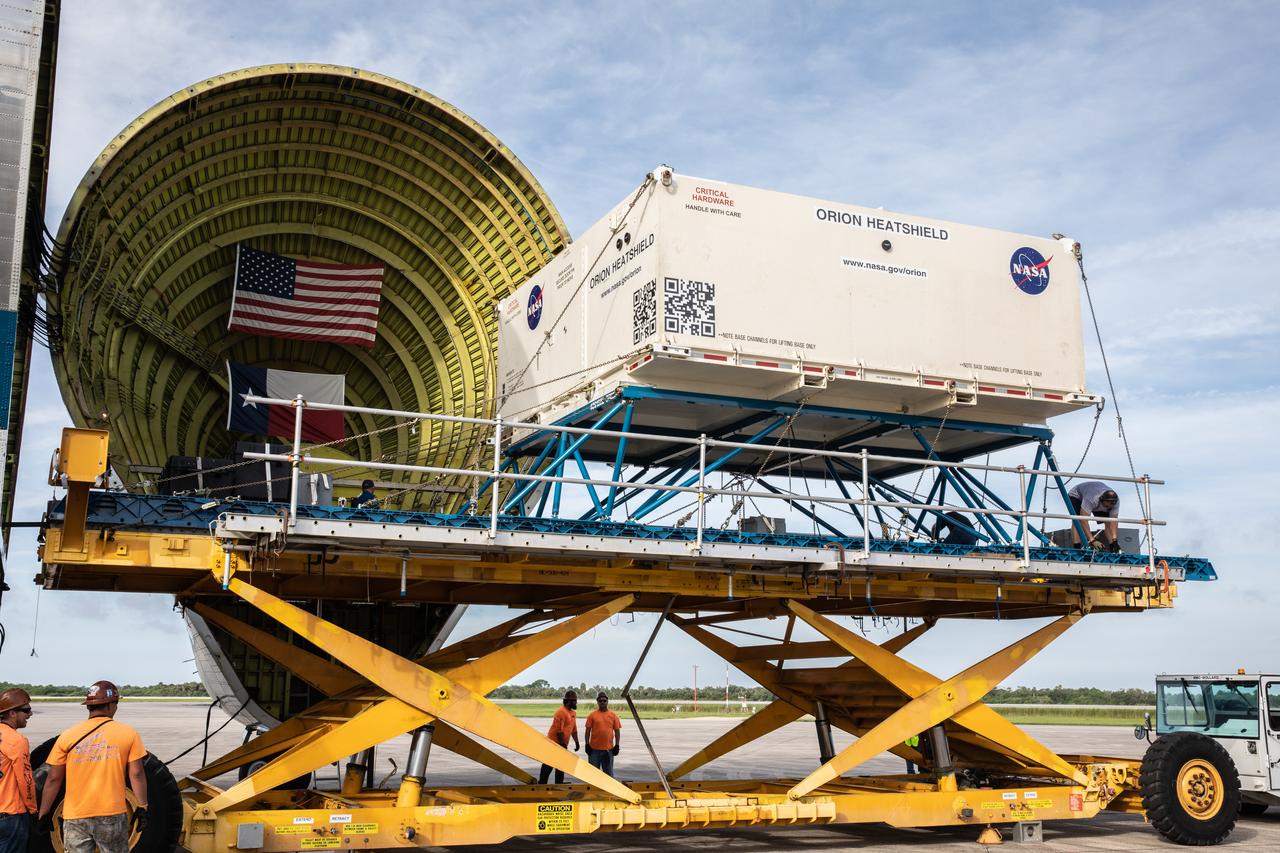
The shipping container carrying the heat shield for Orion’s Artemis 2 mission, NASA’s first crewed mission, is unloaded from NASA’s Super Guppy aircraft at the agency’s Kennedy Space Center Shuttle Landing Facility in Florida on July 9, 2019. The heat shield, measuring roughly 16 feet in diameter, will protect astronauts upon re-entry on the second mission of Artemis. The heat shield arrived from Lockheed Martin’s manufacturing facility near Denver. It will be delivered to the Neil Armstrong Operations and Checkout facility high bay. The heat shield is a base titanium truss structure. Over the next several months, technicians will apply Avcoat, an ablative material that will provide the thermal protection. Artemis 2 will confirm all of the spacecraft’s systems operate as designed in the actual environment of deep space with astronauts aboard.
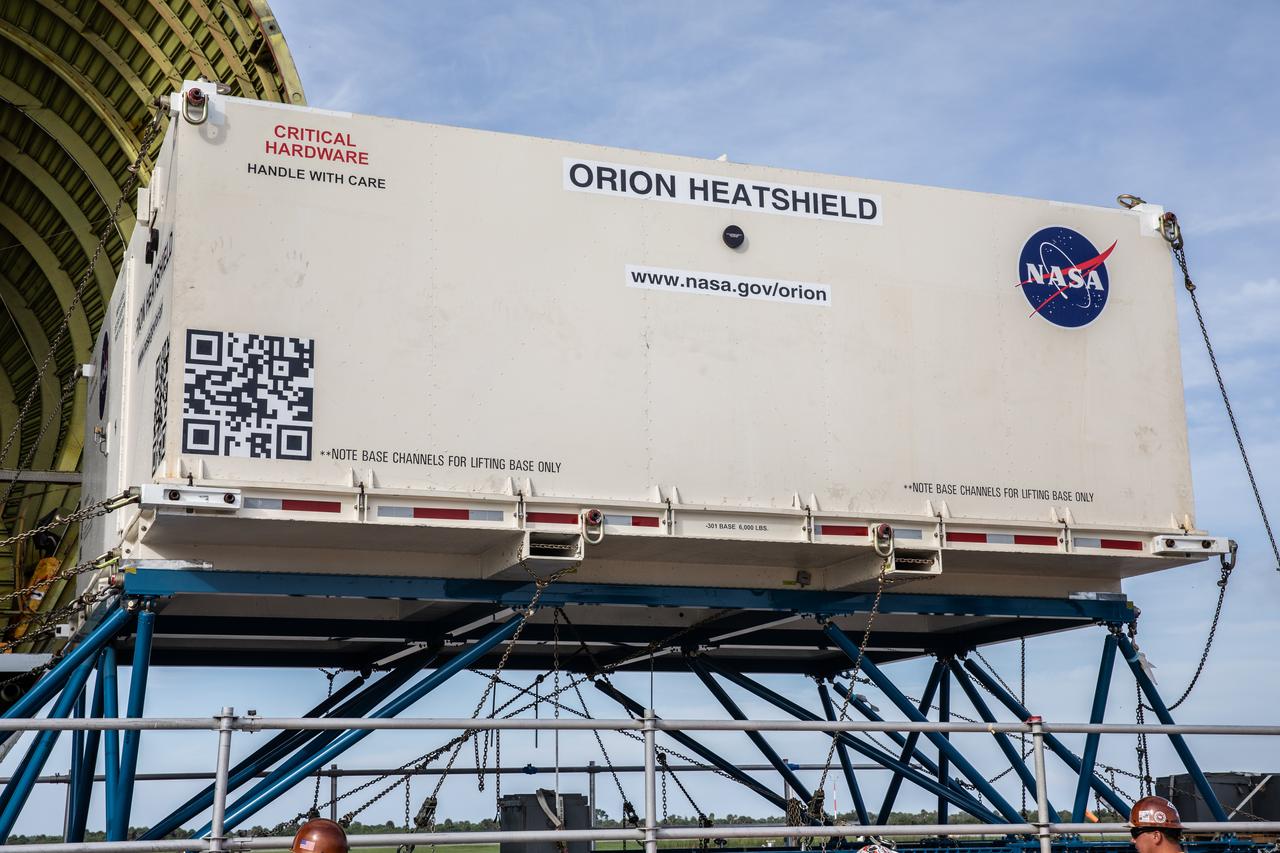
The shipping container carrying the heat shield for Orion’s Artemis 2 mission, NASA’s first crewed mission, is unloaded from NASA’s Super Guppy aircraft at the agency’s Kennedy Space Center Shuttle Landing Facility in Florida on July 9, 2019. The heat shield, measuring roughly 16 feet in diameter, will protect astronauts upon re-entry on the second mission of Artemis. The heat shield arrived from Lockheed Martin’s manufacturing facility near Denver. It will be delivered to the Neil Armstrong Operations and Checkout facility high bay. The heat shield is a base titanium truss structure. Over the next several months, technicians will apply Avcoat, an ablative material that will provide the thermal protection. Artemis 2 will confirm all of the spacecraft’s systems operate as designed in the actual environment of deep space with astronauts aboard.
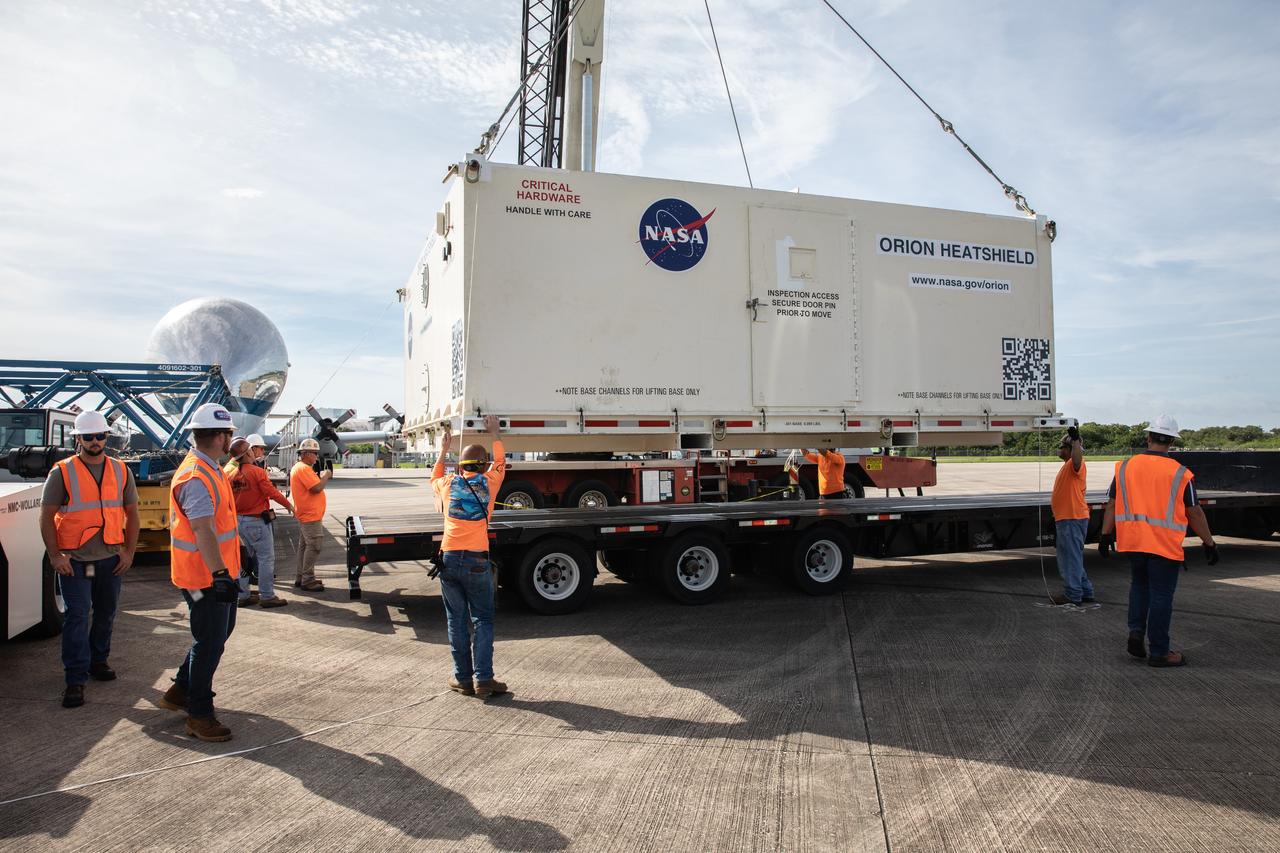
Technicians help secure the shipping container carrying the heat shield for Orion’s Artemis 2 mission, NASA’s first crewed mission, onto a transporter at the agency’s Kennedy Space Center Shuttle Landing Facility in Florida on July 9, 2019. The heat shield, measuring roughly 16 feet in diameter, will protect astronauts upon re-entry on the second mission of Artemis. The heat shield arrived from Lockheed Martin’s manufacturing facility near Denver aboard NASA’s Super Guppy Aircraft. It will be delivered to the Neil Armstrong Operations and Checkout facility high bay. The heat shield is a base titanium truss structure. Over the next several months, technicians will apply Avcoat, an ablative material that will provide the thermal protection. Artemis 2 will confirm all of the spacecraft’s systems operate as designed in the actual environment of deep space with astronauts aboard.
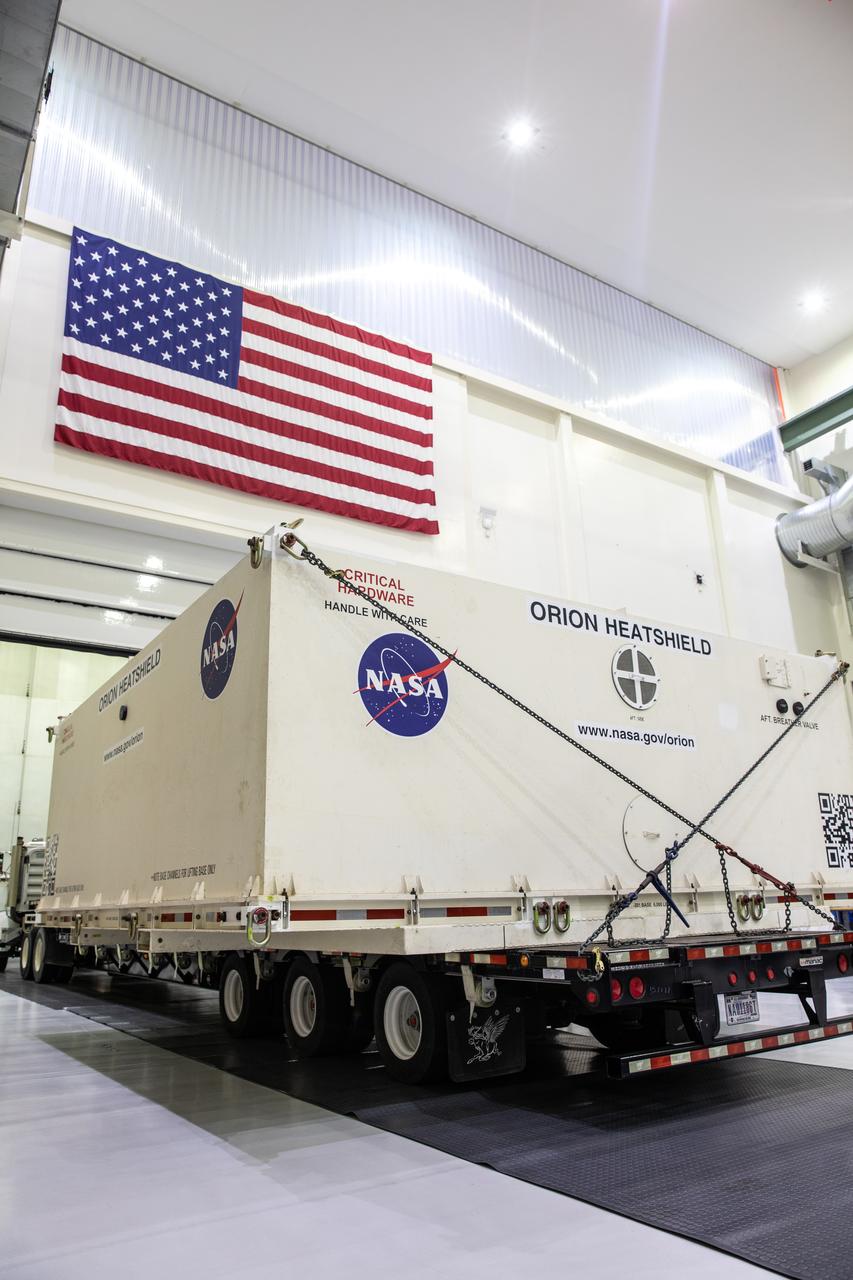
A flatbed truck with the shipping container carrying the heat shield for Orion’s Artemis 2 mission, NASA’s first crewed mission, moves into the Neil Armstrong Operations and Checkout Building high bay at the agency’s Kennedy Space Center in Florida on July 9, 2019. The heat shield, measuring roughly 16 feet in diameter, will protect astronauts upon re-entry on the second mission of Artemis. The heat shield arrived from Lockheed Martin’s manufacturing facility near Denver aboard NASA’s Super Guppy Aircraft. The heat shield is a base titanium truss structure. Over the next several months, technicians will apply Avcoat, an ablative material that will provide the thermal protection. Artemis 2 will confirm all of the spacecraft’s systems operate as designed in the actual environment of deep space with astronauts aboard.
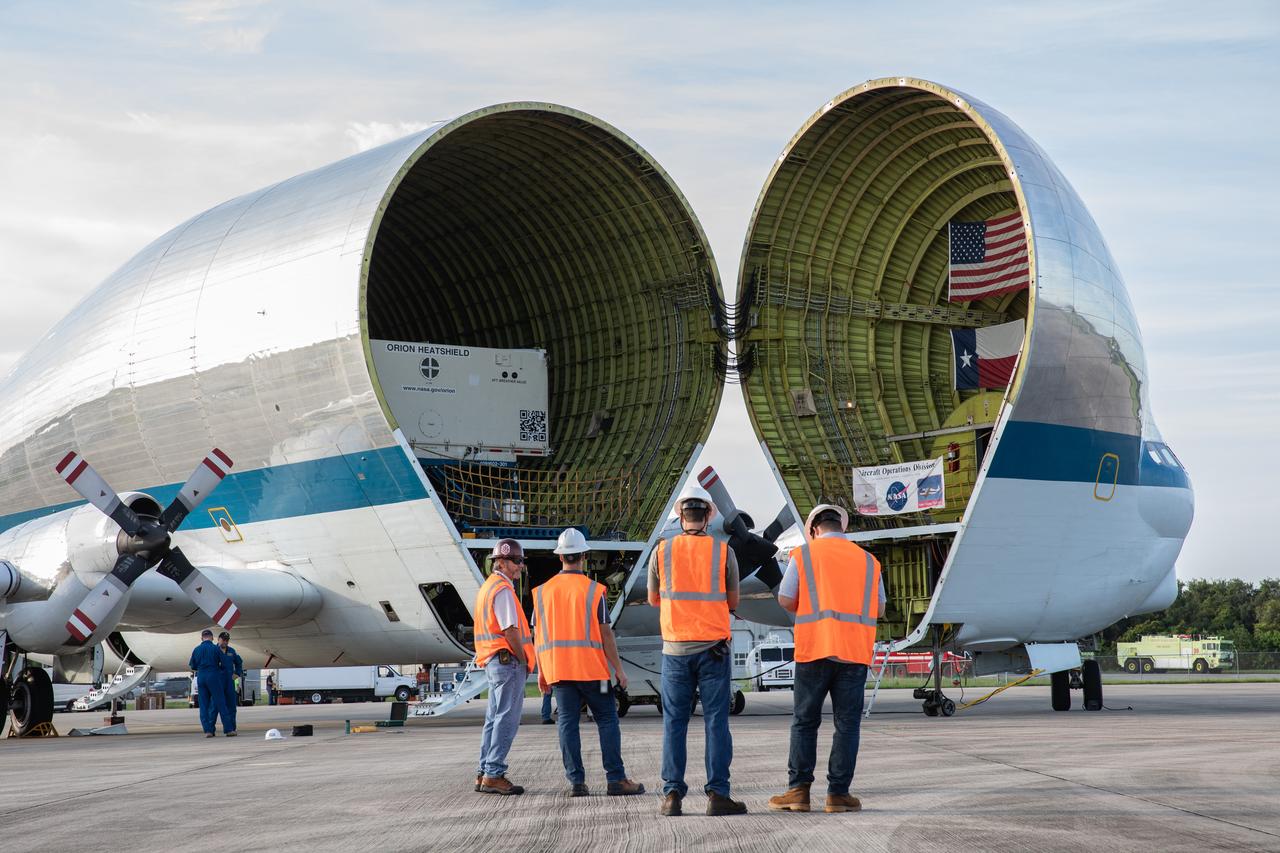
The heat shield for Orion’s Artemis 2 mission, NASA’s first crewed mission, arrives in its shipping container aboard NASA’s Super Guppy aircraft at the agency’s Kennedy Space Center Shuttle Landing Facility in Florida on July 9, 2019. The heat shield, measuring roughly 16 feet in diameter, will protect astronauts upon re-entry on the second mission of Artemis. The heat shield arrived from Lockheed Martin’s manufacturing facility near Denver. It will be offloaded and delivered to the Neil Armstrong Operations and Checkout facility high bay. The heat shield is a base titanium truss structure. Over the next several months, technicians will apply Avcoat, an ablative material that will provide the thermal protection. Artemis 2 will confirm all of the spacecraft’s systems operate as designed in the actual environment of deep space with astronauts aboard.
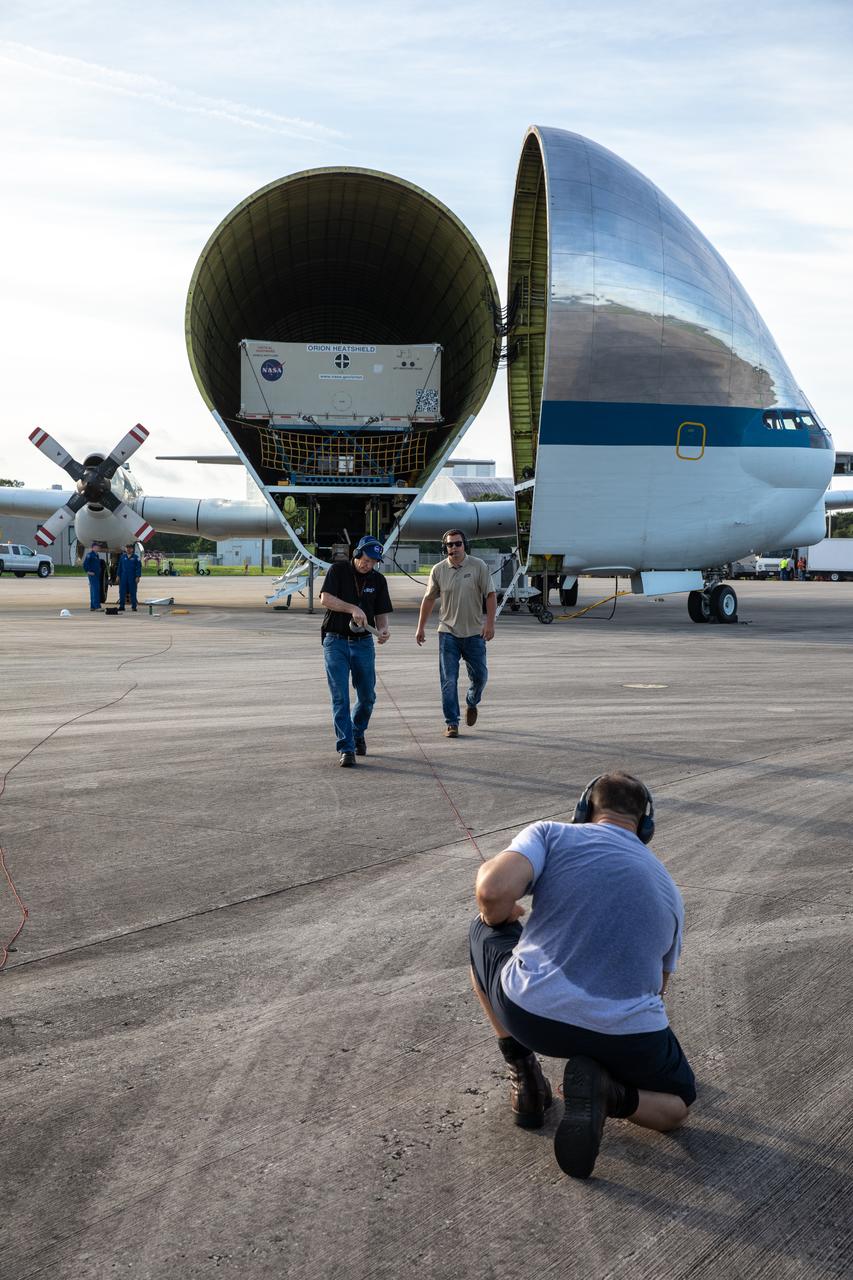
The heat shield for Orion’s Artemis 2 mission, NASA’s first crewed mission, arrives in its shipping container aboard NASA’s Super Guppy aircraft at the agency’s Kennedy Space Center Shuttle Landing Facility in Florida on July 9, 2019. The heat shield, measuring roughly 16 feet in diameter, will protect astronauts upon re-entry on the second mission of Artemis. The heat shield arrived from Lockheed Martin’s manufacturing facility near Denver. It will be offloaded and delivered to the Neil Armstrong Operations and Checkout facility high bay. The heat shield is a base titanium truss structure. Over the next several months, technicians will apply Avcoat, an ablative material that will provide the thermal protection. Artemis 2 will confirm all of the spacecraft’s systems operate as designed in the actual environment of deep space with astronauts aboard.
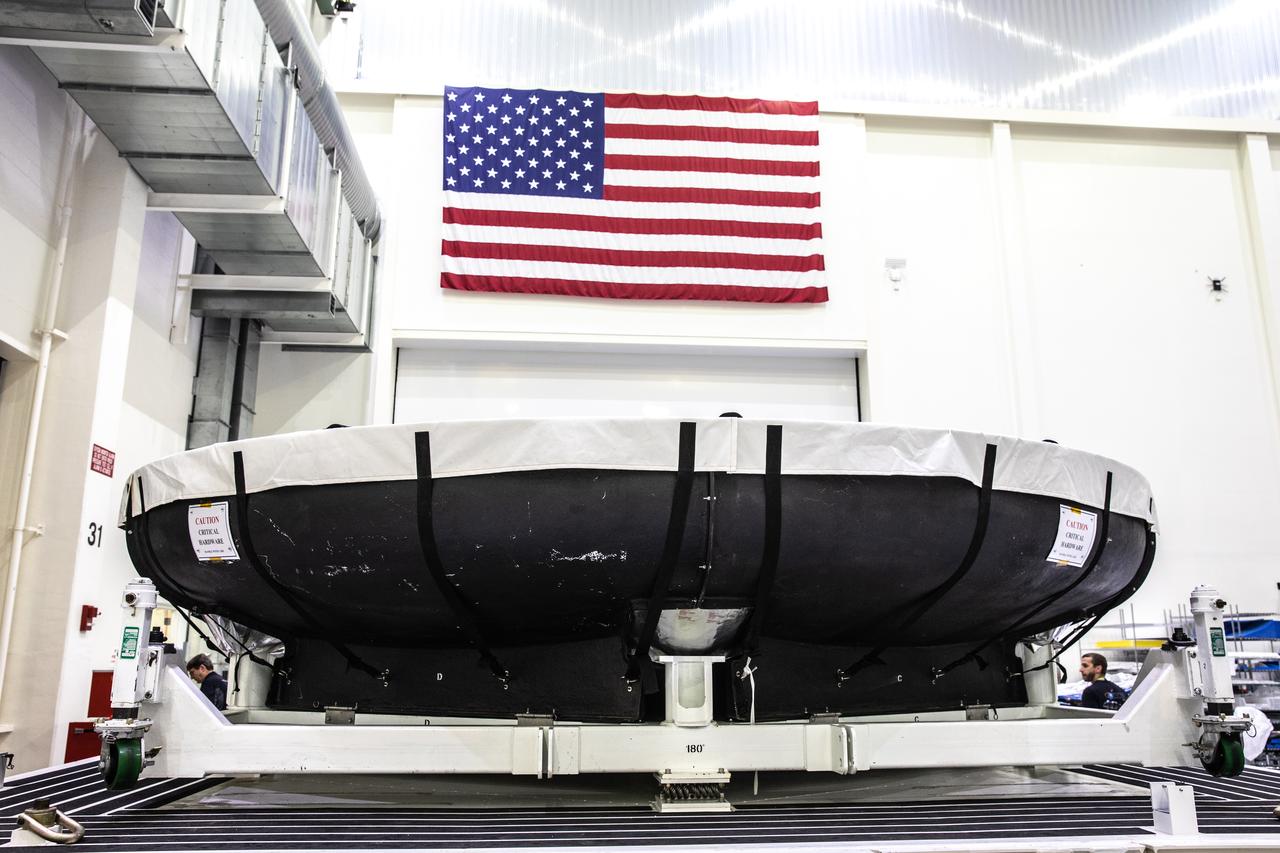
The heat shield for Orion’s Artemis 2 mission, NASA’s first crewed mission, is uncrated in the Neil Armstrong Operations and Checkout Building high bay at the agency’s Kennedy Space Center in Florida on July 9, 2019. The heat shield, measuring roughly 16 feet in diameter, will protect astronauts upon re-entry on the second mission of Artemis. The heat shield arrived from Lockheed Martin’s manufacturing facility near Denver aboard NASA’s Super Guppy Aircraft. The heat shield is a base titanium truss structure. Over the next several months, technicians will apply Avcoat, an ablative material that will provide the thermal protection. Artemis 2 will confirm all of the spacecraft’s systems operate as designed in the actual environment of deep space with astronauts aboard.
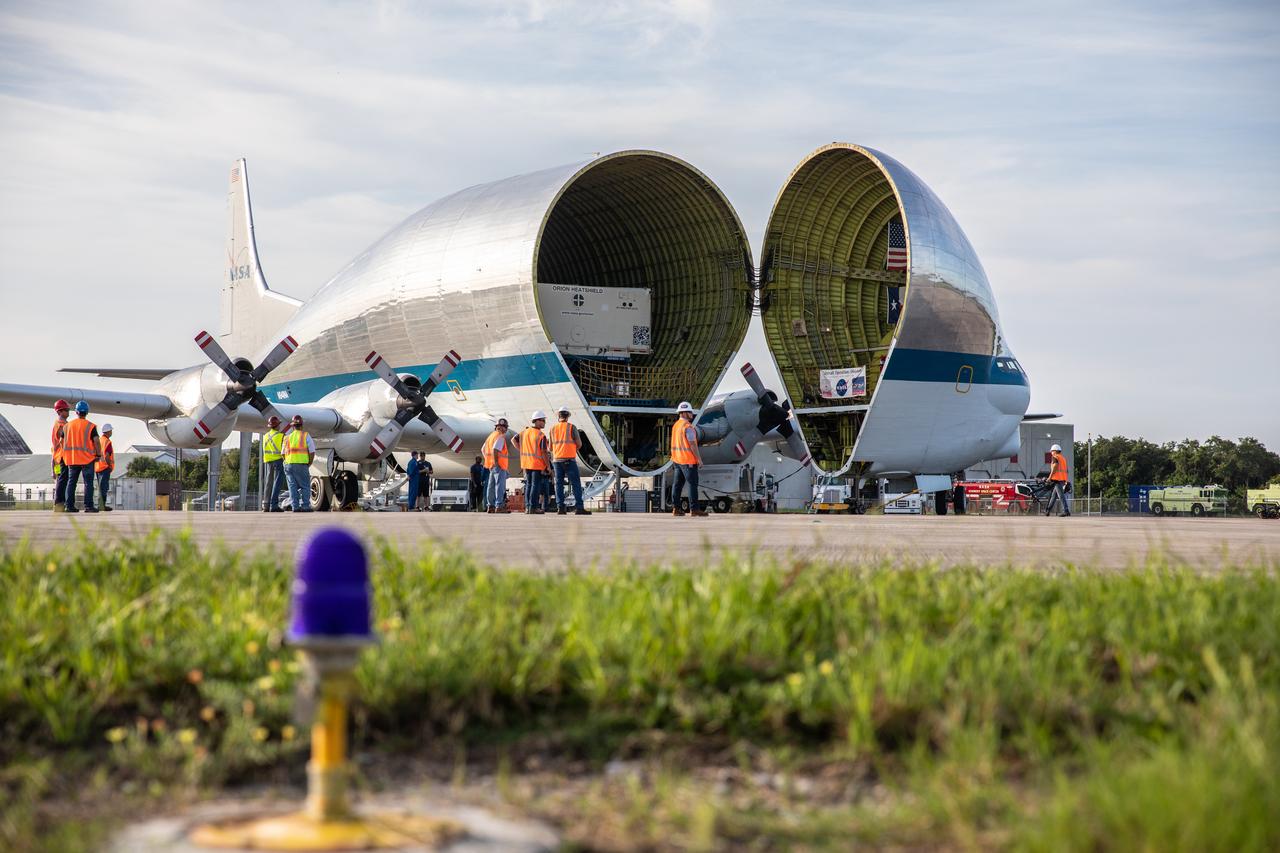
The heat shield for Orion’s Artemis 2 mission, NASA’s first crewed mission, arrives in its shipping container aboard NASA’s Super Guppy aircraft at the agency’s Kennedy Space Center Shuttle Landing Facility in Florida on July 9, 2019. The heat shield, measuring roughly 16 feet in diameter, will protect astronauts upon re-entry on the second mission of Artemis. The heat shield arrived from Lockheed Martin’s manufacturing facility near Denver. It will be offloaded and delivered to the Neil Armstrong Operations and Checkout facility high bay. The heat shield is a base titanium truss structure. Over the next several months, technicians will apply Avcoat, an ablative material that will provide the thermal protection. Artemis 2 will confirm all of the spacecraft’s systems operate as designed in the actual environment of deep space with astronauts aboard.
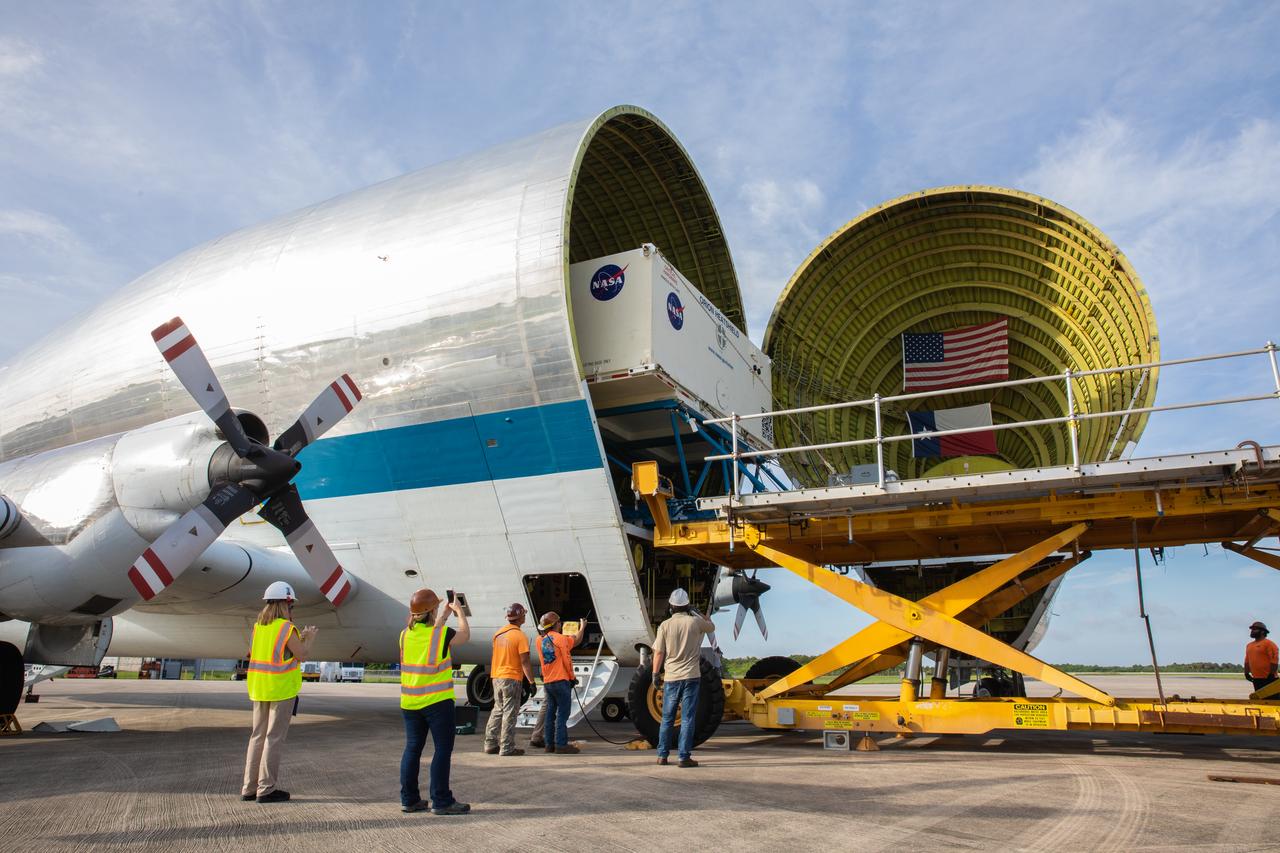
Preparations are underway to unload the heat shield for Orion’s Artemis 2 mission, NASA’s first crewed mission, in its shipping container from NASA’s Super Guppy aircraft at the agency’s Kennedy Space Center Shuttle Landing Facility in Florida on July 9, 2019. The heat shield, measuring roughly 16 feet in diameter, will protect astronauts upon re-entry on the second mission of Artemis. The heat shield arrived from Lockheed Martin’s manufacturing facility near Denver. It will be delivered to the Neil Armstrong Operations and Checkout facility high bay. The heat shield is a base titanium truss structure. Over the next several months, technicians will apply Avcoat, an ablative material that will provide the thermal protection. Artemis 2 will confirm all of the spacecraft’s systems operate as designed in the actual environment of deep space with astronauts aboard.
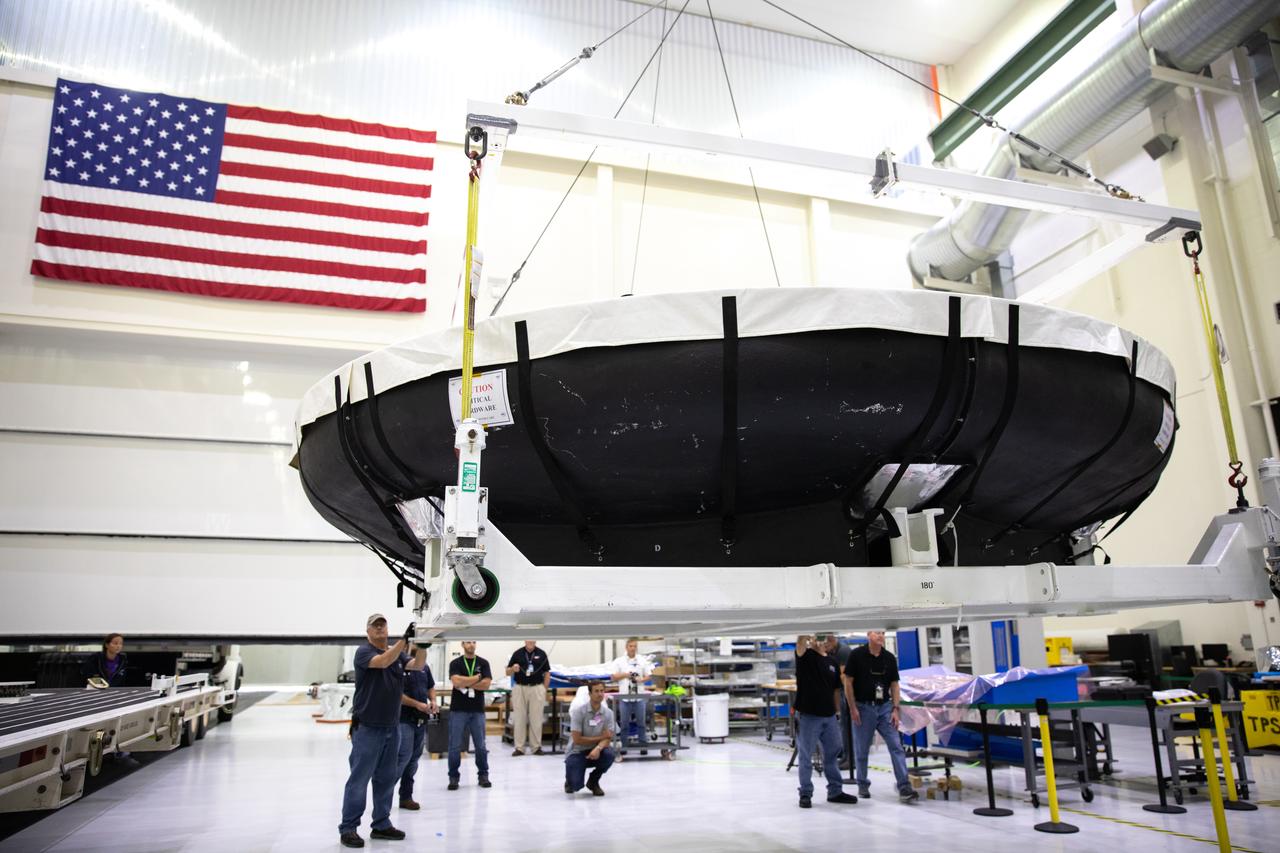
The heat shield for Orion’s Artemis 2 mission, NASA’s first crewed mission, is uncrated in the Neil Armstrong Operations and Checkout Building high bay at the agency’s Kennedy Space Center in Florida on July 9, 2019. The heat shield, measuring roughly 16 feet in diameter, will protect astronauts upon re-entry on the second mission of Artemis. The heat shield arrived from Lockheed Martin’s manufacturing facility near Denver aboard NASA’s Super Guppy Aircraft. The heat shield is a base titanium truss structure. Over the next several months, technicians will apply Avcoat, an ablative material that will provide the thermal protection. Artemis 2 will confirm all of the spacecraft’s systems operate as designed in the actual environment of deep space with astronauts aboard.
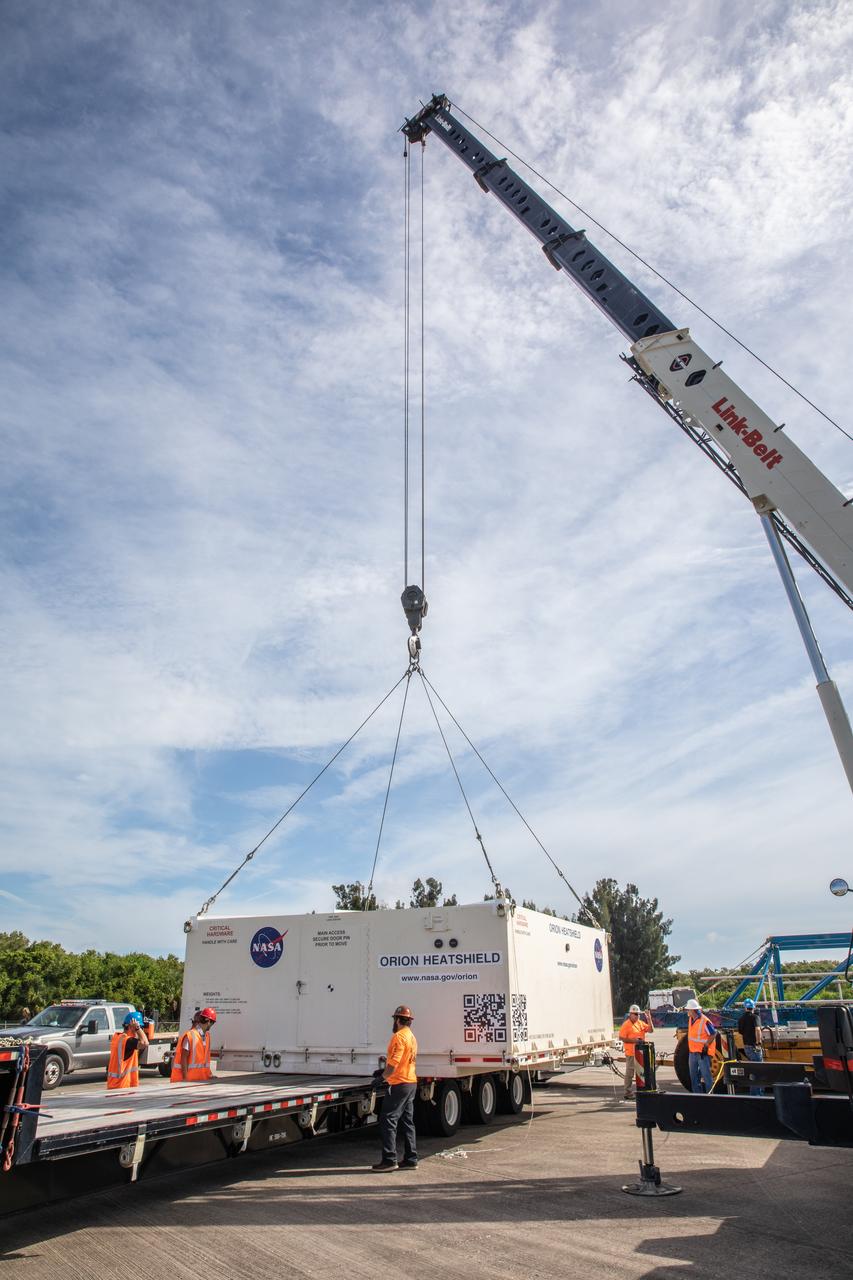
Technicians help secure the shipping container carrying the heat shield for Orion’s Artemis 2 mission, NASA’s first crewed mission, onto a transporter at the agency’s Kennedy Space Center Shuttle Landing Facility in Florida on July 9, 2019. The heat shield, measuring roughly 16 feet in diameter, will protect astronauts upon re-entry on the second mission of Artemis. The heat shield arrived from Lockheed Martin’s manufacturing facility near Denver aboard NASA’s Super Guppy Aircraft. It will be delivered to the Neil Armstrong Operations and Checkout facility high bay. The heat shield is a base titanium truss structure. Over the next several months, technicians will apply Avcoat, an ablative material that will provide the thermal protection. Artemis 2 will confirm all of the spacecraft’s systems operate as designed in the actual environment of deep space with astronauts aboard.
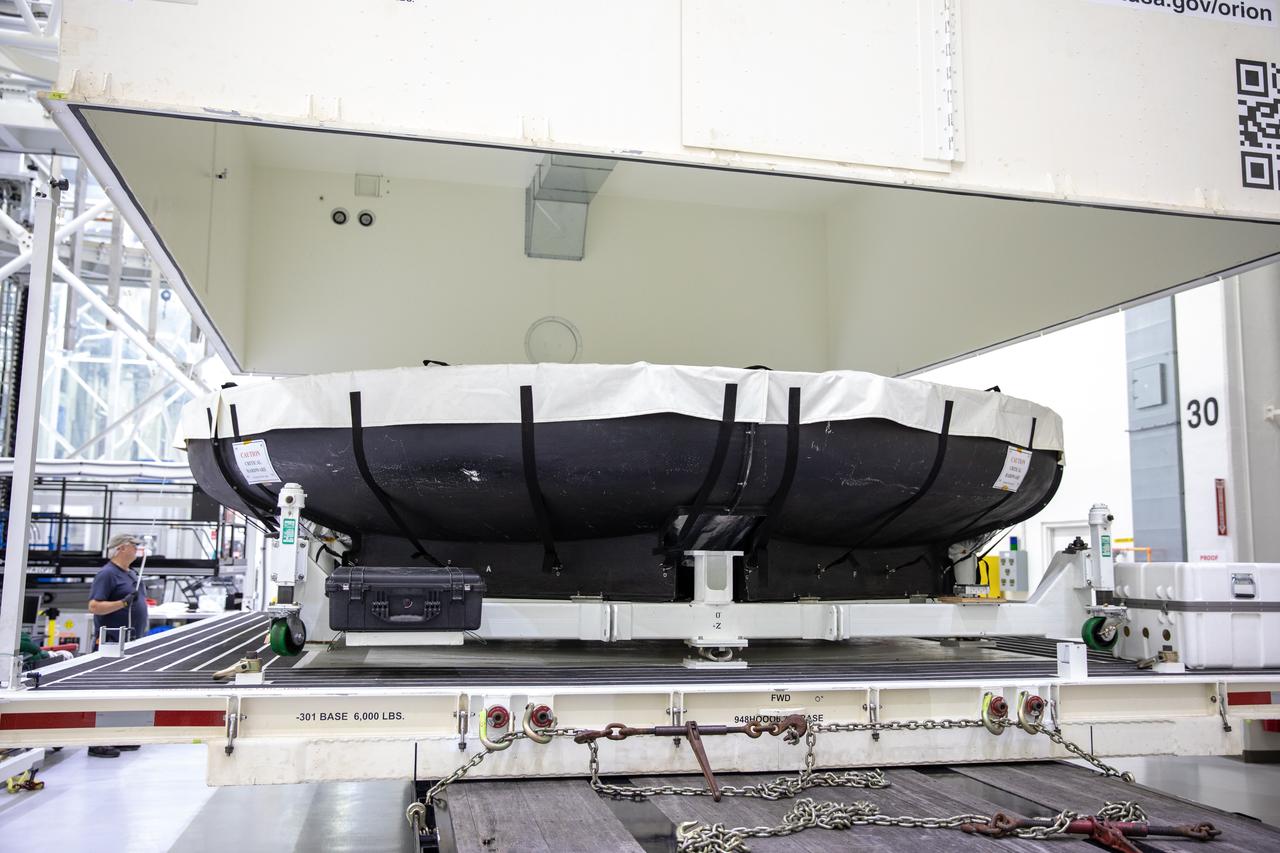
The cover of the shipping container carrying the heat shield for Orion’s Artemis 2 mission, NASA’s first crewed mission, is lifted up inside the Neil Armstrong Operations and Checkout Building high bay at the agency’s Kennedy Space Center in Florida on July 10, 2019. The heat shield, measuring roughly 16 feet in diameter, will protect astronauts upon re-entry on the second mission of Artemis. The heat shield arrived from Lockheed Martin’s manufacturing facility near Denver aboard NASA’s Super Guppy Aircraft. The heat shield is a base titanium truss structure. Over the next several months, technicians will apply Avcoat, an ablative material that will provide the thermal protection. Artemis 2 will confirm all of the spacecraft’s systems operate as designed in the actual environment of deep space with astronauts aboard.
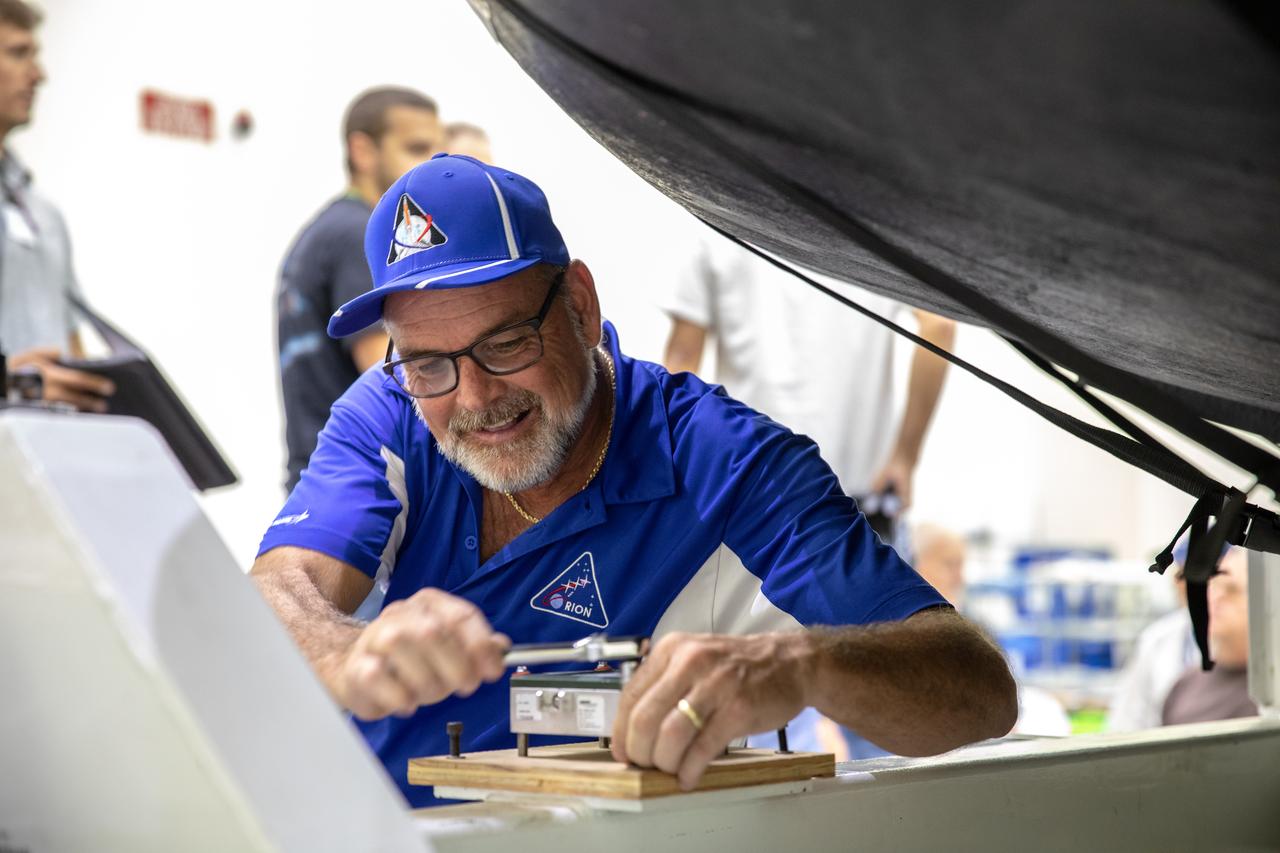
A Lockheed Martin technician works to remove a bolt that holds the heat shield for Orion’s Artemis 2 mission, NASA’s first crewed mission, on its shipping platform inside the Neil Armstrong Operations and Checkout Building high bay at the agency’s Kennedy Space Center in Florida on July 10, 2019. The heat shield, measuring roughly 16 feet in diameter, will protect astronauts upon re-entry on the second mission of Artemis. The heat shield arrived from Lockheed Martin’s manufacturing facility near Denver aboard NASA’s Super Guppy Aircraft. The heat shield is a base titanium truss structure. Over the next several months, technicians will apply Avcoat, an ablative material that will provide the thermal protection. Artemis 2 will confirm all of the spacecraft’s systems operate as designed in the actual environment of deep space with astronauts aboard.
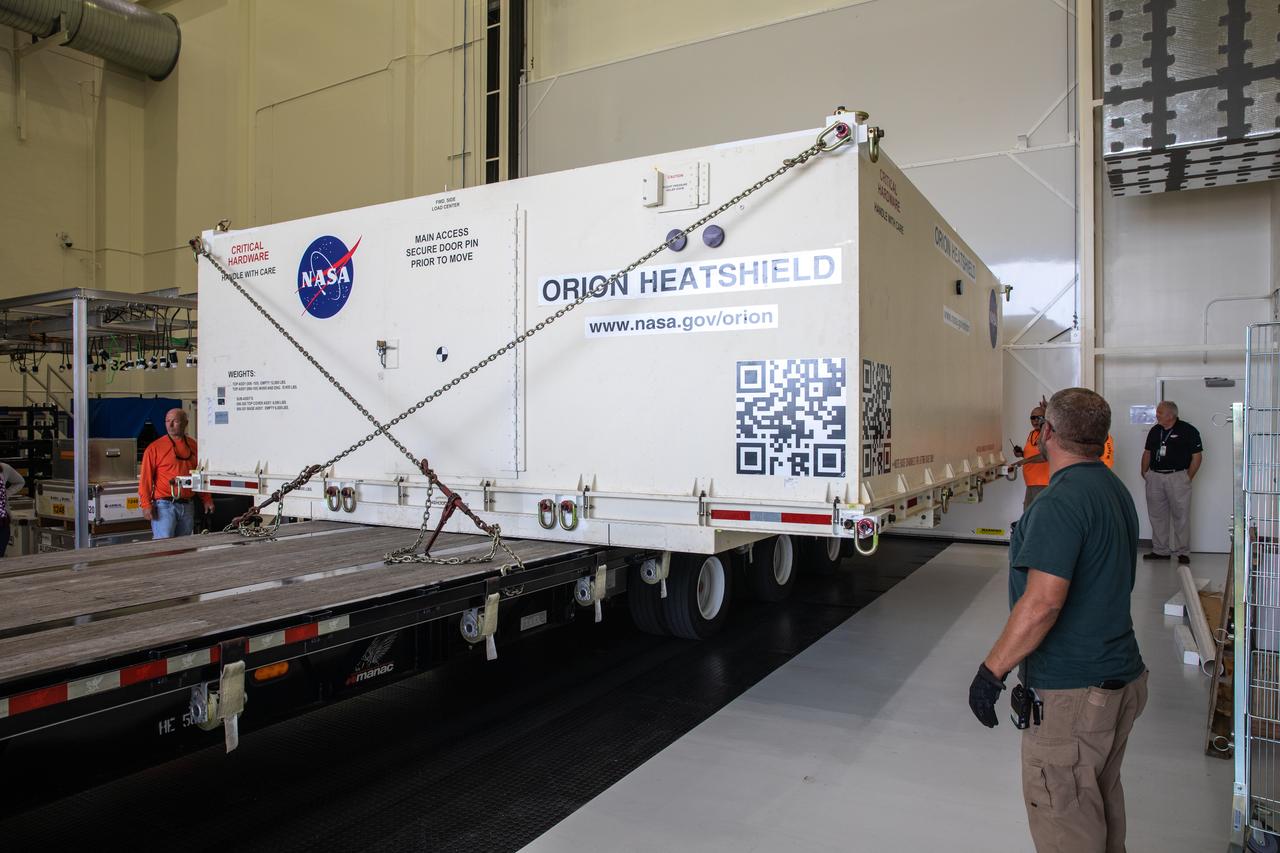
A flatbed truck with the shipping container carrying the heat shield for Orion’s Artemis 2 mission, NASA’s first crewed mission, arrives at the Neil Armstrong Operations and Checkout Building high bay entrance at the agency’s Kennedy Space Center in Florida on July 9, 2019. The heat shield, measuring roughly 16 feet in diameter, will protect astronauts upon re-entry on the second mission of Artemis. The heat shield arrived from Lockheed Martin’s manufacturing facility near Denver aboard NASA’s Super Guppy Aircraft. The heat shield is a base titanium truss structure. Over the next several months, technicians will apply Avcoat, an ablative material that will provide the thermal protection. Artemis 2 will confirm all of the spacecraft’s systems operate as designed in the actual environment of deep space with astronauts aboard.
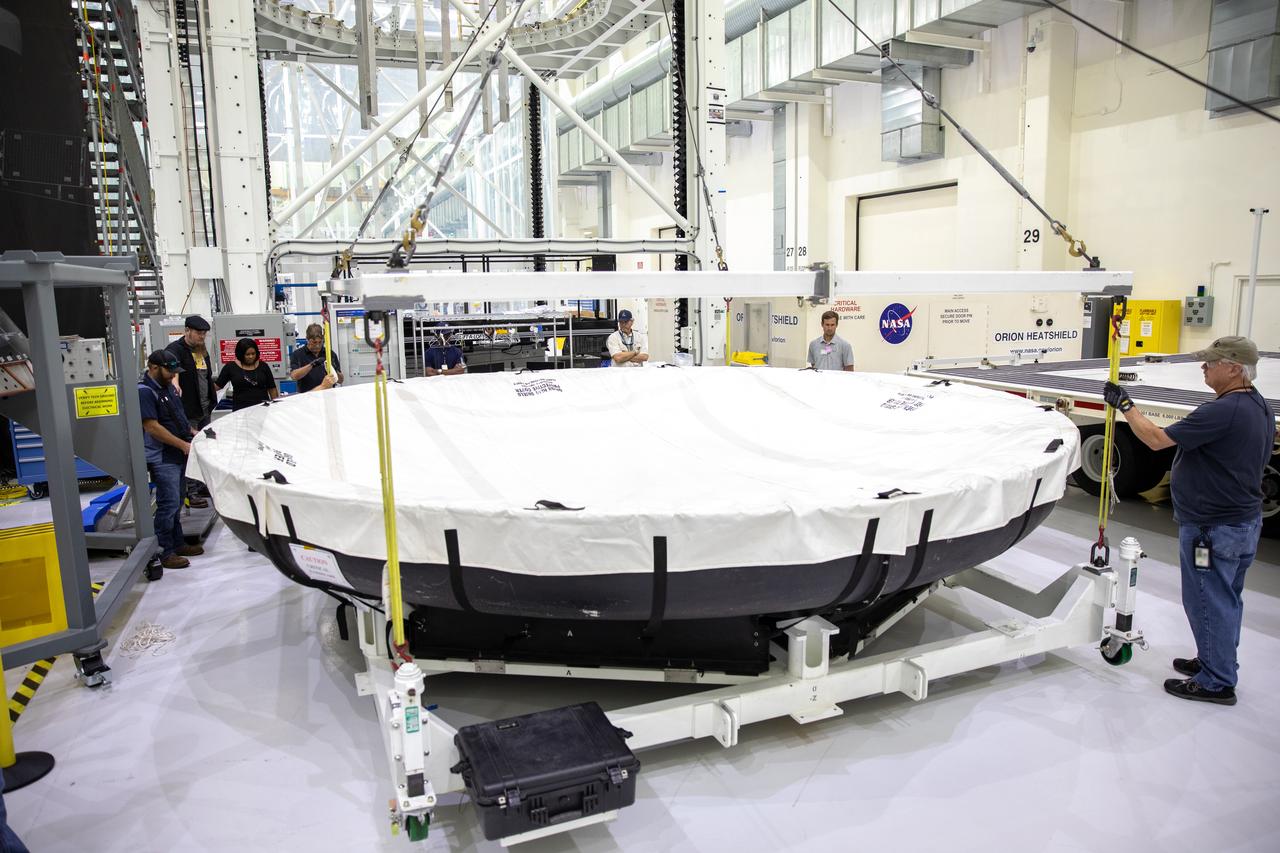
The heat shield for Orion’s Artemis 2 mission, NASA’s first crewed mission, is now uncrated from its shipping container inside the Neil Armstrong Operations and Checkout Building high bay at the agency’s Kennedy Space Center in Florida on July 10, 2019. The heat shield, measuring roughly 16 feet in diameter, will protect astronauts upon re-entry on the second mission of Artemis. The heat shield arrived from Lockheed Martin’s manufacturing facility near Denver aboard NASA’s Super Guppy Aircraft. The heat shield is a base titanium truss structure. Over the next several months, technicians will apply Avcoat, an ablative material that will provide the thermal protection. Artemis 2 will confirm all of the spacecraft’s systems operate as designed in the actual environment of deep space with astronauts aboard.
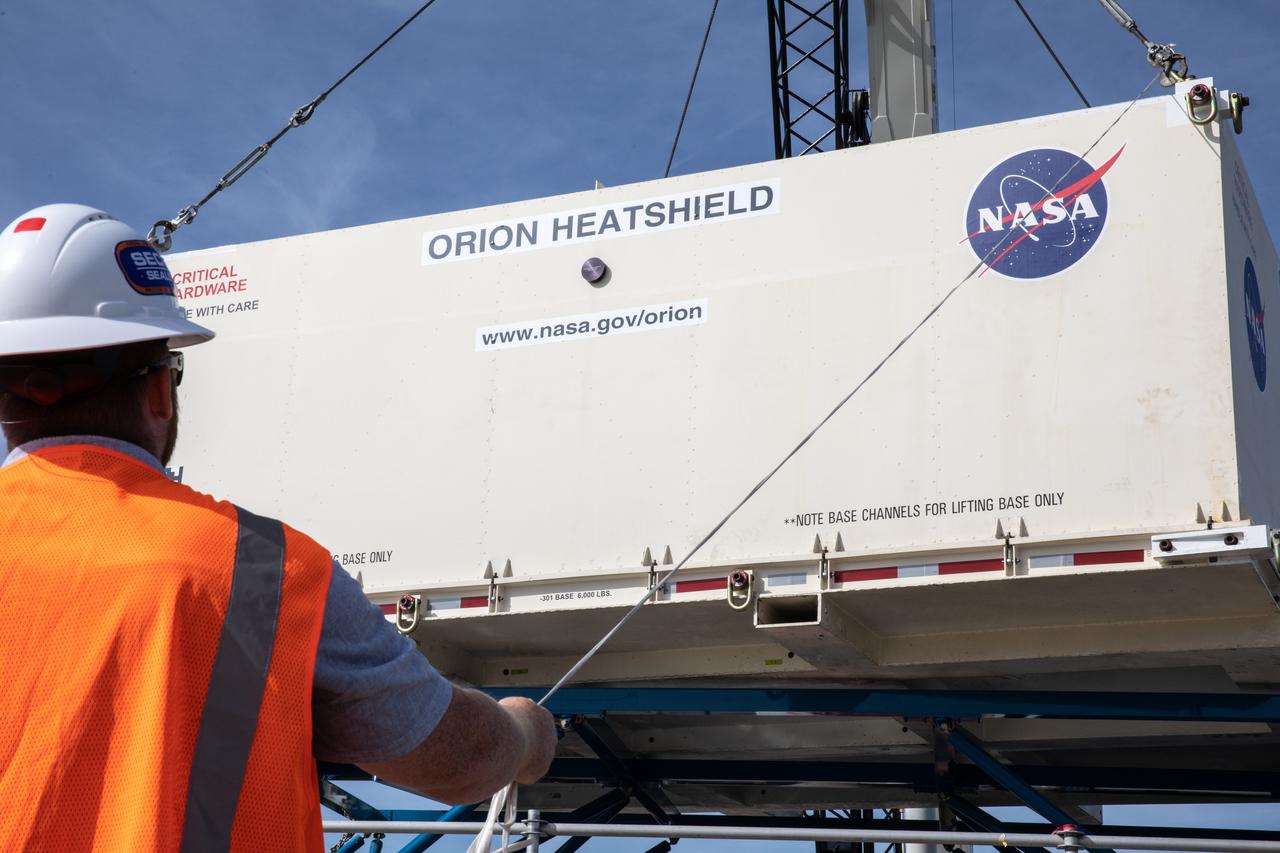
Technicians help secure the shipping container carrying the heat shield for Orion’s Artemis 2 mission, NASA’s first crewed mission, onto a transporter at the agency’s Kennedy Space Center Shuttle Landing Facility in Florida on July 9, 2019. The heat shield, measuring roughly 16 feet in diameter, will protect astronauts upon re-entry on the second mission of Artemis. The heat shield arrived from Lockheed Martin’s manufacturing facility near Denver aboard NASA’s Super Guppy Aircraft. It will be delivered to the Neil Armstrong Operations and Checkout facility high bay. The heat shield is a base titanium truss structure. Over the next several months, technicians will apply Avcoat, an ablative material that will provide the thermal protection. Artemis 2 will confirm all of the spacecraft’s systems operate as designed in the actual environment of deep space with astronauts aboard.
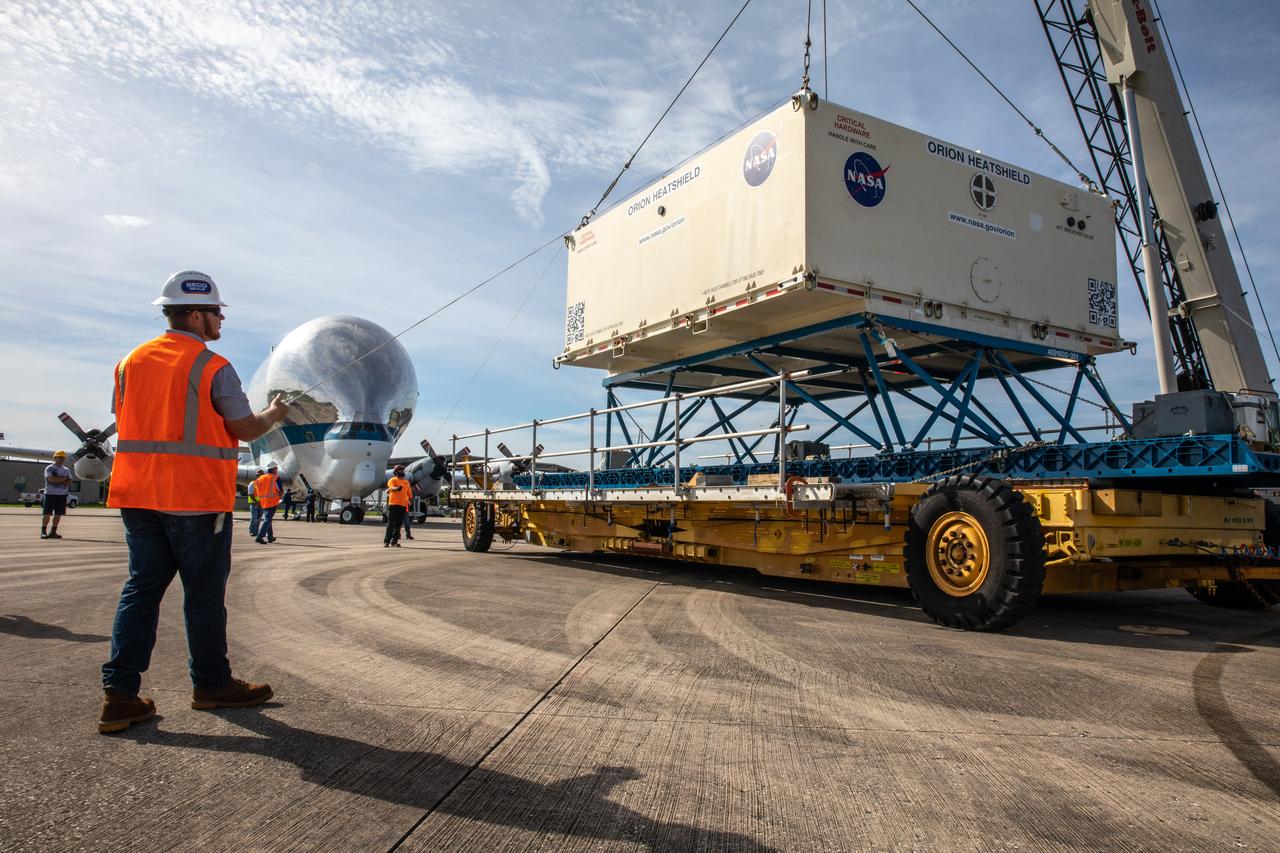
The shipping container carrying the heat shield for Orion’s Artemis 2 mission, NASA’s first crewed mission, is secured onto a transporter at the agency’s Kennedy Space Center Shuttle Landing Facility in Florida on July 9, 2019. The heat shield, measuring roughly 16 feet in diameter, will protect astronauts upon re-entry on the second mission of Artemis. The heat shield arrived from Lockheed Martin’s manufacturing facility near Denver aboard NASA’s Super Guppy Aircraft. It will be delivered to the Neil Armstrong Operations and Checkout facility high bay. The heat shield is a base titanium truss structure. Over the next several months, technicians will apply Avcoat, an ablative material that will provide the thermal protection. Artemis 2 will confirm all of the spacecraft’s systems operate as designed in the actual environment of deep space with astronauts aboard.
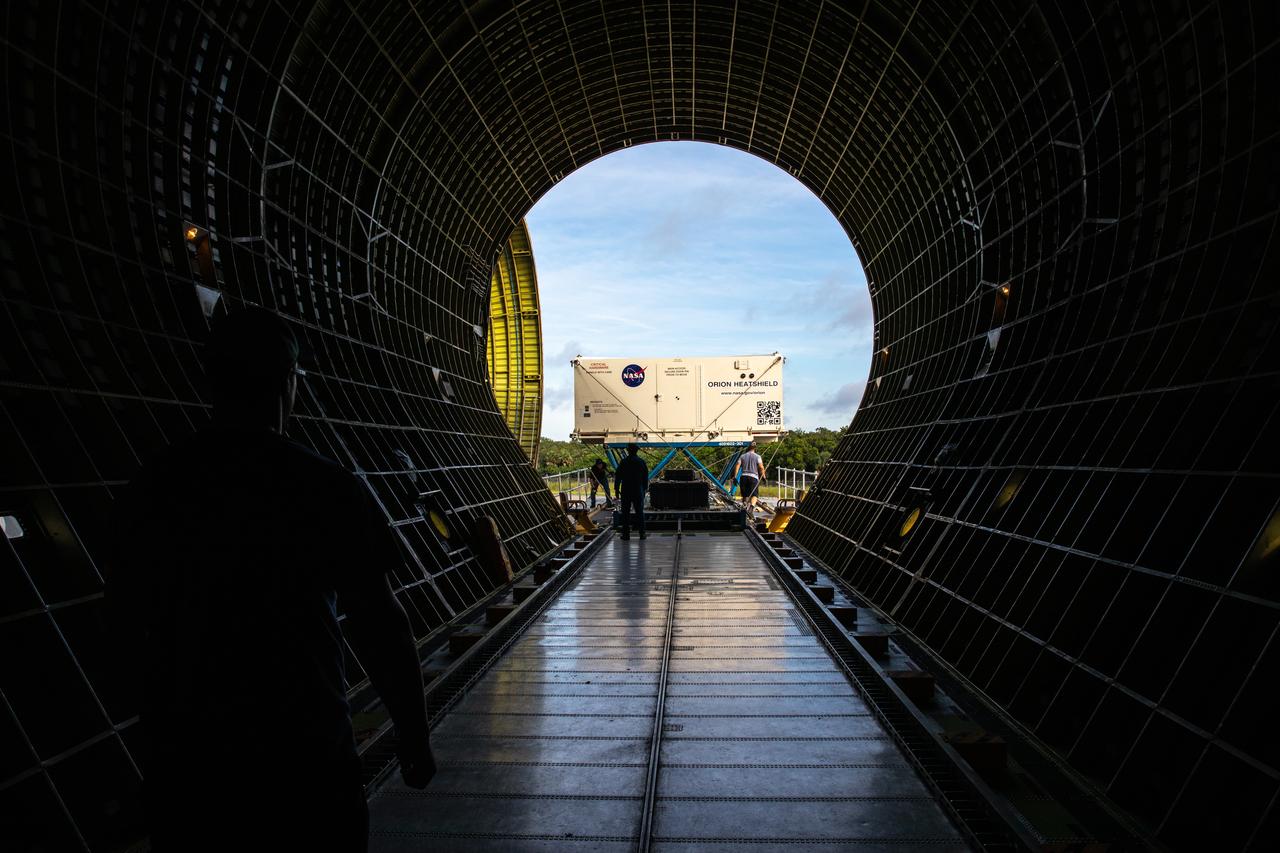
In this view from inside NASA’s Super Guppy aircraft, the shipping container carrying the heat shield for Orion’s Artemis 2 mission, NASA’s first crewed mission, is unloaded from NASA’s Super Guppy aircraft at the agency’s Kennedy Space Center Shuttle Landing Facility in Florida on July 9, 2019. The heat shield, measuring roughly 16 feet in diameter, will protect astronauts upon re-entry on the second mission of Artemis. The heat shield arrived from Lockheed Martin’s manufacturing facility near Denver. It will be delivered to the Neil Armstrong Operations and Checkout facility high bay. The heat shield is a base titanium truss structure. Over the next several months, technicians will apply Avcoat, an ablative material that will provide the thermal protection. Artemis 2 will confirm all of the spacecraft’s systems operate as designed in the actual environment of deep space with astronauts aboard.
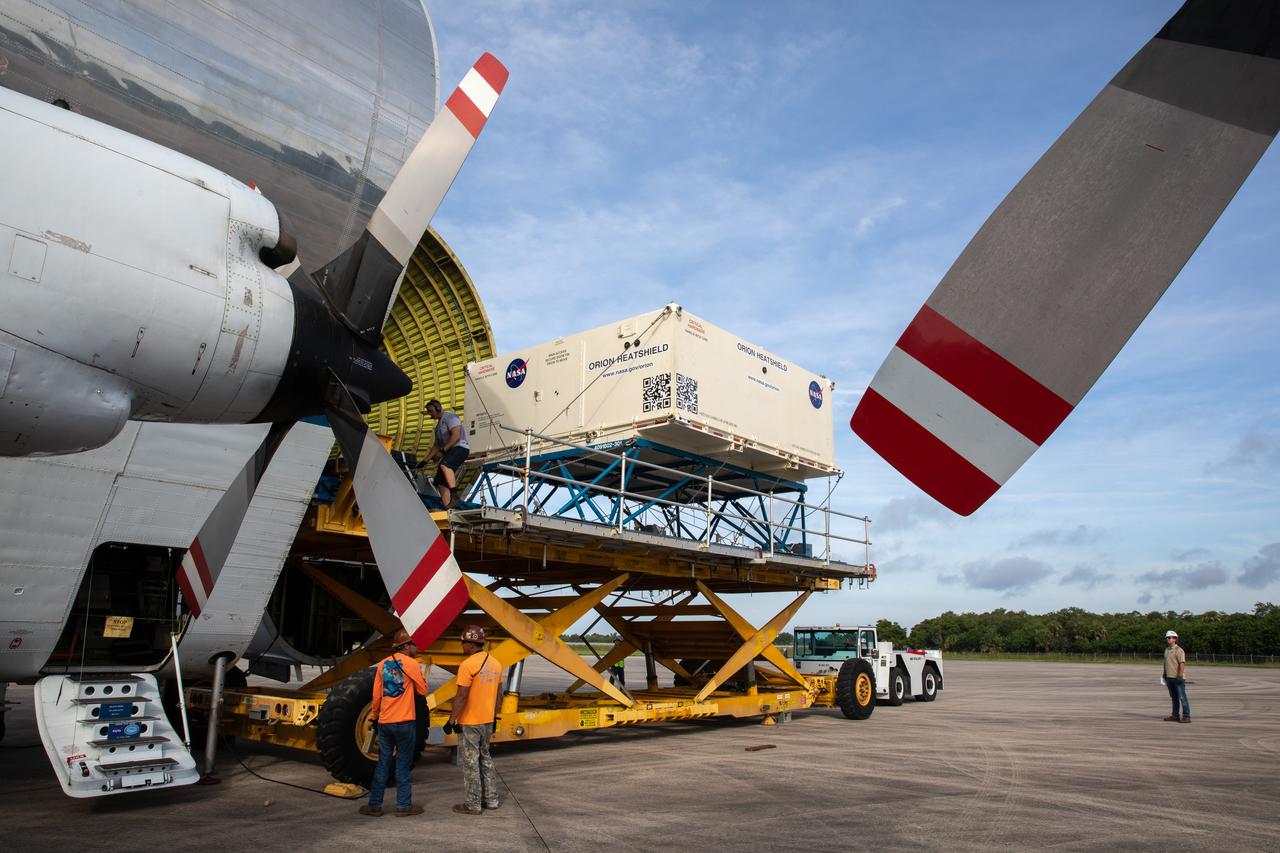
The shipping container carrying the heat shield for Orion’s Artemis 2 mission, NASA’s first crewed mission, is unloaded from NASA’s Super Guppy aircraft at the agency’s Kennedy Space Center Shuttle Landing Facility in Florida on July 9, 2019. The heat shield, measuring roughly 16 feet in diameter, will protect astronauts upon re-entry on the second mission of Artemis. The heat shield arrived from Lockheed Martin’s manufacturing facility near Denver. It will be delivered to the Neil Armstrong Operations and Checkout facility high bay. The heat shield is a base titanium truss structure. Over the next several months, technicians will apply Avcoat, an ablative material that will provide the thermal protection. Artemis 2 will confirm all of the spacecraft’s systems operate as designed in the actual environment of deep space with astronauts aboard.
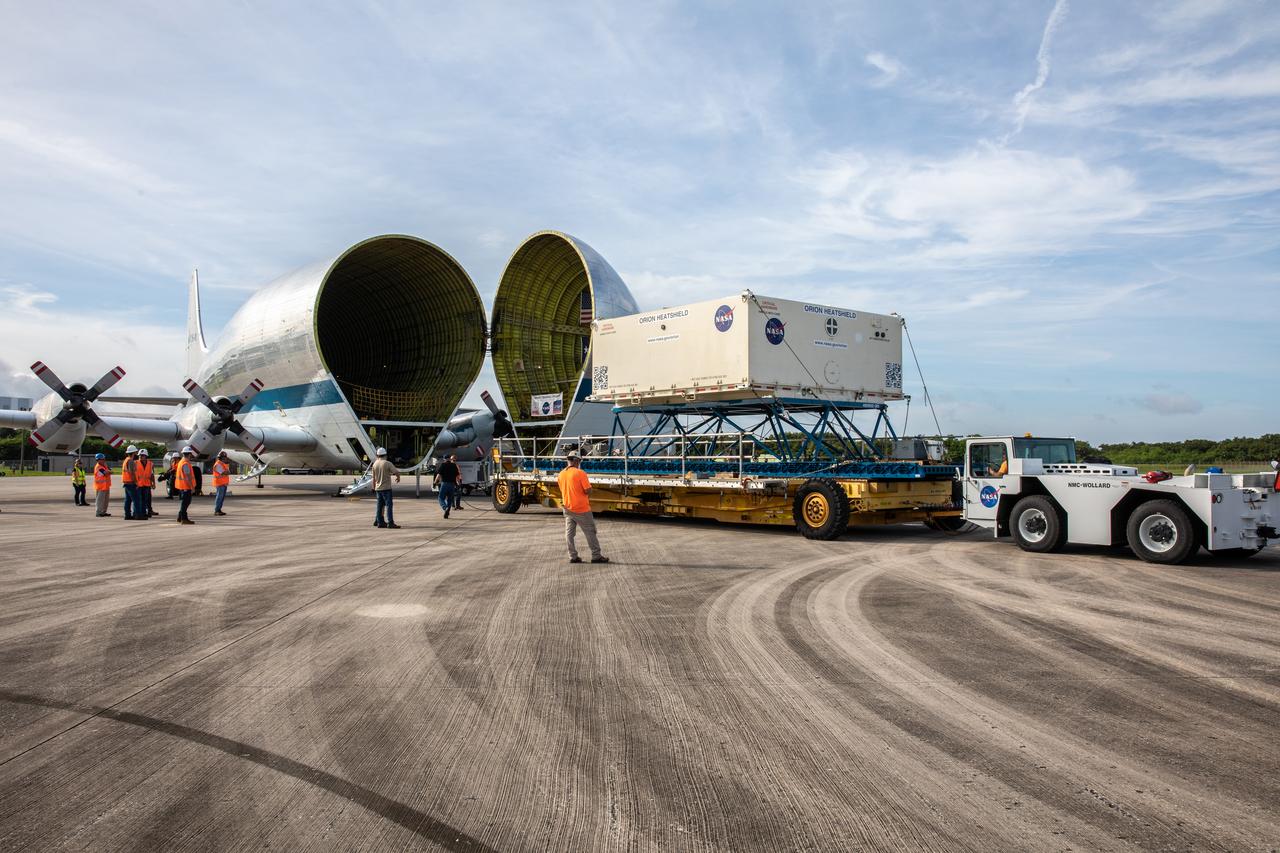
The shipping container carrying the heat shield for Orion’s Artemis 2 mission, NASA’s first crewed mission, is unloaded from NASA’s Super Guppy aircraft at the agency’s Kennedy Space Center Shuttle Landing Facility in Florida on July 9, 2019. The heat shield, measuring roughly 16 feet in diameter, will protect astronauts upon re-entry on the second mission of Artemis. The heat shield arrived from Lockheed Martin’s manufacturing facility near Denver. It will be delivered to the Neil Armstrong Operations and Checkout facility high bay. The heat shield is a base titanium truss structure. Over the next several months, technicians will apply Avcoat, an ablative material that will provide the thermal protection. Artemis 2 will confirm all of the spacecraft’s systems operate as designed in the actual environment of deep space with astronauts aboard.
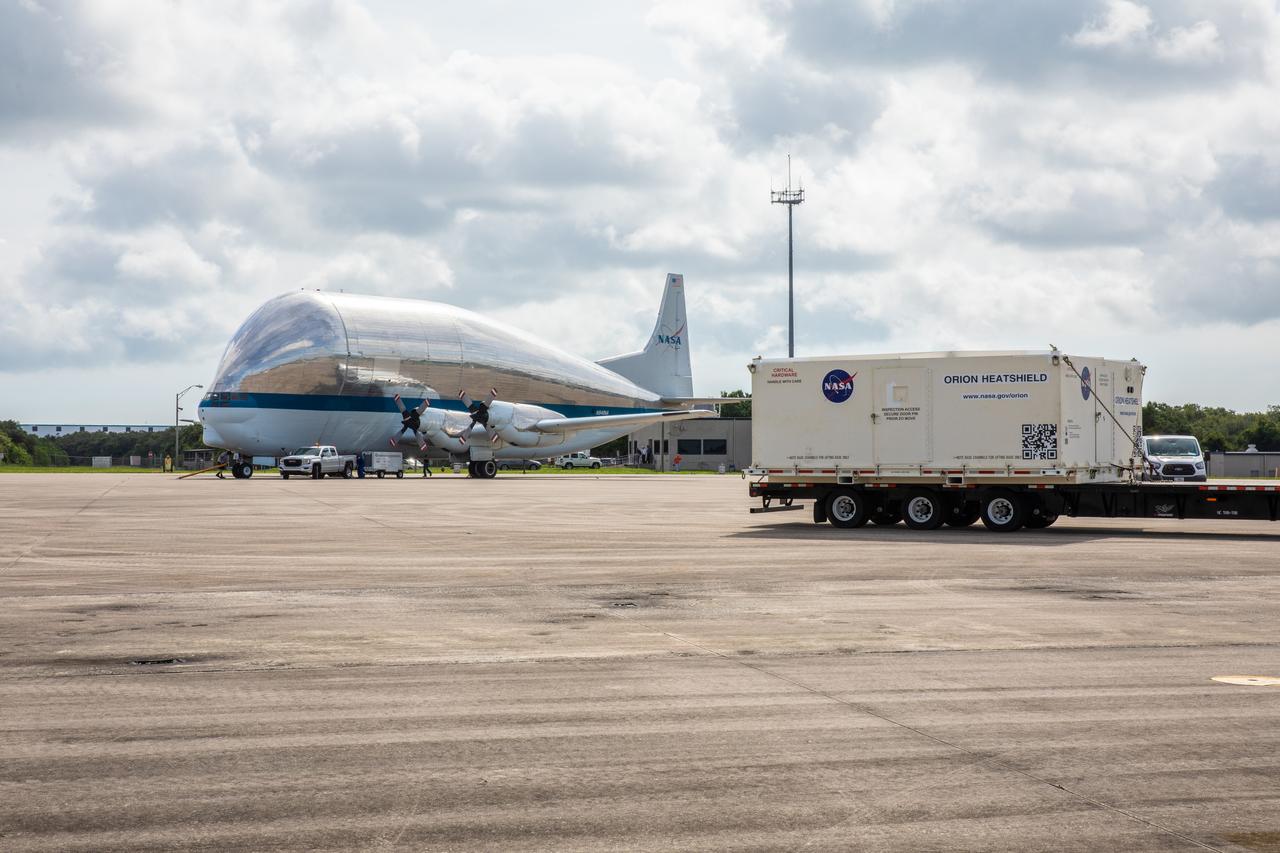
The shipping container carrying the heat shield for Orion’s Artemis 2 mission, NASA’s first crewed mission, is secured on a flatbed truck at the agency’s Kennedy Space Center Shuttle Landing Facility in Florida on July 9, 2019. The heat shield, measuring roughly 16 feet in diameter, will protect astronauts upon re-entry on the second mission of Artemis. The heat shield arrived from Lockheed Martin’s manufacturing facility near Denver aboard NASA’s Super Guppy Aircraft. It will be delivered to the Neil Armstrong Operations and Checkout facility high bay. The heat shield is a base titanium truss structure. Over the next several months, technicians will apply Avcoat, an ablative material that will provide the thermal protection. Artemis 2 will confirm all of the spacecraft’s systems operate as designed in the actual environment of deep space with astronauts aboard.
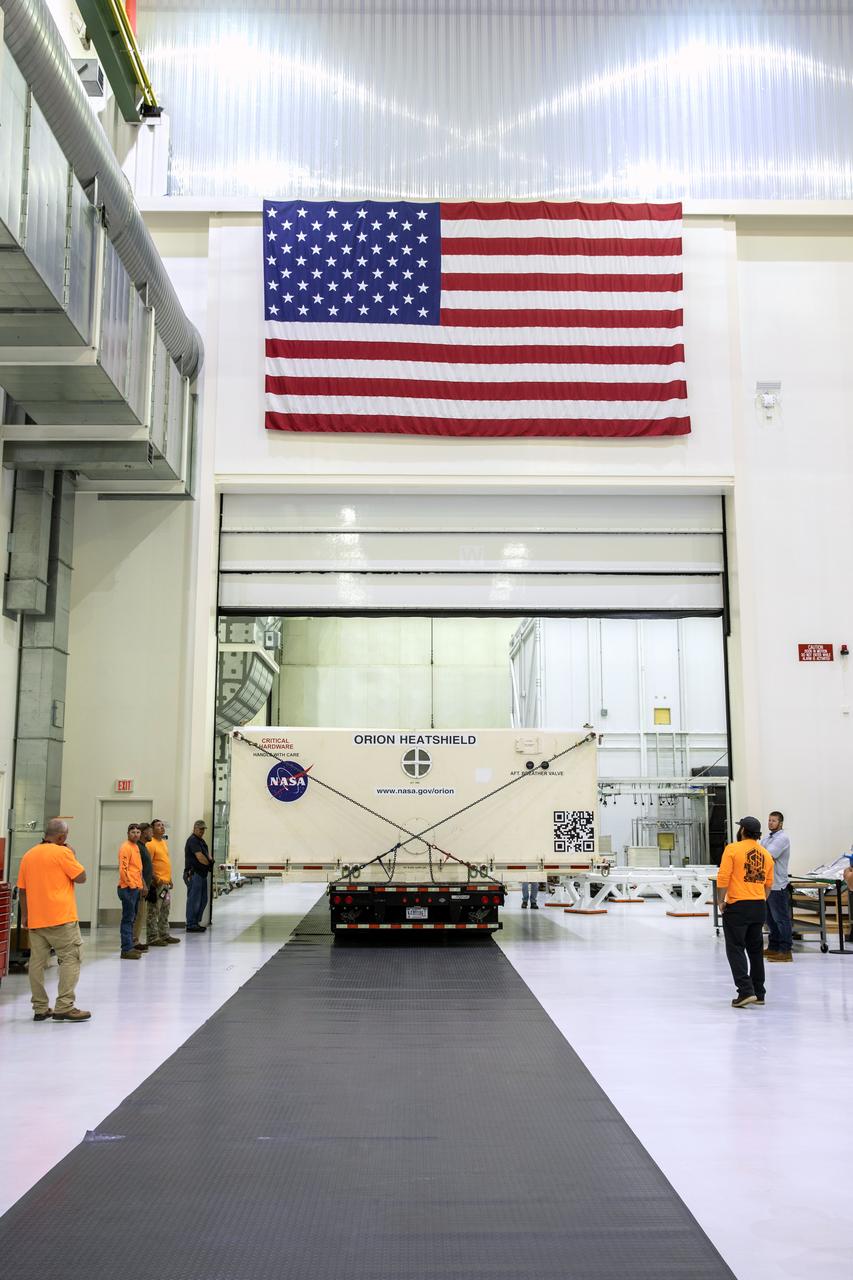
A flatbed truck with the shipping container carrying the heat shield for Orion’s Artemis 2 mission, NASA’s first crewed mission, moves into the Neil Armstrong Operations and Checkout Building high bay at the agency’s Kennedy Space Center in Florida on July 9, 2019. The heat shield, measuring roughly 16 feet in diameter, will protect astronauts upon re-entry on the second mission of Artemis. The heat shield arrived from Lockheed Martin’s manufacturing facility near Denver aboard NASA’s Super Guppy Aircraft. The heat shield is a base titanium truss structure. Over the next several months, technicians will apply Avcoat, an ablative material that will provide the thermal protection. Artemis 2 will confirm all of the spacecraft’s systems operate as designed in the actual environment of deep space with astronauts aboard.
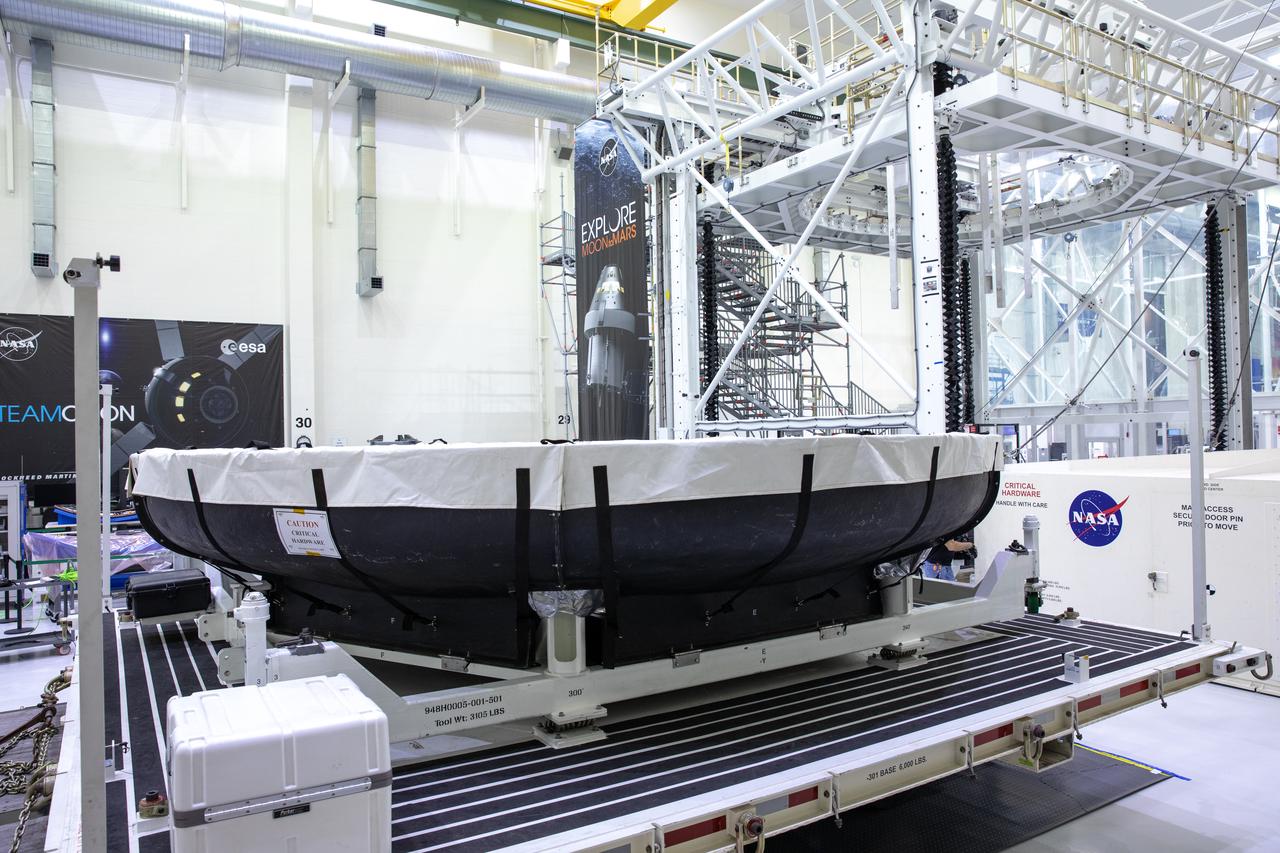
The heat shield for Orion’s Artemis 2 mission, NASA’s first crewed mission, is uncrated from its shipping container inside the Neil Armstrong Operations and Checkout Building high bay at the agency’s Kennedy Space Center in Florida on July 10, 2019. The heat shield, measuring roughly 16 feet in diameter, will protect astronauts upon re-entry on the second mission of Artemis. The heat shield arrived from Lockheed Martin’s manufacturing facility near Denver aboard NASA’s Super Guppy Aircraft. The heat shield is a base titanium truss structure. Over the next several months, technicians will apply Avcoat, an ablative material that will provide the thermal protection. Artemis 2 will confirm all of the spacecraft’s systems operate as designed in the actual environment of deep space with astronauts aboard.
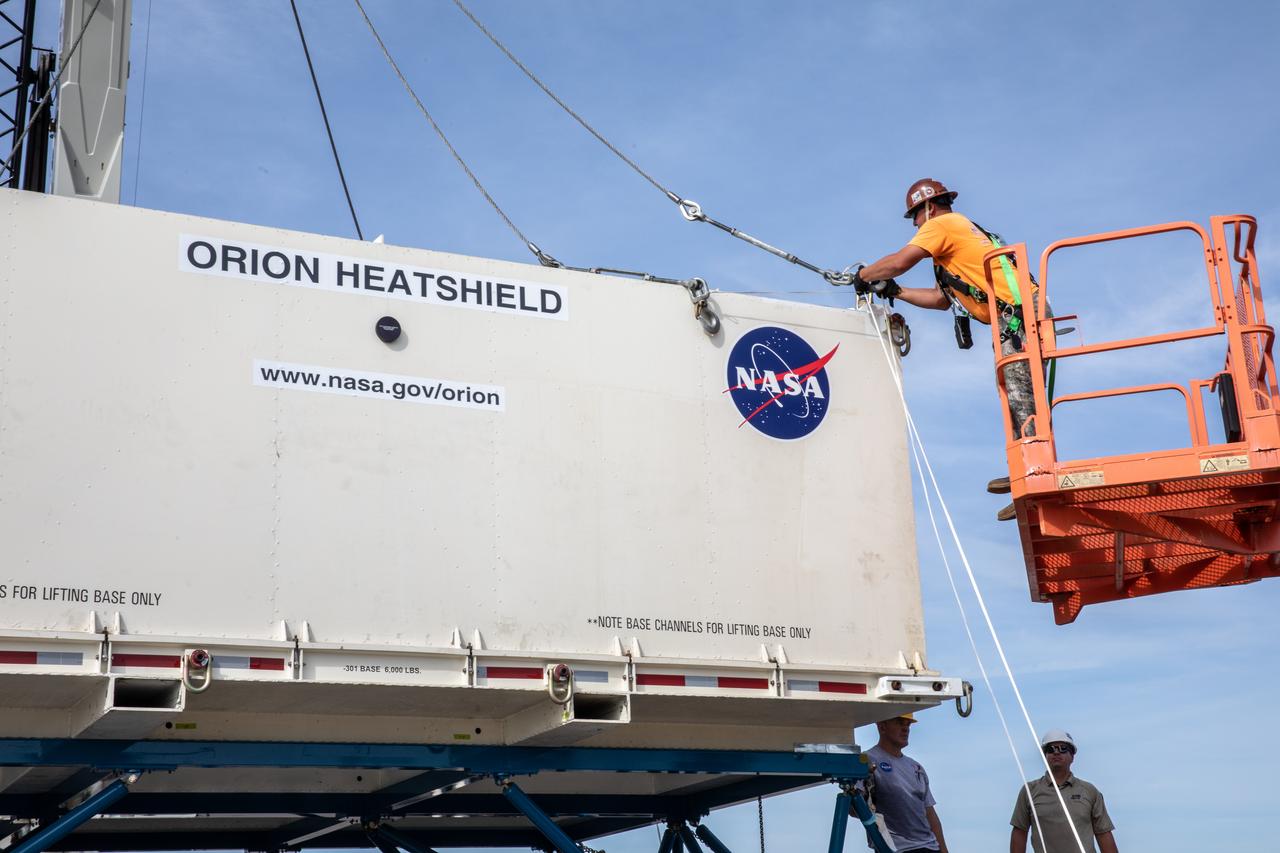
Technicians help secure the shipping container carrying the heat shield for Orion’s Artemis 2 mission, NASA’s first crewed mission, onto a transporter at the agency’s Kennedy Space Center Shuttle Landing Facility in Florida on July 9, 2019. The heat shield, measuring roughly 16 feet in diameter, will protect astronauts upon re-entry on the second mission of Artemis. The heat shield arrived from Lockheed Martin’s manufacturing facility near Denver aboard NASA’s Super Guppy Aircraft. It will be delivered to the Neil Armstrong Operations and Checkout facility high bay. The heat shield is a base titanium truss structure. Over the next several months, technicians will apply Avcoat, an ablative material that will provide the thermal protection. Artemis 2 will confirm all of the spacecraft’s systems operate as designed in the actual environment of deep space with astronauts aboard.

The shipping container carrying the heat shield for Orion’s Artemis 2 mission, NASA’s first crewed mission, is unloaded from NASA’s Super Guppy aircraft at the agency’s Kennedy Space Center Shuttle Landing Facility in Florida on July 9, 2019. The heat shield, measuring roughly 16 feet in diameter, will protect astronauts upon re-entry on the second mission of Artemis. The heat shield arrived from Lockheed Martin’s manufacturing facility near Denver. It will be delivered to the Neil Armstrong Operations and Checkout facility high bay. The heat shield is a base titanium truss structure. Over the next several months, technicians will apply Avcoat, an ablative material that will provide the thermal protection. Artemis 2 will confirm all of the spacecraft’s systems operate as designed in the actual environment of deep space with astronauts aboard.
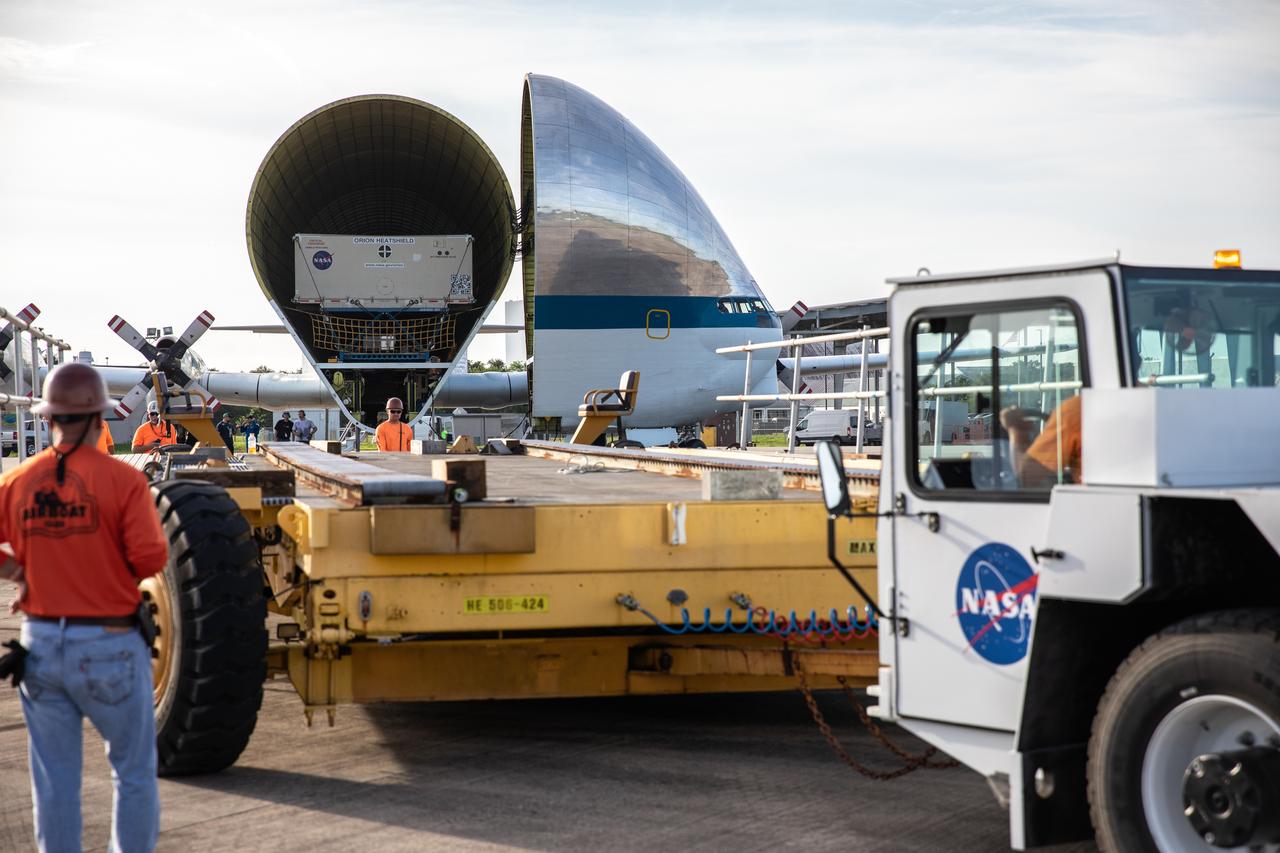
Preparations are underway to unload the heat shield for Orion’s Artemis 2 mission, NASA’s first crewed mission, in its shipping container from NASA’s Super Guppy aircraft at the agency’s Kennedy Space Center Shuttle Landing Facility in Florida on July 9, 2019. The heat shield, measuring roughly 16 feet in diameter, will protect astronauts upon re-entry on the second mission of Artemis. The heat shield arrived from Lockheed Martin’s manufacturing facility near Denver. It will be delivered to the Neil Armstrong Operations and Checkout facility high bay. The heat shield is a base titanium truss structure. Over the next several months, technicians will apply Avcoat, an ablative material that will provide the thermal protection. Artemis 2 will confirm all of the spacecraft’s systems operate as designed in the actual environment of deep space with astronauts aboard.