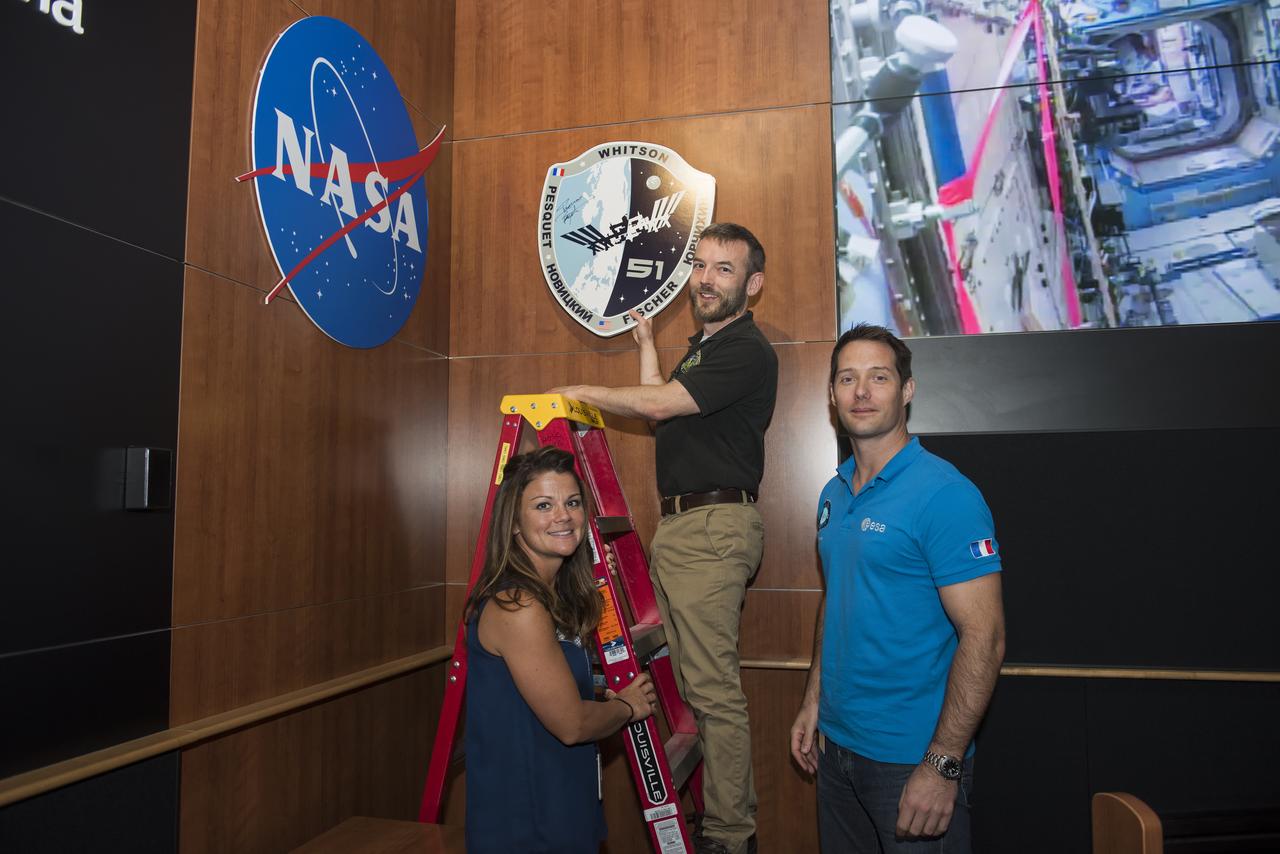
Space Station expedition 50/51 crew member Thomas Pesquet hangs a commemorative plaque in the Payload Operation Integration Center at NASA's Marshall Space Flight Center.
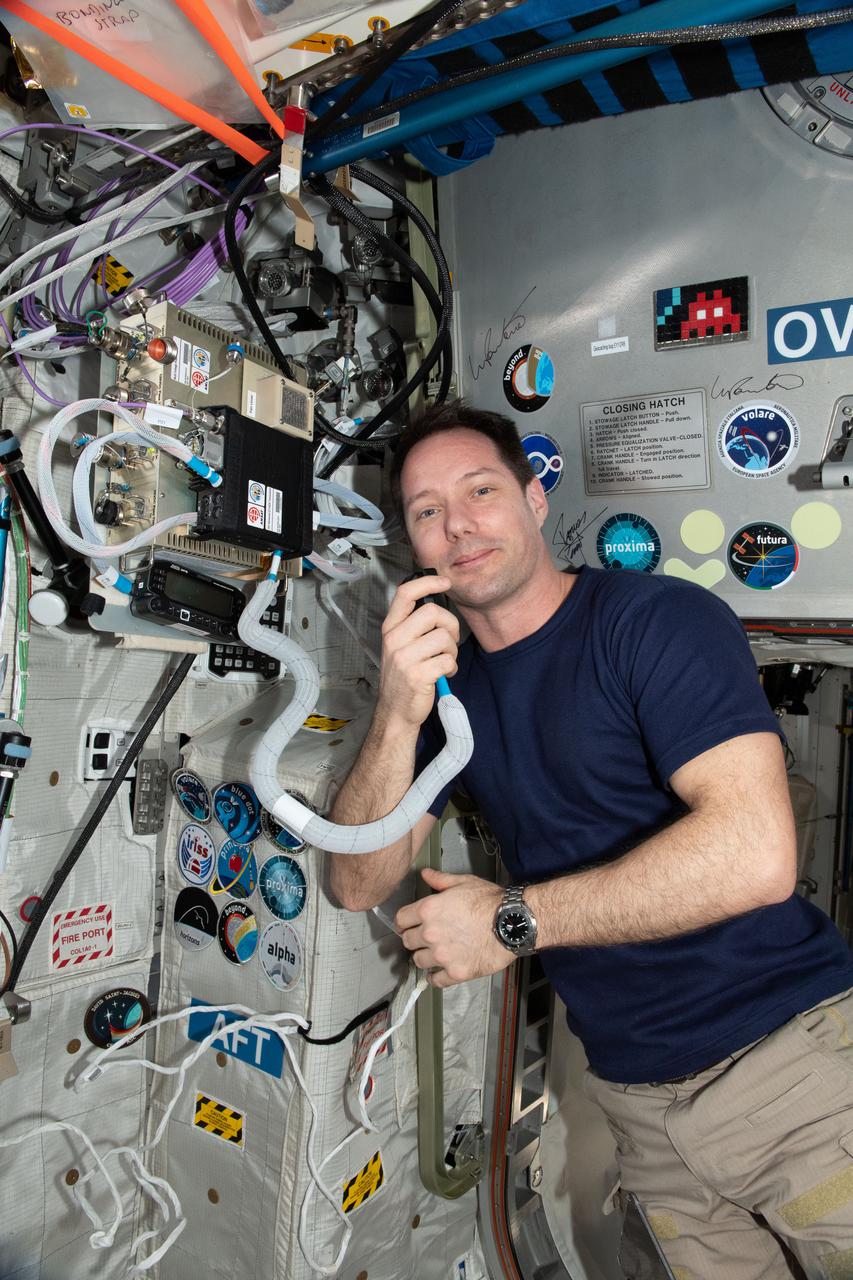
iss066e031742 (November 3, 2021) -- ESA (European Space Agency) astronaut and Expedition 65 Flight Engineer Thomas Pesquet is seen using the Amateur Radio on the International Space Station (ARISS).
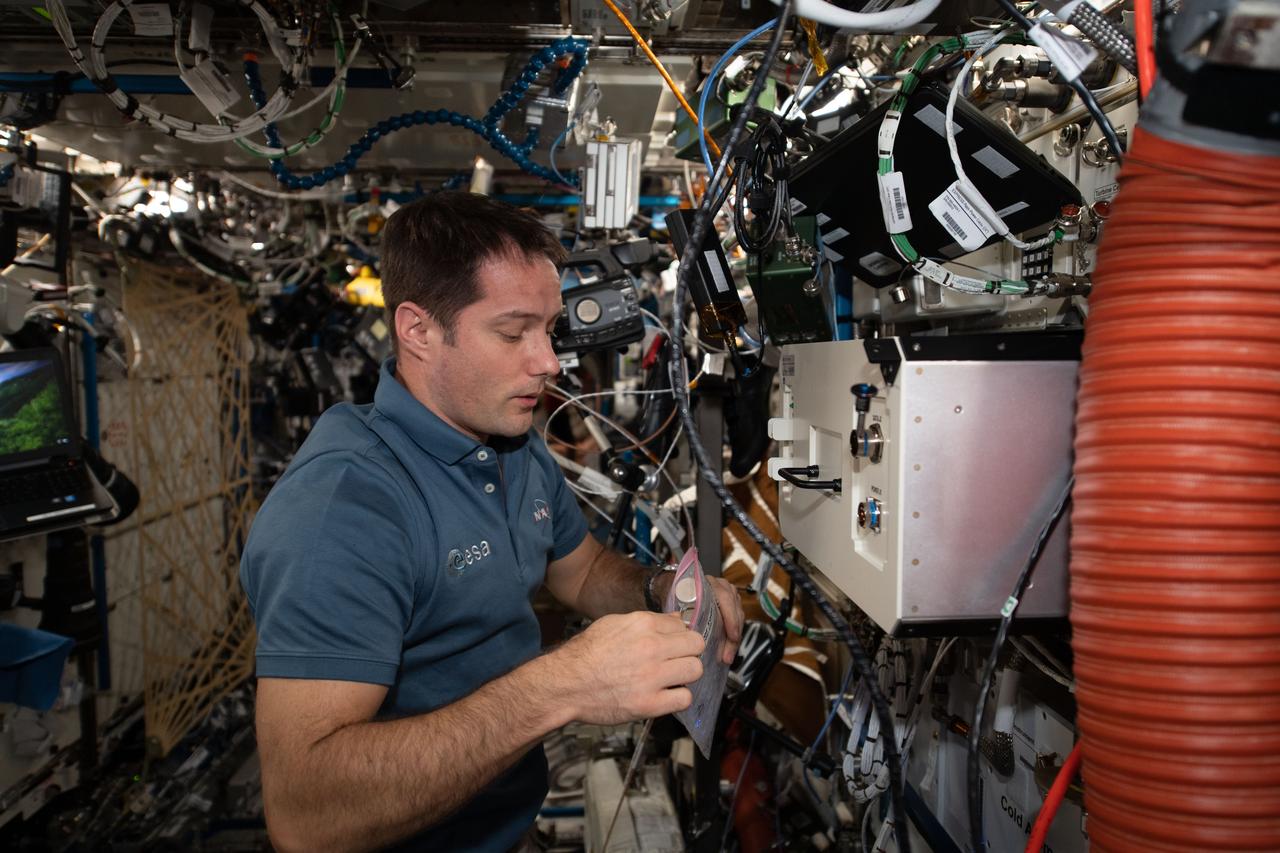
iss065e094086 (6/9/2021) --- European Space Agency (ESA) astronaut Thomas Pesquet is photographed aboard the International Space Station (ISS) during transfers of BRIC-24 Canisters to BRIC-LED Facility to stow.
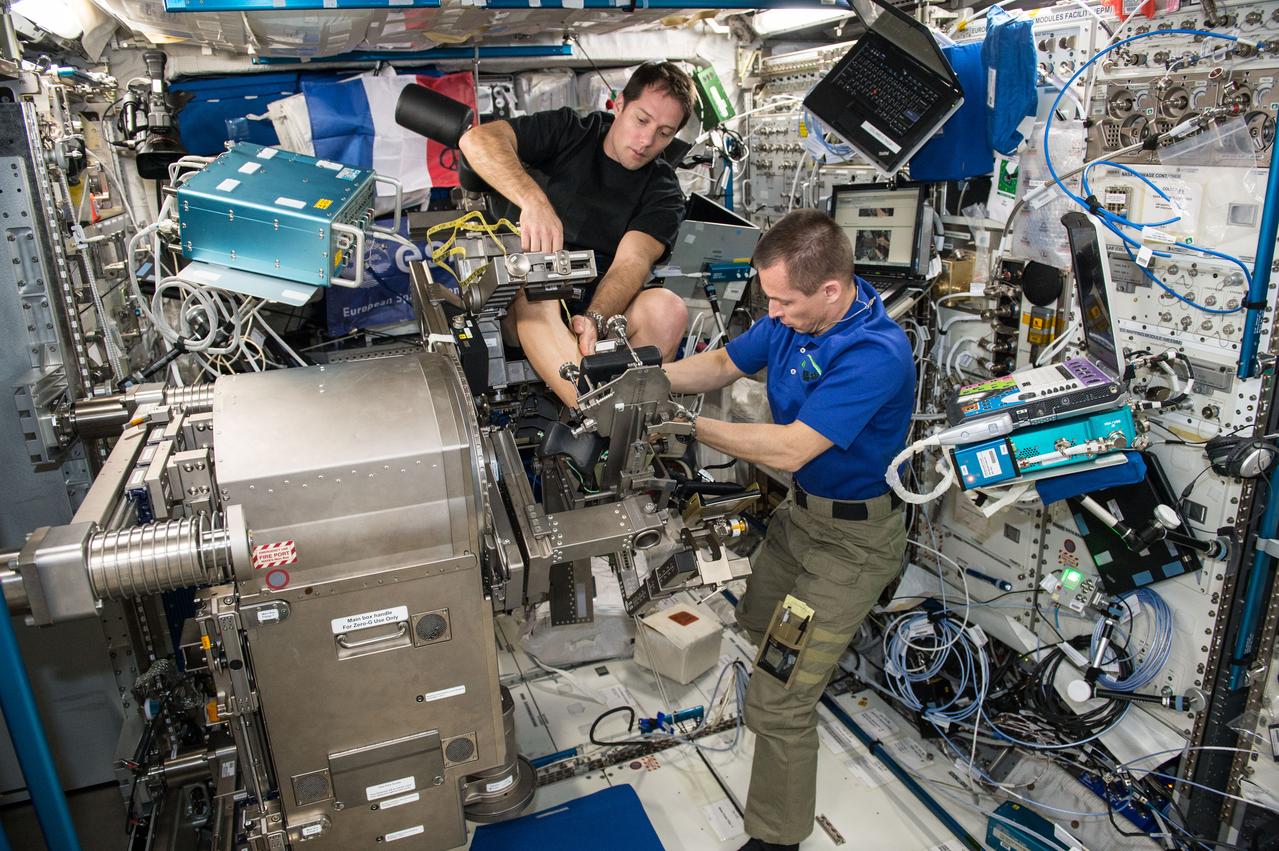
iss050e012379 (11/29/2016) --- European Space Agency (ESA) Thomas Pesquet and Cosmonaut Sergei Ryzhikov during the setup phase of the Sarcolab-3 Experiment, by configuring the Muscle Atrophy Resistive Exercise System (MARES), in the Columbus Module.
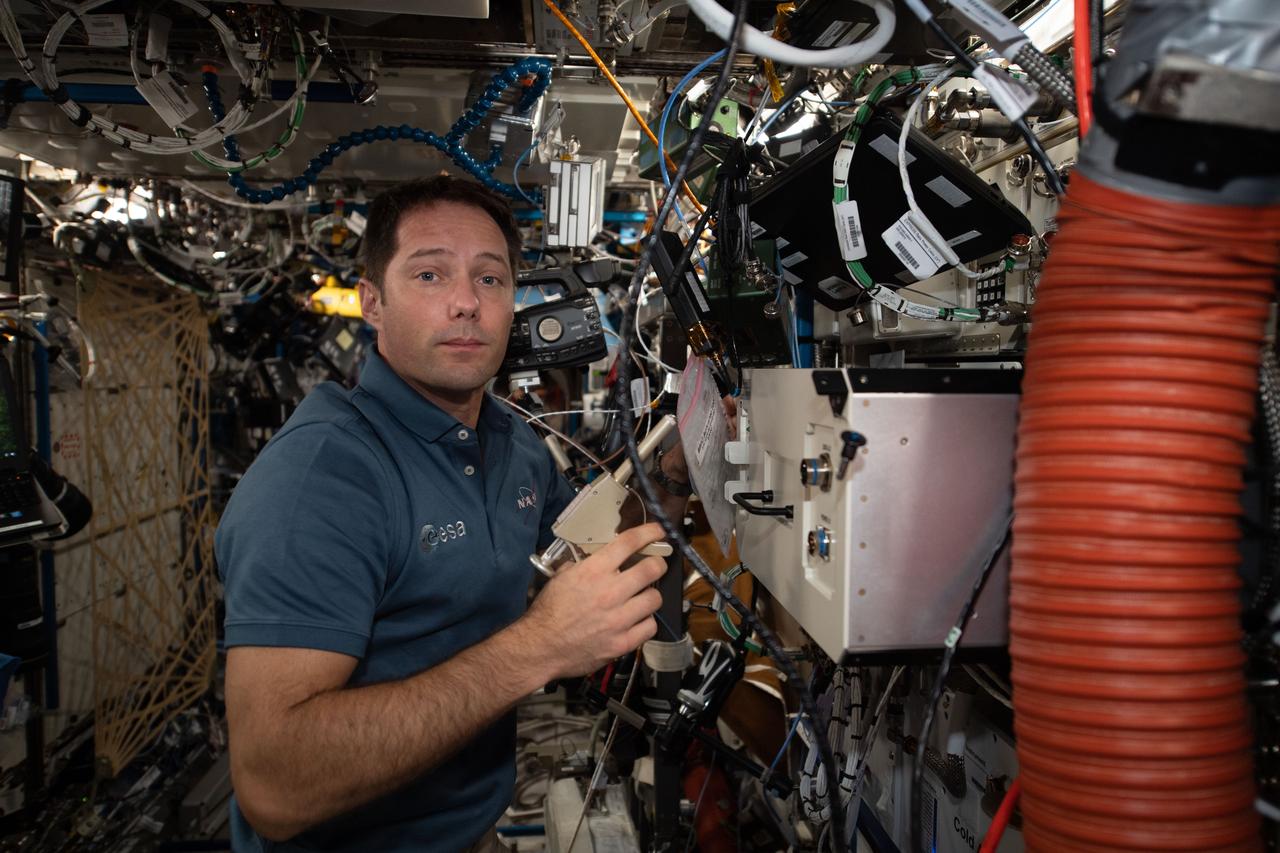
iss065e094087 (6/9/2021) --- European Space Agency (ESA) astronaut Thomas Pesquet is photographed aboard the International Space Station (ISS) during transfers of BRIC-24 Canisters to BRIC-LED Facility to stow.
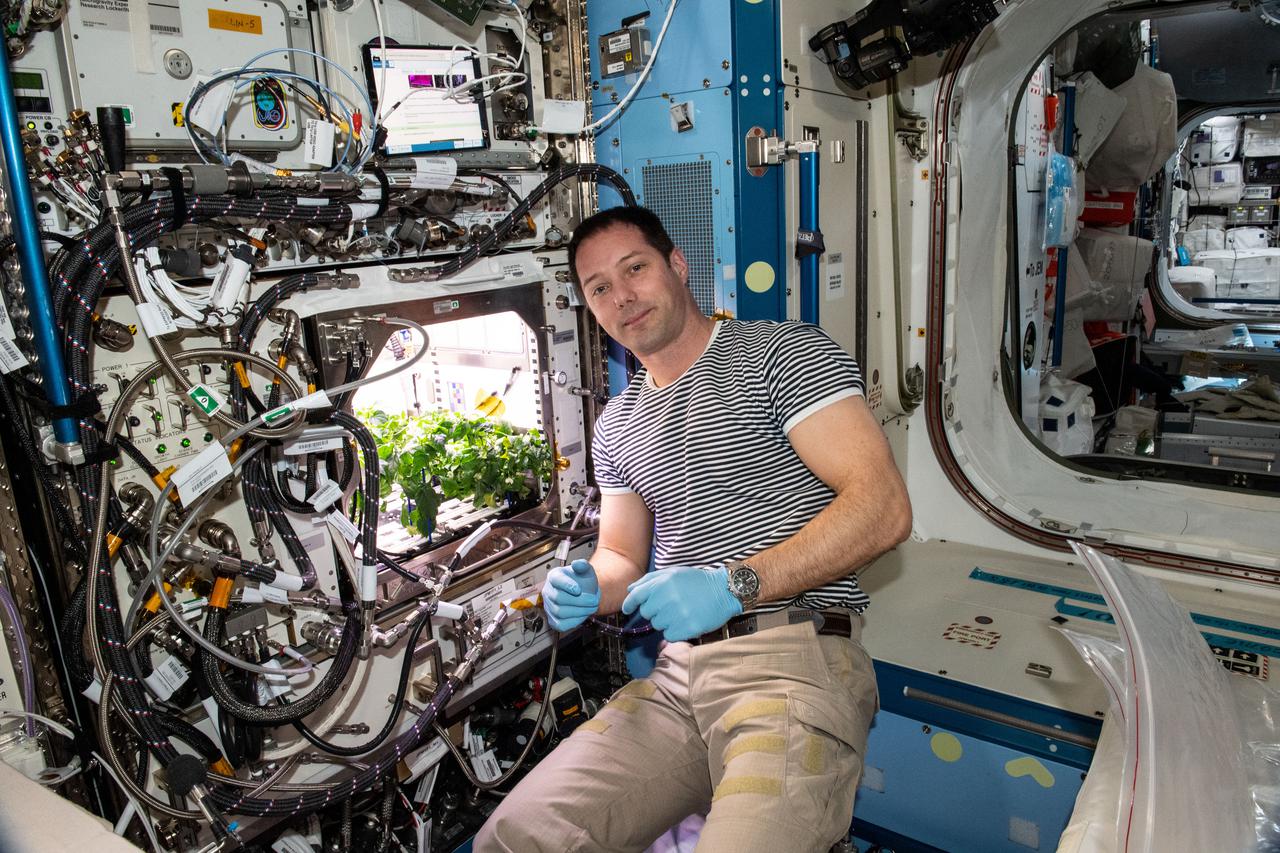
iss065e398621 (Sept. 20, 2021) --- ESA (European Space Agency) astronaut and Expedition 65 Flight Engineer Thomas Pesquet cleans up debris in the International Space Station’s Plant Habitat which is growing Hatch Green chiles for the Plant Habitat-04 space crop experiment.
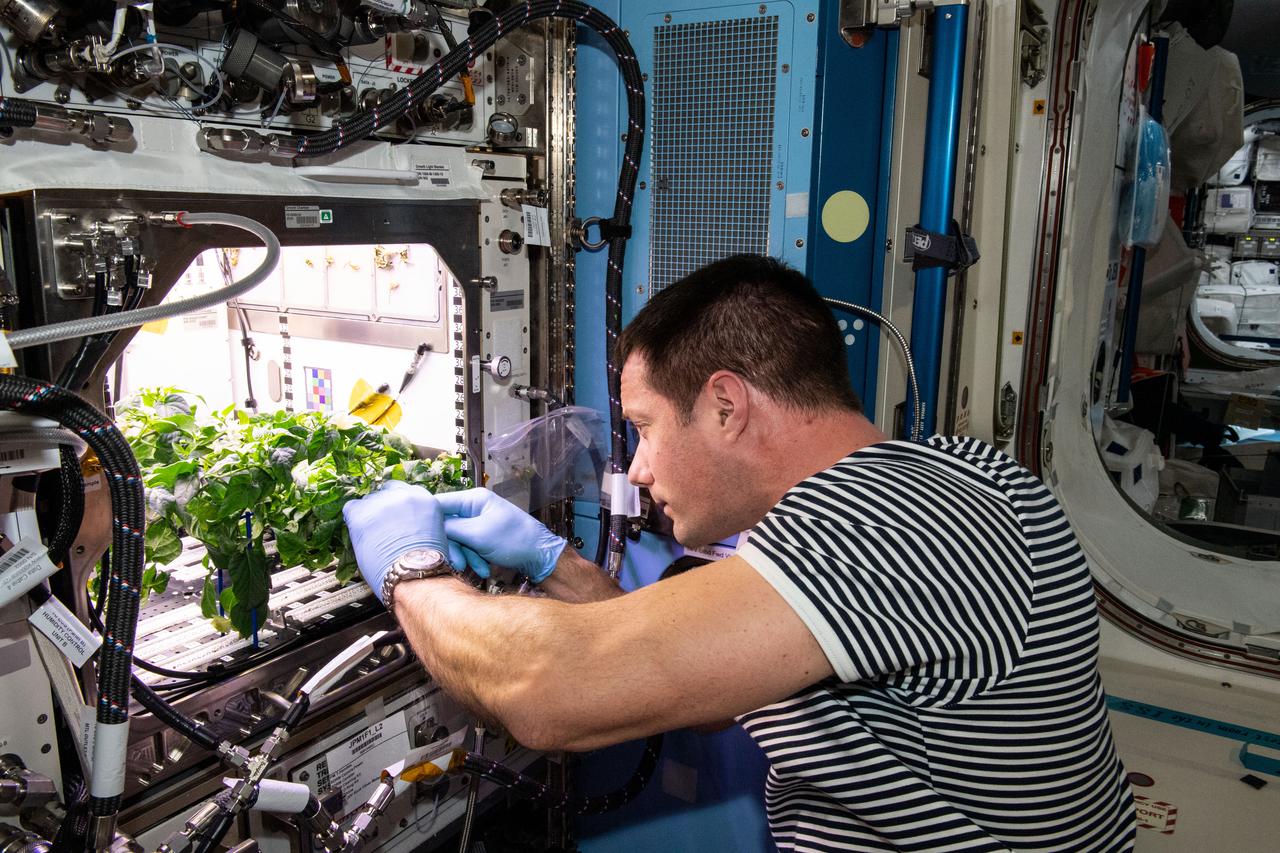
iss065e398600 (Sept. 20, 2021) --- ESA (European Space Agency) astronaut and Expedition 65 Flight Engineer Thomas Pesquet cleans up debris in the International Space Station’s Plant Habitat which is growing Hatch Green chiles for the Plant Habitat-04 space crop experiment.
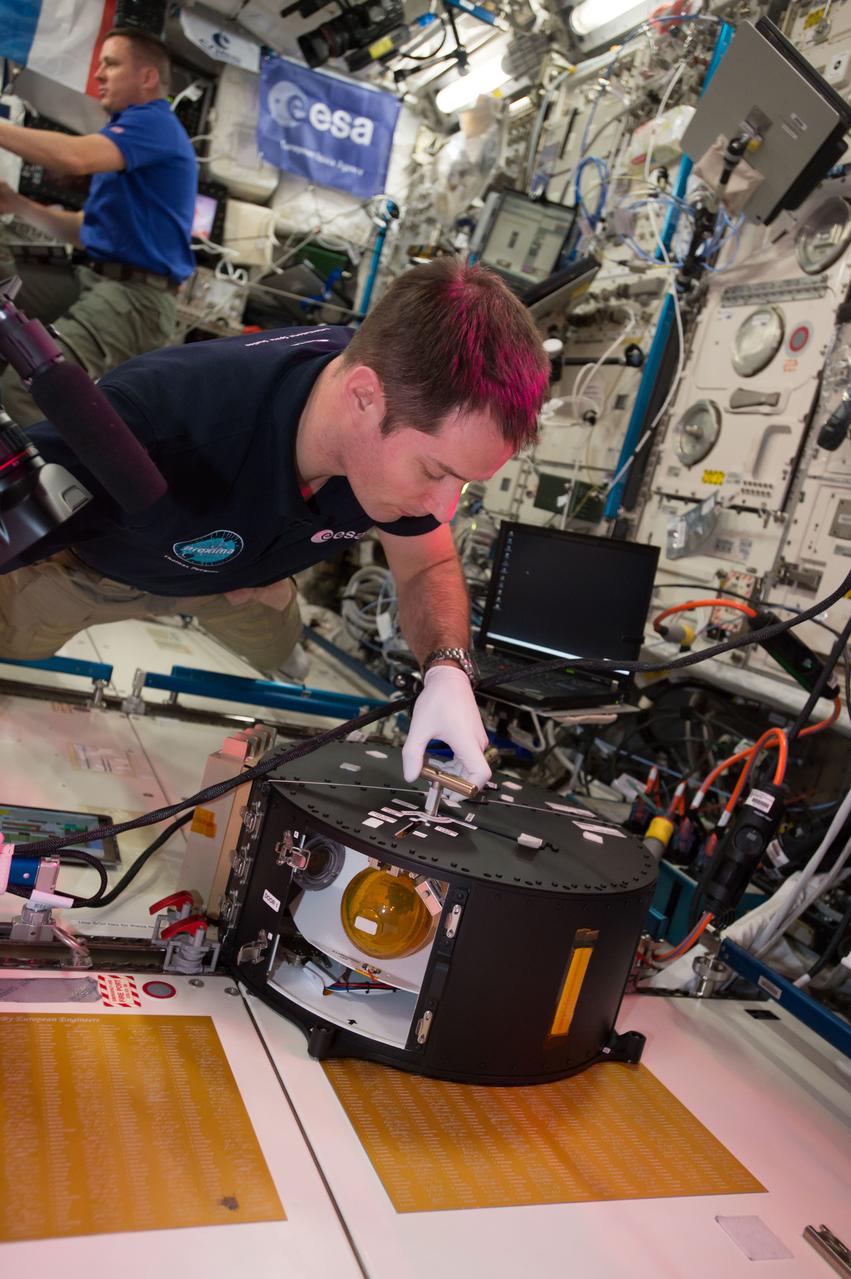
iss051e036148 (5/3/2016) --- European Space Agency (ESA) astronaut Thomas Pesquet works with Fluid Dynamics in Space (FLUIDICS) hardware during the completion of experiment runs. FE Jack Fischer is visible in the background. Image was taken in the Columbus European Laboratory. The FLUIDICS investigation evaluates the Center of Mass (CoM) position regarding a temperature gradient on a representation of a fuel tank. The observation of capillary wave turbulence on the surface of a fluid layer in a low-gravity environment can provide insights into measuring the existing volume in a sphere.
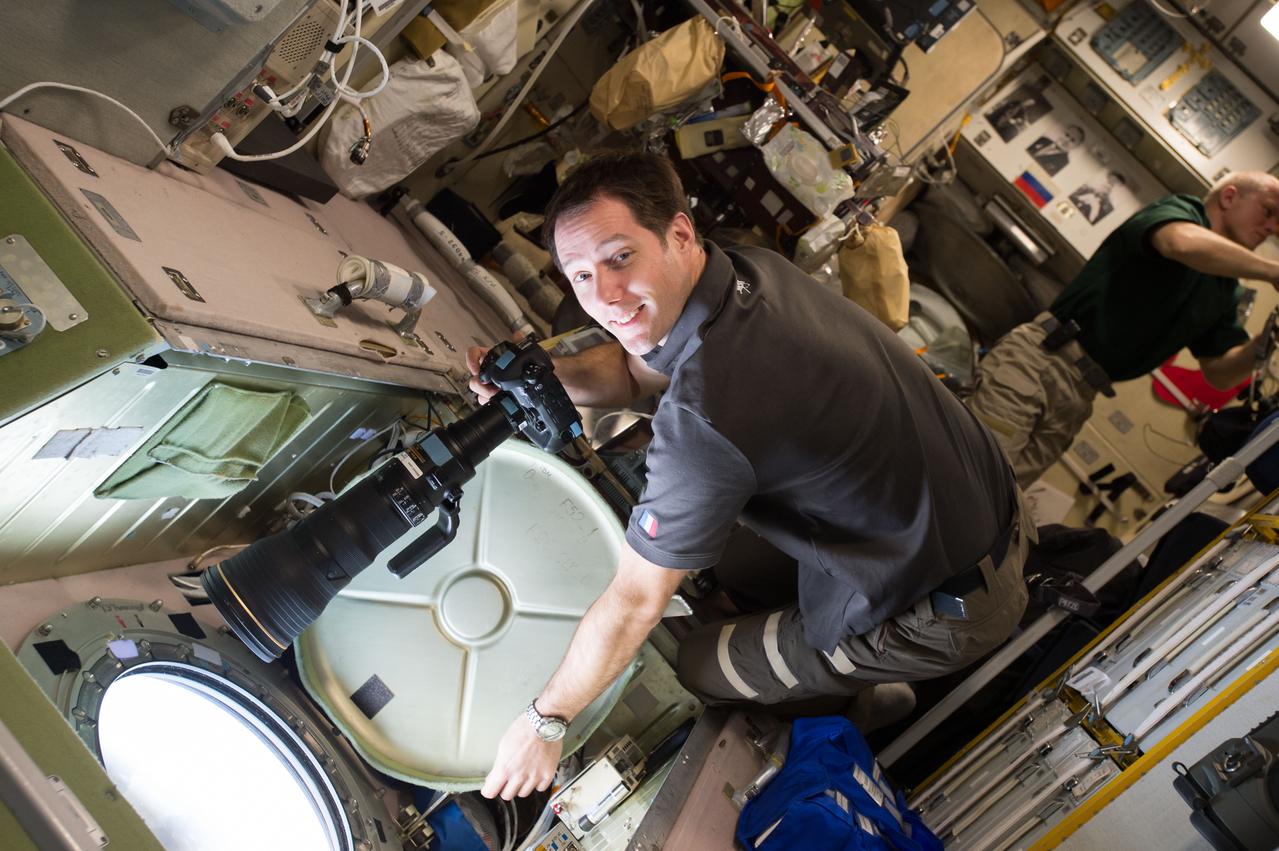
iss050e020100 (12/28/2016) --- European Space Agency (ESA) astonaut Thomas Pesquet preparing to take Crew Earth Observations (CEO) photos from the Service Module (SM) window. Cosmonaut Oleg Novitskiy is visible in the background. CEO imagery provides researchers on Earth with key data to understand the planet from the perspective of the ISS. Crew members have been photographing Earth from space since the early Mercury missions beginning in 1961. The images taken from the ISS ensure this record remains unbroken.
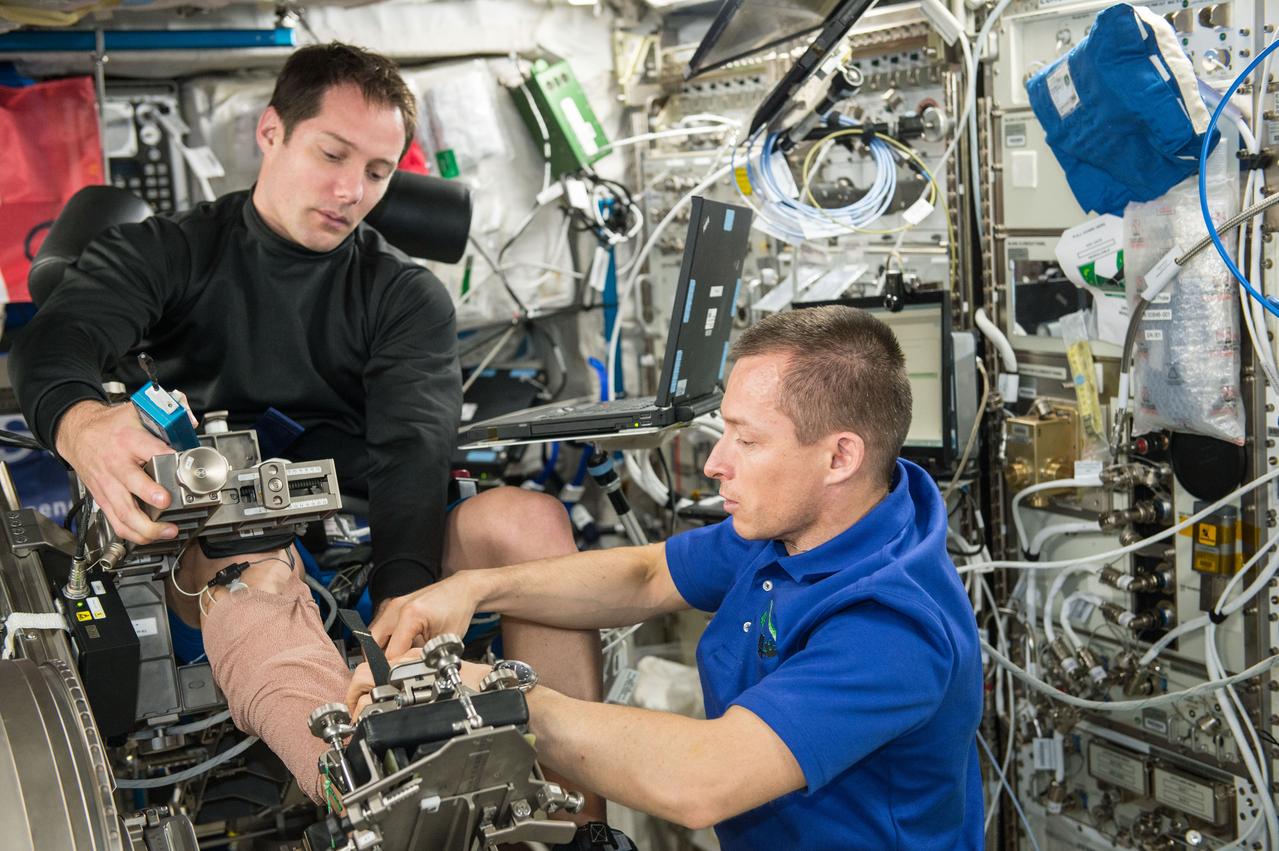
iss050e012915 (11/29/2016) --- European Space Agency (ESA) Thomas Pesquet and Cosmonaut Sergei Ryzhikov during the setup phase of the Sarcolab-3 Experiment in the Columbus Module. Myotendinous and Neuromuscular Adaptation to Long-term Spaceflight (Sarcolab) investigates the adaptation and deterioration of the soleus, or calf muscle, where it joins the Achilles tendon, which links it to the heel and carries loads from the entire body. Muscle fiber samples are taken from crew members before and after flight, and analyzed for changes in structural and chemical properties.
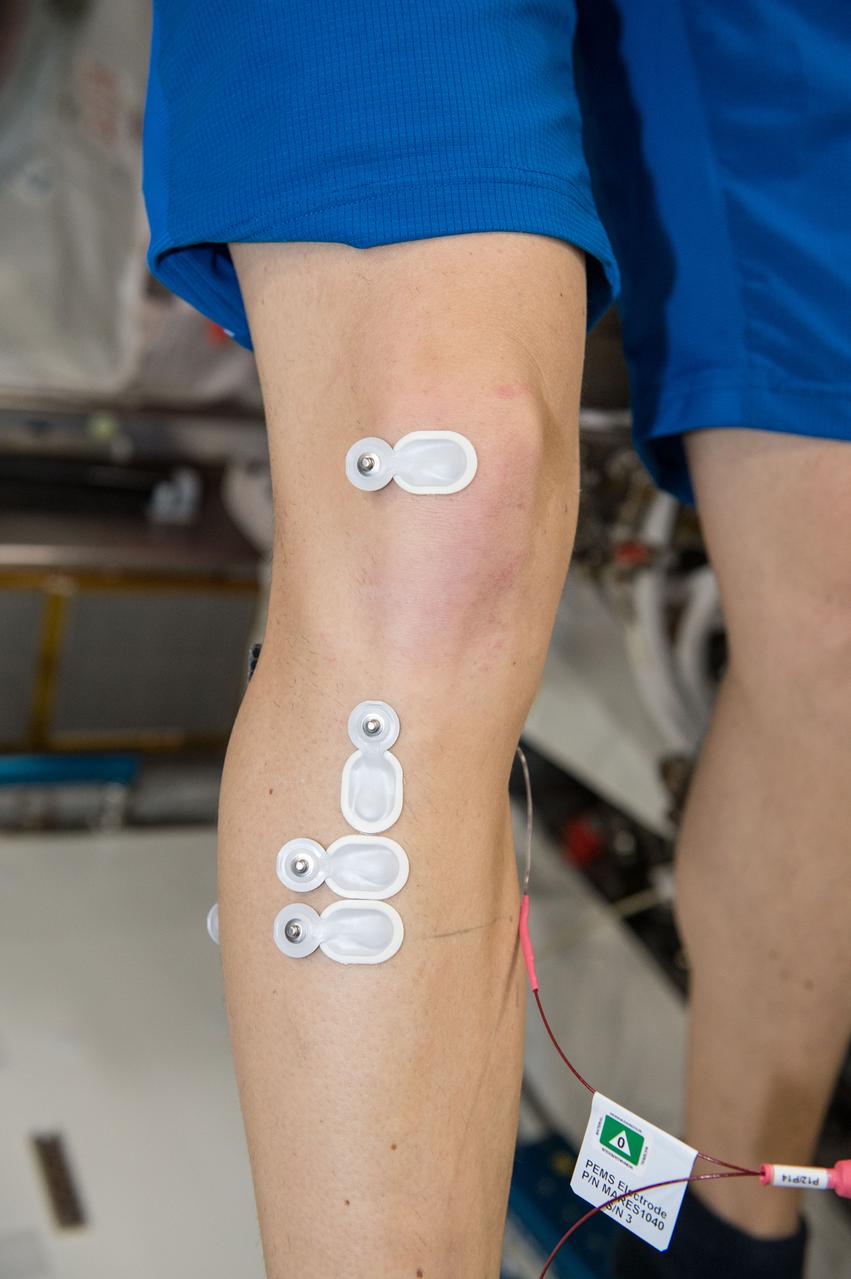
iss050e012907 (11/29/2016) --- European Space Agency (ESA) Thomas Pesquet (only leg - wearing electrodes) during the setup phase of the Sarcolab-3 Experiment in the Columbus Module. Myotendinous and Neuromuscular Adaptation to Long-term Spaceflight (Sarcolab) investigates the adaptation and deterioration of the soleus, or calf muscle, where it joins the Achilles tendon, which links it to the heel and carries loads from the entire body. Muscle fiber samples are taken from crew members before and after flight, and analyzed for changes in structural and chemical properties.
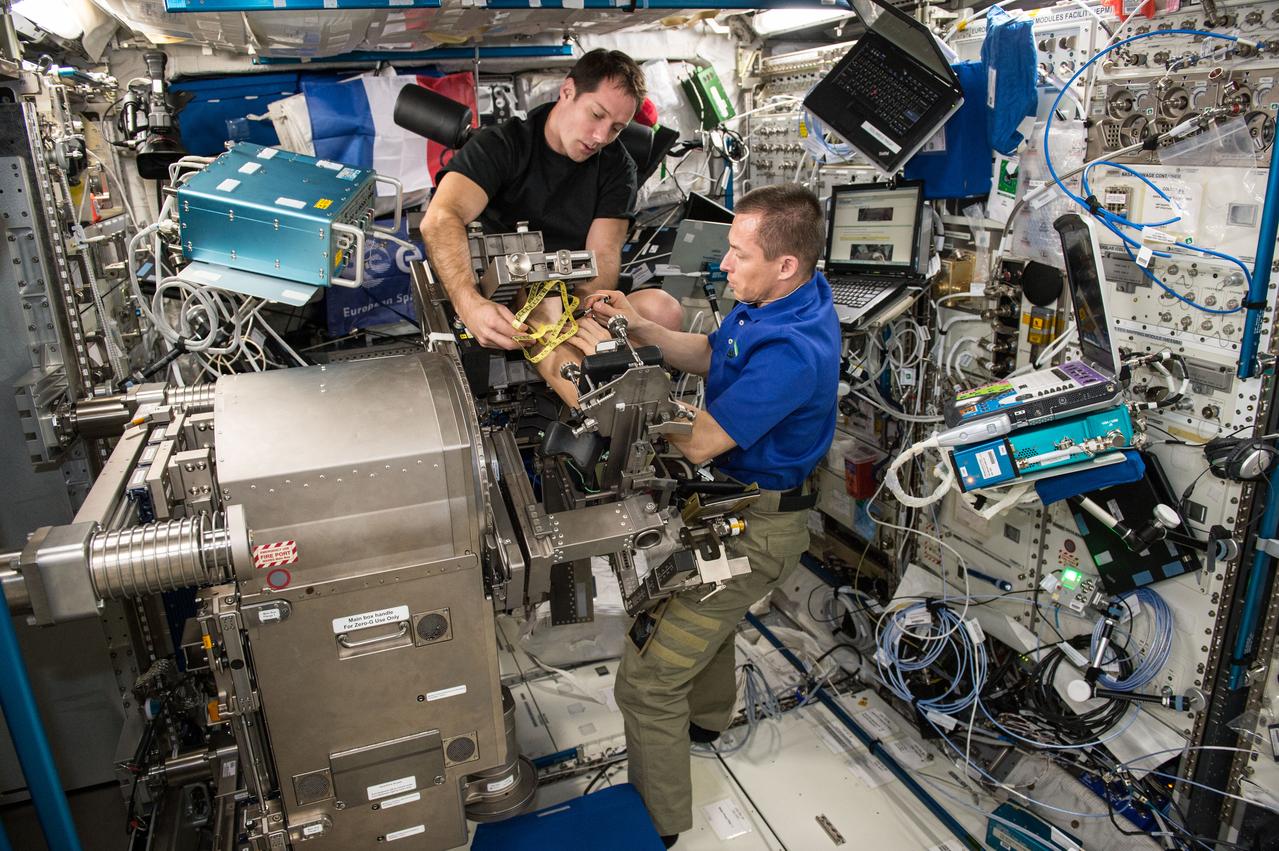
iss050e012389 (11/29/2016) --- European Space Agency (ESA) Thomas Pesquet and Cosmonaut Sergei Ryzhikov during the setup phase of the Sarcolab-3 Experiment in the Columbus Module. Myotendinous and Neuromuscular Adaptation to Long-term Spaceflight (Sarcolab) investigates the adaptation and deterioration of the soleus, or calf muscle, where it joins the Achilles tendon, which links it to the heel and carries loads from the entire body. Muscle fiber samples are taken from crew members before and after flight, and analyzed for changes in structural and chemical properties.
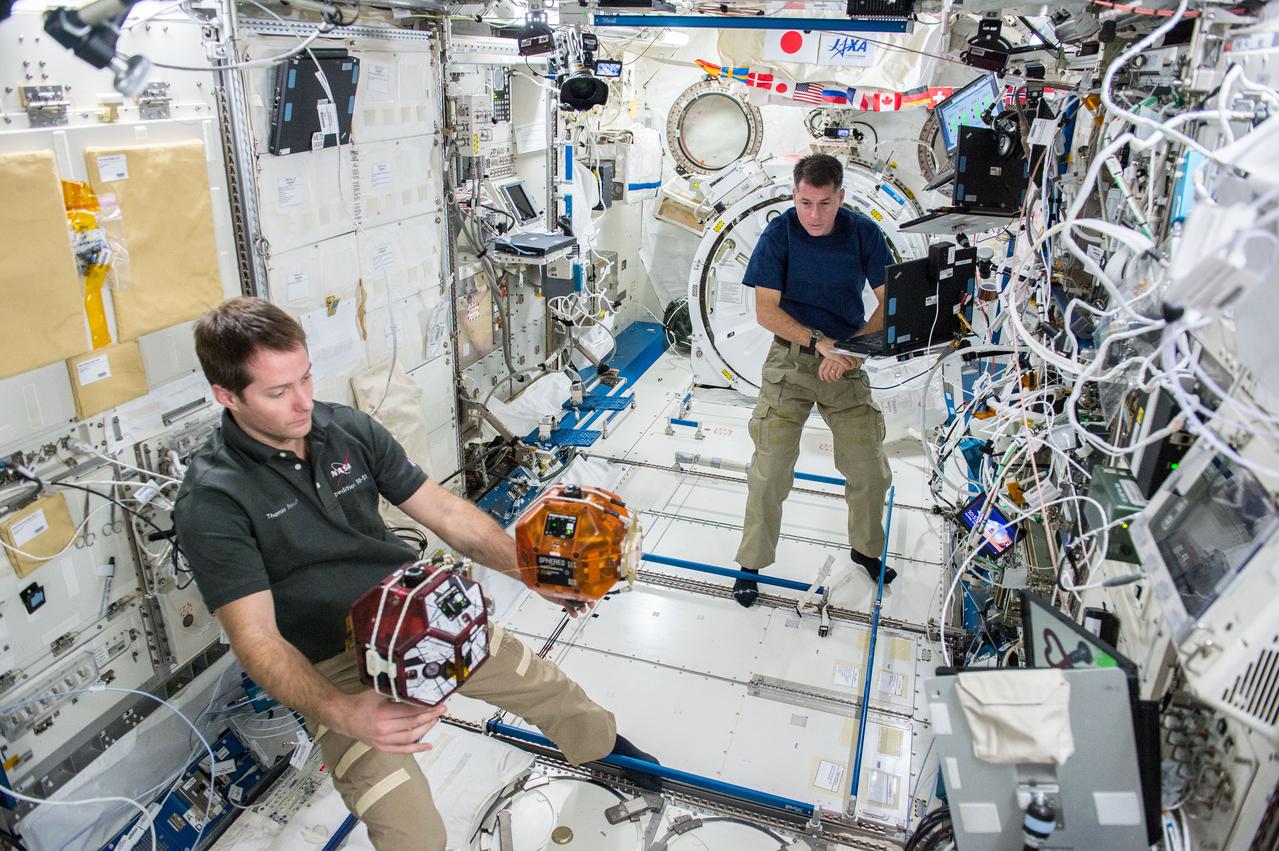
iss050e013146 (12/1/2016) --- NASA astronaut Shane Kimbrough and European Space Agency (ESA) astronaut Thomas Pesquet during the Synchronized Position Hold, Engage, Reorient, Experimental Satellites Tether Demo, in the Japanese Experiment Module (JEM) Pressurized Module (JPM). The SPHERES Tether Demo studies the dynamics of a tethered capture object and a “space tug” chase vehicle, improving computer programs needed for removing space debris as well as capturing scientific samples from other planets.
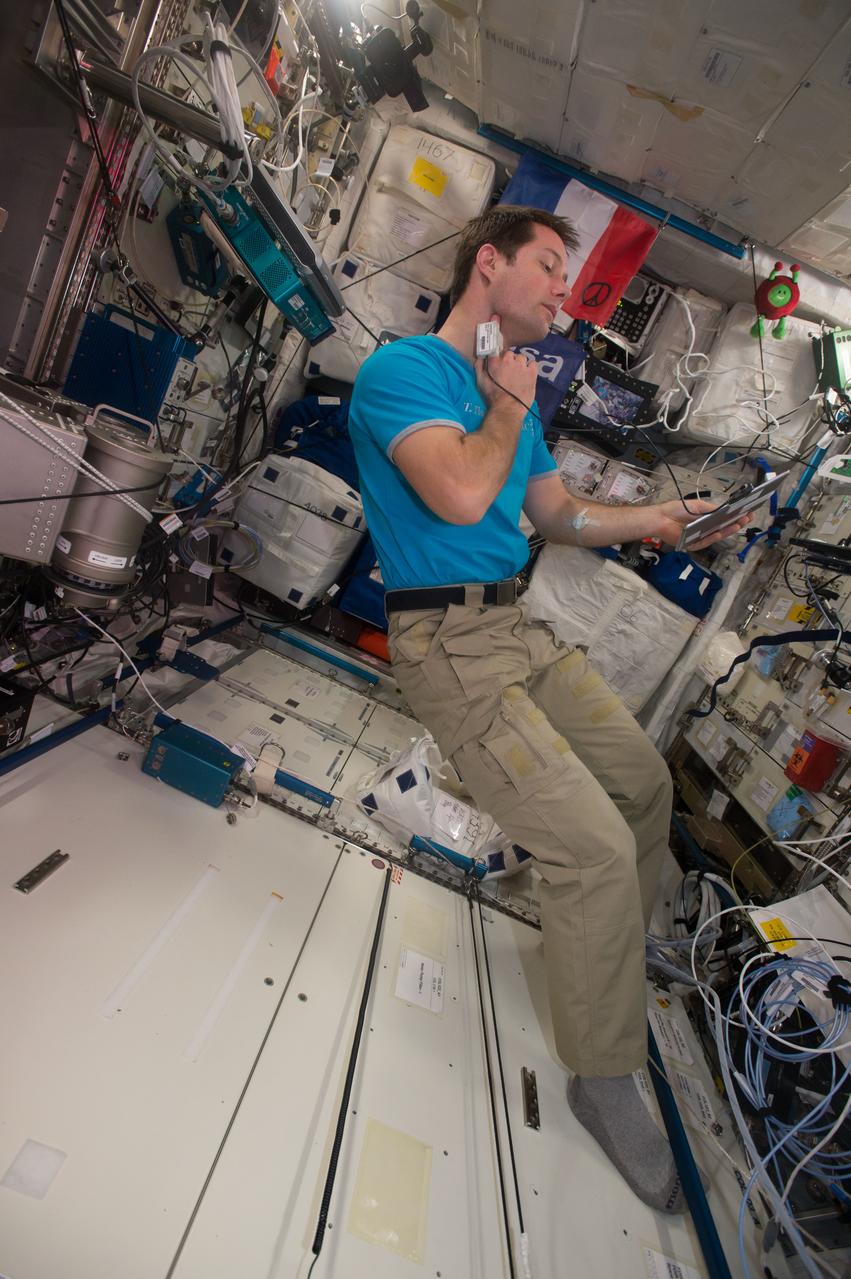
iss050e014804 (12/7/2016) --- European Space Agency (ESA) Thomas Pesquet wearing sensor (Tonometer) connected to iPad during EVERYWEAR experiment, in the Columbus Module. The EveryWear system is an ambulatory data collection system making use of wearable sensors connected to a station iPad itself wirelessly synchronized with ground. This easy-use system should demonstrate extensive physiology data collection for both science and medical follow-up purpose by improving usability for the astronauts.

iss050e015683 (Dec. 13, 2016) --- JAXA's (Japan Aerospace Exploration Agency) H-II Transfer Vehicle-6, also known as the "Kounotori," is pictured moments away from being captured by the International Space Station's Canadarm2 robotic arm. Expedition 50 Commander Shane Kimbrough of NASA and Flight Engineer Thomas Pesquet of ESA (European Space Agency) successfully captured Kounotori on Dec. 13, 2016.
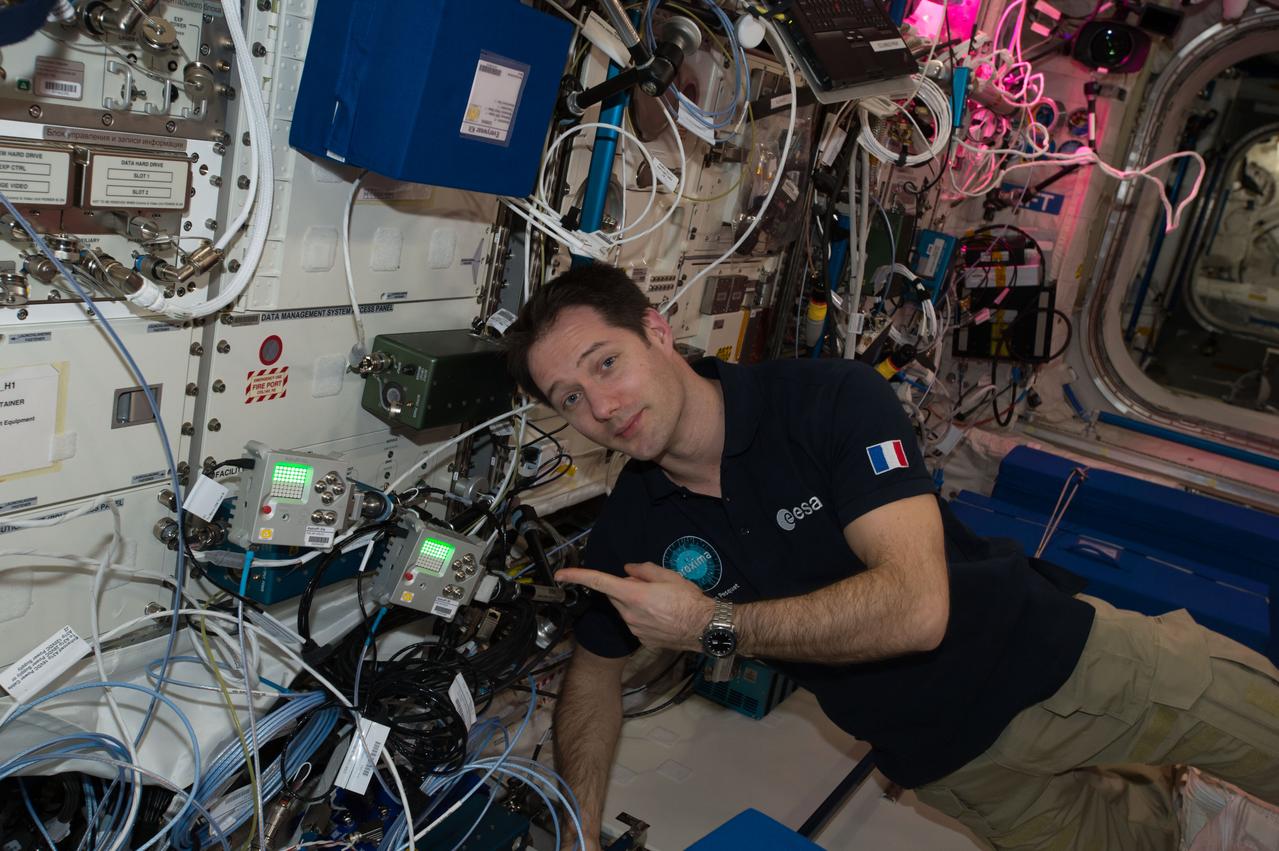
iss051e029182 (4/27/2017) --- European Space Agency (ESA) astronaut Thomas Pesquet poses for a photo next to AstroPi Raspberry Pi computers equipped with Visual and Infrared Cameras. Image was taken in the Columbus European Laboratory. The activities related to this project are intended to encourage and strengthen the teaching of computing and coding curriculums, and through this stimulate the curiosity of students and motivate them towards further study of STEM (Science, Technology, Engineering and Mathematics) subjects.
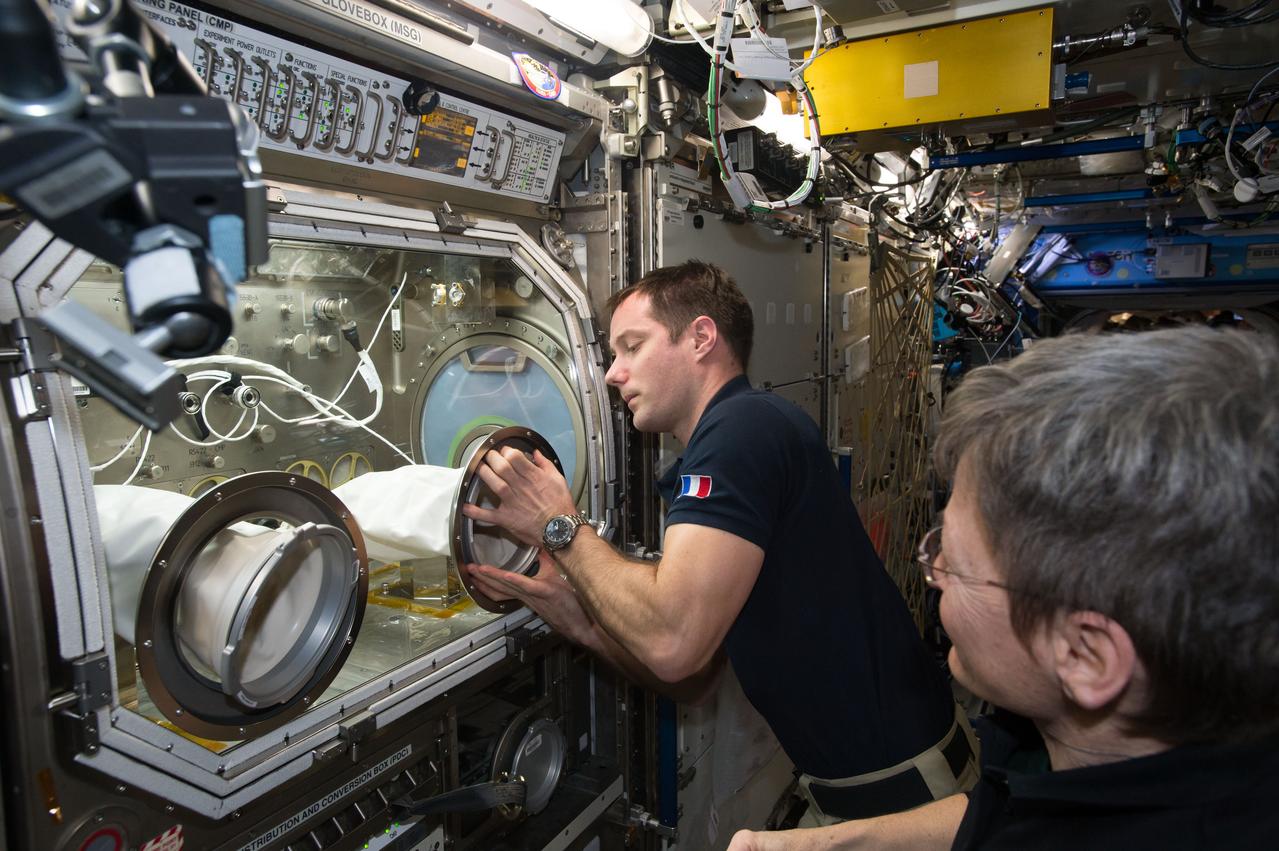
iss050e042167 (2/13/2017) --- European Space Agency (ESA) Thomas Pesquet and NASA astronaut Peggy Whitson setting up the Microgravity Expanded Stem Cells (MESC) Life Science Ancillary Hardware (LSAH) in the Microgravity Science Glovebox (MSG). Microgravity Expanded Stem Cells cultivates human stem cells aboard the International Space Station (ISS) for use in clinical trials to evaluate their use in treating disease.
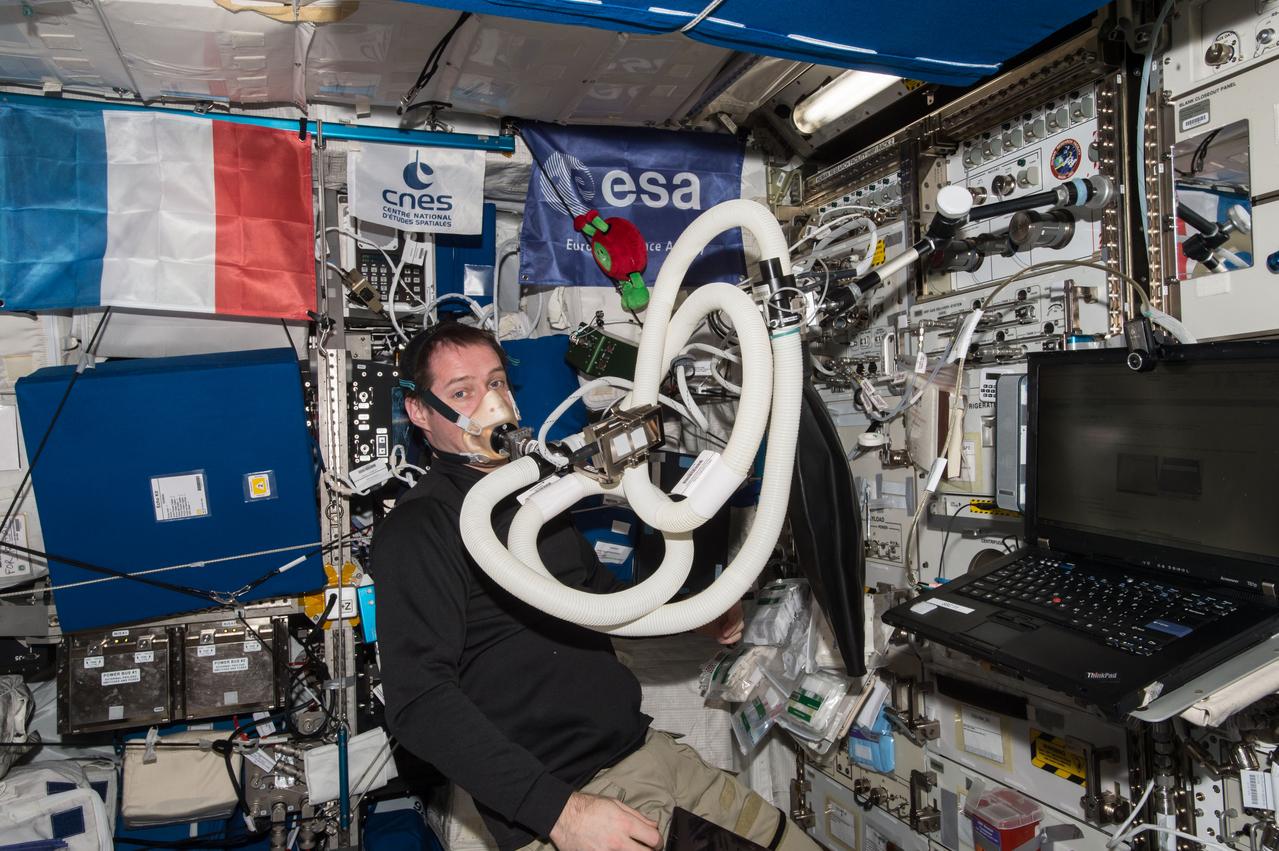
iss050e055526 (3/8/2017) --- European Space Agency (ESA) astronaut Thomas Pesquet utilizing the Pulmonary Function System (PFS) to perform a series of Oxygen Uptake Measurements (OUMs) after prescribed meals and scheduled fluid collections, in the Columbus Module. The Energy investigation measures an Astronaut's Energy Requirements for Long-Term Space Flight, a crucial factor needed for sending the correct amount of the right types of food with space crews.
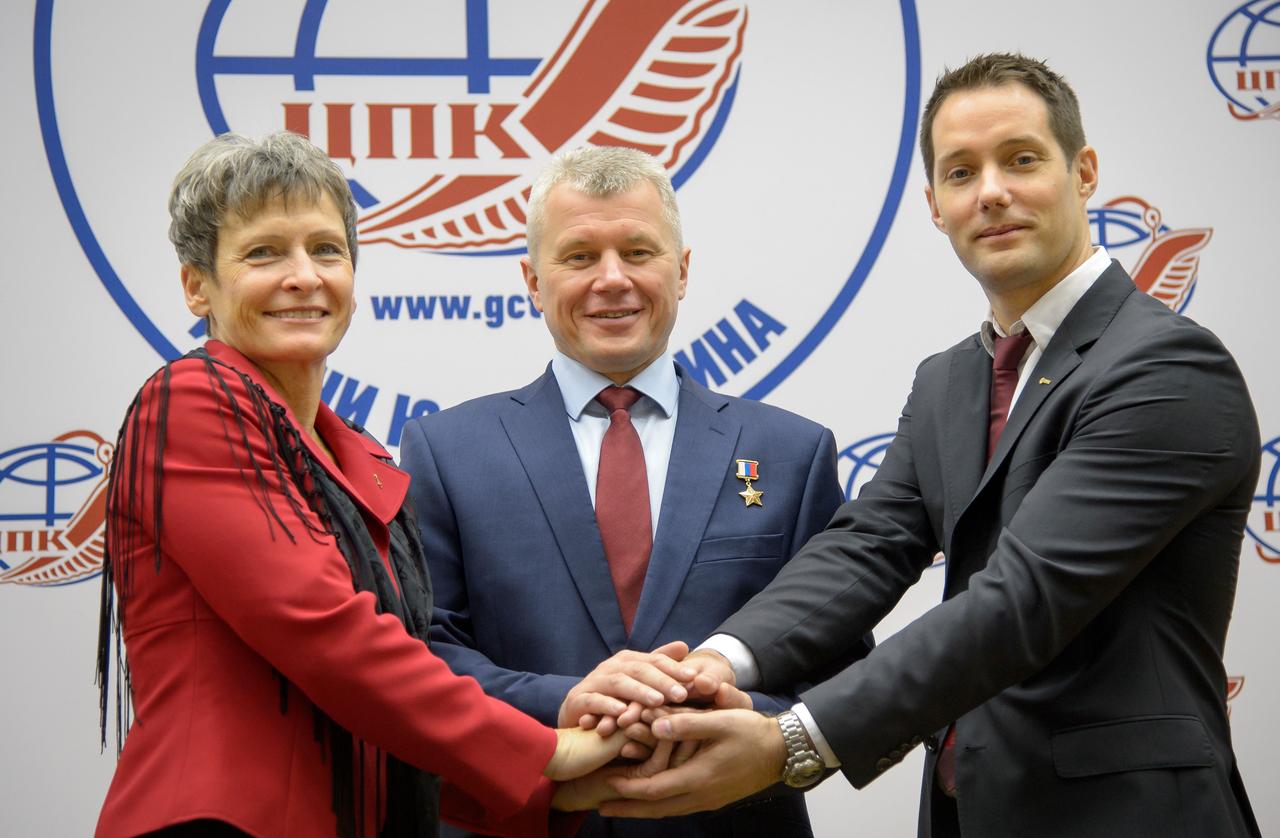
Expedition 50 NASA astronaut Peggy Whitson, left, Russian cosmonaut Oleg Novitskiy of Roscosmos, center, and ESA astronaut Thomas Pesquet pose for a group photograph at the conclusion of a press conference, Wednesday, Oct. 26, 2016, at the Gagarin Cosmonaut Training Center (GCTC) in Star City, Russia. Photo Credit: (NASA/Bill Ingalls)
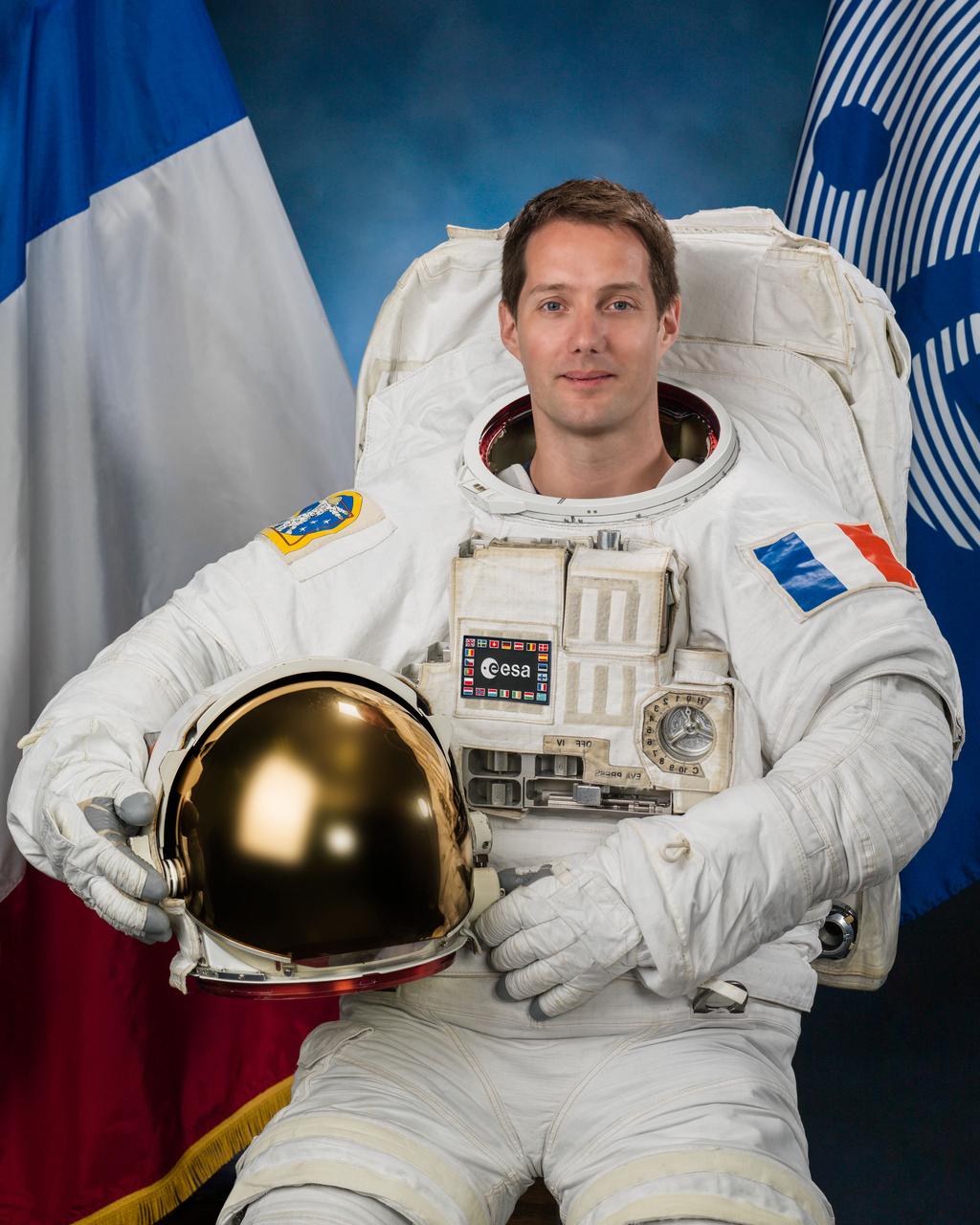
JSC2016e026853 (06/13/2016) --- Official portrait of Expedition 50 ESA (European Space Agency) astronaut Thomas Pesquet in a spacesuit (EMU) suit. PHOTOGRAPHER: BILL STAFFORD
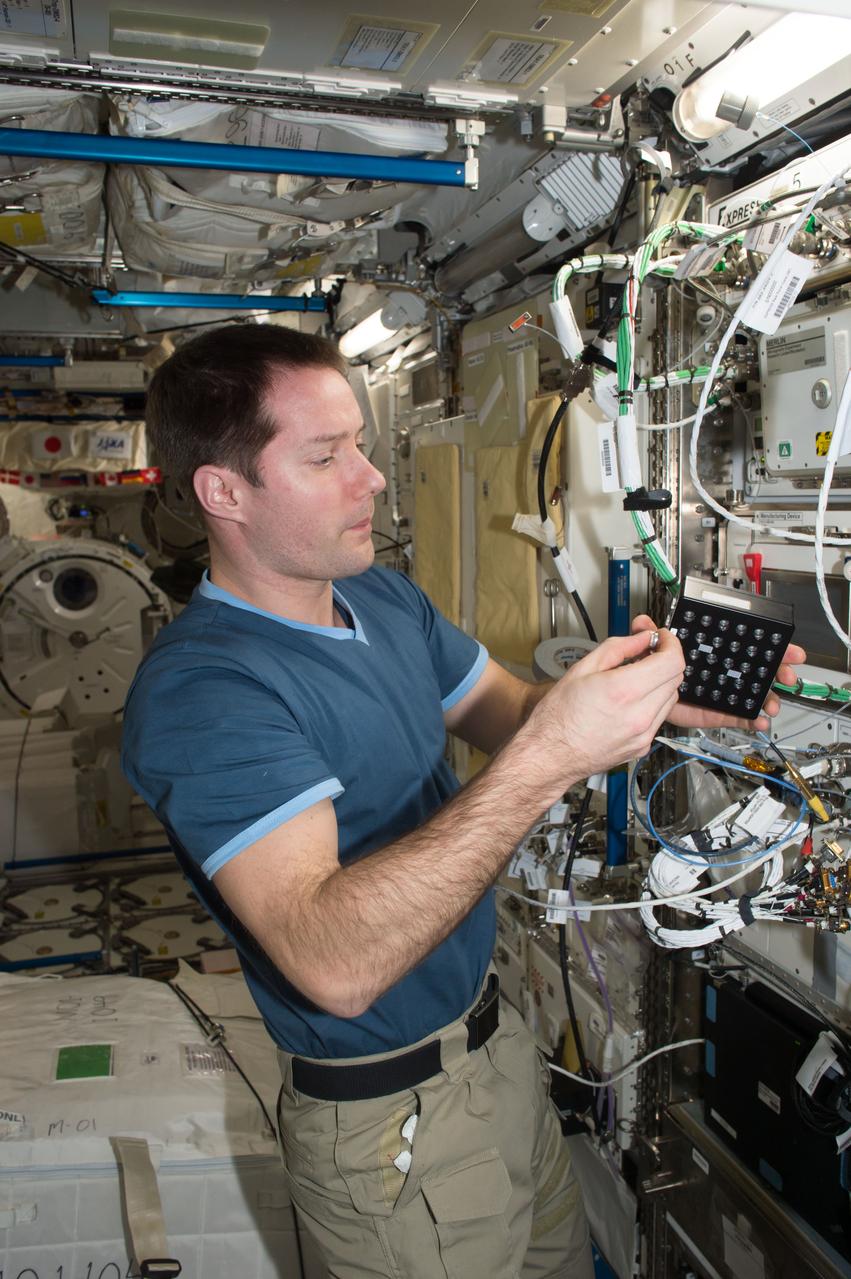
iss050e058802 (3/17/2017) --- A view of European Space Agency (ESA) astronaut Thomas Pesquet, during Protein Crystal Growth (PCG) -5 hardware deactivation and stow, from Microgravity Experiment Research Locker Incubator (MERLIN) on Expedite the Processing of Experiments to the Space Station (EXPRESS) Rack 5. The Microgravity Growth of Crystalline Monoclonal Antibodies for Pharmaceutical Applications (CASIS-PCG-5) investigation crystallizes a monoclonal antibody developed by Merck Research Labs. Microgravity enables the growth of extremely high-quality crystals, which allow scientists to study the proteins’ structure, improve drug delivery, manufacturing, and developing better methods for storing these biological molecules.
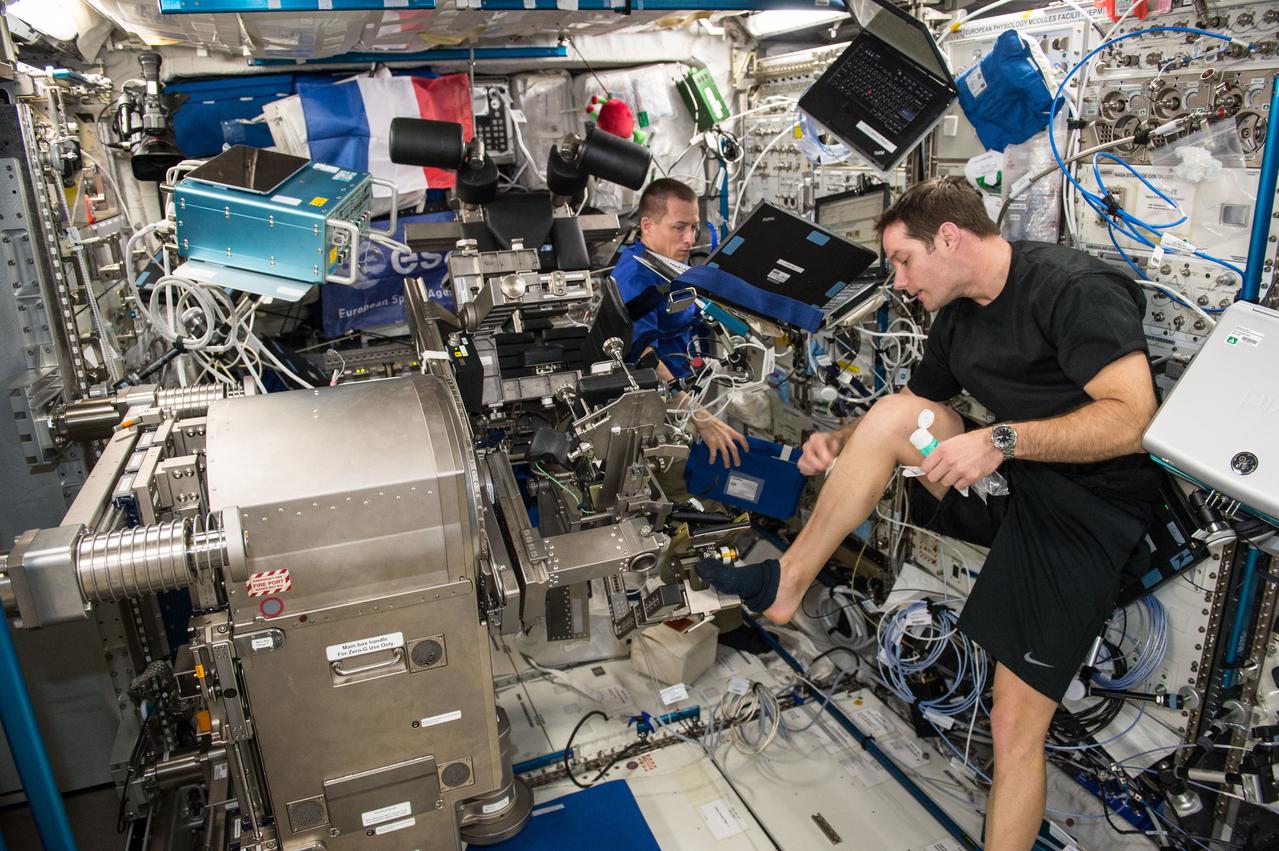
iss050e012767 (11/29/2016) --- European Space Agency (ESA) Thomas Pesquet and Cosmonaut Sergei Ryzhikov during the setup phase of the Sarcolab-3 Experiment, by deploying and configuring the Muscle Atrophy Resistive Exercise System (MARES), in the Columbus Module. Myotendinous and Neuromuscular Adaptation to Long-term Spaceflight (Sarcolab) investigates the adaptation and deterioration of the soleus, or calf muscle, where it joins the Achilles tendon, which links it to the heel and carries loads from the entire body. Muscle fiber samples are taken from crew members before and after flight, and analyzed for changes in structural and chemical properties.
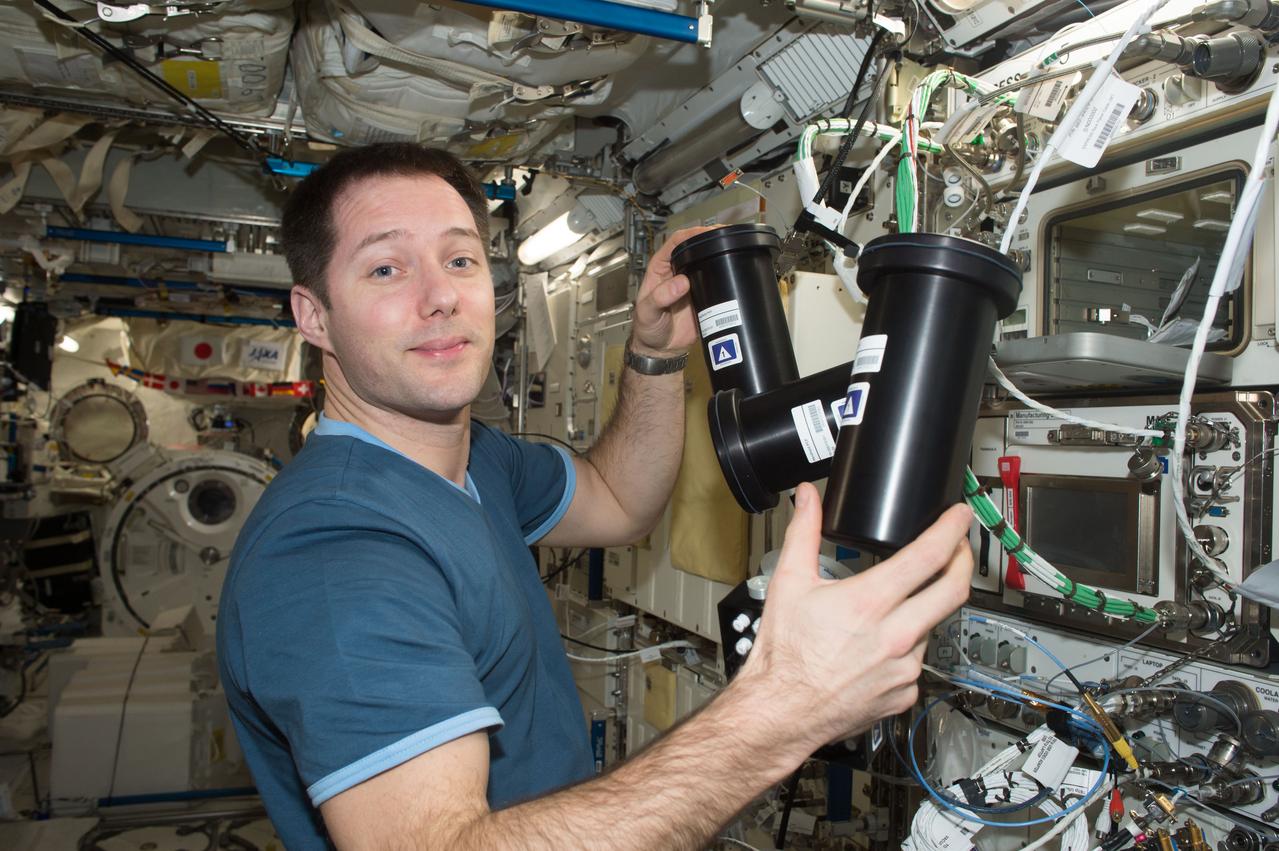
iss050e058812 (3/17/2017) --- A view of European Space Agency (ESA) astronaut Thomas Pesquet, during Protein Crystal Growth (PCG) -5 hardware deactivation and stow, from Microgravity Experiment Research Locker Incubator (MERLIN) on Expedite the Processing of Experiments to the Space Station (EXPRESS) Rack 5. The Microgravity Growth of Crystalline Monoclonal Antibodies for Pharmaceutical Applications (CASIS-PCG-5) investigation crystallizes a monoclonal antibody developed by Merck Research Labs. Microgravity enables the growth of extremely high-quality crystals, which allow scientists to study the proteins’ structure, improve drug delivery, manufacturing, and developing better methods for storing these biological molecules.
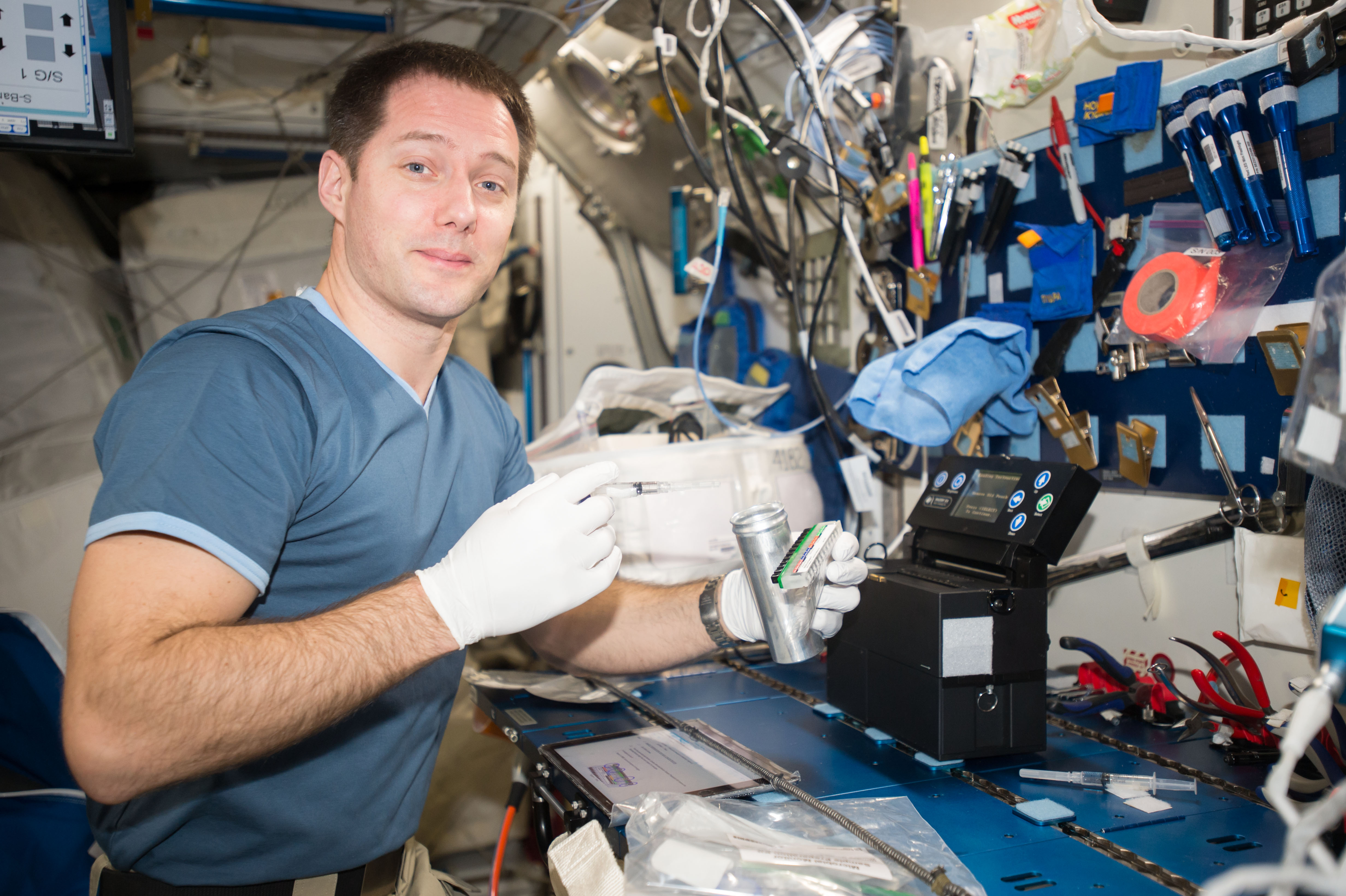
iss050e057206 (3/14/2017) --- European Space Agency (ESA) Thomas Pesquet used the Microbial Monitoring System (MMS) portion of the Water Monitoring Suite (WMS) experiment to perform the Aquapad demonstration and sampling. The Water Monitoring Suite is a set of hardware that monitors microbes, silica and organic material in the water supply on the International Space Station. The hardware ensures crew members can test and monitor the safety of their water supplies on future space missions, especially on long-duration missions to Mars, asteroids or other destinations where Earth-based testing would be difficult or impossible.
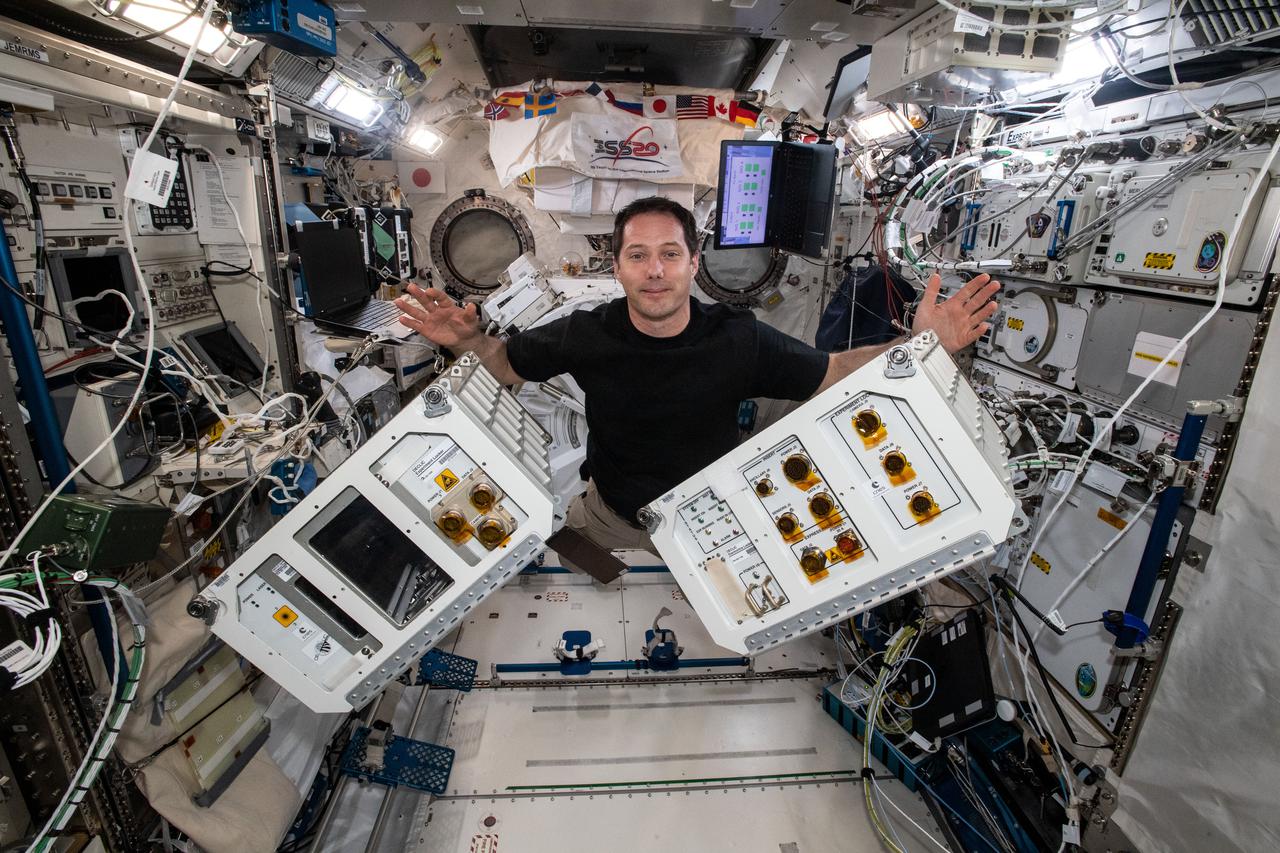
iss065e442803 (10/7/2021) --- European Space Agency (ESA) astronaut Thomas Pesquet gathers fluid physics and materials research hardware inside the International Space Station's Kibo laboratory module. Device for the Study of Critical Liquids and Crystallization (DECLIC) is a multi-user facility developed by the agency Centre National d’Etudes Spatiales (French Space Agency, CNES) and flown in collaboration with NASA. It is designed to support experiments in the fields of fluid physics and materials science. Special inserts allow researchers to study both ambient temperature critical point fluids and high temperature super-critical fluids. Another class of insert studies the dynamics and morphology of the fronts that form as a liquid material solidifies.
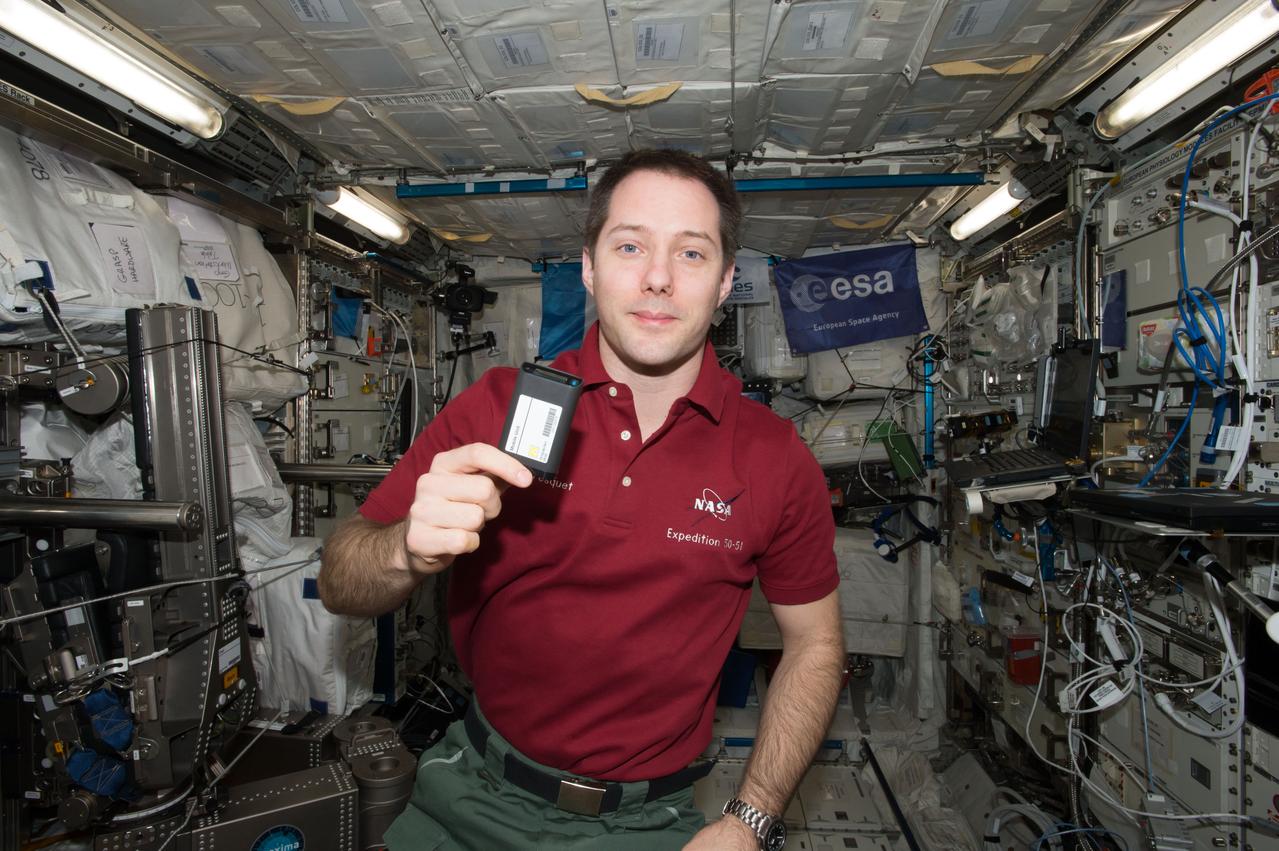
iss051e051544 (5/29/2017) --- European Space Agency (ESA) astronaut Thomas Pesquet holds a Mobile Unit in the Columbus European Laboratory during European Space Agency (ESA)-Active-Dosimeters experiment operations (OPS). The European Crew Personal Active Dosimeter (EuCPAD) project tests an active radiation dosimeter system. This represents the first time that crews wear active dosimeters in order to measure changes in radiation exposure over time providing variation of radiation dose data with respect to ISS orbit and altitude, solar cycle, and solar flares.
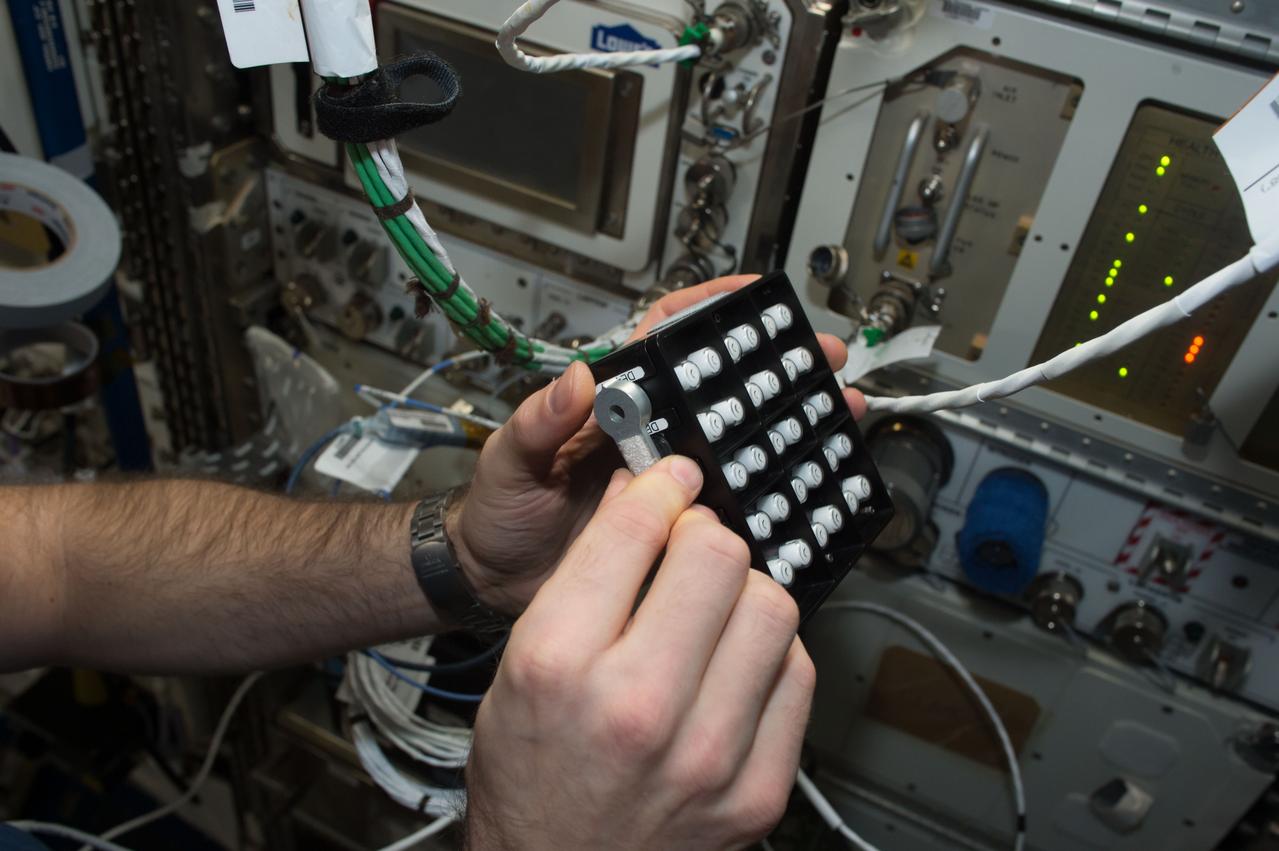
iss050e058807 (3/17/2017) --- A view of European Space Agency (ESA) astronaut Thomas Pesquet, during Protein Crystal Growth (PCG) -5 hardware deactivation and stow, from Microgravity Experiment Research Locker Incubator (MERLIN) on Expedite the Processing of Experiments to the Space Station (EXPRESS) Rack 5. The Microgravity Growth of Crystalline Monoclonal Antibodies for Pharmaceutical Applications (CASIS-PCG-5) investigation crystallizes a monoclonal antibody developed by Merck Research Labs. Microgravity enables the growth of extremely high-quality crystals, which allow scientists to study the proteins’ structure, improve drug delivery, manufacturing, and developing better methods for storing these biological molecules.
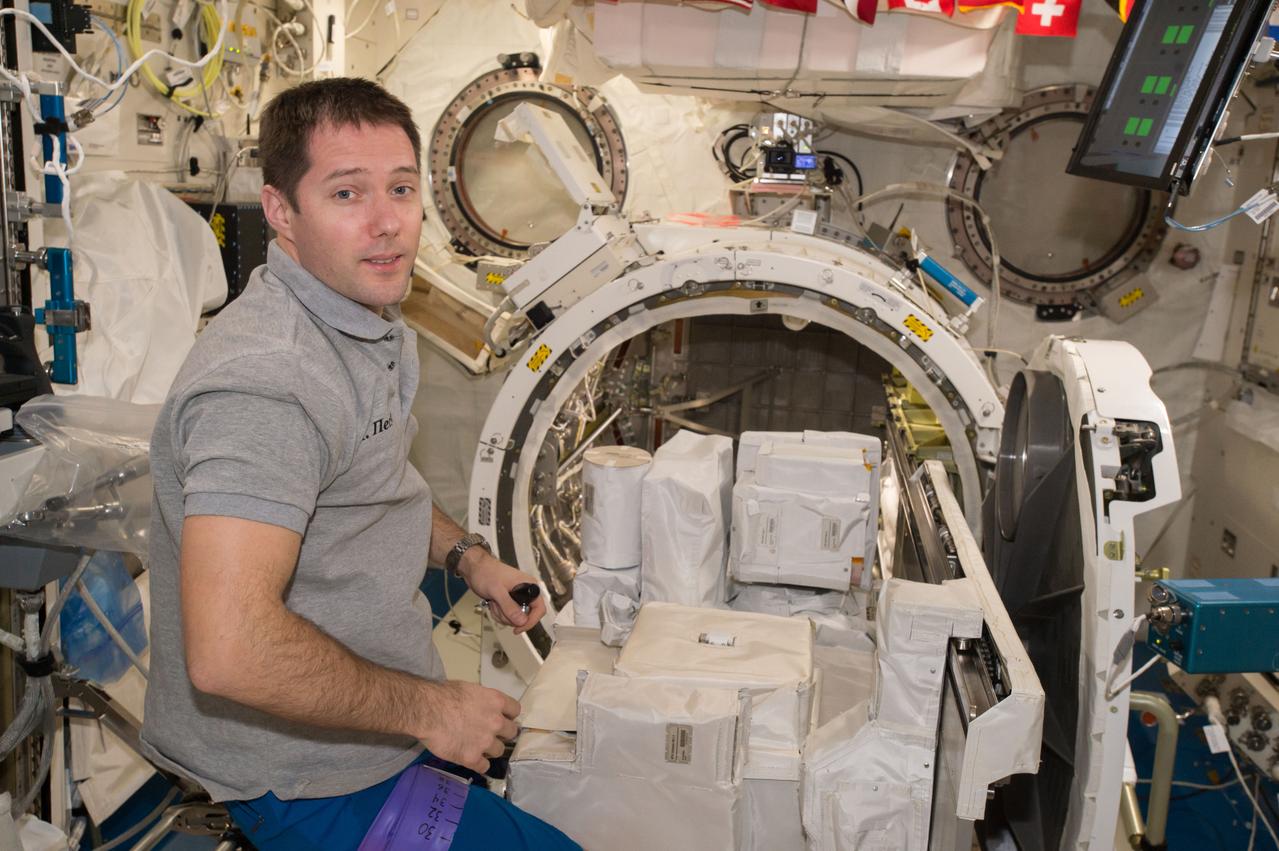
iss050e039213 (2/7/2017) --- European Space Agency (ESA) astronaut Thomas Pesquet during the installation of the Japanese Experiment Module (JEM) High Definition Television (HDTV) to Exposed Facility Unit (EFU) Adapter on JEM Airlock (JEMAL) Slide Table. The High Definition Television Camera-Exposed Facility 2 (HDTV-EF2) is a high-definition television camera system that is used for Earth observation from the International Space Station (ISS). HDTV-EF2 is exposed to the space environment on the Japanese Experiment Module -Exposed Facility (JEM-EF).

iss050e052741 (2/24/2017) --- European Space Agency (ESA) Thomas Pesquet (upside down) posing with Tomatospheres-5 within ziplock bags, in the U.S. Laboratory. The Tomatosphere 5 investigation consists of a shipment of 1.2 million tomato seeds to the International Space Station (ISS), where they visit for a short while aboard a SpaceX Dragon spacecraft before returning to Earth. Approximately 15 000 students in schools across Canada and the United States receive the space-flown seeds, as well as seeds that remained on Earth, and grow both types in a blind study that measures their germination, growth rate, and general vigor.
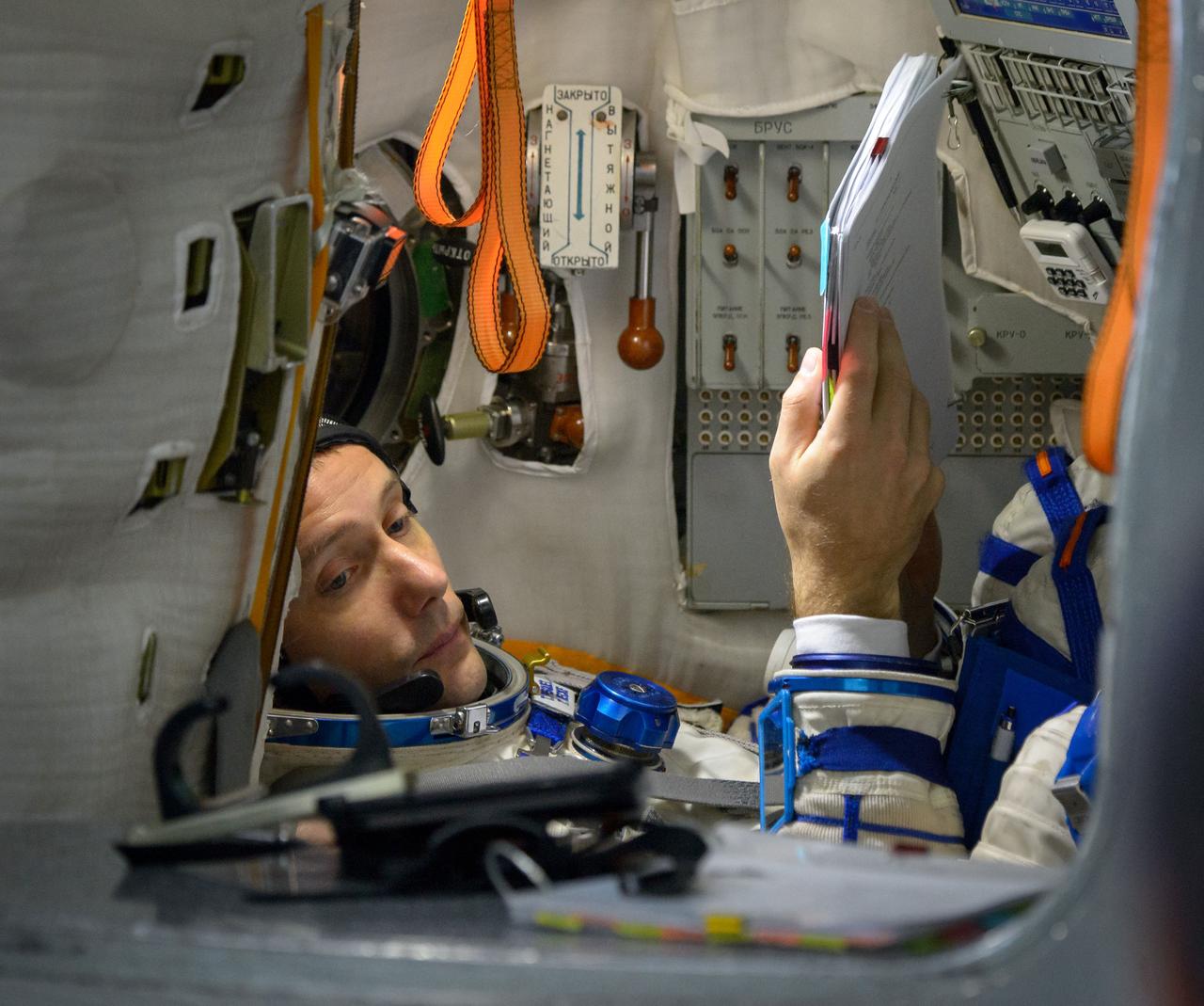
Expedition 50 ESA astronaut Thomas Pesquet is seen inside the Soyuz simulator during final qualification exams, Tuesday, Oct. 25, 2016, at the Gagarin Cosmonaut Training Center (GCTC) in Star City, Russia. Pesquet, Russian cosmonaut Oleg Novitskiy of Roscosmos, and NASA astronaut Peggy Whitson are scheduled to launch in November 2016. Photo Credit: (NASA/Bill Ingalls)

Expedition 50 ESA astronaut Thomas Pesquet is seen inside the Soyuz simulator during final qualification exams, Tuesday, Oct. 25, 2016, at the Gagarin Cosmonaut Training Center (GCTC) in Star City, Russia. Pesquet, Russian cosmonaut Oleg Novitskiy of Roscosmos, and NASA astronaut Peggy Whitson are scheduled to launch in November 2016. Photo Credit: (NASA/Bill Ingalls)
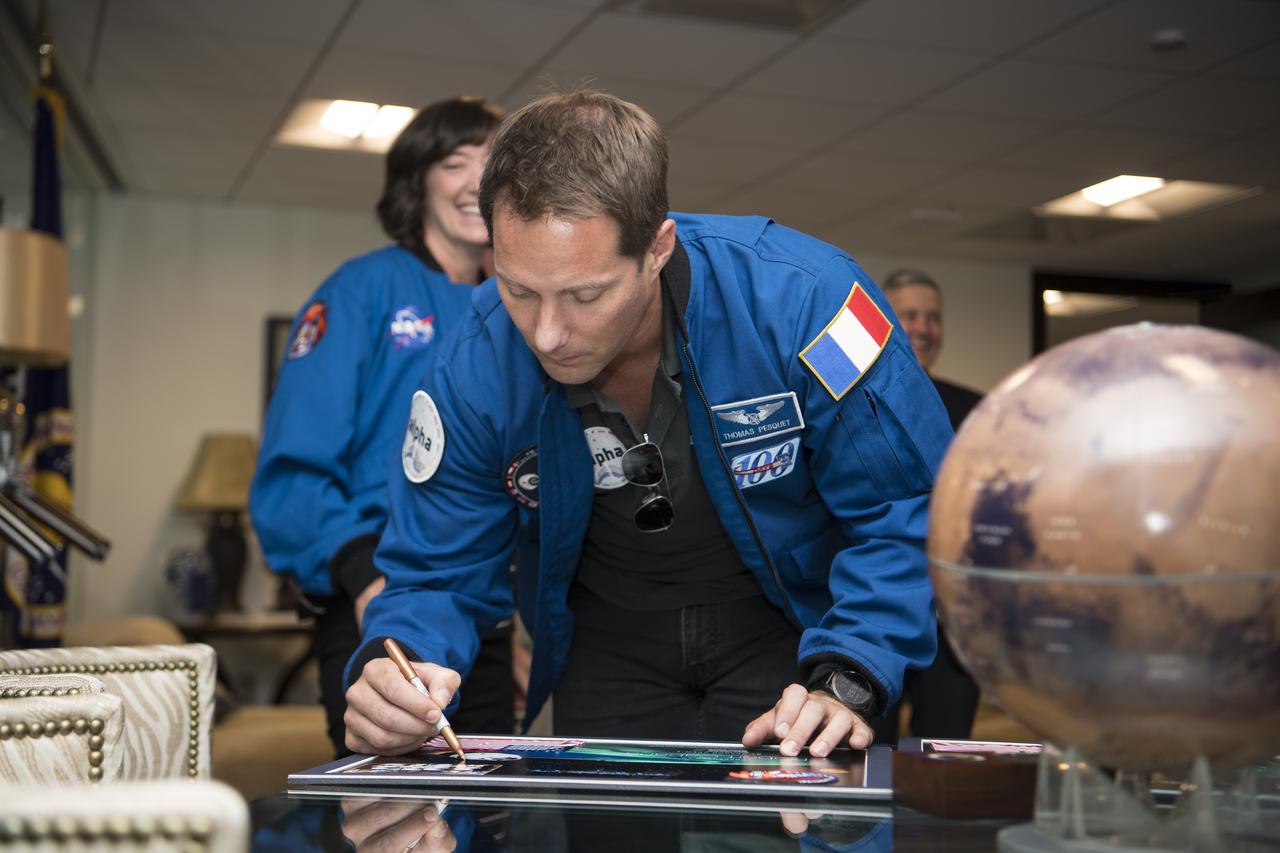
NASA’s SpaceX Crew-2 ESA (European Space Agency) astronaut Thomas Pesquet signs a montage for NASA Associate Administrator Bob Cabana, Monday, June 6, 2022, at the Mary W. Jackson NASA Headquarters Building in Washington DC. Photo Credit: (NASA/Aubrey Gemignani)

Expedition 50 crew members NASA astronaut Peggy Whitson, left, Russian cosmonaut Oleg Novitskiy of Roscosmos, center, and ESA astronaut Thomas Pesquet prepare for their final qualification exams, Tuesday, Oct. 25, 2016, at the Gagarin Cosmonaut Training Center (GCTC) in Star City, Russia. Photo Credit: (NASA/Bill Ingalls)

Expedition 50 ESA astronaut Thomas Pesquet, left, Russian cosmonaut Oleg Novitskiy of Roscosmos, center, and NASA astronaut Peggy Whitson tour the museum at the Gagarin Cosmonaut Training Center (GCTC), Wednesday, Oct. 26, 2016, in Star City, Russia. Photo Credit: (NASA/Bill Ingalls)

Expedition 50 crew members NASA astronaut Peggy Whitson, left, Russian cosmonaut Oleg Novitskiy of Roscosmos, center, and ESA astronaut Thomas Pesquet prepare for their final qualification exams, Tuesday, Oct. 25, 2016, at the Gagarin Cosmonaut Training Center (GCTC) in Star City, Russia. Photo Credit: (NASA/Bill Ingalls)
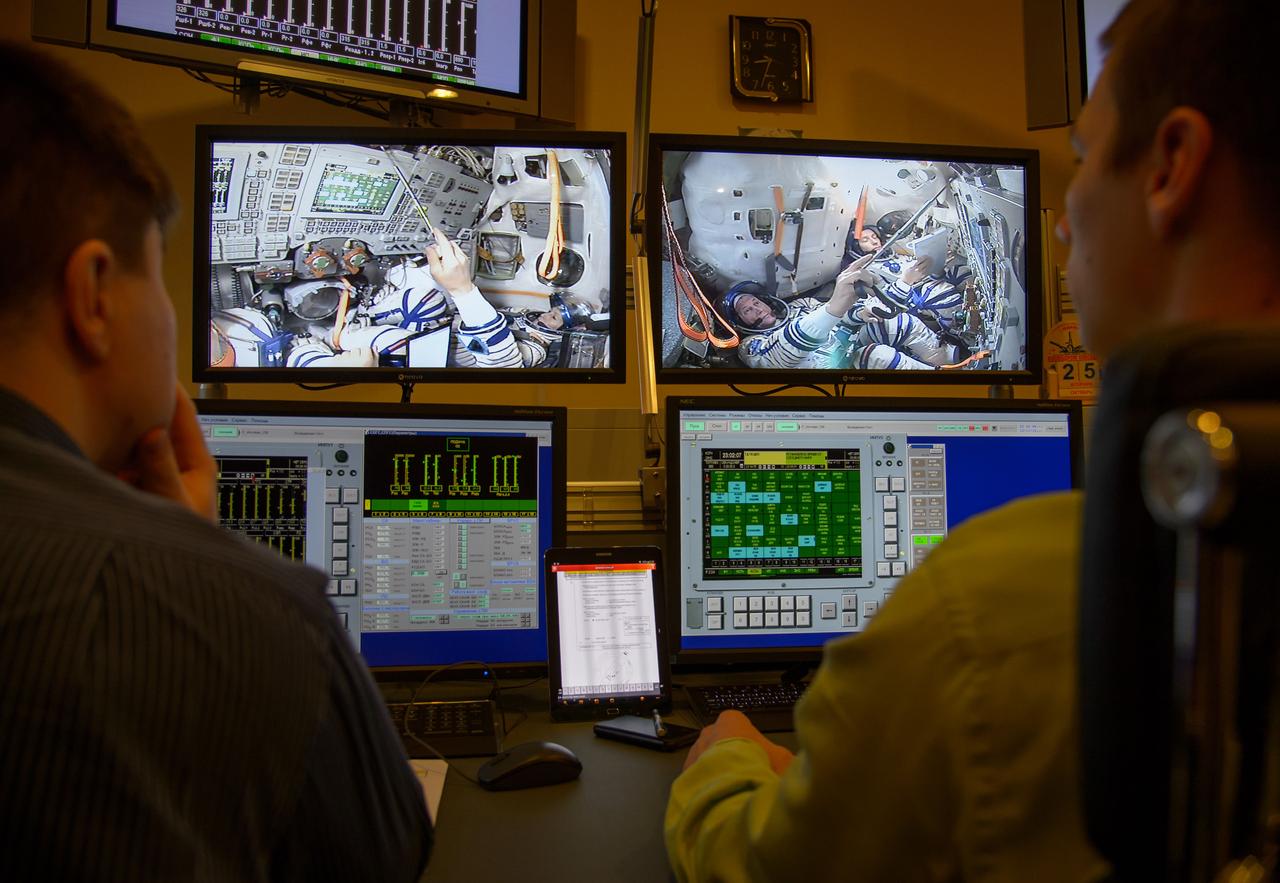
Expedition 50 crew members ESA astronaut Thomas Pesquet, Russian cosmonaut Oleg Novitskiy of Roscosmos, and NASA astronaut Peggy Whitson are seen on the monitors of the Soyuz simulator control room during final qualification exams, Tuesday, Oct. 25, 2016, at the Gagarin Cosmonaut Training Center (GCTC) in Star City, Russia. Photo Credit: (NASA/Bill Ingalls)
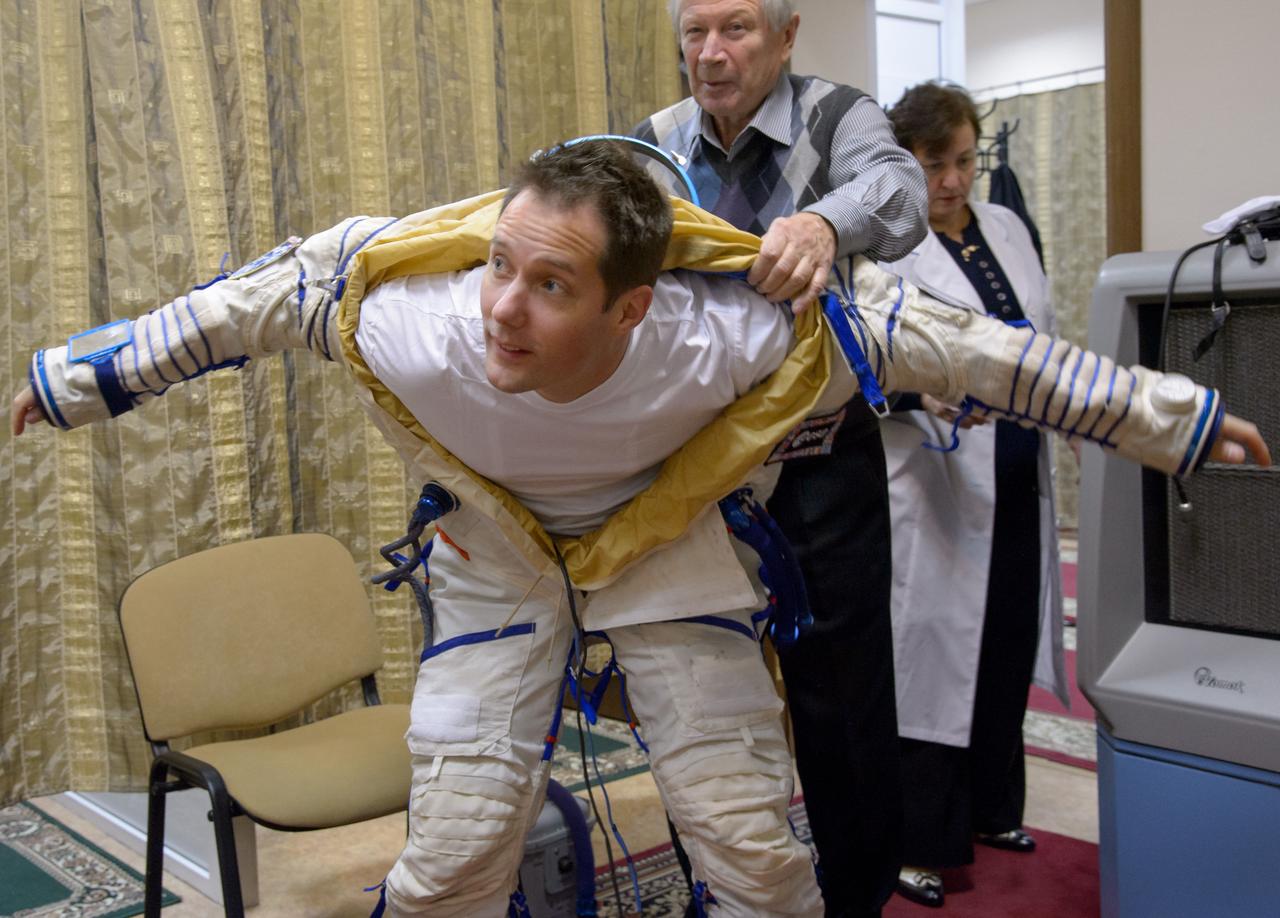
Expedition 50 ESA astronaut Thomas Pesquet dons his Sokol suit ahead of his final qualification exams with fellow crew mates NASA astronaut Peggy Whitson and Russian cosmonaut Oleg Novitskiy of Roscosmos, Tuesday, Oct. 25, 2016, at the Gagarin Cosmonaut Training Center (GCTC) in Star City, Russia. Photo Credit: (NASA/Bill Ingalls)

Expedition 50 NASA astronaut Peggy Whitson, left, Russian cosmonaut Oleg Novitskiy of Roscosmos, center, and ESA astronaut Thomas Pesquet visit Red Square to lay roses at the site where Russian space icons are interred as part of traditional pre-launch ceremonies, Wednesday, Oct. 26, 2016, in Moscow. Photo Credit: (NASA/Bill Ingalls)
/nhq201610260004)~medium.jpg)
Expedition 50 NASA astronaut Peggy Whitson, left, Russian cosmonaut Oleg Novitskiy of Roscosmos, center, and ESA astronaut Thomas Pesquet visit Red Square to lay roses at the site where Russian space icons are interred as part of traditional pre-launch ceremonies, Wednesday, Oct. 26, 2016, in Moscow. Photo Credit: (NASA/Bill Ingalls)

Expedition 50 crew members NASA astronaut Peggy Whitson, left, Russian cosmonaut Oleg Novitskiy of Roscosmos, center, and ESA astronaut Thomas Pesquet are seen ahead of their Soyuz qualification exams, Monday, Oct. 24, 2016, at the Gagarin Cosmonaut Training Center (GCTC) in Star City, Russia. Photo Credit: (NASA/Bill Ingalls)

Expedition 50 crew members NASA astronaut Peggy Whitson, left, Russian cosmonaut Oleg Novitskiy of Roscosmos, center, and ESA astronaut Thomas Pesquet meet with mission managers ahead of their Soyuz qualification exams, Monday, Oct. 24, 2016, at the Gagarin Cosmonaut Training Center (GCTC) in Star City, Russia. Photo Credit: (NASA/Bill Ingalls)

Expedition 50 crew members NASA astronaut Peggy Whitson, Russian cosmonaut Oleg Novitskiy of Roscosmos, and ESA astronaut Thomas Pesquet are monitored in a central room during the crew's Soyuz qualification exams, Monday, Oct. 24, 2016, at the Gagarin Cosmonaut Training Center (GCTC) in Star City, Russia. Photo Credit: (NASA/Bill Ingalls)

Expedition 50 ESA astronaut Thomas Pesquet listens to a reporter's question ahead of the final qualification exams with fellow crew mates Russian cosmonaut Oleg Novitskiy of Roscosmos and NASA astronaut Peggy Whitson, Tuesday, Oct. 25, 2016, at the Gagarin Cosmonaut Training Center (GCTC) in Star City, Russia. Photo Credit: (NASA/Bill Ingalls)

Expedition 50 ESA astronaut Thomas Pesquet dons his Sokol suit ahead of his final qualification exams with fellow crew mates NASA astronaut Peggy Whitson and Russian cosmonaut Oleg Novitskiy of Roscosmos, Tuesday, Oct. 25, 2016, at the Gagarin Cosmonaut Training Center (GCTC) in Star City, Russia. Photo Credit: (NASA/Bill Ingalls)

Expedition 50 ESA astronaut Thomas Pesquet dons his Sokol suit ahead of his final qualification exams with fellow crew mates NASA astronaut Peggy Whitson and Russian cosmonaut Oleg Novitskiy of Roscosmos, Tuesday, Oct. 25, 2016, at the Gagarin Cosmonaut Training Center (GCTC) in Star City, Russia. Photo Credit: (NASA/Bill Ingalls)

Expedition 50 ESA astronaut Thomas Pesquet dons his Sokol suit ahead of his final qualification exams with fellow crew mates NASA astronaut Peggy Whitson and Russian cosmonaut Oleg Novitskiy of Roscosmos, Tuesday, Oct. 25, 2016, at the Gagarin Cosmonaut Training Center (GCTC) in Star City, Russia. Photo Credit: (NASA/Bill Ingalls)
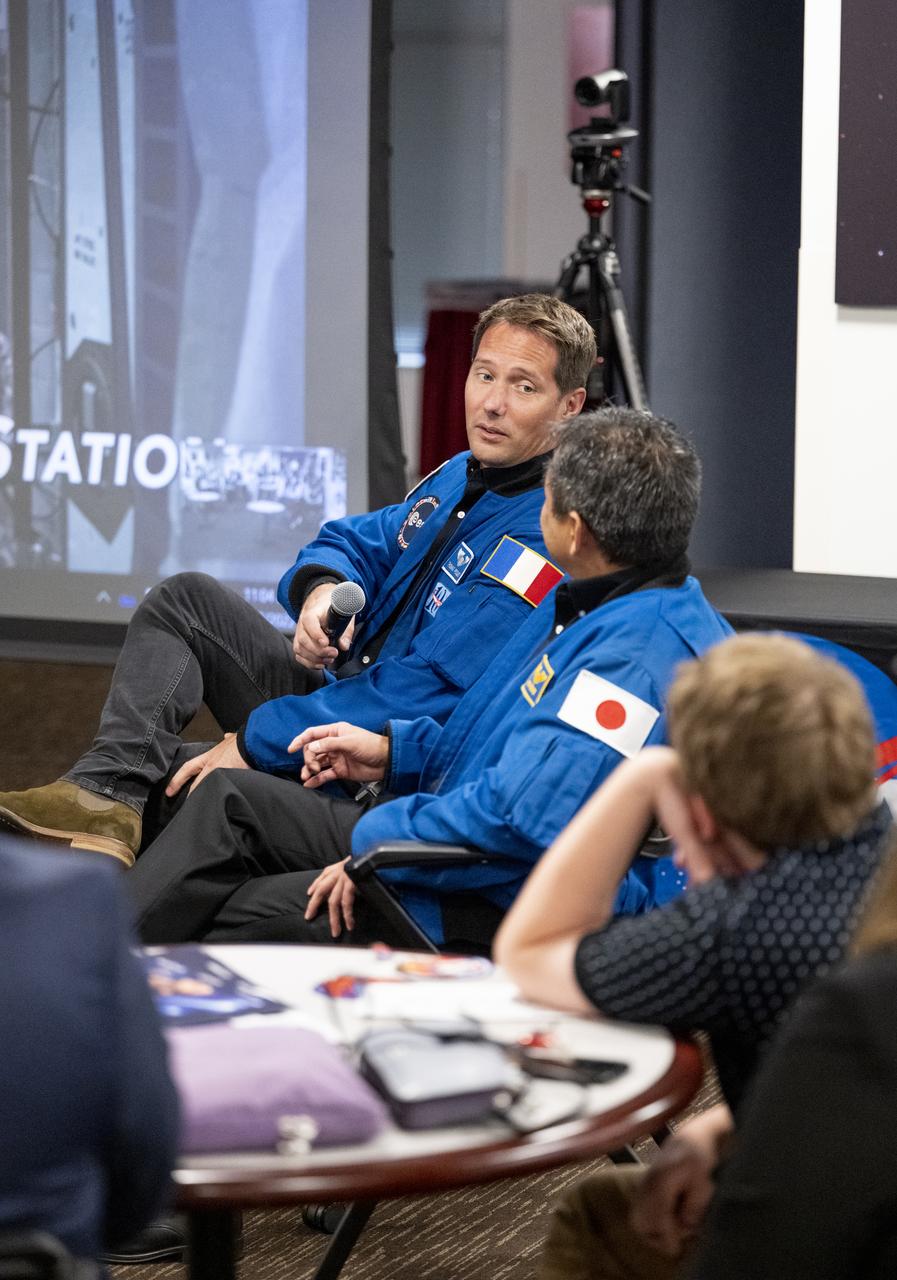
NASA’s SpaceX Crew-2 ESA (European Space Agency) astronaut Thomas Pesquet, left, and Japan Aerospace Exploration Agency (JAXA) astronaut Akihiko Hoshide, right, speak during a meet and greet with employees Tuesday, June 7, 2022, at the Mary W. Jackson NASA Headquarters Building in Washington. Kimbrough, McArthur, Hoshide, and Pesquet completed the second crew rotation mission to the International Space Station as part of the agency’s Commercial Crew Program and spent 198 days aboard the orbiting laboratory as part of Expeditions 65 and 66. Photo Credit: (NASA/Keegan Barber)
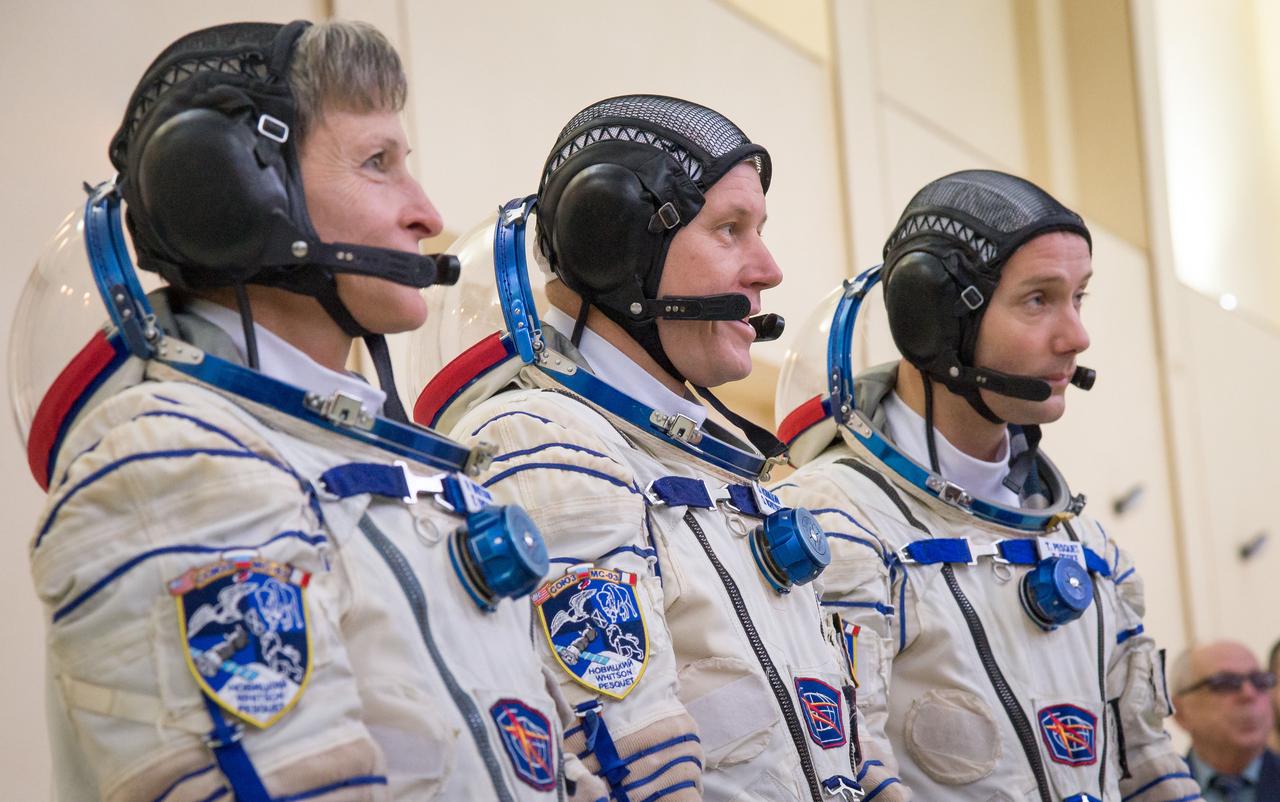
Expedition 50 crew members NASA astronaut Peggy Whitson, left, Russian cosmonaut Oleg Novitskiy of Roscosmos, center, and ESA astronaut Thomas Pesquet report to mission managers for their final qualification exams, Tuesday, Oct. 25, 2016, at the Gagarin Cosmonaut Training Center (GCTC) in Star City, Russia. Photo Credit: (NASA/Bill Ingalls)
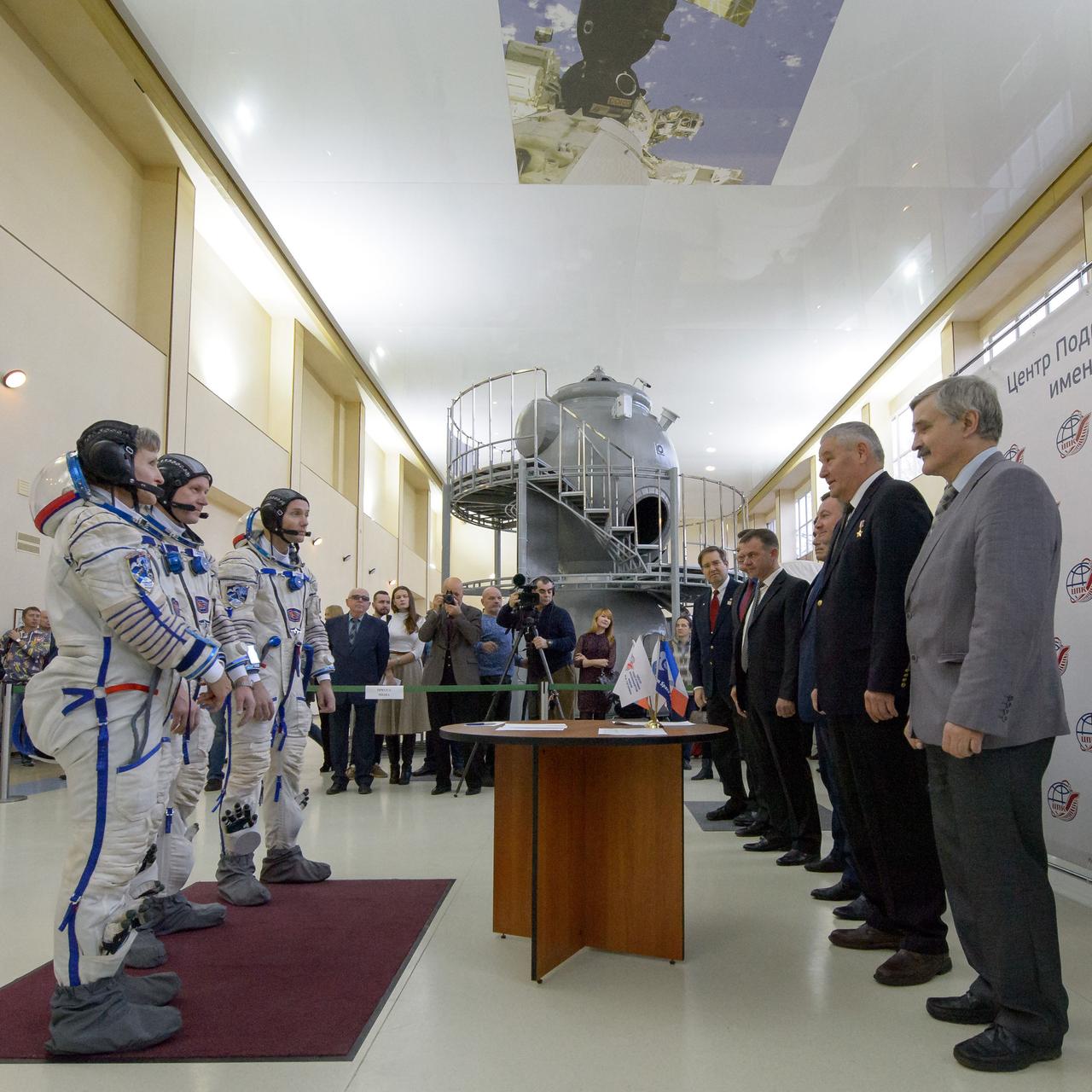
Expedition 50 crew members NASA astronaut Peggy Whitson, left, Russian cosmonaut Oleg Novitskiy of Roscosmos, center, and ESA astronaut Thomas Pesquet report to mission managers for their final qualification exams, Tuesday, Oct. 25, 2016, at the Gagarin Cosmonaut Training Center (GCTC) in Star City, Russia. Photo Credit: (NASA/Bill Ingalls)
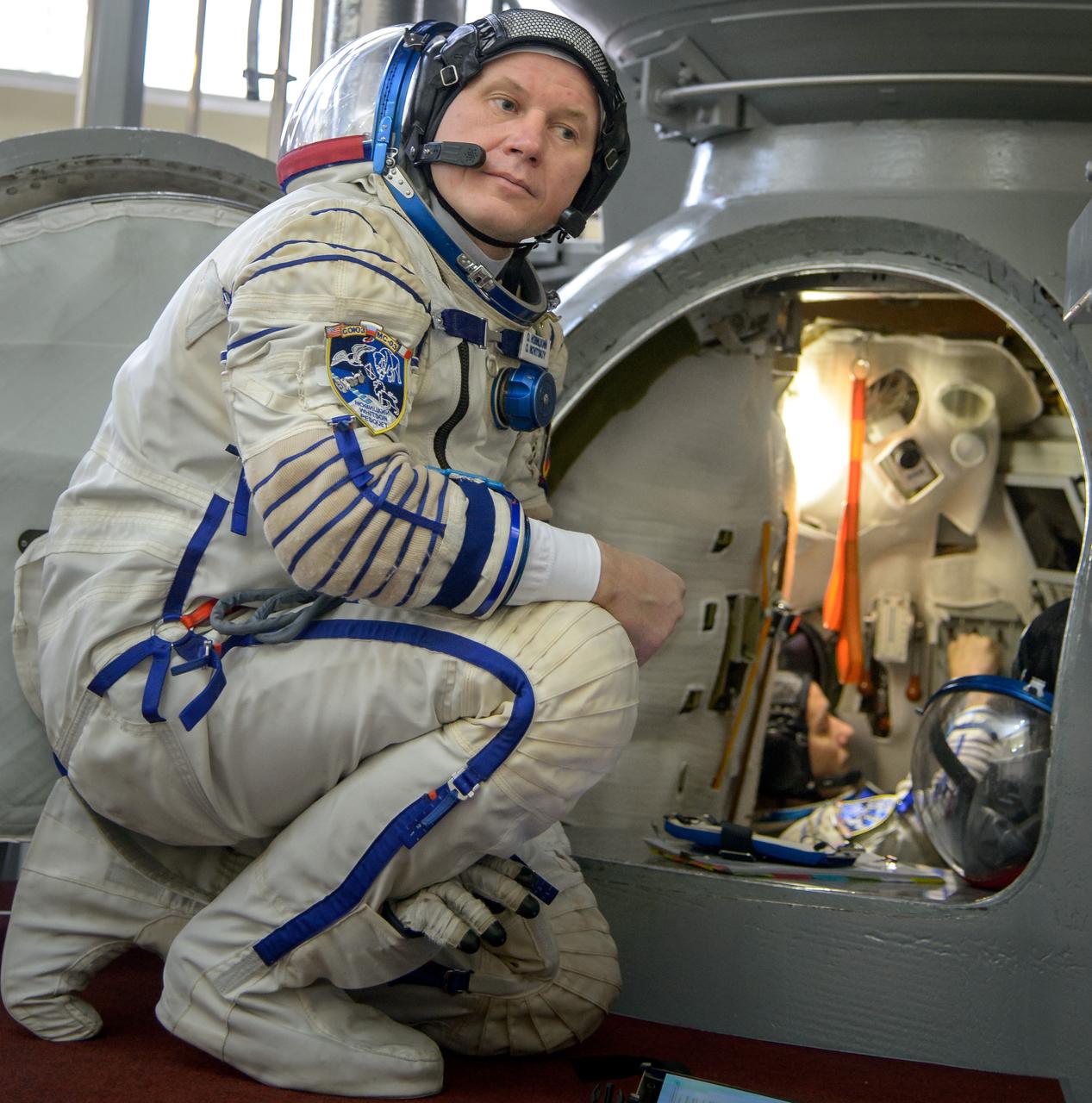
Expedition 50 Russian cosmonaut Oleg Novitskiy of Roscosmos prepares to join ESA astronaut Thomas Pesquet, background, and NASA astronaut Peggy Whitson inside the Soyuz simulator for final qualification exams, Tuesday, Oct. 25, 2016, at the Gagarin Cosmonaut Training Center (GCTC) in Star City, Russia. Photo Credit: (NASA/Bill Ingalls)
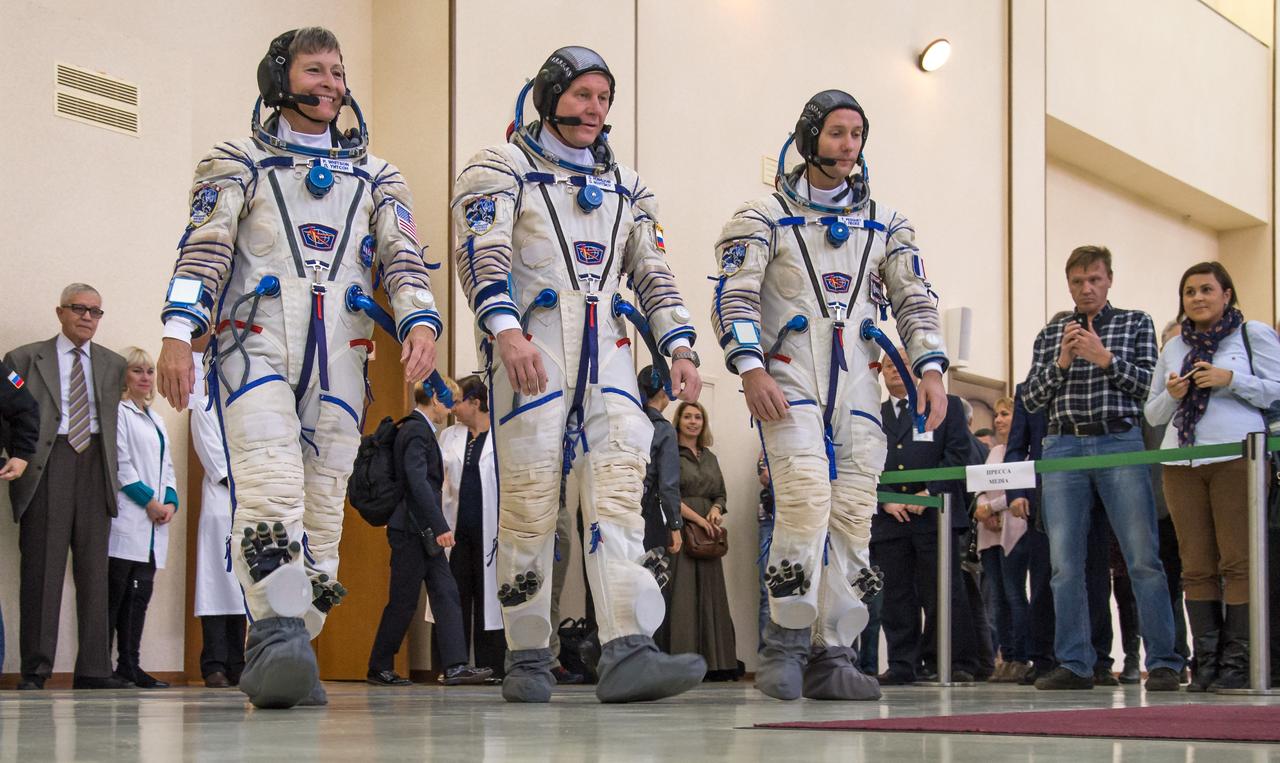
Expedition 50 crew members NASA astronaut Peggy Whitson, left, Russian cosmonaut Oleg Novitskiy of Roscosmos, center, and ESA astronaut Thomas Pesquet walk out from suitup for their final qualification exams, Tuesday, Oct. 25, 2016, at the Gagarin Cosmonaut Training Center (GCTC) in Star City, Russia. Photo Credit: (NASA/Bill Ingalls)
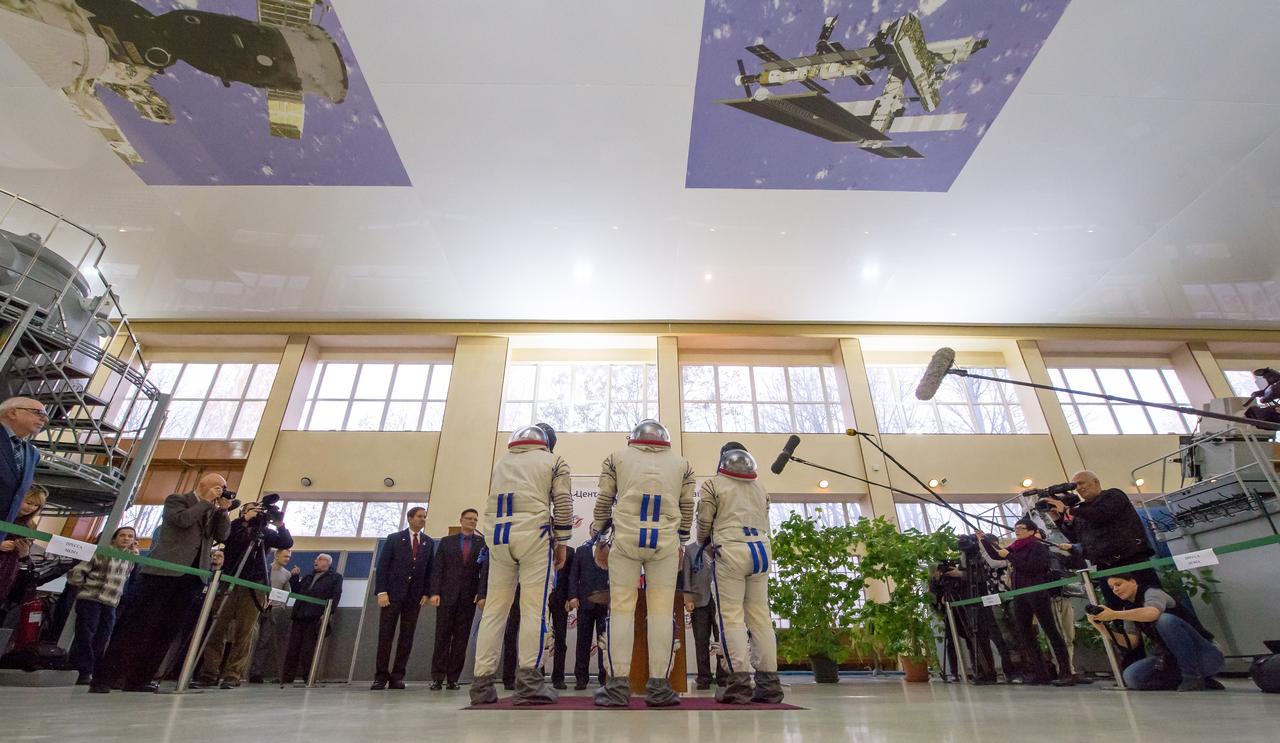
Expedition 50 crew members ESA astronaut Thomas Pesquet, left, Russian cosmonaut Oleg Novitskiy of Roscosmos, center, and NASA astronaut Peggy Whitson report to mission managers for their final qualification exams, Tuesday, Oct. 25, 2016, at the Gagarin Cosmonaut Training Center (GCTC) in Star City, Russia. Photo Credit: (NASA/Bill Ingalls)

Expedition 50 crew members NASA astronaut Peggy Whitson, left, Russian cosmonaut Oleg Novitskiy of Roscosmos, center, and ESA astronaut Thomas Pesquet laugh together as they prepare for their final qualification exams, Tuesday, Oct. 25, 2016, at the Gagarin Cosmonaut Training Center (GCTC) in Star City, Russia. Photo Credit: (NASA/Bill Ingalls)

Expedition 50 crew members ESA astronaut Thomas Pesquet, left, Russian cosmonaut Oleg Novitskiy of Roscosmos, center, and NASA astronaut Peggy Whitson answer reporter's questions ahead of their final qualification exams, Tuesday, Oct. 25, 2016, at the Gagarin Cosmonaut Training Center (GCTC) in Star City, Russia. Photo Credit: (NASA/Bill Ingalls)

Expedition 50 crew members ESA astronaut Thomas Pesquet, left, Russian cosmonaut Oleg Novitskiy of Roscosmos, center, and NASA astronaut Peggy Whitson answer reporter's questions ahead of their final qualification exams, Tuesday, Oct. 25, 2016, at the Gagarin Cosmonaut Training Center (GCTC) in Star City, Russia. Photo Credit: (NASA/Bill Ingalls)
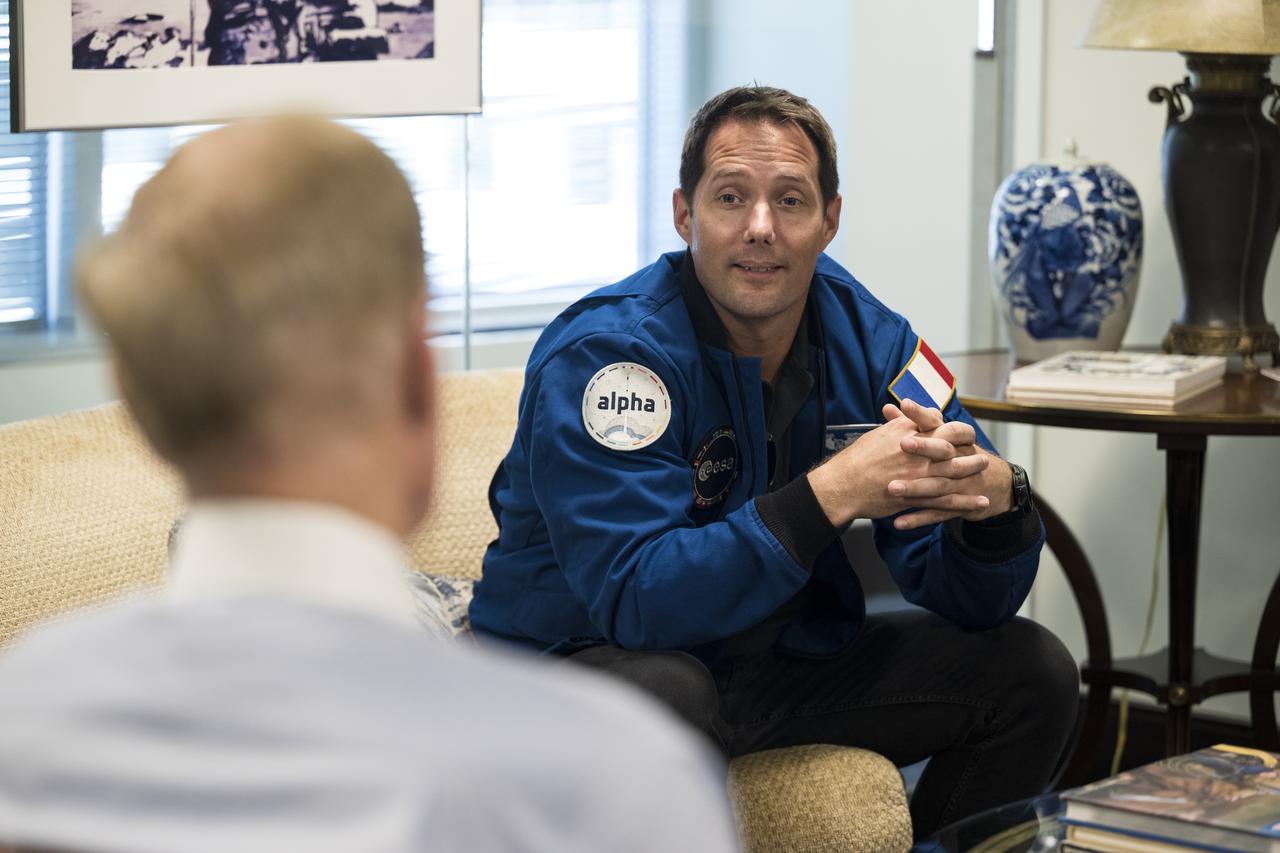
NASA Administrator Bill Nelson speaks with NASA’s SpaceX Crew-2 ESA (European Space Agency) astronaut Thomas Pesquet during a meeting with fellow NASA astronauts Megan McArthur and Shane Kimbrough, Japan Aerospace Exploration Agency (JAXA) astronaut Akihiko Hoshide, NASA Deputy Administrator Pam Melroy, and NASA Associate Administrator Bob Cabana, Monday, June 6, 2022, at the Mary W. Jackson NASA Headquarters Building in Washington DC. Photo Credit: (NASA/Aubrey Gemignani)
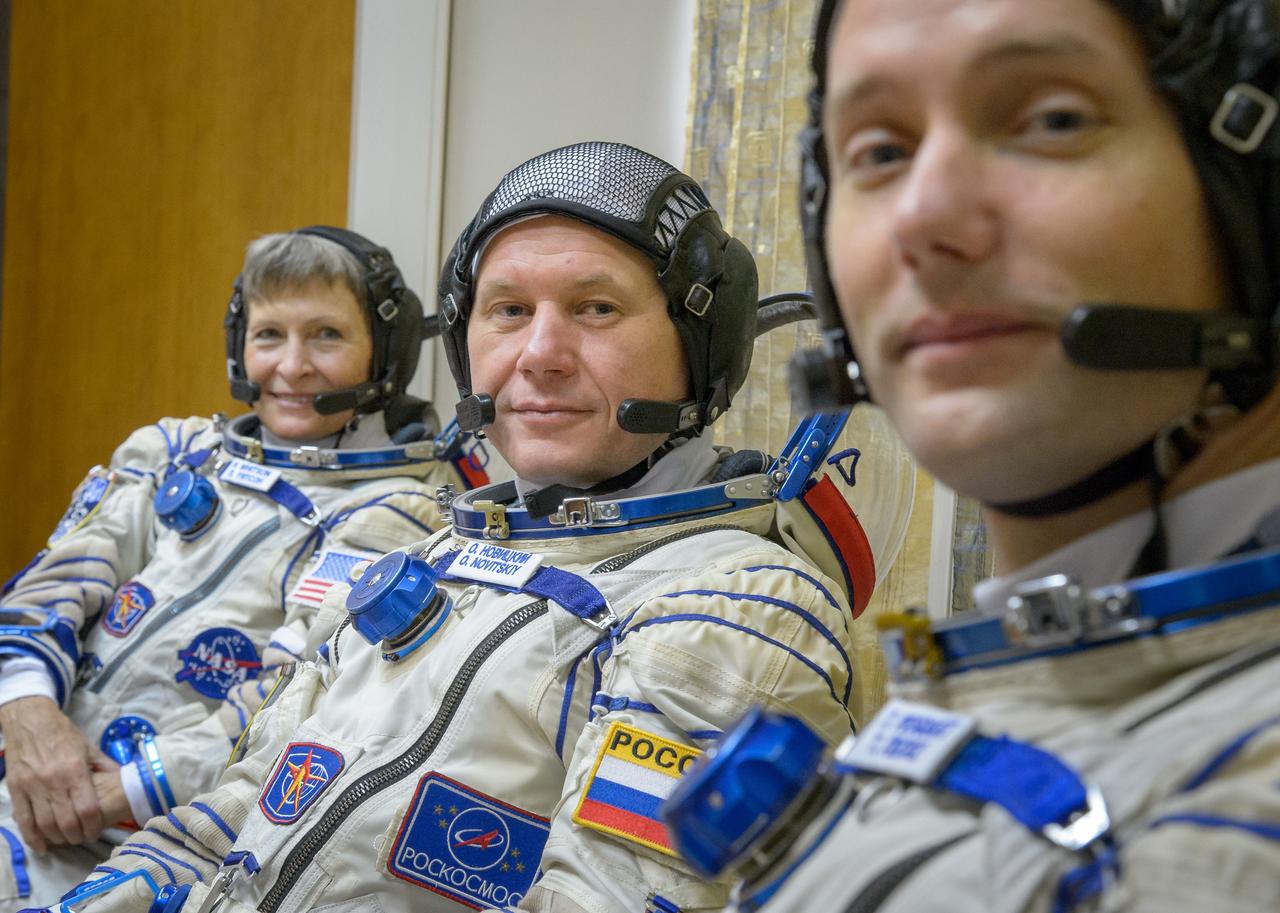
Expedition 50 crew members NASA astronaut Peggy Whitson, left, Russian cosmonaut Oleg Novitskiy of Roscosmos, center, and ESA astronaut Thomas Pesquet pose for a portrait ahead of their final qualification exams, Tuesday, Oct. 25, 2016, at the Gagarin Cosmonaut Training Center (GCTC) in Star City, Russia. Photo Credit: (NASA/Bill Ingalls)
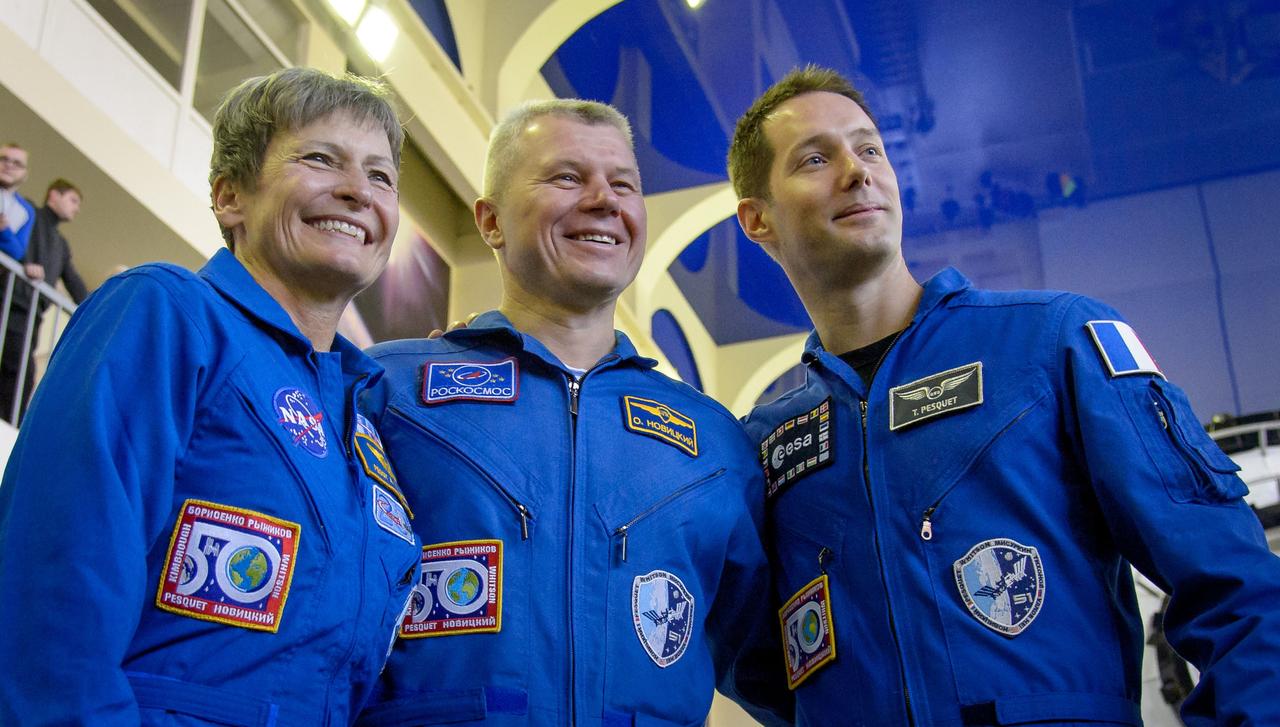
Expedition 50 crew members NASA astronaut Peggy Whitson, left, Russian cosmonaut Oleg Novitskiy of Roscosmos, center, and ESA astronaut Thomas Pesquet pose for a group photograph ahead of their Soyuz qualification exams, Monday, Oct. 24, 2016, at the Gagarin Cosmonaut Training Center (GCTC) in Star City, Russia. Photo Credit: (NASA/Bill Ingalls)
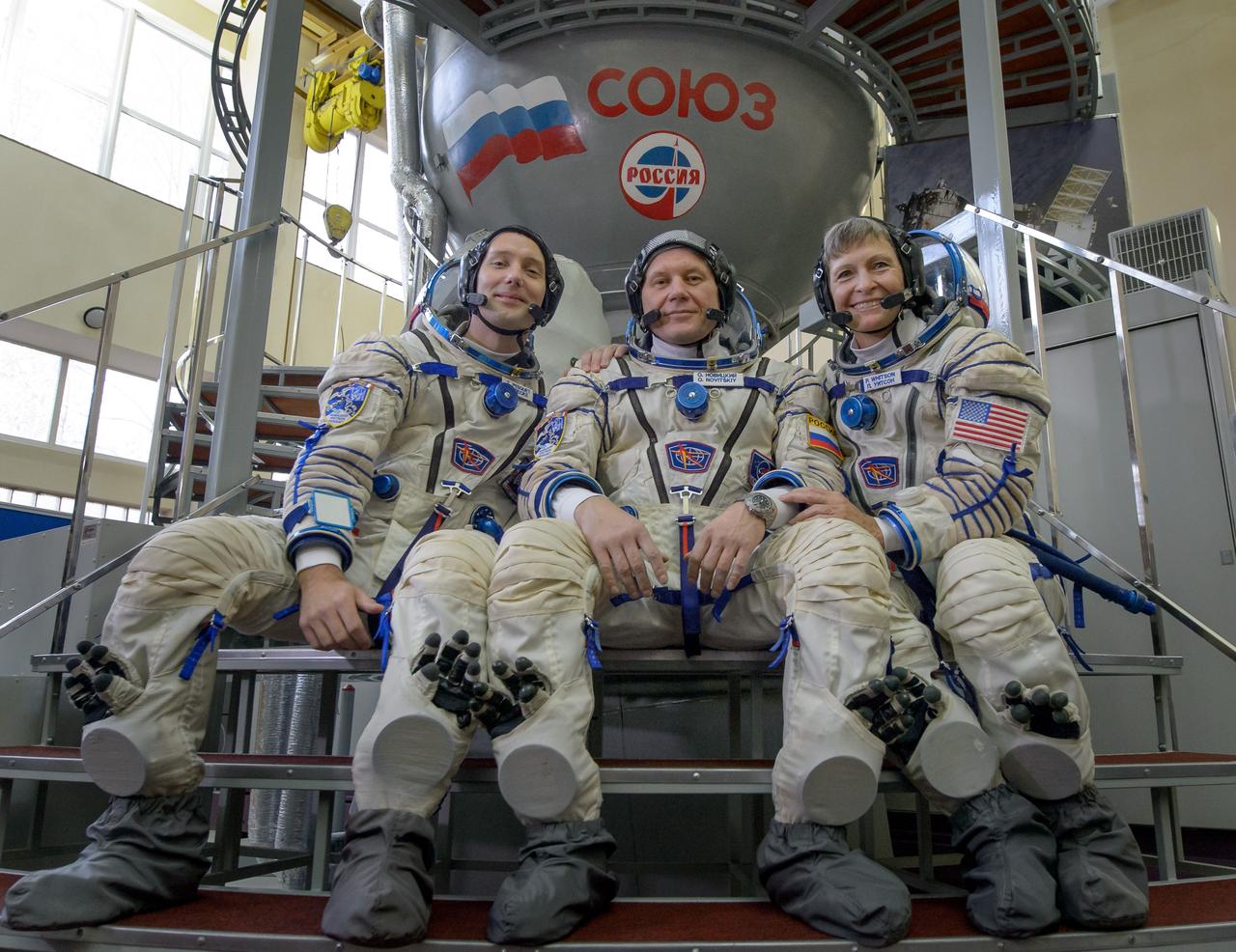
Expedition 50 crew members ESA astronaut Thomas Pesquet, left, Russian cosmonaut Oleg Novitskiy of Roscosmos, center, and NASA astronaut Peggy Whitson pose for a group photograph ahead of their final qualification exams, Tuesday, Oct. 25, 2016, at the Gagarin Cosmonaut Training Center (GCTC) in Star City, Russia. Photo Credit: (NASA/Bill Ingalls)

Expedition 50 crew members NASA astronaut Peggy Whitson, left, Russian cosmonaut Oleg Novitskiy of Roscosmos, center, and ESA astronaut Thomas Pesquet pose for a portrait ahead of their final qualification exams, Tuesday, Oct. 25, 2016, at the Gagarin Cosmonaut Training Center (GCTC) in Star City, Russia. Photo Credit: (NASA/Bill Ingalls)
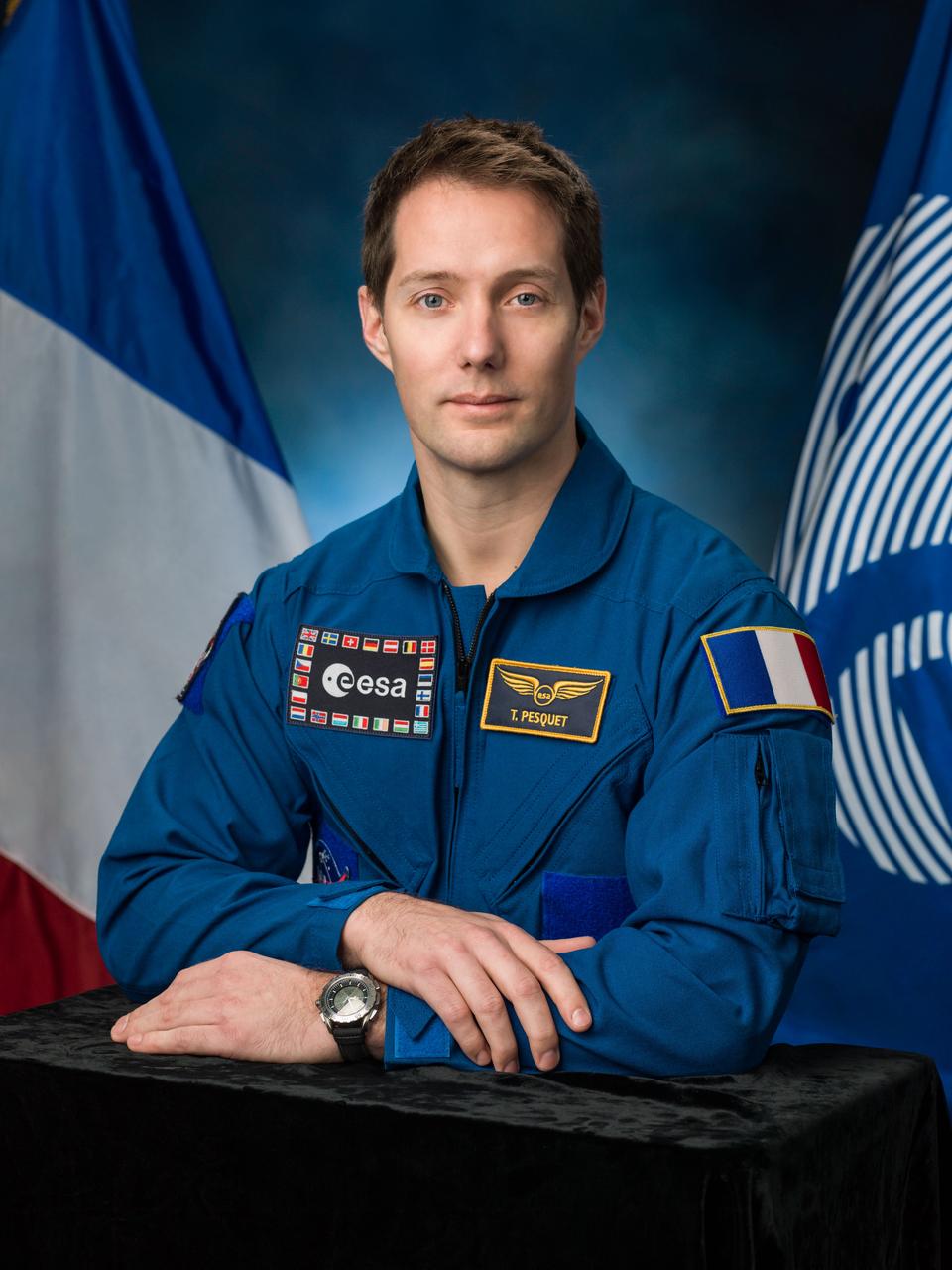
PHOTO DATE: 01-14-16 LOCATION: Bldg. 8, Room 183 - Photo Studio SUBJECT: Official portrait of ESA astronaut & Expedition 50/51 crew member Thomas Pesquet in blue flight suit. PHOTOGRAPHER: BILL STAFFORD
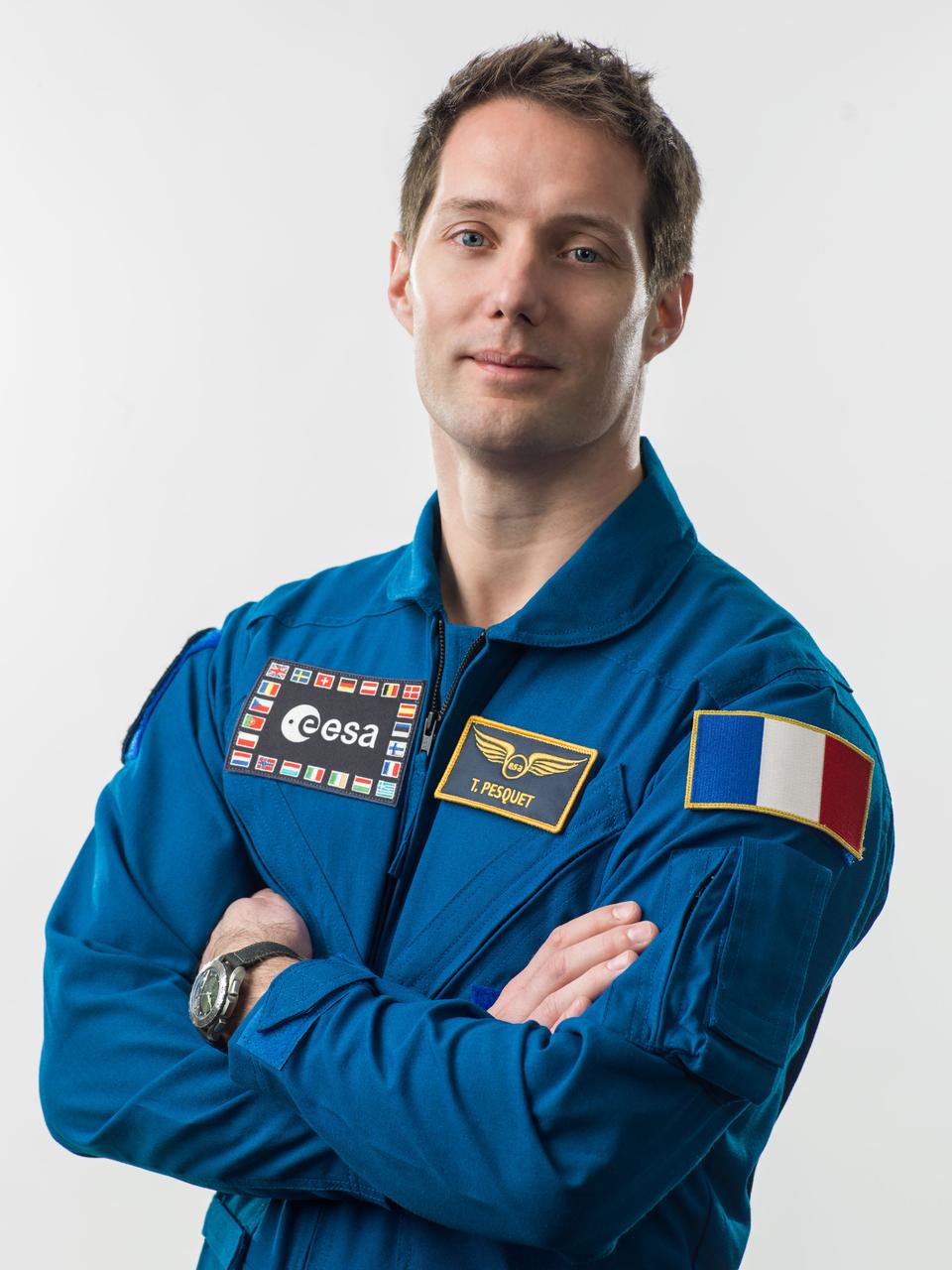
PHOTO DATE: 01-14-16 LOCATION: Bldg. 8, Room 183 - Photo Studio SUBJECT: Official portrait of ESA astronaut & Expedition 50/51 crew member Thomas Pesquet in blue flight suit. PHOTOGRAPHER: BILL STAFFORD
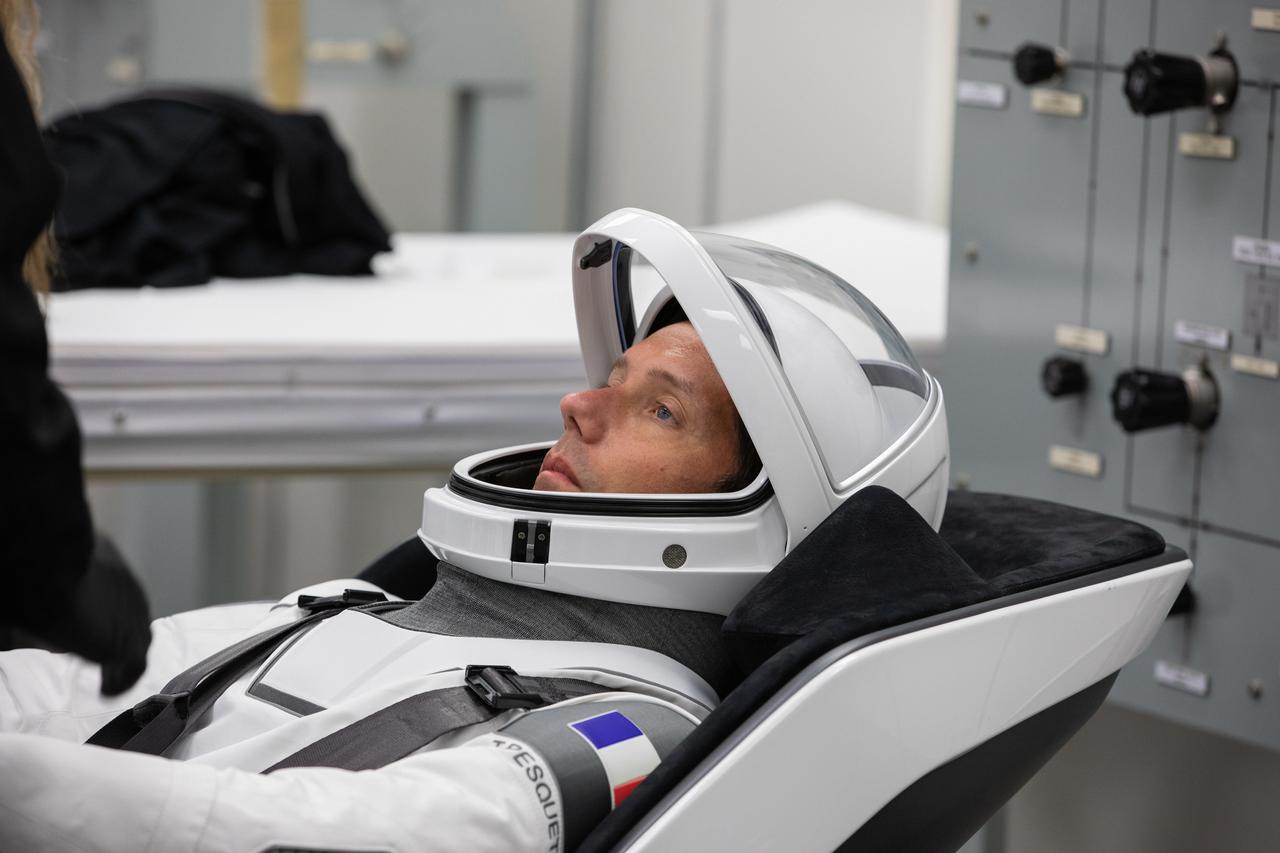
ESA astronaut Thomas Pesquet relaxes inside the crew suit-up room in the Neil Armstrong Operations and Checkout Building at NASA’s Kennedy Space Center in Florida, on April 23, 2021. Pesquet, along with NASA astronauts Megan McArthur and Shane Kimbrough, and JAXA astronaut Akihiko Hoshide, will head to the International Space Station on NASA’s SpaceX Crew-2 mission. SpaceX’s Crew Dragon Endeavour will launch on the company’s Falcon 9 rocket from Kennedy’s Launch Complex 39A today at 5:49 a.m. EDT.
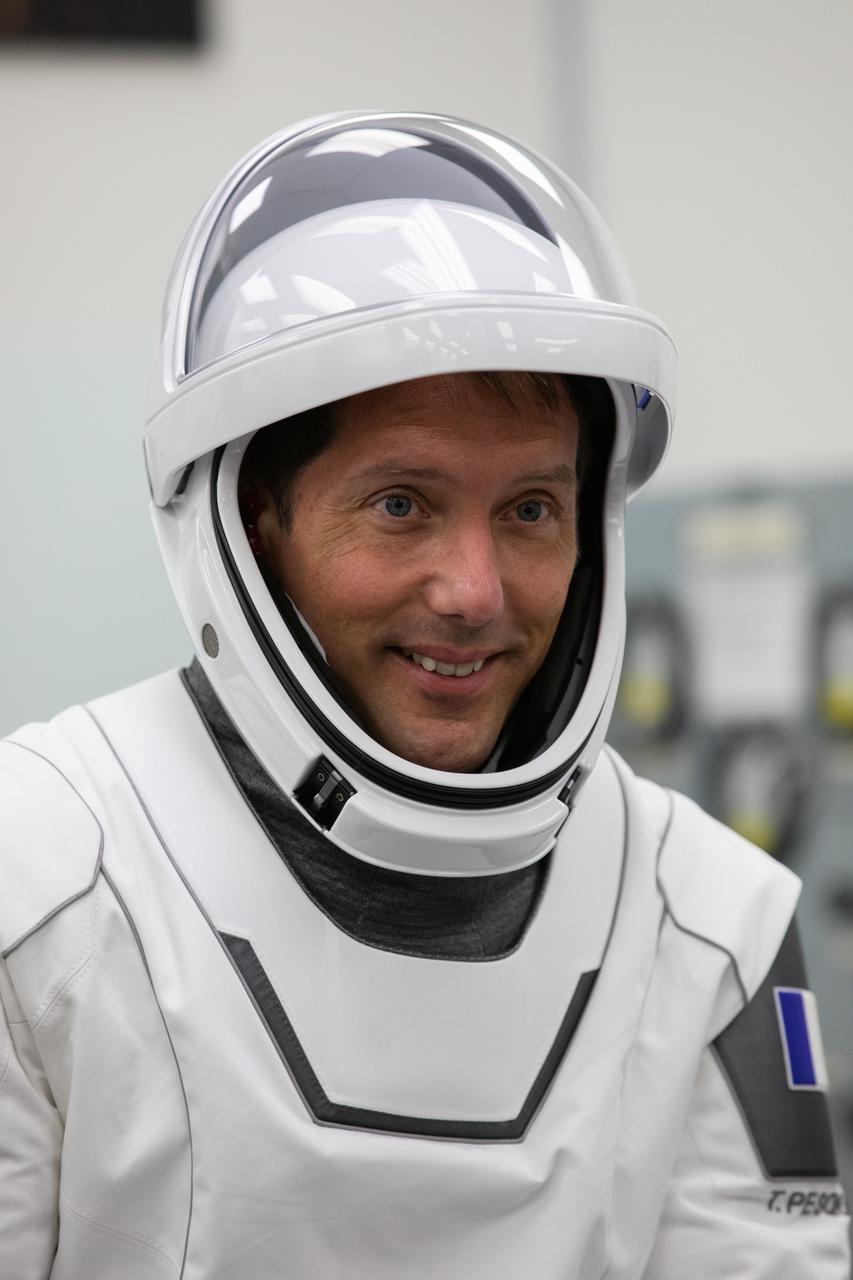
ESA astronaut Thomas Pesquet smiles inside the crew suit-up room in the Neil Armstrong Operations and Checkout Building at NASA’s Kennedy Space Center in Florida, on April 23, 2021. Pesquet, along with NASA astronauts Megan McArthur and Shane Kimbrough, and JAXA astronaut Akihiko Hoshide, will head to the International Space Station on NASA’s SpaceX Crew-2 mission. SpaceX’s Crew Dragon Endeavour will launch on the company’s Falcon 9 rocket from Kennedy’s Launch Complex 39A today at 5:49 a.m. EDT.
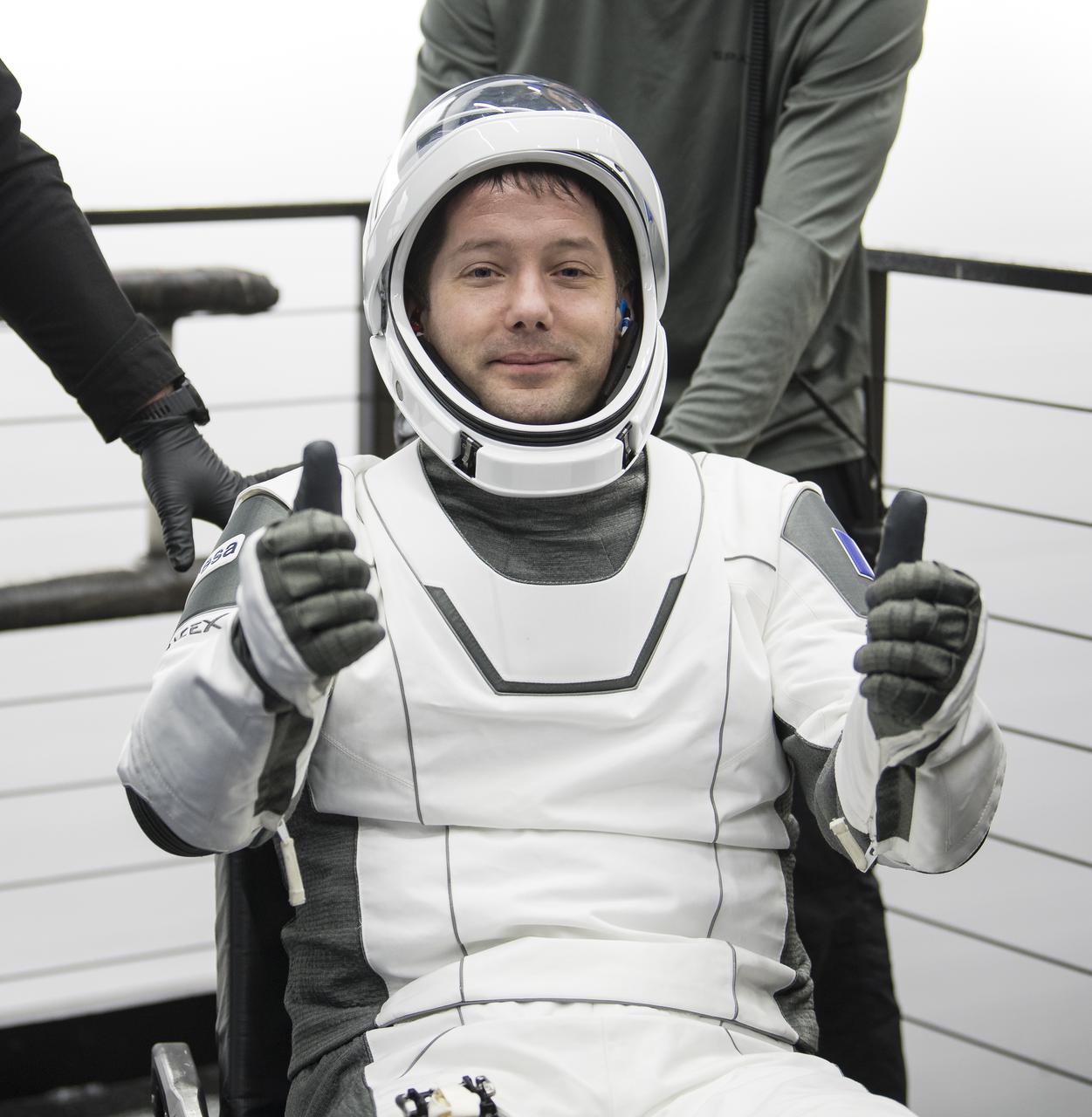
ESA (European Space Agency) astronaut Thomas Pesquet gives a thumbs up after being helped out of the SpaceX Crew Dragon Endeavour spacecraft onboard the SpaceX GO Navigator recovery ship after he and NASA astronauts Shane Kimbrough and Megan McArthur, and Japan Aerospace Exploration Agency (JAXA) astronaut Aki Hoshide landed in the Gulf of Mexico off the coast of Pensacola, Florida, Monday, Nov. 8, 2021. NASA’s SpaceX Crew-2 mission is the second operational mission of the SpaceX Crew Dragon spacecraft and Falcon 9 rocket to the International Space Station as part of the agency’s Commercial Crew Program. Photo Credit: (NASA/Aubrey Gemignani)
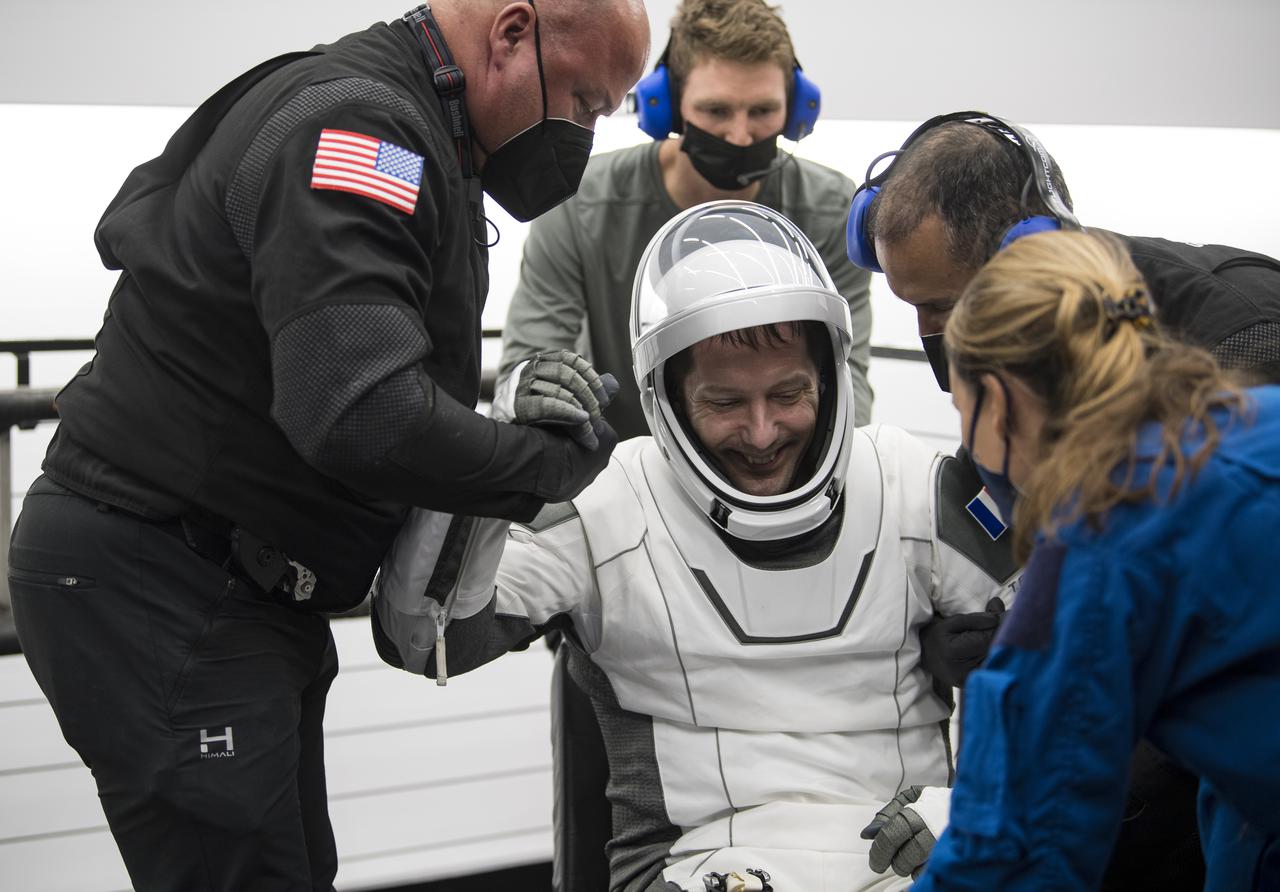
ESA (European Space Agency) astronaut Thomas Pesquet is helped out of the SpaceX Crew Dragon Endeavour spacecraft onboard the SpaceX GO Navigator recovery ship after he and NASA astronauts Shane Kimbrough and Megan McArthur, and Japan Aerospace Exploration Agency (JAXA) astronaut Aki Hoshide landed in the Gulf of Mexico off the coast of Pensacola, Florida, Monday, Nov. 8, 2021. NASA’s SpaceX Crew-2 mission is the second operational mission of the SpaceX Crew Dragon spacecraft and Falcon 9 rocket to the International Space Station as part of the agency’s Commercial Crew Program. Photo Credit: (NASA/Aubrey Gemignani)
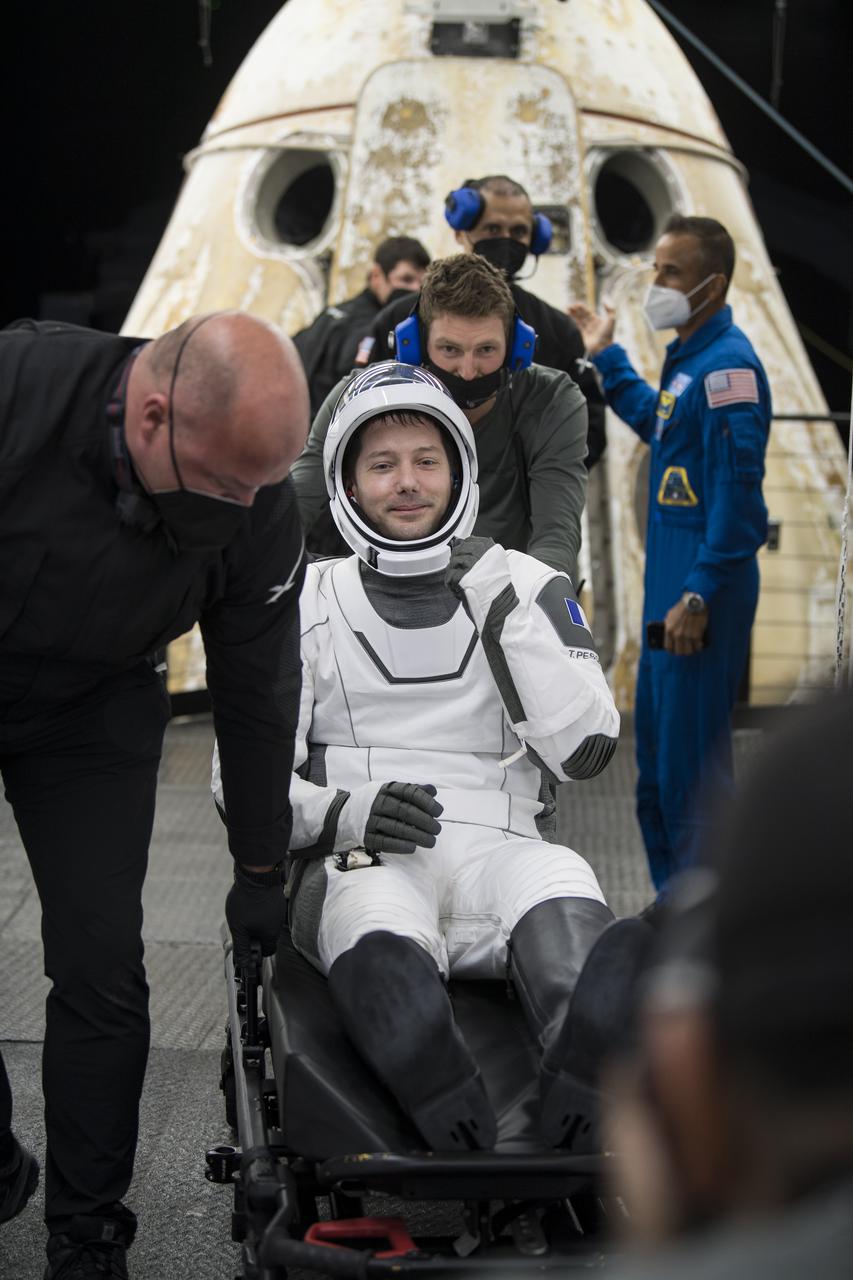
ESA (European Space Agency) astronaut Thomas Pesquet is seen after being helped out of the SpaceX Crew Dragon Endeavour spacecraft onboard the SpaceX GO Navigator recovery ship after he and NASA astronauts Shane Kimbrough and Megan McArthur, and Japan Aerospace Exploration Agency (JAXA) astronaut Aki Hoshide landed in the Gulf of Mexico off the coast of Pensacola, Florida, Monday, Nov. 8, 2021. NASA’s SpaceX Crew-2 mission is the second operational mission of the SpaceX Crew Dragon spacecraft and Falcon 9 rocket to the International Space Station as part of the agency’s Commercial Crew Program. Photo Credit: (NASA/Aubrey Gemignani)
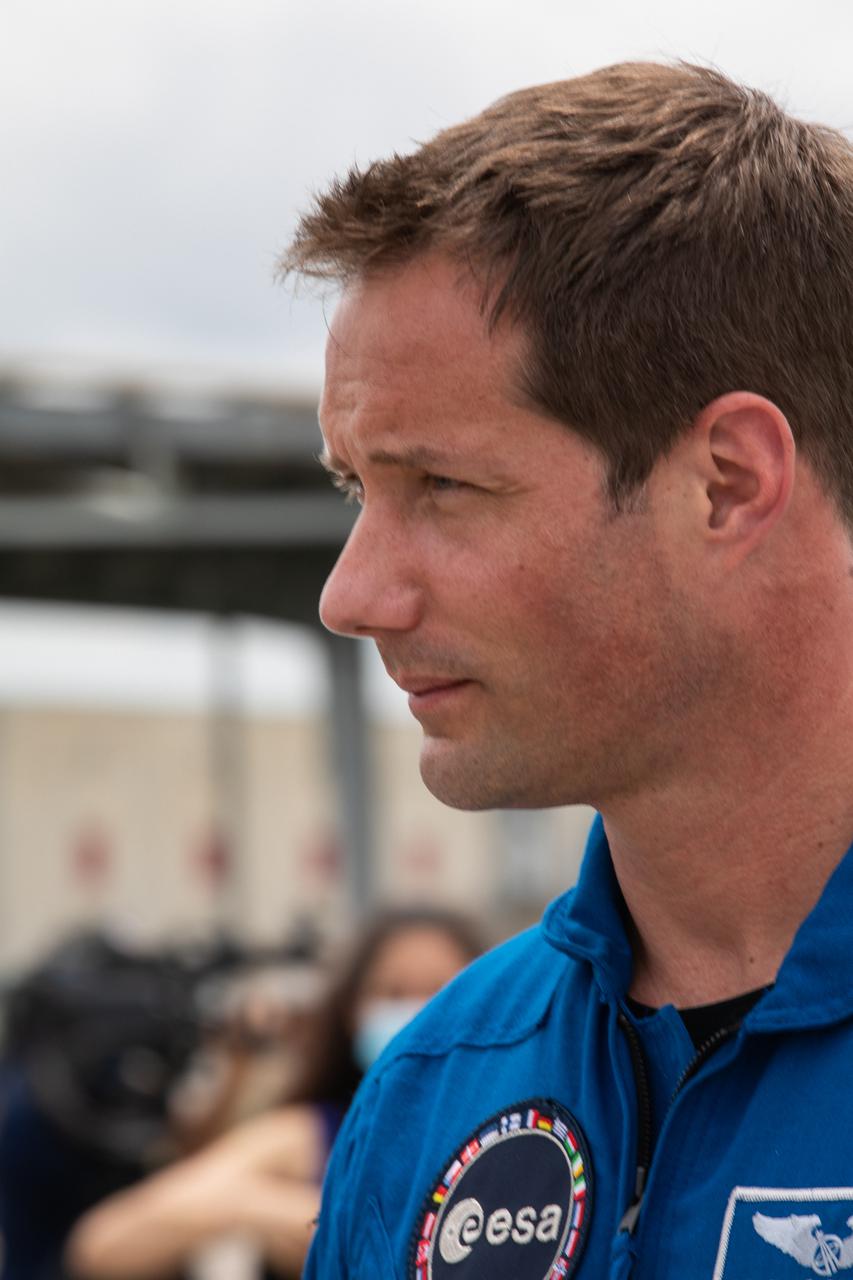
ESA astronaut Thomas Pesquet looks on during the SpaceX Crew-2 arrival media event held at Kennedy Space Center in Florida on April 16, 2021. Pesquet is part of NASA’s SpaceX Crew-2 crew, which includes NASA astronauts Megan McArthur and Shane Kimbrough, along with Akihilo Hoshide of JAXA. The astronauts will fly to the space station on NASA’s SpaceX Crew-2 mission. Liftoff is targeted for Thursday, April 22, at 6:11 a.m. EDT.
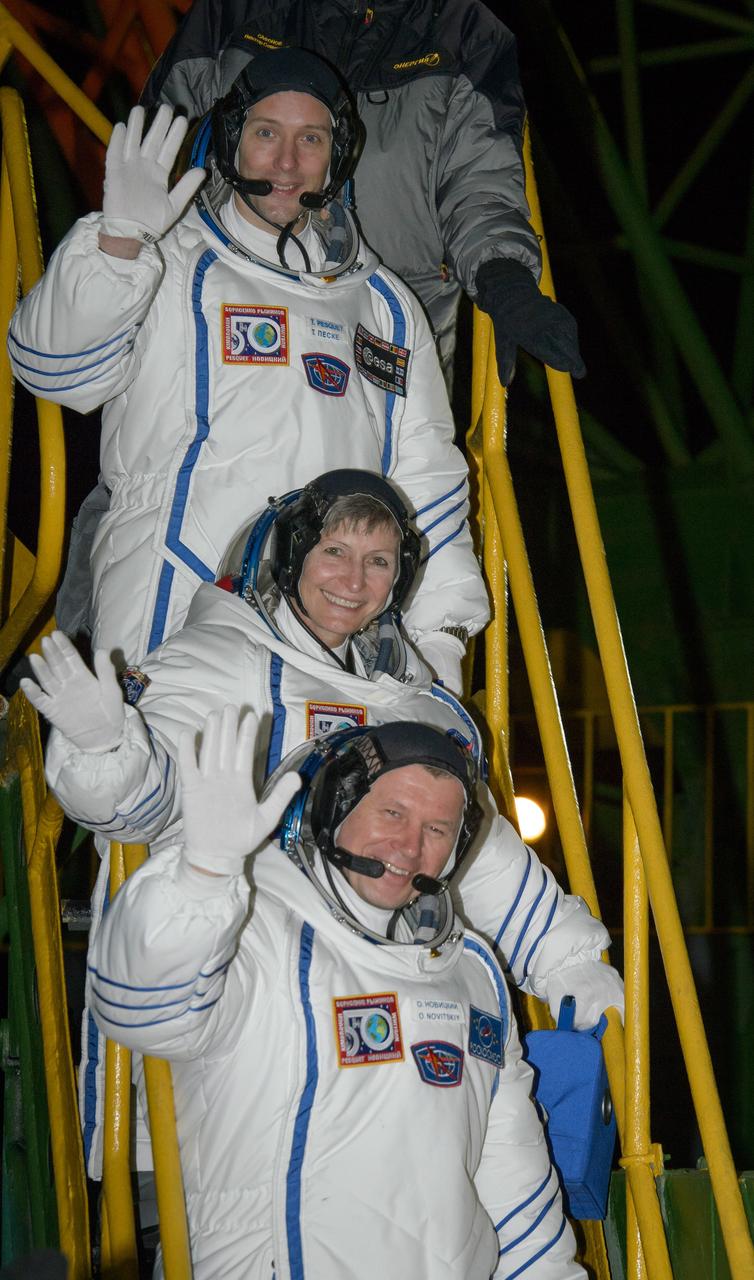
nhq201611170001 (Nov. 17, 2016) --- Expedition 50 crewmembers ESA astronaut Thomas Pesquet, top, NASA astronaut Peggy Whitson, middle, and Russian cosmonaut Oleg Novitskiy of Roscosmos wave farewell before boarding their Soyuz MS-03 spacecraft for launch Thursday, Nov. 17, 2016, (Kazakh Time) in Baikonur, Kazakhstan. The trio will launch from the Baikonur Cosmodrome in Kazakhstan the morning of November 18 (Kazakh time.) All three will spend approximately six months on the orbital complex. Photo Credit: (NASA/Bill Ingalls)
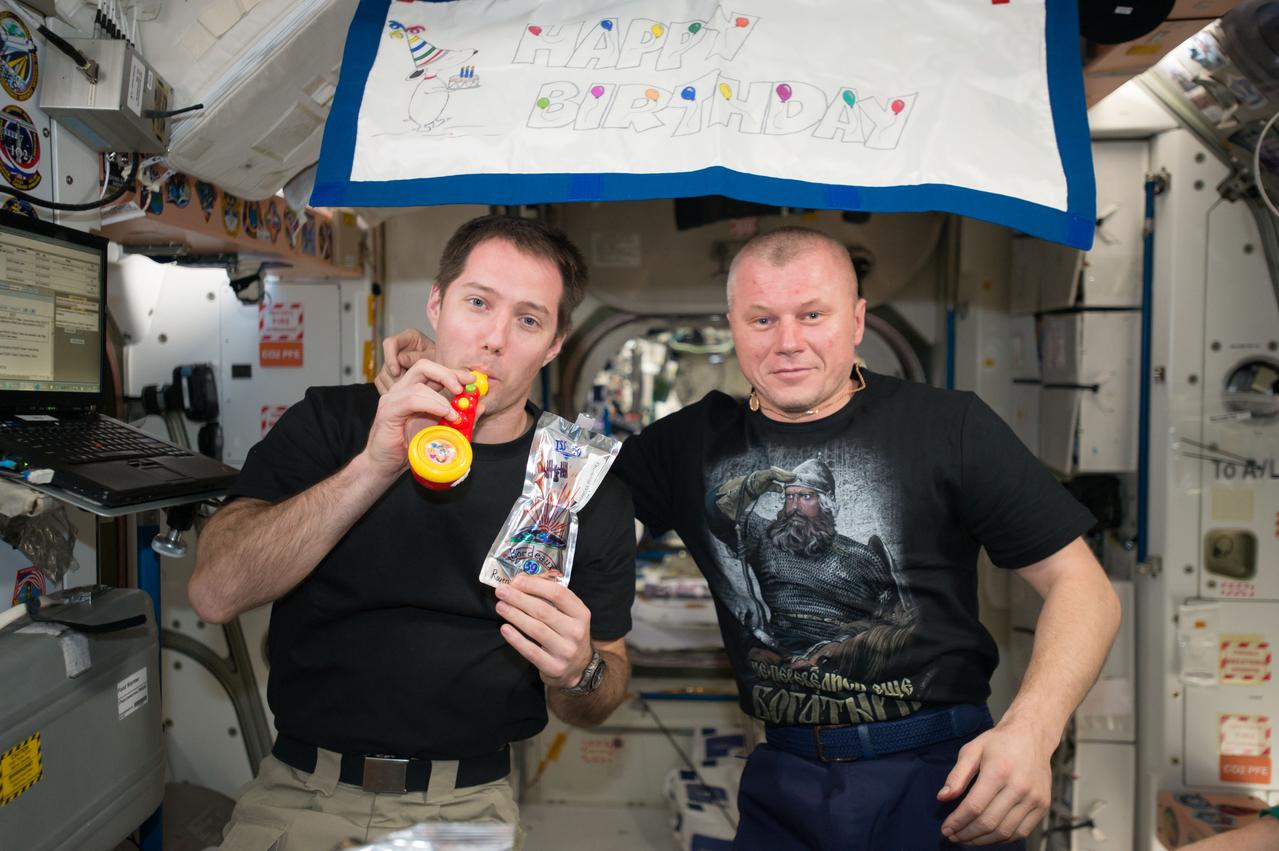
iss050e055911 (02/27/2017) ---ESA (European Space Agency) astronaut Thomas Pesquet and Russian cosmonaut
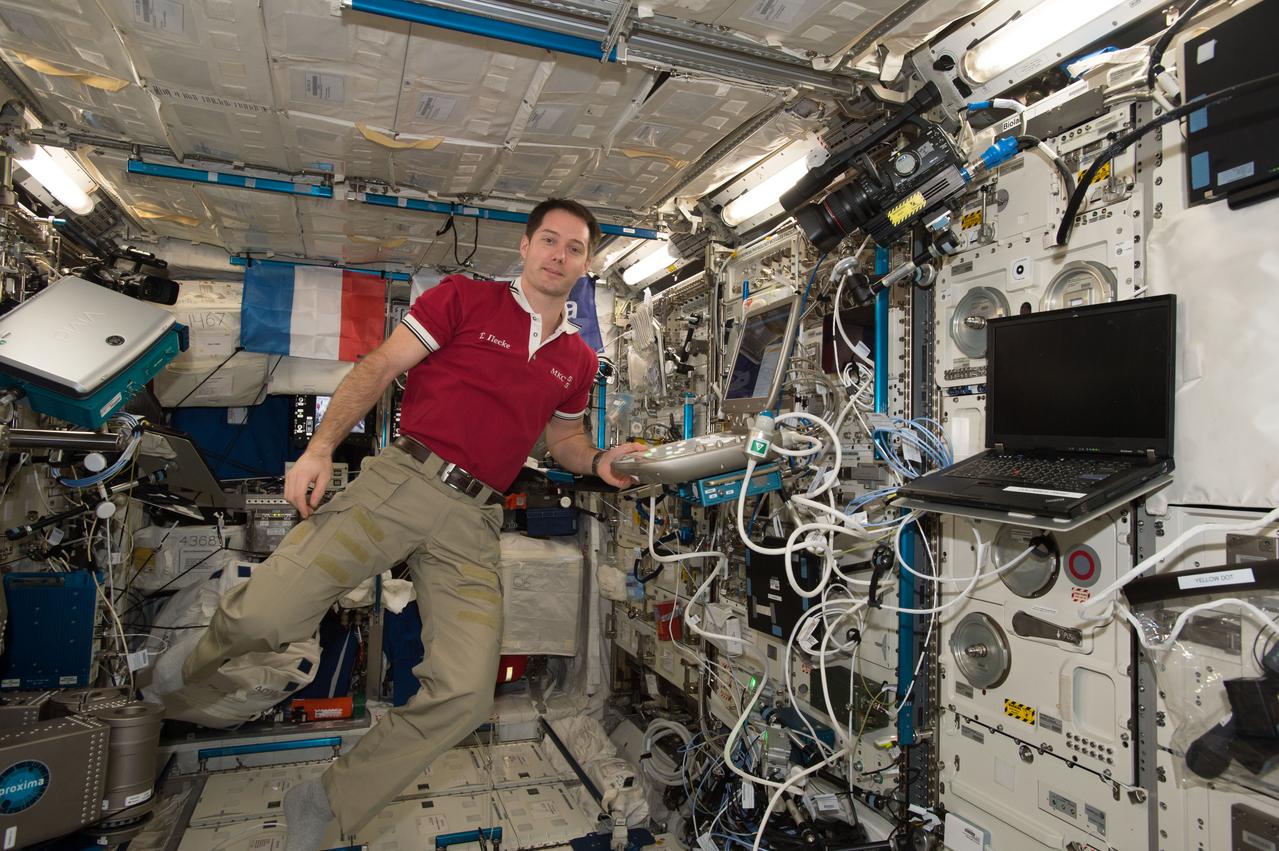
iss051e019007 (April 18, 2017) --- European Space Agency astronaut Thomas Pesquet works inside the Columbus laboratory module.
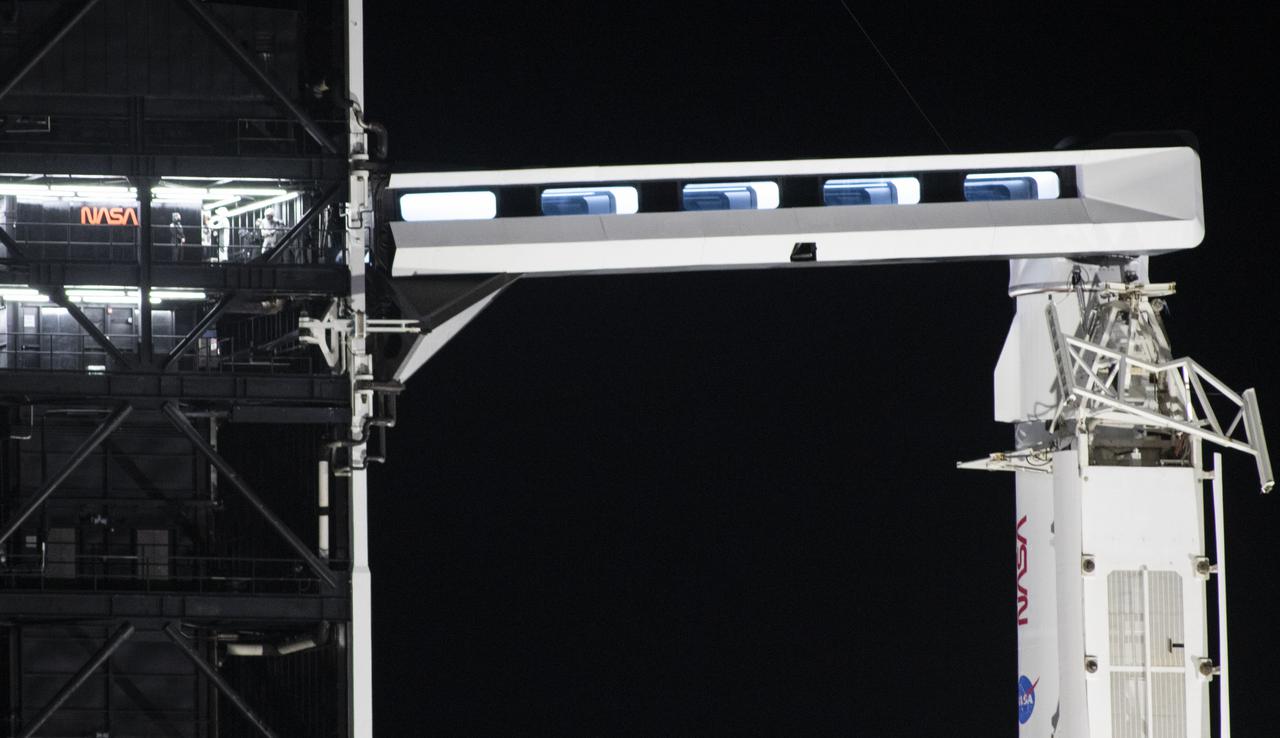
ESA (European Space Agency) astronaut Thomas Pesquet and Japan Aerospace Exploration Agency (JAXA) astronaut Akihiko Hoshide are seen on the fixed service structure of Launch Complex 39A before boarding SpaceX’s Crew Dragon spacecraft atop the company’s Falcon 9 rocket before the launch of NASA’s SpaceX Crew-2 mission to the International Space Station, Friday, April 23, 2021, at NASA’s Kennedy Space Center in Florida. NASA’s SpaceX Crew-2 mission is the second crew rotation mission of the SpaceX Crew Dragon spacecraft and Falcon 9 rocket to the International Space Station as part of the agency’s Commercial Crew Program. Pesquet, Hoshide, and NASA astronauts Shane Kimbrough and Megan McArthur launched at 5:49 a.m. EDT from Launch Complex 39A at the Kennedy Space Center to begin a six month mission onboard the orbital outpost. Photo Credit: (NASA/Joel Kowsky)
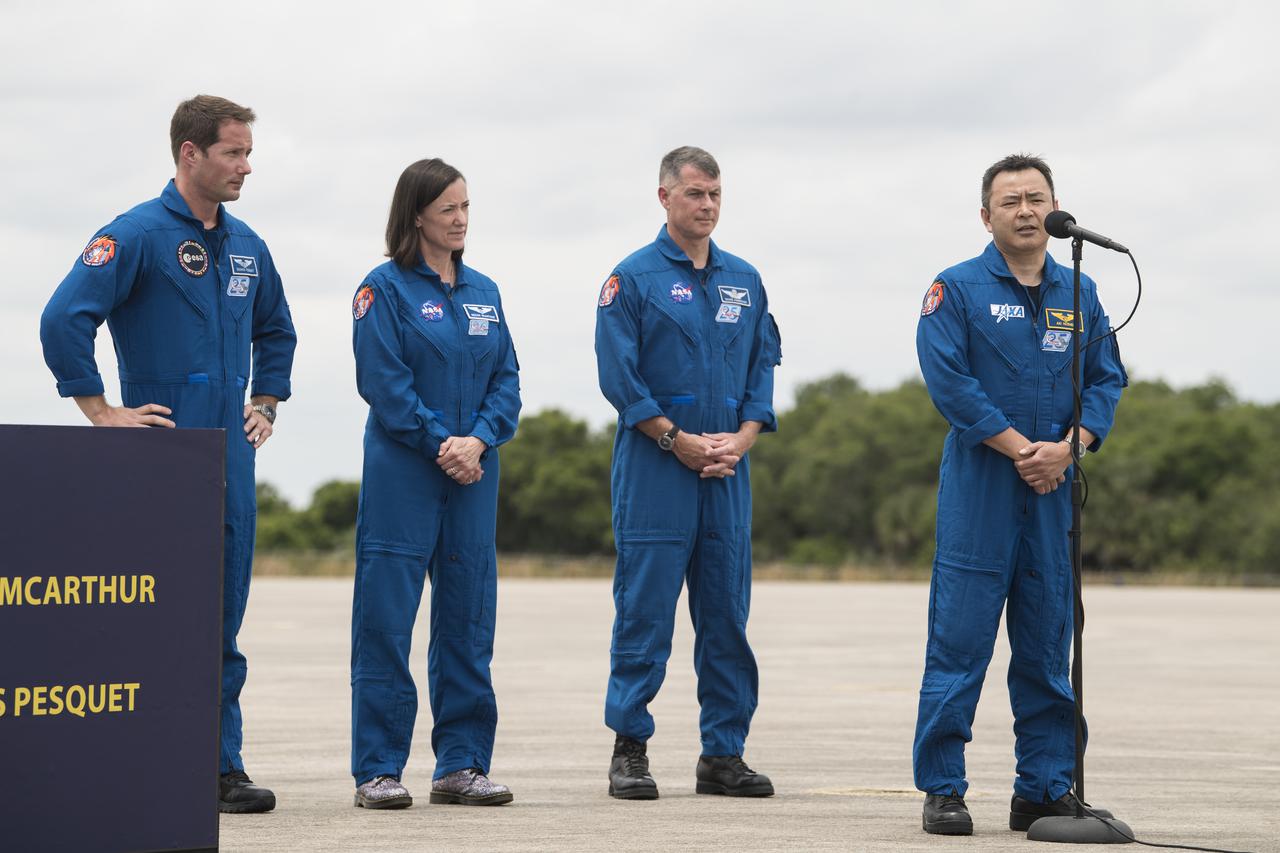
Japan Aerospace Exploration Agency (JAXA) astronaut Akihiko Hoshide answers a question from media after he and his crew mates, ESA (European Space Agency) astronaut Thomas Pesquet, left, NASA astronaut Megan McArthur, center, and NASA astronaut Shane Kimbrough, right, arrived at the Launch and Landing Facility at NASA’s Kennedy Space Center ahead of SpaceX’s Crew-2 mission, Friday, April 16, 2021, in Florida. NASA’s SpaceX Crew-2 mission is the second operational mission of the SpaceX Crew Dragon spacecraft and Falcon 9 rocket to the International Space Station as part of the agency’s Commercial Crew Program. Kimbrough, McArthur, Pesquet, and Hoshide are scheduled to launch at 6:11 a.m. ET on Thursday, April 22, from Launch Complex 39A at the Kennedy Space Center. Photo Credit: (NASA/Aubrey Gemignani)
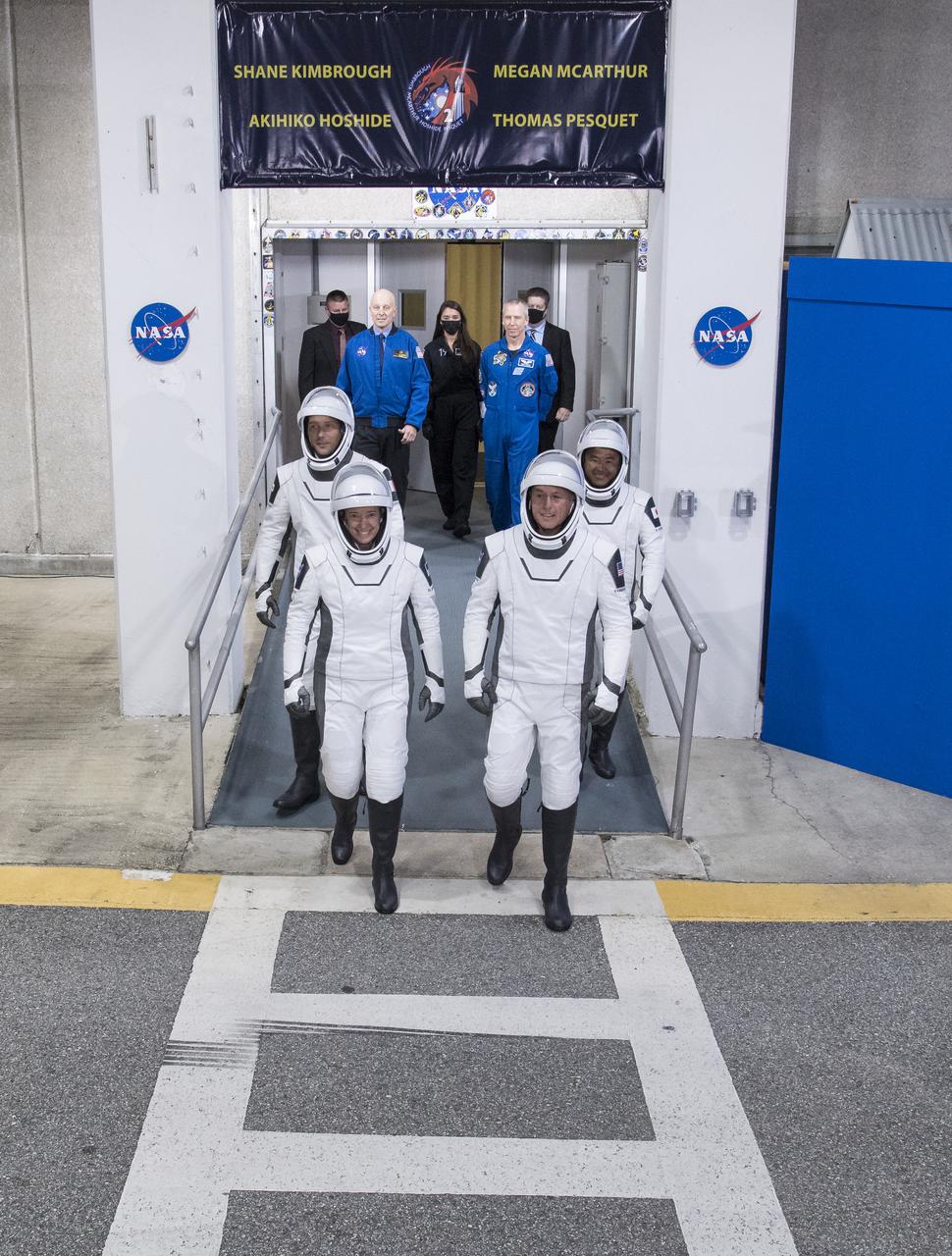
ESA (European Space Agency) astronaut Thomas Pesquet, back left, NASA astronauts Megan McArthur, front left, and Shane Kimbrough, front right, and Japan Aerospace Exploration Agency (JAXA) astronaut Akihiko Hoshide, back right, wearing SpaceX spacesuits, are seen as they prepare to depart the Neil A. Armstrong Operations and Checkout Building for Launch Complex 39A to board the SpaceX Crew Dragon spacecraft for the Crew-2 mission launch, Friday, April 23, 2021, at NASA’s Kennedy Space Center in Florida. NASA’s SpaceX Crew-2 mission is the second crew rotation mission of the SpaceX Crew Dragon spacecraft and Falcon 9 rocket to the International Space Station as part of the agency’s Commercial Crew Program. Kimbrough, McArthur, Pesquet, and Hoshide are scheduled to launch at 5:49 a.m. EDT. Photo Credit: (NASA/Aubrey Gemignani)
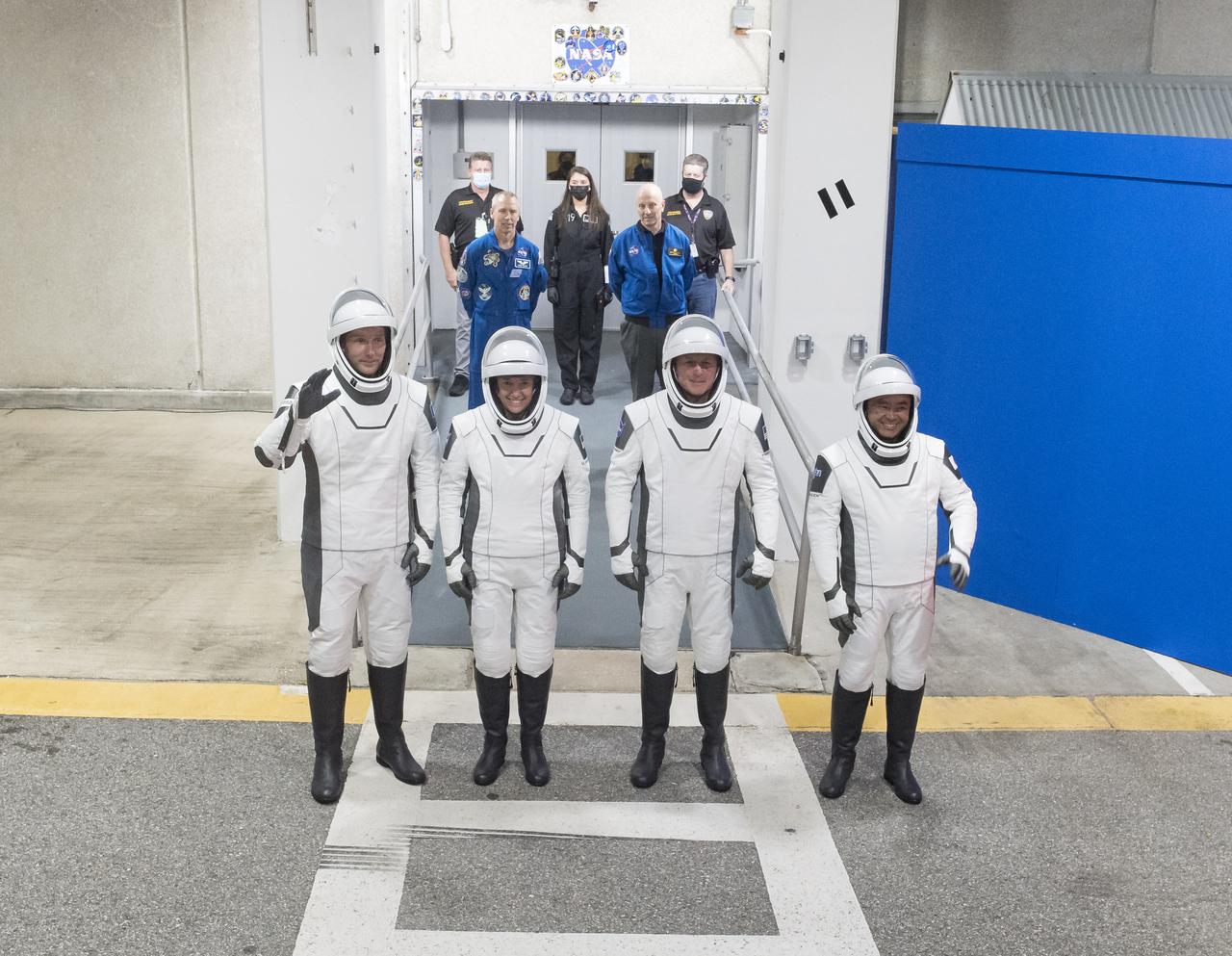
From left to right, ESA (European Space Agency) astronaut Thomas Pesquet, NASA astronauts Megan McArthur and Shane Kimbrough, and Japan Aerospace Exploration Agency (JAXA) astronaut Akihiko Hoshide, wearing SpaceX spacesuits, are seen as they prepare to depart the Neil A. Armstrong Operations and Checkout Building for Launch Complex 39A during a dress rehearsal prior to the Crew-2 mission launch, Sunday, April 18, 2021, at NASA’s Kennedy Space Center in Florida. NASA’s SpaceX Crew-2 mission is the second operational mission of the SpaceX Crew Dragon spacecraft and Falcon 9 rocket to the International Space Station as part of the agency’s Commercial Crew Program. Kimbrough, McArthur, Pesquet, and Hoshide are scheduled to launch at 6:11 a.m. ET on Thursday, April 22, from Launch Complex 39A at the Kennedy Space Center. Photo Credit: (NASA/Aubrey Gemignani)
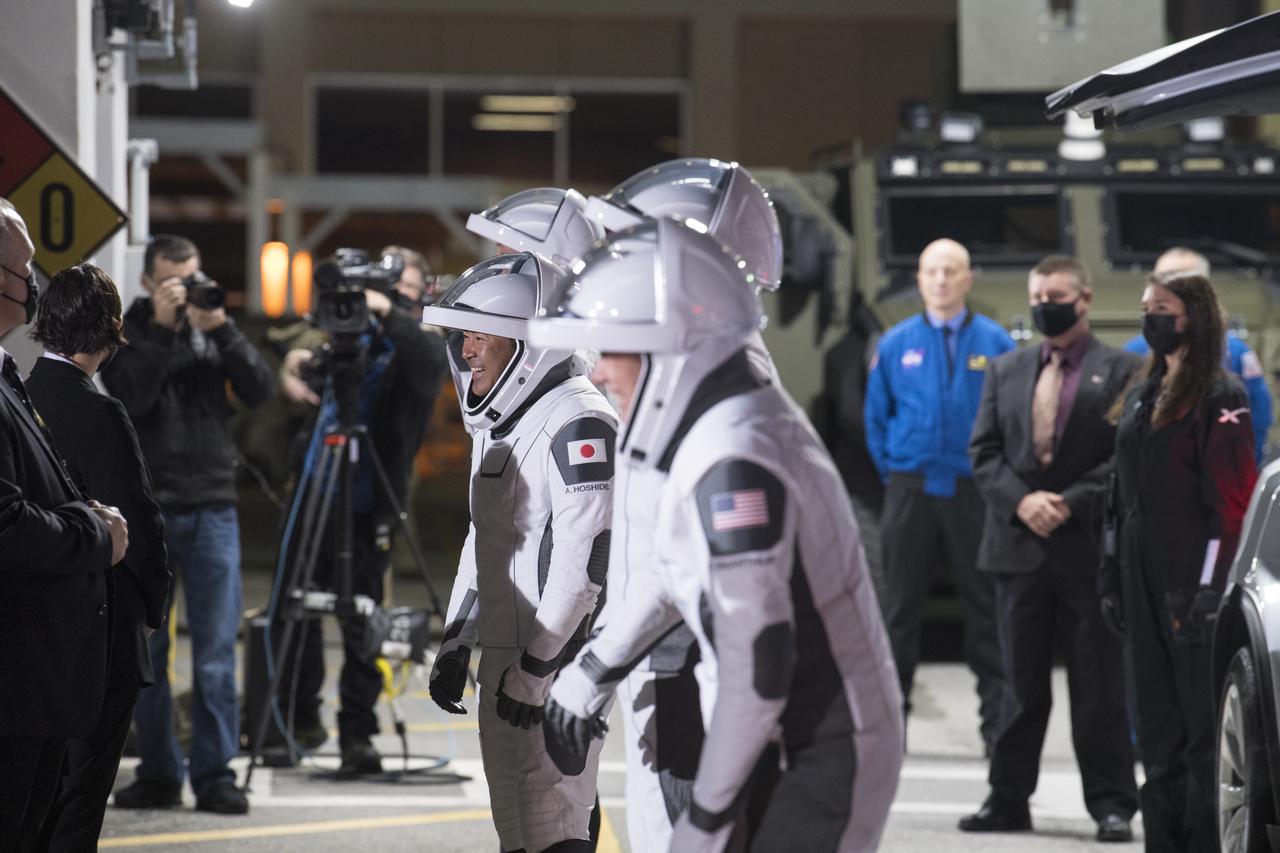
From left to right, ESA (European Space Agency) astronaut Thomas Pesquet, Japan Aerospace Exploration Agency (JAXA) astronaut Akihiko Hoshide, and NASA astronauts Shane Kimbrough and Megan McArthur, are seen as they prepare to depart the Neil A. Armstrong Operations and Checkout Building for Launch Complex 39A to board the SpaceX Crew Dragon spacecraft for the Crew-2 mission launch, Friday, April 23, 2021, at NASA’s Kennedy Space Center in Florida. NASA’s SpaceX Crew-2 mission is the second crew rotation mission of the SpaceX Crew Dragon spacecraft and Falcon 9 rocket to the International Space Station as part of the agency’s Commercial Crew Program. Kimbrough, McArthur, Pesquet, and Hoshide are scheduled to launch at 5:49 a.m. EDT. Photo Credit: (NASA/Aubrey Gemignani)
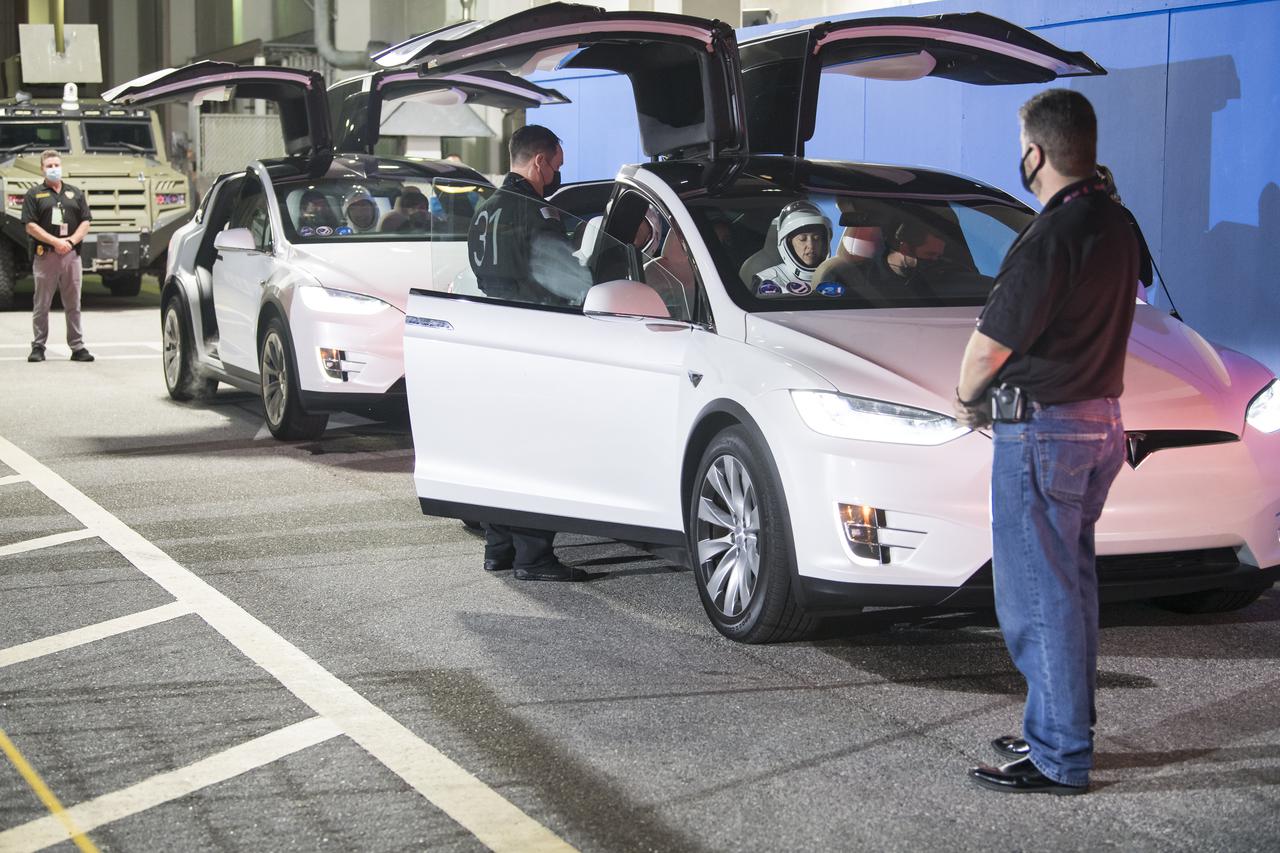
NASA astronauts Megan McArthur, Shane Kimbrough, and ESA (European Space Agency) astronaut Thomas Pesquet, and Japan Aerospace Exploration Agency (JAXA) astronaut Akihiko Hoshide, wearing SpaceX spacesuits, are seen as they prepare to depart the Neil A. Armstrong Operations and Checkout Building for Launch Complex 39A during a dress rehearsal prior to the Crew-2 mission launch, Sunday, April 18, 2021, at NASA’s Kennedy Space Center in Florida. NASA’s SpaceX Crew-2 mission is the second operational mission of the SpaceX Crew Dragon spacecraft and Falcon 9 rocket to the International Space Station as part of the agency’s Commercial Crew Program. Kimbrough, McArthur, Pesquet, and Hoshide are scheduled to launch at 6:11 a.m. ET on Thursday, April 22, from Launch Complex 39A at the Kennedy Space Center. Photo Credit: (NASA/Aubrey Gemignani)
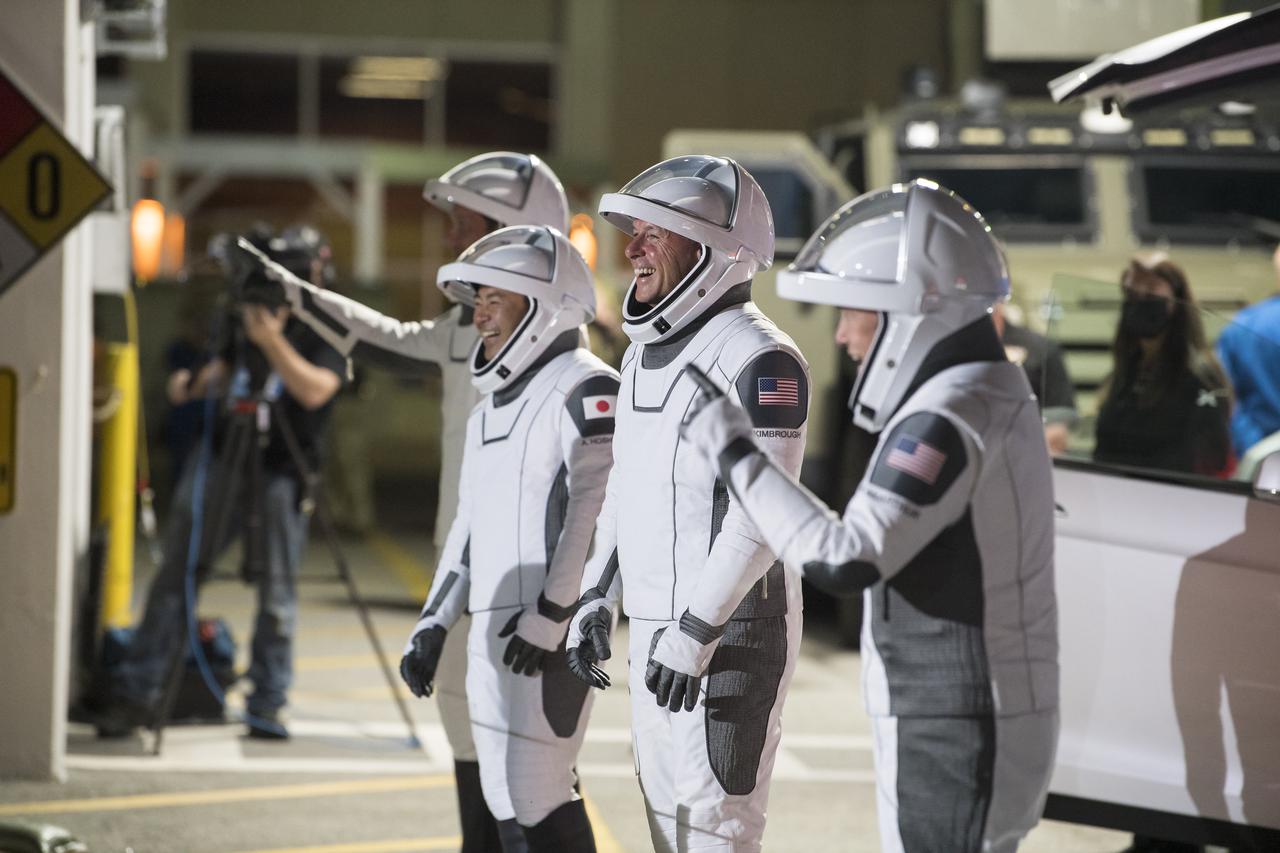
From left to right, ESA (European Space Agency) astronaut Thomas Pesquet, Japan Aerospace Exploration Agency (JAXA) astronaut Akihiko Hoshide, and NASA astronauts Shane Kimbrough and Megan McArthur, are seen as they prepare to depart the Neil A. Armstrong Operations and Checkout Building for Launch Complex 39A during a dress rehearsal prior to the Crew-2 mission launch, Sunday, April 18, 2021, at NASA’s Kennedy Space Center in Florida. NASA’s SpaceX Crew-2 mission is the second operational mission of the SpaceX Crew Dragon spacecraft and Falcon 9 rocket to the International Space Station as part of the agency’s Commercial Crew Program. Kimbrough, McArthur, Pesquet, and Hoshide are scheduled to launch at 6:11 a.m. ET on Thursday, April 22, from Launch Complex 39A at the Kennedy Space Center. Photo Credit: (NASA/Aubrey Gemignani)
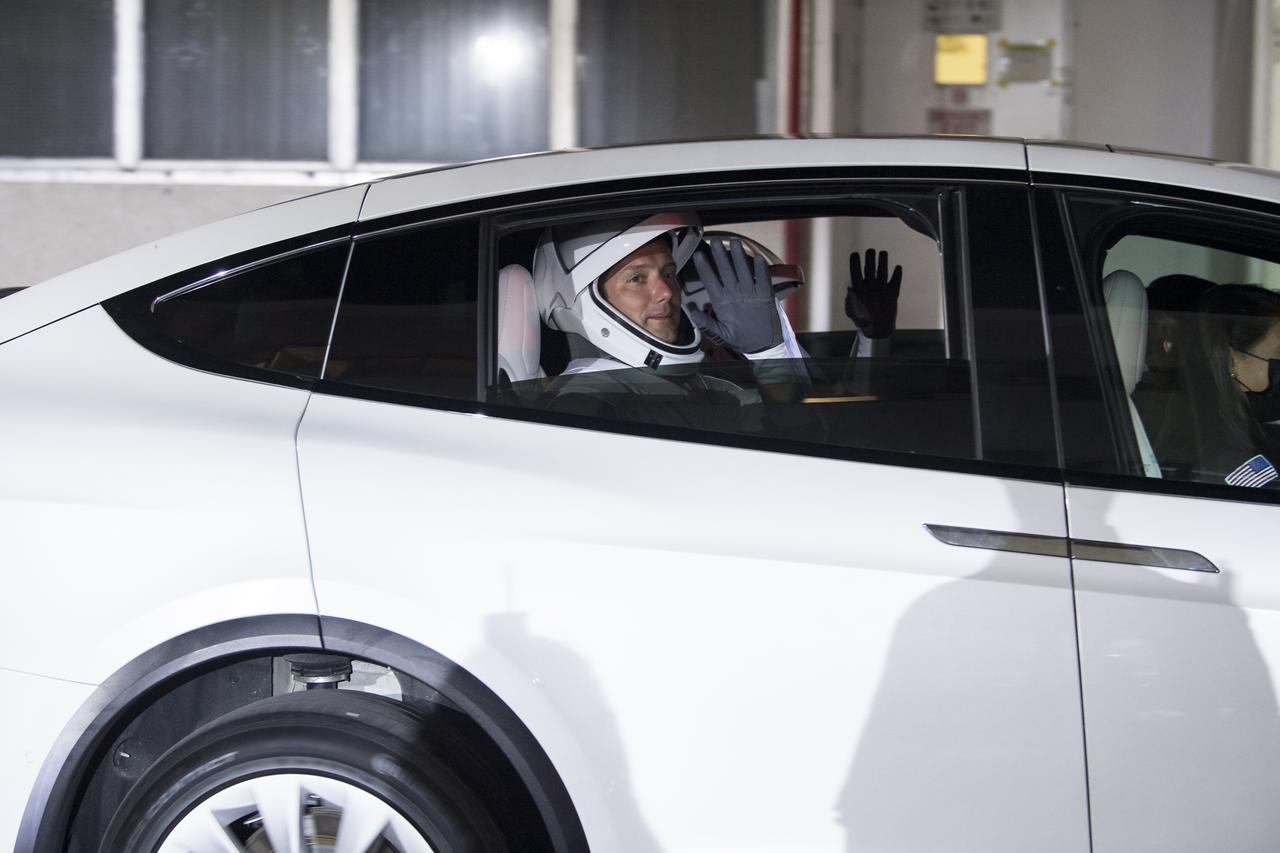
ESA (European Space Agency) astronaut Thomas Pesquet is seen as he and crew mates NASA astronauts Shane Kimbrough and Megan McArthur, and Japan Aerospace Exploration Agency (JAXA) astronaut Akihiko Hoshide depart the Neil A. Armstrong Operations and Checkout Building for Launch Complex 39A during a dress rehearsal prior to the Crew-2 mission launch, Sunday, April 18, 2021, at NASA’s Kennedy Space Center in Florida. NASA’s SpaceX Crew-2 mission is the second operational mission of the SpaceX Crew Dragon spacecraft and Falcon 9 rocket to the International Space Station as part of the agency’s Commercial Crew Program. Kimbrough, McArthur, Pesquet, and Hoshide are scheduled to launch at 6:11 a.m. ET on Thursday, April 22, from Launch Complex 39A at the Kennedy Space Center. Photo Credit: (NASA/Aubrey Gemignani)
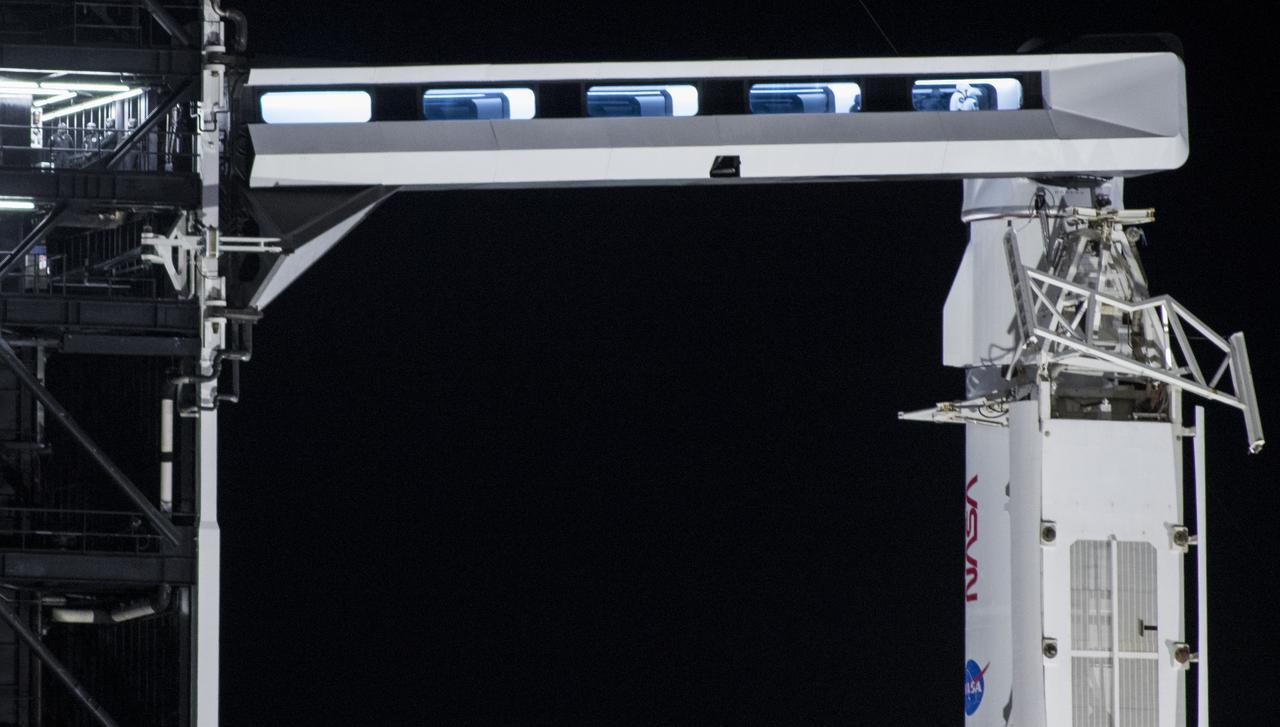
ESA (European Space Agency) astronaut Thomas Pesquet and Japan Aerospace Exploration Agency (JAXA) astronaut Akihiko Hoshide are seen on the crew access arm of Launch Complex 39A before boarding SpaceX’s Crew Dragon spacecraft atop the company’s Falcon 9 rocket before the launch of NASA’s SpaceX Crew-2 mission to the International Space Station, Friday, April 23, 2021, at NASA’s Kennedy Space Center in Florida. NASA’s SpaceX Crew-2 mission is the second crew rotation mission of the SpaceX Crew Dragon spacecraft and Falcon 9 rocket to the International Space Station as part of the agency’s Commercial Crew Program. Pesquet, Hoshide, and NASA astronauts Shane Kimbrough and Megan McArthur launched at 5:49 a.m. EDT from Launch Complex 39A at the Kennedy Space Center to begin a six month mission onboard the orbital outpost. Photo Credit: (NASA/Joel Kowsky)
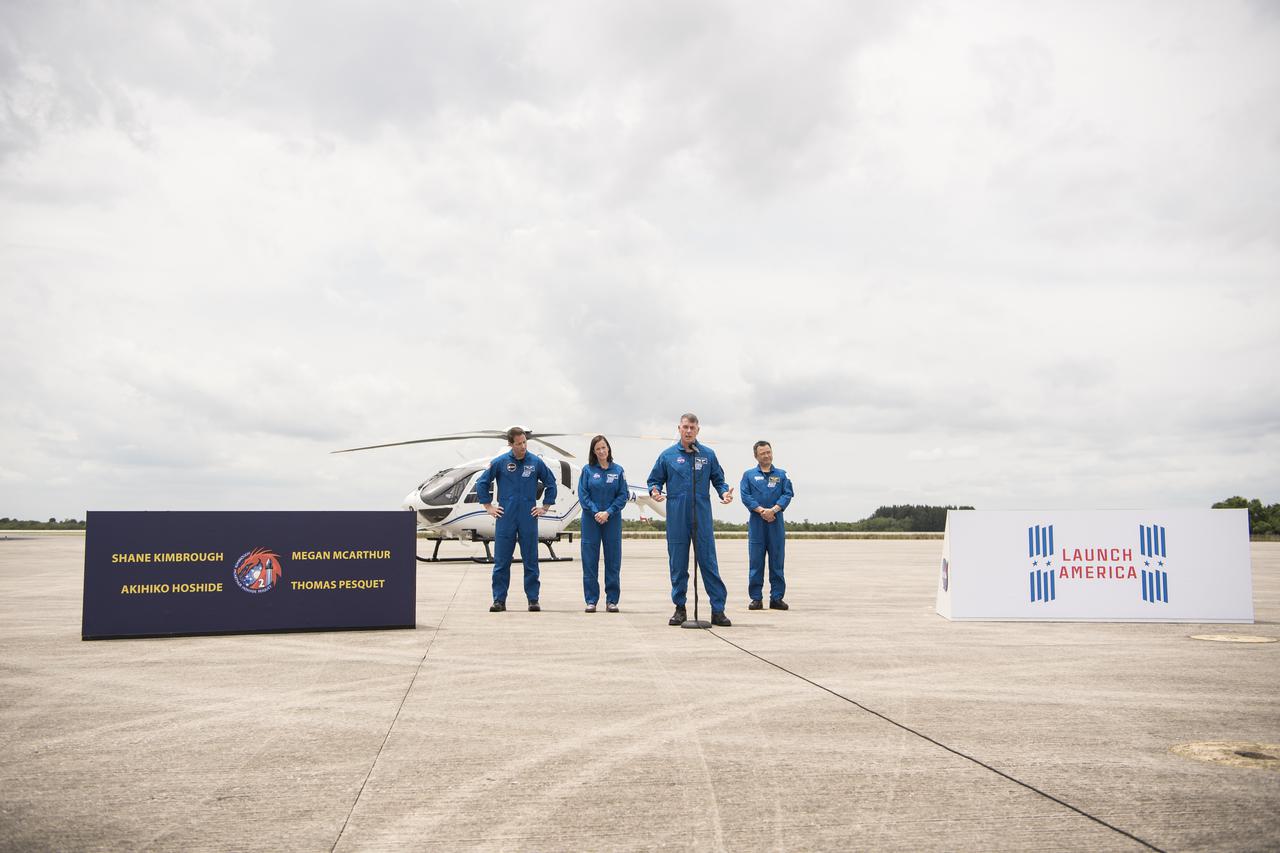
NASA astronaut Shane Kimbrough answers a question from media after he and his crew mates, ESA (European Space Agency) astronaut Thomas Pesquet, left, NASA astronaut Megan McArthur, second from left, and Japan Aerospace Exploration Agency (JAXA) astronaut Akihiko Hoshide, right, arrived at the Launch and Landing Facility at NASA’s Kennedy Space Center ahead of SpaceX’s Crew-2 mission, Friday, April 16, 2021, in Florida. NASA’s SpaceX Crew-2 mission is the second operational mission of the SpaceX Crew Dragon spacecraft and Falcon 9 rocket to the International Space Station as part of the agency’s Commercial Crew Program. Kimbrough, McArthur, Pesquet, and Hoshide are scheduled to launch at 6:11 a.m. ET on Thursday, April 22, from Launch Complex 39A at the Kennedy Space Center. Photo Credit: (NASA/Aubrey Gemignani)
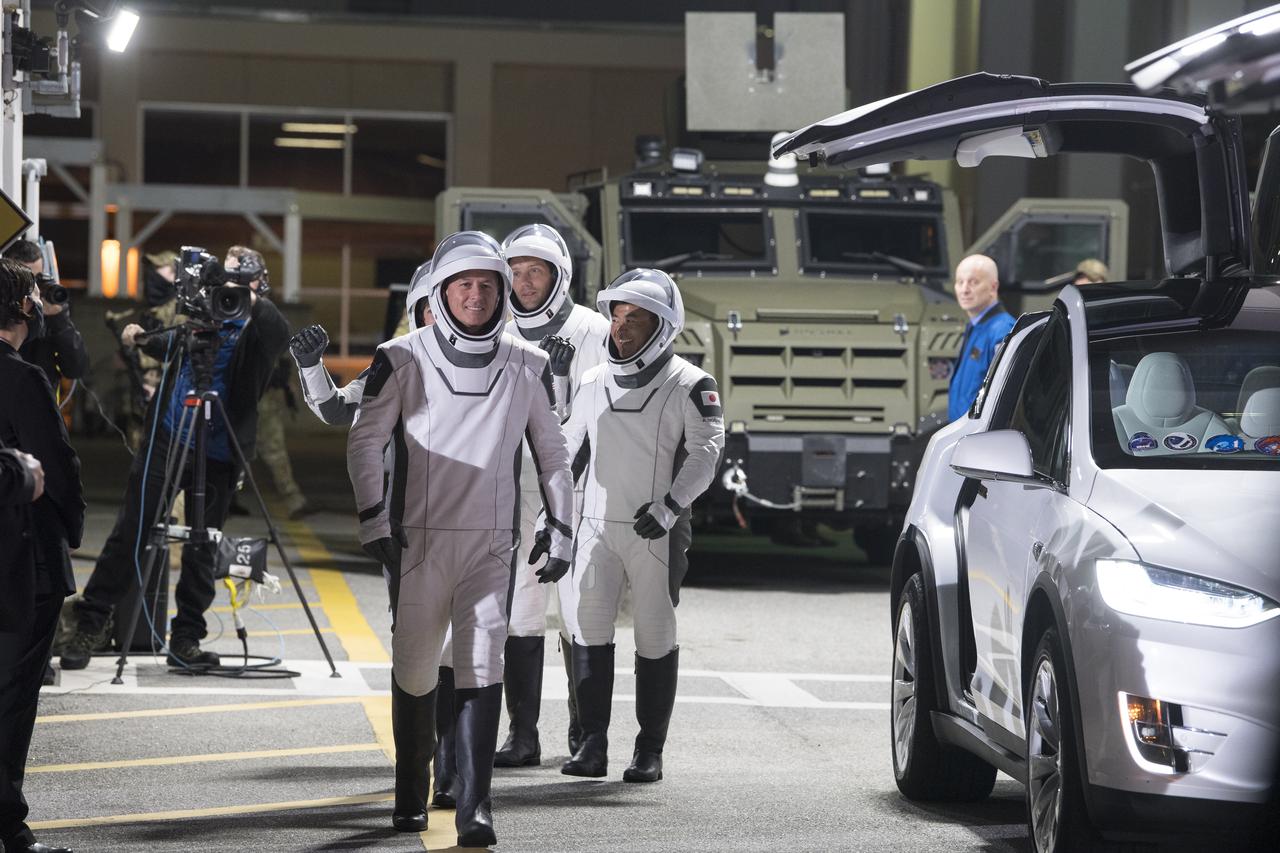
NASA astronauts Shane Kimbrough, front, Japan Aerospace Exploration Agency (JAXA) astronaut Akihiko Hoshide, second, and ESA (European Space Agency) astronaut Thomas Pesquet, back, wearing SpaceX spacesuits, are seen as they prepare to depart the Neil A. Armstrong Operations and Checkout Building for Launch Complex 39A to board the SpaceX Crew Dragon spacecraft for the Crew-2 mission launch, Friday, April 23, 2021, at NASA’s Kennedy Space Center in Florida. NASA’s SpaceX Crew-2 mission is the second crew rotation mission of the SpaceX Crew Dragon spacecraft and Falcon 9 rocket to the International Space Station as part of the agency’s Commercial Crew Program. Kimbrough, McArthur, Pesquet, and Hoshide are scheduled to launch at 5:49 a.m. EDT. Photo Credit: (NASA/Aubrey Gemignani)
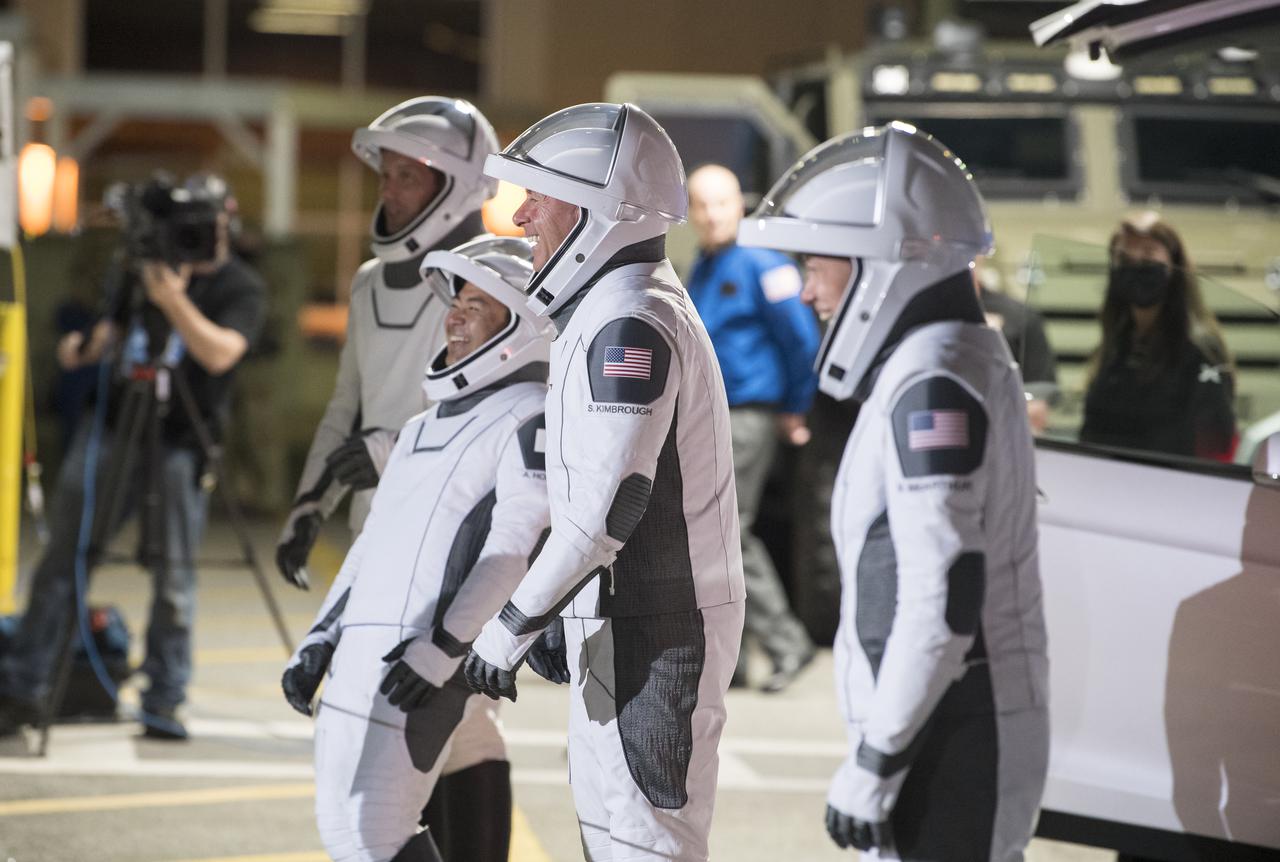
From left to right, ESA (European Space Agency) astronaut Thomas Pesquet, Japan Aerospace Exploration Agency (JAXA) astronaut Akihiko Hoshide, and NASA astronauts Shane Kimbrough and Megan McArthur, are seen as they prepare to depart the Neil A. Armstrong Operations and Checkout Building for Launch Complex 39A during a dress rehearsal prior to the Crew-2 mission launch, Sunday, April 18, 2021, at NASA’s Kennedy Space Center in Florida. NASA’s SpaceX Crew-2 mission is the second operational mission of the SpaceX Crew Dragon spacecraft and Falcon 9 rocket to the International Space Station as part of the agency’s Commercial Crew Program. Kimbrough, McArthur, Pesquet, and Hoshide are scheduled to launch at 6:11 a.m. ET on Thursday, April 22, from Launch Complex 39A at the Kennedy Space Center. Photo Credit: (NASA/Aubrey Gemignani)
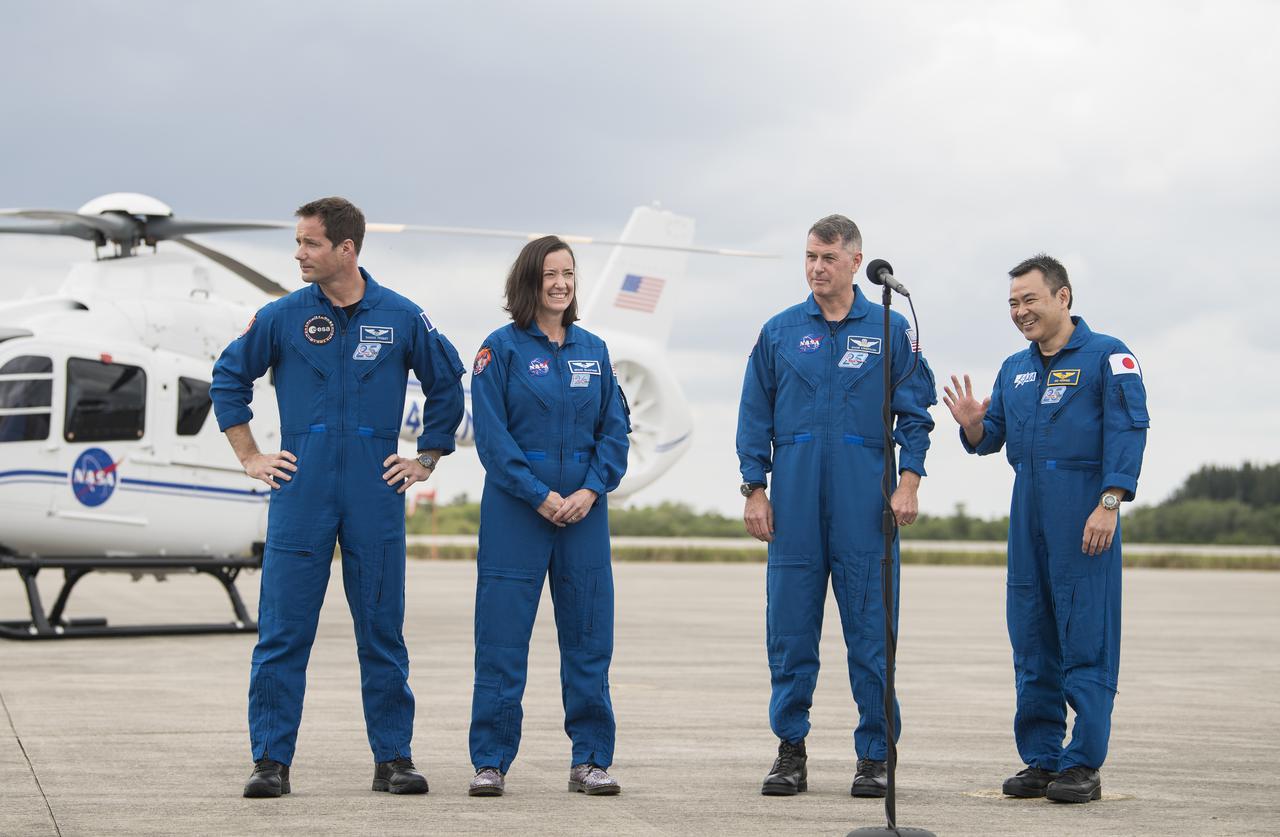
From left to right, ESA (European Space Agency) astronaut Thomas Pesquet, NASA astronauts Megan McArthur and Shane Kimbrough, and Japan Aerospace Exploration Agency (JAXA) astronaut Akihiko Hoshide, greet members of the media after arriving at the Launch and Landing Facility at NASA’s Kennedy Space Center ahead of SpaceX’s Crew-2 mission, Friday, April 16, 2021, in Florida. NASA’s SpaceX Crew-2 mission is the second operational mission of the SpaceX Crew Dragon spacecraft and Falcon 9 rocket to the International Space Station as part of the agency’s Commercial Crew Program. Kimbrough, McArthur, Pesquet, and Hoshide are scheduled to launch at 6:11 a.m. ET on Thursday, April 22, from Launch Complex 39A at the Kennedy Space Center. Photo Credit: (NASA/Aubrey Gemignani)
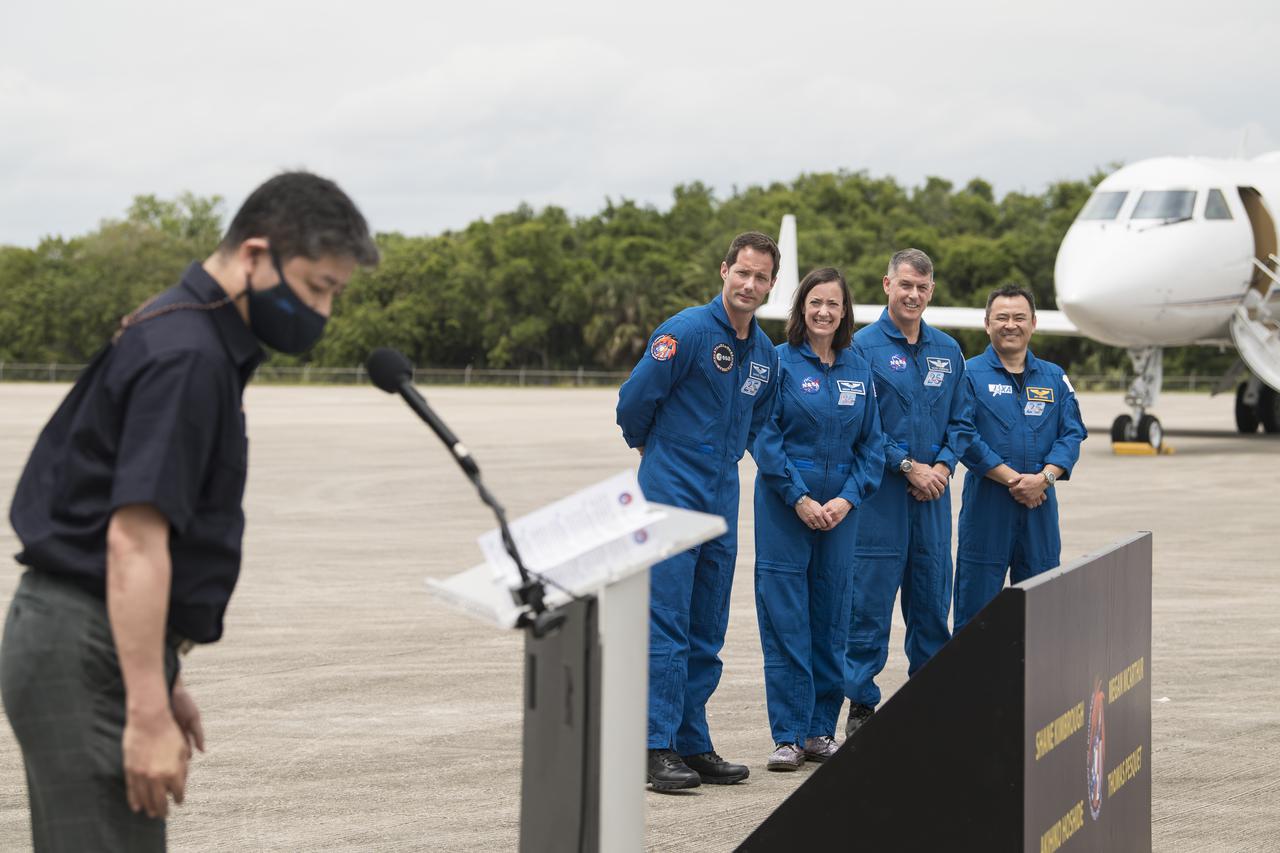
Junichi Sakai, manager of the International Space Station Program for the Japan Aerospace Exploration Agency (JAXA), bows as he leaves the podium after NASA astronauts Shane Kimbrough and Megan McArthur, ESA (European Space Agency) astronaut Thomas Pesquet, and Japan Aerospace Exploration Agency (JAXA) astronaut Akihiko Hoshide, arrived at the Launch and Landing Facility at NASA’s Kennedy Space Center ahead of SpaceX’s Crew-2 mission, Friday, April 16, 2021, in Florida. NASA’s SpaceX Crew-2 mission is the second operational mission of the SpaceX Crew Dragon spacecraft and Falcon 9 rocket to the International Space Station as part of the agency’s Commercial Crew Program. Kimbrough, McArthur, Pesquet, and Hoshide are scheduled to launch at 6:11 a.m. ET on Thursday, April 22, from Launch Complex 39A at the Kennedy Space Center. Photo Credit: (NASA/Aubrey Gemignani)
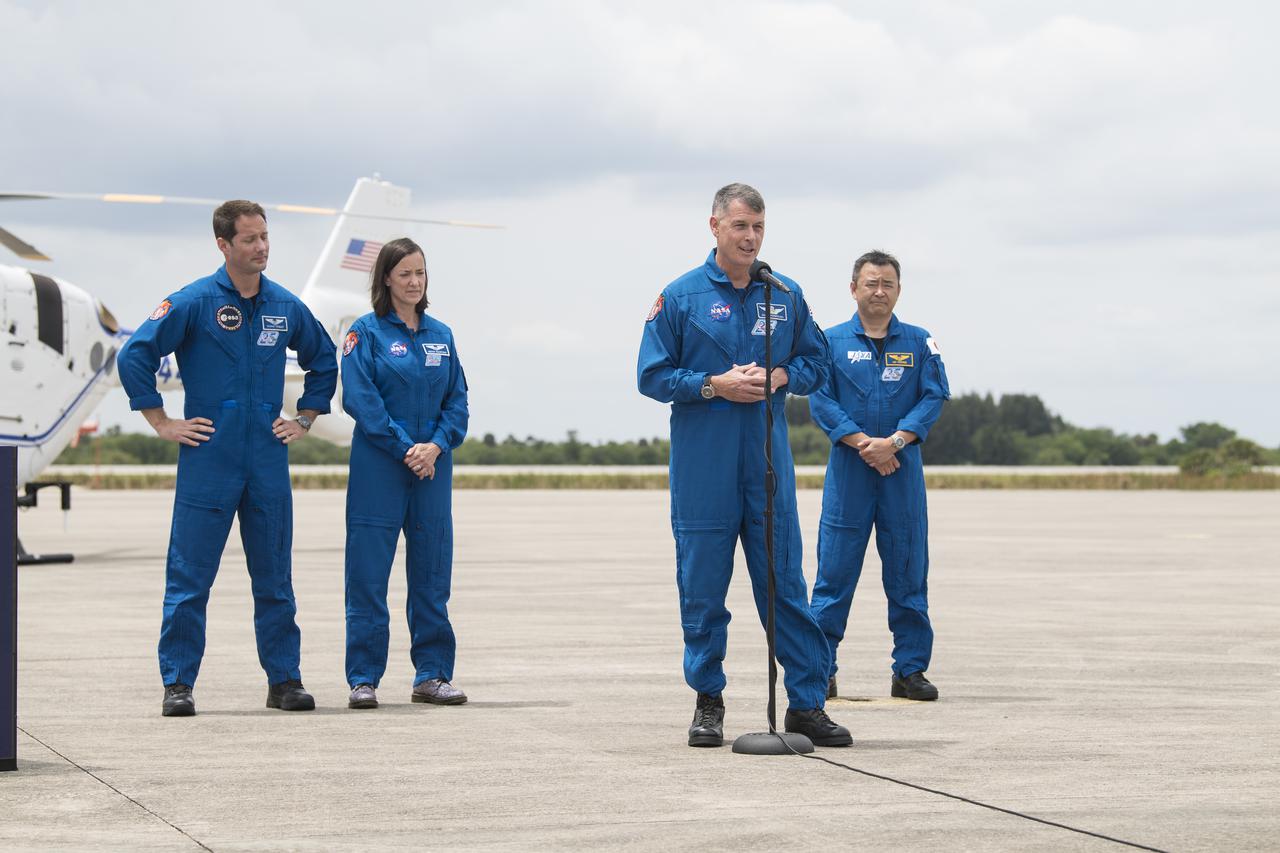
NASA astronaut Shane Kimbrough answers a question while crew mates ESA (European Space Agency) astronaut Thomas Pesquet, left, NASA astronaut Megan McArthur, center, and Japan Aerospace Exploration Agency (JAXA) astronaut Akihiko Hoshide, right, look on, after arriving at the Launch and Landing Facility at NASA’s Kennedy Space Center ahead of SpaceX’s Crew-2 mission, Friday, April 16, 2021, in Florida. NASA’s SpaceX Crew-2 mission is the second operational mission of the SpaceX Crew Dragon spacecraft and Falcon 9 rocket to the International Space Station as part of the agency’s Commercial Crew Program. Kimbrough, McArthur, Pesquet, and Hoshide are scheduled to launch at 6:11 a.m. ET on Thursday, April 22, from Launch Complex 39A at the Kennedy Space Center. Photo Credit: (NASA/Aubrey Gemignani)
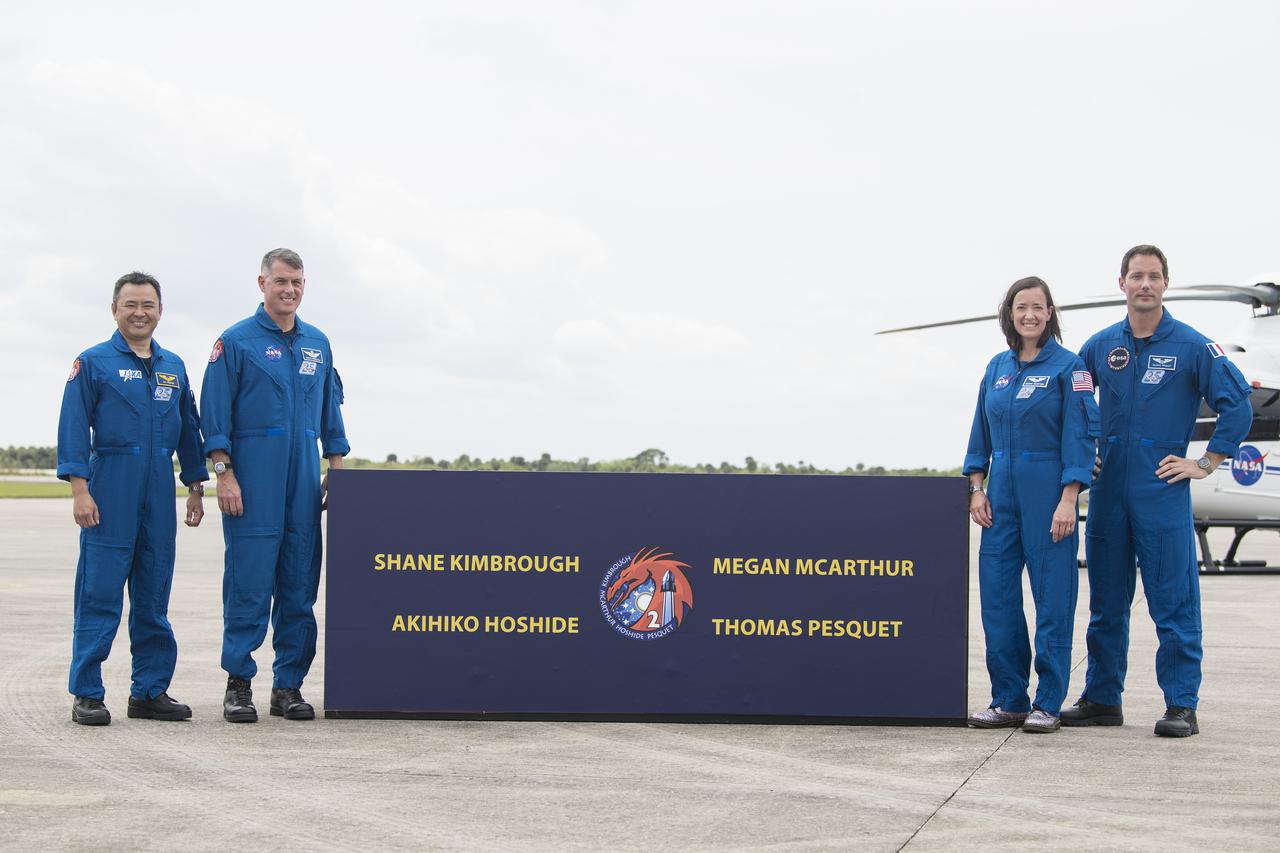
From left to right, Japan Aerospace Exploration Agency (JAXA) astronaut Akihiko Hoshide, NASA astronauts Shane Kimbrough and Megan McArthur, and ESA (European Space Agency) astronaut Thomas Pesquet pose for a photo after arriving at the Launch and Landing Facility at NASA’s Kennedy Space Center ahead of SpaceX’s Crew-2 mission, Friday, April 16, 2021, in Florida. NASA’s SpaceX Crew-2 mission is the second operational mission of the SpaceX Crew Dragon spacecraft and Falcon 9 rocket to the International Space Station as part of the agency’s Commercial Crew Program. Kimbrough, McArthur, Pesquet, and Hoshide are scheduled to launch at 6:11 a.m. ET on Thursday, April 22, from Launch Complex 39A at the Kennedy Space Center. Photo Credit: (NASA/Aubrey Gemignani)
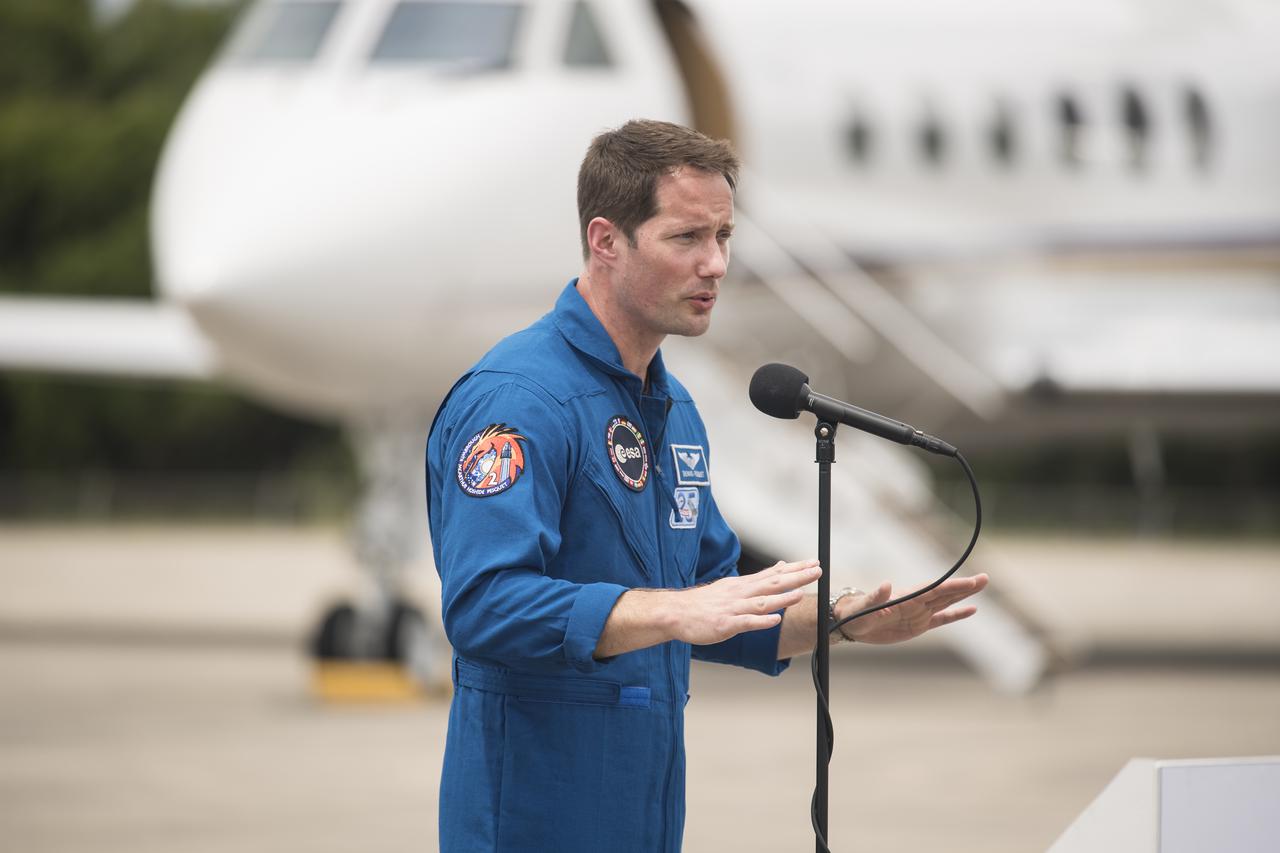
ESA (European Space Agency) astronaut Thomas Pesquet answers a question after he and his crew mates NASA astronauts Shane Kimbrough and Megan McArthur, and Japan Aerospace Exploration Agency (JAXA) astronaut Akihiko Hoshide, arrived at the Launch and Landing Facility at NASA’s Kennedy Space Center ahead of SpaceX’s Crew-2 mission, Friday, April 16, 2021, in Florida. NASA’s SpaceX Crew-2 mission is the second operational mission of the SpaceX Crew Dragon spacecraft and Falcon 9 rocket to the International Space Station as part of the agency’s Commercial Crew Program. Kimbrough, McArthur, Pesquet, and Hoshide are scheduled to launch at 6:11 a.m. ET on Thursday, April 22, from Launch Complex 39A at the Kennedy Space Center. Photo Credit: (NASA/Aubrey Gemignani)
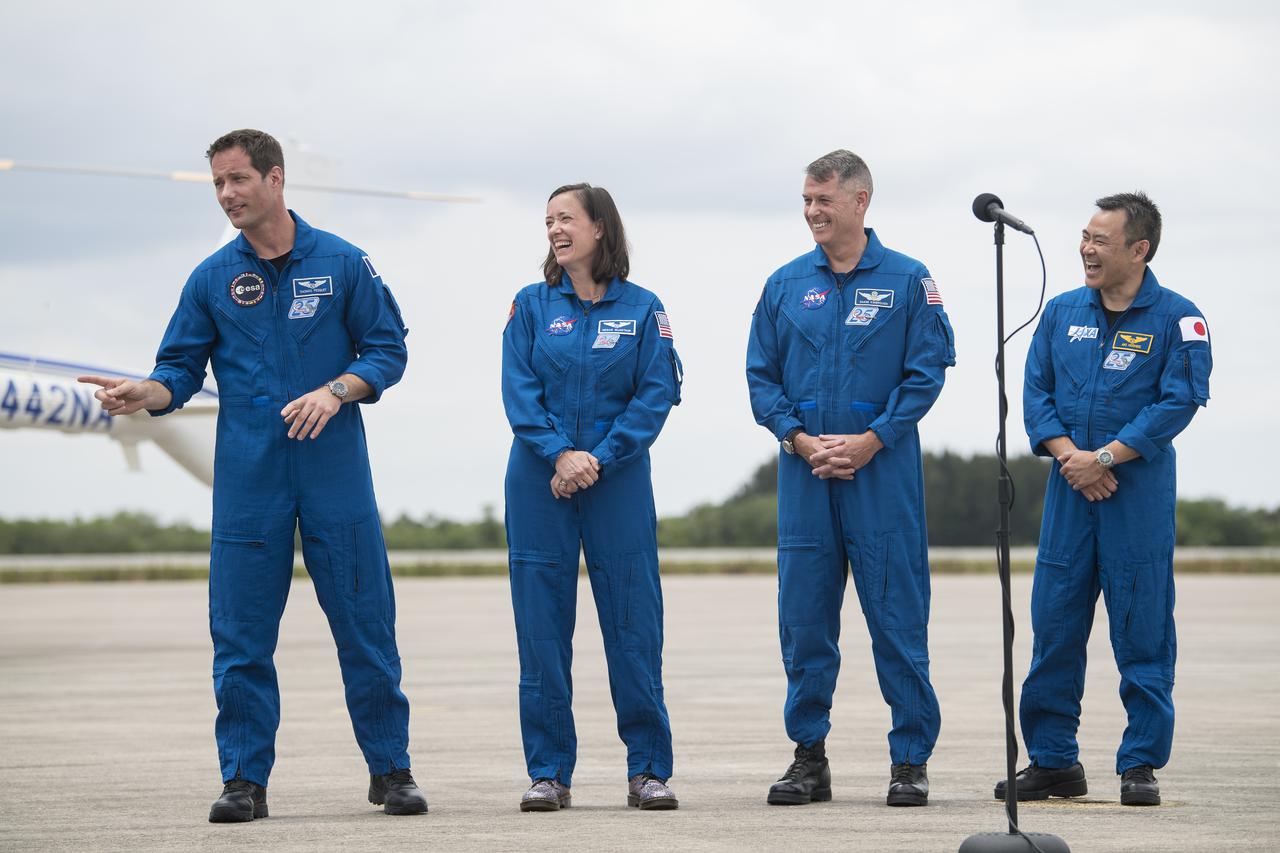
From left to right, ESA (European Space Agency) astronaut Thomas Pesquet, NASA astronauts Megan McArthur and Shane Kimbrough, and Japan Aerospace Exploration Agency (JAXA) astronaut Akihiko Hoshide, react to comments after arriving at the Launch and Landing Facility at NASA’s Kennedy Space Center ahead of SpaceX’s Crew-2 mission, Friday, April 16, 2021, in Florida. NASA’s SpaceX Crew-2 mission is the second operational mission of the SpaceX Crew Dragon spacecraft and Falcon 9 rocket to the International Space Station as part of the agency’s Commercial Crew Program. Kimbrough, McArthur, Pesquet, and Hoshide are scheduled to launch at 6:11 a.m. ET on Thursday, April 22, from Launch Complex 39A at the Kennedy Space Center. Photo Credit: (NASA/Aubrey Gemignani)
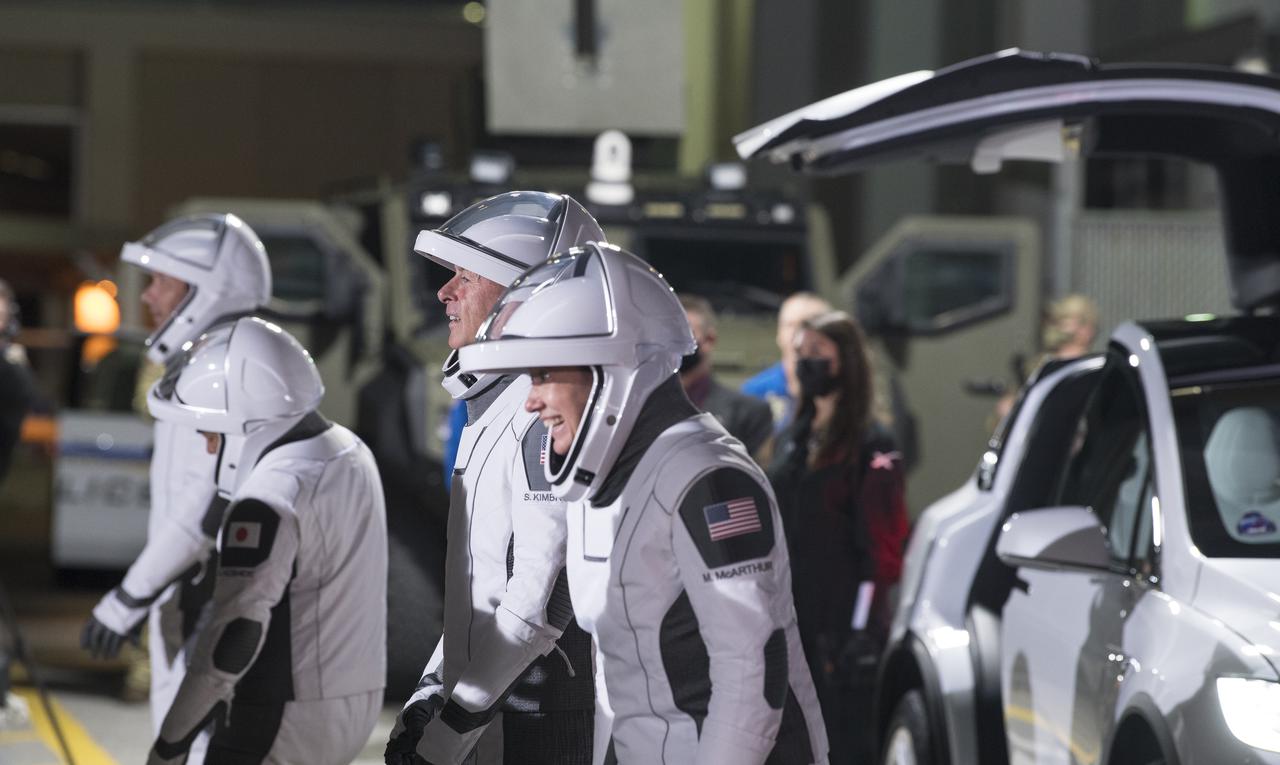
NASA astronauts Megan McArthur, front left, Shane Kimbrough, front right, and ESA (European Space Agency) astronaut Thomas Pesquet, back left, and Japan Aerospace Exploration Agency (JAXA) astronaut Akihiko Hoshide, wearing SpaceX spacesuits, are seen as they prepare to depart the Neil A. Armstrong Operations and Checkout Building for Launch Complex 39A during a dress rehearsal prior to the Crew-2 mission launch, Sunday, April 18, 2021, at NASA’s Kennedy Space Center in Florida. NASA’s SpaceX Crew-2 mission is the second operational mission of the SpaceX Crew Dragon spacecraft and Falcon 9 rocket to the International Space Station as part of the agency’s Commercial Crew Program. Kimbrough, McArthur, Pesquet, and Hoshide are scheduled to launch at 6:11 a.m. ET on Thursday, April 22, from Launch Complex 39A at the Kennedy Space Center. Photo Credit: (NASA/Aubrey Gemignani)
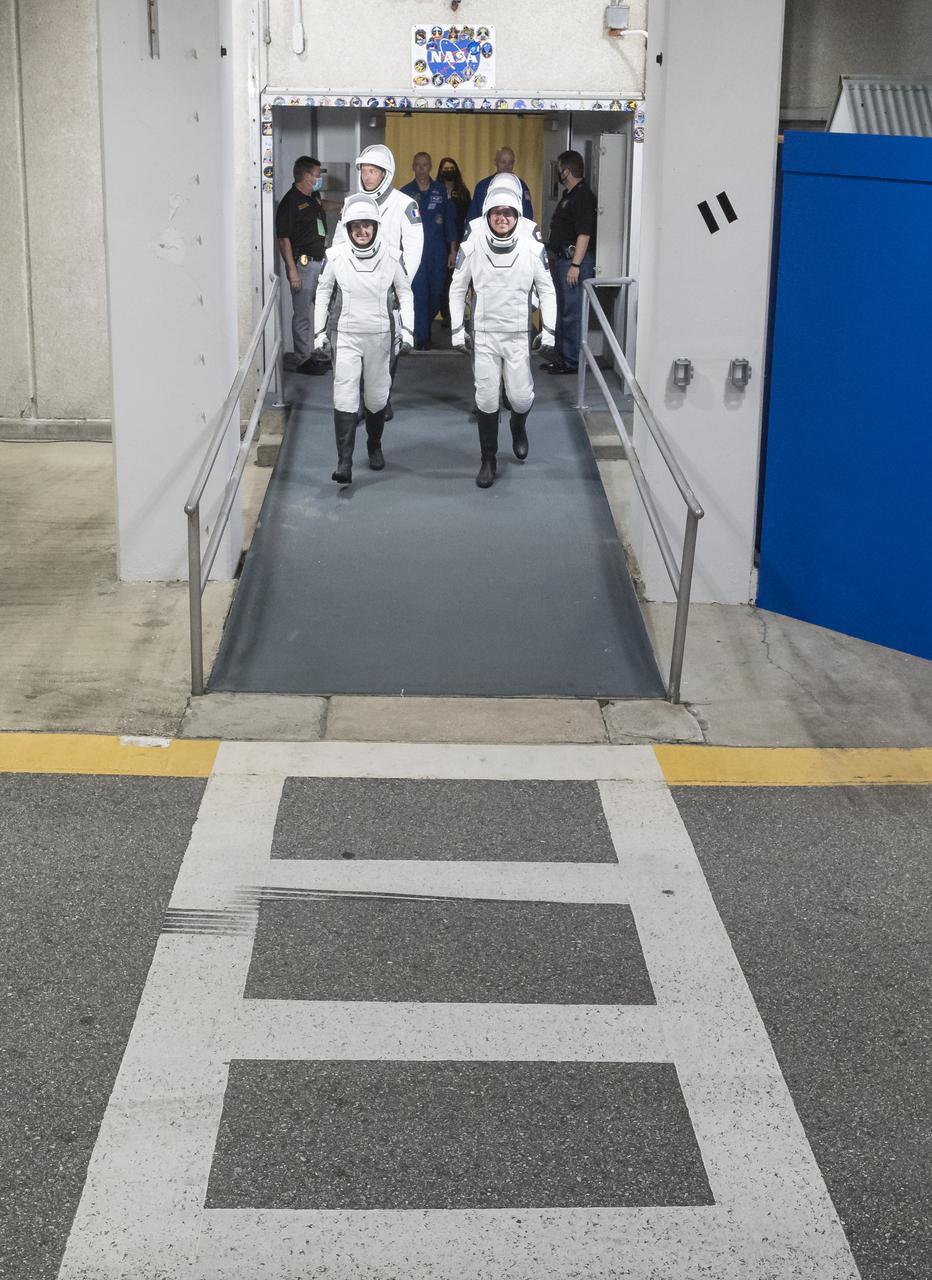
From left to right, ESA (European Space Agency) astronaut Thomas Pesquet, Japan Aerospace Exploration Agency (JAXA) astronaut Akihiko Hoshide, and NASA astronauts Shane Kimbrough and Megan McArthur, are seen as they prepare to depart the Neil A. Armstrong Operations and Checkout Building for Launch Complex 39A to board the SpaceX Crew Dragon spacecraft for the Crew-2 mission launch, Friday, April 23, 2021, at NASA’s Kennedy Space Center in Florida. NASA’s SpaceX Crew-2 mission is the second crew rotation mission of the SpaceX Crew Dragon spacecraft and Falcon 9 rocket to the International Space Station as part of the agency’s Commercial Crew Program. Kimbrough, McArthur, Pesquet, and Hoshide are scheduled to launch at 5:49 a.m. EDT. Photo Credit: (NASA/Aubrey Gemignani)
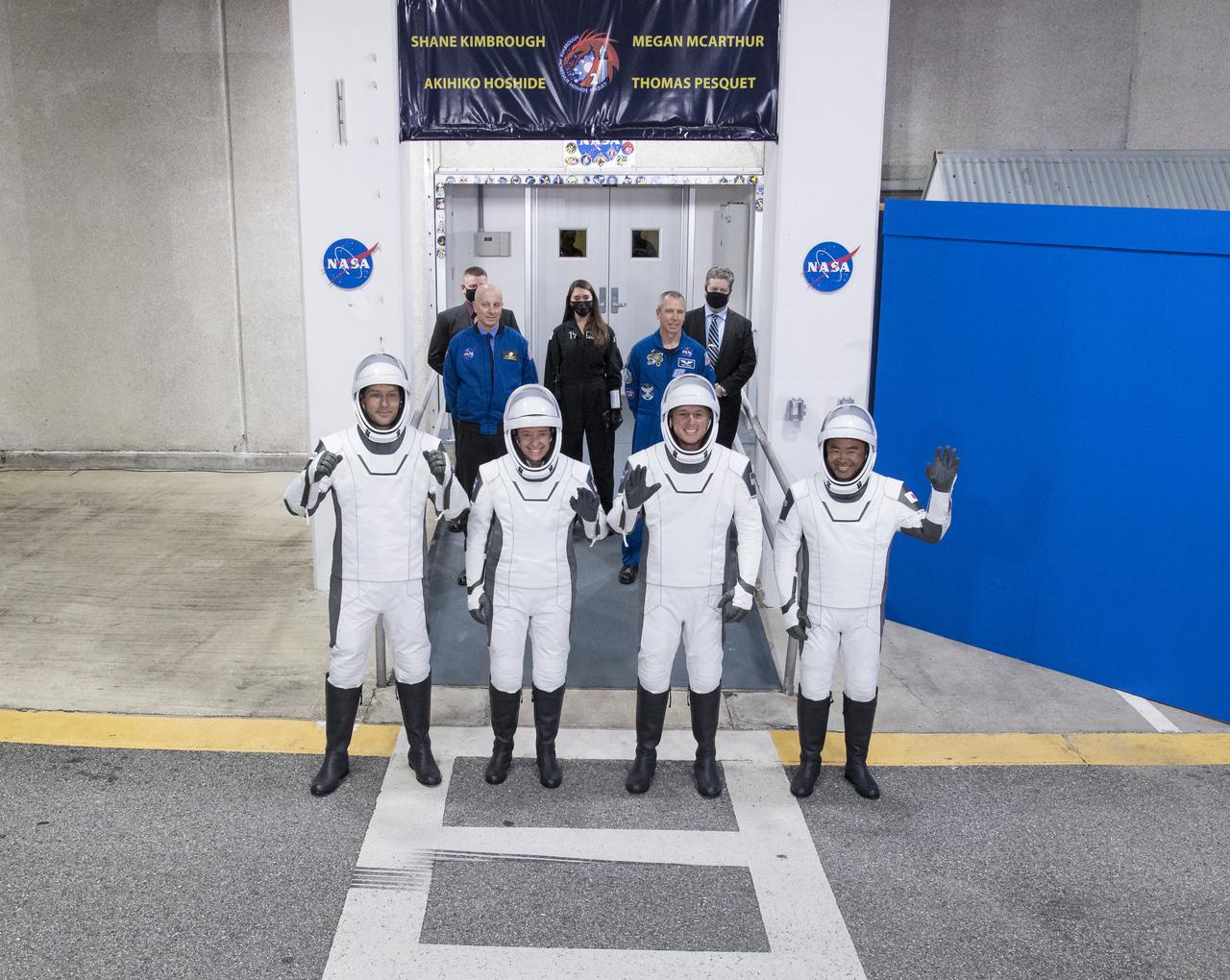
From left to right, ESA (European Space Agency) astronaut Thomas Pesquet, NASA astronauts Megan McArthur and Shane Kimbrough, and Japan Aerospace Exploration Agency (JAXA) astronaut Akihiko Hoshide, wearing SpaceX spacesuits, are seen as they prepare to depart the Neil A. Armstrong Operations and Checkout Building for Launch Complex 39A to board the SpaceX Crew Dragon spacecraft for the Crew-2 mission launch, Friday, April 23, 2021, at NASA’s Kennedy Space Center in Florida. NASA’s SpaceX Crew-2 mission is the second crew rotation mission of the SpaceX Crew Dragon spacecraft and Falcon 9 rocket to the International Space Station as part of the agency’s Commercial Crew Program. Kimbrough, McArthur, Pesquet, and Hoshide are scheduled to launch at 5:49 a.m. EDT. Photo Credit: (NASA/Aubrey Gemignani)
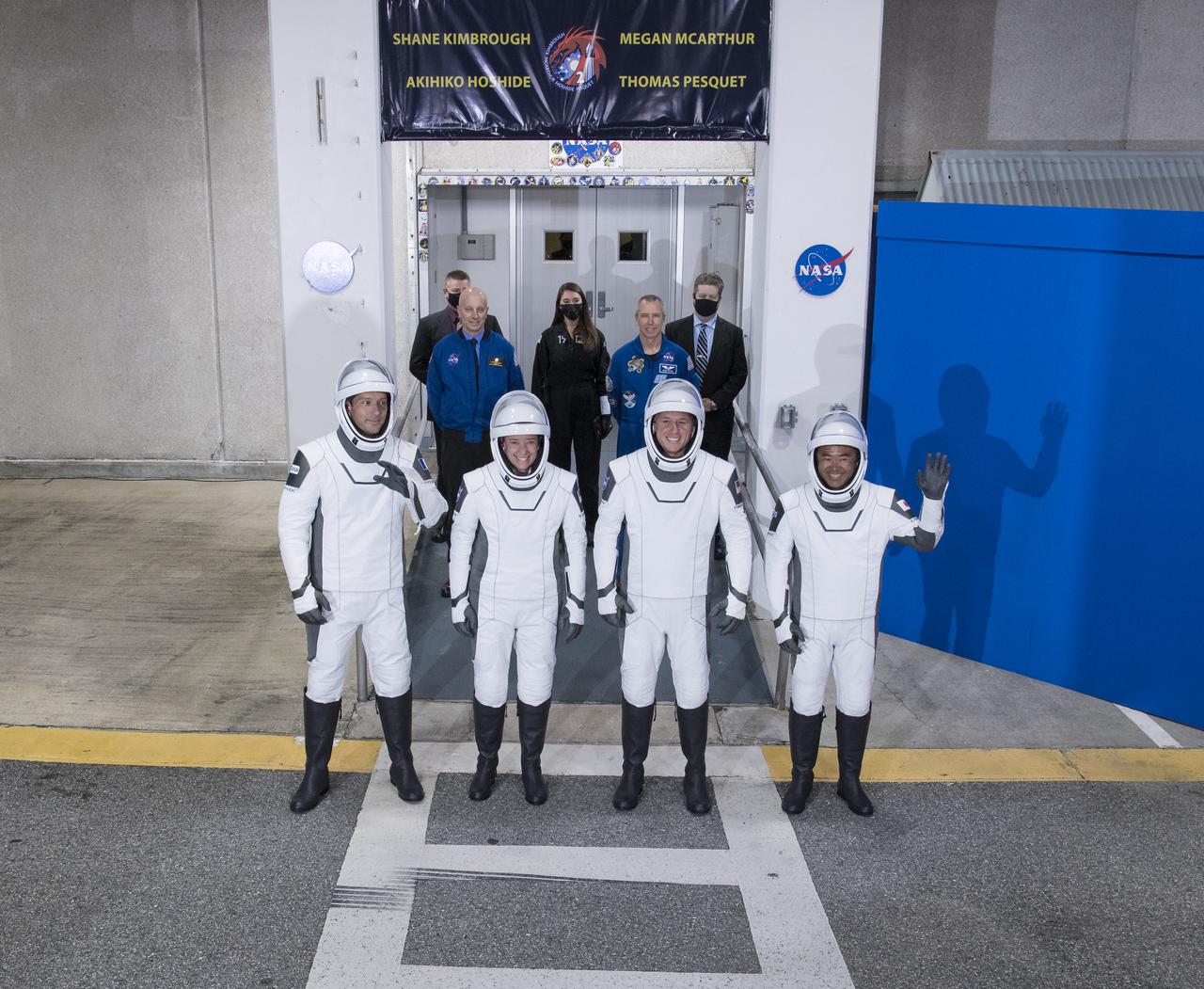
From left to right, ESA (European Space Agency) astronaut Thomas Pesquet, NASA astronauts Megan McArthur and Shane Kimbrough, and Japan Aerospace Exploration Agency (JAXA) astronaut Akihiko Hoshide, wearing SpaceX spacesuits, are seen as they prepare to depart the Neil A. Armstrong Operations and Checkout Building for Launch Complex 39A to board the SpaceX Crew Dragon spacecraft for the Crew-2 mission launch, Friday, April 23, 2021, at NASA’s Kennedy Space Center in Florida. NASA’s SpaceX Crew-2 mission is the second crew rotation mission of the SpaceX Crew Dragon spacecraft and Falcon 9 rocket to the International Space Station as part of the agency’s Commercial Crew Program. Kimbrough, McArthur, Pesquet, and Hoshide are scheduled to launch at 5:49 a.m. EDT. Photo Credit: (NASA/Aubrey Gemignani)
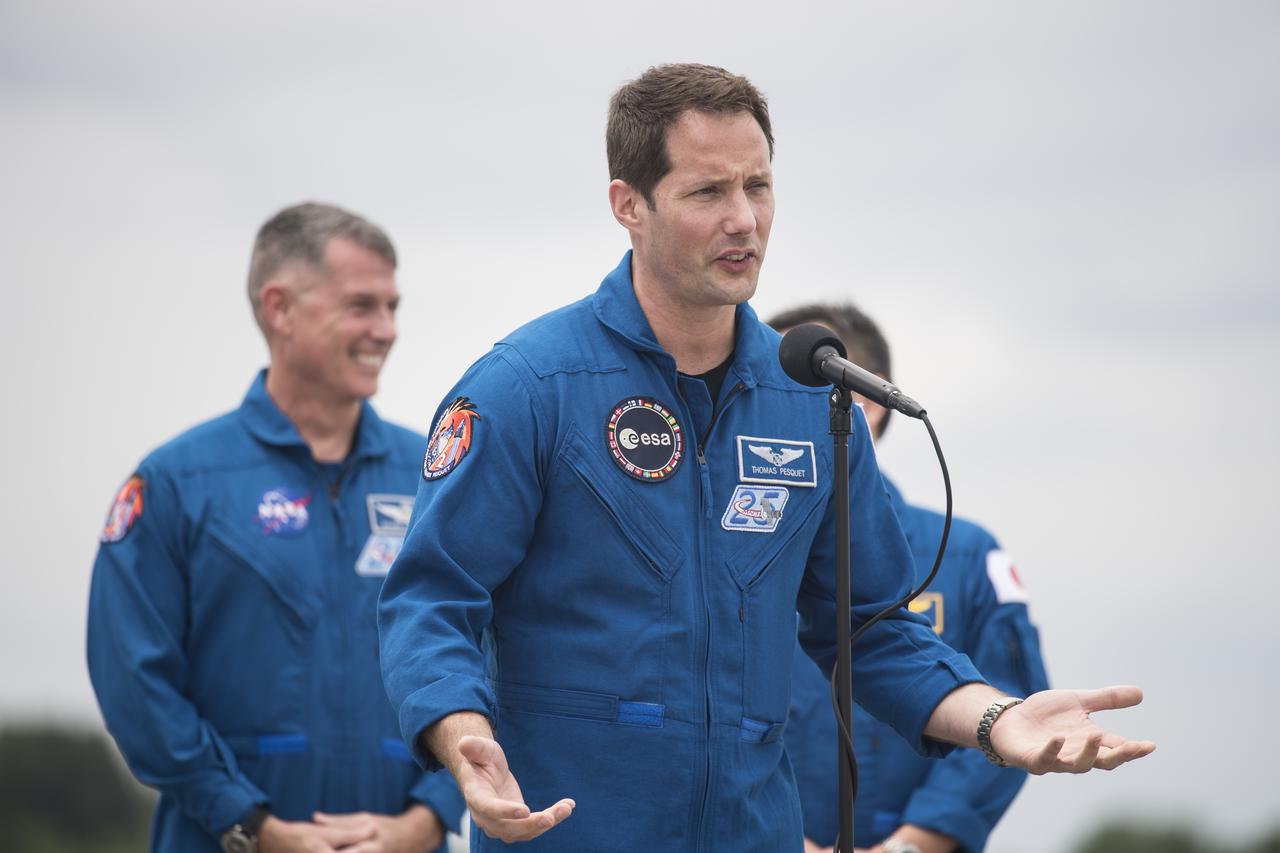
ESA (European Space Agency) astronaut Thomas Pesquet answers a question from media after he and his crew mates, NASA astronauts Shane Kimbrough and Megan McArthur, and Japan Aerospace Exploration Agency (JAXA) astronaut Akihiko Hoshide, arrived at the Launch and Landing Facility at NASA’s Kennedy Space Center ahead of SpaceX’s Crew-2 mission, Friday, April 16, 2021, in Florida. NASA’s SpaceX Crew-2 mission is the second operational mission of the SpaceX Crew Dragon spacecraft and Falcon 9 rocket to the International Space Station as part of the agency’s Commercial Crew Program. Kimbrough, McArthur, Pesquet, and Hoshide are scheduled to launch at 6:11 a.m. ET on Thursday, April 22, from Launch Complex 39A at the Kennedy Space Center. Photo Credit: (NASA/Aubrey Gemignani)
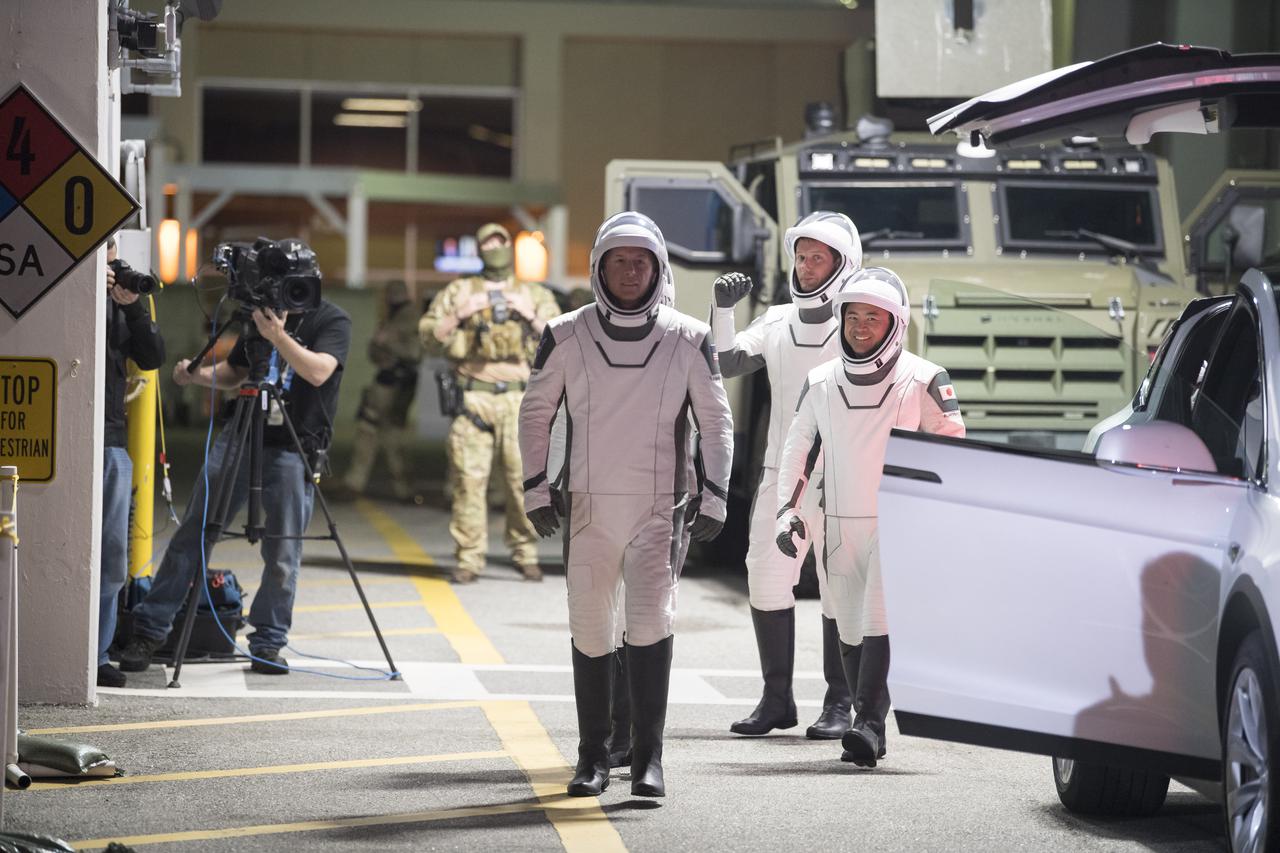
NASA astronauts Shane Kimbrough, front, and ESA (European Space Agency) astronaut Thomas Pesquet, back left, and Japan Aerospace Exploration Agency (JAXA) astronaut Akihiko Hoshide, wearing SpaceX spacesuits, are seen as they prepare to depart the Neil A. Armstrong Operations and Checkout Building for Launch Complex 39A during a dress rehearsal prior to the Crew-2 mission launch, Sunday, April 18, 2021, at NASA’s Kennedy Space Center in Florida. NASA’s SpaceX Crew-2 mission is the second operational mission of the SpaceX Crew Dragon spacecraft and Falcon 9 rocket to the International Space Station as part of the agency’s Commercial Crew Program. Kimbrough, McArthur, Pesquet, and Hoshide are scheduled to launch at 6:11 a.m. ET on Thursday, April 22, from Launch Complex 39A at the Kennedy Space Center. Photo Credit: (NASA/Aubrey Gemignani)
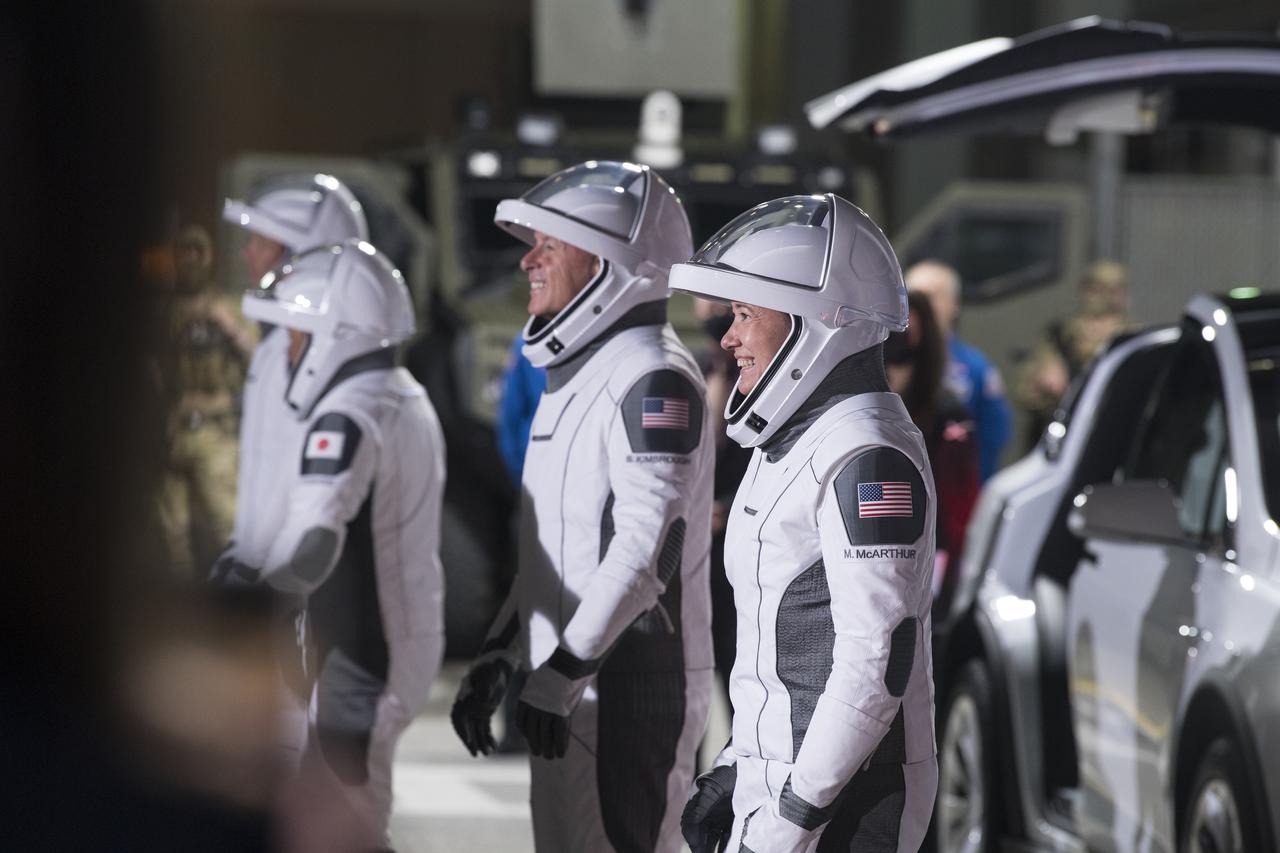
From left to right, ESA (European Space Agency) astronaut Thomas Pesquet, Japan Aerospace Exploration Agency (JAXA) astronaut Akihiko Hoshide, and NASA astronauts Shane Kimbrough and Megan McArthur, are seen as they prepare to depart the Neil A. Armstrong Operations and Checkout Building for Launch Complex 39A during a dress rehearsal prior to the Crew-2 mission launch, Sunday, April 18, 2021, at NASA’s Kennedy Space Center in Florida. NASA’s SpaceX Crew-2 mission is the second operational mission of the SpaceX Crew Dragon spacecraft and Falcon 9 rocket to the International Space Station as part of the agency’s Commercial Crew Program. Kimbrough, McArthur, Pesquet, and Hoshide are scheduled to launch at 6:11 a.m. ET on Thursday, April 22, from Launch Complex 39A at the Kennedy Space Center. Photo Credit: (NASA/Aubrey Gemignani)
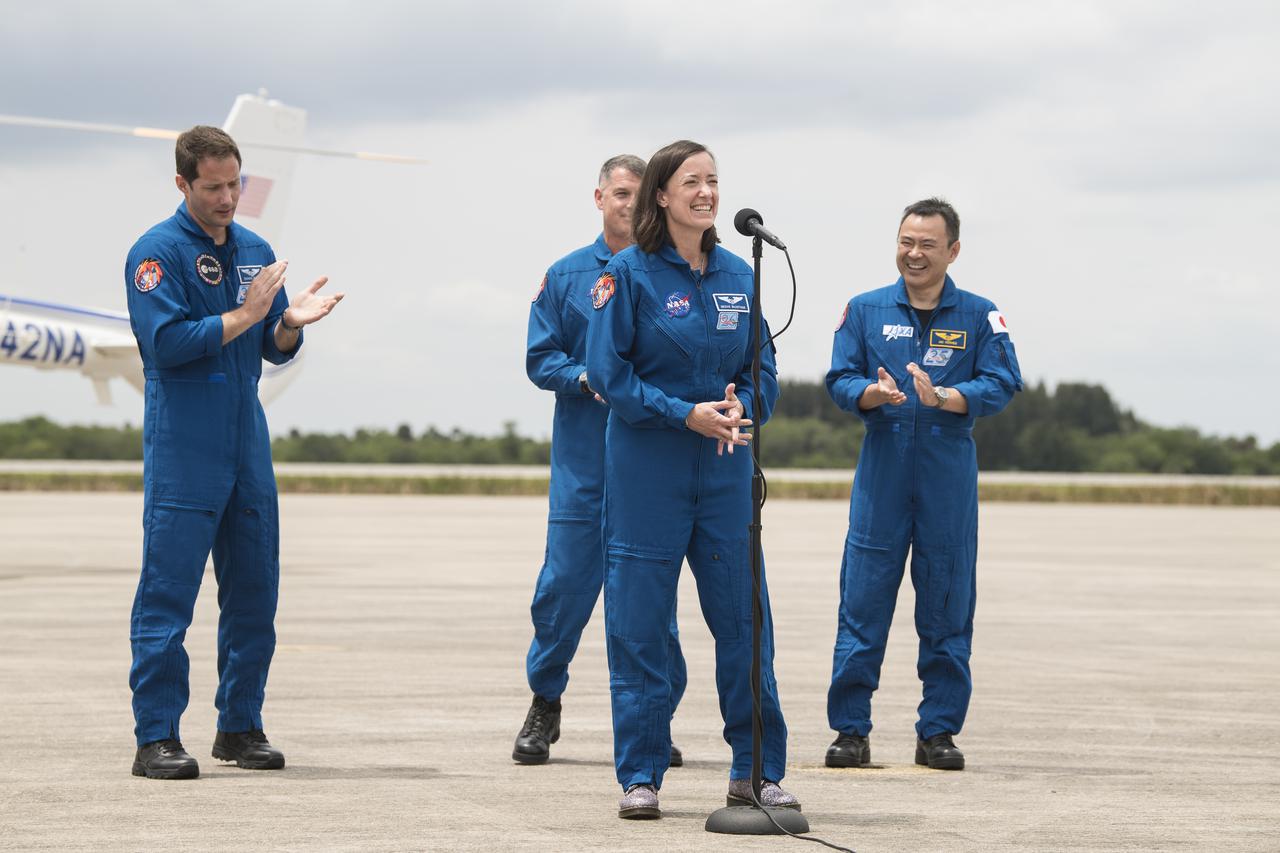
NASA astronaut Megan McArthur answers a question as her crew mates clap, ESA (European Space Agency) astronaut Thomas Pesquet, left, NASA astronaut Shane Kimbrough, and Japan Aerospace Exploration Agency (JAXA) astronaut Akihiko Hoshide, right, after they arrived at the Launch and Landing Facility at NASA’s Kennedy Space Center ahead of SpaceX’s Crew-2 mission, Friday, April 16, 2021, in Florida. NASA’s SpaceX Crew-2 mission is the second operational mission of the SpaceX Crew Dragon spacecraft and Falcon 9 rocket to the International Space Station as part of the agency’s Commercial Crew Program. Kimbrough, McArthur, Pesquet, and Hoshide are scheduled to launch at 6:11 a.m. ET on Thursday, April 22, from Launch Complex 39A at the Kennedy Space Center. Photo Credit: (NASA/Aubrey Gemignani)
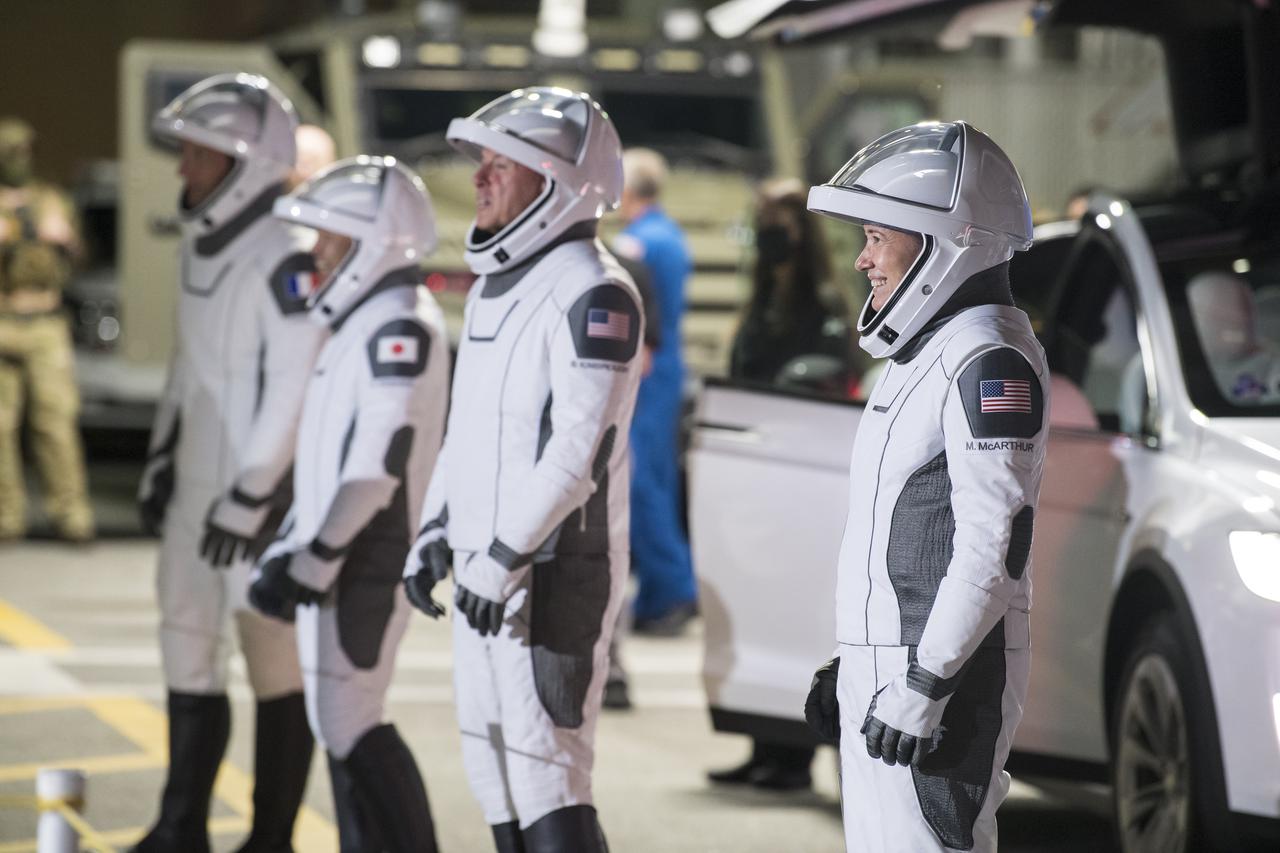
From left to right, ESA (European Space Agency) astronaut Thomas Pesquet, Japan Aerospace Exploration Agency (JAXA) astronaut Akihiko Hoshide, and NASA astronauts Shane Kimbrough and Megan McArthur, are seen as they prepare to depart the Neil A. Armstrong Operations and Checkout Building for Launch Complex 39A to board the SpaceX Crew Dragon spacecraft for the Crew-2 mission launch, Friday, April 23, 2021, at NASA’s Kennedy Space Center in Florida. NASA’s SpaceX Crew-2 mission is the second crew rotation mission of the SpaceX Crew Dragon spacecraft and Falcon 9 rocket to the International Space Station as part of the agency’s Commercial Crew Program. Kimbrough, McArthur, Pesquet, and Hoshide are scheduled to launch at 5:49 a.m. EDT. Photo Credit: (NASA/Aubrey Gemignani)
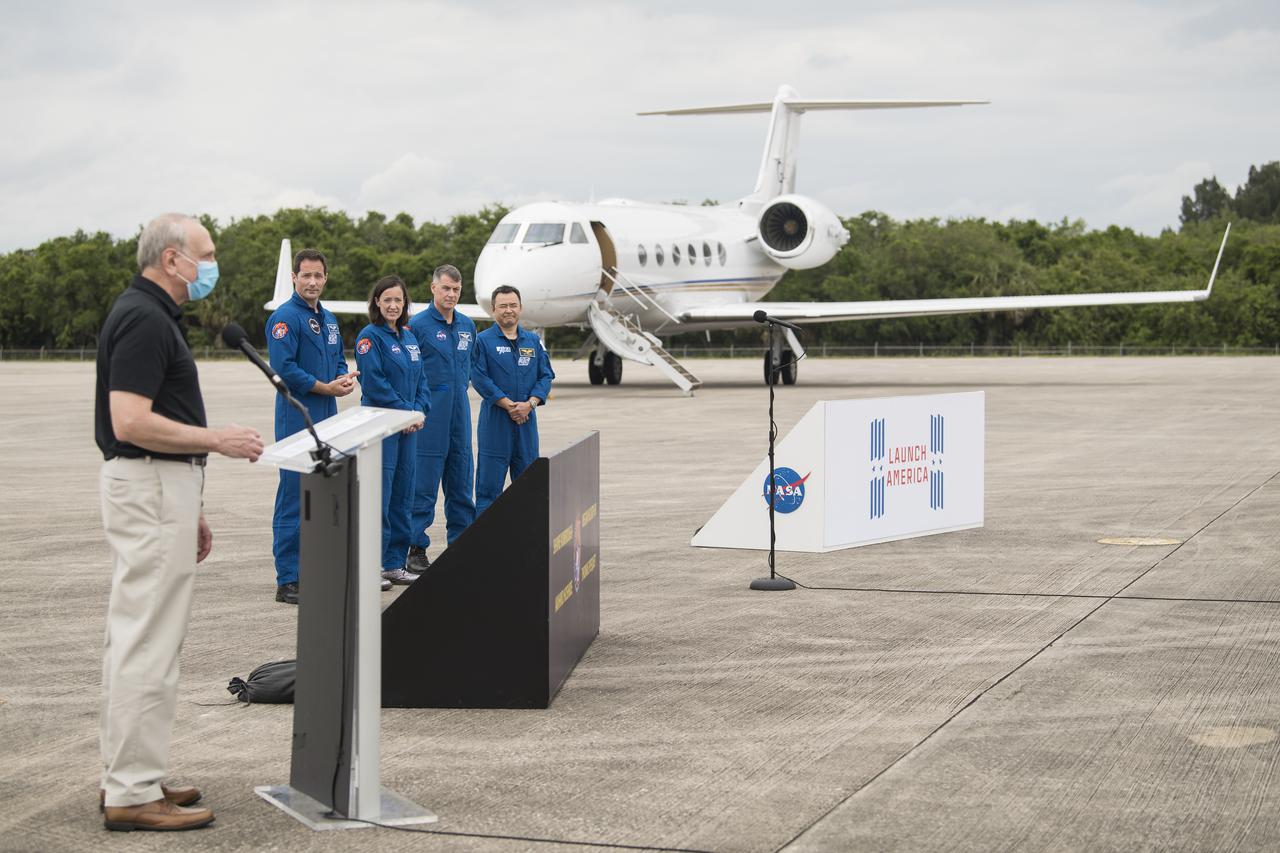
Steve Jurczyk, acting NASA Administrator, speaks to media after ESA (European Space Agency) astronaut Thomas Pesquet, left, NASA astronauts Megan McArthur, second from left, and Shane Kimbrough, second from right, and Japan Aerospace Exploration Agency (JAXA) astronaut Akihiko Hoshide, arrived at the Launch and Landing Facility at NASA’s Kennedy Space Center ahead of SpaceX’s Crew-2 mission, Friday, April 16, 2021, in Florida. NASA’s SpaceX Crew-2 mission is the second operational mission of the SpaceX Crew Dragon spacecraft and Falcon 9 rocket to the International Space Station as part of the agency’s Commercial Crew Program. Kimbrough, McArthur, Pesquet, and Hoshide are scheduled to launch at 6:11 a.m. ET on Thursday, April 22, from Launch Complex 39A at the Kennedy Space Center. Photo Credit: (NASA/Aubrey Gemignani)
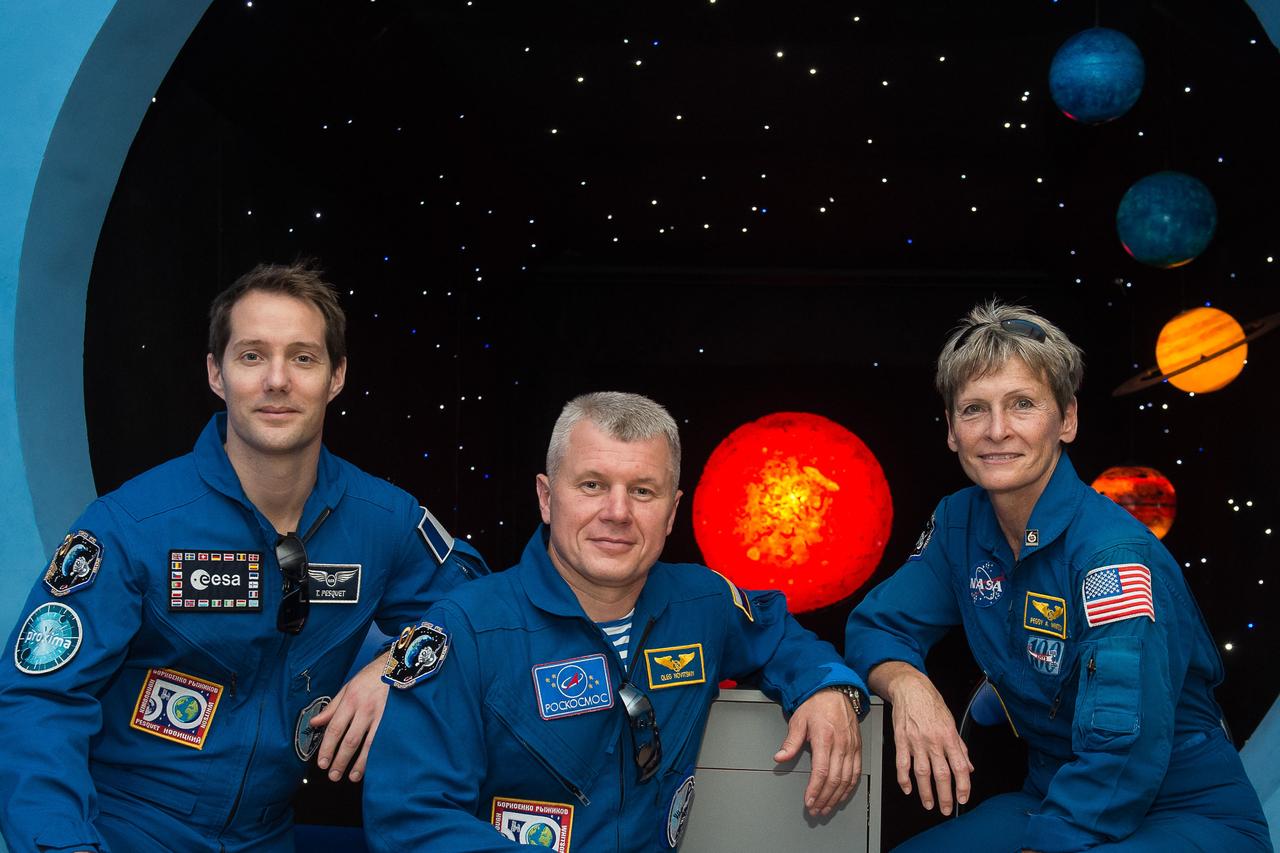
During a tour of a museum in Baikonur, Kazakhstan June 26, Expedition 48-49 backup crewmembers Thomas Pesquet of the European Space Agency (left), Oleg Novitskiy of Roscosmos (center) and Peggy Whitson of NASA (right) pose for pictures in front of a mural depicting planets. Whitson, Novitskiy and Pesquet are backups to Kate Rubins of NASA, Anatoly Ivanishin of Roscosmos and Takuya Onishi of the Japan Aerospace Exploration Agency, who are preparing for launch on July 7, Baikonur time, on the Soyuz MS-01 spacecraft for a planned four-month mission on the International Space Station. GCTC/Andrei Shelepin