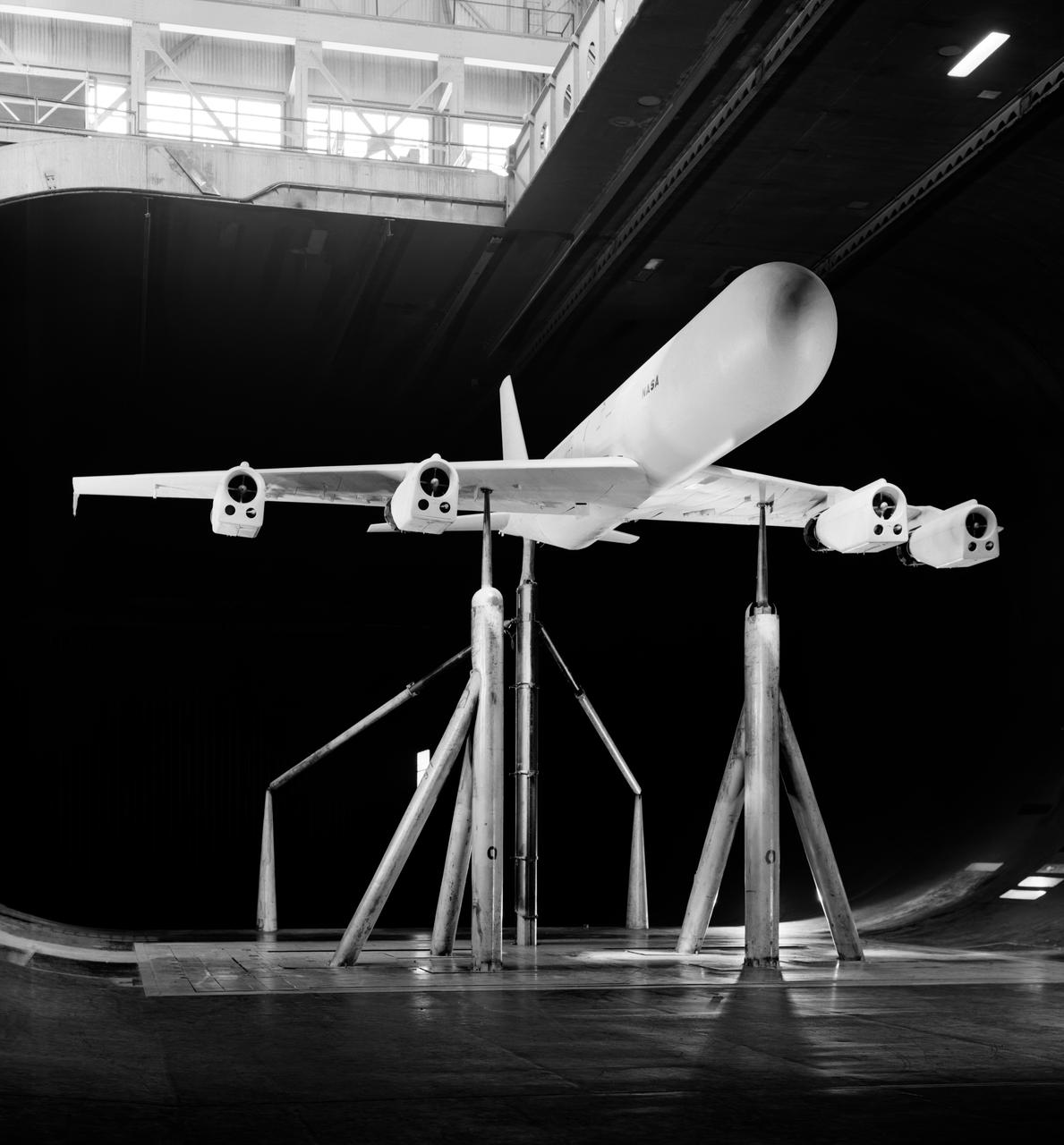
Effects of thrust reversers on the aerodynamics characteristics of a four-engine jet transport model. 1/4 front view on normal struts with thrust reversers.
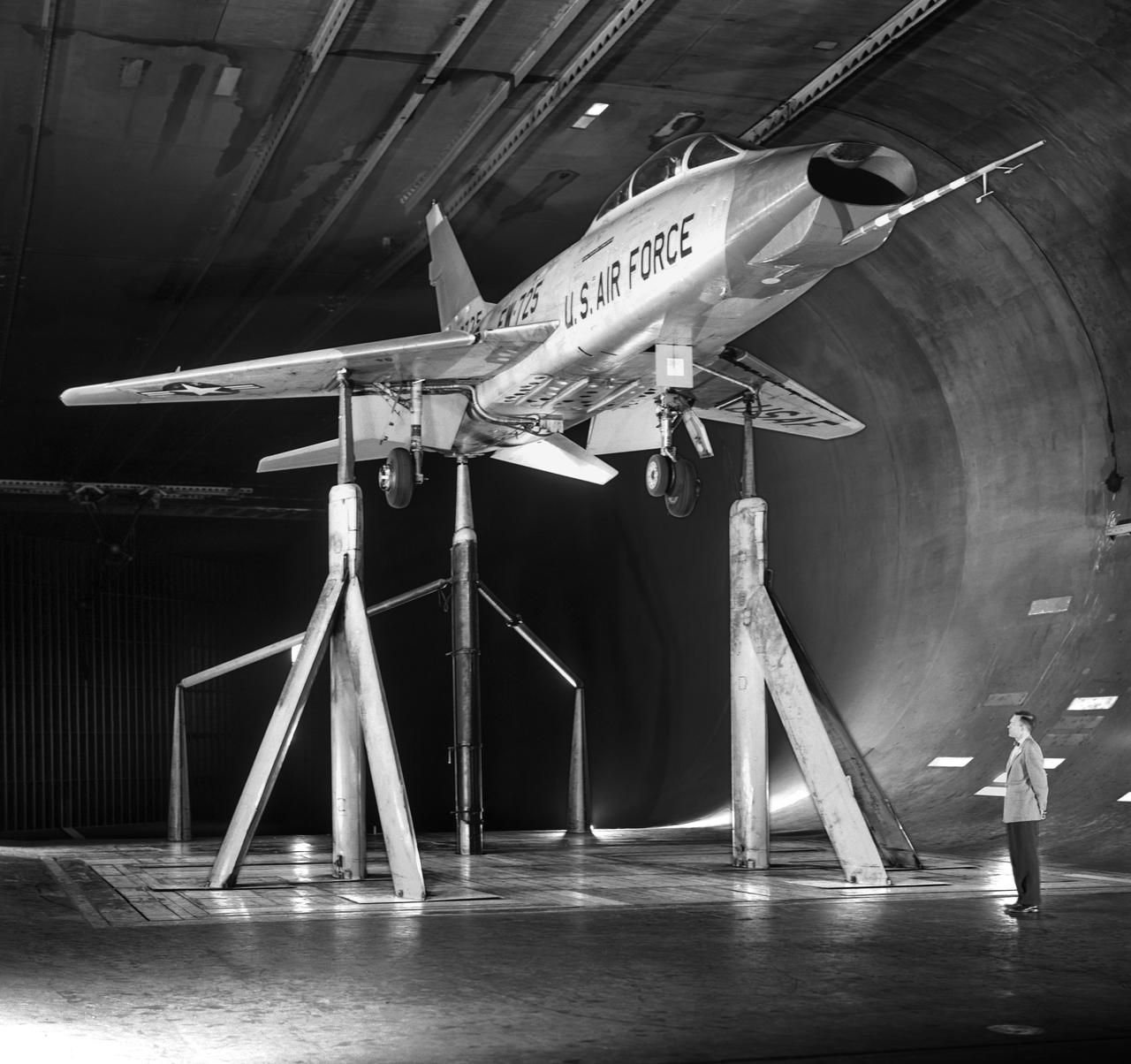
North American F-100-F airplane, equipped with thrust reversers, full scale wind tunnel test. 3/4 front view of F-100-F airplane with North American Aviation thrust reverser. On standard 40x80 struts landing gear down. Mark Kelly, branch chief in photo.

National Aeronautics and Space Administration (NASA) researcher John Carpenter inspects an aircraft model with a four-fan thrust reverser which would be studied in the 9- by 15-Foot Low Speed Wind Tunnel at the Lewis Research Center. Thrust reversers were introduced in the 1950s as a means for slowing high-speed jet aircraft during landing. Engineers sought to apply the technology to Vertical and Short Takeoff and Landing (VSTOL) aircraft in the 1970s. The new designs would have to take into account shorter landing areas, noise levels, and decreased thrust levels. A balance was needed between the thrust reverser’s efficiency, its noise generation, and the engine’s power setting. This model underwent a series of four tests in the 9- by 15-foot tunnel during April and May 1974. The model, with a high-wing configuration and no tail, was equipped with four thrust-reverser engines. The investigations included static internal aerodynamic tests on a single fan/reverser, wind tunnel isolated fan/reverser thrust tests, installation effects on a four-fan airplane model in a wind tunnel, and single reverser acoustic tests. The 9-by 15 was built inside the return leg of the 8- by 6-Foot Supersonic Wind Tunnel in 1968. The facility generates airspeeds from 0 to 175 miles per hour to evaluate the aerodynamic performance and acoustic characteristics of nozzles, inlets, and propellers, and investigate hot gas re-ingestion of advanced VSTOL concepts. John Carpenter was a technician in the Wind Tunnels Service Section of the Test Installations Division.
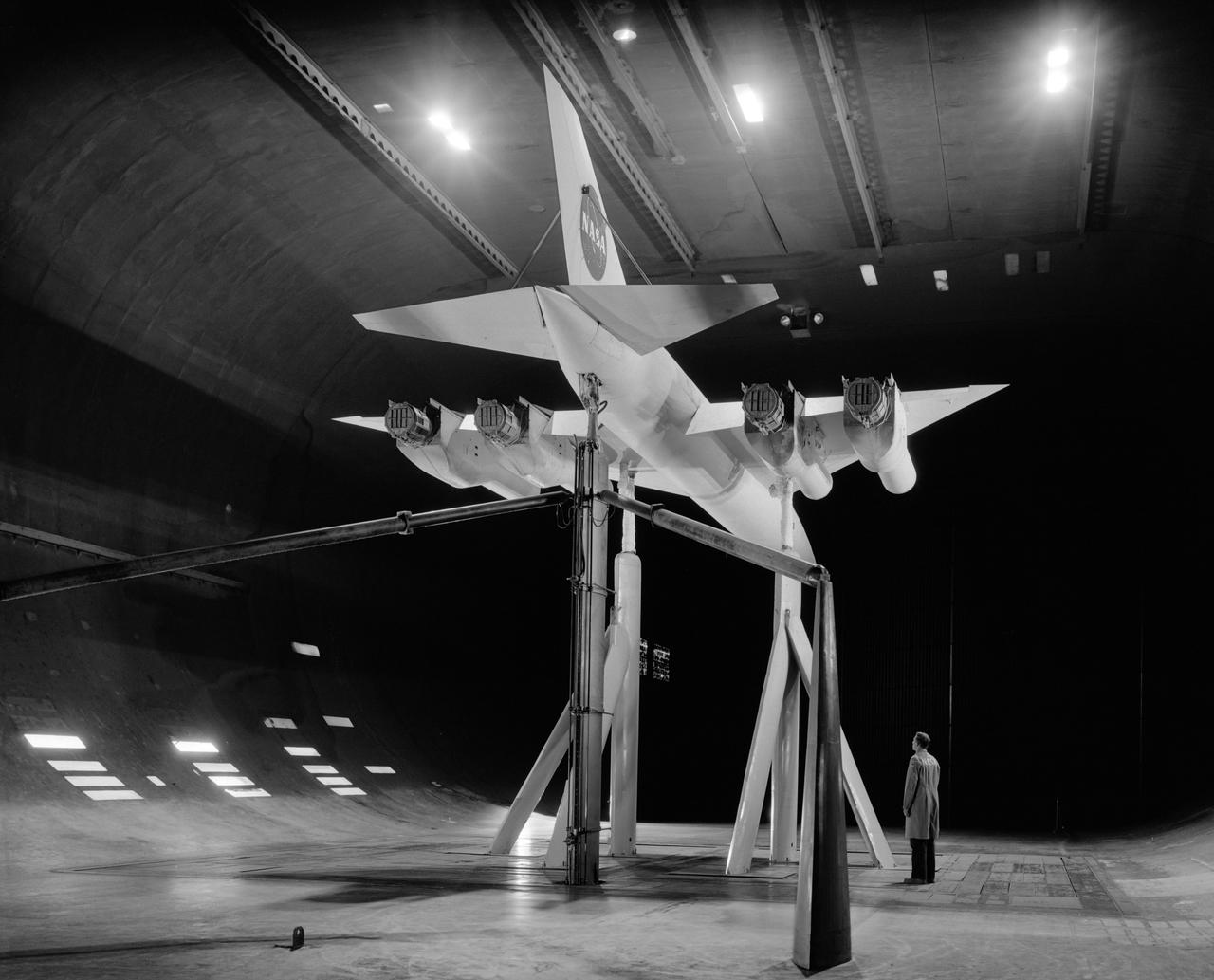
3/4 rear view of SCAT-17 supersonic transport with thrust reverser installed and trailing edge flaps deflected at 30 deg.
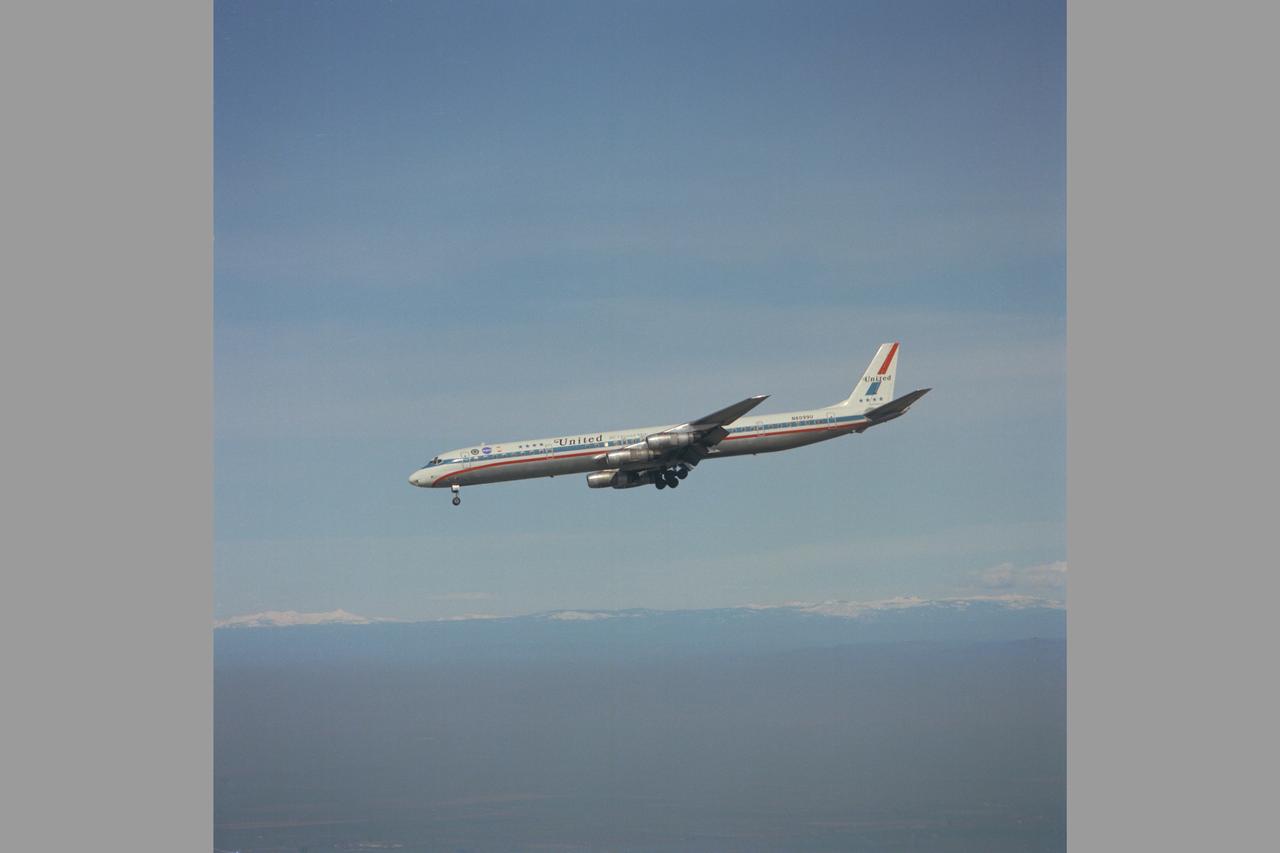
United Airlines DC-8 (N8099U) Two Segment Evaluation. In-Flight Thrust Reversing, Steep Approach Research. The thrust reversing concept was applied to the DC-8 Commercial transport to achieve the rapid descent capability required for FAA certificaiton. Note: Used in publication in Flight Research at Ames; 57 Years of Development and Validation of Aeronautical Technology NASA SP-1998-3300 fig 96
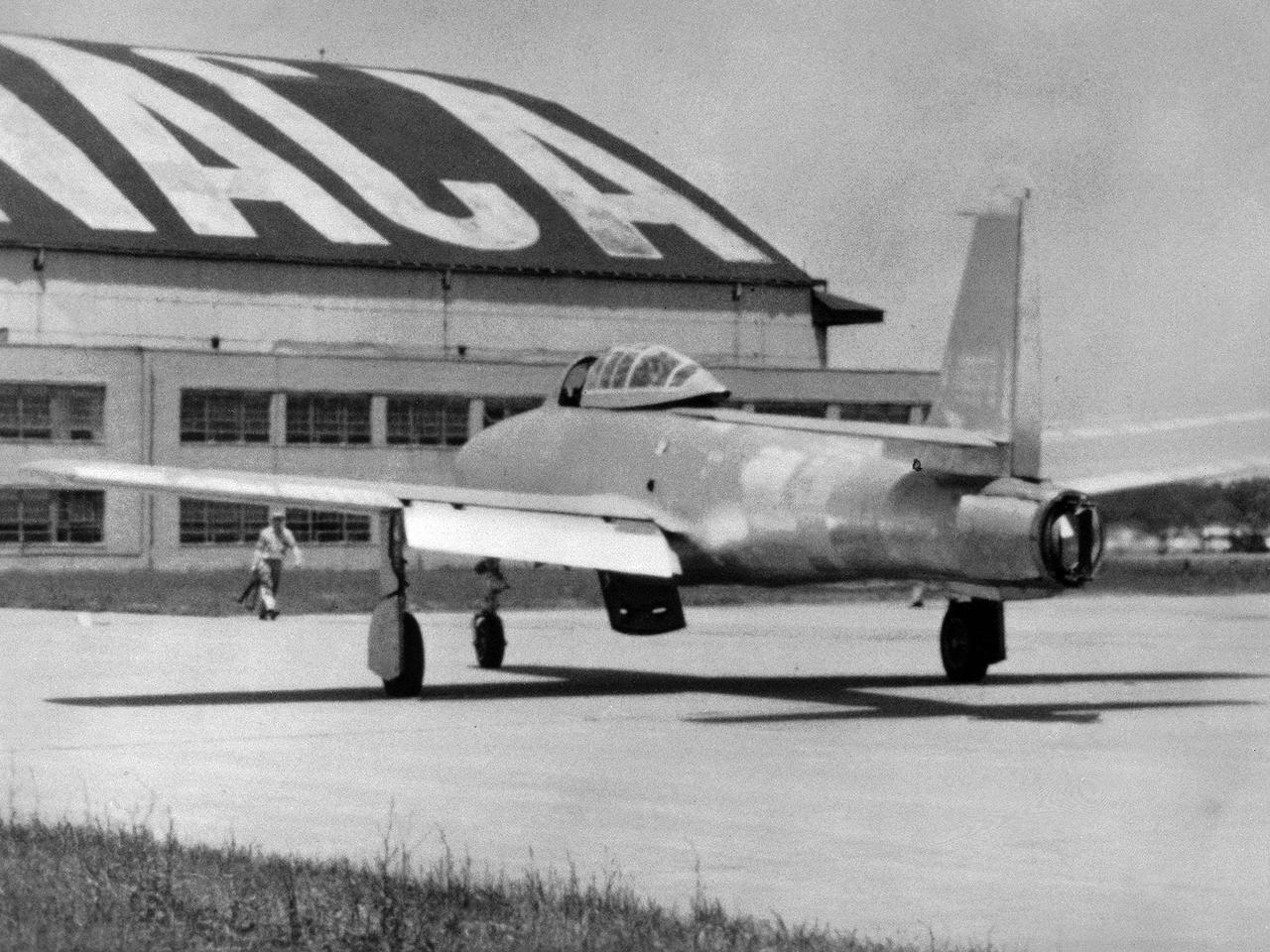
The US Air Force loaned a Republic F-84 Thunderjet to the National Advisory Committee for Aeronautics (NACA) Lewis Flight Propulsion Laboratory in the spring of 1954. NACA researchers soon modified the aircraft for the first demonstration of a reverse thruster. Republic built over 4000 Thunderjets between 1947 and 1953 for the military as a successor to the Lockheed F-80 Shooting Star. TheF-84s became successful multi-use aircraft during the Korean War. The use of traditional wheel brakes on high speed aircraft was problematic because the required braking system would weigh too much. The reverse thruster was developed as a method for stopping these aircraft without increasing the overall weight. Panels in the tail section near the jet engine’s nozzle opened up during a landing. These extended flaps not only caused resistance to the airstream but also reversed the engine’s thrust. In June 1964 Irving Pinkel, head of the Lewis Physics Division, oversaw a demonstration of this technology on an F-84 at the NACA laboratory. The side fuselage panels around the engine nozzle, seen closed in this photograph, opened up like wings and deflected the engine’s thrust towards the front of the aircraft, thus producing reverse thrust. The F-84 activated the reverse thruster and the aircraft moved backwards across the runway.
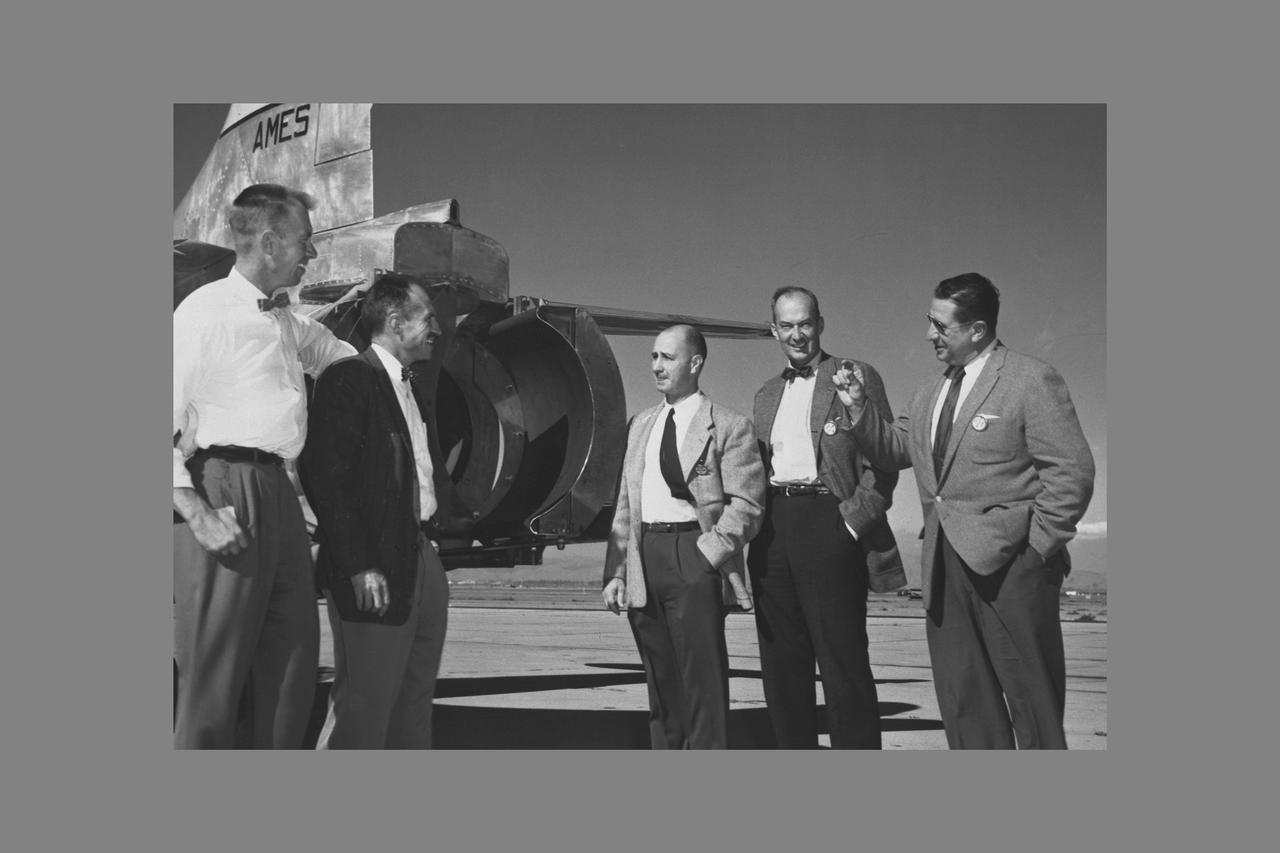
NACA AMES ENGINEERS: Seth B. ANDERSON AND NACA AMES PILOT Gorge E. COOPER WITH W.E. RHOADES, ROBERT McIVER, MICHAEL CASSENLY OF UNITED AIRLINES. Visit Ames to dicuss Thrust Reverser Problems.
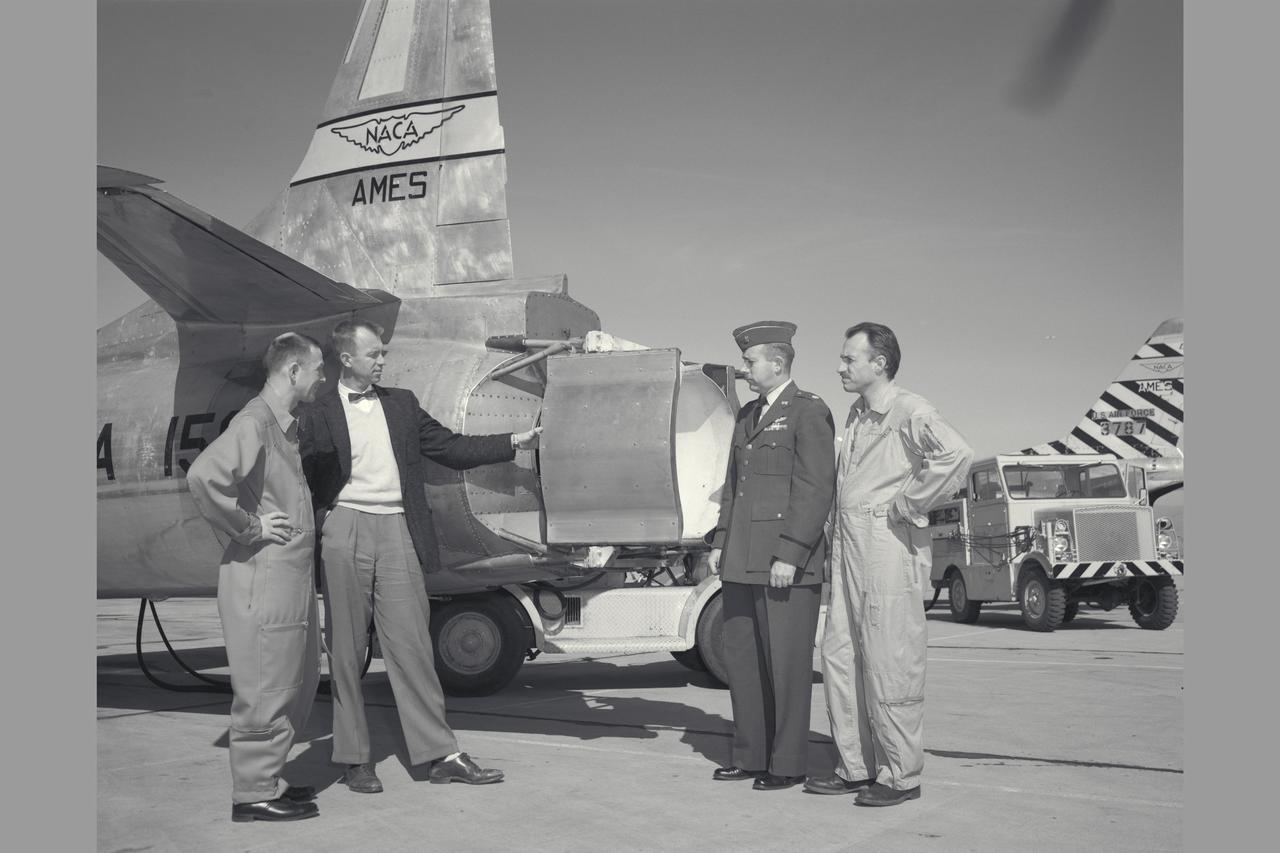
NACA Photographer Thrust reverser on F-94C-1 (AF50-956 NACA 156) Starfire (l to R) Air Force Major E. Sommerich; Ames Engineer Seth Anderson, Lt. Col. Tavasti; and Ames Chief test pilot George Cooper discussing phases of flight evaluation tests. Note: Used in publication in Flight Research at Ames; 57 Years of Development and Validation of Aeronautical Technology NASA SP-1998-3300 fig 91