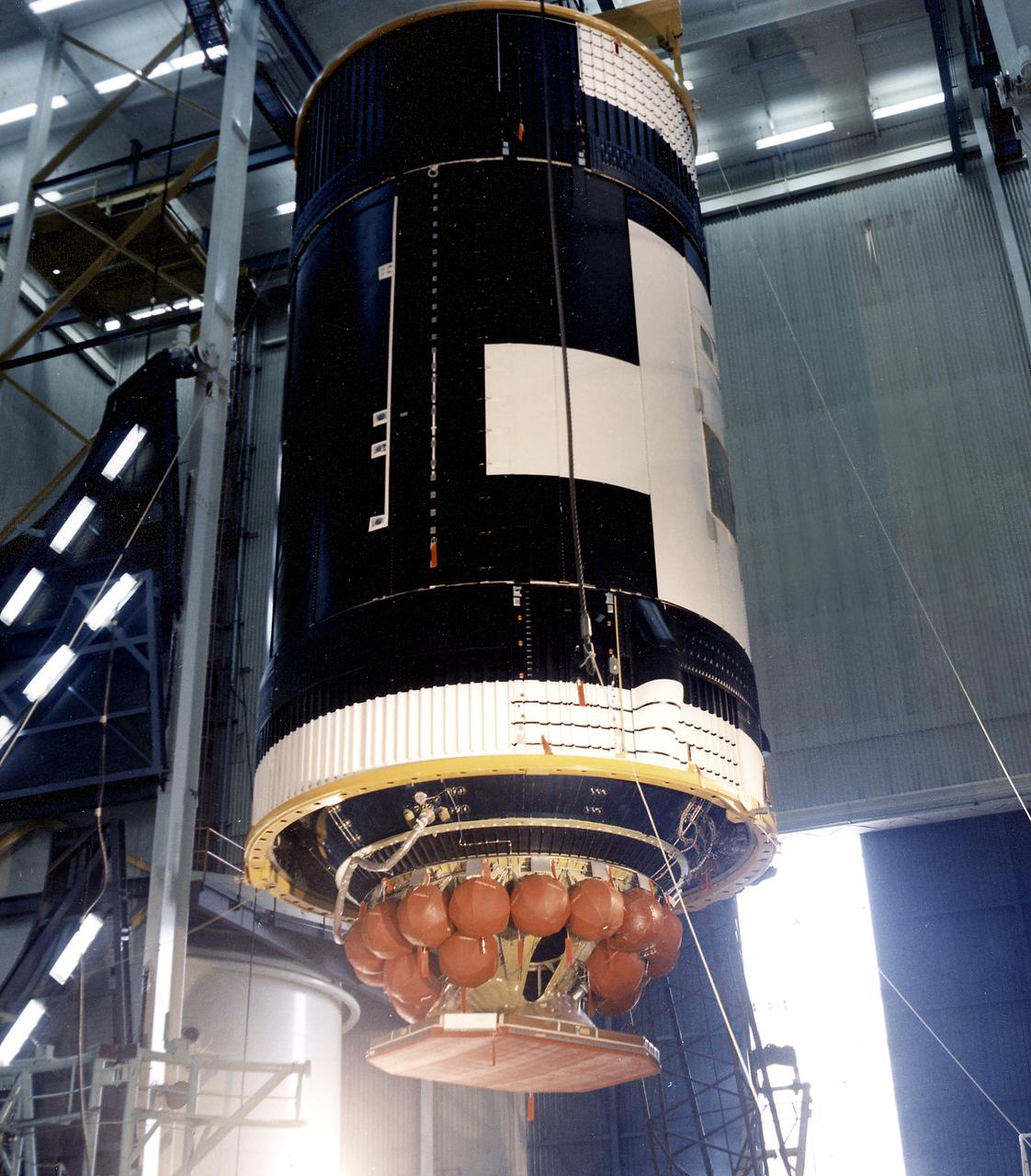
This photograph shows the Skylab Orbital Workshop (OWS) assembled, with its Thruster Attitude Control System (TACS) and radiator, ready for placing on the transporter. Twenty-two titanium spheres above the radiator housed the nitrogen required for operation of the TACS. At one end of the OWS, the TACS provided short-term control of the attitude of the Skylab.
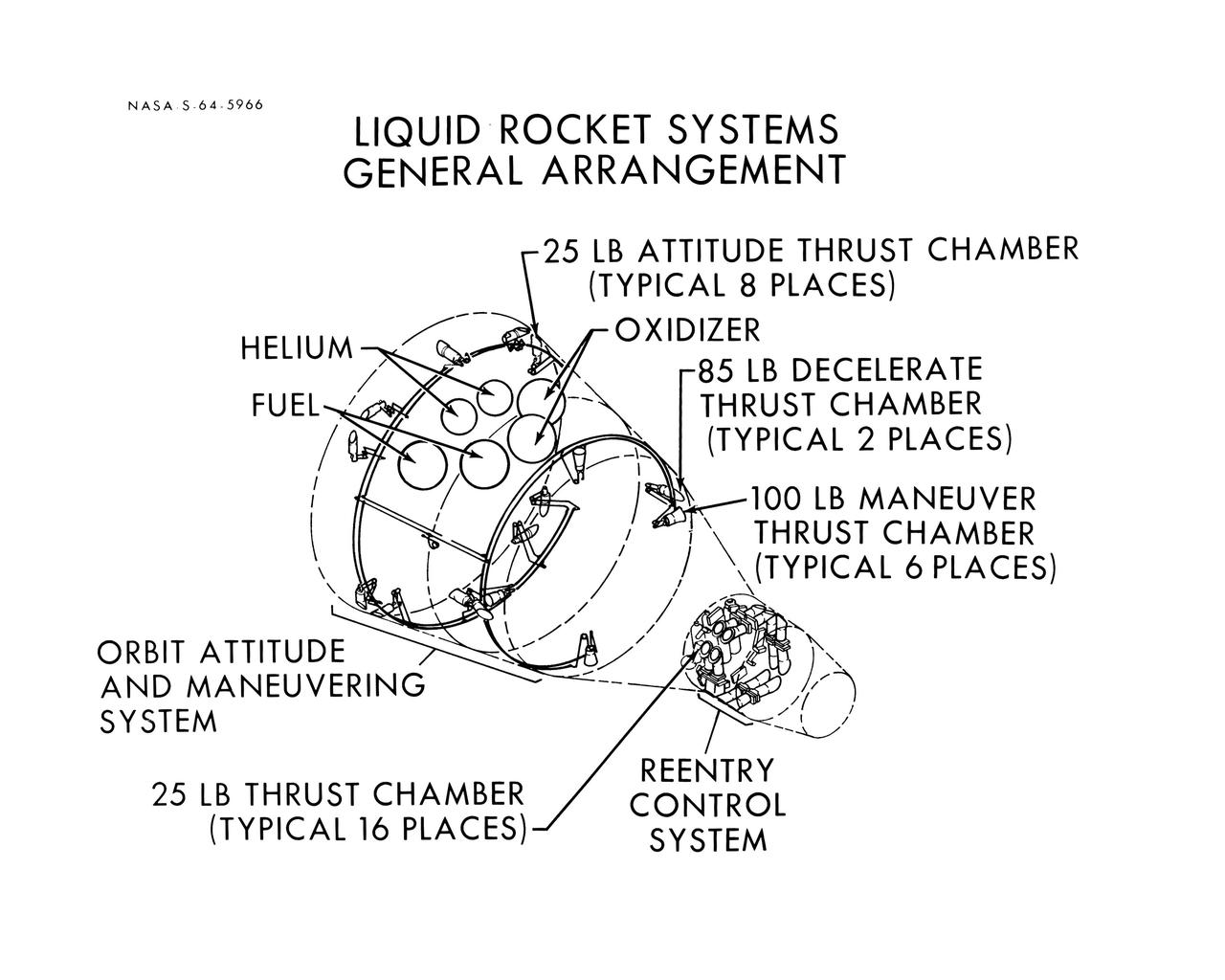
S64-05966 (1964) --- Diagram shows the general arrangement of the liquid rocket systems on the Gemini spacecraft are shown. The locations of the 25-pound, 85-pound and 100-pound thrusters of the orbital attitude and maneuver system and the 25-pound thrusters of the re-entry control system are shown.
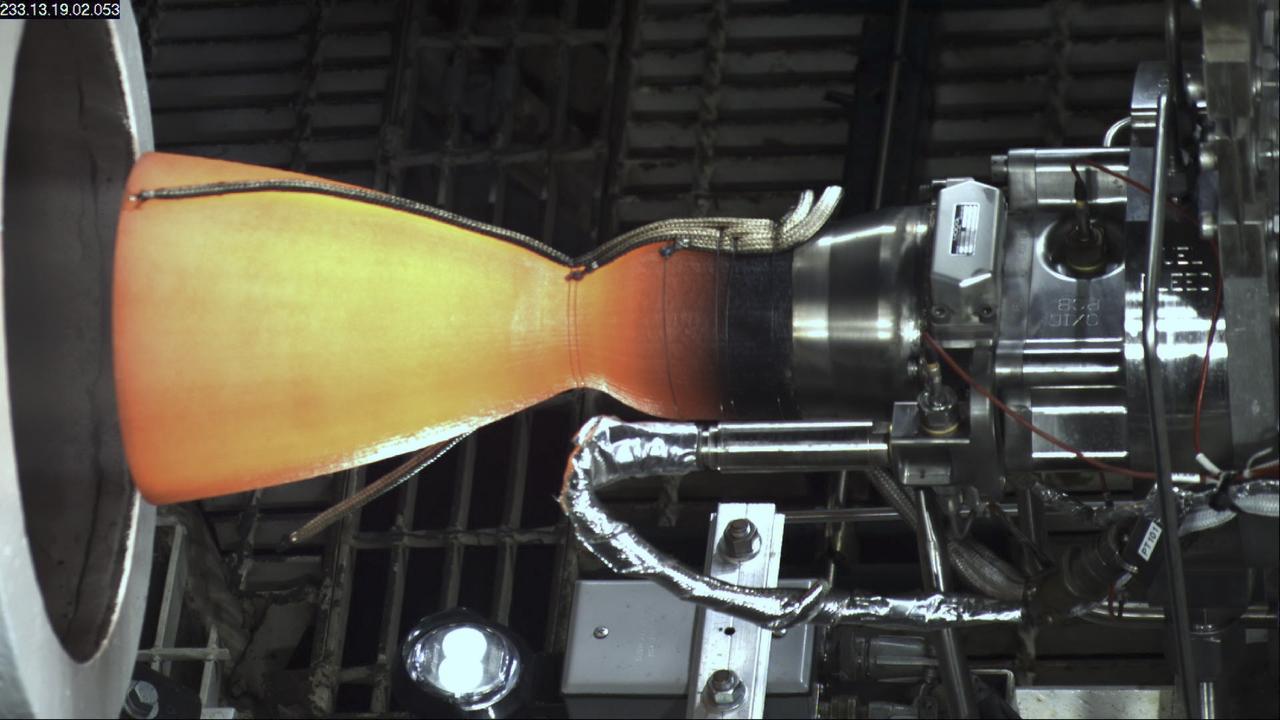
LAS CRUCES, N.M. – A thruster glows red during a hot-fire test for Boeing’s CST-100 spacecraft orbital maneuvering and attitude control OMAC system. During the tests at NASA’s White Sands Test Facility in Las Cruces, N.M., Boeing and partner Aerojet Rocketdyne tested two thrusters to demonstrate stable combustion and performance in a vacuum, simulating a space environment. Two additional thrusters were tested in a vacuum to demonstrate long-duration mission survivability. The 24 thrusters that compose the CST-100’s OMAC system will be jettisoned with the service module after the deorbit burn, prior to re-entry. The tests completed Milestone 9 of the company's funded Space Act Agreement with NASA’s Commercial Crew Program, or CCP, during the Commercial Crew Integrated Capability, or CCiCap, initiative. CCP is intended to lead to the availability of commercial human spaceflight services for government and commercial customers to low-Earth orbit. Future development and certification initiatives eventually will lead to the availability of human spaceflight services for NASA to send its astronauts to the International Space Station, where critical research is taking place daily. For more information about CCP, go to http://www.nasa.gov/commercialcrew. Photo credit: Boeing
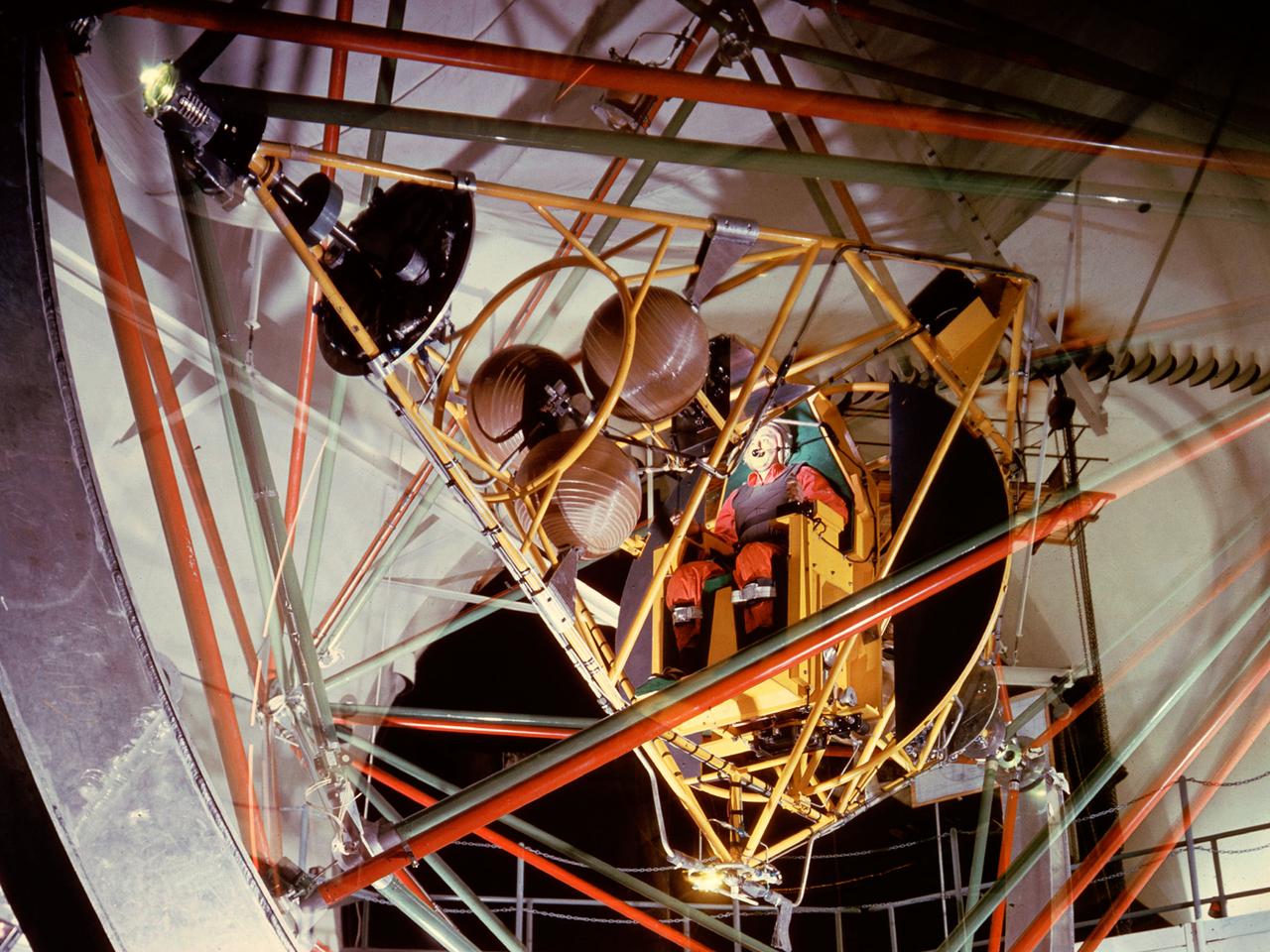
National Aeronautics and Space Administration (NASA) pilot Joe Algranti tests the Multi-Axis Space Test Inertia Facility (MASTIF) inside the Altitude Wind Tunnel while researcher Robert Miller looks on. The MASTIF was a three-axis rig with a pilot’s chair mounted in the center to train Project Mercury pilots to bring a spinning spacecraft under control. An astronaut was secured in a foam couch in the center of the rig. The rig then spun on three axes from 2 to 50 rotations per minute. Small nitrogen gas thrusters were used by the astronauts to bring the MASTIF under control. The device was originally designed in early 1959 without the chair and controllers. It was used by Lewis researchers to determine if the Lewis-designed autopilot system could rectify the capsule’s attitude following separation. If the control system failed to work properly, the heatshield would be out of place and the spacecraft would burn up during reentry. The system was flight tested during the September 1959 launch of the Lewis-assembled Big Joe capsule. The MASTIF was adapted in late 1959 for the astronaut training. NASA engineers added a pilot’s chair, a hand controller, and an instrument display to the MASTIF in order familiarize the astronauts with the sensations of an out-of-control spacecraft. NASA Lewis researcher James Useller and Algranti perfected and calibrated the MASTIF in the fall of 1959. In February and March 1960, the seven Project Mercury astronauts traveled to Cleveland to train on the MASTIF.
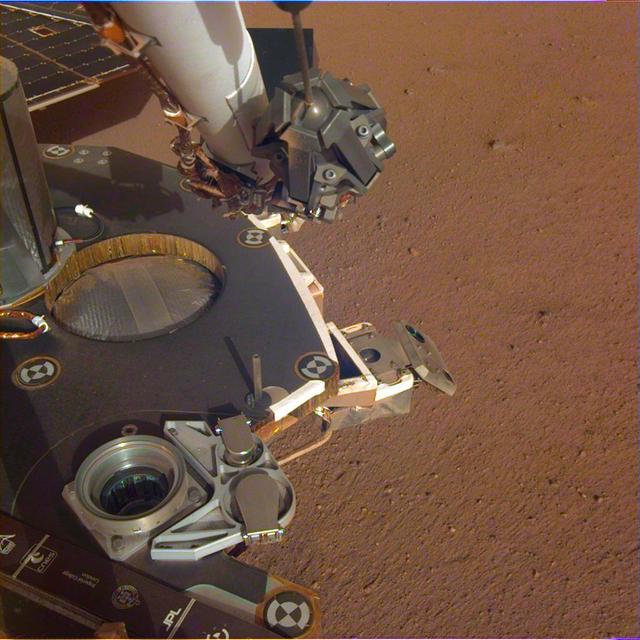
A partial view of the deck of NASA's InSight lander, where it stands on the Martian plains Elysium Planitia. The color-calibrated image was received on Dec. 4, 2018 (Sol 8). InSight's robotic arm with its stowed grapple can be seen above the deck, and jutting out from the front of the deck is one of the boxy attitude control system thrusters that helped control the spacecraft's landing. The circular silver inset of the propellant tank can also be seen in the middle of the image, as well as one of the connections for the aeroshell and parachute, which looks like a cupholder in the foreground. Next to the propellant tank is the UHF antenna, which helps the lander communicate with Earth. In the background, part of one of InSight's solar panels is visible. https://photojournal.jpl.nasa.gov/catalog/PIA22873
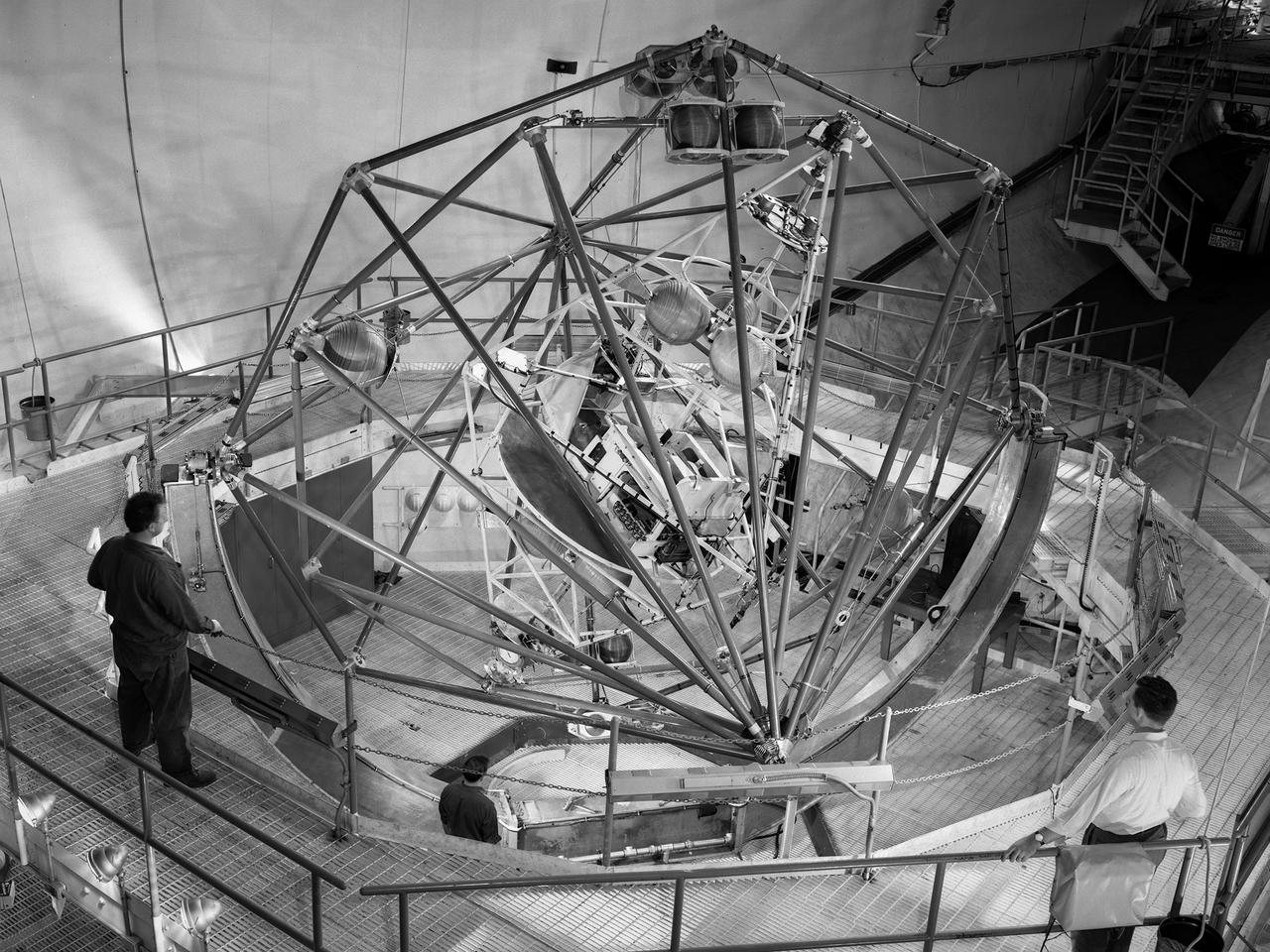
The Multi-Axis Space Test Inertial Facility (MASTIF) in the Altitude Wind Tunnel at the National Aeronautics and Space Administration (NASA) Lewis Research Center. Although the Mercury astronaut training and mission planning were handled by the Space Task Group at Langley Research Center, NASA Lewis played an important role in the program, beginning with the Big Joe launch. Big Joe was a singular attempt early in the program to use a full-scale Atlas booster and simulate the reentry of a mockup Mercury capsule without actually placing it in orbit. A unique three-axis gimbal rig was built inside Lewis’ Altitude Wind Tunnel to test Big Joe’s attitude controls. The control system was vital since the capsule would burn up on reentry if it were not positioned correctly. The mission was intended to assess the performance of the Atlas booster, the reliability of the capsule’s attitude control system and beryllium heat shield, and the capsule recovery process. The September 9, 1959 launch was a success for the control system and heatshield. Only a problem with the Atlas booster kept the mission from being a perfect success. The MASTIF was modified in late 1959 to train Project Mercury pilots to bring a spinning spacecraft under control. An astronaut was secured in a foam couch in the center of the rig. The rig then spun on three axes from 2 to 50 rotations per minute. Small nitrogen gas thrusters were used by the astronauts to bring the MASTIF under control.
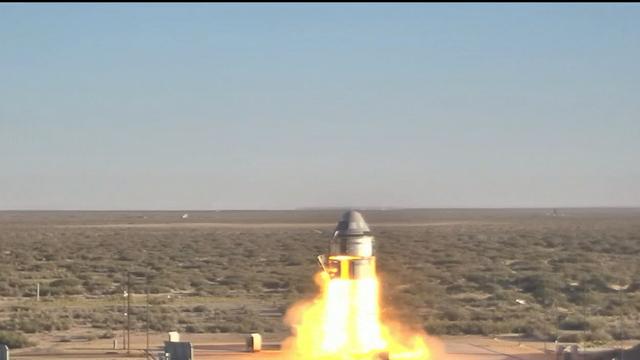
Boeing’s CST-100 Starliner’s four launch abort engines and several orbital maneuvering and attitude control thrusters ignite in the company’s Pad Abort Test, pushing the spacecraft away from the test stand with a combined 160,000 pounds of thrust, from Launch Complex 32 on White Sands Missile Range in New Mexico. The test, conducted Nov. 4, 2019, was designed to verify that each of Starliner’s systems will function not only separately, but in concert, to protect astronauts by carrying them safely away from the launch pad in the unlikely event of an emergency prior to liftoff. The Pad Abort Test is Boeing’s first test flight for NASA’s Commercial Crew Program, which is working to launch astronauts on American rockets and spacecraft from American soil for the first time since 2011.
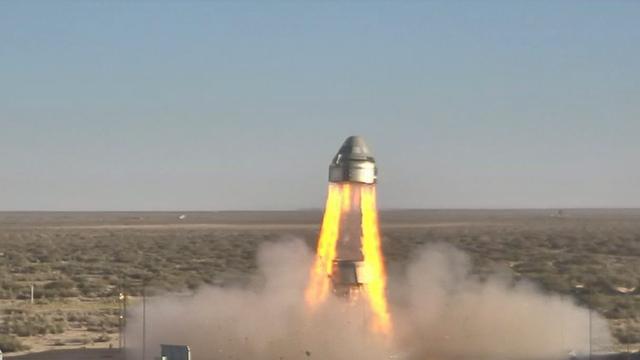
Boeing’s CST-100 Starliner’s four launch abort engines and several orbital maneuvering and attitude control thrusters ignite in the company’s Pad Abort Test, pushing the spacecraft away from the test stand with a combined 160,000 pounds of thrust, from Launch Complex 32 on White Sands Missile Range in New Mexico. The test, conducted Nov. 4, 2019, was designed to verify that each of Starliner’s systems will function not only separately, but in concert, to protect astronauts by carrying them safely away from the launch pad in the unlikely event of an emergency prior to liftoff. The Pad Abort Test is Boeing’s first test flight for NASA’s Commercial Crew Program, which is working to launch astronauts on American rockets and spacecraft from American soil for the first time since 2011.
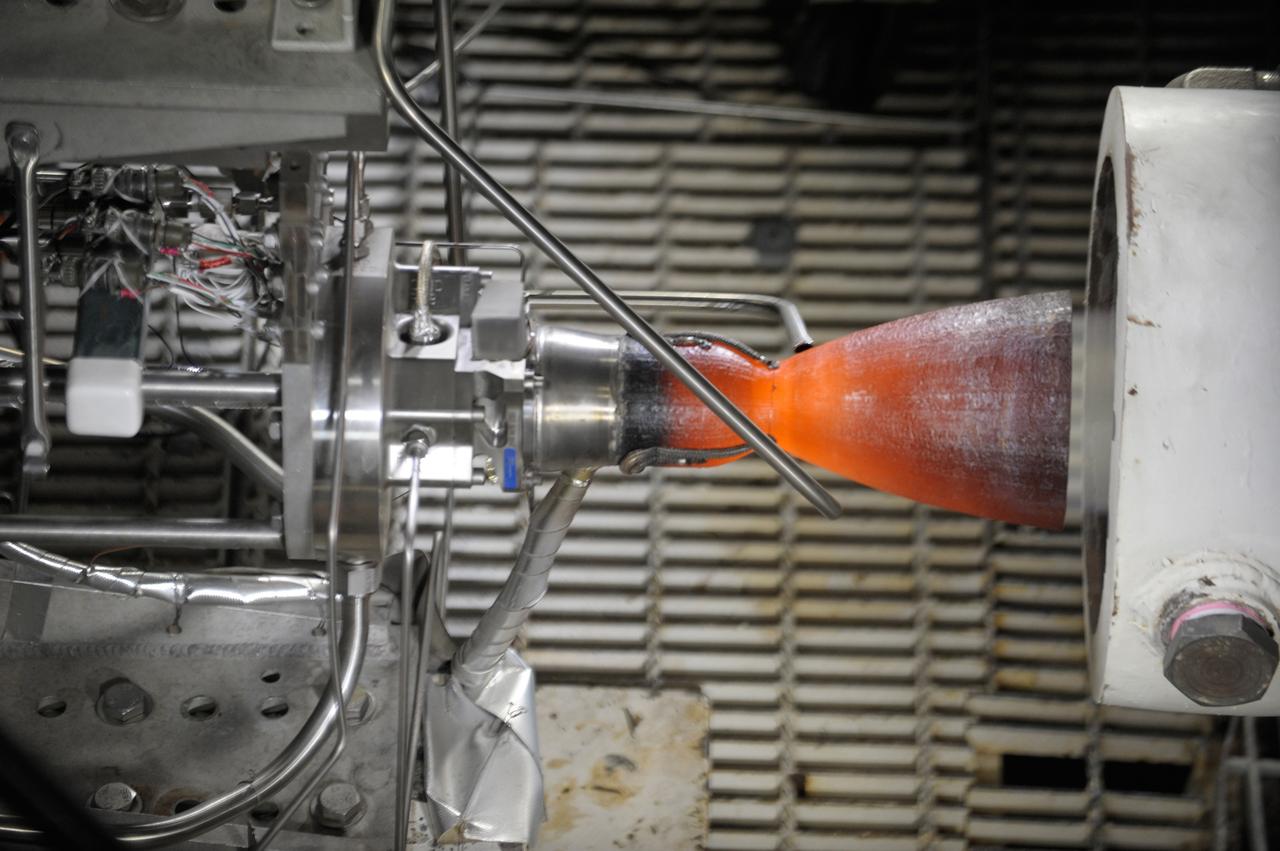
LAS CRUCES, N.M. -- Pratt & Whitney Rocketdyne tests a thruster destined for Boeing's CST-100 spacecraft. The thruster was fired in a vacuum chamber that simulated a space-like environment of 100,000 feet at NASA's White Sands Test Facility in Las Cruces, N.M., to verify its durability in extreme heat, evaluate the opening and closing of its valves and confirm continuous combustion and performance. Twenty-four thrusters will be part of the spacecraft's orbital maneuvering and attitude control system OMAC, giving the CST-100 the ability to maneuver in space and during re-entry. The thrusters also will allow the spacecraft to separate from its launch vehicle if an abort becomes necessary during launch or ascent. In 2011, NASA selected Boeing of Houston during Commercial Crew Development Round 2 CCDev2) activities to mature the design and development of a crew transportation system with the overall goal of accelerating a United States-led capability to the International Space Station. The goal of CCP is to drive down the cost of space travel as well as open up space to more people than ever before by balancing industry’s own innovative capabilities with NASA's 50 years of human spaceflight experience. Six other aerospace companies also are maturing launch vehicle and spacecraft designs under CCDev2, including Alliant Techsystems Inc. ATK, Blue Origin, Excalibur Almaz Inc., Sierra Nevada Corp., Space Exploration Technologies SpaceX, and United Launch Alliance ULA. For more information, visit www.nasa.gov/commercialcrew. Image credit: Pratt & Whitney Rocketdyne
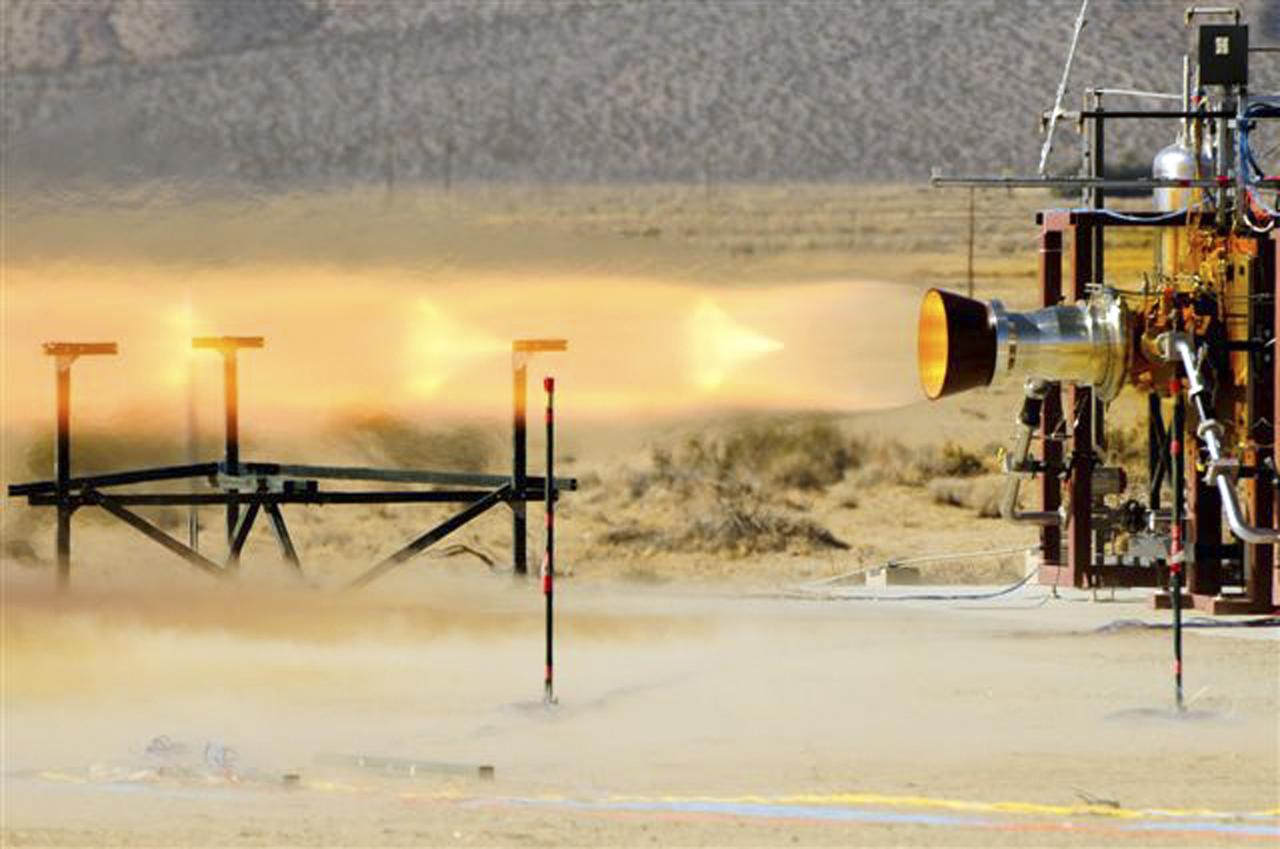
CANOGA PARK, Calif. -- Pratt & Whitney Rocketdyne hot-fires a launch abort engine for The Boeing Co., which is developing its CST-100 spacecraft for NASA's Commercial Crew Program. Under its fixed-price contract with Boeing, Pratt and Whitney Rocketdyne is combining its Attitude Control Propulsion System thrusters from heritage spaceflight programs, Bantam abort engine design and storable propellant engineering capabilities. In 2011, NASA selected Boeing of Houston during Commercial Crew Development Round 2 CCDev2) activities to mature the design and development of a crew transportation system with the overall goal of accelerating a United States-led capability to the International Space Station. The goal of CCP is to drive down the cost of space travel as well as open up space to more people than ever before by balancing industry’s own innovative capabilities with NASA's 50 years of human spaceflight experience. Six other aerospace companies also are maturing launch vehicle and spacecraft designs under CCDev2, including Alliant Techsystems Inc. ATK, Blue Origin, Excalibur Almaz Inc., Sierra Nevada Corp., Space Exploration Technologies SpaceX, and United Launch Alliance ULA. For more information, visit www.nasa.gov/commercialcrew. Image credit: Pratt & Whitney Rocketdyne
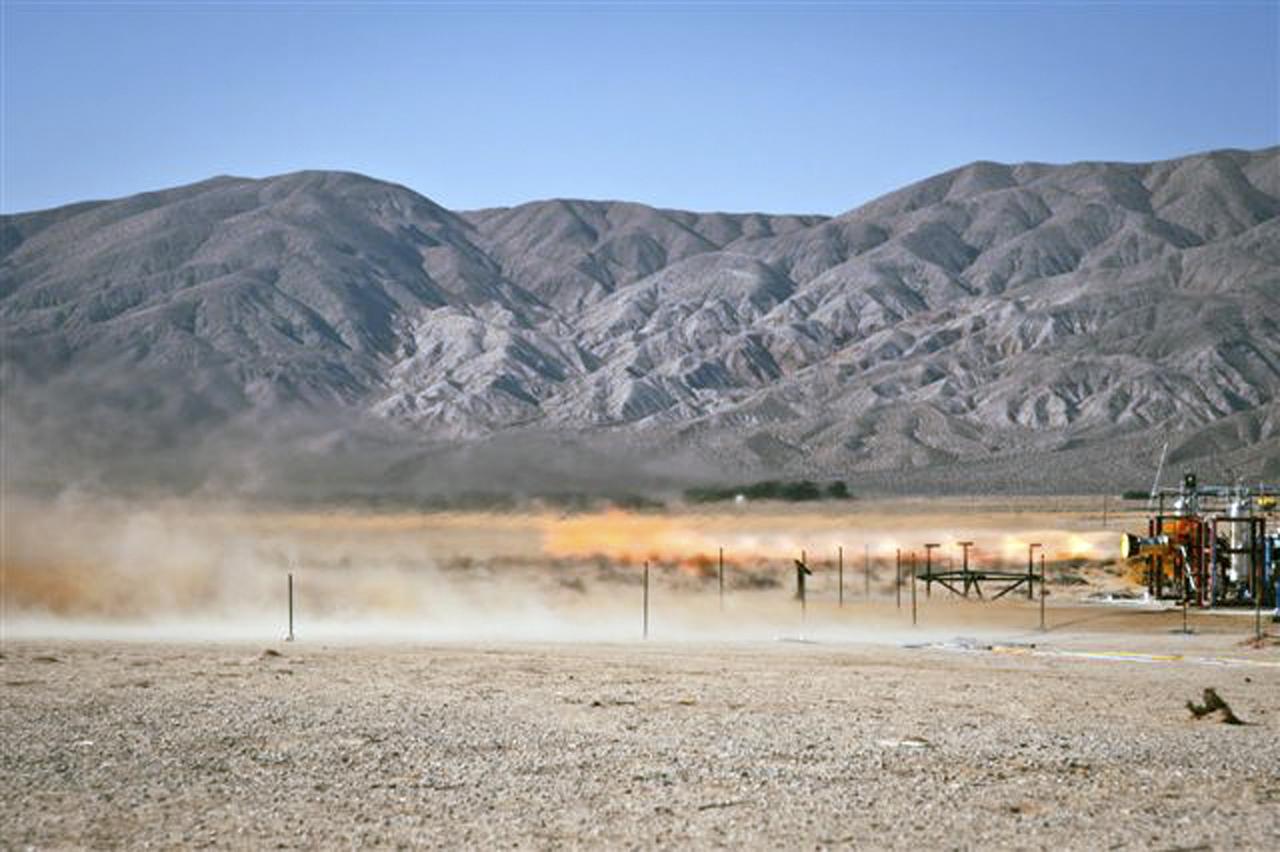
CANOGA PARK, Calif. -- Pratt & Whitney Rocketdyne hot-fires a launch abort engine for The Boeing Co., which is developing its CST-100 spacecraft for NASA's Commercial Crew Program. Under its fixed-price contract with Boeing, Pratt and Whitney Rocketdyne is combining its Attitude Control Propulsion System thrusters from heritage spaceflight programs, Bantam abort engine design and storable propellant engineering capabilities. In 2011, NASA selected Boeing of Houston during Commercial Crew Development Round 2 CCDev2) activities to mature the design and development of a crew transportation system with the overall goal of accelerating a United States-led capability to the International Space Station. The goal of CCP is to drive down the cost of space travel as well as open up space to more people than ever before by balancing industry’s own innovative capabilities with NASA's 50 years of human spaceflight experience. Six other aerospace companies also are maturing launch vehicle and spacecraft designs under CCDev2, including Alliant Techsystems Inc. ATK, Blue Origin, Excalibur Almaz Inc., Sierra Nevada Corp., Space Exploration Technologies SpaceX, and United Launch Alliance ULA. For more information, visit www.nasa.gov/commercialcrew. Image credit: Pratt & Whitney Rocketdyne
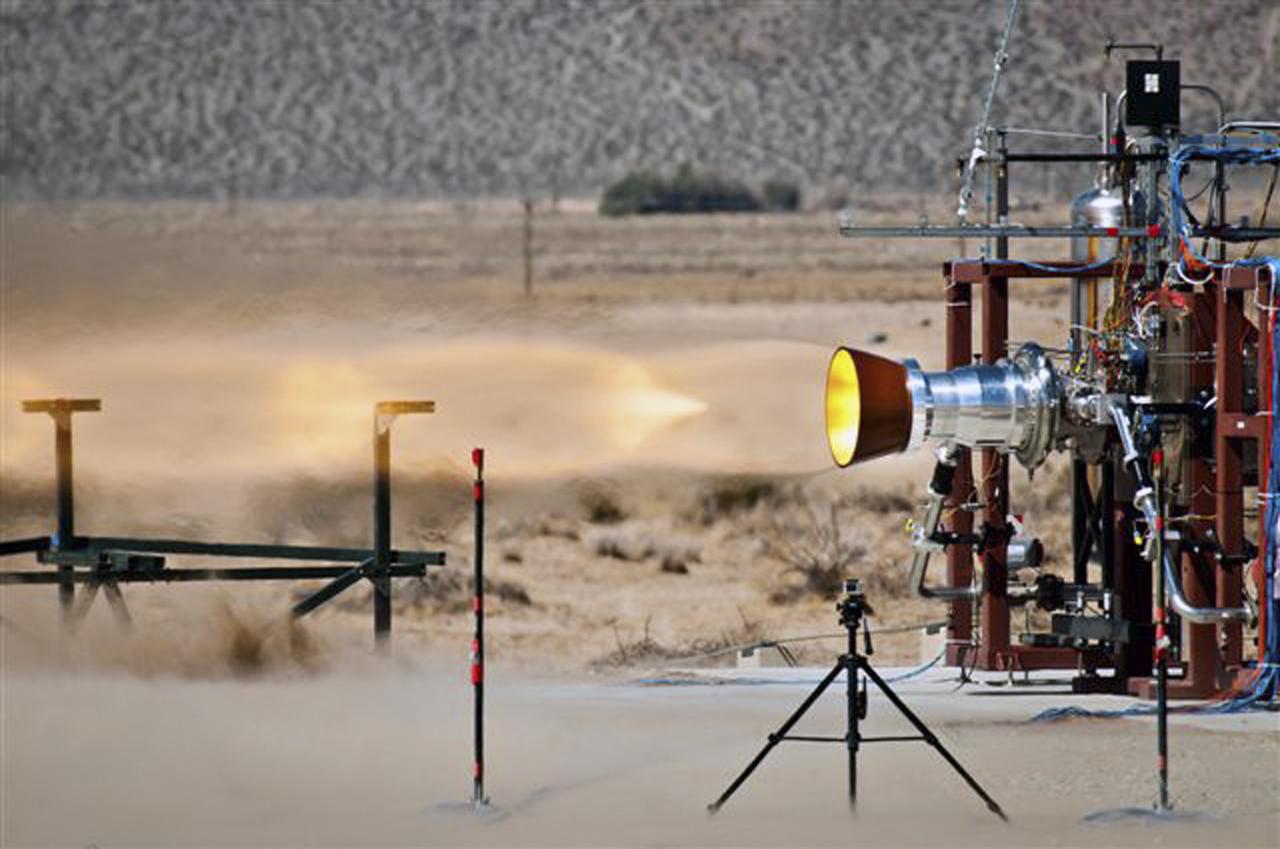
CANOGA PARK, Calif. -- Pratt & Whitney Rocketdyne hot-fires a launch abort engine for The Boeing Co., which is developing its CST-100 spacecraft for NASA's Commercial Crew Program. Under its fixed-price contract with Boeing, Pratt and Whitney Rocketdyne is combining its Attitude Control Propulsion System thrusters from heritage spaceflight programs, Bantam abort engine design and storable propellant engineering capabilities. In 2011, NASA selected Boeing of Houston during Commercial Crew Development Round 2 CCDev2) activities to mature the design and development of a crew transportation system with the overall goal of accelerating a United States-led capability to the International Space Station. The goal of CCP is to drive down the cost of space travel as well as open up space to more people than ever before by balancing industry’s own innovative capabilities with NASA's 50 years of human spaceflight experience. Six other aerospace companies also are maturing launch vehicle and spacecraft designs under CCDev2, including Alliant Techsystems Inc. ATK, Blue Origin, Excalibur Almaz Inc., Sierra Nevada Corp., Space Exploration Technologies SpaceX, and United Launch Alliance ULA. For more information, visit www.nasa.gov/commercialcrew. Image credit: Pratt & Whitney Rocketdyne
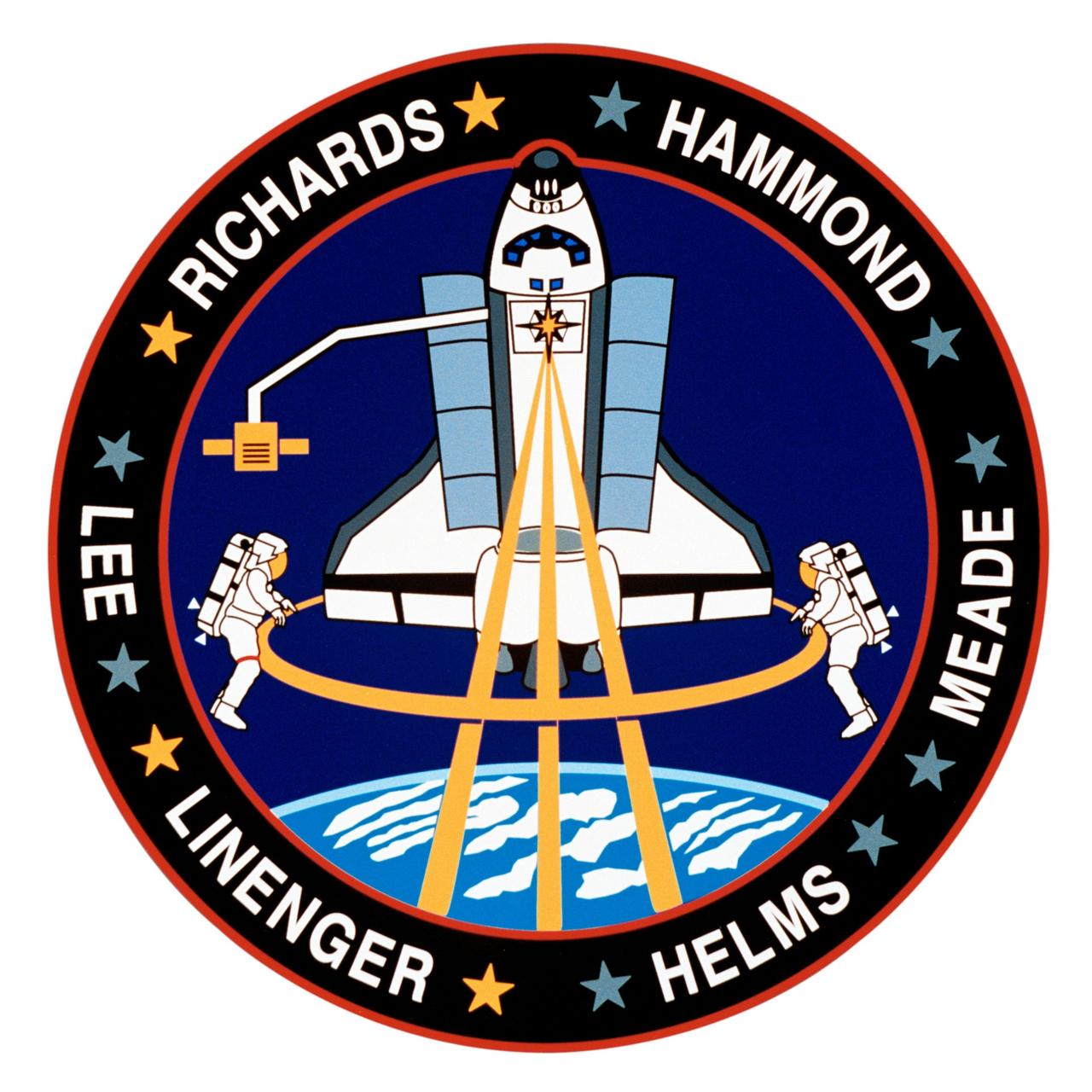
STS064-S-001 (July 1994) --- The patch depicts the space shuttle Discovery in a payload-bay-to-Earth attitude with its primary payload, Lidar In-Space Technology Experiment (LITE-1) operating in support of Mission to Planet Earth. LITE-1 is a lidar (light detection and ranging) system that uses a three-wavelength laser, symbolized by the three gold rays emanating from the star in the payload bay that form part of the astronaut symbol. The major objective of this first flight of LITE-1 is to validate its design and operating characteristics by gathering data about the Earth's troposphere and stratosphere, represented by the clouds and dual-colored Earth limb. A secondary payload on STS-64 is the free-flier SPARTAN-201 satellite shown on the Remote Manipulator System (RMS) arm post-retrieval. The objective of SPARTAN-201 is to investigate the physics of the solar wind and complement data being obtained from the ULYSSES satellite launched on STS-41. The RMS will also operate another secondary payload, Shuttle Plume Impingement Flight Experiment (SPIFEX), which will assess the plume effects from the Orbiter's Reaction Control System thrusters. Additionally, STS-64 will test a new extravehicular activity (EVA) maneuvering device, Simplified Aid for EVA Rescue (SAFER), represented symbolically by the two small nozzles on the backpacks of the two untethered EVA crew men. The names of the crew members encircle the patch: astronauts Richard N. Richards, commander; L. Blaine Hammond Jr., pilot; Jerry M. Linenger; Susan J. Helms, Carl J. Meade and Mark C. Lee, all mission specialists. The gold or silver stars by each name represent that person's parent service. The NASA insignia design for space shuttle flights is reserved for use by the astronauts and for other official use as the NASA Administrator may authorize. Public availability has been approved only in the forms of illustrations by the various news media. When and if there is any change in this policy, which is not anticipated, the change will be publicly announced. Photo credit: NASA