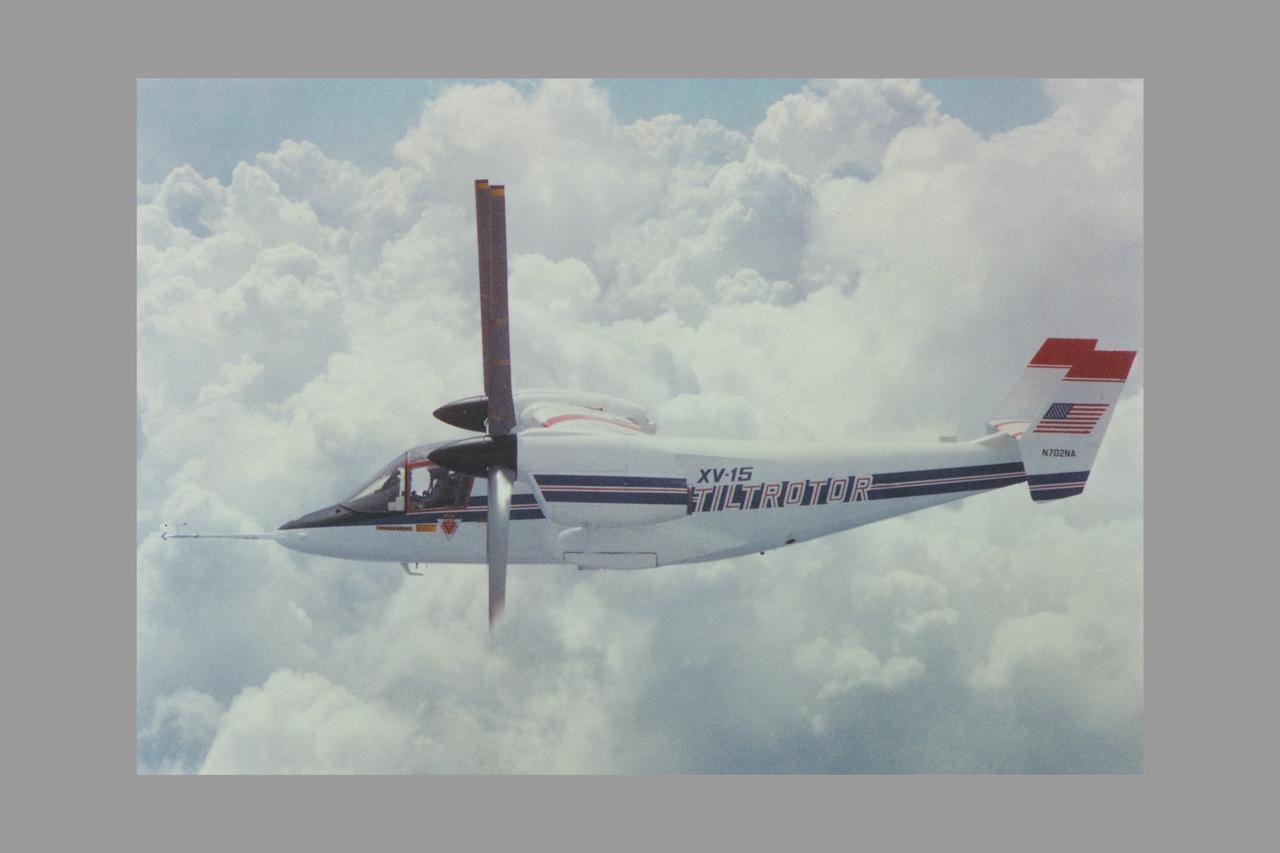
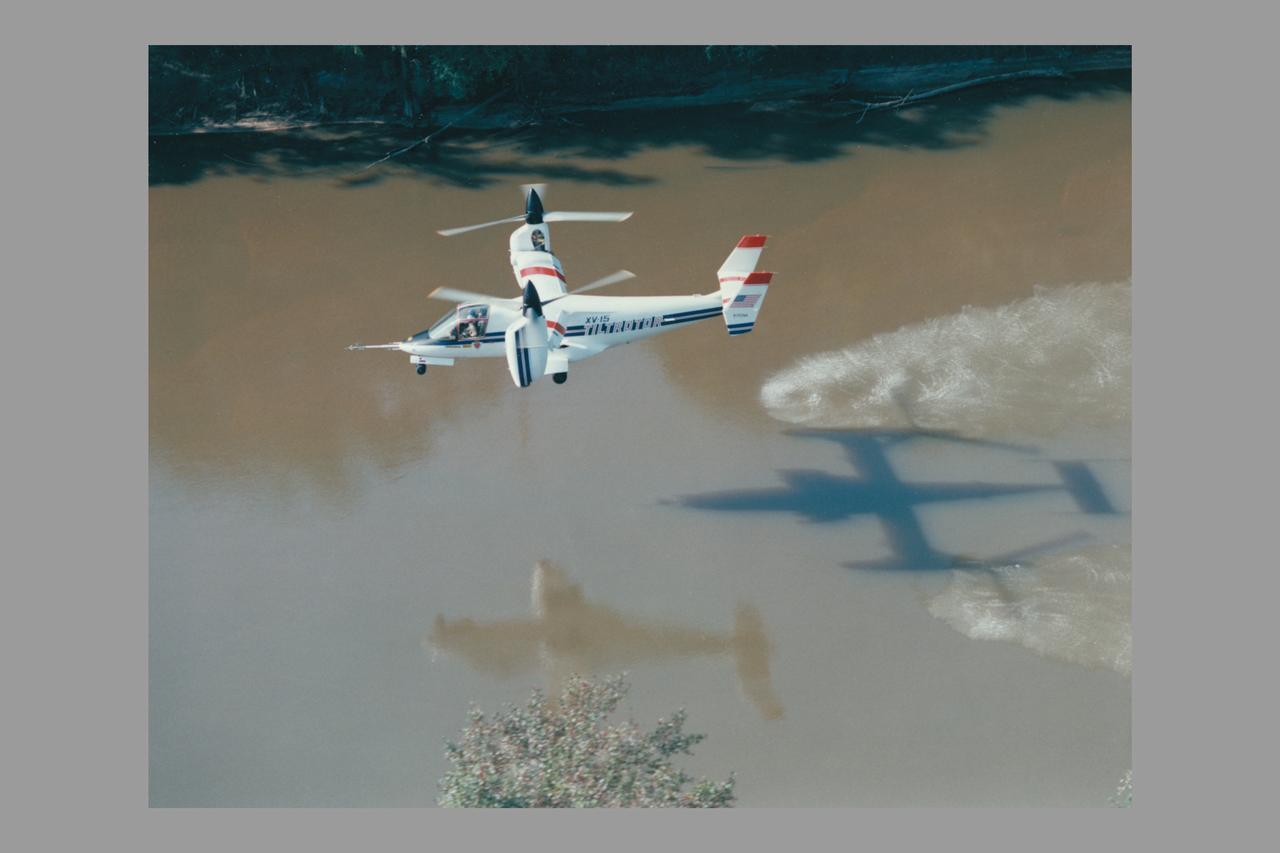
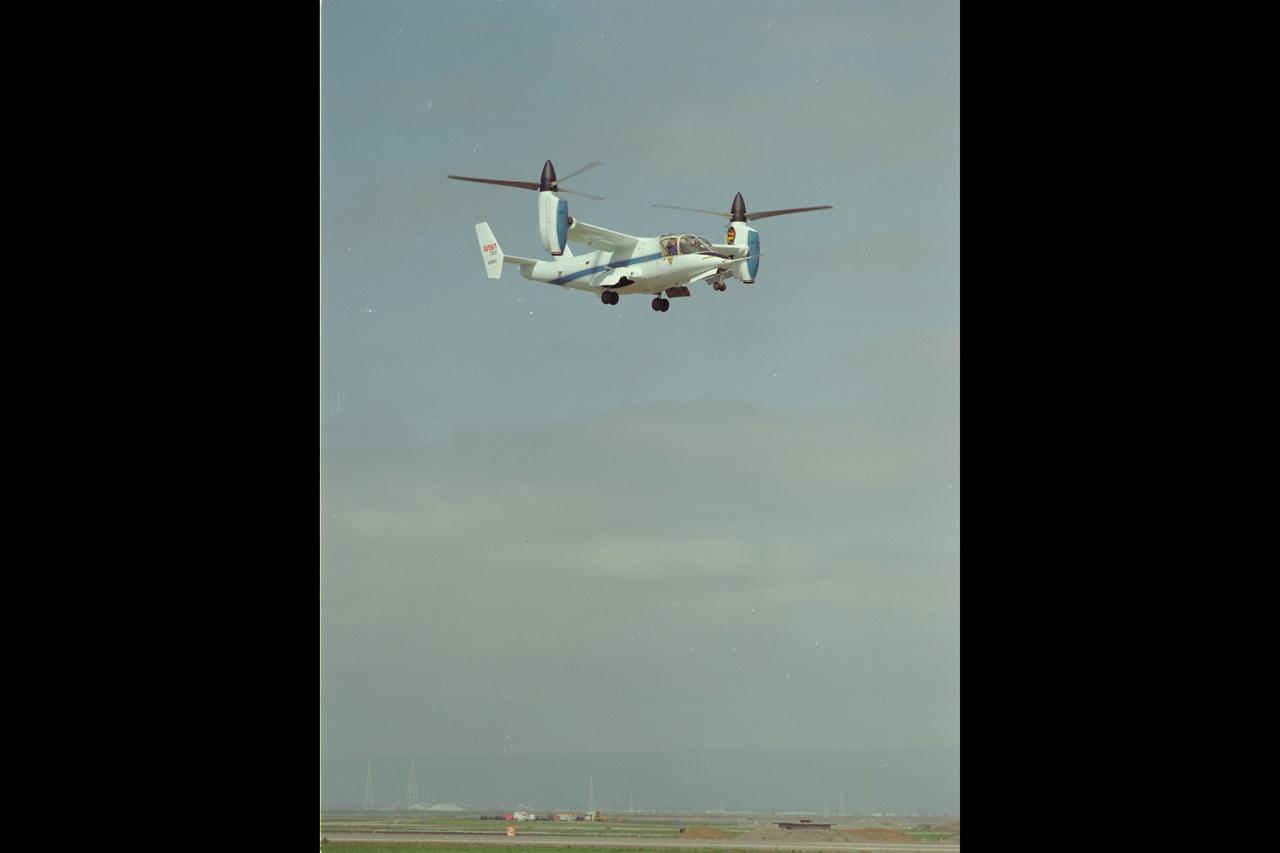
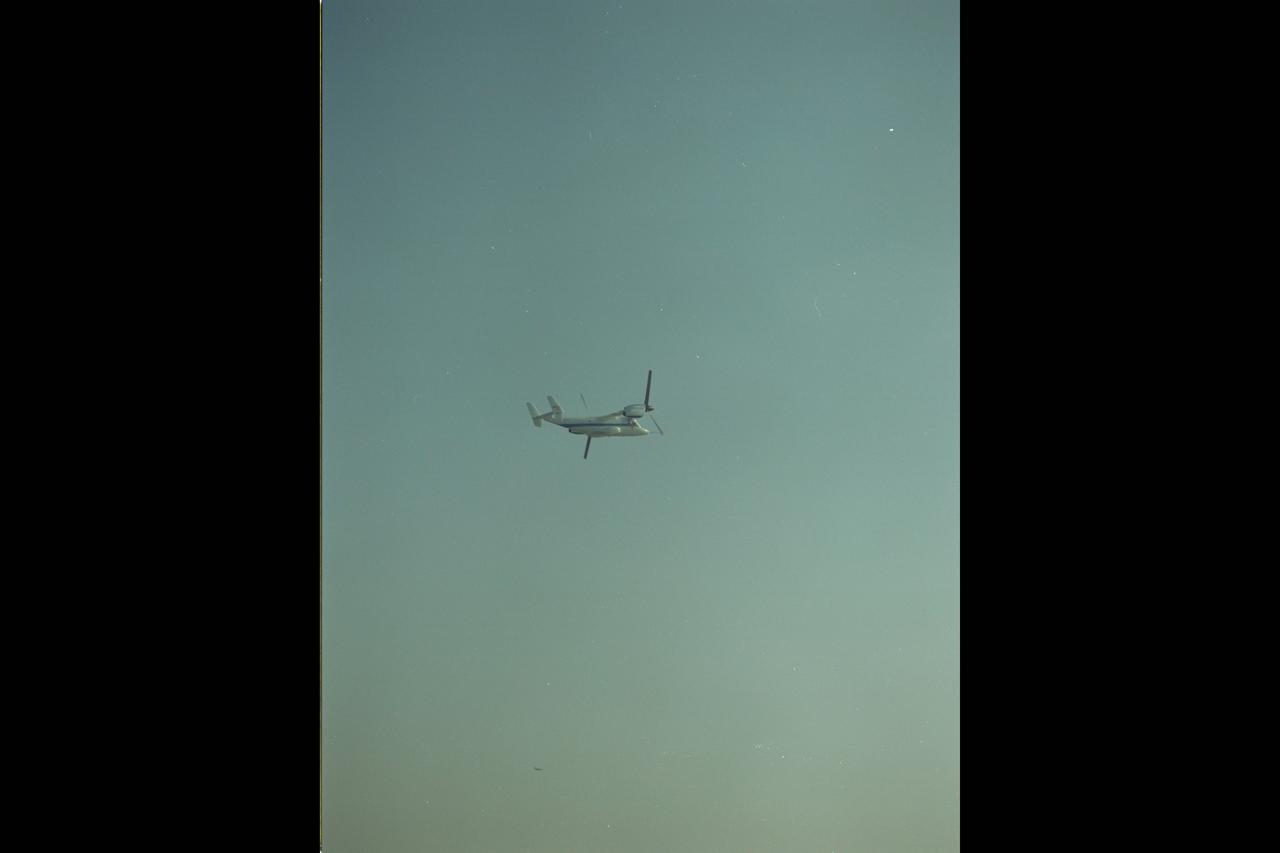
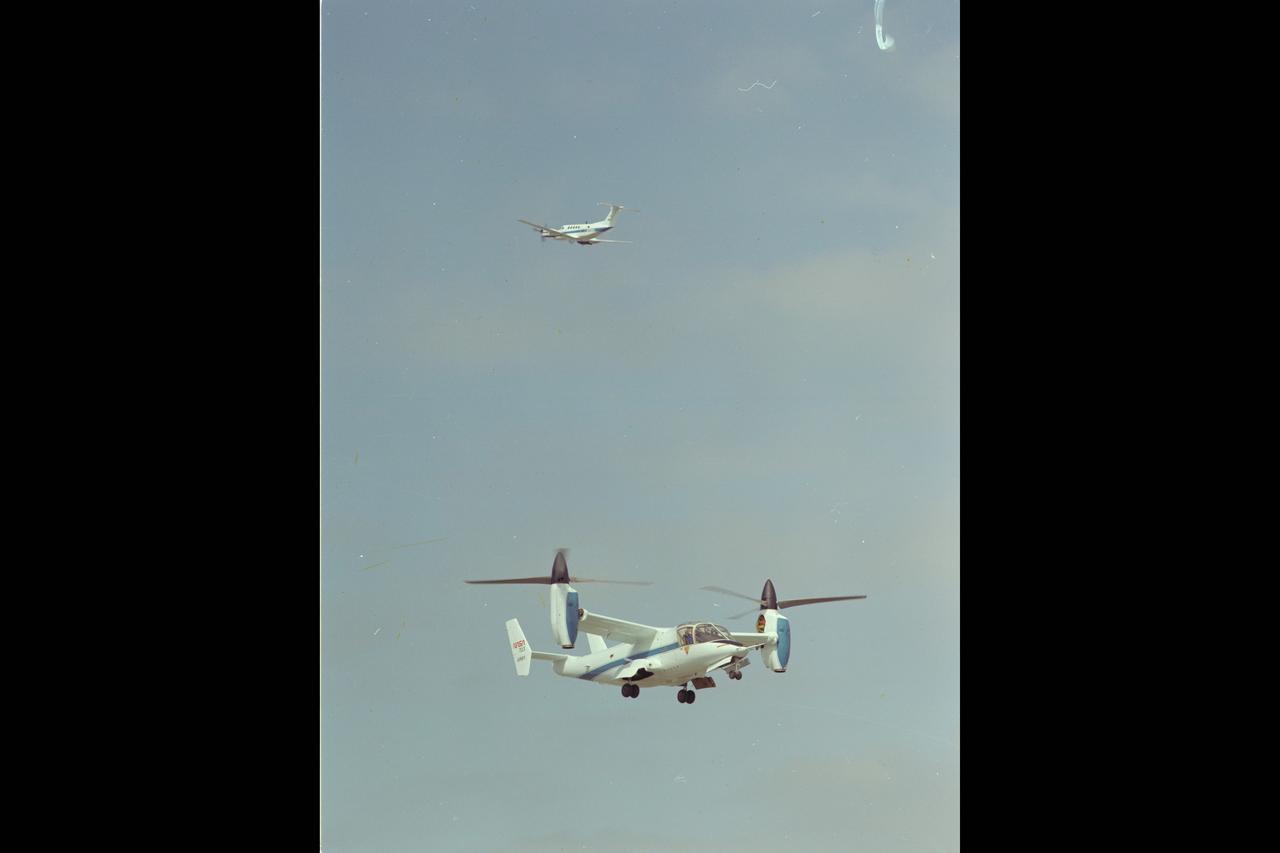
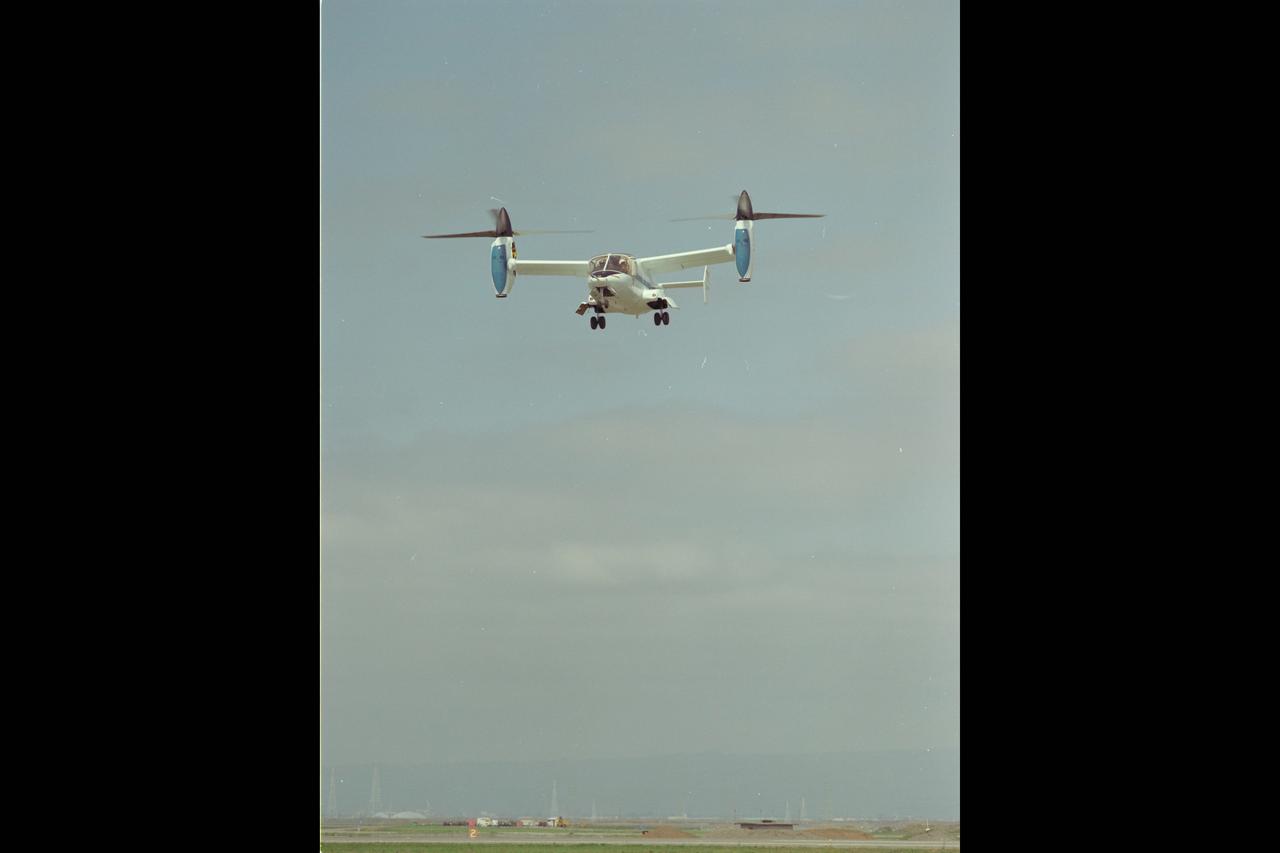
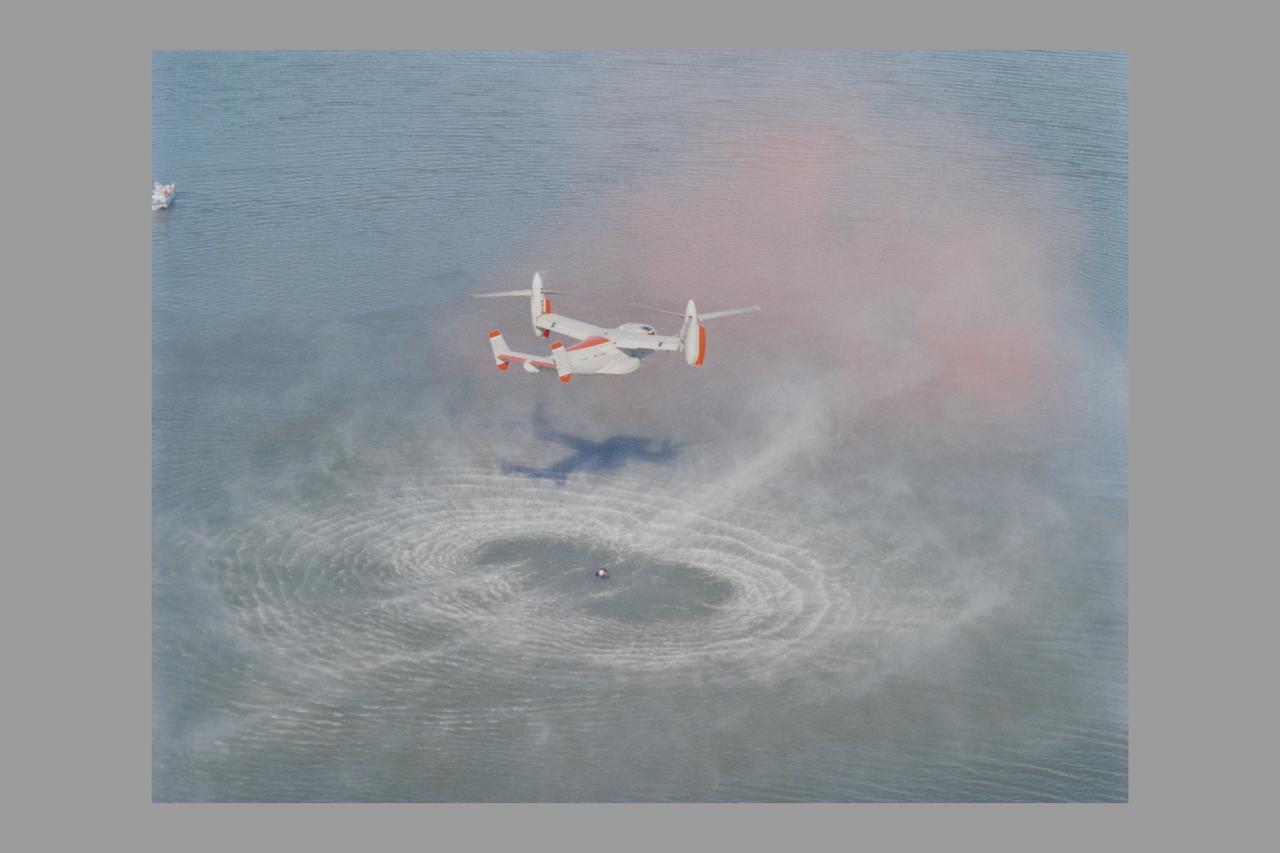
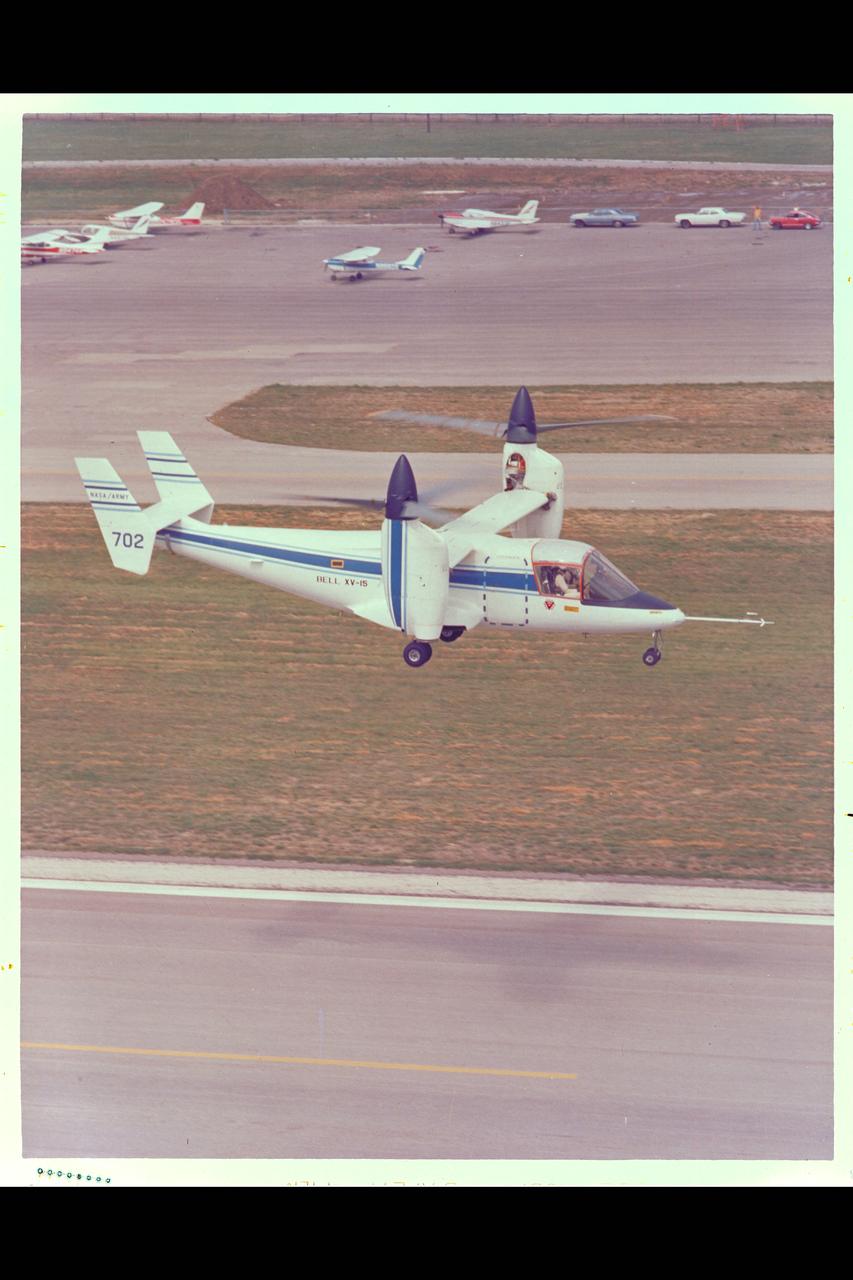
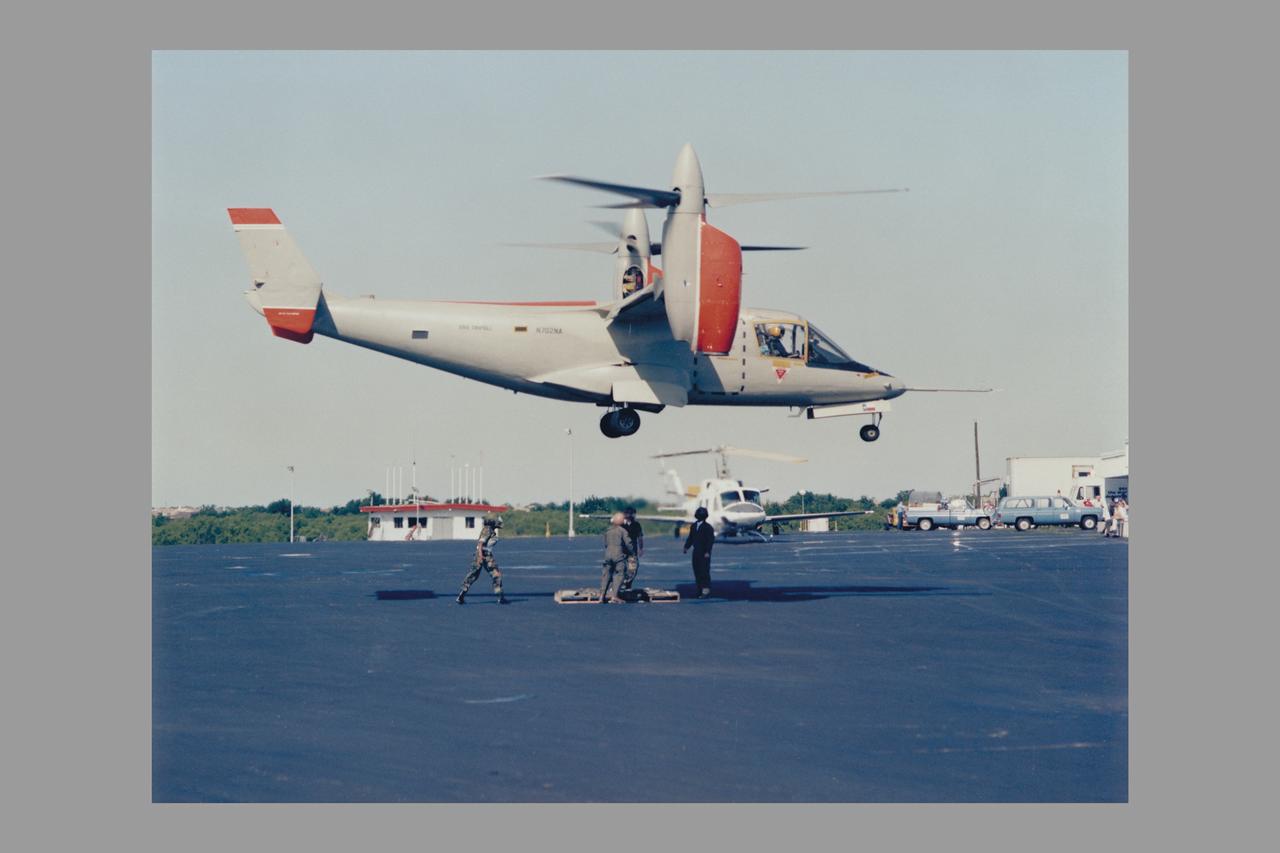
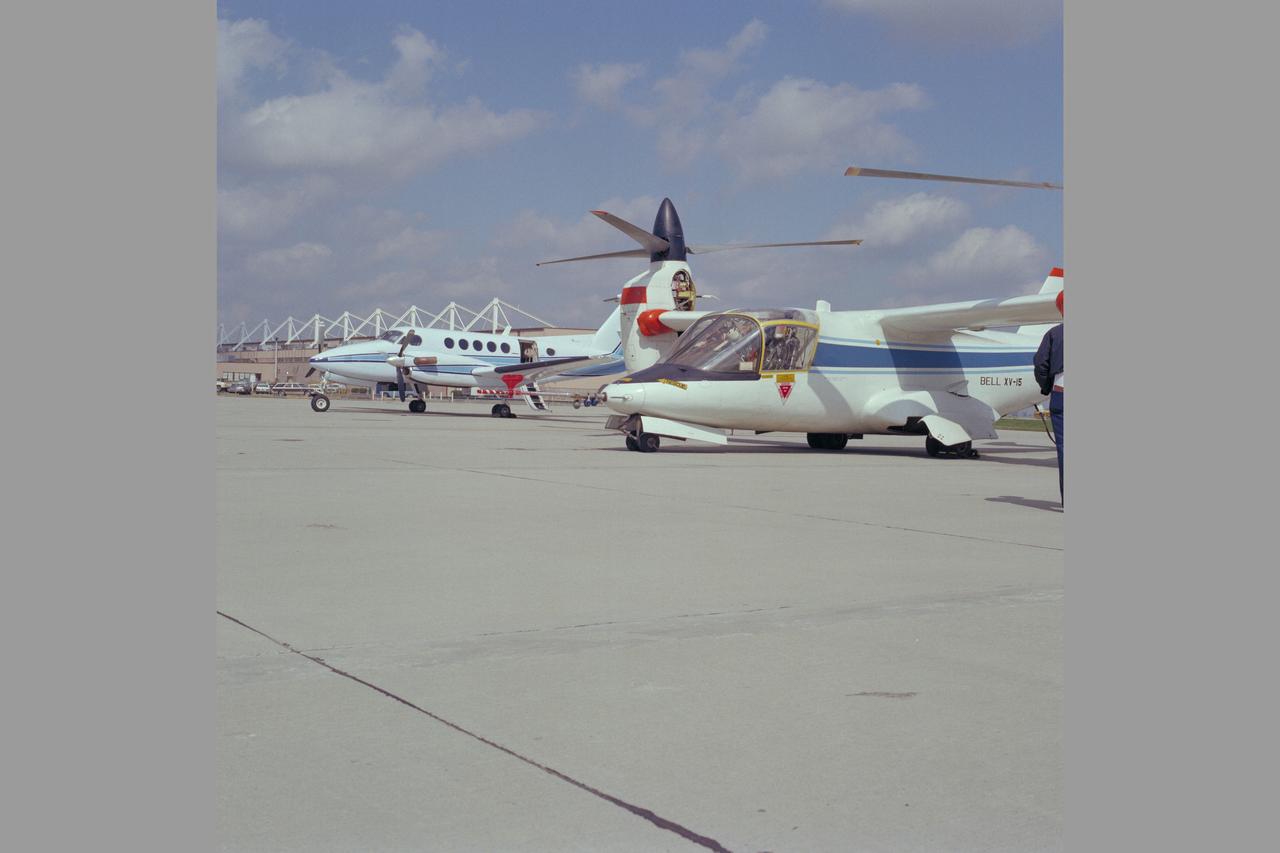
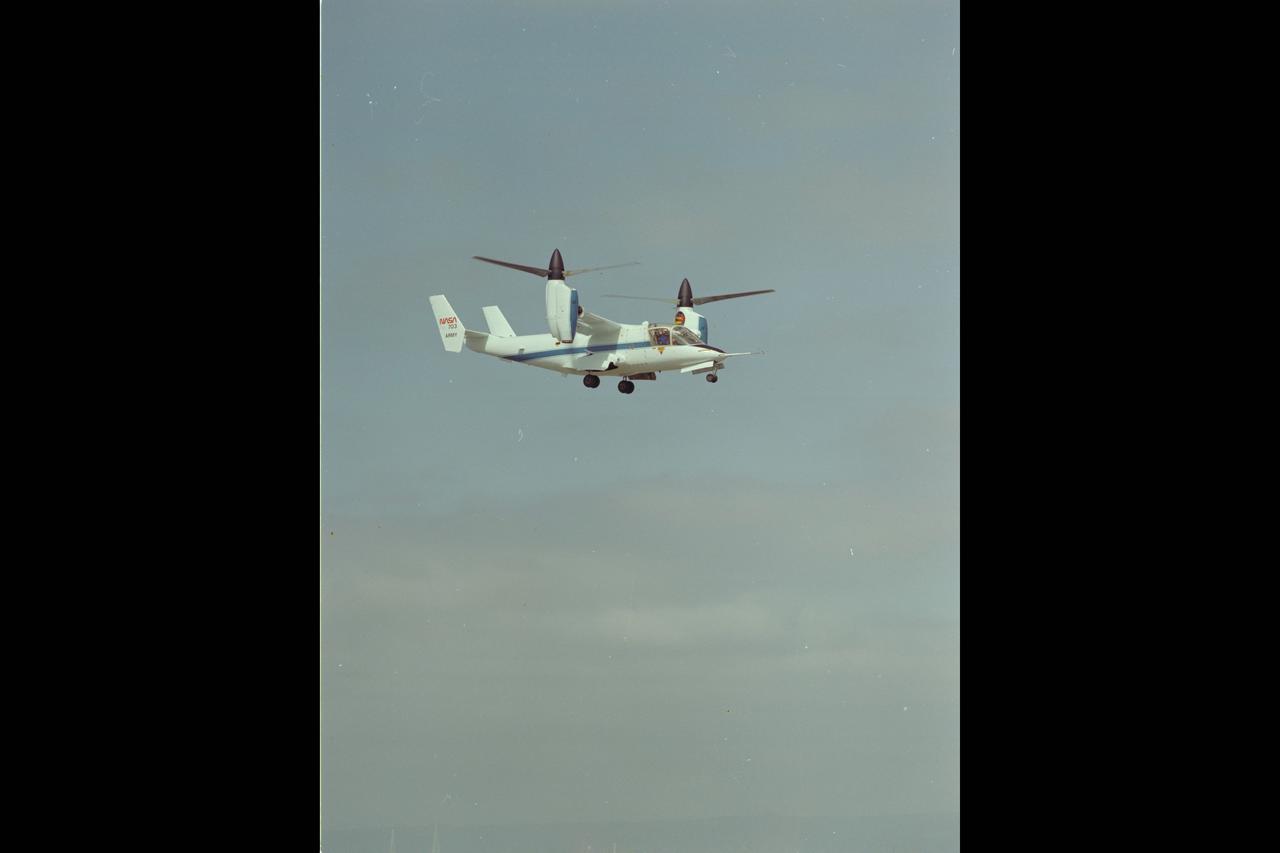
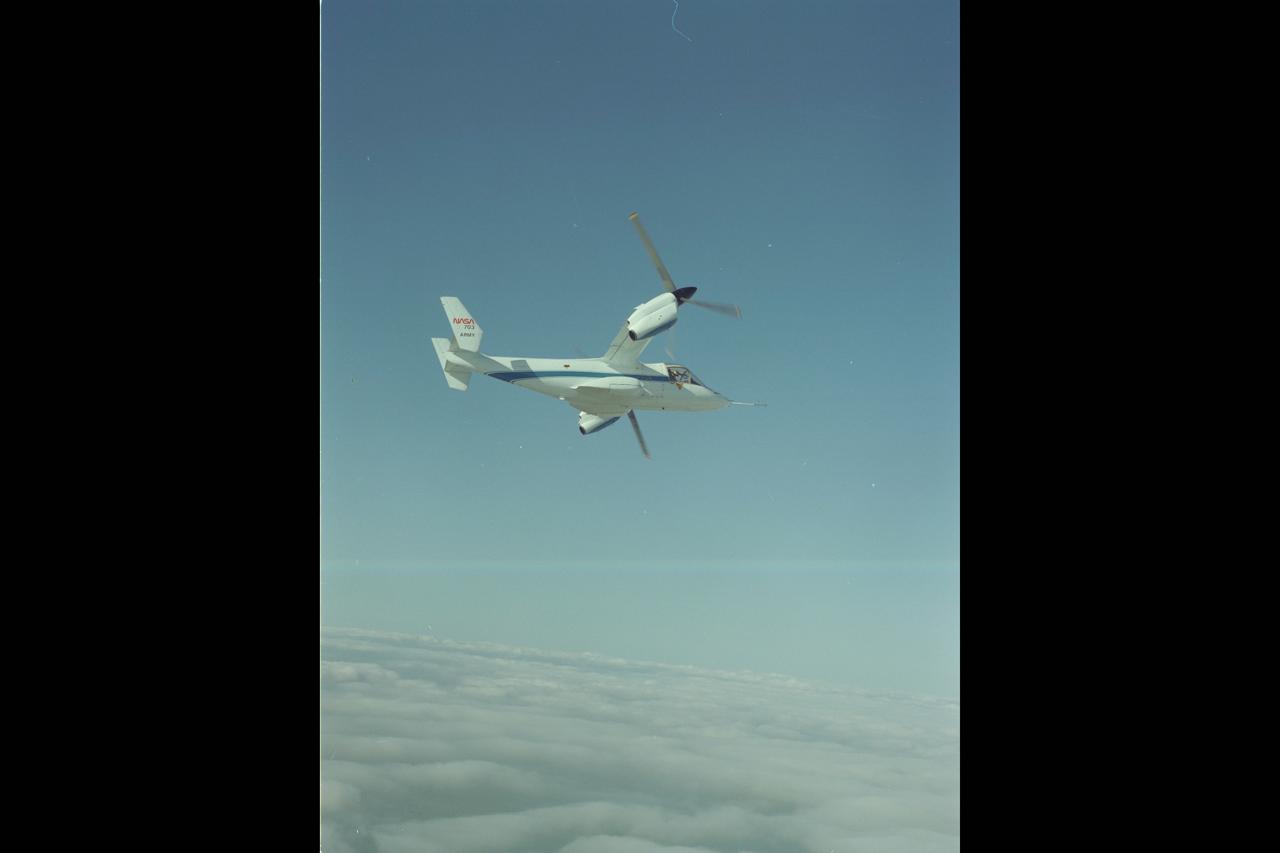
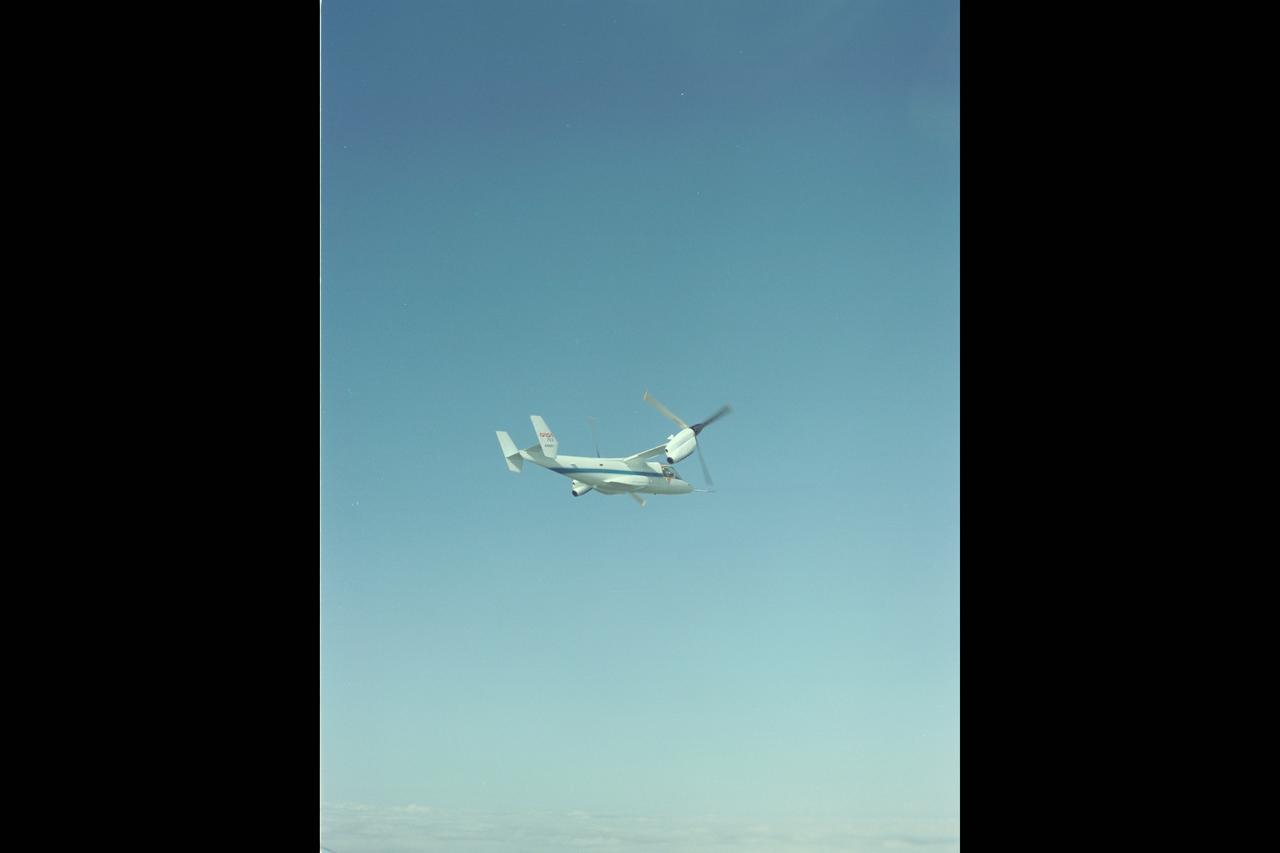
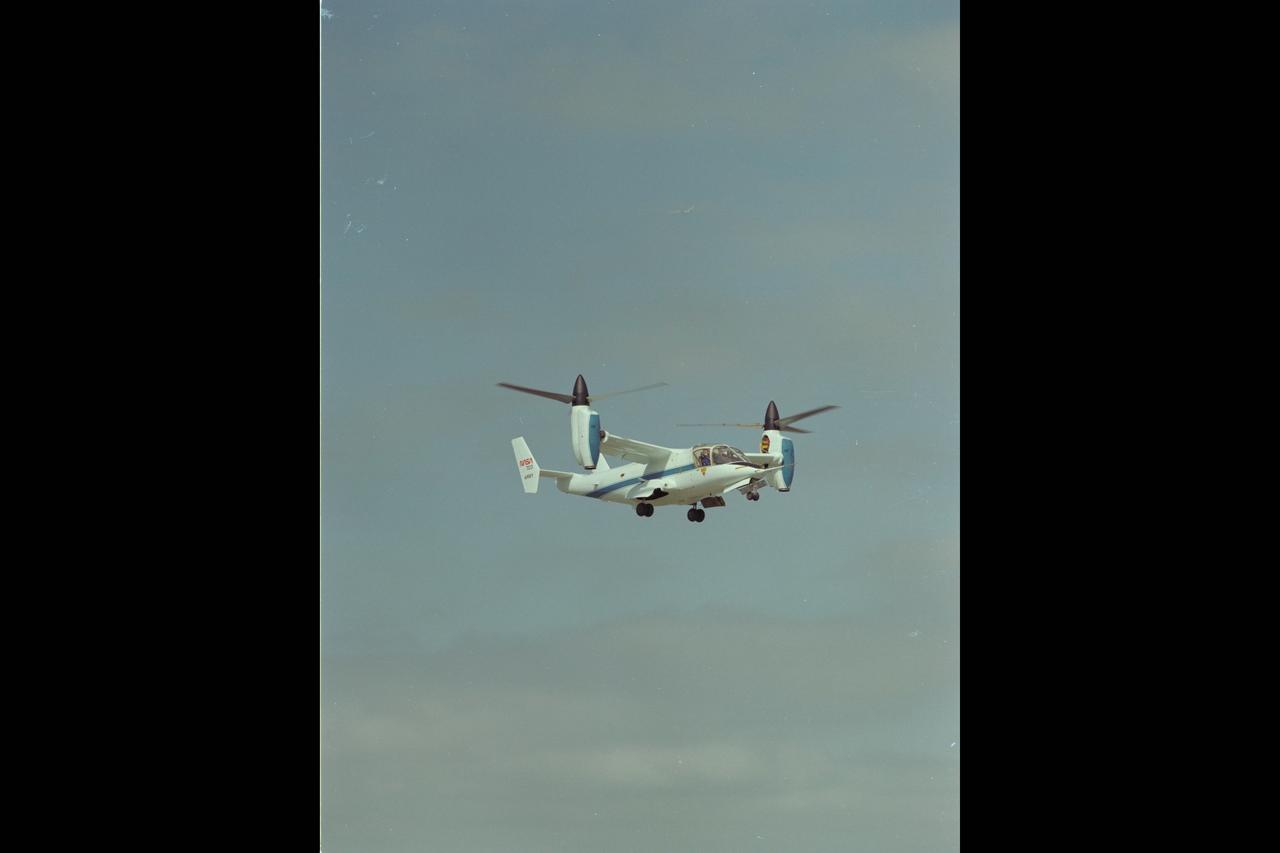
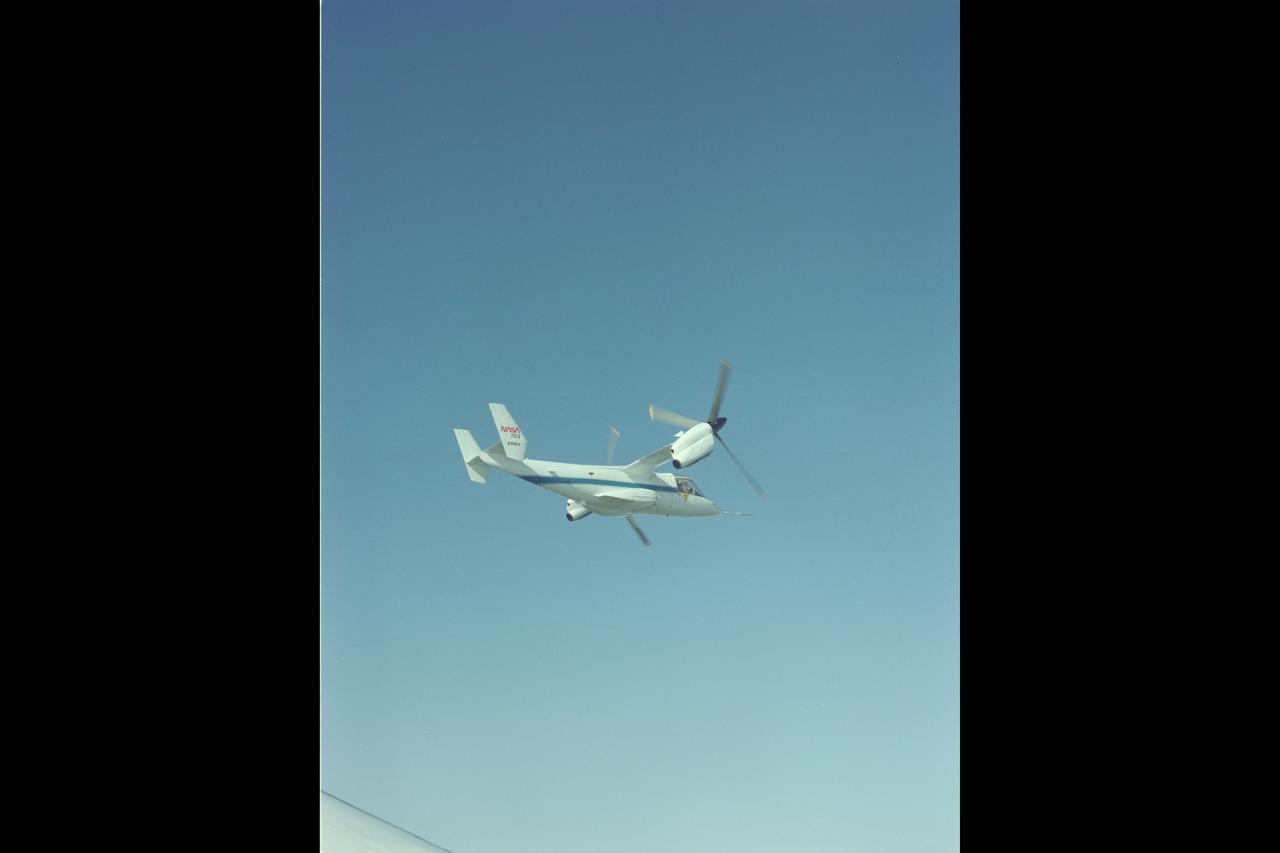
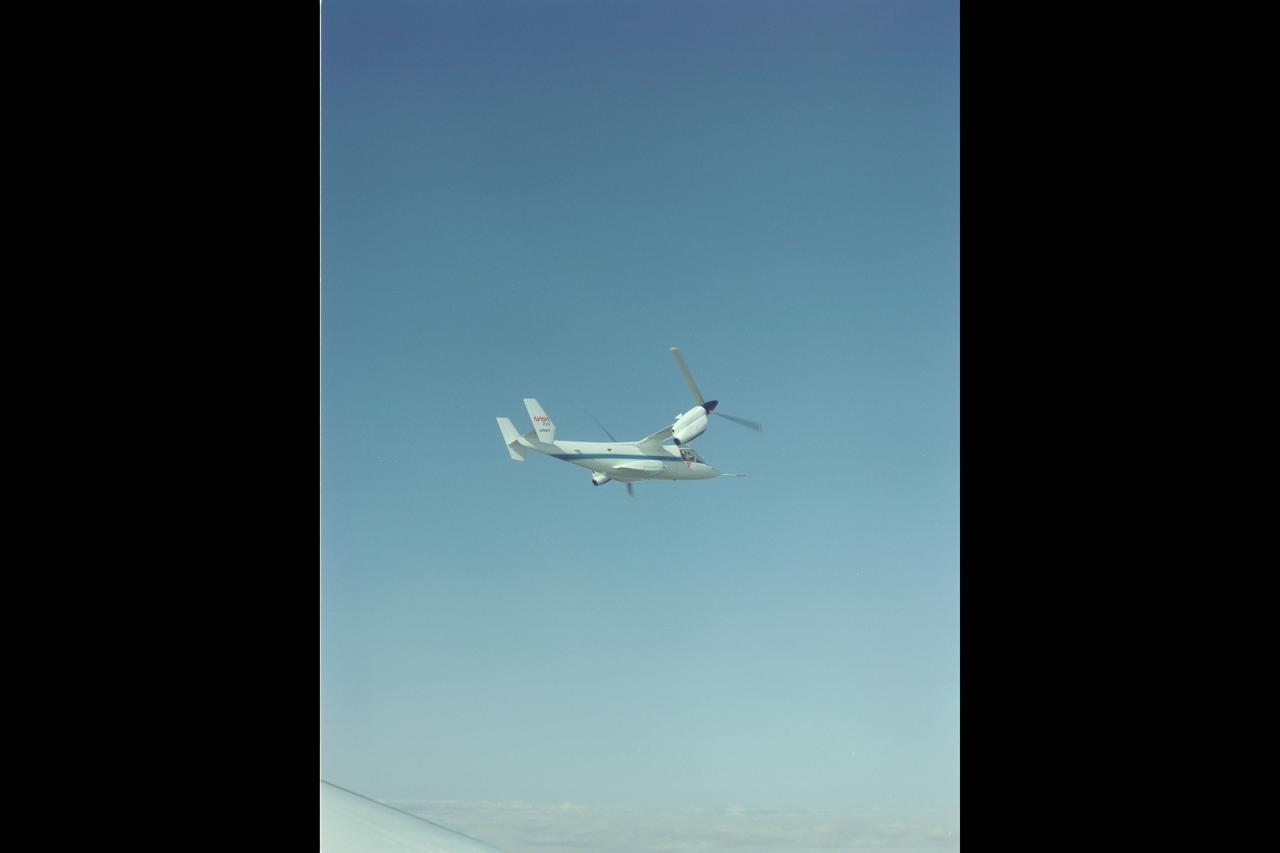
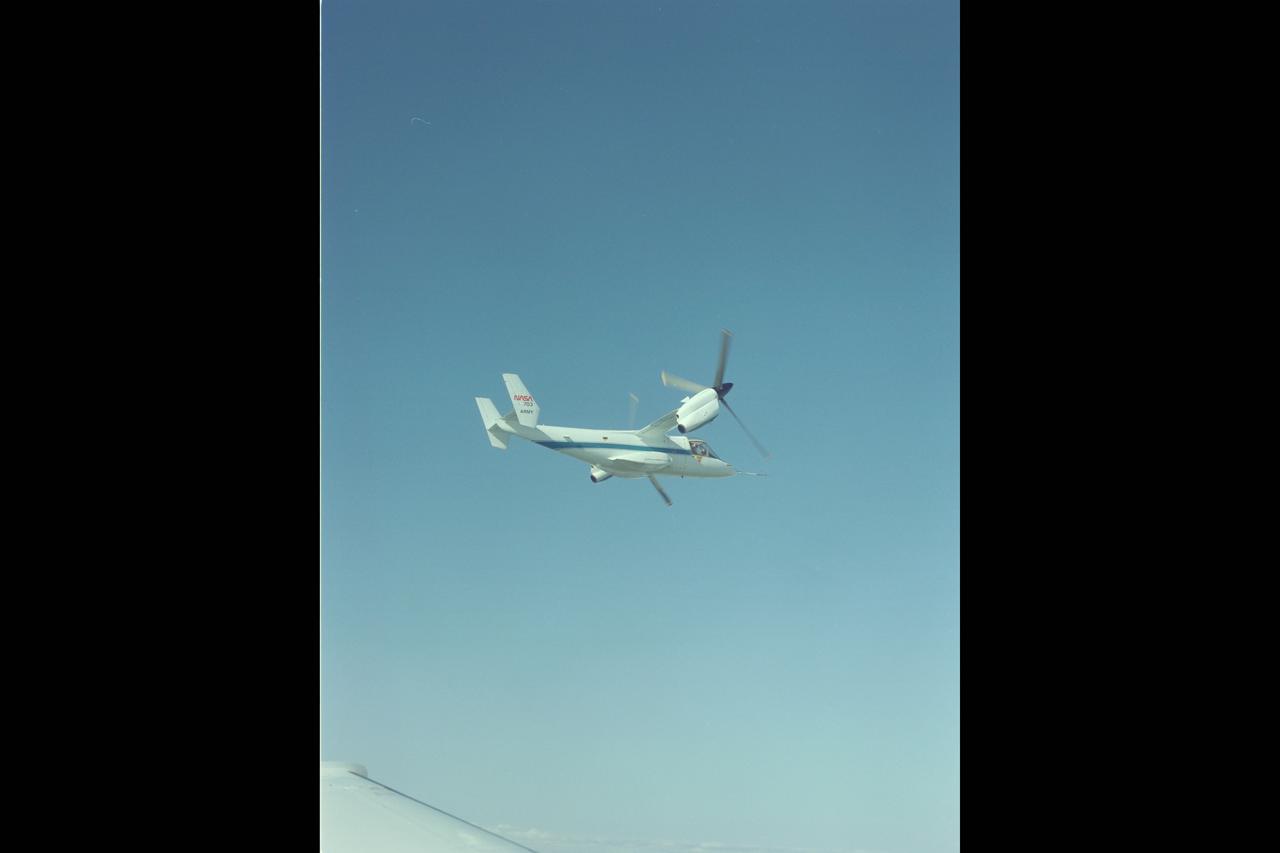
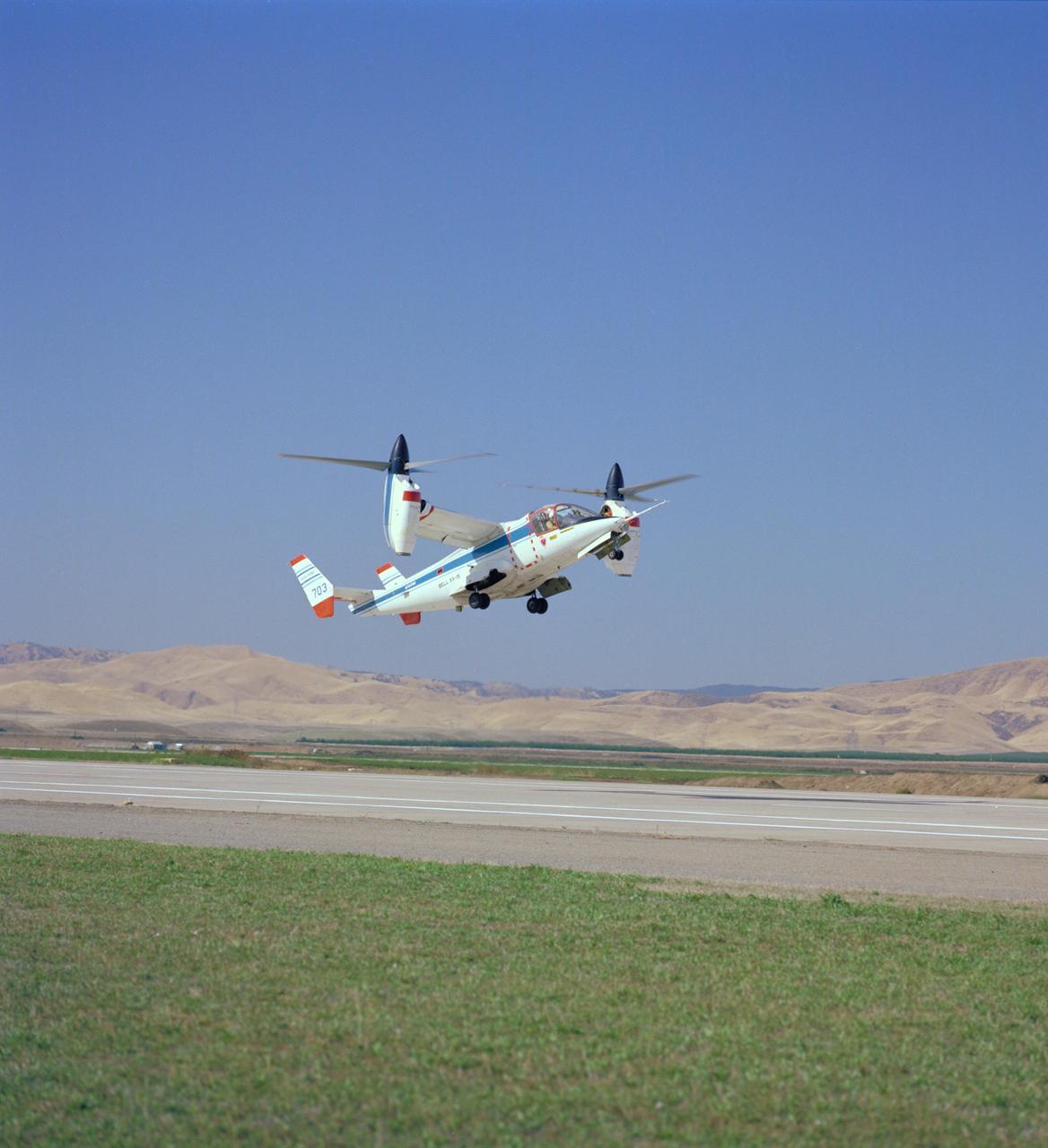
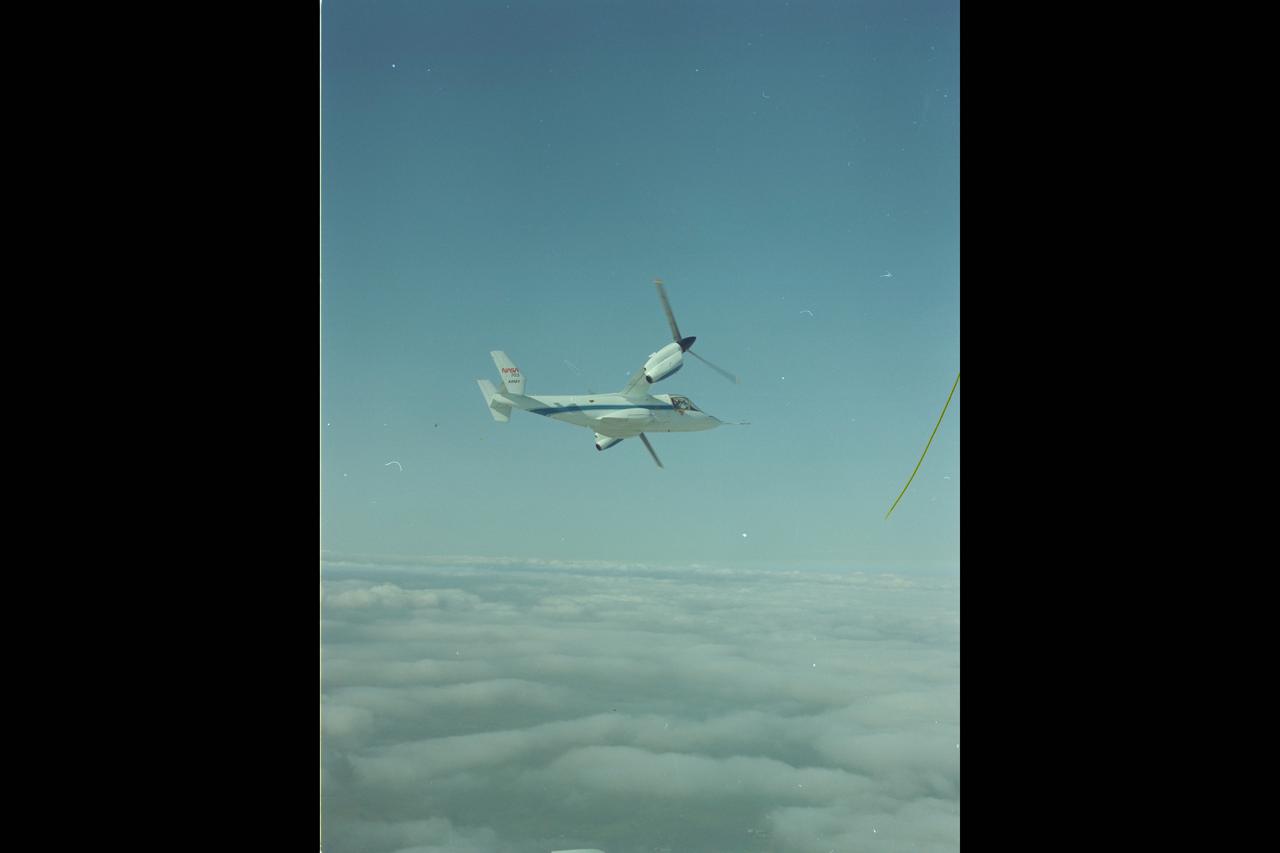
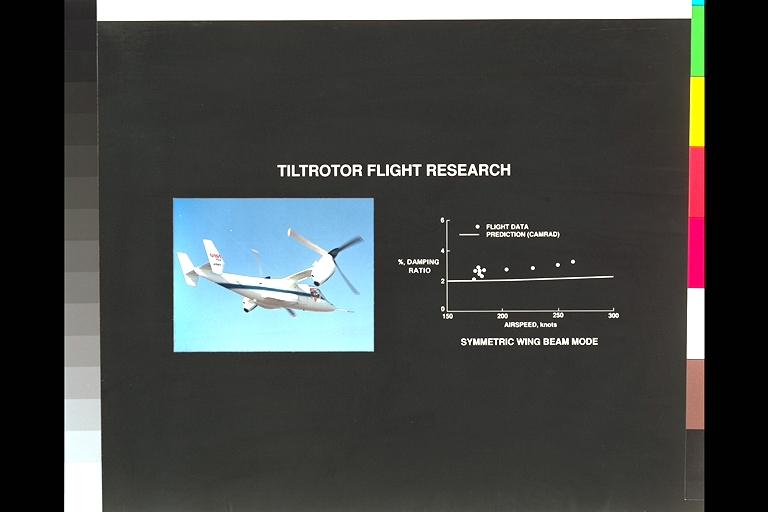
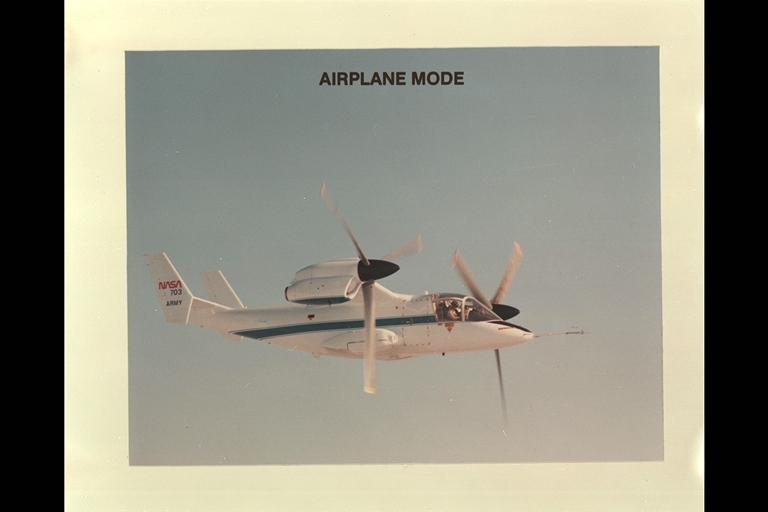
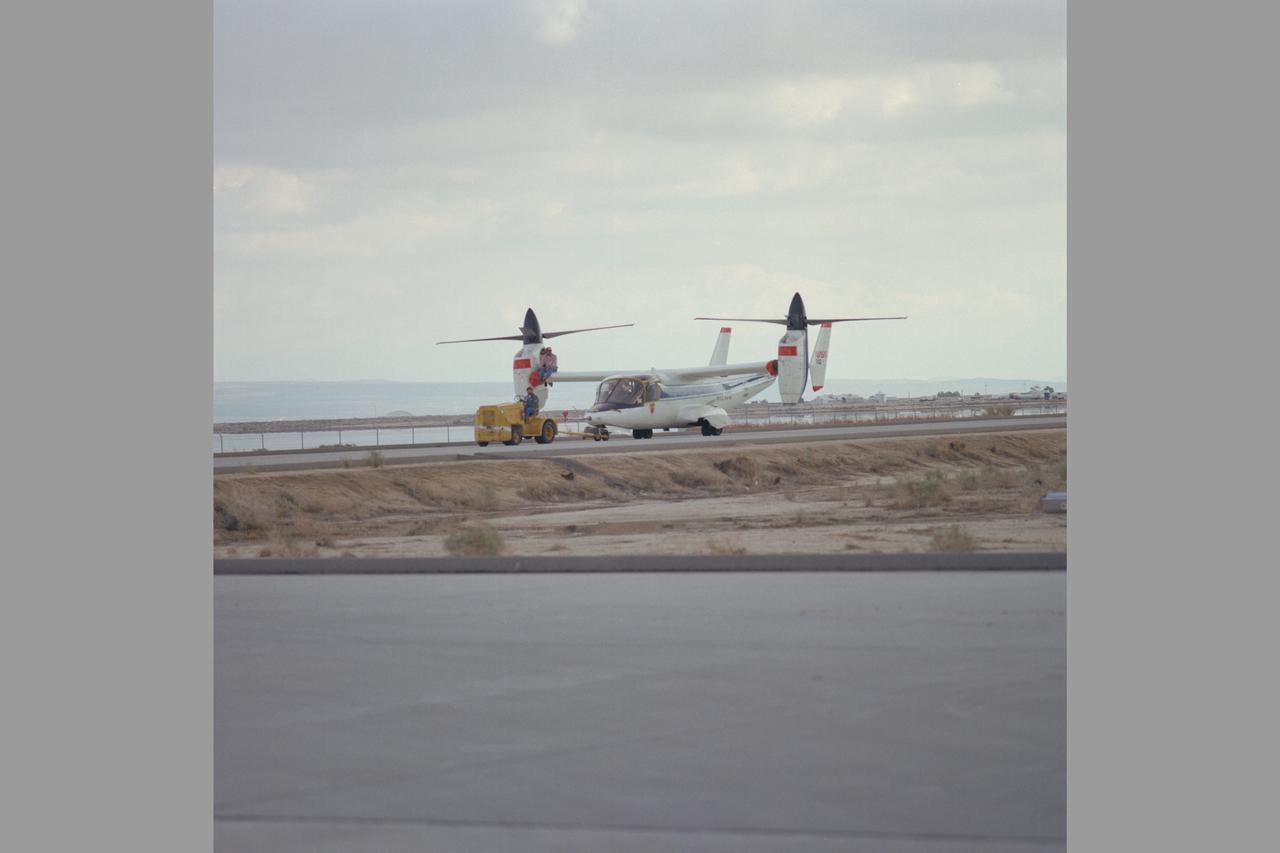
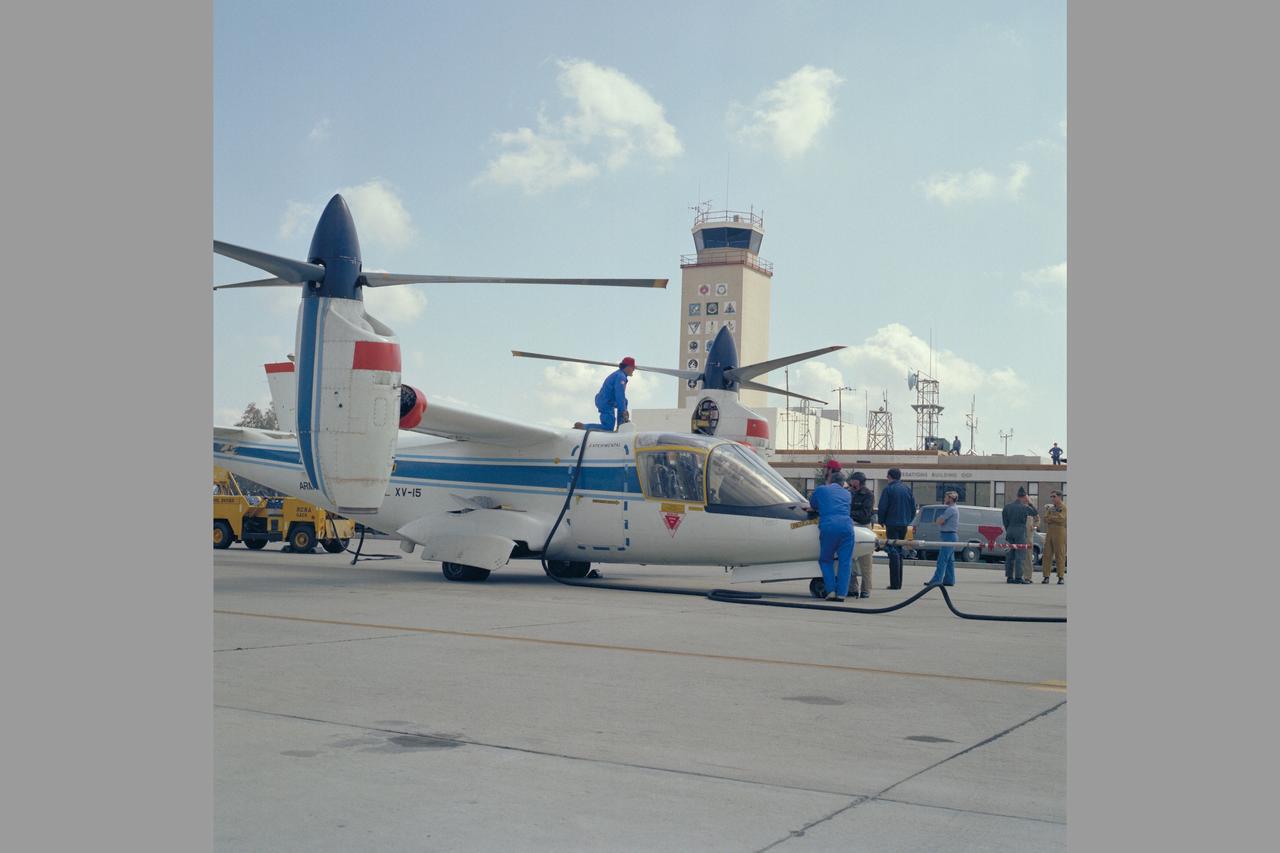
The XV-15 tilt rotor ships #1 and #2 parked on the NASA Dryden Flight Research Center ramp. The XV-15s, manufactured by Bell, were involved in limited research at Dryden in 1980 and 1981. The development of the XV-15 Tiltrotor research aircraft was initiated in 1973 with joint Army/NASA funding as a "proof of concept", or "technology demonstrator" program, with two aircraft being built by Bell Helicopter Textron (BHT) in 1977.  The aircraft are powered by twin Lycoming T-53 turboshaft engines that are connected by a cross-shaft and drive three-bladed, 25 ft diameter metal rotors (the size extensively tested in a wind tunnel). The engines and main transmissions are located in wingtip nacelles to minimize the operational loads on the cross-shaft system and, with the rotors, tilt as a single unit.  For takeoff, the proprotors and their engines are used in the straight-up position where the thrust is directed downward. The XV-15 then climbs vertically into the air like a helicopter. In this VTOL mode, the vehicle can lift off and hover for approximately one hour.  Once off the ground, the XV-15 has the ability to fly in one of two different modes. It can fly as a helicopter, in the partially converted airplane mode. The XV-15 can also then convert from the helicopter mode to the airplane mode. This is accomplished by continuous rotation of the proprotors from the helicopter rotor position to the conventional airplane propeller position. During the ten to fifteen second conversion period, the aircraft speed increases and lift is transferred from the rotors to the wing. To land, the proprotors are rotated up to the helicopter rotor position and flown as a helicopter to a vertical landing.
XV-15 tilt rotor ship #1 and #2 parked on NASA ramp
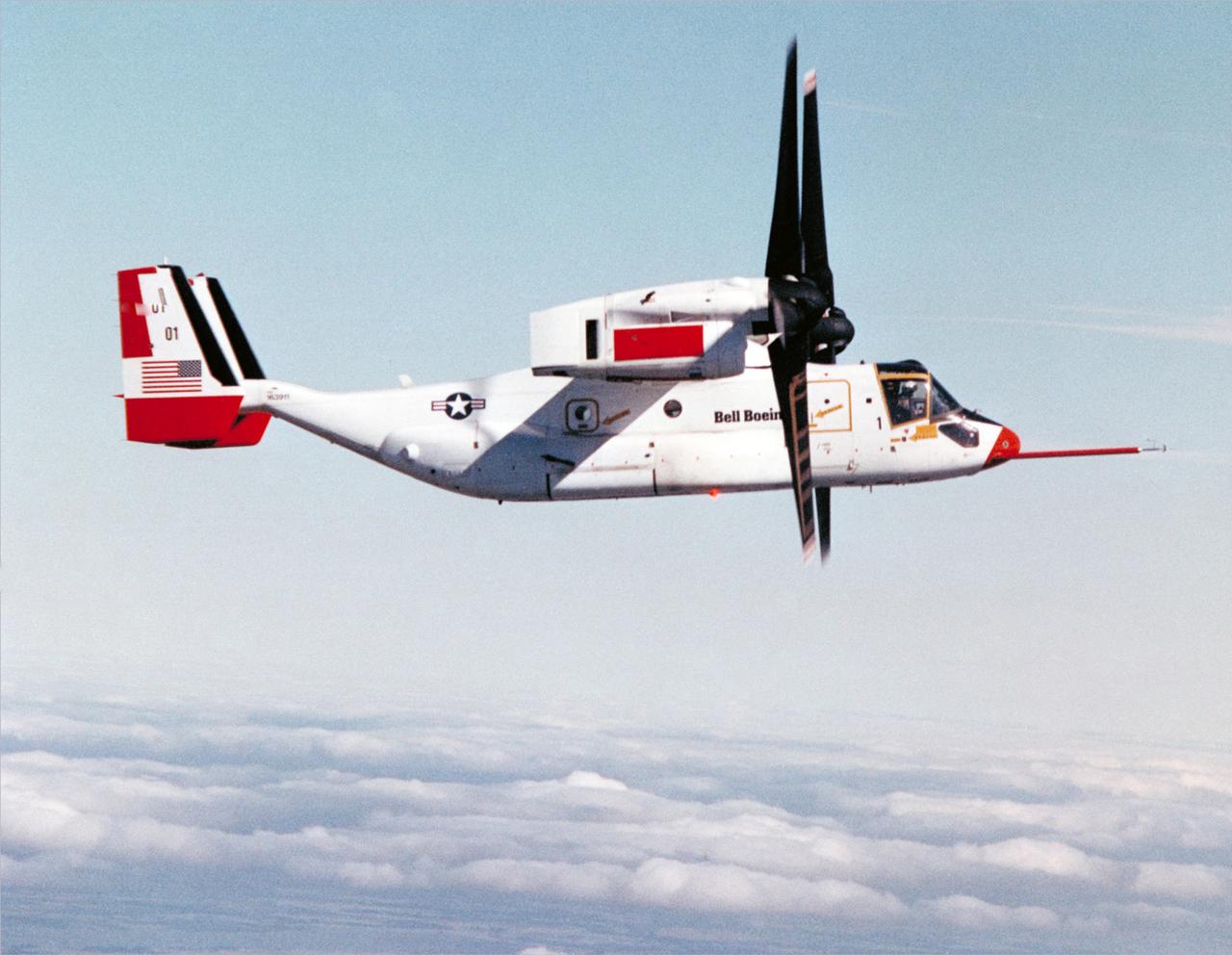
Bell-Boeing Tilt Rotor V-22 Osprey in flight.
ARC-1989-AC89-0246-8
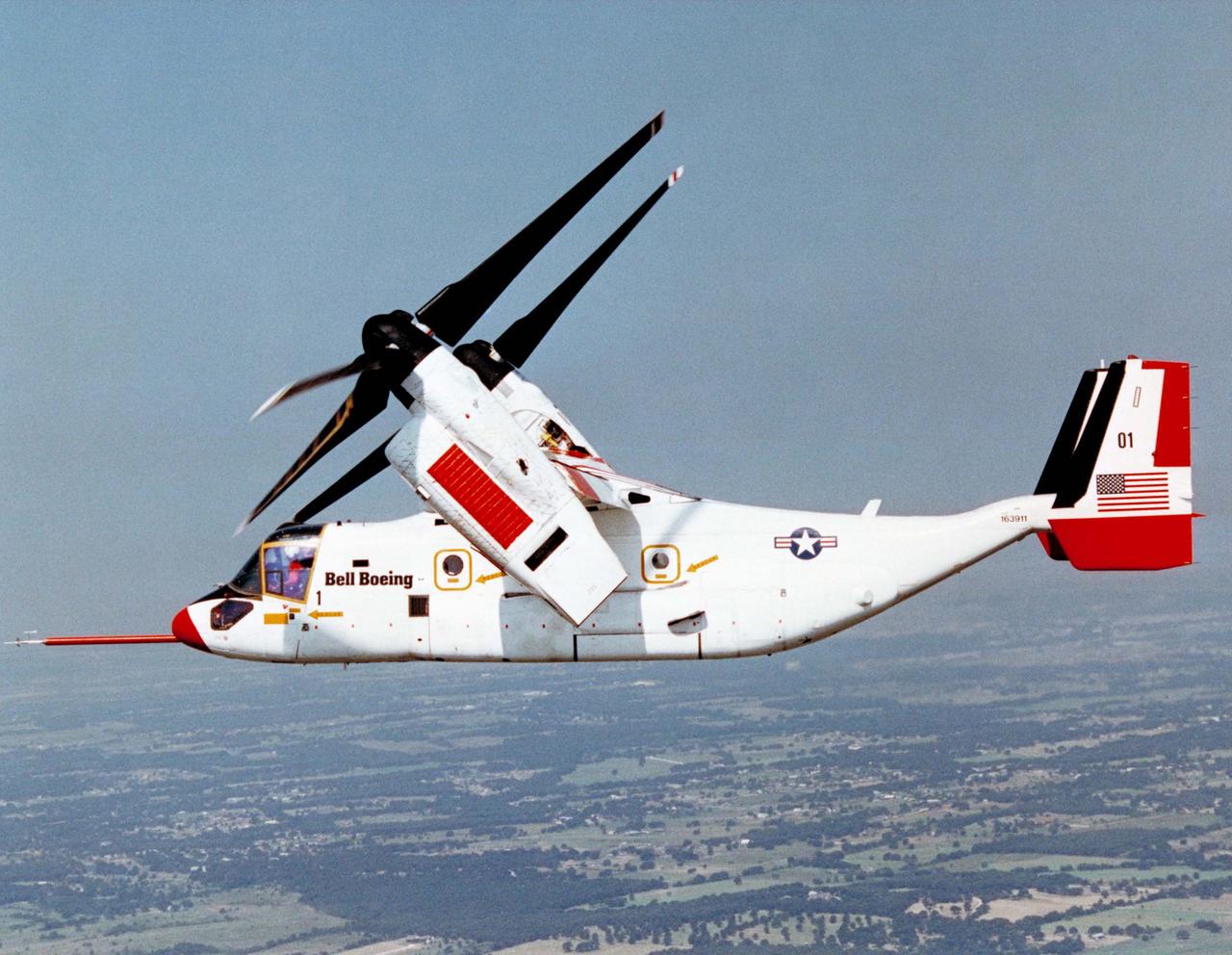
Bell Helicopter Bell-Boeing Tilt Rotor V-22 Osprey in flight.
ARC-1989-AC89-0246-7
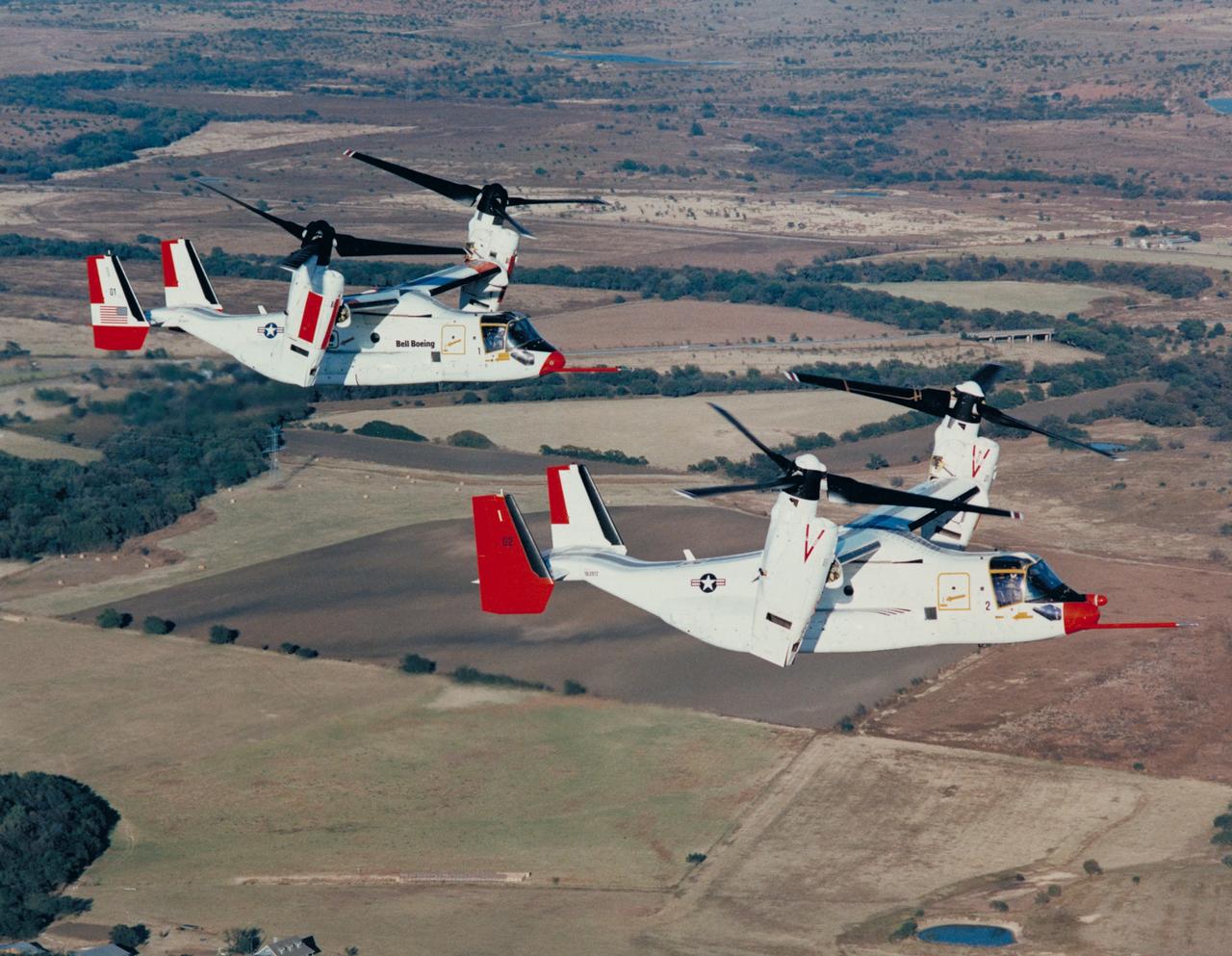
Bell Helicopter Bell-Boeing Tilt Rotor V-22 Ospreys in flight.
ARC-1989-AC89-0246-10
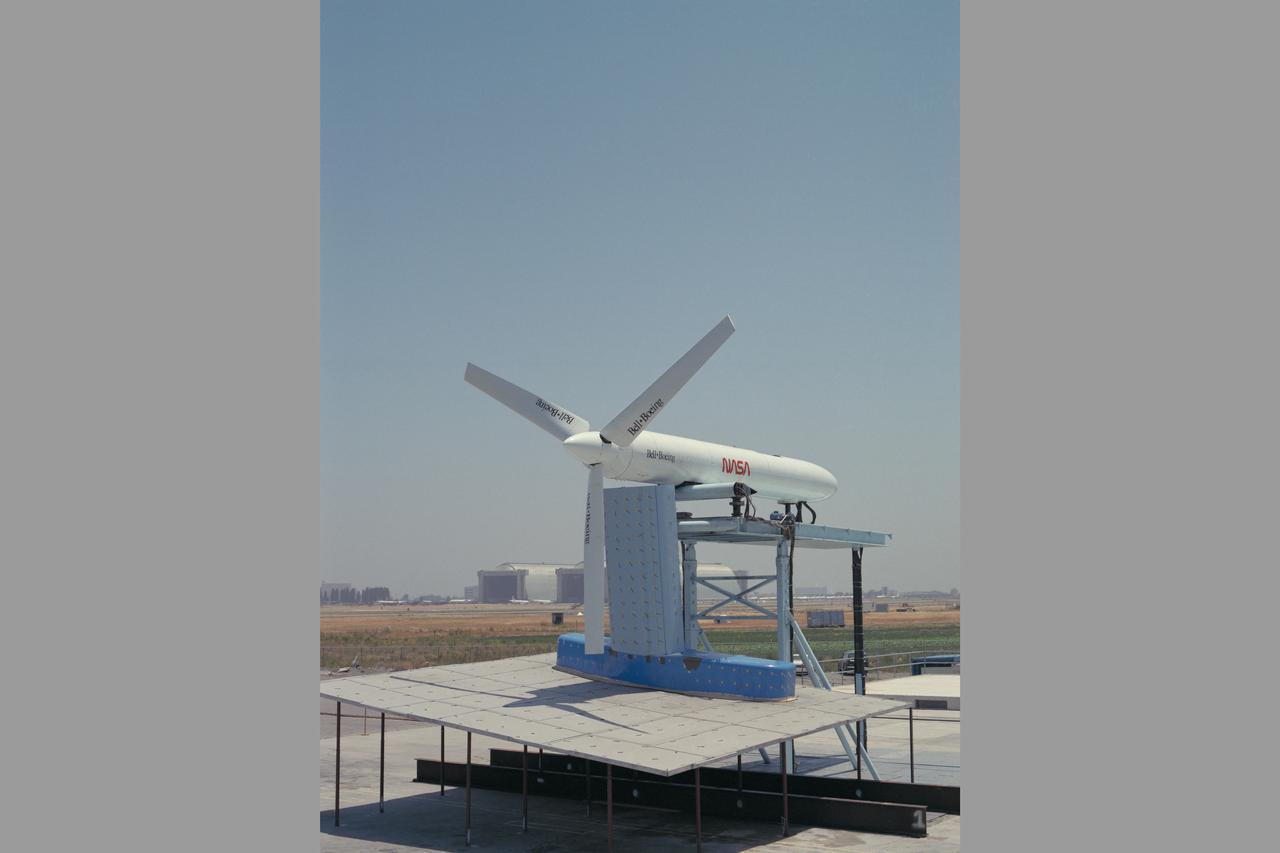
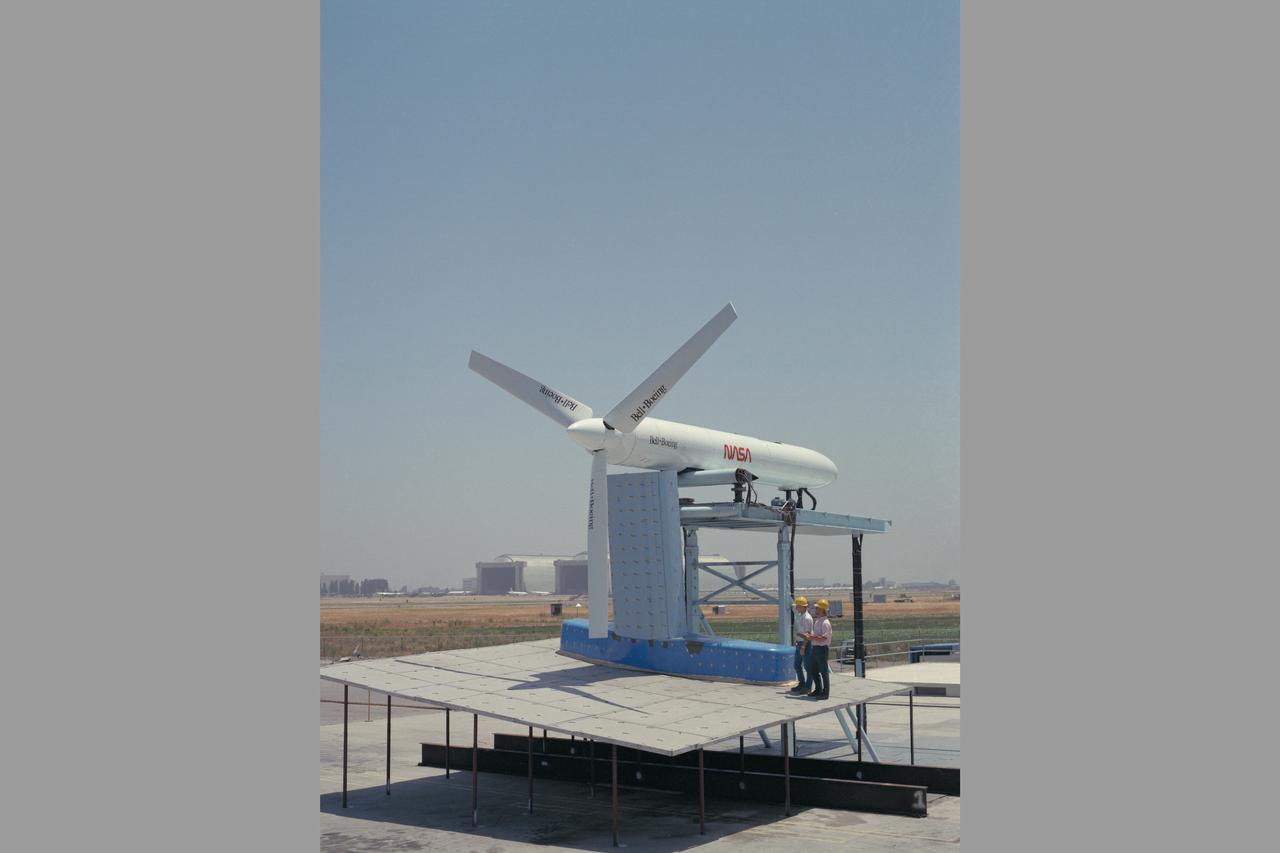
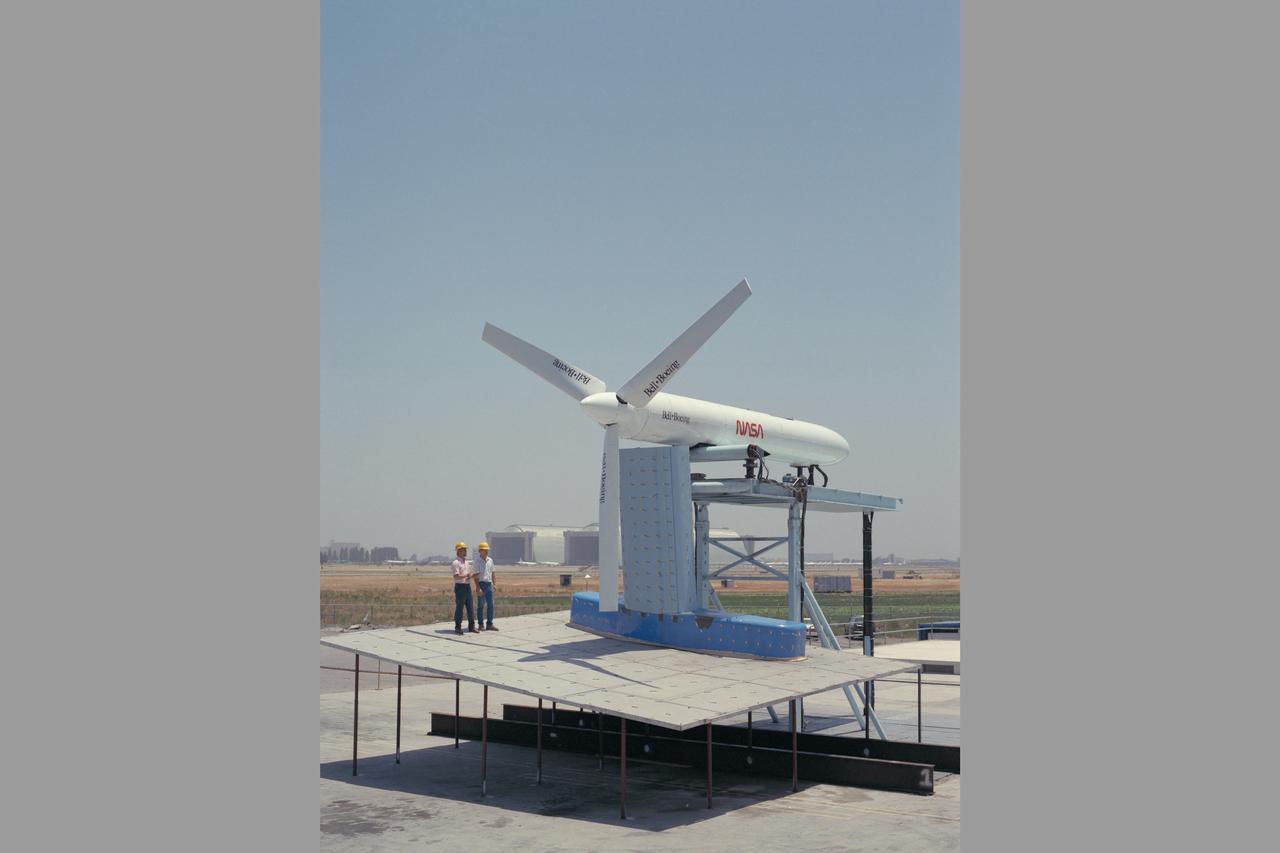
JVX/ATB Rotor Blade Project: Bell Boeing Rotor for the XV-15 tilt rotor Research Aircraft (TRRA)
ARC-1976-AC84-0176-26
JVX/ATB Rotor Blade Project: Bell Boeing Rotor for the XV-15 tilt rotor Research Aircraft (TRRA)
ARC-1976-AC84-0176-21
JVX/ATB Rotor Blade Project: Bell Boeing Rotor for the XV-15 tilt rotor Research Aircraft (TRRA)
ARC-1976-AC84-0176-22
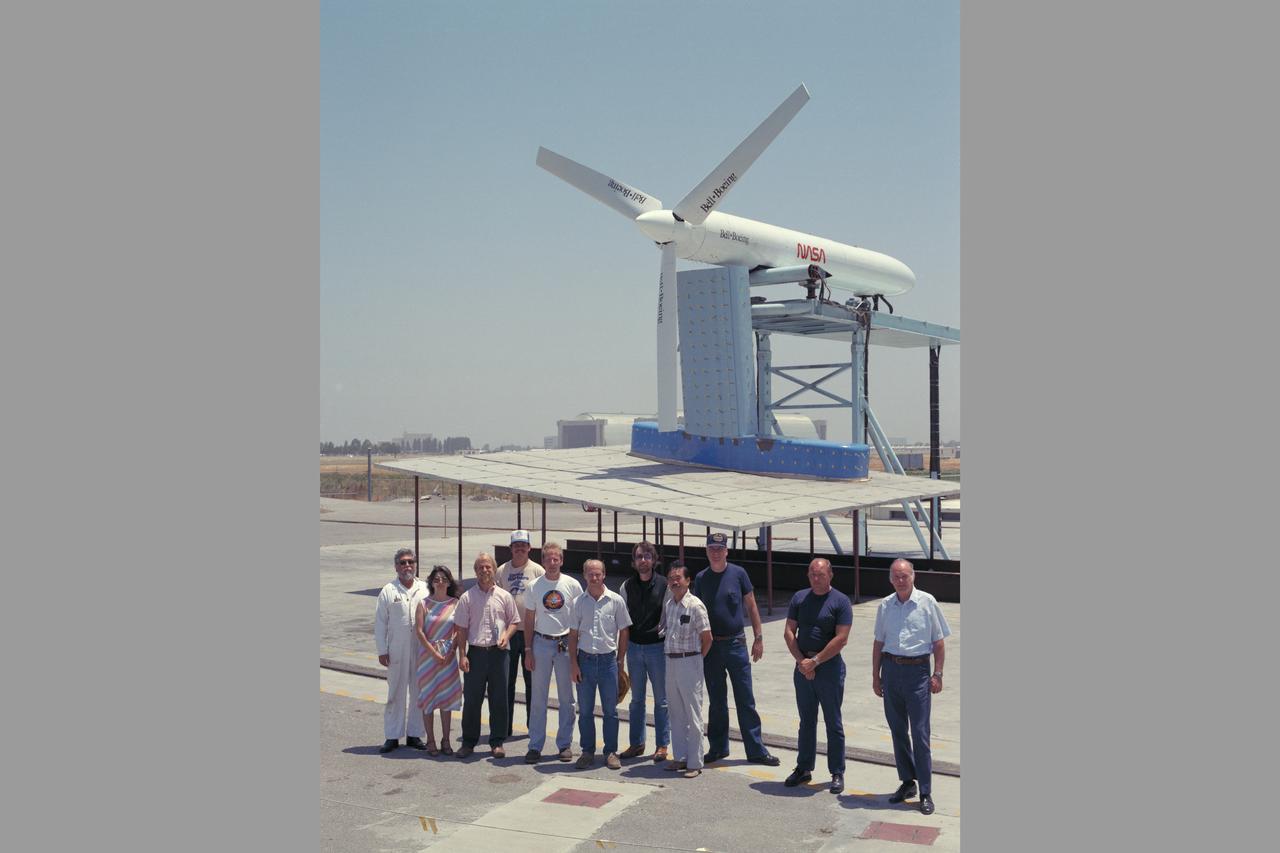
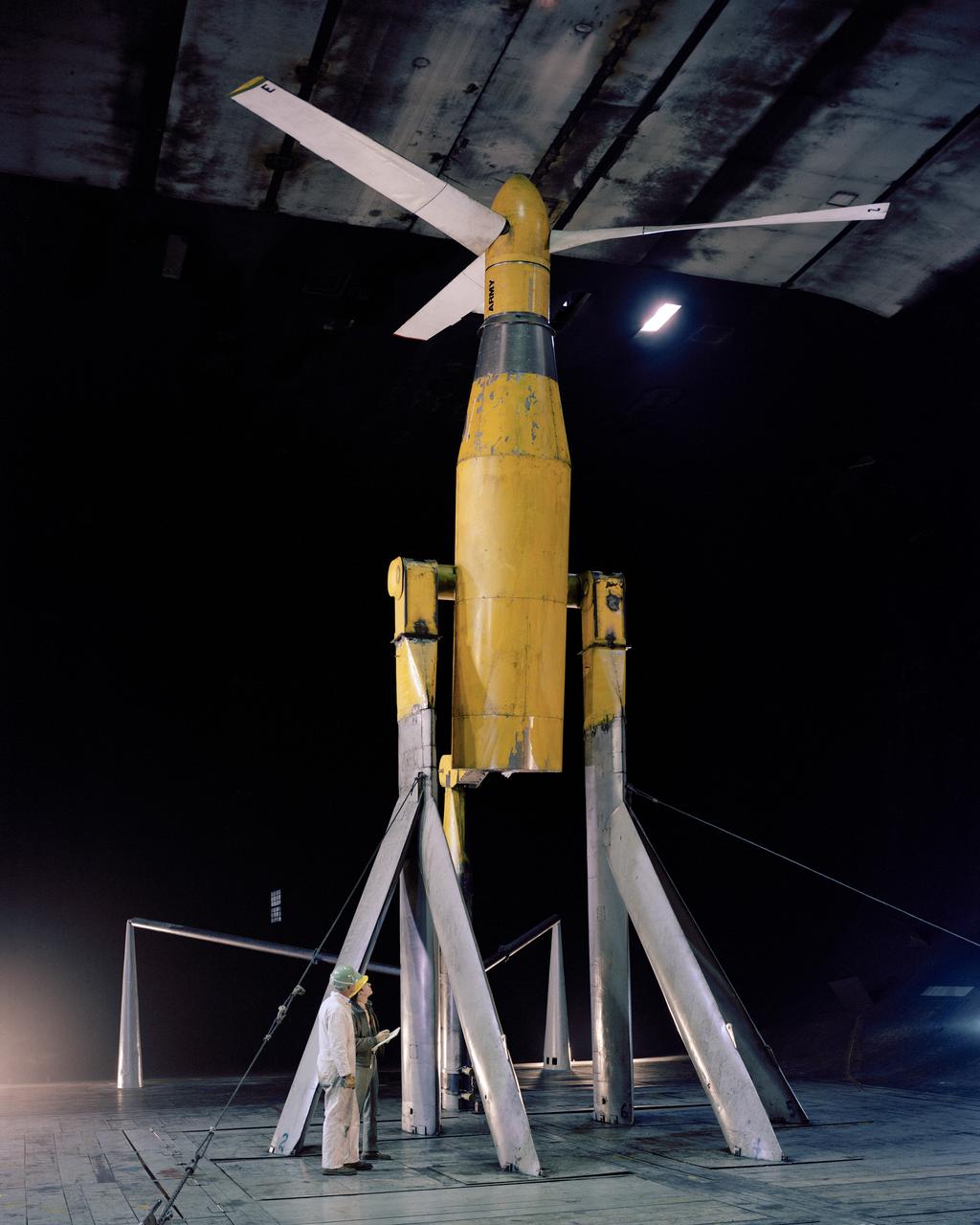
JVX/ATB Rotor Blade Project: Bell Boeing Rotor for the XV-15 tilt rotor Research Aircraft (TRRA) and test crew in front of the OARF
ARC-1976-AC84-0176-20
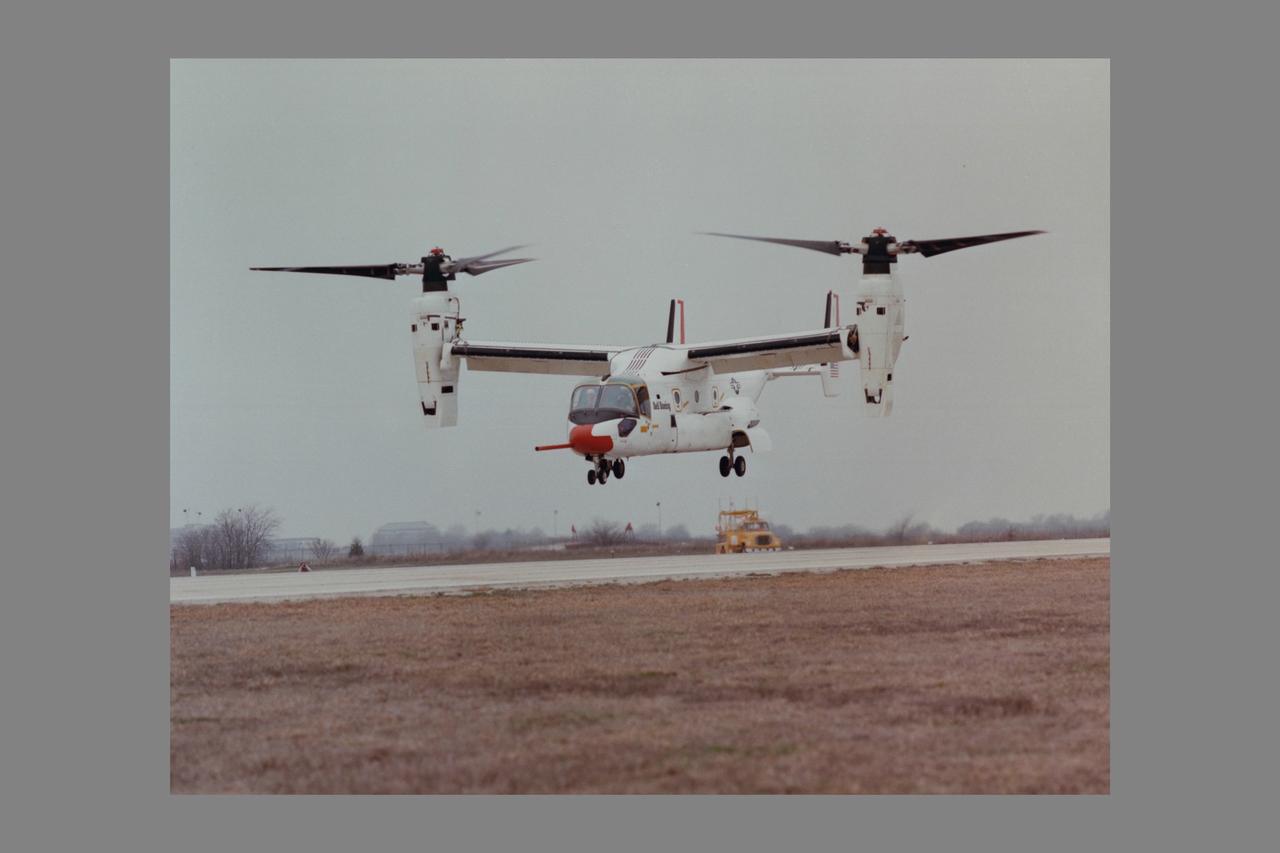
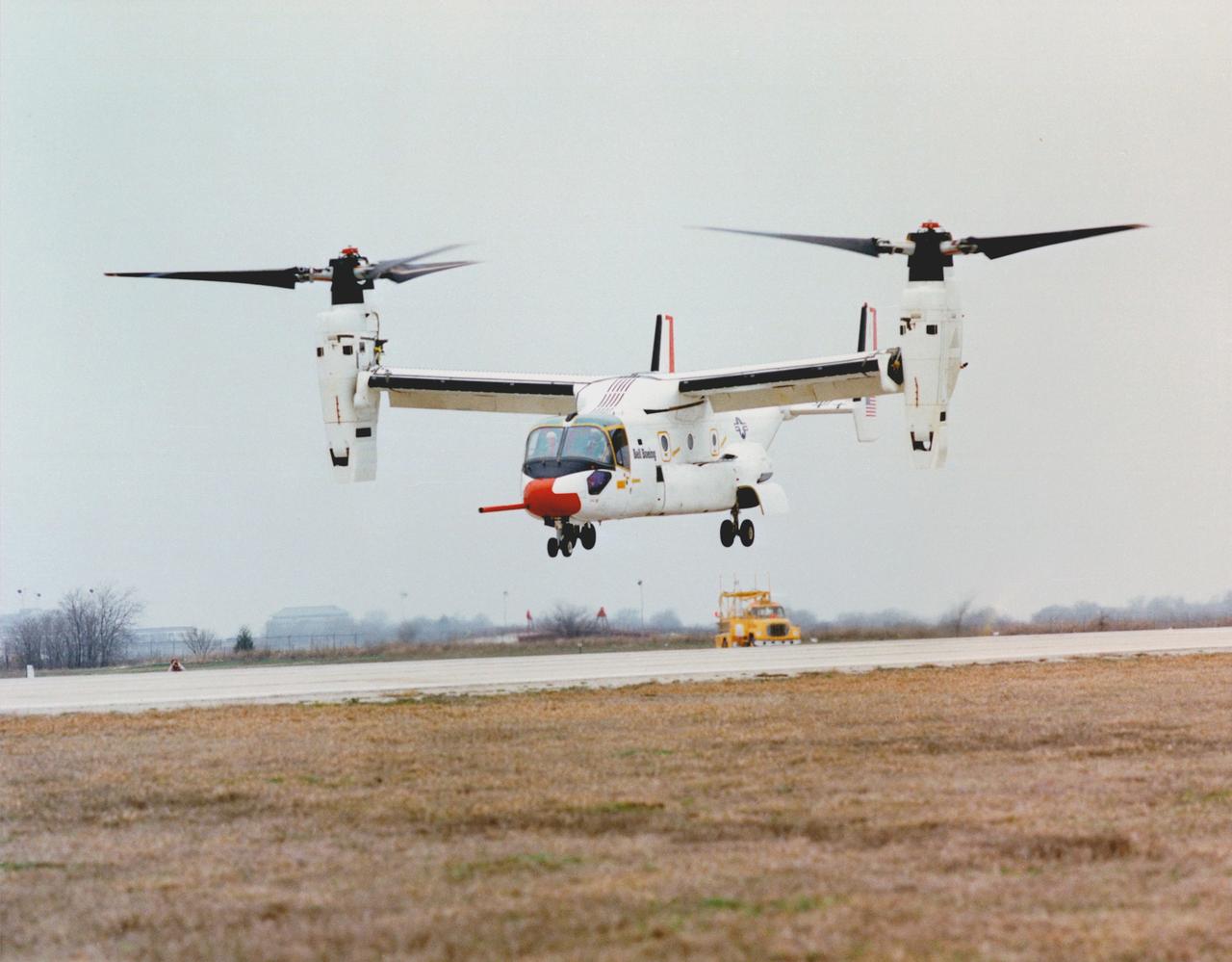
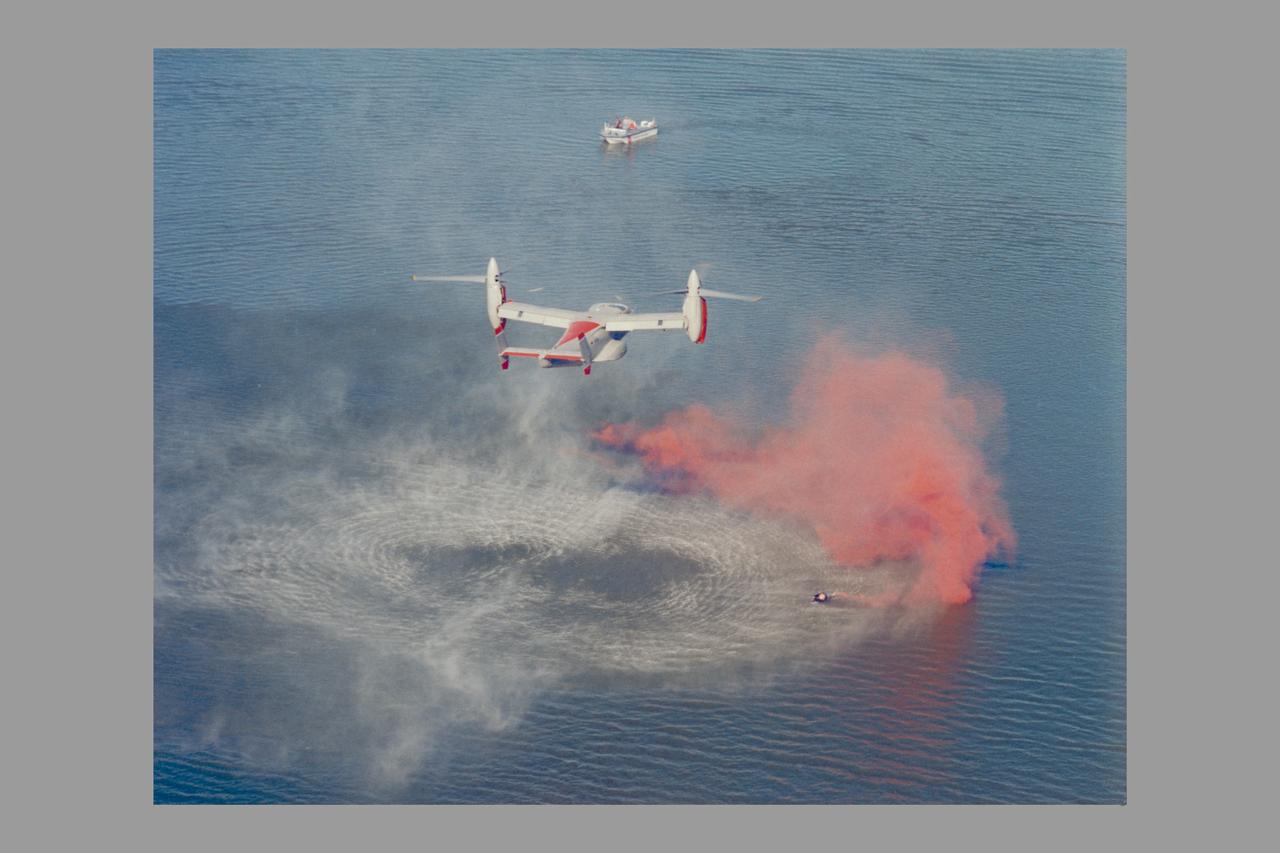
Bell Boeing (Military) Tilt Rotor V-22 Osprey hovering at Bell Boeing Helicopter, Arlington TX
ARC-1989-AC89-0246-5
Bell Boeing (Military) Tilt Rotor V-22 Osprey hovering at Bell Boeing Helicopter, Arlington TX
ARC-1989-AC89-0246-2
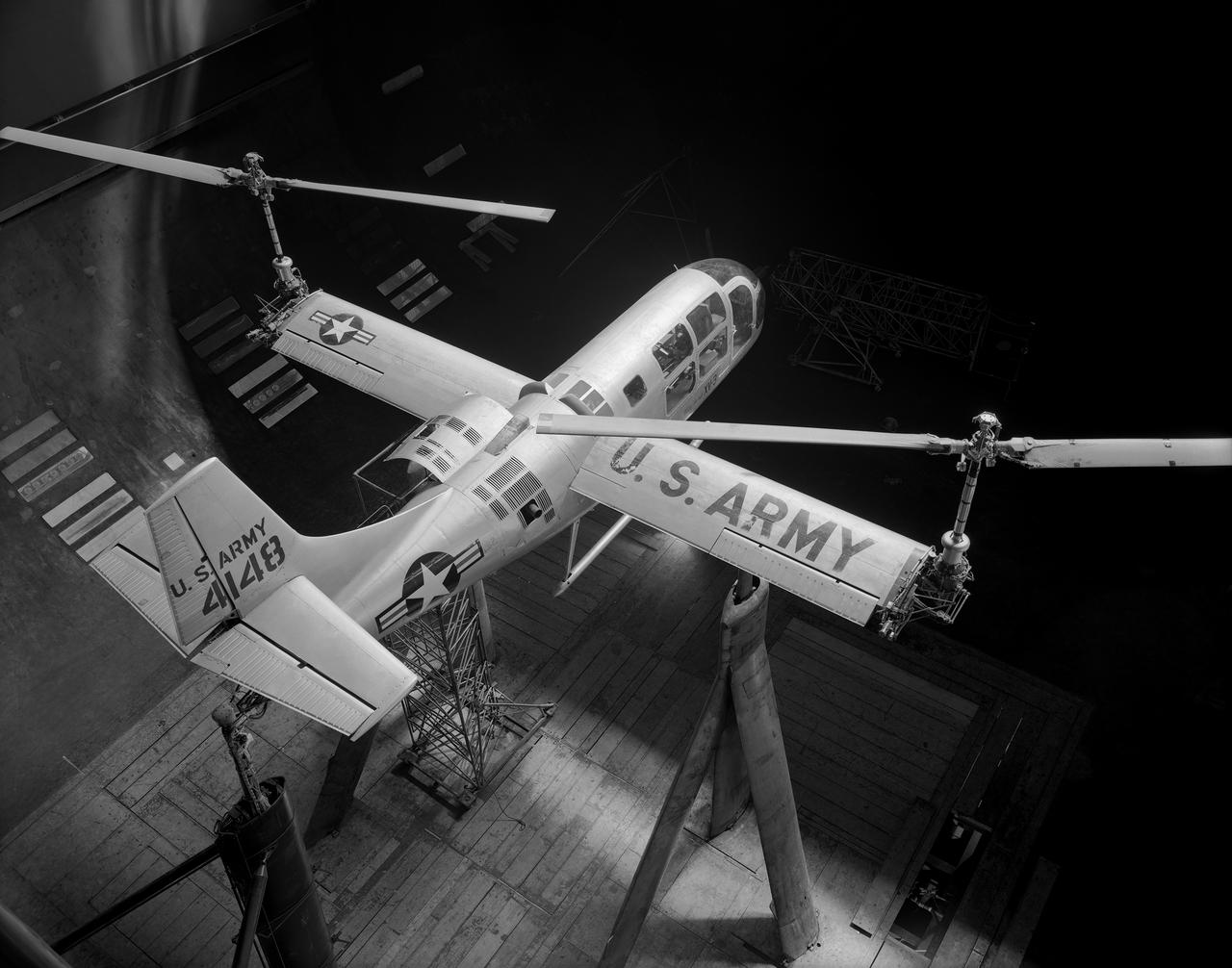
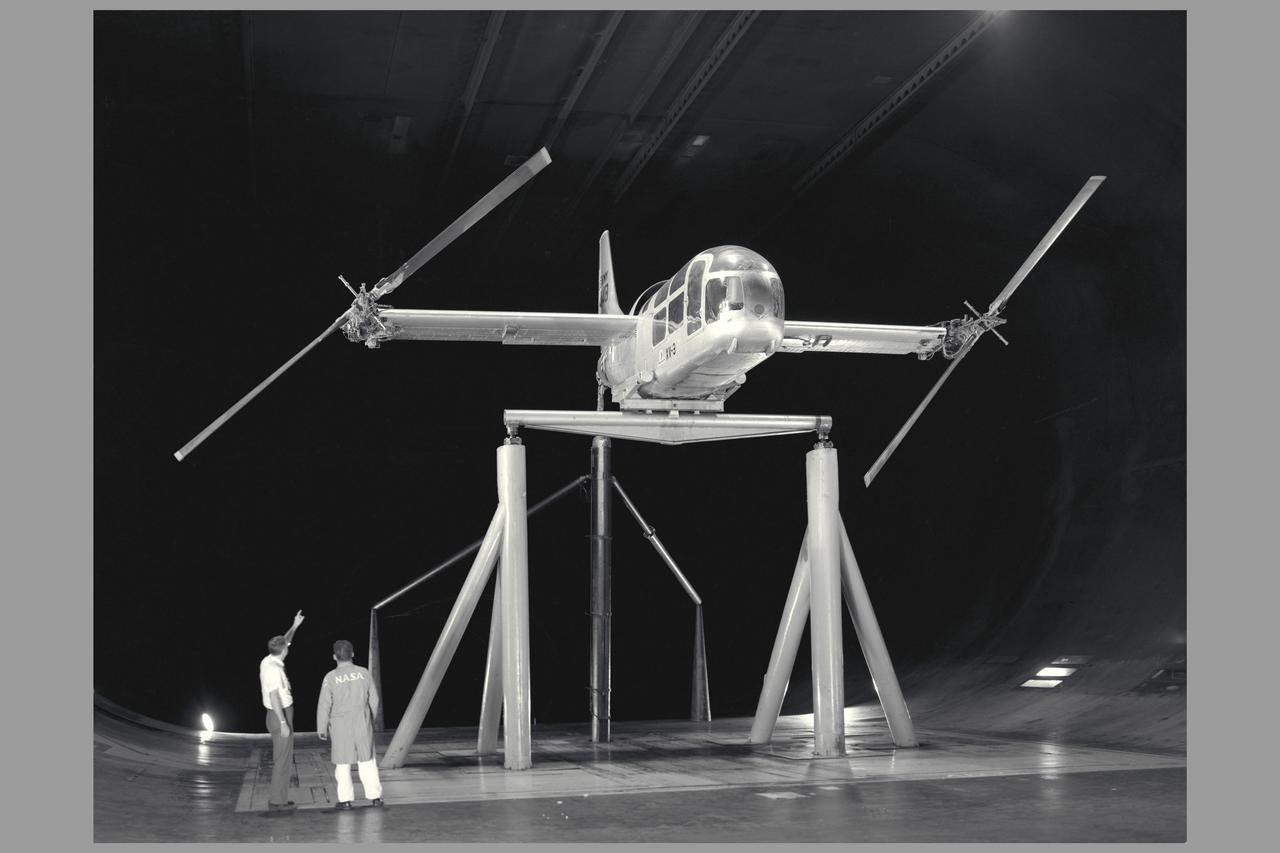
Overhead view of Bell XV-3 Convertiplane. First tilt rotor tested in the 40 x 80 wind tunnel.  Transition aerodynamics studied; shown in hover mode.
Overhead view of Bell XV-3 Convertiplane
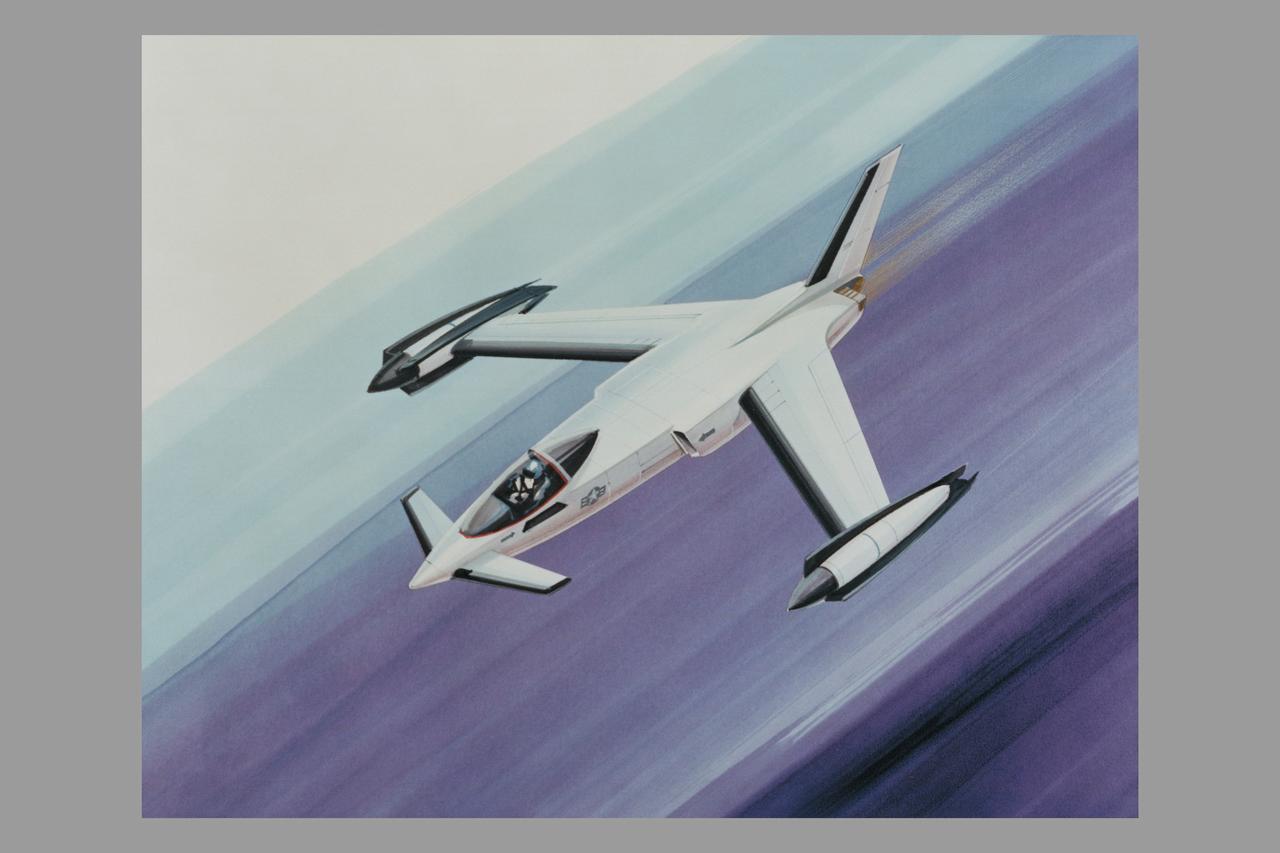
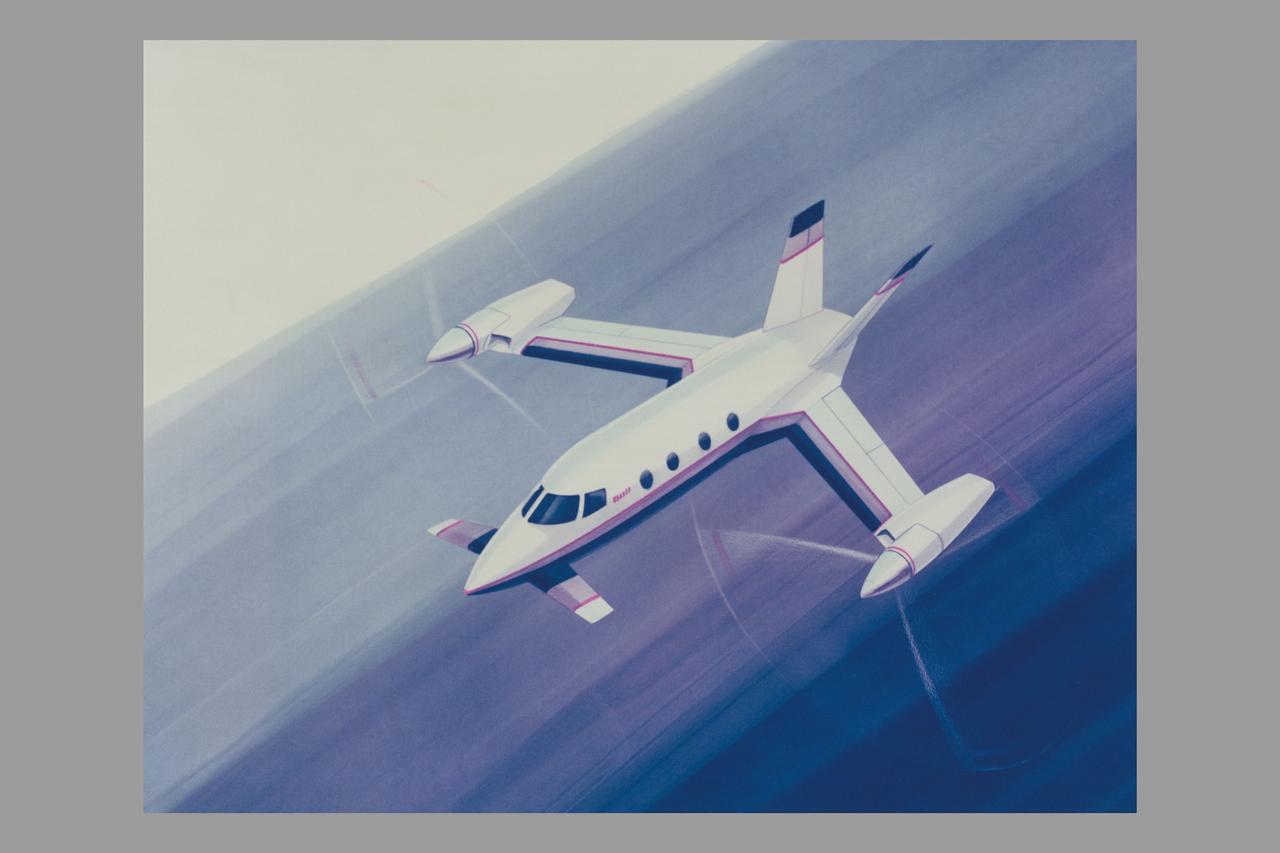
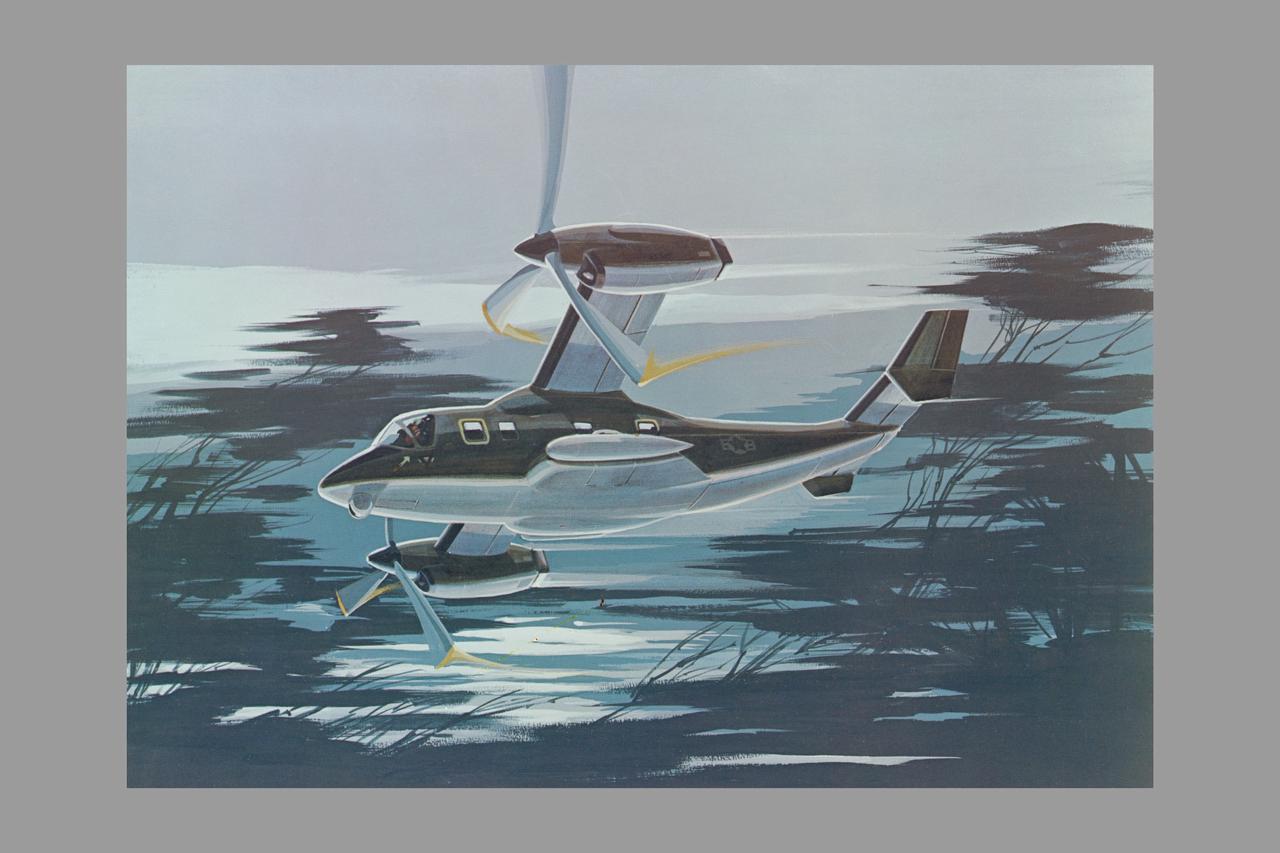
Artwork: Bell Textron Co. Bell Textron Tilt Rotor  Folding Tilt Rotor Aircraft Concept
ARC-1987-AC87-0038-2
Artwork: Bell Textron Co. Bell Textron Tilt Rotor  Forward Swept Wing Configuration  (Bell-029564 Swept Wing Tilt Rotor Concept)
ARC-1987-AC87-0038-1
HISTORICAL COLLECTION OF TILT ROTOR  Note: printed in NASA SP 2000-4517 The History of the XV-15 Tilt Rotor Research Aircraft; Concept to Flight
ARC-1998-A98-0209-2
Artwork: Bell Textron Co. Bell Textron Tilt Rotor folding swept wing and Forward Swept Wing Configurations (Bell-030355 Military High Speed Tilt Rotor)
ARC-1987-AC87-0038-3
Tilt Rotor and Tilt Wing Concepts: Bell-Boeing and Bell-Textron: showen is the NASA/ARMY/Navy XV-15
ARC-1986-AC96-0140-23
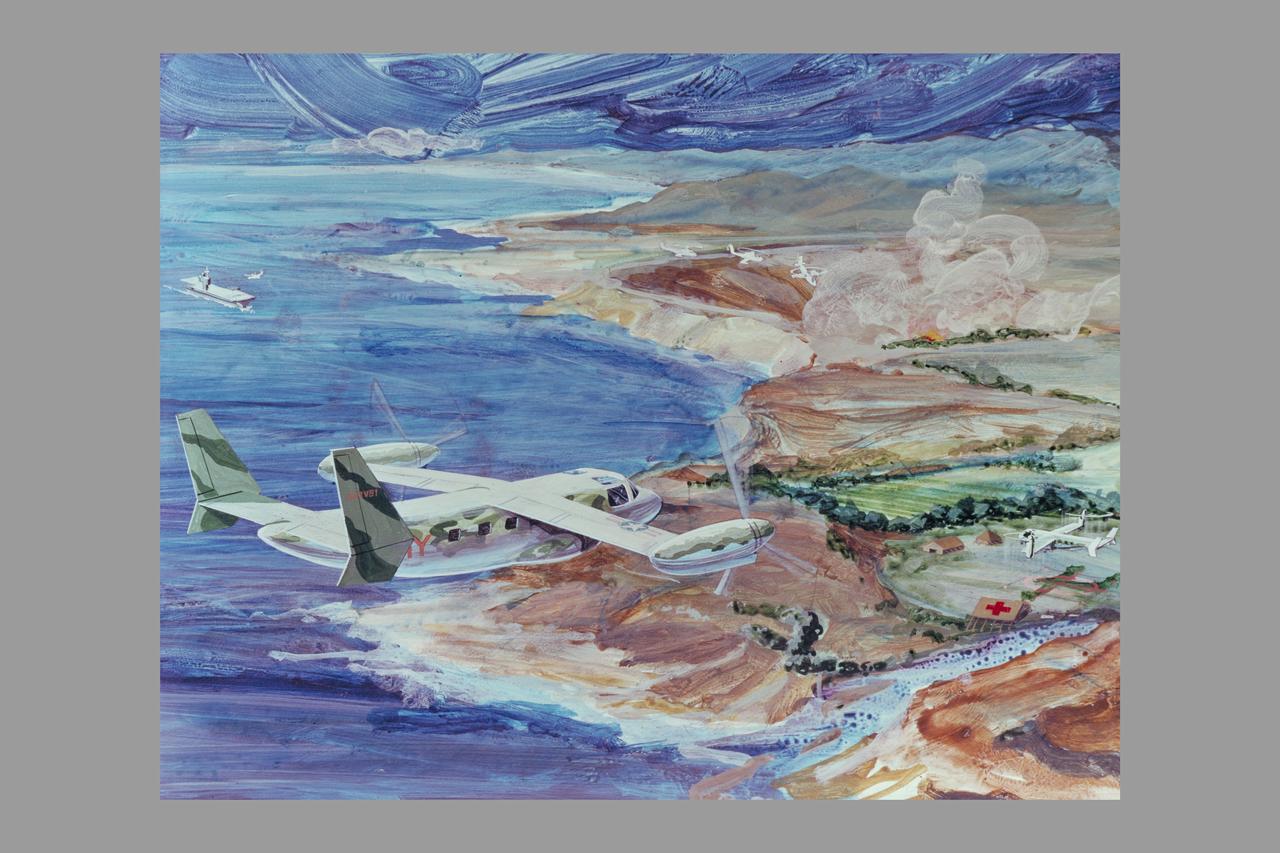
Tilt Rotor and Tilt Wing Concepts: Bell-Boeing and Bell-Textron:  shown is the Multimission Transport Rescue
ARC-1986-AC86-0140-22
Tilt Rotor and Tilt Wing Concepts: Bell-Boeing and Bell-Textron: show is the NASA/ARMY/Navy XV-15
ARC-1986-AC86-0140-24
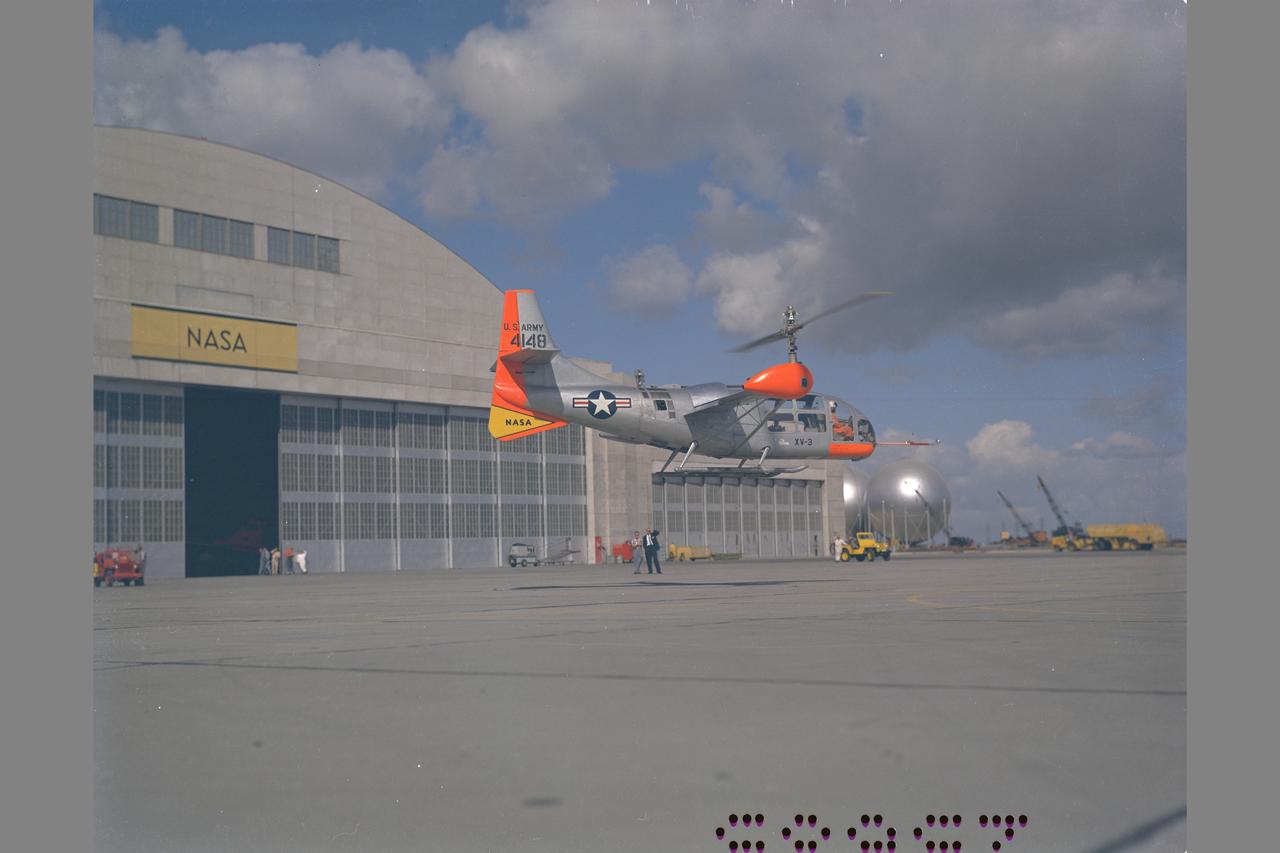
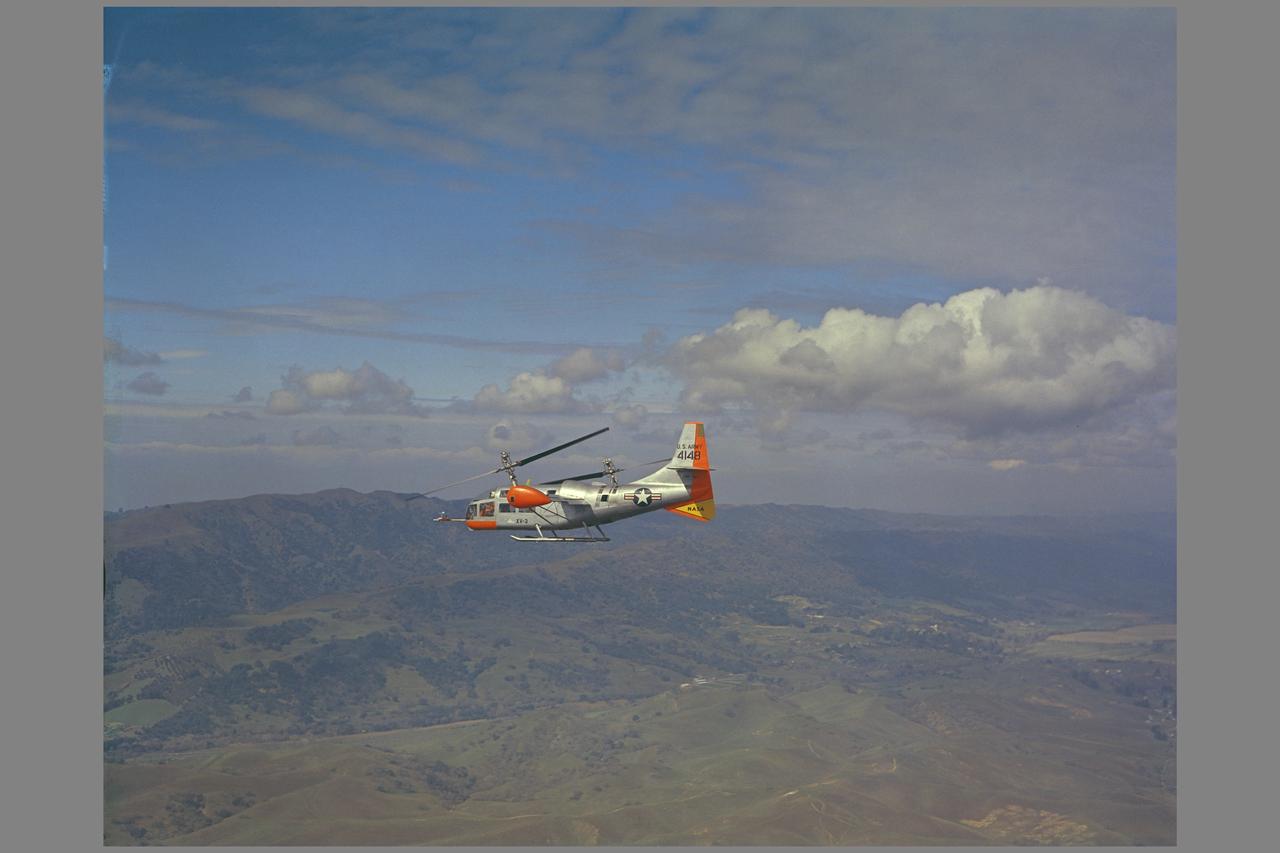
XV-3 HOVERING ON RAMP.  Flight Test of Bell XV-3 Convertiplane.  Bell VTOL tilt-rotor aircraft hovering in front of building N-211 at Moffett Field. The XV-3 design combined a helicopter rotor and a wing. A 450 horsepower Pratt & Whitney piston engine drove the two rotors. The XV-3, first flown in 1955 , was the first tilt-rotor to achieve 100% tilting of rotors. The vehicle was underpowered, however, and could not hover out of ground effect. Note the large ventral fin, which was added to imrpove directional stability in cruse (Oct 1962)
ARC-1959-AC-25685
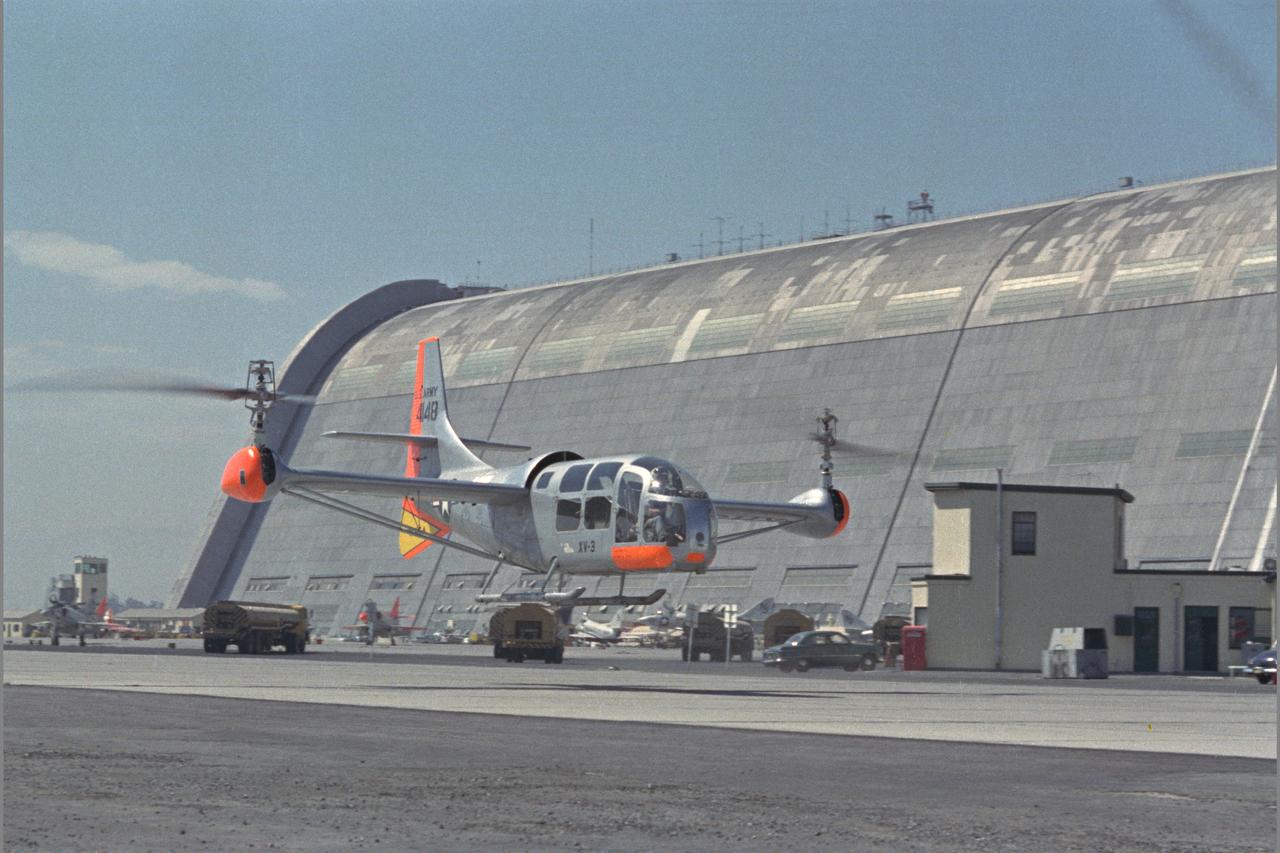
XV-3 HOVERING ON RAMP.  Flight Test of Bell XV-3 Convertiplane.  Bell VTOL tilt-rotor aircraft hovering along side Hangar One at Moffett Field. The XV-3 design combined a helicopter rotor and a wing. A 450 horsepower Pratt & Whitney piston engine drove the two rotors. The XV-3, first flown in 1955 , was the first tilt-rotor to achieve 100% tilting of rotors. The vehicle was underpowered, however, and could not hover out of ground effect. Note the large ventral fin, which was added to imrpove directional stability in cruse (Oct 1962)
ARC-1959-A-25685-14
Bell XV-15 Tilt Rotor Army Configurations; Combat
ARC-1966-AC83-0652-1
XV-15 Tilt Rotor (NASA-703) hovers at Ames Research Center
ARC-1985-AC85-0186-33
XV-15 Tilt Rotor (NASA-703) hovers at Ames Research Center
ARC-1985-AC85-0186-36
XV-15 Tilt Rotor Aricraft at lamore Naval Air Station
ARC-1981-AC81-0178-1
XV-15 Tilt Rotor (NASA-703) in flight at Ames Research Center
ARC-1985-AC85-0186-40
XV-15 Tilt Rotor Aricraft at lamore Naval Air Station
ARC-1981-AC81-0178-4
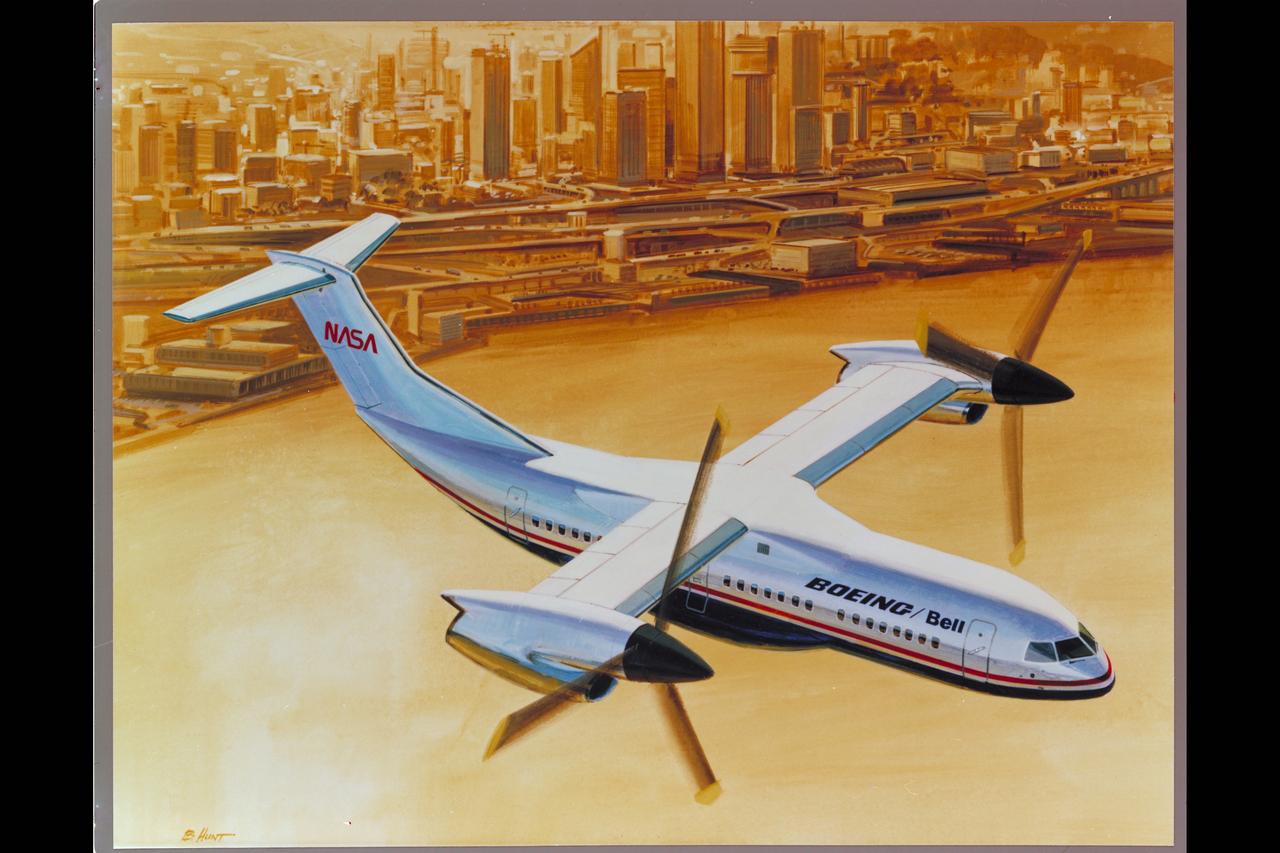
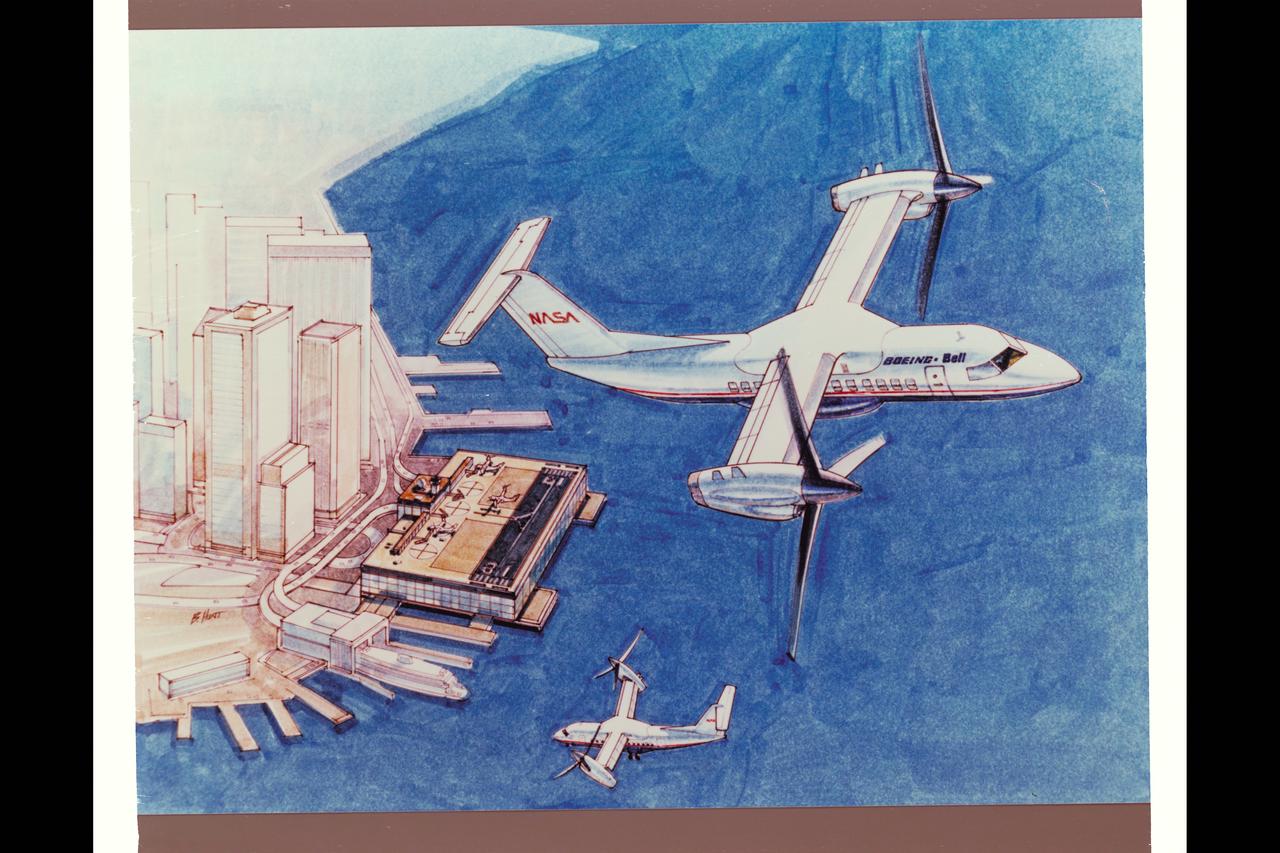
Civil Tilt Rotor Commuter Aircraft concepts by Boeing/Bell
ARC-1986-AC86-0035-1
XV-15 Tilt Rotor (NASA-703) in flight at Ames Research Center
ARC-1985-AC85-0186-42
XV-15 (NASA 702) Tilt Rotor flight to DFRC-  (at Dryden)
ARC-1981-AC81-0178-6
Civil Tilt Rotor Commuter Aircraft concepts by Boeing/Bell
ARC-1986-AC86-0035-3
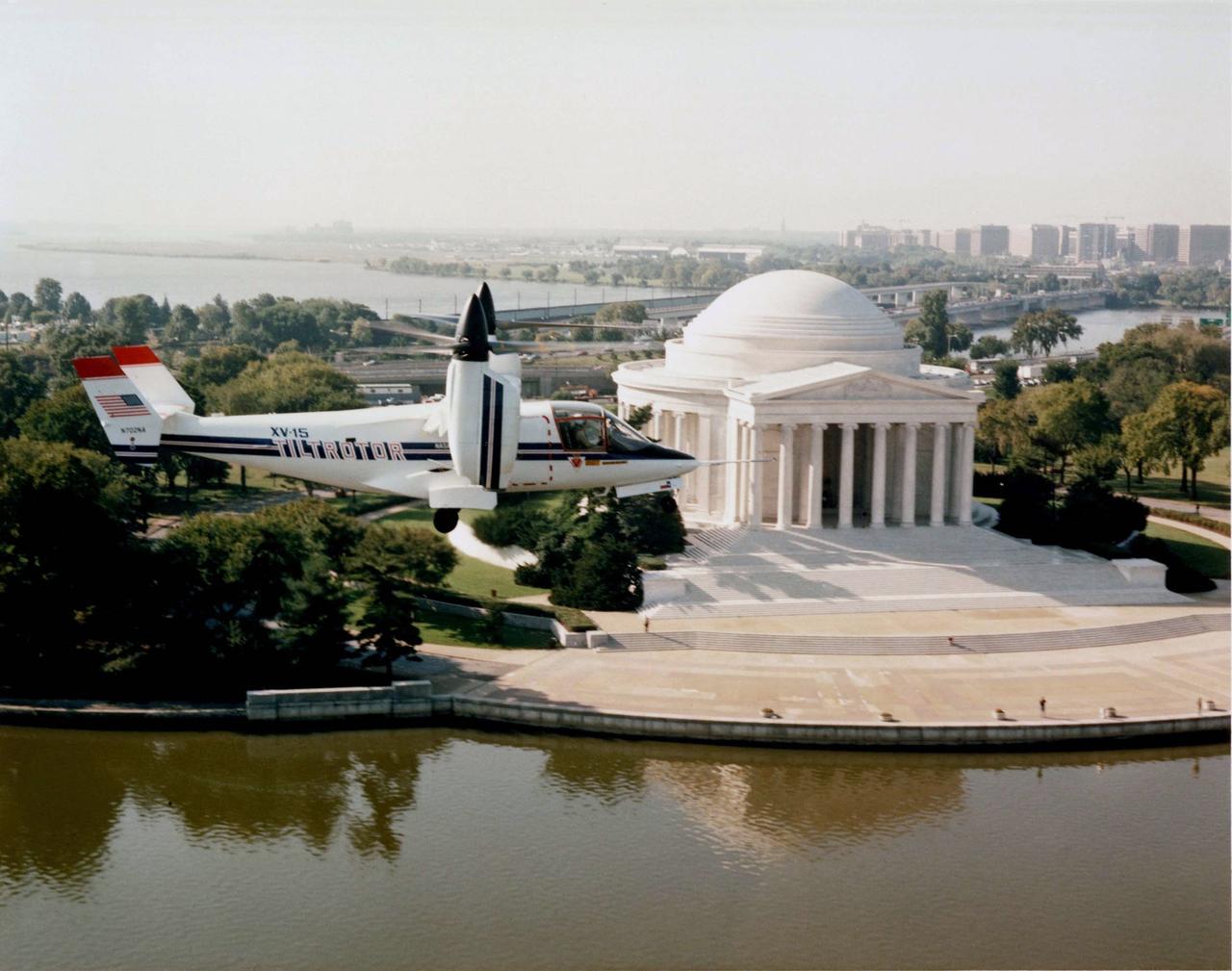
XV-15 Tilt Rotor in flight by Jefferson Memorial, Washington D.C.
ARC-1986-AC86-0410-3
Bell XV-15 Tilt Rotor Army Configurations;  Rescue
ARC-1966-AC83-0652-3
XV-15 Tilt Rotor (NASA-703) in flight at Ames Research Center
ARC-1985-AC85-0186-41
XV-15 Tilt Rotor Aircraft in flight at Bell helicopter
ARC-1977-AC77-1046
XV-15 Tilt Rotor (NASA-703) hovers at Ames Research Center
ARC-1985-AC85-0186-34
Bell XV-15 Tilt Rotor Army Configurations;  Rescue at sea
ARC-1966-AC83-0652-2
XV-15 Tilt Rotor (NASA-703) hovers at Ames Research Center
ARC-1985-AC85-0186-37
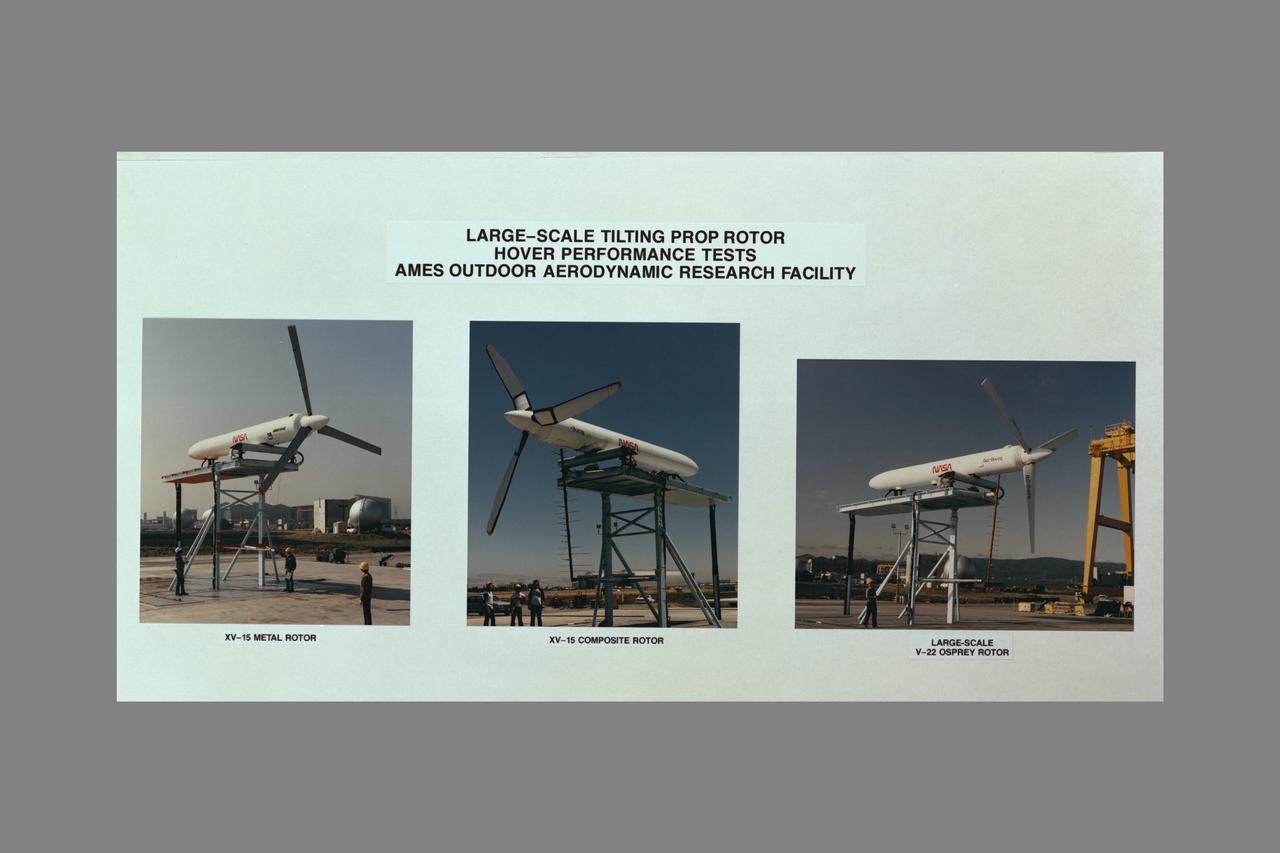
NASA Ames Graphics of LARGE-SCALE TILTING PROP ROTOR HOVER PERFORMANCE TESTS AMES OARF COMPOSITE.  (ref:  XV-15 Metal Rotor AC84-0176-13, XV-15 Composite Rotor from AC84-0498 series, V-22 Osprey AC84-0059-11 testing at OARF)
ARC-1987-AC87-0191
XV-15 Tilt Rotor (NASA-703) in conversion flight at Ames Research Center
ARC-1985-AC85-0186-16
XV-15 Tilt Rotor (NASA-703) in conversion flight at Ames Research Center
ARC-1985-AC85-0186-17
Bell XV-15 Tilt Rotor Army Configurations; Combat, Rescue, and JVX artist renderings
ARC-1966-AC83-0652-6
XV-15 Tilt Rotor (NASA-703) in conversion flight at Ames Research Center
ARC-1985-AC85-0186-19
XV-15 Tilt Rotor (NASA-703) in conversion flight at Ames Research Center
ARC-1985-AC85-0186-21
XV-15 Tilt Rotor (NASA-703) in conversion flight at Ames Research Center
ARC-1985-AC85-0186-18
XV-15 Tilt Rotor (NASA-703) in conversion flight at Ames Research Center
ARC-1985-AC85-0186-20
XV-15 Tilt Rotor (NASA-703) hovers at Ames Research Center with Navy P-3 Orion overhead
ARC-1985-AC85-0186-32
XV-15 Tilt Rotor (NASA-703) in conversion flight at Ames Research Center
ARC-1985-AC85-0186-22
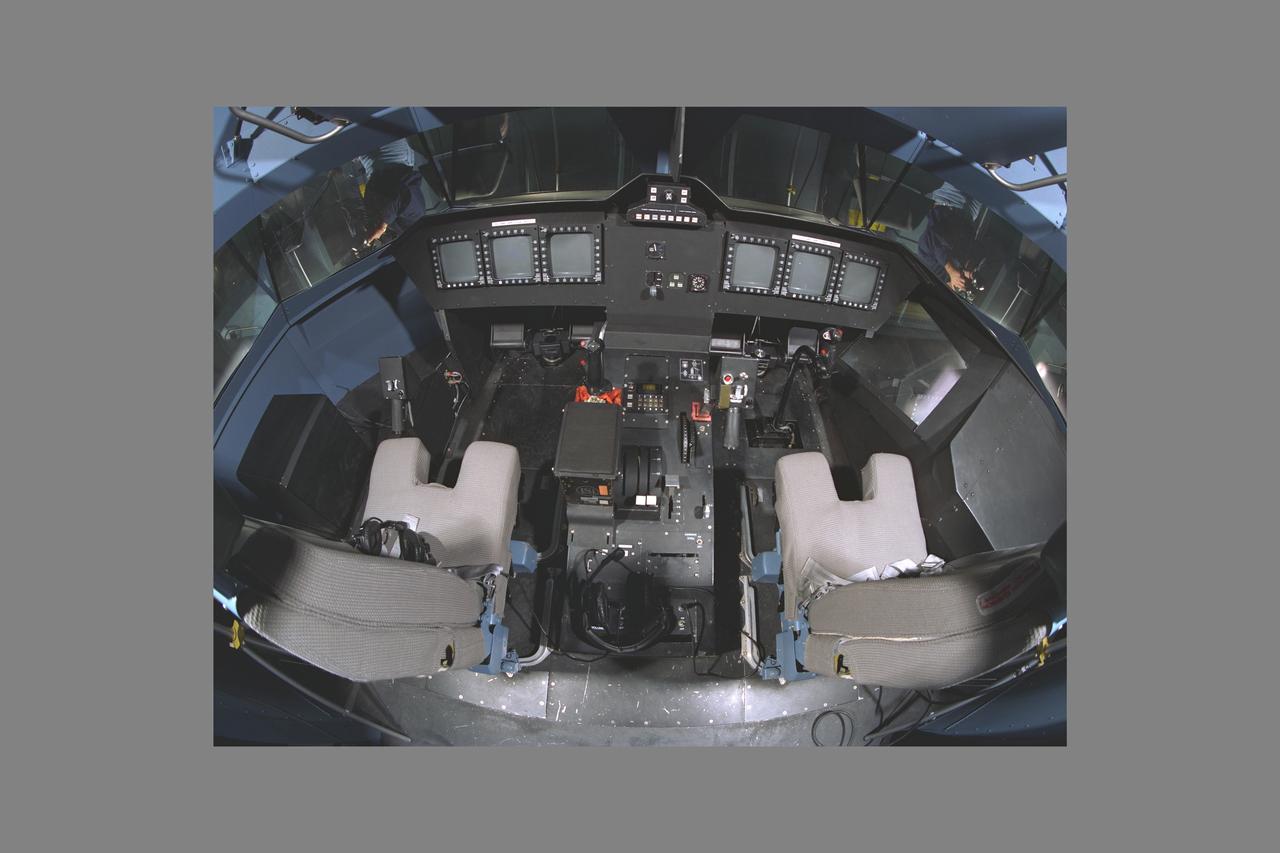
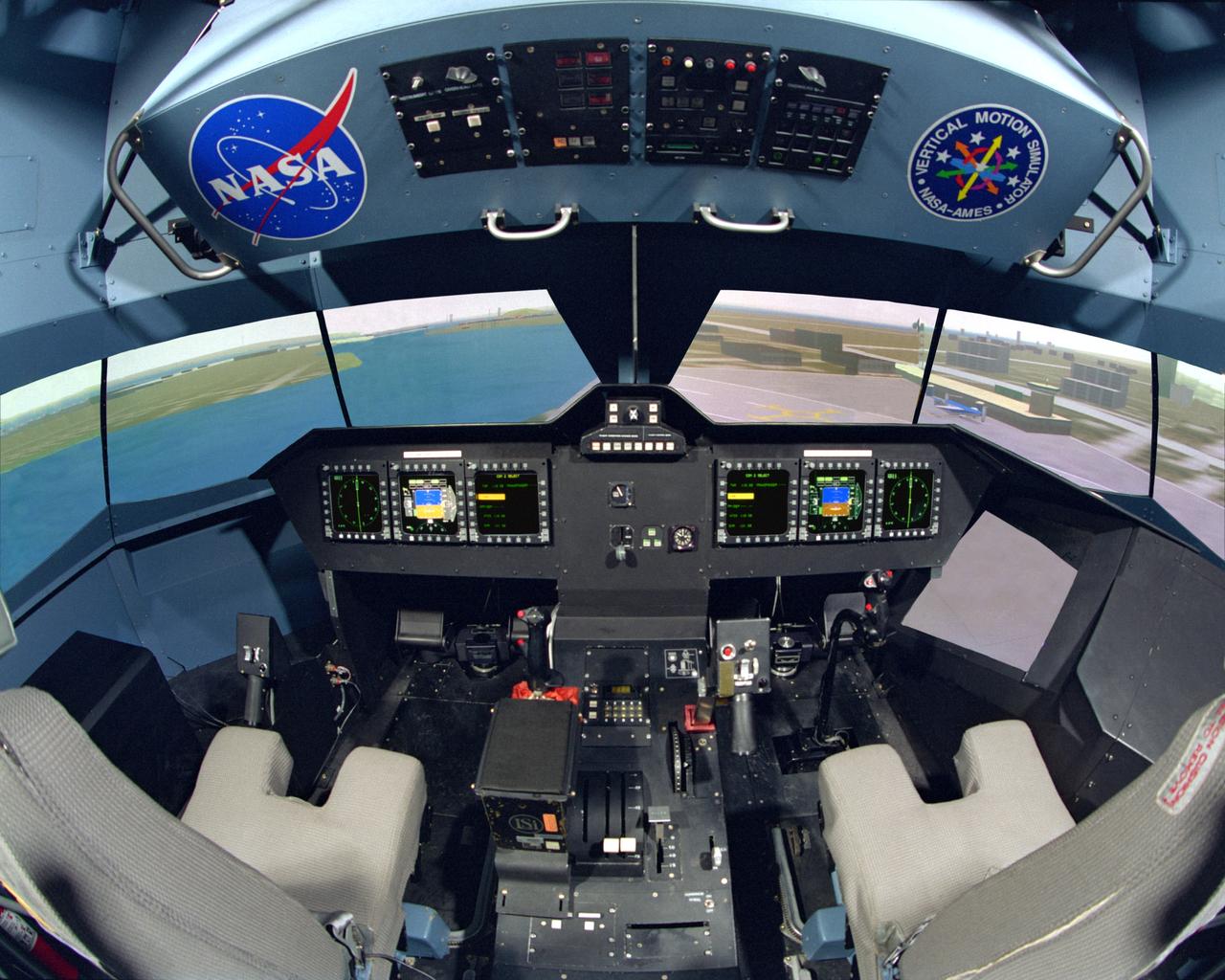
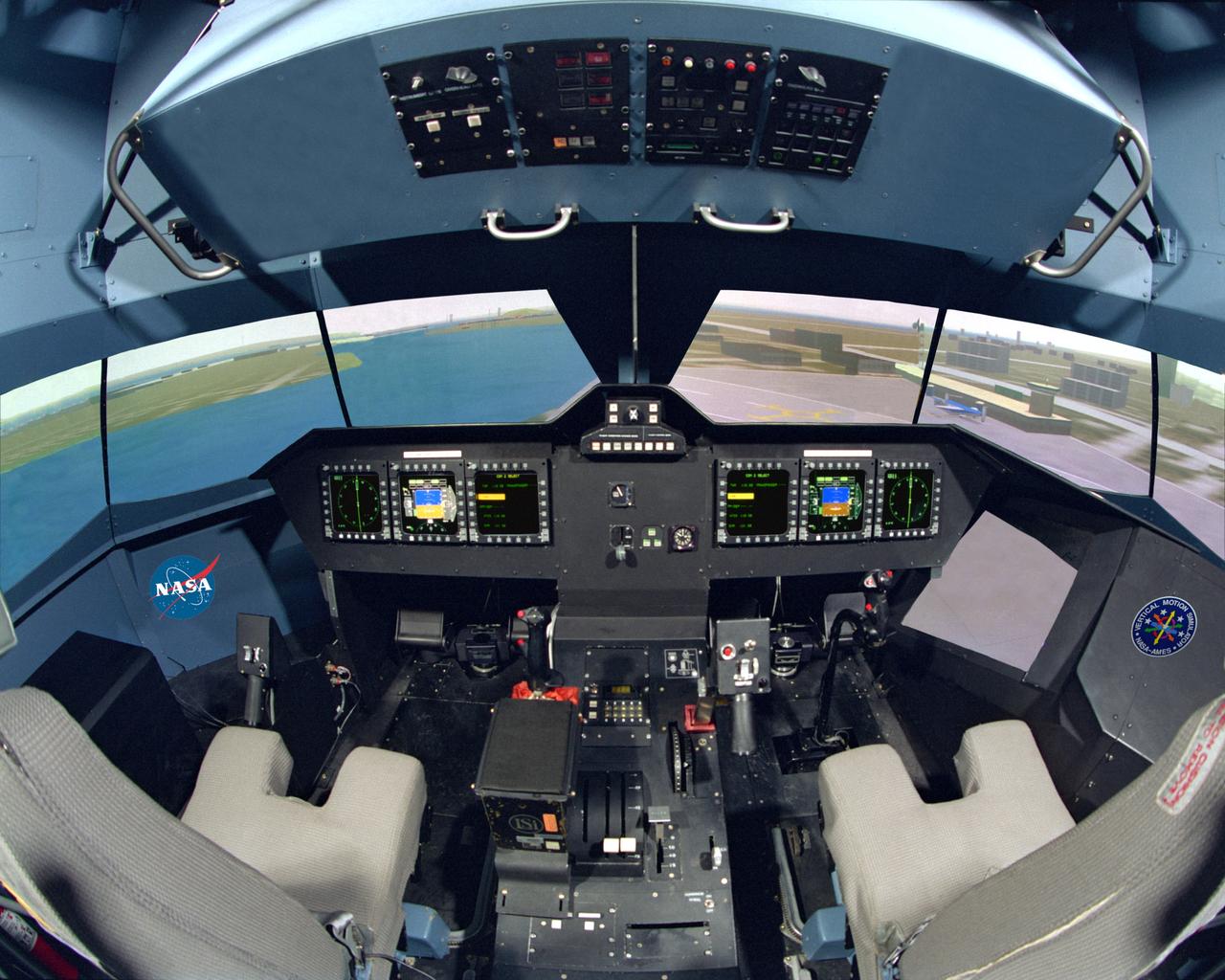
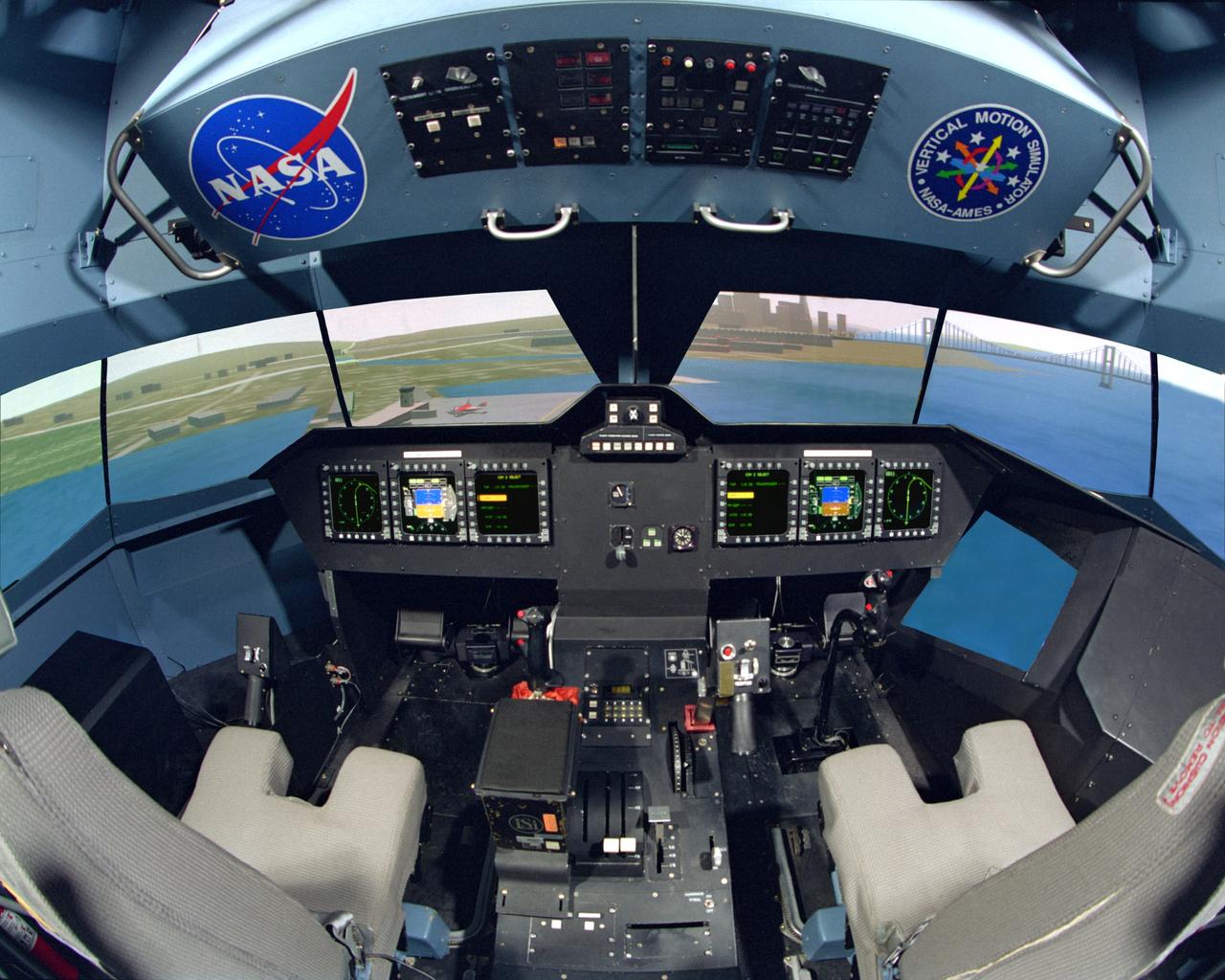
NASA Ames Vertical Motion Simulator (VMS); T-Cab Civil Tilt Rotor Project (CTR) project cab configuration
ARC-1997-AC97-0410-1
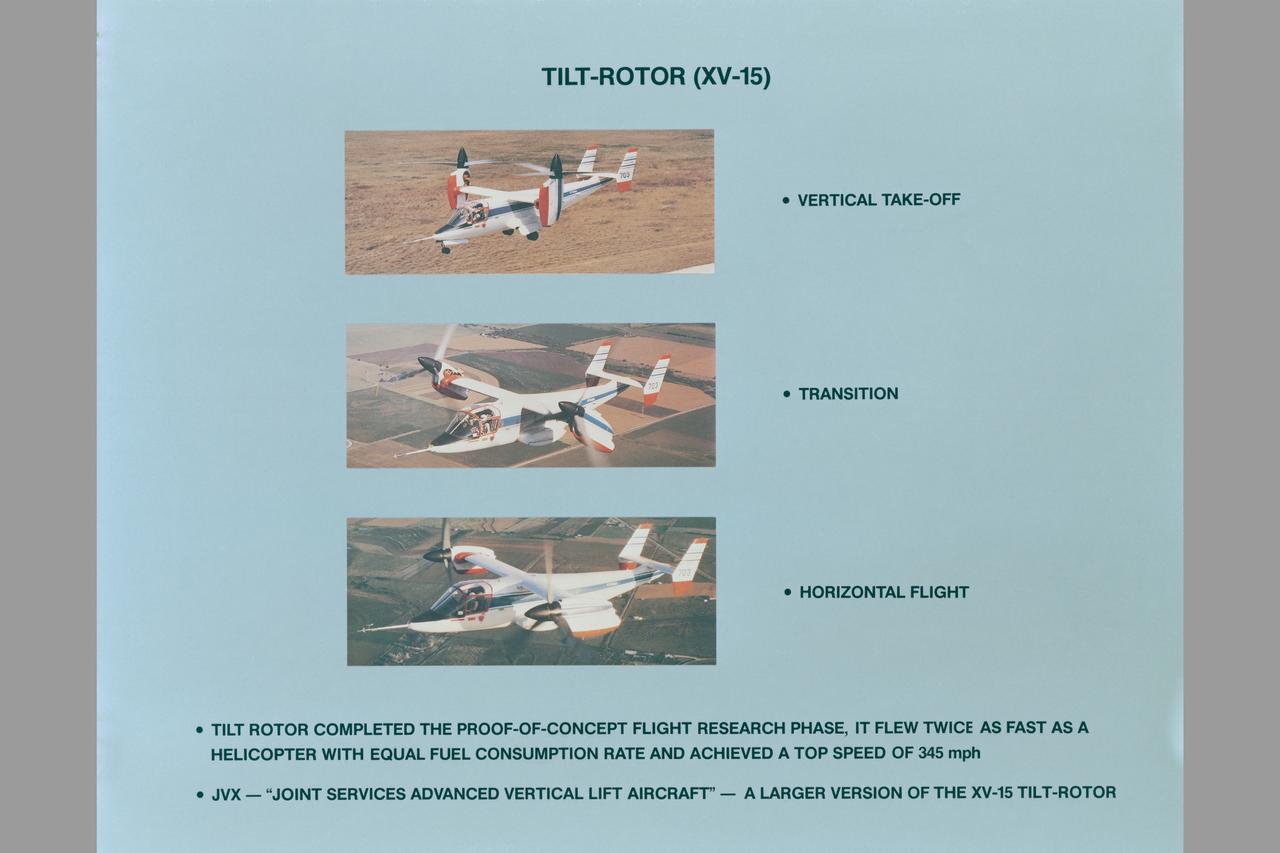
composite art Tilt Rotor  (XV-15) JVX composite; vertical, transition & horizontal flight; artwork.
ARC-1985-AC85-0231
XV-15 Tilt Rotor (NASA-703) hovers at Ames Research Center, helicopter mode
ARC-1985-AC85-0186-35
XV-15 (NASA-703) Tilt Rotor take-offs at the NASA Ames facility at Crows Landing, CA
ARC-1982-AC82-0723-22
XV-15 Tilt Rotor (NASA-703) hovers at Ames Research Center with Navy P-3 Orion on taxi way
ARC-1985-AC85-0186-39
XV-15 Tilt Rotor (NASA-703) hovers at Ames Research Center with Navy P-3 Orion on flight line in foreground
ARC-1985-AC85-0186-38
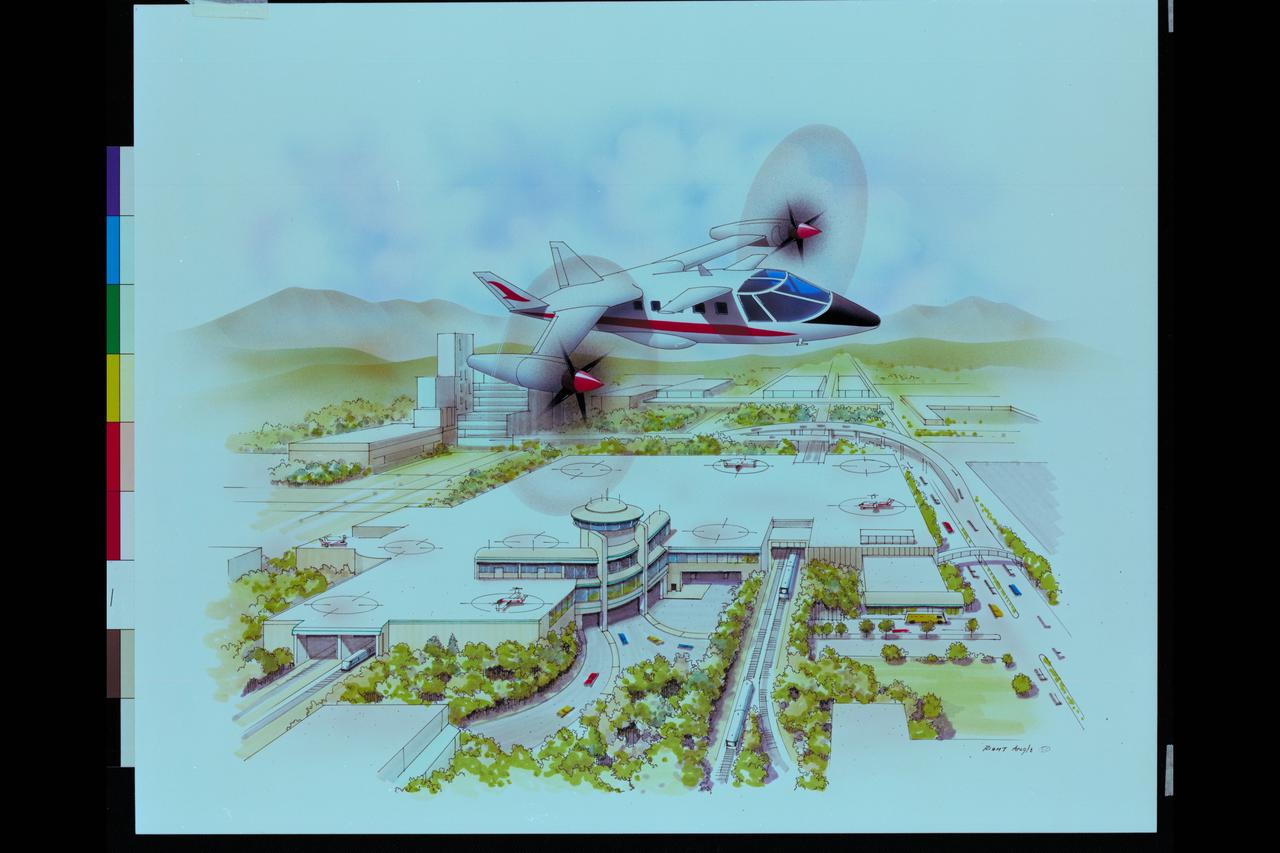
Artwork - Artist unknown High Speed Rotorcraft Concept Variable Diameter Civil Tilt-Rotor Artwork depicting vertiport take off/landing (40 passenger)
ARC-1991-AC91-0067-2
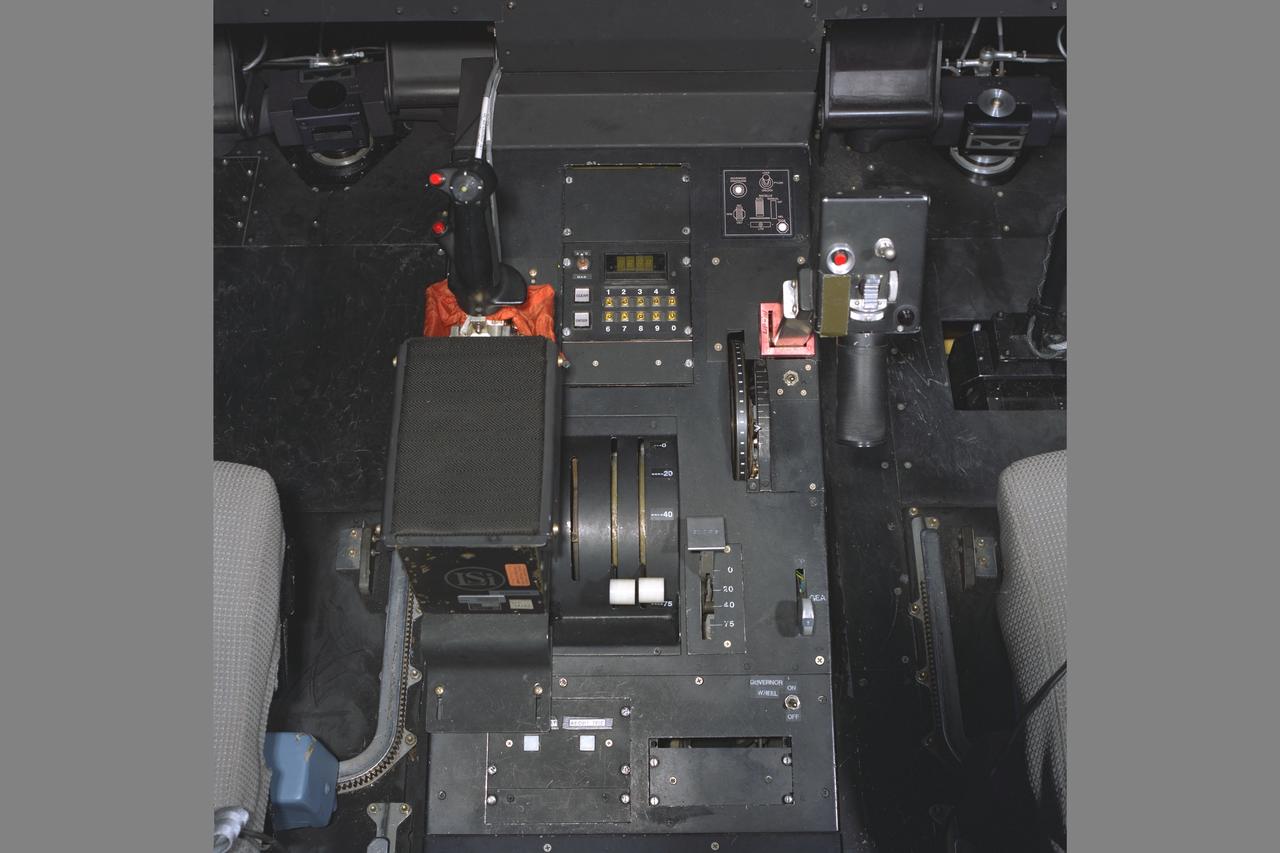
NASA Ames Vertical Motion Simulator (VMS); T-Cab Civil Tilt Rotor Project (CTR) project cab configuration with center console
ARC-1997-AC97-0410-4
NASA Ames Vertical Motion Simulator (VMS); T-Cab Civil Tilt Rotor Project (CTR) OTW (out the window) composite views
ARC-1997-ACD97-0410-18
Artwork - Artist unknown High Speed Rotorcraft Concept Variable Diameter Civil Tilt-Rotor Artwork depicting vertiport (6-9 passenger)
ARC-1991-AC91-0067-1
NASA Ames Vertical Motion Simulator (VMS); T-Cab Civil Tilt Rotor Project (CTR) OTW (out the window) composite views
ARC-1997-ACD97-0410-17
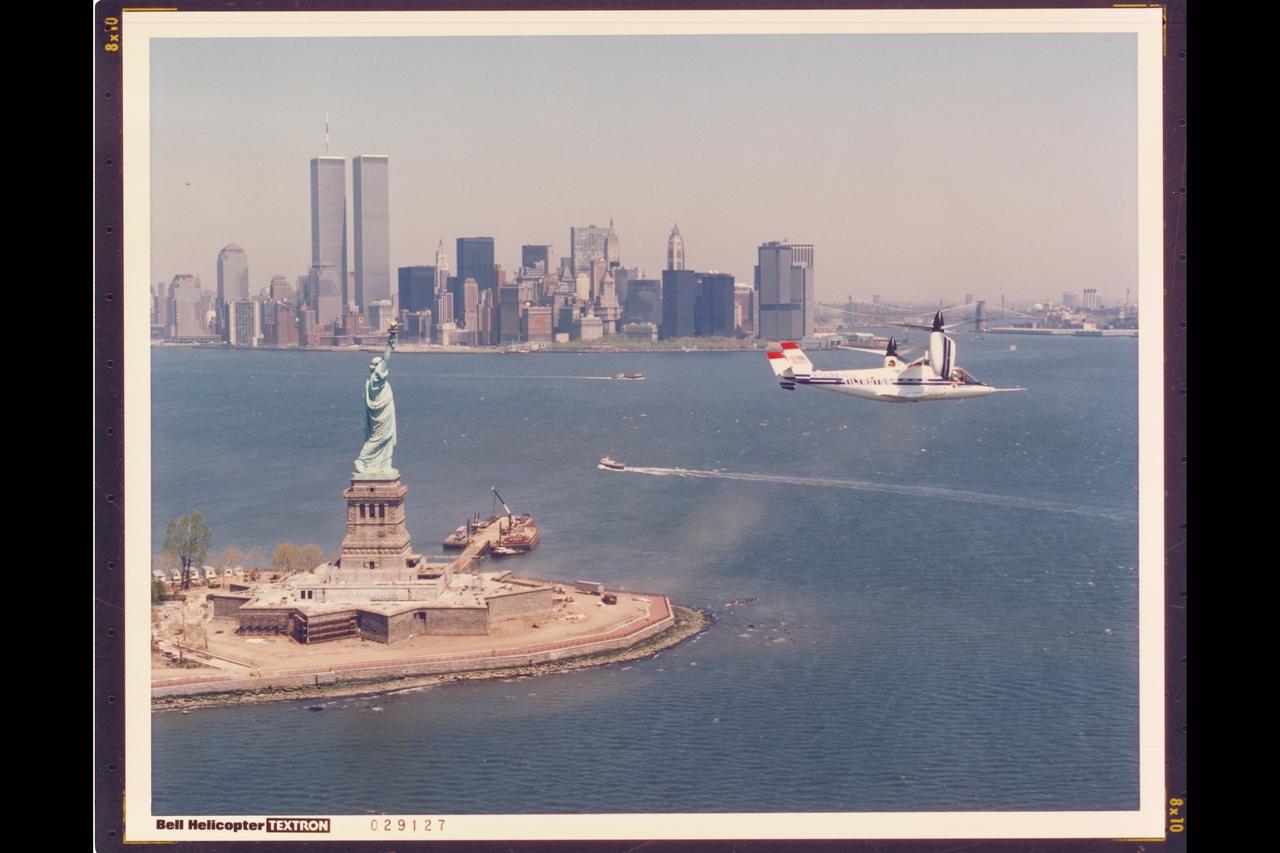
BELL HELICOPTER BELL TEXTRON XV-15 TILT ROTOR AIRCRAFT IN FLIGHT OVER NEW YORK, ELLIS ISLAND AND STATUE OF LIBERTY
ARC-1986-AC86-0410-4
NASA Ames Vertical Motion Simulator (VMS); T-Cab Civil Tilt Rotor Project (CTR) OTW (out the window) composite views
ARC-1997-ACD97-0410-18_1
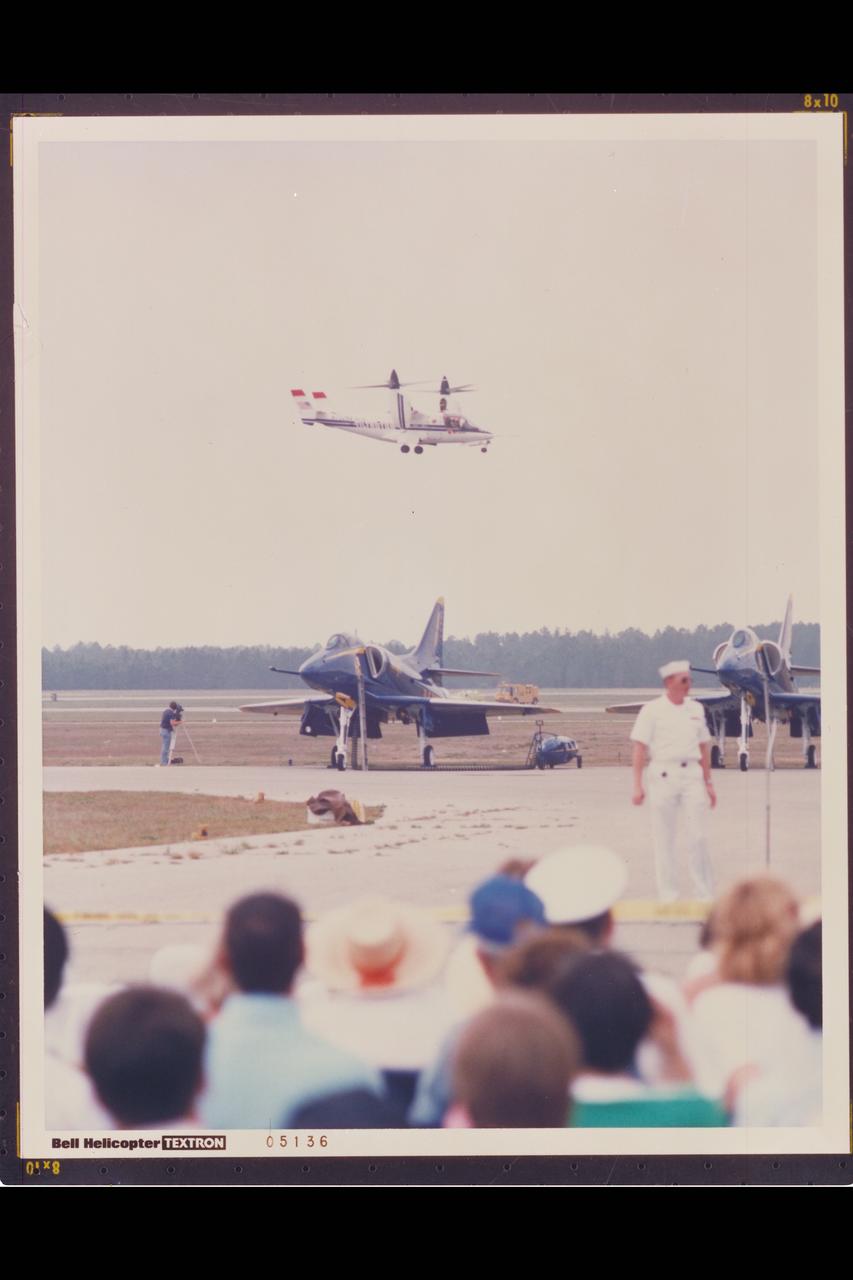
Bell Textron XV-15 Tilt Rotor Aircraft flight demo at airshow - Navy Blue Angles in forground) (Bell Helicopter Textron ref: 05136)
ARC-1986-AC86-0410-5
XV-15 Tilt Rotor (NASA-703) in flight at Ames Research Center Note:  Used in publication in Flight Research at Ames;  57 Years of Development and Validation of Aeronautical Technology NASA SP-1998-3300 fig 122
ARC-1985-AC85-0186-2
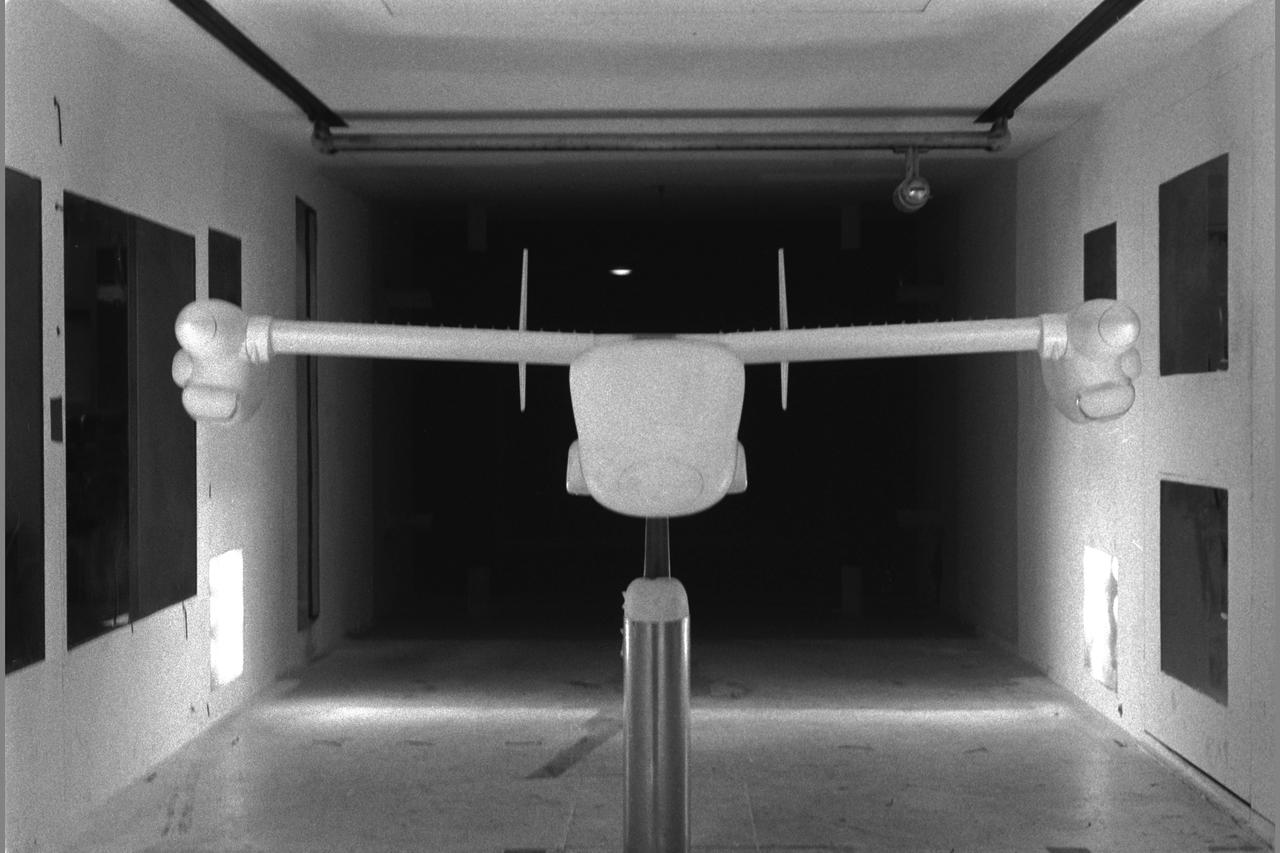
Rigid Tilt Rotor Research: Boeing 26-ft. diameter proprotor on semi-span wing in Ames Research Center 40x80ft w.t. (Photo by Ames photographer Lee Jones; composite of test results by Ames Graphics)
ARC-1972-AC72-5255
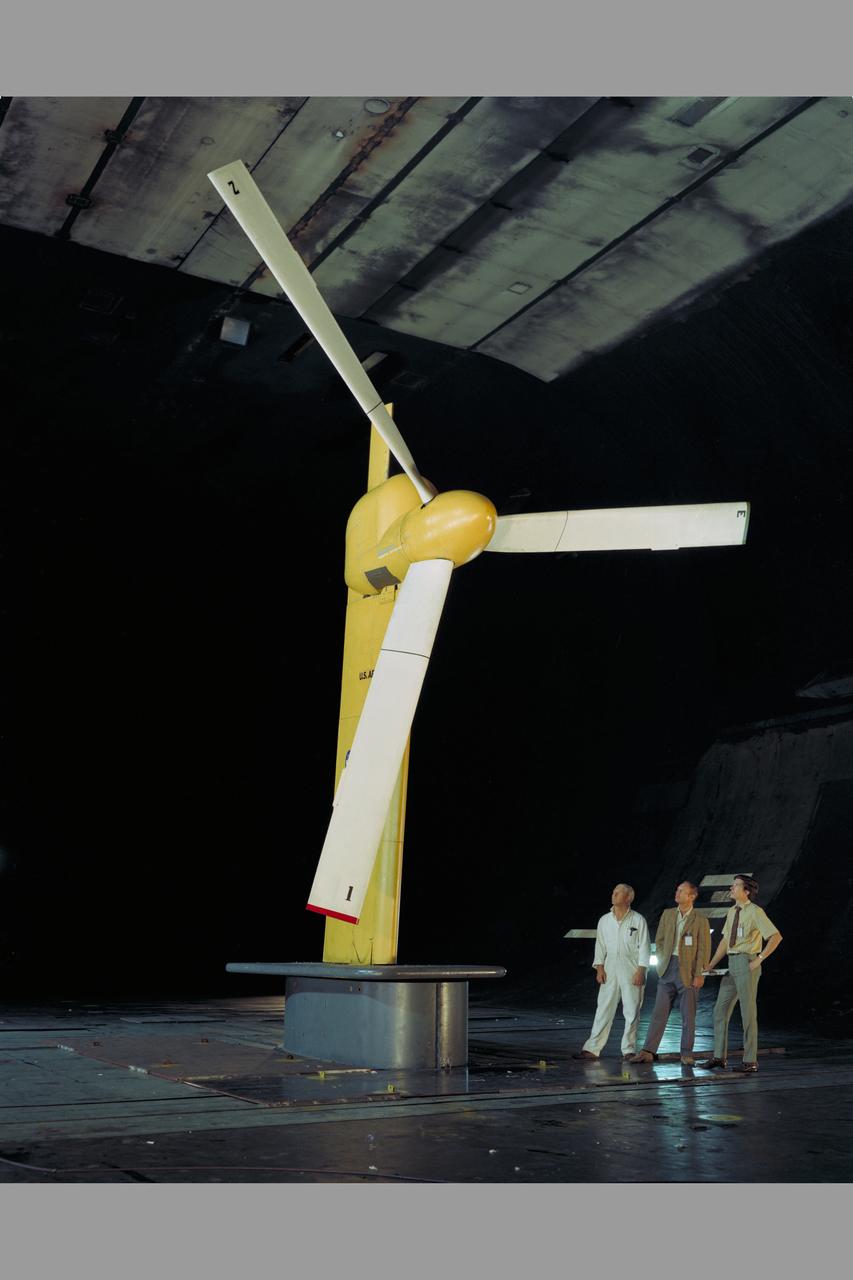
XV-3 in Ames Reseach Center 40x80ft wind tunnel with K. Edenborough and B. Ramsey, engineers Published in The History of the XV-15 Tilt Rotor Research Aircraft (from Concept to Flight NASA SP-2000-4517)
ARC-1966-A-37017
BELL XV-3 (AF54-148) Convertiplane (experimental tilt rotor) IN FLIGHT Note:  Used in publication in Flight Research at Ames;  57 Years of Development and Validation of Aeronautical Technology NASA SP-1998-3300 fig. 121
ARC-1960-AC-26438