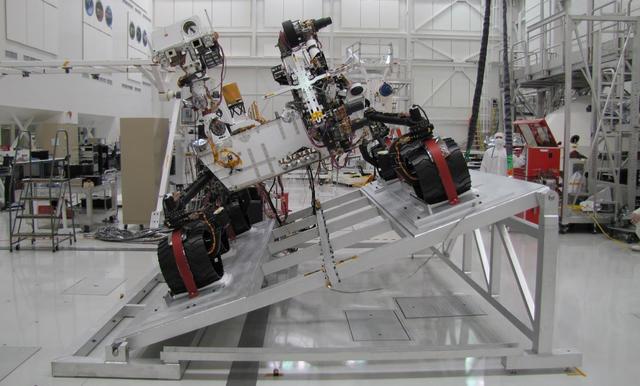
The Mast Camera Mastcam on NASA Mars rover Curiosity has two rectangular eyes near the top of the rover remote sensing mast. This image shows Curiosity on a tilt table NASA Jet Propulsion Laboratory, Pasadena, California.
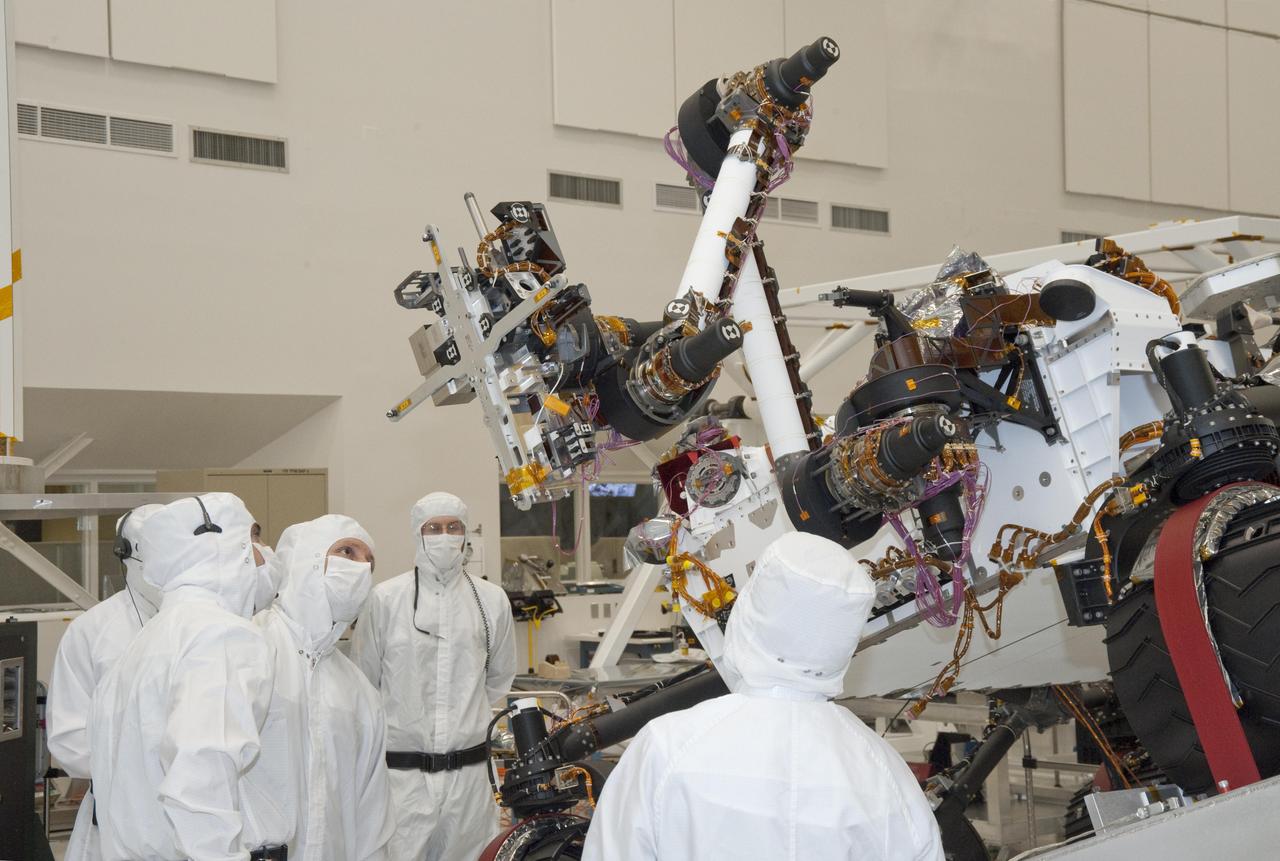
Testing of the robotic arm on NASA Mars rover Curiosity on Sept. 3, 2010, included movements of the arm while the rover was on a table tilted to 20 degrees to simulate a sloped surface on Mars.
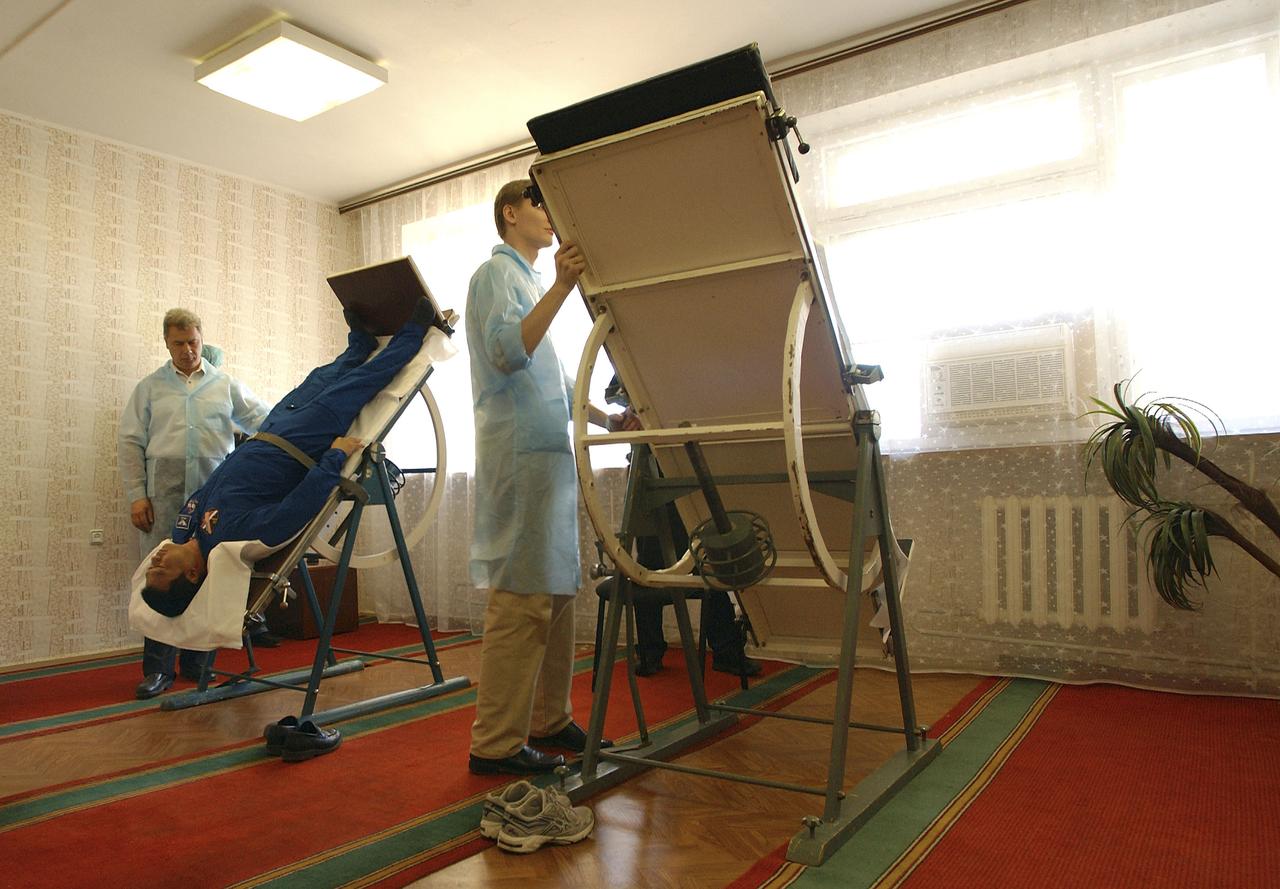
Expedition 10 Commander Leroy Chiao undergoes physical testing on a mechanized tilt table at crew quarters in Baikonur, Kazakhstan, Friday, October 8, 2004, in preparation for launch with Flight Engineer and Soyuz Commander Salizhan Sharipov and Russian Space Forces Agency cosmonaut Yuri Shargin to the International Space Station on October 14. The tilt table is used to condition the crewmembers' cardiovascular system against the effects of weightlessness once on orbit. Photo Credit: (NASA/Bill Ingalls)
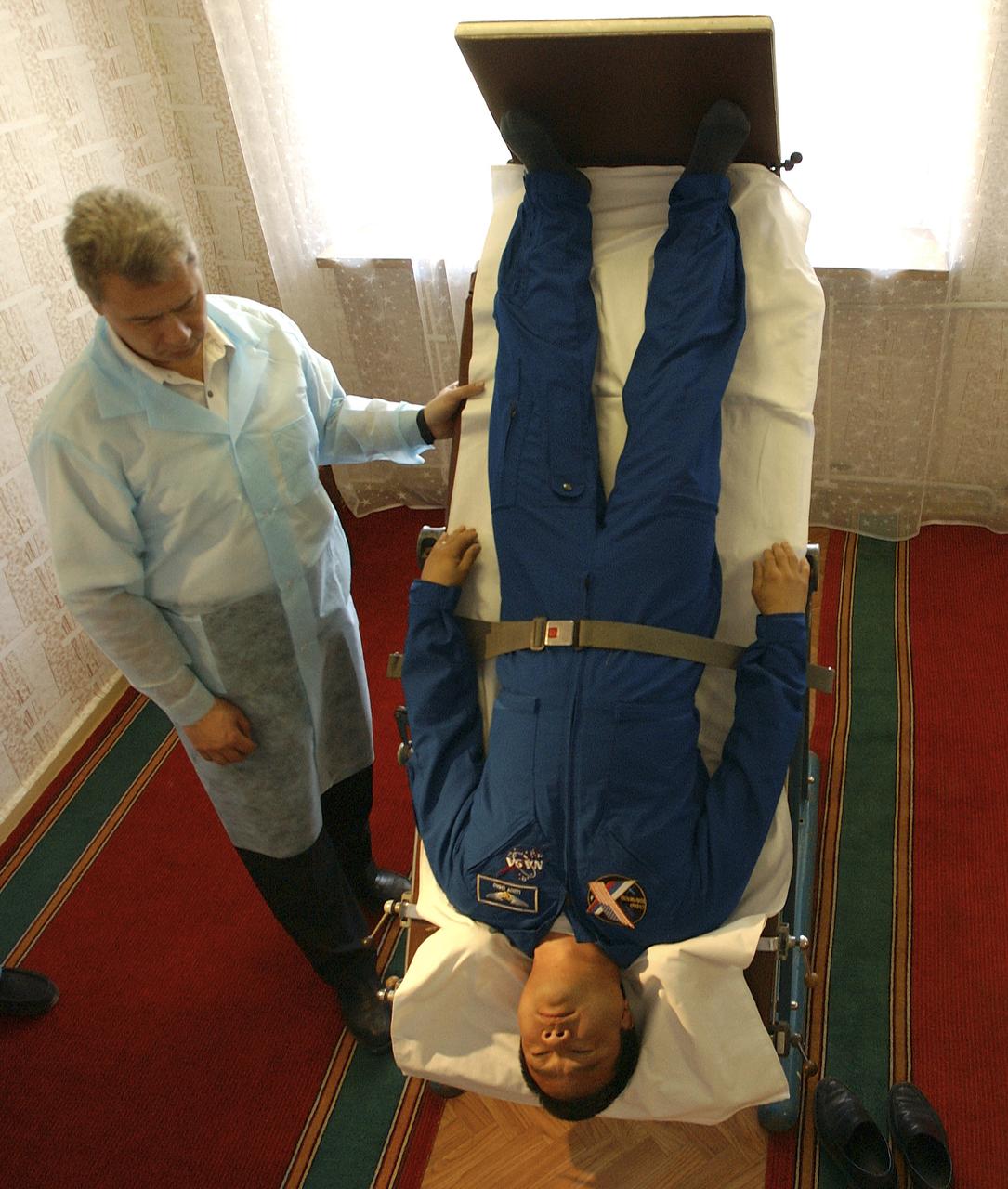
Expedition 10 Commander Leroy Chiao undergoes physical testing on a mechanized tilt table at crew quarters in Baikonur, Kazakhstan, Friday, October 8, 2004, in preparation for launch with Flight Engineer and Soyuz Commander Salizhan Sharipov and Russian Space Forces Agency cosmonaut Yuri Shargin to the International Space Station on October 14. The tilt table is used to condition the crewmembers' cardiovascular system against the effects of weightlessness once on orbit. Photo Credit: (NASA/Bill Ingalls)
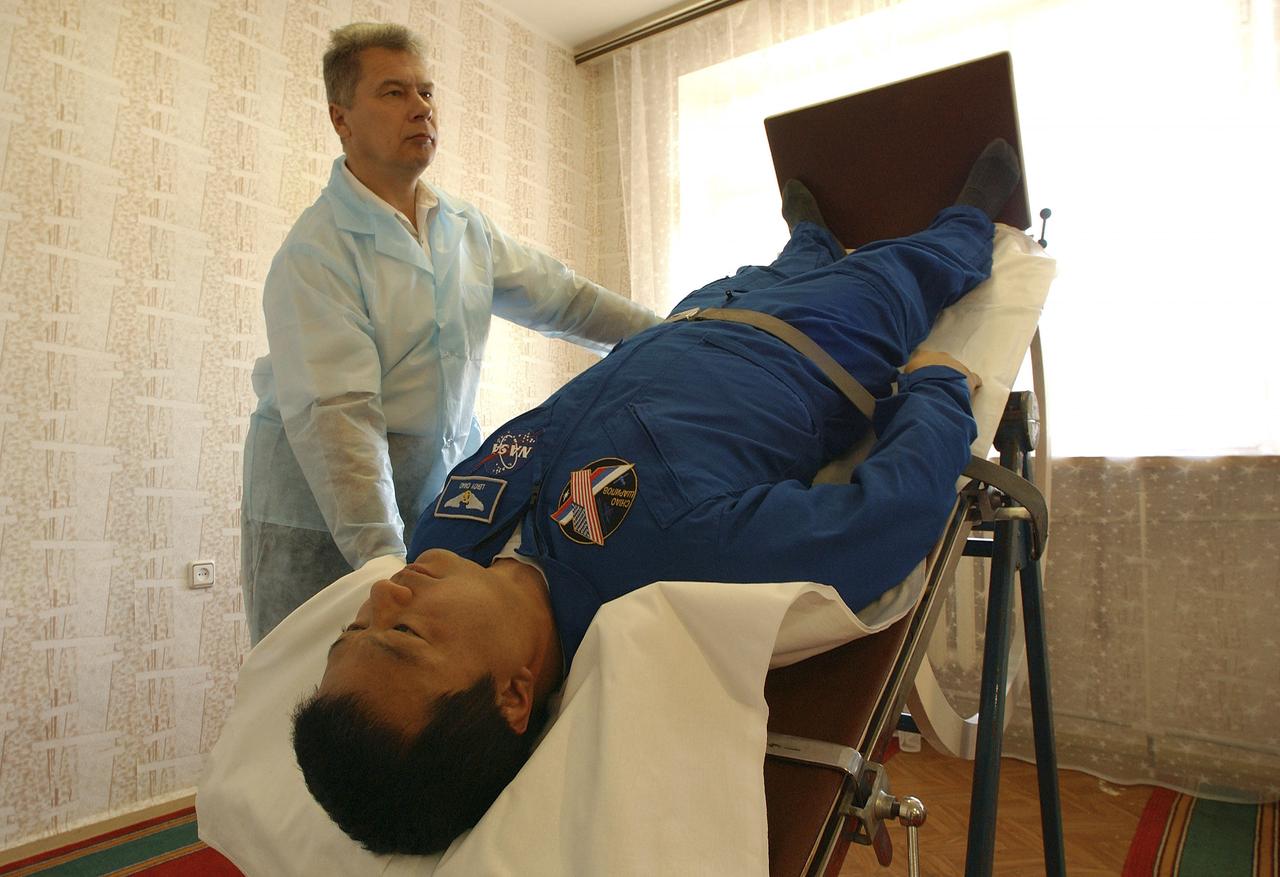
Expedition 10 Commander Leroy Chiao undergoes physical testing on a mechanized tilt table at crew quarters in Baikonur, Kazakhstan, Friday, October 8, 2004, in preparation for launch with Flight Engineer and Soyuz Commander Salizhan Sharipov and Russian Space Forces Agency cosmonaut Yuri Shargin to the International Space Station on October 14. The tilt table is used to condition the crewmembers' cardiovascular system against the effects of weightlessness once on orbit. Photo Credit: (NASA/Bill Ingalls)
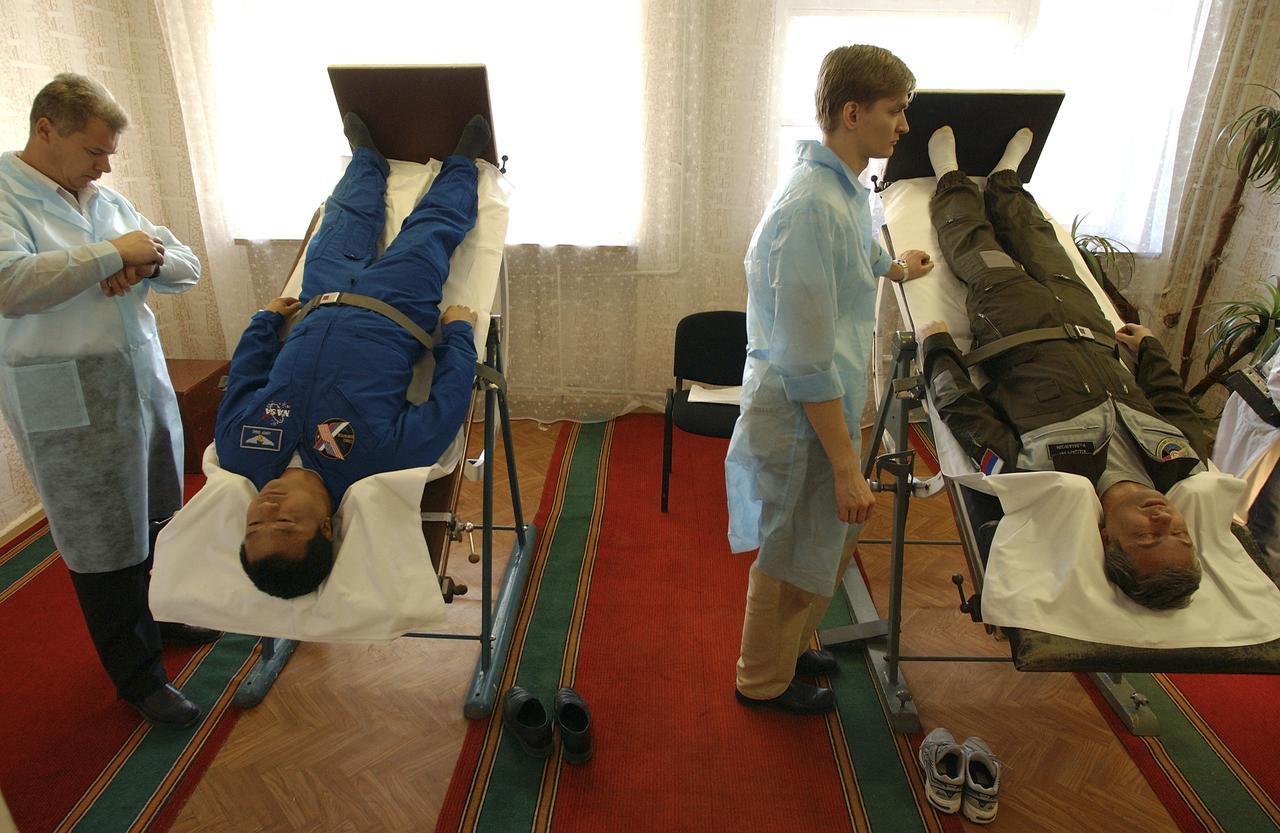
Expedition 10 Commander Leroy Chiao, left, and Russian Space Forces cosmonaut Yuri Shargin undergo physical testing on a mechanized tilt table at their crew quarters in Baikonur, Kazakhstan, Friday, October 8, 2004, in preparation for launch with Flight Engineer and Soyuz Commander Salizhan Sharipov to the International Space Station on October 14. The tilt table is used to condition the crewmembers' cardiovascular system against the effects of weightlessness once in orbit. Photo Credit: (NASA/Bill Ingalls)
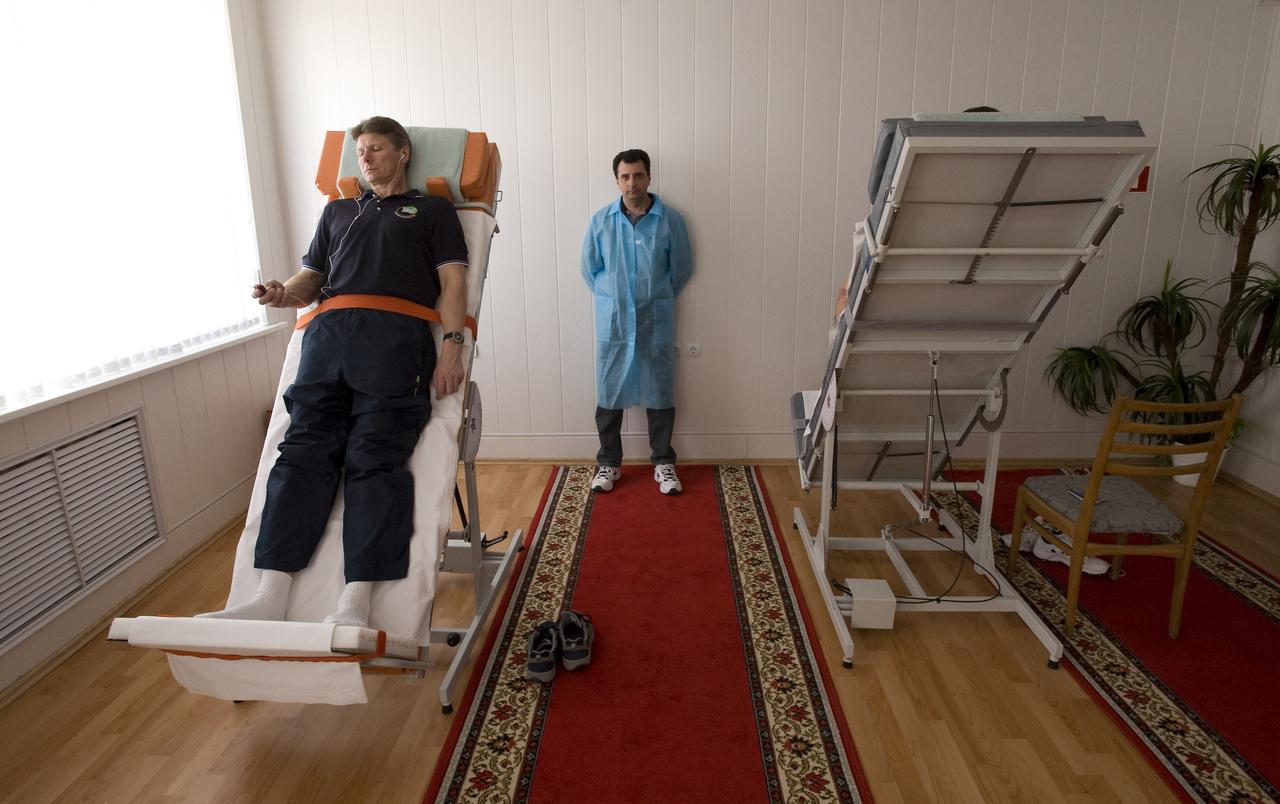
Expedition 19 Commander Gennady I. Padalka, left, listens to his mp3 player as a medical doctor looks on during the he participates tilt table training at the Cosmonaut Hotel, Saturday, March 21, 2009 in Baikonur, Kazakhstan. Expedition 19 Flight Engineer Michael R. Barratt in on the tilt table on the right. (Photo Credit: NASA/Bill Ingalls)
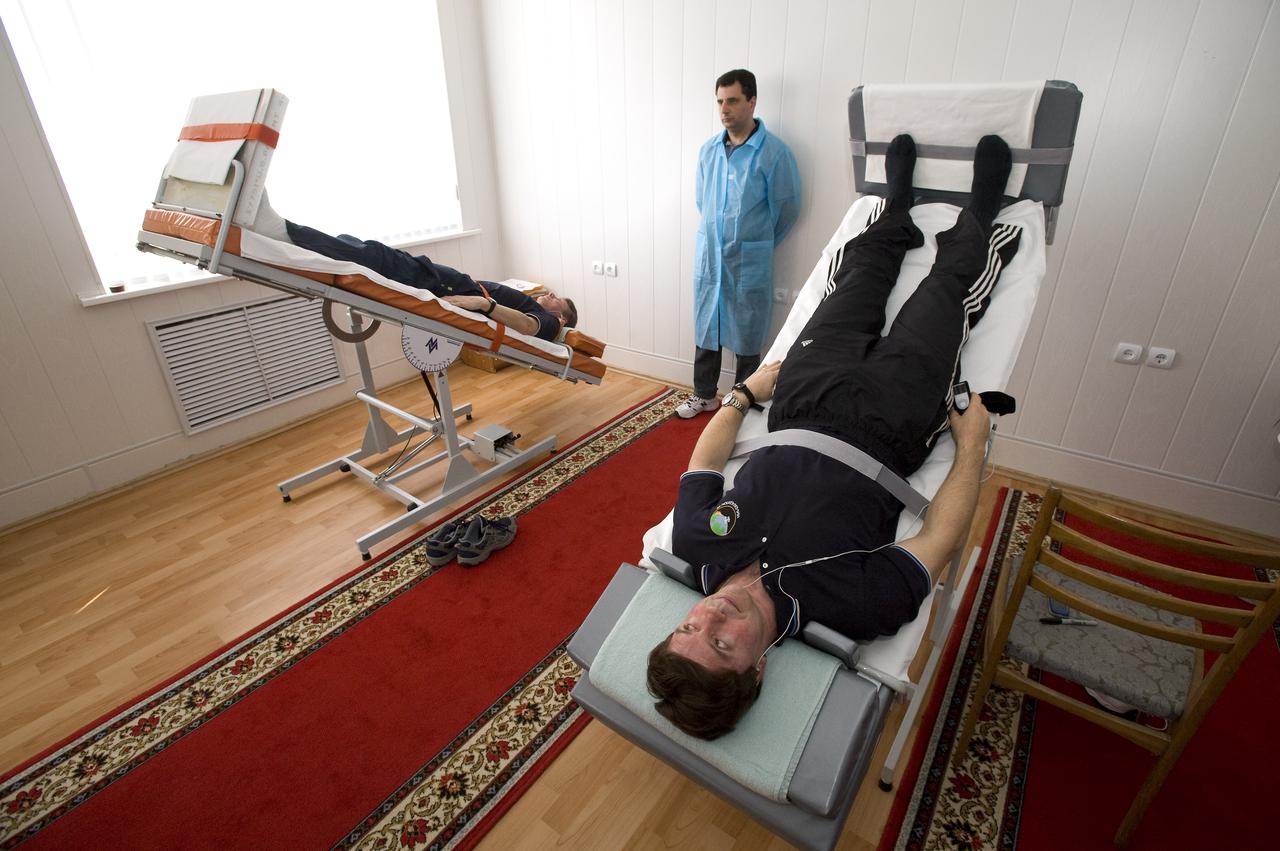
Expedition 19 Commander Gennady I. Padalka, left, and Flight Engineer Michael R. Barratt listen to their mp3 players as a medical doctor looks on during the tilt table training at the Cosmonaut Hotel, Saturday, March 21, 2009 in Baikonur, Kazakhstan.(Photo Credit: NASA/Bill Ingalls)
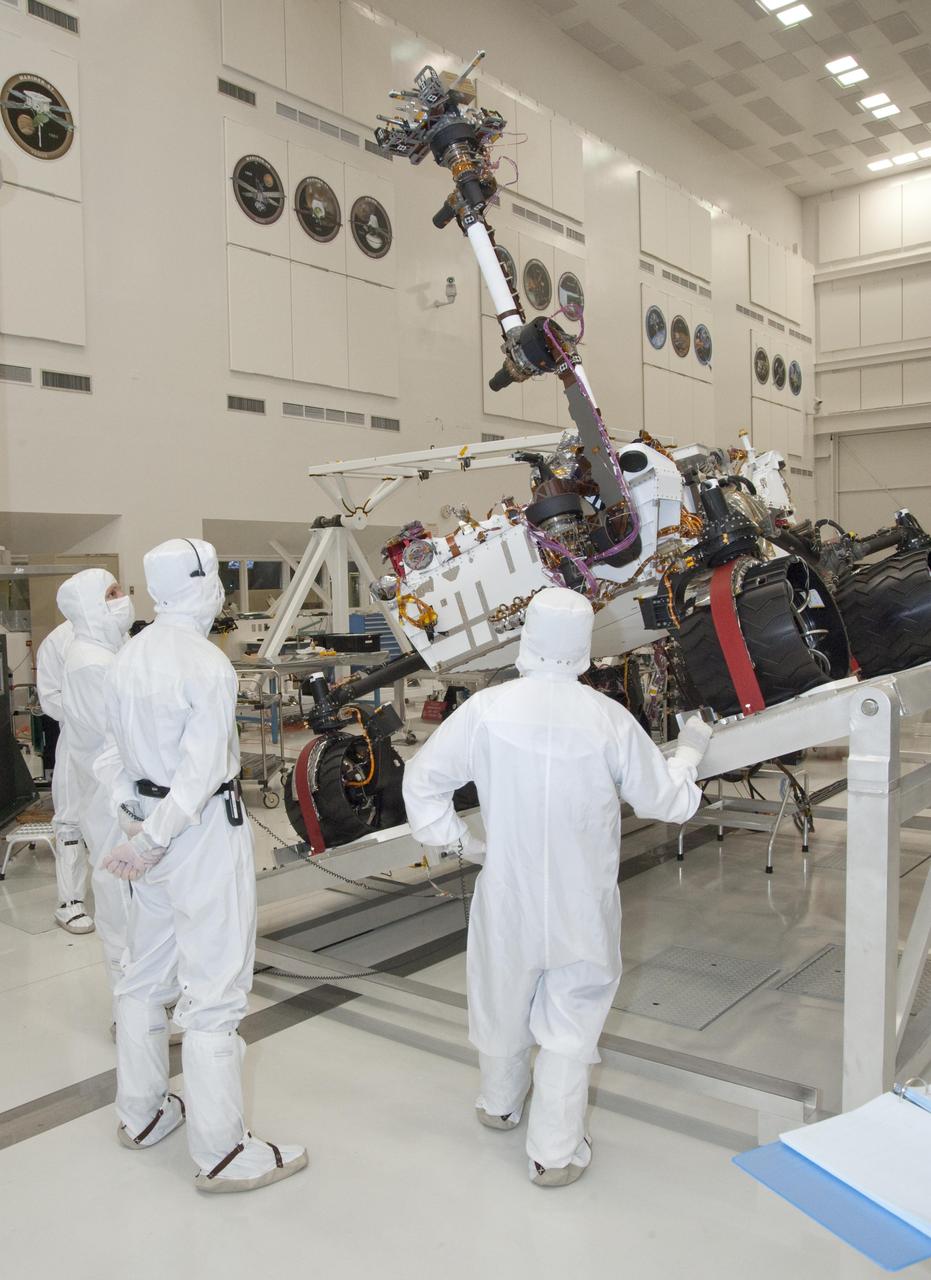
NASA next Mars rover, Curiosity, stretches its robotic arm upward during tests on a tilt table in a clean room at NASA Jet Propulsion Labotatory.
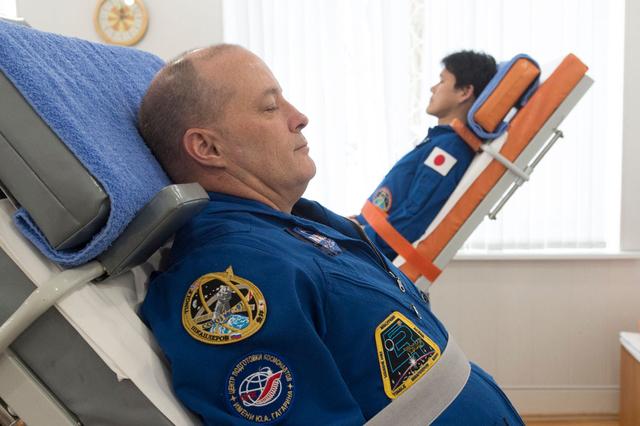
jsc2017e137341 - At the Cosmonaut Hotel crew quarters in Baikonur, Kazakhstan, Expedition 54-55 prime crewmembers Scott Tingle of NASA (left) and Norishige Kanai of the Japan Aerospace Exploration Agency (right) test their vestibular skills on tilt tables Dec. 11 as part of their pre-launch training. Along with Anton Shkaplerov of the Russian Federal Space Agency (Roscosmos), they will launch Dec. 17 on the Soyuz MS-07 spacecraft from the Baikonur Cosmodrome for a five month mission on the International Space Station...Andrey Shelepin / Gagarin Cosmonaut Training Center.
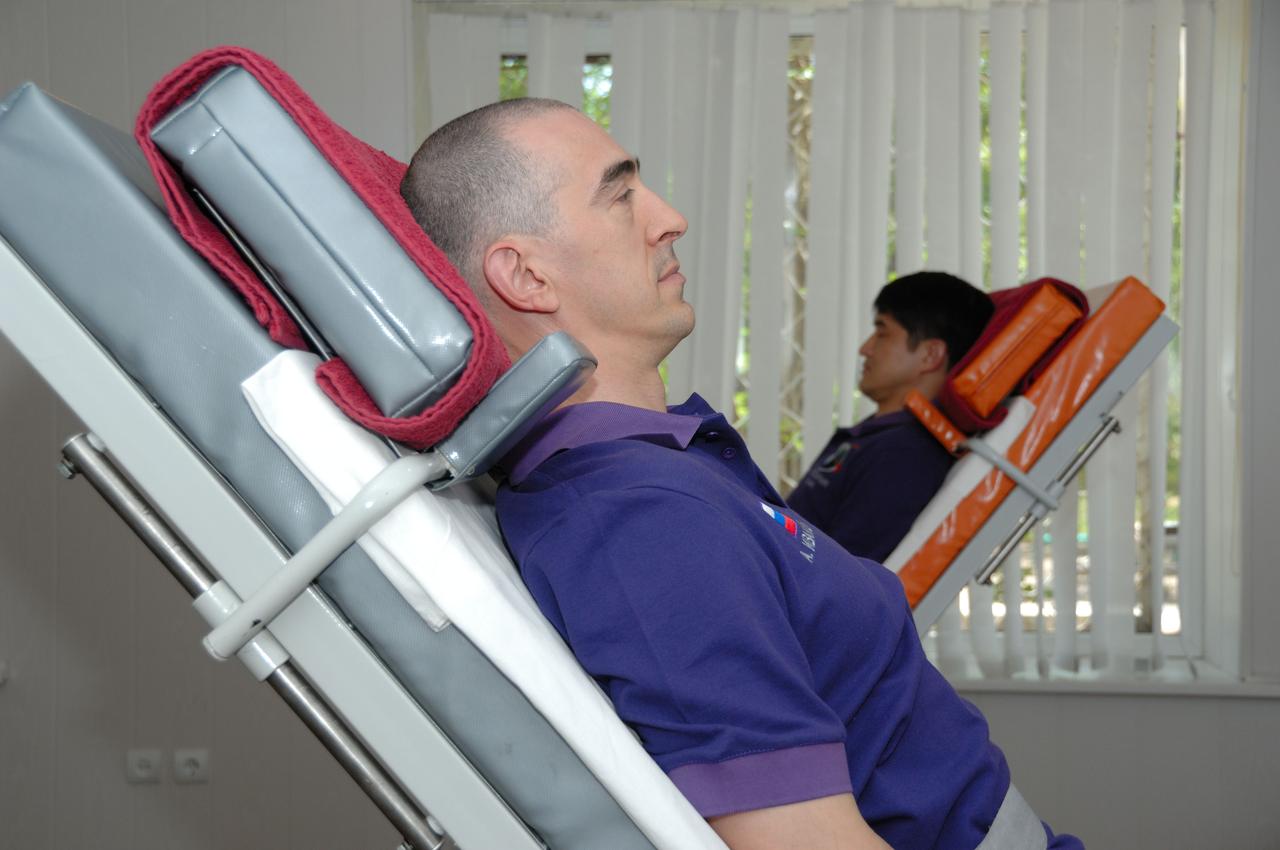
At the Cosmonaut Hotel in Baikonur, Kazakhstan, Expedition 48-49 crewmembers Anatoly Ivanishin of Roscosmos (foreground) and Takuya Onishi of the Japan Aerospace Exploration Agency conduct tests of their vestibular system on tilt tables June 30 as part of pre-launch activities. They and Kate Rubins of NASA will launch July 7, Baikonur time, on the Soyuz MS-01 spacecraft for a planned four-month mission on the International Space Station. NASA/Alexander Vysotsky
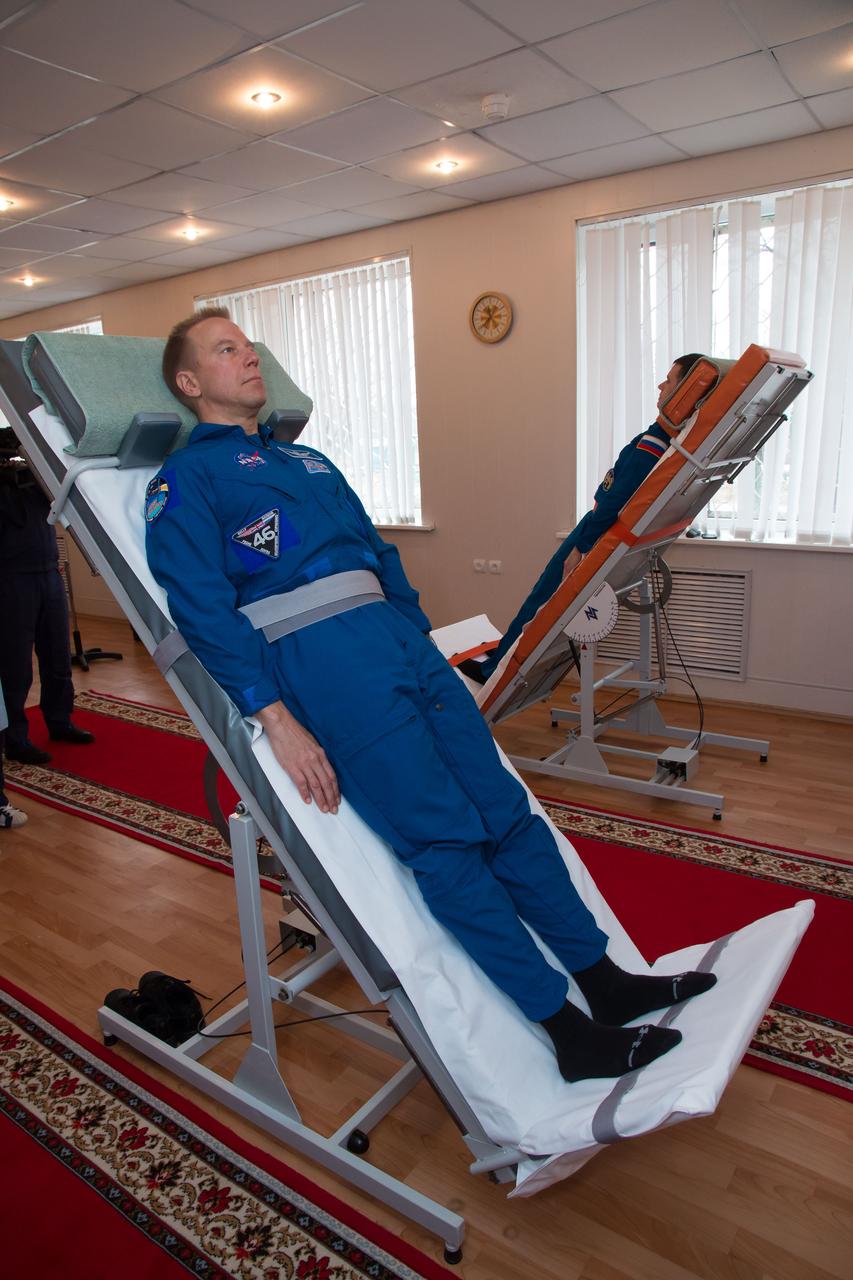
At the Cosmonaut Hotel crew quarters in Baikonur, Kazakhstan, Expedition 46-47 crewmember Tim Kopra of NASA took a turn on a tilt table to test his vestibular system Dec. 9 as part of his pre-launch training. Kopra, Tim Peake of the European Space Agency and Yuri Malenchenko of the Russian Federal Space Agency will launch Dec. 15 on their Soyuz TMA-19M spacecraft for a six-month mission on the International Space Station. NASA/Victor Zelentsov
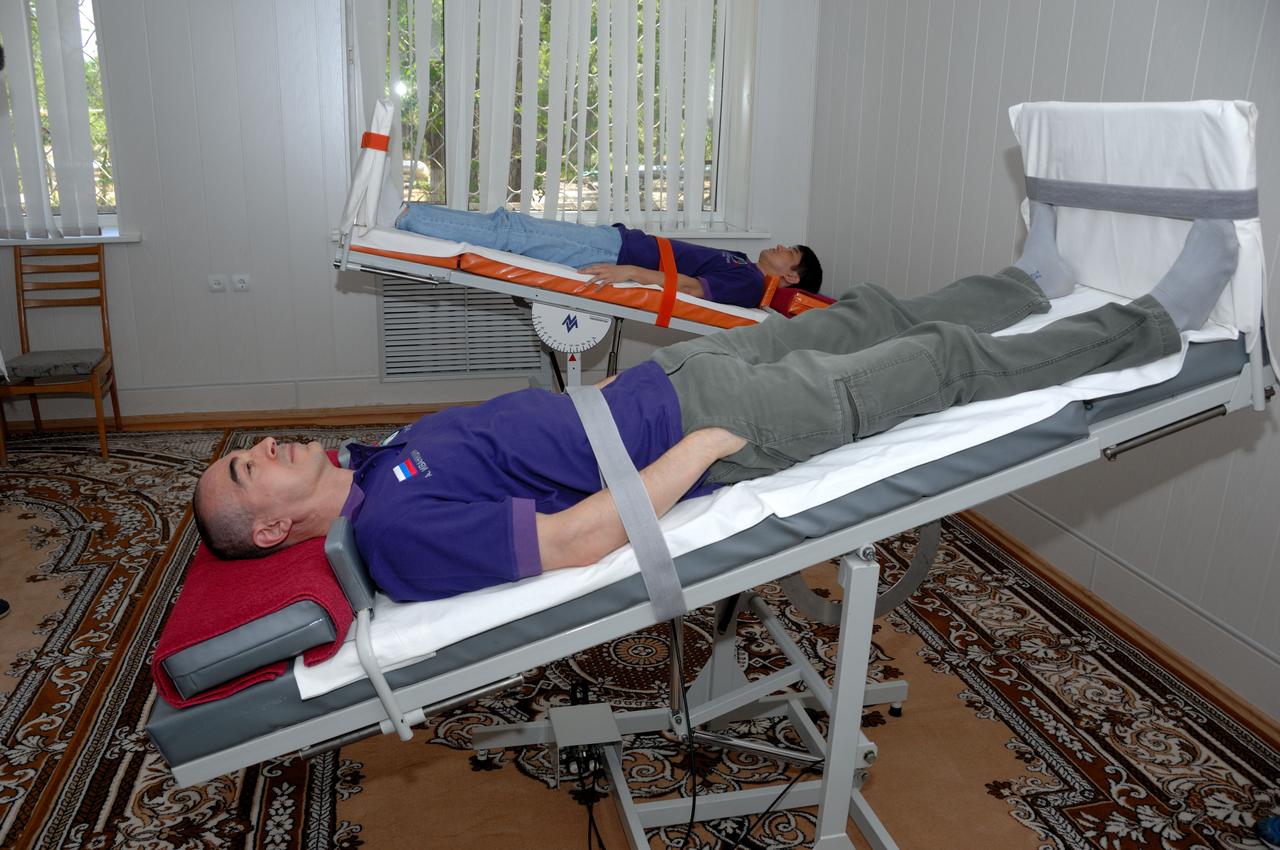
At the Cosmonaut Hotel in Baikonur, Kazakhstan, Expedition 48-49 crewmembers Anatoly Ivanishin of Roscosmos (foreground) and Takuya Onishi of the Japan Aerospace Exploration Agency conduct tests of their vestibular system on tilt tables June 30 as part of pre-launch activities. They and Kate Rubins of NASA will launch July 7, Baikonur time, on the Soyuz MS-01 spacecraft for a planned four-month mission on the International Space Station. NASA/Alexander Vysotsky
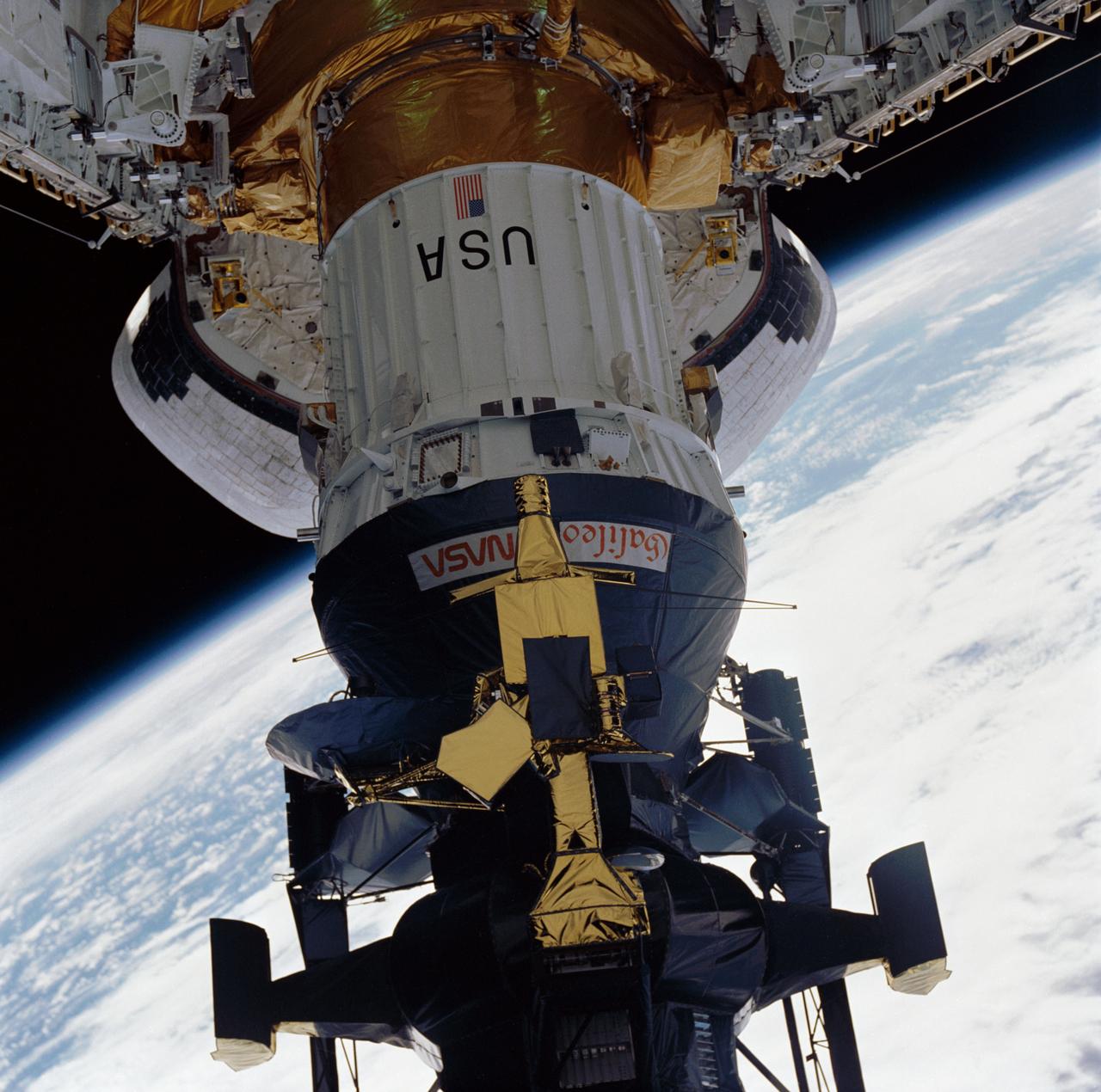
During STS-34 mission, the Galileo spacecraft mounted atop the inertial upper stage (IUS) is tilted to a 58-degree deployment position by the airborne support equipment (ASE) aft frame tilt actuator (AFTA) table in Atlantis', Orbiter Vehicle (OV) 104's, payload bay (PLB). Visible in the foreground is the ASE forward cradle and the umbilical boom which has fallen away from the IUS. OV-104's orbital maneuvering system (OMS) pods and the Earth's limb appear in the background.
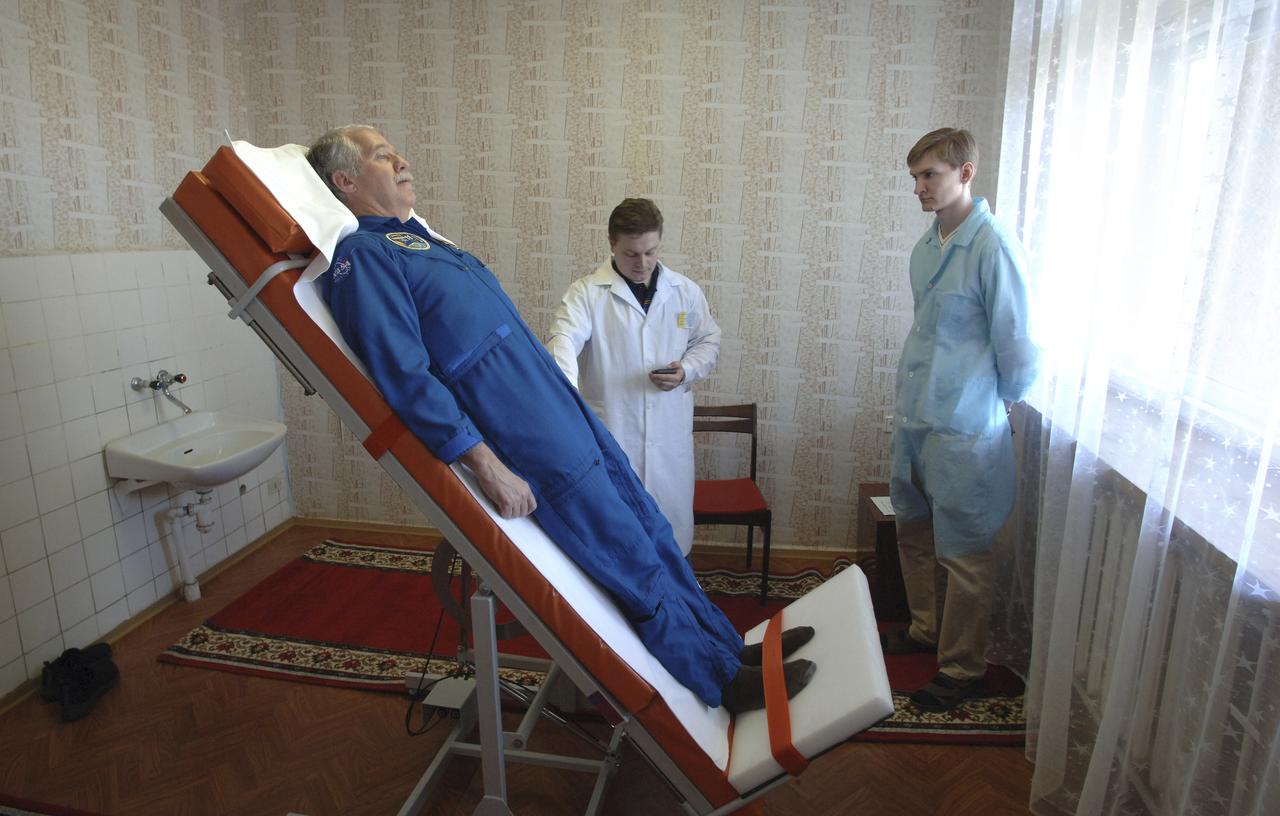
Expedition 11 Flight Engineer John Phillips takes part in a tilt table test, Monday, April 11, 2005, in Baikonur, Kazakhstan as technicians collect pre-launch data on the state of his equilibrium prior to the April 15 launch to the International Space Station. Photo Credit: (NASA/Bill Ingalls)
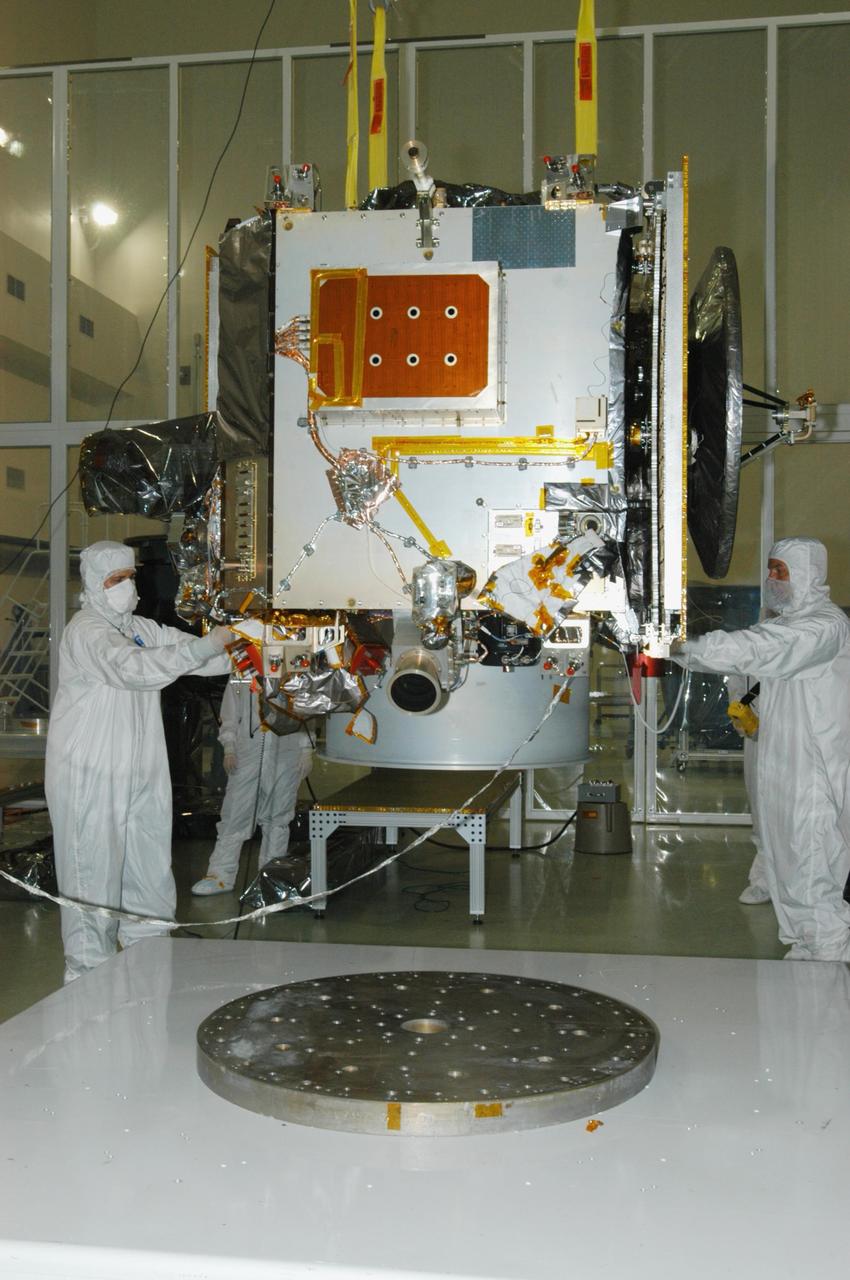
KENNEDY SPACE CENTER, FLA. - At Astrotech Space Operations in Titusville, Fla., the STEREO spacecraft "A" is guided away from its stand for transfer to a tilt table, behind it. On the table, the observatory will be tilted down so that technicians can perform the final comprehensive performance test of the instruments, verifying the instrument is fully functional before flight. After a rotation, this configuration also allows deployment tests to be done on the solar arrays. STEREO stands for Solar Terrestrial Relations Observatory. The STEREO mission is the first to take measurements of the sun and solar wind in 3-dimension. This new view will improve our understanding of space weather and its impact on the Earth. STEREO is expected to lift off aboard a Boeing Delta II rocket on July 22. Photo credit: NASA/George Shelton
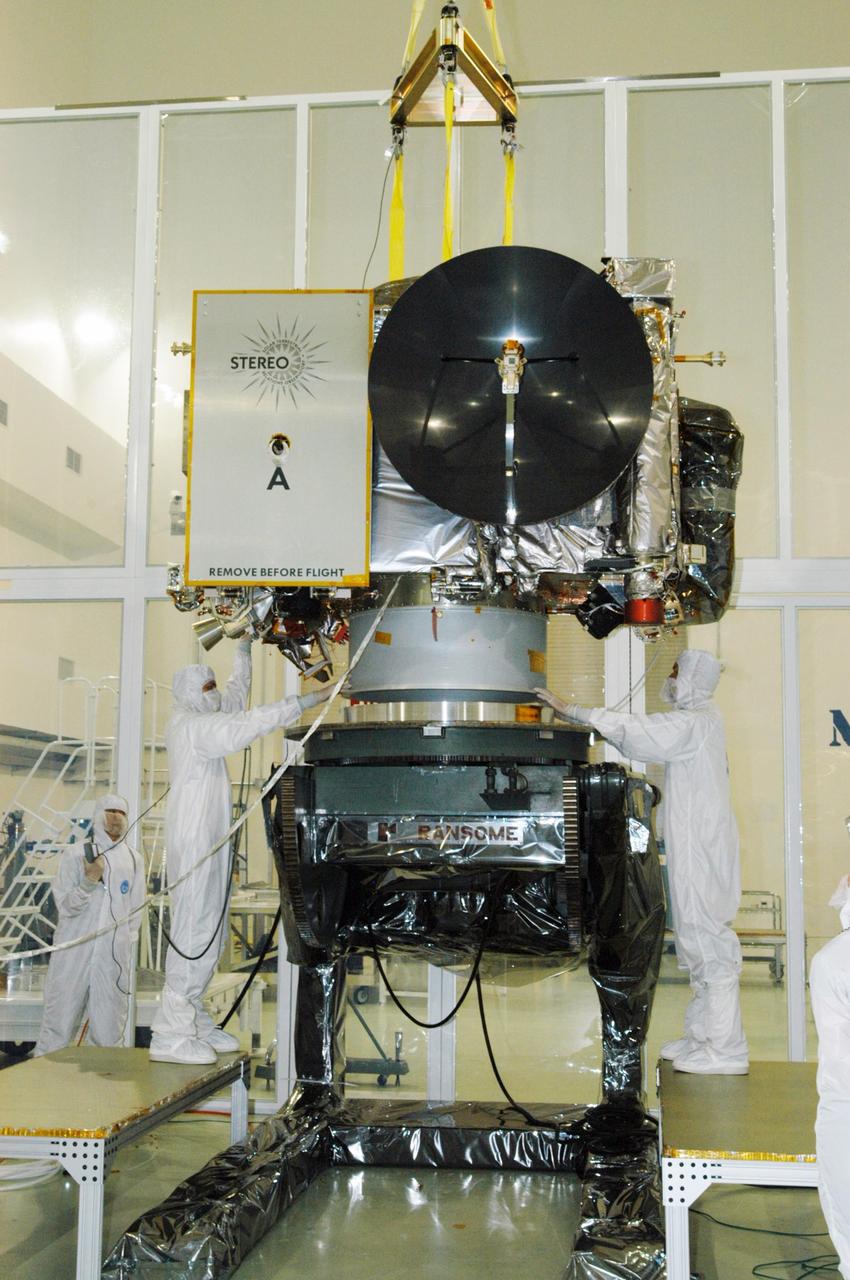
KENNEDY SPACE CENTER, FLA. - At Astrotech Space Operations in Titusville, Fla., technicians help guide the STEREO spacecraft "A" as it is lowered onto a tilt table. On the table, the observatory will be tilted down so that technicians can perform the final comprehensive performance test of the instruments, verifying the instrument is fully functional before flight. After a rotation, this configuration also allows deployment tests to be done on the solar arrays. STEREO stands for Solar Terrestrial Relations Observatory. The STEREO mission is the first to take measurements of the sun and solar wind in 3-dimension. This new view will improve our understanding of space weather and its impact on the Earth. STEREO is expected to lift off aboard a Boeing Delta II rocket on July 22. Photo credit: NASA/George Shelton
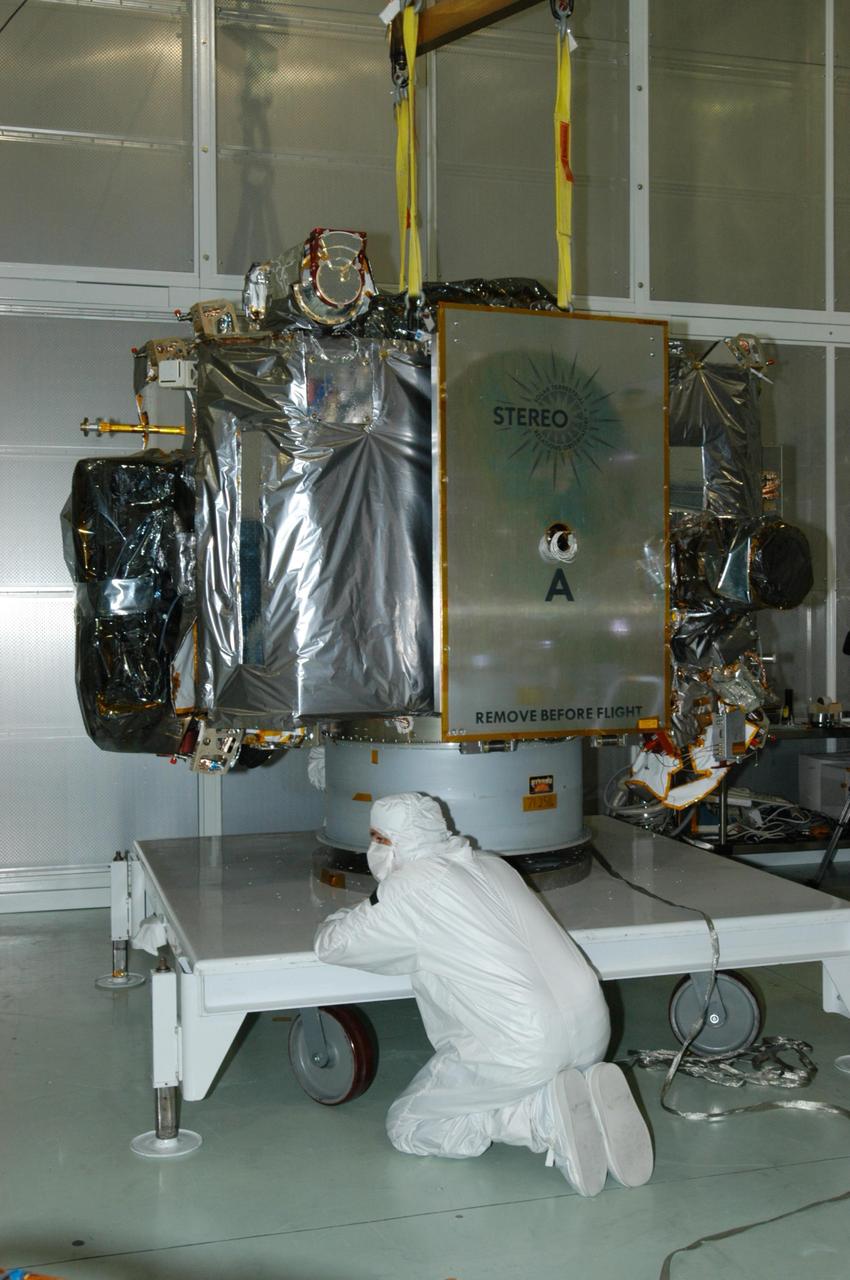
KENNEDY SPACE CENTER, FLA. - At Astrotech Space Operations in Titusville, Fla., the STEREO spacecraft "A" is ready to be moved to a tilt table. On the table, the observatory will be tilted down so that technicians can perform the final comprehensive performance test of the instruments, verifying the instrument is fully functional before flight. After a rotation, this configuration also allows deployment tests to be done on the solar arrays. STEREO stands for Solar Terrestrial Relations Observatory. The STEREO mission is the first to take measurements of the sun and solar wind in 3-dimension. This new view will improve our understanding of space weather and its impact on the Earth. STEREO is expected to lift off aboard a Boeing Delta II rocket on July 22. Photo credit: NASA/George Shelton
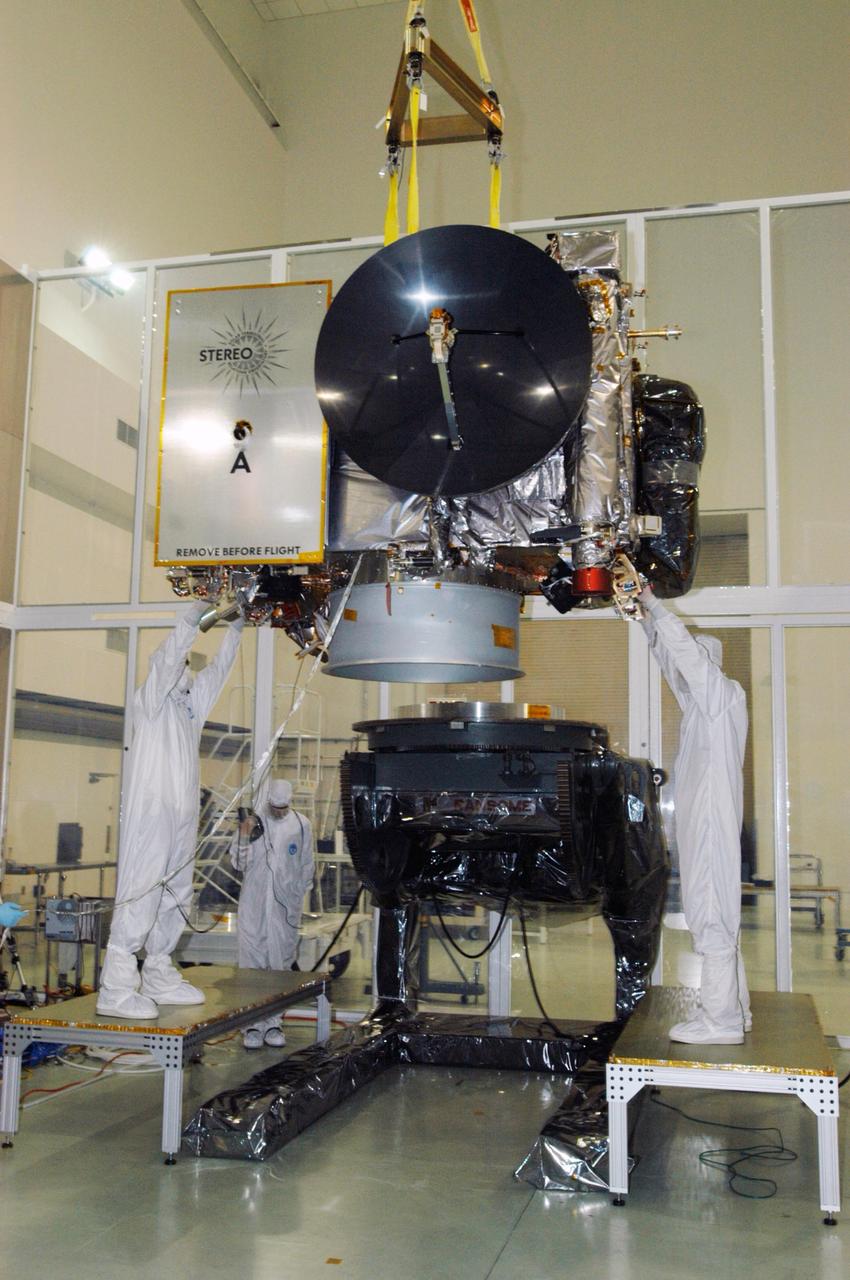
KENNEDY SPACE CENTER, FLA. - At Astrotech Space Operations in Titusville, Fla., technicians help guide the STEREO spacecraft "A" toward a tilt table. On the table, the observatory will be tilted down so that technicians can perform the final comprehensive performance test of the instruments, verifying the instrument is fully functional before flight. After a rotation, this configuration also allows deployment tests to be done on the solar arrays. STEREO stands for Solar Terrestrial Relations Observatory. The STEREO mission is the first to take measurements of the sun and solar wind in 3-dimension. This new view will improve our understanding of space weather and its impact on the Earth. STEREO is expected to lift off aboard a Boeing Delta II rocket on July 22. Photo credit: NASA/George Shelton
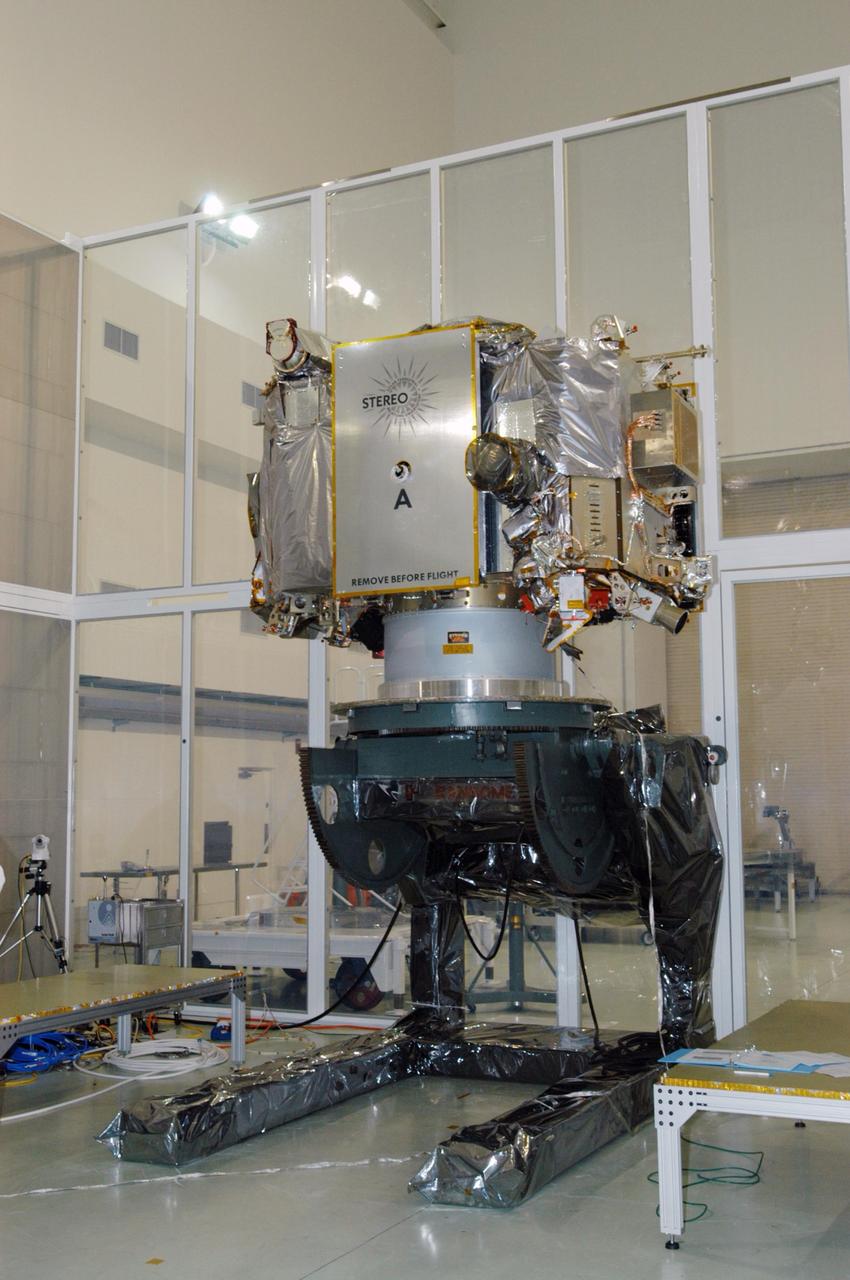
KENNEDY SPACE CENTER, FLA. - At Astrotech Space Operations in Titusville, Fla., the STEREO spacecraft "A" rests on a tilt table for testing. On the table, the observatory will be tilted down so that technicians can perform the final comprehensive performance test of the instruments, verifying the instrument is fully functional before flight. This configuration also allows deployment tests to be done on the solar arrays. STEREO stands for Solar Terrestrial Relations Observatory. The STEREO mission is the first to take measurements of the sun and solar wind in 3-dimension. This new view will improve our understanding of space weather and its impact on the Earth. STEREO is expected to lift off aboard a Boeing Delta II rocket on July 22. Photo credit: NASA/George Shelton
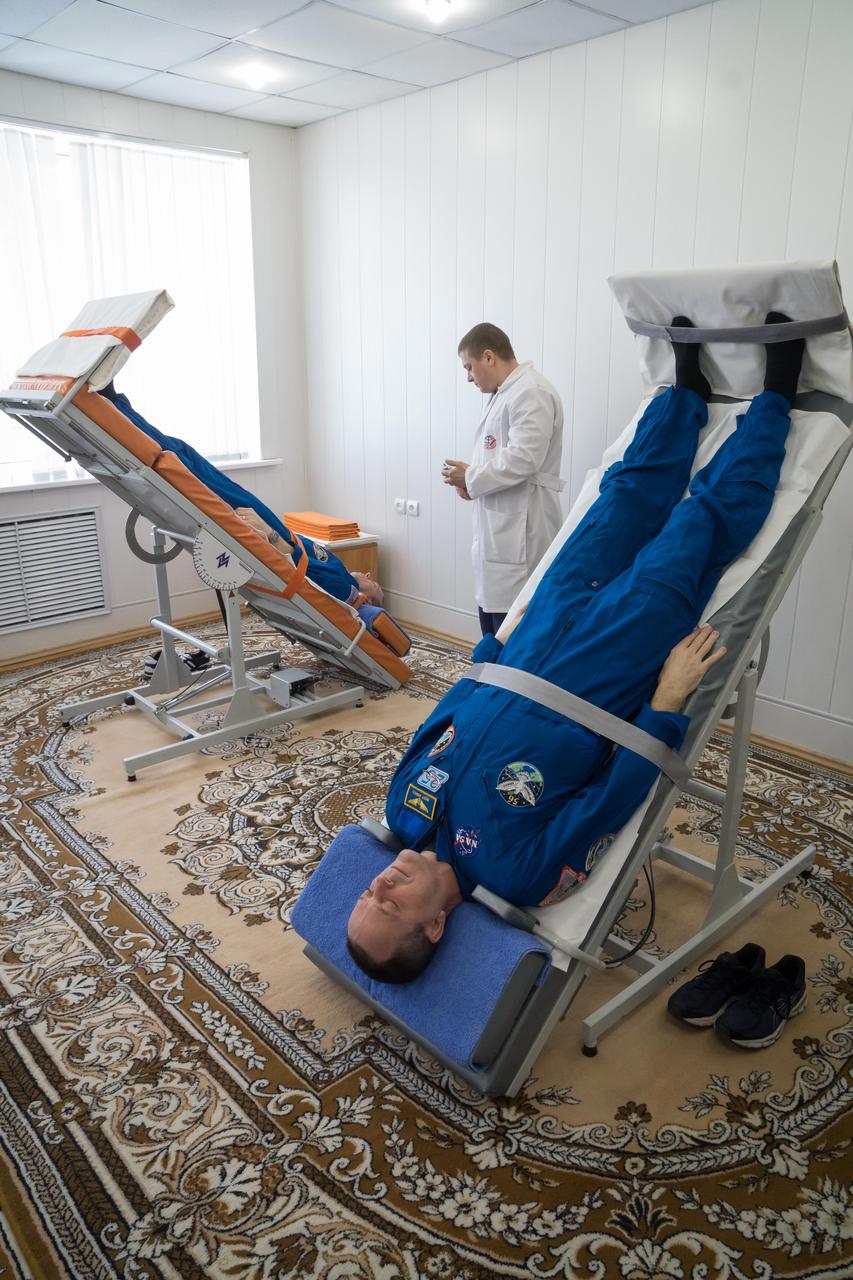
jsc2018e025556 - At the Cosmonaut Hotel crew quarters in Baikonur, Kazakhstan, Expedition 55 crewmembers Drew Feustel of NASA (top) and Ricky Arnold of NASA (bottom) conduct tests of their vestibular systems on tilt tables March 15 as part of pre-launch activities. Along with Oleg Artemyev of Roscosmos, they will launch March 21 on the Soyuz MS-08 spacecraft from the Baikonur Cosmodrome on a five-month mission to the International Space Station...NASA/Victor Zelentsov.
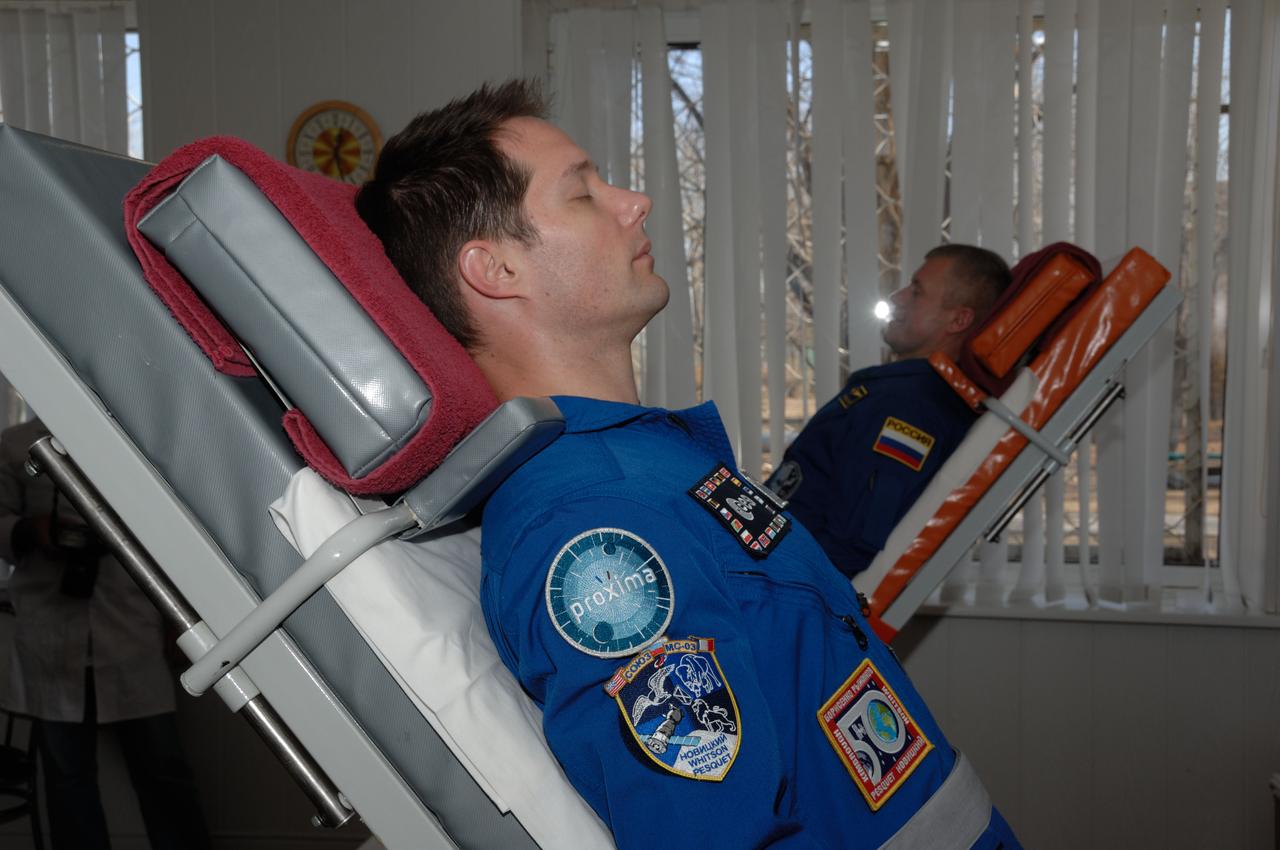
At their Cosmonaut Hotel crew quarters in Baikonur, Kazakhstan, Expedition 50-51 crewmembers Thomas Pesquet of the European Space Agency (foreground) and Oleg Novitskiy of the Russian Federal Space Agency (Roscosmos) conduct vestibular tests on tilt tables Nov. 10 as part of their prelaunch training. Pesquet, Novitskiy and Peggy Whitson of NASA will launch Nov. 18, Baikonur time, on the Soyuz MS-03 spacecraft for a six-month mission on the International Space Station. NASA/Alexander Vysotsky
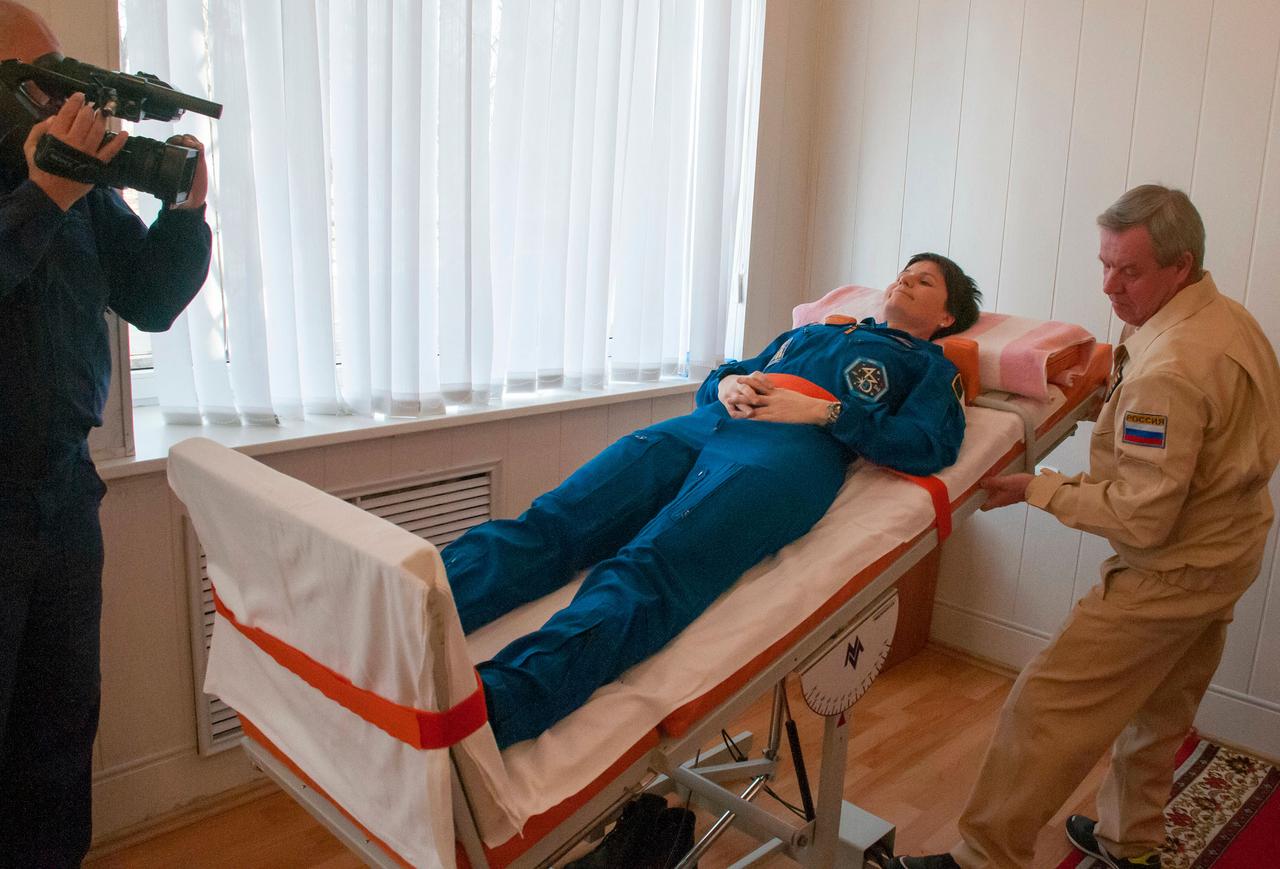
6103: At the Cosmonaut Hotel crew quarters in Baikonur, Kazakhstan, Expedition 42/43 crewmember Samantha Cristoforetti of the European Space Agency tests her vestibular system on a tilt table Nov. 18 as part of pre-launch training. Cristoforetti, Terry Virts of NASA and Anton Shkaplerov of the Russian Federal Space Agency (Roscosmos) will launch Nov. 24, Kazakh time, from the Baikonur Cosmodrome in the Soyuz TMA-15M spacecraft for a 5 ½ month mission on the International Space Station. NASA/Sergei Fyodorov
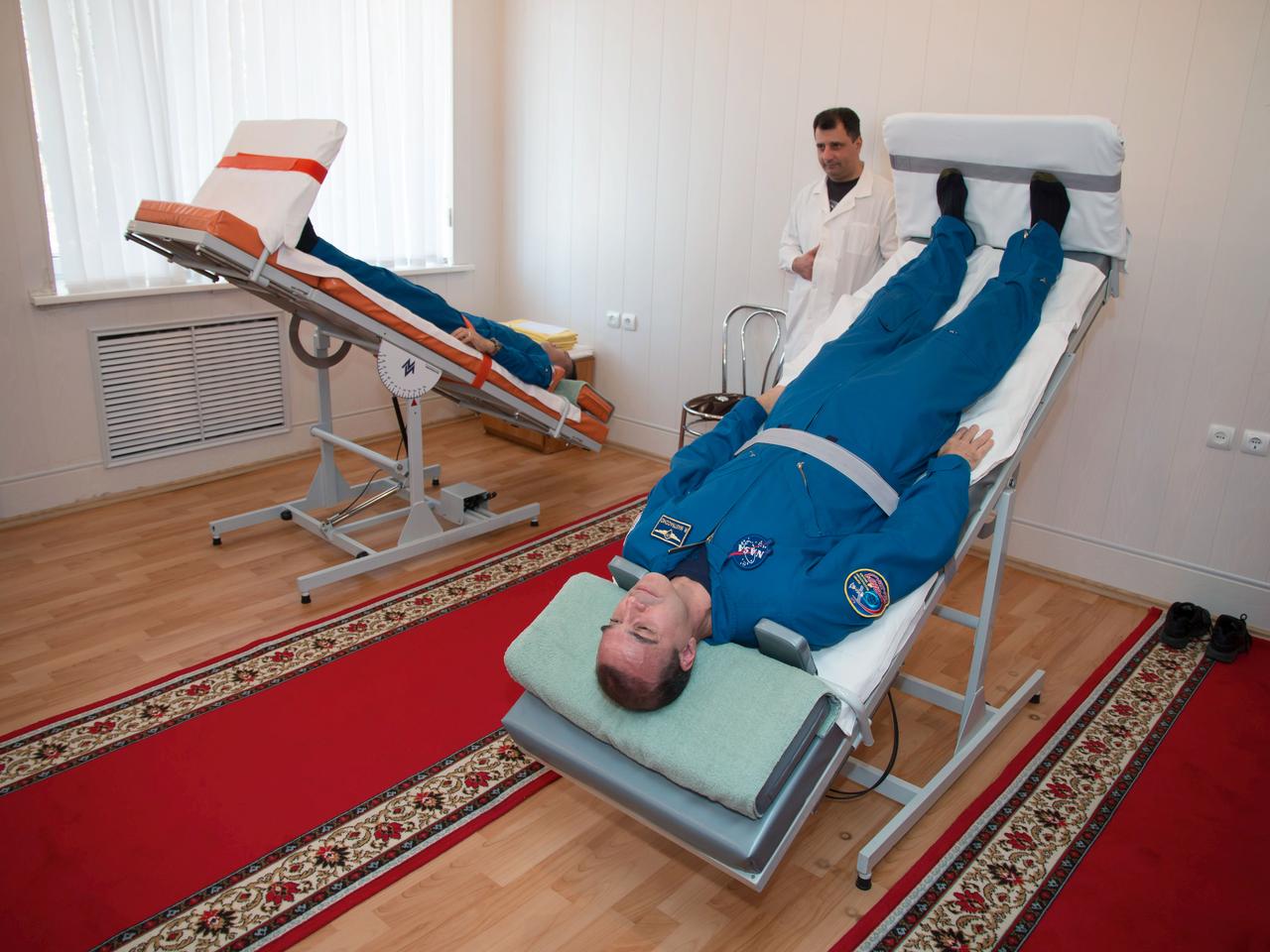
At the Cosmonaut Hotel crew quarters in Baikonur, Kazakhstan, Expedition 38/39 Flight Engineer Koichi Wakata (left) and Flight Engineer Rick Mastracchio (right) take turns on tilt tables Nov. 1 as they underwent physical conditioning for their launch Nov. 7, Kazakh time, with Soyuz Commander Mikhail Tyurin from the Baikonur Cosmodrome aboard the Soyuz TMA-11M spacecraft to begin a six-month mission on the International Space Station. NASA/Victor Zelentsov
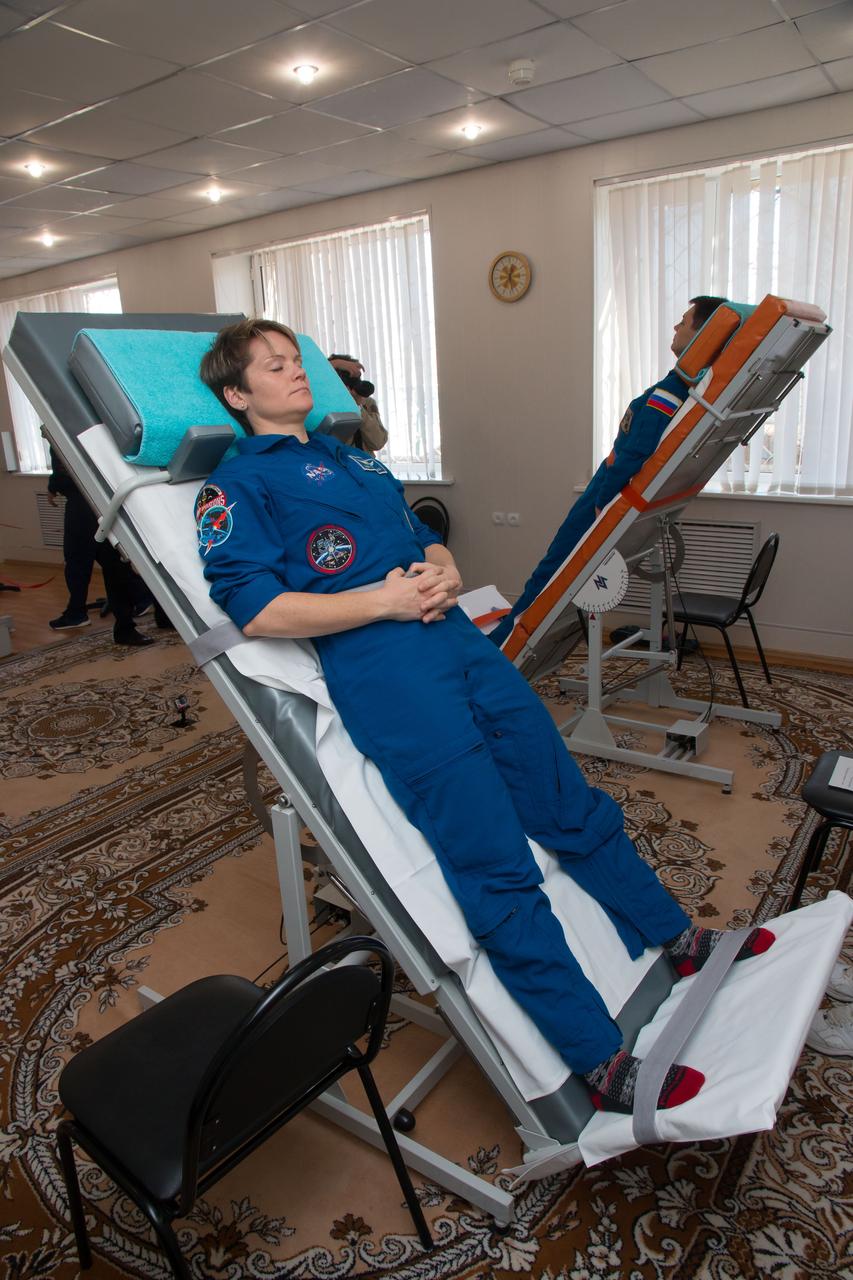
jsc2018e097773 - At the Cosmonaut Hotel crew quarters in Baikonur, Kazakhstan, Expedition 58 crewmember Anne McClain of NASA conducts vestibular system response training on a tilt table Nov. 27 as part of pre-launch training. McClain, David Saint-Jacques of the Canadian Space Agency and Oleg Kononenko of Roscosmos will launch Dec. 3 on the Soyuz MS-11 spacecraft from the Baikonur Cosmodrome in Kazakhstan for a six-and-a-half month mission on the International Space Station...NASA/Victor Zelentsov.
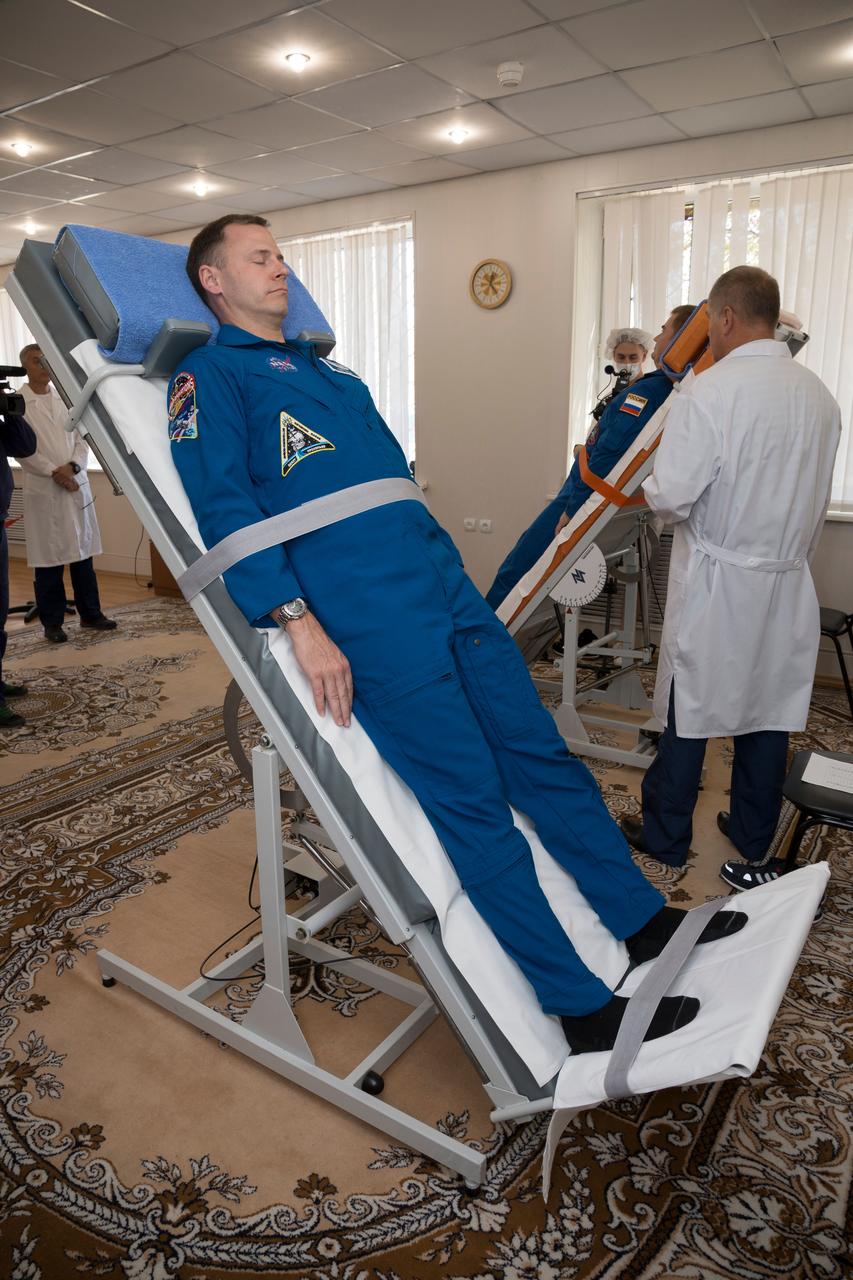
jsc2018e085902 (Oct. 3, 2018) --- Expedition 57 crew members Nick Hague of NASA, left, and Alexey Ovchinin of Roscosmos, right, conduct tests of their vestibular systems on tilt tables, Wednesday, Oct. 3, 2018 at the Cosmonaut Hotel in Baikonur, Kazakhstan. Hague and Ovchinin are scheduled to launch on Oct. 11 onboard the Soyuz MS-10 spacecraft from the Baikonur Cosmodrome in Kazakhstan for a six-month mission on the International Space Station. Photo Credit: (NASA/Victor Zelentsov)
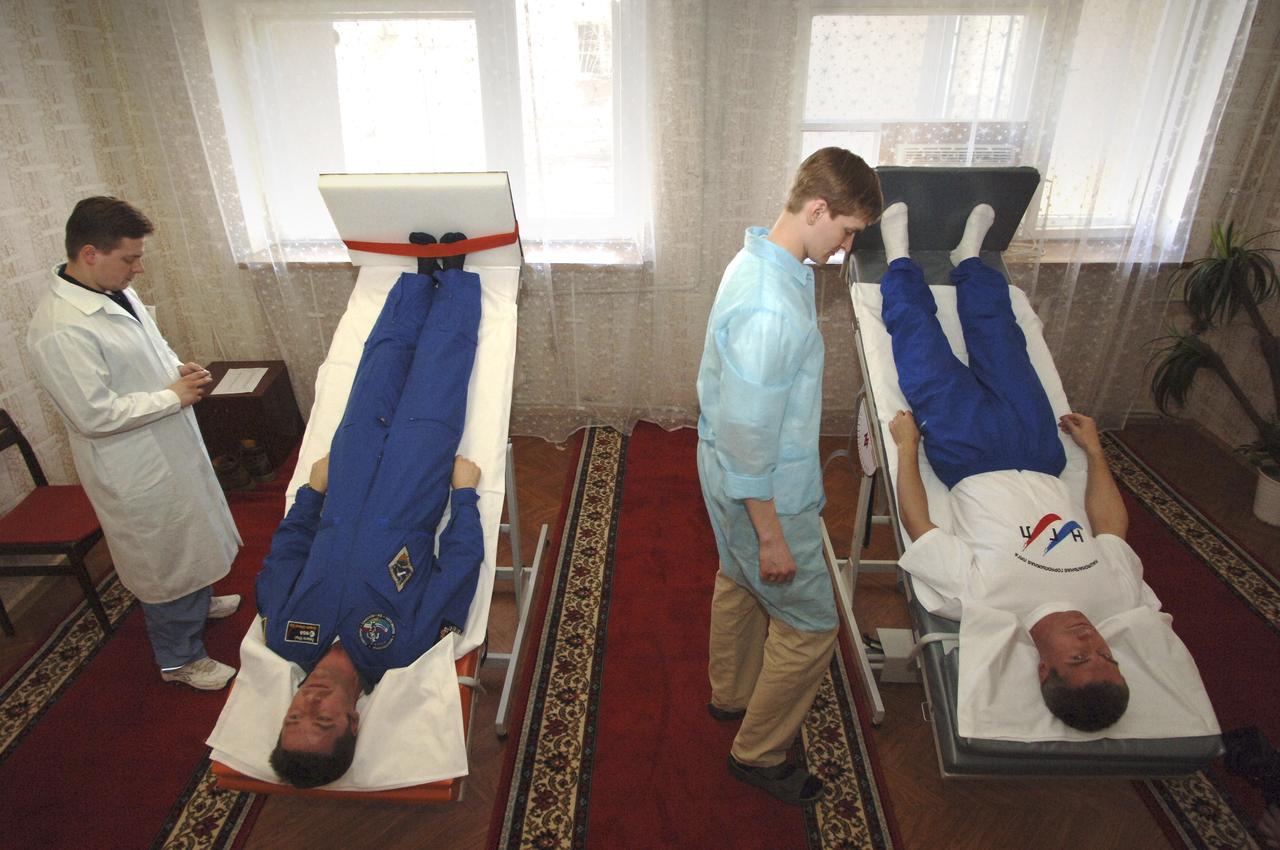
European Space Agency astronaut Roberto Vittori, of Italy, left, and Expedition 11 Commander Sergei Krikalev participate in tilt table tests, Sunday, April 10, 2005, so technicians can collect pre-launch data on the state of their equilibrium prior to the April 15 launch to the International Space Station with Flight Engineer John Phillips in Baikonur, Kazakhstan. Photo Credit: (NASA/Bill Ingalls)

jsc2020e016968 - At the Cosmonaut Hotel crew quarters in Baikonur, Kazakhstan, Expedition 63 crewmembers Anatoly Ivanishin (bottom) and Ivan Vagner (top) of Roscosmos take a ride on tilt tables April 1 to test their vestibular systems. Along with Chris Cassidy of NASA, they will launch April 9 on the Soyuz MS-16 spacecraft from the Baikonur Cosmodrome in Kazakhstan for a six-and-a-half month mission on the International Space Station...Andrey Shelepin/Gagarin Cosmonaut Training Center.
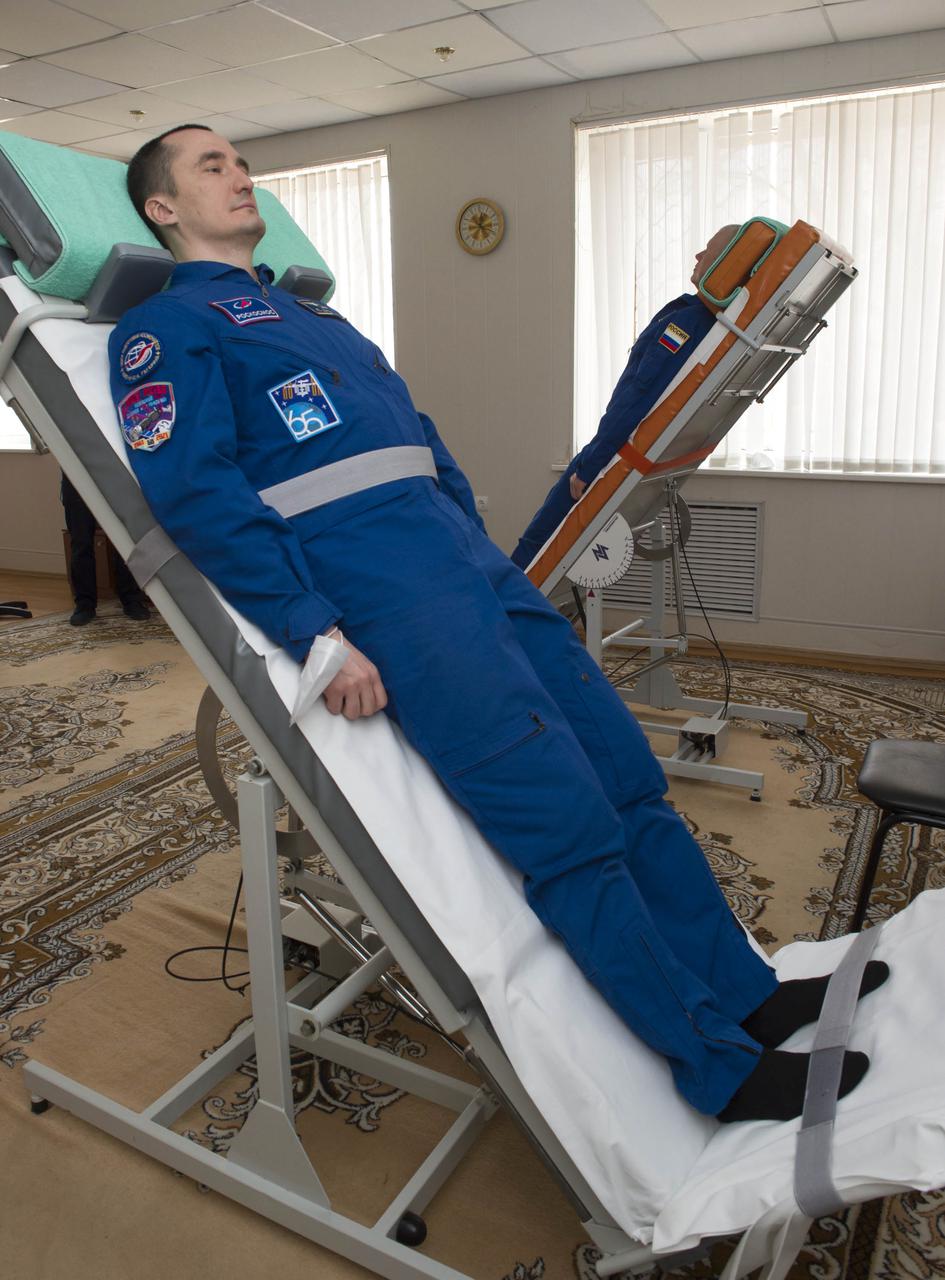
Expedition 65 prime crew member Russian cosmonaut Pyotr Dubrov of Roscosmos takes part in tilt table training Saturday, April 3, 2021, at the Cosmonaut Hotel in Baikonur, Kazakhstan. Dubrov, Oleg Novitskiy of Roscosmos, and NASA astronaut Mark Vande Hei, are scheduled to launch to the International Space Station aboard the Soyuz MS-18 spacecraft on April 9. Photo Credit: (NASA/GCTC/Irina Spector)
KENNEDY SPACE CENTER, FLA. - At Astrotech Space Operations in Titusville, Fla., technicians check the STEREO spacecraft "B" as it is lifted off a tilt table. STEREO stands for Solar Terrestrial Relations Observatory. The STEREO mission is the first to take measurements of the sun and solar wind in 3-dimension. This new view will improve our understanding of space weather and its impact on the Earth. STEREO is expected to lift off aboard a Boeing Delta II rocket on July 22. Photo credit: NASA/George Shelton
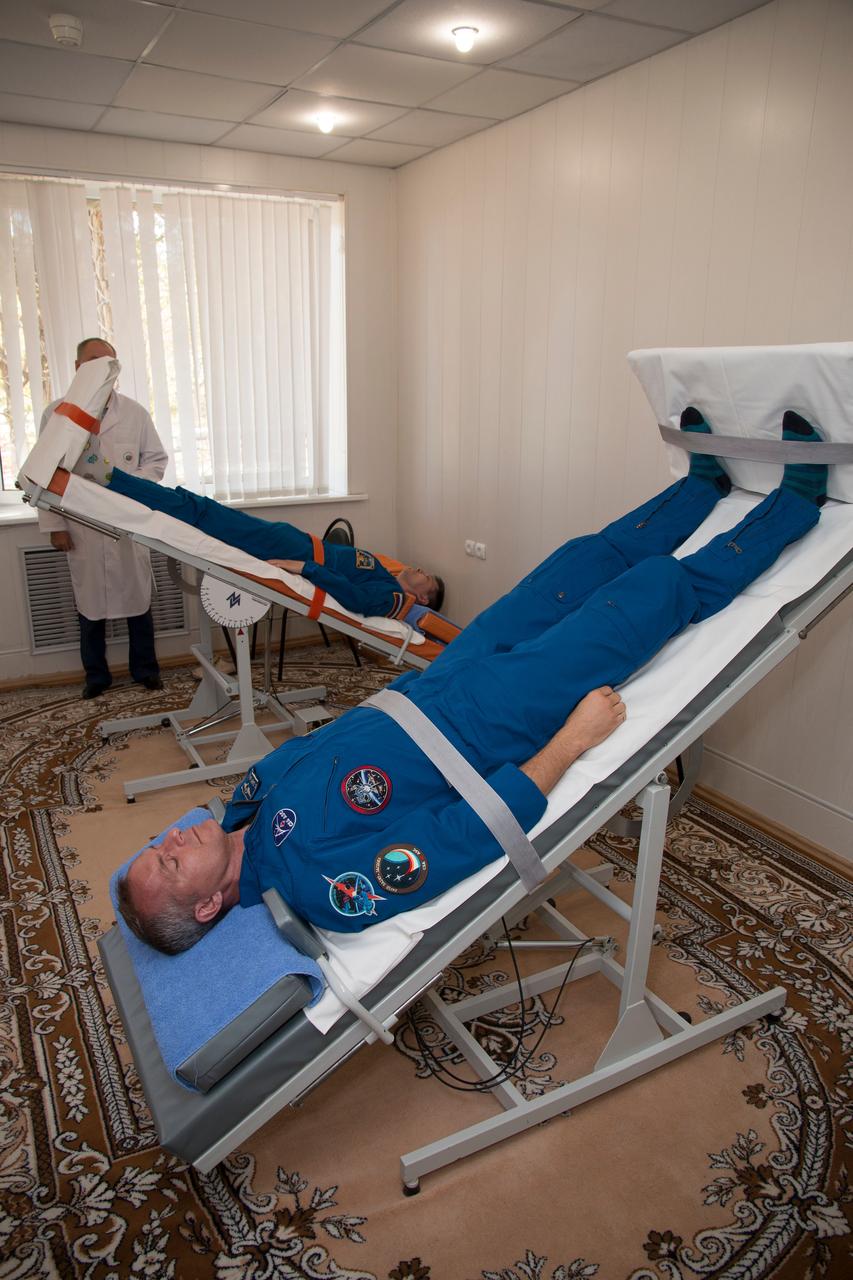
jsc2018e085901 (Oct. 3, 2018) --- Expedition 57 backup crew members Oleg Kononenko of Roscosmos, top, and David Saint-Jacques of the Canadian Space Agency, bottom, conduct tests of their vestibular system on tilt tables, Wednesday, Oct. 3, 2018 at the Cosmonaut Hotel in Baikonur, Kazakhstan. Alexey Ovchinin of Roscosmos and Nick Hague of NASA are scheduled to launch on Oct. 11 onboard the Soyuz MS-10 spacecraft from the Baikonur Cosmodrome in Kazakhstan for a six-month mission on the International Space Station. Photo Credit: (NASA/Victor Zelentsov)
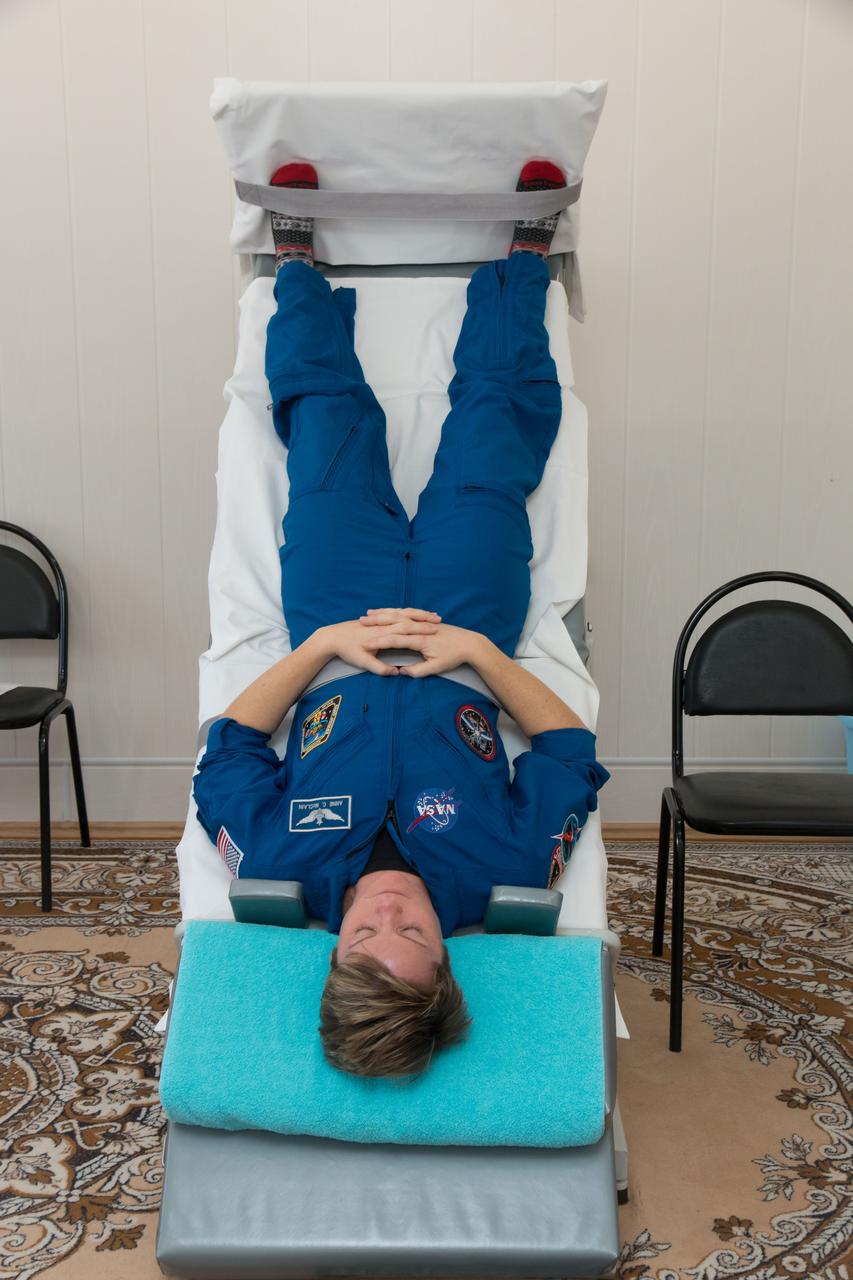
jsc2018e097774 - At the Cosmonaut Hotel crew quarters in Baikonur, Kazakhstan, Expedition 58 crewmember Anne McClain of NASA conducts vestibular system response training on a tilt table Nov. 27 as part of pre-launch training. McClain, David Saint-Jacques of the Canadian Space Agency and Oleg Kononenko of Roscosmos will launch Dec. 3 on the Soyuz MS-11 spacecraft from the Baikonur Cosmodrome in Kazakhstan for a six-and-a-half month mission on the International Space Station...NASA/Victor Zelentsov.
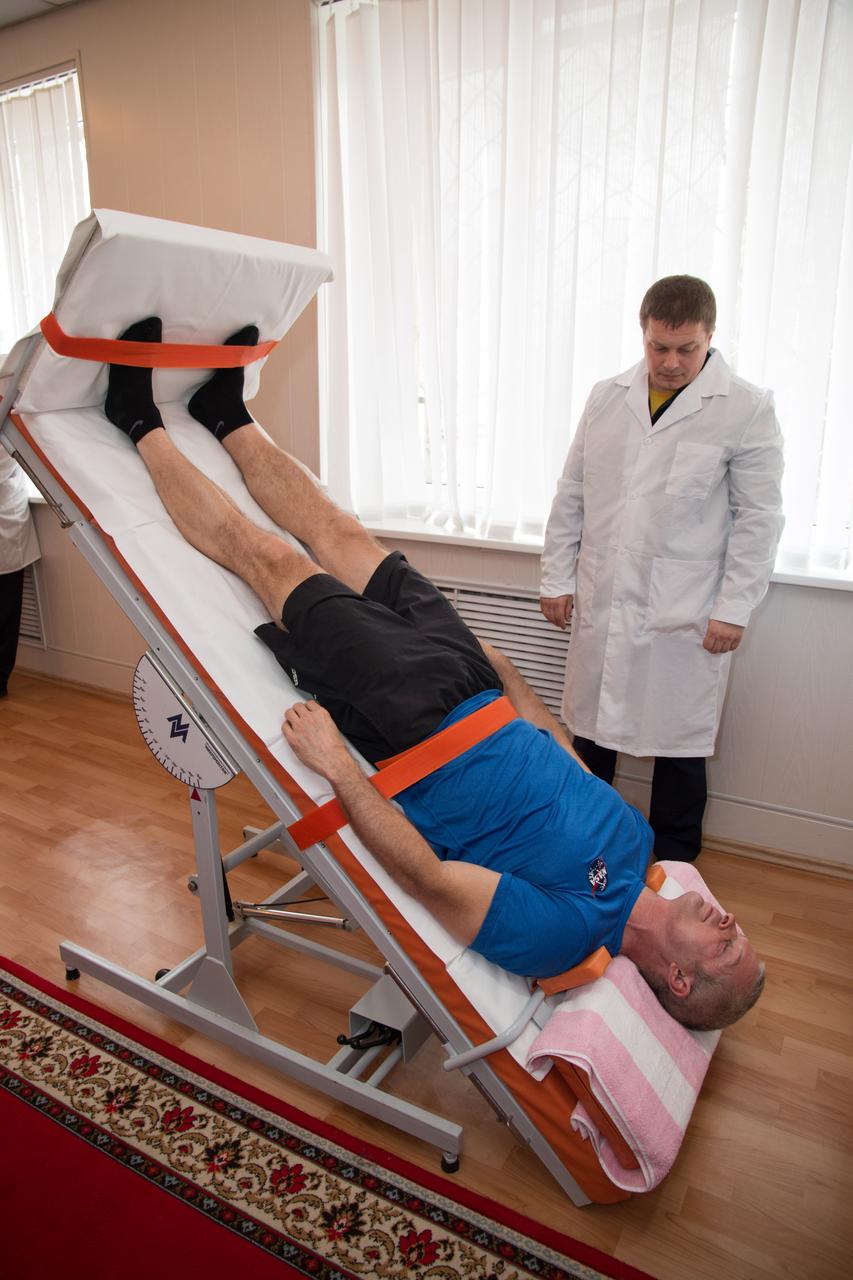
19-12-34-54: At his Cosmonaut Hotel crew quarters in Baikonur, Kazakhstan, Expedition 39/40 Flight Engineer Steve Swanson of NASA takes a turn on a tilt table March 19 as part of his conditioning in preparation for launch to the International Space Station with his crewmates, Alexander Skvortsov and Oleg Artemyev of the Russian Federal Space Agency (Roscosmos) on March 26, Kazakh time, in the Soyuz TMA-12M spacecraft for a six-month mission. NASA/Victor Zelentsov
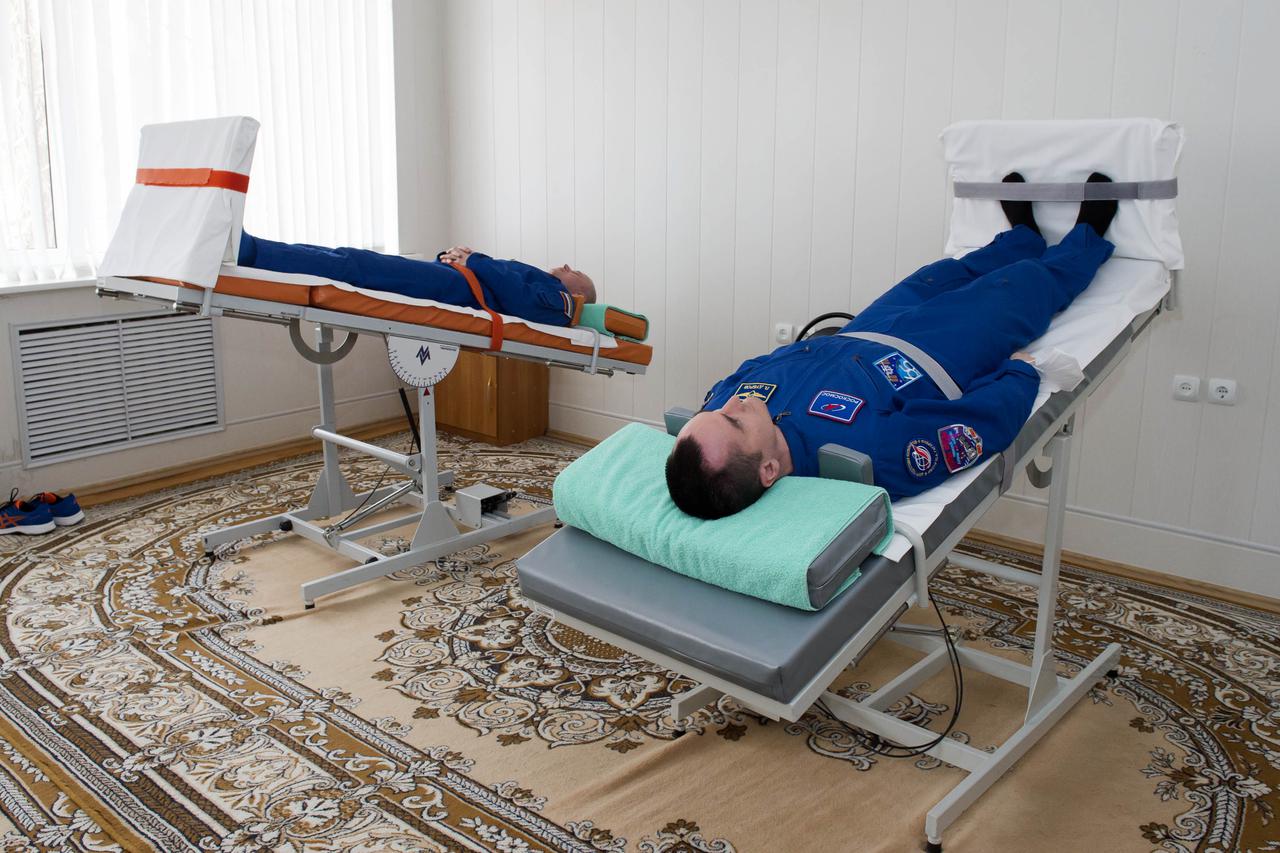
Expedition 65 prime crew members Russian cosmonaut Oleg Novitskiy, left, and Pyotr Dubrov of Roscosmos take part in tilt table training Saturday, April 3, 2021, at the Cosmonaut Hotel in Baikonur, Kazakhstan. Novitskiy, Dubrov, and NASA astronaut Mark Vande Hei, are scheduled to launch to the International Space Station aboard the Soyuz MS-18 spacecraft on April 9. Photo Credit: (NASA/GCTC/Irina Spector)
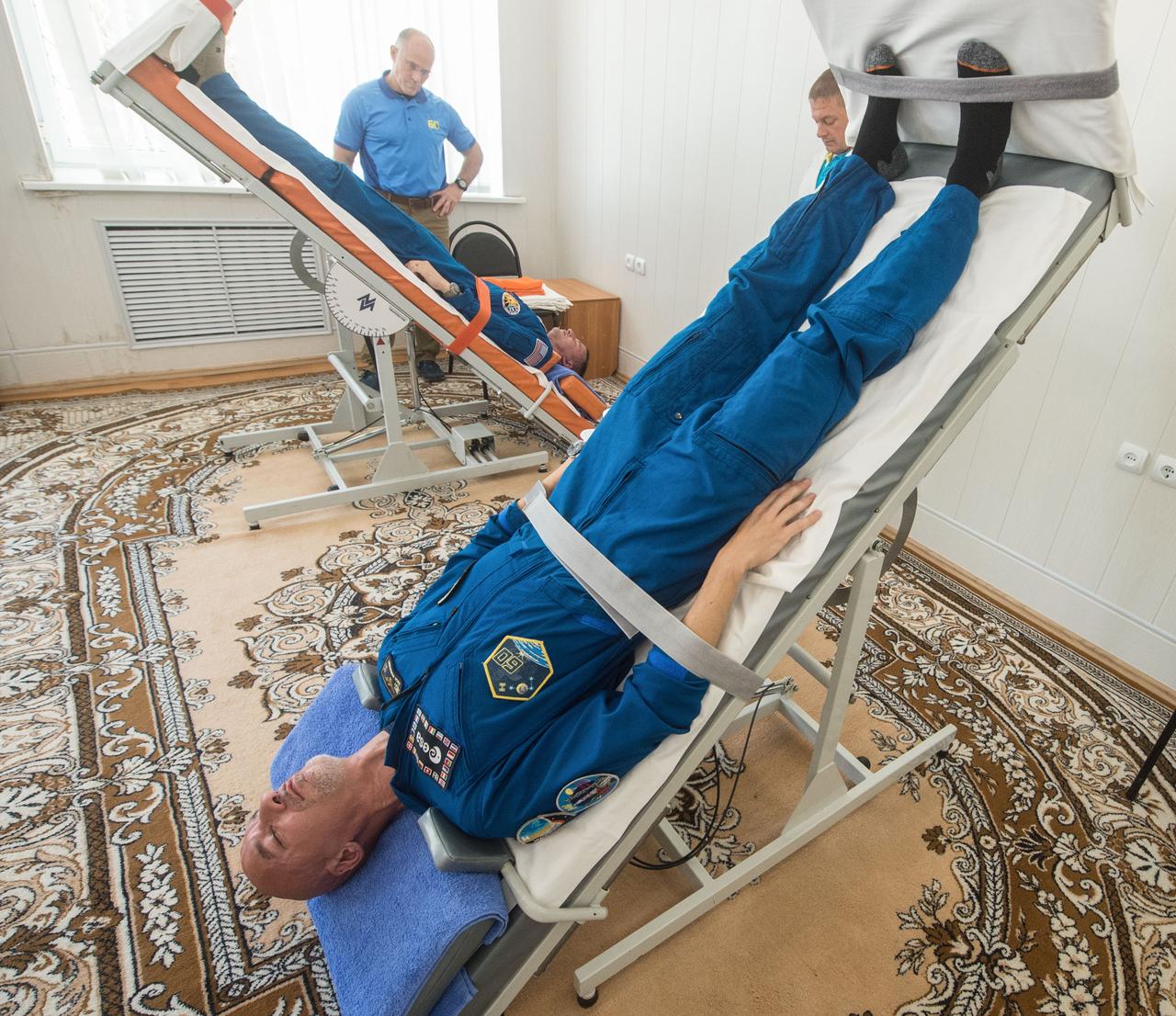
jsc2019e039266 - At the Cosmonaut Hotel crew quarters in Baikonur, Kazakhstan, Expedition 60 crewmembers Luca Parmitano of the European Space Agency (foreground) and Drew Morgan of NASA test out their vestibular systems on tilt tables July 12 as part of pre-launch activities. Along with Alexander Skvortsov of Roscosmos, they will launch July 20 on the Soyuz MS-13 spacecraft from the Baikonur Cosmodrome in Kazakhstan on a mission to the International Space Station...Andrey Shelepin/GCTC.
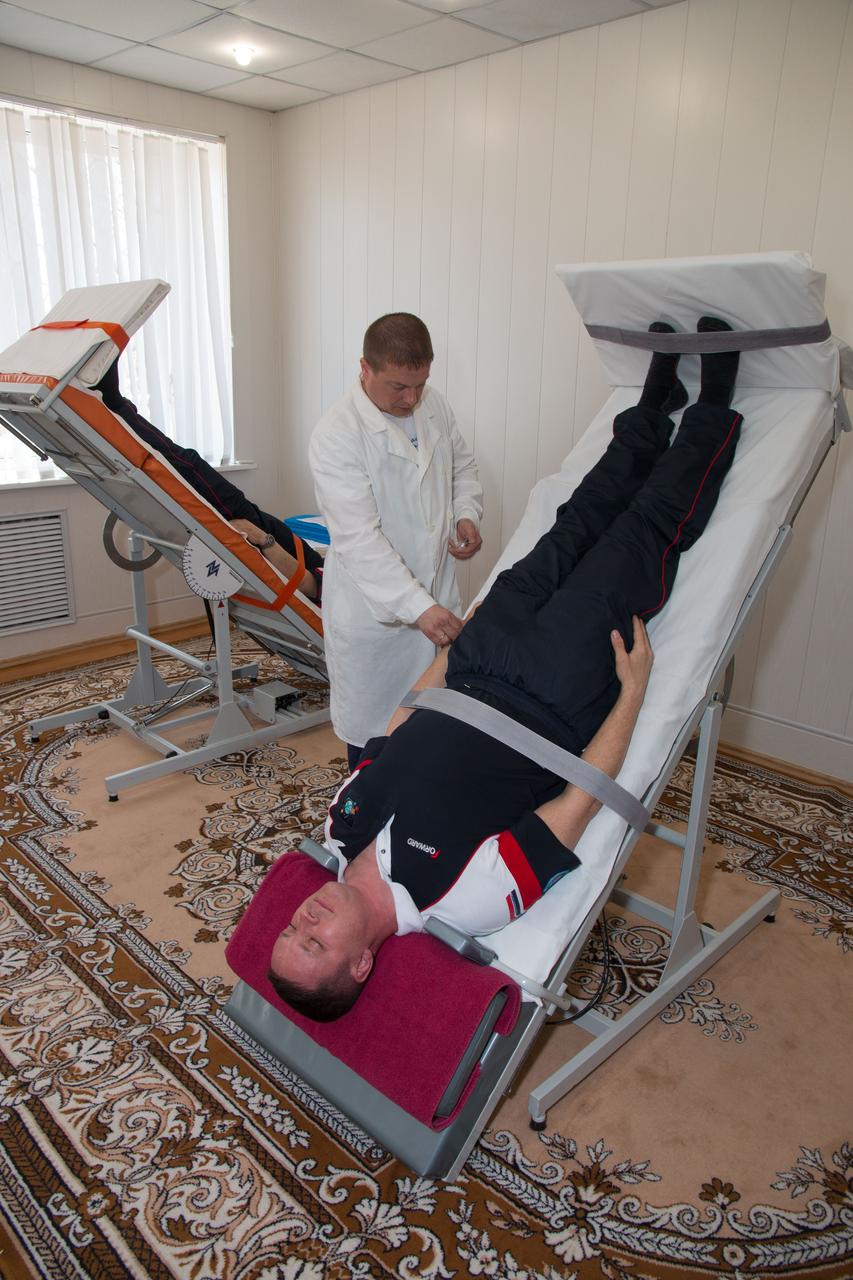
jsc2017e043074 (April 13, 2017) --- At the Cosmonaut Hotel crew quarters in Baikonur, Kazakhstan, Expedition 51 crewmember Jack Fischer of NASA conducts a session on a tilt table to test his vestibular system April 13 as part of his pre-launch activities. Fischer and Fyodor Yurchikhin of the Russian Federal Space Agency (Roscosmos) will liftoff April 20 from the Baikonur Cosmodrome on the Soyuz MS-04 spacecraft for a four and a half month mission on the International Space Station. NASA/Victor Zelentsov
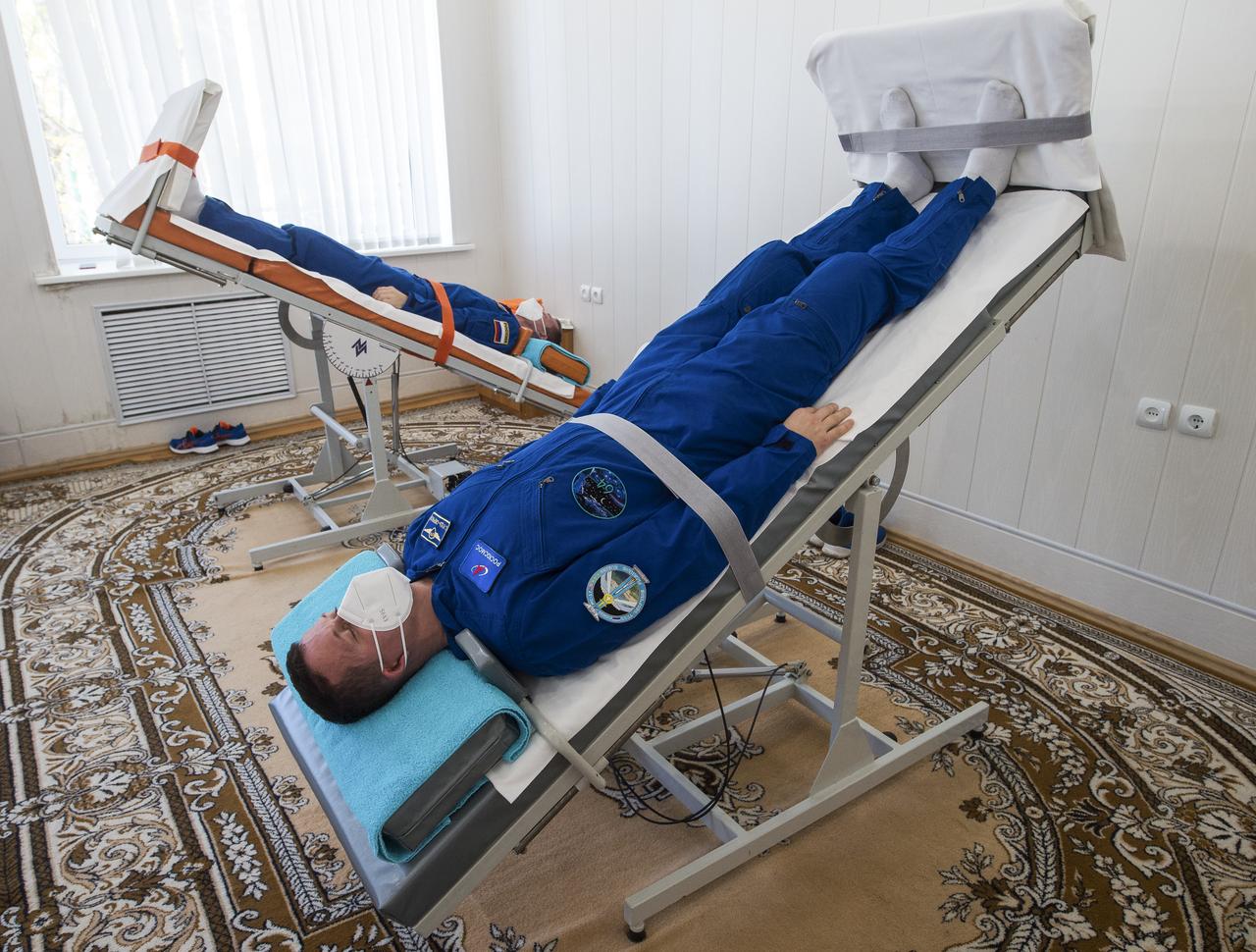
Expedition 64 Russian cosmonauts Sergey Ryzhikov, back, and Sergey Kud-Sverchkov of Roscosmos, front, take part in tilt table training, Tuesday, Oct. 6, 2020, at the Cosmonaut Hotel in Baikonur, Kazakhstan. Ryzhikov, Kud-Sverchkov, and Kate Rubins of NASA are scheduled to launch to the International Space Station aboard the Soyuz MS-17 spacecraft on October 14. Photo Credit: (NASA/GCTC/Andrey Shelepin)
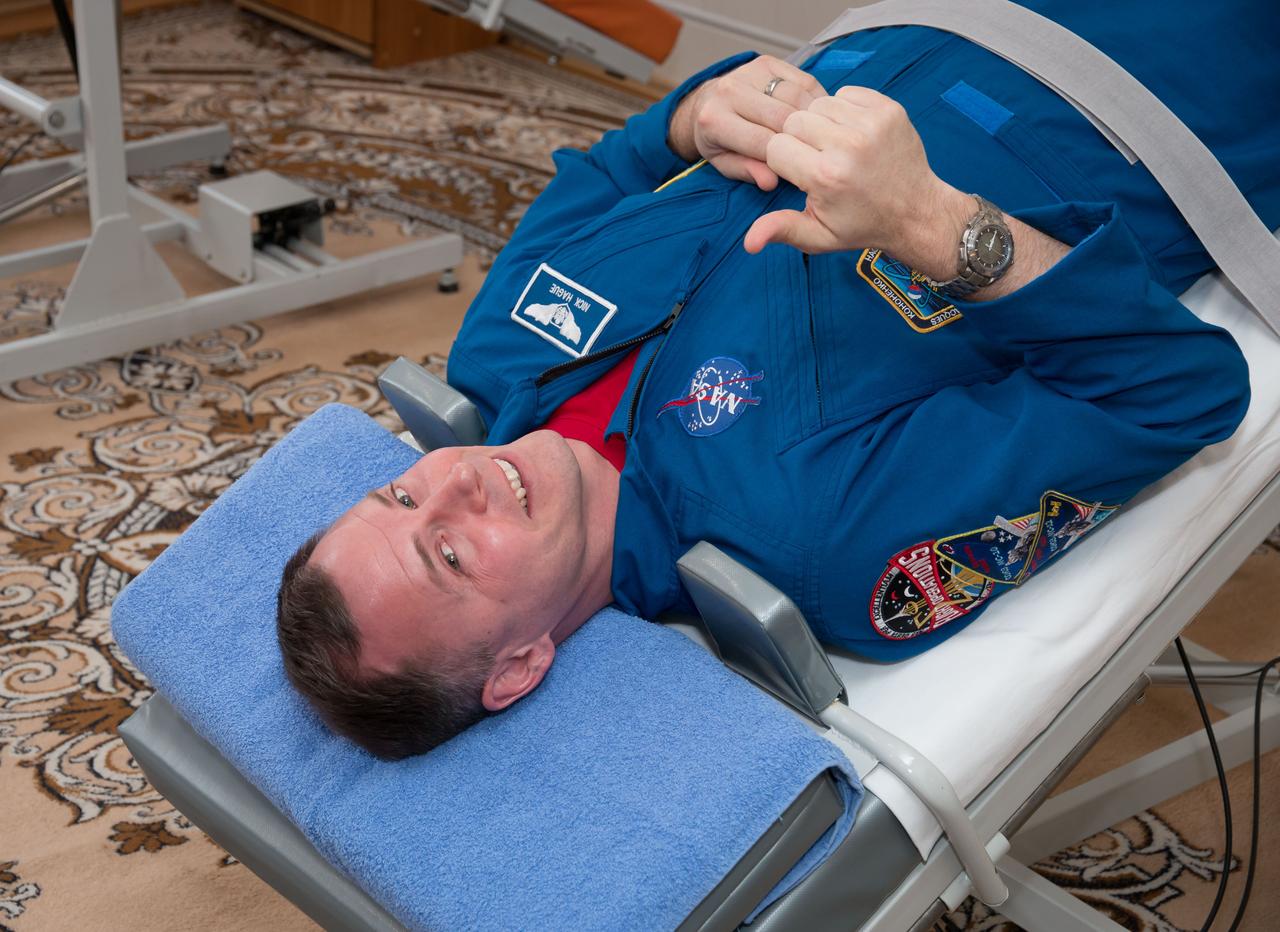
At the Cosmonaut Hotel crew quarters in Baikonur, Kazakhstan, Expedition 59 crewmember Nick Hague of NASA flashes a thumbs-up signal as he tests his vestibular system on a tilt table March 7 as part of his pre-launch activities. Hague, Christina Koch of NASA and Alexey Ovchinin of Roscosmos will launch March 14, U.S. time, on the Soyuz MS-12 spacecraft from the Baikonur Cosmodrome for a six-and-a-half month mission on the International Space Station...NASA/Victor Zelentsov.
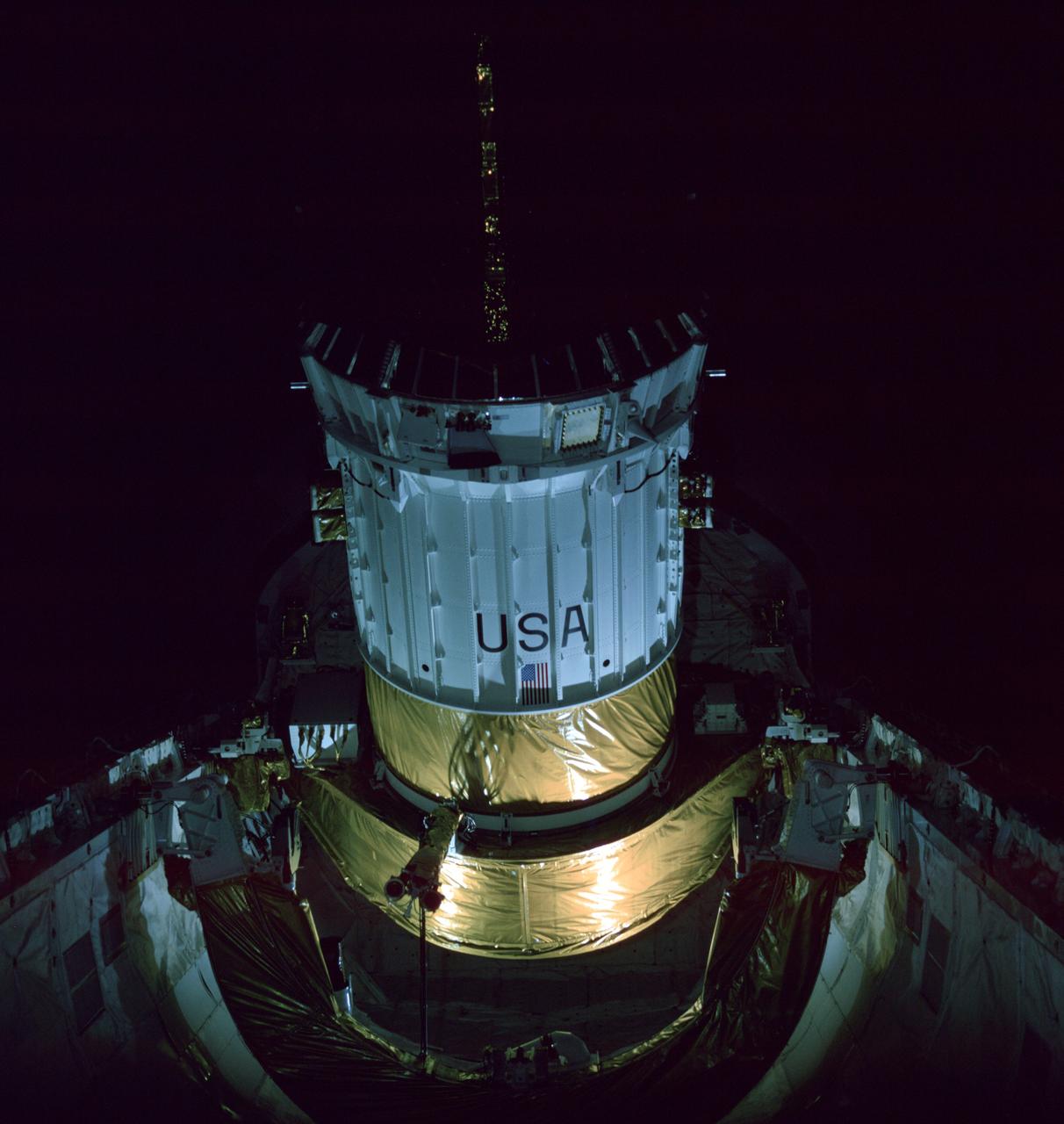
STS006-40-685 (4 April 1983) --- This view of a tilted tracking and data relay satellite (TDRS) and part of its inertial upper stage (IUS) was photographed during deployment of the TDRS/IUS tandem some 10 hours following launch of space shuttle Challenger. A 70mm camera was aimed by crew members through the aft windows of the Earth-orbiting Challenger to capture the scene. A tilt-table device was used to lift the TDRS to this position (almost 90 degrees different from its stowed position). Onboard NASA’s second reusable shuttle for this five-day flight were astronauts Paul J. Weitz, Karol J. Bobko, Dr. F. Story Musgrave and Donald H. Peterson. Photo credit: NASA
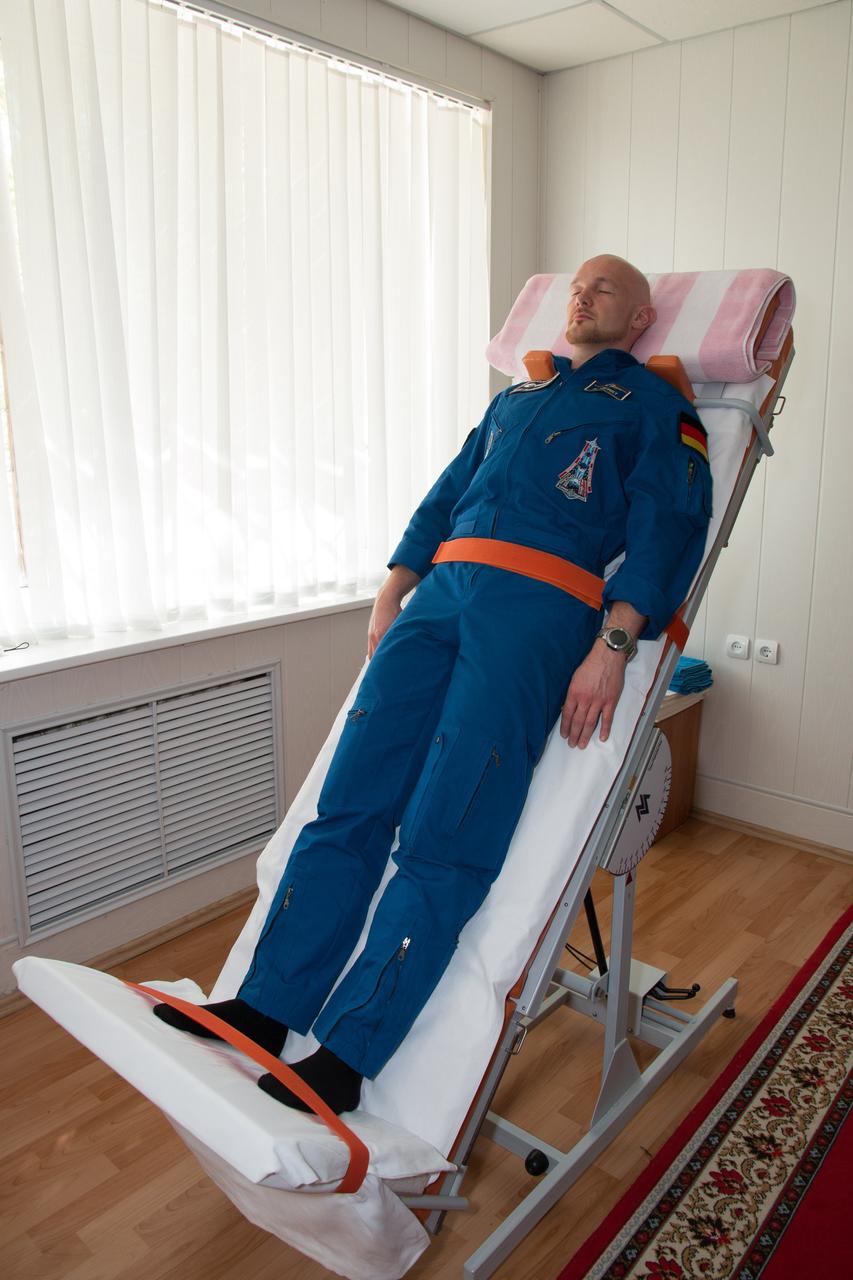
11-57-29-2: At the Cosmonaut Hotel crew quarters in Baikonur, Kazakhstan, Expedition 40/41 Flight Engineer Alexander Gerst of the European Space Agency takes a turn on a tilt table May 21 as he tests his vestibular system during pre-launch medical tests. Gerst, Soyuz Commander Max Suraev of the Russian Federal Space Agency (Roscosmos) and Flight Engineer Reid Wiseman of NASA will launch on May 29, Kazakh time, on the Soyuz TMA-13M spacecraft from the Baikonur Cosmodrome for a 5 ½ month mission on the International Space Station. NASA/Victor Zelentsov
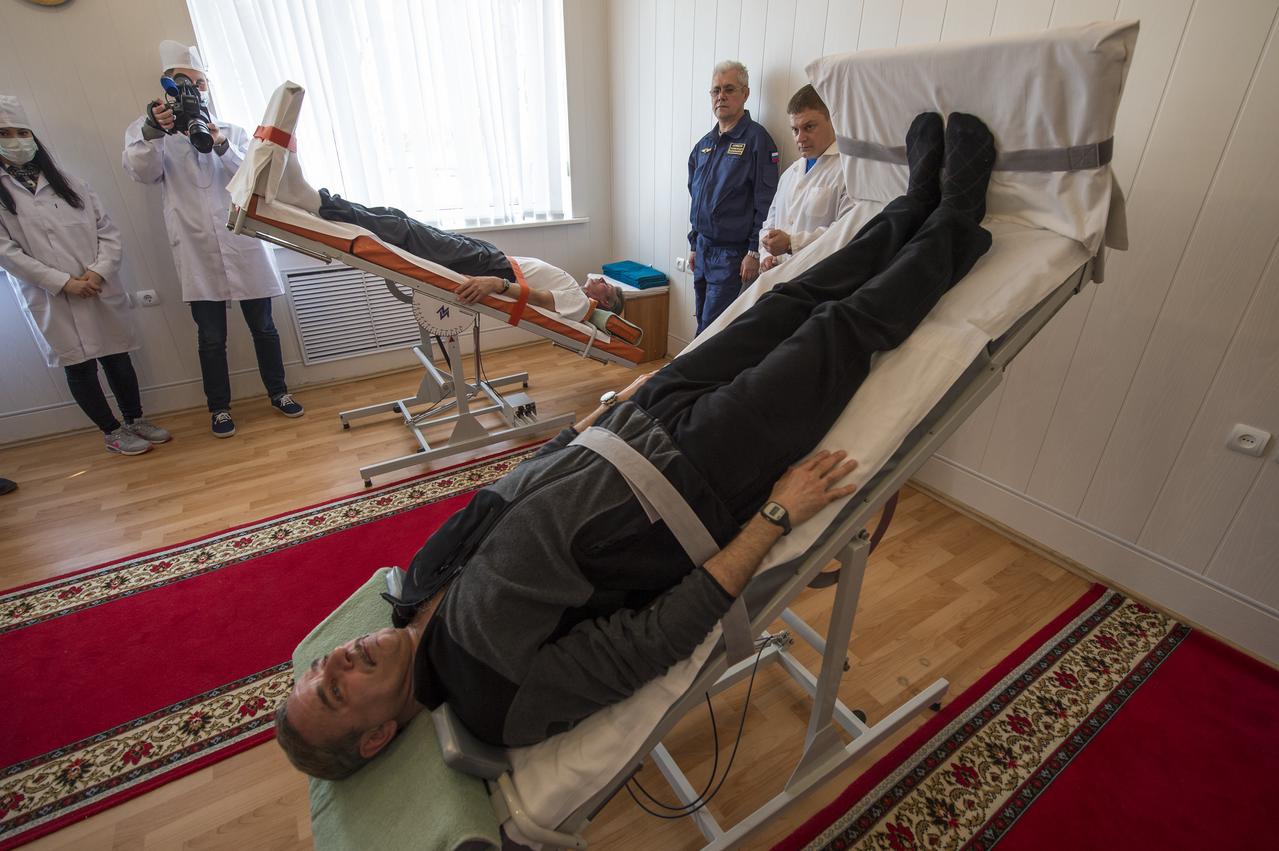
Expedition 43 Russian Cosmonauts Gennady Padalka, background, and Mikhail Kornienko of the Russian Federal Space Agency (Roscosmos) take part the tilt table training during media day, Saturday, March 21, 2015, Baikonur, Kazakhstan. Padalka, Kornienko, and Expedition 43 NASA Astronaut Scott Kelly are scheduled to launch to the International Space Station in the Soyuz TMA-16M spacecraft from the Baikonur Cosmodrome in Kazakhstan March 28, Kazakh time (March 27 Eastern time.) As the one-year crew, Kelly and Kornienko will return to Earth on Soyuz TMA-18M in March 2016. Photo Credit: (NASA/Bill Ingalls)
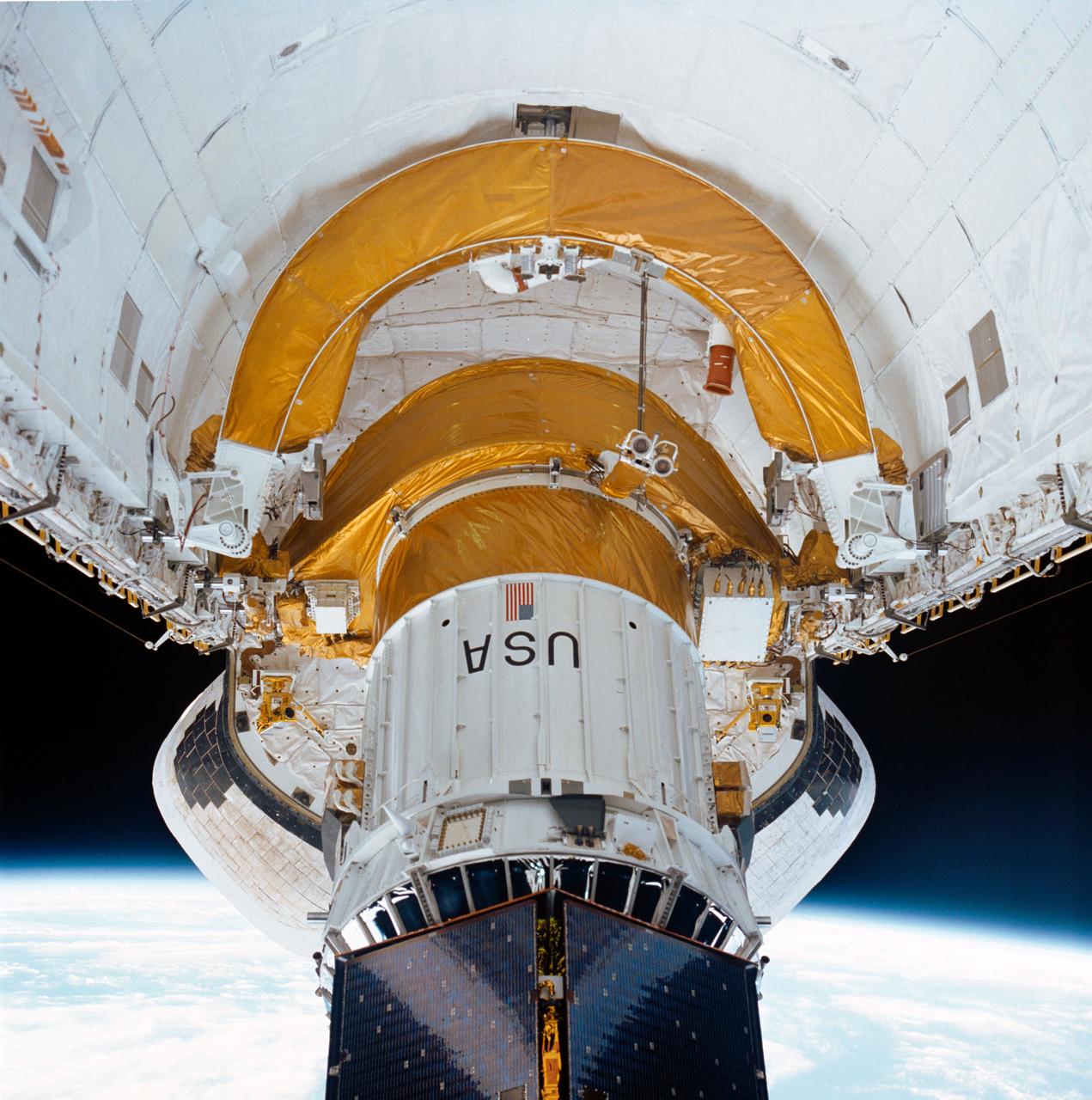
During STS-26, inertial upper stage (IUS) with the tracking and data relay satellite C (TDRS-C) located in the payload bay (PLB) of Discovery, Orbiter Vehicle (OV) 103, is raised into deployment attitude (an angle of 50 degrees) by the airborne support equipment (ASE). ASE aft frame tilt actuator (AFTA) table supports the IUS as it is positioned in the PLB and the ASE umbilical boom drifts away from IUS toward ASE forward cradle. TDRS-C solar array panels (in stowed configuration) are visible on top of the IUS. In the background are the orbital maneuvering system (OMS) pods and the Earth's limb.
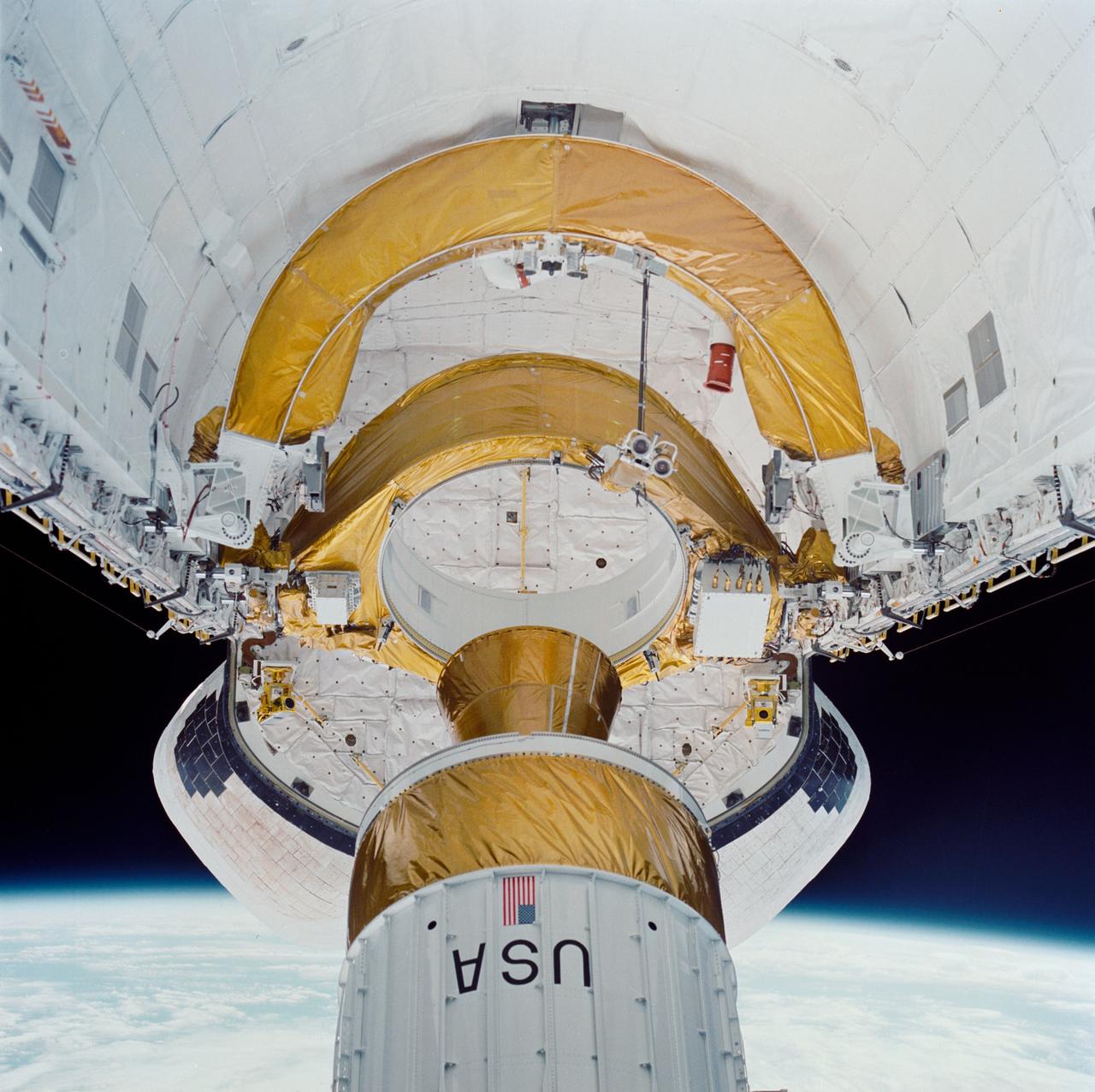
During STS-26, inertial upper stage (IUS) with the tracking and data relay satellite C (TDRS-C) drifts above Discovery, Orbiter Vehicle (OV) 103, payload bay (PLB) after being positioned in deployment attitude (an angle of 50 degrees) by the airborne support equipment (ASE). IUS vacates the ASE aft frame tilt actuator (AFTA) table in the PLB while the disconnected ASE umbilical boom floats above ASE forward cradle. IUS first stage rocket motor and nozzle and the interstage are visible as the IUS is deployed. In the background are the orbital maneuvering system (OMS) pods and the Earth's limb.
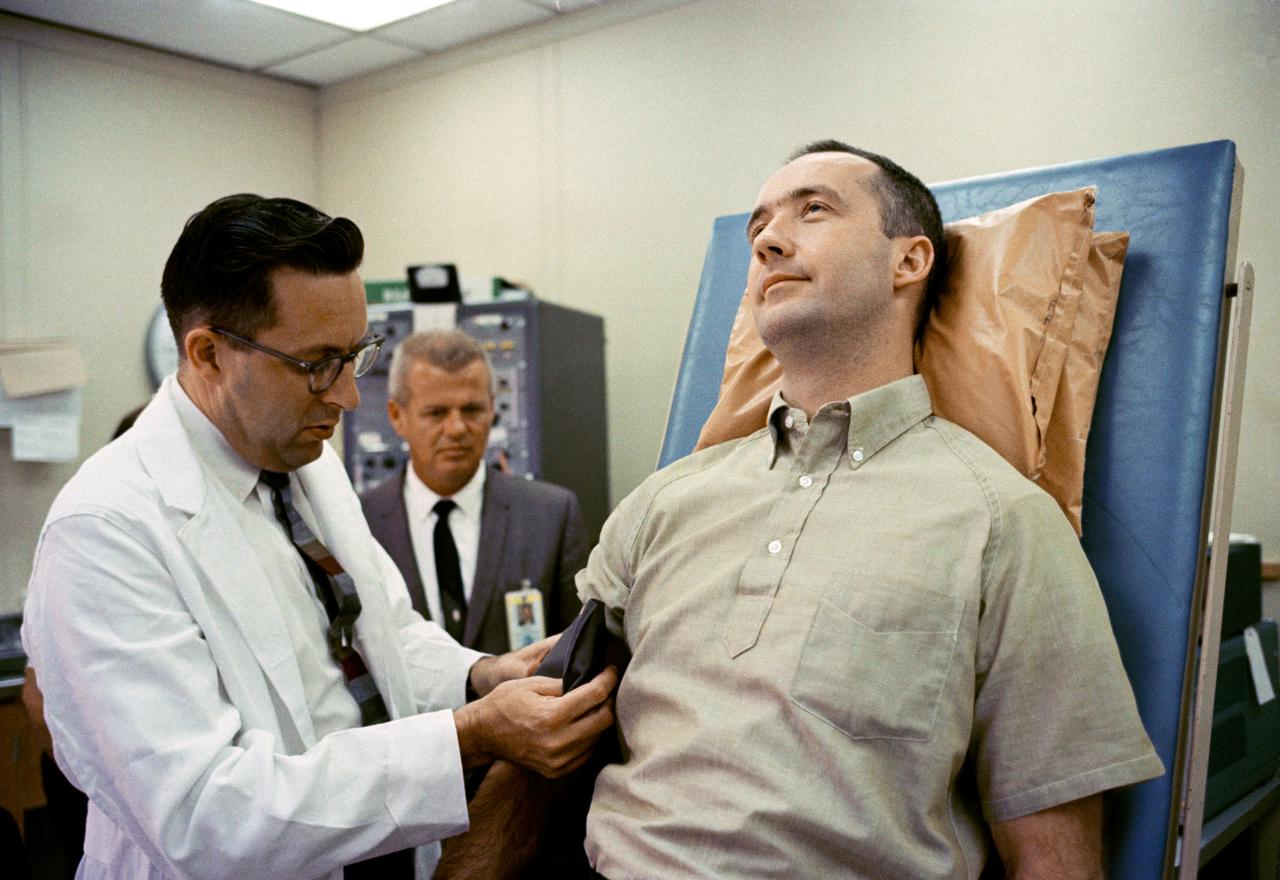
S65-19524 (1 June 1965) --- Dr. Charles A. Berry, chief of Center Medical Programs, MSC, Houston, Texas, prepares to check the blood pressure of astronaut James A. McDivitt, command pilot for the Gemini-Titan 4 spaceflight. McDivitt is on the tilt table at the Aero Medical Area, MSC, Merritt Island, where he and astronaut Edward H. White II (out of frame), GT-4 pilot, underwent preflight physicals in preparation for the four-day, 62-revolution spaceflight. The two astronauts were declared in top physical condition. In the background is Dr. Gordon Benson, NASA physician at Cape Kennedy.
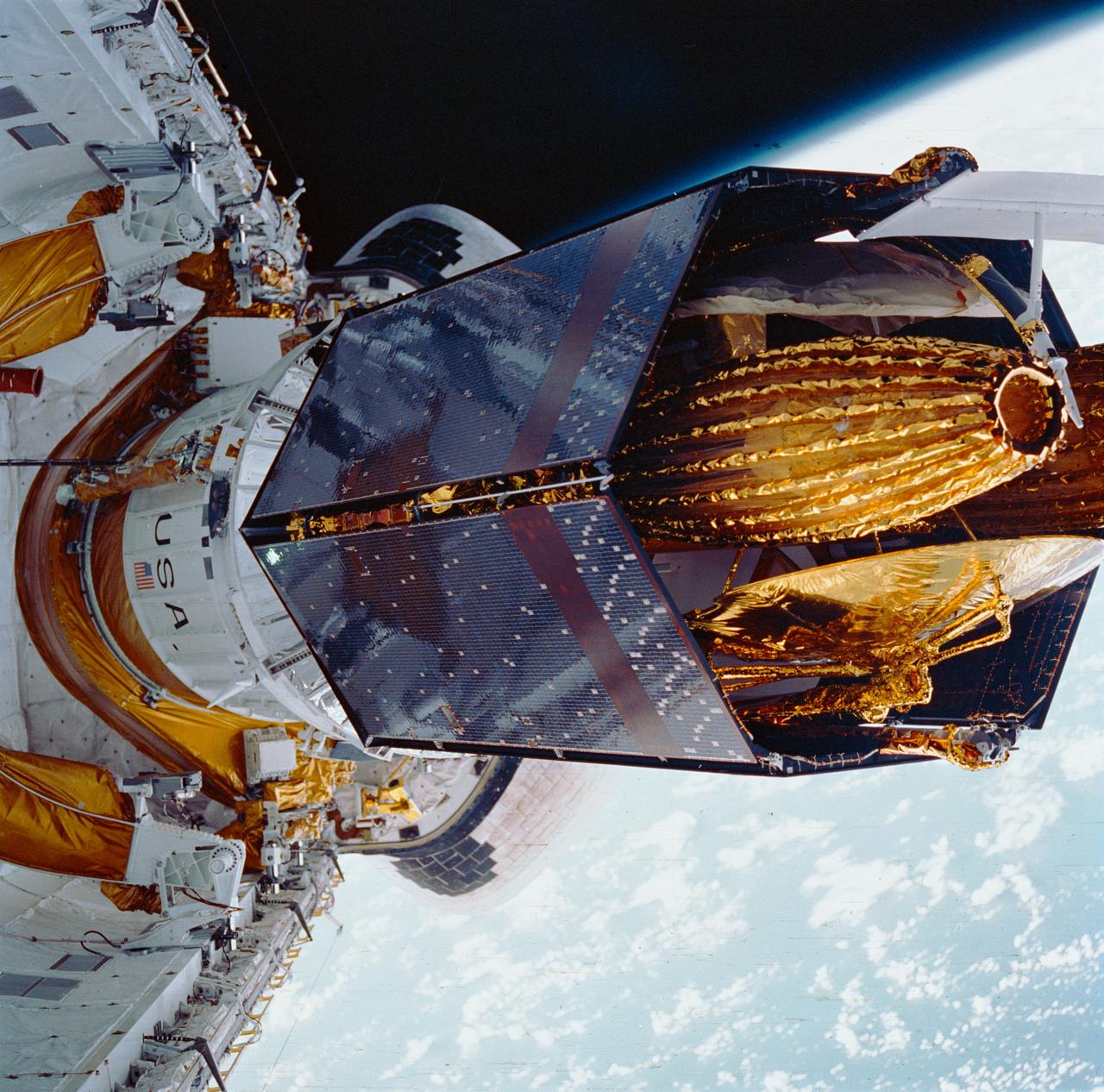
During STS-26, inertial upper stage (IUS) with tracking and data relay satellite C (TDRS-C) located in the payload bay (PLB) of Discovery, Orbiter Vehicle (OV) 103, is positioned into its proper deployment attitude (an angle of 50 degrees) by the airborne support equipment (ASE). In the foreground, the ASE forward cradle is visible. The IUS is mounted in the ASE aft frame tilt actuator (AFTA) table. TDRS-C components in stowed configuration include solar array panels, TDRS single access #1 and #2, TDRS SGL, and S-Band omni antenna. In the background are the orbital maneuvering system (OMS) pods, the Earth's cloud-covered surface, and the Earth's limb.
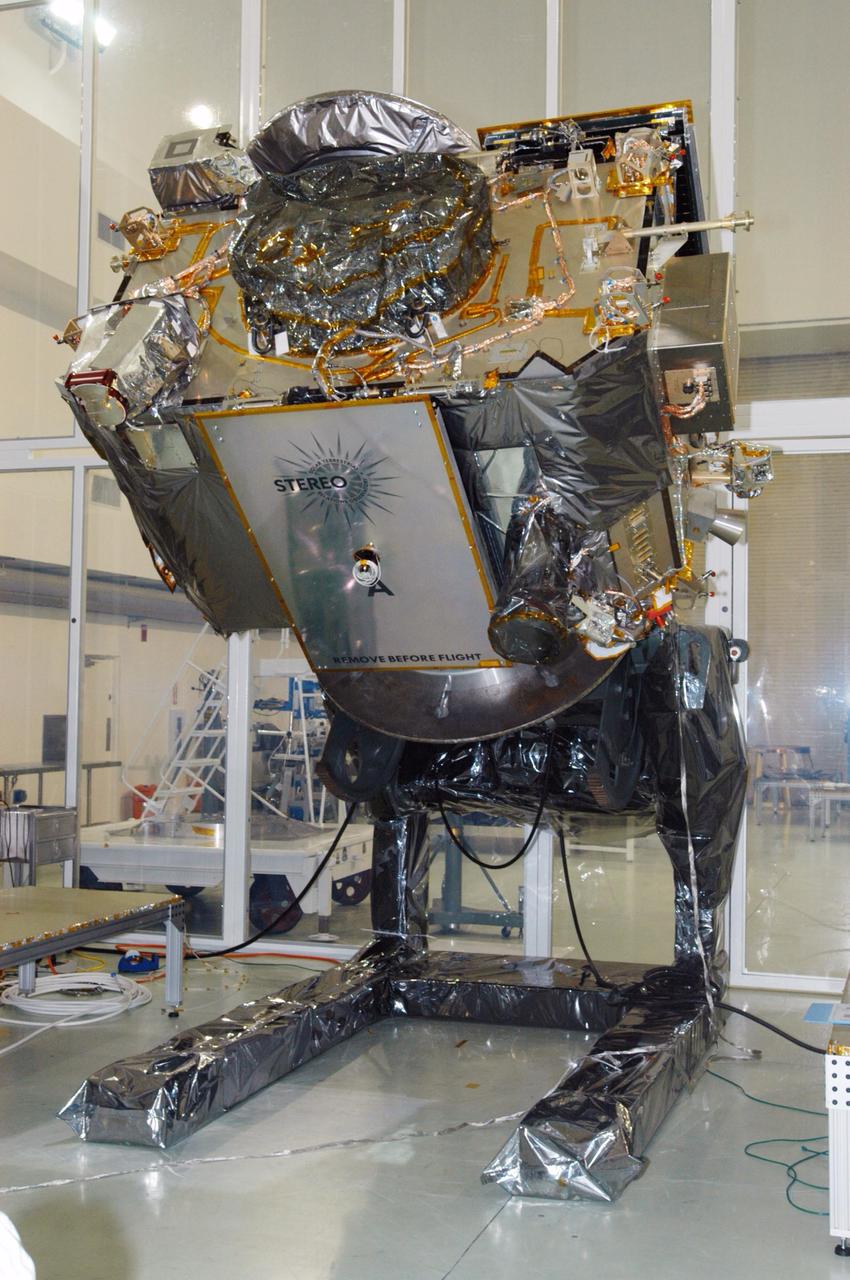
KENNEDY SPACE CENTER, FLA. - At Astrotech Space Operations in Titusville, Fla., the tilt table lowers the STEREO spacecraft "A." In this position, technicians can perform the final comprehensive performance test of the instruments, verifying the instrument is fully functional before flight. After a rotation, this configuration also allows deployment tests to be done on the solar arrays. STEREO stands for Solar Terrestrial Relations Observatory. The STEREO mission is the first to take measurements of the sun and solar wind in 3-dimension. This new view will improve our understanding of space weather and its impact on the Earth. STEREO is expected to lift off aboard a Boeing Delta II rocket on July 22. Photo credit: NASA/George Shelton
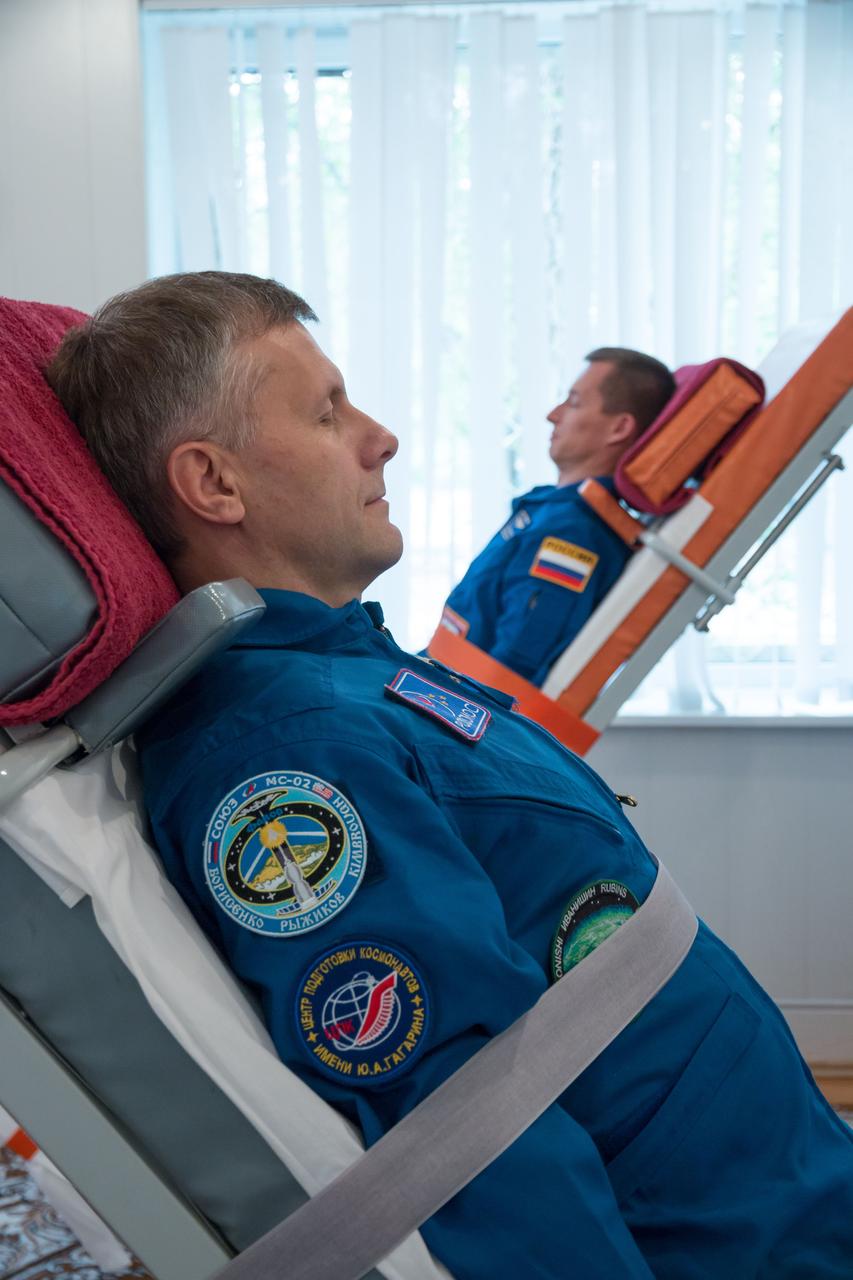
Expedition 49 flight engineer Andrey Borisenko of Roscosmos, in foreground, and Soyuz commander Sergey Ryzhikov of Roscosmos take part in tilt table training during media day on Friday, Sept. 16, 2016 at the Cosmonaut Hotel in Baikonur, Kazakhstan. Expedition 49 flight engineer Shane Kimbrough of NASA, flight engineer Andrey Borisenko of Roscosmos, and Soyuz commander Sergey Ryzhikov of Roscosmos are scheduled to launch to the International Space Station aboard the Soyuz MS-02 spacecraft from the Baikonur Cosmodrome on September 24 Kazakh time. Photo Credit: (NASA/Victor Zelentsov)
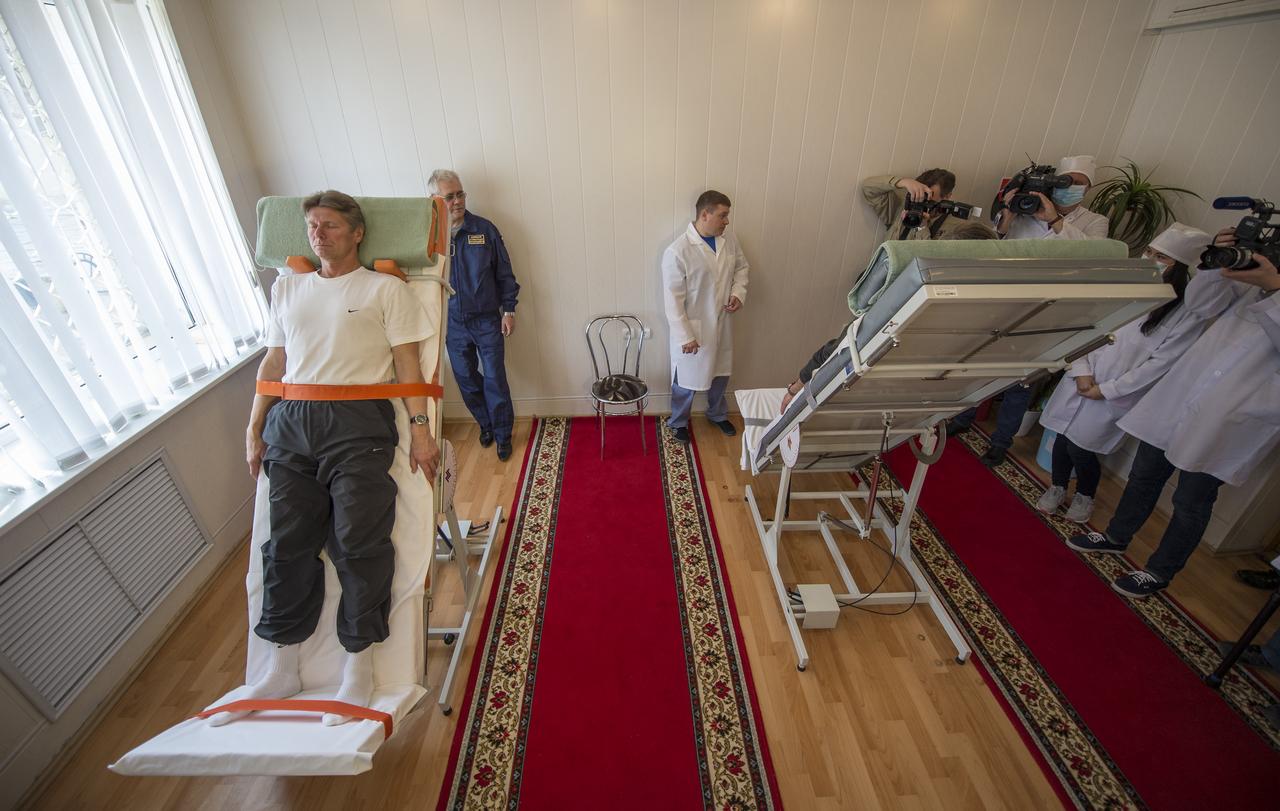
Expedition 43 Russian Cosmonauts Gennady Padalka, left, and Mikhail Kornienko of the Russian Federal Space Agency (Roscosmos) take part the tilt table training during media day, Saturday, March 21, 2015, Baikonur, Kazakhstan. Padalka, Kornienko, and Expedition 43 NASA Astronaut Scott Kelly are scheduled to launch to the International Space Station in the Soyuz TMA-16M spacecraft from the Baikonur Cosmodrome in Kazakhstan March 28, Kazakh time (March 27 Eastern time.) As the one-year crew, Kelly and Kornienko will return to Earth on Soyuz TMA-18M in March 2016. Photo Credit: (NASA/Bill Ingalls)
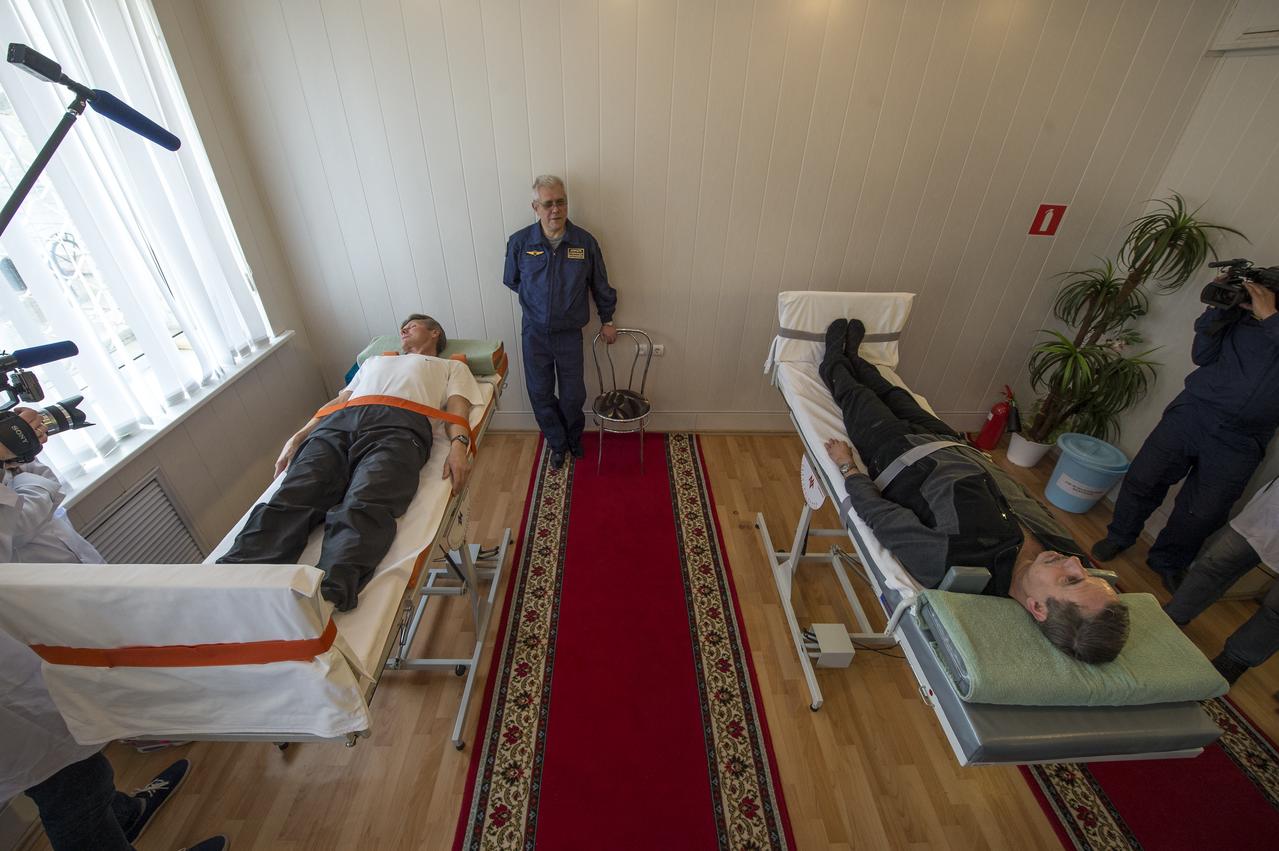
Expedition 43 Russian Cosmonauts Gennady Padalka, left, and Mikhail Kornienko of the Russian Federal Space Agency (Roscosmos) take part the tilt table training during media day, Saturday, March 21, 2015, Baikonur, Kazakhstan. Padalka, Kornienko, and Expedition 43 NASA Astronaut Scott Kelly are scheduled to launch to the International Space Station in the Soyuz TMA-16M spacecraft from the Baikonur Cosmodrome in Kazakhstan March 28, Kazakh time (March 27 Eastern time.) As the one-year crew, Kelly and Kornienko will return to Earth on Soyuz TMA-18M in March 2016. Photo Credit: (NASA/Bill Ingalls)

KENNEDY SPACE CENTER, FLA. - At Astrotech Space Operations in Titusville, Fla., technicians check the STEREO spacecraft "B" as it moves away from a tilt table (at right). The spacecraft will be placed on another stand nearby. STEREO stands for Solar Terrestrial Relations Observatory. The STEREO mission is the first to take measurements of the sun and solar wind in 3-dimension. This new view will improve our understanding of space weather and its impact on the Earth. STEREO is expected to lift off aboard a Boeing Delta II rocket on July 22. Photo credit: NASA/George Shelton
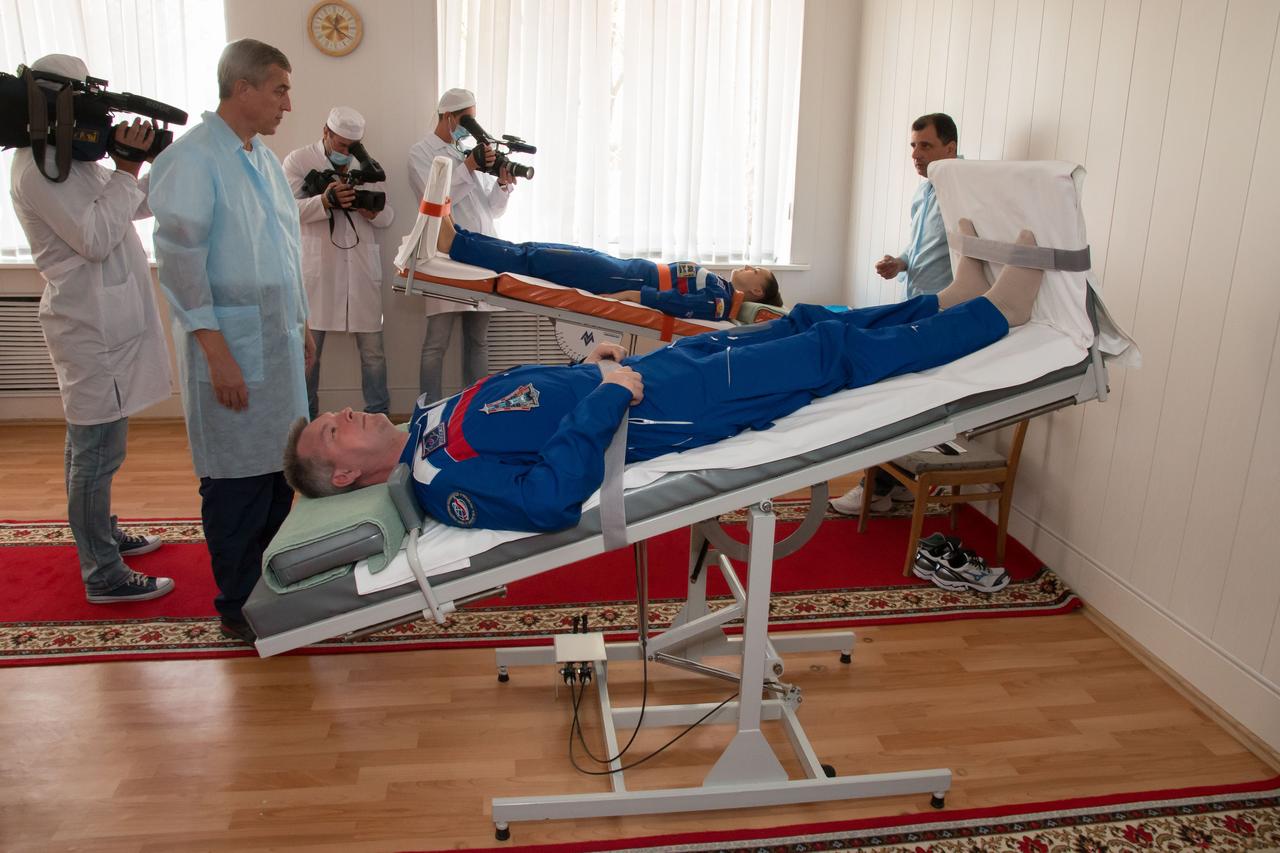
17-12-26-50-2: (17 Sept. 2014) --- At the Cosmonaut Hotel crew quarters in Baikonur, Kazakhstan, Expedition 41/42 Soyuz Commander Alexander Samokutyaev of the Russian Federal Space Agency (Roscosmos, foreground) and Flight Engineer Elena Serova of Roscosmos (background) take turns on tilt tables Sept. 17 to test their vestibular systems. Samokutyaev, Serova and Flight Engineer Barry Wilmore of NASA are scheduled to launch from the Baikonur Cosmodrome Sept. 26, Kazakh time, in the Soyuz TMA-14M spacecraft for a 5 ½ month mission on the International Space Station. Serova will become the fourth Russian woman to fly in space and the first Russian woman to live and work on the station. Photo credit: NASA/Victor Zelentsov
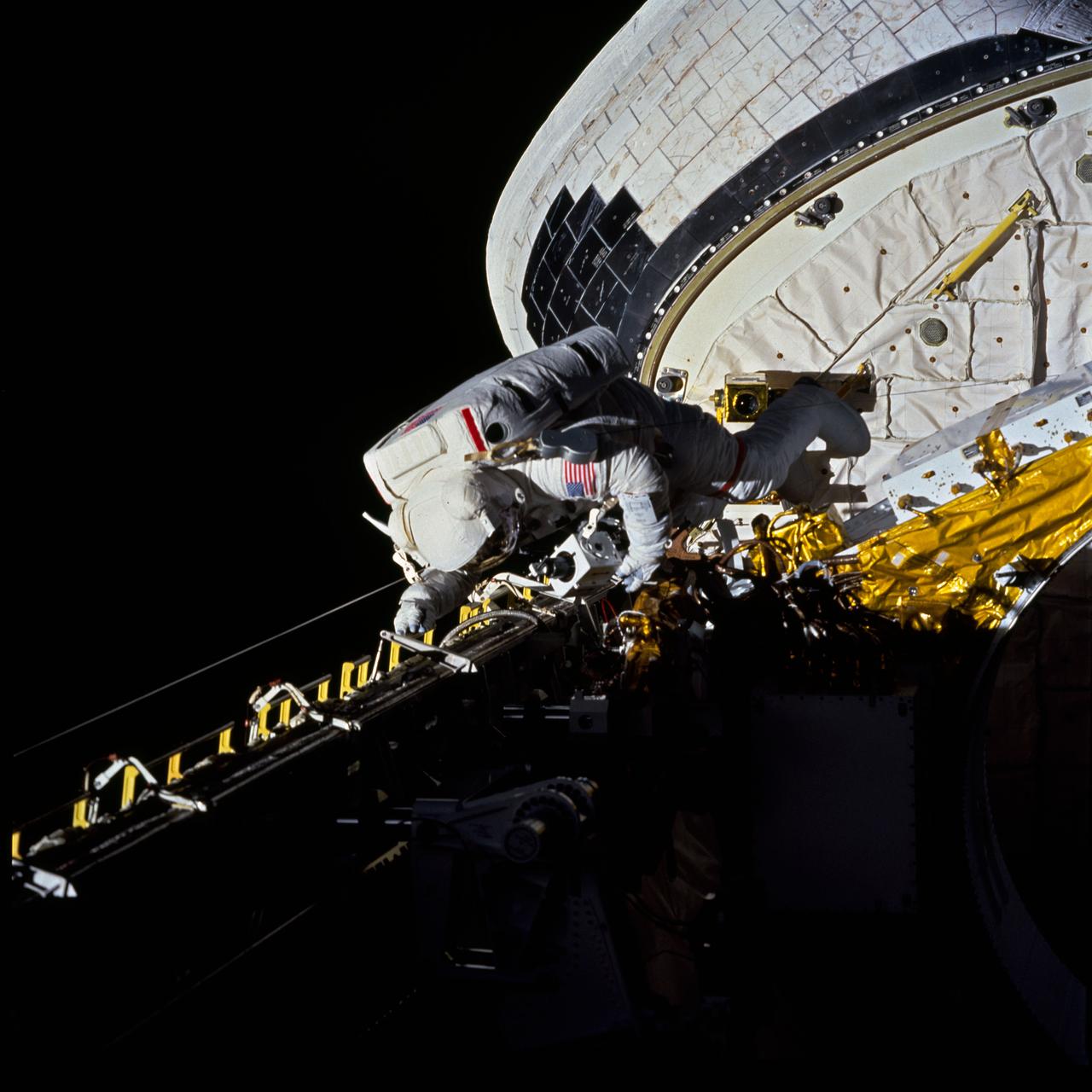
STS054-80-0N (17 Jan 1993) --- Astronaut Gregory J. Harbaugh moves along the starboard side of Endeavour's cargo bay during the four-plus hour long extravehicular activity (EVA) on January 17, 1993. The photograph was taken with a 70mm camera from inside Endeavour's cabin by a fellow crewmember. Three astronauts remained inside to support the spacewalk by astronauts Harbaugh and Mario Runco Jr. (out of frame).
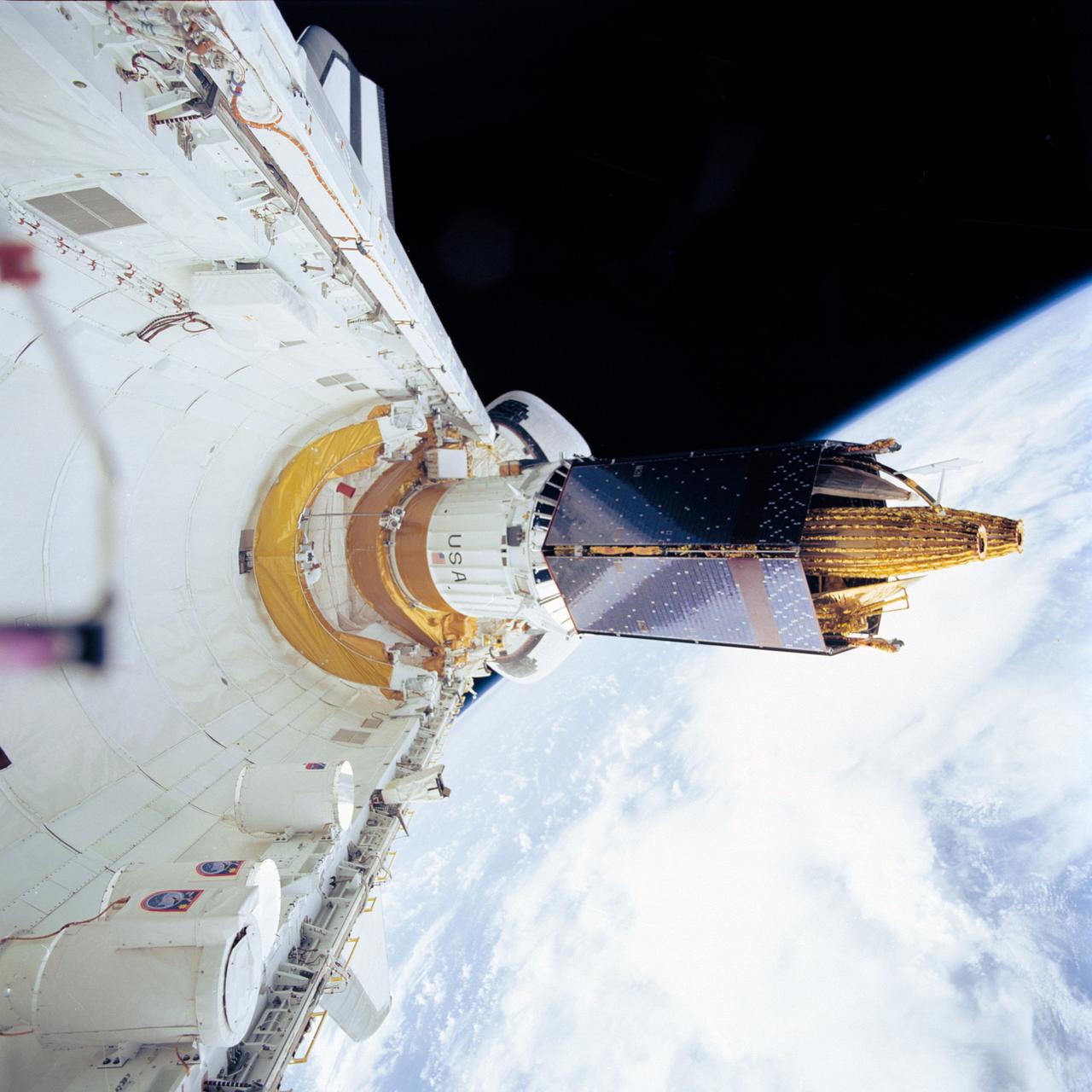
STS043-72-002 (2 Aug 1991) --- The Tracking and Data Relay Satellite (TDRS-E), leaves the payload bay of the earth-orbiting Atlantis a mere six hours after the Space Shuttle was launched from Pad 39A at Kennedy Space Center, Florida. TDRS, built by TRW, will be placed in a geosynchronous orbit and after on-orbit testing, which requires several weeks, will be designated TDRS-5. The communications satellite will replace TDRS-3 at 174 degrees West longitude. The backbone of NASA's space-to-ground communications, the Tracking and Data Relay satellites have increased NASA's ability to send and receive data to spacecraft in low-earth orbit to more than 85 percent of the time. The five astronauts of the STS 43 mission are John E. Blaha, mission commander, Michael A. Baker, pilot, and Shannon W. Lucid, G. David Low, and James C. Adamson, all mission specialists.
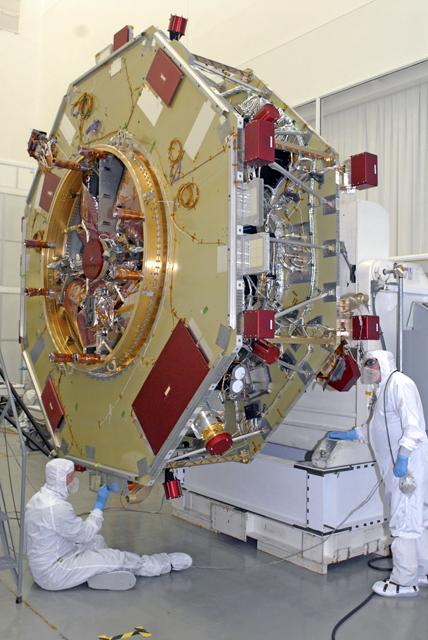
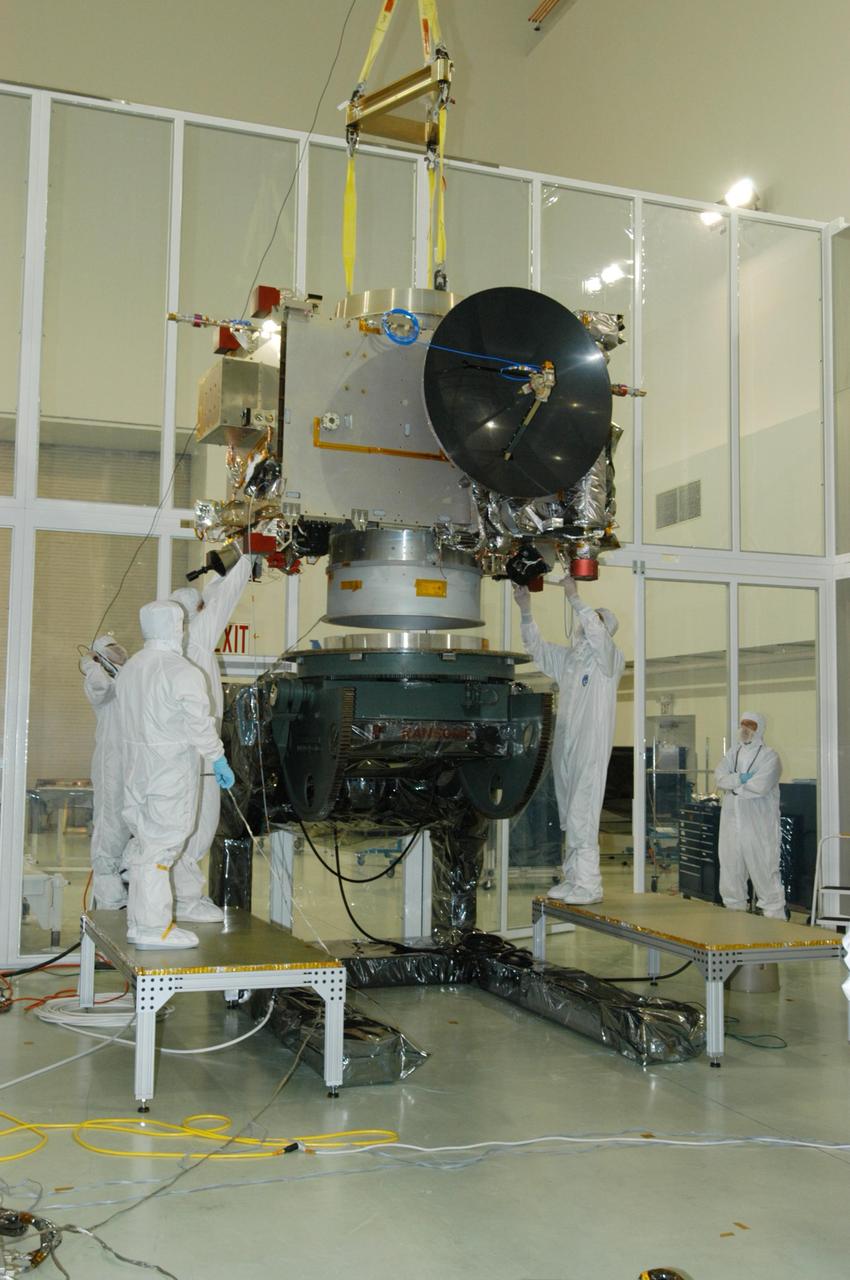
Observatory #1 is shown here on the Ransome table, tilted in a vertical position to provide better access for the engineers and technicians. Learn more about MMS at <a href="http://www.nasa.gov/mms" rel="nofollow">www.nasa.gov/mms</a> Credit NASA/Goddard The Magnetospheric Multiscale, or MMS, will study how the sun and the Earth's magnetic fields connect and disconnect, an explosive process that can accelerate particles through space to nearly the speed of light. This process is called magnetic reconnection and can occur throughout all space. <b><a href="http://www.nasa.gov/audience/formedia/features/MP_Photo_Guidelines.html" rel="nofollow">NASA image use policy.</a></b> <b><a href="http://www.nasa.gov/centers/goddard/home/index.html" rel="nofollow">NASA Goddard Space Flight Center</a></b> enables NASA’s mission through four scientific endeavors: Earth Science, Heliophysics, Solar System Exploration, and Astrophysics. Goddard plays a leading role in NASA’s accomplishments by contributing compelling scientific knowledge to advance the Agency’s mission. <b>Follow us on <a href="http://twitter.com/NASAGoddardPix" rel="nofollow">Twitter</a></b> <b>Like us on <a href="http://www.facebook.com/pages/Greenbelt-MD/NASA-Goddard/395013845897?ref=tsd" rel="nofollow">Facebook</a></b> <b>Find us on <a href="http://instagram.com/nasagoddard?vm=grid" rel="nofollow">Instagram</a></b>
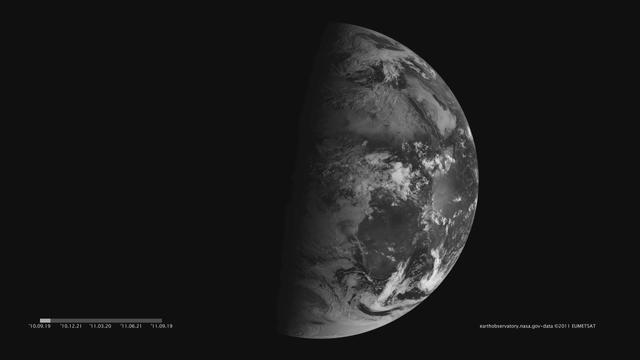
Images acquired December 21, 2010 - September 20, 2011. To download the high res and learn more go to: <a href="http://earthobservatory.nasa.gov/IOTD/view.php?id=52248" rel="nofollow">earthobservatory.nasa.gov/IOTD/view.php?id=52248</a> One of the most frequently misunderstood concepts in science is the reason for Earth’s seasons. As we experience the September equinox today—anyone try to balance an egg yet?—we thought we’d offer a space-based view of what’s going on. Around 6 a.m. local time each day, the Sun, Earth, and any geosynchronous satellite form a right angle, affording a nadir (straight down) view of the terminator, where the shadows of nightfall meet the sunlight of dusk and dawn. The shape of this line between night and day varies with the seasons, which means different lengths of days and differing amounts of warming sunshine. (The line is actually a curve because the Earth is round, but satellite images only show it in two-dimensions.) The Spinning Enhanced Visible and Infrared Imager (SEVIRI) on EUMETSAT's Meteosat-9 captured these four views of the day-night terminator on December 21, 2010, and March 20, June 21, and September 20, 2011. Each image was taken at 6:12 a.m. local time. On March 20 and September 20, the terminator is a straight north-south line, and the Sun is said to sit directly above the equator. On December 21, the Sun resides directly over the Tropic of Capricorn when viewed from the ground, and sunlight spreads over more of the Southern Hemisphere. On June 21, the Sun sits above the Tropic of Cancer, spreading more sunlight in the north and turning the tables on the south. The bulge of our spherical Earth blocks sunlight from the far hemisphere at the solstices; that same curvature allows the Sun’s rays to spread over more area near the top and bottom of the globe. Of course, it is not the Sun that is moving north or south through the seasons, but a change in the orientation and angles between the Earth and its nearest star. The axis of the Earth is tilted 23.5 degrees relative to the Sun and the ecliptic plane. The axis is tilted away from the Sun at the December solstice and toward the Sun at the June solstice, spreading more and less light on each hemisphere. At the equinoxes, the tilt is at a right angle to the Sun and the light is spread evenly. The equinox and changing of the seasons occurs on September 23, 2011 at 9:05 a.m. Universal Time. (Our September image above is a few days early.) Equinox means "equal night" in Latin, capturing the idea that daytime and nighttime are equal lengths everywhere on the planet. That is true of the Sun's presence above the horizon, though it does not account for twilight, when the Sun's rays extend from beyond the horizon to illuminate our gas-filled atmosphere. <b>NASA images and animation by Robert Simmon, using data ©2010 EUMETSAT. Caption by Mike Carlowicz.</b> Instrument: Meteosat Credit: <b><a href="http://www.earthobservatory.nasa.gov/" rel="nofollow"> NASA Earth Observatory</a></b> <b><a href="http://www.nasa.gov/audience/formedia/features/MP_Photo_Guidelines.html" rel="nofollow">NASA image use policy.</a></b> <b><a href="http://www.nasa.gov/centers/goddard/home/index.html" rel="nofollow">NASA Goddard Space Flight Center</a></b> enables NASA’s mission through four scientific endeavors: Earth Science, Heliophysics, Solar System Exploration, and Astrophysics. Goddard plays a leading role in NASA’s accomplishments by contributing compelling scientific knowledge to advance the Agency’s mission. <b>Follow us on <a href="http://twitter.com/NASAGoddardPix" rel="nofollow">Twitter</a></b> <b>Like us on <a href="http://www.facebook.com/pages/Greenbelt-MD/NASA-Goddard/395013845897?ref=tsd" rel="nofollow">Facebook</a></b> <b>Find us on <a href="http://instagrid.me/nasagoddard/?vm=grid" rel="nofollow">Instagram</a></b>

Images acquired December 21, 2010 - September 20, 2011. To view a HD animation of this go to: <a href="http://www.flickr.com/photos/gsfc/6175313242/in/photostream/">www.flickr.com/photos/gsfc/6175313242/in/photostream/</a> To download the high res and learn more go to: <a href="http://earthobservatory.nasa.gov/IOTD/view.php?id=52248" rel="nofollow">earthobservatory.nasa.gov/IOTD/view.php?id=52248</a> One of the most frequently misunderstood concepts in science is the reason for Earth’s seasons. As we experience the September equinox today—anyone try to balance an egg yet?—we thought we’d offer a space-based view of what’s going on. Around 6 a.m. local time each day, the Sun, Earth, and any geosynchronous satellite form a right angle, affording a nadir (straight down) view of the terminator, where the shadows of nightfall meet the sunlight of dusk and dawn. The shape of this line between night and day varies with the seasons, which means different lengths of days and differing amounts of warming sunshine. (The line is actually a curve because the Earth is round, but satellite images only show it in two-dimensions.) The Spinning Enhanced Visible and Infrared Imager (SEVIRI) on EUMETSAT's Meteosat-9 captured these four views of the day-night terminator on December 21, 2010, and March 20, June 21, and September 20, 2011. Each image was taken at 6:12 a.m. local time. On March 20 and September 20, the terminator is a straight north-south line, and the Sun is said to sit directly above the equator. On December 21, the Sun resides directly over the Tropic of Capricorn when viewed from the ground, and sunlight spreads over more of the Southern Hemisphere. On June 21, the Sun sits above the Tropic of Cancer, spreading more sunlight in the north and turning the tables on the south. The bulge of our spherical Earth blocks sunlight from the far hemisphere at the solstices; that same curvature allows the Sun’s rays to spread over more area near the top and bottom of the globe. Of course, it is not the Sun that is moving north or south through the seasons, but a change in the orientation and angles between the Earth and its nearest star. The axis of the Earth is tilted 23.5 degrees relative to the Sun and the ecliptic plane. The axis is tilted away from the Sun at the December solstice and toward the Sun at the June solstice, spreading more and less light on each hemisphere. At the equinoxes, the tilt is at a right angle to the Sun and the light is spread evenly. The equinox and changing of the seasons occurs on September 23, 2011 at 9:05 a.m. Universal Time. (Our September image above is a few days early.) Equinox means "equal night" in Latin, capturing the idea that daytime and nighttime are equal lengths everywhere on the planet. That is true of the Sun's presence above the horizon, though it does not account for twilight, when the Sun's rays extend from beyond the horizon to illuminate our gas-filled atmosphere. NASA images and animation by Robert Simmon, using data ©2010 EUMETSAT. Caption by Mike Carlowicz. Instrument: Meteosat Credit: <b><a href="http://www.earthobservatory.nasa.gov/" rel="nofollow"> NASA Earth Observatory</a></b> <b><a href="http://www.nasa.gov/audience/formedia/features/MP_Photo_Guidelines.html" rel="nofollow">NASA image use policy.</a></b> <b><a href="http://www.nasa.gov/centers/goddard/home/index.html" rel="nofollow">NASA Goddard Space Flight Center</a></b> enables NASA’s mission through four scientific endeavors: Earth Science, Heliophysics, Solar System Exploration, and Astrophysics. Goddard plays a leading role in NASA’s accomplishments by contributing compelling scientific knowledge to advance the Agency’s mission. <b>Follow us on <a href="http://twitter.com/NASAGoddardPix" rel="nofollow">Twitter</a></b> <b>Like us on <a href="http://www.facebook.com/pages/Greenbelt-MD/NASA-Goddard/395013845897?ref=tsd" rel="nofollow">Facebook</a></b> <b>Find us on <a href="http://instagrid.me/nasagoddard/?vm=grid" rel="nofollow">Instagram</a></b>