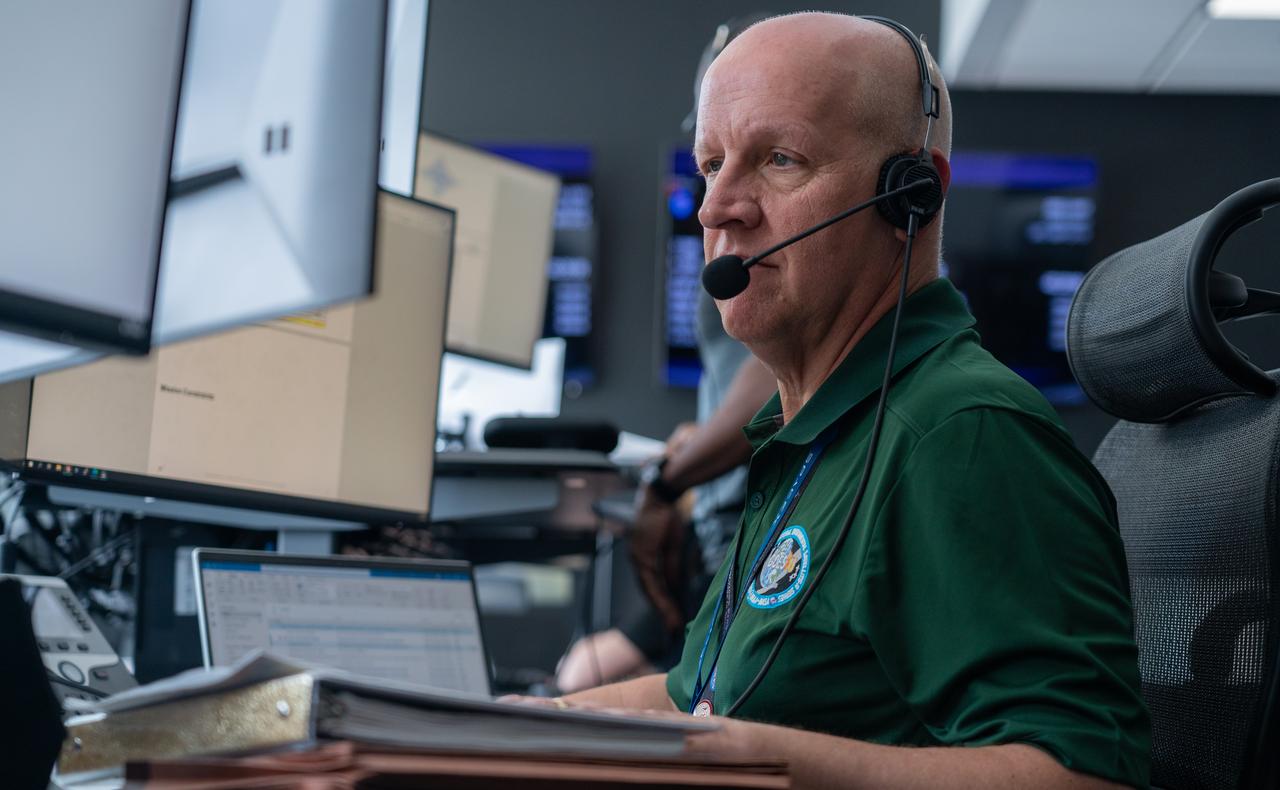
Tim Dunn, senior launch director for NASA’s Launch Services Program, participates in rehearsal launch operations for the National Oceanic and Atmospheric Administration (NOAA) GOES-U (Geostationary Operational Environmental Satellite U) mission inside Hangar X at NASA’s Kennedy Space Center in Florida on Monday, June 17, 2024. The GOES-U satellite, the final addition to GOES-R series, serves a critical role in providing continuous coverage of the Western Hemisphere, including monitoring tropical systems in the eastern Pacific and Atlantic oceans.
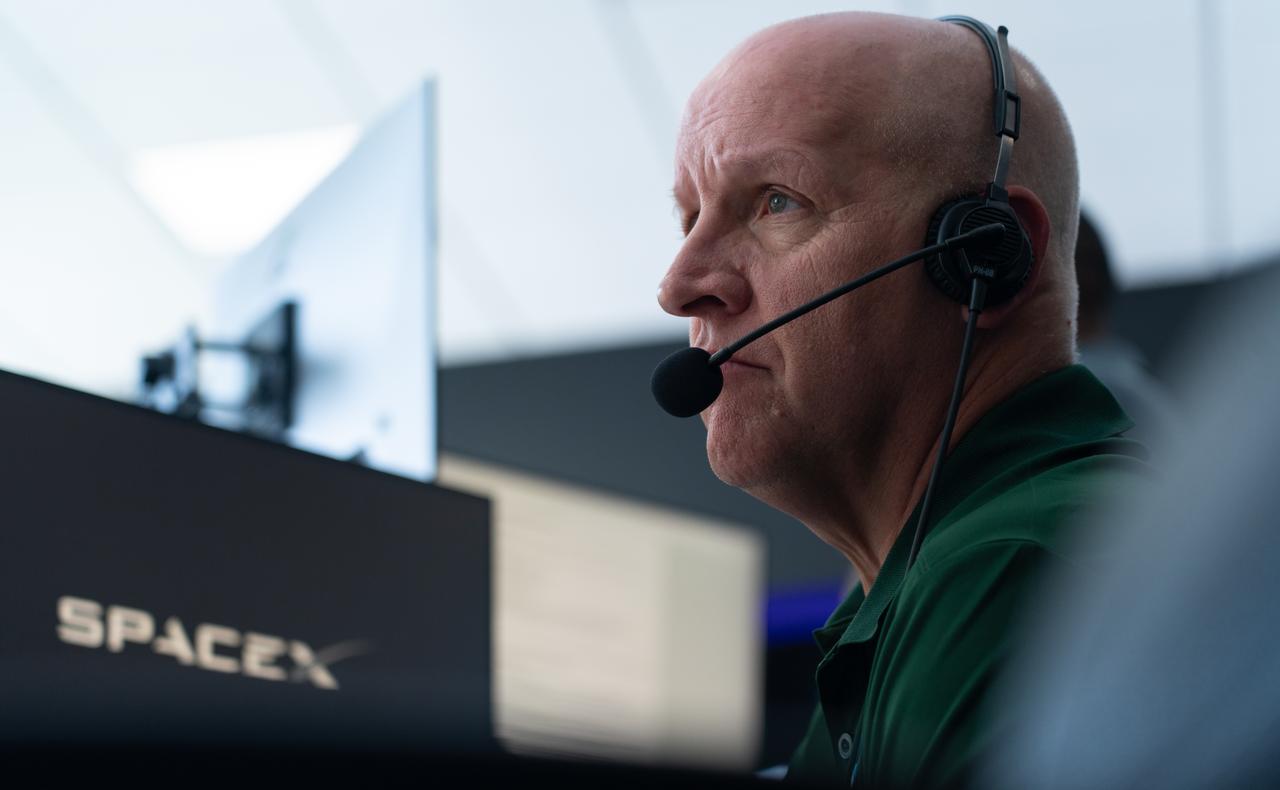
Tim Dunn, senior launch director for NASA’s Launch Services Program, participates in rehearsal launch operations for the National Oceanic and Atmospheric Administration (NOAA) GOES-U (Geostationary Operational Environmental Satellite U) mission inside Hangar X at NASA’s Kennedy Space Center in Florida on Monday, June 17, 2024. The GOES-U satellite, the final addition to GOES-R series, serves a critical role in providing continuous coverage of the Western Hemisphere, including monitoring tropical systems in the eastern Pacific and Atlantic oceans.
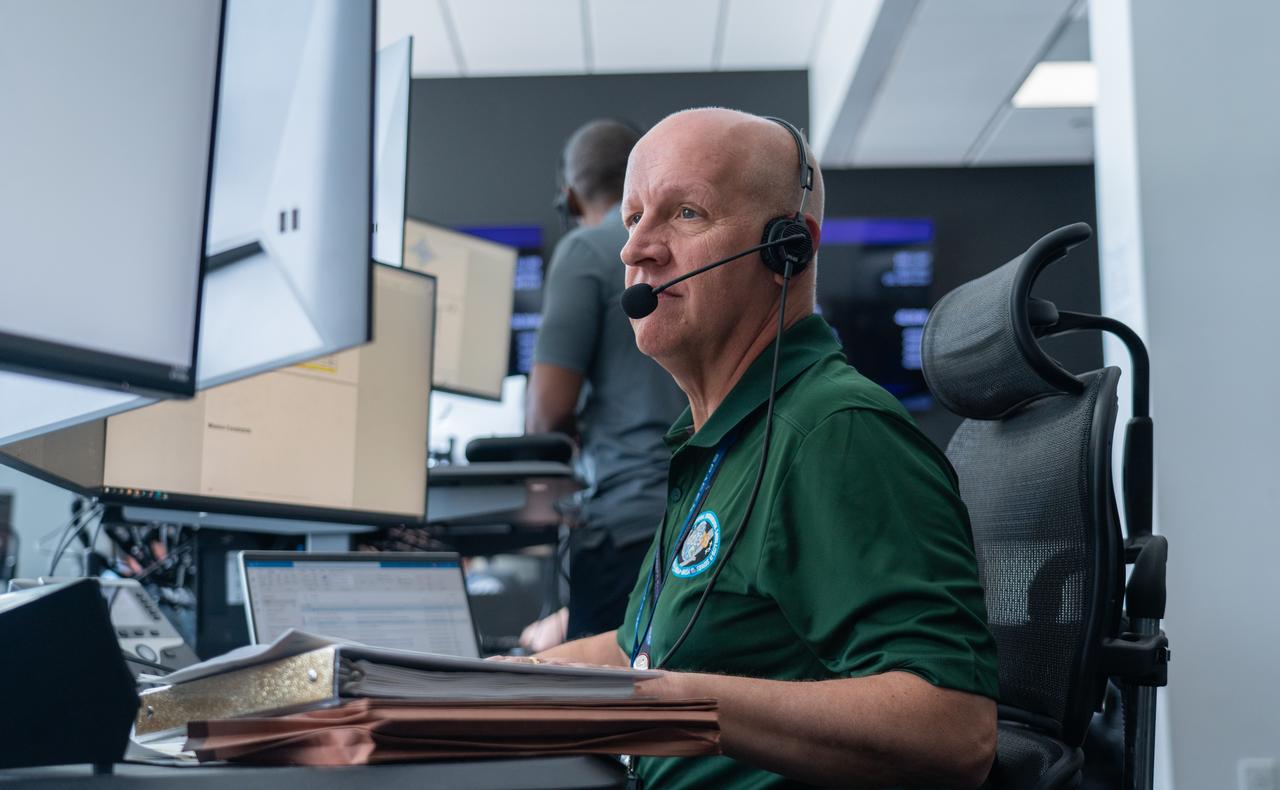
Tim Dunn, senior launch director for NASA’s Launch Services Program, participates in rehearsal launch operations for the National Oceanic and Atmospheric Administration (NOAA) GOES-U (Geostationary Operational Environmental Satellite U) mission inside Hangar X at NASA’s Kennedy Space Center in Florida on Monday, June 17, 2024. The GOES-U satellite, the final addition to GOES-R series, serves a critical role in providing continuous coverage of the Western Hemisphere, including monitoring tropical systems in the eastern Pacific and Atlantic oceans.
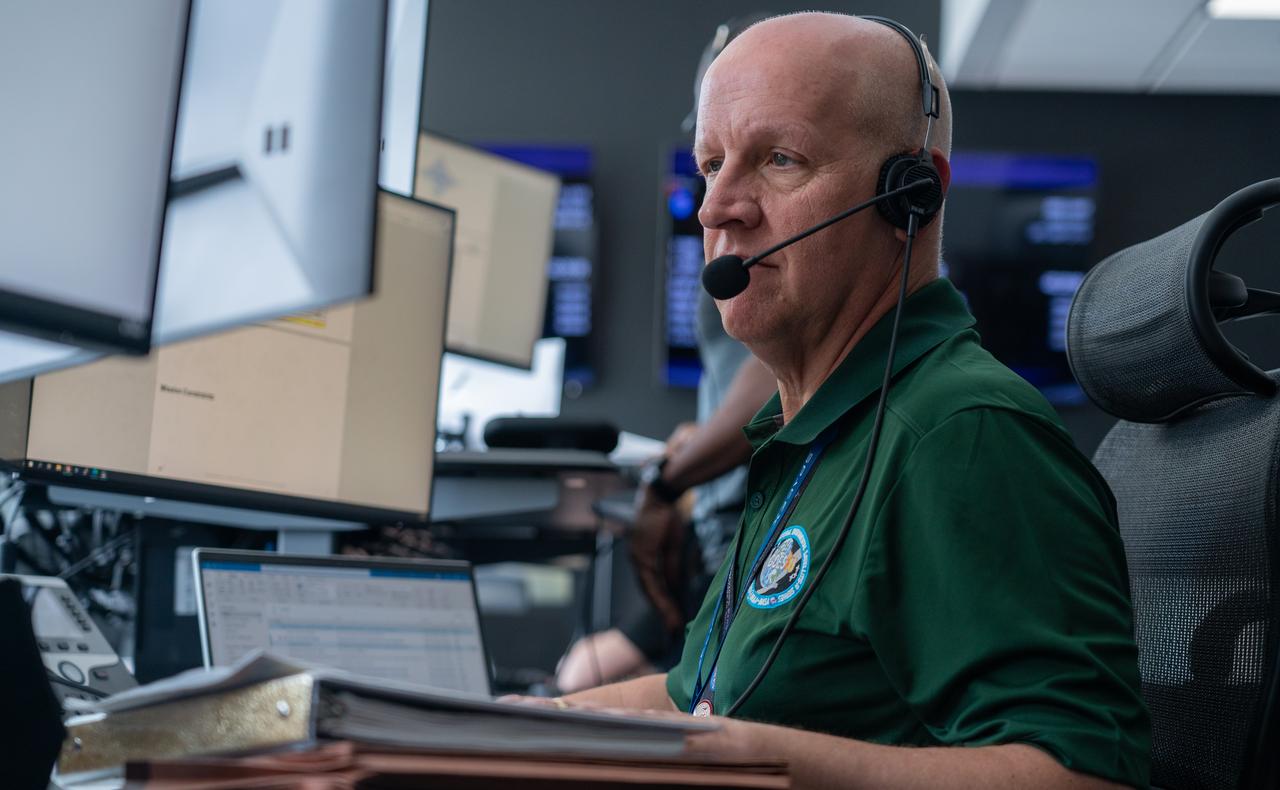
Tim Dunn, senior launch director for NASA’s Launch Services Program, participates in rehearsal launch operations for the National Oceanic and Atmospheric Administration (NOAA) GOES-U (Geostationary Operational Environmental Satellite U) mission inside Hangar X at NASA’s Kennedy Space Center in Florida on Monday, June 17, 2024. The GOES-U satellite, the final addition to GOES-R series, serves a critical role in providing continuous coverage of the Western Hemisphere, including monitoring tropical systems in the eastern Pacific and Atlantic oceans.
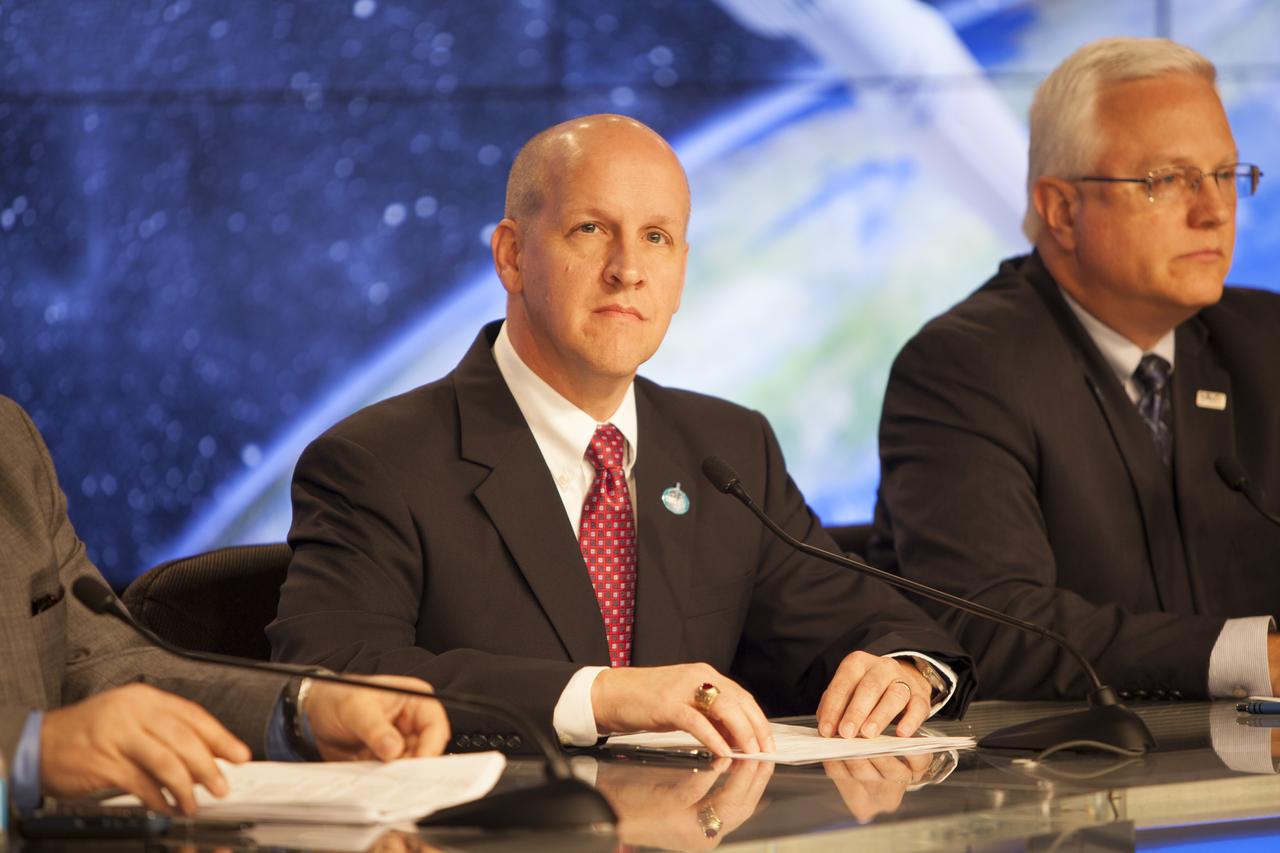
CAPE CANAVERAL, Fla. – During a news conference at NASA's Kennedy Space Center in Florida, agency and contractor officials discussed preparations for the launch of NASA's Tracking and Data Relay Satellite, or TDRS-L, spacecraft. Participants included Tim Dunn, NASA launch director at Kennedy, left, and Vernon Thorp, program manager for NASA Missions with United Launch Alliance in Denver, Colo. The TDRS-L spacecraft is the second of three new satellites designed to ensure vital operational continuity for NASA by expanding the lifespan of the Tracking and Data Relay Satellite System TDRSS fleet, which consists of eight satellites in geosynchronous orbit. The spacecraft provide tracking, telemetry, command and high bandwidth data return services for numerous science and human exploration missions orbiting Earth. These include NASA's Hubble Space Telescope and the International Space Station. TDRS-L has a high-performance solar panel designed for more spacecraft power to meet the growing S-band communications requirements. TDRSS is one of NASA Space Communication and Navigation’s SCaN three networks providing space communications to NASA’s missions. For more information more about TDRS-L, visit: http://www.nasa.gov/tdrs To learn more about SCaN, visit: www.nasa.gov/scan Photo credit: NASA/Frankie Martin
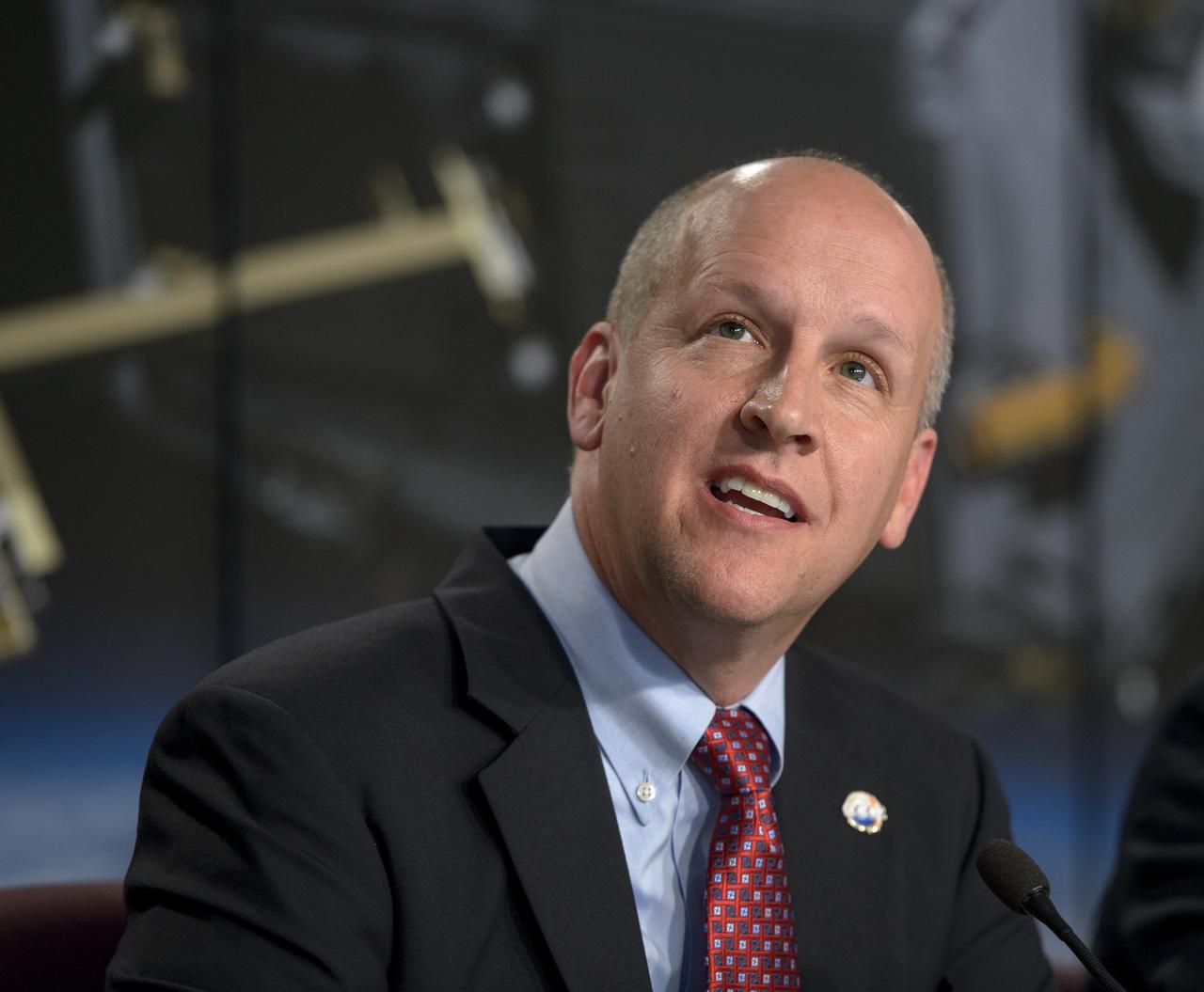
Tim Dunn, NASA launch director, Kennedy Space Center, discusses the Orbiting Carbon Observatory-2 (OCO-2), NASA’s first spacecraft dedicated to studying carbon dioxide, during a press briefing, Sunday, June 29, 2014, at the Vandenberg Air Force Base, Calif. OCO-2 will measure the global distribution of carbon dioxide, the leading human-produced greenhouse gas driving changes in Earth’s climate. OCO-2 is set to launch on July 1, 2014 at 2:59 a.m. PDT. Photo Credit: (NASA/Bill Ingalls)

Tim Dunn, NASA Launch Director with the Launch Services Program, speaks to participants during an internal knowledge sharing program hosted by Launching Leaders at the Kennedy Learning Institute on May 3, 2023. Launching leaders is an employee resource group that works to identify opportunities to engage emerging professionals at Kennedy Space Center to stimulate the growth of leadership skills, increase overall employee satisfaction, and enhance retention.
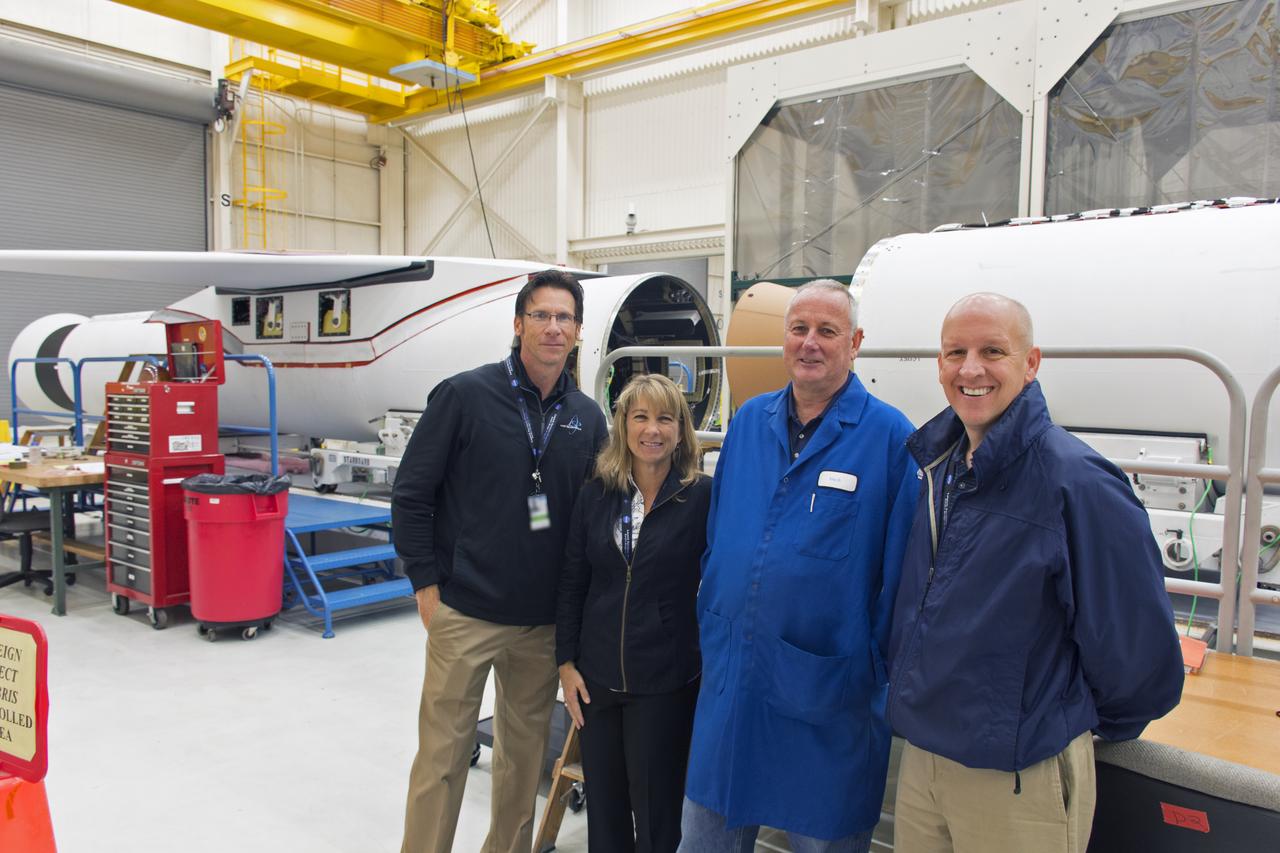
Managers of NASA's Launch Services Program (LSP) at Kennedy Space Center visit the processing facility for the Pegasus XL rocket at Vandenberg Air Force Base in California. From left, are Chuck Dovale, deputy manager; Amanda Mitskevich, manager; Eric Denbrook, launch vehicle processing at VAFB; and Tim Dunn, NASA assistant launch manager for ICON. The Pegasus XL rocket is being prepared for the agency's Ionospheric Connection Explorer, or ICON, mission. ICON will launch from the Kwajalein Atoll aboard the Pegasus XL on Dec. 8, 2017. ICON will study the frontier of space - the dynamic zone high in Earth's atmosphere where terrestrial weather from below meets space weather above. The explorer will help determine the physics of Earth's space environment and pave the way for mitigating its effects on our technology, communications systems and society.
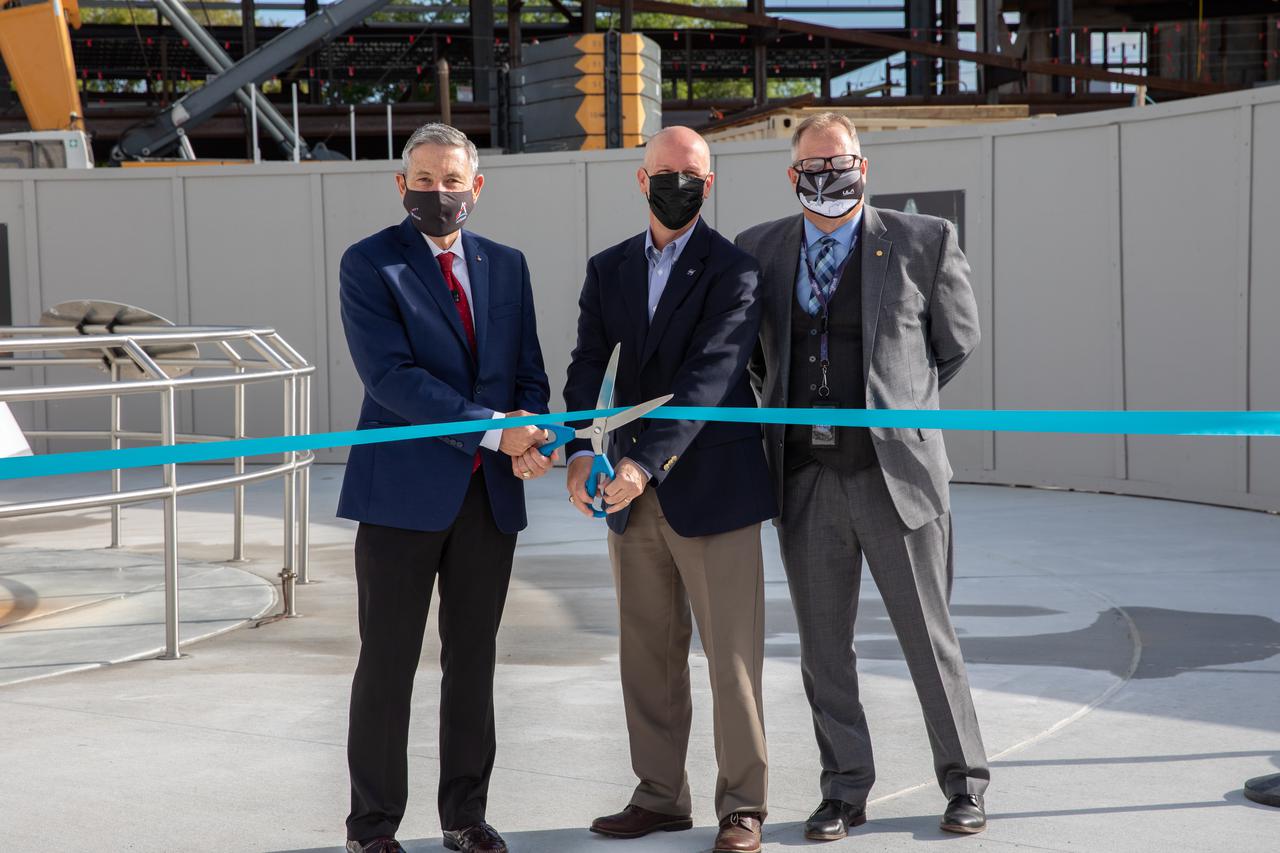
A ribbon-cutting ceremony welcomes the last United Launch Alliance Delta II rocket to the lineup of historic launch vehicles in the Rocket Garden at the Kennedy Space Center Visitor Complex in Florida, on March 23, 2021. Cutting the ribbon, from left are Kennedy Space Center Director Bob Cabana, Tim Dunn, launch director, Launch Services Program, and Therrin Protze, chief operating officer, Delaware North/KSCVC. The Delta II rocket was a workhorse for NASA and civilian scientists, the U.S. military, and commercial clients throughout its almost 30 years of service. Since its first launch in 1989, the Delta II has launched 154 successful missions. NASA’s Launch Services Program launched the ICESat-2 spacecraft on the final Delta II launch on Sept. 15, 2018, from Vandenberg Air Force Base in California.
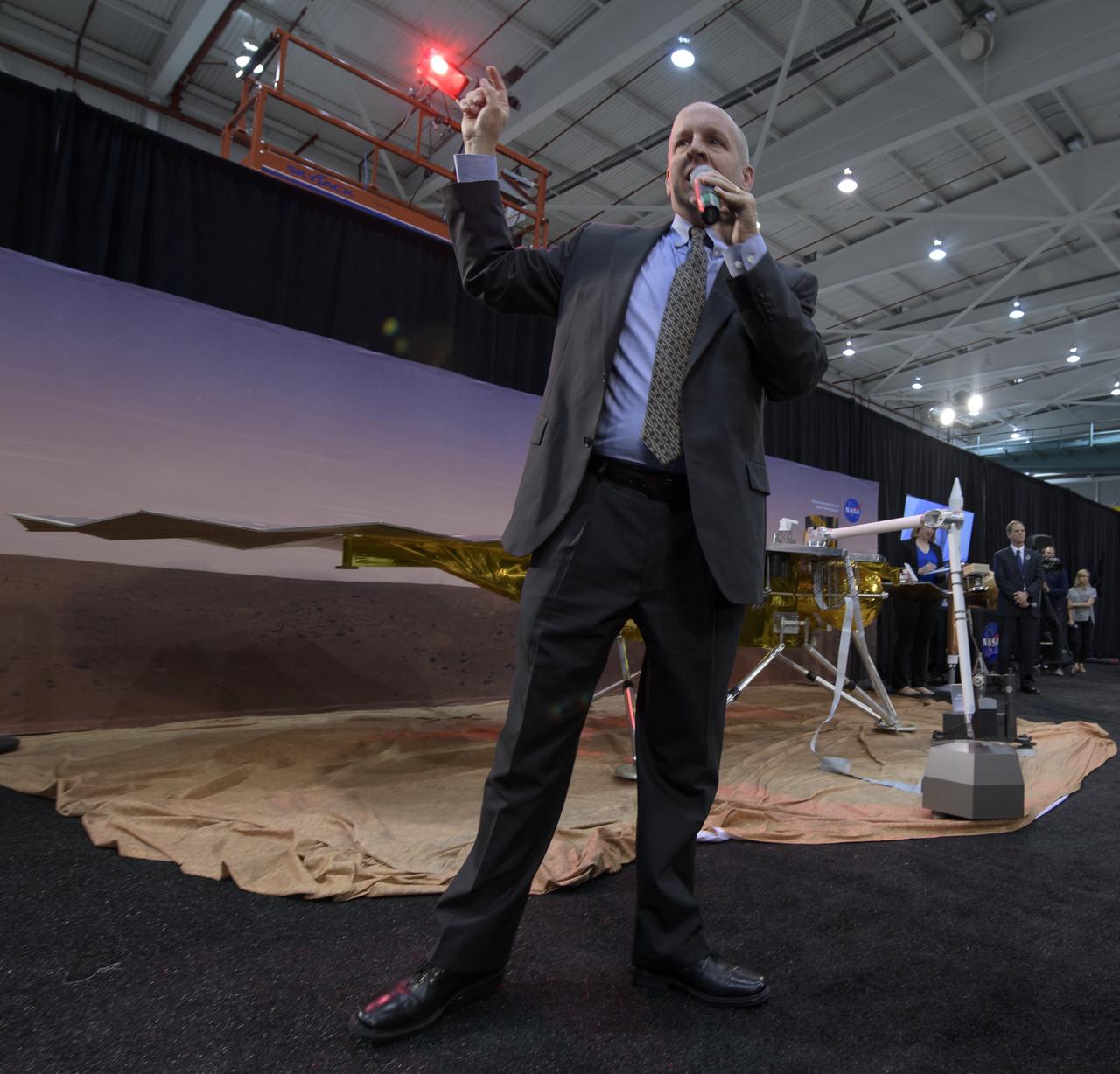
Tim Dunn, launch director, NASA’s Launch Services Program, discusses NASA's InSight mission during a prelaunch media briefing, Thursday, May 3, 2018, at Vandenberg Air Force Base in California. InSight, short for Interior Exploration using Seismic Investigations, Geodesy and Heat Transport, is a Mars lander designed to study the "inner space" of Mars: its crust, mantle, and core. Photo Credit: (NASA/Bill Ingalls)
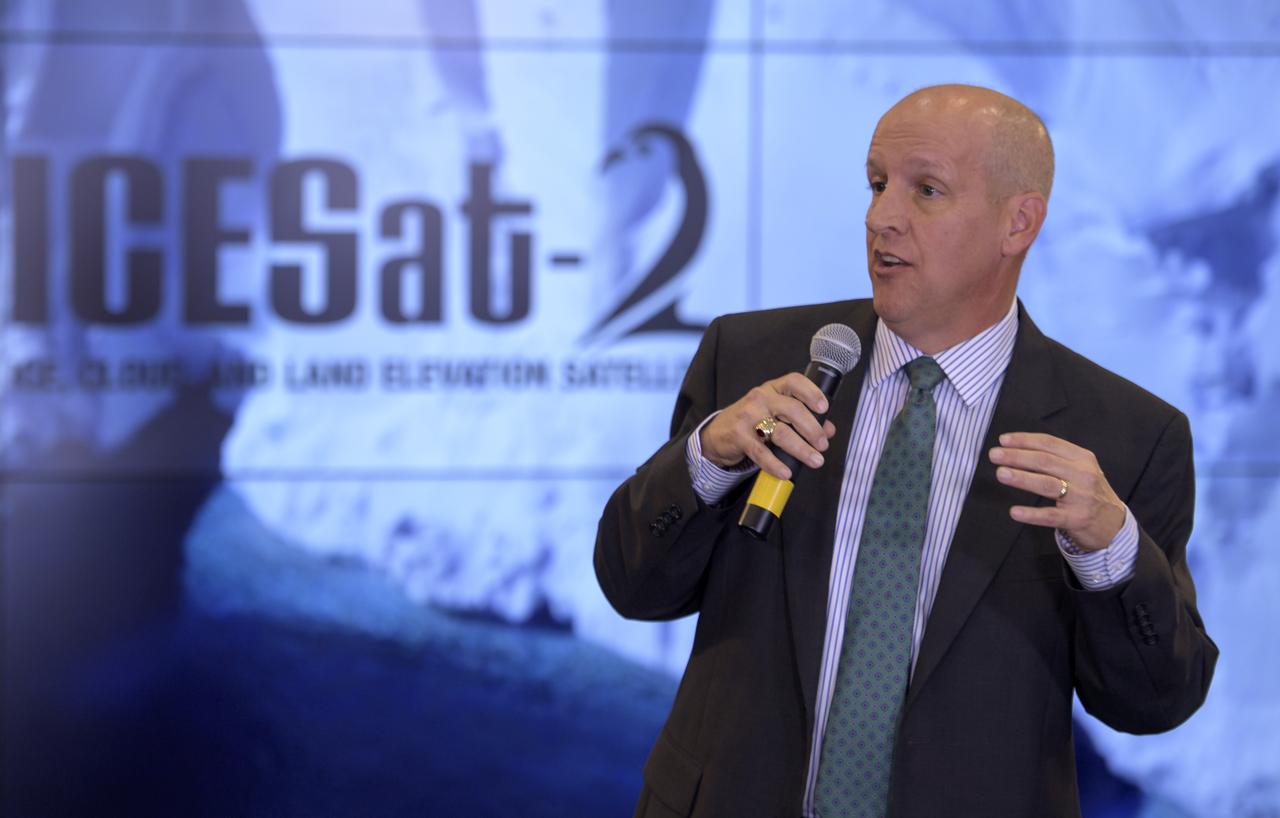
Tim Dunn, Launch Director, NASA's Kennedy Space Center, is seen during a NASA Ice, Cloud and land Elevation Satellite-2 (ICESat-2) prelaunch briefing, Thursday, Sept. 13, 2018, at Vandenberg Air Force Base in California. The ICESat-2 mission will measure the changing height of Earth's ice. Photo Credit: (NASA/Bill Ingalls)
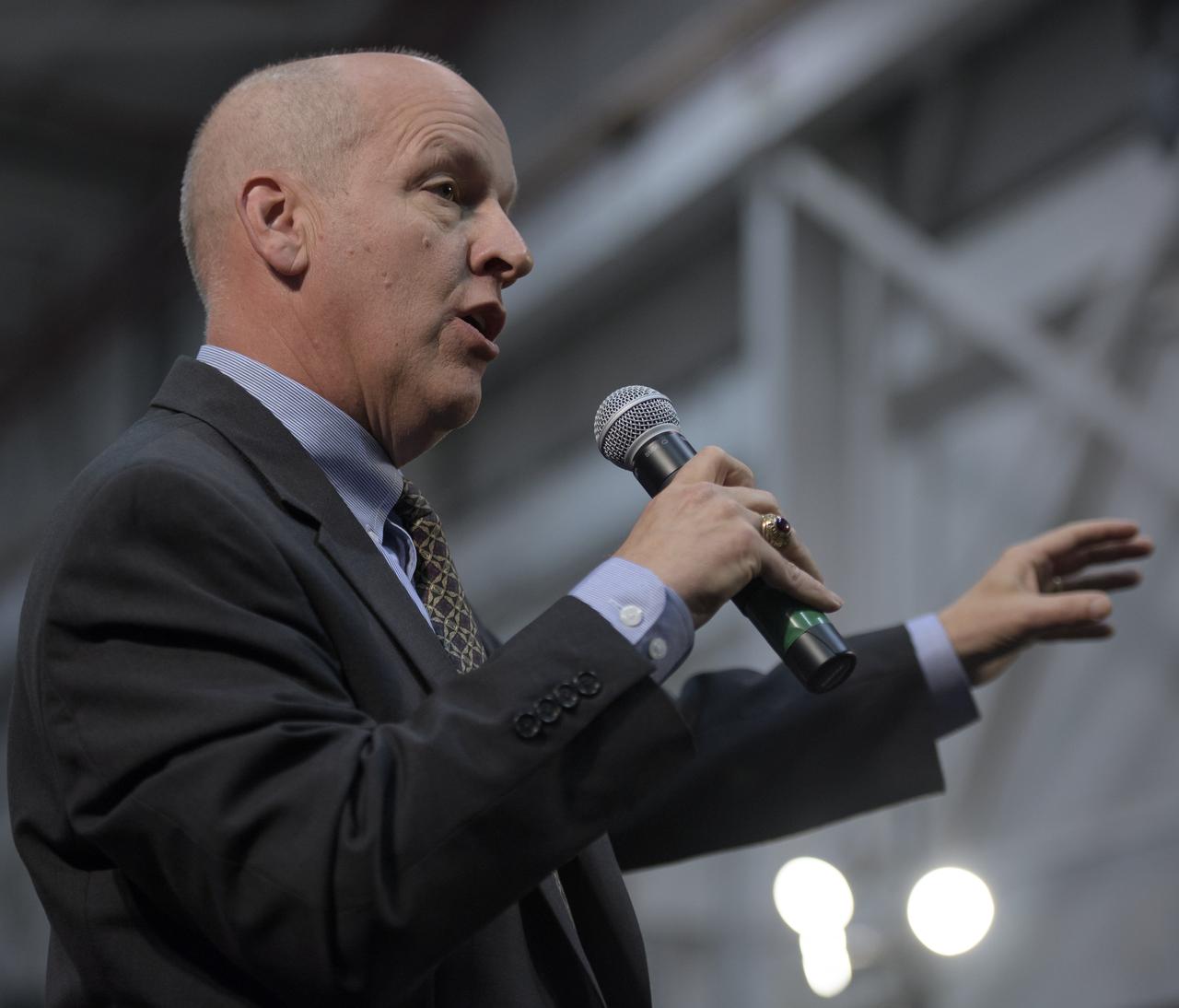
Tim Dunn, launch director, NASA’s Launch Services Program, discusses NASA's InSight mission during a prelaunch media briefing, Thursday, May 3, 2018, at Vandenberg Air Force Base in California. InSight, short for Interior Exploration using Seismic Investigations, Geodesy and Heat Transport, is a Mars lander designed to study the "inner space" of Mars: its crust, mantle, and core. Photo Credit: (NASA/Bill Ingalls)
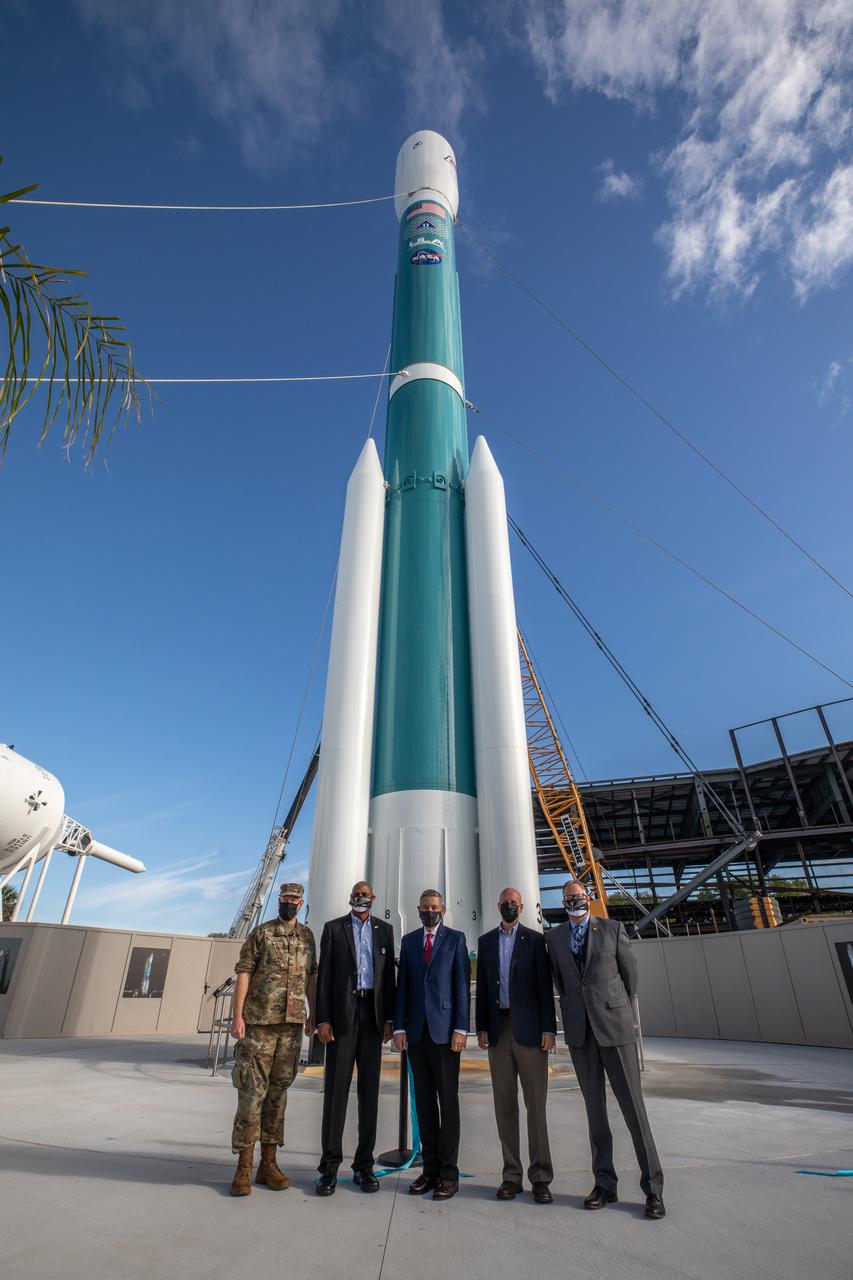
The last United Launch Alliance Delta II rocket joins the lineup of historic launch vehicles in the Rocket Garden during a ribbon-cutting ceremony at the Kennedy Space Center Visitor Complex in Florida, on March 23, 2021. From left, are Brigadier General Stephen Purdy Jr., 45th Space Wing commander and Eastern Range director, Patrick Space Force Base and Cape Canaveral Air Force Station; Ron Fortson, director and general manager, Launch Operations, United Launch Alliance; Kennedy Space Center Director Bob Cabana; Tim Dunn, launch director, Launch Services Program; and Therrin Protze, chief operating officer, Delaware North/KSCVC. The Delta II rocket was a workhorse for NASA and civilian scientists, the U.S. military, and commercial clients throughout its almost 30 years of service. Since its first launch in 1989, the Delta II has launched 154 successful missions. NASA’s Launch Services Program launched the ICESat-2 spacecraft on the final Delta II launch for the agency on Sept. 15, 2018, from Vandenberg Air Force Base in California.
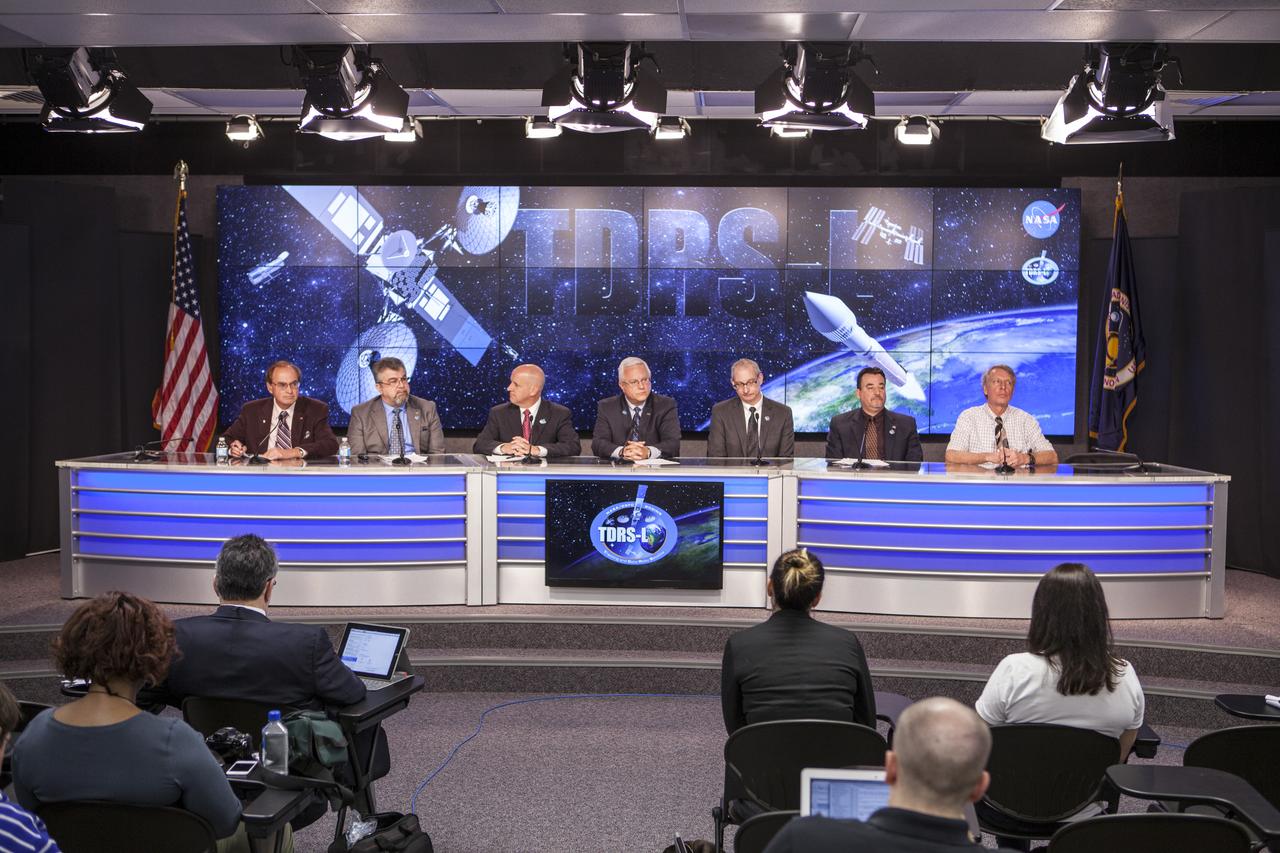
CAPE CANAVERAL, Fla. –During a news conference at NASA's Kennedy Space Center in Florida, agency and contractor officials discussed preparations for the launch of NASA's Tracking and Data Relay Satellite, or TDRS-L, spacecraft. Participating in the briefing, from the left, are George Diller of NASA Public Affairs, Badri Younes, deputy associate administrator, Space Communications and Navigation SCaN NASA Human Exploration and Operations Mission Directorate at NASA Headquarters in Washington D.C., Tim Dunn, NASA launch director at Kennedy, Vernon Thorp, program manager for NASA Missions with United Launch Alliance in Denver, Colo., Jeffrey Gramling, NASA's TDRS-L project manager at the Goddard Space Flight Center in Greenbelt, Md., Andy Kopito, Civil Space Programs director for Boeing Space & Intelligence Systems in El Segundo, Calif., and Clay Flinn, launch weather officer for the 45th Weather Squadron at Cape Canaveral Air Force Station, Fla. The TDRS-L spacecraft is the second of three new satellites designed to ensure vital operational continuity for NASA by expanding the lifespan of the Tracking and Data Relay Satellite System TDRSS fleet, which consists of eight satellites in geosynchronous orbit. The spacecraft provide tracking, telemetry, command and high bandwidth data return services for numerous science and human exploration missions orbiting Earth. These include NASA's Hubble Space Telescope and the International Space Station. TDRS-L has a high-performance solar panel designed for more spacecraft power to meet the growing S-band communications requirements. TDRSS is one of NASA Space Communication and Navigation’s SCaN three networks providing space communications to NASA’s missions. For more information more about TDRS-L, visit: http://www.nasa.gov/tdrs To learn more about SCaN, visit: www.nasa.gov/scan Photo credit: NASA/Frankie Martin
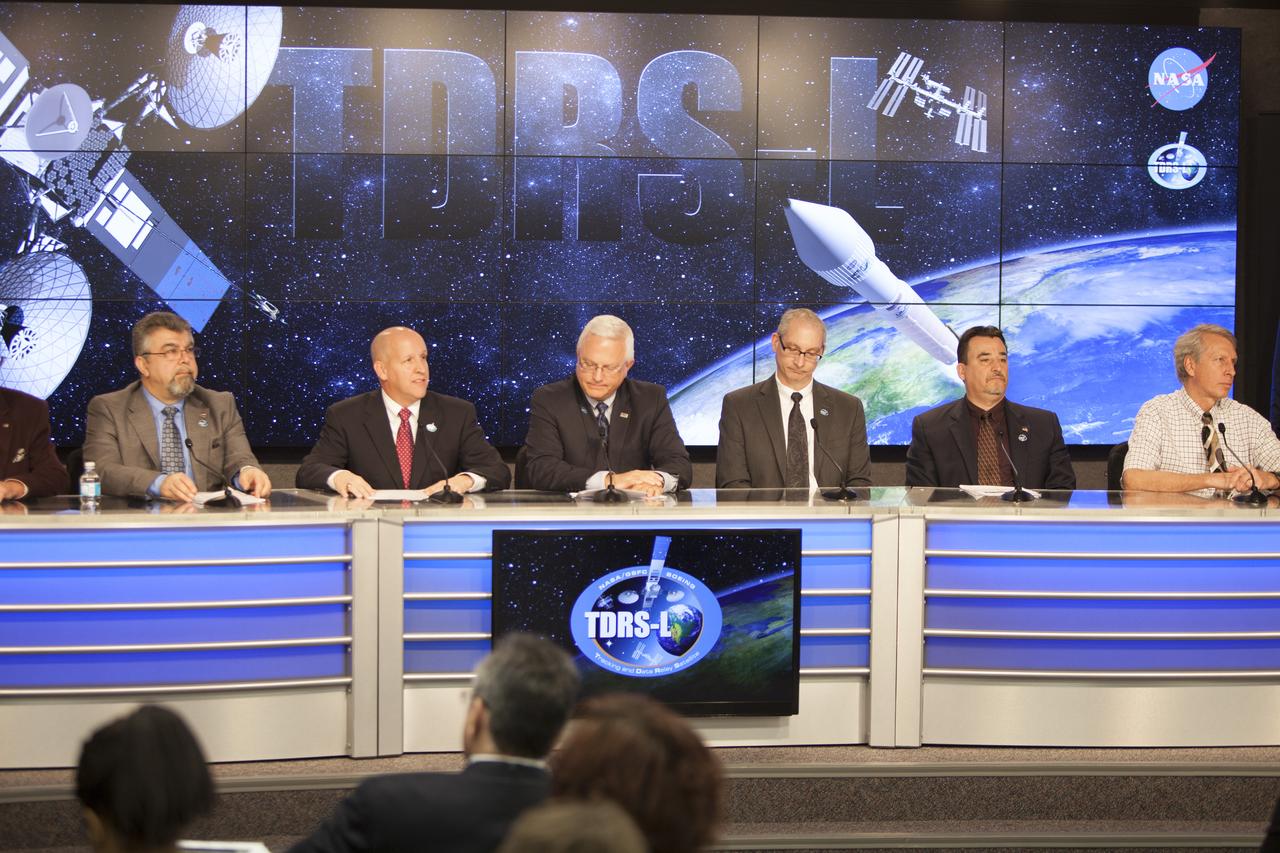
CAPE CANAVERAL, Fla. –During a news conference at NASA's Kennedy Space Center in Florida, agency and contractor officials discussed preparations for the launch of NASA's Tracking and Data Relay Satellite, or TDRS-L, spacecraft. Participating in the briefing, from the left, are Badri Younes, deputy associate administrator, Space Communications and Navigation SCaN NASA Human Exploration and Operations Mission Directorate at NASA Headquarters in Washington D.C., Tim Dunn, NASA launch director at Kennedy, Vernon Thorp, program manager for NASA Missions with United Launch Alliance in Denver, Colo., Jeffrey Gramling, NASA's TDRS-L project manager at the Goddard Space Flight Center in Greenbelt, Md., Andy Kopito, Civil Space Programs director for Boeing Space & Intelligence Systems in El Segundo, Calif., and Clay Flinn, launch weather officer for the 45th Weather Squadron at Cape Canaveral Air Force Station, Fla. The TDRS-L spacecraft is the second of three new satellites designed to ensure vital operational continuity for NASA by expanding the lifespan of the Tracking and Data Relay Satellite System TDRSS fleet, which consists of eight satellites in geosynchronous orbit. The spacecraft provide tracking, telemetry, command and high bandwidth data return services for numerous science and human exploration missions orbiting Earth. These include NASA's Hubble Space Telescope and the International Space Station. TDRS-L has a high-performance solar panel designed for more spacecraft power to meet the growing S-band communications requirements. TDRSS is one of NASA Space Communication and Navigation’s SCaN three networks providing space communications to NASA’s missions. For more information more about TDRS-L, visit: http://www.nasa.gov/tdrs To learn more about SCaN, visit: www.nasa.gov/scan Photo credit: NASA/Frankie Martin
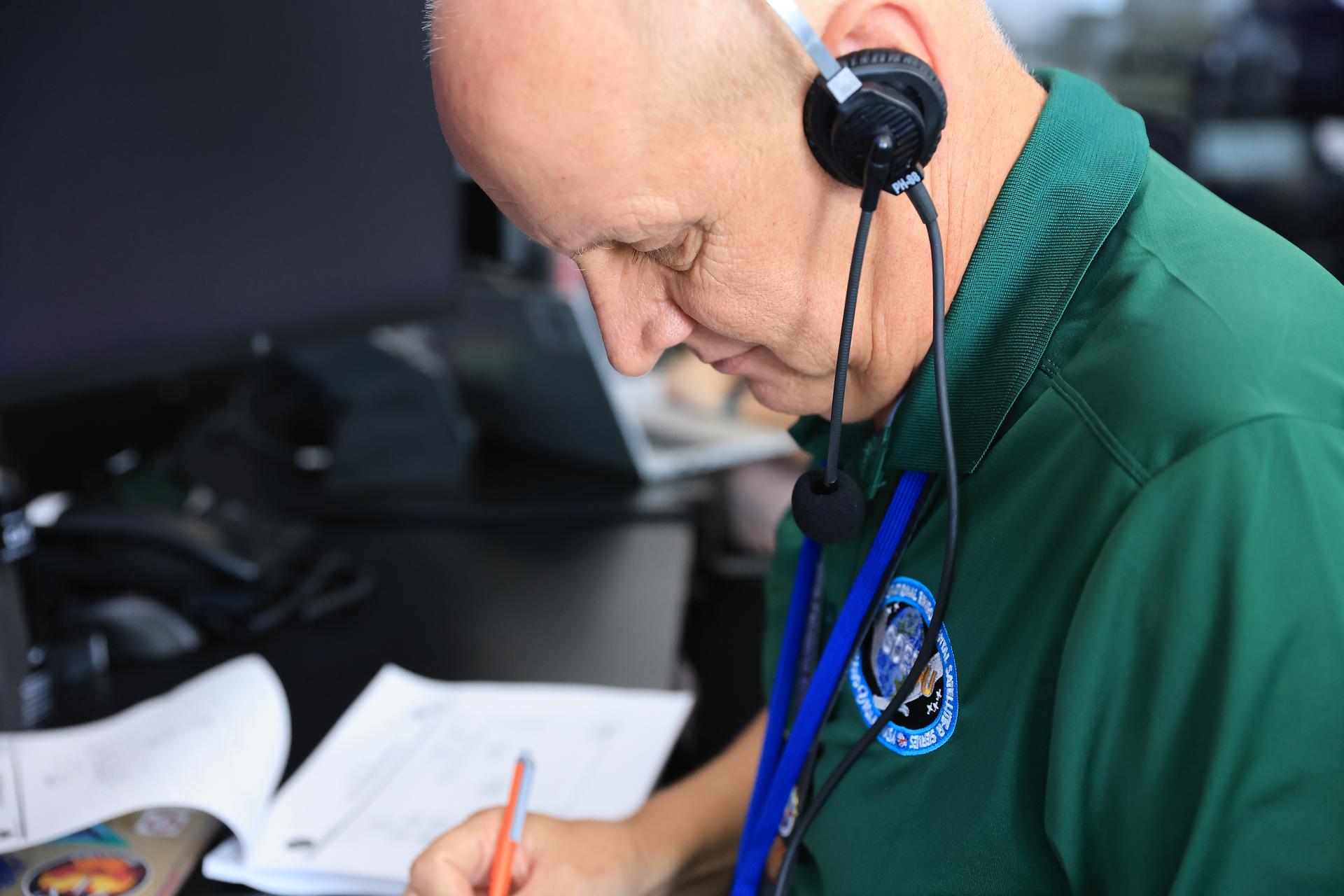
Tim Dunn, a retired senior launch director with NASA’s Launch Services Program, participates in a mission dress rehearsal for NASA’s Nancy Grace Roman Space Telescope on Thursday, Aug. 20, 2026, inside SpaceX’s Hangar X at NASA Kennedy in Florida. Dunn and other specialists served as an assessment team for personnel who ran through a full end-to-end simulation of every major step they will experience on launch day except liftoff, including powering up the spacecraft, fueling the rocket, conducting weather briefings, and other operations.
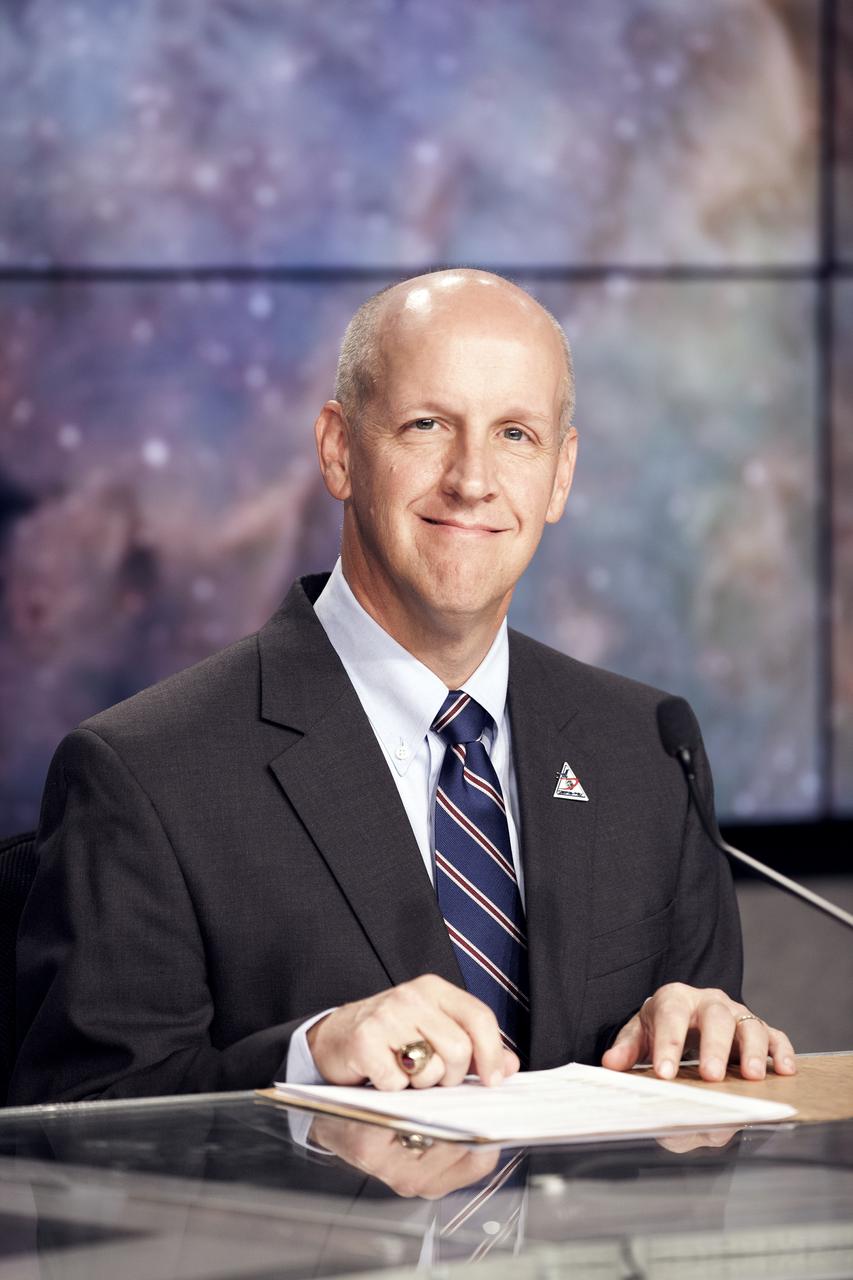
In the Kennedy Space Center’s Press Site auditorium, Tim Dunn, NASA launch manager at Kennedy, speaks to members of the media at a prelaunch news conference for the agency’s Origins, Spectral Interpretation, Resource Identification, Security-Regolith Explorer, or OSIRIS-REx spacecraft.
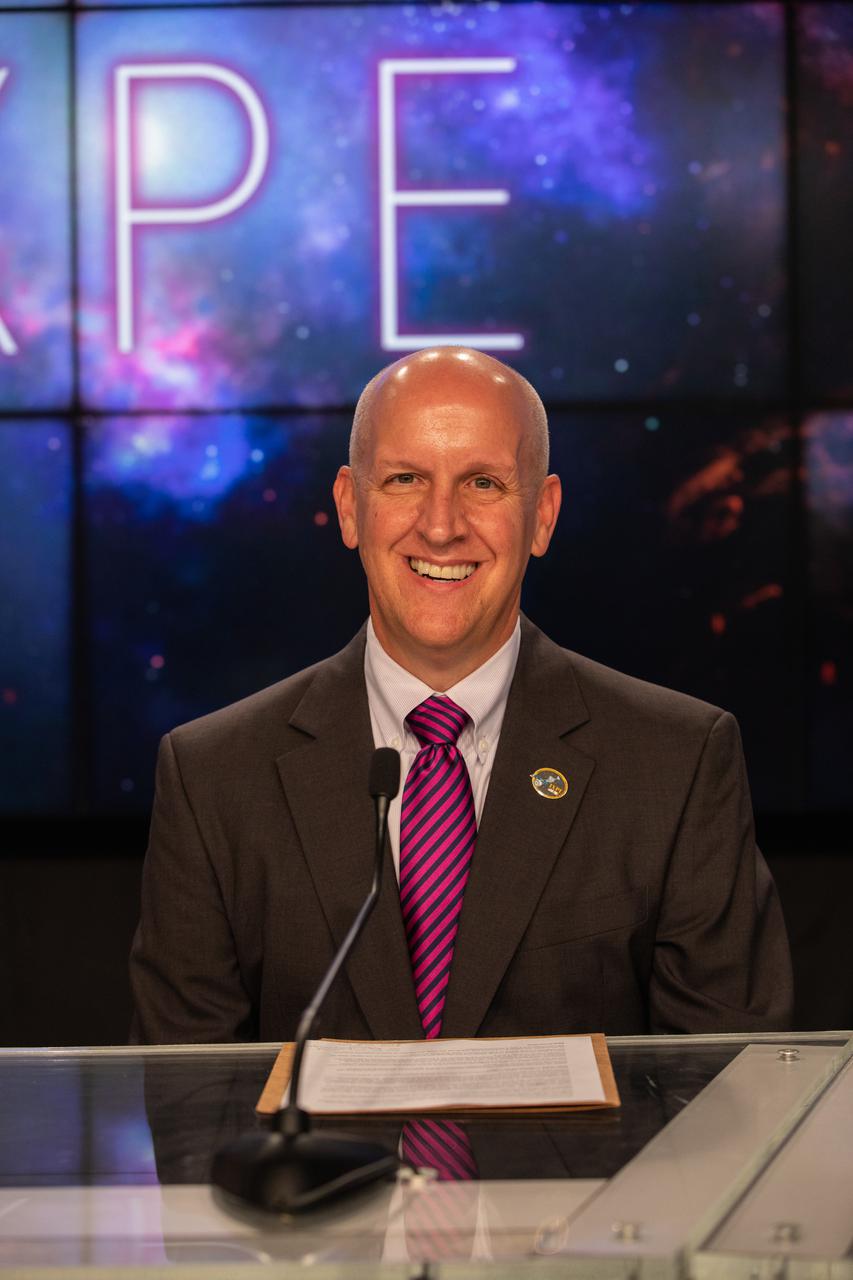
Tim Dunn, launch director, NASA’s Launch Services Program, based at Kennedy Space Center, participates in a prelaunch news conference for NASA’s Imaging X-ray Polarimetry Explorer (IXPE) spacecraft on Dec. 7, 2021 at NASA’s Kennedy Space Center in Florida. IXPE is scheduled to launch no earlier than 1 a.m. EST Thursday, Dec. 9, on a SpaceX Falcon 9 rocket from Kennedy’s Launch Complex 39A. NASA’s Launch Services Program is managing this launch. NASA’s Marshall Space Flight Center in Huntsville, Alabama, manages the IXPE mission. Ball Aerospace, headquartered in Broomfield, Colorado, manages spacecraft operations with support from the University of Colorado at Boulder. NASA’s Goddard Space Flight Center in Greenbelt, Maryland, manages the Explorers Program for the agency’s Science Mission Directorate in Washington. The U.S. Space Force’s Space Launch Delta 45 provides range support for this launch. SpaceX is providing the launch vehicle for this mission.
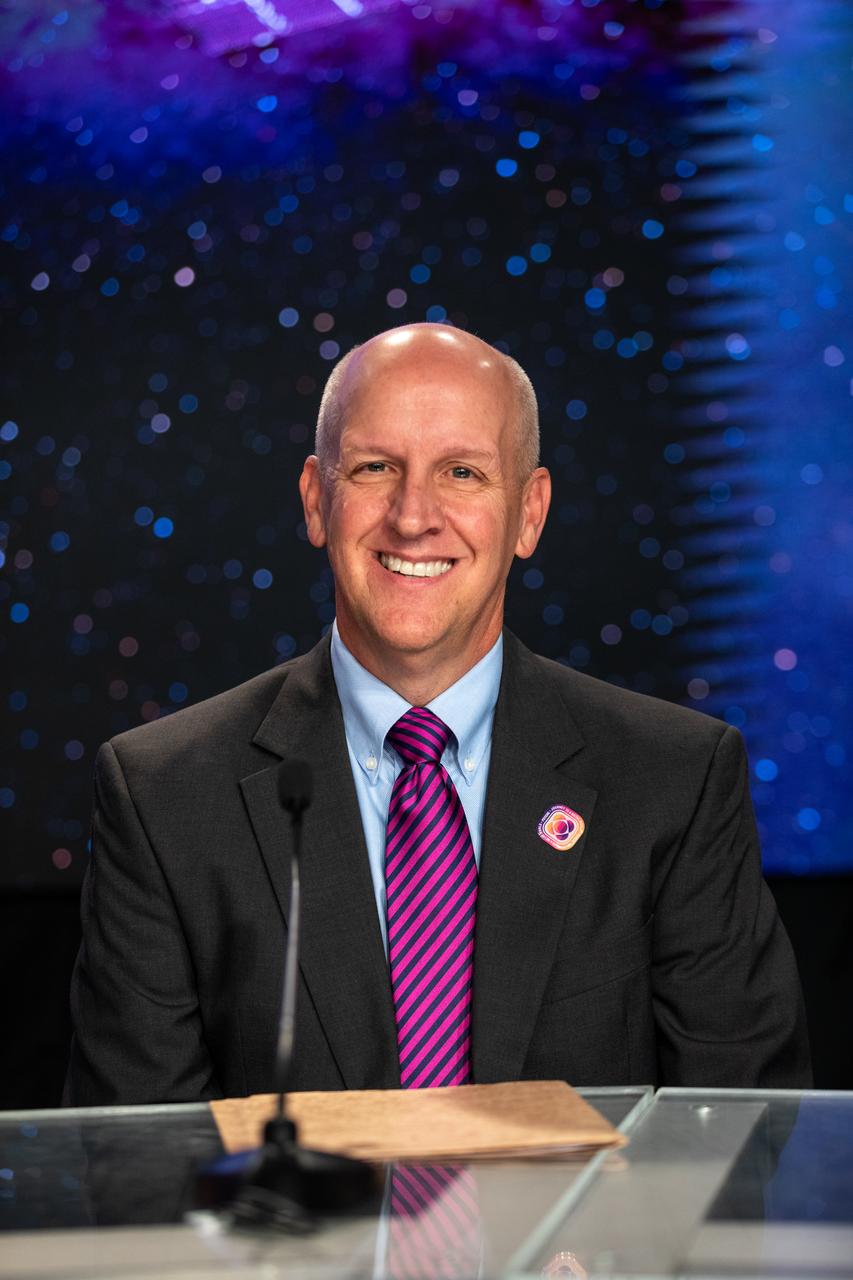
Tim Dunn, senior launch director, NASA’s Launch Services Program, participates in a Psyche mission prelaunch news conference at NASA’s Kennedy Space Center in Florida on Wednesday, Oct. 11, 2023. Psyche is the first mission to explore an asteroid with a surface that likely contains substantial amounts of metal rather than rock or ice. Liftoff of NASA’s Psyche spacecraft, atop a SpaceX Falcon Heavy rocket, is targeted for 10:16 a.m. EDT Thursday, Oct. 12, from Kennedy’s Launch Complex 39A.
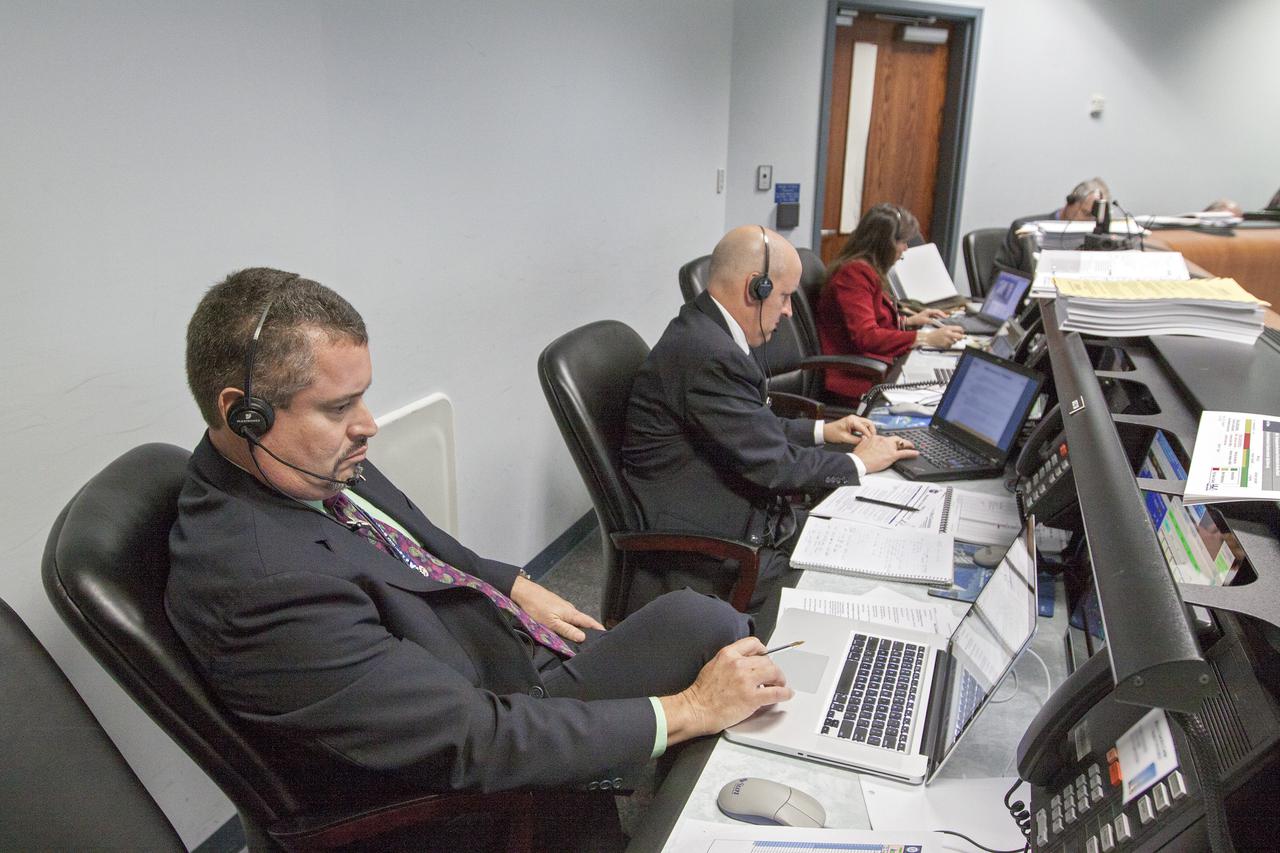
CAPE CANAVERAL, Fla. – Tim Dunn, NASA launch manager, center, monitors the countdown for the launch of the TDRS-K spacecraft on an Atlas V rocket. Omar Baez, assistant NASA launch manager, left, and Diana Calero, NASA mission manager, right, also participate in the countdown procedures before the liftoff. The launch teams for NASA and the United Launch Alliance work inside the Atlas Space Operations Center at Cape Canaveral Air Force Station, Fla., known as the ASOC. Photo credit: NASA_Kim Shiflett

In the Kennedy Space Center’s Press Site auditorium, NASA and industry leaders speak to members of the media at a prelaunch news conference for the agency’s Origins, Spectral Interpretation, Resource Identification, Security-Regolith Explorer, or OSIRIS-REx spacecraft. From left are: Dante Lauretta, OSIRIS-REx principal investigator at the University of Arizona, Tucson; Tim Dunn, NASA launch manager at Kennedy; and Scott Messer, program manager for NASA missions at United Launch Alliance in Centennial, Colorado.
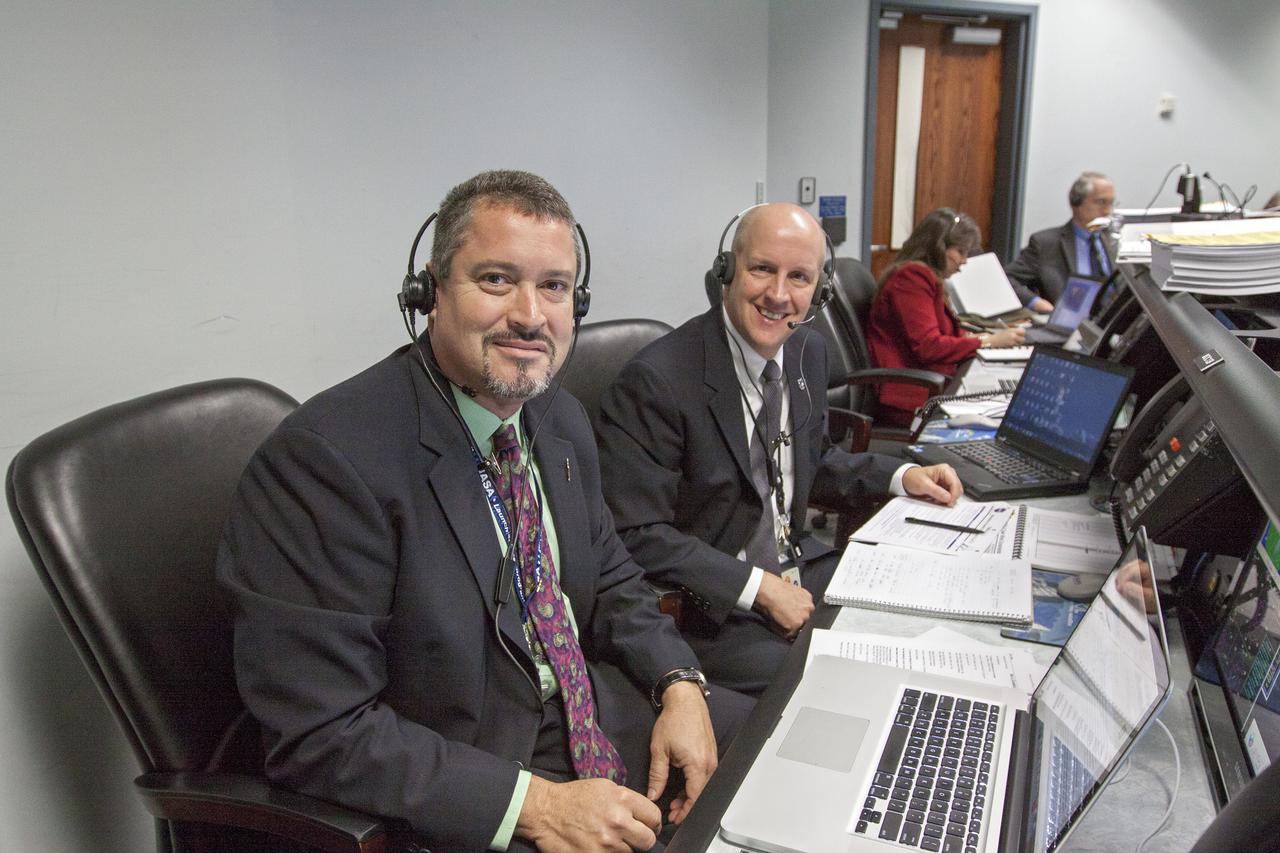
CAPE CANAVERAL, Fla. – Tim Dunn, NASA launch manager, center, monitors the countdown for the launch of the TDRS-K spacecraft on an Atlas V rocket. Omar Baez, assistant NASA launch manager, left, and Diana Calero, NASA mission manager, right, also participate in the countdown procedures before the liftoff. The launch teams for NASA and the United Launch Alliance work inside the Atlas Space Operations Center at Cape Canaveral Air Force Station, Fla., known as the ASOC. Photo credit: NASA_Kim Shiflett
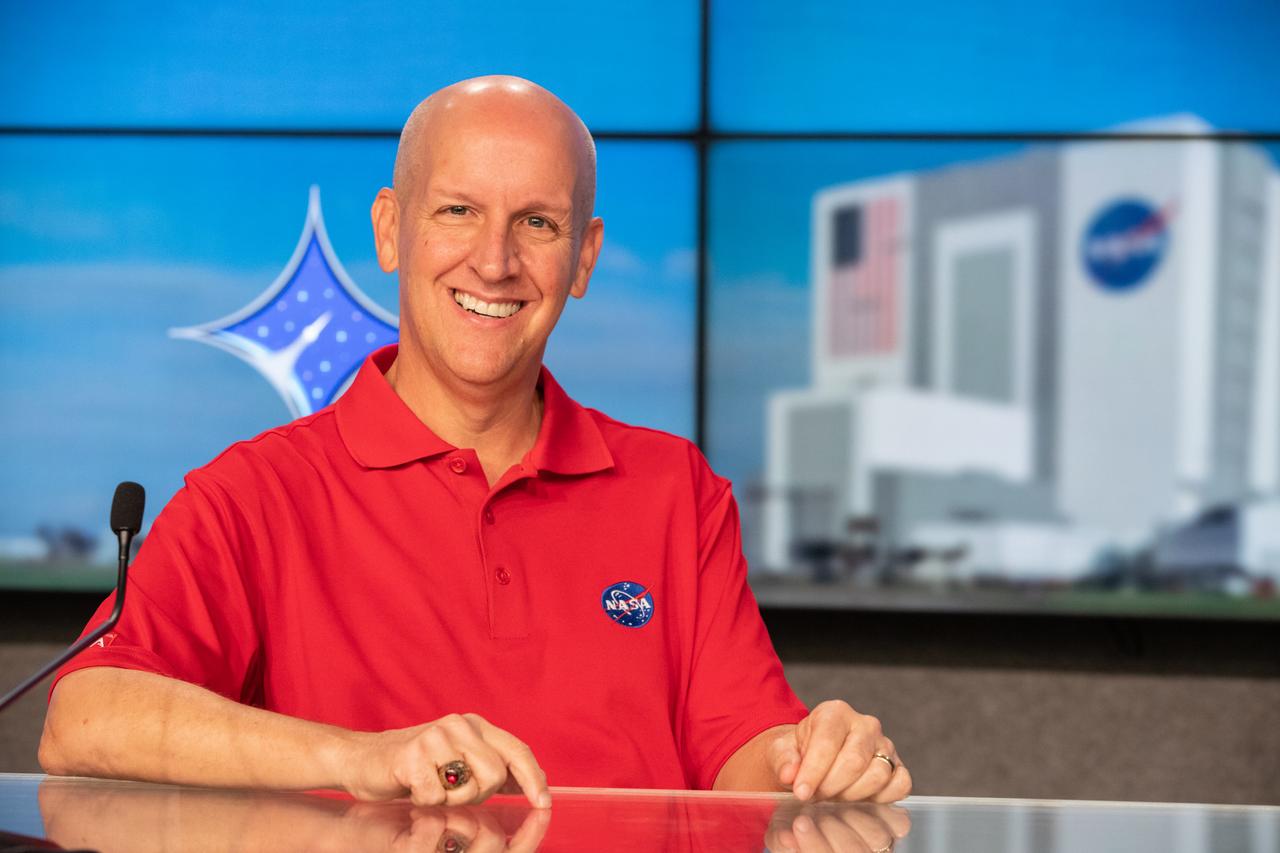
Tim Dunn, launch director for NASA’s Launch Services Program, participates in a Sentinel-6 Michael Freilich virtual media briefing from NASA’s Kennedy Space Center in Florida on Oct. 16, 2020. Sentinel-6 Michael Freilich is scheduled to launch on Nov. 10, 2020, on a SpaceX Falcon 9 rocket from Space Launch Complex 4 at Vandenberg Air Force Base in California. Station. NASA’s Launch Services Program at Kennedy is responsible for launch management.
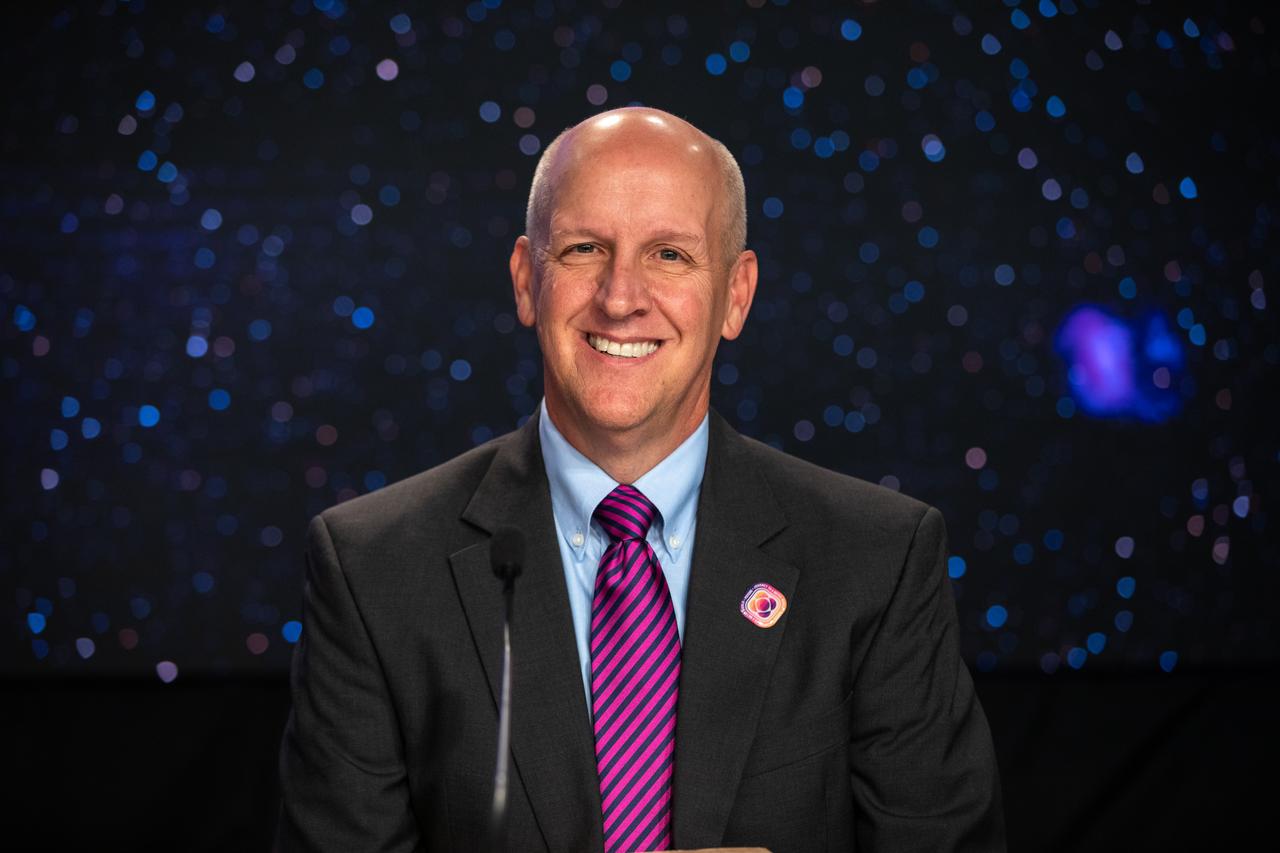
Tim Dunn, senior launch director, NASA’s Launch Services Program, participates in a Psyche mission prelaunch news conference at NASA’s Kennedy Space Center in Florida on Wednesday, Oct. 11, 2023. Psyche is the first mission to explore an asteroid with a surface that likely contains substantial amounts of metal rather than rock or ice. Liftoff of NASA’s Psyche spacecraft, atop a SpaceX Falcon Heavy rocket, is targeted for 10:16 a.m. EDT Thursday, Oct. 12, from Kennedy’s Launch Complex 39A.
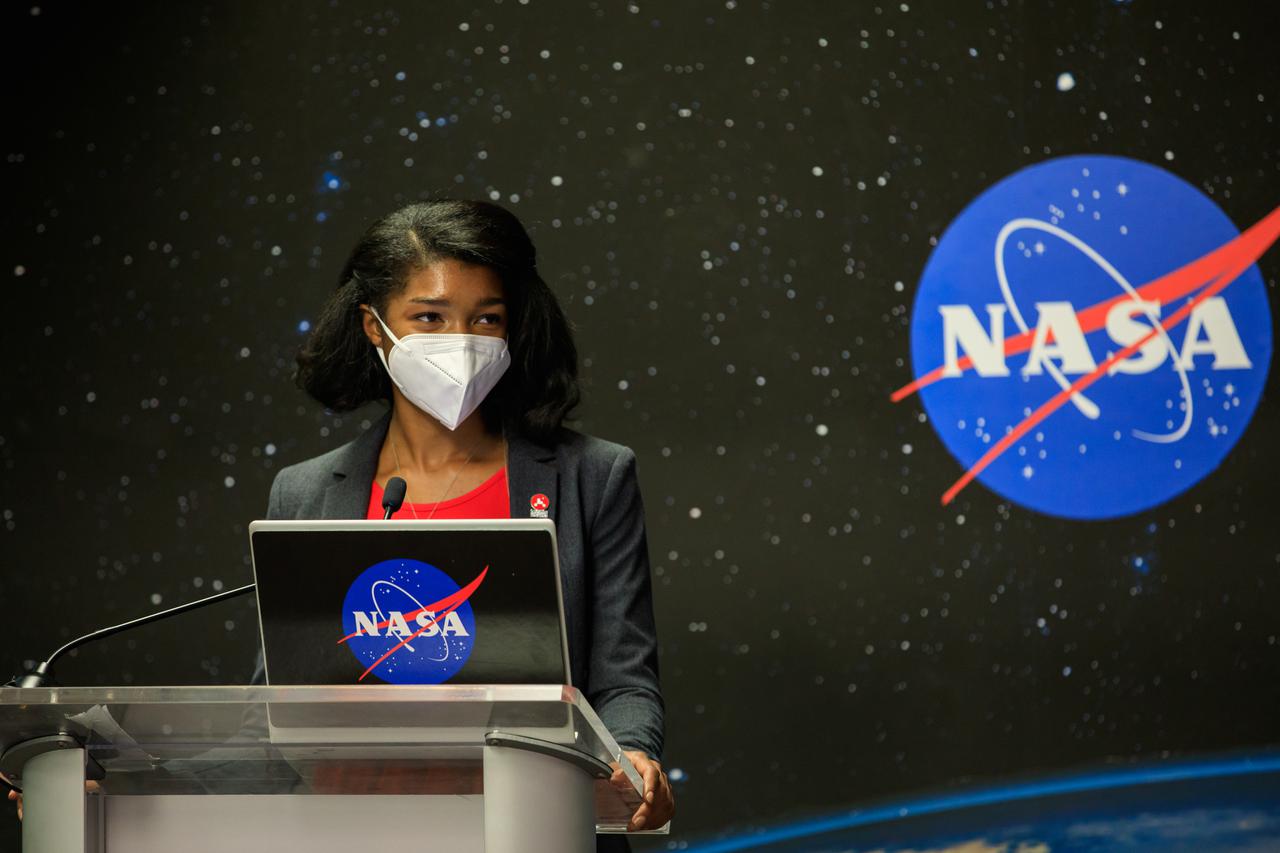
NASA Communications’ Jasmine Hopkins moderates a Mars 2020 Facebook live event inside the Press Site auditorium at NASA’s Kennedy Space Center in Florida on Feb. 12, 2021. Participants included United Launch Alliance (ULA) Launch Conductor Dillon Rice and NASA’s Launch Services Program (LSP) Launch Director Tim Dunn. During the event, Rice and Dunn discussed the partnership between ULA and LSP, as well as major milestones that led to the Mars 2020 launch, and how launches to Mars have changed over time. NASA’s Mars Perseverance rover lifted off from Cape Canaveral Space Force Station’s Space Launch Complex 41 on July 30, 2020, and is slated to touch down on the Red Planet Feb. 18, 2021.
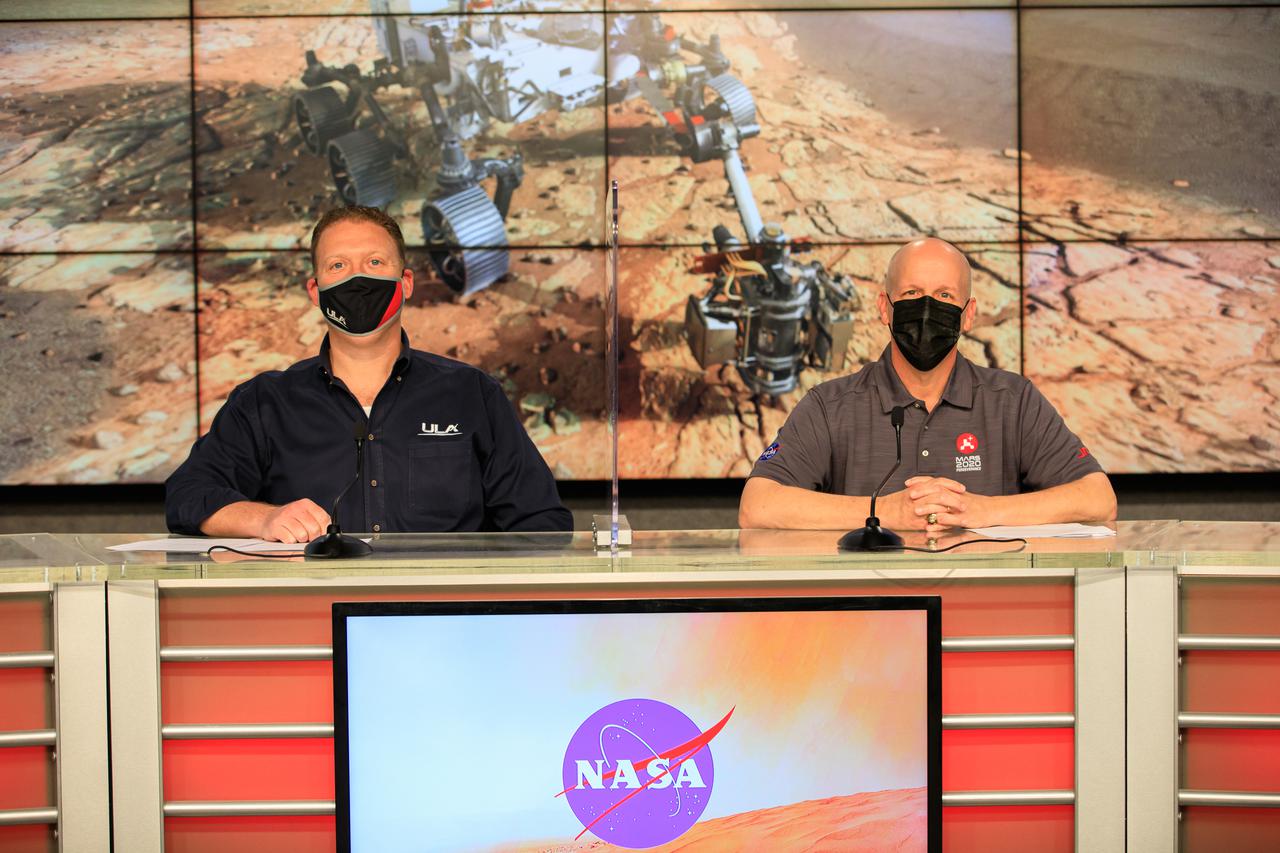
United Launch Alliance (ULA) Launch Conductor Dillon Rice, left, and NASA’s Launch Services Program (LSP) Launch Director Tim Dunn participate in a Mars 2020 Facebook live event inside the Press Site auditorium at NASA’s Kennedy Space Center in Florida on Feb. 12, 2021. During the event, Rice and Dunn discussed the partnership between ULA and LSP, as well as major milestones that led to the Mars 2020 launch, and how launches to Mars have changed over time. NASA’s Mars Perseverance rover lifted off from Cape Canaveral Space Force Station’s Space Launch Complex 41 on July 30, 2020, and is slated to touch down on the Red Planet Feb. 18, 2021.
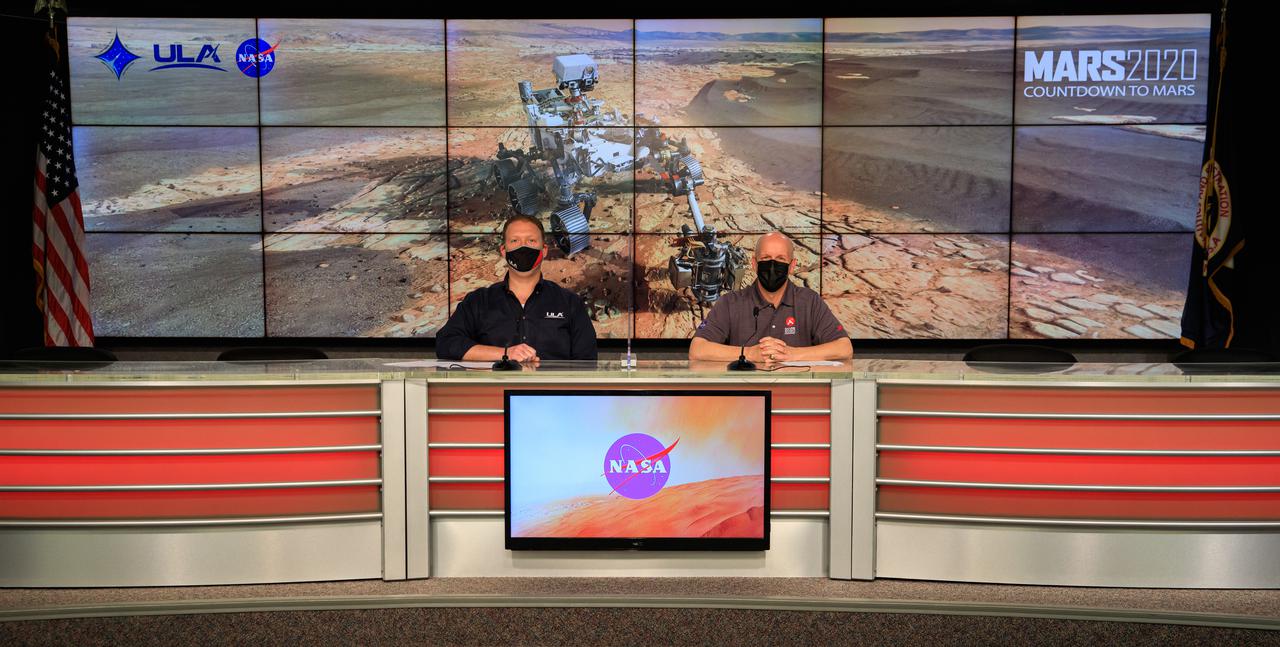
United Launch Alliance (ULA) Launch Conductor Dillon Rice, left, and NASA’s Launch Services Program (LSP) Launch Director Tim Dunn participate in a Mars 2020 Facebook live event inside the Press Site auditorium at NASA’s Kennedy Space Center in Florida on Feb. 12, 2021. During the event, Rice and Dunn discussed the partnership between ULA and LSP, as well as major milestones that led to the Mars 2020 launch, and how launches to Mars have changed over time. NASA’s Mars Perseverance rover lifted off from Cape Canaveral Space Force Station’s Space Launch Complex 41 on July 30, 2020, and is slated to touch down on the Red Planet Feb. 18, 2021.
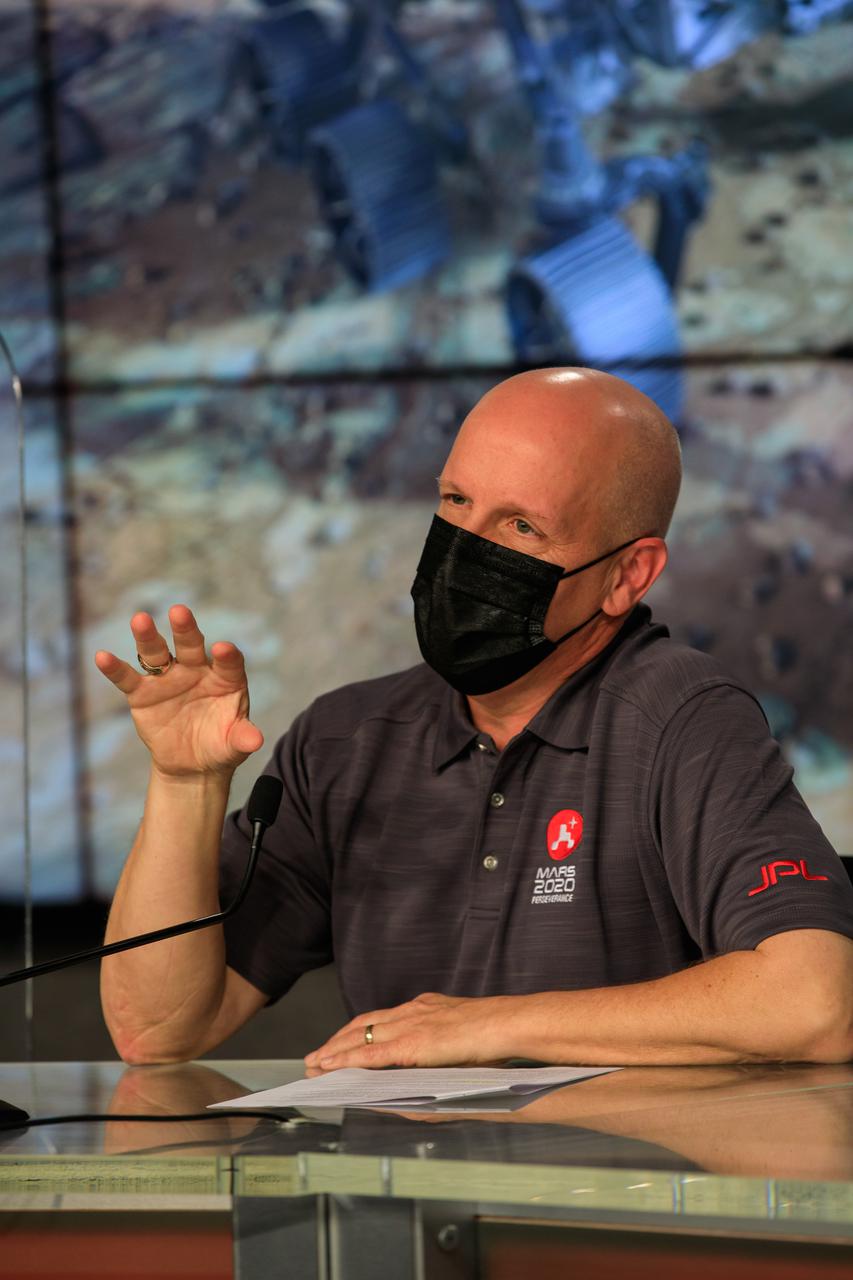
NASA’s Launch Services Program (LSP) Launch Director Tim Dunn participates in a Mars 2020 Facebook live event inside the Press Site auditorium at NASA’s Kennedy Space Center in Florida on Feb. 12, 2021. During the event, Dunn and Dillon Rice, launch conductor for United Launch Alliance (ULA), discussed the partnership between ULA and LSP, as well as major milestones that led to the Mars 2020 launch, and how launches to Mars have changed over time. NASA’s Mars Perseverance rover lifted off from Cape Canaveral Space Force Station’s Space Launch Complex 41 on July 30, 2020, and is slated to touch down on the Red Planet Feb. 18, 2021.
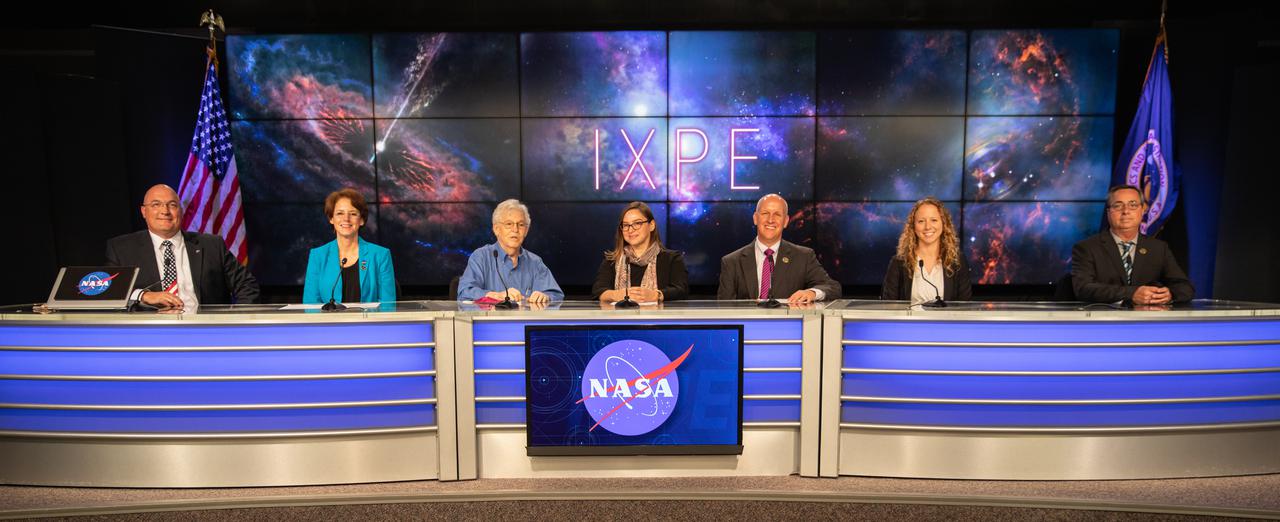
A prelaunch news conference for NASA’s Imaging X-ray Polarimetry Explorer (IXPE) spacecraft is held on Dec. 7, 2021 at NASA’s Kennedy Space Center in Florida. Participants from left are Greg Harland, moderator, NASA communications; Martin Weisskopf, IXPE principal investigator, NASA’s Marshall Space Flight Center; Makenzie Lystrup, vice president and general manager, civil space, Ball Aerospace; Tim Dunn, launch director, NASA’s Launch Services Program; Julianna Scheiman, director, civil satellite missions, SpaceX; Julianna Scheiman, director, civil satellite missions, SpaceX; and Mike McAleenan, 45th Weather Squadron, Space Launch Delta 45. IXPE is scheduled to launch no earlier than 1 a.m. EST Thursday, Dec. 9, on a SpaceX Falcon 9 rocket from Kennedy’s Launch Complex 39A. NASA’s Launch Services Program is managing this launch. NASA’s Marshall Space Flight Center in Huntsville, Alabama, manages the IXPE mission. Ball Aerospace, headquartered in Broomfield, Colorado, manages spacecraft operations with support from the University of Colorado at Boulder. NASA’s Goddard Space Flight Center in Greenbelt, Maryland, manages the Explorers Program for the agency’s Science Mission Directorate in Washington. The U.S. Space Force’s Space Launch Delta 45 provides range support for this launch. SpaceX is providing the launch vehicle for this mission.

Barbara Brown, chief technologist at NASA’s Kennedy Space Center in Florida, speaks at the fifth and final TED Talk-style informational session on Nov. 14, 2019, in the Kennedy Learning Institute. Sponsored by Kennedy’s Launching Leaders and Leadership for the Future, NASAtalks focuses on the topic of intentional careers and aims to provide employees with tools and knowledge that can be utilized for career growth. The theme of this session was organizations, and additional speakers included Director of Engineering Shawn Quinn, Chief Counsel Dan Shaver and Tim Dunn, launch director for the agency’s Launch Services Program, with a skill-building section on vision by Mark Wiese, logistics element manager for the Gateway Program.
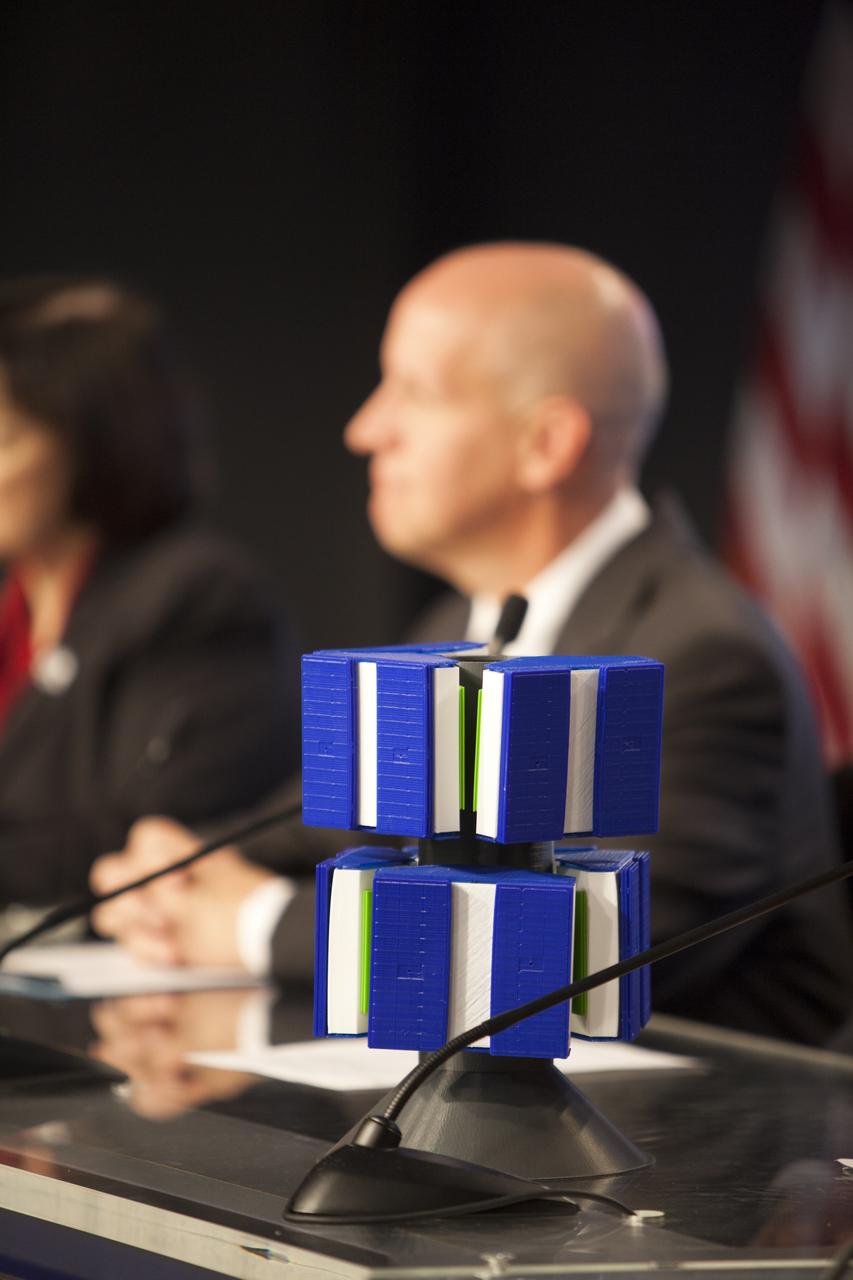
In the Kennedy Space Center’s Press Site auditorium, NASA and industry leaders speak to members of the media during a prelaunch news conference for the agency’s Cyclone Global Navigation Satellite System, or CYGNSS, spacecraft. The model depicts the deployment module from which the eight micro-satellites will be deployed. In the background is Tim Dunn, NASA launch director at Kennedy. The CYGNSS satellites will make frequent and accurate measurements of ocean surface winds throughout the life cycle of tropical storms and hurricanes. The data will help scientists probe key air-sea interaction processes that take place near the core of storms, which are rapidly changing and play a crucial role in the beginning and intensification of hurricanes.
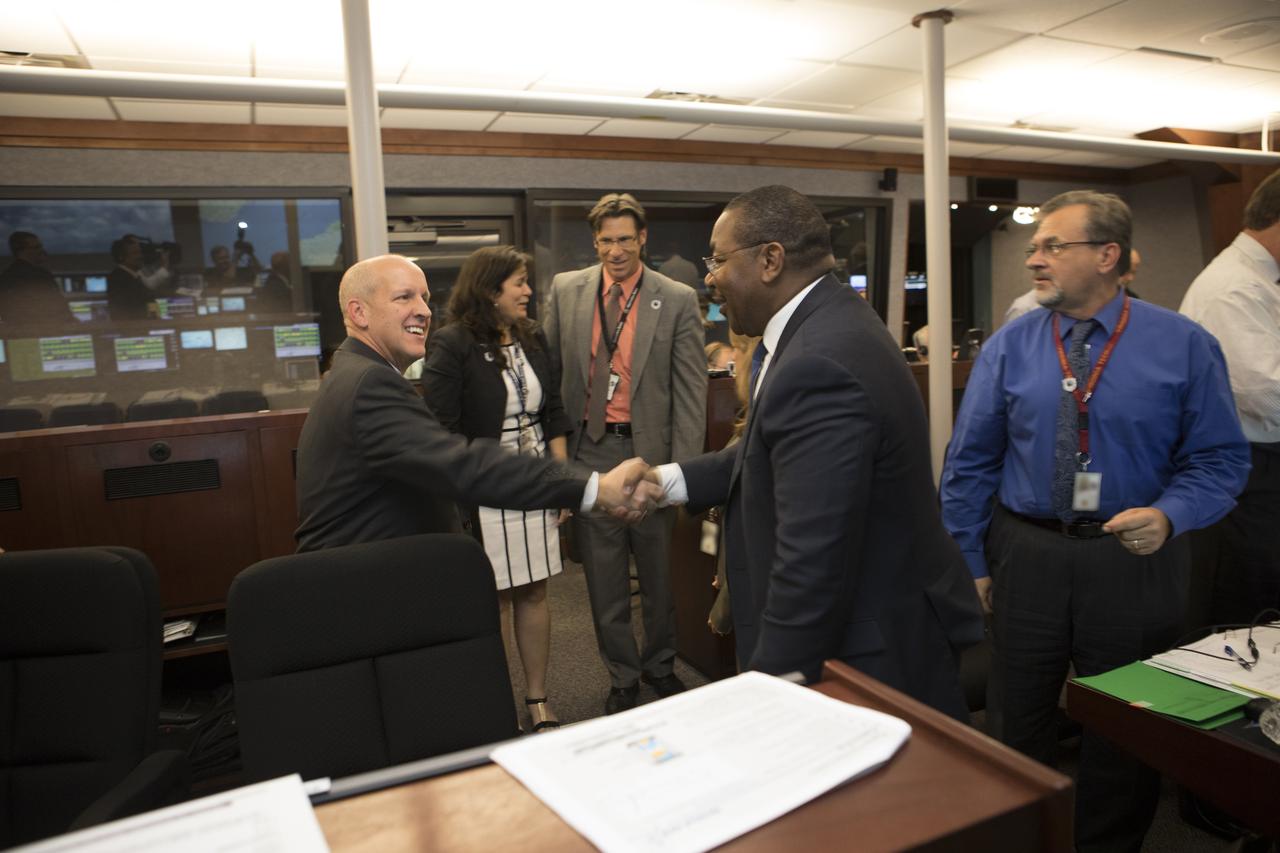
In the Mission Director's Center at Cape Canaveral Air Force Station, Greg Robinson, deputy associate administrator for Programs in the NASA Science Mission Directorate, right, congratulates, Tim Dunn, who was launch director for launch of eight Cyclone Global Navigation Satellite System, or CYGNSS, spacecraft. The satellites will make frequent and accurate measurements of ocean surface winds throughout the life cycle of tropical storms and hurricanes. The data that CYGNSS provides will enable scientists to probe key air-sea interaction processes that take place near the core of storms, which are rapidly changing and play a crucial role in the beginning and intensification of hurricanes.
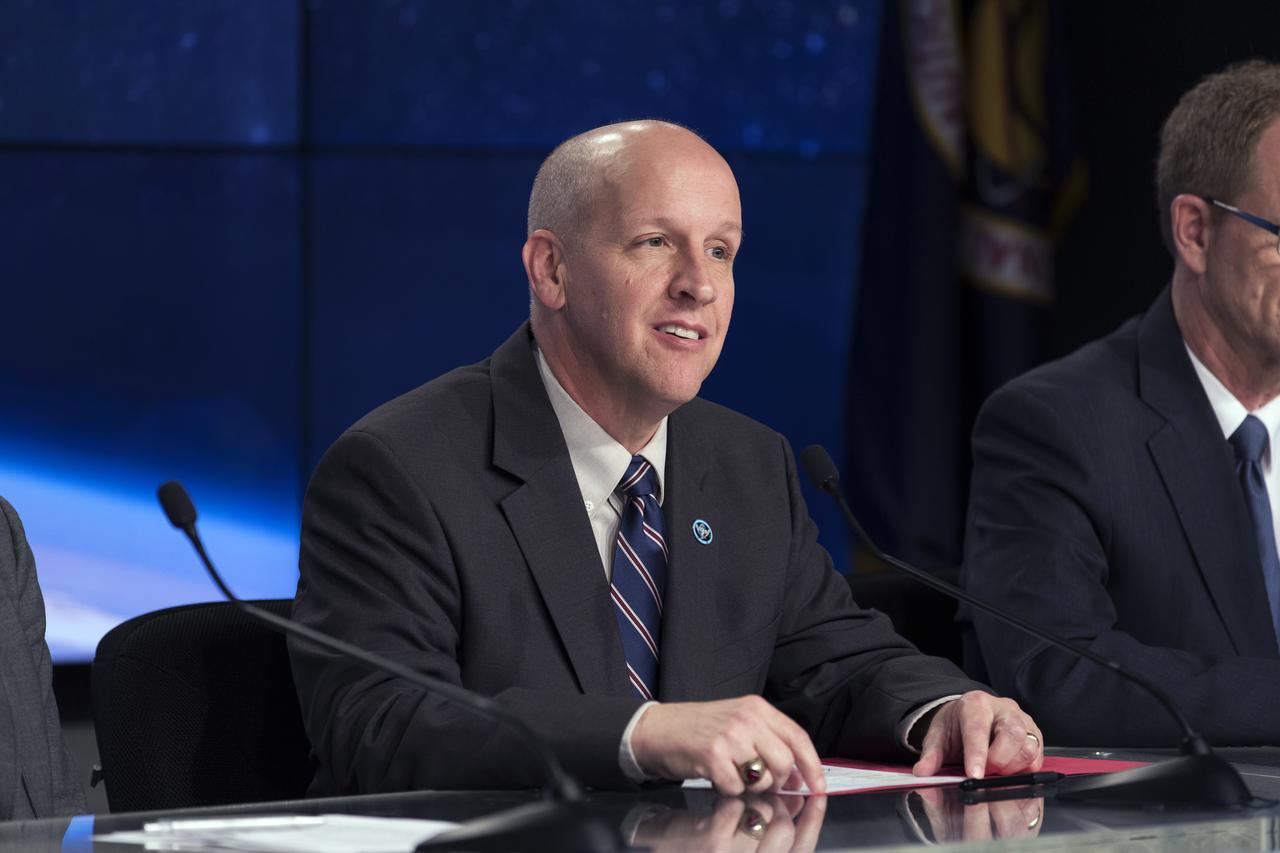
In the Kennedy Space Center's Press Site auditorium, Tim Dunn, NASA launch director at Kennedy, speaks to members of the media at a prelaunch news conference about National Oceanic and Atmospheric Administration's, or NOAA's, Geostationary Operational Environmental Satellite, or GOES-S. The GOES series of satellites will significantly improve the detection and observation of environmental phenomena that directly affect public safety, protection of property and the nation's economic health and prosperity. GOES-S is slated to lift off at 5:02 p.m. EST on March 1, 2018 aboard a United Launch Alliance Atlas V rocket.

From left, Kennedy Space Center’s Chief Technologist Barbara Brown, Mark Wiese, logistics element manager for the Gateway Program, Tim Dunn, launch director for the agency’s Launch Services Program, Shawn Quinn, director of Engineering and Johnny Nguyen participate in the fifth and final TED Talk-style informational session on Nov. 14, 2019. Held in the Florida spaceport’s Kennedy Learning Institute and sponsored by the center’s Launching Leaders and Leadership for the Future, NASAtalks focuses on the topic of intentional careers and aims to provide employees with tools and knowledge that can be utilized for career growth. The theme of this final session was organizations.

Mark Wiese, logistics element manager for the Gateway Program at NASA’s Kennedy Space Center in Florida, speaks at the fifth and final TED Talk-style informational session on Nov. 14, 2019, in the Kennedy Learning Institute. Sponsored by Kennedy’s Launching Leaders and Leadership for the Future, NASAtalks focuses on the topic of intentional careers and aims to provide employees with tools and knowledge that can be utilized for career growth. The theme of this session was organizations, and additional speakers included Chief Counsel Dan Shaver, Director of Engineering Shawn Quinn, Chief Technologist Barbara Brown and Tim Dunn, launch director for the agency’s Launch Services Program.

Barbara Brown, chief technologist at NASA’s Kennedy Space Center in Florida, speaks at the fifth and final TED Talk-style informational session on Nov. 14, 2019, in the Kennedy Learning Institute. Sponsored by Kennedy’s Launching Leaders and Leadership for the Future, NASAtalks focuses on the topic of intentional careers and aims to provide employees with tools and knowledge that can be utilized for career growth. The theme of this session was organizations, and additional speakers included Director of Engineering Shawn Quinn, Chief Counsel Dan Shaver and Tim Dunn, launch director for the agency’s Launch Services Program, with a skill-building section on vision by Mark Wiese, logistics element manager for the Gateway Program.
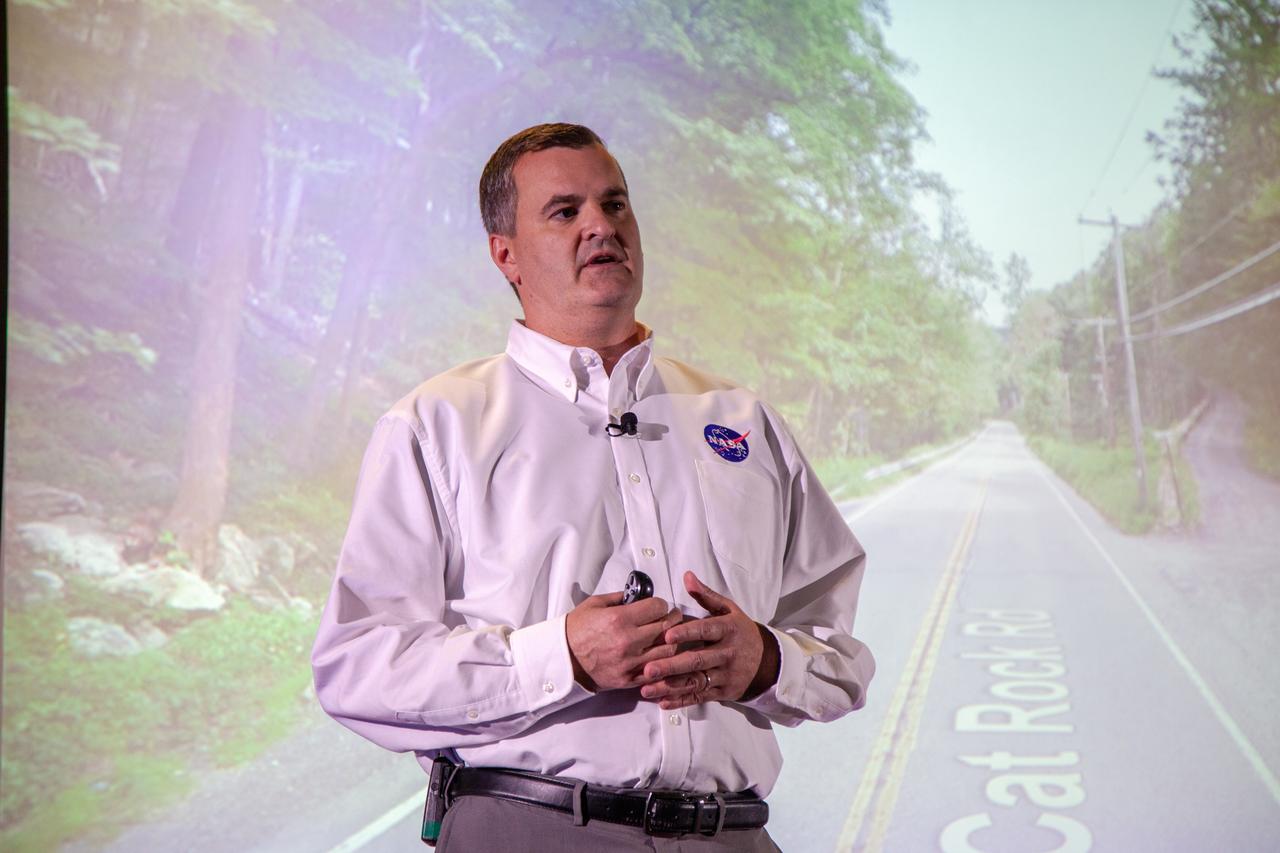
Mark Wiese, logistics element manager for the Gateway Program at NASA’s Kennedy Space Center in Florida, speaks at the fifth and final TED Talk-style informational session on Nov. 14, 2019, in the Kennedy Learning Institute. Sponsored by Kennedy’s Launching Leaders and Leadership for the Future, NASAtalks focuses on the topic of intentional careers and aims to provide employees with tools and knowledge that can be utilized for career growth. The theme of this session was organizations, and additional speakers included Chief Counsel Dan Shaver, Director of Engineering Shawn Quinn, Chief Technologist Barbara Brown and Tim Dunn, launch director for the agency’s Launch Services Program.

Shawn Quinn, director of Engineering at NASA’s Kennedy Space Center in Florida, speaks at the fifth and final TED Talk-style informational session on Nov. 14, 2019, in the Kennedy Learning Institute. Sponsored by Kennedy’s Launching Leaders and Leadership for the Future, NASAtalks focuses on the topic of intentional careers and aims to provide employees with tools and knowledge that can be utilized for career growth. The theme of this session was organizations, and additional speakers included Chief Counsel Dan Shaver, Chief Technologist Barbara Brown and Tim Dunn, launch director for the agency’s Launch Services Program, with a skill-building section on vision by Mark Wiese, logistics element manager for the Gateway Program.

Barbara Brown, chief technologist at NASA’s Kennedy Space Center in Florida, speaks at the fifth and final TED Talk-style informational session on Nov. 14, 2019, in the Kennedy Learning Institute. Sponsored by Kennedy’s Launching Leaders and Leadership for the Future, NASAtalks focuses on the topic of intentional careers and aims to provide employees with tools and knowledge that can be utilized for career growth. The theme of this session was organizations, and additional speakers included Director of Engineering Shawn Quinn, Chief Counsel Dan Shaver and Tim Dunn, launch director for the agency’s Launch Services Program, with a skill-building section on vision by Mark Wiese, logistics element manager for the Gateway Program.

Shawn Quinn, director of Engineering at NASA’s Kennedy Space Center in Florida, speaks at the fifth and final TED Talk-style informational session on Nov. 14, 2019, in the Kennedy Learning Institute. Sponsored by Kennedy’s Launching Leaders and Leadership for the Future, NASAtalks focuses on the topic of intentional careers and aims to provide employees with tools and knowledge that can be utilized for career growth. The theme of this session was organizations, and additional speakers included Chief Counsel Dan Shaver, Chief Technologist Barbara Brown and Tim Dunn, launch director for the agency’s Launch Services Program, with a skill-building section on vision by Mark Wiese, logistics element manager for the Gateway Program.
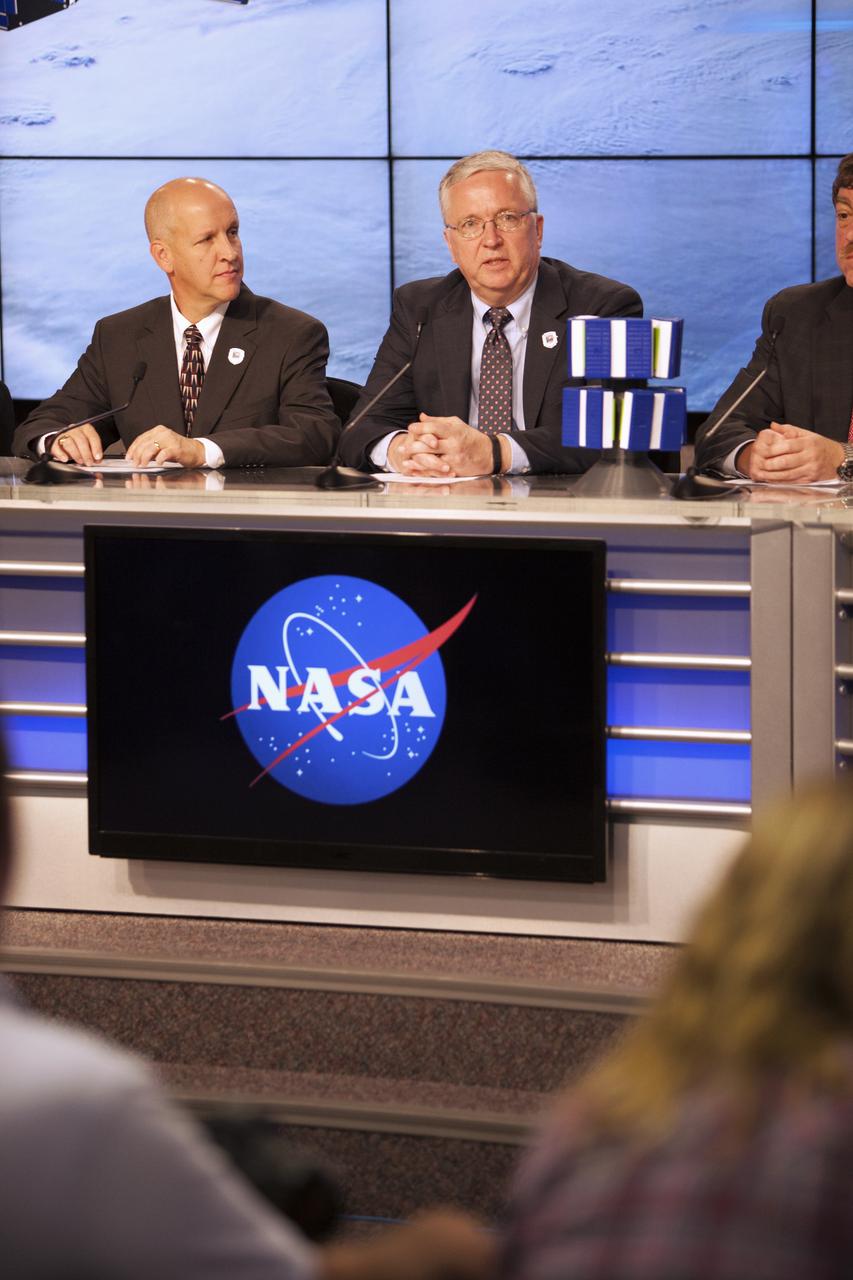
In the Kennedy Space Center’s Press Site auditorium, NASA and industry leaders speak to members of the media during a prelaunch news conference for the agency’s Cyclone Global Navigation Satellite System, or CYGNSS, spacecraft. From left are: Tim Dunn, NASA launch director at Kennedy; and Bryan Baldwin, Pegasus launch vehicle program manager for Orbital ATK, Dulles, Virginia. The eight CYGNSS satellites will make frequent and accurate measurements of ocean surface winds throughout the life cycle of tropical storms and hurricanes. The data will help scientists probe key air-sea interaction processes that take place near the core of storms, which are rapidly changing and play a crucial role in the beginning and intensification of hurricanes.
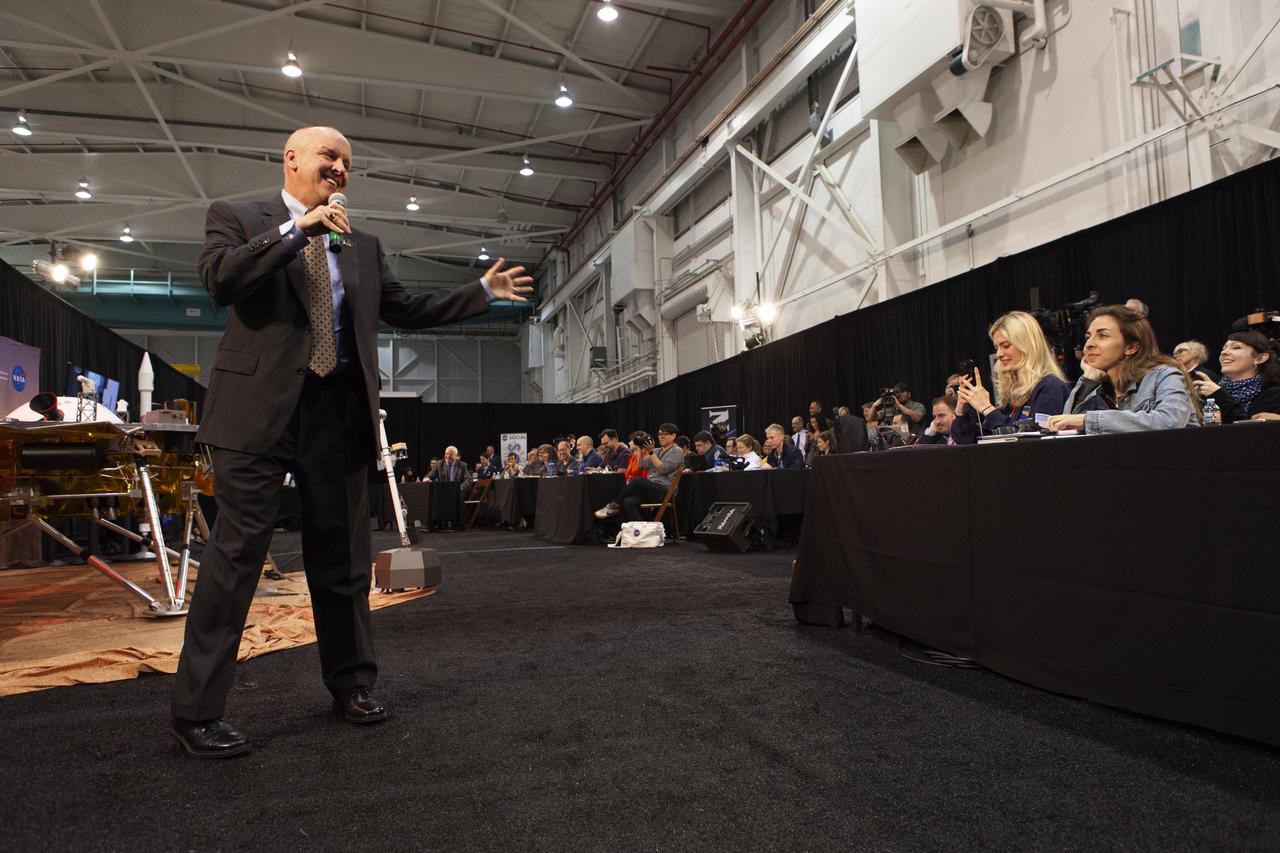
During a prelaunch briefing at Vandenberg Air Force Base in California, Tim Dunn, Launch Director for NASA's Launch Services Program, speaks to members of the media. The presentation focused on NASA's Interior Exploration using Seismic Investigations, Geodesy and Heat Transport, or InSight, Mars lander. InSight is scheduled for liftoff May 5, 2018, atop a United Launch Alliance (ULA) Atlas V rocket from Space Launch Complex 3 at Vandenberg. The spacecraft will be the first mission to look deep beneath the Martian surface studying the planet's interior by measuring its heat output and listen for marsquakes.
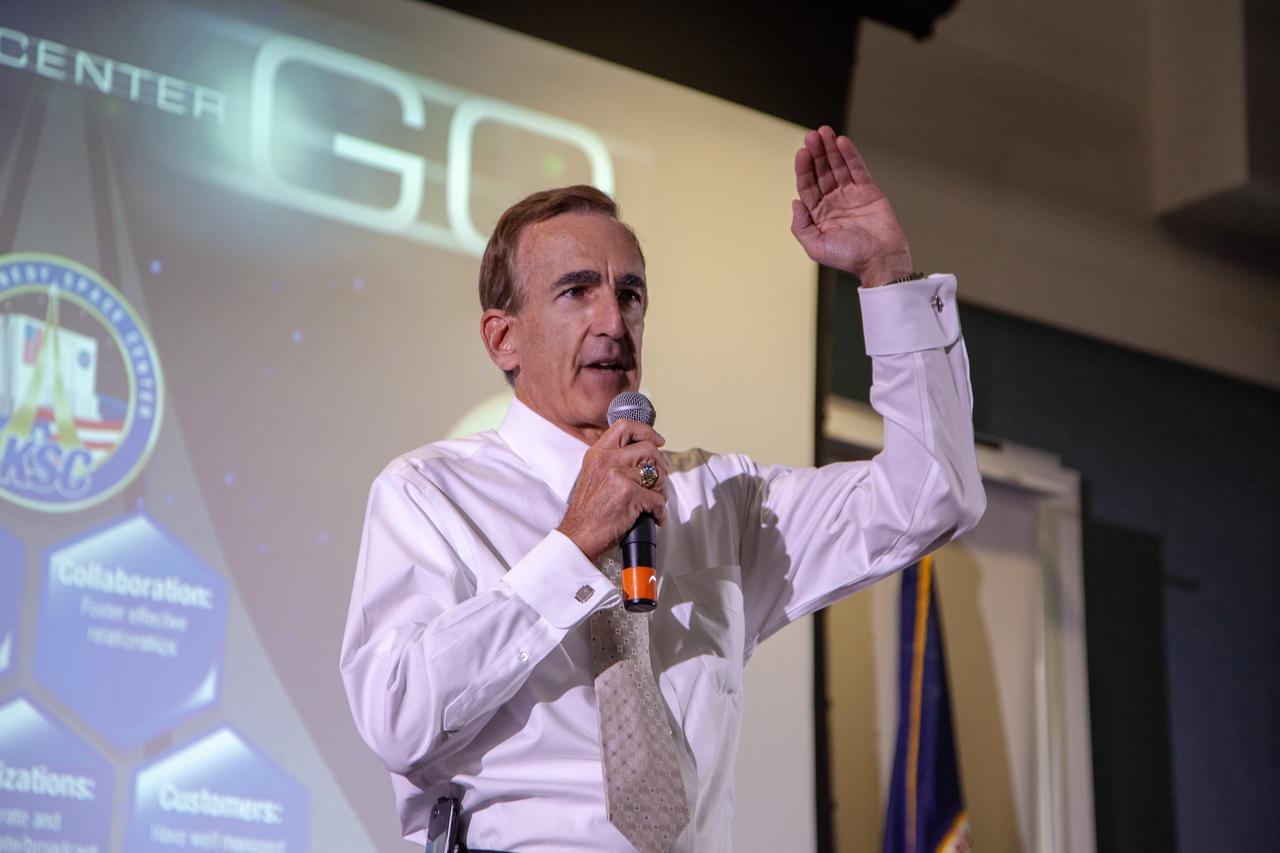
Dan Shaver, chief counsel at NASA’s Kennedy Space Center in Florida, speaks at the fifth and final TED Talk-style informational session on Nov. 14, 2019, in the Kennedy Learning Institute. Sponsored by Kennedy’s Launching Leaders and Leadership for the Future, NASAtalks focuses on the topic of intentional careers and aims to provide employees with tools and knowledge that can be utilized for career growth. The theme of this session was organizations, and additional speakers included Kennedy’s Director of Engineering Shawn Quinn, Chief Technologist Barbara Brown and Tim Dunn, launch director for the agency’s Launch Services Program, with a skill-building section on vision by Mark Wiese, logistics element manager for the Gateway Program.
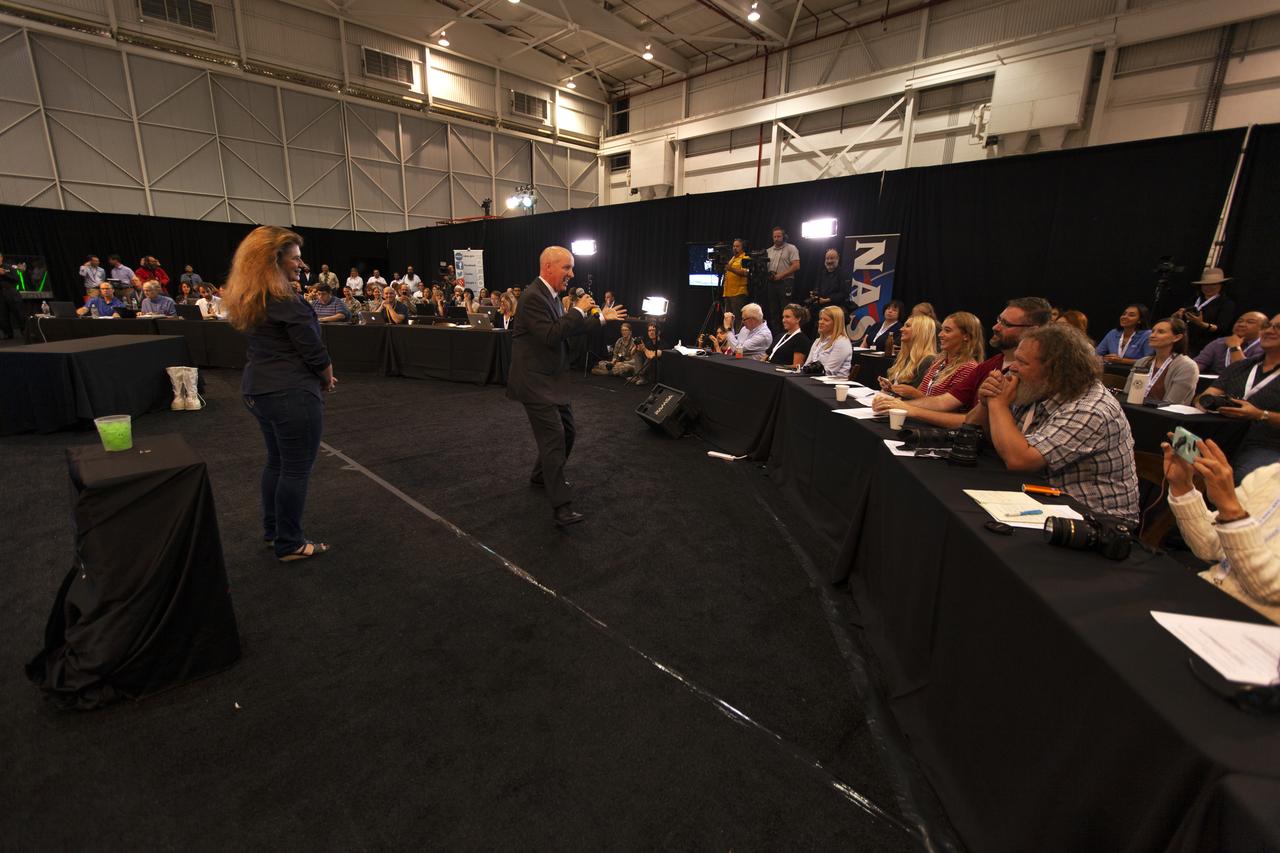
Tim Dunn, launch director, NASA's Kennedy Space Center in Florida, speaks to members of the news media and social media participants during a prelaunch mission briefing for NASA's Ice, Cloud and land Elevation Satellite-2 (ICESat-2), a mission to measure the changing height of Earth's ice, on Sept. 13, 2018 at Vandenberg Air Force Base (VAFB) in California. ICESat-2 will launch aboard a United Launch Alliance Delta II, the rocket’s final mission, from Space Launch Complex 2 at VAFB. Launch is scheduled for 8:46 a.m. EDT (5:46 a.m. PDT).
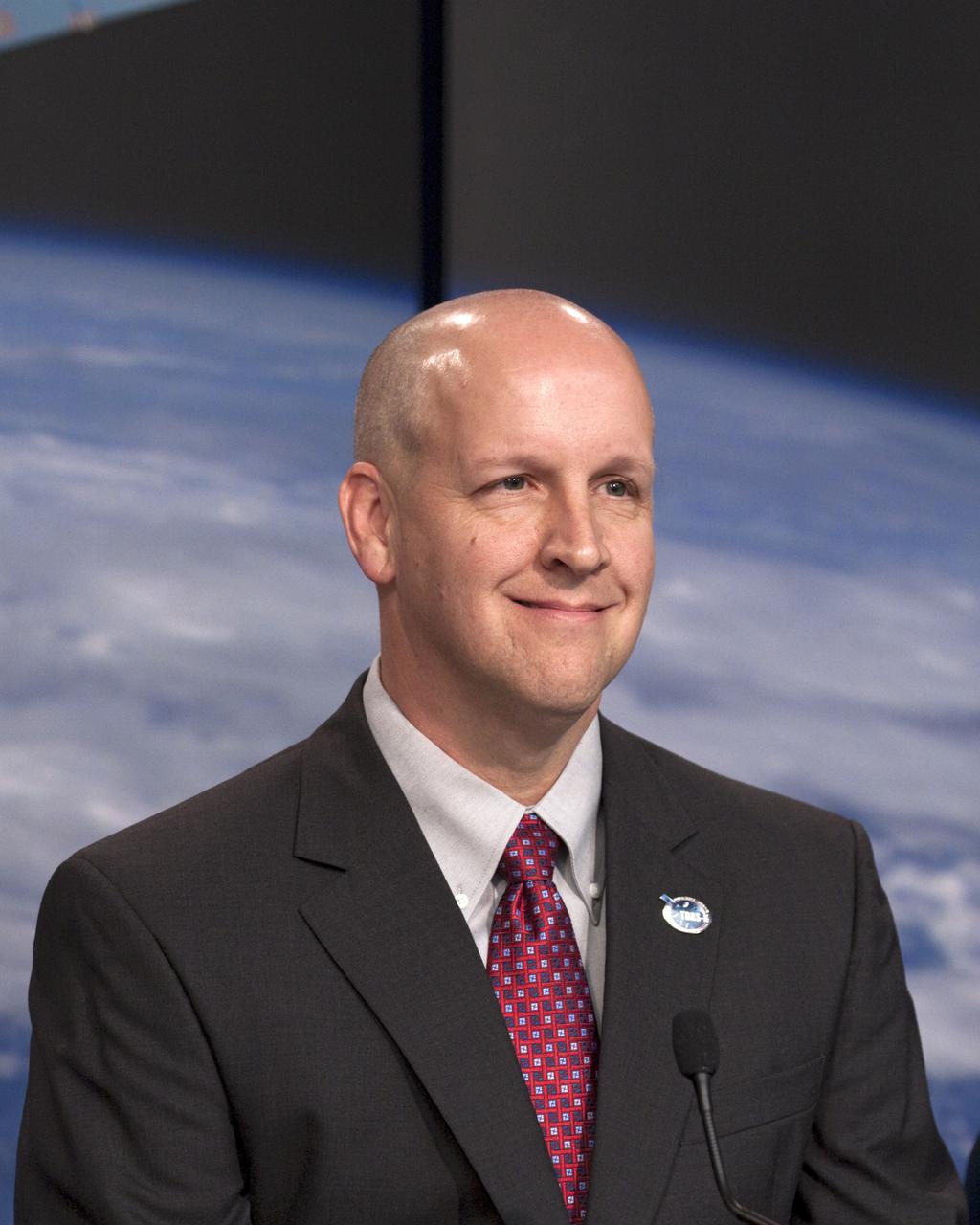
CAPE CANAVERAL, Fla. –- At a news conference, NASA and United Launch Alliance officials discussed preparations for the planned launch of NASA's Tracking and Data Relay Satellite, TDRS-K, atop an Atlas V rocket. Among those participating in the briefing is Tim Dunn, NASA launch director at the Kennedy Space Center. Liftoff for the TDRS-K is planned for Jan. 30, 2013. The TDRS-K spacecraft is part of the next-generation series in the Tracking and Data Relay Satellite System, a constellation of space-based communication satellites providing tracking, telemetry, command and high-bandwidth data return services. For more information, visit http:__www.nasa.gov_mission_pages_tdrs_index.html Photo credit: NASA_Kim Shiflett
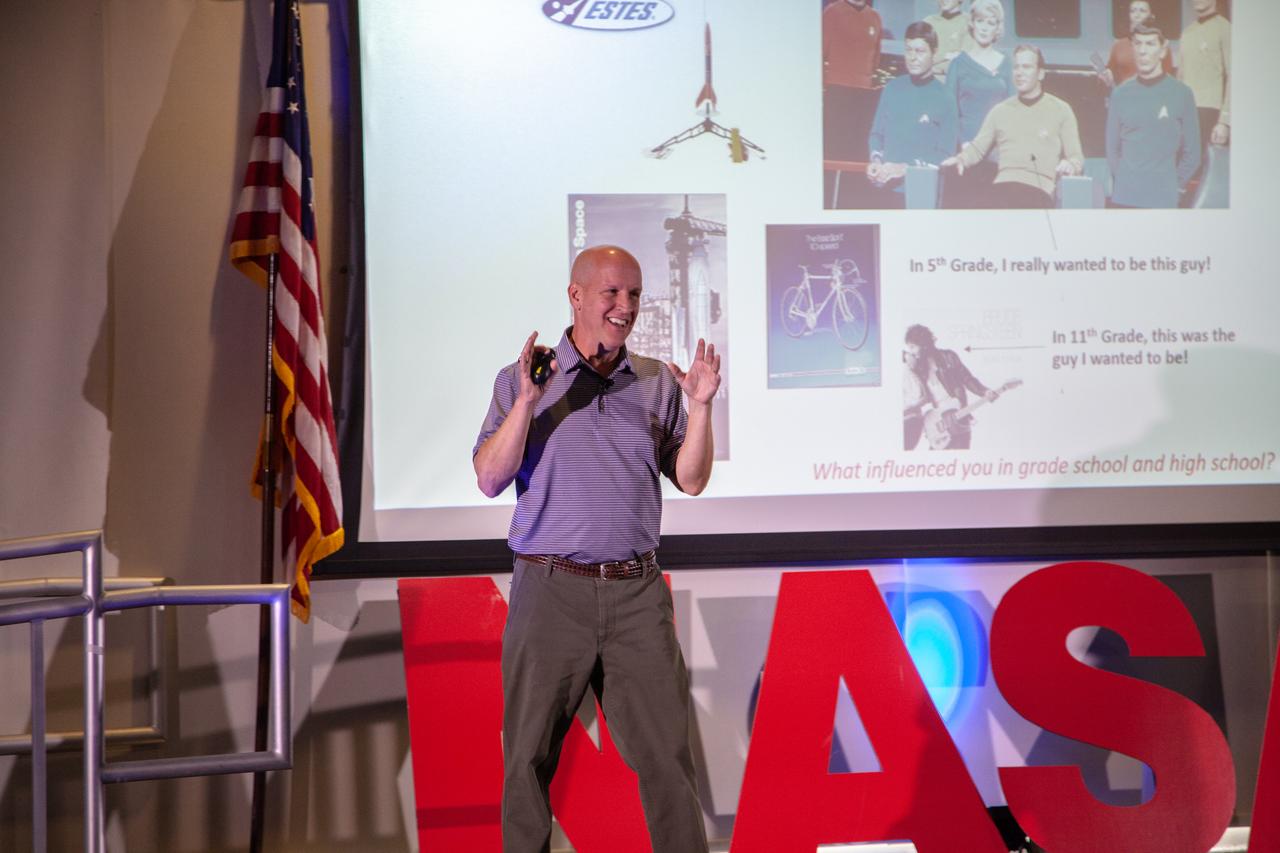
Tim Dunn, launch director for NASA’s Launch Services Program, speaks at the fifth and final TED Talk-style informational session at the agency’s Kennedy Space Center in Florida on Nov. 14, 2019. Hosted in the Kennedy Learning Institute and sponsored by the center’s Launching Leaders and Leadership for the Future, NASAtalks focuses on the topic of intentional careers and aims to provide employees with tools and knowledge that can be utilized for career growth. The theme of this session was organizations, and additional speakers included Director of Engineering Shawn Quinn, Chief Technologist Barbara Brown and Chief Counsel Dan Shaver, with a skill-building section on vision by Mark Wiese, logistics element manager for the Gateway Program.
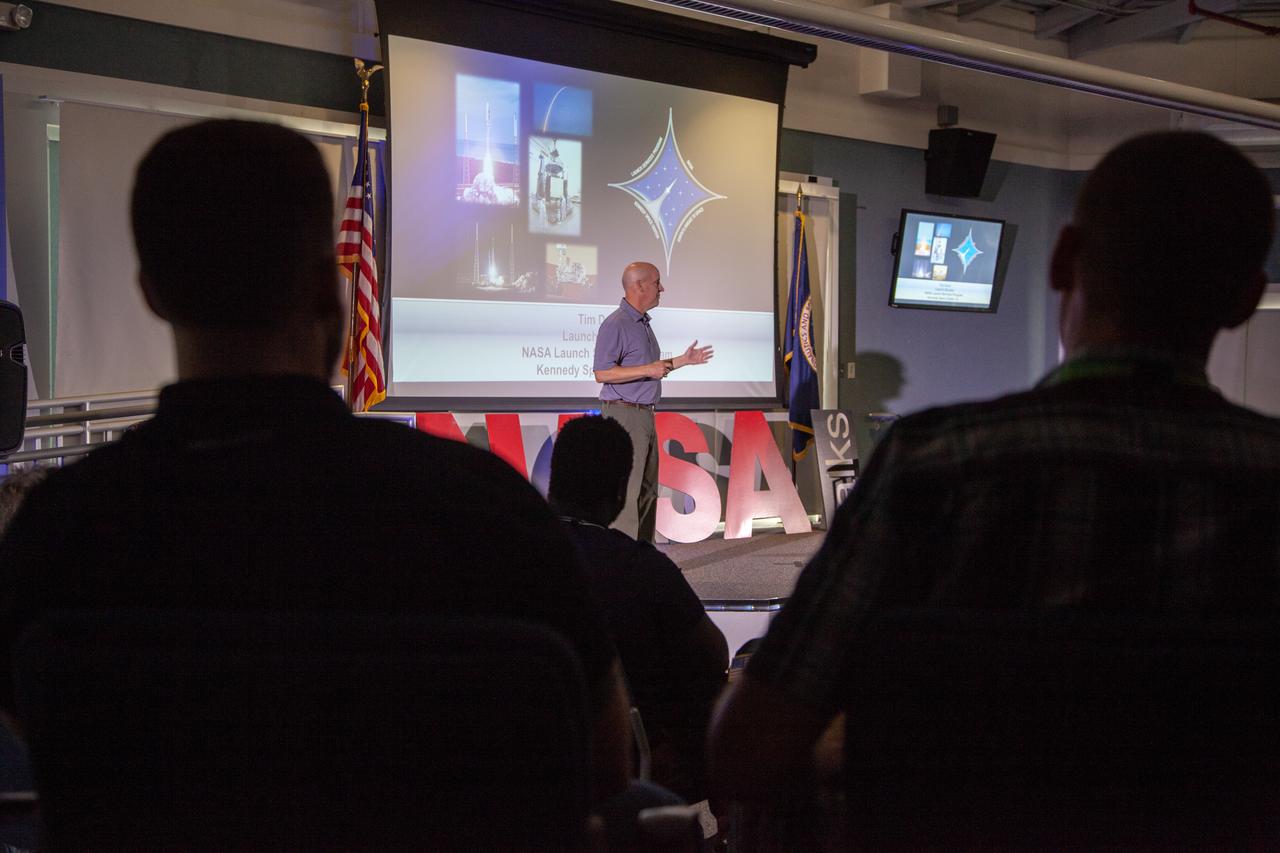
Tim Dunn, launch director for NASA’s Launch Services Program, speaks at the fifth and final TED Talk-style informational session at the agency’s Kennedy Space Center in Florida on Nov. 14, 2019. Hosted in the Kennedy Learning Institute and sponsored by the center’s Launching Leaders and Leadership for the Future, NASAtalks focuses on the topic of intentional careers and aims to provide employees with tools and knowledge that can be utilized for career growth. The theme of this session was organizations, and additional speakers included Director of Engineering Shawn Quinn, Chief Technologist Barbara Brown and Chief Counsel Dan Shaver, with a skill-building section on vision by Mark Wiese, logistics element manager for the Gateway Program.

Tim Dunn, launch director, NASA's Kennedy Space Center in Florida, speaks to members of the news media and social media participants during a prelaunch mission briefing for NASA's Ice, Cloud and land Elevation Satellite-2 (ICESat-2), a mission to measure the changing height of Earth's ice, on Sept. 13, 2018 at Vandenberg Air Force Base (VAFB) in California. ICESat-2 will launch aboard a United Launch Alliance Delta II, the rocket’s final mission, from Space Launch Complex 2 at VAFB. Launch is scheduled for 8:46 a.m. EDT (5:46 a.m. PDT).
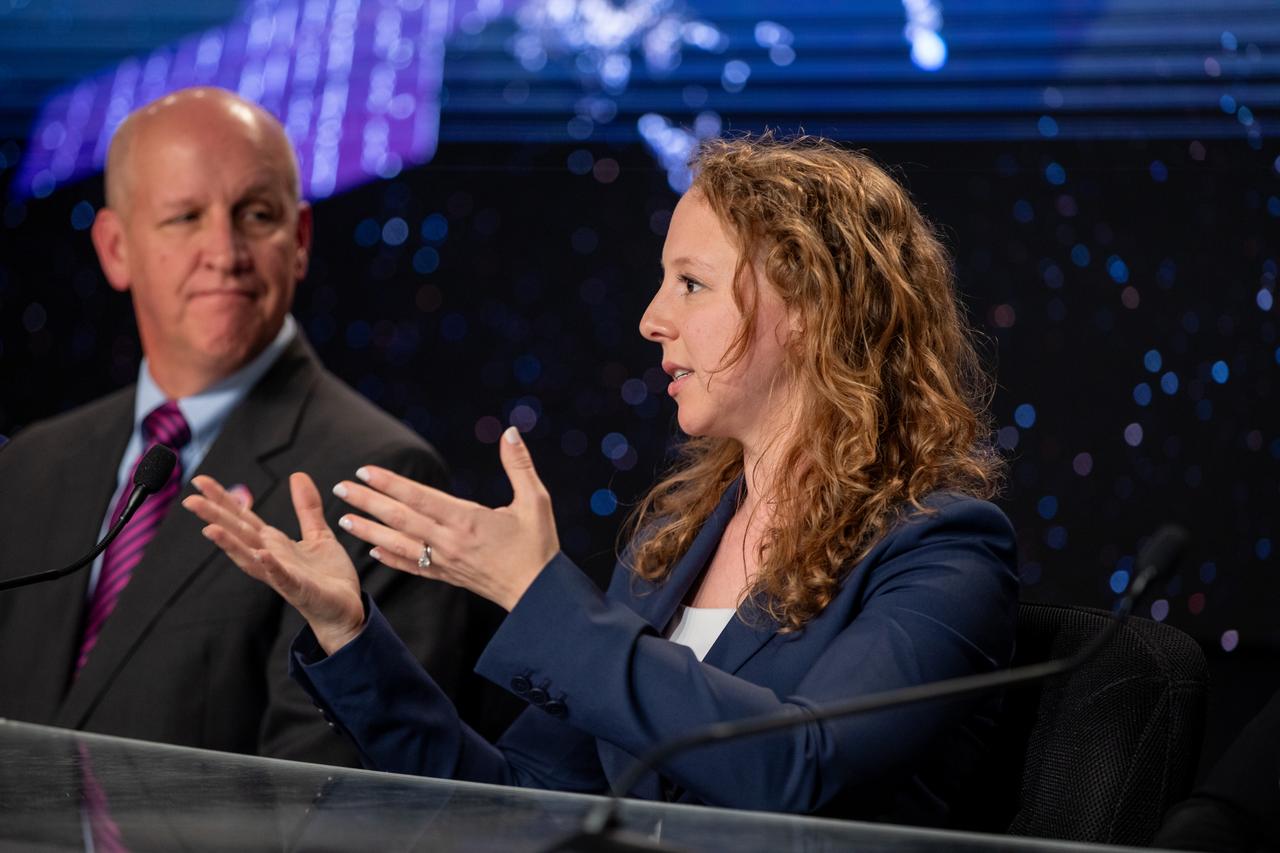
Julianna Scheiman, director, Civil Satellite Missions, SpaceX, addresses the media during a Psyche mission prelaunch news conference at NASA’s Kennedy Space Center in Florida on Wednesday, Oct. 11, 2023. To her left is Tim Dunn, senior launch director, NASA’s Launch Services Program. Psyche is the first mission to explore an asteroid with a surface that likely contains substantial amounts of metal rather than rock or ice. Liftoff of NASA’s Psyche spacecraft, atop a SpaceX Falcon Heavy rocket, is targeted for 10:16 a.m. EDT Thursday, Oct. 12, from Kennedy’s Launch Complex 39A.

Dan Shaver, chief counsel at NASA’s Kennedy Space Center in Florida, speaks at the fifth and final TED Talk-style informational session on Nov. 14, 2019, in the Kennedy Learning Institute. Sponsored by Kennedy’s Launching Leaders and Leadership for the Future, NASAtalks focuses on the topic of intentional careers and aims to provide employees with tools and knowledge that can be utilized for career growth. The theme of this session was organizations, and additional speakers included Kennedy’s Director of Engineering Shawn Quinn, Chief Technologist Barbara Brown and Tim Dunn, launch director for the agency’s Launch Services Program, with a skill-building section on vision by Mark Wiese, logistics element manager for the Gateway Program.
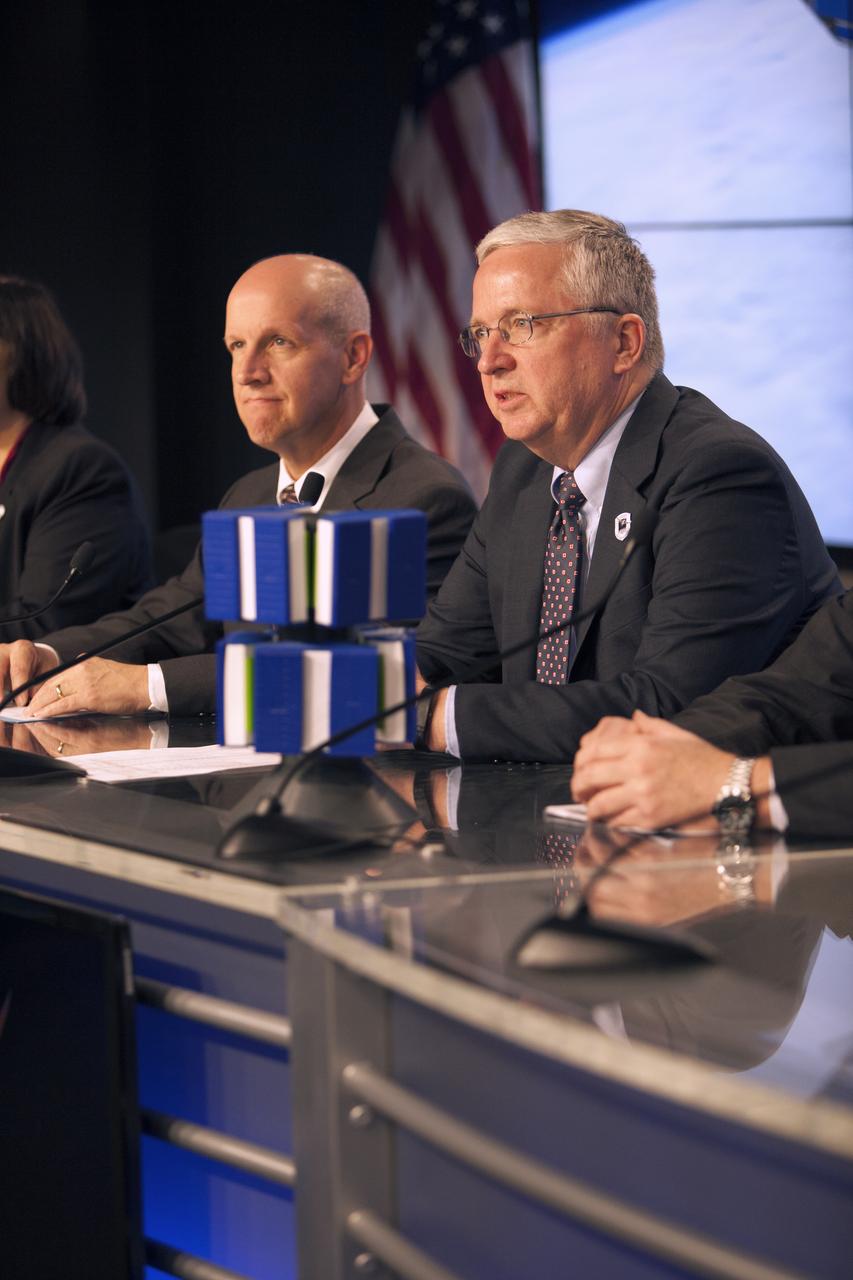
In the Kennedy Space Center’s Press Site auditorium, NASA and industry leaders speak to members of the media during a prelaunch news conference for the agency’s Cyclone Global Navigation Satellite System, or CYGNSS, spacecraft. From left are: Tim Dunn, NASA launch director at Kennedy; and Bryan Baldwin, Pegasus launch vehicle program manager for Orbital ATK, Dulles, Virginia. The eight CYGNSS satellites will make frequent and accurate measurements of ocean surface winds throughout the life cycle of tropical storms and hurricanes. The data will help scientists probe key air-sea interaction processes that take place near the core of storms, which are rapidly changing and play a crucial role in the beginning and intensification of hurricanes.
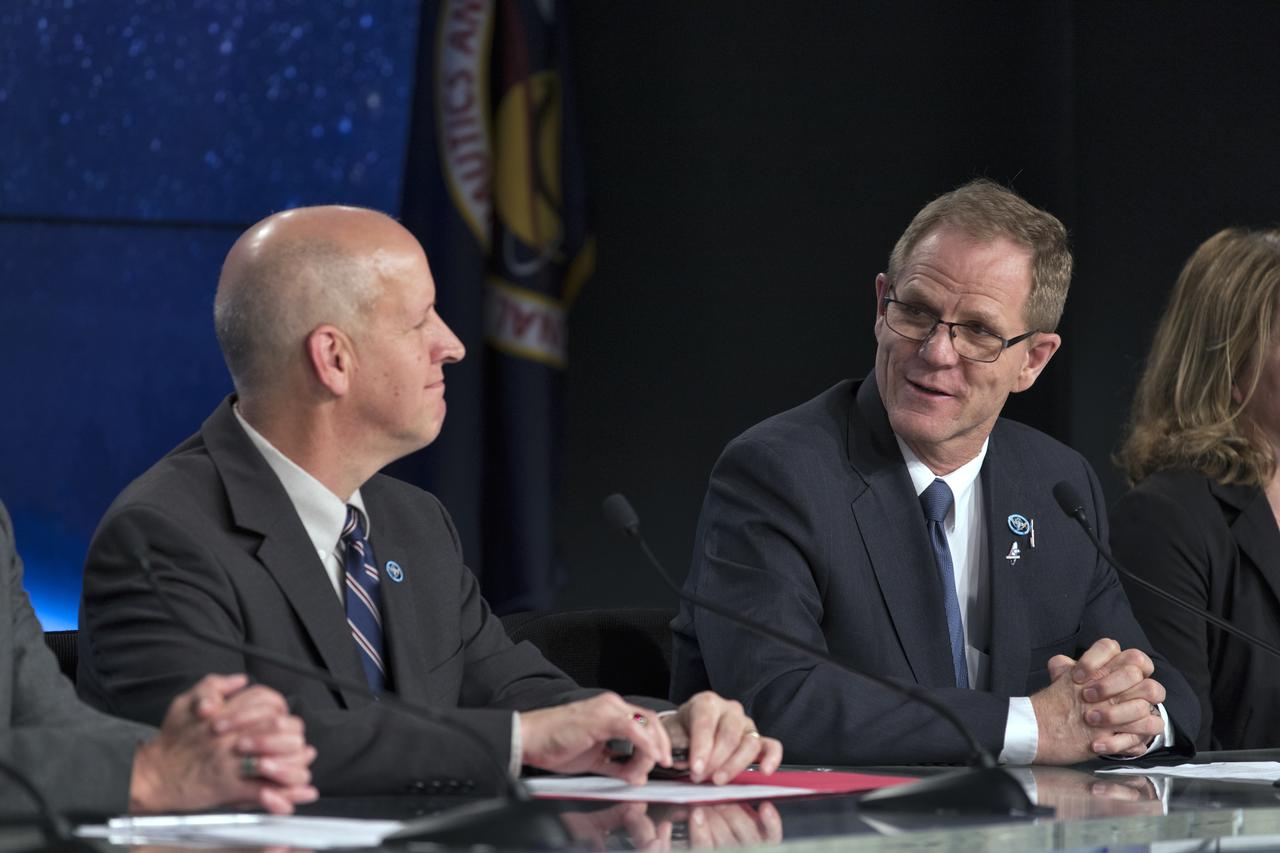
In the Kennedy Space Center's Press Site auditorium, Tim Dunn, NASA launch director at Kennedy, left, and Scott Messer, manager of NASA Programs for United launch Alliance, speak to members of the media at a prelaunch news conference about National Oceanic and Atmospheric Administration's, or NOAA's, Geostationary Operational Environmental Satellite, or GOES-S. The GOES series of satellites will significantly improve the detection and observation of environmental phenomena that directly affect public safety, protection of property and the nation's economic health and prosperity. GOES-S is slated to lift off at 5:02 p.m. EST on March 1, 2018 aboard a United Launch Alliance Atlas V rocket.
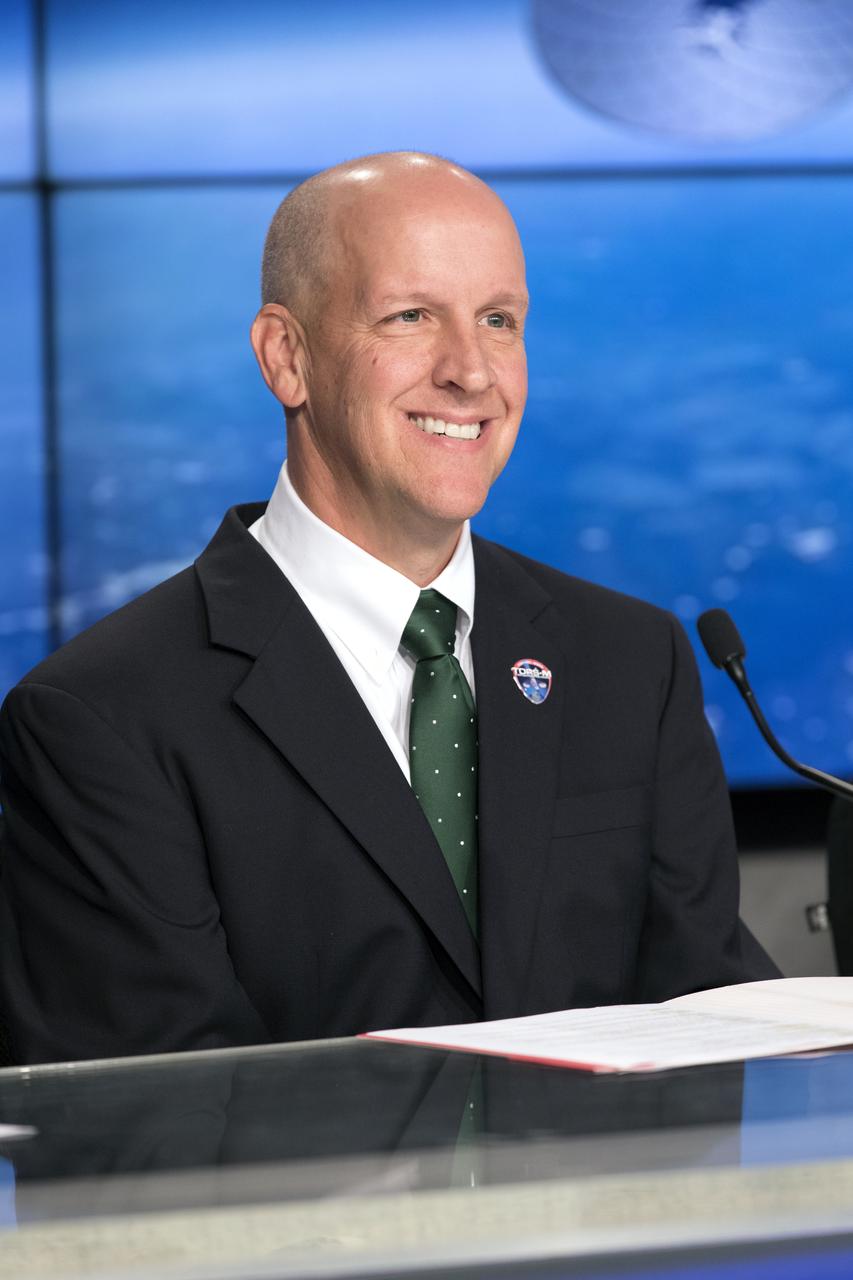
In the Kennedy Space Center's Press Site auditorium, Tim Dunn, launch director at NASA Kennedy, speaks to members of the media at a prelaunch news conference for NASA's Tracking and Data Relay Satellite, TDRS-M. It is the latest spacecraft destined for the agency's constellation of communications satellites that allows nearly continuous contact with orbiting spacecraft ranging from the International Space Station and Hubble Space Telescope to the array of scientific observatories. Liftoff atop a United Launch Alliance Atlas V rocket is scheduled to take place from Space Launch Complex 41 at Cape Canaveral Air Force Station at 8:03 a.m. EDT Aug. 18.
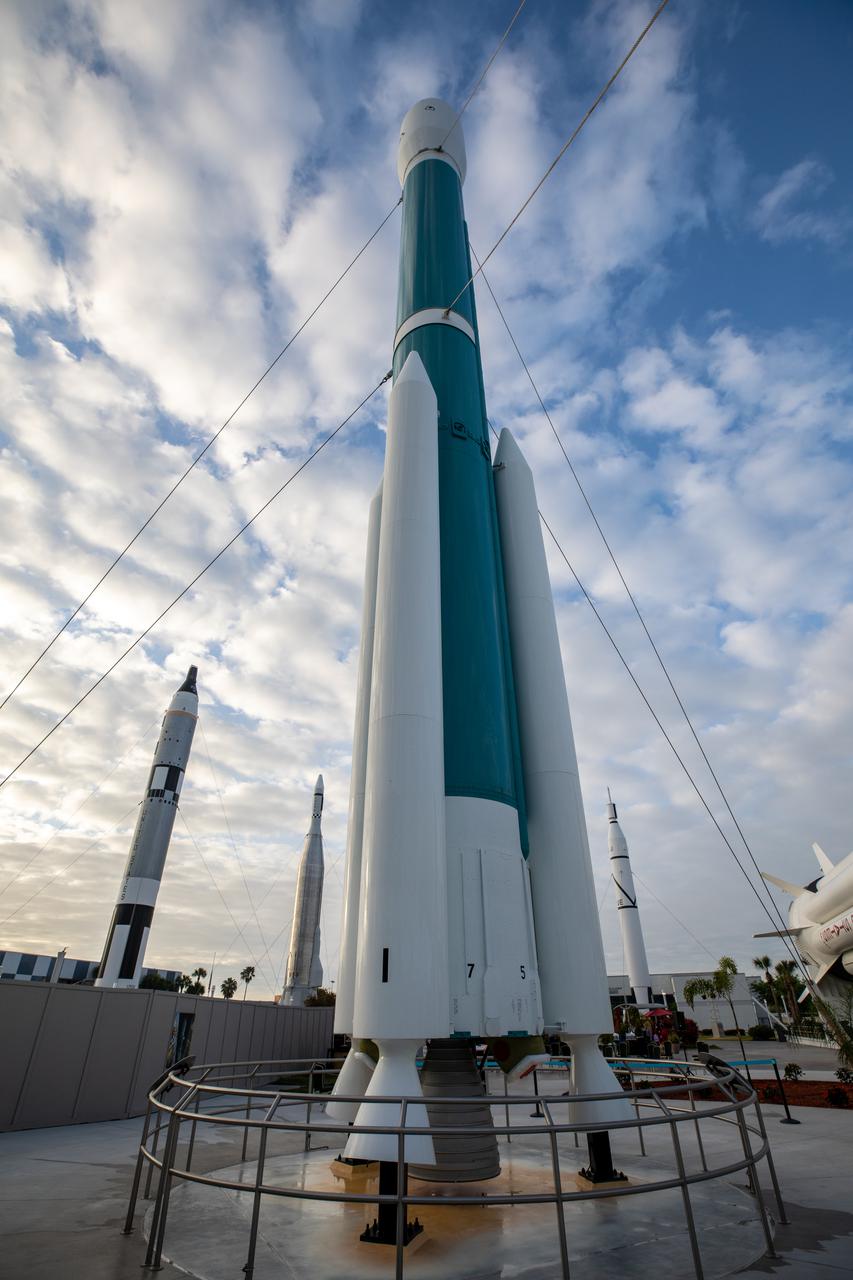
During a ribbon-cutting ceremony, the last United Launch Alliance Delta II rocket joins the lineup of historic launch vehicles in the Rocket Garden at the Kennedy Space Center Visitor Complex in Florida, on March 23, 2021. The Delta II rocket was a workhorse for NASA and civilian scientists, the U.S. military, and commercial clients throughout its almost 30 years of service. Since its first launch in 1989, the Delta II has launched 154 successful missions. NASA’s Launch Services Program launched the ICESat-2 spacecraft on the final Delta II launch for the agency on Sept. 15, 2018, from Vandenberg Air Force Base in California.
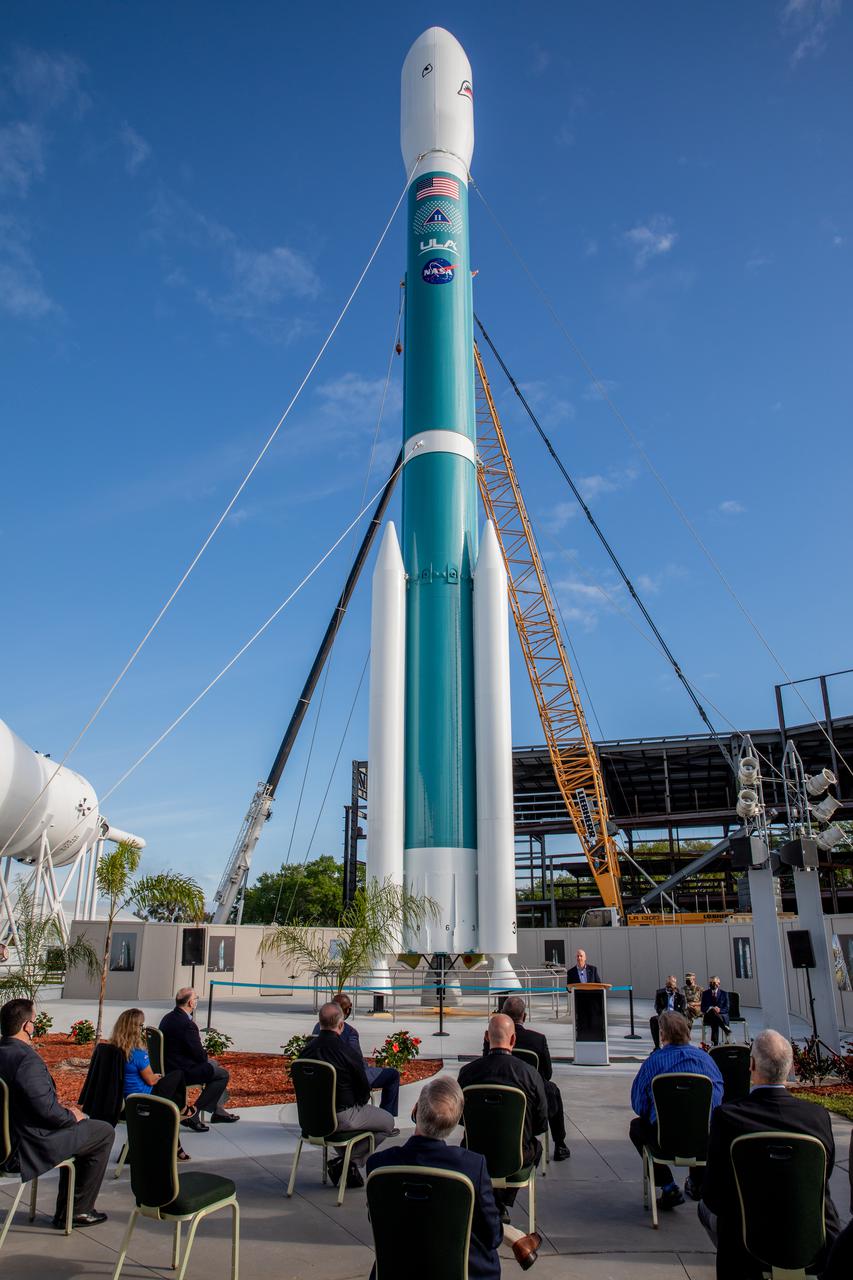
Guests attend a ribbon-cutting ceremony for the last United Launch Alliance Delta II rocket as it joins the lineup of historic launch vehicles in the Rocket Garden at the Kennedy Space Center Visitor Complex in Florida, on March 23, 2021. The Delta II rocket was a workhorse for NASA and civilian scientists, the U.S. military, and commercial clients throughout its almost 30 years of service. Since its first launch in 1989, the Delta II has launched 154 successful missions. NASA’s Launch Services Program launched the ICESat-2 spacecraft on the final Delta II launch on Sept. 15, 2018, from Vandenberg Air Force Base in California.
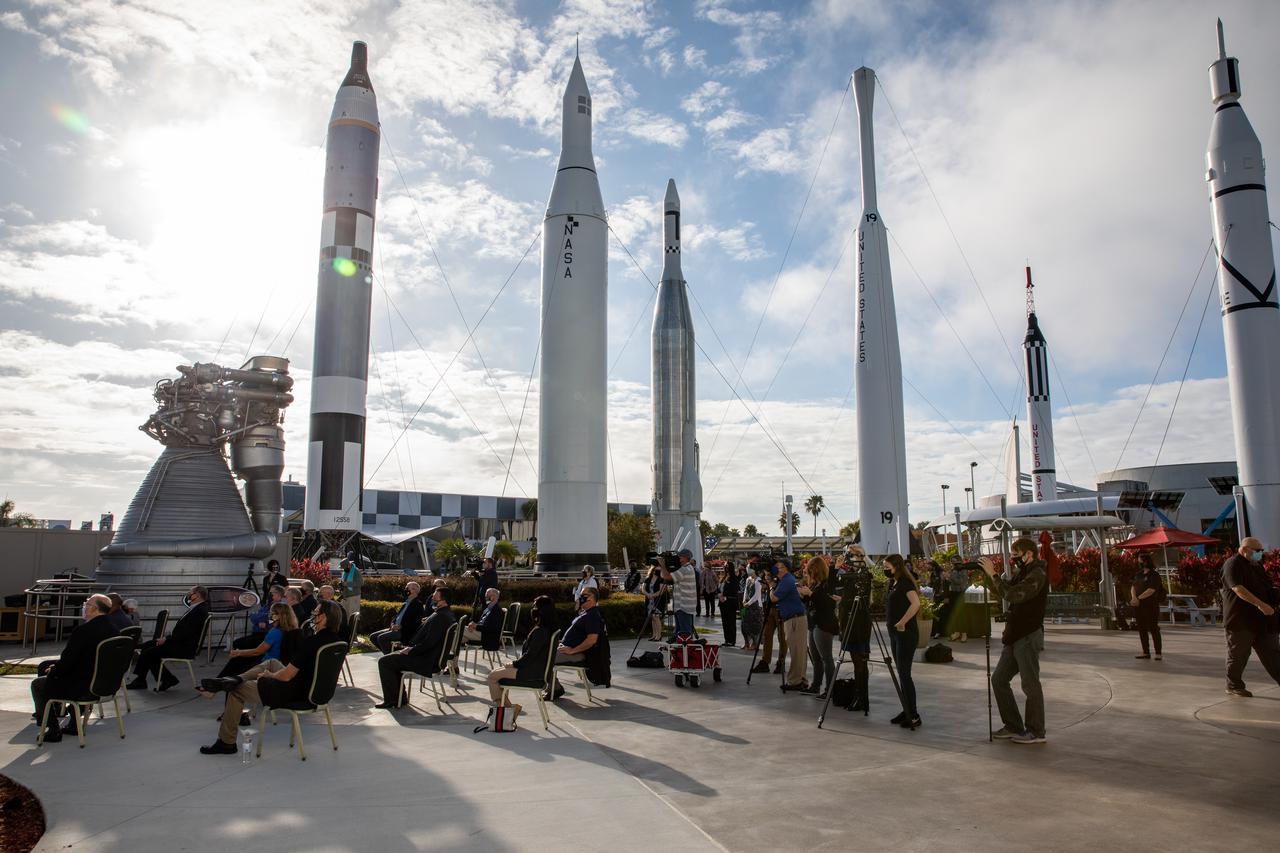
Guests attend a ribbon-cutting ceremony to welcome the last United Launch Alliance Delta II rocket to the lineup of historic launch vehicles in the Rocket Garden at the Kennedy Space Center Visitor Complex in Florida, on March 23, 2021. The Delta II rocket was a workhorse for NASA and civilian scientists, the U.S. military, and commercial clients throughout its almost 30 years of service. Since its first launch in 1989, the Delta II has launched 154 successful missions. NASA’s Launch Services Program launched the ICESat-2 spacecraft on the final Delta II launch on Sept. 15, 2018, from Vandenberg Air Force Base in California.
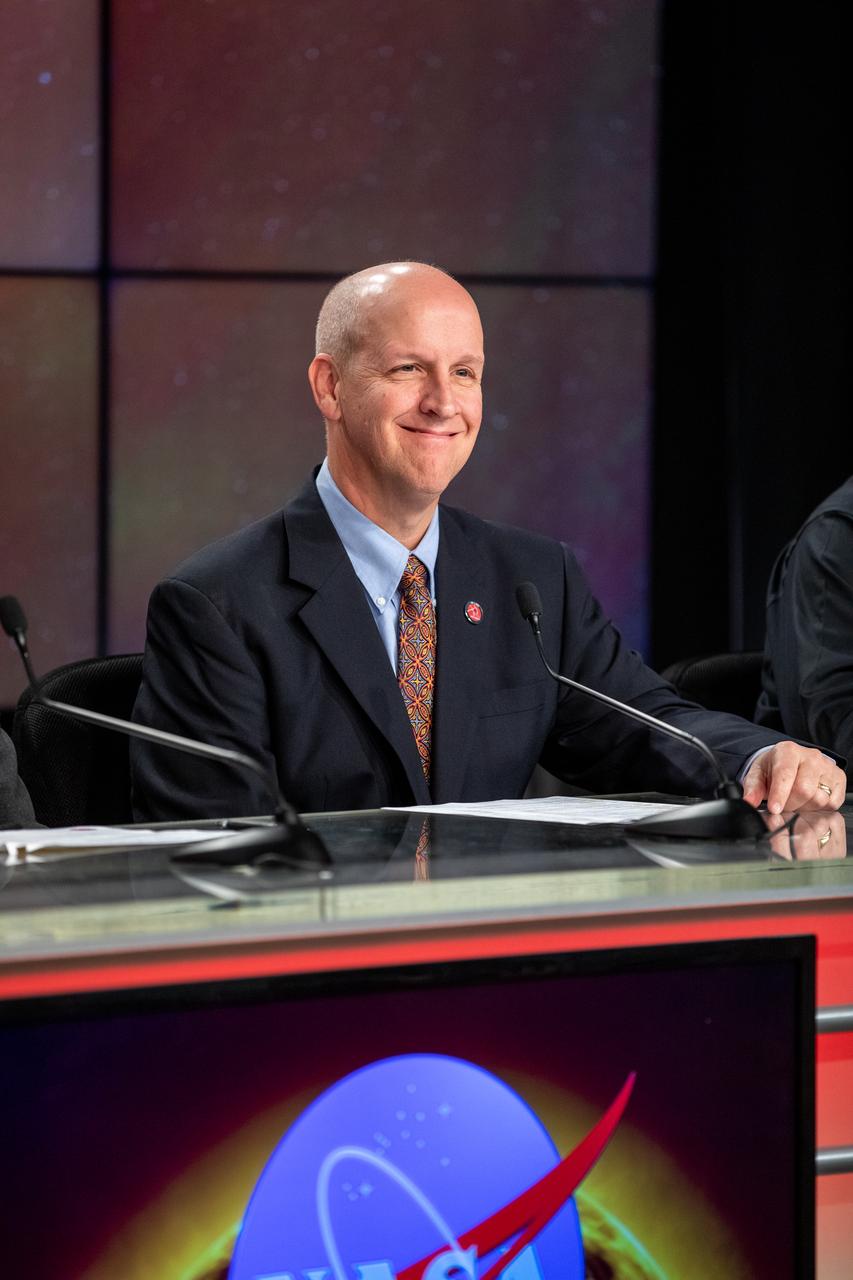
Tim Dunn, launch director, NASA Launch Services Program, participates in a prelaunch news conference for the Solar Orbiter mission at NASA’s Kennedy Space Center in Florida on Feb. 7, 2020. Solar Orbiter is an international cooperative mission between ESA (European Space Agency) and NASA. The mission aims to study the Sun, its outer atmosphere and solar wind. The spacecraft will provide the first images of the Sun’s poles. The spacecraft was developed by Airbus Defence and Space. NASA’s Launch Services Program based at Kennedy is managing the launch. Solar Orbiter will launch aboard a United Launch Alliance Atlas V rocket on Feb. 9, 2020, from Space Launch Complex 41 at Cape Canaveral Air Force Station.
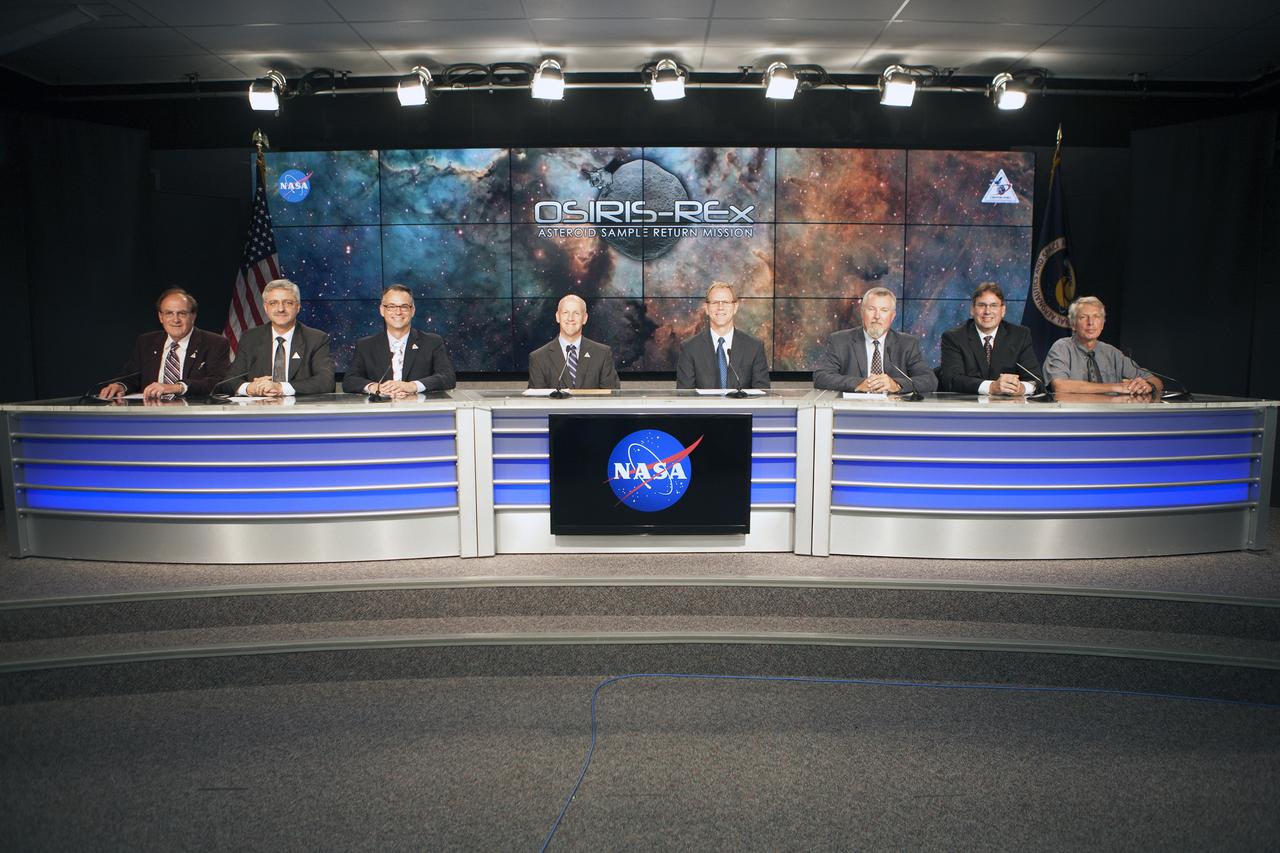
In the Kennedy Space Center’s Press Site auditorium, NASA and industry leaders speak to members of the media at a prelaunch news conference for the agency’s Origins, Spectral Interpretation, Resource Identification, Security-Regolith Explorer, or OSIRIS-REx spacecraft. From left are: George Diller of NASA Communications; Geoffrey Yoder, acting associate administrator of NASA’s Science Mission Directorate in Washington; Dante Lauretta, OSIRIS-REx principal investigator at the University of Arizona, Tucson; Tim Dunn, NASA launch manager at Kennedy; Scott Messer, program manager for NASA missions at United Launch Alliance in Centennial, Colorado; Michael Donnelly, OSIRIS-REx project manager at NASA’s Goddard Space Flight Center in Greenbelt, Maryland; Rich Kuhns, OSIRIS-REx program manager for Lockheed Martin Space Systems in Denver; and Clay Flinn, launch weather officer for the 45th Weather Squadron at Cape Canaveral Air Force Station, Florida.
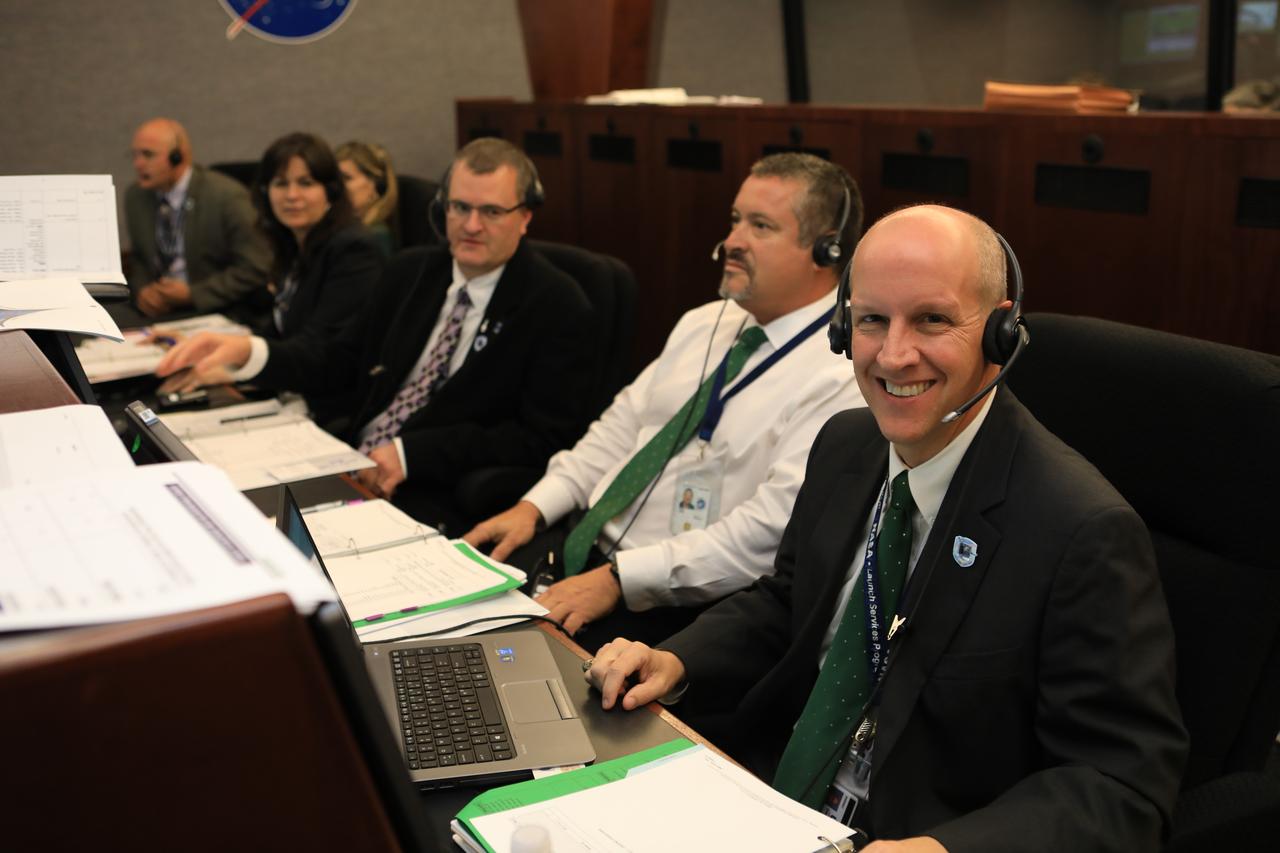
In the Mission Director's Center at Cape Canaveral Air Force Station, Omar Baez, a senior launch director in NASA's Launch Services Program at the agency's Kennedy Space Center in Florida, center, monitors the progress of preparations to launch eight Cyclone Global Navigation Satellite System, or CYGNSS, spacecraft. Seated to his left, facing the camera, is Tim Dunn, launch director for the CYGNSS mission. The CYGNSS satellites will make frequent and accurate measurements of ocean surface winds throughout the life cycle of tropical storms and hurricanes. The data that CYGNSS provides will enable scientists to probe key air-sea interaction processes that take place near the core of storms, which are rapidly changing and play a crucial role in the beginning and intensification of hurricanes.
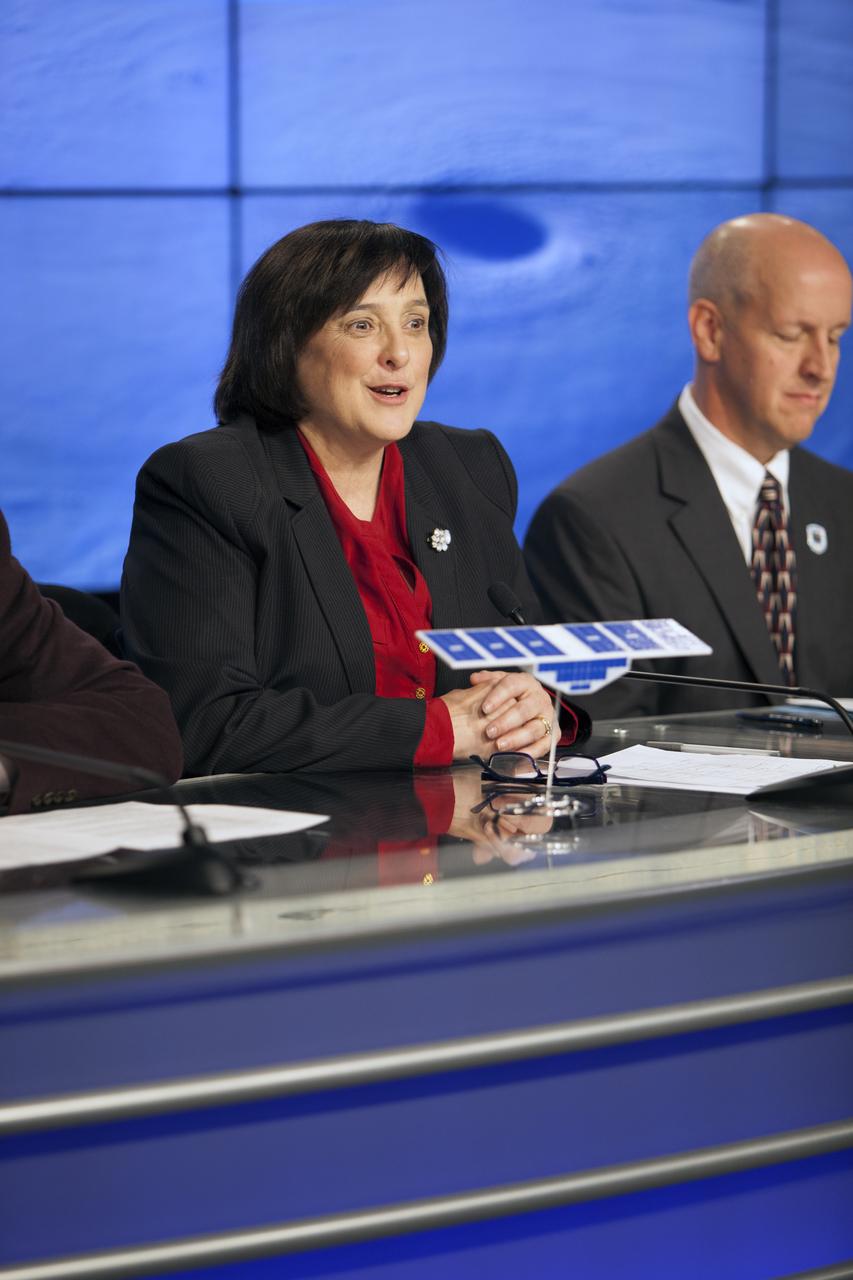
In the Kennedy Space Center’s Press Site auditorium, NASA and industry leaders speak to members of the media during a prelaunch news conference for the agency’s Cyclone Global Navigation Satellite System, or CYGNSS, spacecraft. From left are: Christine Bonniksen, CYGNSS program executive in the Earth Science Division of the Science Mission Directorate at NASA Headquarters in Washington, D.C.; and Tim Dunn, NASA launch director at Kennedy. The eight CYGNSS satellites will make frequent and accurate measurements of ocean surface winds throughout the life cycle of tropical storms and hurricanes. The data will help scientists probe key air-sea interaction processes that take place near the core of storms, which are rapidly changing and play a crucial role in the beginning and intensification of hurricanes.
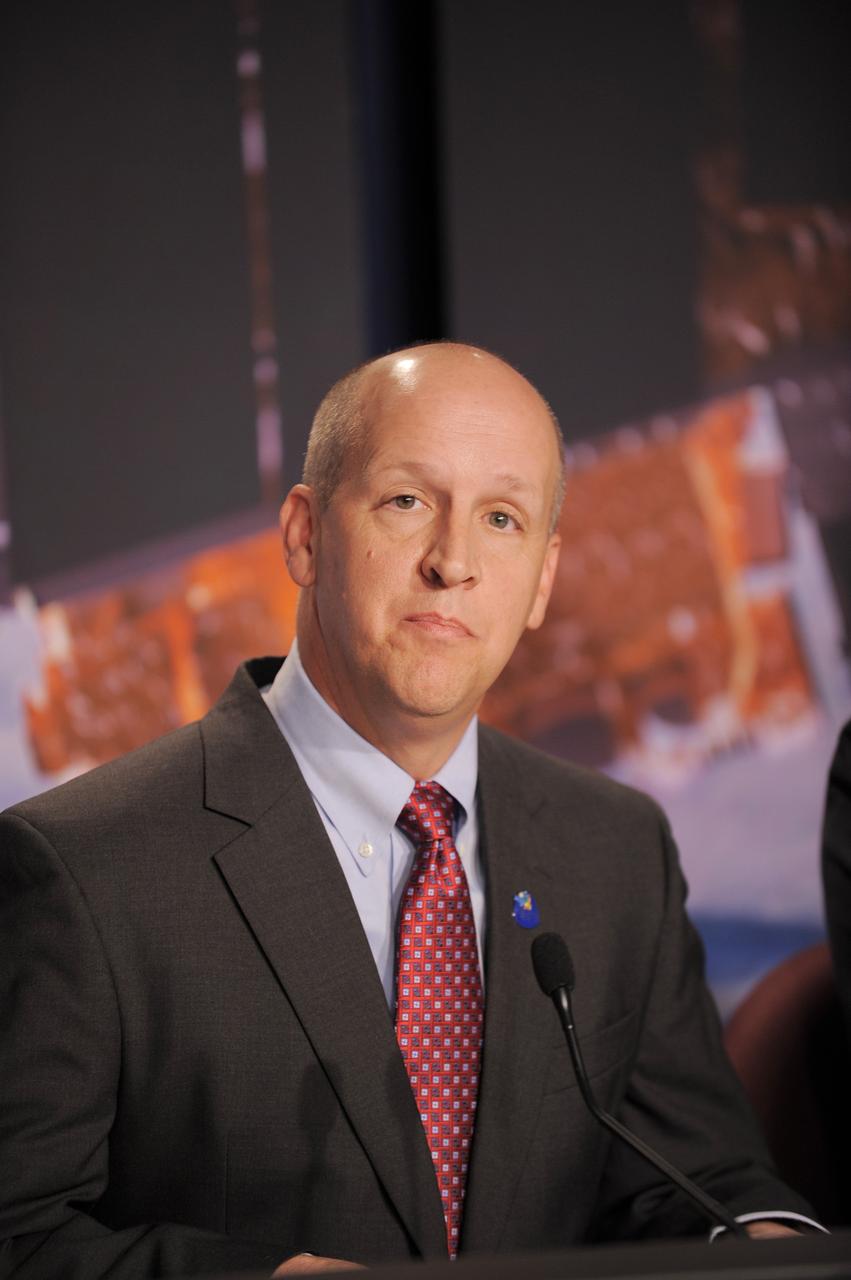
VANDENBERG AIR FORCE BASE, Calif. -- Tim Dunn, NASA launch director, Kennedy Space Center, Fla., participates in the prelaunch news conference at Vandenberg Air Force Base, Calif., for NASA’s National Polar-orbiting Operational Environmental Satellite System Preparatory Project (NPP) spacecraft. NPP represents a critical first step in building the next-generation of Earth-observing satellites. NPP will carry the first of the new sensors developed for this satellite fleet, now known as the Joint Polar Satellite System (JPSS), to be launched in 2016. NPP is the bridge between NASA's Earth Observing System (EOS) satellites and the forthcoming series of JPSS satellites. The mission will test key technologies and instruments for the JPSS missions. NPP is targeted to launch Oct. 28 from Space Launch Complex-2 aboard a United Launch Alliance Delta II rocket. For more information, visit http://www.nasa.gov/NPP. Photo credit: NASA/VAFB
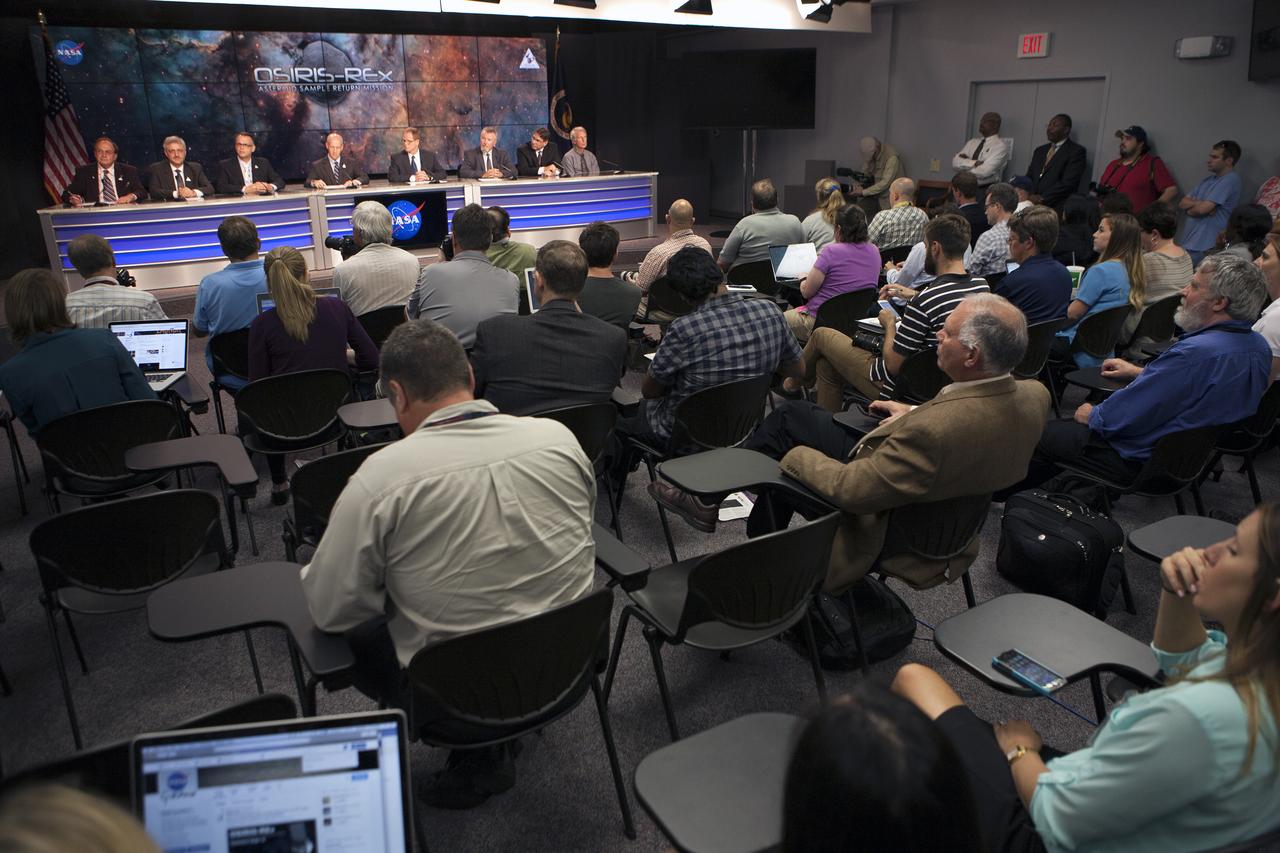
In the Kennedy Space Center’s Press Site auditorium, NASA and industry leaders speak to members of the media at a prelaunch news conference for the agency’s Origins, Spectral Interpretation, Resource Identification, Security-Regolith Explorer, or OSIRIS-REx spacecraft. From left are: George Diller of NASA Communications; Geoffrey Yoder, acting associate administrator of NASA’s Science Mission Directorate in Washington; Dante Lauretta, OSIRIS-REx principal investigator at the University of Arizona, Tucson; Tim Dunn, NASA launch manager at Kennedy; Scott Messer, program manager for NASA missions at United Launch Alliance in Centennial, Colorado; Michael Donnelly, OSIRIS-REx project manager at NASA’s Goddard Space Flight Center in Greenbelt, Maryland; Rich Kuhns, OSIRIS-REx program manager for Lockheed Martin Space Systems in Denver; and Clay Flinn, launch weather officer for the 45th Weather Squadron at Cape Canaveral Air Force Station, Florida.
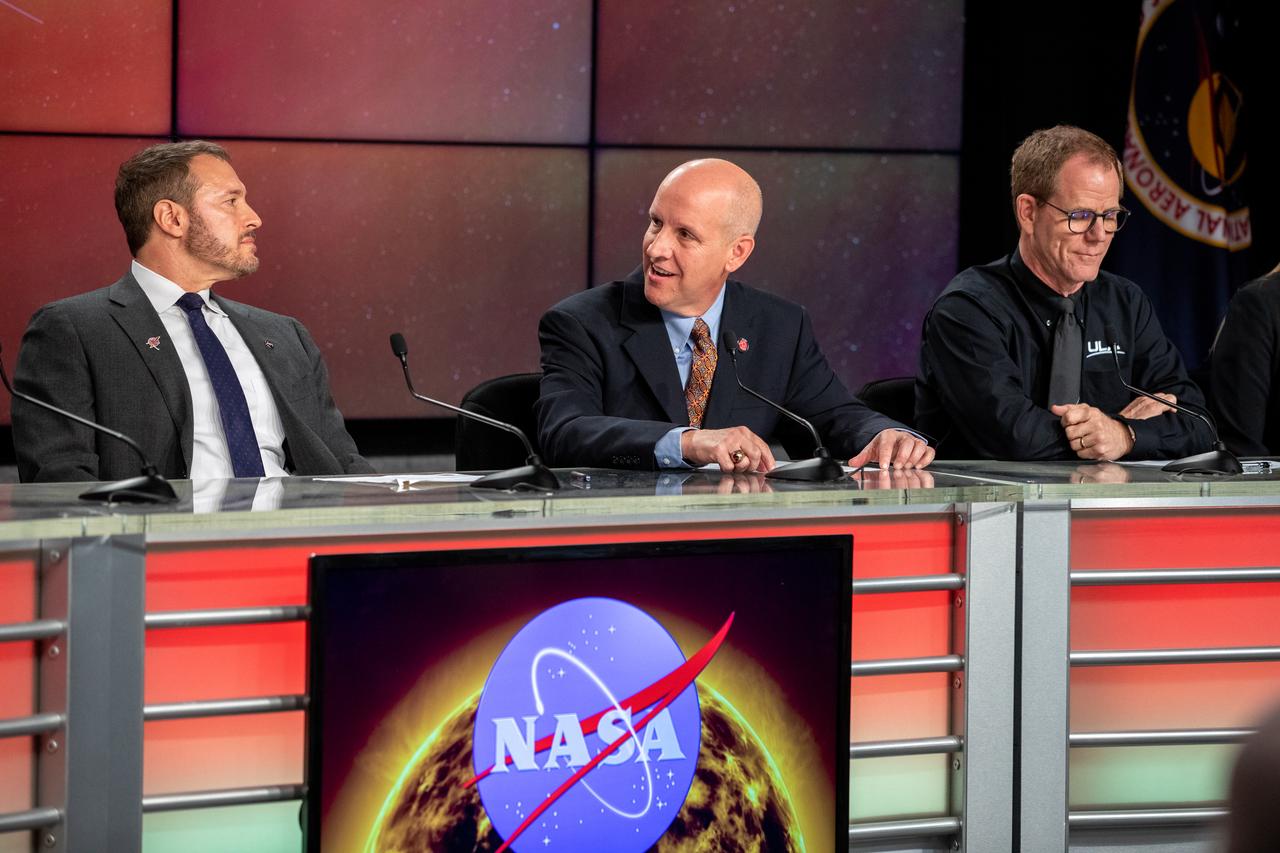
From left, Alan Zide, Solar Orbiter Program executive, NASA Headquarters; Tim Dunn, launch director, NASA Launch Services Program (LSP); and Scott Messer, NASA LSP Program Manager, United Launch Alliance, participate in a prelaunch news conference for the Solar Orbiter mission at NASA’s Kennedy Space Center in Florida on Feb. 7, 2020. Solar Orbiter is an international cooperative mission between ESA (European Space Agency) and NASA. The mission aims to study the Sun, its outer atmosphere and solar wind. The spacecraft will provide the first images of the Sun’s poles. The spacecraft was developed by Airbus Defence and Space. NASA’s Launch Services Program based at Kennedy is managing the launch. Solar Orbiter will launch aboard a United Launch Alliance Atlas V rocket on Feb. 9, 2020, from Space Launch Complex 41 at Cape Canaveral Air Force Station.
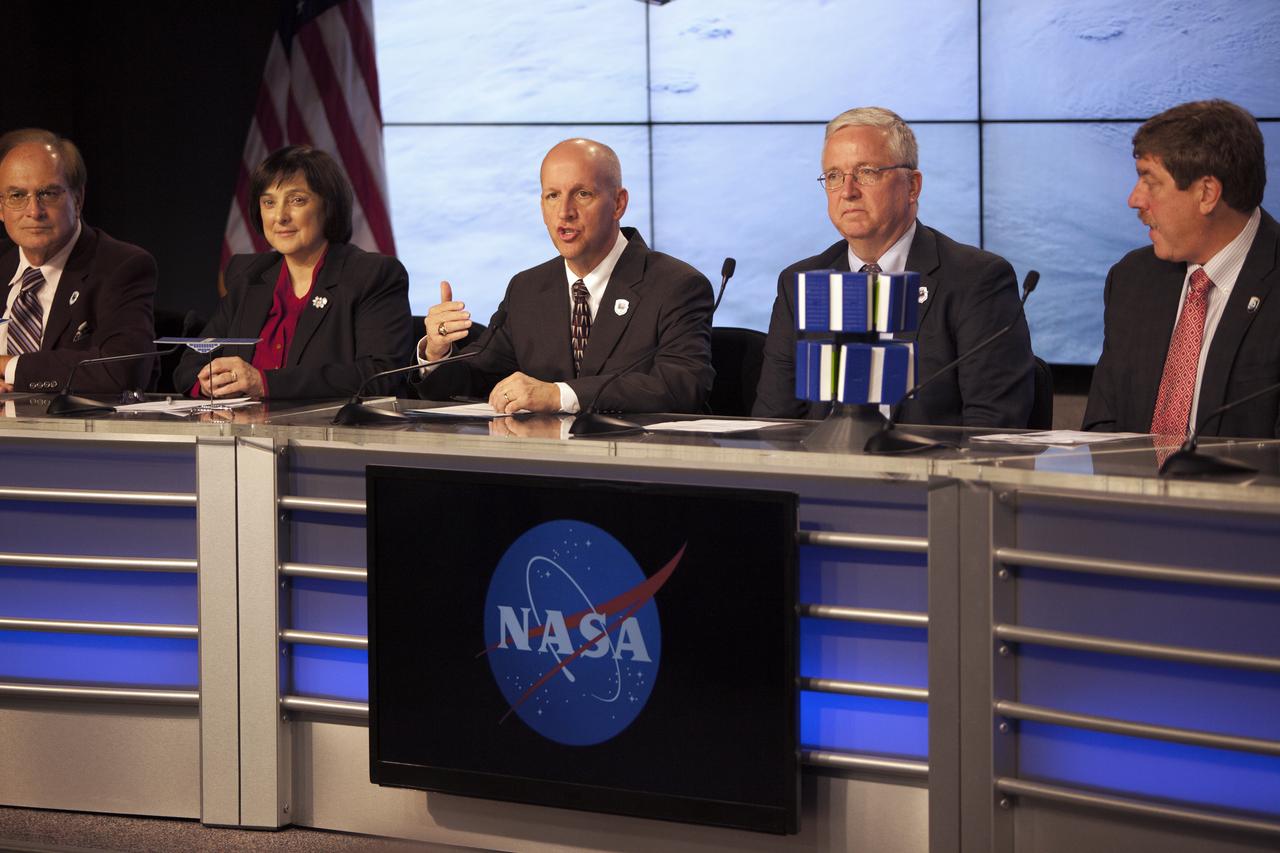
In the Kennedy Space Center’s Press Site auditorium, NASA and industry leaders speak to members of the media during a prelaunch news conference for the agency’s Cyclone Global Navigation Satellite System, or CYGNSS, spacecraft. From left are: George Diller of NASA Communications; Christine Bonniksen, CYGNSS program executive in the Earth Science Division of the Science Mission Directorate at NASA Headquarters in Washington, D.C.; Tim Dunn, NASA launch director at Kennedy; Bryan Baldwin, Pegasus launch vehicle program manager for Orbital ATK, Dulles, Virginia; and John Scherrer, CYGNSS project manager for the Southwest Research Institute in San Antonio, Texas. The eight CYGNSS satellites will make frequent and accurate measurements of ocean surface winds throughout the life cycle of tropical storms and hurricanes. The data will help scientists probe key air-sea interaction processes that take place near the core of storms, which are rapidly changing and play a crucial role in the beginning and intensification of hurricanes.
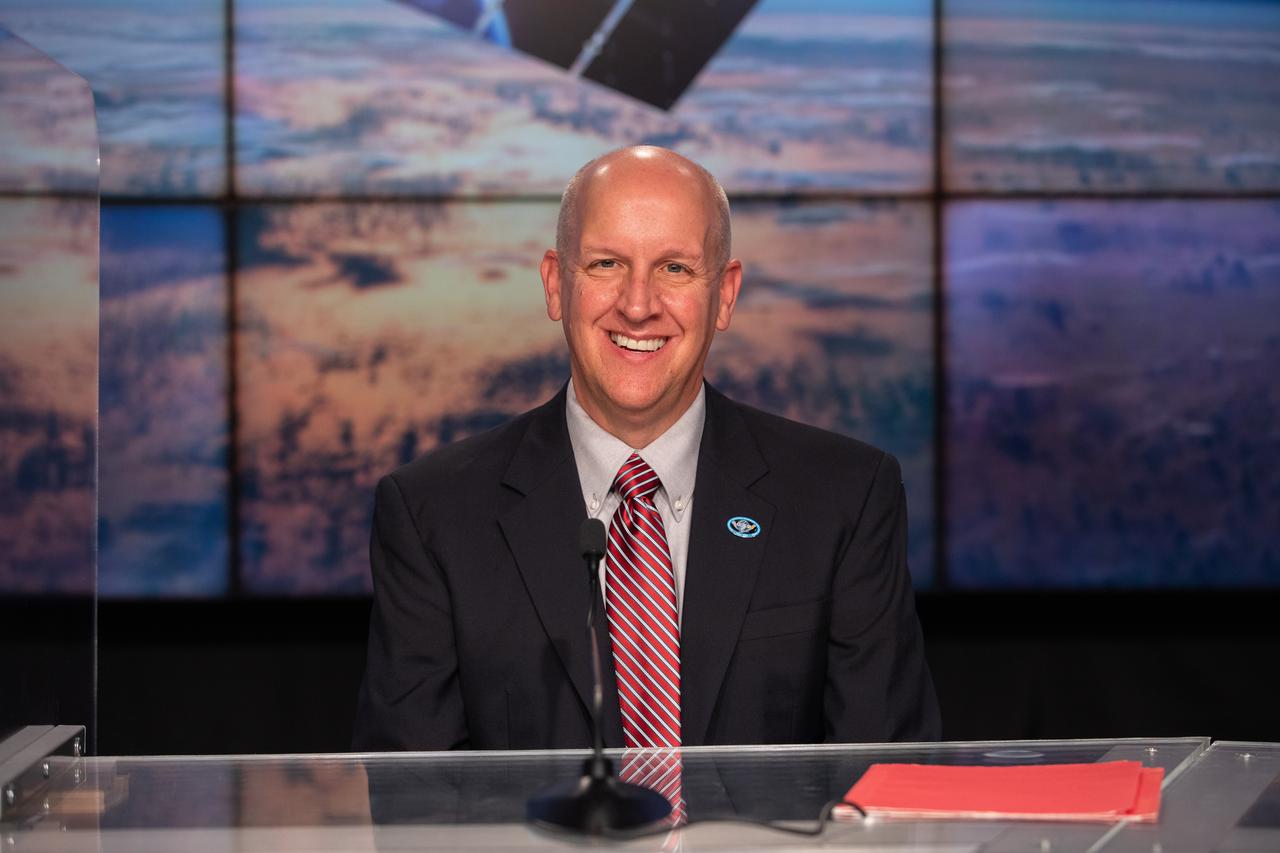
A prelaunch news conference for the National Oceanic and Atmospheric Administration’s (NOAA) Geostationary Operational Environmental Satellite-T (GOES-T) is held on Feb. 26, 2022, at NASA’s Kennedy Space Center in Florida. Tim Dunn, launch director for NASA’s Launch Services Program at Kennedy answers questions during the briefing. GOES-T is scheduled to lift off on a United Launch Alliance Atlas V 541 rocket from Space Launch Complex 41 at Cape Canaveral Space Force Station in Florida on March 1, 2022, at 4:38 p.m. GOES-T is the third satellite in the GOES-R series that will continue to help meteorologists observe and predict local weather events that affect public safety. The launch is being managed by NASA’s Launch Services Program based at Kennedy Space Center in Florida, America’s multi-user spaceport.
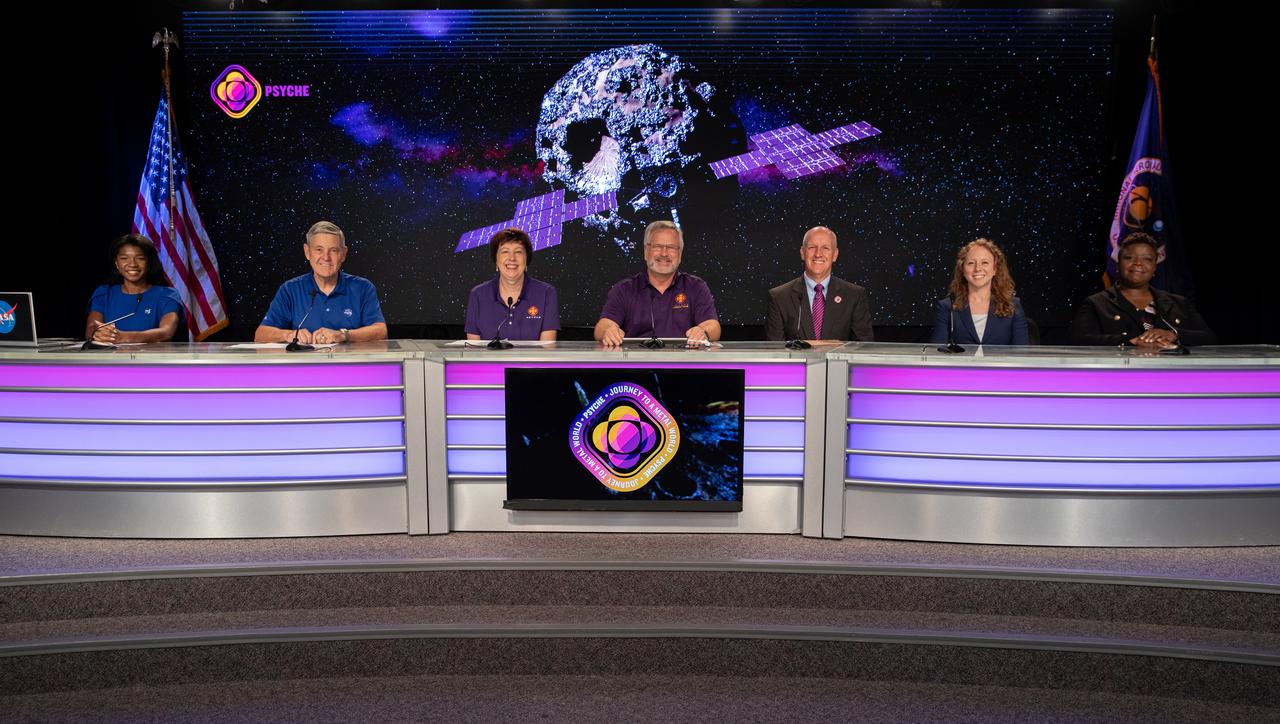
A Psyche mission prelaunch news conference takes place at NASA’s Kennedy Space Center in Florida on Wednesday, Oct. 11, 2023. From left, participants are: Jasmine Hopkins, NASA Communications; NASA Associate Administrator Bob Cabana; Nicola Fox, associate administrator, NASA’s Science Mission Directorate; Henry Stone, Psyche project manager, NASA’s Jet Propulsion Laboratory; Tim Dunn, senior launch director, NASA’s Launch Services Program; Julianna Scheiman, director, Civil Satellite Missions, SpaceX; and Arlena Moses, launch weather officer, U.S. Space Force. Psyche is the first mission to explore an asteroid with a surface that likely contains substantial amounts of metal rather than rock or ice. Liftoff of NASA’s Psyche spacecraft, atop a SpaceX Falcon Heavy rocket, is targeted for 10:16 a.m. EDT Thursday, Oct. 12, from Kennedy’s Launch Complex 39A.
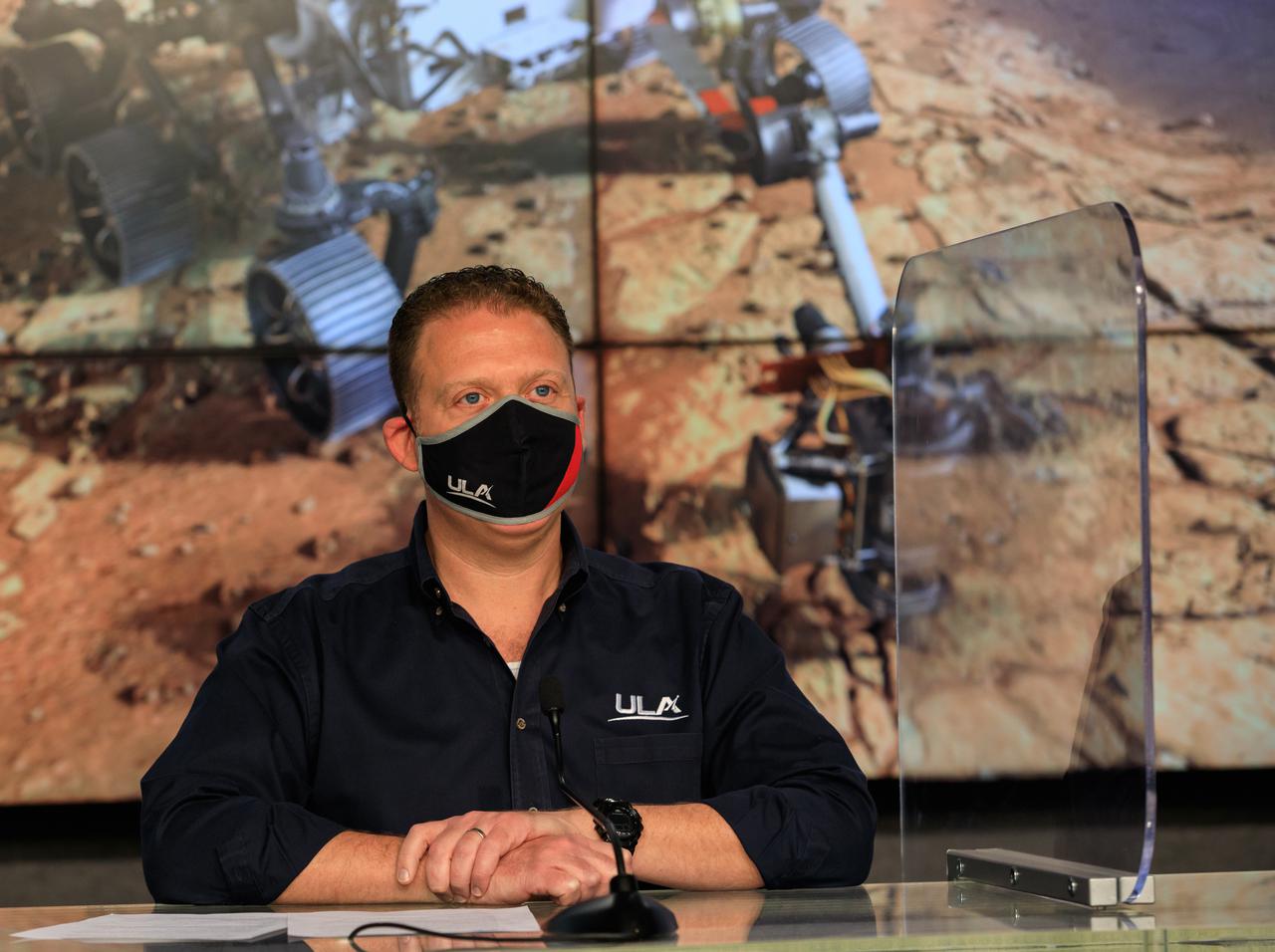
United Launch Alliance (ULA) Launch Conductor Dillon Rice participates in a Mars 2020 Facebook live event inside the Press Site auditorium at NASA’s Kennedy Space Center in Florida on Feb. 12, 2021. During the event, Rice and Tim Dunn, launch director for NASA’s Launch Services Program (LSP), discussed the partnership between ULA and LSP, as well as major milestones that led to the Mars 2020 launch, and how launches to Mars have changed over time. NASA’s Mars Perseverance rover lifted off from Cape Canaveral Space Force Station’s Space Launch Complex 41 on July 30, 2020, and is slated to touch down on the Red Planet Feb. 18, 2021.
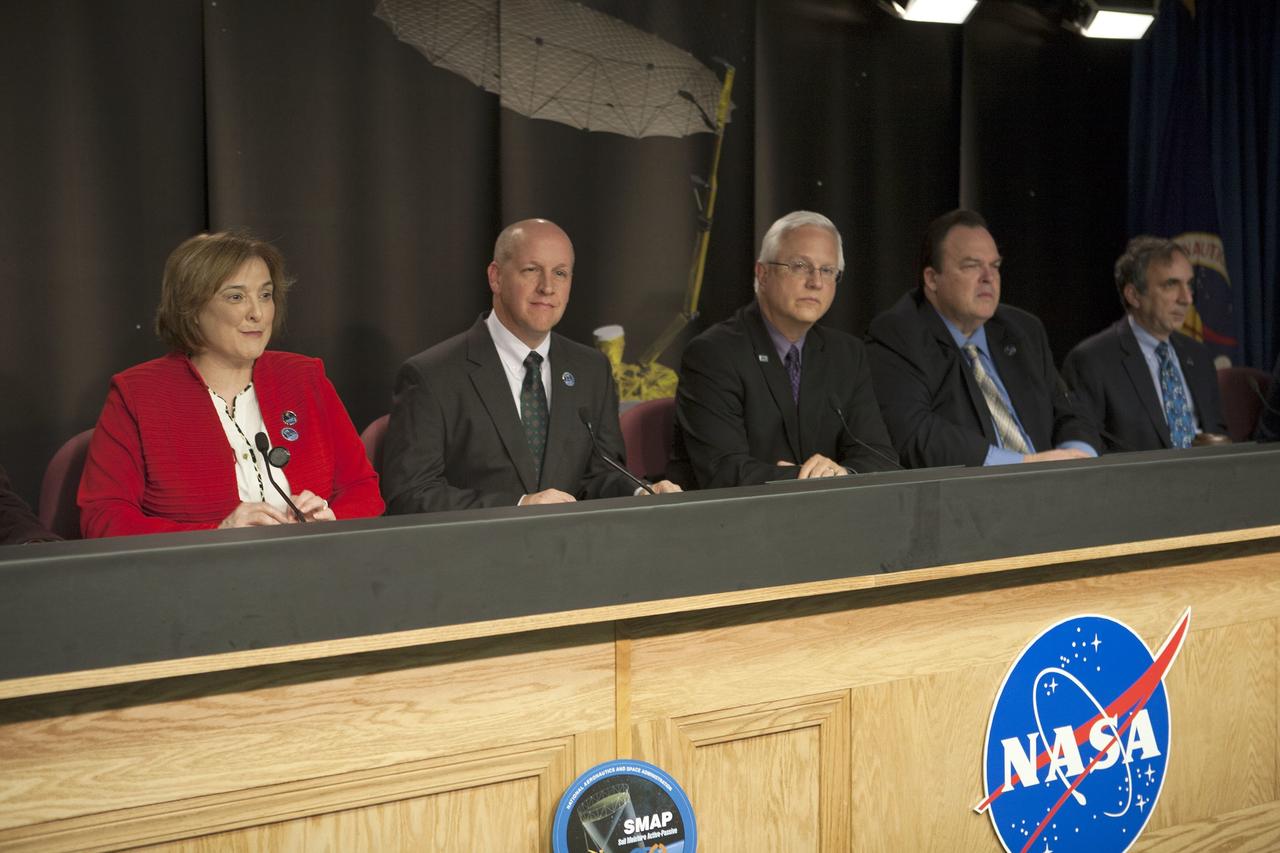
VANDENBERG AIR FORCE BASE, California – At Vandenberg Air Force Base, California, agency and industry leaders spoke to members of the news media as the Soil Moisture Active Passive, or SMAP, satellite and its Delta II rocket were being prepared for launch. From left are: Christine Bonniksen, SMAP program executive at NASA Headquarters, Tim Dunn, NASA launch manager at Kennedy Space Center, Florida, Vern Thorp, program manager for NASA Missions for United Launch Alliance in Centennial, Colorado, Kent Kellogg, SMAP Project manager at the Jet Propulsion Laboratory in Pasadena, California, Dara Entekhabi, SMAP science team leader at the Massachusetts Institute of Technology in Cambridge, Massachusetts, and 1st Lt. John Martin, launch weather officer, 30th Operations Support Squadron at Vandenberg. Photo credit: NASA/Kim Shiflett

VANDENBERG AIR FORCE BASE, California – At Vandenberg Air Force Base, California, agency and industry leaders spoke to members of the news media as the Soil Moisture Active Passive, or SMAP, satellite and its Delta II rocket were being prepared for launch. From left are: George Diller of NASA Public Affairs, Christine Bonniksen, SMAP program executive at NASA Headquarters, Tim Dunn, NASA launch manager at Kennedy Space Center, Florida Vern Thorp, program manager for NASA Missions for United Launch Alliance in Centennial, Colorado, Kent Kellogg, SMAP Project manager at the Jet Propulsion Laboratory in Pasadena, California, Dara Entekhabi, SMAP science team leader at the Massachusetts Institute of Technology in Cambridge, Massachusetts, and 1st Lt. John Martin, launch weather officer, 30th Operations Support Squadron at Vandenberg. Photo credit: NASA/Kim Shiflett
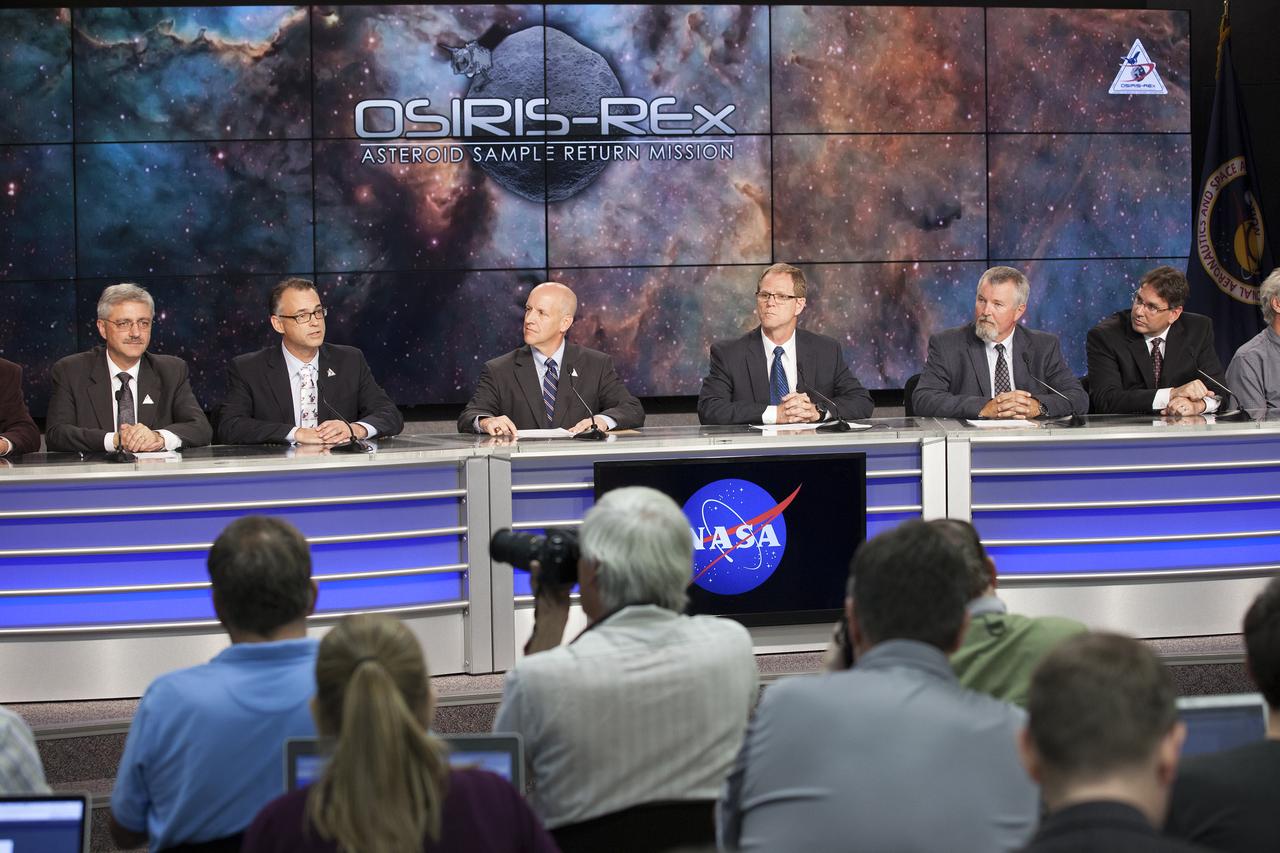
In the Kennedy Space Center’s Press Site auditorium, NASA and industry leaders speak to members of the media at a prelaunch news conference for the agency’s Origins, Spectral Interpretation, Resource Identification, Security-Regolith Explorer, or OSIRIS-REx spacecraft. From left are: Geoffrey Yoder, acting associate administrator of NASA’s Science Mission Directorate in Washington; Dante Lauretta, OSIRIS-REx principal investigator at the University of Arizona, Tucson; Tim Dunn, NASA launch manager at Kennedy; Scott Messer, program manager for NASA missions at United Launch Alliance in Centennial, Colorado; Michael Donnelly, OSIRIS-REx project manager at NASA’s Goddard Space Flight Center in Greenbelt, Maryland; and Rich Kuhns, OSIRIS-REx program manager for Lockheed Martin Space Systems in Denver.
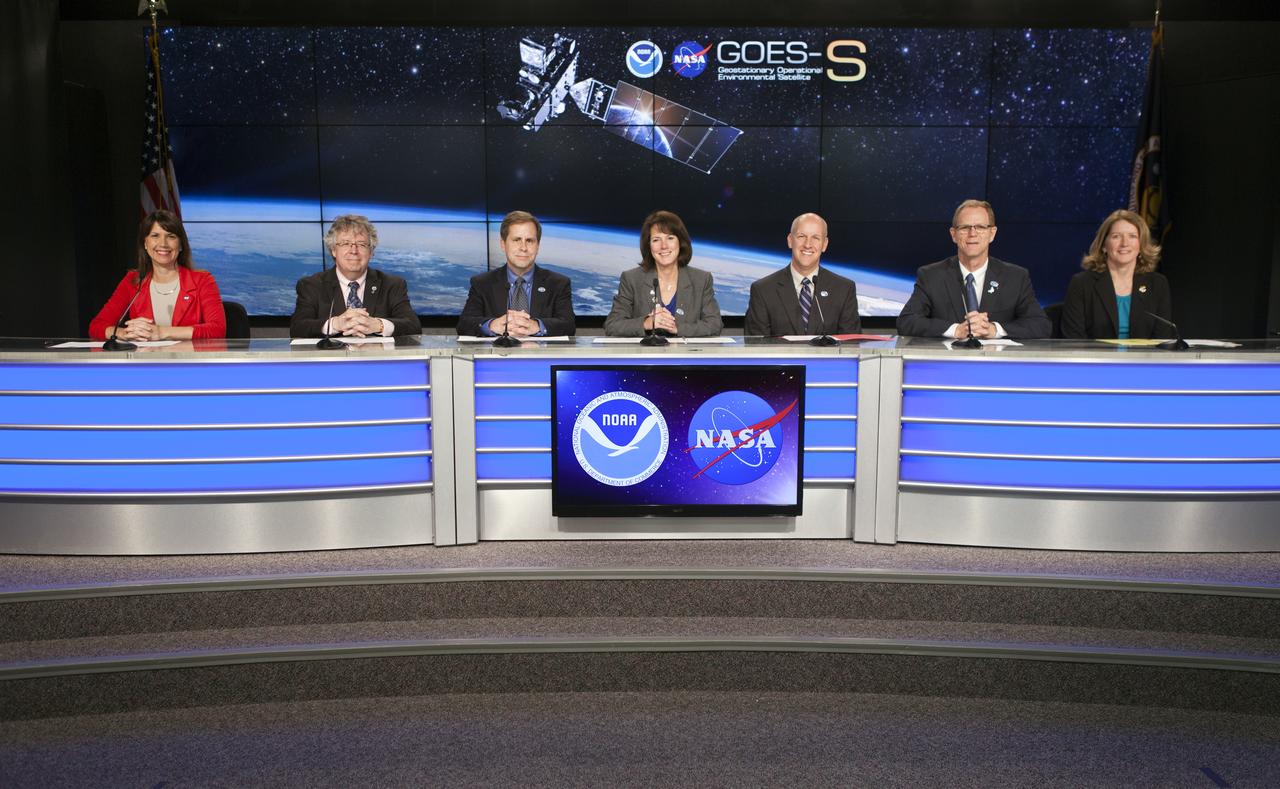
In the Kennedy Space Center's Press Site auditorium, NASA and industry leaders speak to members of the media at a prelaunch news conference about National Oceanic and Atmospheric Administration's, or NOAA's, Geostationary Operational Environmental Satellite, or GOES-S. Participants from left are: Tori McLendon of NASA Communications; Stephen Volz, director for Satellite and Information Services for NOAA; Tim Walsh, acting GOES-R System Program director for NOAA; Sandra Smalley, director of the Joint Agency Satellite Division at NASA Headquarters in Washington D.C.; Tim Dunn, NASA launch director at Kennedy; Scott Messer, manager of NASA Programs for United launch Alliance; and Kathy Winters, launch weather officer for the U.S. Air Force 45th Weather Squadron at Cape Canaveral Air Force Station. The GOES series of satellites will significantly improve the detection and observation of environmental phenomena that directly affect public safety, protection of property and the nation's economic health and prosperity. GOES-S is slated to lift off at 5:02 p.m. EST on March 1, 2018 aboard a United Launch Alliance Atlas V rocket.

Jonathan Baker, Chief Financial Officer’s office, speaks to participants during an internal knowledge sharing program hosted by Launching Leaders at the Kennedy Learning Institute on May 3, 2023. Launching leaders is an employee resource group that works to identify opportunities to engage emerging professionals at Kennedy Space Center to stimulate the growth of leadership skills, increase overall employee satisfaction, and enhance retention.

Juan Miller Escandon, with Exploration Ground Systems, speaks to participants during an internal knowledge sharing program hosted by Launching Leaders at the Kennedy Learning Institute on May 2, 2023. Launching leaders is an employee resource group that works to identify opportunities to engage emerging professionals at Kennedy Space Center to stimulate the growth of leadership skills, increase overall employee satisfaction, and enhance retention.

Kayla Smith speaks to participants during an internal knowledge sharing program hosted by Launching Leaders at the Kennedy Learning Institute on May 2, 2023. Launching leaders is an employee resource group that works to identify opportunities to engage emerging professionals at Kennedy Space Center to stimulate the growth of leadership skills, increase overall employee satisfaction, and enhance retention.

Jennifer Kunz, Kennedy Space Center’s associate director, technical, is the keynote speaker during an internal knowledge sharing program hosted by Launching Leaders at the Kennedy Learning Institute on May 2, 2023. Launching leaders is an employee resource group that works to identify opportunities to engage emerging professionals at Kennedy Space Center to stimulate the growth of leadership skills, increase overall employee satisfaction, and enhance retention.

Lakesha Flowers, Human Resources representative, speaks to participants during an internal knowledge sharing program hosted by Launching Leaders at the Kennedy Learning Institute on May 2, 2023. Launching leaders is an employee resource group that works to identify opportunities to engage emerging professionals at Kennedy Space Center to stimulate the growth of leadership skills, increase overall employee satisfaction, and enhance retention.

Dana Hutcherson, a deputy manager in the Commercial Crew Program, speaks to participants during an internal knowledge sharing program hosted by Launching Leaders at the Kennedy Learning Institute on May 3, 2023. Launching leaders is an employee resource group that works to identify opportunities to engage emerging professionals at Kennedy Space Center to stimulate the growth of leadership skills, increase overall employee satisfaction, and enhance retention.

Dana Hutcherson, a deputy manager in the Commercial Crew Program, delivers closing remarks during an internal knowledge sharing program hosted by Launching Leaders at the Kennedy Learning Institute on May 2, 2023. Launching leaders is an employee resource group that works to identify opportunities to engage emerging professionals at Kennedy Space Center to stimulate the growth of leadership skills, increase overall employee satisfaction, and enhance retention.

Jennifer Kunz, Kennedy Space Center’s associate director, technical, is the keynote speaker during an internal knowledge sharing program hosted by Launching Leaders at the Kennedy Learning Institute on May 2, 2023. Launching leaders is an employee resource group that works to identify opportunities to engage emerging professionals at Kennedy Space Center to stimulate the growth of leadership skills, increase overall employee satisfaction, and enhance retention.

Kristina Irastorza, with the Safety and Mission Assurance Directorate, is a speaker during an internal knowledge sharing program hosted by Launching Leaders at the Kennedy Learning Institute on May 2, 2023. Launching leaders is an employee resource group that works to identify opportunities to engage emerging professionals at Kennedy Space Center to stimulate the growth of leadership skills, increase overall employee satisfaction, and enhance retention.

Steven Gilmore, NASA community planner, speaks to participants during an internal knowledge sharing program hosted by Launching Leaders at the Kennedy Learning Institute on May 3, 2023. Launching leaders is an employee resource group that works to identify opportunities to engage emerging professionals at Kennedy Space Center to stimulate the growth of leadership skills, increase overall employee satisfaction, and enhance retention.
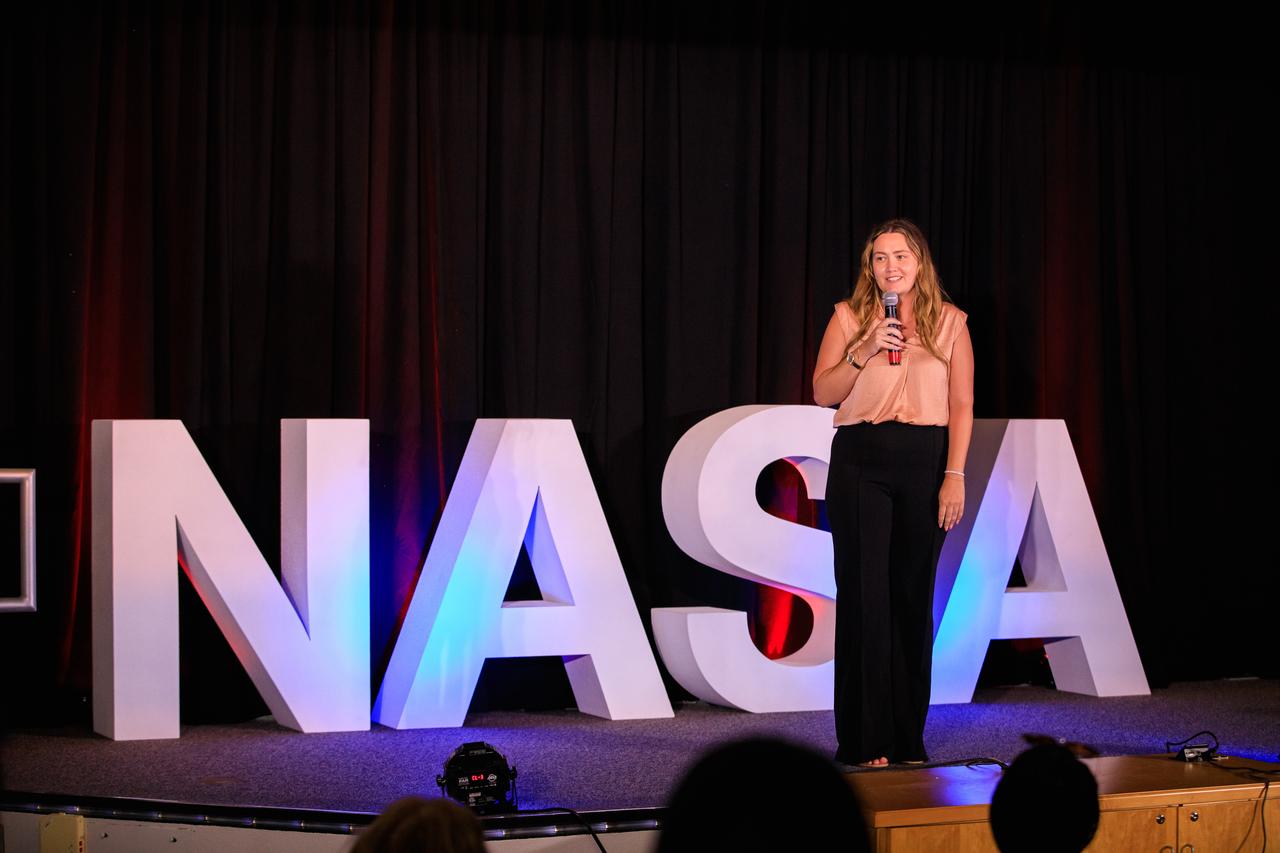
Allison Tankersley, NASA Communications, speaks to participants during an internal knowledge sharing program hosted by Launching Leaders at the Kennedy Learning Institute on May 3, 2023. Launching leaders is an employee resource group that works to identify opportunities to engage emerging professionals at Kennedy Space Center to stimulate the growth of leadership skills, increase overall employee satisfaction, and enhance retention.
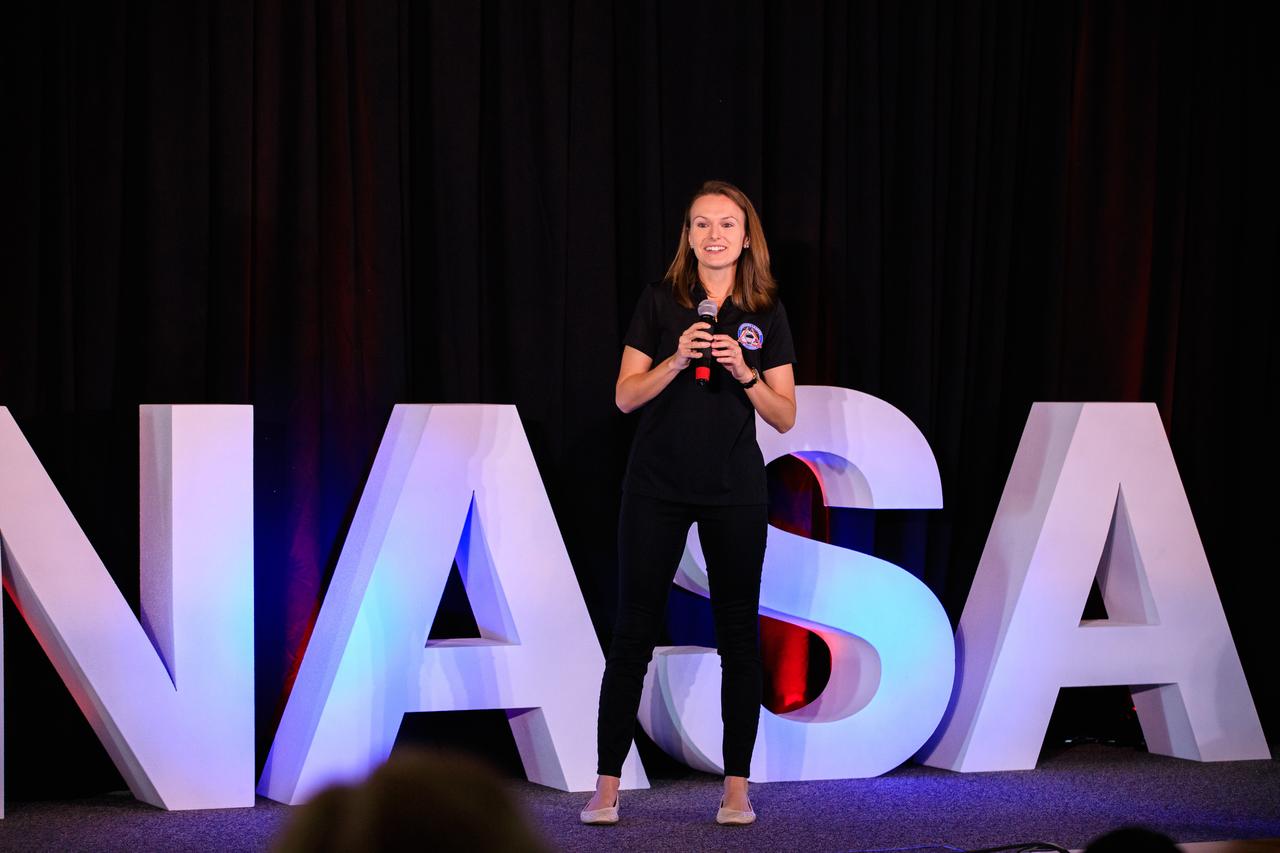
Brittany White, with Safety and Mission Assurance, speaks to participants during an internal knowledge sharing program hosted by Launching Leaders at the Kennedy Learning Institute on May 2, 2023. Launching leaders is an employee resource group that works to identify opportunities to engage emerging professionals at Kennedy Space Center to stimulate the growth of leadership skills, increase overall employee satisfaction, and enhance retention.

Caitlin Dunlap, with the Engineering Directorate, speaks to participants during an internal knowledge sharing program hosted by Launching Leaders at the Kennedy Learning Institute on May 3, 2023. Launching leaders is an employee resource group that works to identify opportunities to engage emerging professionals at Kennedy Space Center to stimulate the growth of leadership skills, increase overall employee satisfaction, and enhance retention.
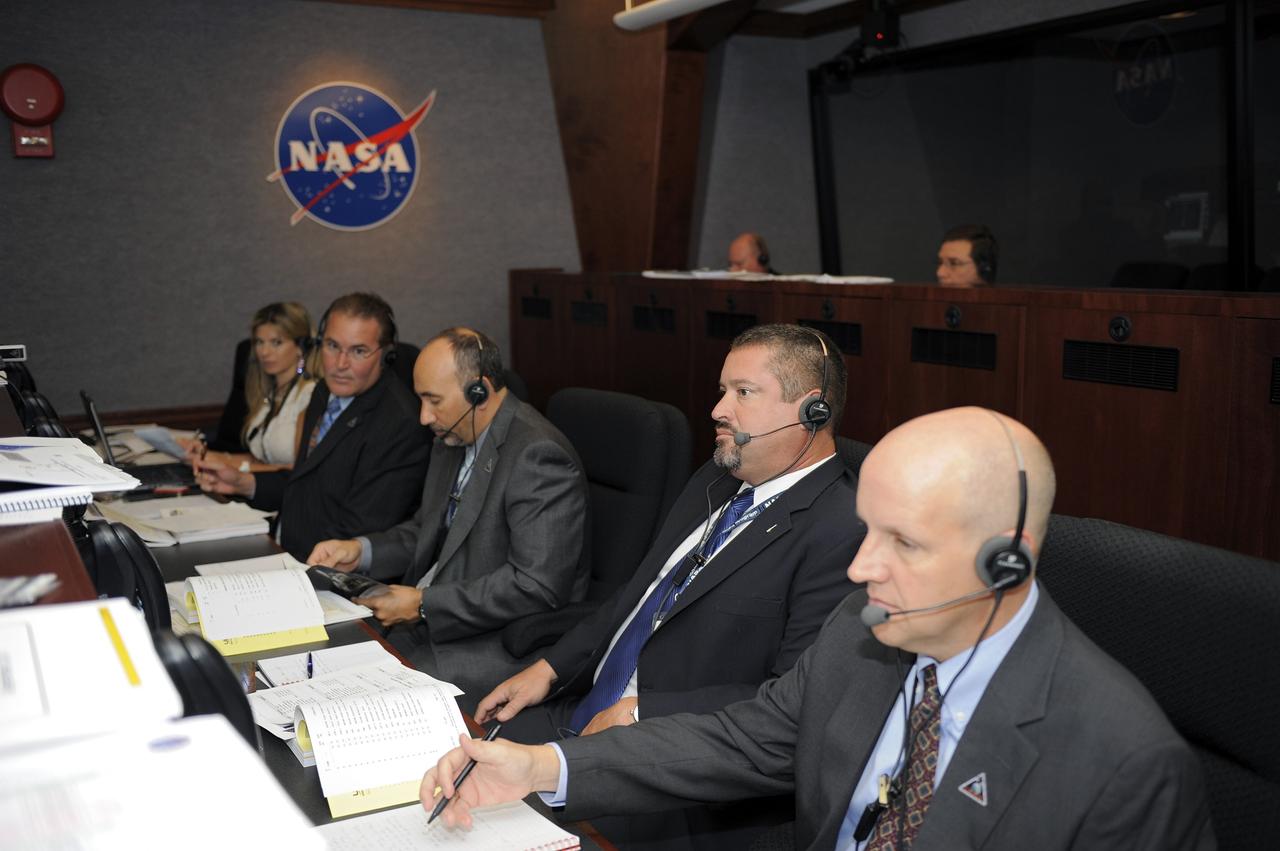
CAPE CANAVERAL, Fla. -- On Cape Canaveral Air Force Station in Florida, members of NASA's Gravity Recovery and Interior Laboratory (GRAIL) launch team monitor GRAIL's launch countdown from the Mission Directors Center in Hangar AE. From left are Dana Grieco, launch operations manager, Analex, NASA's Launch Services Program (LSP); Bruce Reid, GRAIL mission manager, LSP; Al Sierra, manager of the Flight Project Office, LSP; Omar Baez, GRAIL assistant launch director, LSP; and Tim Dunn, GRAIL launch director, LSP. Launch is scheduled for 8:37:06 a.m. EDT Sept. 8 from Space Launch Complex 17B on Cape Canaveral Air Force Station. GRAIL will fly twin spacecraft in tandem around the moon to precisely measure and map variations in the moon's gravitational field. The mission will provide the most accurate global gravity field to date for any planet, including Earth. For more information, visit http://www.nasa.gov/grail. Photo credit: NASA/Kim Shiflett
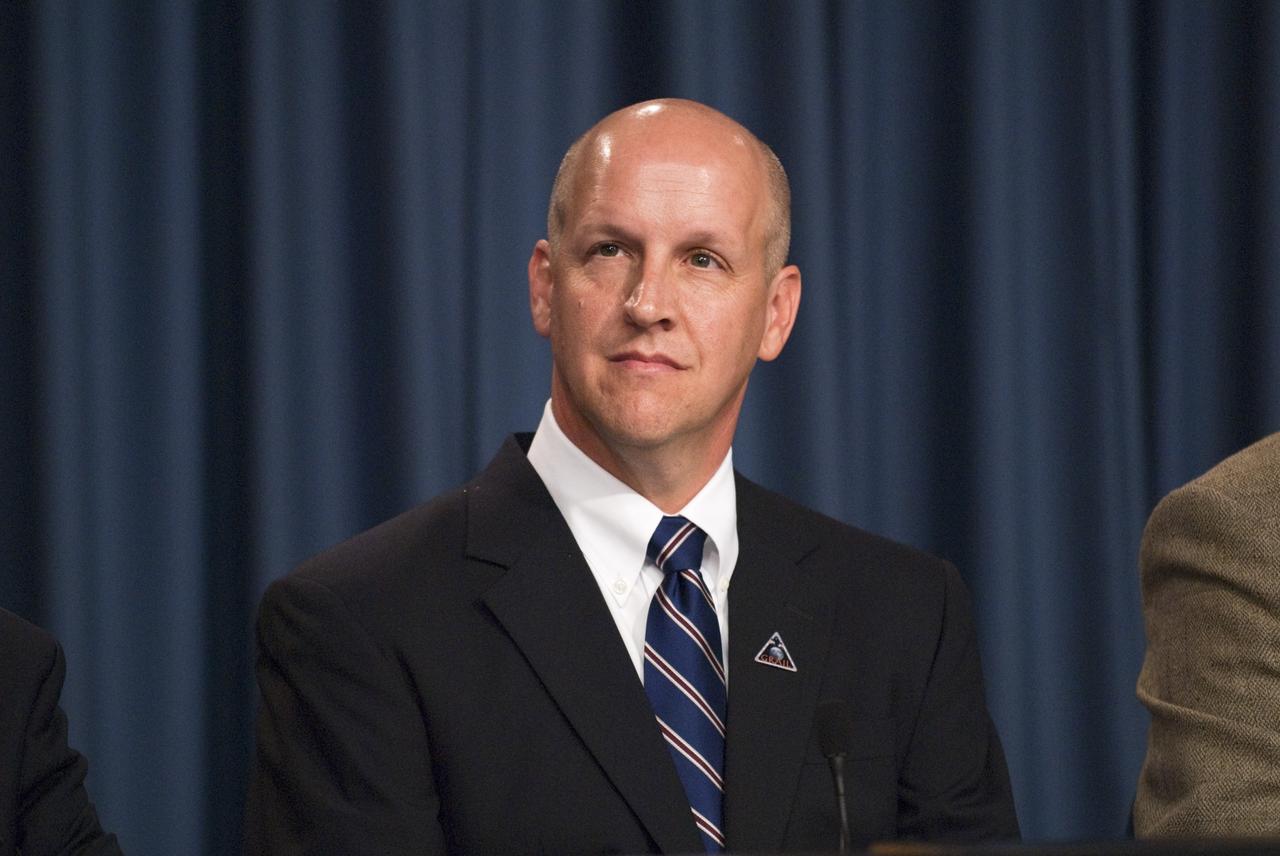
CAPE CANAVERAL, Fla. – Tim Dunn, NASA launch director for the agency’s Launch Services Program, participates in the Gravity Recovery and Interior Laboratory (GRAIL) prelaunch news conference in the NASA Press Site auditorium at NASA's Kennedy Space Center in Florida. GRAIL is scheduled to launch Sept. 8 aboard a United Launch Alliance Delta II Heavy rocket from Cape Canaveral Air Force Station in Florida. GRAIL will fly twin spacecraft in tandem around the moon to precisely measure and map variations in the moon's gravitational field. The mission will provide the most accurate global gravity field to date for any planet, including Earth. This detailed information will reveal differences in the density of the moon's crust and mantle and will help answer fundamental questions about the moon's internal structure, thermal evolution, and history of collisions with asteroids. The aim is to map the moon's gravity field so completely that future moon vehicles can safely navigate anywhere on the moon’s surface. For more information, visit http://www.nasa.gov/grail. Photo credit: NASA/Kim Shiflett
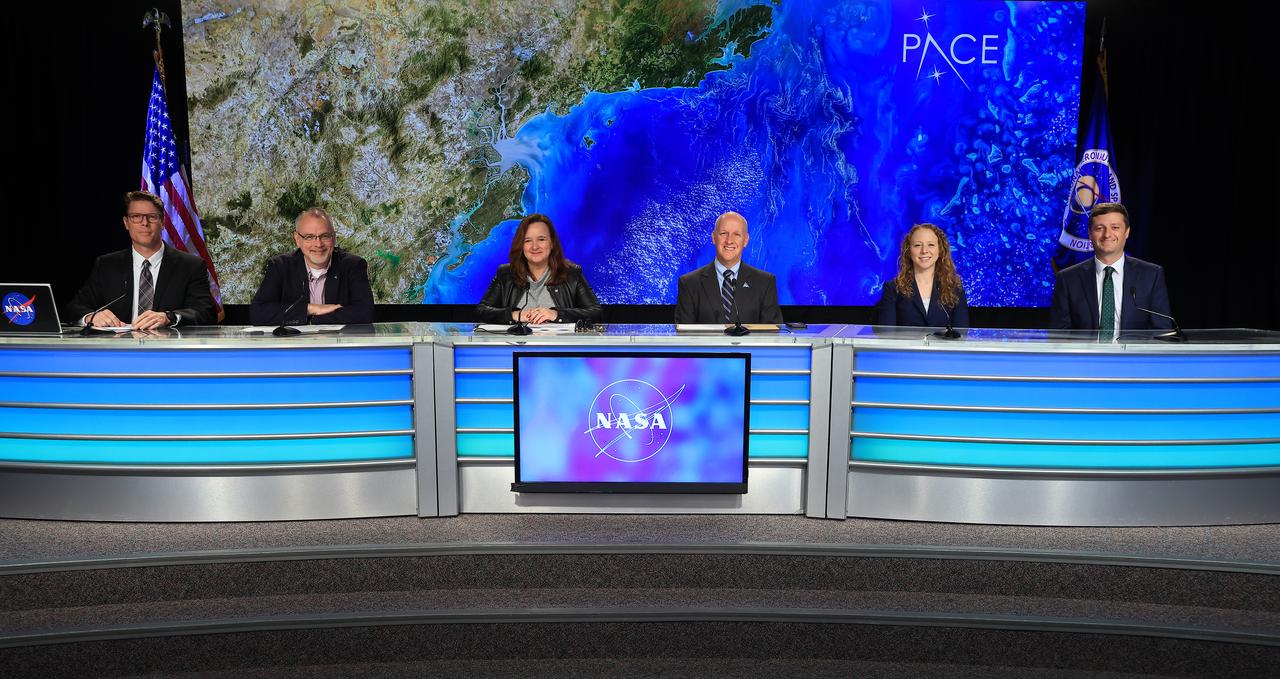
A PACE (Plankton, Aerosol, Cloud, ocean Ecosystem) mission and prelaunch news conference takes place at NASA’s Kennedy Space Center in Florida on Monday, Feb. 5, 2024. Participants, from left to right are: Derrol Nail, NASA Communications; Jim Free, NASA associate administrator; Karen St. Germain, Earth Science Division director, NASA Headquarters; Tim Dunn, senior launch director, Launch Services Program, NASA’s Kennedy; Julianna Scheiman, director Civil Satellite Missions, SpaceX; and Brian Cizek, launch weather officer, 45th Weather Squadron, U.S. Space Force. PACE is NASA’s newest earth-observing satellite that will help increase our understanding of Earth’s oceans, atmosphere, and climate by delivering hyperspectral observations of microscopic marine organisms called phytoplankton, as well new data on clouds and aerosols. Liftoff aboard a SpaceX Falcon 9 rocket from Space Launch Complex 40 at Cape Canaveral Space Force Station in Florida is set for no earlier than 1:33 a.m. EST on Tuesday, Feb 6, 2024.
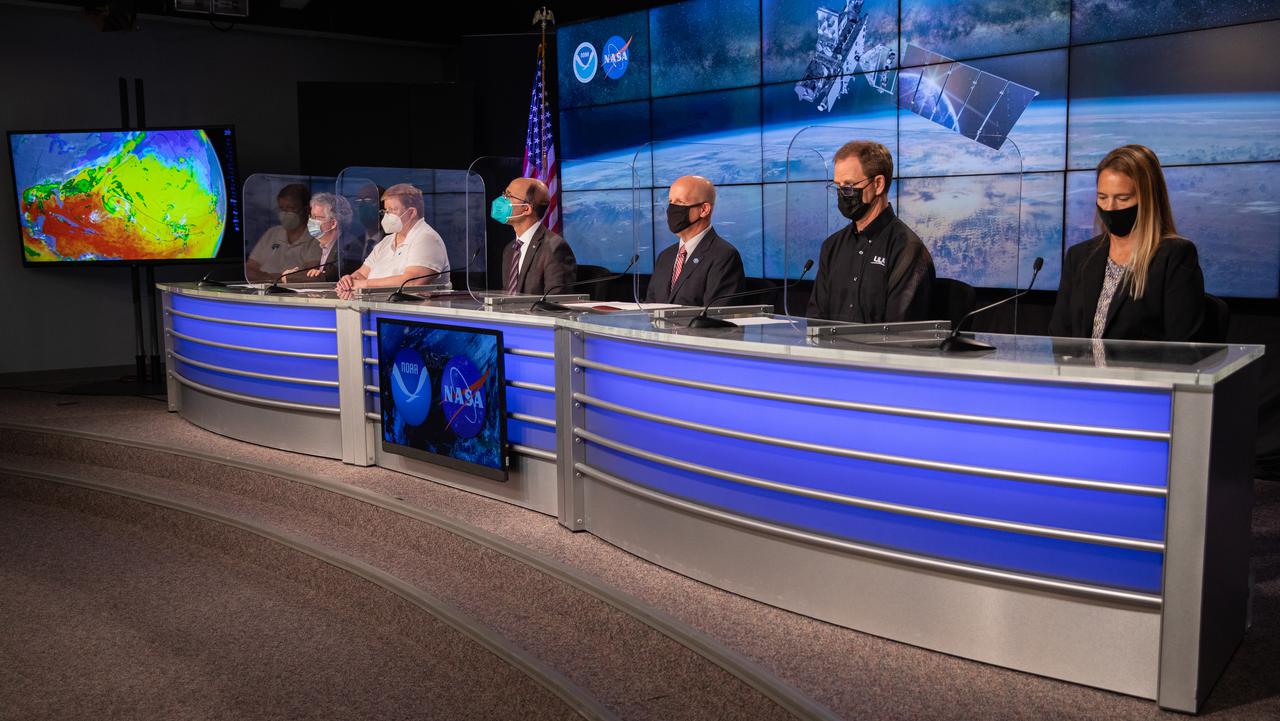
A prelaunch news conference for the National Oceanic and Atmospheric Administration’s (NOAA) Geostationary Operational Environmental Satellite-T (GOES-T) is held on Feb. 26, 2022, at NASA’s Kennedy Space Center in Florida. Participating, from left are Jasmine Hopkins, moderator, NASA Communications; Steve Volz, assistant administrator for Satellite and Information Services, NOAA; Pam Sullivan, director, GOES-R Program, NOAA; John Gagosian, director, Joint Agency Satellite Division, NASA Headquarters Science Mission Directorate; Tim Dunn, launch director, NASA’s Launch Services Program, Kennedy Space Center; Scott Messer, program manager, NASA Launch Services, United Launch Alliance; and Jessica Williams, launch weather officer, 45th Weather Squadron, Space Launch Delta 45. GOES-T is scheduled to lift off on a United Launch Alliance Atlas V 541 rocket from Space Launch Complex 41 at Cape Canaveral Space Force Station in Florida on March 1, 2022, at 4:38 p.m. GOES-T is the third satellite in the GOES-R series that will continue to help meteorologists observe and predict local weather events that affect public safety. The launch is being managed by NASA’s Launch Services Program based at Kennedy Space Center in Florida, America’s multi-user spaceport.
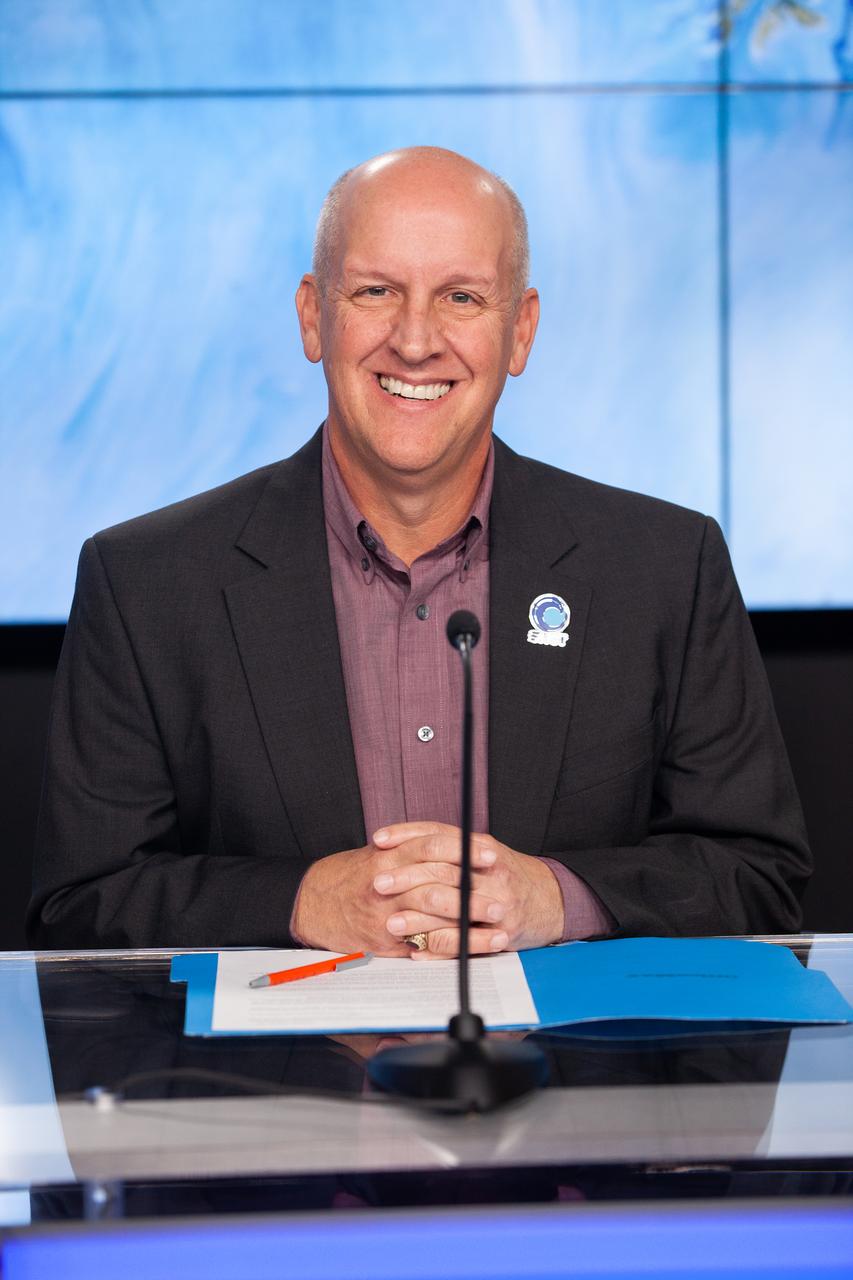
Tim Dunn, launch director, NASA’s Launch Services Program, participates in a prelaunch news conference held by NASA, SpaceX, and the French space agency Centre National d’Études Spatiales (CNES) for the Surface Water and Ocean Topography (SWOT) mission on Dec. 14, 2022, at Vandenberg Space Force Base in California. SWOT is scheduled to launch on a SpaceX Falcon 9 rocket from Space Launch Complex-4 East at Vandenberg on Dec. 15, 2022, at 3:46 a.m. PST. SWOT will be NASA’s first global survey of nearly all water on Earth’s surface. Scientists plan to use its observations to better understand the global water cycle, furnish insight into the ocean’s role in how climate change unfolds, and provide a global inventory of water resources. The SWOT mission is a collaborative effort between NASA and CNES with contributions from the Canadian Space Agency and the UK Space Agency. NASA’s Launch Services Program, based at the agency’s Kennedy Space Center in Florida, is managing the launch service.
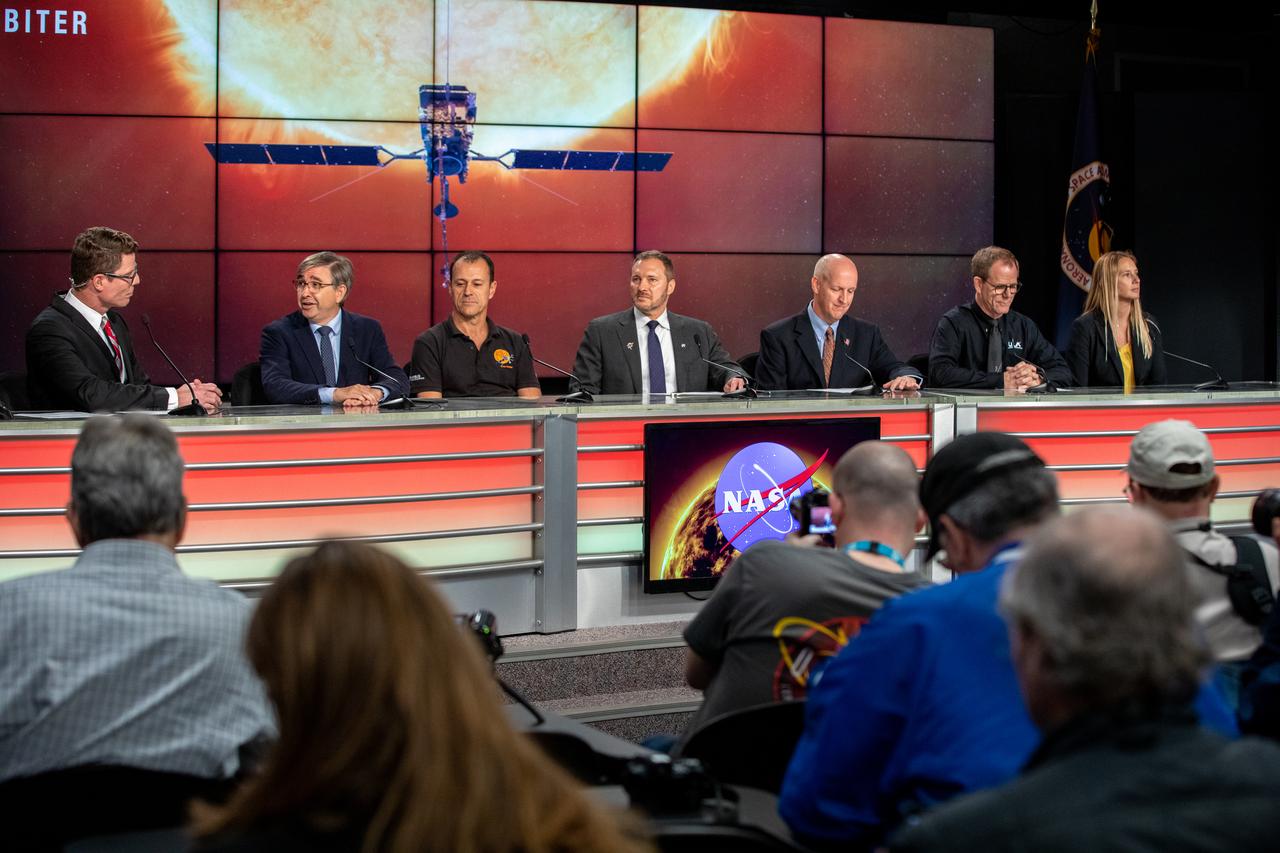
Derrol Nail, far left, NASA Communications, moderates a prelaunch news conference for the Solar Orbiter mission at NASA’s Kennedy Space Center in Florida on Feb. 7, 2020. From his left are Cesar Garcia, Solar Orbiter Project manager, European Space Agency; Ian Walters, Solar Orbiter project manager, Airbus Defence and Space; Alan Zide, Solar Orbiter Program executive, NASA Headquarters; Tim Dunn, Launch Director, NASA Launch Services Program (LSP); Scott Messer, NASA LSP Program manager, United Launch Alliance; and Jessica Williams, 45th Space Wing Weather officer. Solar Orbiter is an international cooperative mission between ESA (European Space Agency) and NASA. The mission aims to study the Sun, its outer atmosphere and solar wind. The spacecraft will provide the first images of the Sun’s poles. The spacecraft was developed by Airbus Defence and Space. NASA’s Launch Services Program based at Kennedy is managing the launch. Solar Orbiter will launch aboard a United Launch Alliance Atlas V rocket on Feb. 9, 2020, from Space Launch Complex 41 at Cape Canaveral Air Force Station.
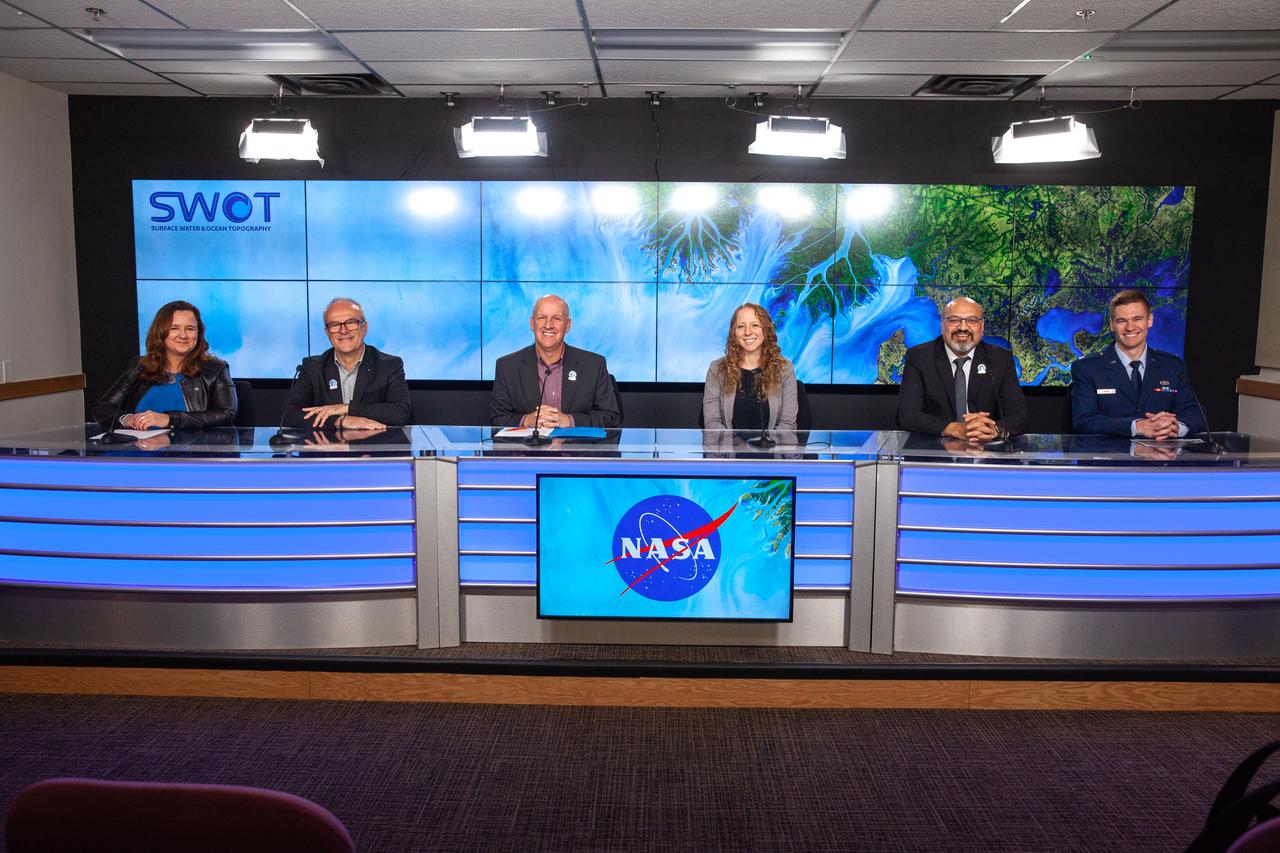
NASA, SpaceX, and the French space agency Centre National d’Études Spatiales (CNES) hold a prelaunch news conference for the Surface Water and Ocean Topography (SWOT) mission on Dec. 14, 2022, at Vandenberg Space Force Base in California. Participating from left are Karen St. Germain, Earth Science Division director, NASA; Thierry Lafon, SWOT project manager, CNES; Tim Dunn, launch director, NASA’s Launch Services Program; Julianna Scheiman, civil satellite missions director, SpaceX; Parag Vaze, SWOT project manager, Jet Propulsion Laboratory; Capt. Max Rush, launch weather officer, U.S. Air Force. SWOT is scheduled to launch on a SpaceX Falcon 9 rocket from Space Launch Complex-4 East at Vandenberg on Dec. 15, 2022, at 3:46 a.m. PST. SWOT will be NASA’s first global survey of nearly all water on Earth’s surface. Scientists plan to use its observations to better understand the global water cycle, furnish insight into the ocean’s role in how climate change unfolds, and provide a global inventory of water resources. The SWOT mission is a collaborative effort between NASA and CNES with contributions from the Canadian Space Agency and the UK Space Agency. NASA’s Launch Services Program, based at the agency’s Kennedy Space Center in Florida, is managing the launch service.
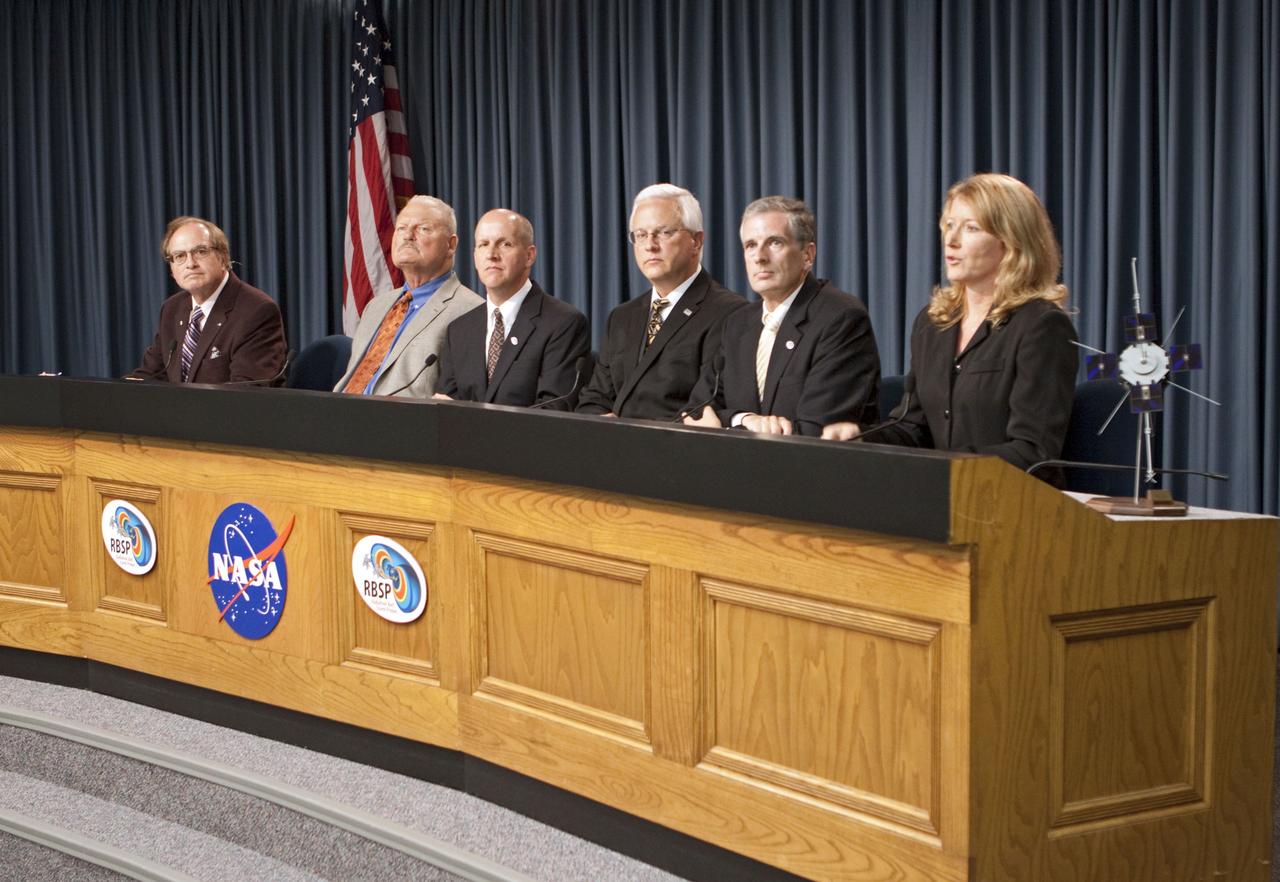
CAPE CANAVERAL, Fla. - A prelaunch news conference was held at NASA Kennedy Space Center’s Press Site in Florida for the Radiation Belt Storm Probes, or RBSP, mission. From left, are George Diller, public affairs specialist and news conference moderator, Michael Luther, deputy associate administrator for programs in NASA’s Science Mission Directorate, Tim Dunn, NASA launch director at Kennedy, Vernon Thorp, program manager, NASA missions, United Launch Alliance, Richard Fitzgerald, RBSP project manager at Johns Hopkins Applied Physics Laboratory in Laurel, Md., and Kathy Winters, launch weather officer with the 45th Weather Squadron at Cape Canaveral Air Force Station in Florida. NASA’s RBSP mission will help us understand the sun’s influence on Earth and near-Earth space by studying the Earth’s radiation belts on various scales of space and time. RBSP will begin its mission of exploration of Earth’s Van Allen radiation belts and the extremes of space weather after its launch aboard an Atlas V rocket. Launch is targeted for Aug. 24. For more information, visit http://www.nasa.gov/rbsp. Photo credit: NASA/Glenn Benson
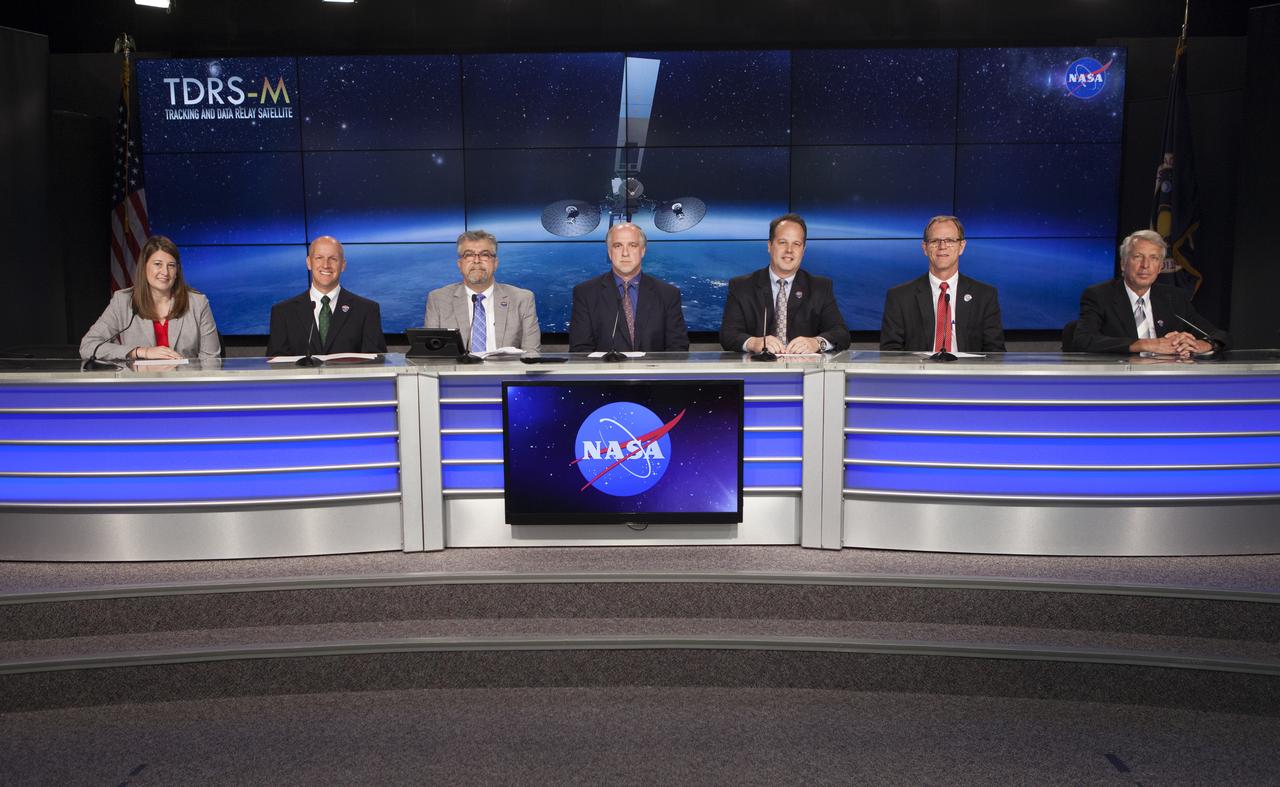
In the Kennedy Space Center's Press Site auditorium, NASA and industry leaders speak to members of the media at a prelaunch news conference for NASA's Tracking and Data Relay Satellite, TDRS-M. Participants from left are: Kathryn Hambleton of NASA Communications, Tim Dunn, launch director at NASA Kennedy, Badri Younes, deputy associate administrator for Space Communications and Navigation at NASA Headquarters in Washington, Dave Littmann, project manager for TDRS-M at NASA’s Goddard Space Flight Center in Greenbelt, Maryland, James Wilson III, Boeing program manager for NASA/Civil Space Programs, Scott Messer, United Launch Alliance program manager for NASA missions, and Clay Flinn, launch weather officer with the 45th Space Wing at Cape Canaveral Air Force Station. TDRS-M is the latest spacecraft destined for the agency's constellation of communications satellites that allows nearly continuous contact with orbiting spacecraft ranging from the International Space Station and Hubble Space Telescope to the array of scientific observatories. Liftoff atop a United Launch Alliance Atlas V rocket is scheduled to take place from Space Launch Complex 41 at Cape Canaveral Air Force Station at 8:03 a.m. EDT Aug. 18.
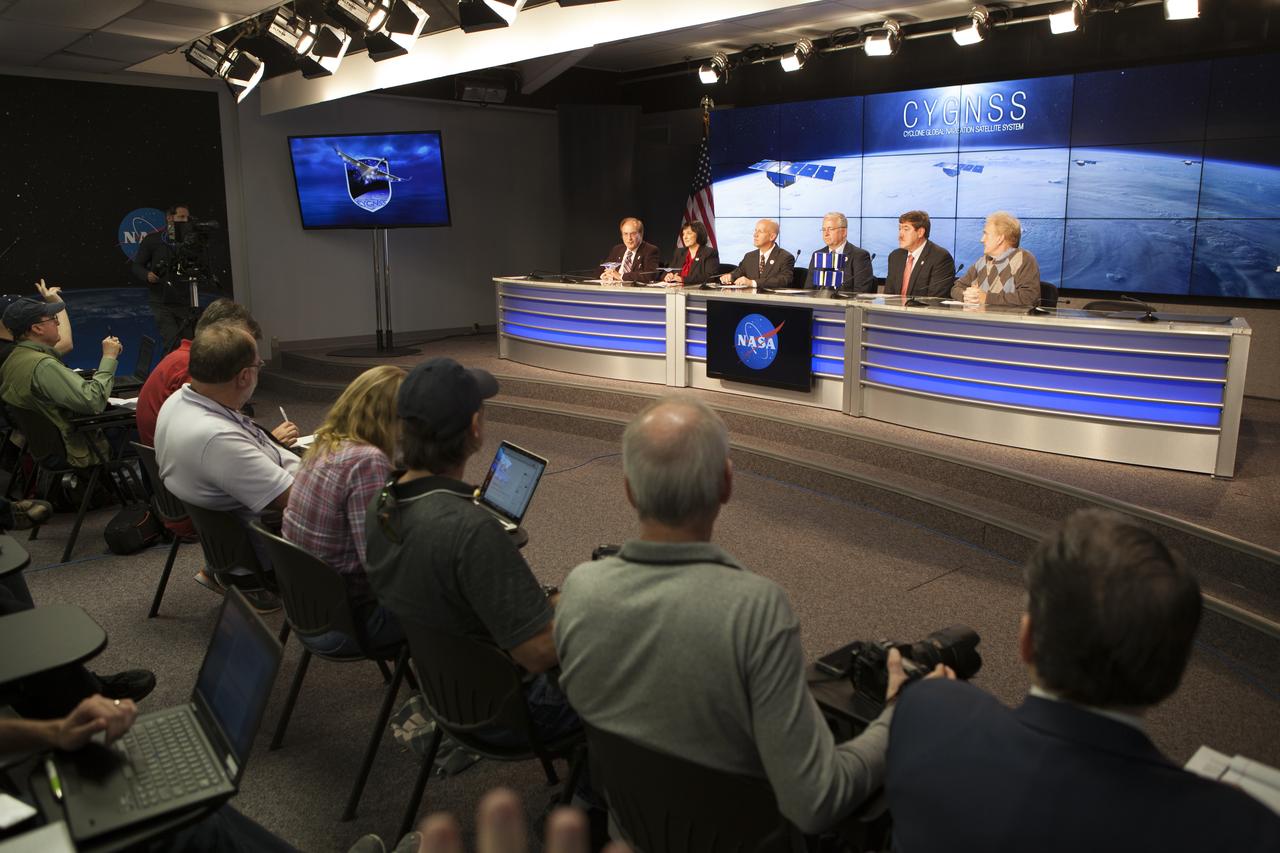
In the Kennedy Space Center’s Press Site auditorium, NASA and industry leaders speak to members of the media during a prelaunch news conference for the agency’s Cyclone Global Navigation Satellite System, or CYGNSS, spacecraft. From left are: George Diller of NASA Communications; Christine Bonniksen, CYGNSS program executive in the Earth Science Division of the Science Mission Directorate at NASA Headquarters in Washington, D.C.; Tim Dunn, NASA launch director at Kennedy; Bryan Baldwin, Pegasus launch vehicle program manager for Orbital ATK, Dulles, Virginia; John Scherrer, CYGNSS project manager for the Southwest Research Institute in San Antonio, Texas; and Mike Rehbein, launch weather officer for the 45th Weather Squadron at Cape Canaveral Air Force Station, Florida. The eight CYGNSS satellites will make frequent and accurate measurements of ocean surface winds throughout the life cycle of tropical storms and hurricanes. The data will help scientists probe key air-sea interaction processes that take place near the core of storms, which are rapidly changing and play a crucial role in the beginning and intensification of hurricanes.
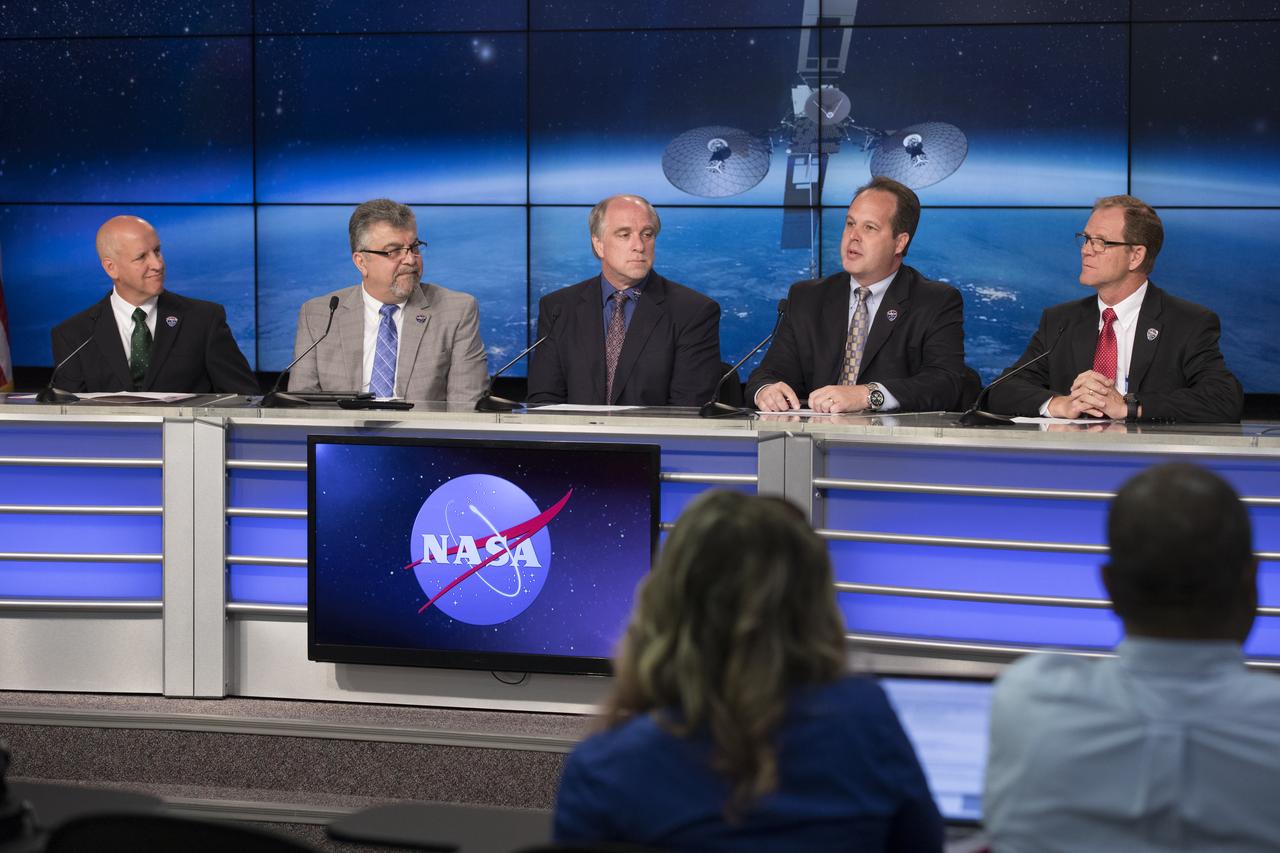
In the Kennedy Space Center's Press Site auditorium, NASA and industry leaders speak to members of the media at a prelaunch news conference for NASA's Tracking and Data Relay Satellite, TDRS-M. Participants from left are: Tim Dunn, launch director at NASA Kennedy, Badri Younes, deputy associate administrator for Space Communications and Navigation at NASA Headquarters in Washington, Dave Littmann, project manager for TDRS-M at NASA’s Goddard Space Flight Center in Greenbelt, Maryland, James Wilson III, Boeing program manager for NASA/Civil Space Programs, and Scott Messer, United Launch Alliance program manager for NASA missions. TDRS-M is the latest spacecraft destined for the agency's constellation of communications satellites that allows nearly continuous contact with orbiting spacecraft ranging from the International Space Station and Hubble Space Telescope to the array of scientific observatories. Liftoff atop a United Launch Alliance Atlas V rocket is scheduled to take place from Space Launch Complex 41 at Cape Canaveral Air Force Station at 8:03 a.m. EDT Aug. 18.
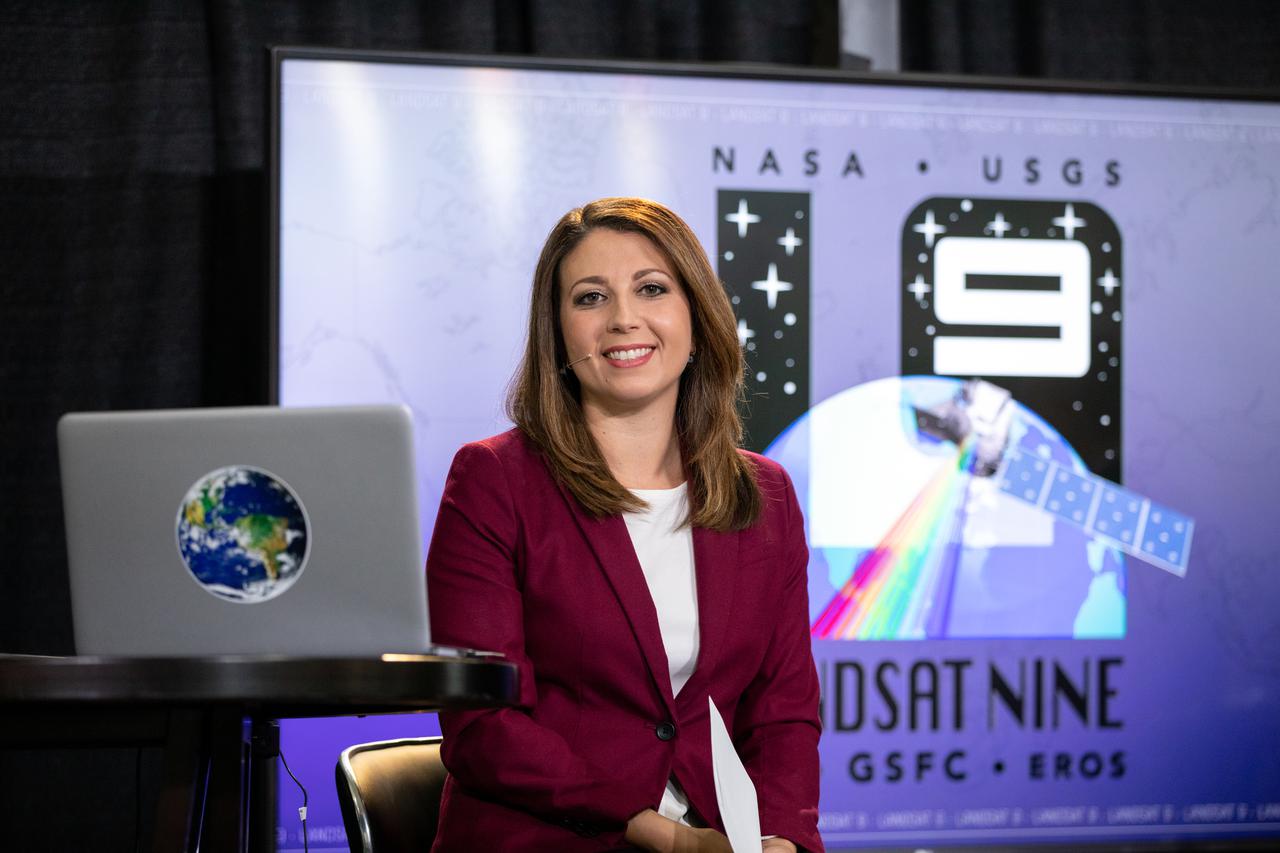
Marie Lewis, NASA Communications, moderates a prelaunch news conference for NASA’s Landsat 9 mission at Vandenberg Space Force Base in California on Saturday, Sept. 25, 2021. Participants include Thomas Zurbuchen, associate administrator, NASA’s Science Mission Directorate; Karen St. Germain, director, NASA’s Earth Science Division; Tanya Trujillo, assistant secretary for water and science, U.S. Department of the Interior; Michael Egan, Landsat program executive, NASA’s Earth Science Division; Tim Dunn, launch director, NASA’s Launch Services Program; Scott Messer, United Launch Alliance program manager, NASA Launch Services Program; and Capt. Addison Nichols, weather officer, Space Launch Delta 30. Landsat 9 is scheduled to launch at 2:12 p.m. EDT (11:12 a.m. PDT) on Monday, Sept. 27, on a United Launch Alliance Atlas V 401 rocket from Space Launch Complex 3 at Vandenberg. The launch is managed by NASA’s Launch Services Program, based at the agency’s Kennedy Space Center in Florida. Landsat 9 will join its sister satellite, Landsat 8, in orbit in collecting images from across the planet every eight days. This calibrated data will continue the Landsat program’s critical role in monitoring the health of Earth and helping people manage essential resources, including crops, irrigation water, and forests.
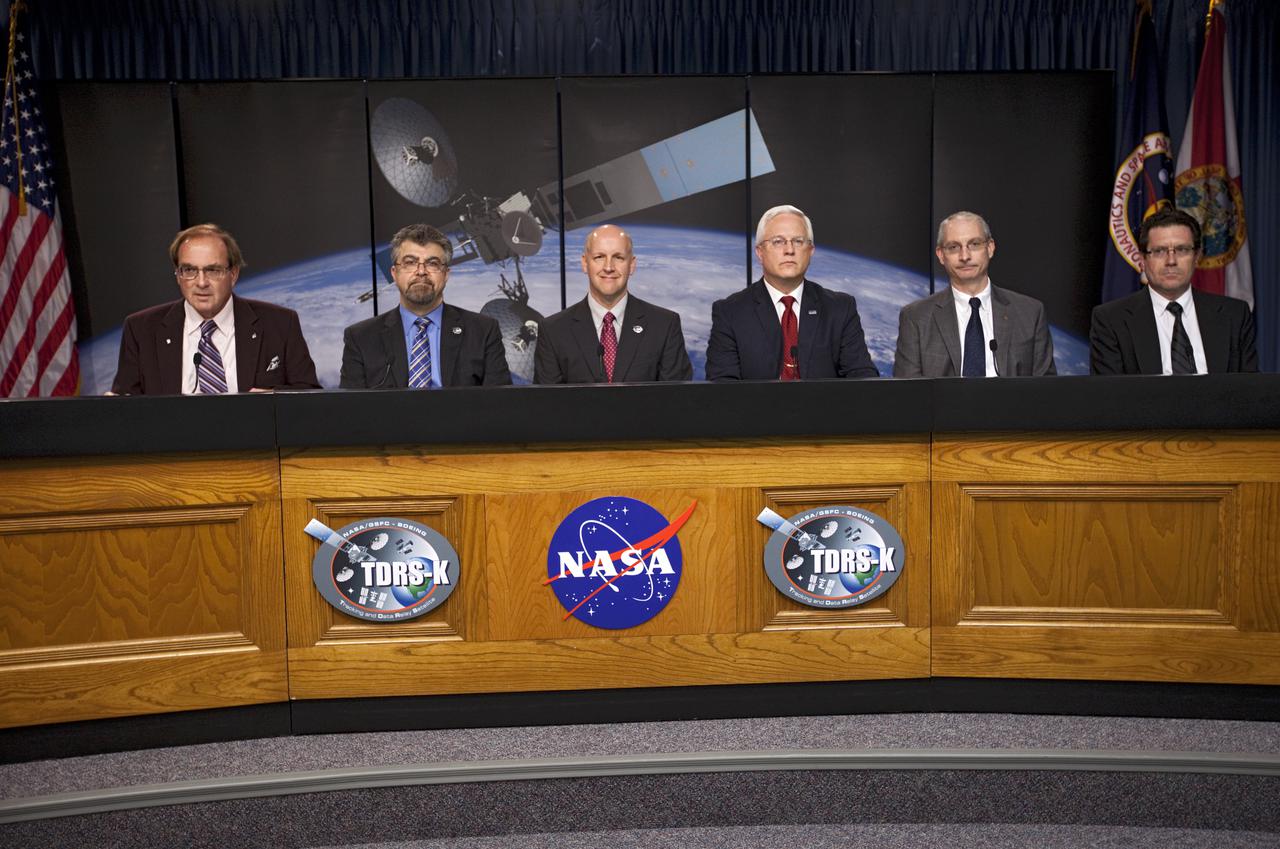
CAPE CANAVERAL, Fla. –- At a news conference, NASA and United Launch Alliance officials discussed preparations for the planned launch of NASA's Tracking and Data Relay Satellite, TDRS-K, atop an Atlas V rocket. Participating in the briefing, from the left are, George Diller, NASA Public Affairs, Badri Younes, deputy associate administrator, Space Communications and Navigation SCaN, NASA Human Exploration and Operations Mission Directorate in Washington Tim Dunn, NASA launch director at the Kennedy Space Center Vernon Thorp, program manager, NASA Missions for United Launch Alliance in Denver, Colo. Jeffrey Gramling, NASA TDRS-K project manager, Goddard Space Flight Center in Greenbelt, Md. and Joel Tumbiolo, launch weather officer, 45th Weather Squadron at Cape Canaveral Air Force Station, Fla. Liftoff for the TDRS-K is planned for Jan. 30, 2013. The TDRS-K spacecraft is part of the next-generation series in the Tracking and Data Relay Satellite System, a constellation of space-based communication satellites providing tracking, telemetry, command and high-bandwidth data return services. For more information, visit http:__www.nasa.gov_mission_pages_tdrs_index.html Photo credit: NASA_Kim Shiflett
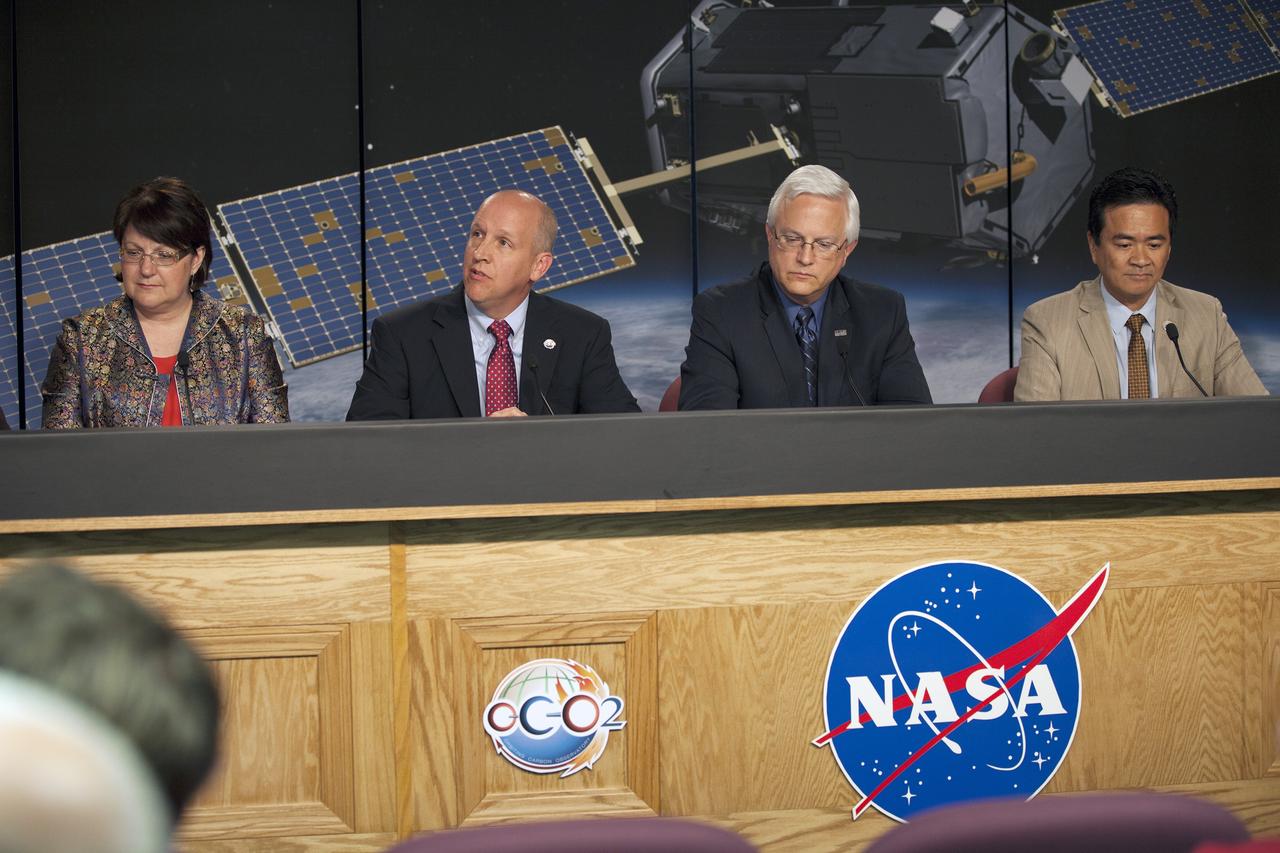
VANDENBERG AIR FORCE BASE, Calif. – From left, Betsy Edwards, Orbiting Carbon Observatory-2, or OCO-2, project executive at NASA Headquarters Tim Dunn, launch manager for NASA's Launch Services Program Vernon Thorp, United Launch Alliance program manager for NASA Missions and Ralph Basilio, OCO-2 project manager at NASA's Jet Propulsion Laboratory, participate in a prelaunch news conference at Vandenberg Air Force Base in California prior to the launch of the observatory. Launch aboard a United Launch Alliance Delta II rocket from Space Launch Complex 2 is scheduled for 5:56 a.m. EDT on July 1. OCO-2 is NASA’s first mission dedicated to studying atmospheric carbon dioxide, the leading human-produced greenhouse gas driving changes in Earth’s climate. OCO-2 will provide a new tool for understanding the human and natural sources of carbon dioxide emissions and the natural "sinks" that absorb carbon dioxide and help control its buildup. The observatory will measure the global geographic distribution of these sources and sinks and study their changes over time. To learn more about OCO-2, visit http://www.nasa.gov/oco2. Photo credit: NASA/Kim Shiflett
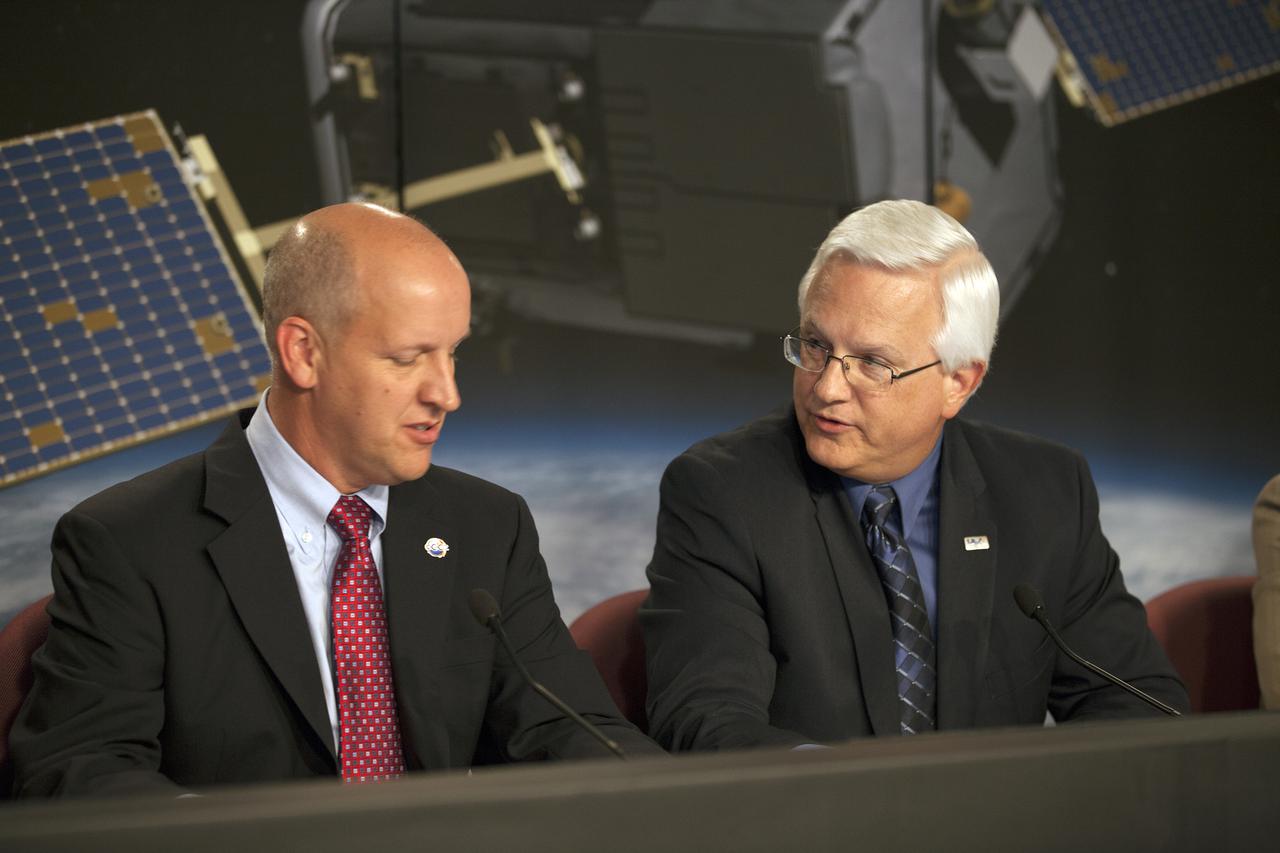
VANDENBERG AIR FORCE BASE, Calif. – Tim Dunn, left, launch manager for NASA's Launch Services Program, and Vernon Thorp, United Launch Alliance program manager for NASA Missions, participate in a prelaunch news conference at Vandenberg Air Force Base in California prior to the launch of NASA's Orbiting Carbon Observatory-2, or OCO-2. Launch aboard a United Launch Alliance Delta II rocket from Space Launch Complex 2 is scheduled for 5:56 a.m. EDT on July 1. OCO-2 is NASA’s first mission dedicated to studying atmospheric carbon dioxide, the leading human-produced greenhouse gas driving changes in Earth’s climate. OCO-2 will provide a new tool for understanding the human and natural sources of carbon dioxide emissions and the natural 'sinks' that absorb carbon dioxide and help control its buildup. The observatory will measure the global geographic distribution of these sources and sinks and study their changes over time. To learn more about OCO-2, visit http:__www.nasa.gov_oco2. Photo credit: NASA_Kim Shiflett
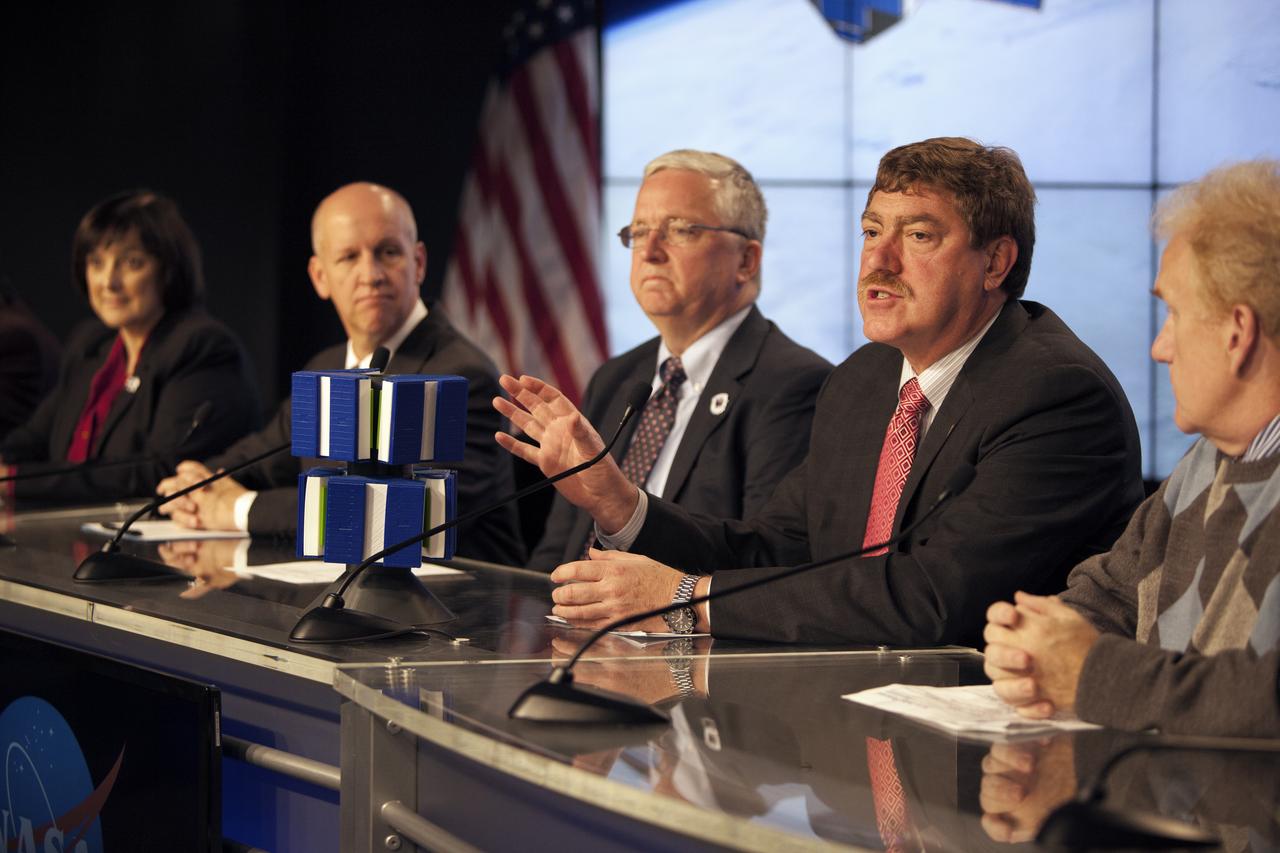
In the Kennedy Space Center’s Press Site auditorium, NASA and industry leaders speak to members of the media during a prelaunch news conference for the agency’s Cyclone Global Navigation Satellite System, or CYGNSS, spacecraft. From left are: Christine Bonniksen, CYGNSS program executive in the Earth Science Division of the Science Mission Directorate at NASA Headquarters in Washington, D.C.; Tim Dunn, NASA launch director at Kennedy; Bryan Baldwin, Pegasus launch vehicle program manager for Orbital ATK, Dulles, Virginia; John Scherrer, CYGNSS project manager for the Southwest Research Institute in San Antonio, Texas; and Mike Rehbein, launch weather officer for the 45th Weather Squadron at Cape Canaveral Air Force Station, Florida. The eight CYGNSS satellites will make frequent and accurate measurements of ocean surface winds throughout the life cycle of tropical storms and hurricanes. The data will help scientists probe key air-sea interaction processes that take place near the core of storms, which are rapidly changing and play a crucial role in the beginning and intensification of hurricanes.