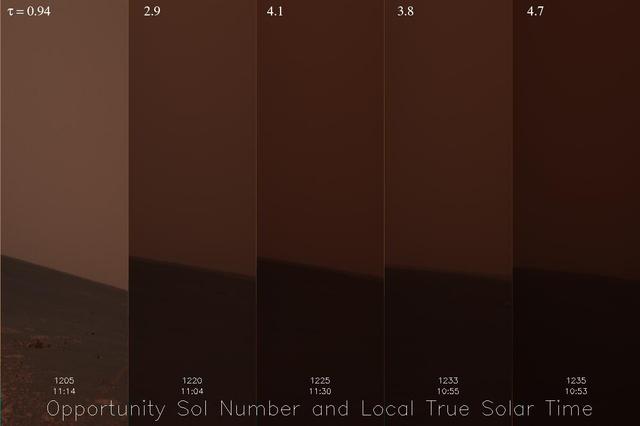
Dust Storm Time Lapse Shows Opportunity Skies Darken
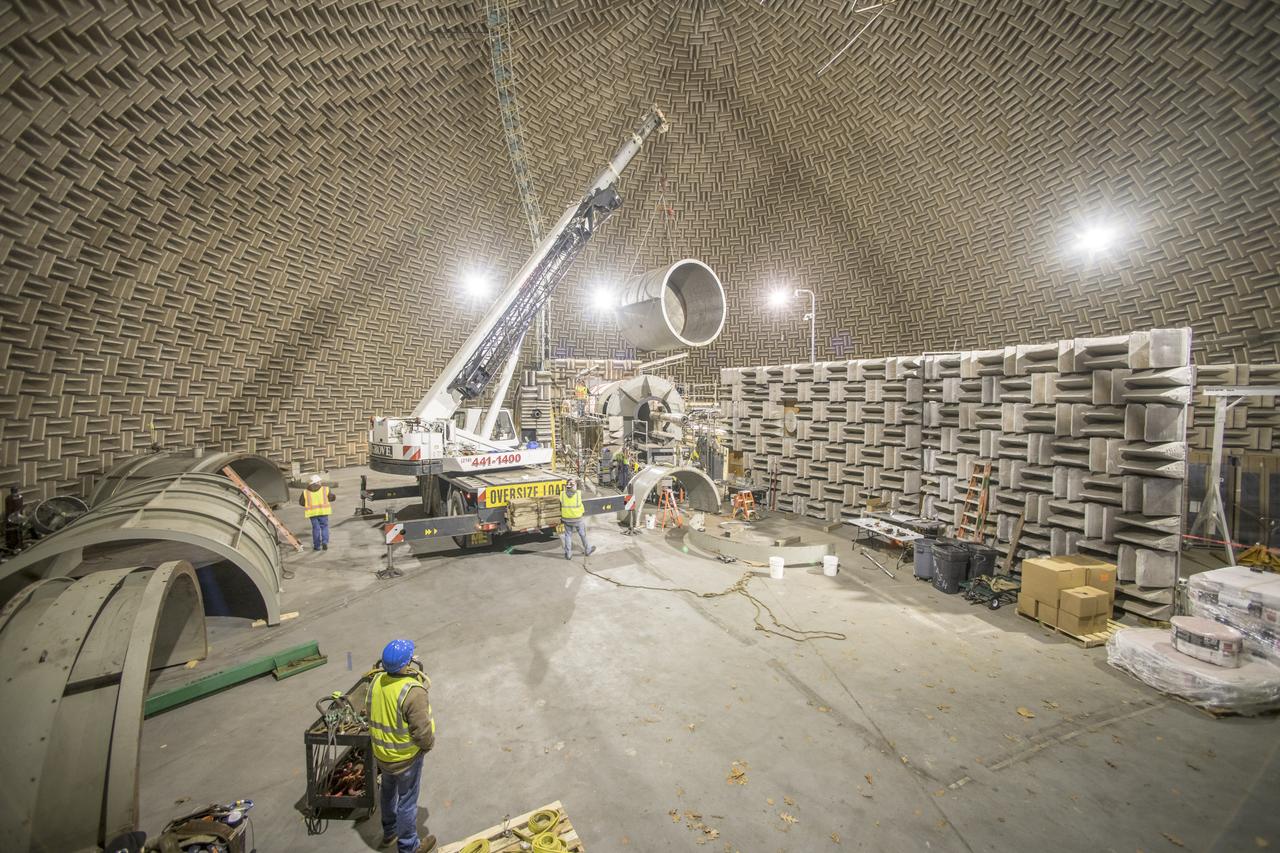
Aero-Acoustic Propulsion Laboratory, AAPL Refurbishment Documentation Photographs from Time-lapse

Less than once per decade, Mercury passes between the Earth and the sun in a rare astronomical event known as a planetary transit. The 2016 Mercury transit occurred on May 9th, between roughly 7:12 a.m. and 2:42 p.m. EDT. The images in this video are from NASA’s Solar Dynamics Observatory Music: Encompass by Mark Petrie For more info on the Mercury transit go to: <a href="http://www.nasa.gov/transit" rel="nofollow">www.nasa.gov/transit</a> This video is public domain and may be downloaded at: <a href="http://svs.gsfc.nasa.gov/12235" rel="nofollow">svs.gsfc.nasa.gov/12235</a> <b><a href="http://www.nasa.gov/audience/formedia/features/MP_Photo_Guidelines.html" rel="nofollow">NASA image use policy.</a></b> <b><a href="http://www.nasa.gov/centers/goddard/home/index.html" rel="nofollow">NASA Goddard Space Flight Center</a></b> enables NASA’s mission through four scientific endeavors: Earth Science, Heliophysics, Solar System Exploration, and Astrophysics. Goddard plays a leading role in NASA’s accomplishments by contributing compelling scientific knowledge to advance the Agency’s mission. <b>Follow us on <a href="http://twitter.com/NASAGoddardPix" rel="nofollow">Twitter</a></b> <b>Like us on <a href="http://www.facebook.com/pages/Greenbelt-MD/NASA-Goddard/395013845897?ref=tsd" rel="nofollow">Facebook</a></b> <b>Find us on <a href="http://instagrid.me/nasagoddard/?vm=grid" rel="nofollow">Instagram</a></b>
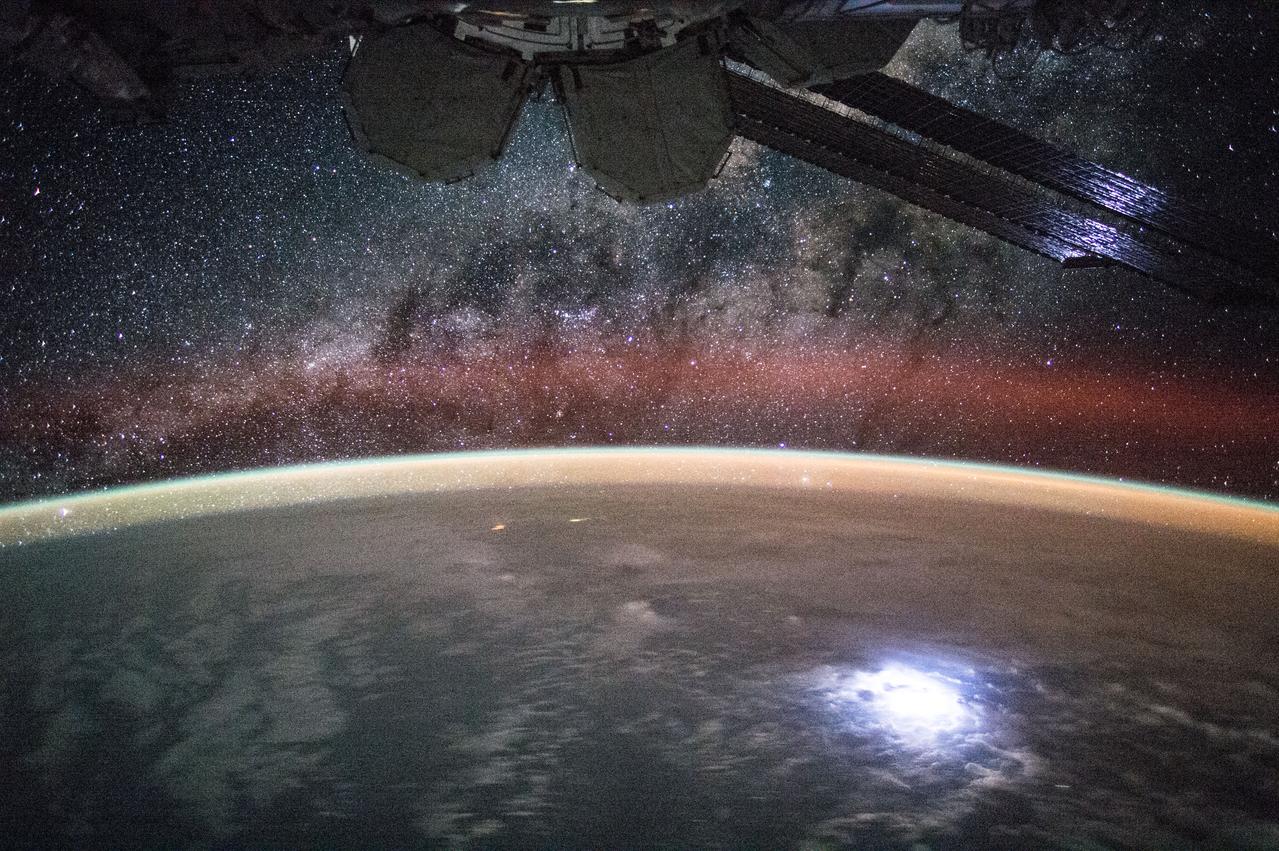
iss044e045215 (08/09/2015)-- View (part of a time lapse sequence) of stars in the Milky Way Galaxy visible over an Earth limb as seen by the Expedition 44 crew. Astronaut Kjell Lindgren captured a lightning strike from space so bright that it lights up the space station’s solar panels. He posted this on Twitter and Instagram on Sept. 2 saying "Large lightning strike on Earth lights up or solar panels."
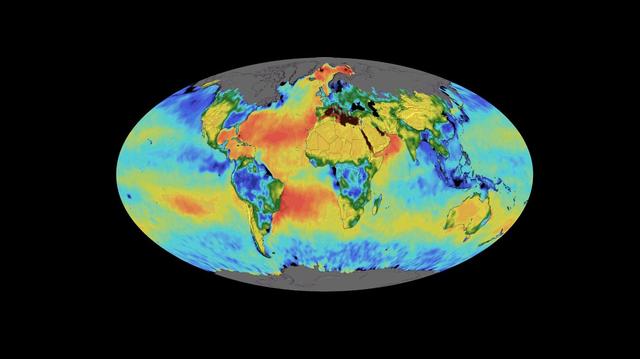
This animation shows a time lapse of sea surface salinity and soil moisture from NASA's Soil Moisture Active Passive (SMAP) satellite from April 2015 through February 2019. Animation available at https://photojournal.jpl.nasa.gov/catalog/PIA23146
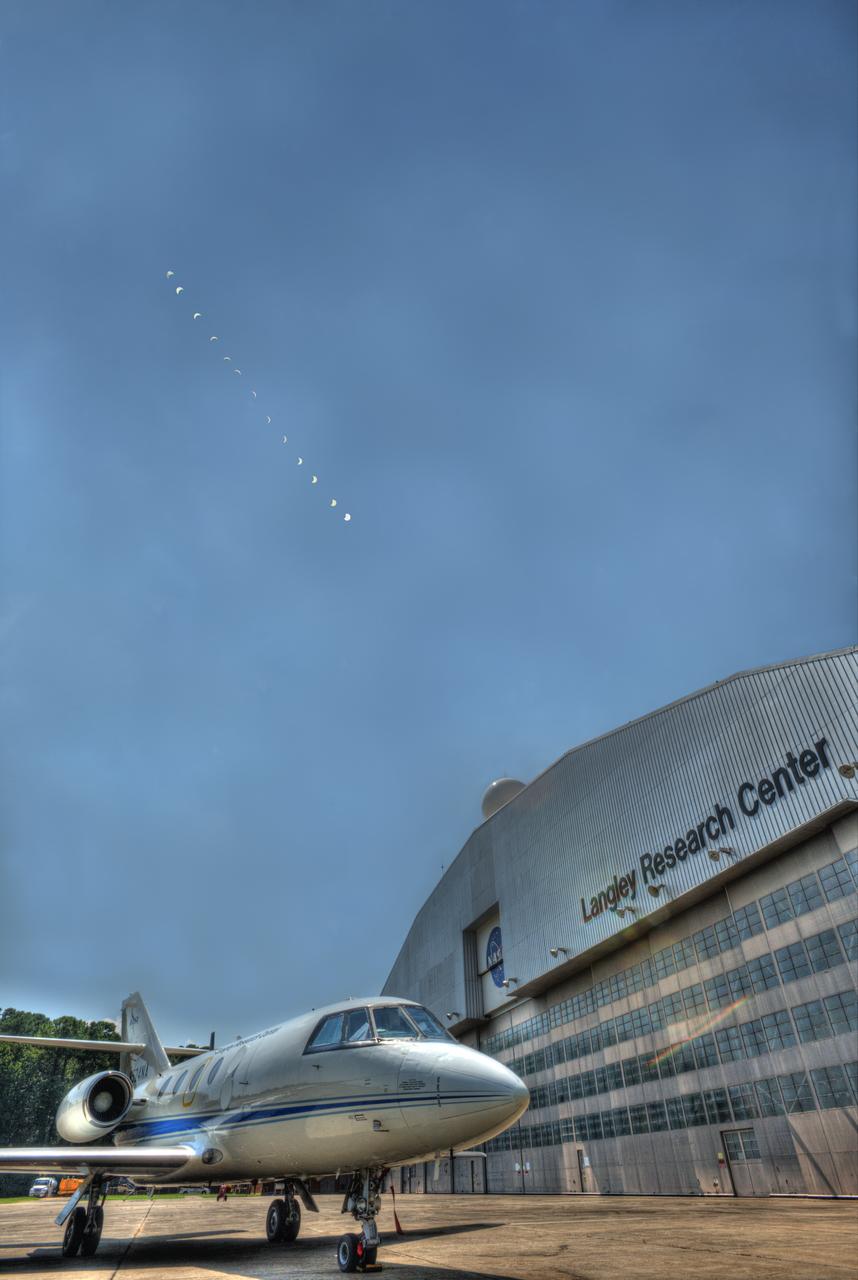
HDR Time lapse composite of the Solar Eclipse with the Falcon UH-25 in front of the NASA Langley hangar.

Earth observation taken during a night pass by the Expedition 43 crew aboard the International Space Station (ISS). Folder lists this as time lapse From Gibraltar NE-bound.

iss057e000244 (Oct. 6, 2018) --- A image captured from a time-lapse imagery sequence shows north Africa and the Mediterranean Sea as the International Space Station orbited 254 miles above the African continent. Japan's Kounotori H-II Transfer Vehicle-7 (HTV-7) is pictured at left attached to the Harmony module. Portions of the station's solar arrays and radiators are pictured at left.

This series of images captures cloud patterns near Jupiter's south pole, looking up towards the planet's equator. NASA's Juno spacecraft took the color-enhanced time-lapse sequence of images during its eleventh close flyby of the gas giant planet on Feb. 7 between 7:21 a.m. and 8:01 a.m. PST (10:21 a.m. and 11:01 a.m. EST). At the time, the spacecraft was between 85,292 to 124,856 miles (137,264 to 200,937 kilometers) from the tops of the clouds of the planet with the images centered on latitudes from 84.1 to 75.5 degrees south. At first glance, the series might appear to be the same image repeated. But closer inspection reveals slight changes, which are most easily noticed by comparing the far left image with the far right image. Directly, the images show Jupiter. But, through slight variations in the images, they indirectly capture the motion of the Juno spacecraft itself, once again swinging around a giant planet hundreds of millions of miles from Earth. https://photojournal.jpl.nasa.gov/catalog/PIA21979. - Enhanced image by Gerald Eichstädt based on images provided courtesy of NASA/JPL-Caltech/SwRI/MSSS

This time-lapse (speeded up 28 times) shows NASA's Mars 2020 rover as it was rotated on a spin table in the clean room of the Spacecraft Assembly Facility at NASA's Jet Propulsion Laboratory in Pasadena, California. Engineers were looking to establish the rover's center of gravity, or the point at which weight is evenly dispersed on all sides. The imagery was taken on Aug. 29, 2019. Movie available at https://photojournal.jpl.nasa.gov/catalog/PIA23461

These time-lapse images of a newfound dwarf planet in our solar system, formerly known as 2003 UB313 or Xena, and now called Eris, were taken using the Samuel Oschin Telescope at the Palomar Observatory.
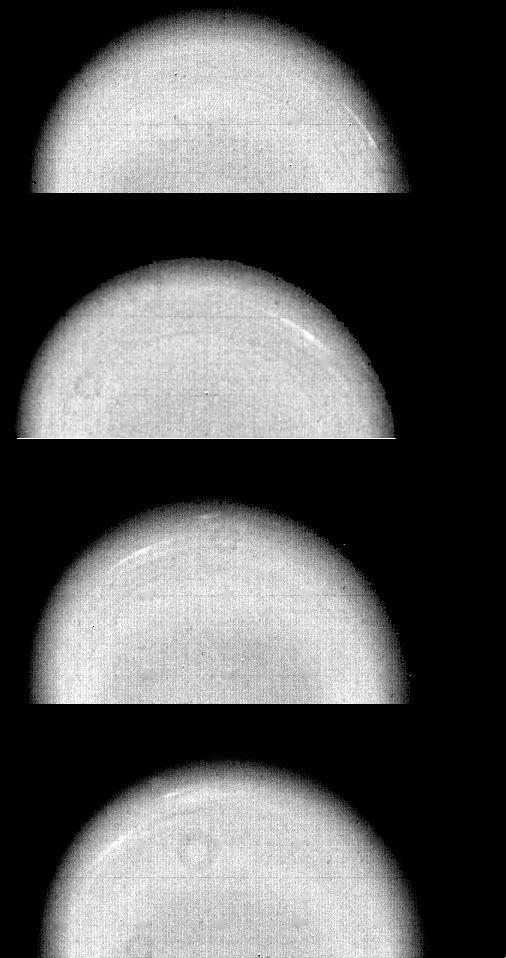
These time-lapse images of Uranus. taken by NASA Voyager 2 on Jan. 14, 1986, show the movement of two small, bright, streaky clouds -- the first such features ever seen on the planet. http://photojournal.jpl.nasa.gov/catalog/PIA00369
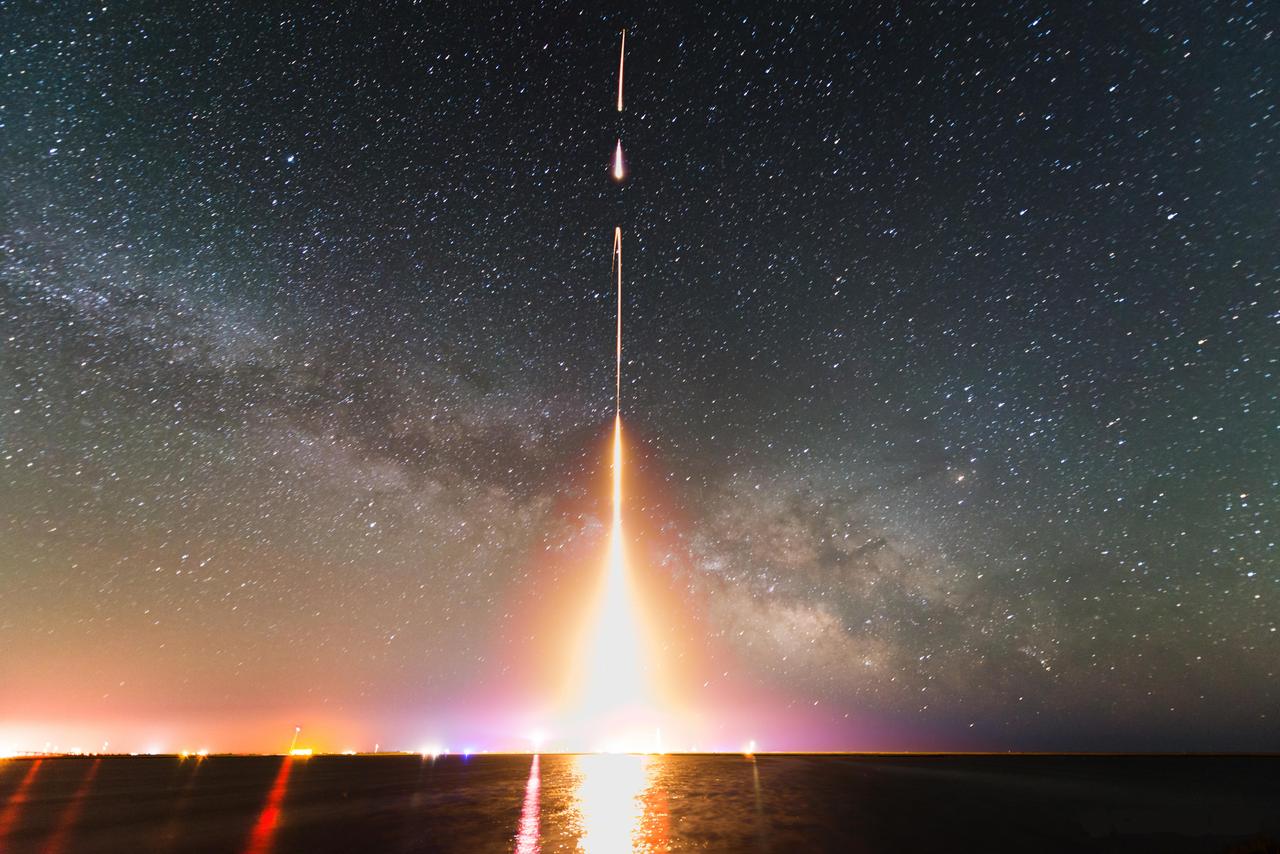
A time-lapse photograph of the CIBER rocket launch, taken from NASA Wallops Flight Facility in Virginia in 2013. This was the last of four launches of the Cosmic Infrared Background Experiment CIBER.
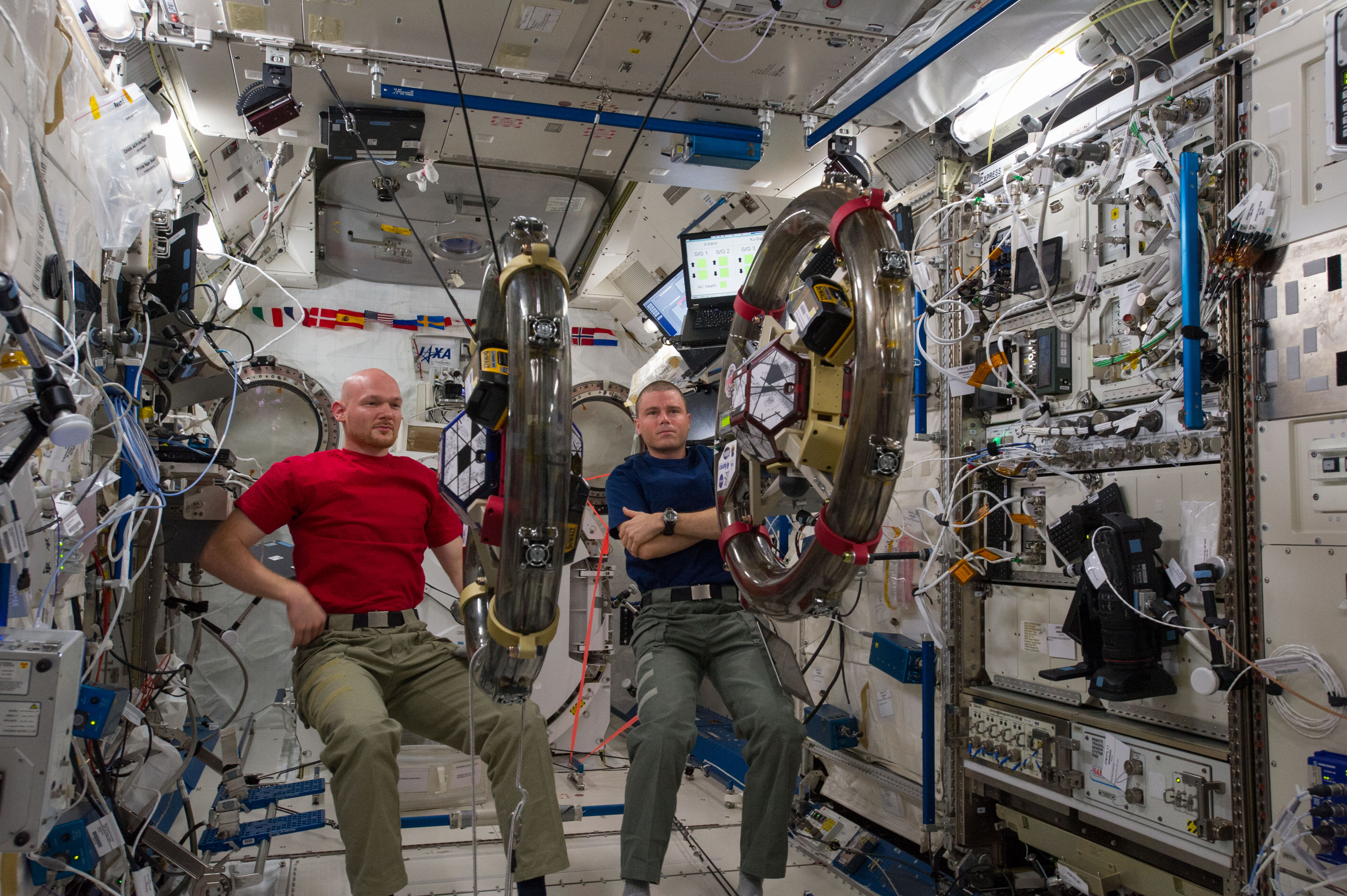
ISS040-E-059478 (10 July 2014) --- In the International Space Station's Kibo laboratory, European Space Agency astronaut Alexander Gerst (left) and NASA astronaut Reid Wiseman, both Expedition 40 flight engineers, conduct a session with a pair of bowling-ball-sized free-flying satellites known as Synchronized Position Hold, Engage, Reorient, Experimental Satellites, or SPHERES. Surrounding the two SPHERES mini-satellites is ring-shaped hardware known as the Resonant Inductive Near-field Generation System, or RINGS. SPHERES-RINGS seeks to demonstrate wireless power transfer between satellites at a distance for enhanced operations.
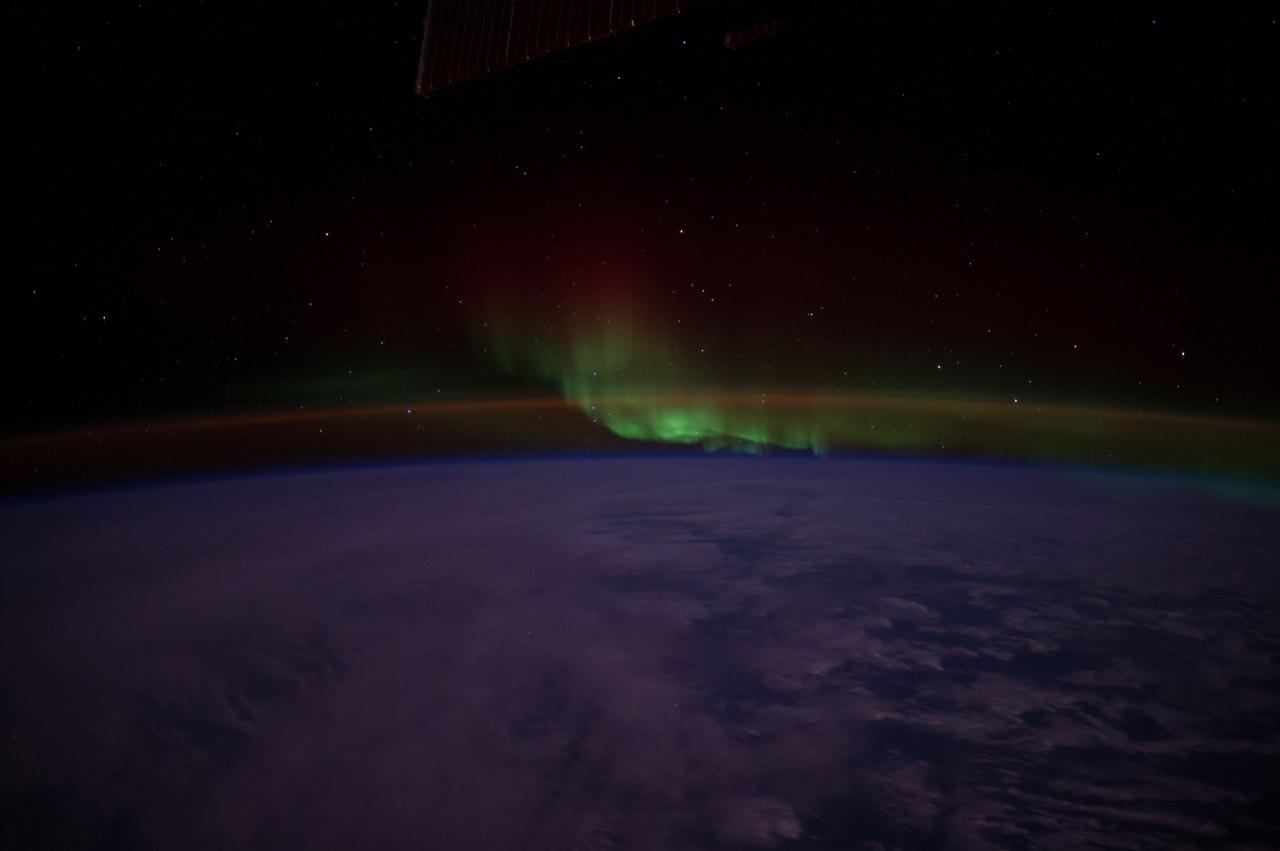
ISS040-E-050780 (7 July 2014) --- One of the Expedition 40 crew members aboard the International Space Station, flying 226 nautical miles above the Indian Ocean, south of Australia, recorded this image of Aurora Australis or the Southern Lights on July 7, 2014.
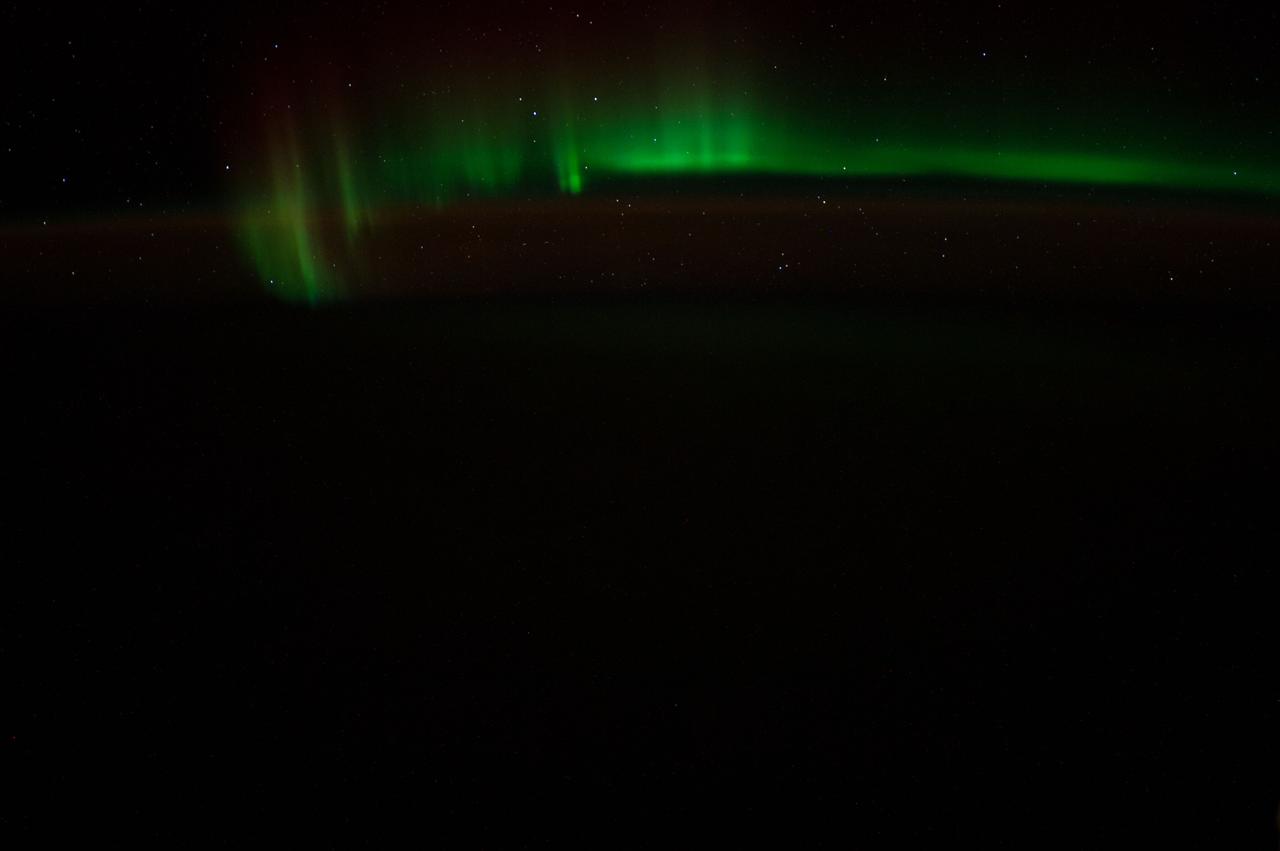
ISS040-E-040103 (5 July 2014) --- As the International Space Station was flying at an altitude of 226 nautical miles on July 5 above a point in the southern Indian Ocean near South Africa's Prince Edwards Islands, one of the Expedition 40 crew members photographed this image of Aurora Australis.
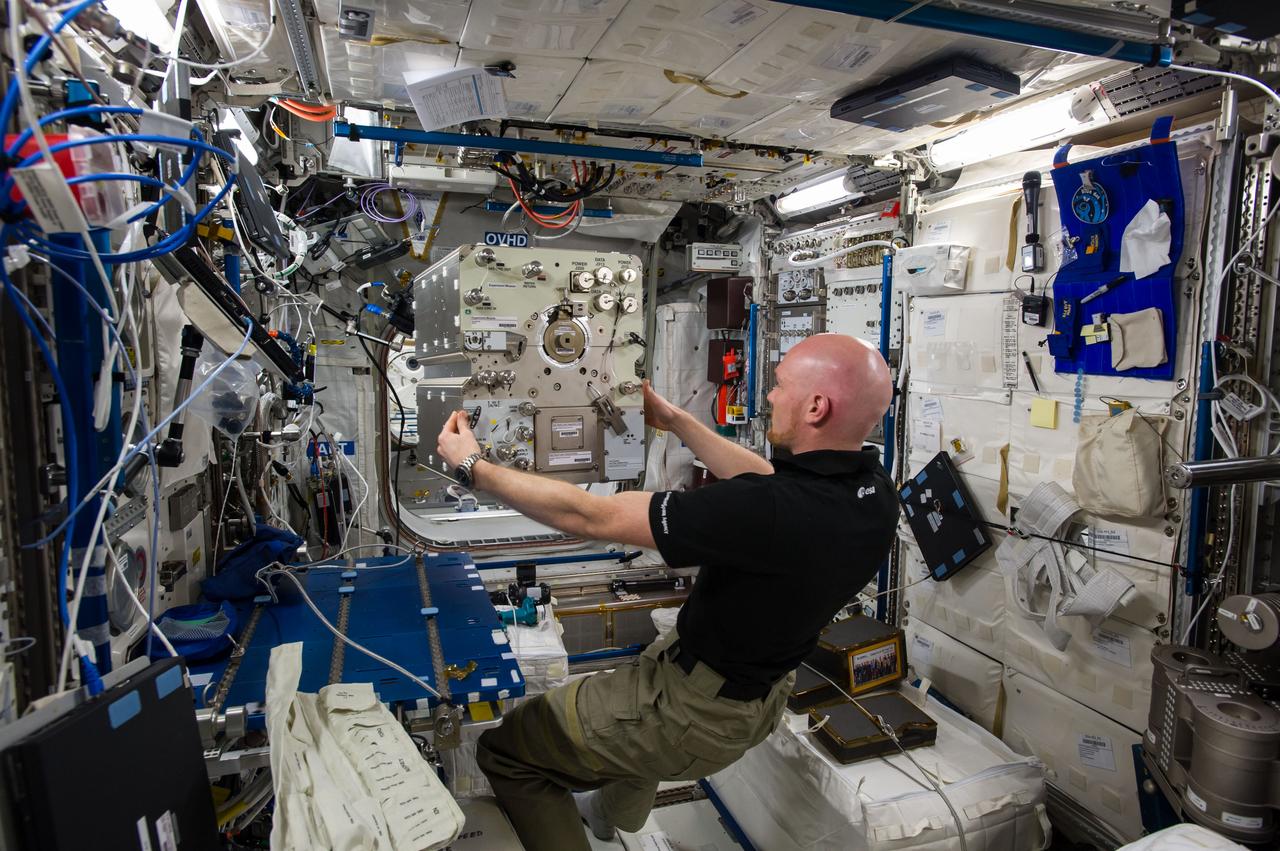
iss040e108044 (8/21/2014) — European Space Agency (ESA) astronaut Alexander Gerst, is shown in the Columbus module of the International Space Station (ISS) during the installation of the Electromagnetic Levitator (EML). The EML multi-user facility is designed for containerless materials processing in space.
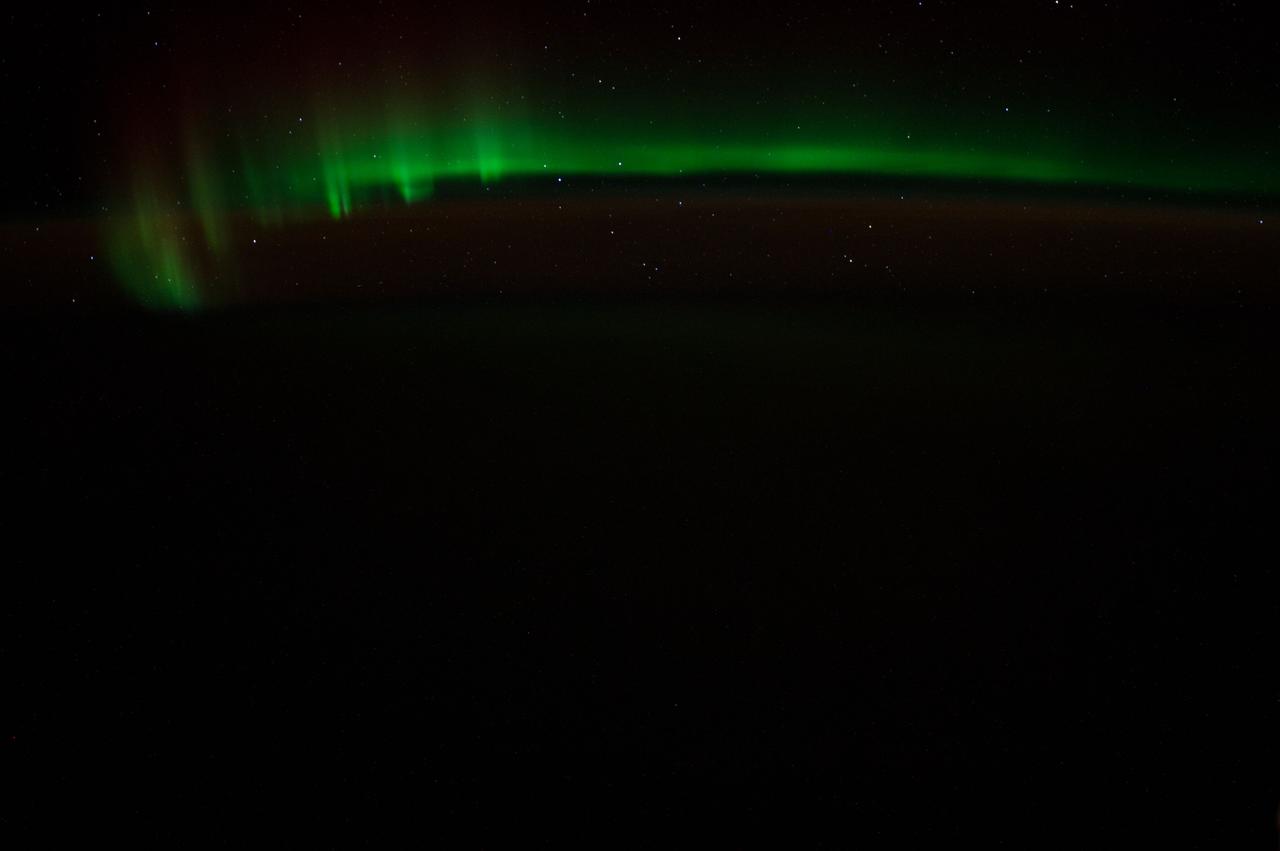
ISS040-E-040088 (5 July 2014) --- As the International Space Station was flying at an altitude of 226 nautical miles on July 5 above a point in the southern Indian Ocean near South Africa's Prince Edwards Islands, one of the Expedition 40 crew members photographed this image of Aurora Australis.
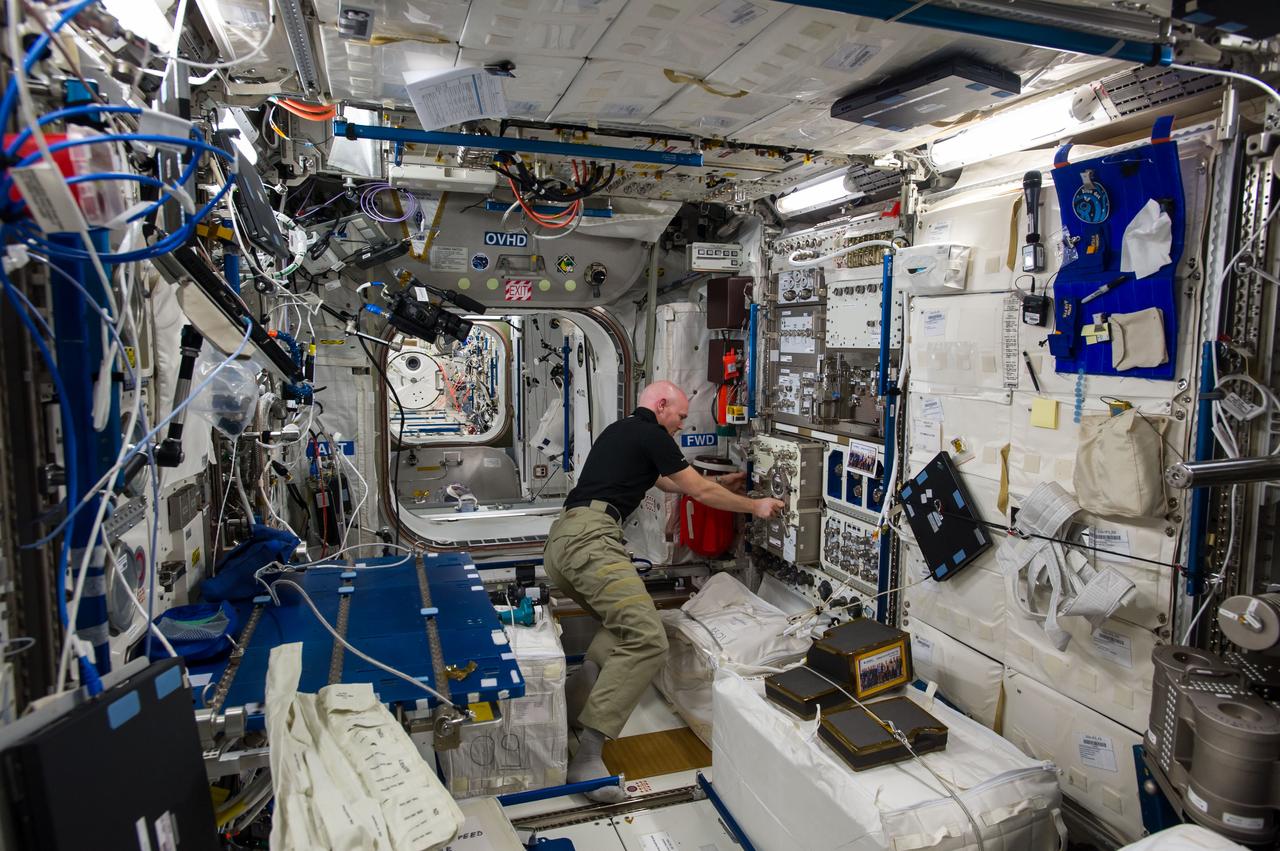
iss040e108050 (8/21/2014) — European Space Agency (ESA) astronaut Alexander Gerst, is shown in the Columbus module of the International Space Station (ISS) during the installation of the Electromagnetic Levitator (EML). The EML multi-user facility is designed for containerless materials processing in space.
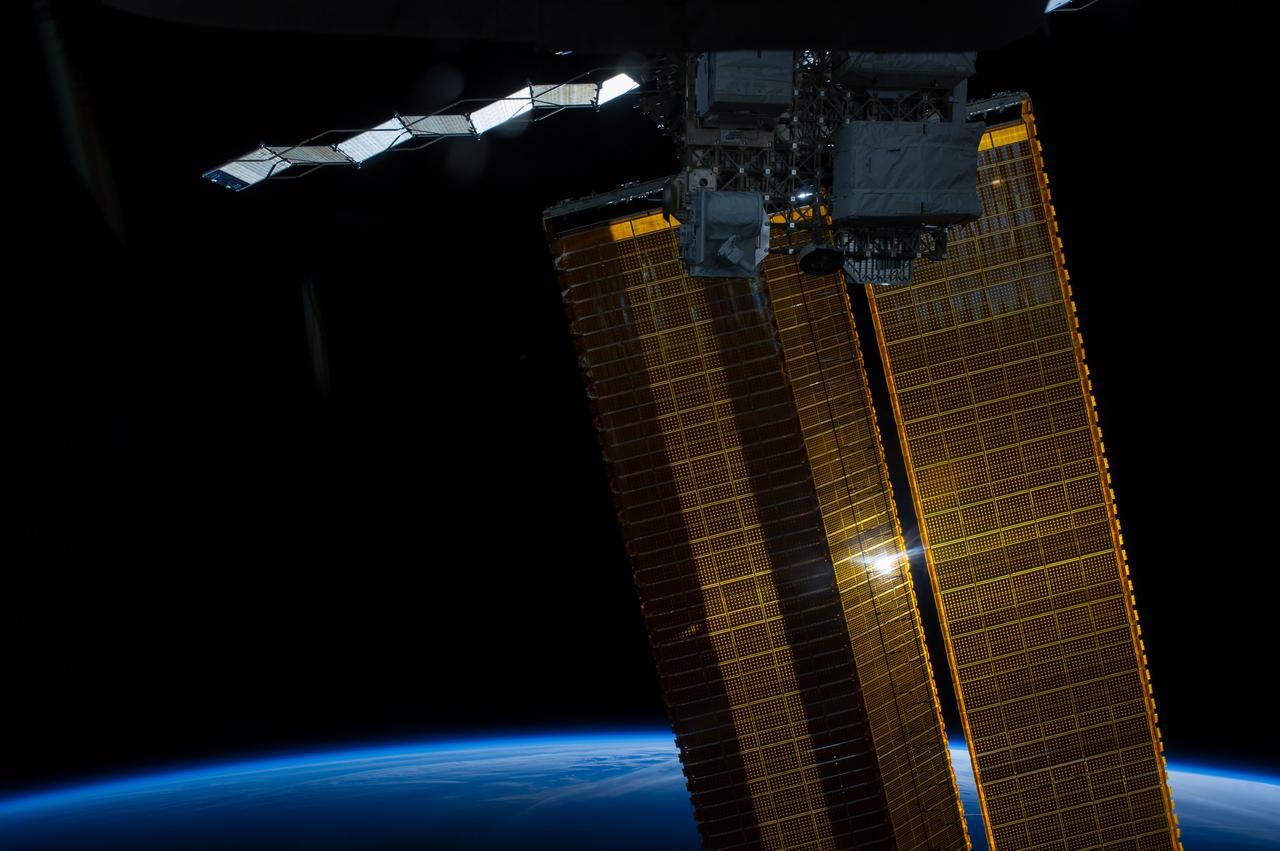
ISS040-E-007073 (3 June 2014) --- Some 228 nautical miles above the home planet, one of the Expedition 40 crew members aboard the International Space Station photographed this view of a sun-kissed solar array wing and a photovoltaic radiator (top) on the orbital outpost on June 3, 2014.
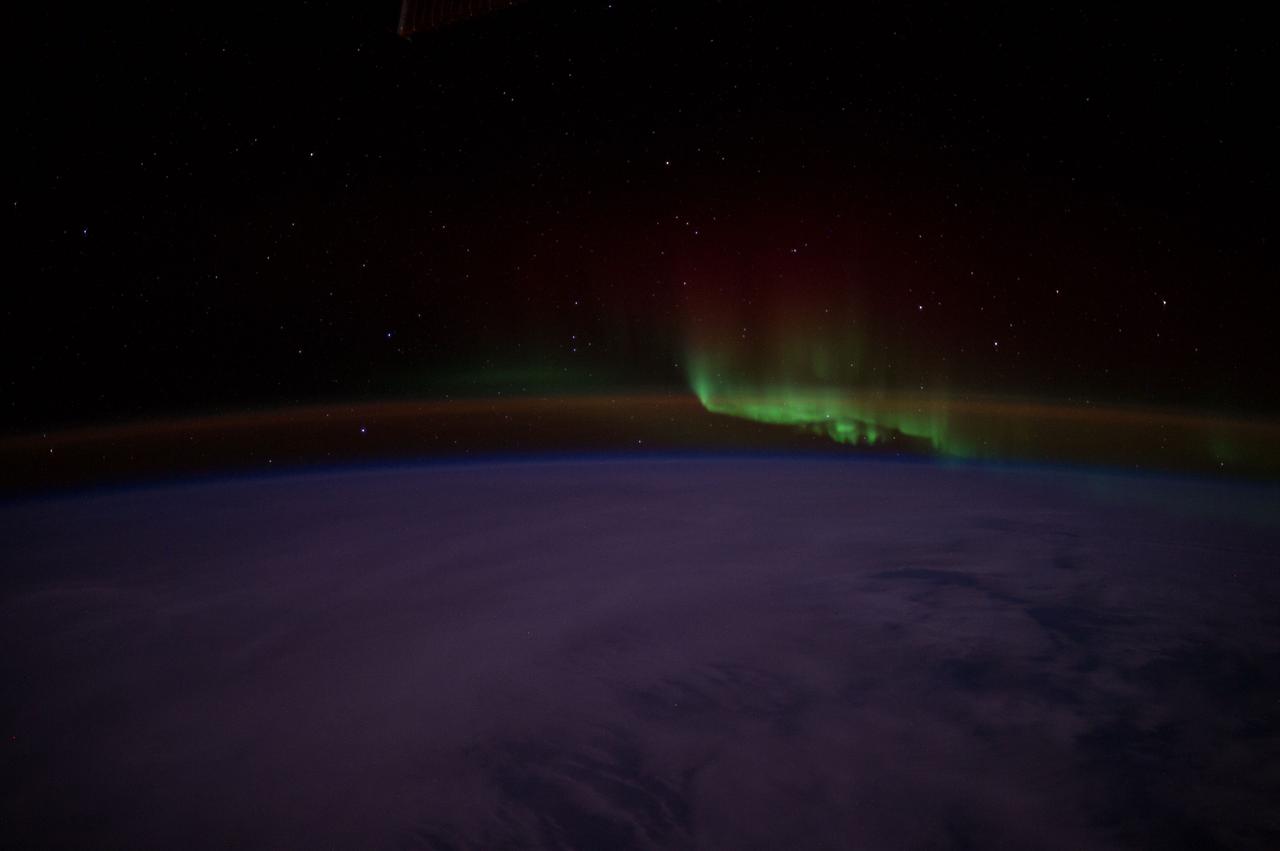
ISS040-E-050825 (7 July 2014) --- One of the Expedition 40 crew members aboard the International Space Station, flying 226 nautical miles above the Indian Ocean, south of Australia, recorded this image of Aurora Australis or the Southern Lights on July 7, 2014.
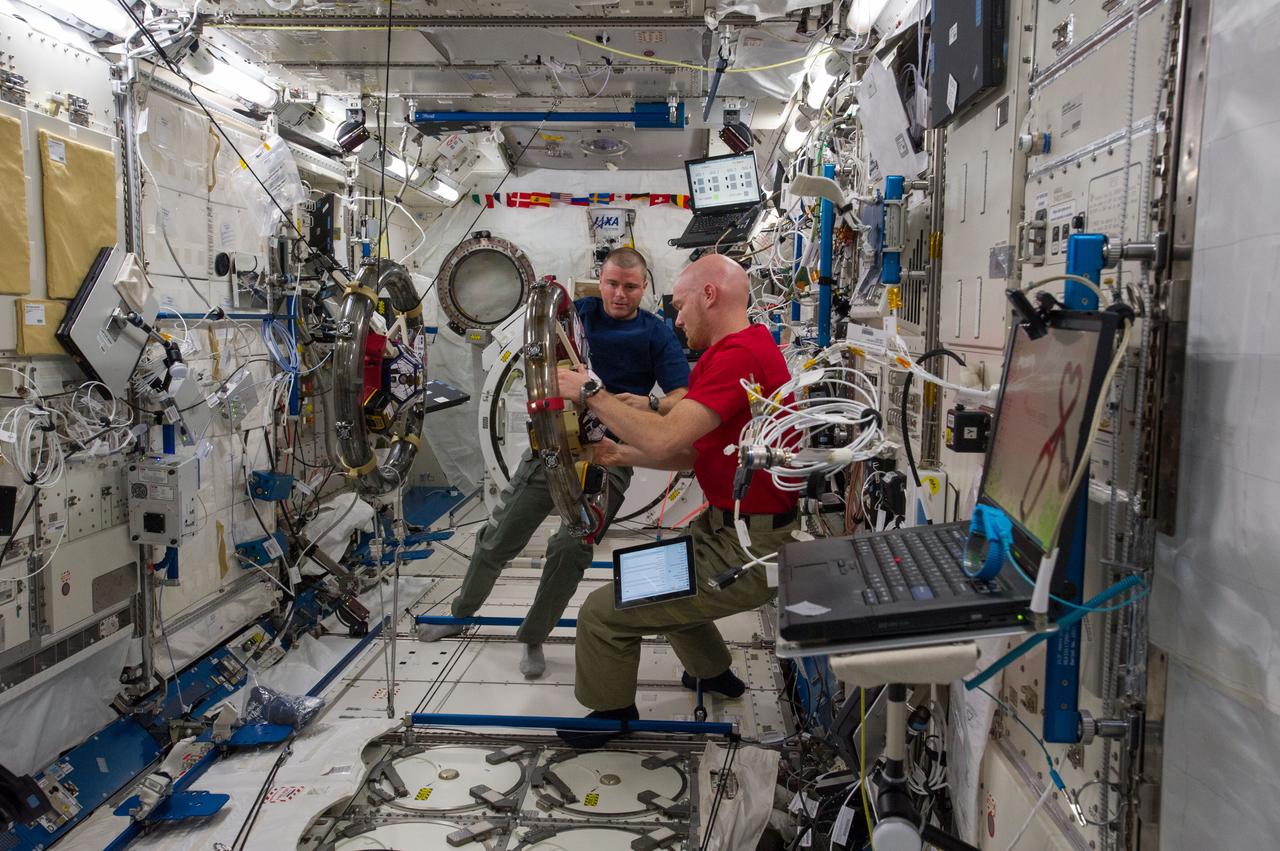
ISS040-E-059344 (10 July 2014) --- In the International Space Station’s Kibo laboratory, NASA astronaut Reid Wiseman (left) and European Space Agency astronaut Alexander Gerst, both Expedition 40 flight engineers, conduct a session with a pair of bowling-ball-sized free-flying satellites known as Synchronized Position Hold, Engage, Reorient, Experimental Satellites, or SPHERES. Surrounding the two SPHERES mini-satellites is ring-shaped hardware known as the Resonant Inductive Near-field Generation System, or RINGS. SPHERES-RINGS seeks to demonstrate wireless power transfer between satellites at a distance for enhanced operations.
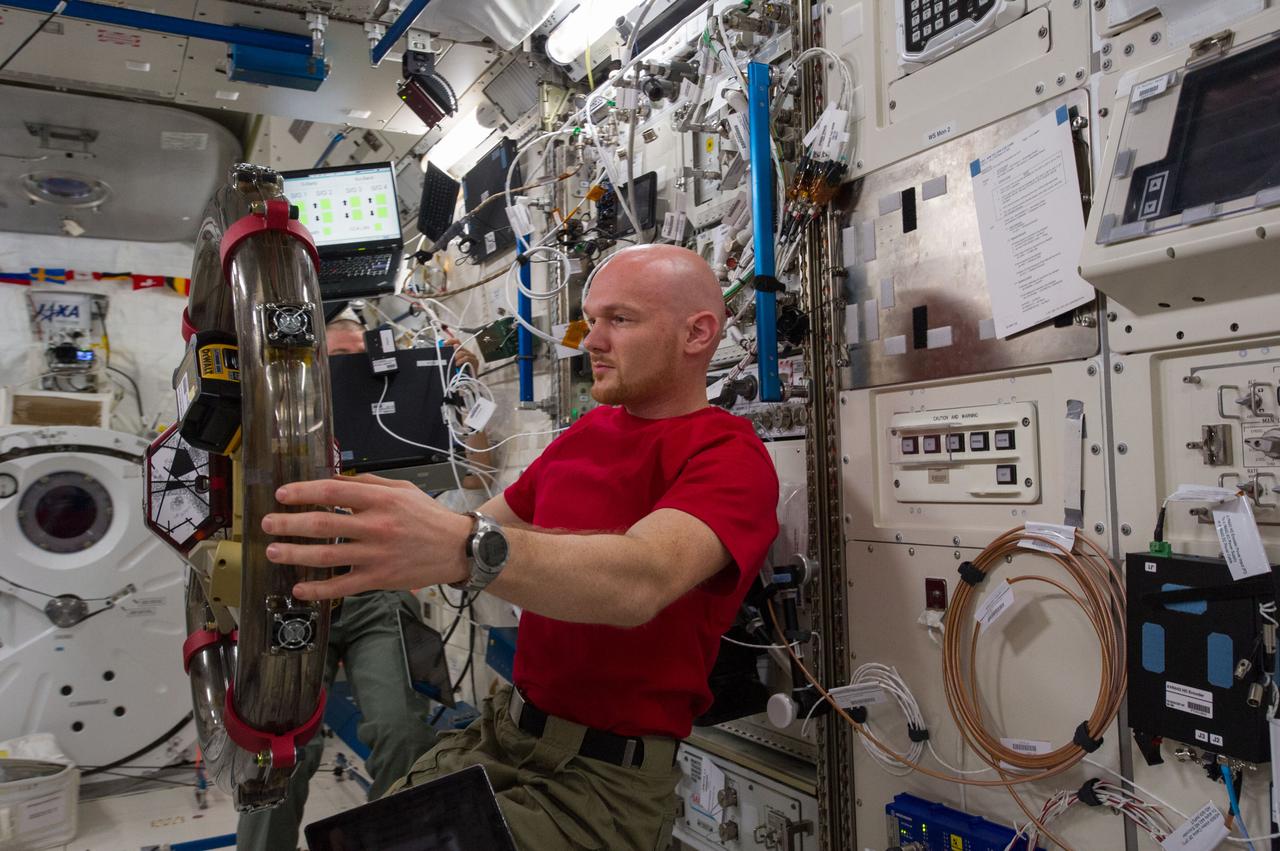
ISS040-E-059467 (10 July 2014) --- In the International Space Station's Kibo laboratory, European Space Agency astronaut Alexander Gerst and NASA astronaut Reid Wiseman (mostly obscured), both Expedition 40 flight engineers, conduct a session with a pair of bowling-ball-sized free-flying satellites known as Synchronized Position Hold, Engage, Reorient, Experimental Satellites, or SPHERES. Surrounding the two SPHERES mini-satellites is ring-shaped hardware known as the Resonant Inductive Near-field Generation System, or RINGS. SPHERES-RINGS seeks to demonstrate wireless power transfer between satellites at a distance for enhanced operations.

iss071e170351 (6/3/2024) --- NASA astronaut Matthew Dominick captured red sprites from space station. The bright red flashes in the center of this image are a little-understood phenomenon associated with powerful lightning events and appear high above the clouds in Earth’s upper atmosphere. Red sprites are one type of Transient Luminous Events, colorful bursts of energy that appear above storms due to lightning activity occurring in and below storms on Earth. Understanding processes occurring in Earth’s atmosphere can help improve climate modeling and monitoring.
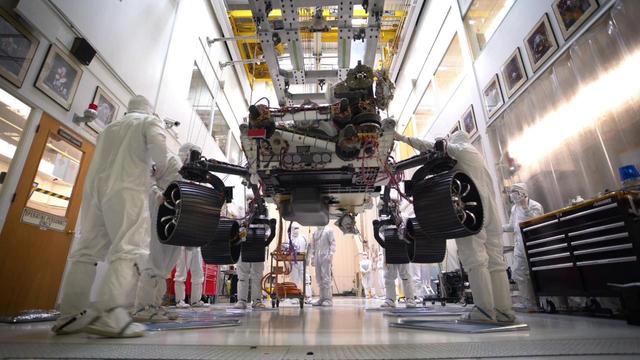
This time-lapse video, taken on Oct. 8, 2019, at NASA's Jet Propulsion Laboratory in Pasadena, California, captures the first time the Mars 2020 rover carries its full weight on its legs and wheels. The rover was photographed in JPL's Simulator Building, where it underwent weeks of testing. Movie available at https://photojournal.jpl.nasa.gov/catalog/PIA23468
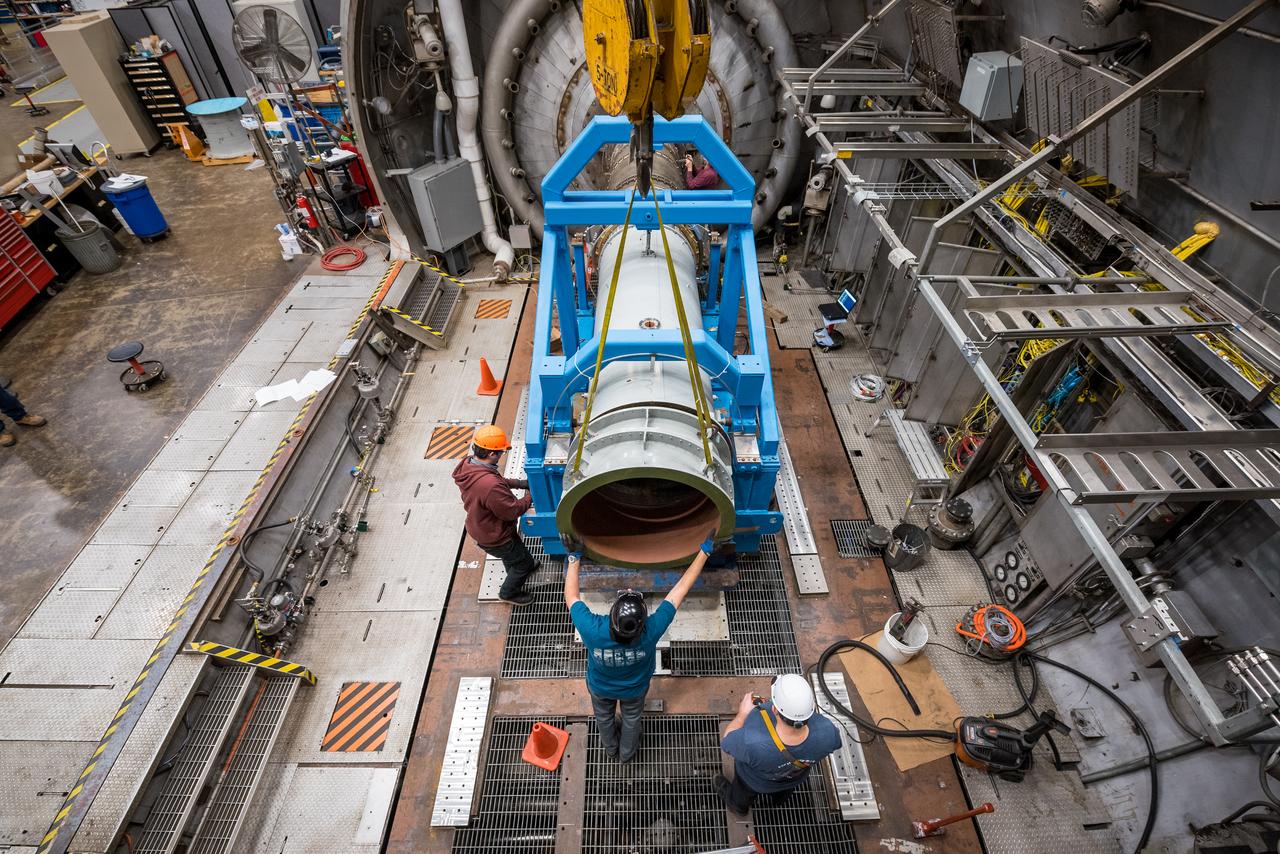
American Society of Mechanical Engineers, ASME Nozzle Test at Propulsion Systems Laboratory, PSL
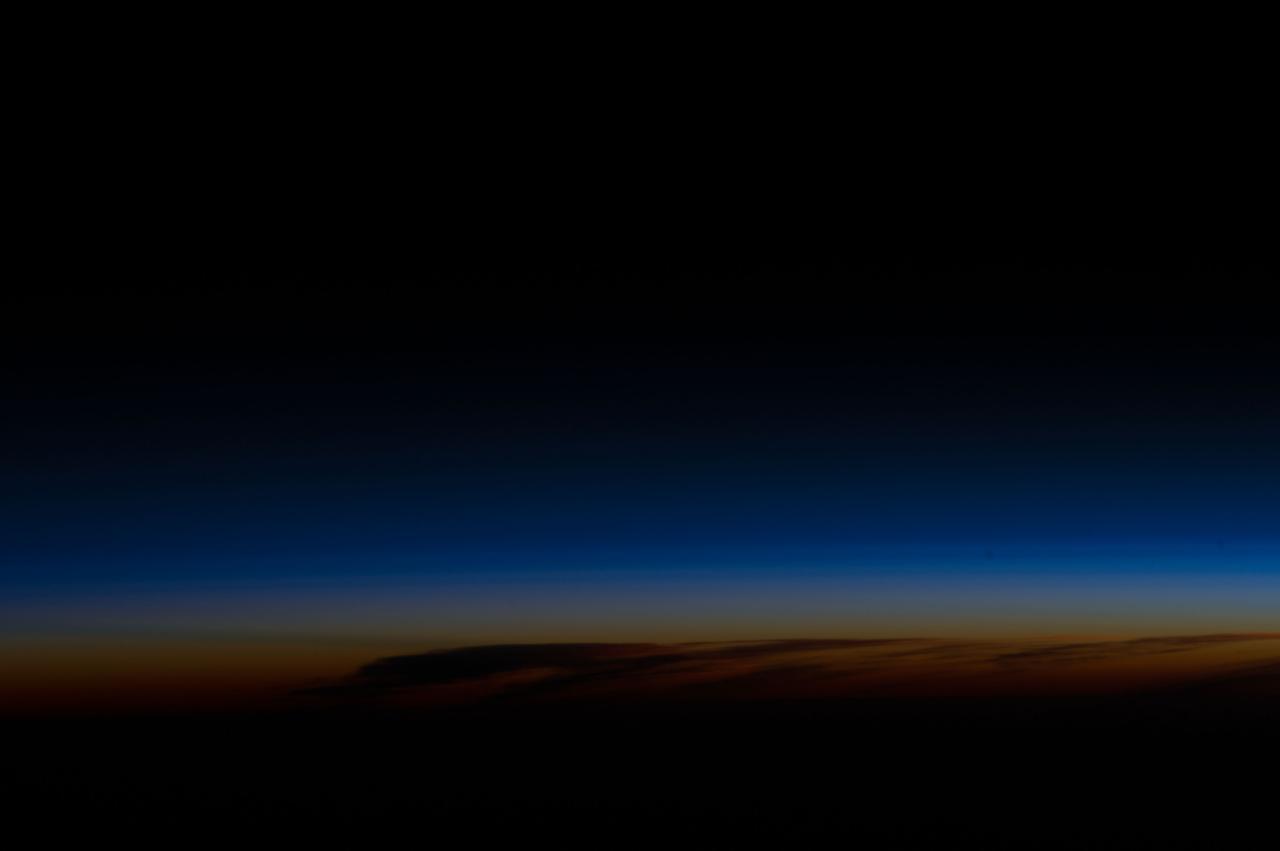
Earth Observations taken by Expedition 34 crewmember. Earth limb is visible. One of a series of time lapse photos.
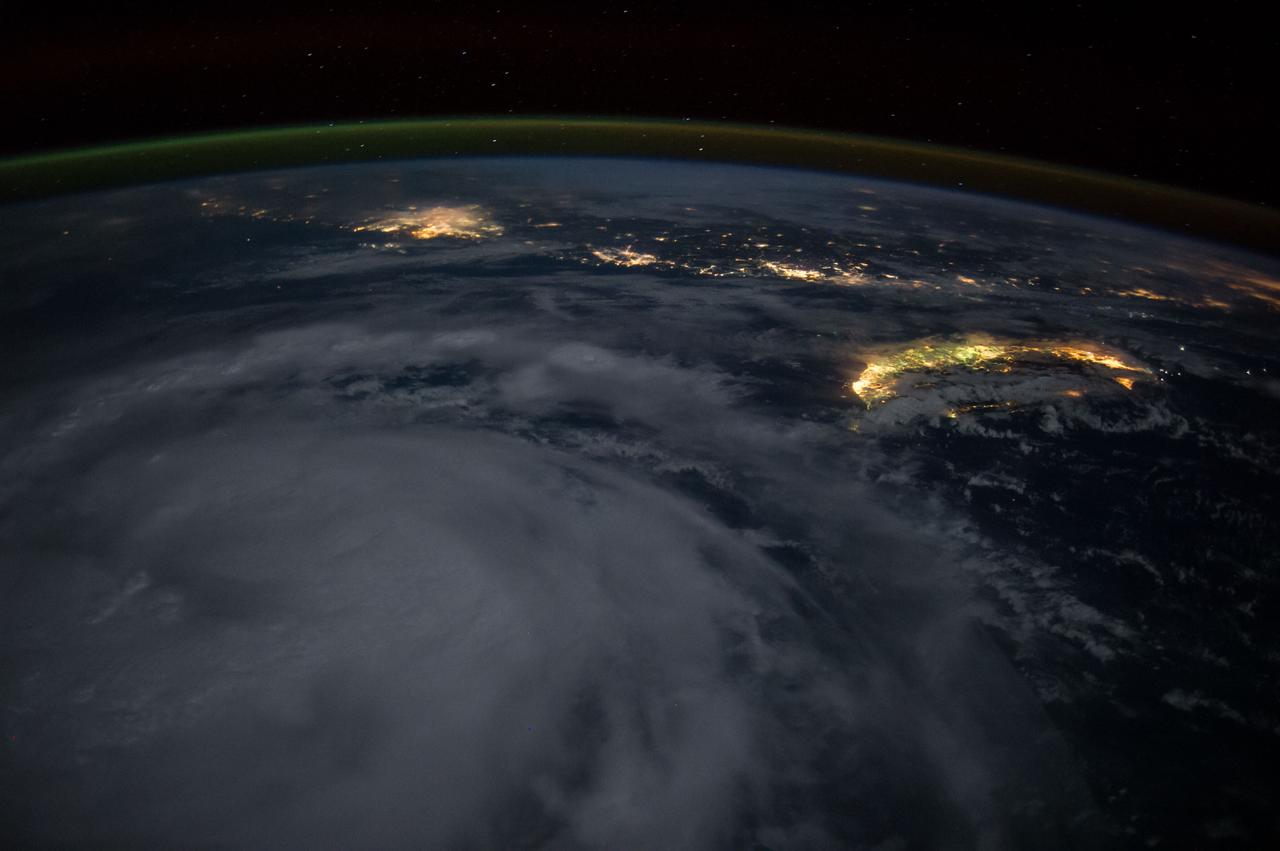
Night Earth Observations taken by Expedition 41 crewmember. One of a series of time lapse photos.
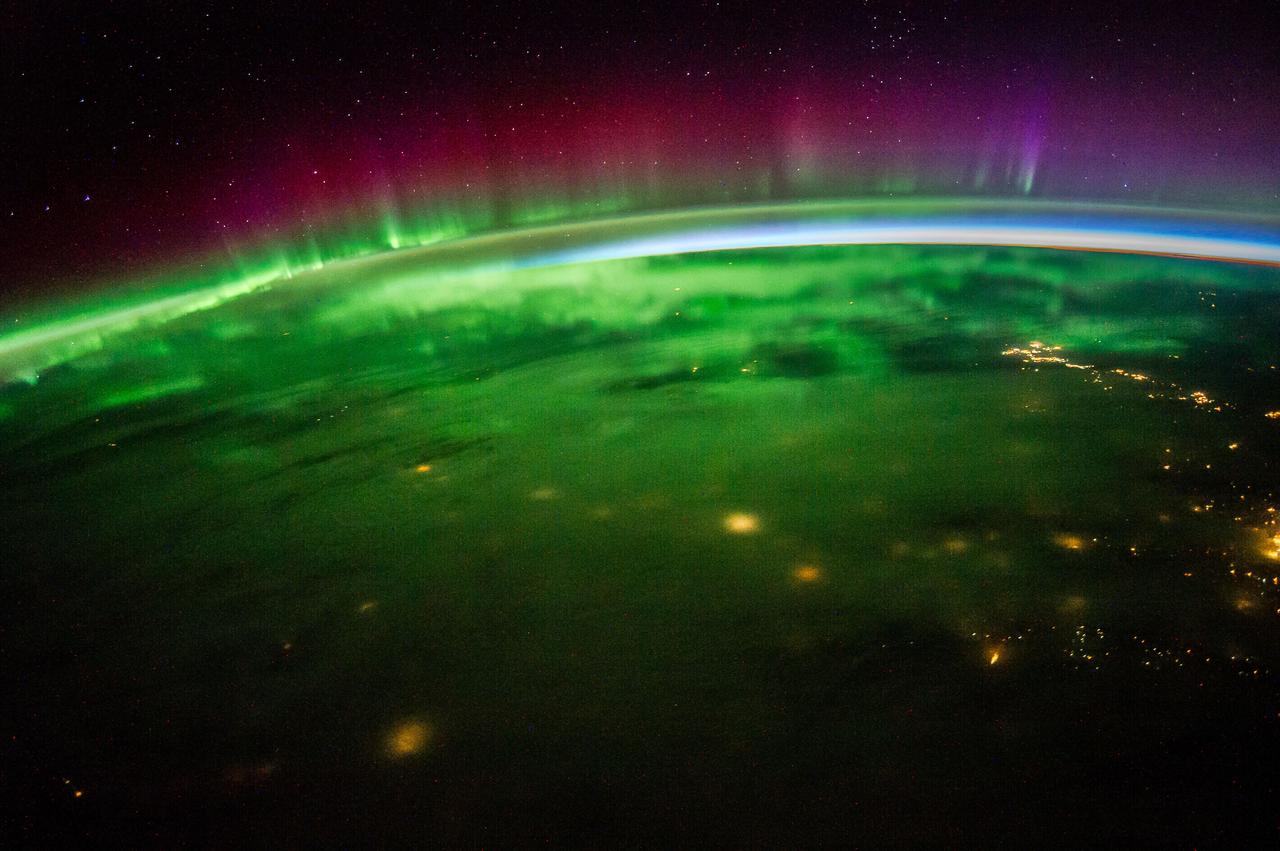
Earth Observations taken by Expedition 41 crewmember. Aurora and sunrise are visible. One of a series of time lapse photos.
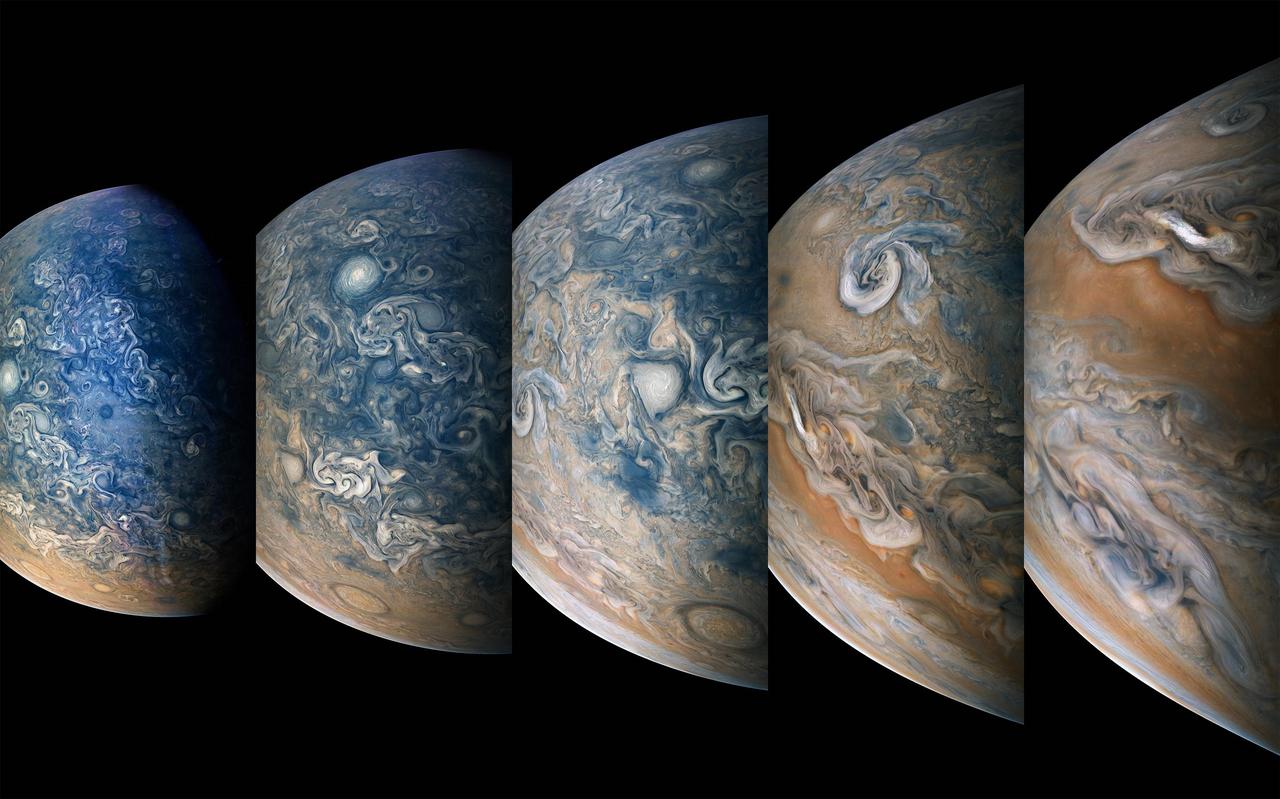
Striking atmospheric features in Jupiter's northern hemisphere are captured in this series of color-enhanced images from NASA's Juno spacecraft. An anticyclonic white oval, called N5-AWO, can be seen at center left of the first image (at far left) and appears slightly higher in the second and third images. A tempest known as the Little Red Spot is visible near the bottom of the second and third images. The reddish-orange band that is prominently displayed in the fourth and fifth images is the North North Temperate Belt. From left to right, this sequence of images was taken between 9:54 p.m. and 10:11 p.m. PDT on July 15 (12:54 a.m. and 1:11 a.m. EDT on July 16), as the spacecraft performed its 14th close flyby of Jupiter. At the time, Juno's altitude ranged from about 15,700 to 3,900 miles (25,300 to 6,200 kilometers) from the planet's cloud tops, above a latitude of approximately 69 to 36 degrees. Citizen scientists Gerald Eichstädt and Seán Doran created this image using data from the spacecraft's JunoCam imager. https://photojournal.jpl.nasa.gov/catalog/PIA22686

Range : 1 million kilometers Voyager 2 completed a dramatic 10 hour time lapse photo sequence to monitor the active volcanos on Jupiter's moon Io following the spacecraft's closest approach to Jupiter. This picture is one of about 200 images that will be used to generate a time lapse motion picture to illustrate Io's volcanic activity. On the bright limb, two of the plumes (P-5 & P-6) discovered in March by Voyager 1 are again visible. The plumes are spewing materials to a height of about 100 kilometers.
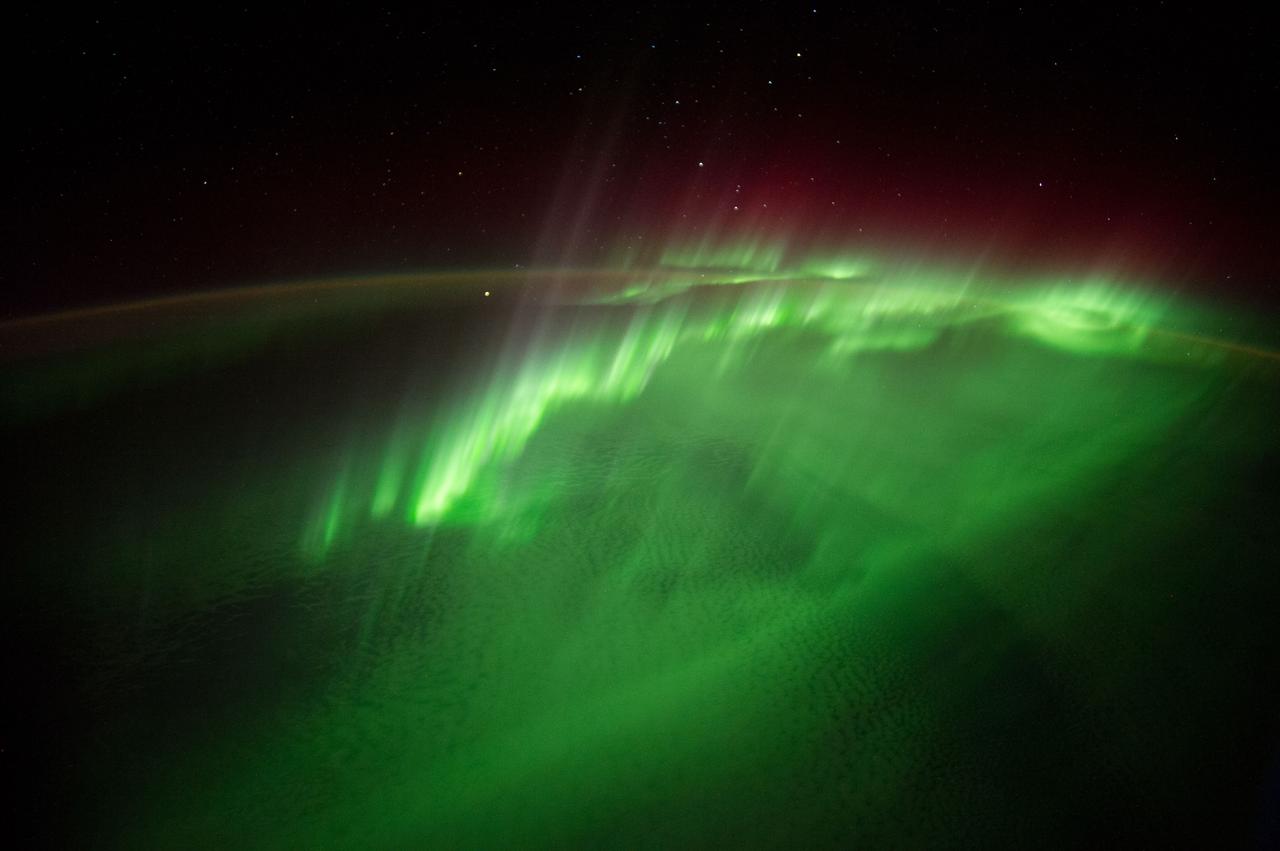
Time lapse (ISS040E117497 thru ISS040E118044) Earth observation taken during a night pass by the Expedition 40 crew aboard the International Space Station (ISS). Folder lists this as: TL SUPER Aurora 4 - from DC-1.
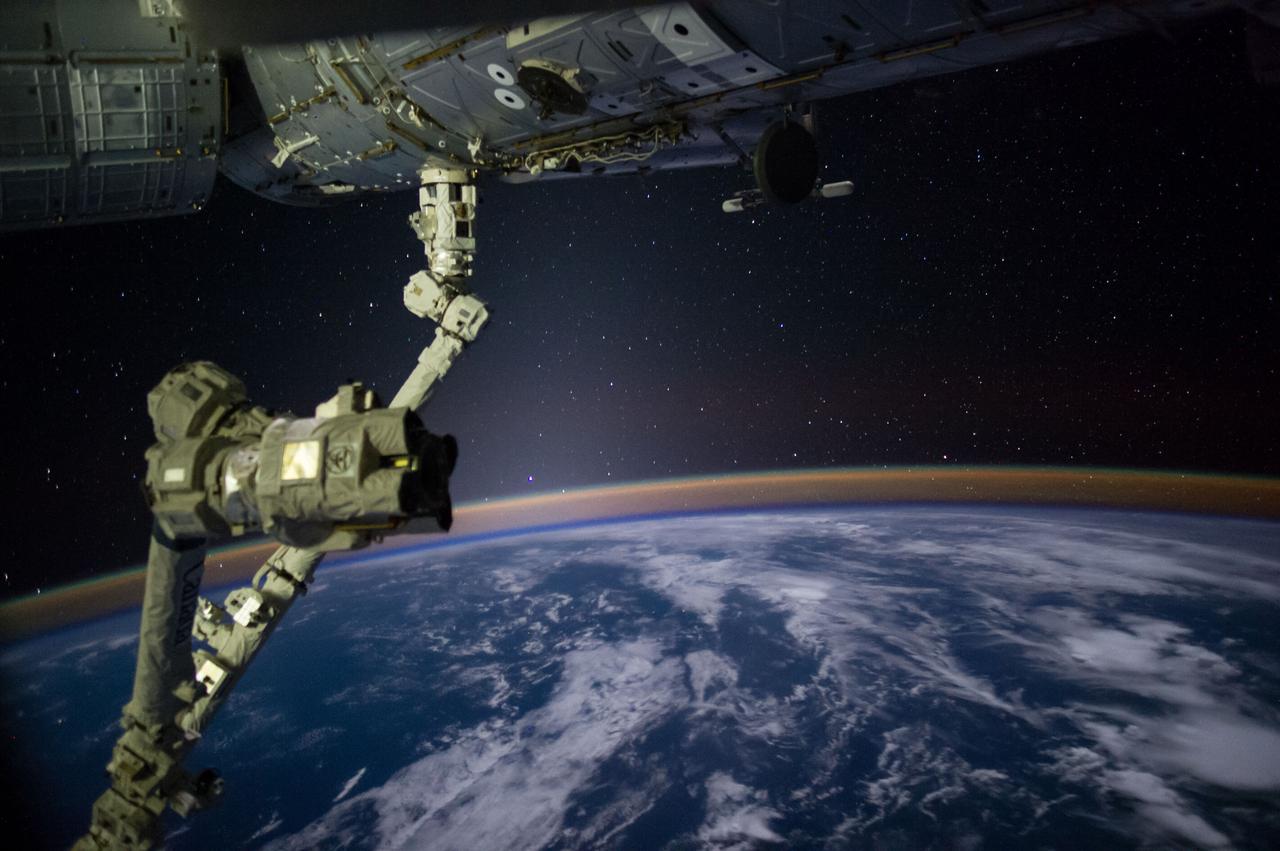
Earth Observations taken by Expedition 41 crewmember. Columbus Module, Node 2, U.S. Laboratory, and Remote Manipulator System (RMS) are visible. One of a series of time lapse photos.
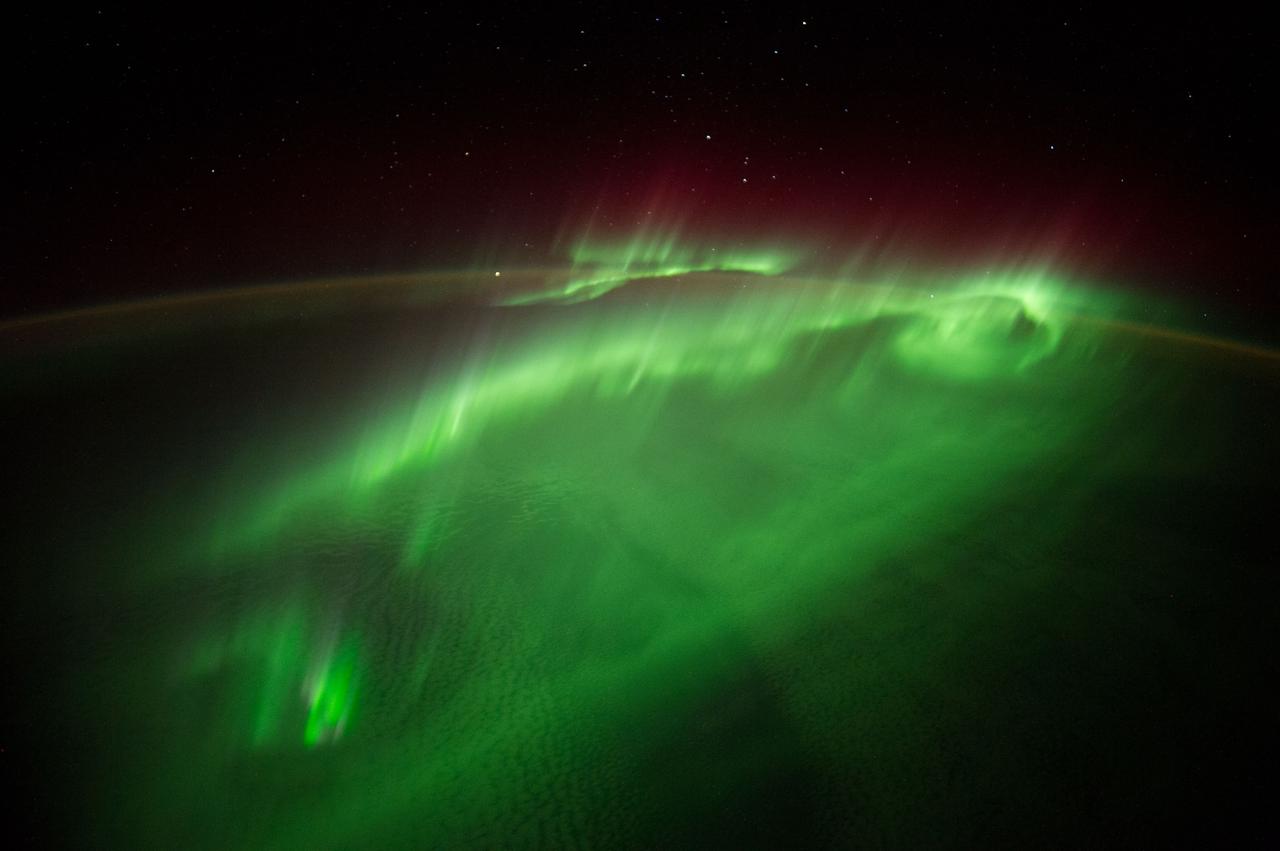
Time lapse (ISS040E117497 thru ISS040E118044) Earth observation taken during a night pass by the Expedition 40 crew aboard the International Space Station (ISS). Folder lists this as: TL SUPER Aurora 4 - from DC-1.
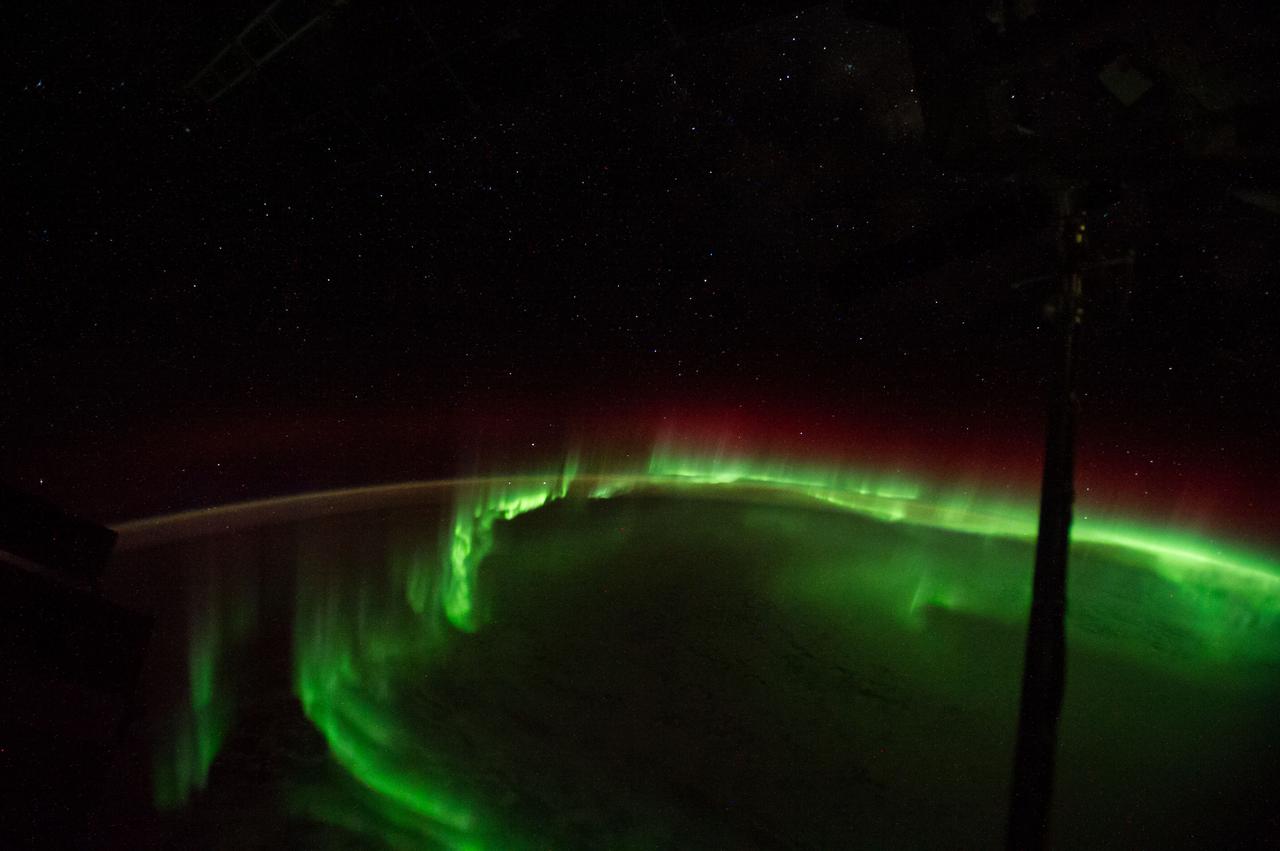
Time lapse Earth Observation (ISS040E111401 thru ISS040E112398) taken during a night pass by the Expedition 40 crew aboard the International Space Station (ISS). Folder lists this as: SUPER Aurora south.
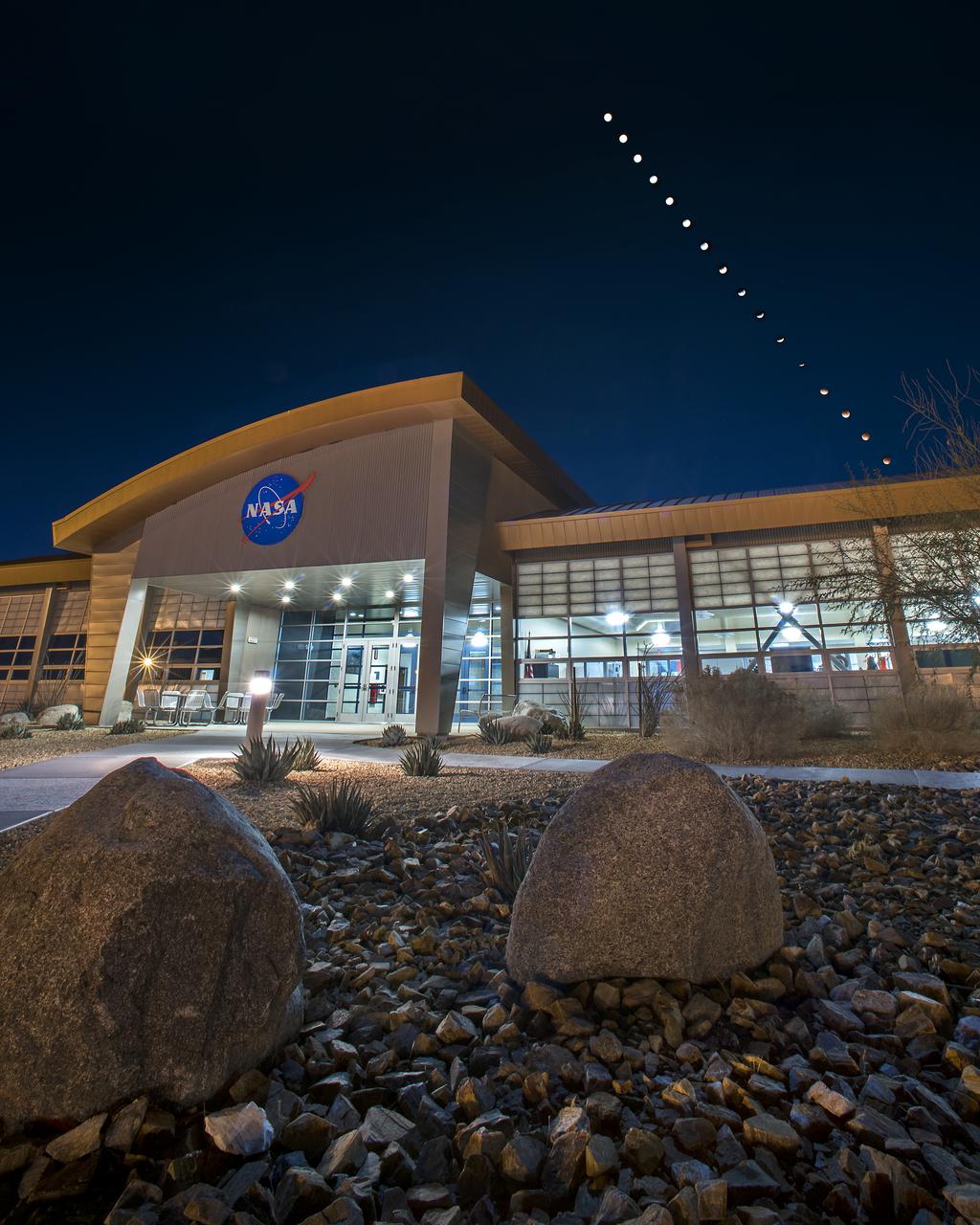
California’s NASA Armstrong Flight Research Center photographer Ken Ulbrich takes photos of Super Blue Blood Moon eclipse making a time-lapse composition of the event on January 31. The total lunar eclipse provided a rare opportunity to capture a supermoon, a blue moon and a lunar eclipse at the same time. A supermoon occurs when the Moon is closer to Earth in its orbit and appearing 14 percent brighter than usual. As the second full moon of the month, this moon is also commonly known as a blue moon, though it will not be blue in appearance. The super blue moon passed through Earth’s shadow and took on a reddish tint, known as a blood moon. This total lunar eclipse occurs when the Sun, Earth, and a full moon form a near-perfect lineup in space. The Moon passes directly behind the Earth into its umbra (shadow).
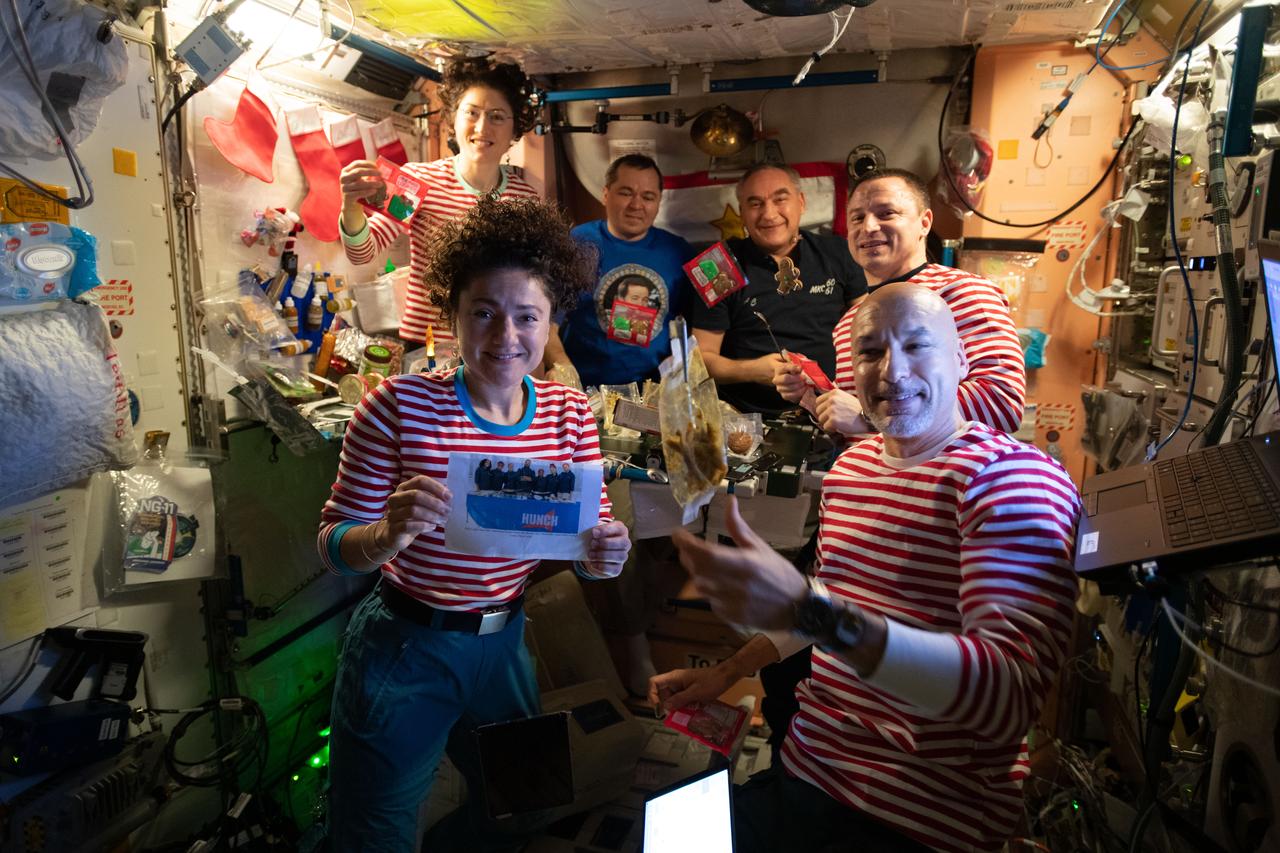
iss061e096558 (Dec. 25, 2019) --- The Expedition 64 crew celebrates Christmas day with a brunch inside the International Space Station's Unity module decorated with stockings, flashlight "candles" and a Christmas tree banner. Clockwise from bottom left are, NASA Flight Engineers Jessica Meir and Christina Koch, Roscosmos Flight Engineers Oleg Skripochka and Alexander Skvortsov, NASA Flight Engineer Drew Morgan, and Commander Luca Parmitano of the European Space Agency (ESA).
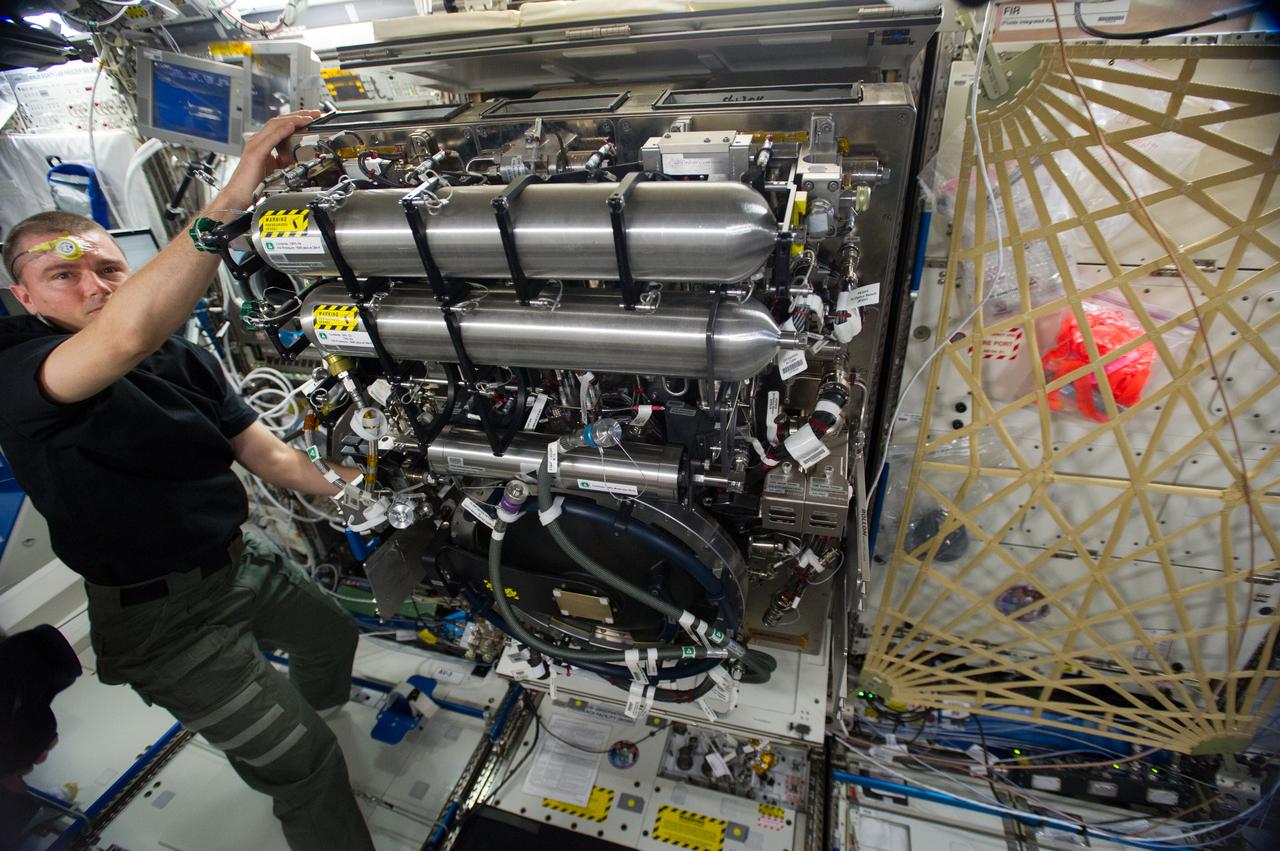
ISS040-E-072156 (21 July 2014) --- In the International Space Station’s Destiny laboratory, NASA astronaut Reid Wiseman, Expedition 40 flight engineer, sets up the Combustion Integrated Rack (CIR) for more ground-commanded tests. This facility, which includes an optics bench, combustion chamber, fuel and oxidizer control and five different cameras, allows a variety of combustion experiments to be performed safely aboard the station.
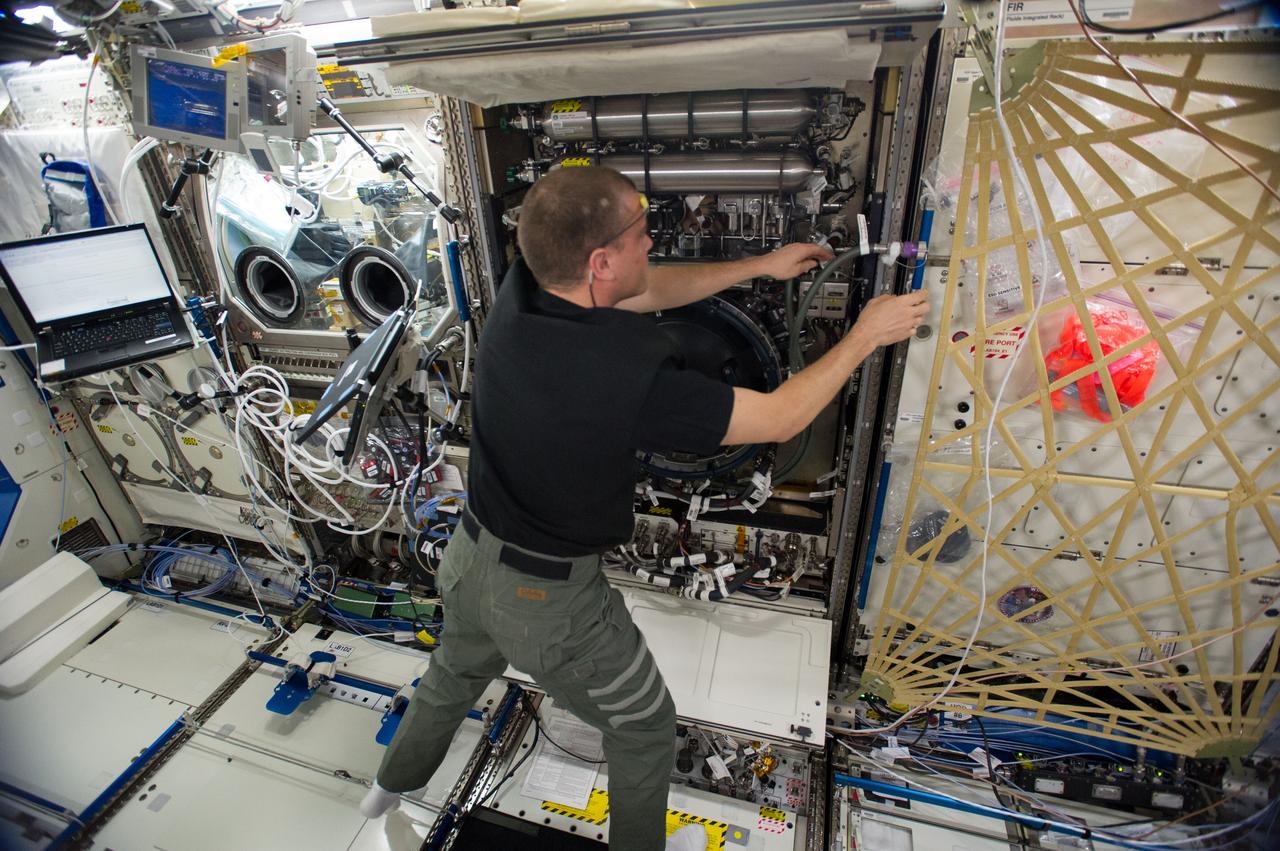
ISS040-E-071994 (21 July 2014) --- In the International Space Station’s Destiny laboratory, NASA astronaut Reid Wiseman, Expedition 40 flight engineer, sets up the Combustion Integrated Rack (CIR) for more ground-commanded tests. This facility, which includes an optics bench, combustion chamber, fuel and oxidizer control and five different cameras, allows a variety of combustion experiments to be performed safely aboard the station.

ISS040-E-072228 (21 July 2014) --- In the International Space Station’s Destiny laboratory, NASA astronaut Reid Wiseman, Expedition 40 flight engineer, sets up the Combustion Integrated Rack (CIR) for more ground-commanded tests. This facility, which includes an optics bench, combustion chamber, fuel and oxidizer control and five different cameras, allows a variety of combustion experiments to be performed safely aboard the station.
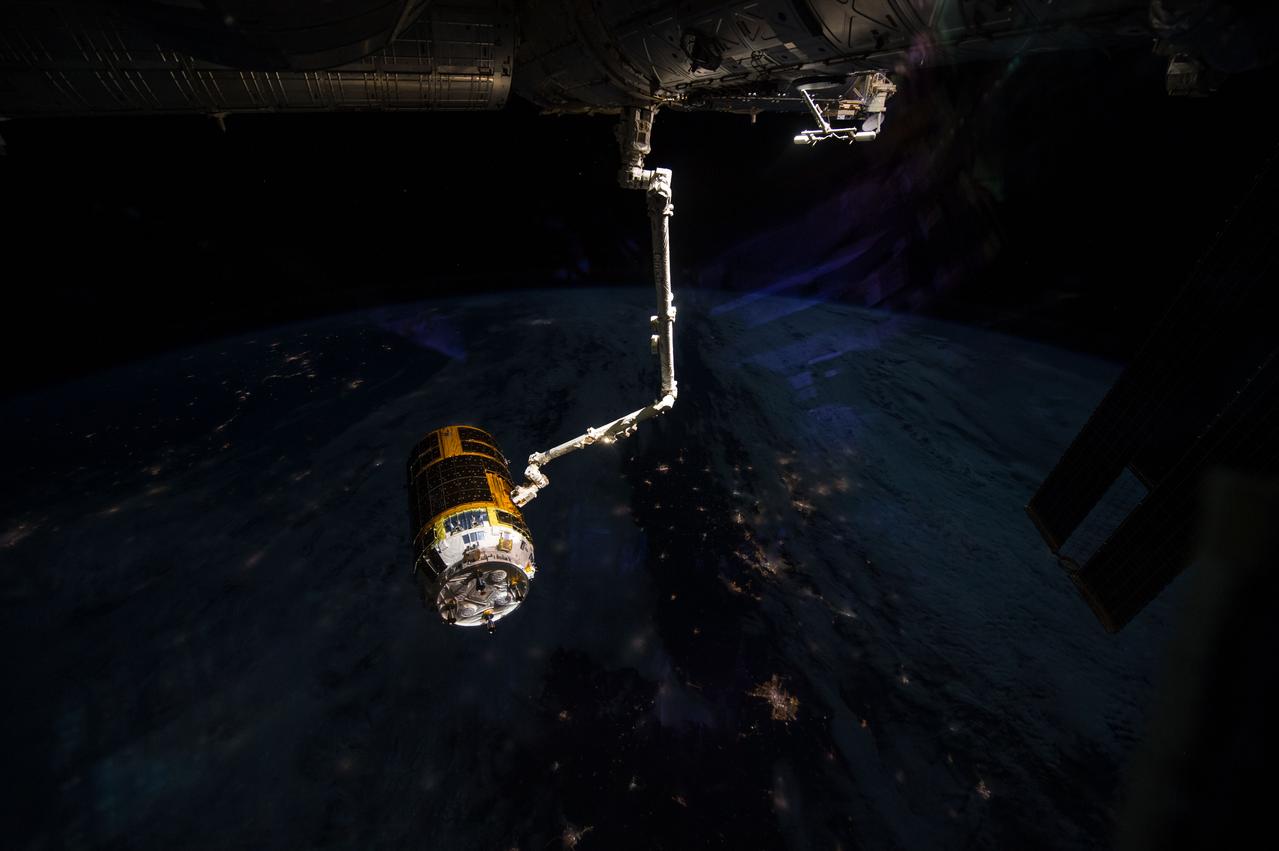
The unberthed Kounotori H-II Transfer Vehicle 5 (HTV-5) is grappled by the Canadarm2 Space Station Remote Manipulator System (SSRMS) prior to its release for reentry. This image is part of a time lapse sequence (iss045e125963 through iss045e126960) taken at a rate of 12 frames per minute. Image was released by astronaut on social media.
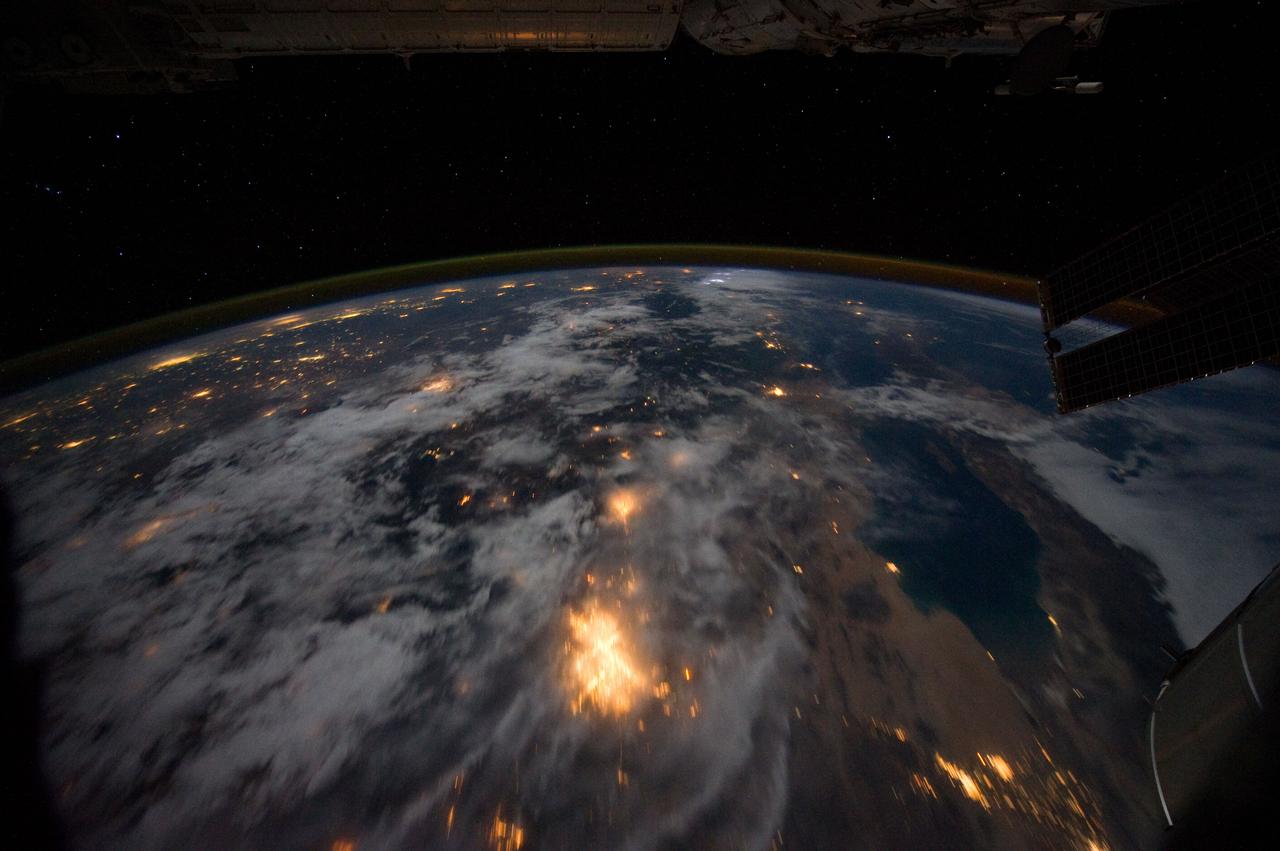
ISS028-E-033315 (19 Aug. 2011) --- City lights illuminate this night time view of southern California, Mexico's Baja California and the Gulf of Cortez, as photographed by one the Expedition 28 crew members onboard the International Space Station flying at altitude of approximately 220 miles. A 15-mm focal length was used to capture the time lapse image. The thin line of Earth's atmosphere is visible above the horizon.
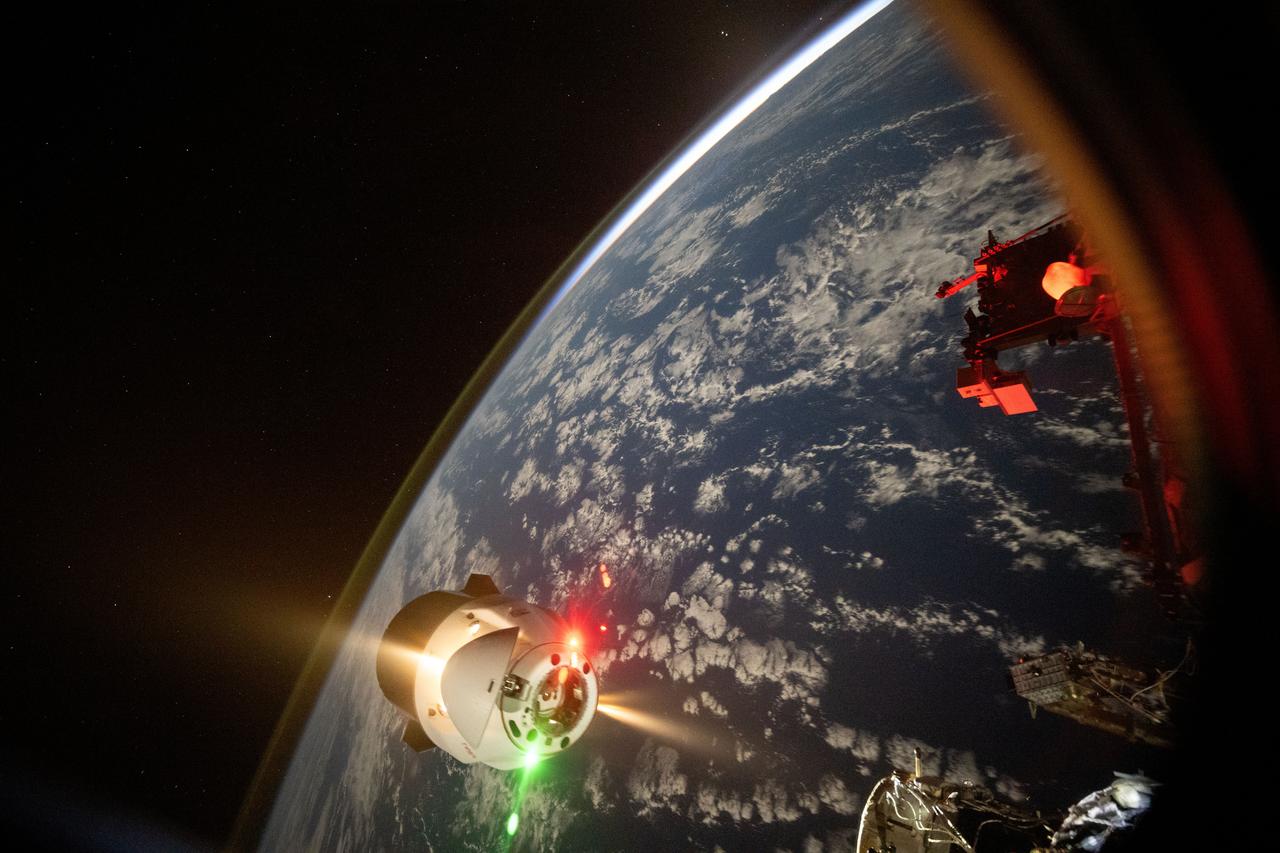
iss072e369825 (Dec. 16, 2024) --- This frame from a time-lapse video captured by NASA astronaut Don Pettit shows the thrusters firing on the SpaceX Dragon cargo spacecraft after it undocked and backed away from the International Space Station's forward port on the Harmony module. The orbital outpost was soaring 259 miles above the Pacific Ocean west of the Hawaiian island chain at the time of this photograph.
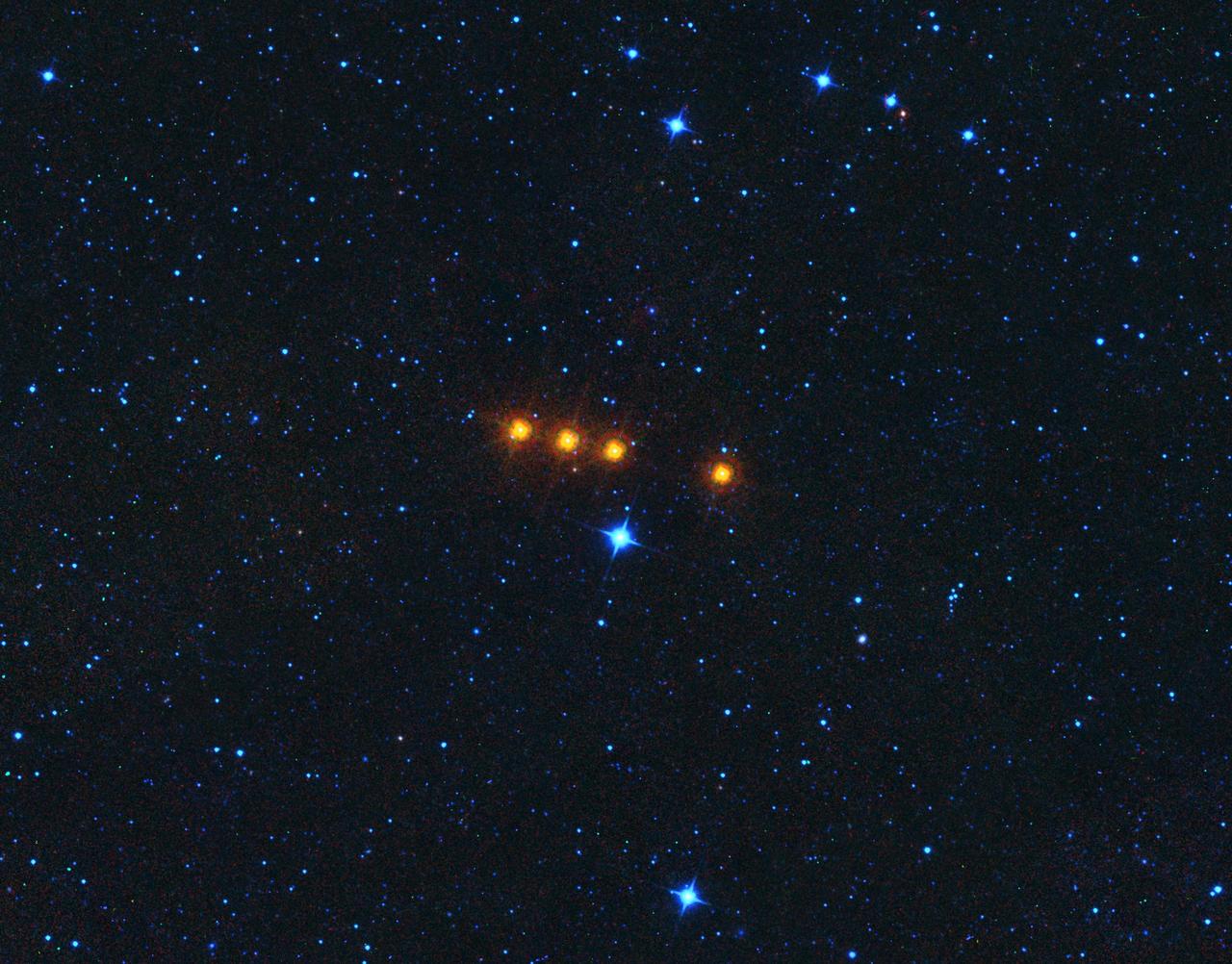
The asteroid Euphrosyne glides across a field of background stars in this time-lapse view from NASA's WISE spacecraft. WISE obtained the images used to create this view over a period of about a day around May 17, 2010, during which it observed the asteroid four times. Because WISE (renamed NEOWISE in 2013) is an infrared telescope, it senses heat from asteroids. Euphrosyne is quite dark in visible light, but glows brightly at infrared wavelengths. This view is a composite of images taken at four different infrared wavelengths: 3.4 microns (color-coded blue), 4.6 microns (cyan), 12 microns (green) and 22 microns (red). The moving asteroid appears as a string of red dots because it is much cooler than the distant background stars. Stars have temperatures in the thousands of degrees, but the asteroid is cooler than room temperature. Thus the stars are represented by shorter wavelength (hotter) blue colors in this view, while the asteroid is shown in longer wavelength (cooler) reddish colors. The WISE spacecraft was put into hibernation in 2011 upon completing its goal of surveying the entire sky in infrared light. WISE cataloged three quarters of a billion objects, including asteroids, stars and galaxies. In August 2013, NASA decided to reinstate the spacecraft on a mission to find and characterize more asteroids. http://photojournal.jpl.nasa.gov/catalog/PIA19645
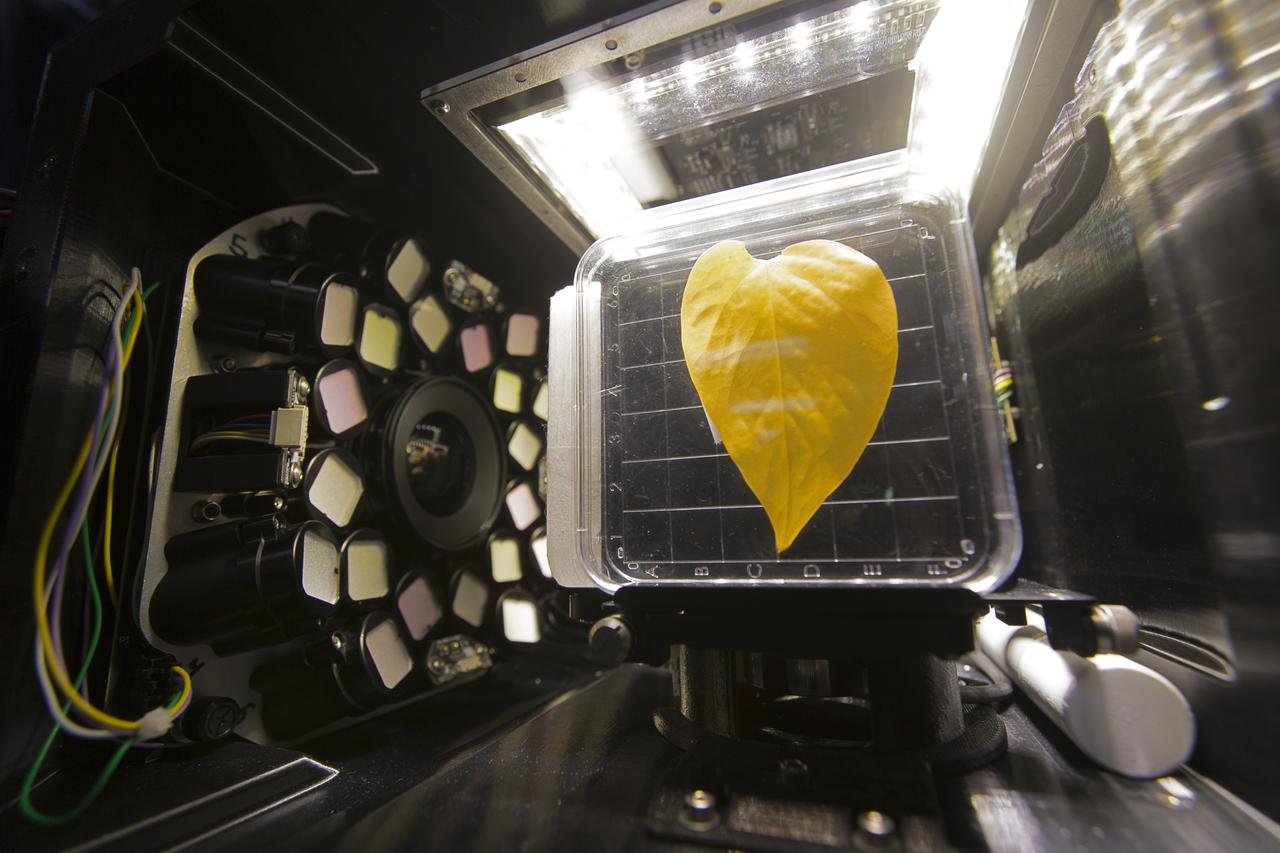
Inside the Spectrum prototype unit, organisms in a Petri plate are exposed to different colors of lighting. The device works by exposing organisms to different colors of fluorescent light while a camera records what's happening with time-lapse photography. Results from the Spectrum project will shed light on which living things are best suited for long-duration flights into deep space.
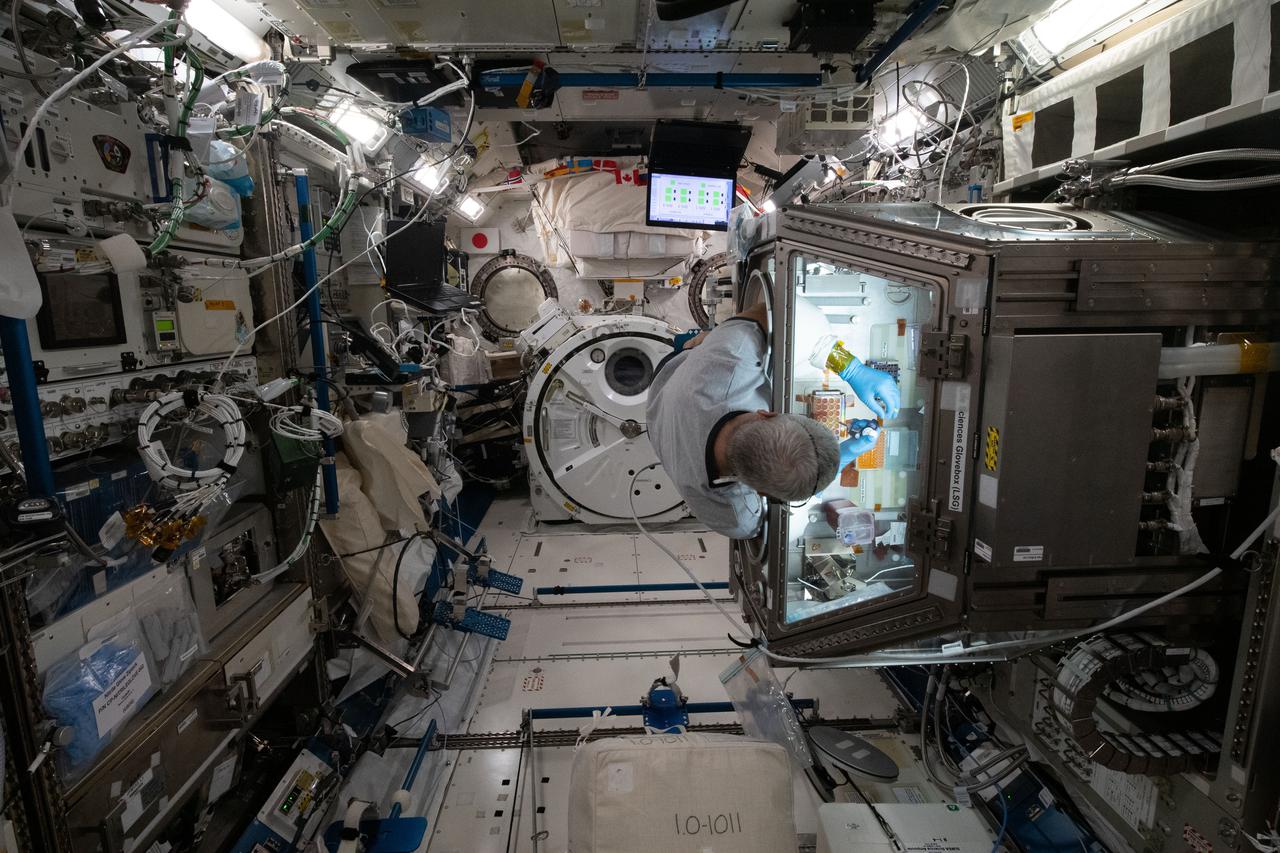
Photo (part of time lapse) taken during Celestial Immunity Plate Second Sampling in the Japanese Experiment Module (JEM). View is of the empty module with Life Sciences Glovebox (LSG) in the forefront. Astronaut Mark Vande Hei is also visible to conduct the operations. Dissecting the Influence of Gravity on Human Immune Function in Adults and the Elderly (Celestial Immunity) builds on earlier studies to evaluate how gravity affects functional immune response, from innate mechanisms of defense to adaptive responses.

Inside the Spectrum prototype unit, organisms in a Petri plate are exposed to different colors of lighting. The device works by exposing organisms to different colors of fluorescent light while a camera records what's happening with time-lapse photography. Results from the Spectrum project will shed light on which living things are best suited for long-duration flights into deep space.
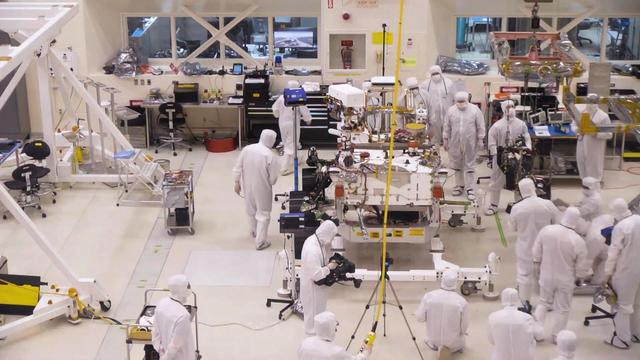
A team of engineers at NASA's Jet Propulsion Laboratory in Pasadena, California, install the legs and wheels — otherwise known as the mobility suspension — on the Mars 2020 rover. The imagery for this accelerated time-lapse was taken on June 13, 2019, from a camera above the Spacecraft Assembly Facility's High Bay 1 clean room. https://photojournal.jpl.nasa.gov/catalog/PIA23261
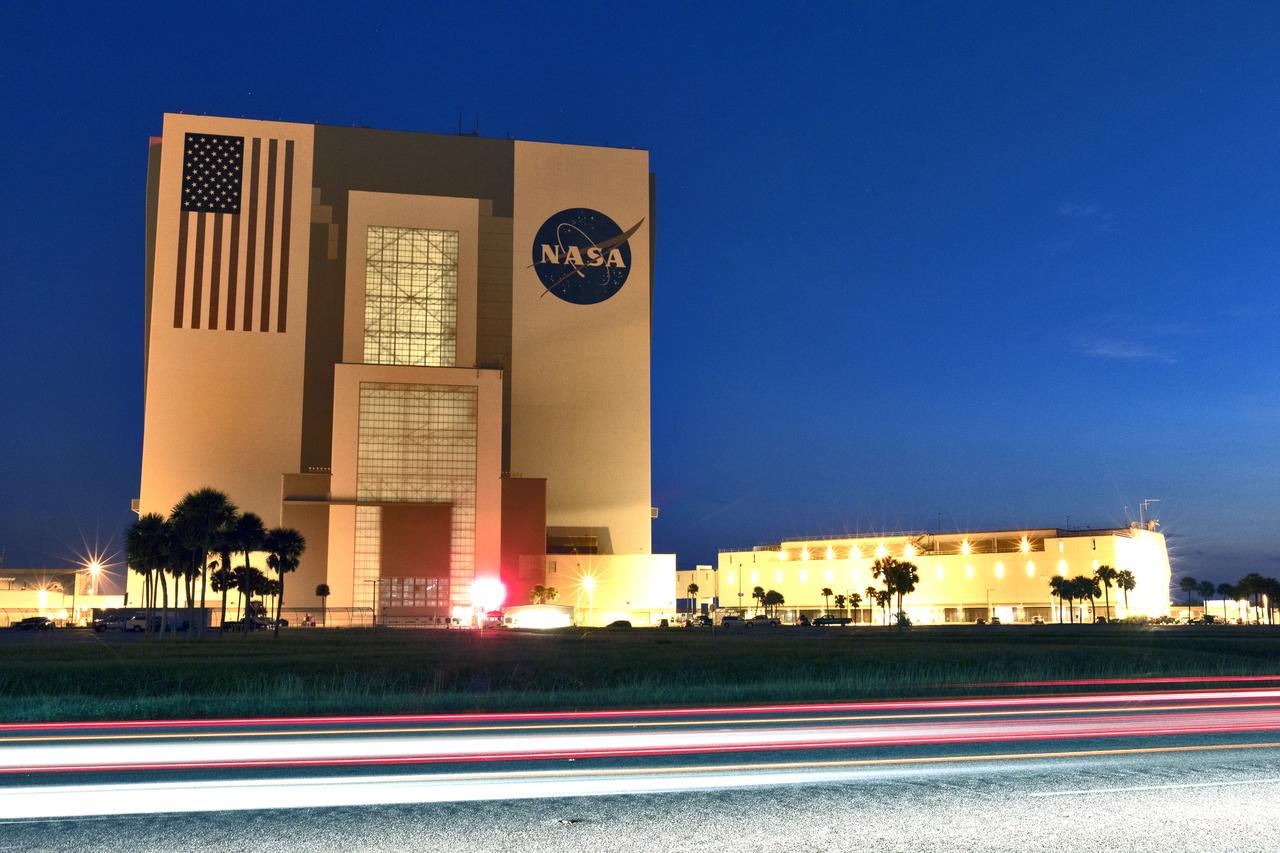
A sunrise time-lapse panoramic view of the iconic Vehicle Assembly Building (VAB) and Launch Control Center at NASA's Kennedy Space Center in Florida. Ten levels of work platforms have been installed in High Bay 3 of the VAB. They will surround and provide access for service and processing of NASA's Space Launch System (SLS) rocket and Orion spacecraft. Exploration Ground Systems oversaw the upgrades and installation of the new work platforms to support the launch of the SLS and Orion on Exploration Mission-1 and deep space missions.
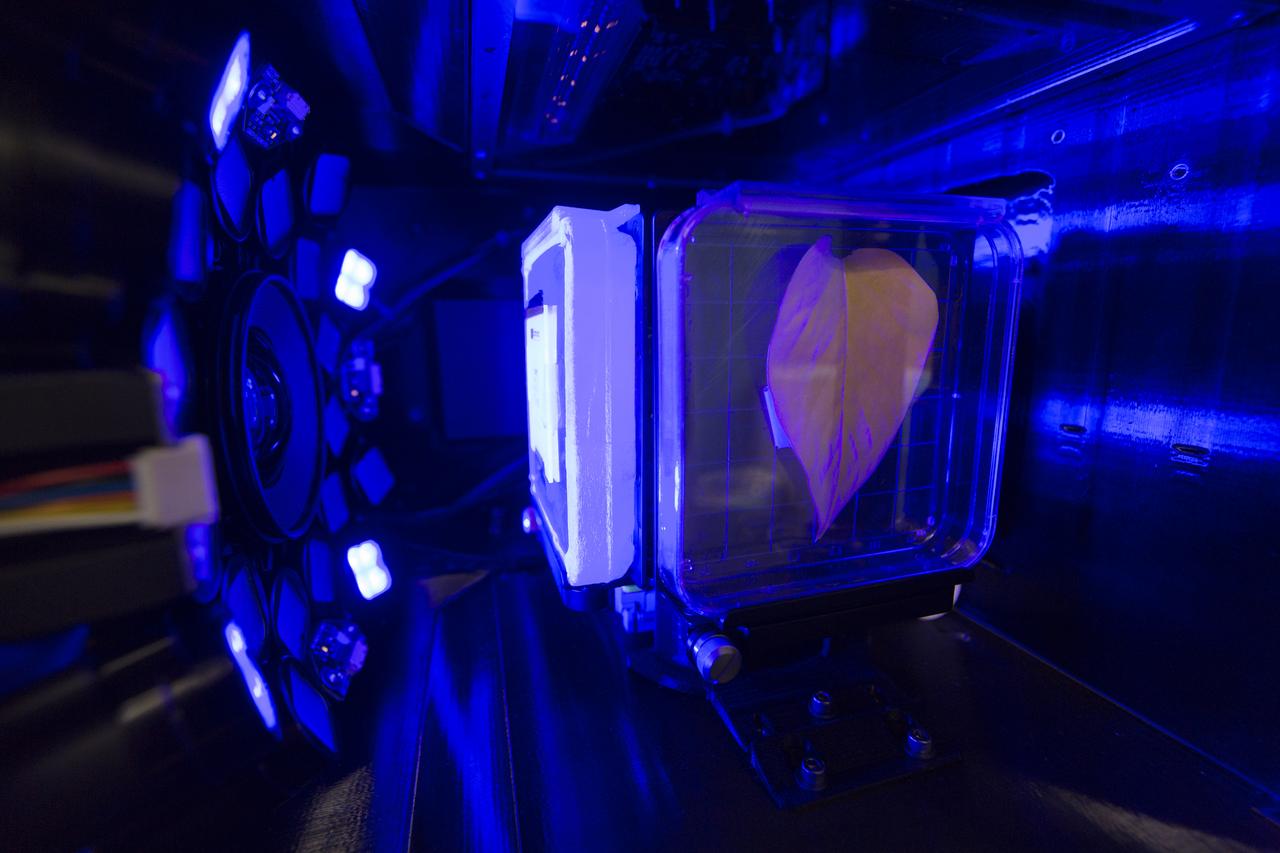
Inside the Spectrum prototype unit, organisms in a Petri plate are exposed to blue excitation lighting. The device works by exposing organisms to different colors of fluorescent light while a camera records what's happening with time-lapse photography. Results from the Spectrum project will shed light on which living things are best suited for long-duration flights into deep space.
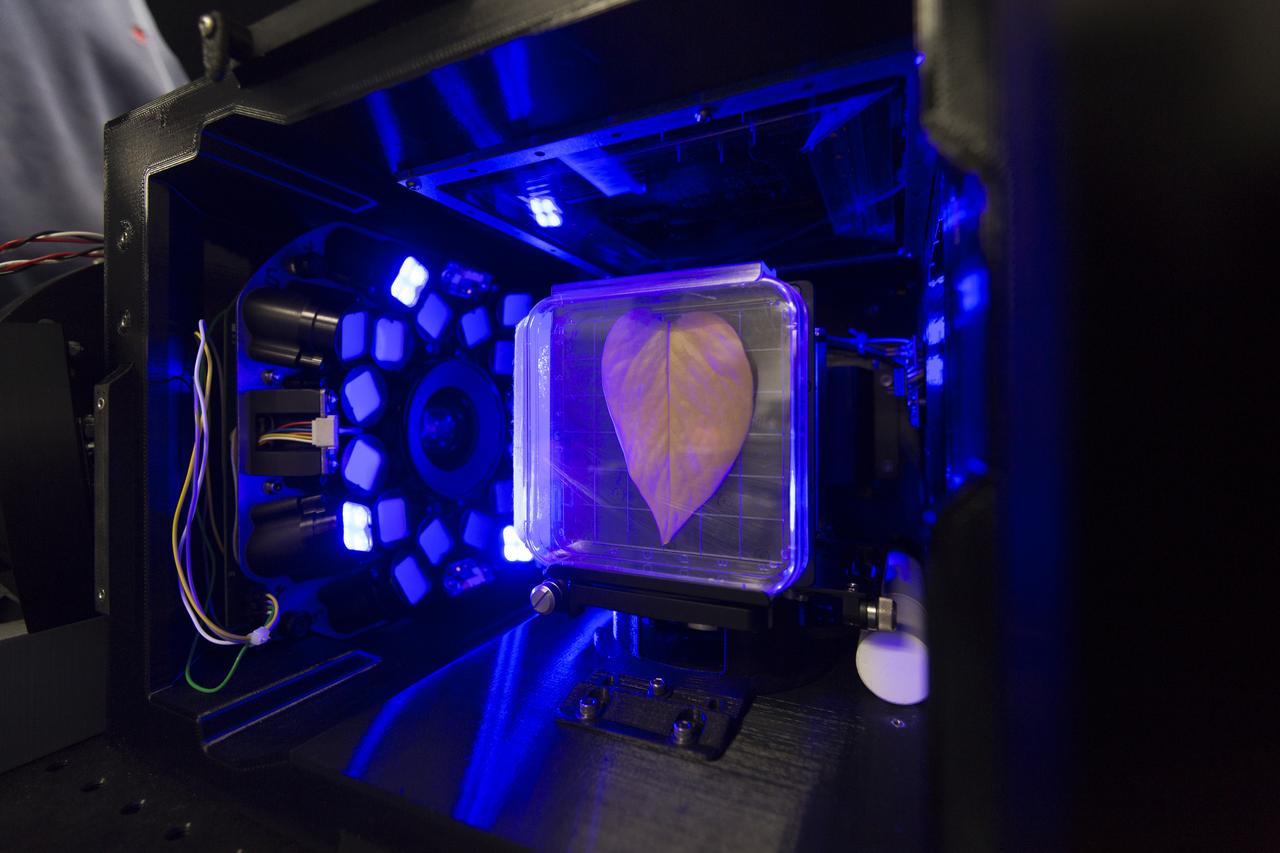
Inside the Spectrum prototype unit, organisms in a Petri plate are exposed to blue excitation lighting. The device works by exposing organisms to different colors of fluorescent light while a camera records what's happening with time-lapse photography. Results from the Spectrum project will shed light on which living things are best suited for long-duration flights into deep space.
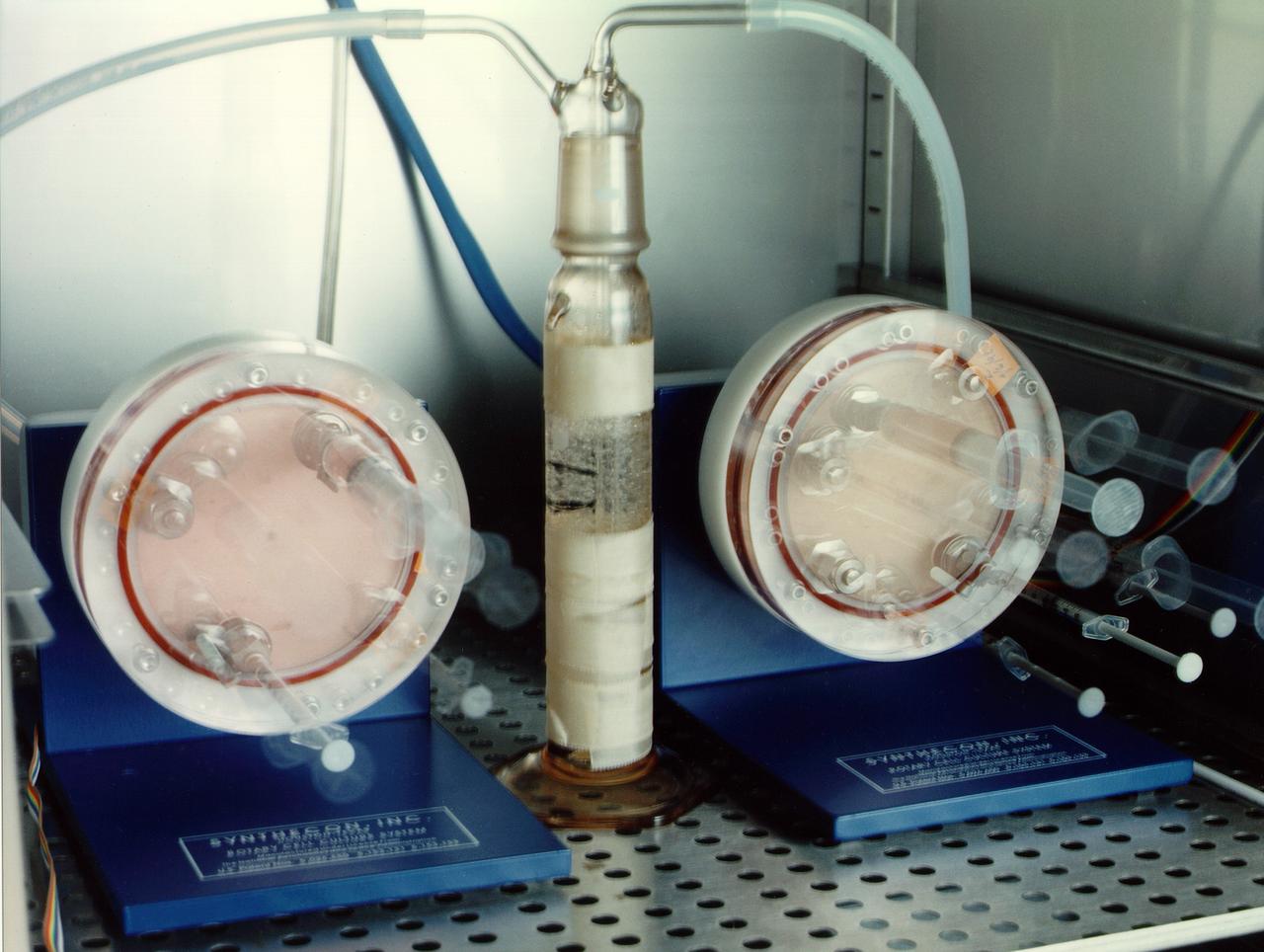
Time-lapse exposure depicts Bioreactor rotation. NASA's Marshall Space Flight Center (MSFC) is sponsoring research with Bioreactors, rotating wall vessels designed to grow tissue samples in space, to understand how breast cancer works. This ground-based work studies the growth and assembly of human mammary epithelial cells (HMEC) from breast cancer susceptible tissue. Radiation can make the cells cancerous, thus allowing better comparisons of healthy vs. tunourous tissues.
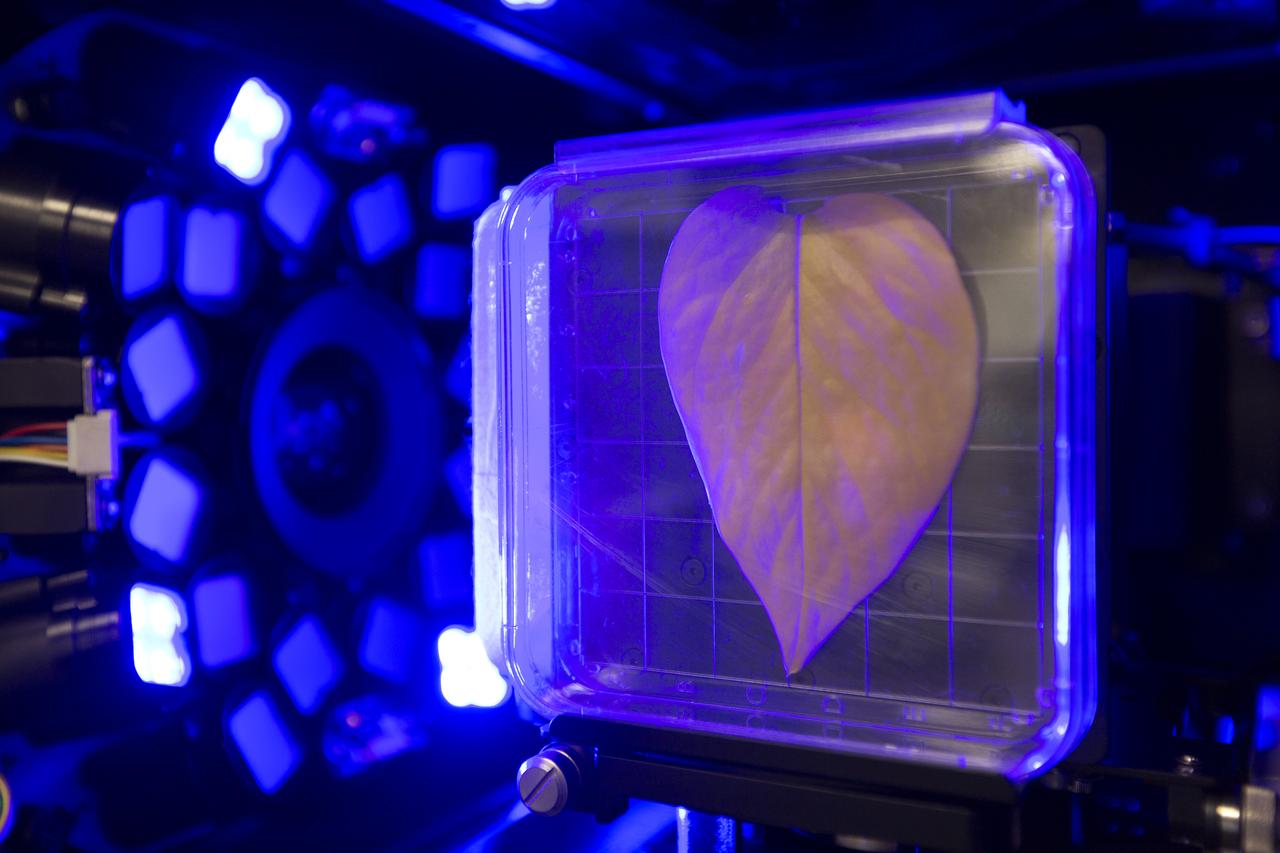
Inside the Spectrum prototype unit, organisms in a Petri plate are exposed to blue excitation lighting. The device works by exposing organisms to different colors of fluorescent light while a camera records what's happening with time-lapse photography. Results from the Spectrum project will shed light on which living things are best suited for long-duration flights into deep space.
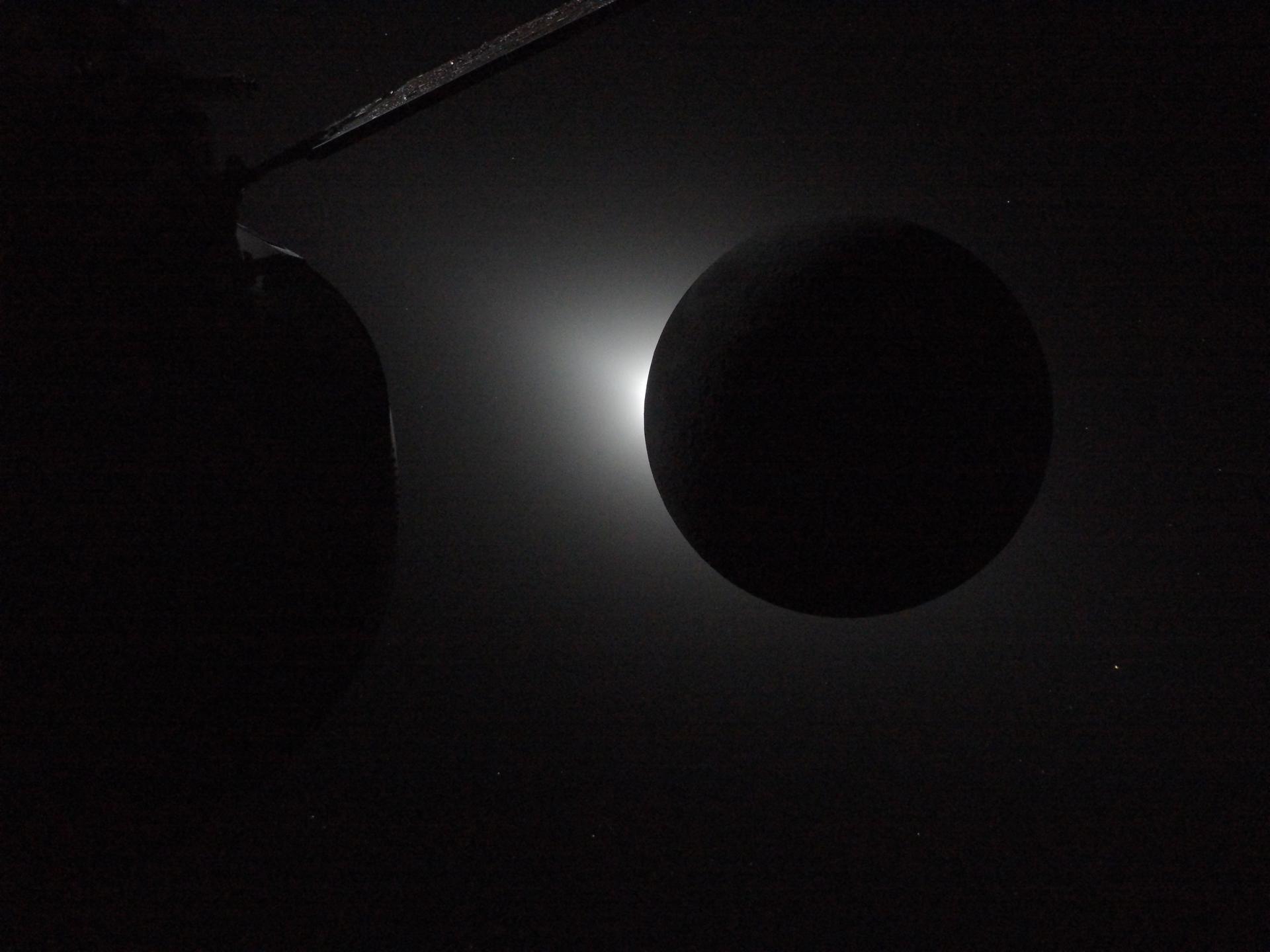
art002e016331 (April 7, 2026) – A vehicle camera mounted on NASA’s Orion spacecraft captured this view of sunset as the Sun slipped behind part of the spacecraft. The Sun’s bright glow outlines the spacecraft in silhouette, while the faint solar corona extends into the surrounding darkness. The image was captured as part of a multishot time-lapse sequence, with images taken every 30 seconds to document changing views during sunset.
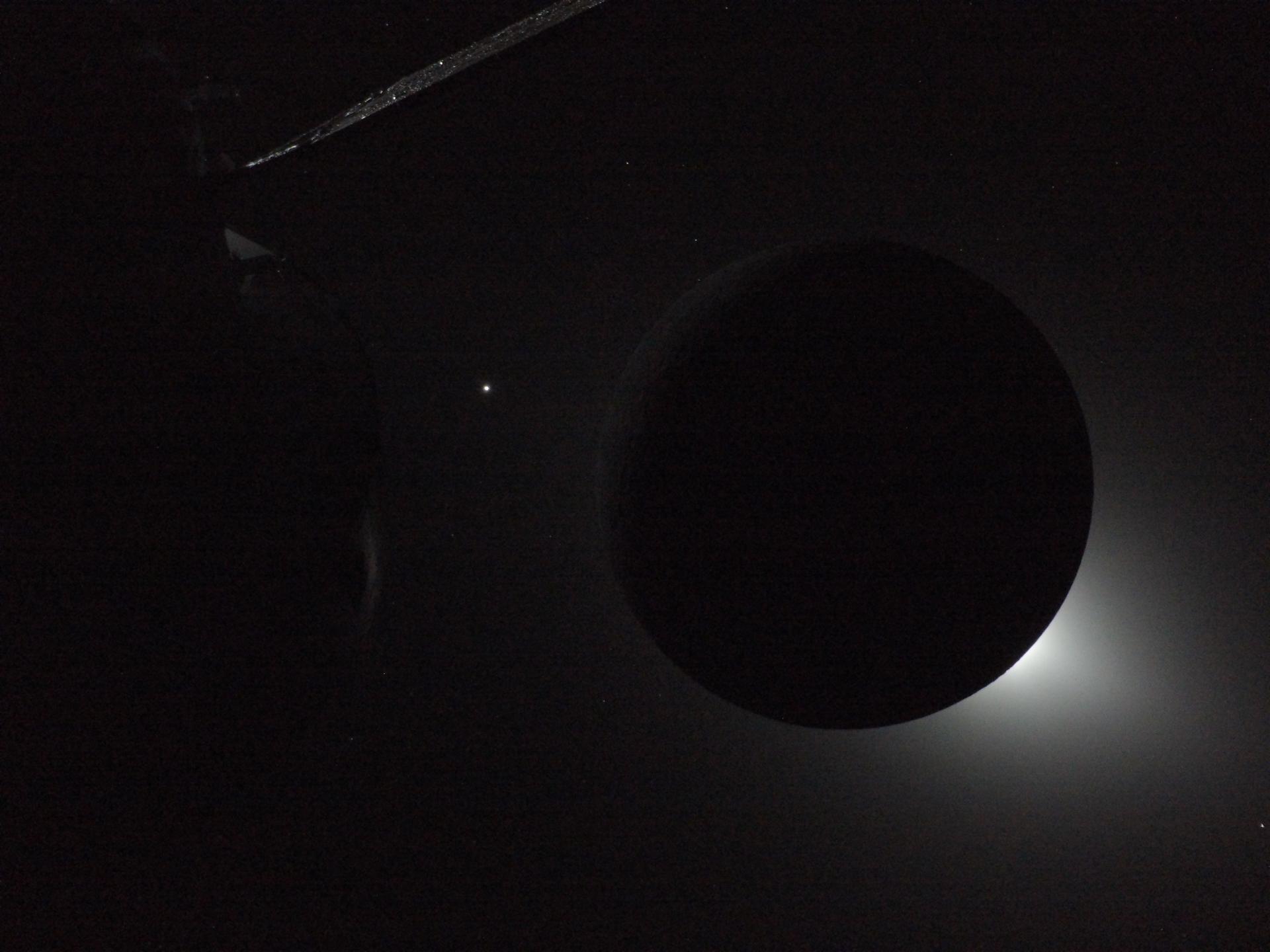
art002e016312 (April 7, 2026) – A vehicle camera mounted on NASA’s Orion spacecraft captured this view of lunar sunrise as the Sun emerged from behind the Moon. The Moon appears in silhouette as sunlight and the faint solar corona extend from behind its edge. The image was captured as part of a time-lapse sequence documenting the changing view during sunrise.
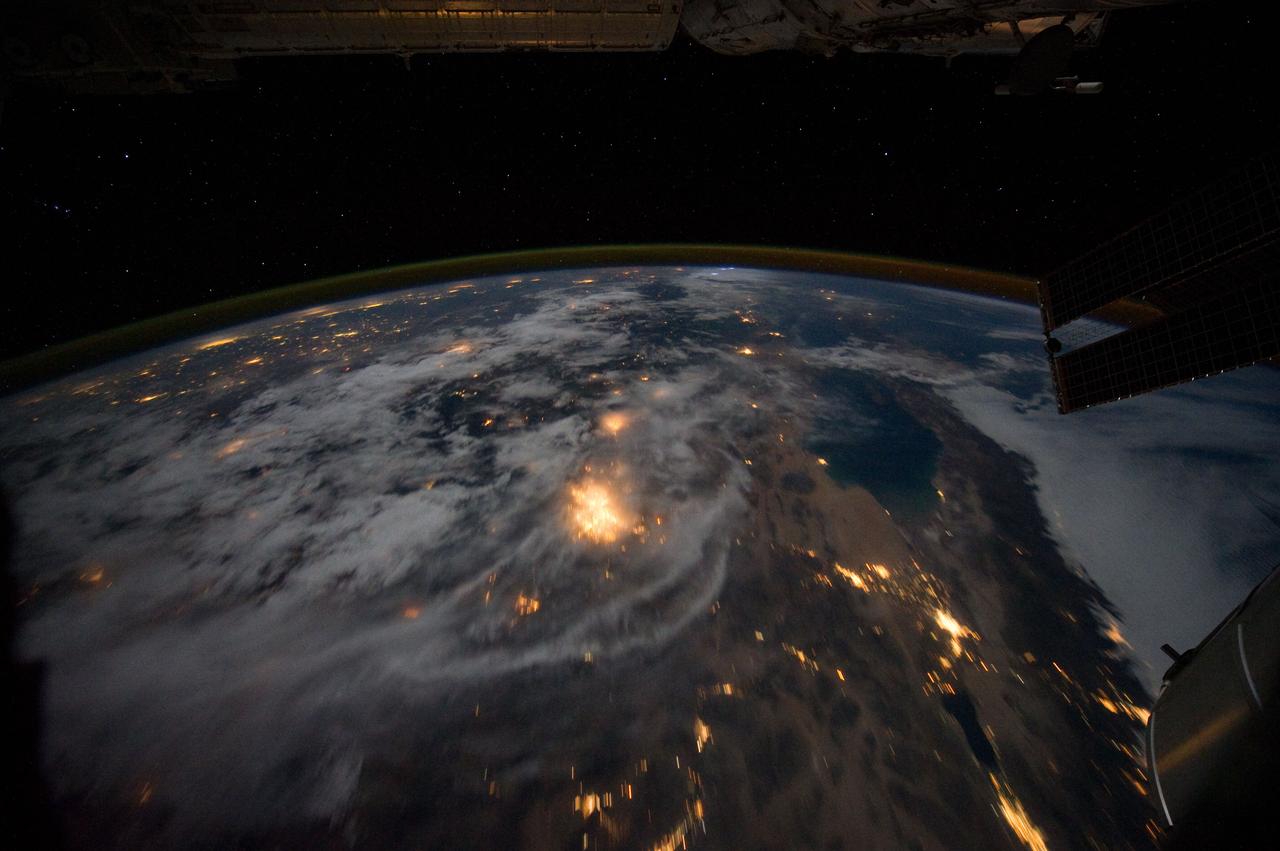
ISS028-E-033307 (19 Aug. 2011) --- City lights illuminate this night time view of southern California, Mexico's Baja California and the Gulf of Cortez, as photographed by one the Expedition 28 crew members onboard the International Space Station flying at altitude of approximately 220 miles. The Salton Sea can be seen in the lower right quadrant of the frame. A solar panel and part of one of the space station's modules are silhouetted at right. A 15-mm focal length was used to capture the time lapse image. The thin line of Earth's atmosphere is visible above the horizon.
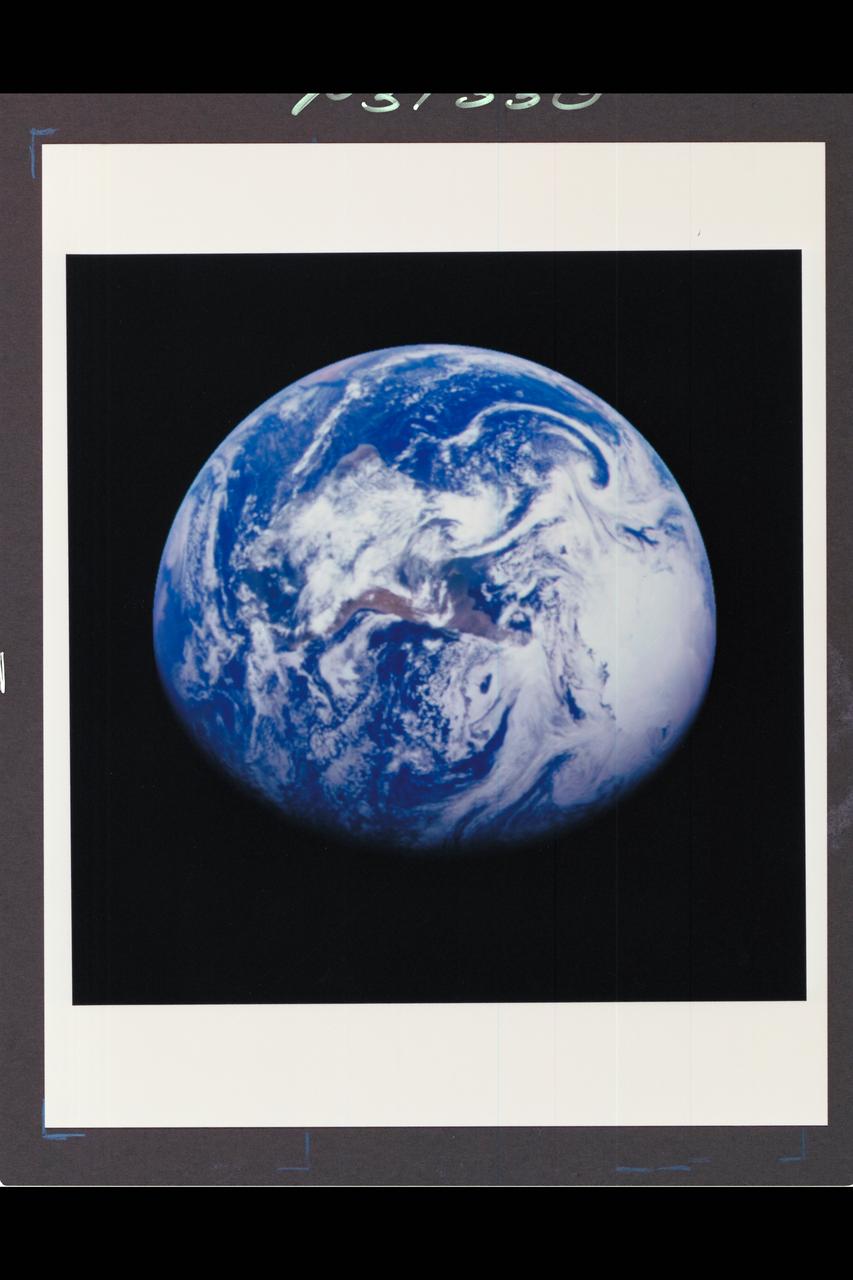
ref # P-37330 Range : 1.3 million miles This color image of the Earth was obtained by the Galileo spacecraft at about 6:10 am PST. The color composite used images taken through the red, green and violet filters. South America is near the center of the picture, and the white, sunlit continent of Antarctica is below. Picturesque weather fronts are visible in the South Atlantic, lower right. This is the first frame of the Galileo Earth spin movie, a 500-frame time-lapse motion picture showing a 25-hour period of Earth's rotation and atmosphertic dynamics.
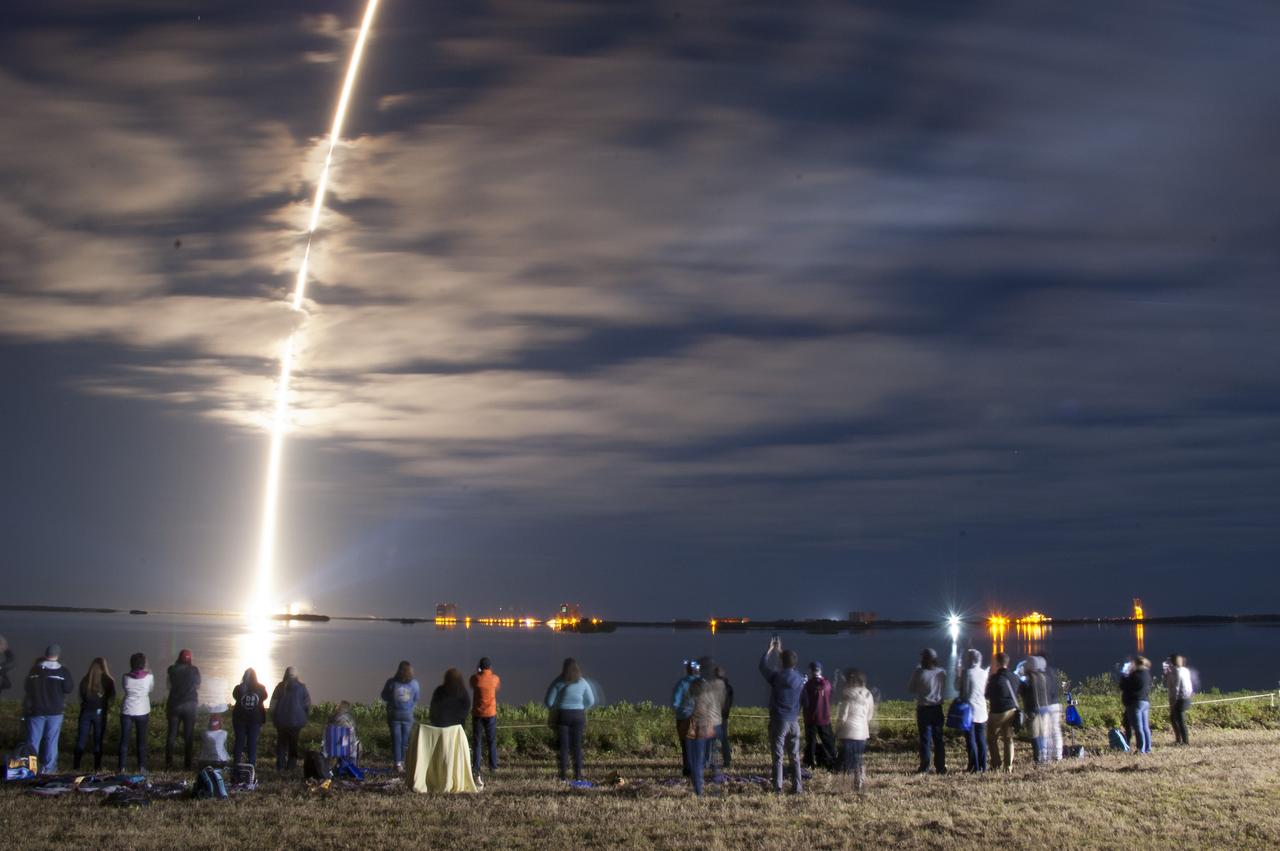
In a time-lapse exposure, a United Launch Alliance Atlas V rocket lifts off from Space Launch Complex 41 at Cape Canaveral Air Force Station carrying an Orbital ATK Cygnus resupply spacecraft on a commercial resupply services mission to the International Space Station. Liftoff was at 11:05 p.m. EDT. Cygnus will deliver the second generation of a portable onboard printer to demonstrate 3-D printing, an instrument for first space-based observations of the chemical composition of meteors entering Earth’s atmosphere and an experiment to study how fires burn in microgravity.

This color image of the Earth was obtained by NASA's Galileo at about 6:10 a.m. Pacific Standard Time on Dec. 11, 1990, when the spacecraft was about 1.3 million miles from the planet during the first of two Earth flybys on its way to Jupiter. The color composite used images taken through the red, green and violet filters. South America is near the center of the picture, and the white, sunlit continent of Antarctica is below. Picturesque weather fronts are visible in the South Atlantic, lower right. This is the first frame of the Galileo Earth spin movie, a 500- frame time-lapse motion picture showing a 25-hour period of Earth's rotation and atmospheric dynamics. A movie is availalble at http://photojournal.jpl.nasa.gov/catalog/PIA00114
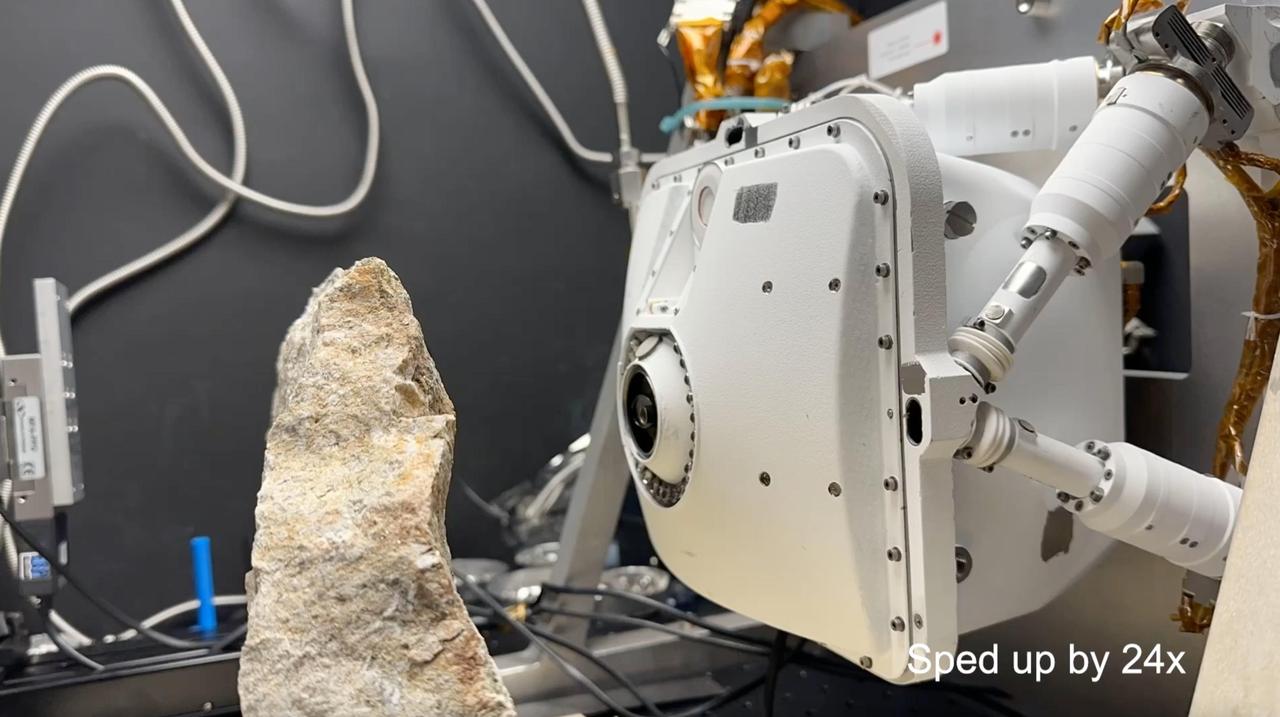
This time-lapse video, which has been sped up by 24 times, uses an engineering model of one of the instruments aboard NASA's Perseverance Mars rover to show how the instrument evaluates safe placement against a rock. If it's determined to be safe, the rover places the instrument, called the Planetary Instrument for X-ray Lithochemistry (PIXL), close to the targeted rock for science observations. This test occurred at NASA's Jet Propulsion Laboratory in Southern California on June 8, 2023. Located on the end of Perseverance's robotic arm, PIXL scans postage stamp-size areas on rocks with an X-ray beam the width of a human hair, determining which elements are present. Scientists use this information to infer what minerals and chemicals are in a rock and help decide whether Perseverance should collect a rock core using its drill. The X-ray beam exits the circular opening at the center of PIXL; colored LED lights around that circle can light up a surface, allowing an internal camera to take images. Those images allow PIXL to autonomously place itself – very slowly and precisely – as little as 1 inch (2.5 centimeters) away from a surface to collect its data. A key objective for Perseverance's mission on Mars is astrobiology, including the search for signs of ancient microbial life. The rover will characterize the planet's geology and past climate, pave the way for human exploration of the Red Planet, and be the first mission to collect and cache Martian rock and regolith (broken rock and dust). Subsequent NASA missions, in cooperation with ESA (European Space Agency), would send spacecraft to Mars to collect these sealed samples from the surface and return them to Earth for in-depth analysis. The Mars 2020 Perseverance mission is part of NASA's Moon to Mars exploration approach, which includes Artemis missions to the Moon that will help prepare for human exploration of the Red Planet. Animation available at https://photojournal.jpl.nasa.gov/catalog/PIA26204
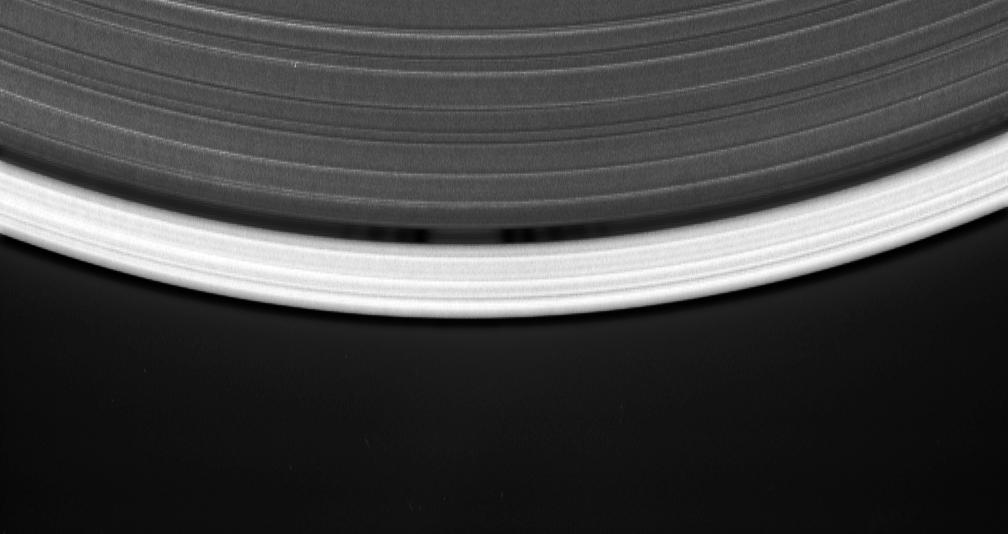
Cassini's celestial sleuthing has paid off with this time-lapse series of images which confirmed earlier suspicions that a small moon was orbiting within the narrow Keeler gap of Saturn's rings. The movie sequence, which consists of 12 images taken over 16 minutes while Cassini gazed down upon the sunlit side of the A ring, shows a tiny moon orbiting in the center of the Keeler gap, churning up waves in the gap edges as it goes. The pattern of waves travels with the moon in its orbit. The Keeler gap is located about 250 kilometers (155 miles) inside the outer edge of the A ring, which is also the outer edge of the bright main rings. The new object is about 7 kilometers across (4 miles) and reflects about 50 percent of the sunlight that falls upon it -- a brightness that is typical of particles in the nearby rings. The new body has been provisionally named S/2005 S1. Imaging scientists predicted the moon's presence and its orbital distance from Saturn after July 2004, when they saw a set of peculiar spiky and wispy features in the Keeler gap's outer edge. The similarities of the Keeler gap features to those noted in Saturn's F ring and the Encke gap led the scientists to conclude that a small body, a few kilometers across, was lurking in the center of the Keeler gap, awaiting discovery. Also included here is a view of the same scene created by combining six individual, unmagnified frames used in the movie sequence. This digital composite view improves the overall resolution of the scene compared to that available in any of the single images. The images in this movie sequence were obtained with the Cassini spacecraft narrow-angle camera on May 1, 2005, at a distance of approximately 1.1 million kilometers (708,000 miles) from Saturn. Resolution in the original image was 8 kilometers (5 miles) per pixel. The images in the movie sequence have been magnified in (the vertical direction only) by a factor of two to aid visibility of features caused within the gap by the moonlet. An animation is available at http://photojournal.jpl.nasa.gov/catalog/PIA06238
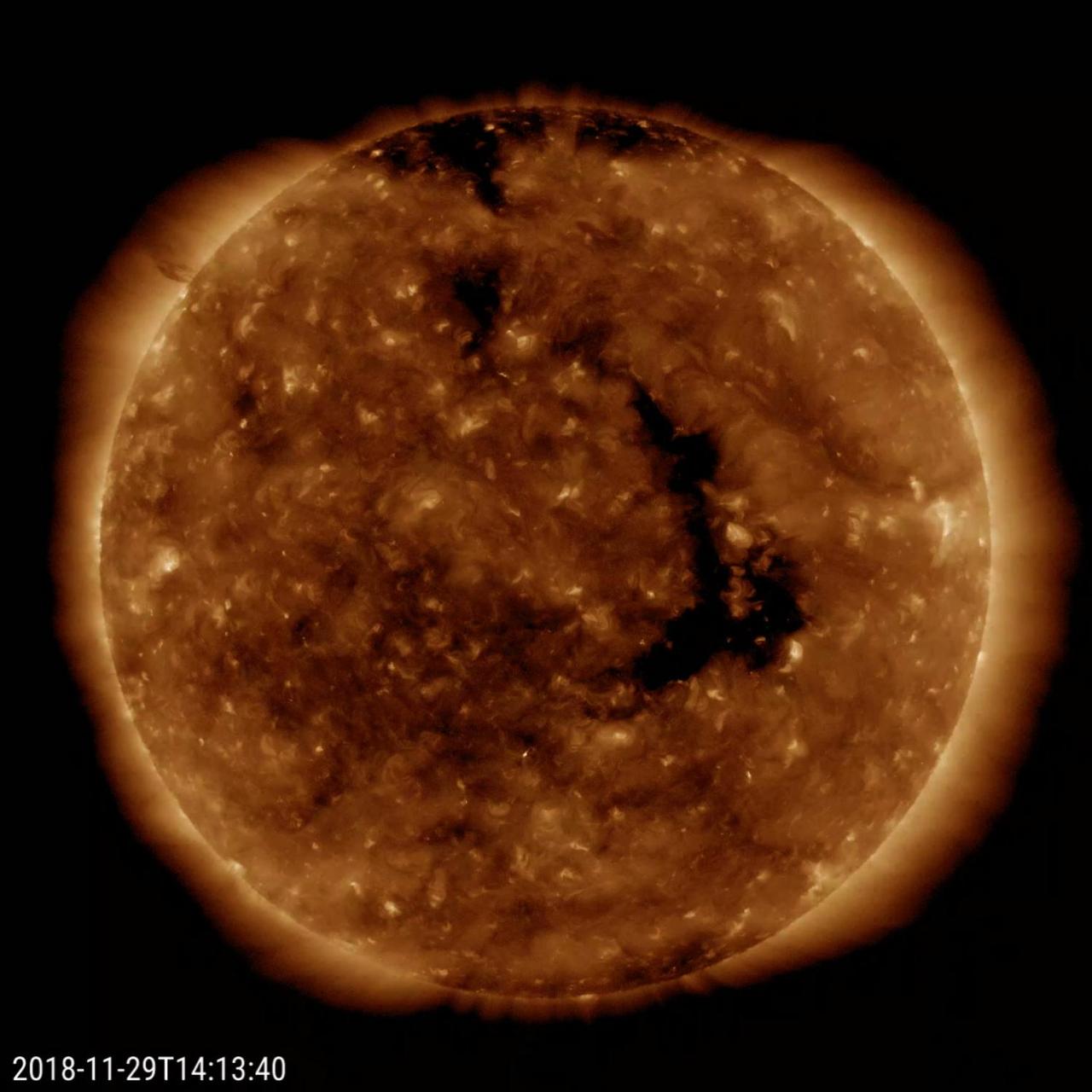
A long-lasting coronal hole has again rotated around to face the Earth (Nov. 28-30, 2018). This persistent hole - the elongated dark region seen in the still image - first appeared in July and has been observed each rotation of the Sun since. Coronal holes are the source of high-speed solar wind; when this one faced Earth, it sparked outbursts of aurora some of which were observed in our northern tier states. Coronal holes are magnetically open regions on the Sun that can last from days to months, although this one has lasted longer than most. The time-lapse video, taken in a wavelength of extreme ultraviolet light, covers about two days of activity. Movies available at https://photojournal.jpl.nasa.gov/catalog/PIA18144
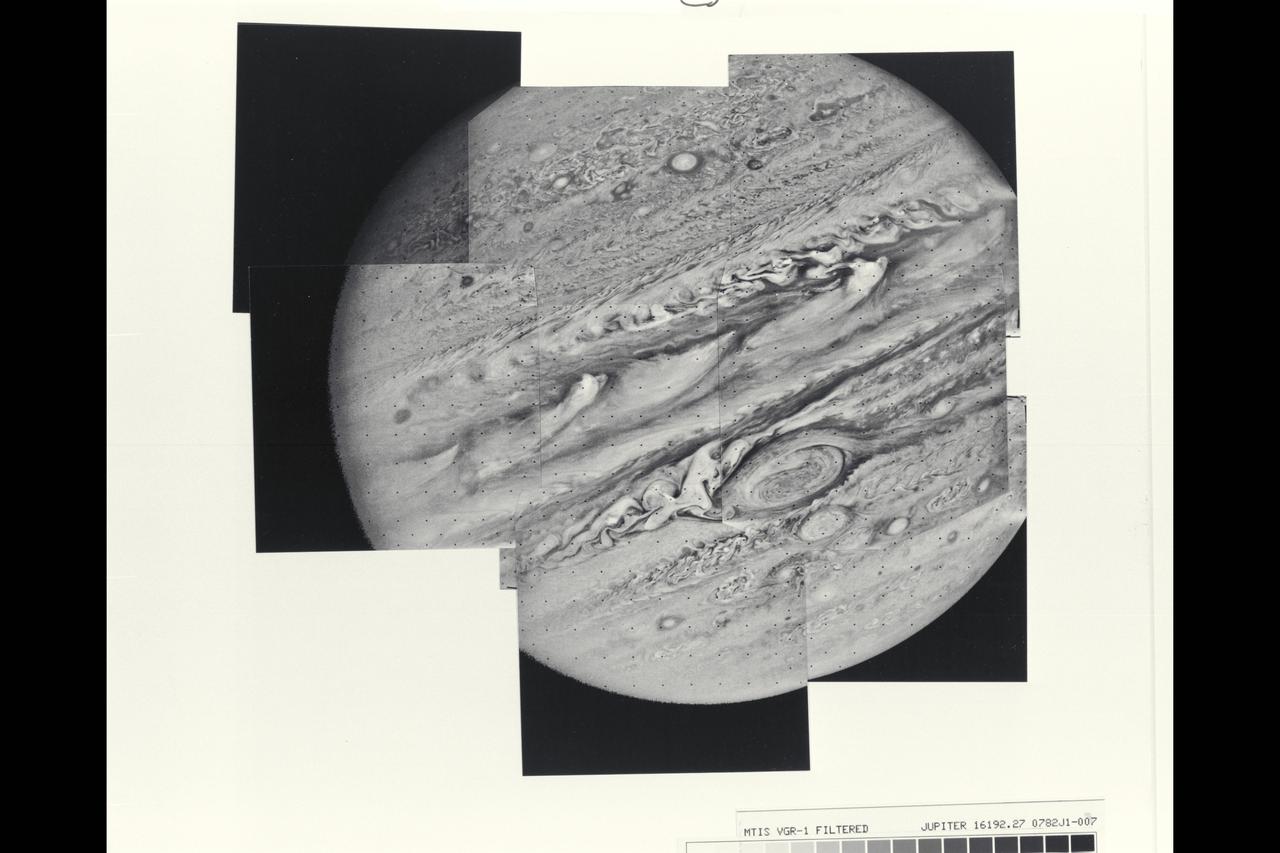
This mosaic of Jupiter was assembled from nine individual photos taken through an orange filter by Voyager 1 on Feb. 6, 1979, when the spacecraft was 4.7 million miles (7.8 million kilometers) from Jupiter. Distortion of the mosaic, especially where portions of the limb have been fitted together, is caused by rotation of the planet during the 96-second intervals between individual pictures. The large atmospheric feature just below and to the right of center is the Great Red Spot. The complex structure of the cloud formations seen over the entire planet gives some hint of the equally complex motions in the Voyager 1 time-lapse photography. The smallest atomospheric features seen in this view are approximately 85 miles (140 kilometers) across. Voyager project is managed and controlled by Jet Propulsion Laboratory for NASA's Office of Space Science. (JPL ref. No. P-21146)
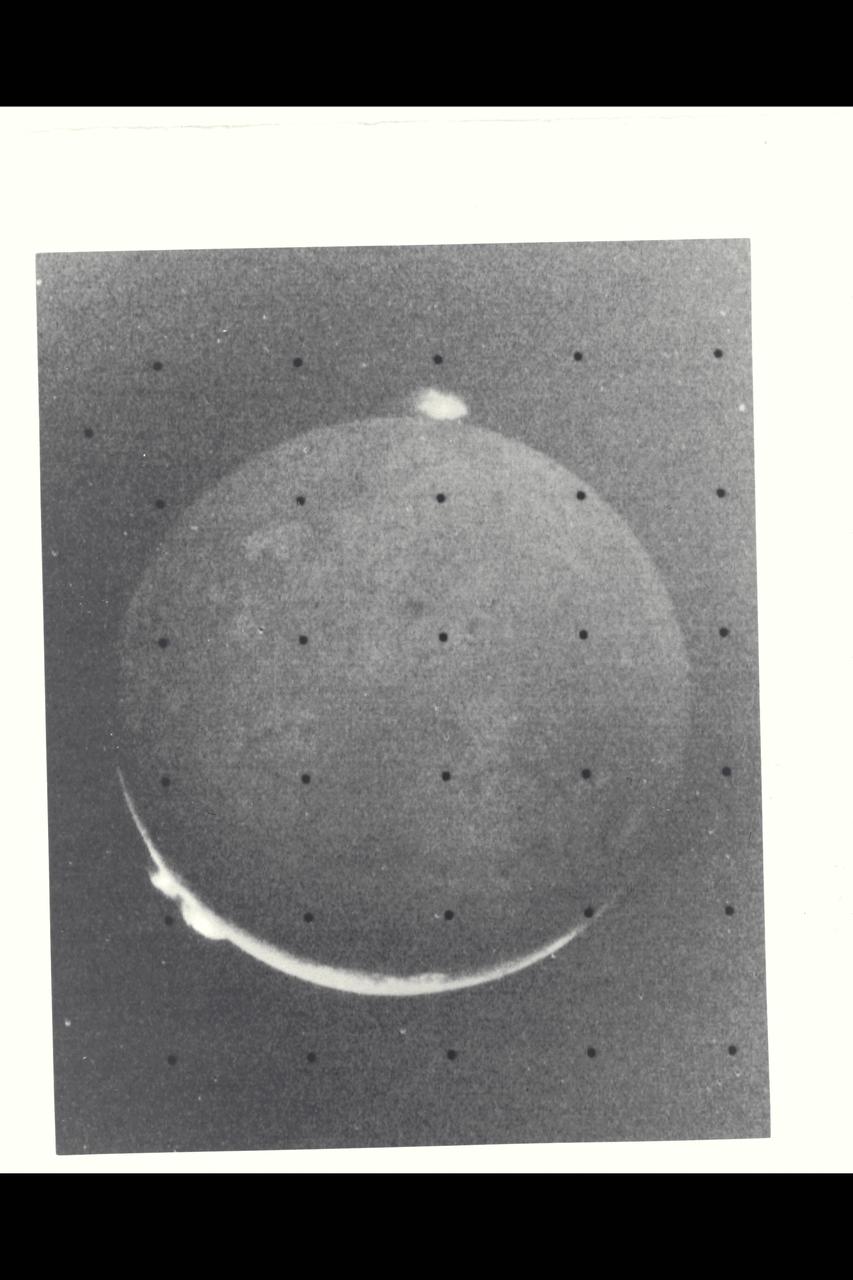
Range : 1.2 million kilometers (750,000 miles) This picture of Io is one of the last sequence of 'volcano watch' pictures planned as a time lapse study of the nearest of Jupiter's Galilean satellites. The sunlit crescent of Io is seen at the left, and the night side illuminated by light reflected from Jupiter can also be seen. Three volcanic eruption plumes are visible on the limb. All three were previously seen by Voyager 1. On the bright limb Plume 5 (upper) and Plume 6 (lower) are about 100 km high, while Plume 2 on the dark limb is about 185 km high and 325 km wide. The dimensions of Plume 2 are about 1 1/2 times greater than during the Boyager 1 encounter, indicating that the intensity of the eruptions has increased during the four-month time interval between the Boyager encounters. The three volcanic eruptions and at least three others have apparently been active at roughly the same intesity or greater for a period of at least four months.
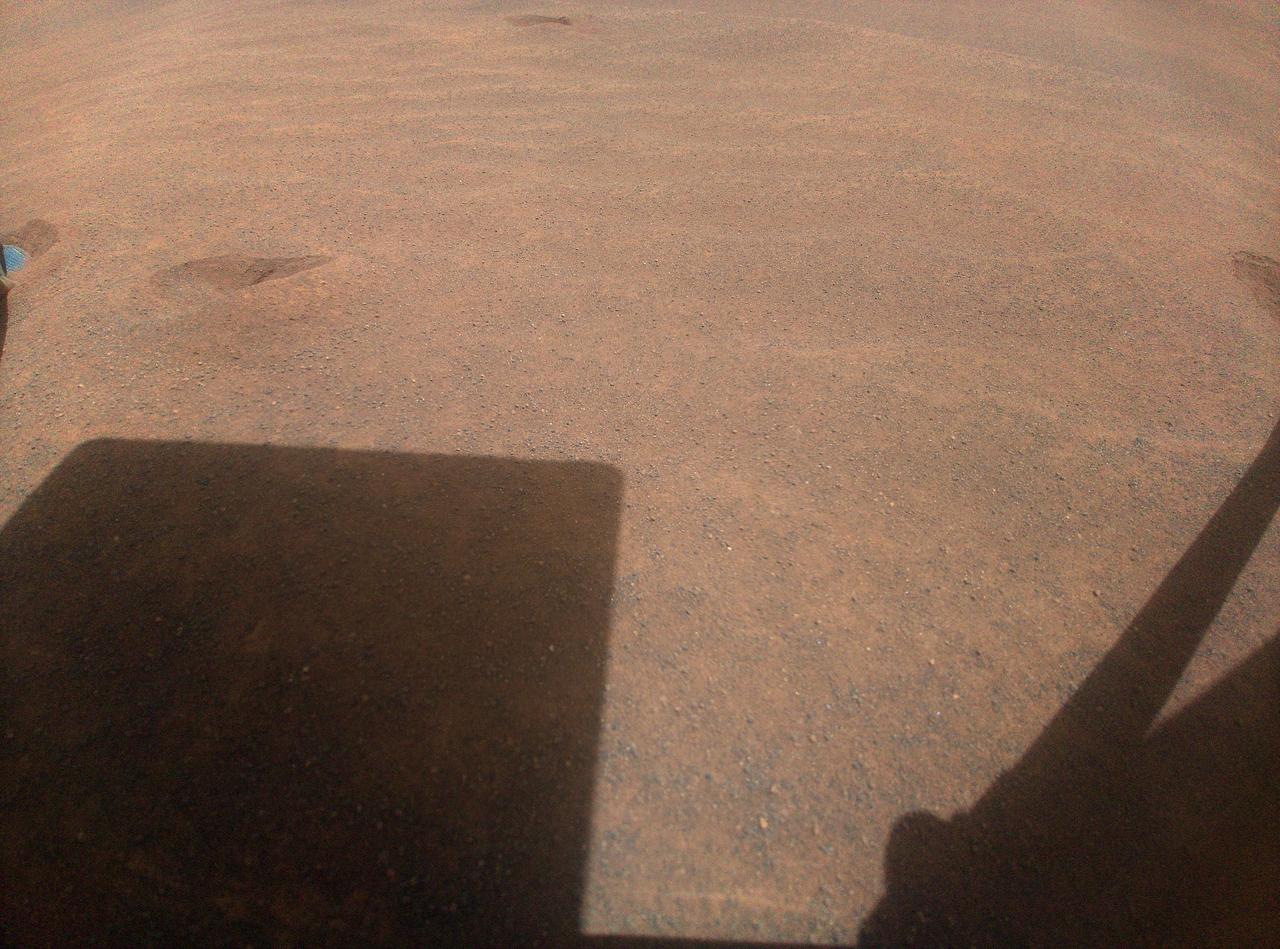
NASA's Ingenuity helicopter captured this view on Nov. 3, 2023, of its parking spot during Mars solar conjunction – a period when the Sun is between Earth and Mars, limiting communications. Ingenuity will use its color camera during this period to take time-lapse images of sand grains to learn more about how they move on the Red Planet. In the upper left of the image, one of the helicopter's legs is visible just out of frame. Just to the right of that is one of several "footprints" made before the helicopter lifted off on a previous flight to reposition itself. During conjunction, hot, ionized gas being expelled from the Sun's corona can potentially corrupt radio signals sent from Earth to NASA's fleet of Mars spacecraft, leading to unexpected behaviors. So, during this time, engineers don't send any commands, but the spacecraft do send their health data back to Earth. After conjunction, scientists will look through Ingenuity's imagery and see if any sand grains were blown by the wind. They plan to correlate this imagery with weather data collected by NASA's Perseverance rover, which is parked 3,471 feet (1,058 meters) away during conjunction. Wind and sand are major drivers of change on the Martian landscape, and scientists hope they will better understand these processes by studying the wind strength needed to lift sand particles. https://photojournal.jpl.nasa.gov/catalog/PIA26050

NASA's Cassini spacecraft watched clouds of methane moving across the far northern regions of Saturn's largest moon, Titan, on Oct. 29 and 30, 2016. Several sets of clouds develop, move over the surface and fade during the course of this movie sequence, which spans 11 hours, with one frame taken every 20 minutes. Most prominent are long cloud streaks that lie between 49 and 55 degrees north latitude. While the general region of cloud activity is persistent over the course of the observation, individual streaks appear to develop then fade. These clouds are measured to move at a speed of about 14 to 22 miles per hour (7 to 10 meters per second). There are also some small clouds over the region of small lakes farther north, including a bright cloud between Neagh Lacus and Punga Mare, which fade over the course of the movie. This small grouping of clouds is moving at a speed of about 0.7 to 1.4 miles per hour (1 to 2 meters per second). Time-lapse movies like this allow scientists to observe the dynamics of clouds as they develop, move over the surface and fade. A time-lapse movie can also help to distinguish between noise in images (for example from cosmic rays hitting the detector) and faint clouds or fog. In 2016, Cassini has intermittently observed clouds across the northern mid-latitudes of Titan, as well as within the north polar region -- an area known to contain numerous methane/ethane lakes and seas see PIA19657 and PIA17655. However, most of this year's observations designed for cloud monitoring have been short snapshots taken days, or weeks, apart. This observation provides Cassini's best opportunity in 2016 to study short-term cloud dynamics. Models of Titan's climate have predicted more cloud activity during early northern summer than what Cassini has observed so far, suggesting that the current understanding of the giant moon's changing seasons is incomplete. The mission will continue monitoring Titan's weather around the 2017 summer solstice in Titan's northern hemisphere. The movie was acquired using the Cassini narrow-angle camera using infrared filters to make the surface and tropospheric methane clouds visible. A movie is available at http://photojournal.jpl.nasa.gov/catalog/PIA21051
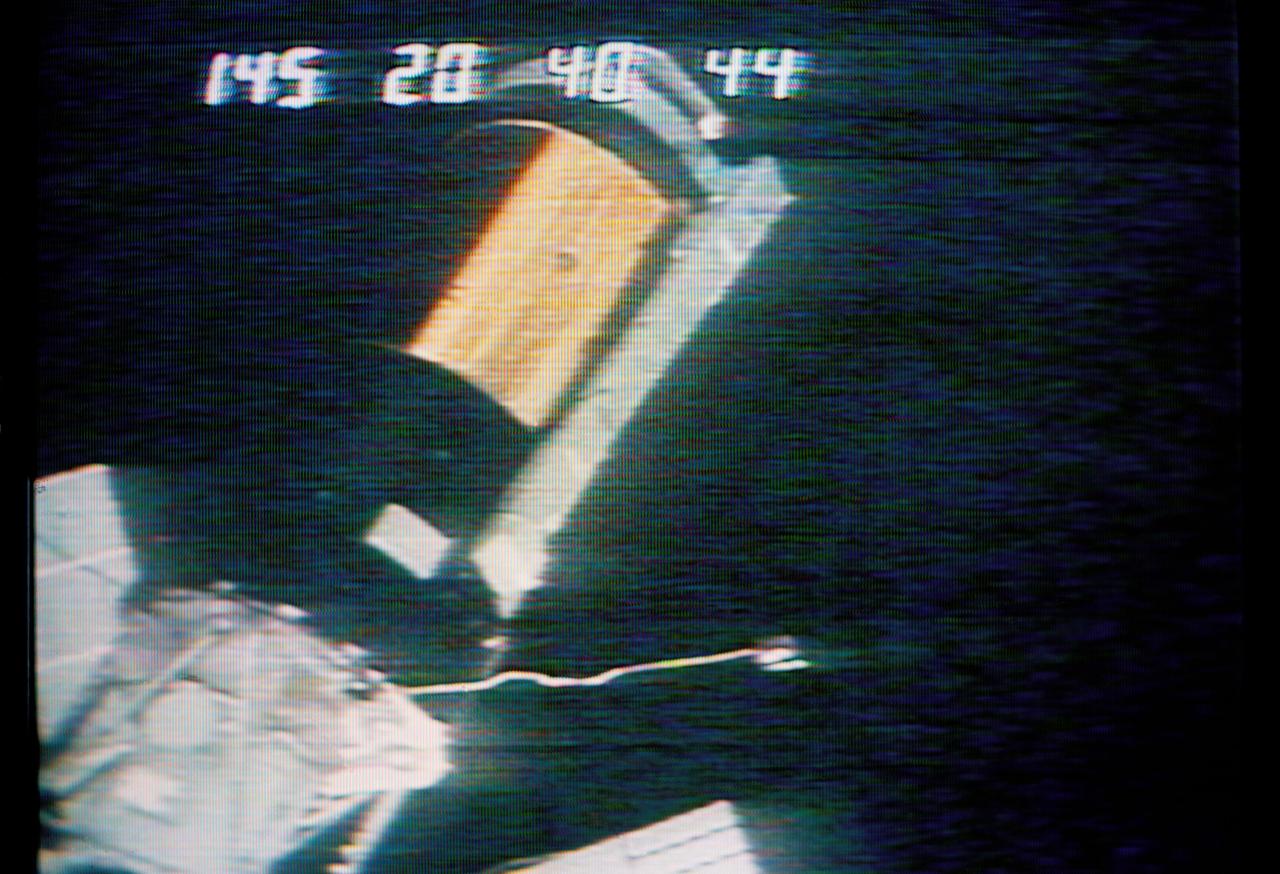
S73-26738 (25 May 1973) --- A close-up view of the Skylab 1 space station cluster can be seen in this reproduction taken from a color television transmission made by a TV camera aboard the Skylab 2 Command Module during its ?fly-around? inspection of the cluster. The numbers across the top of the picture indicate the Skylab 1 ground lapse time. Note the missing portion of the micrometeoroid shield on the Orbital Workshop. The shield area was reported to be solid gold by the Skylab 2 crewmen. A cable appears to be wrapped around the damaged OWS solar array system wing. The crewmen reported that the other OWS solar panel was completely gone, with only tubes and wiring sticking out. One of the discone antennas extends out form the Airlock Module. The Multiple Docking Adapter is in the lower left corner of the picture. A portion of a solar panel on the Apollo Telescope Mount is visible at the bottom and at the left edge. In their ?fly around? inspection the crewmen noted that portions of the micrometeoroid shield had slid back underneath the OWS solar wing. Photo credit: NASA
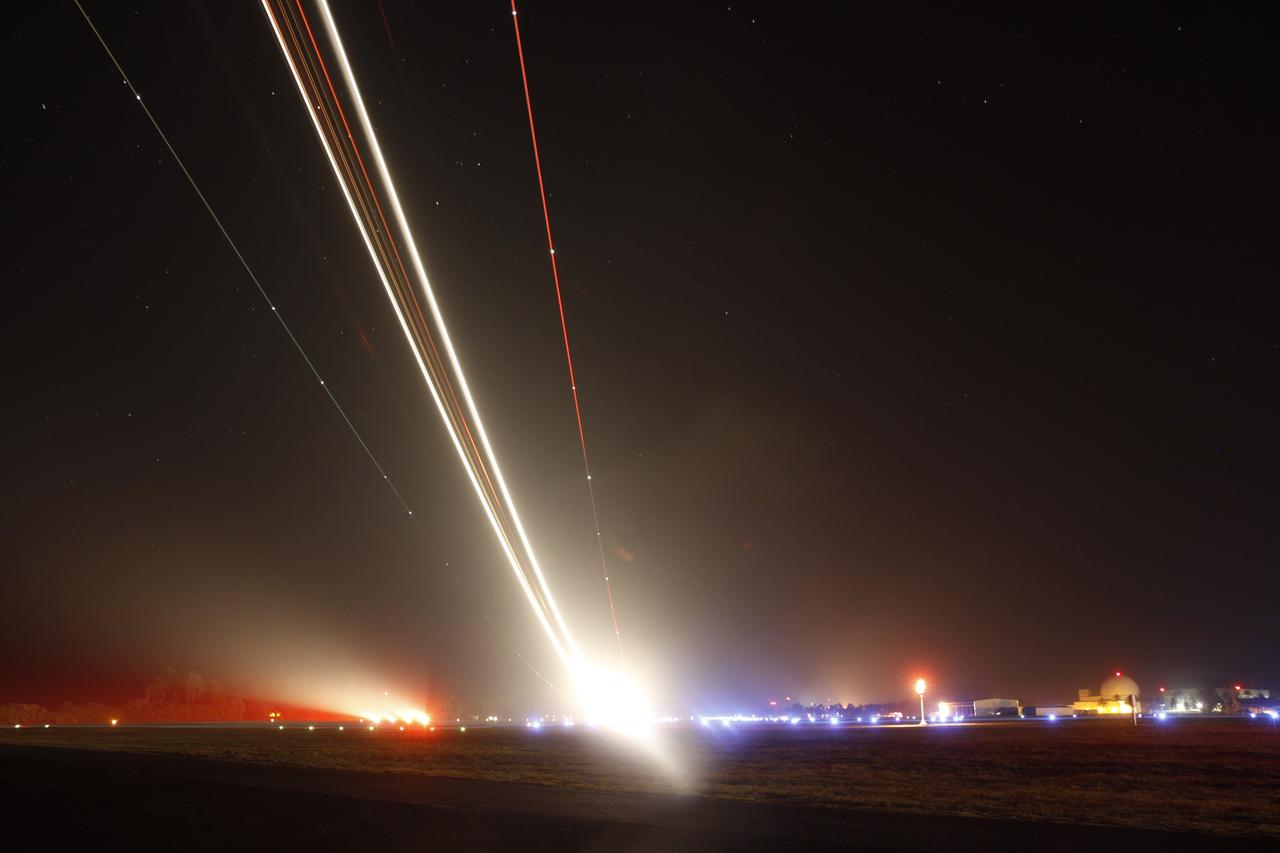
KWAJALEIN ATOLL, Marshall Islands - In this time-lapse image, the lights of Orbital Sciences' L-1011 "Stargazer" streak across the night sky as the aircraft takes off from the runway at Kwajalein Atoll with the company's Pegasus rocket to launch NASA's Nuclear Spectroscopic Telescope Array, or NuSTAR. The plane left Kwajalein one hour before launch. At 9:00:35 a.m. PDT 12:00:35 p.m. EDT), June 13, 2012, the rocket dropped with the NuSTAR payload 117 nautical miles south of Kwajalein. NuSTAR will use a unique set of “eyes” to see the highest energy X-ray light from the cosmos to reveal black holes lurking in our Milky Way galaxy, as well as those hidden in the hearts of faraway galaxies. Kwajalein is located in the Marshall Islands chain in the Pacific Ocean and is part of the Reagan Test Site and used for launches of NASA, commercial and military missions. For more information, visit http://www.nasa.gov/nustar. Photo credit: NASA
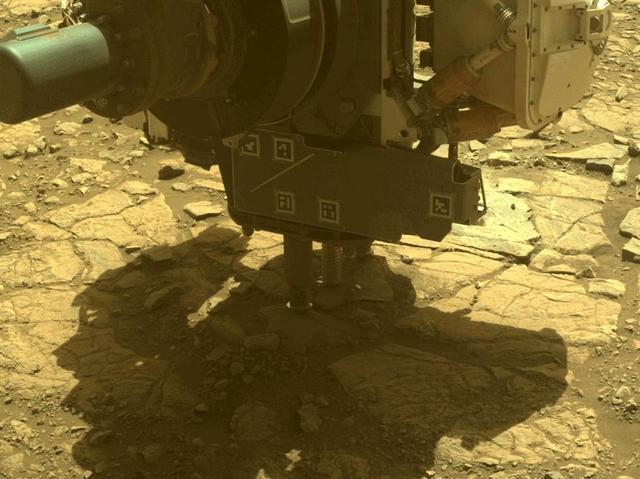
The robotic arm on NASA's Perseverance Mars rover used its percussive drill to core and collect the "Main River" rock sample on March 10, 2025, the 1,441st Martian day, or sol, of the mission. The time-lapse movie, taken by one of the rover's hazard cameras, is made up of 35 images taken over the course of 34 minutes. The sample was taken from a rock the rover science team named "Broom Point" at a location near the rim of Jezero Crater called "Witch Hazel Hill." A key objective for Perseverance's mission on Mars is astrobiology, including the search for signs of ancient microbial life. The rover will characterize the planet's geology and past climate, pave the way for human exploration of the Red Planet, and be the first mission to collect and cache Martian rock and regolith (broken rock and dust). Subsequent NASA missions, in cooperation with ESA (European Space Agency), would send spacecraft to Mars to collect these sealed samples from the surface and return them to Earth for in-depth analysis. The Mars 2020 Perseverance mission is part of NASA's Mars Exploration Program (MEP) portfolio and the agency's Moon to Mars exploration approach, which includes Artemis missions to the Moon that will help prepare for human exploration of the Red Planet. Animation available at https://photojournal.jpl.nasa.gov/catalog/PIA26571
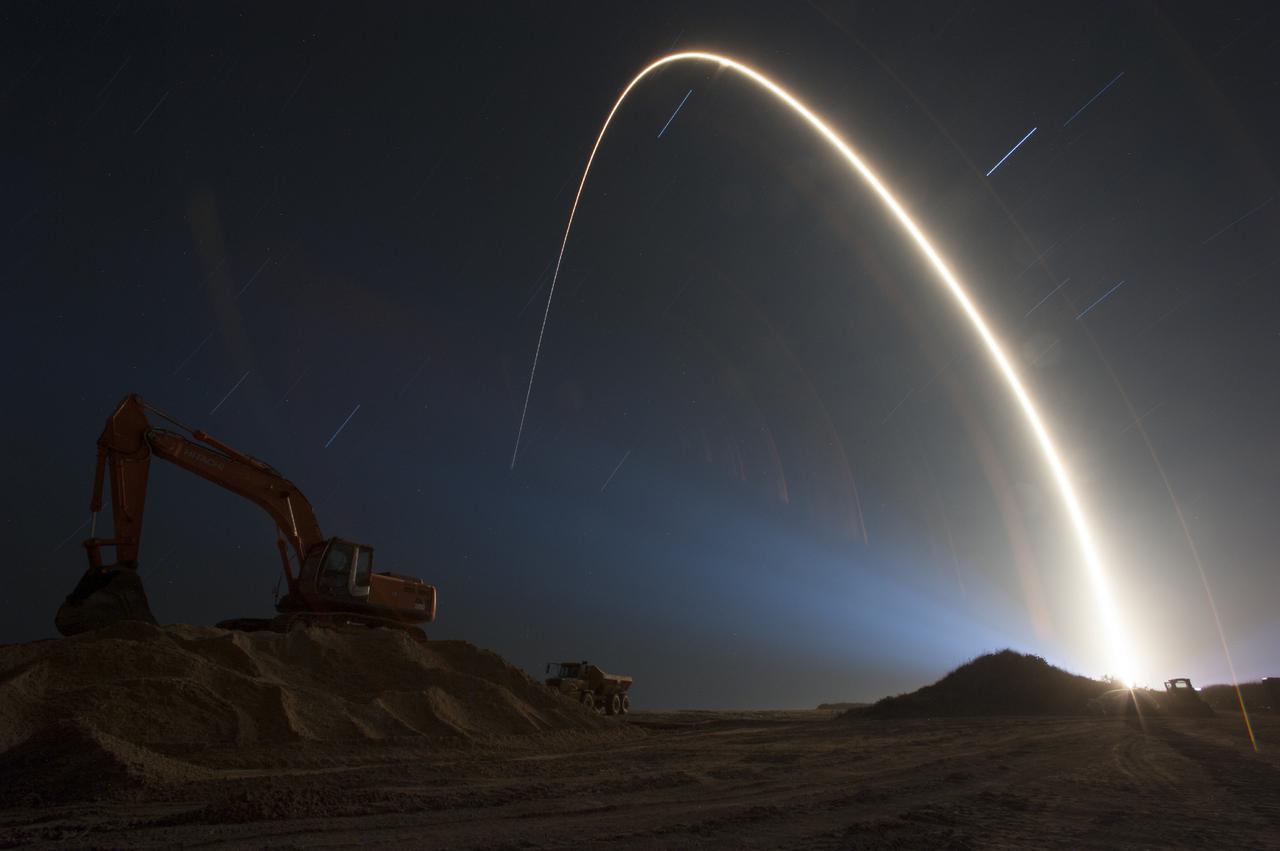
CAPE CANAVERAL, Fla. – In this time lapse photograph, a United Launch Alliance Atlas V rocket lifts off from Space Launch Complex 41 illuminating a beach restoration site at NASA's Kennedy Space Center in Florida. Liftoff was at 9:33 p.m. EST boosting the agency's Tracking and Data Relay Satellite, or TDRS-L, spacecraft to Earth orbit. The TDRS-L spacecraft is the second of three new satellites designed to ensure vital operational continuity for NASA by expanding the lifespan of the Tracking and Data Relay Satellite System TDRSS fleet, which consists of eight satellites in geosynchronous orbit. The spacecraft provide tracking, telemetry, command and high bandwidth data return services for numerous science and human exploration missions orbiting Earth. These include NASA's Hubble Space Telescope and the International Space Station. TDRS-L has a high-performance solar panel designed for more spacecraft power to meet the growing S-band communications requirements. TDRSS is one of NASA Space Communication and Navigation’s SCaN three networks providing space communications to NASA’s missions. For more information more about TDRS-L, visit: http:__www.nasa.gov_tdrs To learn more about SCaN, visit: www.nasa.gov_scan For more on beach restoration at Kennedy visit: http:__www.nasa.gov_centers_kennedy_about_sustainability_beach_erosion.html Photo credit: NASA_Tony Gray
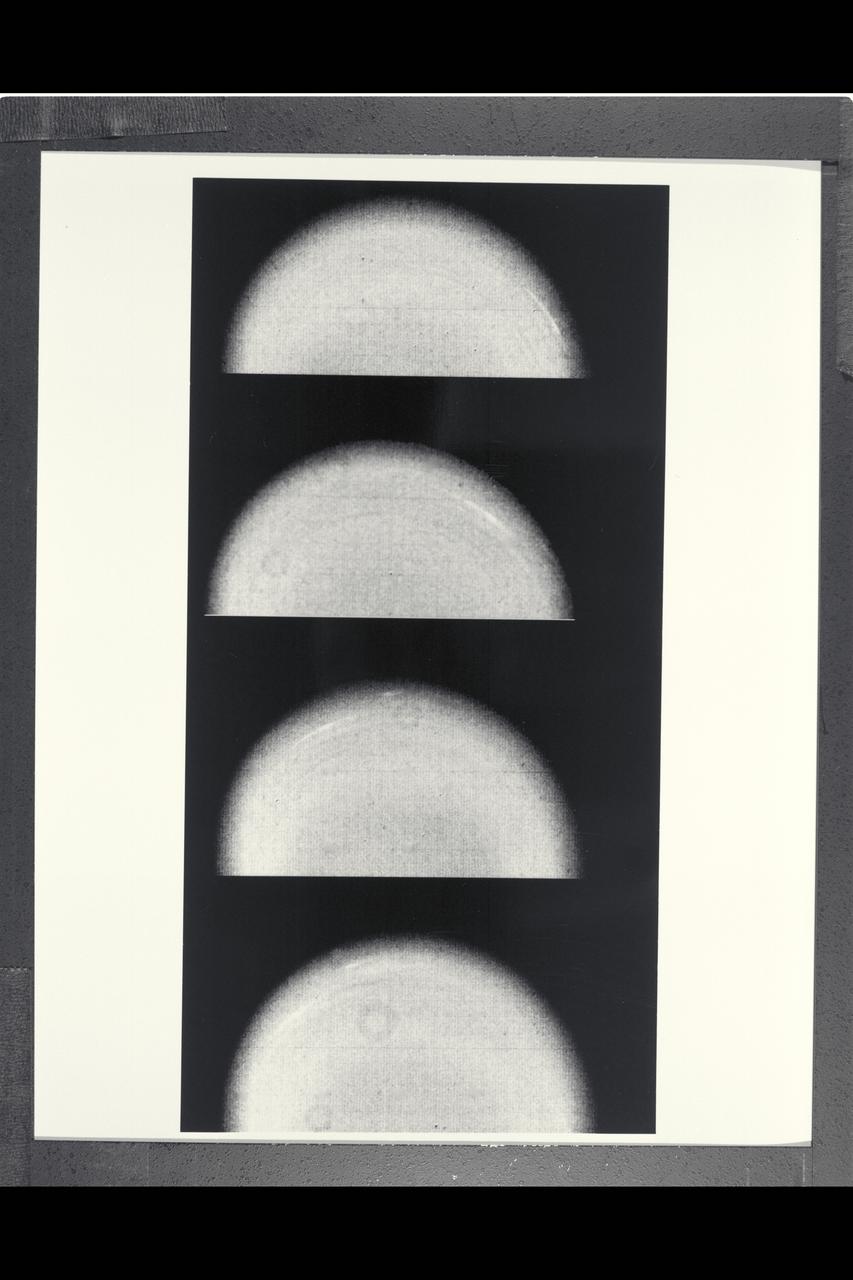
Range : 12.9 million km. ( 8.0 million miles ) P-29467B/W Time lapse Voyager 2 images of Uranus show the movement of two small, bright, streaky clouds, the first such features ever seen on the planet. The clouds were detected in this series of orange filtered images, over a 4.6 hour interval ( from top to bottom ). Uranus, which is tipped on its side with respect to the other planets, is rotating in a counter-clockwise direction, with its pole of rotation near the center of the disk, as are the two clouds seen here as bright streaks. The larger of the two clouds is ata lattitude of 33 degrees. The smaller cloud, seen faintly in the three lower images, lies at 26 degrees ( a lower alttitude and hence closer to the limb). Their counterclockwise periods of rotation are 16.2 and 16.9 hours, respectively. This difference implies that the lower lattitude feature is lagging behind the higher latitude feture at a speed of almost 100 meters pers second (220 mph). Latitudinal bands are also visible in these images, the faint bands, more numerous now then in previous Voyager images from longer range, are concentric with the pole rotation. thatis, they circle the planet in lines of contant latitude.
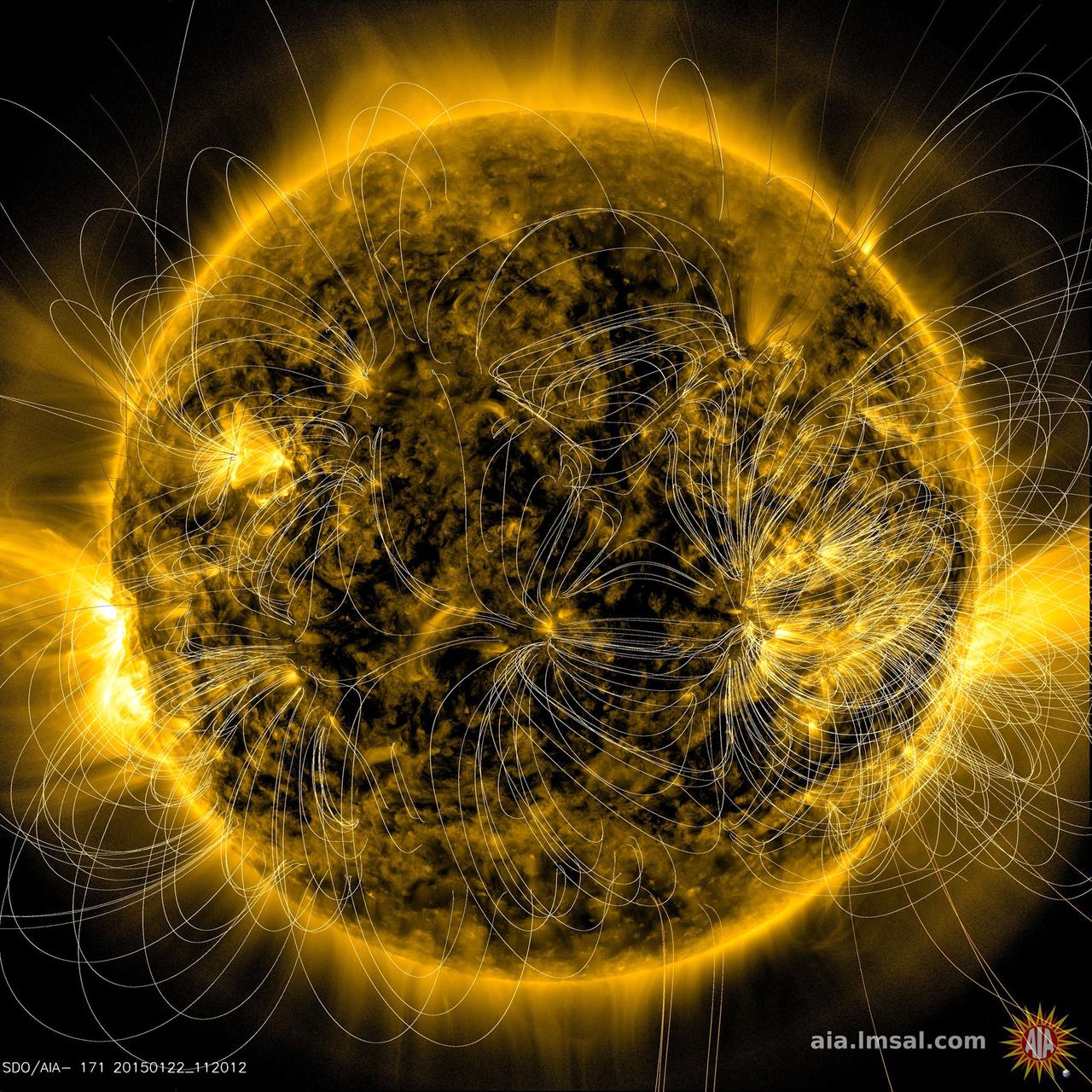
Scientists have developed a way to produce models of where the magnetic field lines are several times each day. Here we have created a time-lapse version of these models over four days (2-3 each day) to give you a peek at how these change over time. The spiraling arcs of magnetic field lines emerge from active regions and connect back to areas with the opposite polarity. The field lines are more concentrated where regions are more magnetically intense. And of course, they rotate with the rotation of the Sun. Credit: NASA/Solar Dynamics Observatory <b><a href="http://www.nasa.gov/audience/formedia/features/MP_Photo_Guidelines.html" rel="nofollow">NASA image use policy.</a></b> <b><a href="http://www.nasa.gov/centers/goddard/home/index.html" rel="nofollow">NASA Goddard Space Flight Center</a></b> enables NASA’s mission through four scientific endeavors: Earth Science, Heliophysics, Solar System Exploration, and Astrophysics. Goddard plays a leading role in NASA’s accomplishments by contributing compelling scientific knowledge to advance the Agency’s mission. <b>Follow us on <a href="http://twitter.com/NASAGoddardPix" rel="nofollow">Twitter</a></b> <b>Like us on <a href="http://www.facebook.com/pages/Greenbelt-MD/NASA-Goddard/395013845897?ref=tsd" rel="nofollow">Facebook</a></b> <b>Find us on <a href="http://instagram.com/nasagoddard?vm=grid" rel="nofollow">Instagram</a></b>
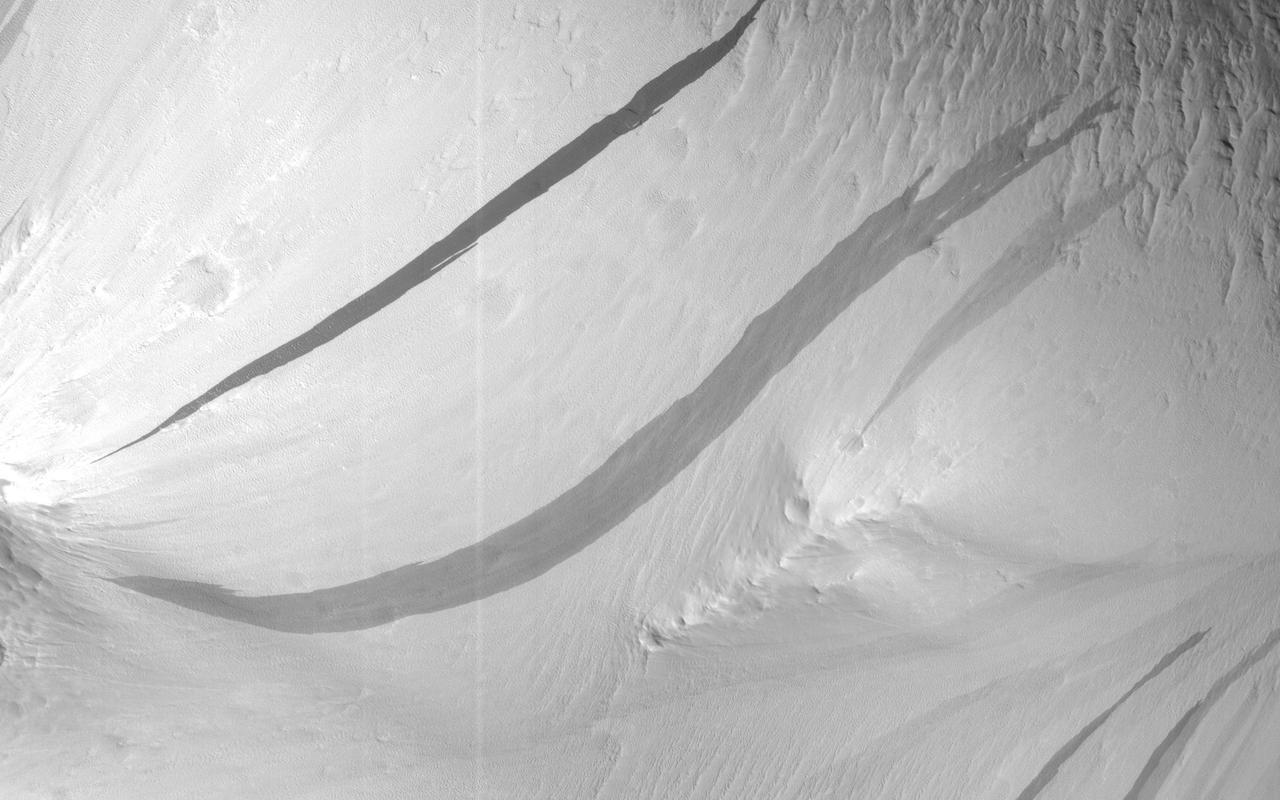
The image shows a region we see many slope streaks, typically dark features on slopes in the equatorial regions on Mars. They may extend for tens of meters in length and gradually fade away with time as new ones form. The most common hypothesis is that they are generated by dust avalanches that regularly occur on steep slopes exposing fresh dark materials from underneath the brighter dust. There are many types of slope streaks but one of the most recent and significant findings using HiRISE was the discovery of a new type called "recurring slope lineae," or RSL for short. Recent studies suggest that RSL may form through the flow of briny (extremely salty) liquid water that can be stable on the surface of Mars even under current climatic conditions for a limited time in summer when it is relatively warm. How can we distinguish between conventional slope streaks like the ones we see here and RSL? There are many criteria. For instance, RSL are usually smaller in size than regular slope streaks. However, one of the most important conditions is seasonal behavior, since RSL appear to be active only in summer while regular slope streaks can be active anytime of the year. This site is monitored regularly by HiRISE scientists because of the high density of slope streaks and their different sizes and orientations. If we look at a time-lapse sequence, we will see that a new slope streak has indeed formed in the period since April 2016 (and we can note how dark it is in comparison to the others indicating its freshness). However, this period corresponds mainly to the autumn season in this part of Mars, whereas we do not see any major changes in the summer season. This suggests that the feature that developed is a regular slope streak just like all the others in the area. http://photojournal.jpl.nasa.gov/catalog/PIA21272
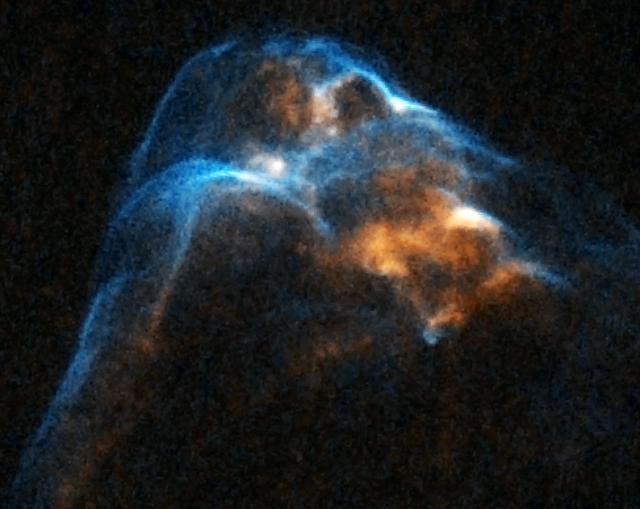
AUGUST 31, 2011: A team of scientists has collected enough high-resolution Hubble Space Telescope images over a 14-year period to stitch together time-lapse movies of powerful jets ejected from three young stars. The jets, a byproduct of gas accretion around newly forming stars, shoot off at supersonic speeds in opposite directions through space. These phenomena are providing clues about the final stages of a star’s birth, offering a peek at how our Sun came into existence 4.5 billion years ago. Hubble’s unprecedented sharpness allows astronomers to see changes in the jets over just a few years’ time. Most astronomical processes change over timescales that are much longer than a human lifetime. To read more go to: <a href="http://www.nasa.gov/mission_pages/hubble/science/supersonic-jets.html" rel="nofollow">www.nasa.gov/mission_pages/hubble/science/supersonic-jets...</a> Object Name: HH 34 Bow Shock Image Type: Astronomical Credit: NASA, ESA, and P. Hartigan (Rice University)..<b><a href="http://www.nasa.gov/centers/goddard/home/index.html" rel="nofollow">NASA Goddard Space Flight Center</a></b> enables NASA’s mission through four scientific endeavors: Earth Science, Heliophysics, Solar System Exploration, and Astrophysics. Goddard plays a leading role in NASA’s accomplishments by contributing compelling scientific knowledge to advance the Agency’s mission. <b>Follow us on <a href="http://twitter.com/NASA_GoddardPix" rel="nofollow">Twitter</a></b> <b>Like us on <a href="http://www.facebook.com/pages/Greenbelt-MD/NASA-Goddard/395013845897?ref=tsd" rel="nofollow">Facebook</a></b> <b>Find us on <a href="http://instagrid.me/nasagoddard/?vm=grid" rel="nofollow">Instagram</a></b>

ISS031-E-116058 (13 June 2012) --- Polar mesospheric clouds in the Northern Hemisphere are featured in this image photographed by an Expedition 31 crew member on the International Space Station. In both the Northern and Southern Hemisphere, during their respective late spring and early summer seasons, polar mesospheric clouds are at the peak of their visibility. Visible from the ground during twilight, aircraft in flight, and the International Space Station, they typically appear as delicate shining threads against the darkness of space?hence their other name of noctilucent or ?night-shining? clouds. On the same day this image was taken from the space station while it was passing over the night-darkened Tibetan Plateau, polar mesospheric clouds were also visible to aircraft flying above Canada. In addition to this still image, the space station crew took a time-lapse image sequence of polar mesospheric clouds several days earlier (June 5, 2012) while passing over western Asia; this is first such sequence of images of the phenomena taken from orbit. Polar mesospheric clouds form between 76-85 kilometers above the Earth?s surface, when there is sufficient water vapor at these high altitudes to freeze into ice crystals. The clouds are illuminated by the setting sun while the ground surface below is in darkness, lending them their night-shining properties. In addition to the illuminated tracery of polar mesospheric clouds trending across the center of the image, lower layers of the atmosphere are also illuminated; the lowest layer of the atmosphere, the stratosphere, is indicated by dim orange and red tones. While the exact cause of formation of polar mesospheric clouds is still debated?dust from meteors, global warming, and rocket exhaust have all been suggested as contributing factors?recent research suggests that changes in atmospheric gas composition or temperature has caused the clouds to become brighter over time.
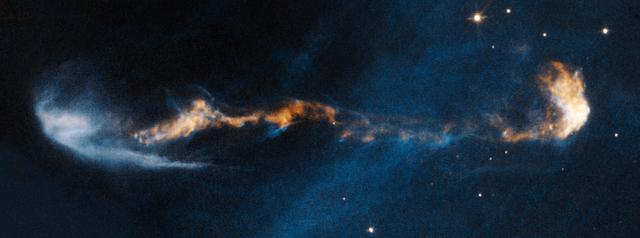
AUGUST 31, 2011: A team of scientists has collected enough high-resolution Hubble Space Telescope images over a 14-year period to stitch together time-lapse movies of powerful jets ejected from three young stars. The jets, a byproduct of gas accretion around newly forming stars, shoot off at supersonic speeds in opposite directions through space. These phenomena are providing clues about the final stages of a star’s birth, offering a peek at how our Sun came into existence 4.5 billion years ago. Hubble’s unprecedented sharpness allows astronomers to see changes in the jets over just a few years’ time. Most astronomical processes change over timescales that are much longer than a human lifetime. To read more go to: <a href="http://www.nasa.gov/mission_pages/hubble/science/supersonic-jets.html" rel="nofollow">www.nasa.gov/mission_pages/hubble/science/supersonic-jets...</a> Object Name: HH 47 Image Type: Astronomical Credit: NASA, ESA, and P. Hartigan (Rice University)..<b><a href="http://www.nasa.gov/centers/goddard/home/index.html" rel="nofollow">NASA Goddard Space Flight Center</a></b> enables NASA’s mission through four scientific endeavors: Earth Science, Heliophysics, Solar System Exploration, and Astrophysics. Goddard plays a leading role in NASA’s accomplishments by contributing compelling scientific knowledge to advance the Agency’s mission. <b>Follow us on <a href="http://twitter.com/NASA_GoddardPix" rel="nofollow">Twitter</a></b> <b>Like us on <a href="http://www.facebook.com/pages/Greenbelt-MD/NASA-Goddard/395013845897?ref=tsd" rel="nofollow">Facebook</a></b> <b>Find us on <a href="http://instagrid.me/nasagoddard/?vm=grid" rel="nofollow">Instagram</a></b>
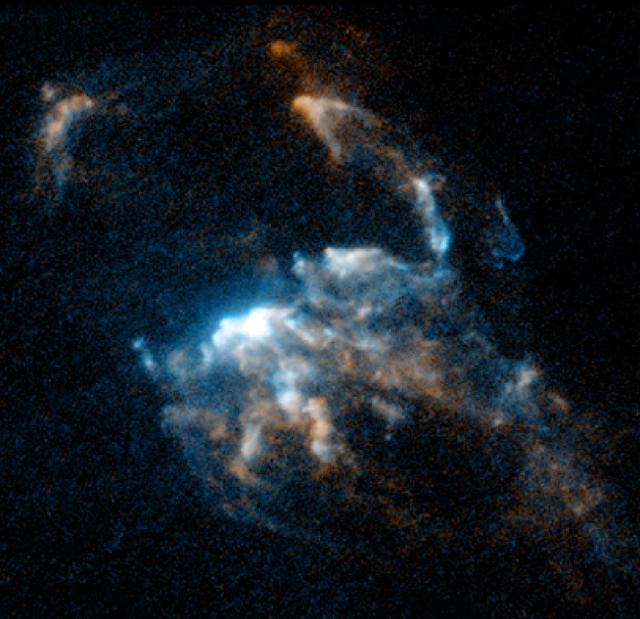
AUGUST 31, 2011: A team of scientists has collected enough high-resolution Hubble Space Telescope images over a 14-year period to stitch together time-lapse movies of powerful jets ejected from three young stars. The jets, a byproduct of gas accretion around newly forming stars, shoot off at supersonic speeds in opposite directions through space. These phenomena are providing clues about the final stages of a star’s birth, offering a peek at how our Sun came into existence 4.5 billion years ago. Hubble’s unprecedented sharpness allows astronomers to see changes in the jets over just a few years’ time. Most astronomical processes change over timescales that are much longer than a human lifetime. To read more go to: <a href="http://www.nasa.gov/mission_pages/hubble/science/supersonic-jets.html" rel="nofollow">www.nasa.gov/mission_pages/hubble/science/supersonic-jets...</a> Object Name: HH 2 Image Type: Astronomical Credit: NASA, ESA, and P. Hartigan (Rice University)..<b><a href="http://www.nasa.gov/centers/goddard/home/index.html" rel="nofollow">NASA Goddard Space Flight Center</a></b> enables NASA’s mission through four scientific endeavors: Earth Science, Heliophysics, Solar System Exploration, and Astrophysics. Goddard plays a leading role in NASA’s accomplishments by contributing compelling scientific knowledge to advance the Agency’s mission. <b>Follow us on <a href="http://twitter.com/NASA_GoddardPix" rel="nofollow">Twitter</a></b> <b>Like us on <a href="http://www.facebook.com/pages/Greenbelt-MD/NASA-Goddard/395013845897?ref=tsd" rel="nofollow">Facebook</a></b> <b>Find us on <a href="http://instagrid.me/nasagoddard/?vm=grid" rel="nofollow">Instagram</a></b>
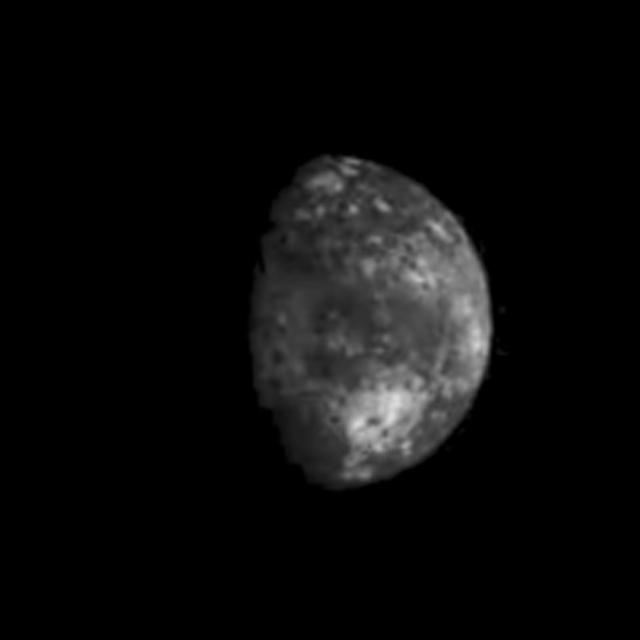
A sequence of full disk Io images was taken prior to Galileo's second encounter with Ganymede. The purpose of these observations was to view all longitudes of Io and search for active volcanic plumes. The images were taken at intervals of approximately one hour corresponding to Io longitude increments of about ten degrees. Because both the spacecraft and Io were traveling around Jupiter the lighting conditions on Io (e.g. the phase of Io) changed dramatically during the sequence. These images were registered at a common scale and processed to produce a time-lapse "movie" of Io. This movie combines all of the plume monitoring frames obtained by the Solid State Imaging system aboard NASA's Galileo spacecraft. The most prominent volcanic plume seen in this movie is Prometheus (latitude 1.6 south, longitude 153 west). The plume becomes visible as it moves into daylight, crosses the center of the disk, and is seen in profile against the dark of space at the edge of Io. This plume was first seen by the Voyager 1 spacecraft in 1979 and is believed to be a geyser-like eruption of sulfur dioxide snow and gas. Although details of the region around Prometheus have changed in the seventeen years since Voyager's visit, the shape and height of the plume have not changed significantly. It is possible that this geyser has been erupting nearly continuously over this time. Galileo's primary 24 month mission includes eleven orbits around Jupiter and will provide observations of Jupiter, its moons and its magnetosphere. North is to the top of all frames. The smallest features which can be discerned range from 13 to 31 kilometers across. The images were obtained between the 2nd and the 6th of September, 1996. The animation can be viewed at http://photojournal.jpl.nasa.gov/catalog/PIA01073
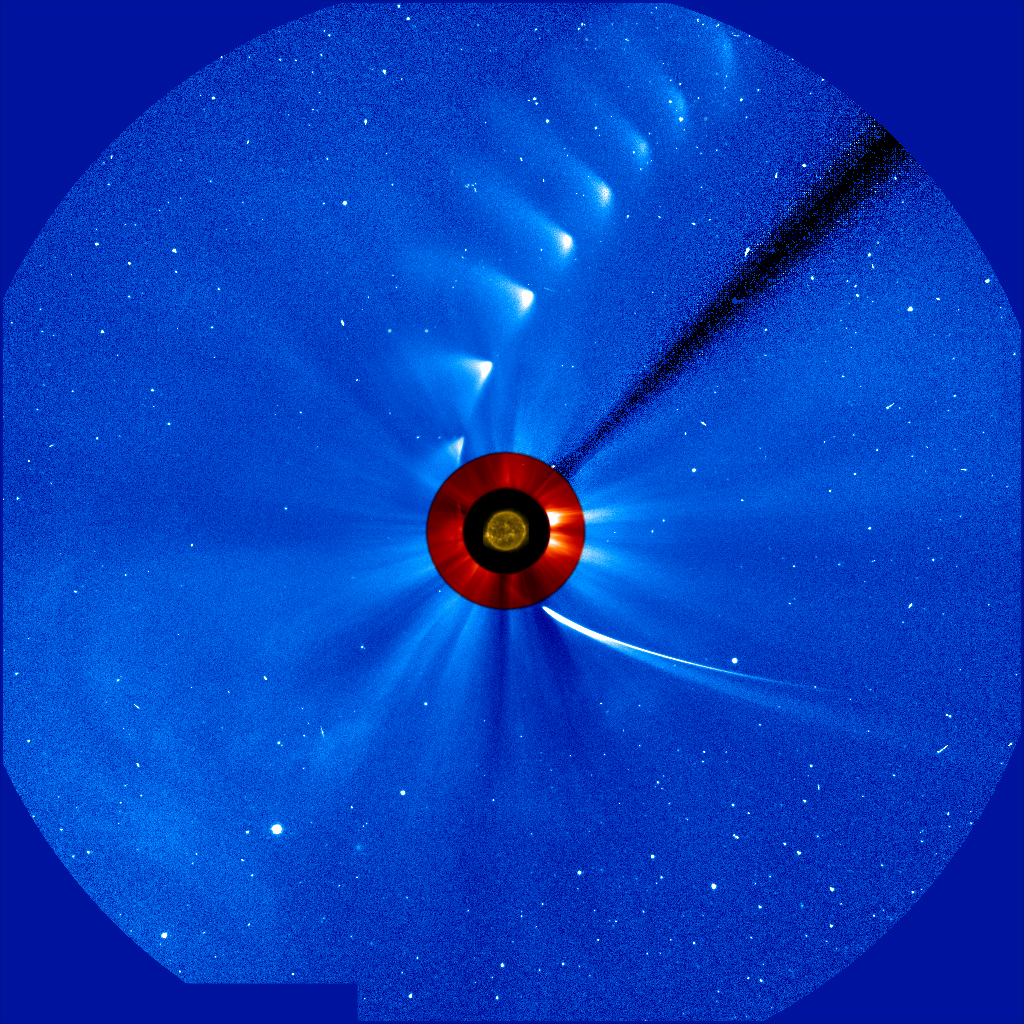
Comet ISON comes in from the bottom right and moves out toward the upper right, growing more faint, in this time-lapse image from the ESA/NASA Solar and Heliospheric Observatory. The image of the sun at the center is from NASA's Solar Dynamics Observatory. Credit: ESA/NASA/SOHO/SDO/GSFC After several days of fading, scientists continue to work to determine and to understand the fate of Comet ISON: There's no doubt that the comet shrank in size considerably as it rounded the sun and there's no doubt that something made it out on the other side to shoot back into space. The question remains as to whether the bright spot seen moving away from the sun was simply debris, or whether a small nucleus of the original ball of ice was still there. Regardless, it is likely that it is now only dust. Comet ISON, which began its journey from the Oort Cloud some 3 million years ago, made its closest approach to the sun on Nov. 28, 2013. The comet was visible in instruments on NASA's Solar Terrestrial Relations Observatory, or STEREO, and the joint European Space Agency/NASA Solar and Heliospheric Observatory, or SOHO, via images called coronagraphs. Coronagraphs block out the sun and a considerable distance around it, in order to better observe the dim structures in the sun's atmosphere, the corona. As such, there was a period of several hours when the comet was obscured in these images, blocked from view along with the sun. During this period of time, NASA's Solar Dynamics Observatory could not see the comet, leading many scientists to surmise that the comet had disintegrated completely. However, something did reappear in SOHO and STEREO coronagraphs some time later – though it was significantly less bright. Read more: <a href="http://1.usa.gov/18hGYag" rel="nofollow">1.usa.gov/18hGYag</a> <b><a href="http://www.nasa.gov/audience/formedia/features/MP_Photo_Guidelines.html" rel="nofollow">NASA image use policy.</a></b> <b><a href="http://www.nasa.gov/centers/goddard/home/index.html" rel="nofollow">NASA Goddard Space Flight Center</a></b> enables NASA’s mission through four scientific endeavors: Earth Science, Heliophysics, Solar System Exploration, and Astrophysics. Goddard plays a leading role in NASA’s accomplishments by contributing compelling scientific knowledge to advance the Agency’s mission. <b>Follow us on <a href="http://twitter.com/NASA_GoddardPix" rel="nofollow">Twitter</a></b> <b>Like us on <a href="http://www.facebook.com/pages/Greenbelt-MD/NASA-Goddard/395013845897?ref=tsd" rel="nofollow">Facebook</a></b> <b>Find us on <a href="http://instagram.com/nasagoddard?vm=grid" rel="nofollow">Instagram</a></b>
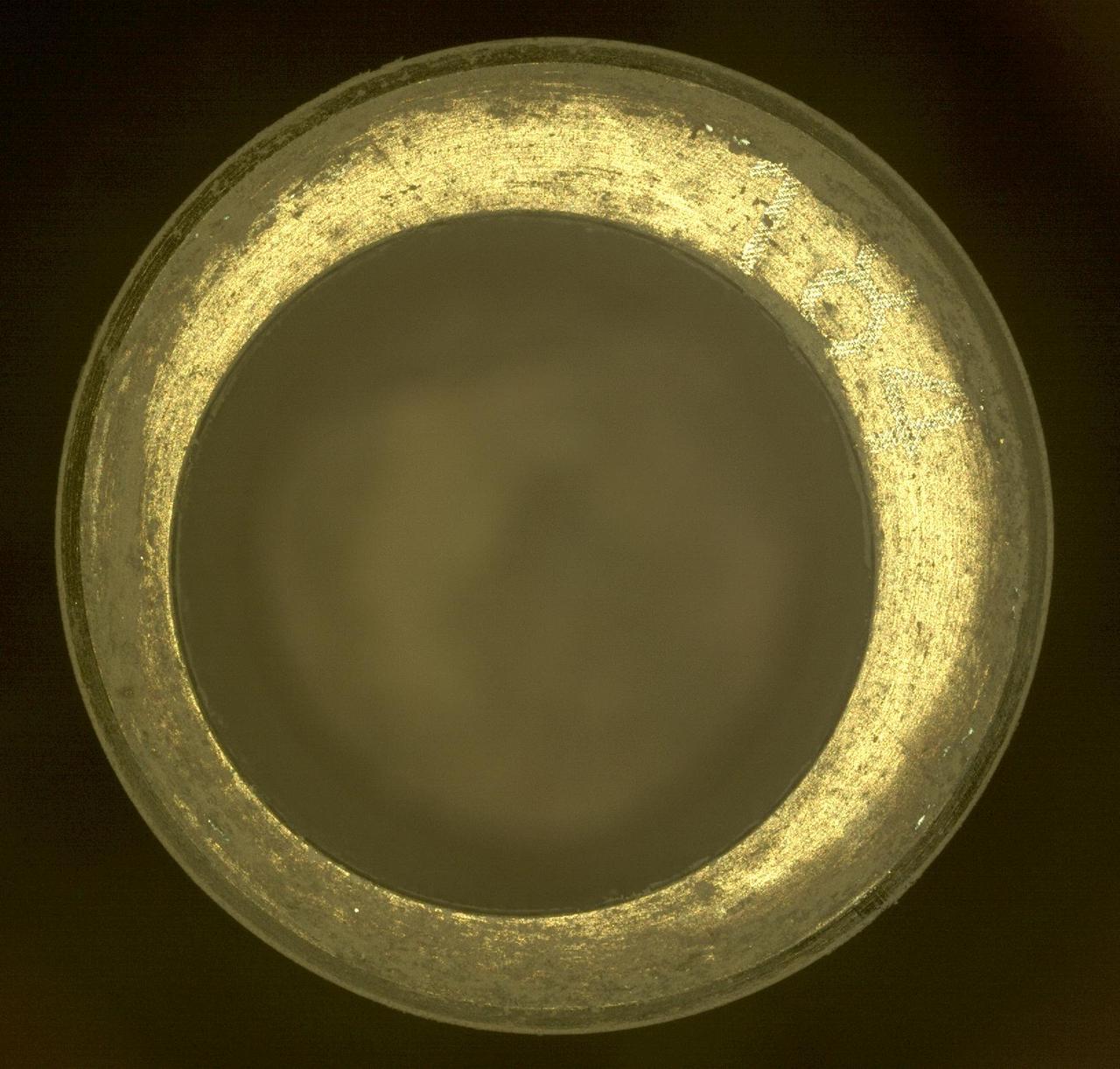
Perseverance's Sampling and Caching System Camera, or CacheCam, captured this time-lapse series of images of the rover's 14th rock-core sample. Taken over four Martian days (or sols) – on Sols 595, 599, 601, and 604 of the mission (Oct. 22, Oct. 26, Oct. 28, and Oct. 31, 2022) – they document the results of the mission's use of the rover's Bore Sweep Tool to remove dust from the tube. Small dust grains can be seen moving around the rim of the sample tube. The tool is designed to clean the inner surface near the tube's opening and also move the collected rock sample further down into the tube. Because the CacheCam's depth of field is plus or minus 5 millimeters, the rock sample, which is farther down in the tube, is not in focus in these images. The pixel scale in this image is approximately 13 microns per pixel. The images were acquired on Oct. 5. When the rover attempted to insert a seal into the open end of the tube, the seal did not release as expected from its dispenser. The bright gold-colored ring in the foreground is the bearing race, an asymmetrical flange that assists in shearing off a sample once the coring drill has bored into a rock. The sample collection tube's serial number, "184," can be seen in the 2 o'clock position on the bearing race. About the size and shape of a standard lab test tube, these tubes are designed to contain representative samples of Martian rock and regolith (broken rock and dust). A key objective for Perseverance's mission on Mars is astrobiology, including the search for signs of ancient microbial life. The rover will characterize the planet's geology and past climate, pave the way for human exploration of the Red Planet, and be the first mission to collect and cache Martian rock and regolith (broken rock and dust). Subsequent NASA missions, in cooperation with ESA (European Space Agency), would send spacecraft to Mars to collect these sealed samples from the surface and return them to Earth for in-depth analysis. The Mars 2020 Perseverance mission is part of NASA's Moon to Mars exploration approach, which includes Artemis missions to the Moon that will help prepare for human exploration of the Red Planet. Animation available at https://photojournal.jpl.nasa.gov/catalog/PIA25337
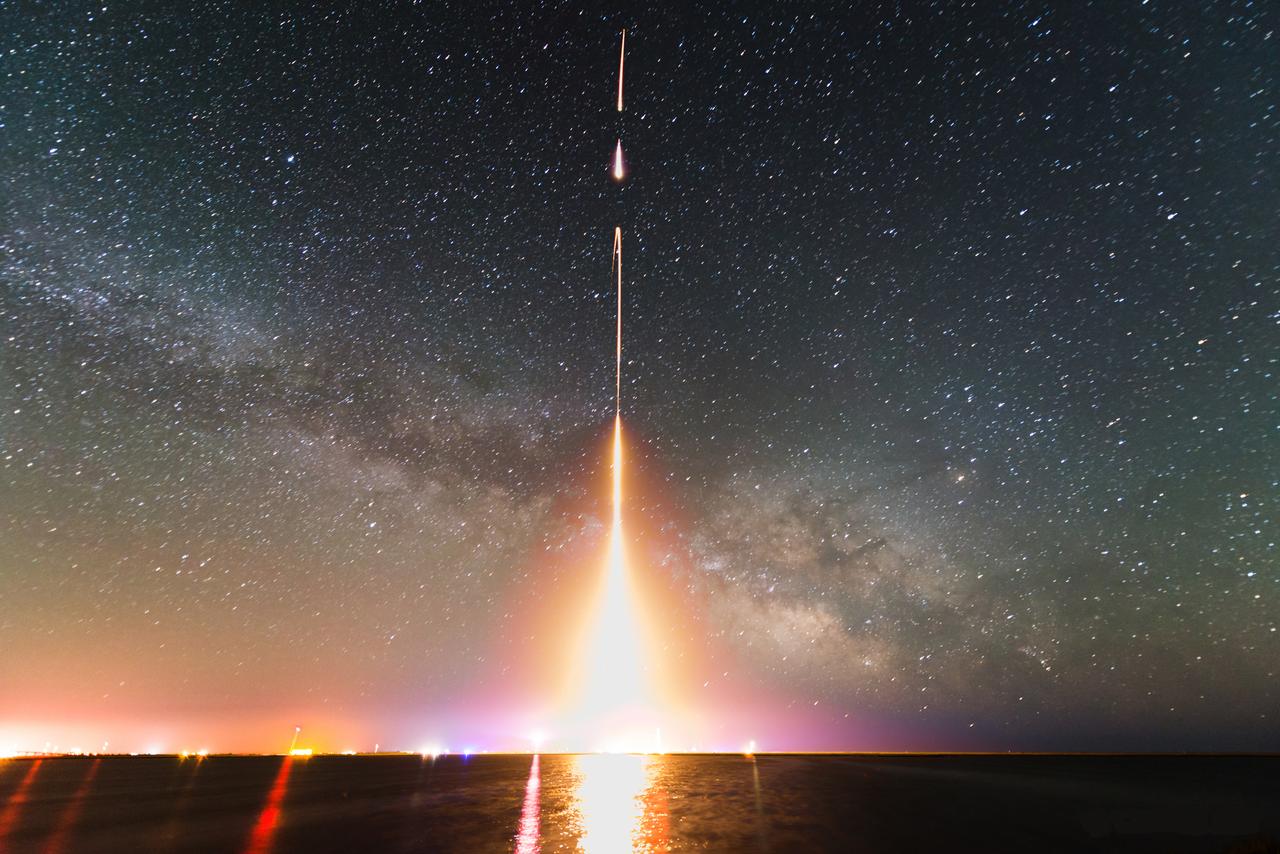
A NASA sounding rocket experiment has detected a surprising surplus of infrared light in the dark space between galaxies, a diffuse cosmic glow as bright as all known galaxies combined. The glow is thought to be from orphaned stars flung out of galaxies. The findings redefine what scientists think of as galaxies. Galaxies may not have a set boundary of stars, but instead stretch out to great distances, forming a vast, interconnected sea of stars. Observations from the Cosmic Infrared Background Experiment, or CIBER, are helping settle a debate on whether this background infrared light in the universe, previously detected by NASA’s Spitzer Space Telescope, comes from these streams of stripped stars too distant to be seen individually, or alternatively from the first galaxies to form in the universe. This is a time-lapse photograph of the Cosmic Infrared Background Experiment (CIBER) rocket launch, taken from NASA's Wallops Flight Facility in Virginia in 2013. The image is from the last of four launches. Read more: <a href="http://www.nasa.gov/press/2014/november/nasa-rocket-experiment-finds-the-universe-brighter-than-we-thought/index.html#.VFveFd6FxgM" rel="nofollow">www.nasa.gov/press/2014/november/nasa-rocket-experiment-f...</a> Image Credit: T. Arai/University of Tokyo <b><a href="http://www.nasa.gov/audience/formedia/features/MP_Photo_Guidelines.html" rel="nofollow">NASA image use policy.</a></b> <b><a href="http://www.nasa.gov/centers/goddard/home/index.html" rel="nofollow">NASA Goddard Space Flight Center</a></b> enables NASA’s mission through four scientific endeavors: Earth Science, Heliophysics, Solar System Exploration, and Astrophysics. Goddard plays a leading role in NASA’s accomplishments by contributing compelling scientific knowledge to advance the Agency’s mission. <b>Follow us on <a href="http://twitter.com/NASAGoddardPix" rel="nofollow">Twitter</a></b> <b>Like us on <a href="http://www.facebook.com/pages/Greenbelt-MD/NASA-Goddard/395013845897?ref=tsd" rel="nofollow">Facebook</a></b> <b>Find us on <a href="http://instagram.com/nasagoddard?vm=grid" rel="nofollow">Instagram</a></b>
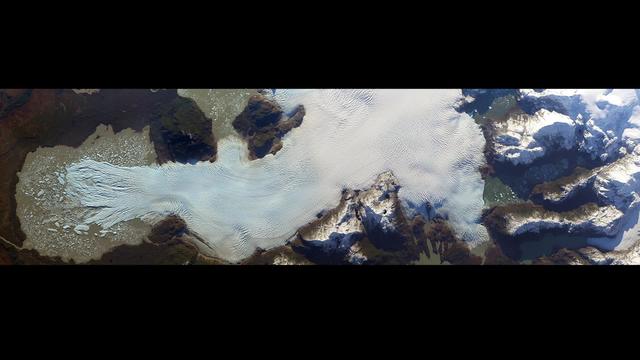
Every day of every year, NASA satellites provide useful data about our home planet, and along the way, some beautiful images as well. This video includes satellite images of Earth in 2014 from NASA and its partners as well as photos and a time lapse video from the International Space Station. We’ve also included a range of data visualizations, model runs, and a conceptual animation that were produced in 2014 (but in some cases might have been utilizing data from earlier years.) Credit: NASA's Goddard Space Flight Center <b><a href="http://www.nasa.gov/audience/formedia/features/MP_Photo_Guidelines.html" rel="nofollow">NASA image use policy.</a></b> <b><a href="http://www.nasa.gov/centers/goddard/home/index.html" rel="nofollow">NASA Goddard Space Flight Center</a></b> enables NASA’s mission through four scientific endeavors: Earth Science, Heliophysics, Solar System Exploration, and Astrophysics. Goddard plays a leading role in NASA’s accomplishments by contributing compelling scientific knowledge to advance the Agency’s mission. <b>Follow us on <a href="http://twitter.com/NASAGoddardPix" rel="nofollow">Twitter</a></b> <b>Like us on <a href="http://www.facebook.com/pages/Greenbelt-MD/NASA-Goddard/395013845897?ref=tsd" rel="nofollow">Facebook</a></b> <b>Find us on <a href="http://instagrid.me/nasagoddard/?vm=grid" rel="nofollow">Instagram</a></b>

While photographing Mars, NASA’s Hubble Space Telescope captured a cameo appearance of the tiny moon Phobos on its trek around the Red Planet. Discovered in 1877, the diminutive, potato-shaped moon is so small that it appears star-like in the Hubble pictures. Phobos orbits Mars in just 7 hours and 39 minutes, which is faster than Mars rotates. The moon’s orbit is very slowly shrinking, meaning it will eventually shatter under Mars’ gravitational pull, or crash onto the planet. Hubble took 13 separate exposures over 22 minutes to create a time-lapse video showing the moon’s orbital path. Credit: NASA, ESA, and Z. Levay (STScI) <b><a href="http://www.nasa.gov/audience/formedia/features/MP_Photo_Guidelines.html" rel="nofollow">NASA image use policy.</a></b> <b><a href="http://www.nasa.gov/centers/goddard/home/index.html" rel="nofollow">NASA Goddard Space Flight Center</a></b> enables NASA’s mission through four scientific endeavors: Earth Science, Heliophysics, Solar System Exploration, and Astrophysics. Goddard plays a leading role in NASA’s accomplishments by contributing compelling scientific knowledge to advance the Agency’s mission. <b>Follow us on <a href="http://twitter.com/NASAGoddardPix" rel="nofollow">Twitter</a></b> <b>Like us on <a href="http://www.facebook.com/pages/Greenbelt-MD/NASA-Goddard/395013845897?ref=tsd" rel="nofollow">Facebook</a></b> <b>Find us on <a href="http://instagrid.me/nasagoddard/?vm=grid" rel="nofollow">Instagram</a></b>

The sharp eye of NASA's Hubble Space Telescope has captured the tiny moon Phobos during its orbital trek around Mars. Because the moon is so small, it appears star-like in the Hubble pictures. Over the course of 22 minutes, Hubble took 13 separate exposures, allowing astronomers to create a time-lapse video showing the diminutive moon's orbital path. The Hubble observations were intended to photograph Mars, and the moon's cameo appearance was a bonus. More here: <a href="https://go.nasa.gov/2uDchSn" rel="nofollow">go.nasa.gov/2uDchSn</a> <b><a href="http://www.nasa.gov/audience/formedia/features/MP_Photo_Guidelines.html" rel="nofollow">NASA image use policy.</a></b> <b><a href="http://www.nasa.gov/centers/goddard/home/index.html" rel="nofollow">NASA Goddard Space Flight Center</a></b> enables NASA’s mission through four scientific endeavors: Earth Science, Heliophysics, Solar System Exploration, and Astrophysics. Goddard plays a leading role in NASA’s accomplishments by contributing compelling scientific knowledge to advance the Agency’s mission. <b>Follow us on <a href="http://twitter.com/NASAGoddardPix" rel="nofollow">Twitter</a></b> <b>Like us on <a href="http://www.facebook.com/pages/Greenbelt-MD/NASA-Goddard/395013845897?ref=tsd" rel="nofollow">Facebook</a></b> <b>Find us on <a href="http://instagrid.me/nasagoddard/?vm=grid" rel="nofollow">Instagram</a></b>

This time-lapse photograph shows the test of a pilot seat and restraint designed by researchers at the National Advisory Committee for Aeronautics (NACA) Lewis Flight Propulsion Laboratory. The laboratory had undertaken a multi-year investigation into the causes and preventative measures for fires resulting from low altitude aircraft crashes. The program was expanded in the mid-1950s to include the study of crash impact on passengers, new types of types of seat restraints, and better seat designs. The impact program began by purposely wrecking surplus transport Fairchild C-82 Packet and Piper Cub aircraft into barricades at the end of a test runway. Instrumented dummies and cameras were installed in the pilot and passenger areas. After determining the different loads experienced during a crash and the effects on the passengers, the NACA researchers began designing new types of seats and restraints. The result was an elastic seat that flexed upon impact, absorbing 75 percent of the loads before it slowly recoiled. This photograph shows the seats mounted on a pendulum with a large spring behind the platform to provide the jolt that mimicked the forces of a crash. The seat was constructed without any potentially damaging metal parts and included rubber-like material, an inflated back and arms, and a seat cushion. After the pendulum tests, the researchers compared the flexible seats to the rigid seats during a crash of a transport aircraft. They found the passengers in the rigid seats received 66 percent higher g-forces than the NACA-designed seats.
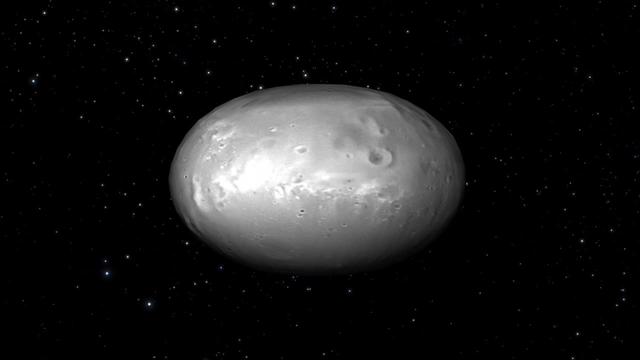
This computer animation illustrates how Pluto's moon Nix changes its spin unpredictably as it orbits the "double planet" Pluto-Charon. The view is from the surface of Pluto as the moon circles the Pluto-Charon system. This is a time-lapse view of the moon, compressing four years of motion into two minutes, with one complete orbit of Pluto-Charon every two seconds. (The apparent star movement rate is greatly slowed down for illustration purposes.) The animation is based on dynamical models of spinning bodies in complex gravitational fields — like the field produced by Pluto and Charon's motion about each other. Astronomers used this simulation to try to understand the unpredictable changes in reflected light from Nix as it orbits Pluto-Charon. They also found that Pluto's moon Hydra also undergoes chaotic spin. The football shape of both moons contributes to their wild motion. The consequences are that if you lived on either moon, you could not predict the time or direction the sun would rise the next morning. (The moon is too small for Hubble to resolve surface features, and so the surface textures used here are purely for illustration purposes.) Credit: NASA, ESA, M. Showalter (SETI Institute), and G. Bacon (STScI) Read more: <a href="http://www.nasa.gov/press-release/nasa-s-hubble-finds-pluto-s-moons-tumbling-in-absolute-chaos" rel="nofollow">www.nasa.gov/press-release/nasa-s-hubble-finds-pluto-s-mo...</a> <b><a href="http://www.nasa.gov/audience/formedia/features/MP_Photo_Guidelines.html" rel="nofollow">NASA image use policy.</a></b> <b><a href="http://www.nasa.gov/centers/goddard/home/index.html" rel="nofollow">NASA Goddard Space Flight Center</a></b> enables NASA’s mission through four scientific endeavors: Earth Science, Heliophysics, Solar System Exploration, and Astrophysics. Goddard plays a leading role in NASA’s accomplishments by contributing compelling scientific knowledge to advance the Agency’s mission. <b>Follow us on <a href="http://twitter.com/NASAGoddardPix" rel="nofollow">Twitter</a></b> <b>Like us on <a href="http://www.facebook.com/pages/Greenbelt-MD/NASA-Goddard/395013845897?ref=tsd" rel="nofollow">Facebook</a></b> <b>Find us on <a href="http://instagrid.me/nasagoddard/?vm=grid" rel="nofollow">Instagram</a></b>
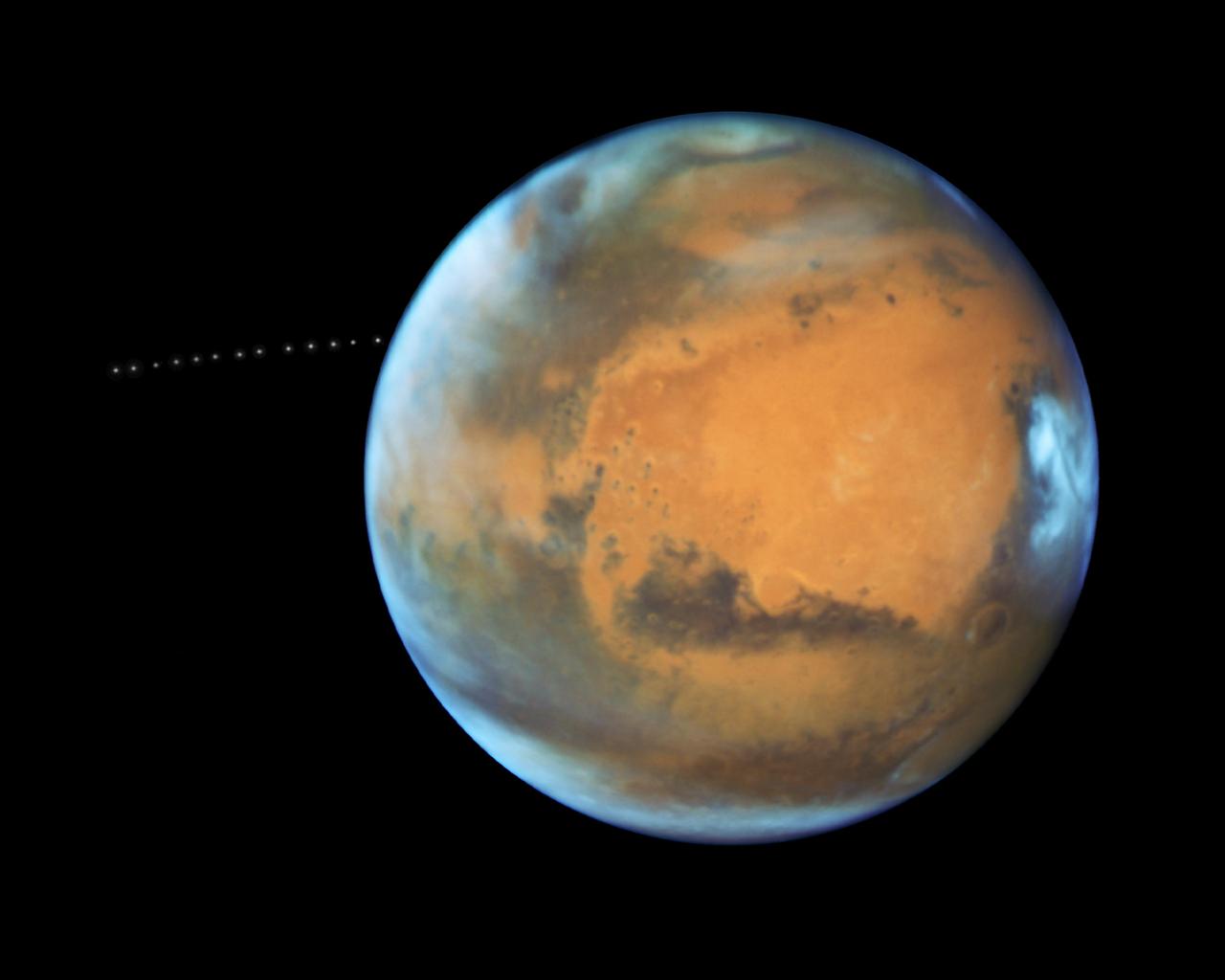
The sharp eye of NASA's Hubble Space Telescope has captured the tiny moon Phobos during its orbital trek around Mars. Because the moon is so small, it appears star-like in the Hubble pictures. Over the course of 22 minutes, Hubble took 13 separate exposures, allowing astronomers to create a time-lapse video showing the diminutive moon's orbital path. The Hubble observations were intended to photograph Mars, and the moon's cameo appearance was a bonus. A football-shaped object just 16.5 miles by 13.5 miles by 11 miles, Phobos is one of the smallest moons in the solar system. It is so tiny that it would fit comfortably inside the Washington, D.C. Beltway. The little moon completes an orbit in just 7 hours and 39 minutes, which is faster than Mars rotates. Rising in the Martian west, it runs three laps around the Red Planet in the course of one Martian day, which is about 24 hours and 40 minutes. It is the only natural satellite in the solar system that circles its planet in a time shorter than the parent planet's day. About two weeks after the Apollo 11 manned lunar landing on July 20, 1969, NASA's Mariner 7 flew by the Red Planet and took the first crude close-up snapshot of Phobos. On July 20, 1976 NASA's Viking 1 lander touched down on the Martian surface. A year later, its parent craft, the Viking 1 orbiter, took the first detailed photograph of Phobos, revealing a gaping crater from an impact that nearly shattered the moon. Phobos was discovered by Asaph Hall on August 17, 1877 at the U.S. Naval Observatory in Washington, D.C., six days after he found the smaller, outer moon, named Deimos. Hall was deliberately searching for Martian moons. Both moons are named after the sons of Ares, the Greek god of war, who was known as Mars in Roman mythology. Phobos (panic or fear) and Deimos (terror or dread) accompanied their father into battle. Close-up photos from Mars-orbiting spacecraft reveal that Phobos is apparently being torn apart by the gravitational pull of Mars. The moon is marred by long, shallow grooves that are probably caused by tidal interactions with its parent planet. Phobos draws nearer to Mars by about 6.5 feet every hundred years. Scientists predict that within 30 to 50 million years, it either will crash into the Red Planet or be torn to pieces and scattered as a ring around Mars. Orbiting 3,700 miles above the Martian surface, Phobos is closer to its parent planet than any other moon in the solar system. Despite its proximity, observers on Mars would see Phobos at just one-third the width of the full moon as seen from Earth. Conversely, someone standing on Phobos would see Mars dominating the horizon, enveloping a quarter of the sky. From the surface of Mars, Phobos can be seen eclipsing the sun. However, it is so tiny that it doesn't completely cover our host star. Transits of Phobos across the sun have been photographed by several Mars-faring spacecraft. The origin of Phobos and Deimos is still being debated. Scientists concluded that the two moons were made of the same material as asteroids. This composition and their irregular shapes led some astrophysicists to theorize that the Martian moons came from the asteroid belt. However, because of their stable, nearly circular orbits, other scientists doubt that the moons were born as asteroids. Such orbits are rare for captured objects, which tend to move erratically. An atmosphere could have slowed down Phobos and Deimos and settled them into their current orbits, but the Martian atmosphere is too thin to have circularized the orbits. Also, the moons are not as dense as members of the asteroid belt. Phobos may be a pile of rubble that is held together by a thin crust. It may have formed as dust and rocks encircling Mars were drawn together by gravity. Or, it may have experienced a more violent birth, where a large body smashing into Mars flung pieces skyward, and those pieces were brought together by gravity. Perhaps an existing moon was destroyed, reduced to the rubble that would become Phobos. Hubble took the images of Phobos orbiting the Red Planet on May 12, 2016, when Mars was 50 million miles from Earth. This was just a few days before the planet passed closer to Earth in its orbit than it had in the past 11 years. A time-lapse video captures a portion of the path that tiny Phobos takes around Mars. Over the course of 22 minutes, Hubble snapped 13 separate exposures of the little Martian moon. The video can be viewed at https://photojournal.jpl.nasa.gov/catalog/PIA21837
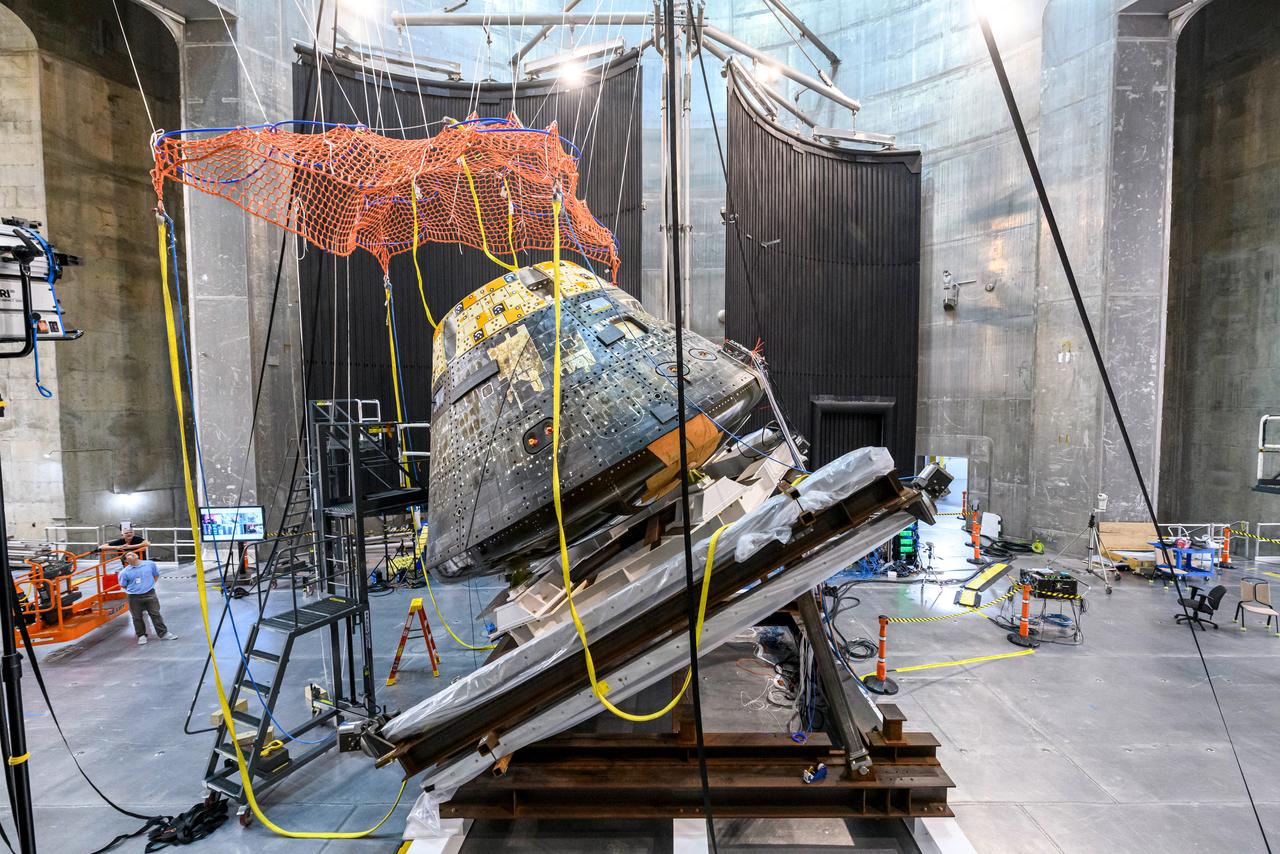
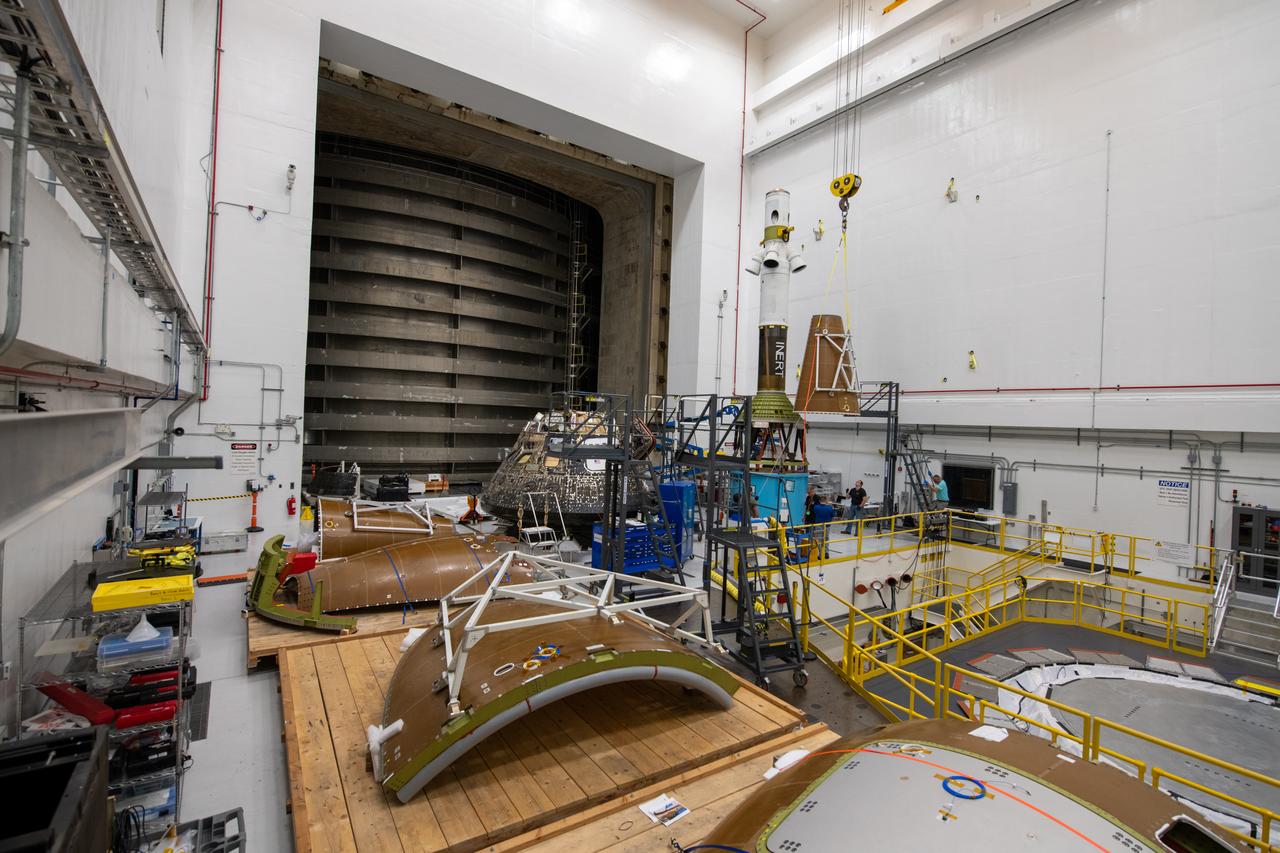
The Orion Crew Module, also known as the Orion Environmental Test Article (ETA), returned to NASA’s Neil Armstrong Test Facility in Sandusky, Ohio, in January 2024 and completed an 11-month test campaign necessary for the safety and success of Artemis II. In November 2024, experts completed the Forward Bay Cover jettison test, which is the last piece that must eject right before parachutes deploy. This image shows the setup right before the FBC deployment test. Photo Credit: (NASA/Jordan Salkin)
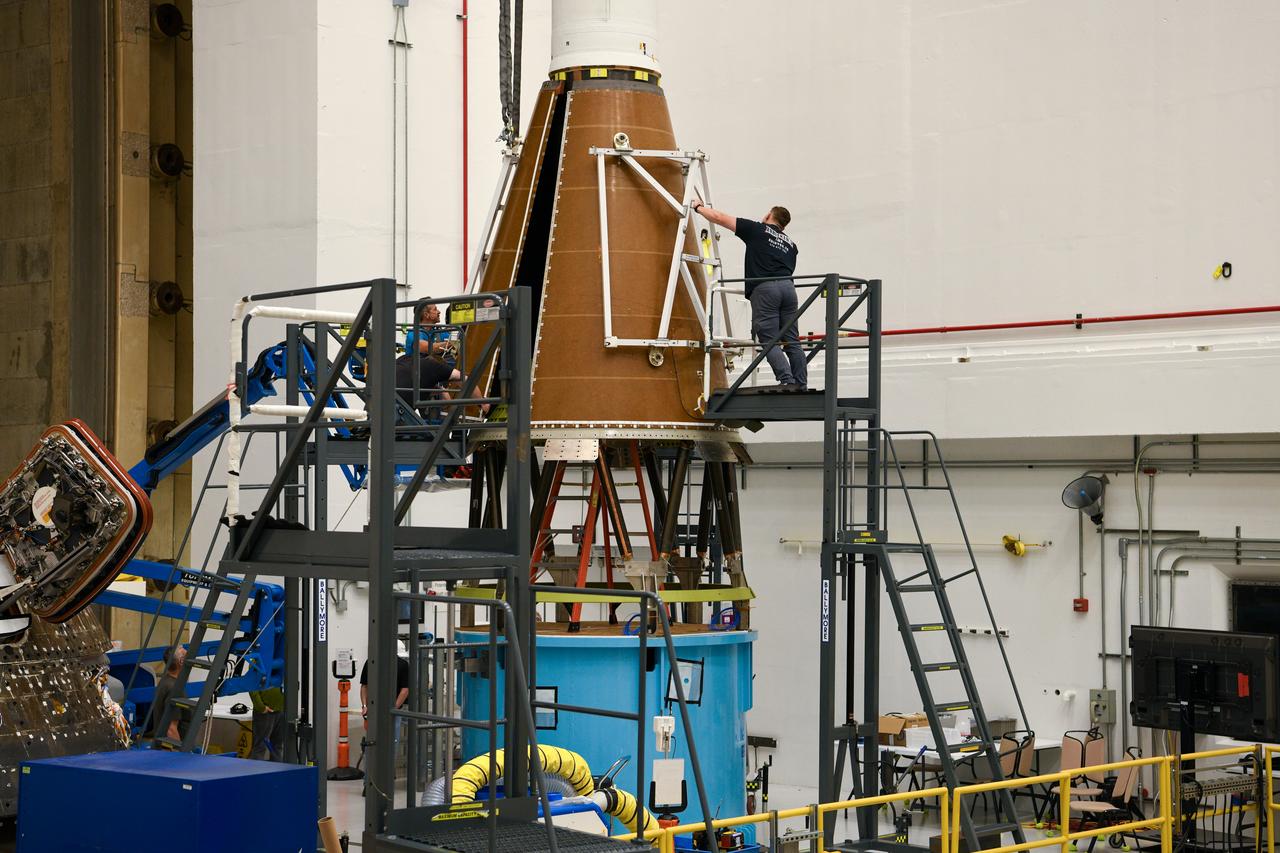
The Launch Abort System and the Orion Crew Module, also known as the Orion Environmental Test Article (ETA), returned to NASA’s Neil Armstrong Test Facility in Sandusky, Ohio, in October 2023 through January 2024 and completed an 11-month test campaign necessary for the safety and success of Artemis II. Photo Credit: (NASA/Quentin Schwinn)
The Launch Abort System and the Orion Crew Module, also known as the Orion Environmental Test Article (ETA), returned to NASA’s Neil Armstrong Test Facility in Sandusky, Ohio, in October 2023 through January 2024 and completed an 11-month test campaign necessary for the safety and success of Artemis II. Photo Credit: (NASA/Quentin Schwinn)
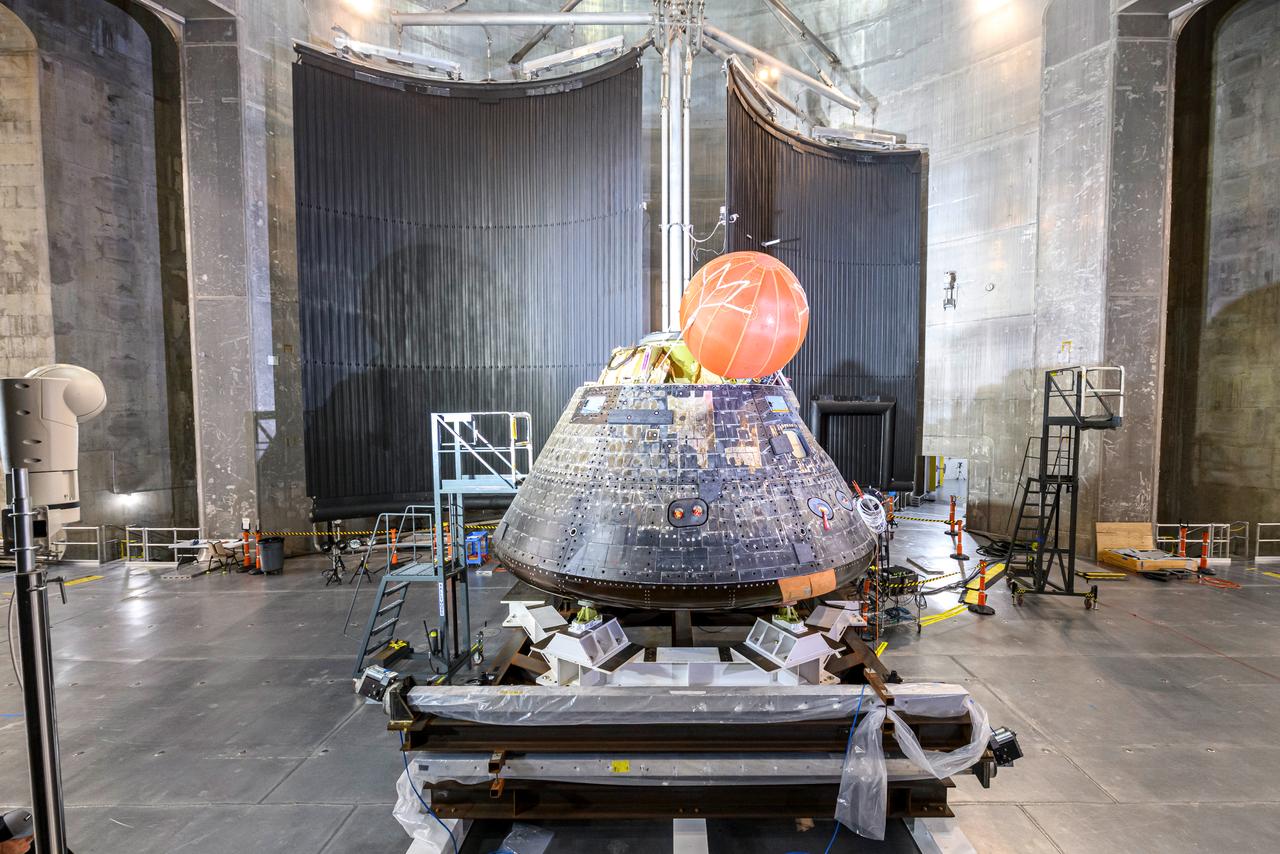
The Orion Crew Module, also known as the Orion Environmental Test Article (ETA), returned to NASA’s Neil Armstrong Test Facility in Sandusky, Ohio, in January 2024 and completed an 11-month test campaign necessary for the safety and success of Artemis II. In November 2024, experts completed the Crew Module Uprighting System Test, which is the system of five airbags on top of the capsule that inflate upon splashdown. Photo Credit: (NASA/Jordan Salkin and Quentin Schwinn)
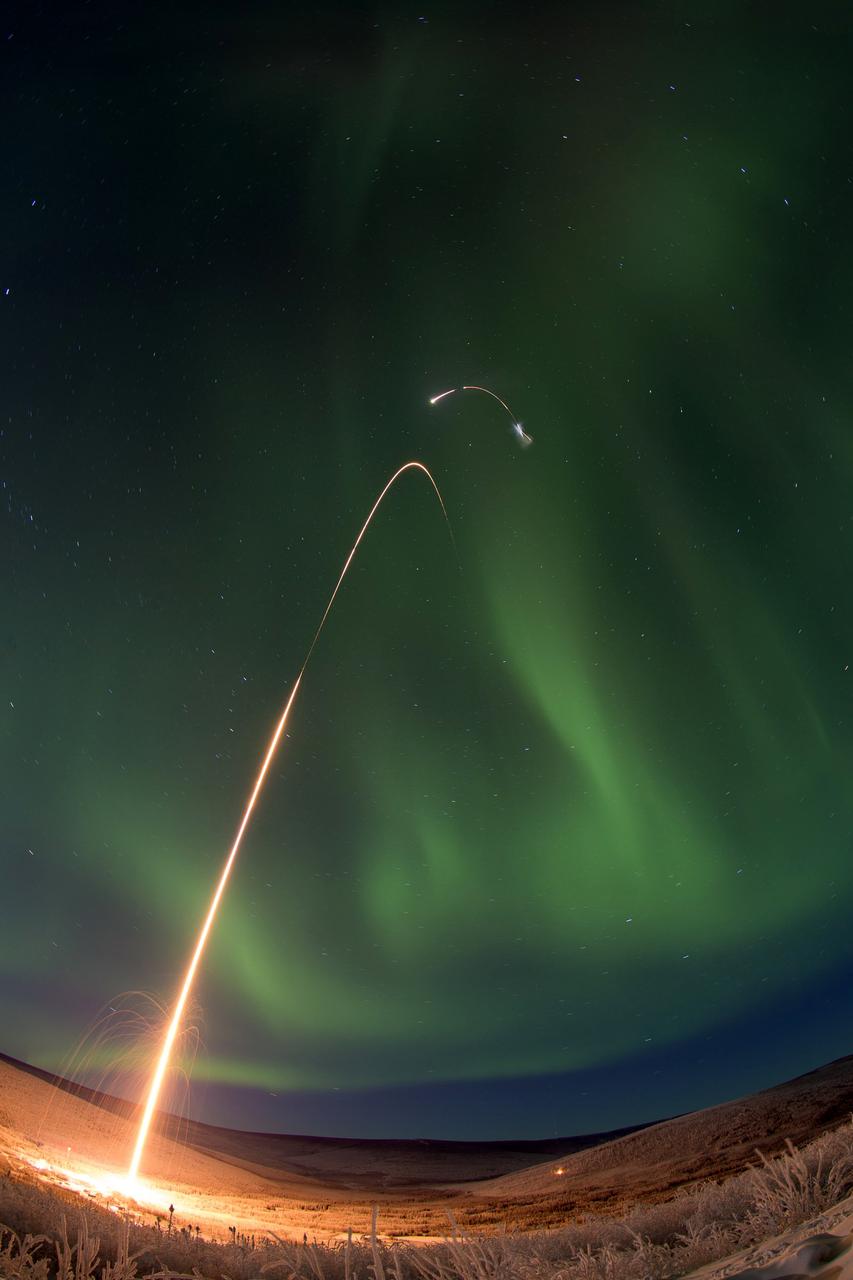
Caption: Time lapse photo of the NASA Oriole IV sounding rocket with Aural Spatial Structures Probe as an aurora dances over Alaska. All four stages of the rocket are visible in this image. Credit: NASA/Jamie Adkins More info: On count day number 15, the Aural Spatial Structures Probe, or ASSP, was successfully launched on a NASA Oriole IV sounding rocket at 5:41 a.m. EST on Jan. 28, 2015, from the Poker Flat Research Range in Alaska. Preliminary data show that all aspects of the payload worked as designed and the principal investigator Charles Swenson at Utah State University described the mission as a “raging success.” “This is likely the most complicated mission the sounding rocket program has ever undertaken and it was not easy by any stretch," said John Hickman, operations manager of the NASA sounding rocket program office at the Wallops Flight Facility, Virginia. "It was technically challenging every step of the way.” “The payload deployed all six sub-payloads in formation as planned and all appeared to function as planned. Quite an amazing feat to maneuver and align the main payload, maintain the proper attitude while deploying all six 7.3-pound sub payloads at about 40 meters per second," said Hickman. Read more: <a href="http://www.nasa.gov/content/assp-sounding-rocket-launches-successfully-from-alaska/#.VMkOnEhpEhJ" rel="nofollow">www.nasa.gov/content/assp-sounding-rocket-launches-succes...</a> <b><a href="http://www.nasa.gov/audience/formedia/features/MP_Photo_Guidelines.html" rel="nofollow">NASA image use policy.</a></b> <b><a href="http://www.nasa.gov/centers/goddard/home/index.html" rel="nofollow">NASA Goddard Space Flight Center</a></b> enables NASA’s mission through four scientific endeavors: Earth Science, Heliophysics, Solar System Exploration, and Astrophysics. Goddard plays a leading role in NASA’s accomplishments by contributing compelling scientific knowledge to advance the Agency’s mission. <b>Follow us on <a href="http://twitter.com/NASAGoddardPix" rel="nofollow">Twitter</a></b> <b>Like us on <a href="http://www.facebook.com/pages/Greenbelt-MD/NASA-Goddard/395013845897?ref=tsd" rel="nofollow">Facebook</a></b> <b>Find us on <a href="http://instagram.com/nasagoddard?vm=grid" rel="nofollow">Instagram</a></b>
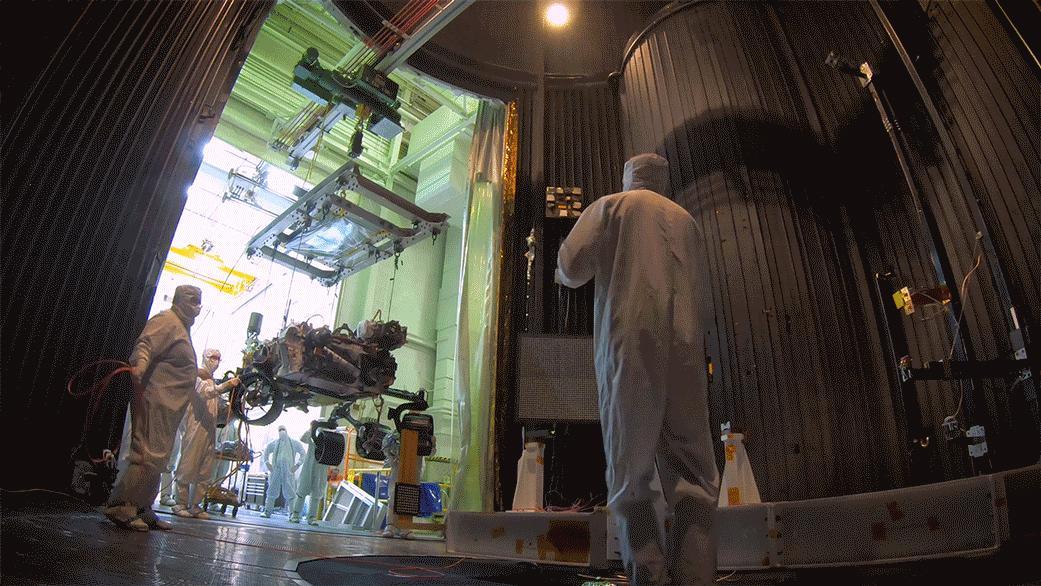
This image, taken on Oct. 9, 2019, at NASA's Jet Propulsion Laboratory in Pasadena, California, captures the move of the Mars 2020 rover into a large vacuum chamber for testing in Mars-like environmental conditions. Movie available at https://photojournal.jpl.nasa.gov/catalog/PIA23470
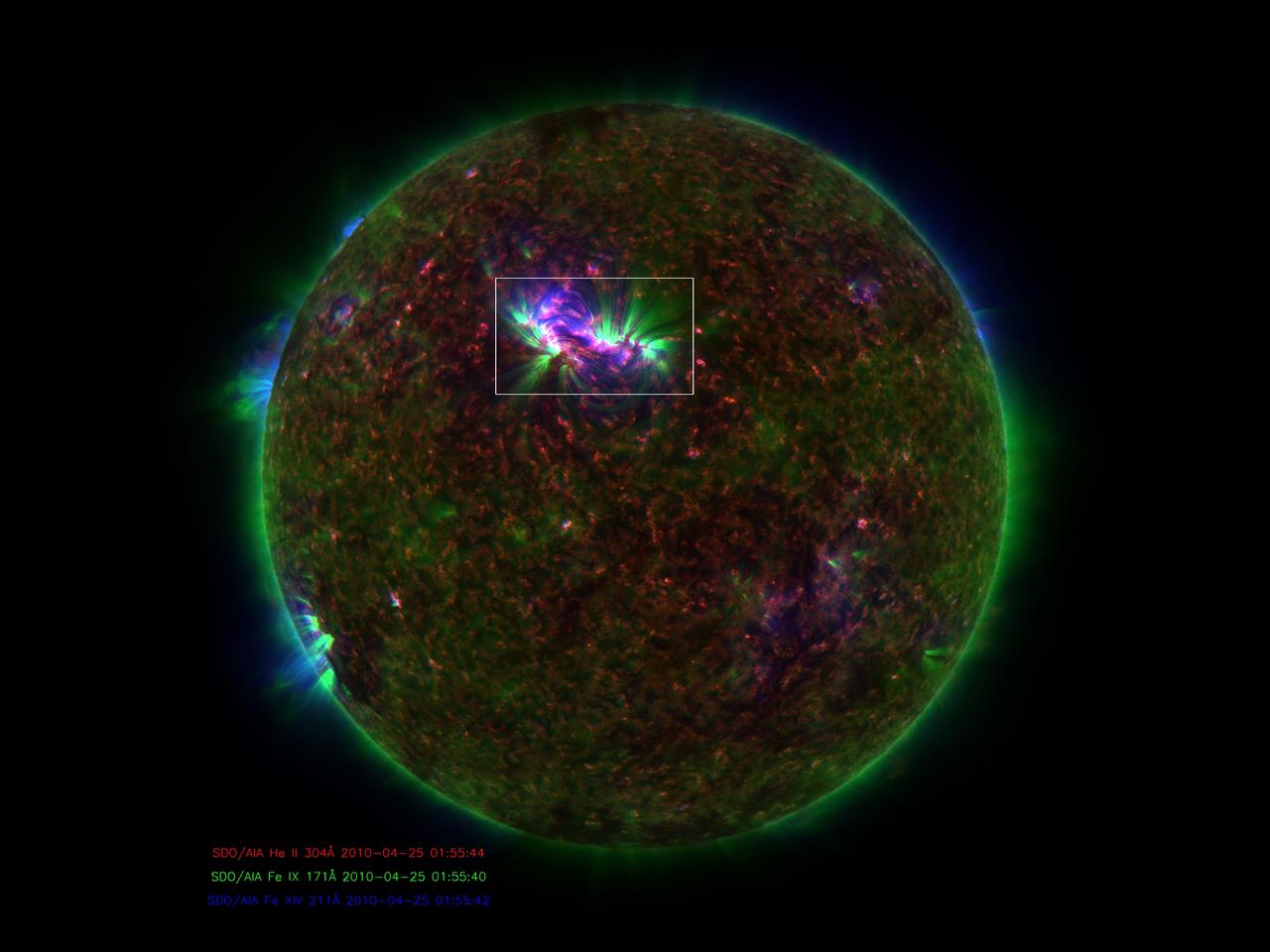
NASA image release January 6, 2010 Caption: Spicules on the sun, as observed by the Solar Dynamics Observatory. These bursts of gas jet off the surface of the sun at 150,000 miles per hour and contain gas that reaches temperatures over a million degrees. GREENBELT, Md. -- Observations from NASA's Solar Dynamics Observatory (SDO) and the Japanese satellite Hinode show that some gas in the giant, fountain-like jets in the sun's atmosphere known as spicules can reach temperatures of millions of degrees. The finding offers a possible new framework for how the sun's high atmosphere gets so much hotter than the surface of the sun. What makes the high atmosphere, or corona, so hot – over a million degrees, compared to the sun surface's 10,000 degrees Fahrenheit -- remains a poorly understood aspect of the sun's complicated space weather system. That weather system can reach Earth, causing auroral lights and, if strong enough, disrupting Earth's communications and power systems. Understanding such phenomena, therefore, is an important step towards better protecting our satellites and power grids. "The traditional view is that all the heating happens higher up in the corona," says Dean Pesnell, who is SDO's project scientist at NASA's Goddard Space Flight Center in Greenbelt, Md. "The suggestion in this paper is that cool gas is being ejected from the sun's surface in spicules and getting heated on its way to the corona." Spicules were first named in the 1940s, but were hard to study in detail until recently, says Bart De Pontieu of Lockheed Martin's Solar and Astrophysics Laboratory, Palo Alto, Calif. who is the lead author on a paper on this subject in the January 7, 2011 issue of Science magazine. In visible light, spicules can be seen to send large masses of so-called plasma – the electromagnetic gas that surrounds the sun – up through the lower solar atmosphere or photosphere. The amount of material sent up is stunning, some 100 times as much as streams away from the sun in the solar wind towards the edges of the solar system. But nobody knew if they contained hot gas. "Heating of spicules to the necessary hot temperatures has never been observed, so their role in coronal heating had been dismissed as unlikely," says De Pontieu. Now, De Pontieu's team -- which included researchers at Lockheed Martin, the High Altitude Observatory of the National Center for Atmospheric Research (NCAR) in Colorado and the University of Oslo, Norway -- was able to combine images from SDO and Hinode to produce a more complete picture of the gas inside these gigantic fountains. The scientists found that a large fraction of the gas is heated to a hundred thousand degrees, while a small fraction is heated to millions of degrees. Time-lapsed images show that this material spews up into the corona, with most falling back down towards the surface of the sun. However, the small fraction of the gas that is heated to millions of degrees does not immediately return to the surface. Given the large number of spicules on the Sun, and the amount of material in the spicules, the scientists believe that if even some of that super hot plasma stays aloft it would make a contribution to coronal heating. Astrophysicist Jonathan Cirtain, who is the U.S. project scientist for Hinode at NASA's Marshall Space Flight Center, Huntsville, Ala., says that incorporating such new information helps address an important question that reaches far beyond the sun. "This breakthrough in our understanding of the mechanisms which transfer energy from the solar photosphere to the corona addresses one of the most compelling questions in stellar astrophysics: How is the atmosphere of a star heated?" he says. "This is a fantastic discovery, and demonstrates the muscle of the NASA Heliophysics System Observatory, comprised of numerous instruments on multiple observatories." Hinode is the second mission in NASA's Solar Terrestrial Probes program, the goal of which is to improve understanding of fundamental solar and space physics processes. The mission is led by the Japan Aerospace Exploration Agency (JAXA) and the National Astronomical Observatory of Japan (NAOJ). The collaborative mission includes the U.S., the United Kingdom, Norway and Europe. NASA Marshall manages Hinode U.S. science operations and oversaw development of the scientific instrumentation provided for the mission by NASA, academia and industry. The Lockheed Martin Advanced Technology Center is the lead U.S. investigator for the Solar Optical Telescope on Hinode. SDO is the first mission in a NASA science program called Living With a Star, the goal of which is to develop the scientific understanding necessary to address those aspects of the sun-Earth system that directly affect our lives and society. NASA Goddard built, operates, and manages the SDO spacecraft for NASA's Science Mission Directorate in Washington. To learn more go to: <a href="http://www.nasa.gov/mission_pages/sdo/news/news20110106-spicules.html" rel="nofollow">www.nasa.gov/mission_pages/sdo/news/news20110106-spicules...</a> Credit: NASA Goddard/SDO/AIA <b><a href="http://www.nasa.gov/centers/goddard/home/index.html" rel="nofollow">NASA Goddard Space Flight Center</a></b> enables NASA’s mission through four scientific endeavors: Earth Science, Heliophysics, Solar System Exploration, and Astrophysics. Goddard plays a leading role in NASA’s accomplishments by contributing compelling scientific knowledge to advance the Agency’s mission. <b>Follow us on <a href="http://twitter.com/NASA_GoddardPix" rel="nofollow">Twitter</a></b> <b>Join us on <a href="http://www.facebook.com/pages/Greenbelt-MD/NASA-Goddard/395013845897?ref=tsd" rel="nofollow">Facebook</a></b>