
NASA's Voyager 2 spacecraft launched atop its Titan/Centaur-7 launch vehicle from Cape Canaveral Air Force Station in Florida on August 20, 1977, at 10:29 a.m. local time. https://photojournal.jpl.nasa.gov/catalog/PIA21744
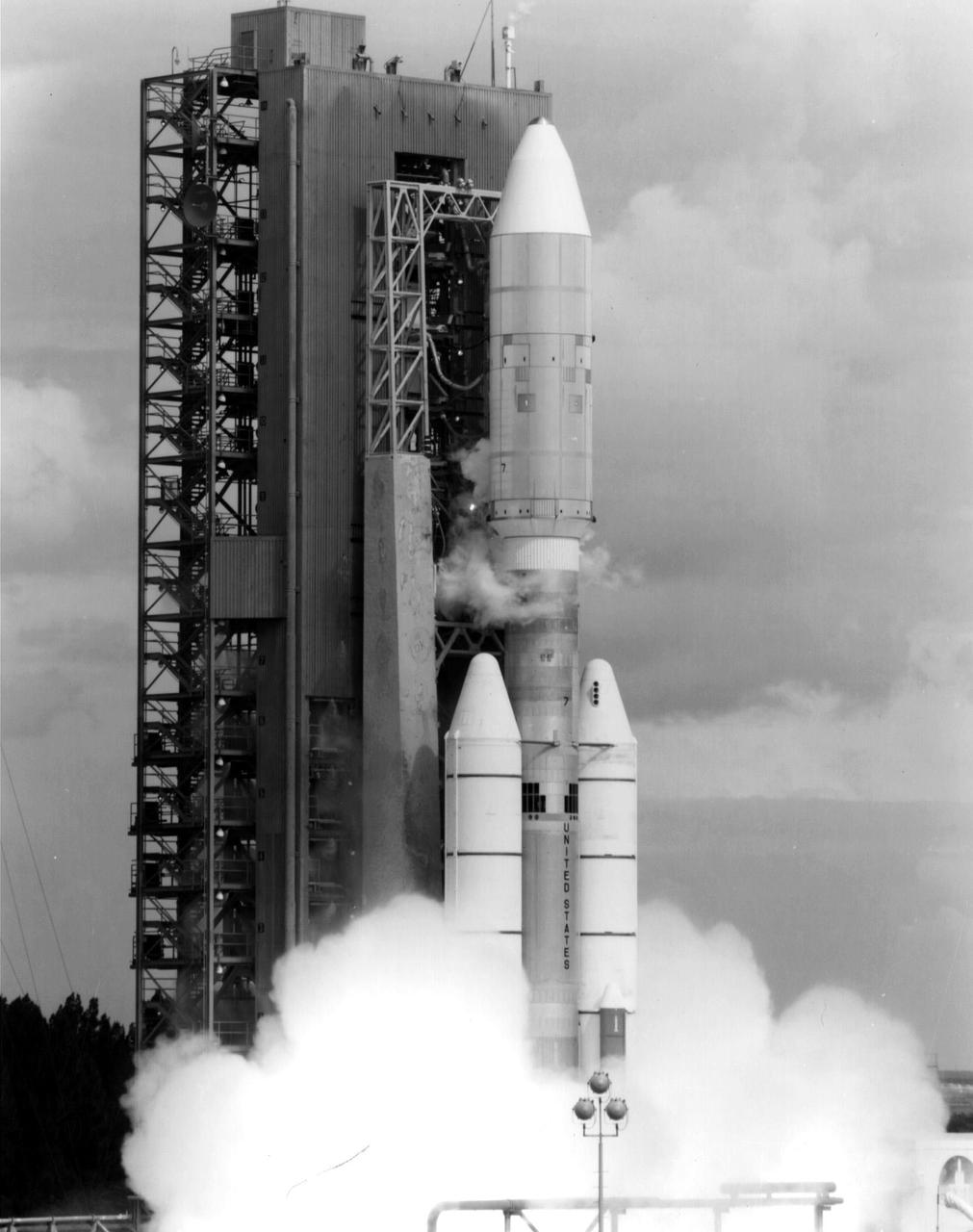
NASA's Voyager 2 spacecraft launched atop its Titan/Centaur-7 launch vehicle from Cape Canaveral Air Force Station in Florida on August 20, 1977, at 10:29 a.m. local time. https://photojournal.jpl.nasa.gov/catalog/PIA21745
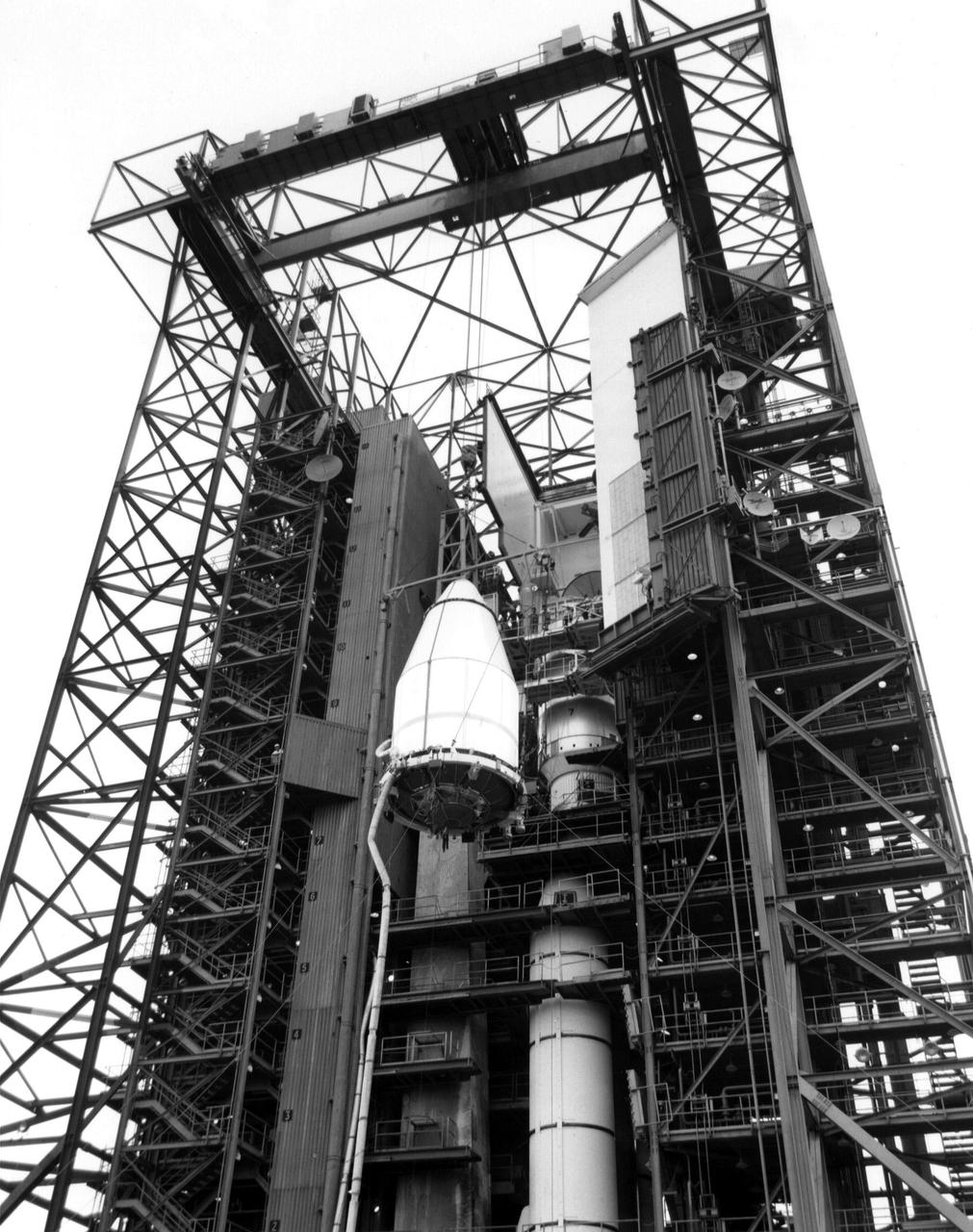
NASA's Voyager 2 spacecraft, encapsulated within its payload fairing, is seen on August 5, 1977. It launched atop the Titan/Centaur-7 launch vehicle from Cape Canaveral Air Force Station in Florida on August 20, 1977, at 10:29 a.m. local time. https://photojournal.jpl.nasa.gov/catalog/PIA21742
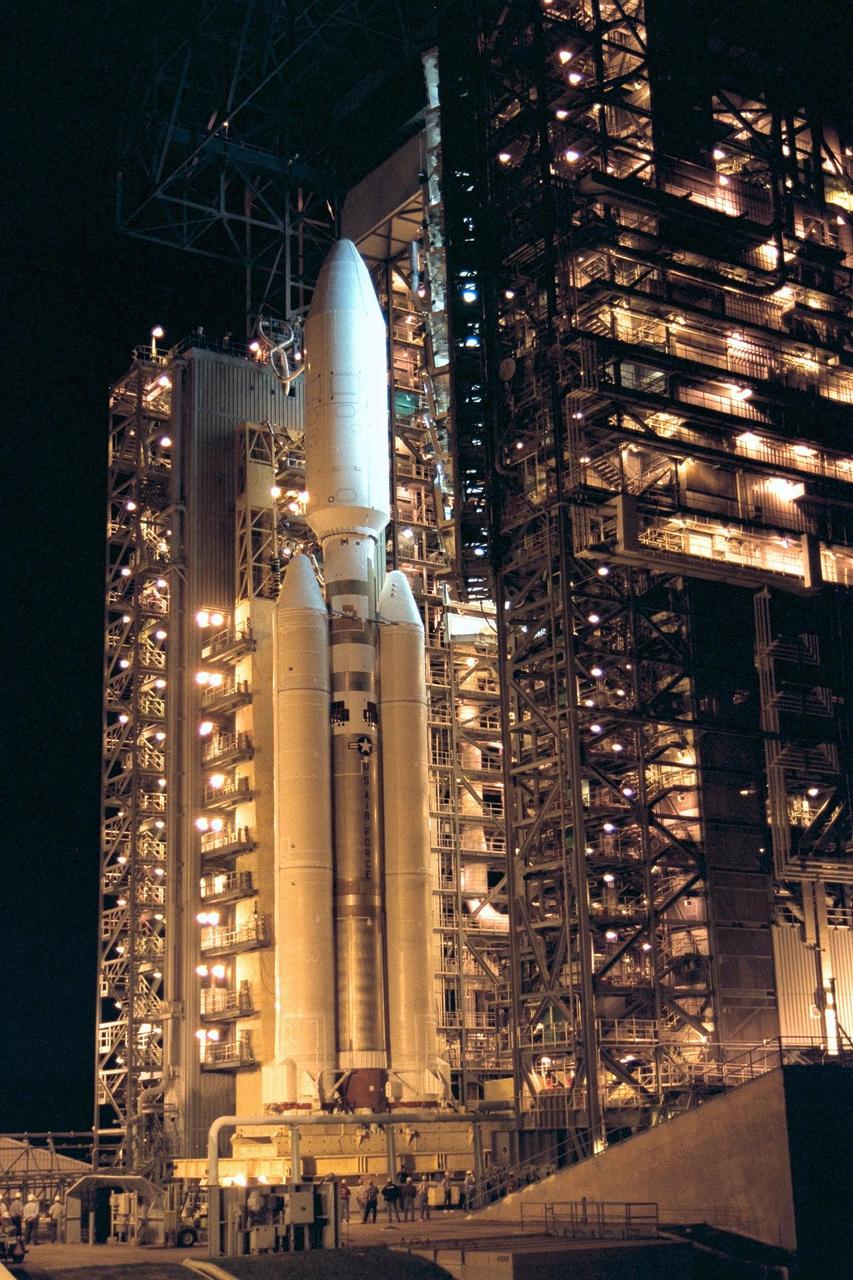
At Launch Complex 40 on Cape Canaveral Air Station, the Mobile Service Tower is rolled away from the Titan IVB/Centaur carrying the Cassini spacecraft, marking a major milestone in the launch countdown sequence. Retraction of the structure began about an hour later than scheduled due to minor problems with ground support equipment. The countdown clock for the Cassini mission began ticking earlier today at the T-26-hour mark. Other upcoming prelaunch milestones include activation of the final launch sequence for the Cassini spacecraft at the T-180-minute mark in the countdown, to be followed about an hour later by initiation of loading of the Titan IVB's Centaur stage with its complement of liquid hydrogen and liquid oxygen. Liftoff of Cassini on the journey to Saturn and its moon Titan is slated to occur during a window opening at 4:55 a.m. EDT, Oct. 13, and extending through 7:15 a.m
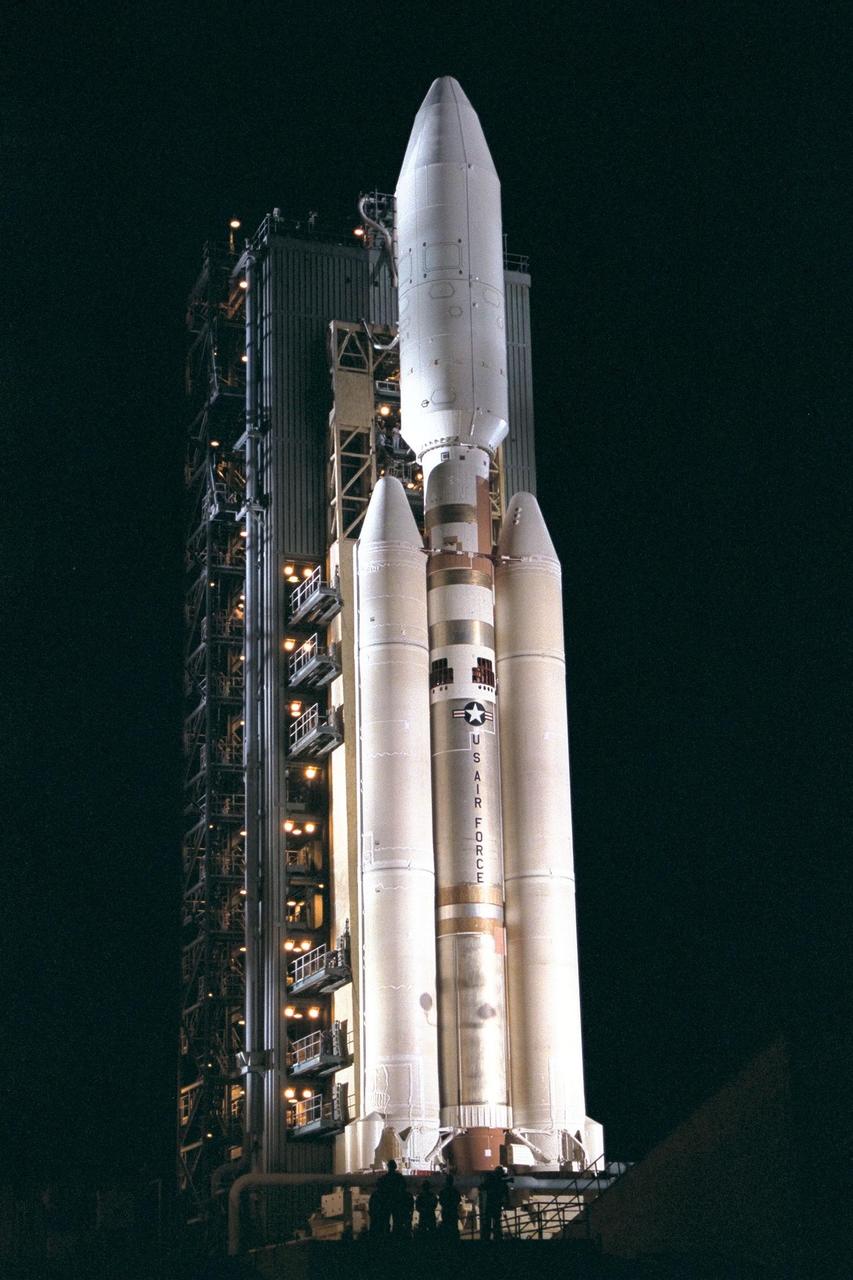
At Launch Complex 40 on Cape Canaveral Air Station, the Mobile Service Tower has been retracted away from the Titan IVB/Centaur carrying the Cassini spacecraft, marking a major milestone in the launch countdown sequence. Retraction of the structure began about an hour later than scheduled due to minor problems with ground support equipment. The launch vehicle, Cassini spacecraft and attached Centaur stage encased in a payload fairing, altogether stand about 183 feet tall; mounted at the base of the launch vehicle are two upgraded solid rocket motors. Liftoff of Cassini on the journey to Saturn and its moon Titan is slated to occur during a window opening at 4:55 a.m. EDT, Oct. 13, and extending through 7:15 a.m
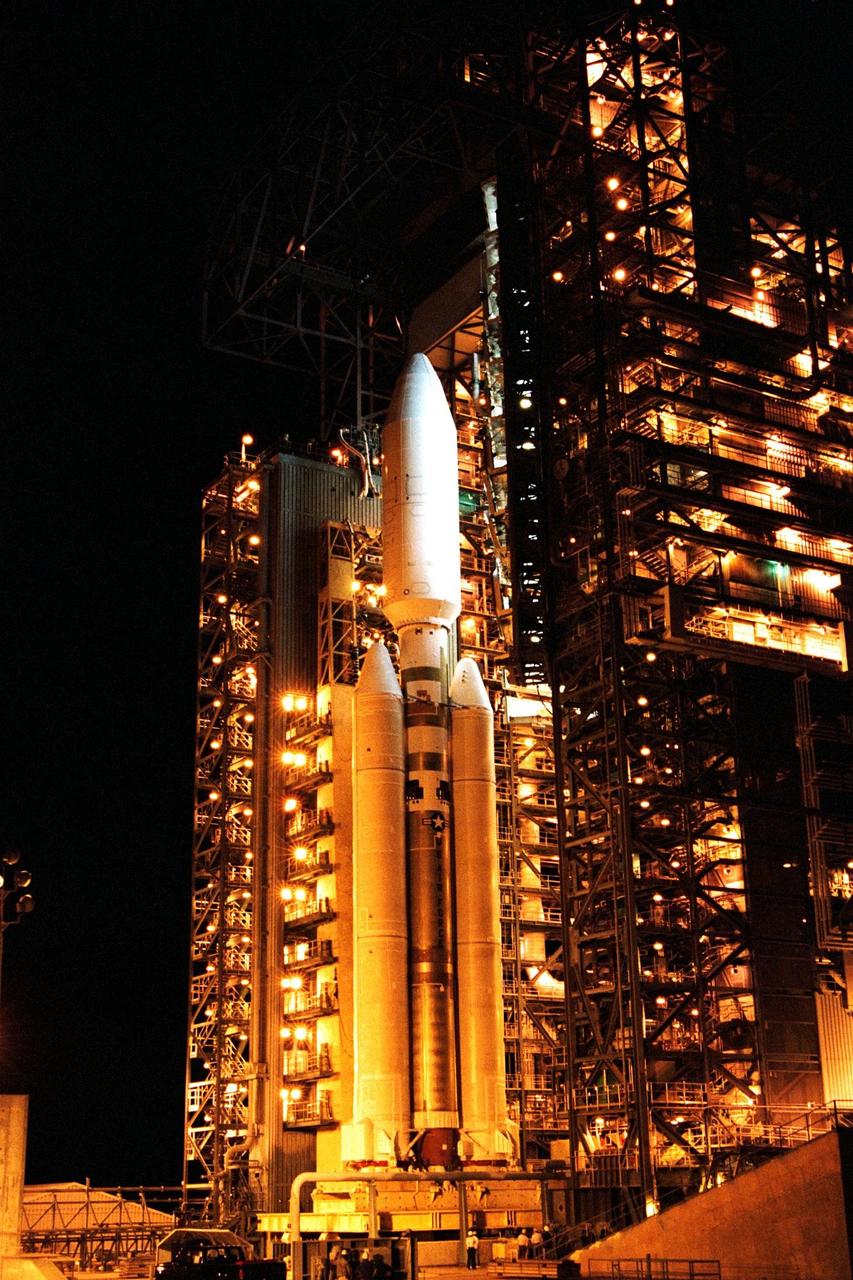
At Launch Complex 40 on Cape Canaveral Air Station, the Mobile Service Tower is being rolled away from the Titan IVB/Centaur launch vehicle carrying the Cassini spacecraft, completing a major countdown milestone. This is the second launch attempt for the Saturn-bound mission; a first try Oct. 13 was scrubbed primarily due to concerns about upper level wind conditions. Liftoff Oct. 15 is set to occur during a launch window opening at 4:43 a.m. EDT and extending until 7:03 a.m
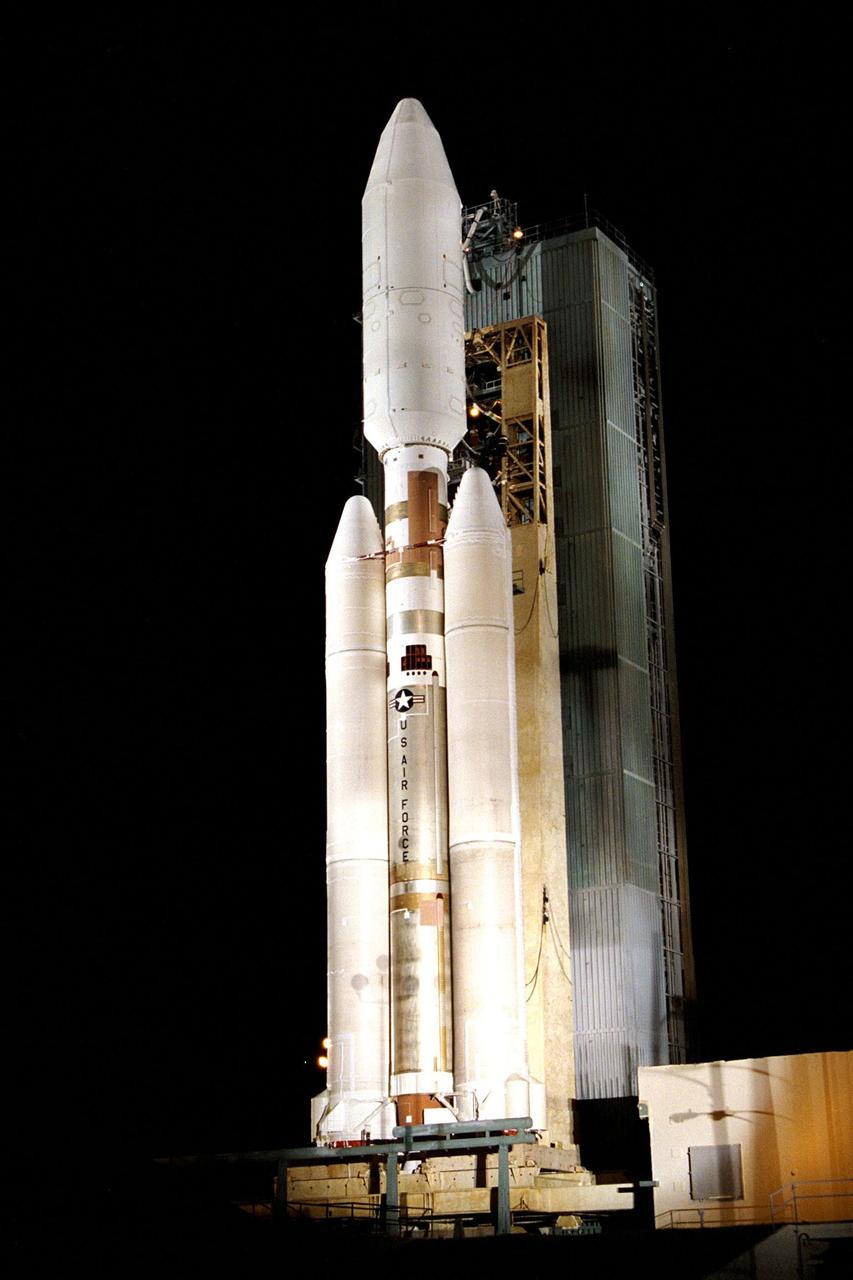
At Launch Complex 40 on Cape Canaveral Air Station, the Mobile Service Tower has been retracted away from the Titan IVB/Centaur carrying the Cassini spacecraft and its attached Huygens probe. This is the second launch attempt for the Saturn-bound mission; a first try Oct. 13 was scrubbed primarily due to concerns about upper level wind conditions. Liftoff Oct. 15 is set to occur during a launch window opening at 4:43 a.m. EDT and extending until 7:03 a.m. Clearly visible in this view are the 66-foot-tall, 17-foot-wide payload fairing atop the vehicle, in which Cassini and the attached Centaur stage are encased, the two-stage liquid propellant core vehicle, and the twin 112-foot long solid rocket motor upgrades (SRMUs) straddling the core vehicle. It is the SRMUs which ignite first to begin the launch sequence
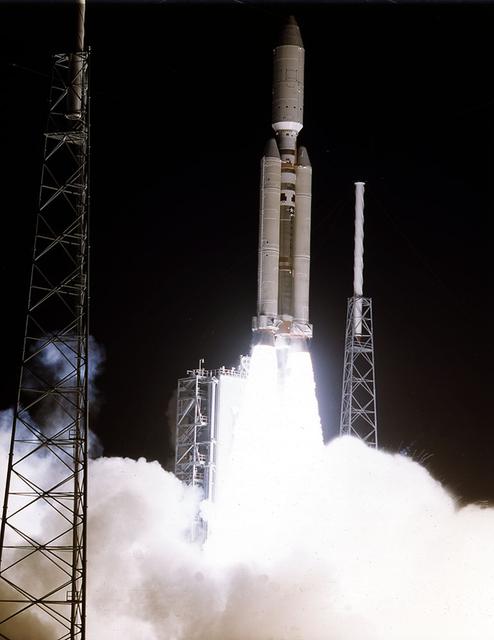
The 7-year journey to Saturn began with the liftoff of a Titan IVB/Centaur carrying the Cassini orbiter and its attached Huygens probe. After a 2.2-billion mile journey that included two swingbys of Venus and one of Earth to gain additional velocity, the two-story tall spacecraft will arrive at Saturn in July 2004. The orbiter will circle the planet for 4 years, its compliment of 12 scientific instruments gathering data about Saturn's atmosphere, rings and magnetosphere, and conducting close-up observations of the Saturnian moons. Huygens, with a separate suite of 6 science instruments, will separate from Cassini to fly on a ballistic trajectory toward Titan, the only celestial body besides Earth to have an atmosphere rich in nitrogen. Scientists are eager to study further this chemical similarity in hopes of learning more about the origins of our own planet Earth. Huygens will provide the first direct sampling of Titan's atmospheric chemistry and the first detailed photographs of its surface. The Cassini mission is an international effort involving NASA, the European Space Agency (ESA), and the Italian Space Agency, Agenzia Spaziale Italiana (ASI).
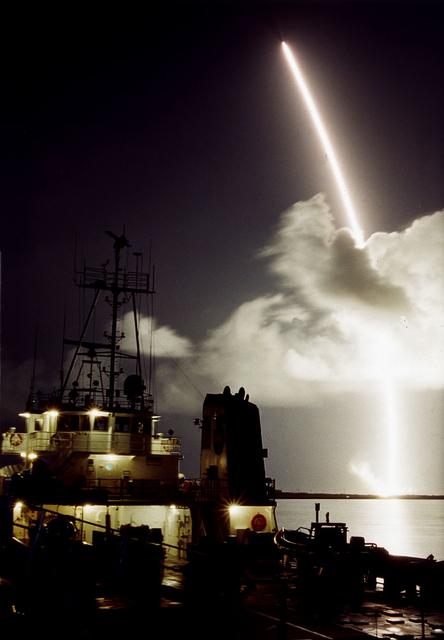
The 7-year journey to Saturn began with the liftoff of a Titan IVB/ Centaur carrying the Cassini orbiter and its attached Huygens probe. After a 2.2-billion mile journey that included two swingbys of Venus and one of the Earth to gain additional velocity, the two-story tall spacecraft will arrive at Saturn in July 2004. The orbiter will circle the planet for 4 years, its compliment of 12 scientific instruments gathering data about Saturn's atmosphere, rings and magnetosphere and conducting close-up observations of Saturnian moons. Huygens, with a separate suite of 6 science instruments, will separate from Cassini to fly on a ballistic trajectory toward Titan, the only celestial body besides Earth to have an atmosphere rich in nitrogen. Scientists are eager to study further this chemical similarity in hopes of learning more about the origins of our own planet Earth. Huygens will provide the first direct sampling of Titan's atmospheric chemistry and the first detailed photographs of its surface. The Cassini mission is an International effort involving NASA, the European Space Agency (ESA), and the Italian Space Agency, Agenzia Spaziale Italiana (ASI).