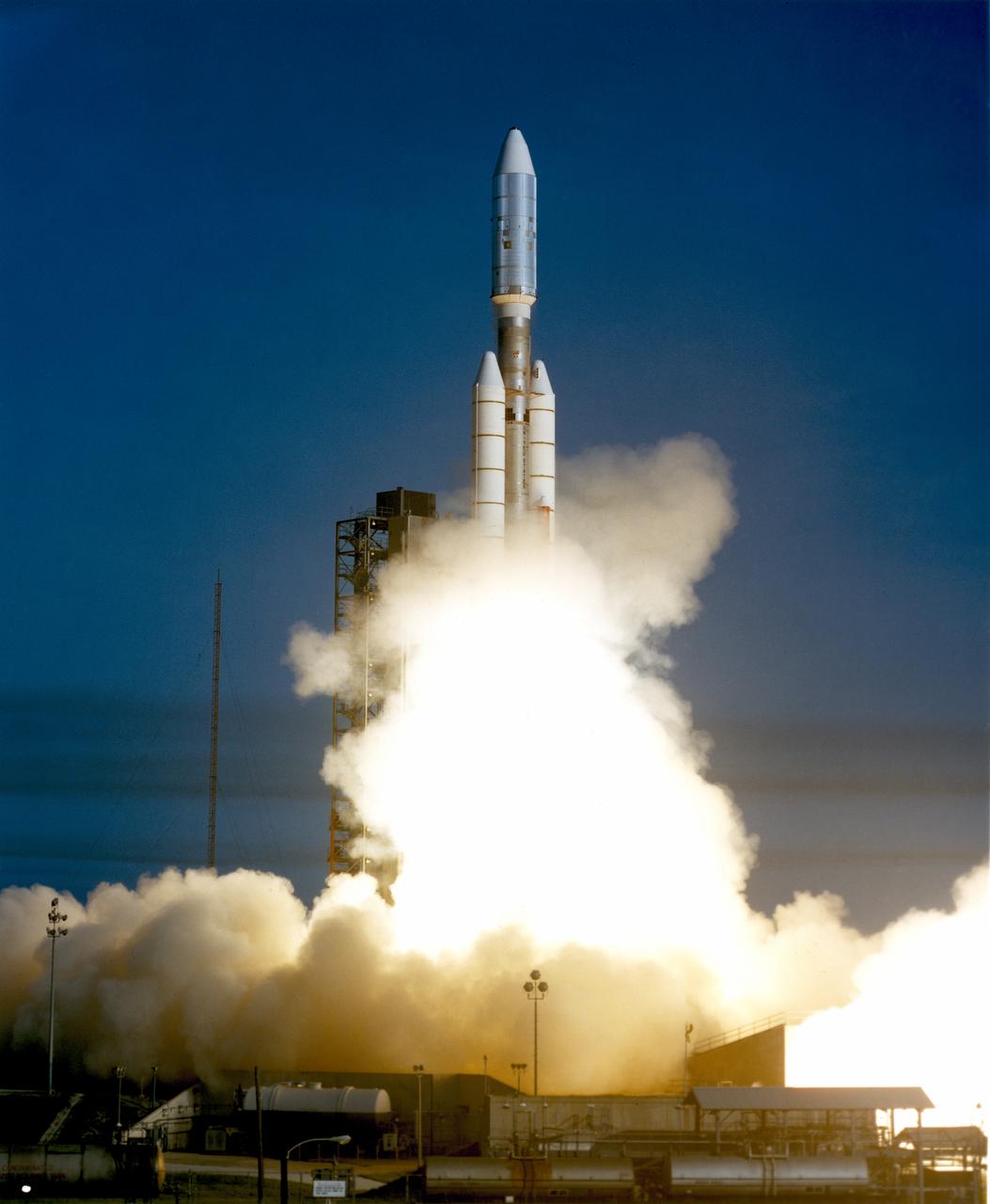
The Voyager 1 aboard the Titan III/Centaur lifted off on September 5, 1977, joining its sister spacecraft, the Voyager 2, on a mission to the outer planets.
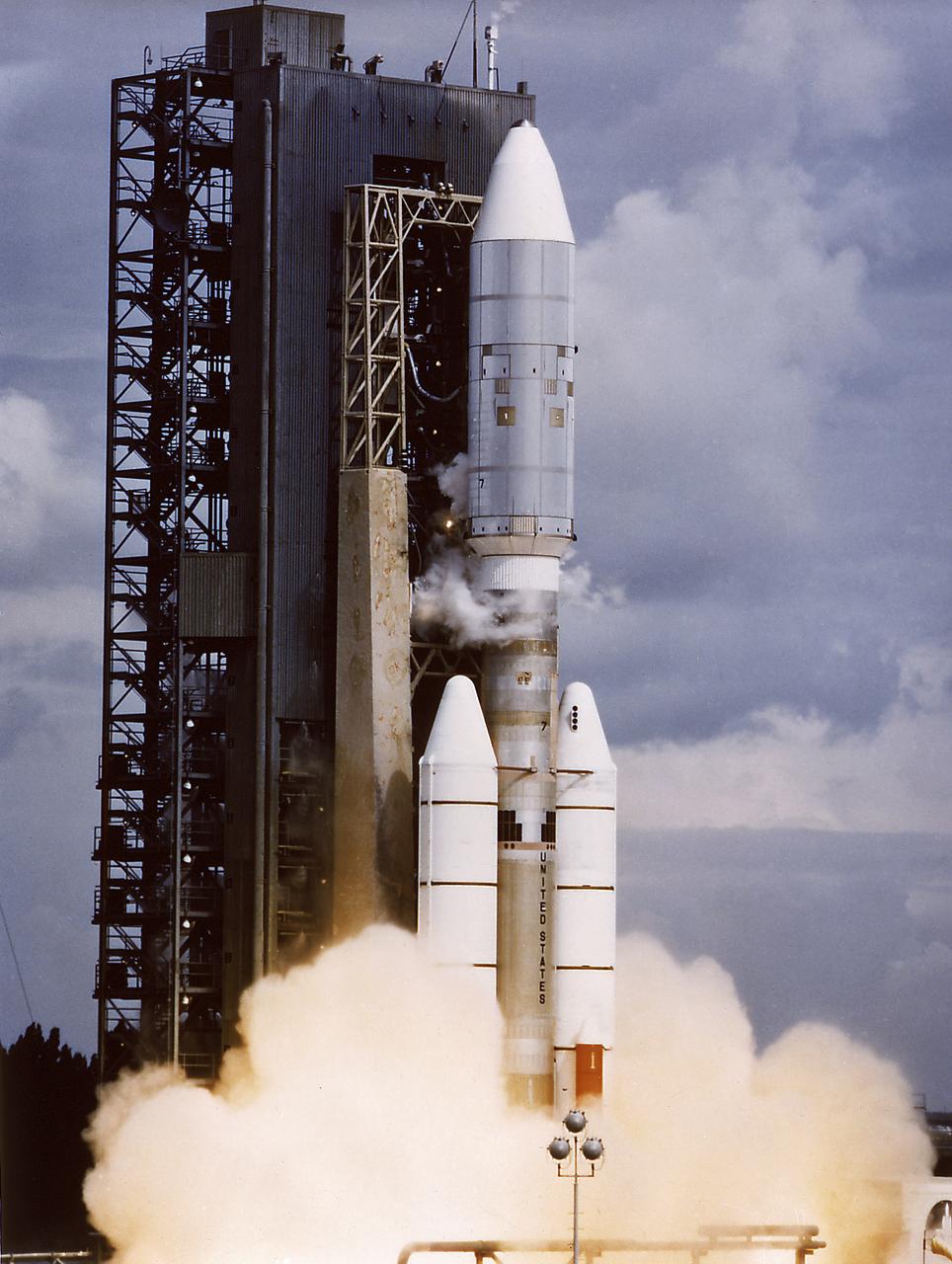
The Voyager 2 aboard Titan III-Centaur launch vehicle lifted off on August 20, 1977. The Voyager 2 was a scientific satellite to study the Jupiter and the Saturn planetary systems including their satellites and Saturn's rings.
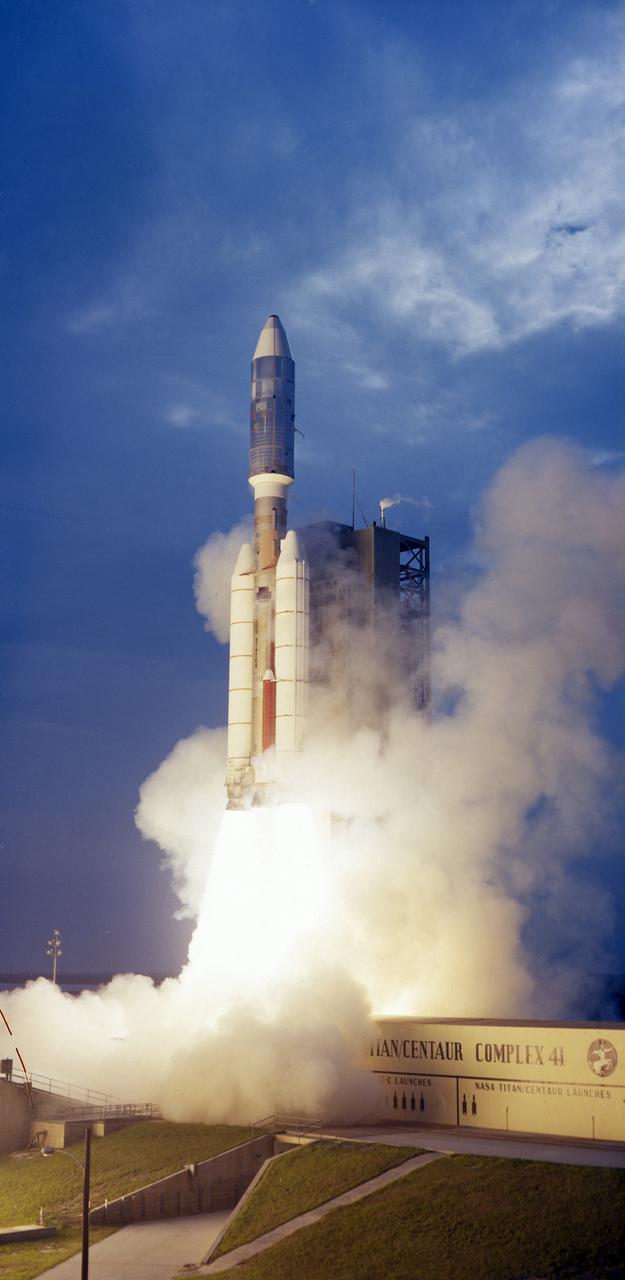
The Titan III-Centaur carrying the Viking 1 Lander lifted off on August 20, 1975. The Viking Lander conducted a detailed scientific investigation of the planet Mars.
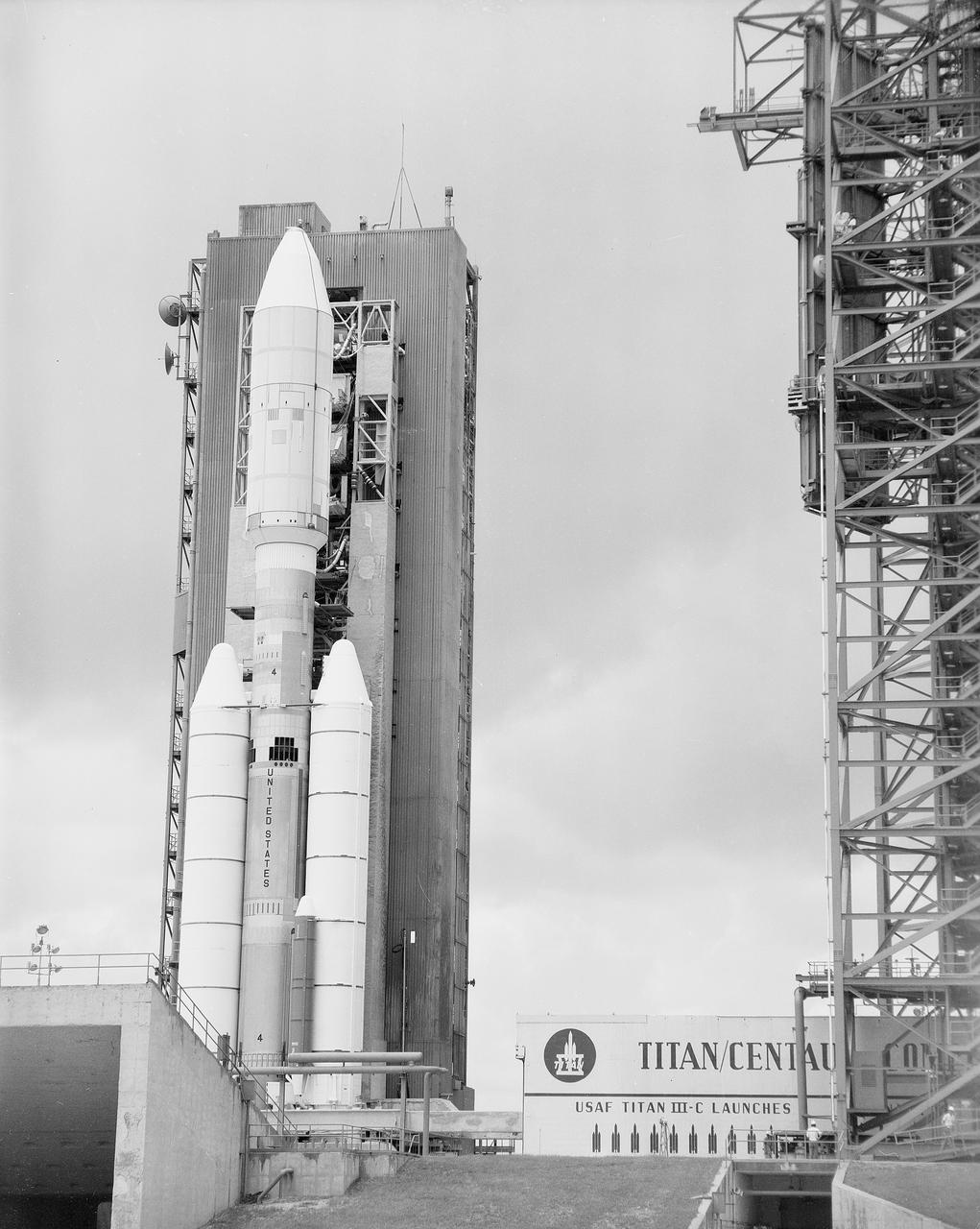
The Titan III/Centaur, Viking 1, is sitting on the launch pad ready for blast off. The launch occurred on August 20, 1975. The mission was for the scientific investigation of Mars, and United States’ first attempt to soft land a spacecraft on another planet.
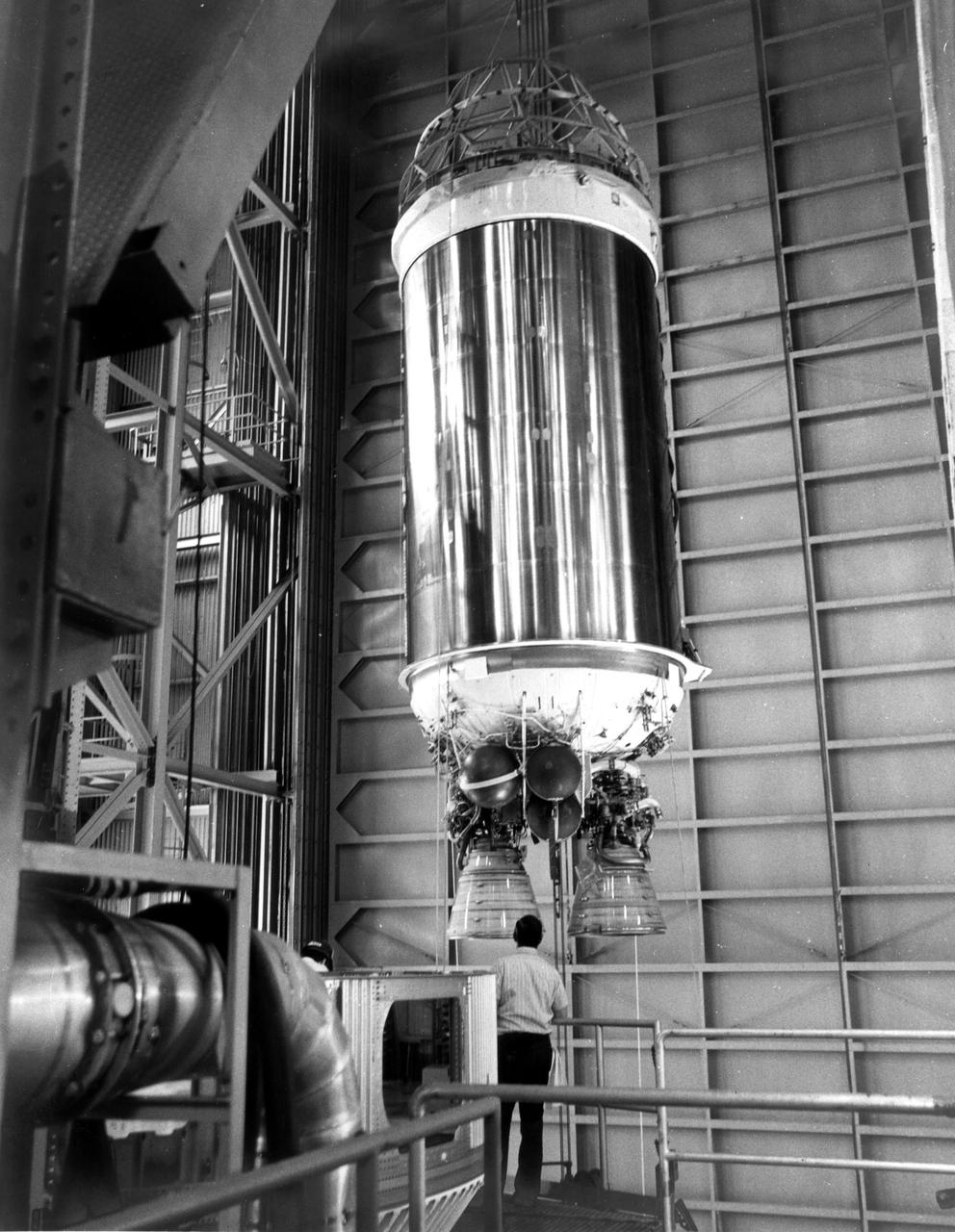
KENNEDY SPACE CENTER, FLA. -- The Centaur high-energy third stage for Titan_Centaur 3 is mated with its Titan rocket in the Vehicle Integration Building in the Titan III complex at Cape Canaveral Air Force Station. Titan_Centaur 3 and Titan_Centaur 4 will launch twin Viking spacecraft to Mars in the late summer of 1975. Launch will be by KSC's Unmanned Launch Operations Directorate from Complex 41.
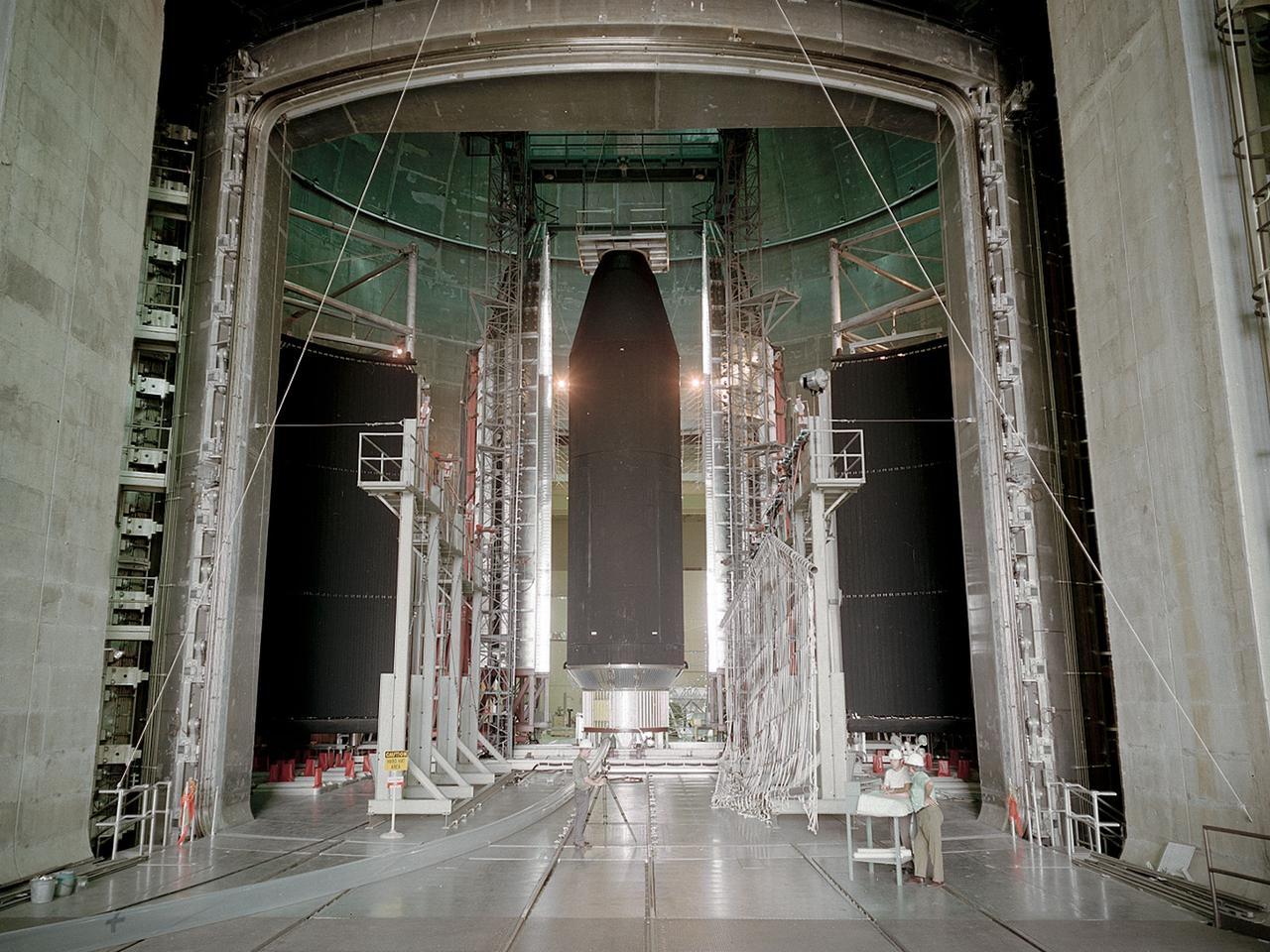
The Centaur Standard Shroud prepared for a jettison test in the Space Power Facility at the National Aeronautics and Space Administration’s (NASA) Plum Brook Station. In the late 1960s NASA engineers were planning the ambitious new Viking mission to send two rover vehicles to the surface of Mars. The Viking rovers were the heaviest payloads ever attempted by the Centaur second-stage rocket. Each Viking was over three times the weight of the Atlas-Centaur’s previous heaviest payload. Consequently, NASA engineers sought to mate the Centaur with the more powerful Titan III booster for the launches. General Dynamics created a new version of the Centaur, D-1T, specifically for Titan. The D-1T’s most significant modification was a completely new shroud designed by Lockheed, called the Centaur Standard Shroud. The conical two-piece covering encapsulated the payload to protect it against adverse conditions and improve the aerodynamics as the launch vehicle passed through the atmosphere. The shroud would be jettisoned when the vehicle reached the edge of space. A string of tests were conducted in Plum Brook’s Nuclear Rocket Dynamics and Control Facility (B-3) during 1973 and 1974. The new shroud performed flawlessly during the actual Viking launches in 1975. Viking 1 and 2 operated on the Martian surface until November 1982 and April 1980, respectively.
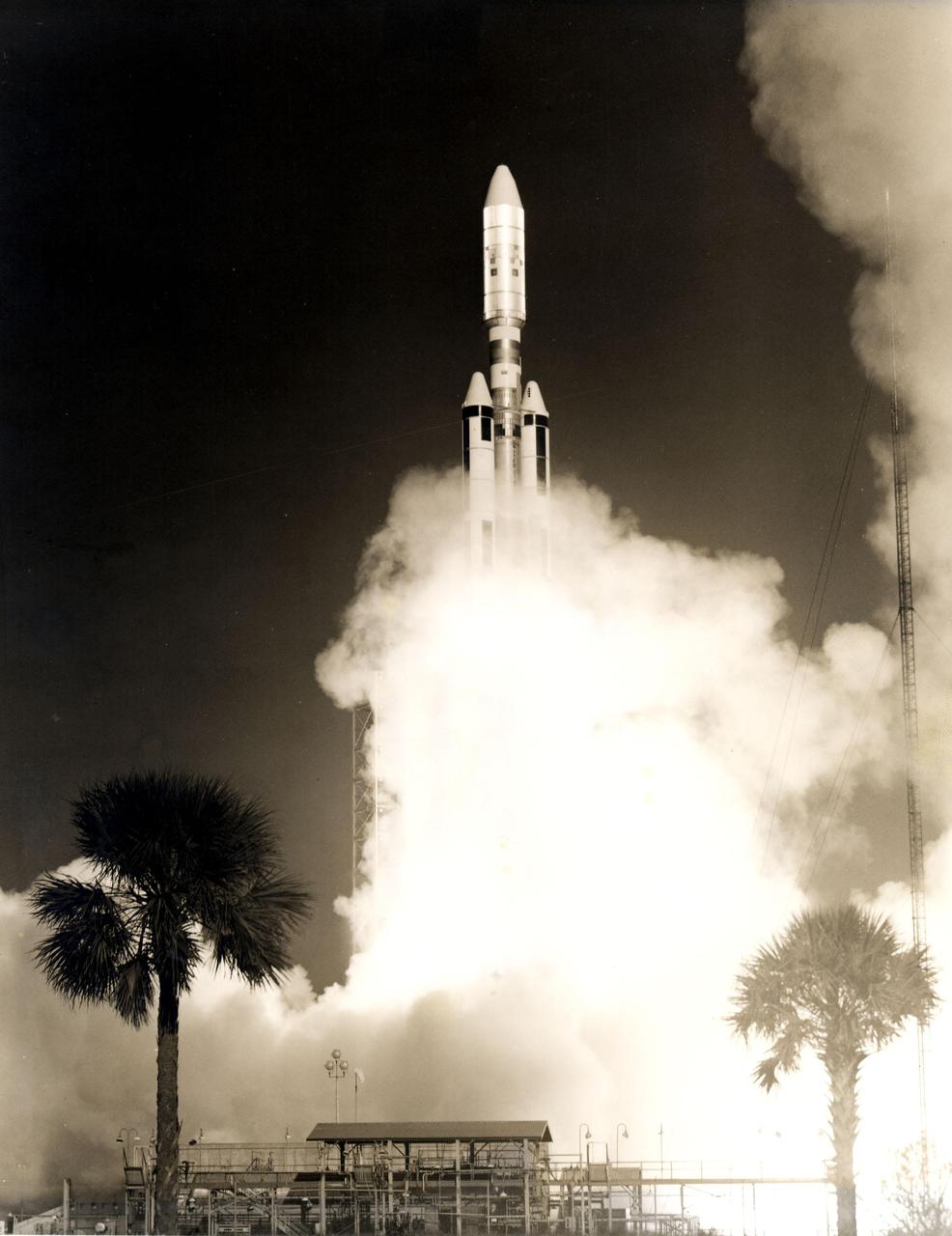
The first Titan_Centaur lifted off from Complex 41 at Cape Kennedy Air Force Station at 9:48 a.m. EDT today. The Titan stages burned as programmed, but when the Centaur stage failed to ignite, it was destroyed by the Range Safety Officer. The new NASA rocket was launched on a proof flight designed to prepare it for twin Viking launches to Mars in 1975 and other missions involving heavy unmanned payloads. The 160-foot-tall rocket combines the Air Force Titan III with the NASA high-energy Centaur final stage. The twin solid rocket boosters have a combined liftoff thrust of 2.4 million pounds. Aboard Titan_Centaur on its proof flight were a dynamic simulator of the Viking spacecraft and a small scientific satellite (SPHYNX) designed to determine how high voltage solar cells, insulators and conductors are affected by the charged particles in space. Launch was conducted by KSC's Unmanned Launch Operations Directorate.
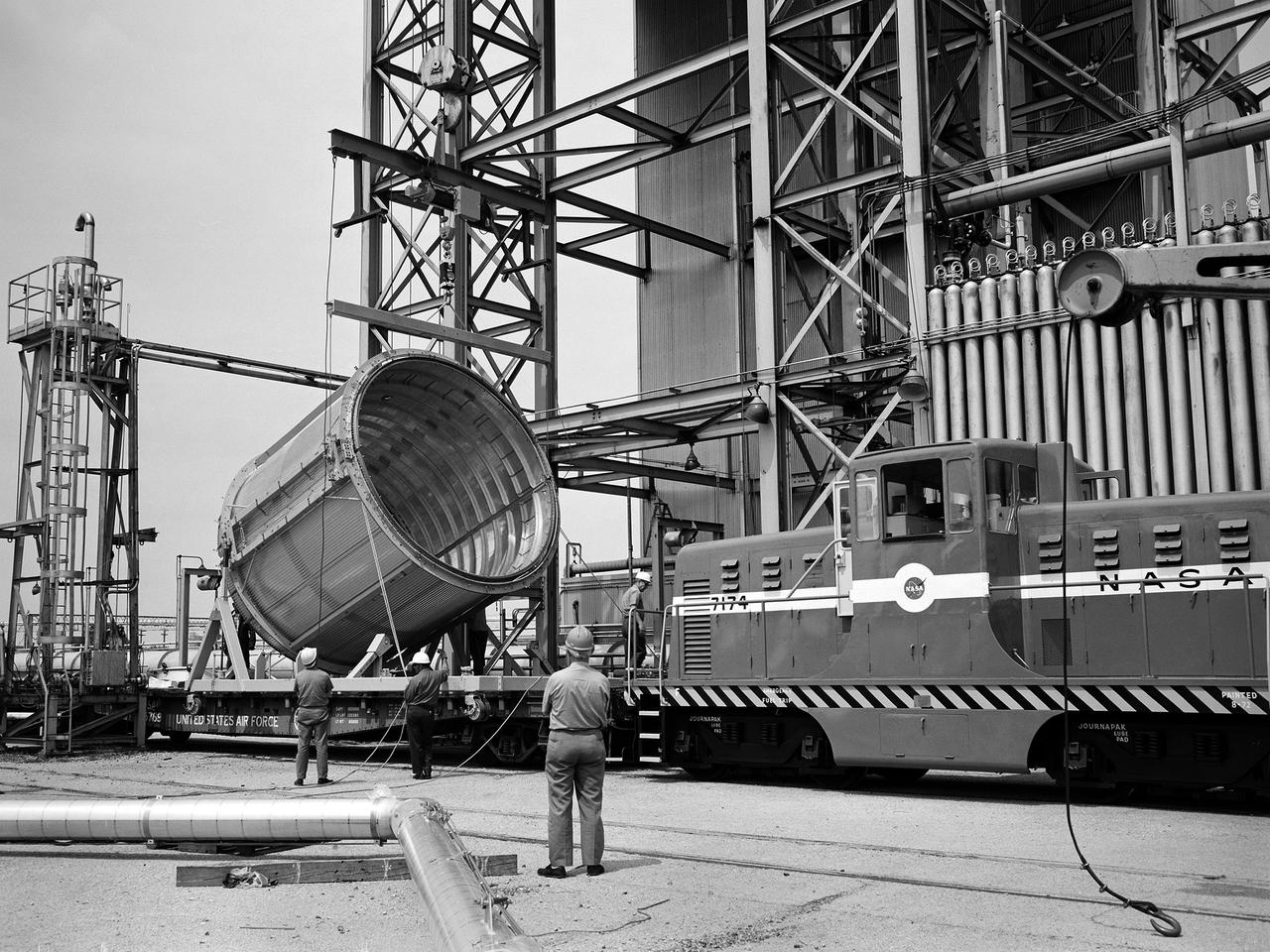
A section of the Centaur Standard Shroud transported to Nuclear Rocket Dynamics and Control Facility, or B-3 Test Stand, at the National Aeronautics and Space Administration’s (NASA) Plum Brook Station. B-3 was built in the early 1960s to test full-scale liquid hydrogen fuel systems in simulated altitude conditions. The facility was used in 1972, however, for testing of the Centaur Standard Shroud’s ejection system. In the late 1960s NASA engineers were planning the ambitious new Viking mission to send two rover vehicles to the surface of Mars. The Viking rovers were the heaviest payloads ever attempted and were over three times the weight of Atlas-Centaur’s previous heaviest payload. Consequently, NASA engineers selected the more powerful the Titan III rocket booster to mate with the Centaur. Concurrently, General Dynamics was in the process of introducing a new Centaur model for Titan—the D-1T. The biggest change for the D-1T was a completely new shroud designed by Lockheed, called the Centaur Standard Shroud. The shroud, its insulation, the Centaur ground-hold purge system, and the hydrogen tank venting system were all studied in B-3. After more than two years of preparations, the tests were run between April and July 1973. The tests determined the ultimate flight loads on two axes, established the Centaur’s load sharing, the level of propellant boiloff during launch holds, and the vent system capacity. The Centaur Standard Shroud performed flawlessly during the August 20 and September 9, 1975 launches of Viking 1 and 2.