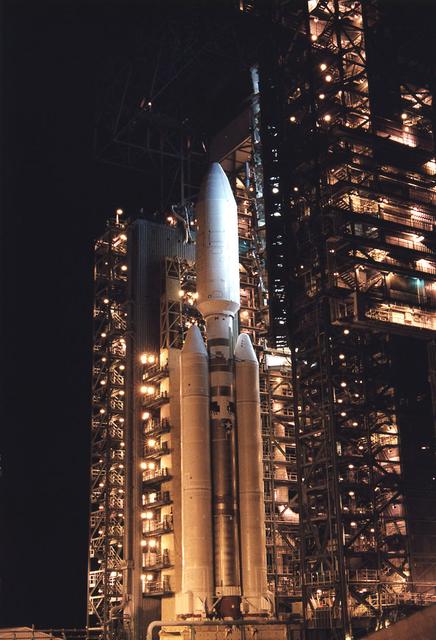
At Launch Complex 40 at Cape Canaveral Air Station, the Mobile Service Tower is being rolled away from the Titan IVB/Centaur launch vehicle carrying the Cassini spacecraft, completing a major countdown milestone. This is the second launch attempt for the Saturn-bound mission. A a first try was scrubbed primarily due to concerns about upper level wind conditions.
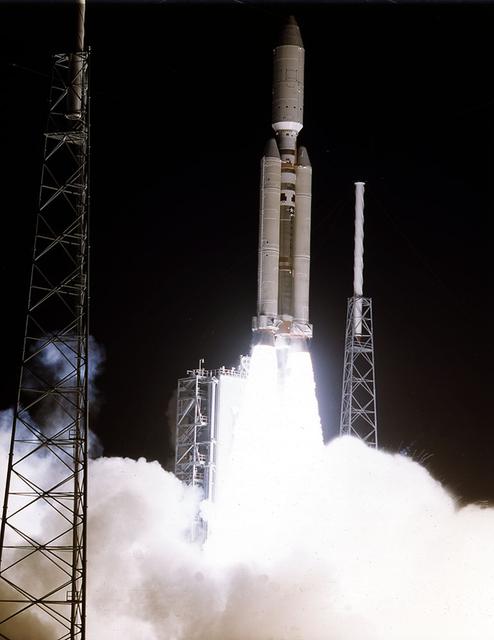
The 7-year journey to Saturn began with the liftoff of a Titan IVB/Centaur carrying the Cassini orbiter and its attached Huygens probe. After a 2.2-billion mile journey that included two swingbys of Venus and one of Earth to gain additional velocity, the two-story tall spacecraft will arrive at Saturn in July 2004. The orbiter will circle the planet for 4 years, its compliment of 12 scientific instruments gathering data about Saturn's atmosphere, rings and magnetosphere, and conducting close-up observations of the Saturnian moons. Huygens, with a separate suite of 6 science instruments, will separate from Cassini to fly on a ballistic trajectory toward Titan, the only celestial body besides Earth to have an atmosphere rich in nitrogen. Scientists are eager to study further this chemical similarity in hopes of learning more about the origins of our own planet Earth. Huygens will provide the first direct sampling of Titan's atmospheric chemistry and the first detailed photographs of its surface. The Cassini mission is an international effort involving NASA, the European Space Agency (ESA), and the Italian Space Agency, Agenzia Spaziale Italiana (ASI).
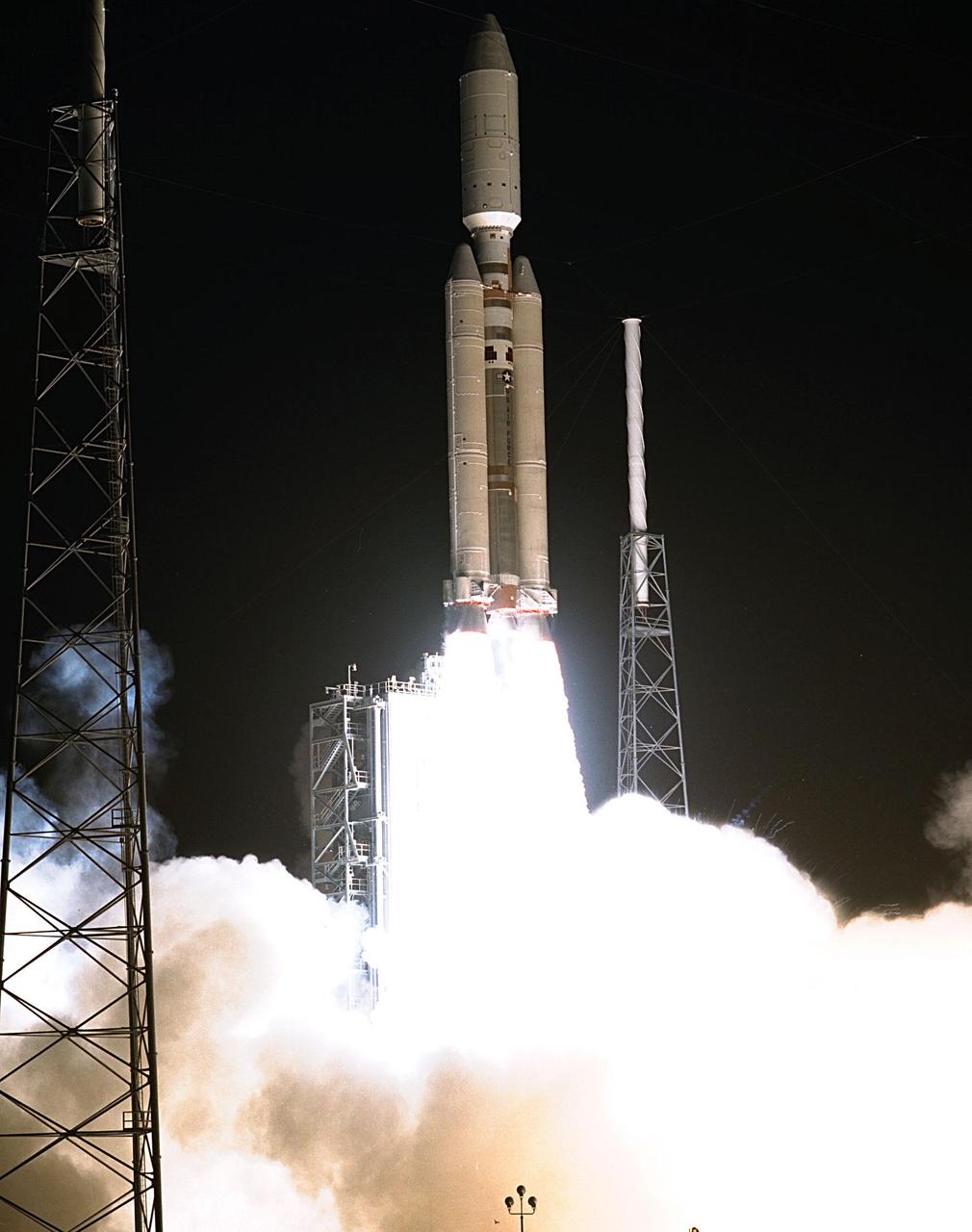
A seven-year journey to the ringed planet Saturn begins with the liftoff of a Titan IVB/Centaur carrying NASA Cassini orbiter and its attached Huygens probe.
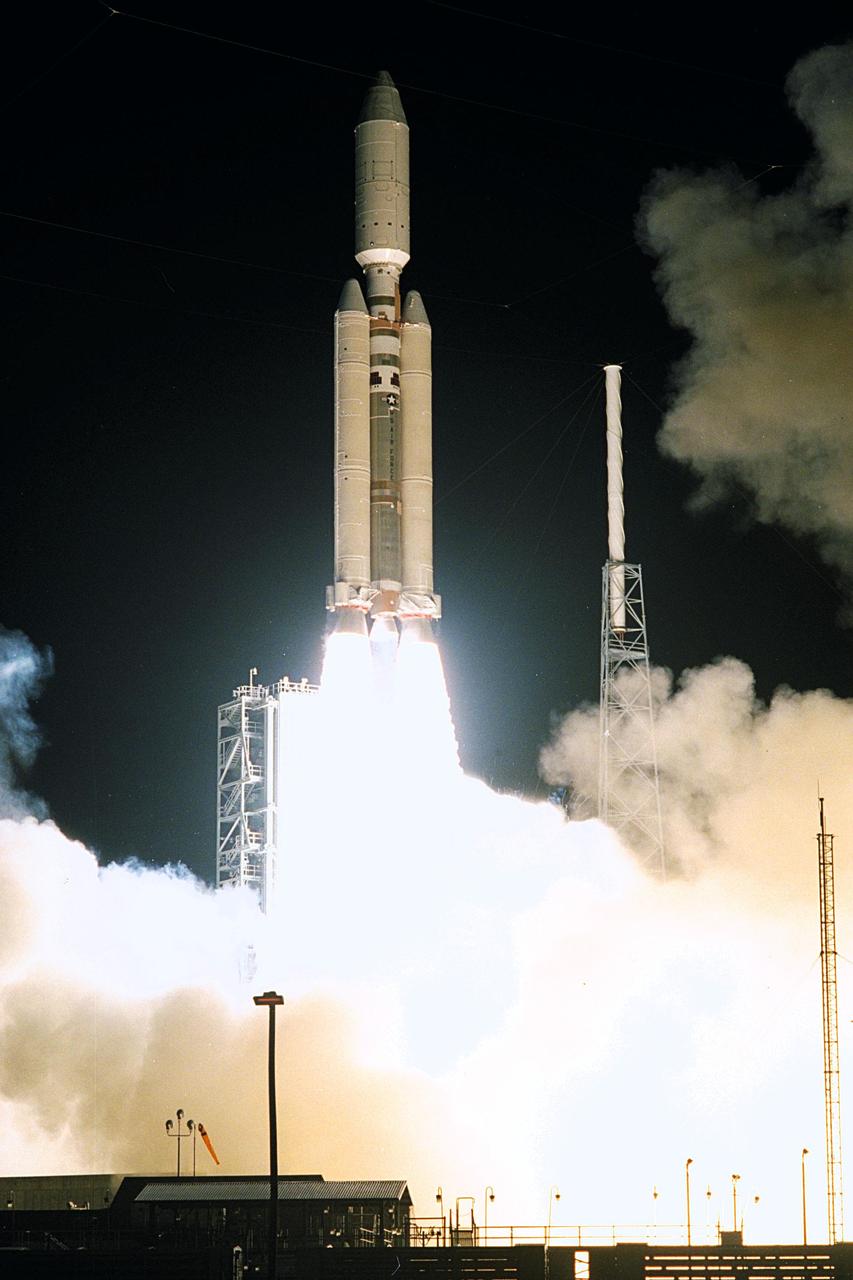
A seven-year journey to the ringed planet Saturn begins with the liftoff of a Titan IVB/Centaur carrying the Cassini orbiter and its attached Huygens probe.
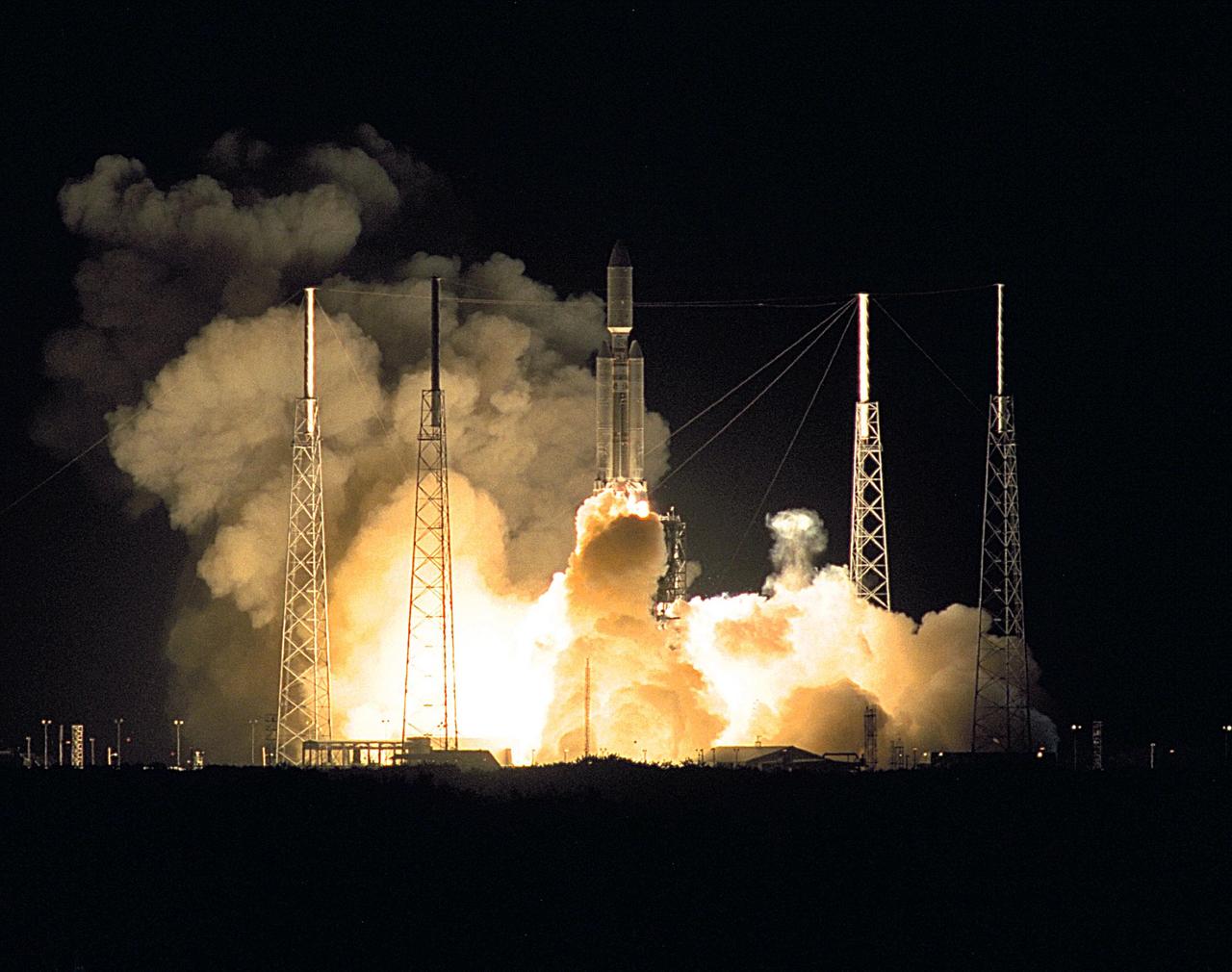
A seven-year journey to the ringed planet Saturn began on Oct. 15, 1997 with the liftoff of a Titan IVB/Centaur carrying NASA Cassini orbiter and its attached Huygens probe
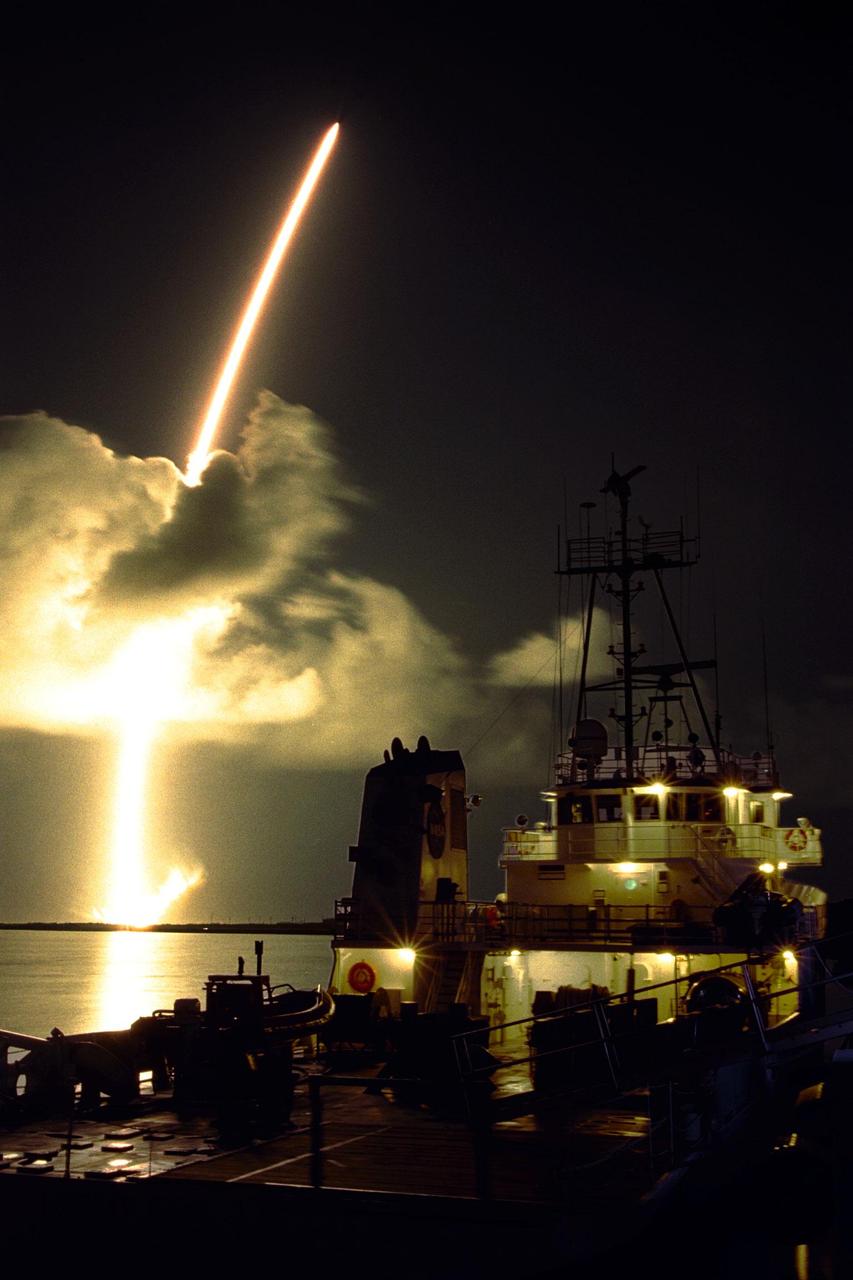
A seven-year journey to the ringed planet Saturn began on Oct. 15, 1997 with the liftoff of a Titan IVB/Centaur carrying NASA Cassini orbiter and its attached Huygens probe.
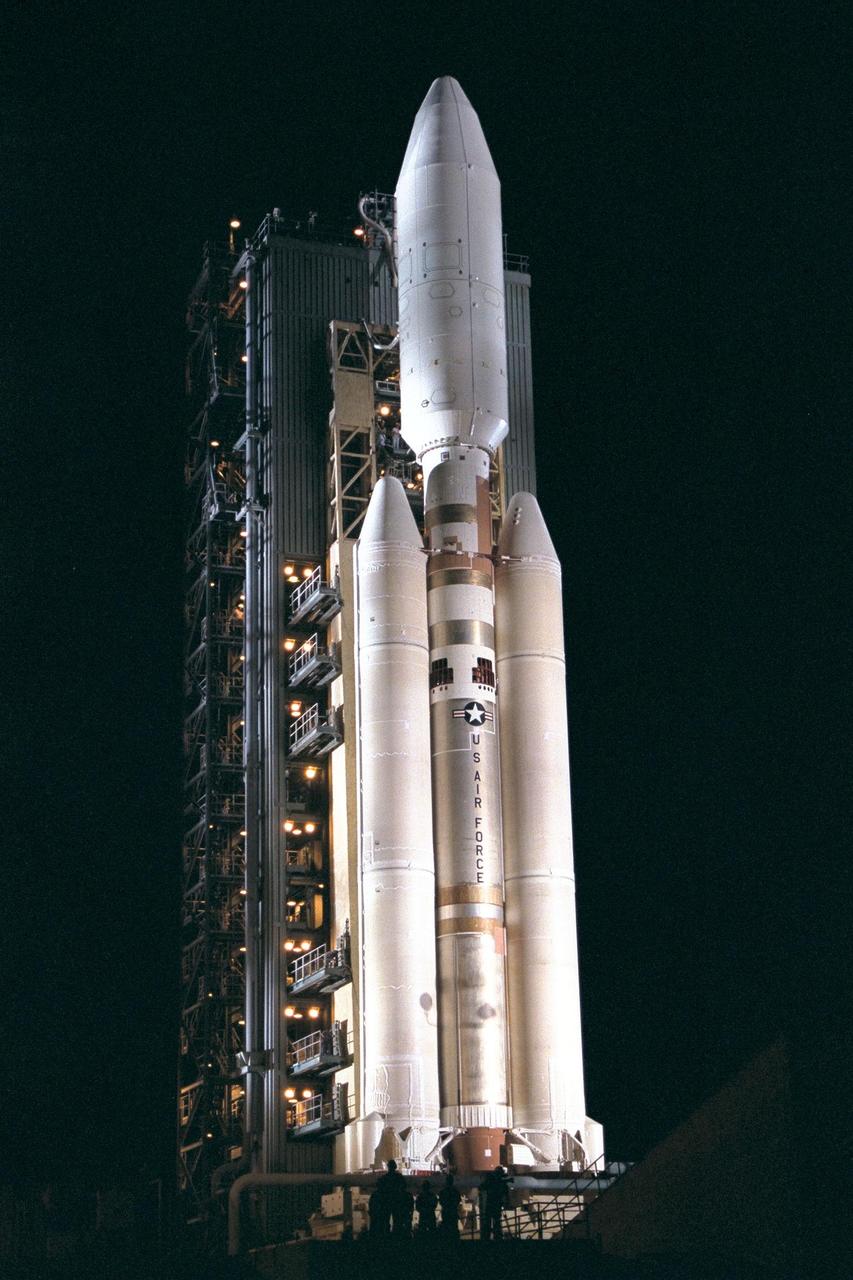
This image from 1997 is of the Titan IVB/Centaur carrying NASA Cassini spacecraft at Launch Complex 40 on Cape Canaveral Air Station, the Mobile Service Tower has been retracted away.
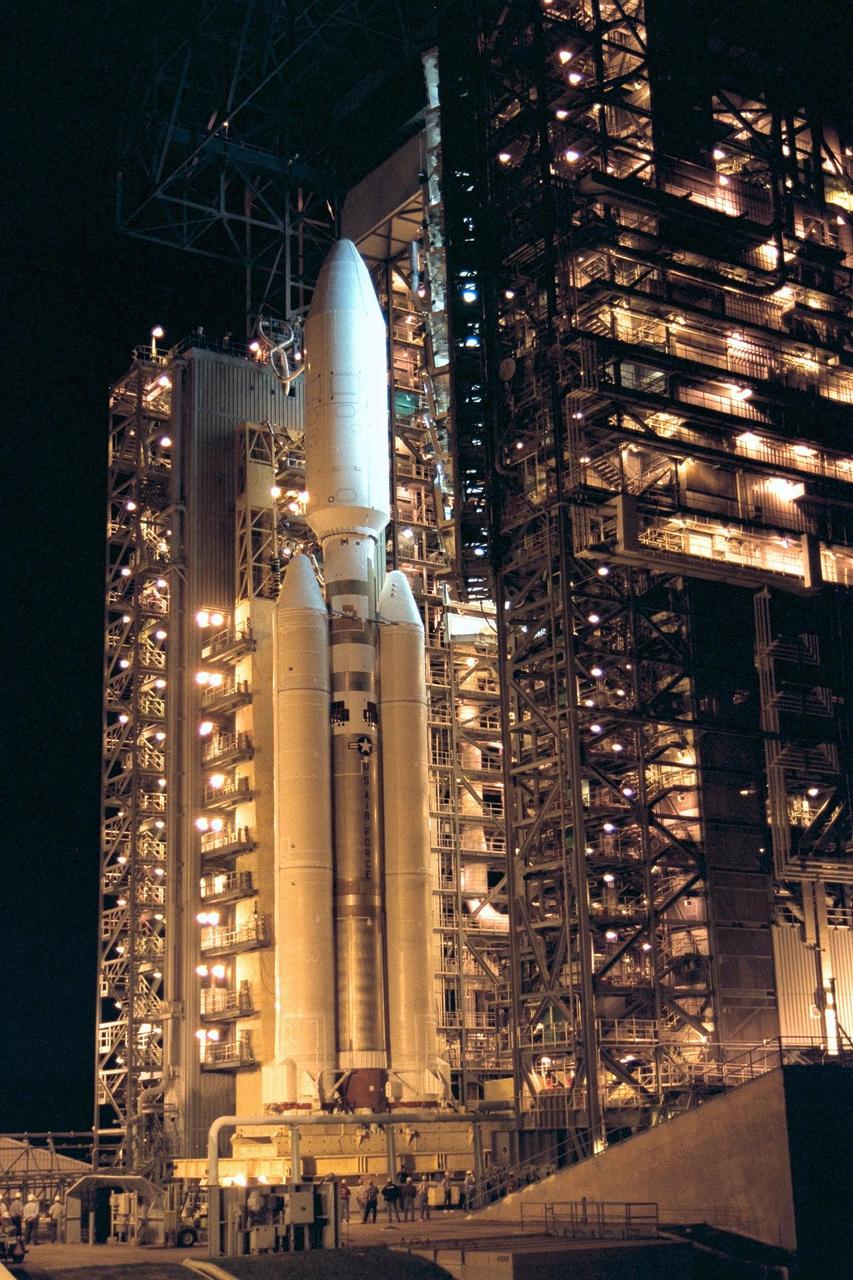
At Launch Complex 40 on Cape Canaveral Air Station, the Mobile Service Tower is rolled away from the Titan IVB/Centaur carrying the Cassini spacecraft, marking a major milestone in the launch countdown sequence. Retraction of the structure began about an hour later than scheduled due to minor problems with ground support equipment. The countdown clock for the Cassini mission began ticking earlier today at the T-26-hour mark. Other upcoming prelaunch milestones include activation of the final launch sequence for the Cassini spacecraft at the T-180-minute mark in the countdown, to be followed about an hour later by initiation of loading of the Titan IVB's Centaur stage with its complement of liquid hydrogen and liquid oxygen. Liftoff of Cassini on the journey to Saturn and its moon Titan is slated to occur during a window opening at 4:55 a.m. EDT, Oct. 13, and extending through 7:15 a.m
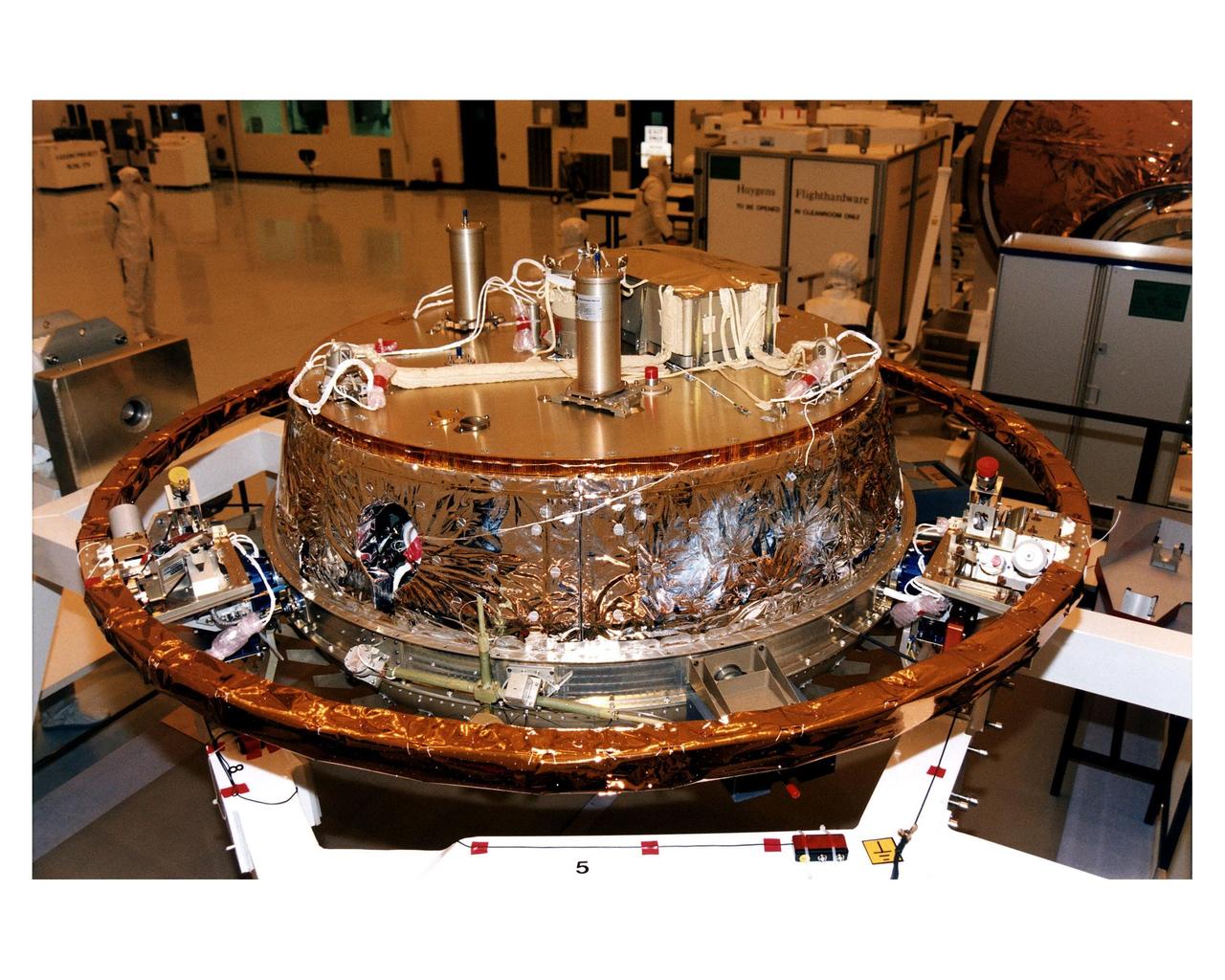
The descent module of the Titan-bound Huygens probe undergoes preflight processing on a support structure in the Payload Hazardous Servicing Facility (PHSF). The probe will study the clouds, atmosphere and surface of Saturn's moon, Titan, as part of the Cassini mission to the Saturnian system. The cylinders on the top of the probe contain antennas; the small square box has a parachute. The probe will detach from the Cassini orbiter after arrival at Saturn in 2004 to slowly descend through Titan's atmosphere to the surface of the Saturn moon. The Cassini launch on a Titan IVB/Centaur expendable launch vehicle is scheduled for October 6 from Cape Canaveral Air Station
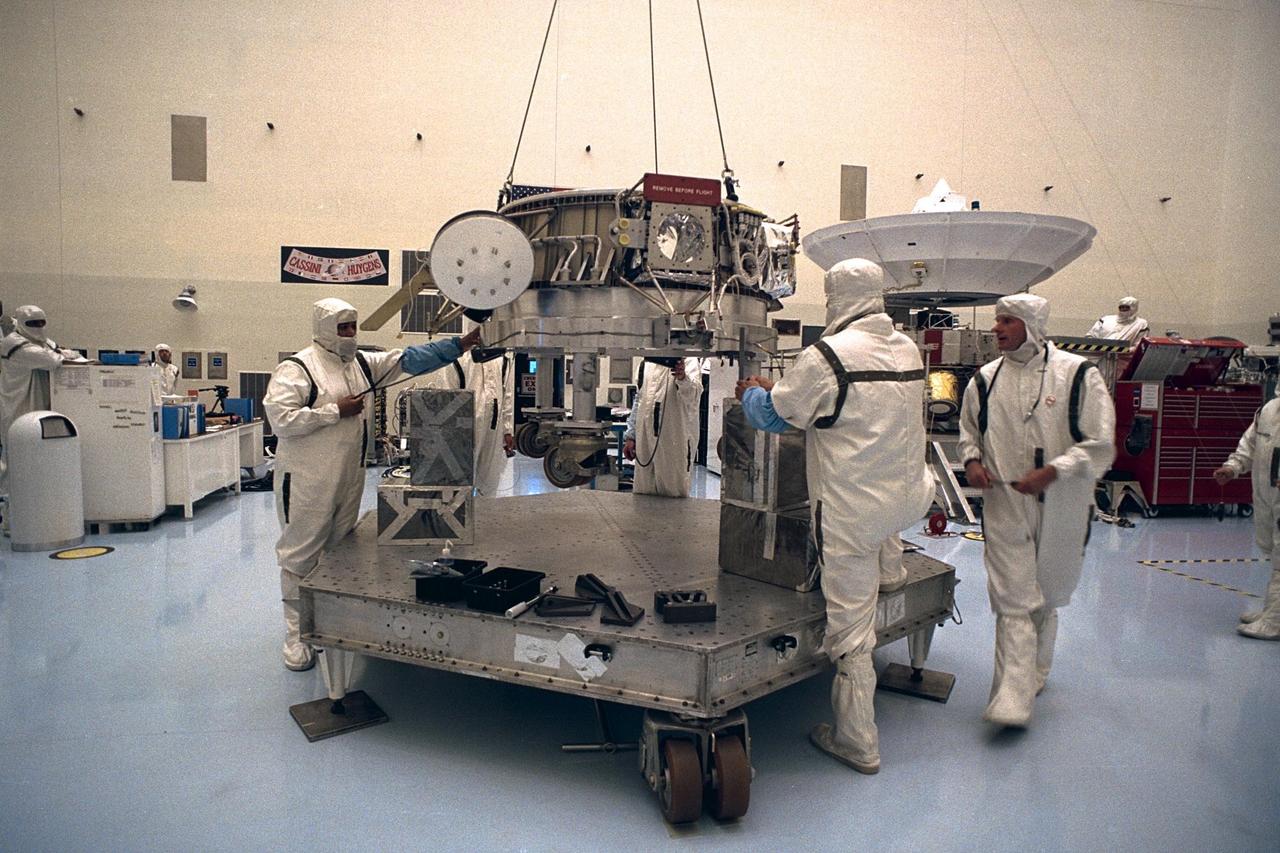
The Lower Equipment Module of the Cassini spacecraft is lifted into a workstand in the Payload Hazardous Servicing Facility (PHSF). Cassini will explore the Saturnian system, including the planet’s rings and its moon, Titan. Launch of the Cassini mission to Saturn is scheduled for Oct. 6 from Launch Complex 40, Cape Canaveral Air Station, aboard a Titan IVB unmanned vehicle
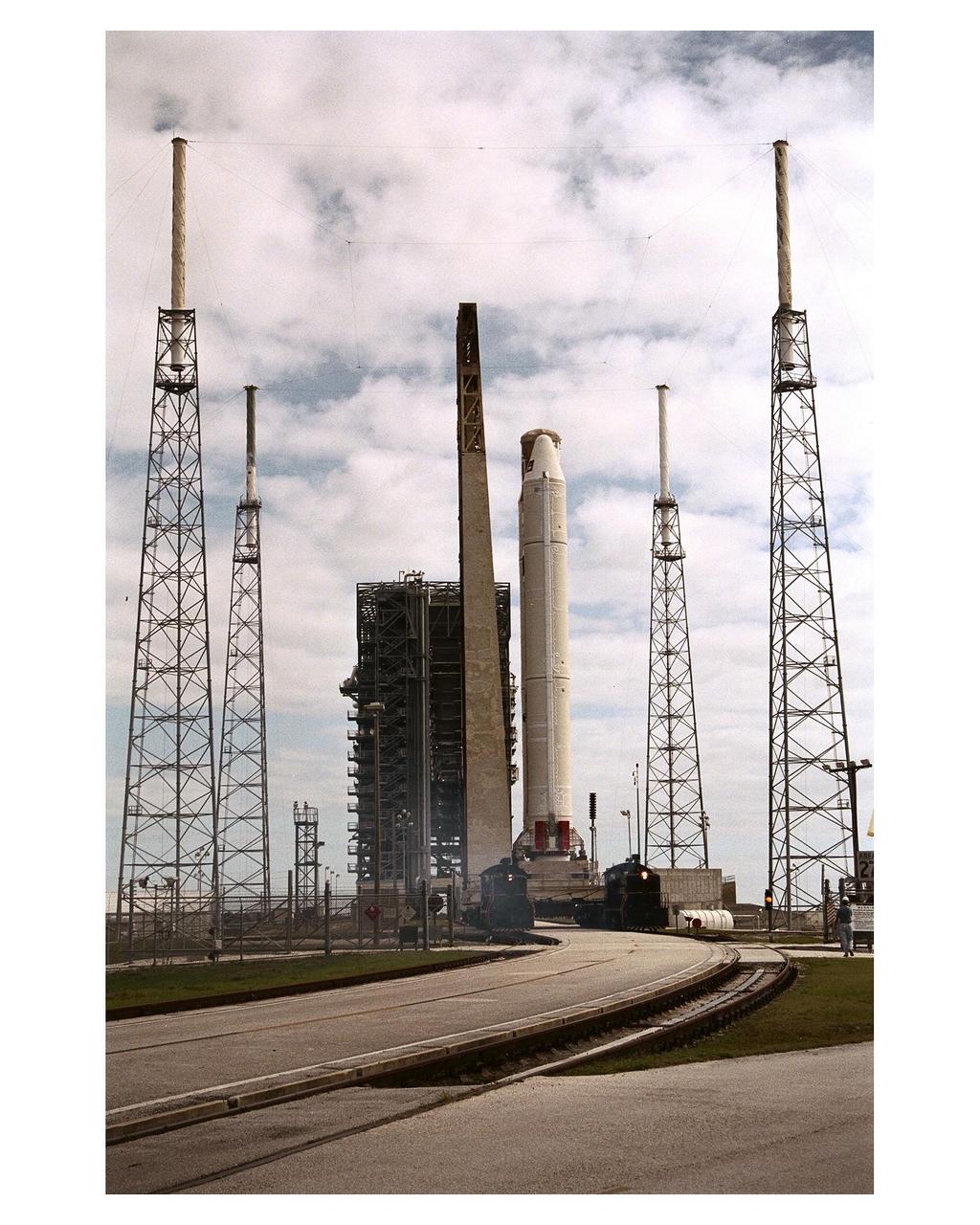
The Titan IVB core vehicle and its twin Solid Rocket Motor Upgrades (SRMUs) which will be used to propel the Cassini spacecraft to its final destination, Saturn, approaches the pad at Launch Complex 40, Cape Canaveral Air Station. At the pad, the Centaur upper stage will be added and, eventually, the prime payload, the Cassini spacecraft. Cassini will explore the Saturnian system, including the planet’s rings and moon, Titan. Launch of the Cassini mission to Saturn is scheduled for Oct. 6
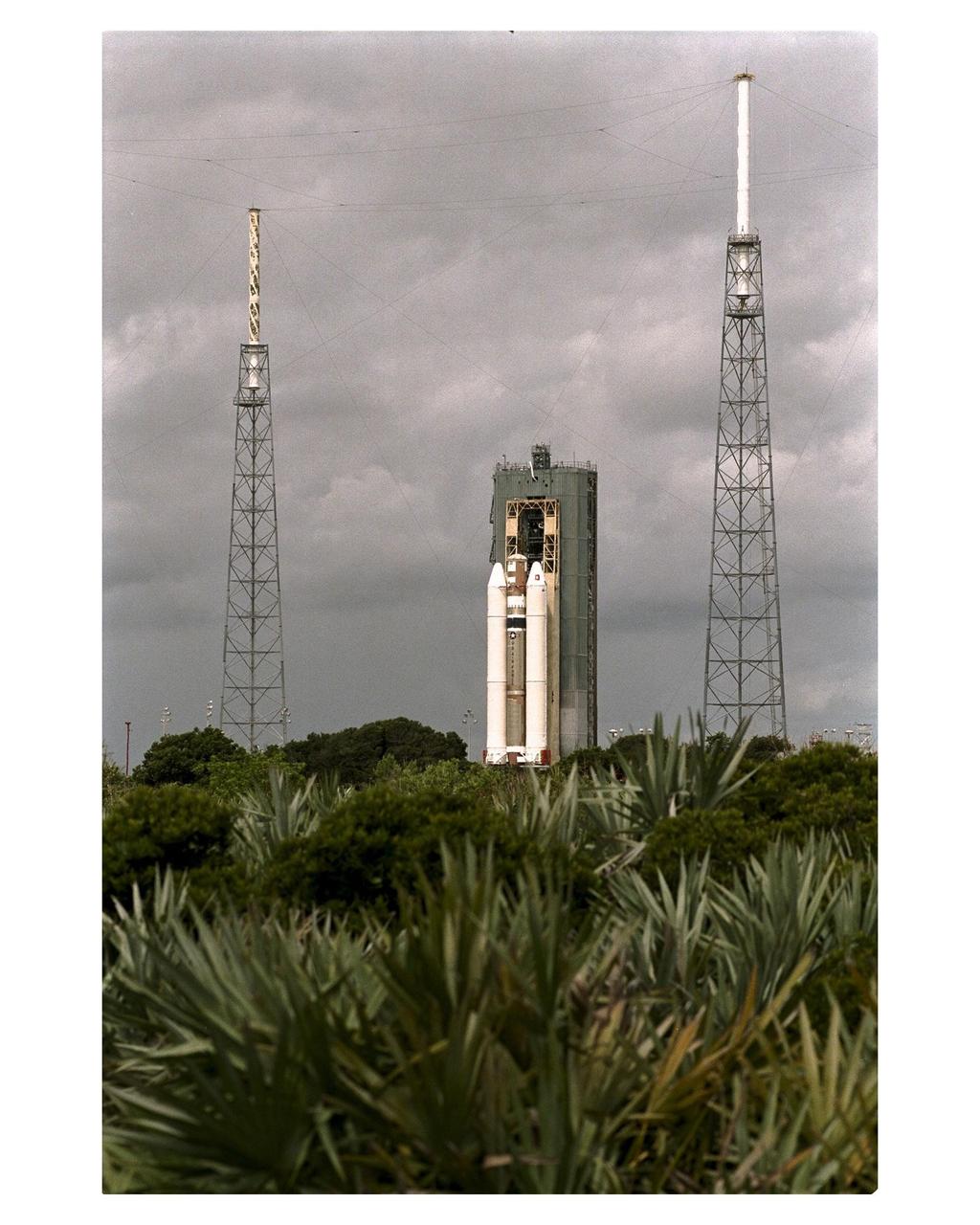
The Titan IVB core vehicle and its twin Solid Rocket Motor Upgrades (SRMUs) which will be used to propel the Cassini spacecraft to its final destination, Saturn, arrive at the pad at Launch Complex 40, Cape Canaveral Air Station. At the pad, the Centaur upper stage will be added and, eventually, the prime payload, the Cassini spacecraft. Cassini will explore the Saturnian system, including the planet’s rings and moon, Titan. Launch of the Cassini mission to Saturn is scheduled for Oct. 6

The propulsion system is mated to the Lower Equipment Module of the Cassini spacecraft in the Payload Hazardous Servicing Facility (PHSF). Cassini will explore the Saturnian system, including the planet’s rings and its moon, Titan. Launch of the Cassini mission to Saturn is scheduled for Oct. 6 from Launch Complex 40, Cape Canaveral Air Station, aboard a Titan IVB unmanned vehicle
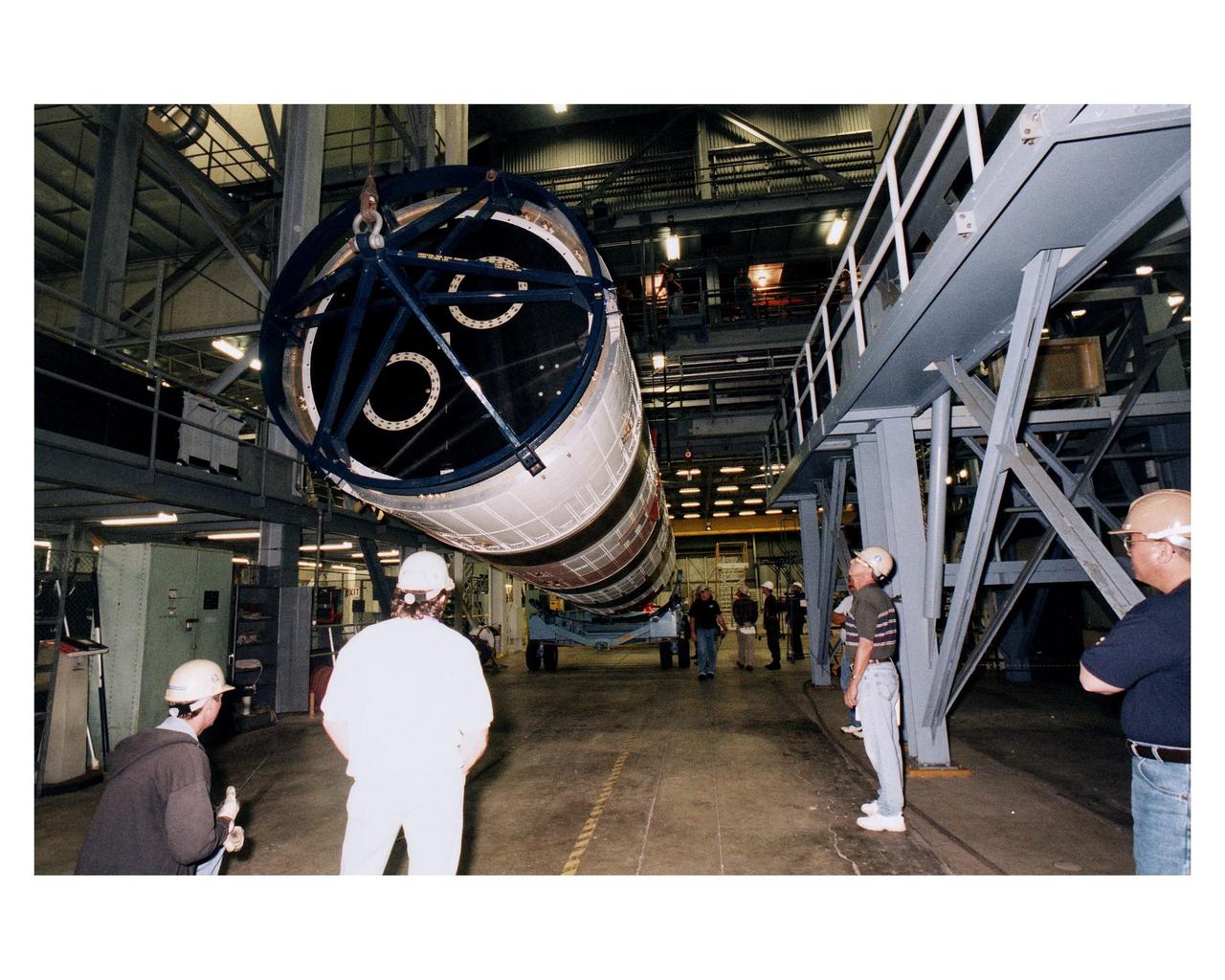
Lockheed Martin technicians and engineers in the Vertical Integration Building prepare to hoist the second stage of a Titan IV/Centaur expendable launch vehicle into a vertical position where it can lifted and mated to the first stage of the rocket. The Titan IVB rocket is the newest version of America's most powerful unmanned rocket. This rocket will be used for the Cassini mission to Saturn. The Cassini launch is targeted for October 6 from Launch Complex 40, Cape Canaveral Air Station
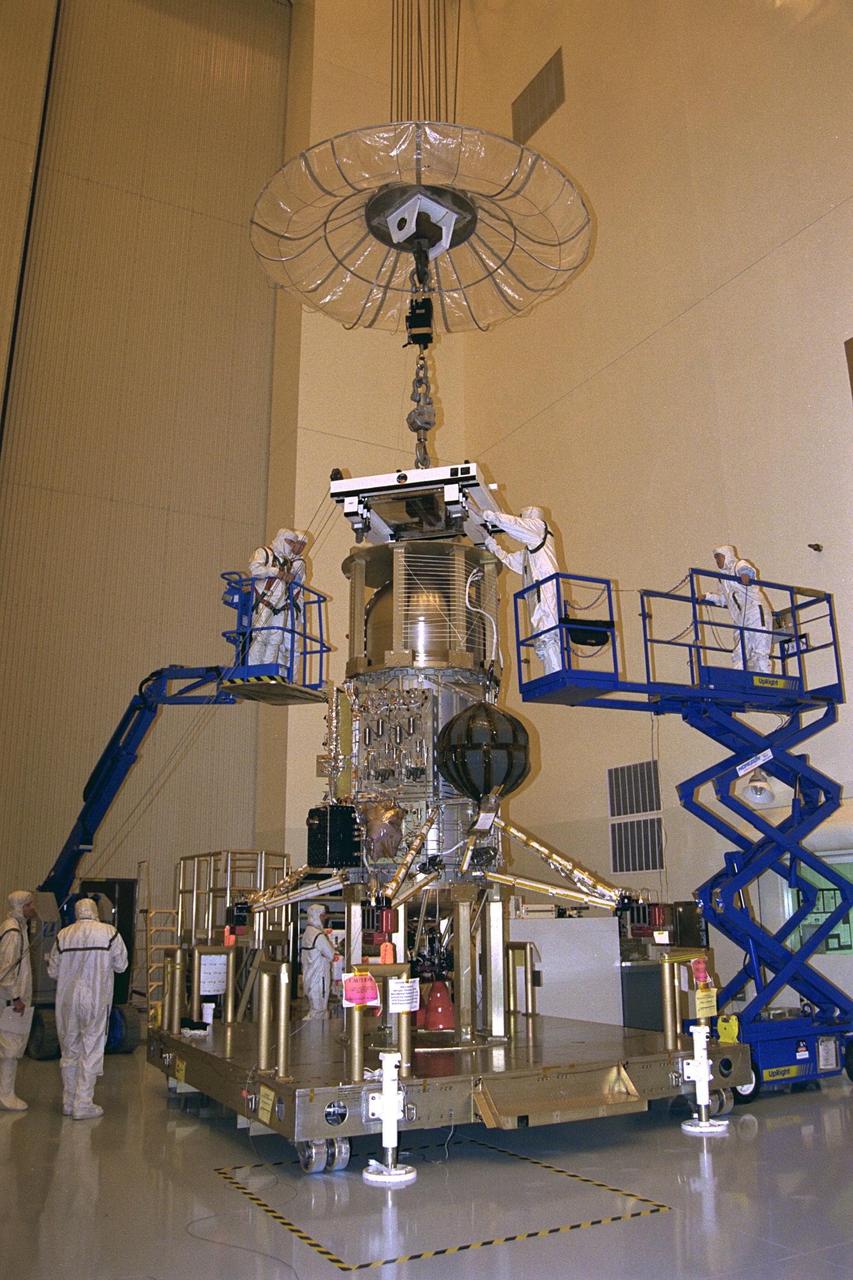
The propulsion system is mated to the Lower Equipment Module of the Cassini spacecraft in the Payload Hazardous Servicing Facility (PHSF). Cassini will explore the Saturnian system, including the planet’s rings and its moon, Titan. Launch of the Cassini mission to Saturn is scheduled for Oct. 6 from Launch Complex 40, Cape Canaveral Air Station, aboard a Titan IVB unmanned vehicle
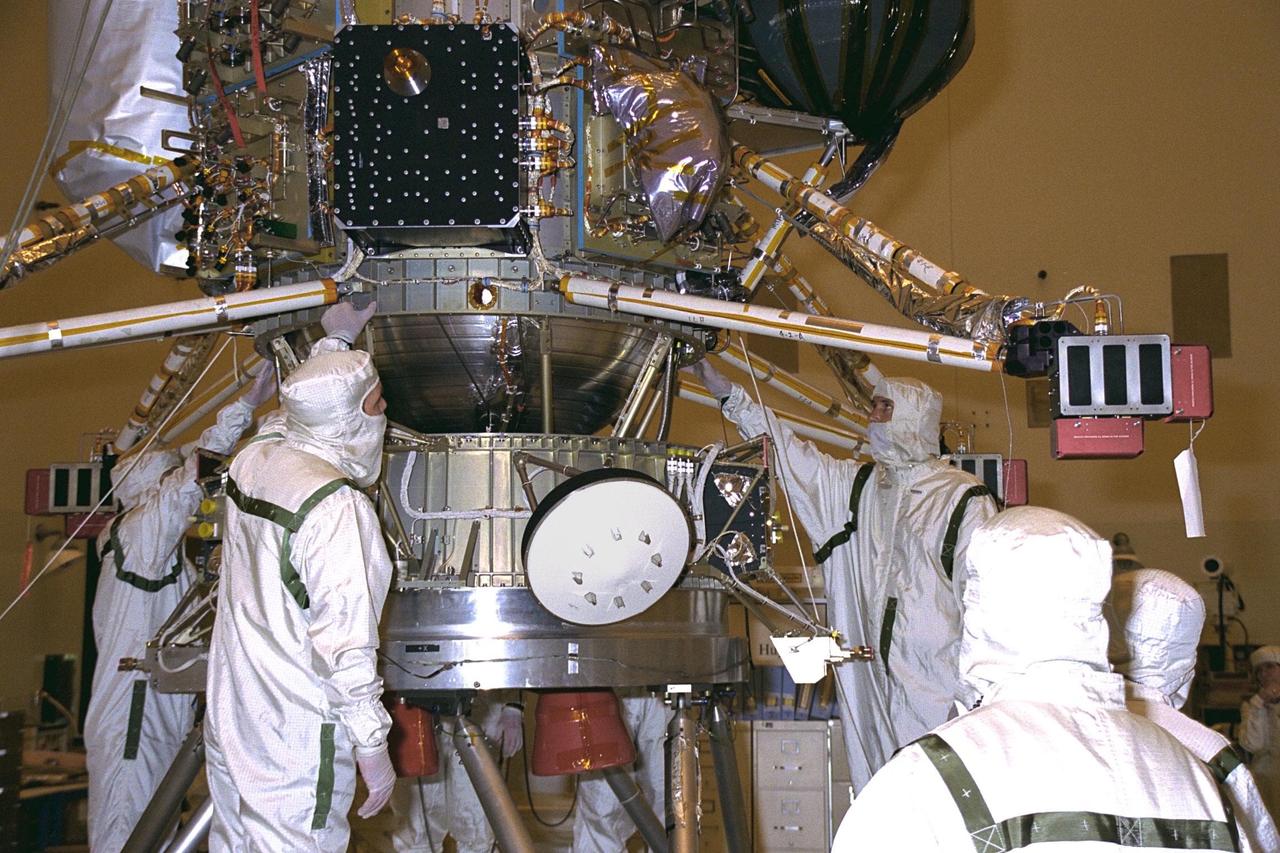
The propulsion system is mated to the Lower Equipment Module of the Cassini spacecraft in the Payload Hazardous Servicing Facility (PHSF). Cassini will explore the Saturnian system, including the planet’s rings and its moon, Titan. Launch of the Cassini mission to Saturn is scheduled for Oct. 6 from Launch Complex 40, Cape Canaveral Air Station, aboard a Titan IVB unmanned vehicle
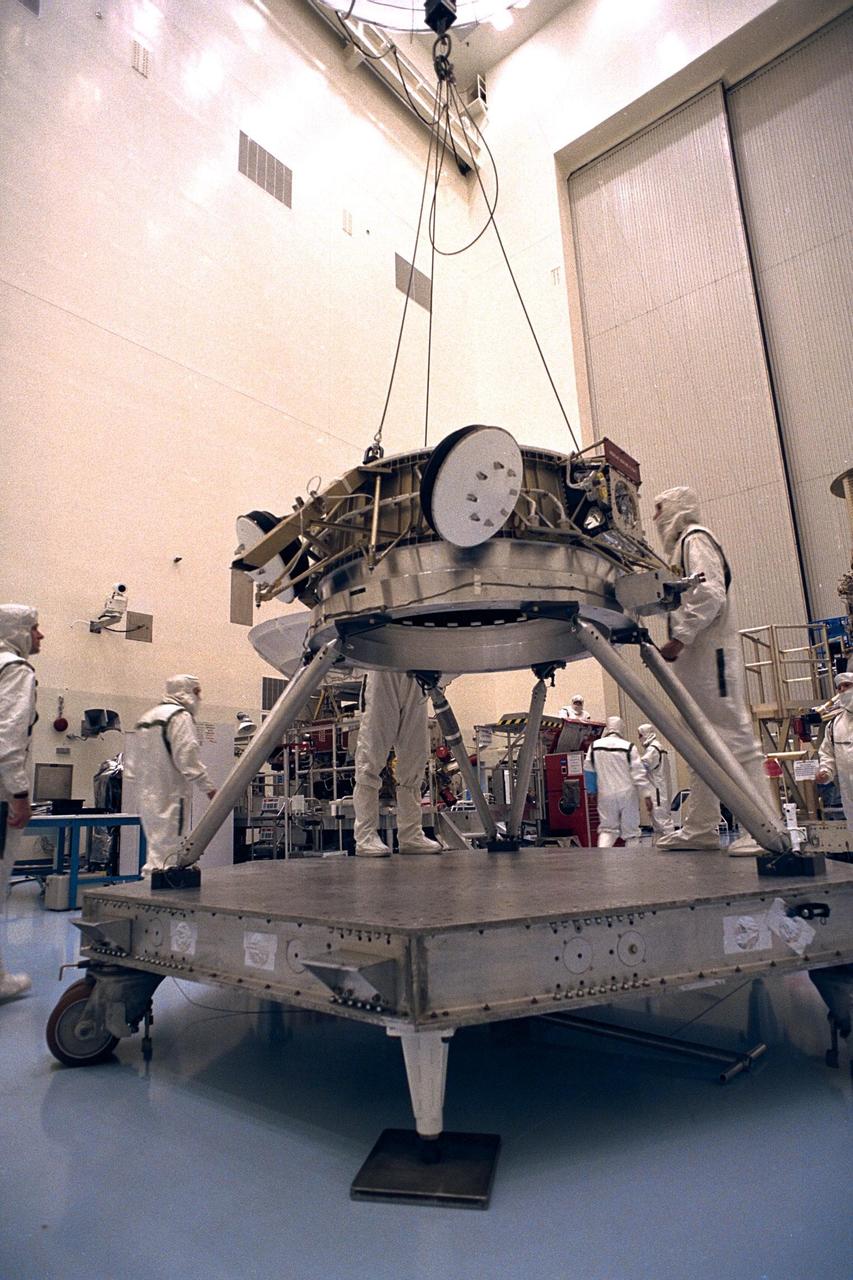
The Lower Equipment Module of the Cassini spacecraft is lifted into a workstand in the Payload Hazardous Servicing Facility (PHSF). Cassini will explore the Saturnian system, including the planet’s rings and its moon, Titan. Launch of the Cassini mission to Saturn is scheduled for Oct. 6 from Launch Complex 40, Cape Canaveral Air Station, aboard a Titan IVB unmanned vehicle
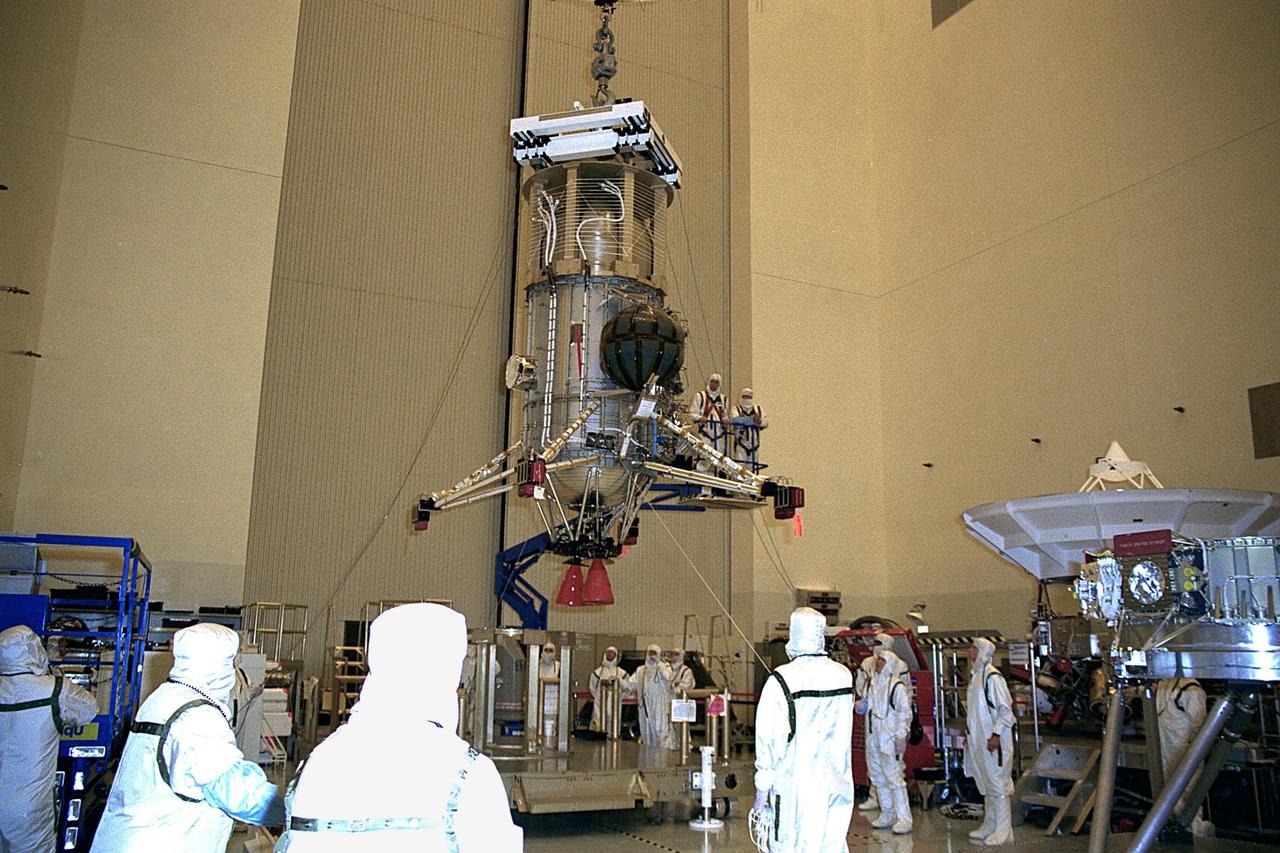
The propulsion system is mated to the Lower Equipment Module of the Cassini spacecraft in the Payload Hazardous Servicing Facility (PHSF). Cassini will explore the Saturnian system, including the planet’s rings and its moon, Titan. Launch of the Cassini mission to Saturn is scheduled for Oct. 6 from Launch Complex 40, Cape Canaveral Air Station, aboard a Titan IVB unmanned vehicle

A Titan IVB core vehicle and its twin Solid Rocket Motor Upgrades (SRMUs) depart from the Solid Rocket Motor Assembly and Readiness Facility (SMARF), Cape Canaveral Air Station (CCAS), en route to Launch Complex 40. At the pad, the Centaur upper stage will be added and, eventually, the prime payload, the Cassini spacecraft. Cassini will explore the Saturnian system, including the planet’s rings and moon, Titan. Launch of the Cassini mission to Saturn is scheduled for Oct. 6 from Pad 40, CCAS
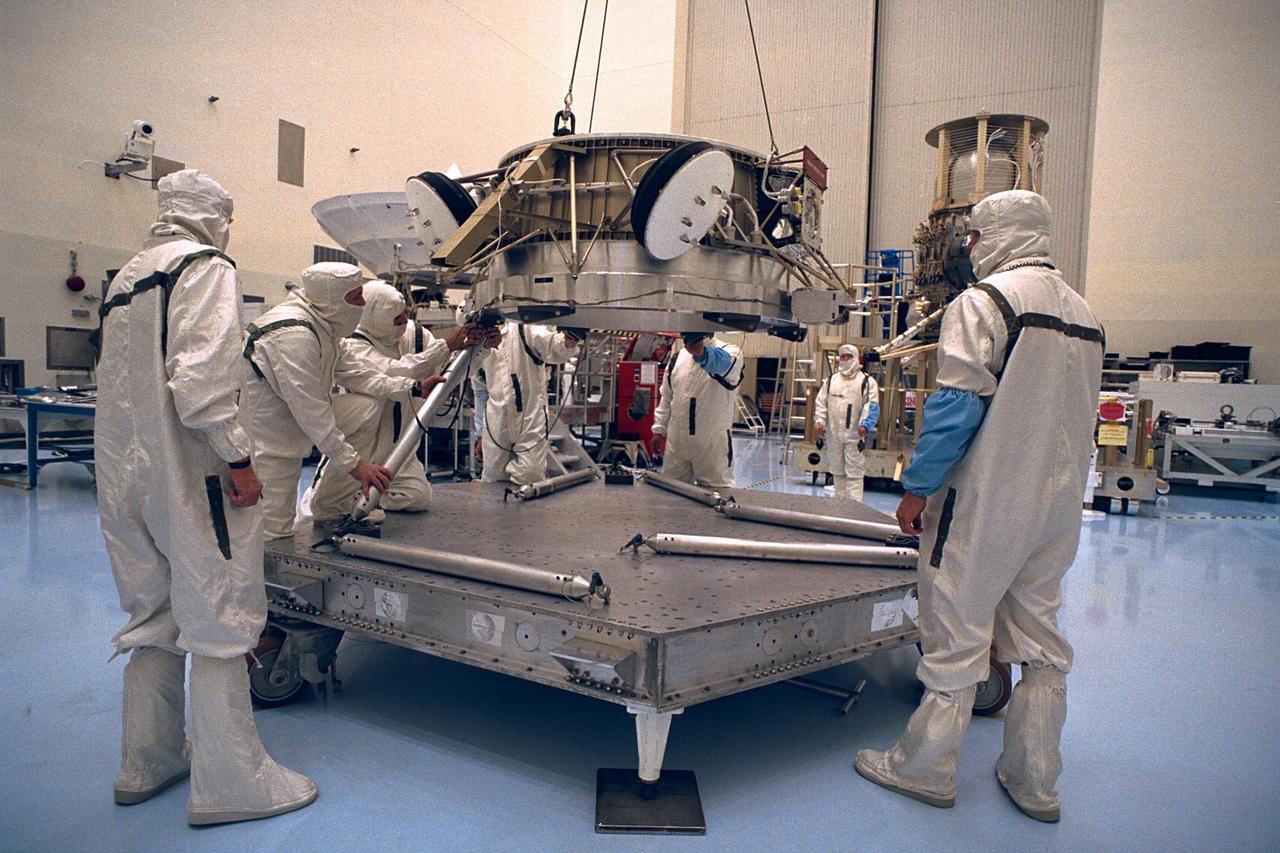
The Lower Equipment Module of the Cassini spacecraft is lifted into a workstand in the Payload Hazardous Servicing Facility (PHSF). Cassini will explore the Saturnian system, including the planet’s rings and its moon, Titan. Launch of the Cassini mission to Saturn is scheduled for Oct. 6 from Launch Complex 40, Cape Canaveral Air Station, aboard a Titan IVB unmanned vehicle
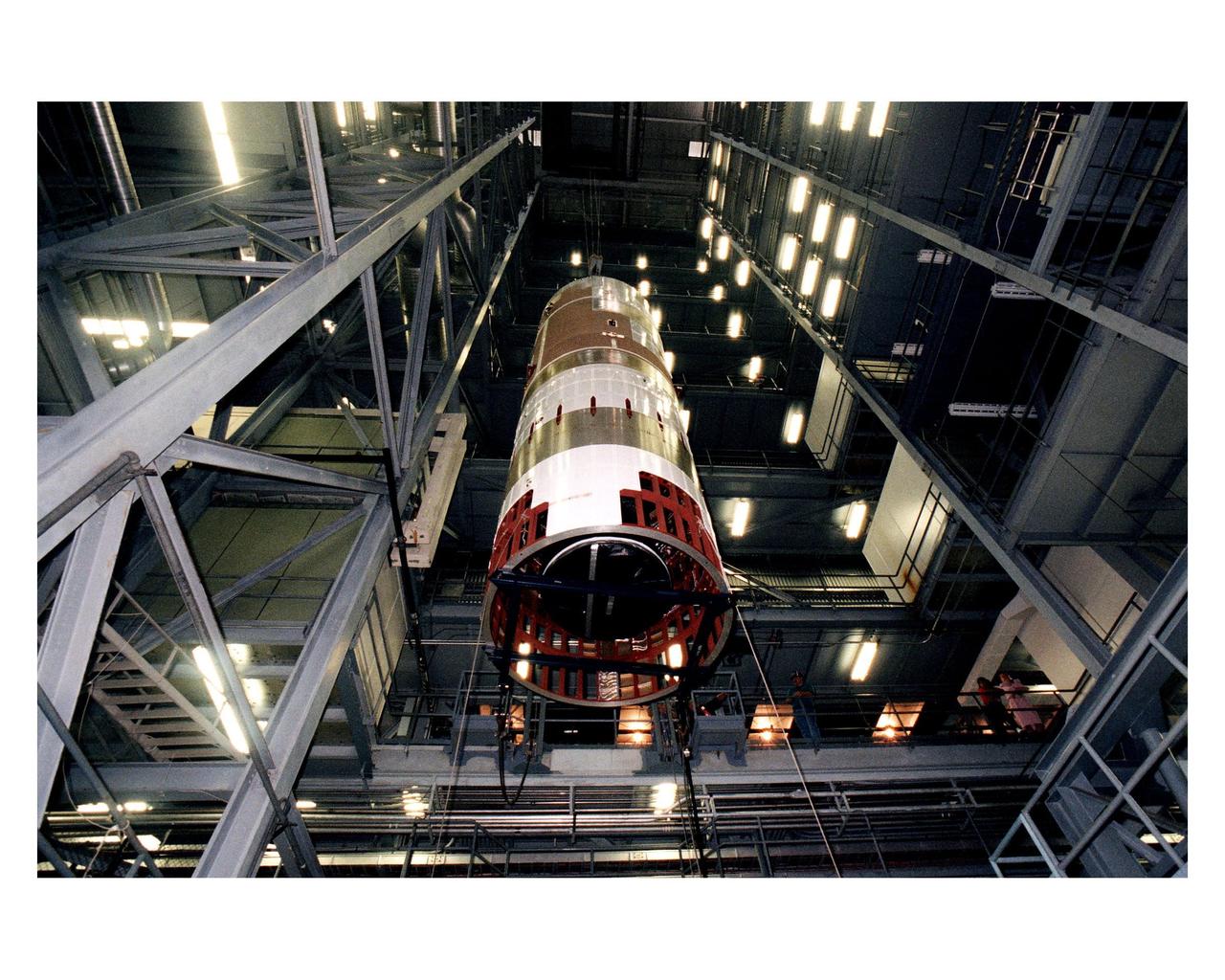
The second stage of a Titan IV/Centaur expendable launch vehicle is suspended in the Vertical Integration Building before being moved into position for mating to the first stage. The Titan IVB rocket is the newest version of America's most powerful unmanned rocket. This rocket will be used for the Cassini mission to Saturn. The Cassini launch is targeted for October 6 from Launch Complex 40, Cape Canaveral Air Station
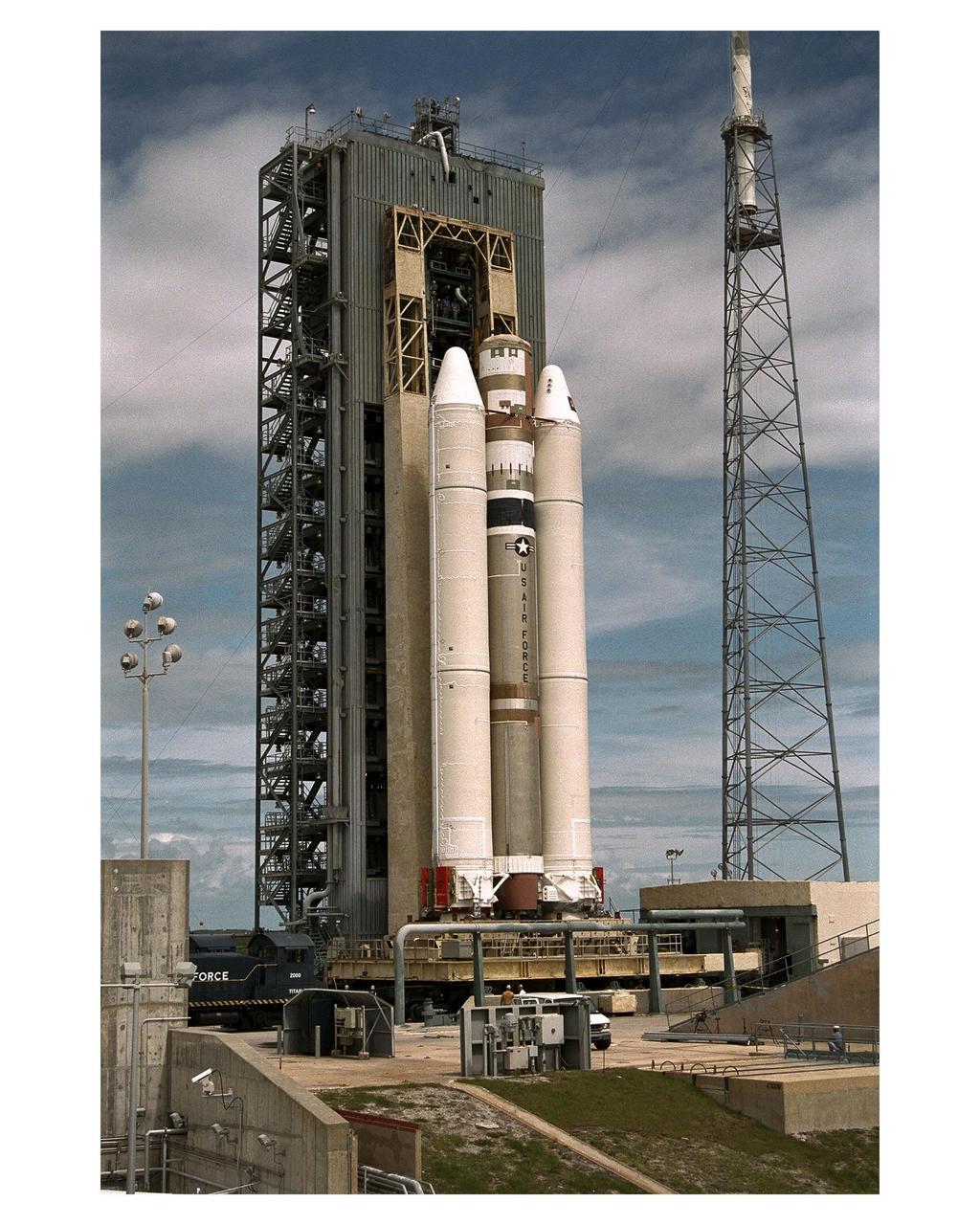
The Titan IVB core vehicle and its twin Solid Rocket Motor Upgrades (SRMUs) which will be used to propel the Cassini spacecraft to its final destination, Saturn, arrive at the pad at Launch Complex 40, Cape Canaveral Air Station. At the pad, the Centaur upper stage will be added and, eventually, the prime payload, the Cassini spacecraft. Cassini will explore the Saturnian system, including the planet’s rings and moon, Titan. Launch of the Cassini mission to Saturn is scheduled for Oct. 6
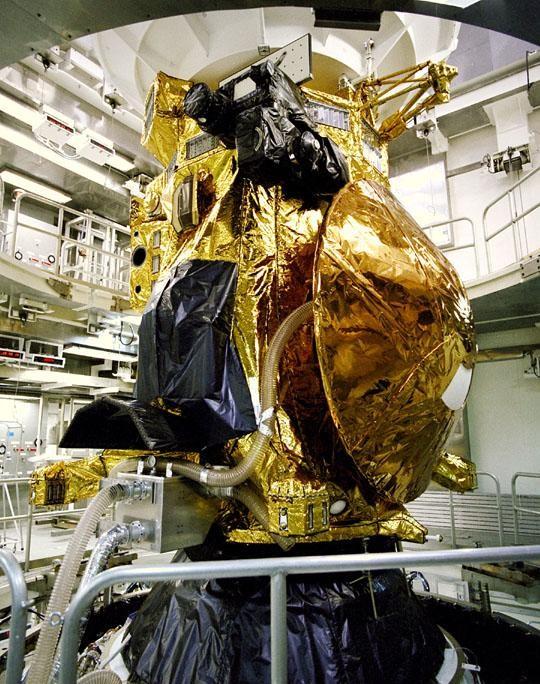
The Cassini spacecraft, with the Huygens probe seen on the right in this photo, sits atop a Titan IVB expendable launch vehicle at Launch Pad 40 at Cape Canaveral Air Station, where it awaits placement of its payload fairing to protect Cassini during launch. Instruments mounted on the Huygens probe, which was developed by the European Space Agency (ESA), will receive atmospheric and surface data on Saturn’s main moon, Titan, to send back to Earth as part of the mission. A four-year, close-up study of the Saturnian system, the mission is scheduled for launch from Cape Canaveral Air Station in mid-October
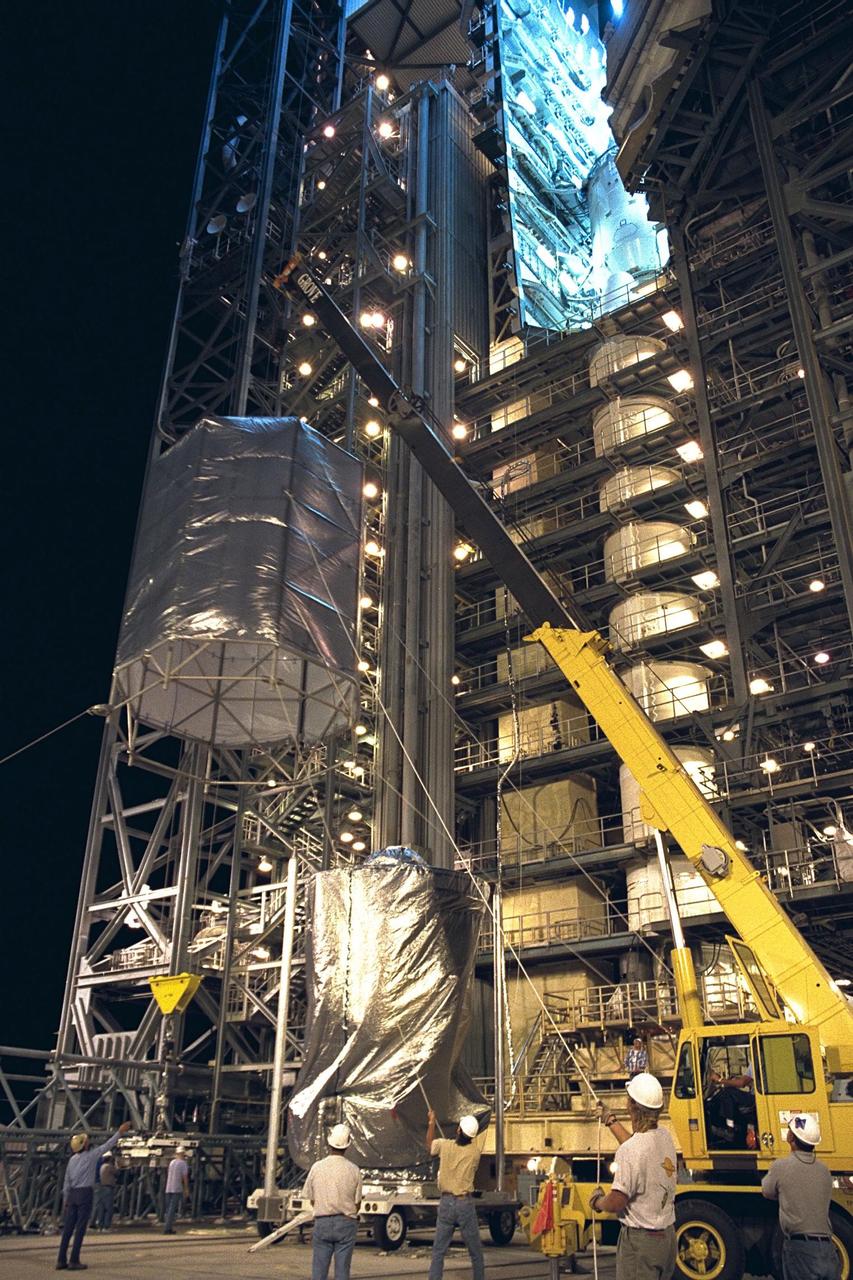
A crane lowers a protective transportation cover over the Cassini spacecraft, with its attached Huygens probe, at Launch Pad 40 at Cape Canaveral Air Station for the spacecraft’s return trip to the Payload Hazardous Servicing Facility (PHSF). Damage to thermal insulation was discovered inside Huygens from an abnormally high flow of conditioned air. Further internal inspection, insulation repair and a cleaning of the probe are now required. Mission managers are targeting a mid-October launch date after Cassini returns to the pad and is once again placed atop its Titan IVB expendable launch vehicle. Cassini will explore the Saturnian system, including the planet’s rings, while the Huygens probe will explore the moon Titan
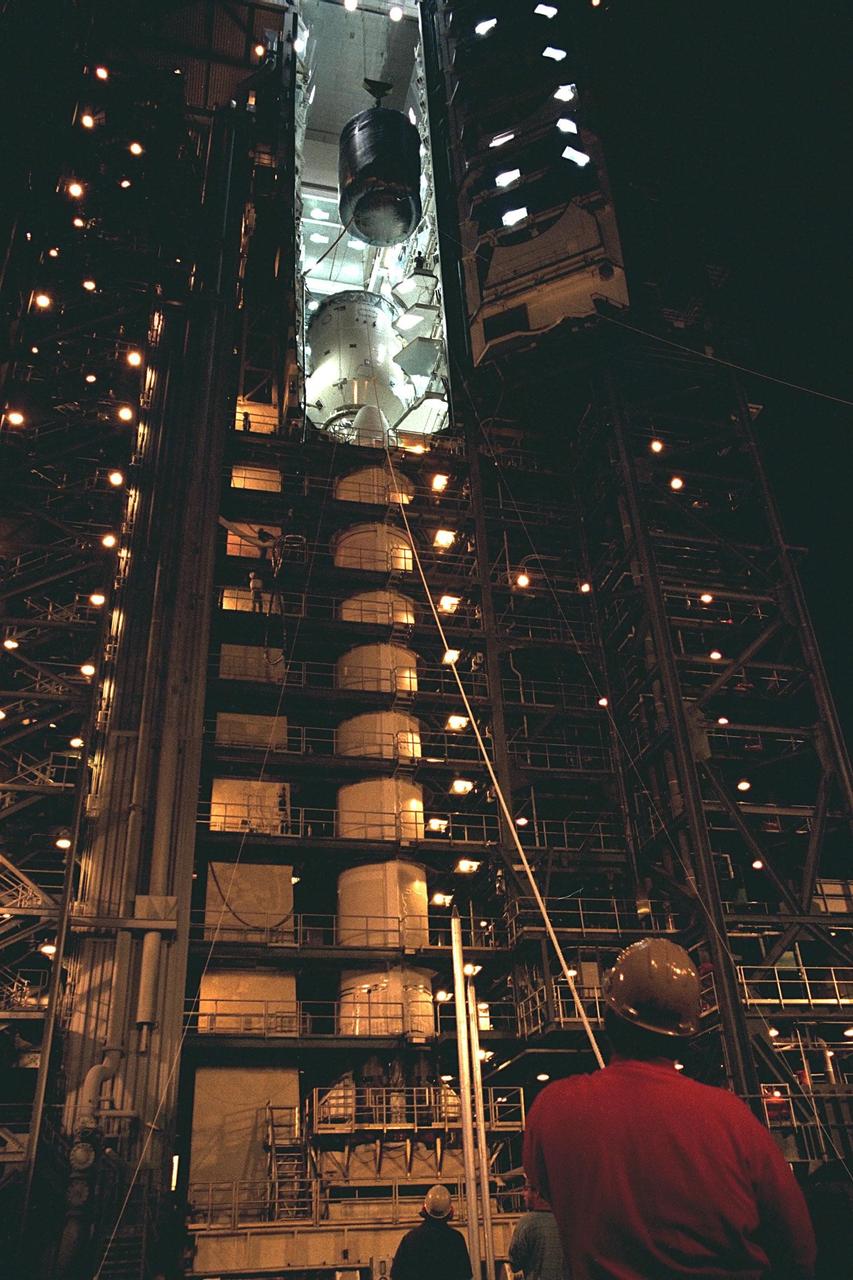
The Cassini spacecraft, with its attached Huygens probe, is lowered from Launch Pad 40 at Cape Canaveral Air Station for its return trip to the Payload Hazardous Servicing Facility (PHSF). Damage to thermal insulation was discovered inside Huygens from an abnormally high flow of conditioned air. Further internal inspection, insulation repair and a cleaning of the probe are now required. Mission managers are targeting a mid-October launch date after Cassini returns to the pad and is once again placed atop its Titan IVB expendable launch vehicle. Cassini will explore the Saturnian system, including the planet’s rings, while the Huygens probe will explore the moon Titan
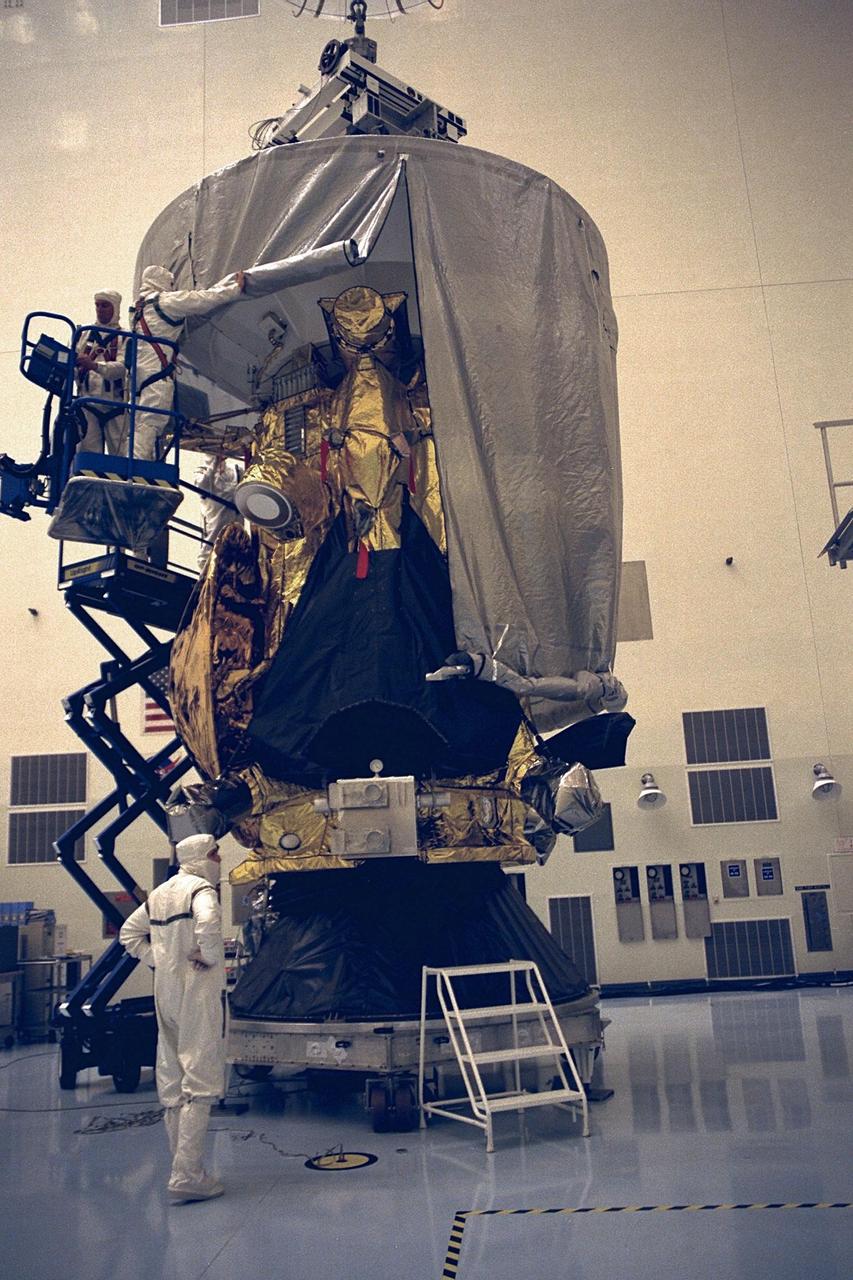
Workers in the Payload Hazardous Servicing Facility (PHSF) begin to remove a protective cover from the Cassini spacecraft with its attached Huygens probe. Damage to thermal insulation was discovered inside Huygens from an abnormally high flow of conditioned air. Further internal inspection, insulation repair and a cleaning of the probe are now required. Mission managers are targeting a mid-October launch date after Cassini returns to the pad and is once again placed atop its Titan IVB expendable launch vehicle at Launch Pad 40 at Cape Canaveral Air Station. Cassini will explore the Saturnian system, including the planet’s rings, while the Huygens probe will explore the moon Titan

Workers in the Payload Hazardous Servicing Facility (PHSF) finish the removal of a protective cover from the Cassini spacecraft with its attached Huygens probe. Damage to thermal insulation was discovered inside Huygens from an abnormally high flow of conditioned air. Further internal inspection, insulation repair and a cleaning of the probe are now required. Mission managers are targeting a mid-October launch date after Cassini returns to the pad and is once again placed atop its Titan IVB expendable launch vehicle at Launch Pad 40 at Cape Canaveral Air Station. Cassini will explore the Saturnian system, including the planet’s rings, while the Huygens probe will explore the moon Titan
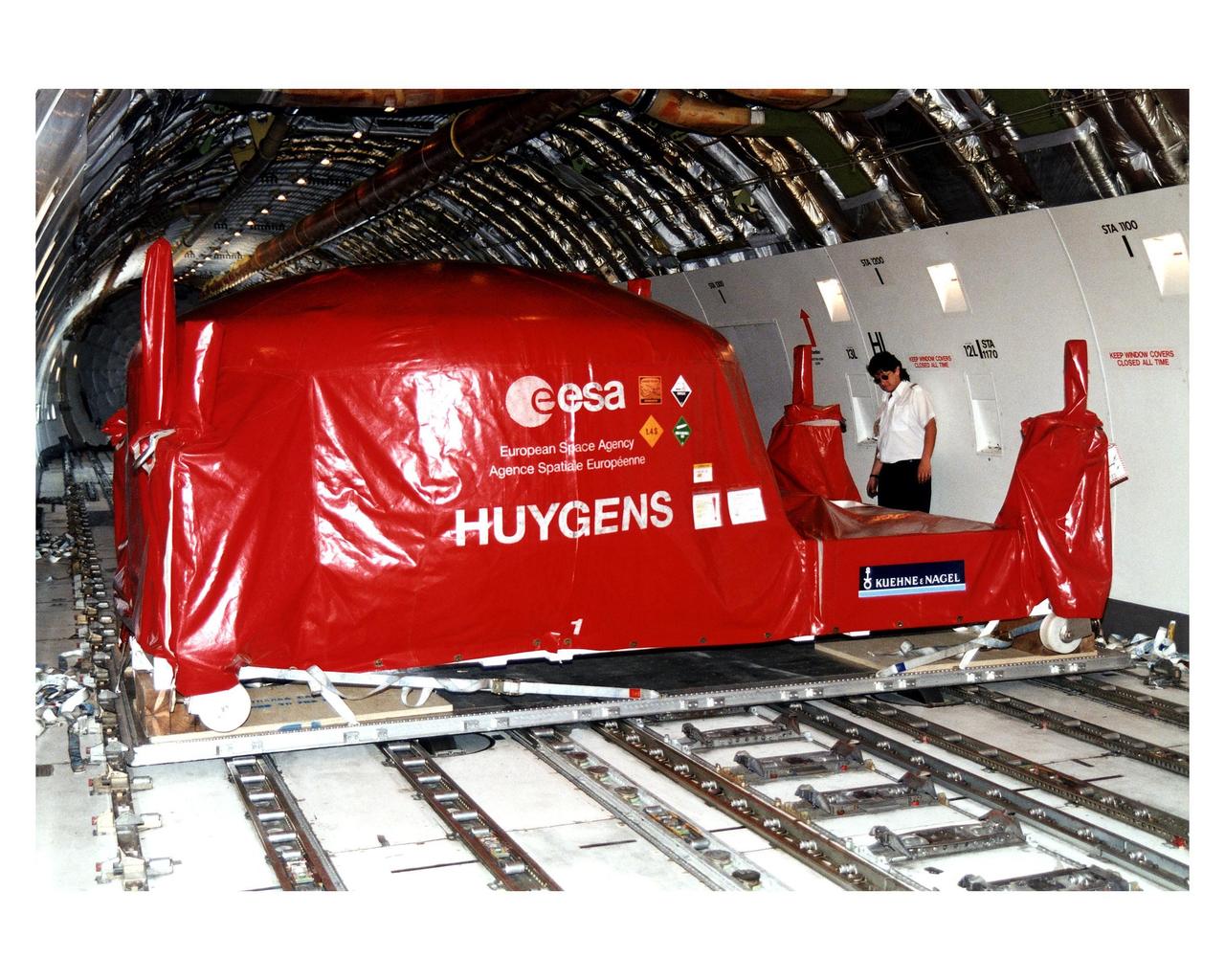
The Huygens probe, which will study the clouds, atmosphere and surface of Saturn's moon, Titan, as part of the Cassini mission to Saturn, arrives in a cargo plane at the Skid Strip, Cape Canaveral Air Station (CCAS). The probe was designed and developed for the European Space Agency (ESA) by a European industrial consortium led by Aerospatiale as prime contractor. Over the past year, it was integrated and tested at the facilities of Daimler Benz Aerospace Dornier Satellitensysteme in Germany. The probe will be mated to the Cassini orbiter, which was designed and assembled at NASA's Jet Propulsion Laboratory in California. The Cassini launch is targeted for October 6 from CCAS aboard a Titan IVB/Centaur expendable launch vehicle. After arrival at Saturn in 2004, the probe will be released from the Cassini orbiter to enter the Titan atmosphere
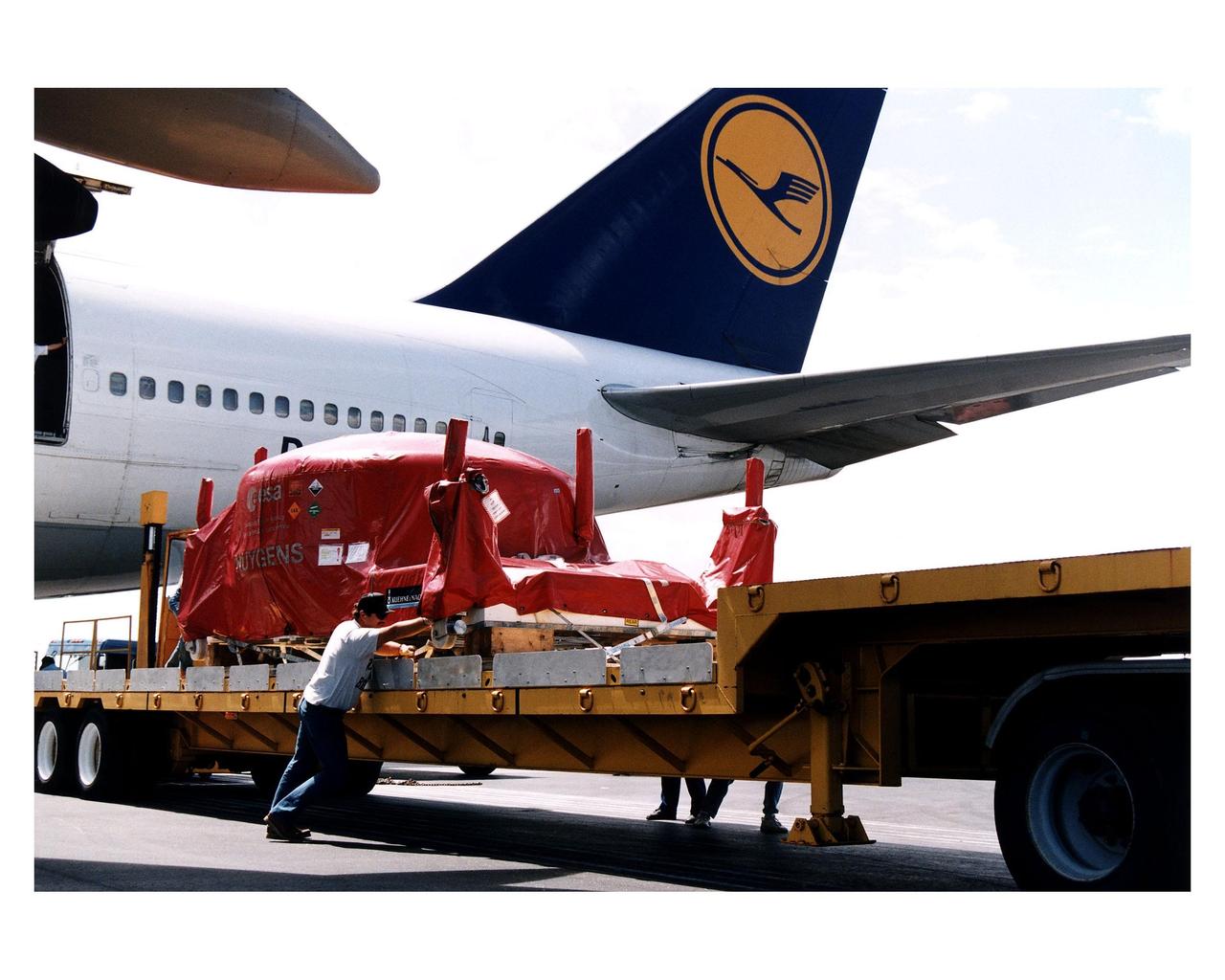
The Huygens probe, which will study the clouds, atmosphere and surface of Saturn's largest moon, Titan, as part of the Cassini mission to Saturn, is prepared for transport from the Skid Strip, Cape Canaveral Air Station (CCAS), after being off-loaded from a plane. The probe was designed and developed for the European Space Agency (ESA) by a European industrial consortium led by Aerospatiale as prime contractor. Over the past year, it was integrated and tested at the facilities of Daimler Benz Aerospace Dornier Satellitensysteme in Germany. The probe will be mated to the Cassini orbiter, which was designed and assembled at NASA's Jet Propulsion Laboratory in California. The Cassini launch is targeted for October 6 from CCAS aboard a Titan IVB/Centaur expendable launch vehicle. After arrival at Saturn in 2004, the probe will be released from the Cassini orbiter to slowly descend through the Titan atmosphere to the moon's surface
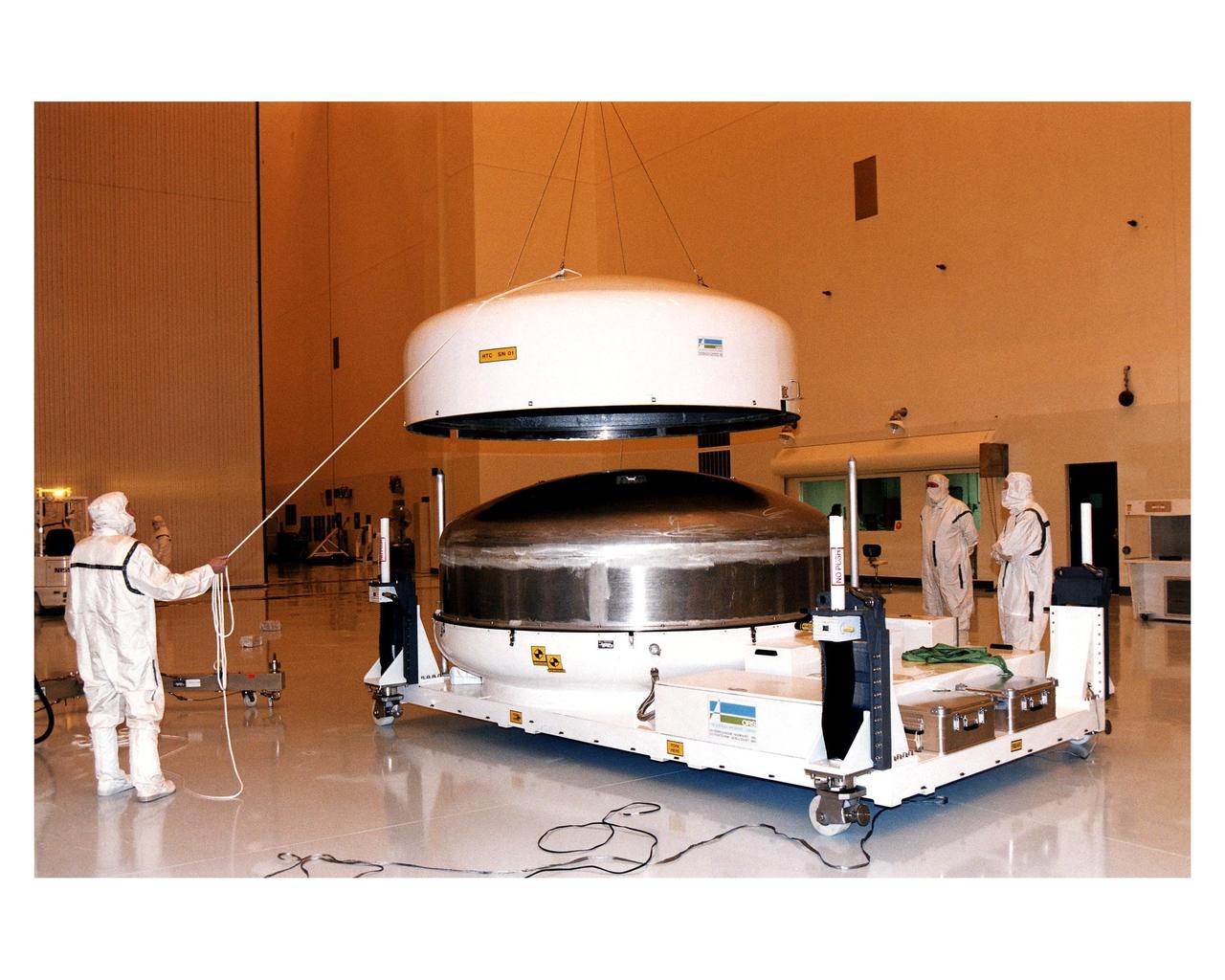
Workers in the Payload Hazardous Servicing Facility prepare to begin prelaunch processing of the Huygens probe, which will study the clouds, atmosphere and surface of Saturnþs largest moon, Titan, as part of the Cassini mission to Saturn. The probe was designed and developed for the European Space Agency (ESA) by a European industrial consortium led by Aerospatiale as prime contractor. Over the past year, it was integrated and tested at the facilities of Daimler Benz Aerospace Dornier Satellitensysteme in Germany. The probe will be mated to the Cassini orbiter, which was designed and assembled at NASA's Jet Propulsion Laboratory in California. The Cassini launch is targeted for October 6 from CCAS aboard a Titan IVB/Centaur expendable launch vehicle. After arrival at Saturn in 2004, the probe will be released from the Cassini orbiter to slowly descend through the Titan atmosphere to the moon's surface
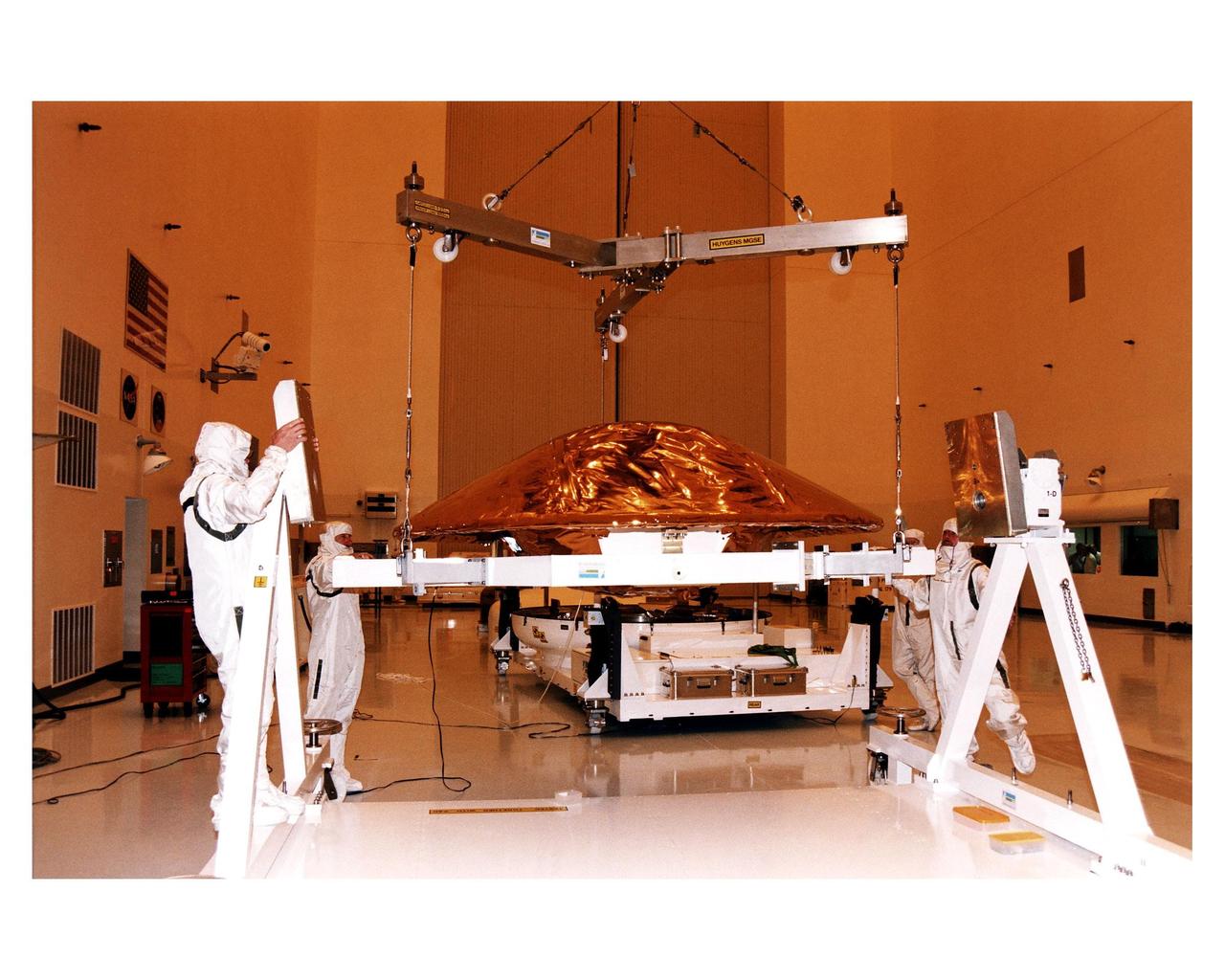
Workers in the Payload Hazardous Servicing Facility prepare to begin prelaunch processing of the Huygens probe, which will study the clouds, atmosphere and surface of Saturn's largest moon, Titan, as part of the Cassini mission to Saturn. The probe was designed and developed for the European Space Agency (ESA) by a European industrial consortium led by Aerospatiale as prime contractor. Over the past year, it was integrated and tested at the facilities of Daimler Benz Aerospace Dornier Satellitensysteme in Germany. The probe will be mated to the Cassini orbiter, which was designed and assembled at NASA's Jet Propulsion Laboratory in California. The Cassini launch is targeted for October 6 from CCAS aboard a Titan IVB/Centaur expendable launch vehicle. After arrival at Saturn in 2004, the probe will be released from the Cassini orbiter to slowly descend through the Titan atmosphere to the moon's surface
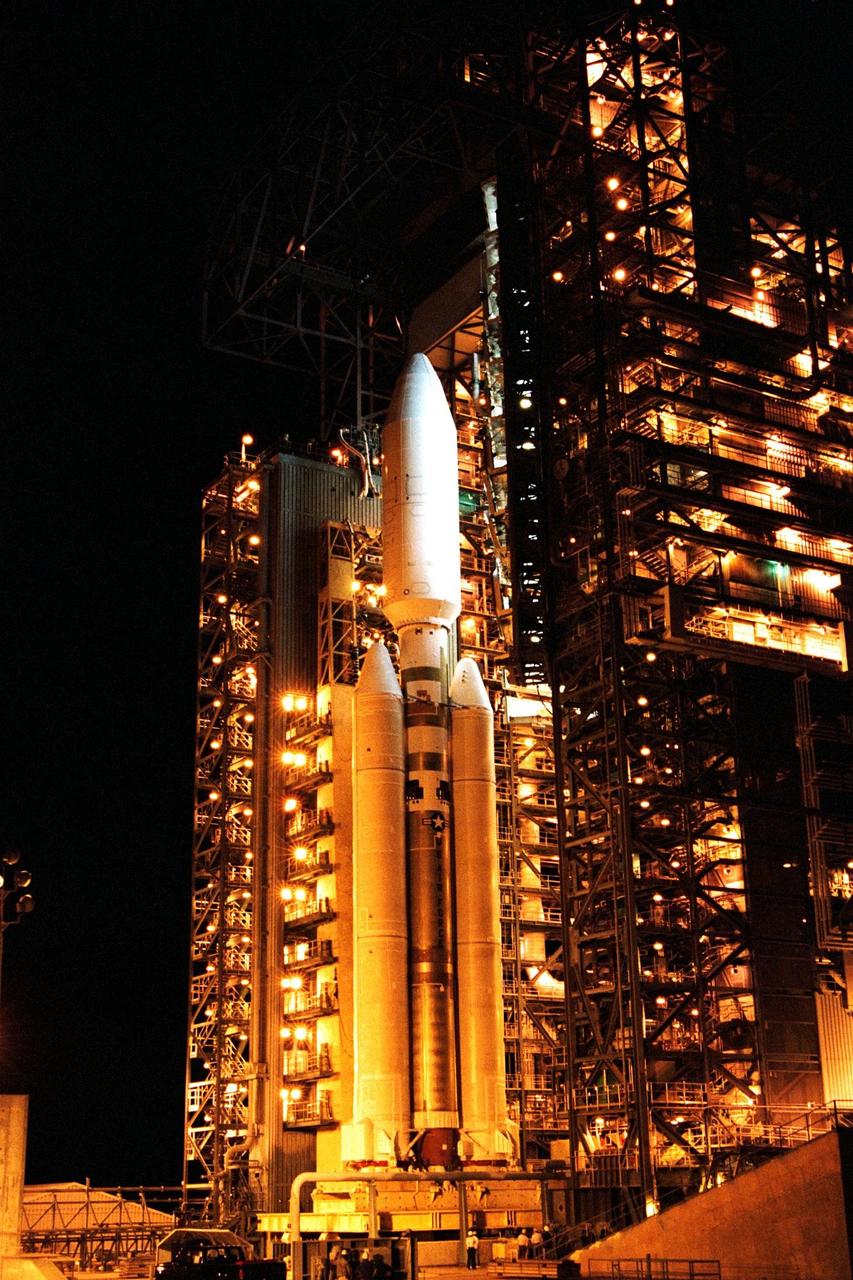
At Launch Complex 40 on Cape Canaveral Air Station, the Mobile Service Tower is being rolled away from the Titan IVB/Centaur launch vehicle carrying the Cassini spacecraft, completing a major countdown milestone. This is the second launch attempt for the Saturn-bound mission; a first try Oct. 13 was scrubbed primarily due to concerns about upper level wind conditions. Liftoff Oct. 15 is set to occur during a launch window opening at 4:43 a.m. EDT and extending until 7:03 a.m
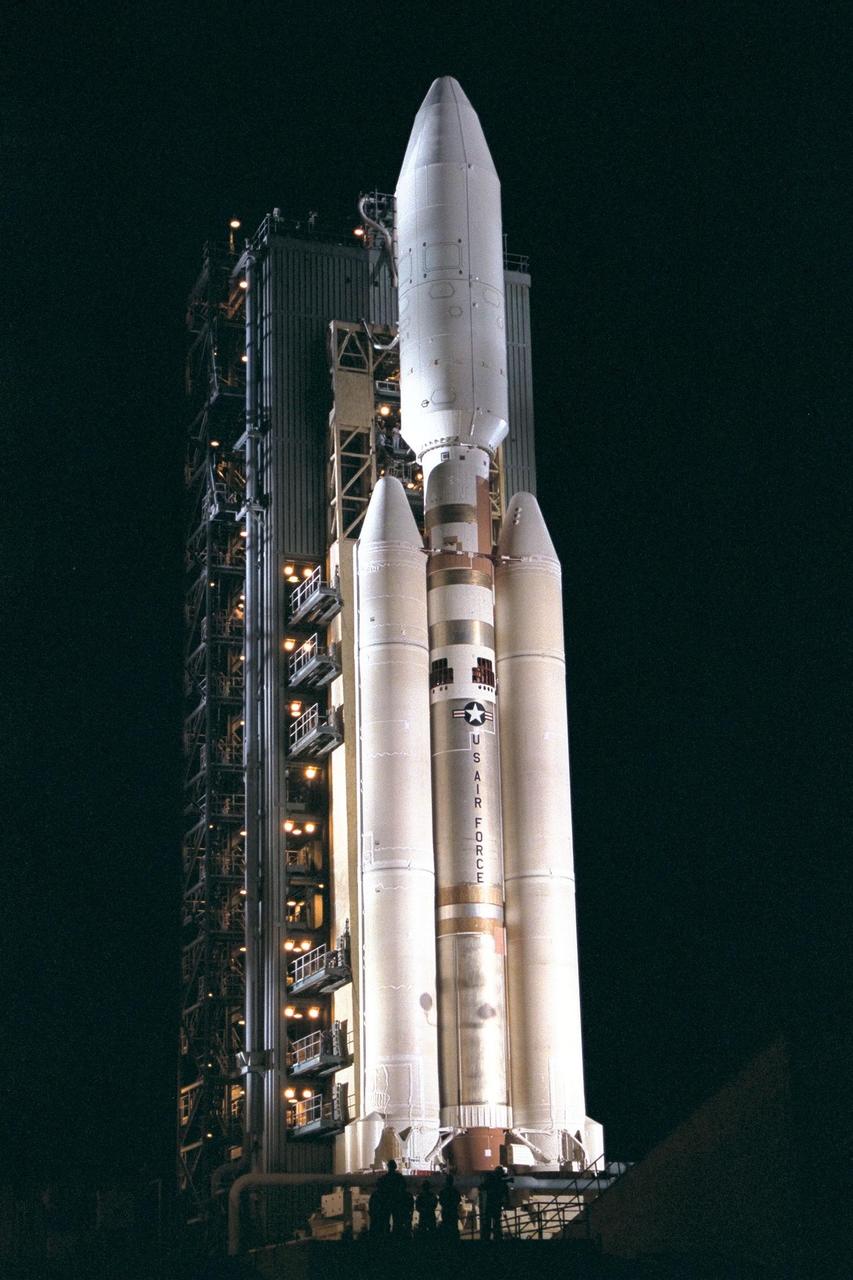
At Launch Complex 40 on Cape Canaveral Air Station, the Mobile Service Tower has been retracted away from the Titan IVB/Centaur carrying the Cassini spacecraft, marking a major milestone in the launch countdown sequence. Retraction of the structure began about an hour later than scheduled due to minor problems with ground support equipment. The launch vehicle, Cassini spacecraft and attached Centaur stage encased in a payload fairing, altogether stand about 183 feet tall; mounted at the base of the launch vehicle are two upgraded solid rocket motors. Liftoff of Cassini on the journey to Saturn and its moon Titan is slated to occur during a window opening at 4:55 a.m. EDT, Oct. 13, and extending through 7:15 a.m
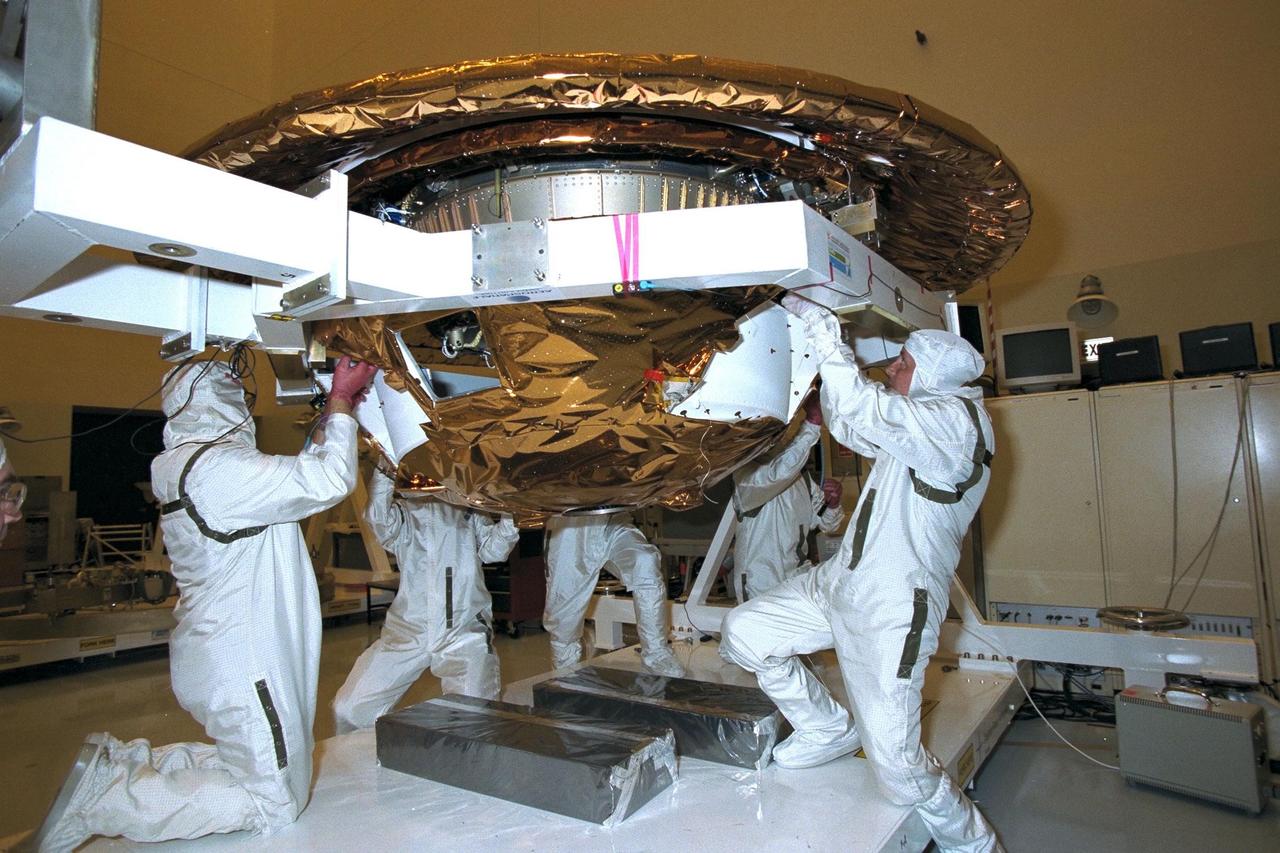
Dornier Satelliten Systeme (DSS) workers place the back cover of the Huygens probe under its front heat shield in the Payload Hazardous Servicing Facility (PHSF) at KSC. The spacecraft was returned to the PHSF after damage to thermal insulation was discovered inside Huygens from an abnormally high flow of conditioned air. Internal inspection, insulation repair and a cleaning of the probe were required. Mission managers are targeting a mid-October launch date after the Cassini spacecraft, aboard which Huygens will be launched, returns to the pad and is once again placed atop its Titan IVB expendable launch vehicle at Launch Pad 40 at Cape Canaveral Air Station
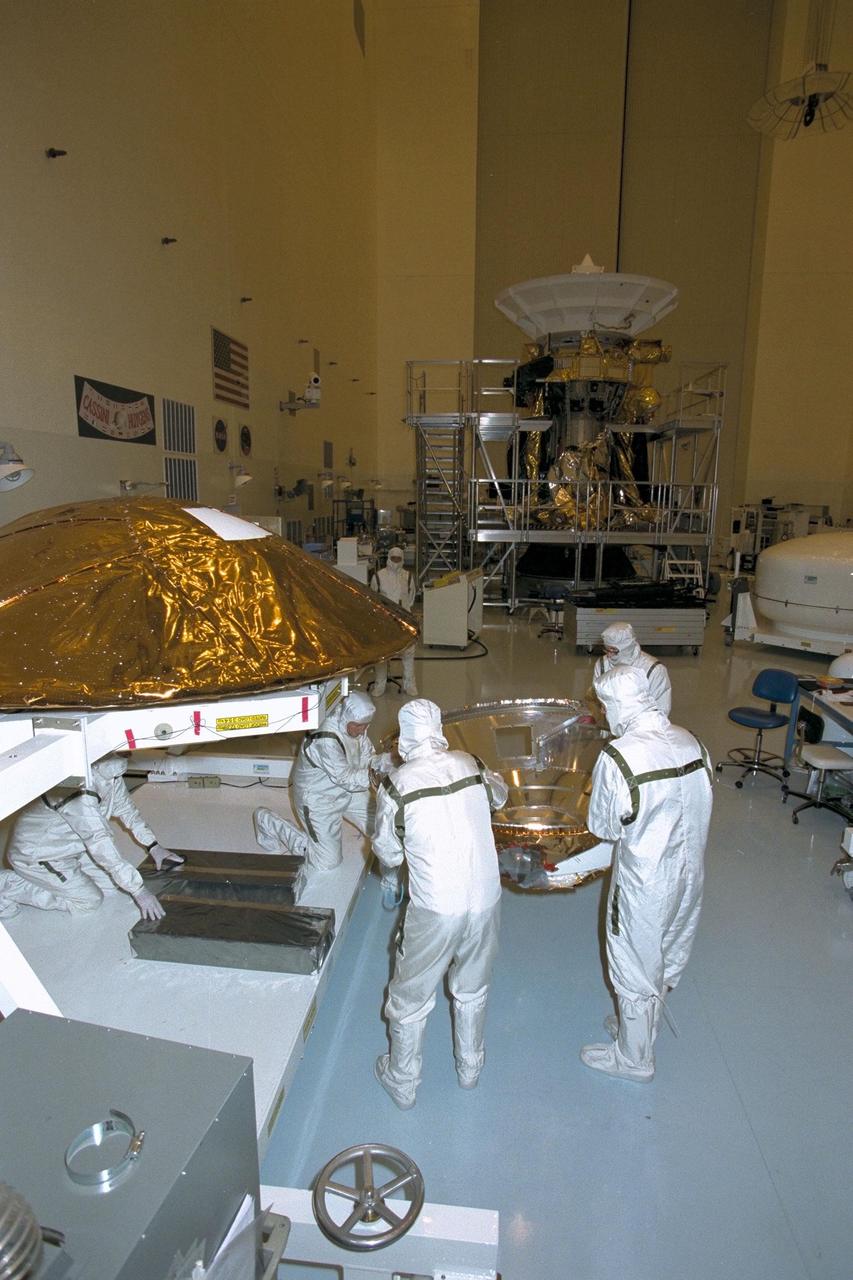
Dornier Satelliten Systeme (DSS) workers place the back cover of the Huygens probe under its front heat shield in the Payload Hazardous Servicing Facility (PHSF) at KSC. The spacecraft was returned to the PHSF after damage to thermal insulation was discovered inside Huygens from an abnormally high flow of conditioned air. Internal inspection, insulation repair and a cleaning of the probe were required. Mission managers are targeting a mid-October launch date after the Cassini spacecraft, aboard which Huygens will be launched, returns to the pad and is once again placed atop its Titan IVB expendable launch vehicle at Launch Pad 40 at Cape Canaveral Air Station
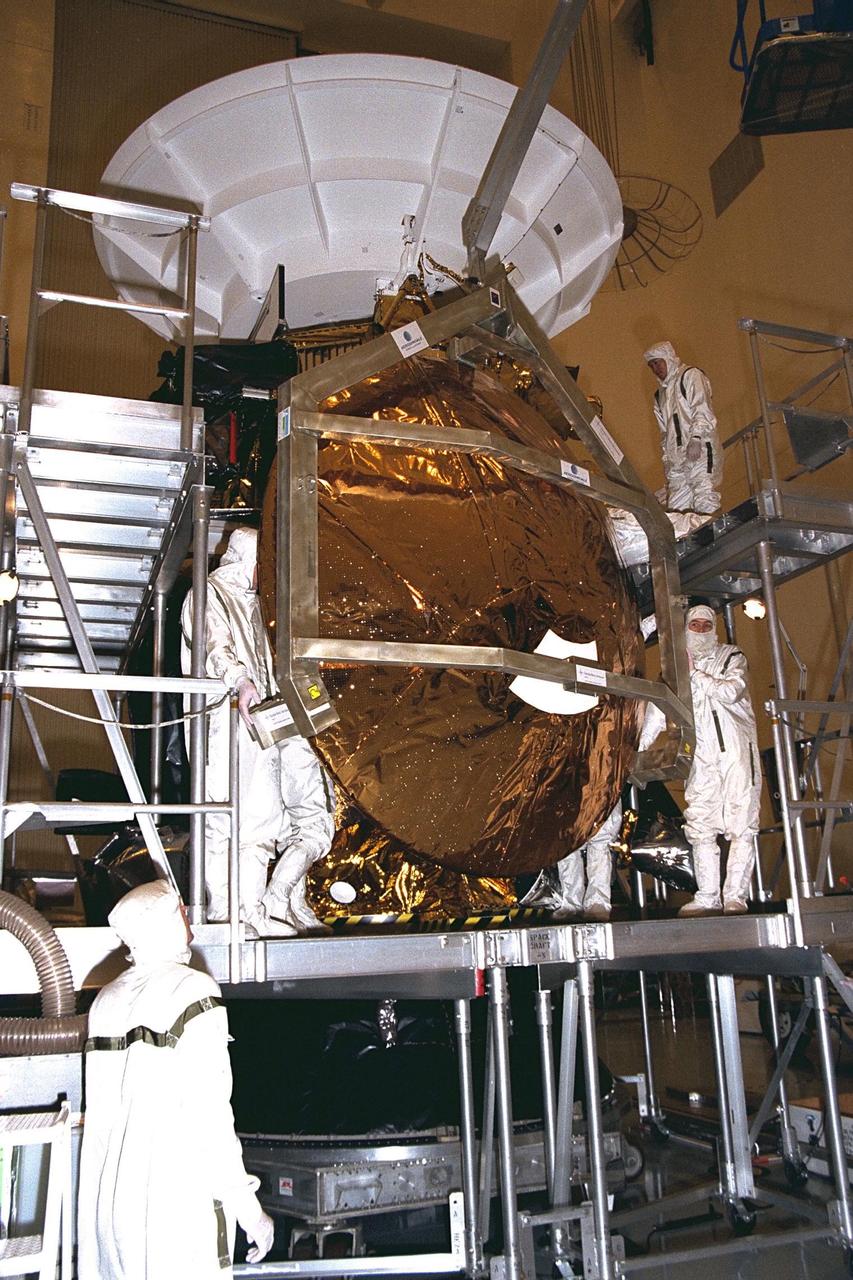
Workers remove the Huygens probe from the Cassini spacecraft in the Payload Hazardous Servicing Facility (PHSF) at KSC. The spacecraft was returned to the PHSF after damage to thermal insulation was discovered inside Huygens from an abnormally high flow of conditioned air. Further internal inspection, insulation repair and a cleaning of the probe are now required. Mission managers are targeting a mid-October launch date after Cassini returns to the pad and is once again placed atop its Titan IVB expendable launch vehicle at Launch Pad 40 at Cape Canaveral Air Station
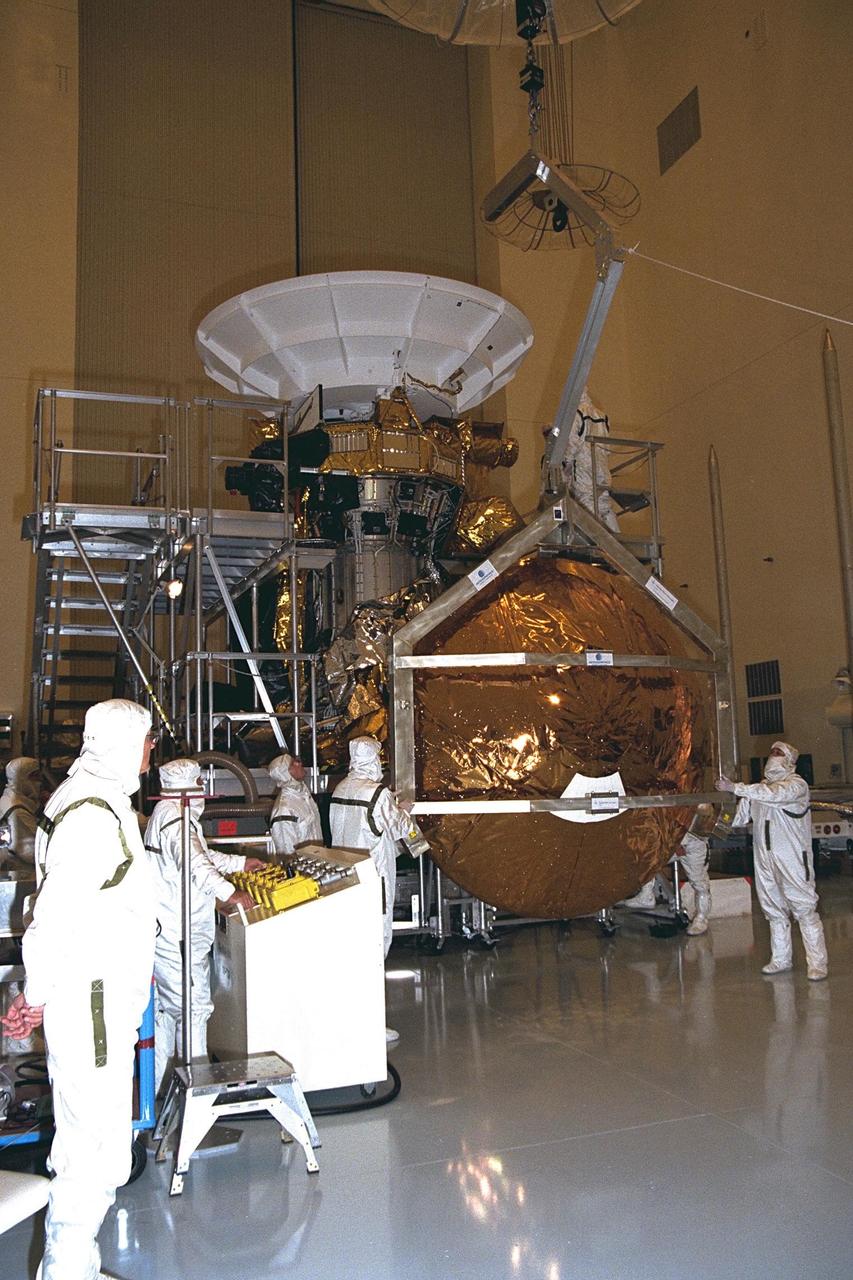
Workers remove the Huygens probe from the Cassini spacecraft in the Payload Hazardous Servicing Facility (PHSF) at KSC. The spacecraft was returned to the PHSF after damage to thermal insulation was discovered inside Huygens from an abnormally high flow of conditioned air. Further internal inspection, insulation repair and a cleaning of the probe are now required. Mission managers are targeting a mid-October launch date after Cassini returns to the pad and is once again placed atop its Titan IVB expendable launch vehicle at Launch Pad 40 at Cape Canaveral Air Station
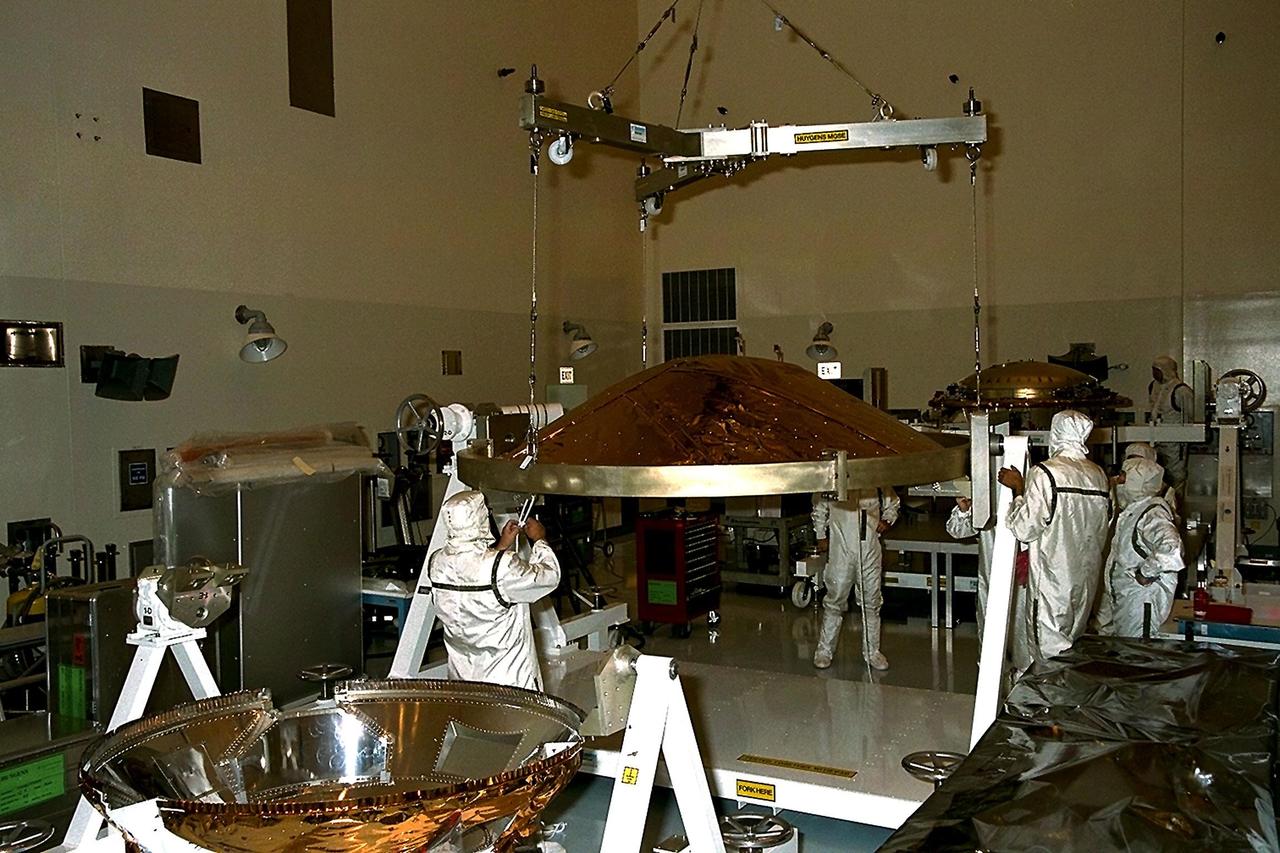
Dornier Satelliten Systeme (DSS) workers lift the front heat shield of the Huygens probe in the Payload Hazardous Servicing Facility (PHSF) at KSC. The spacecraft was returned to the PHSF after damage to thermal insulation was discovered inside Huygens from an abnormally high flow of conditioned air. Internal inspection, insulation repair and a cleaning of the probe were required. Mission managers are targeting a mid-October launch date after the Cassini spacecraft, aboard which Huygens will be launched, returns to the pad and is once again placed atop its Titan IVB expendable launch vehicle at Launch Pad 40 at Cape Canaveral Air Station
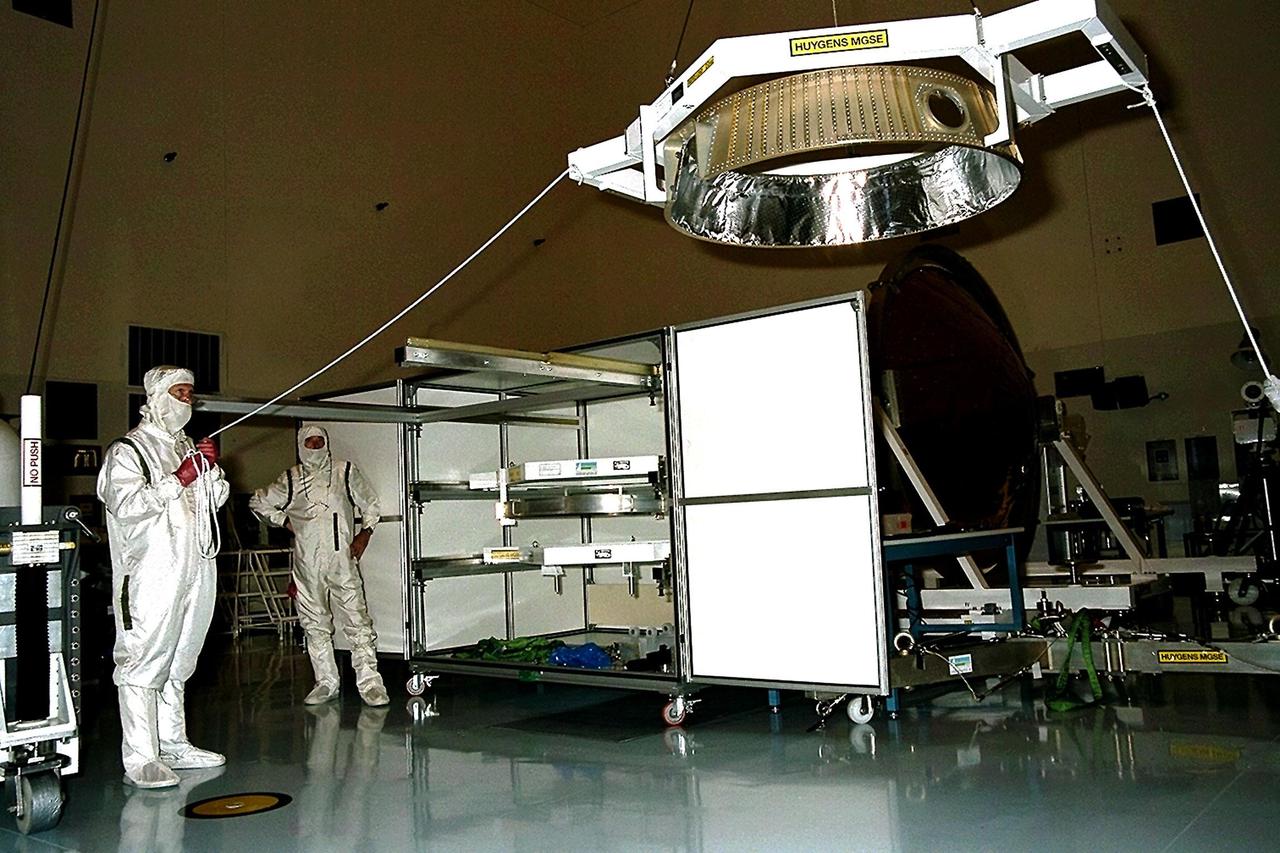
Dornier Satelliten Systeme (DSS) workers lift part of the Huygens probe aft cover assembly in the Payload Hazardous Servicing Facility (PHSF) at KSC. The spacecraft was returned to the PHSF after damage to thermal insulation was discovered inside Huygens from an abnormally high flow of conditioned air. Internal inspection, insulation repair and a cleaning of the probe were required. Mission managers are targeting a mid-October launch date after the Cassini spacecraft, aboard which Huygens will be launched, returns to the pad and is once again placed atop its Titan IVB expendable launch vehicle at Launch Pad 40 at Cape Canaveral Air Station
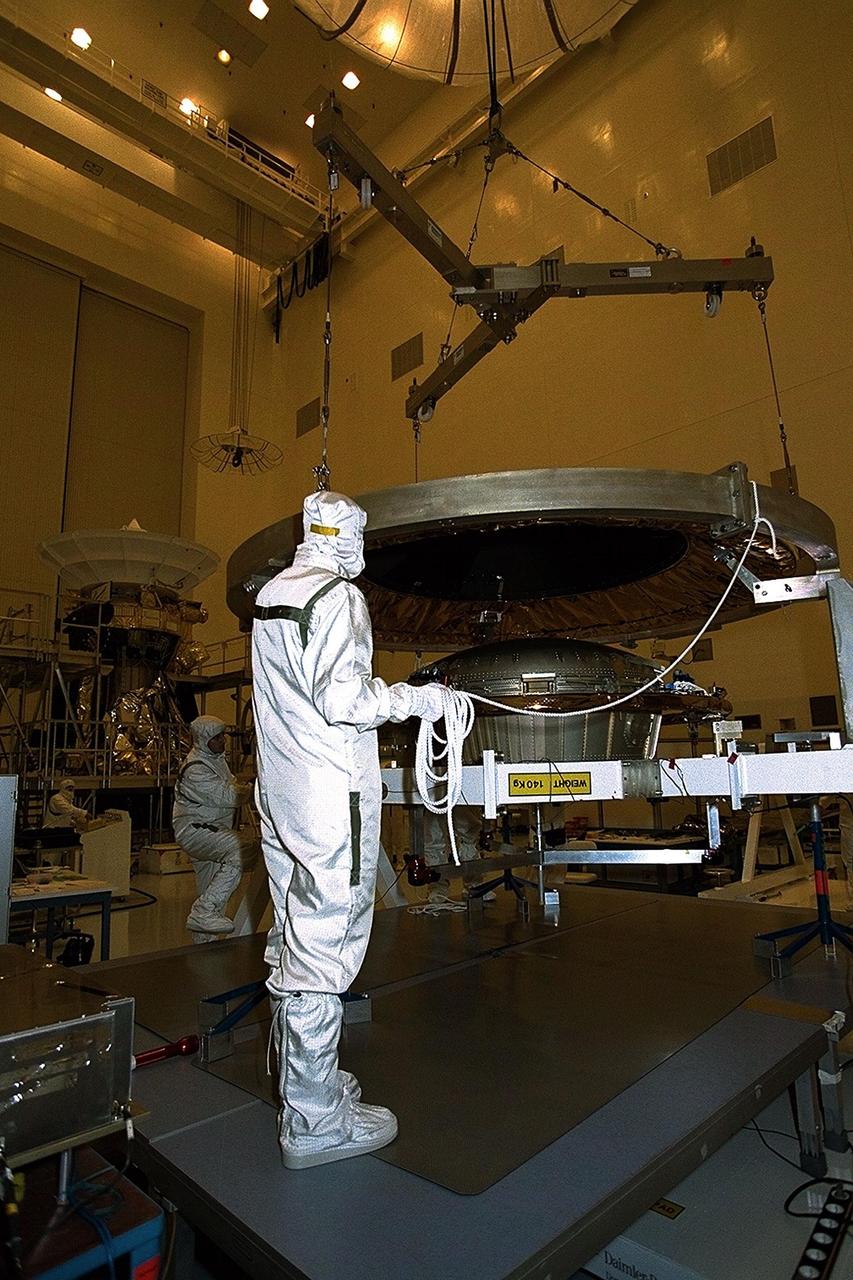
Dornier Satelliten Systeme (DSS) workers lift the heat shield of the Huygens probe in the Payload Hazardous Servicing Facility (PHSF) at KSC. The spacecraft was returned to the PHSF after damage to thermal insulation was discovered inside Huygens from an abnormally high flow of conditioned air. Internal inspection, insulation repair and a cleaning of the probe were required. Mission managers are targeting a mid-October launch date after the Cassini spacecraft, aboard which Huygens will be launched, returns to the pad and is once again placed atop its Titan IVB expendable launch vehicle at Launch Pad 40 at Cape Canaveral Air Station
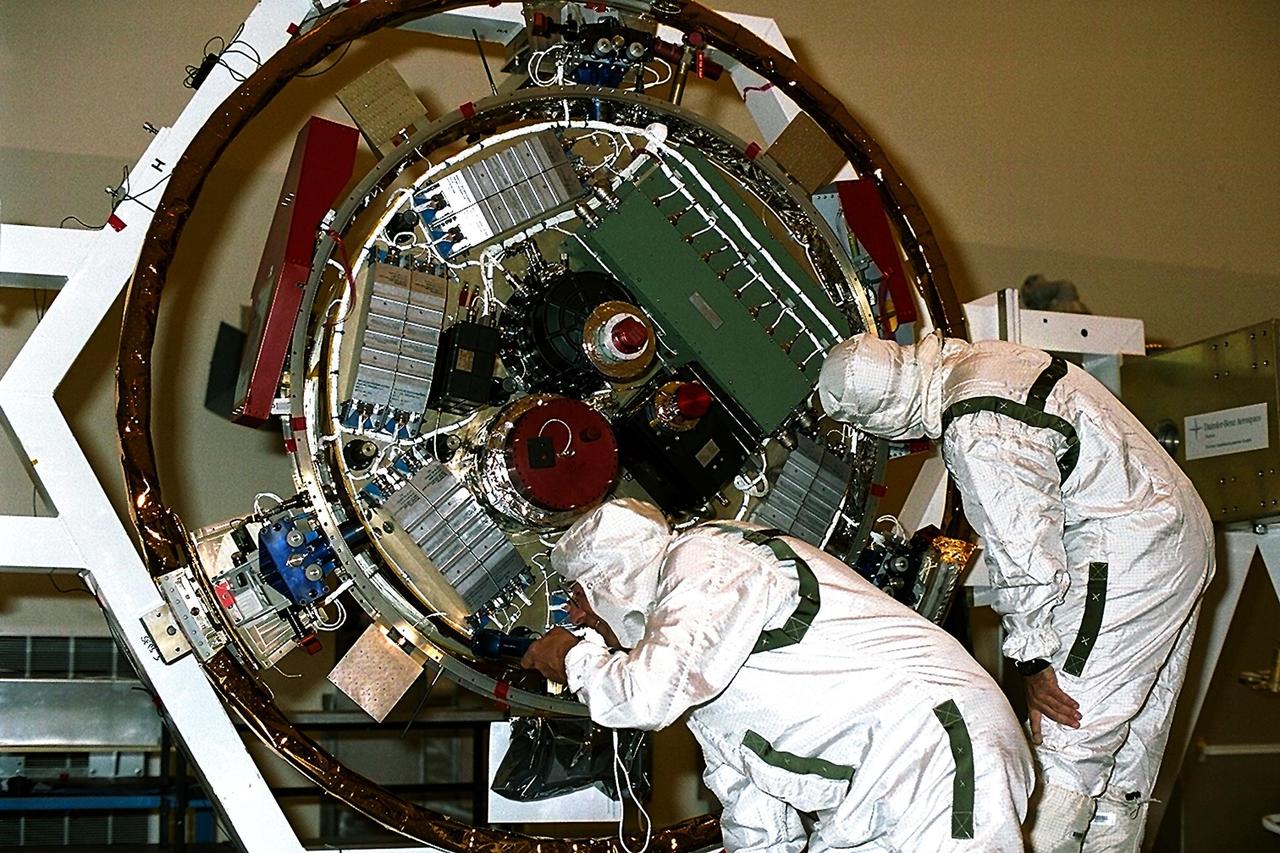
Jet Propulsion Laboratory (JPL) workers examine the Huygens probe after removal from the Cassini spacecraft in the Payload Hazardous Servicing Facility (PHSF) at KSC. The spacecraft was returned to the PHSF after damage to thermal insulation was discovered inside Huygens from an abnormally high flow of conditioned air. Internal inspection, insulation repair and a cleaning of the probe were required. Mission managers are targeting a mid-October launch date after Cassini returns to the pad and is once again placed atop its Titan IVB expendable launch vehicle at Launch Pad 40 at Cape Canaveral Air Station

Jet Propulsion Laboratory (JPL) engineers examine the interface surface on the Cassini spacecraft prior to installation of the third radioisotope thermoelectric generator (RTG). The other two RTGs, at left, already are installed on Cassini. The three RTGs will be used to power Cassini on its mission to the Saturnian system. They are undergoing mechanical and electrical verification testing in the Payload Hazardous Servicing Facility. RTGs use heat from the natural decay of plutonium to generate electric power. The generators enable spacecraft to operate far from the Sun where solar power systems are not feasible. The Cassini mission is scheduled for an Oct. 6 launch aboard a Titan IVB/Centaur expendable launch vehicle. Cassini is built and managed for NASA by JPL
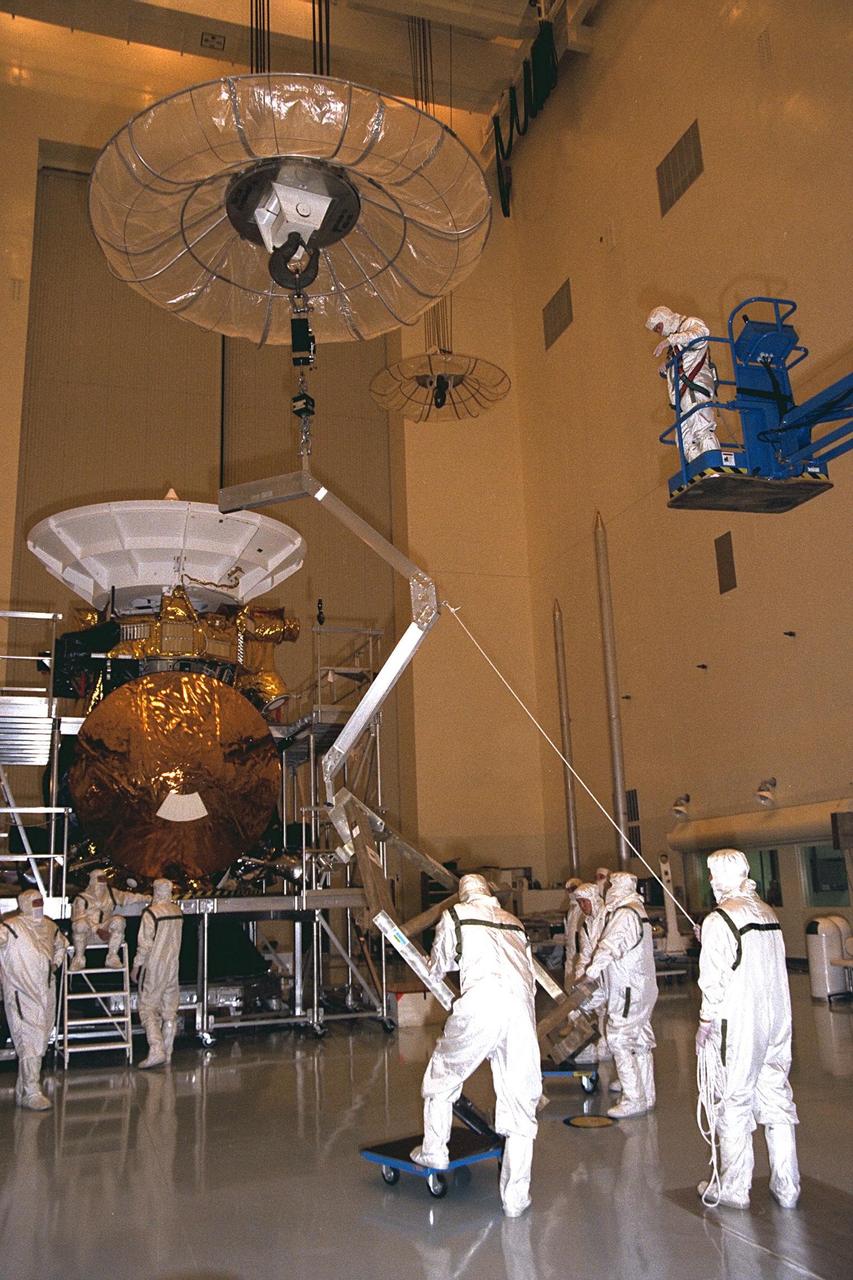
Workers remove the Huygens probe from the Cassini spacecraft in the Payload Hazardous Servicing Facility (PHSF) at KSC. The spacecraft was returned to the PHSF after damage to thermal insulation was discovered inside Huygens from an abnormally high flow of conditioned air. Further internal inspection, insulation repair and a cleaning of the probe are now required. Mission managers are targeting a mid-October launch date after Cassini returns to the pad and is once again placed atop its Titan IVB expendable launch vehicle at Launch Pad 40 at Cape Canaveral Air Station
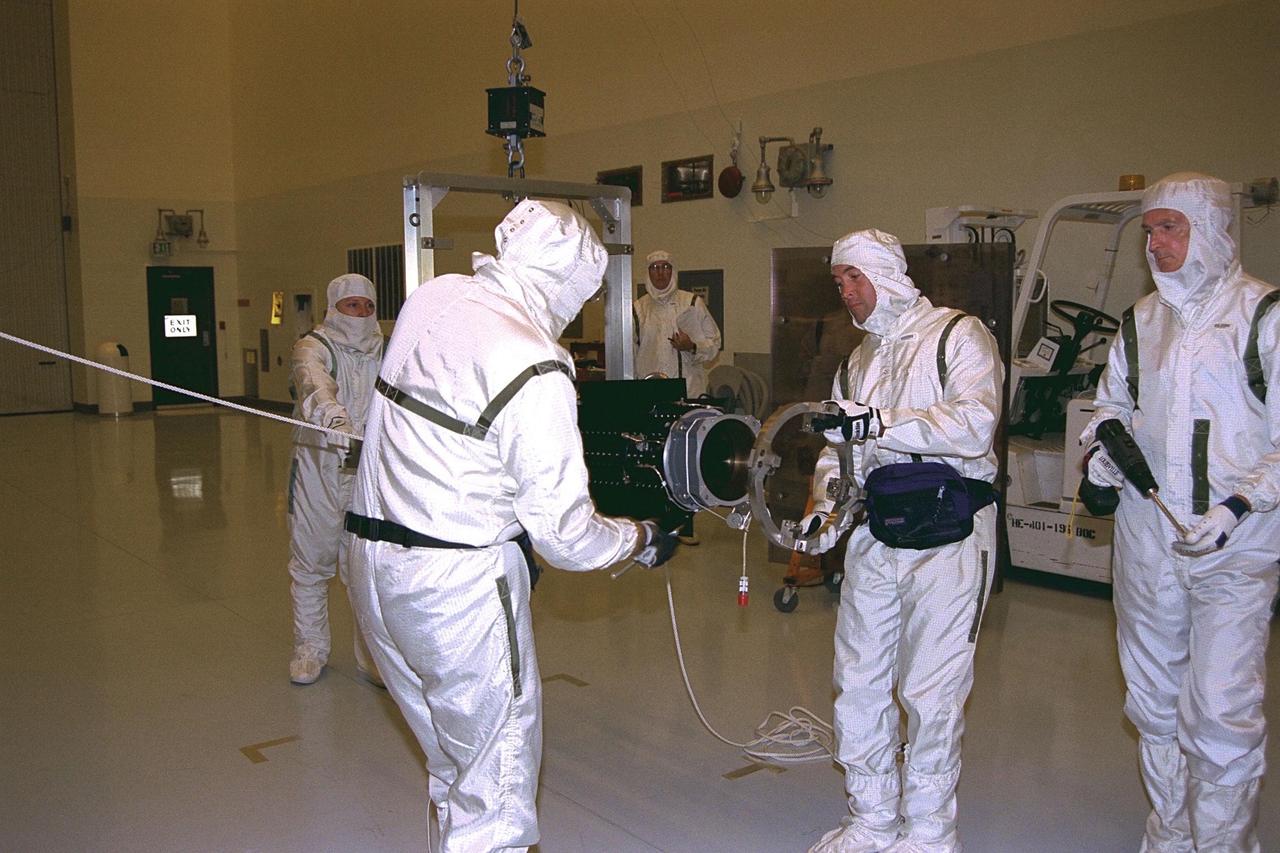
Workers in the Payload Hazardous Servicing Facility remove the storage collar from a radioisotope thermoelectric generator (RTG) in preparation for installation on the Cassini spacecraft. Cassini will be outfitted with three RTGs. The power units are undergoing mechanical and electrical verification tests in the PHSF. The RTGs will provide electrical power to Cassini on its 6.7-year trip to the Saturnian system and during its four-year mission at Saturn. RTGs use heat from the natural decay of plutonium to generate electric power. The generators enable spacecraft to operate at great distances from the Sun where solar power systems are not feasible. The Cassini mission is targeted for an Oct. 6 launch aboard a Titan IVB/Centaur expendable launch vehicle

Dornier Satelliten Systeme (DSS) workers lift the heat shield of the Huygens probe in the Payload Hazardous Servicing Facility (PHSF) at KSC. The spacecraft was returned to the PHSF after damage to thermal insulation was discovered inside Huygens from an abnormally high flow of conditioned air. Internal inspection, insulation repair and a cleaning of the probe were required. Mission managers are targeting a mid-October launch date after the Cassini spacecraft, aboard which Huygens will be launched, returns to the pad and is once again placed atop its Titan IVB expendable launch vehicle at Launch Pad 40 at Cape Canaveral Air Station
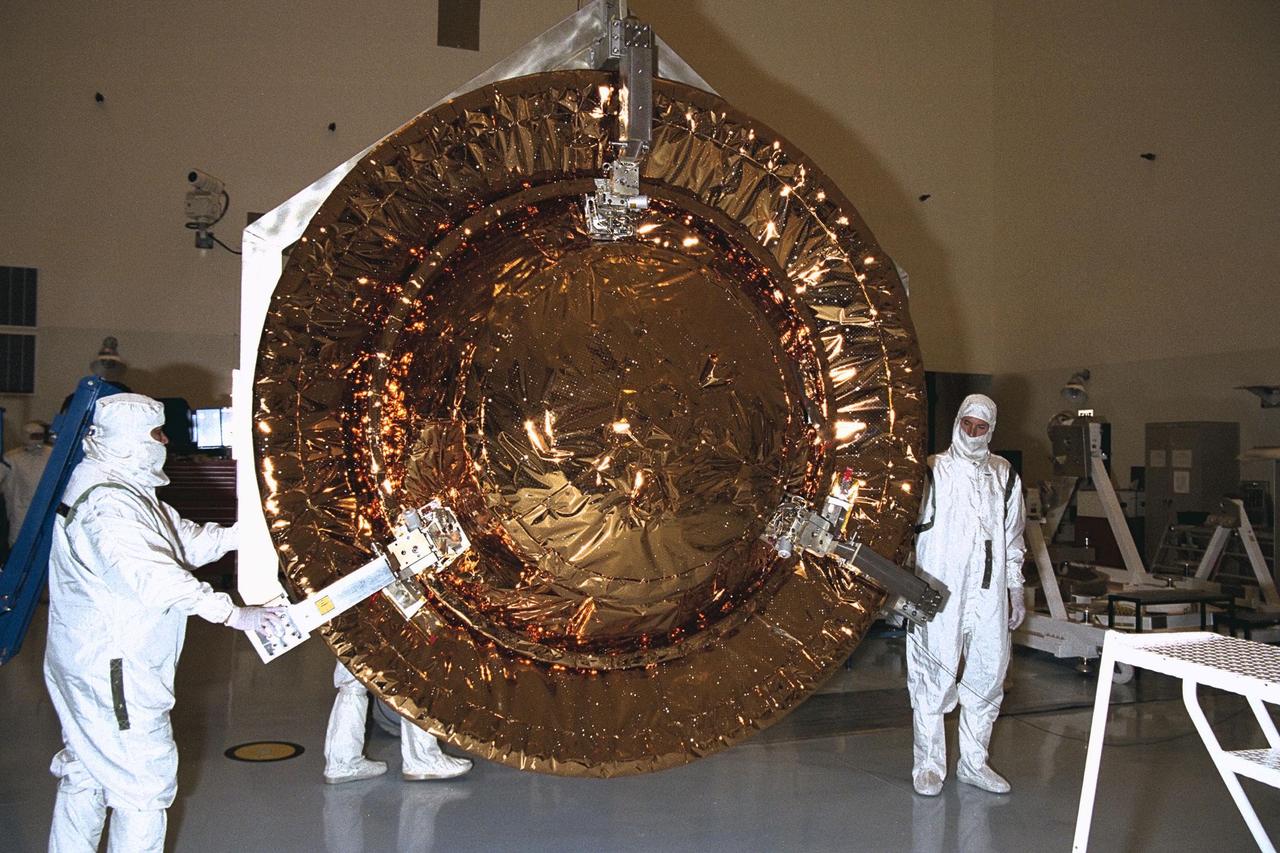
Jet Propulsion Laboratory (JPL) workers remove the Huygens probe from the Cassini spacecraft in the Payload Hazardous Servicing Facility (PHSF) at KSC. The spacecraft was returned to the PHSF after damage to thermal insulation was discovered inside Huygens from an abnormally high flow of conditioned air. Further internal inspection, insulation repair and a cleaning of the probe are now required. Mission managers are targeting a mid-October launch date after Cassini returns to the pad and is once again placed atop its Titan IVB expendable launch vehicle at Launch Pad 40 at Cape Canaveral Air Station
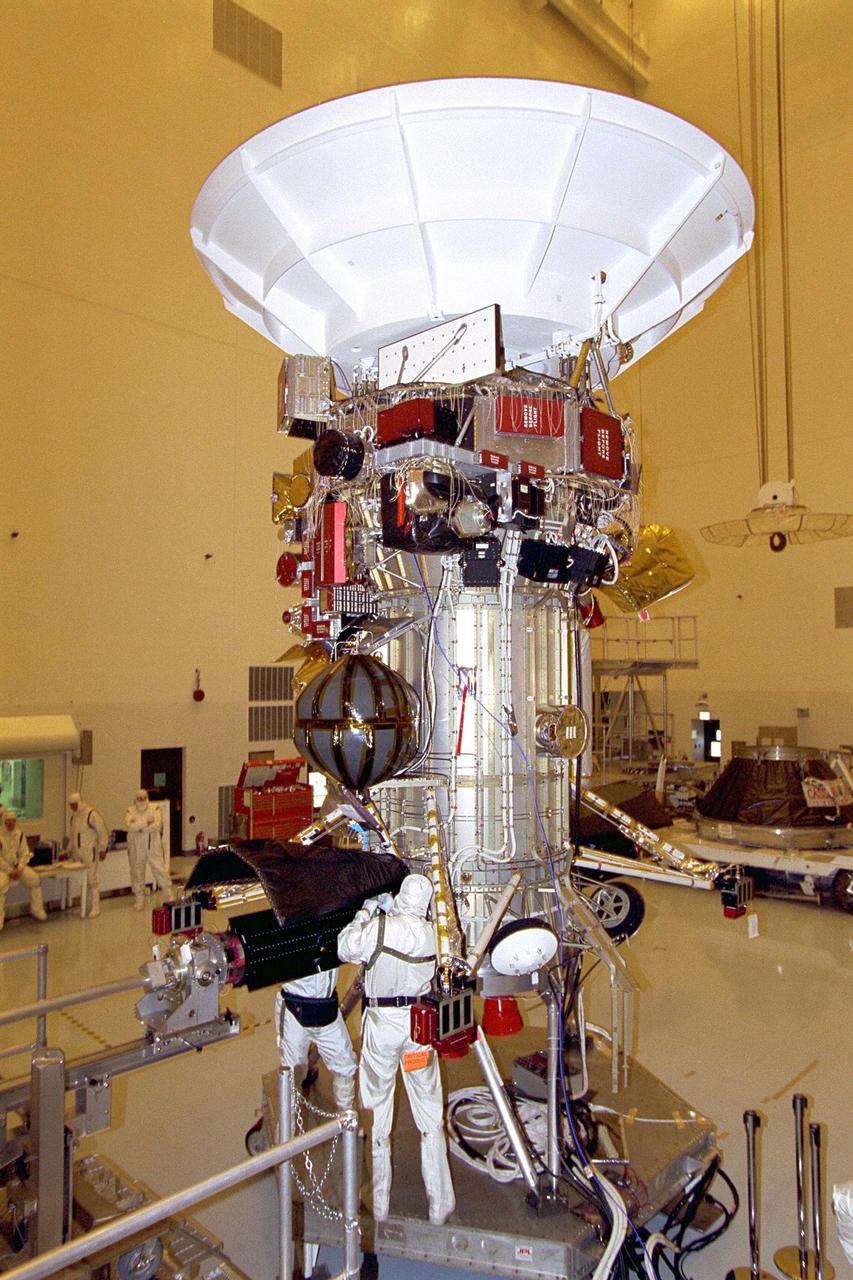
Jet Propulsion Laboratory (JPL) workers Dan Maynard and John Shuping prepare to install a radioisotope thermoelectric generator (RTG) on the Cassini spacecraft in the Payload Hazardous Servicing Facility (PHSF). The three RTGs which will provide electrical power to Cassini on its mission to the Saturnian system are undergoing mechanical and electrical verification testing in the PHSF. RTGs use heat from the natural decay of plutonium to generate electric power. The generators enable spacecraft to operate far from the Sun where solar power systems are not feasible. The Cassini mission is scheduled for an Oct. 6 launch aboard a Titan IVB/Centaur expendable launch vehicle. Cassini is built and managed for NASA by JPL
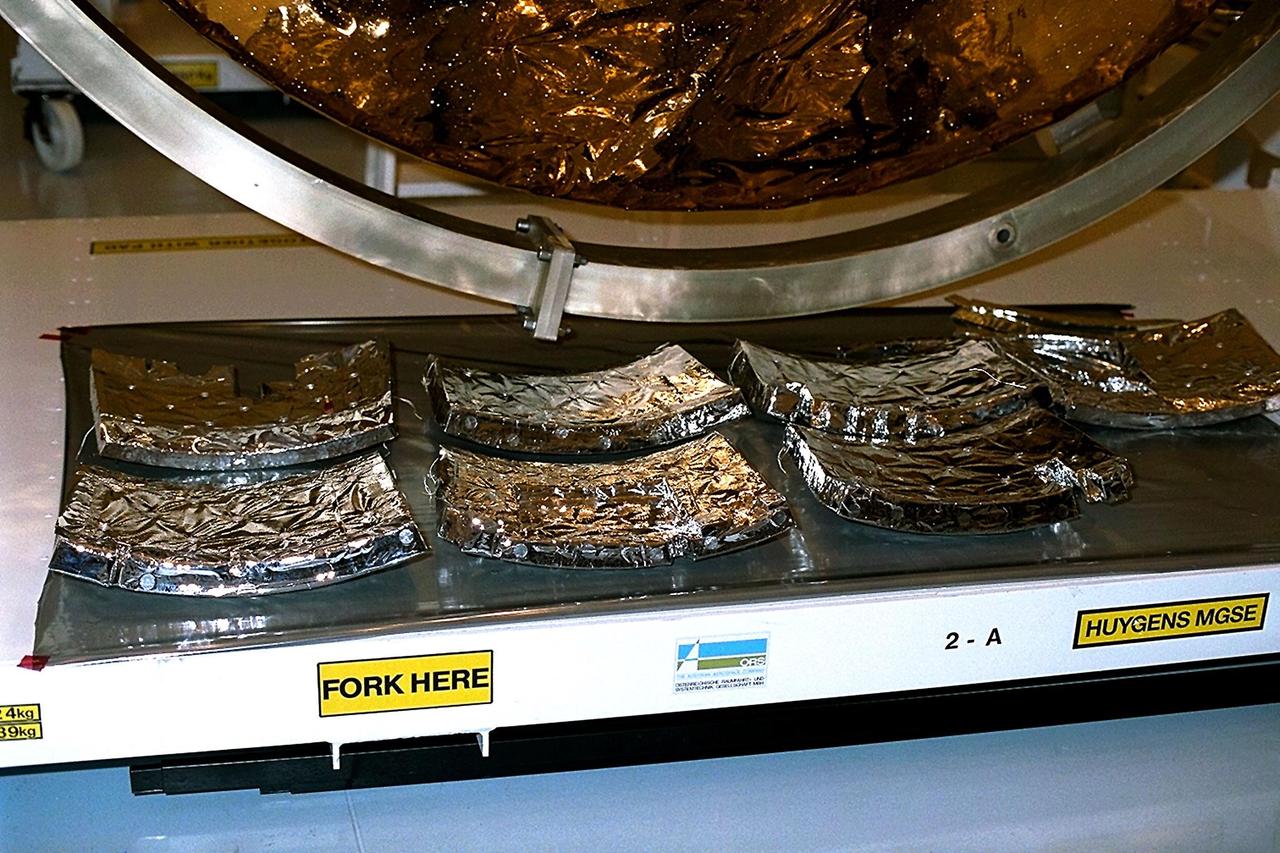
Pieces of the Huygens probe internal insulating foam await inspection after removal from the probe in the Payload Hazardous Servicing Facility (PHSF) at KSC. The spacecraft was returned to the PHSF after damage to thermal insulation was discovered inside Huygens from an abnormally high flow of conditioned air. Internal inspection, insulation repair and a cleaning of the probe were required. Mission managers are targeting a mid-October launch date after Cassini returns to the pad and is once again placed atop its Titan IVB expendable launch vehicle at Launch Pad 40 at Cape Canaveral Air Station
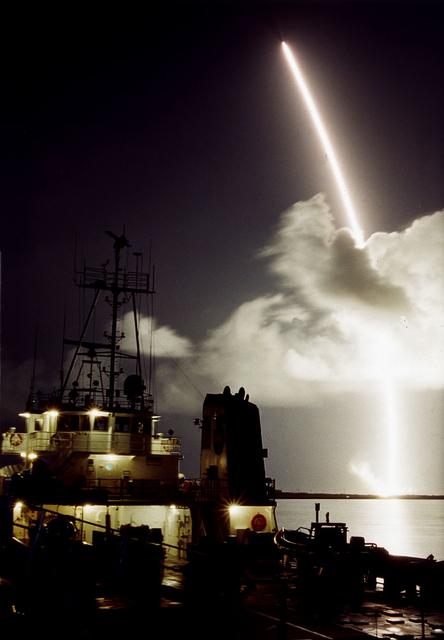
The 7-year journey to Saturn began with the liftoff of a Titan IVB/ Centaur carrying the Cassini orbiter and its attached Huygens probe. After a 2.2-billion mile journey that included two swingbys of Venus and one of the Earth to gain additional velocity, the two-story tall spacecraft will arrive at Saturn in July 2004. The orbiter will circle the planet for 4 years, its compliment of 12 scientific instruments gathering data about Saturn's atmosphere, rings and magnetosphere and conducting close-up observations of Saturnian moons. Huygens, with a separate suite of 6 science instruments, will separate from Cassini to fly on a ballistic trajectory toward Titan, the only celestial body besides Earth to have an atmosphere rich in nitrogen. Scientists are eager to study further this chemical similarity in hopes of learning more about the origins of our own planet Earth. Huygens will provide the first direct sampling of Titan's atmospheric chemistry and the first detailed photographs of its surface. The Cassini mission is an International effort involving NASA, the European Space Agency (ESA), and the Italian Space Agency, Agenzia Spaziale Italiana (ASI).
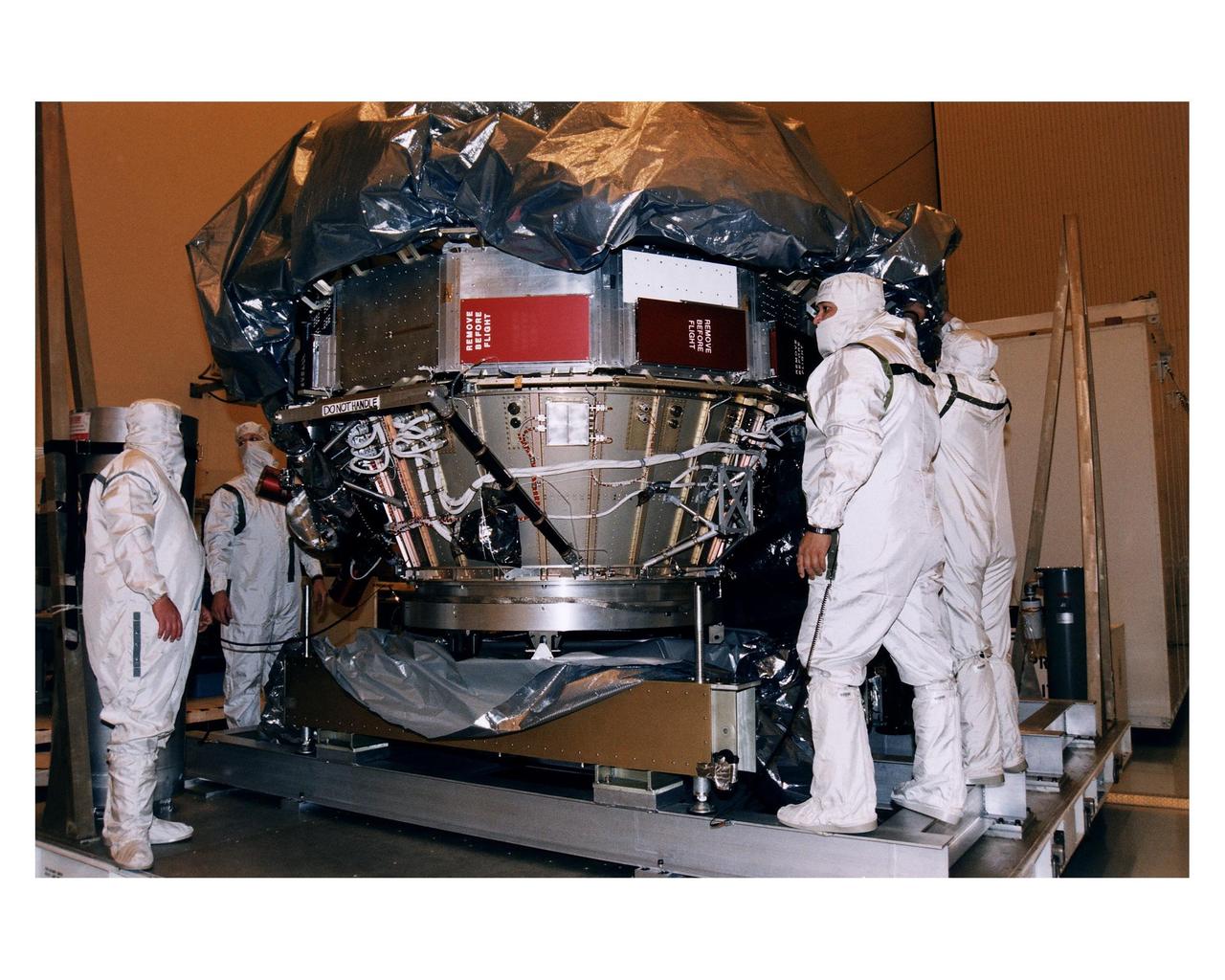
Workers in the Payload Hazardous Servicing Facility (PHSF) stand around the upper experiment module and base of the Cassini orbiter during prelaunch processing, testing and integration in that facility. The Cassini orbiter and Huygens probe being processed at KSC are the two primary components of the Cassini spacecraft, which will be launched on a Titan IVB/Centaur expendable launch vehicle from Cape Canaveral Air Station. Cassini will explore Saturn, its rings and moons for four years. The Huygens probe, designed and developed for the European Space Agency (ESA), will be deployed from the orbiter to study the clouds, atmosphere and surface of Saturn’s largest moon, Titan. The orbiter was designed and assembled at NASA’s Jet Propulsion Laboratory in California. Following postflight inspections, integration of the 12 science instruments not already installed on the orbiter will be completed. Then, the parabolic high-gain antenna and the propulsion module will be mated to the orbiter, followed by the Huygens probe, which will complete spacecraft integration. The Cassini mission is targeted for an Oct. 6 launch to begin its 6.7-year journey to the Saturnian system. Arrival at the planet is expected to occur around July 1, 2004
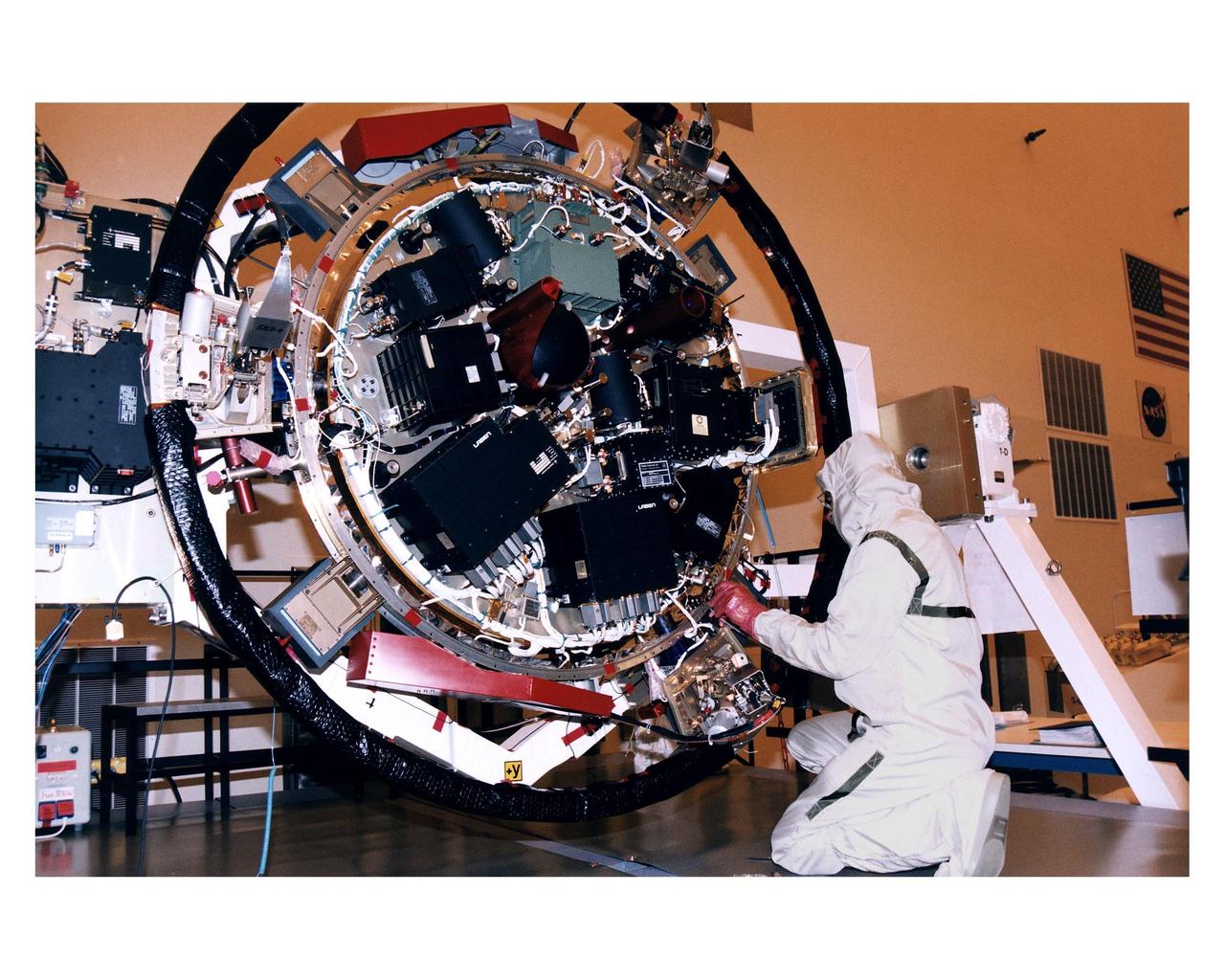
An employee in the Payload Hazardous Servicing Facility (PHSF) works on the top side of the experiment platform for the Huygens probe that will accompany the Cassini orbiter to Saturn during prelaunch processing, testing and integration in that facility. The Huygens probe and the Cassini orbiter being processed at KSC are the two primary components of the Cassini spacecraft, which will be launched on a Titan IVB/Centaur expendable launch vehicle from Cape Canaveral Air Station. Cassini will explore Saturn, its rings and moons for four years. The Huygens probe, designed and developed for the European Space Agency (ESA), will be deployed from the orbiter to study the clouds, atmosphere and surface of Saturn’s largest moon, Titan. The orbiter was designed and assembled at NASA’s Jet Propulsion Laboratory in California. Following postflight inspections, integration of the 12 science instruments not already installed on the orbiter will be completed. Then, the parabolic high-gain antenna and the propulsion module will be mated to the orbiter, followed by the Huygens probe, which will complete spacecraft integration. The Cassini mission is targeted for an Oct. 6 launch to begin its 6.7-year journey to the Saturnian system. Arrival at the planet is expected to occur around July 1, 2004
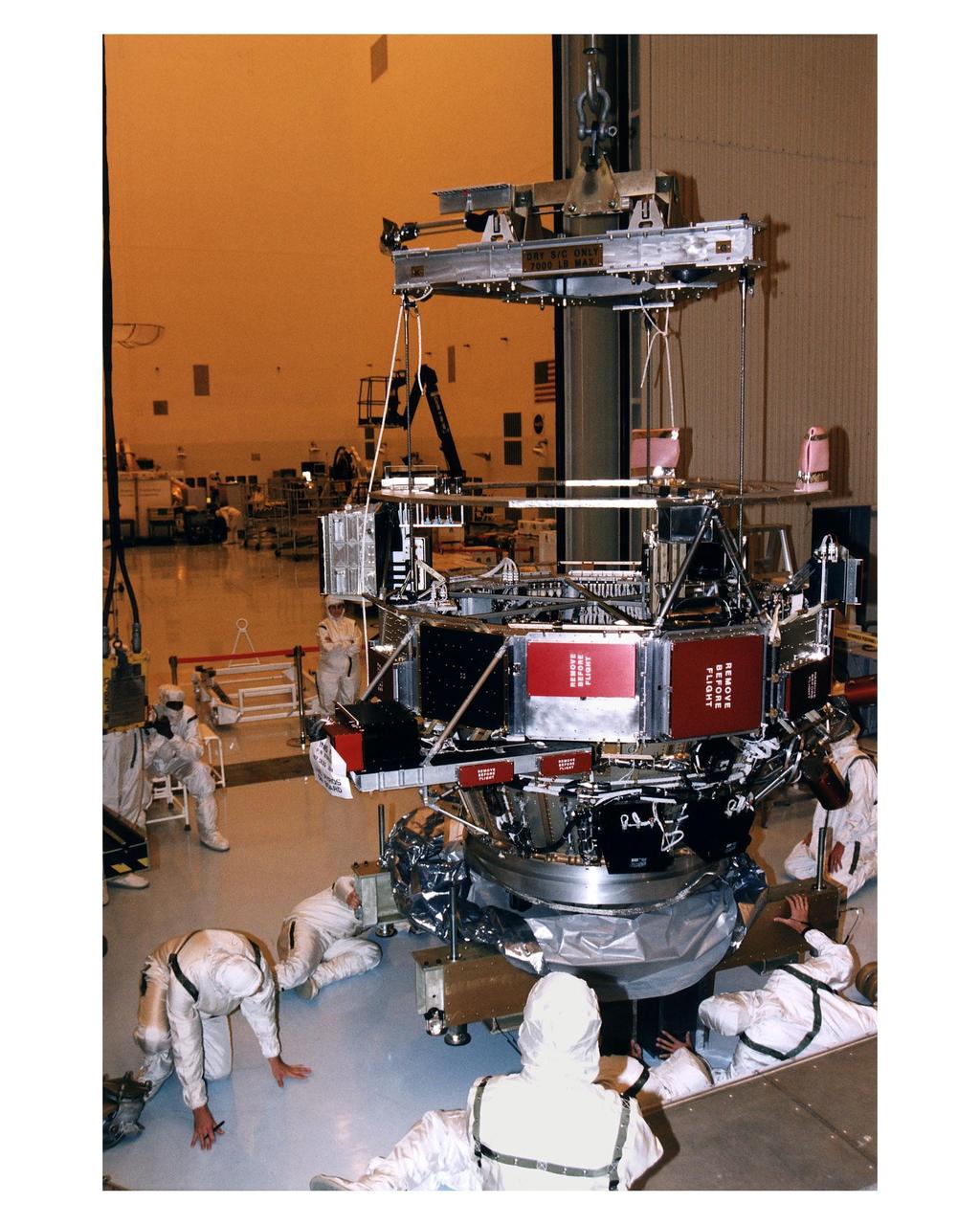
Employees in the Payload Hazardous Servicing Facility (PHSF) lower the upper experiment module and base of the Cassini orbiter onto a work stand during prelaunch processing, testing and integration work in that facility. The Cassini orbiter and Huygens probe being processed at KSC are the two primary components of the Cassini spacecraft, which will be launched on a Titan IVB/Centaur expendable launch vehicle from Cape Canaveral Air Station. Cassini will explore Saturn, its rings and moons for four years. The Huygens probe, designed and developed for the European Space Agency (ESA), will be deployed from the orbiter to study the clouds, atmosphere and surface of Saturn’s largest moon, Titan. The orbiter was designed and assembled at NASA’s Jet Propulsion Laboratory in California. Following postflight inspections, integration of the 12 science instruments not already installed on the orbiter will be completed. Then, the parabolic high-gain antenna and the propulsion module will be mated to the orbiter, followed by the Huygens probe, which will complete spacecraft integration. The Cassini mission is targeted for an Oct. 6 launch to begin its 6.7-year journey to the Saturnian system. Arrival at the planet is expected to occur around July 1, 2004
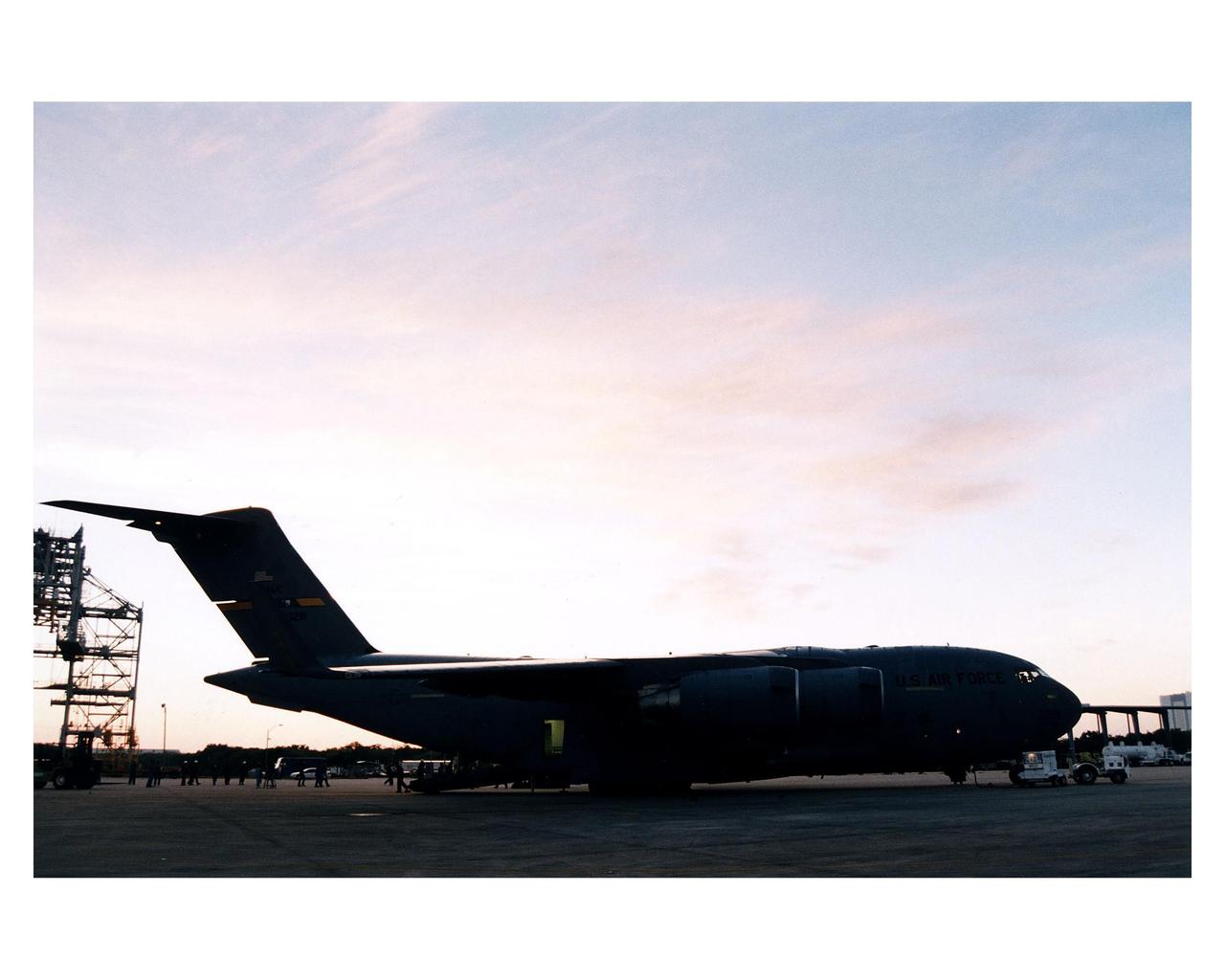
Workers begin unloading the Cassini orbiter from a U.S. Air Force C-17 air cargo plane after its <a href="http://www-pao.ksc.nasa.gov/kscpao/release/1997/66-97.htm">arrival</a> at KSC’s Shuttle Landing Facility from Edwards Air Force Base, California. The orbiter and the Huygens probe already being processed at KSC are the two primary components of the Cassini spacecraft, which will be launched on a Titan IVB/Centaur expendable launch vehicle from Cape Canaveral Air Station. Cassini will explore Saturn, its rings and moons for four years. The Huygens probe, designed and developed for the European Space Agency (ESA), will be deployed from the orbiter to study the clouds, atmosphere and surface of Saturn’s largest moon, Titan. The orbiter was designed and assembled at NASA’s Jet Propulsion Laboratory in California. Following postflight inspections, integration of the 12 science instruments not already installed on the orbiter will be completed. Then, the parabolic high-gain antenna and the propulsion module will be mated to the orbiter, followed by the Huygens probe, which will complete spacecraft integration. The Cassini mission is targeted for an Oct. 6 launch to begin its 6.7-year journey to the Saturnian system. Arrival at the planet is expected to occur around July 1, 2004
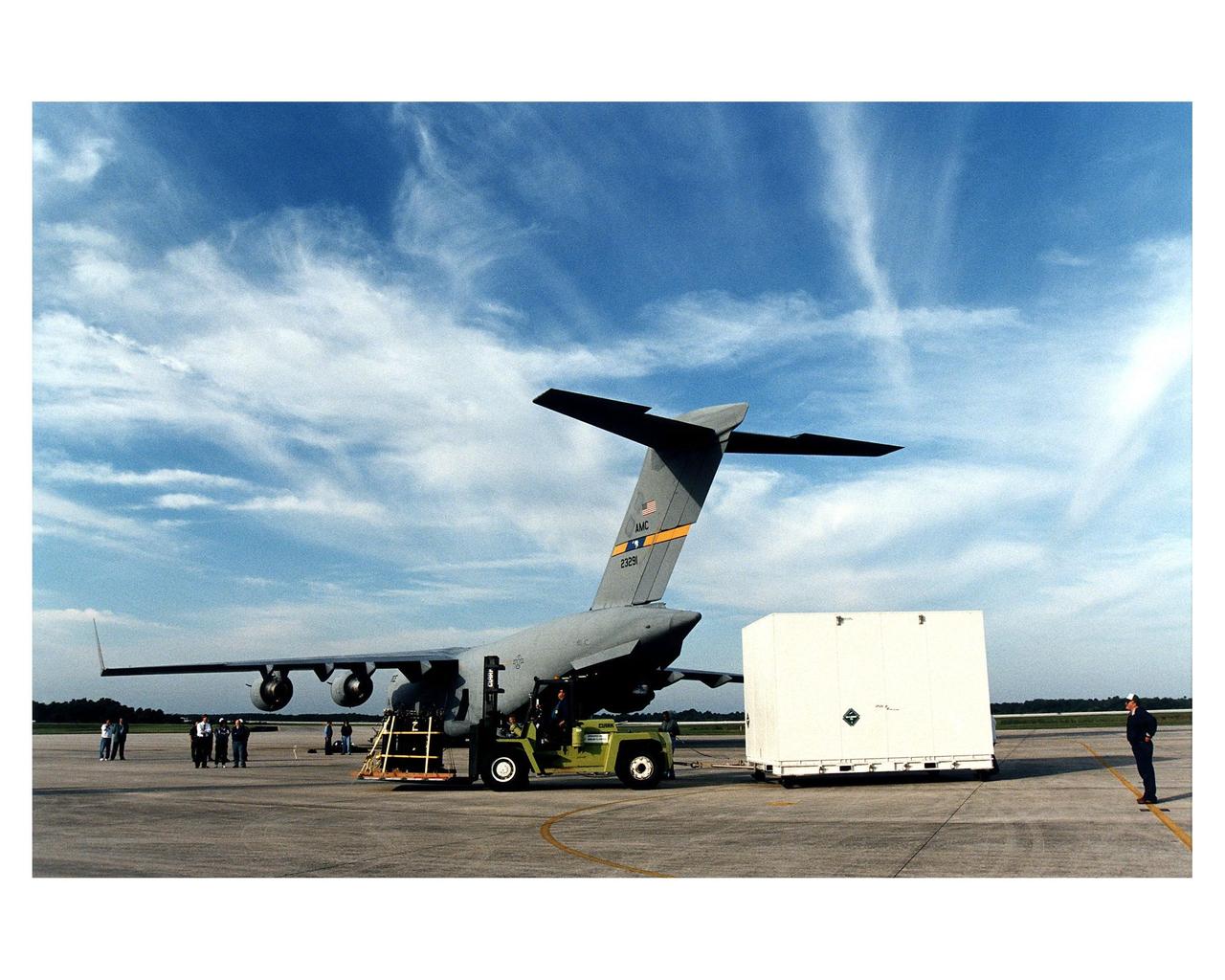
Workers prepare to tow away the large container with the Cassini orbiter from KSC’s Shuttle Landing Facility. The orbiter <a href="http://www-pao.ksc.nasa.gov/kscpao/release/1997/66-97.htm">just arrived</a> on the U.S. Air Force C-17 air cargo plane, shown here, from Edwards Air Force Base, California. The orbiter and the Huygens probe already being processed at KSC are the two primary components of the Cassini spacecraft, which will be launched on a Titan IVB/Centaur expendable launch vehicle from Cape Canaveral Air Station. Cassini will explore Saturn, its rings and moons for four years. The Huygens probe, designed and developed for the European Space Agency (ESA), will be deployed from the orbiter to study the clouds, atmosphere and surface of Saturn’s largest moon, Titan. The orbiter was designed and assembled at NASA’s Jet Propulsion Laboratory in California. Following postflight inspections, integration of the 12 science instruments not already installed on the orbiter will be completed. Then, the parabolic high-gain antenna and the propulsion module will be mated to the orbiter, followed by the Huygens probe, which will complete spacecraft integration. The Cassini mission is targeted for an Oct. 6 launch to begin its 6.7-year journey to the Saturnian system. Arrival at the planet is expected to occur around July 1, 2004
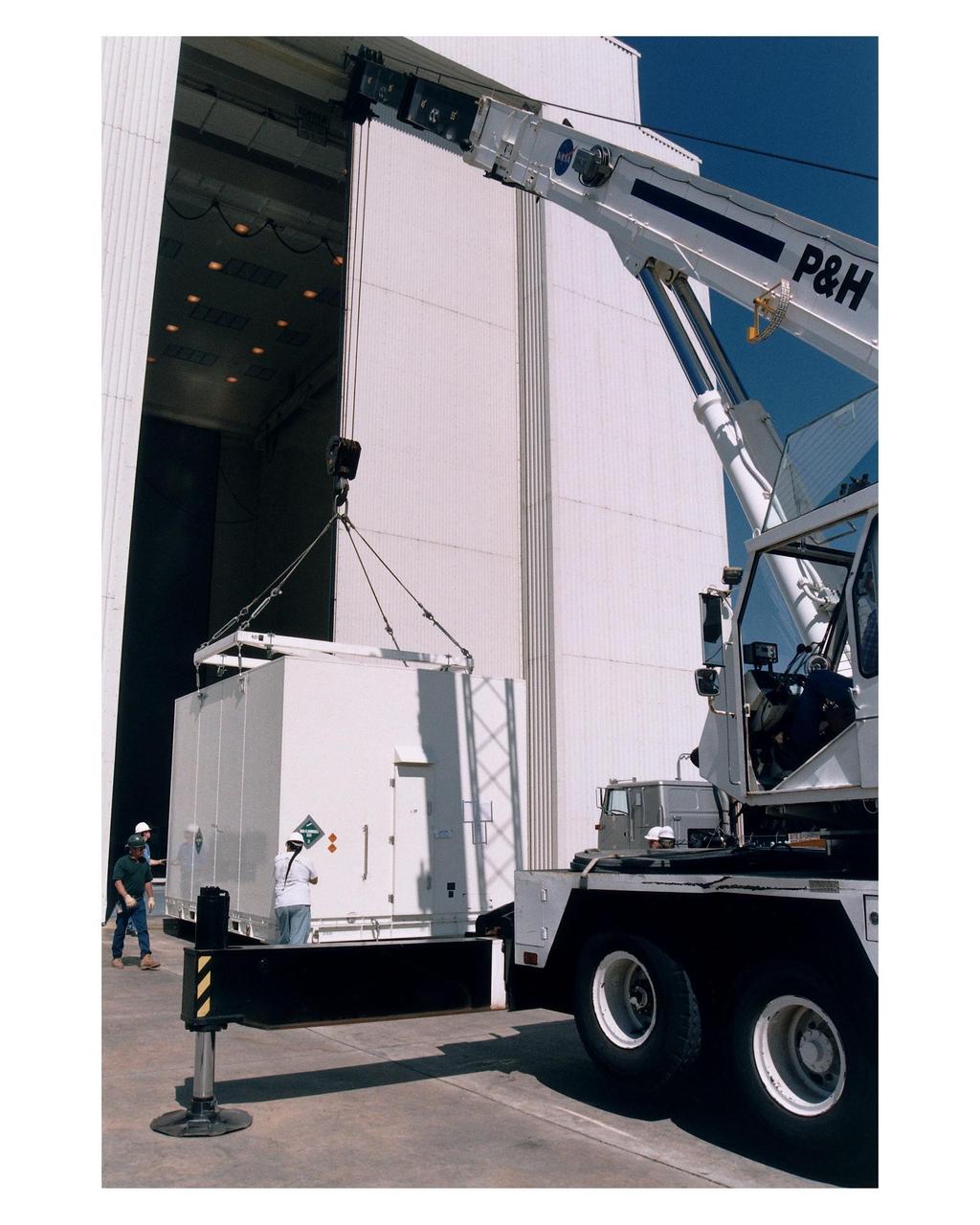
Workers prepare to move the shipping container with the Cassini orbiter inside the Payload Hazardous Servicing Facility (PHSF) for prelaunch processing, testing and integration. The <a href="http://www-pao.ksc.nasa.gov/kscpao/release/1997/66-97.htm">orbiter arrived</a> at KSC’s Shuttle Landing Facility in a U.S. Air Force C-17 air cargo plane from Edwards Air Force Base, California. The orbiter and the Huygens probe already being processed at KSC are the two primary components of the Cassini spacecraft, which will be launched on a Titan IVB/Centaur expendable launch vehicle from Cape Canaveral Air Station. Cassini will explore Saturn, its rings and moons for four years. The Huygens probe, designed and developed for the European Space Agency (ESA), will be deployed from the orbiter to study the clouds, atmosphere and surface of Saturn’s largest moon, Titan. The orbiter was designed and assembled at NASA’s Jet Propulsion Laboratory in California. Following postflight inspections, integration of the 12 science instruments not already installed on the orbiter will be completed. Then, the parabolic high-gain antenna and the propulsion module will be mated to the orbiter, followed by the Huygens probe, which will complete spacecraft integration. The Cassini mission is targeted for an Oct. 6 launch to begin its 6.7-year journey to the Saturnian system. Arrival at the planet is expected to occur around July 1, 2004
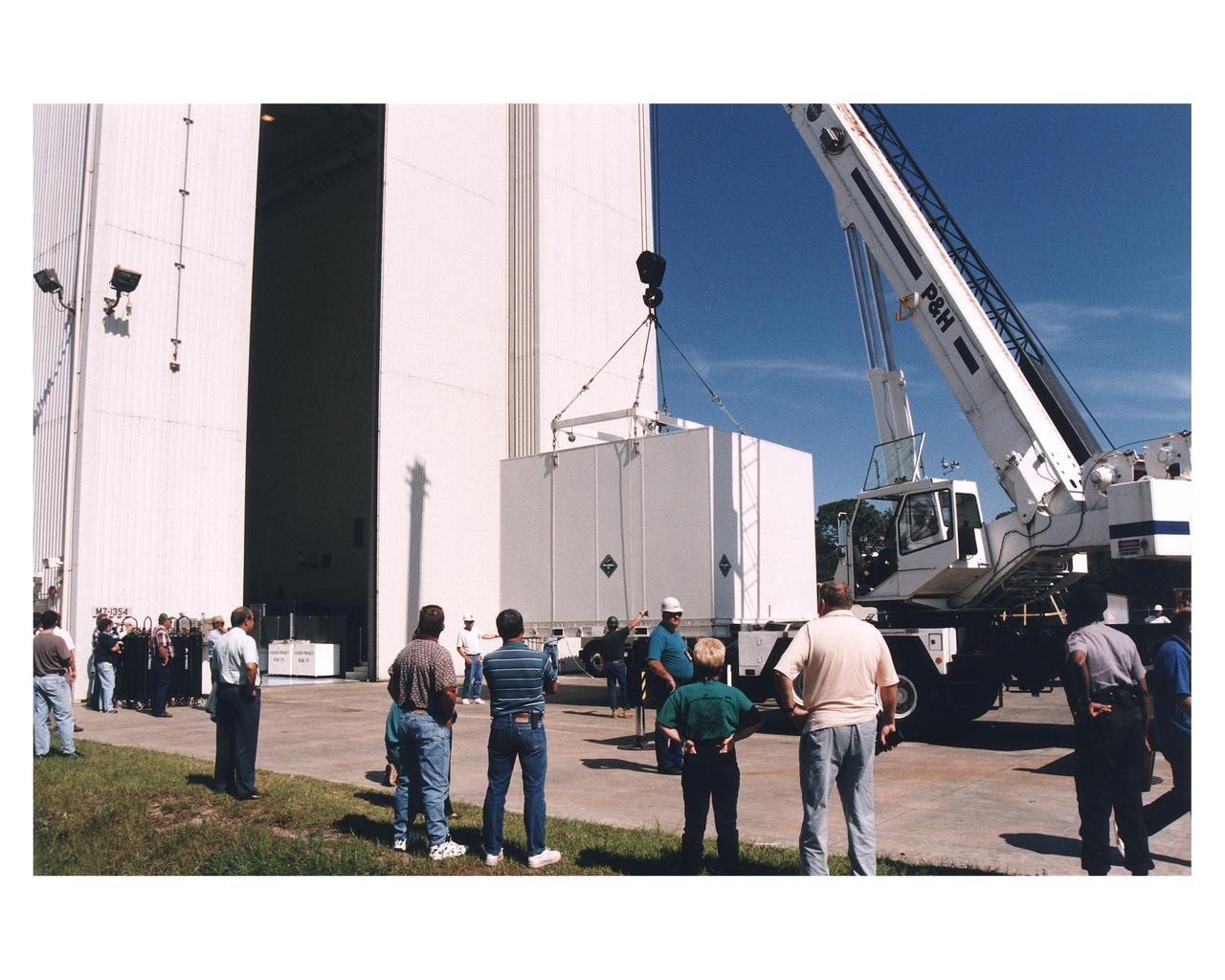
Workers prepare to move the shipping container with the Cassini orbiter inside the Payload Hazardous Servicing Facility (PHSF) for prelaunch processing, testing and integration. The <a href="http://www-pao.ksc.nasa.gov/kscpao/release/1997/66-97.htm">orbiter arrived</a> at KSC’s Shuttle Landing Facility in a U.S. Air Force C-17 air cargo plane from Edwards Air Force Base, California. The orbiter and the Huygens probe already being processed at KSC are the two primary components of the Cassini spacecraft, which will be launched on a Titan IVB/Centaur expendable launch vehicle from Cape Canaveral Air Station. Cassini will explore Saturn, its rings and moons for four years. The Huygens probe, designed and developed for the European Space Agency (ESA), will be deployed from the orbiter to study the clouds, atmosphere and surface of Saturn’s largest moon, Titan. The orbiter was designed and assembled at NASA’s Jet Propulsion Laboratory in California. Following postflight inspections, integration of the 12 science instruments not already installed on the orbiter will be completed. Then, the parabolic high-gain antenna and the propulsion module will be mated to the orbiter, followed by the Huygens probe, which will complete spacecraft integration. The Cassini mission is targeted for an Oct. 6 launch to begin its 6.7-year journey to the Saturnian system. Arrival at the planet is expected to occur around July 1, 2004
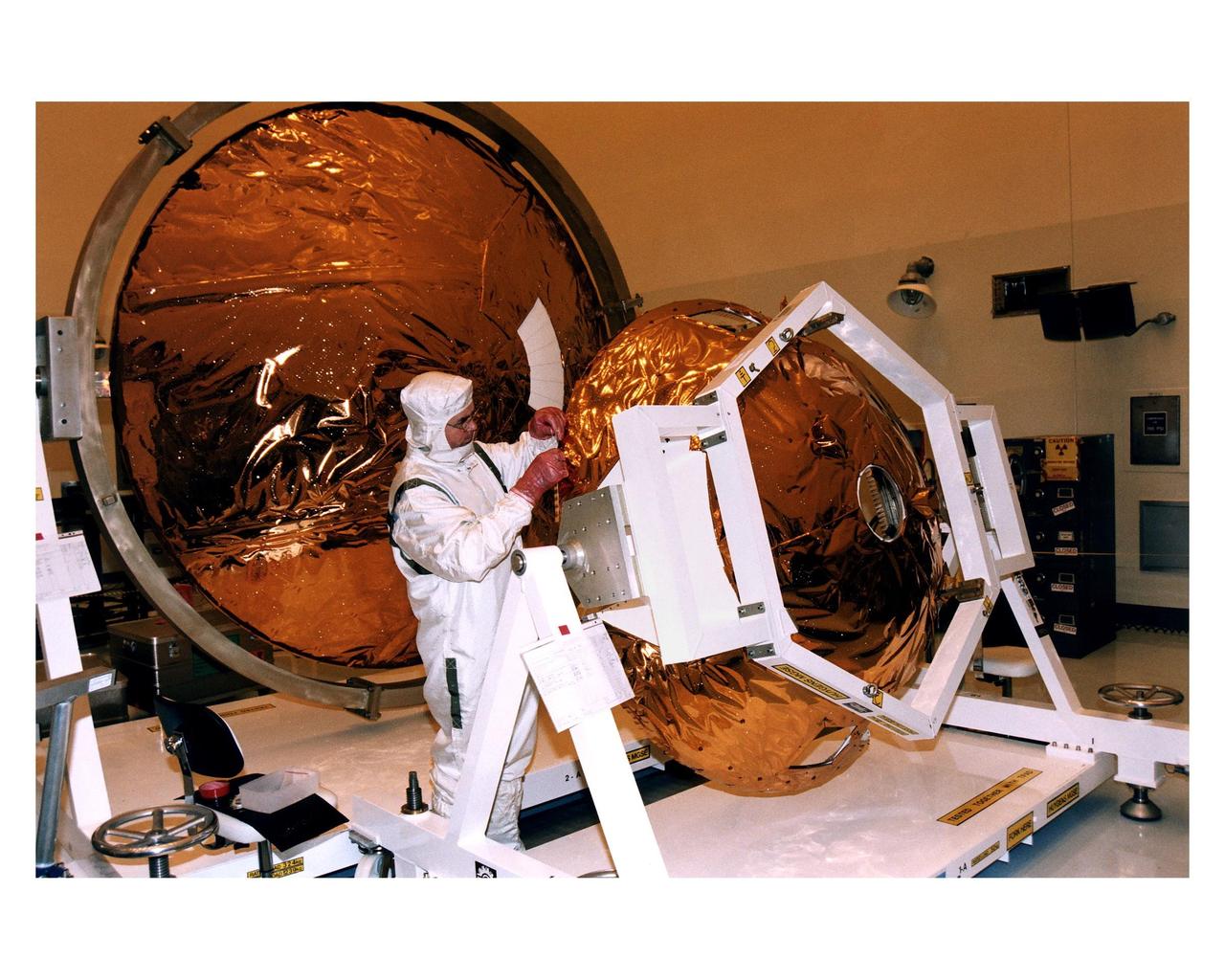
An employee in the Payload Hazardous Servicing Facility (PHSF) sews thermal insulation material on the front heat shield of the Huygens probe during prelaunch processing testing and integration in that facility, with the probe’s back cover in the background. The Huygens probe and the Cassini orbiter being processed at KSC are the two primary components of the Cassini spacecraft, which will be launched on a Titan IVB/Centaur expendable launch vehicle from Cape Canaveral Air Station. Cassini will explore Saturn, its rings and moons for four years. The Huygens probe, designed and developed for the European Space Agency (ESA), will be deployed from the orbiter to study the clouds, atmosphere and surface of Saturn’s largest moon, Titan. The orbiter was designed and assembled at NASA’s Jet Propulsion Laboratory in California. Following postflight inspections, integration of the 12 science instruments not already installed on the orbiter will be completed. Then, the parabolic high-gain antenna and the propulsion module will be mated to the orbiter, followed by the Huygens probe, which will complete spacecraft integration. The Cassini mission is targeted for an Oct. 6 launch to begin its 6.7-year journey to the Saturnian system. Arrival at the planet is expected to occur around July 1, 2004
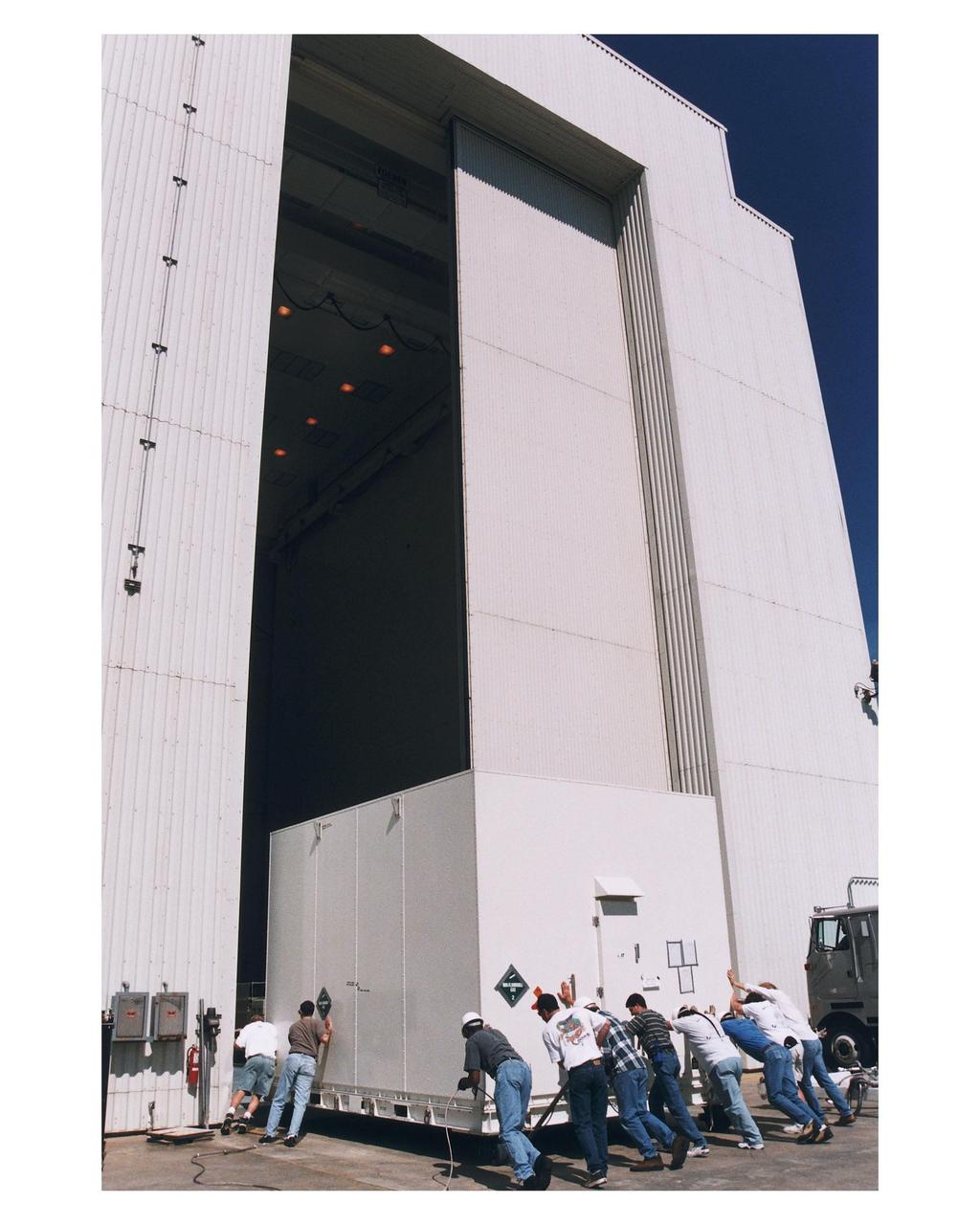
Workers prepare to move the shipping container with the Cassini orbiter inside the Payload Hazardous Servicing Facility (PHSF) for prelaunch processing, testing and integration. The <a href="http://www-pao.ksc.nasa.gov/kscpao/release/1997/66-97.htm">orbiter arrived</a> at KSC’s Shuttle Landing Facility in a U.S. Air Force C-17 air cargo plane from Edwards Air Force Base, California. The orbiter and the Huygens probe already being processed at KSC are the two primary components of the Cassini spacecraft, which will be launched on a Titan IVB/Centaur expendable launch vehicle from Cape Canaveral Air Station. Cassini will explore Saturn, its rings and moons for four years. The Huygens probe, designed and developed for the European Space Agency (ESA), will be deployed from the orbiter to study the clouds, atmosphere and surface of Saturn’s largest moon, Titan. The orbiter was designed and assembled at NASA’s Jet Propulsion Laboratory in California. Following postflight inspections, integration of the 12 science instruments not already installed on the orbiter will be completed. Then, the parabolic high-gain antenna and the propulsion module will be mated to the orbiter, followed by the Huygens probe, which will complete spacecraft integration. The Cassini mission is targeted for an Oct. 6 launch to begin its 6.7-year journey to the Saturnian system. Arrival at the planet is expected to occur around July 1, 2004
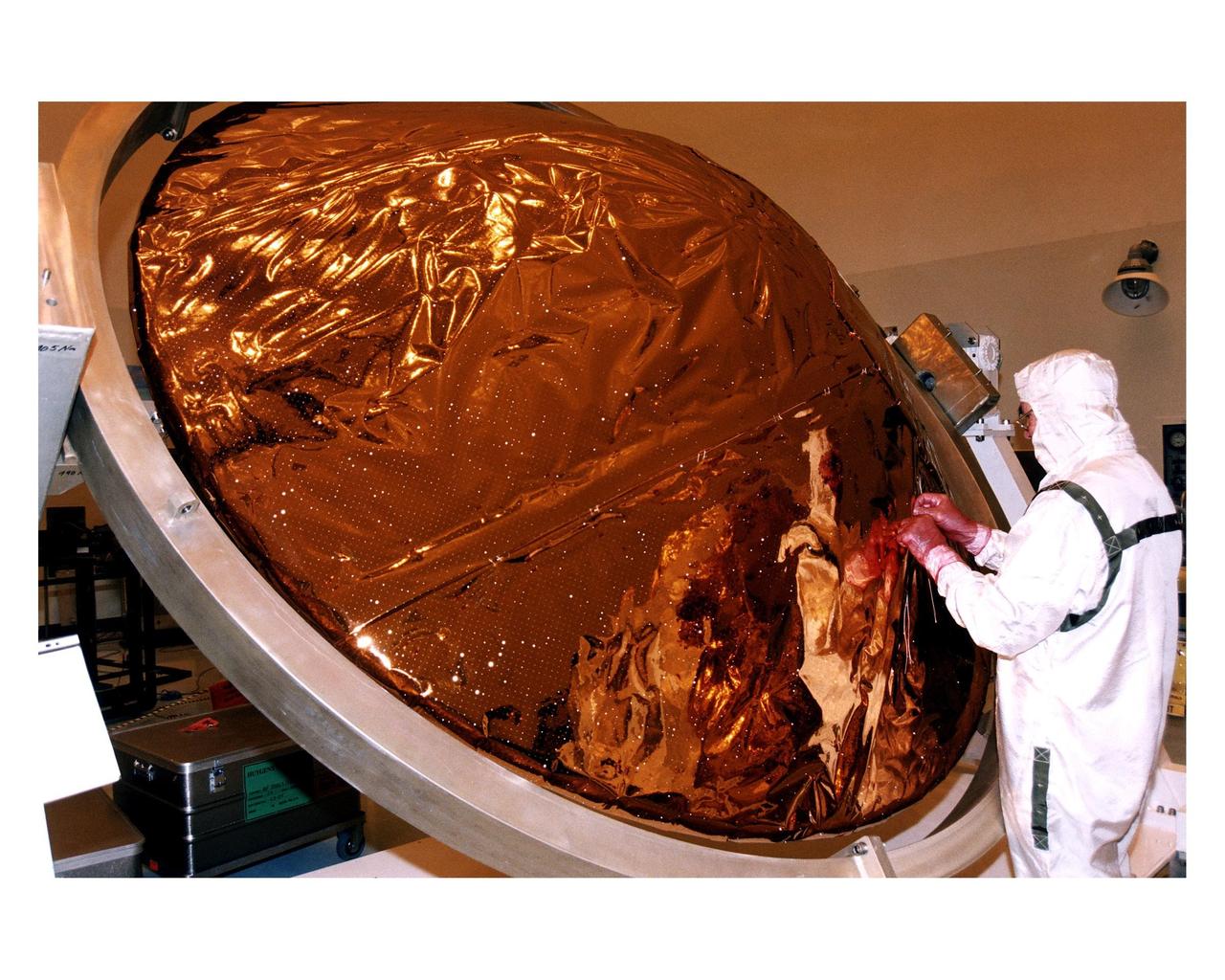
An employee in the Payload Hazardous Servicing Facility (PHSF) sews thermal insulation material on the back cover and heat shield of the Huygens probe during prelaunch processing, testing and integration in that facility. The Huygens probe and the Cassini orbiter being processed at KSC are the two primary components of the Cassini spacecraft, which will be launched on a Titan IVB/Centaur expendable launch vehicle from Cape Canaveral Air Station. Cassini will explore Saturn, its rings and moons for four years. The Huygens probe, designed and developed for the European Space Agency (ESA), will be deployed from the orbiter to study the clouds, atmosphere and surface of Saturn’s largest moon, Titan. The orbiter was designed and assembled at NASA’s Jet Propulsion Laboratory in California. Following postflight inspections, integration of the 12 science instruments not already installed on the orbiter will be completed. Then, the parabolic high-gain antenna and the propulsion module will be mated to the orbiter, followed by the Huygens probe, which will complete spacecraft integration. The Cassini mission is targeted for an Oct. 6 launch to begin its 6.7-year journey to the Saturnian system. Arrival at the planet is expected to occur around July 1, 2004
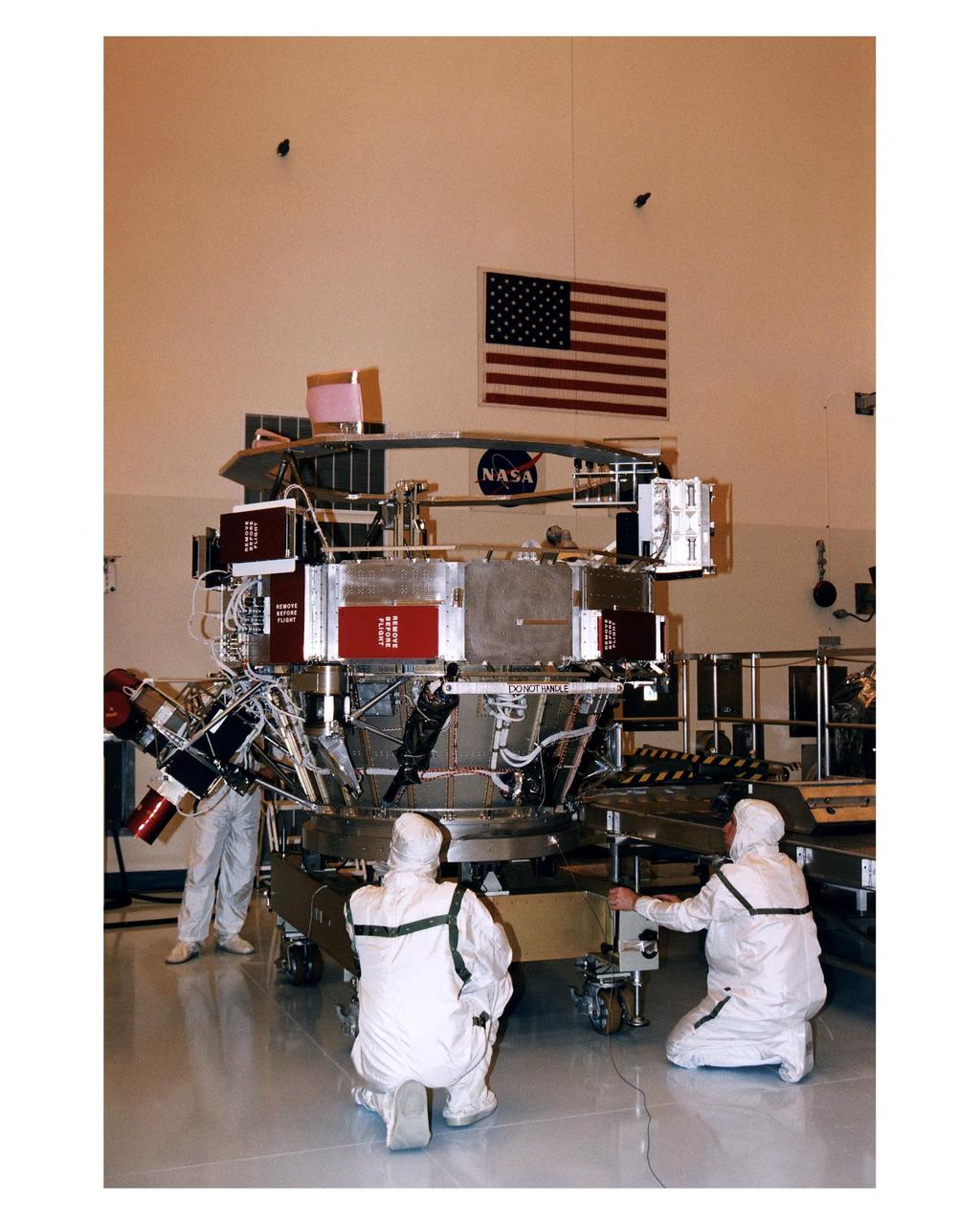
Workers in the Payload Hazardous Servicing Facility (PHSF) perform checkouts of the upper experiment module and base of the Cassini orbiter during prelaunch processing, testing and integration in that facility. The Cassini orbiter and Huygens probe being processed at KSC are the two primary components of the Cassini spacecraft, which will be launched on a Titan IVB/Centaur expendable launch vehicle from Cape Canaveral Air Station. Cassini will explore Saturn, its rings and moons for four years. The Huygens probe, designed and developed for the European Space Agency (ESA), will be deployed from the orbiter to study the clouds, atmosphere and surface of Saturn’s largest moon, Titan. The orbiter was designed and assembled at NASA’s Jet Propulsion Laboratory in California. Following postflight inspections, integration of the 12 science instruments not already installed on the orbiter will be completed. Then, the parabolic high-gain antenna and the propulsion module will be mated to the orbiter, followed by the Huygens probe, which will complete spacecraft integration. The Cassini mission is targeted for an Oct. 6 launch to begin its 6.7-year journey to the Saturnian system. Arrival at the planet is expected to occur around July 1, 2004
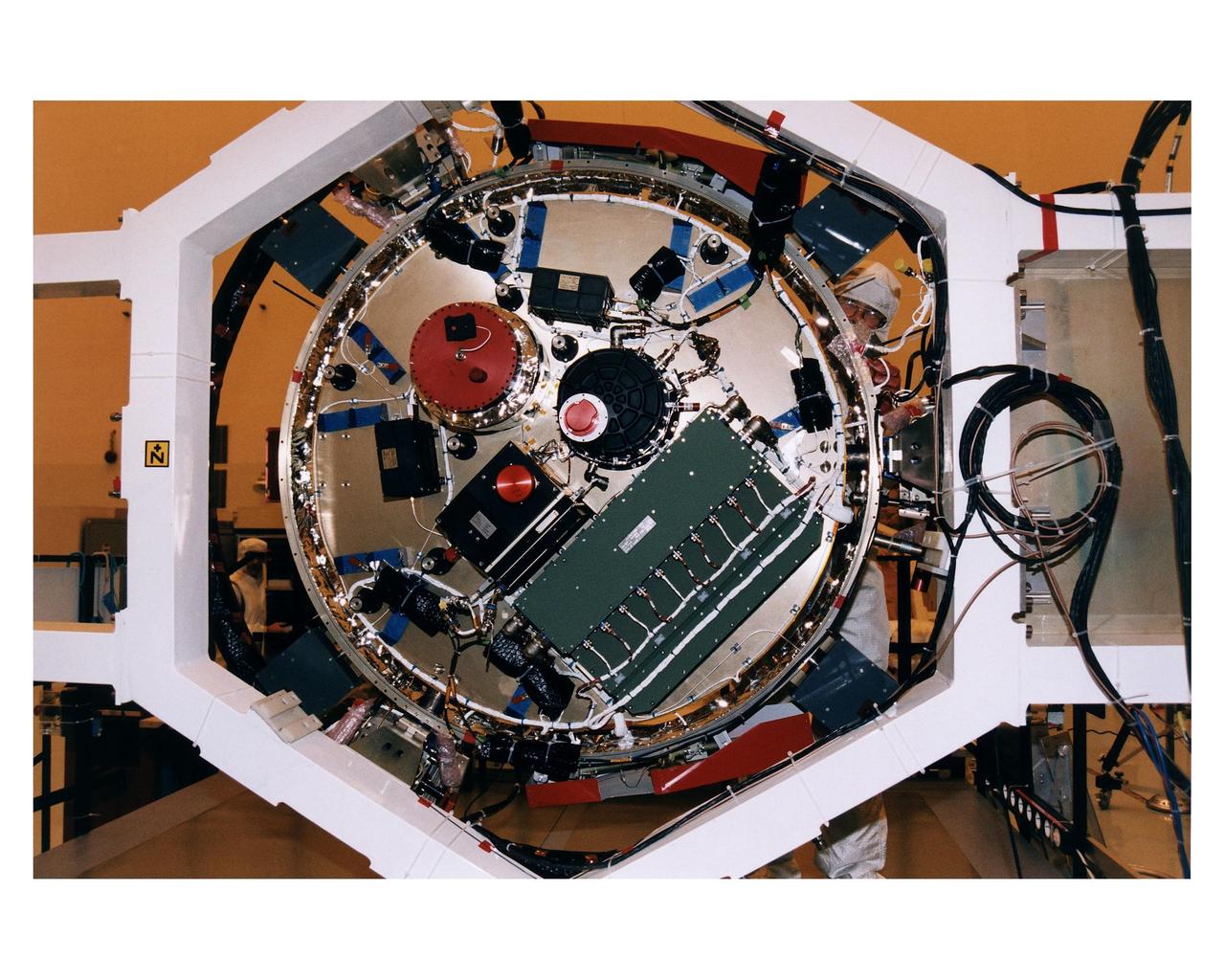
A worker in the Payload Hazardous Servicing Facility (PHSF) stands behind the bottom side of the experiment platform for the Huygens probe that will accompany the Cassini orbiter to Saturn during prelaunch processing testing and integration in that facility. The Huygens probe and the Cassini orbiter being processed at KSC are the two primary components of the Cassini spacecraft, which will be launched on a Titan IVB/Centaur expendable launch vehicle from Cape Canaveral Air Station. Cassini will explore Saturn, its rings and moons for four years. The Huygens probe, designed and developed for the European Space Agency (ESA), will be deployed from the orbiter to study the clouds, atmosphere and surface of Saturn’s largest moon, Titan. The orbiter was designed and assembled at NASA’s Jet Propulsion Laboratory in California. Following postflight inspections, integration of the 12 science instruments not already installed on the orbiter will be completed. Then, the parabolic high-gain antenna and the propulsion module will be mated to the orbiter, followed by the Huygens probe, which will complete spacecraft integration. The Cassini mission is targeted for an Oct. 6 launch to begin its 6.7-year journey to the Saturnian system. Arrival at the planet is expected to occur around July 1, 2004

Workers offload the shipping container with the Cassini orbiter from what looks like a giant shark mouth, but is really an Air Force C-17 air cargo plane which <a href="http://www-pao.ksc.nasa.gov/kscpao/release/1997/66-97.htm">just landed</a> at KSC’s Shuttle Landing Facility from Edwards Air Force Base, California. The orbiter and the Huygens probe already being processed at KSC are the two primary components of the Cassini spacecraft, which will be launched on a Titan IVB/Centaur expendable launch vehicle from Cape Canaveral Air Station. Cassini will explore Saturn, its rings and moons for four years. The Huygens probe, designed and developed for the European Space Agency (ESA), will be deployed from the orbiter to study the clouds, atmosphere and surface of Saturn’s largest moon, Titan. The orbiter was designed and assembled at NASA’s Jet Propulsion Laboratory in California. Following postflight inspections, integration of the 12 science instruments not already installed on the orbiter will be completed. Then, the parabolic high-gain antenna and the propulsion module will be mated to the orbiter, followed by the Huygens probe, which will complete spacecraft integration. The Cassini mission is targeted for an Oct. 6 launch to begin its 6.7-year journey to the Saturnian system. Arrival at the planet is expected to occur around July 1, 2004
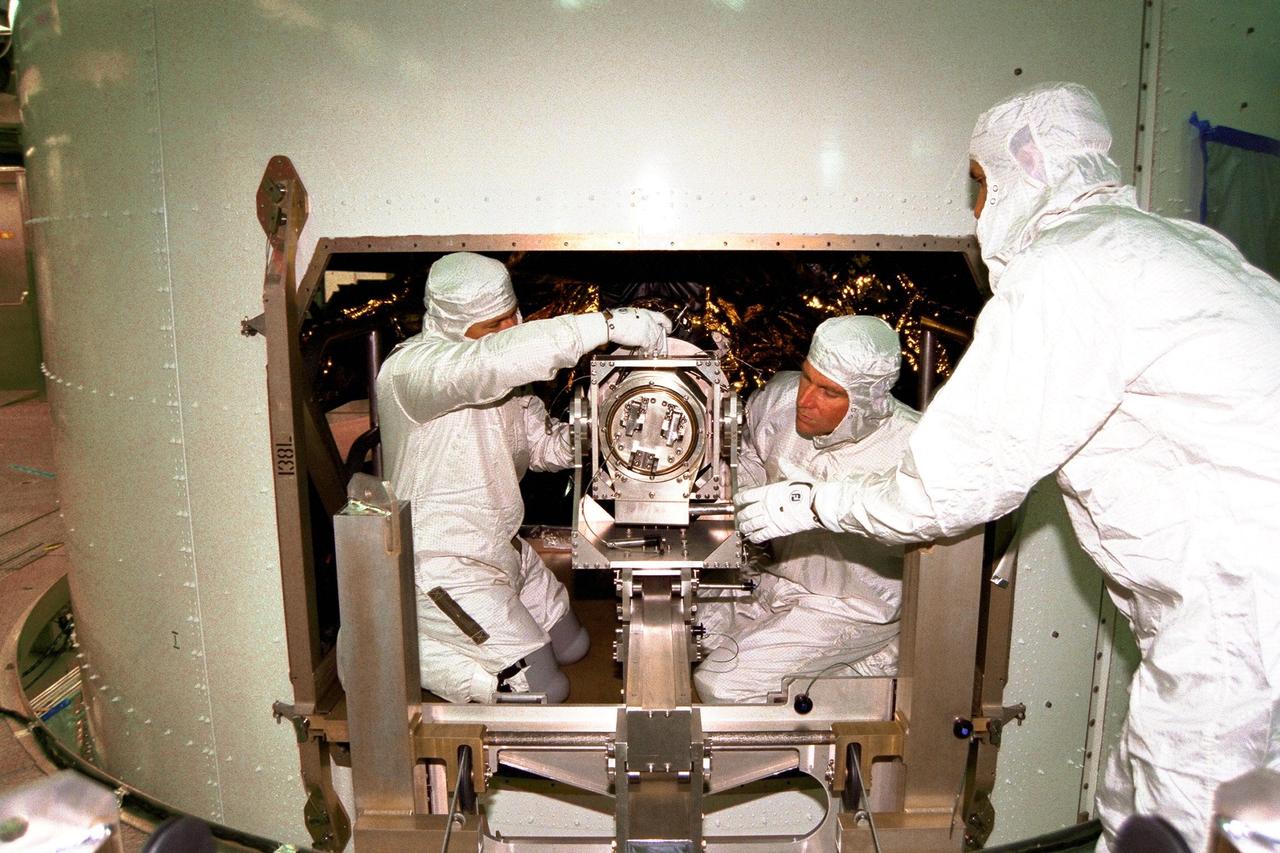
At Launch Complex 40 on Cape Canaveral Air Station, workers are installing three Radioisotope Thermoelectric Generators (RTGs) on the Cassini spacecraft. RTGs are lightweight, compact spacecraft electrical power systems that have flown successfully on 23 previous U.S. missions over the past 37 years. These generators produce power by converting heat into electrical energy; the heat is provided by the natural radioactive decay of plutonium-238 dioxide, a non-weapons-grade material. RTGs enable spacecraft to operate at significant distances from the Sun where solar power systems would not be feasible. Cassini will travel two billion miles to reach Saturn and another 1.1 billion miles while in orbit around Saturn. Cassini is undergoing final preparations for liftoff on a Titan IVB/Centaur launch vehicle, with the launch window opening at 4:55 a.m. EDT, Oct. 13
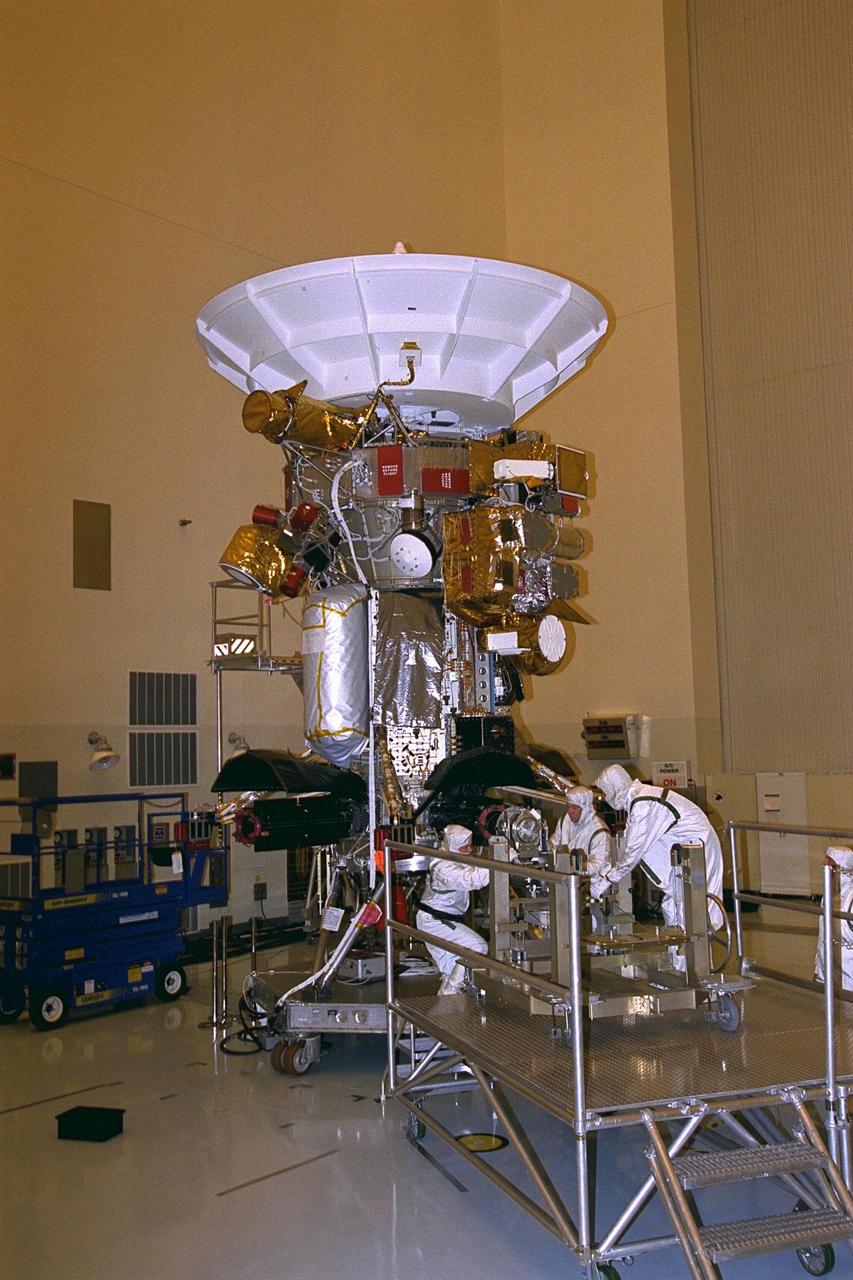
Jet Propulsion Laboratory (JPL) workers prepare the installation cart (atop the platform) for removal of a radioisotope thermoelectric generator (RTG) from the adjacent Cassini spacecraft. This is the second of three RTGs being removed from Cassini after undergoing mechanical and electrical verification tests in the Payload Hazardous Servicing Facility. The third RTG to be removed is in background at left. The three RTGs will then be temporarily stored before being re-installed for flight. The RTGs will provide electrical power to Cassini on its 6.7-year trip to the Saturnian system and during its four-year mission at Saturn. RTGs use heat from the natural decay of plutonium to generate electric power. The generators enable spacecraft to operate far from the Sun where solar power systems are not feasible. The Cassini mission is scheduled for an Oct. 6 launch aboard a Titan IVB/Centaur expendable launch vehicle. Cassini is built and managed for NASA by JPL

Jet Propulsion Laboratory (JPL) worker Mary Reaves mates connectors on a radioisotope thermoelectric generator (RTG) to power up the Cassini spacecraft, while quality assurance engineer Peter Sorci looks on. The three RTGs which will be used on Cassini are undergoing mechanical and electrical verification testing in the Payload Hazardous Servicing Facility. The RTGs will provide electrical power to Cassini on its 6.7-year trip to the Saturnian system and during its four-year mission at Saturn. RTGs use heat from the natural decay of plutonium to generate electric power. The generators enable spacecraft to operate at great distances from the Sun where solar power systems are not feasible. The Cassini mission is targeted for an Oct. 6 launch aboard a Titan IVB/Centaur expendable launch vehicle. Cassini is built and managed by JPL

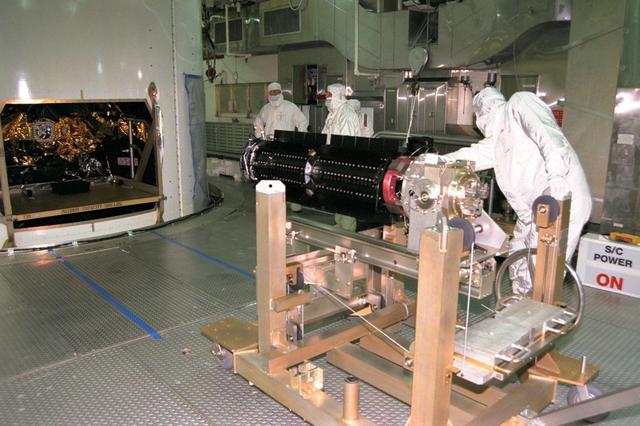
Jet Propulsion Laboratory (JPL) workers carefully roll into place a platform with a second radioisotope thermoelectric generator (RTG) for installation on the Cassini spacecraft. In background at left, the first of three RTGs already has been installed on Cassini. The RTGs will provide electrical power to Cassini on its 6.7-year trip to the Saturnian system and during its four-year mission at Saturn. The power units are undergoing mechanical and electrical verification testing in the Payload Hazardous Servicing Facility. RTGs use heat from the natural decay of plutonium to generate electric power. The generators enable spacecraft to operate far from the Sun where solar power systems are not feasible. The Cassini mission is scheduled for an Oct. 6 launch aboard a Titan IVB/Centaur expendable launch vehicle. Cassini is built and managed for NASA by JPL
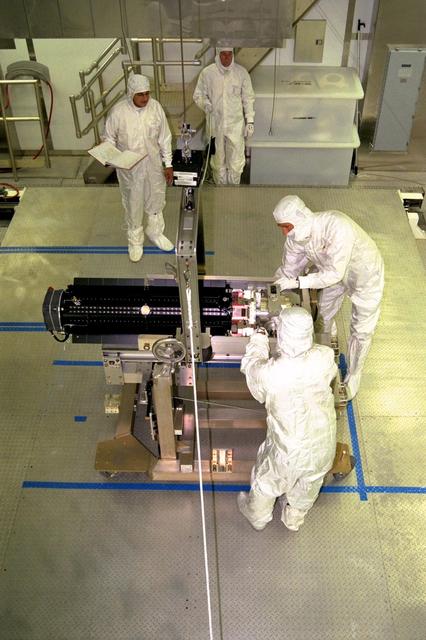
At Launch Complex 40 on Cape Canaveral Air Station, workers are installing three Radioisotope Thermoelectric Generators (RTGs) on the Cassini spacecraft. RTGs are lightweight, compact spacecraft electrical power systems that have flown successfully on 23 previous U.S. missions over the past 37 years. These generators produce power by converting heat into electrical energy; the heat is provided by the natural radioactive decay of plutonium-238 dioxide, a non-weapons-grade material. RTGs enable spacecraft to operate at significant distances from the Sun where solar power systems would not be feasible. Cassini will travel two billion miles to reach Saturn and another 1.1 billion miles while in orbit around Saturn. Cassini is undergoing final preparations for liftoff on a Titan IVB/Centaur launch vehicle, with the launch window opening at 4:55 a.m. EDT, Oct. 13
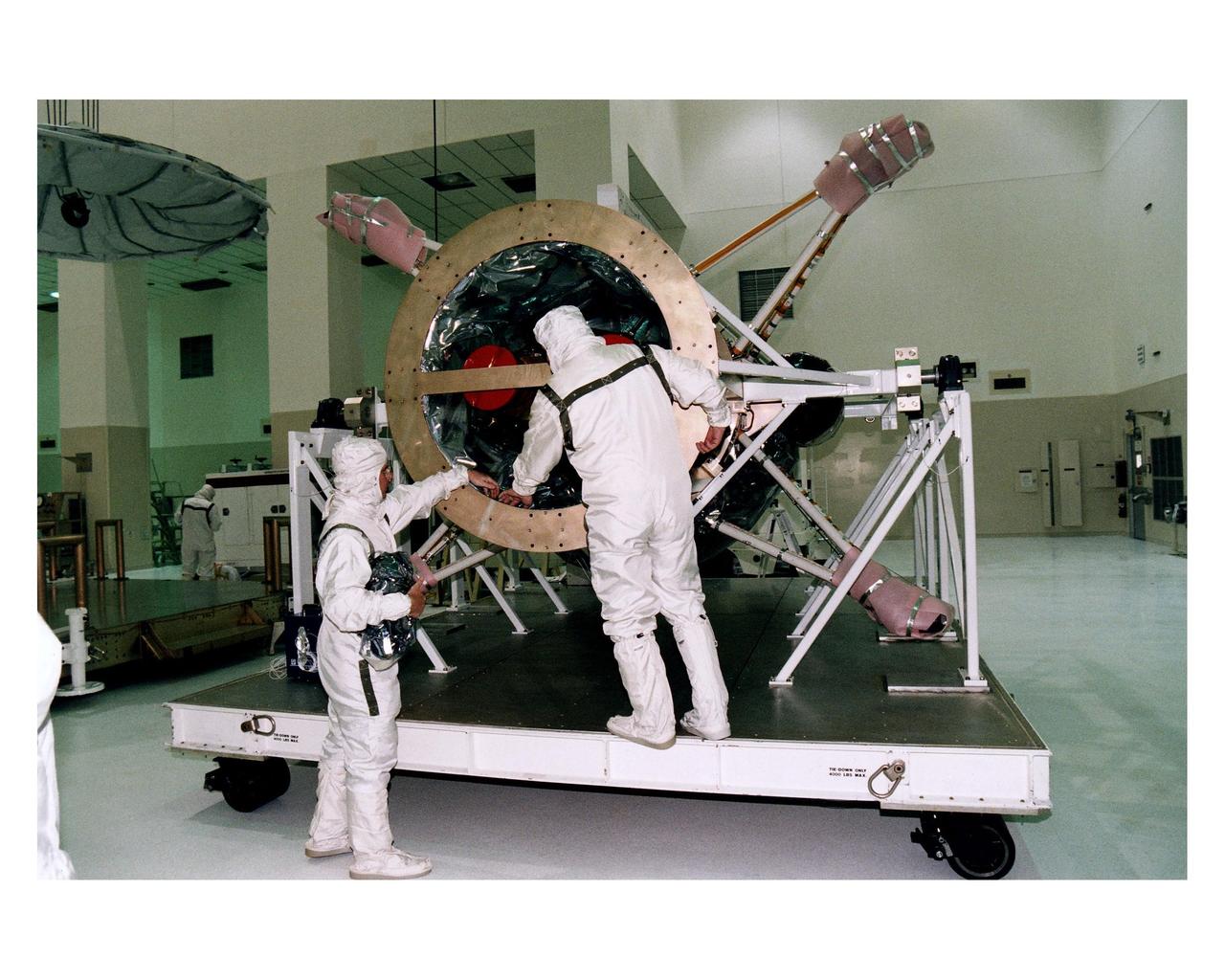
Workers take off the protective covering on the propulsion module for the Cassini spacecraft after uncrating the module at KSC's Spacecraft Assembly and Encapsulation Facility-2 (SAEF-2). The extended journey of 6.7 years to Saturn and the 4-year mission for Cassini once it gets there will require the spacecraft to carry a large amount of propellant for inflight trajectory-correction maneuvers and attitude control, particularly during the science observations. The propulsion module has redundant 445-newton main engines that burn nitrogen tetraoxide and monomethyl-hydrazine for main propulsion and 16 smaller 1-newton engines that burn hydrazine to control attitude and to correct small deviations from the spacecraft flight path. Cassini will be launched on a Titan IVB/Centaur expendable launch vehicle. Liftoff is targeted for October 6 from Launch Complex 40, Cape Canaveral Air Station
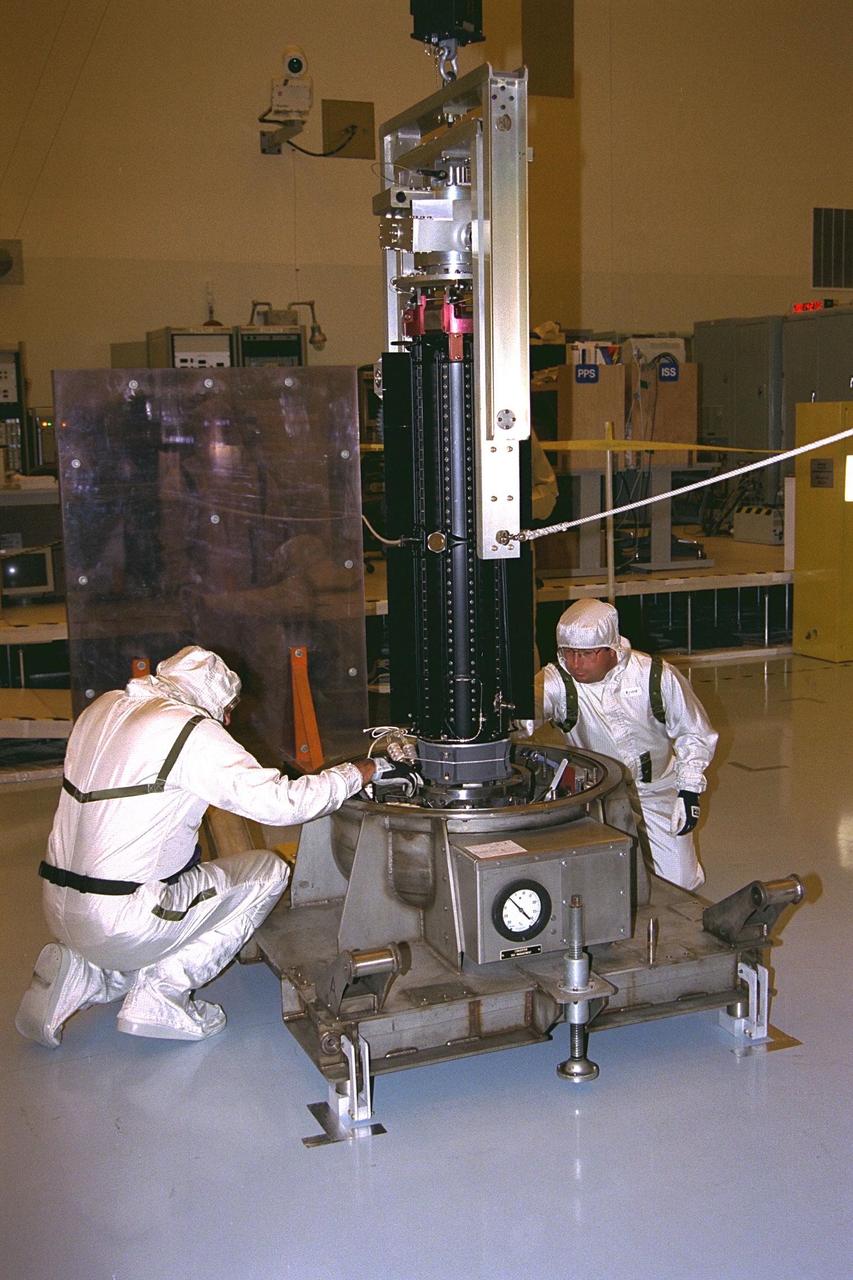
Lockheed Martin Missile and Space Co. employees Joe Collingwood, at right, and Ken Dickinson retract pins in the storage base to release a radioisotope thermoelectric generator (RTG) in preparation for hoisting operations. This RTG and two others will be installed on the Cassini spacecraft for mechanical and electrical verification testing in the Payload Hazardous Servicing Facility. The RTGs will provide electrical power to Cassini on its 6.7-year trip to the Saturnian system and during its four-year mission at Saturn. RTGs use heat from the natural decay of plutonium to generate electric power. The generators enable spacecraft to operate at great distances from the Sun where solar power systems are not feasible. The Cassini mission is targeted for an Oct. 6 launch aboard a Titan IVB/Centaur expendable launch vehicle. Cassini is built and managed by NASA’s Jet Propulsion Laboratory
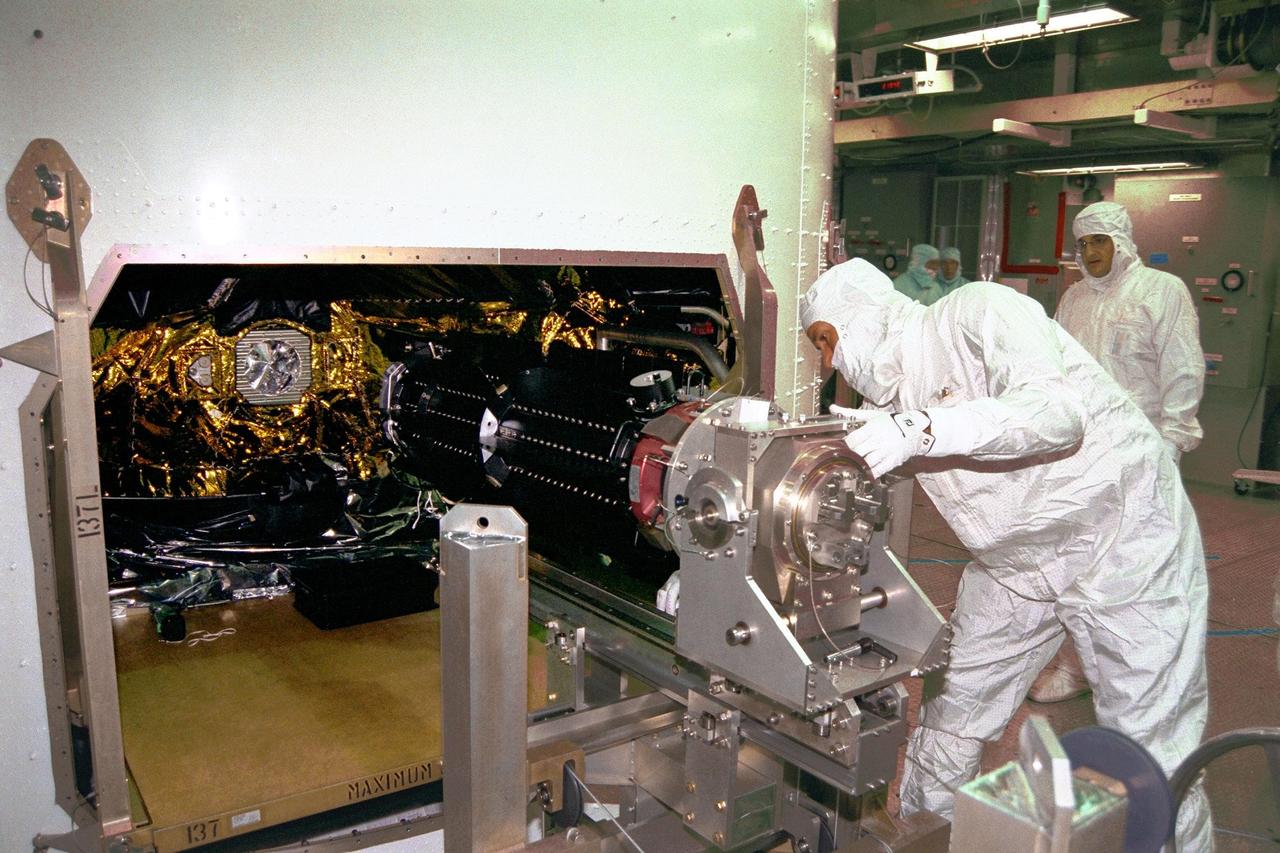
KENNEDY SPACE CENTER, FLA. -- At Launch Complex 40 on Cape Canaveral Air Station, workers are installing three Radioisotope Thermoelectric Generators (RTGs) on the Cassini spacecraft. RTGs are lightweight, compact spacecraft electrical power systems that have flown successfully on 23 previous U.S. missions over the past 37 years. These generators produce power by converting heat into electrical energy; the heat is provided by the natural radioactive decay of plutonium-238 dioxide, a non-weapons-grade material. RTGs enable spacecraft to operate at significant distances from the Sun where solar power systems would not be feasible. Cassini will travel two billion miles to reach Saturn and another 1.1 billion miles while in orbit around Saturn. Cassini is undergoing final preparations for liftoff on a Titan IVB/Centaur launch vehicle, with the launch window opening at 4:55 a.m. EDT, Oct. 13
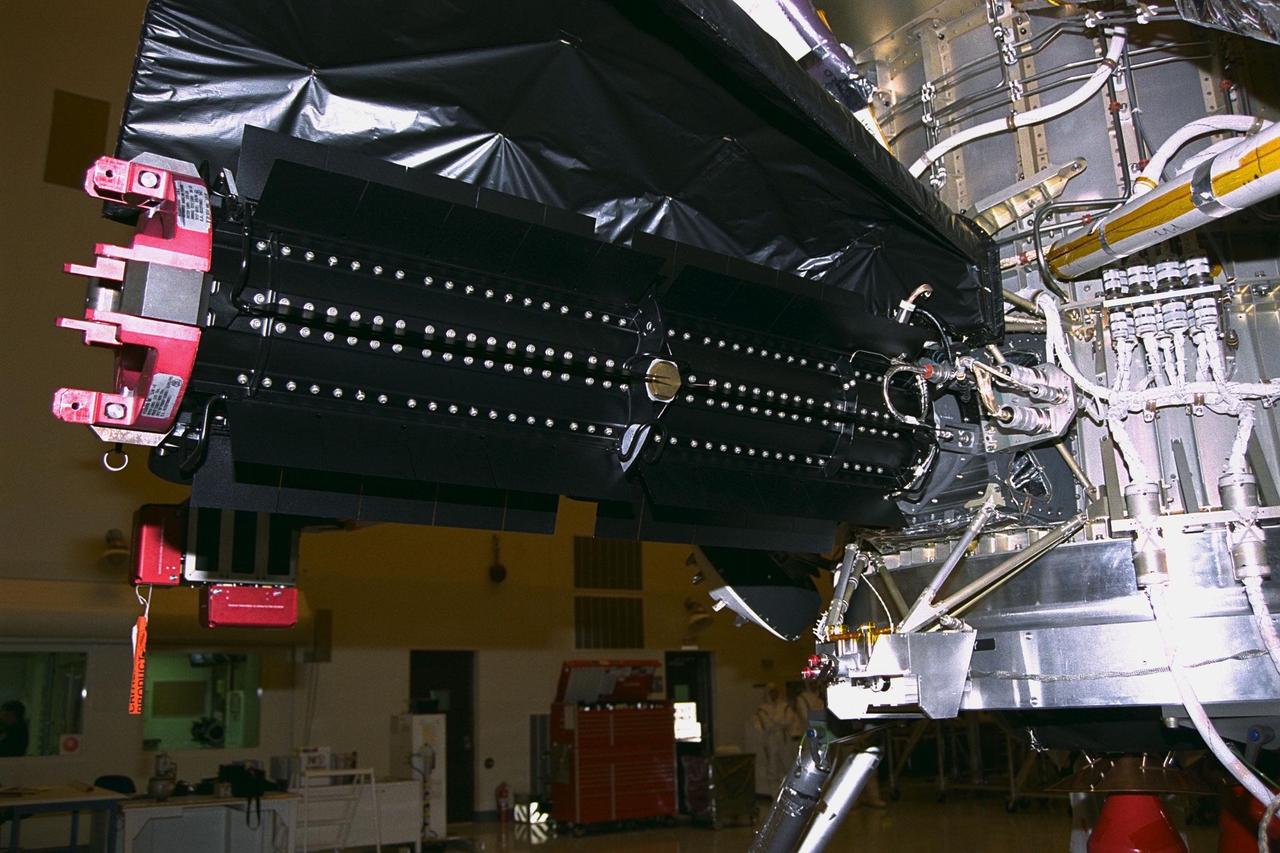
This radioisotope thermoelectric generator (RTG), at center, is ready for electrical verification testing now that it has been installed on the Cassini spacecraft in the Payload Hazardous Servicing Facility. A handling fixture, at far left, remains attached. This is the third and final RTG to be installed on Cassini for the prelaunch tests. The RTGs will provide electrical power to Cassini on its 6.7-year trip to the Saturnian system and during its four-year mission at Saturn. RTGs use heat from the natural decay of plutonium to generate electric power. The generators enable spacecraft to operate at great distances from the Sun where solar power systems are not feasible. The Cassini mission is targeted for an Oct. 6 launch aboard a Titan IVB/Centaur expendable launch vehicle
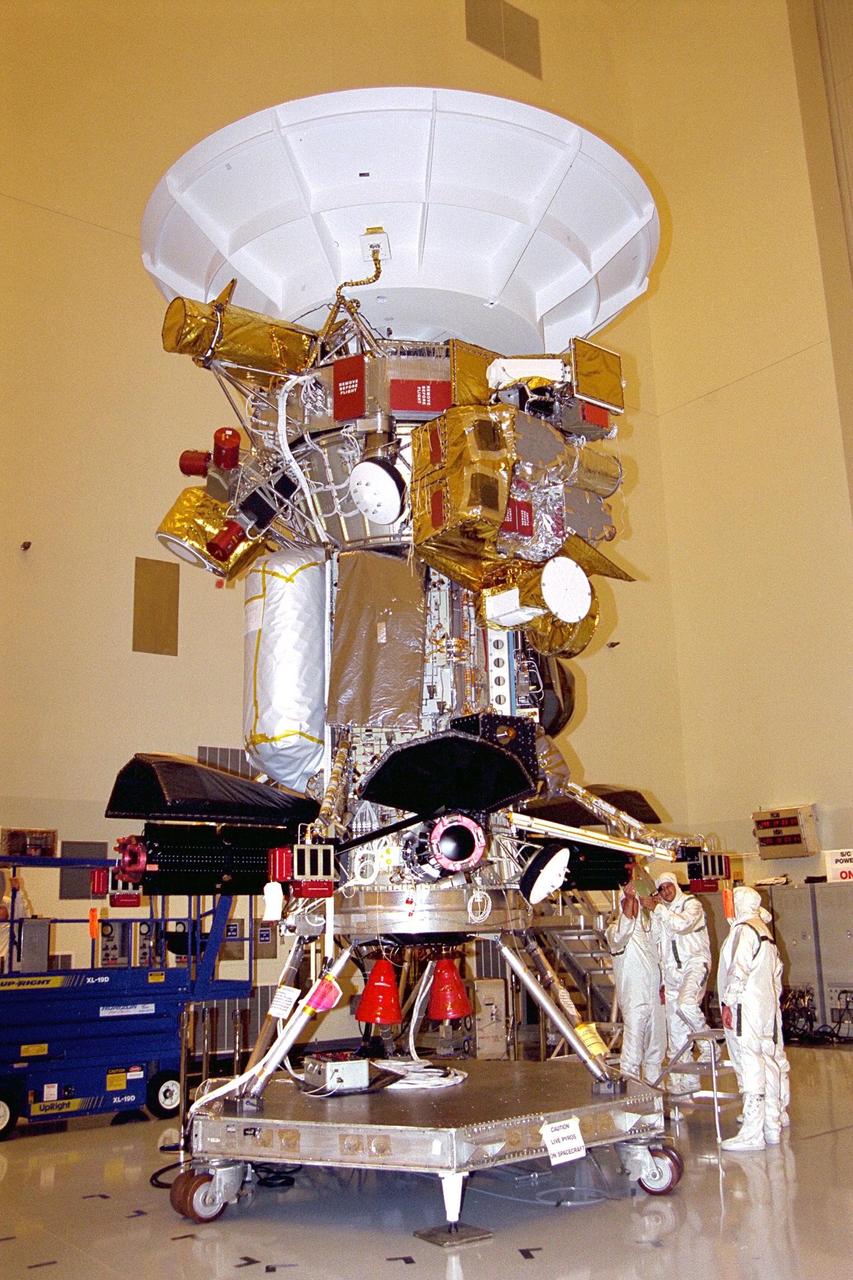
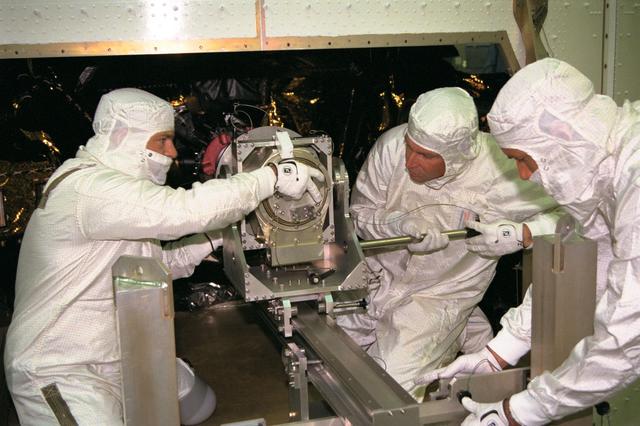
Jet Propulsion Laboratory (JPL) workers use a borescope to verify pressure relief device bellows integrity on a radioisotope thermoelectric generator (RTG) which has been installed on the Cassini spacecraft in the Payload Hazardous Servicing Facility. The activity is part of the mechanical and electrical verification testing of RTGs during prelaunch processing. RTGs use heat from the natural decay of plutonium to generate electric power. The three RTGs on Cassini will enable the spacecraft to operate far from the Sun where solar power systems are not feasible. They will provide electrical power to Cassini on its 6.7-year trip to the Saturnian system and during its four-year mission at Saturn. The Cassini mission is scheduled for an Oct. 6 launch aboard a Titan IVB/Centaur expendable launch vehicle. Cassini is built and managed for NASA by JPL
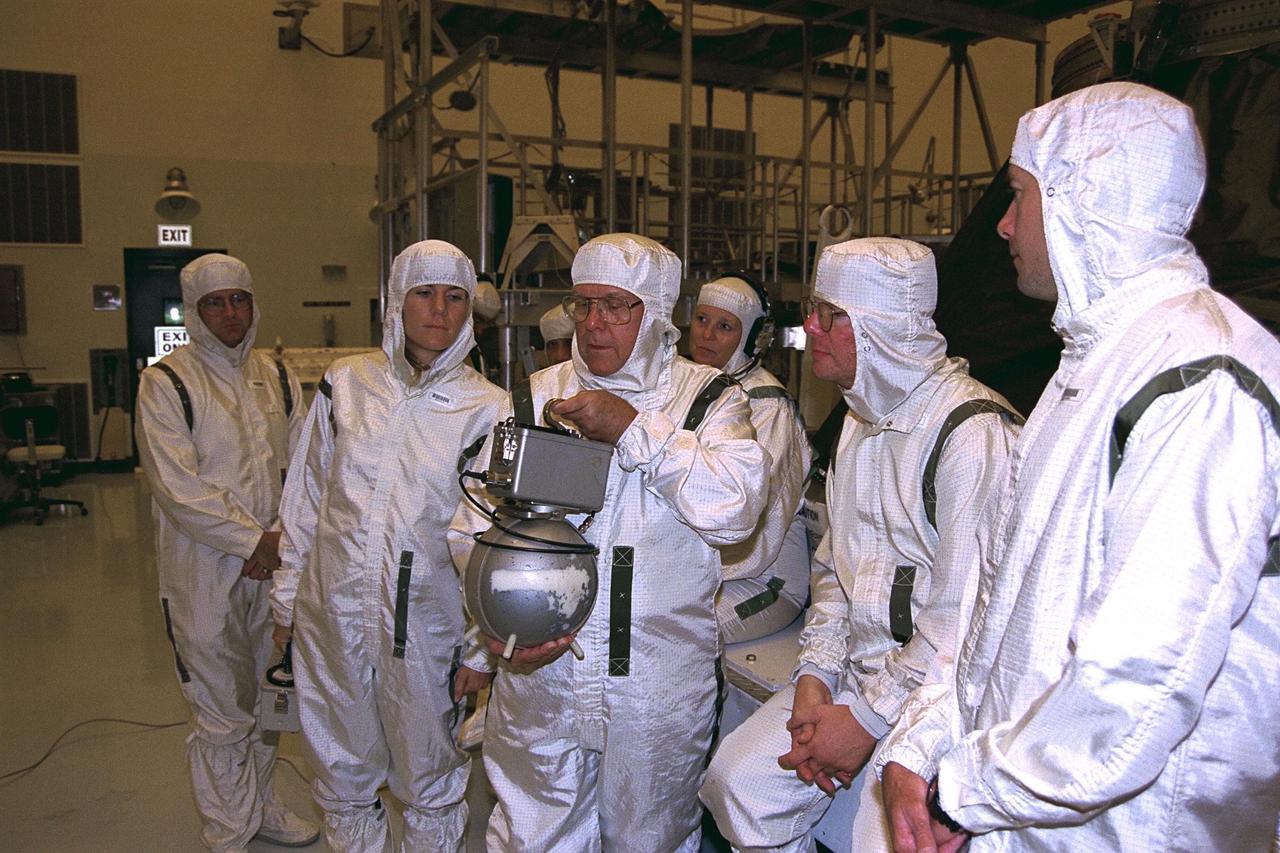
Carrying a neutron radiation detector, Fred Sanders (at center), a health physicist with the Jet Propulsion Laboratory (JPL), and other health physics personnel monitor radiation in the Payload Hazardous Servicing Facility after three radioisotope thermoelectric generators (RTGs) were installed on the Cassini spacecraft for mechanical and electrical verification tests. The RTGs will provide electrical power to Cassini on its 6.7-year trip to the Saturnian system and during its four-year mission at Saturn. RTGs use heat from the natural decay of plutonium to generate electric power. The generators enable spacecraft to operate at great distances from the Sun where solar power systems are not feasible. The Cassini mission is targeted for an Oct. 6 launch aboard a Titan IVB/Centaur expendable launch vehicle. Cassini is built and managed by JPL
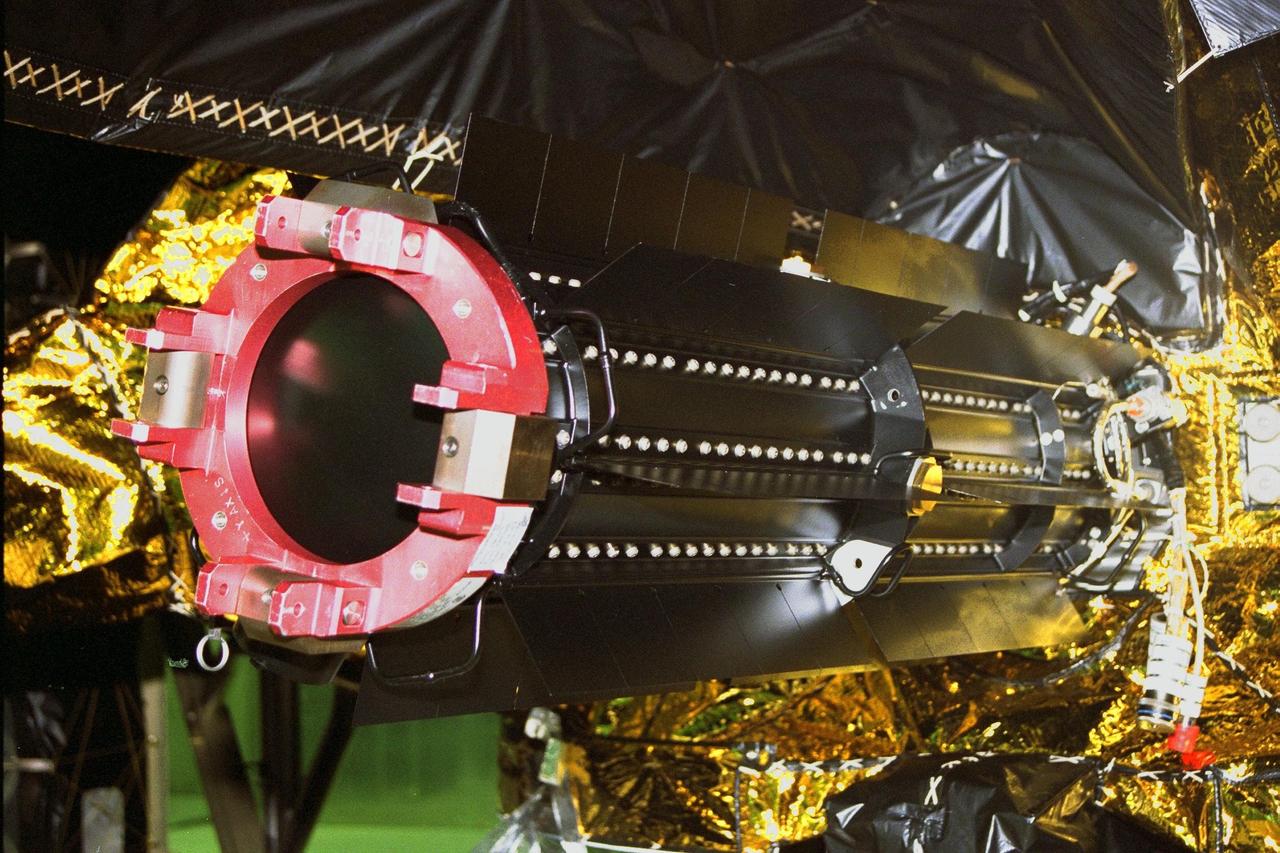
At Launch Complex 40 on Cape Canaveral Air Station, one of three Radioisotope Thermoelectric Generators (RTGs) is being installed on the Cassini spacecraft. RTGs are lightweight, compact spacecraft electrical power systems that have flown successfully on 23 previous U.S. missions over the past 37 years. These generators produce power by converting heat into electrical energy; the heat is provided by the natural radioactive decay of plutonium-238 dioxide, a non-weapons-grade material. RTGs enable spacecraft to operate at significant distances from the Sun where solar power systems would not be feasible. Cassini will travel two billion miles to reach Saturn and another 1.1 billion miles while in orbit around Saturn. Cassini is undergoing final preparations for liftoff on a Titan IVB/Centaur launch vehicle, with the launch window opening at 4:55 a.m. EDT, Oct. 13
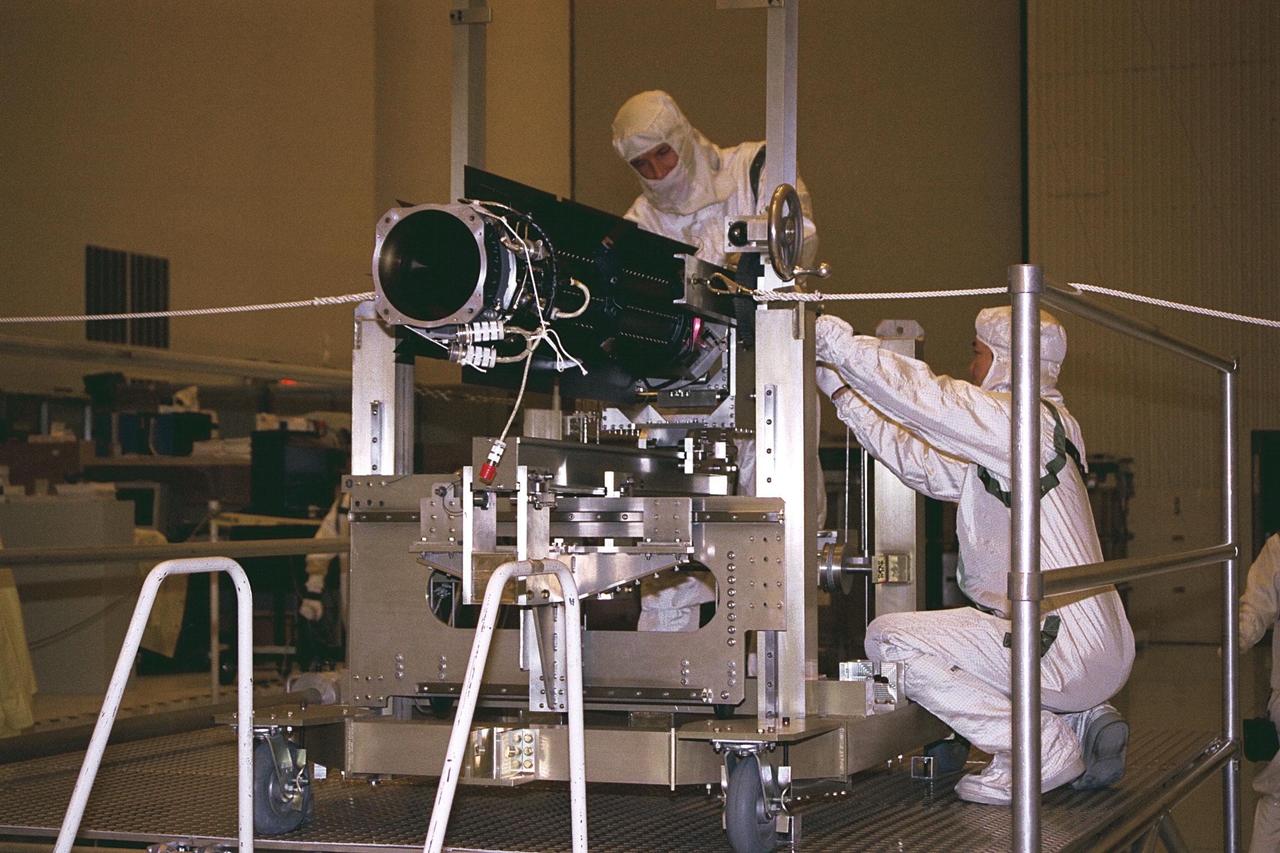
Jet Propulsion Laboratory (JPL) employees Norm Schwartz, at left, and George Nakatsukasa transfer one of three radioisotope thermoelectric generators (RTGs) to be used on the Cassini spacecraft from the installation cart to a lift fixture in preparation for returning the power unit to storage. The three RTGs underwent mechanical and electrical verification testing in the Payload Hazardous Servicing Facility. The RTGs will provide electrical power to Cassini on its 6.7-year trip to the Saturnian system and during its four-year mission at Saturn. RTGs use heat from the natural decay of plutonium to generate electric power. The generators enable spacecraft to operate at great distances from the Sun where solar power systems are not feasible. The Cassini mission is targeted for an Oct. 6 launch aboard a Titan IVB/Centaur expendable launch vehicle. Cassini is built and managed by JPL
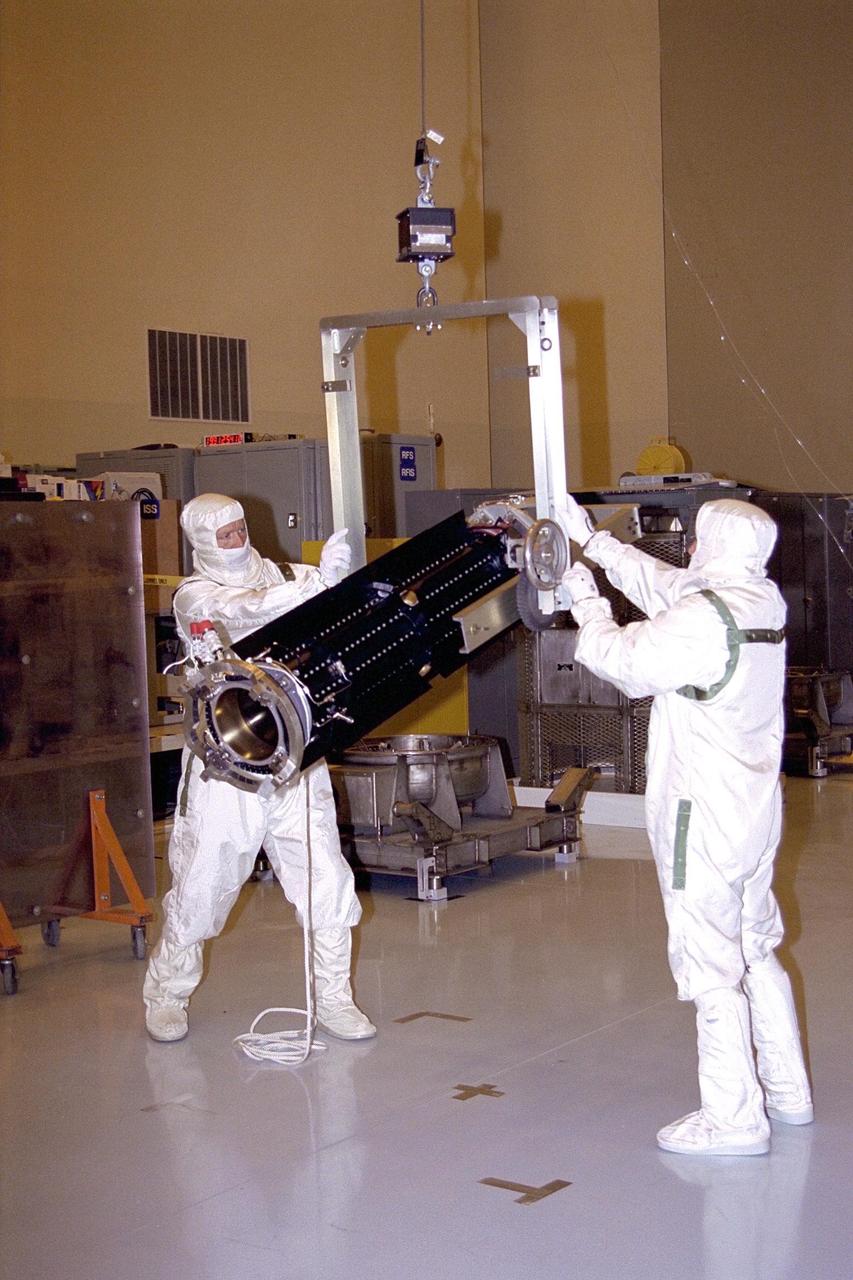
Jet Propulsion Laboratory (JPL) workers David Rice, at left, and Johnny Melendez rotate a radioisotope thermoelectric generator (RTG) to the horizontal position on a lift fixture in the Payload Hazardous Servicing Facility. The RTG is one of three generators which will provide electrical power for the Cassini spacecraft mission to the Saturnian system. The RTGs will be installed on the powered-up spacecraft for mechanical and electrical verification testing. RTGs use heat from the natural decay of plutonium to generate electric power. The generators enable spacecraft to operate far from the Sun where solar power systems are not feasible. The Cassini mission is scheduled for an Oct. 6 launch aboard a Titan IVB/Centaur expendable launch vehicle. Cassini is built and managed for NASA by JPL
At Launch Complex 40 on Cape Canaveral Air Station, workers are installing three Radioisotope Thermoelectric Generators (RTGs) on the Cassini spacecraft. RTGs are lightweight, compact spacecraft electrical power systems that have flown successfully on 23 previous U.S. missions over the past 37 years. These generators produce power by converting heat into electrical energy; the heat is provided by the natural radioactive decay of plutonium-238 dioxide, a non-weapons-grade material. RTGs enable spacecraft to operate at significant distances from the Sun where solar power systems would not be feasible. Cassini will travel two billion miles to reach Saturn and another 1.1 billion miles while in orbit around Saturn. Cassini is undergoing final preparations for liftoff on a Titan IVB/Centaur launch vehicle, with the launch window opening at 4:55 a.m. EDT, Oct. 13
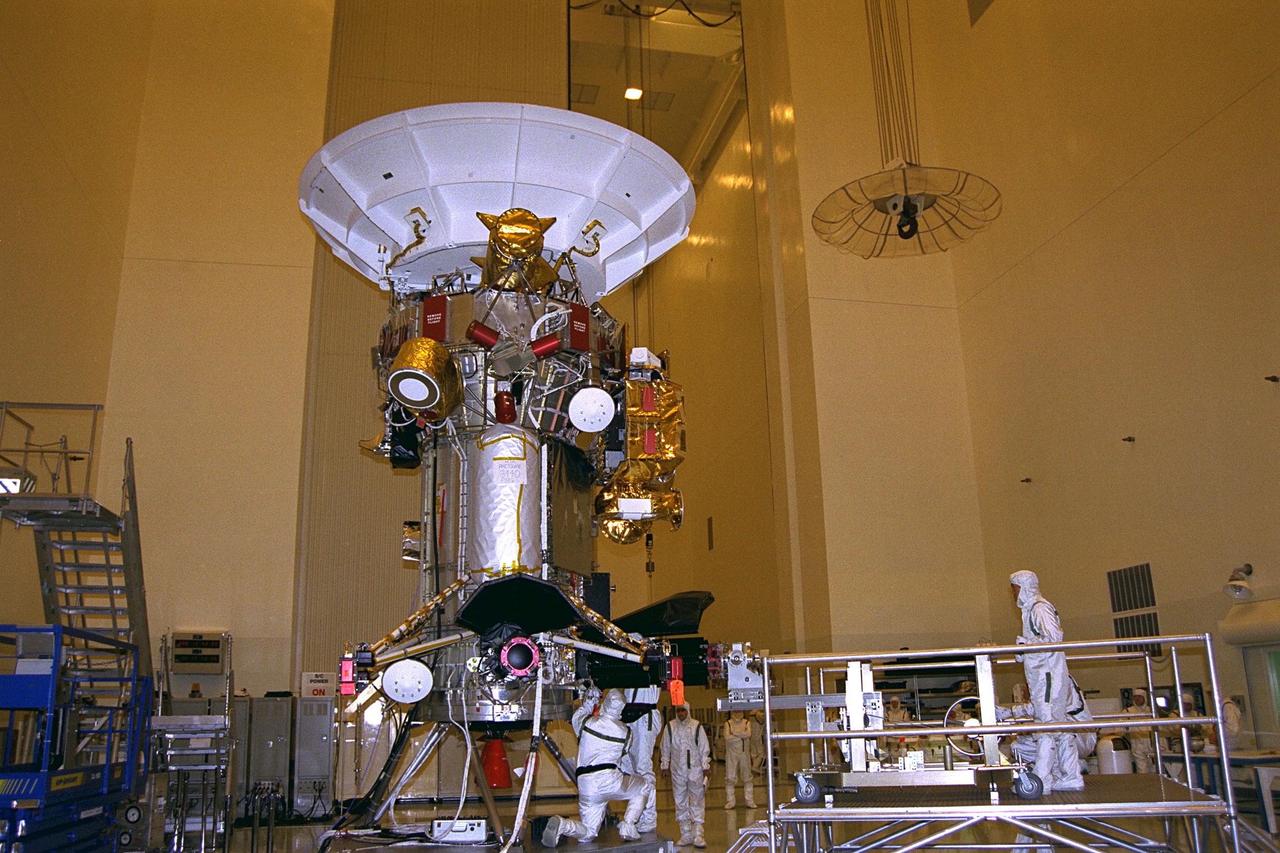
Jet Propulsion Laboratory (JPL) employees bolt a radioisotope thermoelectric generator (RTG) onto the Cassini spacecraft, at left, while other JPL workers, at right, operate the installation cart on a raised platform in the Payload Hazardous Servicing Facility (PHSF). Cassini will be outfitted with three RTGs. The power units are undergoing mechanical and electrical verification tests in the PHSF. The RTGs will provide electrical power to Cassini on its 6.7-year trip to the Saturnian system and during its four-year mission at Saturn. RTGs use heat from the natural decay of plutonium to generate electric power. The generators enable spacecraft to operate at great distances from the Sun where solar power systems are not feasible. The Cassini mission is targeted for an Oct. 6 launch aboard a Titan IVB/Centaur expendable launch vehicle. Cassini is built and managed by JPL
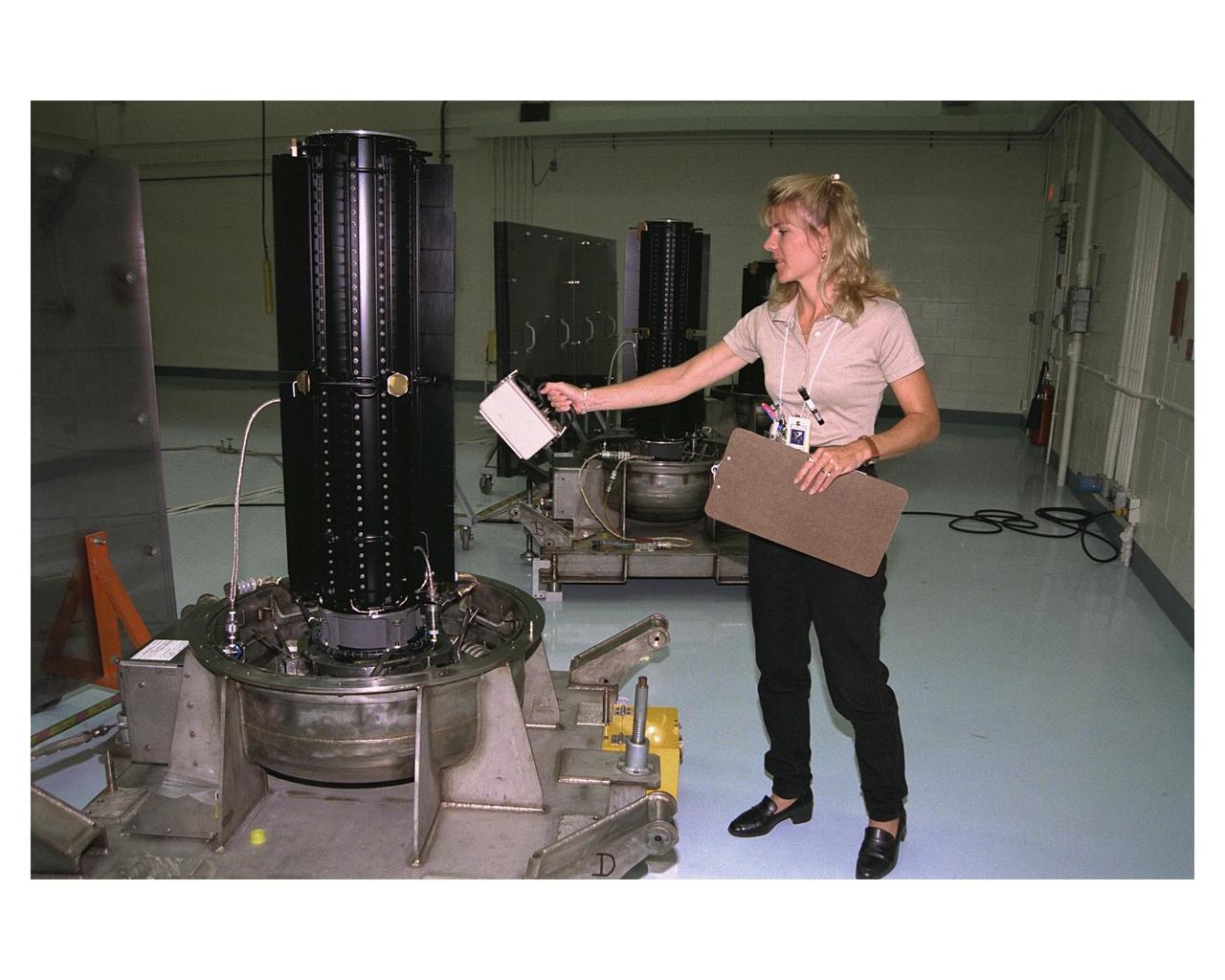
Environmental Health Specialist Jamie A. Keeley, of EG&G Florida Inc., uses an ion chamber dose rate meter to measure radiation levels in one of three radioisotope thermoelectric generators (RTGs) that will provide electrical power to the Cassini spacecraft on its mission to explore the Saturnian system. The three RTGs and one spare are being tested and mointored in the Radioisotope Thermoelectric Generator Storage Building in the KSC's Industrial Area. The RTGs use heat from the natural decay of plutonium to generate electric power. RTGs enable spacecraft to operate far from the Sun where solar power systems are not feasible. The RTGs on Cassini are of the same design as those flying on the already deployed Galileo and Ulysses spacecraft. The Cassini mission is targeted for an Oct. 6 launch aboard a Titan IVB/Centaur expendable launch vehicle.
At Launch Complex 40 on Cape Canaveral Air Station, workers are installing three Radioisotope Thermoelectric Generators (RTGs) on the Cassini spacecraft. RTGs are lightweight, compact spacecraft electrical power systems that have flown successfully on 23 previous U.S. missions over the past 37 years. These generators produce power by converting heat into electrical energy; the heat is provided by the natural radioactive decay of plutonium-238 dioxide, a non-weapons-grade material. RTGs enable spacecraft to operate at significant distances from the Sun where solar power systems would not be feasible. Cassini will travel two billion miles to reach Saturn and another 1.1 billion miles while in orbit around Saturn. Cassini is undergoing final preparations for liftoff on a Titan IVB/Centaur launch vehicle, with the launch window opening at 4:55 a.m. EDT, Oct. 13

This radioisotope thermoelectric generator (RTG), at center, will undergo mechanical and electrical verification testing now that it has been installed on the Cassini spacecraft in the Payload Hazardous Servicing Facility. A handling fixture, at far left, is still attached. Three RTGs will provide electrical power to Cassini on its 6.7-year trip to the Saturnian system and during its four-year mission at Saturn. RTGs use heat from the natural decay of plutonium to generate electric power. The generators enable spacecraft to operate far from the Sun where solar power systems are not feasible. The Cassini mission is scheduled for an Oct. 6 launch aboard a Titan IVB/Centaur expendable launch vehicle. Cassini is built and managed for NASA by the Jet Propulsion Laboratory
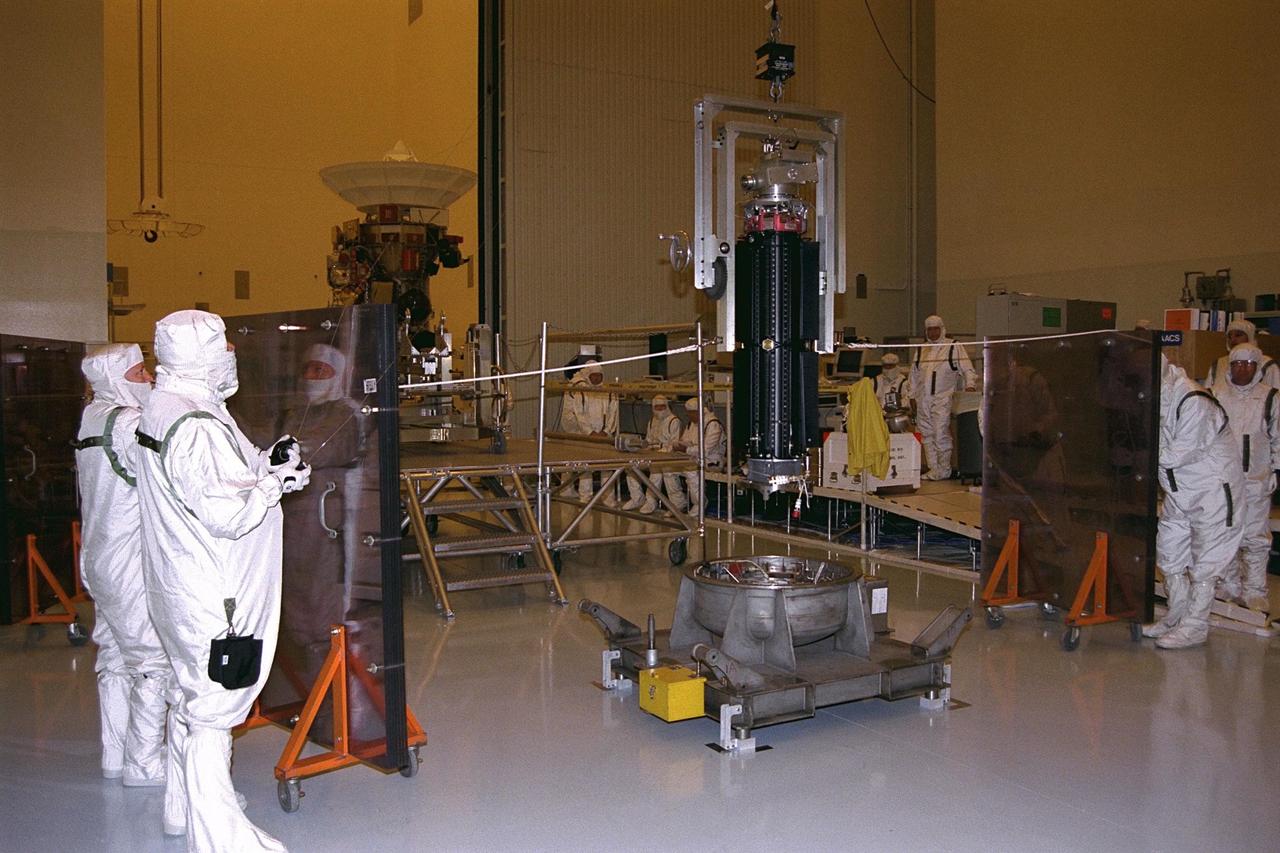
Supported on a lift fixture, this radioisotope thermoelectric generator (RTG), at center, is hoisted from its storage base using the airlock crane in the Payload Hazardous Servicing Facility (PHSF). Jet Propulsion Laboratory (JPL) workers are preparing to install the RTG onto the Cassini spacecraft, in background at left, for mechanical and electrical verification testing. The three RTGs on Cassini will provide electrical power to the spacecraft on its 6.7-year trip to the Saturnian system and during its four-year mission at Saturn. RTGs use heat from the natural decay of plutonium to generate electric power. The generators enable spacecraft to operate at great distances from the Sun where solar power systems are not feasible. The Cassini mission is targeted for an Oct. 6 launch aboard a Titan IVB/Centaur expendable launch vehicle. Cassini is built and managed by JPL
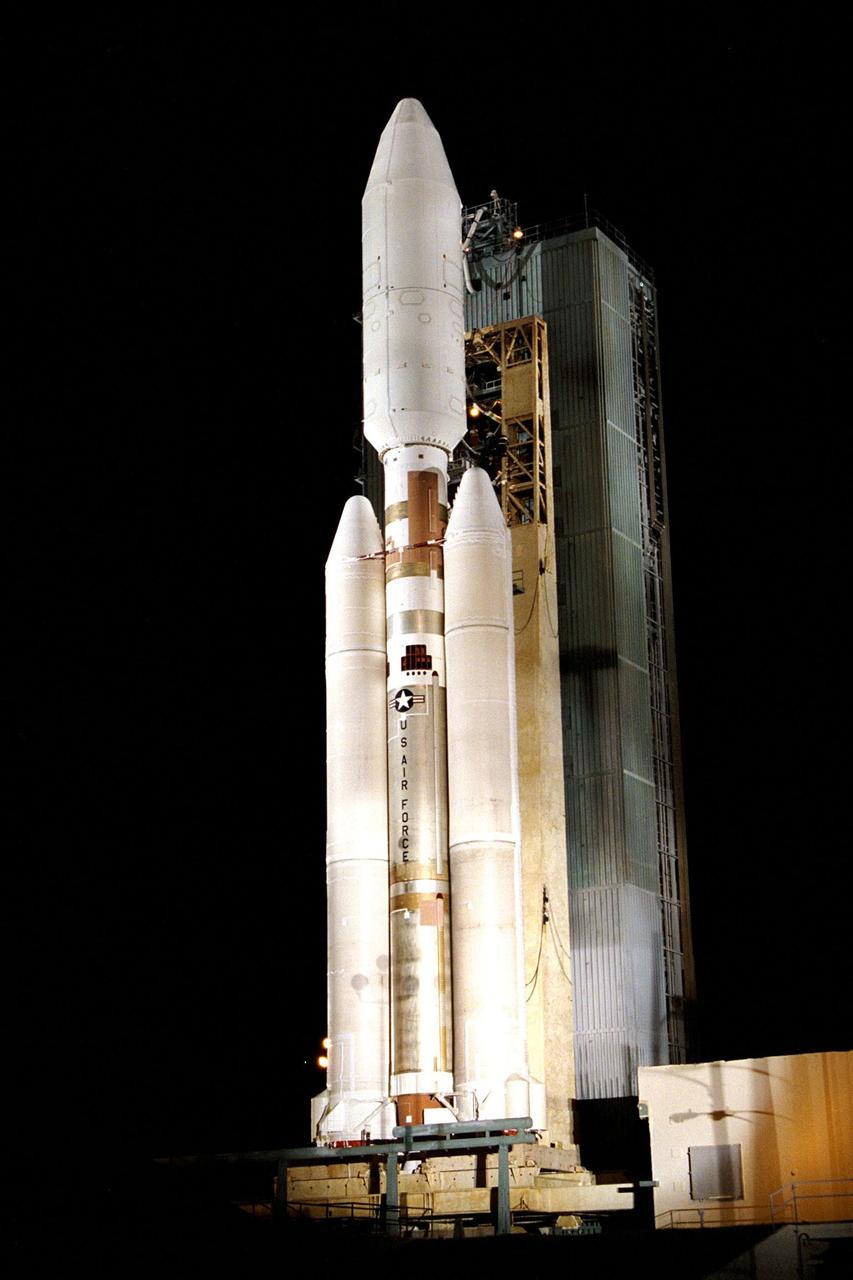
At Launch Complex 40 on Cape Canaveral Air Station, the Mobile Service Tower has been retracted away from the Titan IVB/Centaur carrying the Cassini spacecraft and its attached Huygens probe. This is the second launch attempt for the Saturn-bound mission; a first try Oct. 13 was scrubbed primarily due to concerns about upper level wind conditions. Liftoff Oct. 15 is set to occur during a launch window opening at 4:43 a.m. EDT and extending until 7:03 a.m. Clearly visible in this view are the 66-foot-tall, 17-foot-wide payload fairing atop the vehicle, in which Cassini and the attached Centaur stage are encased, the two-stage liquid propellant core vehicle, and the twin 112-foot long solid rocket motor upgrades (SRMUs) straddling the core vehicle. It is the SRMUs which ignite first to begin the launch sequence
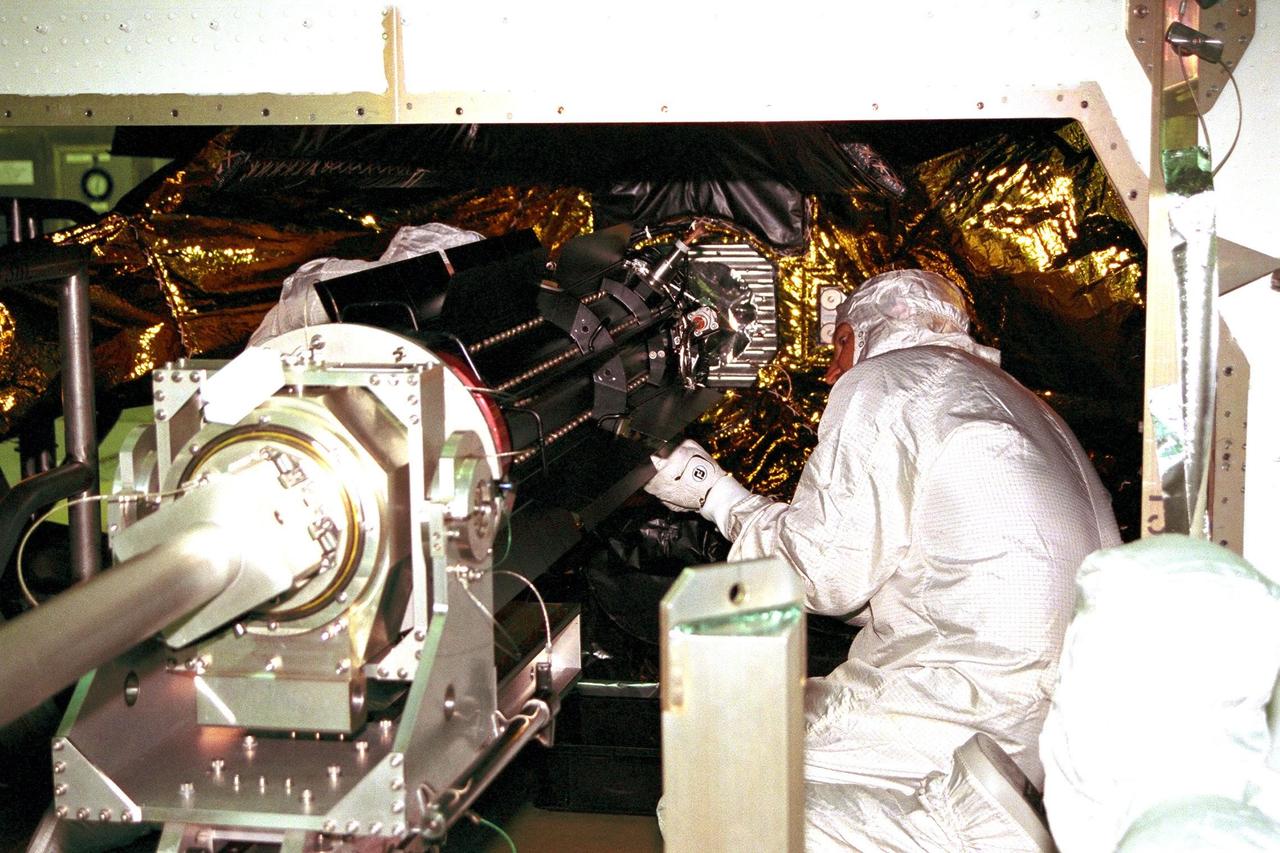
KENNEDY SPACE CENTER, FLA. -- At Launch Complex 40 on Cape Canaveral Air Station, workers are installing three Radioisotope Thermoelectric Generators (RTGs) on the Cassini spacecraft. RTGs are lightweight, compact spacecraft electrical power systems that have flown successfully on 23 previous U.S. missions over the past 37 years. These generators produce power by converting heat into electrical energy; the heat is provided by the natural radioactive decay of plutonium-238 dioxide, a non-weapons-grade material. RTGs enable spacecraft to operate at significant distances from the Sun where solar power systems would not be feasible. Cassini will travel two billion miles to reach Saturn and another 1.1 billion miles while in orbit around Saturn. Cassini is undergoing final preparations for liftoff on a Titan IVB/Centaur launch vehicle, with the launch window opening at 4:55 a.m. EDT, Oct. 13
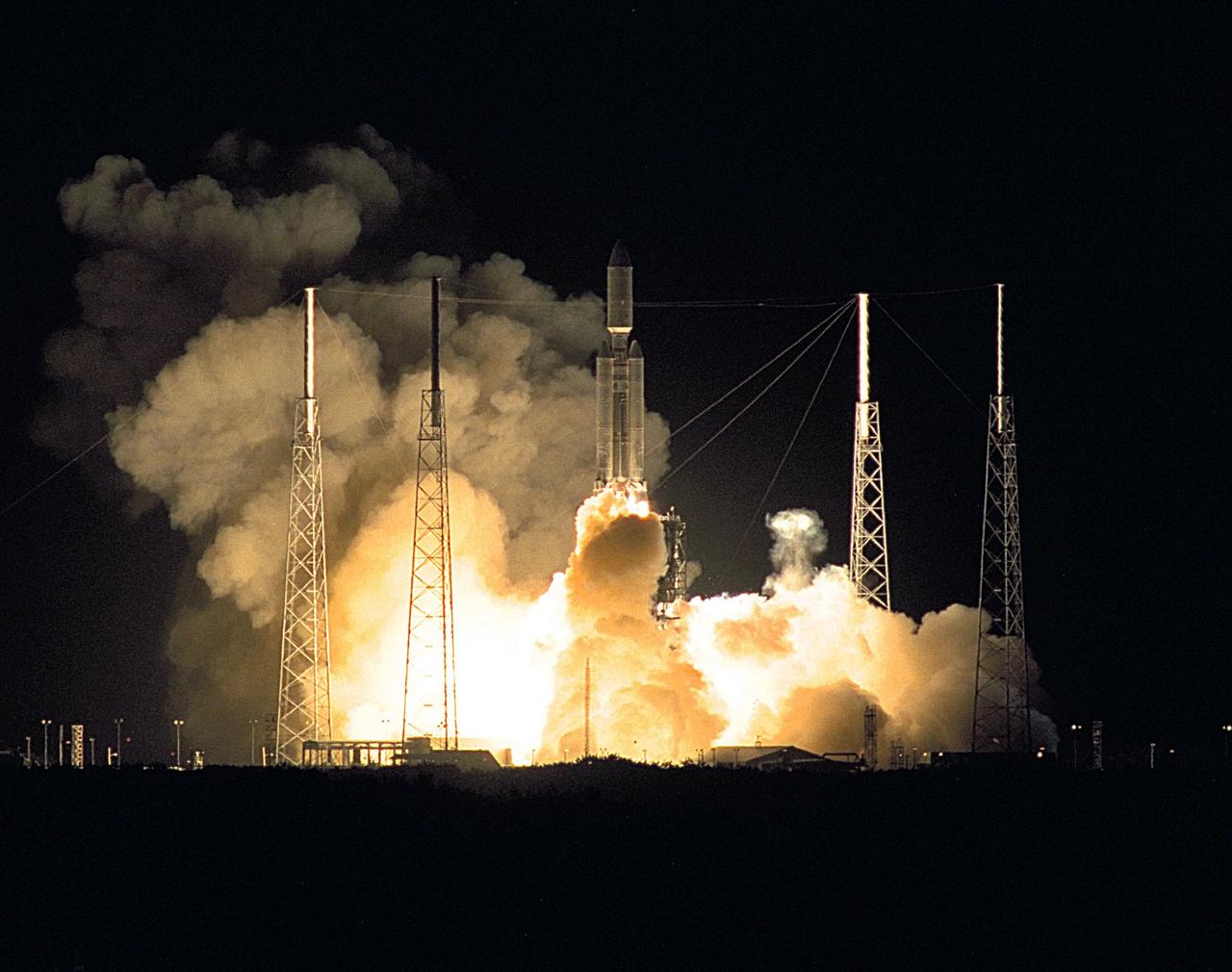
A seven-year journey to the ringed planet Saturn begins with the liftoff of a Titan IVB/Centaur carrying the Cassini orbiter and its attached Huygens probe. Launch occurred at 4:43 a.m. EDT, Oct. 15, from Launch Complex 40 on Cape Canaveral Air Station. After a 2.2-billion mile journey that will include two swingbys of Venus and one of Earth to gain additional velocity, the two-story tall spacecraft will arrive at Saturn in July 2004. The orbiter will circle the planet for four years, its complement of 12 scientific instruments gathering data about Saturn's atmosphere, rings and magnetosphere and conducting closeup observations of the Saturnian moons. Huygens, with a separate suite of six science instruments, will separate from Cassini to fly on a ballistic trajectory toward Titan, the only celestial body besides Earth to have an atmosphere rich in nitrogen. Scientists are eager to study further this chemical similarity in hopes of learning more about the origins of our own planet Earth. Huygens will provide the first direct sampling of Titan's atmospheric chemistry and the first detailed photographs of its surface. The Cassini mission is an international effort involving NASA, the European Space Agency (ESA) and the Italian Space Agency, Agenzia Spaziale Italiana (ASI). The Jet Propulsion Laboratory manages the U.S. contribution to the mission for NASA's Office of Space Science. The major U.S. contractor is Lockheed Martin, which provided the launch vehicle and upper stage, spacecraft propulsion module and radioisotope thermoelectric generators that will provide power for the spacecraft. The Titan IV/Centaur is a U.S. Air Force launch vehicle, and launch operations were managed by the 45th Space Wing
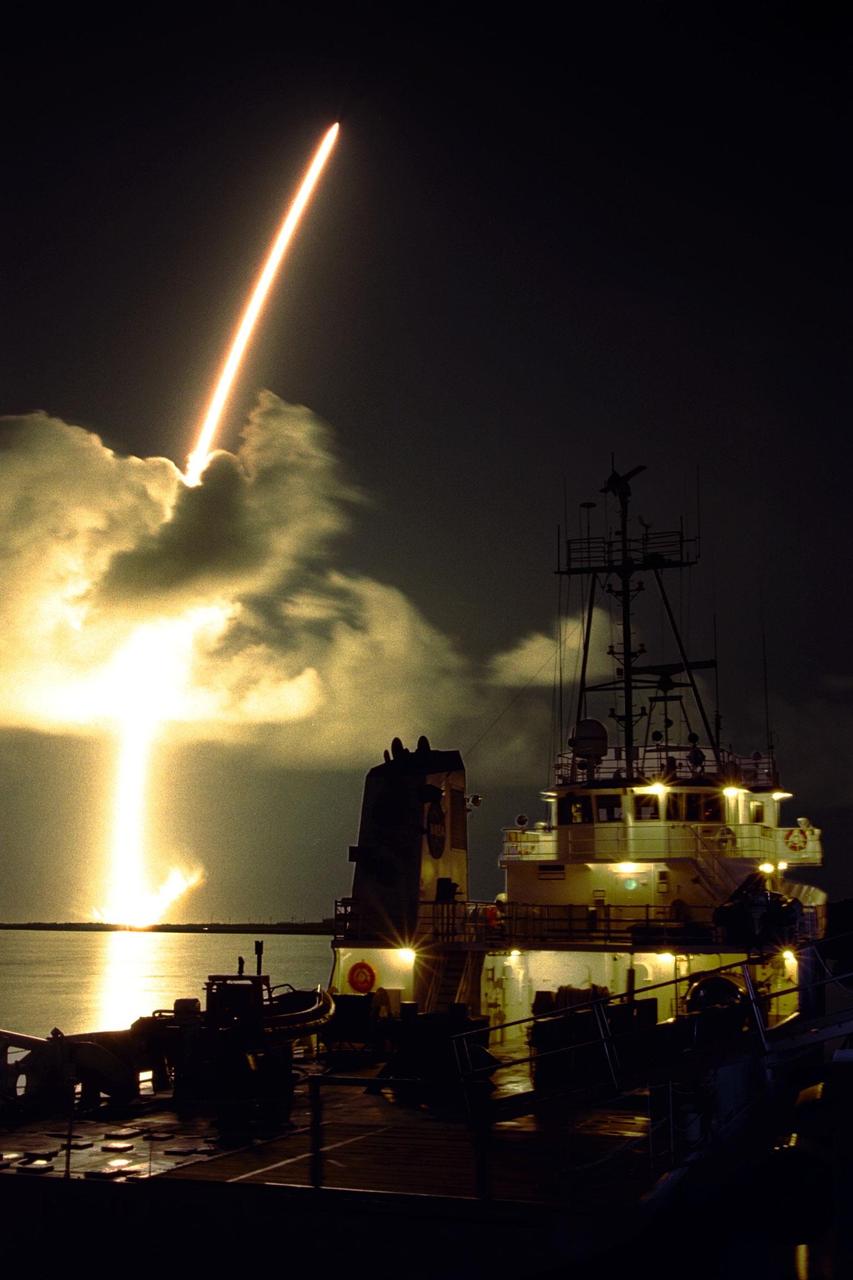
A seven-year journey to the ringed planet Saturn begins with the liftoff of a Titan IVB/Centaur carrying the Cassini orbiter and its attached Huygens probe. This spectacular streak shot was taken from Hangar AF on Cape Canaveral Air Station, with a solid rocket booster retrieval ship in the foreground. Launch occurred at 4:43 a.m. EDT, Oct. 15, from Launch Complex 40 on Cape Canaveral Air Station. After a 2.2-billion mile journey that will include two swingbys of Venus and one of Earth to gain additional velocity, the two-story tall spacecraft will arrive at Saturn in July 2004. The orbiter will circle the planet for four years, its complement of 12 scientific instruments gathering data about Saturn's atmosphere, rings and magnetosphere and conducting closeup observations of the Saturnian moons. Huygens, with a separate suite of six science instruments, will separate from Cassini to fly on a ballistic trajectory toward Titan, the only celestial body besides Earth to have an atmosphere rich in nitrogen. Scientists are eager to study further this chemical similarity in hopes of learning more about the origins of our own planet Earth. Huygens will provide the first direct sampling of Titan's atmospheric chemistry and the first detailed photographs of its surface. The Cassini mission is an international effort involving NASA, the European Space Agency (ESA) and the Italian Space Agency, Agenzia Spaziale Italiana (ASI). The Jet Propulsion Laboratory manages the U.S. contribution to the mission for NASA's Office of Space Science. The major U.S. contractor is Lockheed Martin, which provided the launch vehicle and upper stage, spacecraft propulsion module and radioisotope thermoelectric generators that will provide power for the spacecraft. The Titan IV/Centaur is a U.S. Air Force launch vehicle, and launch operations were managed by the 45th Space Wing
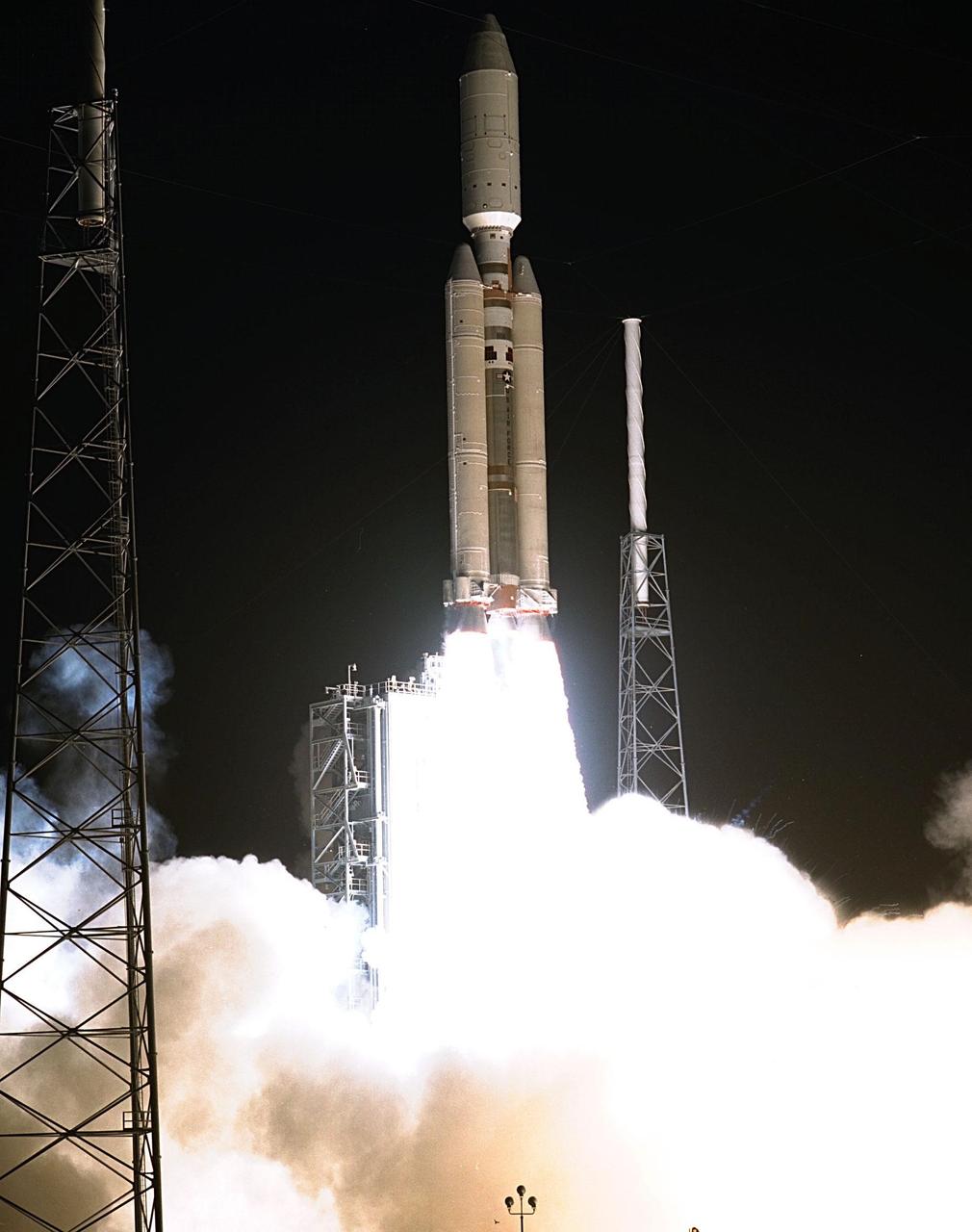
KENNEDY SPACE CENTER, FLA. -- A seven-year journey to the ringed planet Saturn begins with the liftoff of a Titan IVB/Centaur carrying the Cassini orbiter and its attached Huygens probe. Launch occurred at 4:43 a.m. EDT, Oct. 15, from Launch Complex 40 on Cape Canaveral Air Station. After a 2.2-billion mile journey that will include two swingbys of Venus and one of Earth to gain additional velocity, the two-story tall spacecraft will arrive at Saturn in July 2004. The orbiter will circle the planet for four years, its complement of 12 scientific instruments gathering data about Saturn's atmosphere, rings and magnetosphere and conducting closeup observations of the Saturnian moons. Huygens, with a separate suite of six science instruments, will separate from Cassini to fly on a ballistic trajectory toward Titan, the only celestial body besides Earth to have an atmosphere rich in nitrogen. Scientists are eager to study further this chemical similarity in hopes of learning more about the origins of our own planet Earth. Huygens will provide the first direct sampling of Titan's atmospheric chemistry and the first detailed photographs of its surface. The Cassini mission is an international effort involving NASA, the European Space Agency (ESA) and the Italian Space Agency, Agenzia Spaziale Italiana (ASI). The Jet Propulsion Laboratory manages the U.S. contribution to the mission for NASA's Office of Space Science. The major U.S. contractor is Lockheed Martin, which provided the launch vehicle and upper stage, spacecraft propulsion module and radioisotope thermoelectric generators that will provide power for the spacecraft. The Titan IV/Centaur is a U.S. Air Force launch vehicle, and launch operations were managed by the 45th Space Wing
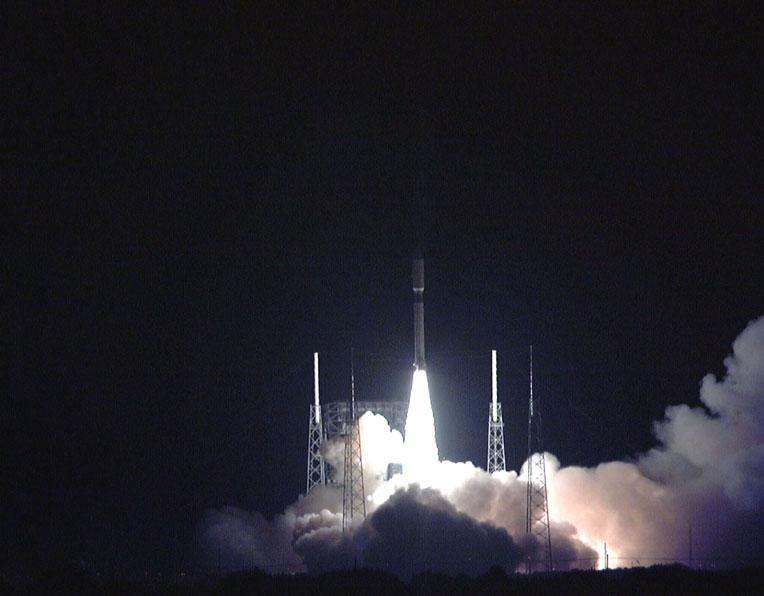
A seven-year journey to the ringed planet Saturn begins with the liftoff of a Titan IVB/Centaur carrying the Cassini orbiter and its attached Huygens probe. Launch occurred at 4:43 a.m. EDT, Oct. 15, from Launch Complex 40 on Cape Canaveral Air Station. After a 2.2-billion mile journey that will include two swingbys of Venus and one of Earth to gain additional velocity, the two-story tall spacecraft will arrive at Saturn in July 2004. The orbiter will circle the planet for four years, its complement of 12 scientific instruments gathering data about Saturn's atmosphere, rings and magnetosphere and conducting closeup observations of the Saturnian moons. Huygens, with a separate suite of six science instruments, will separate from Cassini to fly on a ballistic trajectory toward Titan, the only celestial body besides Earth to have an atmosphere rich in nitrogen. Scientists are eager to study further this chemical similarity in hopes of learning more about the origins of our own planet Earth. Huygens will provide the first direct sampling of Titan's atmospheric chemistry and the first detailed photographs of its surface. The Cassini mission is an international effort involving NASA, the European Space Agency (ESA) and the Italian Space Agency, Agenzia Spaziale Italiana (ASI). The Jet Propulsion Laboratory manages the U.S. contribution to the mission for NASA's Office of Space Science. The major U.S. contractor is Lockheed Martin, which provided the launch vehicle and upper stage, spacecraft propulsion module and radioisotope thermoelectric generators that will provide power for the spacecraft. The Titan IV/Centaur is a U.S. Air Force launch vehicle, and launch operations were managed by the 45th Space Wing
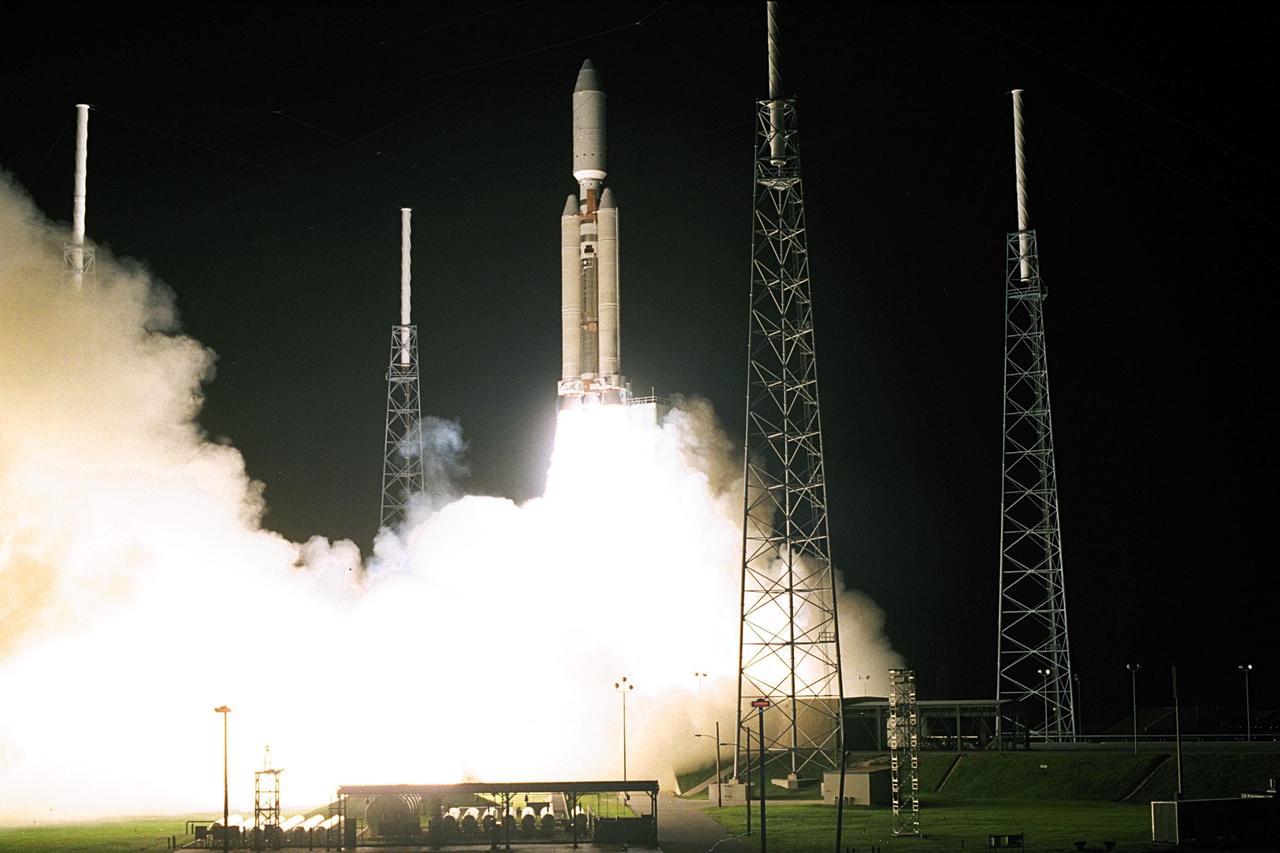
A seven-year journey to the ringed planet Saturn begins with the liftoff of a Titan IVB/Centaur carrying the Cassini orbiter and its attached Huygens probe. Launch occurred at 4:43 a.m. EDT, Oct. 15, from Launch Complex 40 on Cape Canaveral Air Station. After a 2.2-billion mile journey that will include two swingbys of Venus and one of Earth to gain additional velocity, the two-story tall spacecraft will arrive at Saturn in July 2004. The orbiter will circle the planet for four years, its complement of 12 scientific instruments gathering data about Saturn's atmosphere, rings and magnetosphere and conducting closeup observations of the Saturnian moons. Huygens, with a separate suite of six science instruments, will separate from Cassini to fly on a ballistic trajectory toward Titan, the only celestial body besides Earth to have an atmosphere rich in nitrogen. Scientists are eager to study further this chemical similarity in hopes of learning more about the origins of our own planet Earth. Huygens will provide the first direct sampling of Titan's atmospheric chemistry and the first detailed photographs of its surface. The Cassini mission is an international effort involving NASA, the European Space Agency (ESA) and the Italian Space Agency, Agenzia Spaziale Italiana (ASI). The Jet Propulsion Laboratory manages the U.S. contribution to the mission for NASA's Office of Space Science. The major U.S. contractor is Lockheed Martin, which provided the launch vehicle and upper stage, spacecraft propulsion module and radioisotope thermoelectric generators that will provide power for the spacecraft. The Titan IV/Centaur is a U.S. Air Force launch vehicle, and launch operations were managed by the 45th Space Wing
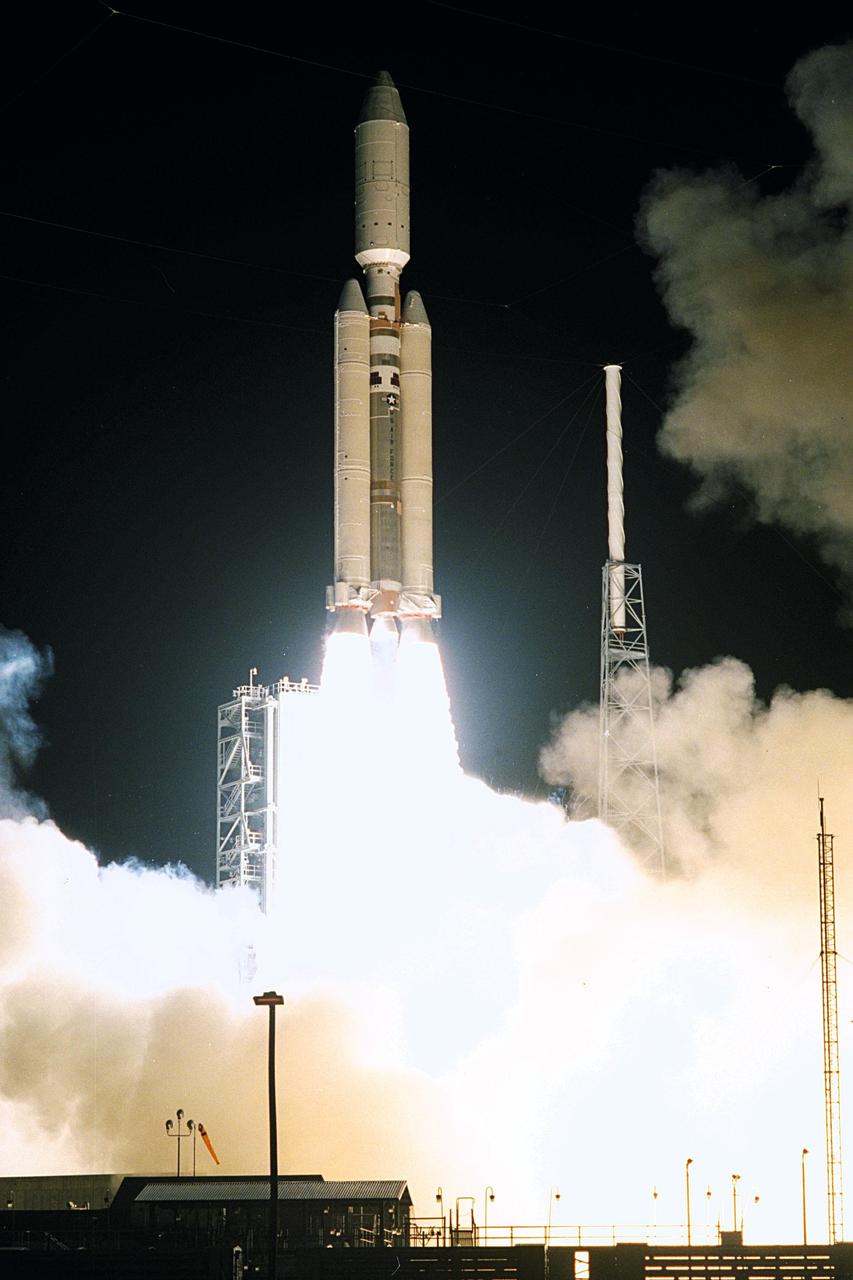
A seven-year journey to the ringed planet Saturn begins with the liftoff of a Titan IVB/Centaur carrying the Cassini orbiter and its attached Huygens probe. Launch occurred at 4:43 a.m. EDT, Oct. 15, from Launch Complex 40 on Cape Canaveral Air Station. After a 2.2-billion mile journey that will include two swingbys of Venus and one of Earth to gain additional velocity, the two-story tall spacecraft will arrive at Saturn in July 2004. The orbiter will circle the planet for four years, its complement of 12 scientific instruments gathering data about Saturn's atmosphere, rings and magnetosphere and conducting closeup observations of the Saturnian moons. Huygens, with a separate suite of six science instruments, will separate from Cassini to fly on a ballistic trajectory toward Titan, the only celestial body besides Earth to have an atmosphere rich in nitrogen. Scientists are eager to study further this chemical similarity in hopes of learning more about the origins of our own planet Earth. Huygens will provide the first direct sampling of Titan's atmospheric chemistry and the first detailed photographs of its surface. The Cassini mission is an international effort involving NASA, the European Space Agency (ESA) and the Italian Space Agency, Agenzia Spaziale Italiana (ASI). The Jet Propulsion Laboratory manages the U.S. contribution to the mission for NASA's Office of Space Science. The major U.S. contractor is Lockheed Martin, which provided the launch vehicle and upper stage, spacecraft propulsion module and radioisotope thermoelectric generators that will provide power for the spacecraft. The Titan IV/Centaur is a U.S. Air Force launch vehicle, and launch operations were managed by the 45th Space Wing

Jet Propulsion Laboratory (JPL) technicians finish mounting a thermal model of a radioisotope thermoelectric generator (RTG) on the installation cart which will be used to install the RTG in the Cassini spacecraft at Level 14 of Space Launch Complex 40, Cape Canaveral Air Station. The technicians use the thermal model to practice installation procedures. The three actual RTGs which will provide electrical power to Cassini on its 6.7-mile trip to the Saturnian system, and during its four-year mission at Saturn, are being tested and monitored in the Radioisotope Thermoelectric Generator Storage Building in KSC's Industrial Area. The RTGs use heat from the natural decay of plutonium to generate electric power. RTGs enable spacecraft to operate far from the Sun where solar power systems are not feasible. The RTGs on Cassini are of the same design as those flying on the already deployed Galileo and Ulysses spacecraft. The Cassini mission is targeted for an October 6 launch aboard a Titan IVB/Centaur expendable launch vehicle. Cassini is built and managed for NASA by JPL