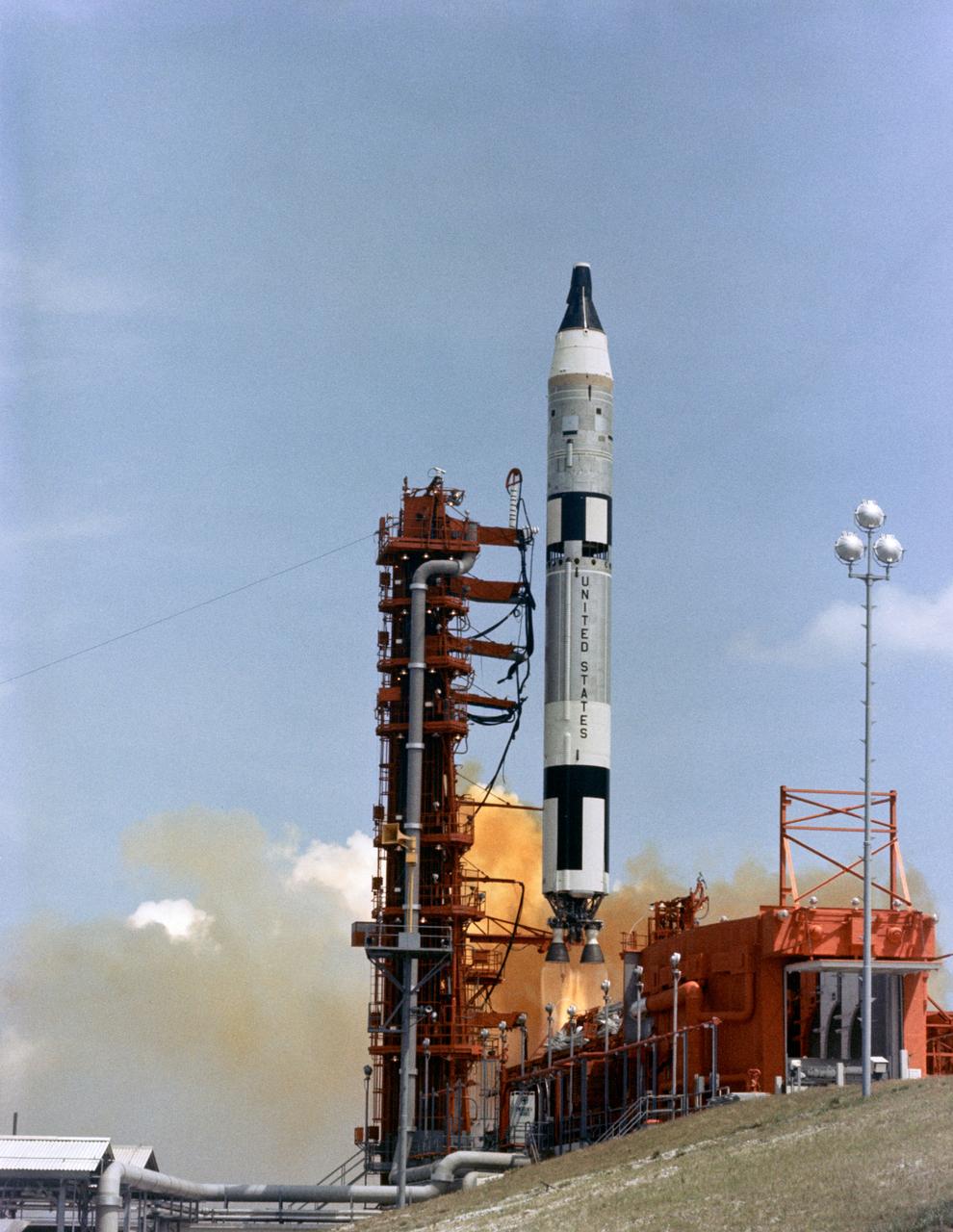
S64-21560 (8 April 1964) --- Gemini/Titan-II launch vehicle #1 liftoff at Cape Kennedy, Florida.
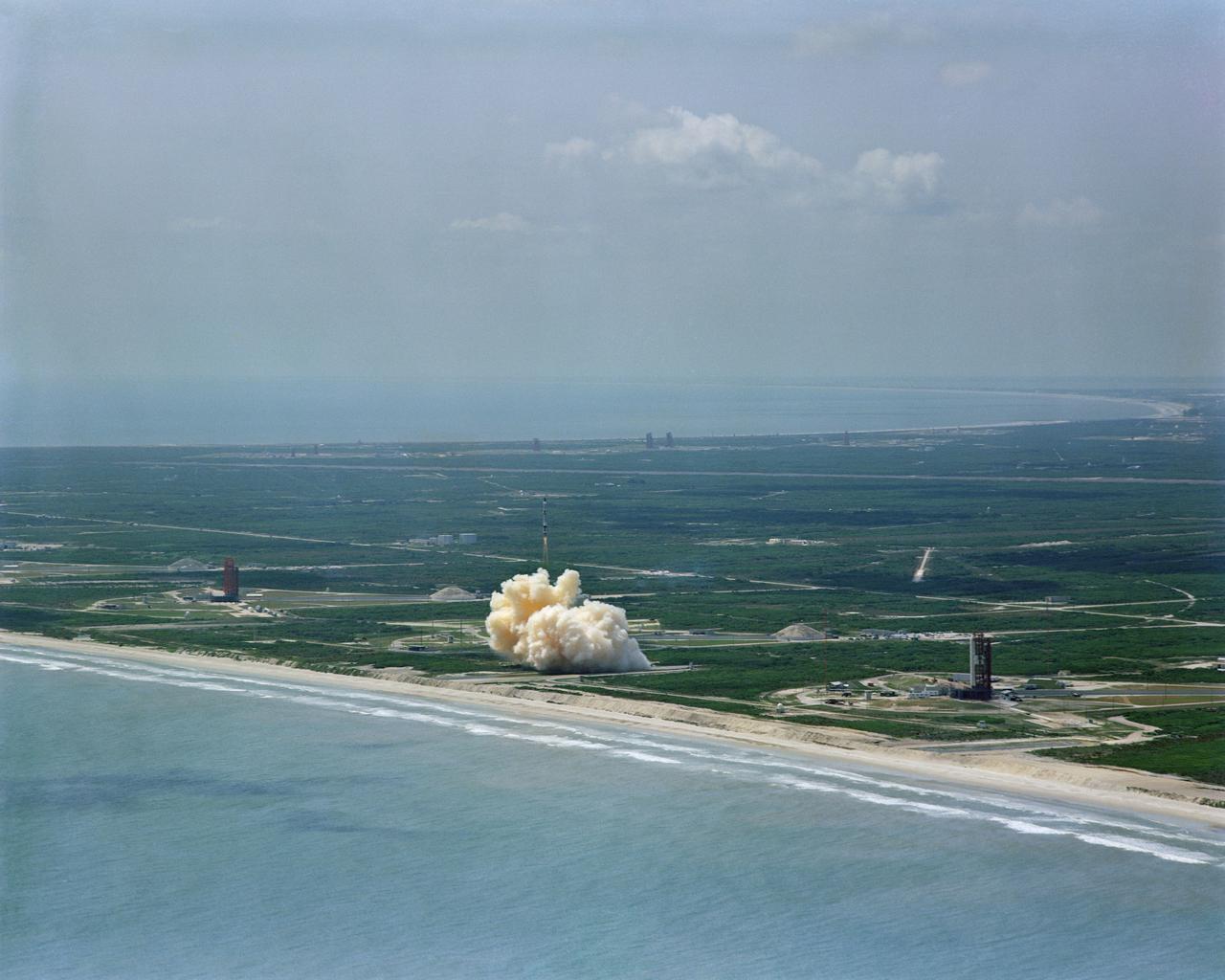
S64-22412 (8 April 1964) --- Aerial view of the Gemini/Titan-II launch vehicle #1 liftoff at Cape Kennedy, Florida.
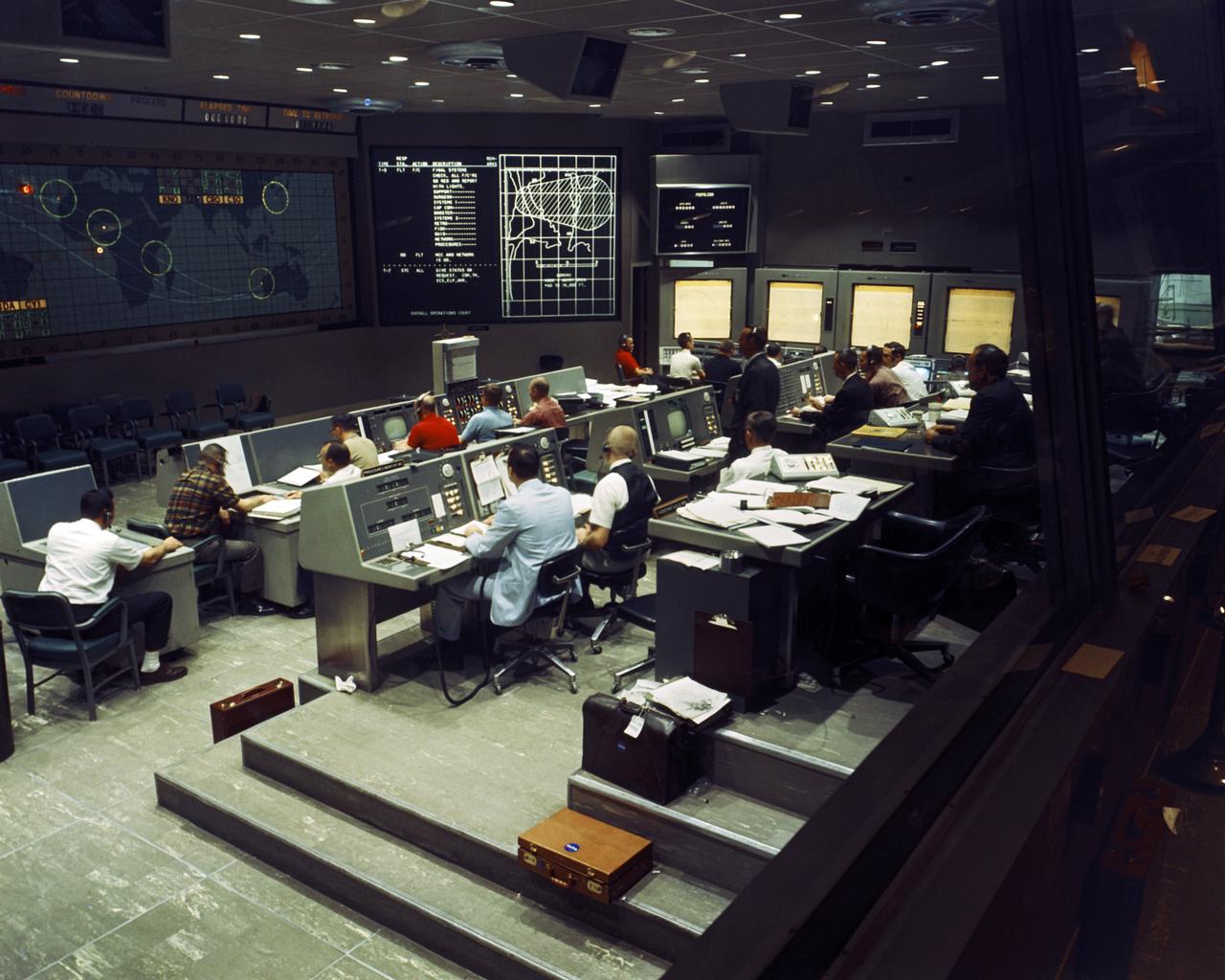
CAPE CANAVERAL, Fla. - Inside the Mission Control Center, flight controllers work during the Gemini I mission, an orbital test of the Titan-II launch vehicle. The Mercury Mission Control Center in Florida played a key role in the United States' early spaceflight program. Located at Cape Canaveral Air Force Station, the original part of the building was constructed between 1956 and 1958, with additions in 1959 and 1963. The facility officially was transferred to NASA on Dec. 26, 1963, and served as mission control during all the Project Mercury missions, as well as the first three flights of the Gemini Program, when it was renamed Mission Control Center. With its operational days behind, on June 1, 1967, the Mission Control Center became a stop on the public tour of NASA facilities until the mid-90s. In 1999, much of the equipment and furnishings from the Flight Control Area were moved to the Kennedy Space Center Visitor Complex where they became part of the exhibit there. The building was demolished in spring 2010. Photo credit: NASA
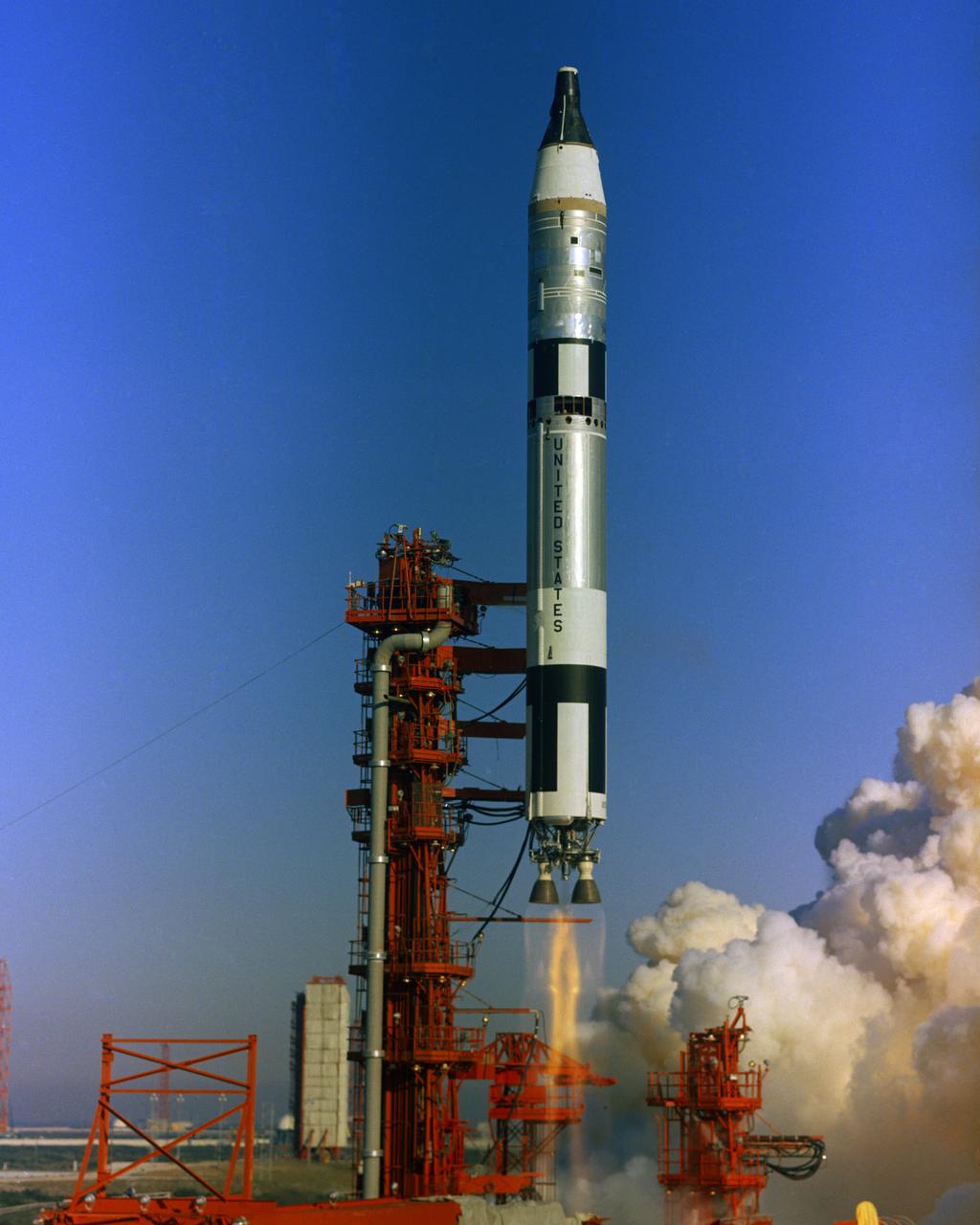
Titan II GLV-2, GT-2 launched from Pad 19, Cape Kennedy.
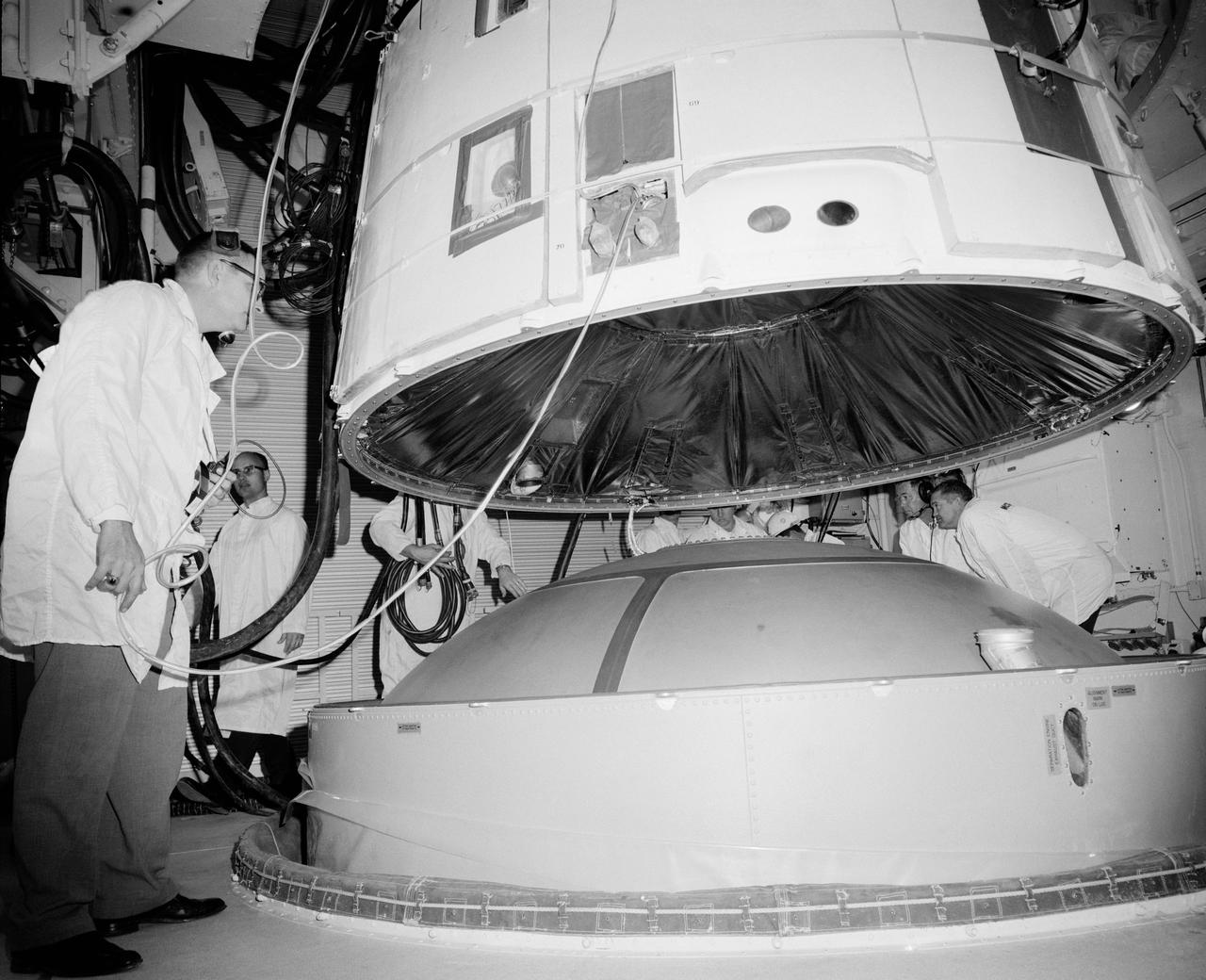
S65-17337 (February 1965) --- Scene in the white room of Pad 19 during the mating of the Gemini Spacecraft 3 with the Titan II launch vehicle.
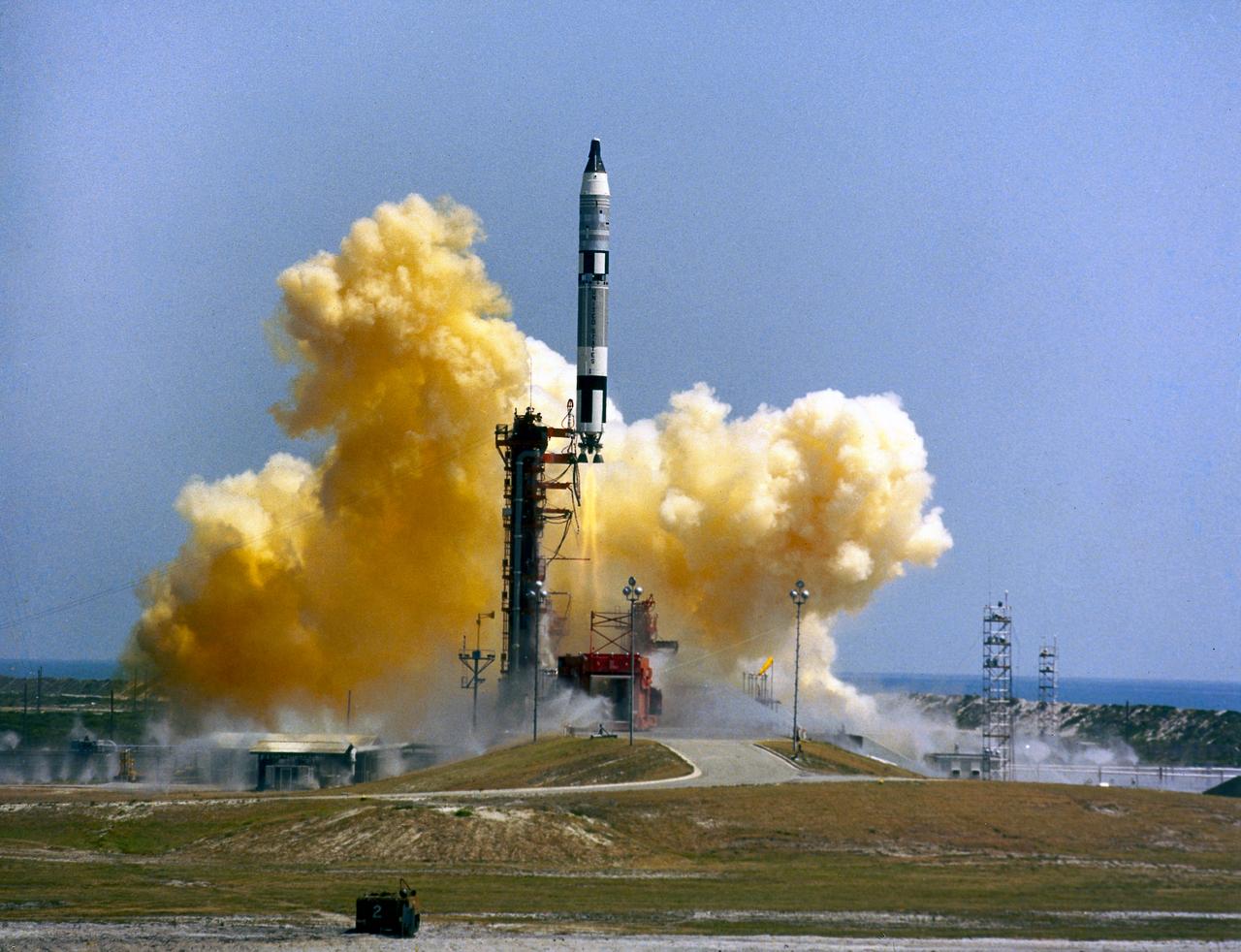
The Titan II liftoff. The Titan II launch vehicle was used for carrying astronauts on the Gemini mission. The Gemini Program was an intermediate step between the Project Mercury and the Apollo Program. The major objectives were to subject are two men and supporting equipment to long duration flights, to effect rendezvous and docking with other orbiting vehicle, and to perfect methods of reentry, and landing the spacecraft.

S65-30430 (3 June 1965) --- Astronaut Edward H. White II, pilot on the Gemini-Titan 4 spaceflight, is shown during his egress from the spacecraft. His face is covered by a shaded visor to protect him from the unfiltered rays of the sun. White became the first American astronaut to walk in space. He remained outside the spacecraft for 21 minutes during the third revolution of the Gemini-4 mission. He wears a specially designed spacesuit for the extravehicular activity (EVA). In his right hand, he carries a Hand-Held Self-Maneuvering Unit (HHSMU) with which he controlled his movements while in space. He was attached to the spacecraft by a 25-feet umbilical line and a 23-feet tether line, both wrapped together with gold tape to form one cord. He wears an emergency oxygen supply chest pack. Astronaut James A. McDivitt is command pilot for the Gemini-4 mission. Photo credit: NASA EDITOR'S NOTE: Astronaut Edward H. White II died in the Apollo/Saturn 204 fire at Cape Kennedy on Jan. 27, 1967.
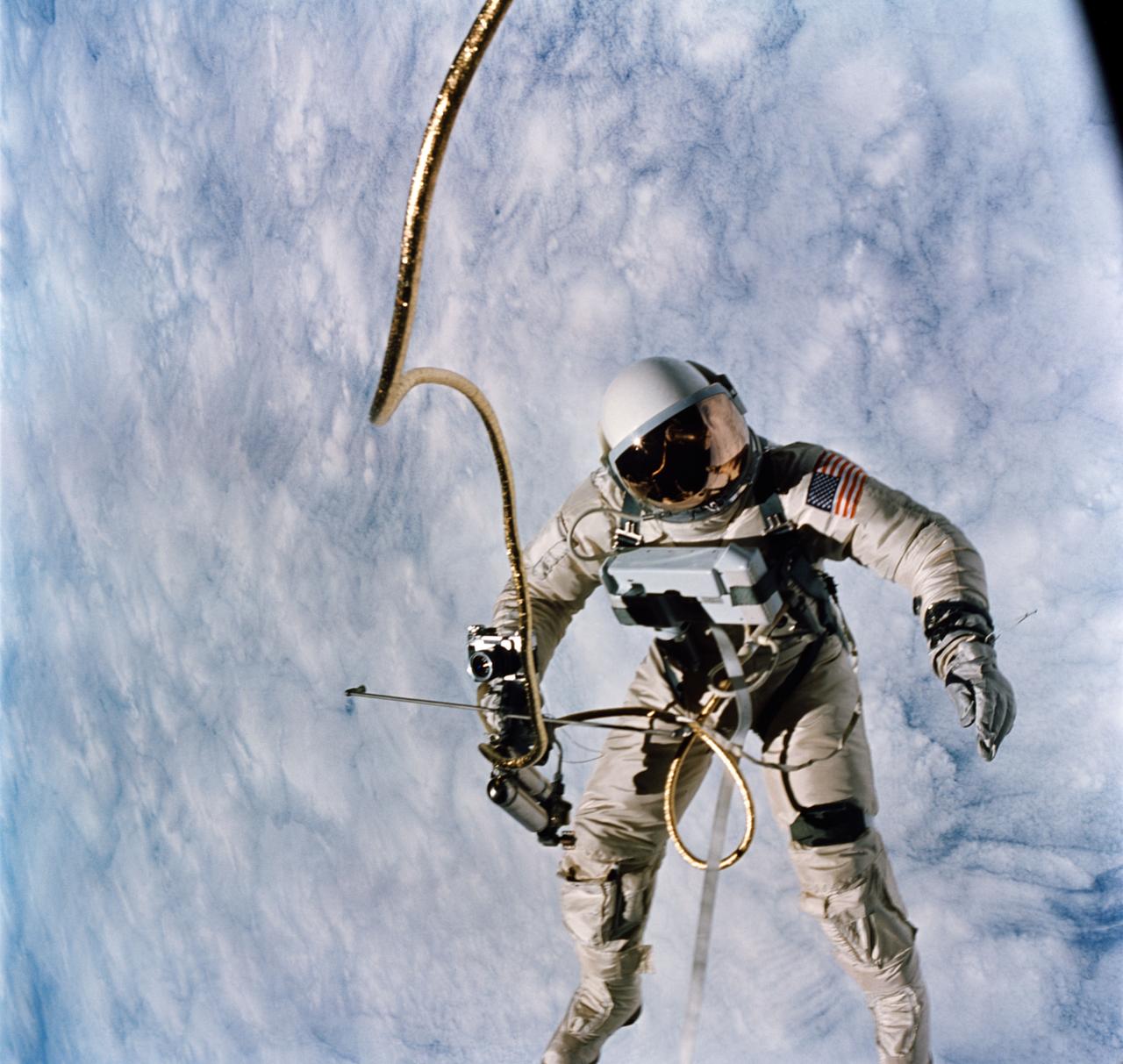
S65-30427 (3 June 1965) --- Astronaut Edward H. White II, pilot for the Gemini-Titan 4 (GT-4) spaceflight, floats in the zero-gravity of space during the third revolution of the GT-4 spacecraft. White wears a specially designed spacesuit. His face is shaded by a gold-plated visor to protect him from unfiltered rays of the sun. In his right hand he carries a Hand-Held Self-Maneuvering Unit (HHSMU) that gives him control over his movements in space. White also wears an emergency oxygen chest pack; and he carries a camera mounted on the HHSMU for taking pictures of the sky, Earth and the GT-4 spacecraft. He is secured to the spacecraft by a 25-feet umbilical line and a 23-feet tether line. Both lines are wrapped together in gold tape to form one cord. Astronaut James A. McDivitt, command pilot, remained inside the spacecraft during the extravehicular activity (EVA). Photo credit: NASA EDITOR'S NOTE: Astronaut Edward H. White II died in the Apollo/Saturn 204 fire at Cape Kennedy on Jan. 27, 1967.
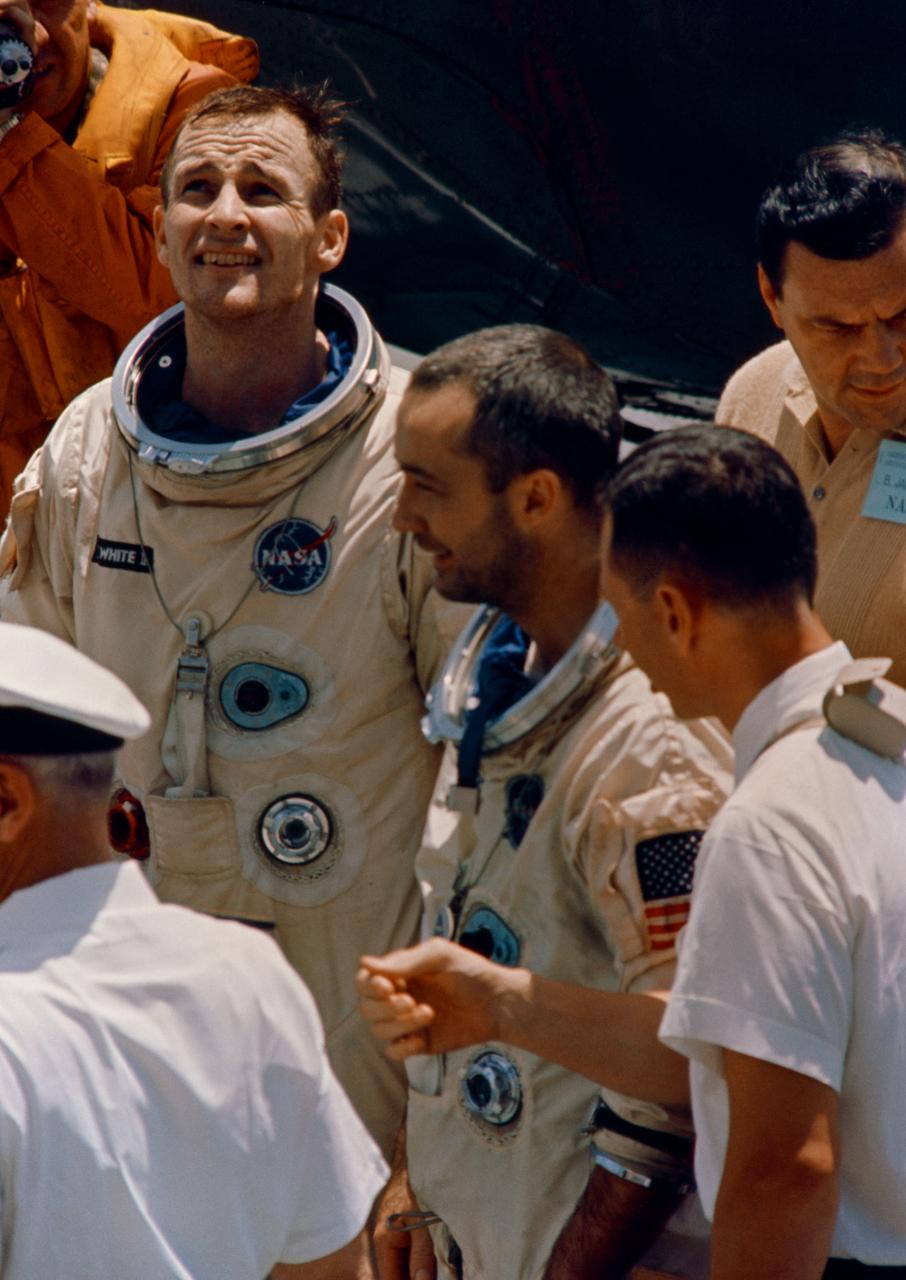
S65-32993 (7 June 1965) --- Astronauts James A. McDivitt (left), Gemini-Titan 4 command pilot; and Edward H. White II, pilot, are seen talking to personnel on the recovery ship USS Wasp.
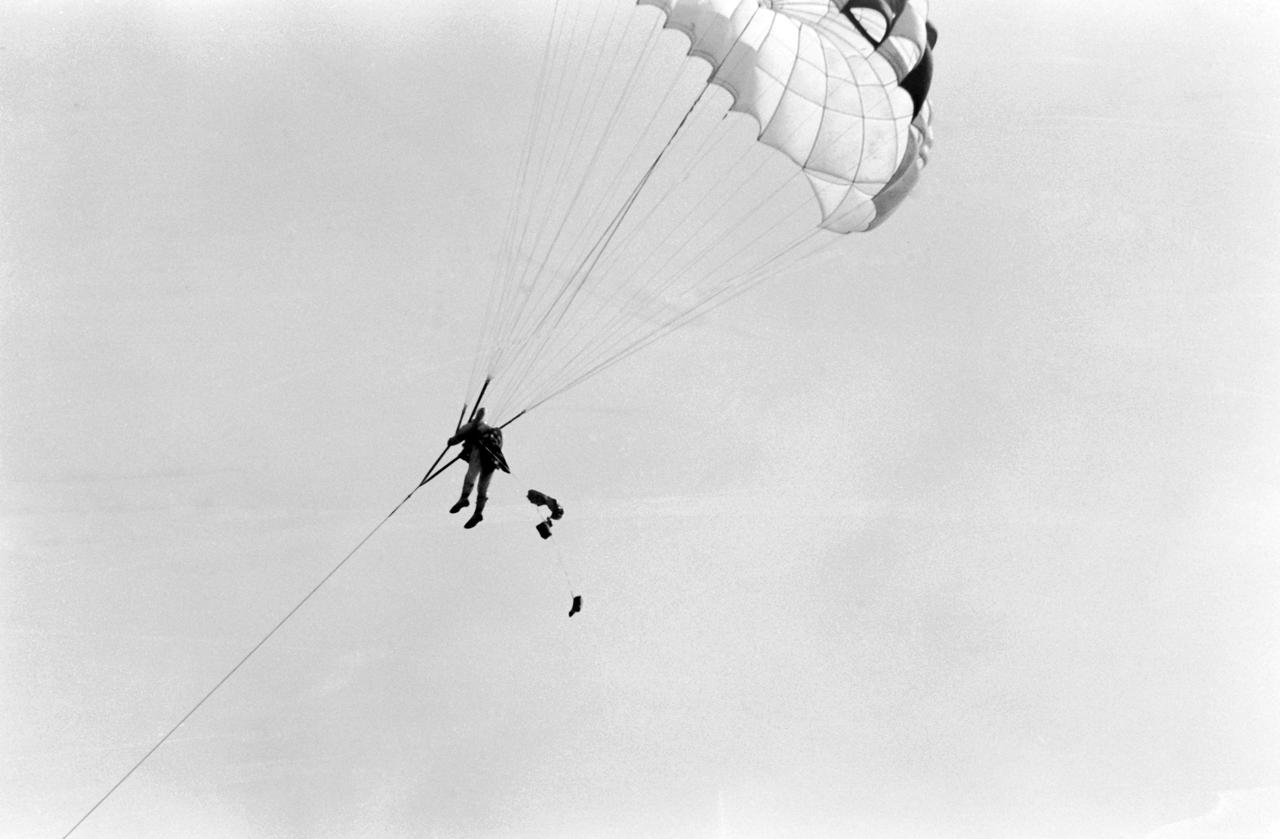
S65-10175 (2 Feb. 1965) --- Astronaut Edward H. White II, Gemini-Titan 4 prime crew pilot, is pictured during water egress para-drop training activity in nearby Galveston Bay.
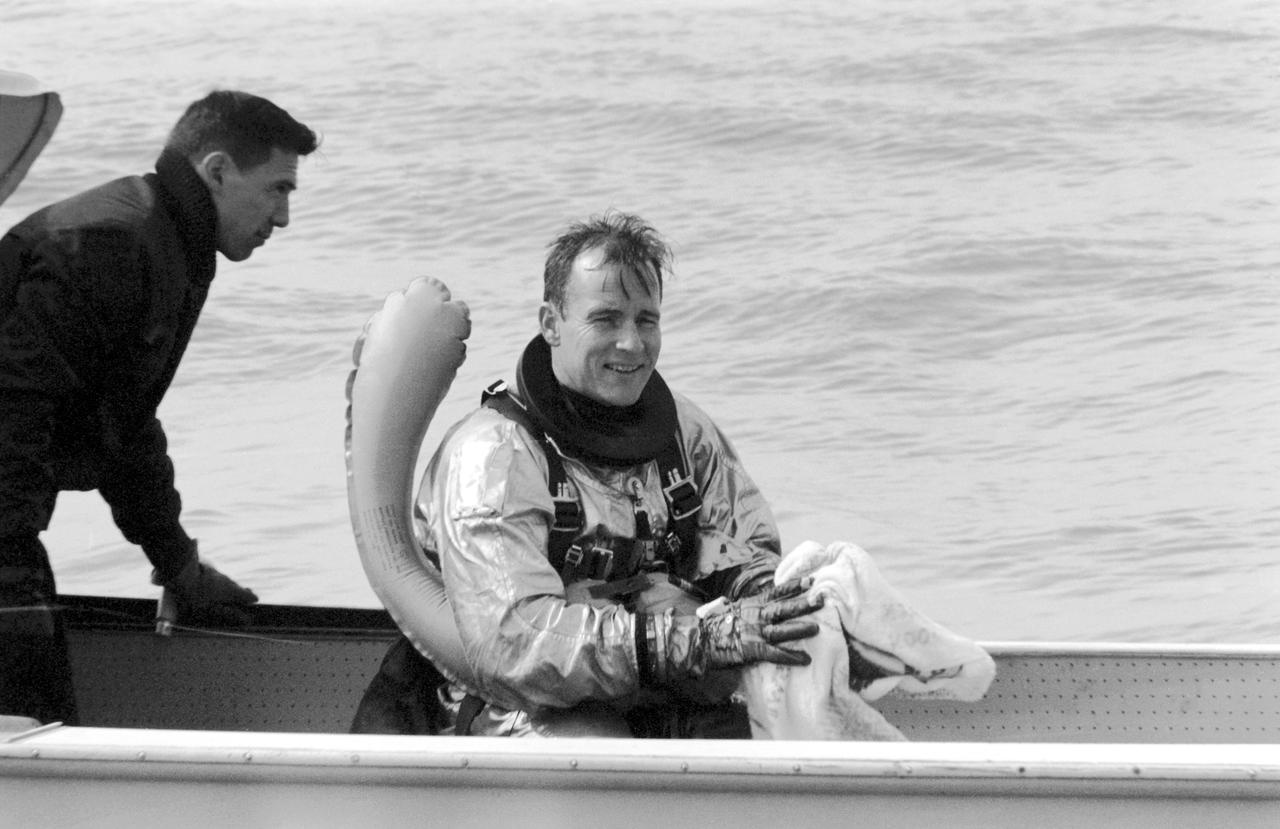
S65-10174 (2 Feb. 1965) --- Astronaut Edward H. White II, Gemini-Titan 4 prime crew pilot, is pictured during water egress para-drop training activity in nearby Galveston Bay.
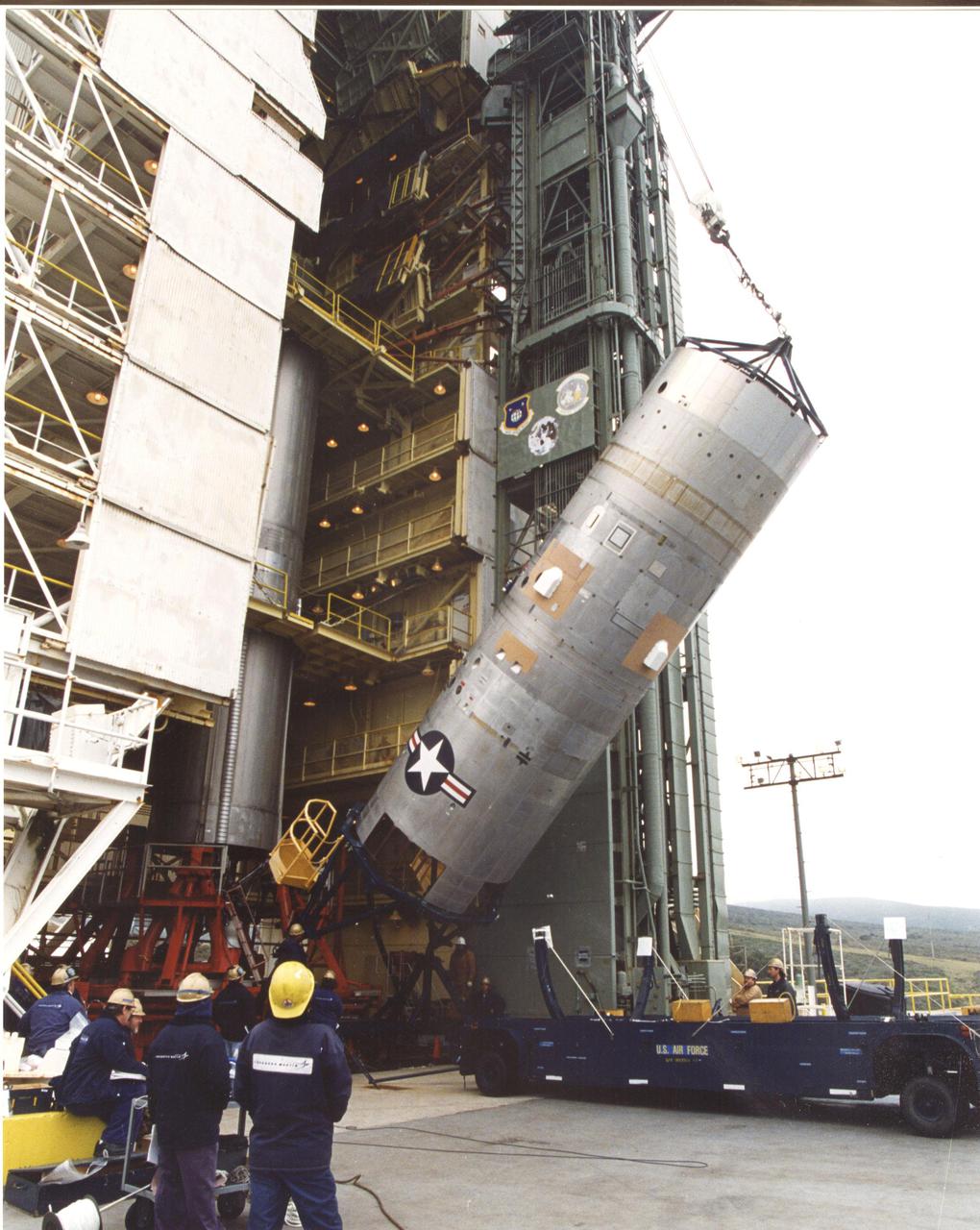
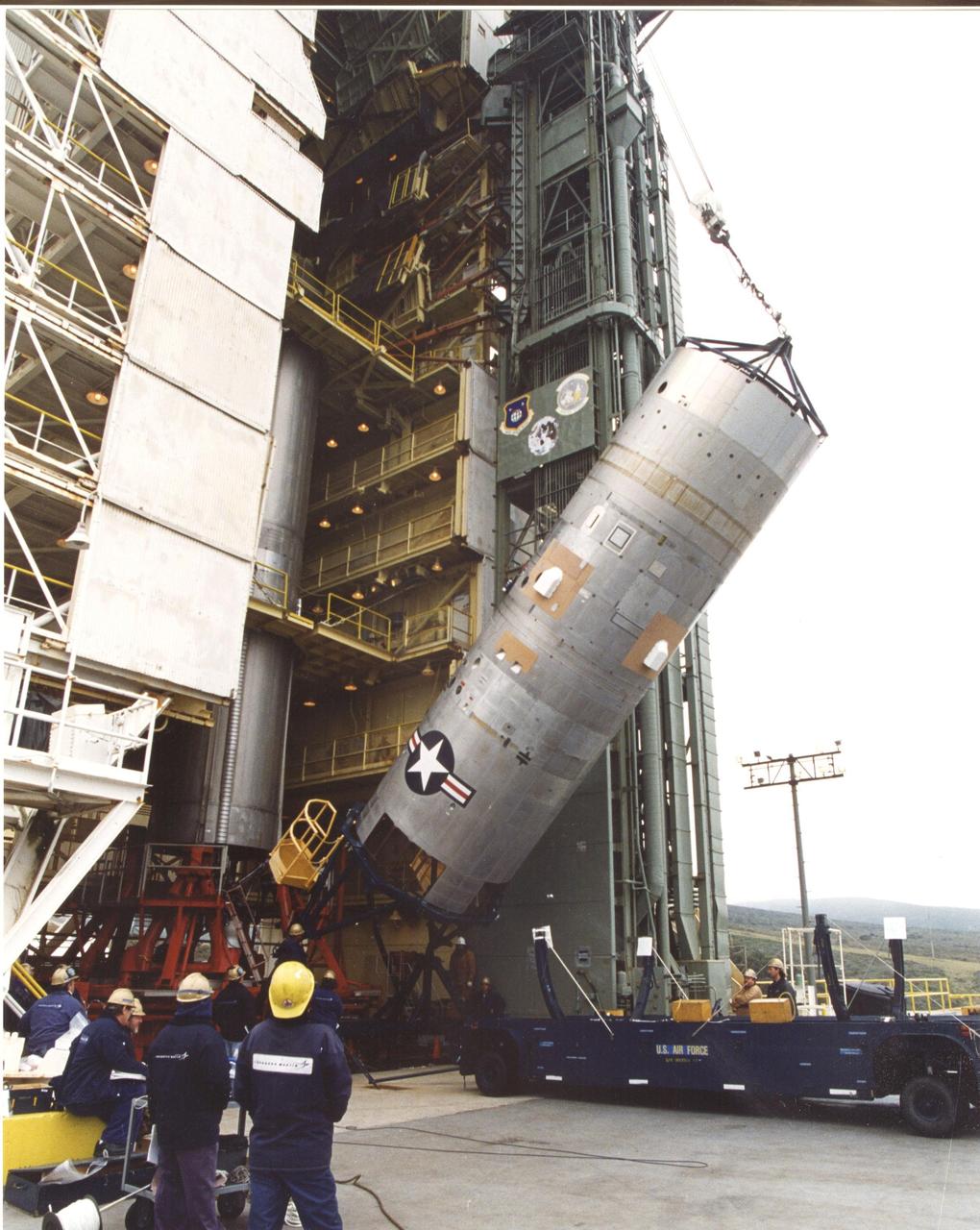
At the launch tower, Vandenberg Air Force Base, Calif., the second stage of a Titan II rocket is lifted to vertical. The Titan will power the launch of a National Oceanic and Atmospheric Administration (NOAA-L) satellite scheduled no earlier than Sept. 12. NOAA-L is part of the Polar-Orbiting Operational Environmental Satellite (POES) program that provides atmospheric measurements of temperature, humidity, ozone and cloud images, tracking weather patterns that affect the global weather and climate
At the launch tower, Vandenberg Air Force Base, Calif., the second stage of a Titan II rocket is lifted to vertical. The Titan will power the launch of a National Oceanic and Atmospheric Administration (NOAA-L) satellite scheduled no earlier than Sept. 12. NOAA-L is part of the Polar-Orbiting Operational Environmental Satellite (POES) program that provides atmospheric measurements of temperature, humidity, ozone and cloud images, tracking weather patterns that affect the global weather and climate
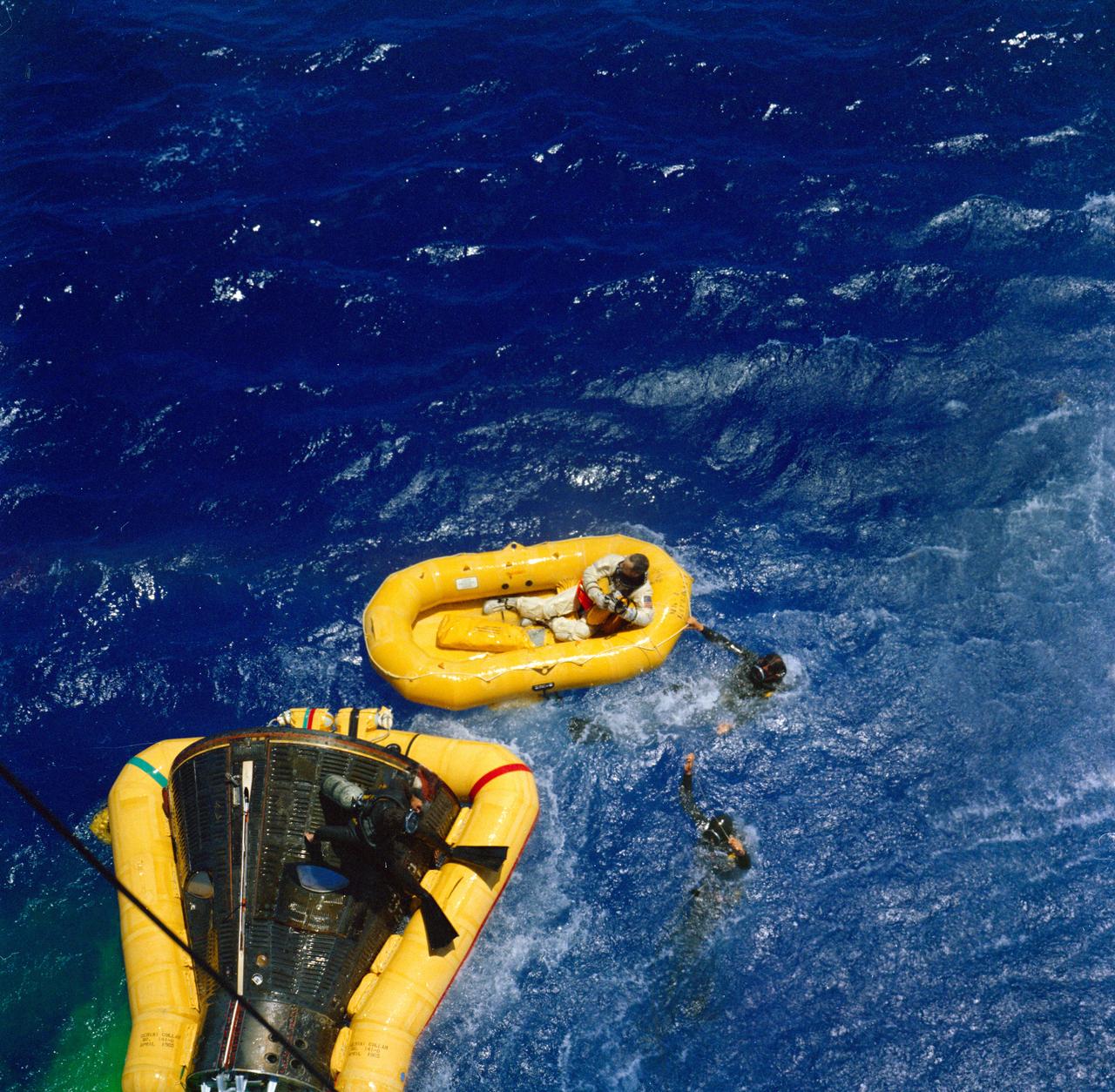
S65-33490 (7 June 1965) --- A United States Navy frogman team participates in the recovery of the Gemini-Titan 4 (GT-4) spacecraft. The USS Wasp was the prime recovery ship for the Gemini-4 mission. The crew of the Gemini-4 spaceflight was astronauts James A. McDivitt, command pilot, and Edward H. White II, pilot.
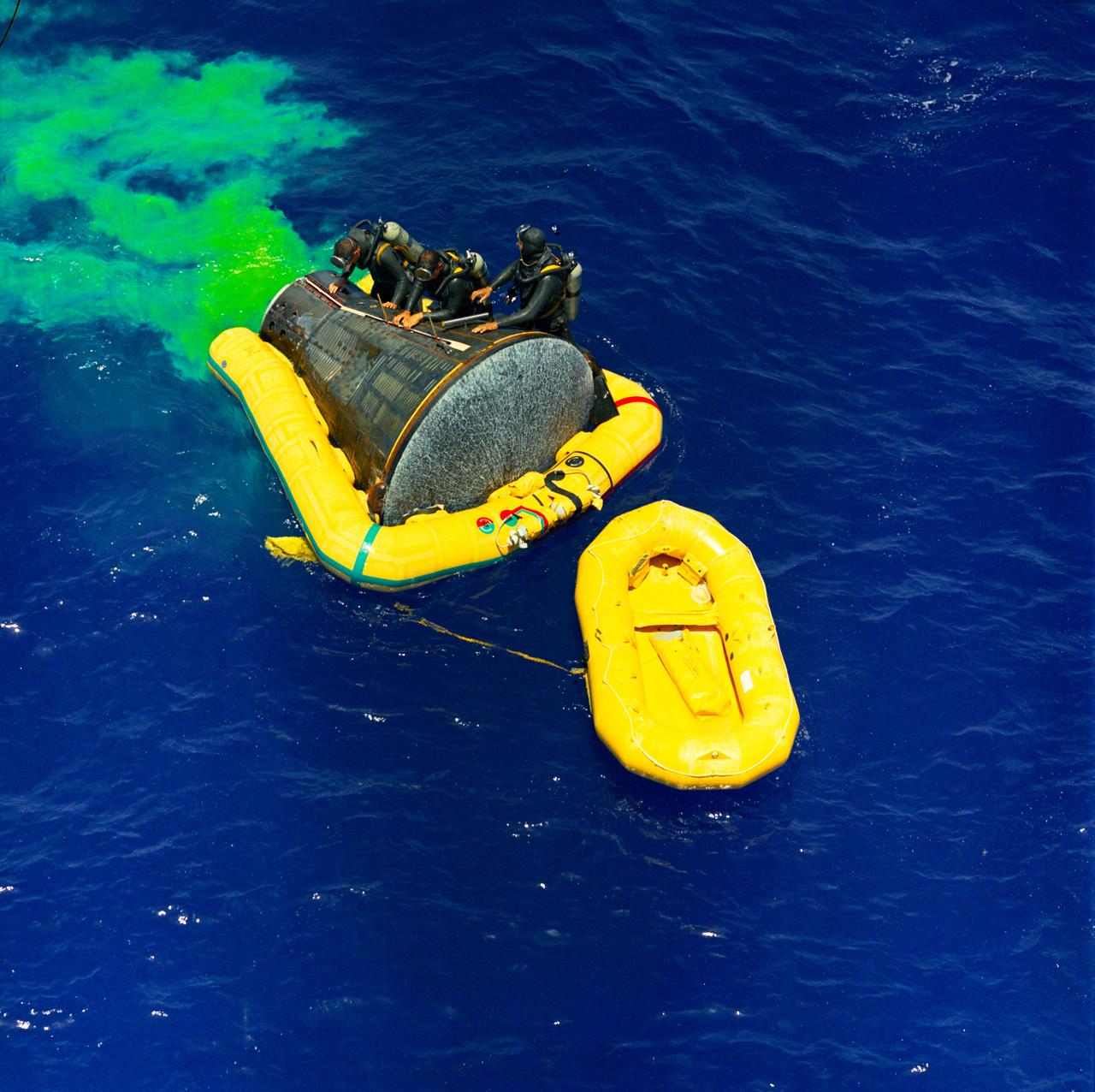
S65-33491 (7 June 1965) --- A United States Navy frogman team participates in the recovery of the Gemini-Titan 4 (GT-4) spacecraft. The USS Wasp was the prime recovery ship for the Gemini-4 mission. The crew of the Gemini-4 spaceflight was astronauts James A. McDivitt, command pilot, and Edward H. White II, pilot.
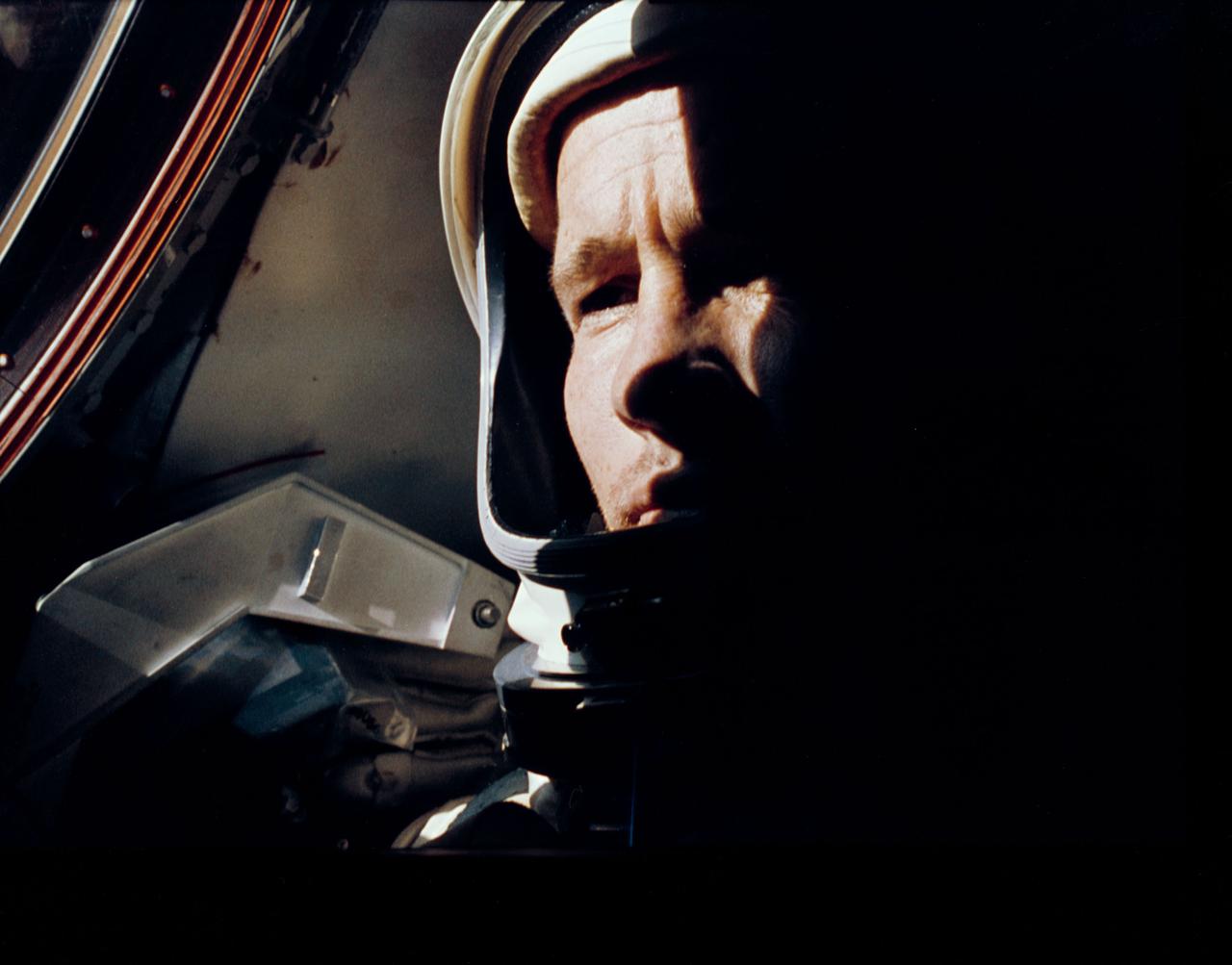
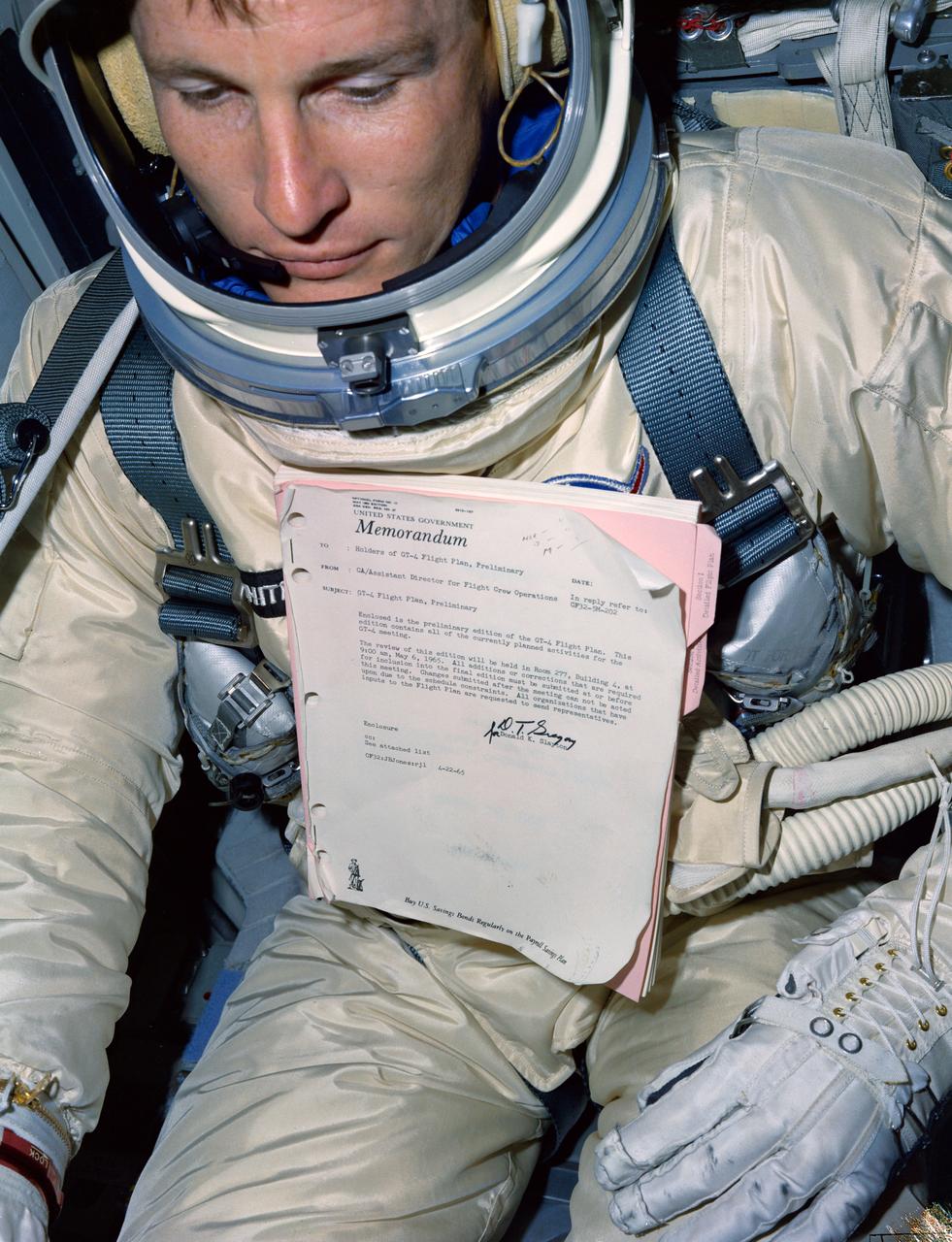
S65-30548 (3-7 June 1965) --- Astronaut Edward H. White II, Gemini IV pilot, is photographed onboard the Gemini-Titan 4 spacecraft during the four-day Earth-orbital mission. Photo credit: NASA
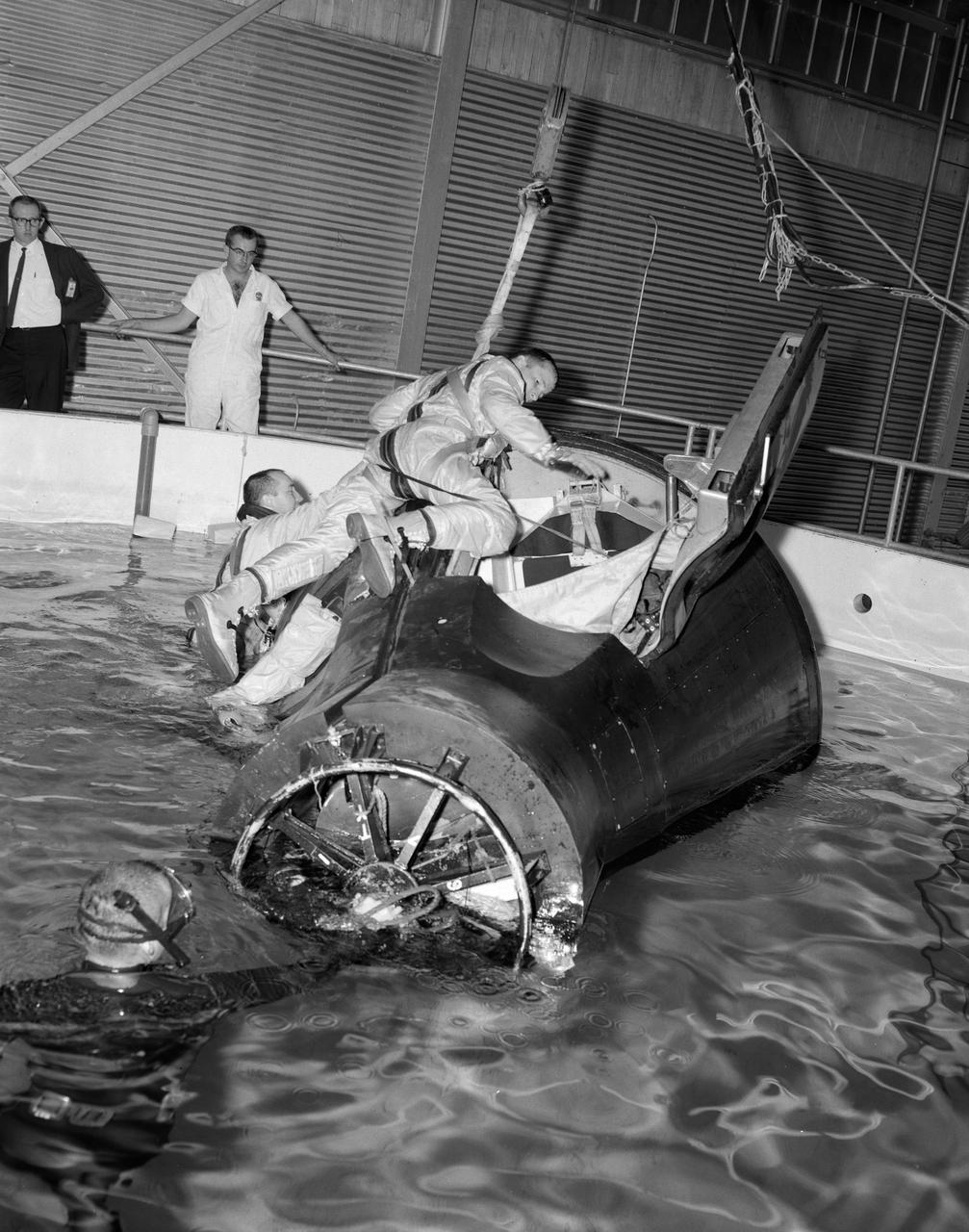
S65-19282 (29 March 1965) --- The Gemini-Titan 4 prime crew, astronauts James A. McDivitt (left), command pilot; and Edward H. White II, pilot, are pictured during water egress training at Ellington Air Force Base, Texas.
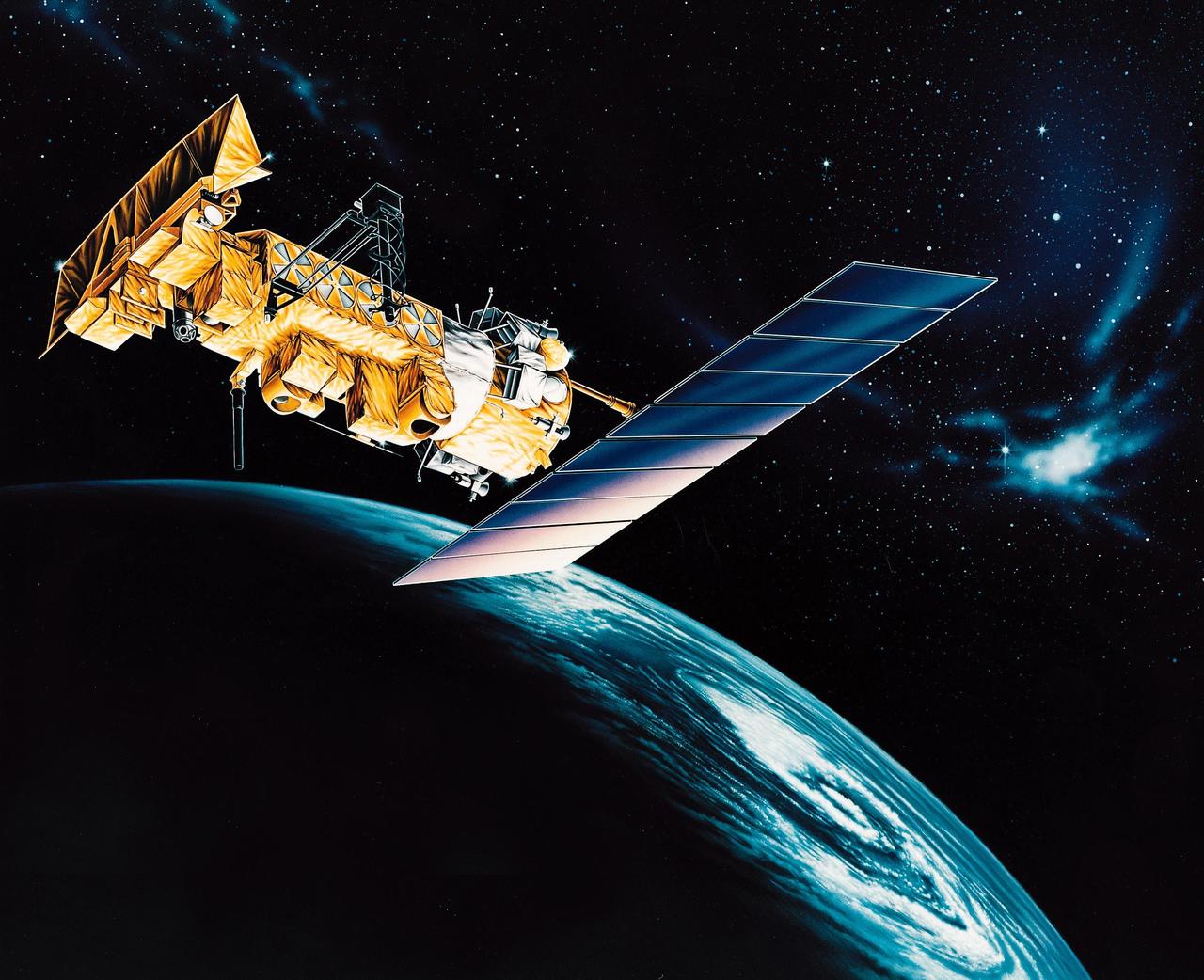
VANDENBERG AFB, CALIF. -- An artist's rendering of the NOAA-M spacecraft, a polar-orbiting Earth environmental observation satellite that will provide global data to NOAA's short- and long-range weather forecasting systems. Launch of the NOAA-M aboard a Titan II rocket is scheduled for June 24, 2002, from VAFB
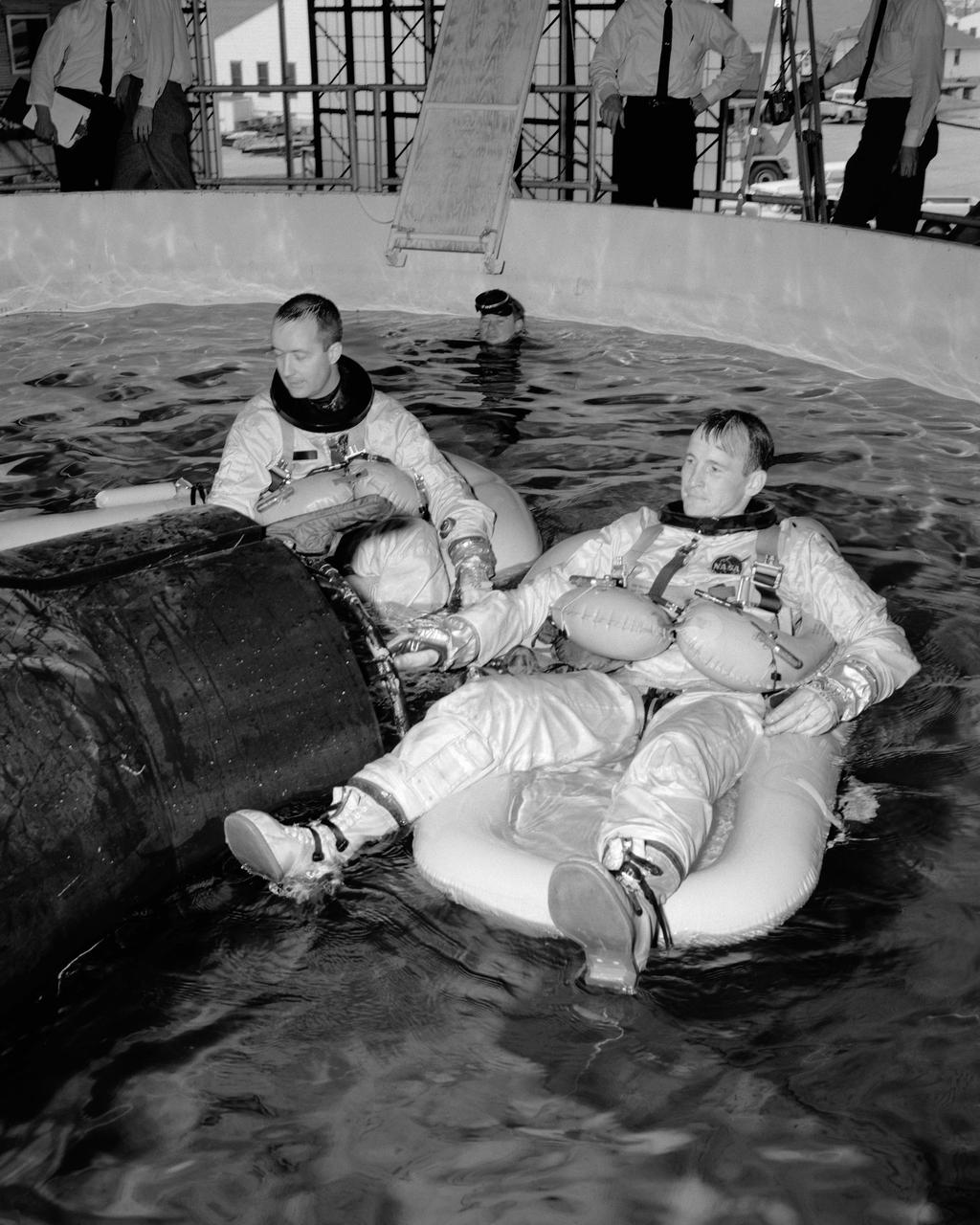
S65-19283 (29 March 1965) --- The Gemini-Titan 4 prime crew, astronauts James A. McDivitt (left), command pilot; and Edward H. White II, pilot, are pictured during water egress training at Ellington Air Force Base, Texas.
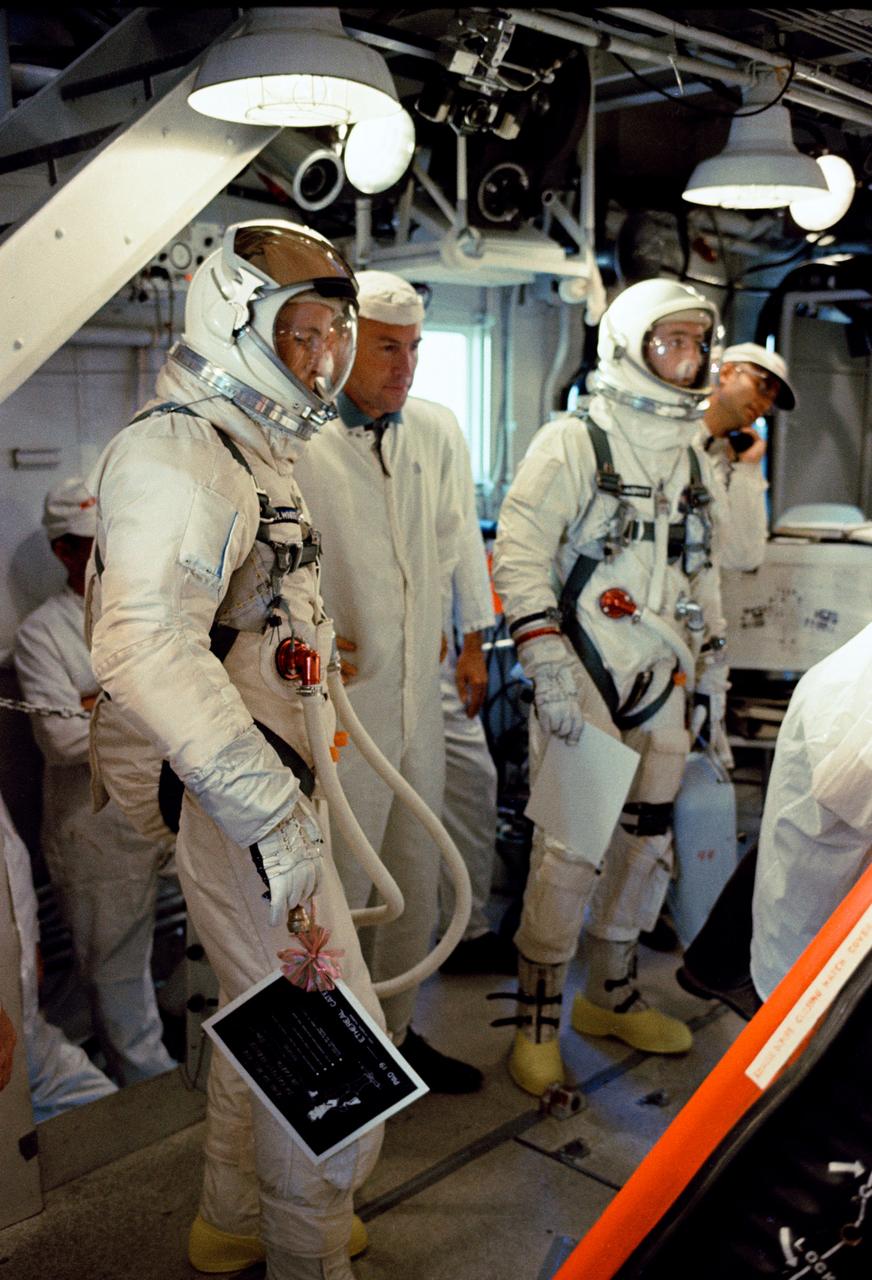
S65-29647 (3 June 1965) --- Astronauts Edward H. White II and James A. McDivitt are shown in the white room as they prepare to enter the Gemini-4 spacecraft atop the Titan launch vehicle at Cape Kennedy, Florida. The NASA Headquarters alternative photo number is 65-H-296.
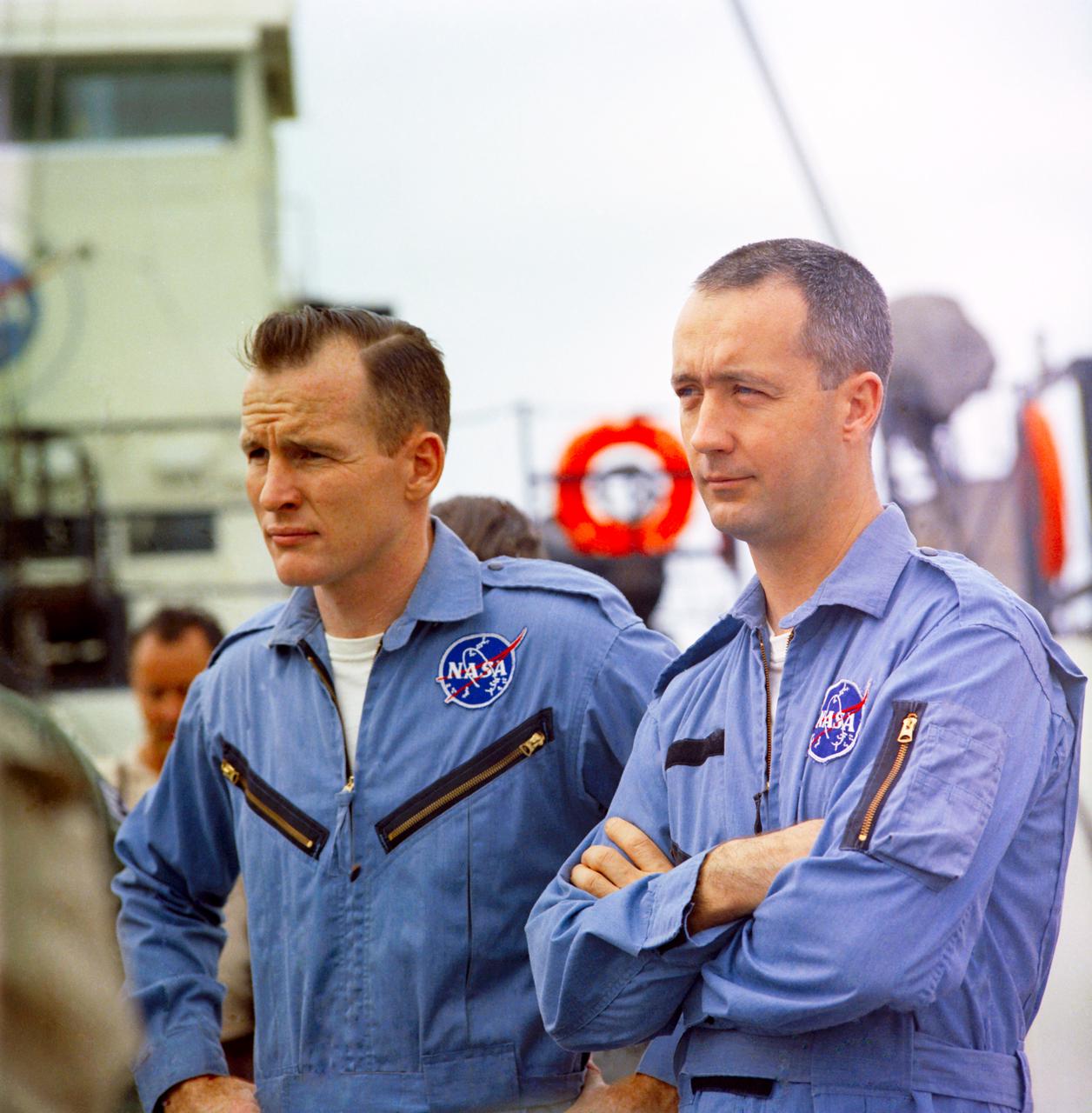
S65-22656 (14 April 1965) --- The Gemini-Titan 4 prime crew, astronauts Edward H. White II (left), pilot, and James A. McDivitt, command pilot, pictured aboard the NASA Motor Vessel Retriever in the Gulf of Mexico.
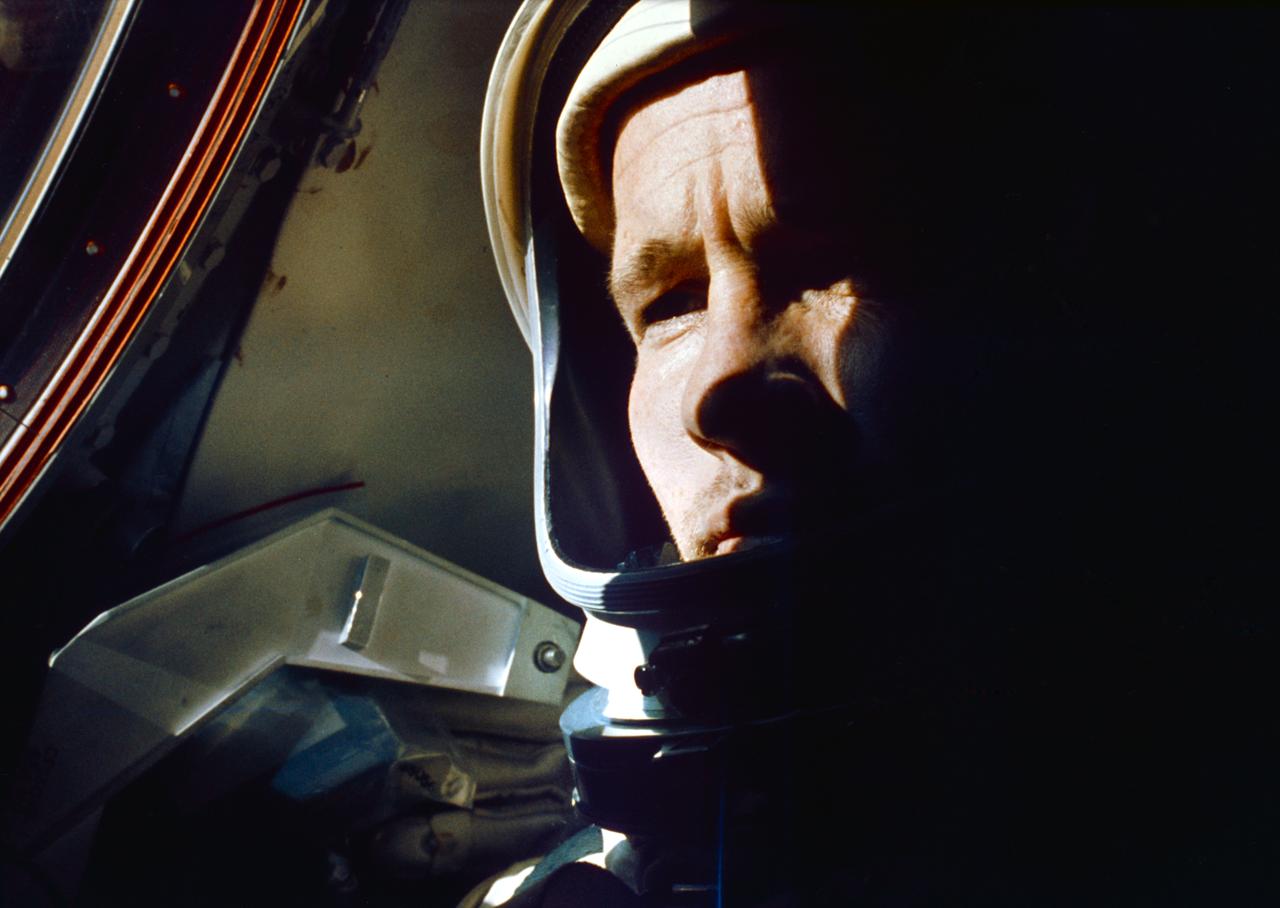
S65-30549 (3-7 June 1965) --- Astronaut Edward H. White II, Gemini IV pilot, is photographed onboard the Gemini-Titan 4 spacecraft during the four-day Earth-orbital mission. Photo credit: NASA
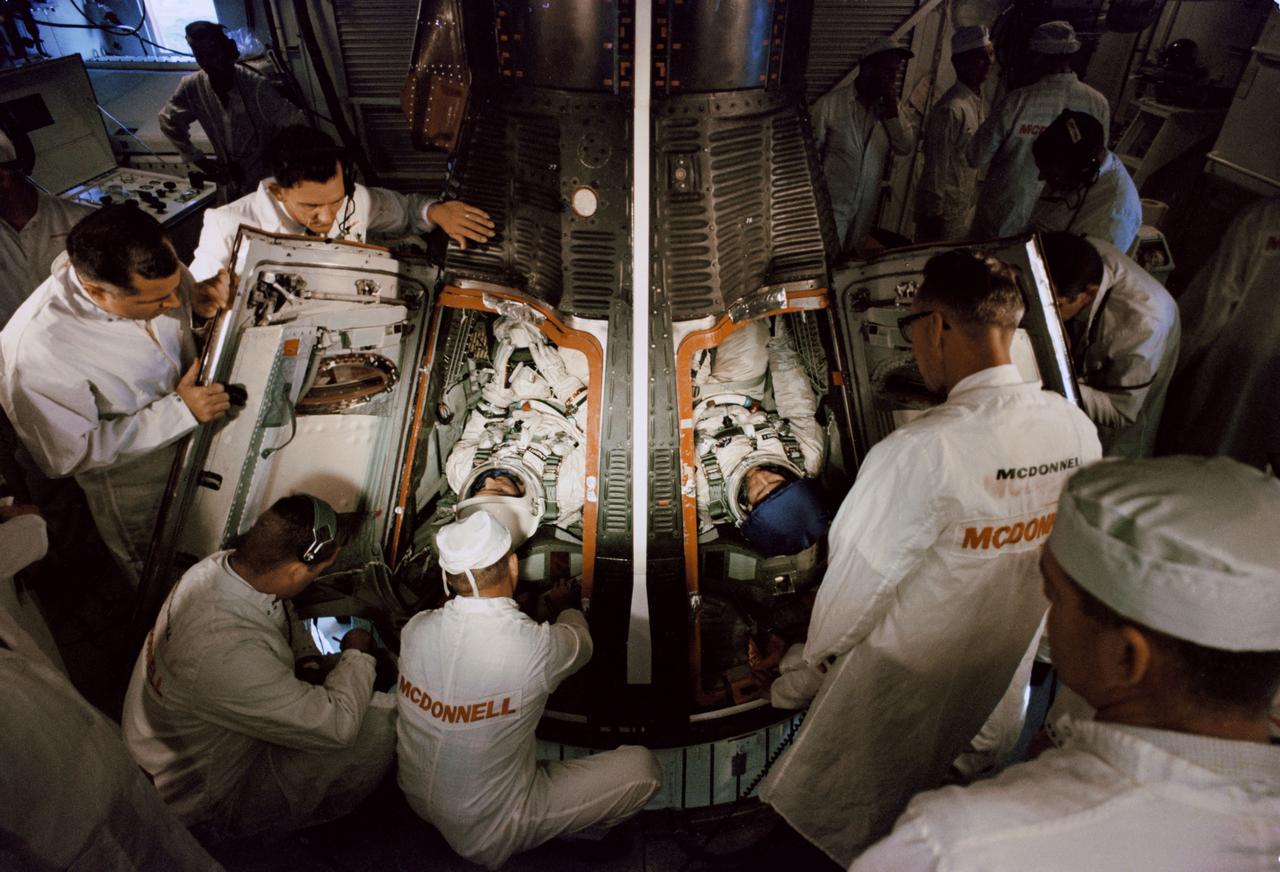
S65-29641 (3 June 1965) -- Astronauts Edward H. White II and James A. McDivitt are shown in the white room as they enter the Gemini-4 spacecraft atop the Titan launch vehicle at Cape Kennedy, Florida. The NASA Headquarters alternative photo number is 65-H-291.
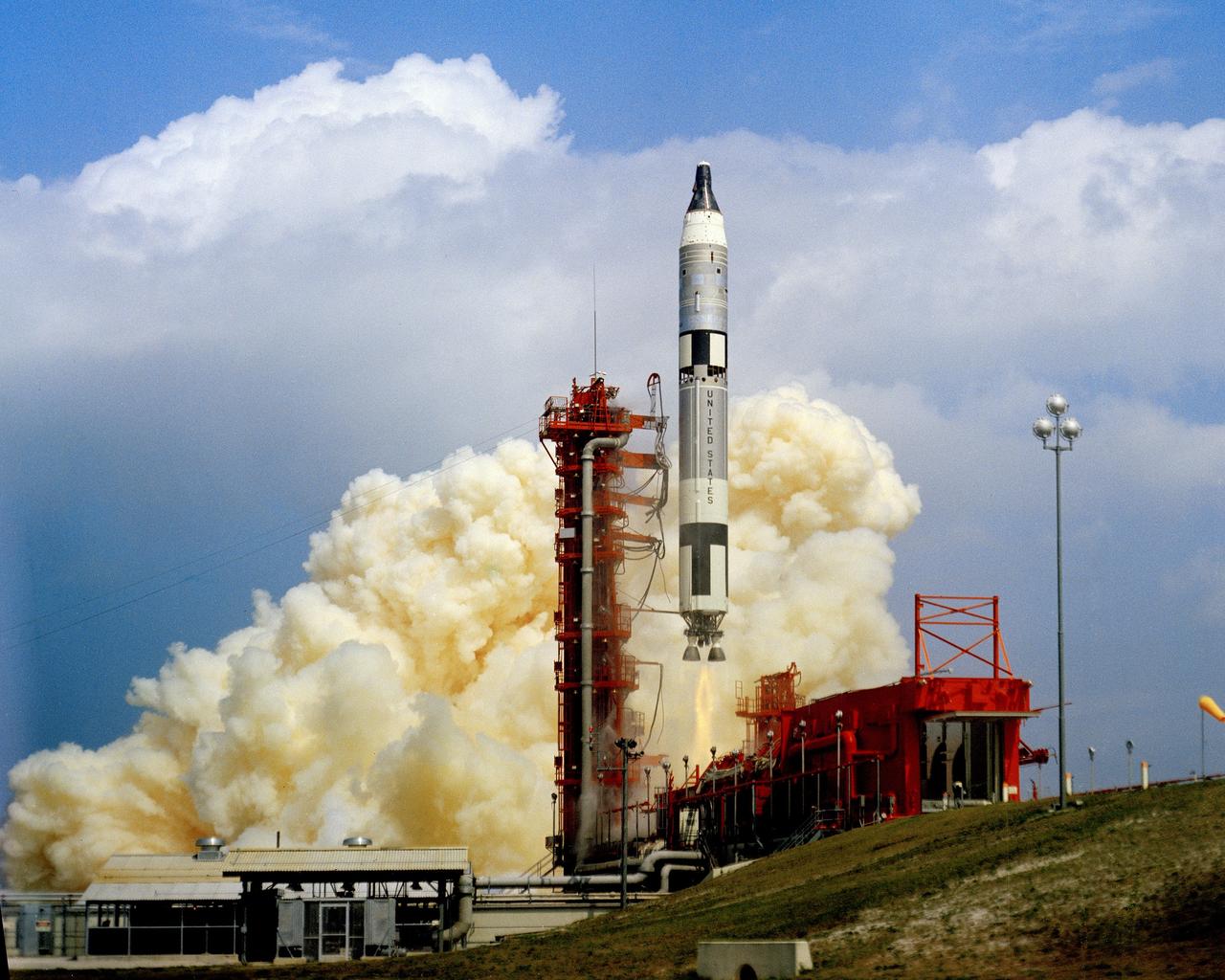
CAPE KENNEDY, Fla. -- At Cape Kennedy Air Force Station in Florida, Gemini 8 lifts off atop a Titan II rocket with command pilot Neil A. Armstrong and pilot David R. Scott aboard. They plan to rendezvous and dock with an Agena target satellite and Scott will perform a spacewalk. Photo Credit: NASA
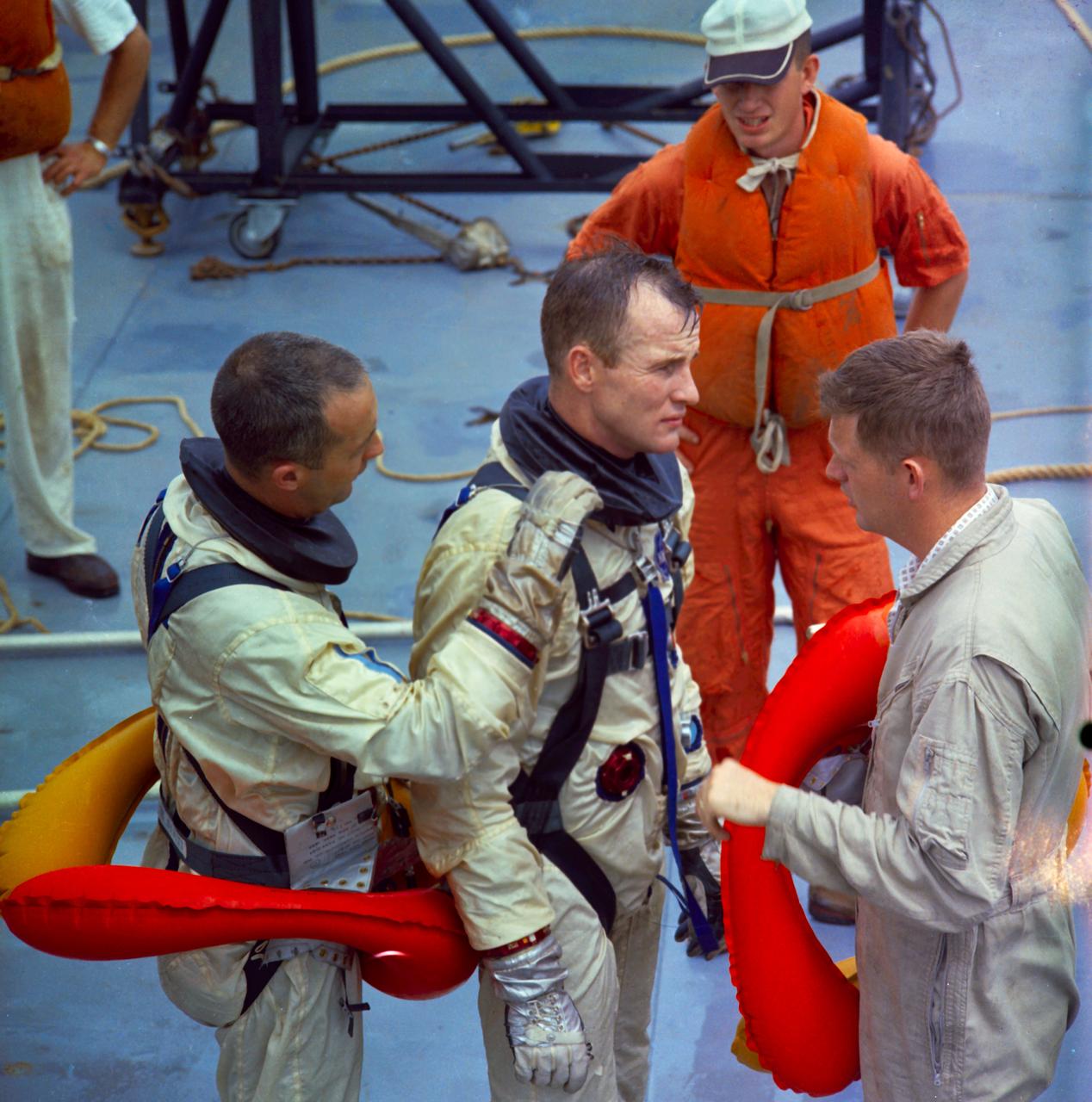
S65-22655 (14 April 1965) --- The Gemini-Titan 4 prime crew is shown aboard the NASA Motor Vessel Retriever in the Gulf of Mexico suiting up for water egress training. Astronaut James A. McDivitt (left) is the command pilot, and astronaut Edward H. White II is the pilot.
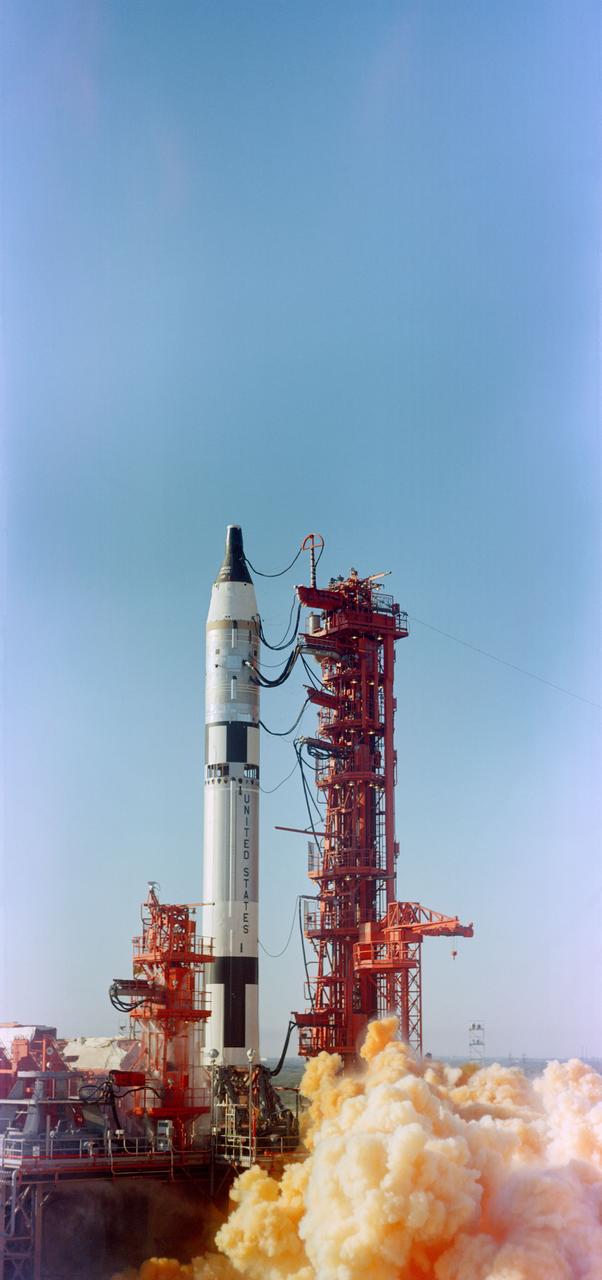
S65-14150 (19 January 1965) --- Launching of the unmanned Gemini 2 flight. The second Titan II Gemini Launch Vehicle (GLV-2) carried the unmanned, instrumented Gemini spacecraft (GT-2) for a suborbital shot preliminary to the first U.S. two-man Gemini mission.
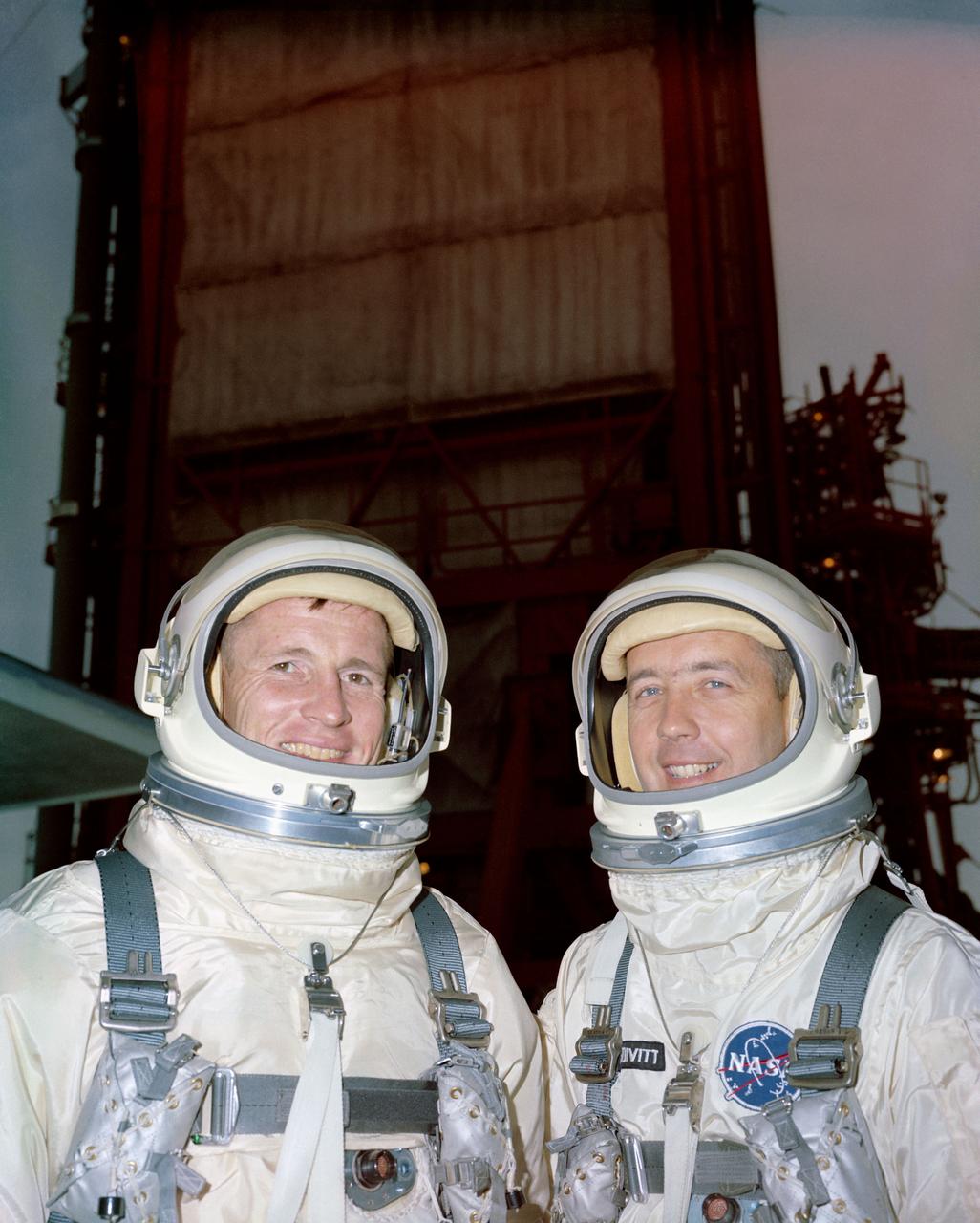
S65-19528 (1 June 1965) --- Astronauts Edward H. White II (left), Gemini-Titan 4 pilot; and James A. McDivitt, command pilot. EDITOR?S NOTE: Astronaut White died in the Apollo 1/Saturn 204 fire at Cape Kennedy on Jan. 27, 1967.
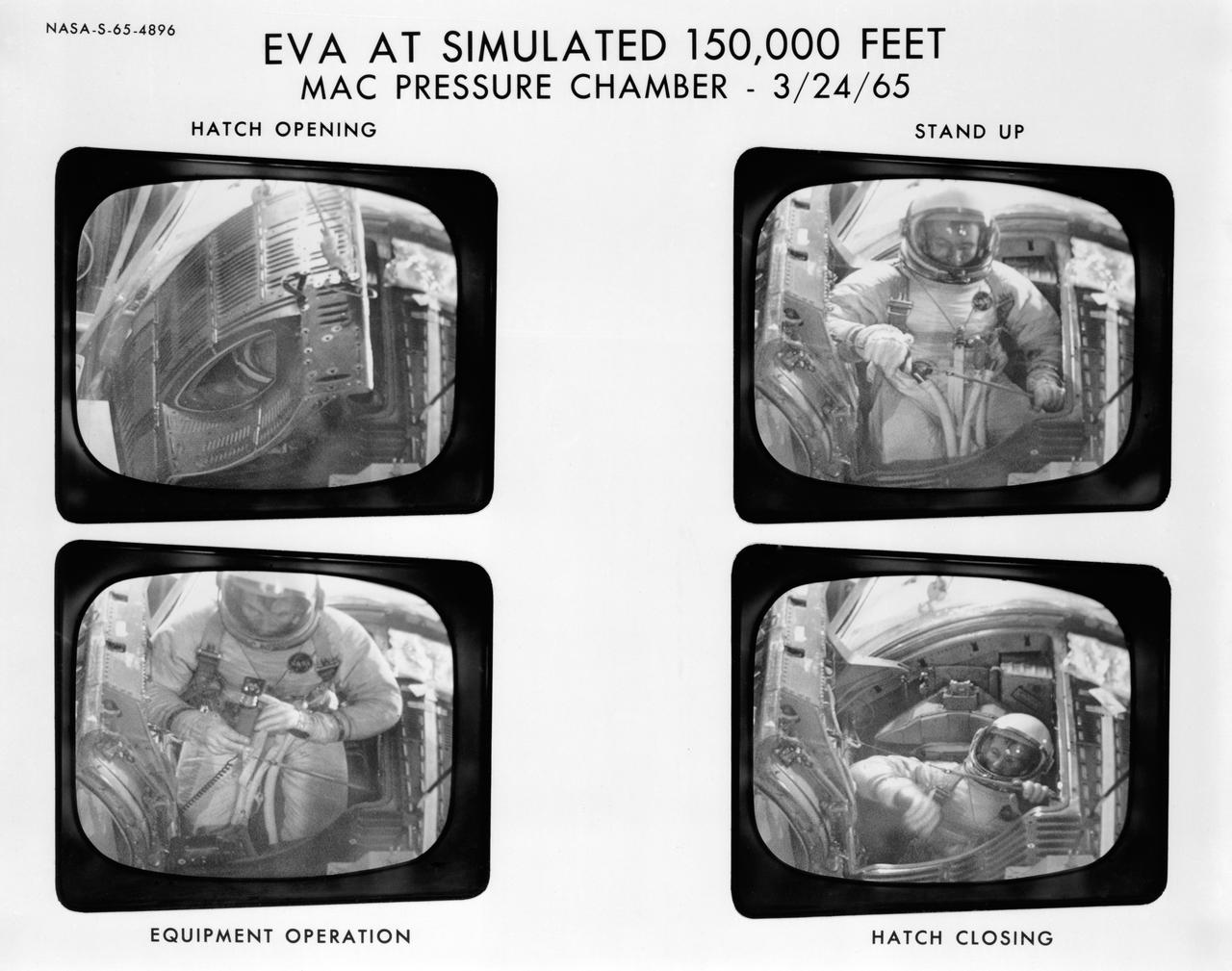
S65-04896 (24 March 1965) --- Astronaut Edward H. White II, pilot of the Gemini-Titan 4 prime crew, is shown in the pressure chamber at McDonnell Aircraft Corp, St. Louis, Mo. during the simulation of extravehicular activity (EVA) at an altitude of 150,000 feet.
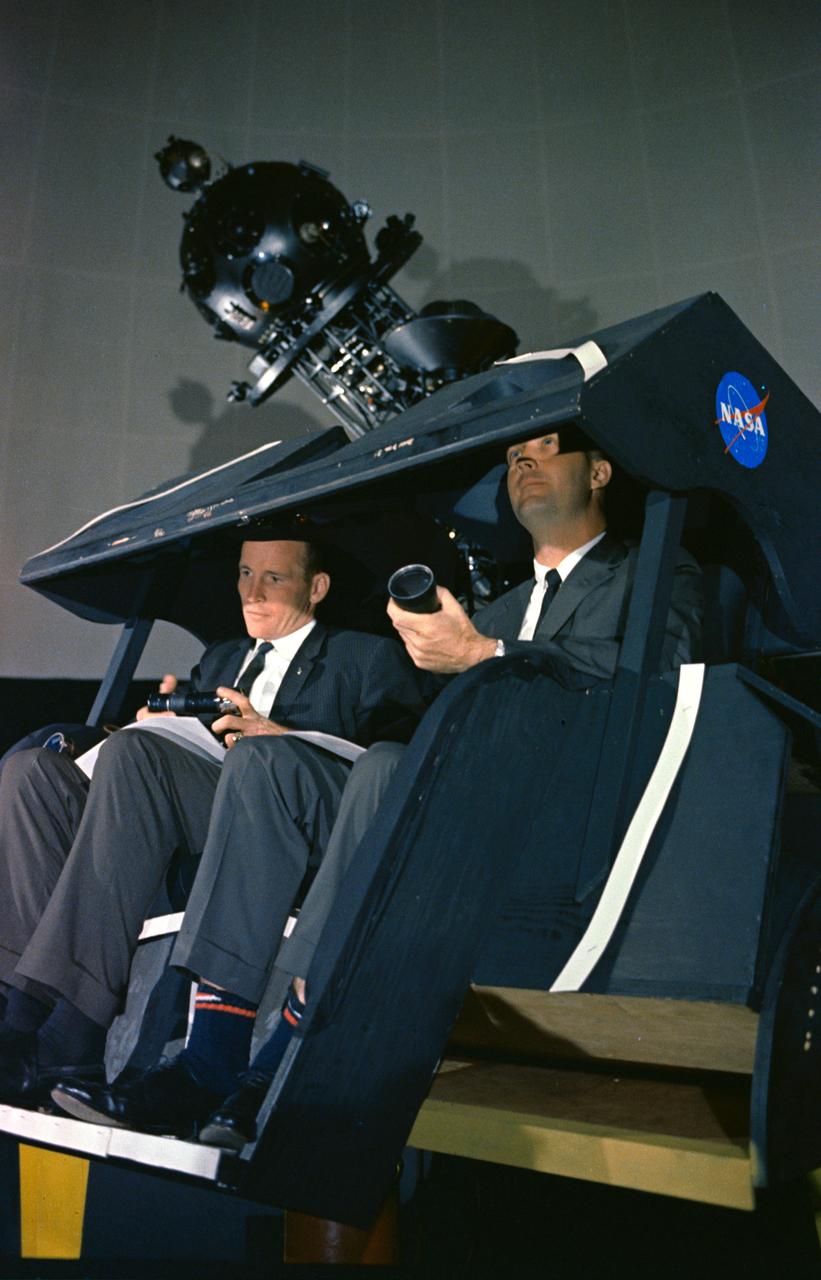
S65-29652 (7 May 1965) --- Astronauts James A. McDivitt (right) and Edward H. White II are shown at the Morehead Planetarium in North Carolina, checking out celestial navigation equipment as part of their training for the Gemini-Titan 4 mission. The NASA Headquarters alternative photo number is 65-H-277.
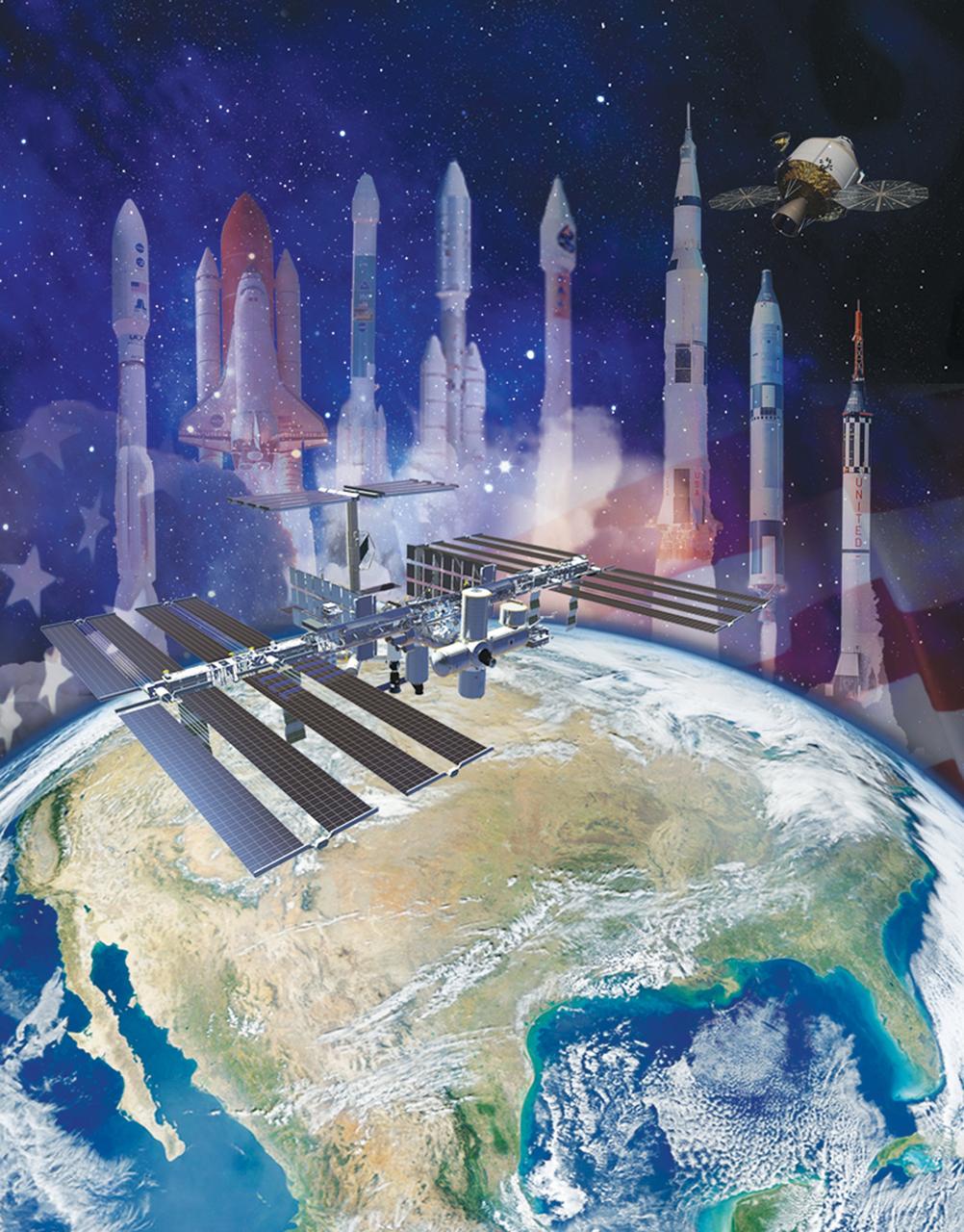
CAPE CANAVERAL, Fla. - Throughout the past 50 years, NASA's Kennedy Space Center has carried on America's legacy of processing, testing and launching a wide array of rockets and spacecraft to distant planets and other destinations in space. Launch vehicles, from left, include the Atlas V, the space shuttle, the Delta II, the Titan IV, the Atlas II, the Apollo Saturn V, the Gemini Titan and the Mercury Redstone. In the foreground are human destinations the center helped NASA reach, including Earth's orbit and the International Space Station. At the top right is NASA's newest spacecraft, the Orion multi-purpose crew vehicle, which will help humans explore deeper into space than ever before. Image credit: NASA
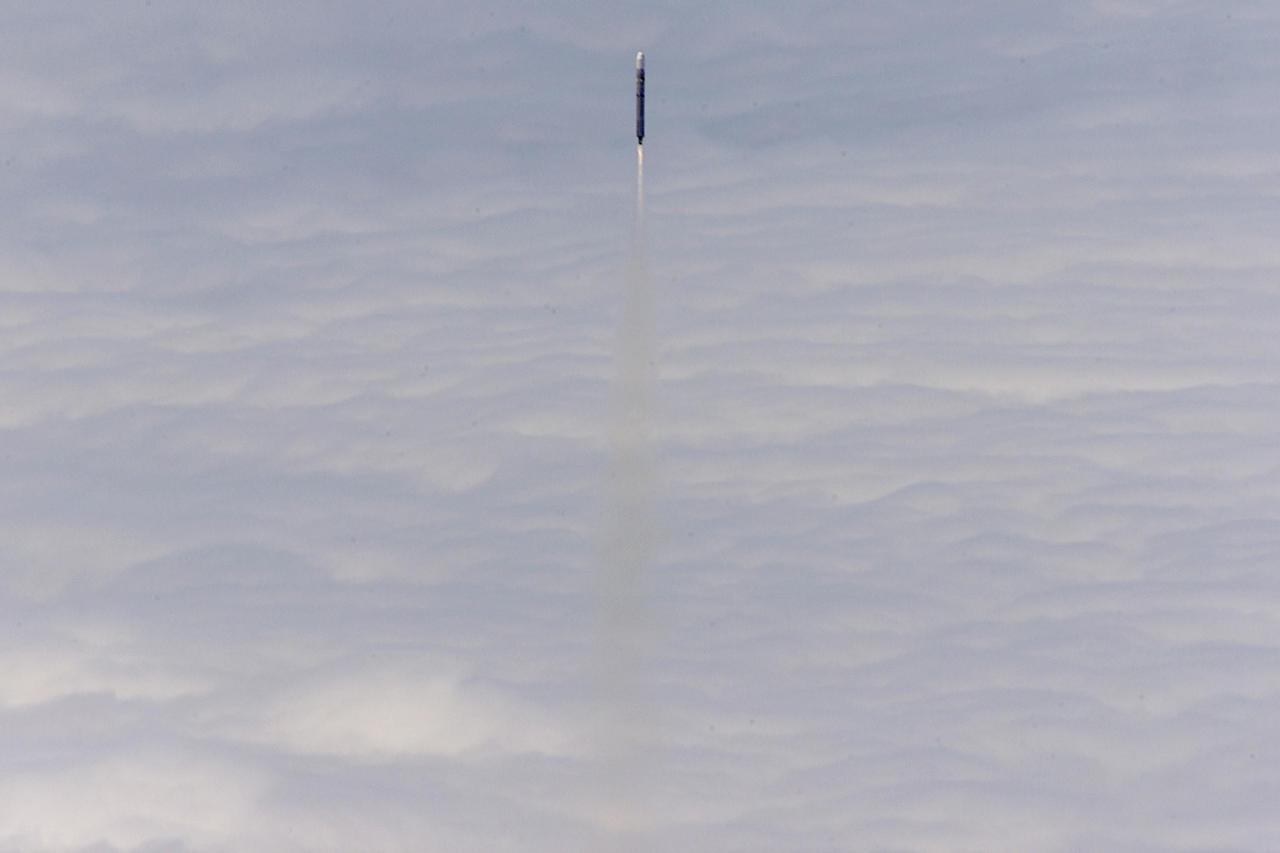
VANDENBERG AIR FORCE BASE, CALIF. -- The National Oceanic and Atmospheric Administration (NOAA) spacecraft (NOAA-M) streaks above a cloud layer after a successful launch at 2:23 p.m. EDT aboard a Titan II rocket from Vandenberg Air Force Base, Calif. NOAA-M is another in a series of polar-orbiting Earth environmental observation satellites that provide global data to NOAA's short- and long-range weather forecasting systems
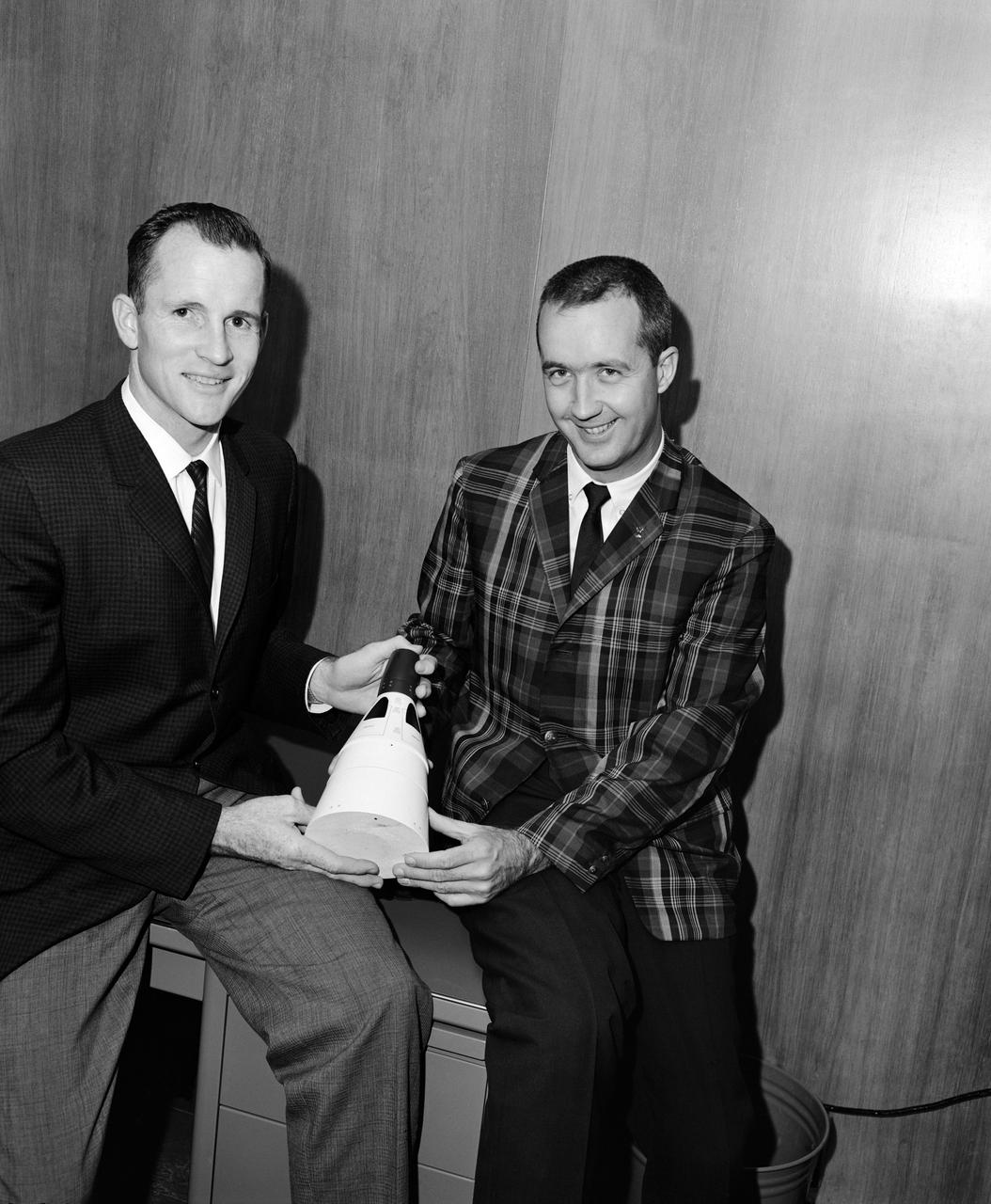
S62-04515 (1962) --- Astronauts Edward H. White II (left), Gemini-Titan 4 (GT-4) pilot, and James A. McDivitt, command pilot, pose for a photo holding a Gemini model. EDITOR?S NOTE: Jan. 27, 1967, astronaut White lost his life in the Apollo/Saturn 204 accident at Cape Canaveral, Florida.
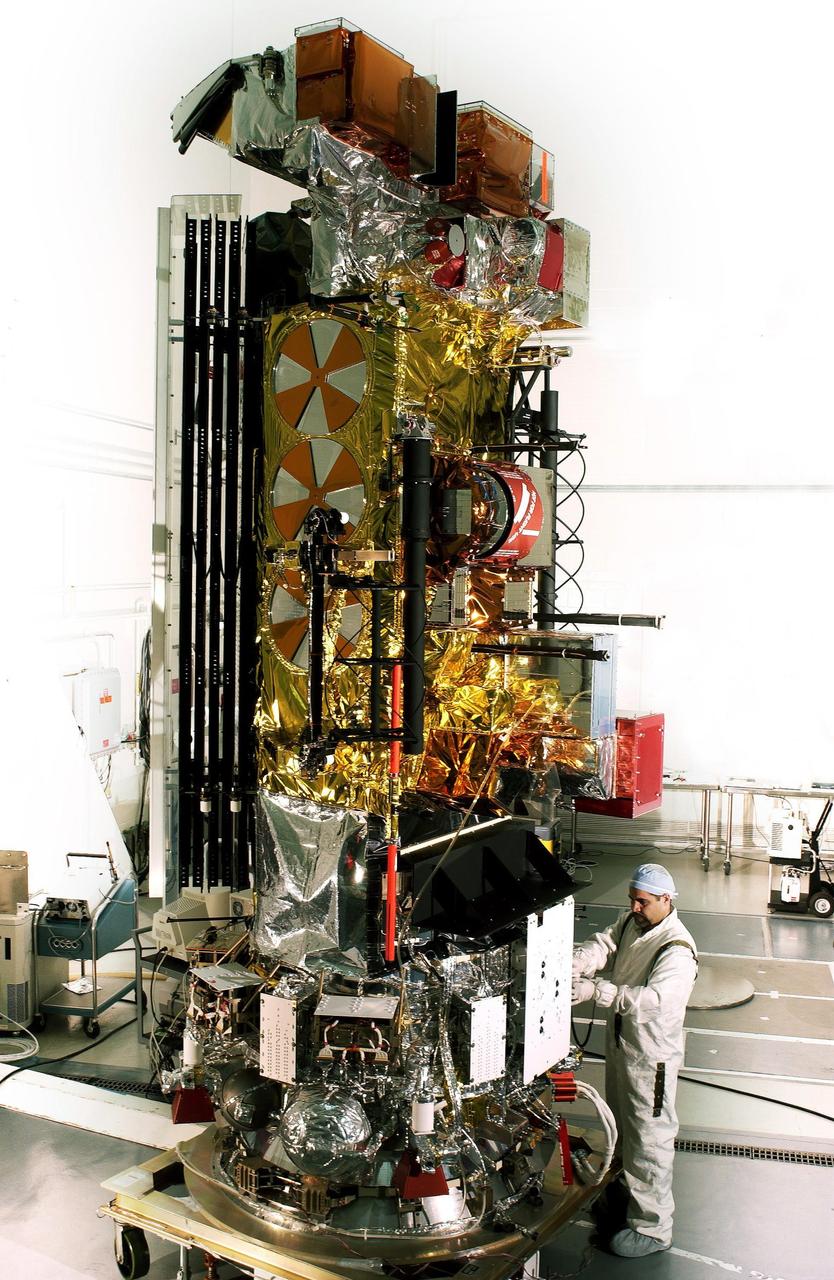
VANDENBERG AFB, CALIF. --Lockheed Martin Missiles & Space National Oceanic and Atmospheric Administration's NOAA-M satellite during launch preparation at Vandenberg AFB, Calif. NOAA-M is a polar-orbiting Earth environmental observation satellite that will provide global data to NOAA's short- and long-range weather forecasting systems. Launch of the NOAA-M aboard a Titan II rocket is scheduled for June 24, 2002, from VAFB
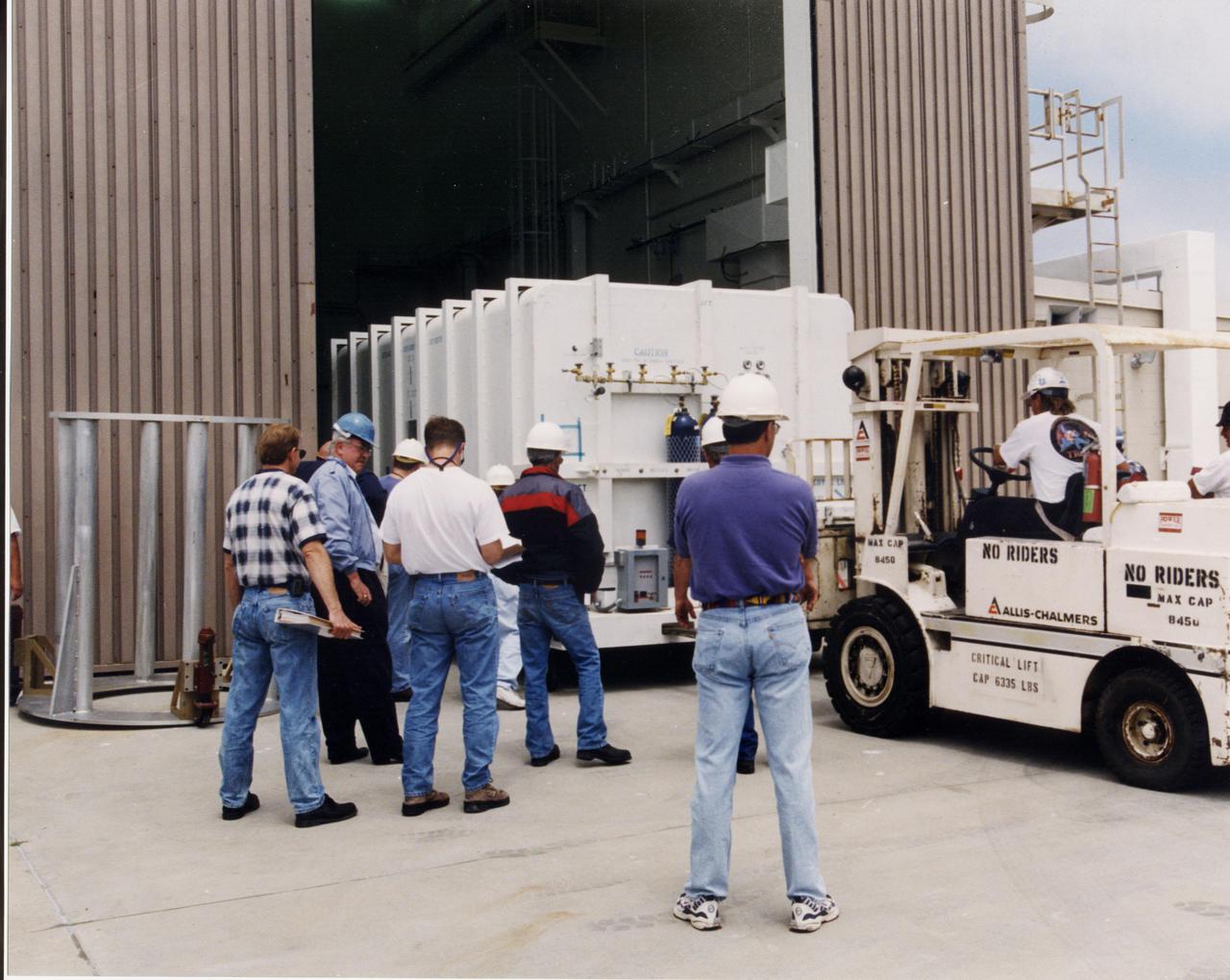
A crated National Oceanic and Atmospheric Administration (NOAA-L) satellite is moved inside the B16-10 spacecraft processing hangar at Vandenberg Air Force Base, Calif. NOAA-L is part of the Polar-Orbiting Operational Environmental Satellite (POES) program that provides atmospheric measurements of temperature, humidity, ozone and cloud images, tracking weather patterns that affect the global weather and climate. The launch of the NOAA-L satellite is scheduled no earlier than Sept. 12 aboard a Lockheed Martin Titan II rocket
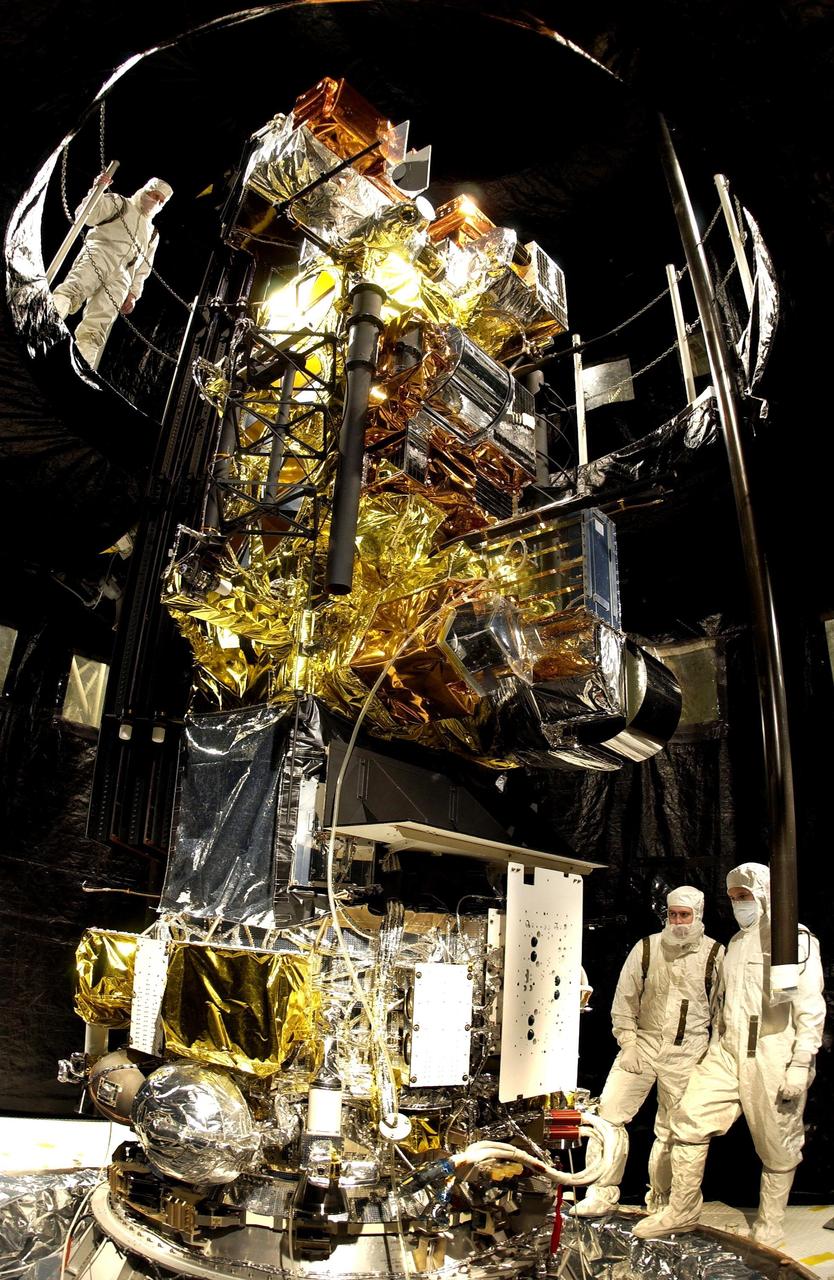
VANDENBERG AFB, CALIF. -- The Lockheed Martin Missiles & Space National Oceanic and Atmospheric Administration's NOAA-M satellite is prepared for launch at Vandenberg AFB, Calif. NOAA-M is a polar-orbiting Earth environmental observation satellite that will provide global data to NOAA's short- and long-range weather forecasting systems. Launch of the NOAA-M aboard a Titan II rocket is scheduled for June 24, 2002, from VAFB
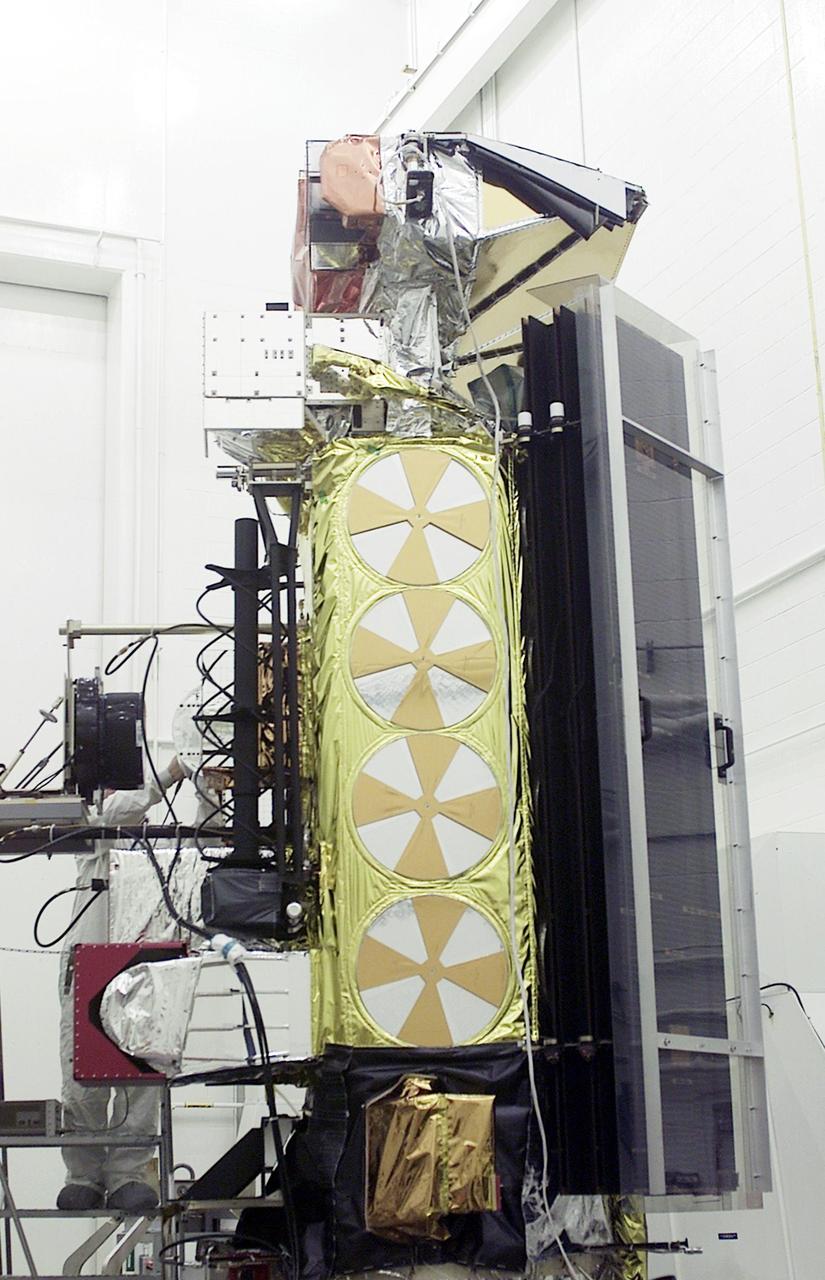
KENNEDY SPACE CENTER, FLA. - The National Oceanic and Atmospheric Administration (NOAA-M) spacecraft undergoes end-to-end testing in checkout hangar 1610 on North Vandenberg Air Force Base. The spacecraft is nearing process completion for transportation to Launch Complex 4W. NOAA-M is another in a series of polar-orbiting Earth environmental observation satellites that provide global data to NOAA's short- and long-range weather forecasting systems. Launch aboard a Titan II rocket is scheduled for June 25, 2002
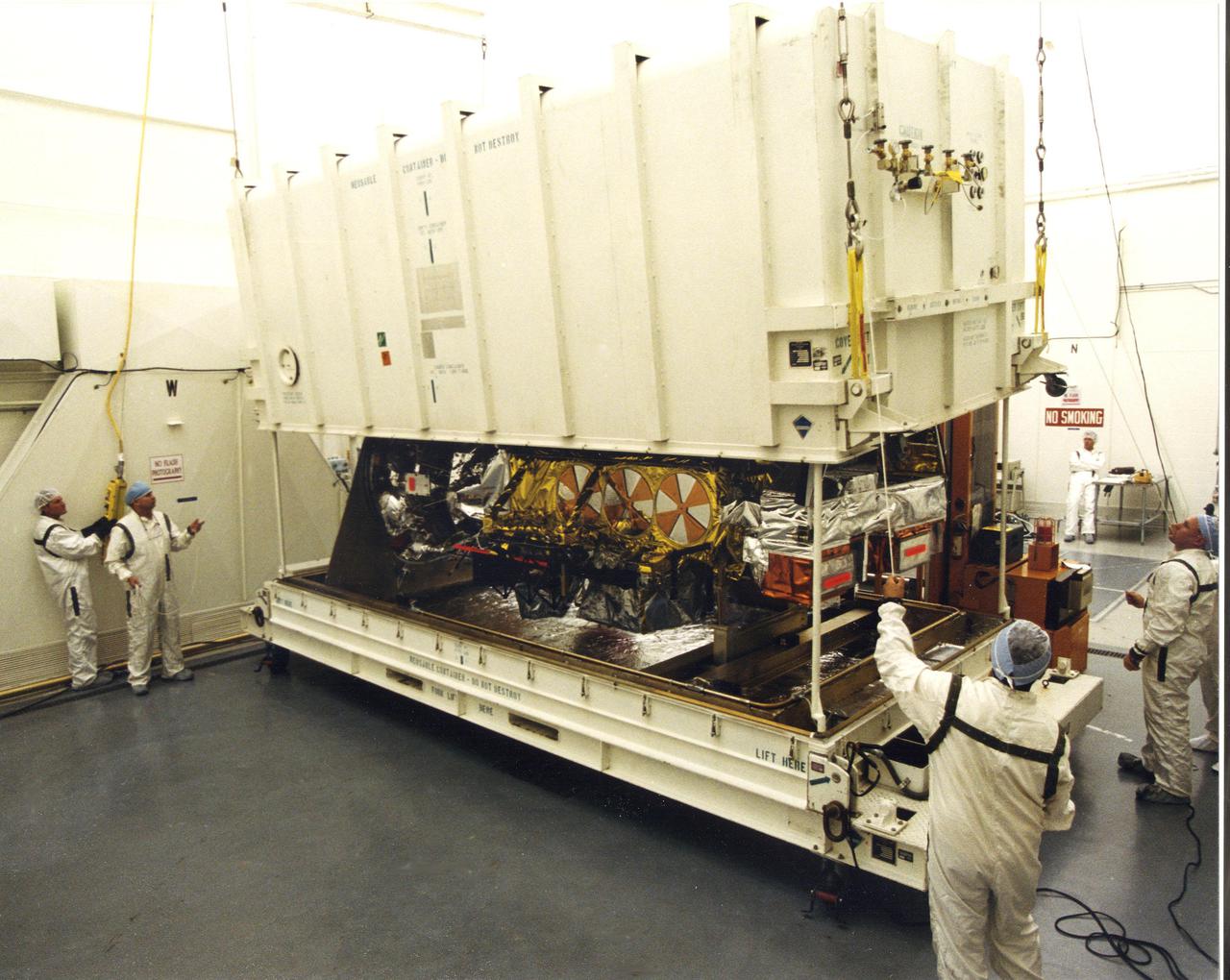
Inside the B16-10 spacecraft processing hangar at Vandenberg Air Force Base, Calif., workers oversee the uncrating of the National Oceanic and Atmospheric Administration (NOAA-L) satellite. NOAA-L is part of the Polar-Orbiting Operational Environmental Satellite (POES) program that provides atmospheric measurements of temperature, humidity, ozone and cloud images, tracking weather patterns that affect the global weather and climate. The launch of the NOAA-L satellite is scheduled no earlier than Sept. 12 aboard a Lockheed Martin Titan II rocket
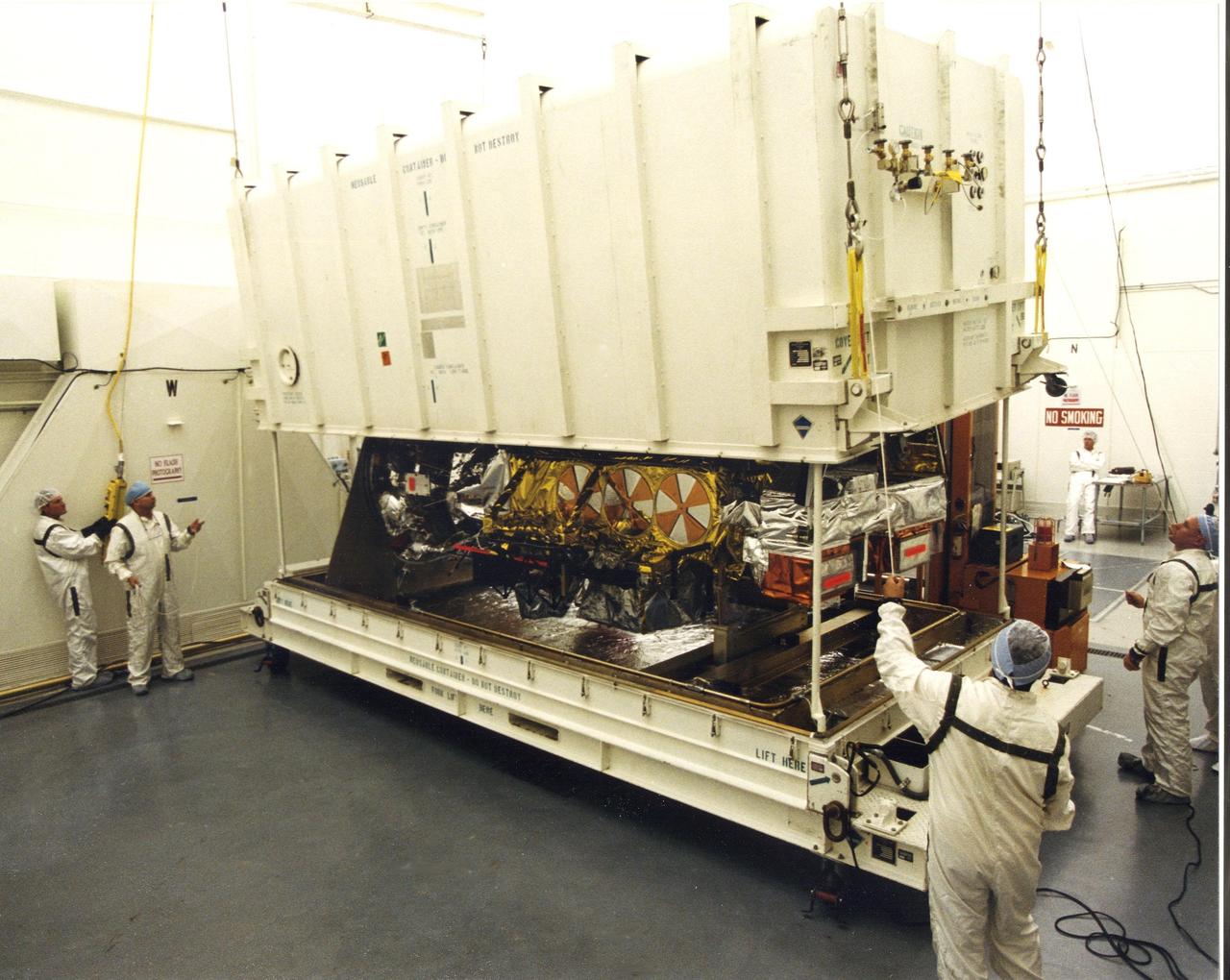
Inside the B16-10 spacecraft processing hangar at Vandenberg Air Force Base, Calif., workers oversee the uncrating of the National Oceanic and Atmospheric Administration (NOAA-L) satellite. NOAA-L is part of the Polar-Orbiting Operational Environmental Satellite (POES) program that provides atmospheric measurements of temperature, humidity, ozone and cloud images, tracking weather patterns that affect the global weather and climate. The launch of the NOAA-L satellite is scheduled no earlier than Sept. 12 aboard a Lockheed Martin Titan II rocket
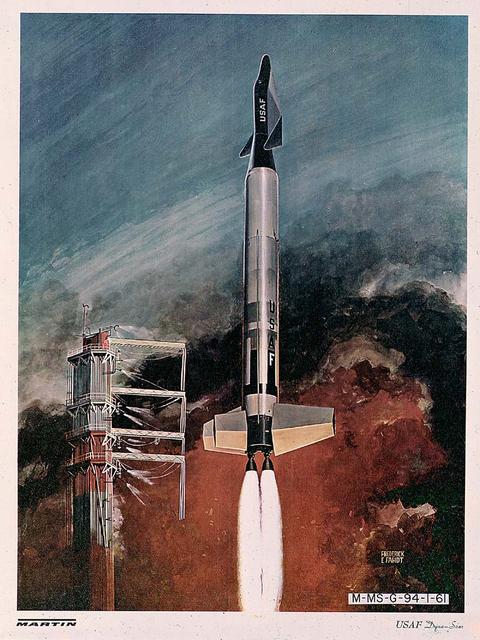
A Dyna-Soar (Dynamic Soaring) vehicle clears the launch tower atop an Air Force Titan II launch vehicle in this 1961 artist's concept. Originally conceived by the U.S. Air Force in 1957 as a marned, rocket-propelled glider in a delta-winged configuration, the Dyna-Soar was considered by Marshall Space Flight Center planners as an upper stage for the Saturn C-2 launch vehicle.
![VANDENBERG AIR FORCE BASE, CALIF. -- A Titan II rocket hurtles above the launch tower at Vandenberg Air Force Base, Calif., with the National Oceanic and Atmospheric Administration (NOAA) spacecraft (NOAA-M) aboard. The rocket lifted off at 2:23 p.m. EDT. NOAA-M is another in a series of polar-orbiting Earth environmental observation satellites that provide global data to NOAA's short- and long-range weather forecasting systems. [Photo by William Hartenstein]](https://images-assets.nasa.gov/image/KSC-02pd1133/KSC-02pd1133~medium.jpg)
VANDENBERG AIR FORCE BASE, CALIF. -- A Titan II rocket hurtles above the launch tower at Vandenberg Air Force Base, Calif., with the National Oceanic and Atmospheric Administration (NOAA) spacecraft (NOAA-M) aboard. The rocket lifted off at 2:23 p.m. EDT. NOAA-M is another in a series of polar-orbiting Earth environmental observation satellites that provide global data to NOAA's short- and long-range weather forecasting systems. [Photo by William Hartenstein]
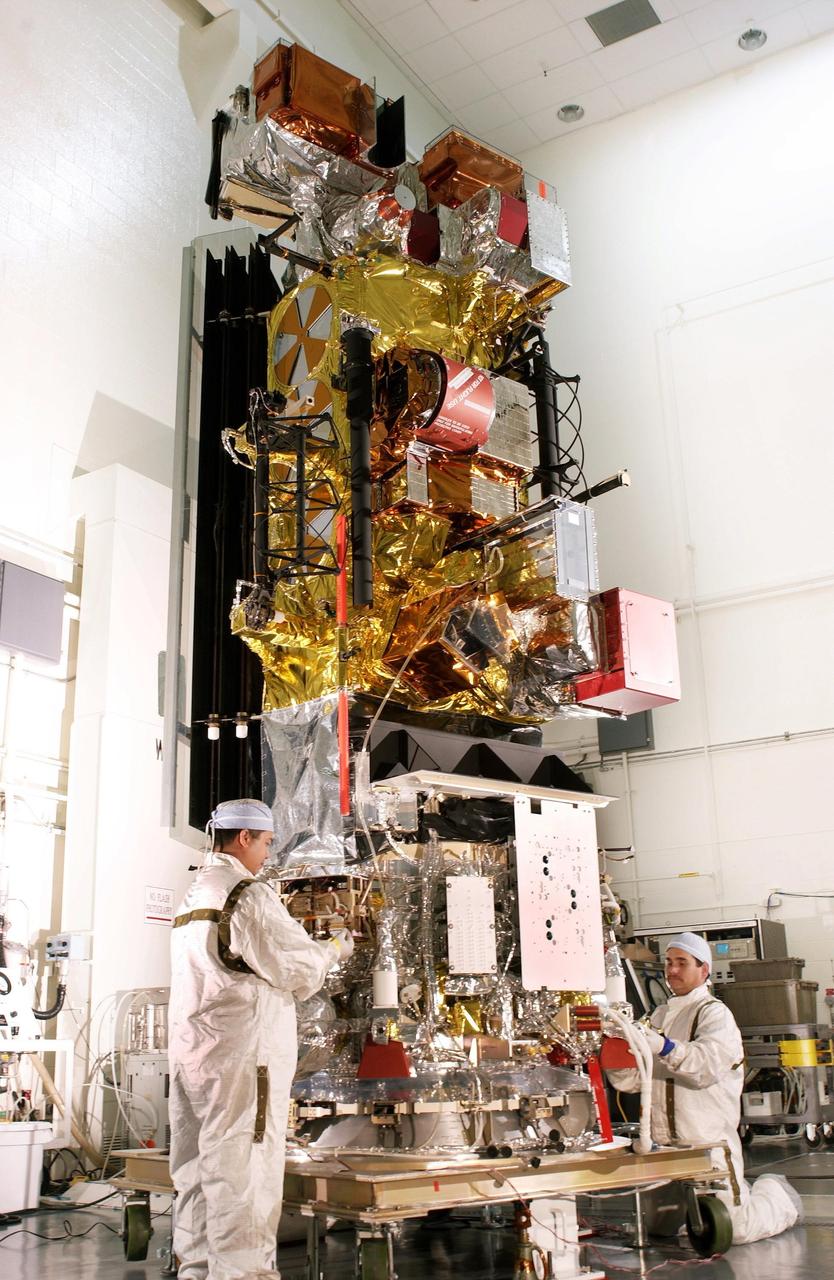
VANDENBERG AFB, CALIF. -- Workers at Vandenberg AFB, Calif., prepare the Lockheed Martin Missiles & Space National Oceanic and Atmospheric Administration's NOAA-M satellite forlaunch. NOAA-M is a polar-orbiting Earth environmental observation satellite that will provide global data to NOAA's short- and long-range weather forecasting systems. Launch of the NOAA-M aboard a Titan II rocket is scheduled for June 24, 2002, from VAFB
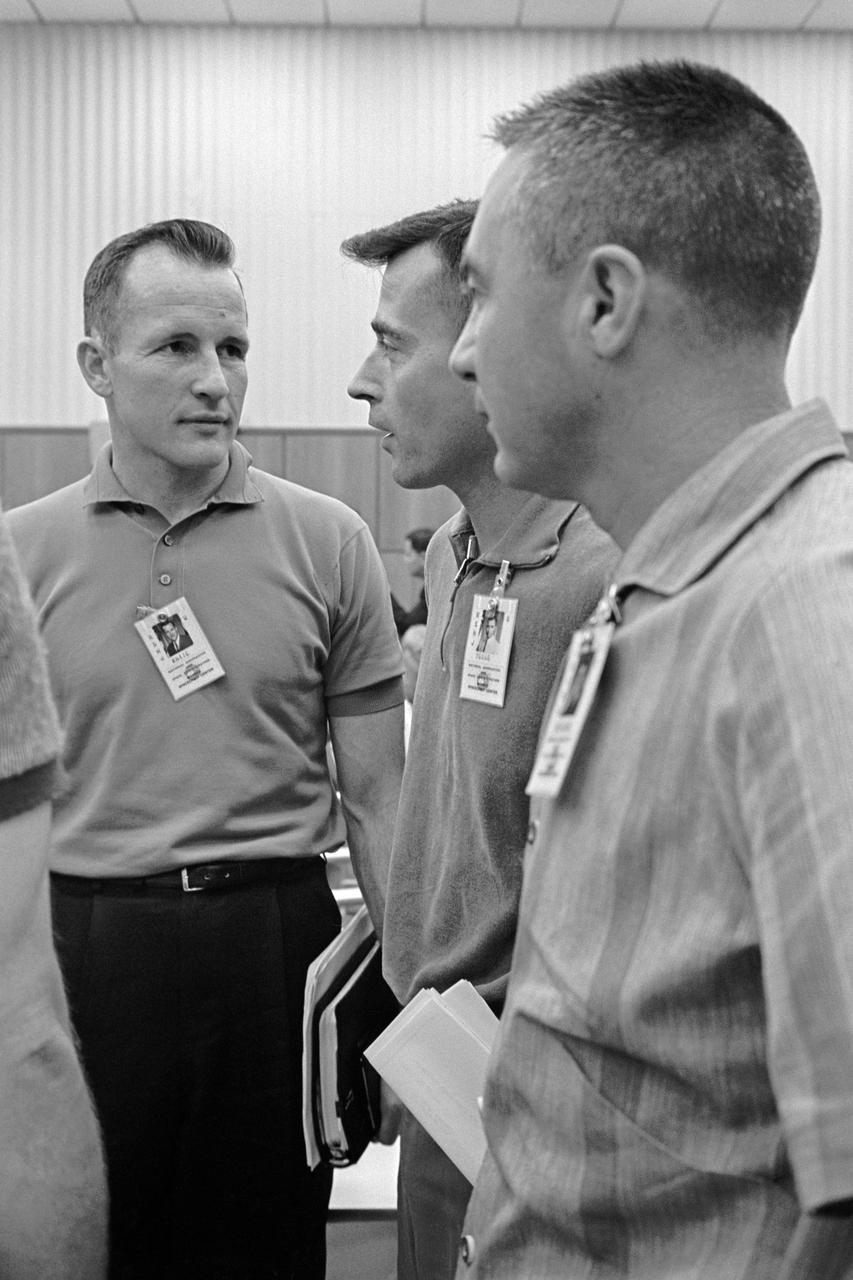
S65-20632 (20 March 1965) --- The prime crew of the NASA Gemini-Titan 3 mission, astronauts John W. Young (center), pilot; and Virgil I. Grissom (foreground), command pilot, hold a discussion at the Gemini launch vehicle review meeting on March 20, 1965, with astronaut Edward H. White II, pilot for the GT-4 mission. The meeting was held in the Manned Spacecraft Operations Building on Merritt Island, Florida.
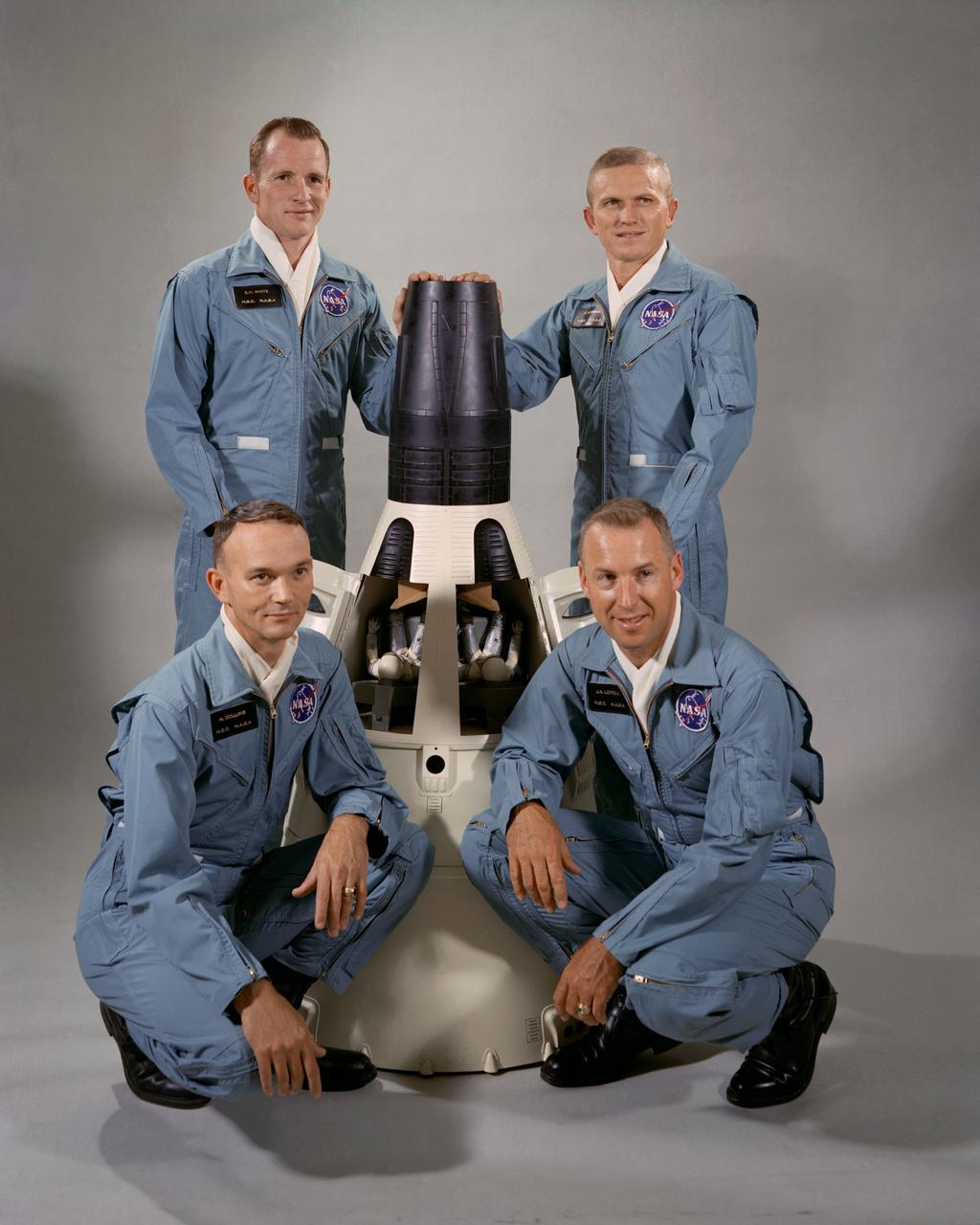
S65-41828 (September 1965) --- Portrait of the Gemini-7 prime and backup crew members around a model of the Gemini-7 spacecraft. The prime crew members for the Gemini-Titan 7 (GT-7) are astronauts Frank Borman (standing right), command pilot, and James A. Lovell Jr. (kneeling right), pilot. Astronauts Michael Collins (kneeling left), pilot, and Edward H. White II (standing left), command pilot, were named as GT-7 backup crew members on July 1, 1965. Photo credit: NASA
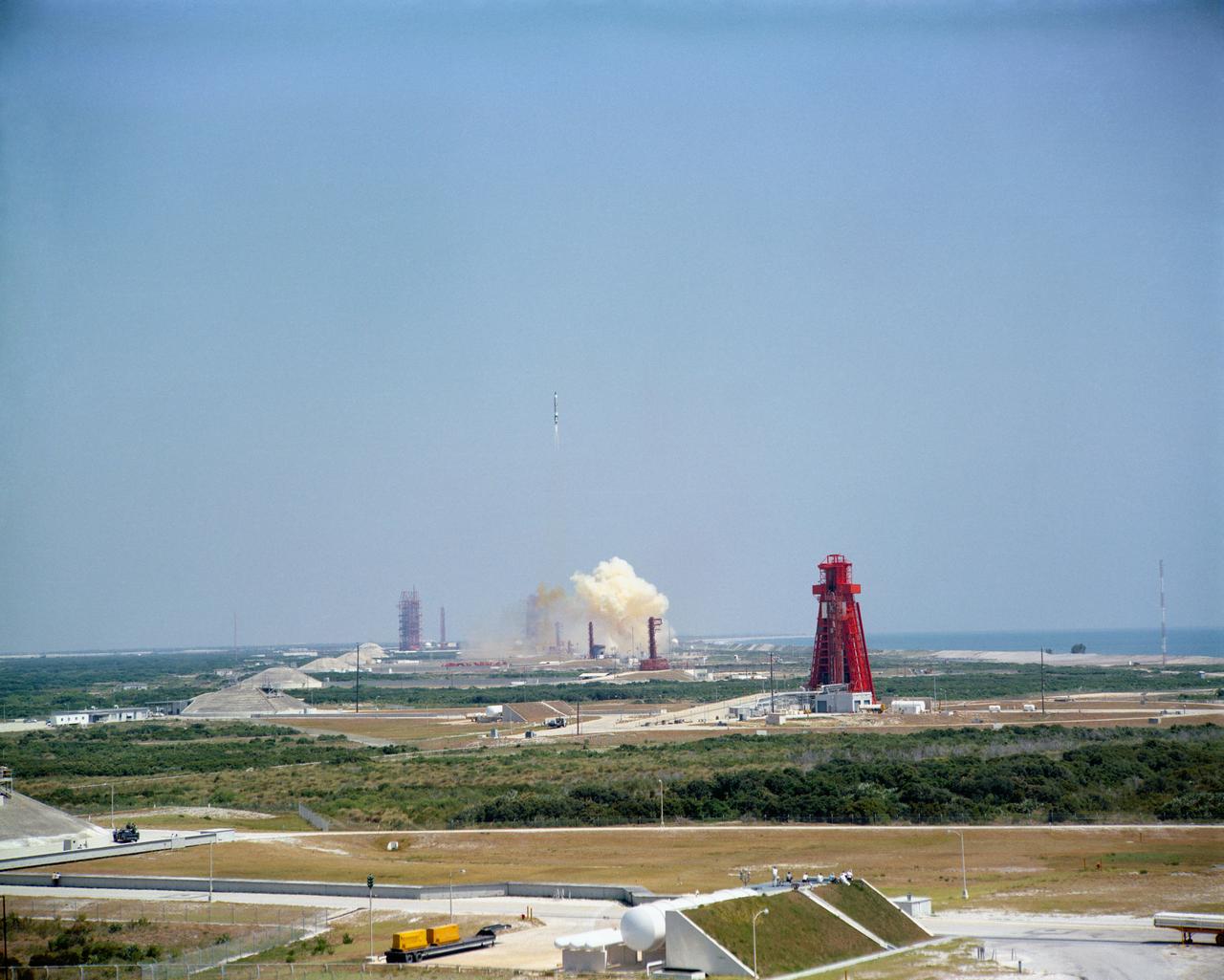
S65-29601 (3 June 1965) --- Distant view of the launch of the Gemini-Titan 4 (GT-4) spacecraft from Pad 19 at 10:16 a.m. (EST) on June 3, 1965. The Gemini IV spacecraft carried astronauts James A. McDivitt, command pilot; and Edward H. White II, pilot, on a four-day, 62-revolution mission that lasted 97 hours and 56 minutes.
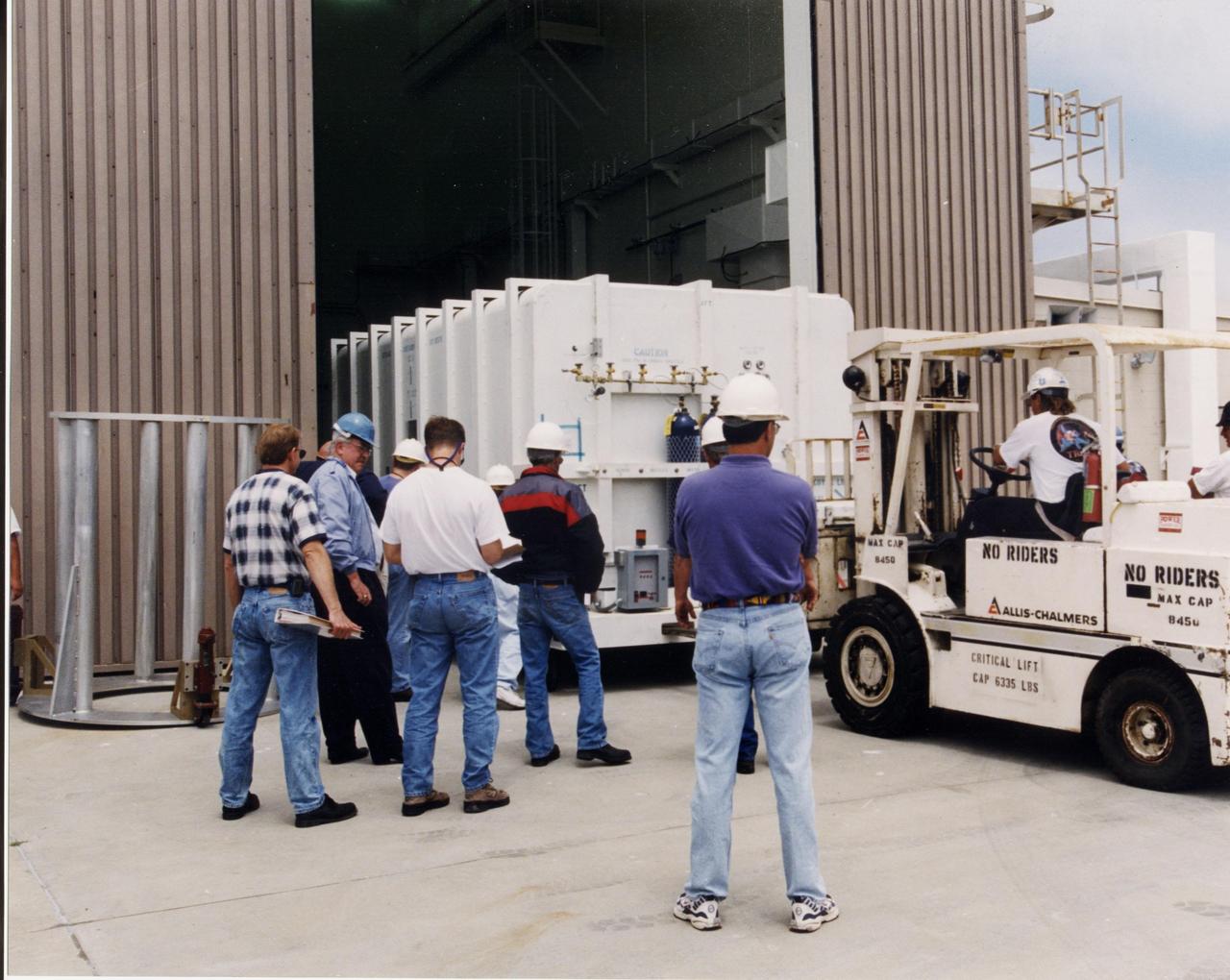
A crated National Oceanic and Atmospheric Administration (NOAA-L) satellite is moved inside the B16-10 spacecraft processing hangar at Vandenberg Air Force Base, Calif. NOAA-L is part of the Polar-Orbiting Operational Environmental Satellite (POES) program that provides atmospheric measurements of temperature, humidity, ozone and cloud images, tracking weather patterns that affect the global weather and climate. The launch of the NOAA-L satellite is scheduled no earlier than Sept. 12 aboard a Lockheed Martin Titan II rocket
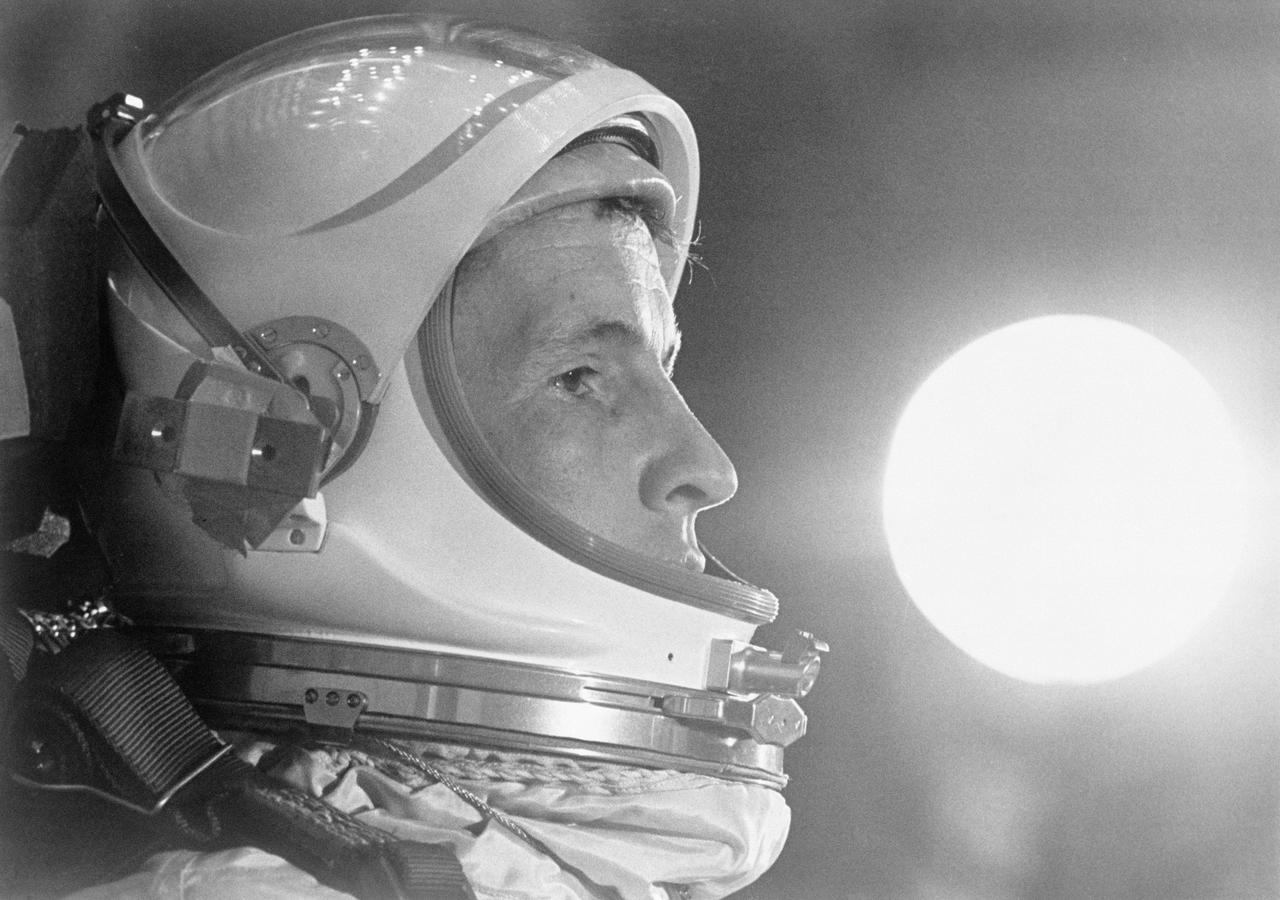
S65-19576 (21 May 1965) --- Astronaut Edward H. White II, pilot of the Gemini-Titan 4 prime crew, goes through a wet mock simulation exercise as part of the checkout procedure for the Gemini-4 spaceflight. The two-man Gemini-4 mission, scheduled no earlier than June 3, 1965, will orbit Earth 62 times in four days. Astronaut James A. McDivitt (out of frame) is the GT-4 prime crew command pilot.
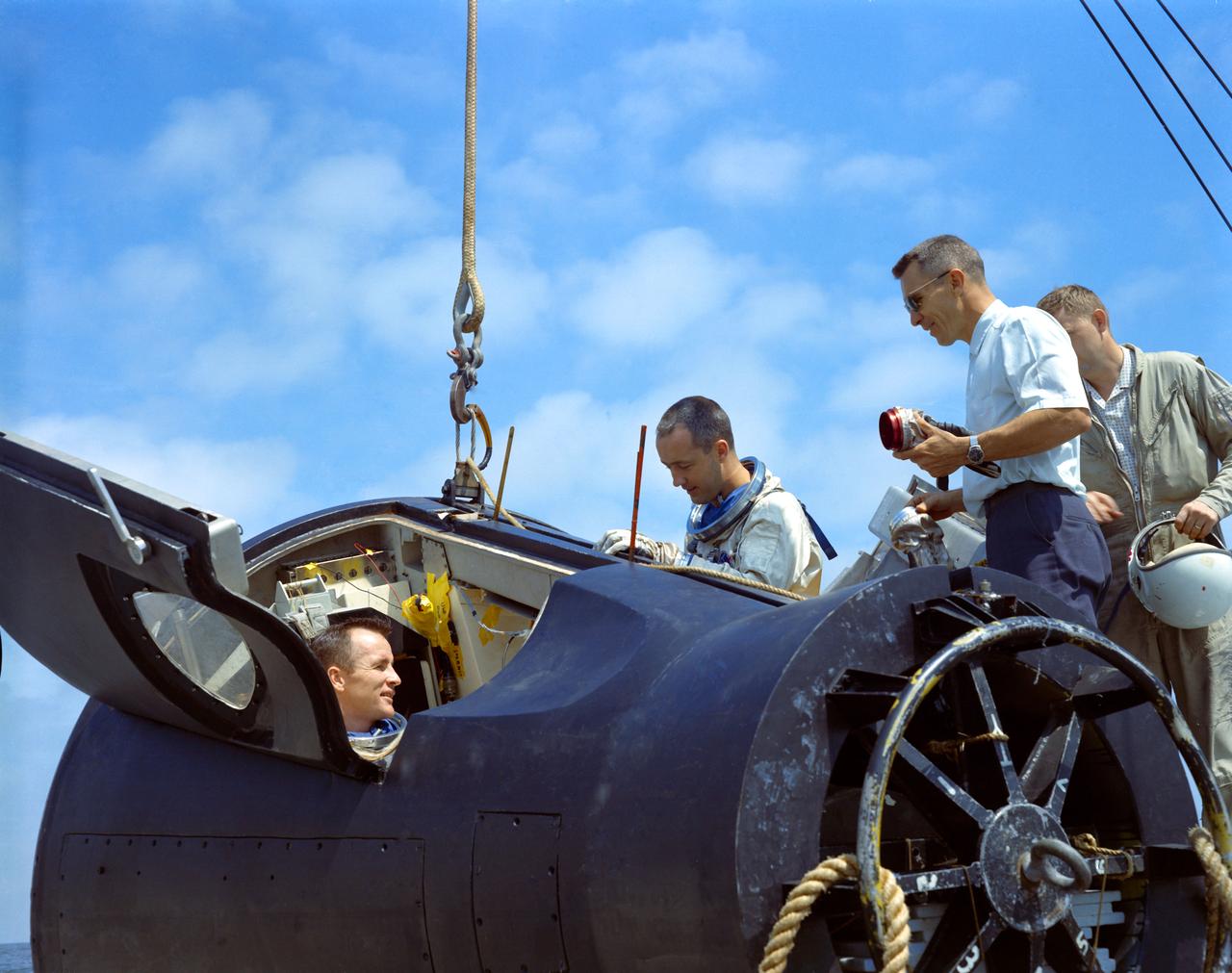
S65-22639 (14 April 1965) --- The Gemini-Titan 4 prime crew, astronauts Edward H. White II (left), pilot; and James A. McDivitt (getting in the spacecraft), command pilot, received instructions from Gordon Harvey, Flight Crew Support Division; and Alan M. Rochford, suit technician, Crew Systems Division, before closing of hatches prior to undergoing water egress training in the Gulf of Mexico.
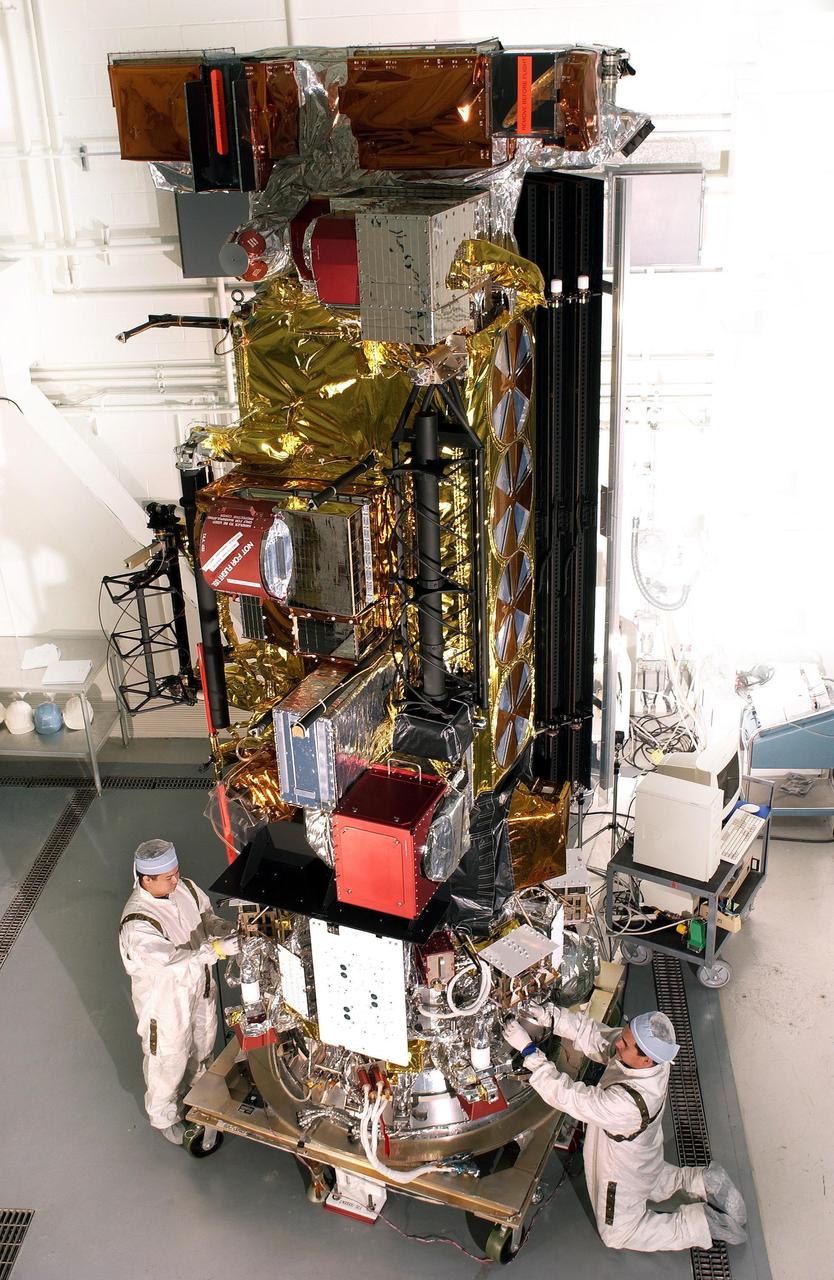
VANDENBERG AFB, CALIF. --Lockheed Martin Missiles & Space National Oceanic and Atmospheric Administration's NOAA-M satellite during launch preparation at Vandenberg AFB, Calif. NOAA-M is a polar-orbiting Earth environmental observation satellite that will provide global data to NOAA's short- and long-range weather forecasting systems. Launch of the NOAA-M aboard a Titan II rocket is scheduled for June 24, 2002, from VAFB
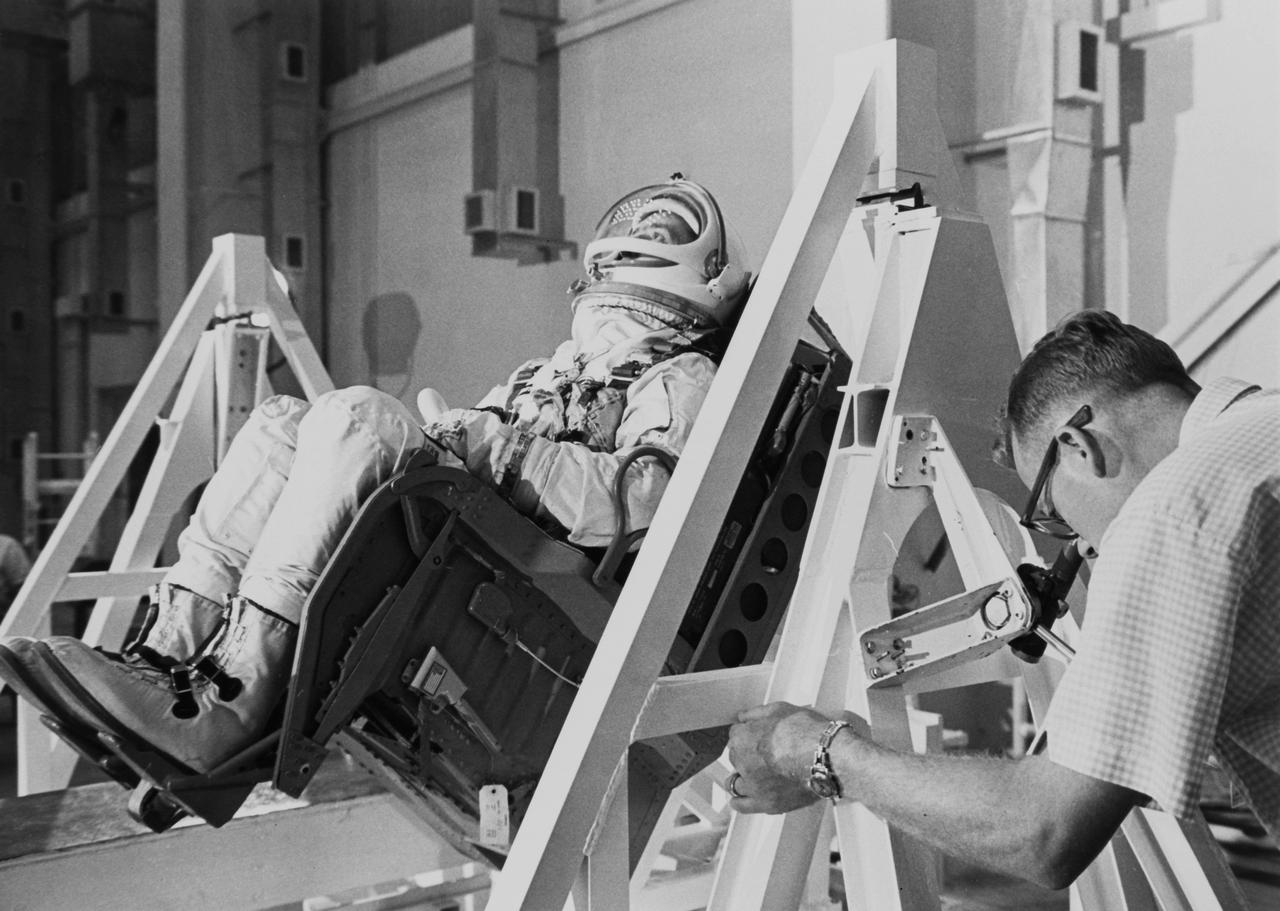
S65-19585 (21 May 1965) --- Astronaut James A. McDivitt, command pilot for the Gemini-Titan 4 prime crew, participates in a weight and balance test during a wet mock simulation exercise at Cape Kennedy, Florida. The two-man Gemini-4 mission, scheduled no earlier than June 3, 1965, will orbit Earth 62 times in four days. Astronaut Edward H. White II (out of frame) is the GT-4 prime crew pilot.
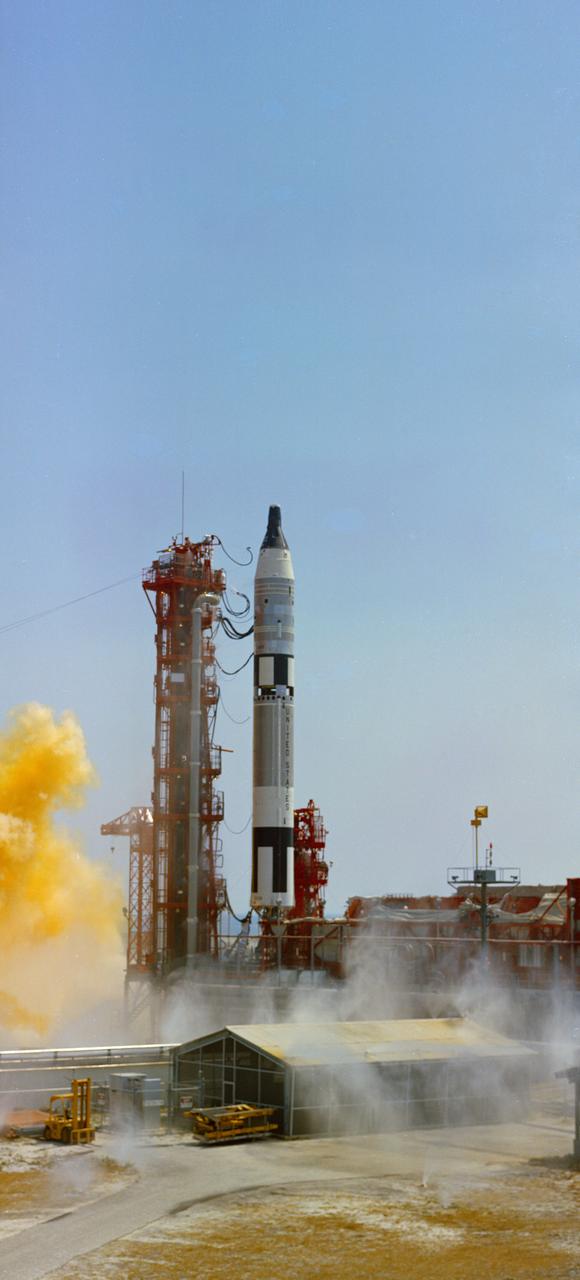
S65-30412 (3 June 1965) --- The Gemini-Titan 4 (GT-4) spaceflight launches from Cape Kennedy's Pad 19 at 10:16 a.m. (EST) on June 3, 1965. The GT-4 spacecraft carried astronauts James A. McDivitt, command pilot, and Edward H. White II, pilot, on a four-day, 62-revolution mission. Photo credit: NASA
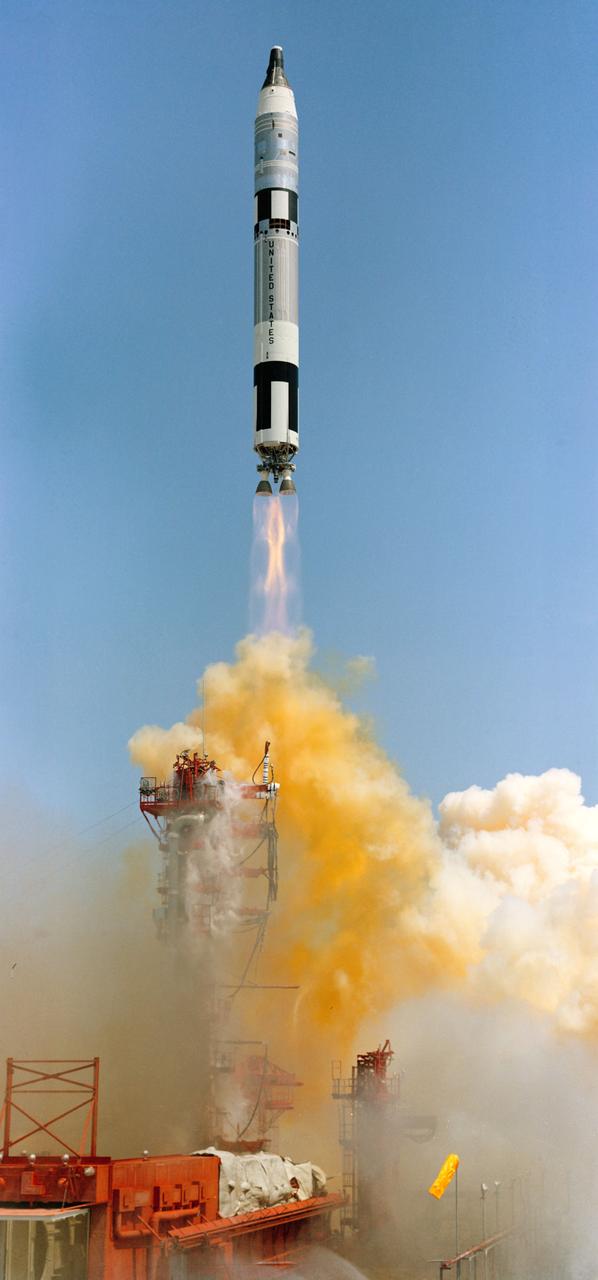
S65-29636 (3 June 1965) --- The Gemini-Titan 4 (GT-4) spaceflight launches from Cape Kennedy's Pad 19 at 10:16 a.m. (EST) on June 3, 1965. The GT-4 spacecraft carried astronauts James A. McDivitt, command pilot, and Edward H. White II, pilot, on a four-day, 62-revolution mission. Photo credit: NASA
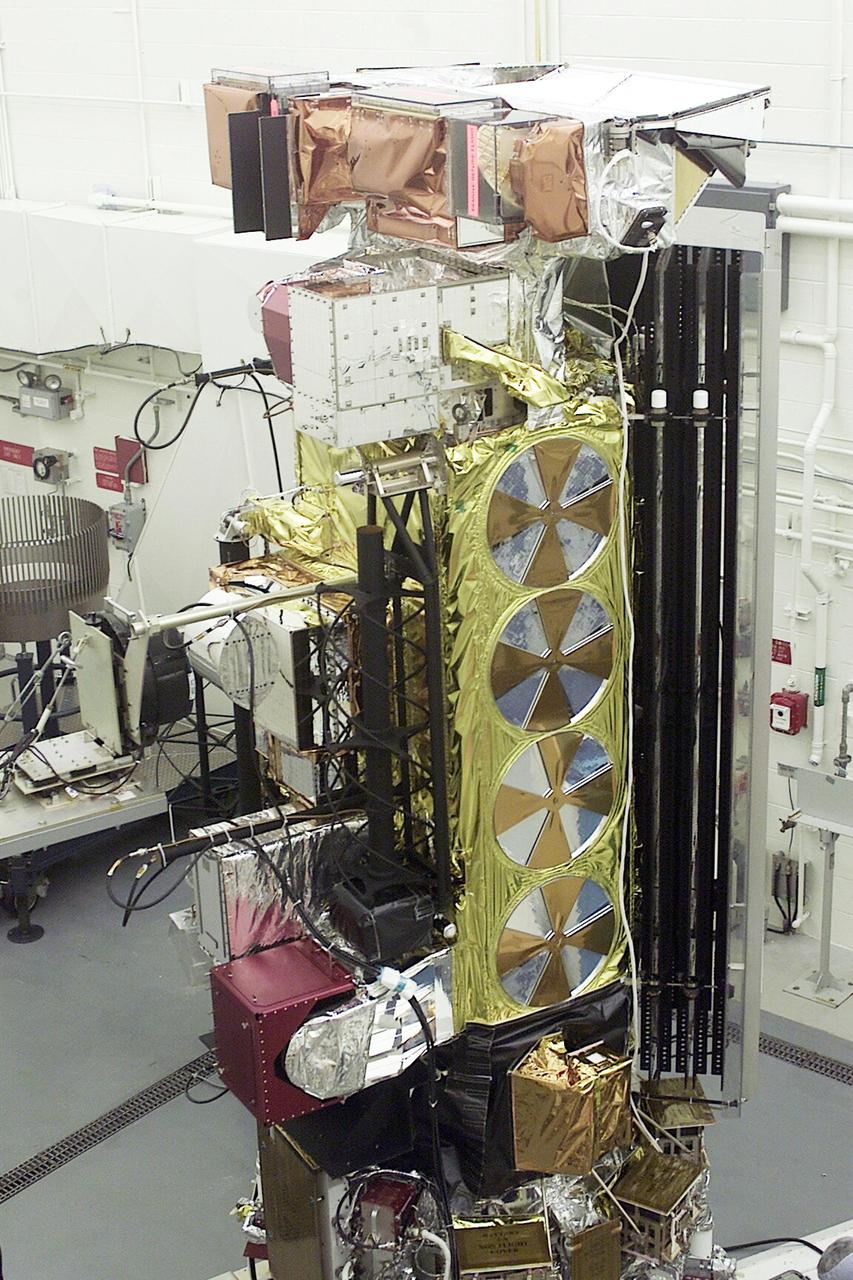
KENNEDY SPACE CENTER, FLA. -- The National Oceanic and Atmospheric Administration (NOAA-M) spacecraft undergoes end-to-end testing in checkout hangar 1610 on North Vandenberg Air Force Base. The spacecraft is nearing process completion for transportation to Launch Complex 4W. NOAA-M is another in a series of polar-orbiting Earth environmental observation satellites that provide global data to NOAA's short- and long-range weather forecasting systems. Launch aboard a Titan II rocket is scheduled for June 25, 2002
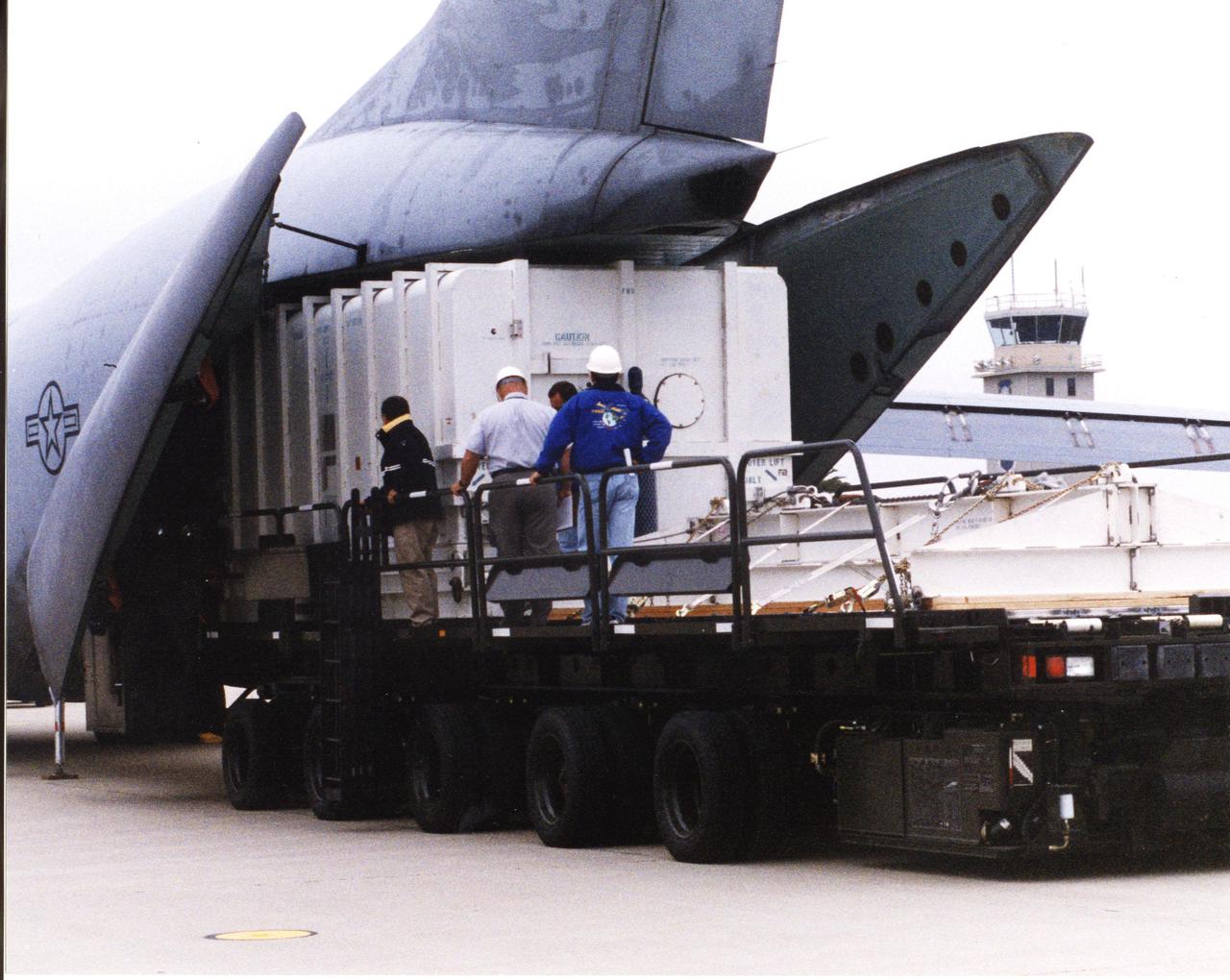
A crated National Oceanic and Atmospheric Administration (NOAA-L) satellite arrives at Vandenberg Air Force Base, Calif.; It is part of the Polar-Orbiting Operational Environmental Satellite (POES) program that provides atmospheric measurements of temperature, humidity, ozone and cloud images, tracking weather patterns that affect the global weather and climate. The launch of the NOAA-L satellite is scheduled no earlier than Sept. 12 aboard a Lockheed Martin Titan II rocket
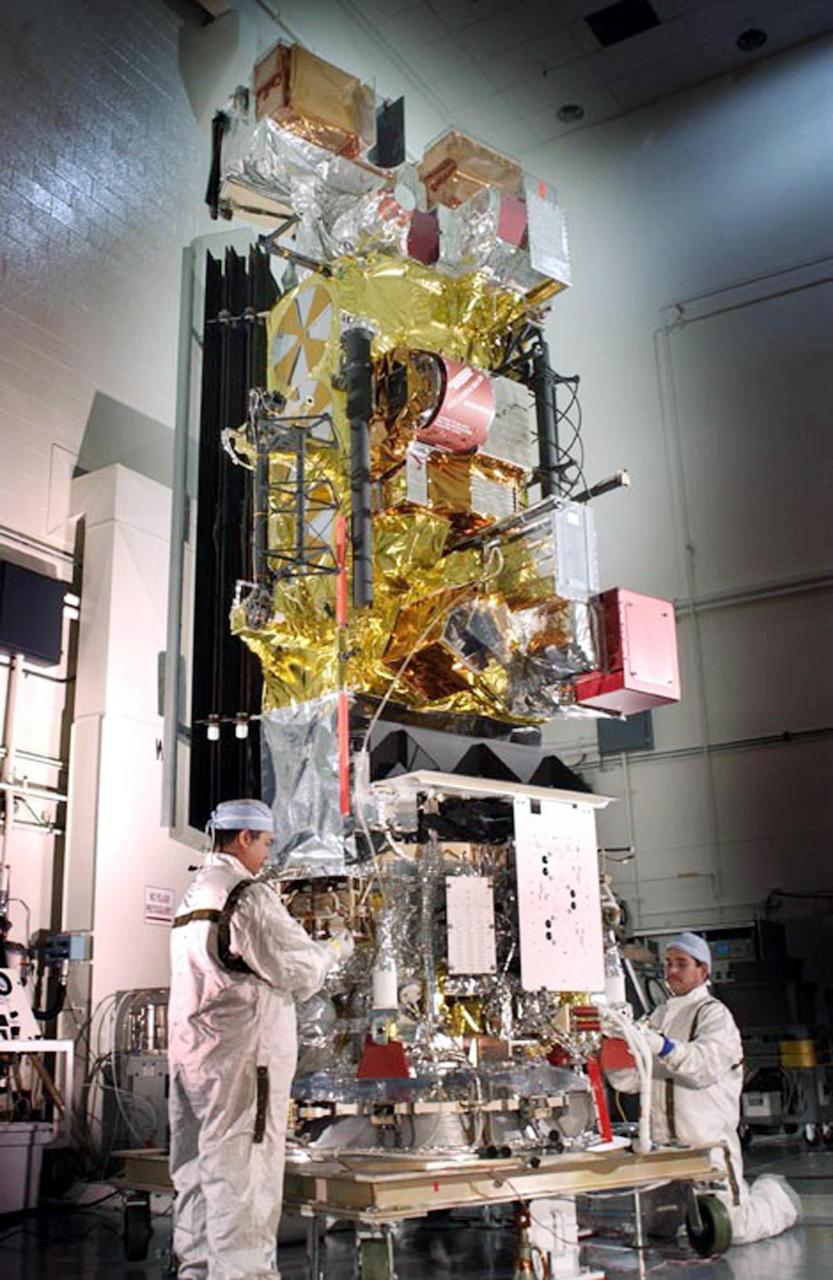
KENNEDY SPACE CENTER, FLA. -- Workers in checkout hangar 1610 on North Vandenberg Air Force Base complete final processing on the National Oceanic and Atmospheric Administration (NOAA-M) spacecraft before transportation to Launch Complex 4W. NOAA-M is another in a series of polar-orbiting Earth environmental observation satellites that provide global data to NOAA's short- and long-range weather forecasting systems. Launch aboard a Titan II rocket is scheduled for June 25, 2002
![VANDENBERG AIR FORCE BASE, CALIF. -- The National Oceanic and Atmospheric Administration (NOAA) spacecraft (NOAA-M) lifts off at 2:23 p.m. EDT aboard a Titan II rocket from Vandenberg Air Force Base, Calif. NOAA-M is another in a series of polar-orbiting Earth environmental observation satellites that provide global data to NOAA's short- and long-range weather forecasting systems. [Photo by William Hartenstein]](https://images-assets.nasa.gov/image/KSC-02pd1132/KSC-02pd1132~medium.jpg)
VANDENBERG AIR FORCE BASE, CALIF. -- The National Oceanic and Atmospheric Administration (NOAA) spacecraft (NOAA-M) lifts off at 2:23 p.m. EDT aboard a Titan II rocket from Vandenberg Air Force Base, Calif. NOAA-M is another in a series of polar-orbiting Earth environmental observation satellites that provide global data to NOAA's short- and long-range weather forecasting systems. [Photo by William Hartenstein]
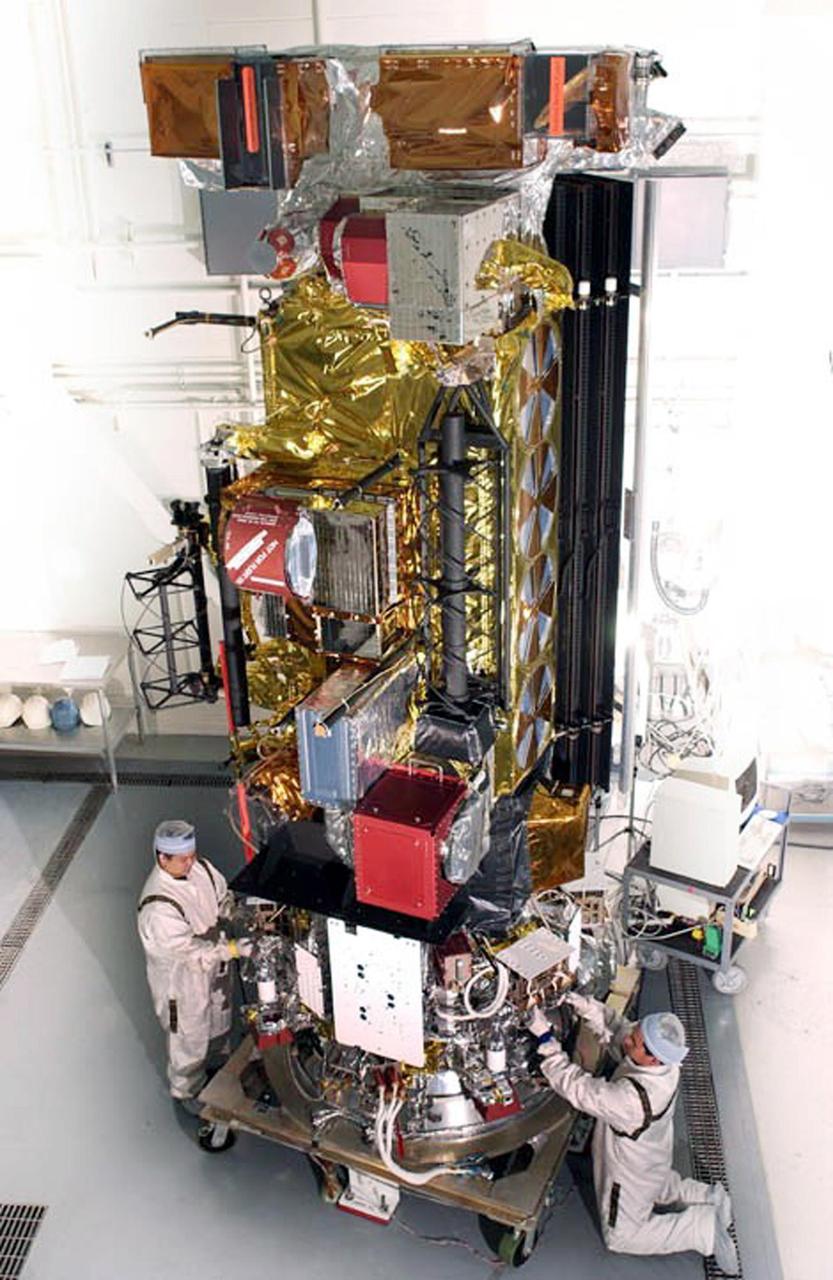
KENNEDY SPACE CENTER, FLA. -- Workers in checkout hangar 1610 on North Vandenberg Air Force Base complete final processing on the National Oceanic and Atmospheric Administration (NOAA-M) spacecraft before transportation to Launch Complex 4W. NOAA-M is another in a series of polar-orbiting Earth environmental observation satellites that provide global data to NOAA's short- and long-range weather forecasting systems. Launch aboard a Titan II rocket is scheduled for June 25, 2002
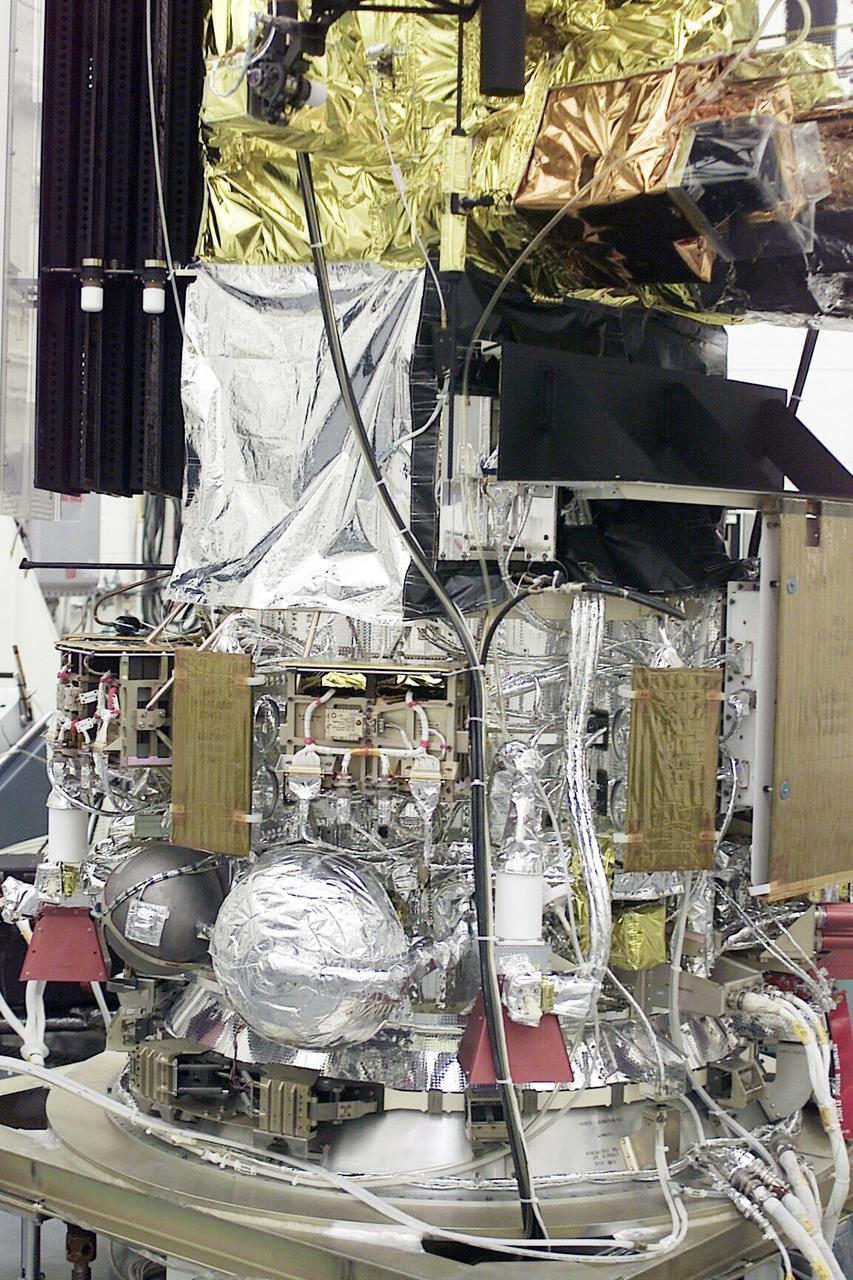
KENNEDY SPACE CENTER, FLA. -- The National Oceanic and Atmospheric Administration (NOAA-M) spacecraft undergoes end-to-end testing in checkout hangar 1610 on North Vandenberg Air Force Base. The spacecraft is nearing process completion for transportation to Launch Complex 4W. NOAA-M is another in a series of polar-orbiting Earth environmental observation satellites that provide global data to NOAA's short- and long-range weather forecasting systems. Launch aboard a Titan II rocket is scheduled for June 25, 2002
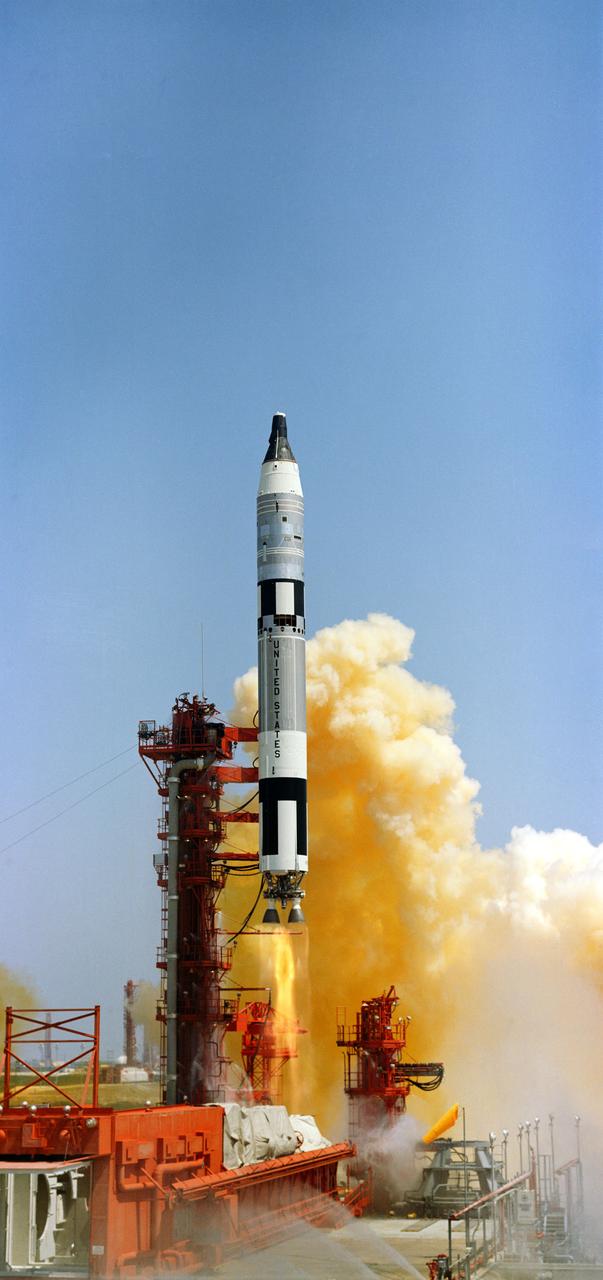
S65-29635 (3 June 1965) --- The Gemini-Titan 4 (GT-4) spaceflight launches from Cape Kennedy's Pad 19 at 10:16 a.m. (EST) on June 3, 1965. The GT-4 spacecraft carried astronauts James A. McDivitt, command pilot, and Edward H. White II, pilot, on a four-day, 62-revolution mission. Photo credit: NASA
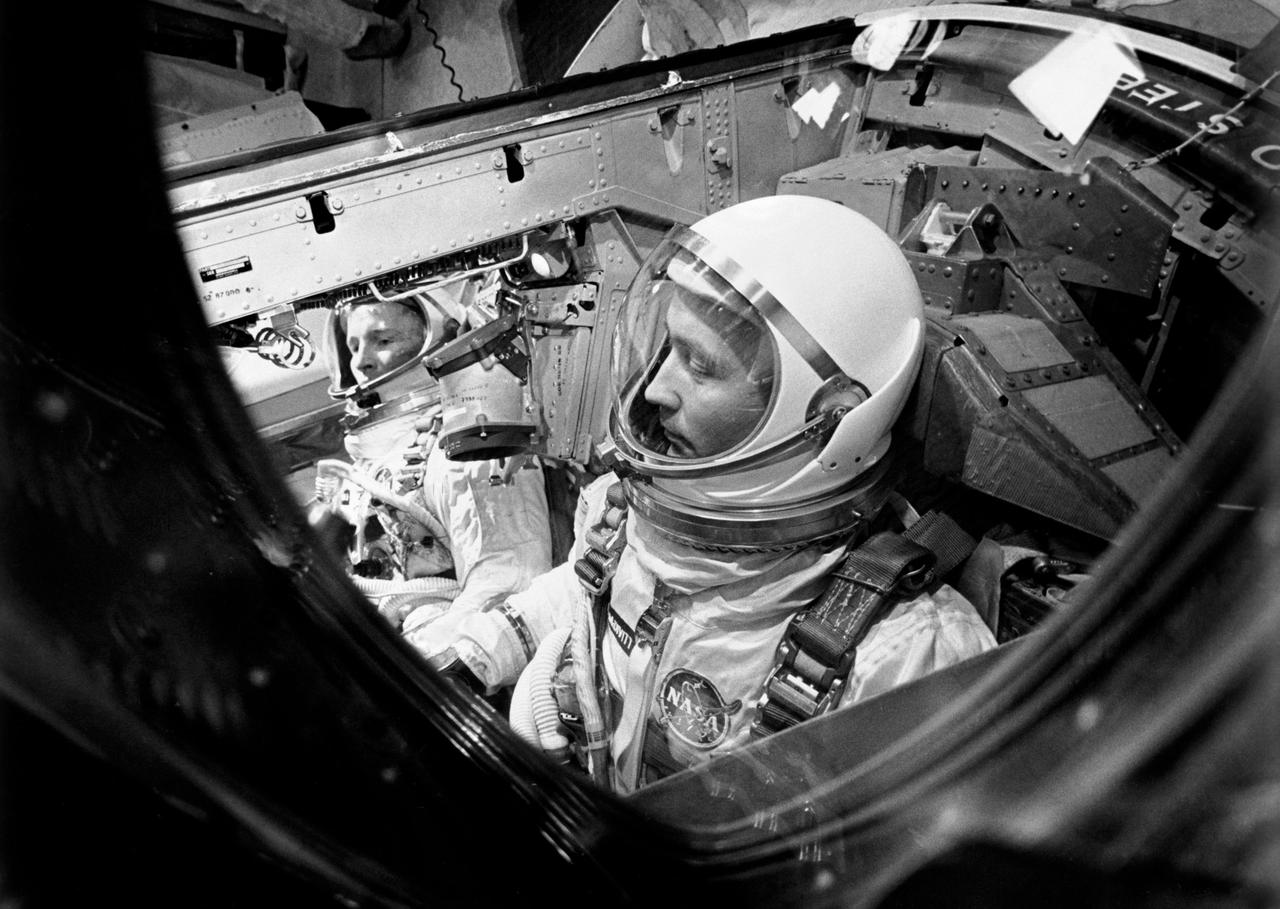
S65-19578 (21 May 1965) --- The Gemini-Titan 4 prime crew, astronauts Edward H. White II (left), pilot, and James A. McDivitt, command pilot, check out the Gemini-4 spacecraft during a wet mock simulation test at Cape Kennedy. The Gemini-4 mission, scheduled no earlier than June 3, 1965, will circle Earth 62 times in four days.
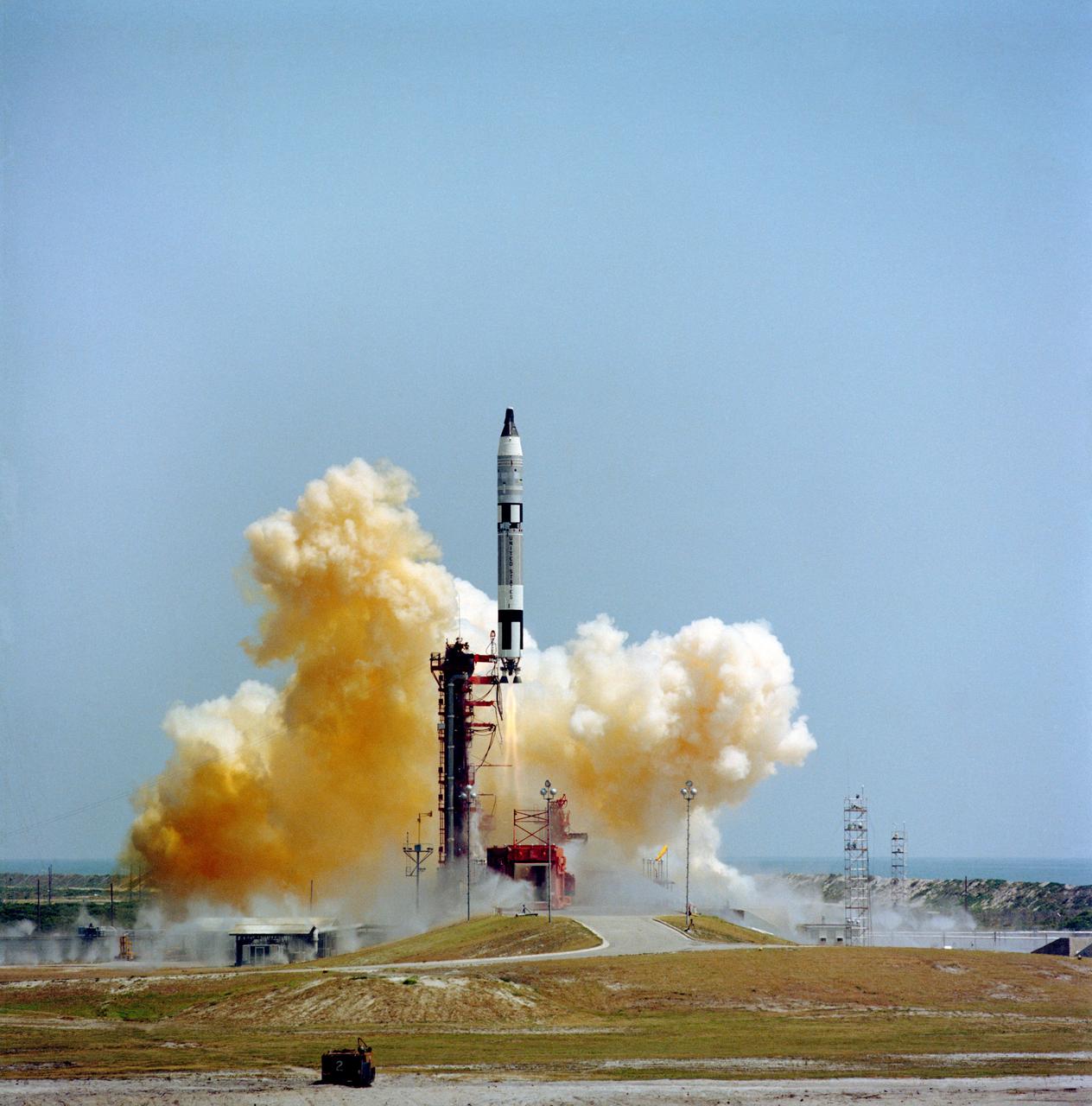
S65-29639 (3 June 1965) --- The Gemini-Titan 4 (GT-4) spaceflight launches from Cape Kennedy's Pad 19 at 10:16 a.m. (EST) on June 3, 1965. The GT-4 spacecraft carried astronauts James A. McDivitt, command pilot, and Edward H. White II, pilot, on a four-day, 62-revolution mission.
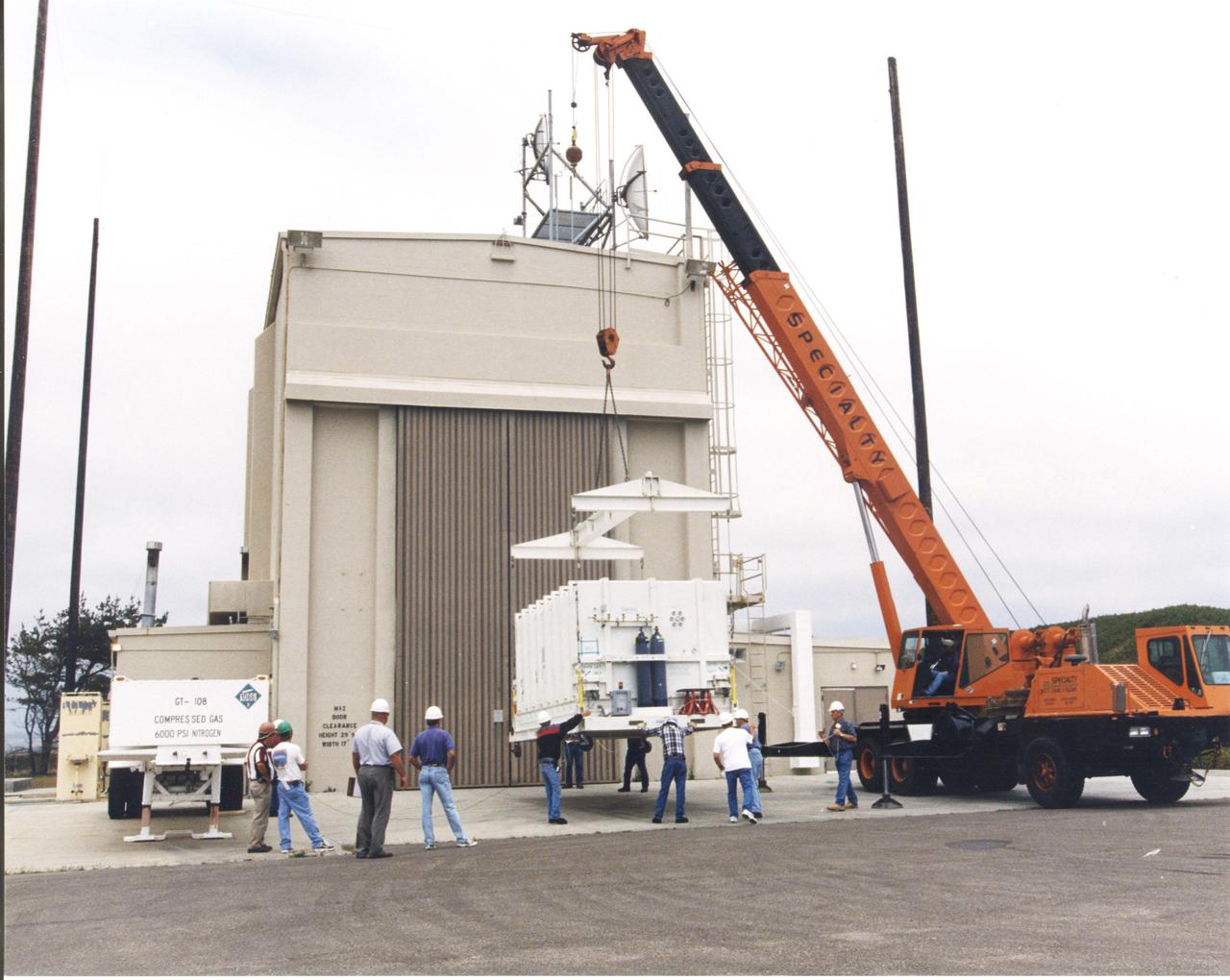
Outside the B16-10 spacecraft processing hangar at Vandenberg Air Force Base, Calif., a crated National Oceanic and Atmospheric Administration (NOAA-L) satellite is lowered to the ground before being moved inside. NOAA-L is part of the Polar-Orbiting Operational Environmental Satellite (POES) program that provides atmospheric measurements of temperature, humidity, ozone and cloud images, tracking weather patterns that affect the global weather and climate. The launch of the NOAA-L satellite is scheduled no earlier than Sept. 12 aboard a Lockheed Martin Titan II rocket
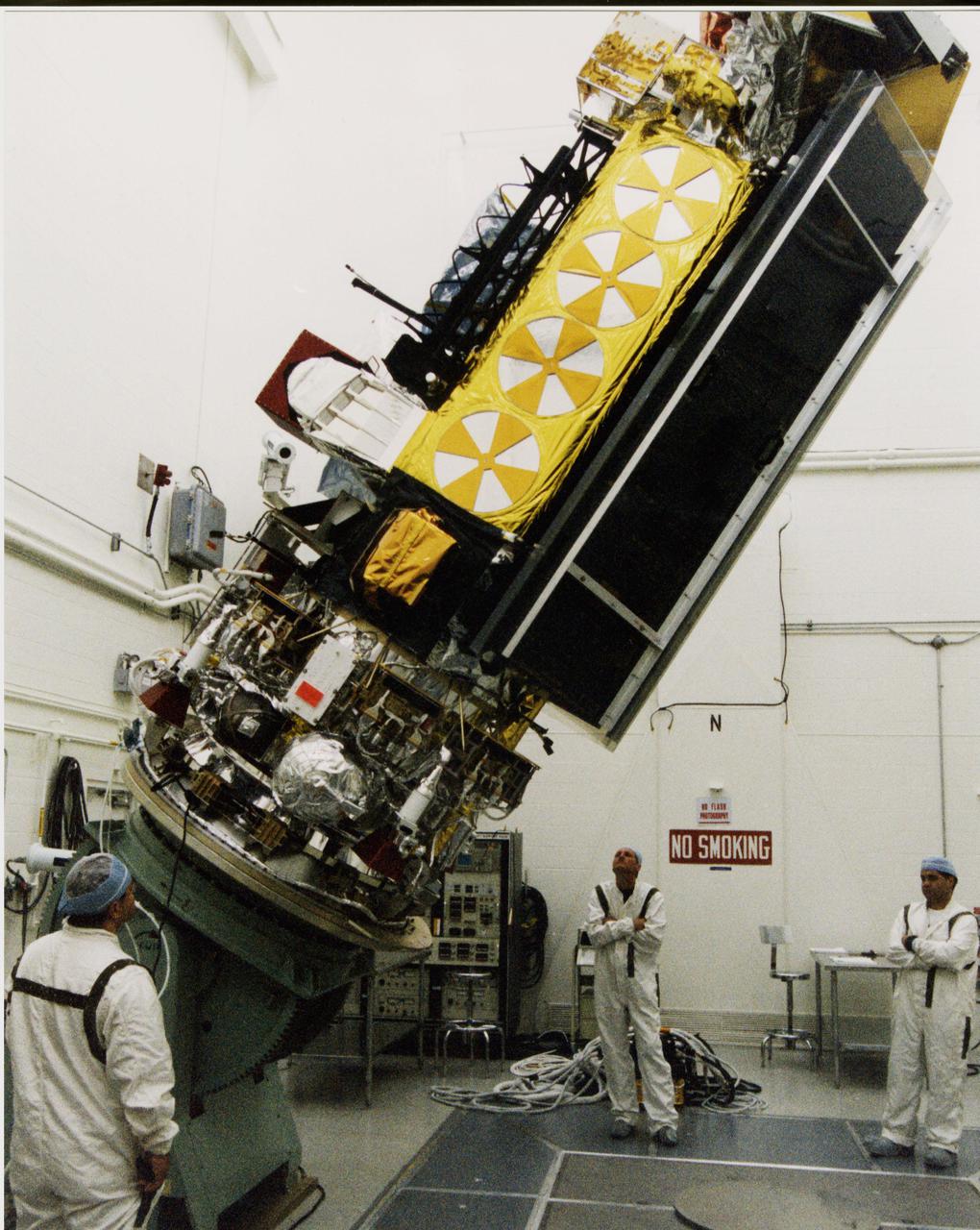
Inside the B16-10 spacecraft processing hangar at Vandenberg Air Force Base, Calif., workers oversee the lifting and rotating of the National Oceanic and Atmospheric Administration (NOAA-L) satellite to allow for mating of the Apogee Kick Motor (AKM). NOAA-L is part of the Polar-Orbiting Operational Environmental Satellite (POES) program that provides atmospheric measurements of temperature, humidity, ozone and cloud images, tracking weather patterns that affect the global weather and climate. The launch of the NOAA-L satellite is scheduled no earlier than Sept. 12 aboard a Lockheed Martin Titan II rocket
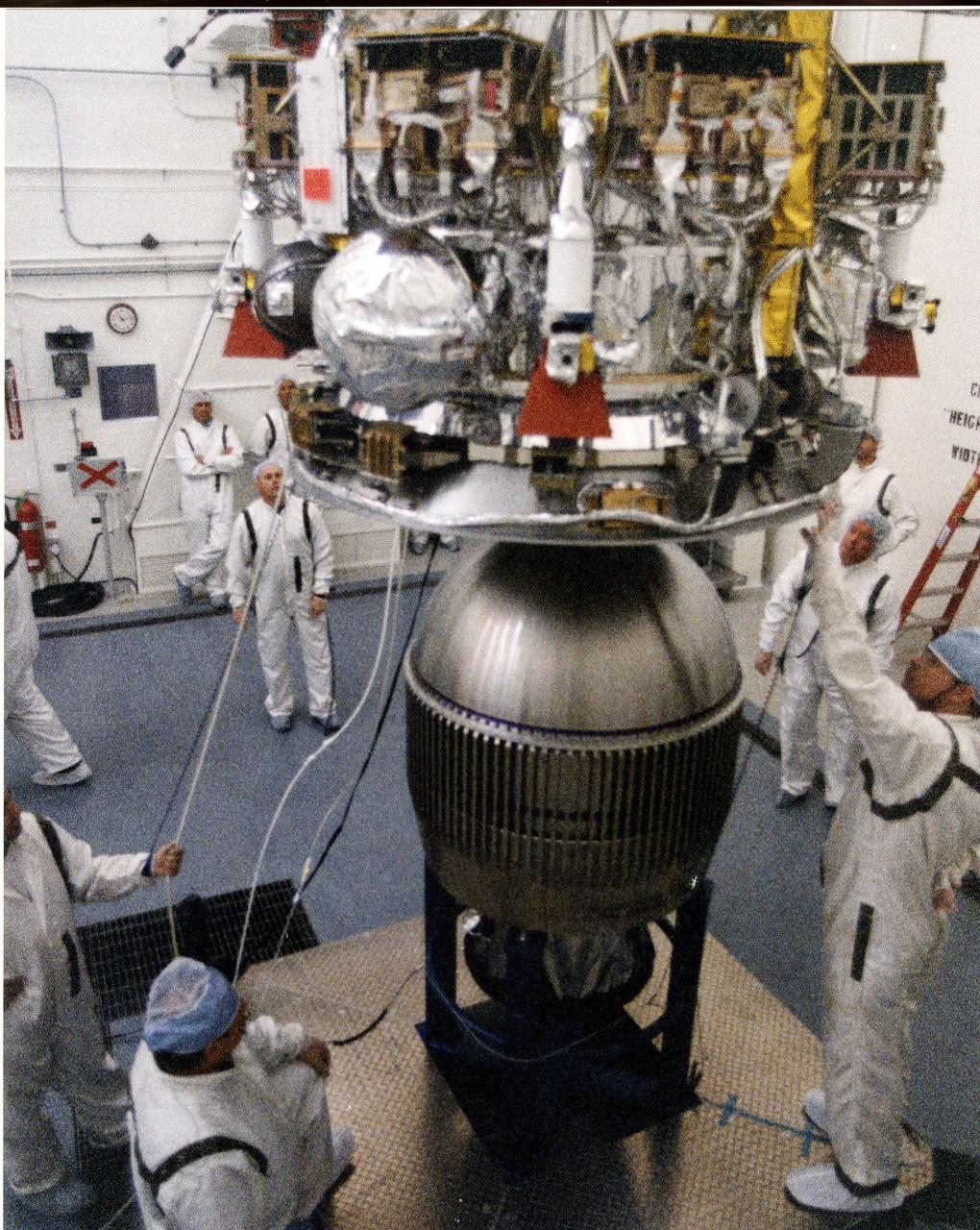
Inside the B16-10 spacecraft processing hangar at Vandenberg Air Force Base, Calif., workers oversee the mating of the Apogee Kick Motor (below) to the National Oceanic and Atmospheric Administration (NOAA-L) satellite above. NOAA-L is part of the Polar-Orbiting Operational Environmental Satellite (POES) program that provides atmospheric measurements of temperature, humidity, ozone and cloud images, tracking weather patterns that affect the global weather and climate. The launch of the NOAA-L satellite is scheduled no earlier than Sept. 12 aboard a Lockheed Martin Titan II rocket
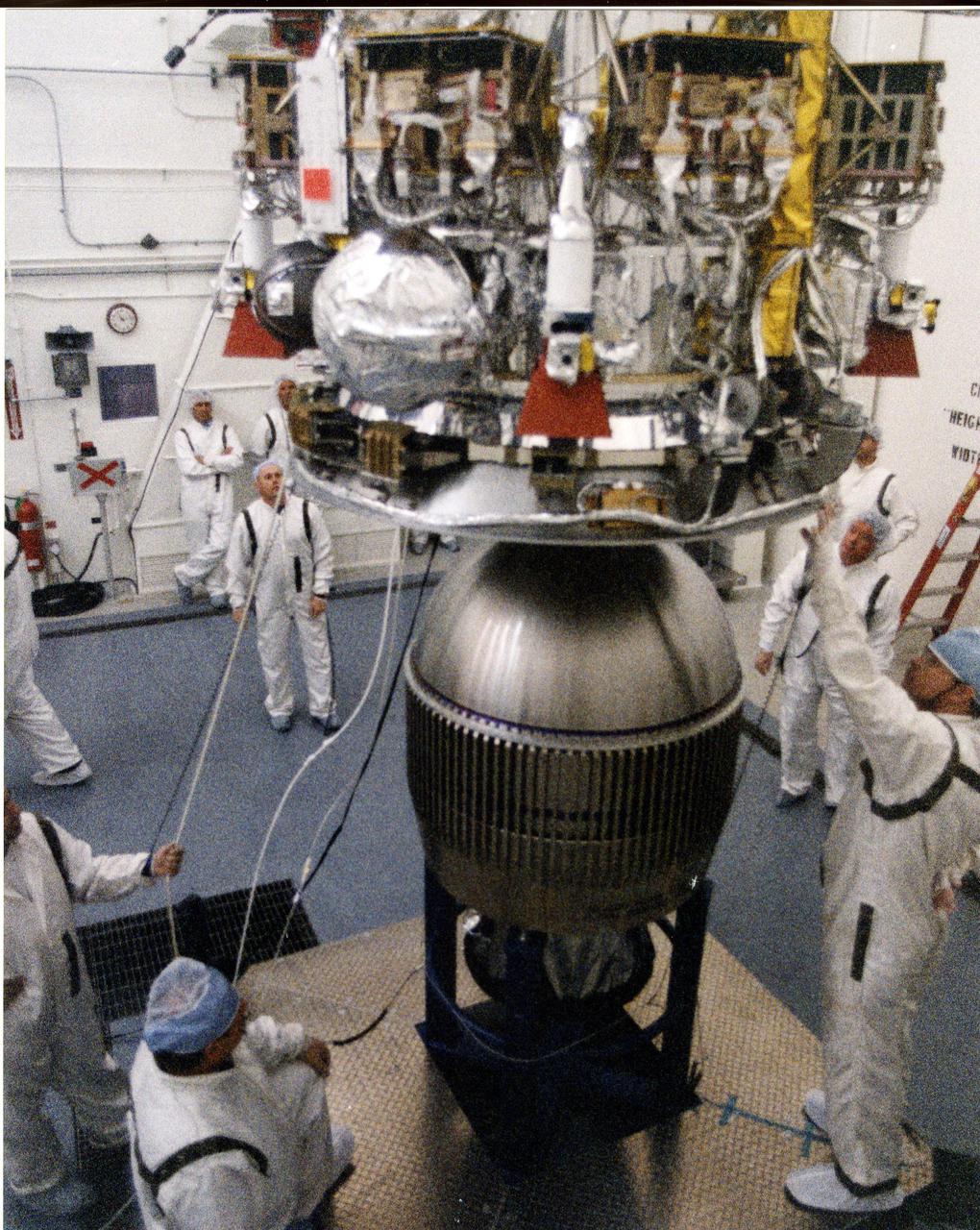
Inside the B16-10 spacecraft processing hangar at Vandenberg Air Force Base, Calif., workers oversee the mating of the Apogee Kick Motor (below) to the National Oceanic and Atmospheric Administration (NOAA-L) satellite above. NOAA-L is part of the Polar-Orbiting Operational Environmental Satellite (POES) program that provides atmospheric measurements of temperature, humidity, ozone and cloud images, tracking weather patterns that affect the global weather and climate. The launch of the NOAA-L satellite is scheduled no earlier than Sept. 12 aboard a Lockheed Martin Titan II rocket
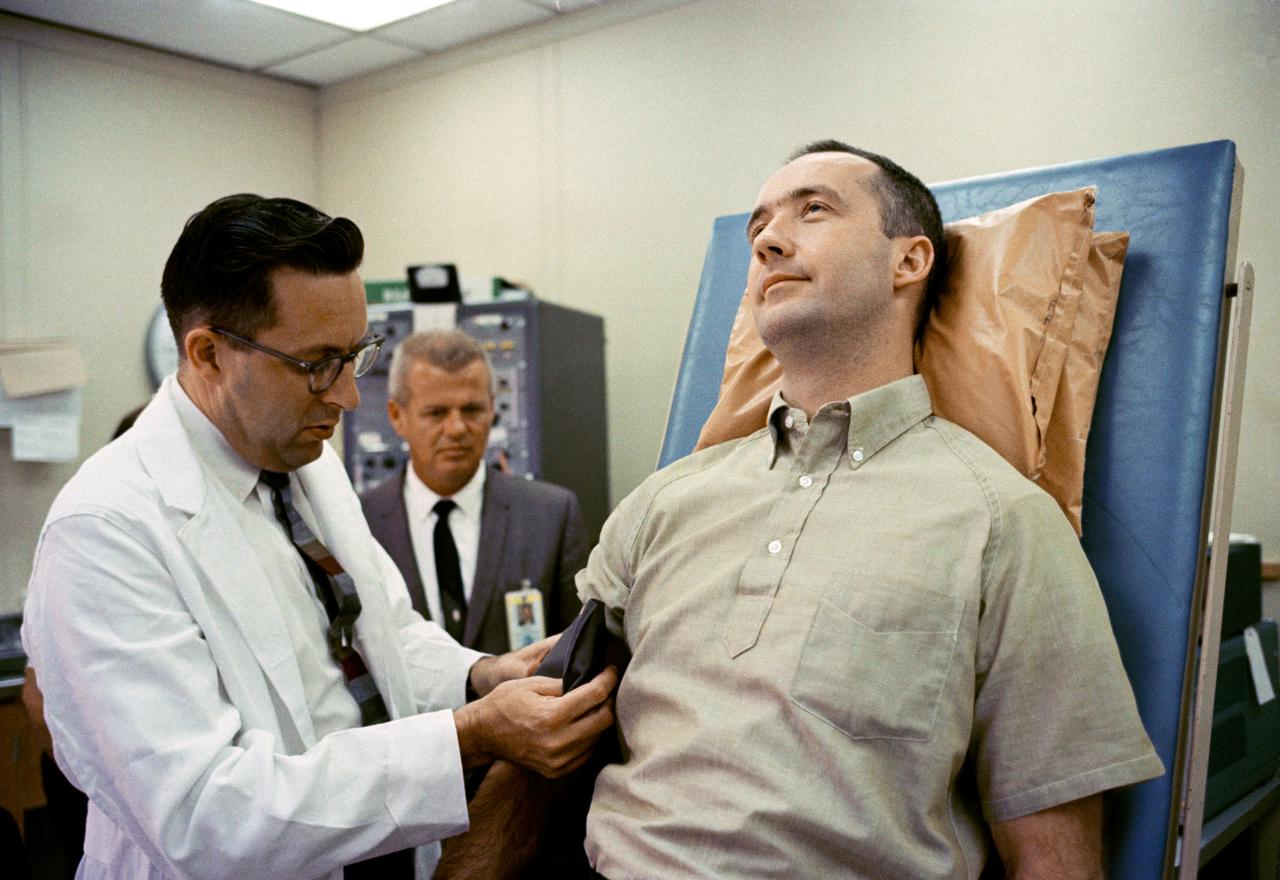
S65-19524 (1 June 1965) --- Dr. Charles A. Berry, chief of Center Medical Programs, MSC, Houston, Texas, prepares to check the blood pressure of astronaut James A. McDivitt, command pilot for the Gemini-Titan 4 spaceflight. McDivitt is on the tilt table at the Aero Medical Area, MSC, Merritt Island, where he and astronaut Edward H. White II (out of frame), GT-4 pilot, underwent preflight physicals in preparation for the four-day, 62-revolution spaceflight. The two astronauts were declared in top physical condition. In the background is Dr. Gordon Benson, NASA physician at Cape Kennedy.
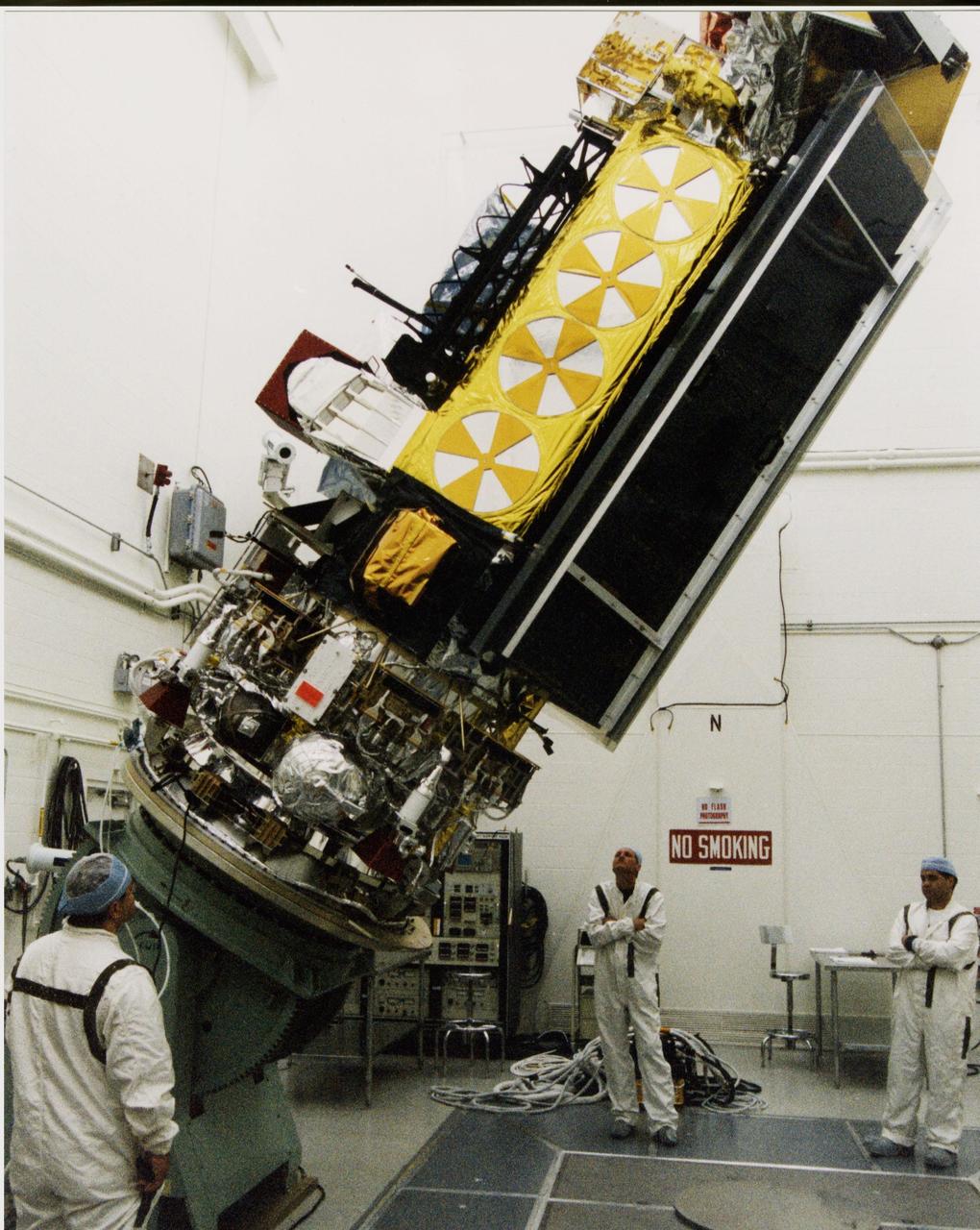
Inside the B16-10 spacecraft processing hangar at Vandenberg Air Force Base, Calif., workers oversee the lifting and rotating of the National Oceanic and Atmospheric Administration (NOAA-L) satellite to allow for mating of the Apogee Kick Motor (AKM). NOAA-L is part of the Polar-Orbiting Operational Environmental Satellite (POES) program that provides atmospheric measurements of temperature, humidity, ozone and cloud images, tracking weather patterns that affect the global weather and climate. The launch of the NOAA-L satellite is scheduled no earlier than Sept. 12 aboard a Lockheed Martin Titan II rocket
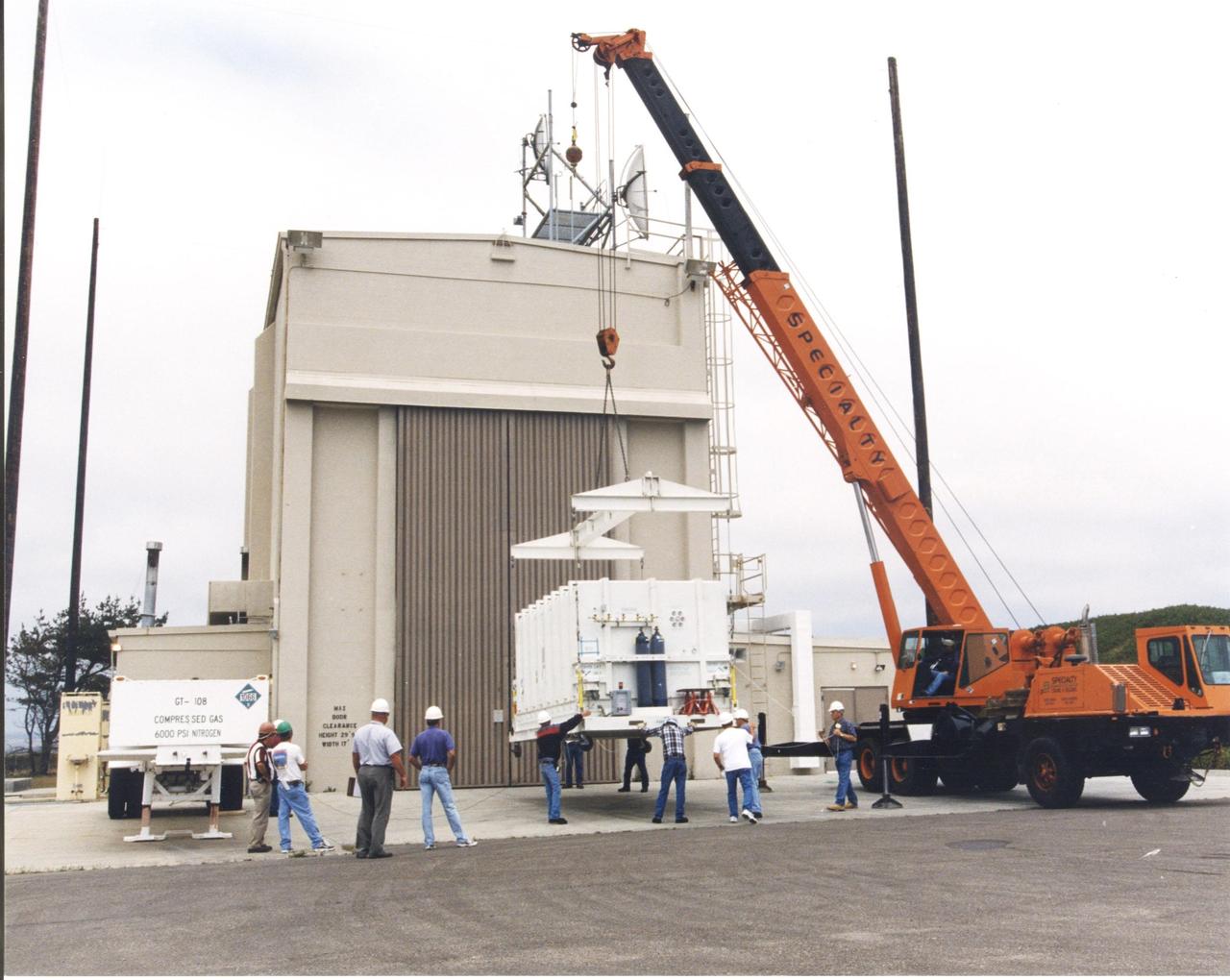
Outside the B16-10 spacecraft processing hangar at Vandenberg Air Force Base, Calif., a crated National Oceanic and Atmospheric Administration (NOAA-L) satellite is lowered to the ground before being moved inside. NOAA-L is part of the Polar-Orbiting Operational Environmental Satellite (POES) program that provides atmospheric measurements of temperature, humidity, ozone and cloud images, tracking weather patterns that affect the global weather and climate. The launch of the NOAA-L satellite is scheduled no earlier than Sept. 12 aboard a Lockheed Martin Titan II rocket
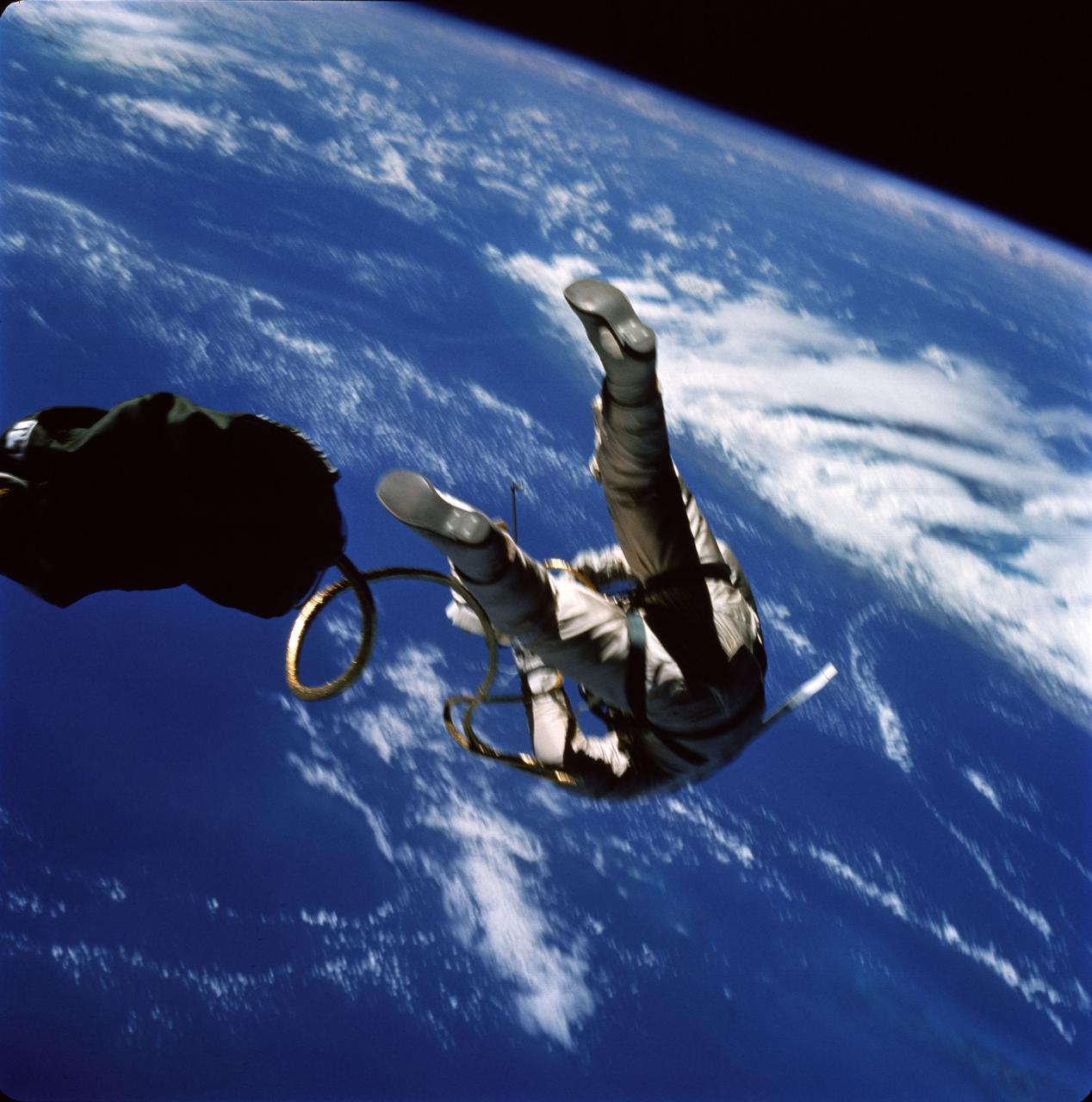
View of Astronaut Edward H. White II, pilot for the Gemini-Titan 4 space flight, as he floats in zero gravity of space. The extravehicular activity was performed during the third revolution of the Gemini 4 spacecraft. White is attached to the spacecraft by a 25-ft. umbilical line and a 23-ft. tether line,both wrapped in gold tape to form one cord. In his right hand White carries a Hand-Held Self-Maneuvering Unit (HHSMU). The visor of his helmet is gold plated to protect him from the unfiltered rays of the sun. Photo was taken on June 3,1965. G.E.T. time was 4:45 / GMT time was 20:00. Original magazine number was GEM04-16-34642, taken with a Hasselblad camera and a 70mm lens. Film type was Kodak Ektachrome MS (S.O. -217). The original photo was a color negative. It's image number is S65-34642.
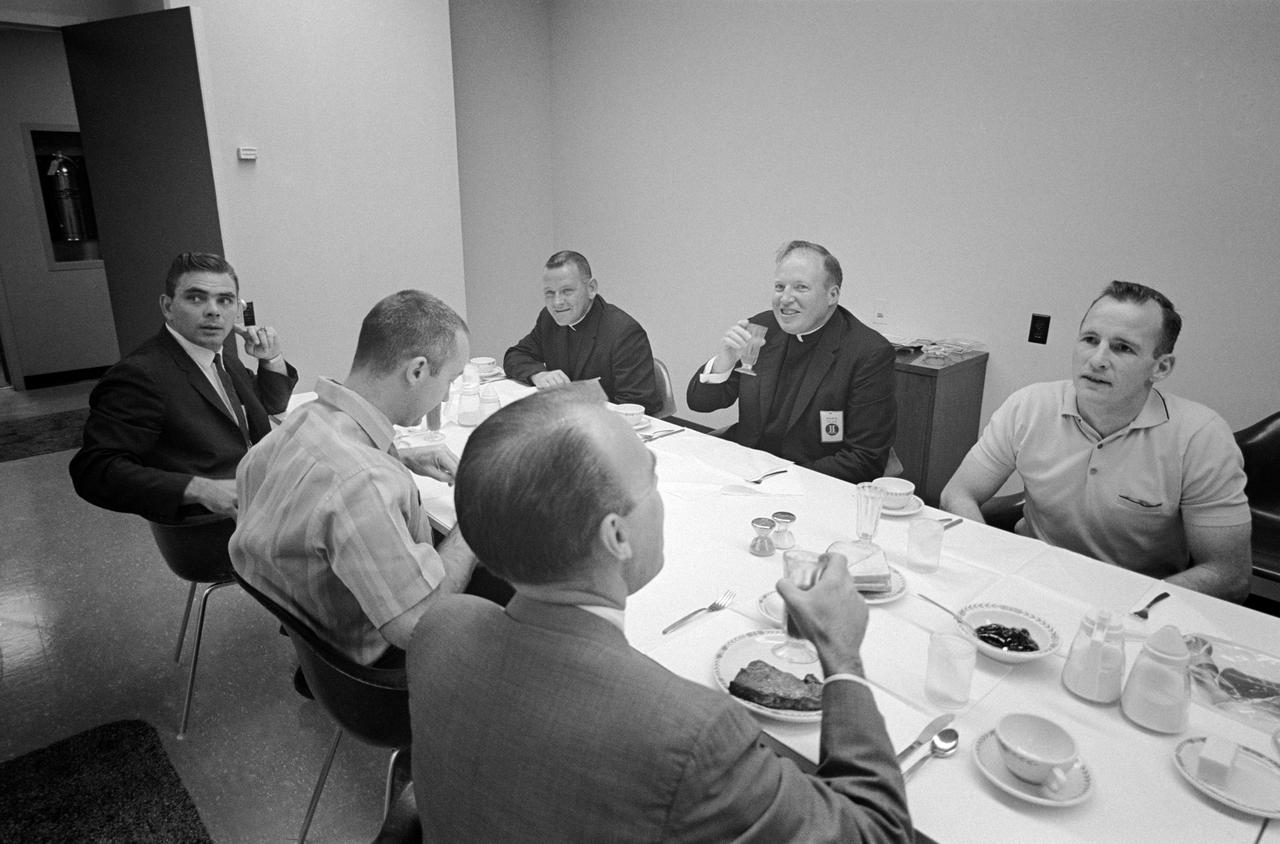
S65-19600 (3 June 1965) --- The prime crew for the Gemini-Titan 4 mission have an early morning breakfast prior to their historic flight which was launched at 10:16 a.m. (EST) on June 3, 1965. Shown here seated around the table (clockwise starting front center) are Dr. D. Owens Coons, chief, MSC Center Medical Office; astronaut James A. McDivitt, GT-4 command pilot; Dr. Eugene F. Tubbs, Kennedy Space Center; Rt. Rev. James Heiliky, McDivitt's priest at Cocoa Beach, Florida; Msgr. Irvine J. Nugent and astronaut Edward H. White II, GT-4 pilot. The group had a breakfast of tomato juice, broiled sirloin steak, poached eggs, toast, strawberry gelatin and coffee.
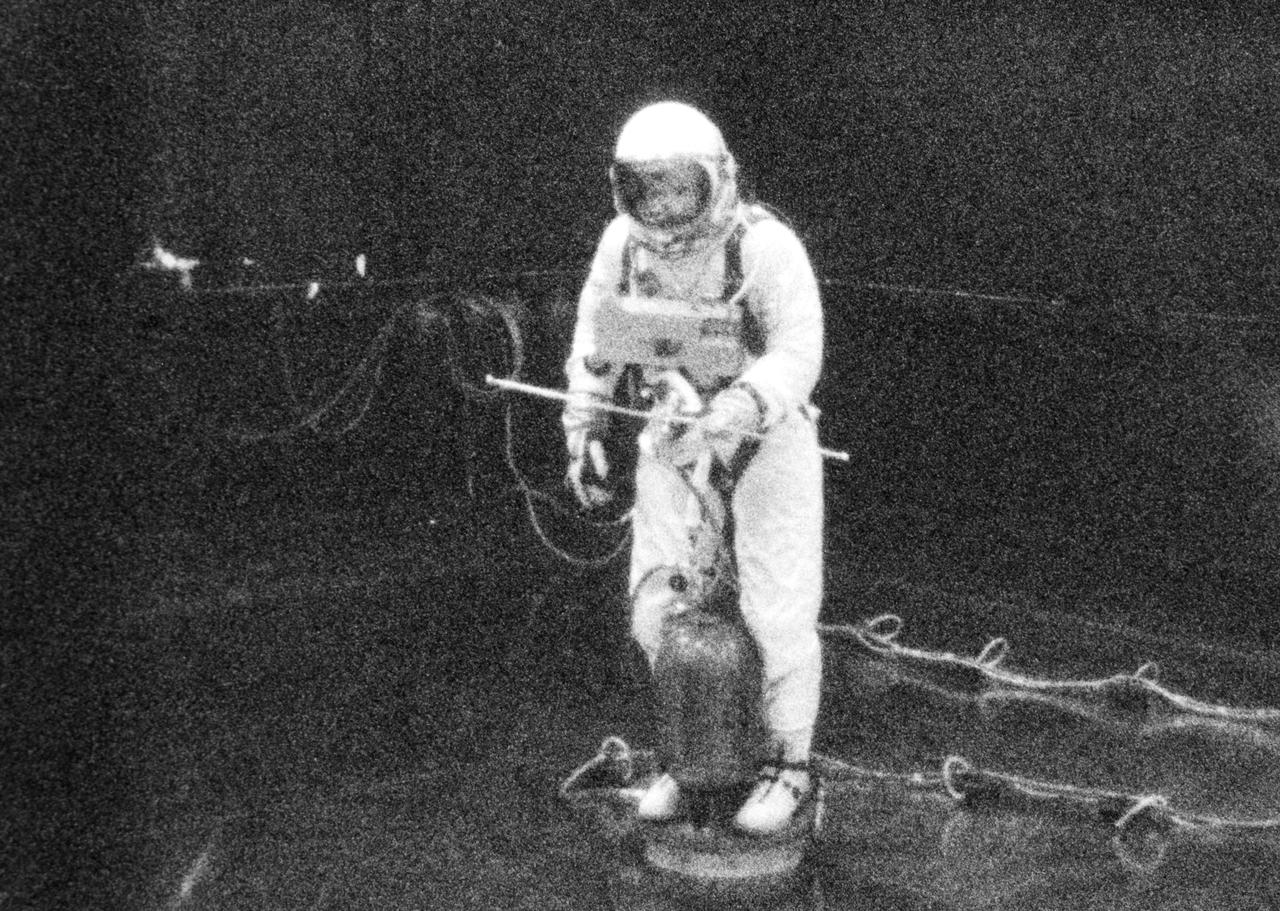
S65-19504 (28 May 1965) --- Astronaut Edward H. White II, pilot for the Gemini-Titan 4 prime crew, is pictured during an extravehicular exercise in the Building 4 laboratory at the Manned Spacecraft Center in Houston, Texas. White is controlling about the yaw (vertical) axis while translating. He stands on a Balance Extravehicular Training Aircraft which is separated from the level steel floor by a .001th-inch cushion of air. In his right hand White holds a zero-gravity integral propulsion unit which is a self-maneuvering device used by an astronaut in a zero-gravity environment. This condition is simulated in this training exercise. White's spacesuit is pressurized to create a realistic training condition. The simulated umbilical line is floated on air with the aid of eleven small air pads.
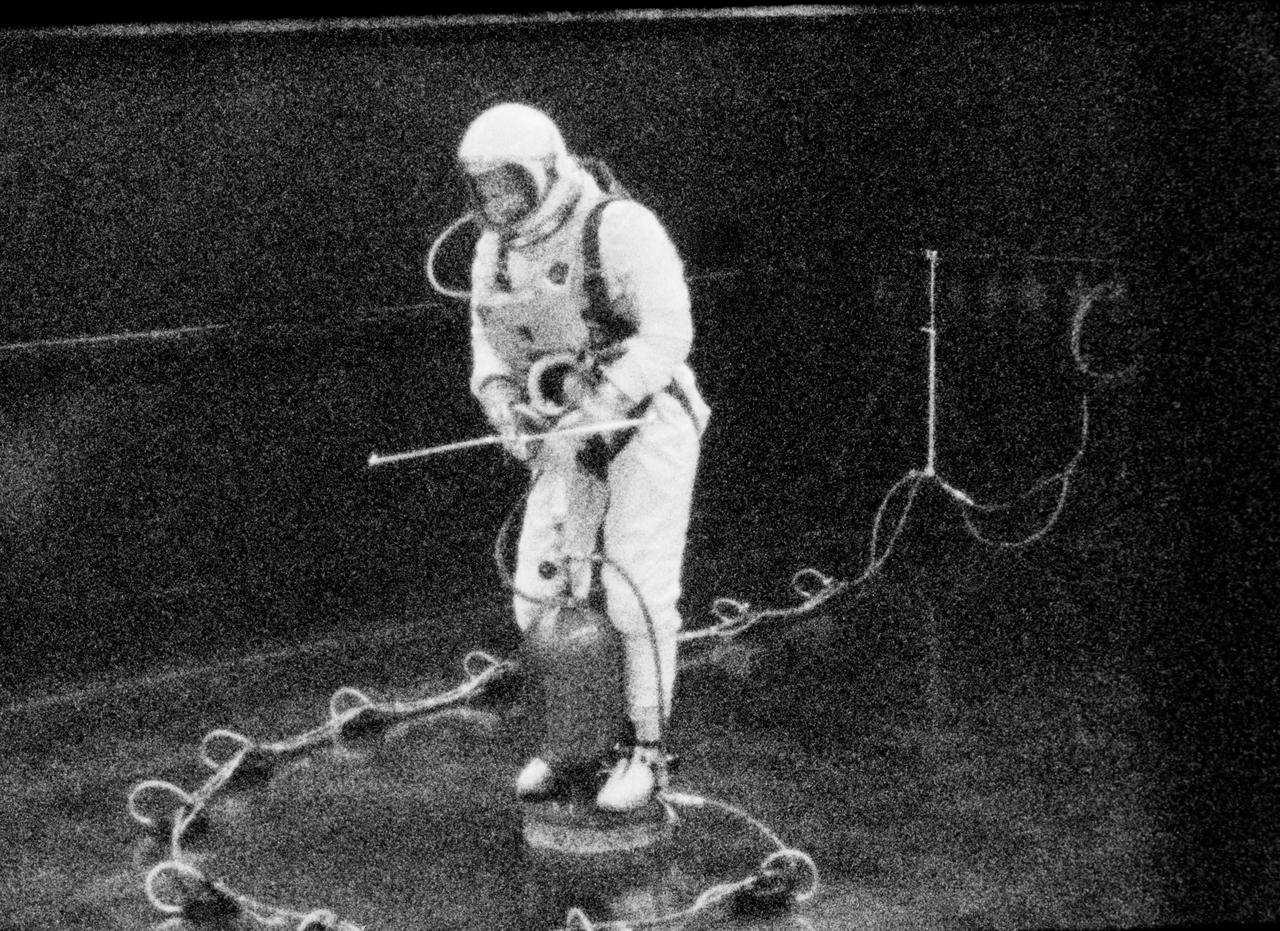
S65-19505 (28 May 1965) --- Astronaut Edward H. White II, pilot for the Gemini-Titan 4 prime crew, is pictured during an extravehicular exercise in the Building 4 laboratory at the Manned Spacecraft Center in Houston, Texas. White is controlling about the yaw (vertical) axis while translating. He stands on a Balance Extravehicular Training Aircraft which is separated from the level steel floor by a .001th-inch cushion of air. In his right hand White holds a zero-gravity integral propulsion unit which is a self-maneuvering device used by an astronaut in a zero-gravity environment. This condition is simulated in this training exercise. White's spacesuit is pressurized to create a realistic training condition. The simulated umbilical line is floated on air with the aid of eleven small air pads.
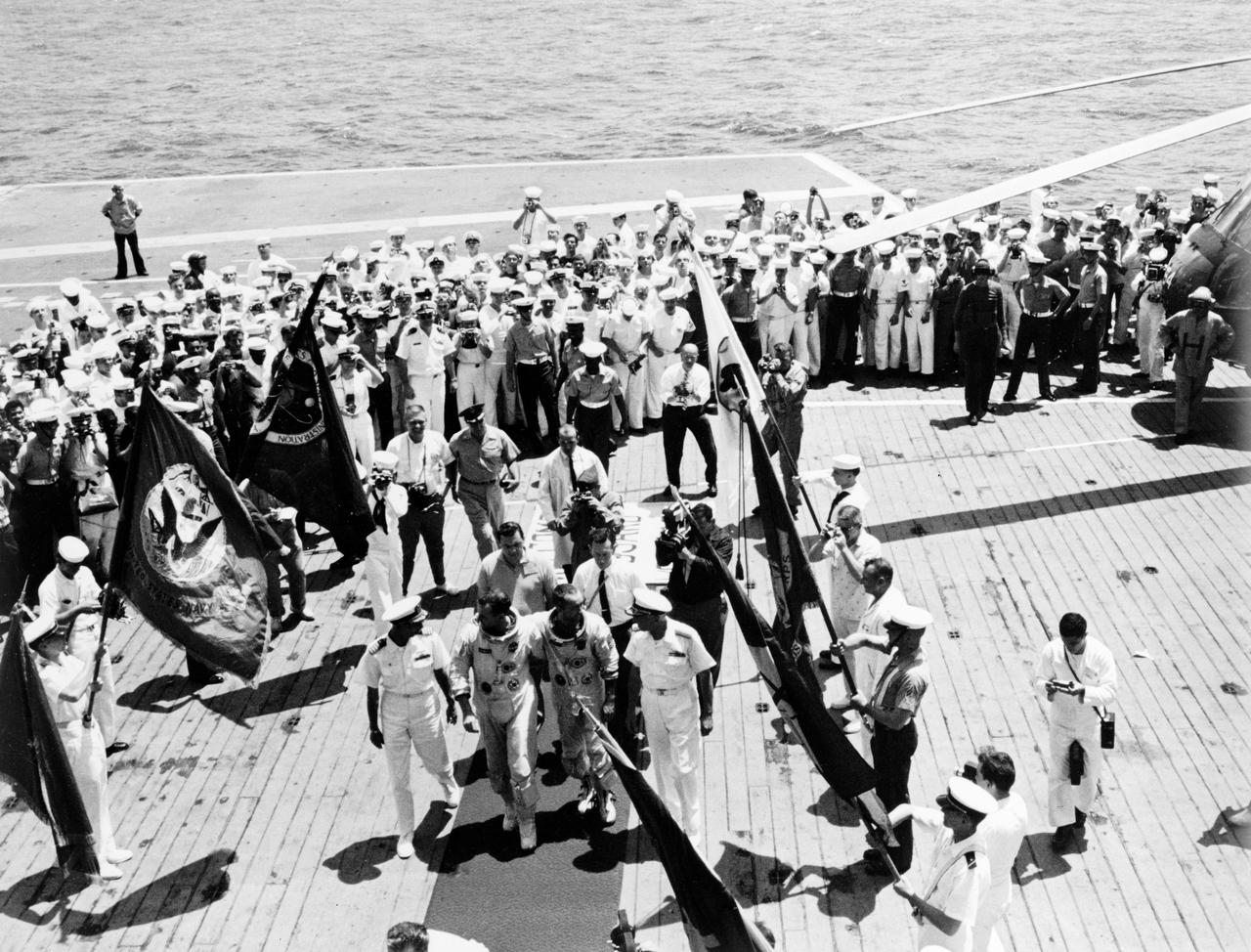
S65-19530 (7 June 1965) --- The red carpet treatment is given to the Gemini-Titan 4 astronauts Edward H. White II and James A. McDivitt as they arrive on the flight deck of the aircraft carrier USS Wasp after their record breaking 62-revolution, 97-hour and 56-minute flight which ended in the Atlantic Ocean about 400 miles east of Cape Kennedy at 12:12 p.m. (EST) on June 7, 1965. Here they are shown being welcomed by members of the crew and NASA people. White and McDivitt (center) walk on the red carpet flanked by Capt. J.W. Conger (left), commander of the ship; and Rear Adm. W.M. McCormick, commander, Carrier Division 14, Atlantic Fleet. NASA's Gemini-4 flight landed about 48 miles short of the aircraft carrier.
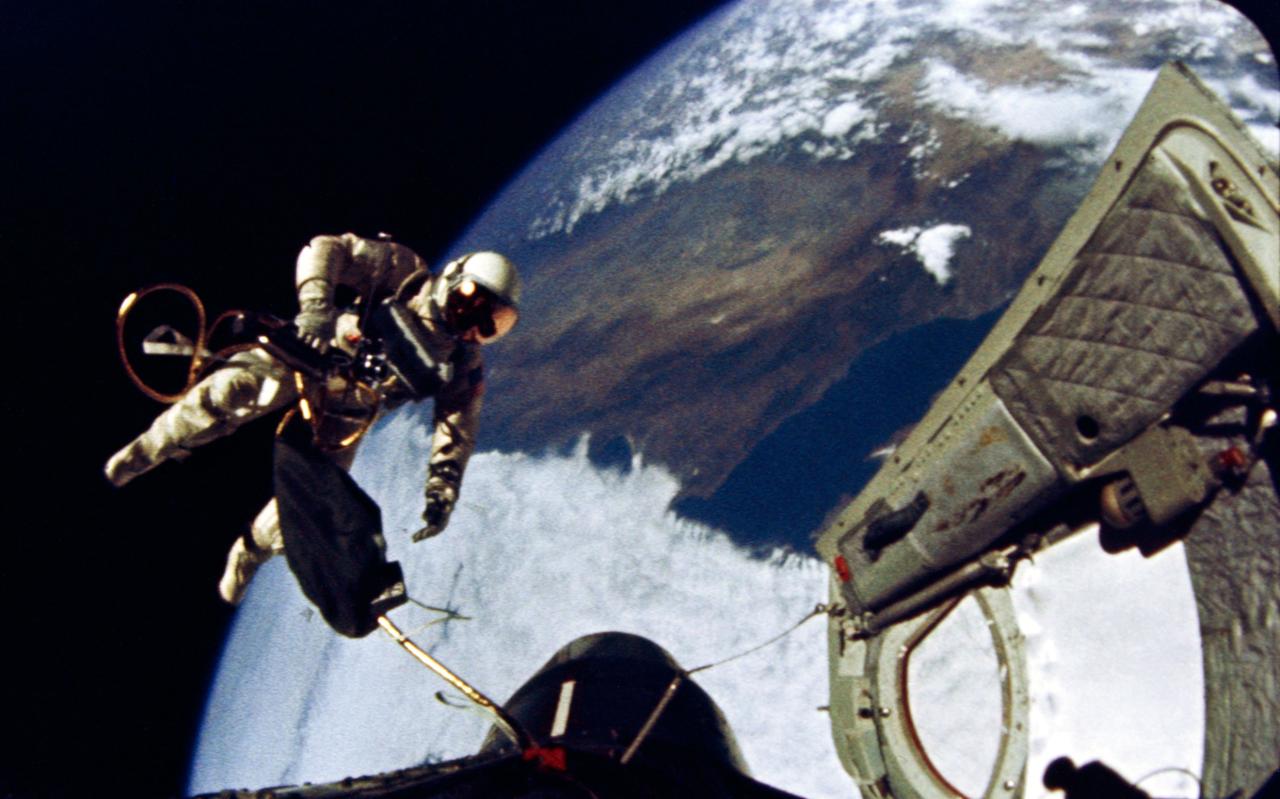
S65-29730 (3 June 1965) --- Astronaut Edward H. White II, pilot for the Gemini-Titan 4 (GT-4) spaceflight, floats in the zero-gravity of space during the third revolution of the GT-4 spacecraft. White wears a specially designed spacesuit. His face is shaded by a gold-plated visor to protect him from unfiltered rays of the sun. In his right hand he carries a Hand-Held Self-Maneuvering Unit (HHSMU) that gives him control over his movements in space. White also wears an emergency oxygen chest pack; and he carries a camera mounted on the HHSMU for taking pictures of the sky, Earth and the GT-4 spacecraft. He is secured to the spacecraft by a 25-feet umbilical line and a 23-feet tether line. Both lines are wrapped together in gold tape to form one cord. Astronaut James A. McDivitt, command pilot, remained inside the spacecraft during the extravehicular activity (EVA). Photo credit: NASA EDITOR'S NOTE: Astronaut Edward H. White II died in the Apollo/Saturn 204 fire at Cape Kennedy on Jan. 27, 1967.

S65-34635 (3 June 1965) --- Astronaut Edward H. White II, pilot on the Gemini-Titan 4 spaceflight, is shown during his egress from the spacecraft. His face is covered by a shaded visor to protect him from the unfiltered rays of the sun. White became the first American astronaut to walk in space. He remained outside the spacecraft for 21 minutes during the third revolution of the Gemini-4 mission. He wears a specially designed spacesuit for the extravehicular activity (EVA). In his right hand, he carries a Hand-Held Self-Maneuvering Unit (HHSMU) with which he controlled his movements while in space. He was attached to the spacecraft by a 25-feet umbilical line and a 23-feet tether line, both wrapped together with gold tape to form one cord. He wears an emergency oxygen supply chest pack. Astronaut James A. McDivitt is command pilot for the Gemini-4 mission. EDITOR'S NOTE: Astronaut Edward H. White II died in the Apollo/Saturn 204 fire at Cape Kennedy on Jan. 27, 1967.

S65-30271 (3 June 1965) --- Astronaut Edward H. White II, pilot on the Gemini-Titan IV (GT-4) spaceflight, floats in the zero gravity of space outside the Gemini IV spacecraft. His face is covered by a shaded visor to protect him from the unfiltered rays of the sun. White became the first American astronaut to walk in space. He remained outside the spacecraft for 21 minutes during the third revolution of the Gemini IV mission. He wears a specially designed spacesuit for the EVA. His right hand (out of frame) is holding the Hand-Held Self-Maneuvering Unit (HHSMU), with which he controlled his movements while in space, and a camera is attached to the HHSMU. He was attached to the spacecraft by a 25-feet umbilical line and a 23-feet tether line, both wrapped together with gold tape to form one cord. He wears an emergency oxygen supply check pack. Astronaut James A. McDivitt is command pilot for the GT-4 mission. The mission was a four-day, 62-revolution flight, during which McDivitt and White performed a series of scientific and engineering experiments. (This image is black and white) Photo credit: NASA EDITOR?S NOTE: Astronaut Edward H. White II died in the Apollo/Saturn 204 fire at Cape Kennedy, Florida, on Jan. 27, 1967.
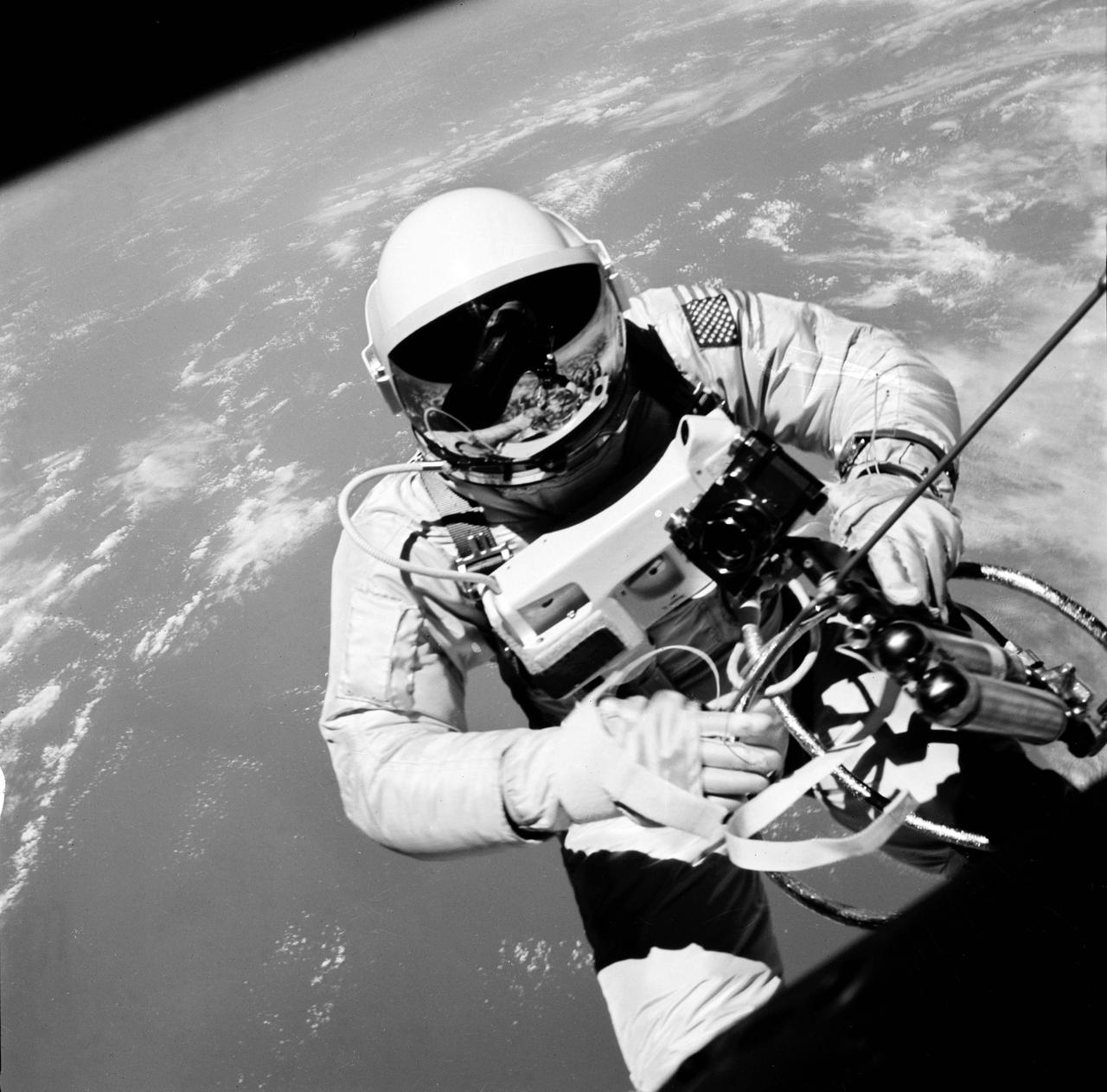
S65-30202 (3 June 1965) --- Astronaut Edward H. White II, pilot on the Gemini-Titan IV (GT-4) spaceflight, floats in the zero gravity of space outside the Gemini IV spacecraft. His face is covered by a shaded visor to protect him from the unfiltered rays of the sun. White became the first American astronaut to walk in space. He remained outside the spacecraft for 21 minutes during the third revolution of the Gemini IV mission. He wears a specially designed spacesuit for the EVA. He?s holding the Hand-Held Self-Maneuvering Unit (HHSMU), with which he controlled his movements while in space, and a camera is attached to the HHSMU. He was attached to the spacecraft by a 25-feet umbilical line and a 23-feet tether line, both wrapped together with gold tape to form one cord. He wears an emergency oxygen supply check pack. Astronaut James A. McDivitt is command pilot for the GT-4 mission. The mission was a four-day, 62-revolution flight, during which McDivitt and White performed a series of scientific and engineering experiments. (This image is black and white) Photo credit: NASA EDITOR?S NOTE: Astronaut Edward H. White II died in the Apollo/Saturn 204 fire at Cape Kennedy, Florida, on Jan. 27, 1967.
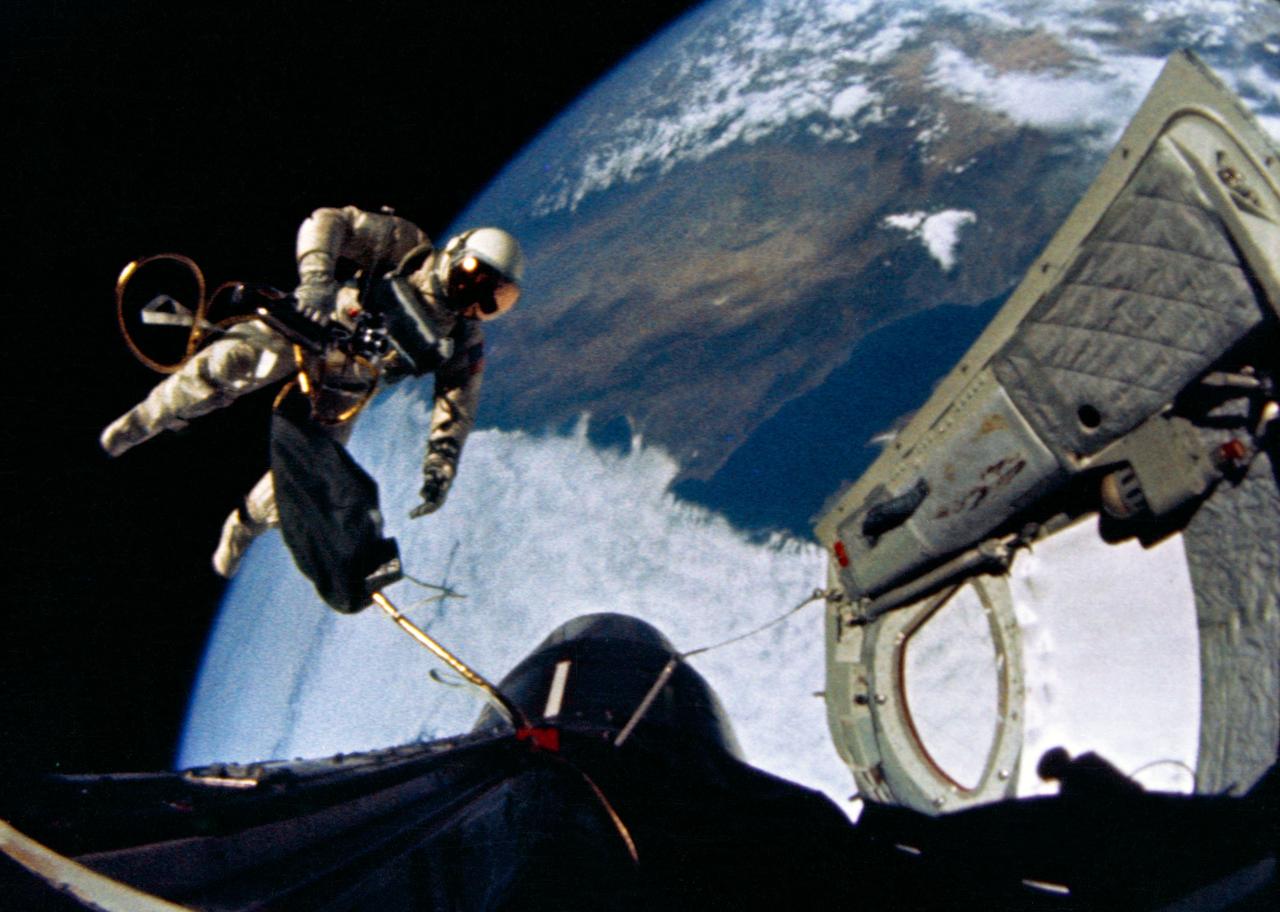
S65-29766 (3 June 1965) --- Astronaut Edward H. White II, pilot for the Gemini-Titan 4 (GT-4) spaceflight, floats in the zero-gravity of space during the third revolution of the GT-4 spacecraft. White wears a specially designed spacesuit. His face is shaded by a gold-plated visor to protect him from unfiltered rays of the sun. In his right hand he carries a Hand-Held Self-Maneuvering Unit (HHSMU) that gives him control over his movements in space. White also wears an emergency oxygen chest pack; and he carries a camera mounted on the HHSMU for taking pictures of the sky, Earth and the GT-4 spacecraft. He is secured to the spacecraft by a 25-feet umbilical line and a 23-feet tether line. Both lines are wrapped together in gold tape to form one cord. Astronaut James A. McDivitt, command pilot, remained inside the spacecraft during the extravehicular activity (EVA). Photo credit: NASA EDITOR'S NOTE: Astronaut Edward H. White II died in the Apollo/Saturn 204 fire at Cape Kennedy on Jan. 27, 1967.
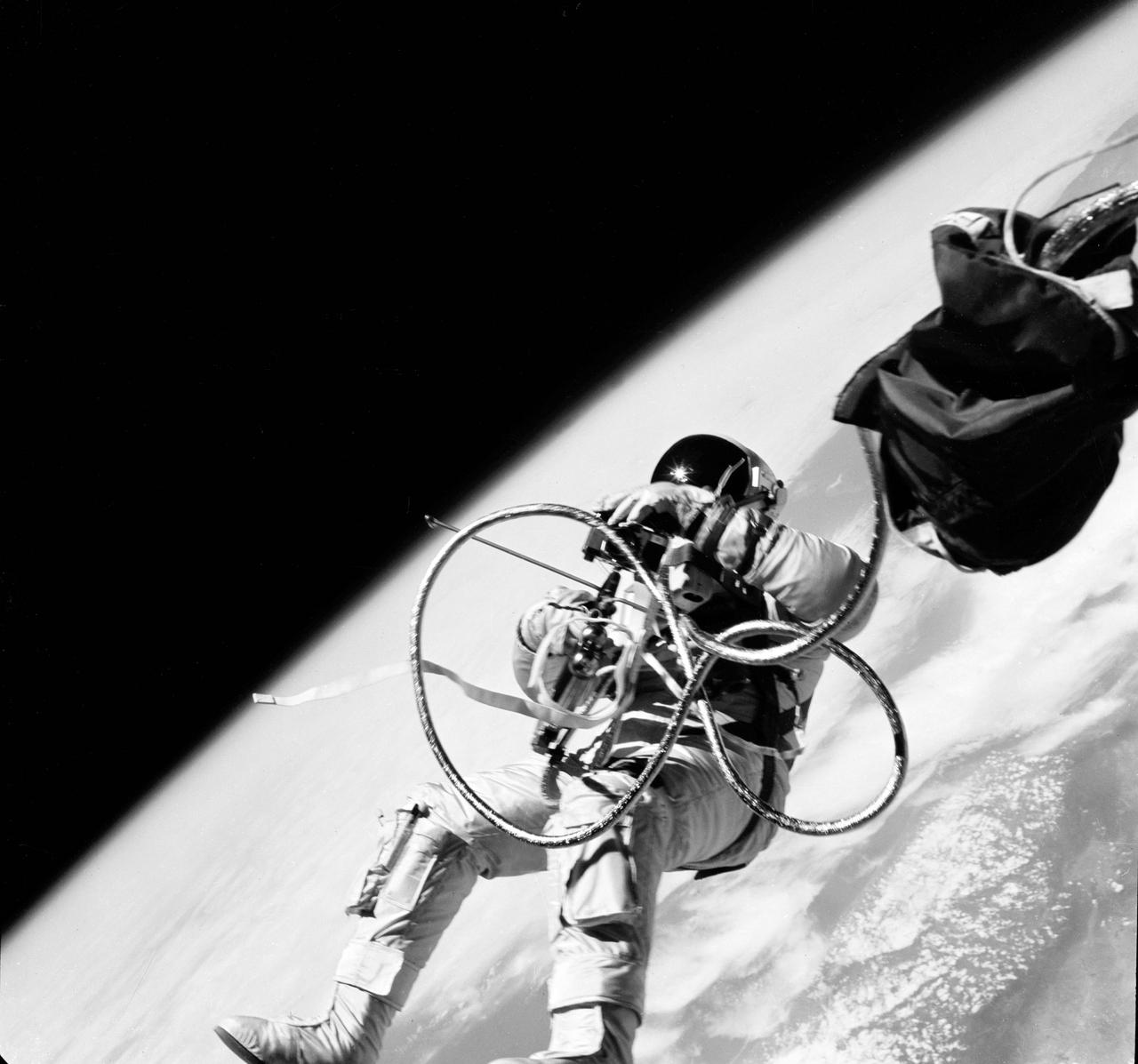
S65-30273 (3 June 1965) --- Astronaut Edward H. White II, pilot on the Gemini-Titan IV (GT-4) spaceflight, floats in the zero gravity of space outside the Gemini IV spacecraft. His face is covered by a shaded visor to protect him from the unfiltered rays of the sun. White became the first American astronaut to walk in space. He remained outside the spacecraft for 21 minutes during the third revolution of the Gemini IV mission. He wears a specially designed spacesuit for the EVA. His right hand is holding the Hand-Held Self-Maneuvering Unit (HHSMU), with which he controlled his movements while in space, and a camera is attached to the HHSMU. He was attached to the spacecraft by a 25-feet umbilical line and a 23-feet tether line, both wrapped together with gold tape to form one cord. He wears an emergency oxygen supply check pack. Astronaut James A. McDivitt is command pilot for the GT-4 mission. The mission was a four-day, 62-revolution flight, during which McDivitt and White performed a series of scientific and engineering experiments. (This image is black and white) Photo credit: NASA EDITOR?S NOTE: Astronaut Edward H. White II died in the Apollo/Saturn 204 fire at Cape Kennedy, Florida, on Jan. 27, 1967.
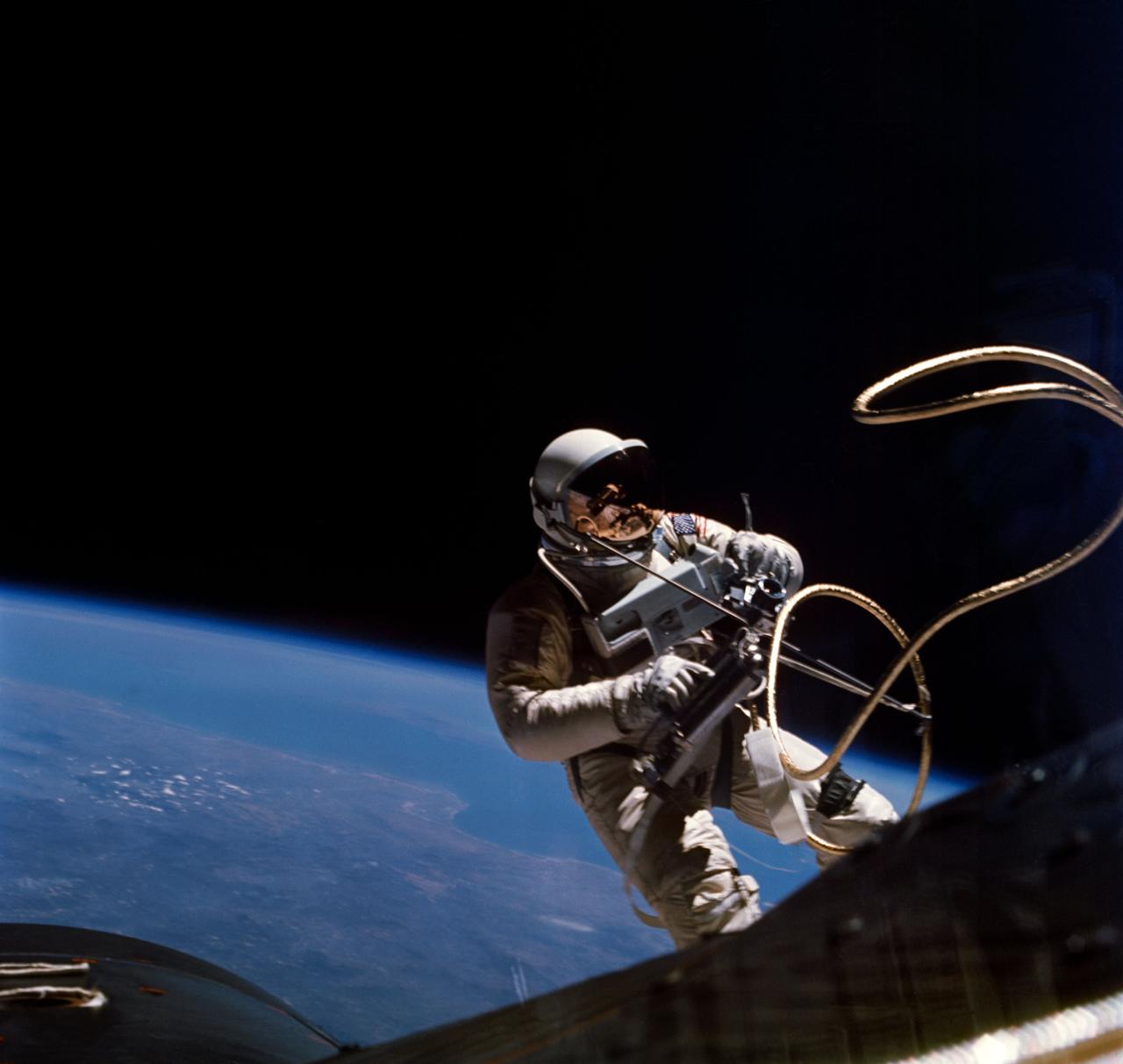
S65-30428 (3 June 1965) --- Astronaut Edward H. White II, pilot on the Gemini-Titan 4 spaceflight, is shown during his egress from the spacecraft. His face is covered by a shaded visor to protect him from the unfiltered rays of the sun. White became the first American astronaut to walk in space. He remained outside the spacecraft for 21 minutes during the third revolution of the Gemini-4 mission. He wears a specially designed spacesuit for the extravehicular activity (EVA). In his right hand, he carries a Hand-Held Self-Maneuvering Unit (HHSMU) with which he controlled his movements while in space. He was attached to the spacecraft by a 25-feet umbilical line and a 23-feet tether line, both wrapped together with gold tape to form one cord. He wears an emergency oxygen supply chest pack. Astronaut James A. McDivitt is command pilot for the Gemini-4 mission. EDITOR'S NOTE: Astronaut Edward H. White II died in the Apollo/Saturn 204 fire at Cape Kennedy on Jan. 27, 1967.
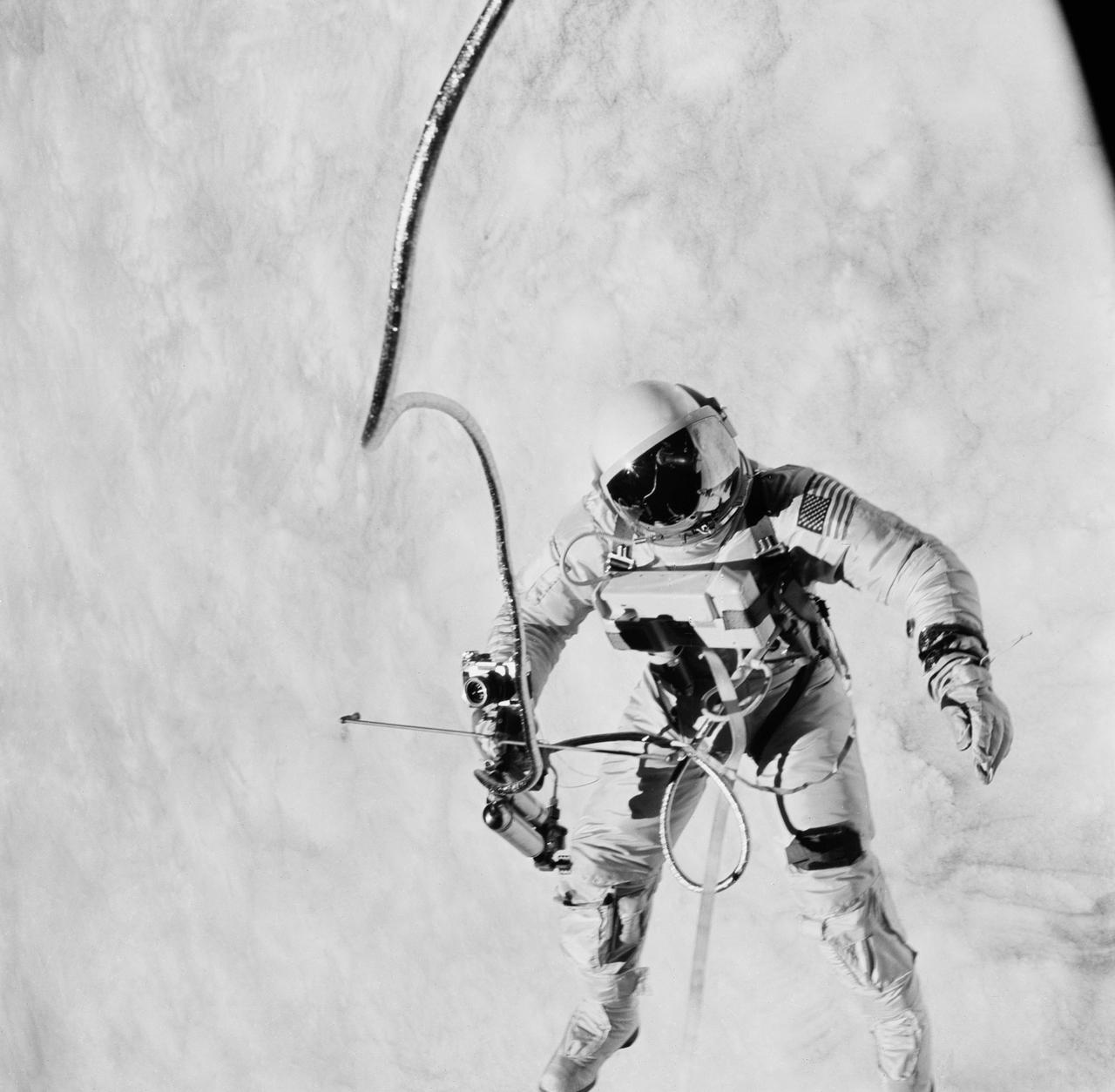
S65-30272 (3 June 1965) --- Astronaut Edward H. White II, pilot on the Gemini-Titan IV (GT-4) spaceflight, floats in the zero gravity of space outside the Gemini IV spacecraft. His face is covered by a shaded visor to protect him from the unfiltered rays of the sun. White became the first American astronaut to walk in space. He remained outside the spacecraft for 21 minutes during the third revolution of the Gemini IV mission. He wears a specially designed spacesuit for the EVA. His right hand is holding the Hand-Held Self-Maneuvering Unit (HHSMU), with which he controlled his movements while in space, and a camera is attached to the HHSMU. He was attached to the spacecraft by a 25-feet umbilical line and a 23-feet tether line, both wrapped together with gold tape to form one cord. He wears an emergency oxygen supply check pack. Astronaut James A. McDivitt is command pilot for the GT-4 mission. The mission was a four-day, 62-revolution flight, during which McDivitt and White performed a series of scientific and engineering experiments. (This image is black and white) Photo credit: NASA EDITOR?S NOTE: Astronaut Edward H. White II died in the Apollo/Saturn 204 fire at Cape Kennedy, Florida, on Jan. 27, 1967.
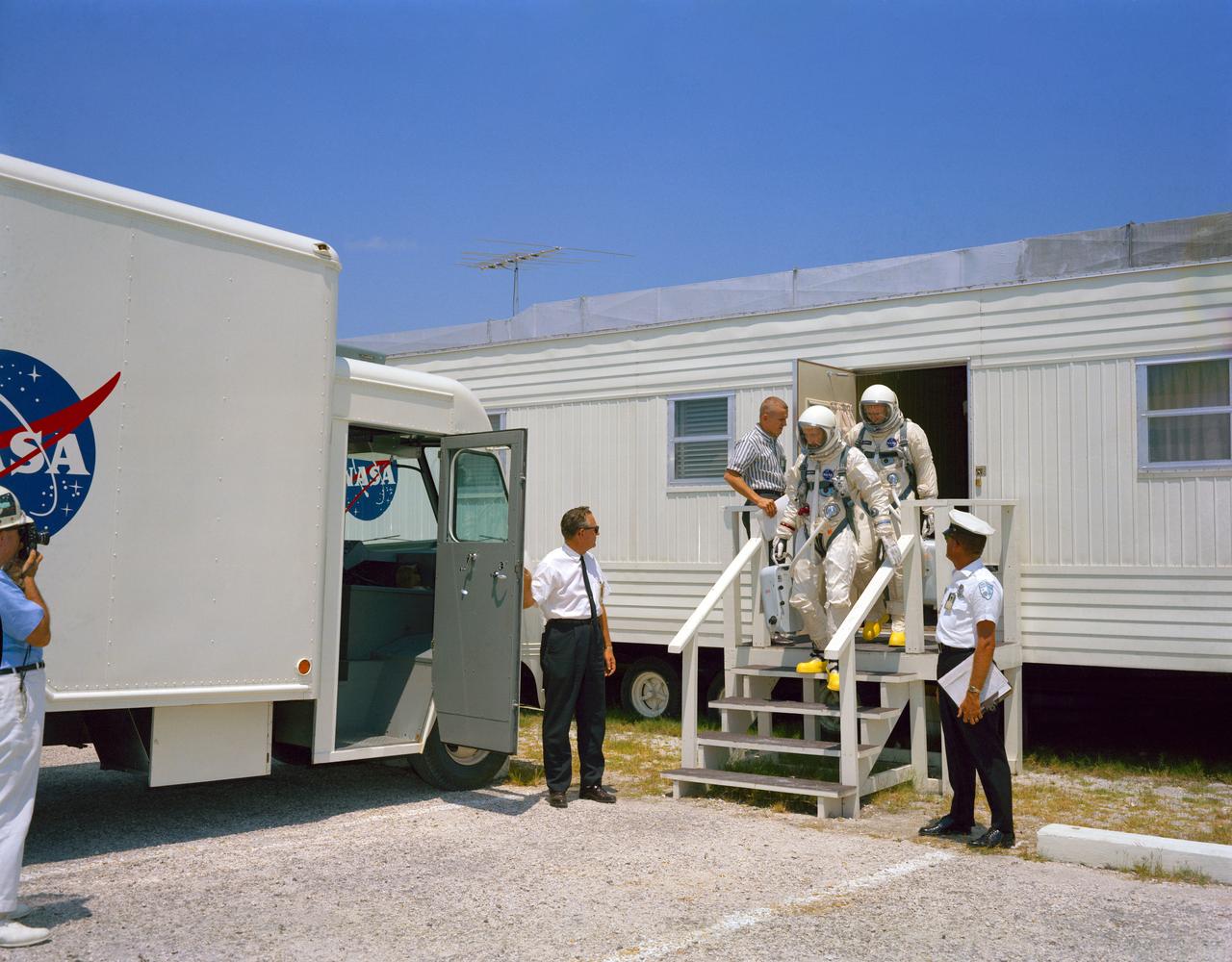
Astronauts Edward and James A. McDivitt are shown as they emerge from the suiting trailer located at Launch Complex 16. They are following in a Wet Mock Simulation Launch as a training exercise for GT-4. CAPE KENNEDY, FL B&W
Astronauts Edward H. White II, and James A. McDivitt are going through tests in a Gemini Crew Simulator at the Cape. CAPE KENNEDY, FL B&W
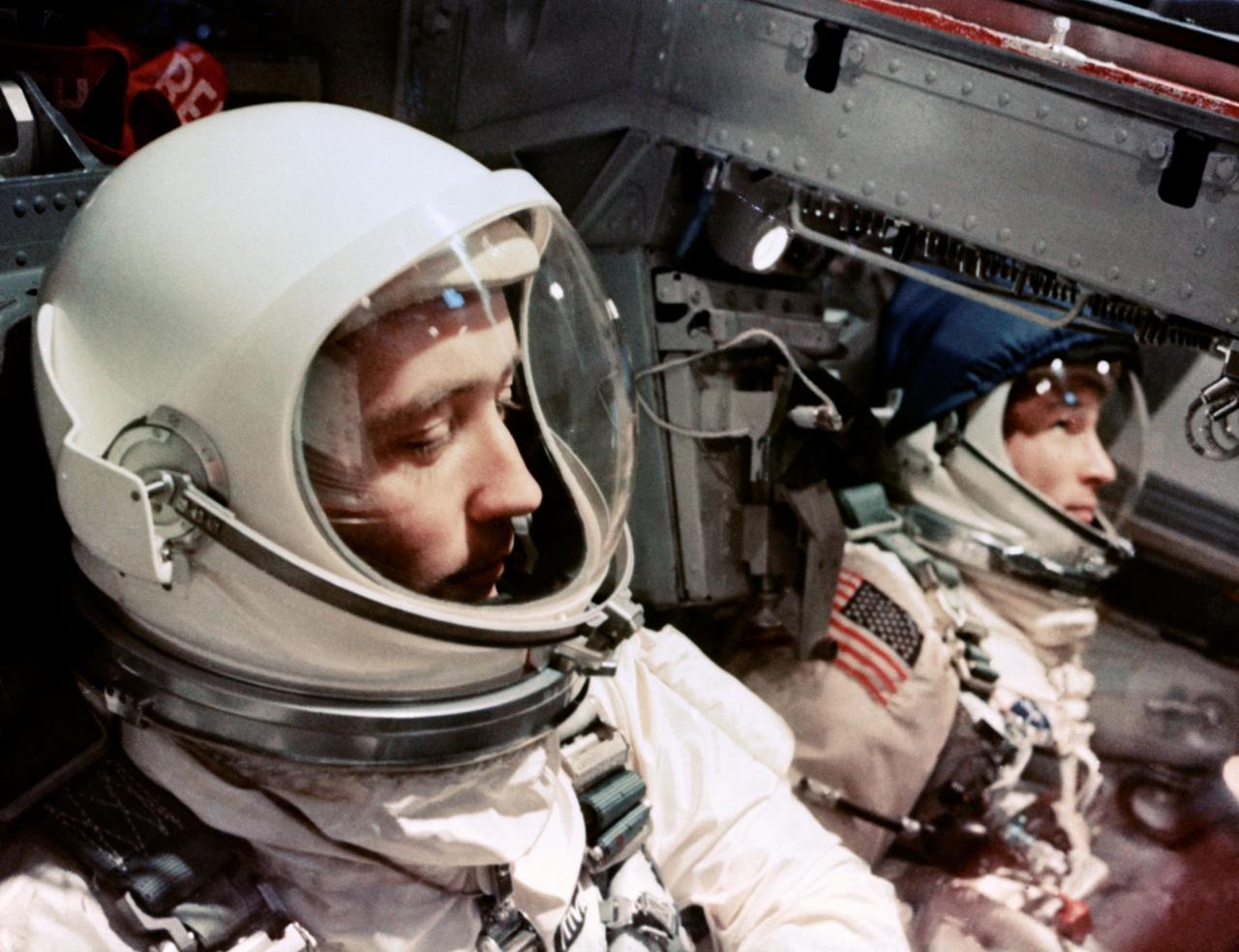
S65-29642 (3 June 1965) --- Close-up view of astronauts James A. McDivitt (foreground) and Edward H. White II inside their Gemini-4 spacecraft. NASA Headquarters alternative photo number is 65-H-294.
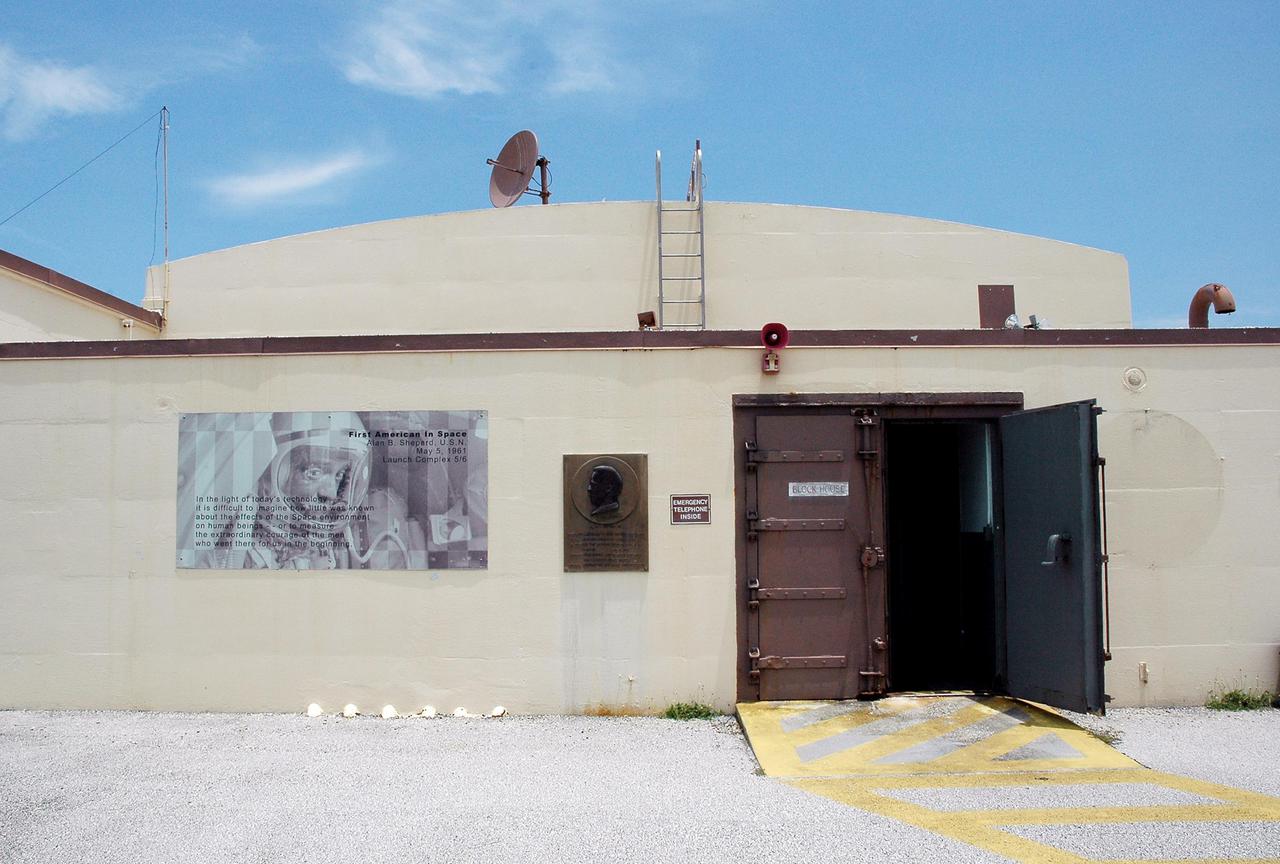
KENNEDY SPACE CENTER, FLA. - This is Launch Complex 5_6 blockhouse, now a museum at the Cape Canaveral Air Force Station (CCAFS) in Florida, where long-lost space suits were found. A recent venture into a long-locked room at CCAFS uncovered interesting artifacts of a bygone era: retired space suits from Americans who trained in the 1960s to be astronauts aboard an Air Force orbiting reconnaissance laboratory. Two security officers were doing a check of a facility at Launch Complex 5_6 blockhouse. NASA Special Agent Dan E. Oakland and Security Manager Henry Butler, who is with Delaware North Parks and Resorts, the company that oversees the museum, discovered a locked room. Space suits from the Air Force’s planned Manned Orbiting Laboratory (MOL) program were found in the room Begun in 1964, the MOL program was an Air Force initiative that would have sent Air Force astronauts to a space station in a Gemini capsule. After spending a few weeks in orbit, the crew would undock and return to Earth. A test launch from Complex 40 on Nov. 30, 1966, of a MOL was conducted with an unmanned Gemini capsule. The MOL was constructed from tankage of a Titan II rocket. The operational MOL was planned to be launched into a polar orbit from Vandenberg Air Force Base in California. The Air Force abandoned the program in 1969, but the program produced a great deal of technological development, and three groups of military officers trained to be MOL astronauts. When the program was cancelled, seven of the younger astronauts were transferred to the agency’s human space flight program and went on to have standout careers. Among them were Robert Crippen, pilot of the first Space Shuttle mission, and Richard H. 'Dick' Truly, who later became NASA Administrator.
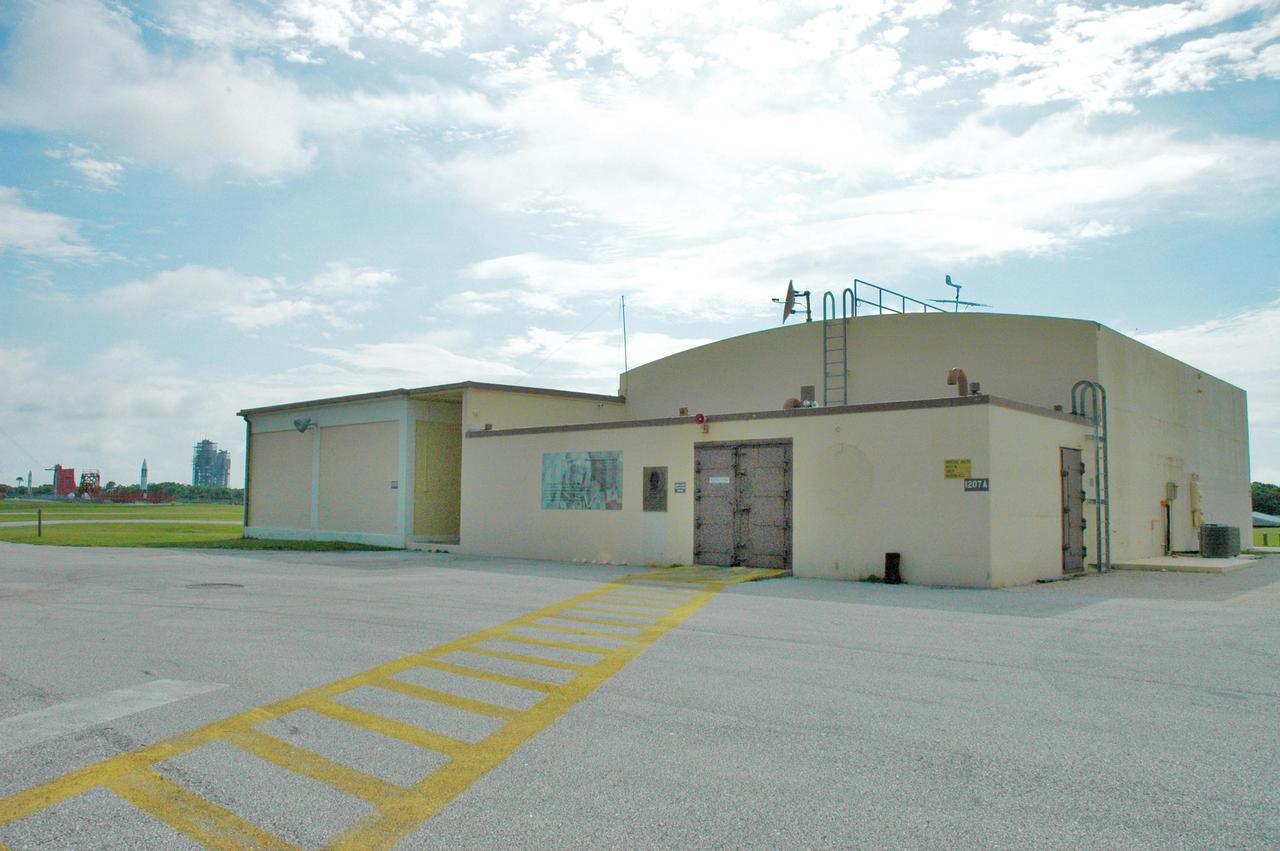
KENNEDY SPACE CENTER, FLA. - This is Launch Complex 5_6 blockhouse, now a museum at the Cape Canaveral Air Force Station (CCAFS) in Florida, where long-lost spacesuits were found. A recent venture into a long-locked room at CCAFS uncovered interesting artifacts of a bygone era: retired space suits from Americans who trained in the 1960s to be astronauts aboard an Air Force orbiting reconnaissance laboratory. Two security officers were doing a check of a facility at Launch Complex 5_6 blockhouse. NASA Special Agent Dan E. Oakland and Security Manager Henry Butler, with Delaware North Parks and Resorts, which oversees the museum, discovered a locked room. Space suits from the Air Force’s planned Manned Orbiting Laboratory (MOL) program were found in the room Begun in 1964, the MOL program was an Air Force initiative that would have sent Air Force astronauts to a space station in a Gemini capsule. After spending a few weeks in orbit, the crew would undock and return to Earth. A test launch from Complex 40 on Nov. 30, 1966, of a MOL was conducted with an unmanned Gemini capsule. The MOL was constructed from tankage of a Titan II rocket. The operational MOL was planned to be launched into a polar orbit from Vandenberg Air Force Base in California. The Air Force abandoned the program in 1969, but the program produced a great deal of technological development, and three groups of military officers trained to be MOL astronauts. When the program was cancelled, seven of the younger astronauts were transferred to the agency’s human space flight program and went on to have standout careers. Among them were Robert Crippen, pilot of the first Space Shuttle mission, and Richard H. 'Dick' Truly, who later became NASA Administrator.
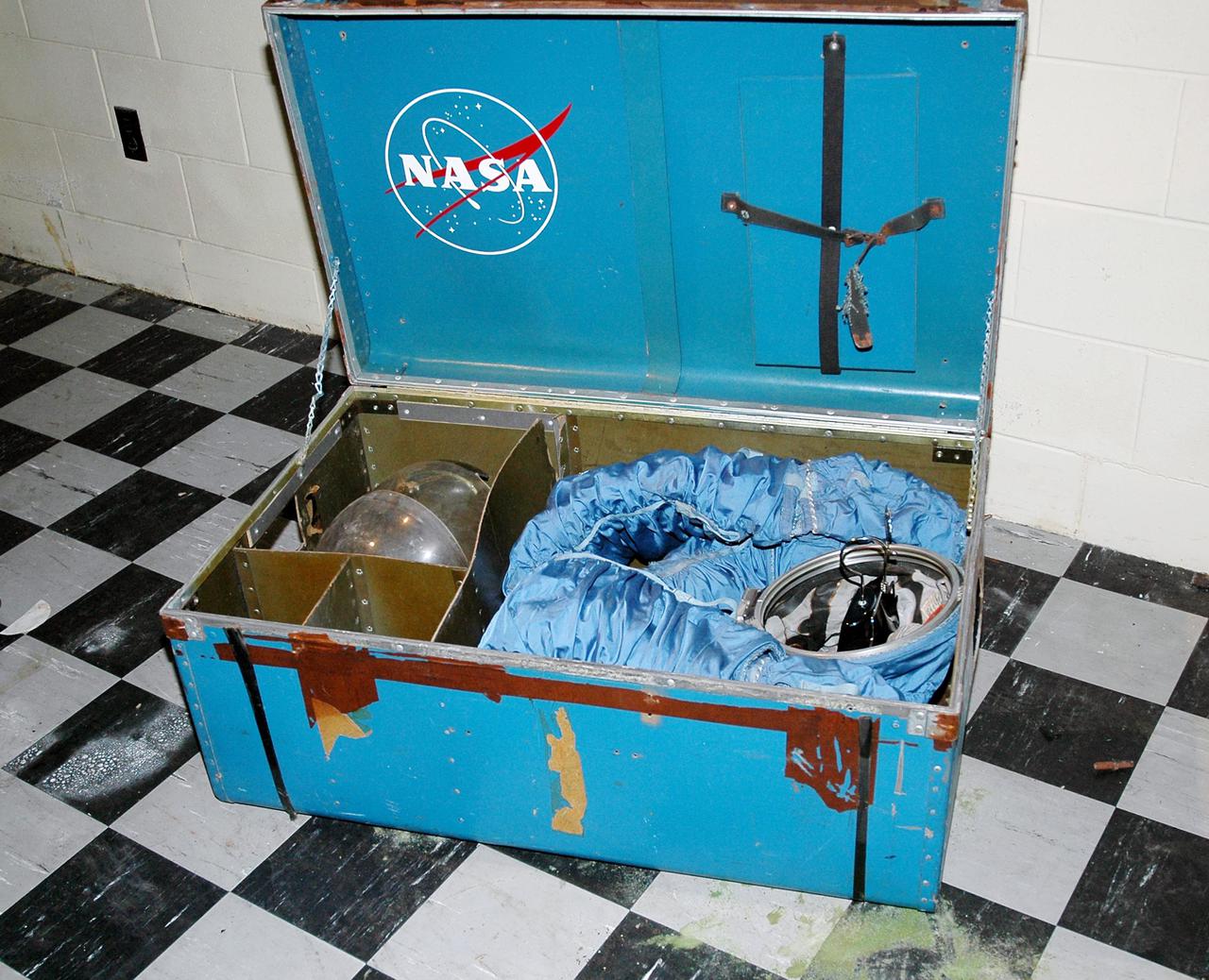
KENNEDY SPACE CENTER, FLA. - This locker reveals a long-lost spacesuit recently uncovered at the Cape Canaveral Air Force Station (CCAFS) in Florida. A recent venture into a long-locked room at CCAFS uncovered interesting artifacts of a bygone era: retired space suits from Americans who trained in the 1960s to be astronauts aboard an Air Force orbiting reconnaissance laboratory. Two security officers were doing a check of a facility at Launch Complex 5_6 blockhouse. NASA Special Agent Dan E. Oakland and Security Manager Henry Butler, who is with Delaware North Parks and Resorts, the company that oversees the museum, discovered a locked room. Space suits from the Air Force’s planned Manned Orbiting Laboratory (MOL) program were found in the room Begun in 1964, the MOL program was an Air Force initiative that would have sent Air Force astronauts to a space station in a Gemini capsule. After spending a few weeks in orbit, the crew would undock and return to Earth. A test launch from Complex 40 on Nov. 30, 1966, of a MOL was conducted with an unmanned Gemini capsule. The MOL was constructed from tankage of a Titan II rocket. The operational MOL was planned to be launched into a polar orbit from Vandenberg Air Force Base in California. The Air Force abandoned the program in 1969, but the program produced a great deal of technological development, and three groups of military officers trained to be MOL astronauts. When the program was cancelled, seven of the younger astronauts were transferred to the agency’s human space flight program and went on to have standout careers. Among them were Robert Crippen, pilot of the first Space Shuttle mission, and Richard H. 'Dick' Truly, who later became NASA Administrator.
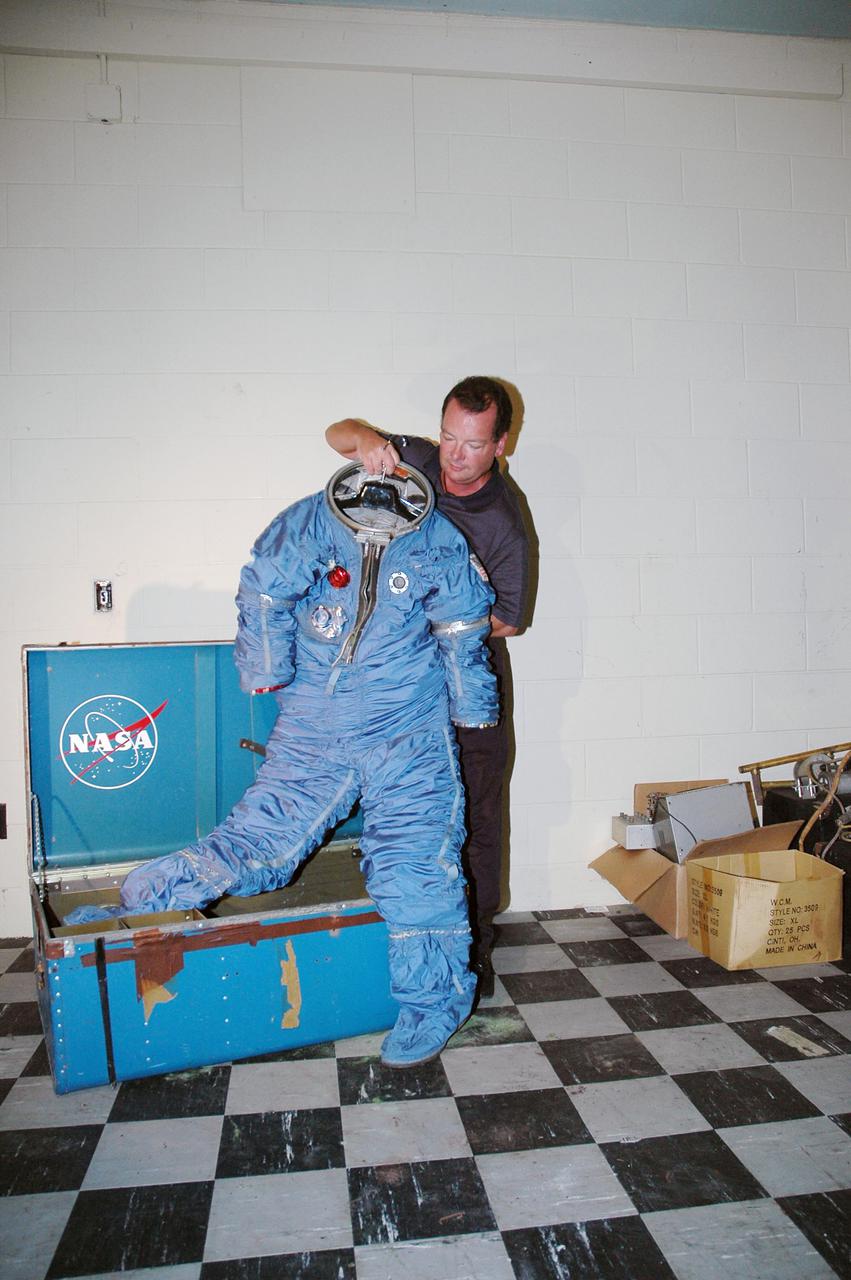
KENNEDY SPACE CENTER, FLA. - NASA Special Agent Dan Oakland holds up a long-lost spacesuit recently uncovered at the Cape Canaveral Air Force Station (CCAFS) in Florida. A recent venture into a long-locked room at CCAFS uncovered interesting artifacts of a by-gone era: retired space suits from Americans who trained in the 1960s to be astronauts aboard an Air Force orbiting reconnaissance laboratory. Two security officers were doing a check of a facility at Launch Complex 5_6 blockhouse. Oakland and Security Manager Henry Butler, who is with Delaware North Parks and Resorts, the company that oversees the museum, discovered a locked room. Space suits from the Air Force’s planned Manned Orbiting Laboratory (MOL) program were found in the room Begun in 1964, the MOL program was an Air Force initiative that would have sent Air Force astronauts to a space station in a Gemini capsule. After spending a few weeks in orbit, the crew would undock and return to Earth. A test launch from Complex 40 on Nov. 30, 1966, of a MOL was conducted with an unmanned Gemini capsule. The MOL was constructed from tankage of a Titan II rocket. The operational MOL was planned to be launched into a polar orbit from Vandenberg Air Force Base in California. The Air Force abandoned the program in 1969, but the program produced a great deal of technological development, and three groups of military officers trained to be MOL astronauts. When the program was cancelled, seven of the younger astronauts were transferred to the agency’s human space flight program and went on to have standout careers. Among them were Robert Crippen, pilot of the first Space Shuttle mission, and Richard H. 'Dick' Truly, who later became NASA Administrator.