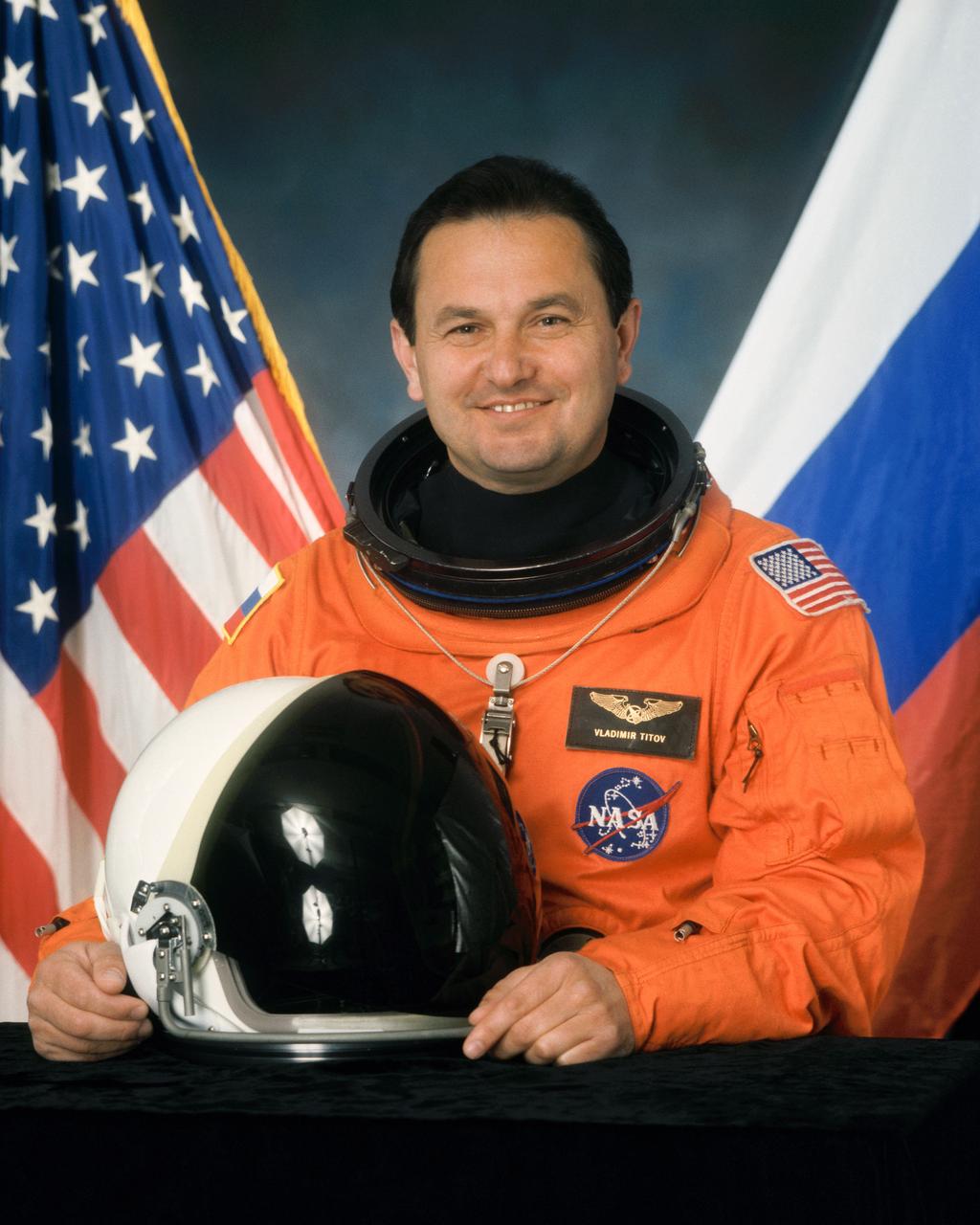
S93-27942 (August 1993) --- Cosmonaut Vladimir Titov, payload specialist.
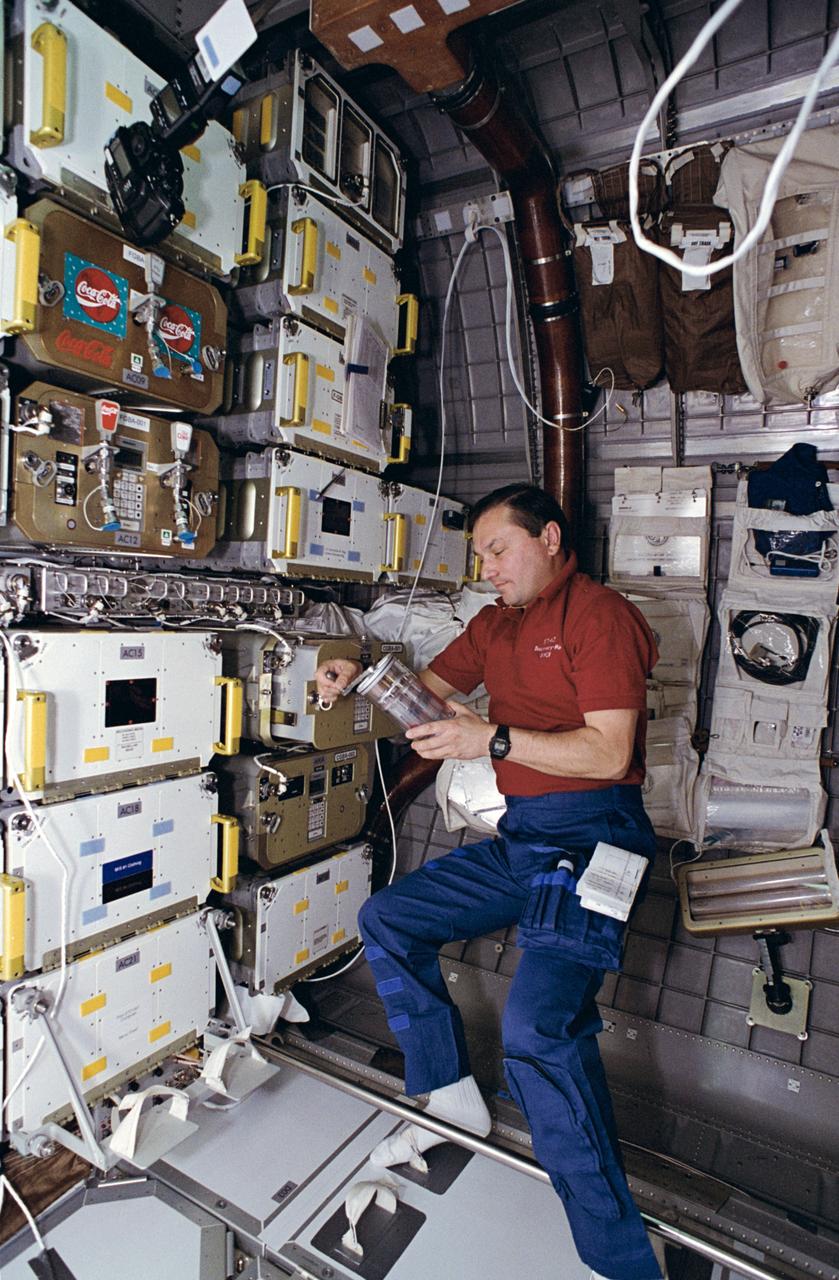
STS063-68-018 (3-11 Feb 1995) --- Russian cosmonaut Vladimir G. Titov, mission specialist, handles vials of samples for the Commercial Generic Bioprocessing Apparatus (CGBA) experiment in SpaceHab 3 Module onboard the Earth-orbiting Space Shuttle Discovery. Titov joined five NASA astronauts for eight days of research in Earth-orbit.
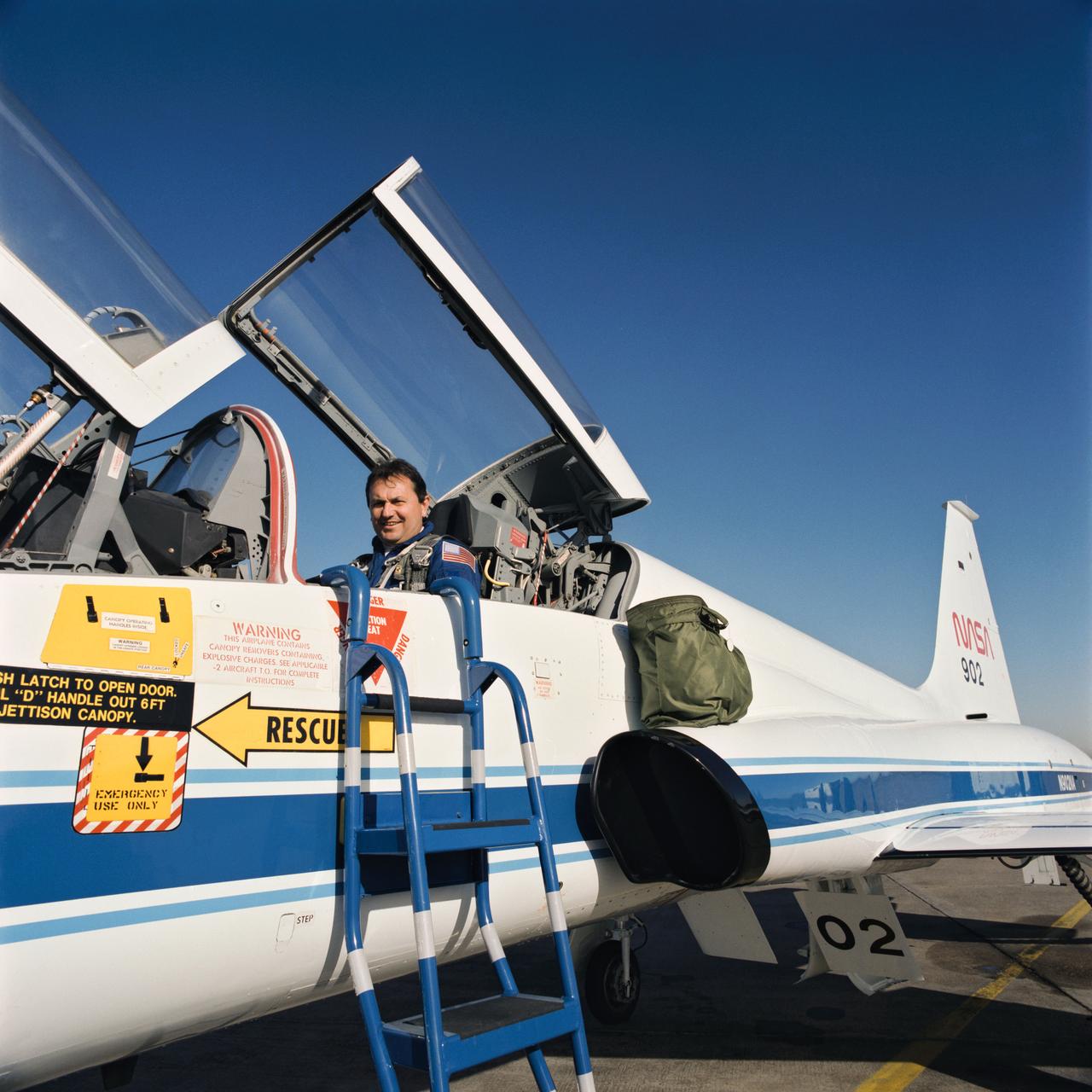
Seated in the rear station of a NASA T-38 jet trainer aircraft, Russian Cosmonaut Vladimir Titov prepares to take a familiarization flight.
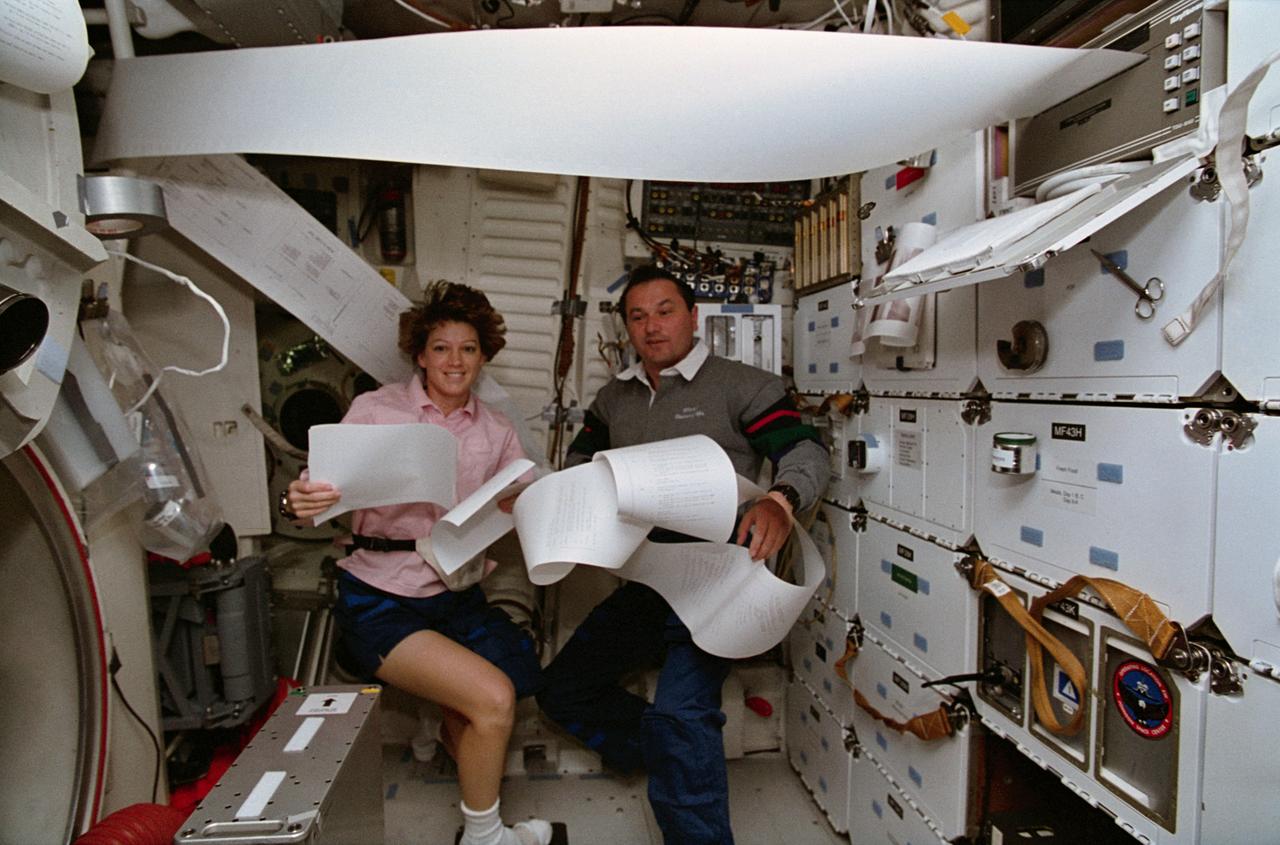
STS063-86-028 (3-11 Feb 1995) --- On the Space Shuttle Discovery's middeck, astronaut Eileen M. Collins and cosmonaut Vladimir G. Titov attempt to organize a lengthy mail message from flight controllers on Earth. Collins was pilot for the eight day mission and Titov served as a mission specialist representing the Russian Space Agency (RSA), thus becoming one of a small number of people to have flown on spacecraft launched by the United States and Russia. Approximately 30 feet of messages from the Thermal Imaging Printing System (TIPS) are spread around the middeck.
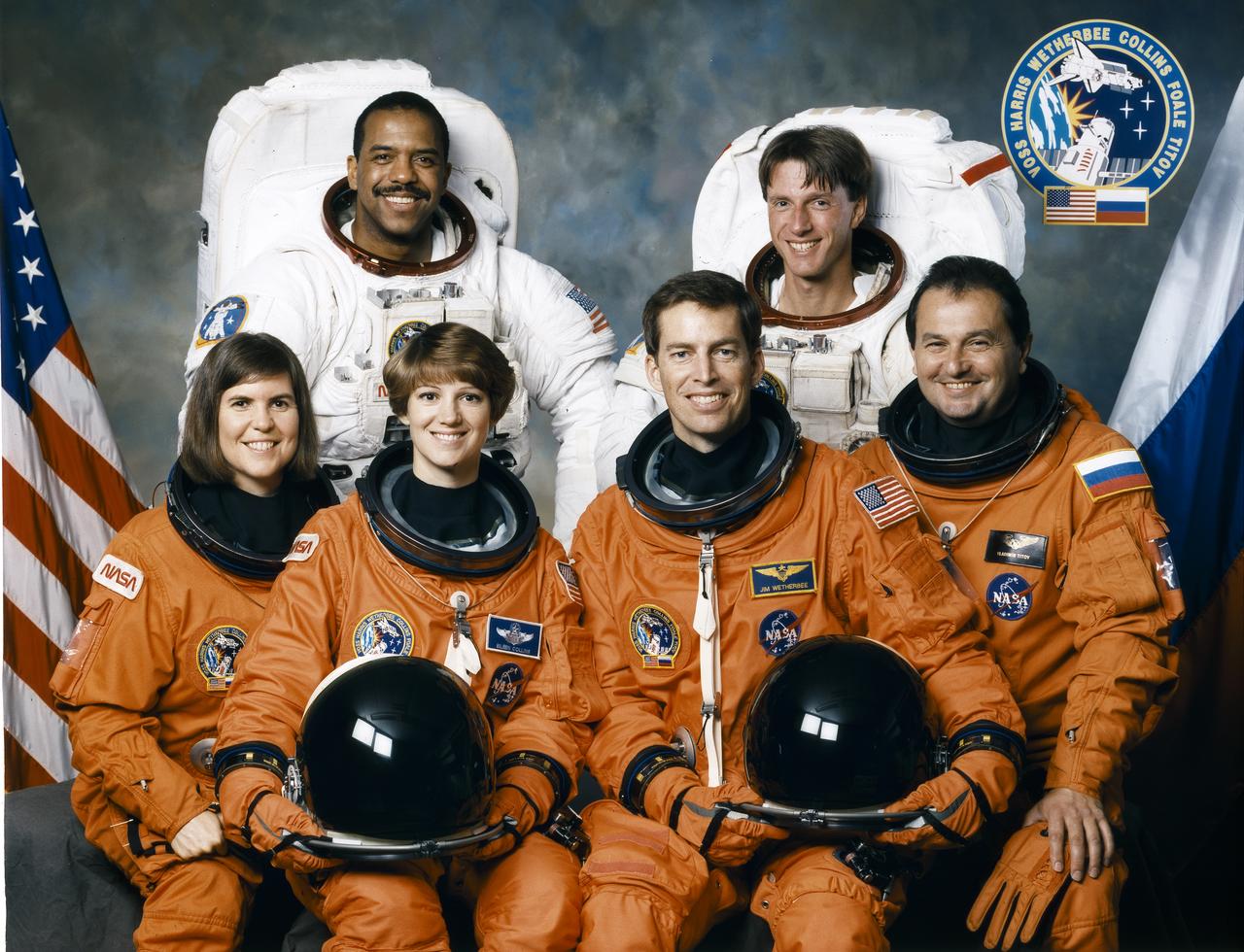
Crew members assigned to the STS-63 mission included (front left to right) Janice E. Voss, mission specialist; Eileen M. Collins, pilot; (the first woman to pilot a Space Shuttle), James D. Wetherbee, commander; and Vladmir G. Titov (Cosmonaut). Standing in the rear are mission specialists Bernard A. Harris, and C. Michael Foale. Launched aboard the Space Shuttle Discovery on February 3, 1995 at 12:22:04 am (EST), the primary payload for the mission was the SPACEHAB-3. STS-63 marked the first approach and fly around by the Shuttle with the Russian space station Mir.
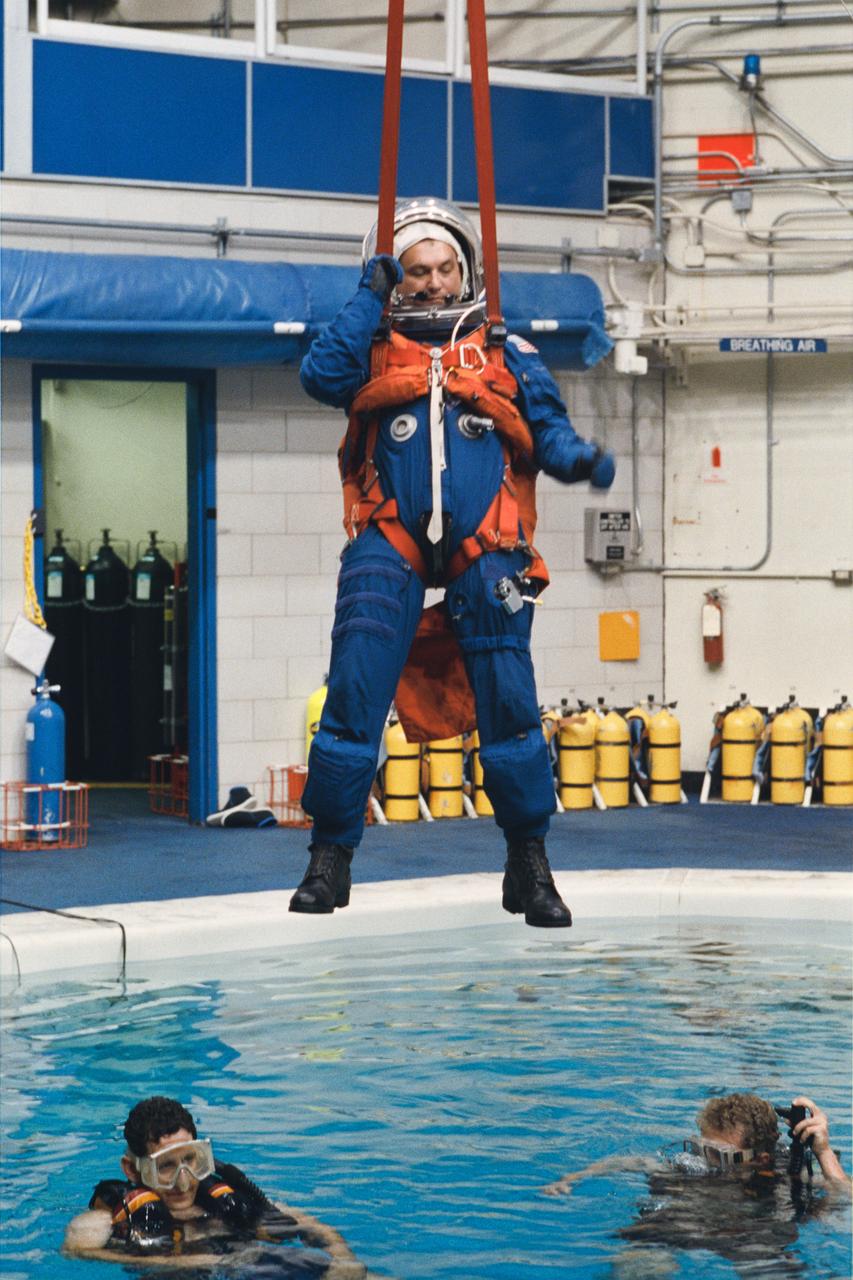
Cosmanaut Vladimir Titov, an alternate mission specialist for STS-60, simulates a parachute glide into water during a bailout training exercise at JSC. This phase of emergency egress training took place in JSC's Weightless Environment Training Facility (WETF).
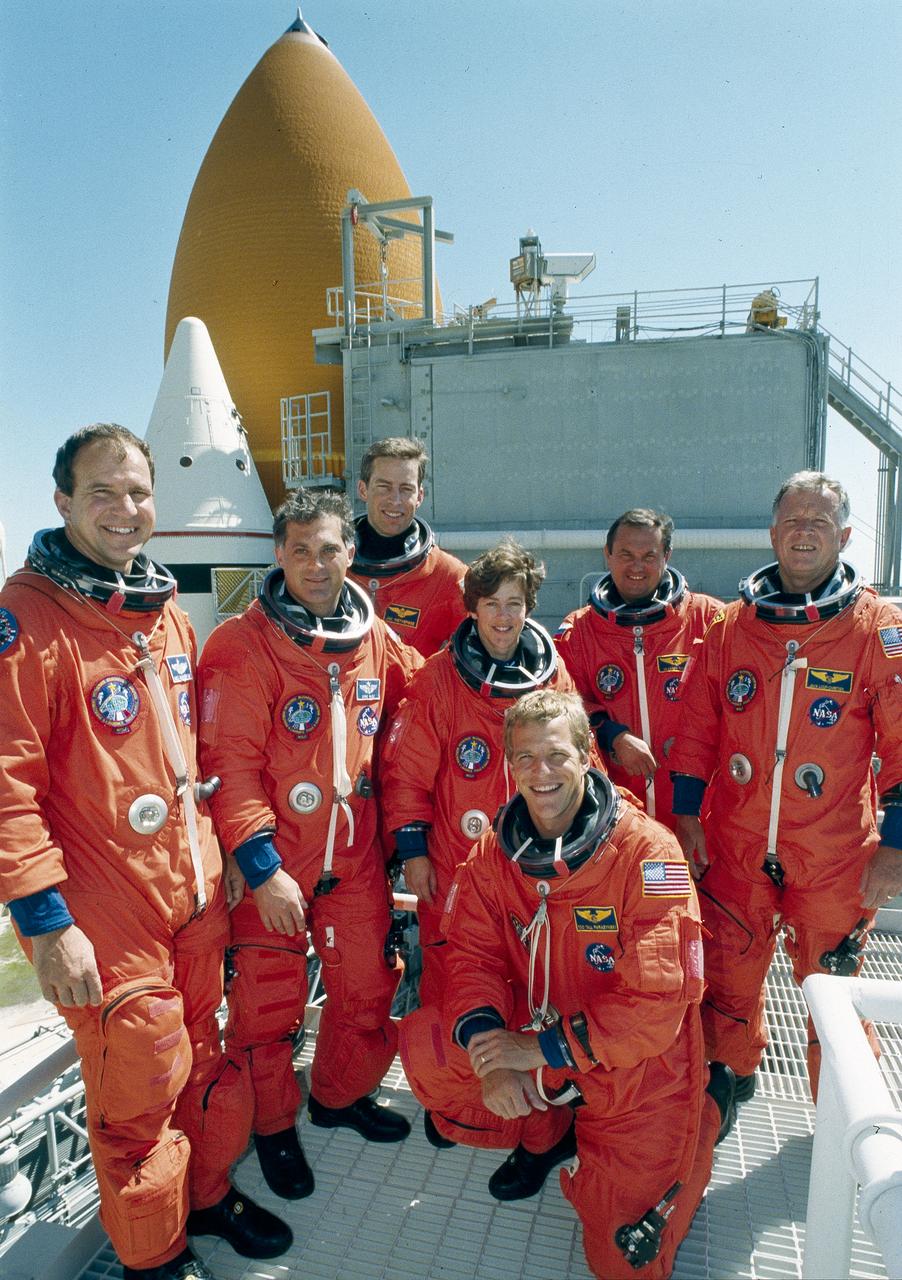
The crew assigned to the STS-86 mission included five U.S. astronauts, one Russian cosmonaut, and one Canadian astronaut. Kneeling is mission specialist Scott E. Parazynski. Others, pictured from left to right, are Michael J. Bloomfield, pilot; David A. Wolf, mission specialist; James D. Wetherbee, commander; and mission specialists Wendy B. Lawrence, Vlamimir G. Titov (RSA), and Jean-Loup J.M. Chretien (CNES). Launched aboard the Space Shuttle Atlantis on September 25, 1997 at 10:34:19 pm (EDT), the STS-86 mission served as the 7th U.S. Space Shuttle-Russian Space Station Mir docking.
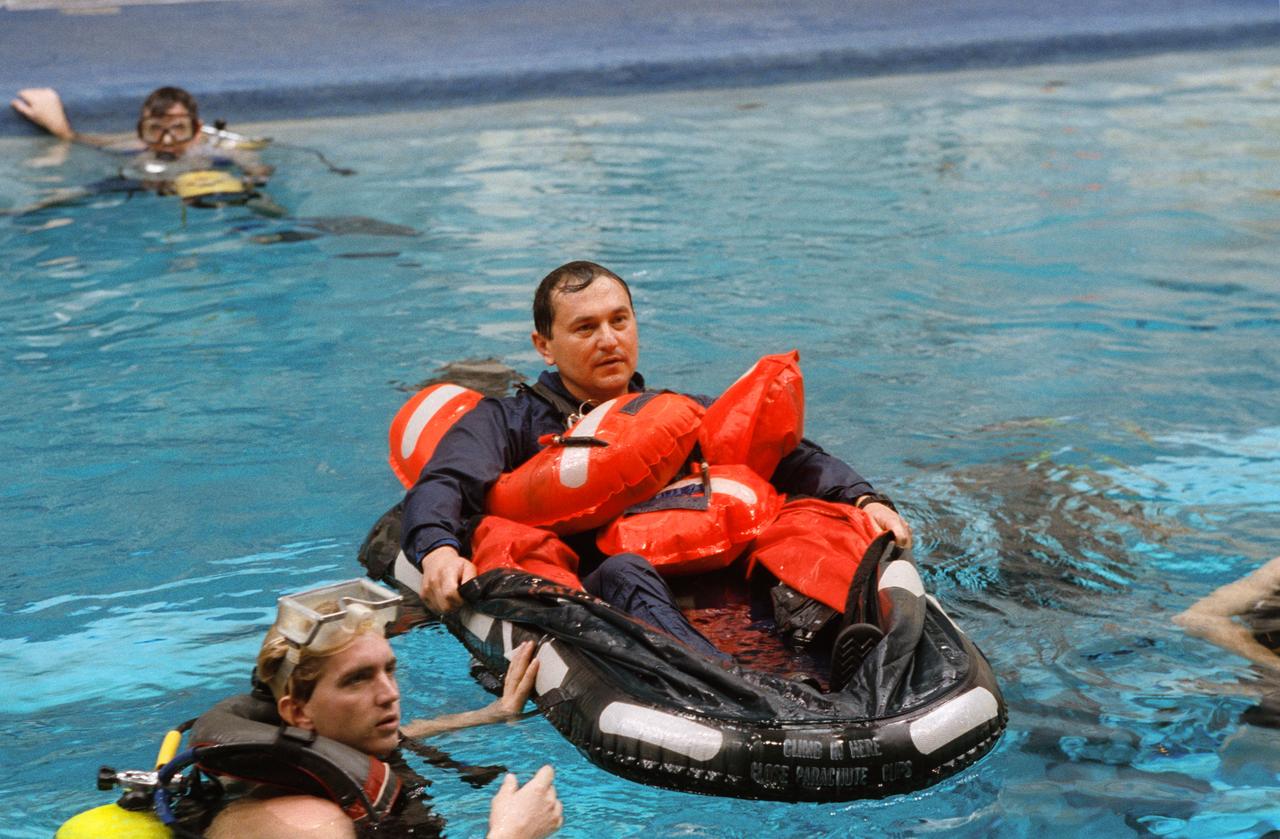
Russian Cosmonaut Vladimir Titov maneuvers a small life raft during bailout training at JSC's Weightless Environment Training Facility (WETF). Two SCUBA-equipped divers assisted Titov in the STS-60 training exercise.
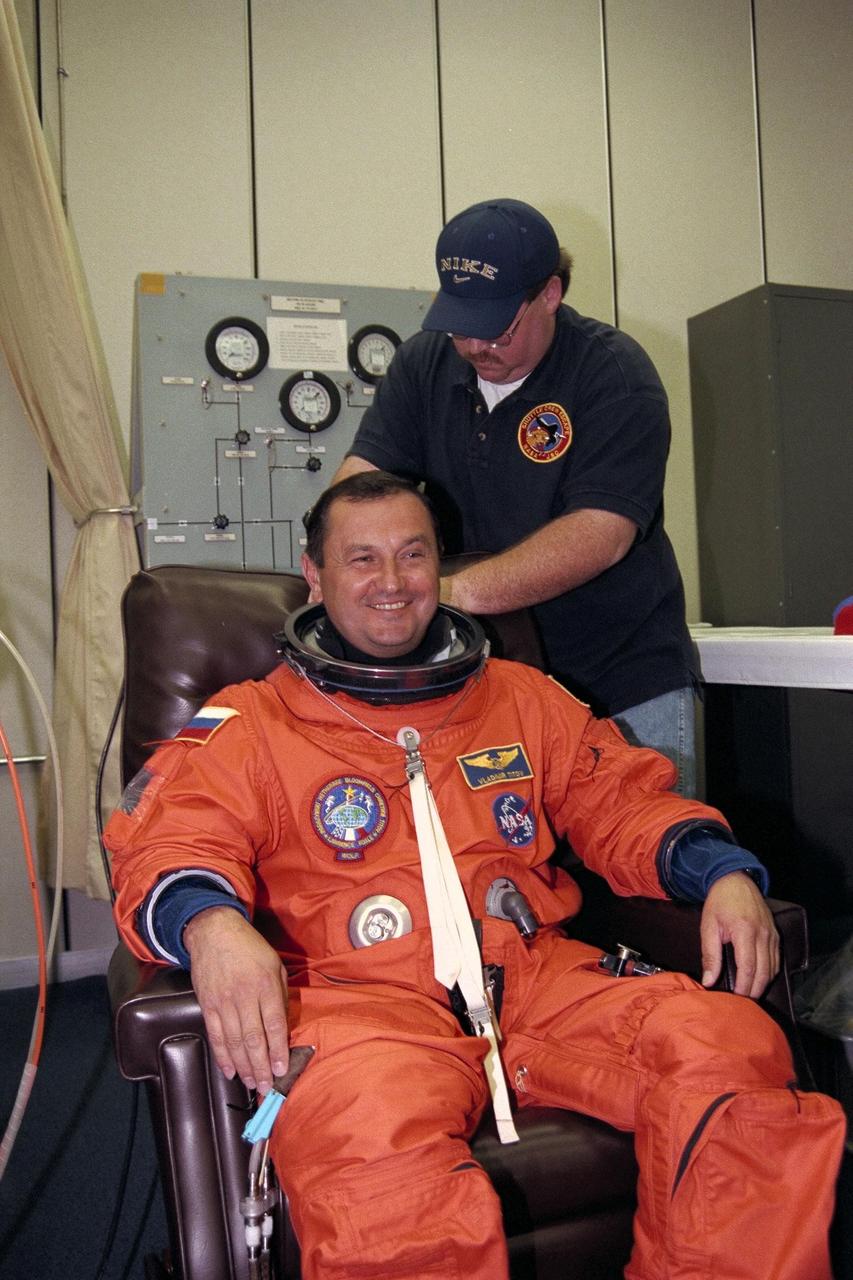
A suit technician makes adjustments to the orange launch and entry suit of STS-86 Mission Specialist Vladimir Georgievich Titov in the Operations and Checkout Building. This will be Titov’s fifth spaceflight, and second on the Space Shuttle. He and the six other crew members will depart shortly for Launch Pad 39A, where the Space Shuttle Atlantis awaits liftoff on a 10-day mission slated to be the seventh docking of the Shuttle with the Russian Space Station Mir. Titov is scheduled to perform a spacewalk during the docking
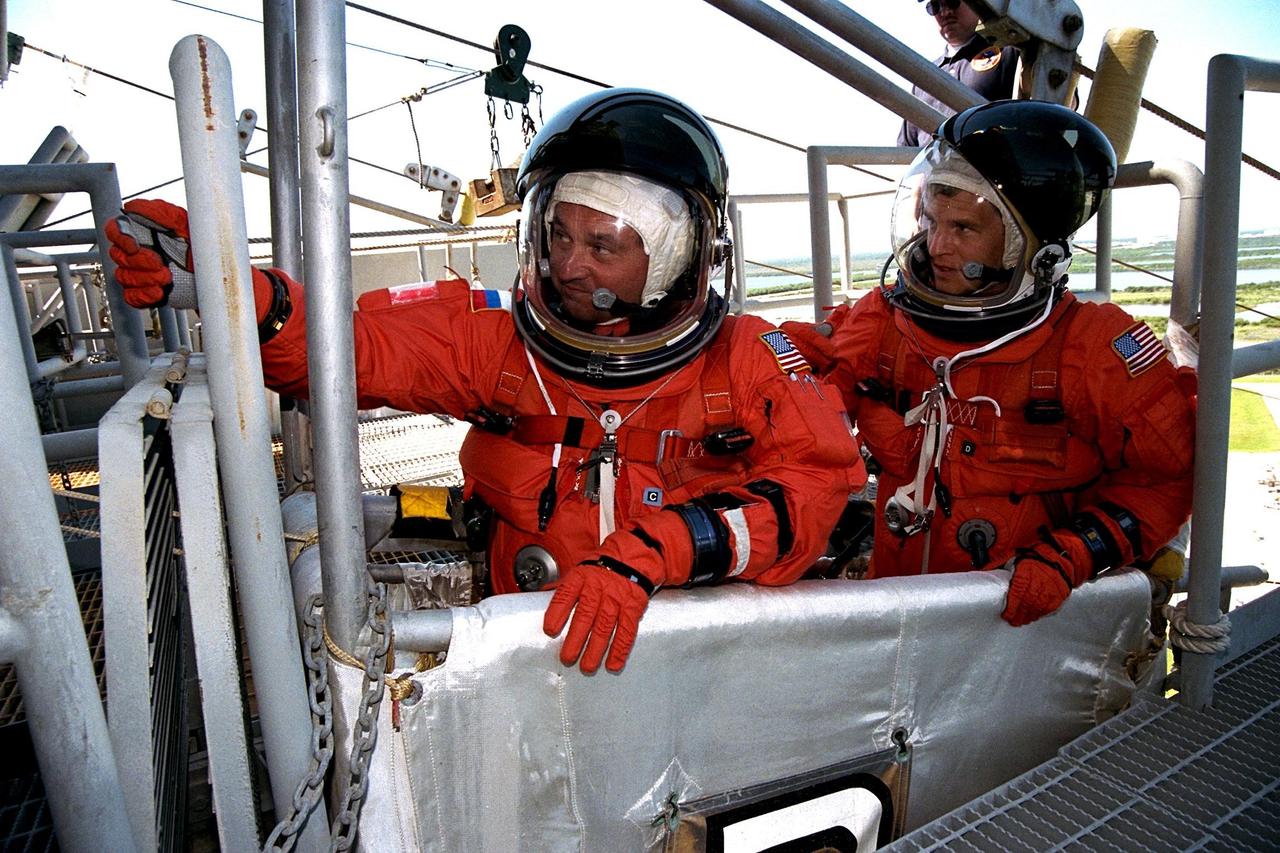
KENNEDY SPACE CENTER, Fla. -- STS-86 Mission Specialists Vladimir Georgievich Titov of the Russian Space Agency, at left, and Scott E. Parazynski practice emergency egress procedures in a slidewire basket as part of Terminal Countdown Demonstration Test (TCDT) activities at Launch Pad 39A. Titov and Parazynski are scheduled to perform a spacewalk during the STS-86 mission, which will be the seventh docking of the Space Shuttle with the Russian Space Station Mir. Liftoff of the Space Shuttle Atlantis on Mission STS-86 is targeted for Sept. 25
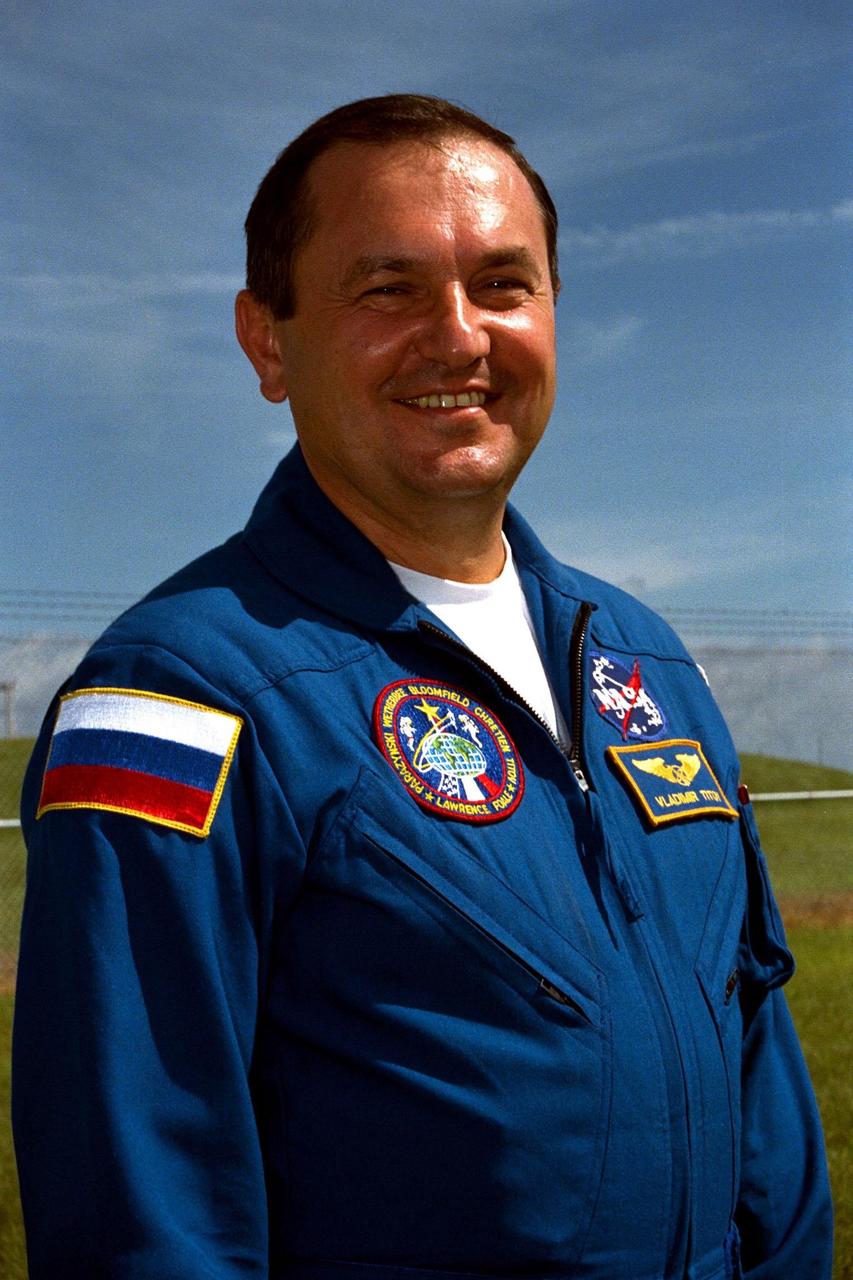
STS-86 Mission Specialist Vladimir Georgievich Titov of the Russian Space Agency stands in front of Launch Pad 39A the day before he is set to lift off on the Space Shuttle Atlantis. The seven crew members came out to the pad to greet family members, friends and other well-wishers. Space veteran Titov will be making his fifth flight, second on the Space Shuttle. The scheduled Sept. 25 launch will be the seventh docking of the Space Shuttle with the Russian Space Station Mir
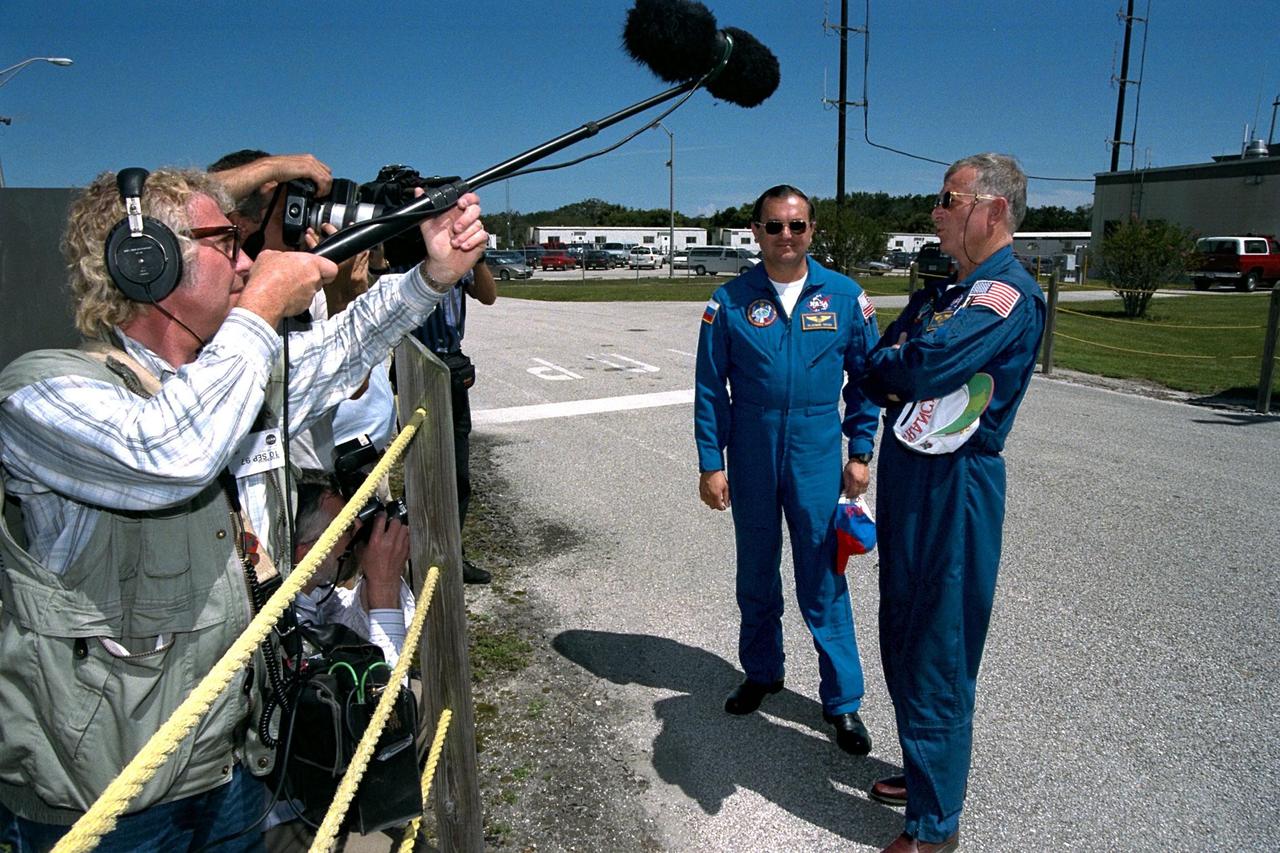
KENNEDY SPACE CENTER, Fla. -- STS-86 Mission Specialists Vladimir Georgievich Titov, at left, and Jean-Loup J.M. Chretien, the two members of the STS-86 crew representing foreign space agencies, talk to press representatives before departing from KSC’s Shuttle Landing Facility. They and the five other crew members were at KSC to participate in the Terminal Countdown Demonstration Test (TCDT). They will return to Johnson Space Center, Houston, Texas, for final prelaunch training. Titov is a cosmonaut with the Russian Space Agency; Chretien is an astronaut with the French Space Agency, CNES. Titov will make his fifth spaceflight, and second on the Space Shuttle, on STS-86 aboard Atlantis. Chretien has flown twice before as a research-cosmonaut on Russian missions; this will be his first Shuttle mission. STS-86 will be the seventh docking of the Space Shuttle with the Russian Space Station Mir. Liftoff is targeted for Sept. 25 from Launch Pad 39A
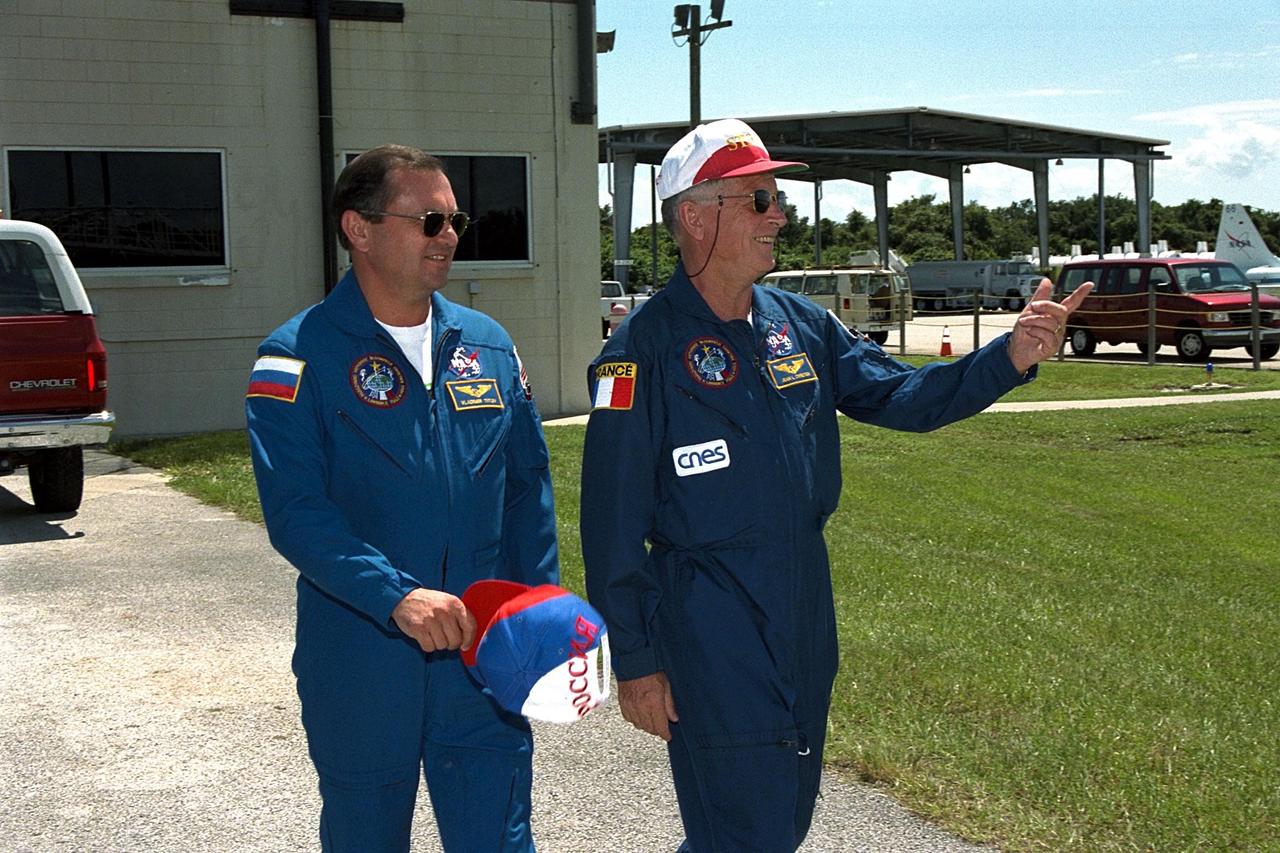
KENNEDY SPACE CENTER, Fla. -- STS-86 Mission Specialists Vladimir Georgievich Titov, at left, and Jean-Loup J.M. Chretien, the two members of the STS-86 crew representing foreign space agencies, prepare to leave from KSC’s Shuttle Landing Facility after participating in Terminal Countdown Demonstration Test (TCDT) activities. They are returning to Johnson Space Center, Houston, Texas, for final prelaunch training. Titov is a cosmonaut with the Russian Space Agency; Chretien is an astronaut with the French Space Agency, CNES. Titov will make his fifth spaceflight, and second on the Space Shuttle, on STS-86 aboard Atlantis. Chretien has flown twice before as a research-cosmonaut on Russian missions; this will be his first Shuttle mission. STS-86 will be the seventh docking of the Space Shuttle with the Russian Space Station Mir. Liftoff is targeted for Sept. 25 from Launch Pad 39A
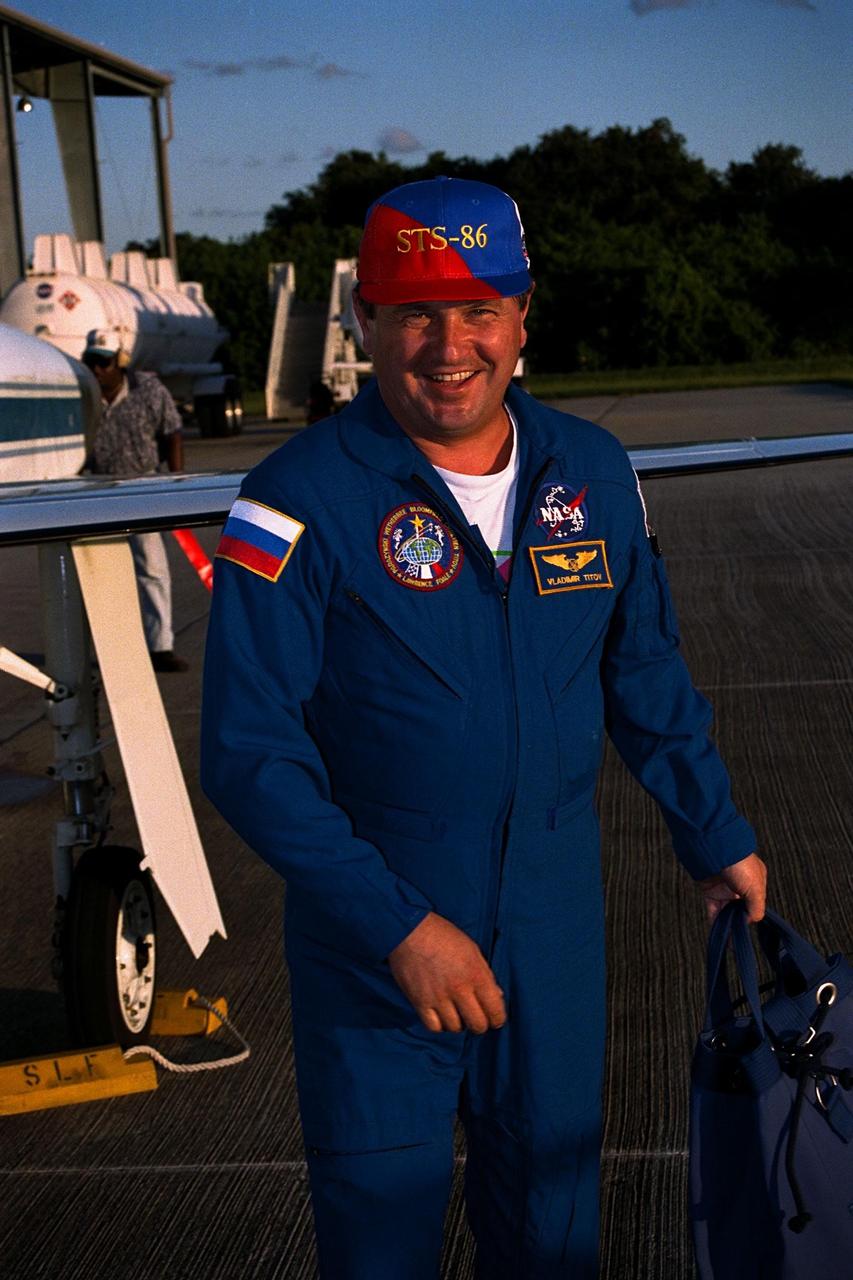
STS-86 Mission Specialist Vladimir Georgievich Titov grins broadly for photographers after he and other crew members arrive at KSC’s Shuttle Landing Facility for the Terminal Countdown Demonstration Test (TCDT), a dress rehearsal for launch. This will be the fifth spaceflight, second aboard the Space Shuttle, for Russian cosmonaut Titov, who is a colonel in the Russian Air Force. On STS-86, he will become the first non-American astronaut to perform a Shuttle-based extravehicular activity or spacewalk. STS-86 will be the seventh docking of the Space Shuttle with the Russian Space Station Mir, on which Titov spent a then-record 366 consecutive days in space in 1987-88. STS-86 is targeted for a Sept. 25 launch aboard the Space Shuttle Atlantis
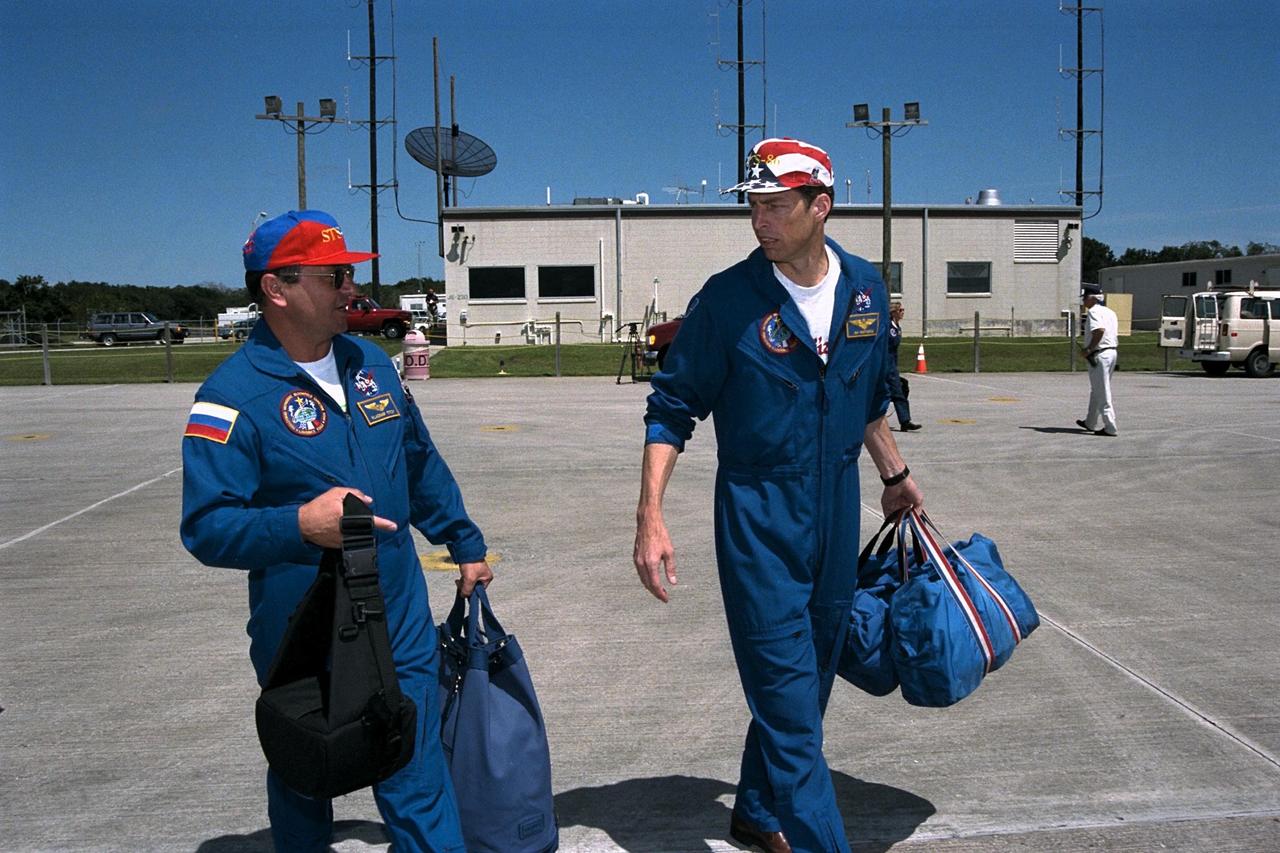
STS-86 Commander James D. Wetherbee, at right, and Mission Specialist Vladimir Georgievich Titov prepare to leave from KSC’s Shuttle Landing Facility after participating in Terminal Countdown Demonstration Test (TCDT) activities. They are returning to Johnson Space Center, Houston, Texas, for final prelaunch training. Wetherbee will make his fourth spaceflight on STS-86, and his third as commander. Titov is a cosmonaut with the Russian Space Agency. He will make his fifth spaceflight, and second on the Space Shuttle. STS-86 will be the seventh docking of the Space Shuttle with the Russian Space Station Mir. Liftoff aboard Atlantis is targeted for Sept. 25 from Launch Pad 39A
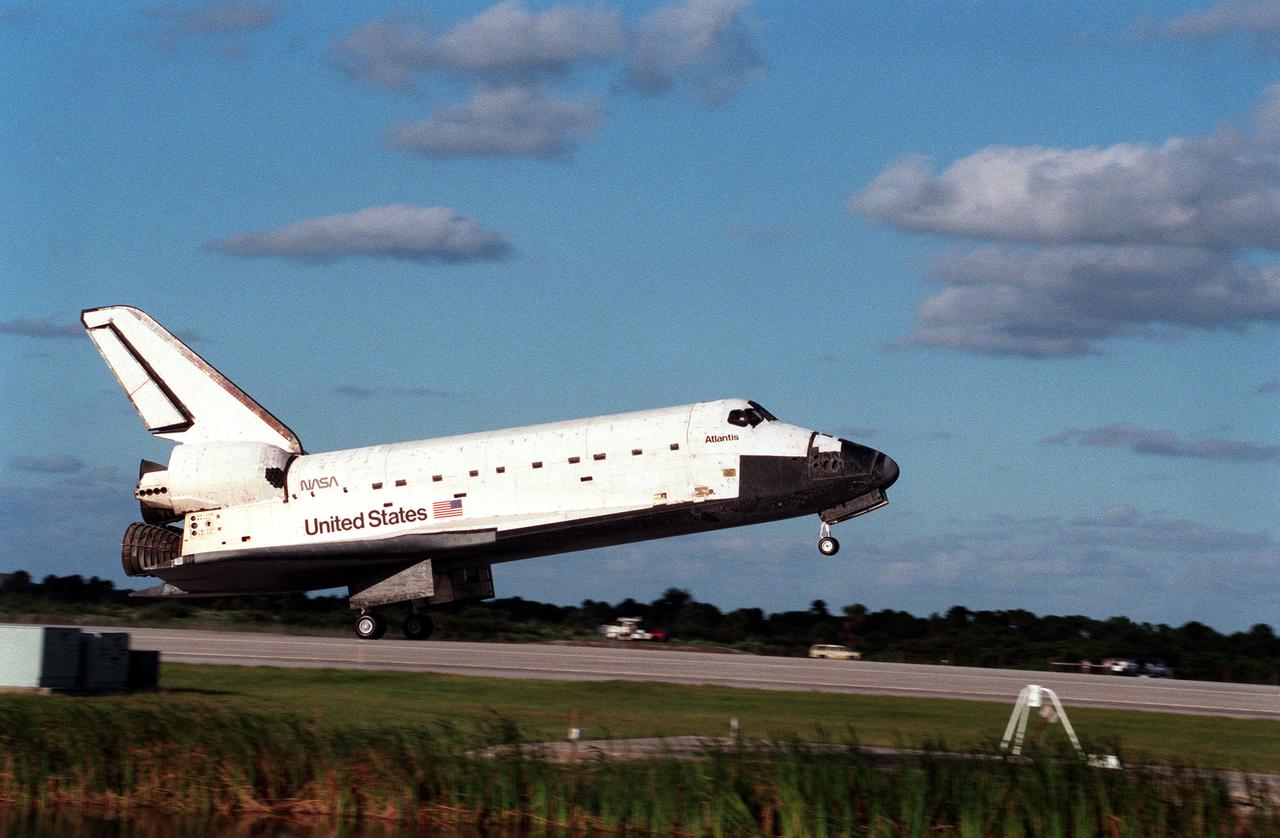
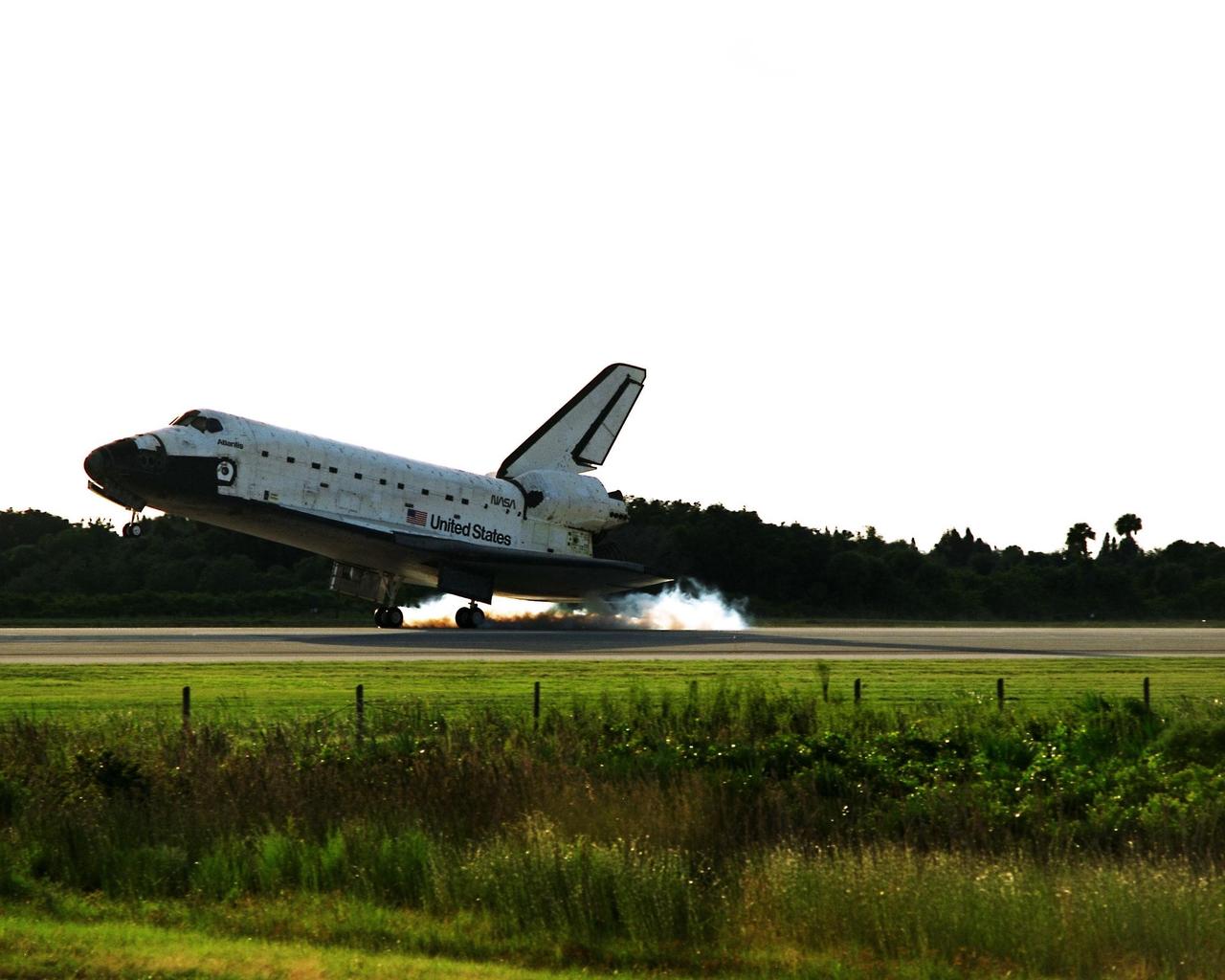
STS086-S-014 (6 Oct 1997) --- The main landing gear of the Space Shuttle Atlantis is about to touch down on the Kennedy Space Center's (KSC) Shuttle Landing Facility to complete the STS-86 mission. Touchdown occurred at 5:55:09 p.m. (EDT), October 6, 1997. Onboard were astronauts James D. Wetherbee, Michael J. Bloomfield, Wendy B. Lawrence, Scott F. Parazynski, Vladimir G. Titov, C. Michael Foale and Jean-Loup J. M. Chretien. Chretien and Titov represent the French Space Agency (CNES) and the Russian Space Agency (RSA), respectively.
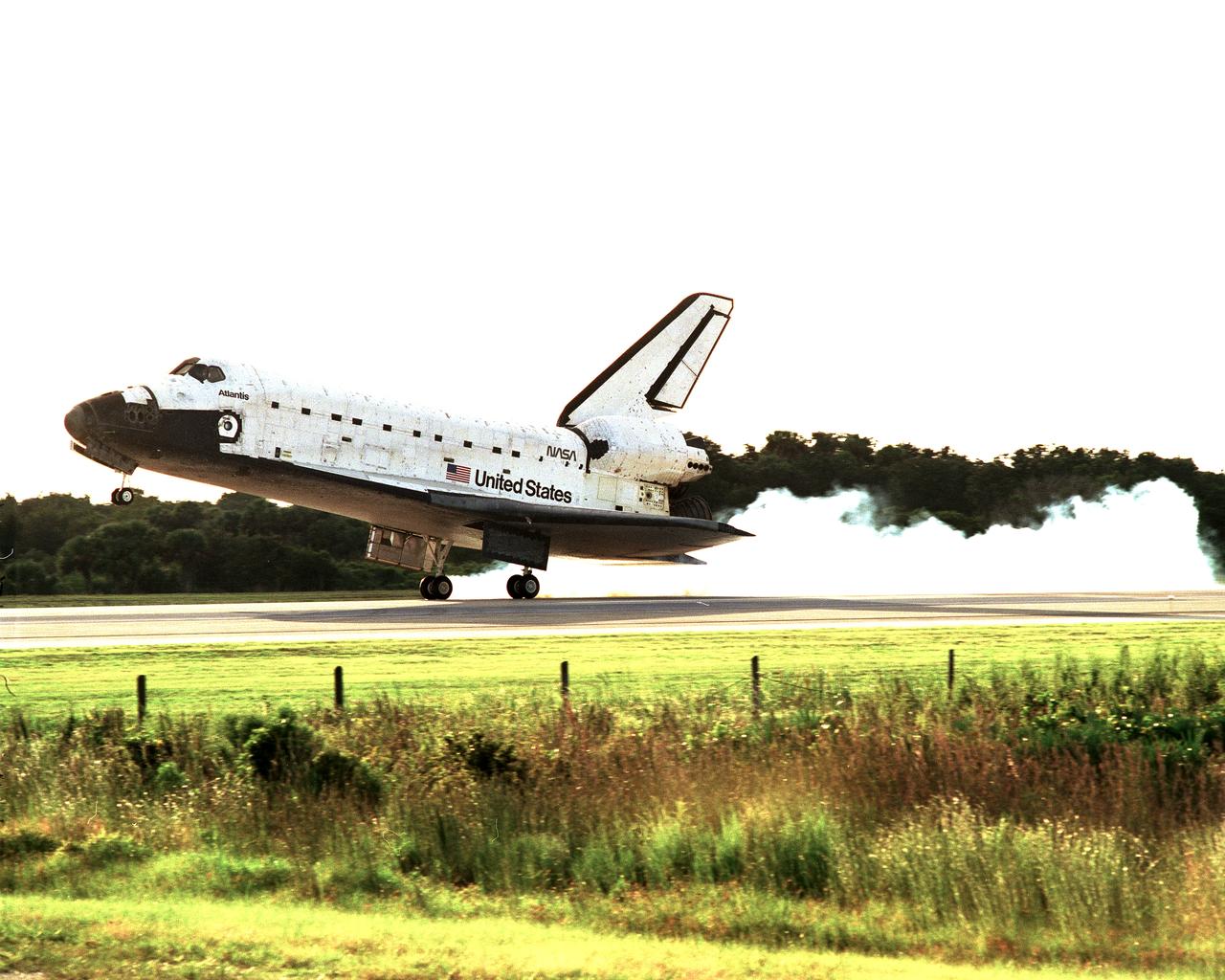
STS086-S-015 (6 Oct 1997) --- The main landing gear of the Space Shuttle Atlantis touches down on the Kennedy Space Center?s (KSC) Shuttle Landing Facility to complete the STS-86 mission. Touchdown occurred at 5:55:09 p.m. (EDT), October 6, 1997. Onboard were astronauts James D. Wetherbee, Michael J. Bloomfield, Wendy B. Lawrence, Scott F. Parazynski, Vladimir G. Titov, C. Michael Foale and Jean-Loup J. M. Chretien. Chretien and Titov represent the French Space Agency (CNES) and the Russian Space Agency (RSA), respectively.
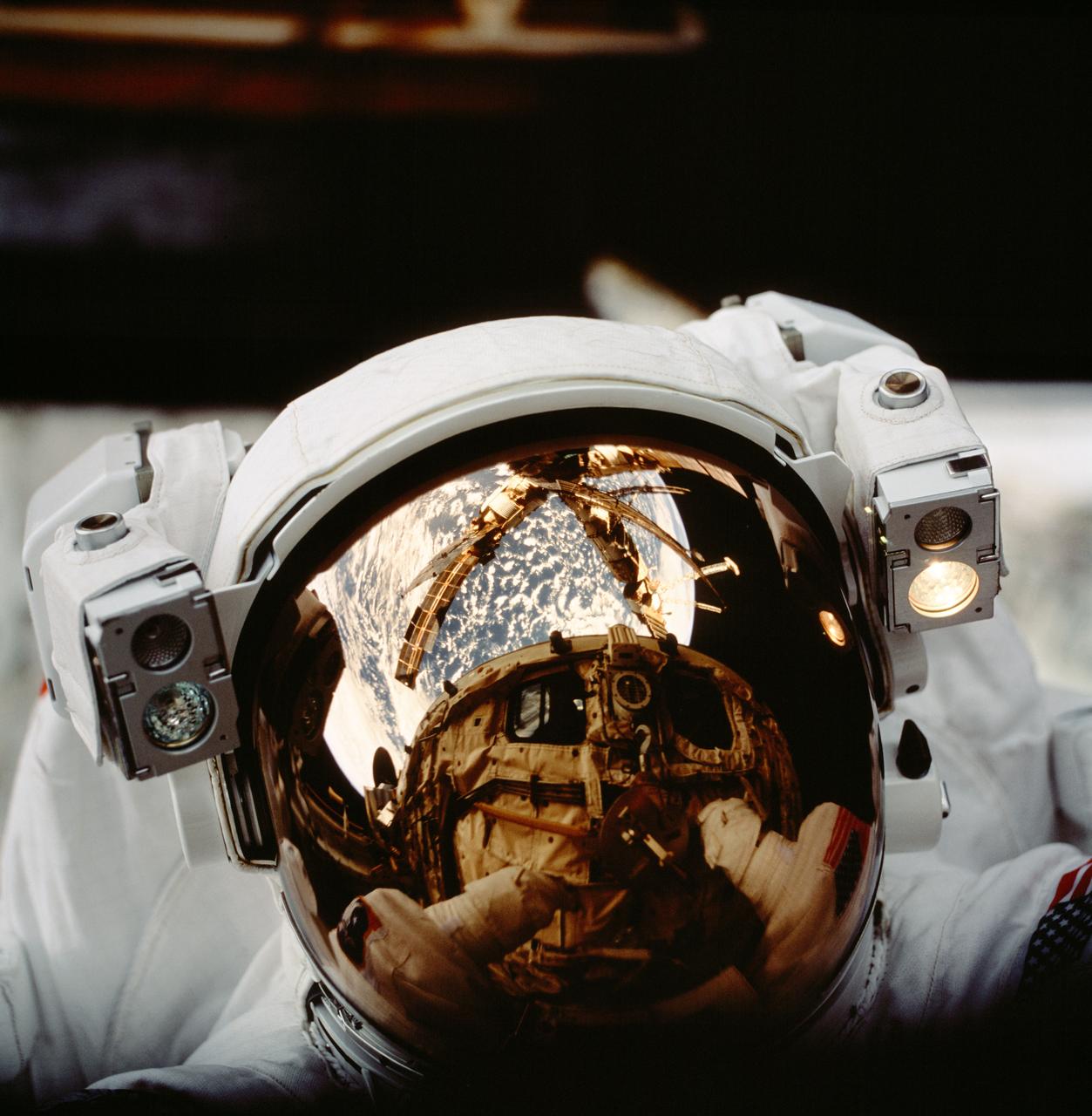
STS086-729-076 (25 Sept-6 Oct. 1997) --- The helmet visor of astronaut Scott F. Parazynski reflects the space shuttle Atlantis’ cargo bay and Russia’s Mir Space Station as well as Earth’s horizon. Astronauts Parazynski and Vladimir G. Titov, both STS-86 mission specialists, spent several hours retrieving Mir Environmental Effects Packages (MEEP) which had been exposed to the space environment around Mir’s permanent Docking Module (DM) since September of 1996. Titov is representing the Russian Space Agency (RSA). Photo credit: NASA
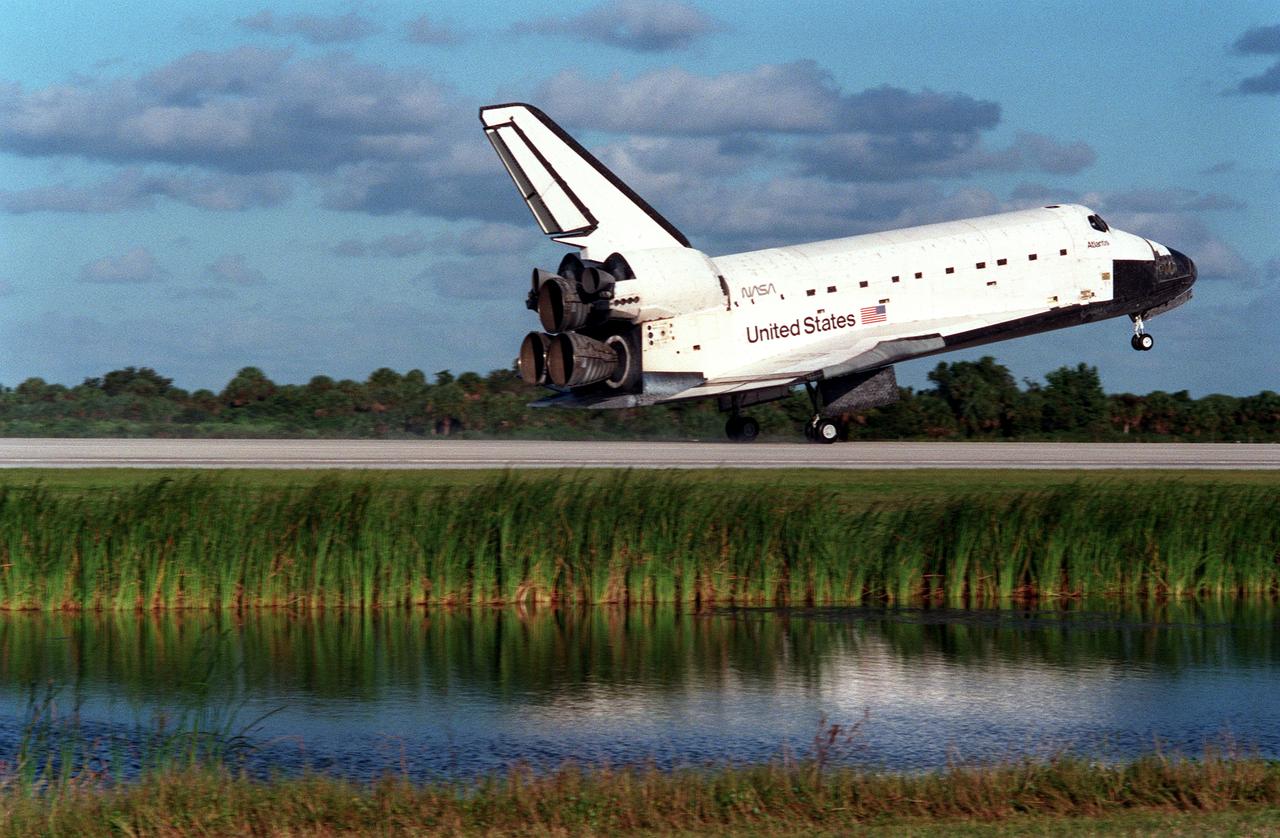
STS086-S-013 (6 Oct 1997) --- The main landing gear of the Space Shuttle Atlantis is about to touch down on the Kennedy Space Center?s (KSC) Shuttle Landing Facility to complete the STS-86 mission. Touchdown occurred at 5:55:09 p.m. (EDT), October 6, 1997. Onboard were astronauts James D. Wetherbee, Michael J. Bloomfield, Wendy B. Lawrence, Scott F. Parazynski, Vladimir G. Titov, C. Michael Foale and Jean-Loup J. M. Chretien. Chretien and Titov represent the French Space Agency (CNES) and the Russian Space Agency (RSA), respectively.
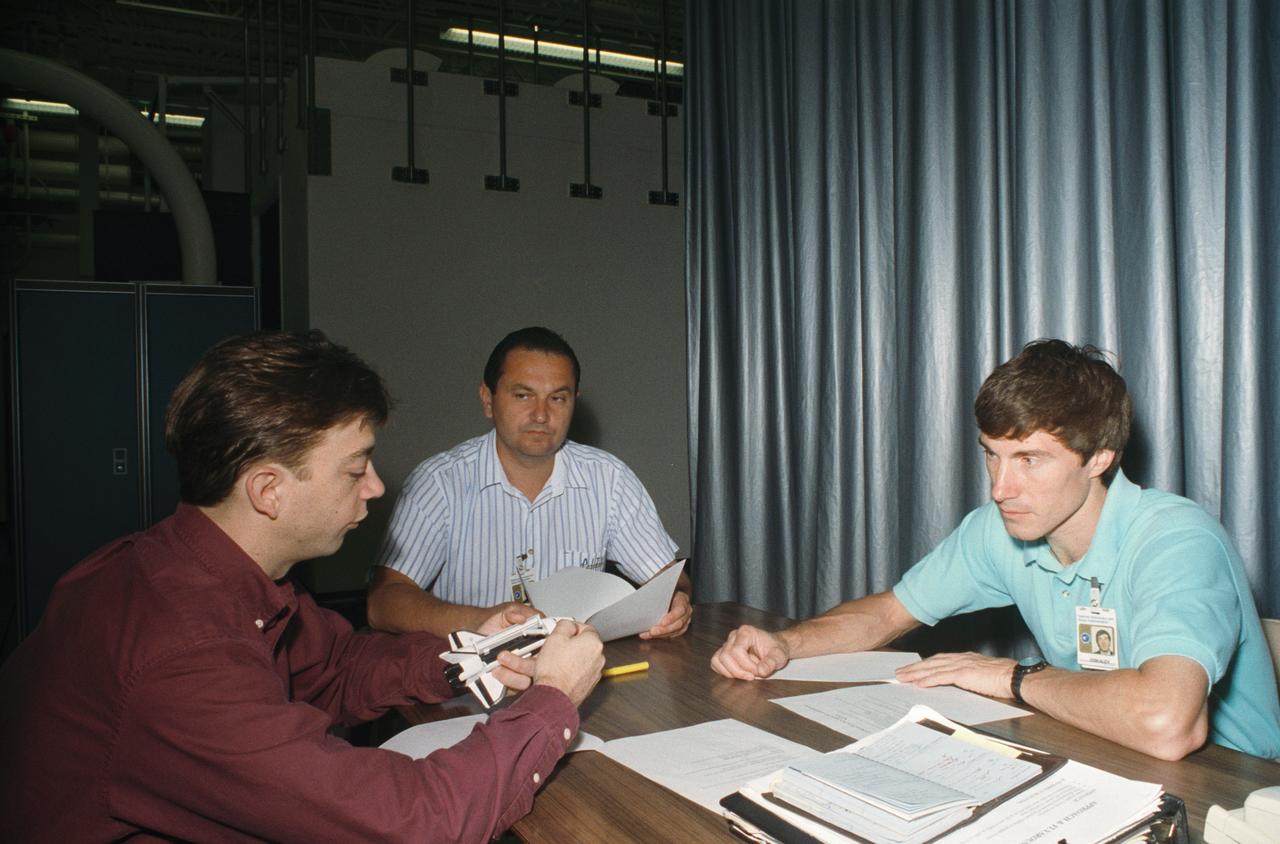
STS-60 Discovery, Orbiter Vehicle (OV) 103, Russian Mission Specialist Sergei Krikalev and Russian backup Mission Specialist Vladimir Titov work with Training Instructor Richard M. Davis (holding space shuttle model) prior to entering the Building 16 Systems Engineering Simulator (SES).
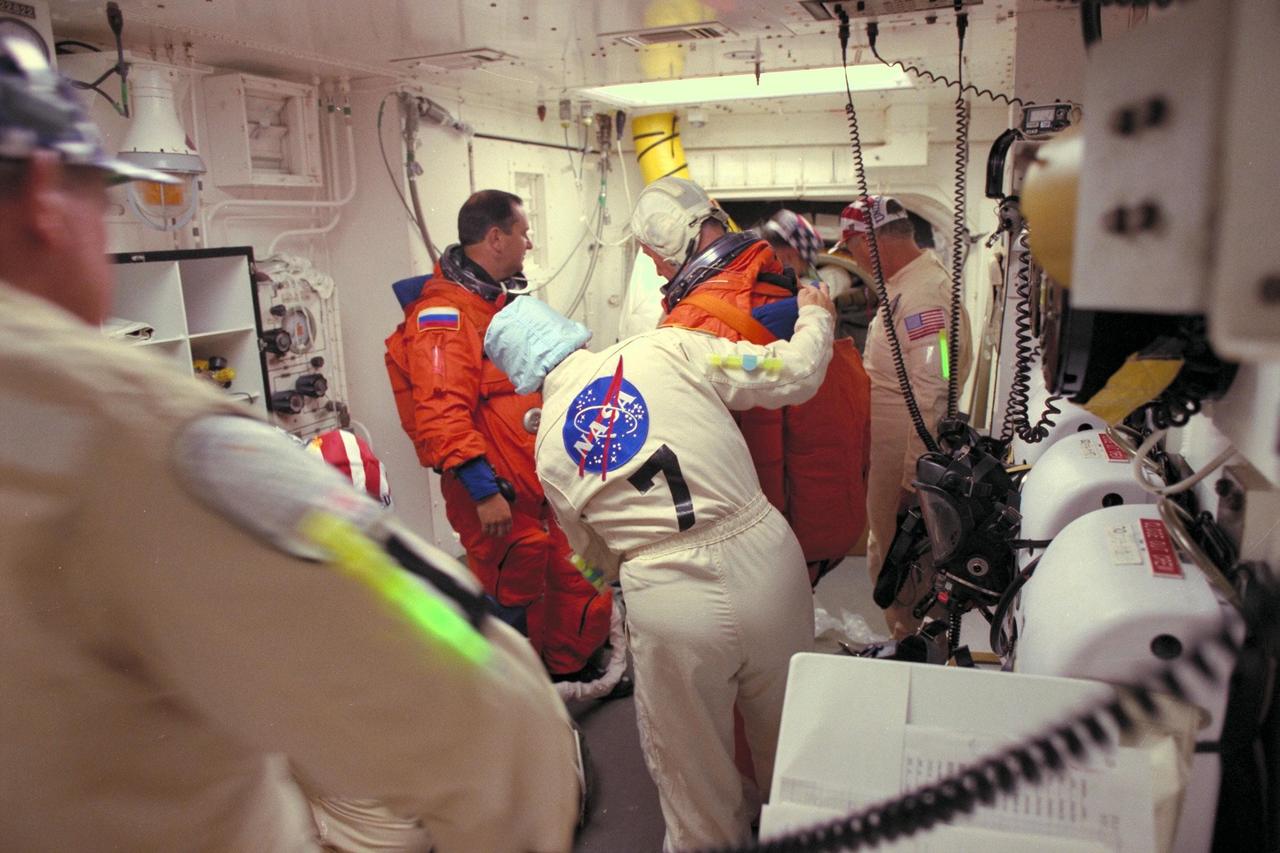
STS-86 Mission Specialist Jean-Loup J.M. Chretien, in orange launch and entry suit at right, and Mission Specialist Vladimir Georgievich Titov prepare to enter the Space Shuttle Atlantis at Launch Pad 39A, with the assistance of white room closeout crew members, including suit technician Valarie McNeal, at center
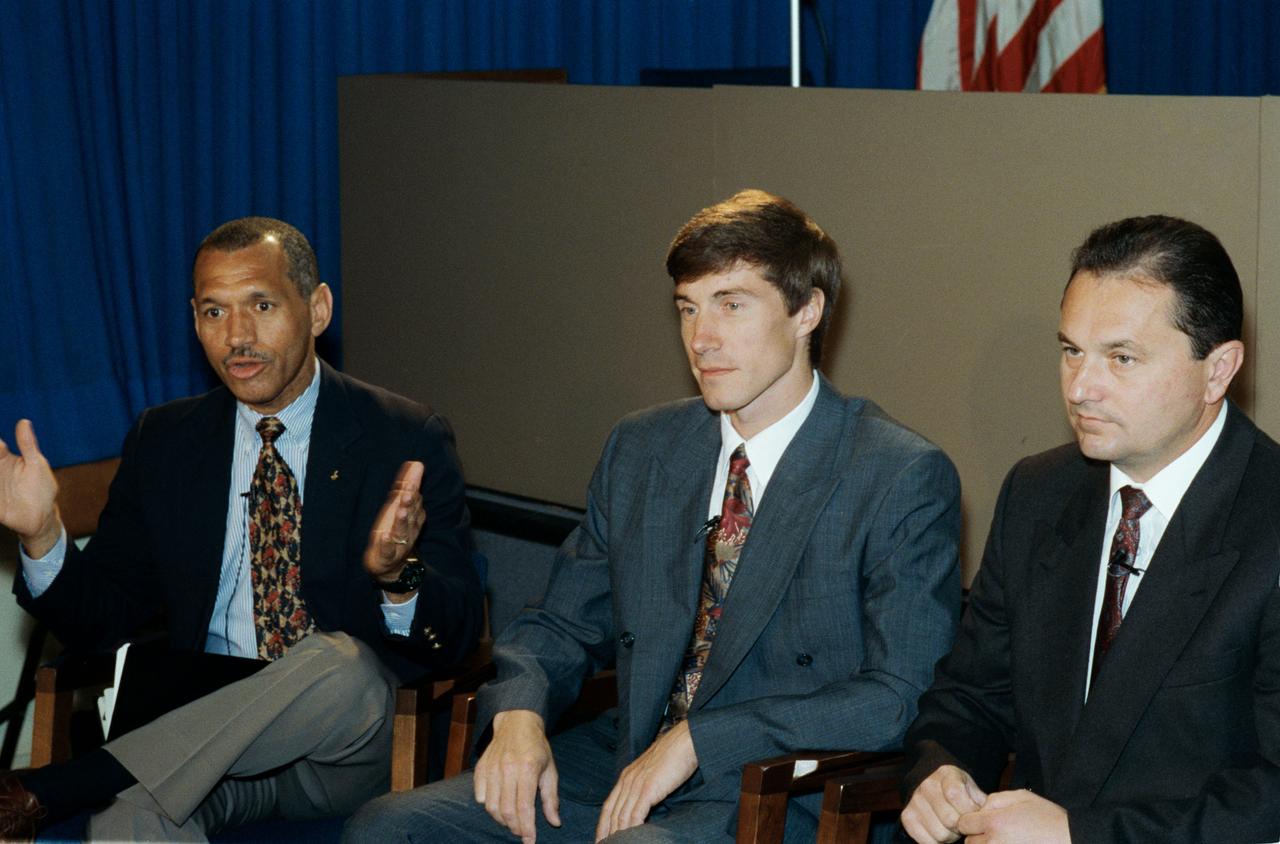
Two prime crew members and an alternate are pictured during a mission planning session in JSC's public affairs facility. Left to right are astronaut Charles F. Bolden Jr., mission commander; and Cosmonauts sergei Krikalev and Vladimir Titov, prime and alternate mission specialists, respectively.
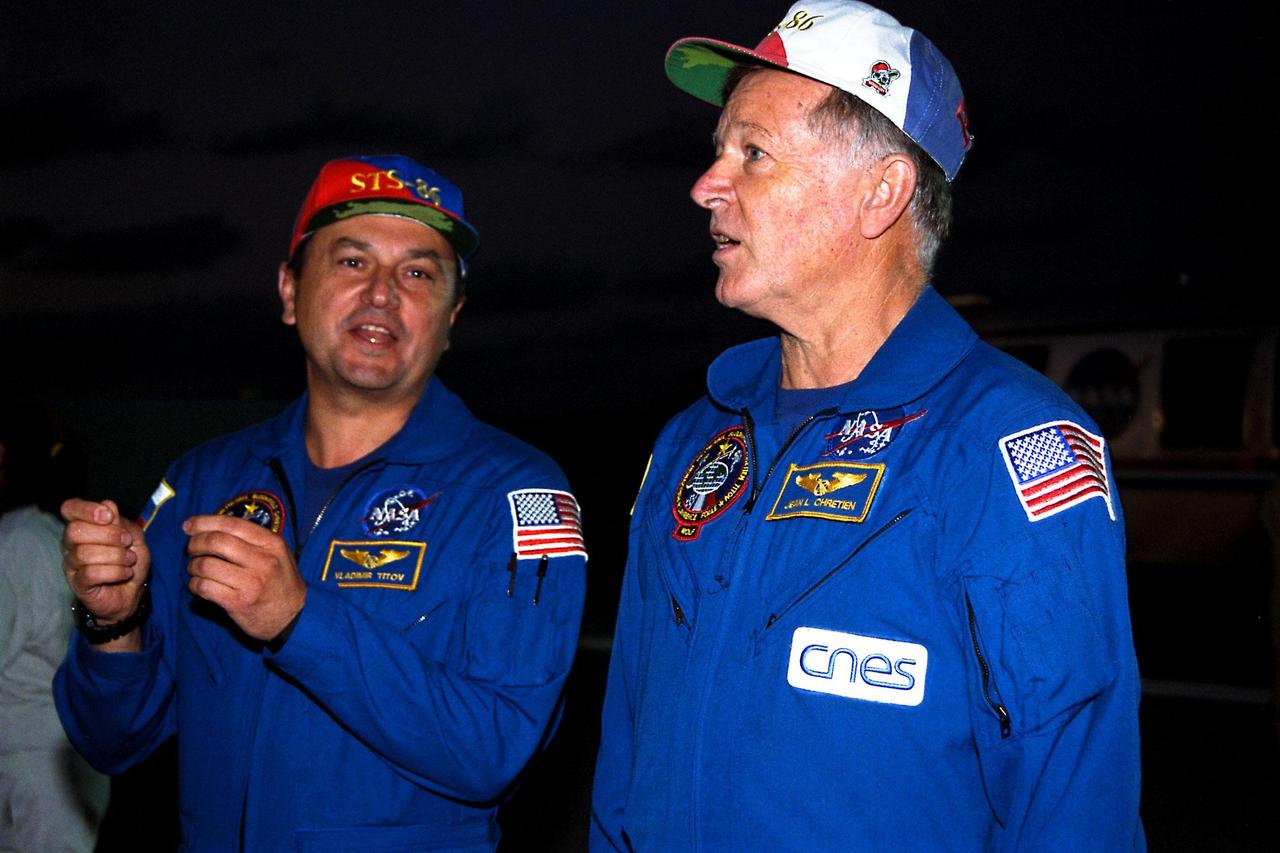
STS-86 Mission Specialists Vladimir Georgievich Titov of the Russian Space Agency, at left, and Jean-Loup J.M. Chretien of the French Space Agency, CNES, talk about their recently completed U.S. space mission while walking under and around the orbiter Atlantis after landing on KSC’s Runway 15 of the Shuttle Landing Facility. This was Chretien’s third spaceflight, but first on the Space Shuttle. Titov previously flew four times in space, including once on the Space Shuttle as a mission specialist on STS-63. The nearly 11-day STS-86 mission ended with main gear touchdown at 5:55:09 p.m. EDT, Oct. 6, 1997. STS-86 was the seventh docking of the Space Shuttle with the Russian Space Station Mir
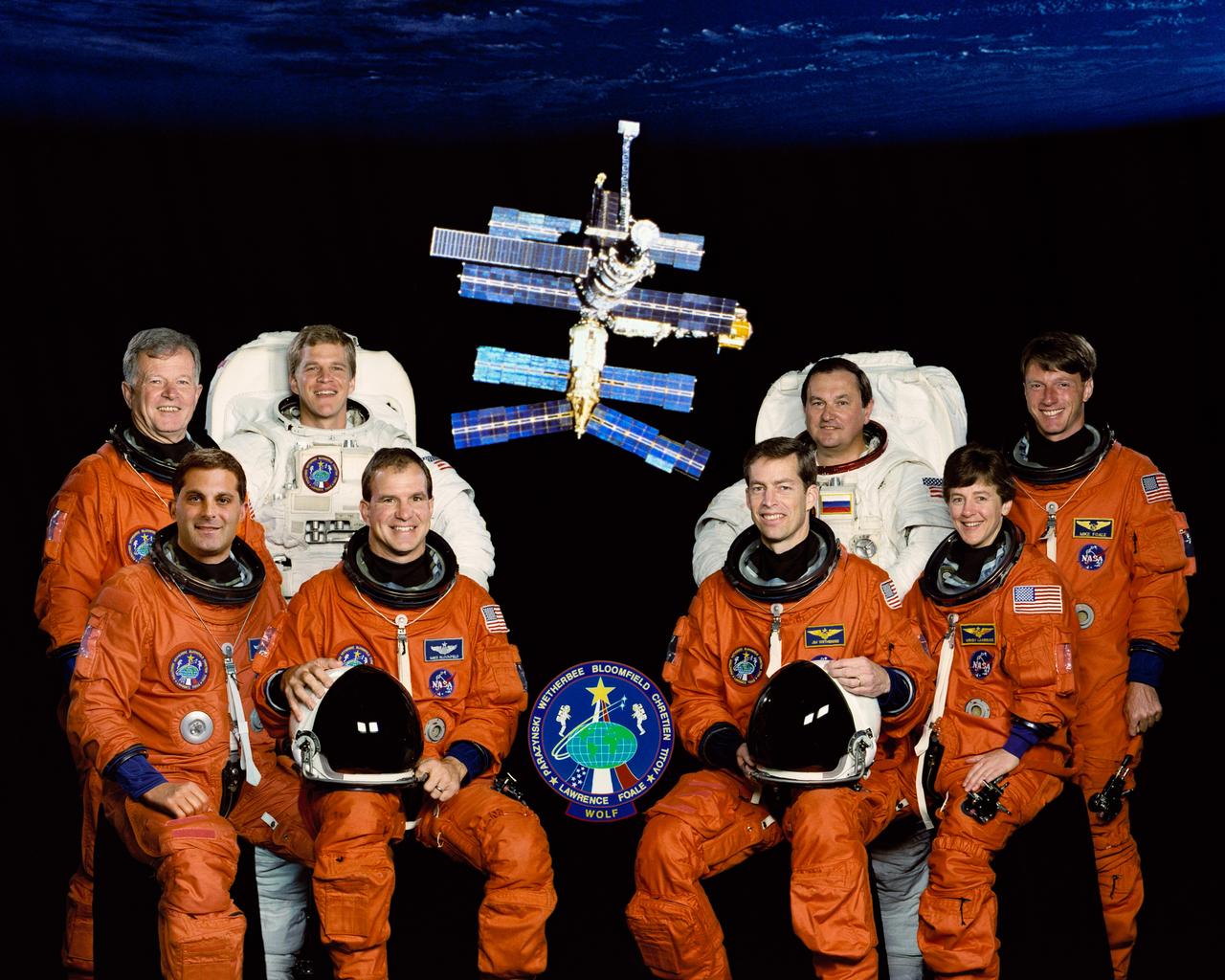
STS086-S-002 (May 1997) --- These eight astronauts have been assigned as the crew for the STS-86 mission, scheduled for a September 1997 launch and visit to Russia's Mir space station. Wearing the partial pressure launch and entry suits are, from the left, Jean-Loup J.M. Chretien, mission specialist; David A. Wolf, mission specialist; Michael J. Bloomfield, pilot; James D. Wetherbee, mission commander; and Wendy B. Lawrence and C. Michael Foale, both mission specialists. Wearing the Extravehicular Mobility Unit (EMU) space suits are Scott F. Parazynski (left) and Vladimir G. Titov, both mission specialists. Chretien and Titov are international mission specialists, representing the French Space Agency (CNES) and Russian Space Agency (RSA), respectively.
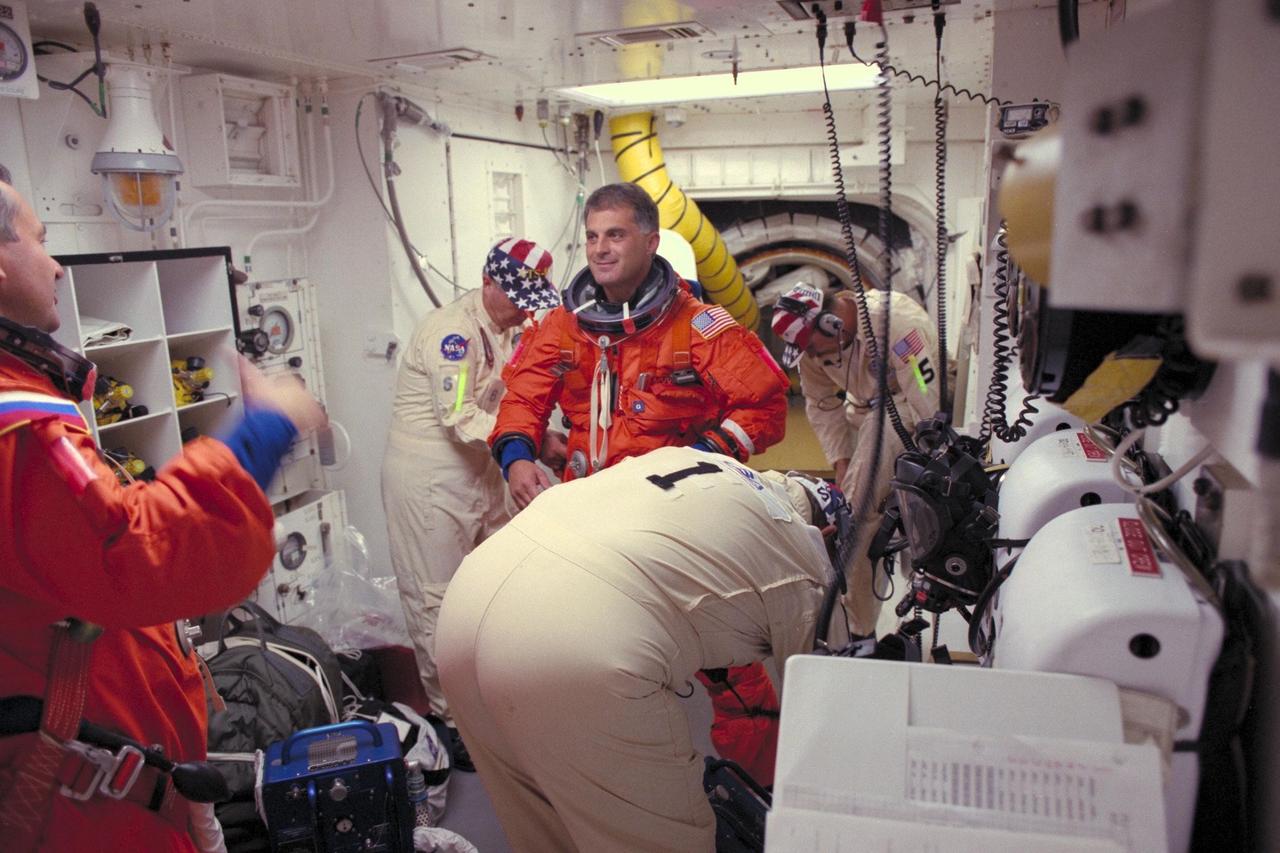
STS-86 Mission Specialist David A. Wolf, at center facing camera, prepares to enter the Space Shuttle Atlantis at Launch Pad 39A, with the assistance of Rick Welty, in foreground at center, United Space Alliance (USA) orbiter vehicle closeout chief; and closeout team members, in background from left, Jim Davis, NASA quality assurance specialist; and George Schramm, USA mechanical technician. STS-86 Mission Specialist Vladimir Georgievich Titov, in foreground at far left, is awaiting his turn

S94-41838 (Nov 1994) --- Wearing training versions of the orange partial pressure suit used for shuttle ascent and entry, five NASA astronauts and a Russian cosmonaut assemble for an STS-63 training session. The six are in the Johnson Space Center's (JSC) Shuttle mockup and integration laboratory. They are, left to right, astronauts James D. Wetherbee, mission commander; Eileen M. Collins, pilot; Bernard A. Harris Jr., payload commander; and C. Michael Foale, Janice E. Voss, and cosmonaut Vladimir G. Titov, all mission specialists.
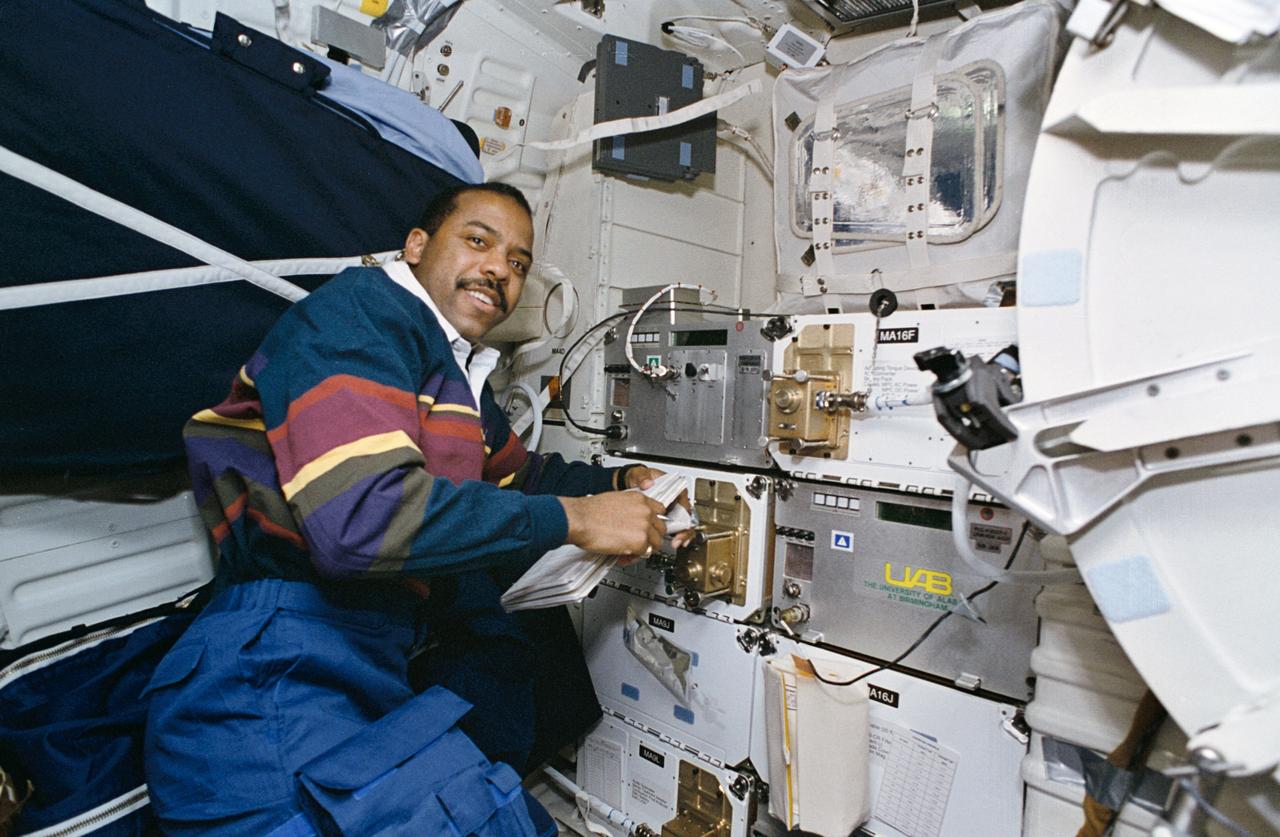
STS063-68-013 (3-11 Feb 1995) --- Astronaut Bernard A. Harris, Jr., a physician and payload commander, monitors several Spacehab-3 experiments which occupy locker space on the Space Shuttle Discovery's mid-deck. The Spacehab 3 Module is located in the cargo bay. Others onboard the Discovery were astronauts James D. Wetherbee, commander; Eileen M. Collins, pilot; mission specialists C. Michael Foale, Janice E. Voss, and Russian cosmonaut Vladimir G. Titov.
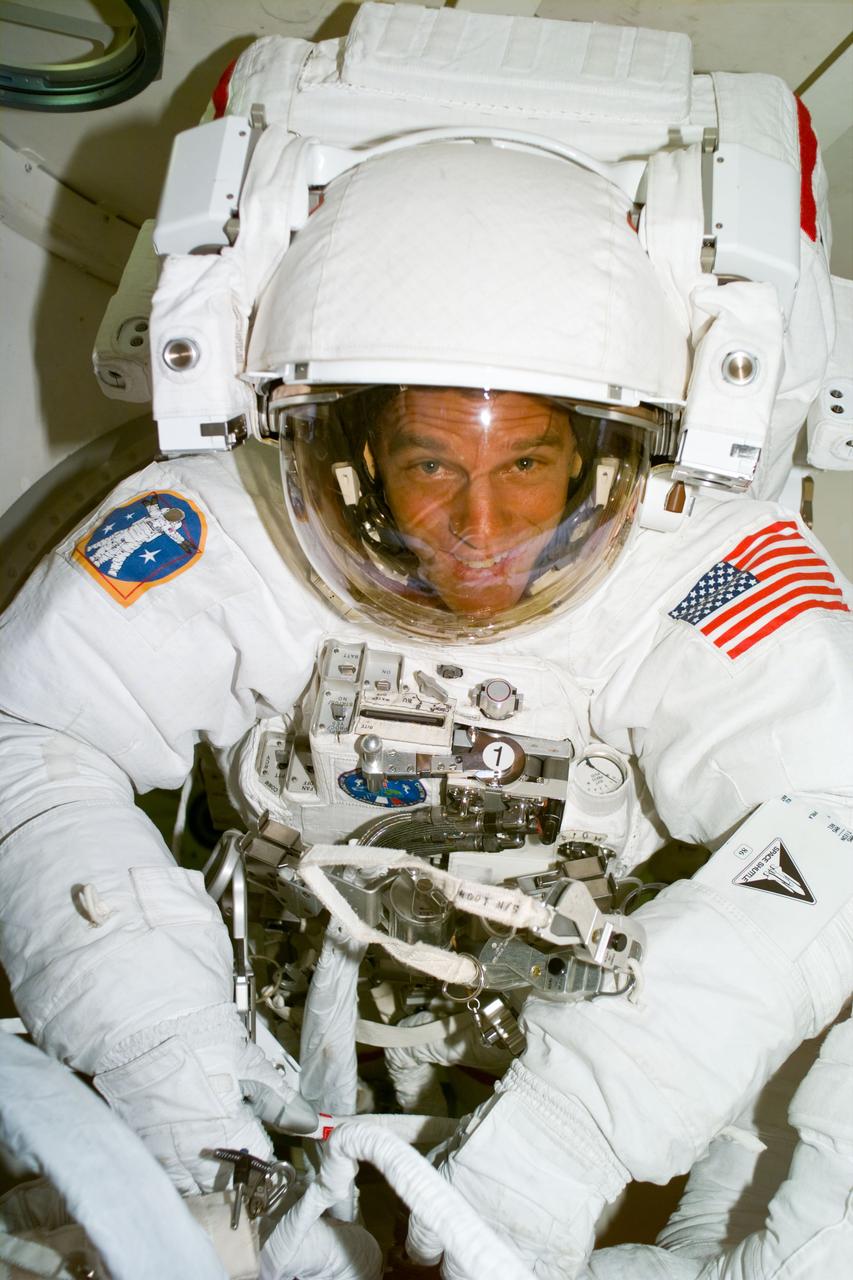
STS086E5383 (1 Oct. 1997) --- This still photo shows Scott F. Parazynski, mission specialist, still suited up after performing an Extravehicular Activity during the STS-86 mission. Parazynski was joined in the EVA by Vladimir G. Titov, mission specialist representing the Russian Space Agency (RSA), out of frame. It was the first U.S. vehicle-based spacewalk involving an international astronaut. The view was captured at 23:11:05 GMT on October 1, 1997.
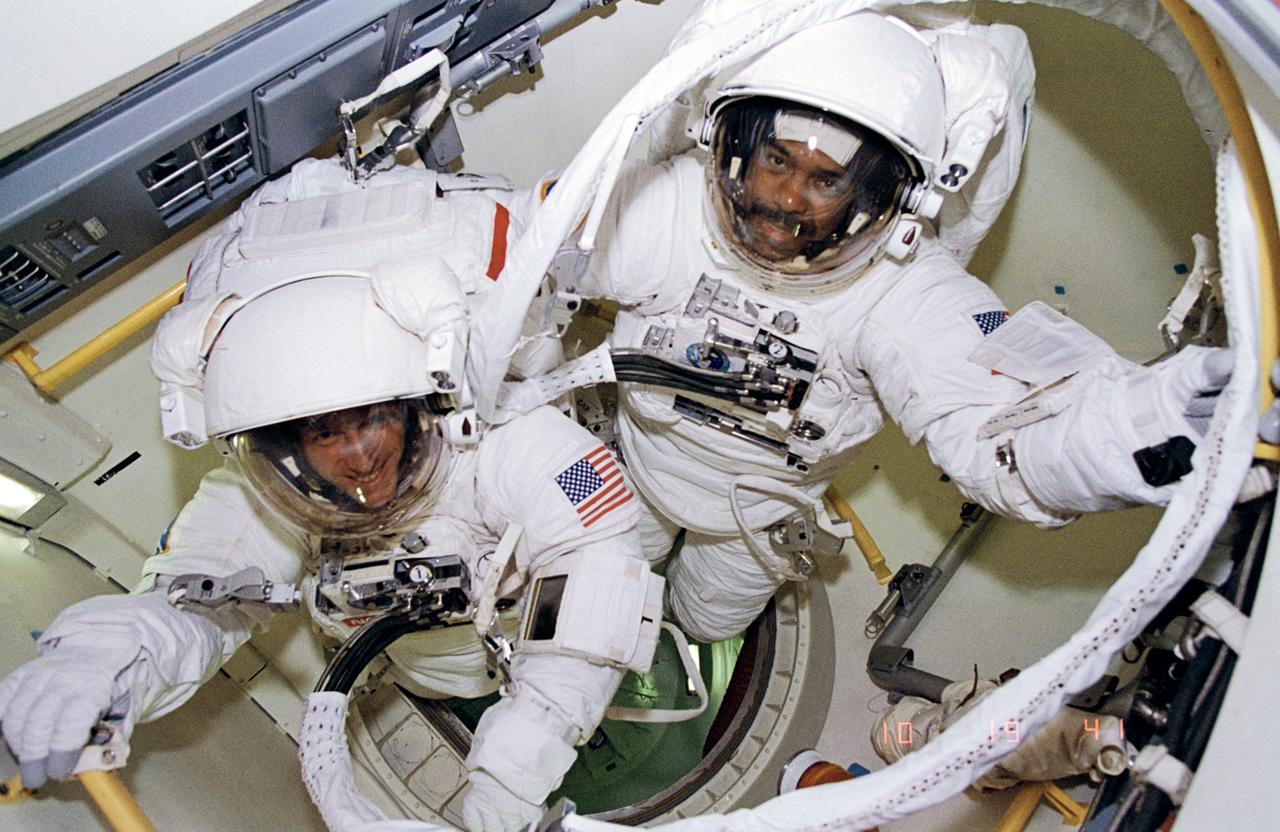
STS063-67-024 (9 Feb. 1995) --- Astronauts Bernard A. Harris Jr., STS-63 payload commander, (top right) and C. Michael Foale, mission specialist, are ready to egress airlock for an extravehicular activity (EVA). Others onboard the space shuttle Discovery were astronauts James D. Wetherbee, mission commander; Eileen M. Collins, pilot; mission specialists Janice E. Voss, and cosmonaut Vladimir G. Titov. Photo credit: NASA
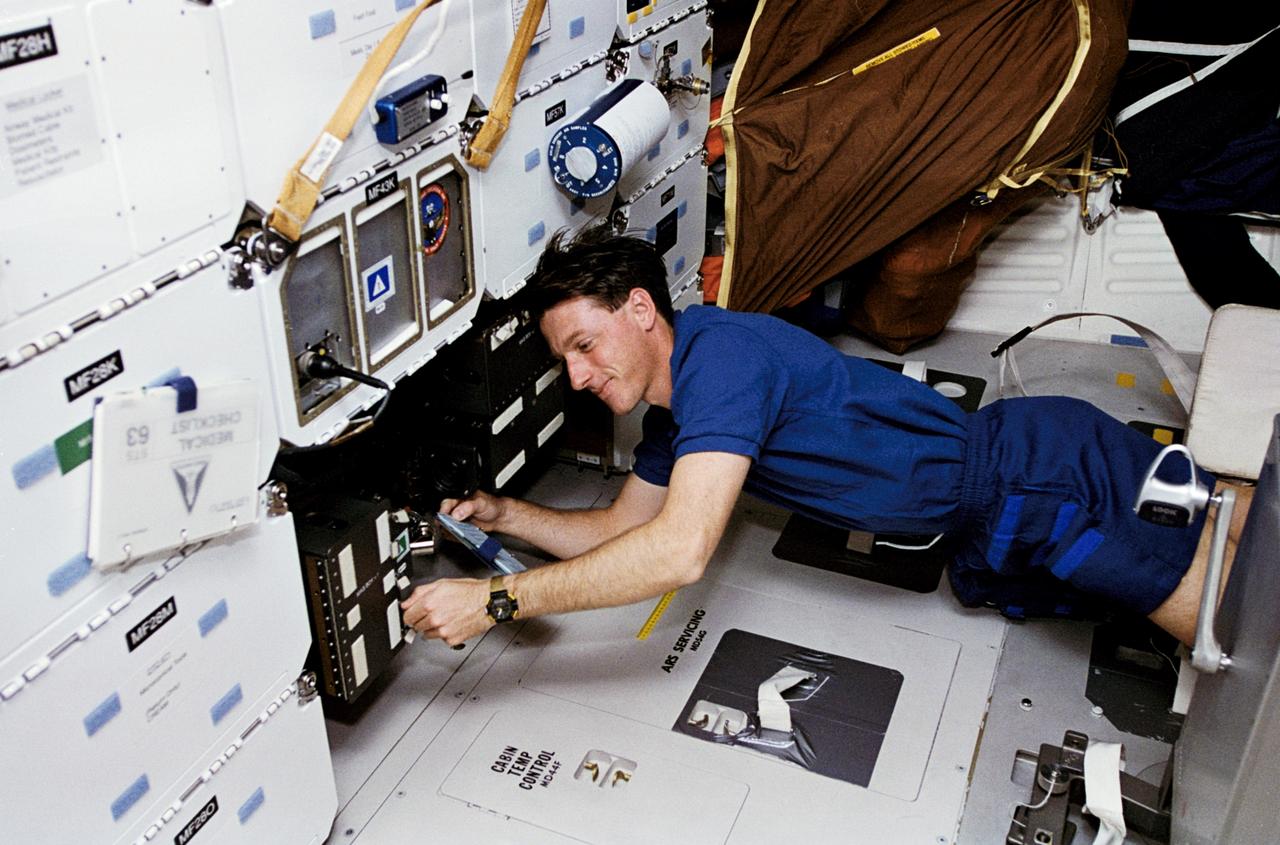
STS063-29-002 (3-11 Feb. 1995) --- On the Space Shuttle Discovery's middeck, astronaut C. Michael Foale, mission specialist, checks on the Solid Surface Combustion Experiment (SSCE). Foale was joined by four other NASA astronauts James D. Wetherbee, commander; Eileen M. Collins, pilot; Bernard A. Harris, Jr., payload commander; Janice E. Voss, mission specialist, and a Russian cosmonaut, Vladimir G. Titov; for eight days of research in Earth-orbit.
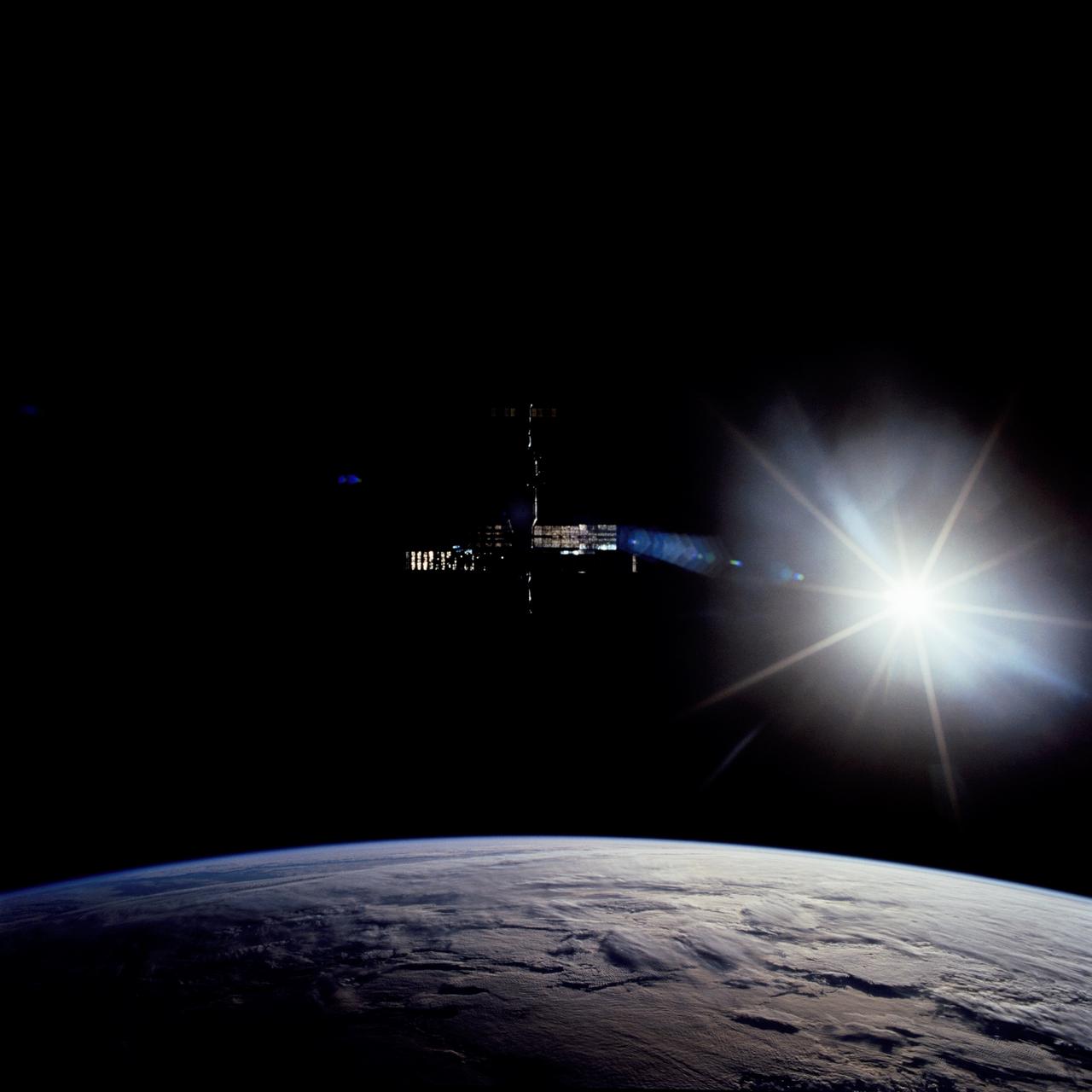
STS063-708-057 (6 Feb. 1995) --- Backdropped against the darkness of space, only the shiny part of Russia's Mir Space Station are clearly visible in this 70mm frame, photographed during rendezvous operations by the Space Shuttle Discovery and the Mir space station. Onboard the Discovery were astronauts James D. Wetherbee, mission commander; Eileen M. Collins, pilot; Bernard A. Harris Jr., payload commander; mission specialists Janice Voss, C. Michael Foale and Russian cosmonaut Vladimir G. Titov.
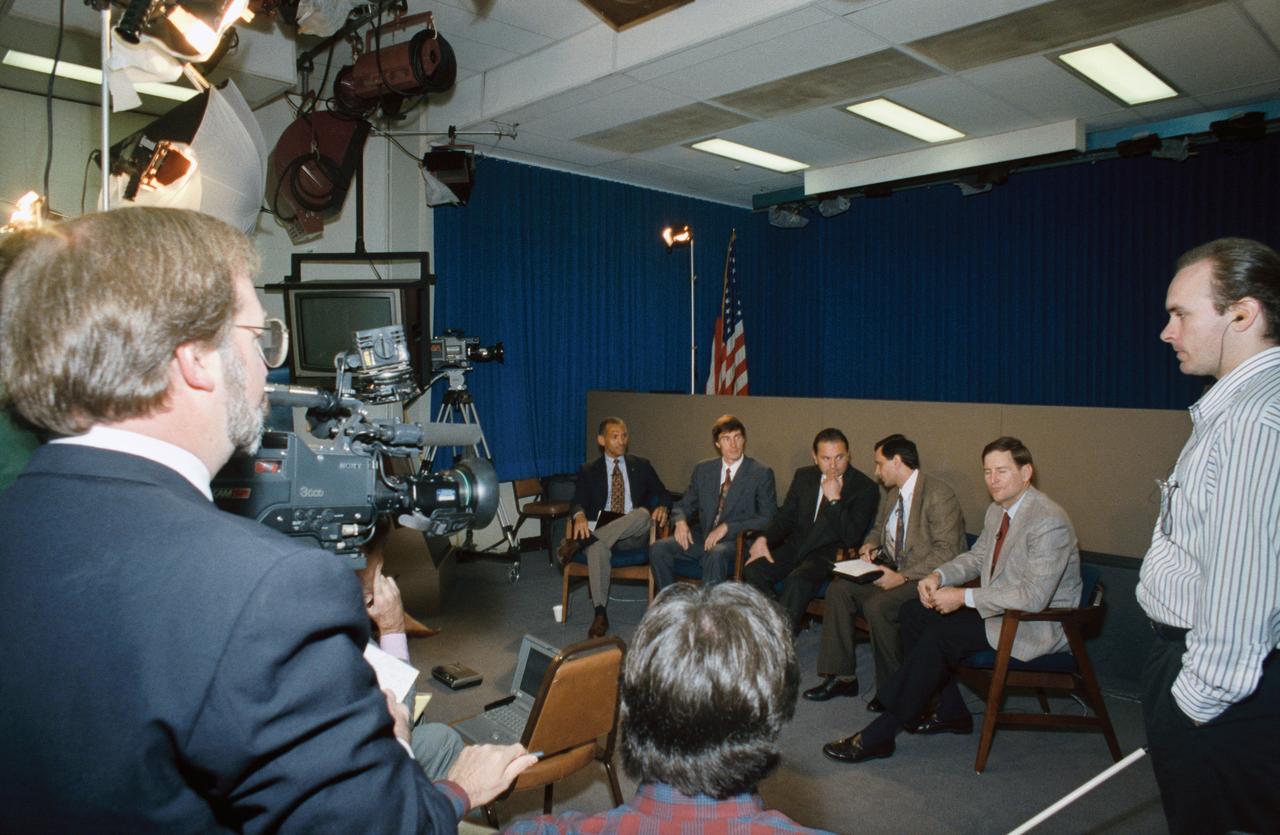
Three members of the STS-60 crew and an alternate crew member discuss their upcoming mission with the news media in JSC's public affairs facility. Seated from the left are Charles F. Bolden Jr., mission commander; Russian Cosmonaut Sergei Krikalev, mission specialist; Russian Cosmonaut Vladimir Titov, alternate mission specialist; interpreter Vladimir Fischel and Astronaut Kenneth S. Reightler, pilot.
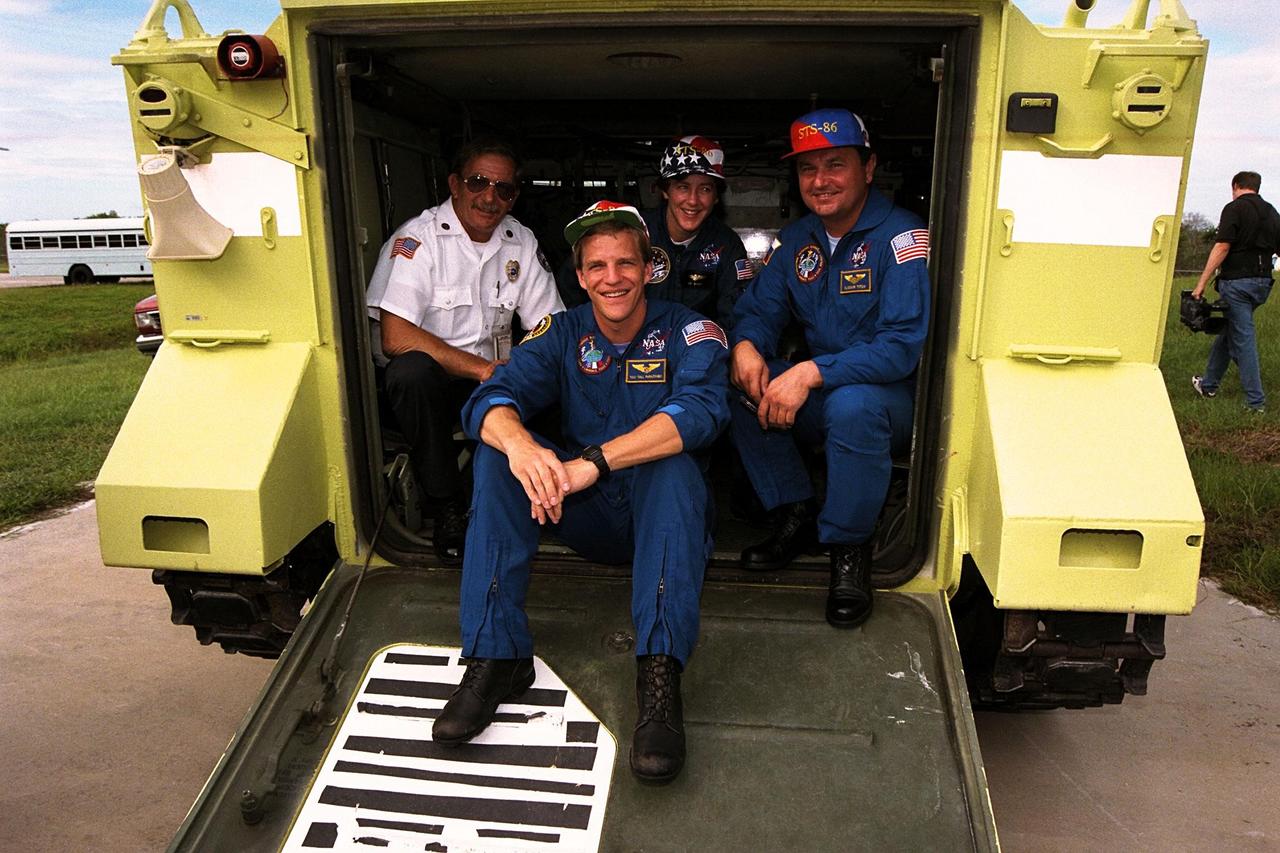
STS-86 crew members get a ride in, and learn to operate, an M-113 armored personnel carrier as part of training exercises during the Terminal Countdown Demonstration Test (TCDT), a dress rehearsal for launch. George Hoggard, in back at left, a training officer with KSC Fire Services, provides this part of the training to Mission Specialists Wendy B. Lawrence, to the right of Hoggard; Vladimir Georgievich Titov of the Russian Space Agency; and Scott E. Parazynski. STS-86 will be the seventh docking of the Space Shuttle with the Russian Space Station Mir. During the docking, Titov and Parazynski are scheduled to conduct a spacewalk primarily to retrieve four suitcase-sized environmental payloads from the exterior of the Mir docking module. Also during the mission, STS-86 Mission Specialist David A. Wolf will transfer to the orbiting Russian station and become a member of the Mir 24 crew, replacing U.S. astronaut C. Michael Foale, who has been on the Mir since the last docking mission, STS-84, in May. Launch of Mission STS-86 aboard the Space Shuttle Atlantis is targeted for Sept. 25 from Launch Pad 39A
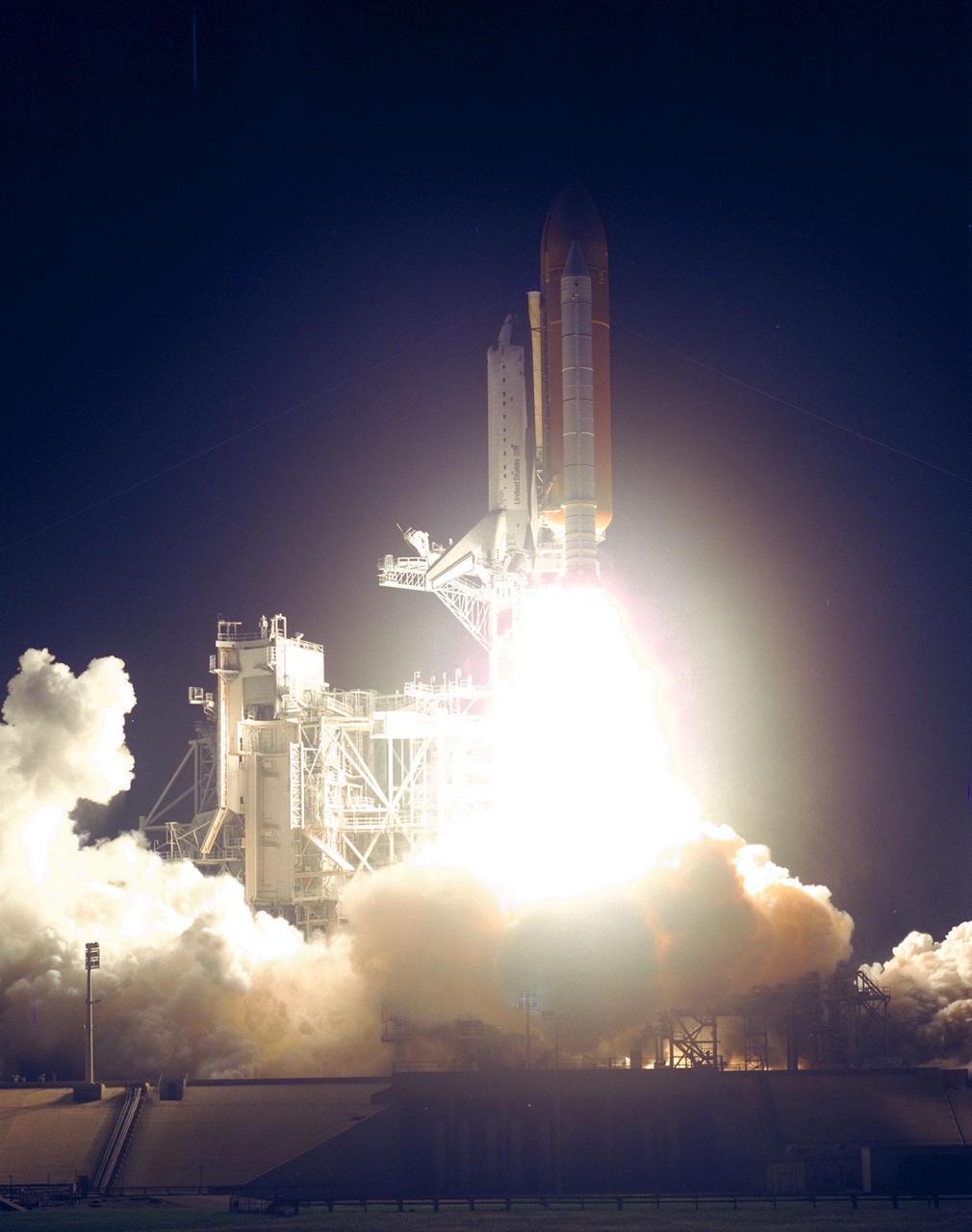
The Space Shuttle Atlantis blazes through the night sky to begin the STS-86 mission, slated to be the seventh of nine planned dockings of the Space Shuttle with the Russian Space Station Mir. Liftoff on Sept. 25 from Launch Pad 39A was at 10:34:19 p.m. EDT, within seconds of the preferred time, during a six-minute, 45-second launch window. The 10-day flight will include the transfer of the sixth U.S. astronaut to live and work aboard the Mir. After the docking, STS-86 Mission Specialist David A. Wolf will become a member of the Mir 24 crew, replacing astronaut C. Michael Foale, who will return to Earth aboard Atlantis with the remainder of the STS-86 crew. Foale has been on the Russian Space Station since mid-May. Wolf is scheduled to remain there about four months. Besides Wolf (embarking to Mir) and Foale (returning), the STS-86 crew includes Commander James D. Wetherbee, Pilot Michael J. Bloomfield, and Mission Specialists Wendy B. Lawrence, Scott E. Parazynski, Vladimir Georgievich Titov of the Russian Space Agency, and Jean-Loup J.M. Chretien of the French Space Agency, CNES. Other primary objectives of the mission are a spacewalk by Parazynski and Titov, and the exchange of about three-and-a-half tons of science/logistical equipment and supplies between Atlantis and the Mir
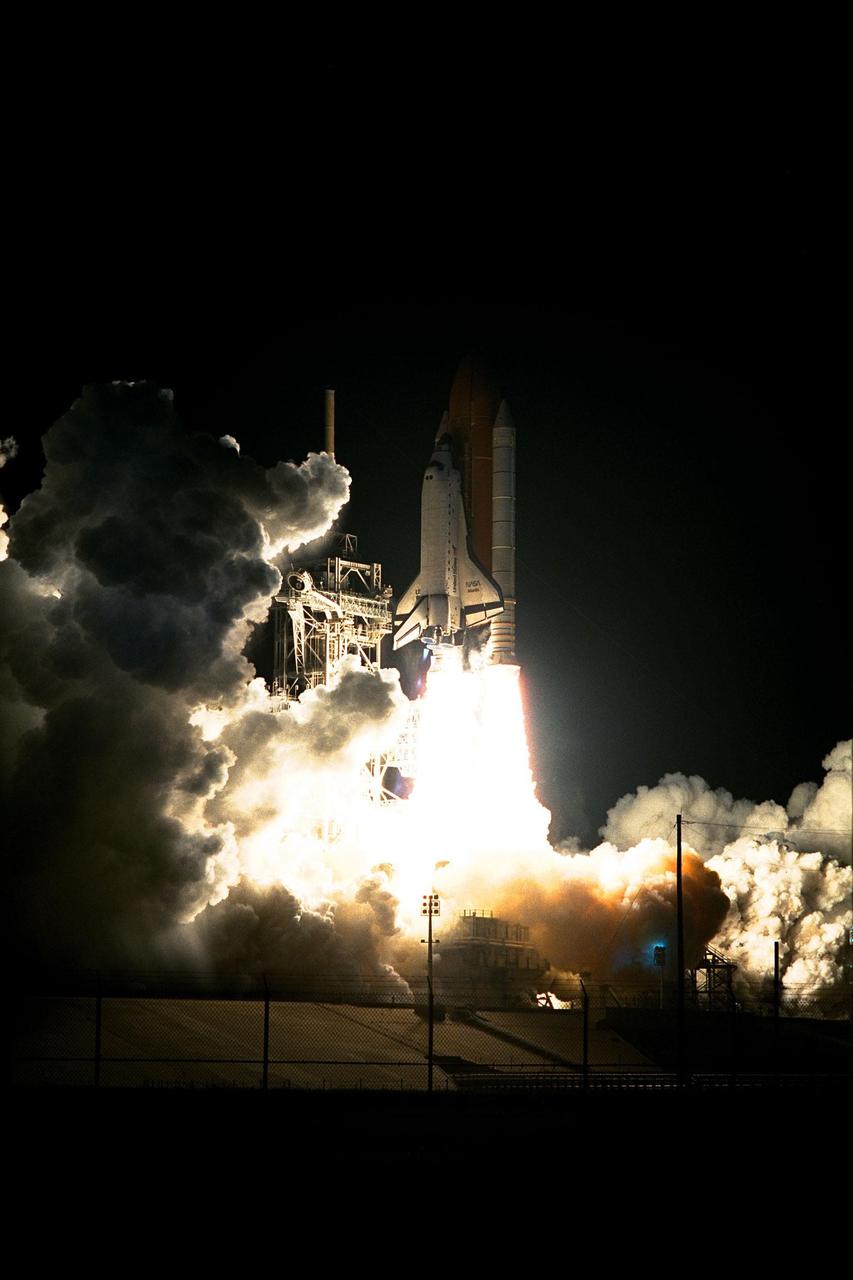
The Space Shuttle Atlantis blazes through the night sky to begin the STS-86 mission, slated to be the seventh of nine planned dockings of the Space Shuttle with the Russian Space Station Mir. Liftoff on Sept. 25 from Launch Pad 39A was at 10:34:19 p.m. EDT, within seconds of the preferred time, during a six-minute, 45-second launch window. The 10-day flight will include the transfer of the sixth U.S. astronaut to live and work aboard the Mir. After the docking, STS-86 Mission Specialist David A. Wolf will become a member of the Mir 24 crew, replacing astronaut C. Michael Foale, who will return to Earth aboard Atlantis with the remainder of the STS-86 crew. Foale has been on the Russian Space Station since mid-May. Wolf is scheduled to remain there about four months. Besides Wolf (embarking to Mir) and Foale (returning), the STS-86 crew includes Commander James D. Wetherbee, Pilot Michael J. Bloomfield, and Mission Specialists Wendy B. Lawrence, Scott E. Parazynski, Vladimir Georgievich Titov of the Russian Space Agency, and Jean-Loup J.M. Chretien of the French Space Agency, CNES. Other primary objectives of the mission are a spacewalk by Parazynski and Titov, and the exchange of about three-and-a-half tons of science/logistical equipment and supplies between Atlantis and the Mir
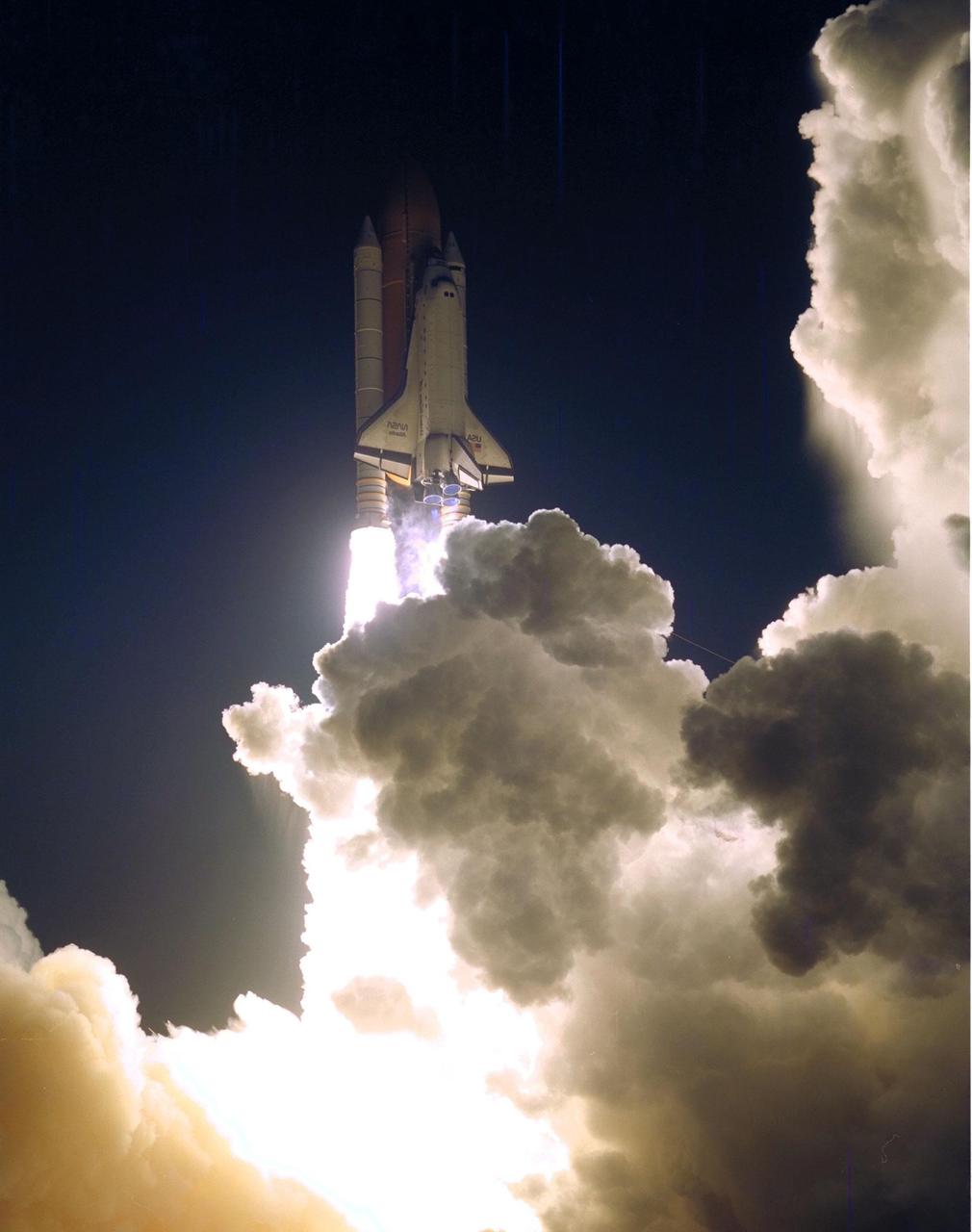
The Space Shuttle Atlantis blazes through the night sky to begin the STS-86 mission, slated to be the seventh of nine planned dockings of the Space Shuttle with the Russian Space Station Mir. Liftoff on Sept. 25 from Launch Pad 39A was at 10:34:19 p.m. EDT, within seconds of the preferred time, during a six-minute, 45-second launch window. The 10-day flight will include the transfer of the sixth U.S. astronaut to live and work aboard the Mir. After the docking, STS-86 Mission Specialist David A. Wolf will become a member of the Mir 24 crew, replacing astronaut C. Michael Foale, who will return to Earth aboard Atlantis with the remainder of the STS-86 crew. Foale has been on the Russian Space Station since mid-May. Wolf is scheduled to remain there about four months. Besides Wolf (embarking to Mir) and Foale (returning), the STS-86 crew includes Commander James D. Wetherbee, Pilot Michael J. Bloomfield, and Mission Specialists Wendy B. Lawrence, Scott E. Parazynski, Vladimir Georgievich Titov of the Russian Space Agency, and Jean-Loup J.M. Chretien of the French Space Agency, CNES. Other primary objectives of the mission are a spacewalk by Parazynski and Titov, and the exchange of about three-and-a-half tons of science/logistical equipment and supplies between Atlantis and the Mir
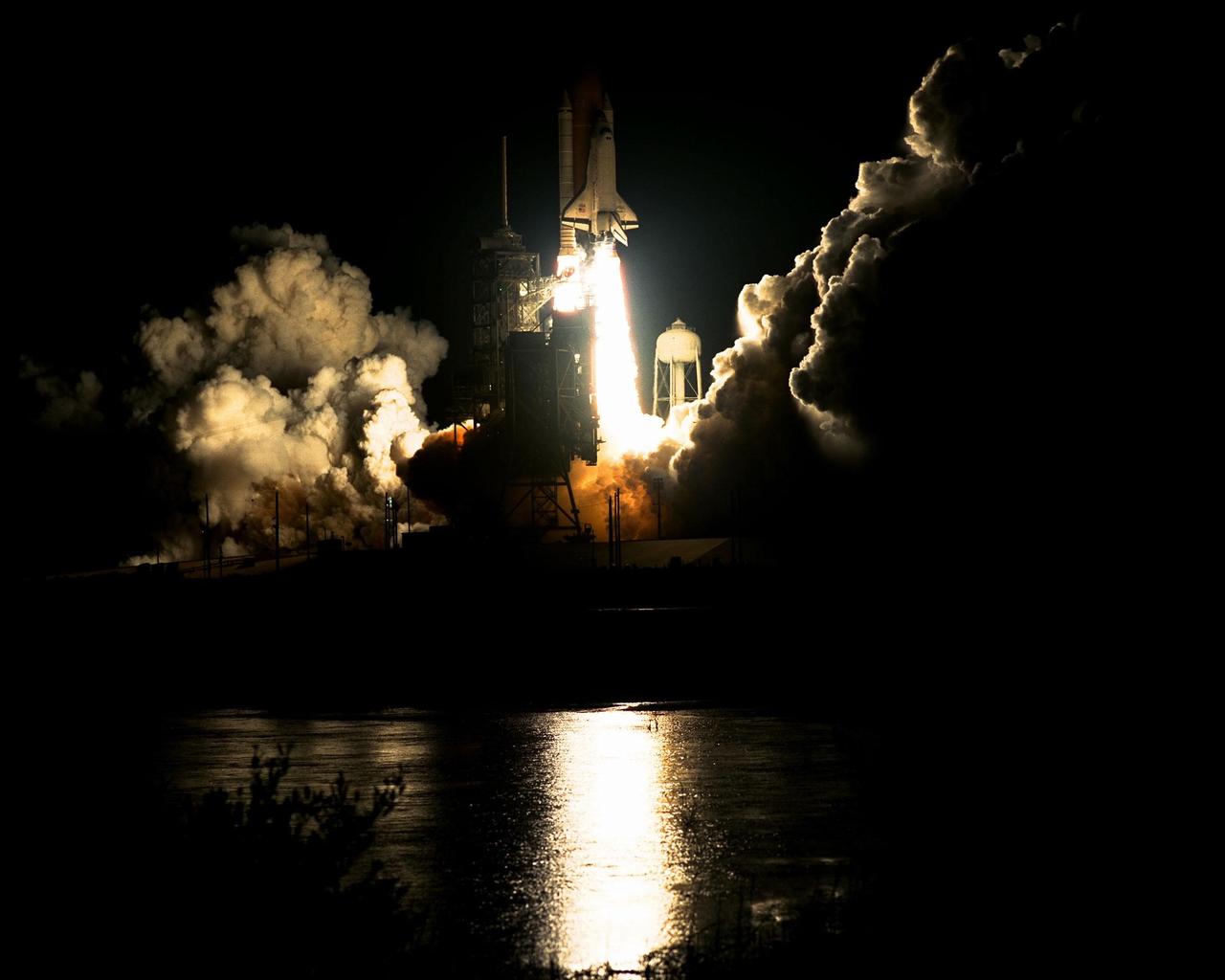
The Space Shuttle Atlantis blazes through the night sky to begin the STS-86 mission, slated to be the seventh of nine planned dockings of the Space Shuttle with the Russian Space Station Mir. Liftoff on Sept. 25 from Launch Pad 39A was at 10:34:19 p.m. EDT, within seconds of the preferred time, during a six-minute, 45-second launch window. The 10-day flight will include the transfer of the sixth U.S. astronaut to live and work aboard the Mir. After the docking, STS-86 Mission Specialist David A. Wolf will become a member of the Mir 24 crew, replacing astronaut C. Michael Foale, who will return to Earth aboard Atlantis with the remainder of the STS-86 crew. Foale has been on the Russian Space Station since mid-May. Wolf is scheduled to remain there about four months. Besides Wolf (embarking to Mir) and Foale (returning), the STS-86 crew includes Commander James D. Wetherbee, Pilot Michael J. Bloomfield, and Mission Specialists Wendy B. Lawrence, Scott E. Parazynski, Vladimir Georgievich Titov of the Russian Space Agency, and Jean-Loup J.M. Chretien of the French Space Agency, CNES. Other primary objectives of the mission are a spacewalk by Parazynski and Titov, and the exchange of about three-and-a-half tons of science/logistical equipment and supplies between Atlantis and the Mir
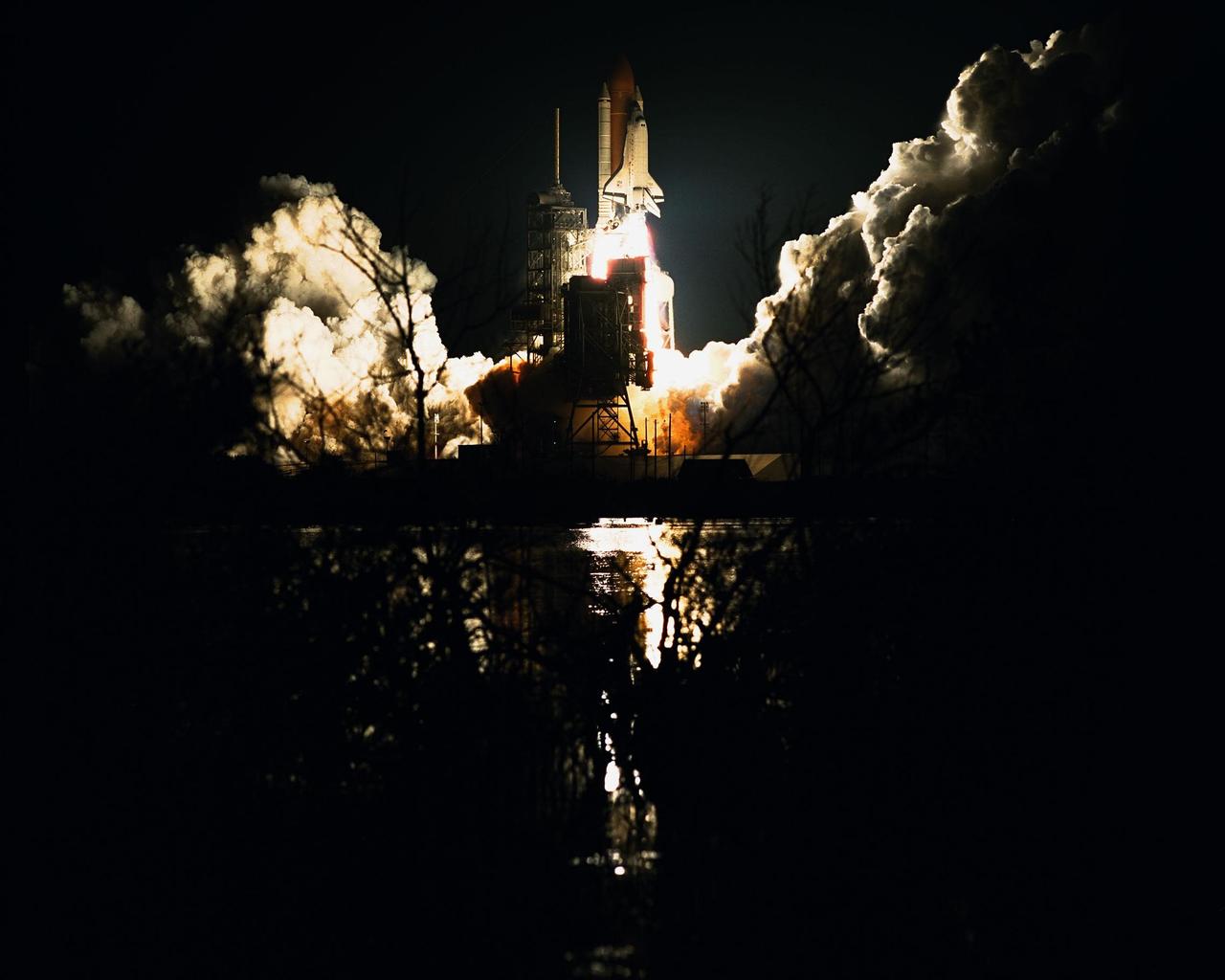
The Space Shuttle Atlantis blazes through the night sky to begin the STS-86 mission, slated to be the seventh of nine planned dockings of the Space Shuttle with the Russian Space Station Mir. Liftoff on Sept. 25 from Launch Pad 39A was at 10:34:19 p.m. EDT, within seconds of the preferred time, during a six-minute, 45-second launch window. The 10-day flight will include the transfer of the sixth U.S. astronaut to live and work aboard the Mir. After the docking, STS-86 Mission Specialist David A. Wolf will become a member of the Mir 24 crew, replacing astronaut C. Michael Foale, who will return to Earth aboard Atlantis with the remainder of the STS-86 crew. Foale has been on the Russian Space Station since mid-May. Wolf is scheduled to remain there about four months. Besides Wolf (embarking to Mir) and Foale (returning), the STS-86 crew includes Commander James D. Wetherbee, Pilot Michael J. Bloomfield, and Mission Specialists Wendy B. Lawrence, Scott E. Parazynski, Vladimir Georgievich Titov of the Russian Space Agency, and Jean-Loup J.M. Chretien of the French Space Agency, CNES. Other primary objectives of the mission are a spacewalk by Parazynski and Titov, and the exchange of about three-and-a-half tons of science/logistical equipment and supplies between Atlantis and the Mir
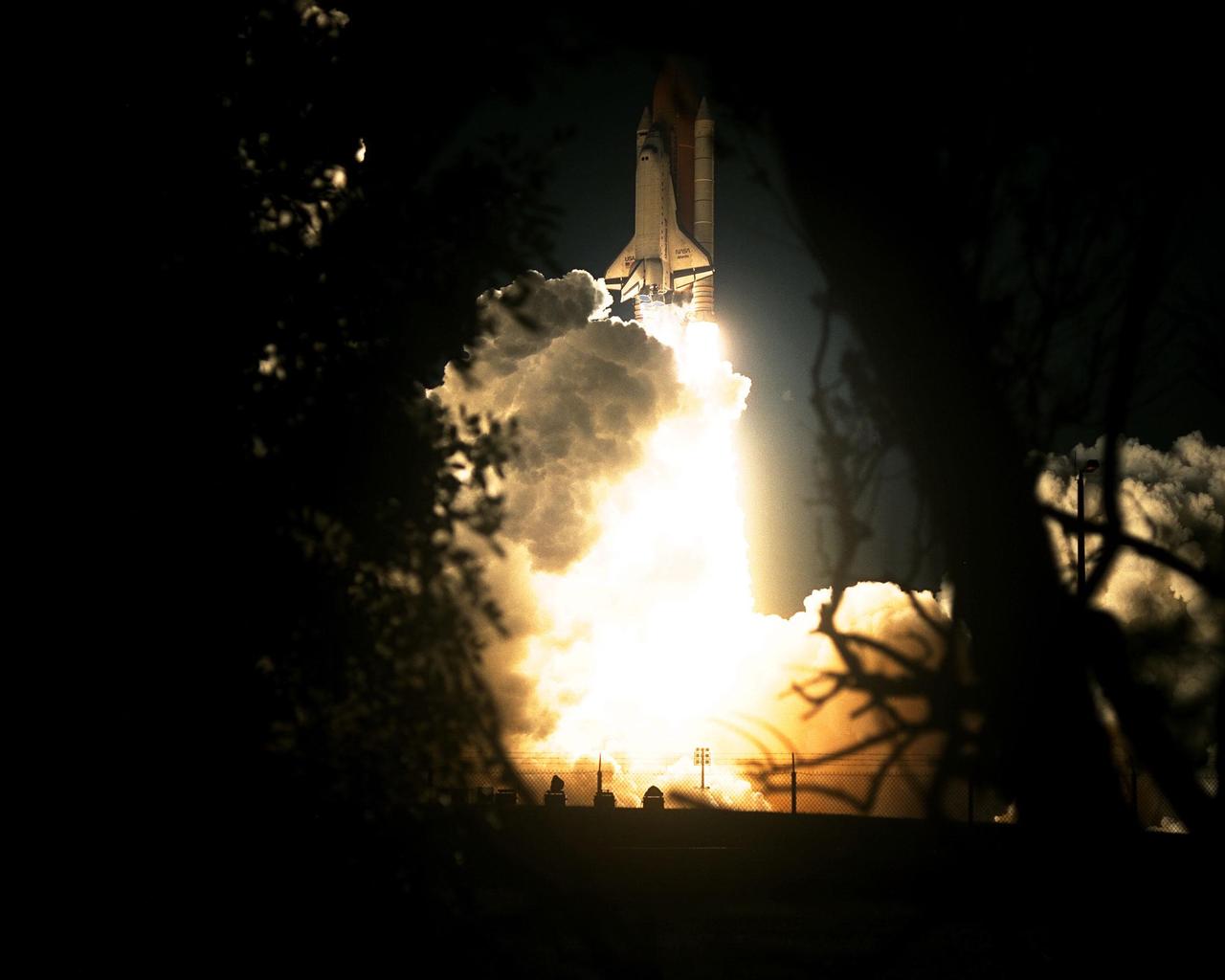
The Space Shuttle Atlantis blazes through the night sky to begin the STS-86 mission, slated to be the seventh of nine planned dockings of the Space Shuttle with the Russian Space Station Mir. Liftoff on Sept. 25 from Launch Pad 39A was at 10:34:19 p.m. EDT, within seconds of the preferred time, during a six-minute, 45-second launch window. The 10-day flight will include the transfer of the sixth U.S. astronaut to live and work aboard the Mir. After the docking, STS-86 Mission Specialist David A. Wolf will become a member of the Mir 24 crew, replacing astronaut C. Michael Foale, who will return to Earth aboard Atlantis with the remainder of the STS-86 crew. Foale has been on the Russian Space Station since mid-May. Wolf is scheduled to remain there about four months. Besides Wolf (embarking to Mir) and Foale (returning), the STS-86 crew includes Commander James D. Wetherbee, Pilot Michael J. Bloomfield, and Mission Specialists Wendy B. Lawrence, Scott E. Parazynski, Vladimir Georgievich Titov of the Russian Space Agency, and Jean-Loup J.M. Chretien of the French Space Agency, CNES. Other primary objectives of the mission are a spacewalk by Parazynski and Titov, and the exchange of about three-and-a-half tons of science/logistical equipment and supplies between Atlantis and the Mir
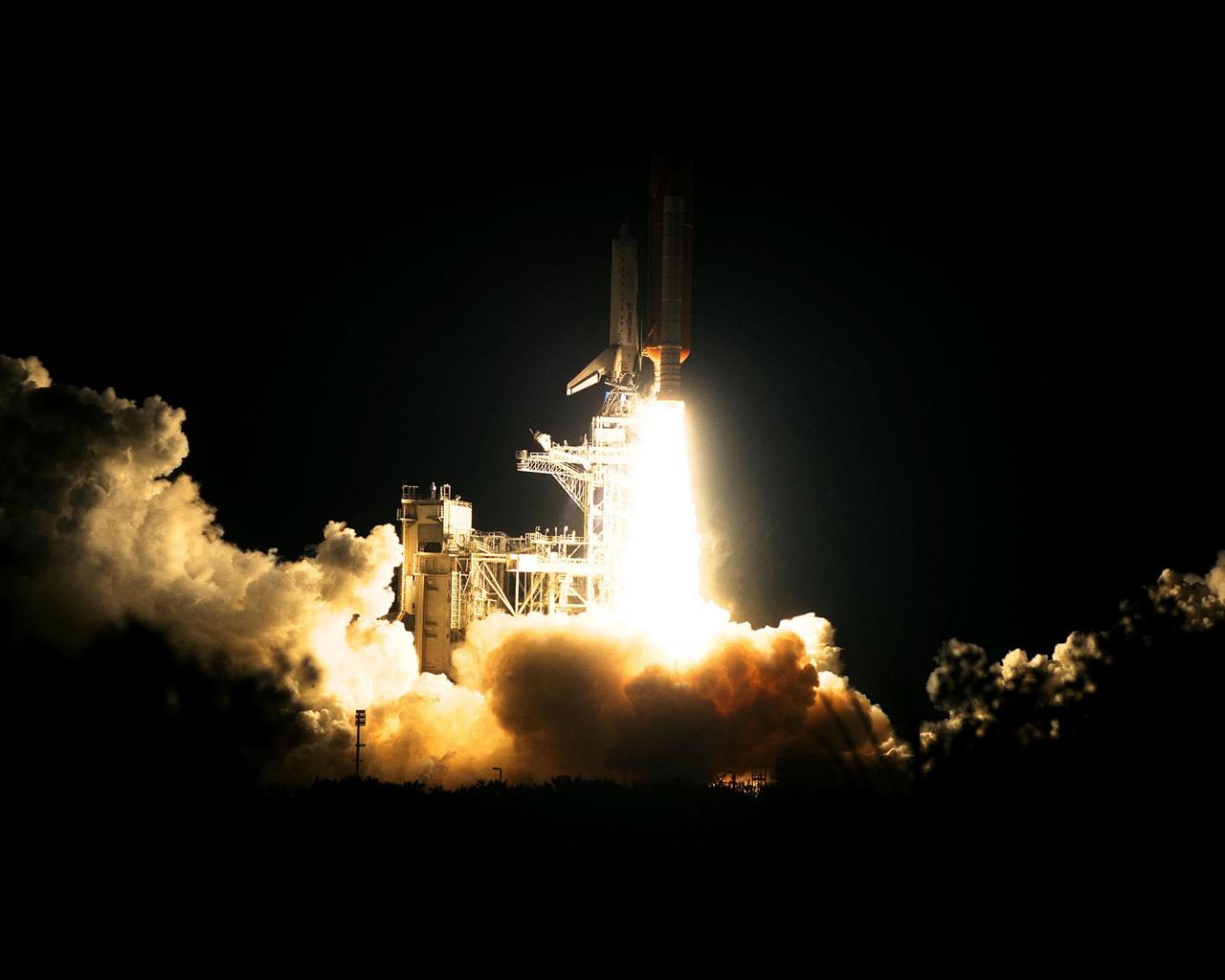
The Space Shuttle Atlantis blazes through the night sky to begin the STS-86 mission, slated to be the seventh of nine planned dockings of the Space Shuttle with the Russian Space Station Mir. Liftoff on Sept. 25 from Launch Pad 39A was at 10:34:19 p.m. EDT, within seconds of the preferred time, during a six-minute, 45-second launch window. The 10-day flight will include the transfer of the sixth U.S. astronaut to live and work aboard the Mir. After the docking, STS-86 Mission Specialist David A. Wolf will become a member of the Mir 24 crew, replacing astronaut C. Michael Foale, who will return to Earth aboard Atlantis with the remainder of the STS-86 crew. Foale has been on the Russian Space Station since mid-May. Wolf is scheduled to remain there about four months. Besides Wolf (embarking to Mir) and Foale (returning), the STS-86 crew includes Commander James D. Wetherbee, Pilot Michael J. Bloomfield, and Mission Specialists Wendy B. Lawrence, Scott E. Parazynski, Vladimir Georgievich Titov of the Russian Space Agency, and Jean-Loup J.M. Chretien of the French Space Agency, CNES. Other primary objectives of the mission are a spacewalk by Parazynski and Titov, and the exchange of about three-and-a-half tons of science/logistical equipment and supplies between Atlantis and the Mir
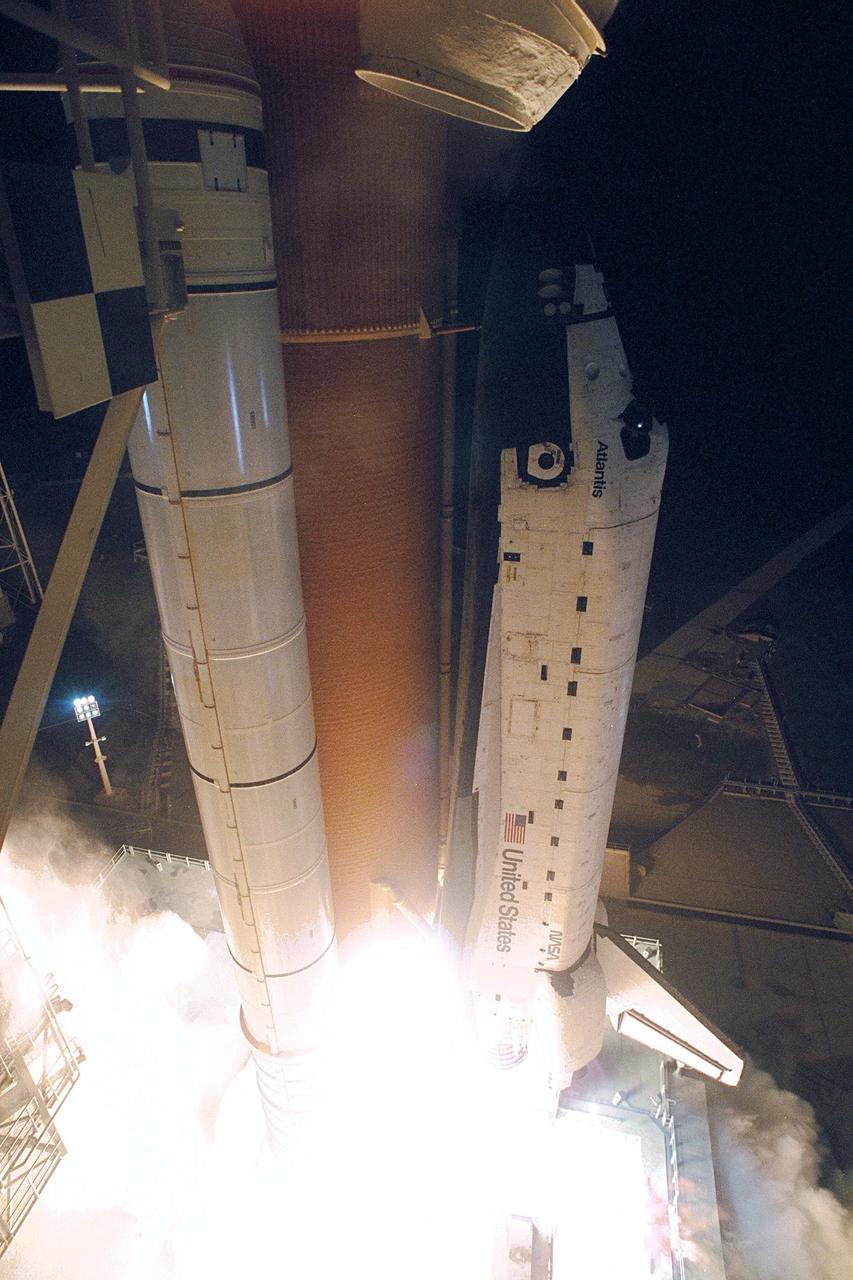
The Space Shuttle Atlantis blazes through the night sky to begin the STS-86 mission, slated to be the seventh of nine planned dockings of the Space Shuttle with the Russian Space Station Mir. Liftoff on Sept. 25 from Launch Pad 39A was at 10:34:19 p.m. EDT, within seconds of the preferred time, during a six-minute, 45-second launch window. The 10-day flight will include the transfer of the sixth U.S. astronaut to live and work aboard the Mir. After the docking, STS-86 Mission Specialist David A. Wolf will become a member of the Mir 24 crew, replacing astronaut C. Michael Foale, who will return to Earth aboard Atlantis with the remainder of the STS-86 crew. Foale has been on the Russian Space Station since mid-May. Wolf is scheduled to remain there about four months. Besides Wolf (embarking to Mir) and Foale (returning), the STS-86 crew includes Commander James D. Wetherbee, Pilot Michael J. Bloomfield, and Mission Specialists Wendy B. Lawrence, Scott E. Parazynski, Vladimir Georgievich Titov of the Russian Space Agency, and Jean-Loup J.M. Chretien of the French Space Agency, CNES. Other primary objectives of the mission are a spacewalk by Parazynski and Titov, and the exchange of about three-and-a-half tons of science/logistical equipment and supplies between Atlantis and the Mir
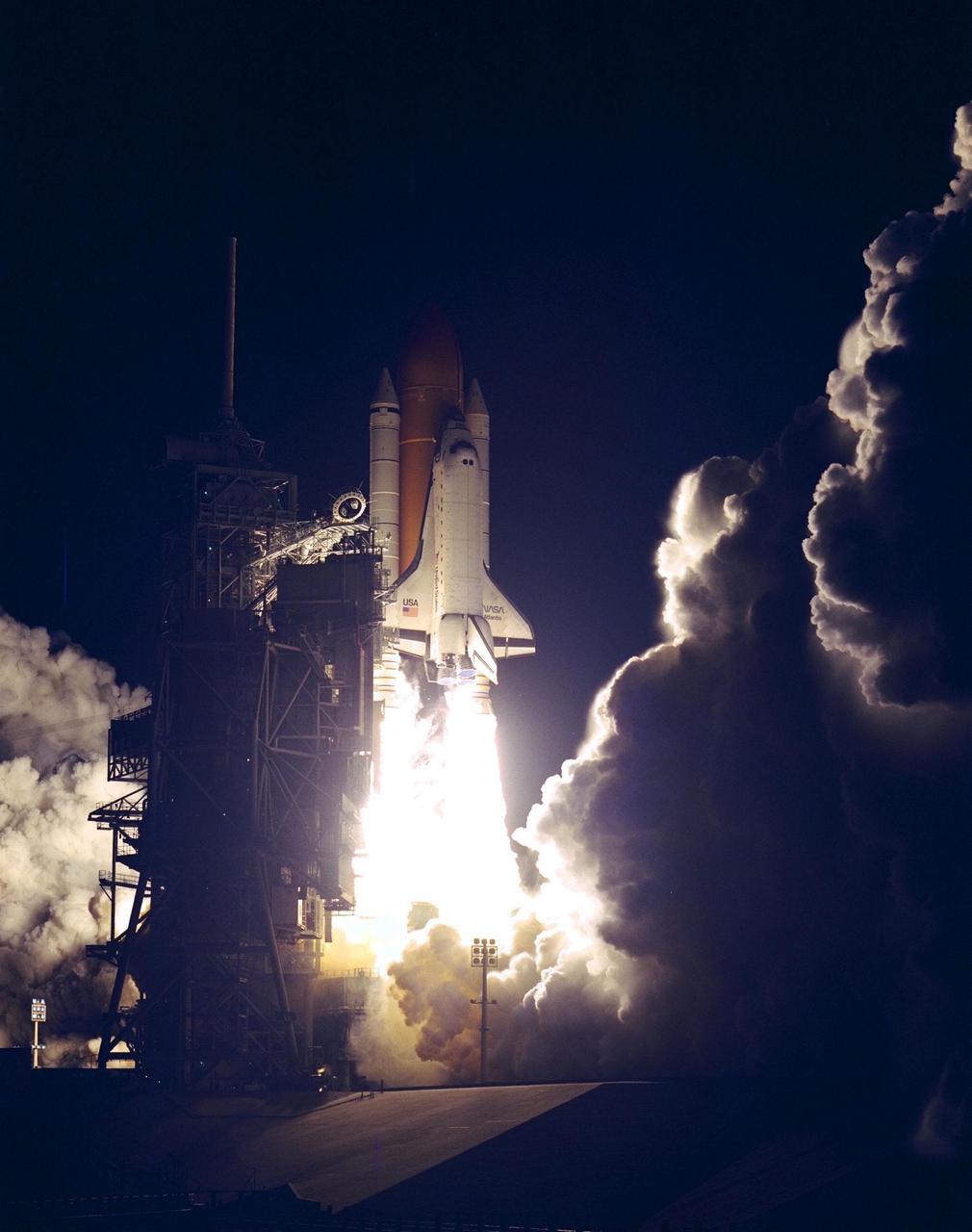
The Space Shuttle Atlantis blazes through the night sky to begin the STS-86 mission, slated to be the seventh of nine planned dockings of the Space Shuttle with the Russian Space Station Mir. Liftoff on Sept. 25 from Launch Pad 39A was at 10:34:19 p.m. EDT, within seconds of the preferred time, during a six-minute, 45-second launch window. The 10-day flight will include the transfer of the sixth U.S. astronaut to live and work aboard the Mir. After the docking, STS-86 Mission Specialist David A. Wolf will become a member of the Mir 24 crew, replacing astronaut C. Michael Foale, who will return to Earth aboard Atlantis with the remainder of the STS-86 crew. Foale has been on the Russian Space Station since mid-May. Wolf is scheduled to remain there about four months. Besides Wolf (embarking to Mir) and Foale (returning), the STS-86 crew includes Commander James D. Wetherbee, Pilot Michael J. Bloomfield, and Mission Specialists Wendy B. Lawrence, Scott E. Parazynski, Vladimir Georgievich Titov of the Russian Space Agency, and Jean-Loup J.M. Chretien of the French Space Agency, CNES. Other primary objectives of the mission are a spacewalk by Parazynski and Titov, and the exchange of about three-and-a-half tons of science/logistical equipment and supplies between Atlantis and the Mir
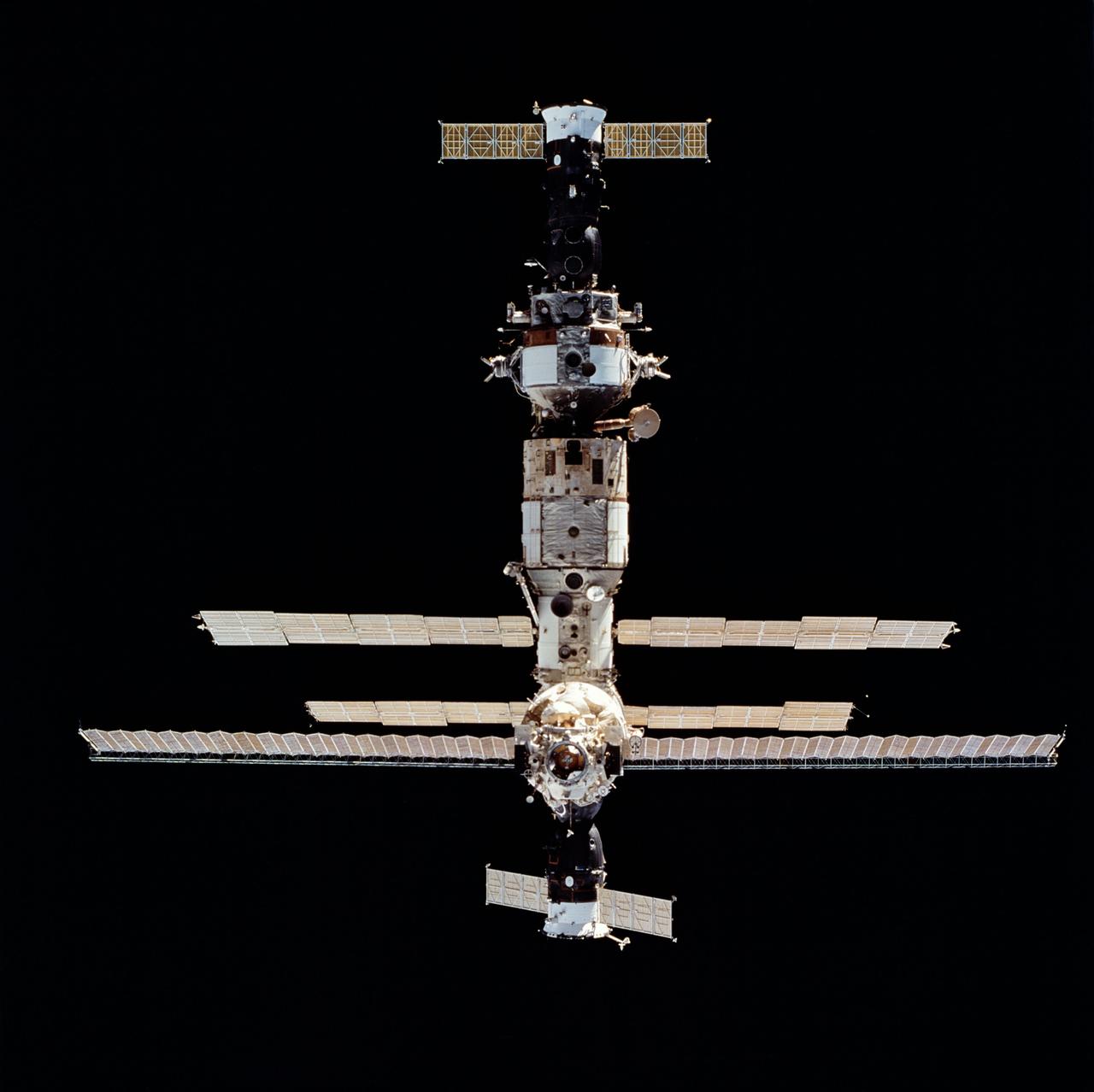
STS063-712-068 (6 Feb 1995) --- Russia's Mir Space Station during rendezvous operations with the Space Shuttle Discovery. Docked at bottom (nearest portion where longest solar array panel is visible) is a Soyuz space vehicle. On the opposite end is a Progress spacecraft. This is one of 16 still photographs released by the NASA Johnson Space Center (JSC) Public Affairs Office (PAO) on February 14, 1995. Onboard the Space Shuttle Discovery were astronauts James D. Wetherbee, mission commander; Eileen M. Collins, pilot; Bernard A. Harris, Jr., payload commander; mission specialists C. Michael Foale, Janice E. Voss, and cosmonaut Vladimir G. Titov.
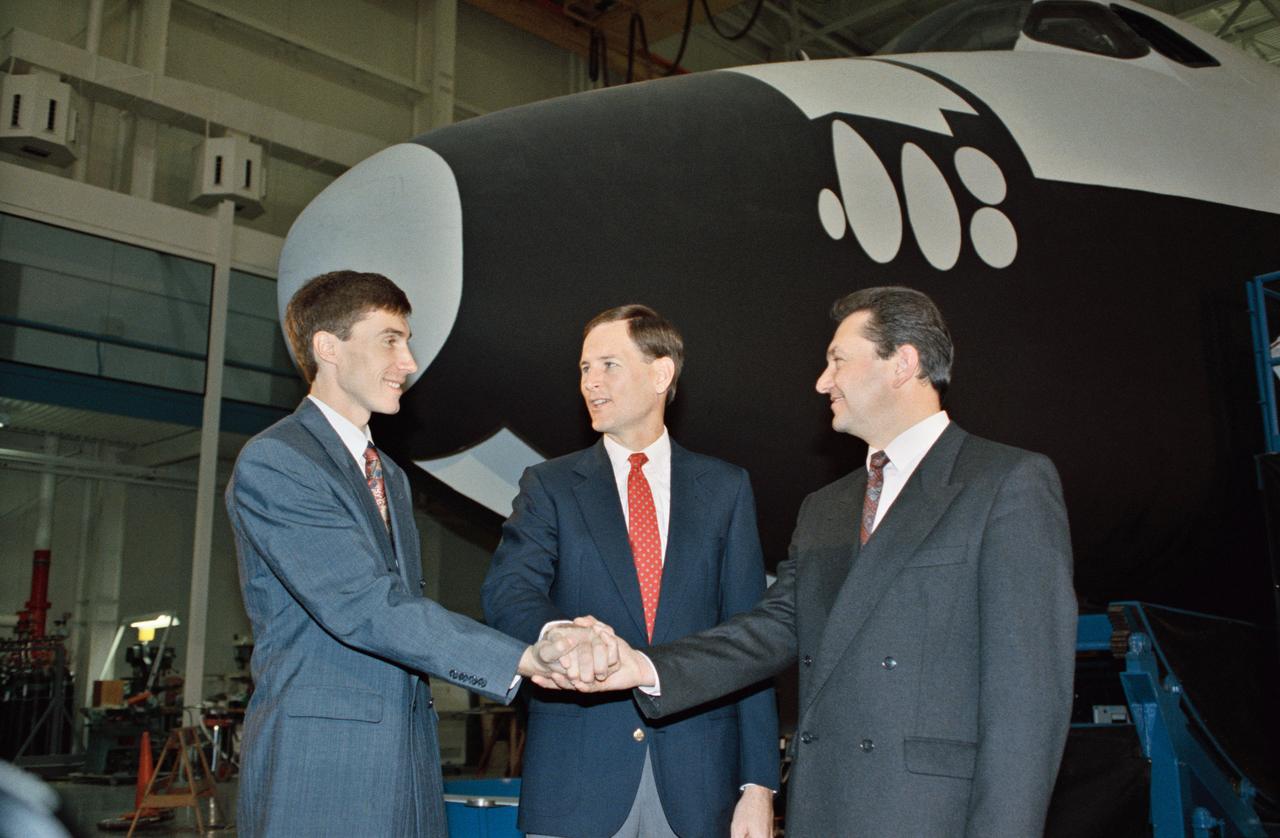
S92-49715 (10 Nov 1992) --- Russian cosmonauts Sergei Krikalev (left), and Vladimir Titov (right) share a team handshake with Kenneth L. Reightler, STS-60 pilot. The cosmonauts toured the Space Shuttle mockup and integration laboratory, in which they will undergo a great deal of training in preparation for the mission. One of the two will later be named as prime payload specialist and the second will serve as his alternate. The six person crew, to be led by astronaut Charles F. Bolden, mission commander, will man the Space Shuttle Discovery for the scheduled eight-day flight.
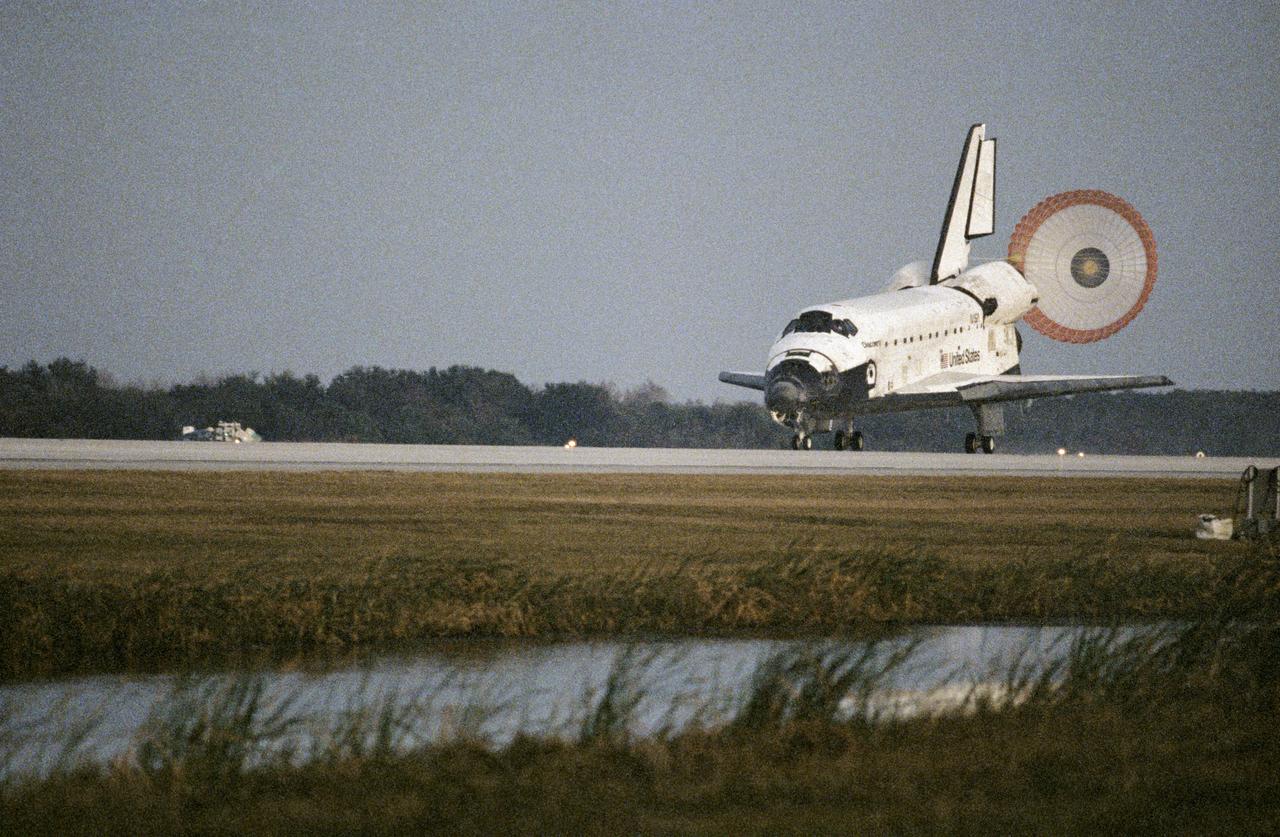
STS063-S-015 (11 Feb. 1995) --- The Space Shuttle Discovery deploys its drag chute on Runway 15 at the Kennedy Space Center's (KSC) Shuttle Landing Facility as it wraps up an eight-day mission. Touchdown occurred at 6:50:19 a.m. (EST), February 11, 1995. Onboard the Space Shuttle Discovery were astronauts James D. Wetherbee, mission commander; Eileen M. Collins, pilot; Bernard A. Harris Jr., payload commander; mission specialists C. Michael Foale, Janice E. Voss, and cosmonaut Vladimir G. Titov.
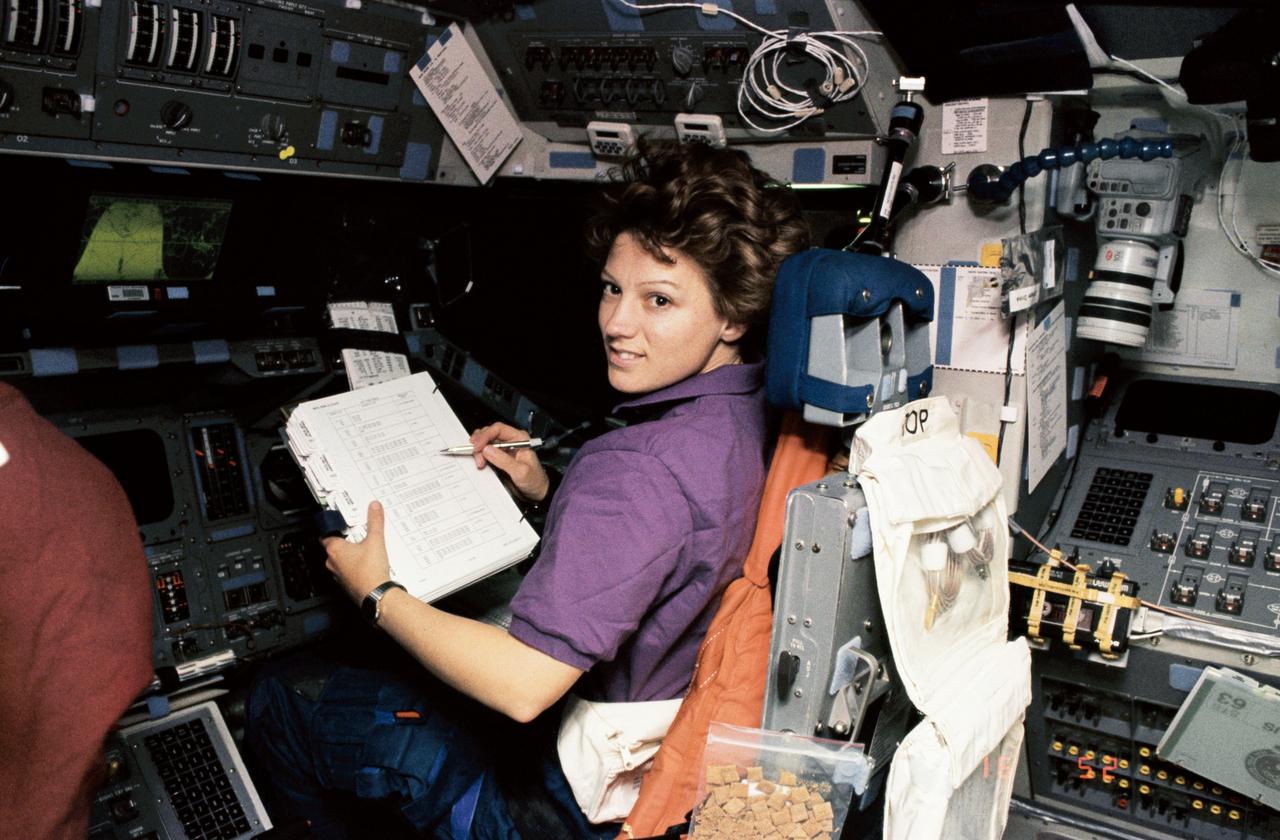
STS063-312-020 (3-11 Feb. 1995) --- Astronaut Eileen M. Collins, pilot, at the pilot's station during "hotfiring" procedure to clear leaking thruster prior to rendezvous with Russia's Mir Space Station. Others onboard the Space Shuttle Discovery were astronauts James D. Wetherbee, mission commander; Bernard A. Harris, Jr., payload commander; mission specialists C. Michael Foale and Janice E. Voss, and cosmonaut Vladimir G. Titov. This is one of 16 still photographs released by the NASA Johnson Space Center (JSC) Public Affairs Office (PAO) on February 14, 1995.
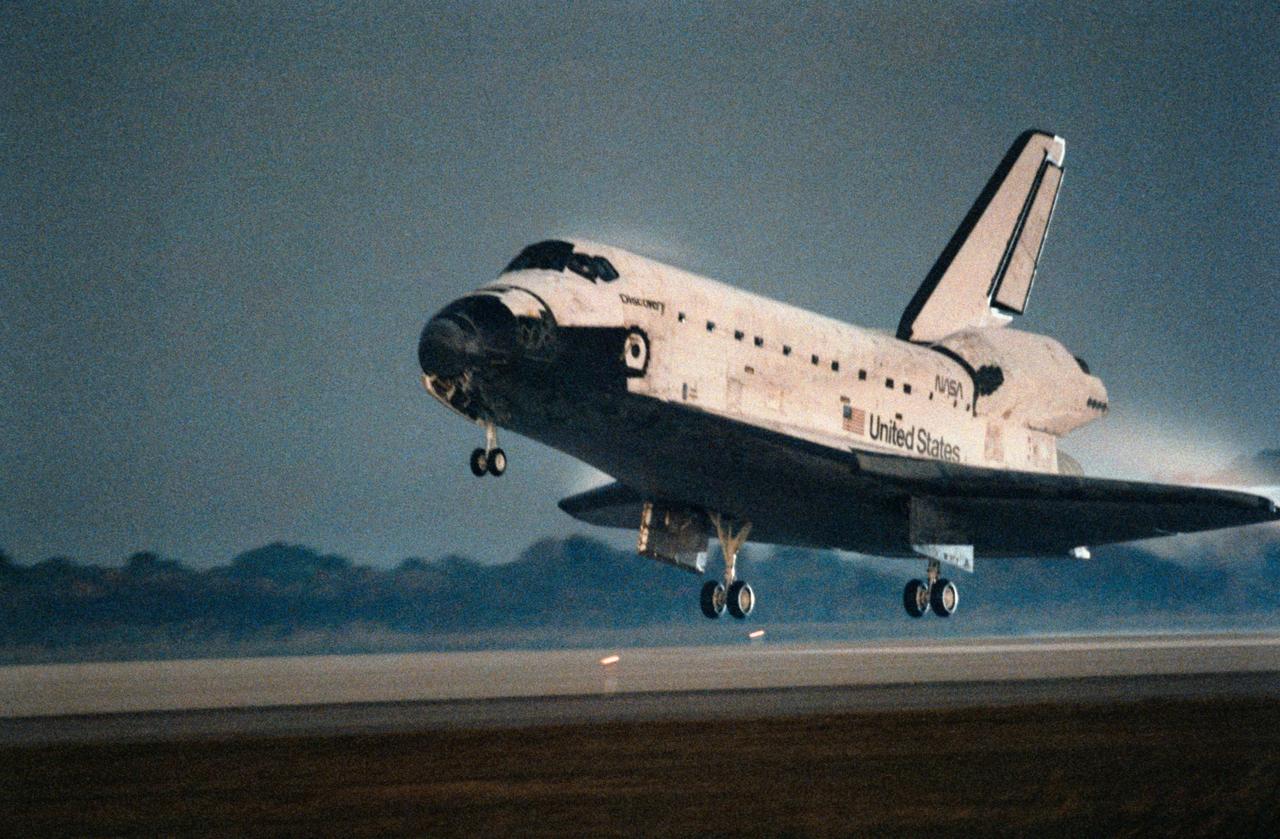
STS063-S-012 (11 Feb 1995) --- The Space Shuttle Discovery is about to touch down on Runway 15 at the Kennedy Space Center's (KSC) Shuttle Landing Facility to complete an eight-day mission. Touchdown occurred at 6:50:19 a.m. (EST), February 11, 1995. Onboard the Space Shuttle Discovery were astronauts James D. Wetherbee, mission commander; Eileen M. Collins, pilot; Bernard A. Harris Jr., payload commander; mission specialists C. Michael Foale, Janice E. Voss, and cosmonaut Vladimir G. Titov.
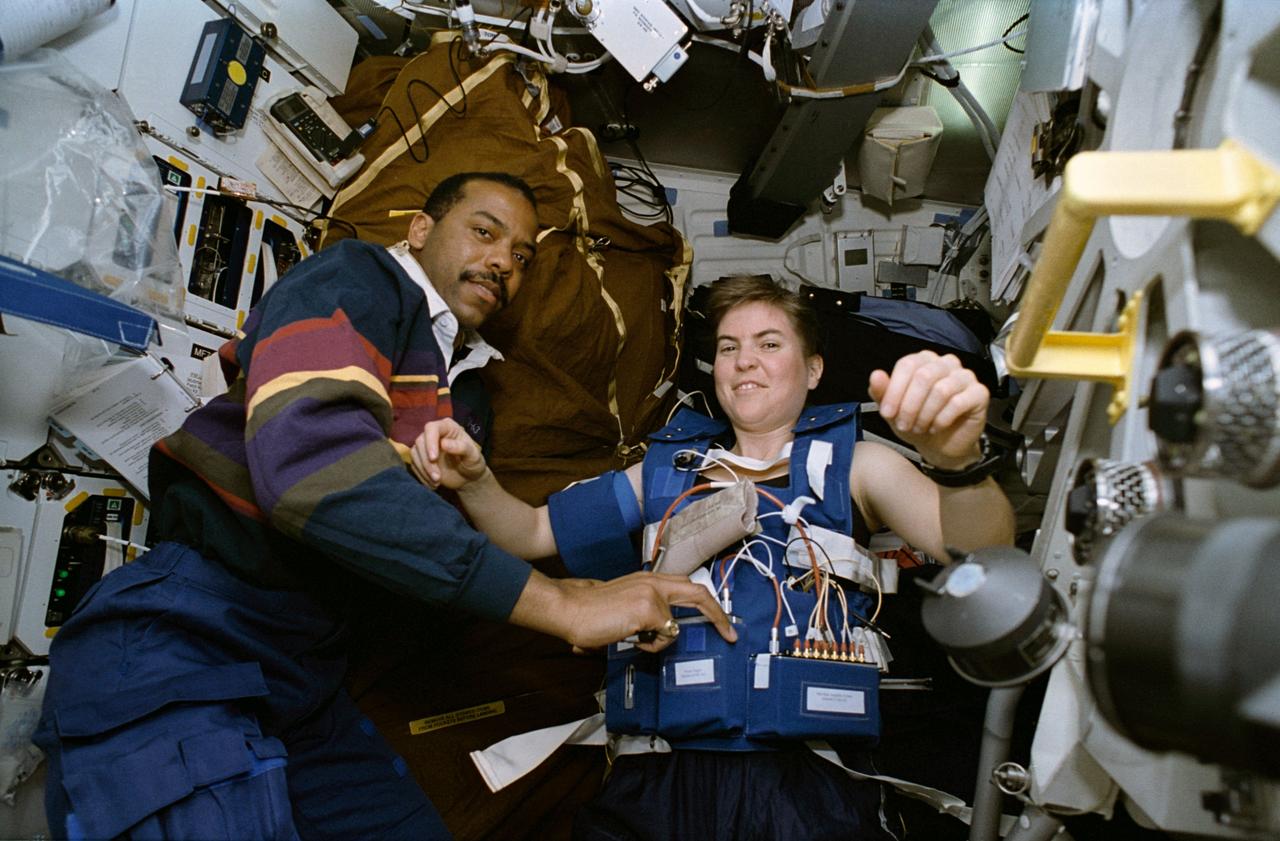
STS063-86-016 (3-11 Feb 1995) --- With astronaut Janice E. Voss, mission specialist, as his test subject, astronaut Bernard A. Harris, Jr., payload commander and a physician, uses a special biomedical harness experiment to check the response of muscles to microgravity. They are on the mid-deck, where many of the SpaceHab 3 experiments are located. The SpaceHab 3 Module is in the cargo bay. Others onboard the Space Shuttle Discovery were astronauts James D. Wetherbee, commander; Eileen M. Collins, pilot; mission specialists C. Michael Foale and Russian cosmonaut Vladimir G. Titov.
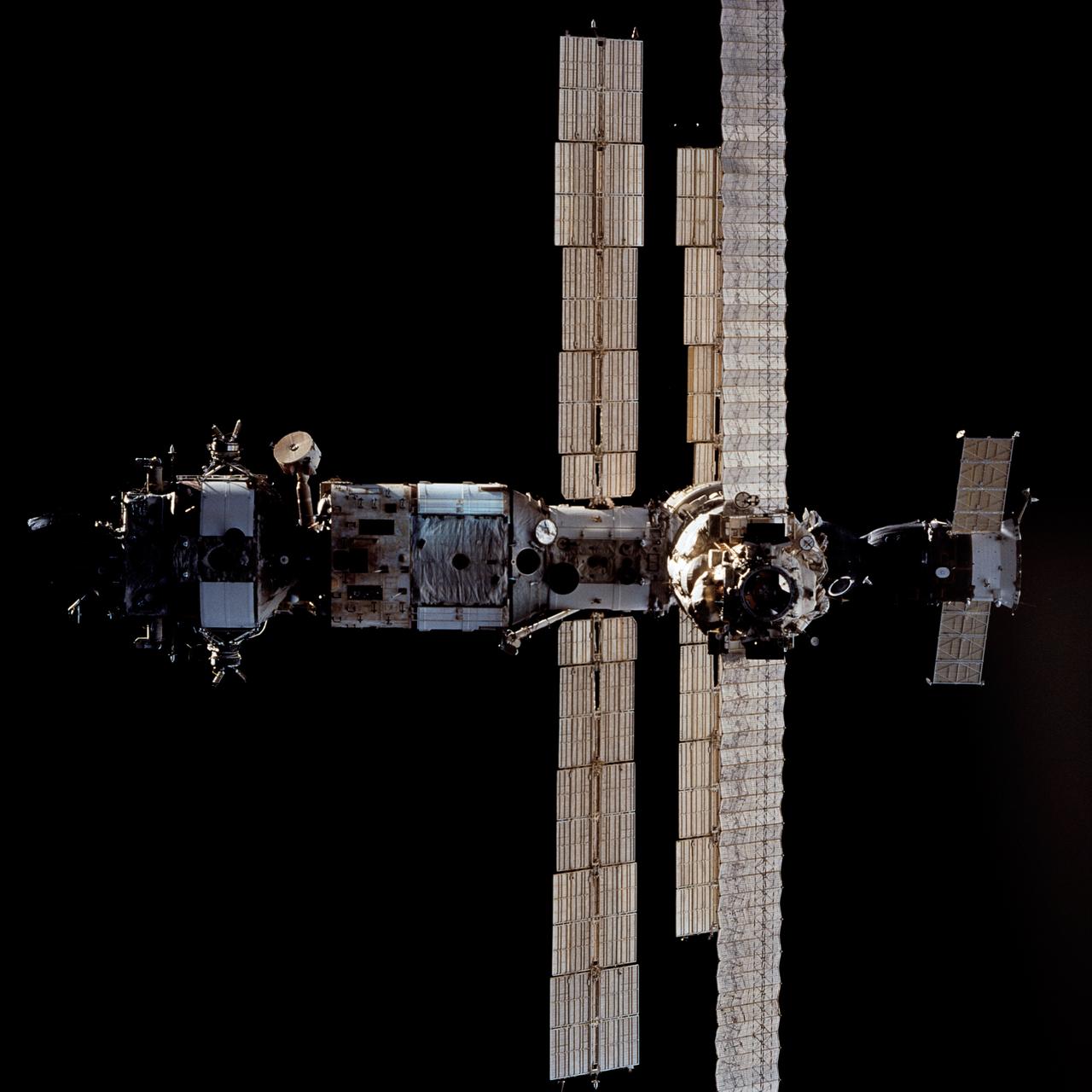
STS063-712-017 (6 Feb. 1995) --- Russia's Mir Space Station during rendezvous operations with the Space Shuttle Discovery. Docked at the bottom of the Mir facility is a Soyuz spacecraft. On the opposite end (almost cropped out of frame at top) is a Progress spacecraft. Onboard the Space Shuttle Discovery were astronauts James D. Wetherbee, mission commander; Eileen M. Collins, pilot; Bernard A. Harris, Jr., payload commander; C. Michael Foale and Janice E. Voss, mission specialists; along with cosmonaut Vladimir G. Titov, mission specialist.
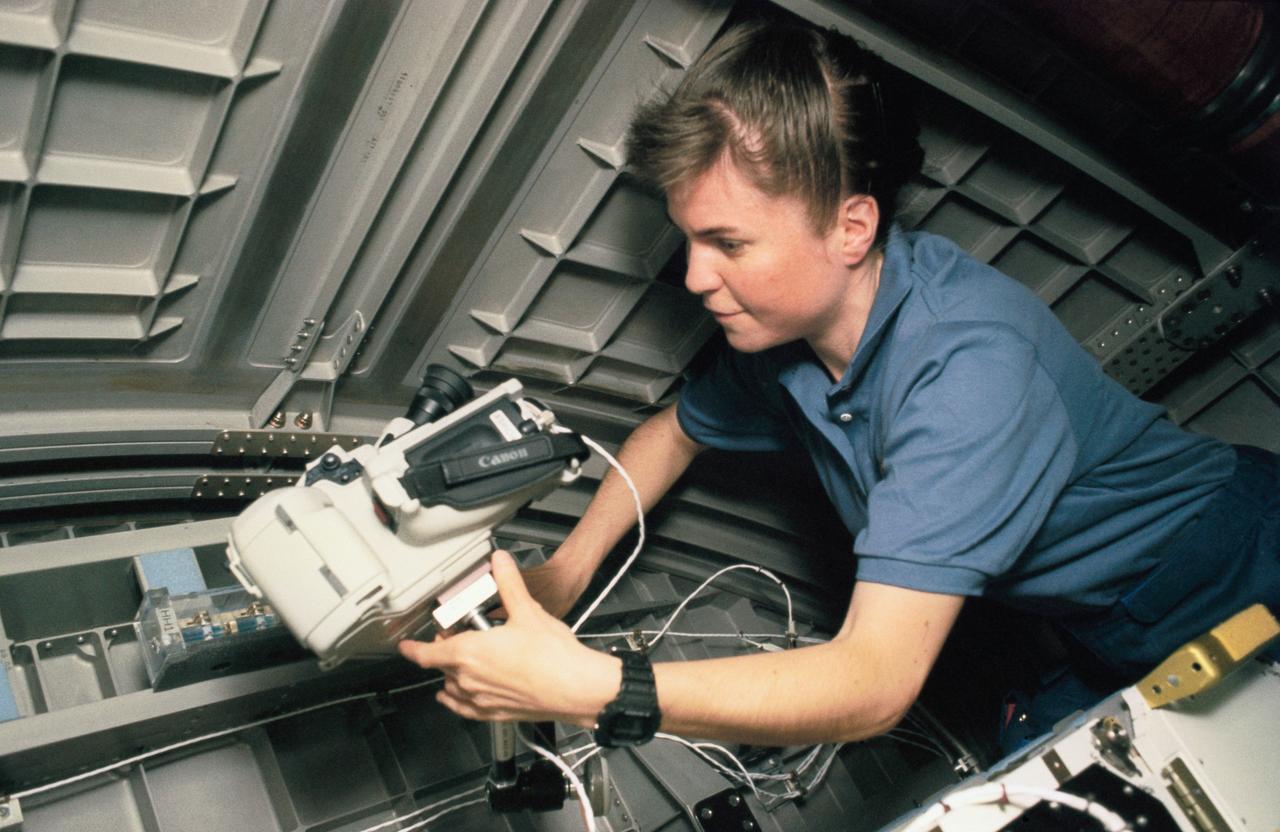
STS063-313-018 (3-11 Feb 1995) --- Janice E. Voss, mission specialist, with a video camera in SpaceHab-3 onboard the Space Shuttle Discovery. This is one of 16 still photographs released by the NASA Johnson Space Center (JSC) Public Affairs Office (PAO) on February 14, 1995. Others onboard the Discovery were astronauts James D. Wetherbee, mission commander; Eileen M. Collins, pilot; Bernard A. Harris Jr., payload commander; mission specialists C. Michael Foale, and cosmonaut Vladimir G. Titov.
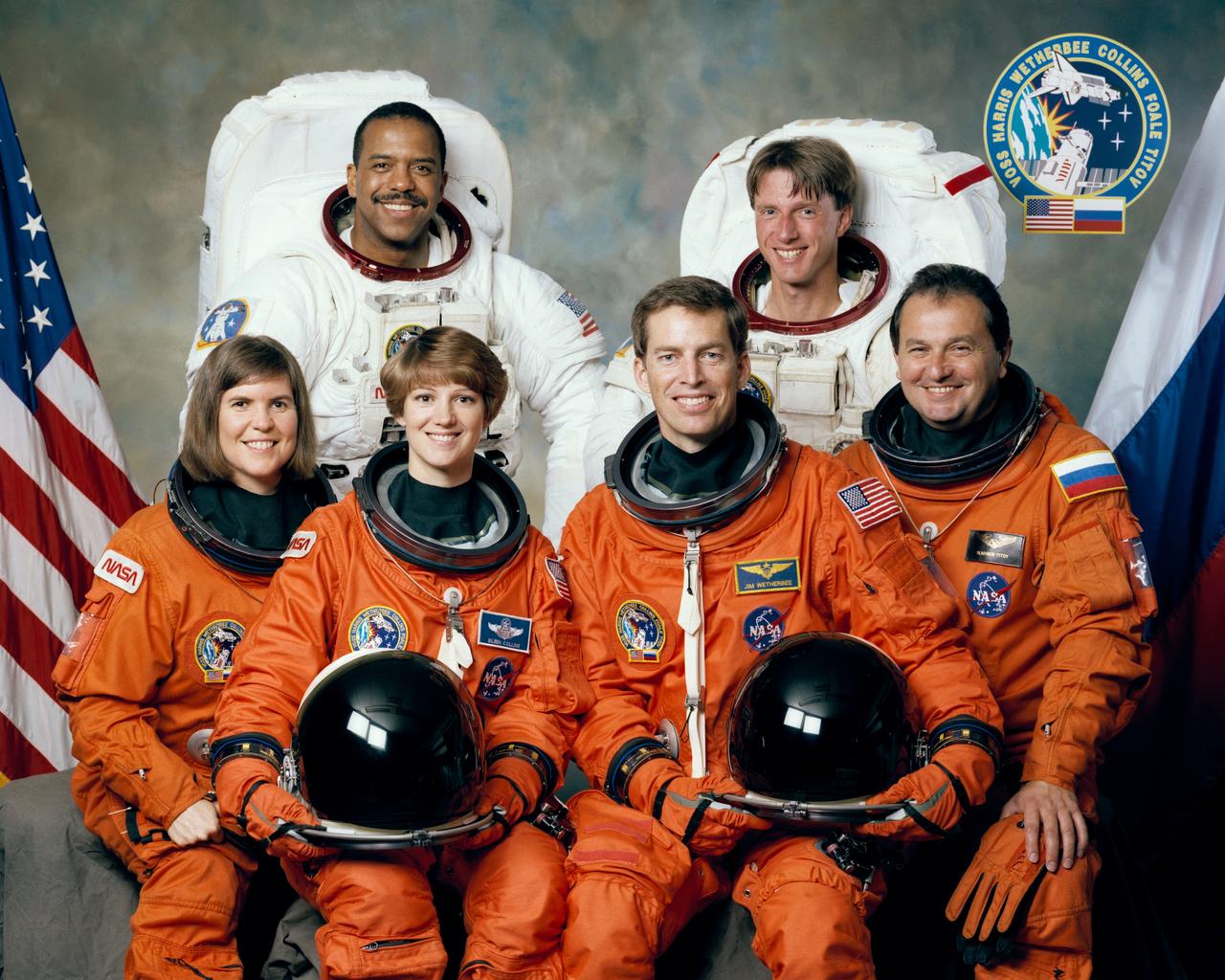
STS063-S-002 (November 1994) --- With the United States and Russian flags in the background, five NASA astronauts and a Russian cosmonaut named to fly aboard the Space Shuttle Discovery for the mission pose for the flight crew portrait at the Johnson Space Center (JSC). Left to right (front row) are Janice E. Voss, mission specialist; Eileen M. Collins, pilot; James D. Wetherbee, mission commander; and Vladimir Titov of the Russian Space Agency (RSA), mission specialist. In the rear are Bernard A. Harris Jr., payload commander; and C. Michael Foale, mission specialist.
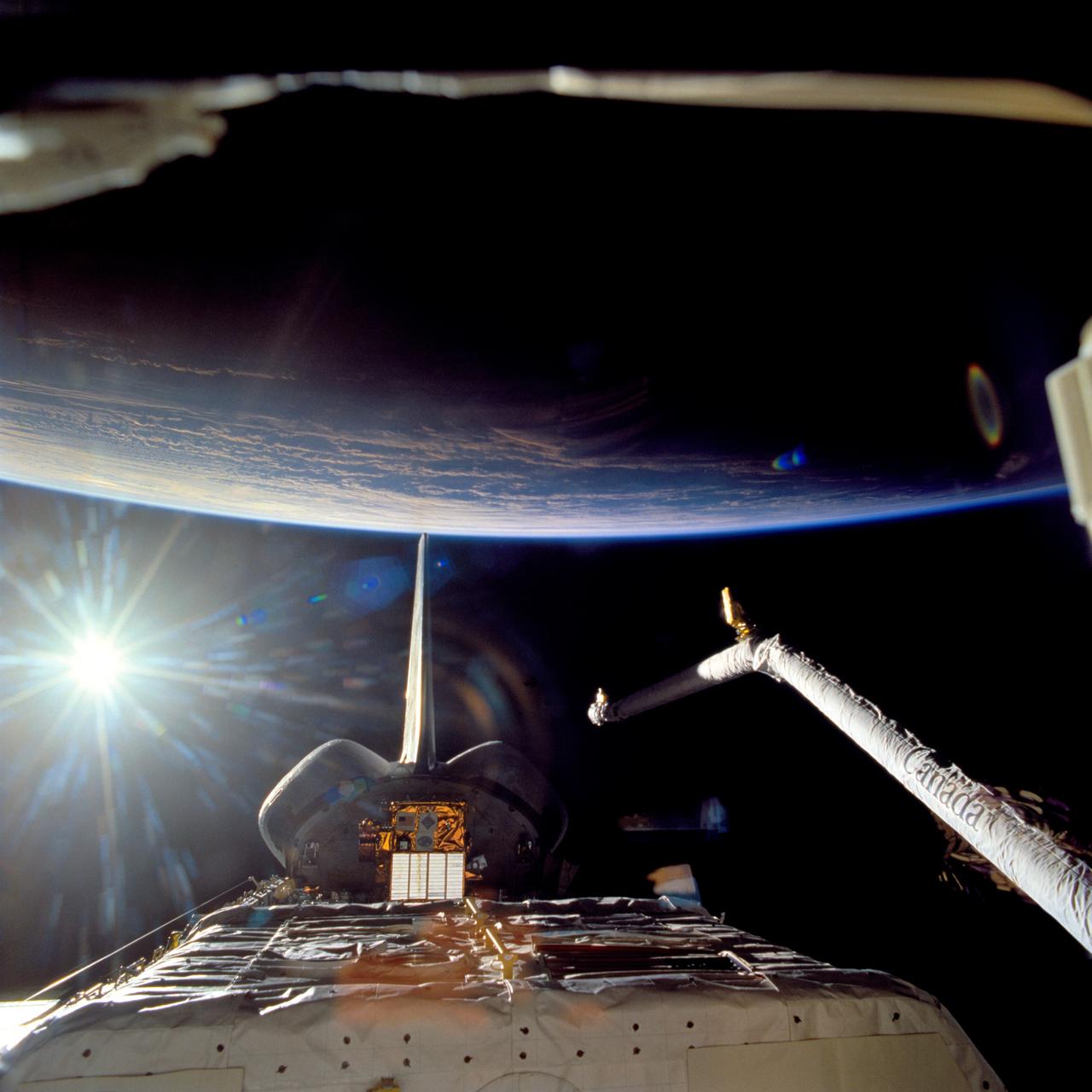
STS063-716-025 (9 Feb. 1995) --- In tail-to Earth mode, the Space Shuttle Discovery is backdropped against dark space, Sunburst and massive clouds over the ocean. The Spartan 204 is visible in the cargo bay. This is one of 16 still photographs released by the NASA Johnson Space Center (JSC) Public Affairs Office (PAO) on February 14, 1995. Onboard Discovery were astronauts James D. Wetherbee, mission commander; Eileen M. Collins, pilot; Bernard A. Harris, Jr., payload commander; mission specialists C. Michael Foale, Janice E. Voss, and cosmonaut Vladimir G. Titov.
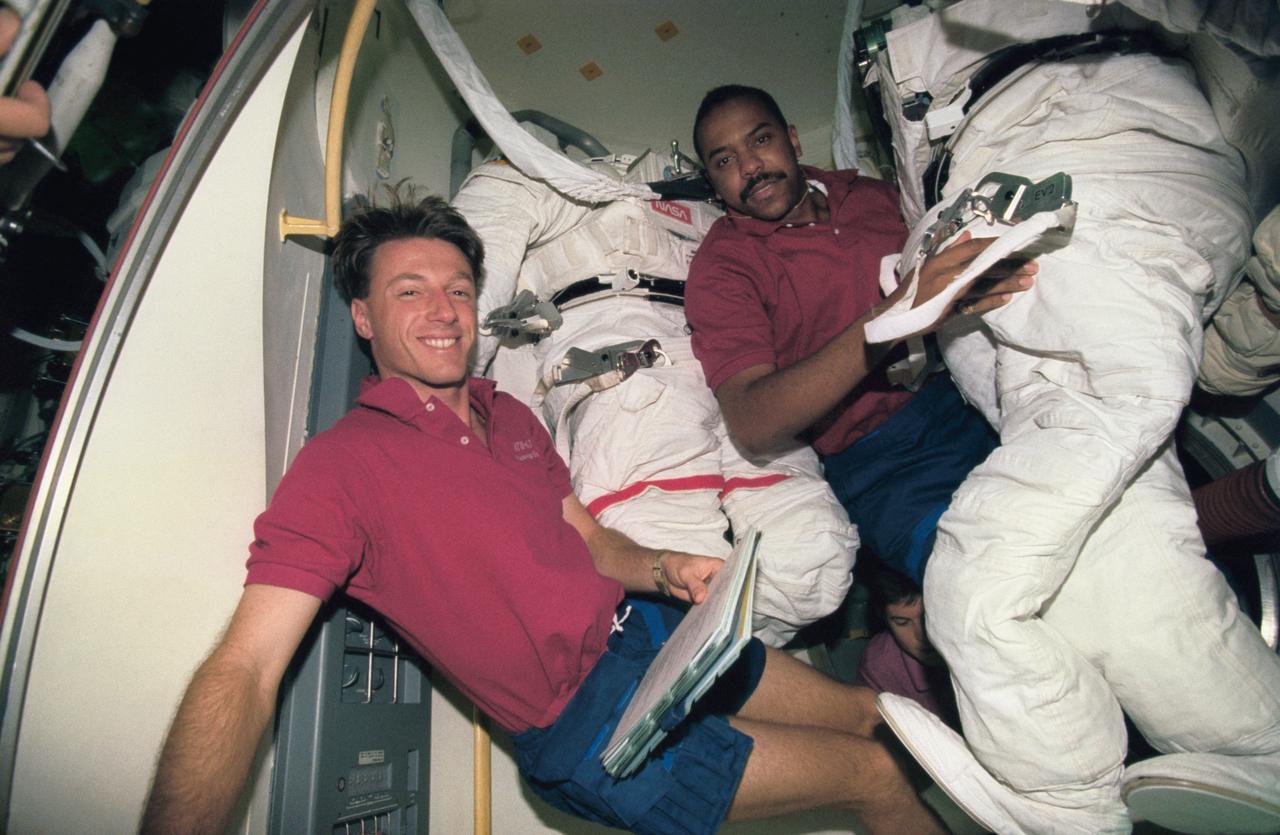
STS063-314-005 (9 Feb 1995) --- Astronaut's C. Michael Foale, mission specialist, (left) and Bernard A. Harris Jr., payload commander, prepare suits prior to their Extravehicular Activity (EVA). This is one of 16 still photographs released by the NASA Johnson Space Center (JSC) Public Affairs Office (PAO) on February 14, 1995. Others onboard the Space Shuttle Discovery were astronauts James D. Wetherbee, mission commander; Eileen M. Collins, pilot; mission specialists Janice E. Voss, and cosmonaut Vladimir G. Titov representing the Russian Space Agency (RSA).
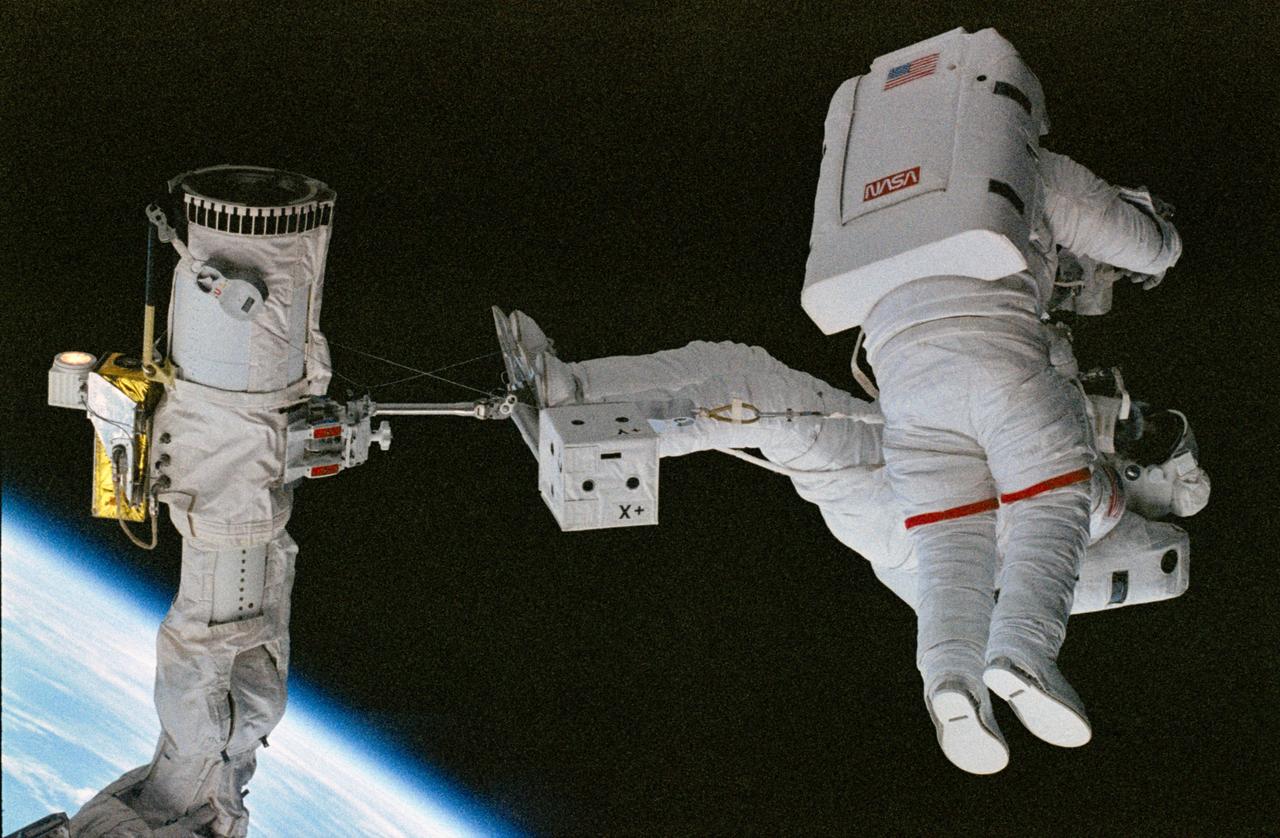
STS063-21-011 (9 Feb 1995) --- Astronaut Bernard A. Harris, Jr., payload commander, standing on a foot restraint attached to the Remote Manipulator System (RMS) arm carries astronaut C. Michael Foale, mission specialist, during their shared Extravehicular Activity (EVA) in the Space Shuttle Discovery's cargo bay. This is one of 16 still photographs released by the NASA Johnson Space Center (JSC) Public Affairs Office (PAO) on February 14, 1995. Others onboard the Discovery were astronauts James D. Wetherbee, mission commander; Eileen M. Collins, pilot; mission specialists Janice E. Voss and cosmonaut Vladimir G. Titov.
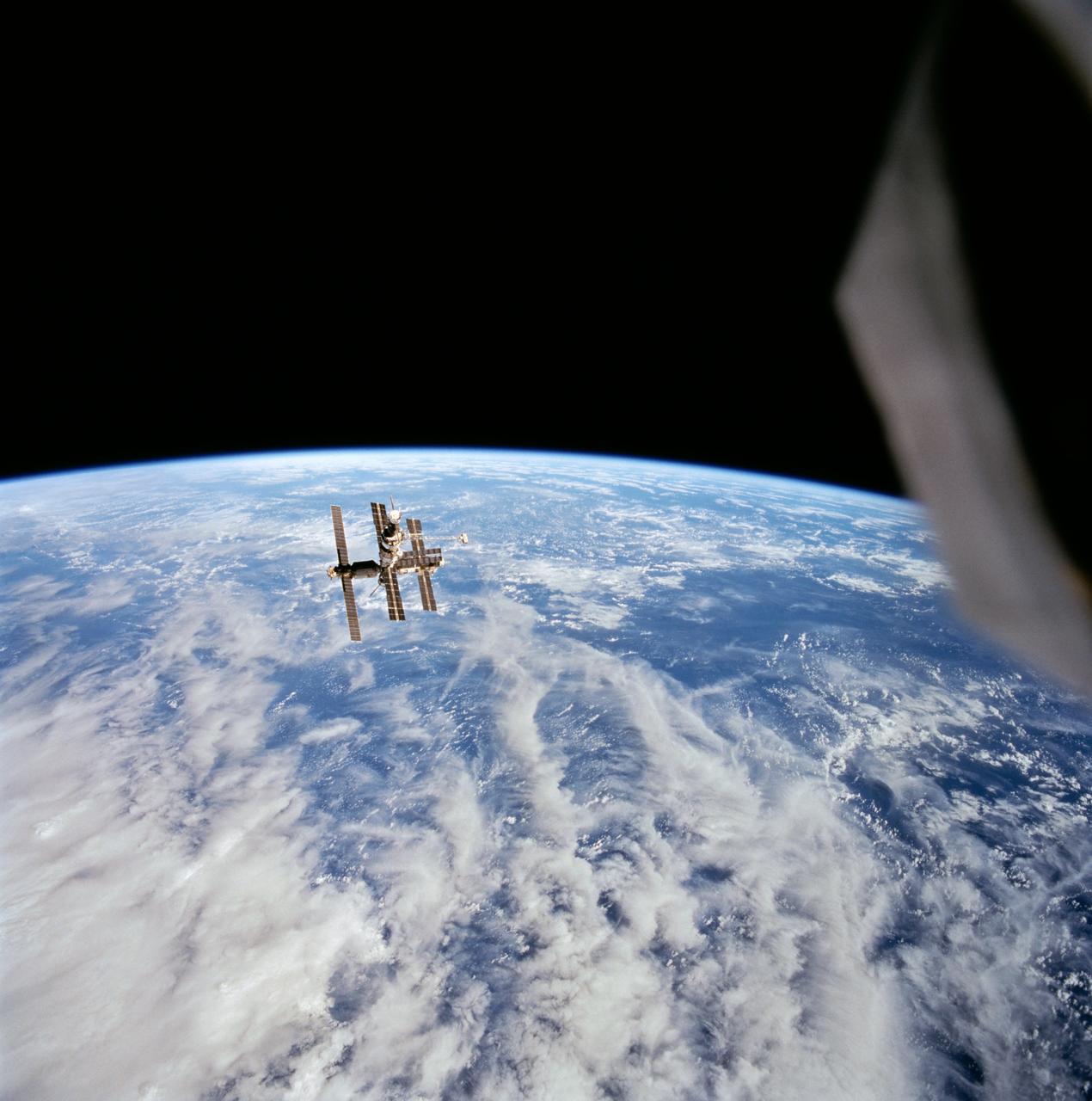
STS063-708-095 (6 Feb 1995) --- Cumulus and other clouds over the ocean form the backdrop for this scene of Russia's Mir space station during rendezvous operations by the Space Shuttle Discovery and Mir. This photograph was taken as the Discovery was firing its Reaction Control Subsystem (RCS) thrusters to separate from Mir's proximity. Onboard the Discovery were astronauts James D. Wetherbee, mission commander; Eileen M. Collins, pilot; Bernard A. Harris Jr., payload commander; mission specialists Janice Voss and C. Michael Foale; along with Russian cosmonaut Vladimir G. Titov. EDITOR'S NOTE: This 70mm handheld Hasselblad frame has been cropped to enlarge Mir.

STS063-711-080 (6 Feb. 1995) --- Cosmonaut Valeriy V. Polyakov, who boarded Russia's Mir Space Station on January 8, 1994, looks out Mir's window during rendezvous operations with the Space Shuttle Discovery. This is one of 16 still photographs released by the NASA Johnson Space Center (JSC) Public Affairs Office (PAO) on February 14, 1995. Onboard the Discovery were astronauts James D. Wetherbee, mission commander; Eileen M. Collins, pilot; Bernard A. Harris, Jr., payload commander; mission specialists C. Michael Foale, Janice E. Voss, and cosmonaut Vladimir G. Titov.
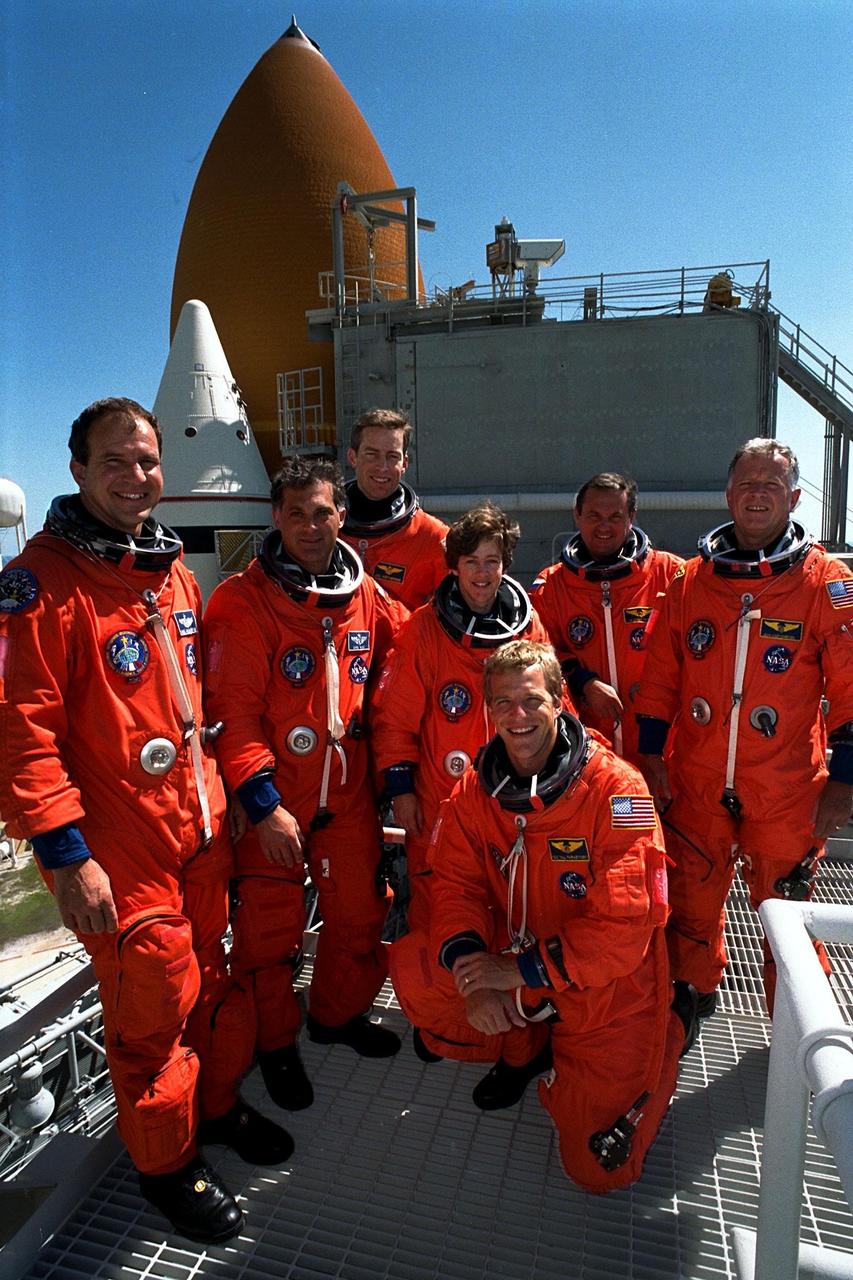
KENNEDY SPACE CENTER, Fla. -- With the Space Shuttle Atlantis behind then, STS-86 crew members pose for a group photograph at Launch Pad 39A. Kneeling in front is Mission Specialist Scott E. Parazynski. From left, are Pilot Michael J. Bloomfield, Mission Specialist David A. Wolf, Commander James D. Wetherbee, and Mission Specialists Wendy B. Lawrence, Vladimir Georgievich Titov of the Russian Space Agency, and Jean-Loup J.M. Chretien of the French Space Agency, CNES. STS-86 will be the seventh docking of the Space Shuttle with the Russian Space Station Mir. Liftoff is targeted for Sept. 25
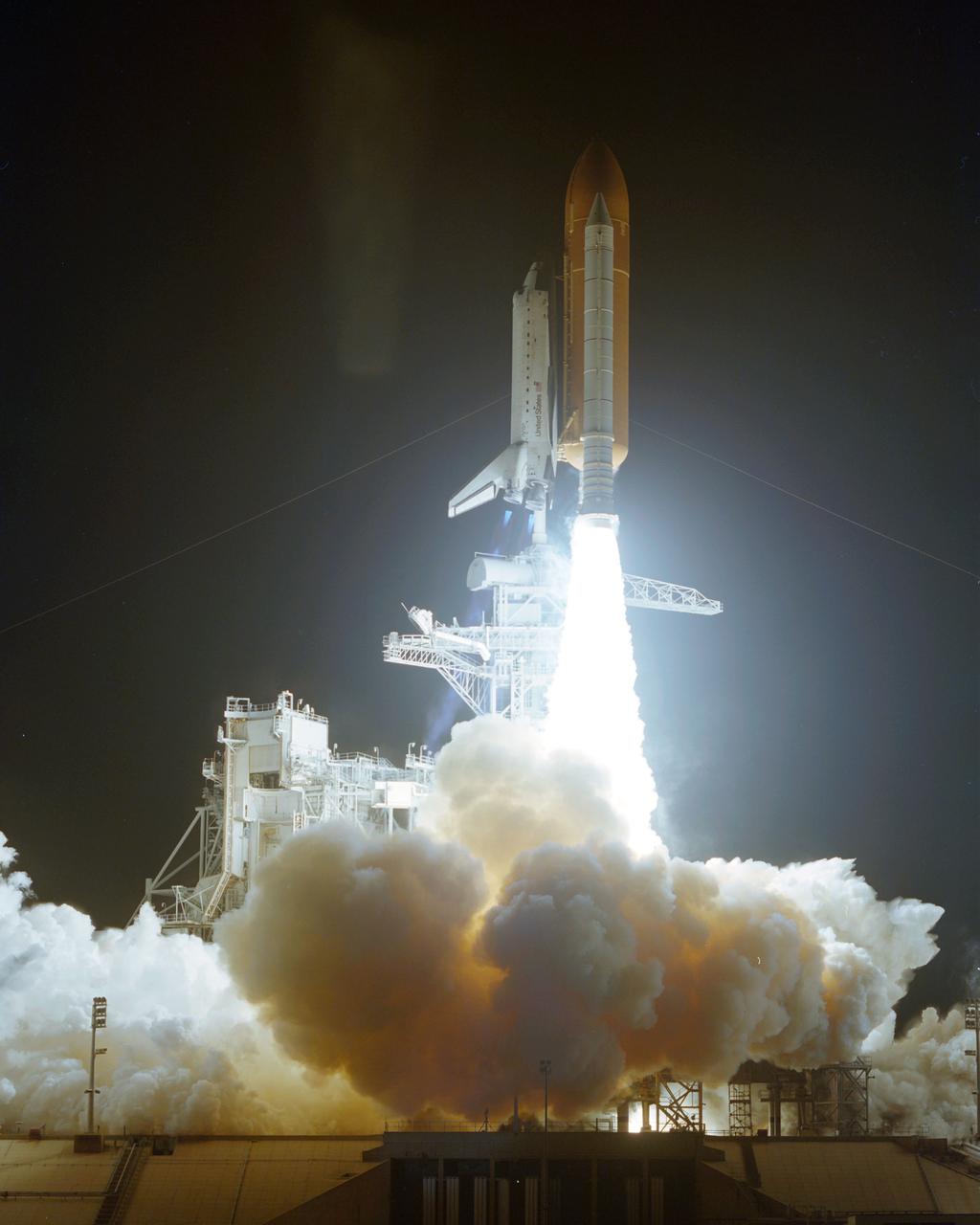
STS063-S-007 (3 Feb 1995) --- The race to catch up with the Russia's Mir gets underway as the Space Shuttle Discovery launches from Pad 39B, Kennedy Space Center (KSC) at 12:22:04 (EST), February 3, 1995. Discovery is the first in the current fleet of four Space Shuttle vehicles to make 20 launches. Onboard for the 67th (STS-63 is out of sequence) Shuttle flight are astronauts James D. Wetherbee, mission commander; Eileen M. Collins, pilot; Bernard A. Harris Jr., payload commander; mission specialists Janice Voss and C. Michael Foale; along with Russian cosmonaut Vladimir G. Titov.
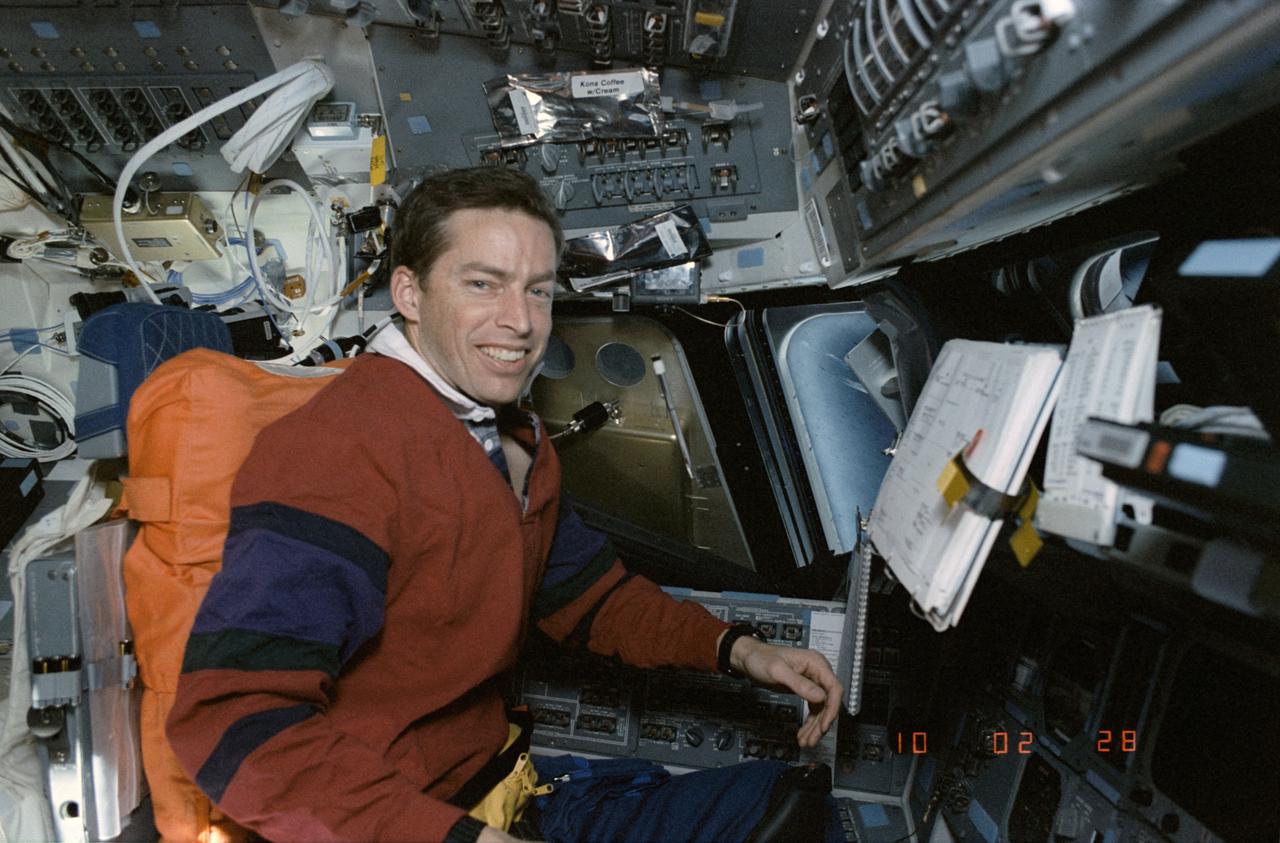
STS063-06-027 (3-11 Feb 1995) --- Seated at the commander's station on the Space Shuttle Discovery's flight deck, astronaut James D. Wetherbee, commander, was photographed by a crew mate during early phases of the STS-63 mission. A great deal of time was spent during the first few days of the mission to check a leaky thruster, which could have had a negative influence on rendezvous operations with Russia's Mir Space Station. As it turned out, all the related problems were solved and the two spacecraft succeded in achieving close proximity operations. Others onboard the Discovery were astronauts Eileen M. Collins, pilot; Bernard A. Harris Jr., payload commander; and mission specialists C. Michael Foale, Janice E. Voss, and Russian cosmonaut Vladimir G. Titov.
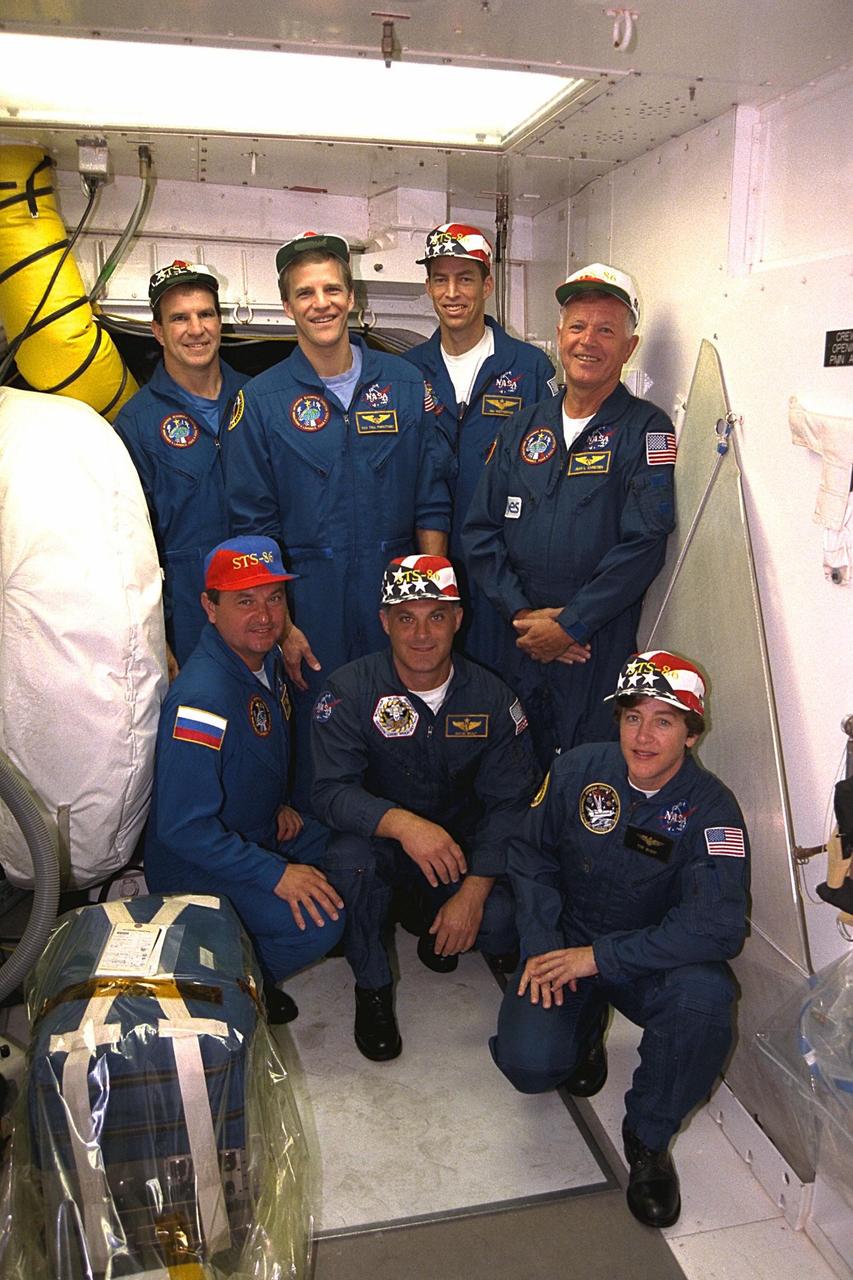
STS-86 crew members pose for a group photograph outside the hatch to the crew cabin of the Space Shuttle Atlantis at Launch Pad 39A. Kneeling in front, from left, are Mission Specialists Vladimir Georgievich Titov of the Russian Space Agency, David A. Wolf and Wendy B. Lawrence. Standing, from left, are Pilot Michael J. Bloomfield, Mission Specialist Scott E. Parazynski, Commander James D. Wetherbee, and Mission Specialist Jean-Loup J.M. Chretien of the French Space Agency, CNES. STS-86 will be the seventh docking of the Space Shuttle with the Russian Space Station Mir. During the docking, Wolf will transfer to the orbiting Russian station and become a member of the Mir 24 crew, replacing U.S. astronaut C. Michael Foale, who has been on the Mir since the last docking mission, STS-84, in May. Launch of Mission STS-86 aboard the Space Shuttle Atlantis is targeted for Sept. 25
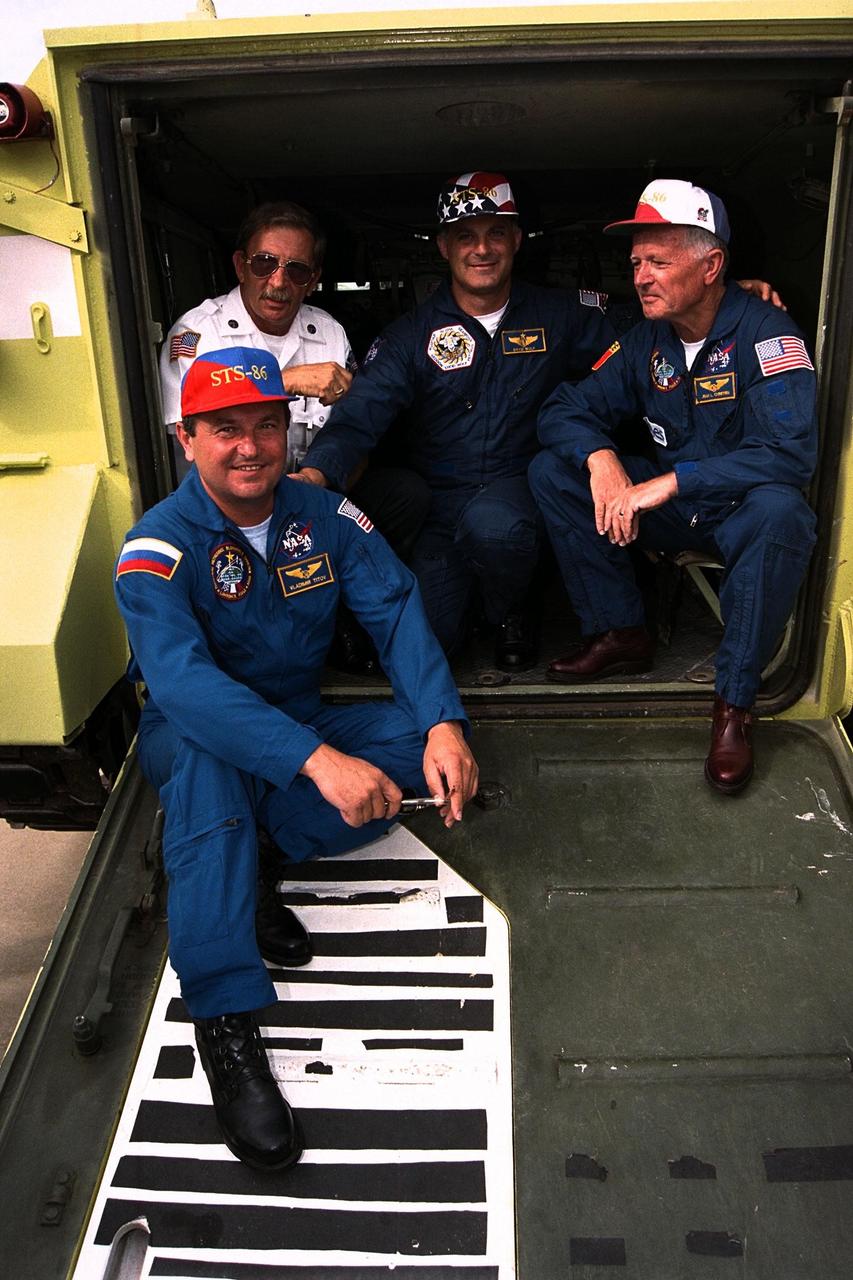
STS-86 crew members get a ride in, and learn to operate, an M-113 armored personnel carrier as part of training exercises during the Terminal Countdown Demonstration Test (TCDT), a dress rehearsal for launch. George Hoggard, in back at left, a training officer with KSC Fire Services, provides this part of the training to Mission Specialists David A. Wolf, to the right of Hoggard; Jean-Loup J.M. Chretien of the French Space Agency; and Vladimir Georgievich Titov, in foreground, of the Russian Space Agency. STS-86 will be the seventh docking of the Space Shuttle with the Russian Space Station Mir. During the docking, Wolf will transfer to the orbiting Russian station and become a member of the Mir 24 crew, replacing U.S. astronaut C. Michael Foale, who has been on the Mir since the last docking mission, STS-84, in May. Launch of Mission STS-86 aboard the Space Shuttle Atlantis is targeted for Sept. 25 from Launch Pad 39A
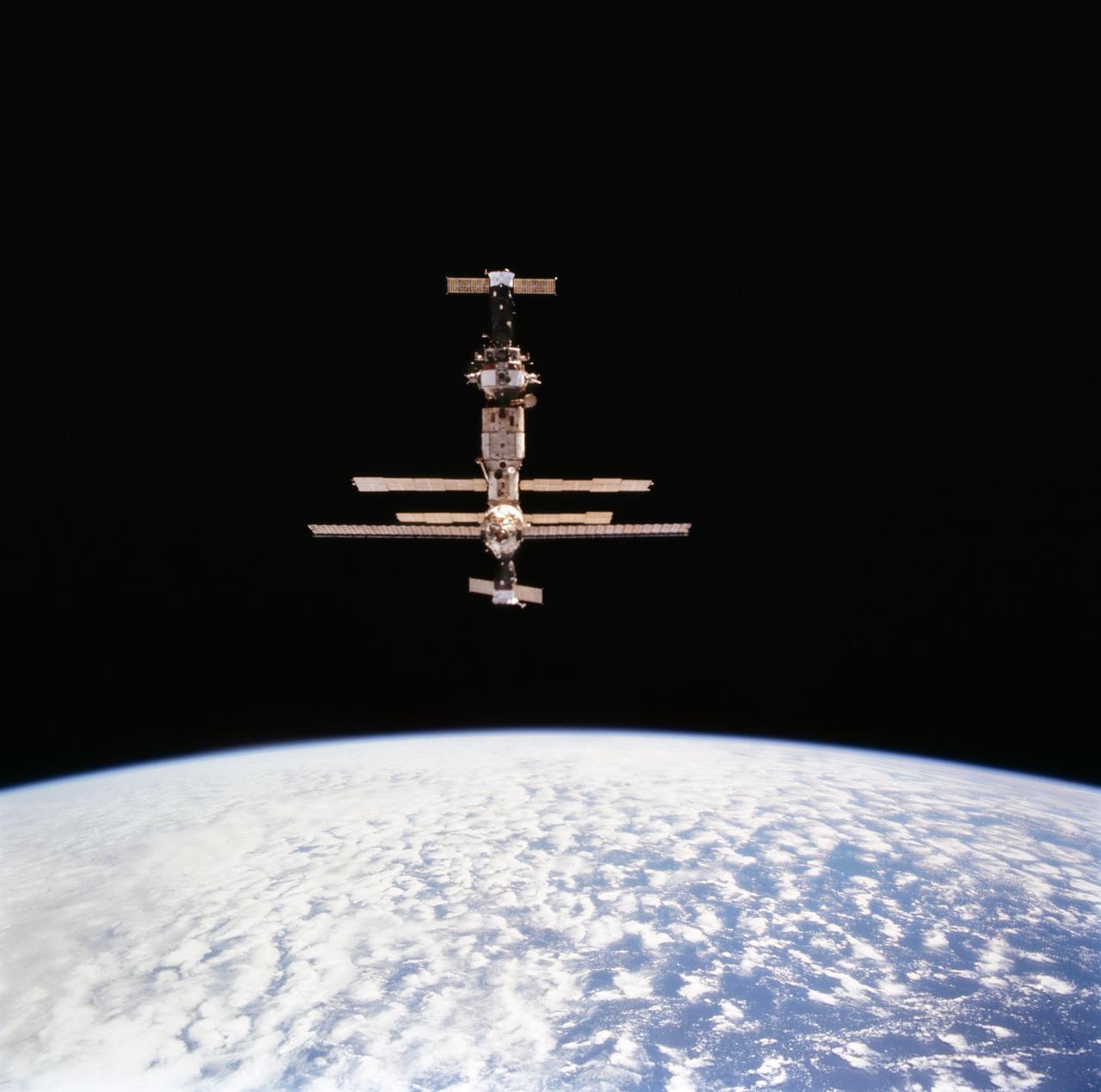
STS063-712-072 (6 Feb 1995) --- Russia's Mir Space Station over the blue and white Earth during initial approach for rendezvous operations with the Space Shuttle Discovery. Docked at bottom (nearest portion where longest solar array panel is visible) is a Soyuz space vehicle. On the opposite end is a Progress spacecraft. This is one of 16 still photographs released by the NASA Johnson Space Center (JSC) Public Affairs Office (PAO) on February 14, 1995. Onboard the Space Shuttle Discovery were astronauts James D. Wetherbee, mission commander; Eileen M. Collins, pilot; Bernard A. Harris Jr., payload commander; mission specialists C. Michael Foale, Janice E. Voss, and cosmonaut Vladimir G. Titov.
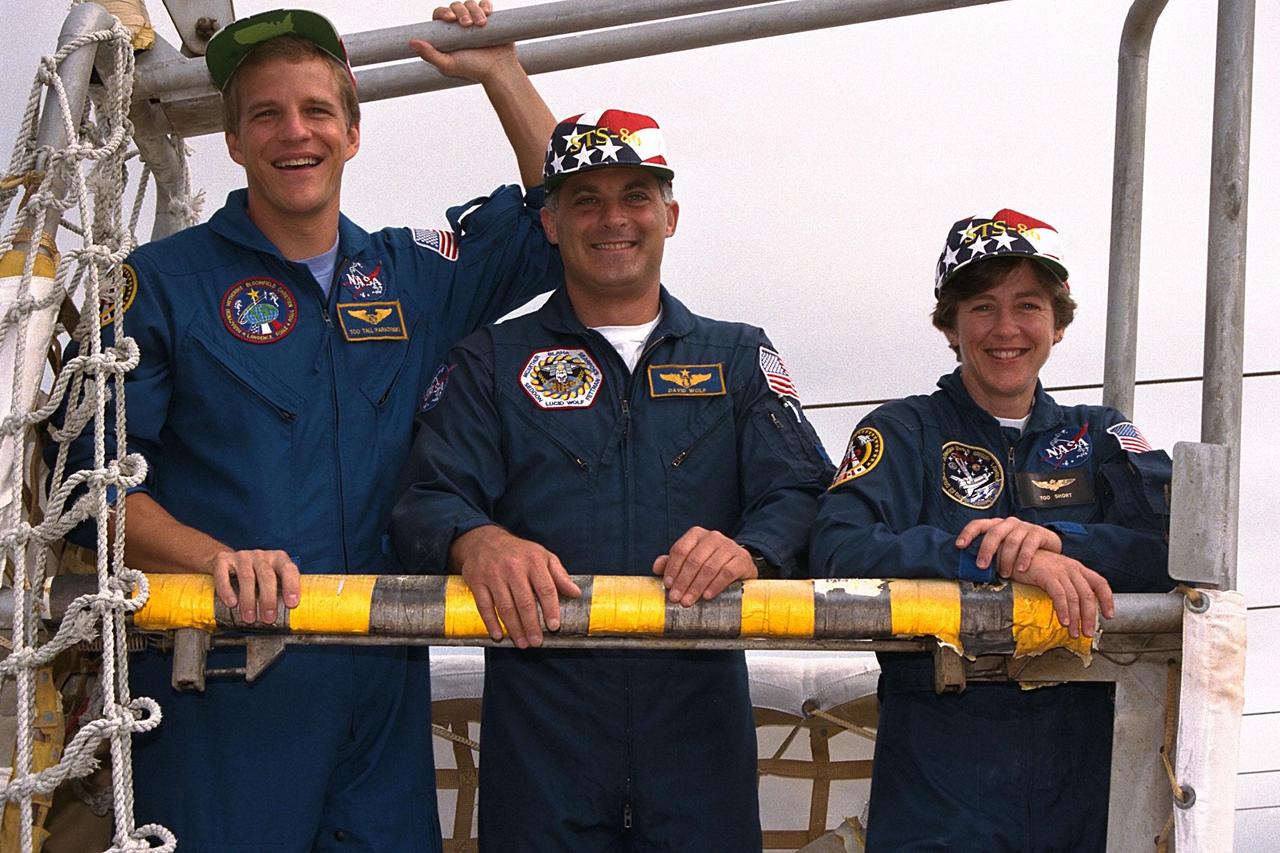
KENNEDY SPACE CENTER, Fla. -- STS-86 Mission Specialists Scott E. Parazynski, at left, David A. Wolf, and Wendy B. Lawrence, at right, participate in emergency egress training at Launch Pad 39A as part of Terminal Countdown Demonstration Test (TCDT) activities. They are the three U.S. astronauts who will serve as mission specialists during the planned 10-day flight to the Russian Space Station Mir. Also serving as mission specialists will be Vladimir Georgievich Titov of the Russian Space Agency and Jean-Loup J.M. Chretien of the French Space Agency, CNES. STS-86 will be the seventh docking of the Space Shuttle with the Mir. During the docking, Wolf will transfer to the orbiting Russian station and become a member of the Mir 24 crew, replacing U.S. astronaut C. Michael Foale, who has been on the Mir since the last docking mission, STS-84, in May. Launch of Mission STS-86 aboard the Space Shuttle Atlantis is targeted for Sept. 25
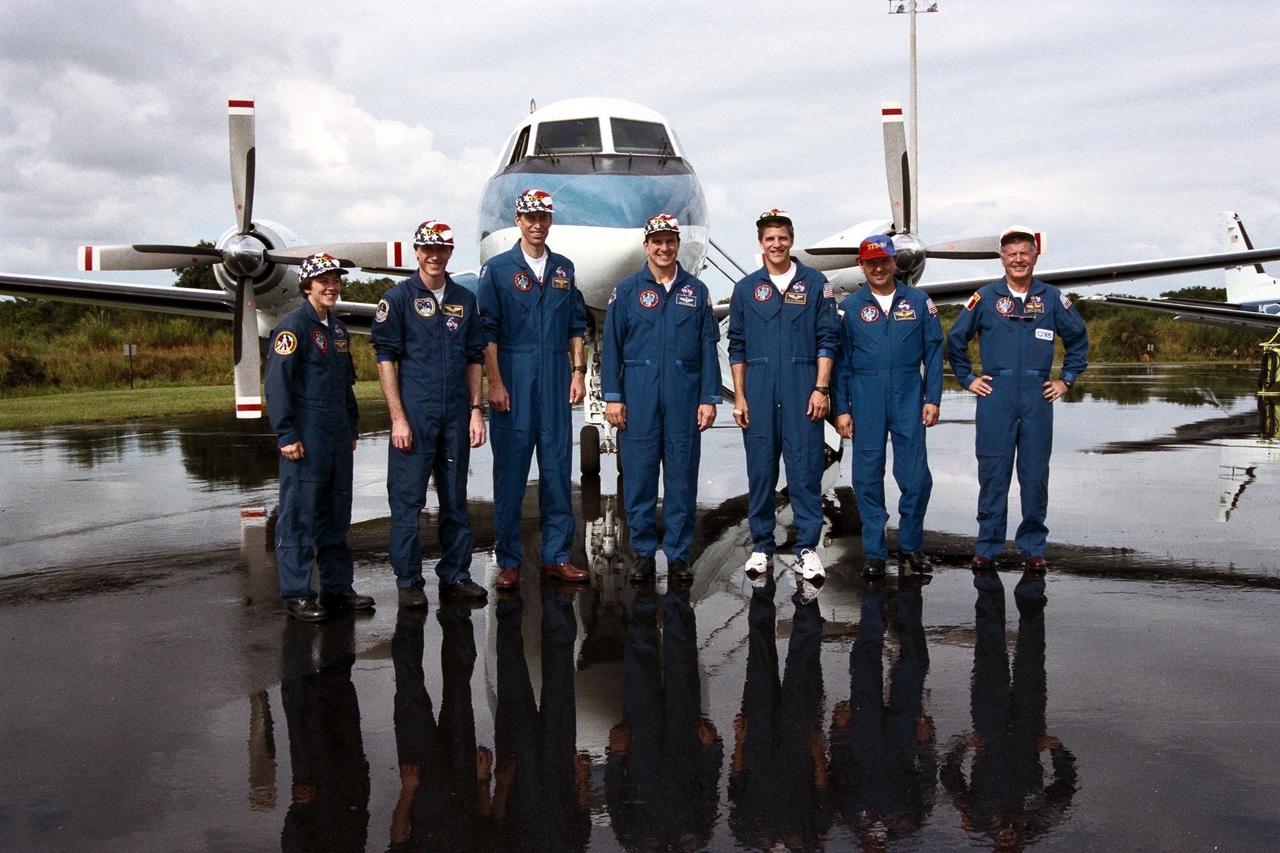
Members of the STS-86 crew pose for a last photograph at the Skid Strip on Cape Canaveral Air Station before flying back to their home base at the Johnson Space Center in Houston, Texas. From left, are Mission Specialist Wendy B. Lawrence, Mission Specialist and recent Mir 24 crew member C. Michael Foale, Commander James D. Wetherbee, Pilot Michael J. Bloomfield, and Mission Specialists Scott E. Parazynski, Vladimir Georgievich Titov of the Russian Space Agency and Jean-Loup J.M. Chretien of the French Space Agency, CNES. Foale, who was on the Russian Space Station Mir since mid-May, returned to Earth aboard the Space Shuttle orbiter Atlantis at the Oct. 6 KSC landing of Mission STS-86. He was replaced on the Mir by STS-86 Mission Specialist David A. Wolf, who is scheduled to remain there until mid-January
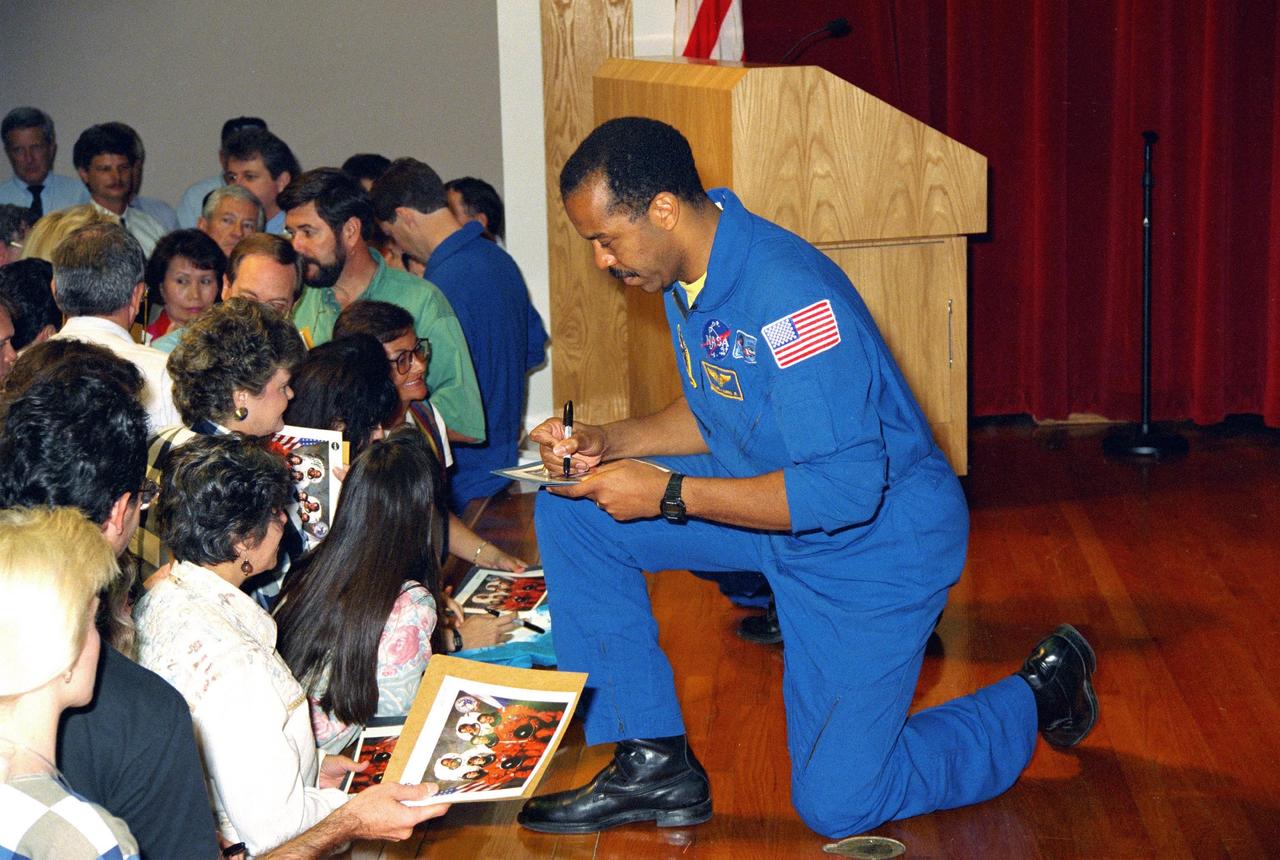
KENNEDY SPACE CENTER, FLA. -- STS-63 Mission Specialist Dr. Bernard Harris autographs copies of the crew photograph in the Training Auditorium during a March crew visit to thank employees for their help in ensuring a successful mission. The six-member crew on Discovery, who landed February 11 after an eight-day flight, included Mission Commander James Wetherbee, Pilot Eileen Collins (on the first flight of a female Shuttle pilot), and Mission Specialists Michael Foale, Janice Voss and Vladimir Titov. The mission featured another milestone, the first approach and flyaround of a Shuttle with Russian Space Station Mir. It was also the second flight of a russian cosmonaut on Shuttle and the third flight of the SPACEHAB module, which carried 20 experiments in biotechnology, advanced materials development, technology demonstrations and other measurements.
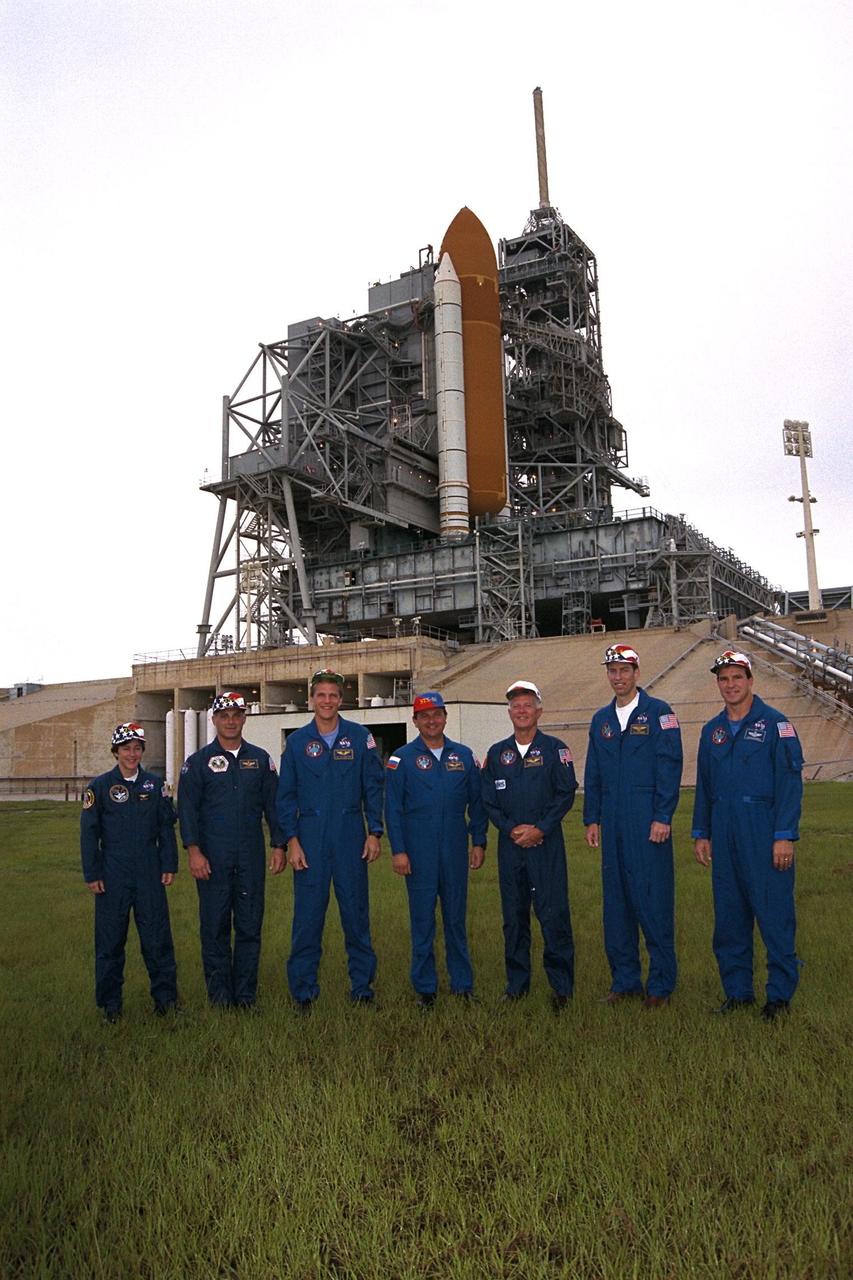
KENNEDY SPACE CENTER, Fla. -- With the Space Shuttle Atlantis behind them, the STS-86 crew poses for a photograph at Launch Pad 39A. The seven crew members are at KSC to participate in Terminal Countdown Demonstration Test (TCDT) activities. From left are Mission Specialists Wendy B. Lawrence, David A. Wolf, Scott E. Parazynski, Vladimir Georgievich Titov of the Russian Space Agency, Jean-Loup J.M. Chretien of the French Space Agency, CNES; Commander James D. Wetherbee; and Pilot Michael J. Bloomfield. STS-86 will be the seventh docking of the Space Shuttle with the Russian Space Station Mir. After docking, Wolf will transfer to the Mir 24 crew, replacing astronaut C. Michael Foale, who arrived there during the last docking mission, STS-84, in May. Launch is targeted for Sept. 25
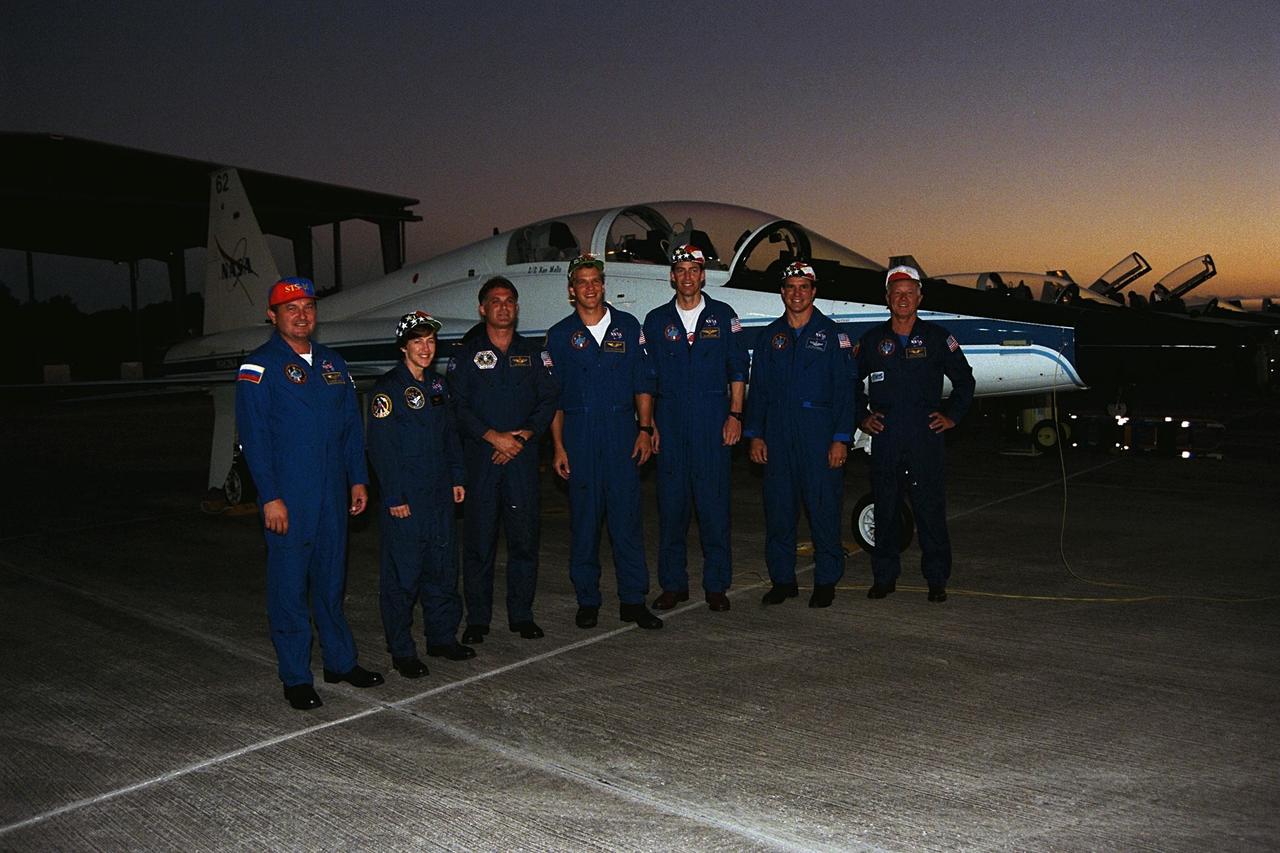
STS-86 crew members pose for a photograph after arrival at KSC’s Shuttle Landing Facility for the Terminal Countdown Demonstration Test (TCDT), a dress rehearsal for launch. From left, are Mission Specialists Vladimir Georgievich Titov of the Russian Space Agency, Wendy B. Lawrence, David A. Wolf and Scott Parazynski; Commander James D. Wetherbee; Pilot Michael J. Bloomfield; and Mission Specialist Jean-Loup J.M. Chretien of the French Space Agency, CNES. STS-86 will be the seventh docking of the Space Shuttle with the Russian Space Station Mir. Wolf will transfer to the Mir for a long-duration stay, replacing Mir 24 crew member C. Michael Foale, who will return to Earth with the rest of the STS-86 crew. The mission is targeted for a Sept. 25 launch aboard the Space Shuttle Atlantis
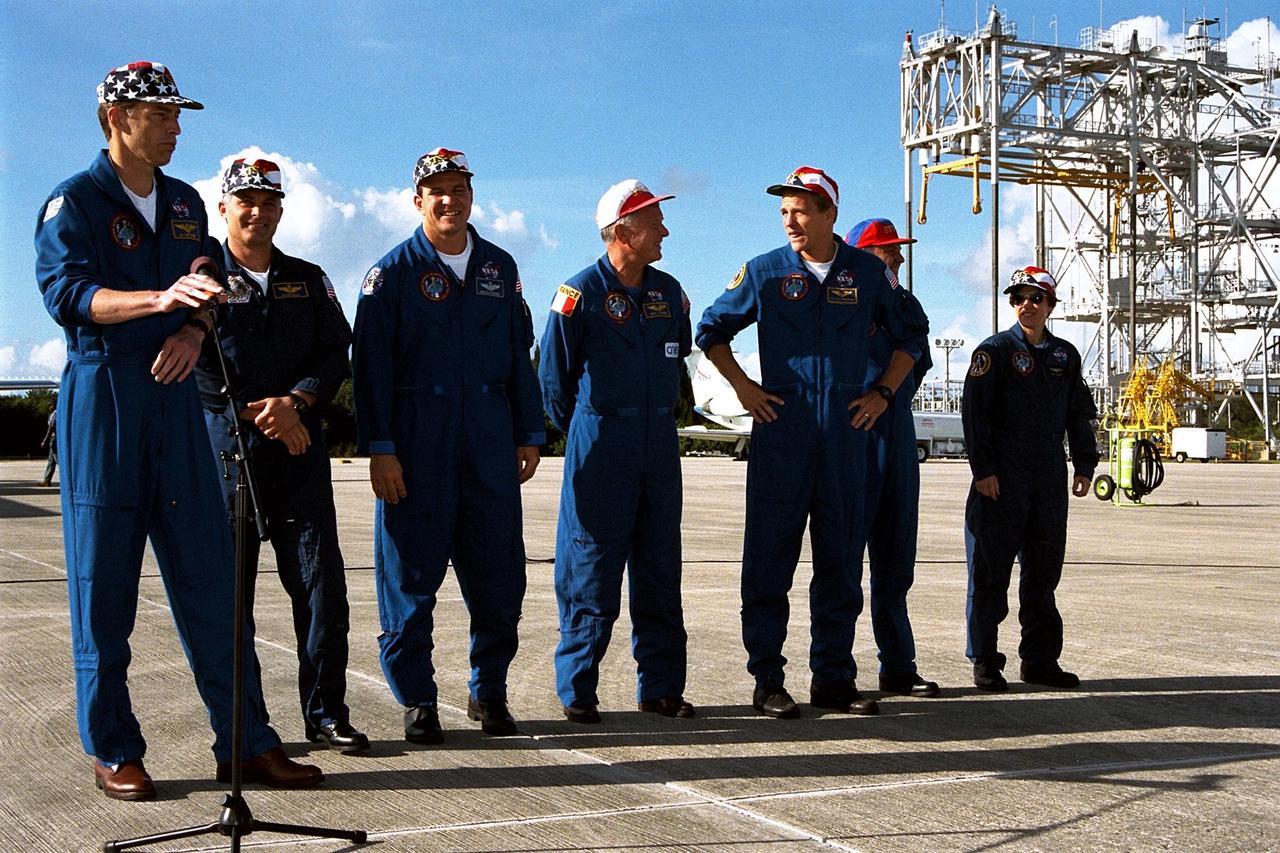
STS-86 Commander James D. Wetherbee, with microphone, addresses press representatives and other onlookers after the astronauts’ arrival Monday at KSC’s Shuttle Landing Facility. The other crew members, from left, are Mission Specialist David A. Wolf; Pilot Michael J. Bloomfield; Mission Specialist Jean-Loup J.M. Chretien of the French Space Agency, CNES; Mission Specialist Scott E. Parazynksi; Mission Specialist Vladimir Georgievich Titov of the Russian Space Agency; and Mission Specialist Wendy B. Lawrence. STS-86 is slated to be the seventh docking of the Space Shuttle with the Russian Space Station Mir. After the docking, Wolf is scheduled to transfer to the Mir 24 crew, replacing astronaut C. Michael Foale. Wolf is scheduled to remain on the Mir for about four months. Liftoff of STS-86 aboard Atlantis is targeted for Sept. 25
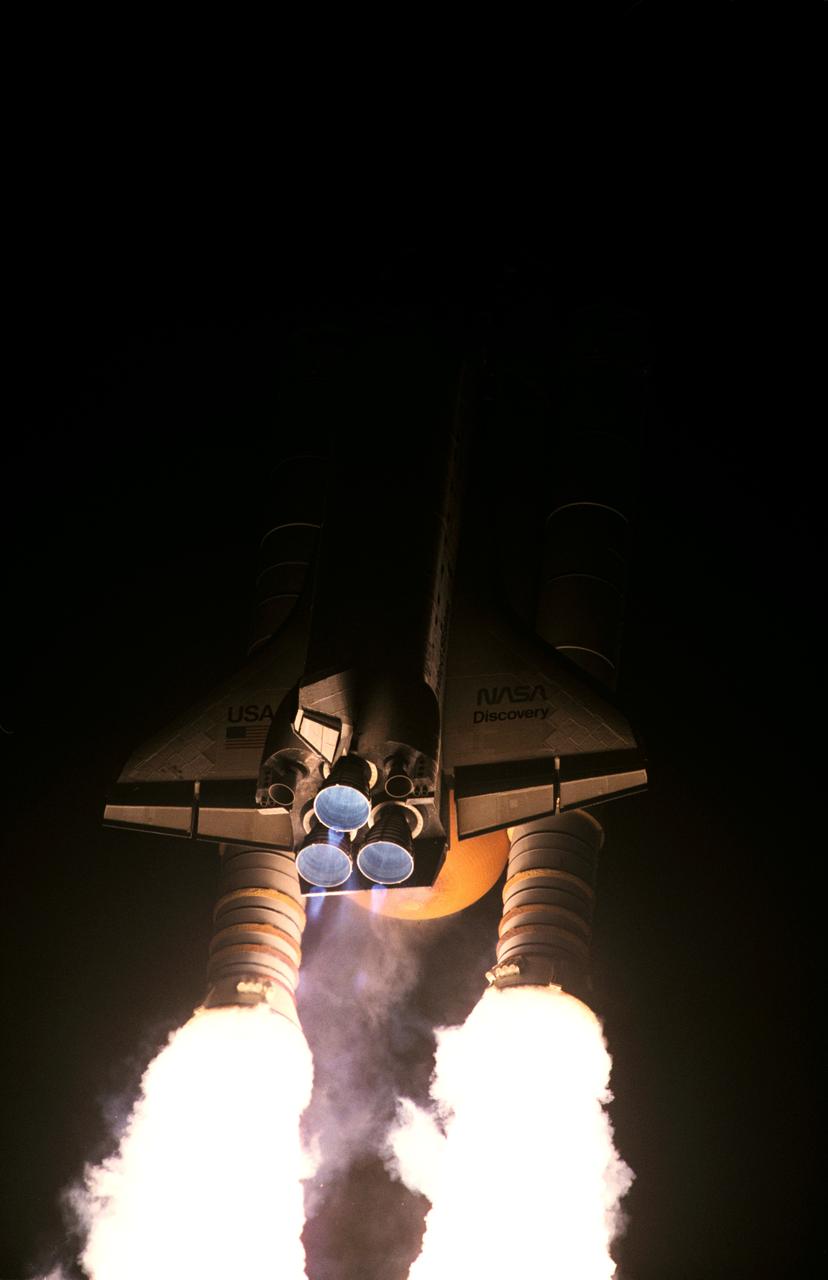
STS063-S-003 (3 Feb. 1995) --- A 35mm camera was used to expose this image of the space shuttle Discovery as it began its race to catch up with the Russia's Mir Space Station. Liftoff from Launch Pad 39B, Kennedy Space Center (KSC) occurred at 12:22:04 (EST), Feb. 3, 1995. Discovery is the first in the current fleet of four space shuttle vehicles to make 20 launches. Onboard for the 67th (STS-63 is out of sequence) shuttle flight are astronauts James D. Wetherbee, commander; Eileen M. Collins, pilot; Bernard A. Harris Jr., payload commander; and mission specialists Janice Voss and C. Michael Foale; along with Russian cosmonaut Vladimir G. Titov. Photo credit: NASA
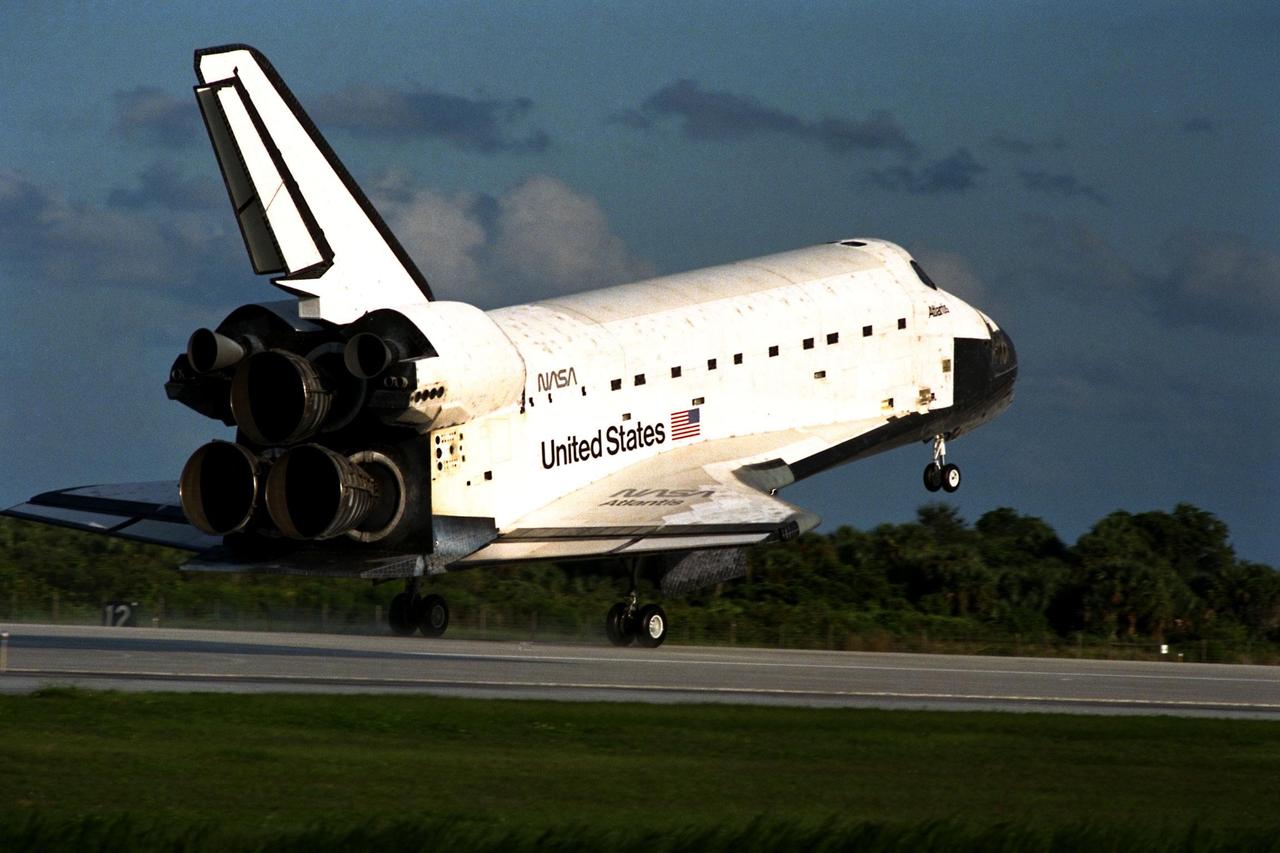
KENNEDY SPACE CENTER, Fla. -- The Space Shuttle orbiter Atlantis touches down on Runway 15 of the KSC Shuttle Landing Facility (SLF) to complete the nearly 11-day STS-86 mission. Main gear touchdown was at 5:55:09 p.m. EDT on Oct. 6, 1997. The unofficial mission-elapsed time at main gear touchdown was 10 days, 19 hours, 20 minutes and 50 seconds. The first two landing opportunities on Sunday were waved off because of weather concerns. The 87th Space Shuttle mission was the 40th landing of the Shuttle at KSC. On Sunday evening, the Space Shuttle program reached a milestone: The total flight time of the Shuttle passed the two-year mark. STS-86 was the seventh of nine planned dockings of the Space Shuttle with the Russian Space Station Mir. STS-86 Mission Specialist David A. Wolf replaced NASA astronaut and Mir 24 crew member C. Michael Foale, who has been on the Mir since mid-May. Foale returned to Earth on Atlantis with the remainder of the STS-86 crew. The other crew members are Commander James D. Wetherbee, Pilot Michael J. Bloomfield, and Mission Specialists Wendy B. Lawrence, Scott E. Parazynski, Vladimir Georgievich Titov of the Russian Space Agency, and Jean-Loup J.M. Chretien of the French Space Agency, CNES. Wolf is scheduled to remain on the Mir until the STS-89 Shuttle mission in January. Besides the docking and crew exchange, STS-86 included the transfer of more than three-and-ahalf tons of science/logistical equipment and supplies between the two orbiting spacecraft. Parazynski and Titov also conducted a spacewalk while Atlantis and the Mir were docked
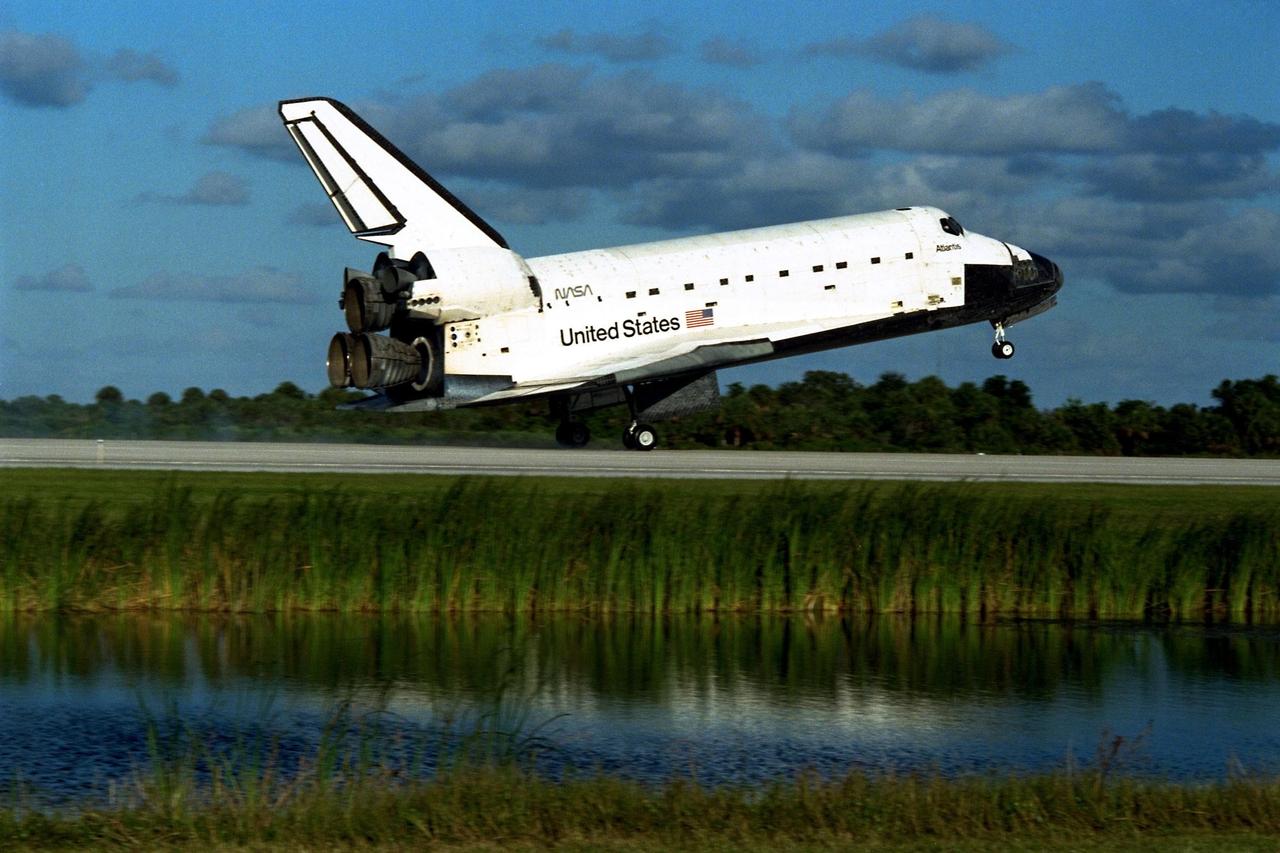
The Space Shuttle orbiter Atlantis touches down on Runway 15 of the KSC Shuttle Landing Facility (SLF) to complete the nearly 11-day STS-86 mission. Main gear touchdown was at 5:55:09 p.m. EDT on Oct. 6, 1997. The unofficial mission-elapsed time at main gear touchdown was 10 days, 19 hours, 20 minutes and 50 seconds. The first two landing opportunities on Sunday were waved off because of weather concerns. The 87th Space Shuttle mission was the 40th landing of the Shuttle at KSC. On Sunday evening, the Space Shuttle program reached a milestone: The total flight time of the Shuttle passed the two-year mark. STS-86 was the seventh of nine planned dockings of the Space Shuttle with the Russian Space Station Mir. STS-86 Mission Specialist David A. Wolf replaced NASA astronaut and Mir 24 crew member C. Michael Foale, who has been on the Mir since mid-May. Foale returned to Earth on Atlantis with the remainder of the STS-86 crew. The other crew members are Commander James D. Wetherbee, Pilot Michael J. Bloomfield, and Mission Specialists Wendy B. Lawrence, Scott E. Parazynski, Vladimir Georgievich Titov of the Russian Space Agency, and Jean-Loup J.M. Chretien of the French Space Agency, CNES. Wolf is scheduled to remain on the Mir until the STS-89 Shuttle mission in January. Besides the docking and crew exchange, STS-86 included the transfer of more than three-and-ahalf tons of science/logistical equipment and supplies between the two orbiting spacecraft. Parazynski and Titov also conducted a spacewalk while Atlantis and the Mir were docked
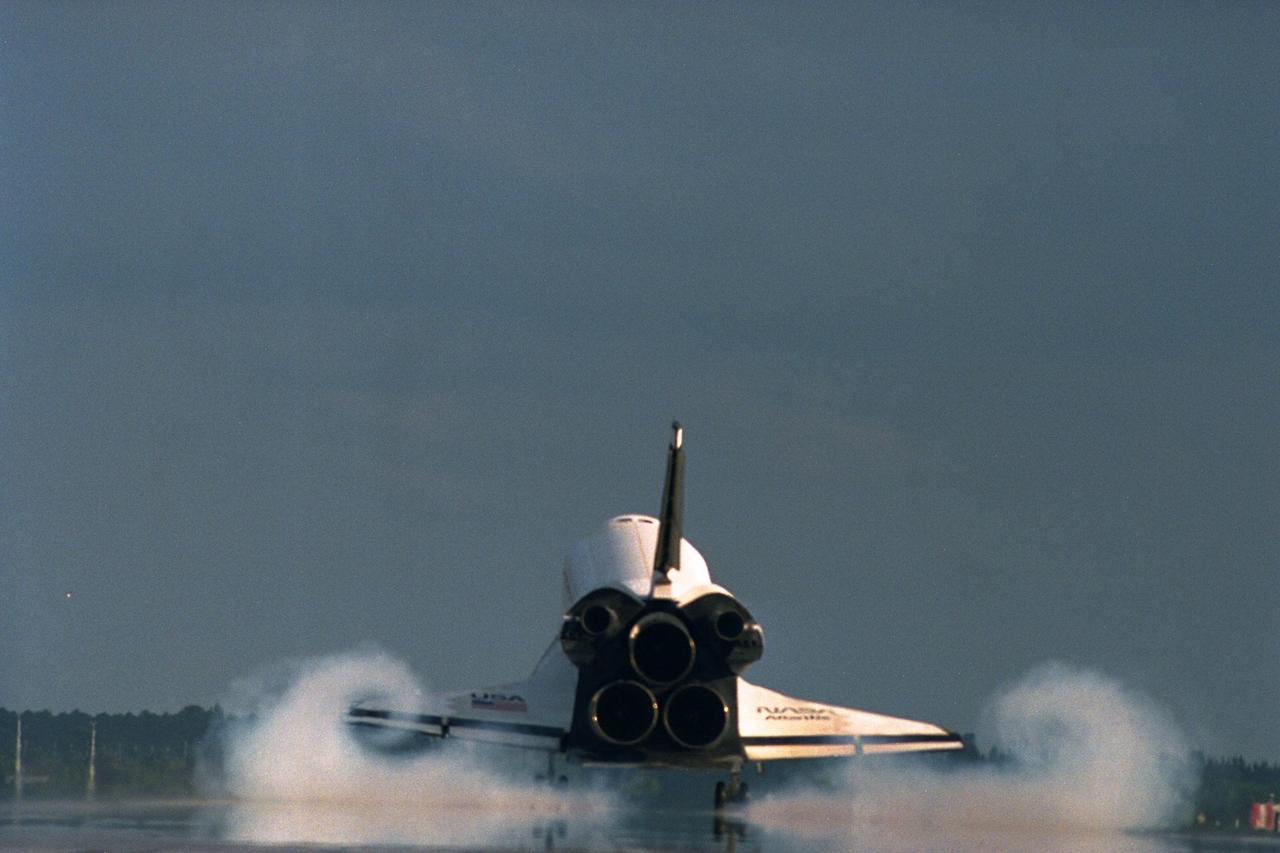
KENNEDY SPACE CENTER, Fla. -- The Space Shuttle orbiter Atlantis touches down on Runway 15 of the KSC Shuttle Landing Facility (SLF) to complete the nearly 11-day STS-86 mission. Main gear touchdown was at 5:55:09 p.m. EDT on Oct. 6, 1997. The unofficial mission-elapsed time at main gear touchdown was 10 days, 19 hours, 20 minutes and 50 seconds. The first two landing opportunities on Sunday were waved off because of weather concerns. The 87th Space Shuttle mission was the 40th landing of the Shuttle at KSC. On Sunday evening, the Space Shuttle program reached a milestone: The total flight time of the Shuttle passed the two-year mark. STS-86 was the seventh of nine planned dockings of the Space Shuttle with the Russian Space Station Mir. STS-86 Mission Specialist David A. Wolf replaced NASA astronaut and Mir 24 crew member C. Michael Foale, who has been on the Mir since mid-May. Foale returned to Earth on Atlantis with the remainder of the STS-86 crew. The other crew members are Commander James D. Wetherbee, Pilot Michael J. Bloomfield, and Mission Specialists Wendy B. Lawrence, Scott E. Parazynski, Vladimir Georgievich Titov of the Russian Space Agency, and Jean-Loup J.M. Chretien of the French Space Agency, CNES. Wolf is scheduled to remain on the Mir until the STS-89 Shuttle mission in January. Besides the docking and crew exchange, STS-86 included the transfer of more than three-and-ahalf tons of science/logistical equipment and supplies between the two orbiting spacecraft. Parazynski and Titov also conducted a spacewalk while Atlantis and the Mir were docked
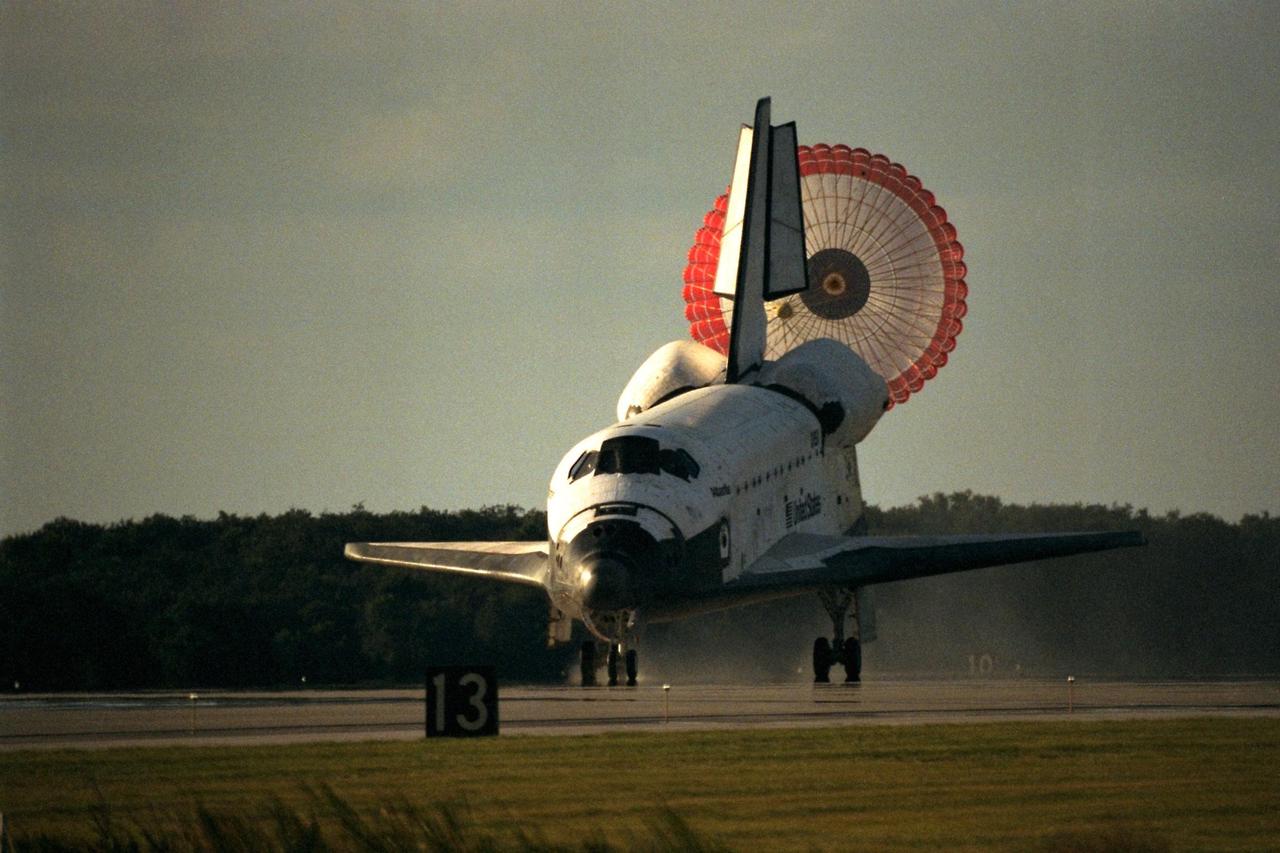
KENNEDY SPACE CENTER, Fla. -- The orbiter drag chute deploys after the Space Shuttle orbiter Atlantis lands on Runway 15 of the KSC Shuttle Landing Facility (SLF) at the conclusion of the nearly 11-day STS-86 mission. Main gear touchdown was at 5:55:09 p.m. EDT, Oct. 6, 1997, with an unofficial mission-elapsed time of 10 days, 19 hours, 20 minutes and 50 seconds. The first two KSC landing opportunities on Sunday were waved off because of weather concerns. The 87th Space Shuttle mission was the 40th landing of the Shuttle at KSC. On Sunday evening, the Space Shuttle program reached a milestone: The total flight time of the Shuttle passed the two-year mark. STS86 was the seventh of nine planned dockings of the Space Shuttle with the Russian Space Station Mir. STS-86 Mission Specialist David A. Wolf replaced NASA astronaut and Mir 24 crew member C. Michael Foale, who has been on the Mir since mid-May. Foale returned to Earth on Atlantis with the remainder of the STS-86 crew. The other crew members are Commander James D. Wetherbee, Pilot Michael J. Bloomfield, and Mission Specialists Wendy B. Lawrence, Scott E. Parazynski, Vladimir Georgievich Titov of the Russian Space Agency, and Jean-Loup J.M. Chretien of the French Space Agency, CNES. Wolf is scheduled to remain on the Mir until the STS-89 Shuttle mission in January. Besides the docking and crew exchange, STS-86 included the transfer of more than three-and-a-half tons of science/logistical equipment and supplies between the two orbiting spacecraft. Parazynski and Titov also conducted a spacewalk while Atlantis and the Mir were docked
KENNEDY SPACE CENTER, Fla. -- The orbiter drag chute deploys after the Space Shuttle orbiter Atlantis lands on Runway 15 of the KSC Shuttle Landing Facility (SLF) at the conclusion of the nearly 11-day STS-86 mission. Main gear touchdown was at 5:55:09 p.m. EDT, Oct. 6, 1997, with an unofficial mission-elapsed time of 10 days, 19 hours, 20 minutes and 50 seconds. The first two KSC landing opportunities on Sunday were waved off because of weather concerns. The 87th Space Shuttle mission was the 40th landing of the Shuttle at KSC. On Sunday evening, the Space Shuttle program reached a milestone: The total flight time of the Shuttle passed the two-year mark. STS86 was the seventh of nine planned dockings of the Space Shuttle with the Russian Space Station Mir. STS-86 Mission Specialist David A. Wolf replaced NASA astronaut and Mir 24 crew member C. Michael Foale, who has been on the Mir since mid-May. Foale returned to Earth on Atlantis with the remainder of the STS-86 crew. The other crew members are Commander James D. Wetherbee, Pilot Michael J. Bloomfield, and Mission Specialists Wendy B. Lawrence, Scott E. Parazynski, Vladimir Georgievich Titov of the Russian Space Agency, and Jean-Loup J.M. Chretien of the French Space Agency, CNES. Wolf is scheduled to remain on the Mir until the STS-89 Shuttle mission in January. Besides the docking and crew exchange, STS-86 included the transfer of more than three-and-a-half tons of science/logistical equipment and supplies between the two orbiting spacecraft. Parazynski and Titov also conducted a spacewalk while Atlantis and the Mir were docked
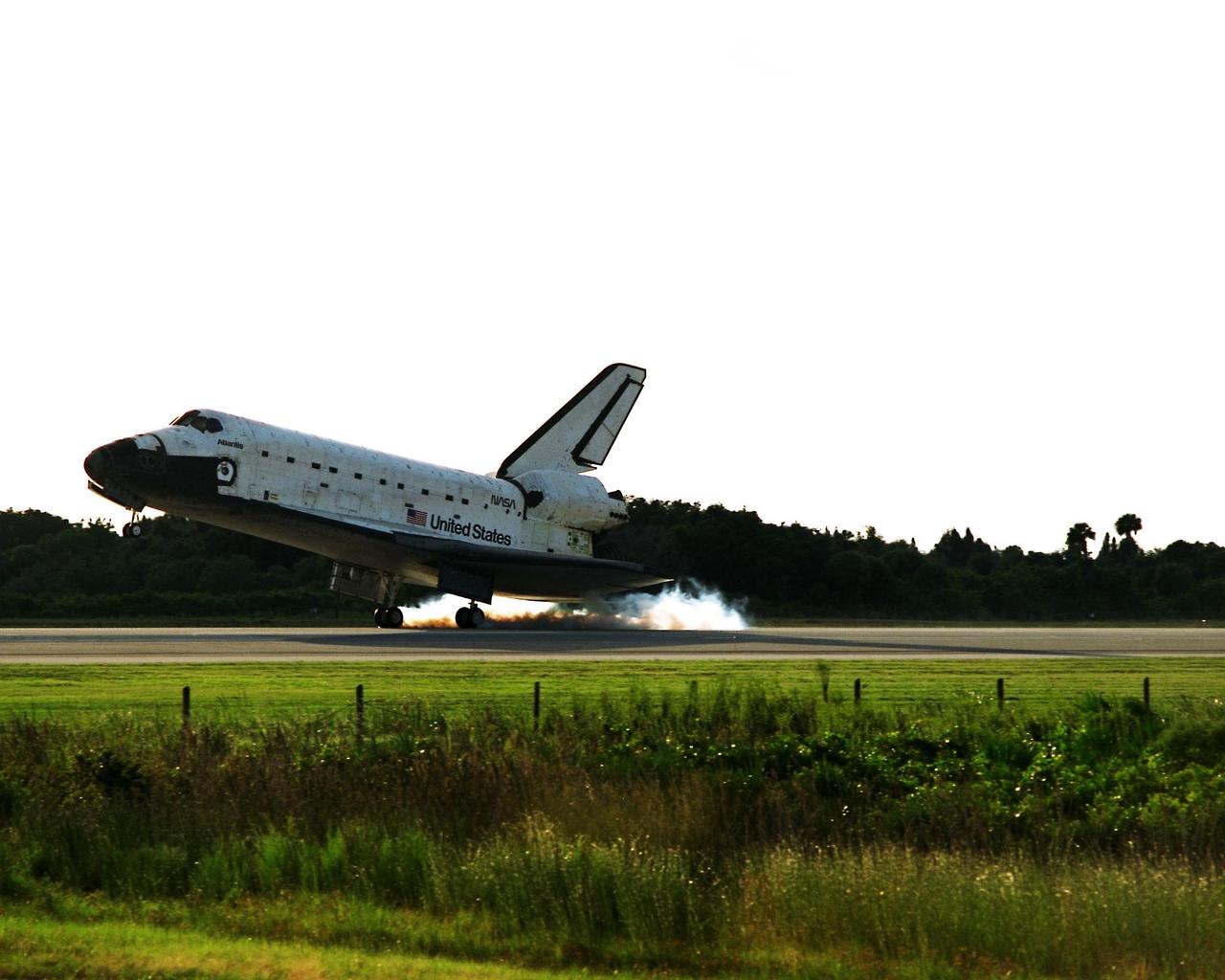
KENNEDY SPACE CENTER, Fla. -- The Space Shuttle orbiter Atlantis touches down on Runway 15 of the KSC Shuttle Landing Facility (SLF) to complete the nearly 11-day STS-86 mission. Main gear touchdown was at 5:55:09 p.m. EDT on Oct. 6, 1997. The unofficial mission-elapsed time at main gear touchdown was 10 days, 19 hours, 20 minutes and 50 seconds. The first two landing opportunities on Sunday were waved off because of weather concerns. The 87th Space Shuttle mission was the 40th landing of the Shuttle at KSC. On Sunday evening, the Space Shuttle program reached a milestone: The total flight time of the Shuttle passed the two-year mark. STS-86 was the seventh of nine planned dockings of the Space Shuttle with the Russian Space Station Mir. STS-86 Mission Specialist David A. Wolf replaced NASA astronaut and Mir 24 crew member C. Michael Foale, who has been on the Mir since mid-May. Foale returned to Earth on Atlantis with the remainder of the STS-86 crew. The other crew members are Commander James D. Wetherbee, Pilot Michael J. Bloomfield, and Mission Specialists Wendy B. Lawrence, Scott E. Parazynski, Vladimir Georgievich Titov of the Russian Space Agency, and Jean-Loup J.M. Chretien of the French Space Agency, CNES. Wolf is scheduled to remain on the Mir until the STS-89 Shuttle mission in January. Besides the docking and crew exchange, STS-86 included the transfer of more than three-and-ahalf tons of science/logistical equipment and supplies between the two orbiting spacecraft. Parazynski and Titov also conducted a spacewalk while Atlantis and the Mir were docked
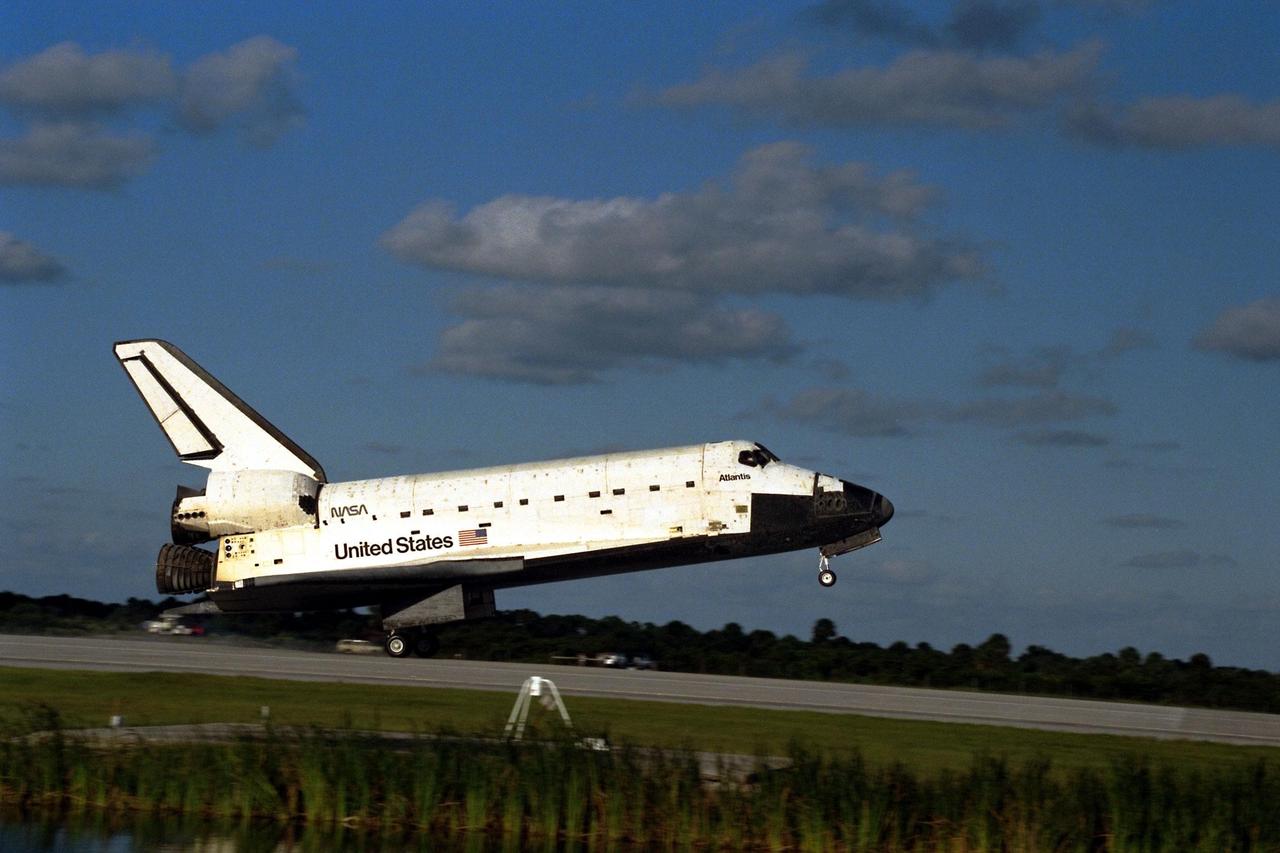
The Space Shuttle orbiter Atlantis touches down on Runway 15 of the KSC Shuttle Landing Facility (SLF) to complete the nearly 11-day STS-86 mission. Main gear touchdown was at 5:55:09 p.m. EDT on Oct. 6, 1997. The unofficial mission-elapsed time at main gear touchdown was 10 days, 19 hours, 20 minutes and 50 seconds. The first two landing opportunities on Sunday were waved off because of weather concerns. The 87th Space Shuttle mission was the 40th landing of the Shuttle at KSC. On Sunday evening, the Space Shuttle program reached a milestone: The total flight time of the Shuttle passed the two-year mark. STS-86 was the seventh of nine planned dockings of the Space Shuttle with the Russian Space Station Mir. STS-86 Mission Specialist David A. Wolf replaced NASA astronaut and Mir 24 crew member C. Michael Foale, who has been on the Mir since mid-May. Foale returned to Earth on Atlantis with the remainder of the STS-86 crew. The other crew members are Commander James D. Wetherbee, Pilot Michael J. Bloomfield, and Mission Specialists Wendy B. Lawrence, Scott E. Parazynski, Vladimir Georgievich Titov of the Russian Space Agency, and Jean-Loup J.M. Chretien of the French Space Agency, CNES. Wolf is scheduled to remain on the Mir until the STS-89 Shuttle mission in January. Besides the docking and crew exchange, STS-86 included the transfer of more than three-and-ahalf tons of science/logistical equipment and supplies between the two orbiting spacecraft. Parazynski and Titov also conducted a spacewalk while Atlantis and the Mir were docked
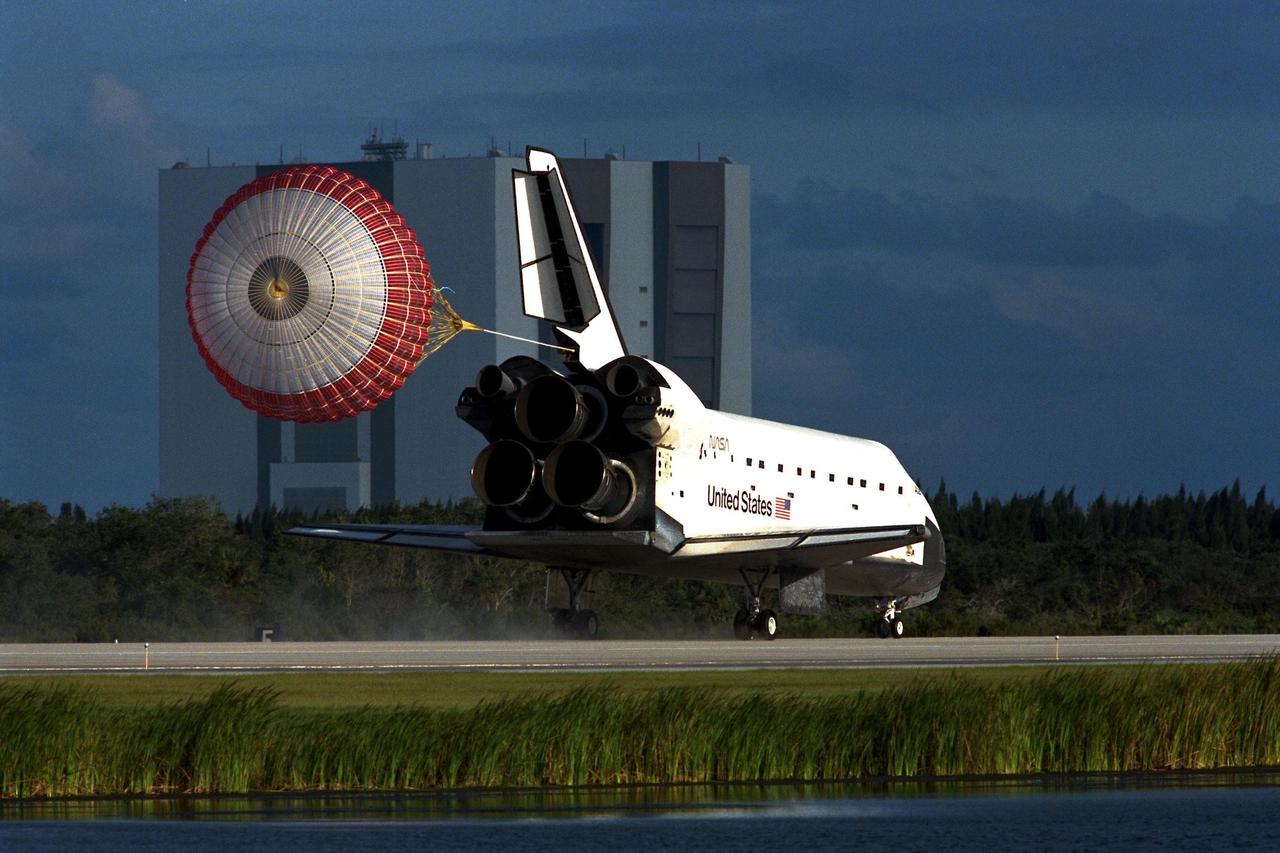
KENNEDY SPACE CENTER, Fla. -- The orbiter drag chute deploys after the Space Shuttle orbiter Atlantis lands on Runway 15 of the KSC Shuttle Landing Facility (SLF) at the conclusion of the nearly 11-day STS-86 mission. The Vehicle Assembly Building (VAB) can be seen in the background. Main gear touchdown was at 5:55:09 p.m. EDT, Oct. 6, 1997, with an unofficial mission-elapsed time of 10 days, 19 hours, 20 minutes and 50 seconds. The first two KSC landing opportunities on Sunday were waved off because of weather concerns. The 87th Space Shuttle mission was the 40th landing of the Shuttle at KSC. On Sunday evening, the Space Shuttle program reached a milestone: The total flight time of the Shuttle passed the two-year mark. STS86 was the seventh of nine planned dockings of the Space Shuttle with the Russian Space Station Mir. STS-86 Mission Specialist David A. Wolf replaced NASA astronaut and Mir 24 crew member C. Michael Foale, who has been on the Mir since mid-May. Foale returned to Earth on Atlantis with the remainder of the STS-86 crew. The other crew members are Commander James D. Wetherbee, Pilot Michael J. Bloomfield, and Mission Specialists Wendy B. Lawrence, Scott E. Parazynski, Vladimir Georgievich Titov of the Russian Space Agency, and Jean-Loup J.M. Chretien of the French Space Agency, CNES. Wolf is scheduled to remain on the Mir until the STS-89 Shuttle mission in January. Besides the docking and crew exchange, STS-86 included the transfer of more than three-and-a-half tons of science/logistical equipment and supplies between the two orbiting spacecraft. Parazynski and Titov also conducted a spacewalk while Atlantis and the Mir were docked
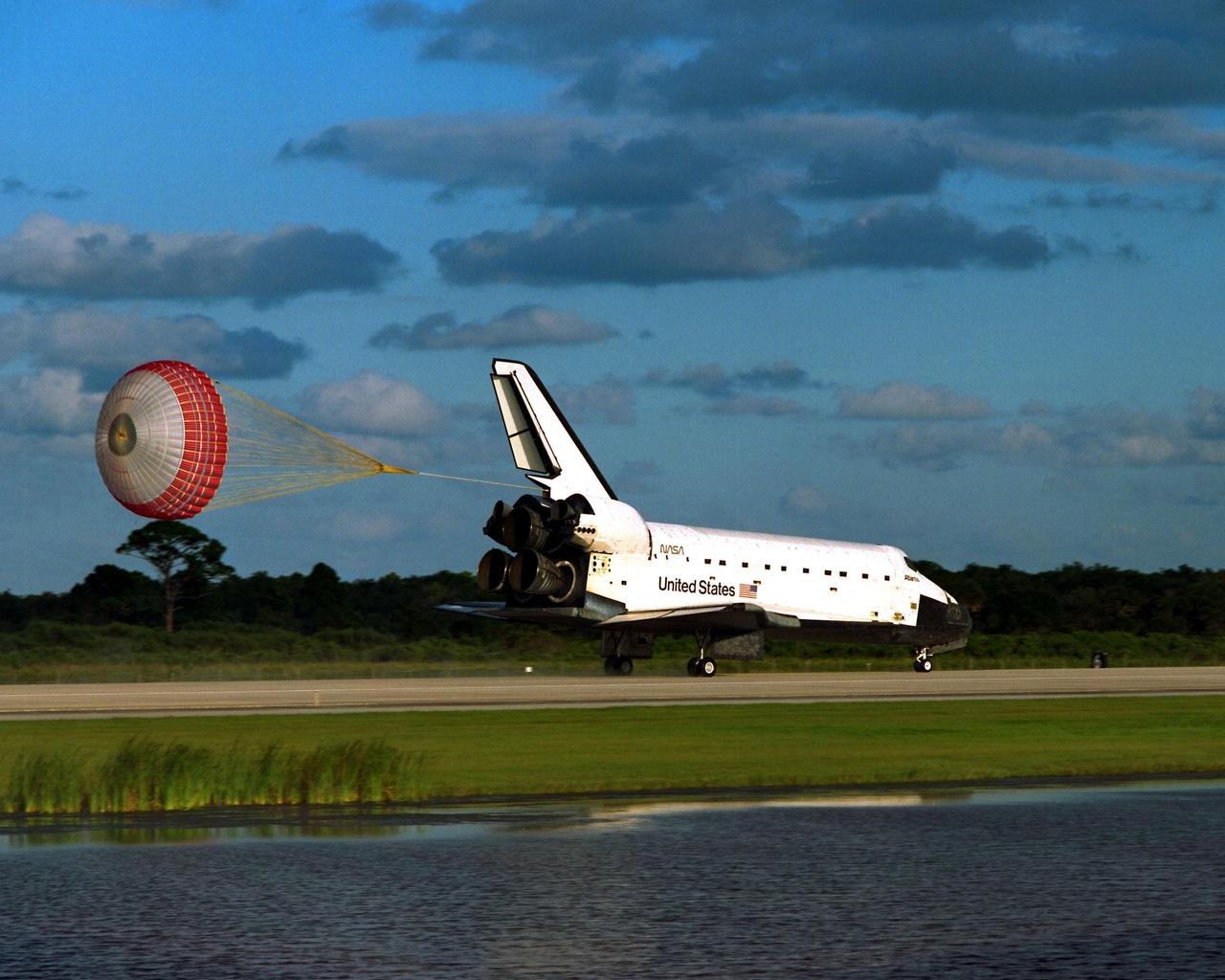
KENNEDY SPACE CENTER, Fla. -- The orbiter drag chute deploys after the Space Shuttle orbiter Atlantis lands on Runway 15 of the KSC Shuttle Landing Facility (SLF) at the conclusion of the nearly 11-day STS-86 mission. Main gear touchdown was at 5:55:09 p.m. EDT, Oct. 6, 1997, with an unofficial mission-elapsed time of 10 days, 19 hours, 20 minutes and 50 seconds. The first two KSC landing opportunities on Sunday were waved off because of weather concerns. The 87th Space Shuttle mission was the 40th landing of the Shuttle at KSC. On Sunday evening, the Space Shuttle program reached a milestone: The total flight time of the Shuttle passed the two-year mark. STS86 was the seventh of nine planned dockings of the Space Shuttle with the Russian Space Station Mir. STS-86 Mission Specialist David A. Wolf replaced NASA astronaut and Mir 24 crew member C. Michael Foale, who has been on the Mir since mid-May. Foale returned to Earth on Atlantis with the remainder of the STS-86 crew. The other crew members are Commander James D. Wetherbee, Pilot Michael J. Bloomfield, and Mission Specialists Wendy B. Lawrence, Scott E. Parazynski, Vladimir Georgievich Titov of the Russian Space Agency, and Jean-Loup J.M. Chretien of the French Space Agency, CNES. Wolf is scheduled to remain on the Mir until the STS-89 Shuttle mission in January. Besides the docking and crew exchange, STS-86 included the transfer of more than three-and-a-half tons of science/logistical equipment and supplies between the two orbiting spacecraft. Parazynski and Titov also conducted a spacewalk while Atlantis and the Mir were docked
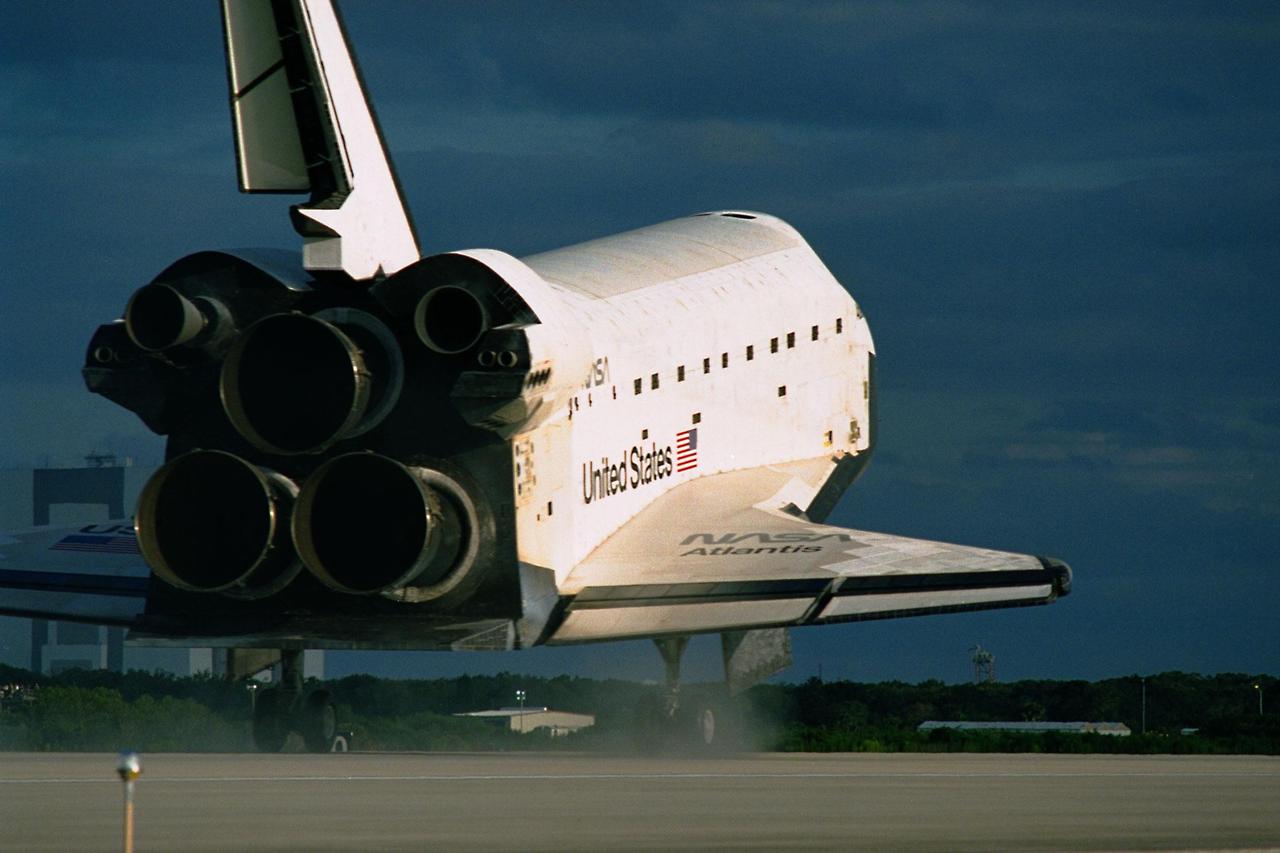
The Space Shuttle orbiter Atlantis touches down on Runway 15 of the KSC Shuttle Landing Facility (SLF) to complete the nearly 11-day STS-86 mission. Main gear touchdown was at 5:55:09 p.m. EDT on Oct. 6, 1997. The unofficial mission-elapsed time at main gear touchdown was 10 days, 19 hours, 20 minutes and 50 seconds. The first two landing opportunities on Sunday were waved off because of weather concerns. The 87th Space Shuttle mission was the 40th landing of the Shuttle at KSC. On Sunday evening, the Space Shuttle program reached a milestone: The total flight time of the Shuttle passed the two-year mark. STS-86 was the seventh of nine planned dockings of the Space Shuttle with the Russian Space Station Mir. STS-86 Mission Specialist David A. Wolf replaced NASA astronaut and Mir 24 crew member C. Michael Foale, who has been on the Mir since mid-May. Foale returned to Earth on Atlantis with the remainder of the STS-86 crew. The other crew members are Commander James D. Wetherbee, Pilot Michael J. Bloomfield, and Mission Specialists Wendy B. Lawrence, Scott E. Parazynski, Vladimir Georgievich Titov of the Russian Space Agency, and Jean-Loup J.M. Chretien of the French Space Agency, CNES. Wolf is scheduled to remain on the Mir until the STS-89 Shuttle mission in January. Besides the docking and crew exchange, STS-86 included the transfer of more than three-and-ahalf tons of science/logistical equipment and supplies between the two orbiting spacecraft. Parazynski and Titov also conducted a spacewalk while Atlantis and the Mir were docked
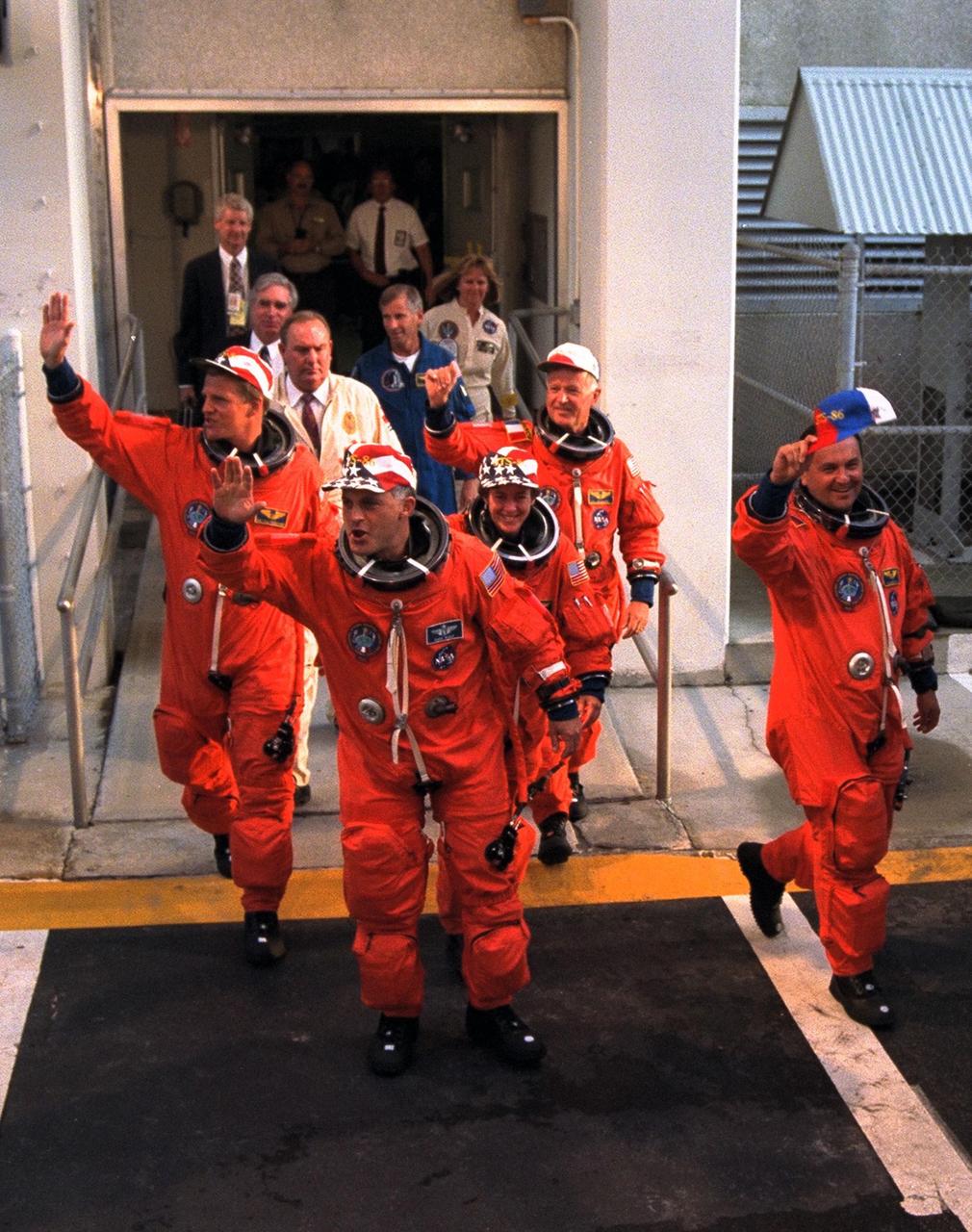
The five STS-86 mission specialists wave to the crowd of press representatives, KSC employees and other well-wishers as they depart from the Operations and Checkout Building. The three U.S. mission specialists (and their nicknames for this flight) are, from left, "too tall" Scott E. Parazynski, "just right" David A. Wolf and "too short" Wendy B. Lawrence. The two mission specialists representing foreign space agencies are Vladimir Georgievich Titov of the Russian Space Agency, in foreground at right, and Jean-Loup J.M. Chretien of the French Space Agency, CNES, in background at right. Commander James D. Wetherbee and Pilot Michael J. Bloomfield are out of the frame. STS-86 is slated to be the seventh docking of the Space Shuttle with the Russian Space Station Mir. Wolf is scheduled to transfer to the Mir 24 crew for an approximate four-month stay aboard the Russian space station. Parazynski and Lawrence were withdrawn from training for an extended stay aboard the Mir Parazynski because he was too tall to fit safely in a Russian Soyuz spacecraft, and Lawrence because she was too short to fit into a Russian spacewalk suit. The crew is en route to Launch Pad 39A, where the Space Shuttle Atlantis awaits liftoff on the planned 10-day mission
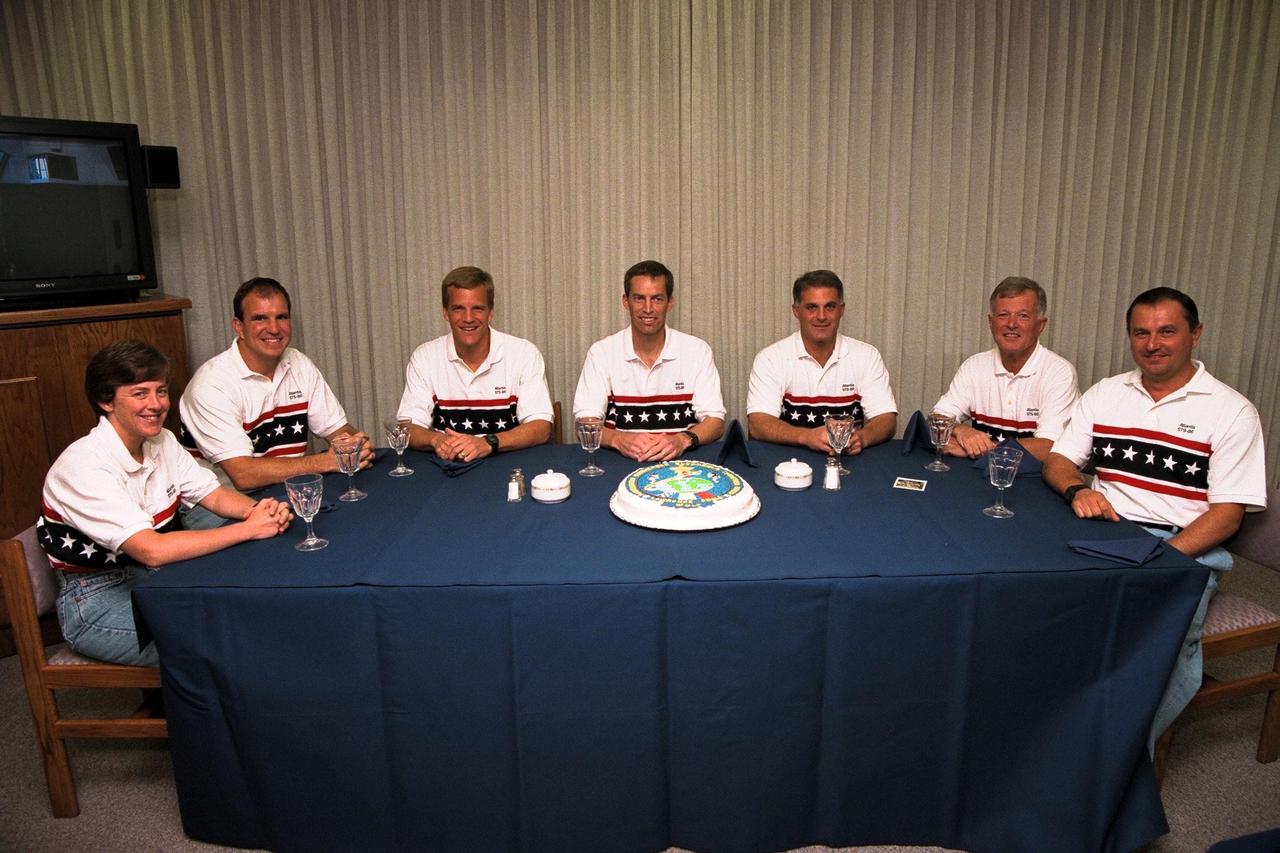
As part of the final STS-86 prelaunch activities, the seven crew members gather for a snack and a photo opportunity in the Operations and Checkout Building. From left are Mission Specialist Wendy B. Lawrence; Pilot Michael J. Bloomfield; Mission Specialist Scott E. Parazynski; Commander James D. Wetherbee; Mission Specialist David A. Wolf; Mission Specialist Jean-Loup J.M. Chretien of the French Space Agency, CNES; and Mission Specialist Vladimir Georgievich Titov of the Russian Space Agency. After a weather briefing, the astronauts will don their orange launch and entry suits and depart for Launch Pad 39A where the Space Shuttle Atlantis awaits liftoff at about 10:34 p.m. EDT, Sept. 25. The exact launch time may vary slightly based on calculations of the Russian Space Station Mir’s precise location in space at the time of liftoff. STS-86 is slated to be the seventh of nine planned dockings of the Shuttle with the Mir. Wolf is scheduled to become a member of the Mir 24 crew, replacing U.S. astronaut C. Michael Foale who will return to Earth aboard Atlantis after more than four months on the Russian orbiting outpost
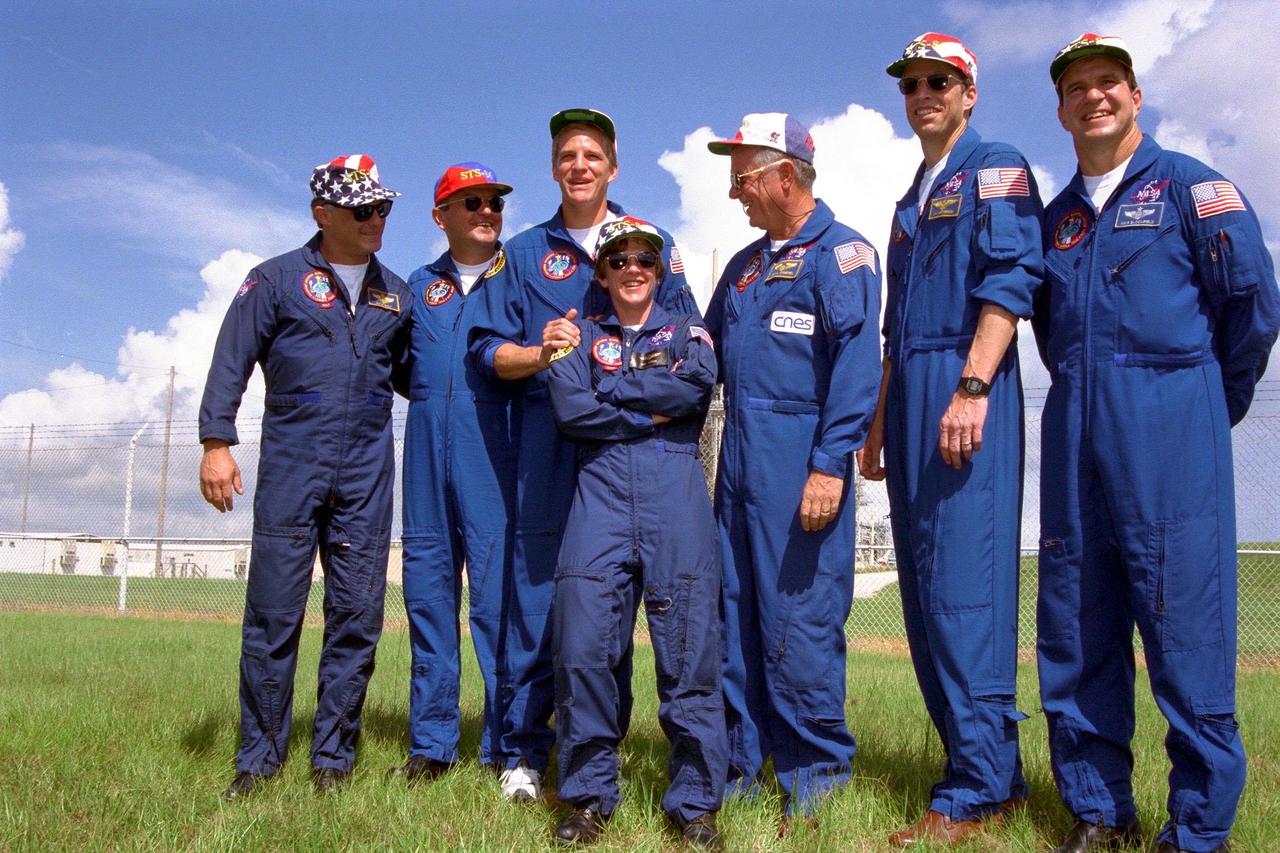
The STS-86 crew enjoys a relaxing moment while greeting friends, families and other well-wishers the day before the scheduled Sept. 25 launch aboard the Space Shuttle Atlantis. From left are Mission Specialist David A. Wolf; Mission Specialist Vladimir Georgievich Titov of the Russian Space Agency; Mission Specialist Scott E. Parazynski; Mission Specialist Wendy B. Lawrence (leaning into Parazynski); Mission Specialist Jean-Loup J.M. Chretien of the French Space Agency, CNES; Commander James D. Wetherbee; and Pilot Michael J. Bloomfield. STS-86 is slated to be the seventh docking of the Space Shuttle and the Russian Space Station Mir. Parazynski and Lawrence had trained to live and work aboard the Russian station but were withdrawn from Mir training Parazynski because he was "too tall" to fit safely in the Russian Soyuz vehicle, and Lawrence because she is "too short" to fit in the Russian spacewalk suit. "Just right" Wolf is scheduled to become a Mir 24 crew member after the docking, to replace U.S. astronaut C. Michael Foale for an extended stay aboard the Russian orbiting outpost
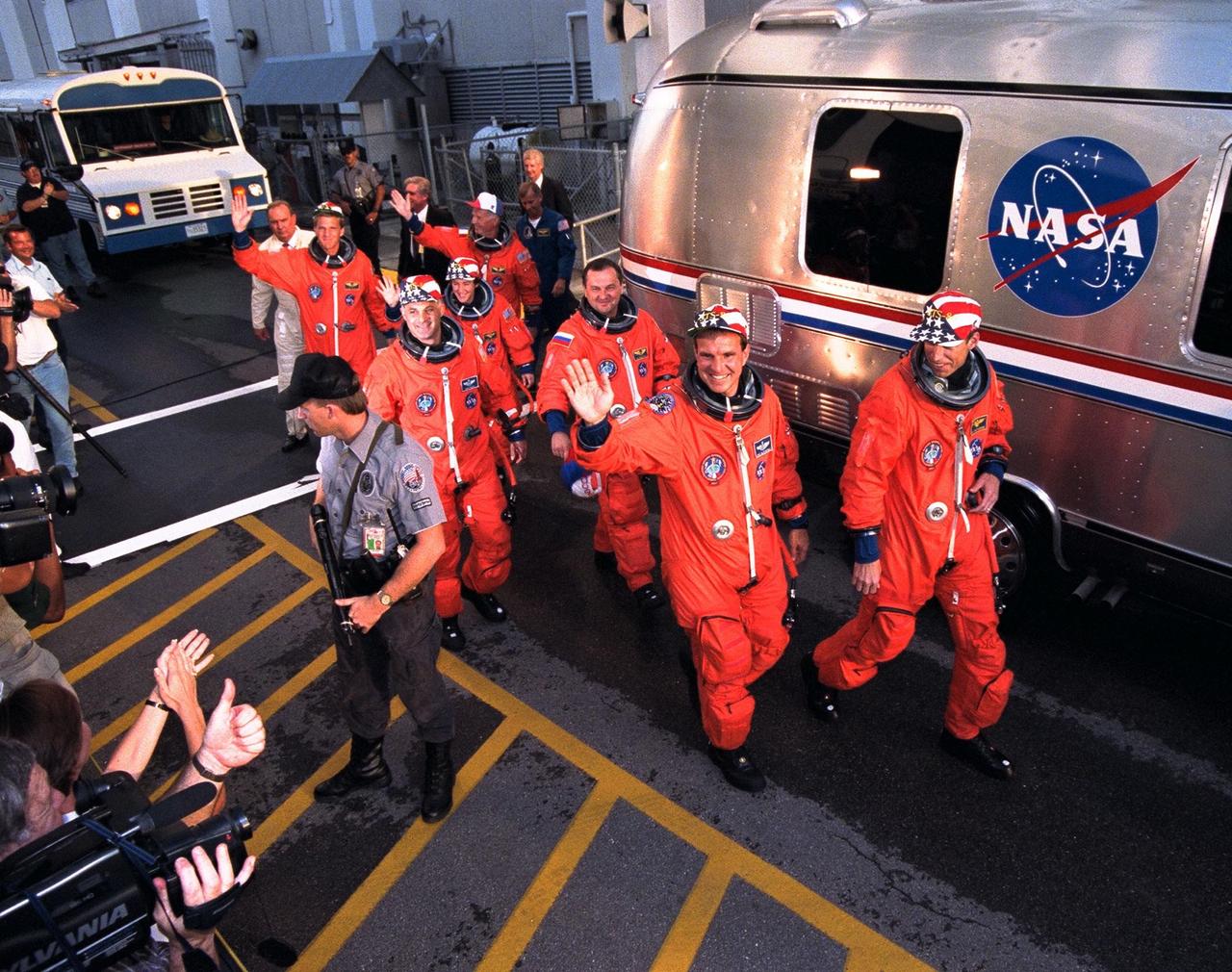
STS-86 crew members smile and wave to the crowd of press representatives, KSC employees and other well-wishers as they prepare to board the astronaut van, at right, after departing from the Operations and Checkout Building. Leading the way are Pilot Michael J. Bloomfield, at left, and Commander James D. Wetherbee. Mission Specialists David A. Wolf, at left, and Vladimir Georgievich Titov of the Russian Space Agency are directly behind them, followed by Mission Specialist Wendy B. Lawrence, at center. Bringing up the rear are Mission Specialists Scott E. Parazynski, at left, and Jean-Loup J.M. Chretien of the French Space Agency, CNES. The seven-member crew is en route to Launch Pad 39A, where the Space Shuttle Atlantis awaits liftoff on a planned 10-day mission slated to be the seventh docking of the Space Shuttle and the Russian Space Station Mir. Wolf is scheduled to transfer to the Mir 24 crew for an approximate four-month stay aboard the Russian space station. He will replace U.S. astronaut C. Michael Foale, who will return to Earth aboard Atlantis with the remainder of the STS-86 crew
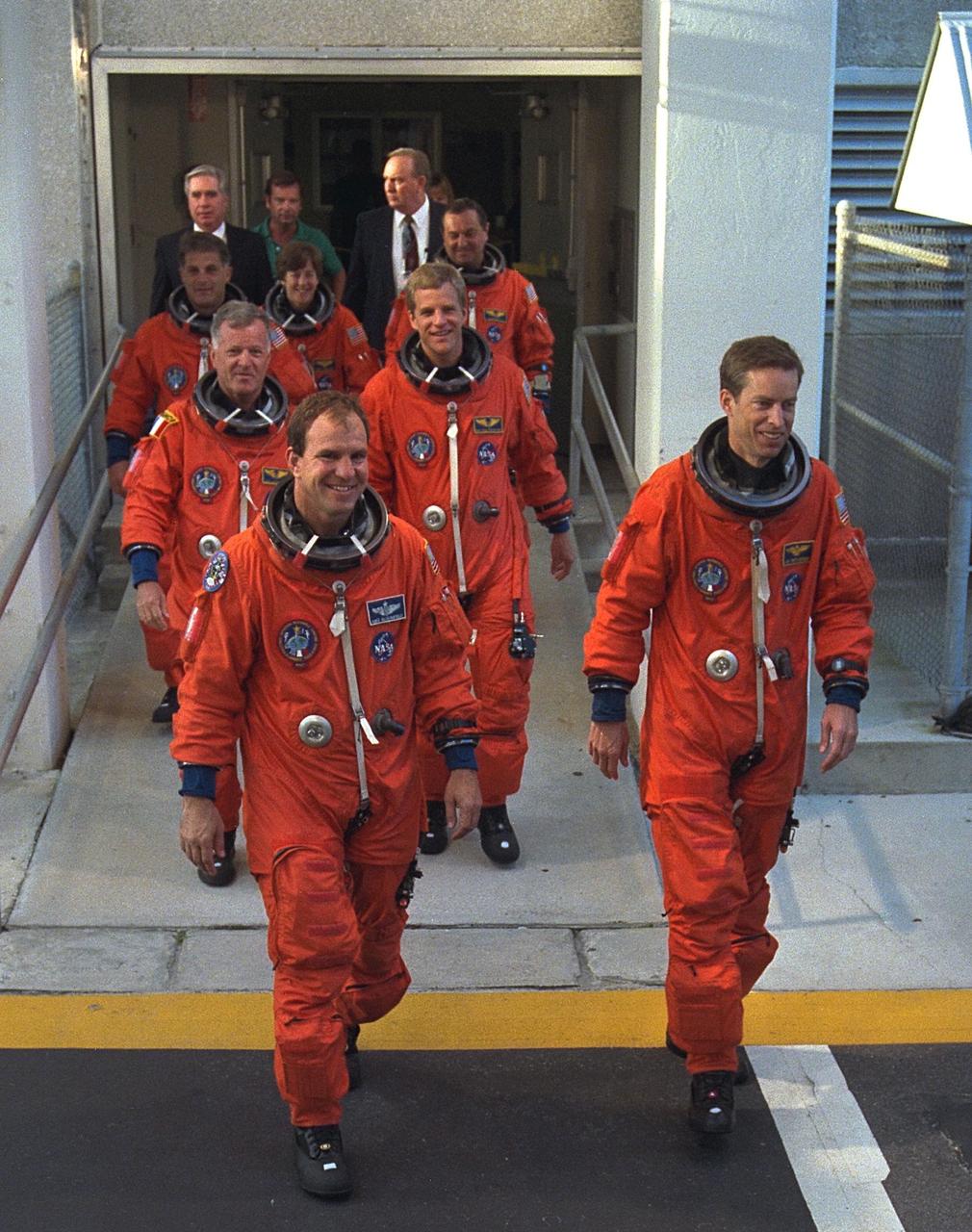
STS-86 Commander James D. Wetherbee, in foreground at right, leads the way as the next Space Shuttle crew does a practice walkout from the Operations and Checkout Building en route to Launch Pad 39A. The seven crew members are at KSC to participate in the Terminal Countdown Demonstration Test (TCDT), a dress rehearsal for launch. Pilot Michael J. Bloomfield is in foreground at left. Directly behind the pilot and commander, from left, are Mission Specialists Jean-Loup J.M. Chretien of the French Space Agency, CNES, and Scott E. Parazynski. Bringing up the rear, from left, are Mission Specialists David A. Wolf, Wendy B. Lawrence and Vladimir Georgievich Titov of the Russian Space Agency. STS-86 will be the seventh docking of the Space Shuttle with the Russian Space Station Mir. After the docking, Wolf will transfer to the Mir 24 crew, replacing U.S. astronaut C. Michael Foale, who arrived there during the last docking mission, STS-85, in May. The STS-86 launch aboard Atlantis is targeted for Sept. 25
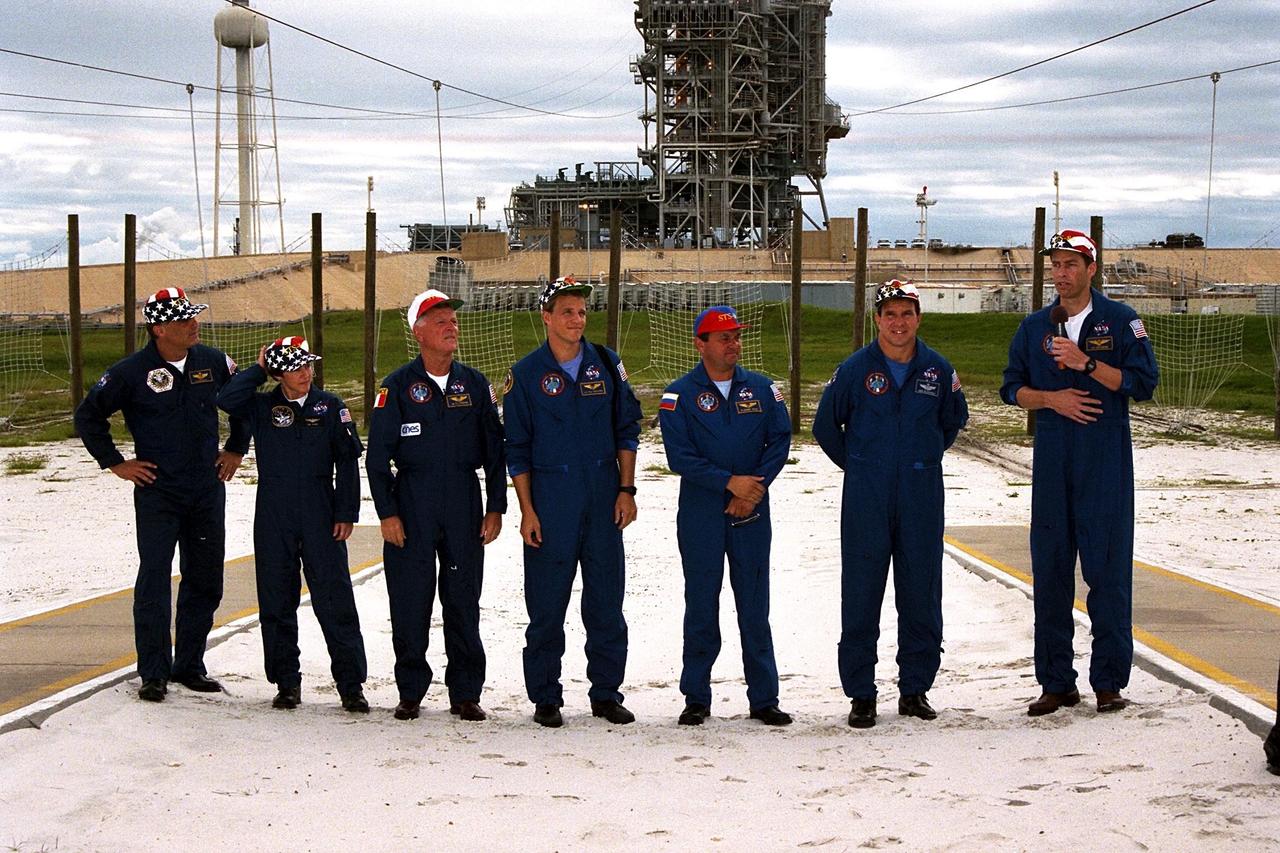
KENNEDY SPACE CENTER, Fla. -- STS-86 Commander James D. Wetherbee, with microphone, and other crew members of the Space Shuttle Atlantis speak to media representatives and other onlookers at Launch Pad 39A during the Terminal Countdown Demonstration Test (TCDT), a dress rehearsal for launch. From right, after Wetherbee, are Pilot Michael J. Bloomfield, Mission Specialist Vladimir Georgievich Titov of the Russian Space Agency, Mission Specialist Scott E. Parazynski, Mission Specialist Jean-Loup J.M. Chretien of the French Space Agency, CNES, and Mission Specialists Wendy B. Lawrence and David A. Wolf. STS-86 will be the seventh docking of the Space Shuttle with the Russian Space Station Mir. During the docking, Wolf will transfer to the orbiting Russian station and become a member of the Mir 24 crew, replacing U.S. astronaut C. Michael Foale, who has been on the Mir since the last docking mission, STS-84, in May. Launch of Mission STS-86 aboard the Space Shuttle Atlantis is targeted for Sept. 25