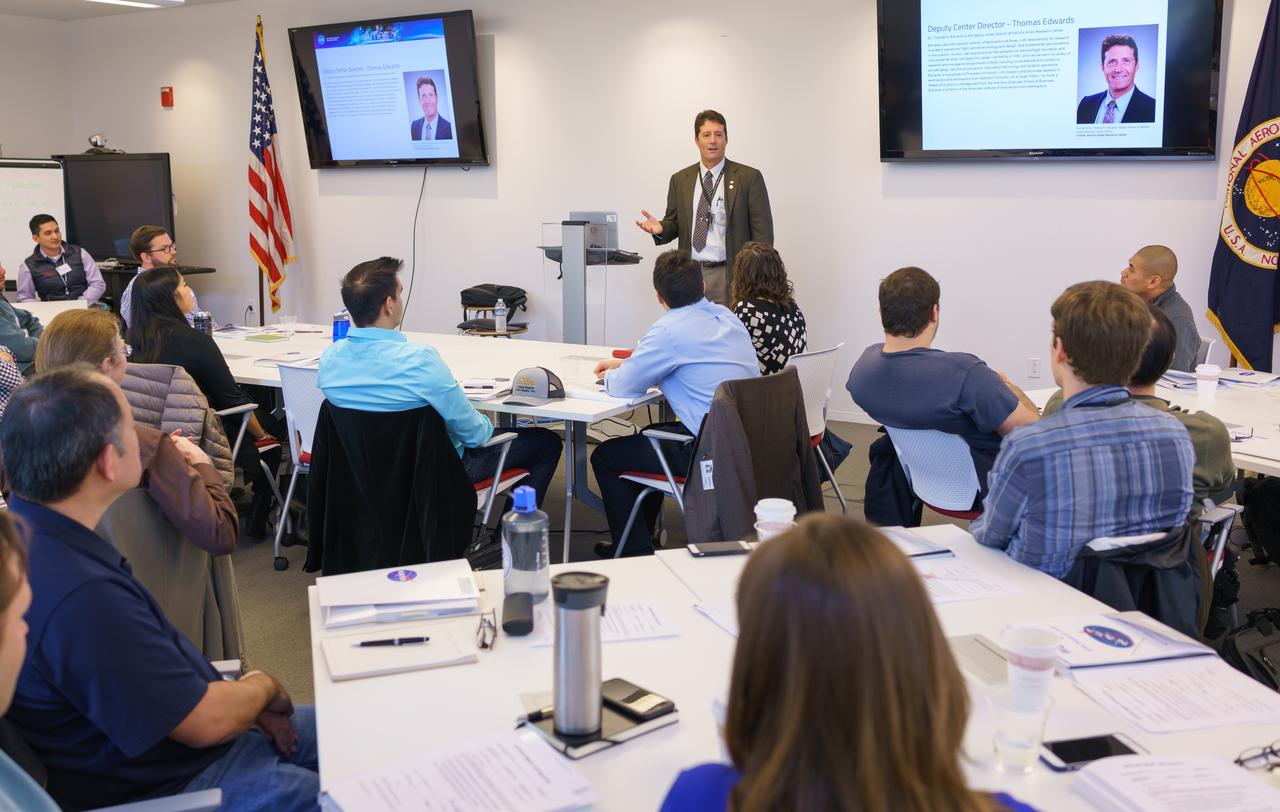
New Employee Orientation swearing-in N-232. Tom Edwards, Ames Deputy Director address the group.
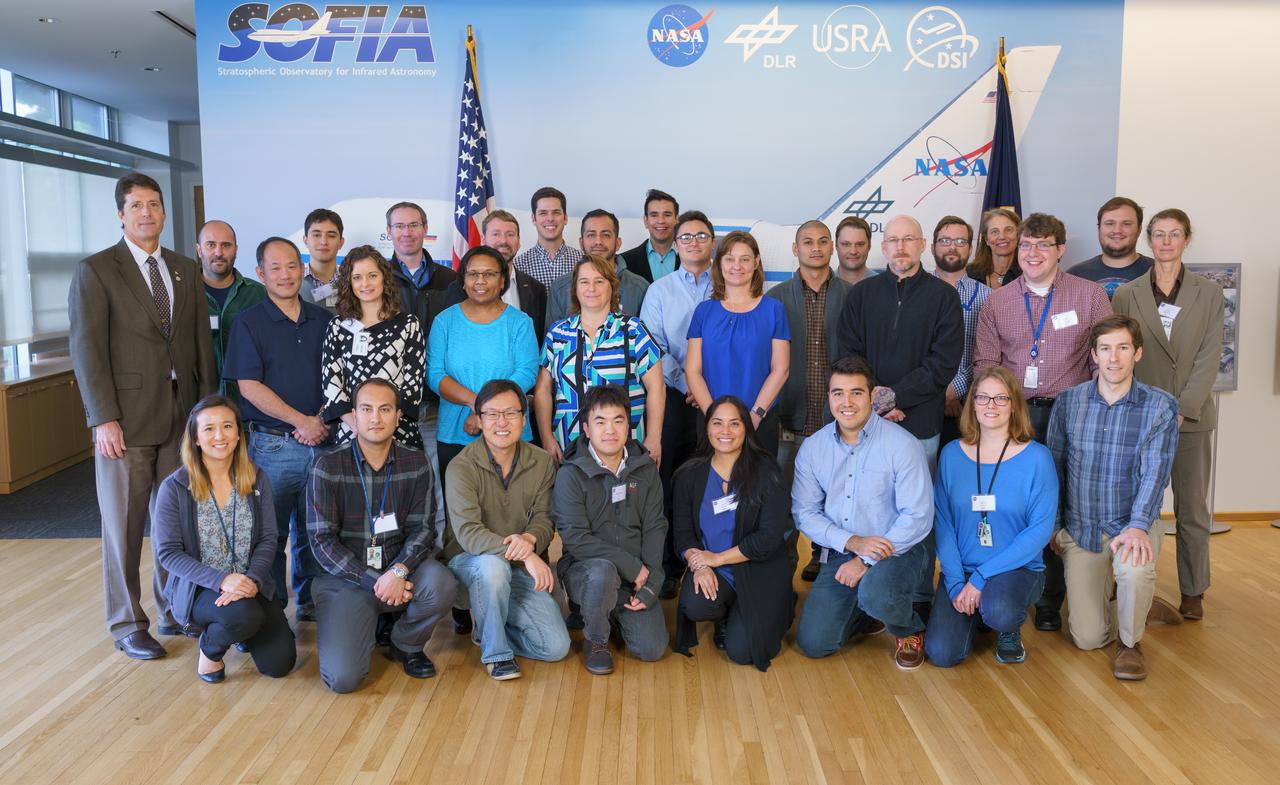
New Employees A Kujaneck, B Baeza, S Cahill, J Carolino, D Chang, E Czech, A Davila, R Everroad, R Fisher, A Ging, J Haglage, B Hooey, K Kwan, C Fung, P Ung-Joon Lee, M Mahzari, L Martin, K McMillin, S Monheim, A Nguyen, B Nikaido, T Perez, V Salazar, K Sato, D Shaw, Irene Smith, Melanie Smith, Lindsay Sturre, E Uribe Jr. with Tom Edwards, Ames Deputy Director.
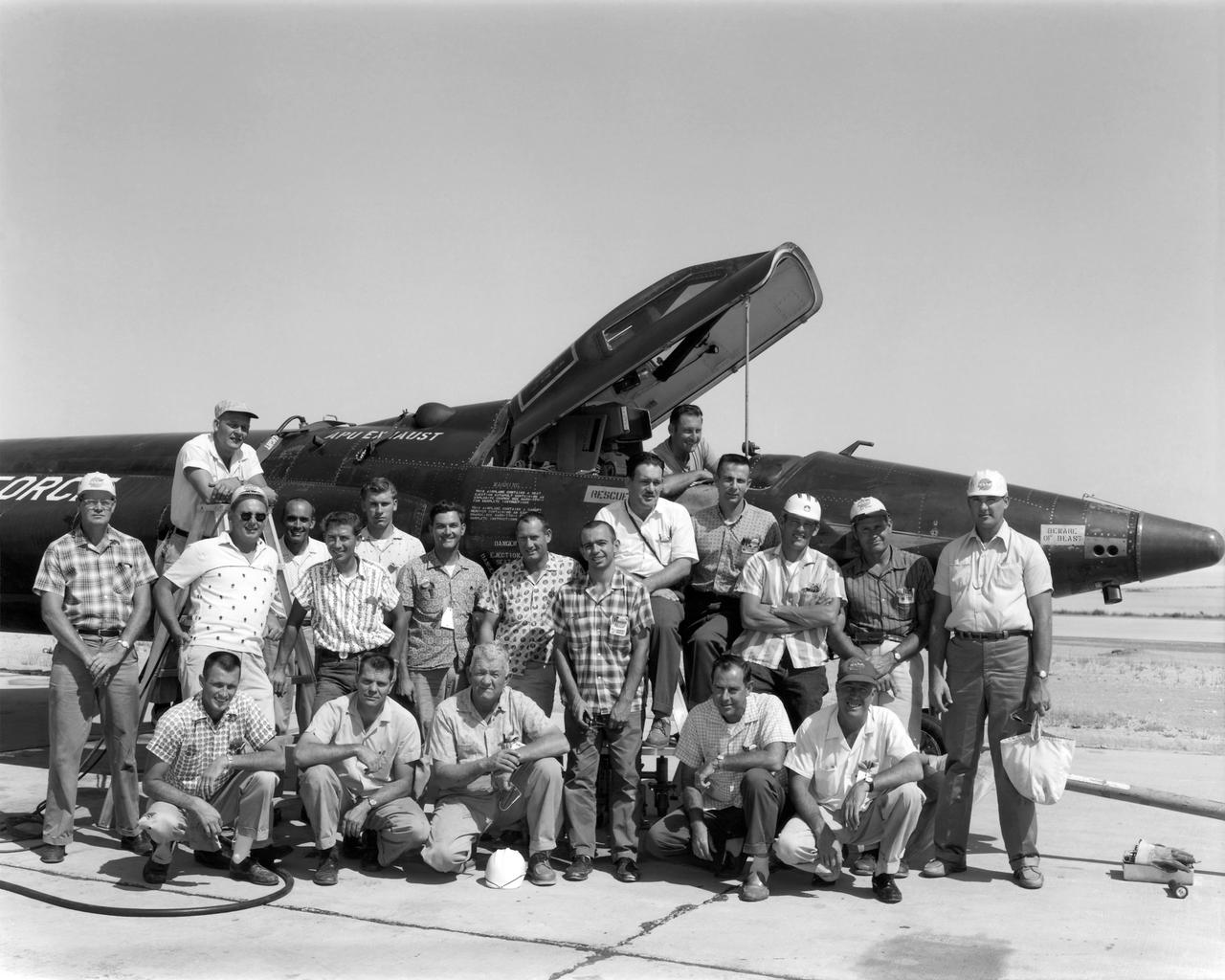
X-15 personnel July 1962 Cockpit: Edward "Ed" Nice Ladder: Thomas "Tom" McAlister Back Row, left to right: William Clark, Edward "Ed" Sabo, Donald "Don" Hall, Billy Furr, Allen Dustin, Raymond "Ray" White, George E. Trott, Alfred "Al" Grieshaber, Merle Curtis, LeRoy "Lee" Adelsbach, Allen Lowe, Jay L. King, Lorenzo "Larry" Barnett. Kneeling, left to right: Byron Gibbs, Price "Bob" Workman, Ira Cupp, unidentified, John Gordon.
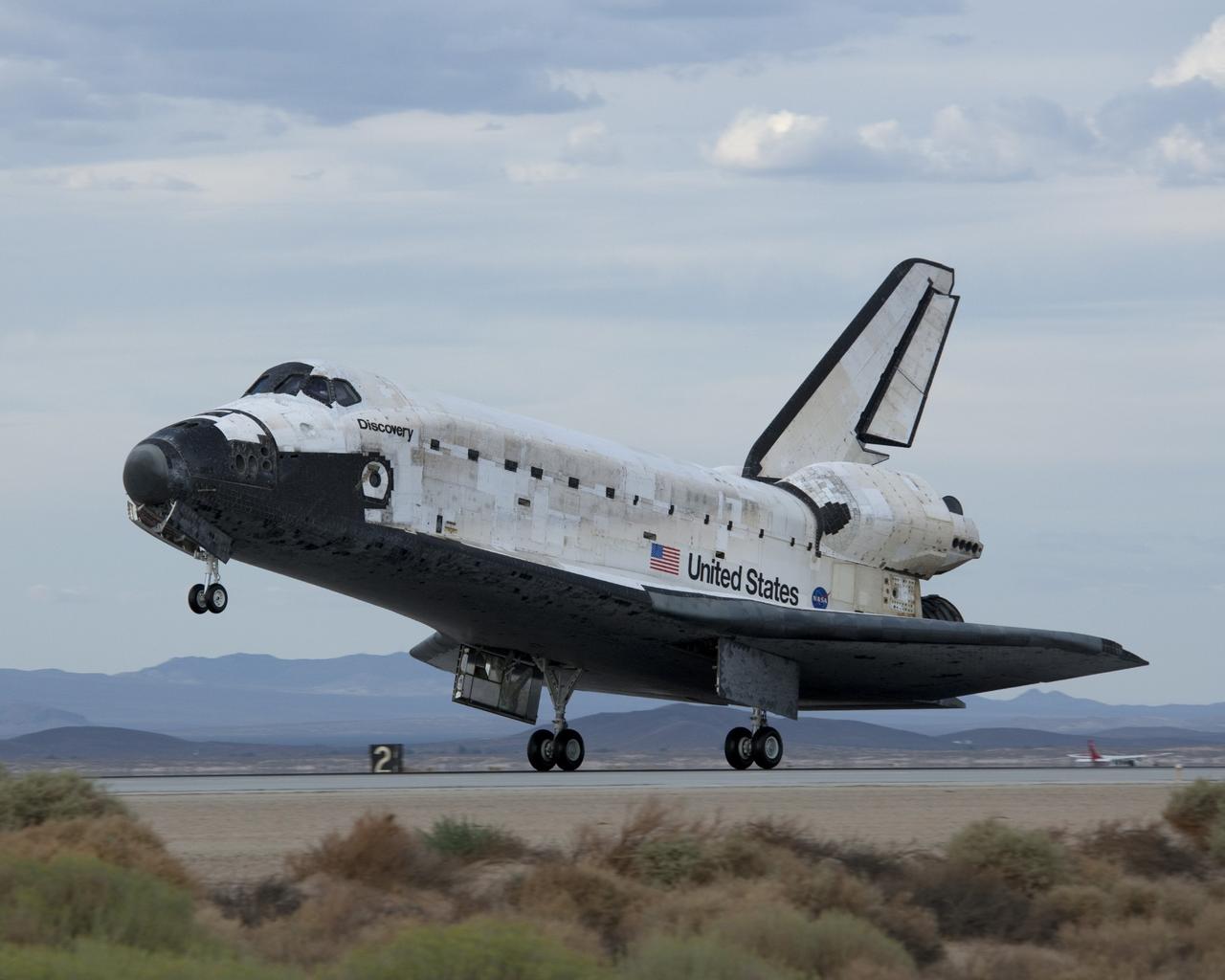
EDWARDS AIR FORCE BASE, Calif. -- (ED09-0253-02) Space Shuttle Discovery rolls out on Runway 22L after landing at Edwards Air Force Base in Southern California’s high desert to conclude mission STS-128 to the International Space Station. (NASA photo /Tom Tschida)
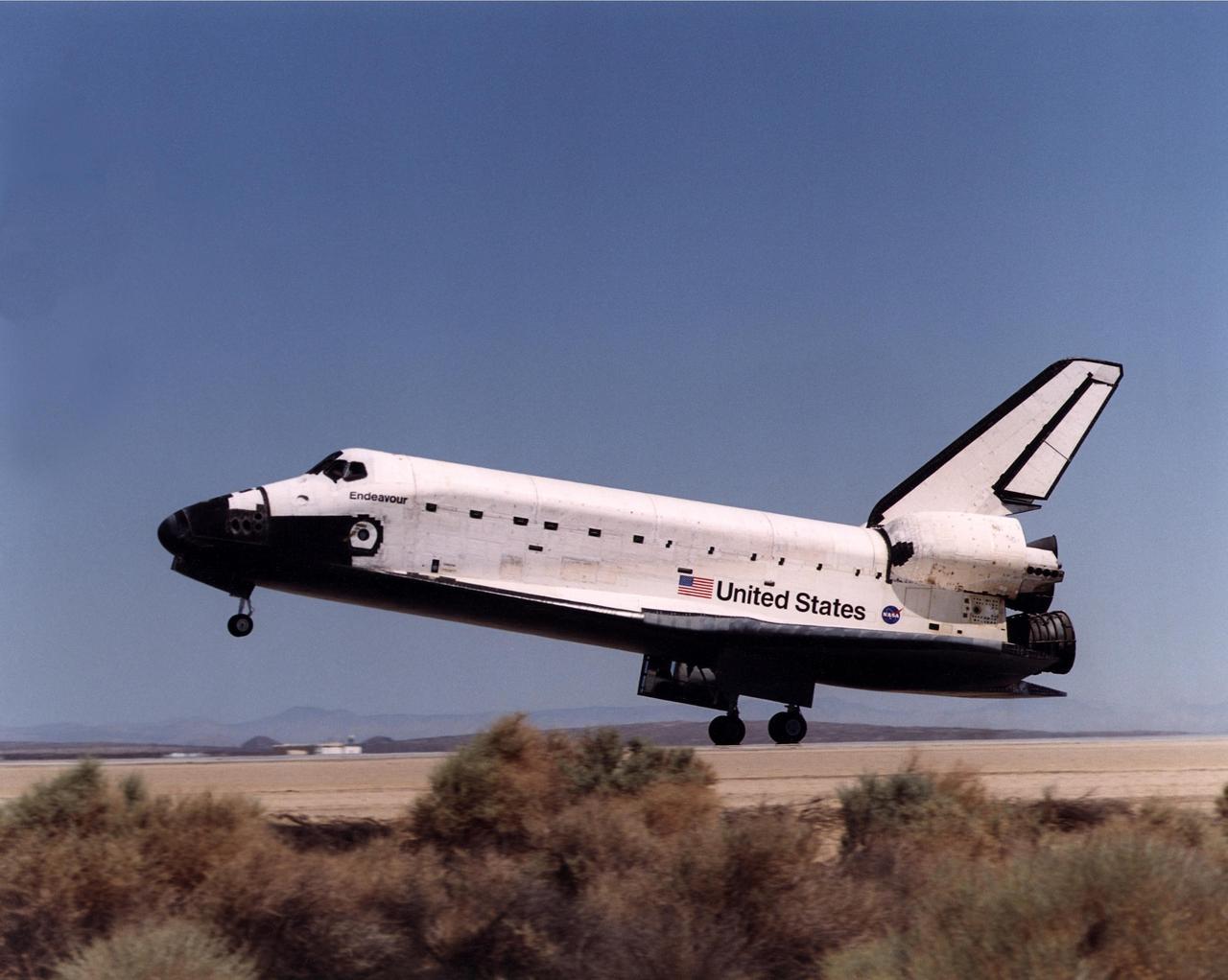
EDWARDS AFB, CALIF. -- After traveling 5.8 million miles in space during 217 orbits, Endeavour completes mission STS-111 with a landing on concrete runway 22 at Dryden Flight Research Center, Edwards Air Force Base, Calif. Three days of unfavorable weather conditions at KSC prompted the decision to land at Edwards, which enjoyed pristine, dry conditions.. Main gear touchdown occurred at 1:57:41 p.m EDT, nose gear touchdown at 1:57:53 p.m. EDT and wheel stop at 1:58:45 p.m. EDT. [Photo by Tom Tschida
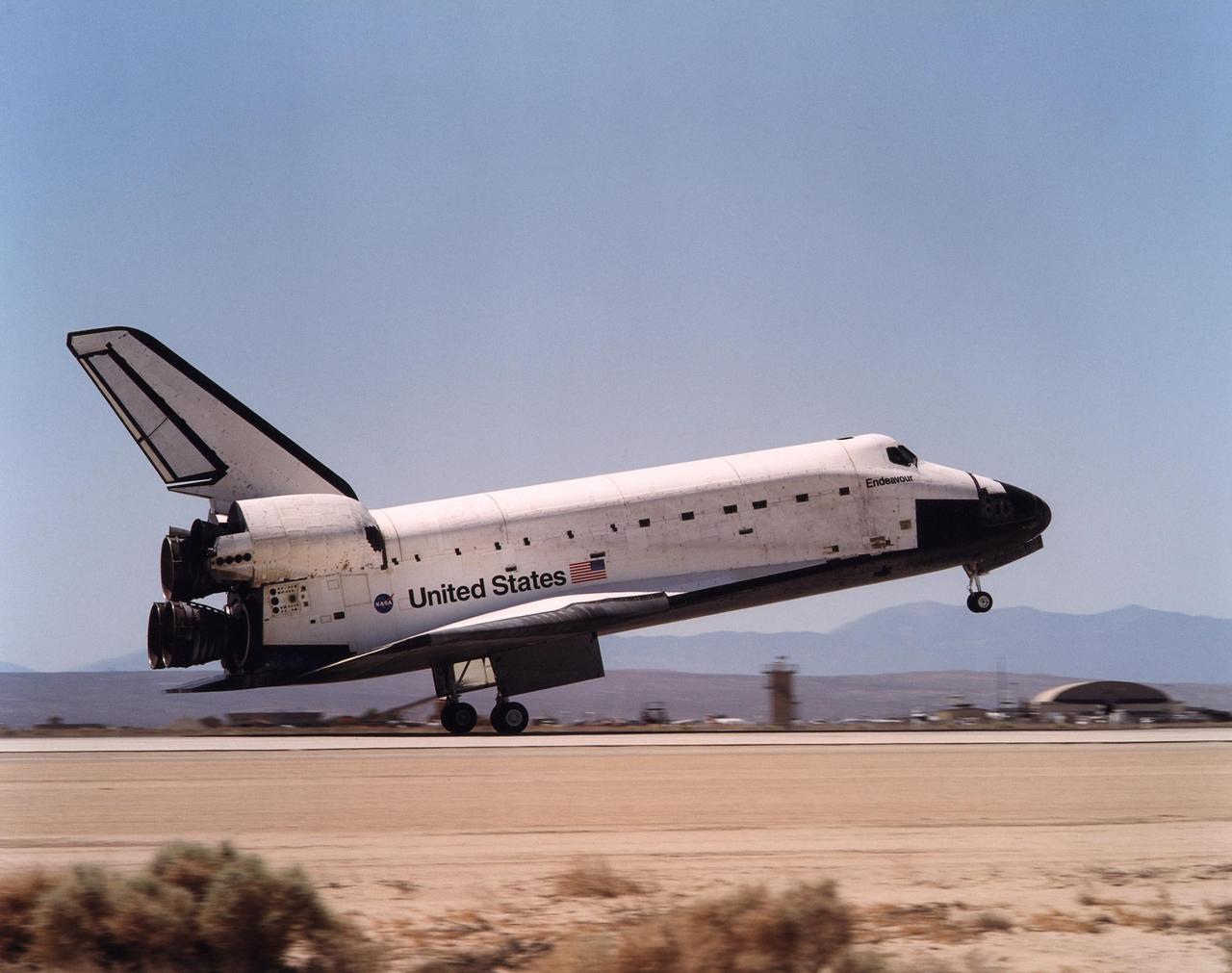
EDWARDS AFB, CALIF. -- After traveling 5.8 million miles in space during 217 orbits, Endeavour touches down on concrete runway 22 at Dryden Flight Research Center, Edwards Air Force Base, Calif., completing mission STS-111. Three days of unfavorable weather conditions at KSC prompted the decision to land at Edwards, which enjoyed pristine, dry conditions.. Main gear touchdown occurred at 1:57:41 p.m EDT, nose gear touchdown at 1:57:53 p.m. EDT and wheel stop at 1:58:45 p.m. EDT. [Photo by Tom Tschida
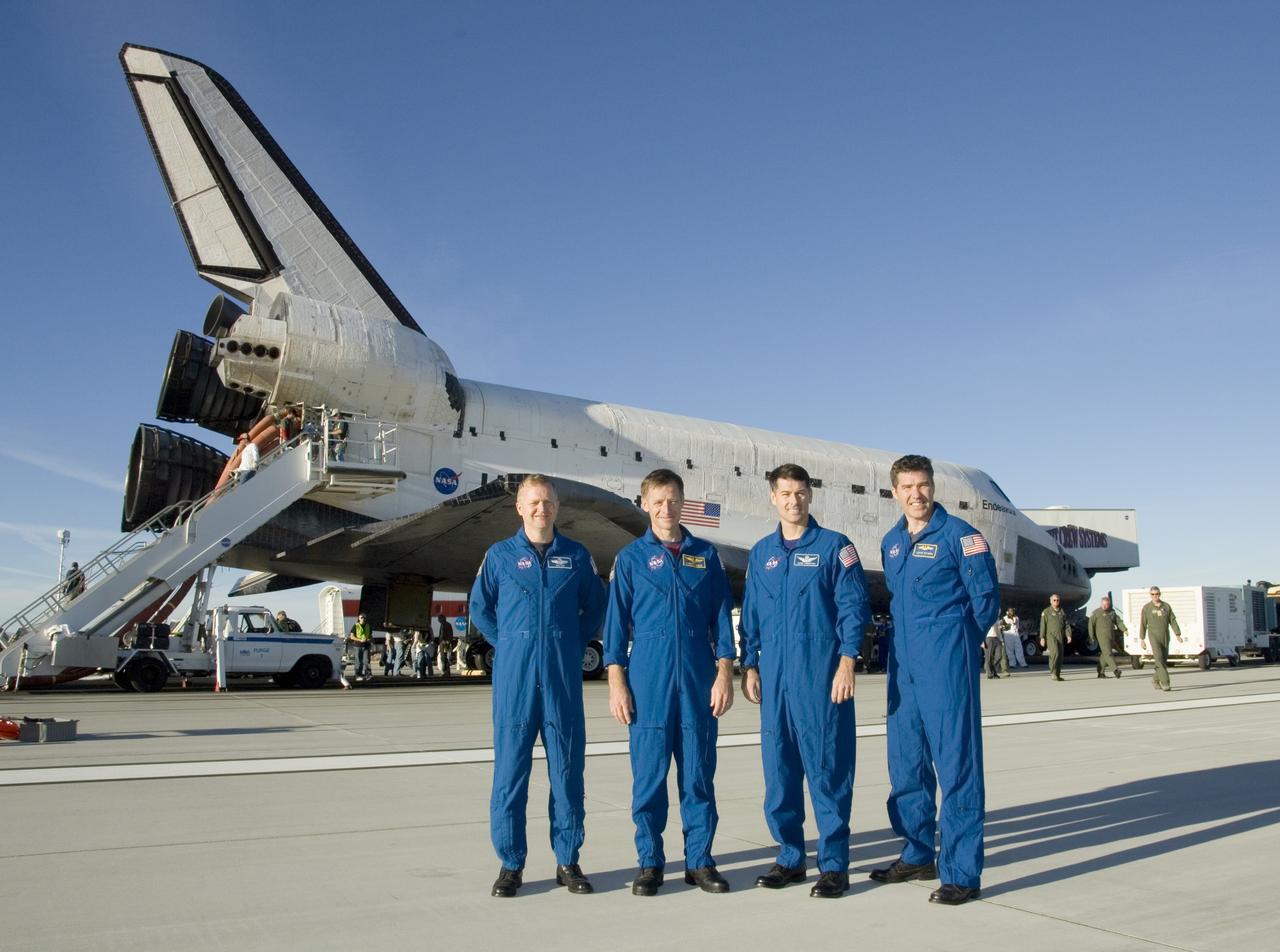
EDWARDS, Calif. – After space shuttle Endeavour's landing at Edwards Air Force Base in California, four of the STS-126 crew members pose for the media. From left are Pilot Eric Boe, Commander Chris Ferguson and Mission Specialists Shane Kimbrough and Steve Bowen. The decision to land at Edwards was made due to weather concerns at NASA's Kennedy Space Center in Florida. In the 52nd landing at Edwards, Endeavour touched down at 4:25 p.m. EST to end the STS-126 mission, completing its 16-day journey of over 6.6 million miles in space. The STS-126 mission was the 27th flight to the International Space Station, carrying equipment and supplies in the Multi-Purpose Logistics Module Leonardo. The mission featured four spacewalks and work to prepare the space station to house six crew members for long-duration missions. Photo credit: NASA/Tom Tschida, VAFB
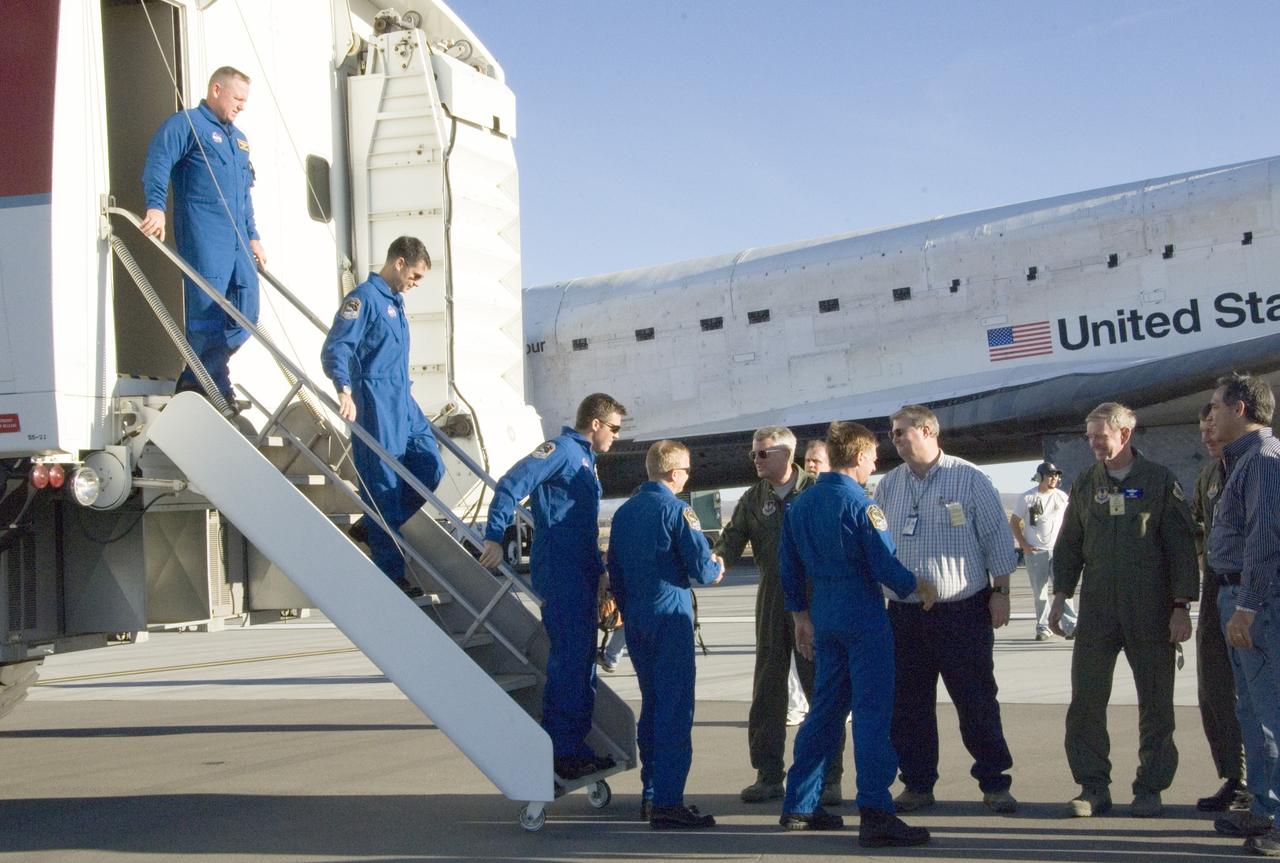
EDWARDS, Calif. – At Edwards Air Force Base in California, STS-126 crew members are greeted as they exit the crew transport vehicle after landing aboard space shuttle Endeavour. Leading the crew is Commander Chris Ferguson (right) followed by Pilot Eric Boe and Mission Specialists Steve Bowen and Shane Kimbrough. The decision to land at Edwards was made due to weather concerns at NASA's Kennedy Space Center in Florida. In the 52nd landing at Edwards, Endeavour touched down at 4:25 p.m. EST to end the STS-126 mission, completing its 16-day journey of over 6.6 million miles in space. The STS-126 mission was the 27th flight to the International Space Station, carrying equipment and supplies in the Multi-Purpose Logistics Module Leonardo. The mission featured four spacewalks and work to prepare the space station to house six crew members for long-duration missions. Photo credit: NASA/Tom Tschida, VAFB
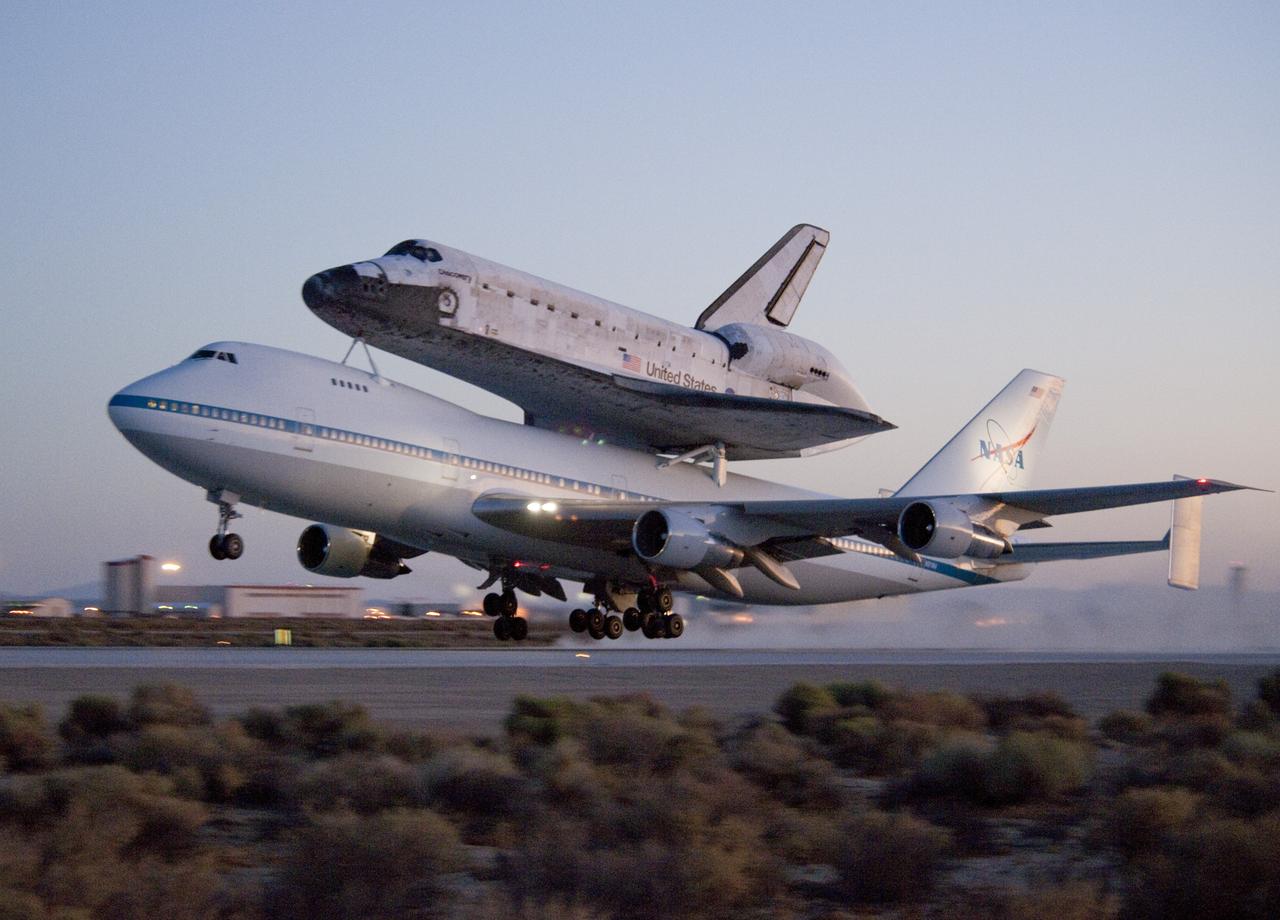
EDWARDS AIR FORCE BASE, Calif. – ED09-0253-103) Space shuttle Discovery and its modified 747 carrier aircraft lift off from Edwards Air Force Base early in the morning on Sept. 20, 2009 on the first leg of its ferry flight back to the Kennedy Space Center in Florida. Discovery had landed at Edwards Sept. 11 after the STS-128 mission to the International Space Station. Discovery returned to Earth Sept. 11 on the STS-128 mission, landing at Edwards Air Force Base in California. The shuttle delivered more than 7 tons of supplies, science racks and equipment, as well as additional environmental hardware to sustain six crew members on the International Space Station. NASA photo /Tom Tschida

EDWARDS, Calif. – After space shuttle Endeavour's landing at Edwards Air Force Base in California, STS-126 Commander Chris Ferguson (left) and Pilot Eric Boe examine the tiles on space shuttle Endeavour for any visible damage. The decision to land at Edwards was made due to weather concerns at NASA's Kennedy Space Center in Florida. In the 52nd landing at Edwards, Endeavour touched down at 4:25 p.m. EST to end the STS-126 mission, completing its 16-day journey of over 6.6 million miles in space. The STS-126 mission was the 27th flight to the International Space Station, carrying equipment and supplies in the Multi-Purpose Logistics Module Leonardo. The mission featured four spacewalks and work to prepare the space station to house six crew members for long-duration missions. Photo credit: NASA/Tom Tschida, VAFB
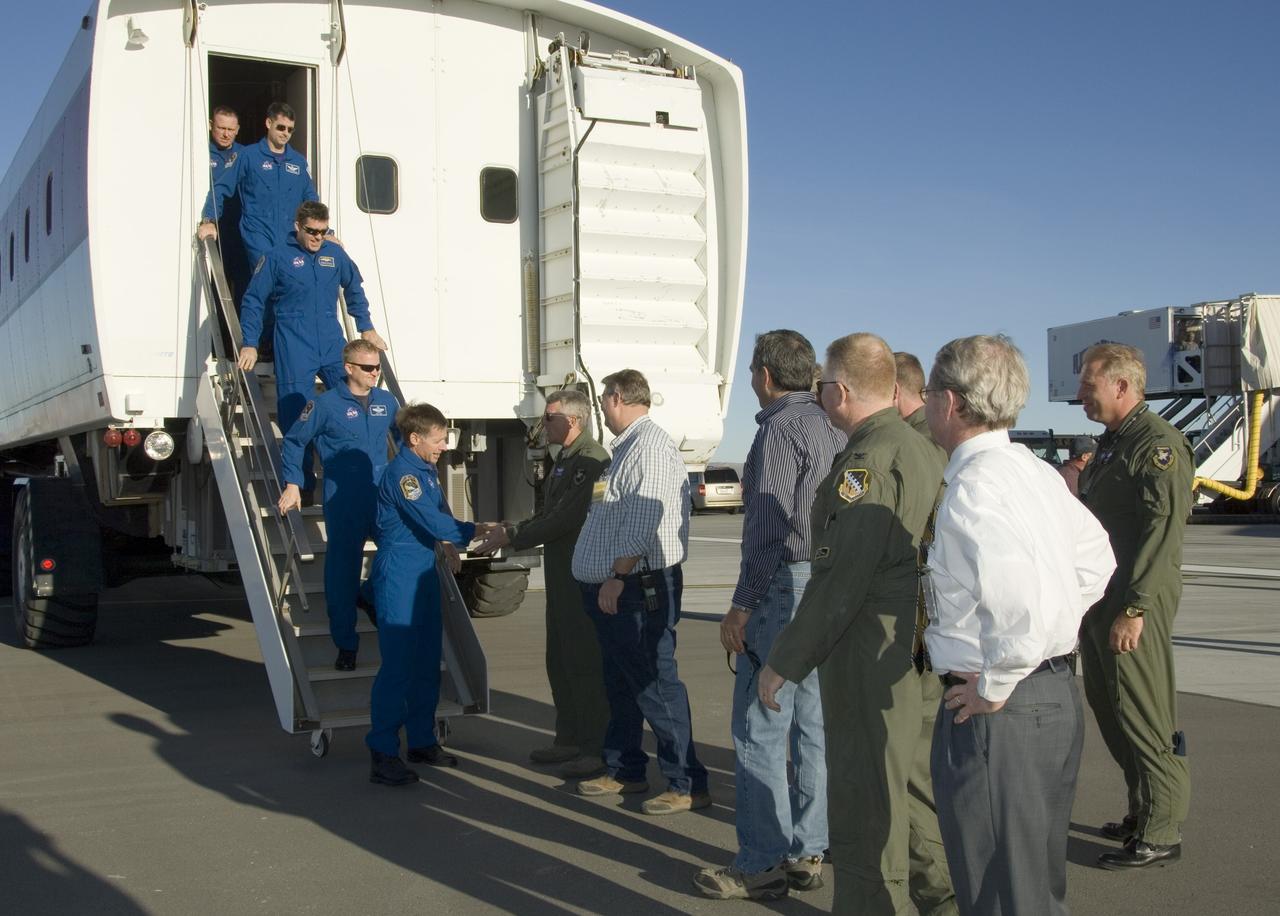
EDWARDS, Calif. – At Edwards Air Force Base in California, STS-126 crew members are greeted as they exit the crew transport vehicle after landing aboard space shuttle Endeavour. Leading the crew is Commander Chris Ferguson (right) followed by Pilot Eric Boe and Mission Specialists Steve Bowen and Shane Kimbrough. The decision to land at Edwards was made due to weather concerns at NASA's Kennedy Space Center in Florida. In the 52nd landing at Edwards, Endeavour touched down at 4:25 p.m. EST to end the STS-126 mission, completing its 16-day journey of over 6.6 million miles in space. The STS-126 mission was the 27th flight to the International Space Station, carrying equipment and supplies in the Multi-Purpose Logistics Module Leonardo. The mission featured four spacewalks and work to prepare the space station to house six crew members for long-duration missions. Photo credit: NASA/Tom Tschida, VAFB
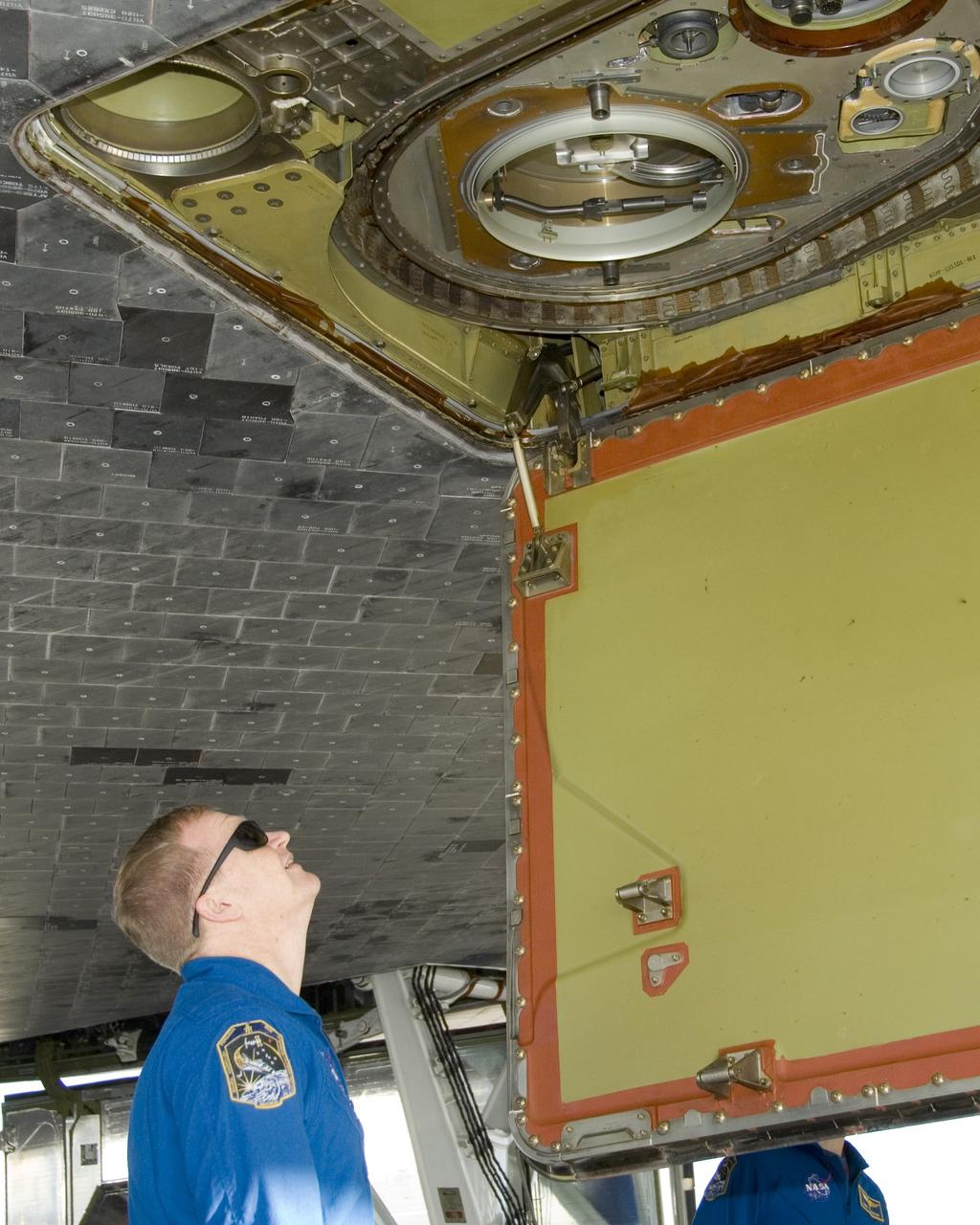
EDWARDS, Calif. – After space shuttle Endeavour's landing at Edwards Air Force Base in California, STS-126 Pilot Eric Boe examines the underside of the orbiter for any visible damage. The decision to land at Edwards was made due to weather concerns at NASA's Kennedy Space Center in Florida. In the 52nd landing at Edwards, Endeavour touched down at 4:25 p.m. EST to end the STS-126 mission, completing its 16-day journey of over 6.6 million miles in space. The STS-126 mission was the 27th flight to the International Space Station, carrying equipment and supplies in the Multi-Purpose Logistics Module Leonardo. The mission featured four spacewalks and work to prepare the space station to house six crew members for long-duration missions. Photo credit: NASA/Tom Tschida, VAFB
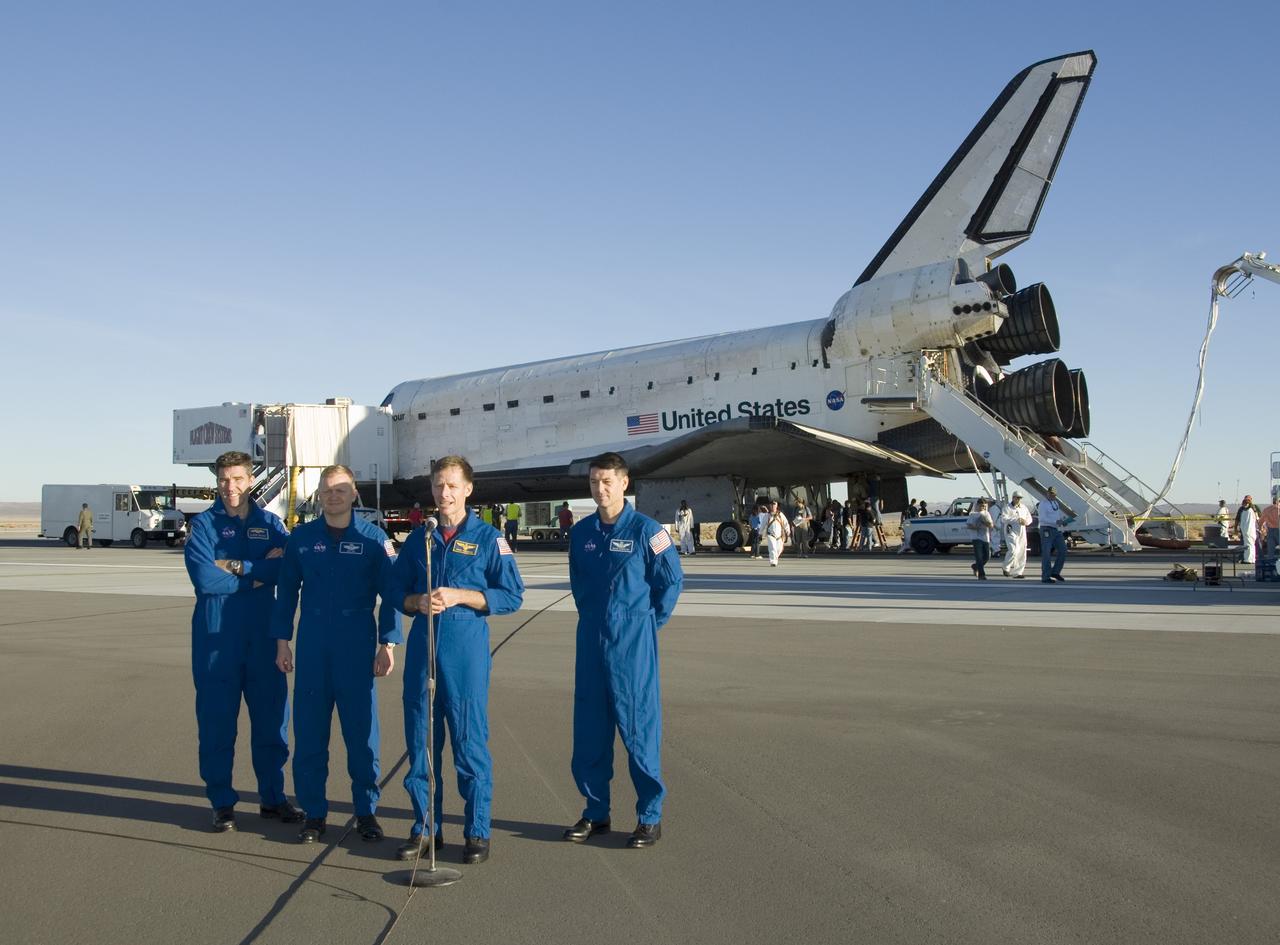
EDWARDS, Calif. – After space shuttle Endeavour's landing at Edwards Air Force Base in California, four of the STS-126 crew members greet the media. From left are Mission Specialist Steve Bowen, Pilot Eric Boe, Commander Chris Ferguson and Mission Specialist Shane Kimbrough. In the 52nd landing at Edwards, Endeavour touched down at 4:25 p.m. EST to end the STS-126 mission, completing its 16-day journey of over 6.6 million miles in space. The STS-126 mission was the 27th flight to the International Space Station, carrying equipment and supplies in the Multi-Purpose Logistics Module Leonardo. The mission featured four spacewalks and work to prepare the space station to house six crew members for long-duration missions. Photo credit: NASA/Tom Tschida, VAFB
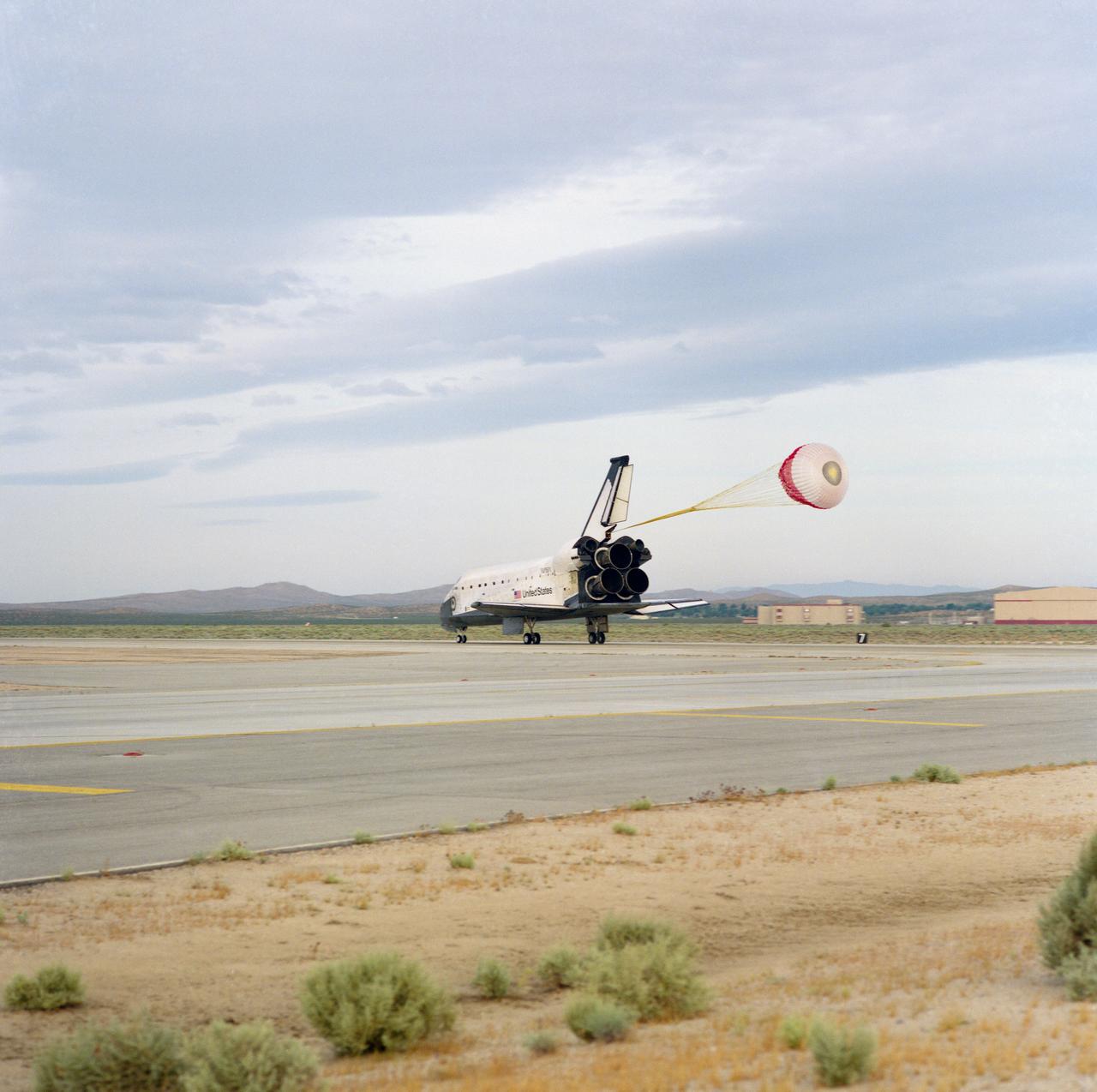
STS055-S-089 (6 May 1993) --- The main drag chute on the Space Shuttle Columbia is almost fully deployed in this three-quarter aft view of the vehicle's runway landing at Edwards Air Force Base in California. Landing occurred at 7:30 a.m. (PDT), May 6, 1993. Onboard the spacecraft were astronauts Steven R. Nagel, Terence T. (Tom) Henricks, Jerry L. Ross, Bernard Harris Jr. and Charles J. Precourt, along with German payload specialists Hans Schlegel and Ulrich Walter.
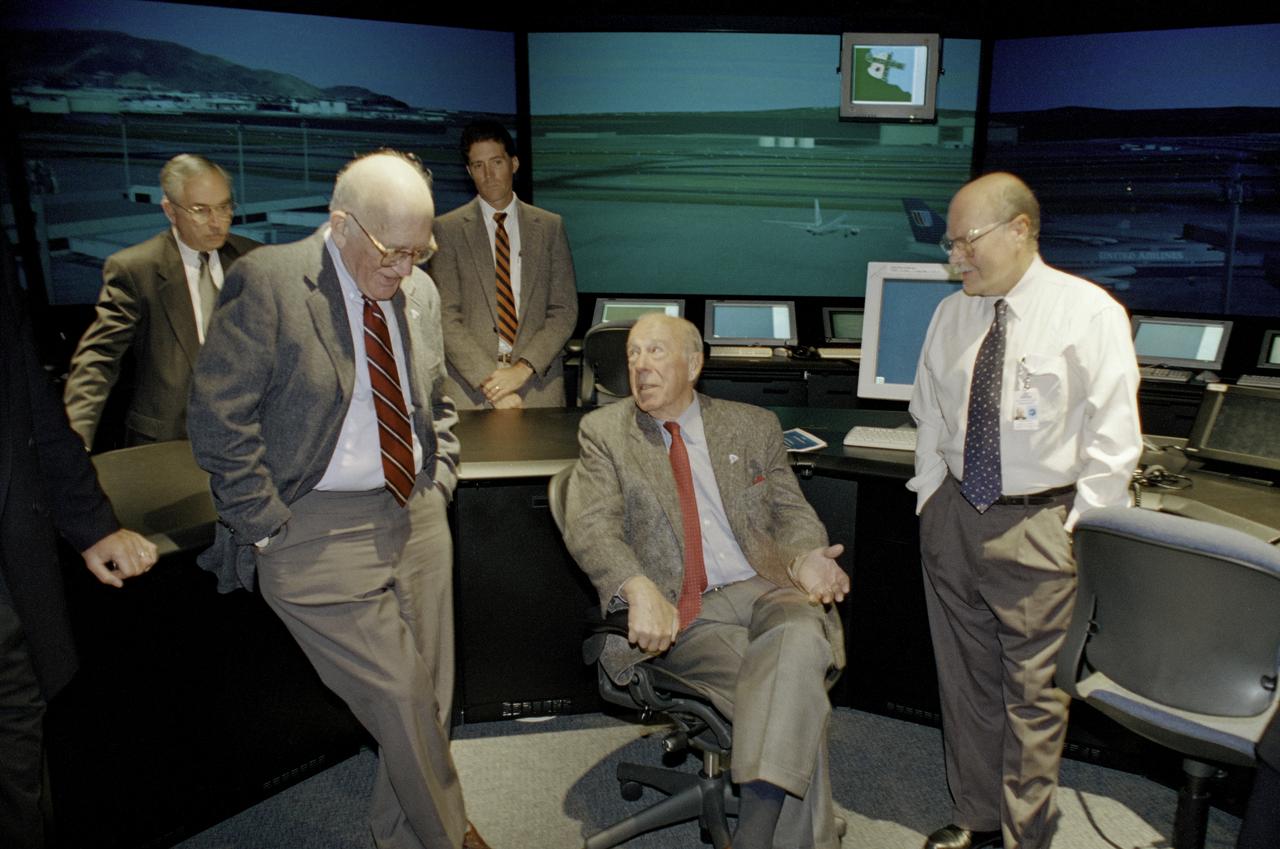
The Honorable George P. Schultz during a Visit and tour of Ames Research Center. Shown here from left to right are in the background Bill Berry, Ames Deputy Director, Dr. Tom Edwards, Chief, Aviation Systems Division, Front row, Dr. Sidney Drell, Staford University, former U S Secretary of State George Schultz, Dr Richard Haines, Senior Research Csientist, FFC at the Future Flight Central Simulator facility.
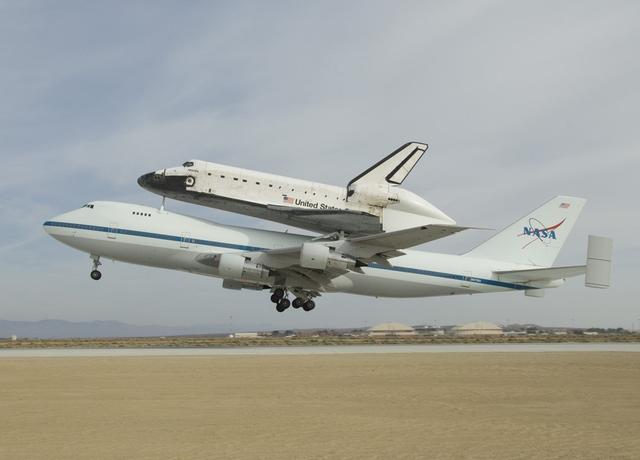
CAPE CANAVERAL, Fla. – NASA 911, one of NASA's two modified Boeing 747 space shuttle carriers, lifts off Runway 22L at Edwards Air Force Base with the shuttle Atlantis on its back on the first leg of Atlantis' ferry flight back to NASA's Kennedy Space Center in Florida. Photo credit: NASA/Tom Tschida
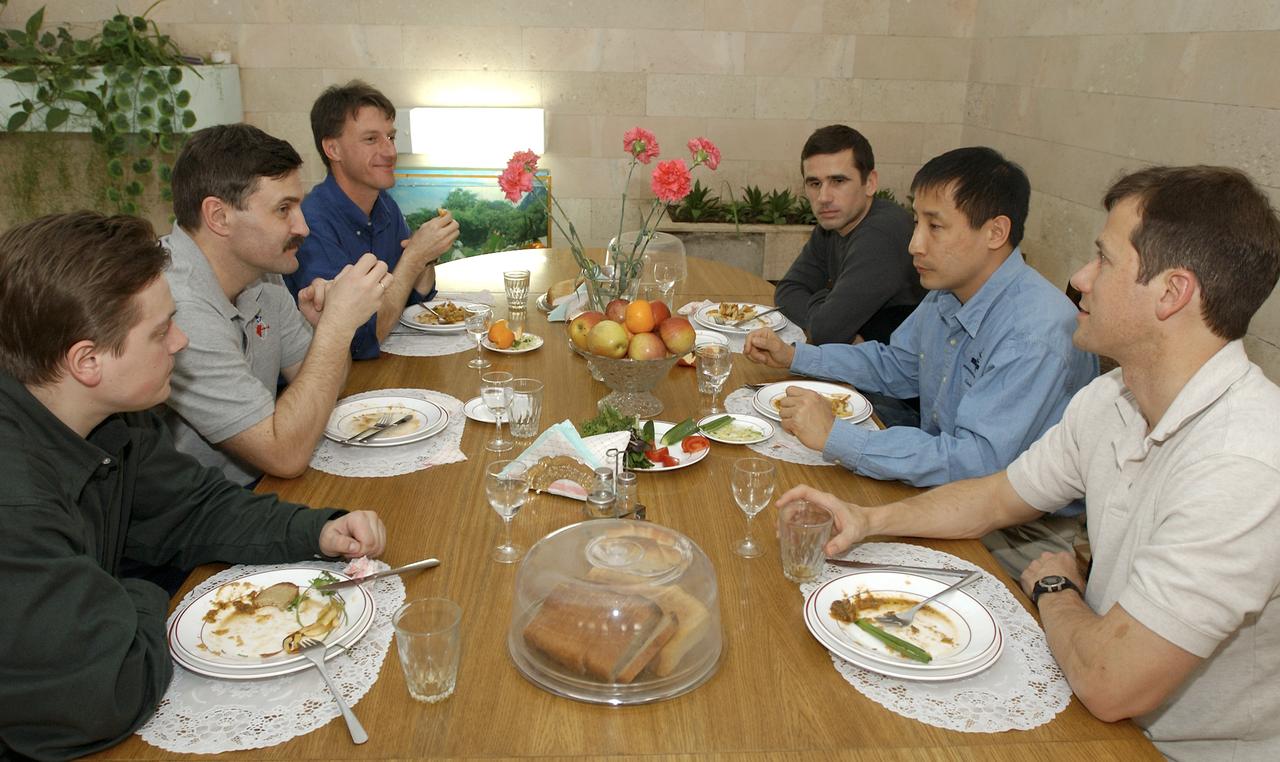
Clockwise from top right, Expedition 7 Commander, Yuri I. Malenchenko, NASA International Space Station Science Officer and Flight Engineer, Edward T. Lu and prime crew Flight Surgeon Tom Marshburn, unidentified Russian flight surgeon, along with cosmonaut Alexander Kaleri and astronaut Michael Foale, top left, eat dinner at the Cosmonaut Hotel in Baikonur, Kazakhstan, Wednesday, April 9, 2003. Photo Credit: (NASA/Bill Ingalls)
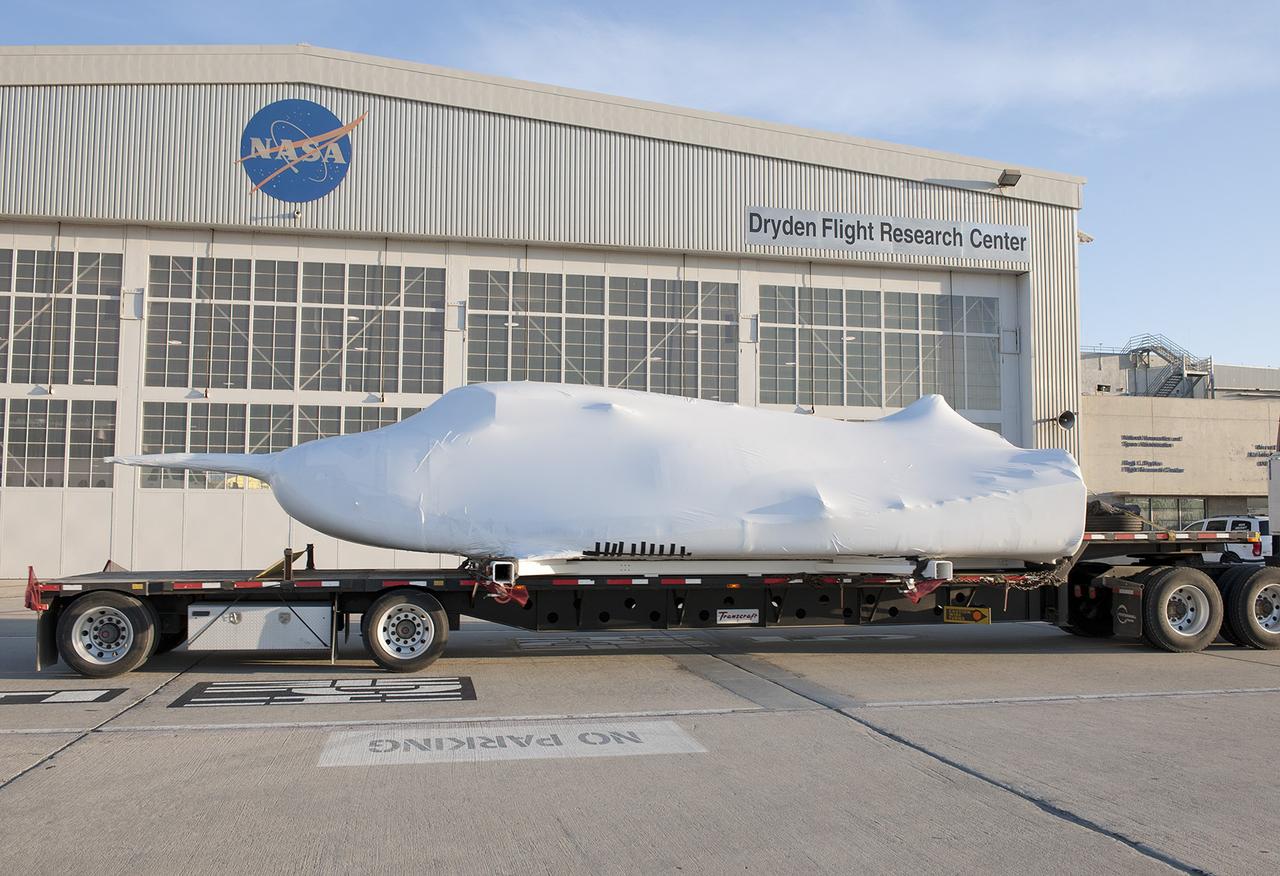
EDWARDS, Calif. – ED13-0142-08: The flatbed truck and trailer that transported Sierra Nevada Corporation, or SNC, Space Systems' Dream Chaser engineering test article pauses behind Hangar 4802 on the aircraft ramp at NASA's Dryden Flight Research Center on Edwards Air Force Base, Calif., upon arrival at the center. The vehicle was shrouded in protective plastic wrap with its wings and tail structure removed for its four-day overland transport from Sierra Nevada's facility in Louisville, Colo., to NASA Dryden. SNC is one of three companies working with NASA's Commercial Crew Program, or CCP, during the agency's Commercial Crew Integrated Capability, or CCiCap, initiative, which is intended to lead to the availability of commercial human spaceflight services for government and commercial customers. To learn more about CCP and its industry partners, visit www.nasa.gov/commercialcrew. Image credit: NASA/Tom Tschida
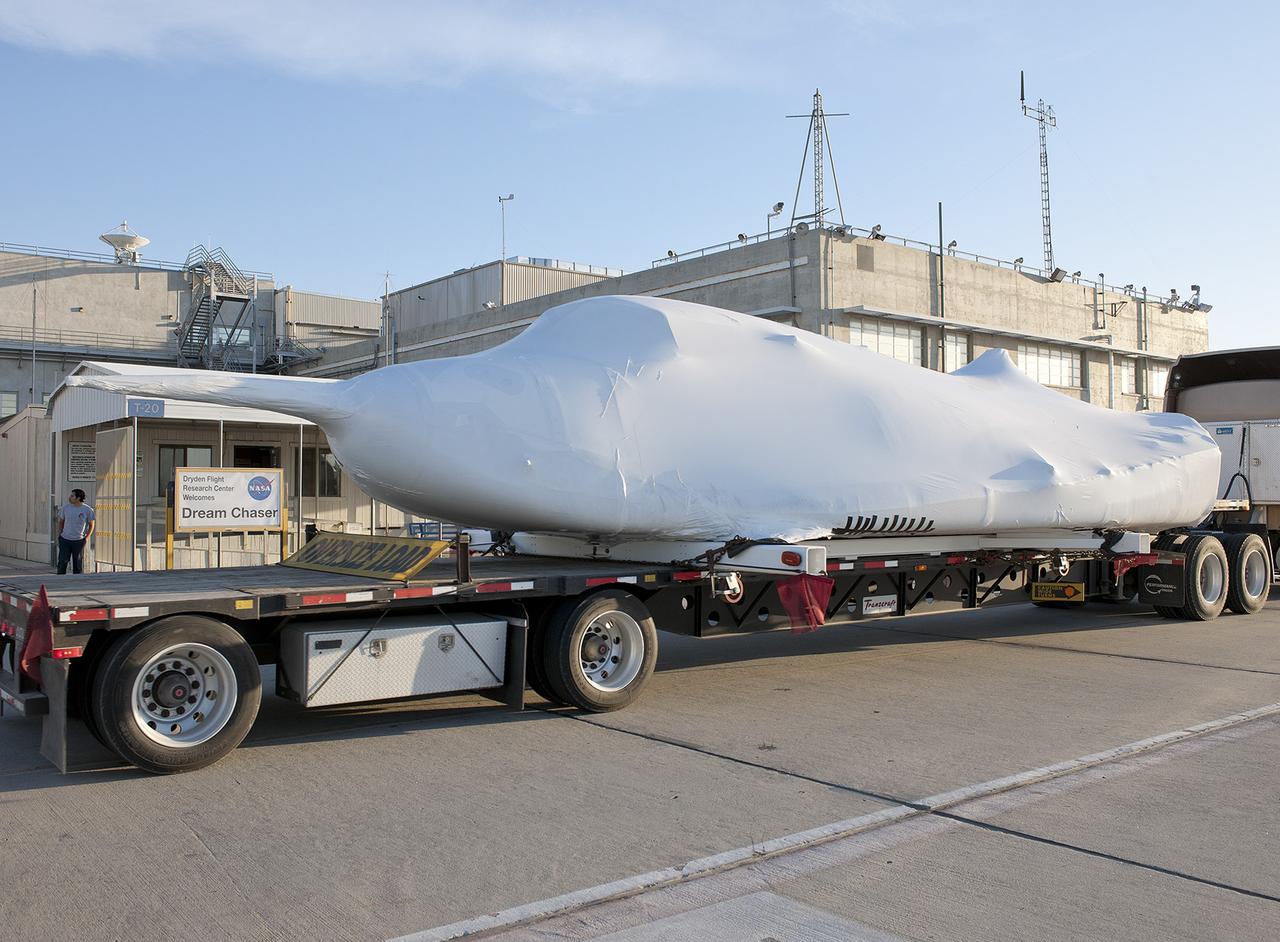
EDWARDS, Calif. – ED13-0142-10: The flatbed truck and trailer that transported Sierra Nevada Corporation, or SNC, Space Systems' Dream Chaser engineering test article pauses on the aircraft ramp at NASA's Dryden Flight Research Center on Edwards Air Force Base, Calif., upon arrival at the center. Following removal of the protective plastic wrap and reinstallation of its wings and tail structure, the Dream Chaser will begin ground tests in the next few weeks leading to approach and landing flight tests this summer. SNC is one of three companies working with NASA's Commercial Crew Program, or CCP, during the agency's Commercial Crew Integrated Capability, or CCiCap, initiative, which is intended to lead to the availability of commercial human spaceflight services for government and commercial customers. To learn more about CCP and its industry partners, visit www.nasa.gov/commercialcrew. Image credit: NASA/Tom Tschida
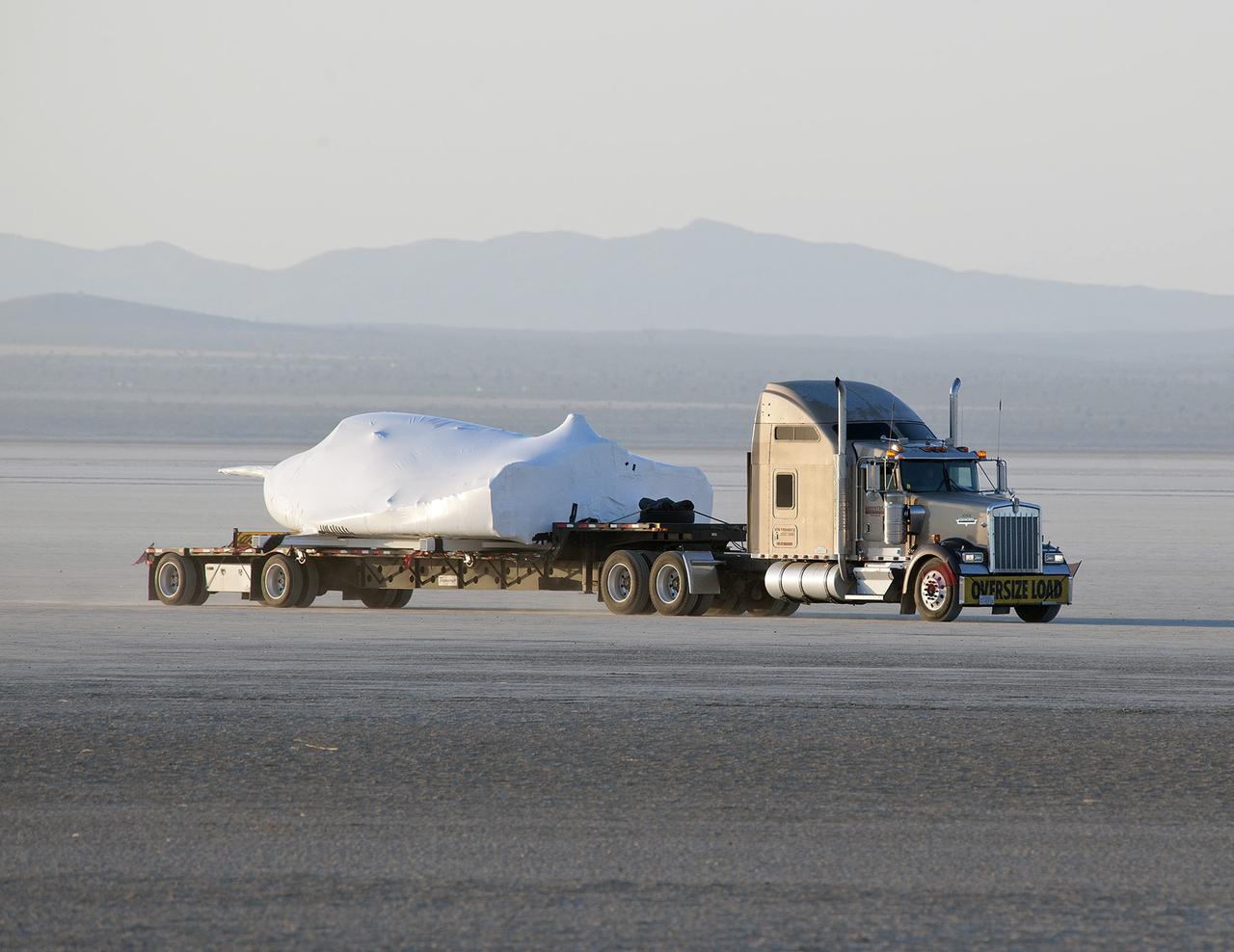
EDWARDS, Calif. – ED13-0142-01: With its wings and tail structure removed and shrouded in plastic wrap for ground transport, Sierra Nevada Corporation, or SNC, Space Systems' Dream Chaser engineering test article is hauled across the bed of Rogers Dry Lake at Edwards Air Force Base, Calif., to NASA's Dryden Flight Research Center. The Dream Chaser will begin its approach-and-landing flight test program in collaboration with NASA's Commercial Crew Program this summer. SNC is one of three companies working with NASA's Commercial Crew Program, or CCP, during the agency's Commercial Crew Integrated Capability, or CCiCap, initiative, which is intended to lead to the availability of commercial human spaceflight services for government and commercial customers. To learn more about CCP and its industry partners, visit www.nasa.gov/commercialcrew. Image credit: NASA/Tom Tschida

EDWARDS, Calif. –- Space shuttle Endeavour glides down the runway at Edwards Air Force Base in California after touching down at 4:25 p.m. EST to end the STS-126 mission, completing its 16-day journey of over 6.6 million miles in space. The main landing gear touched down at 4:25:06 p.m. EST. The nose landing gear touched down at 4:25:21 p.m. and wheel stop was at 4:26:03 p.m. The STS-126 mission was the 27th flight to the International Space Station, carrying equipment and supplies in the Multi-Purpose Logistics Module Leonardo. The mission featured four spacewalks and work to prepare the space station to house six crew members for long-duration missions. Photo credit: NASA/ Tom Tschida, EAFB
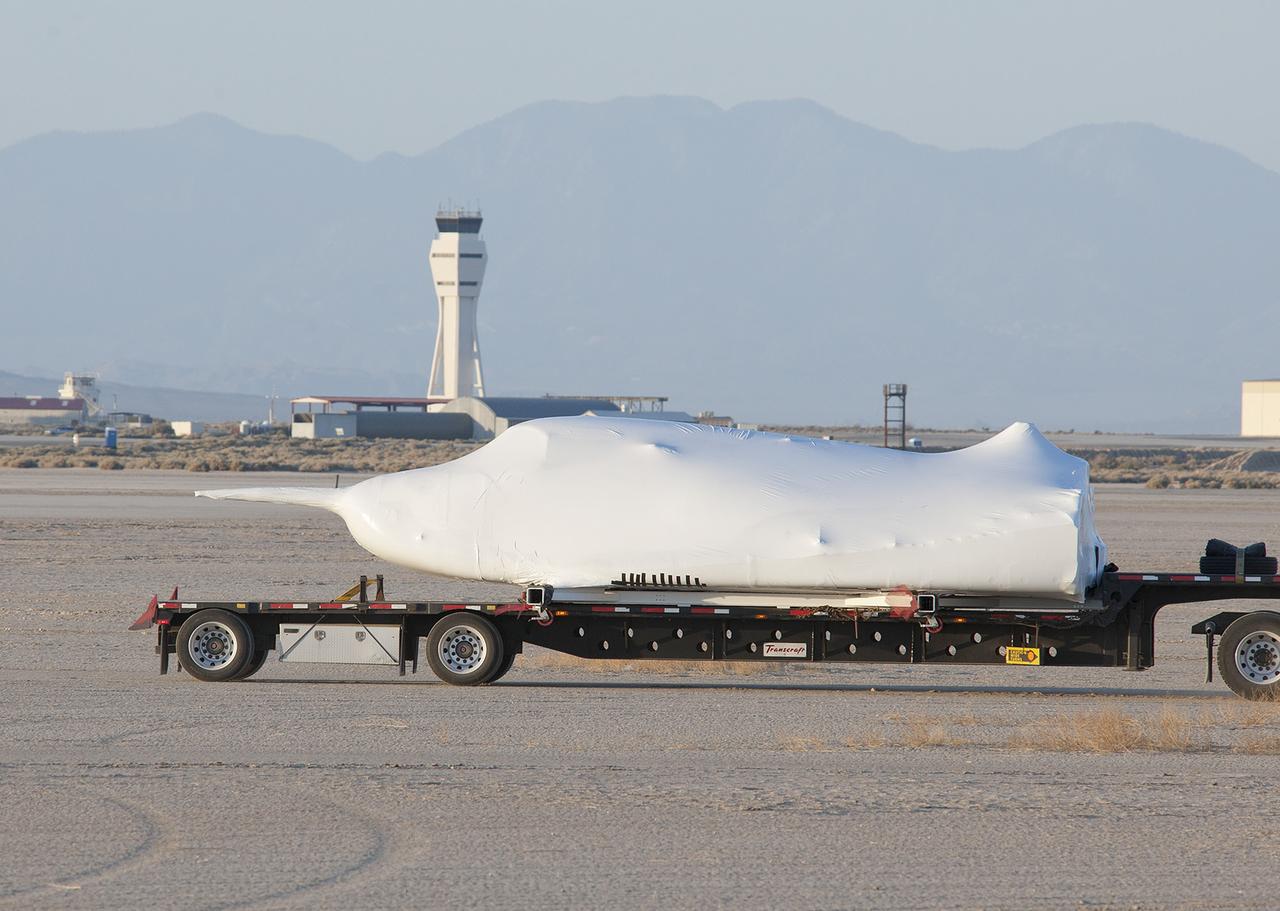
EDWARDS, Calif. – ED13-0142-03: Shrouded in plastic wrap with its wings and tail structure removed for ground transport, Sierra Nevada Corporation, or SNC, Space Systems' Dream Chaser engineering test article is hauled across the bed of Rogers Dry Lake in front of the control tower at Edwards Air Force Base, Calif., to NASA's Dryden Flight Research Center. The Dream Chaser will begin its flight test program in collaboration with NASA's Commercial Crew Program this summer. SNC is one of three companies working with NASA's Commercial Crew Program, or CCP, during the agency's Commercial Crew Integrated Capability, or CCiCap, initiative, which is intended to lead to the availability of commercial human spaceflight services for government and commercial customers. To learn more about CCP and its industry partners, visit www.nasa.gov/commercialcrew. Image credit: NASA/Tom Tschida
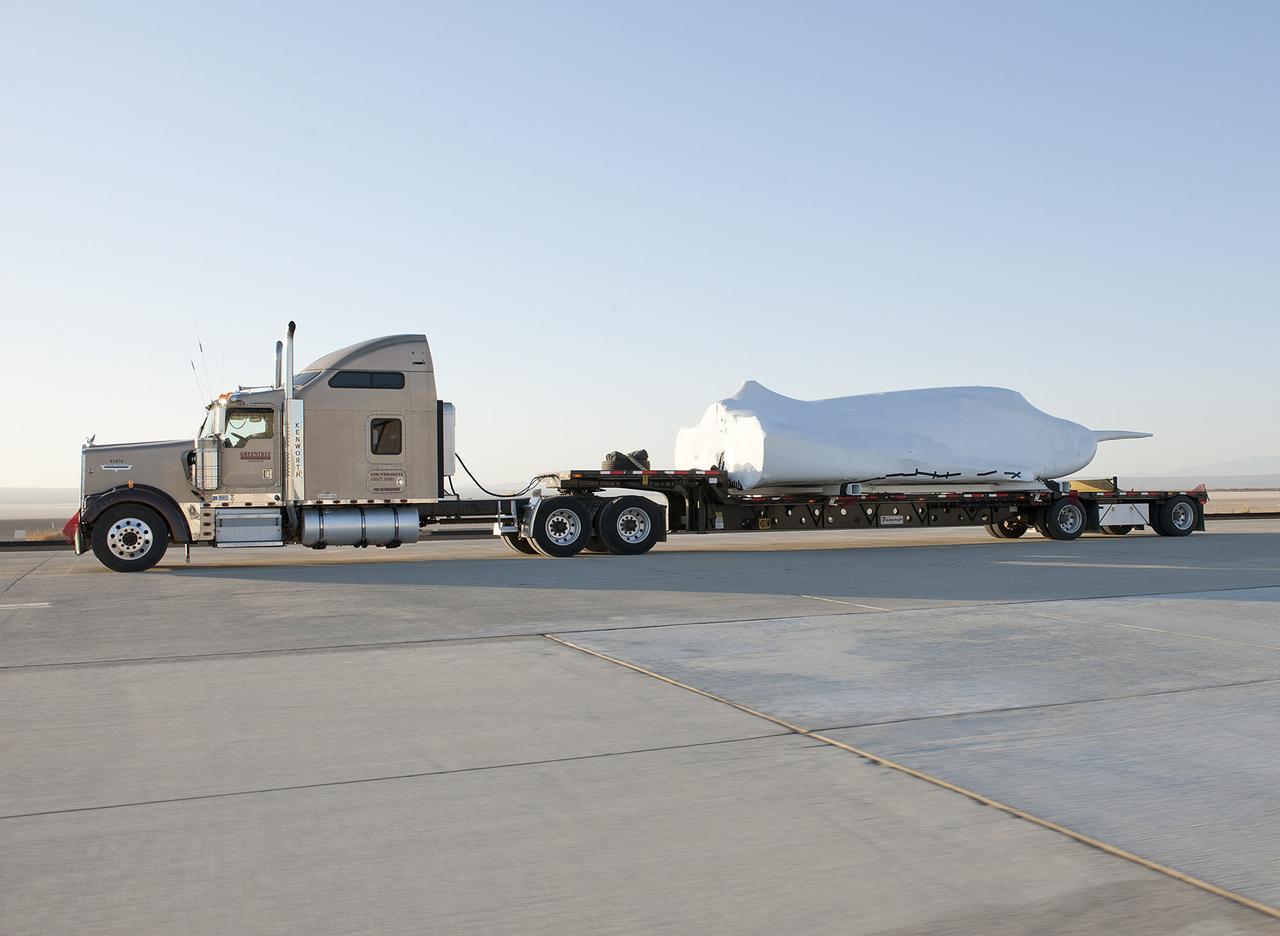
EDWARDS, Calif. – ED13-0142-11: The truck and trailer that transported the Dream Chaser engineering test article from Sierra Nevada Corporation, or SNC, Space Systems facility in Louisville, Colo., arrives on the aircraft ramp at NASA's Dryden Flight Research Center on Edwards Air Force Base, Calif., early in the morning. Based on NASA's HL-20 lifting body design, the Dream Chaser will begin its approach-and-landing flight test program in collaboration with NASA's Commercial Crew Program this summer. SNC is one of three companies working with NASA's Commercial Crew Program, or CCP, during the agency's Commercial Crew Integrated Capability, or CCiCap, initiative, which is intended to lead to the availability of commercial human spaceflight services for government and commercial customers. To learn more about CCP and its industry partners, visit www.nasa.gov/commercialcrew. Image credit: NASA/Tom Tschida
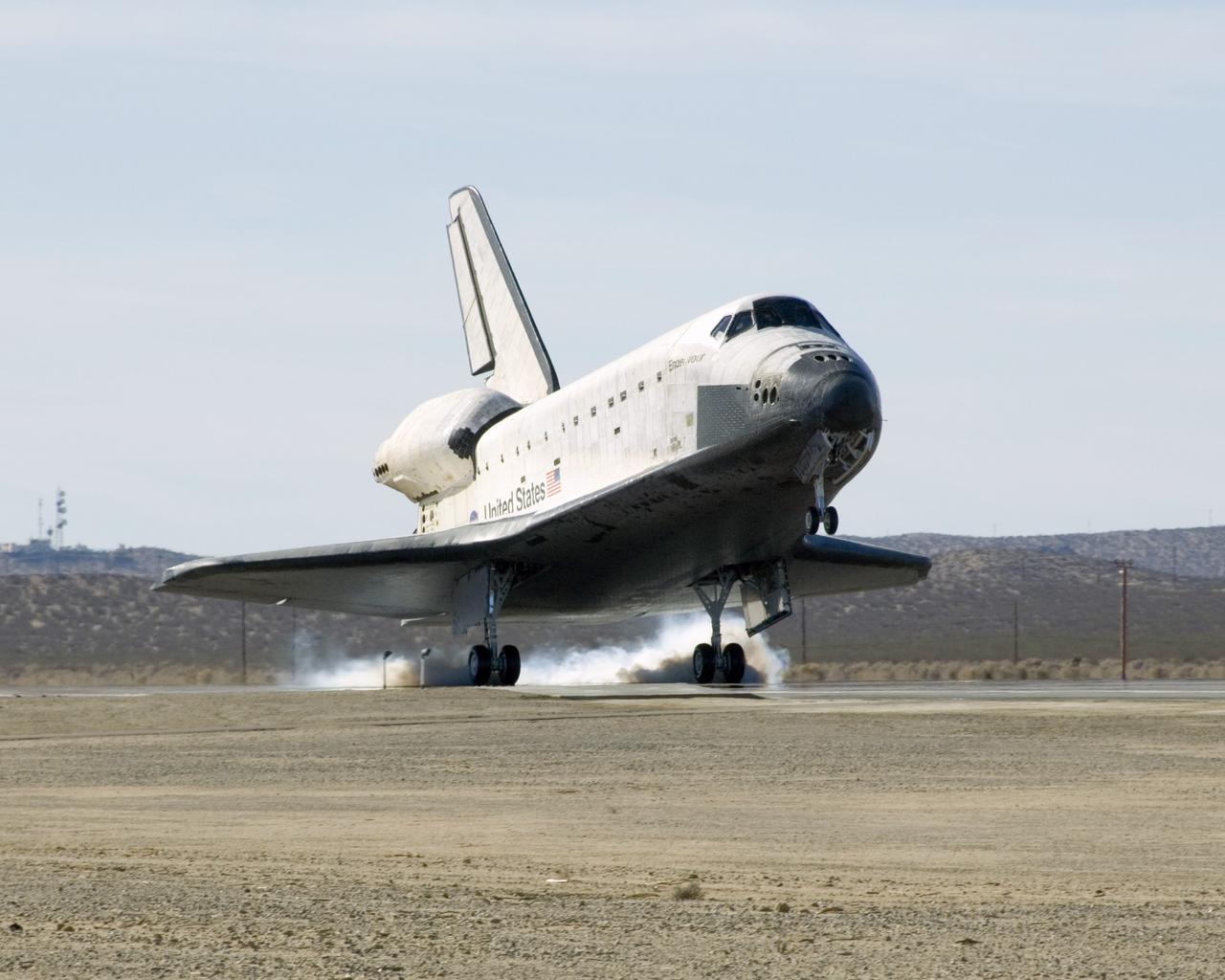
EDWARDS, Calif. –- In the 52nd landing at Edwards Air Force Base in California, space shuttle Endeavour touches down at 4:25 p.m. EST to end the STS-126 mission, completing its 16-day journey of over 6.6 million miles in space. The main landing gear touched down at 4:25:06 p.m. EST. The nose landing gear touched down at 4:25:21 p.m. and wheel stop was at 4:26:03 p.m. The STS-126 mission was the 27th flight to the International Space Station, carrying equipment and supplies in the Multi-Purpose Logistics Module Leonardo. The mission featured four spacewalks and work to prepare the space station to house six crew members for long-duration missions. Photo credit: NASA/ Tom Tschida, EAFB
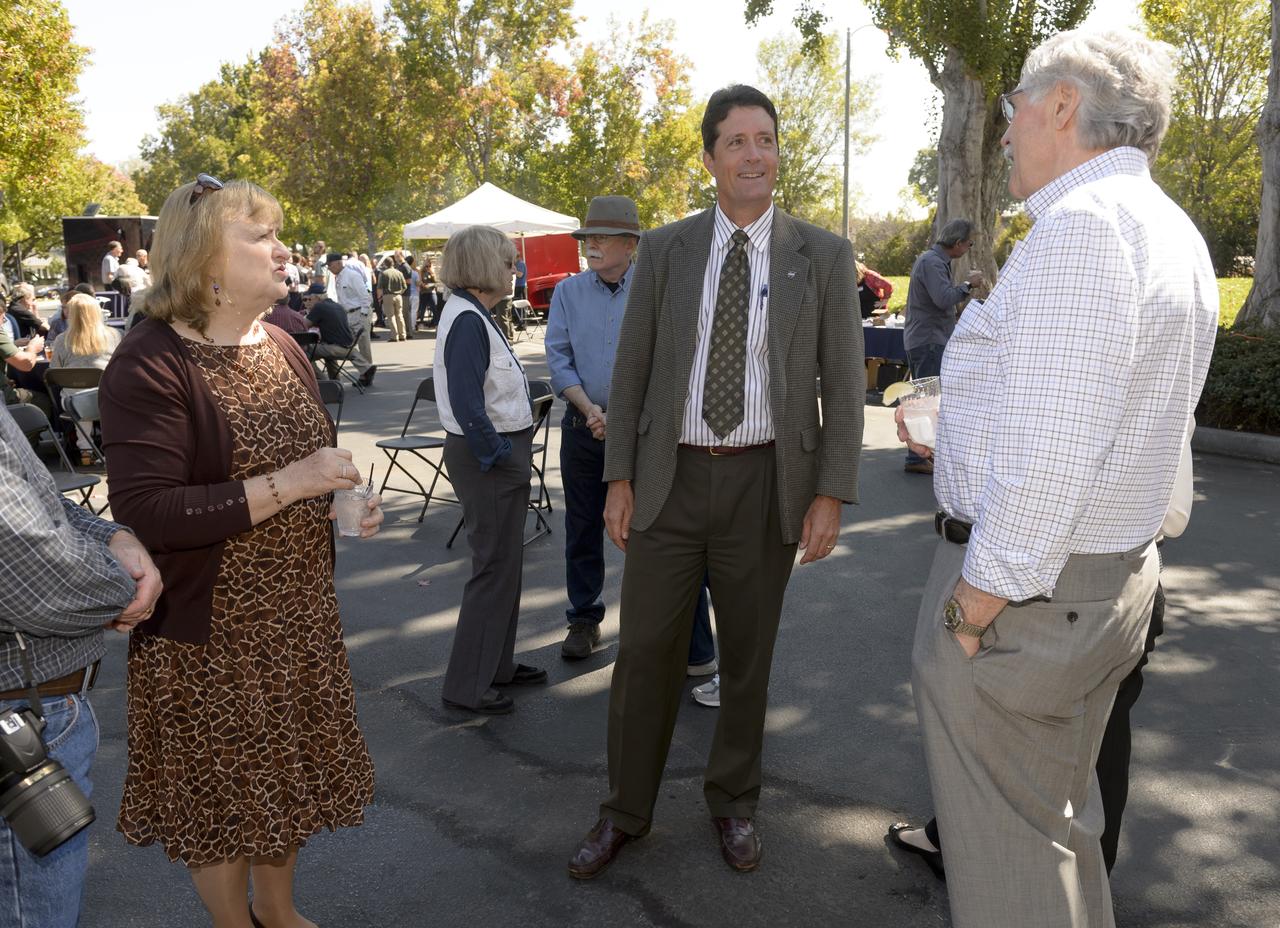
Avation Safety Reporting System (ASRS) 40th Anniversary lunch and open house at the Sunnyvale office. Linda J. Connell, ASRS Program Director (Left); Thomas A Edwards, Deputy Center Director NASA Ames; Dr. John Lauber, Resident Scientist and pioneer of the ASRS at Ames from 1972-1985 (Right).
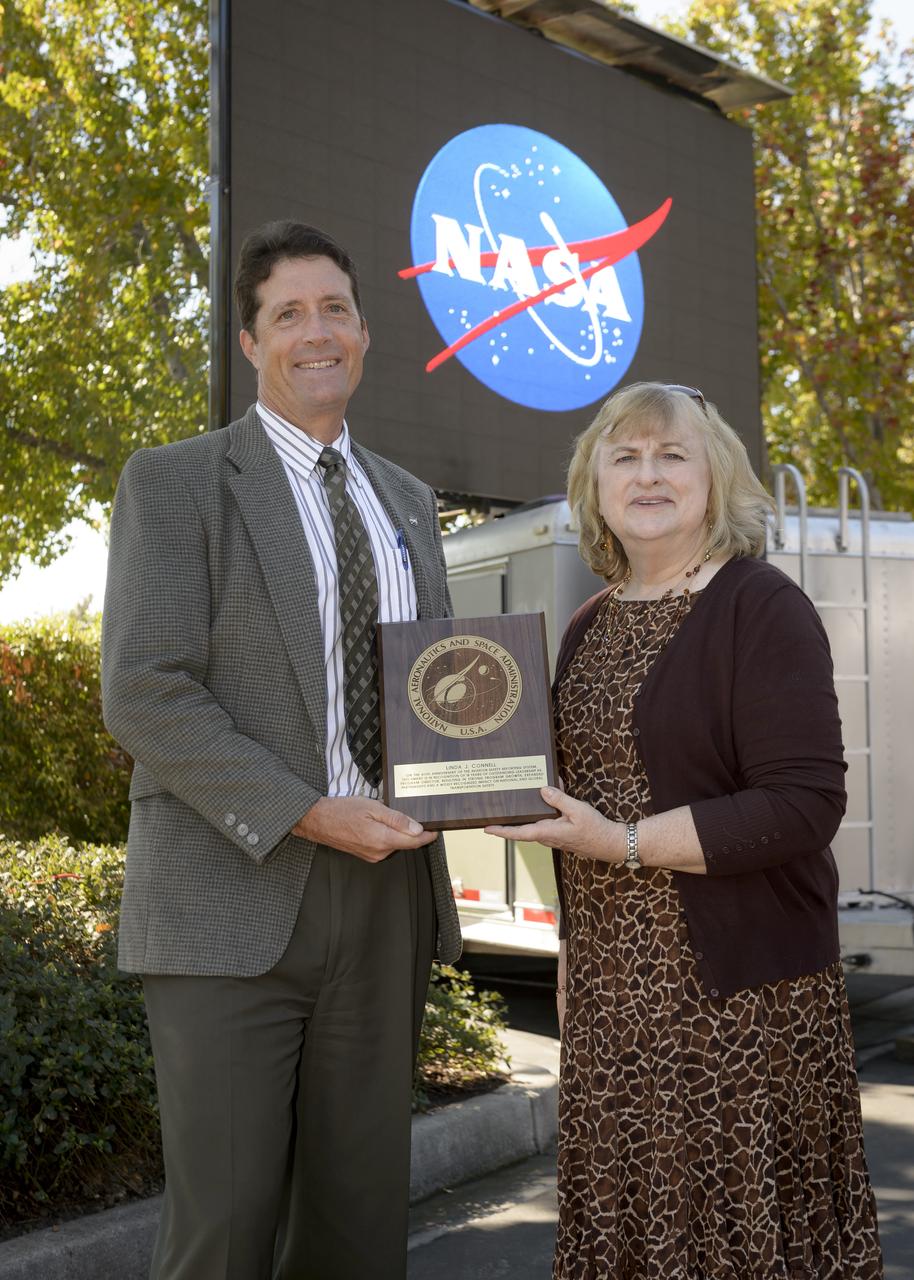
Avation Safety Reporting System (ASRS) 40th Anniversary lunch and open house at the Sunnyvale office. Thomas A Edwards, Deputy Center Director NASA Ames (Left), presents a plaque On the anniversary of the aviation safety reporting system, this award is in recognition of 18 years of outstanding leadership as Program Director, resulting in strong program growth, expanded partnership and a widely recognized impact on National and Global transportation safety. Presented to Linda J. Connell, ASRS Program Director (Right)
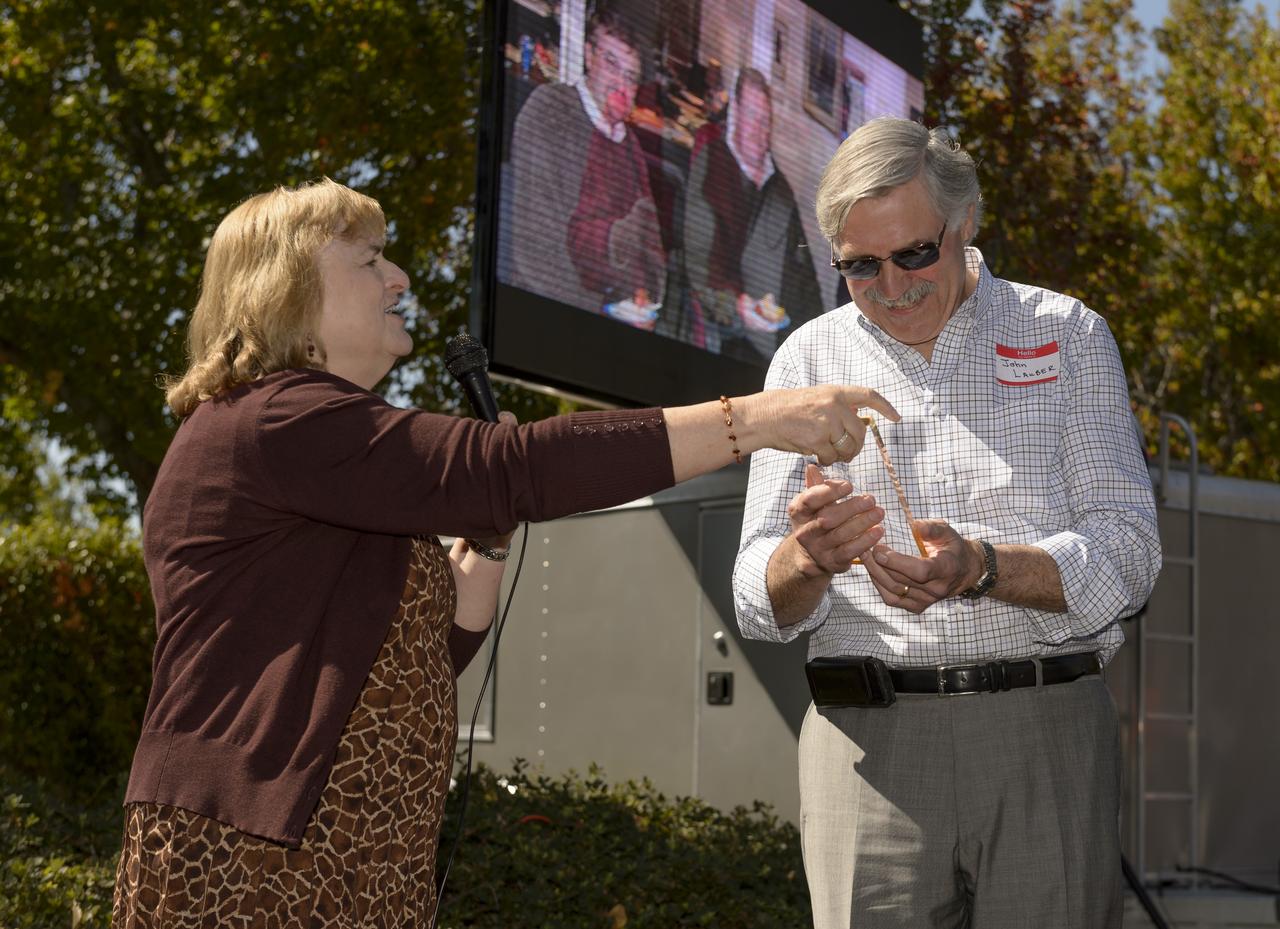
Avation Safety Reporting System (ASRS) 40th Anniversary lunch and open house at the Sunnyvale office. Linda J. Connell, ASRS Program Director (left); Dr. John Lauber, Resident Scientist and early pioneer of the ASRS at Ames, 1972-1985 (Right).
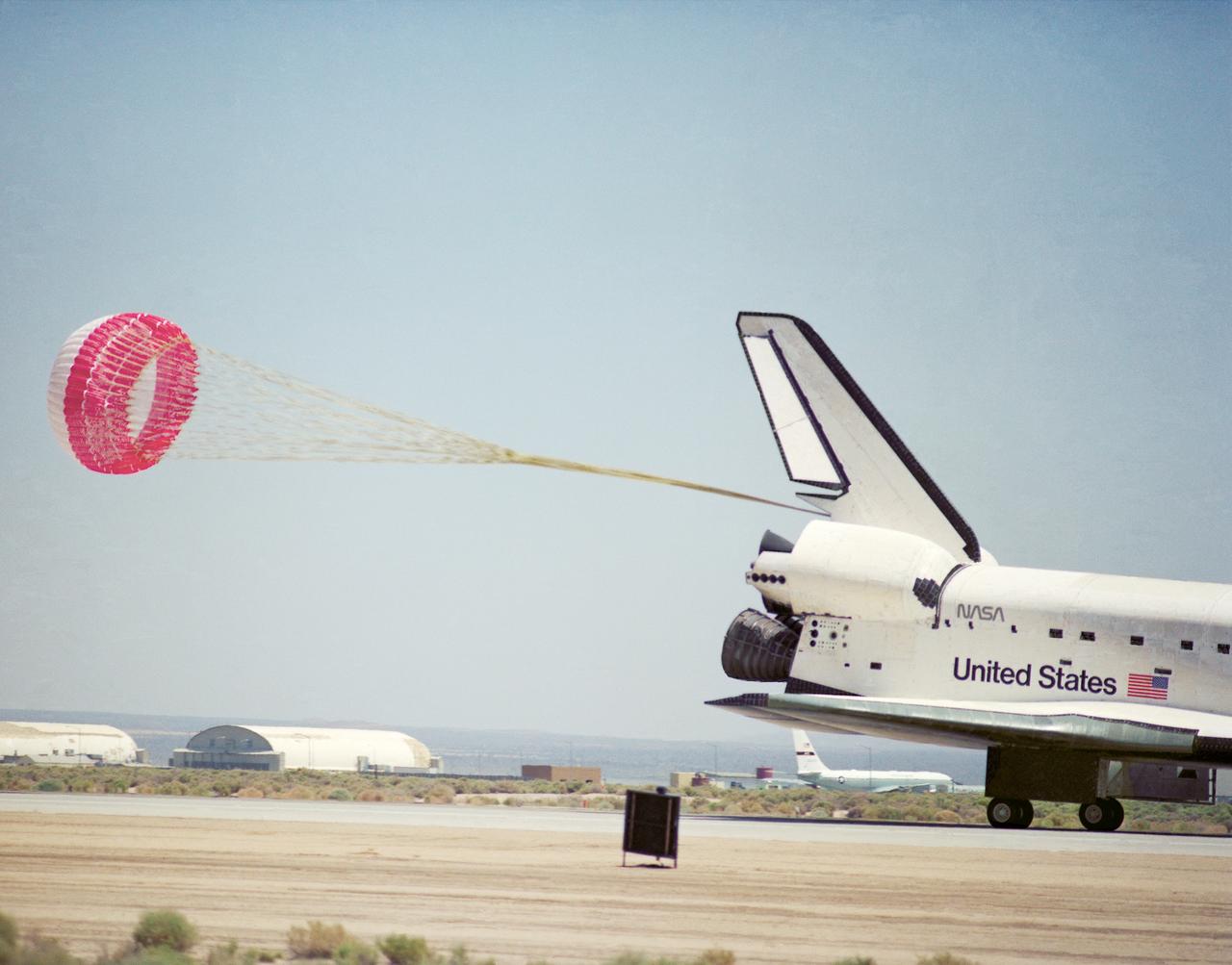
The Space Shuttle Endeavour concludes mission STS-49 at NASA's Ames-Dryden Flight Research Facility (later redesignated Dryden Flight Research Center), Edwards, California, with a 1:57 p.m. (PDT) landing 16 May on Edward's concrete runway 22. The planned 7-day mission, which began with a launch from Kennedy Space Center, Florida, at 4:41 p.m. (PFT), 7 May, was extended two days to allow extra time to rescue the Intelsat VI satellite and complete Space Station assembly techniques originally planned. After a perfect rendezvous in orbit and numerous attempts to grab the satellite, space walking astronauts Pierre Thuot, Rick Hieb and Tom Akers successfully rescued it by hand on the third space walk with the support of mission specialists Kathy Thornton and Bruce Melnick. The three astronauts, on a record space walk, took hold of the satellite and directed it to the shuttle where a booster motor was attached to launch it to its proper orbit. Commander Dan Brandenstein and Pilot Kevin Chilton brought Endeavours's record setting maiden voyage to a perfect landing at Edwards AFB with the first deployment of a drag chute on a shuttle mission.
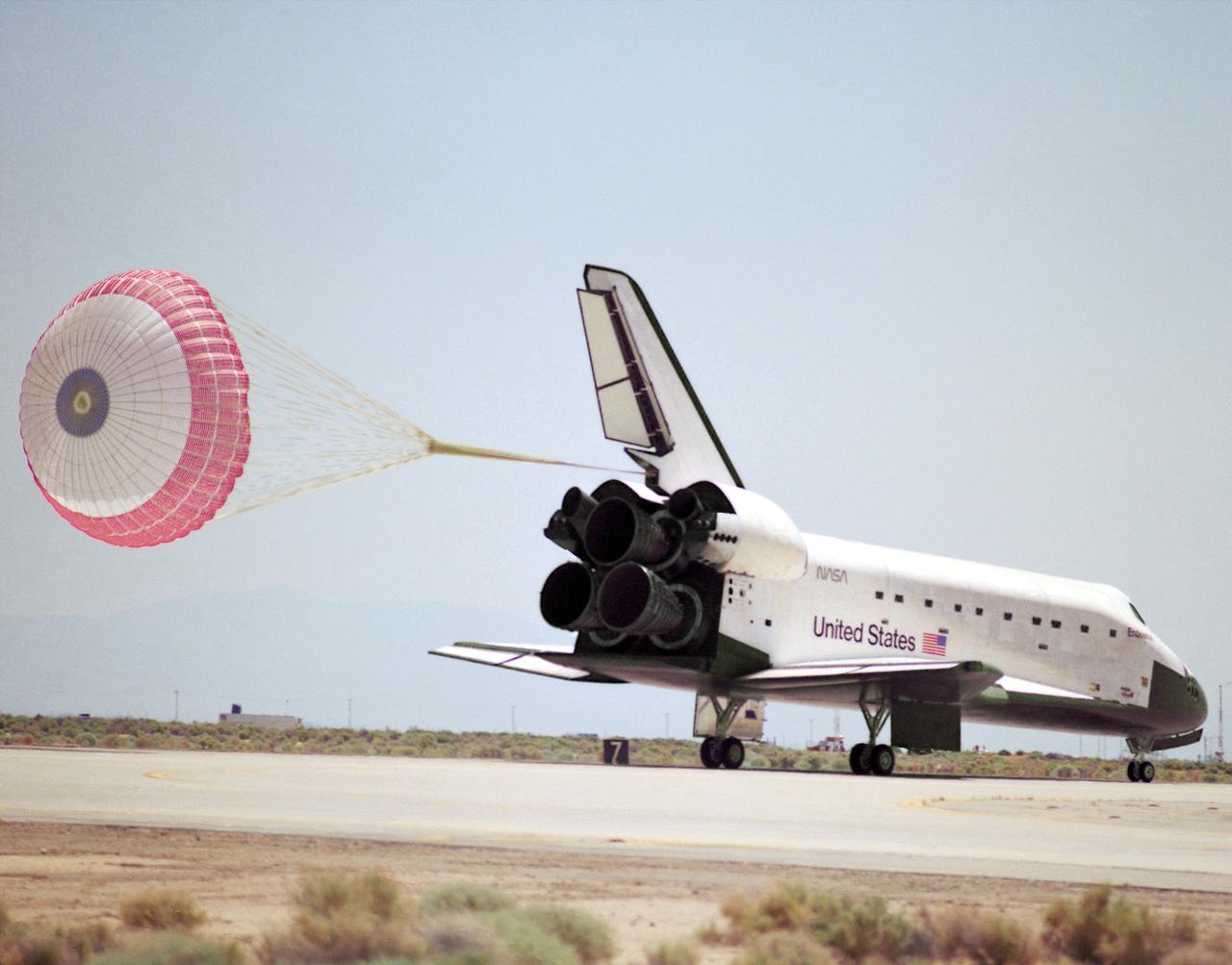
The Space Shuttle Endeavour concludes mission STS-49 at NASA's Ames-Dryden Flight Research Facility (later redesignated Dryden Flight Research Center), Edwards, California, with a 1:57 p.m. (PDT) landing May 16 on Edward's concrete runway 22. The planned 7-day mission, which began with a launch from Kennedy Space Center, Florida, at 4:41 p.m. (PFT), 7 May, was extended two days to allow extra time to rescue the Intelsat VI satellite and complete Space Station assembly techniques originally planned. After a perfect rendezvous in orbit and numerous attempts to grab the satellite, space walking astronauts Pierre Thuot, Rick Hieb and Tom Akers successfully rescued it by hand on the third space walk with the support of mission specialists Kathy Thornton and Bruce Melnick. The three astronauts, on a record space walk, took hold of the satellite and directed it to the shuttle where a booster motor was attached to launch it to its proper orbit. Commander Dan Brandenstein and Pilot Kevin Chilton brought Endeavours's record setting maiden voyage to a perfect landing at Edwards with the first deployment of a drag chute on a shuttle mission.

The Space Shuttle Enterprise, the nation's prototype space shuttle orbiter, before departing NASA's Dryden Flight Research Center, Edwards, California, at 11:00 a.m., 16 May 1983, on the first leg of its trek to the Paris Air Show at Le Bourget Airport, Paris, France. Seen here atop the huge 747 Shuttle Carrier Aircraft (SCA), the first stop for the Enterprise was Peterson AFB, Colorado Springs, Colorado. Piloting the 747 on the Europe trip were Joe Algranti, Johnson Space Center Chief Pilot, Astronaut Dick Scobee, and NASA Dryden Chief Pilot Tom McMurtry. Flight engineers for that portion of the flight were Dryden's Ray Young and Johnson Space Center's Skip Guidry. The Enterprise, named after the spacecraft of Star Trek fame, was originally carried and launched by the 747 during the Approach and Landing Tests (ALT) at Dryden Flight Research Center.

The Space Shuttle Enterprise, the nation's prototype space shuttle orbiter, departed NASA's Dryden Flight Research Center, Edwards, California, at 11:00 a.m., 16 May 1983, on the first leg of its trek to the Paris Air Show at Le Bourget Airport, Paris, France. Carried by the huge 747 Shuttle Carrier Aircraft (SCA), the first stop for the Enterprise was Peterson AFB, Colorado Springs, Colorado. Piloting the 747 on the Europe trip were Joe Algranti, Johnson Space Center Chief Pilot, Astronaut Dick Scobee, and NASA Dryden Chief Pilot Tom McMurtry. Flight engineers for that portion of the flight were Dryden's Ray Young and Johnson Space Center's Skip Guidry. The Enterprise, named after the spacecraft of Star Trek fame, was originally carried and launched by the 747 during the Approach and Landing Tests (ALT) at Dryden Flight Research Center.
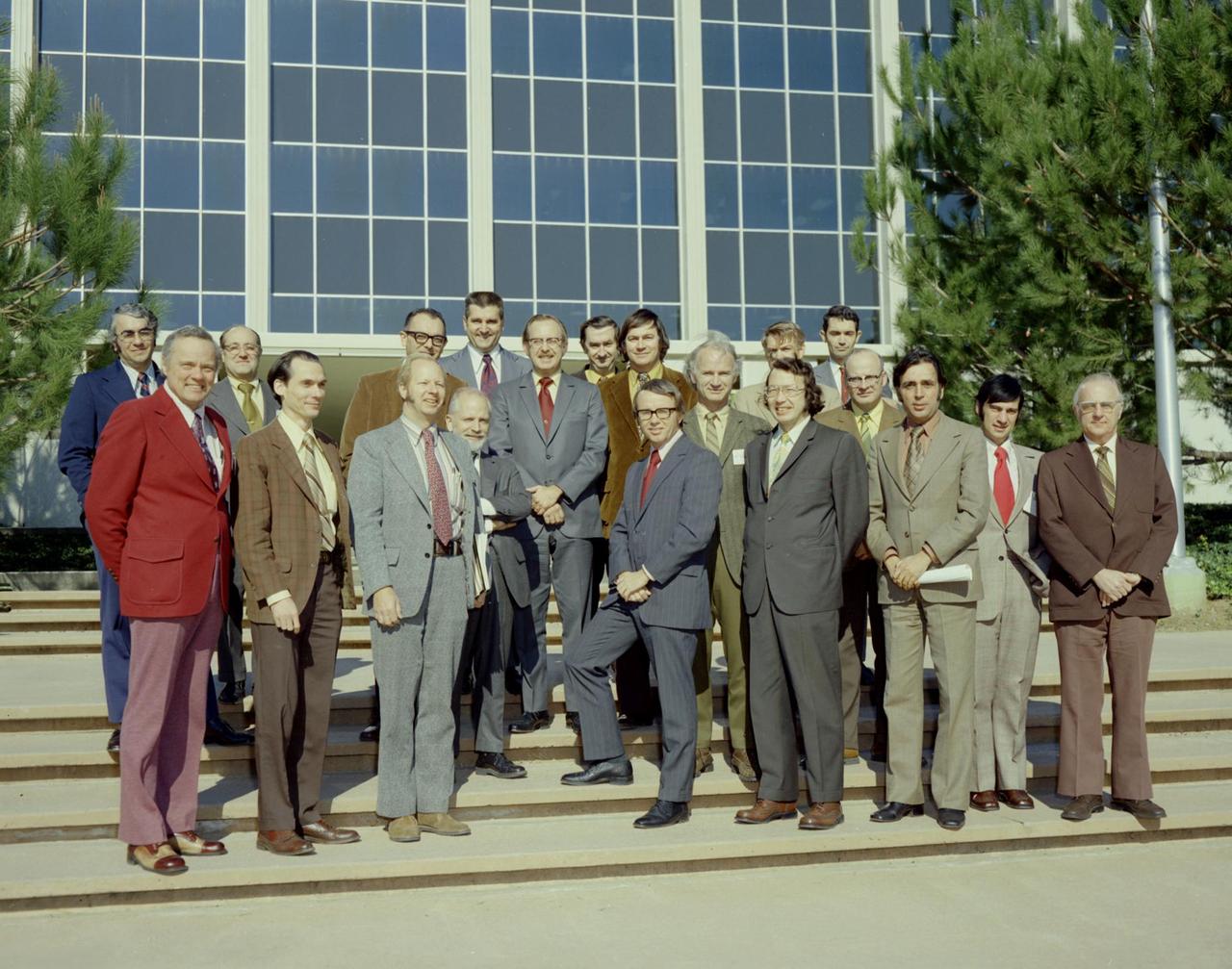
This archival image was released as part of a gallery comparing JPL's past and present, commemorating the 80th anniversary of NASA's Jet Propulsion Laboratory on Oct. 31, 2016. In December 1972, the science steering group for a mission then-known as Mariner Jupiter Saturn 1977 -- later renamed Voyager -- met for the first time at NASA's Jet Propulsion Laboratory in Pasadena, Calif. They are gathered on the steps in front of the administration building (180). The mission was so named because it was planning to send Mariner-class spacecraft to Jupiter and Saturn. It was renamed Voyager a few months before the launch of the twin spacecraft in August and September 1977. This photo shows principal investigators and team leaders for the science experiments and several others from the project and NASA who attended the first meeting. In the first row: Radio Science Subsystem Team Leader Von Eshleman, Project Scientist Edward Stone, Project Manager Harris (Bud) Schurmeier, Mission Analysis and Engineering Manager Ralph Miles, Magnetometer Principal Investigator Norman Ness, NASA Planetary Program Office Deputy Director Ichtiaque Rasool, Robert Soberman (who was proposed to be the principal investigator of the Particulate Matter Investigation, which was not confirmed) and an unidentified member of the NASA Office of Space Science. In the second row: Infrared Interferometer Spectrometer Principal Investigator Rudolf Hanel, Planetary Radio Astronomy Principal Investigator James Warwick, Ultraviolet and Spectrometer Principal Investigator A. Lyle Broadfoot. In the third row: Low-Energy Charged Particles Principal Investigator Stamatios (Tom) Krimigis, Cosmic Ray Subsystem Principal Investigator Rochus (Robbie) Vogt, NASA Outer Planets Missions Program Manager Warren Keller, Imaging Science Subsystem Team Leader Bradford Smith and Photopolarimeter Principal Investigator Charles Lillie. In the fourth row: Plasma Investigation Principal Investigator Herbert Bridge, Spacecraft Systems Manager Raymond Heacock, NASA Outer Planets Missions Program Scientist Milton (Mike) Mitz and Science Manager James Long. http://photojournal.jpl.nasa.gov/catalog/PIA21122