
Tom Engler, the deputy director of the Center Planning and Development Directorate, or CPDD, at NASA’s Kennedy Space Center in Florida, speaks to reporter James Dean from Florida Today newspaper during an interview at the Kennedy News Center.
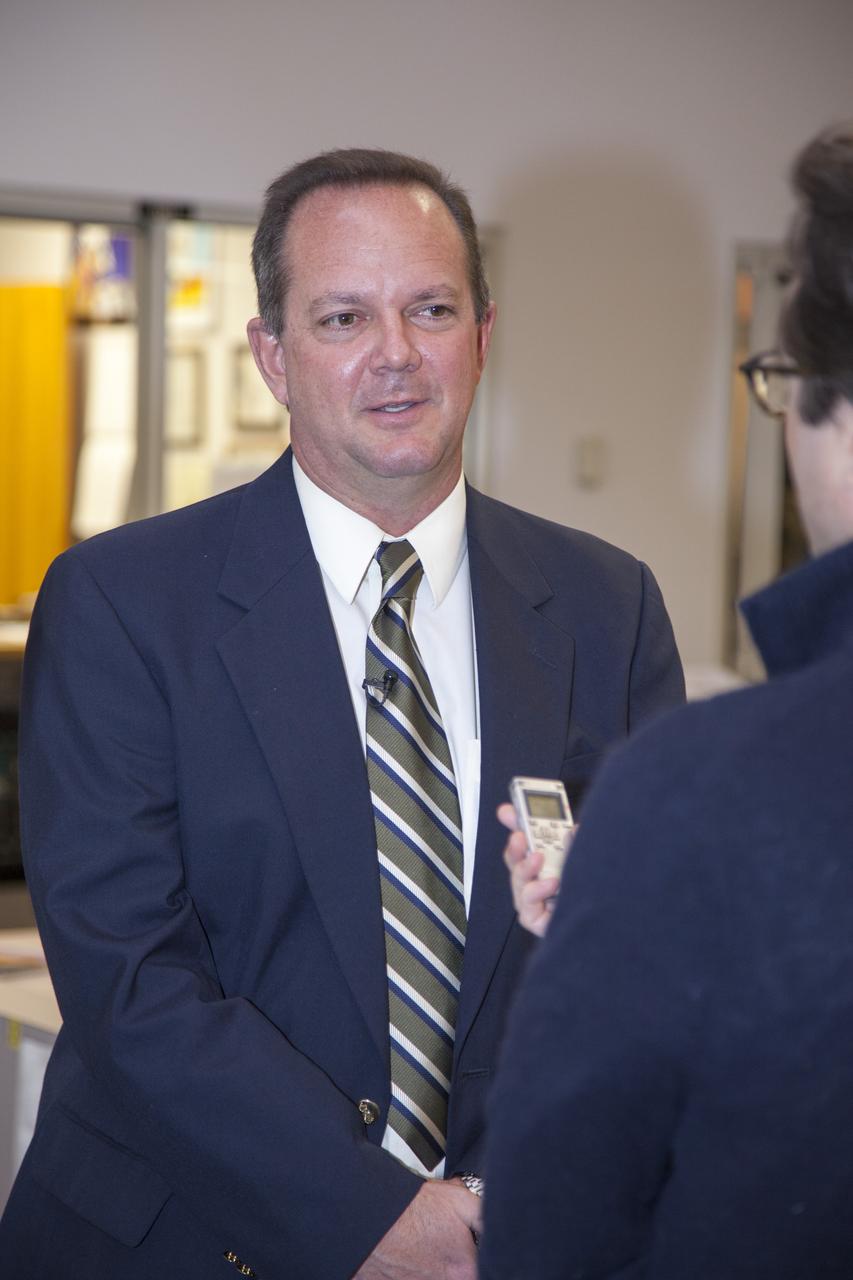
CAPE CANAVERAL, Fla. – Tom Engler, the deputy director of the Center Planning and Development Directorate at NASA’s Kennedy Space Center in Florida, speaks to reporter James Dean from Florida Today newspaper during an interview at the Kennedy News Center. Kennedy Space Center is working with private industry in new and innovative ways as the agency's premier launch center adapts to changing spaceflight, research and exploration goals in America. Opportunities are rich and varied, ranging from working with the private launch industry, to involvement with NASA's expendable launch vehicles programs to beginning or participating in research in a number of advancing fields. For more information on CPDD, visit http://www.nasa.gov/centers/kennedy/business/index.html. Photo credit: NASA/Daniel Casper
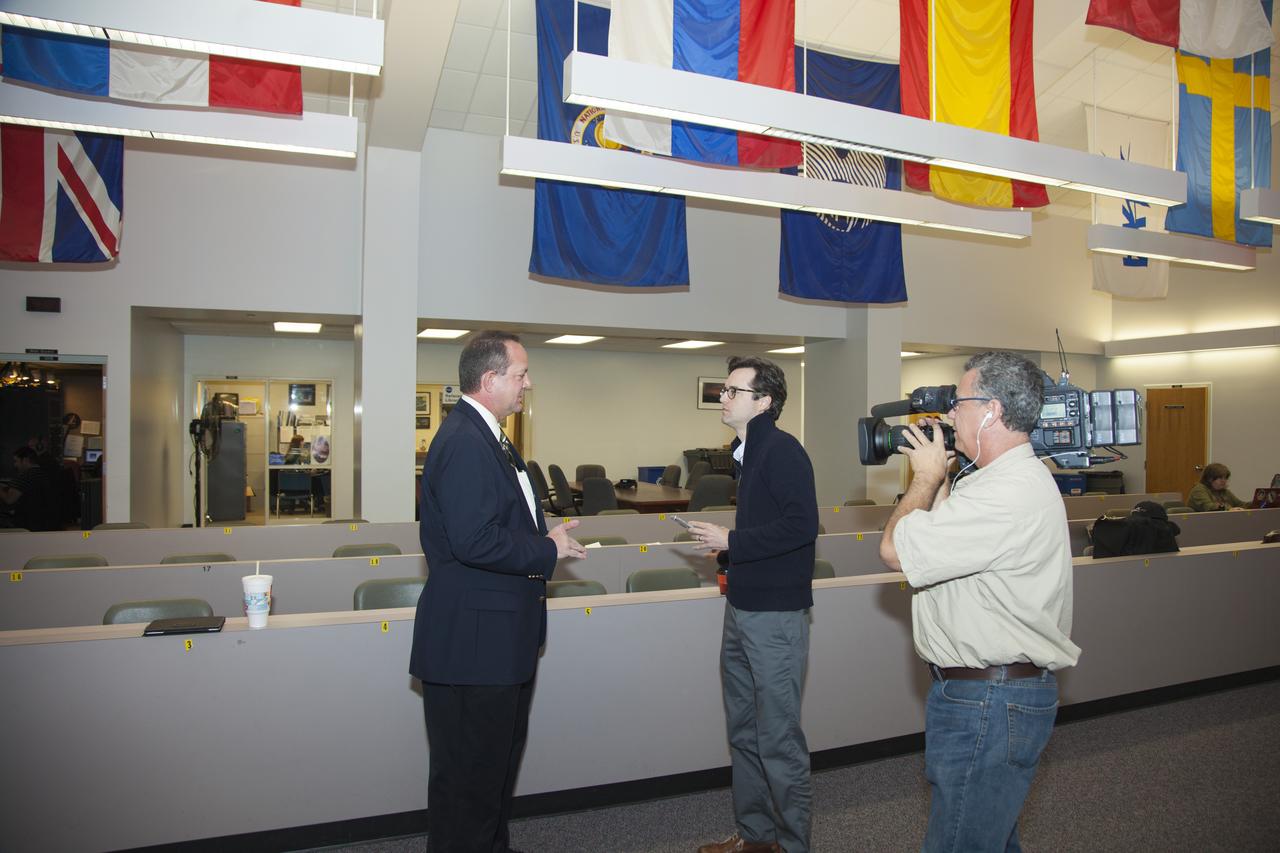
CAPE CANAVERAL, Fla. – Tom Engler, at left, the deputy director of the Center Planning and Development Directorate, or CPDD, at NASA’s Kennedy Space Center in Florida, speaks to reporter James Dean from Florida Today newspaper during an interview at the Kennedy News Center. Kennedy Space Center is working with private industry in new and innovative ways as the agency's premier launch center adapts to changing spaceflight, research and exploration goals in America. Opportunities are rich and varied, ranging from working with the private launch industry, to involvement with NASA's expendable launch vehicles programs to beginning or participating in research in a number of advancing fields. For more information on CPDD, visit http://www.nasa.gov/centers/kennedy/business/index.html. Photo credit: NASA/Daniel Casper
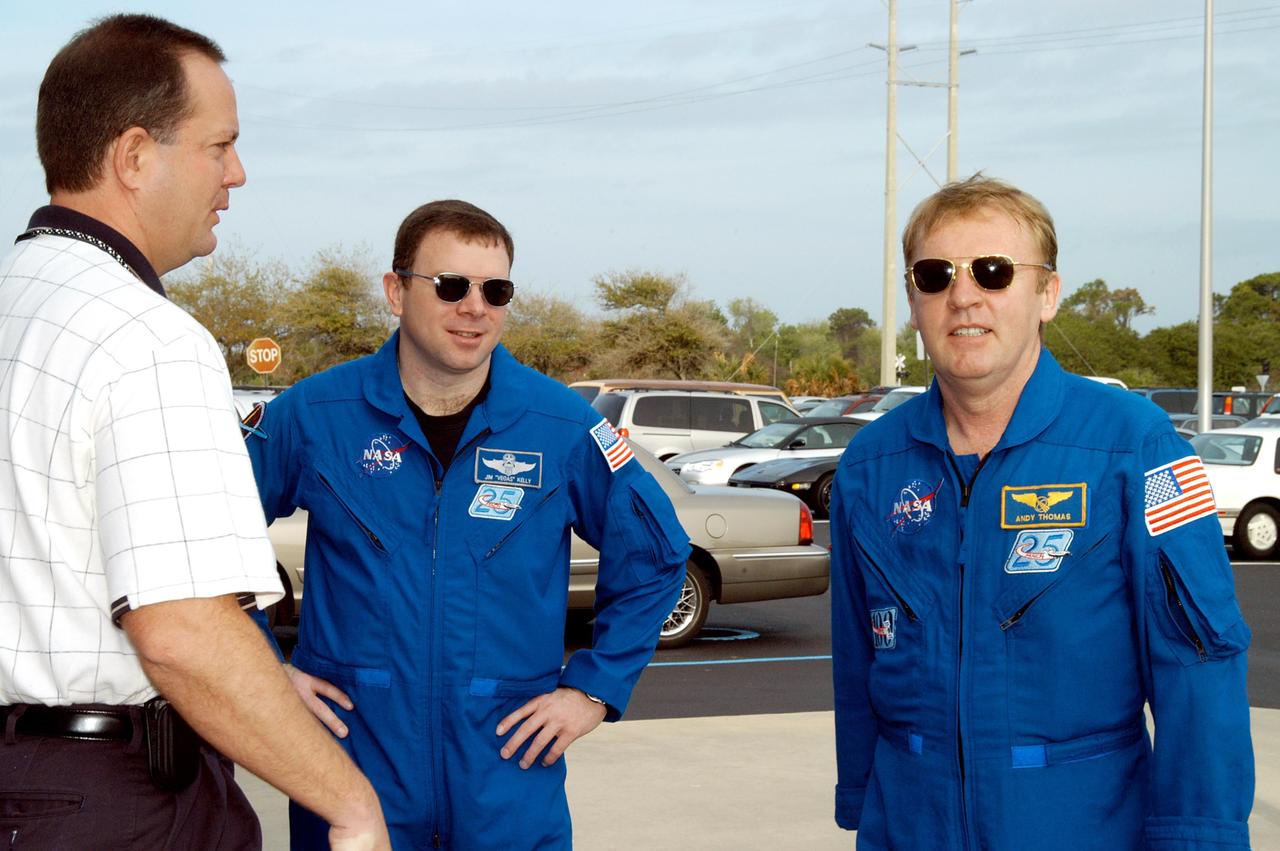
KENNEDY SPACE CENTER, FLA. - At the SRB Assembly and Refurbishment Facility, STS-114 crew members Pilot James Kelly and Mission Specialist Andrew Thomas talk with Tom Engler, Marshall Space Flight Center SRB Resident Office lead. The STS-114 crew is at KSC for familiarization with Shuttle and mission equipment. The mission is Logistics Flight 1, which is scheduled to deliver supplies and equipment, plus the external stowage platform, to the International Space Station.
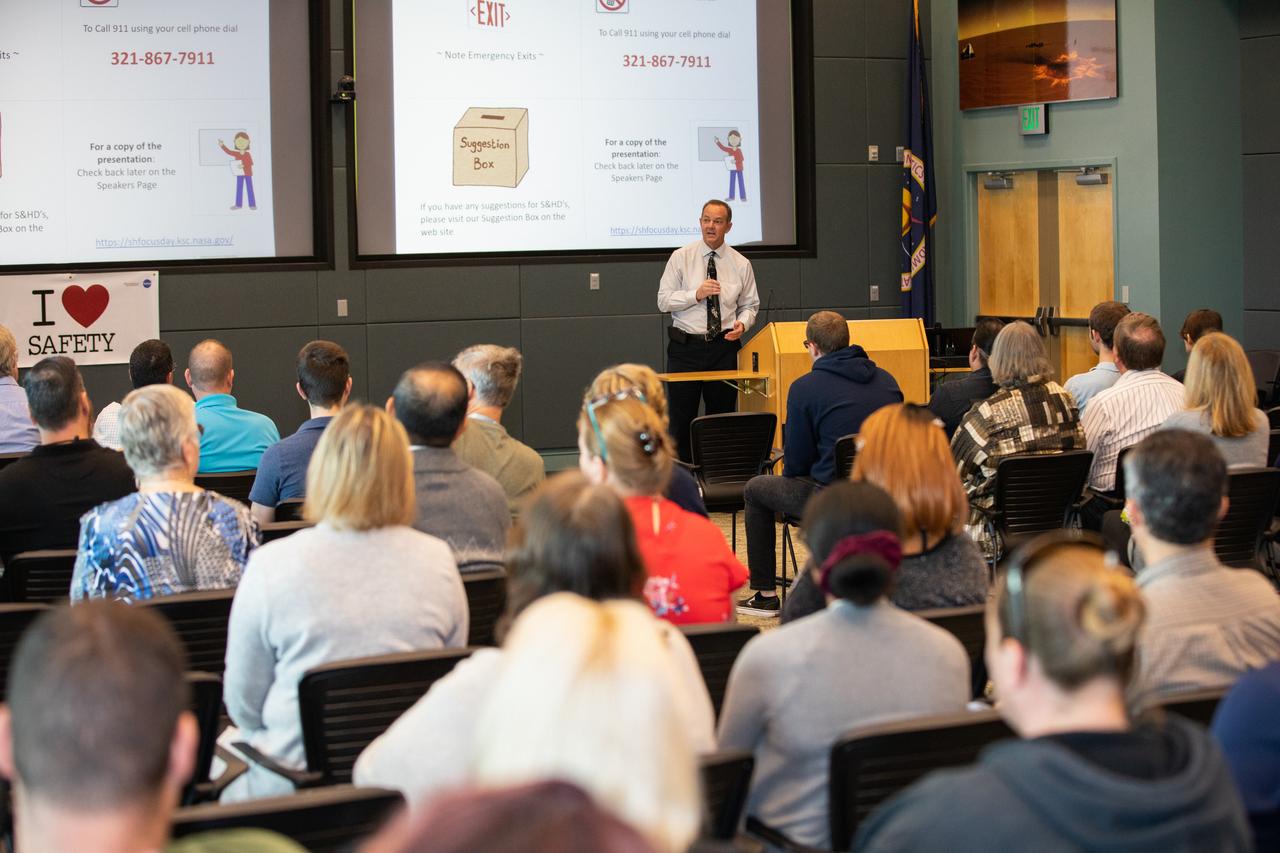
Tom Engler, director of Center Planning and Development at NASA’s Kennedy Space Center in Florida, addresses Kennedy employees inside the Operations Support Building II on March 3, 2020, during the center’s annual Safety and Health Days. Taking place March 2 through March 6, Safety and Health Days provides Kennedy employees with a variety of presentations to attend – all of which focus on how to maintain a safe and healthy workforce.
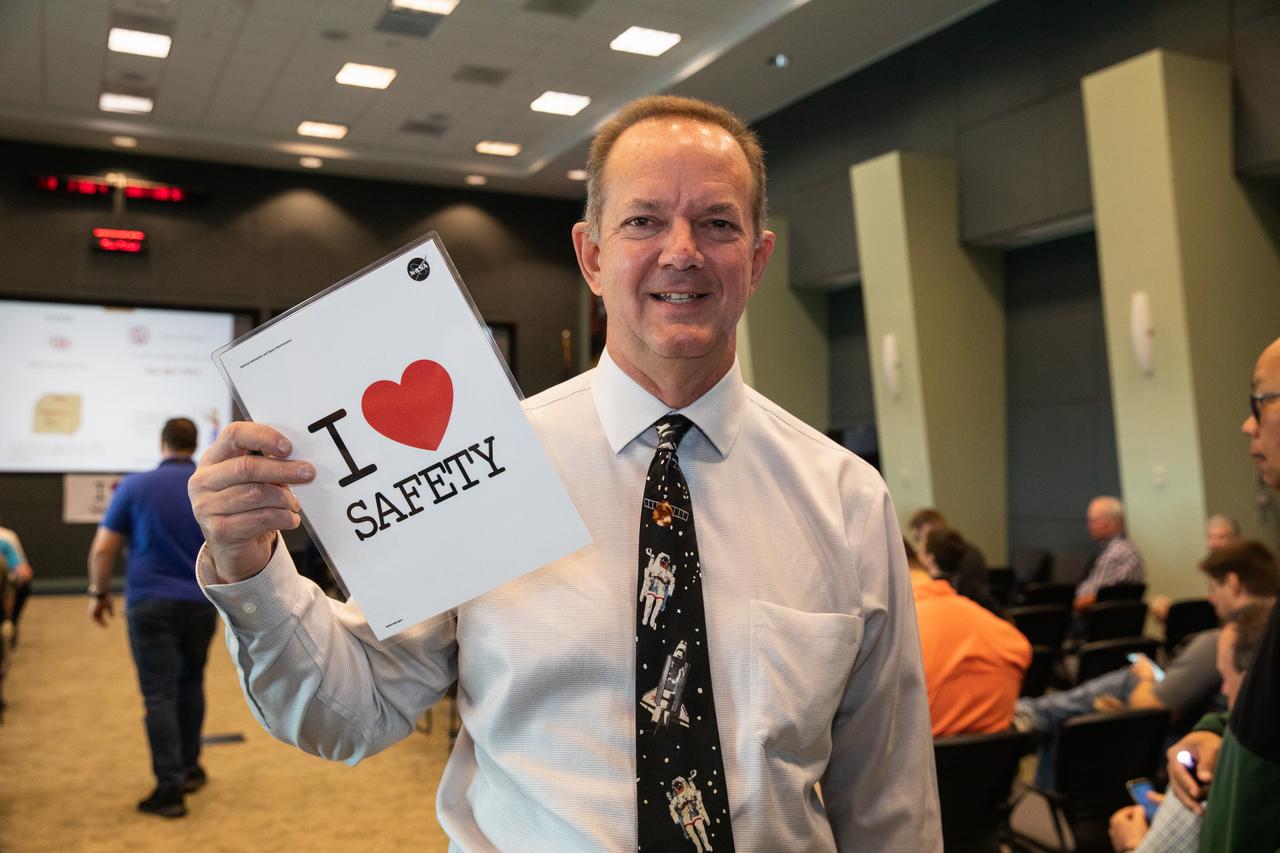
Tom Engler, director of Center Planning and Development at NASA’s Kennedy Space Center in Florida, poses with the Safety and Mission Assurance “I Love Safety” poster during the center’s annual Safety and Health Days on March 3, 2020. Taking place March 2 through March 6, Safety and Health Days provides Kennedy employees with a variety of presentations to attend – all of which focus on how to maintain a safe and healthy workforce.
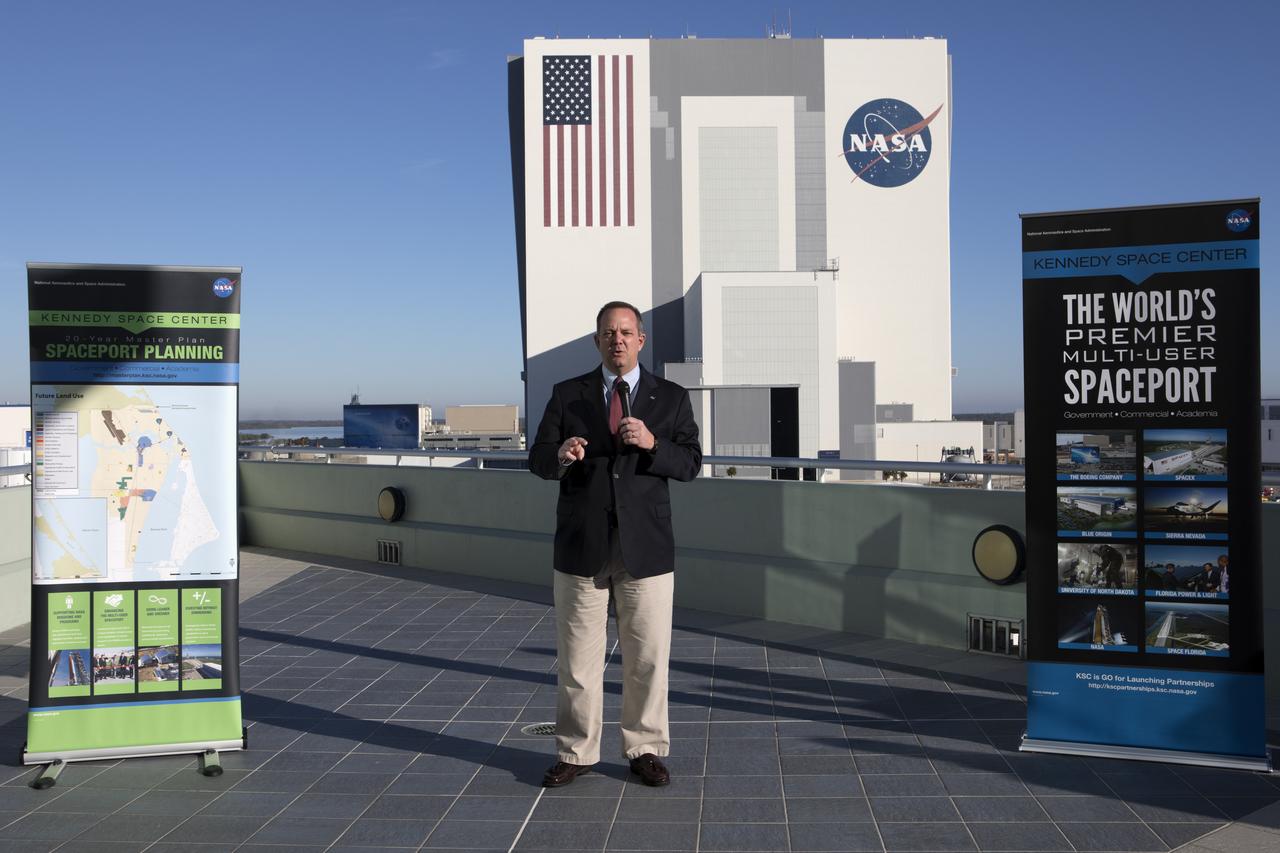
Tom Engler, director of Center Planning and Development at NASA's Kennedy Space Center, speaks to members of the news media on the balcony of Operations Support Building II describing the site's transition from a primarily government-only facility to a premier, multi-user spaceport. In the background is the Vehicle Assembly Building (VAB). Modifications were recently completed in the VAB where new work platforms were installed to support processing of NASA's Space Launch System rocket designed to send the Orion spacecraft on missions beyond low-Earth orbit.
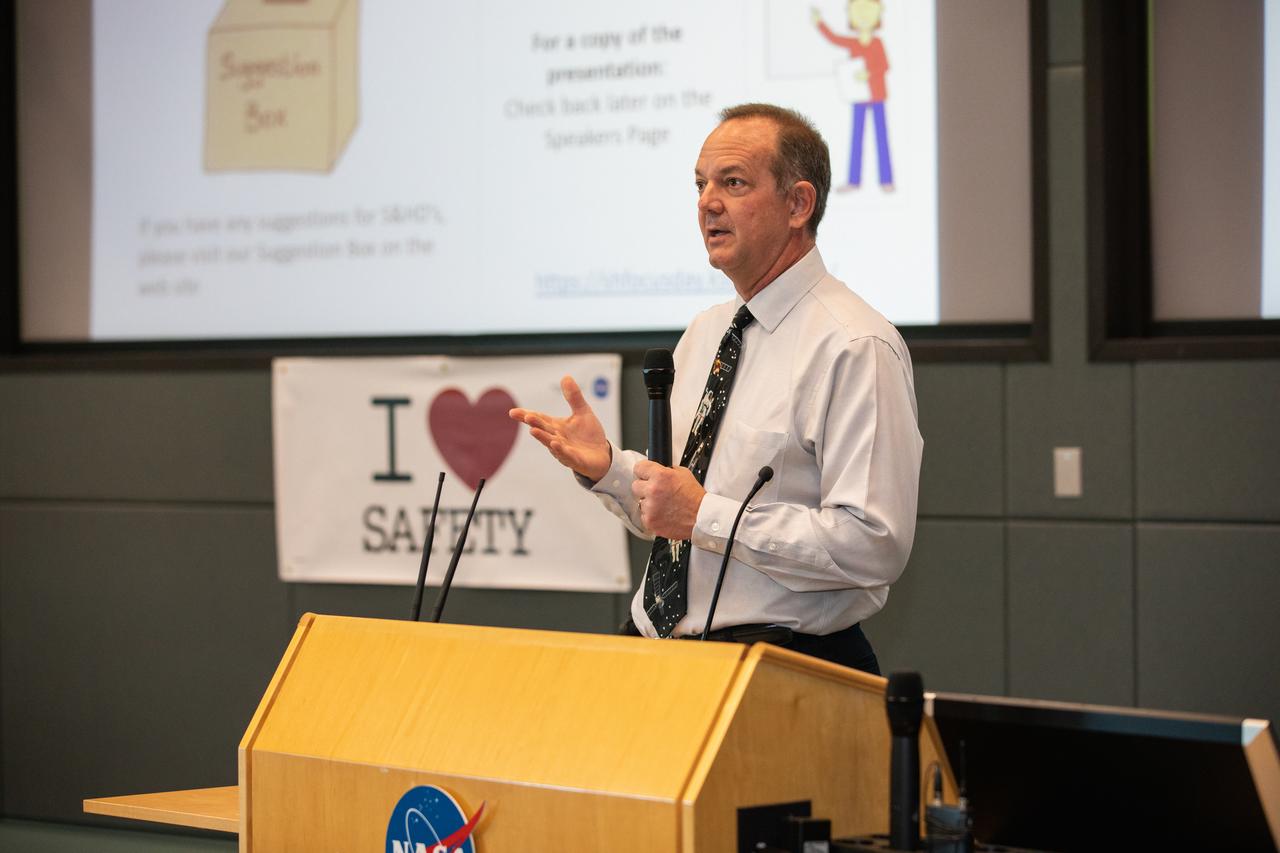
Tom Engler, director of Center Planning and Development at NASA’s Kennedy Space Center in Florida, addresses Kennedy employees inside the Operations Support Building II on March 3, 2020, during the center’s annual Safety and Health Days. Taking place March 2 through March 6, Safety and Health Days provides Kennedy employees with a variety of presentations to attend – all of which focus on how to maintain a safe and healthy workforce.
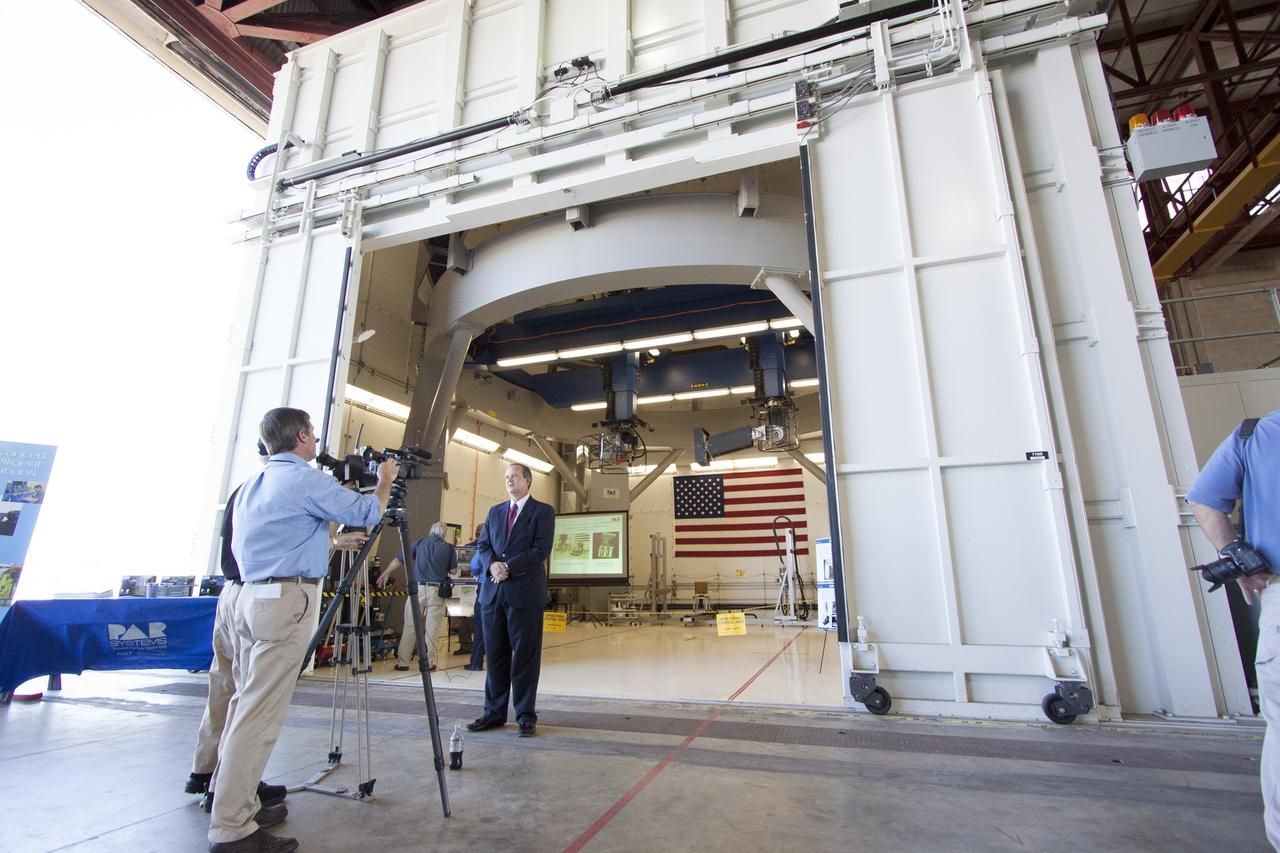
CAPE CANAVERAL, Fla. – Tom Engler, deputy director of the Center Planning and Development Directorate at Kennedy Space Center, speaks to members of the media during an Open House event at Hangar N at Cape Canaveral Air Force Station in Florida, to celebrate the one-year anniversary of PaR Systems' partnership with Kennedy. Under a 15-year lease agreement, PaR Systems is utilizing Hangar N and its unique nondestructive testing equipment. Behind Engler is the robotic inspection cell that contains an automated X-ray system once used to scan the aft skirts of the solid rocket boosters for the space shuttle. The partnership agreement was established by Kennedy's Center Planning and Development Directorate. The agreement is just one example of the types of partnerships that Kennedy is seeking to create a multi-user spaceport. Photo credit: NASA/Cory Huston
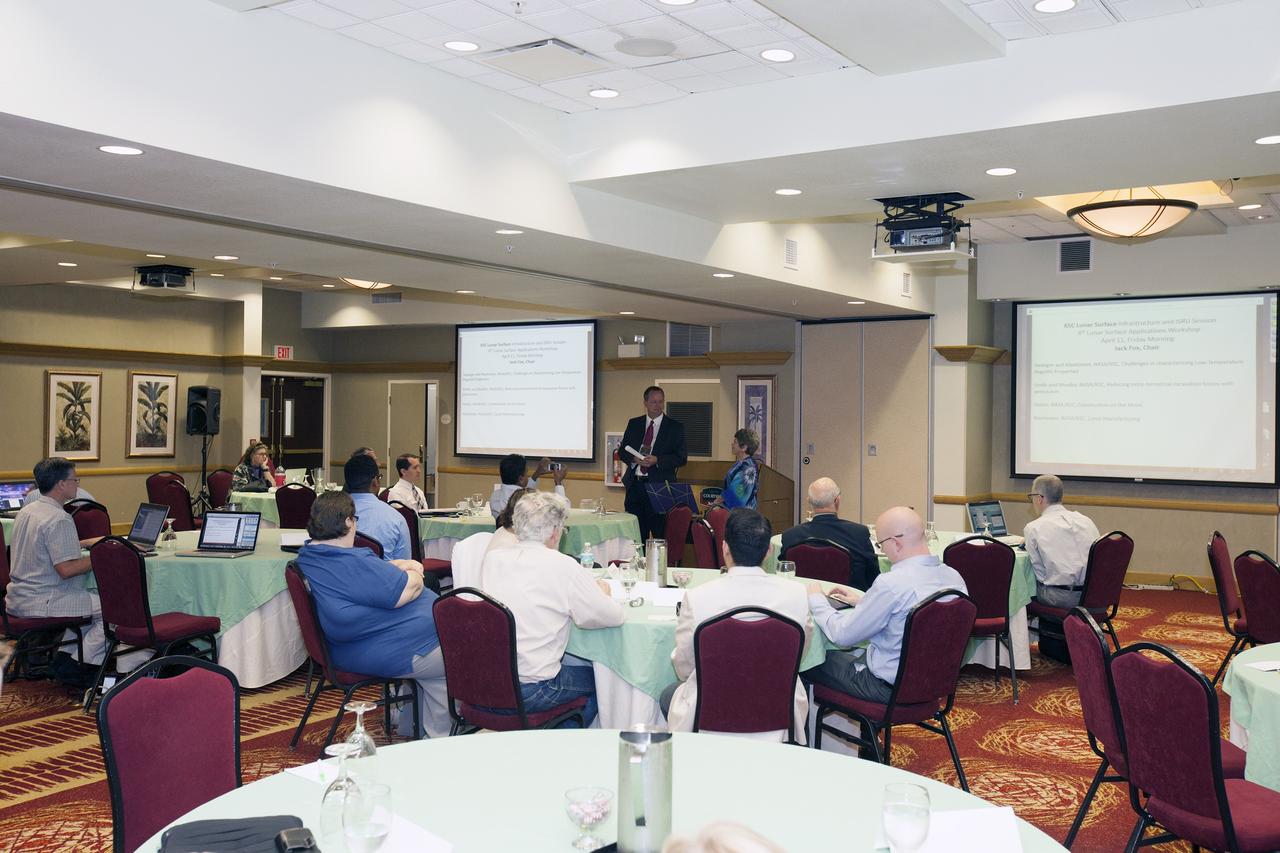
CAPE CANAVERAL, Fla. -- At the Marriott Courtyard Hotel in Cocoa Beach, Fla., Tom Engler, deputy director of Center Planning and Development at NASA's Kennedy Space Center, speaks to participants in the 4th International Workshop on Lunar and Planetary Compact and Cryogenic Science and Technology Applications. Scientists, engineers and entrepreneurs interested in research on the moon and other planetary surfaces, recently participated in the Workshop. Taking place April 8-11, 2014, the event was designed to foster collaborative work among those interested in solving the challenges of building hardware, software and businesses interested in going back to the moon and exploring beyond. Photo credit: NASA/Daniel Casper
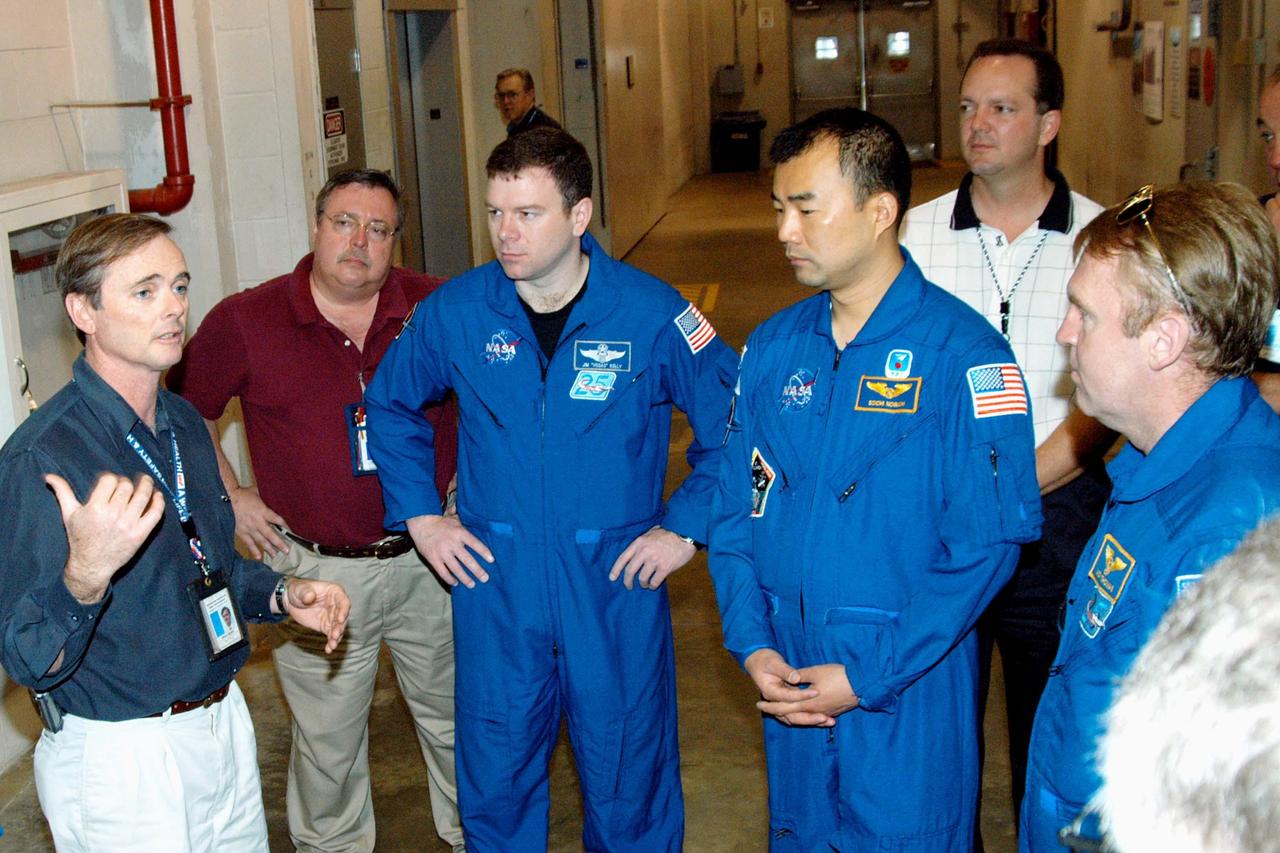
KENNEDY SPACE CENTER, FLA. - - In the SRB Assembly and Refurbishment Facility, some of the STS-114 crew listen to Greg Henry, SRB Element director of Manufacturing Operations with United Space Alliance. Crew members, from center to right, are Pilot James Kelly and Mission Specialists Soichi Noguchi and Andrew Thomas. Noguchi represents the Japanese Aerospace and Exploration Agency. In the background, at right, is Tom Engler, Marshall Space Flight Center SRB Resident Office lead. The crew is at KSC for familiarization with Shuttle and mission equipment. The STS-114 mission is Logistics Flight 1, which is scheduled to deliver supplies and equipment, plus the external stowage platform, to the International Space Station.
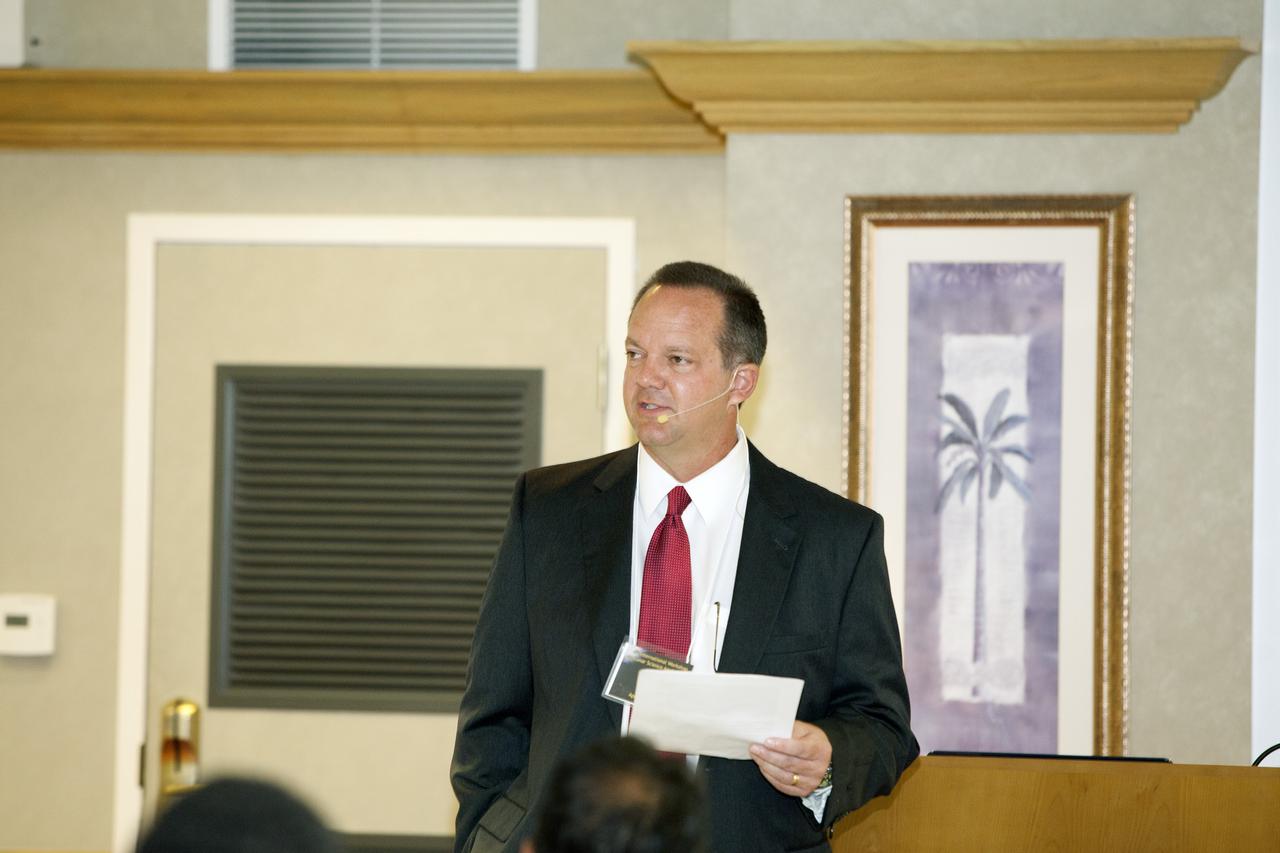
CAPE CANAVERAL, Fla. -- At the Marriott Courtyard Hotel in Cocoa Beach, Fla., Tom Engler, deputy director of Center Planning and Development at NASA's Kennedy Space Center, speaks to participants in the 4th International Workshop on Lunar and Planetary Compact and Cryogenic Science and Technology Applications. Scientists, engineers and entrepreneurs interested in research on the moon and other planetary surfaces, recently participated in the Workshop. Taking place April 8-11, 2014, the event was designed to foster collaborative work among those interested in solving the challenges of building hardware, software and businesses interested in going back to the moon and exploring beyond. Photo credit: NASA/Daniel Casper
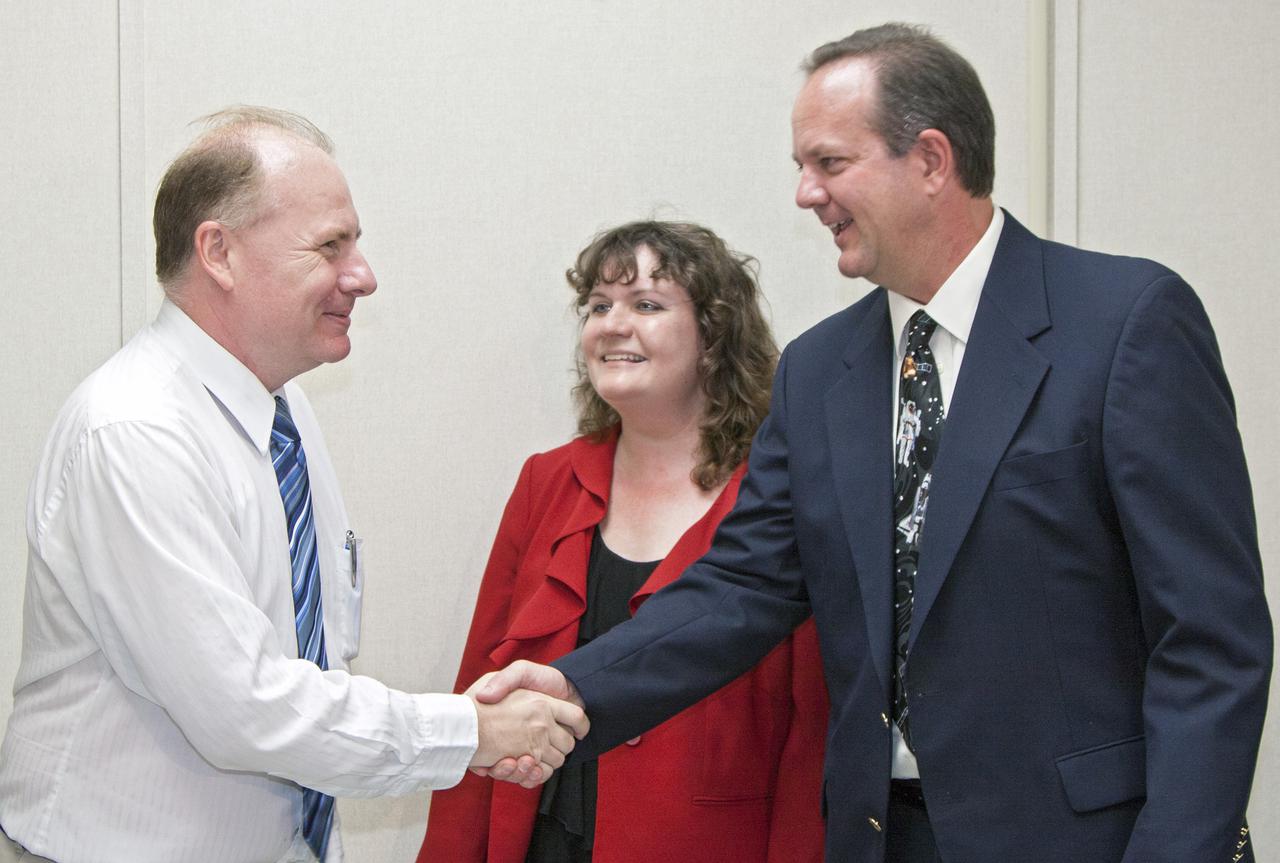
CAPE CANAVERAL, Fla. -- Inside the Space Station Processing Facility, or SSPF, at NASA’s Kennedy Space Center in Florida, Tom Engler, far right, deputy director of Kennedy’s Center Planning and Development Directorate, or CPDD, and Amy Houts-Gilfriche, a partnership development manager in CPDD, greet new partner Donald Platt with Micro Aerospace Solutions of Melbourne, Fla., during an official welcome ceremony, April 1. NASA signed an agreement with Micro Aerospace Solutions on March 22 for use of an offline hardware processing laboratory and office space at the processing facility. Photo credit: NASA_Kim Shiflett
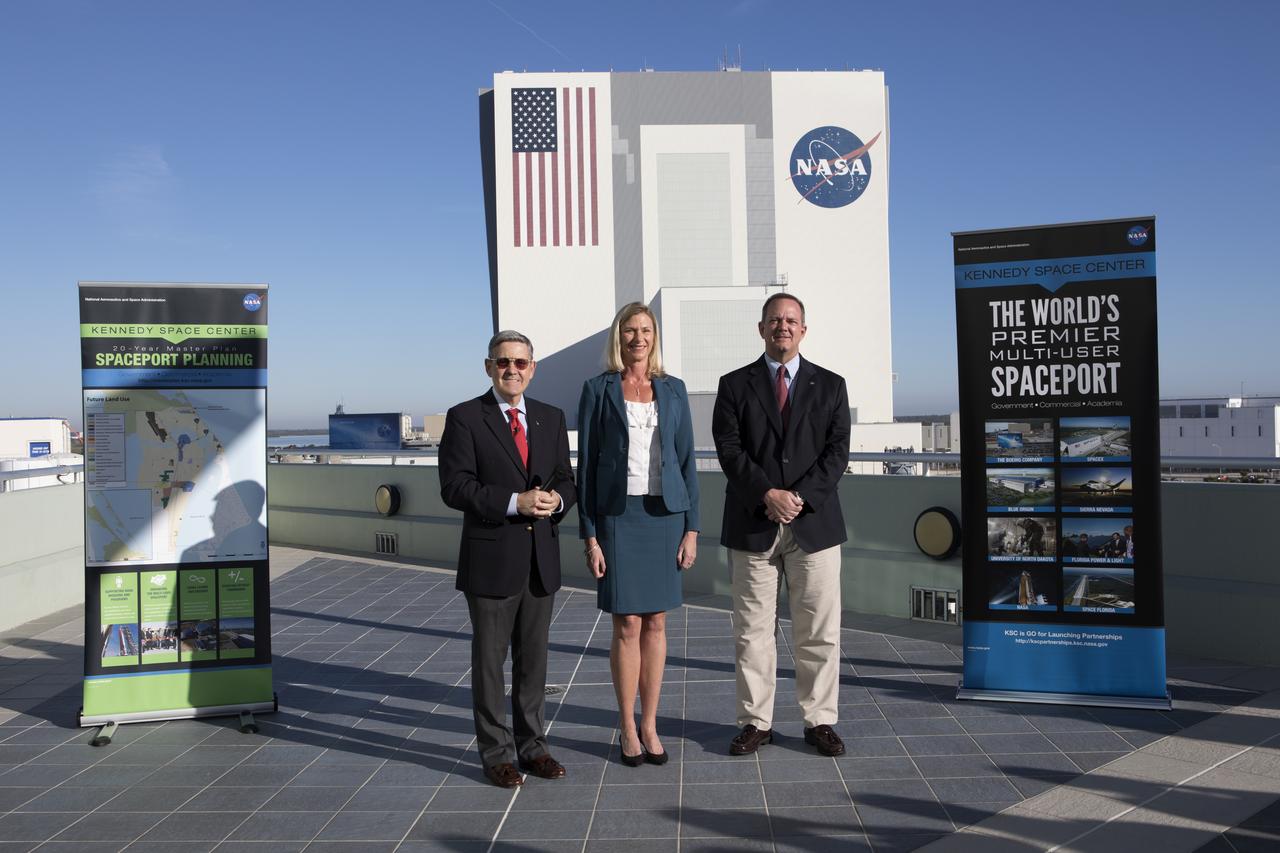
Kennedy Space Center Director Bob Cabana, left, was joined by Nancy Bray, director of Spaceport Integration and Services, center, and Tom Engler, director of Center Planning and Development in briefing members of the news media on the balcony of Operations Support Building II. They described Kennedy's transition from a primarily government-only facility to a premier, multi-user spaceport. In the background is the Vehicle Assembly Building (VAB). Modifications were recently completed in the VAB where new work platforms were installed to support processing of NASA's Space Launch System rocket designed to send the Orion spacecraft on missions beyond low-Earth orbit.
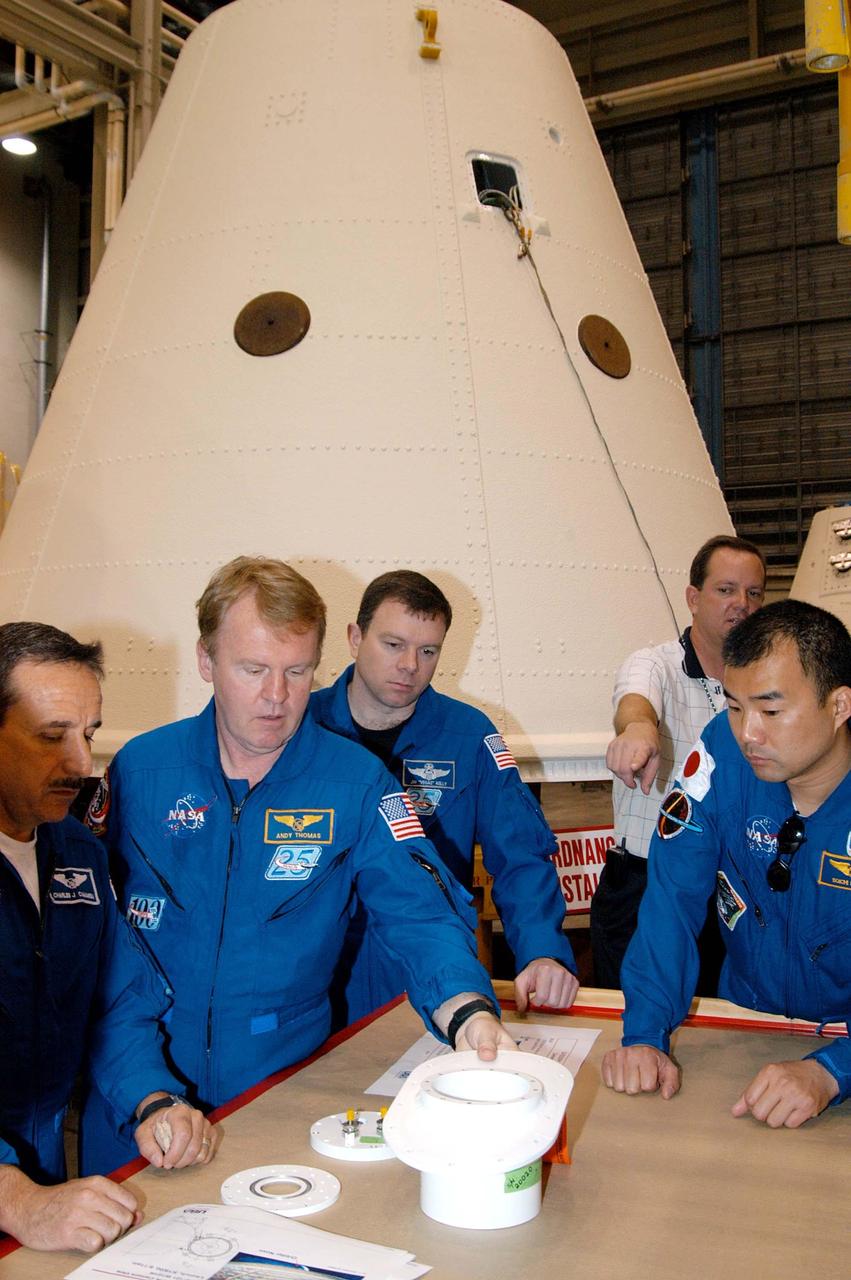
KENNEDY SPACE CENTER, FLA. - In the SRB Assembly and Refurbishment Facility, STS-114 crew members look at external tank-solid rocket booster camera components. From left are Mission Specialists Charles Camarda and Andrew Thomas, Pilot James Kelly, and Mission Specialist Soichi Noguchi, who represents the Japanese Aerospace and Exploration Agency. Behind Noguchi is Tom Engler, SRB Resident Office lead at Marshall Space Flight Center. They are standing in front of an SRB frustum. The crew is at KSC for familiarization with Shuttle and mission equipment. The STS-114 mission is Logistics Flight 1, which is scheduled to deliver supplies and equipment, plus the external stowage platform, to the International Space Station.
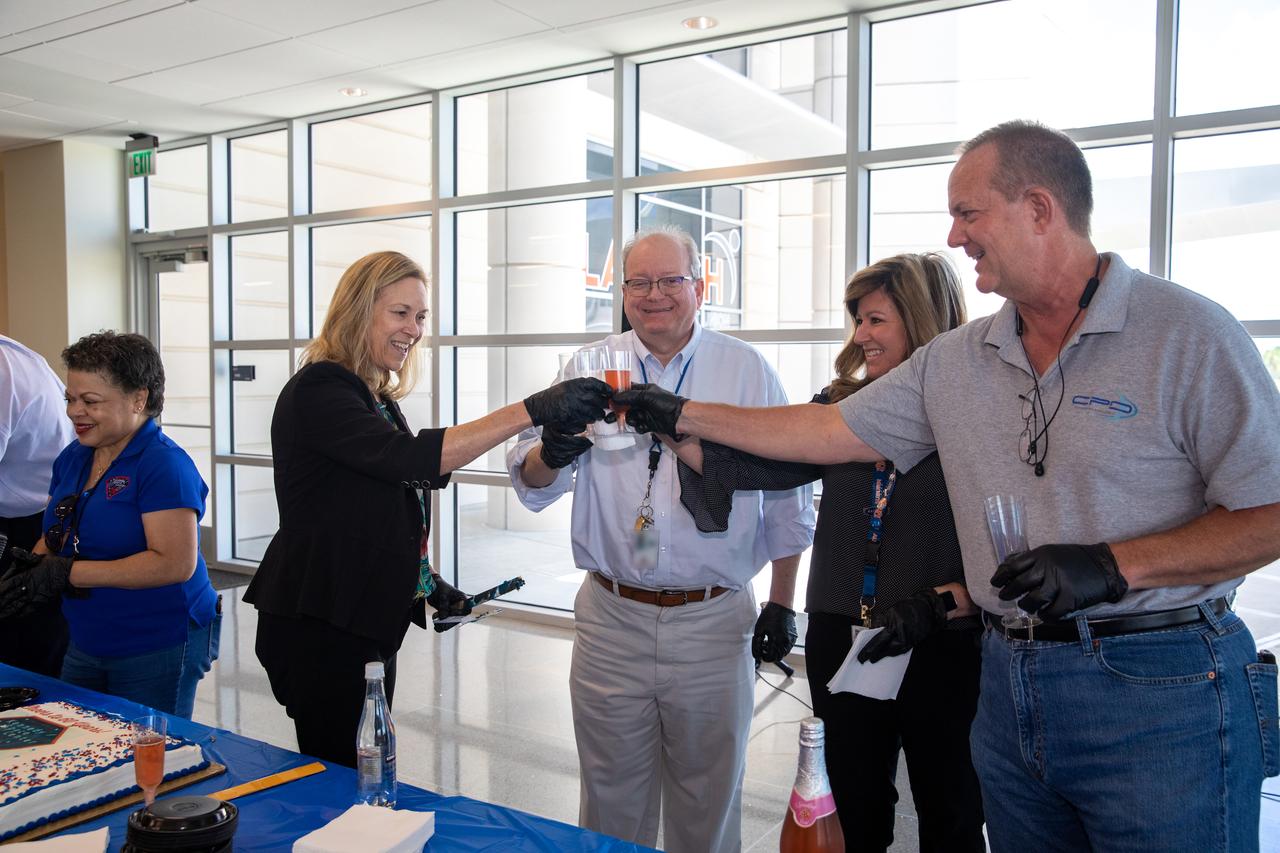
The NASA Kennedy Space Center senior leaders and employees celebrated the center’s 60th anniversary with a “Cheers to 60 Years” cake and non-alcoholic toast in the Central Campus Headquarters on June 28, 2022. From left are Janet Sellars, director of Human Resources; Janet Petro, center director; Burt Summerfield, associate center director, management; Jennifer Kunz, associate center director, technical; and Tom Engler, director of Center Planning and Development. In July 1962, the Launch Operations Center in Florida was established. By December 1963, it was renamed the John F. Kennedy Space Center.
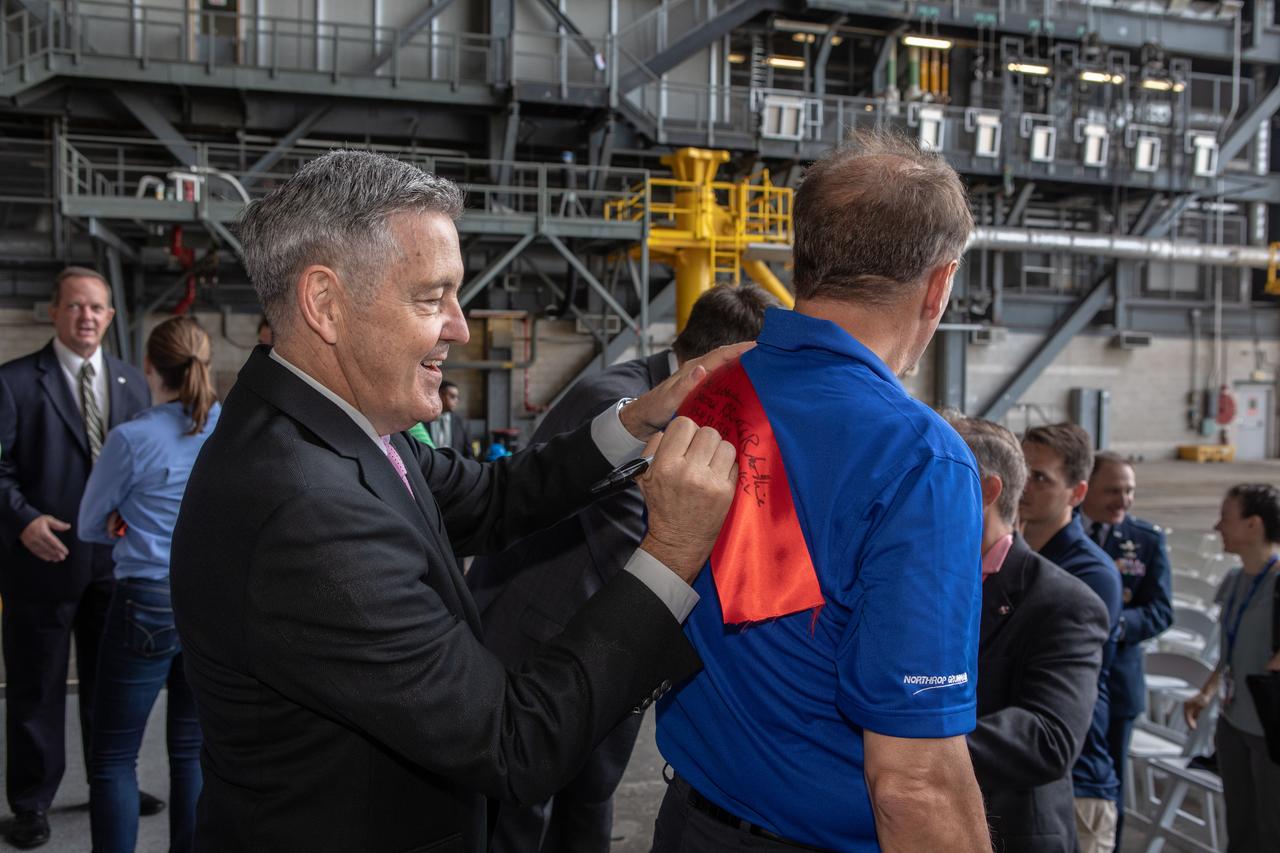
Legislators, invited guests and members of the media attend a ribbon cutting ceremony on Aug. 16, 2019, in High Bay 2 of the Vehicle Assembly Building (VAB) at NASA’s Kennedy Space Center in Florida. Kennedy Center Director Bob Cabana autographs a portion of the ribbon for a guest. In view, at far left, is Tom Engler, director of Kennedy’s Center Planning and Development Office. The VAB is getting its first commercial tenant. Northrop Grumman signed a Reimbursable Space Act Agreement with NASA for use of the facilities. The company will assemble and test its new OmegA rocket inside the massive facility’s High Bay 2. The company also will modify mobile launcher platform-3 to serve as the launch vehicle’s assembly and launch platform. Northrop Grumman is developing the OmegA rocket, an intermediate/heavy-class launch vehicle, as part of a launch services agreement with the U.S. Air Force.
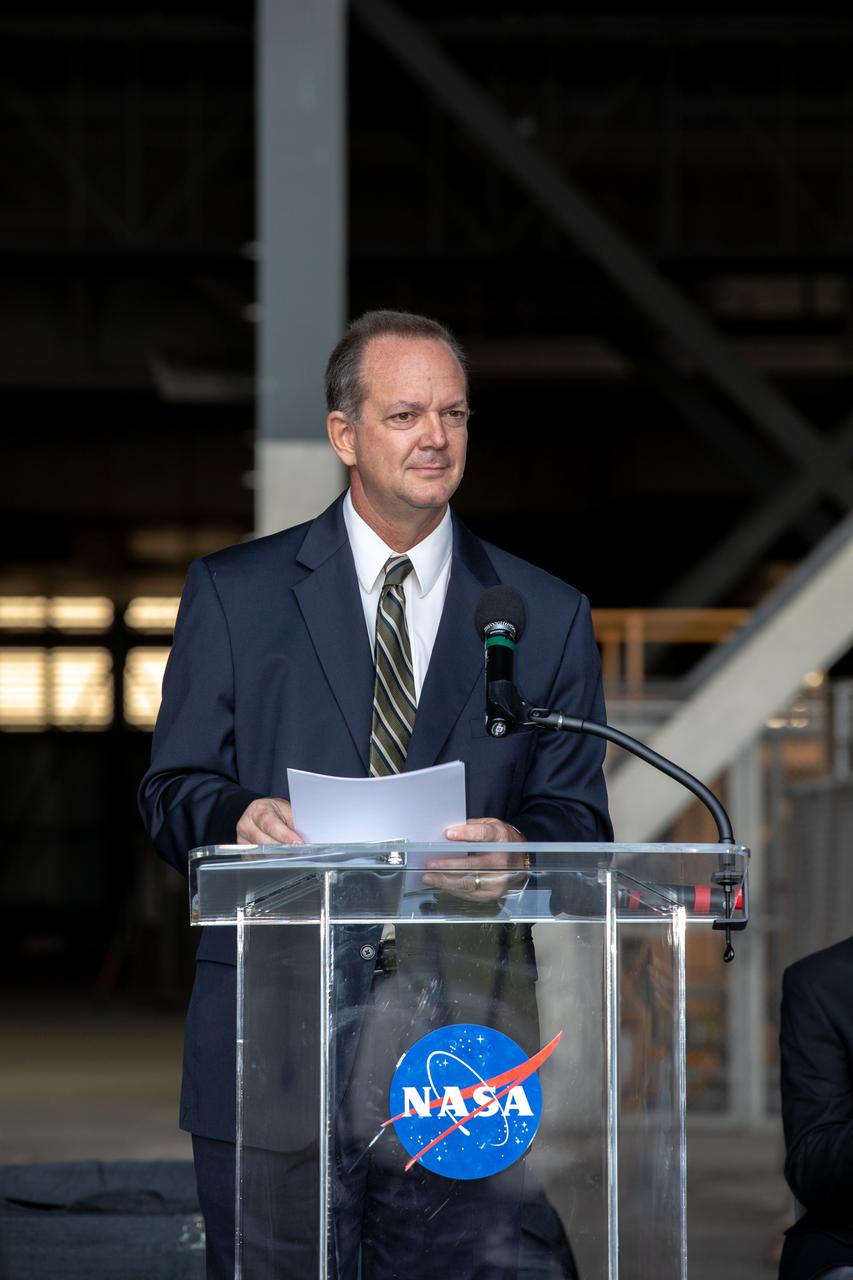
During a ribbon cutting ceremony on Aug. 16, 2019, in High Bay 2 of the Vehicle Assembly Building (VAB) at NASA’s Kennedy Space Center in Florida, Tom Engler, director of Kennedy’s Center Planning and Development Office, welcomes legislators and guests. The VAB is getting its first commercial tenant. Northrop Grumman signed a Reimbursable Space Act Agreement with NASA for use of the facilities. The company will assemble and test its new OmegA rocket inside the massive facility’s High Bay 2. The company also will modify MLP-3 to serve as the launch vehicle’s assembly and launch platform. Northrop Grumman is developing the OmegA rocket, an intermediate/heavy-class launch vehicle, as part of a launch services agreement with the U.S. Air Force.
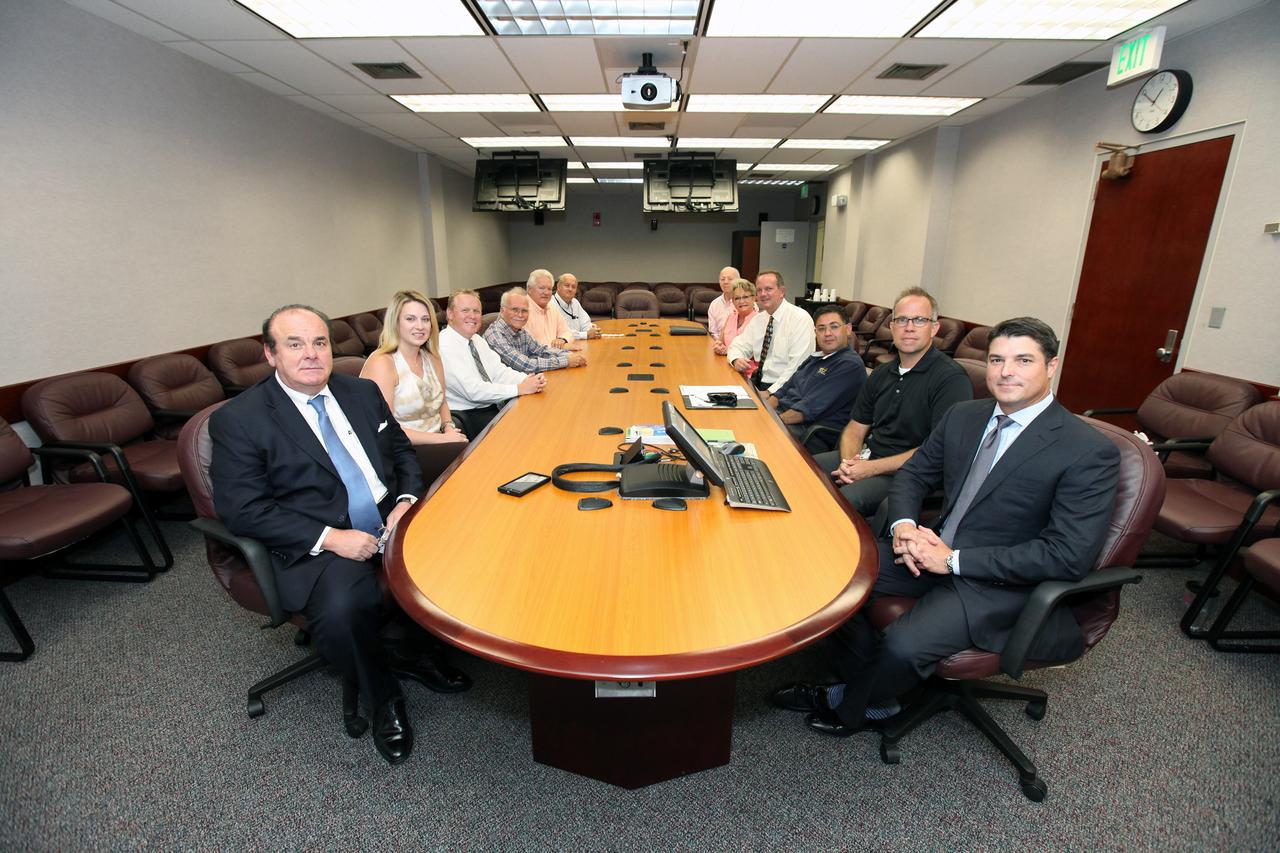
NASA, local and state officials met at Kennedy Space Center in Florida for the sixth KSC Roundtable, in which participants exchanged ideas about the center’s current plans. The meeting was hosted by Kennedy’s Center Planning and Development Directorate (CPD). Seated from left to right are Greg Weiner of the Economic Development Commission of Florida’s Space Coast; Ashley Guinn, legislative assistant to Steve Crisafulli, speaker of the Florida House of Representatives; Todd Pokrywa of The Viera Co.; Charles Lee of the Florida Audubon Society; Rich Biter, former assistant secretary of Intermodal Systems Development, Florida Department of Transportation (FDOT); David Pierce of CPD; Marshall Heard, retired Boeing senior executive; Nancy Potts of CPD; Tom Engler, acting director of CPD; Moataz Hassan of FDOT District 5; Trey Carlson of CPD; and Rep. Crisafulli.
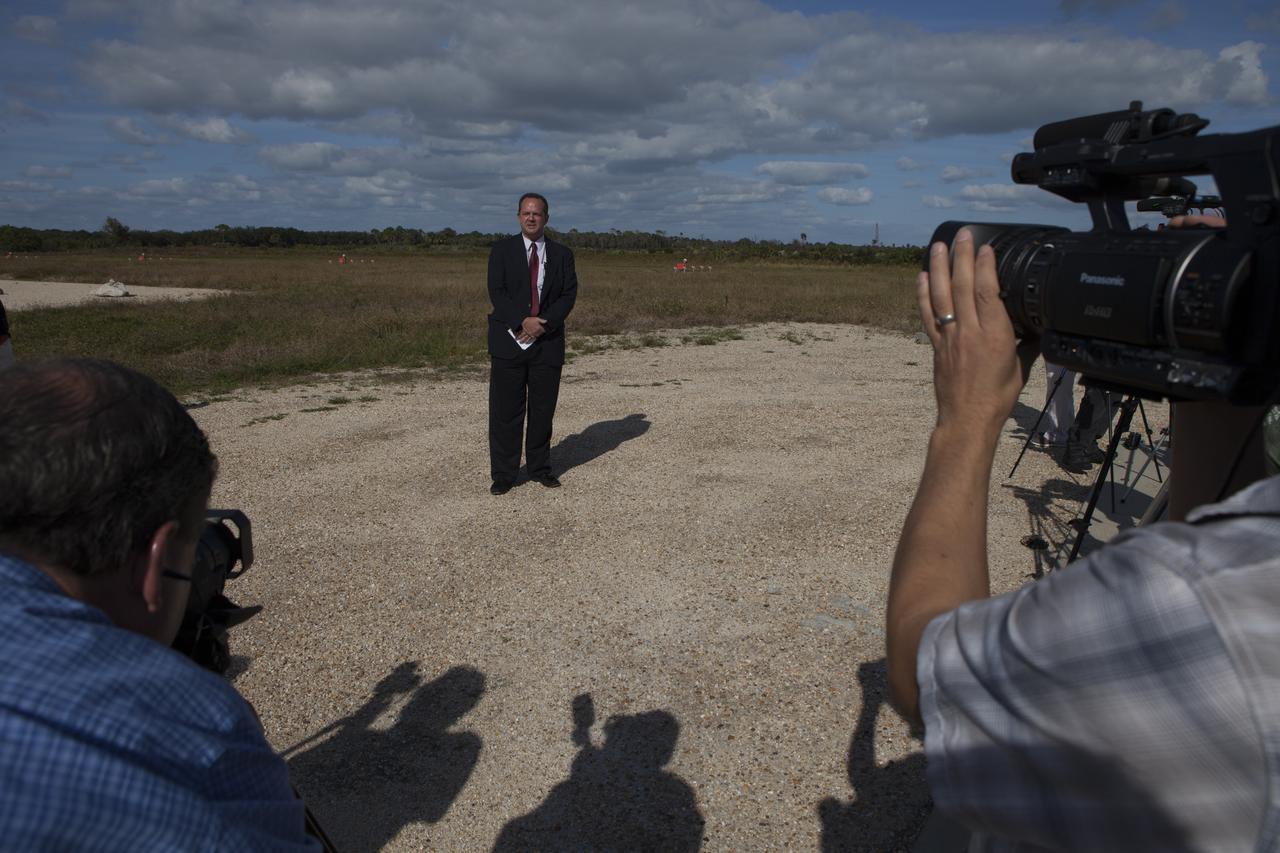
Tom Engler, deputy director of Center Planning and Development at NASA's Kennedy Space Center in Florida, speaks to members of the media during an event to announce the agency's Lunar Cargo Transportation and Landing by Soft Touchdown, or Lunar CATALYST, initiative and introduced one of the partners, Moon Express Inc. of Moffett Field, California. The event took place at Kennedy's automated landing and hazard avoidance technology, or ALHAT, hazard field at the north end of the Shuttle Landing Facility. Moon Express is developing a lander with capabilities that will enable delivery of payloads to the surface of the moon, as well as new science and exploration missions of interest to NASA and scientific and academic communities. Moon Express will base its activities at Kennedy and utilize the Morpheus ALHAT field and a hangar nearby for CATALYST testing. The Advanced Exploration Systems Division of NASA's Human Exploration and Operations Mission Directorate manages Lunar CATALYST.
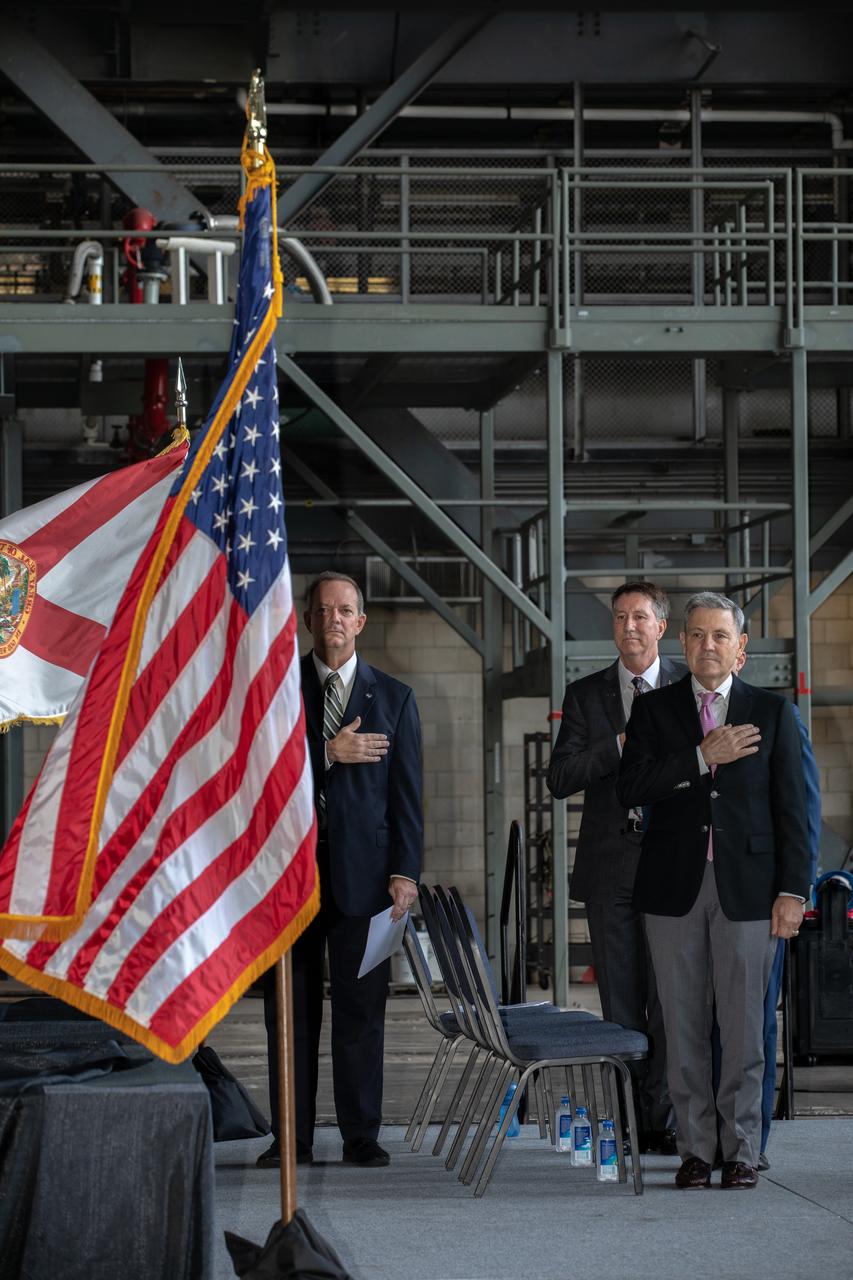
The National Anthem is sung during a ribbon cutting ceremony on Aug. 16, 2019, in High Bay 2 of the Vehicle Assembly Building (VAB) at NASA’s Kennedy Space Center in Florida. From left are Tom Engler, director of Kennedy’s Center Planning and Development Office; Kent Rominger, Northrop Grumman’s vice president and capture lead for the OmegA launch system; and Kennedy’s Center Director Bob Cabana. The VAB is getting its first commercial tenant. Northrop Grumman signed a Reimbursable Space Act Agreement with NASA for use of the facilities. The company will assemble and test its new OmegA rocket inside the massive facility’s High Bay 2. The company also will modify mobile launcher platform-3 to serve as the launch vehicle’s assembly and launch platform. Northrop Grumman is developing the OmegA rocket, an intermediate/heavy-class launch vehicle, as part of a launch services agreement with the U.S. Air Force.
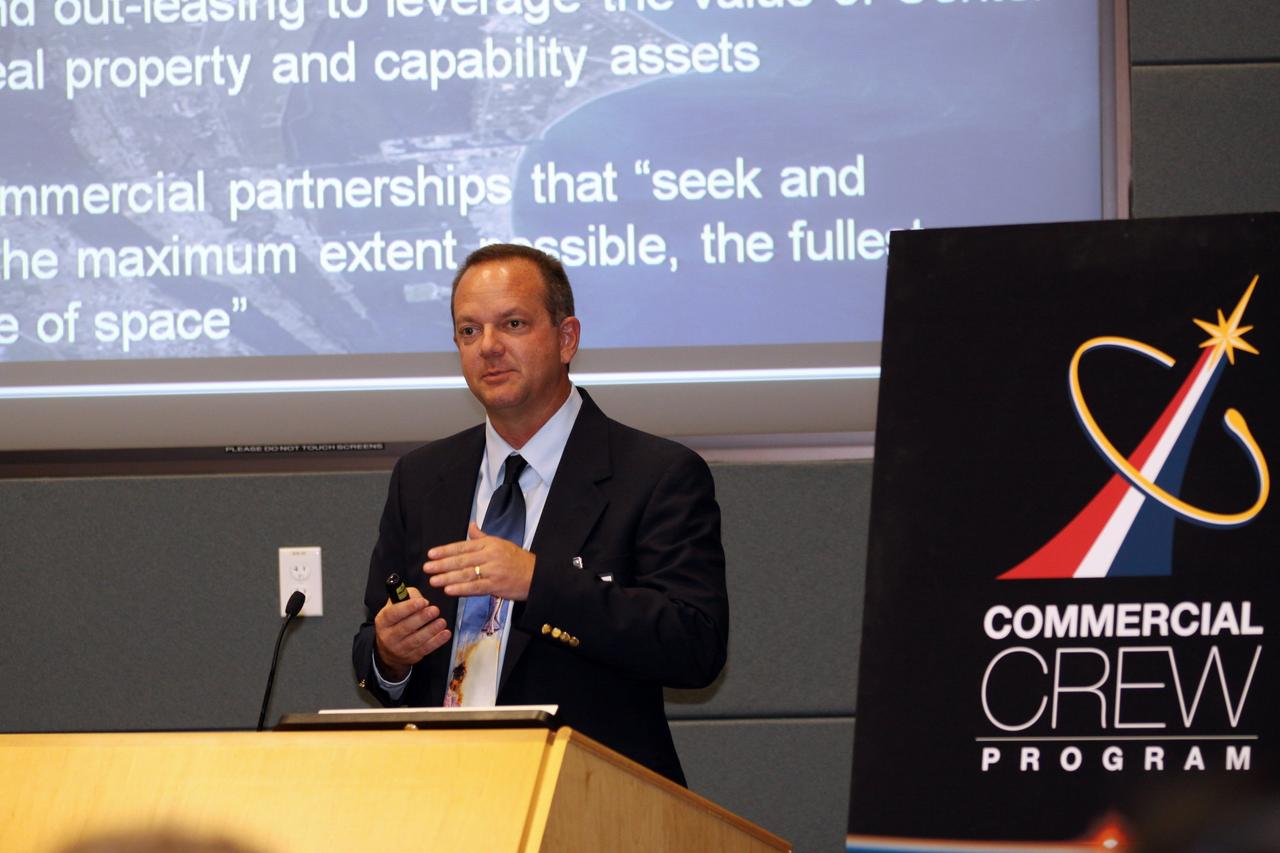
CAPE CANAVERAL, Fla. - Tom Engler, NASA's deputy manager of the Kennedy Space Center Planning and Development Office, provides an overview of the Commercial Crew Program for participants of the International Space University session on July 3 in Kennedy's Operations Support Building II. The International Space University is a nine-week intensive course designed for post-graduate university students and professionals during the summer. The program is hosted by a different country each year, providing a unique educational experience for participants from around the world. NASA Kennedy Space Center and the Florida Institute of Technology are co-hosting this year's event which runs from June 4 to Aug. 3. There are about 125 participants representing 31 countries. For more information, visit http://www.isunet.edu. Photo credit: NASA/Kim Shiflett
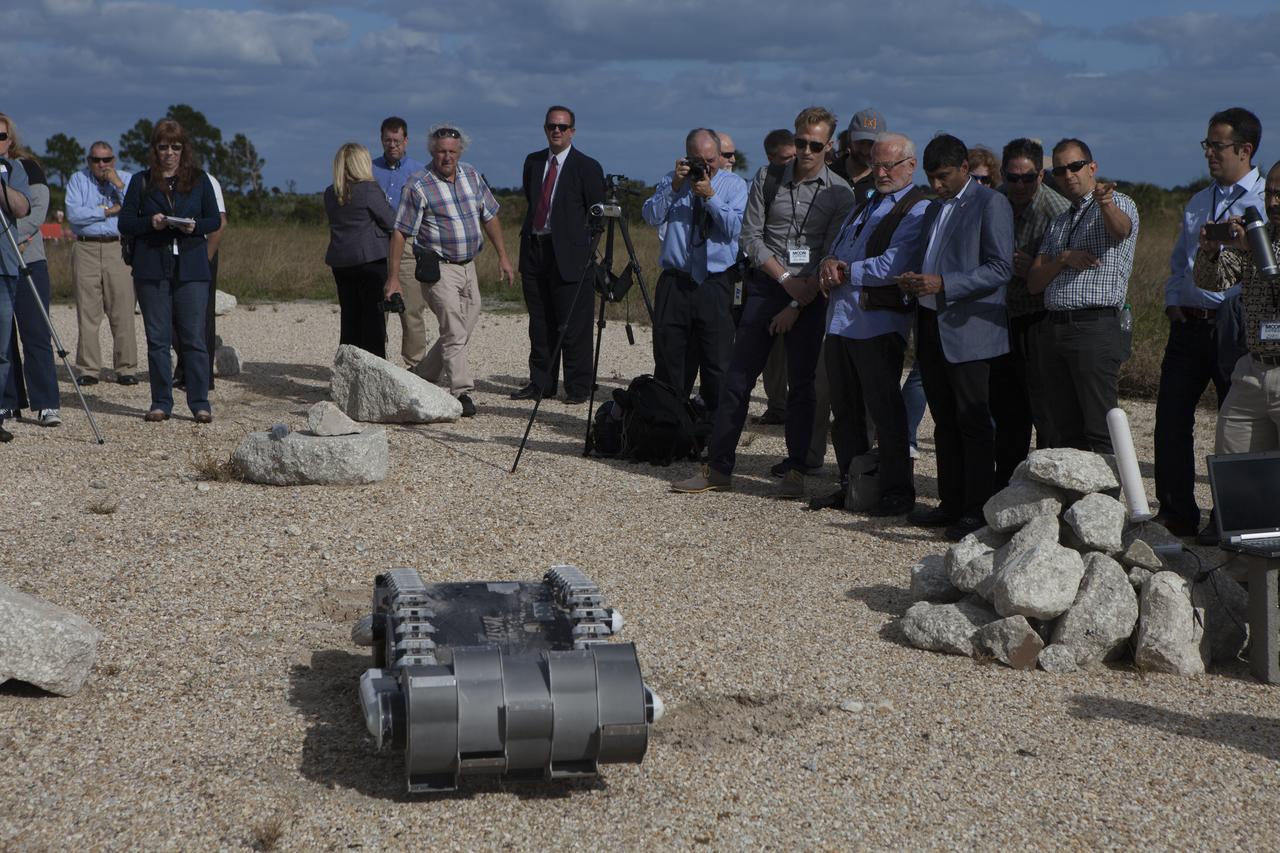
Members of the media watch a demonstration of the Regolith Advanced Surface System Operations Robot, or RASSOR, during a media event at the automated landing and hazard avoidance technology, or ALHAT, hazard field at the north end of the Shuttle Landing Facility at NASA's Kennedy Space Center in Florida. Tom Engler, center, in the suit, deputy director of Kennedy's Center Planning and Development, announced Moon Express Inc., of Moffett Field, California is selected to utilize Kennedy facilities for NASA's Lunar Cargo Transportation and Landing by Soft Touchdown, or Lunar CATALYST, initiative. Moon Express is developing a lander with capabilities that will enable delivery of payloads to the surface of the moon, as well as new science and exploration missions of interest to NASA and scientific and academic communities. Moon Express will base its activities at Kennedy and utilize the Morpheus ALHAT field and a hangar nearby for CATALYST testing. The Advanced Exploration Systems Division of NASA's Human Exploration and Operations Mission Directorate manages Lunar CATALYST.
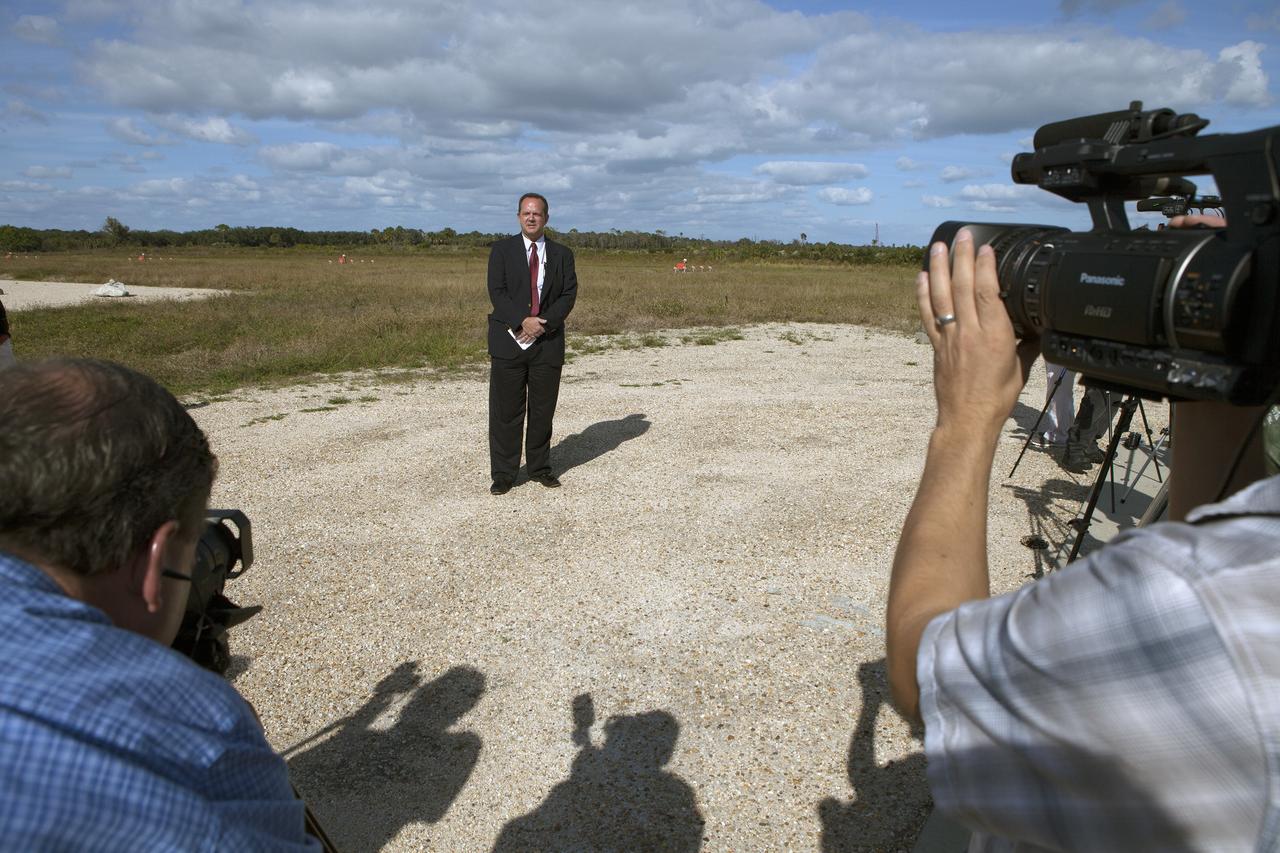
CAPE CANAVERAL, Fla. - Tom Engler, deputy director of Center Planning and Development at NASA's Kennedy Space Center in Florida, speaks to members of the media during an event to announce the agency's Lunar Cargo Transportation and Landing by Soft Touchdown, or Lunar CATALYST, initiative and introduced one of the partners, Moon Express Inc. of Moffett Field, California. The event took place at Kennedy's automated landing and hazard avoidance technology, or ALHAT, hazard field at the north end of the Shuttle Landing Facility. Moon Express is developing a lander with capabilities that will enable delivery of payloads to the surface of the moon, as well as new science and exploration missions of interest to NASA and scientific and academic communities. Moon Express will base its activities at Kennedy and utilize the Morpheus ALHAT field and a hangar nearby for CATALYST testing. The Advanced Exploration Systems Division of NASA's Human Exploration and Operations Mission Directorate manages Lunar CATALYST. Photo credit: NASA/Ben Smegelsky
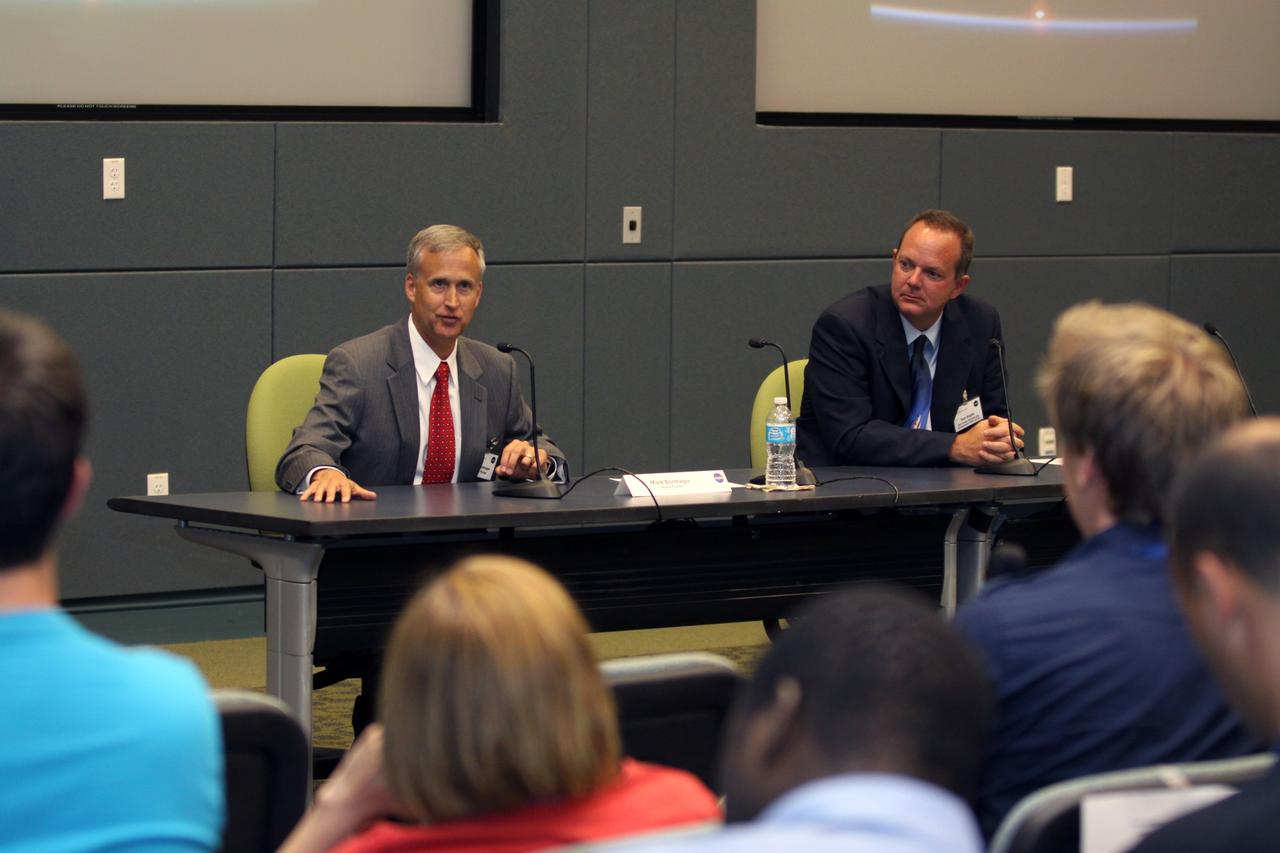
CAPE CANAVERAL, Fla. - From the left, Mark Bontrager, vice president of Spaceport Operations at Space Florida, and Tom Engler, NASA's deputy manager of the Kennedy Space Center Planning and Development Office, participate in a panel discussion during an International Space University session in Kennedy's Operations Support Building II on July 3. The International Space University is a nine-week intensive course designed for post-graduate university students and professionals during the summer. The program is hosted by a different country each year, providing a unique educational experience for participants from around the world. NASA Kennedy Space Center and the Florida Institute of Technology are co-hosting this year's event which runs from June 4 to Aug. 3. There are about 125 participants representing 31 countries. For more information, visit http://www.isunet.edu. Photo credit: NASA/Kim Shiflett
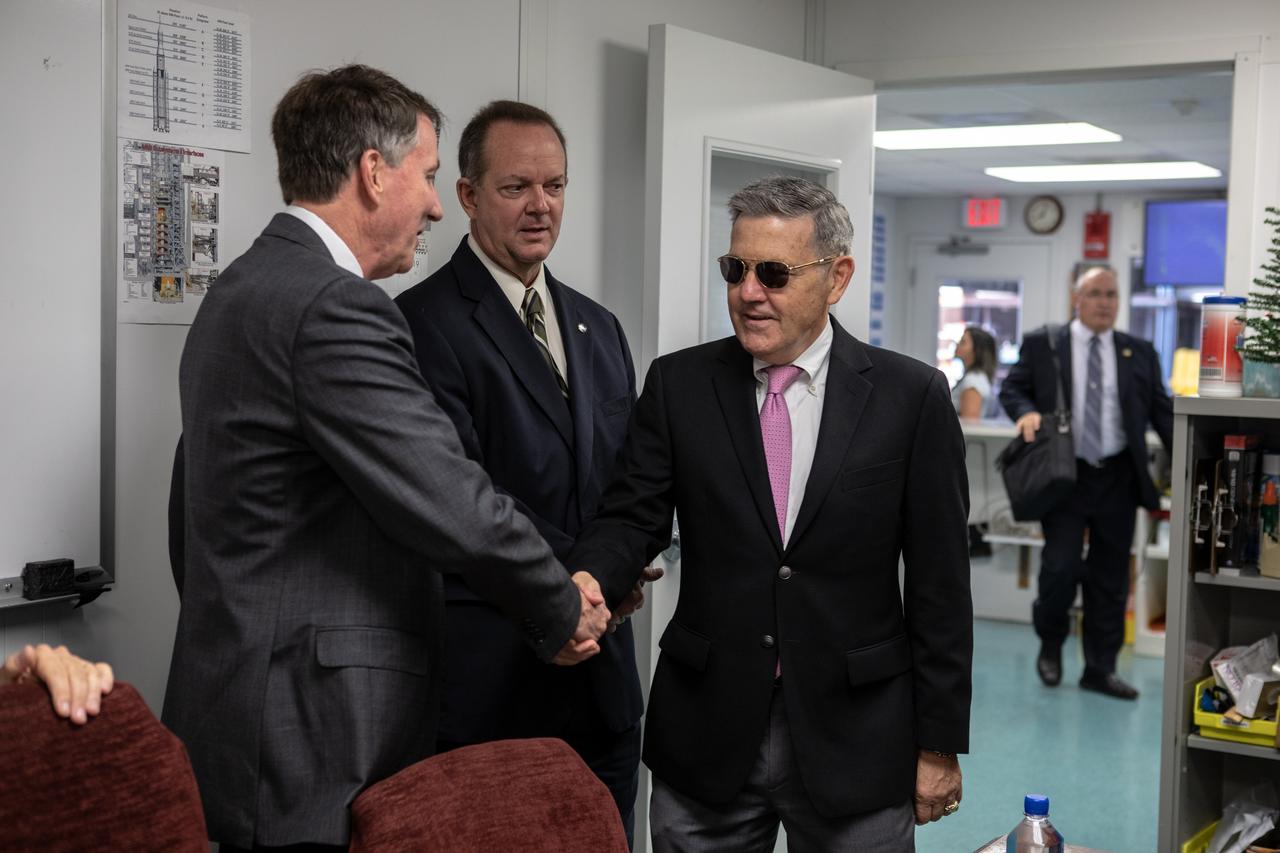
Just before a ribbon cutting ceremony on Aug. 16, 2019, in High Bay 2 of the Vehicle Assembly (VAB) at NASA’s Kennedy Space Center in Florida, Center Director Bob Cabana, at right, shakes hands with Kent Rominger, Northrop Grumman’s vice president and capture lead for the OmegA launch system. In the center is Tom Engler, director of the Center Planning and Development Office at Kennedy. The VAB is getting its first commercial tenant. Northrop Grumman signed a Reimbursable Space Act Agreement with NASA for use of the facilities. The company will assemble and test its new OmegA rocket inside the massive facility’s High Bay 2. The company also will modify the space shuttle-era mobile launcher platform-3 to serve as the launch vehicle’s assembly and launch platform. Northrop Grumman is developing the OmegA rocket, an intermediate/heavy-class launch vehicle, as part of a launch services agreement with the U.S. Air Force.
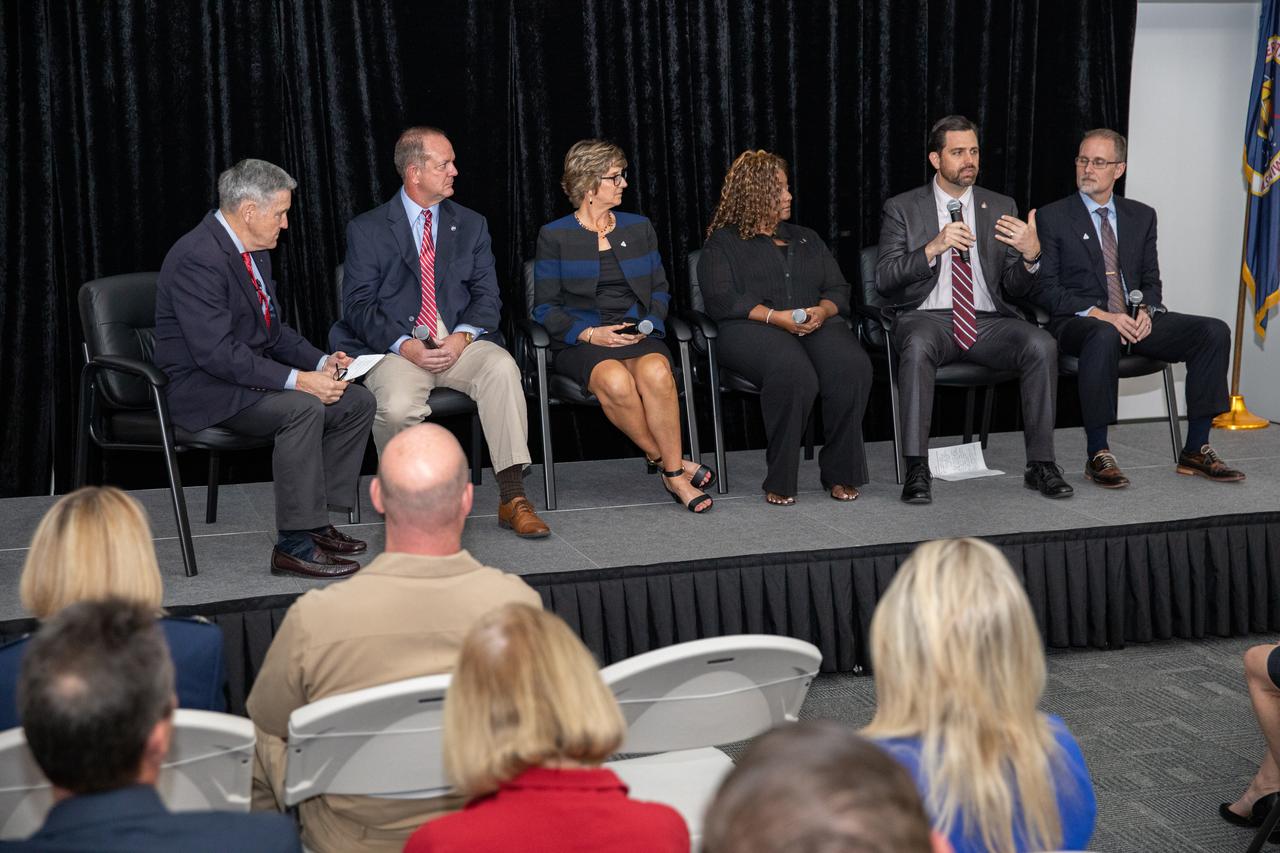
NASA Kennedy Space Center Director Bob Cabana, far left, moderates a panel discussion with senior leaders of NASA and center programs during a Community Leaders Update on Feb. 18, 2020, at the Kennedy Space Center Visitor Complex. From second from left are Tom Engler, director, Center Planning and Development; Jenny Lyons, deputy manager, Gateway Logistics Element; Barbara Brown, chief technologist, Exploration Research and Technology Programs; Jeremy Parsons, deputy manager, Exploration Ground Systems; and Phil Meade, associate director, Spaceport Integration and Services. Attendees included community leaders, business executives, partners, educators and government leaders. After the presentation, guests had the opportunity to ask questions and visit displays from the programs and some of the commercial partners.
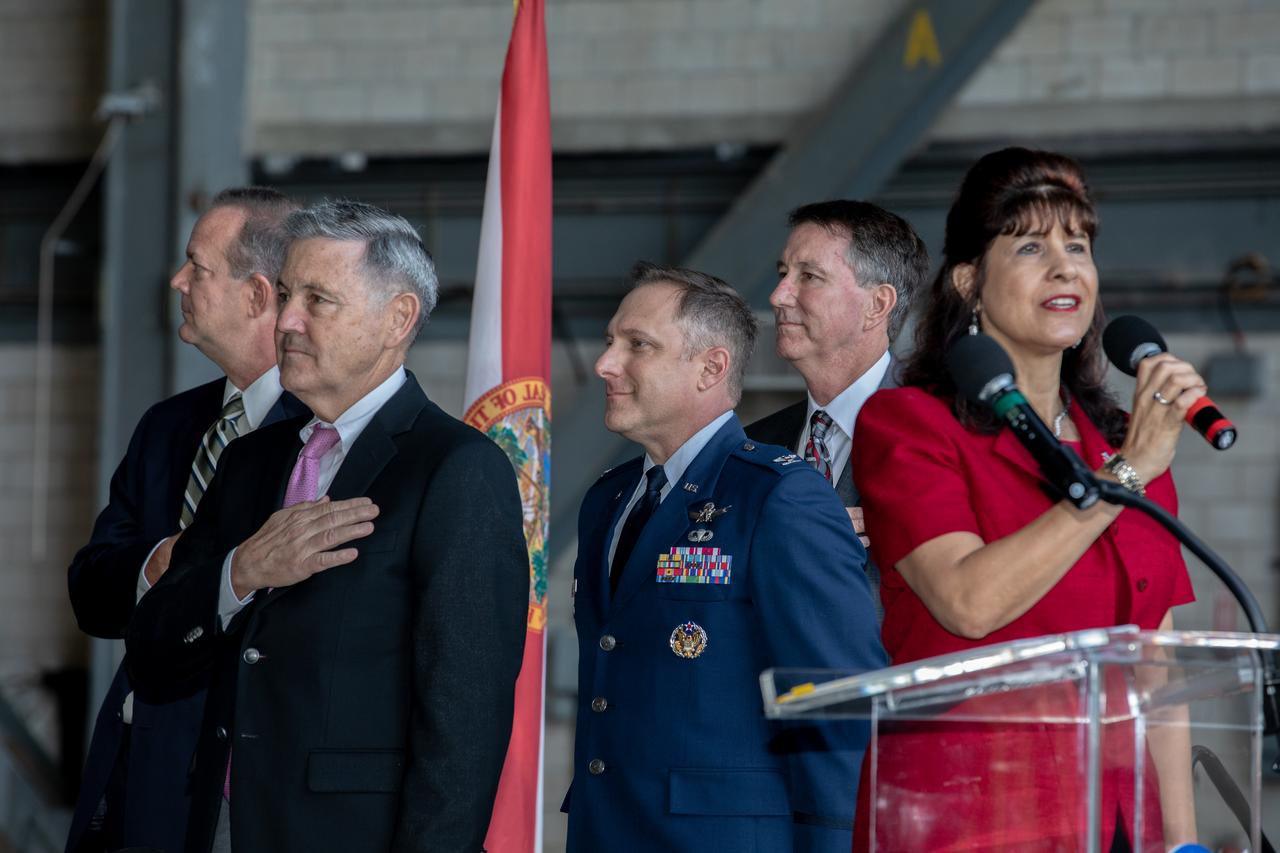
The National Anthem is sung by Suzy Cunningham, NASA Strategy and Integration manager, during a ribbon cutting ceremony on Aug. 16, 2019, in High Bay 2 of the Vehicle Assembly Building (VAB) at NASA’s Kennedy Space Center in Florida. From left are Tom Engler, director of Kennedy’s Center Planning and Development Office; Kennedy’s Center Director Bob Cabana; Col. Thomas Ste. Marie, vice commander, U.S. Air Force, 45th Space Wing; and Kent Rominger, Northrop Grumman’s vice president and capture lead for the OmegA launch system. The VAB is getting its first commercial tenant. Northrop Grumman signed a Reimbursable Space Act Agreement with NASA for use of the facilities. The company will assemble and test its new OmegA rocket inside the massive facility’s High Bay 2. The company also will modify mobile launcher platform-3 to serve as the launch vehicle’s assembly and launch platform. Northrop Grumman is developing the OmegA rocket, an intermediate/heavy-class launch vehicle, as part of a launch services agreement with the U.S. Air Force.
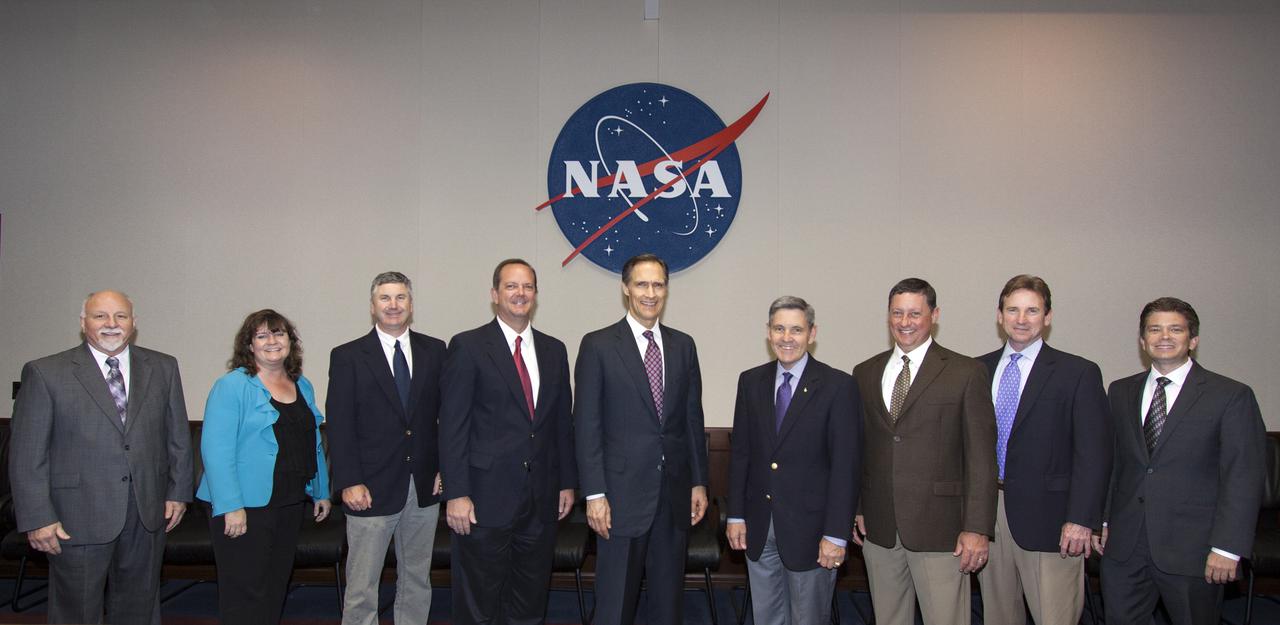
CAPE CANAVERAL, Fla. -- Kennedy Space Center Director Bob Cabana, met with representatives of PaR Systems Inc. NASA recently established a partnership agreement with PaR to operate of the Hangar N facility and its nondestructive testing equipment. Participating were, from the left, Cliff Hausmann, Technical Integration manager in NASA's Program Control and Integration Office, Amy Houts-Gilfriche, Partnership Development manager in NASA's Center Planning and Development Directorate, Scott Colloredo of NASA's Systems Engineering and Integration Division, Tom Engler, deputy director of Center Planning and Development, Brian Behm, president of the Robotics Division of PaR Systems, Tony Corak, manager, of Non-destructive Testing Services for PaR Systems, Dale Ketcham of Space Florida, and Robert Salonen, director of Business Development for the Economic Development Commission of Florida's Space Coast. As the spaceport transitions from a historically government-only launch facility to a multiuser spaceport for both federal and commercial customers, partnerships with other organizations will be a key element in that effort. Hangar N is located at Cape Canaveral Air Force Station adjacent to Kennedy. The facility's unique inventory of nondestructive test and evaluation NDE equipment and the capability for current and future mission spaceflight support was an asset NASA wanted to retain. Photo credit: NASA_Jim Grossmann
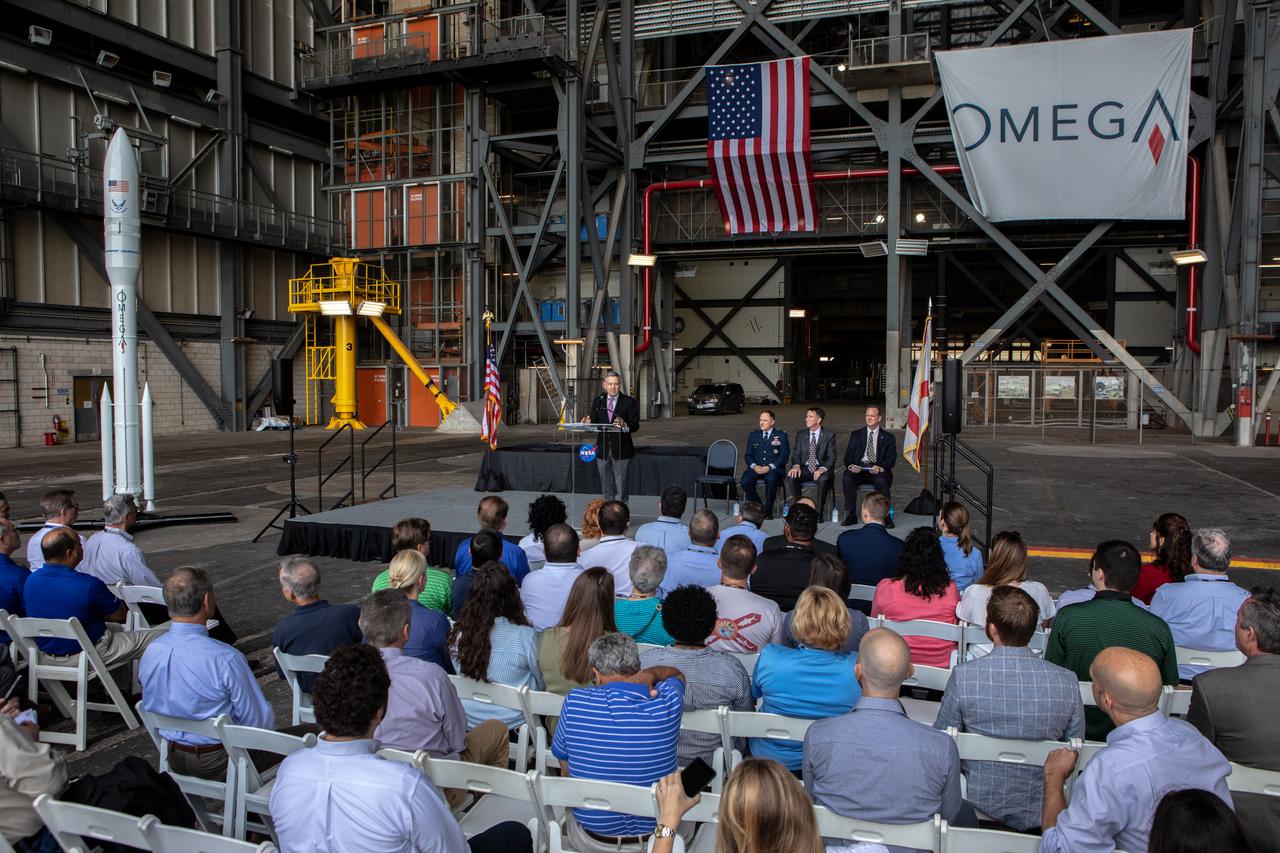
During a ribbon cutting ceremony on Aug. 16, 2019, in High Bay 2 of the Vehicle Assembly Building (VAB) at NASA’s Kennedy Space Center in Florida, Kennedy Center Director Bob Cabana speaks to legislators and guests. Seated from left, are Col. Thomas Ste. Marie, vice commander, U.S. Air Force, 45th Space Wing; Kent Rominger, Northrop Grumman’s vice president and capture lead for the OmegA launch system; and Tom Engler, director of Kennedy’s Center Planning and Development Office. The VAB is getting its first commercial tenant. Northrop Grumman signed a Reimbursable Space Act Agreement with NASA for use of the facilities. The company will assemble and test its new OmegA rocket inside the massive facility’s High Bay 2. The company also will modify mobile launcher platform-3 to serve as the launch vehicle’s assembly and launch platform. Northrop Grumman is developing the OmegA rocket, an intermediate/heavy-class launch vehicle, as part of a launch services agreement with the U.S. Air Force.

During a ribbon cutting ceremony on Aug. 16, 2019, in High Bay 2 of the Vehicle Assembly Building (VAB) at NASA’s Kennedy Space Center in Florida, Col. Thomas Ste. Marie, vice commander, U.S. Air Force, 45th Space Wing, speaks to legislators and guests. Seated behind him, from left, are Kennedy Center Director Bob Cabana; Kent Rominger, Northrop Grumman’s vice president and capture lead for the OmegA launch system; and Tom Engler, director of Kennedy’s Center Planning and Development Office. The VAB is getting its first commercial tenant. Northrop Grumman signed a Reimbursable Space Act Agreement with NASA for use of the facilities. The company will assemble and test its new OmegA rocket inside the massive facility’s High Bay 2. The company also will modify mobile launcher platform-3 to serve as the launch vehicle’s assembly and launch platform. Northrop Grumman is developing the OmegA rocket, an intermediate/heavy-class launch vehicle, as part of a launch services agreement with the U.S. Air Force.
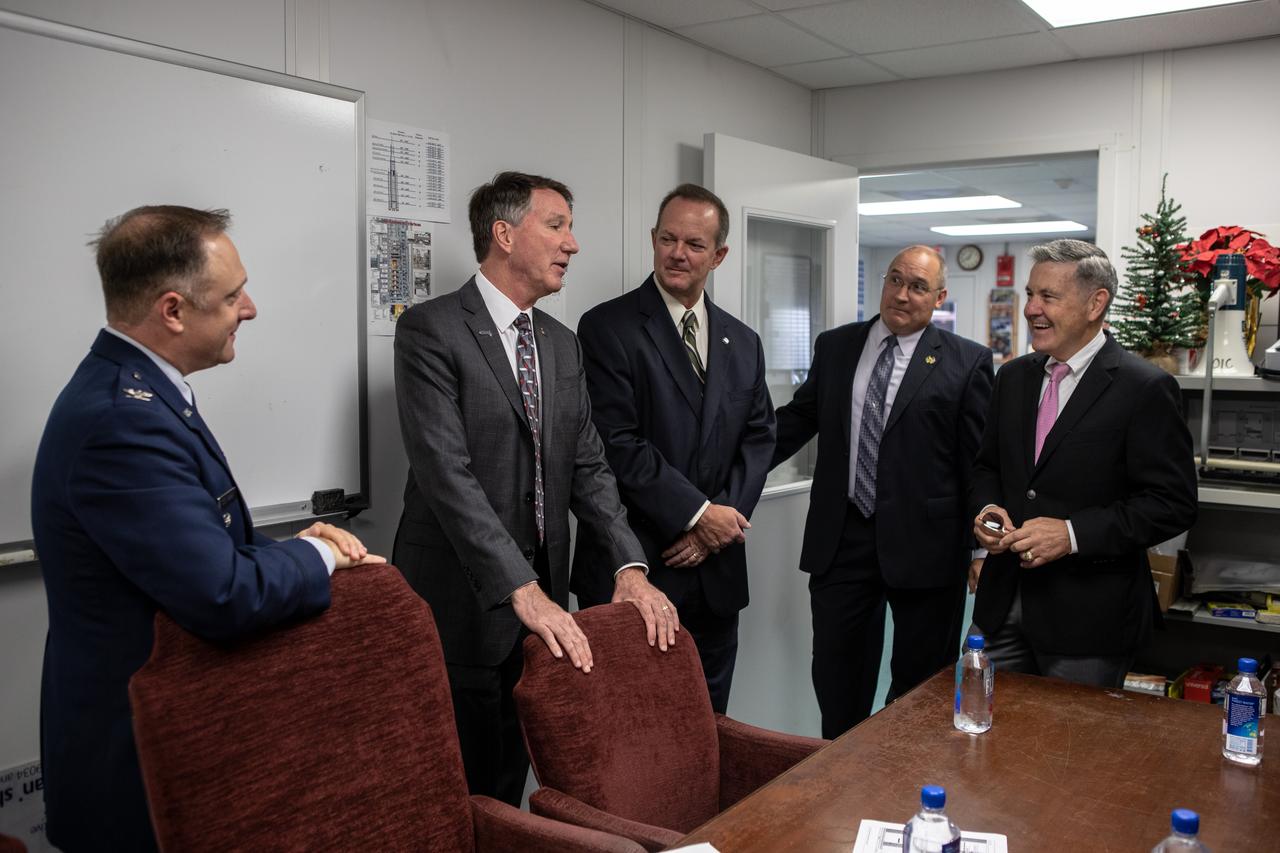
Just before a ribbon cutting ceremony on Aug. 16, 2019, in High Bay 2 of the Vehicle Assembly (VAB) at NASA’s Kennedy Space Center in Florida, Center Director Bob Cabana, at right, visits with, from left, Col. Thomas Ste. Marie, vice commander, U.S. Air Force, 45th Space Wing; Kurt Rominger, Northrop Grumman’s vice president and capture lead for the OmegA launch system; Tom Engler, director of Kennedy’s Center Planning and Development Office; and Greg Harland, NASA communications. The VAB is getting its first commercial tenant. Northrop Grumman signed a Reimbursable Space Act Agreement with NASA for use of the facilities. The company will assemble and test its new OmegA rocket inside the massive facility’s High Bay 2. The company also will modify the space shuttle-era mobile launcher platform-3 to serve as the launch vehicle’s assembly and launch platform. Northrop Grumman is developing the OmegA rocket, an intermediate/heavy-class launch vehicle, as part of a launch services agreement with the U.S. Air Force.
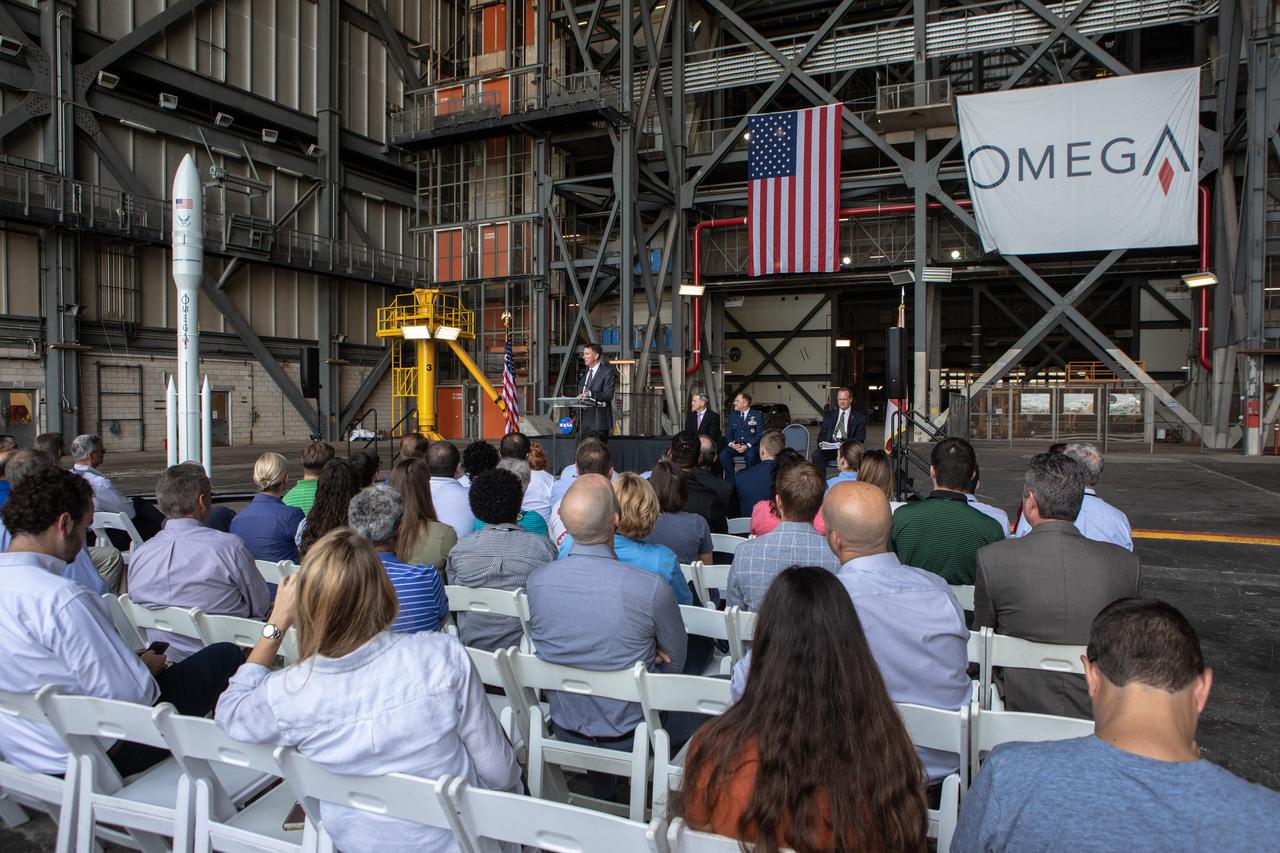
During a ribbon cutting ceremony on Aug. 16, 2019, in High Bay 2 of the Vehicle Assembly Building (VAB) at NASA’s Kennedy Space Center in Florida, Kent Rominger, Northrop Grumman’s vice president and capture lead for the OmegA launch system, speaks to legislators and guests. Seated behind him, from left, are Kennedy Center Director Bob Cabana; Col. Thomas Ste. Marie, vice commander, U.S. Air Force, 45th Space Wing; and Tom Engler, director of Kennedy’s Center Planning and Development Office. The VAB is getting its first commercial tenant. Northrop Grumman signed a Reimbursable Space Act Agreement with NASA for use of the facilities. The company will assemble and test its new OmegA rocket inside the massive facility’s High Bay 2. The company also will modify mobile launcher platform-3 to serve as the launch vehicle’s assembly and launch platform. Northrop Grumman is developing the OmegA rocket, an intermediate/heavy-class launch vehicle, as part of a launch services agreement with the U.S. Air Force.
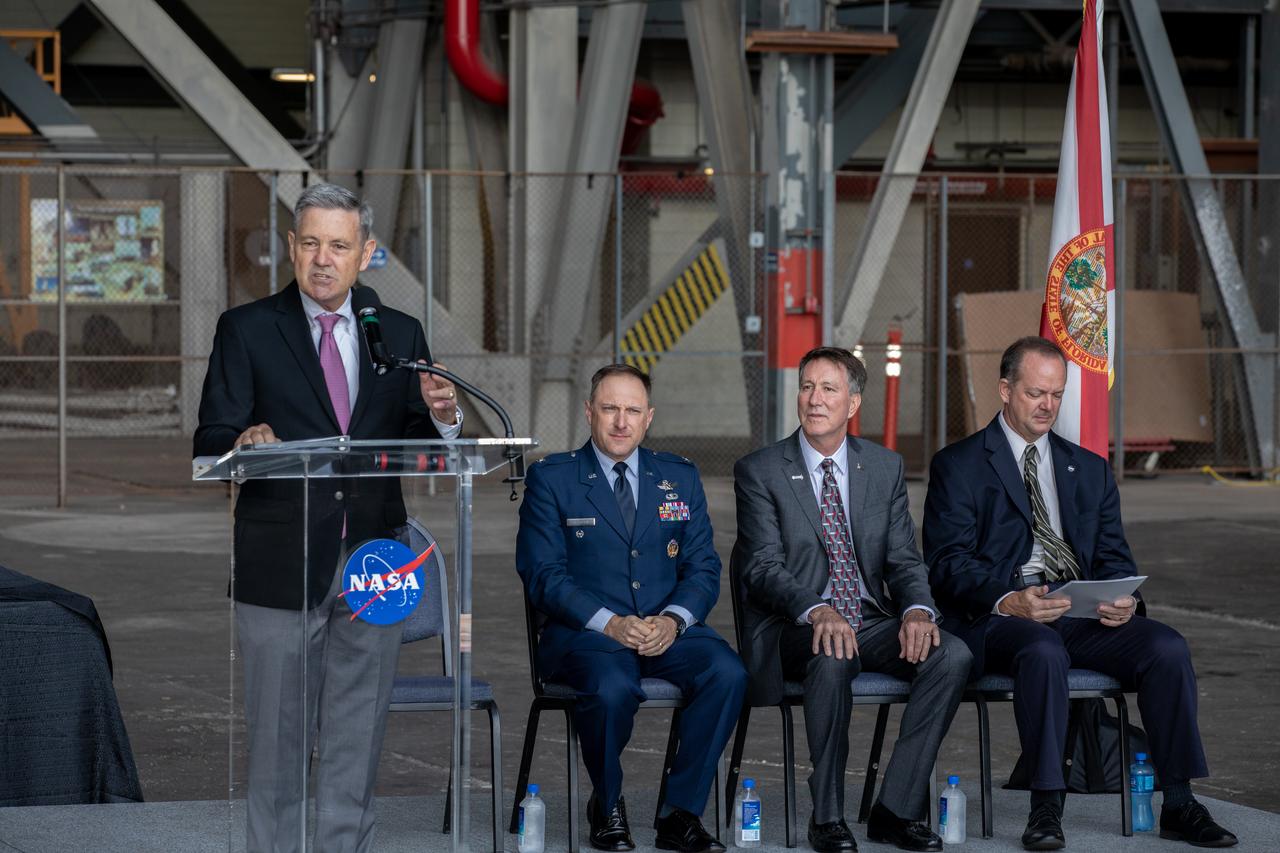
During a ribbon cutting ceremony on Aug. 16, 2019, in High Bay 2 of the Vehicle Assembly Building (VAB) at NASA’s Kennedy Space Center in Florida, Center Director Bob Cabana speaks to legislators and guests. Seated behind him, from left, are Col. Thomas St. Marie, vice commander, U.S. Air Force, 45th Space Wing; Kent Rominger, Northrop Grumman’s vice president and capture lead for the OmegA launch system; and Tom Engler, director of Kennedy’s Center Planning and Development Office. The VAB is getting its first commercial tenant. Northrop Grumman signed a Reimbursable Space Act Agreement with NASA for use of the facilities. The company will assemble and test its new OmegA rocket inside the massive facility’s High Bay 2. The company also will modify mobile launcher platform-3 to serve as the launch vehicle’s assembly and launch platform. Northrop Grumman is developing the OmegA rocket, an intermediate/heavy-class launch vehicle, as part of a launch services agreement with the U.S. Air Force.
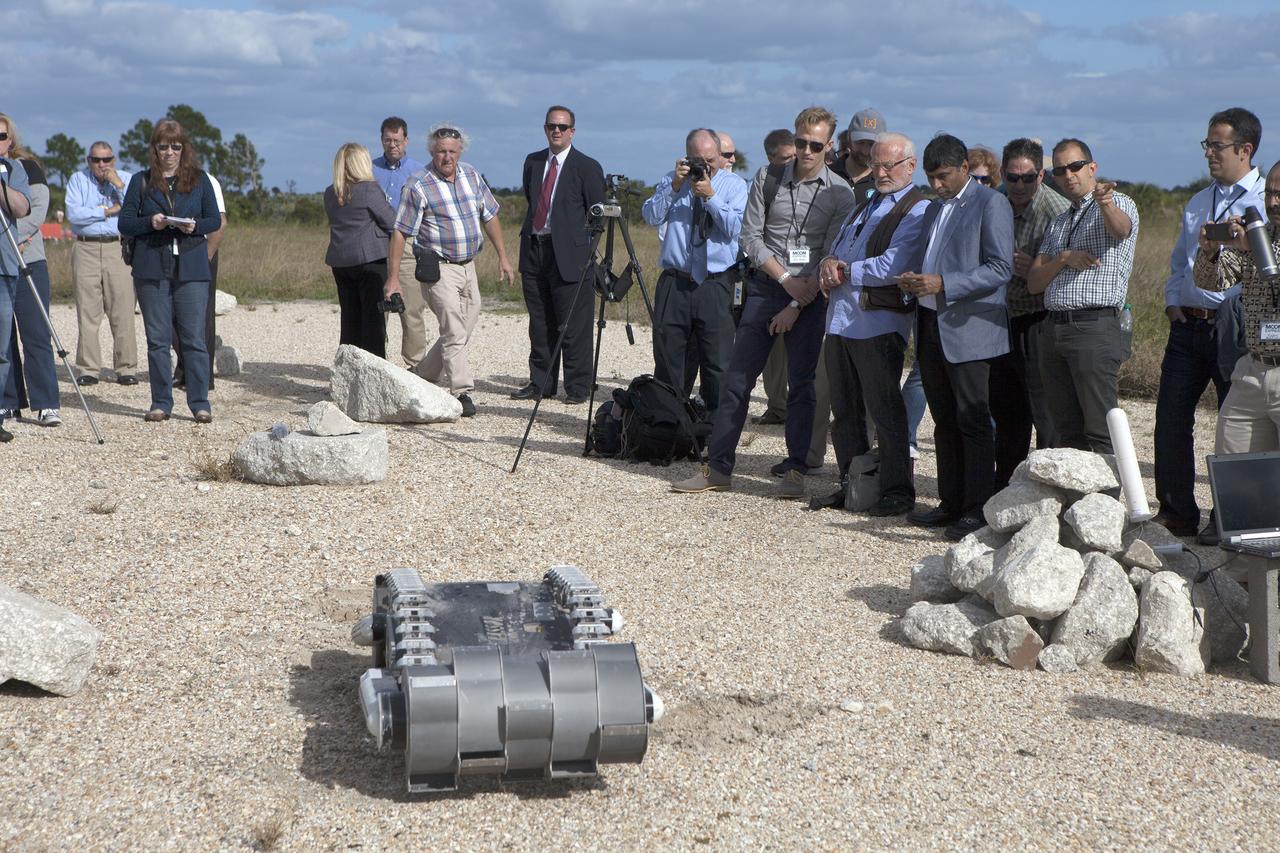
CAPE CANAVERAL, Fla. - Members of the media watch a demonstration of the Regolith Advanced Surface System Operations Robot, or RASSOR, during a media event at the automated landing and hazard avoidance technology, or ALHAT, hazard field at the north end of the Shuttle Landing Facility at NASA's Kennedy Space Center in Florida. Tom Engler, center, in the suit, deputy director of Kennedy's Center Planning and Development, announced Moon Express Inc., of Moffett Field, California is selected to utilize Kennedy facilities for NASA's Lunar Cargo Transportation and Landing by Soft Touchdown, or Lunar CATALYST, initiative. Moon Express is developing a lander with capabilities that will enable delivery of payloads to the surface of the moon, as well as new science and exploration missions of interest to NASA and scientific and academic communities. Moon Express will base its activities at Kennedy and utilize the Morpheus ALHAT field and a hangar nearby for CATALYST testing. The Advanced Exploration Systems Division of NASA's Human Exploration and Operations Mission Directorate manages Lunar CATALYST. Photo credit: NASA/Ben Smegelsky