
NASA's Jet Propulsion Laboratory InSight project manager Tom Hoffman gives remarks during a media briefing regarding the NASA InSight Mars Lander (Interior Exploration using Seismic Investigations, Geodesy and Heat Transport), Wednesday, Oct. 31, 2018 at NASA Headquarters in Washington. InSIght will land on the Red Planet at approximately 3 p.m. EST (noon PST) Monday, Nov. 26. InSight will study the deep interior of Mars to learn how all celestial bodies with rocky surfaces, including Earth and the Moon, formed. The lander’s instruments include a seismometer to detect marsquakes and a probe to monitor the flow of heat in the planet's subsurface. Photo Credit: (NASA/Bill Ingalls)
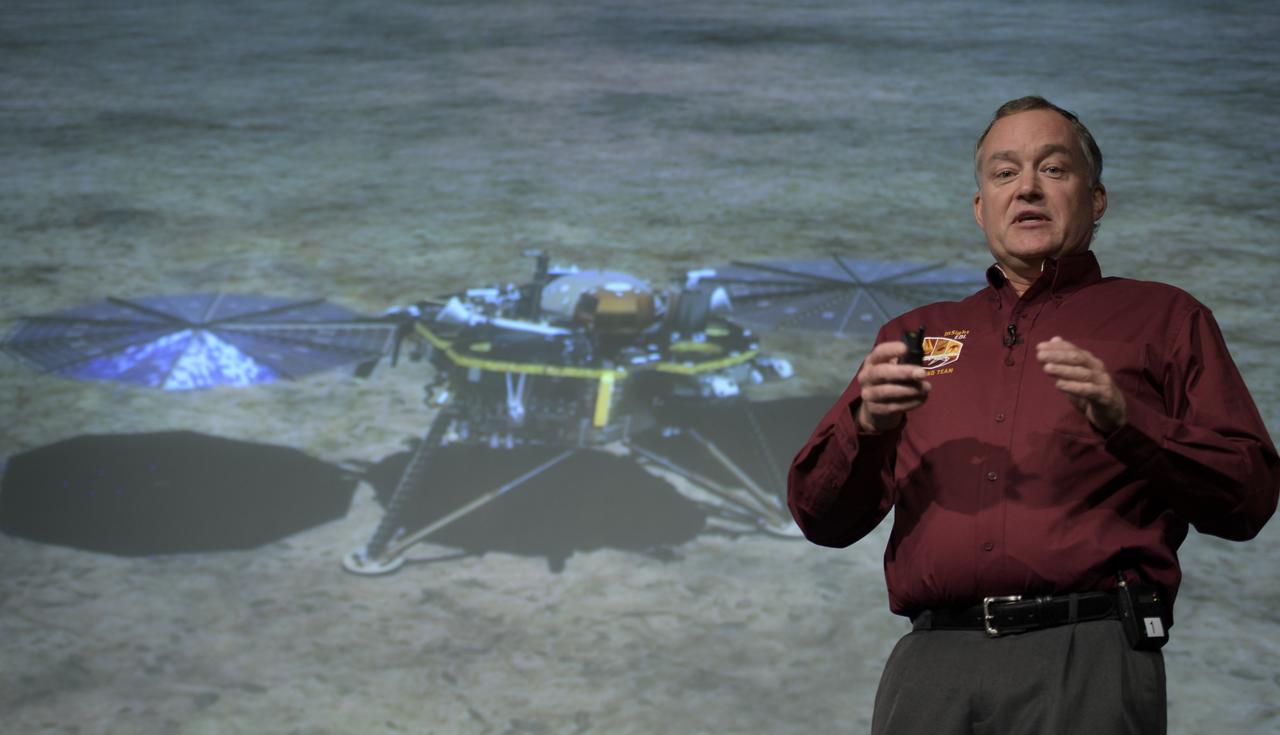
NASA's Jet Propulsion Laboratory InSight project manager Tom Hoffman gives remarks during a NASA InSight Mars Lander (Interior Exploration using Seismic Investigations, Geodesy and Heat Transport) media briefing, Wednesday, Oct. 31, 2018 at NASA Headquarters in Washington. InSIght will land on the Red Planet at approximately 3 p.m. EST (noon PST) Monday, Nov. 26. InSight will study the deep interior of Mars to learn how all celestial bodies with rocky surfaces, including Earth and the Moon, formed. The lander’s instruments include a seismometer to detect marsquakes and a probe to monitor the flow of heat in the planet's subsurface. Photo Credit: (NASA/Bill Ingalls)
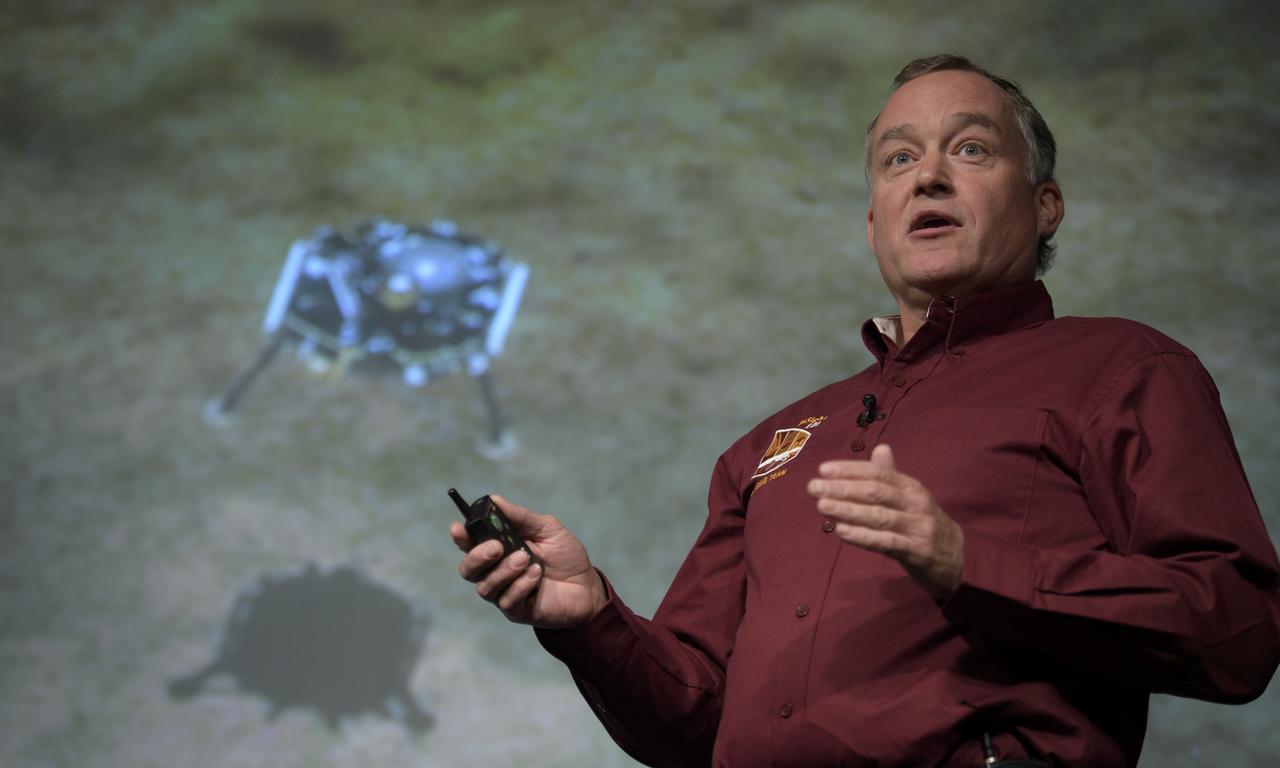
NASA's Jet Propulsion Laboratory InSight project manager Tom Hoffman gives remarks during a NASA InSight Mars Lander (Interior Exploration using Seismic Investigations, Geodesy and Heat Transport) media briefing, Wednesday, Oct. 31, 2018 at NASA Headquarters in Washington. InSIght will land on the Red Planet at approximately 3 p.m. EST (noon PST) Monday, Nov. 26. InSight will study the deep interior of Mars to learn how all celestial bodies with rocky surfaces, including Earth and the Moon, formed. The lander’s instruments include a seismometer to detect marsquakes and a probe to monitor the flow of heat in the planet's subsurface. Photo Credit: (NASA/Bill Ingalls)
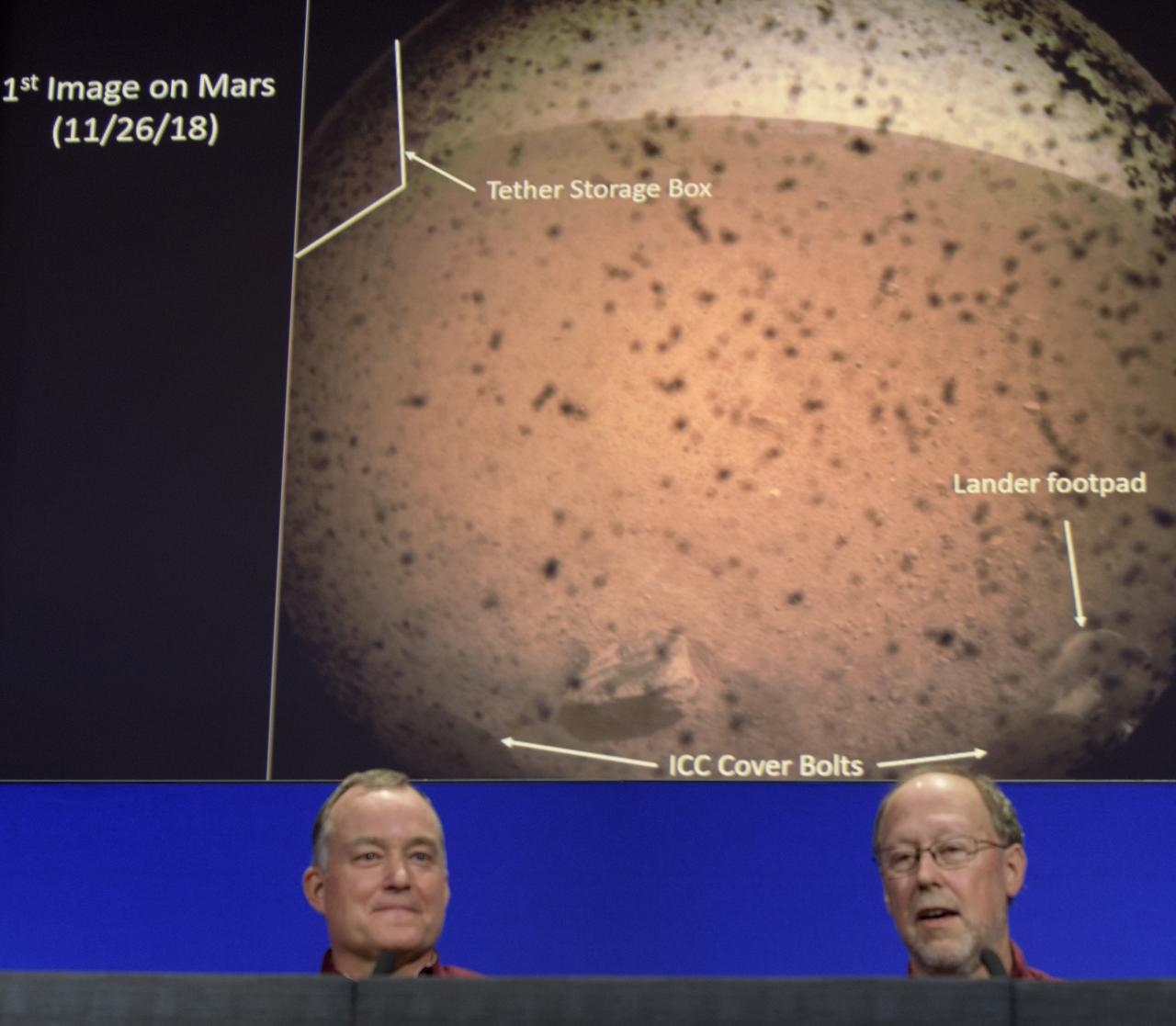
Tom Hoffman, InSight Project Manager, NASA JPL, left, and Bruce Banerdt, InSight Principal Investigator, NASA JPL, describe the first image sent back by the Mars InSight lander during a post-landing press conference, Monday, Nov. 26, 2018 at NASA's Jet Propulsion Laboratory in Pasadena, California. InSight, short for Interior Exploration using Seismic Investigations, Geodesy and Heat Transport, is a Mars lander designed to study the "inner space" of Mars: its crust, mantle, and core. Photo Credit: (NASA/Bill Ingalls)
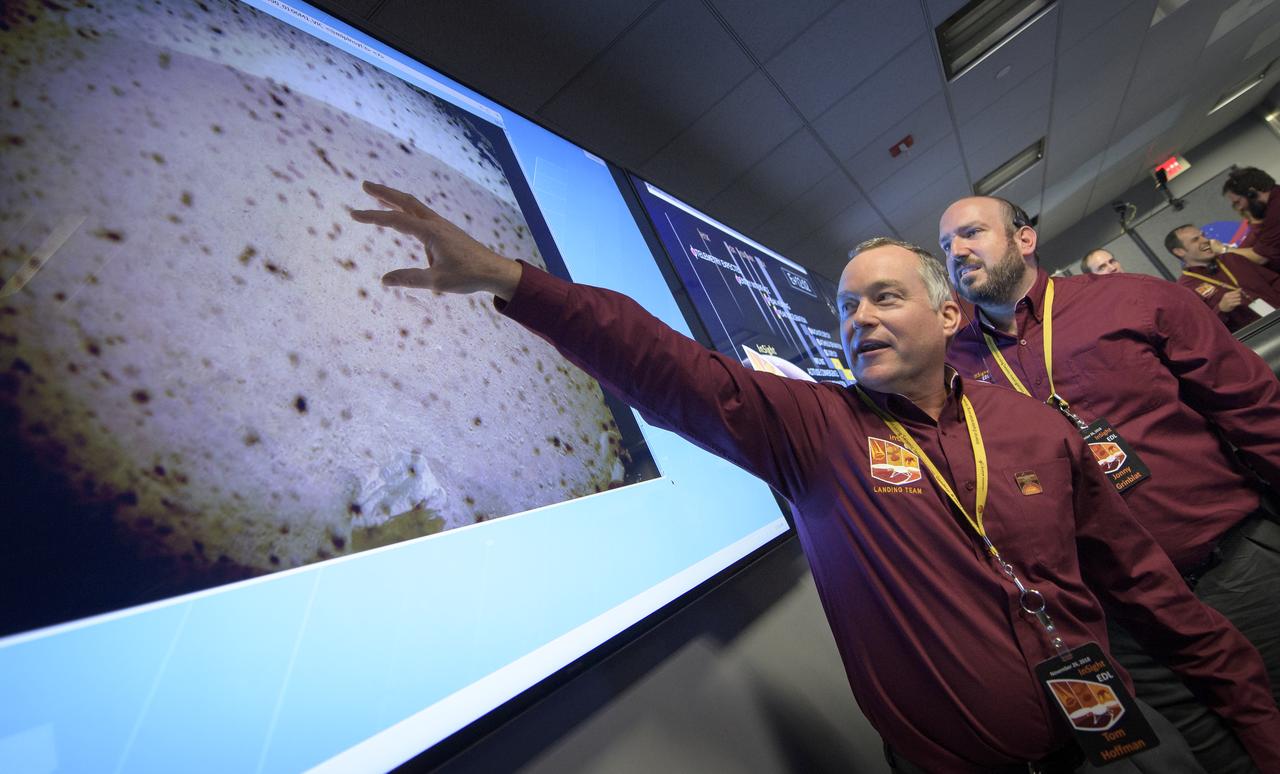
Tom Hoffman, InSight Project Manager, NASA JPL reacts to the first image to be seen from the Mars InSight lander shortly after confirmation of a successful touch down on the surface of Mars, Monday, Nov. 26, 2018 inside the Mission Support Area at NASA's Jet Propulsion Laboratory in Pasadena, California. InSight, short for Interior Exploration using Seismic Investigations, Geodesy and Heat Transport, is a Mars lander designed to study the "inner space" of Mars: its crust, mantle, and core. Photo Credit: (NASA/Bill Ingalls)
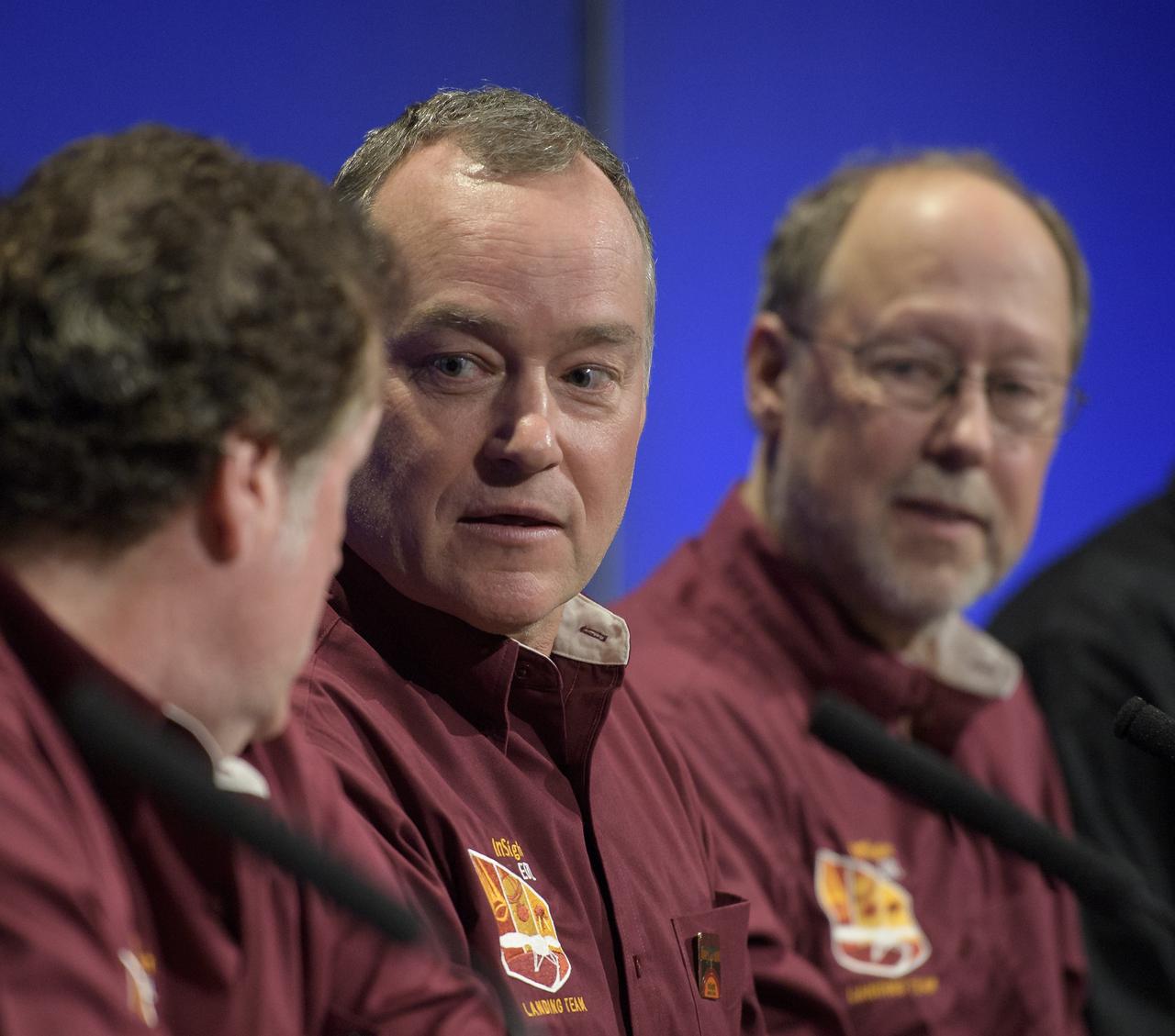
Tom Hoffman, InSight Project Manager, NASA JPL, center, talks with other Mars InSight team members during a post-landing press conference, Monday, Nov. 26, 2018 at NASA's Jet Propulsion Laboratory in Pasadena, California. InSight, short for Interior Exploration using Seismic Investigations, Geodesy and Heat Transport, is a Mars lander designed to study the "inner space" of Mars: its crust, mantle, and core. Photo Credit: (NASA/Bill Ingalls)
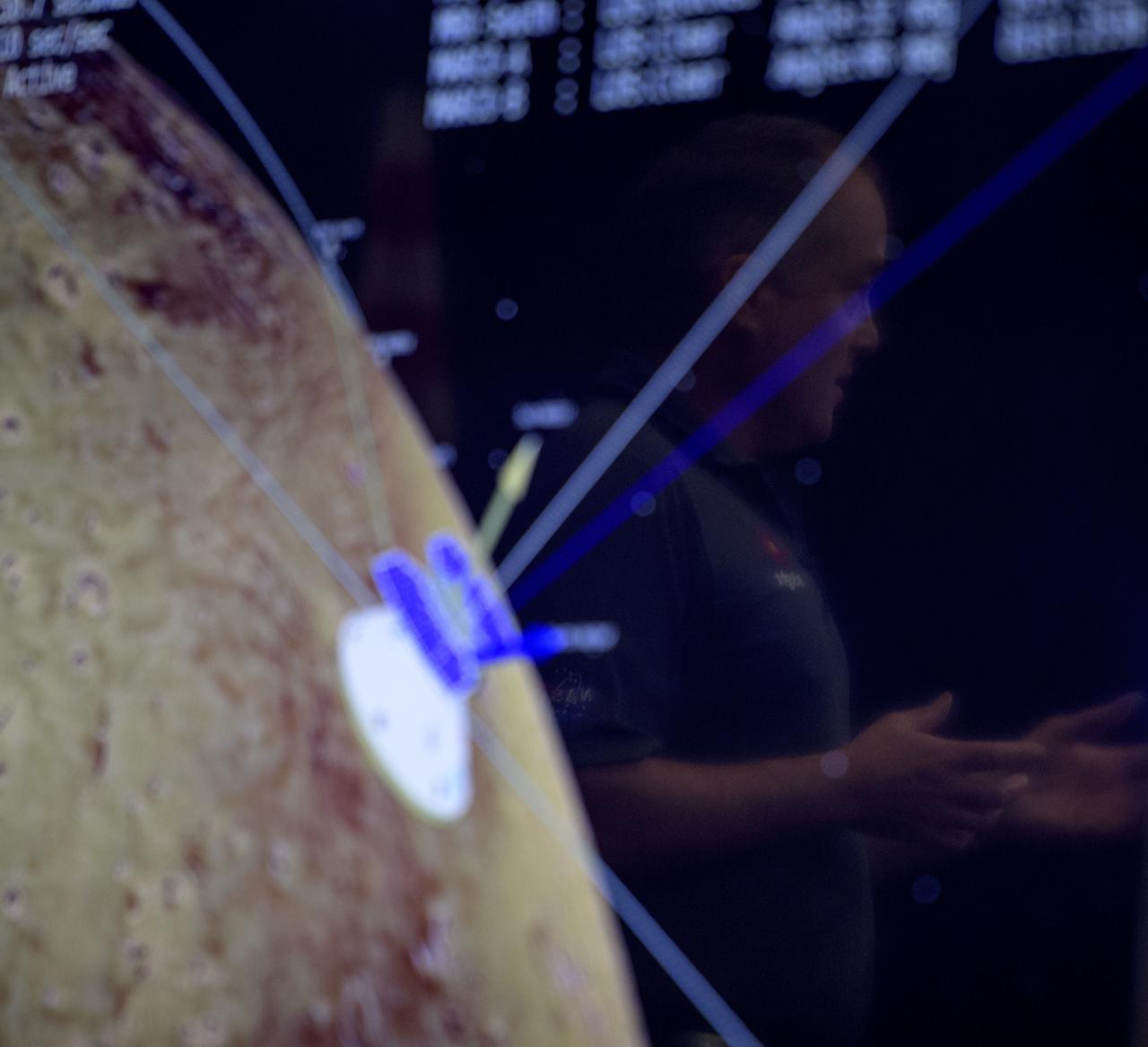
Tom Hoffman, InSight Project Manager, NASA JPL, talks about the Mars InSight during a pre-landing briefing, Sunday, Nov. 25, 2018 at NASA's Jet Propulsion Laboratory in Pasadena, California. InSight, short for Interior Exploration using Seismic Investigations, Geodesy and Heat Transport, is a Mars lander designed to study the "inner space" of Mars: its crust, mantle, and core. InSight is scheduled to touch down on the Red Planet at approximately noon PST (3 p.m. EST) on Nov. 26. Photo Credit: (NASA/Bill Ingalls)
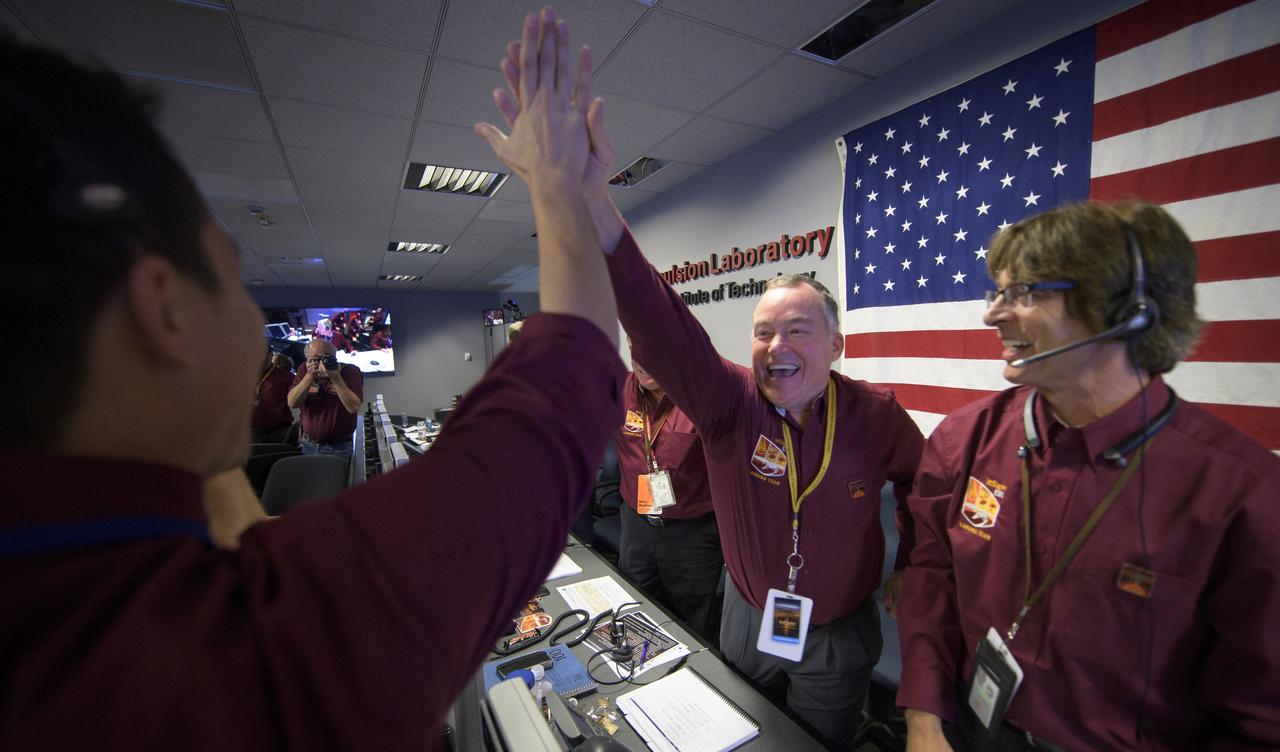
Tom Hoffman, InSight Project Manager, NASA JPL, gives a high-five to other Mars InSight team members after receiving confirmation that the Mars InSight lander successfully touched down on the surface of Mars, Monday, Nov. 26, 2018 inside the Mission Support Area at NASA's Jet Propulsion Laboratory in Pasadena, California. InSight, short for Interior Exploration using Seismic Investigations, Geodesy and Heat Transport, is a Mars lander designed to study the "inner space" of Mars: its crust, mantle, and core. Photo Credit: (NASA/Bill Ingalls)
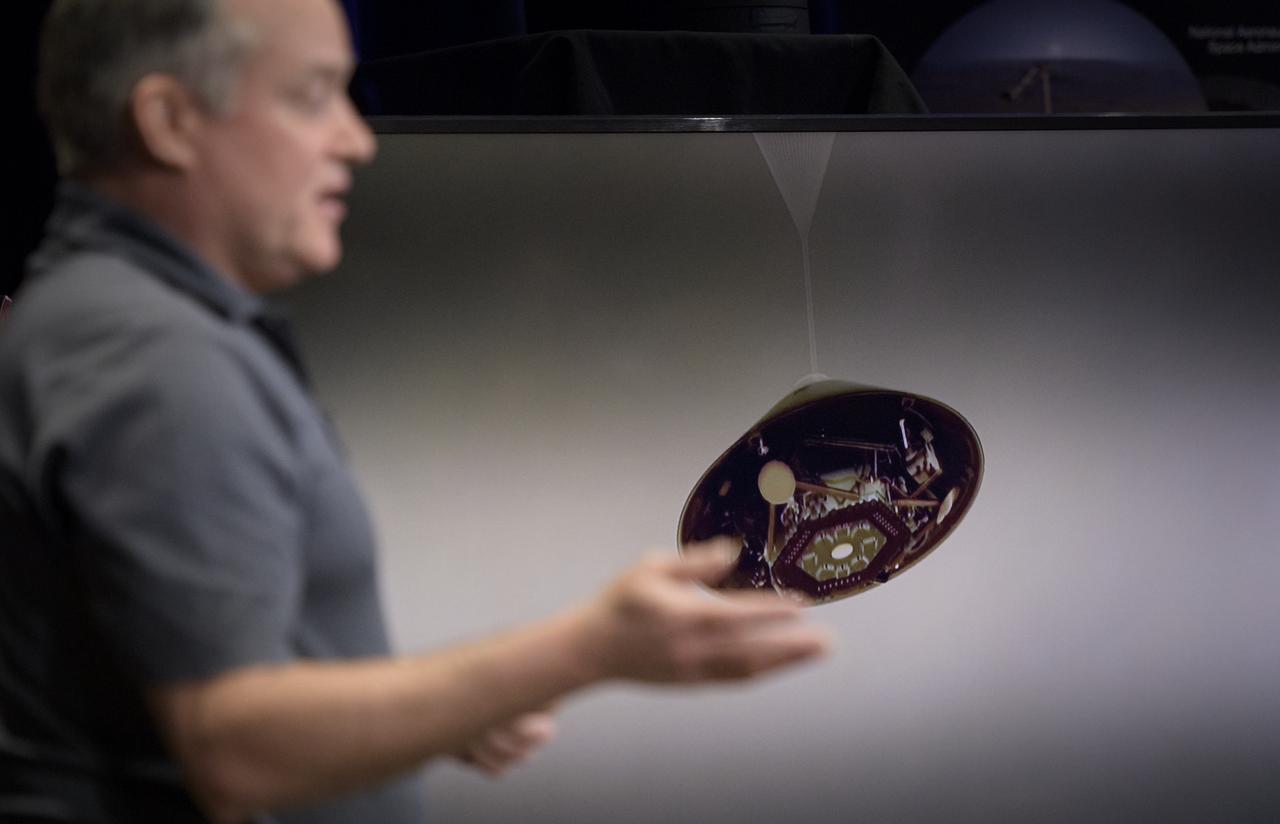
Tom Hoffman, InSight Project Manager, NASA JPL talks about the Mars InSight during a pre-landing briefing, Sunday, Nov. 25, 2018 at NASA's Jet Propulsion Laboratory in Pasadena, California. InSight, short for Interior Exploration using Seismic Investigations, Geodesy and Heat Transport, is a Mars lander designed to study the "inner space" of Mars: its crust, mantle, and core. InSight is scheduled to touch down on the Red Planet at approximately noon PST (3 p.m. EST) on Nov. 26. Photo Credit: (NASA/Bill Ingalls)
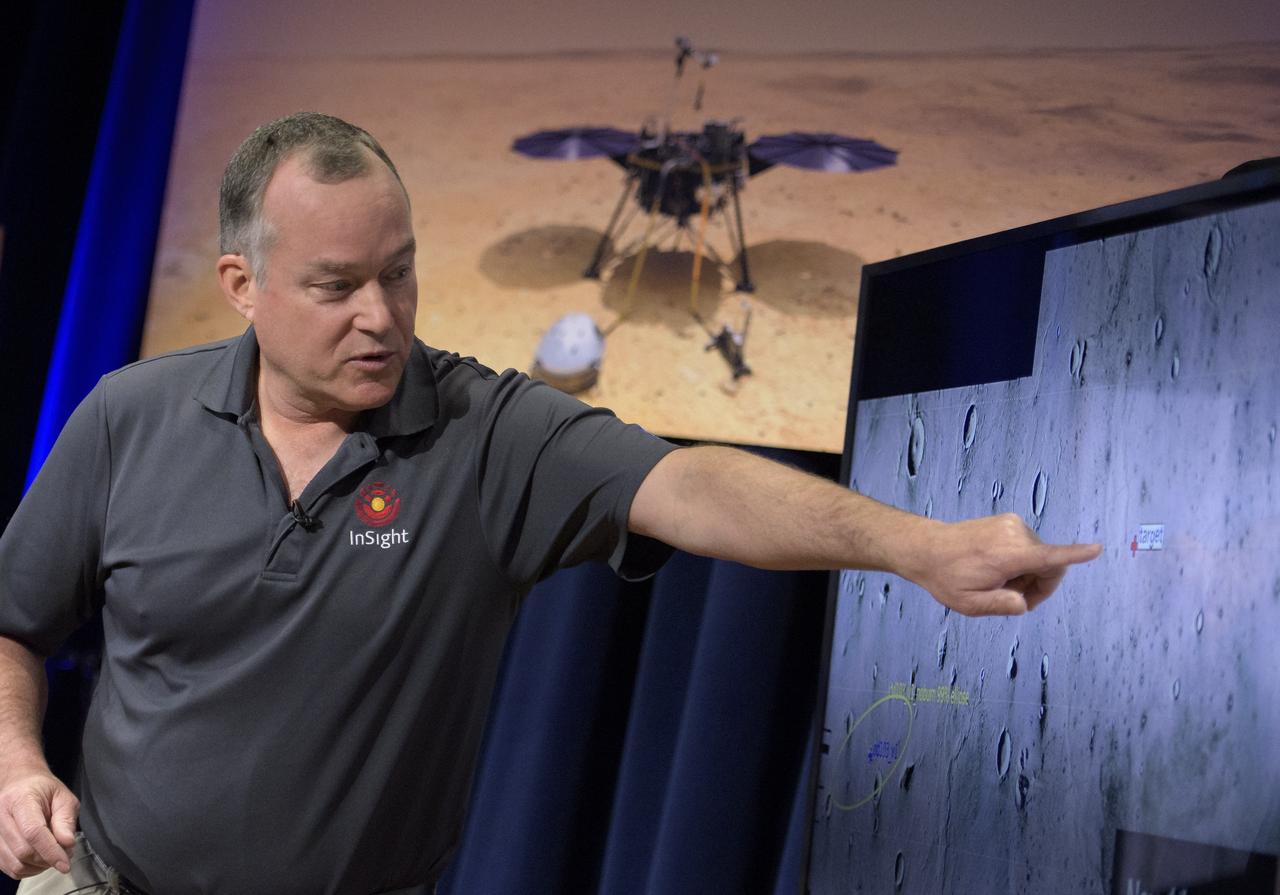
Tom Hoffman, InSight Project Manager, NASA JPL talks about the Mars InSight landing site during a pre-landing briefing, Sunday, Nov. 25, 2018 at NASA's Jet Propulsion Laboratory in Pasadena, California. InSight, short for Interior Exploration using Seismic Investigations, Geodesy and Heat Transport, is a Mars lander designed to study the "inner space" of Mars: its crust, mantle, and core. InSight is scheduled to touch down on the Red Planet at approximately noon PST (3 p.m. EST) on Nov. 26. Photo Credit: (NASA/Bill Ingalls)
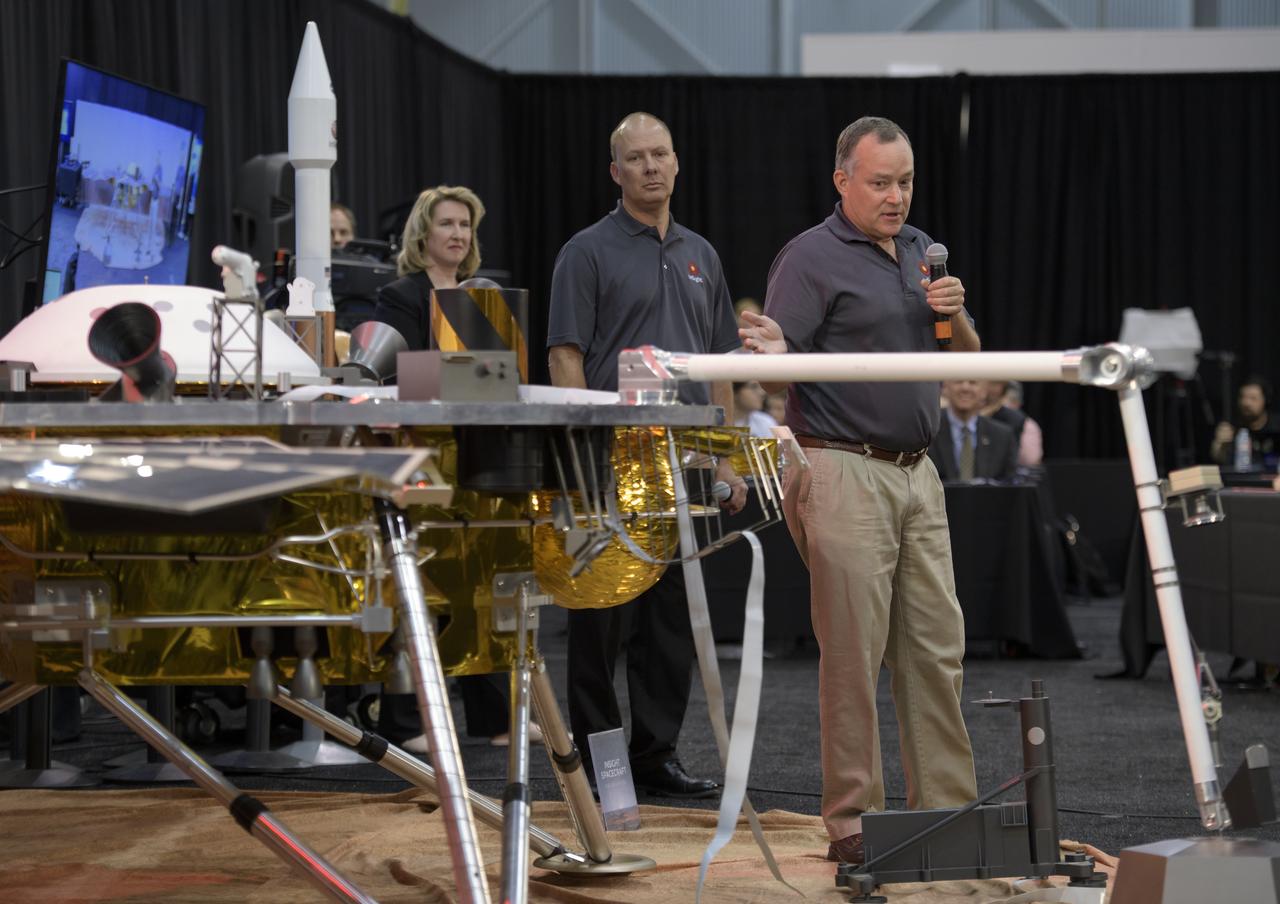
Tom Hoffman, InSight project manager, NASA JPL, right, discusses NASA's InSight mission during a prelaunch media briefing, Thursday, May 3, 2018, at Vandenberg Air Force Base in California. InSight, short for Interior Exploration using Seismic Investigations, Geodesy and Heat Transport, is a Mars lander designed to study the "inner space" of Mars: its crust, mantle, and core. Photo Credit: (NASA/Bill Ingalls)
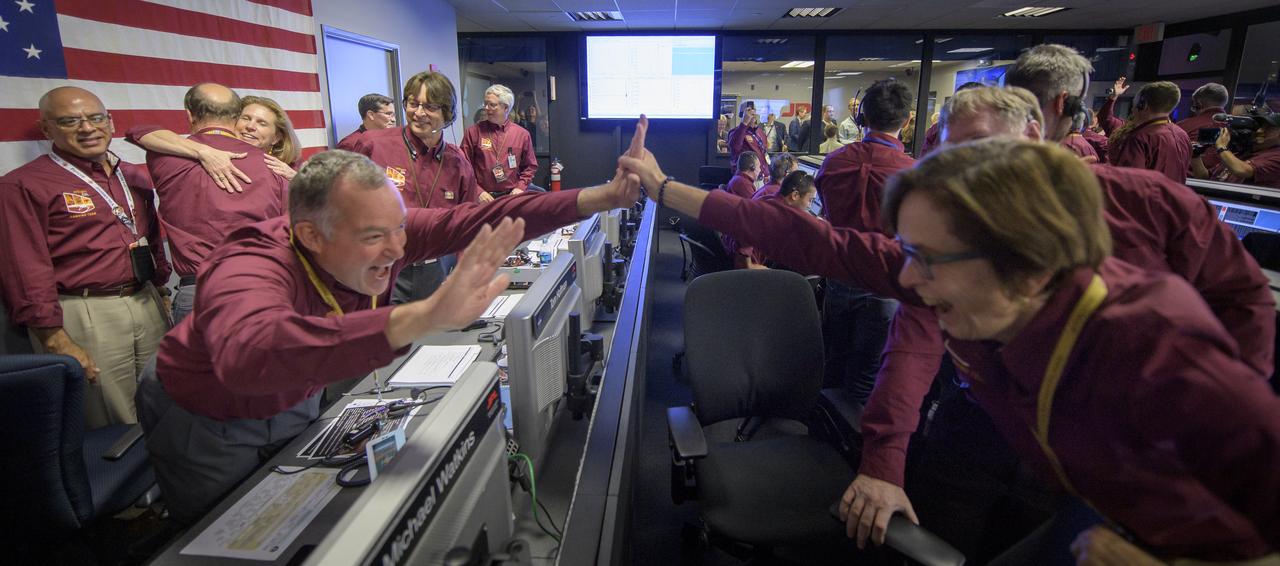
Tom Hoffman, InSight Project Manager, NASA JPL, left, and Sue Smrekar, InSight deputy principal investigator, NASA JPL, react after receiving confirmation that the Mars InSight lander successfully touched down on the surface of Mars, Monday, Nov. 26, 2018 inside the Mission Support Area at NASA's Jet Propulsion Laboratory in Pasadena, California. InSight, short for Interior Exploration using Seismic Investigations, Geodesy and Heat Transport, is a Mars lander designed to study the "inner space" of Mars: its crust, mantle, and core. Photo Credit: (NASA/Bill Ingalls)
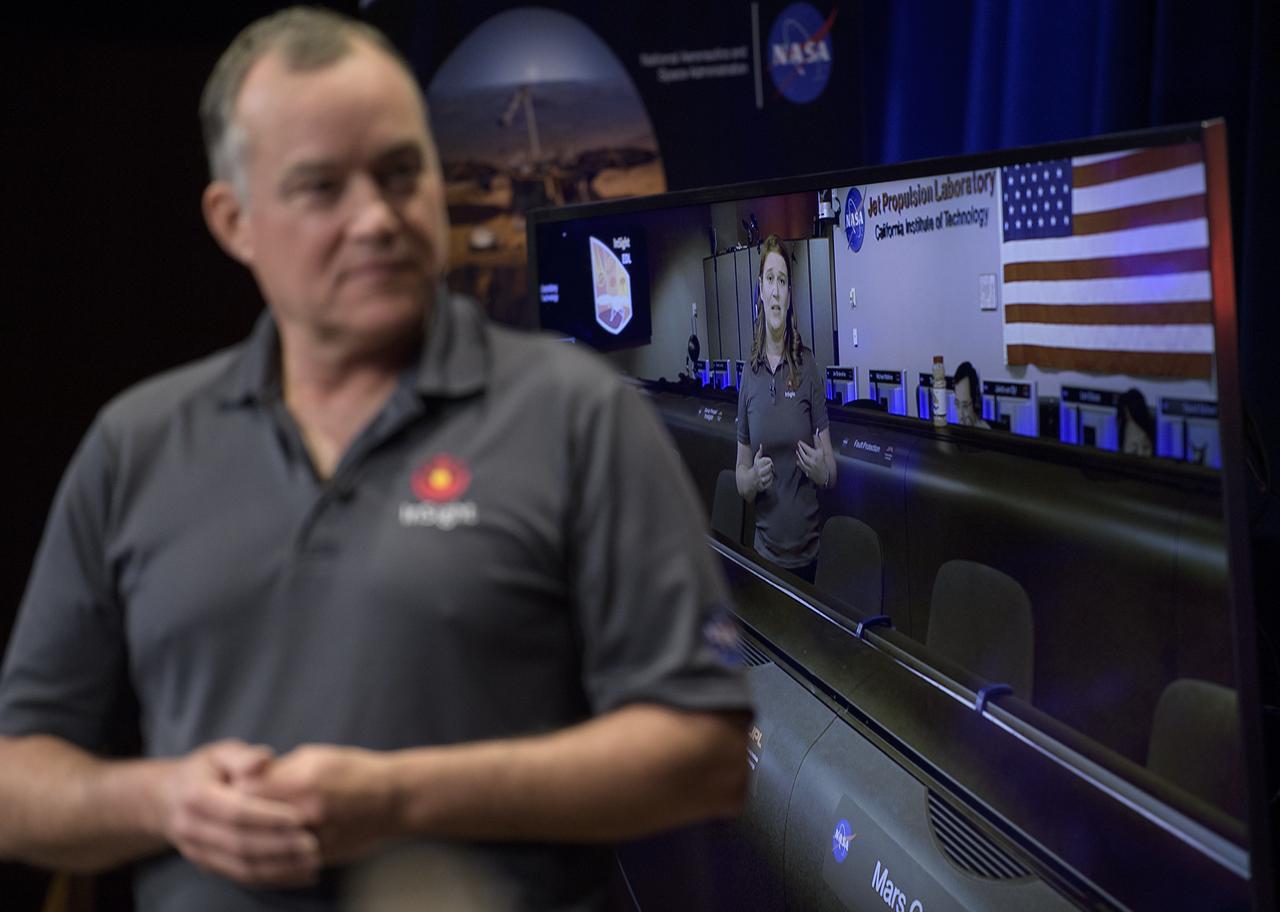
Tom Hoffman, InSight Project Manager, NASA JPL, left, listens as Julie Wertz-Chen, Entry, Descent and Landing systems engineer, NASA JPL, talks about Mars InSight from the Mission Control Area during a pre-landing briefing, Sunday, Nov. 25, 2018 at NASA's Jet Propulsion Laboratory in Pasadena, California. InSight, short for Interior Exploration using Seismic Investigations, Geodesy and Heat Transport, is a Mars lander designed to study the "inner space" of Mars: its crust, mantle, and core. InSight is scheduled to touch down on the Red Planet at approximately noon PST (3 p.m. EST) on Nov. 26. Photo Credit: (NASA/Bill Ingalls)
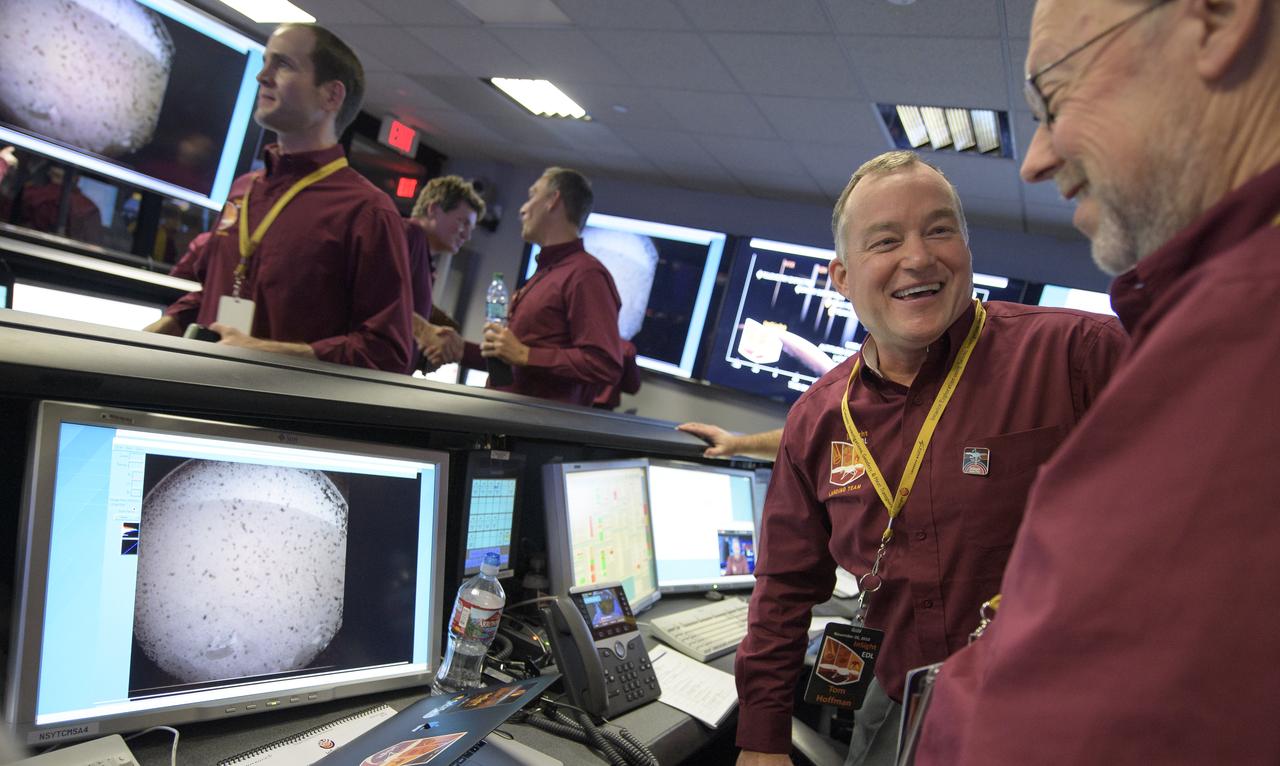
Tom Hoffman, InSight Project Manager, NASA JPL, left, and Bruce Banerdt, InSight Principal Investigator, NASA JPL, laugh together after reviewing the first image of Mars taken by the Mars InSight lander, Monday, Nov. 26, 2018 inside the Mission Support Area at NASA's Jet Propulsion Laboratory in Pasadena, California. InSight, short for Interior Exploration using Seismic Investigations, Geodesy and Heat Transport, is a Mars lander designed to study the "inner space" of Mars: its crust, mantle, and core. Photo Credit: (NASA/Bill Ingalls)
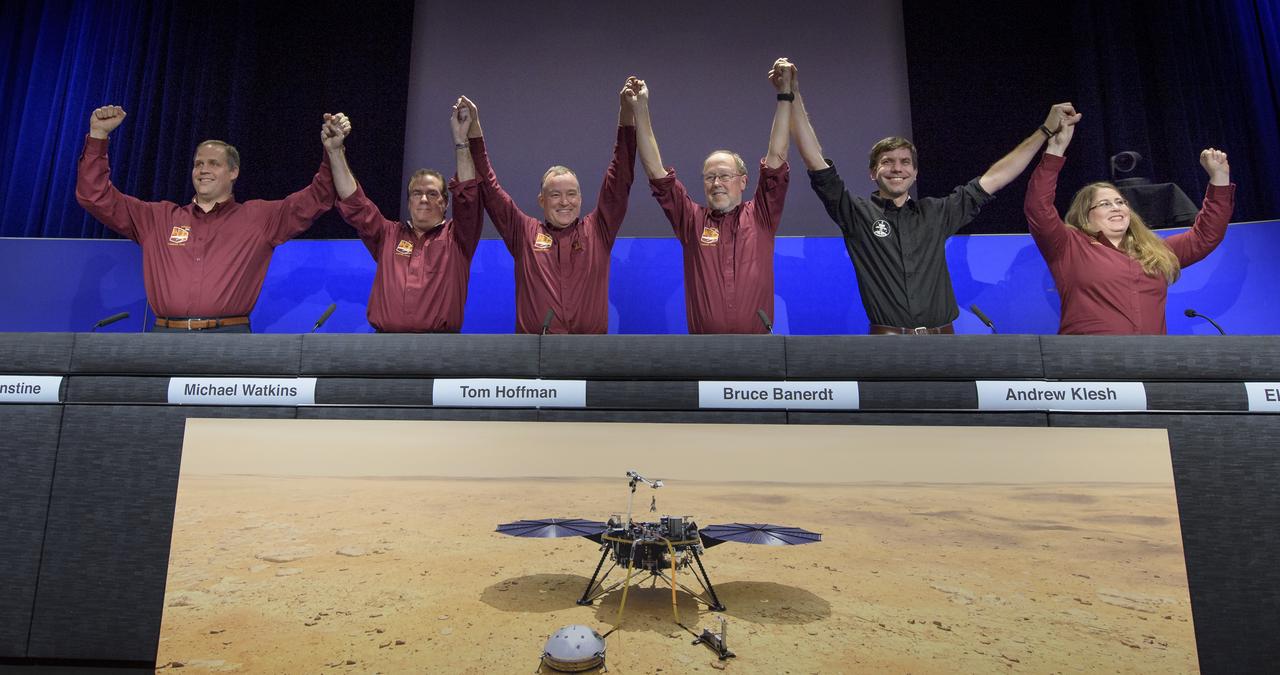
NASA Administrator Jim Bridenstine, left, JPL Director Michael Watkins, InSight Project Manager Tom Hoffman, InSight Principal Investigator Bruce Banerdt, MarCO chief engineer Andy Klesh, and InSight Instrument Operations Lead Elizabeth Barrett, celebrate Mars InSight landing successfully on Mars during a press conference, Monday, Nov. 26, 2018 at NASA's Jet Propulsion Laboratory in Pasadena, California. InSight, short for Interior Exploration using Seismic Investigations, Geodesy and Heat Transport, is a Mars lander designed to study the "inner space" of Mars: its crust, mantle, and core. Photo Credit: (NASA/Bill Ingalls)
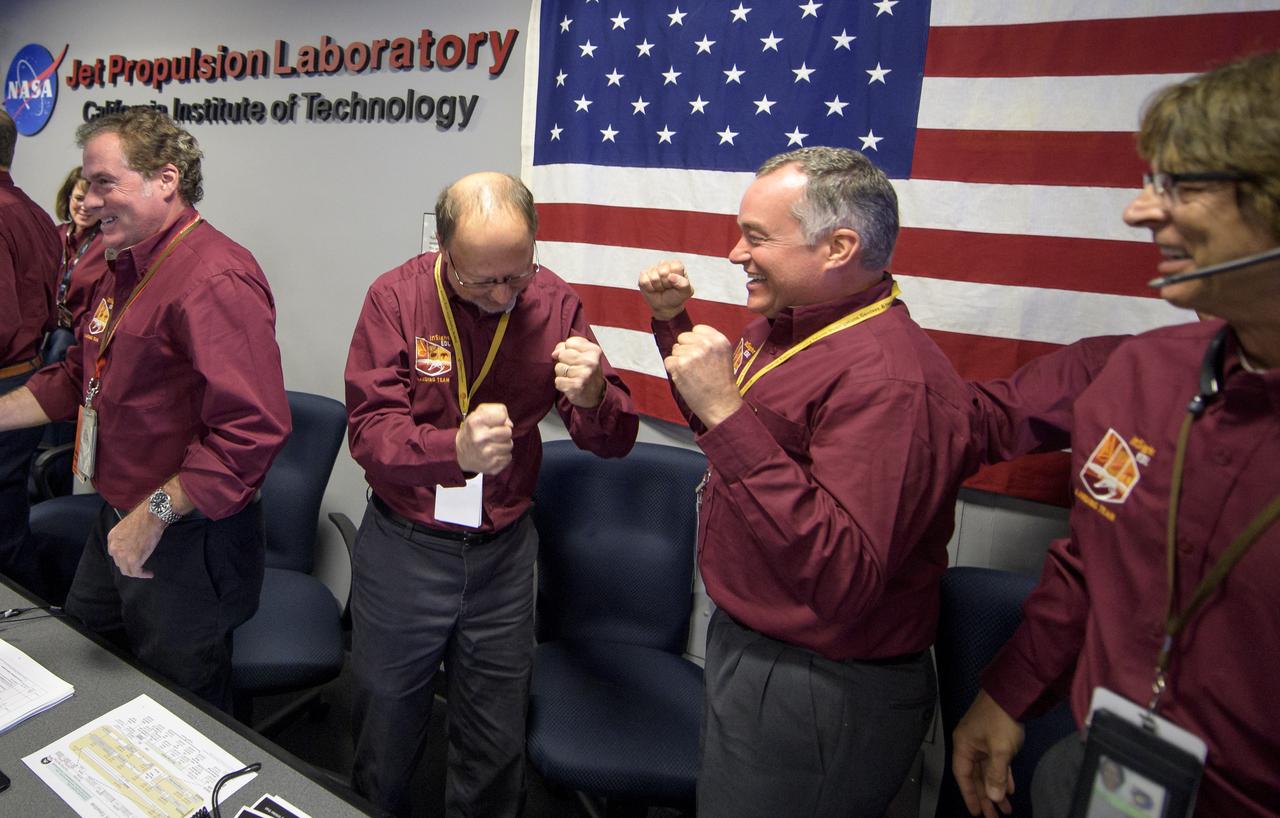
Bruce Banerdt, InSight Principal Investigator, NASA JPL, center left, and Tom Hoffman, InSight Project Manager, NASA JPL, rejoice after receiving confirmation that the Mars InSight lander successfully touched down on the surface of Mars, Monday, Nov. 26, 2018 inside the Mission Support Area at NASA's Jet Propulsion Laboratory in Pasadena, California. InSight, short for Interior Exploration using Seismic Investigations, Geodesy and Heat Transport, is a Mars lander designed to study the "inner space" of Mars: its crust, mantle, and core. Photo Credit: (NASA/Bill Ingalls)
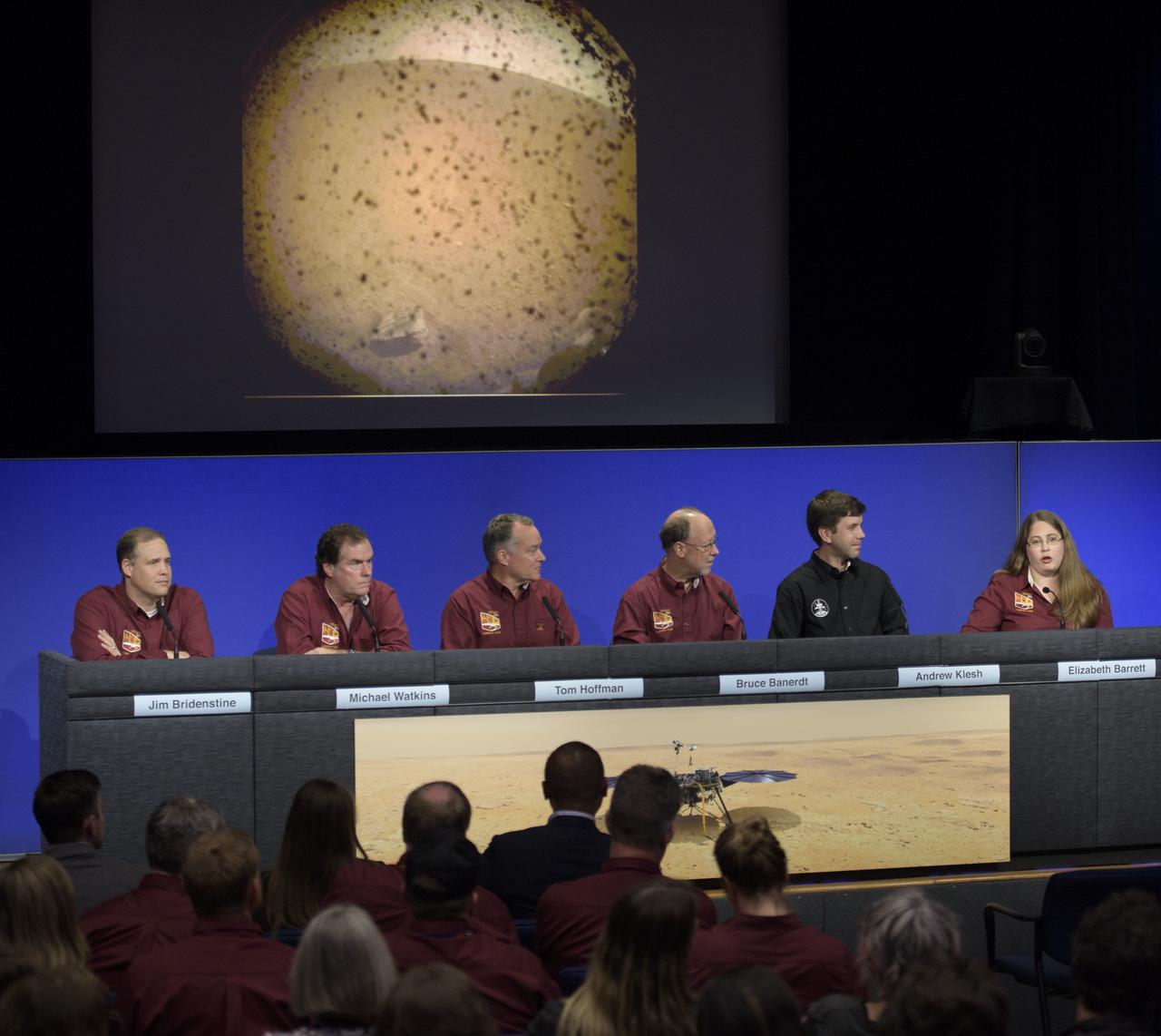
NASA Administrator Jim Bridenstine, left, JPL Director Michael Watkins, InSight Project Manager Tom Hoffman, InSight Principal Investigator Bruce Banerdt, MarCO chief engineer Andy Klesh, and InSight Instrument Operations Lead Elizabeth Barrett, answer questions during a Mars InSight post-landing press conference, Monday, Nov. 26, 2018 at NASA's Jet Propulsion Laboratory in Pasadena, California. InSight, short for Interior Exploration using Seismic Investigations, Geodesy and Heat Transport, is a Mars lander designed to study the "inner space" of Mars: its crust, mantle, and core. Photo Credit: (NASA/Bill Ingalls)
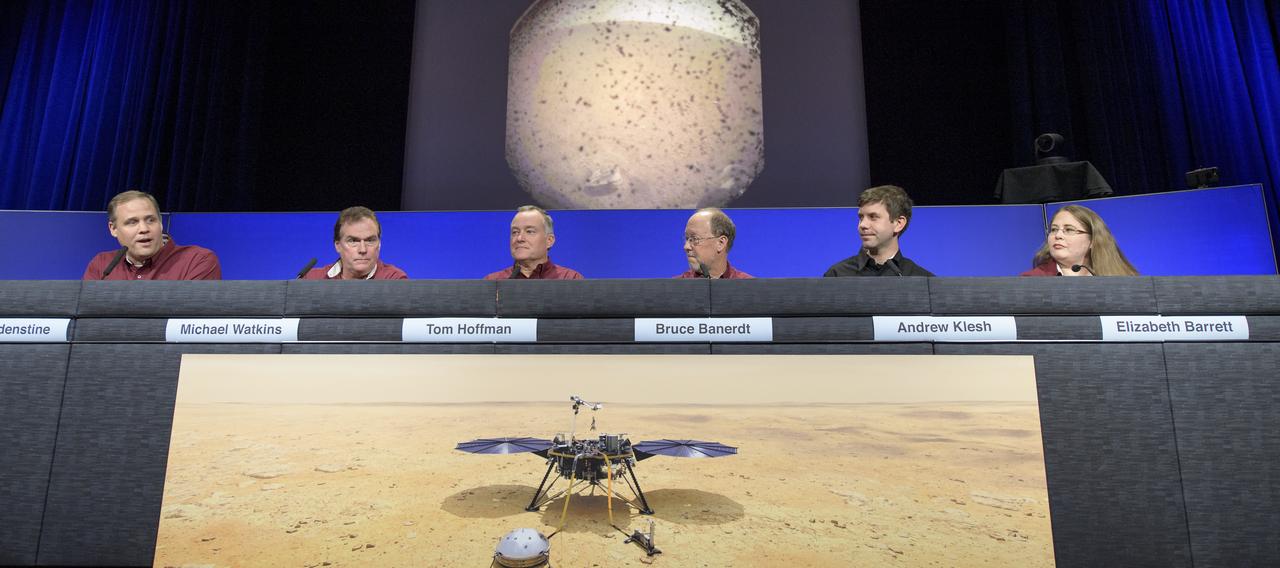
NASA Administrator Jim Bridenstine, left, JPL Director Michael Watkins, InSight Project Manager Tom Hoffman, InSight Principal Investigator Bruce Banerdt, MarCO chief engineer Andy Klesh, and InSight Instrument Operations Lead Elizabeth Barrett, give a Mars InSight post-landing press conference, Monday, Nov. 26, 2018 at NASA's Jet Propulsion Laboratory in Pasadena, California. InSight, short for Interior Exploration using Seismic Investigations, Geodesy and Heat Transport, is a Mars lander designed to study the "inner space" of Mars: its crust, mantle, and core. Photo Credit: (NASA/Bill Ingalls)
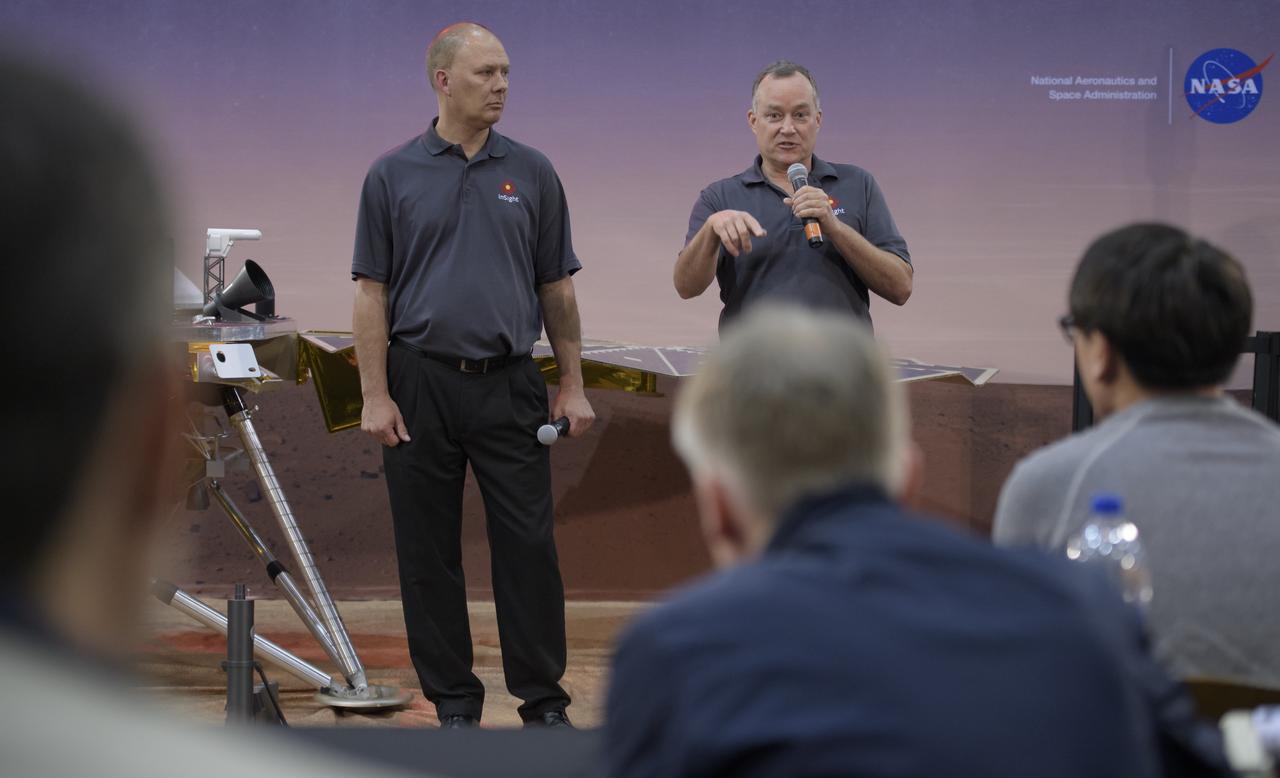
Stu Spath, InSight program manager, Lockheed Martin Space, left, and Tom Hoffman, InSight project manager, NASA JPL, discuss NASA's InSight mission during a prelaunch media briefing, Thursday, May 3, 2018, at Vandenberg Air Force Base in California. InSight, short for Interior Exploration using Seismic Investigations, Geodesy and Heat Transport, is a Mars lander designed to study the "inner space" of Mars: its crust, mantle, and core. Photo Credit: (NASA/Bill Ingalls)
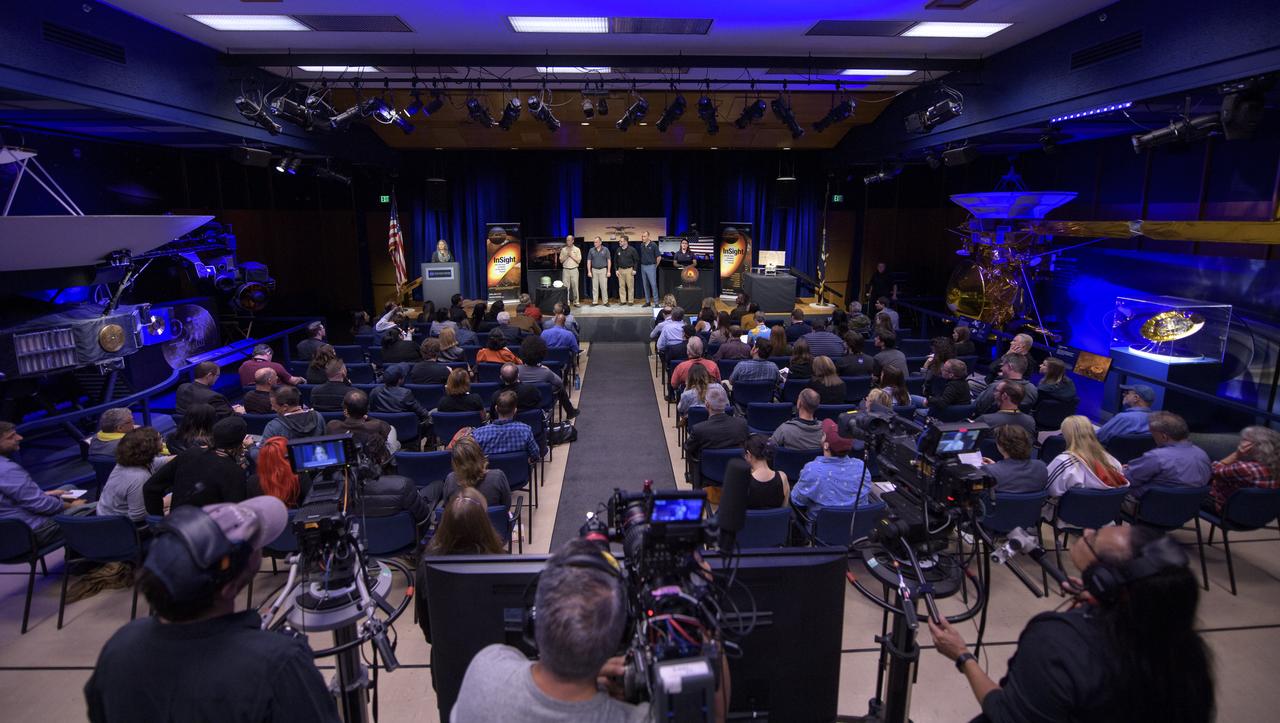
From left to right: Bruce Banerdt, InSight Principal Investigator, NASA JPL; Tom Hoffman, InSight Project Manager, NASA JPL; Brian Clement, Planetary Protection lead for MarCO, NASA JPL; Thomas Zurbuchen, Associate Administrator of NASA’s Science Mission Directorate, NASA Headquarters; and Julie Wertz-Chen, Entry, Descent and Landing systems engineer, NASA JPL, talk about Mars InSight and Mars Cube One (MarCO) during a pre-landing briefing, Sunday, Nov. 25, 2018 at NASA's Jet Propulsion Laboratory in Pasadena, California. InSight, short for Interior Exploration using Seismic Investigations, Geodesy and Heat Transport, is a Mars lander designed to study the "inner space" of Mars: its crust, mantle, and core. InSight is scheduled to touch down on the Red Planet at approximately noon PST (3 p.m. EST) on Nov. 26. Photo Credit: (NASA/Bill Ingalls)
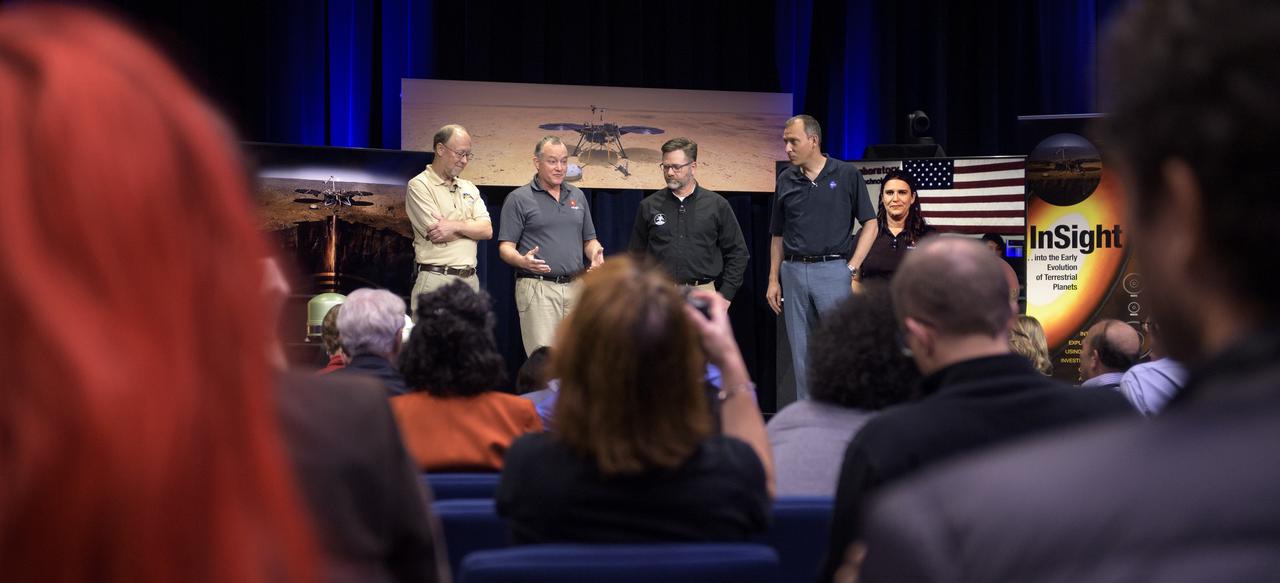
From left to right: Bruce Banerdt, InSight Principal Investigator, NASA JPL; Tom Hoffman, InSight Project Manager, NASA JPL; Brian Clement, Planetary Protection lead for MarCO, NASA JPL; Thomas Zurbuchen, Associate Administrator of NASA’s Science Mission Directorate, NASA Headquarters; and Julie Wertz-Chen, Entry, Descent and Landing systems engineer, NASA JPL, talk about Mars InSight and Mars Cube One (MarCO) during a pre-landing briefing, Sunday, Nov. 25, 2018 at NASA's Jet Propulsion Laboratory in Pasadena, California. InSight, short for Interior Exploration using Seismic Investigations, Geodesy and Heat Transport, is a Mars lander designed to study the "inner space" of Mars: its crust, mantle, and core. InSight is scheduled to touch down on the Red Planet at approximately noon PST (3 p.m. EST) on Nov. 26. Photo Credit: (NASA/Bill Ingalls)
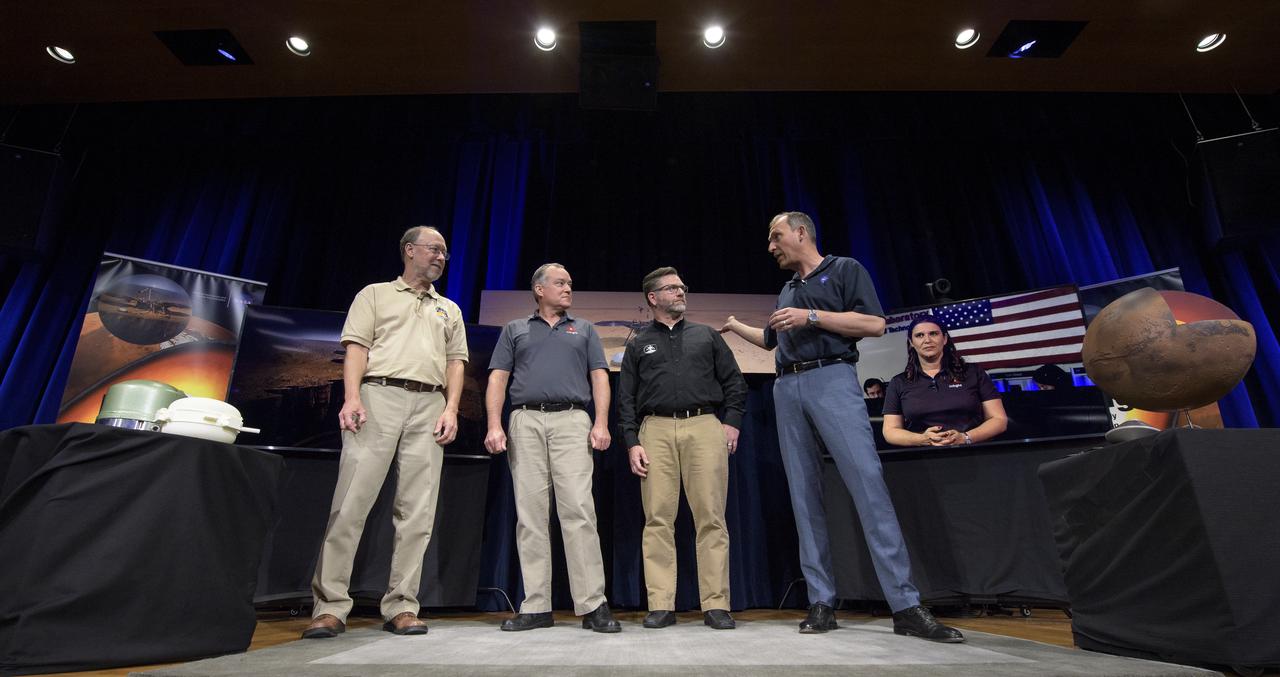
From left to right: Bruce Banerdt, InSight Principal Investigator, NASA JPL; Tom Hoffman, InSight Project Manager, NASA JPL; Brian Clement, Planetary Protection lead for MarCO, NASA JPL; Thomas Zurbuchen, Associate Administrator of NASA’s Science Mission Directorate, NASA Headquarters; and Julie Wertz-Chen, Entry, Descent and Landing systems engineer, NASA JPL, talk about Mars InSight and Mars Cube One (MarCO) during a pre-landing briefing, Sunday, Nov. 25, 2018 at NASA's Jet Propulsion Laboratory in Pasadena, California. InSight, short for Interior Exploration using Seismic Investigations, Geodesy and Heat Transport, is a Mars lander designed to study the "inner space" of Mars: its crust, mantle, and core. InSight is scheduled to touch down on the Red Planet at approximately noon PST (3 p.m. EST) on Nov. 26. Photo Credit: (NASA/Bill Ingalls)
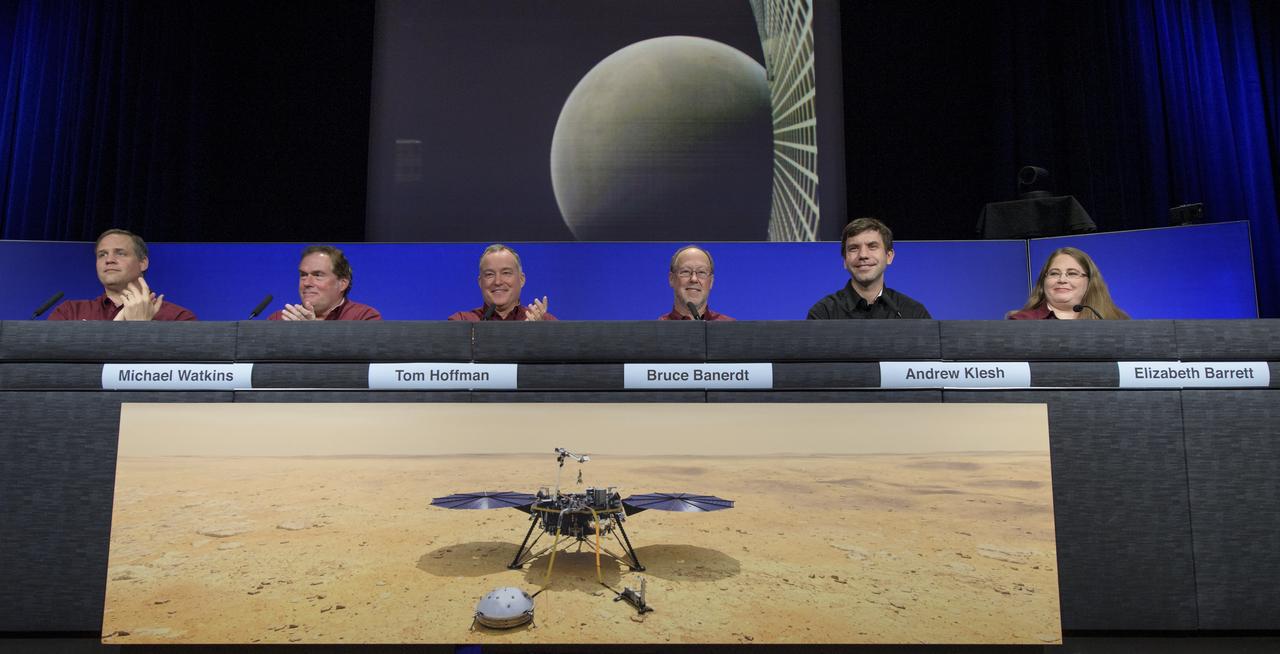
NASA Administrator Jim Bridenstine, left, JPL Director Michael Watkins, InSight Project Manager Tom Hoffman, InSight Principal Investigator Bruce Banerdt, MarCO chief engineer Andy Klesh, and InSight Instrument Operations Lead Elizabeth Barrett, show an image of Mars made by one of the Mars Cube One CubeSats during a Mars InSight post-landing press conference, Monday, Nov. 26, 2018 at NASA's Jet Propulsion Laboratory in Pasadena, California. InSight, short for Interior Exploration using Seismic Investigations, Geodesy and Heat Transport, is a Mars lander designed to study the "inner space" of Mars: its crust, mantle, and core. Photo Credit: (NASA/Bill Ingalls)
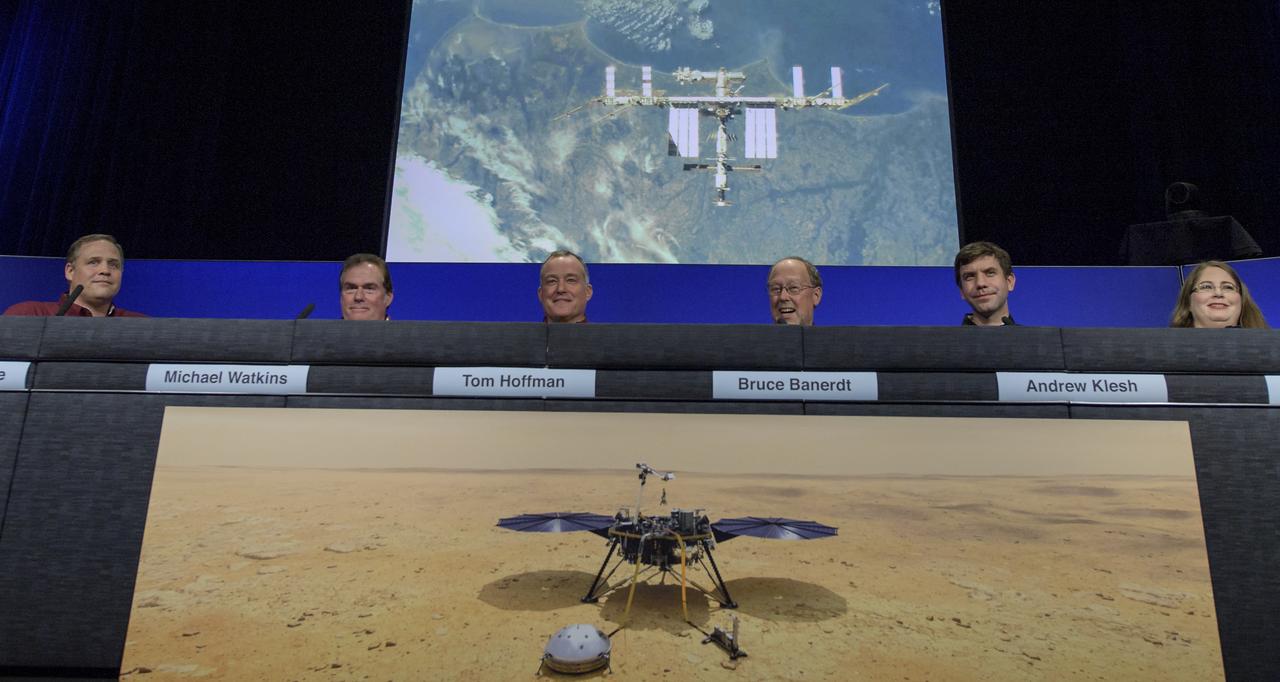
NASA Administrator Jim Bridenstine, left, JPL Director Michael Watkins, InSight Project Manager Tom Hoffman, InSight Principal Investigator Bruce Banerdt, MarCO chief engineer Andy Klesh, and InSight Instrument Operations Lead Elizabeth Barrett, listen to comments given by the International Space Station crew during a Mars InSight post-landing press conference, Monday, Nov. 26, 2018 at NASA's Jet Propulsion Laboratory in Pasadena, California. InSight, short for Interior Exploration using Seismic Investigations, Geodesy and Heat Transport, is a Mars lander designed to study the "inner space" of Mars: its crust, mantle, and core. Photo Credit: (NASA/Bill Ingalls)
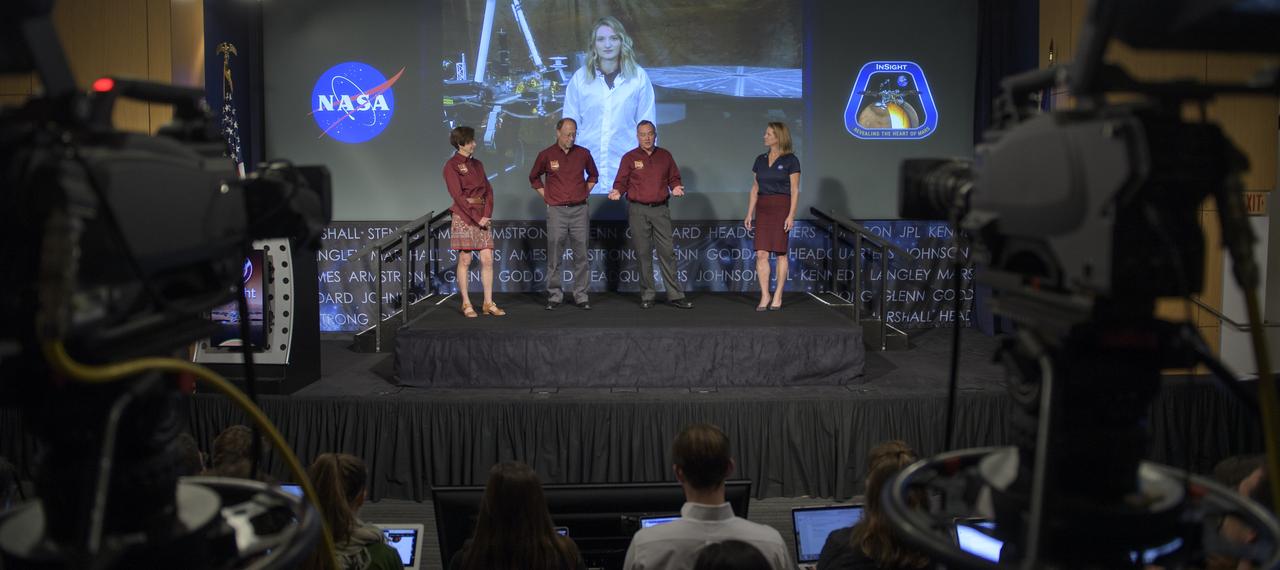
NASA's Jet Propulsion Laboratory InSight instrument deployment lead Jaime Singer, on screen, NASA's Jet Propulsion Laboratory InSight deputy principal investigator Sue Smrekar, left, NASA's Jet Propulsion Laboratory InSight principal investigator Bruce Banerdt, NASA's Jet Propulsion Laboratory InSight project manager Tom Hoffman, and NASA Headquarters acting director of the Planetary Science Division Lori Glaze, right, discuss the NASA InSight Mars Lander (Interior Exploration using Seismic Investigations, Geodesy and Heat Transport) during media briefing, Wednesday, Oct. 31, 2018 at NASA Headquarters in Washington. InSIght will land on the Red Planet at approximately 3 p.m. EST (noon PST) Monday, Nov. 26. InSight will study the deep interior of Mars to learn how all celestial bodies with rocky surfaces, including Earth and the Moon, formed. The lander’s instruments include a seismometer to detect marsquakes and a probe to monitor the flow of heat in the planet's subsurface. Photo Credit: (NASA/Bill Ingalls)
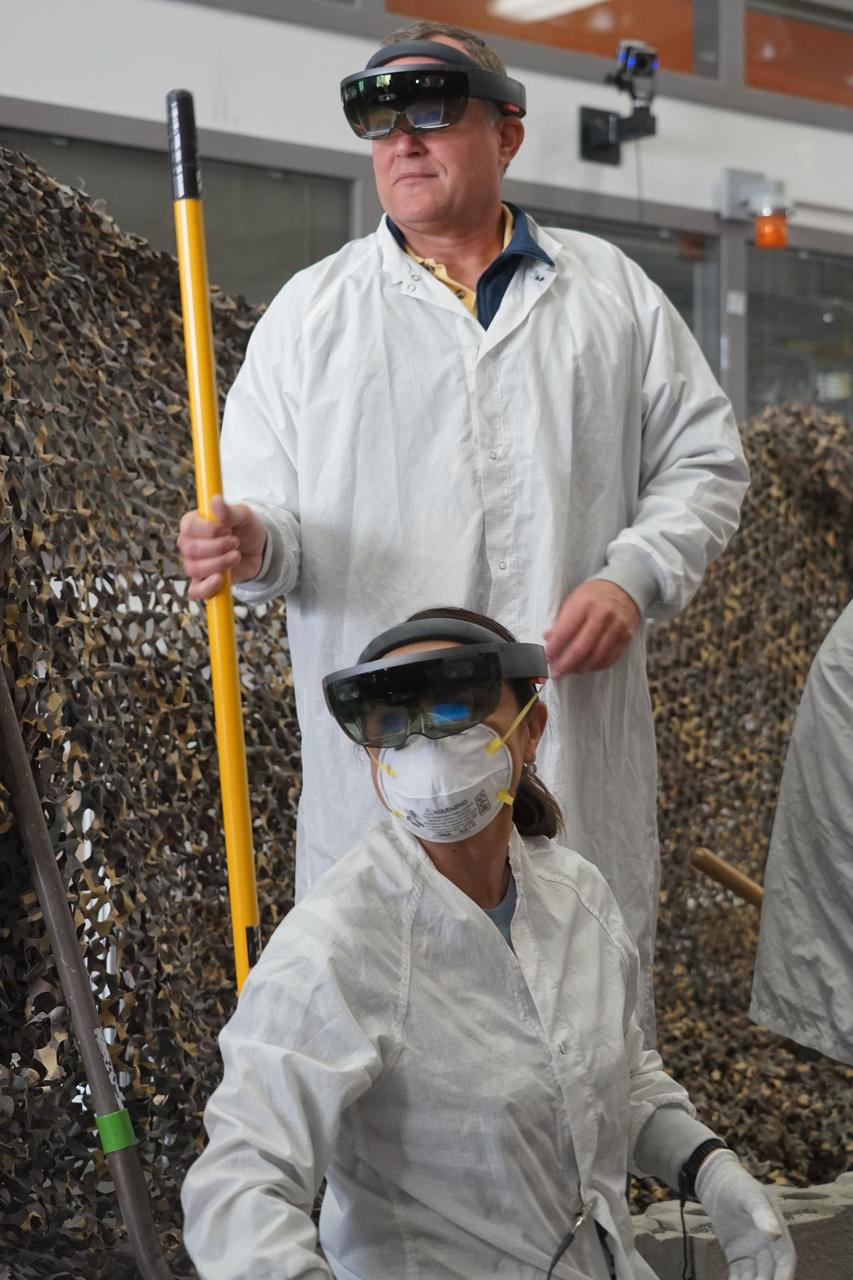
InSight Project Manager Tom Hoffman (standing) and engineer Marleen Sundgaard wear Microsoft HoloLens augmented reality headsets, which project digital terrain models of InSight's landing location on Mars over a lab space. https://photojournal.jpl.nasa.gov/catalog/PIA22951
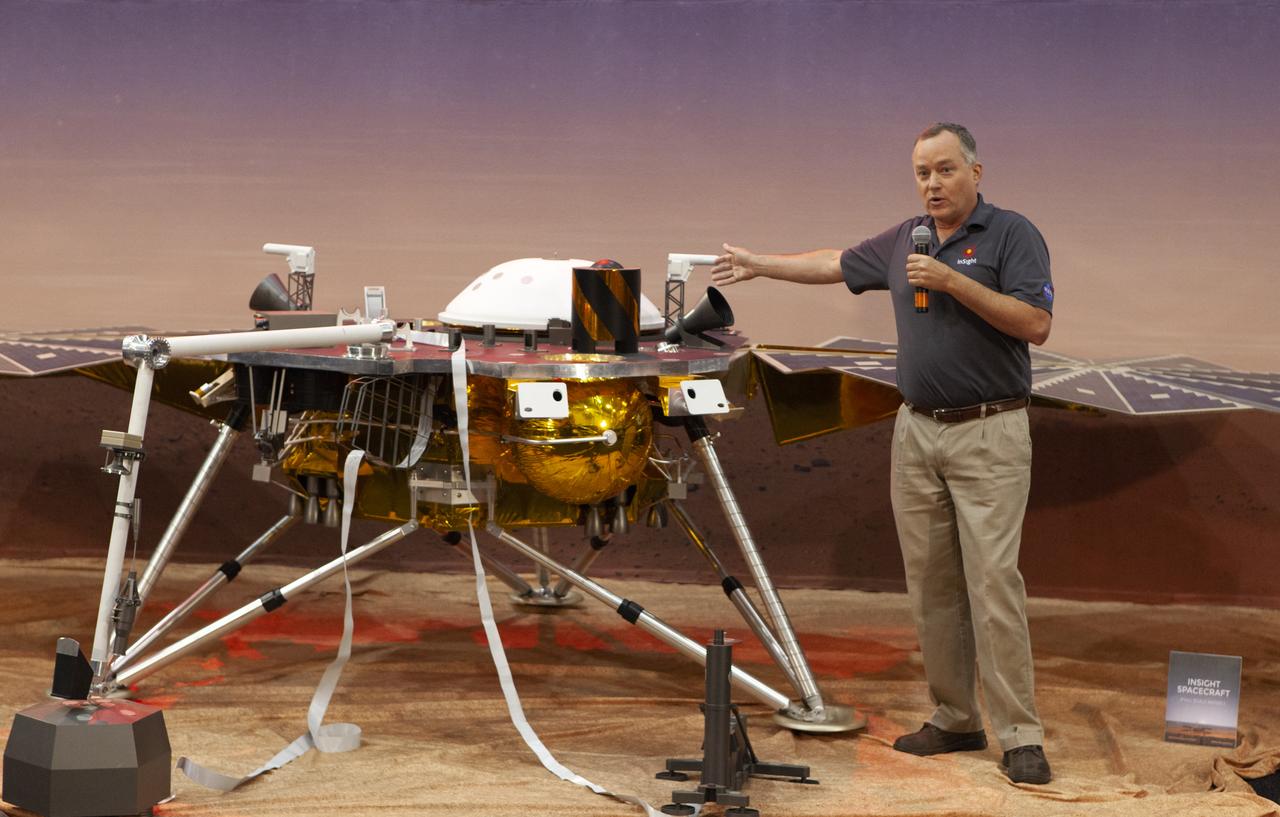
During a prelaunch briefing at Vandenberg Air Force Base in California, Tom Hoffman, InSight Project Manager at NASA's Jet Propulsion Laboratory, speaks to members of the media. The presentation focused on NASA's Interior Exploration using Seismic Investigations, Geodesy and Heat Transport, or InSight, Mars lander. InSight is scheduled for liftoff May 5, 2018, atop a United Launch Alliance (ULA) Atlas V rocket from Space Launch Complex 3 at Vandenberg. The spacecraft will be the first mission to look deep beneath the Martian surface studying the planet's interior by measuring its heat output and listen for marsquakes.
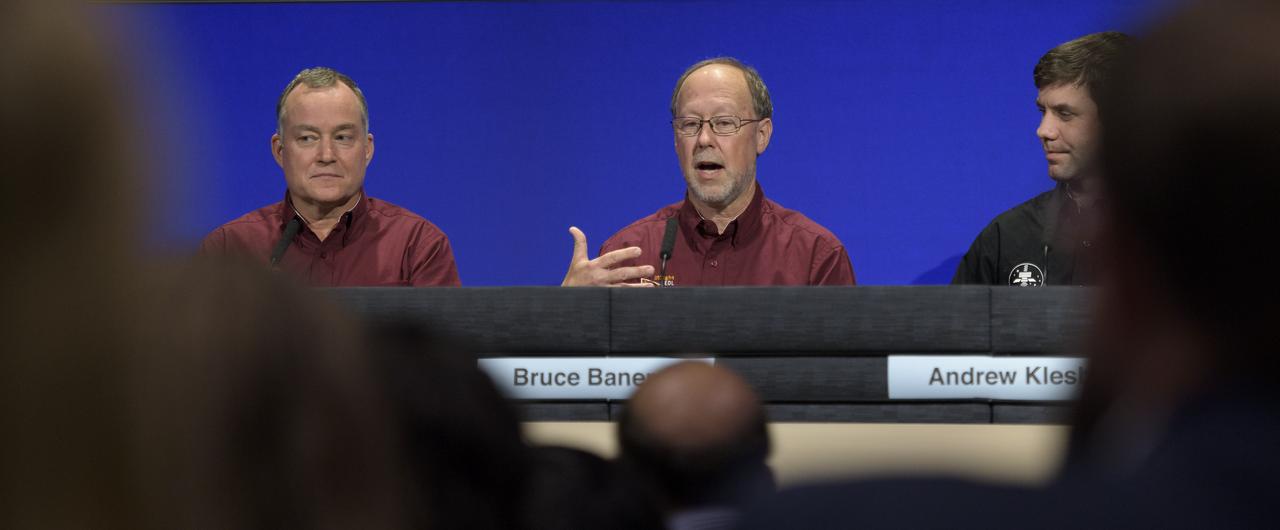
Bruce Banerdt, InSight Principal Investigator, NASA JPL, center, answers questions during a Mars InSight post-landing press conference, Monday, Nov. 26, 2018 at NASA's Jet Propulsion Laboratory in Pasadena, California. InSight, short for Interior Exploration using Seismic Investigations, Geodesy and Heat Transport, is a Mars lander designed to study the "inner space" of Mars: its crust, mantle, and core. Photo Credit: (NASA/Bill Ingalls)

CAPE CANAVERAL, Fla. -- On Cape Canaveral Air Force Station in Florida, members of NASA's Gravity Recovery and Interior Laboratory (GRAIL) launch team monitor GRAIL's launch countdown from the Mission Directors Center in Hangar AE. From left are David Lehman, spacecraft mission director and GRAIL project manager, NASA's Jet Propulsion Laboratory (JPL); Tom Hoffman, deputy spacecraft mission director, JPL; and John Henk, GRAIL program manager, Lockheed Martin Space Systems. Launch is scheduled for 8:37:06 a.m. EDT Sept. 8 from Space Launch Complex 17B on Cape Canaveral Air Force Station. GRAIL will fly twin spacecraft in tandem around the moon to precisely measure and map variations in the moon's gravitational field. The mission will provide the most accurate global gravity field to date for any planet, including Earth. For more information, visit http://www.nasa.gov/grail. Photo credit: NASA/Kim Shiflett
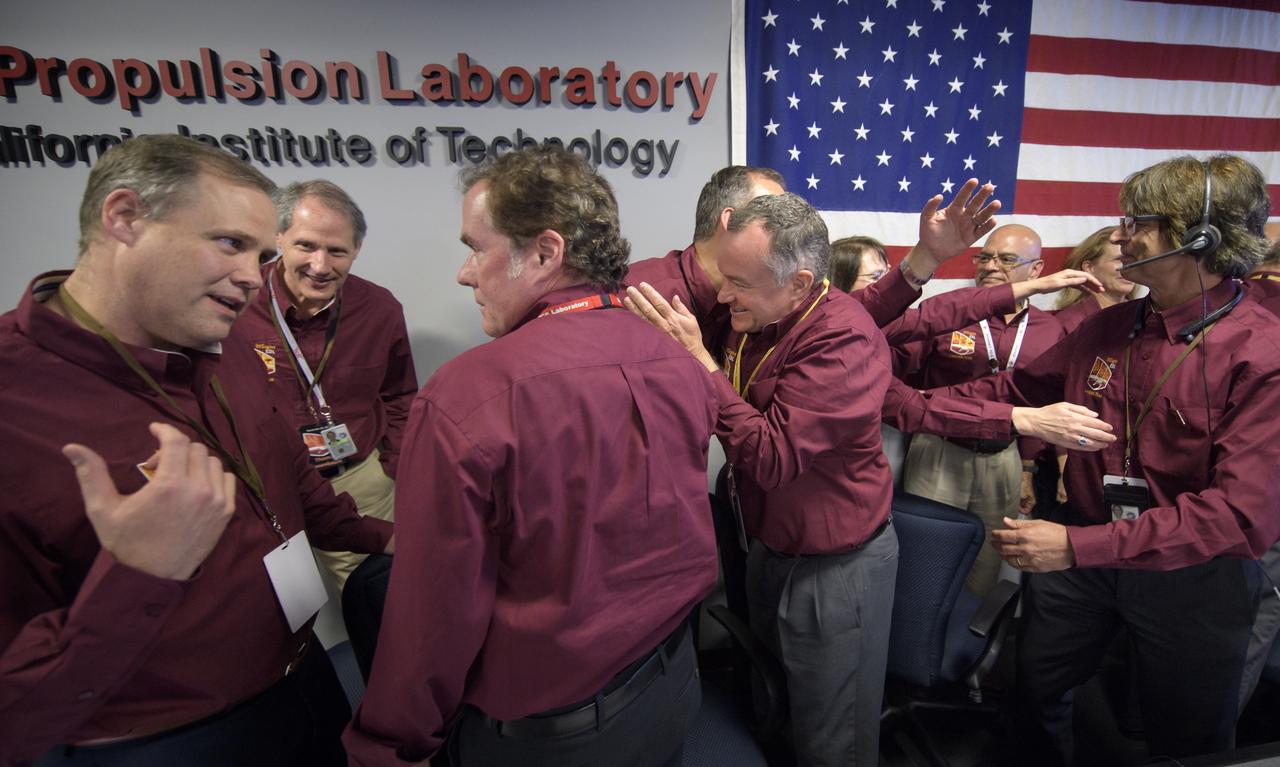
NASA Administrator Jim Bridenstine, left, celebrates with other managers after receiving confirmation that the Mars InSight lander successfully touched down on the surface of Mars, Monday, Nov. 26, 2018 inside the Mission Support Area at NASA's Jet Propulsion Laboratory in Pasadena, California. InSight, short for Interior Exploration using Seismic Investigations, Geodesy and Heat Transport, is a Mars lander designed to study the "inner space" of Mars: its crust, mantle, and core. Photo Credit: (NASA/Bill Ingalls)
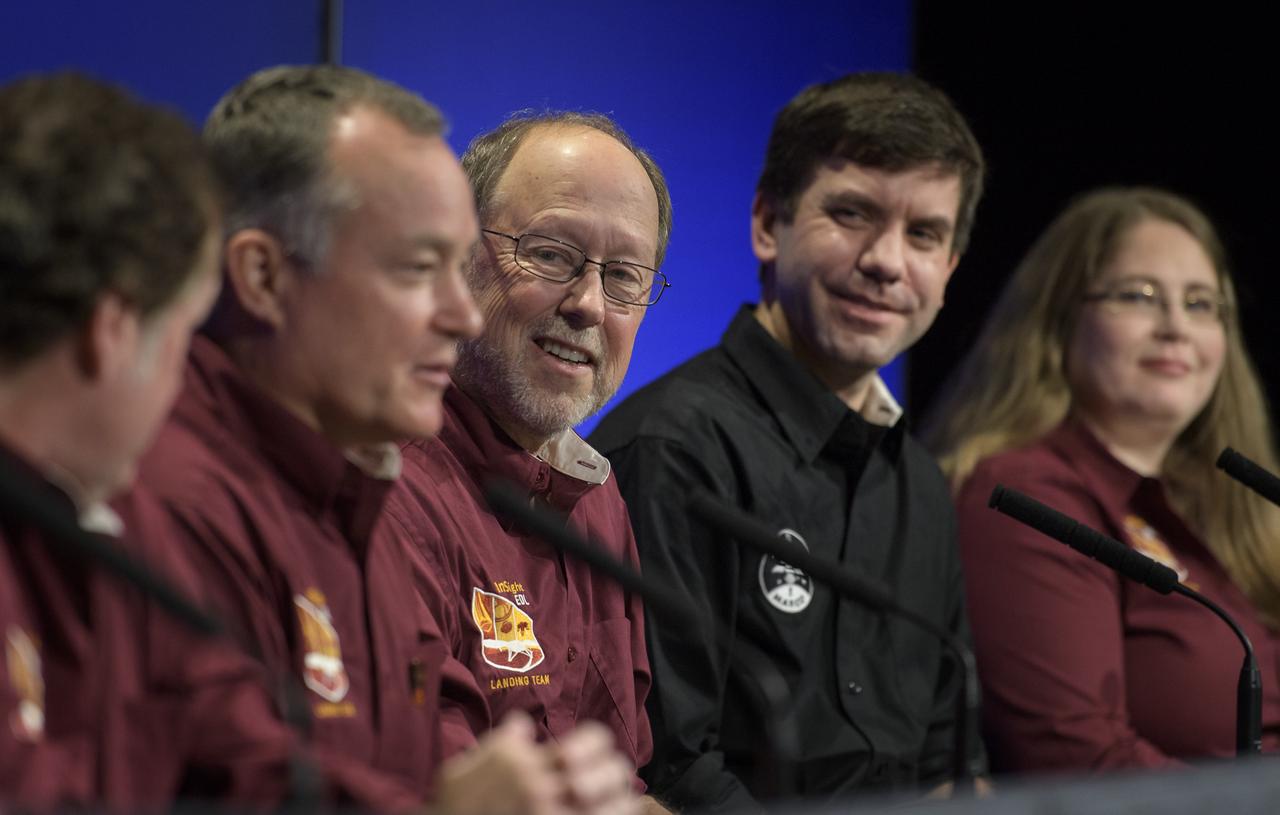
Bruce Banerdt, InSight Principal Investigator, NASA JPL, center, listens as other Mars InSight team members give remarks during a post-landing press conference, Monday, Nov. 26, 2018 at NASA's Jet Propulsion Laboratory in Pasadena, California. InSight, short for Interior Exploration using Seismic Investigations, Geodesy and Heat Transport, is a Mars lander designed to study the "inner space" of Mars: its crust, mantle, and core. Photo Credit: (NASA/Bill Ingalls)