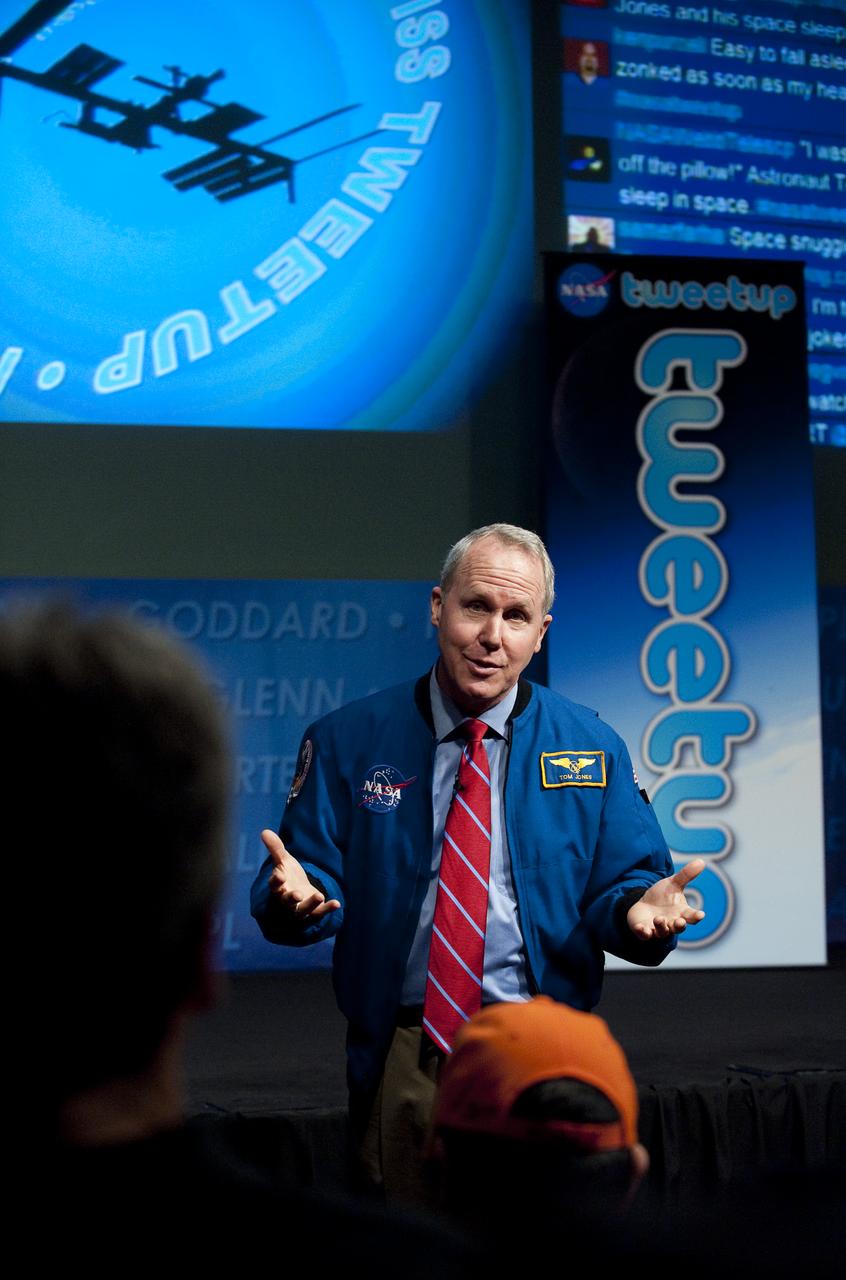
Former NASA astronaut Tom Jones answers questions from Tweetup attendees at NASA Headquarters in Washington on what it is like to live and work in space, Wednesday, Oct. 21, 2009. Photo Credit: (NASA/Carla Cioffi)
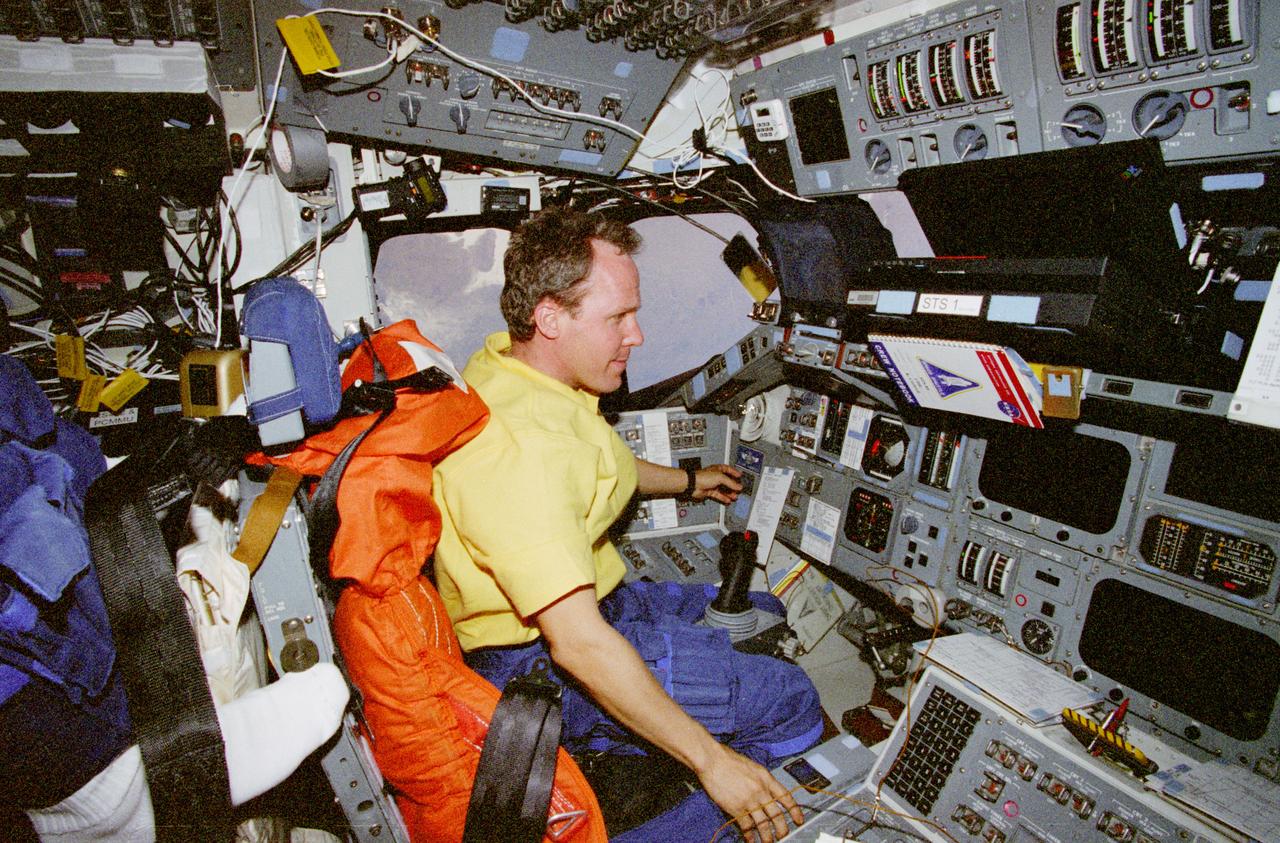
STS-80 Mission Specialist Tom Jones is seated in the flight deck commander's seat and conducts stationkeeping burns.
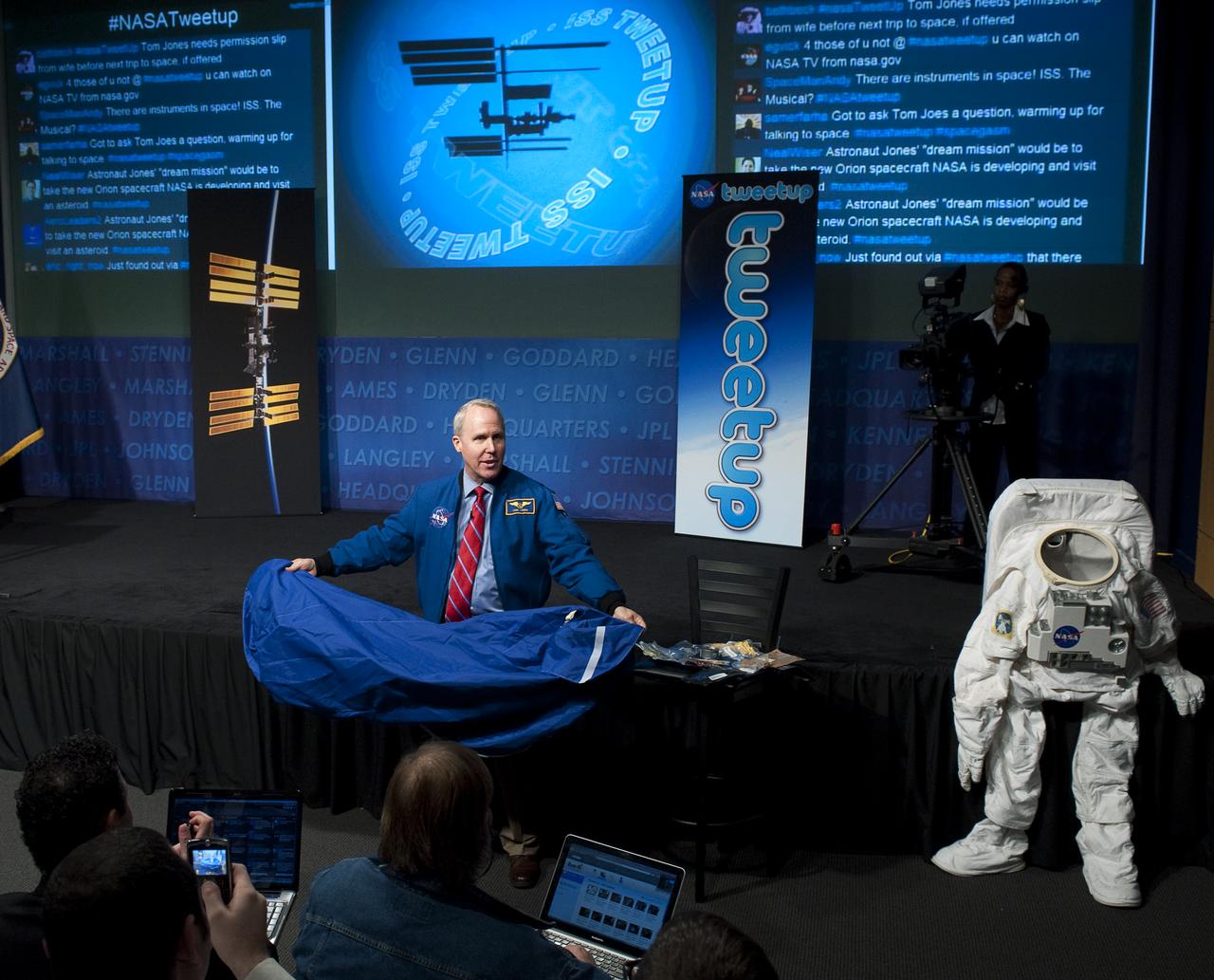
Former NASA astronaut Tom Jones shows off a sleeping bag used by astronauts living aboard the International Space Station during a NASA Tweetup event at NASA Headquarters in Washington, Wednesday, Oct. 21, 2009. Photo Credit: (NASA/Carla Cioffi)
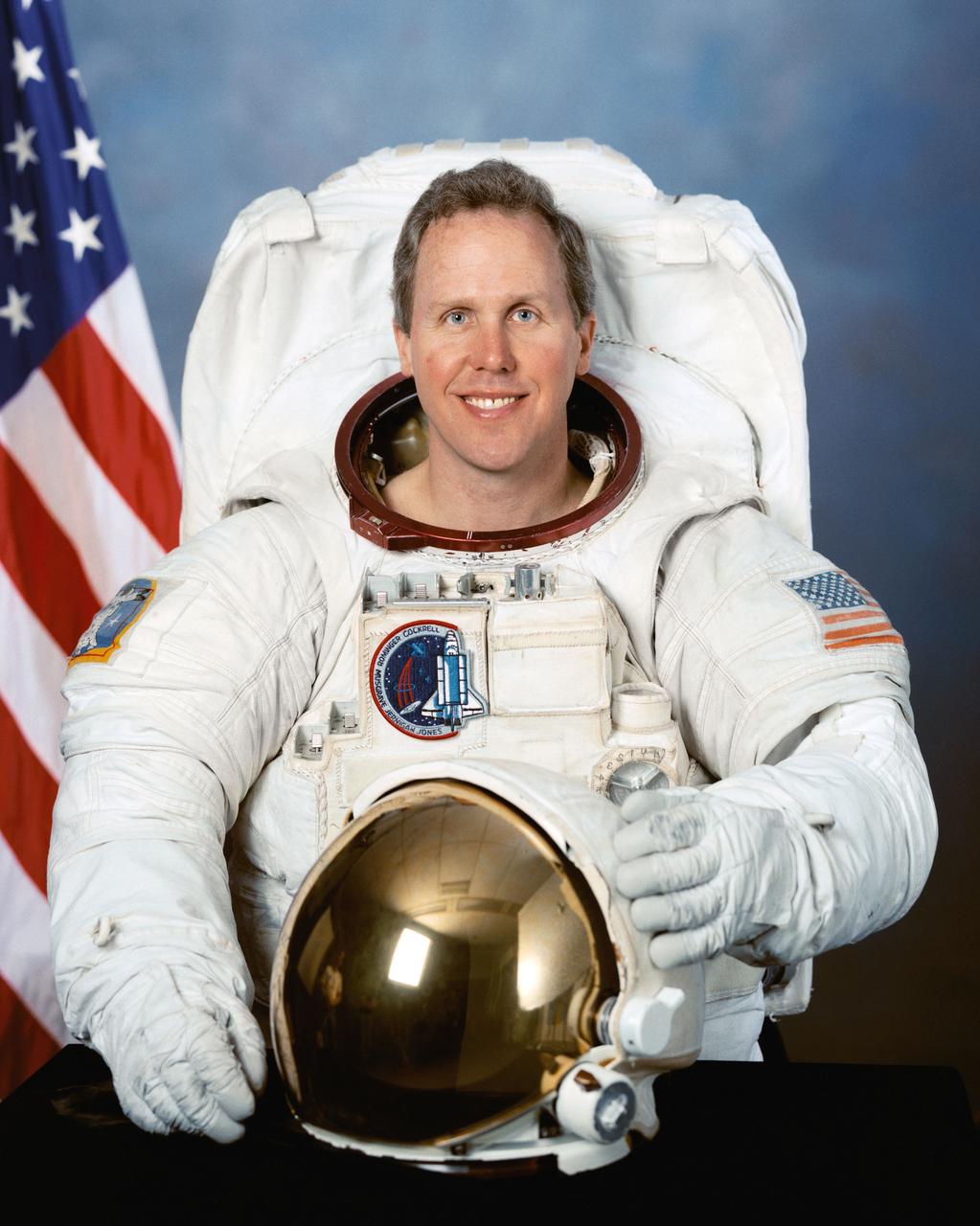
S97-06159 (3 April 1997) --- Astronaut Thomas D. Jones, mission specialist.

Visit by the Dalai Lama and tour of the Space Station mockup in Bldg 9 with astronauts Dan Bursch and Tom Jones. Inside the space station mockup (17339-41). Walking outside the mockups (17342-5). Group portrait of tour group (17346).
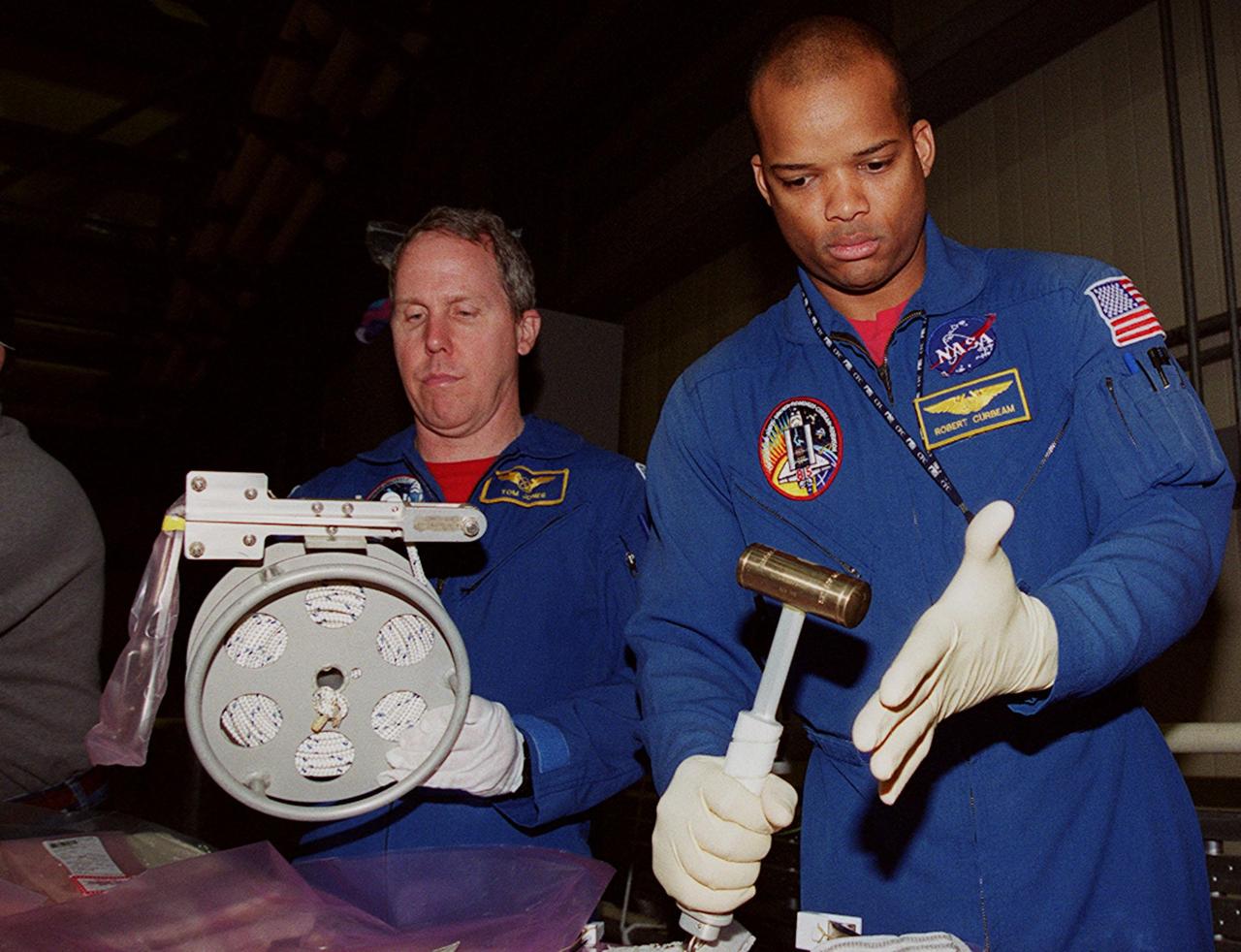
KENNEDY SPACE CENTER, FLA. -- In Orbiter Processing Facility bay 3, STS-98 Mission Specialists Tom Jones and Robert Curbeam test tools that will be used during extravehicular activities (EVA) on their mission. Scheduled for launch Jan. 18, 2001, STS-98 will be transporting the U.S. Lab, Destiny, to the International Space Station with five system racks already installed inside of the module. After delivery of electronics in the lab, electrically powered attitude control for Control Moment Gyroscopes will be activated
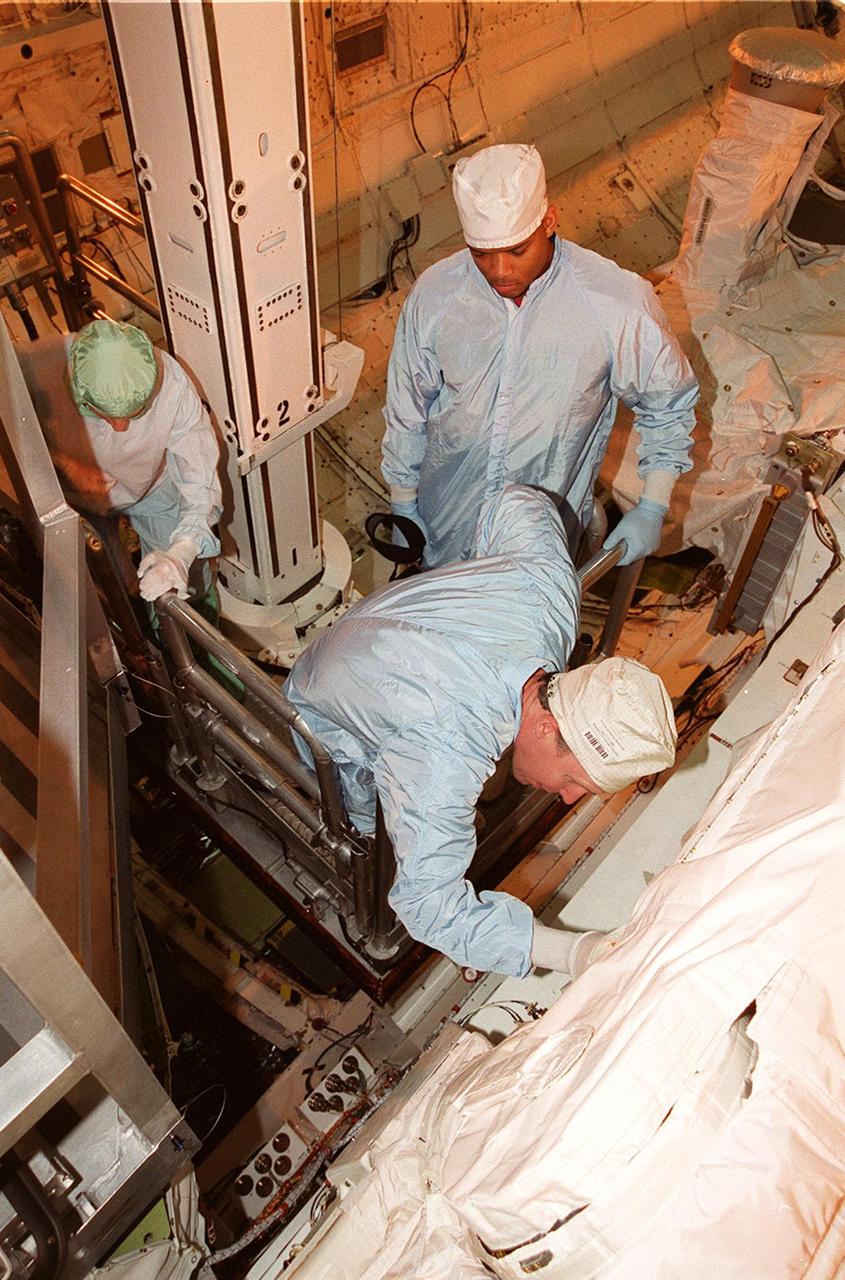
KENNEDY SPACE CENTER, FLA. -- Working on the Orbiter Docking System of orbiter Atlantis are Mission Specialists Tom Jones (leaning over) and Robert Curbeam. They and the rest of the crew are at KSC for Crew Equipment Interface Test activities. Launch on mission STS-98 is scheduled for Jan. 18, 2001. It will be transporting the U.S. Lab, Destiny, to the International Space Station with five system racks already installed inside of the module. After delivery of electronics in the lab, electrically powered attitude control for Control Moment Gyroscopes will be activated
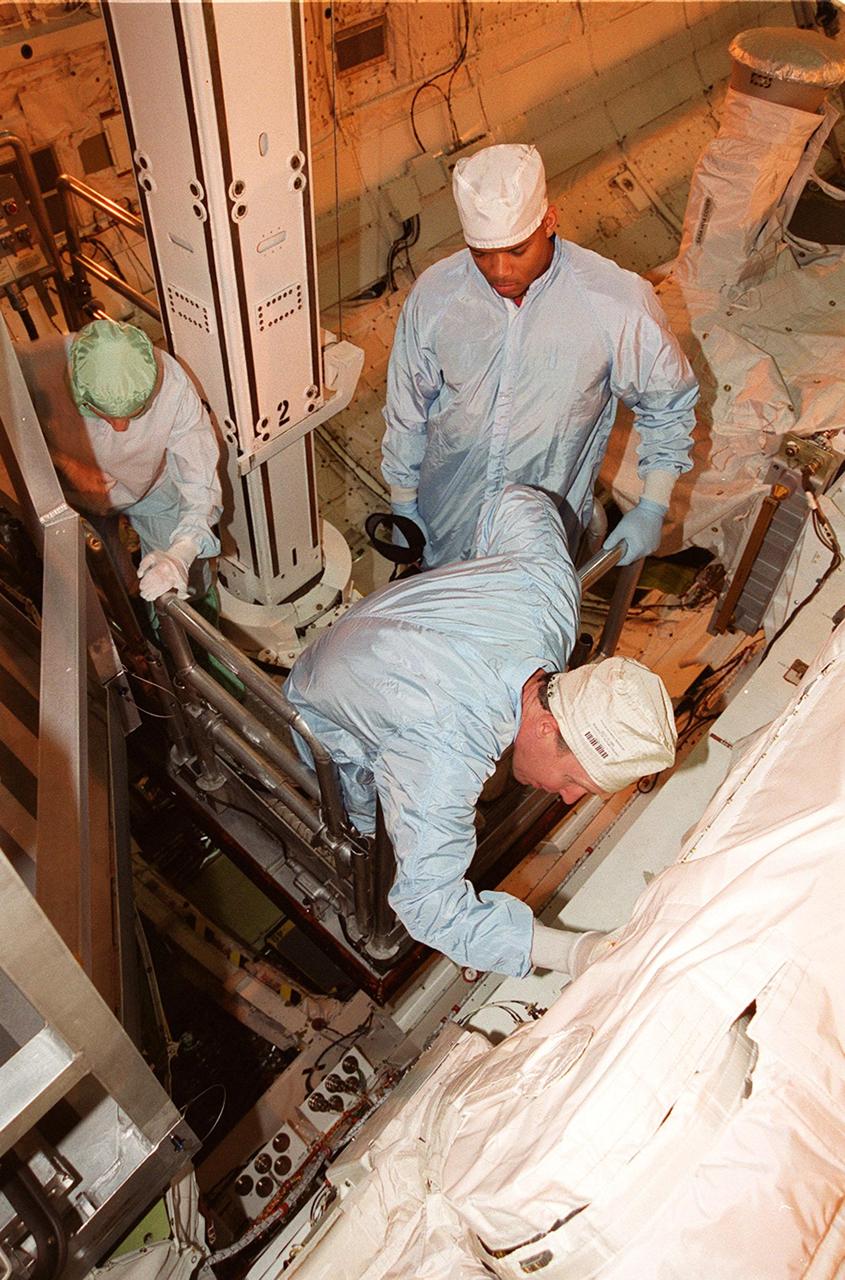
KENNEDY SPACE CENTER, FLA. -- Working on the Orbiter Docking System of orbiter Atlantis are Mission Specialists Tom Jones (leaning over) and Robert Curbeam. They and the rest of the crew are at KSC for Crew Equipment Interface Test activities. Launch on mission STS-98 is scheduled for Jan. 18, 2001. It will be transporting the U.S. Lab, Destiny, to the International Space Station with five system racks already installed inside of the module. After delivery of electronics in the lab, electrically powered attitude control for Control Moment Gyroscopes will be activated
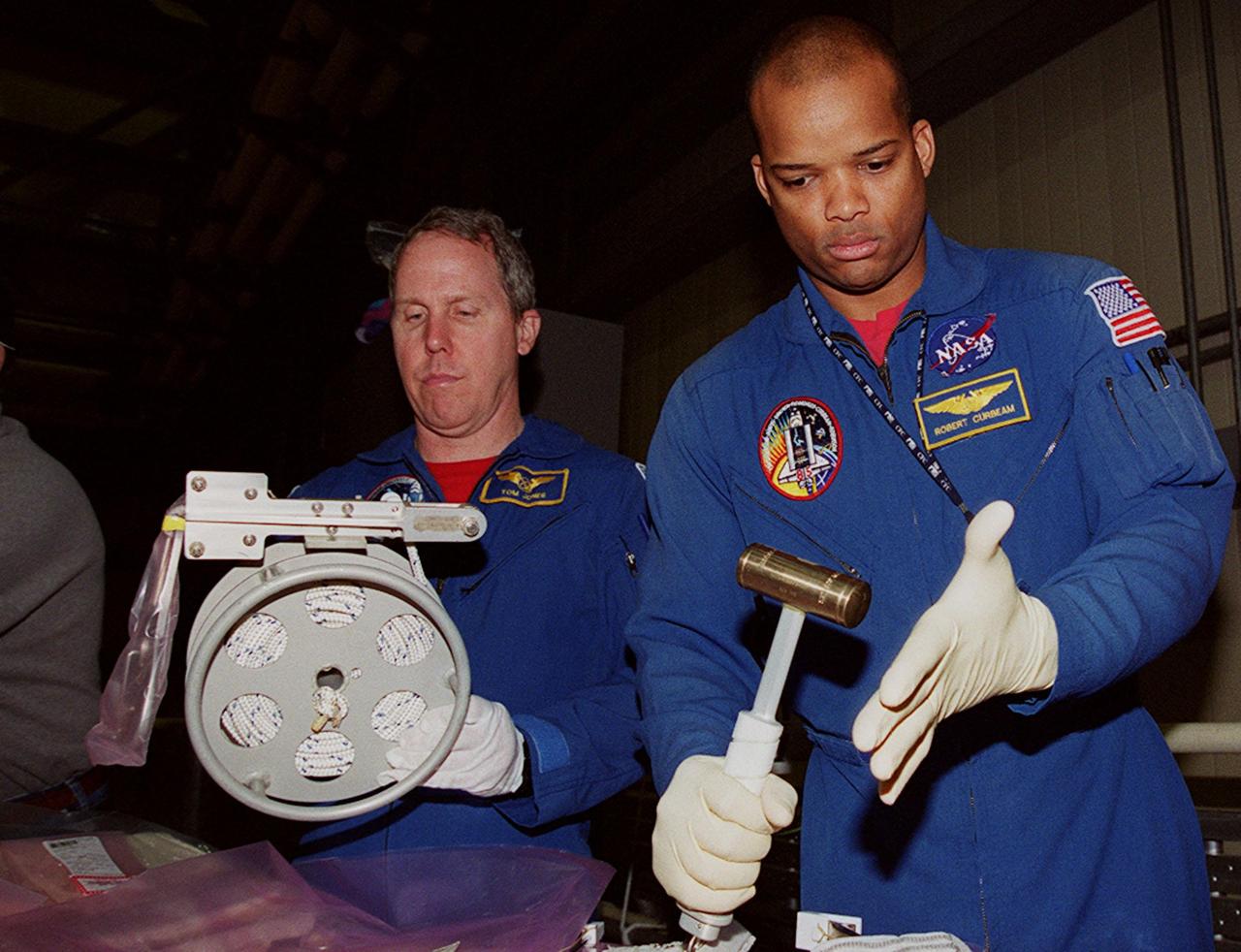
KENNEDY SPACE CENTER, FLA. -- In Orbiter Processing Facility bay 3, STS-98 Mission Specialists Tom Jones and Robert Curbeam test tools that will be used during extravehicular activities (EVA) on their mission. Scheduled for launch Jan. 18, 2001, STS-98 will be transporting the U.S. Lab, Destiny, to the International Space Station with five system racks already installed inside of the module. After delivery of electronics in the lab, electrically powered attitude control for Control Moment Gyroscopes will be activated
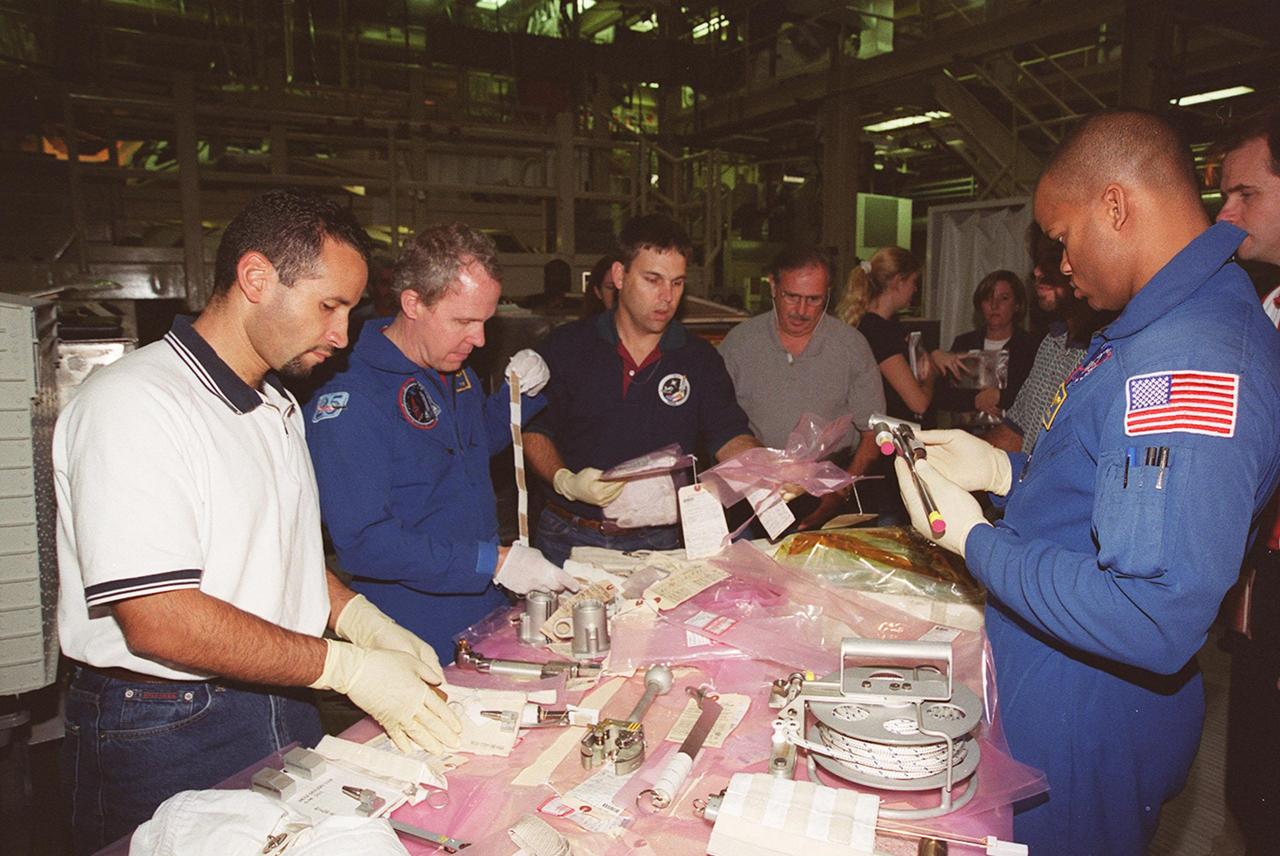
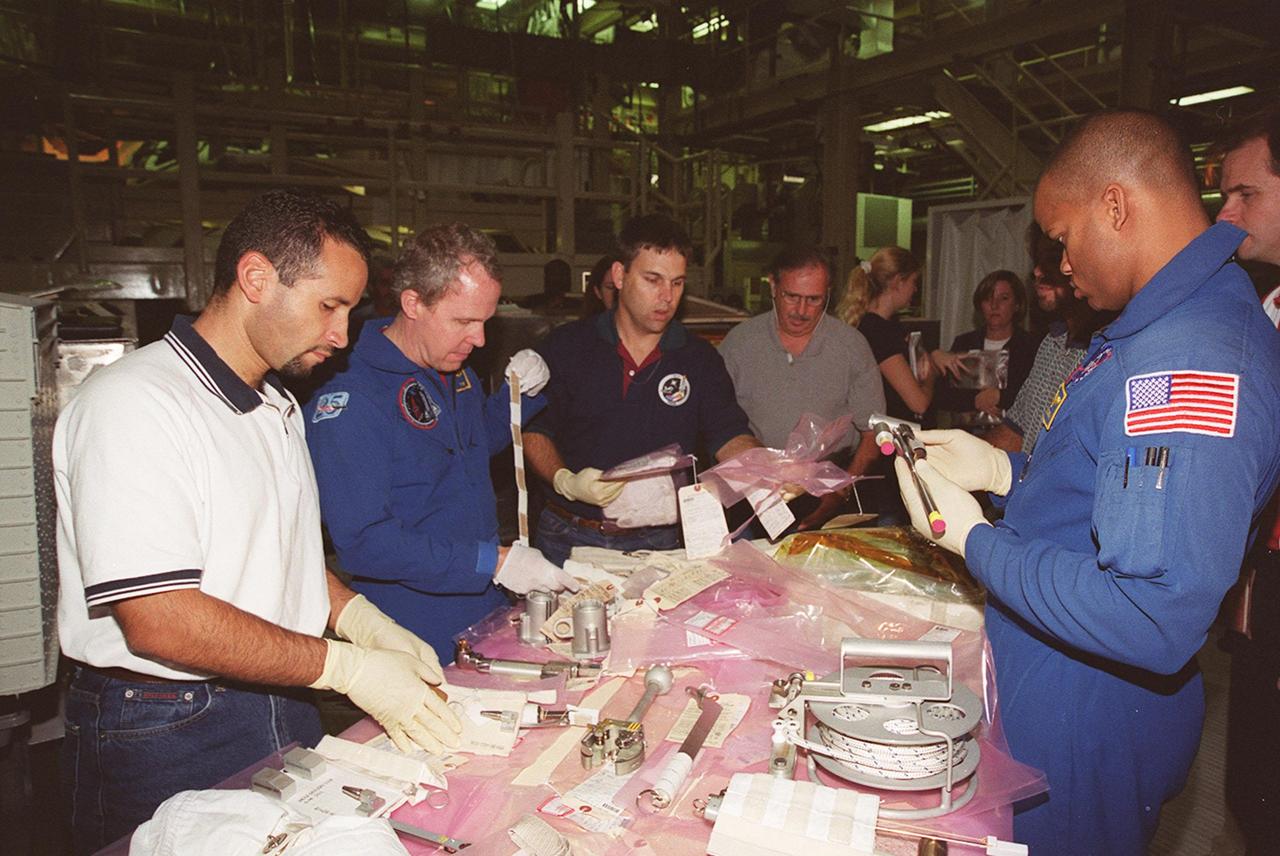
KENNEDY SPACE CENTER, FLA. -- In Orbiter Processing Facility bay 3, STS-98 Mission Specialists Tom Jones (second from left) and Robert Curbeam (right) test tools that will be used during extravehicular activities (EVA) on their mission. Scheduled for launch Jan. 18, 2001, STS-98 will be transporting the U.S. Lab, Destiny, to the International Space Station with five system racks already installed inside of the module. After delivery of electronics in the lab, electrically powered attitude control for Control Moment Gyroscopes will be activated
KENNEDY SPACE CENTER, FLA. -- In Orbiter Processing Facility bay 3, STS-98 Mission Specialists Tom Jones (second from left) and Robert Curbeam (right) test tools that will be used during extravehicular activities (EVA) on their mission. Scheduled for launch Jan. 18, 2001, STS-98 will be transporting the U.S. Lab, Destiny, to the International Space Station with five system racks already installed inside of the module. After delivery of electronics in the lab, electrically powered attitude control for Control Moment Gyroscopes will be activated
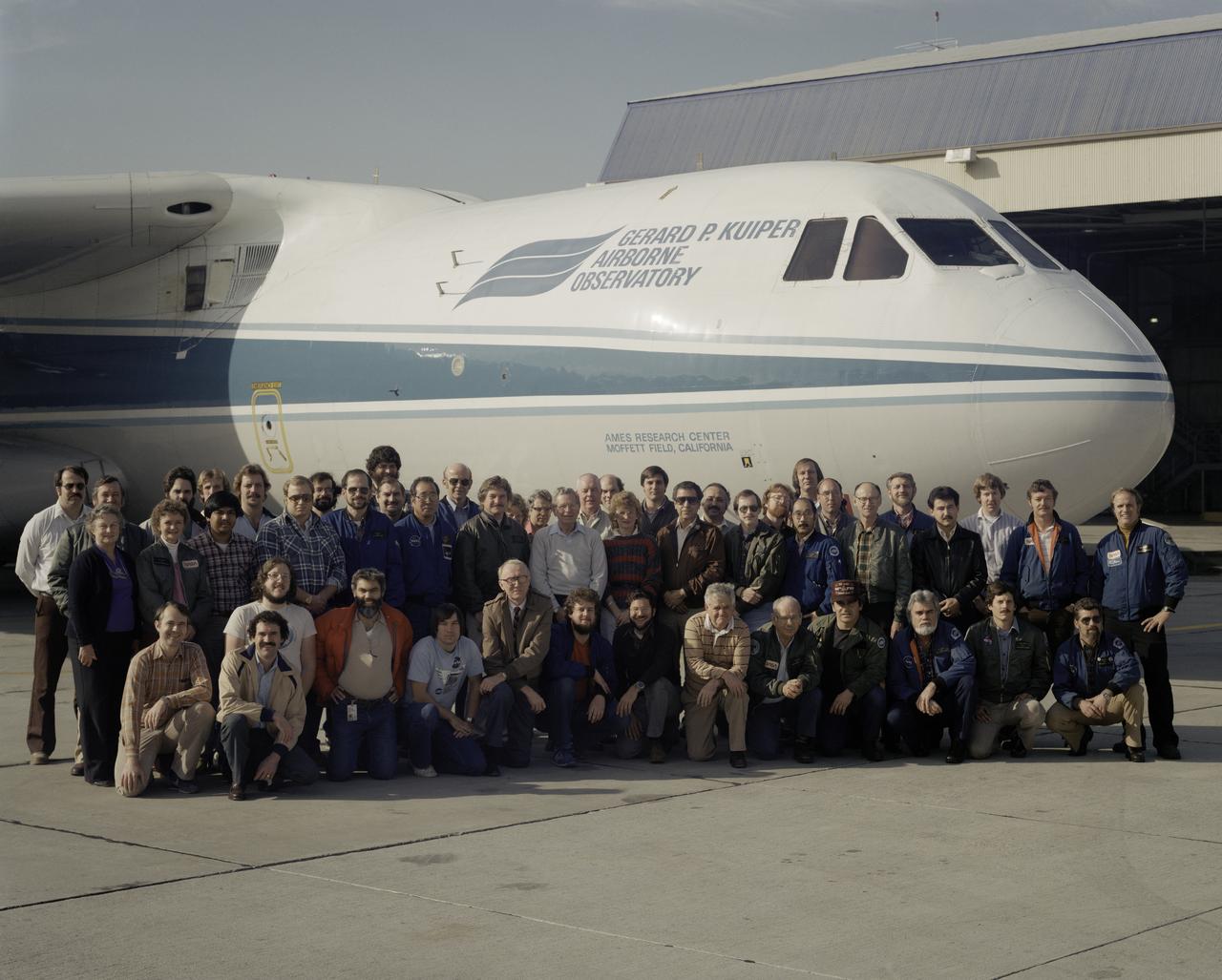
Medium Altitude Missions Branch: C-141 KAO Personnel, Mike Robinson, Mike Landis, Ed Hall, Tom Jones, John Graybeal, Louis Haughney, Brian Wright, Allan Meyer, Dick Gallant, Al Silva, Louis Russo, Hap Arnold, Randy Hobbs, Bill Laurie, Louis Foss, Sue Laurie, Tony Tieas, Tom Connors, Dave Brown, Alan Dunn, Don Oishi, Don Olson, Jim McClenahan, Wally Stahl, Sandy Mayville, Hank Hermosillo, Doug Ziebell, Ben Horita, Bill Hightower, Ron Sanchez, Terry Stoeffler, Lee Montz, Gene Moniz, John Brown, Bob America, Mike Craig, Kent Shiffer, Sandy Kogan, George Gull, Judy Pipher, Larry Helpher, Don MacKinnon, Jesse Bregmann, Jim Eilers, Nabil Hanania, Jim Cockrell, Keith Ackerman, Dave Walton, Lloyd Domeier, Pat Atchison
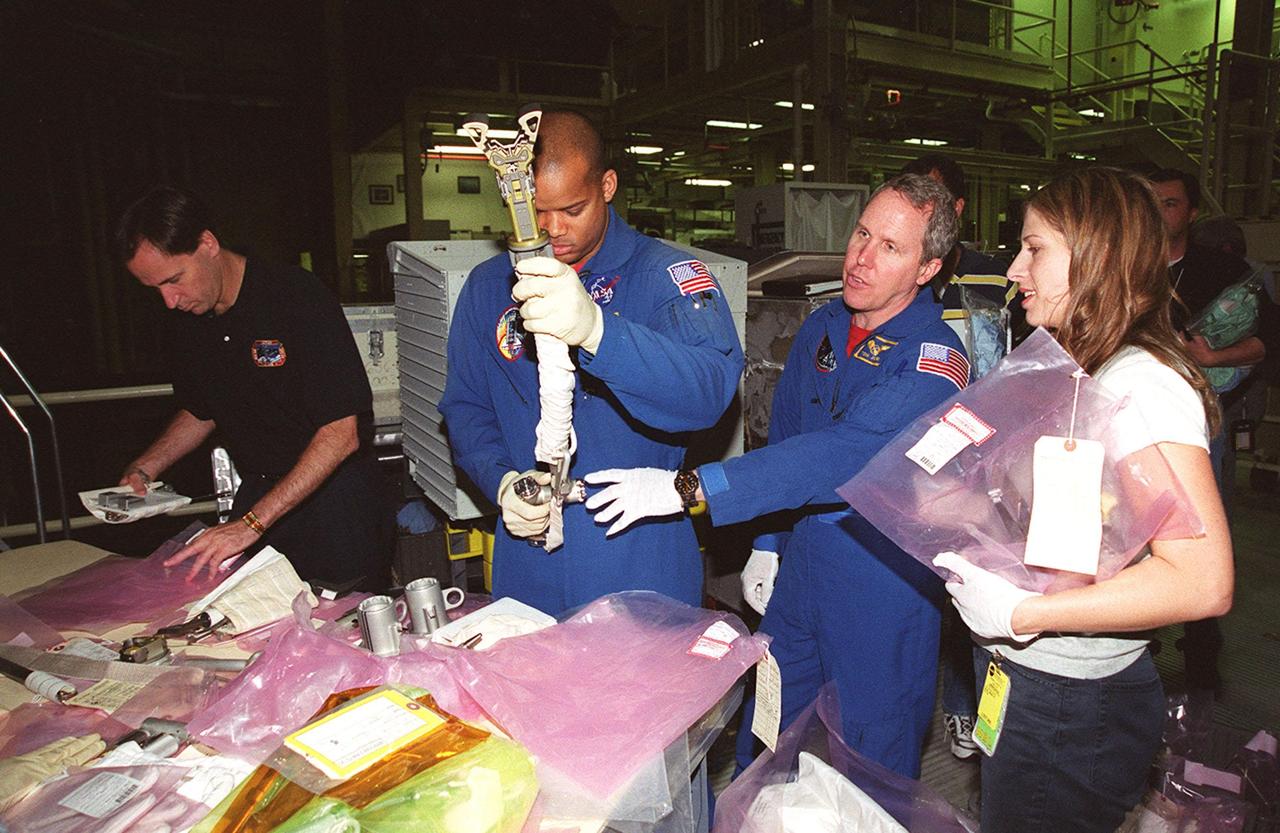
KENNEDY SPACE CENTER, FLA. -- In the Orbiter Processing Facility, STS-98 Mission Specialists Robert Curbeam (center left) and Tom Jones (center right) practice with tools that will be used on extravehicular activities on their mission. The STS-98 crew is at KSC for Crew Equipment Interface Test activities. Launch on mission STS-98 is scheduled for Jan. 18, 2001. It will be transporting the U.S. Lab, Destiny, to the International Space Station with five system racks already installed inside of the module. After delivery of electronics in the lab, electrically powered attitude control for Control Moment Gyroscopes will be activated
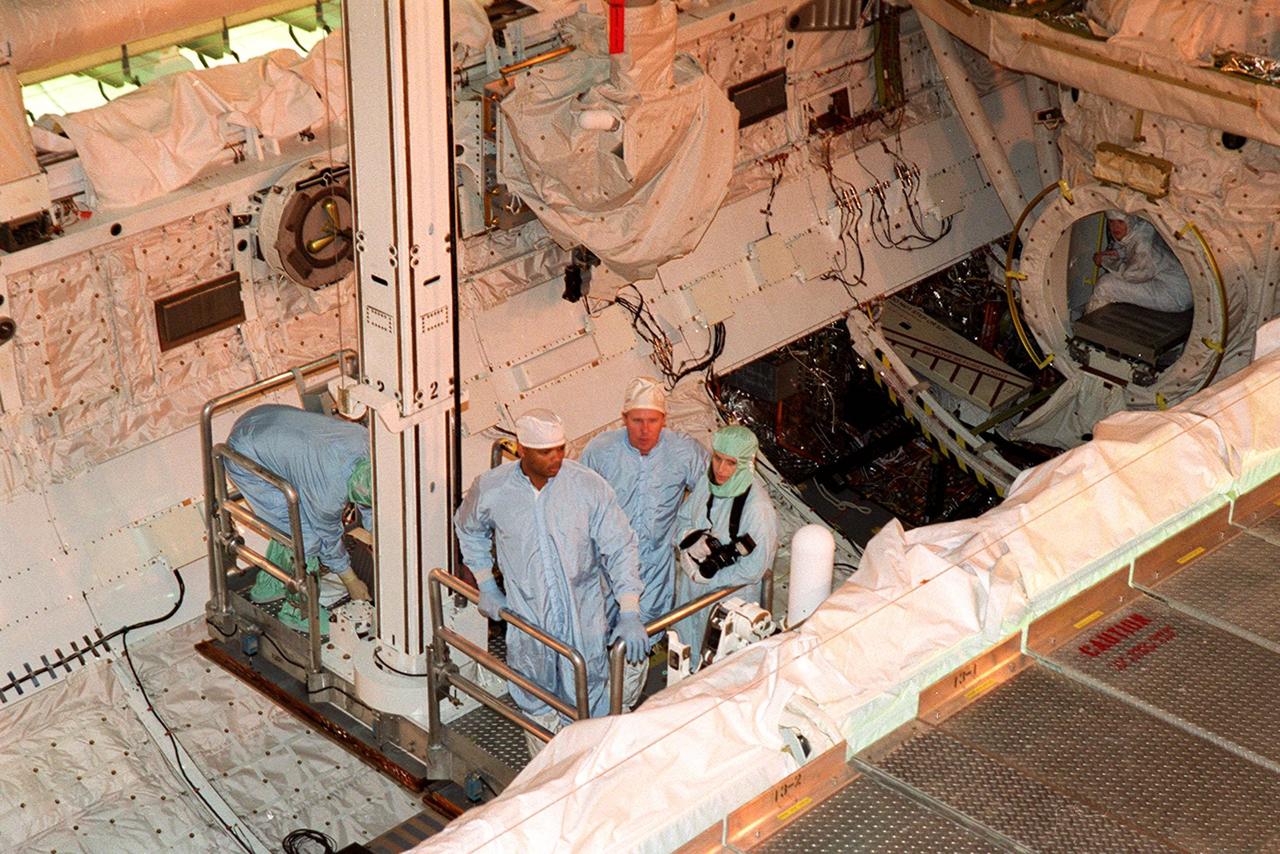
KENNEDY SPACE CENTER, FLA. -- Lowered into the payload bay of the orbiter Atlantis, some of the STS-98 crew (center of the photo) look over part of the payload. From left are Mission Specialists Robert Curbeam, Tom Jones and Marsha Ivins. They and the rest of the crew are at KSC for Crew Equipment Interface Test activities. Launch on mission STS-98 is scheduled for Jan. 18, 2001. It will be transporting the U.S. Lab, Destiny, to the International Space Station with five system racks already installed inside of the module. After delivery of electronics in the lab, electrically powered attitude control for Control Moment Gyroscopes will be activated
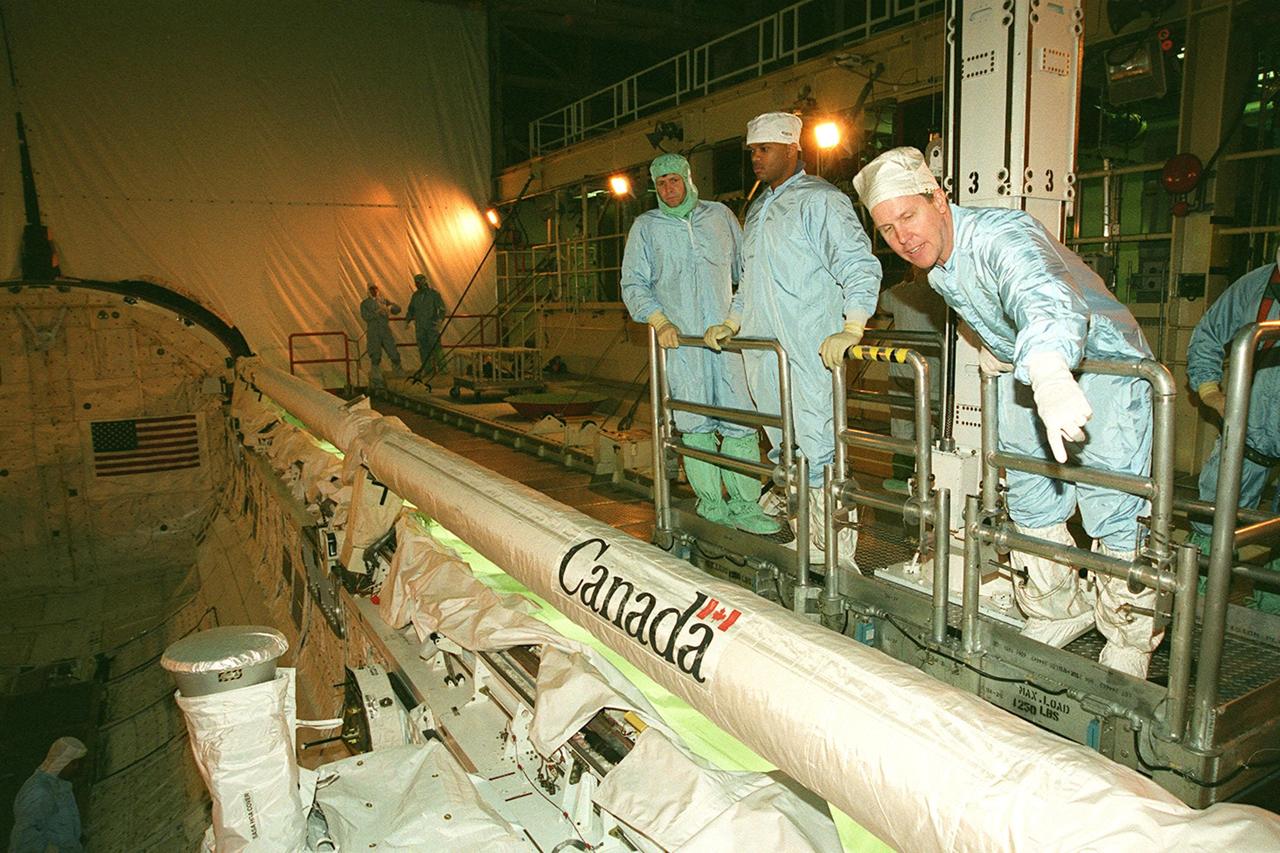
KENNEDY SPACE CENTER, FLA. -- Some of the STS-98 crew look over the Canadian robotic arm in the payload bay of orbiter Atlantis, which is undergoing testing in the Orbiter Processing Facility bay 3. At right, pointing, is Mission Specialist Tom Jones. Second from right is Mission Specialist Robert Curbeam. They and the rest of the crew are at KSC for Crew Equipment Interface Test activities. Launch on mission STS-98 is scheduled for Jan. 18, 2001. It will be transporting the U.S. Lab, Destiny, to the International Space Station with five system racks already installed inside of the module. After delivery of electronics in the lab, electrically powered attitude control for Control Moment Gyroscopes will be activated
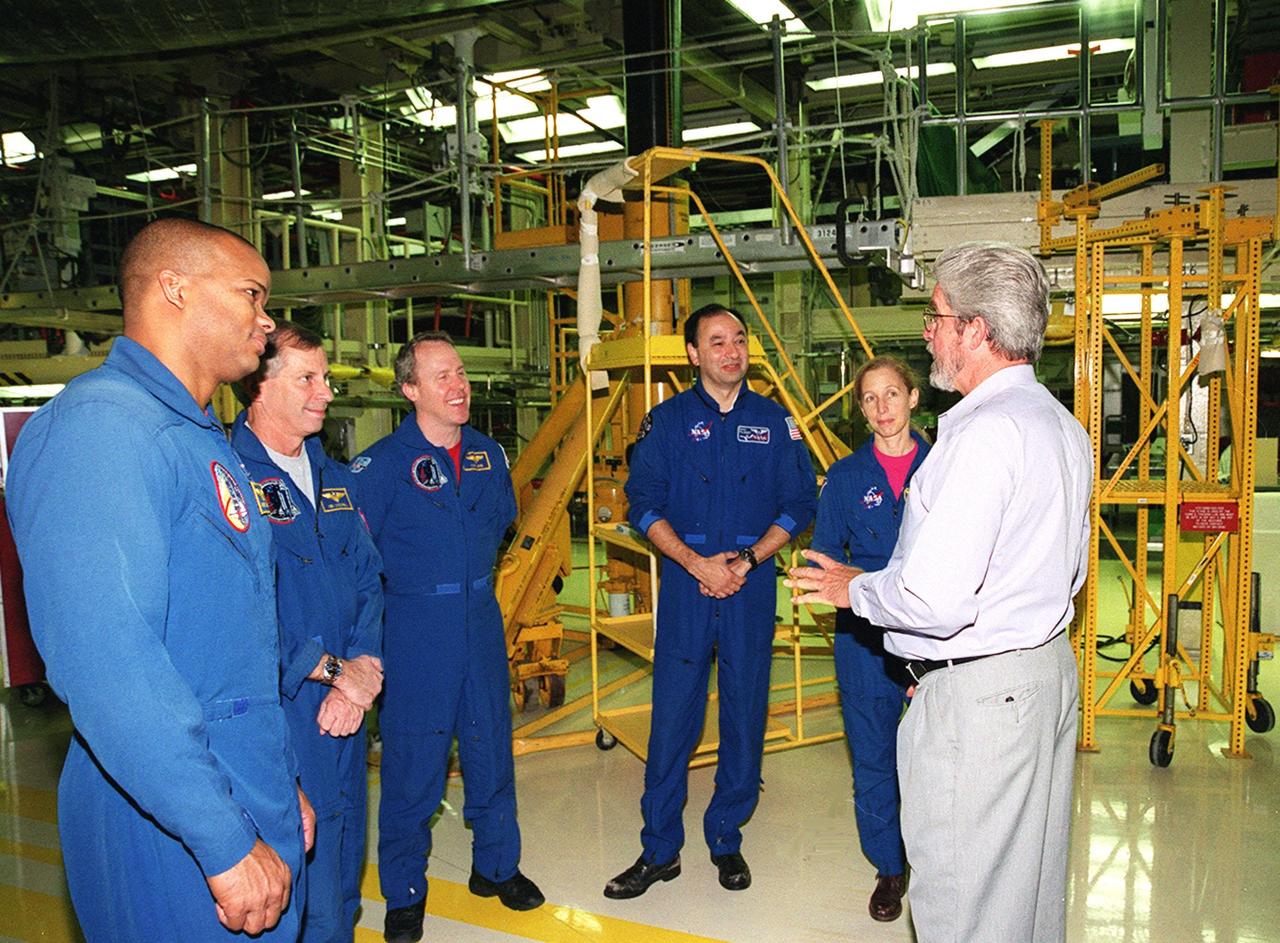
KENNEDY SPACE CENTER, FLA. -- In Orbiter Processing Facility bay 3, the STS-98 crew talks with United Space Alliance worker Larry Oshein (right). Standing left to right are Mission Specialist Robert Curbeam, Commander Ken Cockrell, Mission Specialist Tom Jones, and Mission Specialists Mark Polansky and Marsha Ivins. The crew is at KSC for Crew Equipment Interface Test activities. Launch on mission STS-98 is scheduled for Jan. 18, 2001. It will be transporting the U.S. Lab, Destiny, to the International Space Station with five system racks already installed inside of the module. After delivery of electronics in the lab, electrically powered attitude control for Control Moment Gyroscopes will be activated
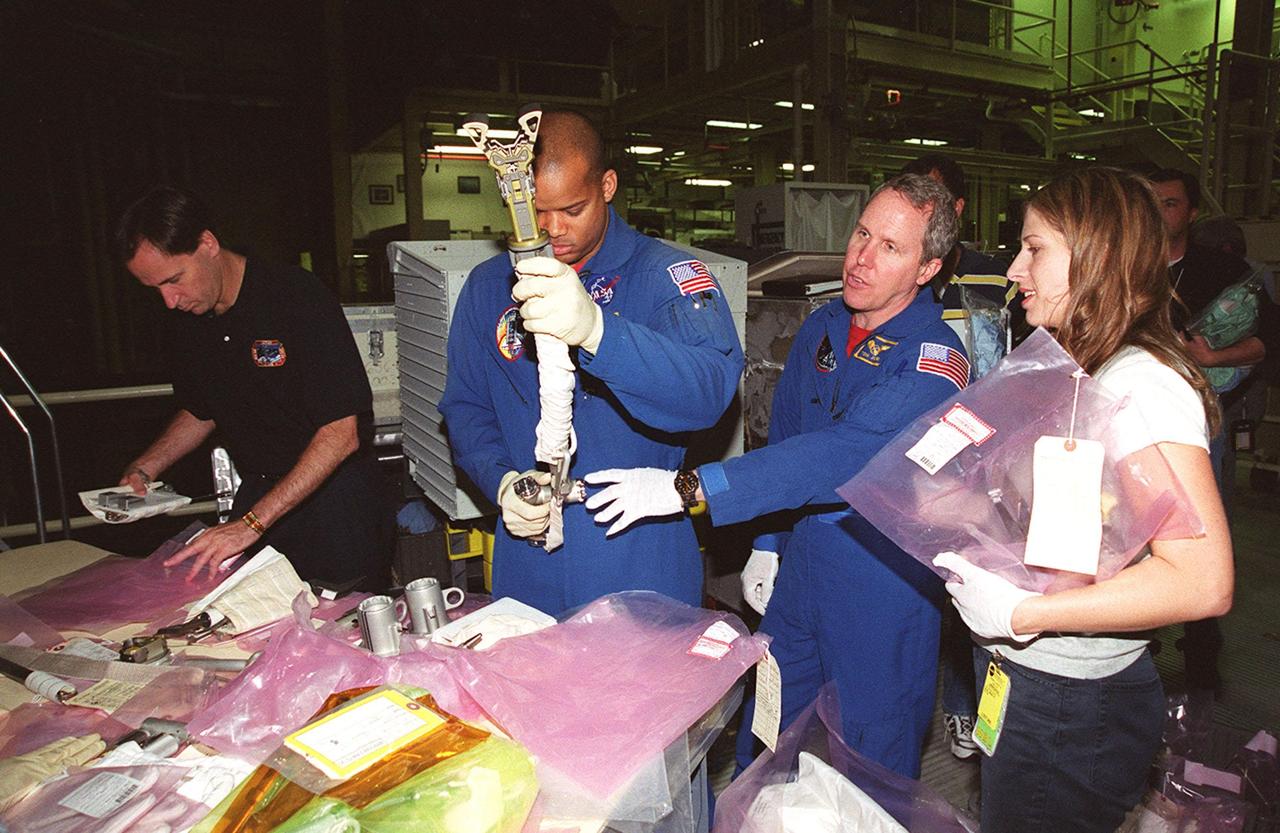
KENNEDY SPACE CENTER, FLA. -- In the Orbiter Processing Facility, STS-98 Mission Specialists Robert Curbeam (center left) and Tom Jones (center right) practice with tools that will be used on extravehicular activities on their mission. The STS-98 crew is at KSC for Crew Equipment Interface Test activities. Launch on mission STS-98 is scheduled for Jan. 18, 2001. It will be transporting the U.S. Lab, Destiny, to the International Space Station with five system racks already installed inside of the module. After delivery of electronics in the lab, electrically powered attitude control for Control Moment Gyroscopes will be activated
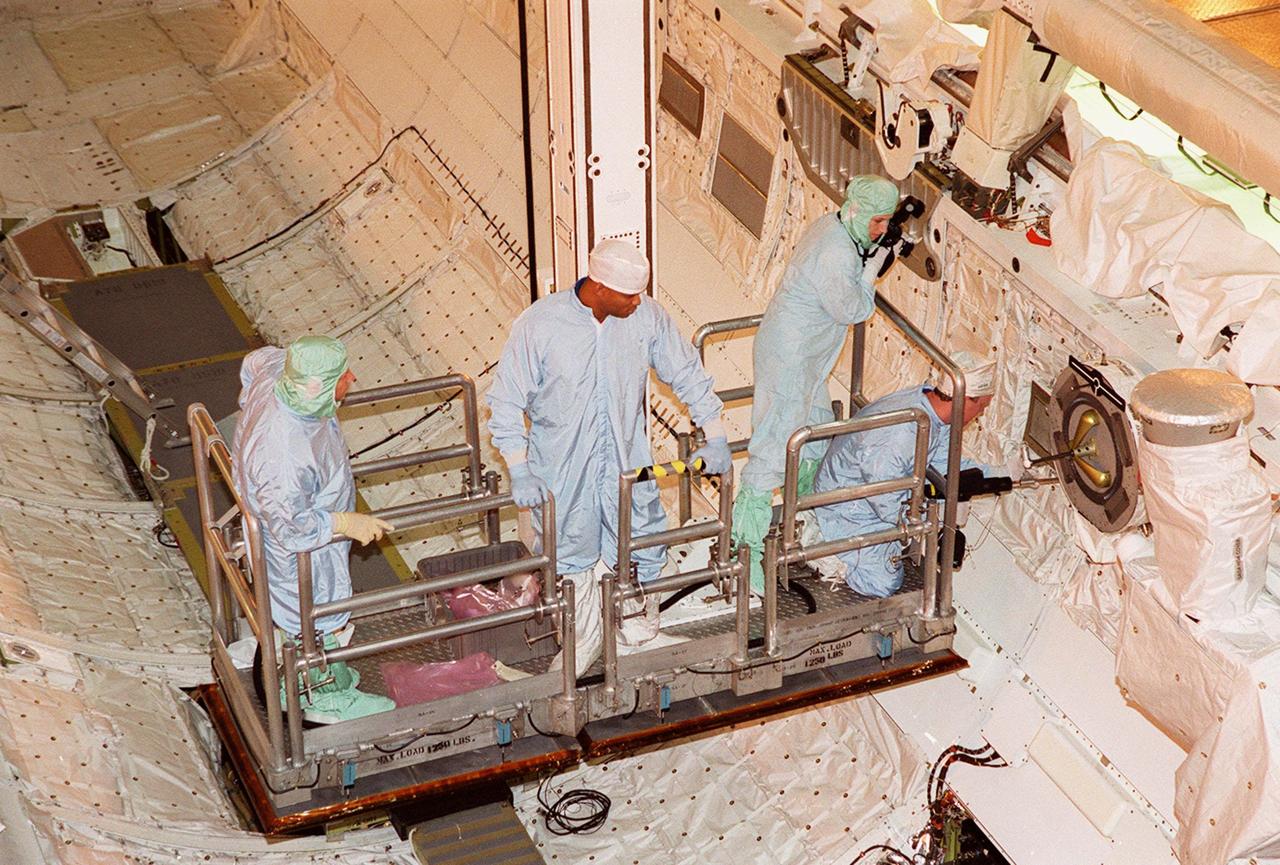
KENNEDY SPACE CENTER, FLA. -- Lowered into the payload bay of the orbiter Atlantis, some of the STS-98 crew look over part of the payload. At center is Mission Specialist Robert Curbeam; at right are Mission Specialists Marsha Ivins (standing) and Tom Jones (kneeling). They and the rest of the crew are at KSC for Crew Equipment Interface Test activities. Launch on mission STS-98 is scheduled for Jan. 18, 2001. It will be transporting the U.S. Lab, Destiny, to the International Space Station with five system racks already installed inside of the module. After delivery of electronics in the lab, electrically powered attitude control for Control Moment Gyroscopes will be activated
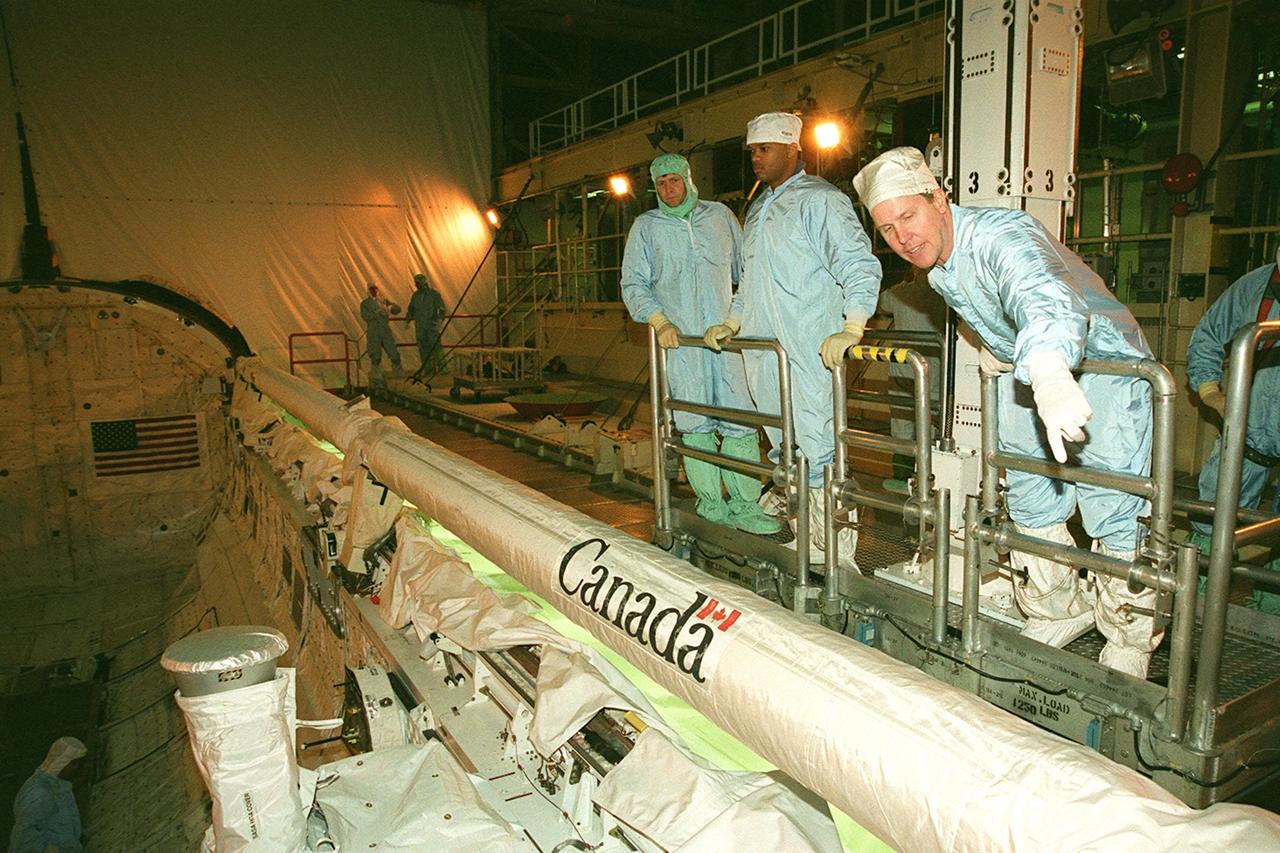
KENNEDY SPACE CENTER, FLA. -- Some of the STS-98 crew look over the Canadian robotic arm in the payload bay of orbiter Atlantis, which is undergoing testing in the Orbiter Processing Facility bay 3. At right, pointing, is Mission Specialist Tom Jones. Second from right is Mission Specialist Robert Curbeam. They and the rest of the crew are at KSC for Crew Equipment Interface Test activities. Launch on mission STS-98 is scheduled for Jan. 18, 2001. It will be transporting the U.S. Lab, Destiny, to the International Space Station with five system racks already installed inside of the module. After delivery of electronics in the lab, electrically powered attitude control for Control Moment Gyroscopes will be activated
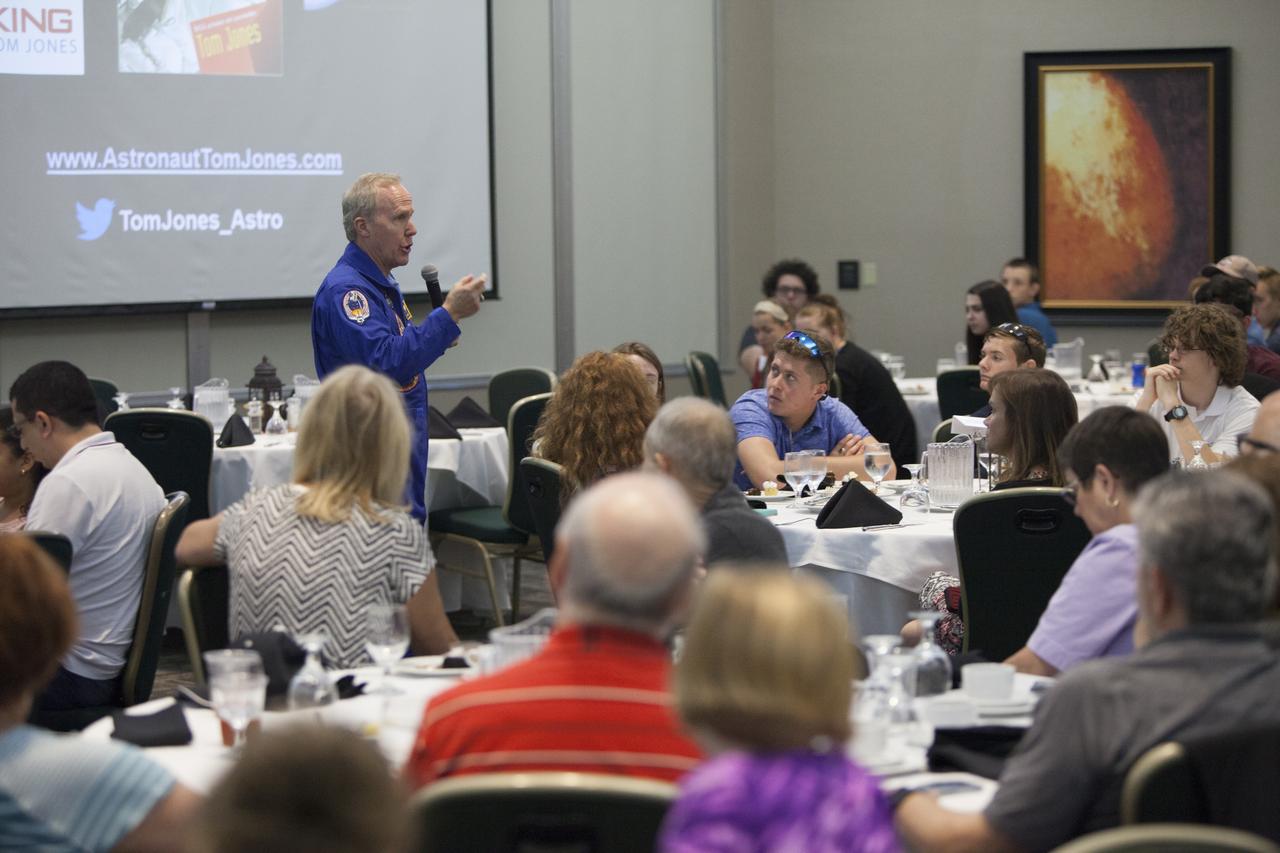
Retired NASA astronaut Tom Jones talks to high school students during "Lunch with an Astronaut" at the NASA Kennedy Space Center Visitor Complex in Florida. Top scholars from Brevard County public high schools were invited to Kennedy Space Center for a tour of facilities, lunch and a roundtable discussion with engineers and scientists at the center. The 2017-2018 Brevard Top Scholars event was hosted by the center's Education Projects and Youth Engagement office to honor the top three scholars of the 2017-2018 graduating student class from each of Brevard County’s public high schools. The students received a personalized certificate at the end of the day.
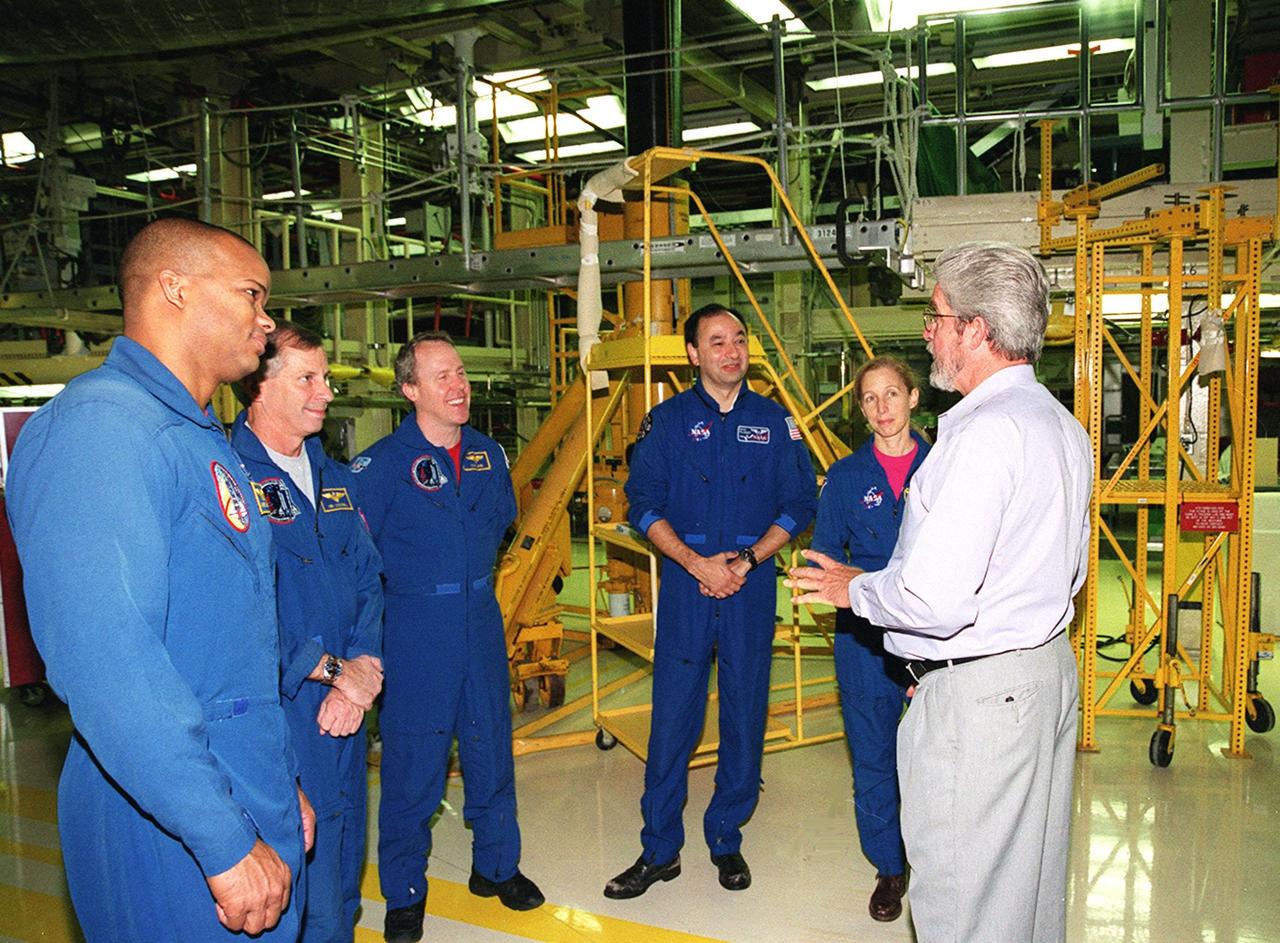
KENNEDY SPACE CENTER, FLA. -- In Orbiter Processing Facility bay 3, the STS-98 crew talks with United Space Alliance worker Larry Oshein (right). Standing left to right are Mission Specialist Robert Curbeam, Commander Ken Cockrell, Mission Specialist Tom Jones, and Mission Specialists Mark Polansky and Marsha Ivins. The crew is at KSC for Crew Equipment Interface Test activities. Launch on mission STS-98 is scheduled for Jan. 18, 2001. It will be transporting the U.S. Lab, Destiny, to the International Space Station with five system racks already installed inside of the module. After delivery of electronics in the lab, electrically powered attitude control for Control Moment Gyroscopes will be activated
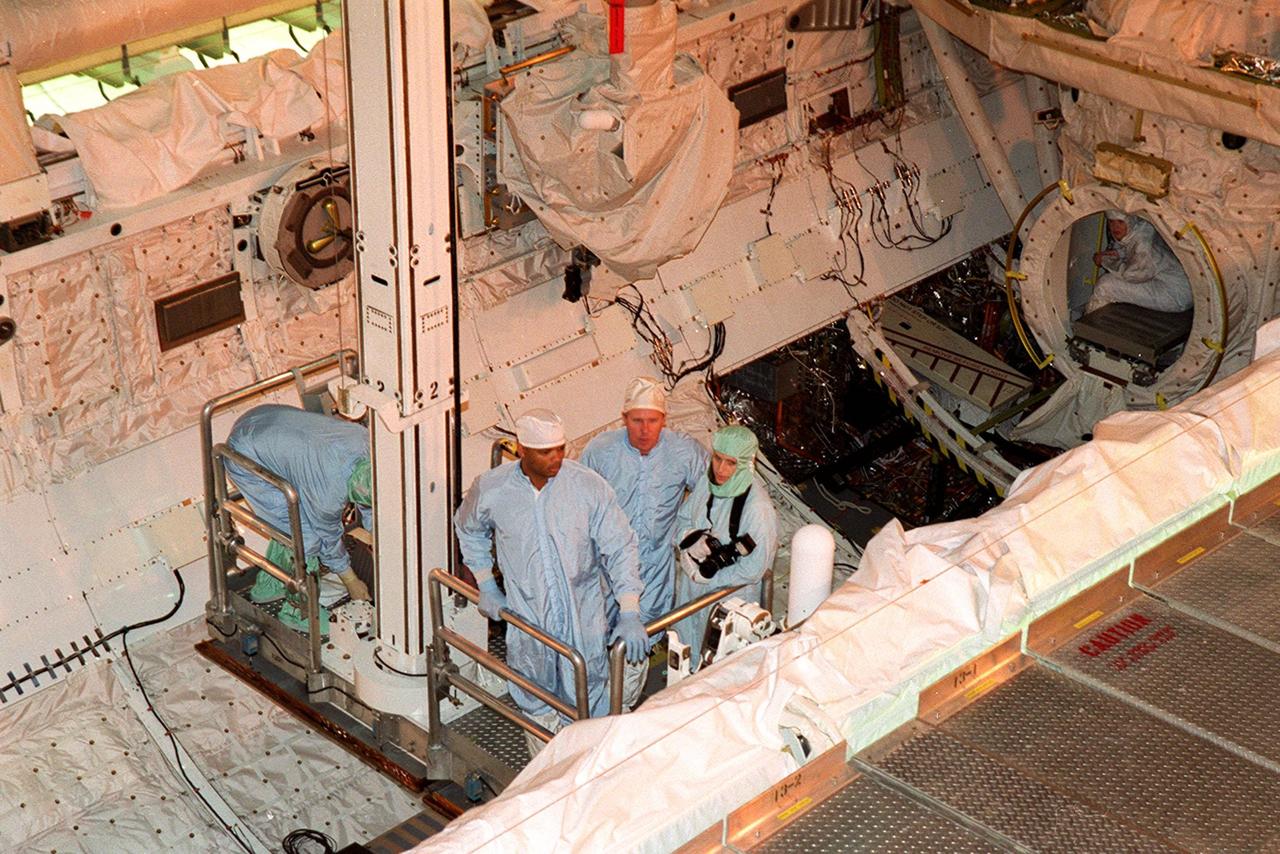
KENNEDY SPACE CENTER, FLA. -- Lowered into the payload bay of the orbiter Atlantis, some of the STS-98 crew (center of the photo) look over part of the payload. From left are Mission Specialists Robert Curbeam, Tom Jones and Marsha Ivins. They and the rest of the crew are at KSC for Crew Equipment Interface Test activities. Launch on mission STS-98 is scheduled for Jan. 18, 2001. It will be transporting the U.S. Lab, Destiny, to the International Space Station with five system racks already installed inside of the module. After delivery of electronics in the lab, electrically powered attitude control for Control Moment Gyroscopes will be activated
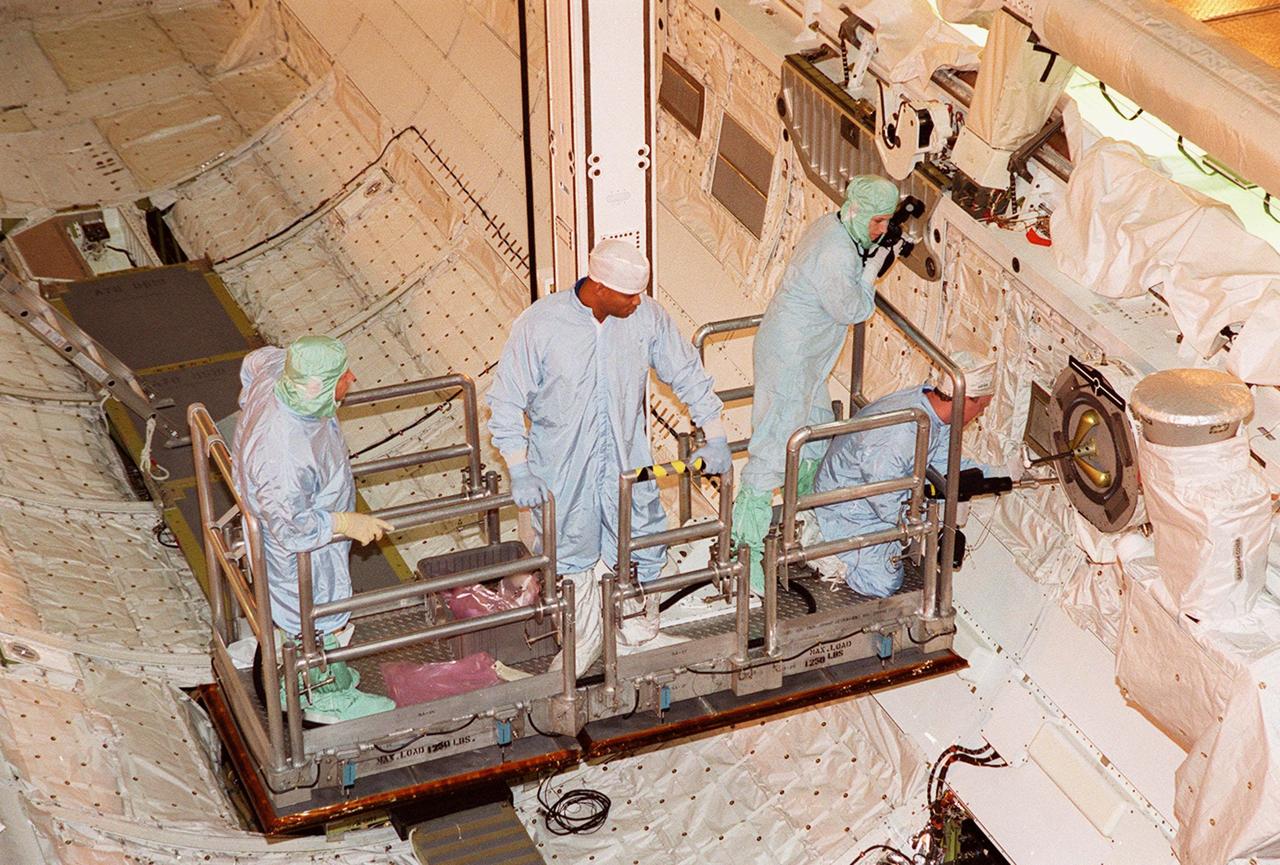
KENNEDY SPACE CENTER, FLA. -- Lowered into the payload bay of the orbiter Atlantis, some of the STS-98 crew look over part of the payload. At center is Mission Specialist Robert Curbeam; at right are Mission Specialists Marsha Ivins (standing) and Tom Jones (kneeling). They and the rest of the crew are at KSC for Crew Equipment Interface Test activities. Launch on mission STS-98 is scheduled for Jan. 18, 2001. It will be transporting the U.S. Lab, Destiny, to the International Space Station with five system racks already installed inside of the module. After delivery of electronics in the lab, electrically powered attitude control for Control Moment Gyroscopes will be activated
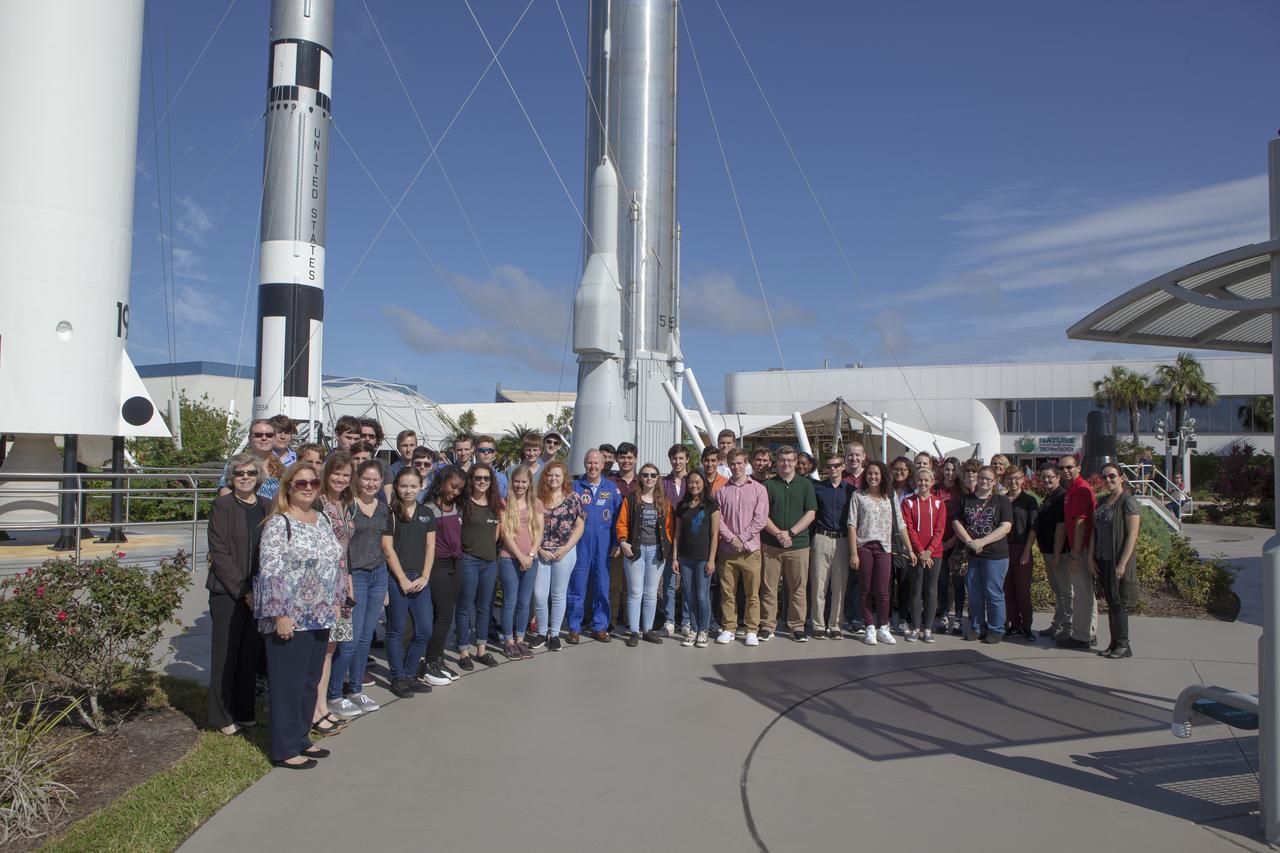
Retired NASA astronaut Tom Jones is with top scholars from Brevard County public high schools in the Rocket Garden at the NASA Kennedy Space Center Visitor Complex in Florida. Top scholars from the high schools were invited to Kennedy Space Center for a tour of facilities, lunch and a roundtable discussion with engineers and scientists at the center. The 2017-2018 Brevard Top Scholars event was hosted by the center's Education Projects and Youth Engagement office to honor the top three scholars of the 2017-2018 graduating student class from each of Brevard County’s public high schools. They students received a personalized certificate at the end of the day.
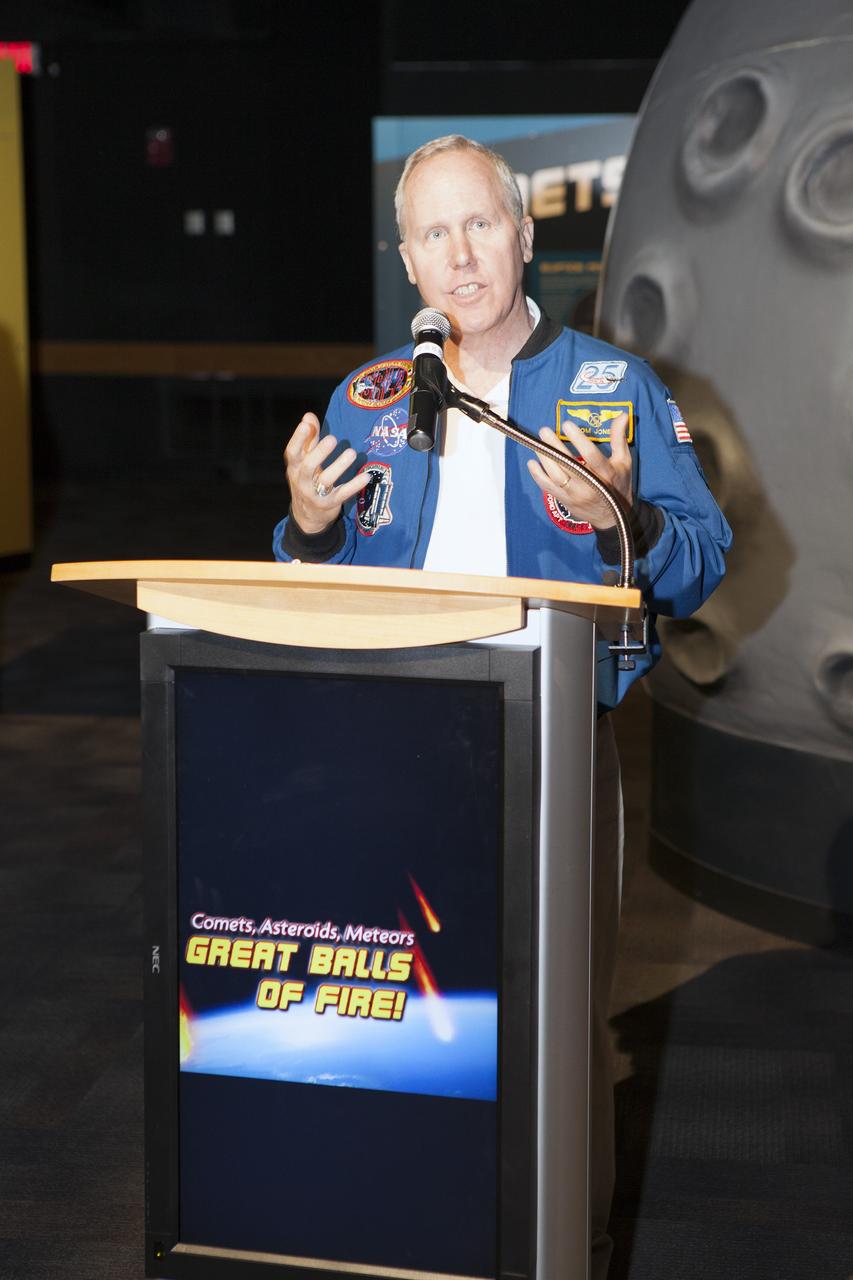
CAPE CANAVERAL, Fla. – Former NASA astronaut Tom Jones welcomes visitors to the grand opening of the Great Balls of Fire exhibit at NASA’s Kennedy Space Center Visitor Complex in Florida. Great Balls of Fire shares the story of the origins of our solar system, asteroids and comets and their possible impacts and risks. The 1,500-square-foot exhibit, located in the East Gallery of the IMAX theatre at the visitor complex, features several interactive displays, real meteorites and replica asteroid models. The exhibit is a production of The Space Science Institute's National Center for Interactive Learning. It is a traveling exhibition that also receives funding from NASA and the National Science Foundation. Photo credit: NASA/Daniel Casper
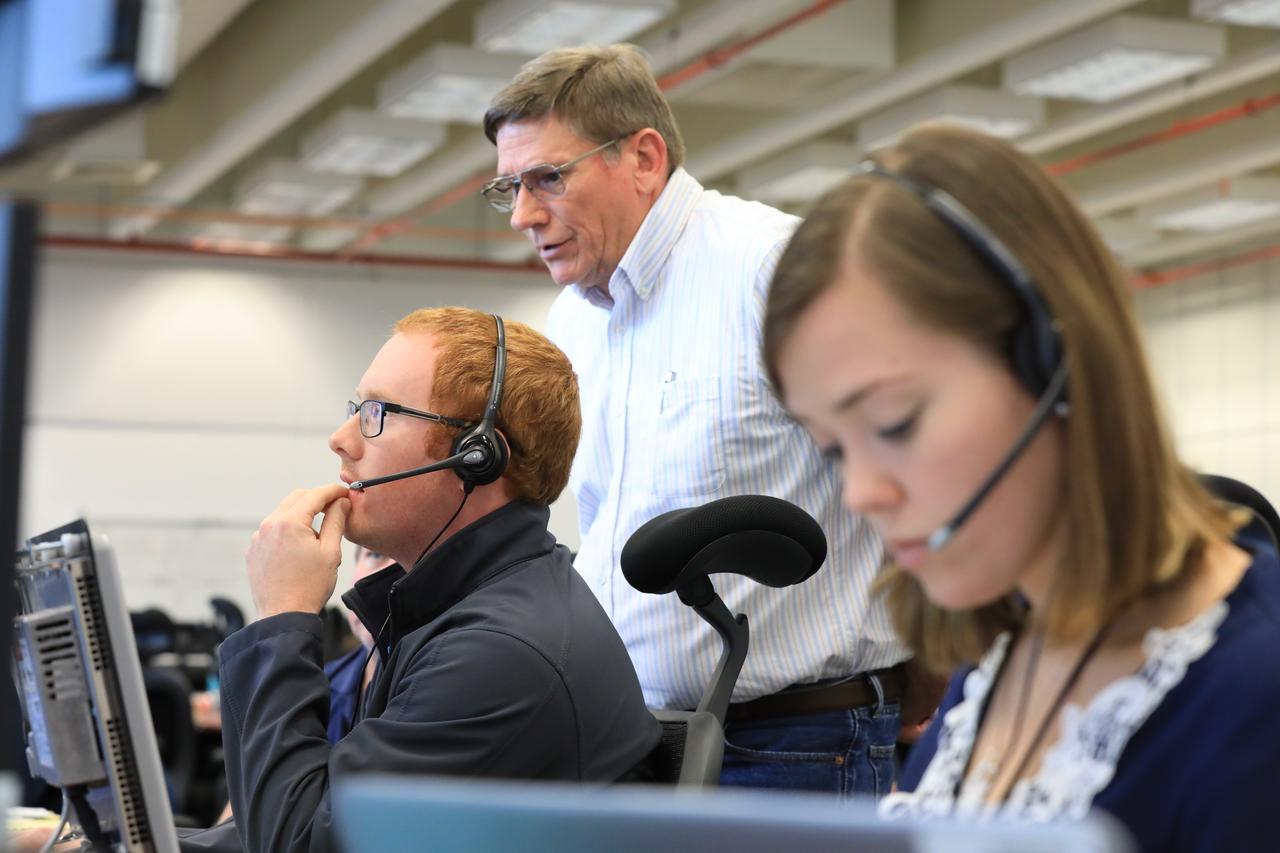
Tom Clark, standing, a manager with contractor ERC, works with Quentin Jones and Emily Hadley, both mechanical engineers for the liquid oxygen system, with ERC, during a countdown demonstration event of cryogenic propellant loading April 12, 2019, inside Firing Room 2 in the Launch Control Center at NASA’s Kennedy Space Center in Florida. The practice simulation involved loading of liquid hydrogen and liquid oxygen into the Space Launch System rocket’s core and upper stages to prepare for Exploration Mission-1 (EM-1). During the tanking exercise, the team worked through surprise issues in real-time. The practice countdown events are training opportunities coordinated by EM-1 Launch Director Charlie Blackwell-Thompson with Exploration Ground Systems.
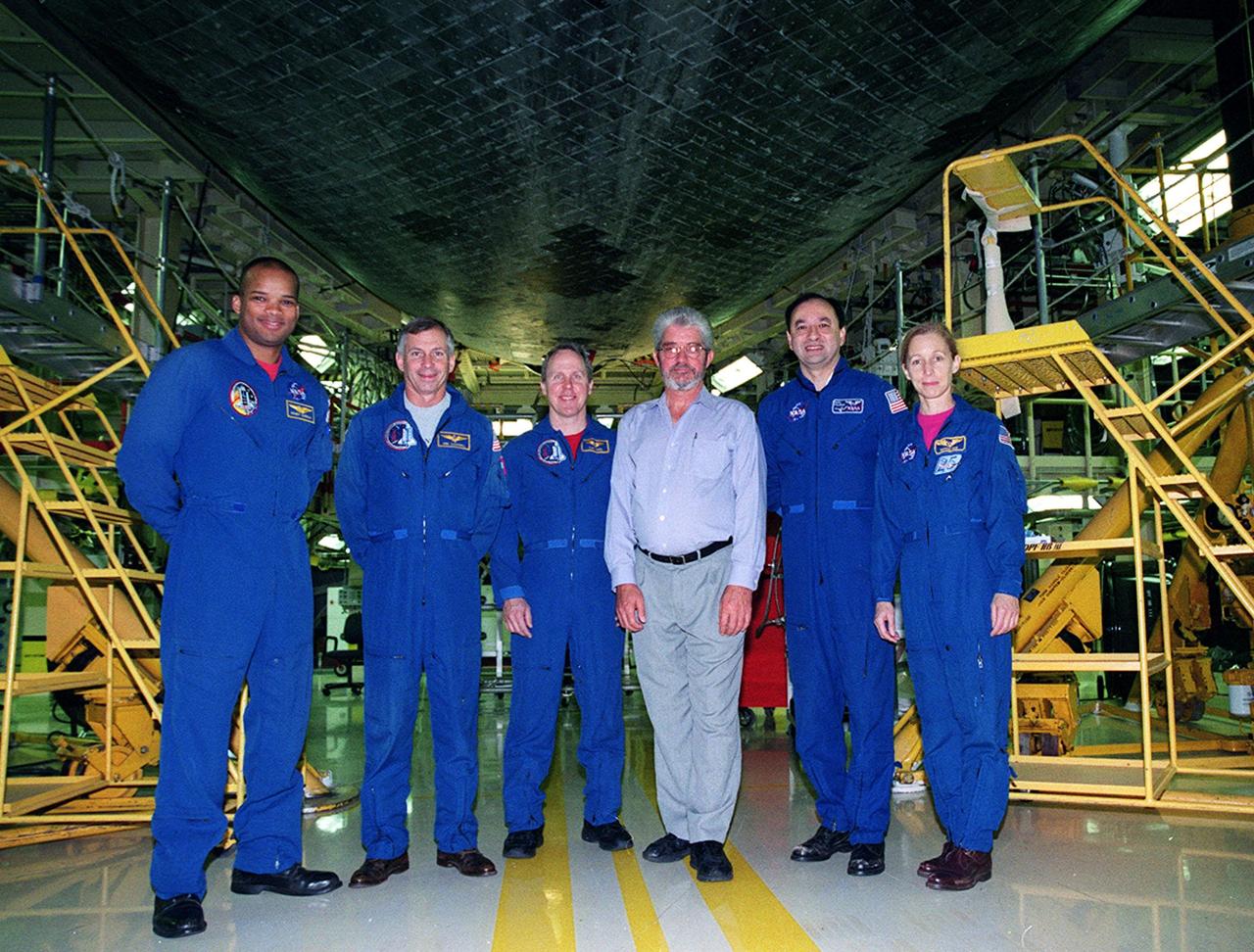
KENNEDY SPACE CENTER, FLA. -- The STS-98 crew, with United Space Alliance worker Larry Oshein (center), poses underneath orbiter Atlantis in Orbiter Processing Facility bay 3. From left, they are Mission Specialist Robert Curbeam, Commander Ken Cockrell, Mission Specialist Tom Jones, Oshein, and Mission Specialists Mark Polansky and Marsha Ivins. The crew is at KSC for Crew Equipment Interface Test activities. Launch of Atlantis on mission STS-98 is scheduled for Jan. 18, 2001. It will be transporting the U.S. Lab, Destiny, to the International Space Station with five system racks already installed inside of the module. After delivery of electronics in the lab, electrically powered attitude control for Control Moment Gyroscopes will be activated
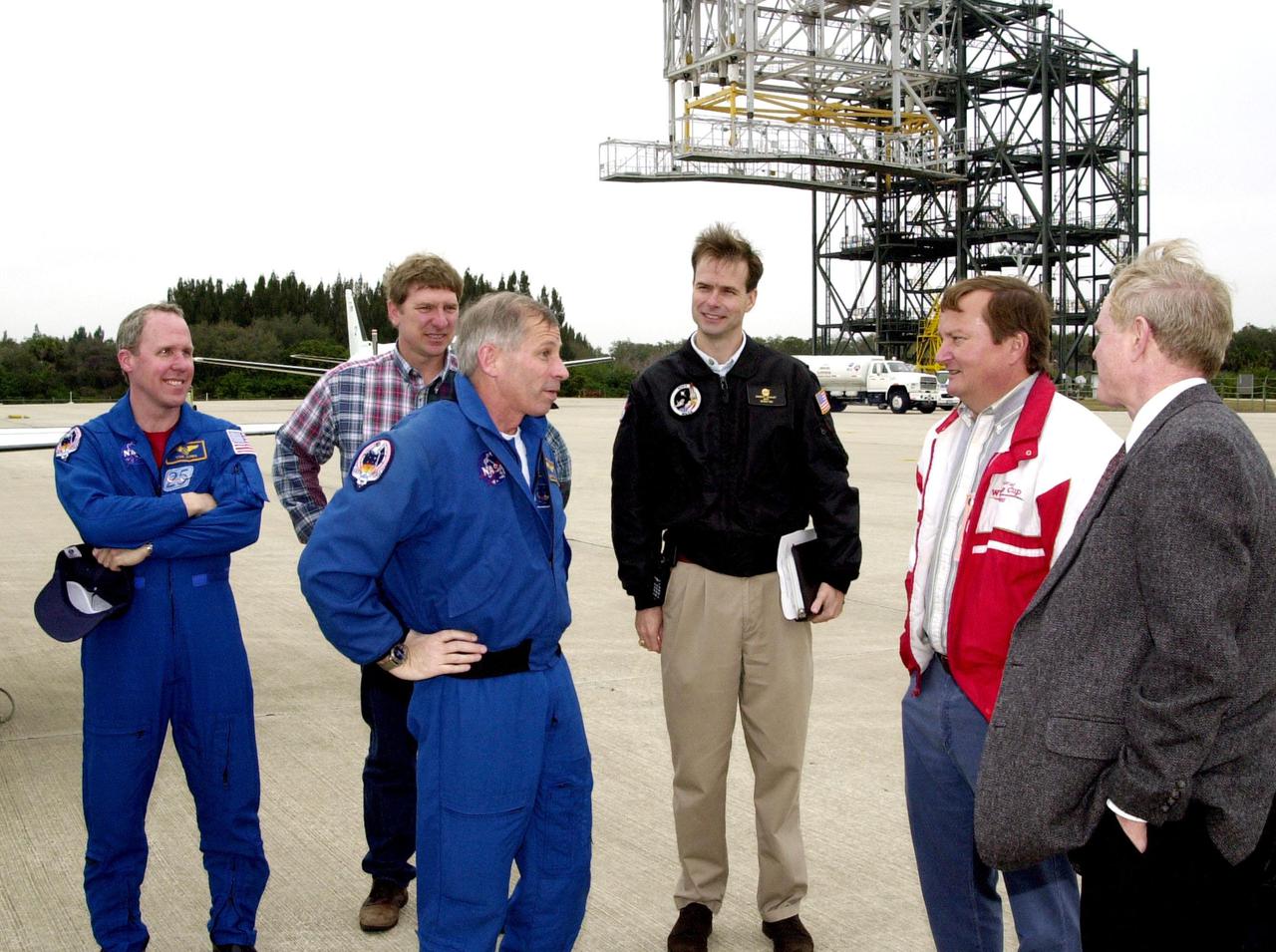
KENNEDY SPACE CENTER, FLA. -- STS-98 Mission Commander Kenneth Cockrell (center) talks with Launch Director Michael Leinbach (red and white jacket) and Center Director Roy Bridges (right) at the Shuttle Landing Facility after the crew's arrival Sunday to complete preparations for launch.; Behind him are, from left to right, Mission Specialist Thomas Jones; Tom Kwiatkowski, NASA, Johnson Space Center (JSC); and Robert Hanley, United Space Alliance, JSC.; The crew also includes Pilot Mark Polansky and Mission Specialists Marsha Ivins and Robert Curbeam.; STS-98 is the seventh construction flight to the International Space Station, carrying as payload the U.S. Lab Destiny, a key element in the construction of the ISS. Launch of STS-98 is scheduled for Feb. 7 at 6:11 p.m. EST
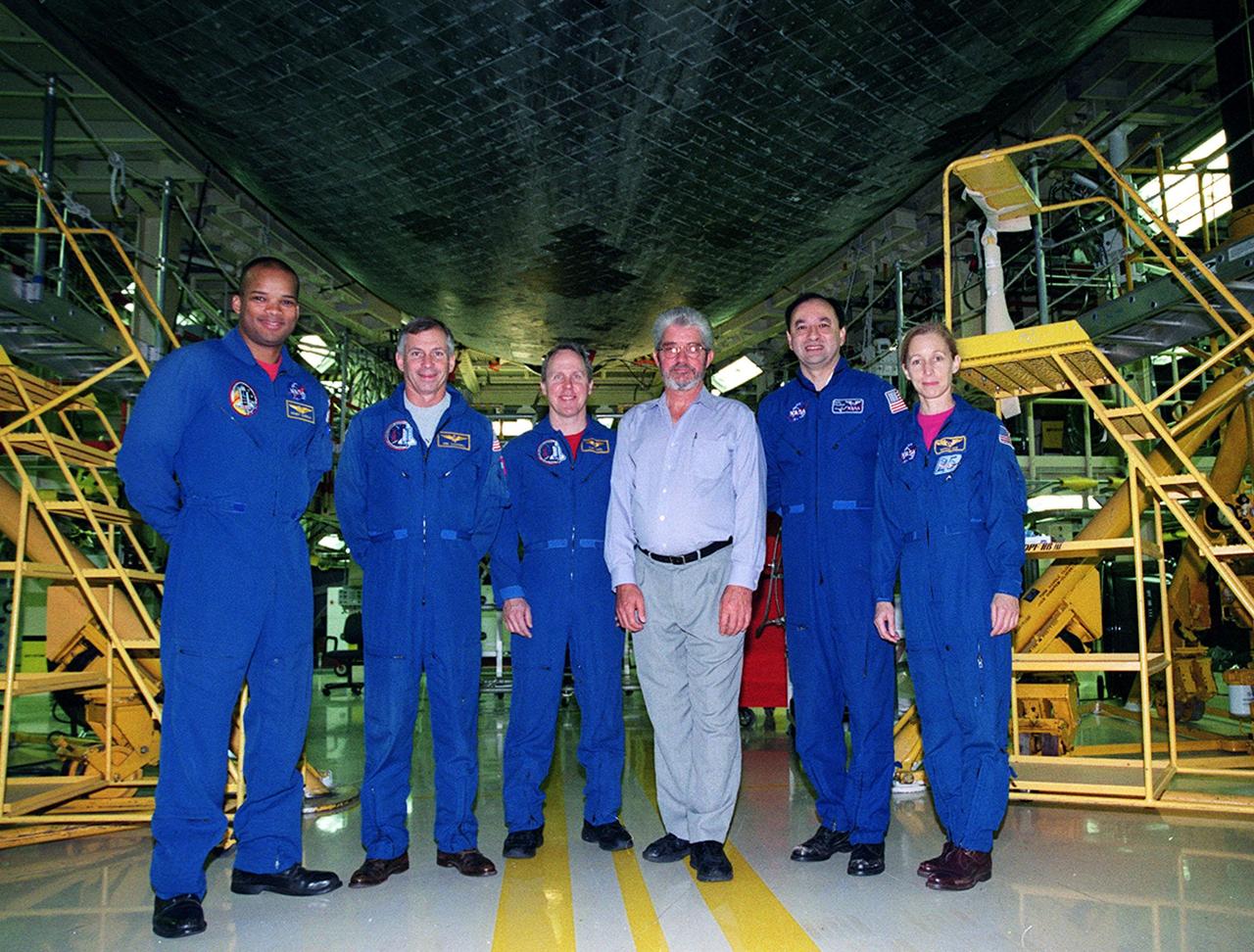
KENNEDY SPACE CENTER, FLA. -- The STS-98 crew, with United Space Alliance worker Larry Oshein (center), poses underneath orbiter Atlantis in Orbiter Processing Facility bay 3. From left, they are Mission Specialist Robert Curbeam, Commander Ken Cockrell, Mission Specialist Tom Jones, Oshein, and Mission Specialists Mark Polansky and Marsha Ivins. The crew is at KSC for Crew Equipment Interface Test activities. Launch of Atlantis on mission STS-98 is scheduled for Jan. 18, 2001. It will be transporting the U.S. Lab, Destiny, to the International Space Station with five system racks already installed inside of the module. After delivery of electronics in the lab, electrically powered attitude control for Control Moment Gyroscopes will be activated

CAPE CANAVERAL, Fla. – Former NASA astronaut Tom Jones discusses the characteristics of asteroids and meteors with a young guest during the grand opening of the Great Balls of Fire exhibit at NASA’s Kennedy Space Center Visitor Complex in Florida. Great Balls of Fire shares the story of the origins of our solar system, asteroids and comets and their possible impacts and risks. The 1,500-square-foot exhibit, located in the East Gallery of the IMAX theatre at the visitor complex, features several interactive displays, real meteorites and replica asteroid models. The exhibit is a production of The Space Science Institute's National Center for Interactive Learning. It is a traveling exhibition that also receives funding from NASA and the National Science Foundation. Photo credit: NASA/Daniel Casper
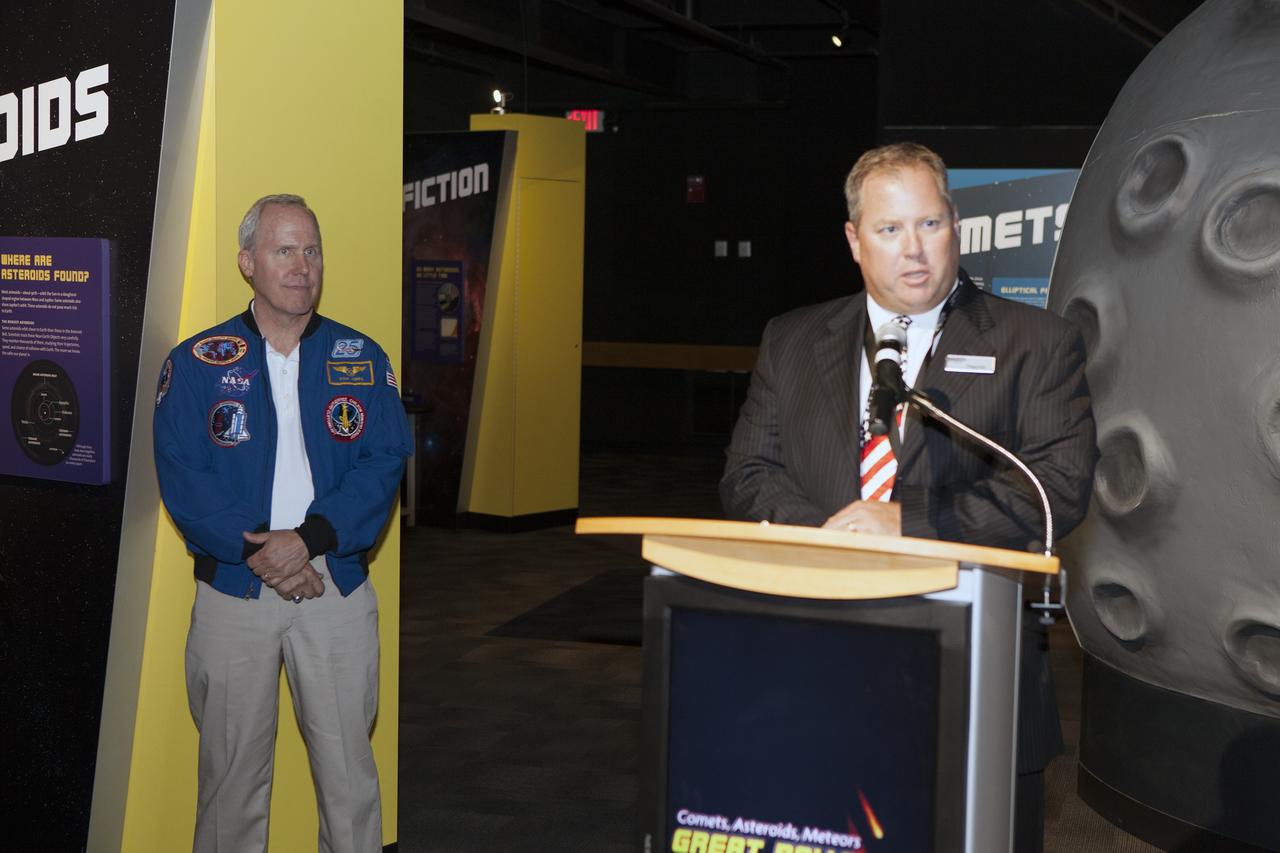
CAPE CANAVERAL, Fla. – Therrin Protze, chief operating officer with Delaware North Parks and Resorts at NASA's Kennedy Space Center Visitor Complex in Florida, welcomes guests to the grand opening of the Great Balls of Fire exhibit. To his left is former NASA astronaut Tom Jones. Great Balls of Fire shares the story of the origins of our solar system, asteroids and comets and their possible impacts and risks. The 1,500-square-foot exhibit, located in the East Gallery of the IMAX theatre at the visitor complex, features several interactive displays, real meteorites and replica asteroid models. The exhibit is a production of The Space Science Institute's National Center for Interactive Learning. It is a traveling exhibition that also receives funding from NASA and the National Science Foundation. Photo credit: NASA/Daniel Casper
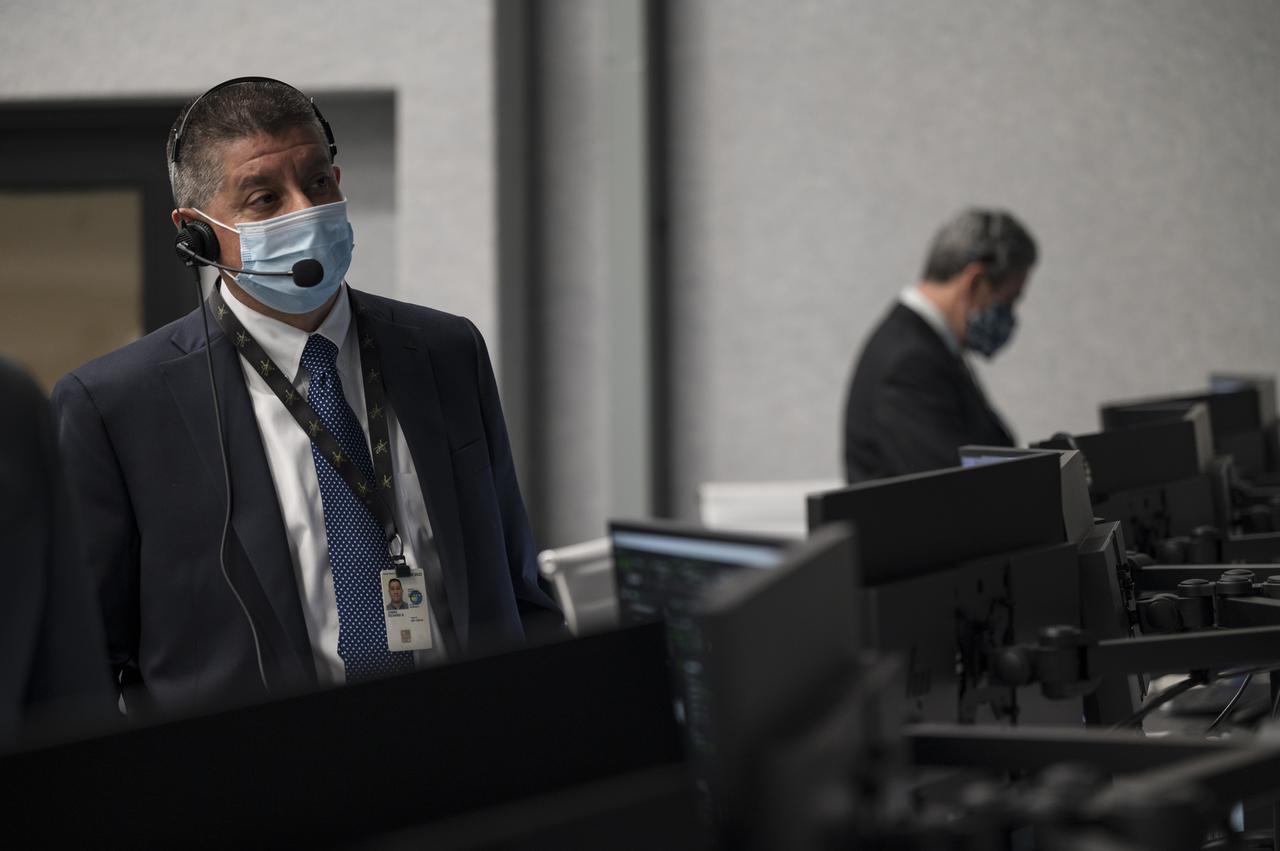
Richard Jones, manager of the Mission Management and Integration Office for NASA's Commercial Crew Program, monitors the countdown of the launch of a SpaceX Falcon 9 rocket carrying the company's Crew Dragon spacecraft on NASA’s SpaceX Crew-3 mission with NASA astronauts Raja Chari, Tom Marshburn, Kayla Barron, and ESA (European Space Agency) astronaut Matthias Maurer onboard, Wednesday, Nov. 10, 2021, in firing room four of the Launch Control Center at NASA’s Kennedy Space Center in Florida. NASA’s SpaceX Crew-3 mission is the first crew rotation mission of the SpaceX Crew Dragon spacecraft and Falcon 9 rocket to the International Space Station as part of the agency’s Commercial Crew Program. Chari, Marshburn, Barron, Maurer are scheduled to launch at 9:03 p.m. EST, from Launch Complex 39A at the Kennedy Space Center. Photo Credit: (NASA/Aubrey Gemignani)
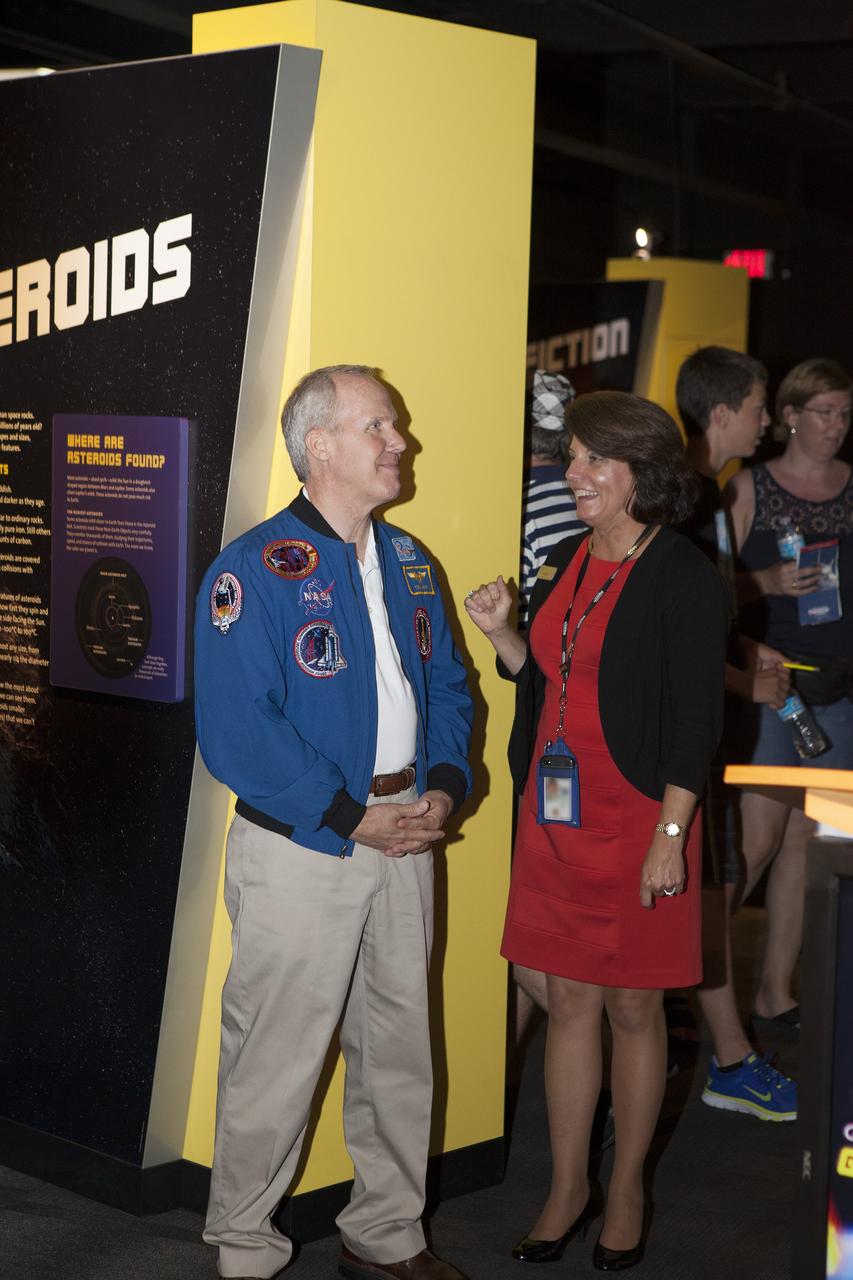
CAPE CANAVERAL, Fla. – Former NASA astronaut Tom Jones, left, joins Andrea Farmer, senior public relations manager with Delaware North Parks and Resorts at NASA Kennedy Space Center Visitor Complex in Florida, for the grand opening of the Great Balls of Fire exhibit. Great Balls of Fire shares the story of the origins of our solar system, asteroids and comets and their possible impacts and risks. The 1,500-square-foot exhibit, located in the East Gallery of the IMAX theatre at the visitor complex, features several interactive displays, real meteorites and replica asteroid models. The exhibit is a production of The Space Science Institute's National Center for Interactive Learning. It is a traveling exhibition that also receives funding from NASA and the National Science Foundation. Photo credit: NASA/Daniel Casper
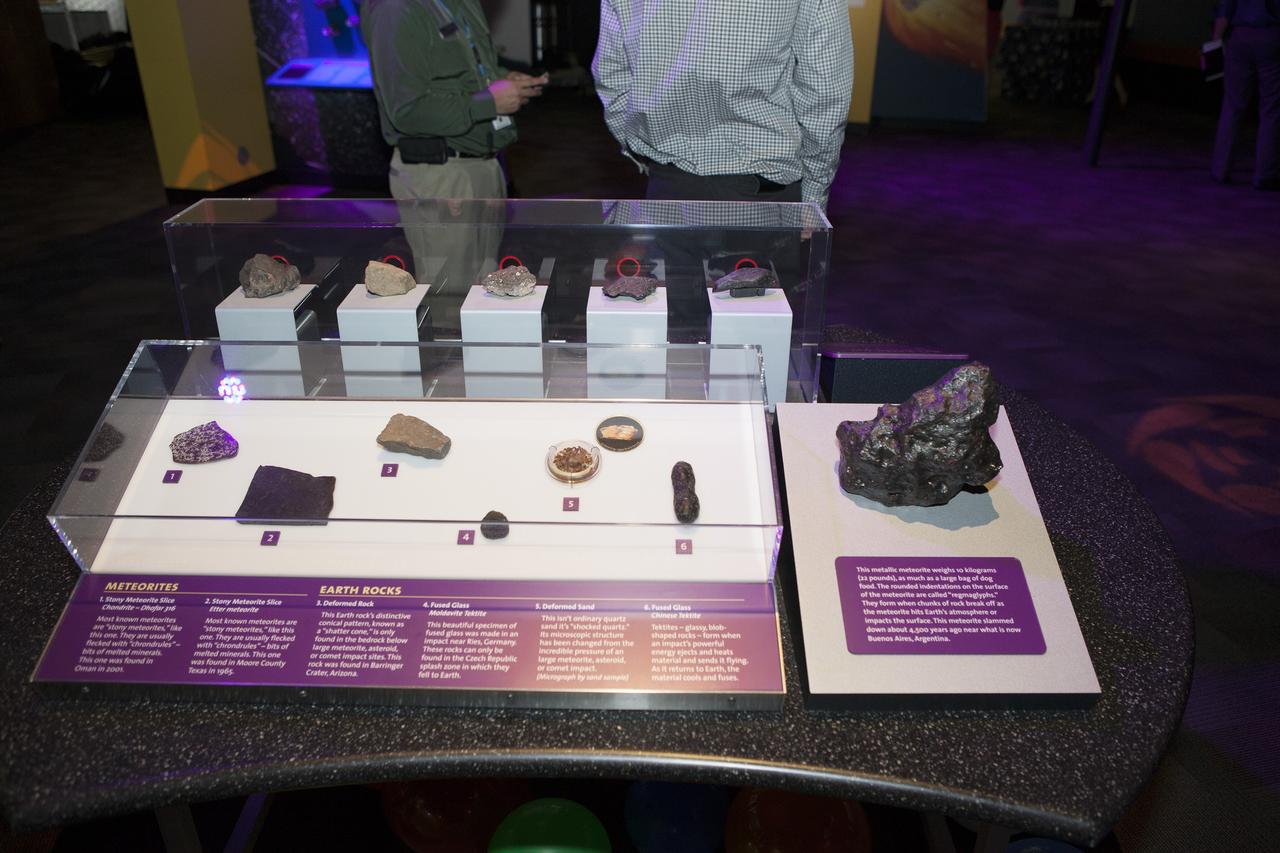
CAPE CANAVERAL, Fla. – Samples of Earth rocks and real meteorites are featured in an interactive display at the new Great Balls of Fire exhibit at NASA’s Kennedy Space Center Visitor Complex in Florida. The grand opening featured remarks by former NASA astronaut Tom Jones, and Therrin Protze, chief operating officer at Delaware North Parks and Resorts at the visitor complex. Great Balls of Fire shares the story of the origins of our solar system, asteroids and comets and their possible impacts and risks. The 1,500-square-foot exhibit, located in the East Gallery of the IMAX theatre at the visitor complex, features several interactive displays, real meteorites and replica asteroid models. The exhibit is a production of The Space Science Institute's National Center for Interactive Learning. It is a traveling exhibition that also receives funding from NASA and the National Science Foundation. Photo credit: NASA/Daniel Casper

CAPE CANAVERAL, Fla. – Former NASA astronaut Tom Jones discusses the characteristics of asteroids and meteors with a young guest during the grand opening of the Great Balls of Fire exhibit at NASA’s Kennedy Space Center Visitor Complex in Florida. Great Balls of Fire shares the story of the origins of our solar system, asteroids and comets and their possible impacts and risks. The 1,500-square-foot exhibit, located in the East Gallery of the IMAX theatre at the visitor complex, features several interactive displays, real meteorites and replica asteroid models. The exhibit is a production of The Space Science Institute's National Center for Interactive Learning. It is a traveling exhibition that also receives funding from NASA and the National Science Foundation. Photo credit: NASA/Daniel Casper
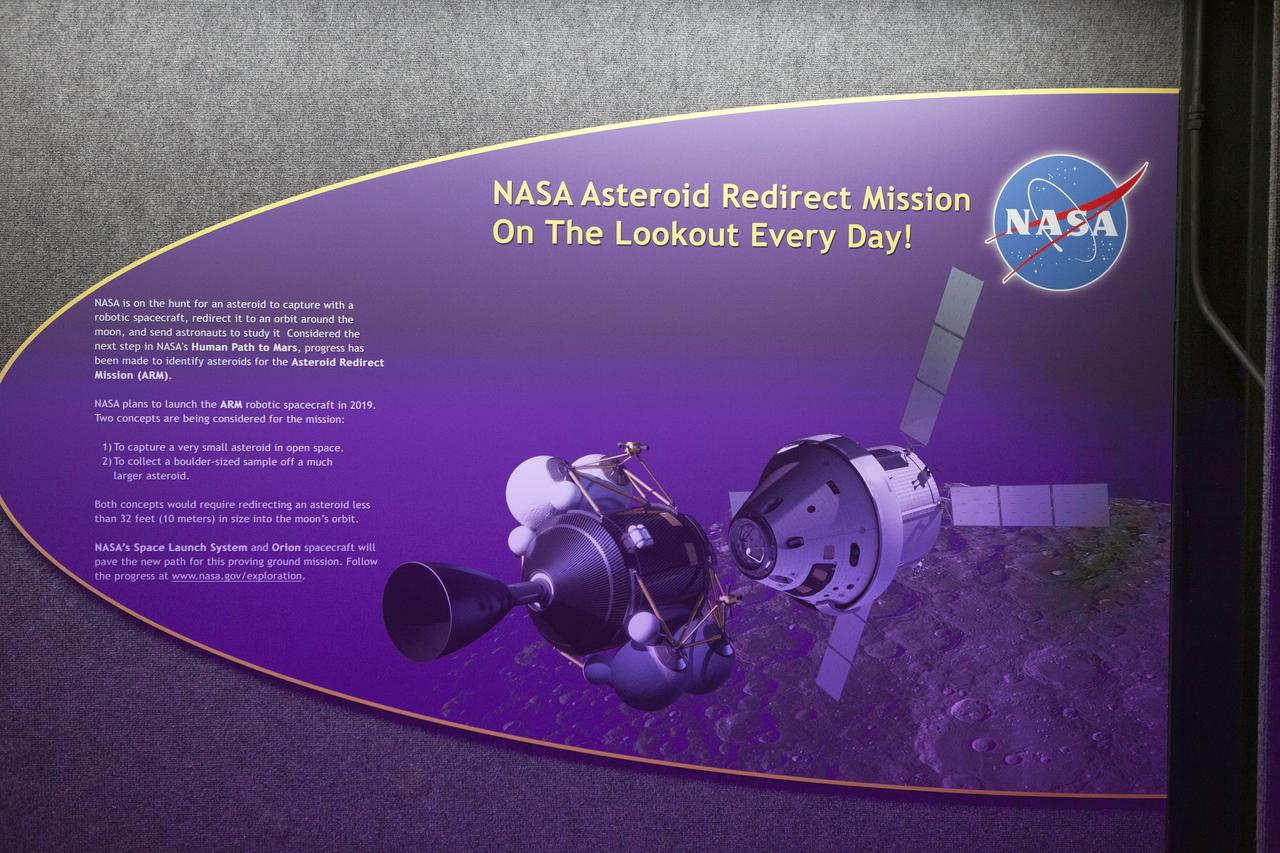
CAPE CANAVERAL, Fla. – The grand opening of the new Great Balls of Fire exhibit was held at NASA’s Kennedy Space Center Visitor Complex in Florida. The grand opening featured remarks by former NASA astronaut Tom Jones, and Therrin Protze, chief operating officer at Delaware North Parks and Resorts at the visitor complex. Informational displays about future NASA exploration missions are featured along the wall of the new exhibit. Great Balls of Fire shares the story of the origins of our solar system, asteroids and comets and their possible impacts and risks. The 1,500-square-foot exhibit, located in the East Gallery of the IMAX theatre at the visitor complex, features several interactive displays, real meteorites and replica asteroid models. The exhibit is a production of The Space Science Institute's National Center for Interactive Learning. It is a traveling exhibition that also receives funding from NASA and the National Science Foundation. Photo credit: NASA/Daniel Casper
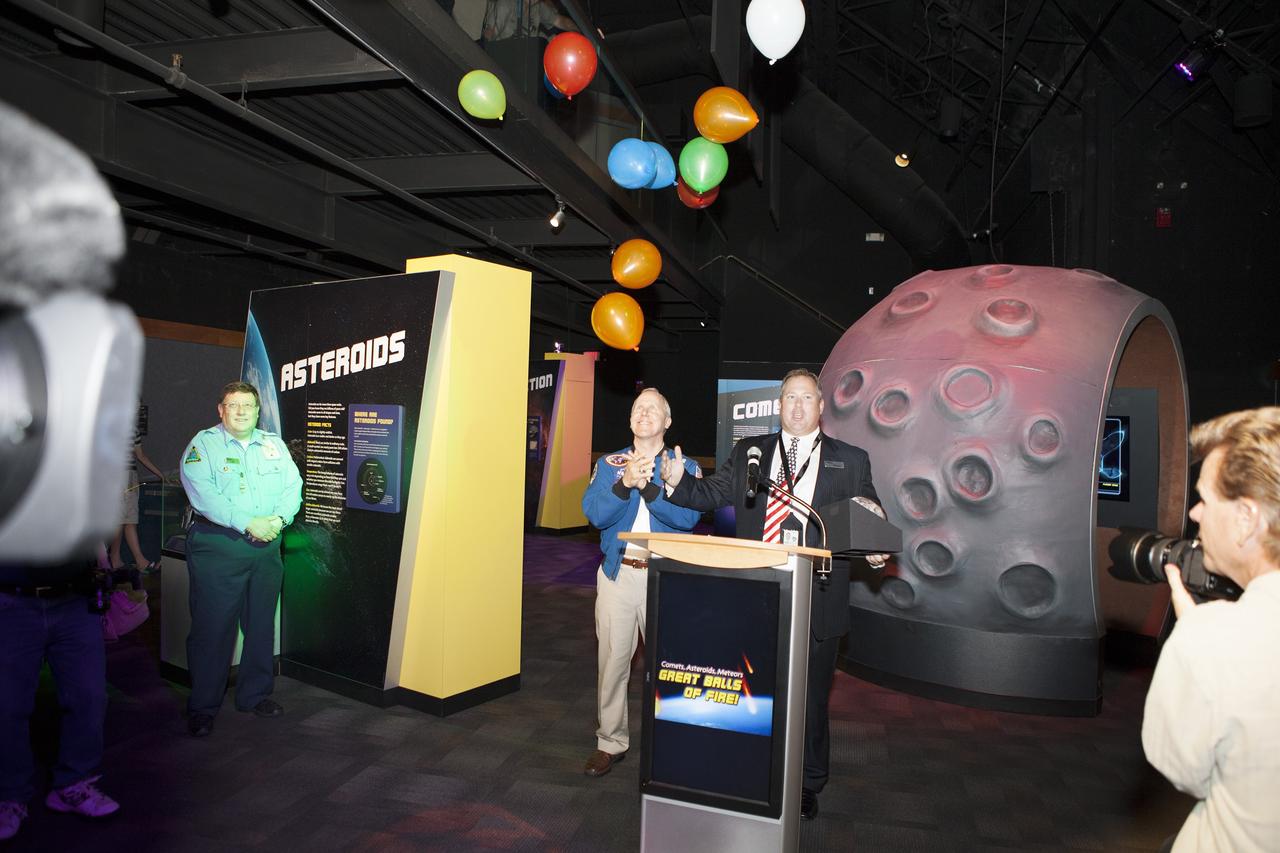
CAPE CANAVERAL, Fla. – Lights flickered and balloons fell as former NASA astronaut Tom Jones, left, and Therrin Protze, chief operating officer of Delaware North Parks and Resorts at NASA’s Kennedy Space Center Visitor Complex in Florida, welcomed guests to the grand opening of the Great Balls of Fire exhibit at the visitor complex. Great Balls of Fire shares the story of the origins of our solar system, asteroids and comets and their possible impacts and risks. The 1,500-square-foot exhibit, located in the East Gallery of the IMAX theatre at the visitor complex, features several interactive displays, real meteorites and replica asteroid models. The exhibit is a production of The Space Science Institute's National Center for Interactive Learning. It is a traveling exhibition that also receives funding from NASA and the National Science Foundation. Photo credit: NASA/Daniel Casper
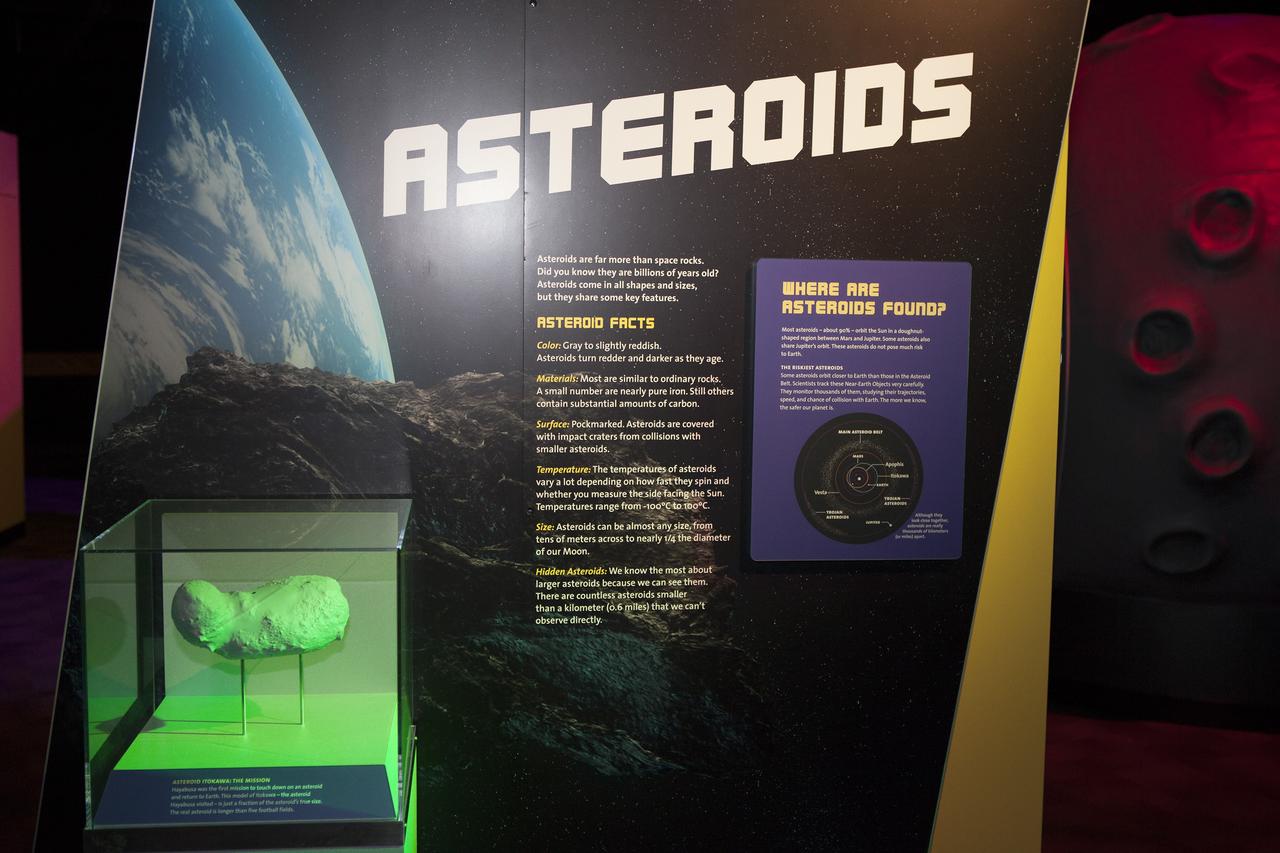
CAPE CANAVERAL, Fla. – A real asteroid is on display at the new Great Balls of Fire exhibit at NASA’s Kennedy Space Center Visitor Complex in Florida. The grand opening of the new attraction featured remarks by former NASA astronaut Tom Jones, and Therrin Protze, chief operating officer at Delaware North Parks and Resorts at the visitor complex. Great Balls of Fire shares the story of the origins of our solar system, asteroids and comets and their possible impacts and risks. The 1,500-square-foot exhibit, located in the East Gallery of the IMAX theatre at the visitor complex, features several interactive displays, real meteorites and replica asteroid models. The exhibit is a production of The Space Science Institute's National Center for Interactive Learning. It is a traveling exhibition that also receives funding from NASA and the National Science Foundation. Photo credit: NASA/Daniel Casper
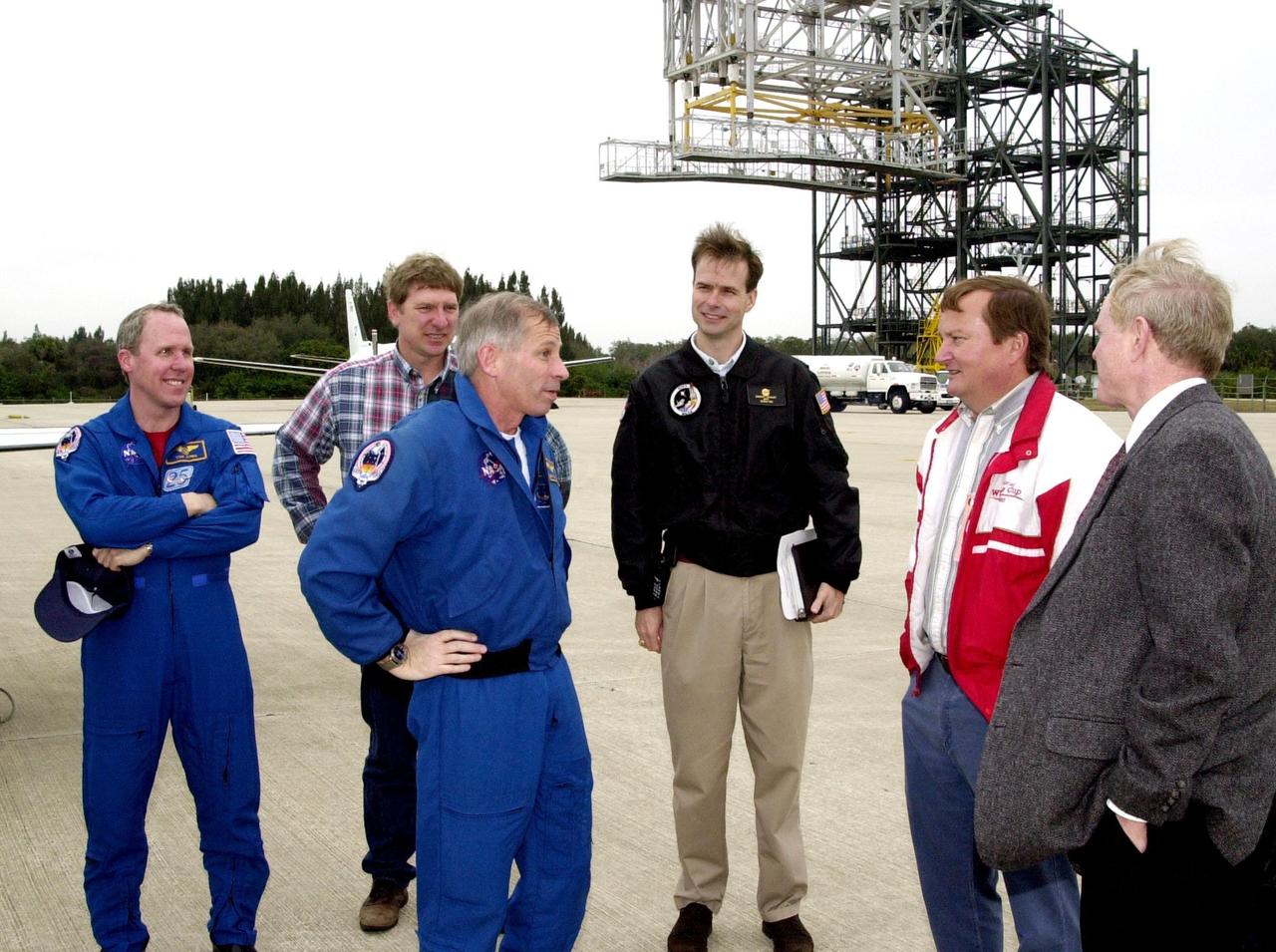
KENNEDY SPACE CENTER, FLA. -- STS-98 Mission Commander Kenneth Cockrell (center) talks with Launch Director Michael Leinbach (red and white jacket) and Center Director Roy Bridges (right) at the Shuttle Landing Facility after the crew's arrival Sunday to complete preparations for launch.; Behind him are, from left to right, Mission Specialist Thomas Jones; Tom Kwiatkowski, NASA, Johnson Space Center (JSC); and Robert Hanley, United Space Alliance, JSC.; The crew also includes Pilot Mark Polansky and Mission Specialists Marsha Ivins and Robert Curbeam.; STS-98 is the seventh construction flight to the International Space Station, carrying as payload the U.S. Lab Destiny, a key element in the construction of the ISS. Launch of STS-98 is scheduled for Feb. 7 at 6:11 p.m. EST
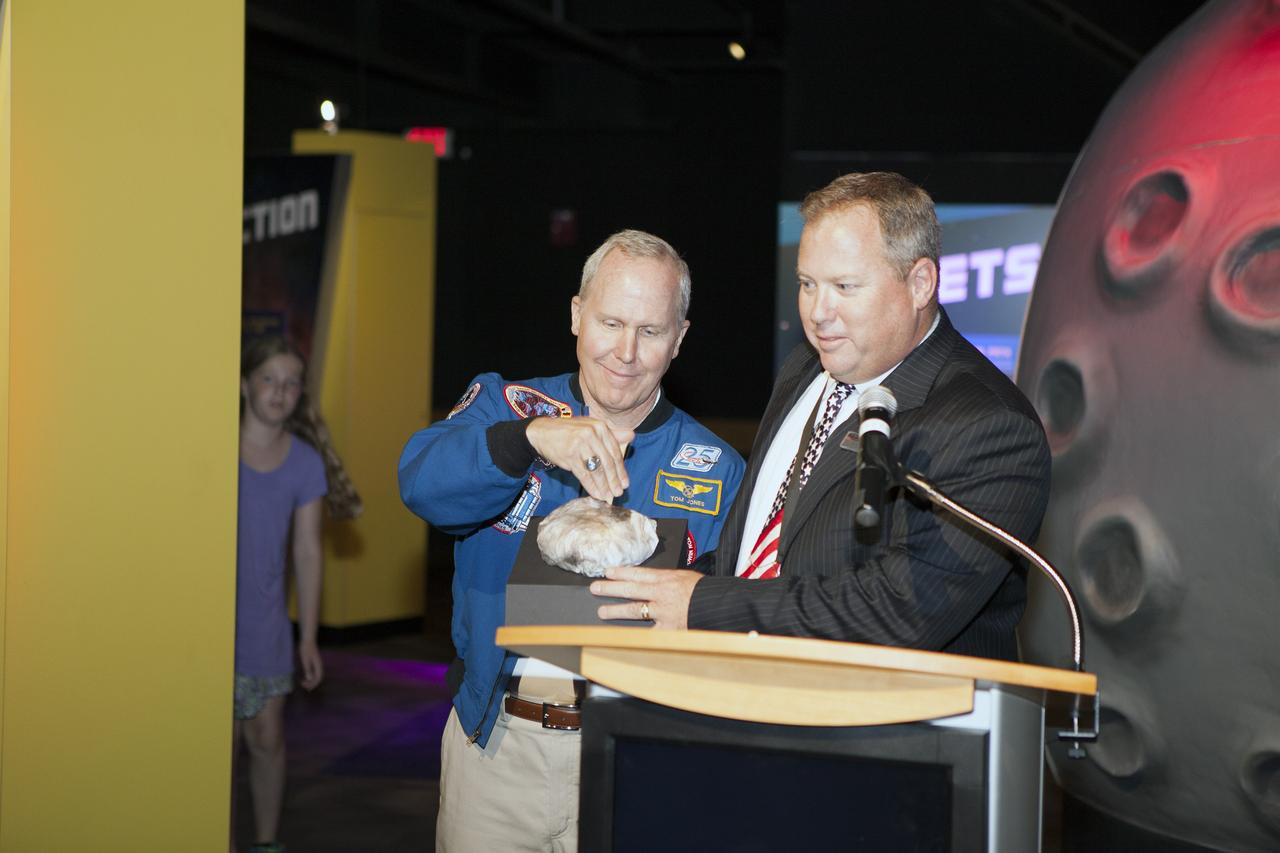
CAPE CANAVERAL, Fla. – Former NASA astronaut Tom Jones, left, presses the button on a simulated model of an asteroid to mark the grand opening of the new Great Balls of Fire exhibit at NASA’s Kennedy Space Center Visitor Complex in Florida. To his right is Therrin Protze, chief operating officer with Delaware North Parks and Resorts at the visitor complex. Great Balls of Fire shares the story of the origins of our solar system, asteroids and comets and their possible impacts and risks. The 1,500-square-foot exhibit, located in the East Gallery of the IMAX theatre at the visitor complex, features several interactive displays, real meteorites and replica asteroid models. The exhibit is a production of The Space Science Institute's National Center for Interactive Learning. It is a traveling exhibition that also receives funding from NASA and the National Science Foundation. Photo credit: NASA/Daniel Casper

CAPE CANAVERAL, Fla. – The grand opening of the new Great Balls of Fire exhibit was held at NASA’s Kennedy Space Center Visitor Complex in Florida. The grand opening featured remarks by former NASA astronaut Tom Jones, and Therrin Protze, chief operating officer at Delaware North Parks and Resorts at the visitor complex. Great Balls of Fire shares the story of the origins of our solar system, asteroids and comets and their possible impacts and risks. The 1,500-square-foot exhibit, located in the East Gallery of the IMAX theatre at the visitor complex, features several interactive displays, real meteorites and replica asteroid models. The exhibit is a production of The Space Science Institute's National Center for Interactive Learning. It is a traveling exhibition that also receives funding from NASA and the National Science Foundation. Photo credit: NASA/Daniel Casper
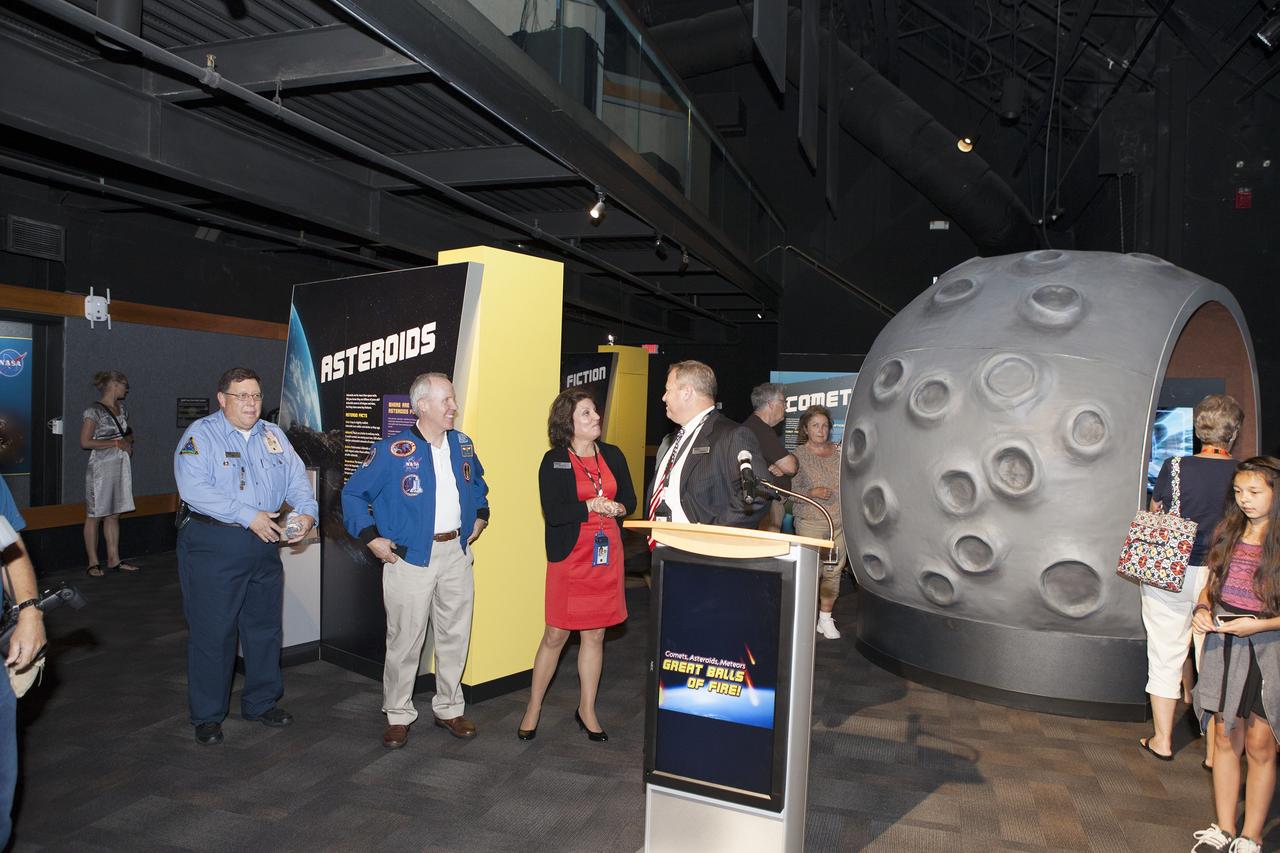
CAPE CANAVERAL, Fla. – Former NASA astronaut Tom Jones, left, joins Andrea Farmer, senior public relations manager, and Therrin Protze, chief operating officer, both with Delaware North Parks and Resorts at NASA's Kennedy Space Center Visitor Complex in Florida, for the grand opening of the Great Balls of Fire exhibit. Great Balls of Fire shares the story of the origins of our solar system, asteroids and comets and their possible impacts and risks. The 1,500-square-foot exhibit, located in the East Gallery of the IMAX theatre at the visitor complex, features several interactive displays, real meteorites and replica asteroid models. The exhibit is a production of The Space Science Institute's National Center for Interactive Learning. It is a traveling exhibition that also receives funding from NASA and the National Science Foundation. Photo credit: NASA/Daniel Casper
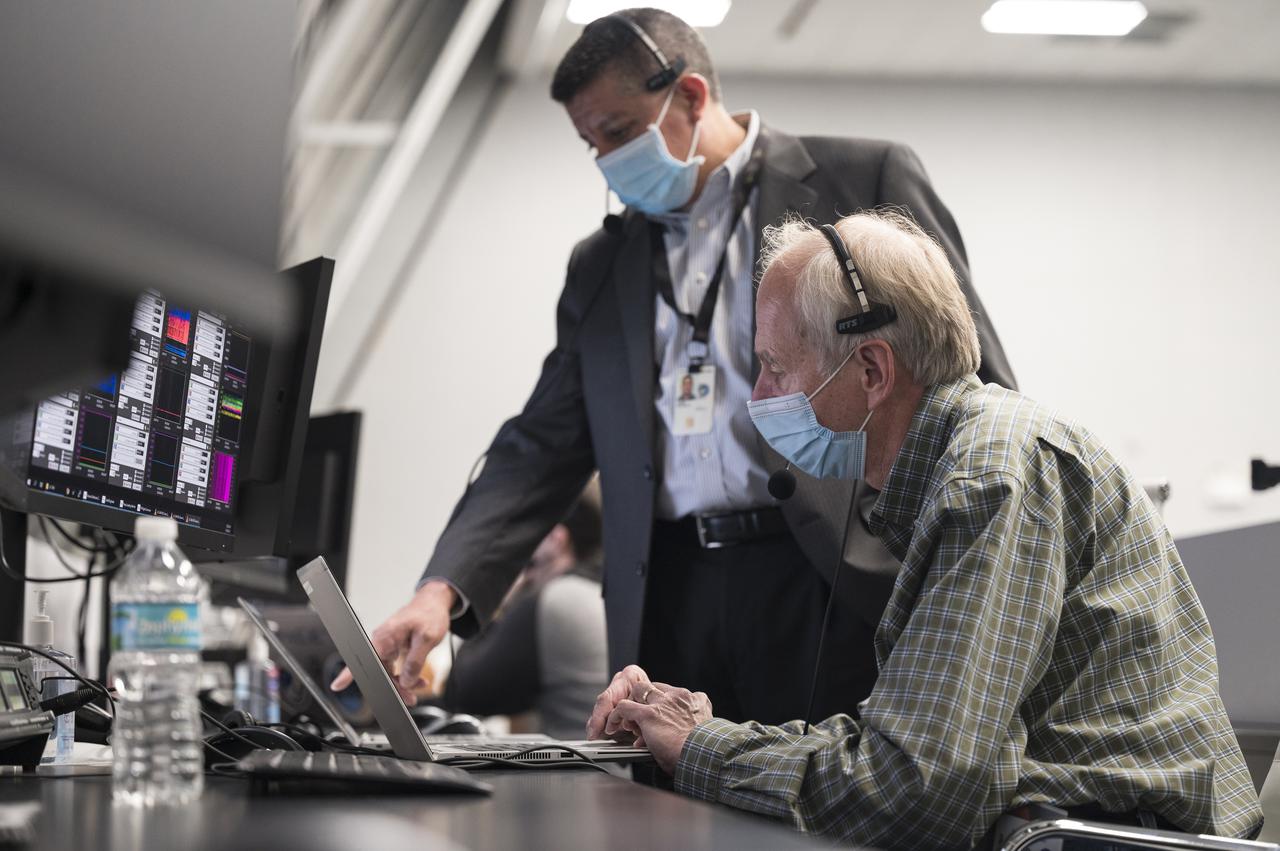
William Gerstenmaier, vice president for Build and Flight Reliability at SpaceX, left, and Richard Jones, manager of the Mission Management and Integration Office for NASA's Commercial Crew Program, monitor the countdown during a dress rehearsal in preparation for the launch of a SpaceX Falcon 9 rocket carrying the company's Crew Dragon spacecraft on NASA’s SpaceX Crew-3 mission with NASA astronauts Raja Chari, Tom Marshburn, Kayla Barron, and ESA (European Space Agency) astronaut Matthias Maurer onboard, Thursday, Oct. 28, 2021, in firing room four of the Launch Control Center at NASA’s Kennedy Space Center in Florida. NASA’s SpaceX Crew-3 mission is the third crew rotation mission of the SpaceX Crew Dragon spacecraft and Falcon 9 rocket to the International Space Station as part of the agency’s Commercial Crew Program. Chari, Marshburn, Barron, Maurer are scheduled to launch on Oct. 31 at 2:21 a.m. ET, from Launch Complex 39A at the Kennedy Space Center. Photo Credit: (NASA/Aubrey Gemignani)
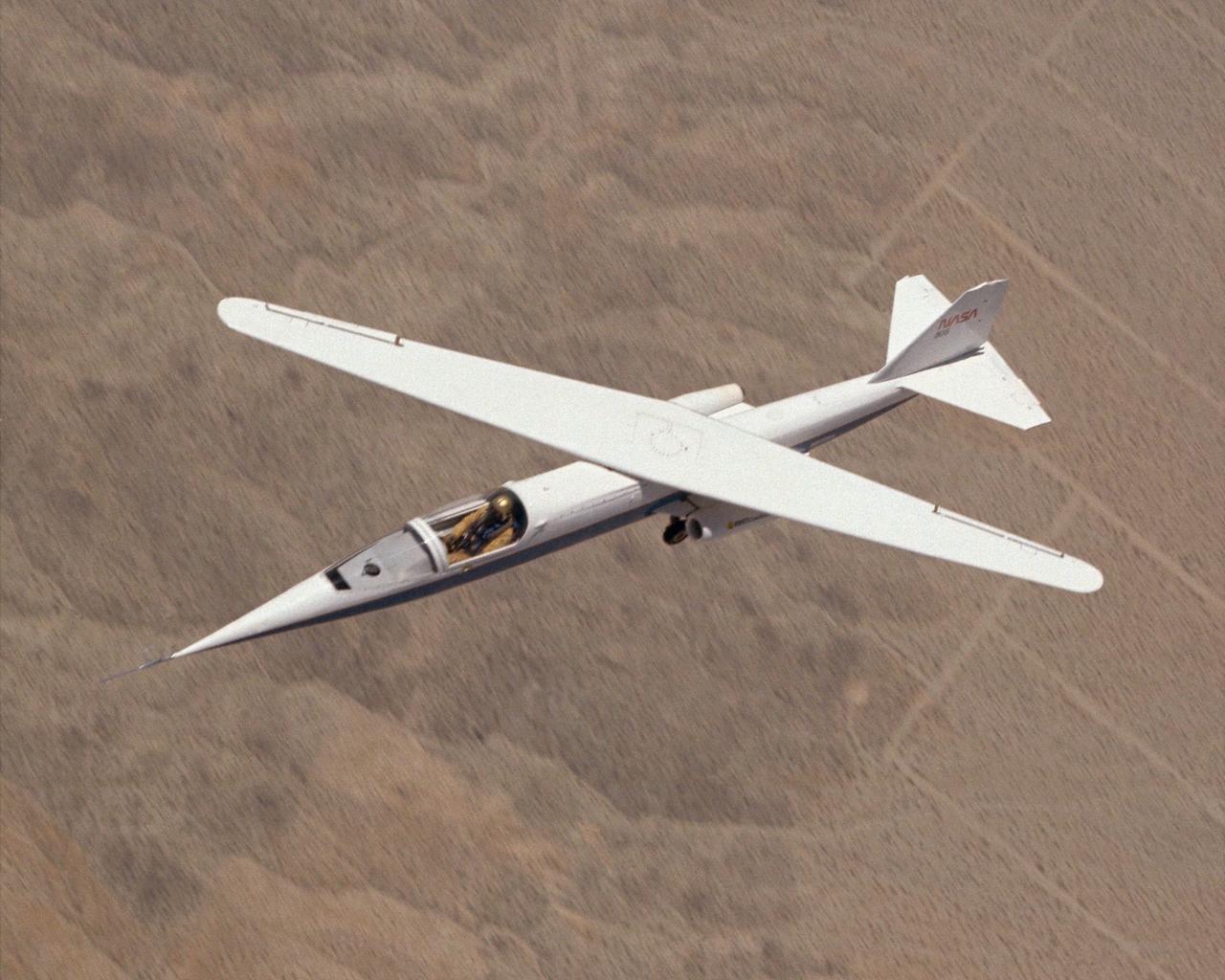
AD-1 in flight. Flight #30. The AD-1 aircraft in flight with its wing swept at 60 degrees, the maximum sweep angle.
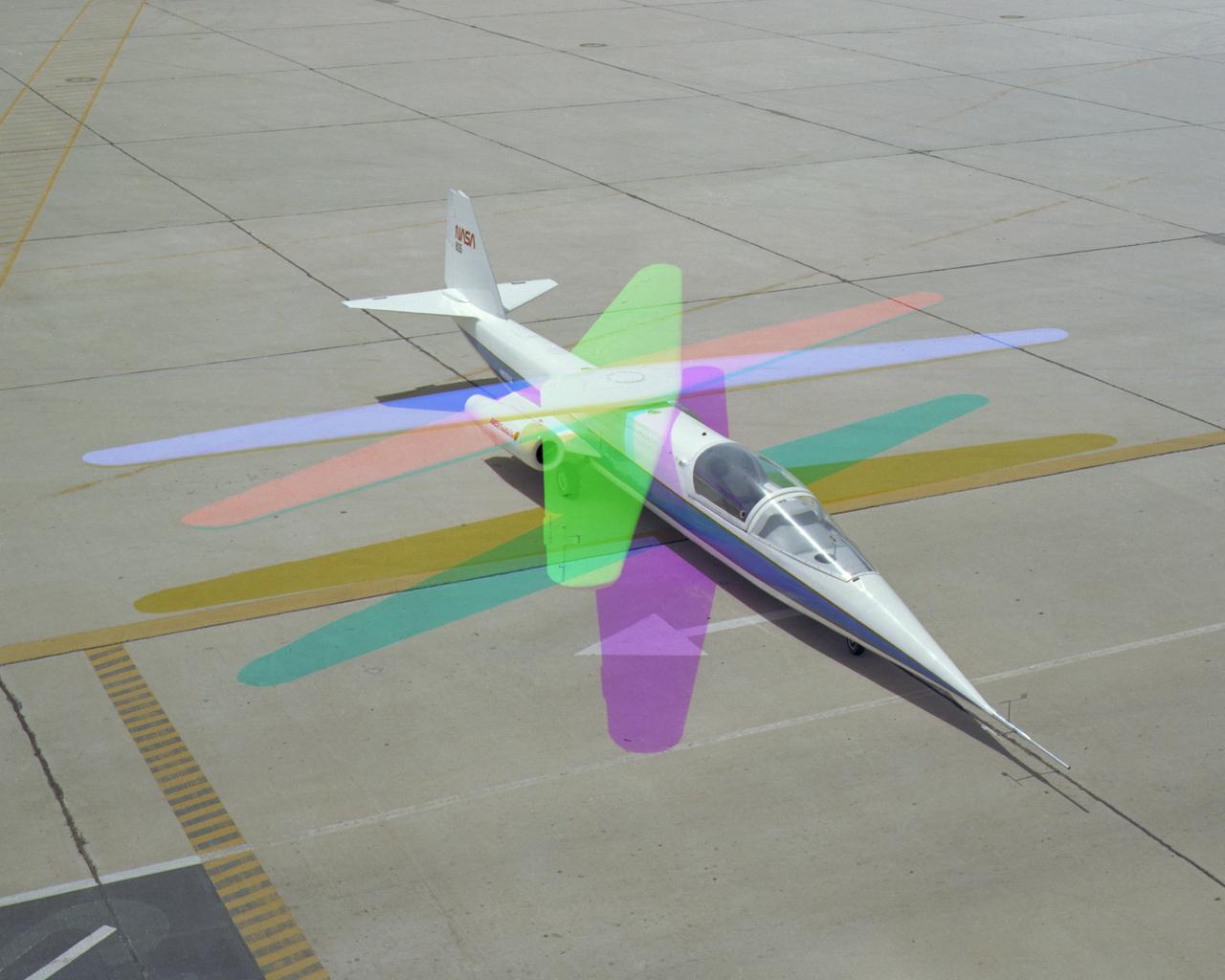
Multiple exposure image showing wing movement on AD-1.
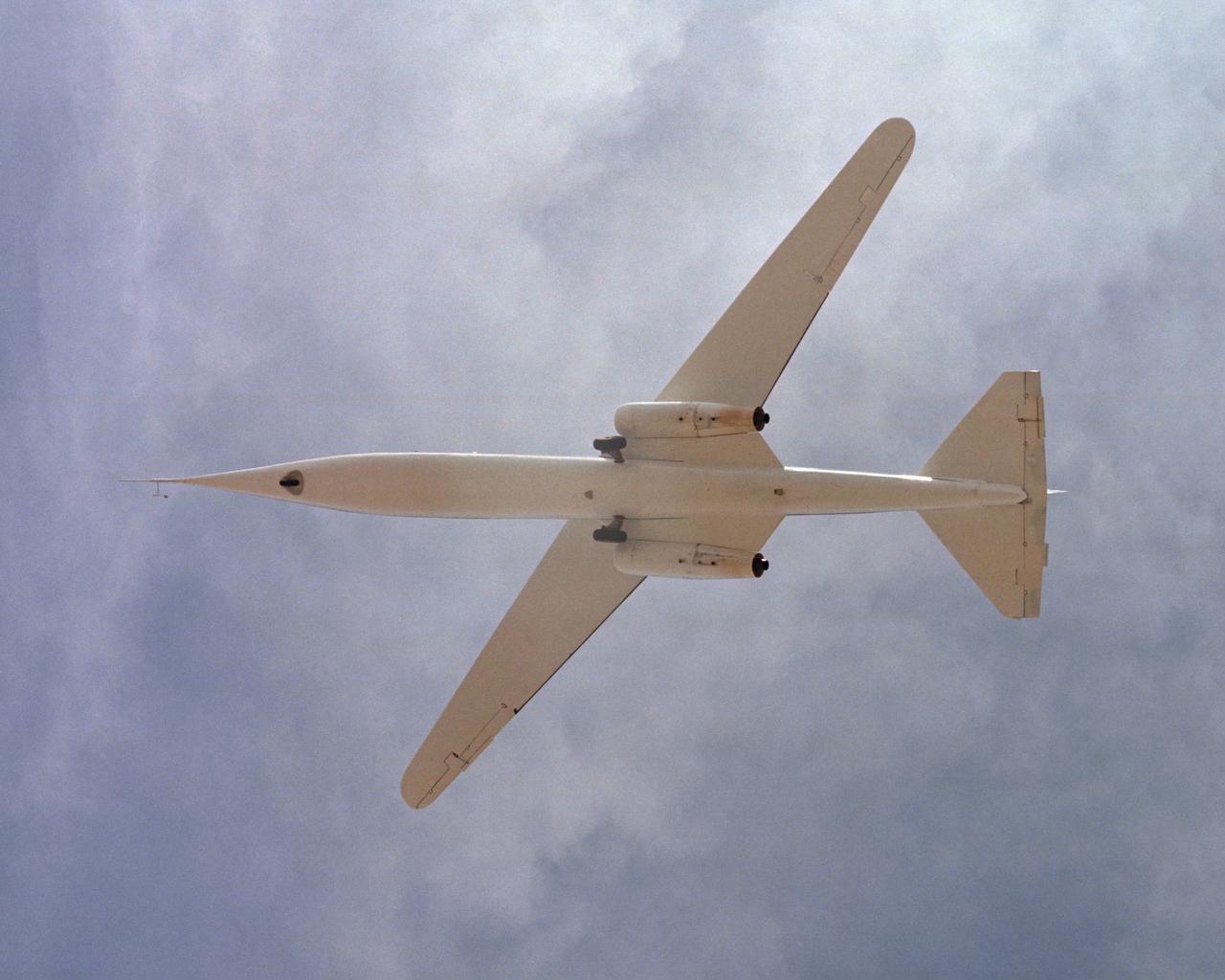
The AD-1 aircraft with its wing swept. Visible are the twin jet engines that powered the aircraft and the fixed landing gear.
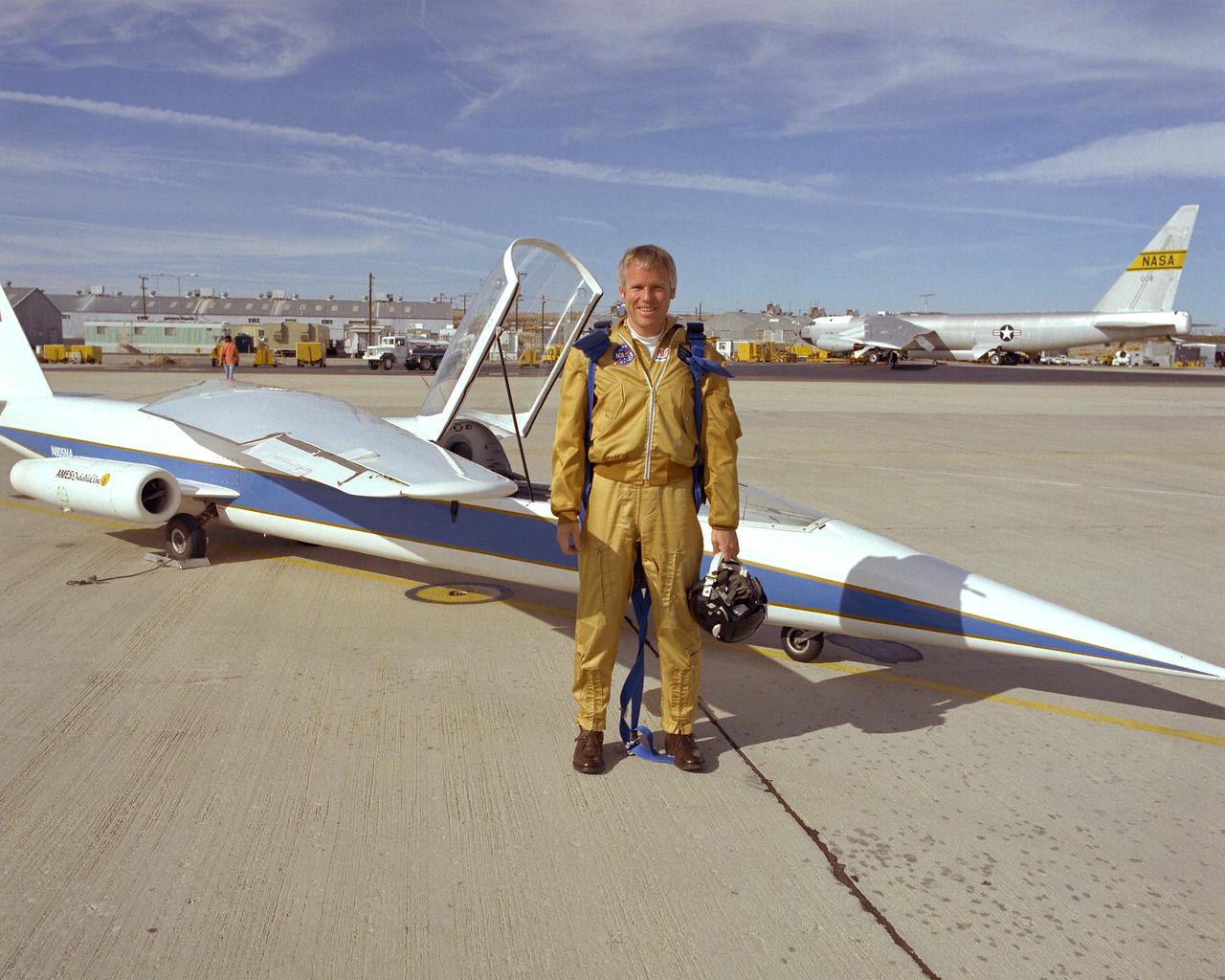
Research pilot Richard E. Gray, standing in front of the AD-1 Oblique Wing research aircraft.