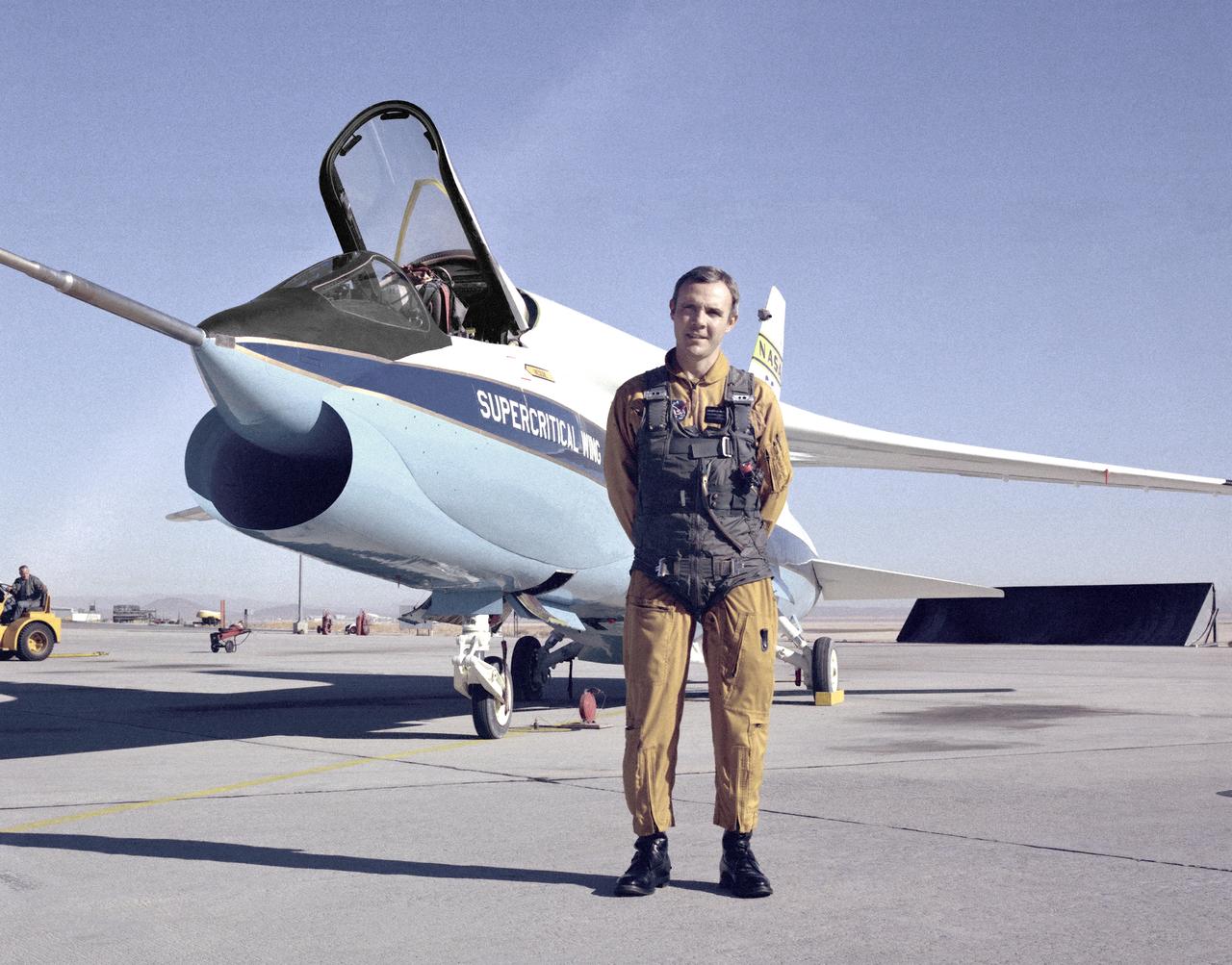
A Vought F-8A Crusader was selected by NASA as the testbed aircraft (designated TF-8A) to install an experimental Supercritical Wing (SCW) in place of the conventional wing. The unique design of the Supercritical Wing reduces the effect of shock waves on the upper surface near Mach 1, which in turn reduces drag. In this photograph the TF-8A Crusader with Supercritical Wing is shown on the ramp with project pilot Tom McMurtry standing beside it. McMurtry received NASA's Exceptional Service Medal for his work on the F-8 SCW aircraft. He also flew the AD-1, F-15 Digital Electronic Engine Control, the KC-130 winglets, the F-8 Digital Fly-By-Wire and other flight research aircraft including the remotely piloted 720 Controlled Impact Demonstration and sub-scale F-15 research projects. In addition, McMurtry was the 747 co-pilot for the Shuttle Approach and Landing Tests and made the last glide flight in the X-24B. McMurtry was Dryden’s Director for Flight Operations from 1986 to 1998, when he became Associate Director for Operations at NASA Dryden. In 1982, McMurtry received the Iven C. Kincheloe Award from the Society of Experimental Test Pilots for his contributions as project pilot on the AD-1 Oblique Wing program. In 1998 he was named as one of the honorees at the Lancaster, Calif., ninth Aerospace Walk of Honor ceremonies. In 1999 he was awarded the NASA Distinguished Service Medal. He retired in 1999 after a distinguished career as pilot and manager at Dryden that began in 1967.
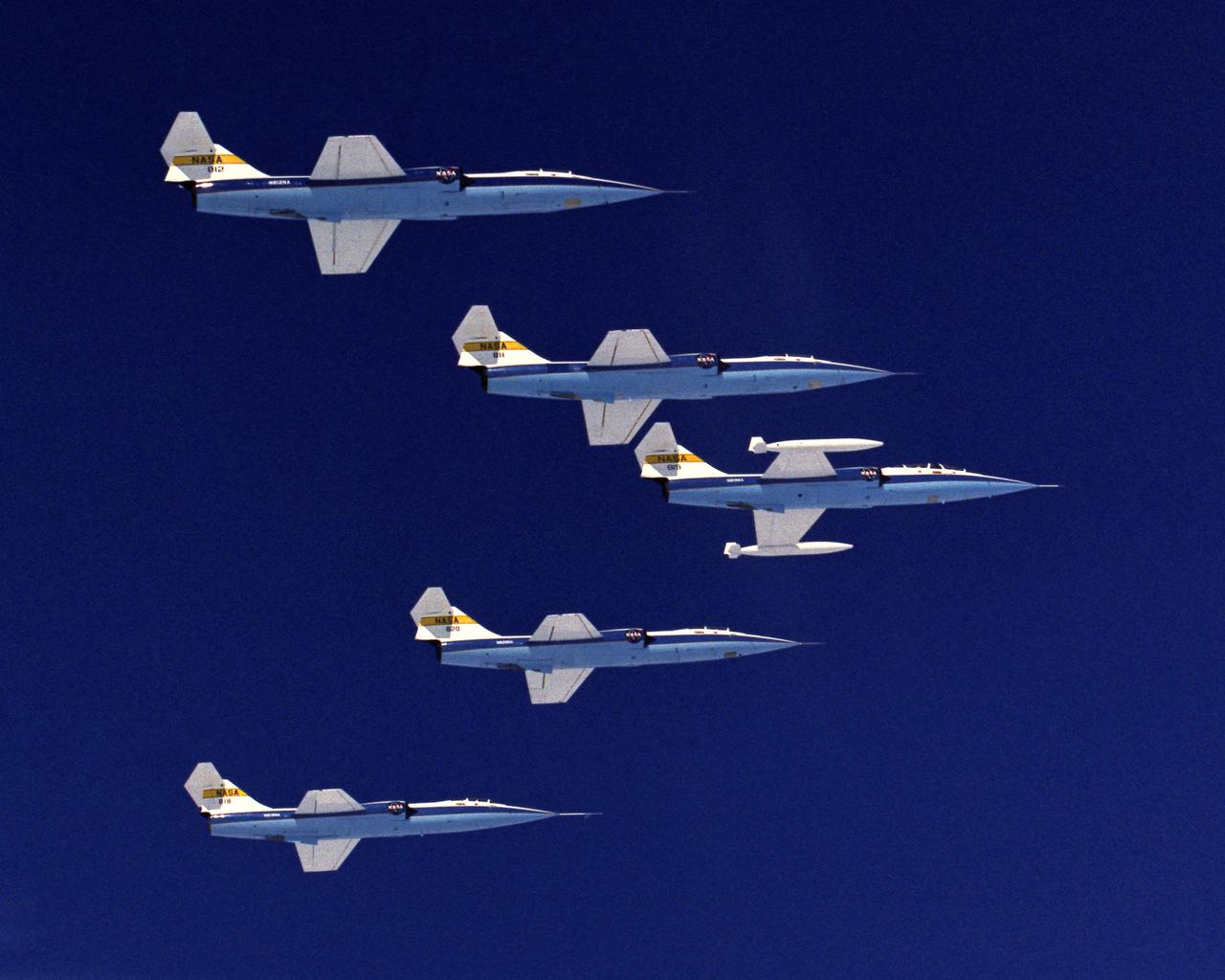
The only time the five ship fleet of F-104 Starfighters was ever airborne at the same time. Pilots were: F-104N #811-Bill Dana; F-104N #812-Tom McMurtry; F-104A #818-Einar Enevoldson; F-104A #820-Gary Krier; F-104B #819-Fitz Fulton and Ray Young. Photo taken from T-38 #821 flown by Don Mallick and photographer was Bob Rhine. 4/11/75 NASA DFRC EC76-5145

The Space Shuttle Enterprise, the nation's prototype space shuttle orbiter, before departing NASA's Dryden Flight Research Center, Edwards, California, at 11:00 a.m., 16 May 1983, on the first leg of its trek to the Paris Air Show at Le Bourget Airport, Paris, France. Seen here atop the huge 747 Shuttle Carrier Aircraft (SCA), the first stop for the Enterprise was Peterson AFB, Colorado Springs, Colorado. Piloting the 747 on the Europe trip were Joe Algranti, Johnson Space Center Chief Pilot, Astronaut Dick Scobee, and NASA Dryden Chief Pilot Tom McMurtry. Flight engineers for that portion of the flight were Dryden's Ray Young and Johnson Space Center's Skip Guidry. The Enterprise, named after the spacecraft of Star Trek fame, was originally carried and launched by the 747 during the Approach and Landing Tests (ALT) at Dryden Flight Research Center.

The Space Shuttle Enterprise, the nation's prototype space shuttle orbiter, departed NASA's Dryden Flight Research Center, Edwards, California, at 11:00 a.m., 16 May 1983, on the first leg of its trek to the Paris Air Show at Le Bourget Airport, Paris, France. Carried by the huge 747 Shuttle Carrier Aircraft (SCA), the first stop for the Enterprise was Peterson AFB, Colorado Springs, Colorado. Piloting the 747 on the Europe trip were Joe Algranti, Johnson Space Center Chief Pilot, Astronaut Dick Scobee, and NASA Dryden Chief Pilot Tom McMurtry. Flight engineers for that portion of the flight were Dryden's Ray Young and Johnson Space Center's Skip Guidry. The Enterprise, named after the spacecraft of Star Trek fame, was originally carried and launched by the 747 during the Approach and Landing Tests (ALT) at Dryden Flight Research Center.
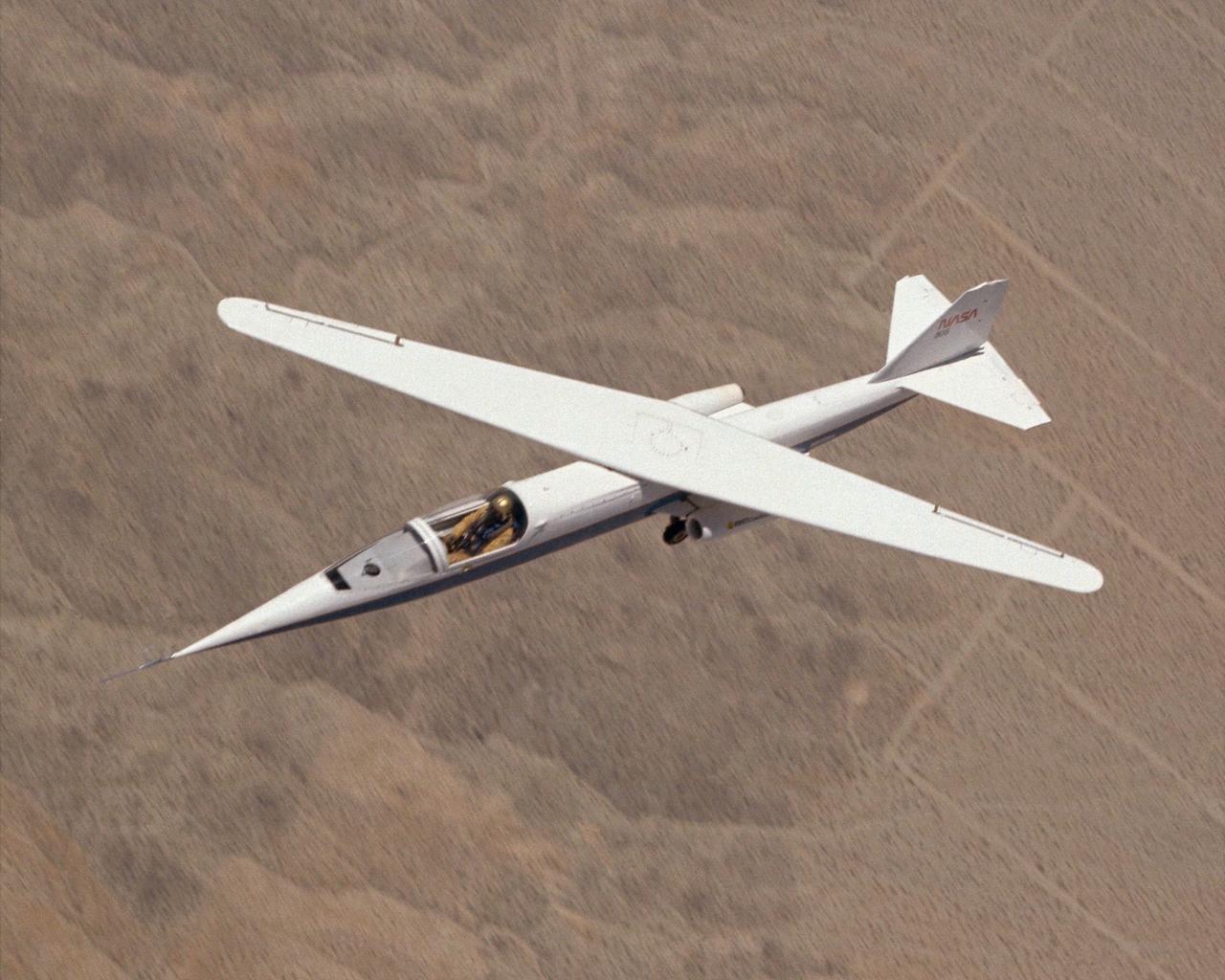
AD-1 in flight. Flight #30. The AD-1 aircraft in flight with its wing swept at 60 degrees, the maximum sweep angle.
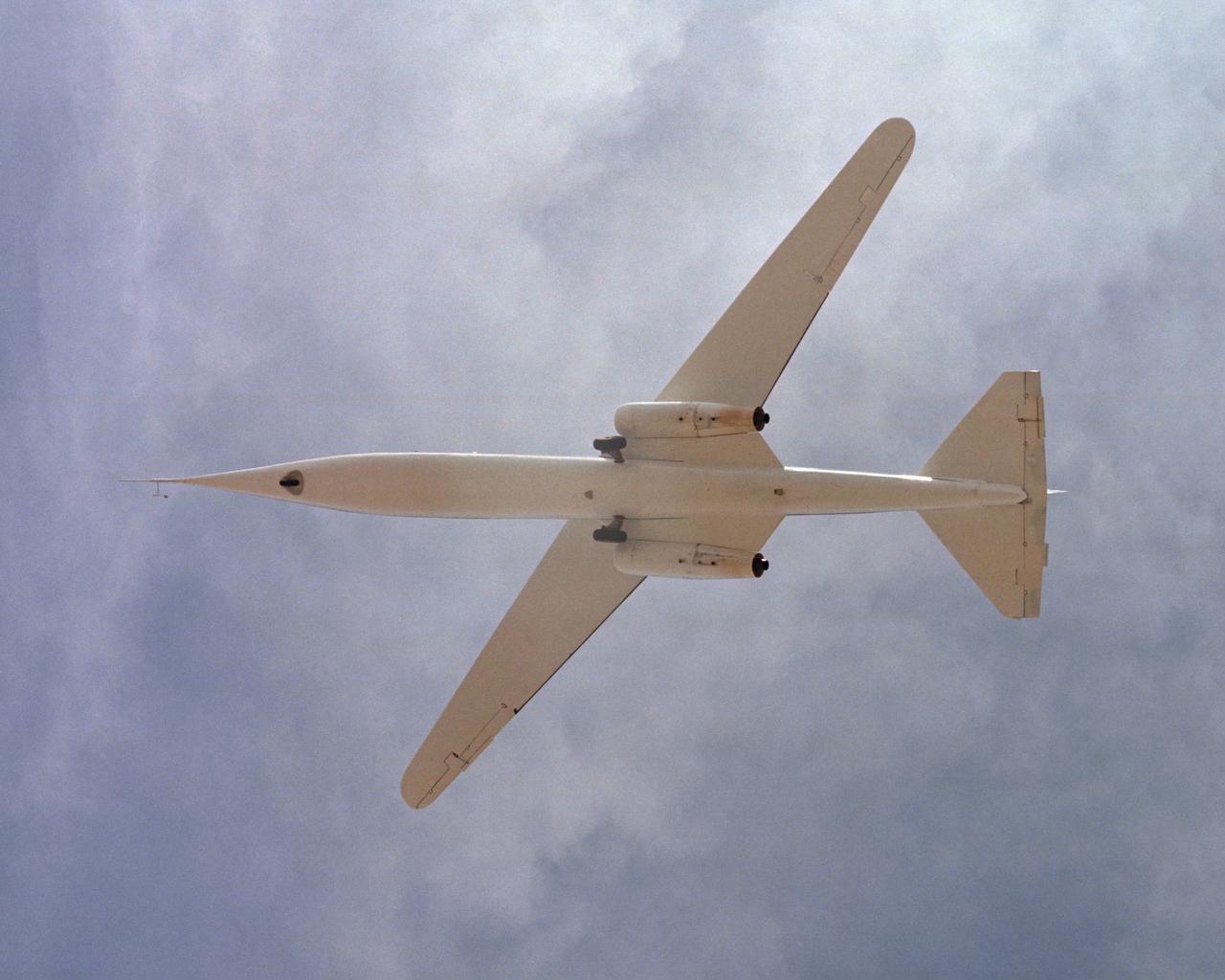
The AD-1 aircraft with its wing swept. Visible are the twin jet engines that powered the aircraft and the fixed landing gear.
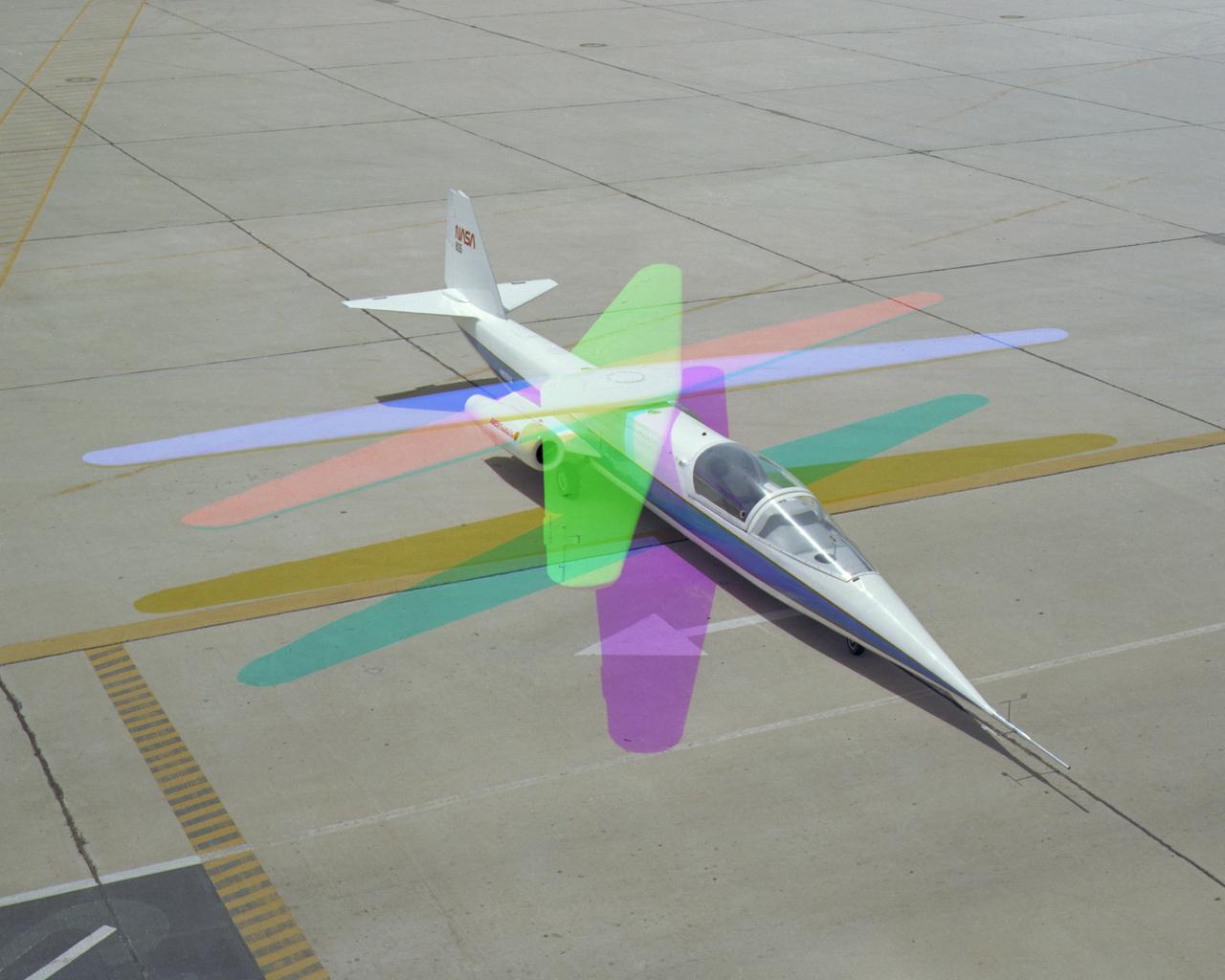
Multiple exposure image showing wing movement on AD-1.
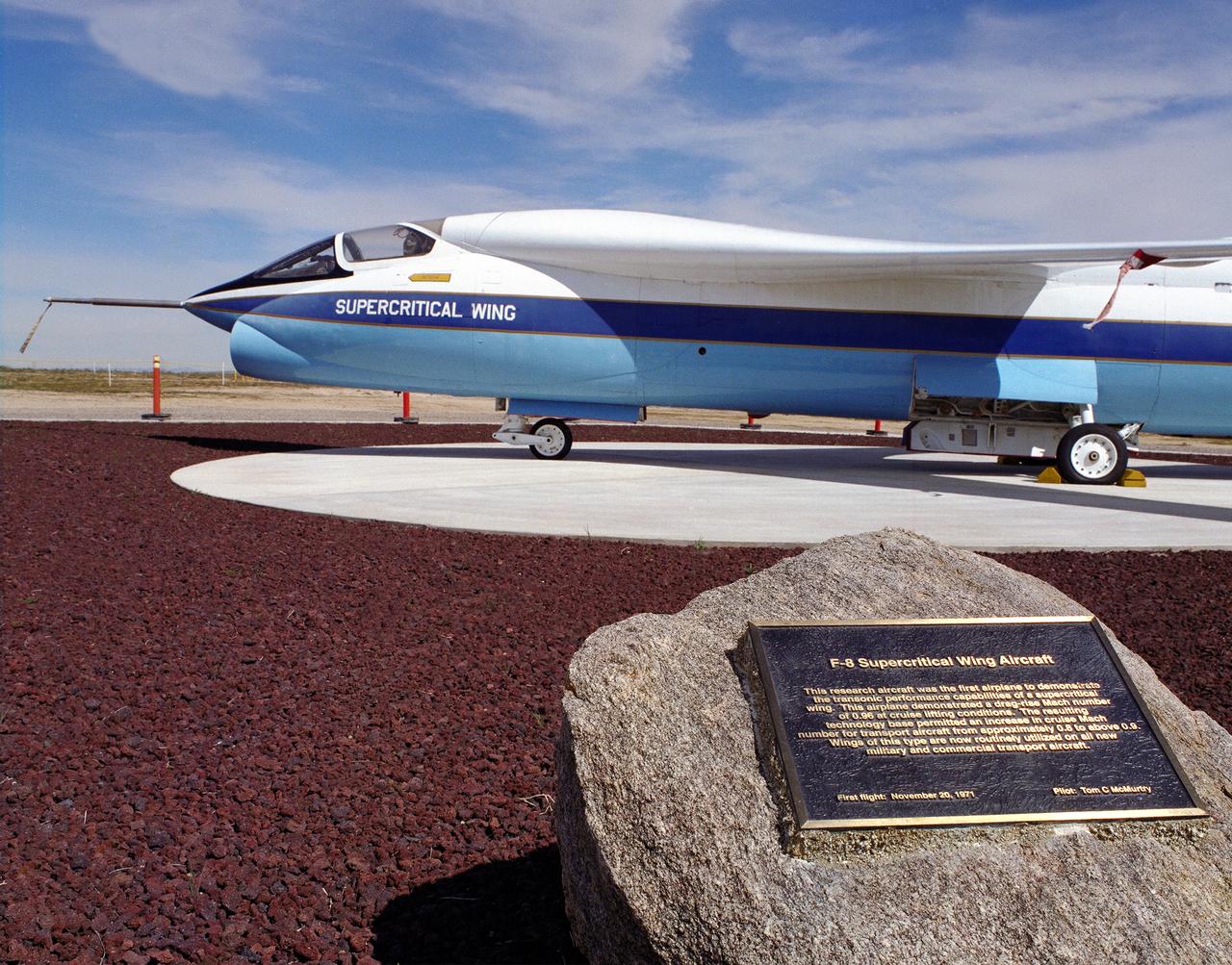
A Vought F-8A Crusader was selected by NASA as the testbed aircraft (designated TF-8A) to install an experimental Supercritical Wing (SCW) in place of the conventional wing. The unique design of the Supercritical Wing reduces the effect of shock waves on the upper surface near Mach 1, which in turn reduces drag. In the photograph the TF-8A Crusader with the Supercritical Wing is shown on static display in front of the NASA Dryden Flight Research Center, Edwards, California. The F-8 SCW aircraft, along with the F-8 Digital Fly-By-Wire aircraft were placed on display on May 27, 1992, at a conference marking the 20th anniversary of the start of the two programs.
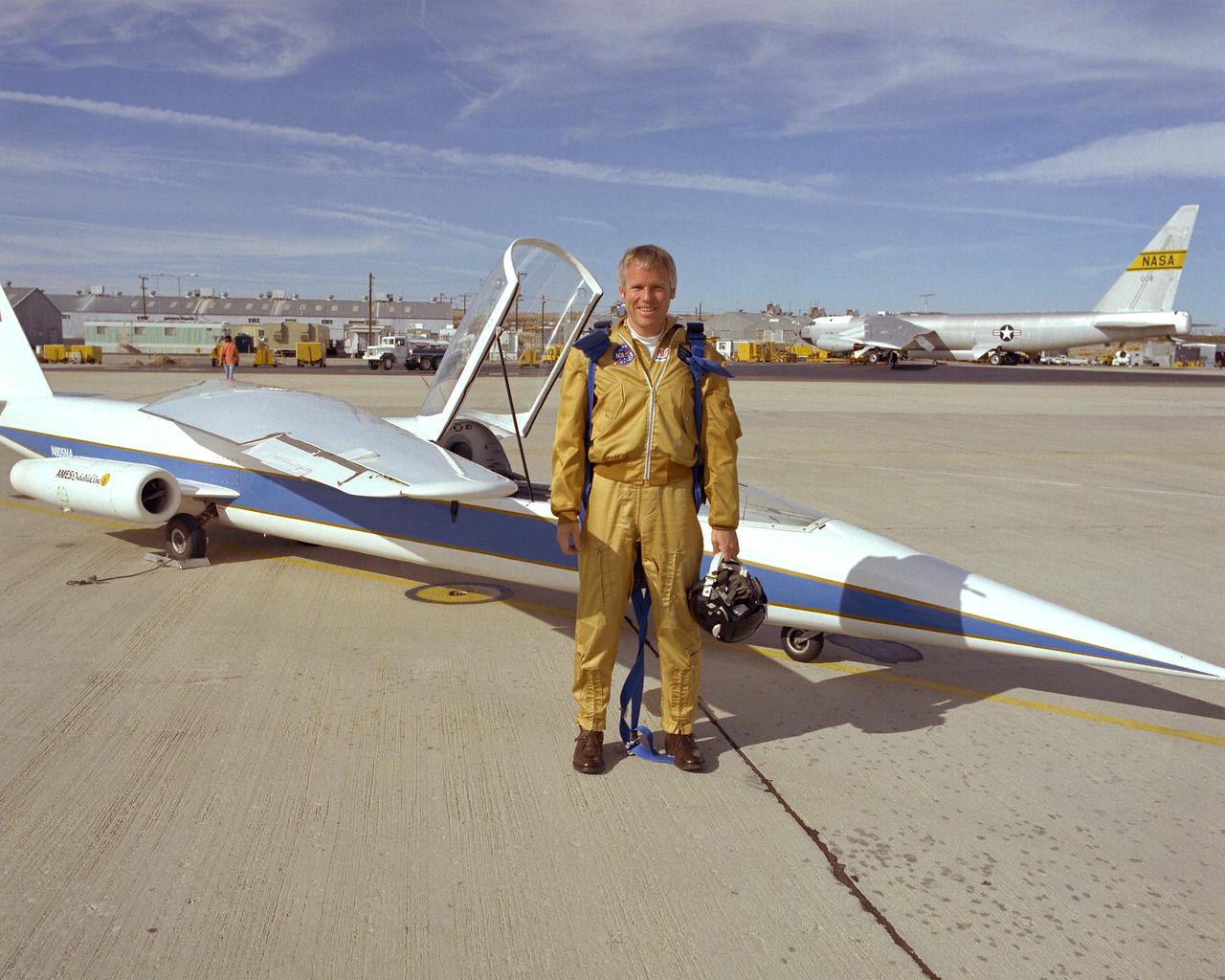
Research pilot Richard E. Gray, standing in front of the AD-1 Oblique Wing research aircraft.