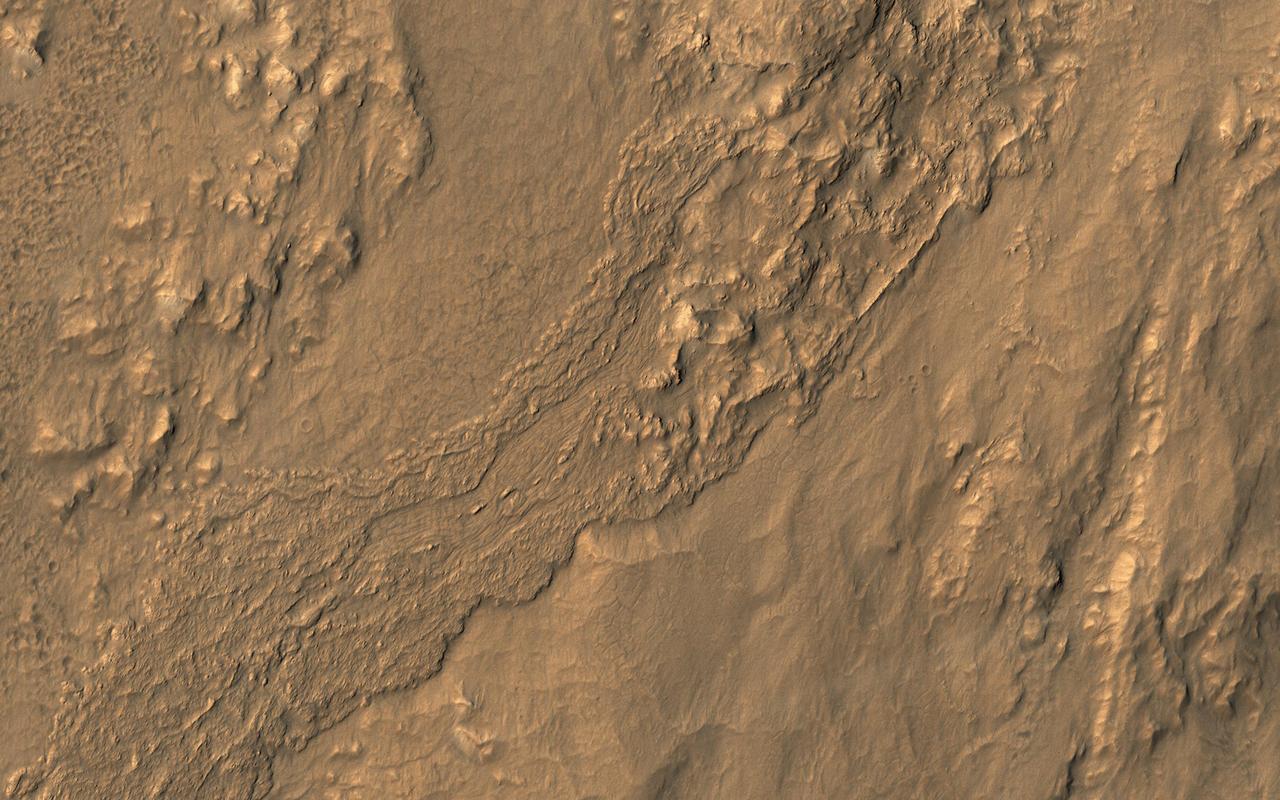
This oblique view from NASA's Mars Reconnaissance Orbiter shows a small part of the near-rim ejecta from Tooting Crater. The flow extending from upper left to lower right looks much like a typical lava flow, but doesn't emanate from a volcanic vent. Instead, this must be either melted rock from the impact event, or a wet debris flow from melting of ice. The surface is dusty so color variations are minor. https://photojournal.jpl.nasa.gov/catalog/PIA21648
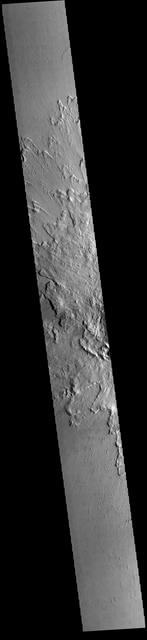
Today's VIS image shows part of the ejecta blanket of Tooting Crater. Tooting Crater is located west of Olympus Mons. Orbit Number: 77272 Latitude: 23.1953 Longitude: 207.317 Instrument: VIS Captured: 2019-05-16 21:16 https://photojournal.jpl.nasa.gov/catalog/PIA23323
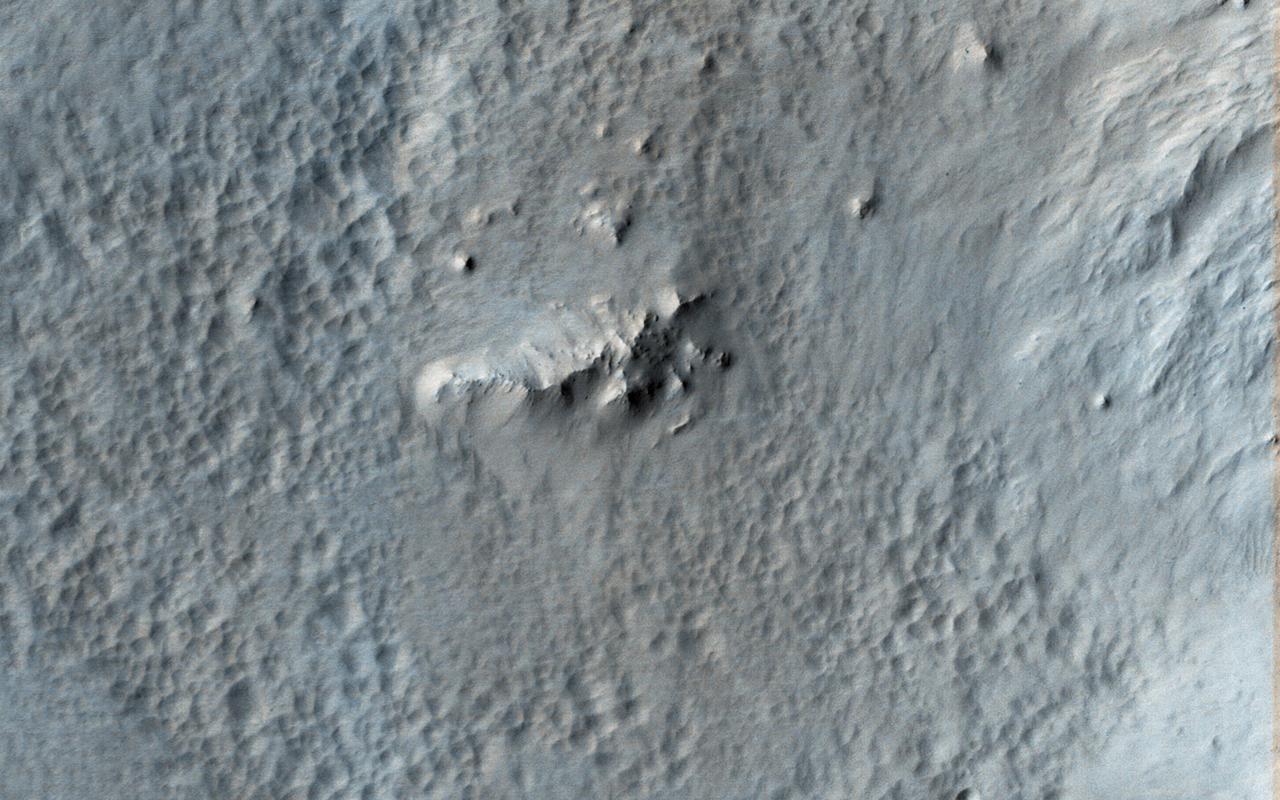
Tooting Crater is one of the youngest craters on Mars that is larger than 20-kilometers in diameter. Relatively low areas inside and outside the crater are covered by a distinctive pitted and ponded material. The pits are not impact craters, as they lack ejecta and are very closely spaced. There is one small impact crater near the lower right corner of our picture, which is much more circular than the pits and has a raised rim and ejecta. One interpretation is that this pitted and ponded material was hot impact ejecta from Tooting, and loss of volatiles from this material or underlying materials created the pits as it cooled. https://photojournal.jpl.nasa.gov/catalog/PIA23848
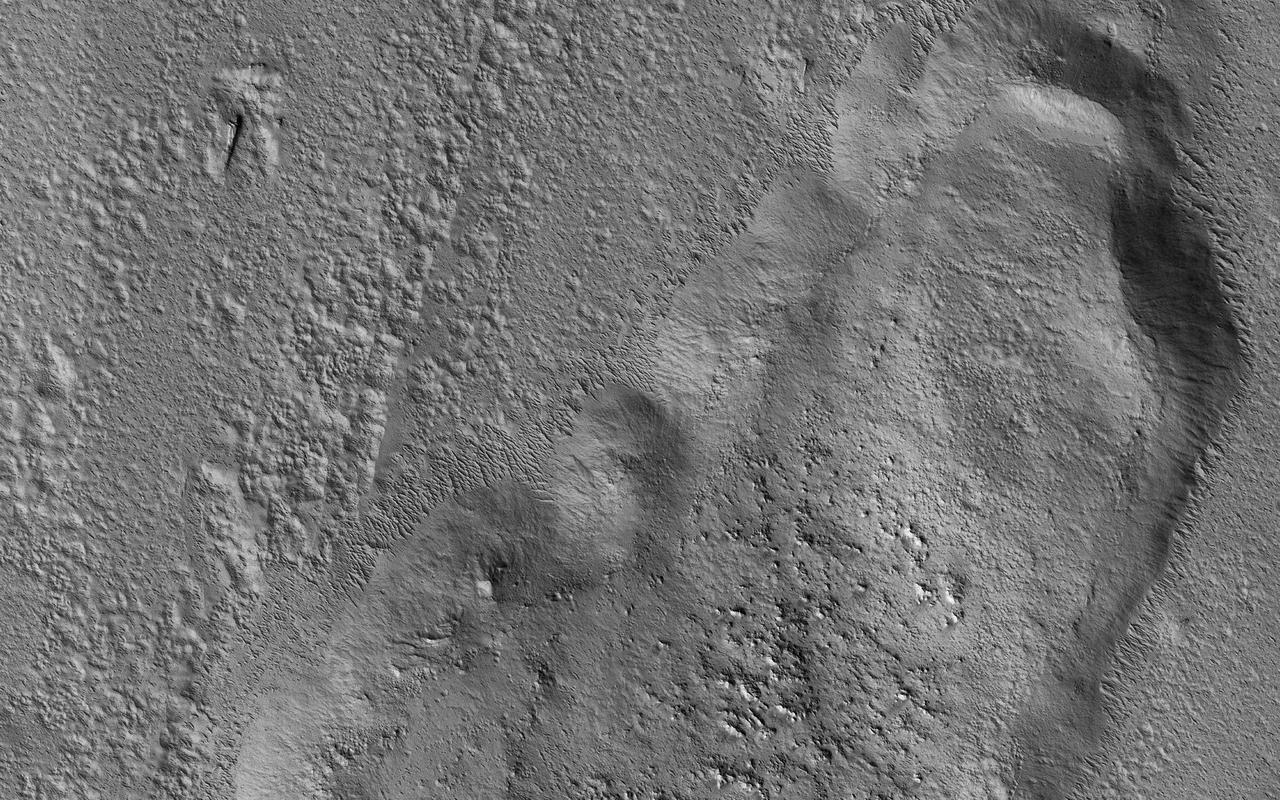
n this picture we can see a huge tongue-like form, which looks a like a mudflow with boulders on its surface. This "tongue" is only a small part of a larger deposit that completely surrounds Tooting Crater (not visible in this image). This is part of what is called an "ejecta blanket." The shape and form of the deposits in the ejecta blanket can tell us about the condition of the ground when the impact crater was formed. The presence of this tongue of ejecta is interpreted as a sign that the ground was frozen before impact. The force of the impact melted ice and mixed it with rock and dust as it was thrown away from the crater. It then settled to form these tongue-like lobes all around the crater. https://photojournal.jpl.nasa.gov/catalog/PIA23286
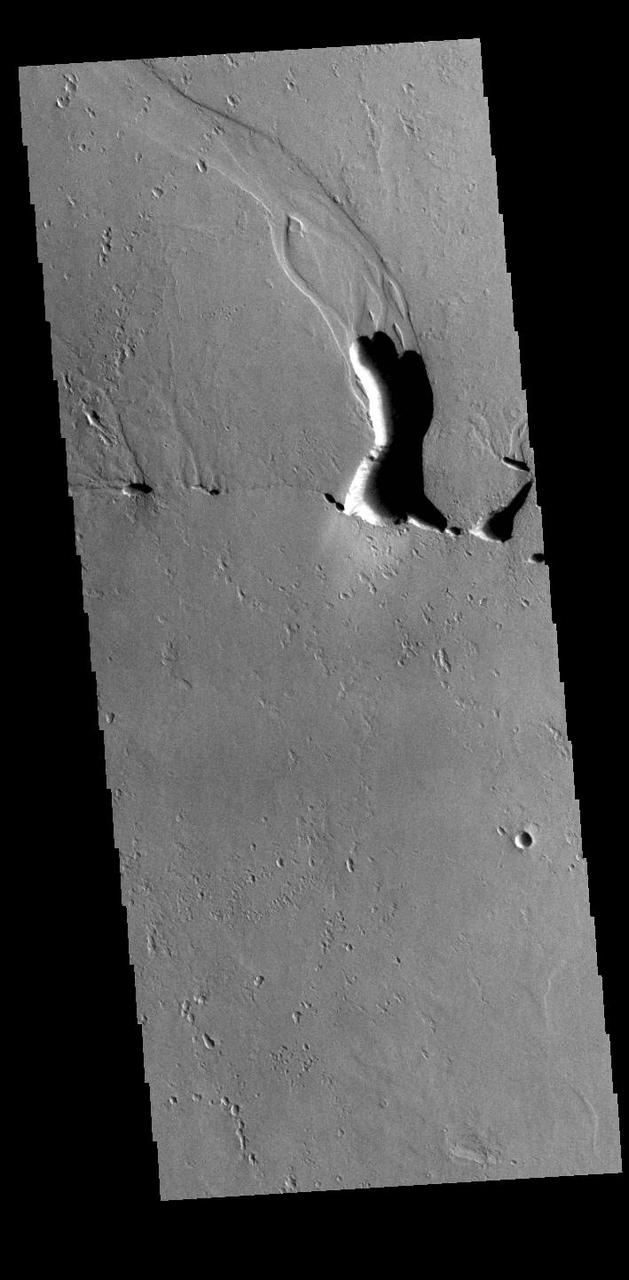
This unusual channel feature is located south of Tooting Crater near Lycus Sulci. It most likely formed by the release of melted sub-surface ice. The impact crater event may have caused the heating, or volcanic activity from Olympus Mons. Orbit Number: 95004 Latitude: 21.9884 Longitude: 208.652 Instrument: VIS Captured: 2023-05-15 22:29 https://photojournal.jpl.nasa.gov/catalog/PIA26230