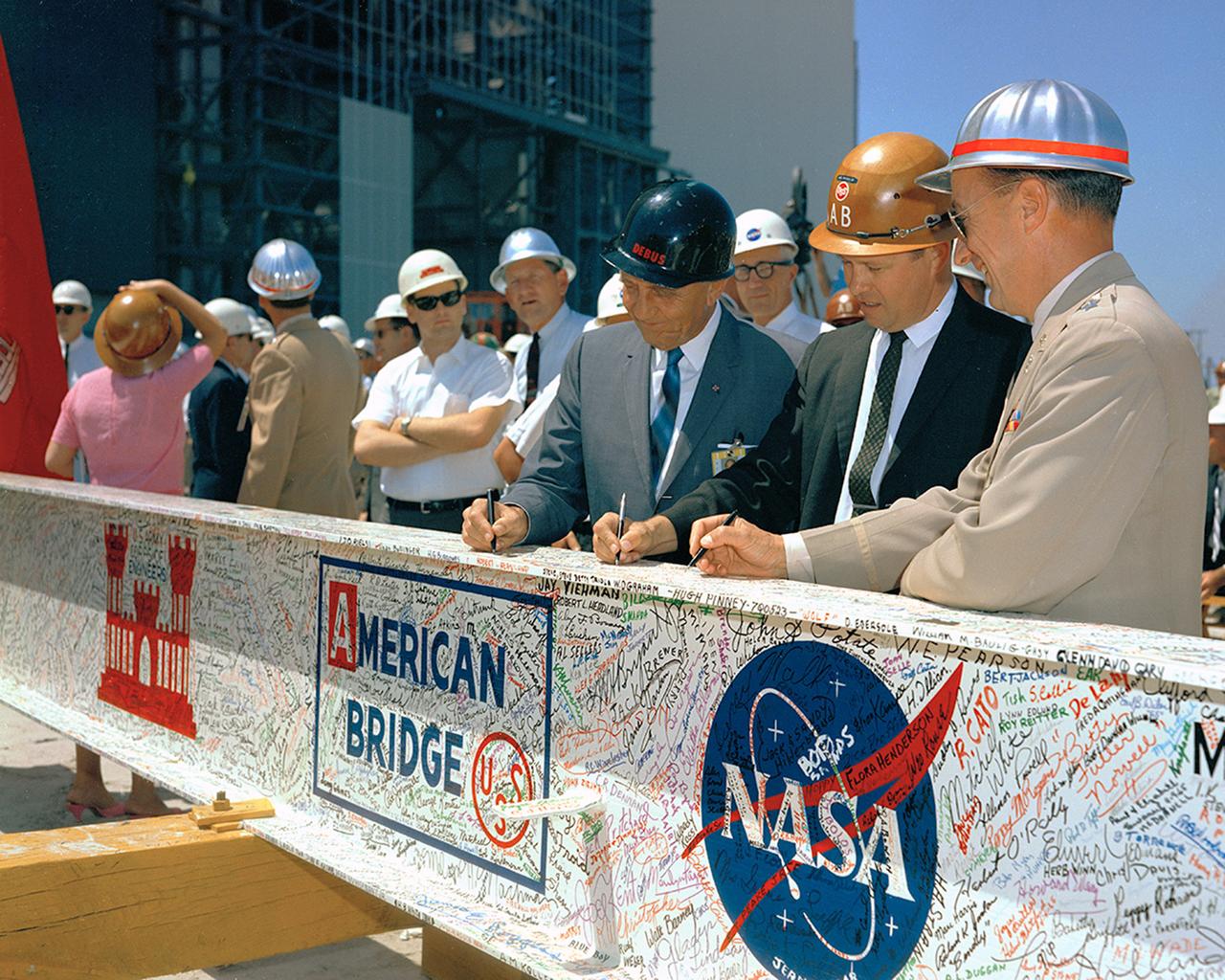
Dr. Kurt Debus (Director, NASA-KSC) signs the last major beam autographed by construction workers, NASA, and Corps of Engineers employees to be installed during the VAB Topping-Off Ceremony. MILA.
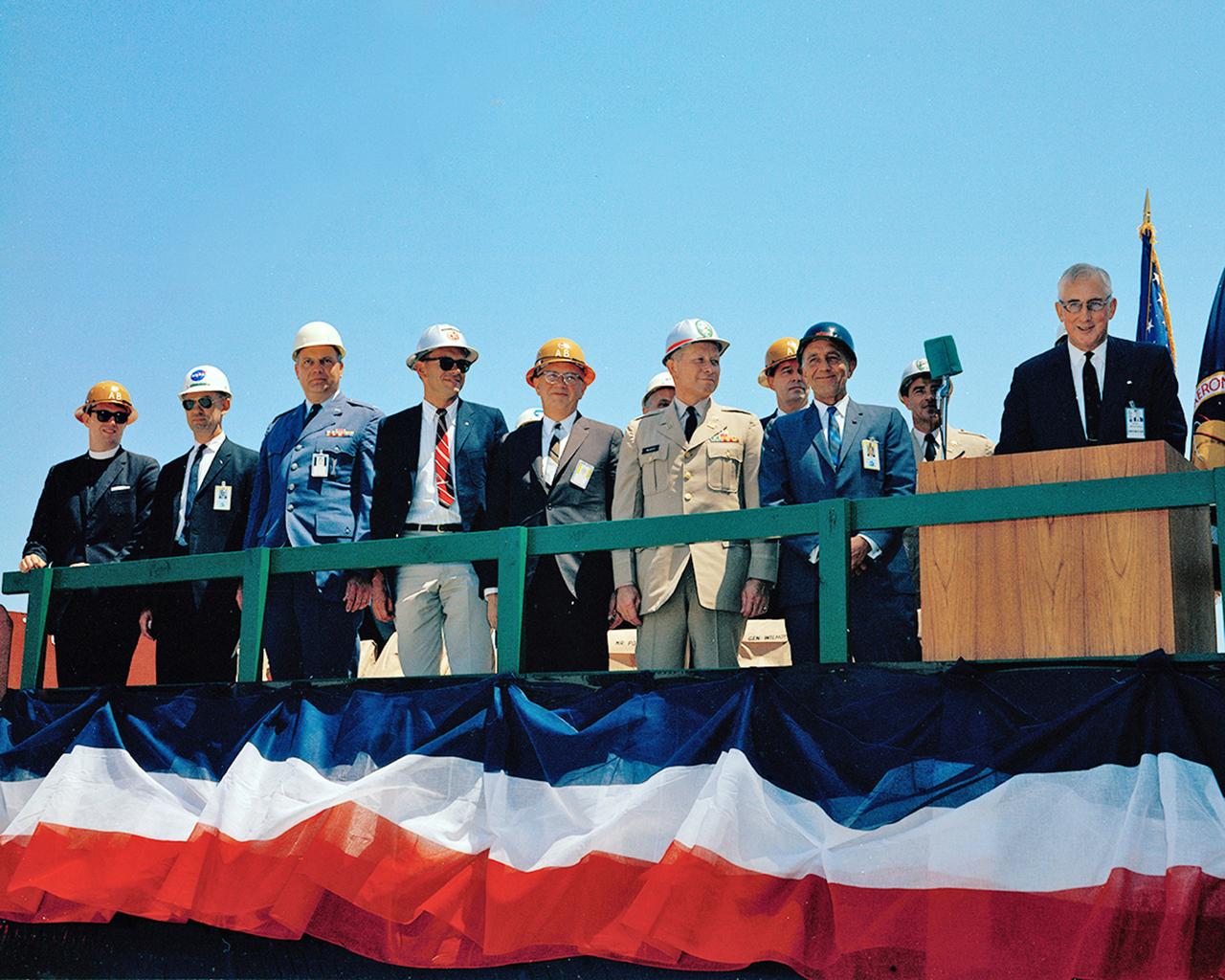
Dignataries (KSC Director Dr. Kurt Debus is second from right, NASA Administrator James C. Fletcher speaking), at the Last Major Beam Installation, attending the VAB Topping-Off Ceremony. MILA.
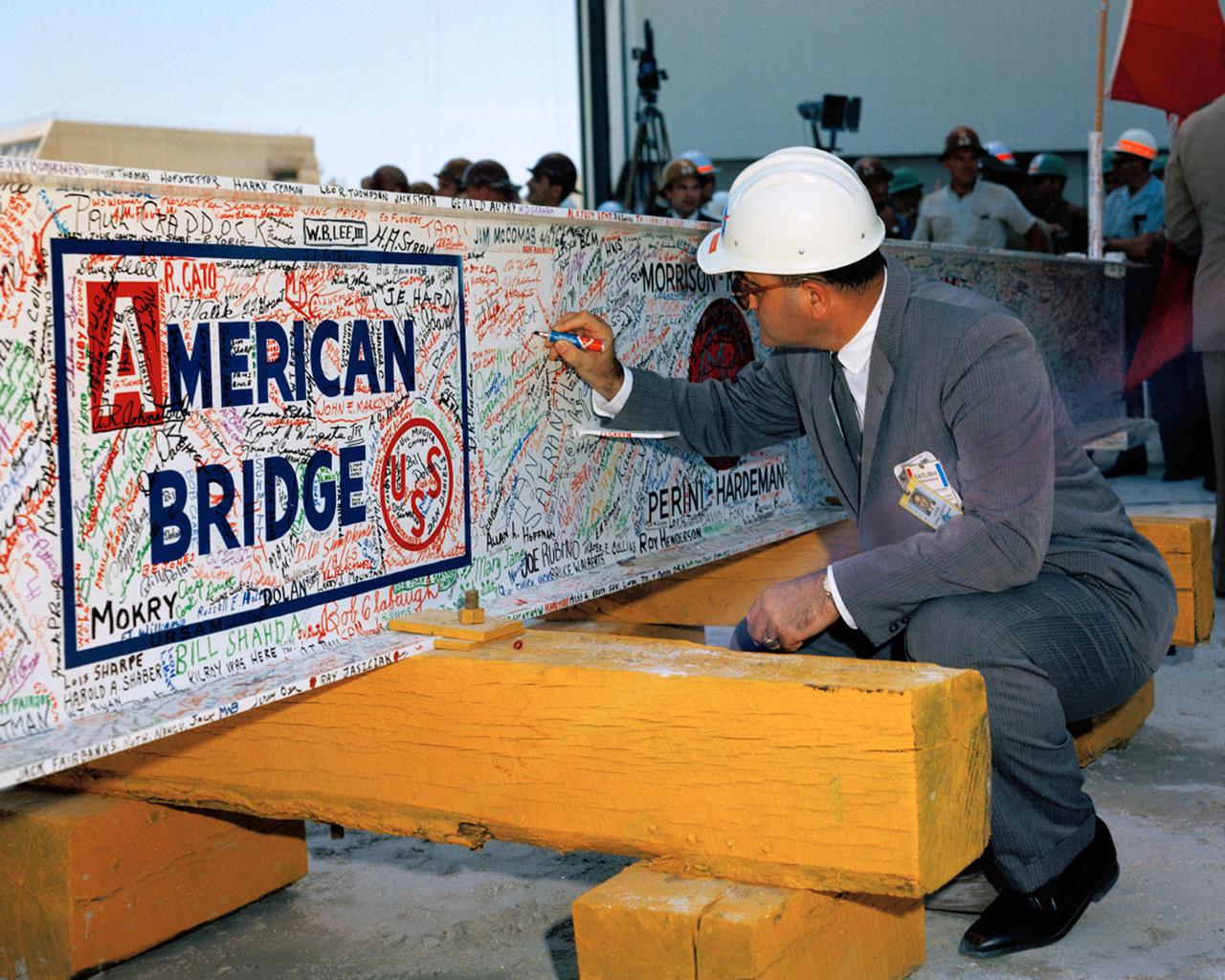
Colonel Rocco Patrone (Director, Plans, Programs and Resources Office NASA-KSC) signs the last major beam also autographed by construction workers, NASA, and Corps of Engineers employees to be installed during the VAB Topping-Off Ceremony. MILA.
A Little Off the Top
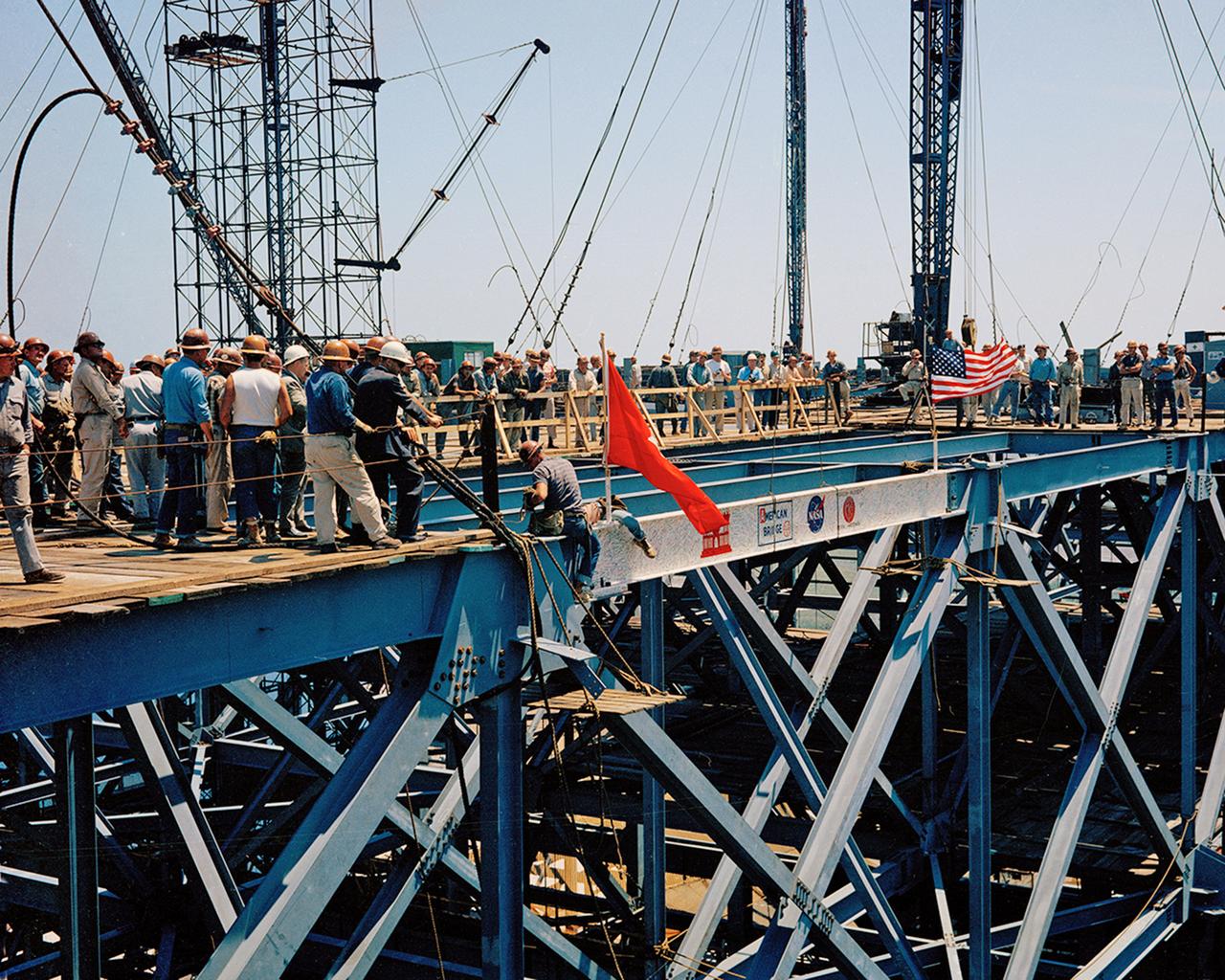
Installation of the Last Major Beam autographed by construction workers, NASA, and Corps of Engineers employees atop the Kennedy Space Center Vertical Assembly Building (VAB), MILA.
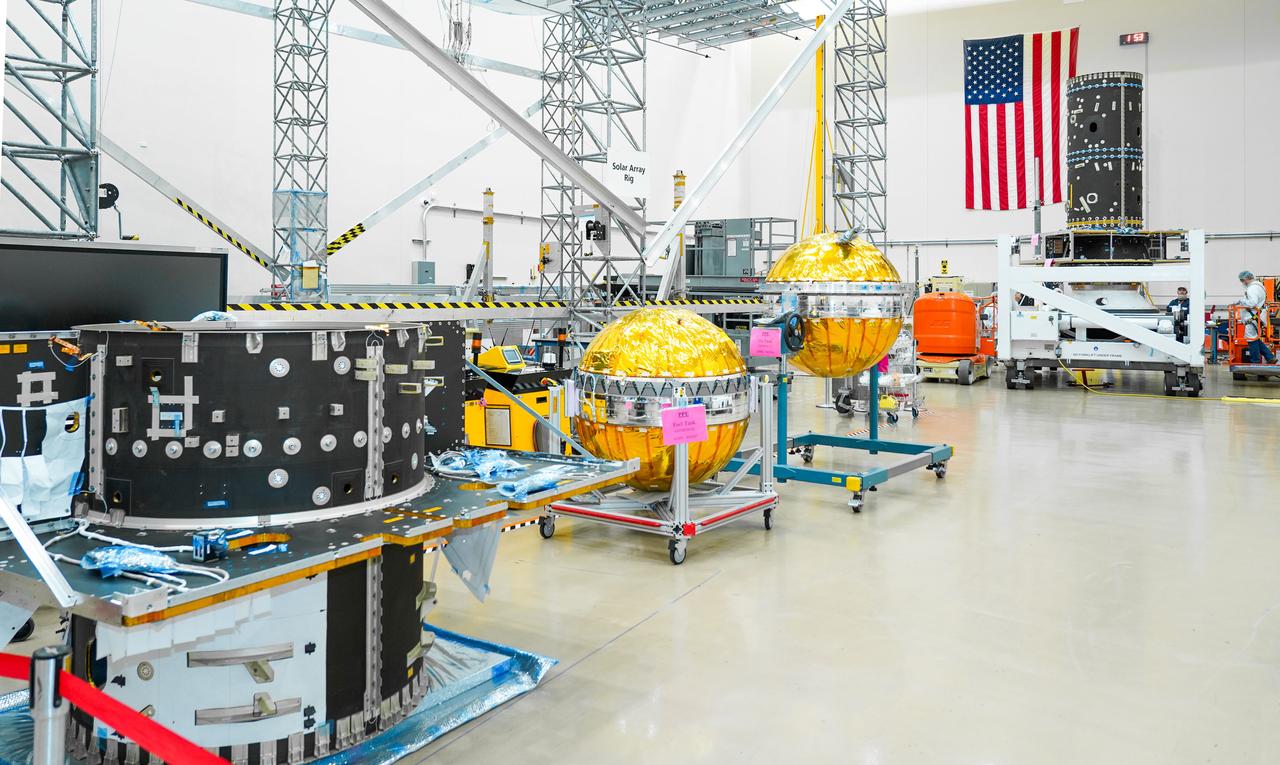
Hardware for the Gateway space station’s Power and Propulsion element, including its primary structure and fuel tanks ready for assembly, are shown at Maxar Space Systems in Palo Alto, California.
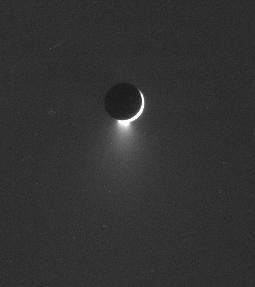
Enceladus continues to exhale water ice into Saturn orbit, keeping the E ring topped off with tiny particles
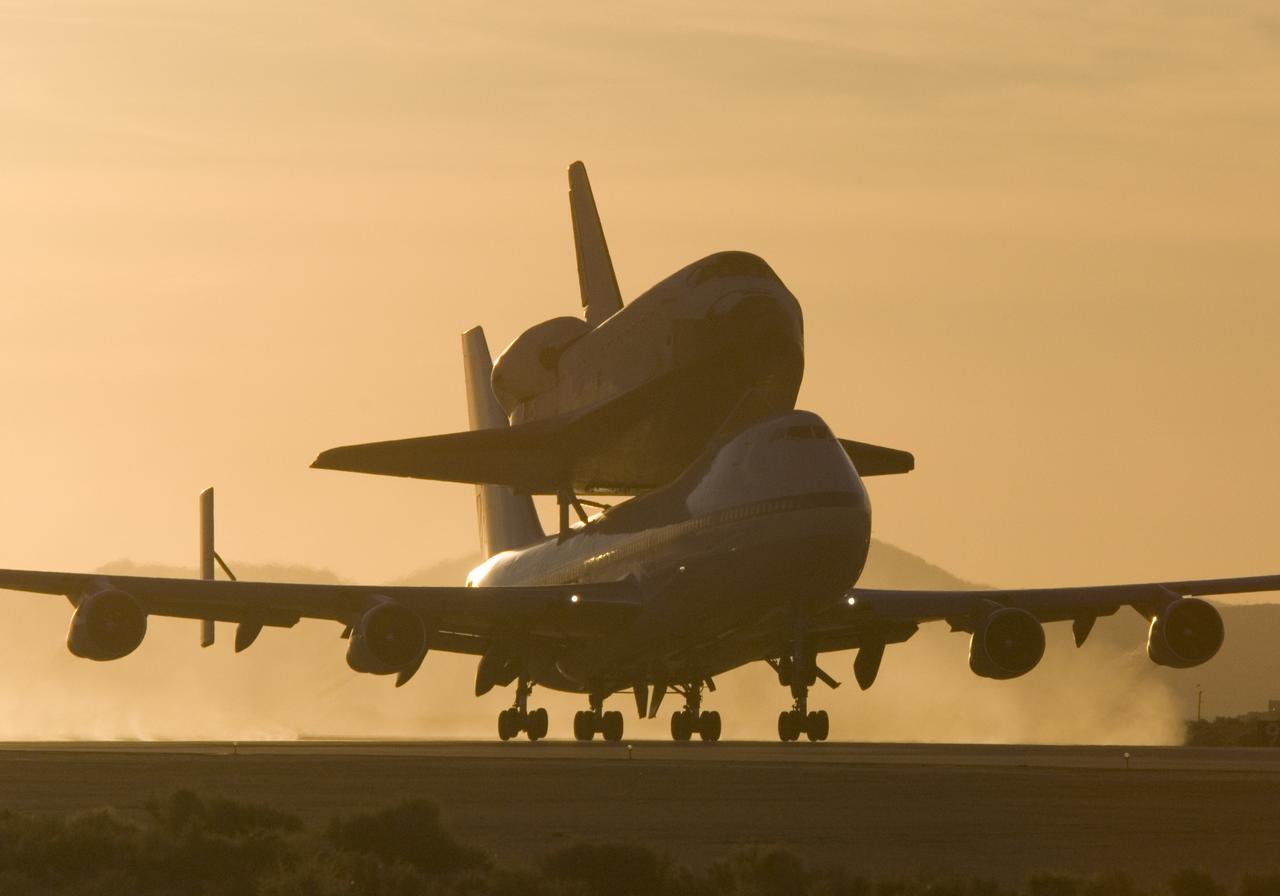
NASA's modified Boeing 747 Shuttle Carrier Aircraft with the Space Shuttle Atlantis on top lifts off from Edwards Air Force Base to begin its ferry flight back to the Kennedy Space Center in Florida. The cross-country journey will take approximately two days, with stops at several intermediate points for refueling.
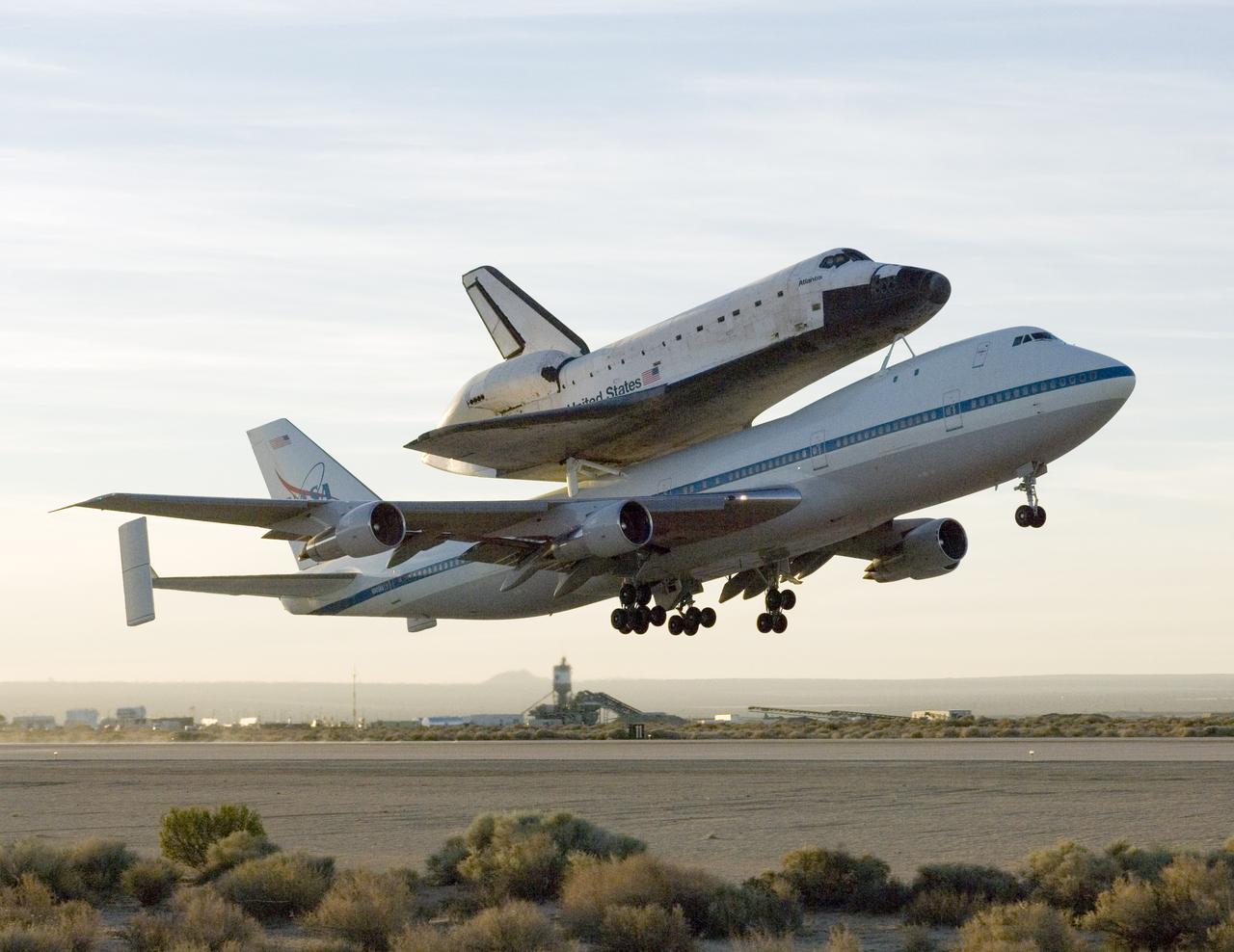
NASA's modified Boeing 747 Shuttle Carrier Aircraft with the Space Shuttle Atlantis on top lifts off from Edwards Air Force Base to begin its ferry flight back to the Kennedy Space Center in Florida. The cross-country journey will take approximately two days, with stops at several intermediate points for refueling.
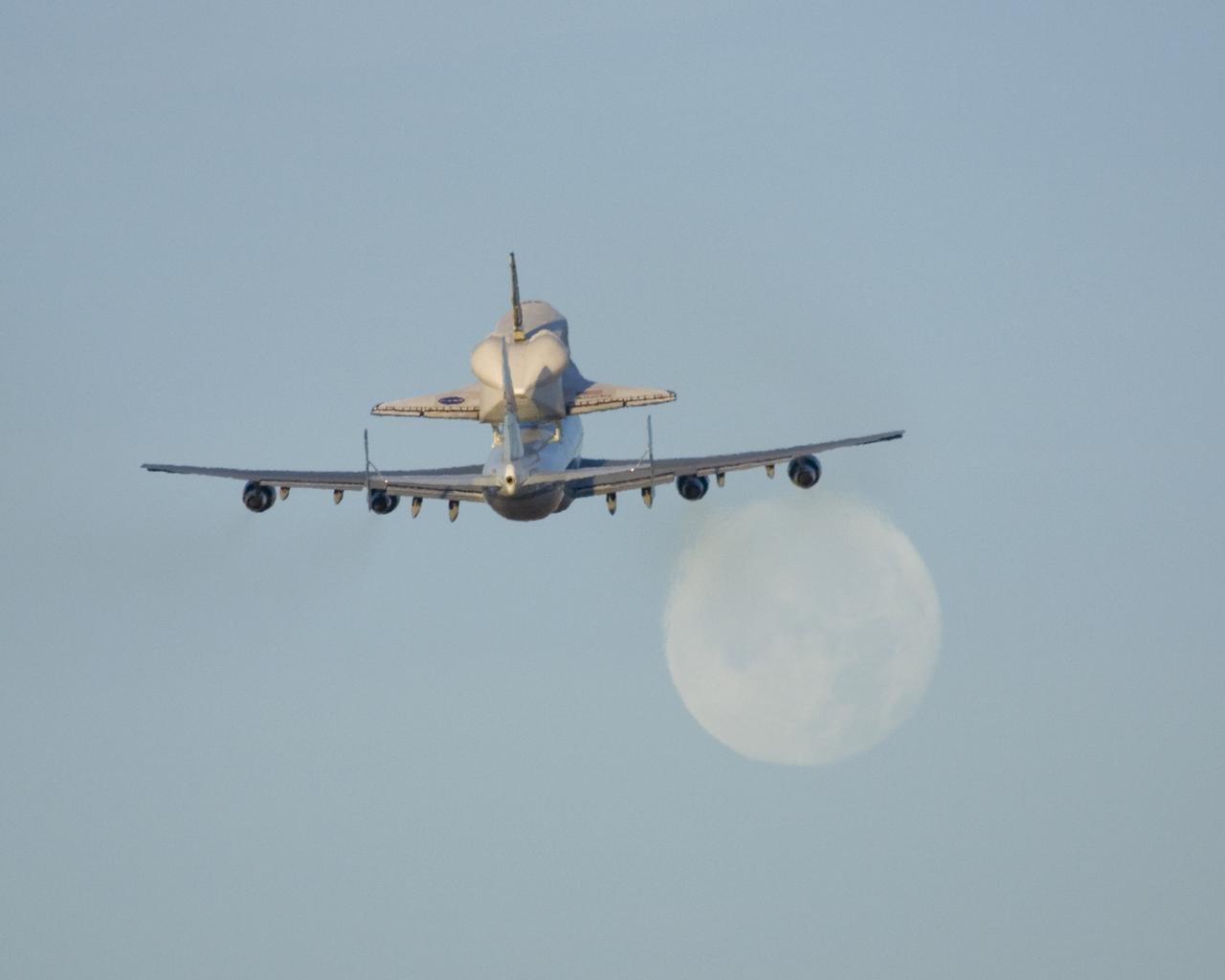
NASA's modified Boeing 747 Shuttle Carrier Aircraft with the Space Shuttle Atlantis on top lifts off from Edwards Air Force Base to begin its ferry flight back to the Kennedy Space Center in Florida. The cross-country journey will take approximately two days, with stops at several intermediate points for refueling.
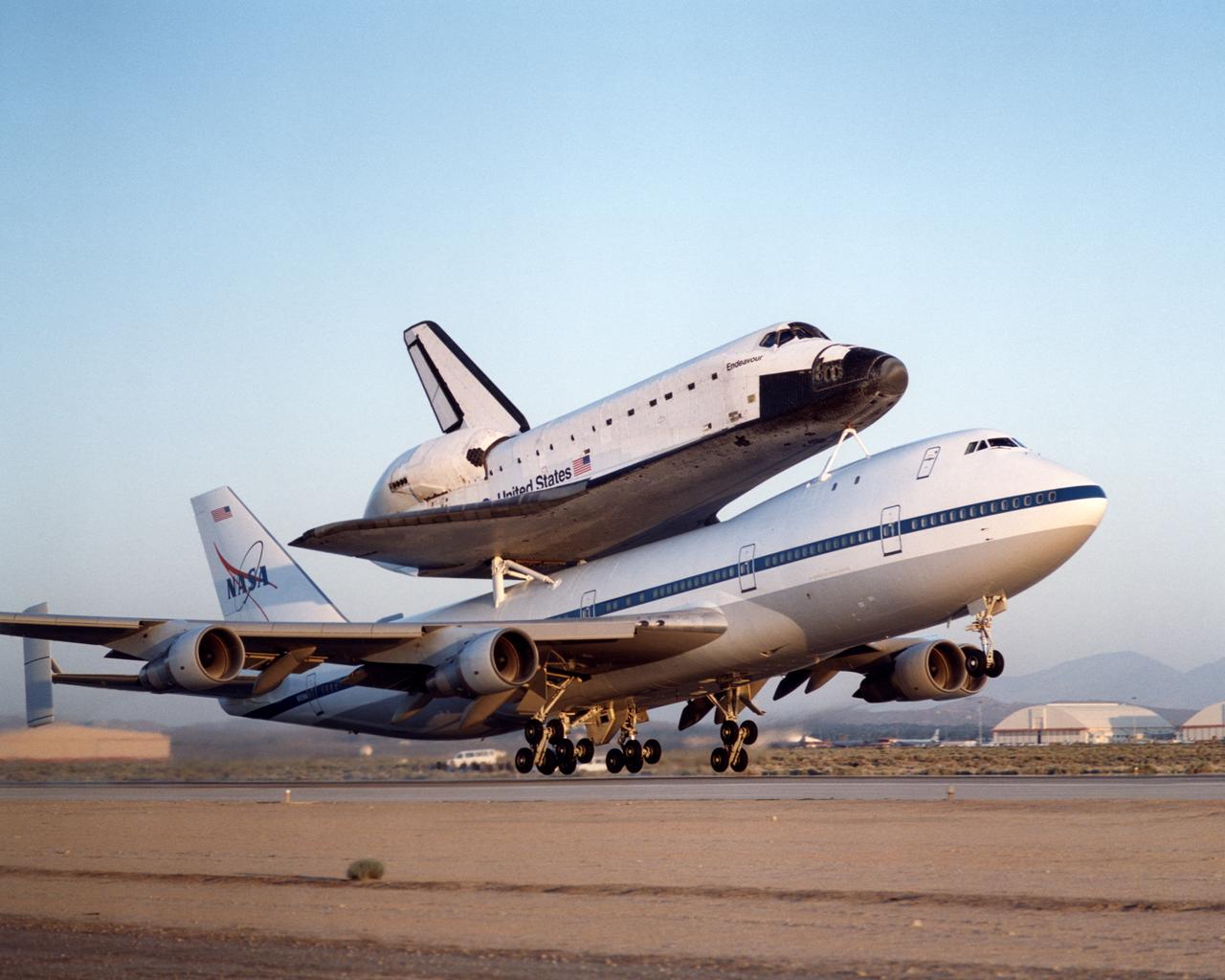
NASA's modified Boeing 747 Shuttle Carrier Aircraft with the Space Shuttle Endeavour on top lifts off from Edwards Air Force Base to begin its ferry flight back to the Kennedy Space Center in Florida.
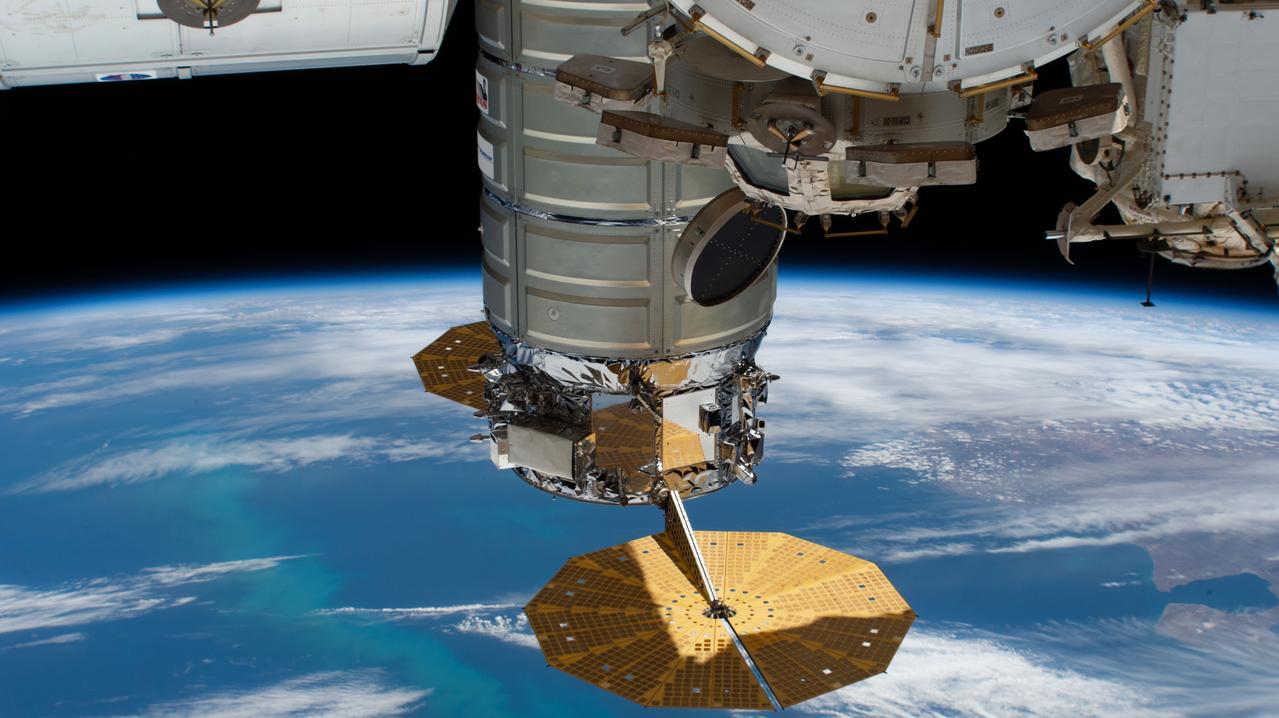
iss058e002245 (Jan. 7, 2019) --- The U.S. Cygnus space freighter from Northrop Grumman and its prominent cymbal-shaped UltraFlex solar arrays are pictured as the International Space Station orbited 262 miles above the Atlantic Ocean off the coast of Argentina. Towards the top center of the photograph is the seven-windowed cupola with its shutters open.
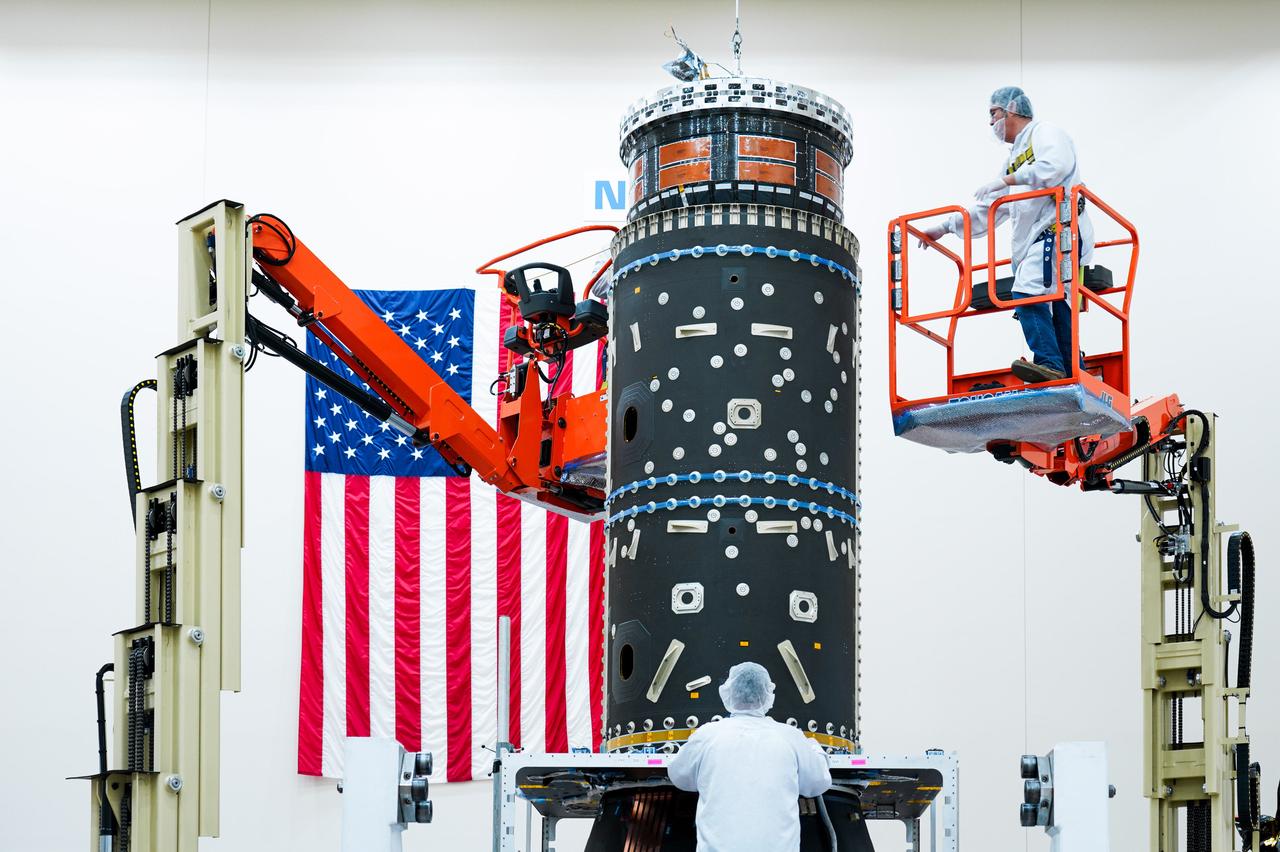
Technicians carefully install a piece of equipment to house Gateway’s xenon fuel tanks, part of its advanced electric propulsion system.
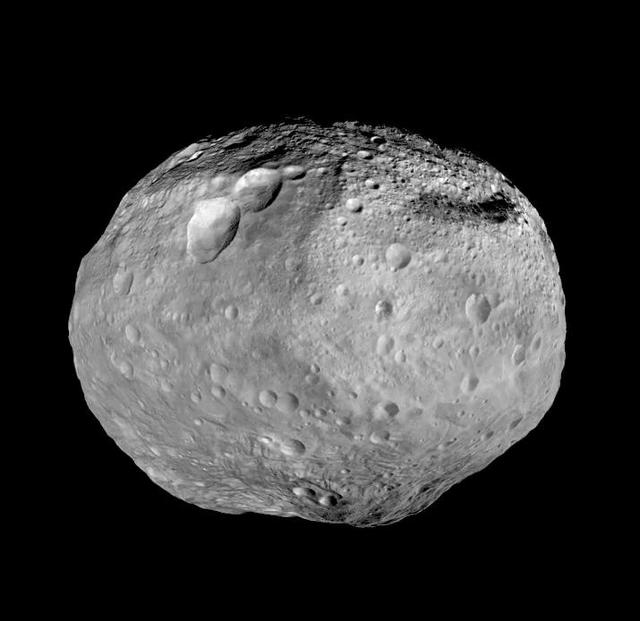
As NASA Dawn spacecraft takes off for its next destination, this mosaic synthesizes some of the best views the spacecraft had of the giant asteroid Vesta. The set of three craters known as the nowman can be seen at the top left.
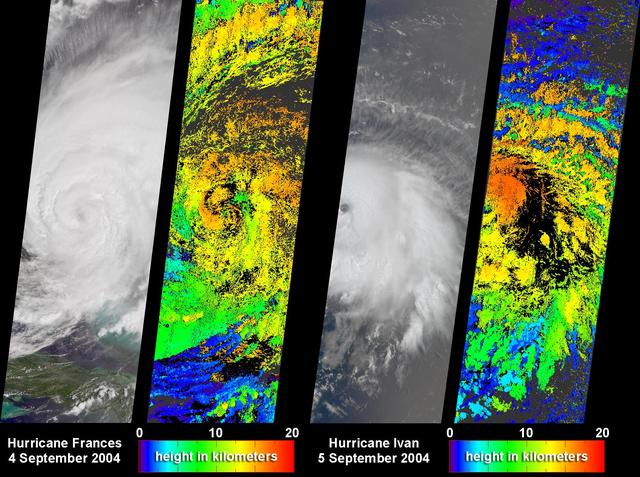
NASA Terra spacecraft captured these images and cloud-top height retrievals of Hurricane Frances on September 4, 2004, when the eye sat just off the coast of eastern Florida, and Hurricane Ivan on September 5th.
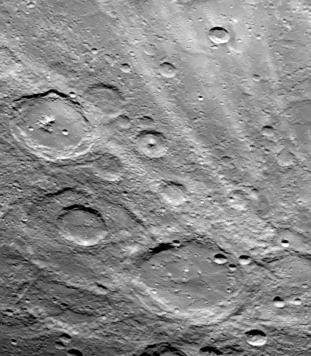
A field of bright rays, created by ejecta from a crater, radiating to the north top from off camera lower right is seen in this view of Mercury taken Sept. 21, 1974 by NASA Mariner 10.
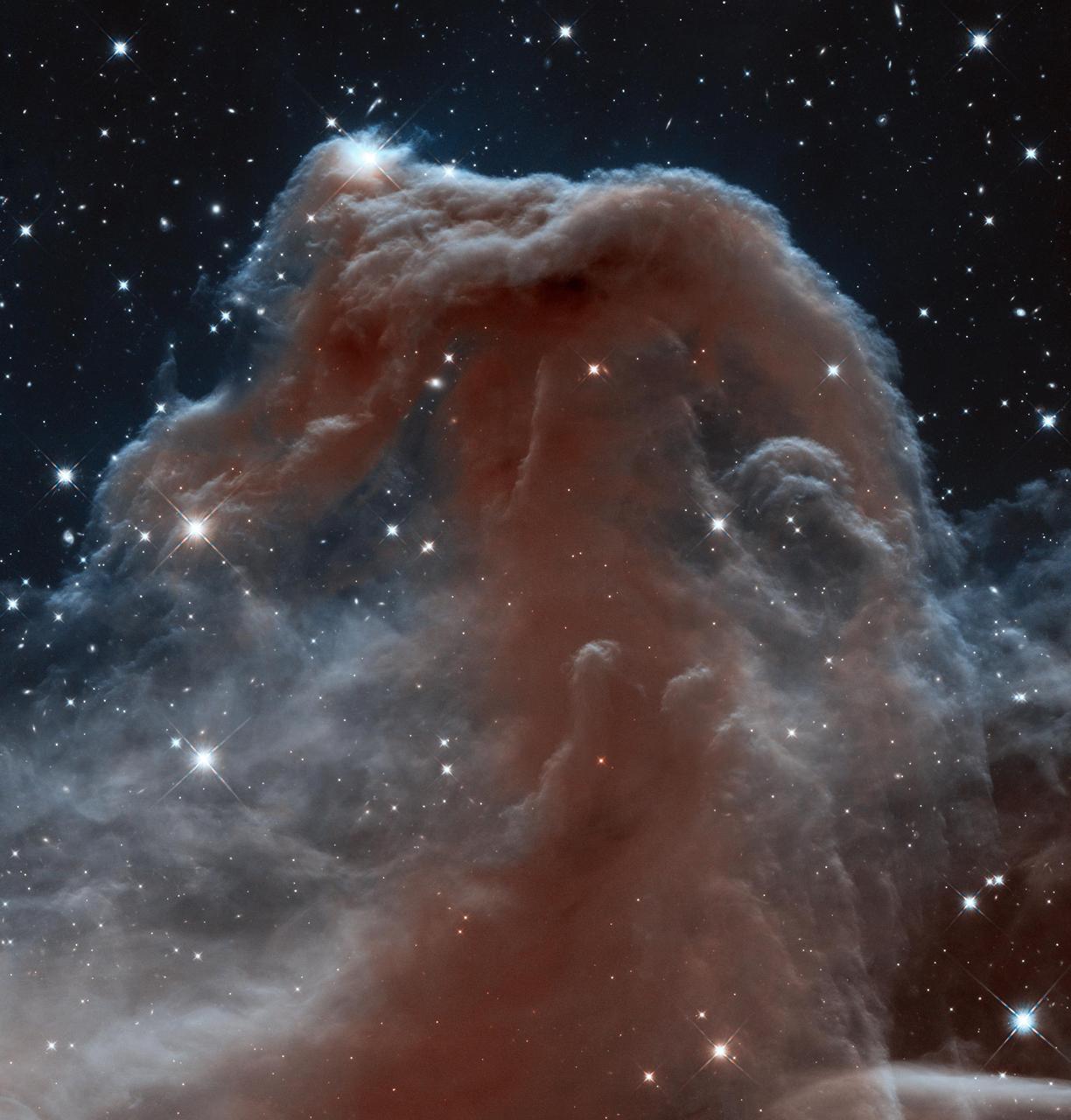
Backlit wisps along the Horsehead Nebula upper ridge are being illuminated by Sigma Orionis, a young five-star system just off the top of this image from the Hubble Space Telescope.

This color image of the Earth was obtained by NASA Galileo spacecraft in Dec. 1990, when the spacecraft was about 1.5 million miles from the Earth. Africa stretches from the center to the top of the picture with the Arabian Peninsula off to its right. http://photojournal.jpl.nasa.gov/catalog/PIA00076
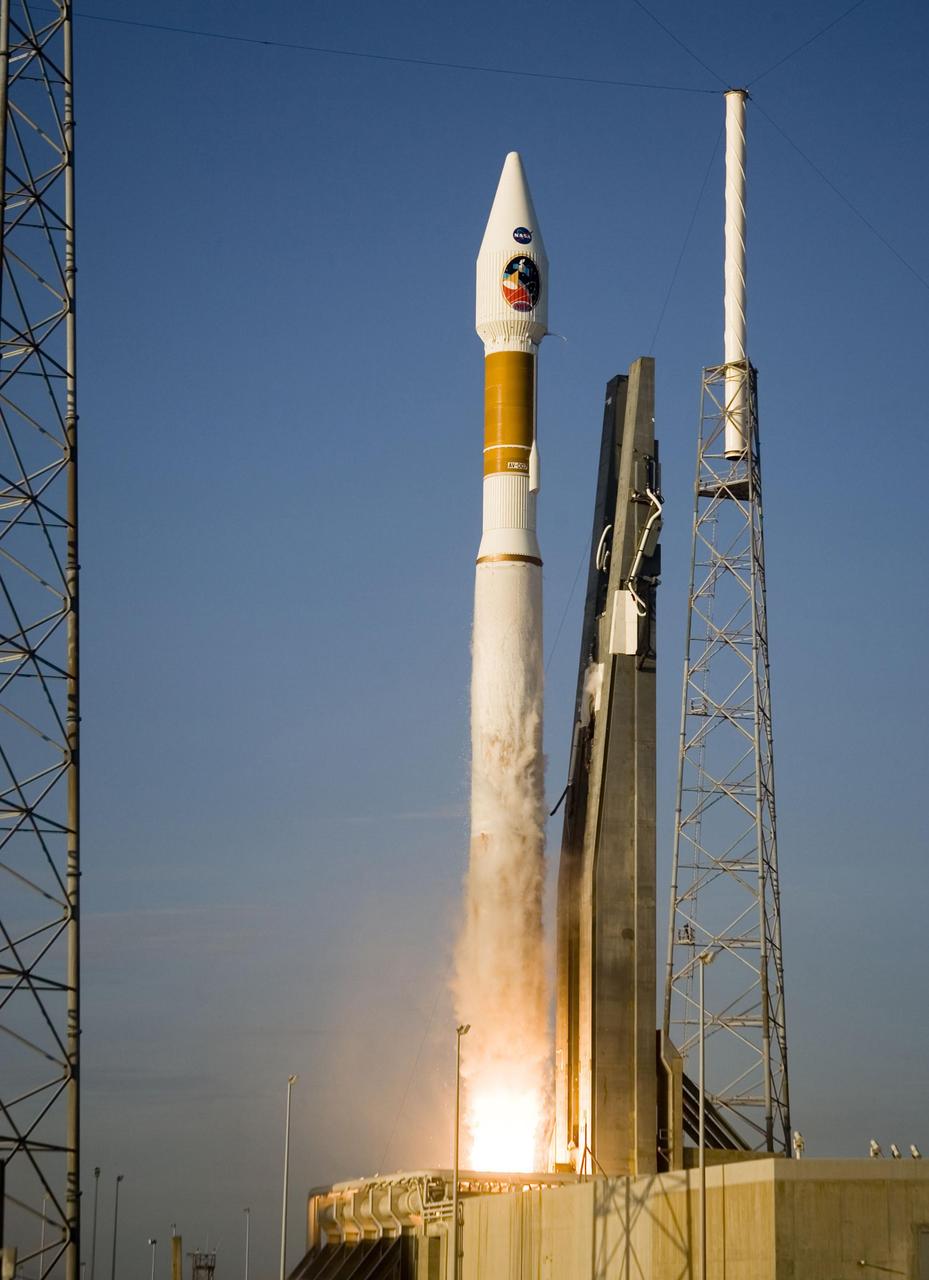
Atlas V launch vehicle, 19 stories tall, with a two-ton NASA Mars Reconnaissance Orbiter MRO on top, lifts off the pad on Launch Complex 41 at Cape Canaveral Air Force Station in Florida on Aug. 12, 2005.
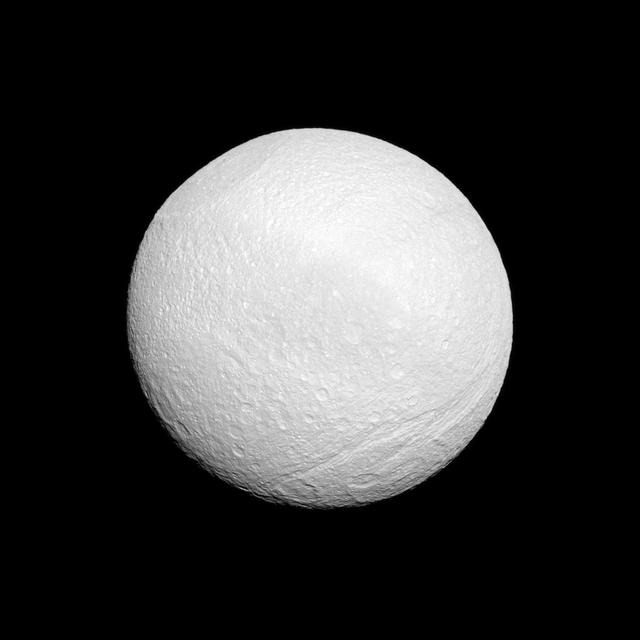
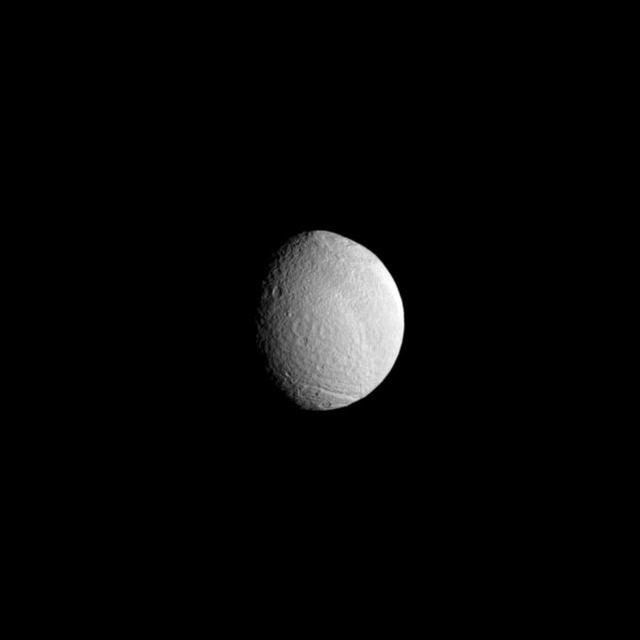
Saturn moon Tethys shows off its tortured surface in this image from NASA Cassini spacecraft. At top left of image is huge Odysseus Crater. At bottom right is Ithaca Chasma, a series of scarps that runs north-south across the moon.
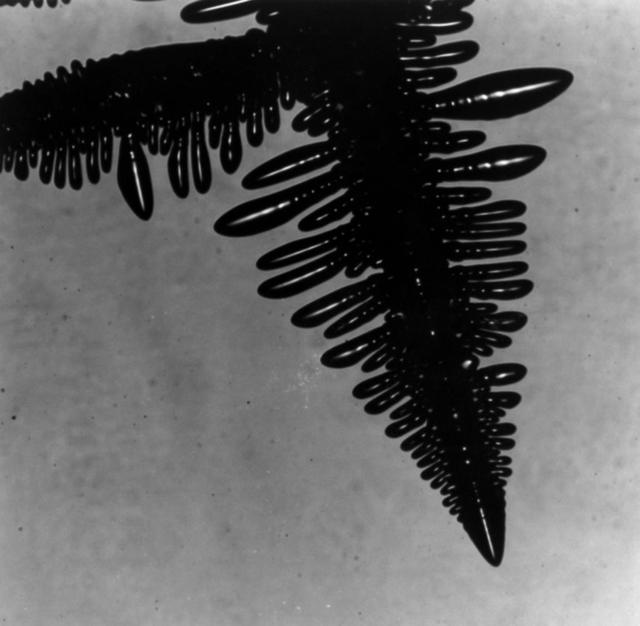
Typical picture of a dendrite: Notice how the branch on the left has no arms coming off the top. This is because of the convective forces (hot liquid rises) that the top of the branch is not solidifying (growing arms) like the bottom, cooler area. The is a gravitational effect. This does not happen in space.
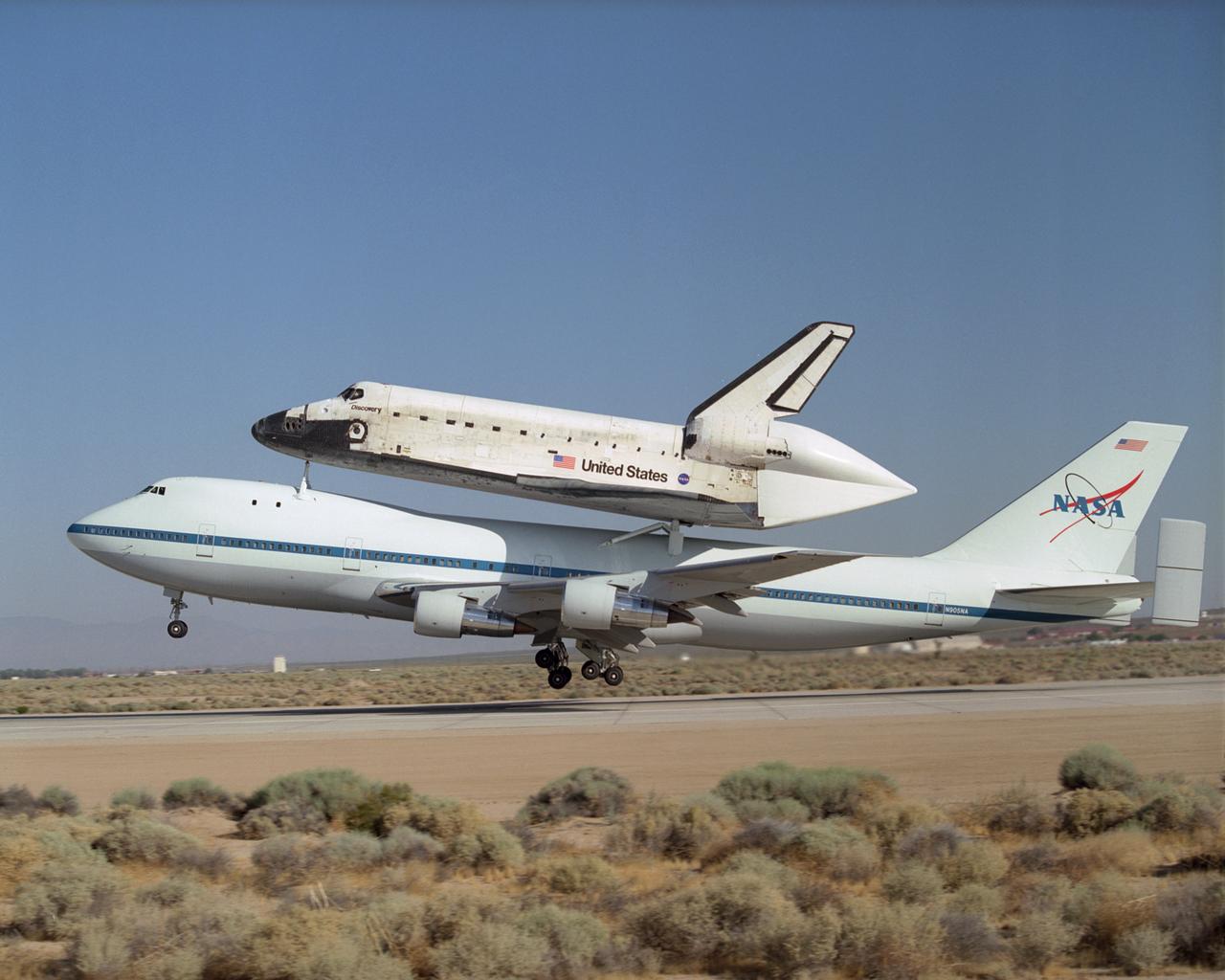
NASA's modified Boeing 747 Shuttle Carrier Aircraft with the Space Shuttle Discovery on top lifts off from Edwards Air Force Base to begin its ferry flight back to the Kennedy Space Center in Florida. The cross-country journey will take two days, with stops at several intermediate points for refueling. Space Shuttle Discovery landed safely at NASA's Dryden Flight Research Center at Edwards Air Force Base in California at 5:11:22 a.m. PDT, August 9, 2005, following the very successful 14-day STS-114 return to flight mission. During their two weeks in space, Commander Eileen Collins and her six crewmates tested out new safety procedures and delivered supplies and equipment the International Space Station. Discovery spent two weeks in space, where the crew demonstrated new methods to inspect and repair the Shuttle in orbit. The crew also delivered supplies, outfitted and performed maintenance on the International Space Station. A number of these tasks were conducted during three spacewalks. In an unprecedented event, spacewalkers were called upon to remove protruding gap fillers from the heat shield on Discovery's underbelly. In other spacewalk activities, astronauts installed an external platform onto the Station's Quest Airlock and replaced one of the orbital outpost's Control Moment Gyroscopes. Inside the Station, the STS-114 crew conducted joint operations with the Expedition 11 crew. They unloaded fresh supplies from the Shuttle and the Raffaello Multi-Purpose Logistics Module. Before Discovery undocked, the crews filled Raffeallo with unneeded items and returned to Shuttle payload bay. Discovery launched on July 26 and spent almost 14 days on orbit.
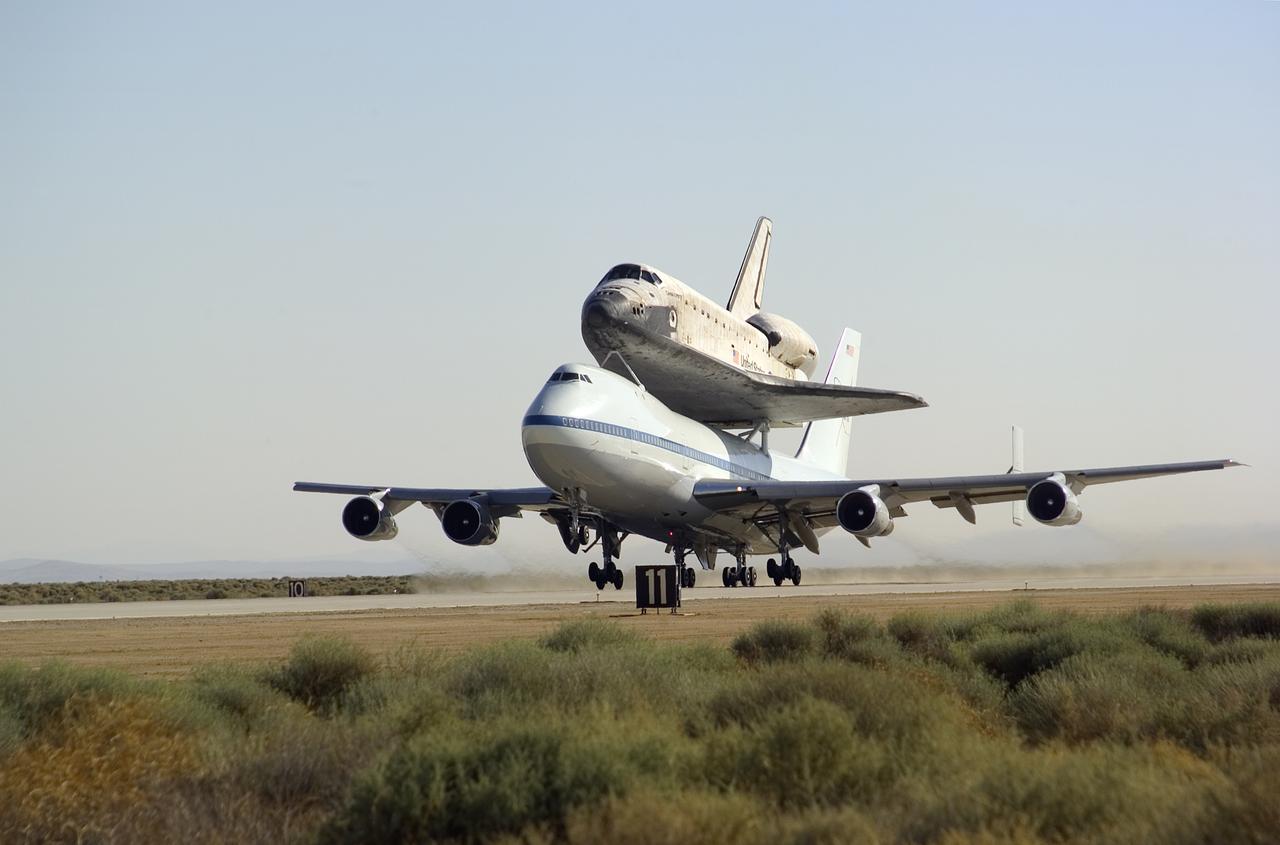
NASA's modified Boeing 747 Shuttle Carrier Aircraft with the Space Shuttle Discovery on top lifts off from Edwards Air Force Base to begin its ferry flight back to the Kennedy Space Center in Florida. The cross-country journey will take two days, with stops at several intermediate points for refueling. Space Shuttle Discovery landed safely at NASA's Dryden Flight Research Center at Edwards Air Force Base in California at 5:11:22 a.m. PDT, August 9, 2005, following the very successful 14-day STS-114 return to flight mission. During their two weeks in space, Commander Eileen Collins and her six crewmates tested out new safety procedures and delivered supplies and equipment the International Space Station. Discovery spent two weeks in space, where the crew demonstrated new methods to inspect and repair the Shuttle in orbit. The crew also delivered supplies, outfitted and performed maintenance on the International Space Station. A number of these tasks were conducted during three spacewalks. In an unprecedented event, spacewalkers were called upon to remove protruding gap fillers from the heat shield on Discovery's underbelly. In other spacewalk activities, astronauts installed an external platform onto the Station's Quest Airlock and replaced one of the orbital outpost's Control Moment Gyroscopes. Inside the Station, the STS-114 crew conducted joint operations with the Expedition 11 crew. They unloaded fresh supplies from the Shuttle and the Raffaello Multi-Purpose Logistics Module. Before Discovery undocked, the crews filled Raffeallo with unneeded items and returned to Shuttle payload bay. Discovery launched on July 26 and spent almost 14 days on orbit.
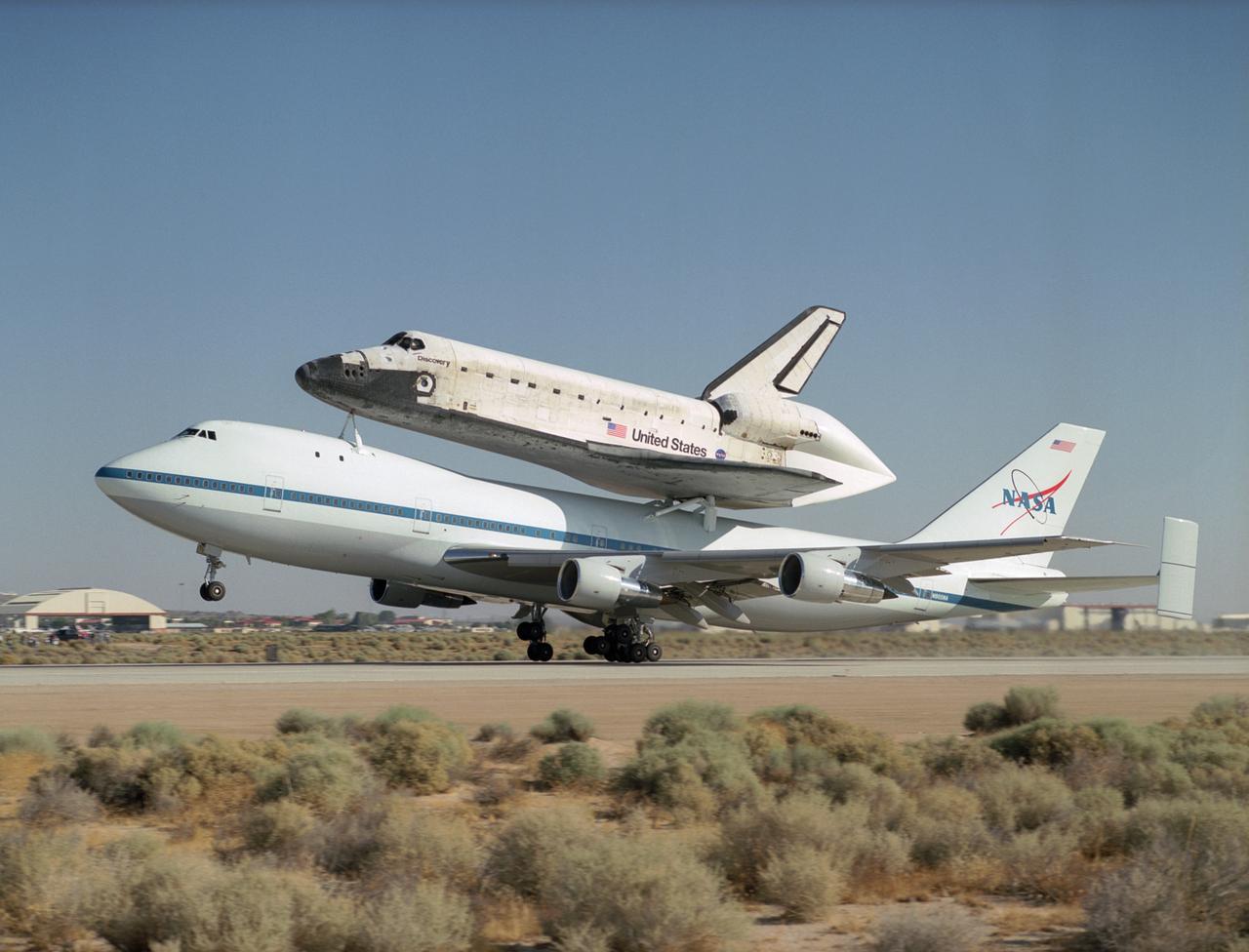
NASA's modified Boeing 747 Shuttle Carrier Aircraft with the Space Shuttle Discovery on top lifts off from Edwards Air Force Base to begin its ferry flight back to the Kennedy Space Center in Florida. The cross-country journey will take two days, with stops at several intermediate points for refueling. Space Shuttle Discovery landed safely at NASA's Dryden Flight Research Center at Edwards Air Force Base in California at 5:11:22 a.m. PDT, August 9, 2005, following the very successful 14-day STS-114 return to flight mission. During their two weeks in space, Commander Eileen Collins and her six crewmates tested out new safety procedures and delivered supplies and equipment the International Space Station. Discovery spent two weeks in space, where the crew demonstrated new methods to inspect and repair the Shuttle in orbit. The crew also delivered supplies, outfitted and performed maintenance on the International Space Station. A number of these tasks were conducted during three spacewalks. In an unprecedented event, spacewalkers were called upon to remove protruding gap fillers from the heat shield on Discovery's underbelly. In other spacewalk activities, astronauts installed an external platform onto the Station's Quest Airlock and replaced one of the orbital outpost's Control Moment Gyroscopes. Inside the Station, the STS-114 crew conducted joint operations with the Expedition 11 crew. They unloaded fresh supplies from the Shuttle and the Raffaello Multi-Purpose Logistics Module. Before Discovery undocked, the crews filled Raffeallo with unneeded items and returned to Shuttle payload bay. Discovery launched on July 26 and spent almost 14 days on orbit.
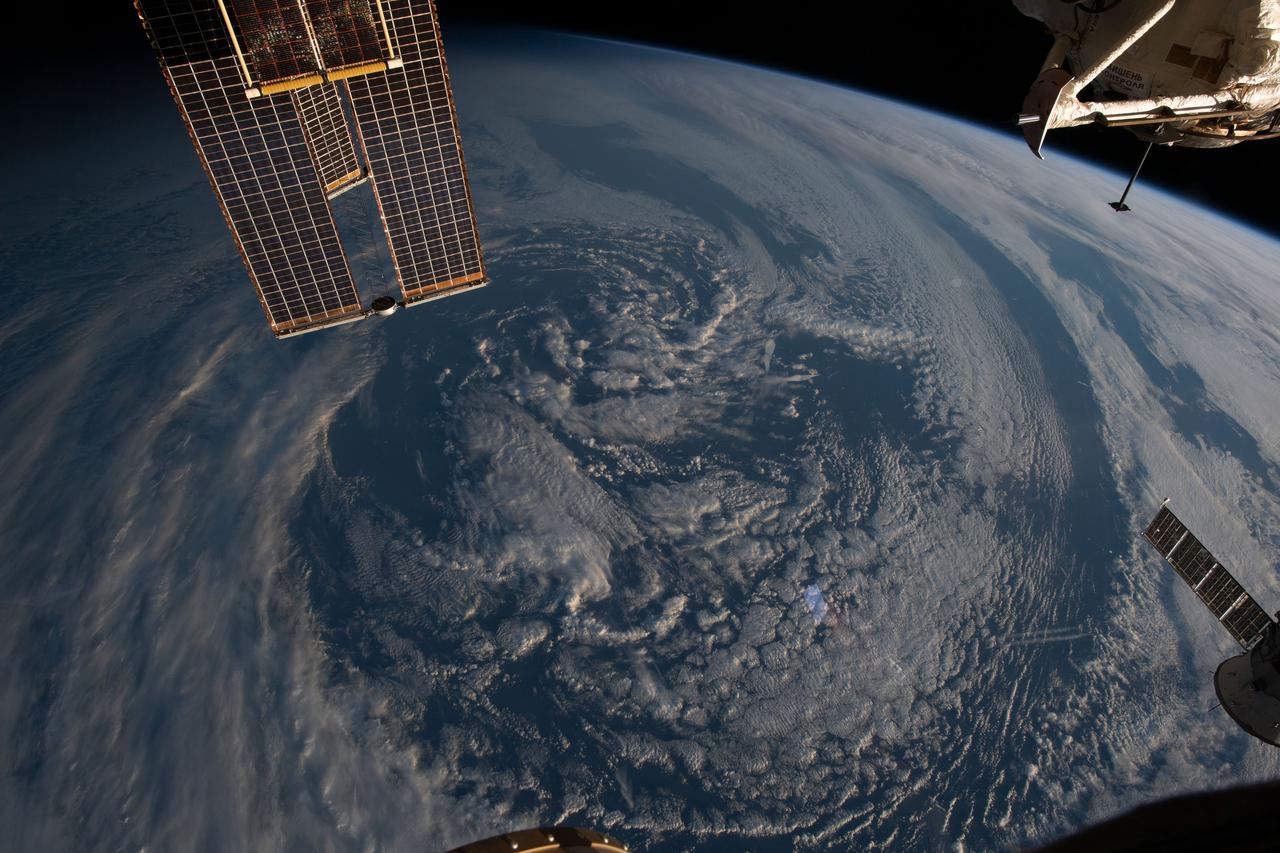
iss069e027354 (July 2, 2023) -- Clouds cover Earth and the orbital lab's solar arrays are shown in the top left corner as the space station orbits 270 miles above the Atlantic Ocean off the coast of Argentina.
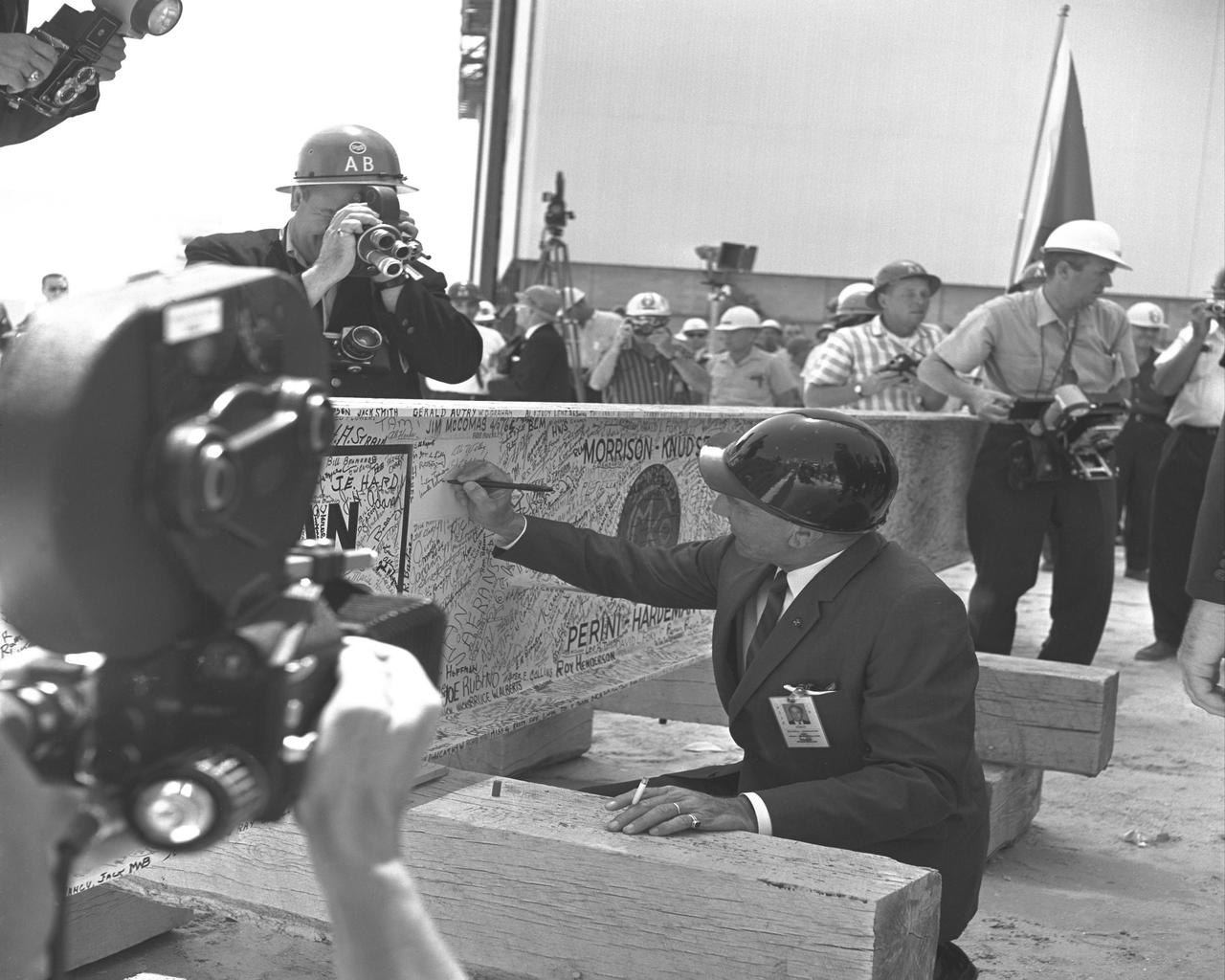
KENNEDY SPACE CENTER, FLA. -- Dr. Kurt Debus, Kennedy Space Center's first director, adds his name to the thousands of signatures affixed to the 38-foot-long steel beam used in the VAB's 'Topping Off' ceremonies.
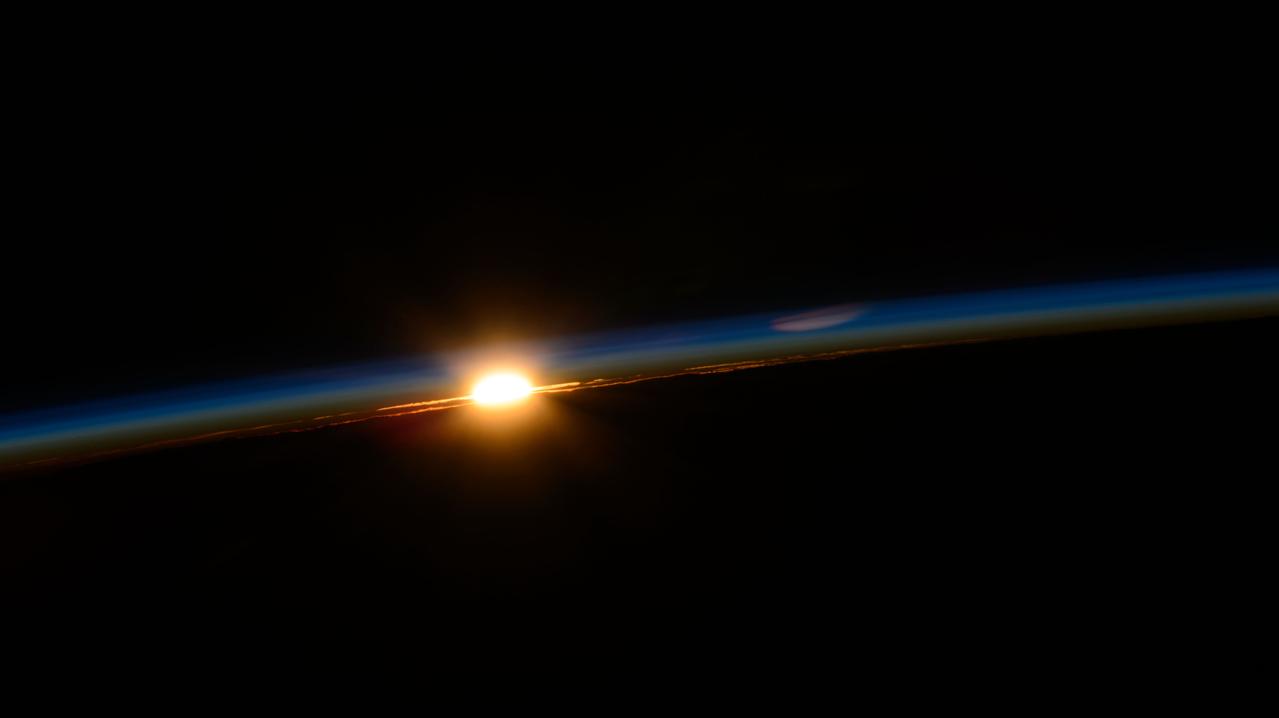
iss071e092499 (May 19, 2024) --- The first rays of an orbital sunrise penetrate Earth's atmosphere revealing the cloud tops as the International Space Station soared 262 miles above the Indian Ocean off the southeast coast of South Africa.
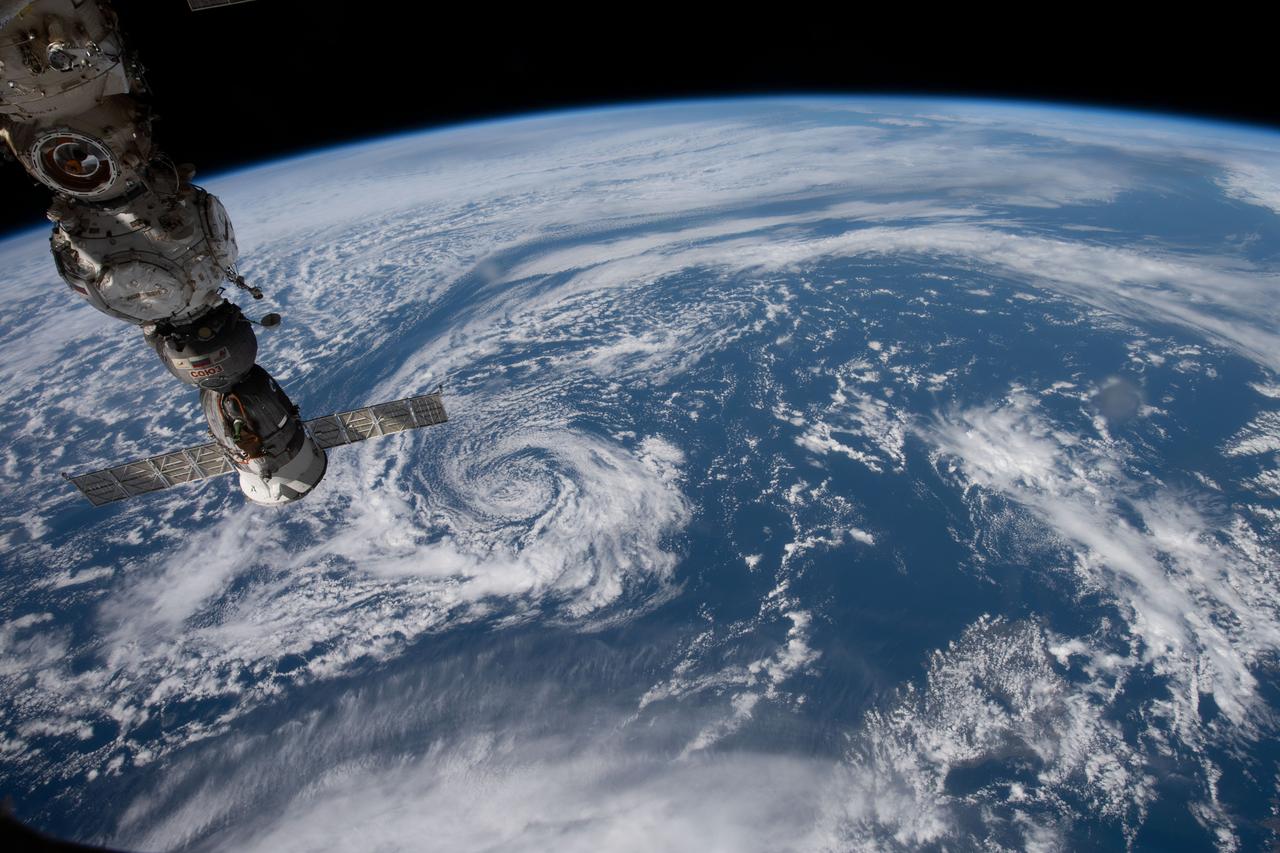
iss069e003960 (April 17, 2023) --- Three Roscosmos components on the International Space Station were photographed by UAE (United Arab Emirates) astronaut and Expedition 69 Flight Engineer Sultan Alneyadi while orbiting 263 miles above a partly Pacific Ocean off the coast of British Columbia, Canada. At left, from top to bottom, are the Nauka multipurpose laboratory module's forward port, the Prichal docking module, and the Soyuz MS-23 crew ship.
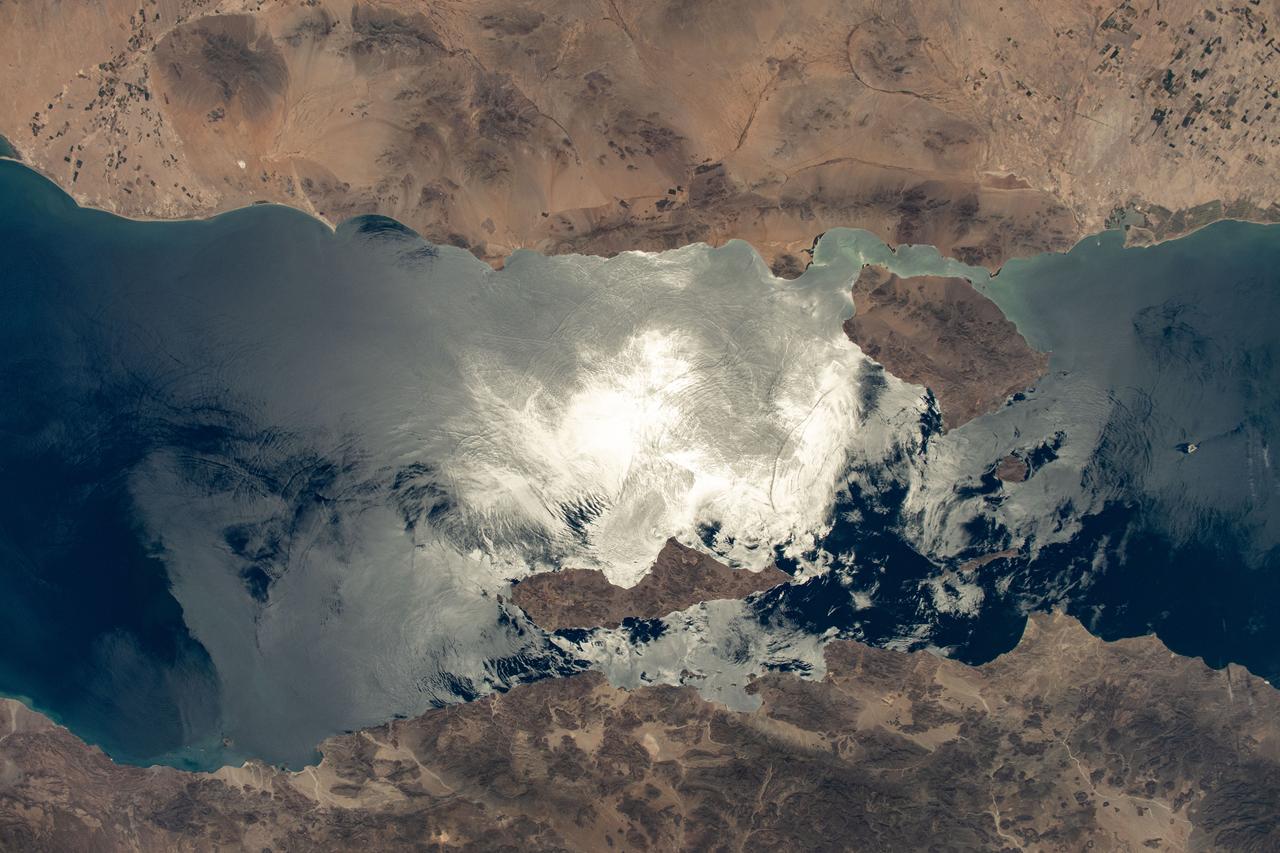
iss071e130631 (May 26, 2024) --- The sun's glint beams off the Gulf of California contrasting Mexico's coastal states of Baja California (bottom) and Sonora (top). In the middle of the frame (clockwise from top) are the islands of Tiburón, Turón, San Lorenzo, and Angel de la Guarda. The International Space Station was orbiting 261 miles above Sonora at the time of this photograph.
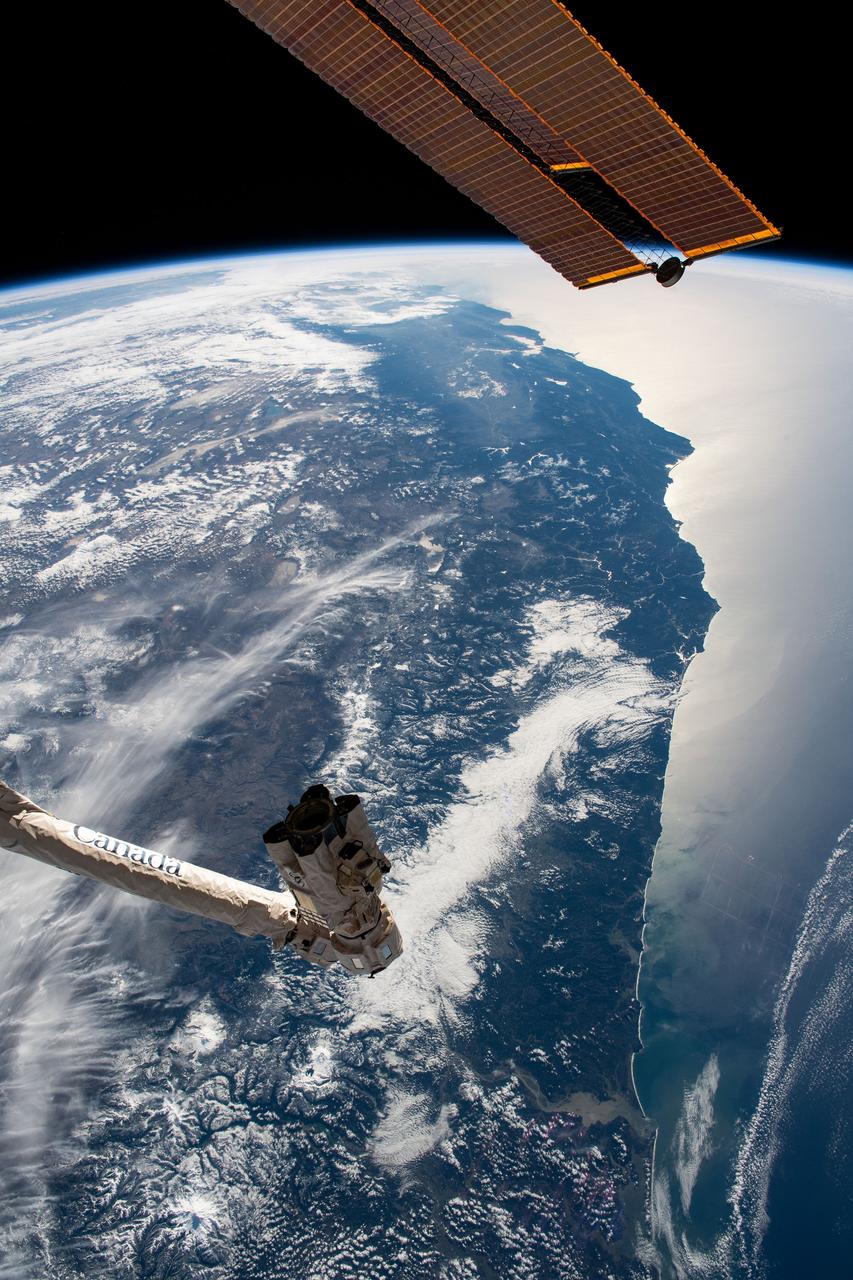
iss062e004863 (Feb. 9, 2020) --- The International Space Station was orbiting 266 miles above the Pacific Ocean when this picture was taken just off the western coast of North America. At top near the Earth's limb is California's San Francisco Bay. Washington state's Columbia River appears at the bottom of the frame.
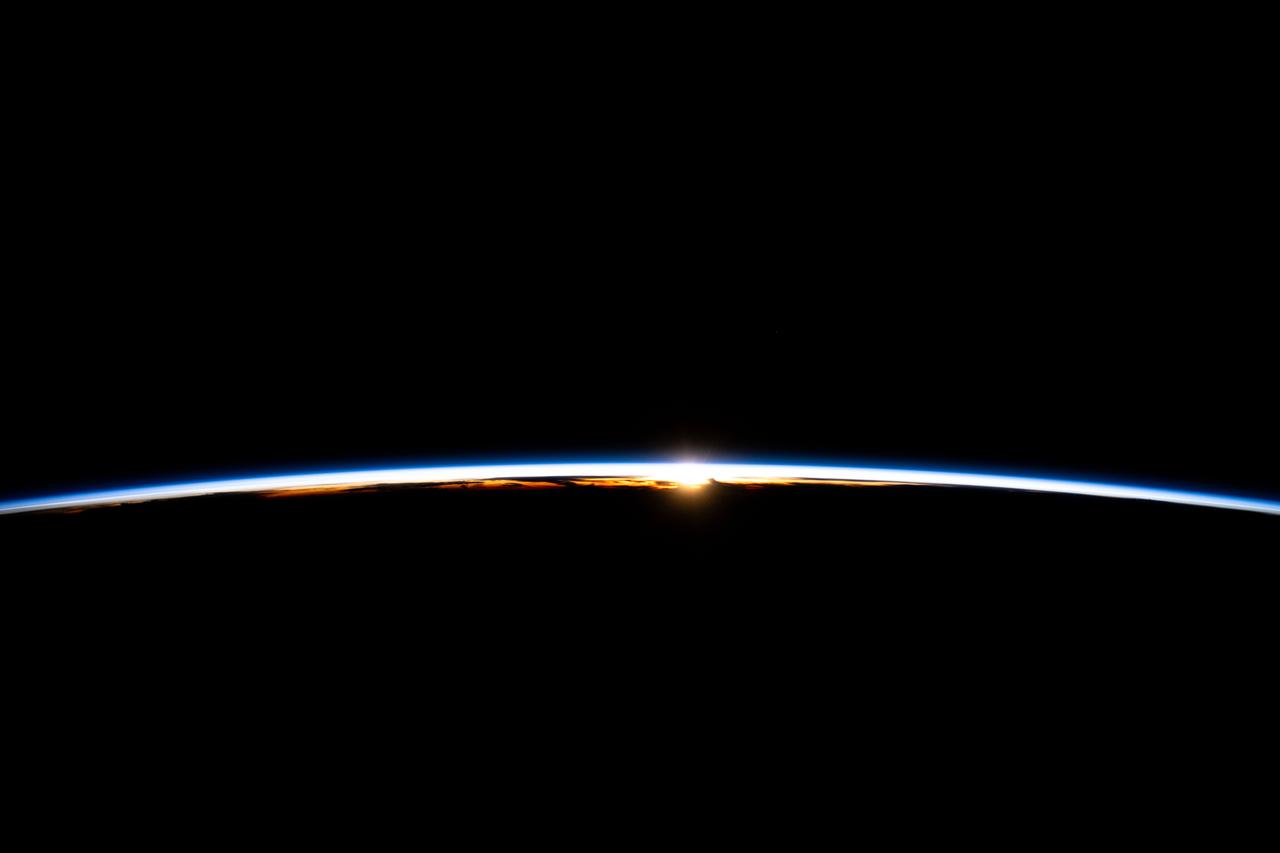
iss071e077638 (May 14, 2024) --- The first rays of an orbital sunrise break through Earth's atmosphere highlighting the cloud tops in this photograph from the International Space Station as it soared 256 miles above the Indian Ocean off the coast of Sumatra, Indonesia.
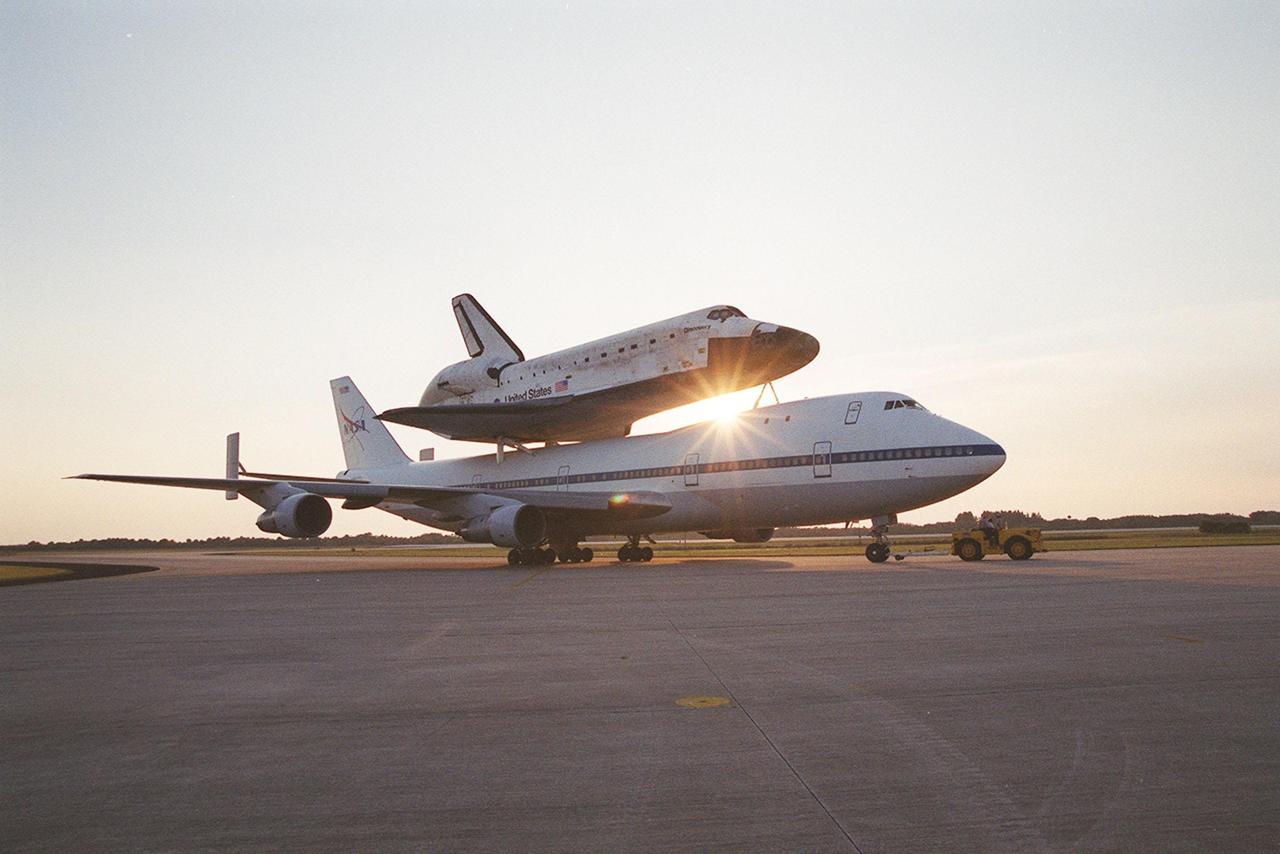
After landing at the Shuttle Landing Facility (SLF), the Shuttle Carrier Aircraft (SCA), with its unique cargo Discovery on top, is towed to the mate/demate device at the SLF. Discovery will be lifted off the SCA and transported to the Orbiter Processing Facility bay 1. There it will undergo preparations for its next launch, STS-102, scheduled for February 2001

iss073e0204578 (May 25, 2025) --- Lightning illuminates the clouds (top left) above Southeast Asia in this photograph from the International Space Station as it orbited 259 miles over the South China Sea and off the coast of the Malaysian state of Sarawak on the island of Borneo.
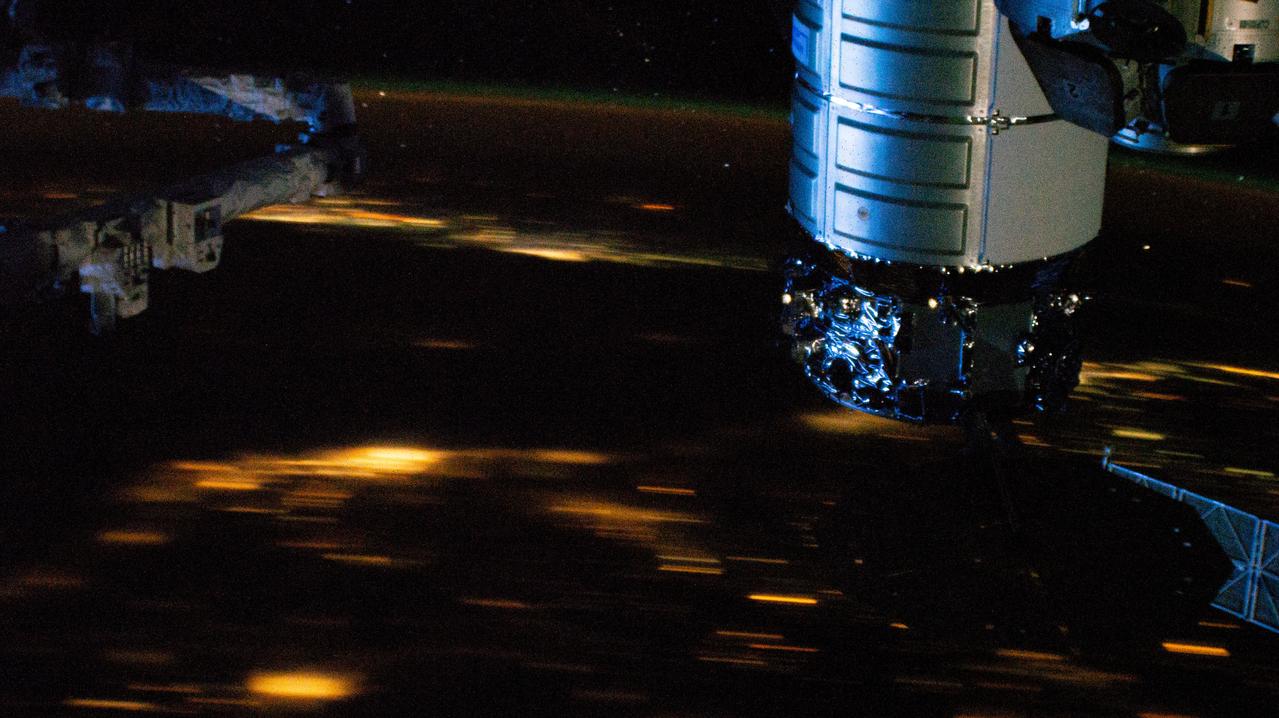
iss068e060810 (Feb. 28, 2023) --- At top right, is the Northrop Grumman Cygnus space freighter berthed to the International Space Station's Unity module. The orbital outpost was soaring 262 miles above the English Channel off the coast of France in this nighttime photograph from an external high-definition camera.
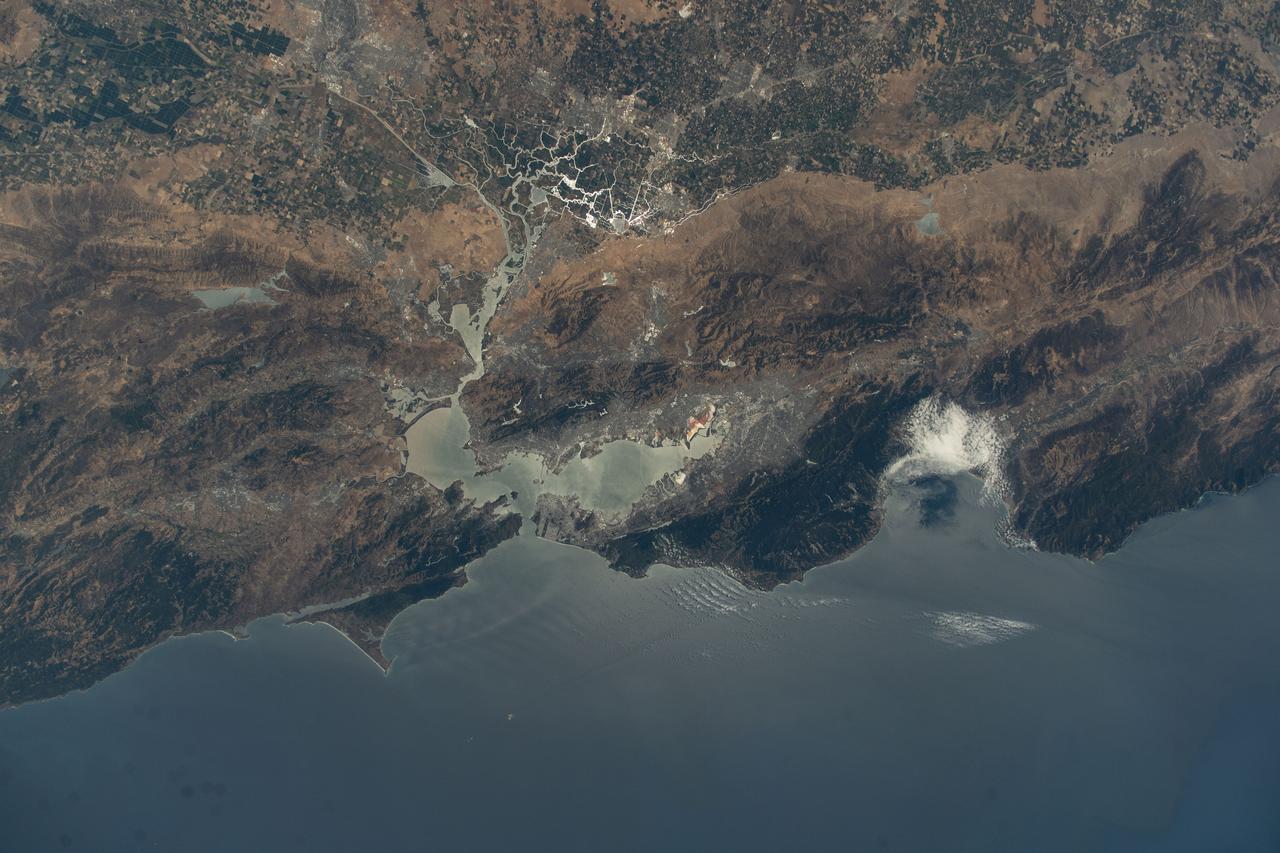
iss073e0420567 (Aug. 3, 2025) --- California's San Francisco Bay Area surrounded by the cities of San Francisico, Oakland, and San Jose, is pictured from the International Space Station as it orbited 260 miles above the Golden State. At top, the sun's glint beams off the San Joaquin River in California's Central Valley.
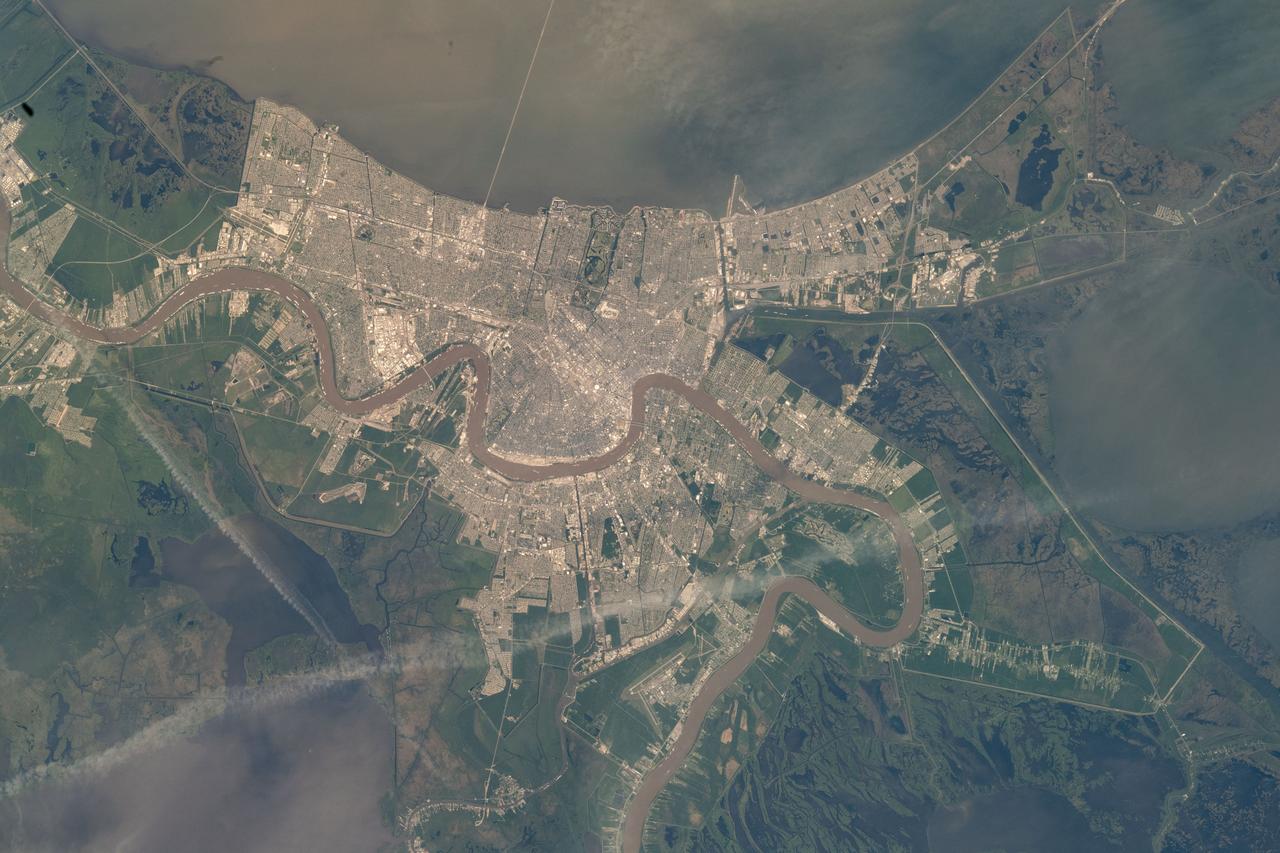
iss067e184608 (April 28, 2022) --- New Orleans, Louisiana, and its surrrounding suburbs, including Gretna, Metarie, and Kenner, are pictured along the Mississsippi River with Lake Ponchartrain at top. The International Space Station was just off the southeast coast of the Pelican State orbiting 264 miles above the Gulf of Mexico at the time of this photograph.
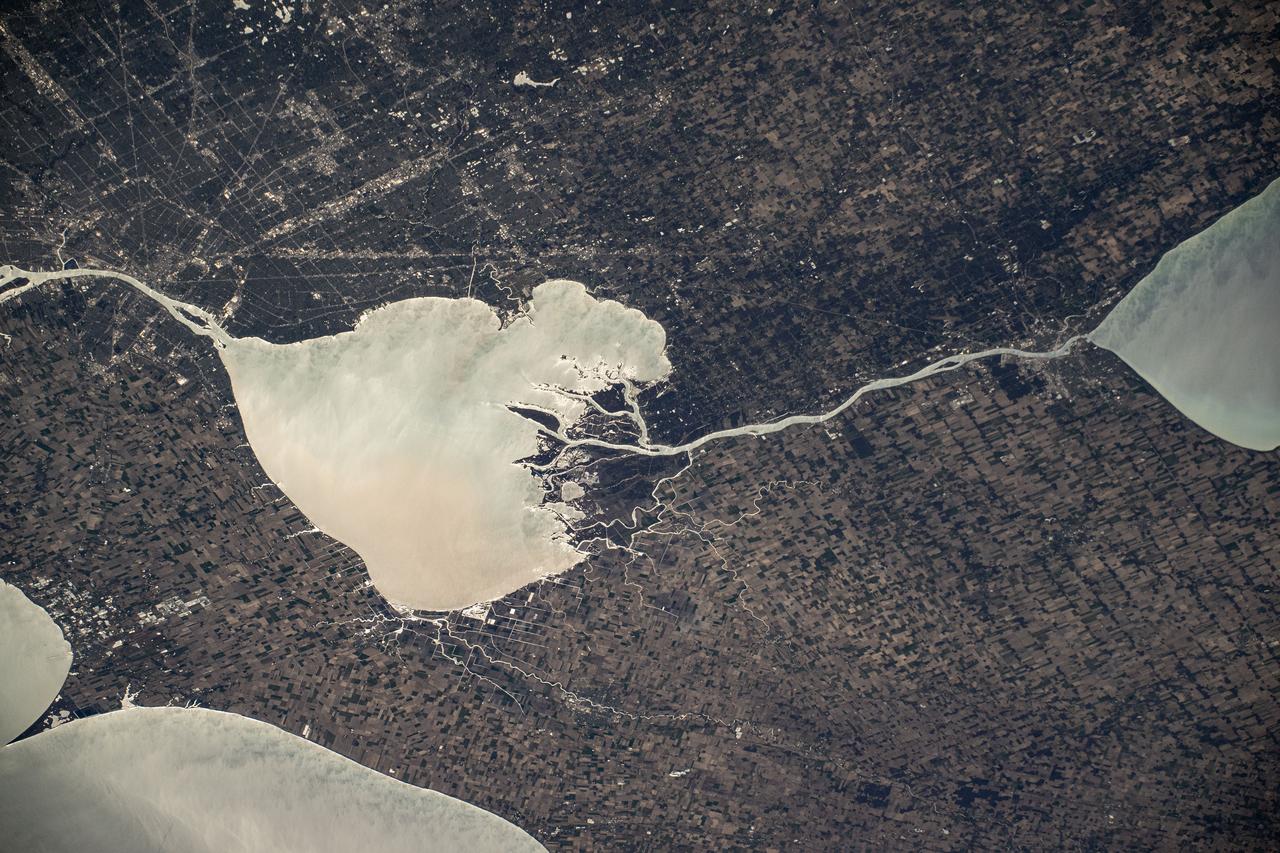
iss073e0000460 (April 22, 2025) --- The sun's glint beams off the freshwater Lake St. Clair, sits in between Lake Huron (right) and Lake Erie (bottom left), and separates Detroit, Michigan (top left) from Ontario, Canada, in this photograph from the International Space Station as it orbited 260 miles above.
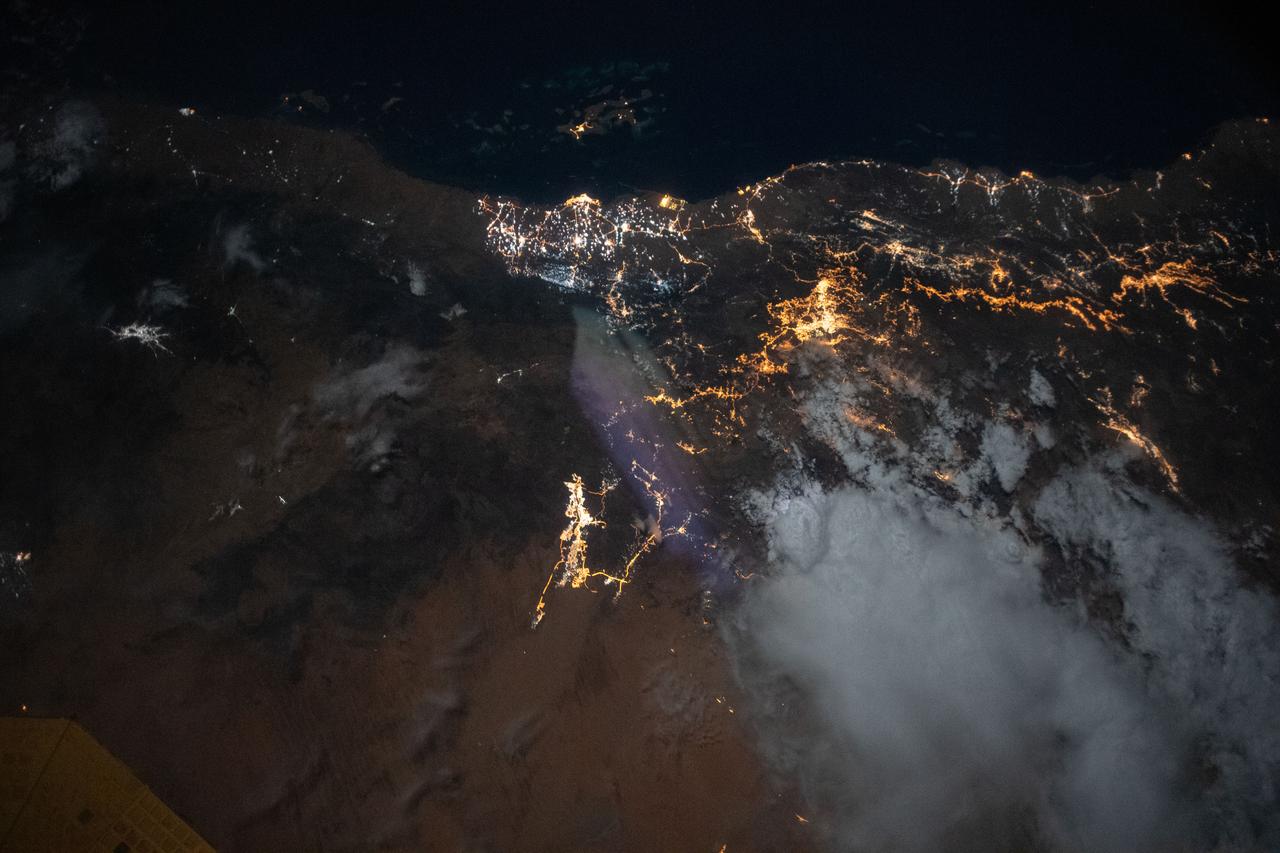
iss063e006708 (May 5, 2020) --- The city lights of Jazan (top center) and its suburbs on the Persian Gulf coast of Saudi Arabia are easily visible from the International Space Station during an orbital night pass. Just off the coast of Jazan is the Farason Island Marine Sanctuary.
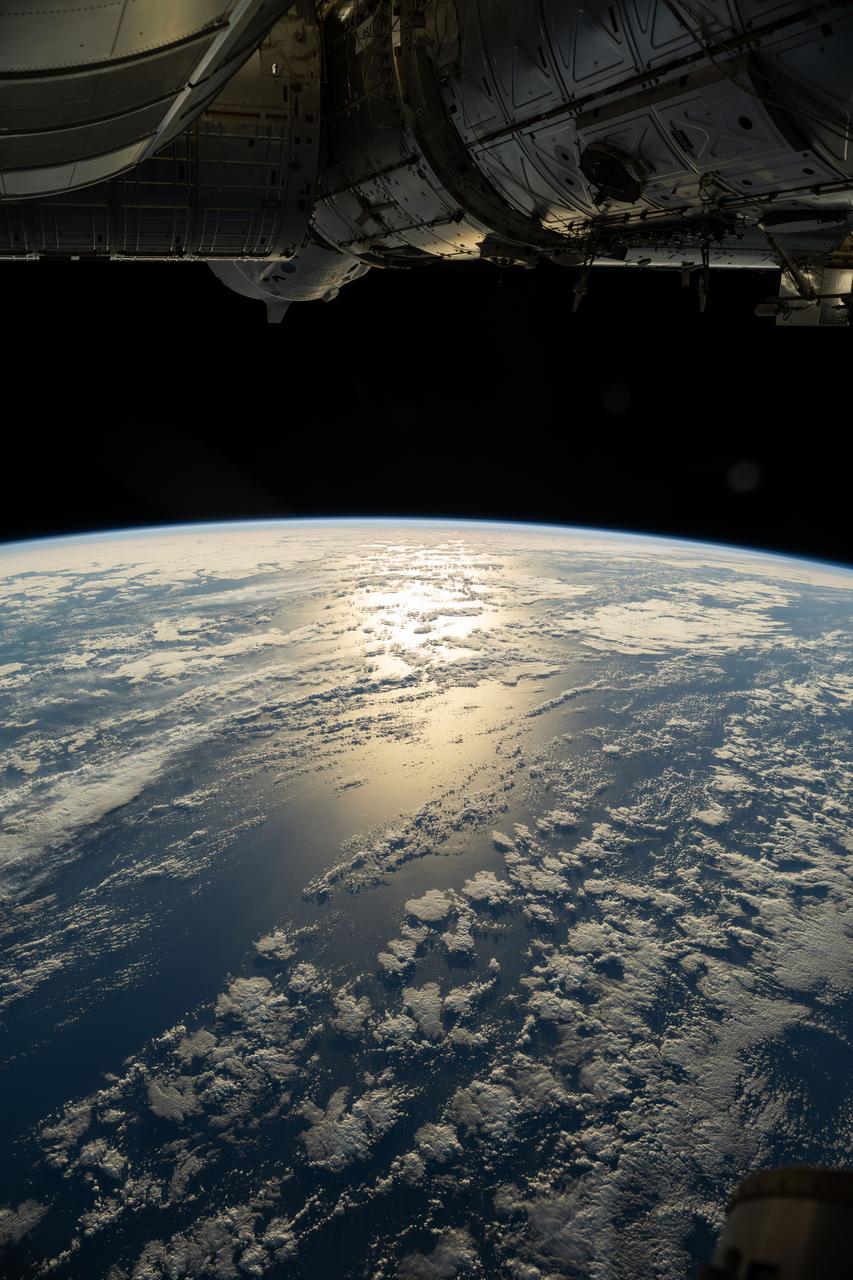
iss073e0177079 (June 2, 2025) --- The sun's glint beams off a partly cloudy southern Pacific Ocean in this photograph from the International Space Station as it orbited 264 miles above. At top, a partially obscured SpaceX Dragon crew spacecraft can be seen docked to the orbital outpost's forward port on the Harmony module.
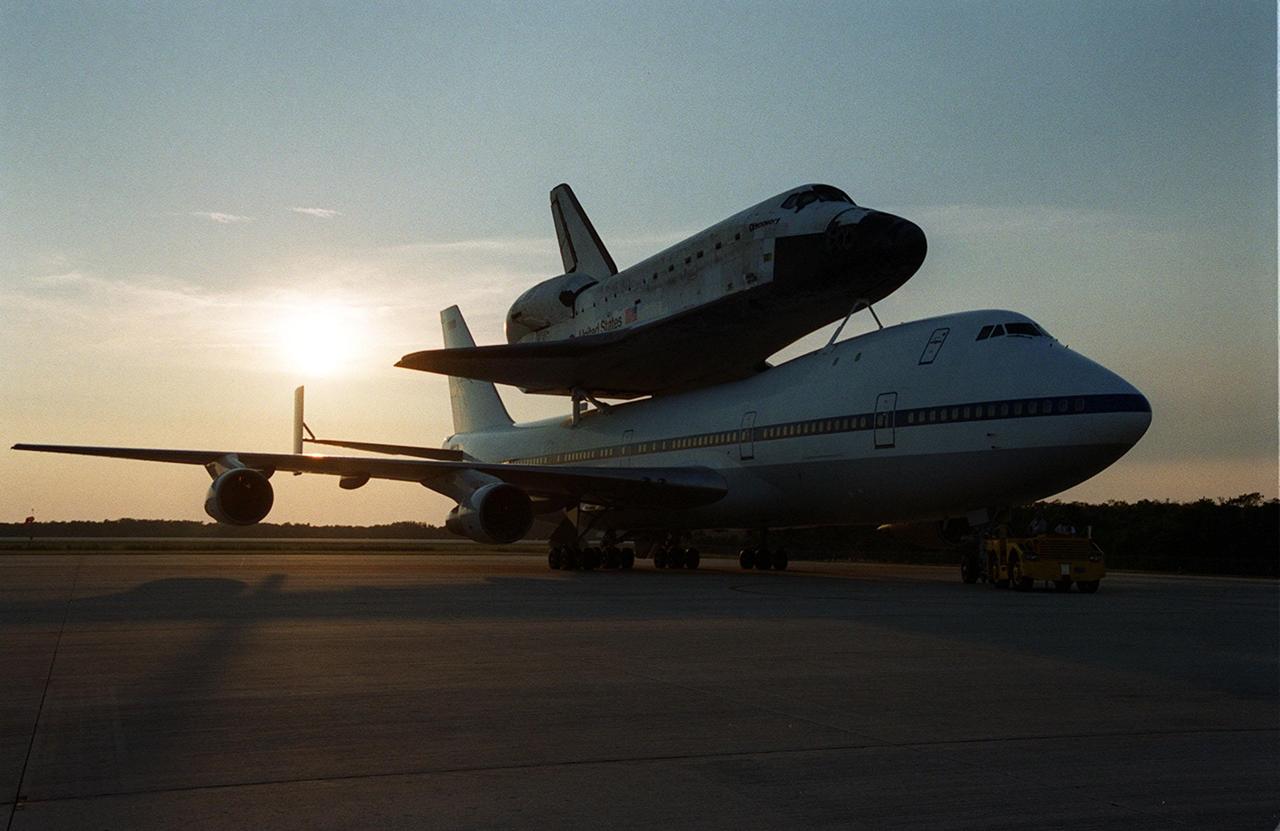
The Shuttle Carrier Aircraft (SCA) and its unique cargo Discovery on top rest in the shadows from the setting sun behind them. Discovery will be lifted off the SCA via the mate/demate device and transported to the Orbiter Processing Facility bay 1. There it will undergo preparations for its next launch, STS-102, scheduled for February 2001
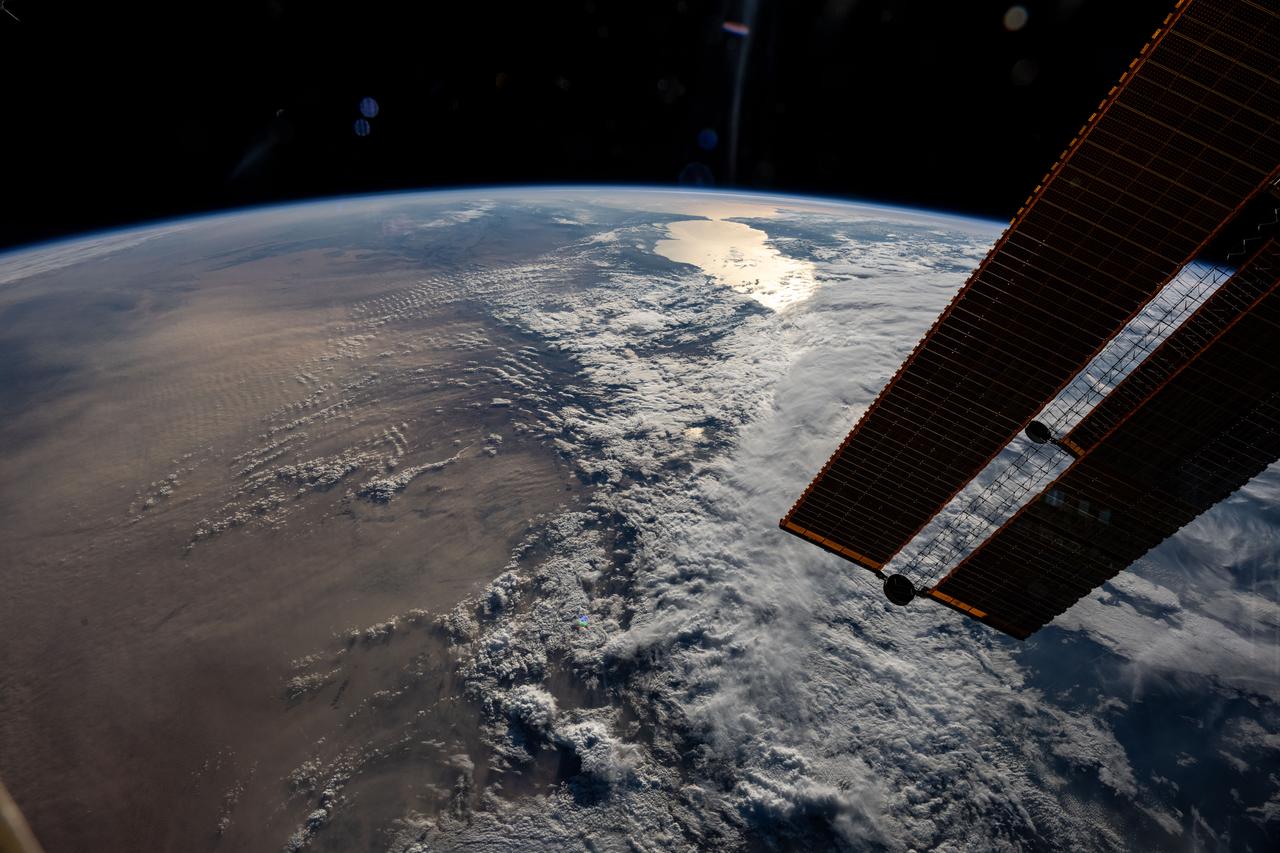
iss073e0032281 (May 15, 2025) --- The sun's glint beams off the Strait of Gibraltar at the top of this photograph as the International Space Station orbited 261 miles above a cloudy Mediterranean Sea. At left, is the Sahara Desert extending across the north African continent. In the right foreground, is a set of of the orbital outpost's main solar arrays.
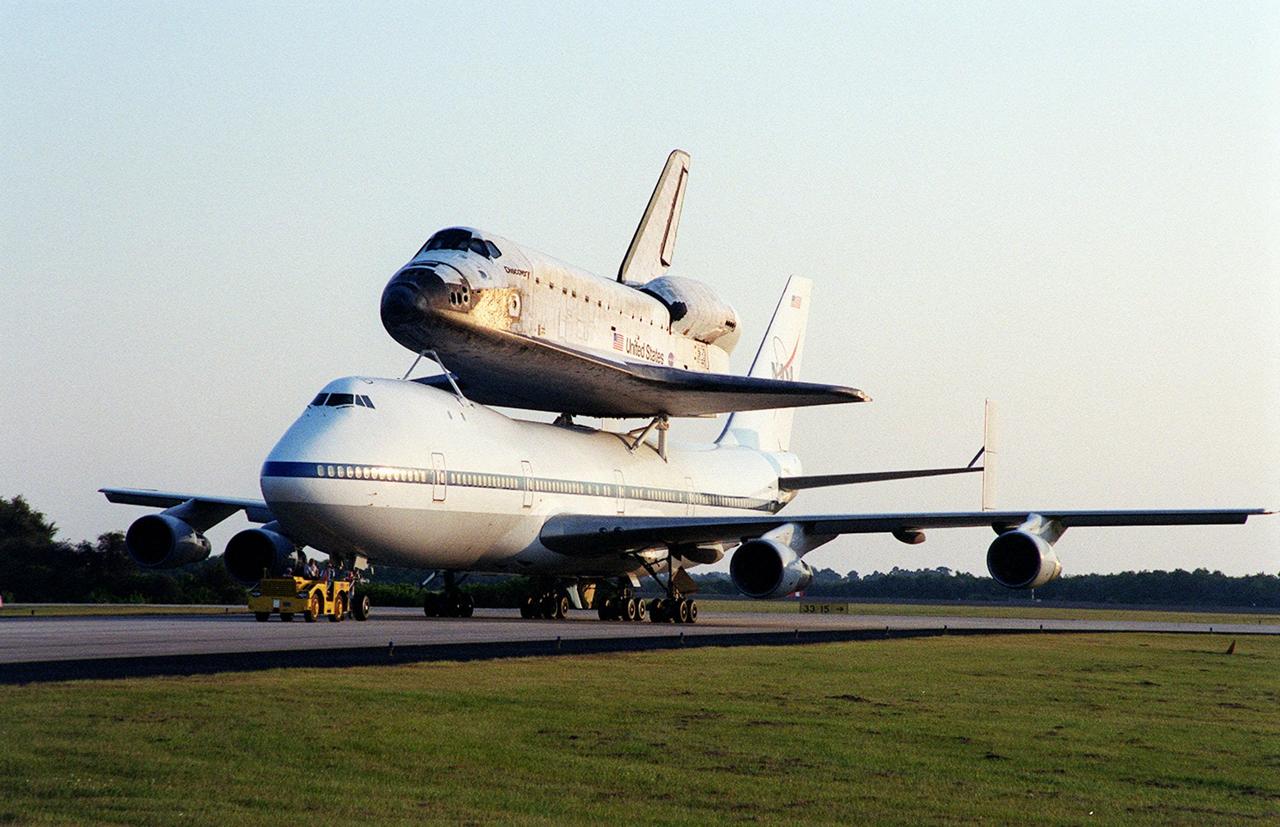
After landing at the Shuttle Landing Facility (SLF), the Shuttle Carrier Aircraft (SCA), with its unique cargo Discovery on top, is towed to the mate/demate device at the SLF. Discovery will be lifted off the SCA and transported to the Orbiter Processing Facility bay 1. There it will undergo preparations for its next launch, STS-102, scheduled for February 2001
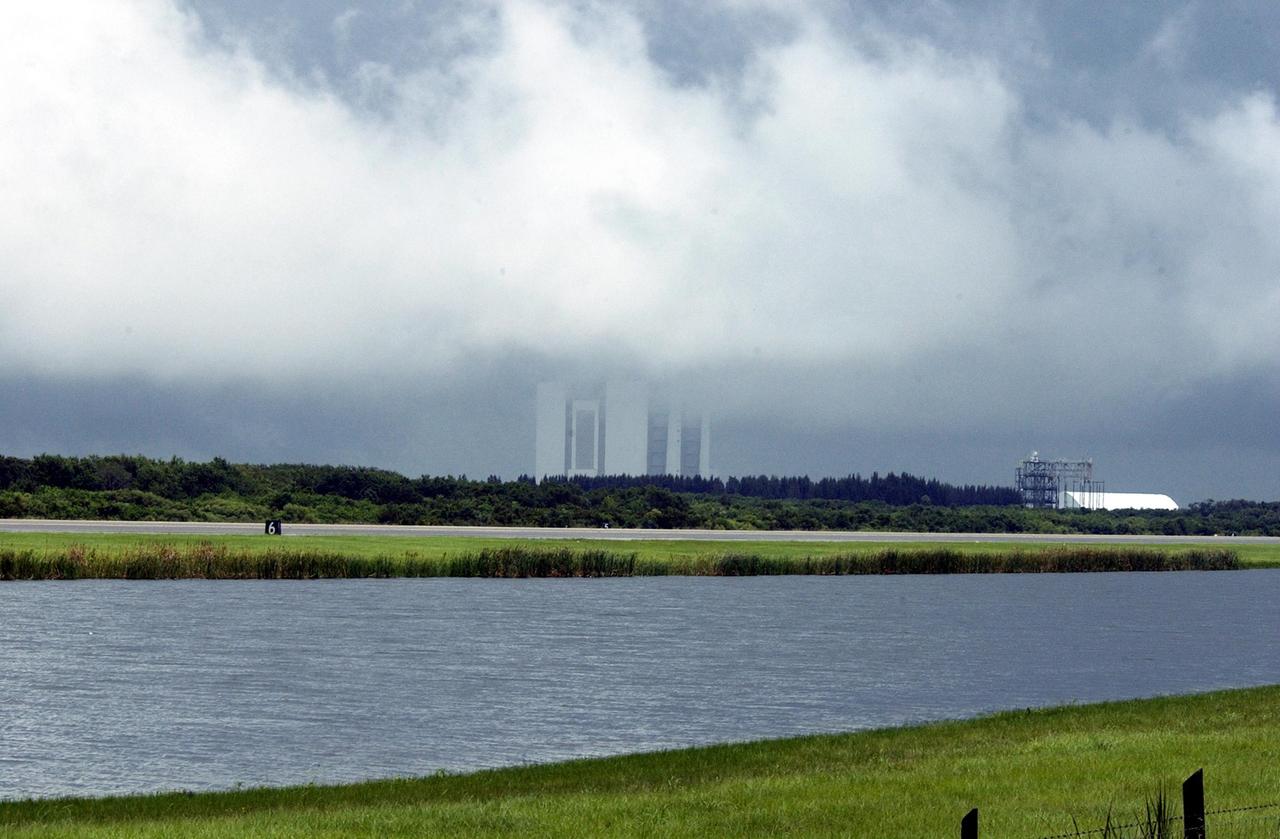
KENNEDY SPACE CENTER, FLA. -- Low clouds blur the top of the Vehicle Assembly Building as they hang over the Shuttle Landing Facility. The low cloud cover and other unfavorable weather conditions resulted in the wave off of two landing opportunities for Endeavour, returning from mission STS-111
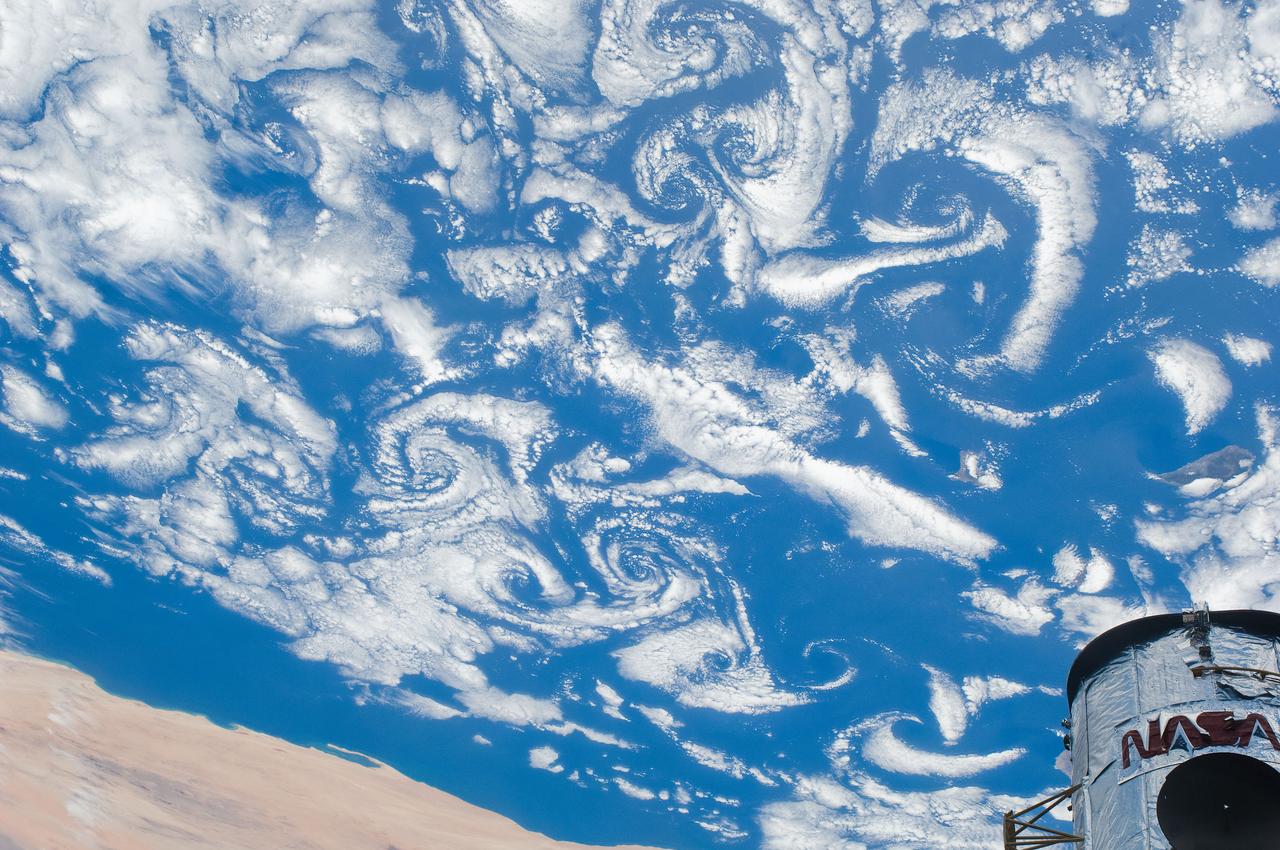
S125-E-007547 (15 May 2009) --- Low-level winds rushing over the Cape Verde Islands off the coast of northwestern Africa created cloud vortex streets which share this scene with the top of the Hubble Space Telescope locked down in the cargo bay of the Earth-orbiting Space Shuttle Atlantis.
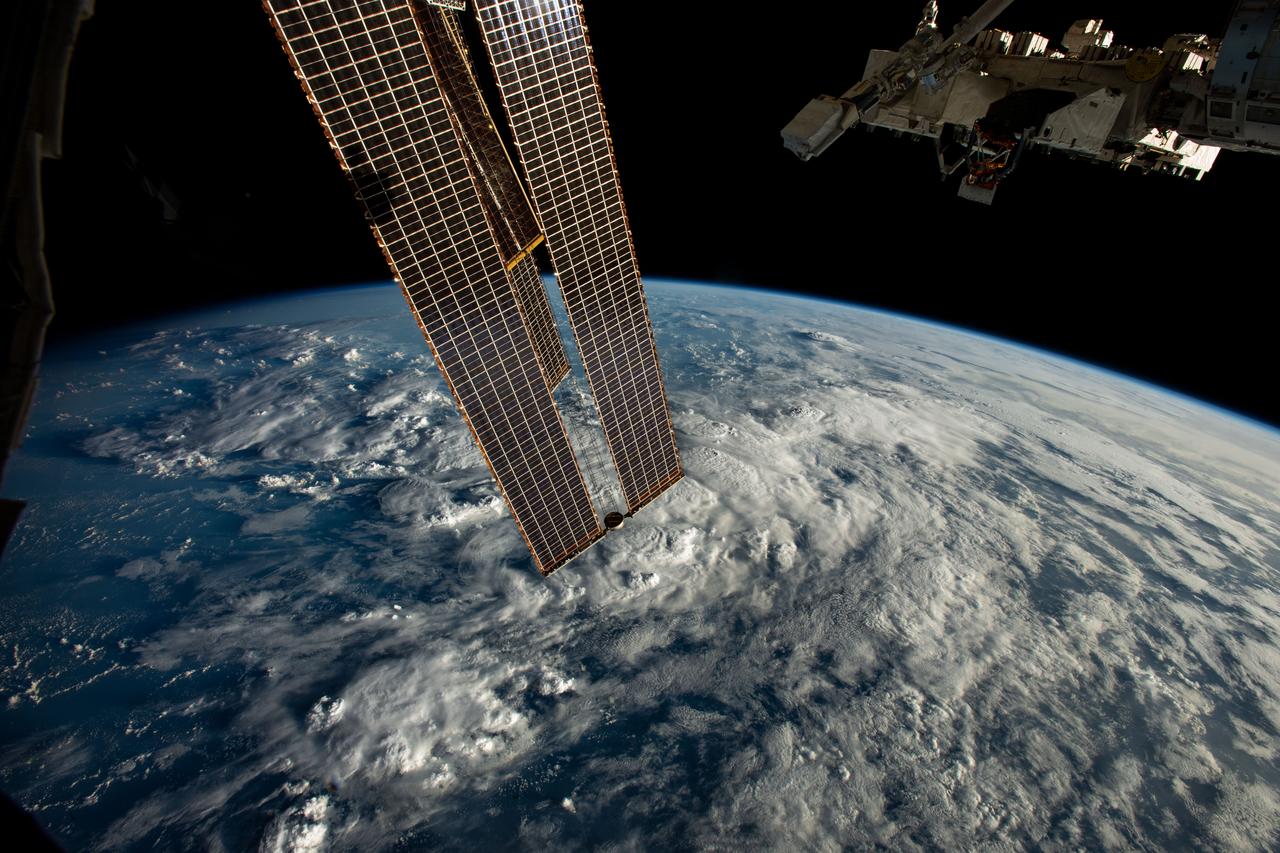
iss067e253816 (Aug. 12, 2022) --- A set of the International Space Station's main solar arrays and the Kibo laboratory module's external pallet (top right) are pictured as the orbiting lab soared 260 miles above a cloudy Atlantic Ocean off the coast of northern Brazil.
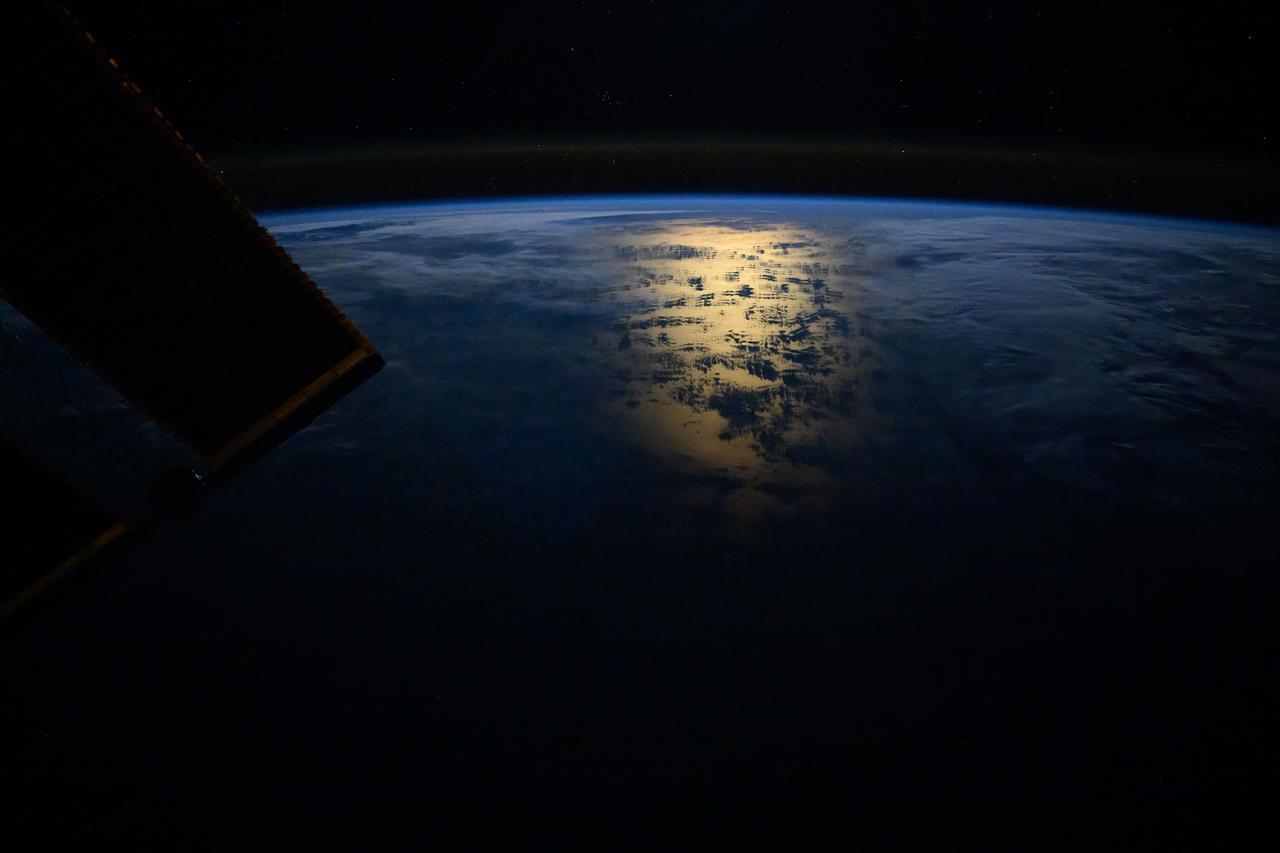
iss070e127437 (March 21, 2024) --- The Sun's glint beaming off the South Pacific Ocean near the coast of Chile just after an orbital sunrise and a slight airglow crowning Earth's horizon are photographed from the International Space Station. At top, are star fields including a cluster of stars in the constellation of Cancer and a portion of the Lynx constellation.
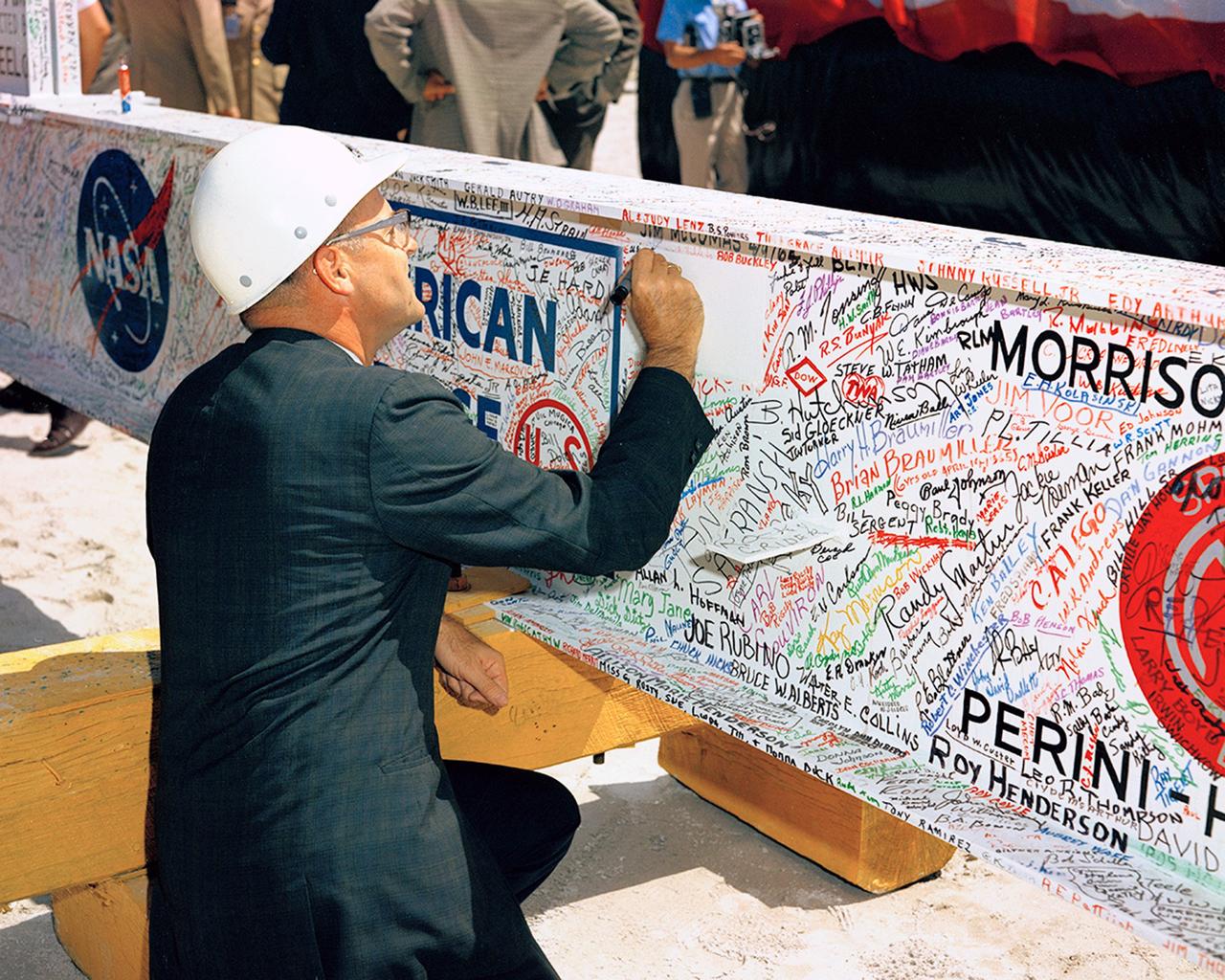
CAPE CANAVERAL, Fla. -- Mr. A. Siepert, assistant director, NASA-KSC, signs the last major beam autographed by construction workers, NASA, and Corps of Engineers employees to be installed during the VAB Topping-Off Ceremony. MILA. Photo credit: NASA
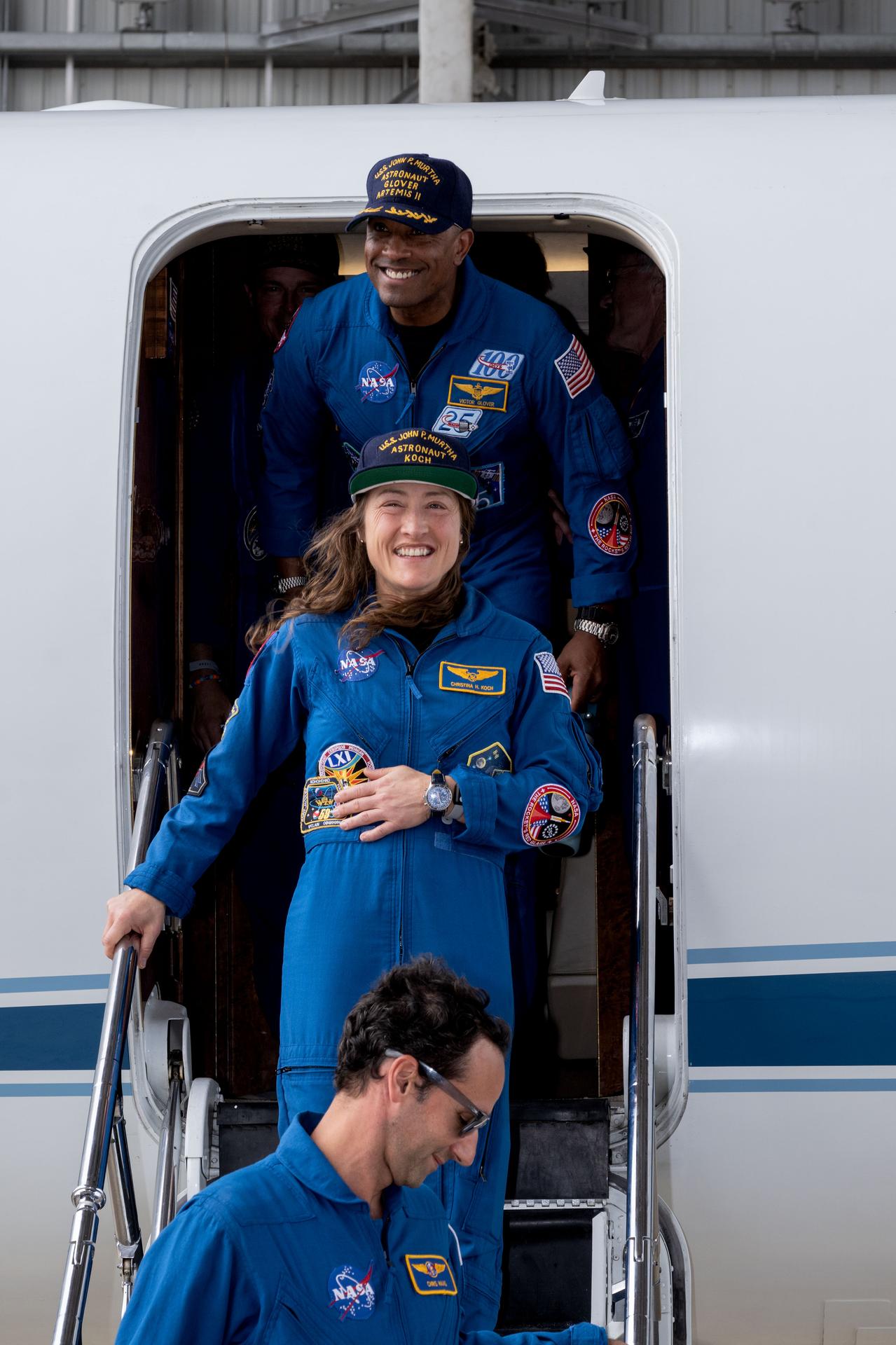
jsc2026e022269 (April 11, 2026) - Artemis II Pilot Victor Glover (top) and Mission Specialist Christina Koch (center) return home to Houston, stepping off a plane at Ellington Airport near NASA's Johnson Space Center, on Saturday, April 11, 2026, following their 10-day mission around the Moon. They launched April 1, 2026, from NASA’s Kennedy Space Center in Florida, and splashed down off the coast of California on Friday, April 10, 2026.
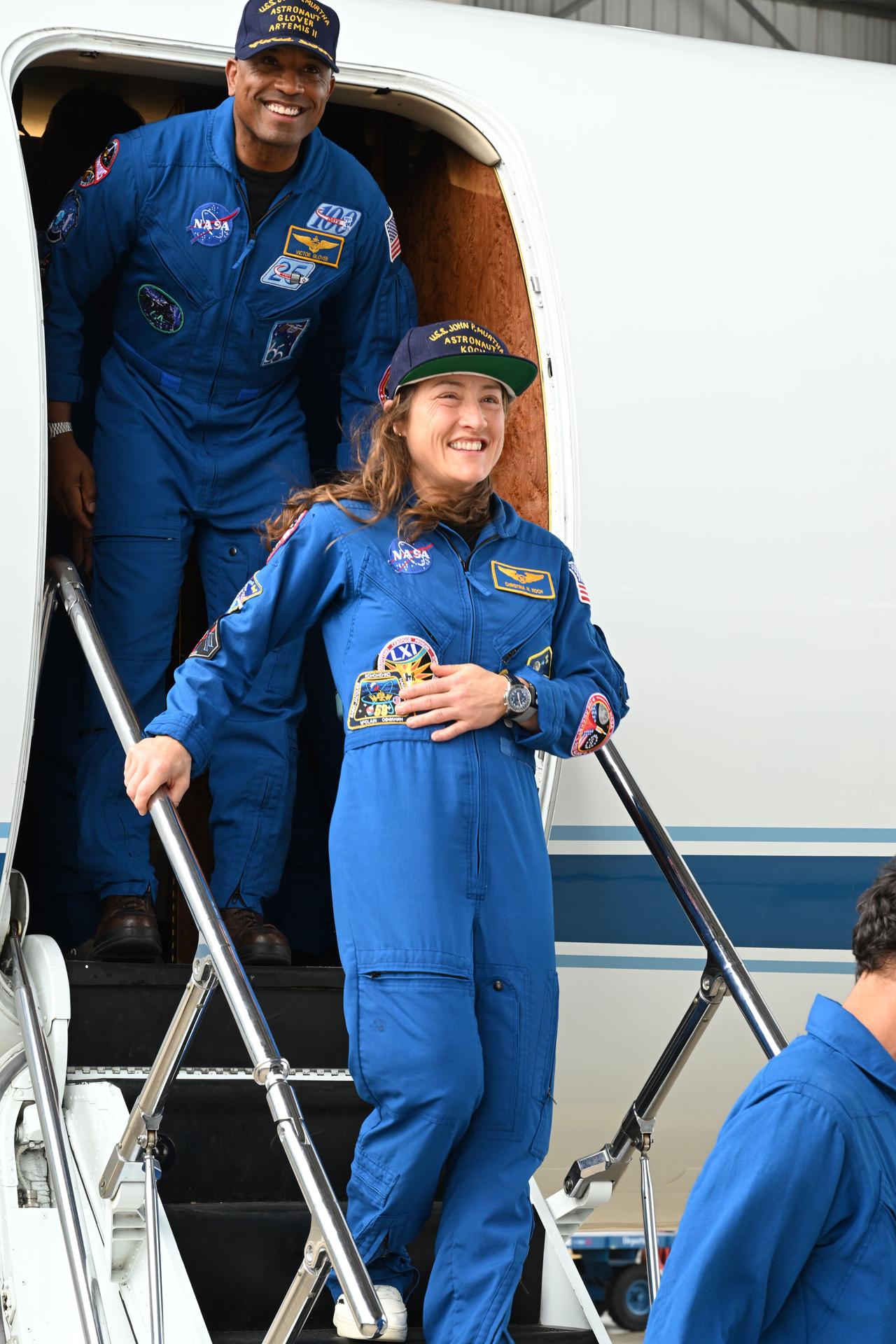
jsc2026e022274 (April 11, 2026) - Artemis II Pilot Victor Glover (top) and Mission Specialist Christina Koch (center) return home to Houston, stepping off a plane at Ellington Airport near NASA's Johnson Space Center, on Saturday, April 11, 2026, following their 10-day mission around the Moon. They launched April 1, 2026, from NASA’s Kennedy Space Center in Florida, and splashed down off the coast of California on Friday, April 10, 2026.
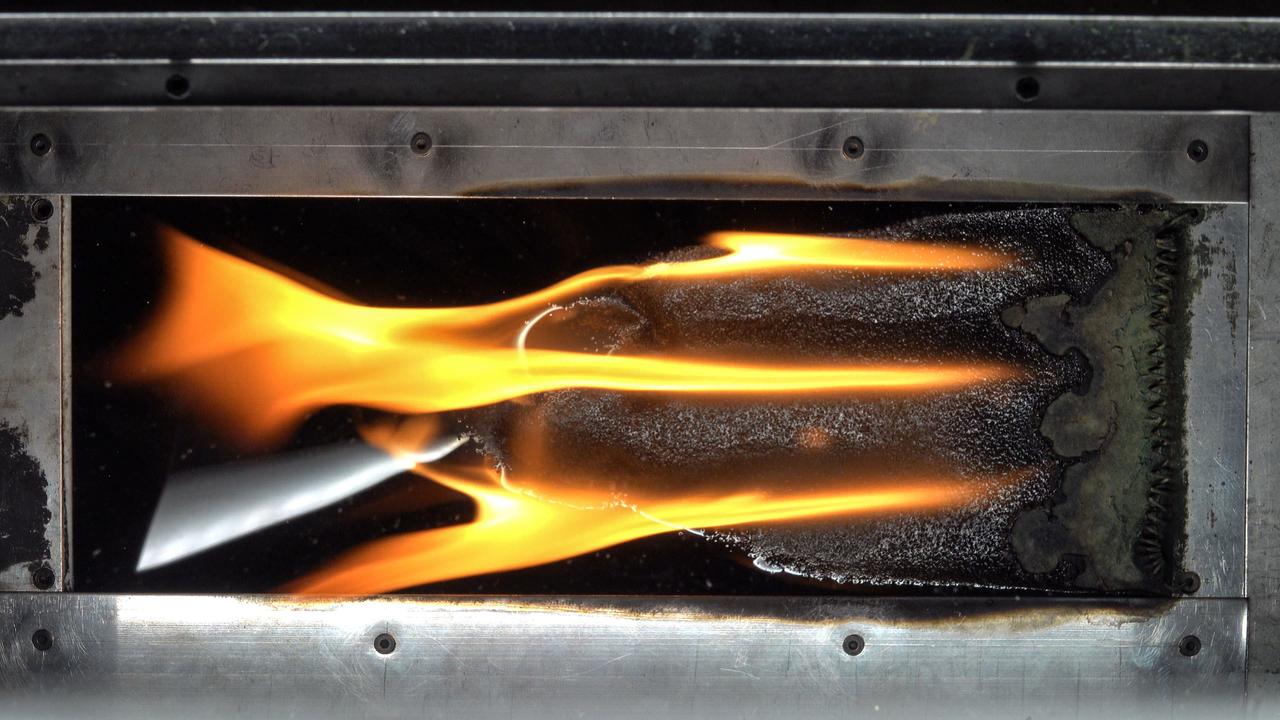
jsc2024e044216 (7/10/2024) --- Top view of spreading flame in ground-based test for the Solid Fuel Ignition and Extinction - Oscillatory Flow on Flame Spread (SoFIE-OFFS) investigation. SoFIE-OFFS examines how intermittent or non-steady flame s behavior impacts fire spread on Earth. Image courtesy of Worcester Polytechnic Institute.
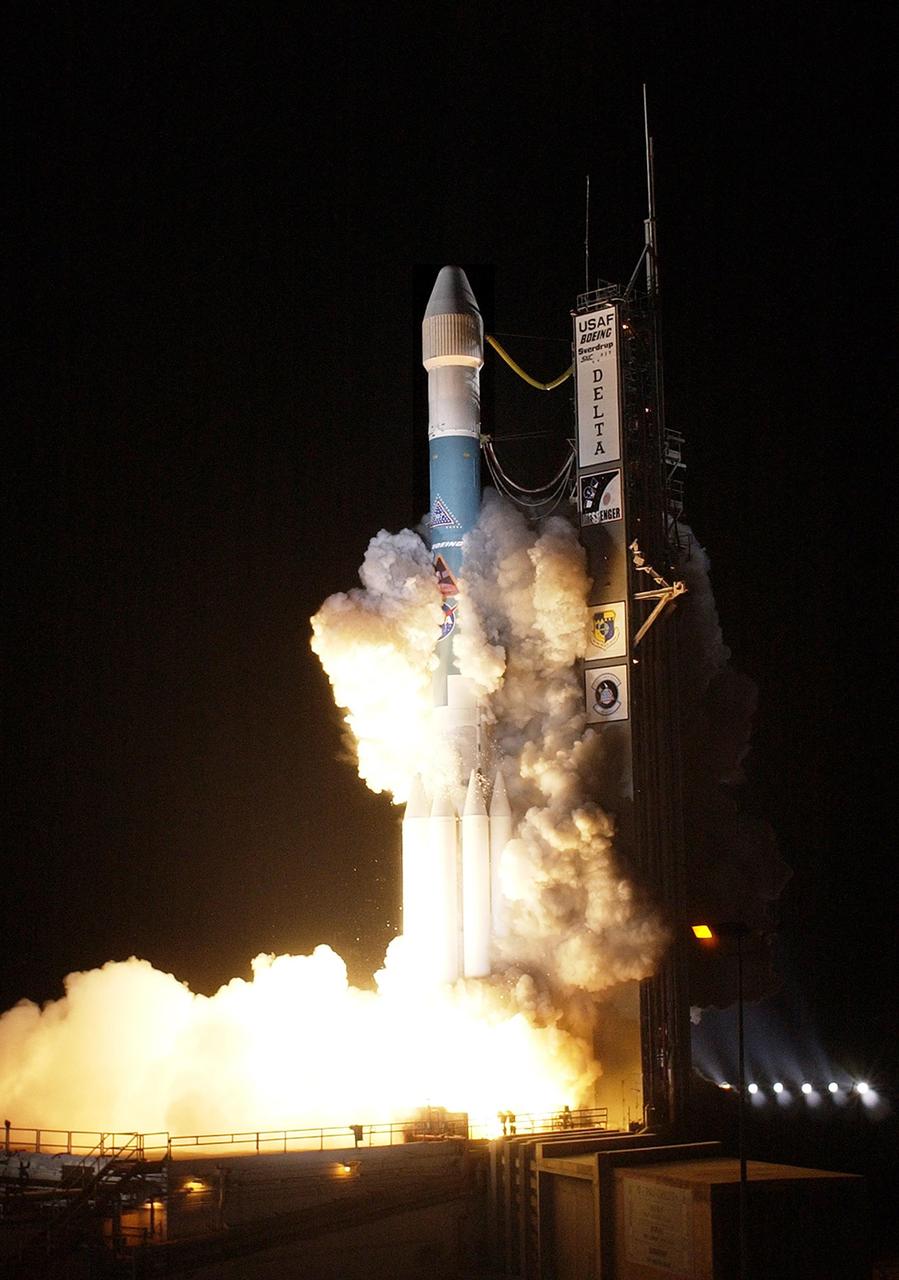
KENNEDY SPACE CENTER, FLA. - The top of the Boeing Delta II rocket with its MESSENGER spacecraft on top breaks through the billows of smoke below as it lifts off on time at 2:15:56 a.m. EDT from Launch Pad 17-B, Cape Canaveral Air Force Station. MESSENGER (Mercury Surface, Space Environment, Geochemistry and Ranging) is on a seven-year, 4.9-billion-mile journey to the planet Mercury. The spacecraft will fly by Earth, Venus and Mercury several times, as well as circling the sun 15 times, to burn off energy before making its final approach to the inner planet on March 18, 2011. MESSENGER was built for NASA by the Johns Hopkins University Applied Physics Laboratory in Laurel, Md.
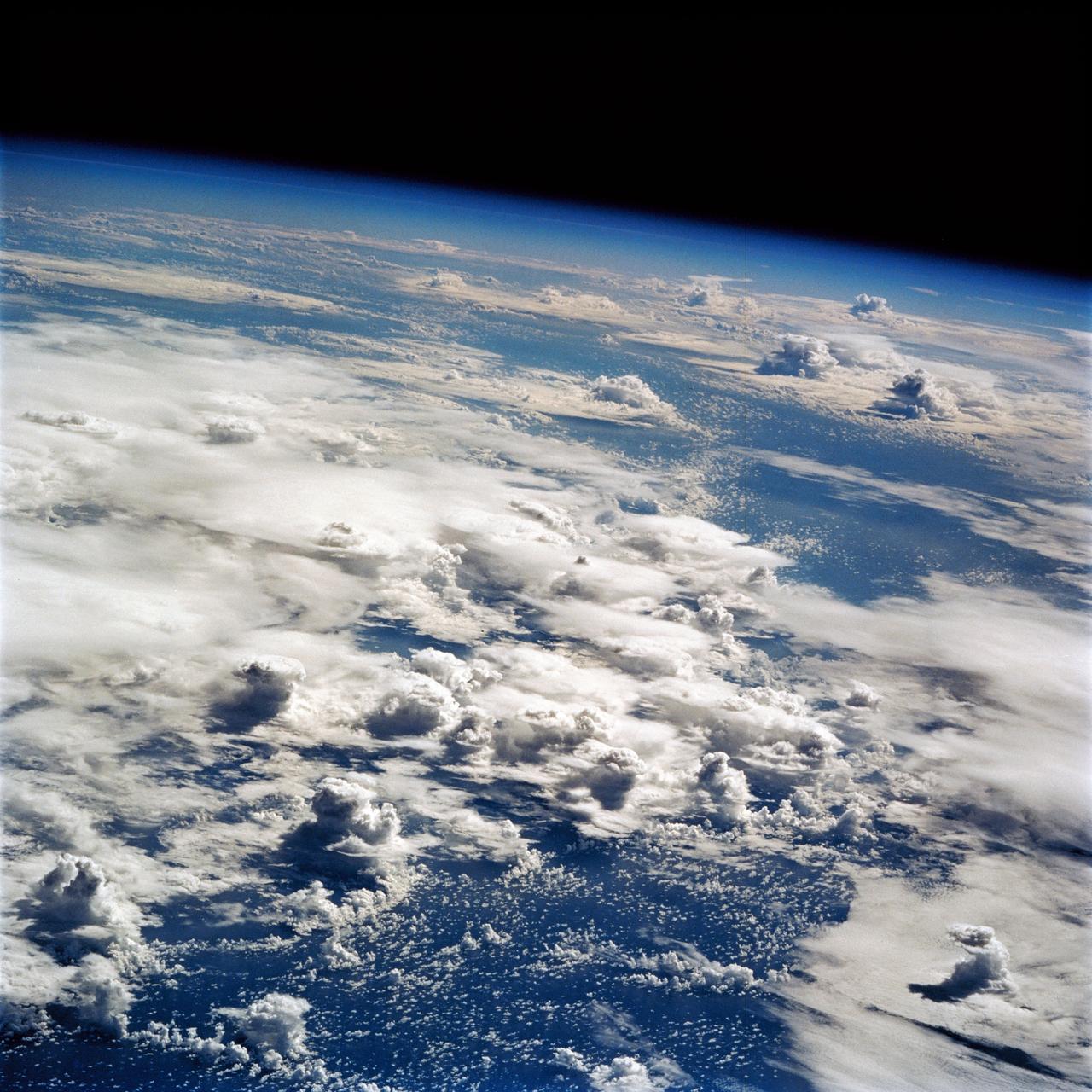
STS064-83-099 (9-20 Sept. 1994) --- Multiple thunderstorm cells leading to Earth's atmosphere were photographed on 70mm by the astronauts, orbiting aboard the space shuttle Discovery 130 nautical miles away. These thunderstorms are located about 16 degrees southeast of Hawaii in the Pacific Ocean. Every stage of a developing thunderstorm is documented in this photo; from the building cauliflower tops to the mature anvil phase. The anvil or the tops of the clouds being blown off are at about 50,000 feet. The light line in the blue atmosphere is either clouds in the distance or an atmospheric layer which is defined but different particle sizes. Photo credit: NASA or National Aeronautics and Space Administration
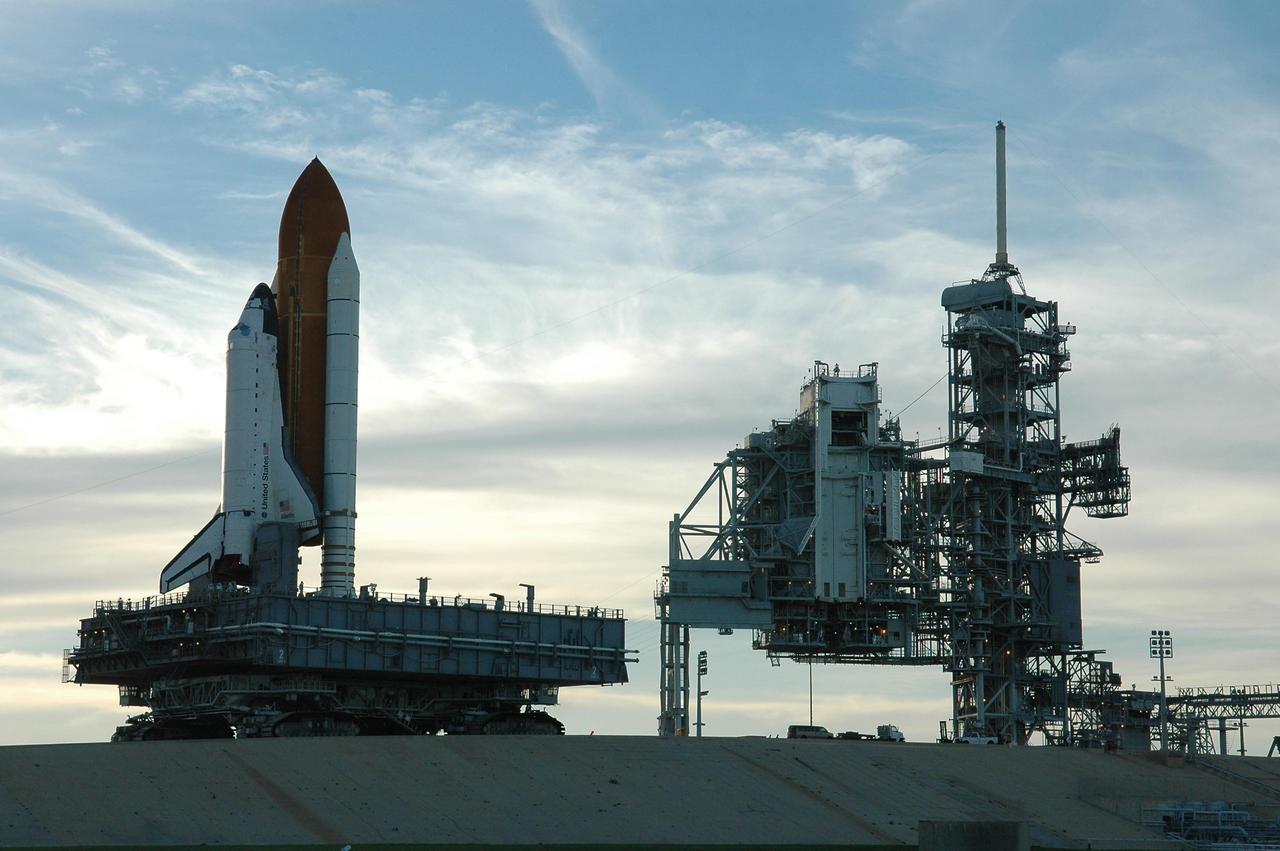
KENNEDY SPACE CENTER, FLA. - Space Shuttle Atlantis rolls up the ramp to Launch Pad 39B atop the crawler-transporter. The crawler has a leveling system designed to keep the top of the space shuttle vertical while negotiating the 5-percent grade leading to the top of the launch pad. Also, a laser docking system provides almost pinpoint accuracy when the crawler and mobile launcher platform are positioned at the launch pad. At right are the open rotating service structure and the fixed service structure topped by the 80-foot lightning mast. The shuttle had been moved off the launch pad due to concerns about the impact of Tropical Storm Ernesto, expected within 24 hours. The forecast of lesser winds expected from Ernesto and its projected direction convinced Launch Integration Manager LeRoy Cain and Shuttle Launch Director Mike Leinbach to return the shuttle to the launch pad. Photo credit: NASA/Kim Shiflett
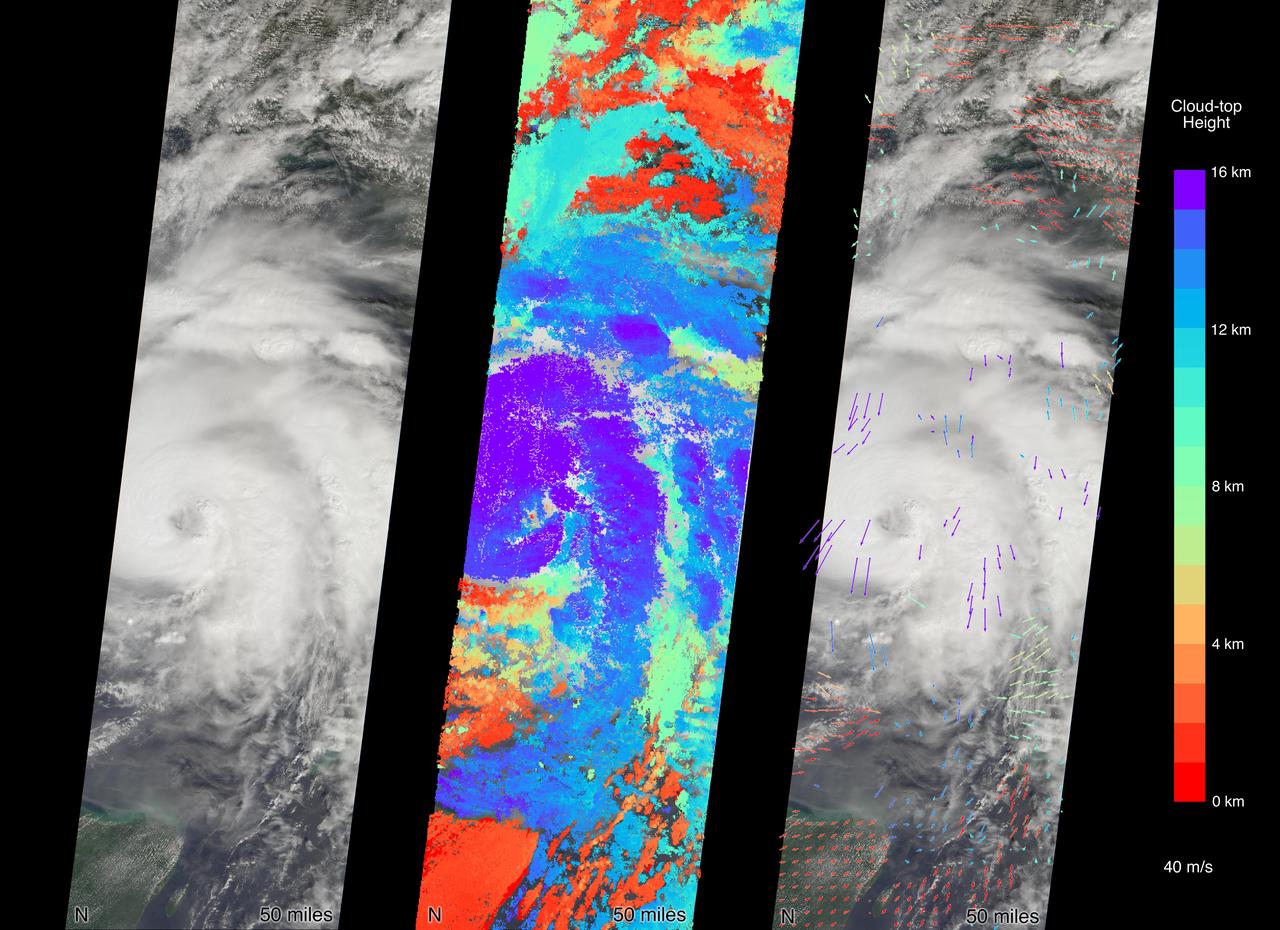
MISR carries nine cameras fixed at different angles, each of which viewed Michael over the course of approximately seven minutes when it was just off Florida's west coast on Tuesday, October 9. Images from the nine views are used to calculate the height of the cloud tops, and the motion of the clouds between the views provides information on wind speed and direction. This composite image shows the view from the central, downward-pointing camera (left), the calculated cloud-top heights (middle), and wind velocity vectors (right) superimposed on the image. The length of the arrows is proportional to wind speed and the colors show the altitude of the cloud tops in kilometers. The National Hurricane Center clocked Michael's sustained wind speed at 150 mph (240 kph) just before noon local time on Wednesday. It is expected to bring strong winds, storm surge and heavy rain to much of the southeast. https://photojournal.jpl.nasa.gov/catalog/PIA22750

KENNEDY SPACE CENTER, FLA. - The tip of the Boeing Delta II rocket with its MESSENGER spacecraft on top breaks through the billows of smoke below as it lifts off on time at 2:15:56 a.m. EDT from Launch Pad 17-B, Cape Canaveral Air Force Station. MESSENGER (Mercury Surface, Space Environment, Geochemistry and Ranging) is on a seven-year journey to the planet Mercury. The spacecraft will fly by Earth, Venus and Mercury several times to burn off energy before making its final approach to the inner planet on March 18, 2011. MESSENGER was built for NASA by the Johns Hopkins University Applied Physics Laboratory in Laurel, Md.
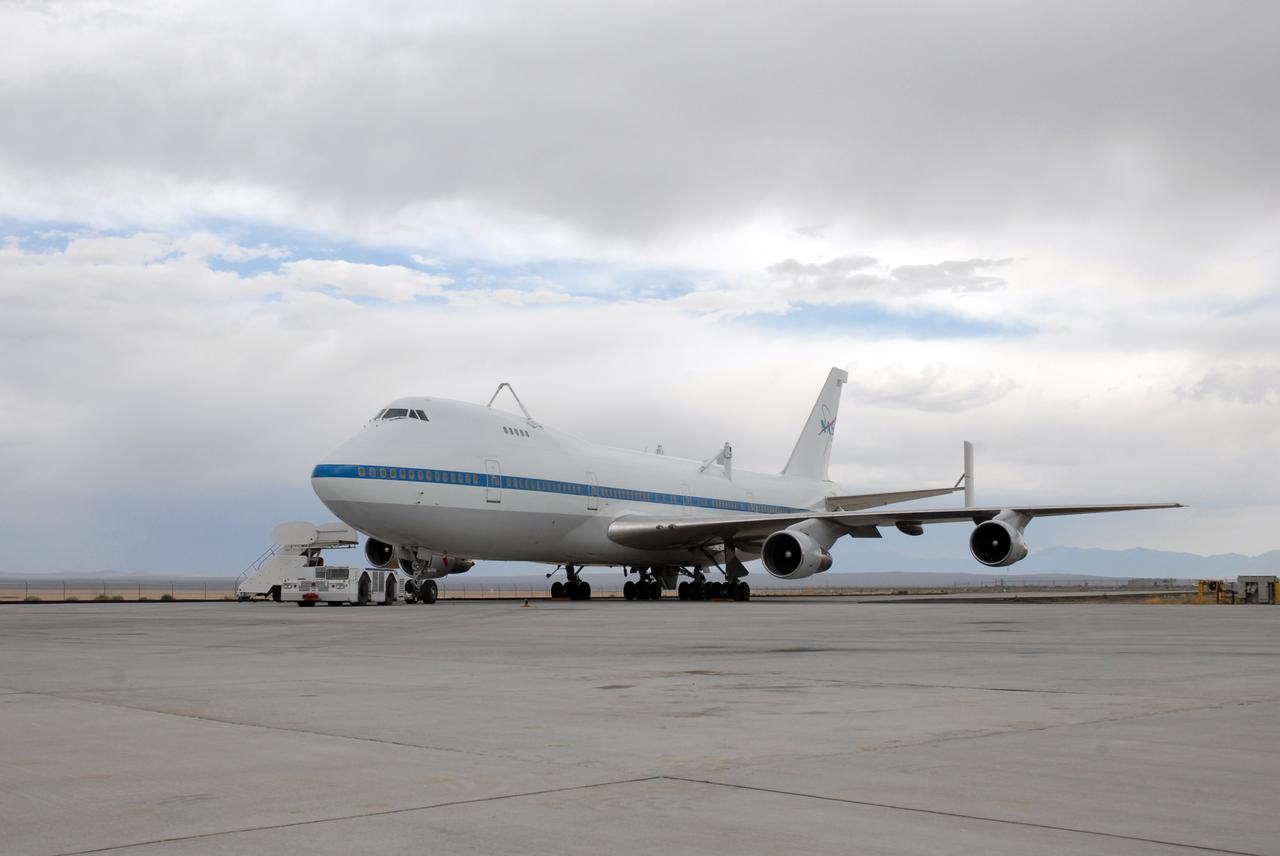
CAPE CANAVERAL, Fla. – This Shuttle Carrier Aircraft, or SCA, a modified Boeing 747, is fitted with struts on top that will attach to space shuttle Atlantis for a piggyback flight. Atlantis landed at Edwards on May 24, which concluded mission STS-125, after two landing opportunities at Kennedy were waved off due to weather concerns. Atlantis is being returned to Florida on a ferry flight on the SCA. Atlantis' next assignment is the STS-129 mission, targeted to launch in November 2009. Photo credit: NASA/Ben Smegelsky
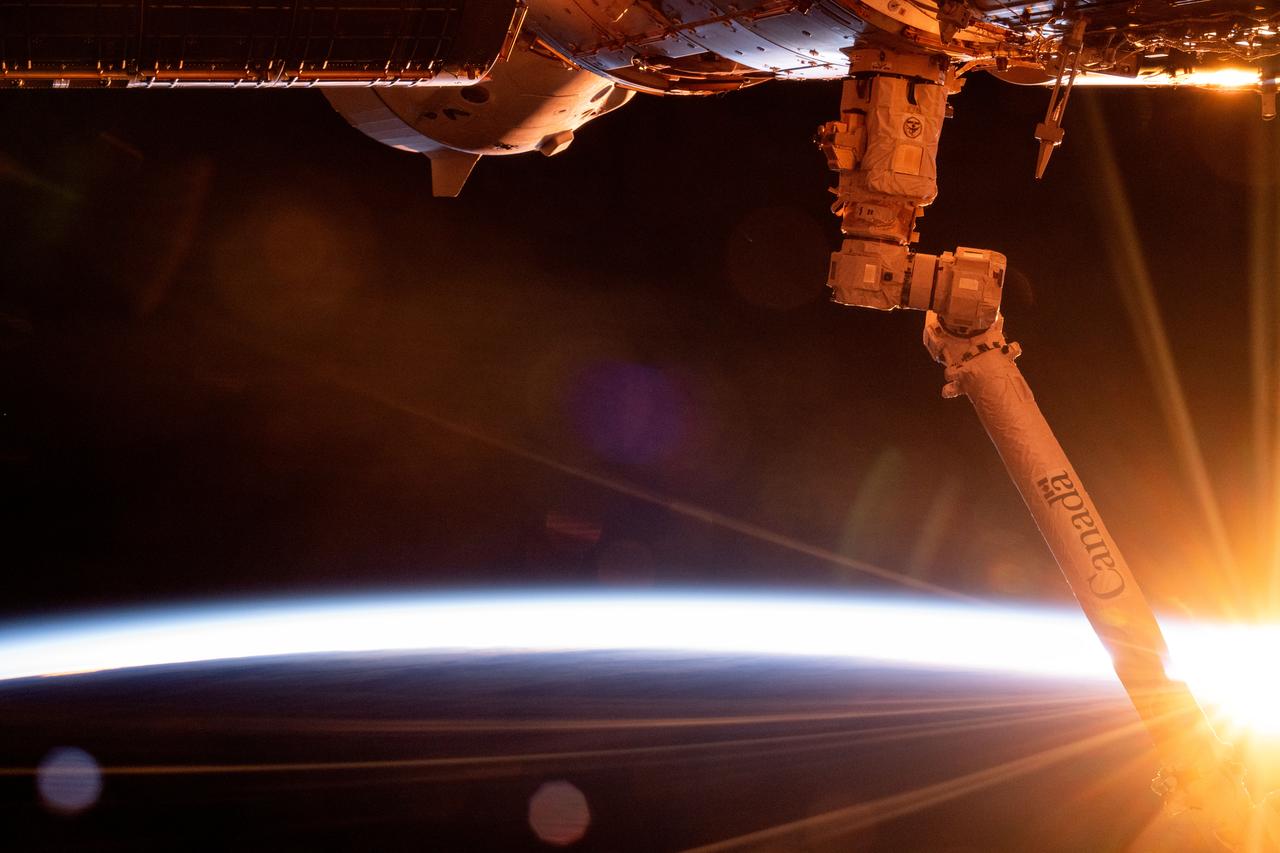
iss072e010164 (Oct. 1, 2024) --- The first rays of an orbital sunrise breakthrough illuminating Earth's atmosphere in this photograph from the International Space Station as it orbited 272 miles above the South Pacifc Ocean off the southern coast of New Zealand. In the foreground, at right, is the Canadarm2 robotic arm and partially obscured at top, is the SpaceX Dragon Freedom spacecract docked to the Harmony module's forward port.
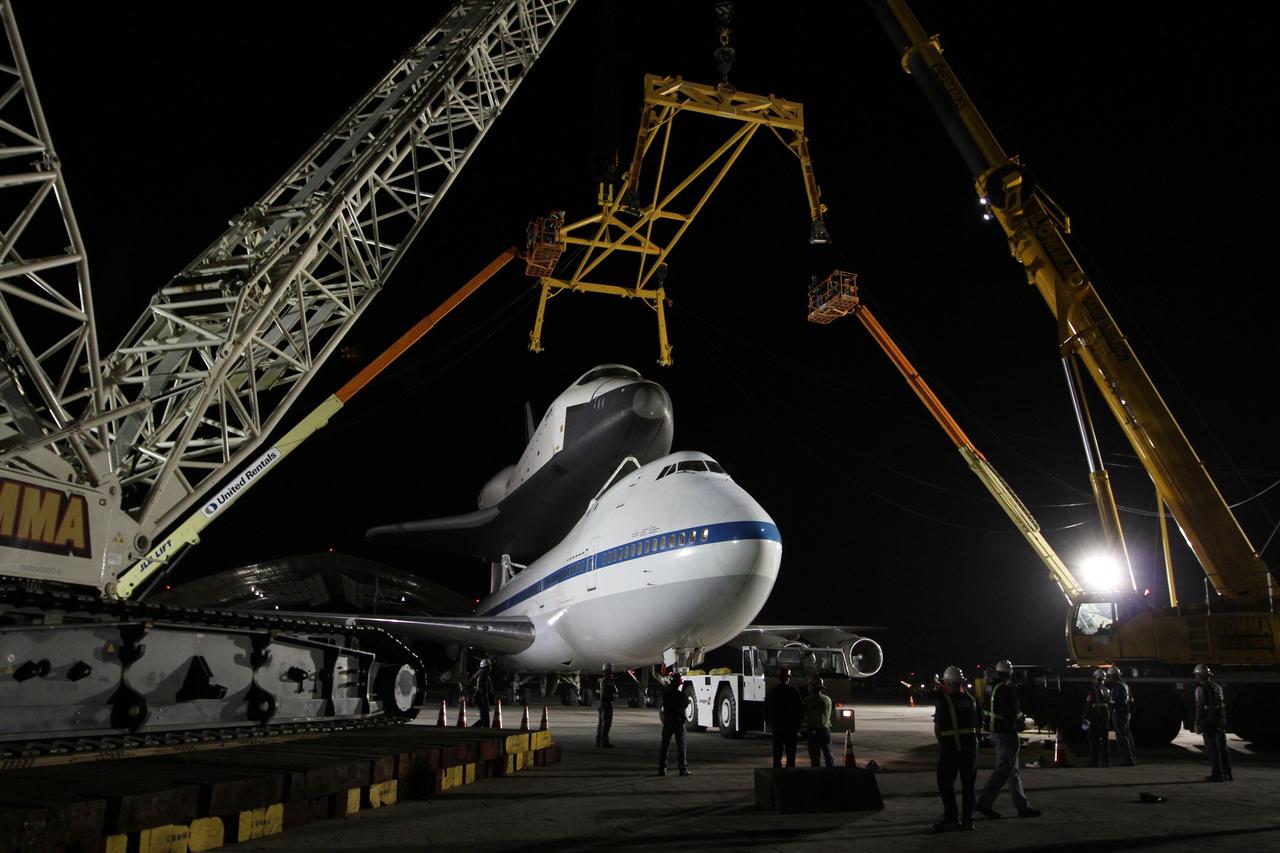
NEW YORK – Cranes and other equipment wait as NASA's shuttle carrier aircraft and space shuttle Enterprise are moved into place so the shuttle can be taken off the top of the aircraft. The work took place at John F. Kennedy International Airport in New York City. Enterprise, a prototype built to test aspects of the space shuttle design, will be displayed at the Intrepid Sea, Air and Space Museum in New York. Photo credit: NASA/Kim Shiflett
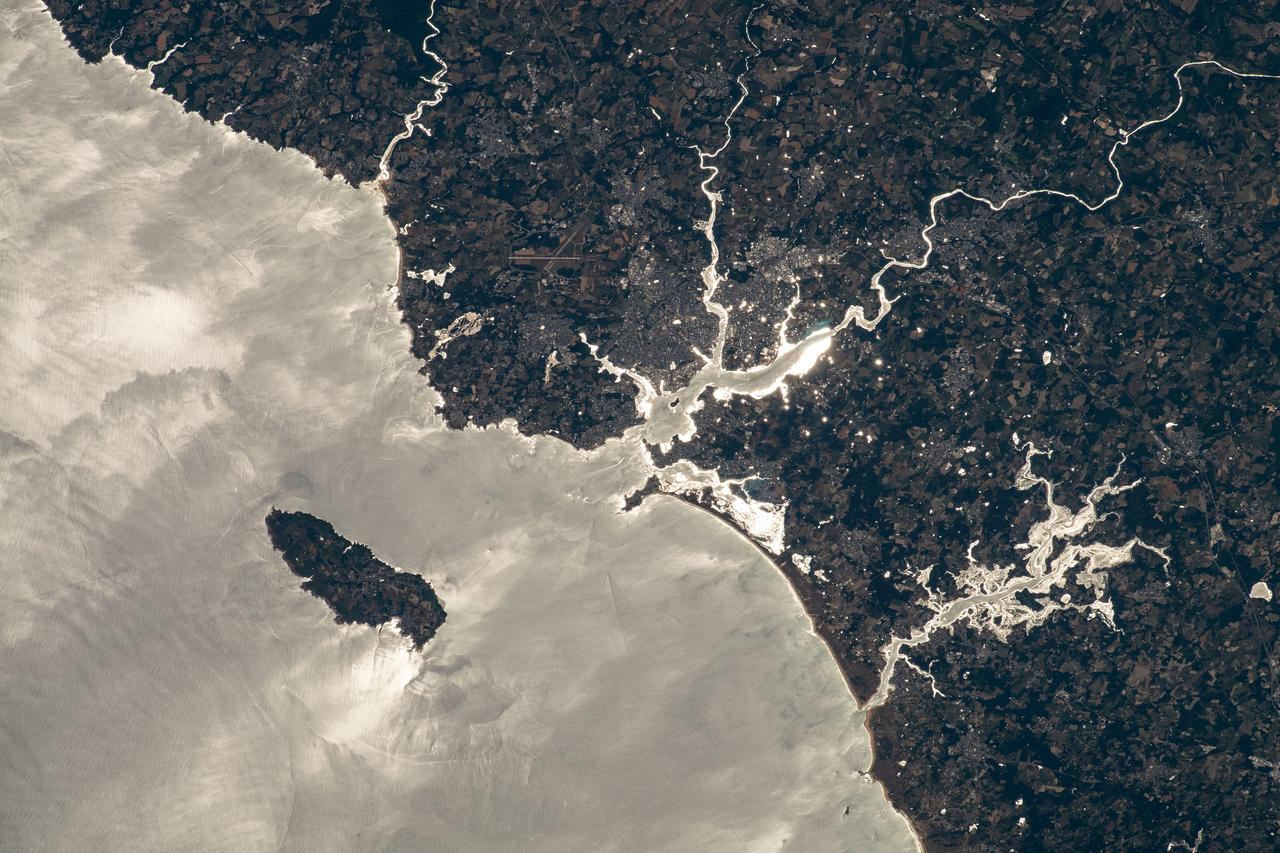
iss067e128929 (June 13, 2022) --- The island of Groix is pictured off the northwestern coast of France with the Atlantic Ocean beaming from the sun's glint in this photograph from the International Space Station as it orbited 264 miles above the English Channel. The rivers (from top left to bottom right) La Laïta, Blavet, and Scorf, including the rivière d'Étel, are seen emptying into the Atlantic.
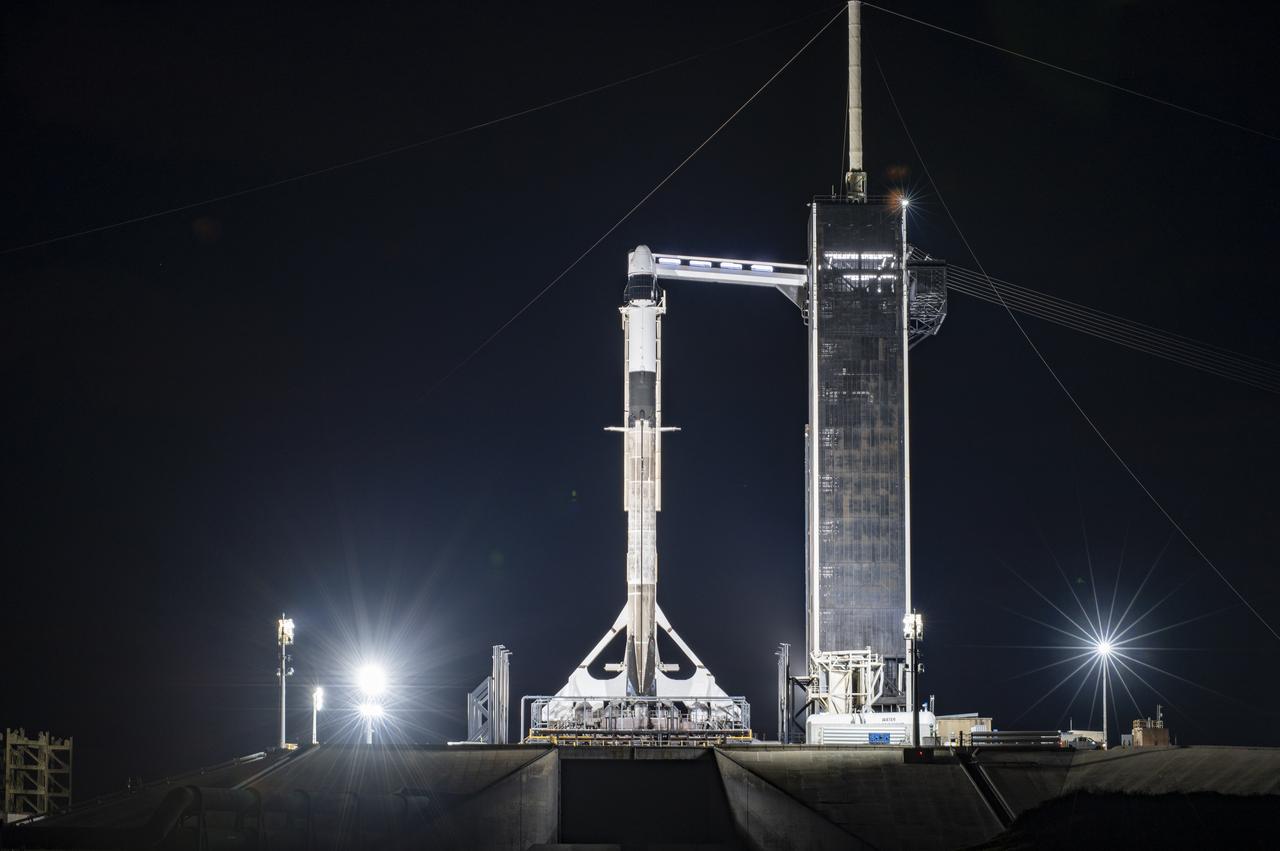
A SpaceX Falcon 9 rocket, topped with the company’s upgraded version of the Dragon spacecraft, stands vertical at NASA Kennedy Space Center’s Launch Complex 39A in Florida on Wednesday, Dec. 2, 2020. The first mission for SpaceX under NASA’s second Commercial Resupply Services contract, CRS-21 is scheduled to lift off from Launch Complex 39A on Saturday, Dec. 5, at 11:39 a.m. EST. The mission will deliver critical supplies and equipment to the International Space Station.
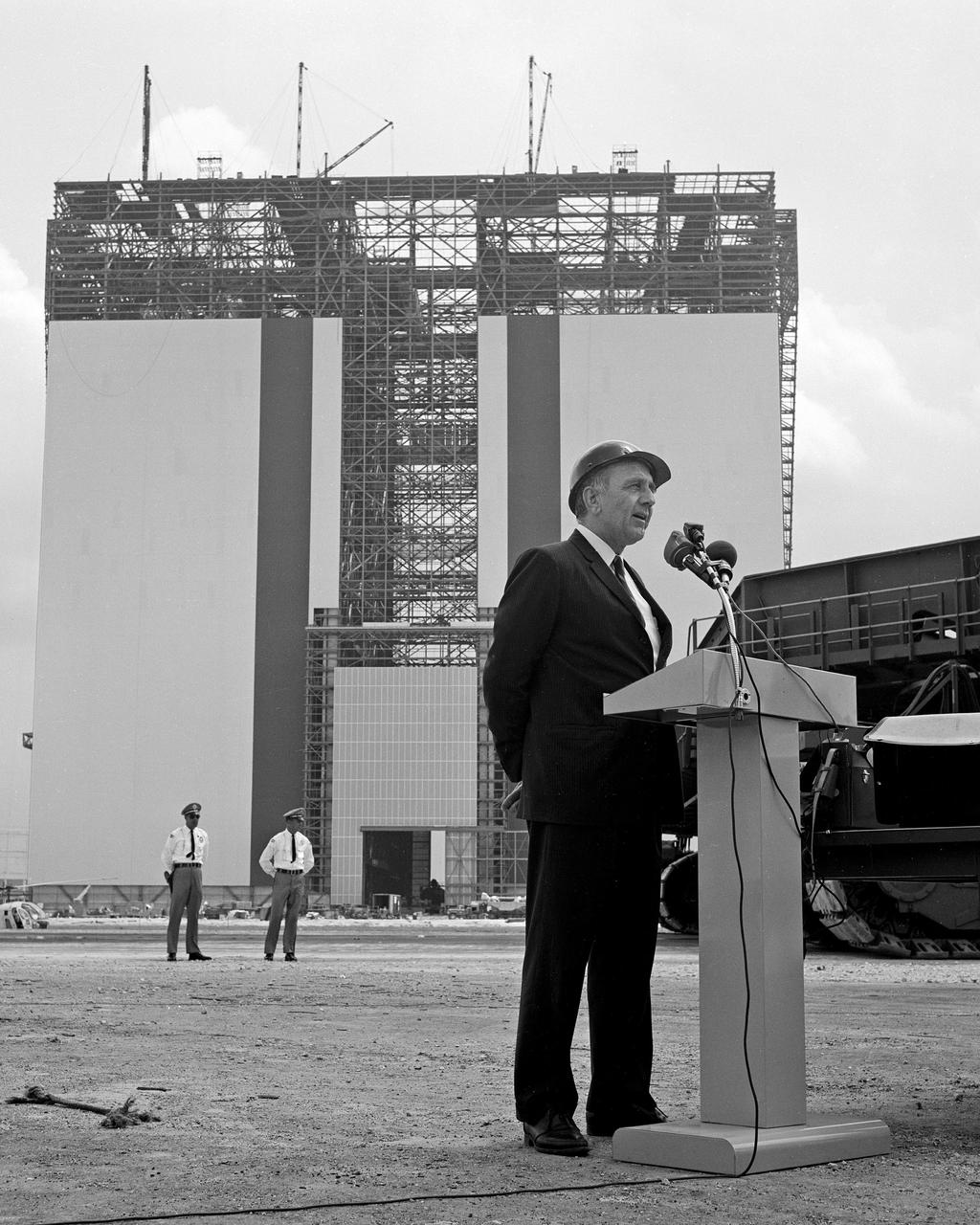
CAPE KENNEDY, Fla. -- At the Kennedy Space Center in Florida, Dr. Kurt H. Debus, center director, speaks at the "topping off" ceremonies for the Vehicle Assembly Building. A crawler-transporter is seen at the right. One of the largest buildings in the world, the 129 million cubic foot structure will be used to prepare the Apollo Saturn V launch vehicles for missions to land astronauts on the moon. Photo Credit: NASA
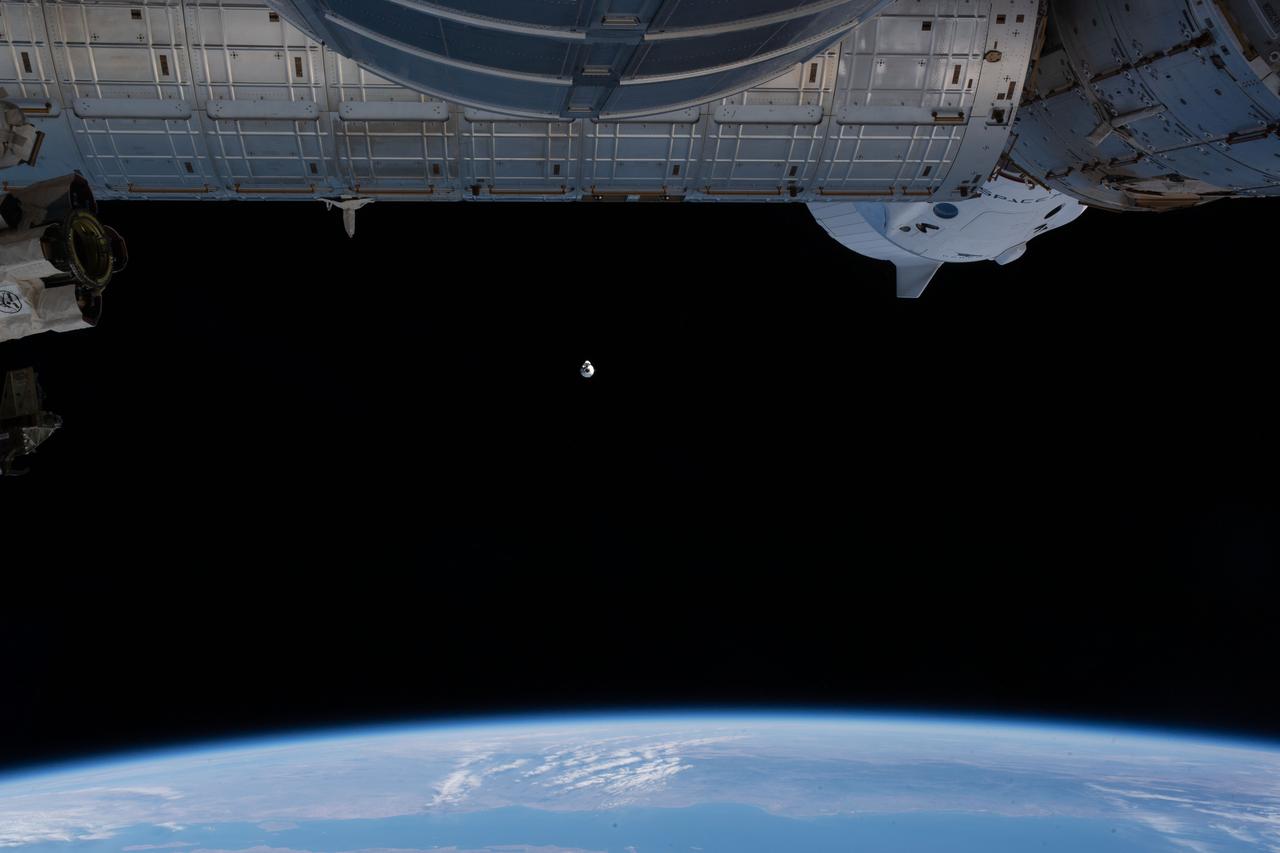
iss064e010904 (Dec. 7, 2020) --- The upgraded SpaceX Cargo Dragon vehicle approaches the International Space Station as both vehicles were orbiting above the Pacific Ocean off the coast of Mexico. Near the top right of the photograph is a portion of the SpaceX Crew Dragon vehicle docked to the forward port of the Harmony module. The Cargo Dragon would dock about an hour later to Harmony's space-facing port marking the first time two Dragon spaceships would be docked to the station at the same time.
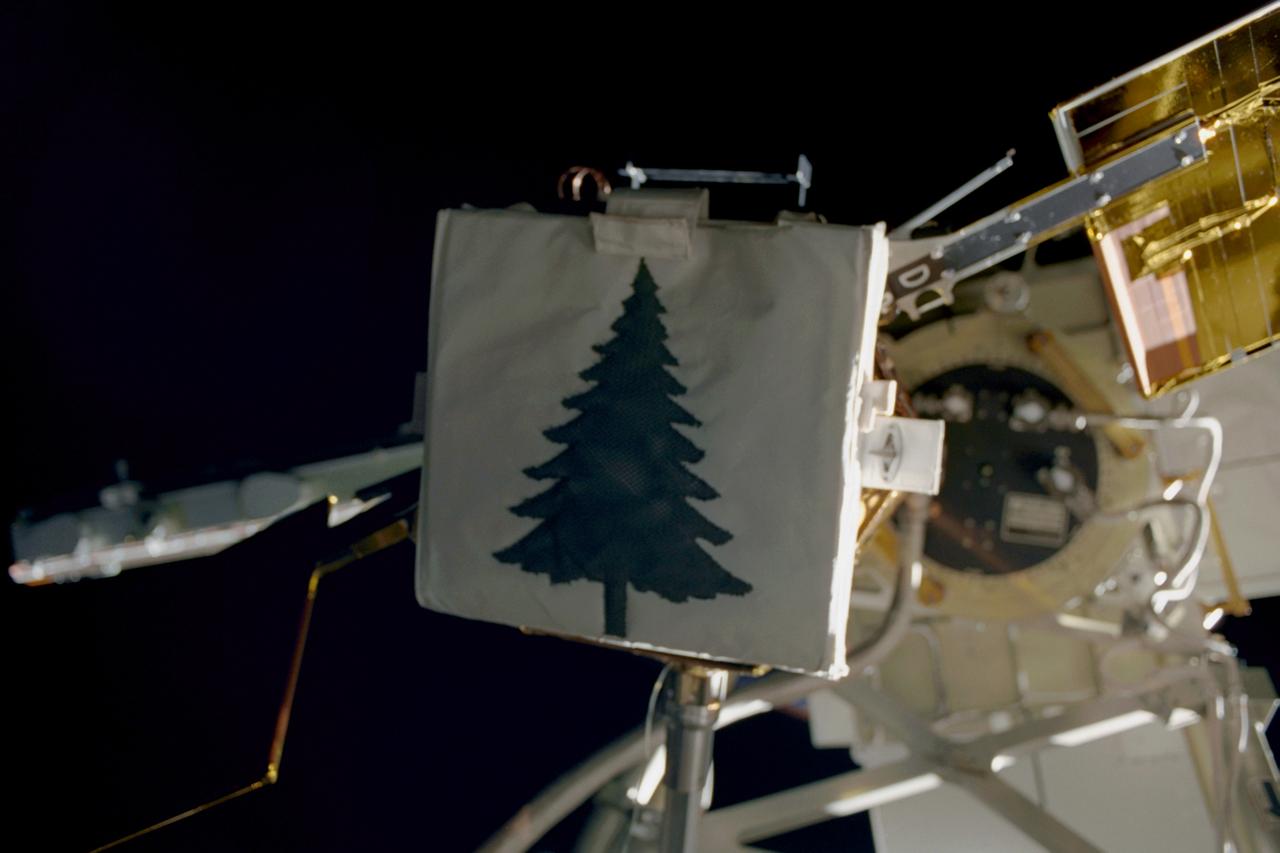
STS097-376-029 (7 December 2000) --- Space walking Endeavour astronauts topped off their scheduled space walk activities with an image of an evergreen tree placed atop the P6 solar array structure, the highest point in their construction project. They then took this photo of the "tree" before returning to the shirt-sleeve environment of the Space Shuttle Endeavour.

iss071e077732 (May 15, 2024) --- (From bottom to top) The Soyuz MS-25 crew ship is pictured docked to the Prichal docking module which is itself attached to the Nauka science module. Extending from Nauka is its science airlock that can be used to place science experiments outside in the external microgravity environment. The International Space Station was orbiting 266 miles above the South Atlantic Ocean off the coast of Argentina when this photograph was taken.
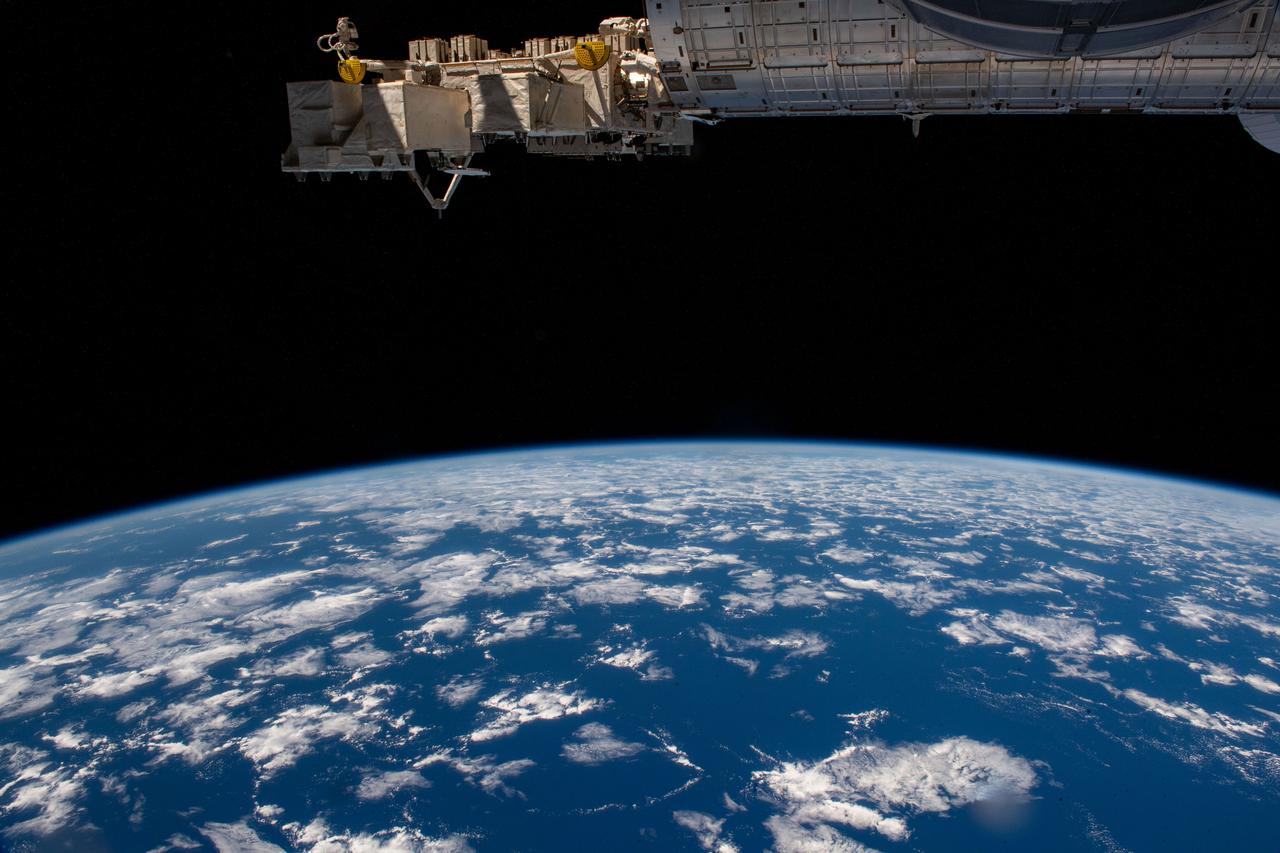
iss064e006316 (Nov. 21, 2020) --- Earth's limb, or horizon, is pictured from the International Space Station as it orbited above the Pacific Ocean off the coast of Chile. Framing the top of the photograph, is a portion of Japan's Kibo laboratory module with its Exposed Facility that houses external experiments to understand the effects of space radiation and extreme temperatures on a variety of materials.

Kathy Lueders, manager of NASA’s Commercial Crew Program, participates in a briefing at the agency’s Kennedy Space Center in Florida on Jan. 17, 2020, prior to launch of SpaceX’s uncrewed In-Flight Abort Test. A SpaceX Falcon 9 rocket topped by the company’s Crew Dragon spacecraft will lift off from Kennedy’s Launch Complex 39A, then begin the launch-abort sequence. The spacecraft will demonstrate its escape capabilities in preparation for crewed flights to the International Space Station as part of the agency’s Commercial Crew Program.
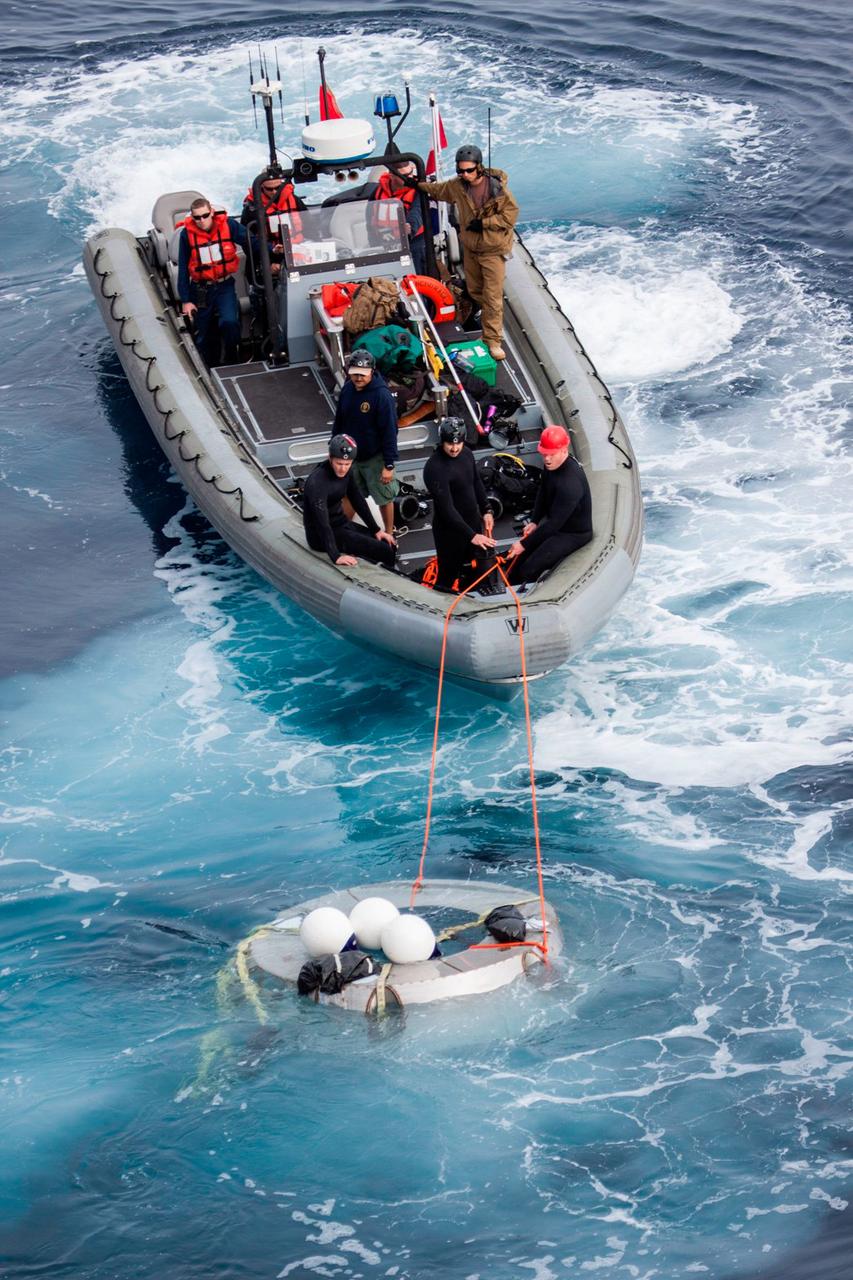
Members of the Orion recovery team work to retrieve a test version of Orion's forward bay cover, a protective shell that fits on top of the crew module, from the Pacific Ocean on Feb. 18, 2014, during an Underway Recovery Test. NASA and U.S. Navy personnel came together on board the USS San Diego, off the coast of California, to practice the processes they used to recover Orion after its splashdown following Exploration Flight Test-1 (EFT-1). Part of Batch image transfer from Flickr.
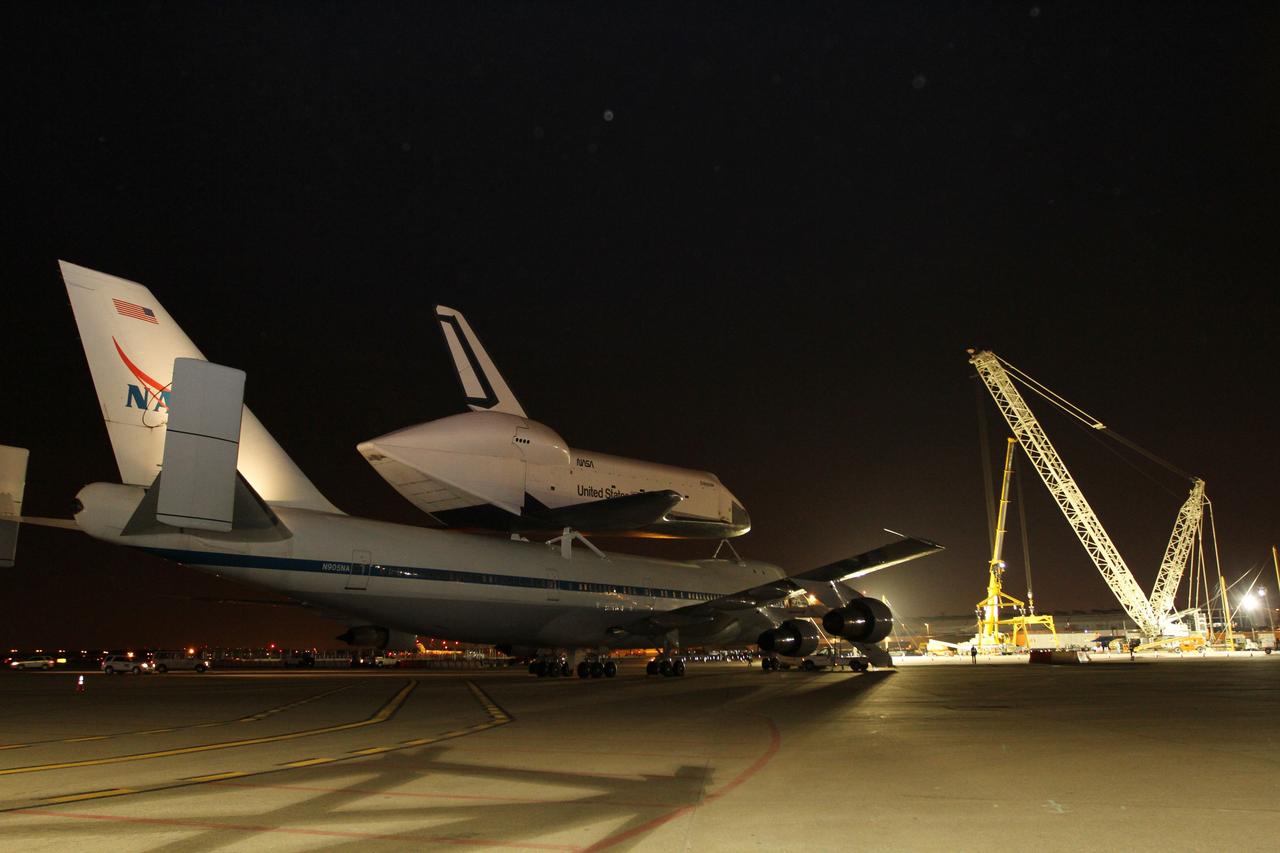
NEW YORK – Cranes and other equipment wait as NASA's shuttle carrier aircraft and space shuttle Enterprise are moved into place so the shuttle can be taken off the top of the aircraft. The work took place at John F. Kennedy International Airport in New York City. Enterprise, a prototype built to test aspects of the space shuttle design, will be displayed at the Intrepid Sea, Air and Space Museum in New York. Photo credit: NASA/Kim Shiflett
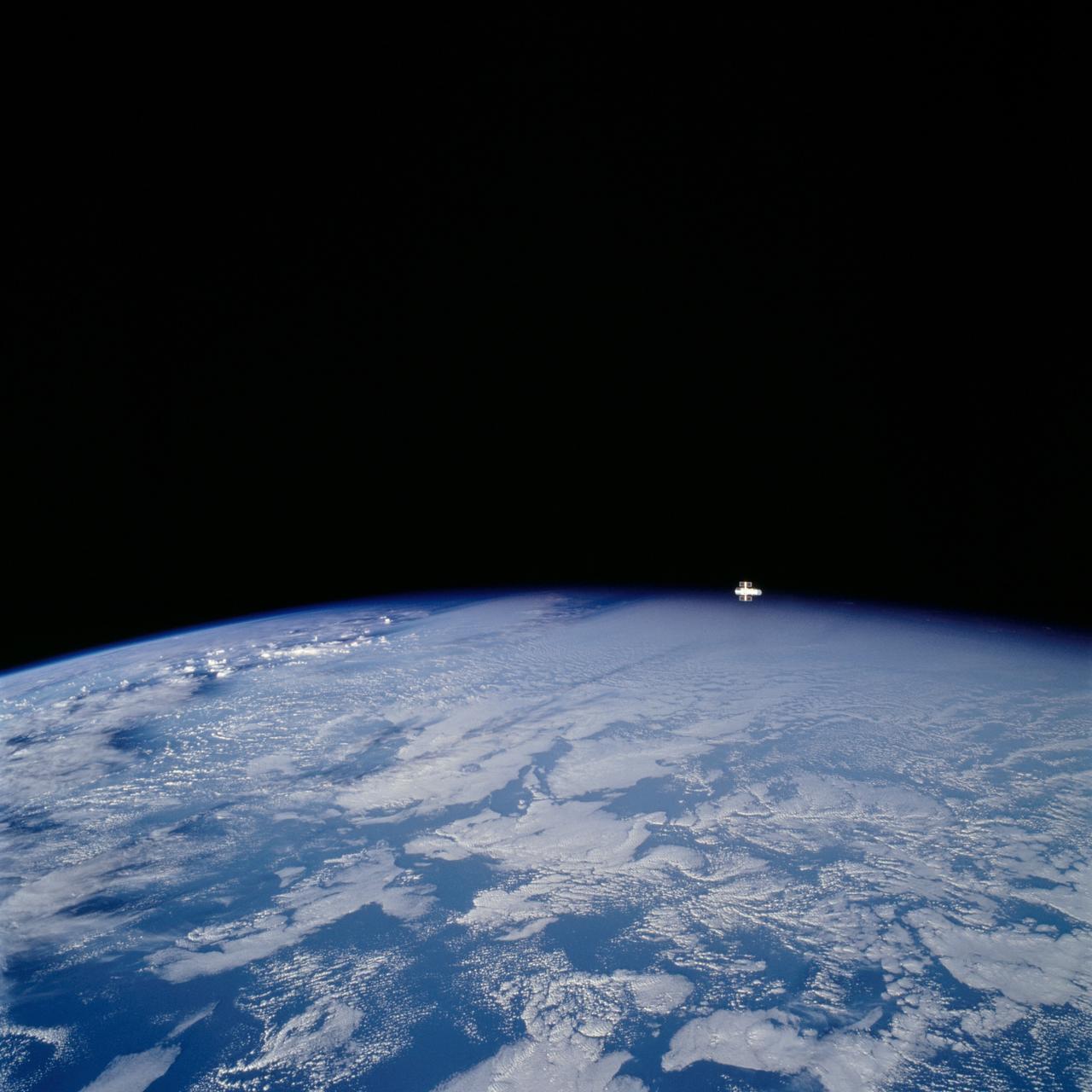
STS109-729-072 (9 March 2002) --- Looking westward, one of the STS-109 crew members photographed the newly serviced and upgraded Hubble Space Telescope (HST) near the earth's limb to the upper right of the center of this 70mm image. The Space Shuttle Columbia was located over the Atlantic Ocean southwest of the Cape Verde Islands when this image was acquired. Low to mid-altitude clouds are visible across the image. Some thunderstorms can be seen near the left center of the image as the sun reflects off the higher cloud tops.
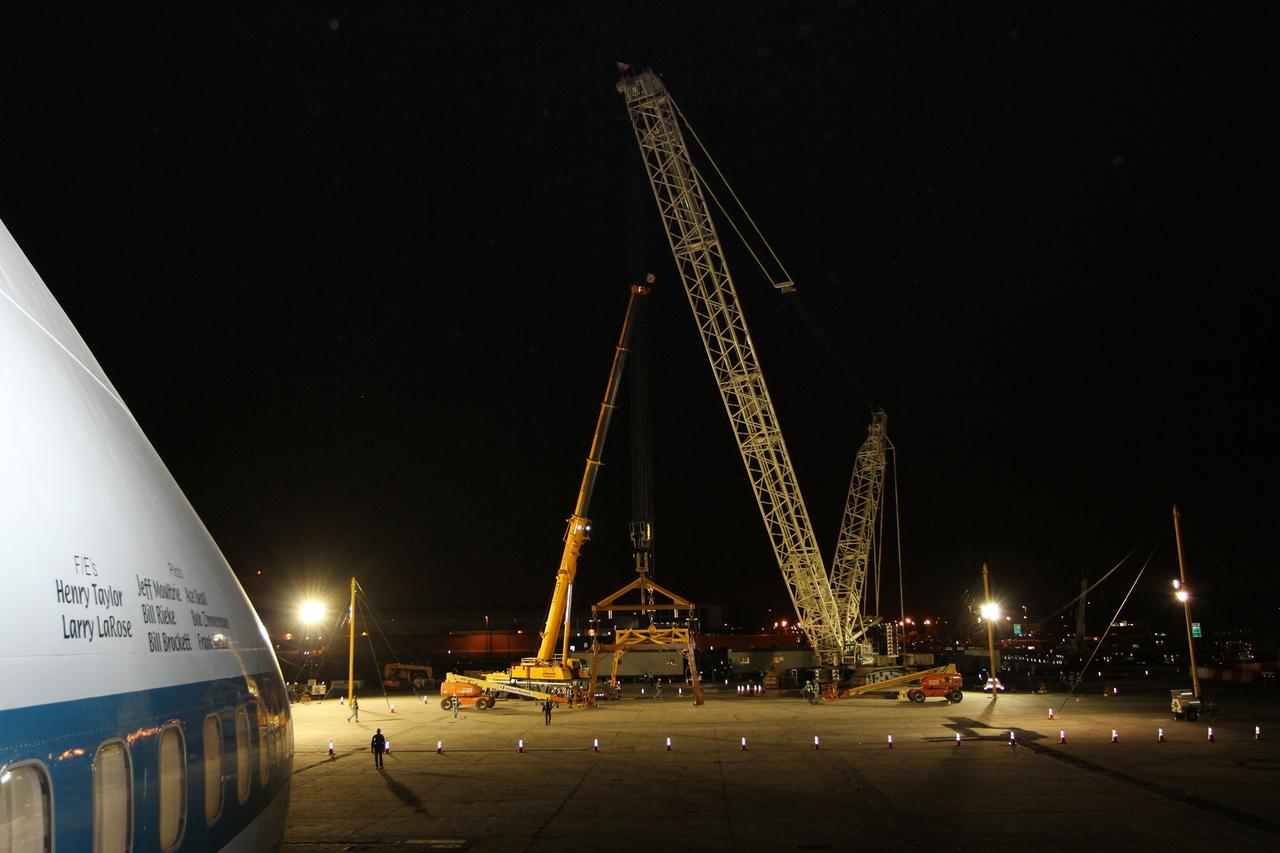
NEW YORK – Cranes and other equipment wait as NASA's shuttle carrier aircraft and space shuttle Enterprise are moved into place so the shuttle can be taken off the top of the aircraft. The work took place at John F. Kennedy International Airport in New York City. Enterprise, a prototype built to test aspects of the space shuttle design, will be displayed at the Intrepid Sea, Air and Space Museum in New York. Photo credit: NASA/Kim Shiflett
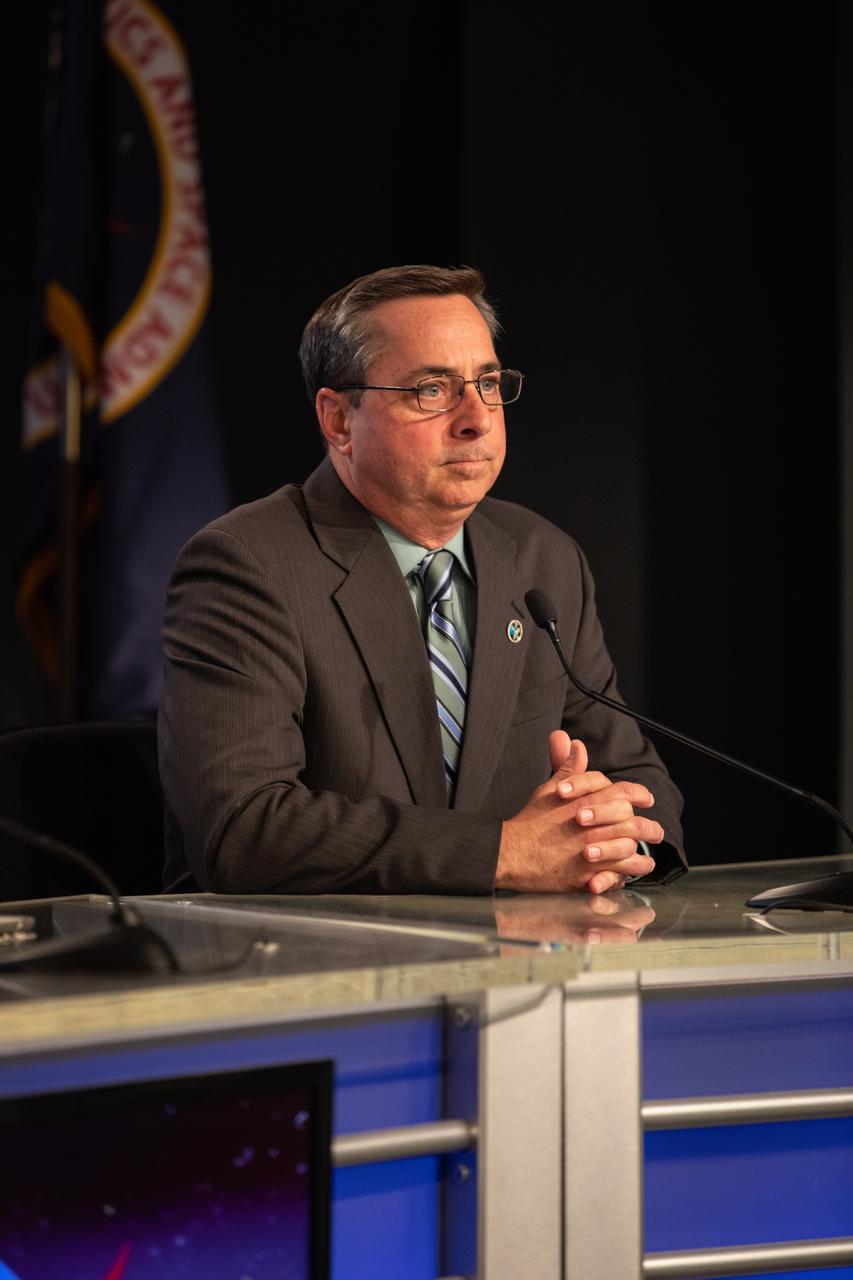
Mike McAleenan, launch weather officer with the U.S. Air Force 45th Weather Squadron, participates in a briefing at NASA’s Kennedy Space Center in Florida on Jan. 17, 2020, prior to launch of SpaceX’s uncrewed In-Flight Abort Test. A SpaceX Falcon 9 rocket topped by the company’s Crew Dragon spacecraft will lift off from Kennedy’s Launch Complex 39A, then begin the launch-abort sequence. The spacecraft will demonstrate its escape capabilities in preparation for crewed flights to the International Space Station as part of the agency’s Commercial Crew Program.
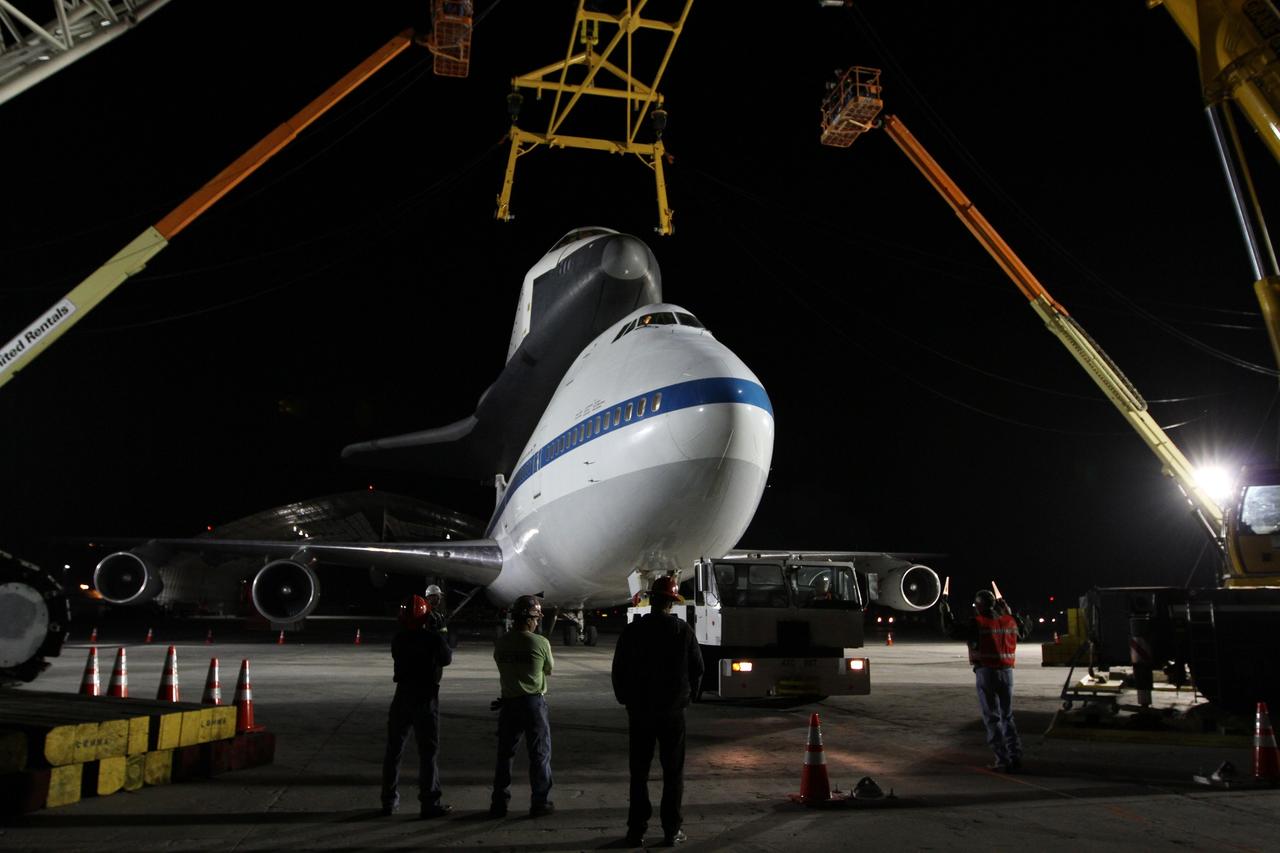
NEW YORK – Cranes and other equipment wait as NASA's shuttle carrier aircraft and space shuttle Enterprise are moved into place so the shuttle can be taken off the top of the aircraft. The work took place at John F. Kennedy International Airport in New York City. Enterprise, a prototype built to test aspects of the space shuttle design, will be displayed at the Intrepid Sea, Air and Space Museum in New York. Photo credit: NASA/Kim Shiflett
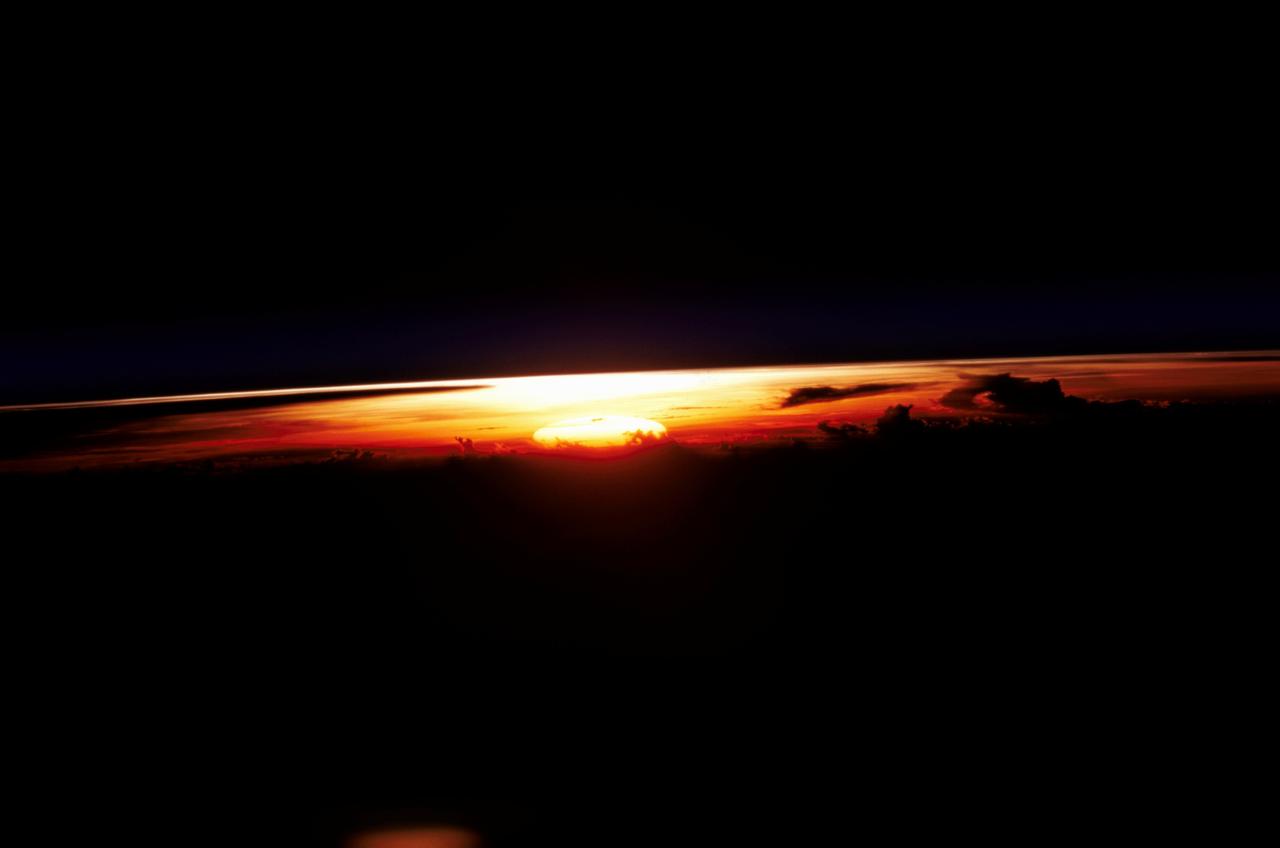
STS109-345-032 (1-12 March 2002) --- One of the astronauts aboard the Space Shuttle Columbia photographed this west-looking view featuring the profile of the atmosphere and the setting sun. The shuttle was located over the Java Sea to the south of Kalimantan (Borneo) in Indonesia when this image was acquired. Visible to the right of the setting sun are cloud tops from some thunderstorms. The sun's reflection (bright spot over the setting sun) can be seen off the upper layers of the earth's atmosphere.
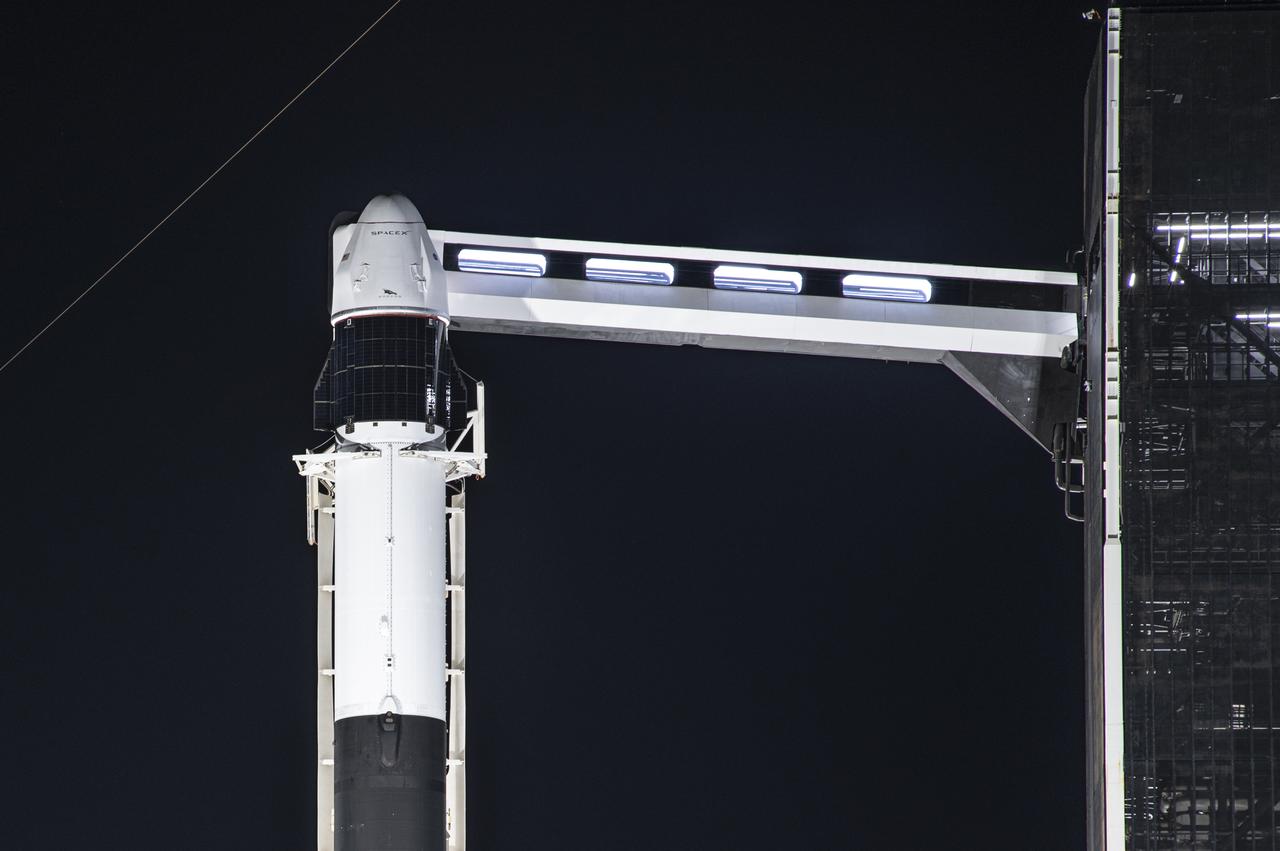
A SpaceX Falcon 9 rocket, topped with the company’s upgraded version of the Dragon spacecraft, stands vertical at NASA Kennedy Space Center’s Launch Complex 39A in Florida on Wednesday, Dec. 2, 2020. The first mission for SpaceX under NASA’s second Commercial Resupply Services contract, CRS-21 is scheduled to lift off from Launch Complex 39A on Saturday, Dec. 5, at 11:39 a.m. EST. The mission will deliver critical supplies and equipment to the International Space Station.
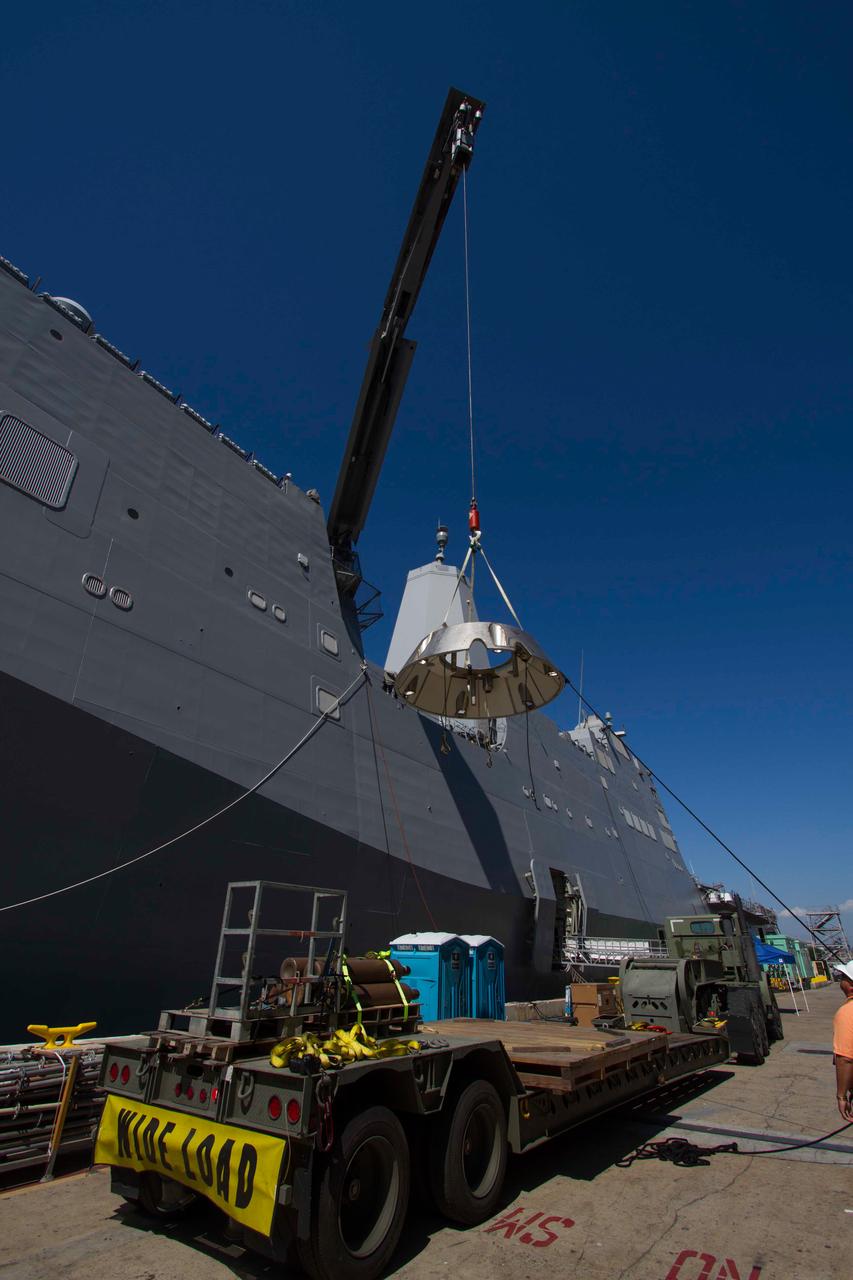
A test version of Orion's forward bay cover is loaded onto the Navy's USS Anchorage in preparation for testing Orion recovery tools and techniques in the Pacific Ocean off the coast of San Diego on Sept. 12, 2014. The forward bay cover protects the top section of Orion's crew module until the spacecraft is almost ready to land. It is jettisoned to allow Orion's parachutes to deploy and must be recovered separately from the crew module. Part of Batch image transfer from Flickr.
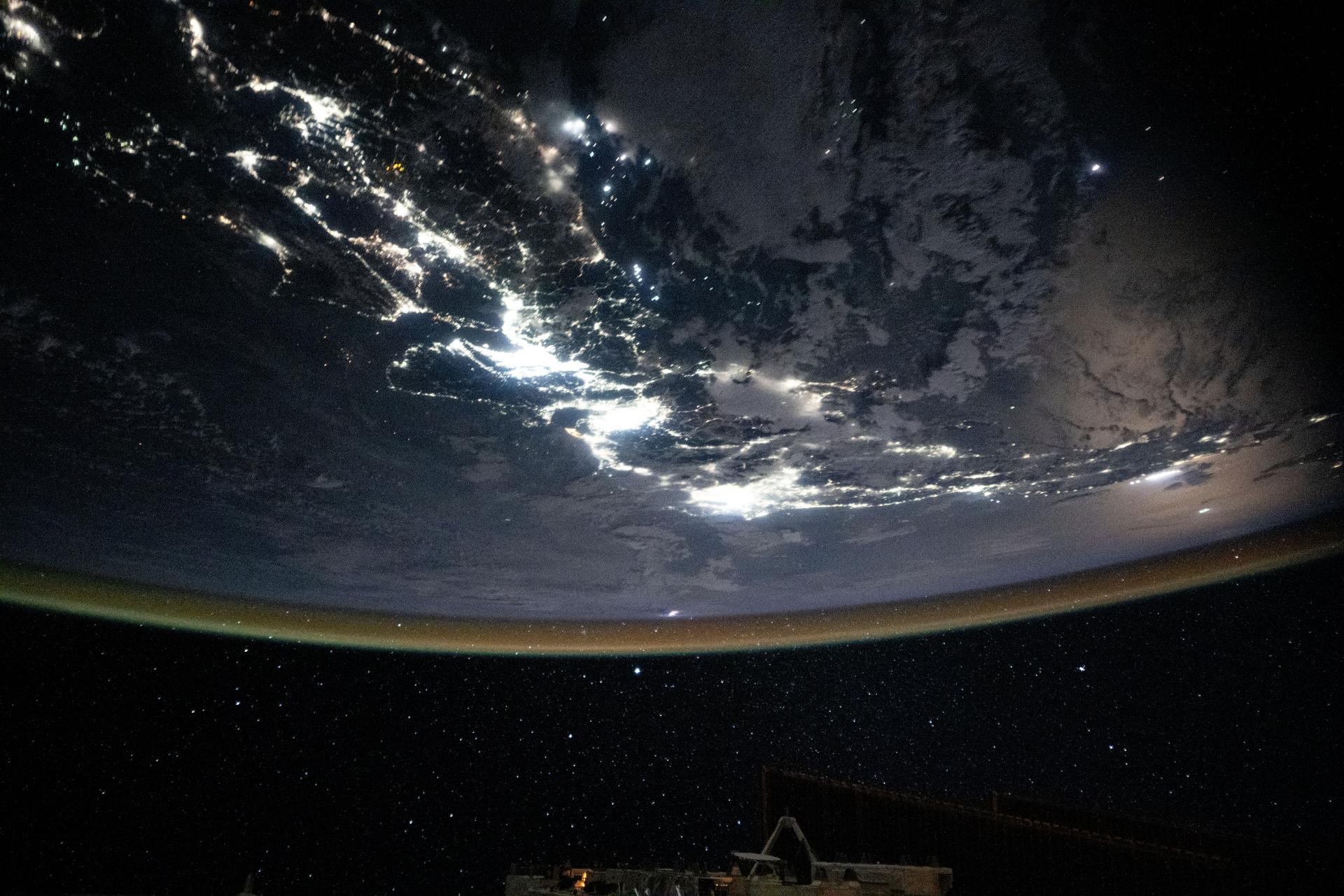
iss073e0842595 (Sept. 15, 2025) --- City lights from Tokyo (center) to Osaka and Hiroshima (top left) illuminate Japan’s urban coastline, while moonlight glints off the Sea of Japan and the Pacific Ocean (lower right). The International Space Station was orbiting 262 miles above South Korea at approximately 1:56 a.m. local time when this photograph was taken.
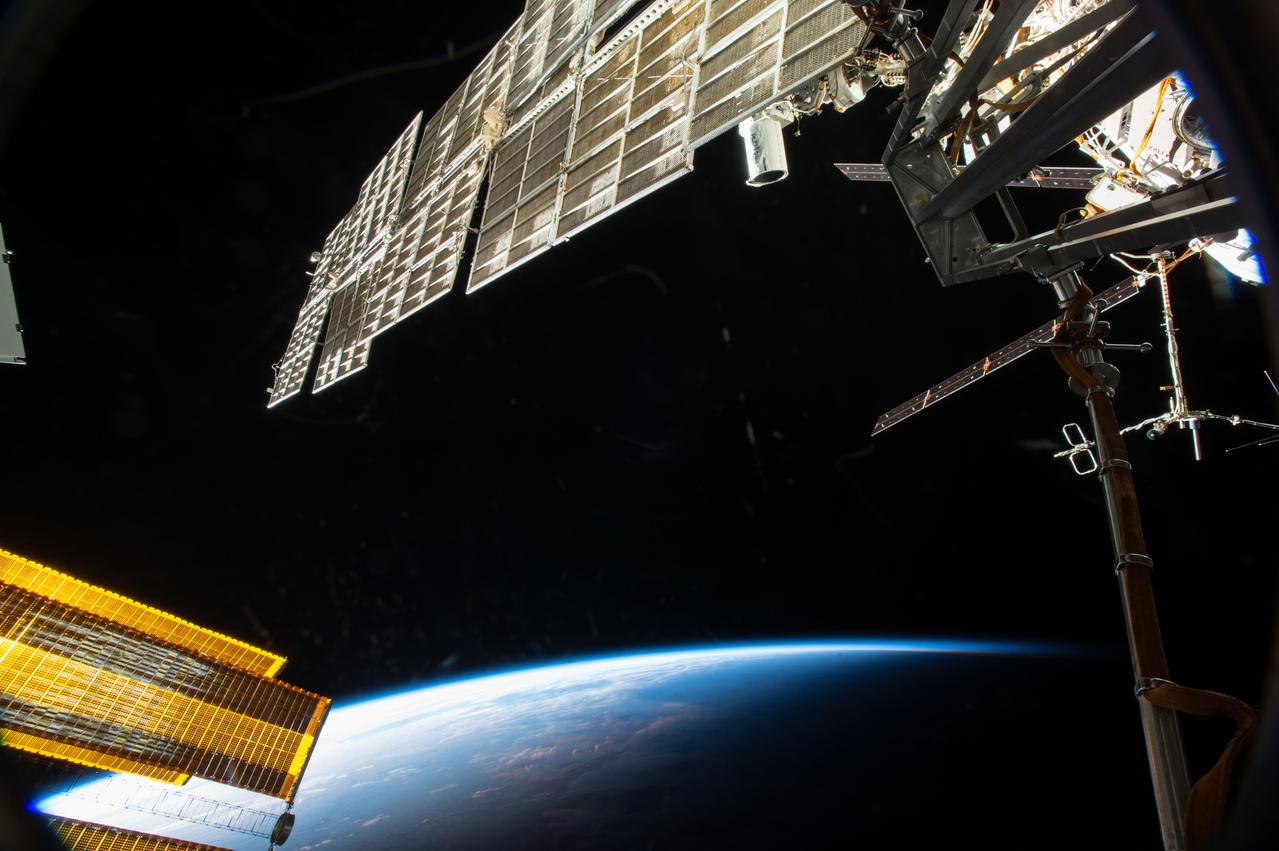
ISS042E094136 (01/01/2015) --- Station solar arrays from the Russian Zarya module (top) and main arrays (bottom left) dominate this picturesque view as the International Space Station passes over a darkening Earth below. The combination of arrays on station power the multitude of systems onboard providing life support and functionality to a crew working on scientific research off the Earth, for the Earth.
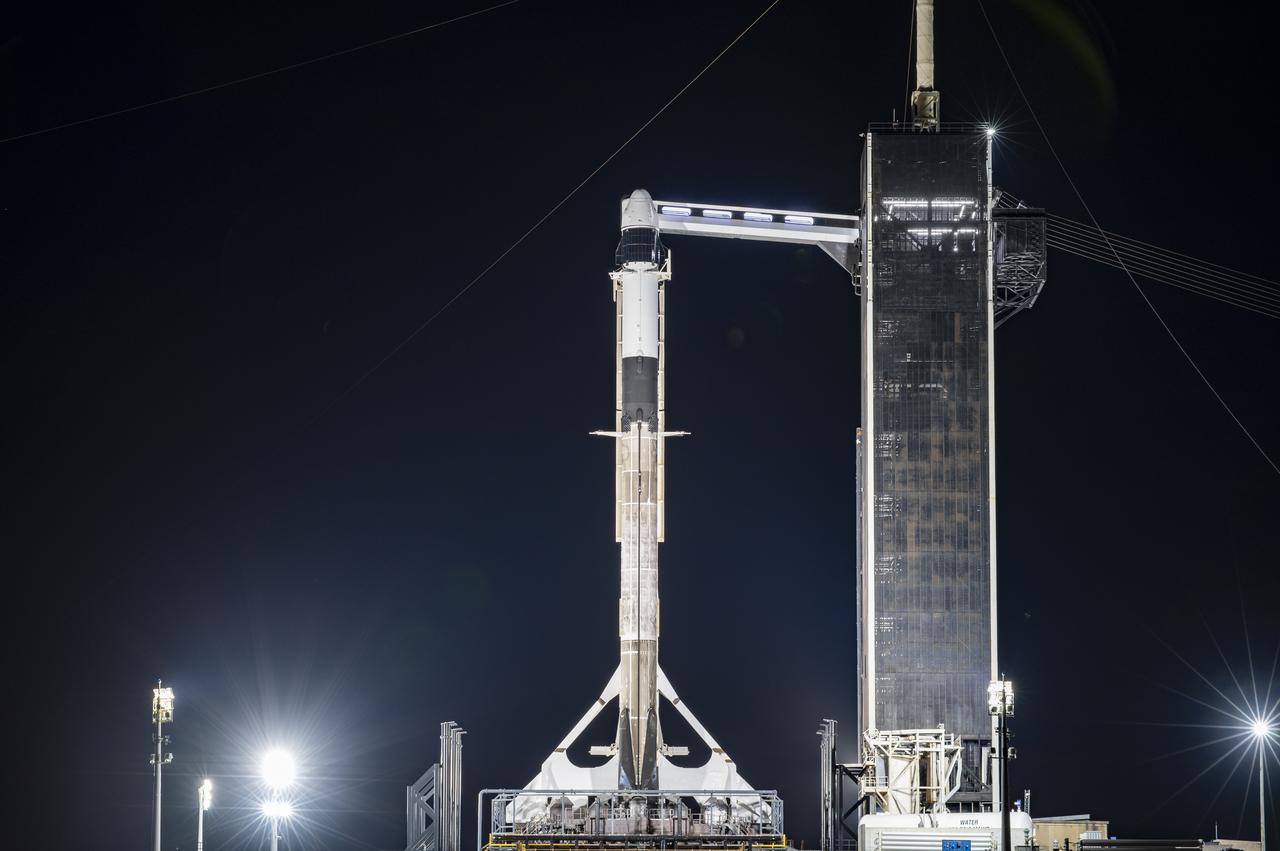
A SpaceX Falcon 9 rocket, topped with the company’s upgraded version of the Dragon spacecraft, stands vertical at NASA Kennedy Space Center’s Launch Complex 39A in Florida on Wednesday, Dec. 2, 2020. The first mission for SpaceX under NASA’s second Commercial Resupply Services contract, CRS-21 is scheduled to lift off from Launch Complex 39A on Saturday, Dec. 5, at 11:39 a.m. EST. The mission will deliver critical supplies and equipment to the International Space Station.
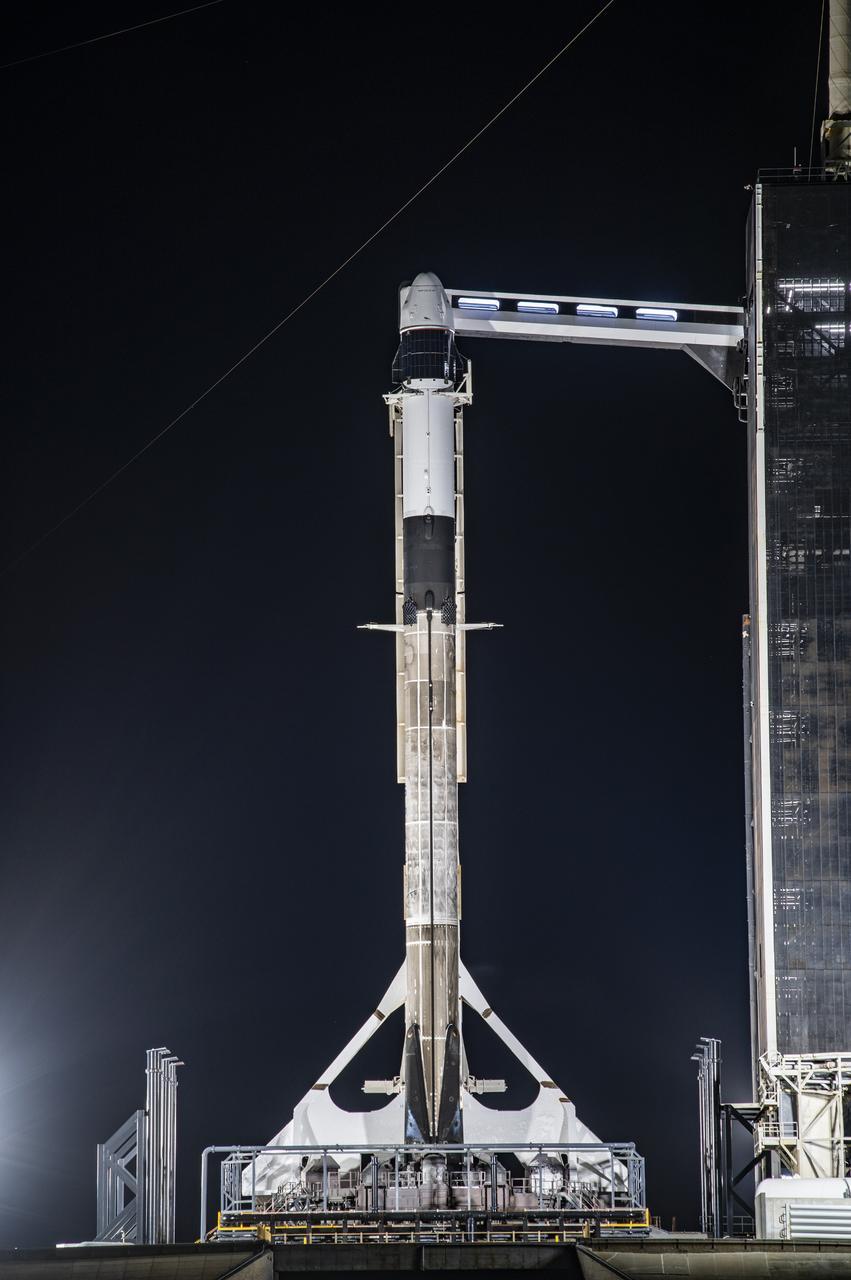
A SpaceX Falcon 9 rocket, topped with the company’s upgraded version of the Dragon spacecraft, stands vertical at NASA Kennedy Space Center’s Launch Complex 39A in Florida on Wednesday, Dec. 2, 2020. The first mission for SpaceX under NASA’s second Commercial Resupply Services contract, CRS-21 is scheduled to lift off from Launch Complex 39A on Saturday, Dec. 5, at 11:39 a.m. EST. The mission will deliver critical supplies and equipment to the International Space Station.
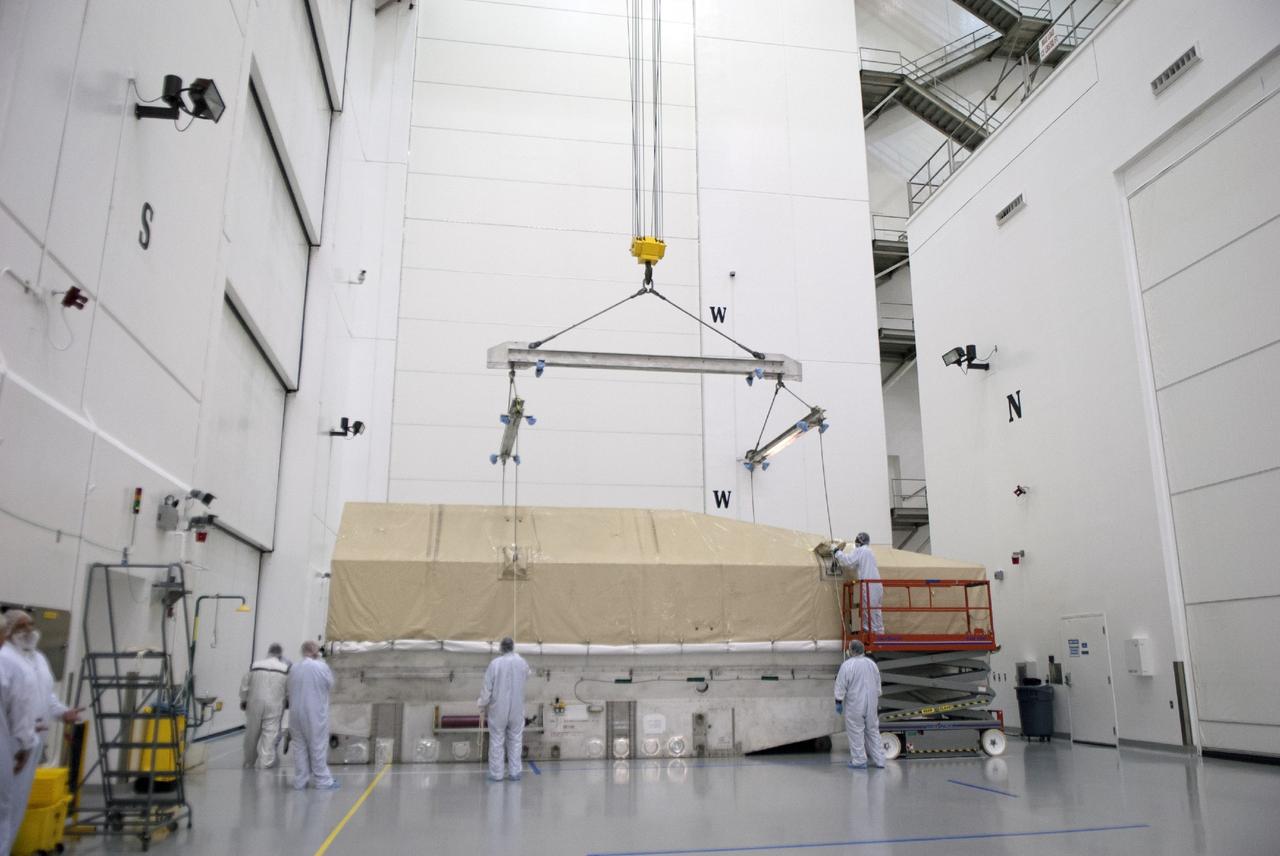
CAPE CANAVERAL, Fla. – Engineers lift the top off a shipping container for NASA's TDRS-L satellite inside the Astrotech payload processing facility in Titusville for launch processing. The TDRS is the latest spacecraft destined for the agency's constellation of communications satellites that allows nearly continuous contact with orbiting spacecraft ranging from the International Space Station and Hubble Space Telescope to the array of scientific observatories. Photo credit: NASA/Tim Jacobs

Benji Reed, director of Crew Mission Management for SpaceX, participates in a briefing at NASA’s Kennedy Space Center in Florida on Jan. 17, 2020, prior to launch of SpaceX’s uncrewed In-Flight Abort Test. A SpaceX Falcon 9 rocket topped by the company’s Crew Dragon spacecraft will lift off from Kennedy’s Launch Complex 39A, then begin the launch-abort sequence. The spacecraft will demonstrate its escape capabilities in preparation for crewed flights to the International Space Station as part of the agency’s Commercial Crew Program.
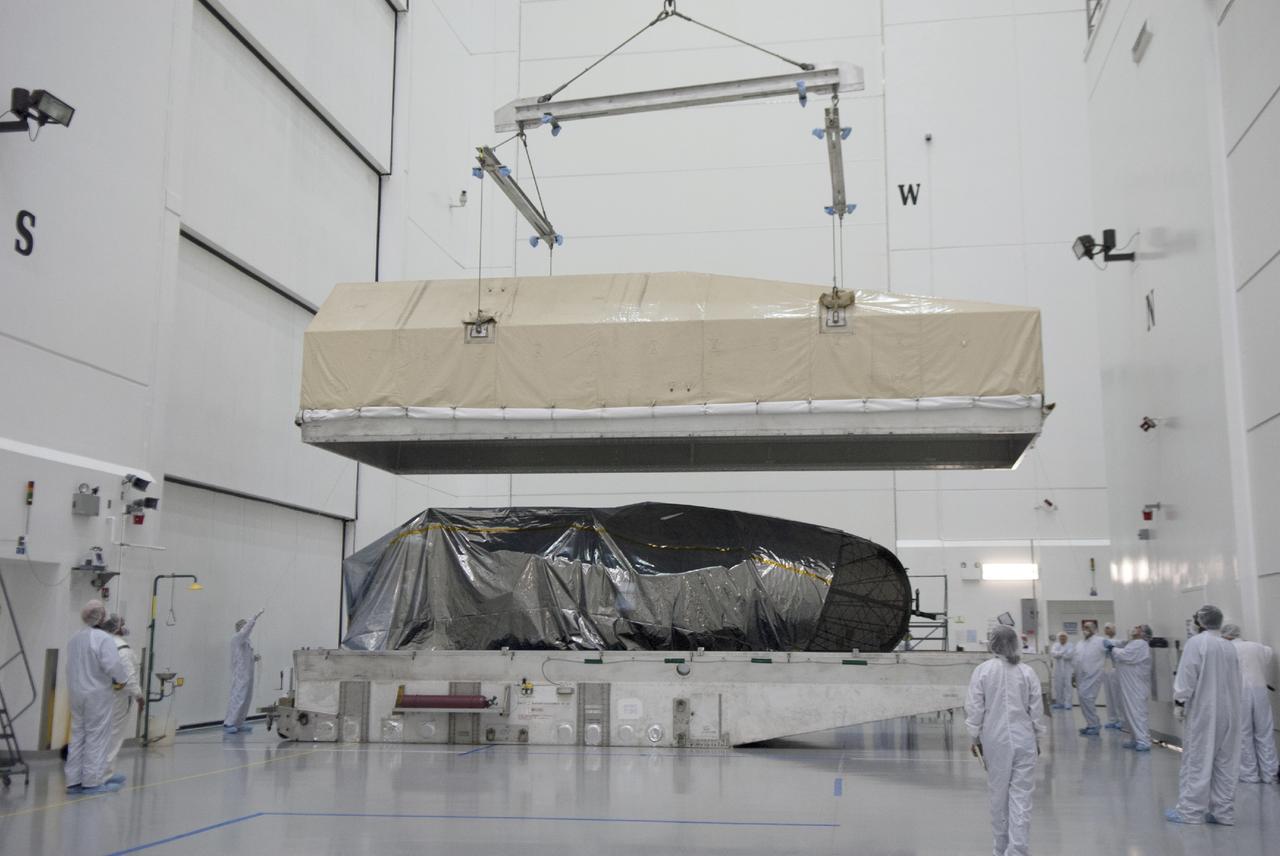
CAPE CANAVERAL, Fla. – Engineers lift the top off a shipping container to reveal NASA's TDRS-L satellite inside the high bay at the Astrotech payload processing facility in Titusville for launch processing. The TDRS is the latest spacecraft destined for the agency's constellation of communications satellites that allows nearly continuous contact with orbiting spacecraft ranging from the International Space Station and Hubble Space Telescope to the array of scientific observatories. Photo credit: NASA/Tim Jacobs

Josh Finch of NASA Communications moderates a briefing at the agency's Kennedy Space Center in Florida on Jan. 17, 2020, prior to launch of SpaceX’s uncrewed In-Flight Abort Test. A SpaceX Falcon 9 rocket topped by the company’s Crew Dragon spacecraft will lift off from Kennedy’s Launch Complex 39A, then begin the launch-abort sequence. The spacecraft will demonstrate its escape capabilities in preparation for crewed flights to the International Space Station as part of the agency’s Commercial Crew Program.
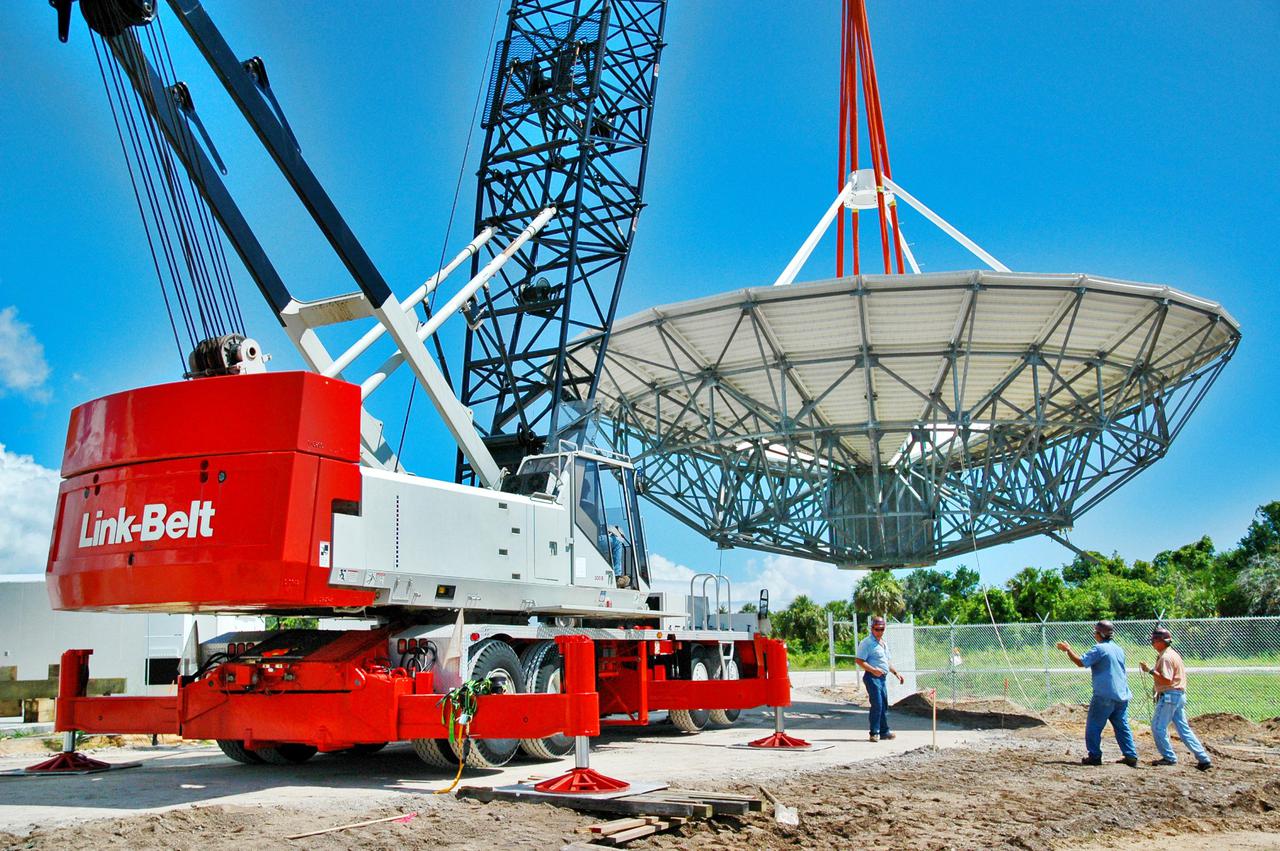
KENNEDY SPACE CENTER, FLA. - At a radar site on North Merritt Island, Fla., the 50-foot C-band radar antenna dish is lifted off the ground. It will be placed onto the top of a support structure.The radar will be used for Shuttle missions to track the launches and observe possible debris coming from the Shuttle. It will be used for the first time on STS-114. The launch window for the first Return to Flight mission is July 13 to July 31.
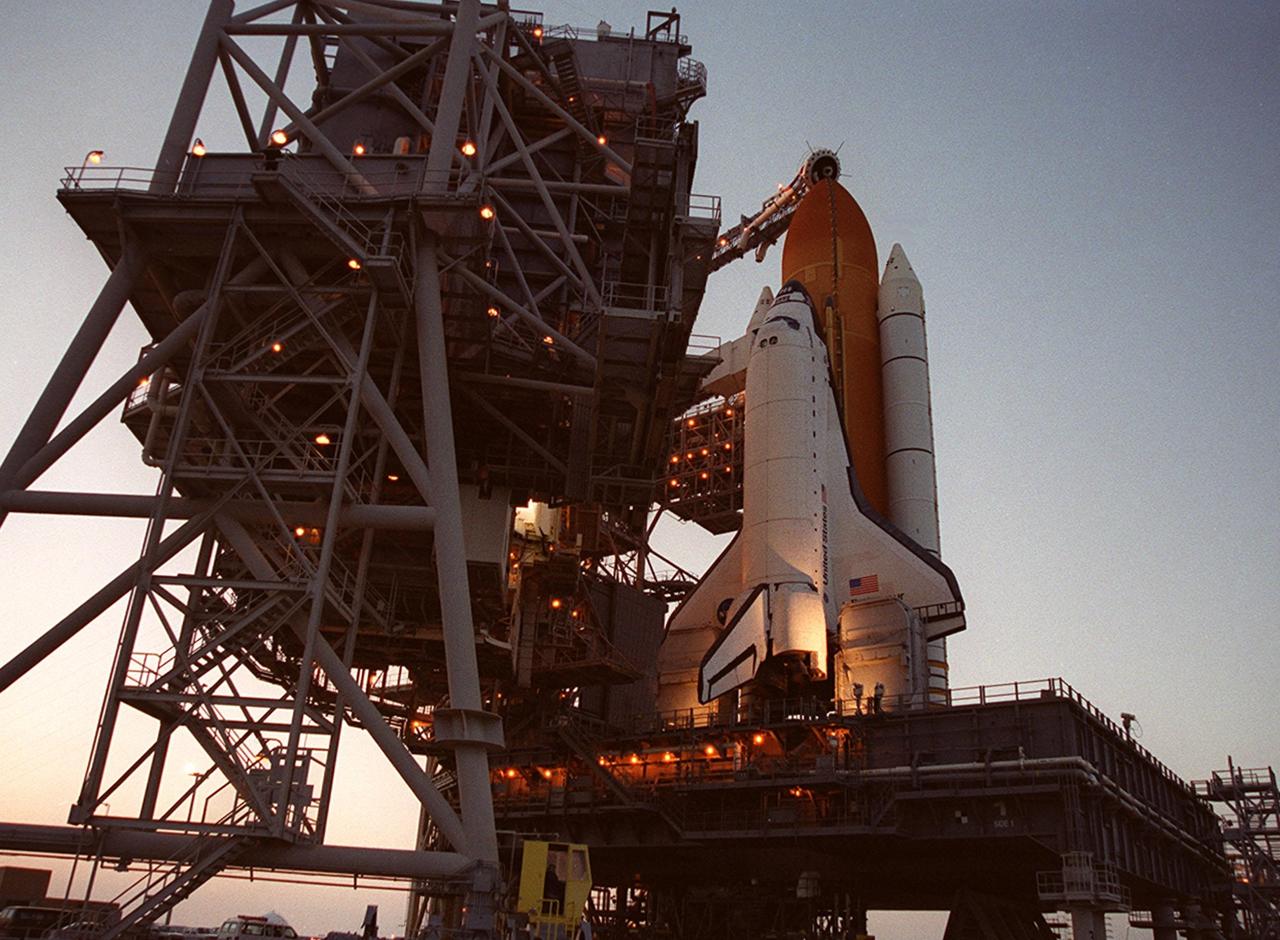
KENNEDY SPACE CENTER, Fla. -- In the glow of a setting sun, Space Shuttle Endeavour is revealed after the rollback of the Rotating Service Structure (left) on Launch Pad 39A. At the top of the external tank can be seen the “beanie cap,” a venting apparatus at the end of the Gaseous Oxygen Vent Arm. Endeavour is expected to lift off on mission STS-100 on April 19, carrying the Multi-Purpose Logistics Module Raffaello and the Canadian robotic arm, SSRMS, with a crew of seven to the International Space Station
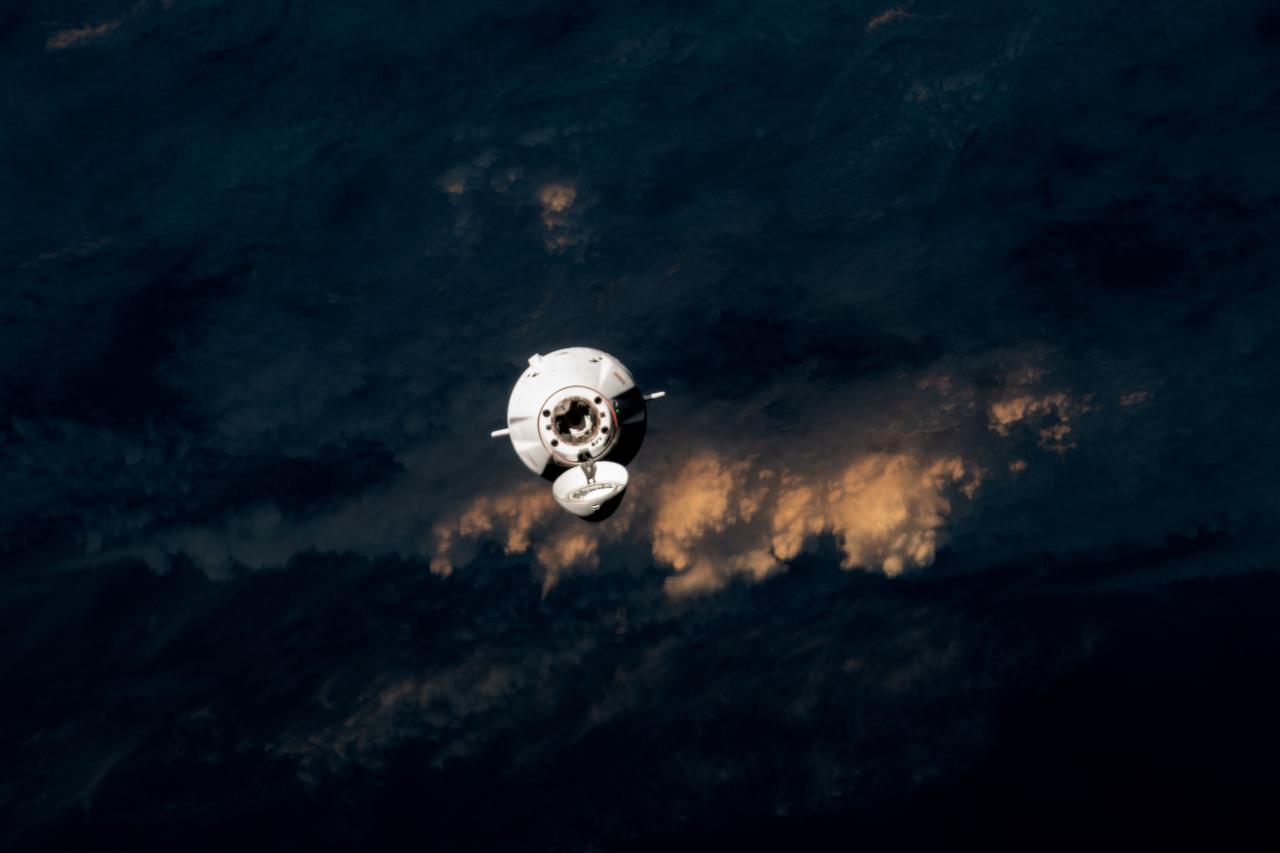
iss069e018147 (June 6, 2023) --- The SpaceX Dragon cargo craft approaches the International Space Station for an automated docking less than a day after launching from NASA's Kennedy Space Center loaded with over 7,000 pounds of science experiments, station hardware, and crew supplies. The last rays of an orbital sunset illuminate the cloud tops as both spacecraft were orbiting 259 miles above the Pacific Ocean off the coast of Japan.
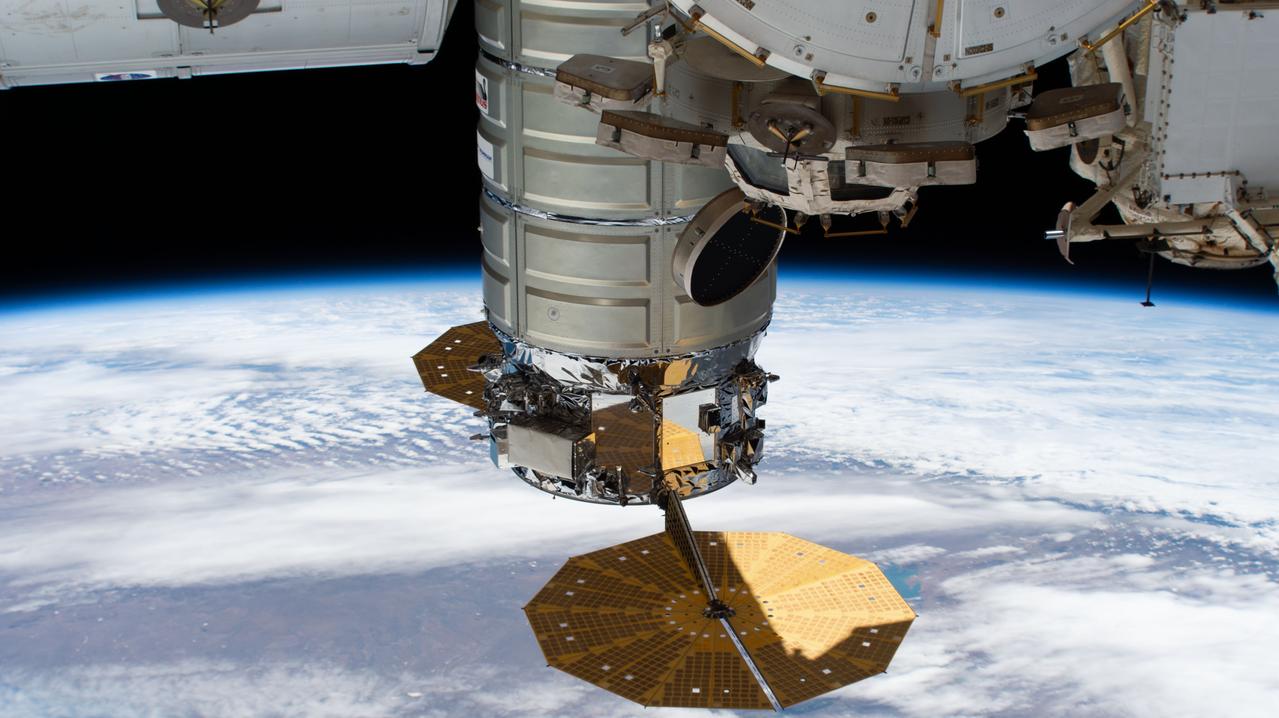
iss058e002244 (Jan. 7, 2019) --- The U.S. Cygnus space freighter from Northrop Grumman and its prominent cymbal-shaped UltraFlex solar arrays are pictured as the International Space Station orbited 262 miles above the Atlantic Ocean off the coast of Argentina. Towards the top center of the photograph is the seven-windowed cupola with its shutters open.
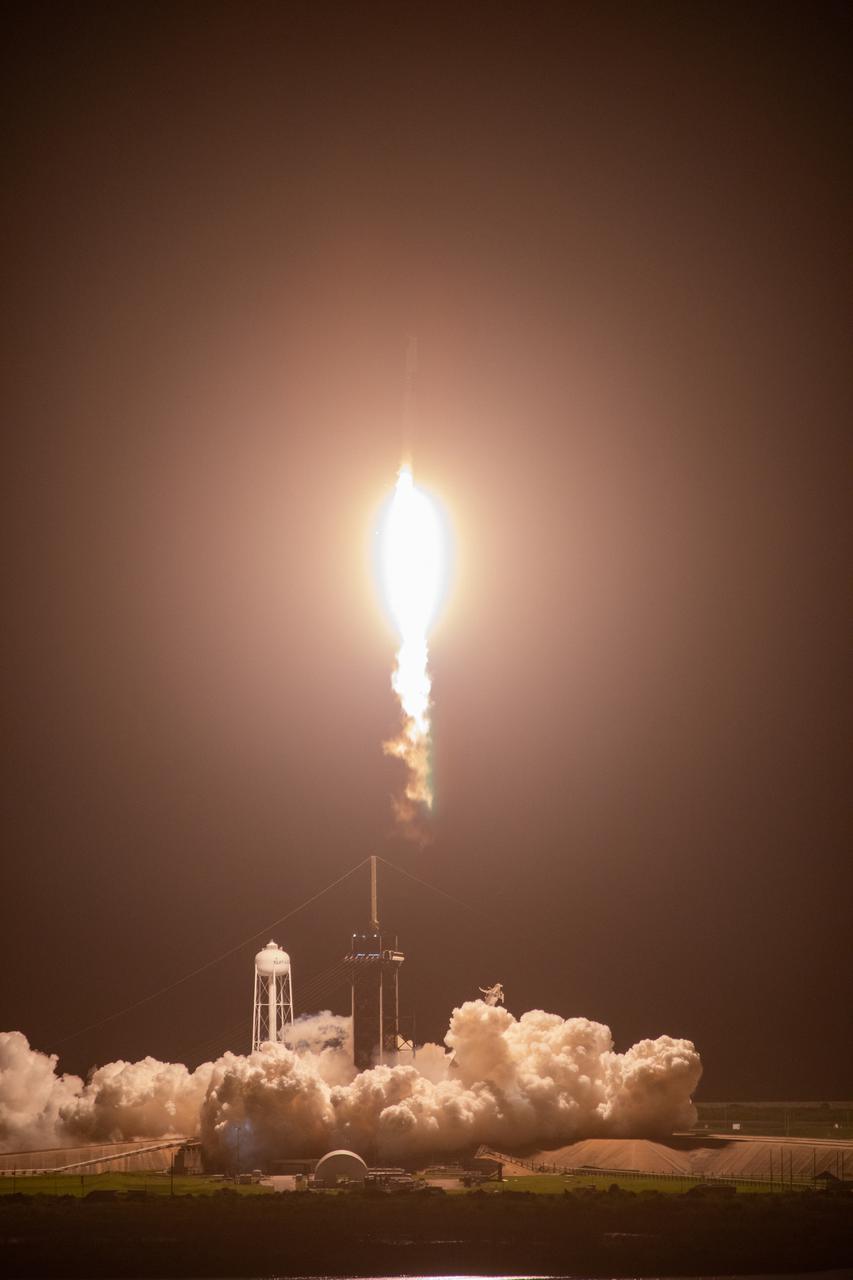
A SpaceX Falcon 9 rocket, topped with the uncrewed Dragon spacecraft, soars upward after lifting off from NASA Kennedy Space Center’s Launch Complex 39A in Florida at 3:14 a.m. on Aug. 29, 2021. Dragon will deliver new science investigations, supplies, and equipment to the International Space Station for NASA and SpaceX’s 23rd commercial resupply services mission.
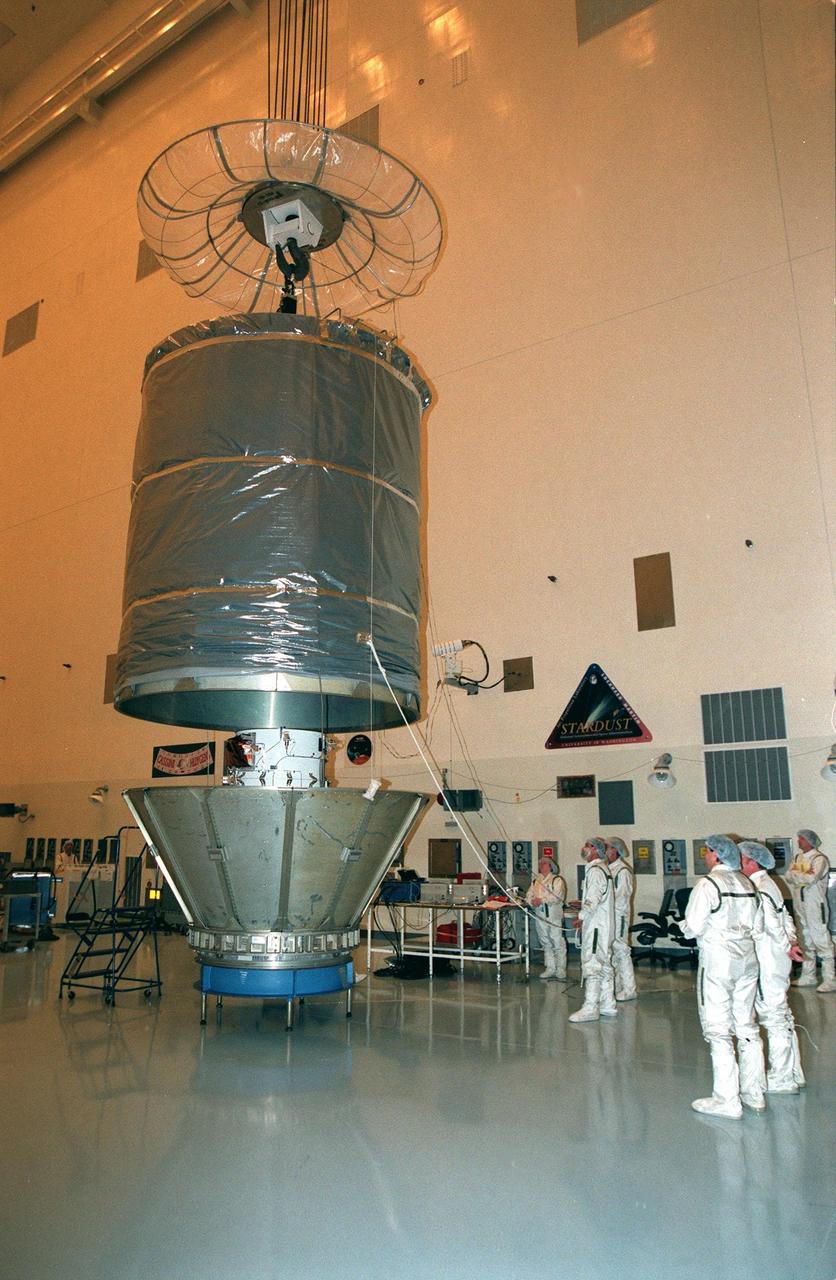
The cover is removed from the Stardust spacecraft in the Payload Hazardous Servicing Facility prior to a media presentation. Stardust is targeted for launch on Feb. 6 aboard a Boeing Delta II rocket from Launch Pad 17-A, Cape Canaveral Air Station. The spacecraft is destined for a close encounter with the comet Wild 2 in January 2004. Using a silicon-based substance called aerogel, Stardust will capture comet particles flying off the nucleus of the comet. The spacecraft also will bring back samples of interstellar dust. These materials consist of ancient pre-solar interstellar grains and other remnants left over from the formation of the solar system. Scientists expect their analysis to provide important insights into the evolution of the sun and planets and possibly into the origin of life itself. The collected samples will return to Earth in a sample return capsule (the white-topped, blunt-nosed cone seen on the top of the spacecraft) to be jettisoned as Stardust swings by Earth in January 2006
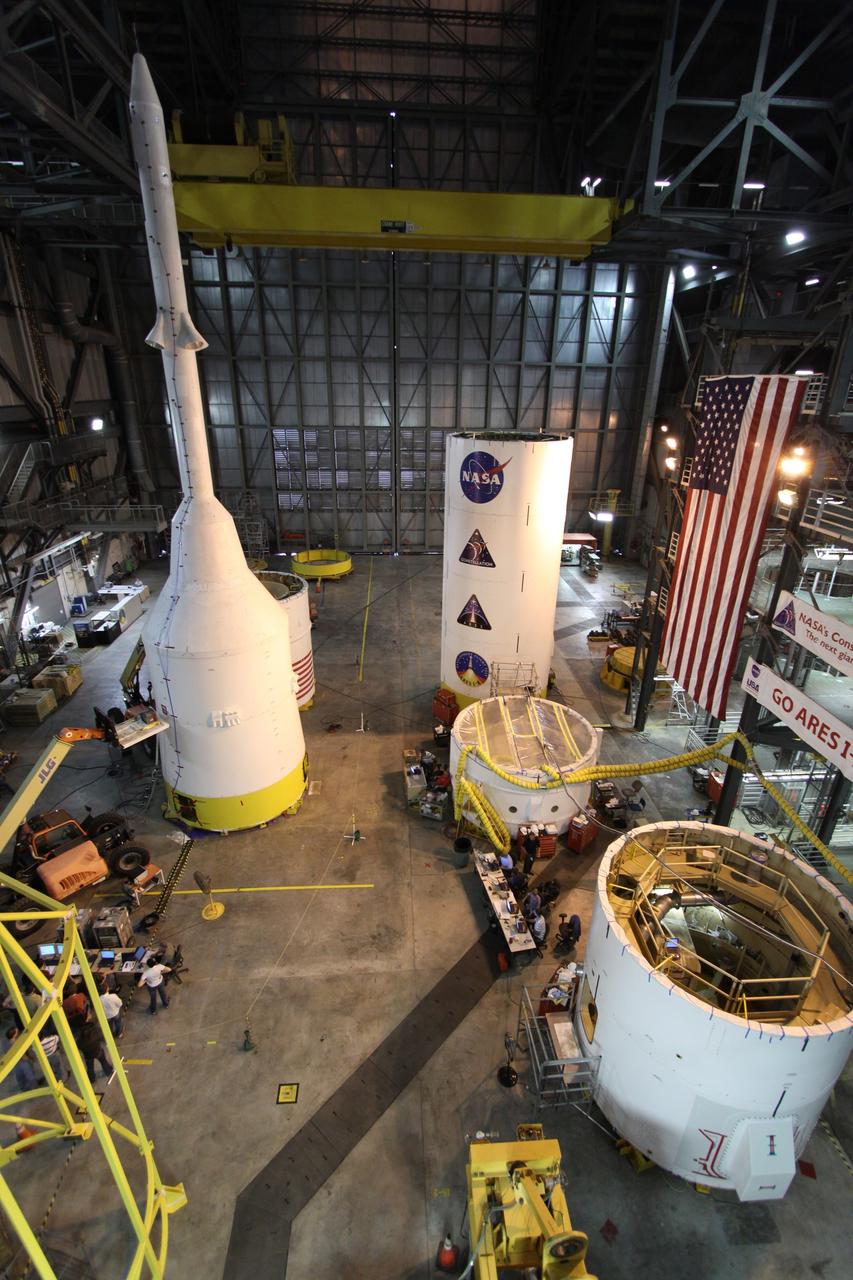
CAPE CANAVERAL, Fla. – In high bay 4 of the Vehicle Assembly Building at NASA's Kennedy Space Center in Florida, technicians begin the modal survey testing on the top part of the Ares I-X (upper left) after sensors were placed on the stack. The top consists of the launch abort tower, crew module, service module and spacecraft adaptor. Other segments are stacked nearby. Shakers will impose random loads/vibrations to determine the flight test vehicle’s first several bending modes and the strategically located sensors throughout the stacks will measure the amount, acceleration and direction of movement. The purpose of the testing is to confirm that Ares I-X will behave as predicted as it lifts off the pad and powers through the initial stage of flight in a demonstration flight later this year. Photo credit: NASA/Jack Pfaller
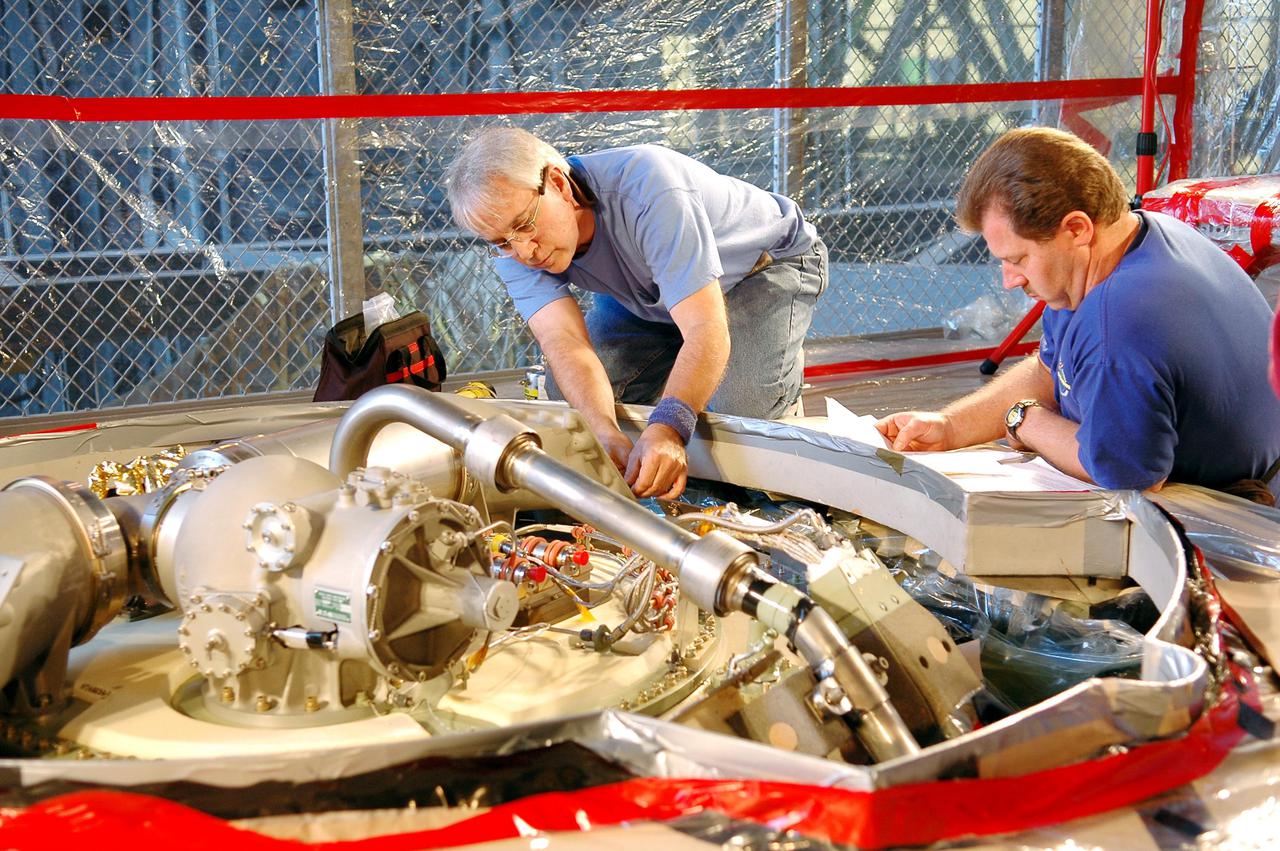
KENNEDY SPACE CENTER, FLA. - In the Vehicle Assembly Building, Michael Cinquigianno (left), who is a system test mechanical technician with Lockheed Martin, checks out the vent valve assembly on External Tank 121. Looking on is Lance Mercier, with Lockheed Martin Quality Control. The assembly sits on top of the tank and, when on the launch pad, is connected to the “beanie cap,” a swing-arm-mounted cap that covers the oxygen tank vent on top of the tank during the countdown. The cap is retracted about two minutes before liftoff. The cap siphons off oxygen vapor that threatens to form large ice on the tank, thus protecting the orbiter’s thermal protection system during launch. The External Tanks are built by Lockheed Martin at the Michoud Assembly Facility near New Orleans. The tank is being prepared to fly with Discovery on mission STS-114, whose launch window extends July 13 to July 31.
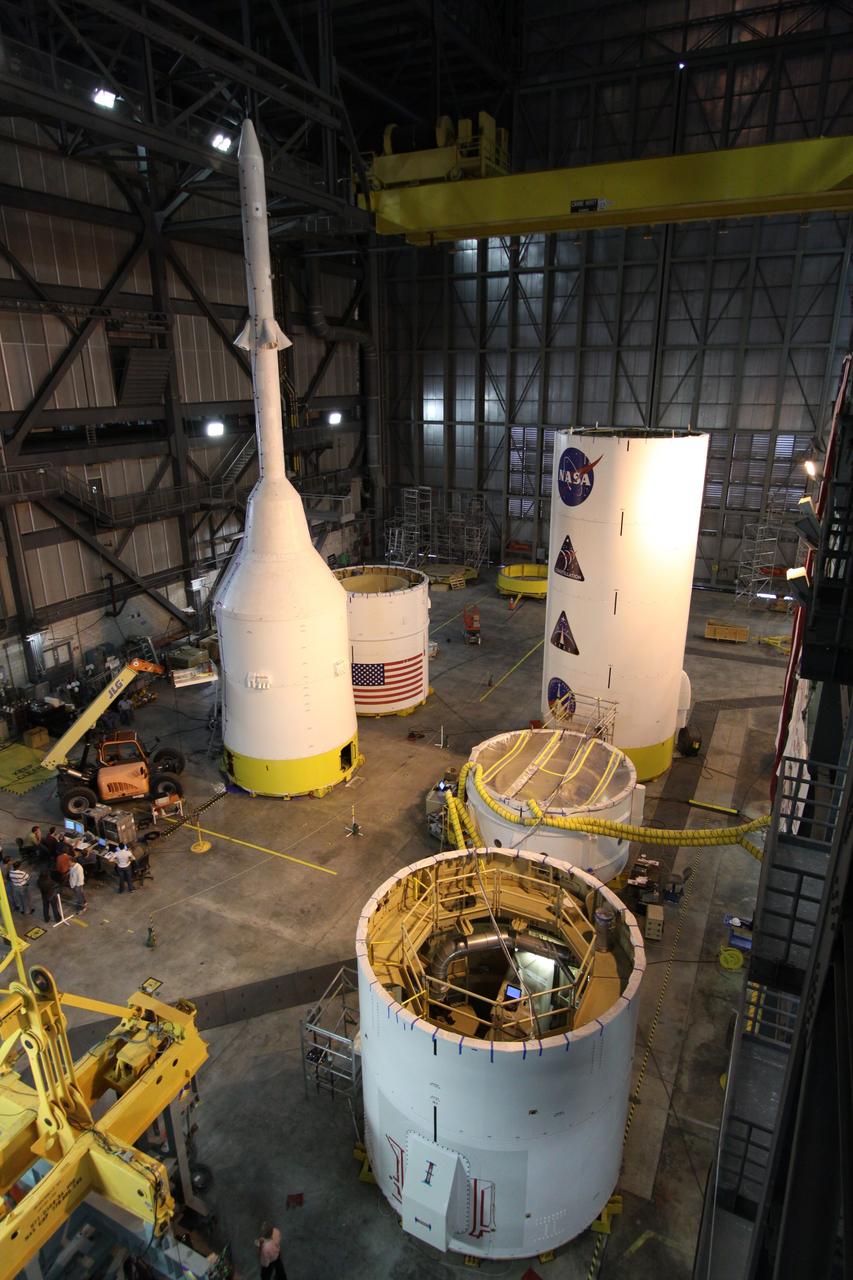
CAPE CANAVERAL, Fla. – In high bay 4 of the Vehicle Assembly Building at NASA's Kennedy Space Center in Florida, the top part of the Ares I-X (upper left) undergoes modal survey testing after sensors were placed on the stack. The top consists of the launch abort tower, crew module, service module and spacecraft adaptor. Other segments are stacked nearby. Shakers will impose random loads/vibrations to determine the flight test vehicle’s first several bending modes and the strategically located sensors throughout the stacks will measure the amount, acceleration and direction of movement. The purpose of the testing is to confirm that Ares I-X will behave as predicted as it lifts off the pad and powers through the initial stage of flight in a demonstration flight later this year. Photo credit: NASA/Jack Pfaller
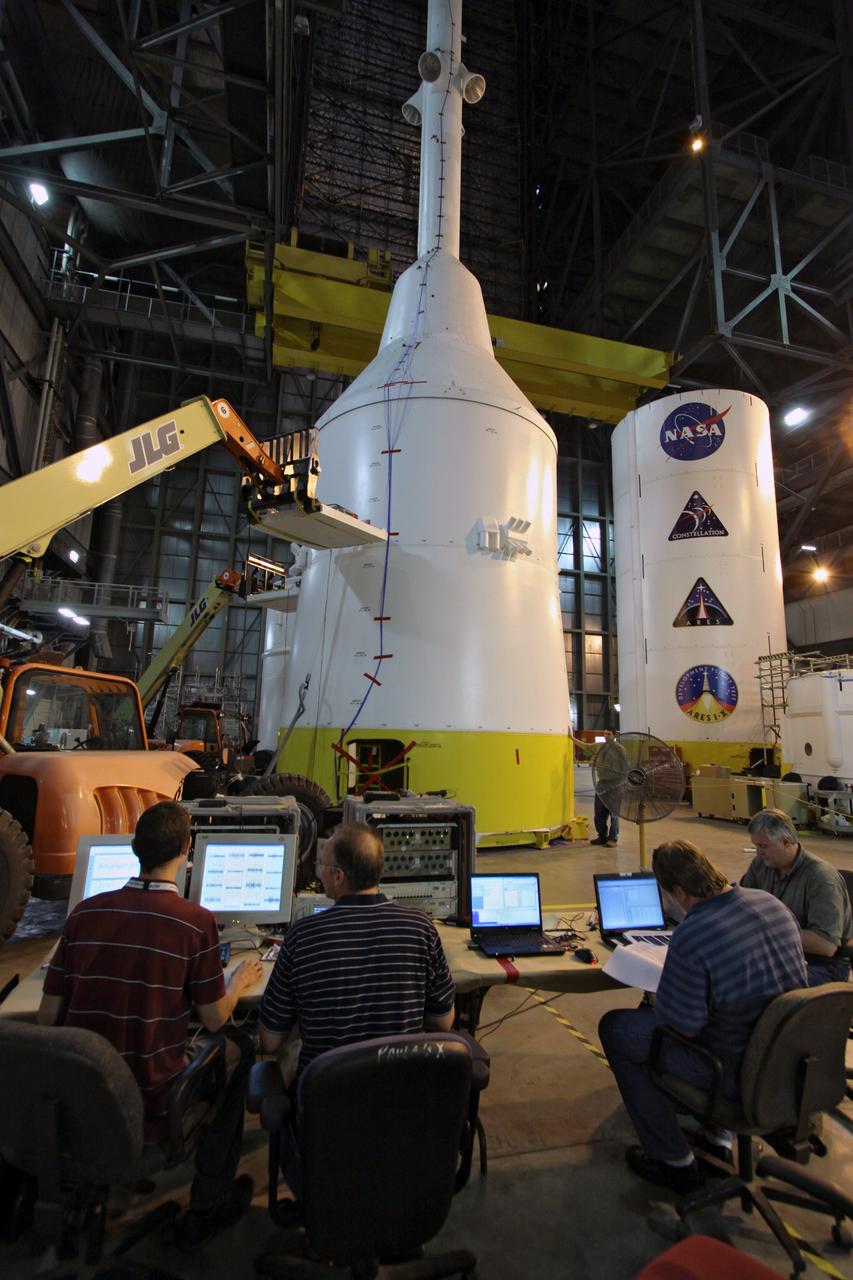
CAPE CANAVERAL, Fla. – In high bay 4 of the Vehicle Assembly Building at NASA's Kennedy Space Center in Florida, technicians begin the modal survey testing on the top part of the Ares I-X (center) after sensors were placed on the stack. The top consists of the launch abort tower, crew module, service module and spacecraft adaptor. Shakers will impose random loads/vibrations to determine the flight test vehicle’s first several bending modes and the strategically located sensors throughout the stacks will measure the amount, acceleration and direction of movement. The purpose of the testing is to confirm that Ares I-X will behave as predicted as it lifts off the pad and powers through the initial stage of flight in a demonstration flight later this year. Photo credit: NASA/Jack Pfaller
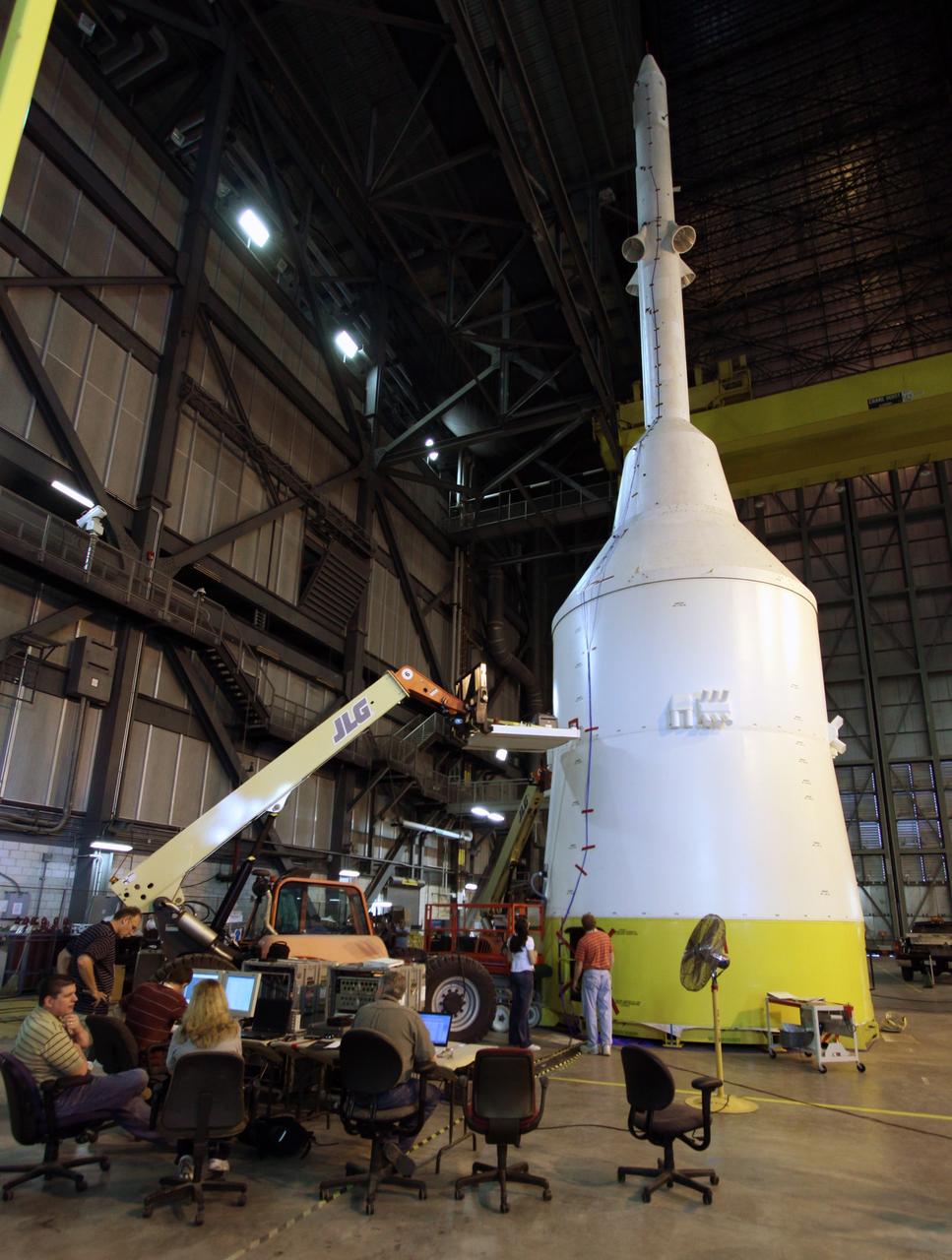
CAPE CANAVERAL, Fla. – In high bay 4 of the Vehicle Assembly Building at NASA's Kennedy Space Center in Florida, technicians place sensors on the top part of the Ares I-X for modal survey testing. The top consists of the launch abort tower, crew module, service module and spacecraft adaptor. Shakers will impose random loads/vibrations to determine the flight test vehicle’s first several bending modes and the strategically located sensors throughout the stacks will measure the amount, acceleration and direction of movement. The purpose of the testing is to confirm that Ares I-X will behave as predicted as it lifts off the pad and powers through the initial stage of flight in a demonstration flight later this year. Photo credit: NASA/Jack Pfaller
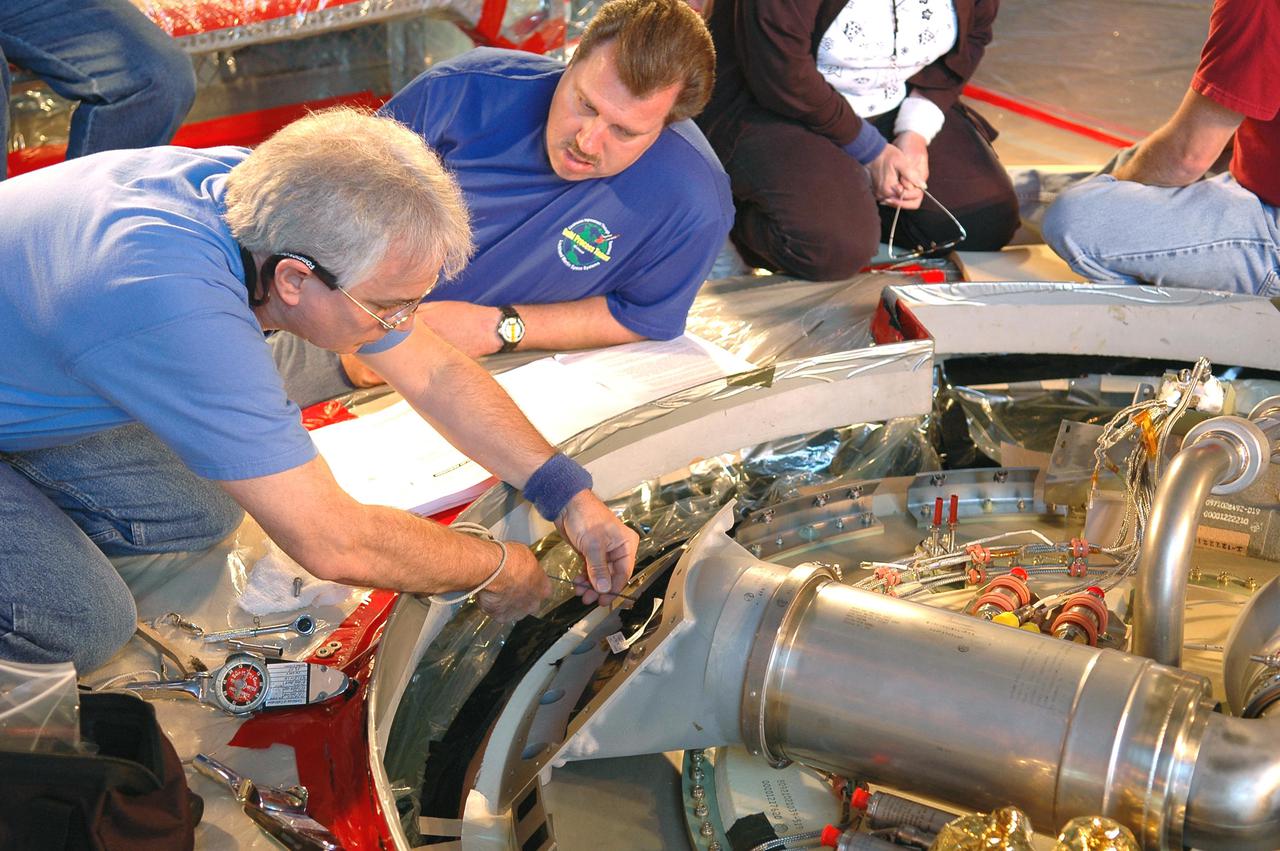
KENNEDY SPACE CENTER, FLA. - In the Vehicle Assembly Building, Michael Cinquigianno (left), who is a system test mechanical technician with Lockheed Martin, checks out the vent valve assembly on External Tank 121. Looking on is Lance Mercier, with Lockheed Martin Quality Control. The assembly sits on top of the tank and, when on the launch pad, is connected to the “beanie cap,” a swing-arm-mounted cap that covers the oxygen tank vent on top of the tank during the countdown. The cap is retracted about two minutes before liftoff. The cap siphons off oxygen vapor that threatens to form large ice on the tank, thus protecting the orbiter’s thermal protection system during launch. The External Tanks are built by Lockheed Martin at the Michoud Assembly Facility near New Orleans. The tank is being prepared to fly with Discovery on mission STS-114, whose launch window extends July 13 to July 31.
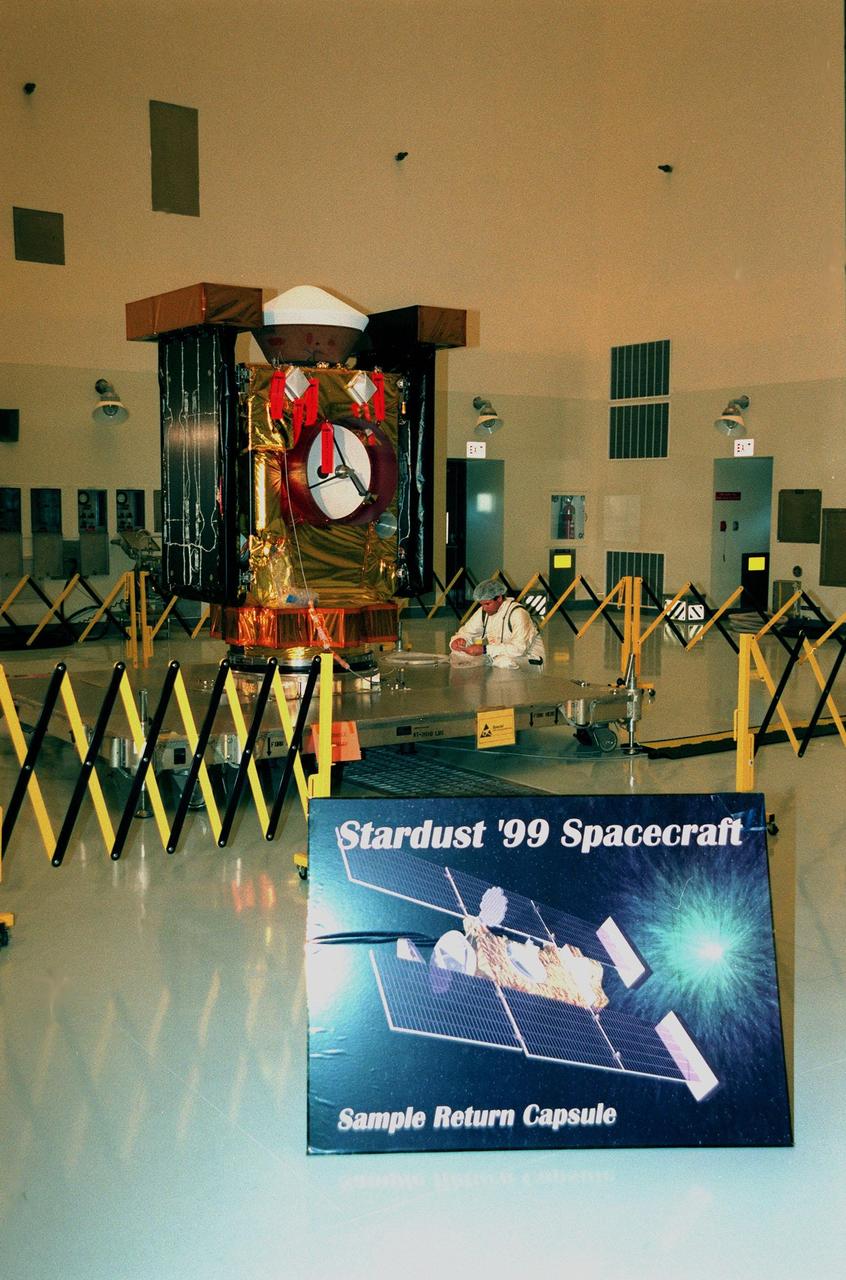
In the Payload Hazardous Servicing Facility, the spacecraft Stardust is on display for a media presentation. Stardust is targeted for launch on Feb. 6 aboard a Boeing Delta II rocket from Launch Pad 17-A, Cape Canaveral Air Station. The spacecraft is destined for a close encounter with the comet Wild 2 in January 2004. Using a silicon-based substance called aerogel, Stardust will capture comet particles flying off the nucleus of the comet. The spacecraft also will bring back samples of interstellar dust. These materials consist of ancient pre-solar interstellar grains and other remnants left over from the formation of the solar system. Scientists expect their analysis to provide important insights into the evolution of the sun and planets and possibly into the origin of life itself. The collected samples will return to Earth in a sample return capsule (the white-topped, blunt-nosed cone seen on the top of the spacecraft) to be jettisoned as Stardust swings by Earth in January 2006
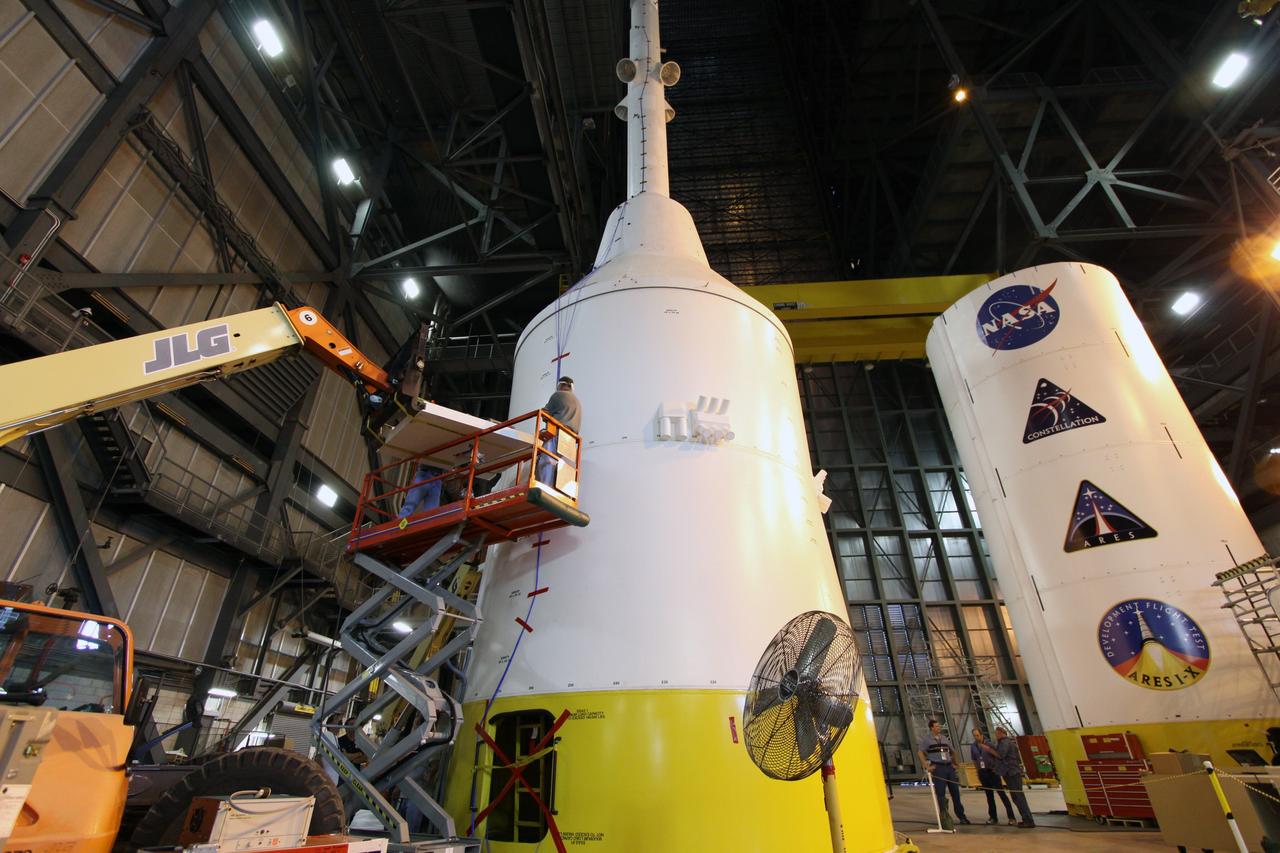
CAPE CANAVERAL, Fla. – In high bay 4 of the Vehicle Assembly Building at NASA's Kennedy Space Center in Florida, technicians place sensors on the top part of the Ares I-X for modal survey testing. The top consists of the launch abort tower, crew module, service module and spacecraft adaptor. Shakers will impose random loads/vibrations to determine the flight test vehicle’s first several bending modes and the strategically located sensors throughout the stacks will measure the amount, acceleration and direction of movement. The purpose of the testing is to confirm that Ares I-X will behave as predicted as it lifts off the pad and powers through the initial stage of flight in a demonstration flight later this year. Photo credit: NASA/Jack Pfaller
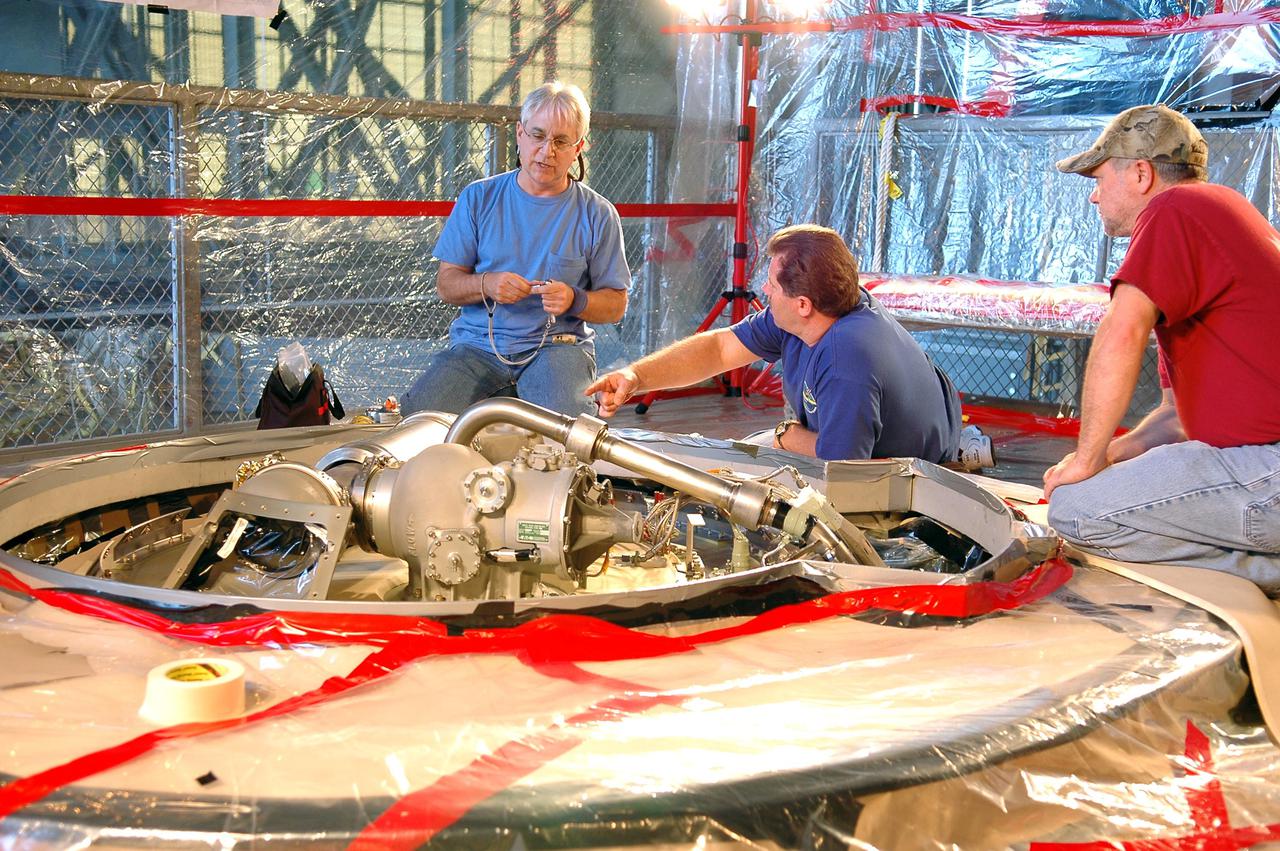
KENNEDY SPACE CENTER, FLA. - In the Vehicle Assembly Building, Michael Cinquigianno (left), who is a system test mechanical technician with Lockheed Martin, checks out the vent valve assembly on External Tank 121. Next to him is Lance Mercier, with Lockheed Martin Quality Control. The assembly sits on top of the tank and, when on the launch pad, is connected to the “beanie cap,” a swing-arm-mounted cap that covers the oxygen tank vent on top of the tank during the countdown. The cap is retracted about two minutes before liftoff. The cap siphons off oxygen vapor that threatens to form large ice on the tank, thus protecting the orbiter’s thermal protection system during launch. The External Tanks are built by Lockheed Martin at the Michoud Assembly Facility near New Orleans. The tank is being prepared to fly with Discovery on mission STS-114, whose launch window extends July 13 to July 31.
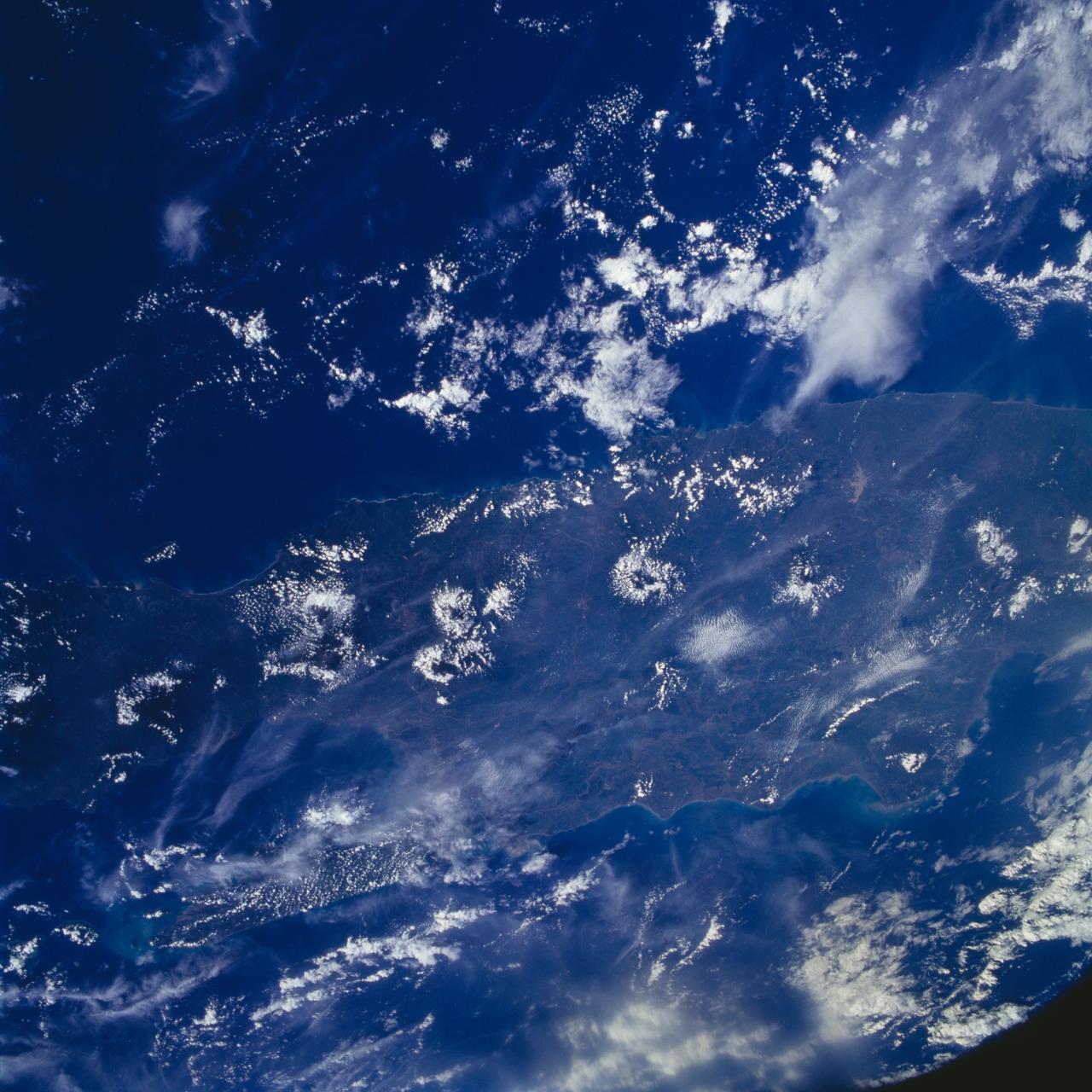
STS072-737-012 (11-20 Jan. 1996) --- The astronauts photographed this view of Java, an Indonesian island. Java lies between the Java Sea at top and the Indian Ocean at bottom (north is located at top center). A line of volcanoes on the southern edge of the island, trending from central to eastern areas, is highlighted by a ring of clouds. Off the southern coast of Java is the Java Trench where the Australian plate, to the south, is diving under the Eurasia plate to the north. According to anthropologists, Java has one of the highest populations in Indonesia because the soil is enriched by volcanic ash. Merapi volcano, at left edge, second volcano to the right, rises to 9,550 feet and erupts frequently. Madura Island, partially obscured by clouds, can be seen on the upper eastern end of Java.
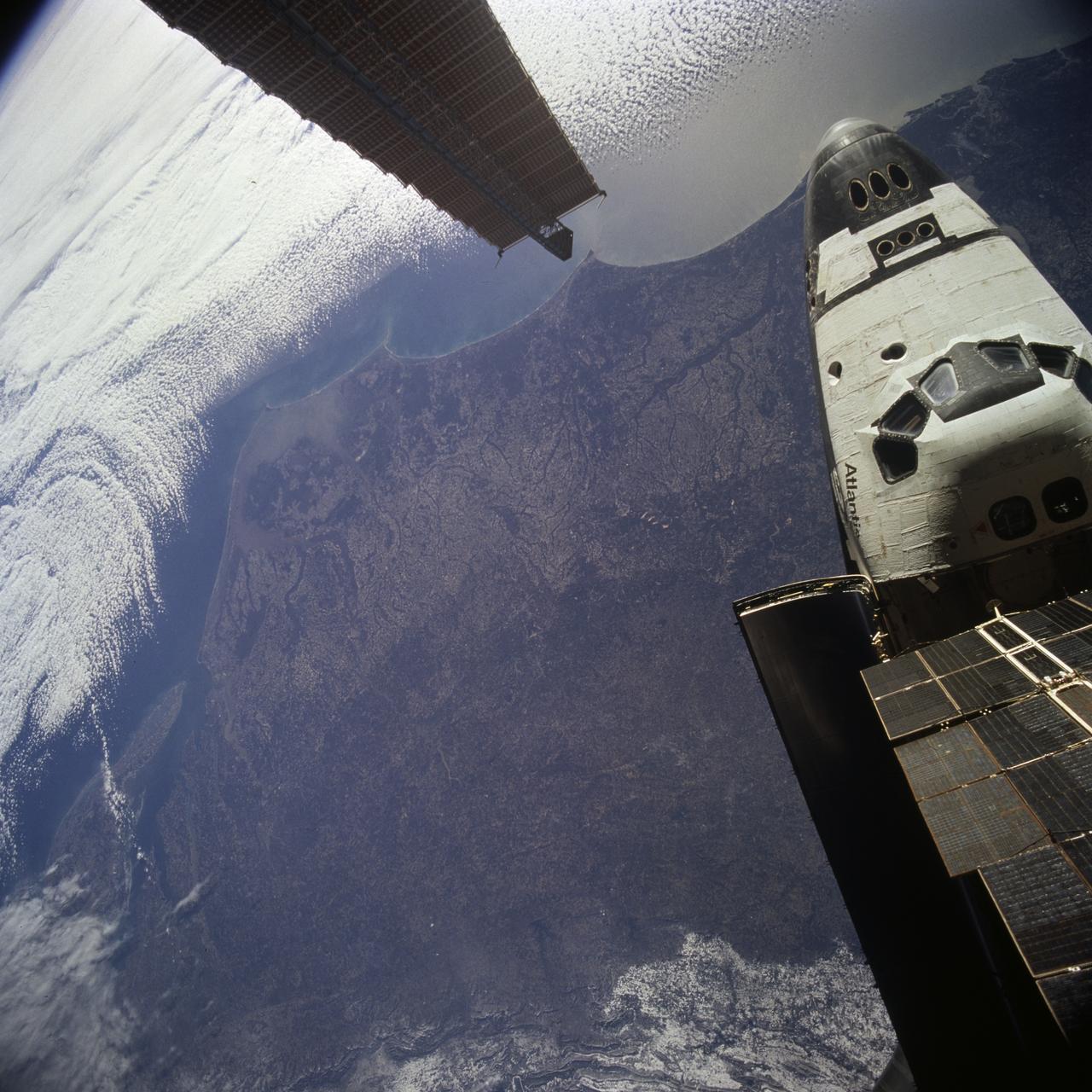
STS081-720-081 (12-22 Jan. 1997) --- As seen from Russia's Mir space station while docked to the Space Shuttle Atlantis, this scene provides a panorama of the central Atlantic coast of the United States. The view extends from the Chesapeake Bay at the top of the view to Charleston, South Carolina near the lower right corner. Heavy snow-cover on the Appalachian Mountains (on the left of the photo) contrasts with the darker piedmont. The dark piedmont, in turn, changes sharply in the center of the photo to the gray-colored coastal plain. Cape Hatteras, Cape Lookout and Cape Fear (top to bottom) mark the points along the North Carolina coast. Another boundary can be seen offshore. The clouds and the line of lighter-colored water off Cape Hatteras mark the western edge of the warm Gulf Stream which runs northward along the coast to Cape Hatteras before it shoots eastward across the Atlantic.