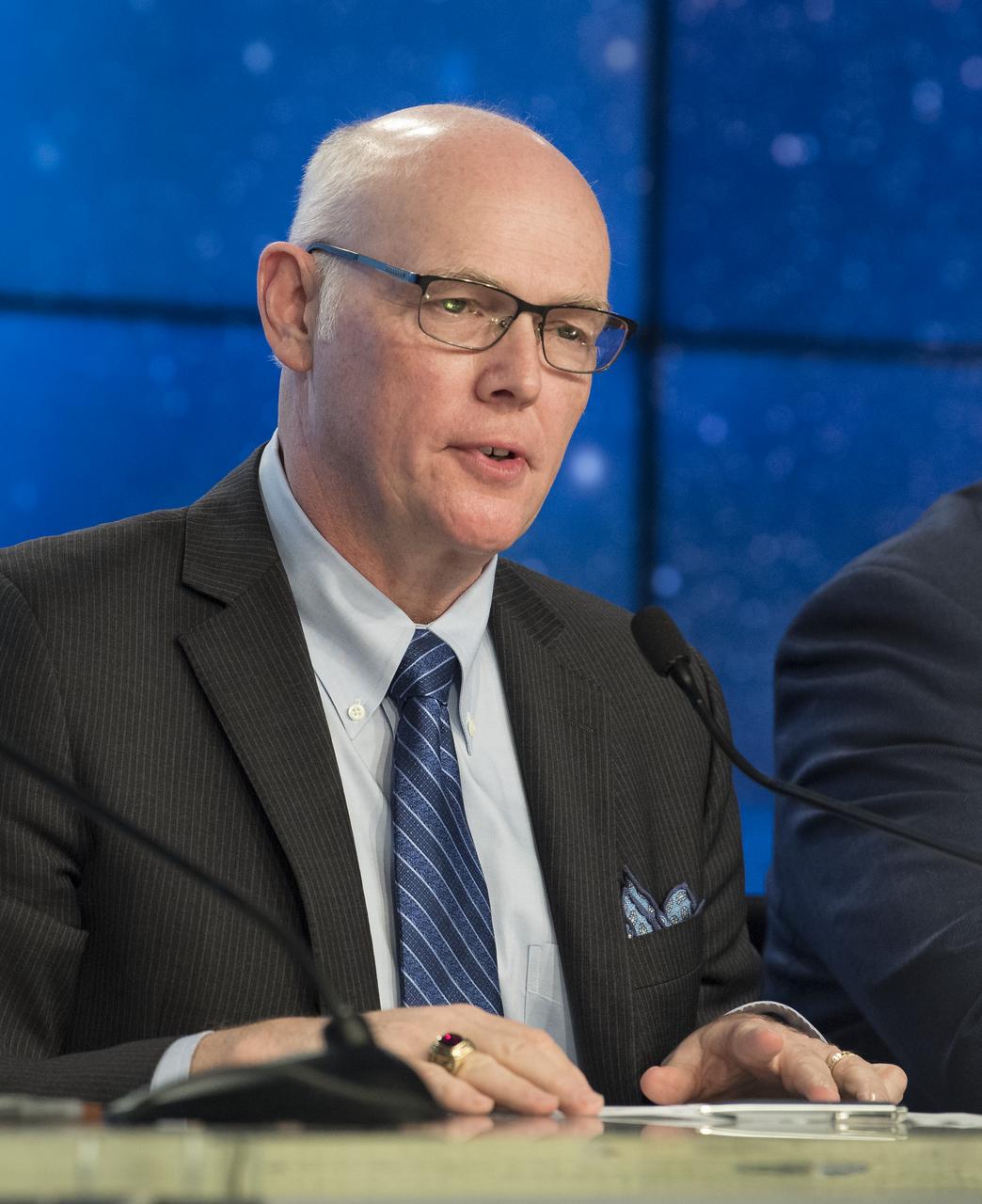
Tory Bruno, president and CEO of United Launch Alliance is seen during a press conference at NASA's Kennedy Space Center following the launch of Boeing’s Starliner spacecraft onboard a United Launch Alliance Atlas V rocket, Friday, Dec. 20, 2019, at Cape Canaveral Air Force Station in Florida. After a successful launch at 6:36 a.m. EST, Boeing’s CST-100 Starliner is in an unplanned, but stable orbit. The team is assessing what test objectives can be achieved before the spacecraft’s return to land in White Sands, New Mexico. Photo Credit: (NASA/Joel Kowsky)
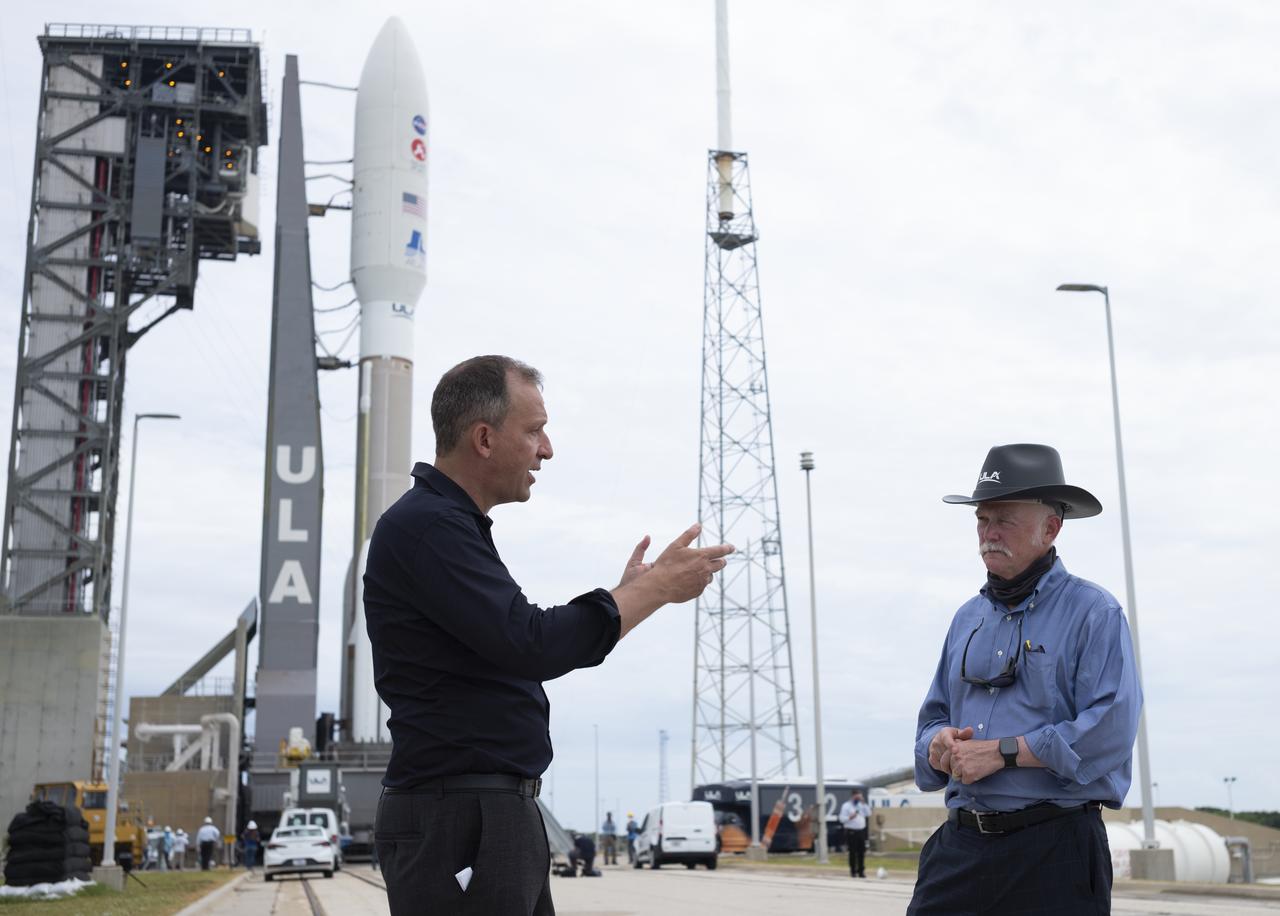
Thomas Zurbuchen, Associate Administrator for NASA's Science Mission Directorate, left, is seen with Tory Bruno, president and CEO of United Launch Alliance, after the rollout of a United Launch Alliance Atlas V rocket with NASA’s Mars 2020 Perseverance rover to the launch pad at Launch Complex 41, Tuesday, July 28, 2020, at Cape Canaveral Air Force Station in Florida. The Perseverance rover is part of NASA’s Mars Exploration Program, a long-term effort of robotic exploration of the Red Planet. Launch is scheduled for Thursday, July 30. Photo Credit: (NASA/Joel Kowsky)
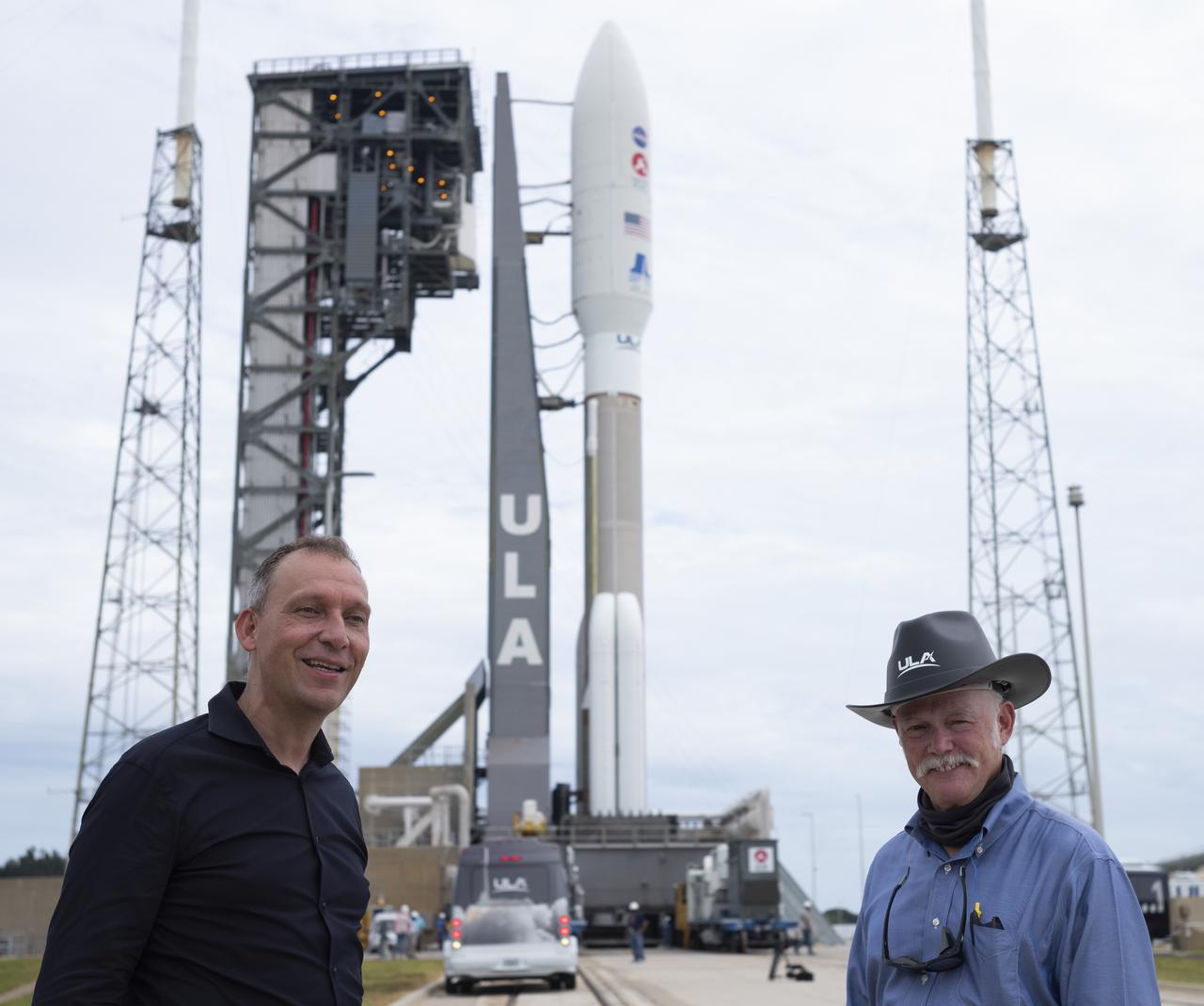
Thomas Zurbuchen, Associate Administrator for NASA's Science Mission Directorate, left, is seen with Tory Bruno, president and CEO of United Launch Alliance, after the rollout of a United Launch Alliance Atlas V rocket with NASA’s Mars 2020 Perseverance rover to the launch pad at Launch Complex 41, Tuesday, July 28, 2020, at Cape Canaveral Air Force Station in Florida. The Perseverance rover is part of NASA’s Mars Exploration Program, a long-term effort of robotic exploration of the Red Planet. Launch is scheduled for Thursday, July 30. Photo Credit: (NASA/Joel Kowsky)
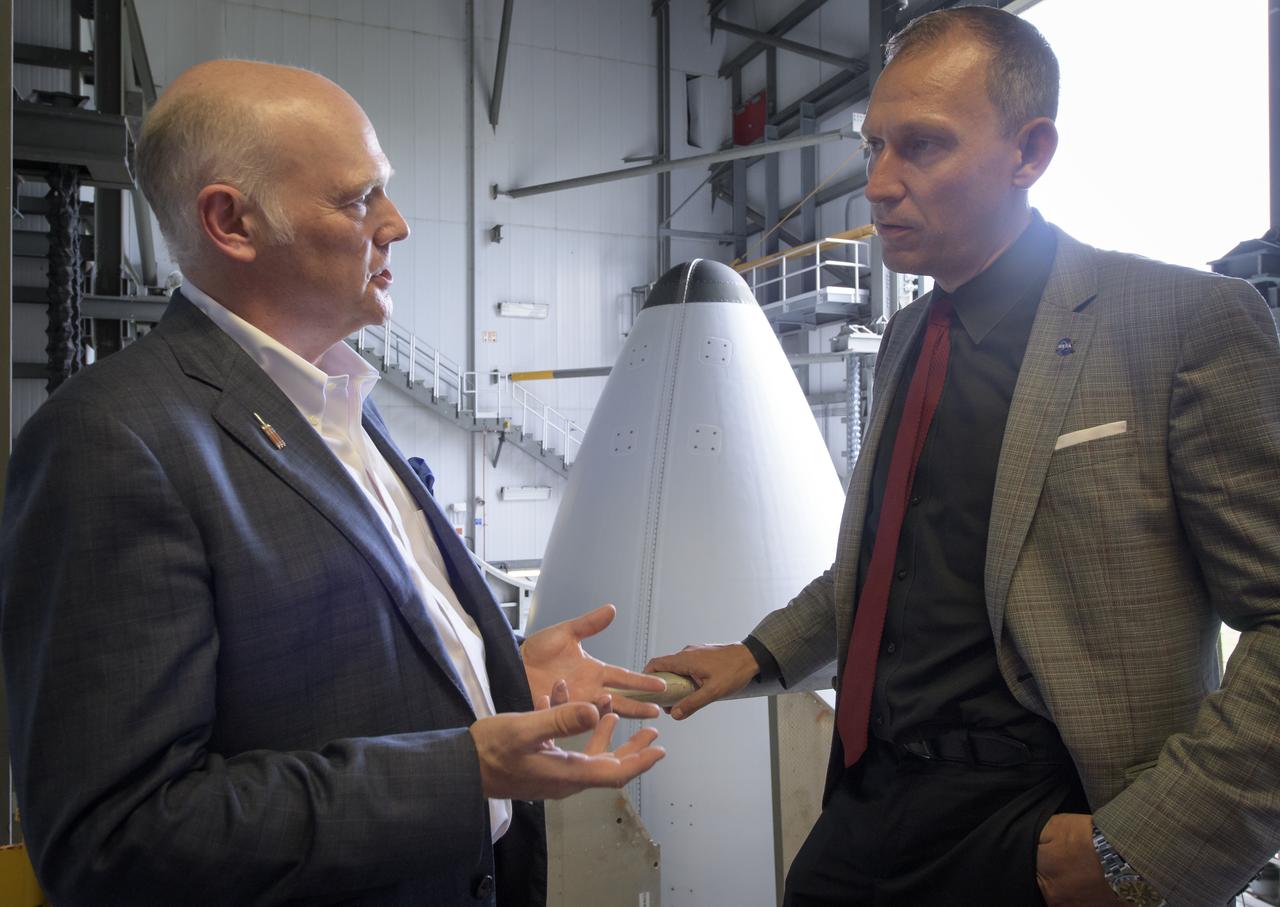
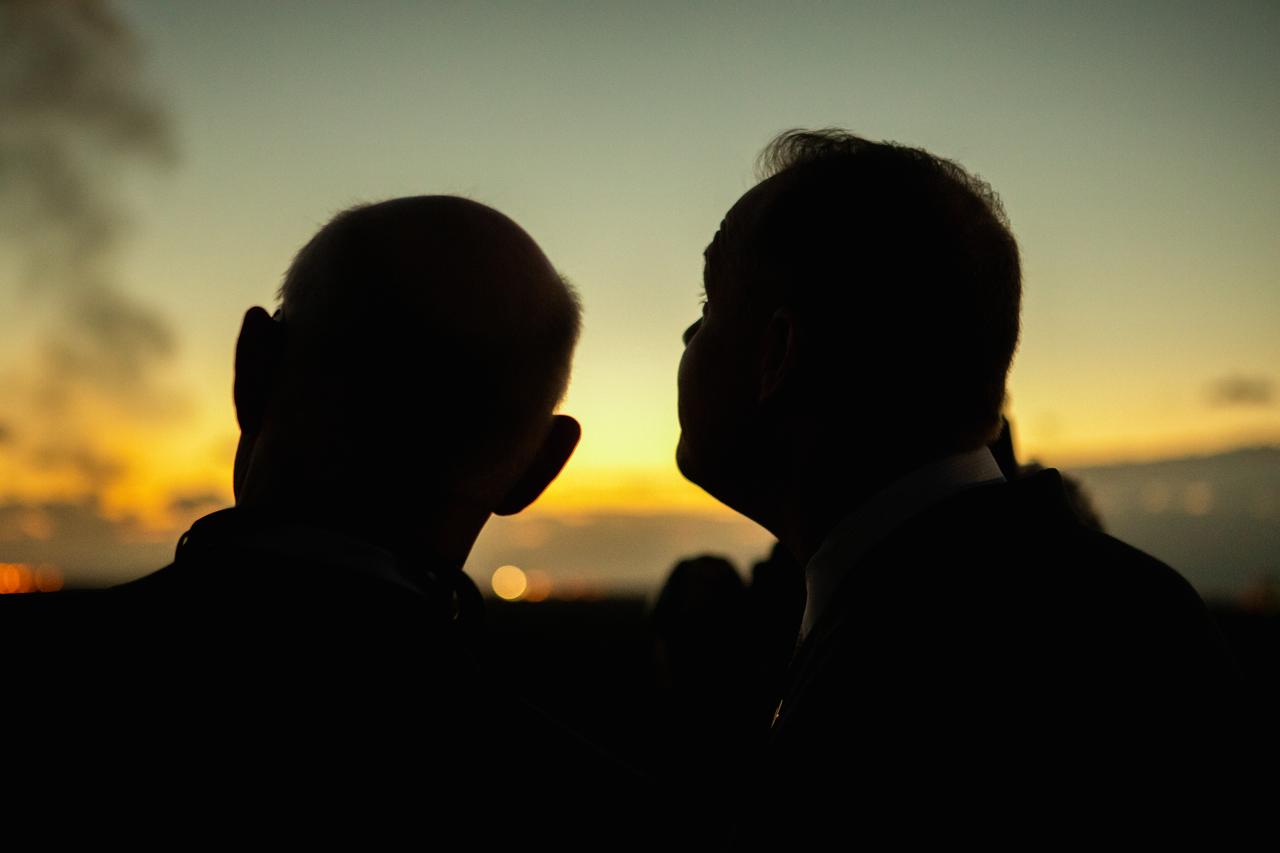
President and Chief Executive Officer for United Launch Alliance Tory Bruno, left, and NASA Associate Administrator for the Science Mission Directorate Thomas Zurbuchen talk while viewing the top of the ULA Delta IV Heavy rocket with NASA's Parker Solar onboard, Friday, Aug. 10, 2018, Launch Complex 37 at Cape Canaveral Air Force Station, Florida. This is the first NASA mission that has been named for a living individual. Parker Solar Probe is humanity’s first-ever mission into a part of the Sun’s atmosphere called the corona. Here it will directly explore solar processes that are key to understanding and forecasting space weather events that can impact life on Earth. Photo Credit: (NASA/Bill Ingalls)
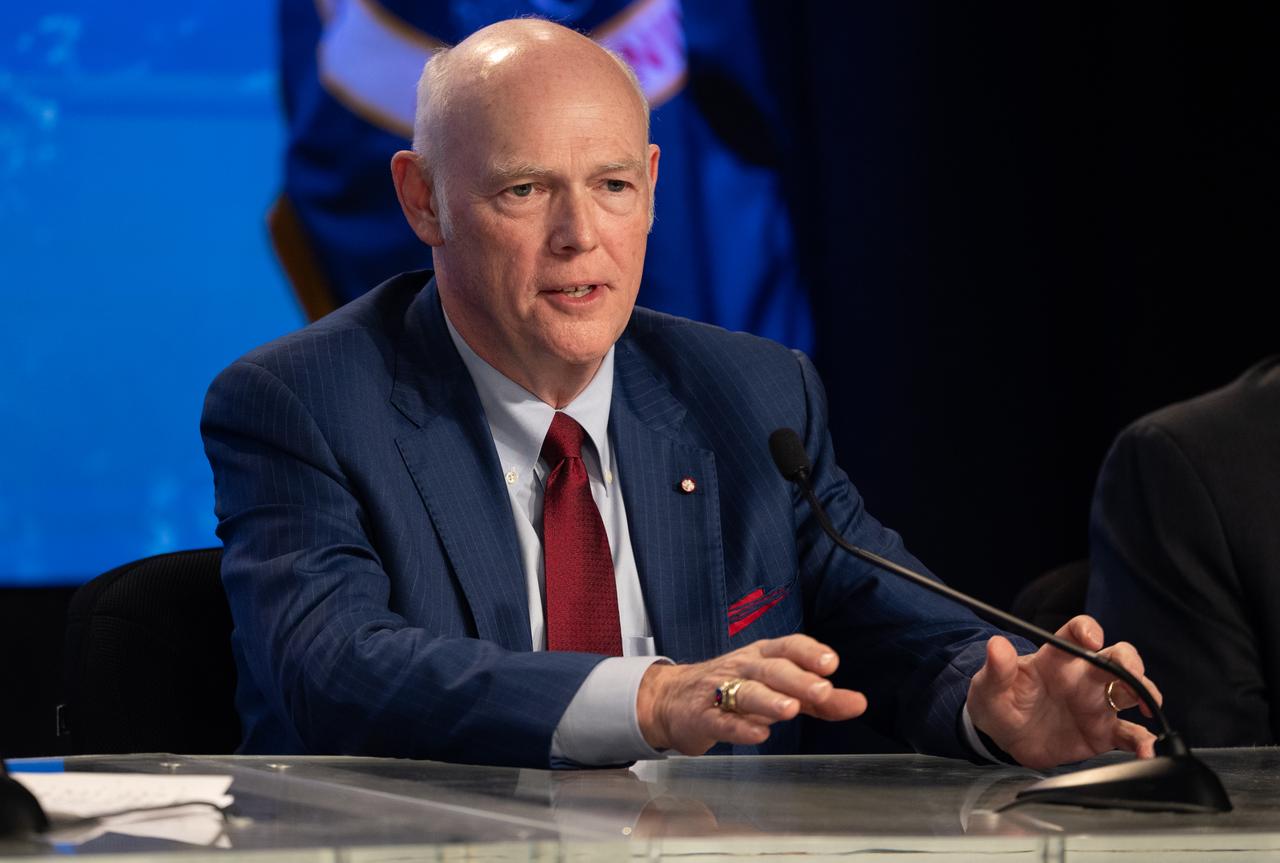
Tory Bruno, president and CEO of United Launch Alliance, is seen during a press conference after the first launch attempt of NASA’s Boeing Crew Flight Test was scrubbed for the day, Monday, May 6, 2024, at NASA’s Kennedy Space Center in Florida. NASA’s Boeing Crew Flight Test is the first launch with astronauts of the Boeing CFT-100 spacecraft and United Launch Alliance Atlas V rocket to the International Space Station as part of the agency’s Commercial Crew Program. The flight test, targeted for launch no earlier than Friday, May 10, serves as an end-to-end demonstration of Boeing’s crew transportation system and will carry NASA astronauts Butch Wilmore and Suni Williams to and from the orbiting laboratory. Photo Credit: (NASA/Joel Kowsky)
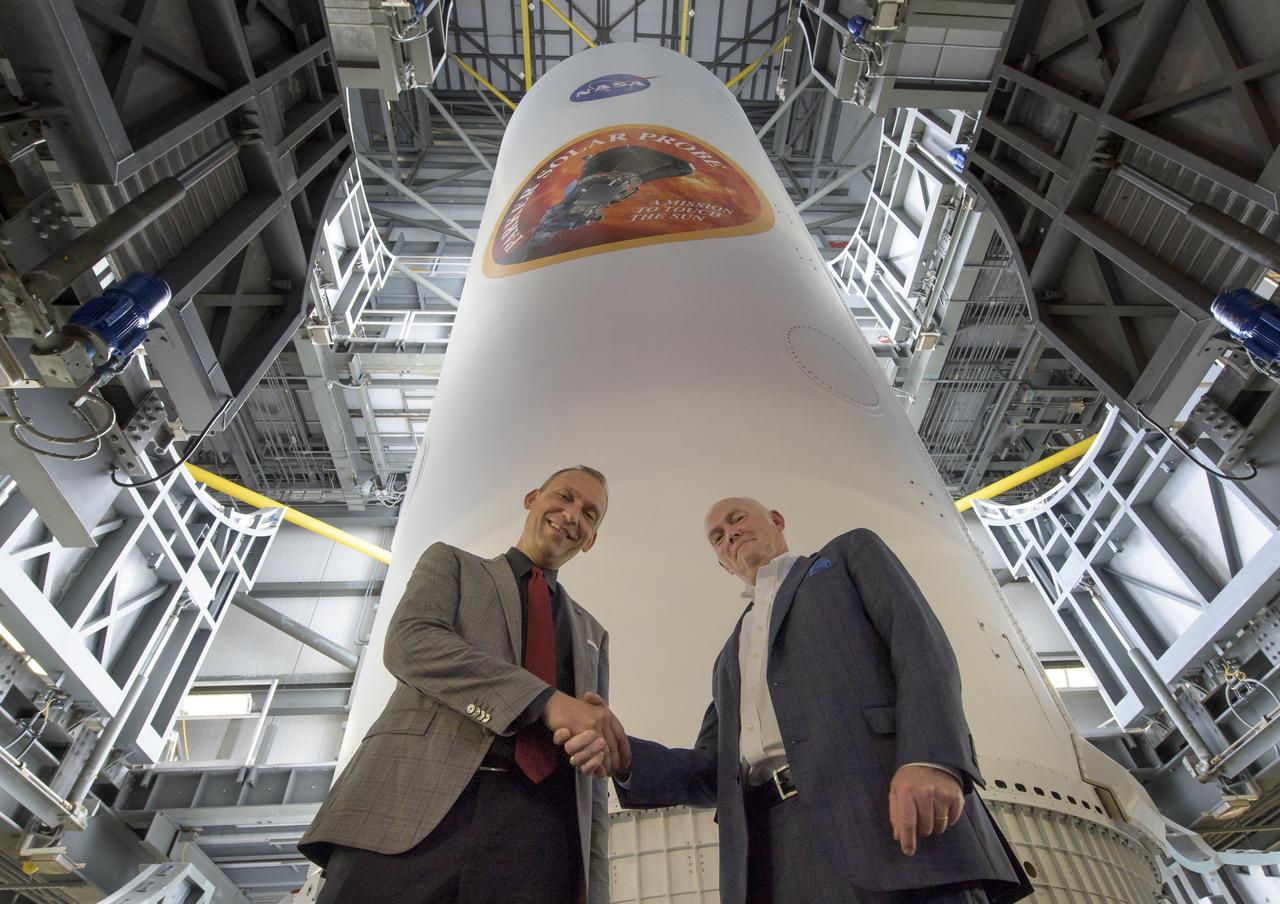
NASA Associate Administrator for the Science Mission Directorate Thomas Zurbuchen, left, and President and Chief Executive Officer for United Launch Alliance Tory Bruno shake hands after viewing the ULA Delta IV Heavy rocket with NASA's Parker Solar onboard, Friday, Aug. 10, 2018, Launch Complex 37 at Cape Canaveral Air Force Station, Florida. This is the first NASA mission that has been named for a living individual. Parker Solar Probe is humanity’s first-ever mission into a part of the Sun’s atmosphere called the corona. Here it will directly explore solar processes that are key to understanding and forecasting space weather events that can impact life on Earth. Photo Credit: (NASA/Bill Ingalls)
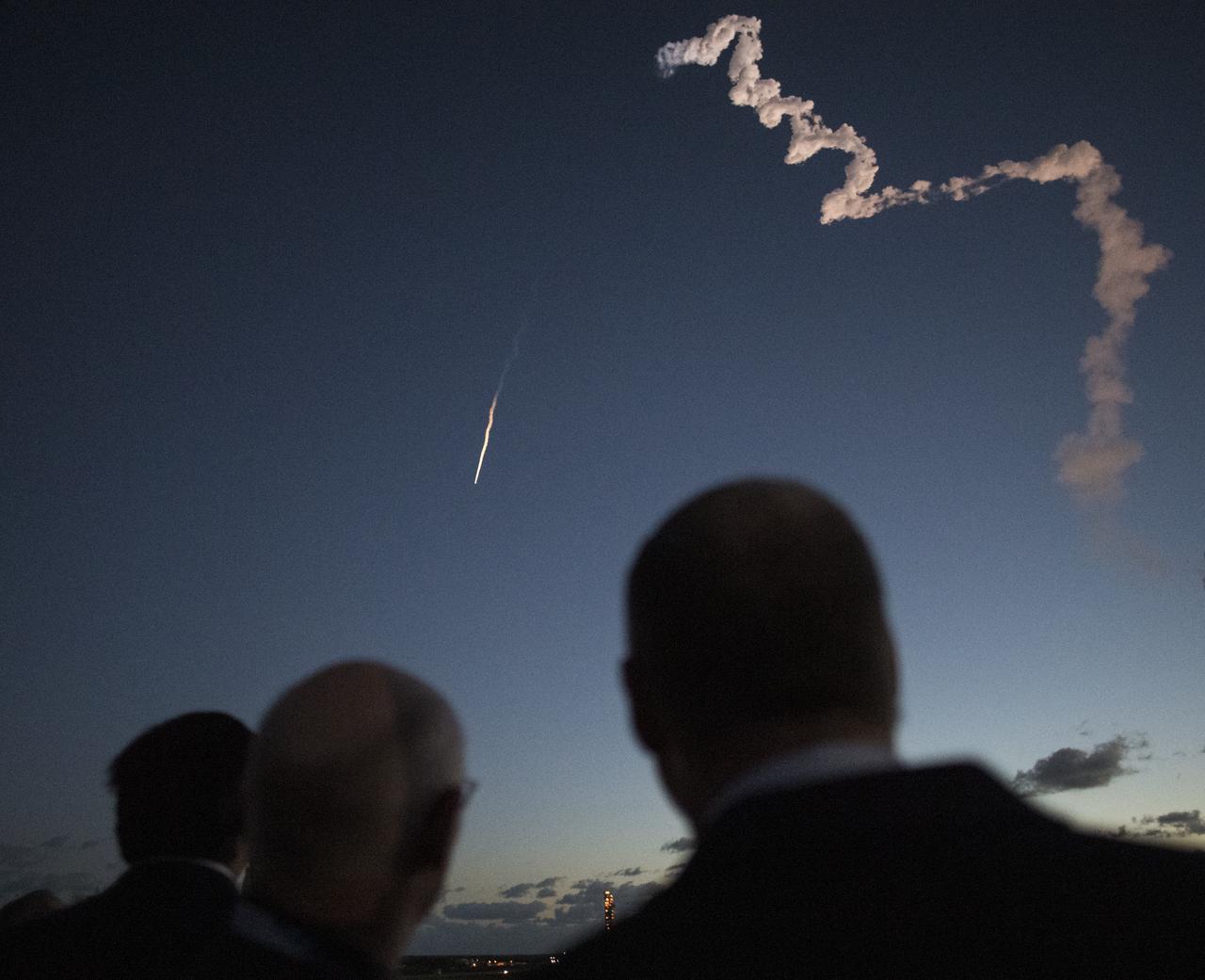
Florida Gov. Ron DeSantis (R), left, Tory Bruno, president and CEO of United Launch Alliance, and NASA Administrator Jim Bridenstine watch as a United Launch Alliance Atlas V rocket with Boeing’s CST-100 Starliner spacecraft onbaord launches from Space Launch Complex 41 at Cape Canaveral Air Force Station, Friday, Dec. 20, 2019, from NASA’s Kennedy Space Center in Florida. The uncrewed Orbital Flight Test launched at 6:36 a.m. EST and is Starliner’s maiden mission to the International Space Station for NASA's Commercial Crew Program. The mission will serve as an end-to-end test of the system's capabilities. Photo Credit: (NASA/Joel Kowsky)
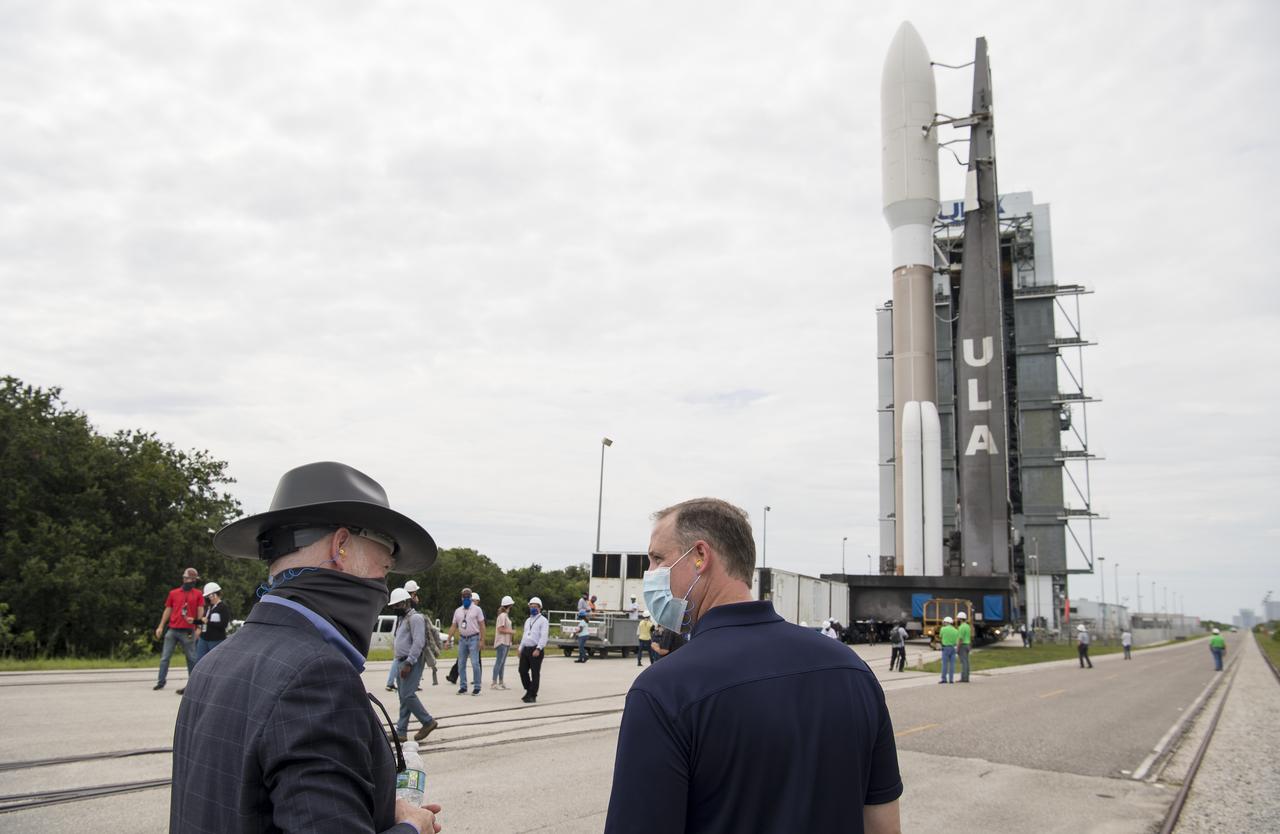
NASA Administrator Jim Bridenstine, right, and Tory Bruno, president and CEO of United Launch Alliance, are seen as a United Launch Alliance Atlas V rocket with NASA’s Mars 2020 Perseverance rover onboard is rolled out of the Vertical Integration Facility to the launch pad at Space Launch Complex 41, Tuesday, July 28, 2020, at Cape Canaveral Air Force Station in Florida. The Perseverance rover is part of NASA’s Mars Exploration Program, a long-term effort of robotic exploration of the Red Planet. Launch is scheduled for Thursday, July 30. Photo Credit: (NASA/Joel Kowsky)
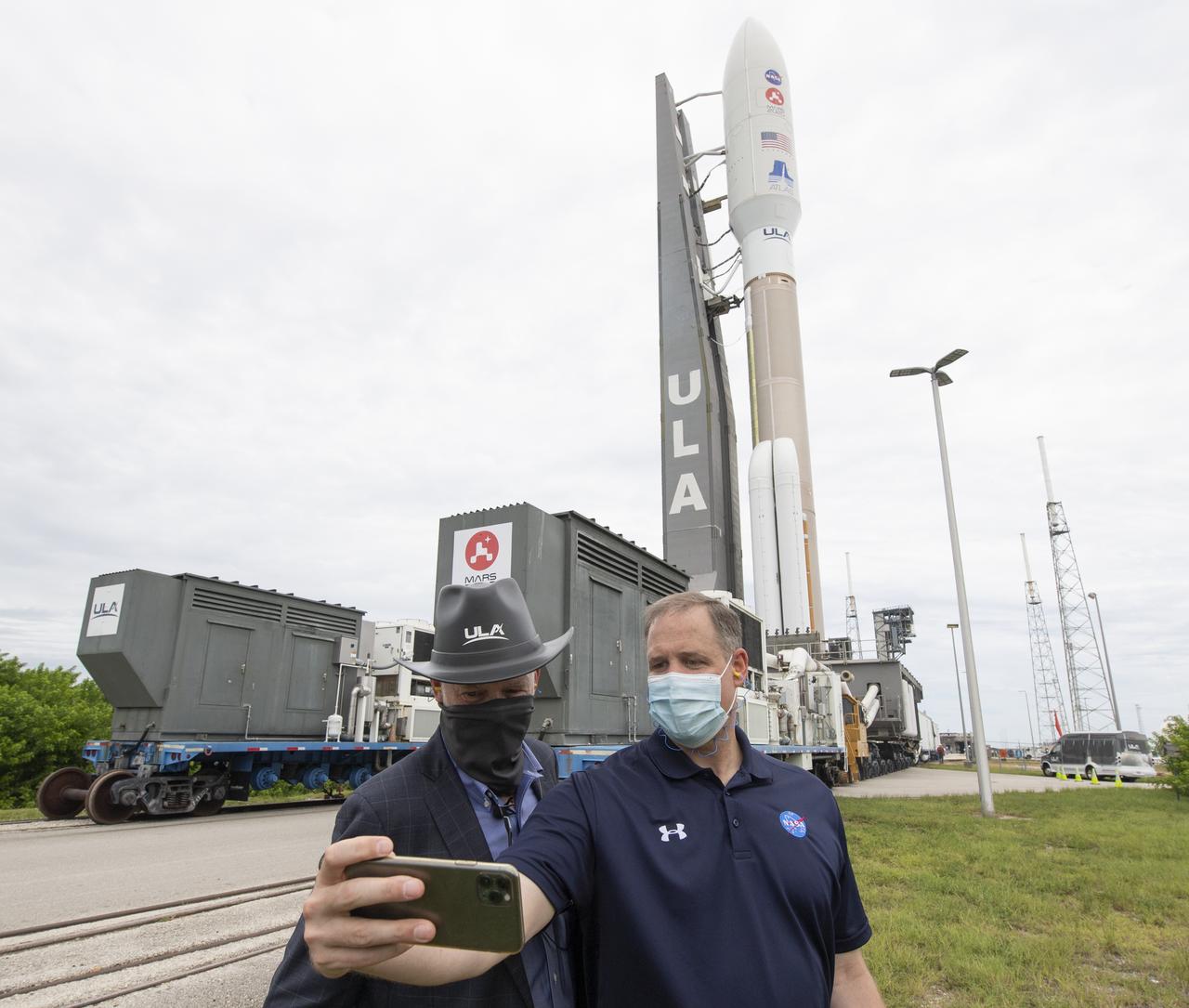
NASA Administrator Jim Bridenstine, right, and Tory Bruno, president and CEO of United Launch Alliance, take a selfie with the United Launch Alliance Atlas V rocket with NASA’s Mars 2020 Perseverance rover onboard as it rolled out of the Vertical Integration Facility to the launch pad at Space Launch Complex 41, Tuesday, July 28, 2020, at Cape Canaveral Air Force Station in Florida. The Perseverance rover is part of NASA’s Mars Exploration Program, a long-term effort of robotic exploration of the Red Planet. Launch is scheduled for Thursday, July 30. Photo Credit: (NASA/Joel Kowsky)
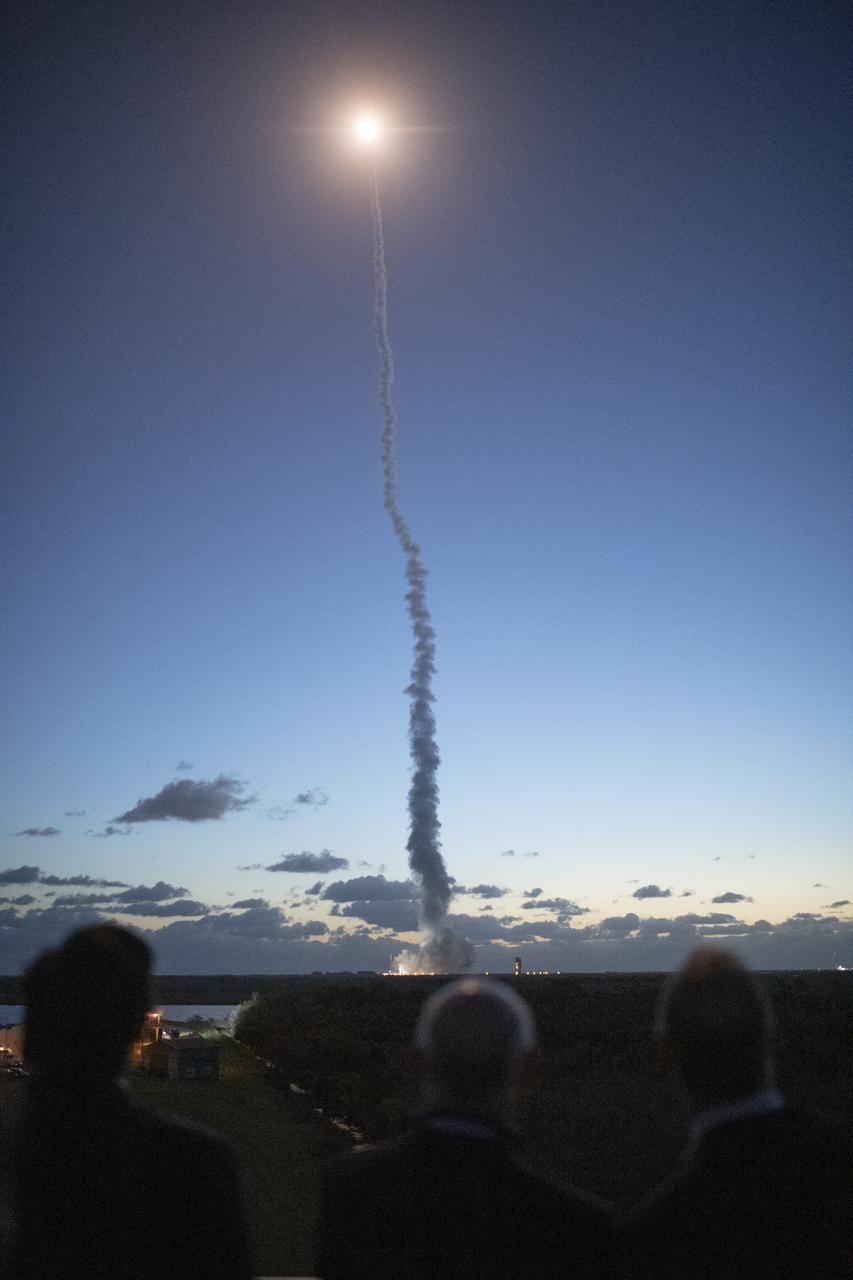
Florida Gov. Ron DeSantis (R), left, Tory Bruno, president and CEO of United Launch Alliance, and NASA Administrator Jim Bridenstine watch as a United Launch Alliance Atlas V rocket with Boeing’s CST-100 Starliner spacecraft onbaord launches from Space Launch Complex 41 at Cape Canaveral Air Force Station, Friday, Dec. 20, 2019, from NASA’s Kennedy Space Center in Florida. The uncrewed Orbital Flight Test launched at 6:36 a.m. EST and is Starliner’s maiden mission to the International Space Station for NASA's Commercial Crew Program. The mission will serve as an end-to-end test of the system's capabilities. Photo Credit: (NASA/Joel Kowsky)
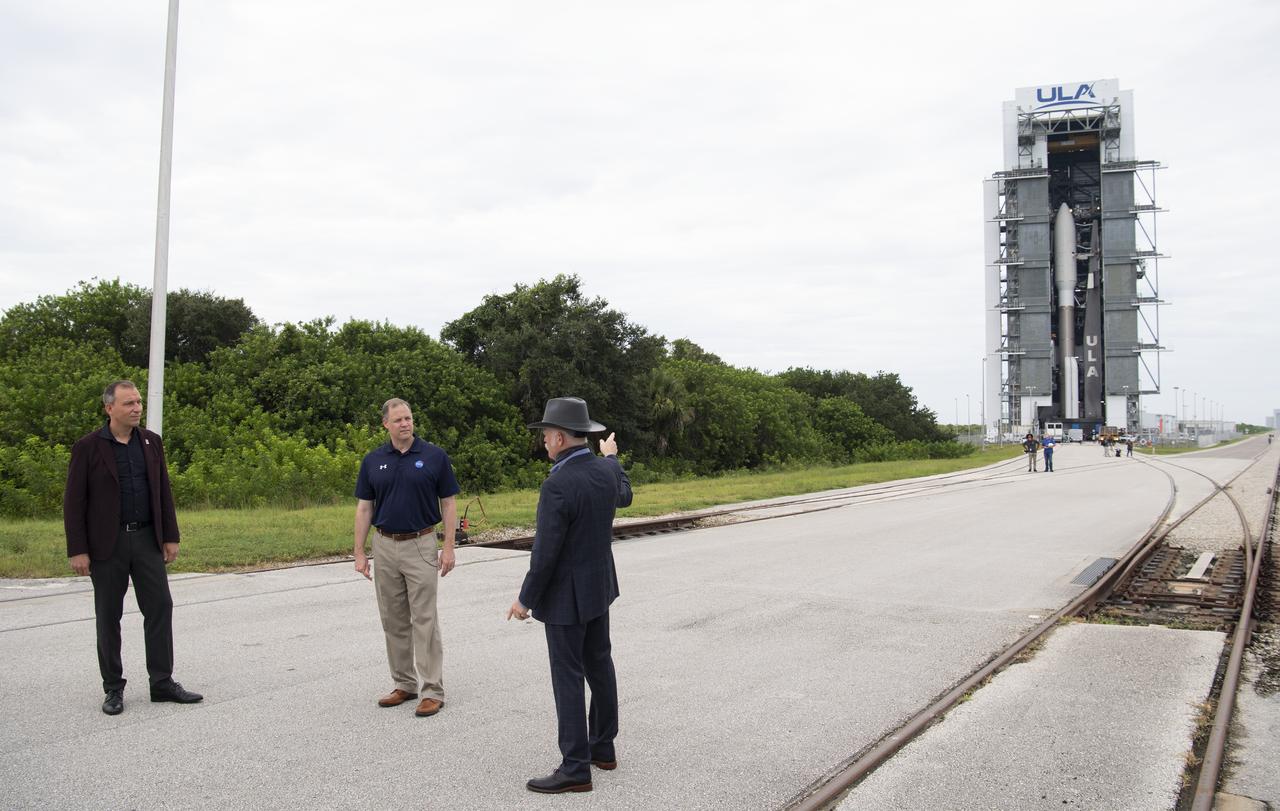
Thomas Zurbuchen, Associate Administrator for NASA's Science Mission Directorate, left, NASA Administrator Jim Bridenstine, and Tory Bruno, president and CEO of United Launch Alliance, are seen before the rollout of a United Launch Alliance Atlas V rocket with NASA’s Mars 2020 Perseverance to the launch pad at Space Launch Complex 41, Tuesday, July 28, 2020, at Cape Canaveral Air Force Station in Florida. The Perseverance rover is part of NASA’s Mars Exploration Program, a long-term effort of robotic exploration of the Red Planet. Launch is scheduled for Thursday, July 30. Photo Credit: (NASA/Joel Kowsky)
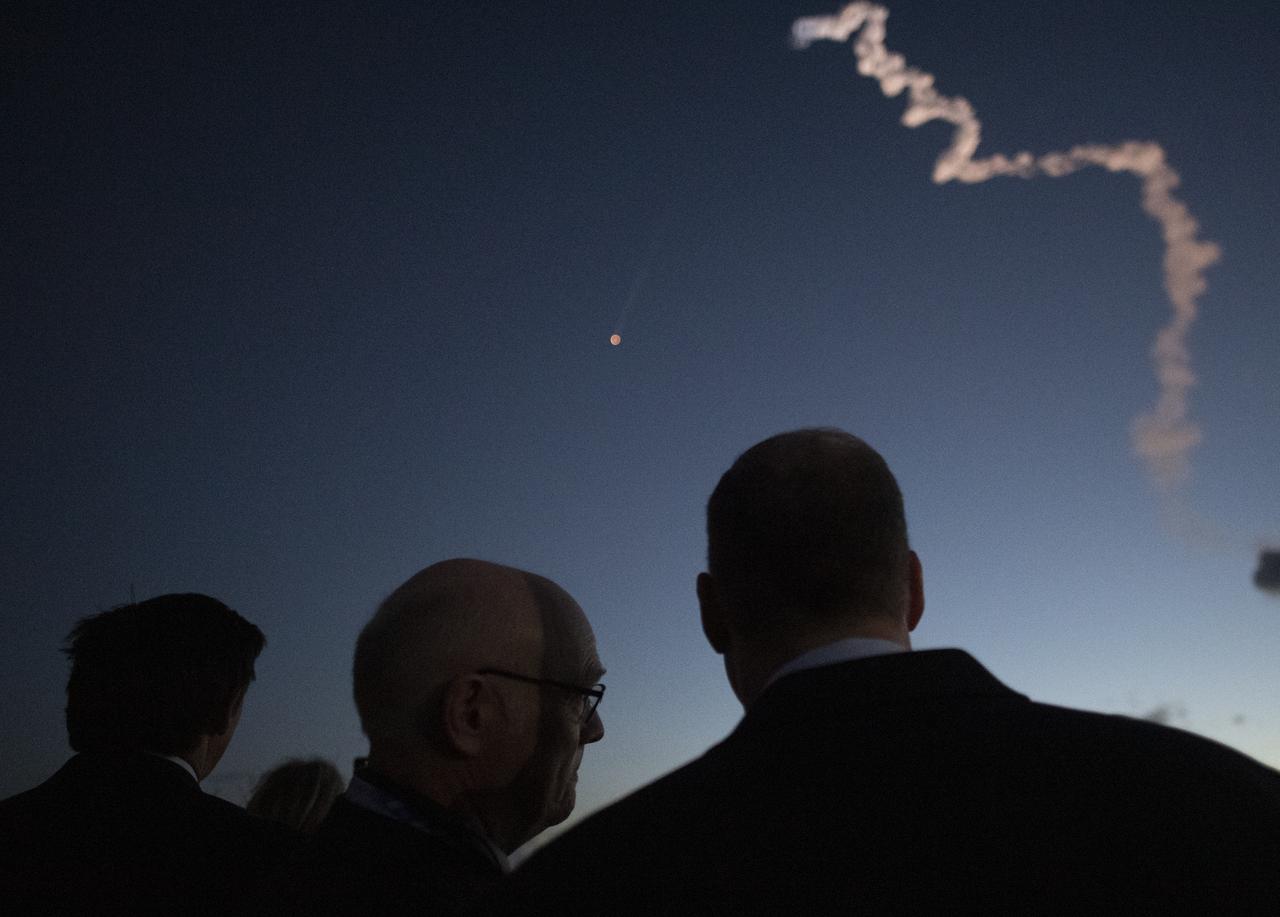
Florida Gov. Ron DeSantis (R), left, Tory Bruno, president and CEO of United Launch Alliance, and NASA Administrator Jim Bridenstine watch as a United Launch Alliance Atlas V rocket with Boeing’s CST-100 Starliner spacecraft onbaord launches from Space Launch Complex 41 at Cape Canaveral Air Force Station, Friday, Dec. 20, 2019, from NASA’s Kennedy Space Center in Florida. The uncrewed Orbital Flight Test launched at 6:36 a.m. EST and is Starliner’s maiden mission to the International Space Station for NASA's Commercial Crew Program. The mission will serve as an end-to-end test of the system's capabilities. Photo Credit: (NASA/Joel Kowsky)
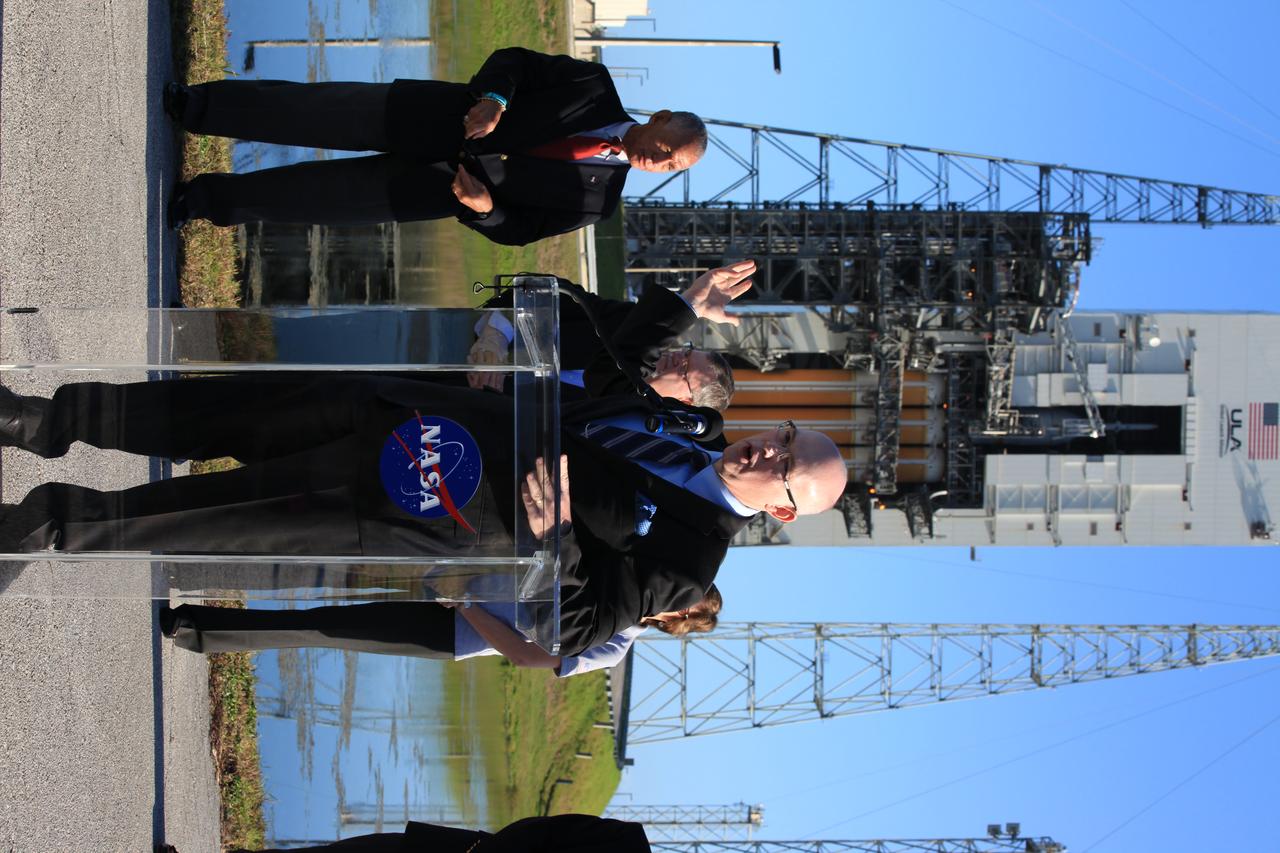
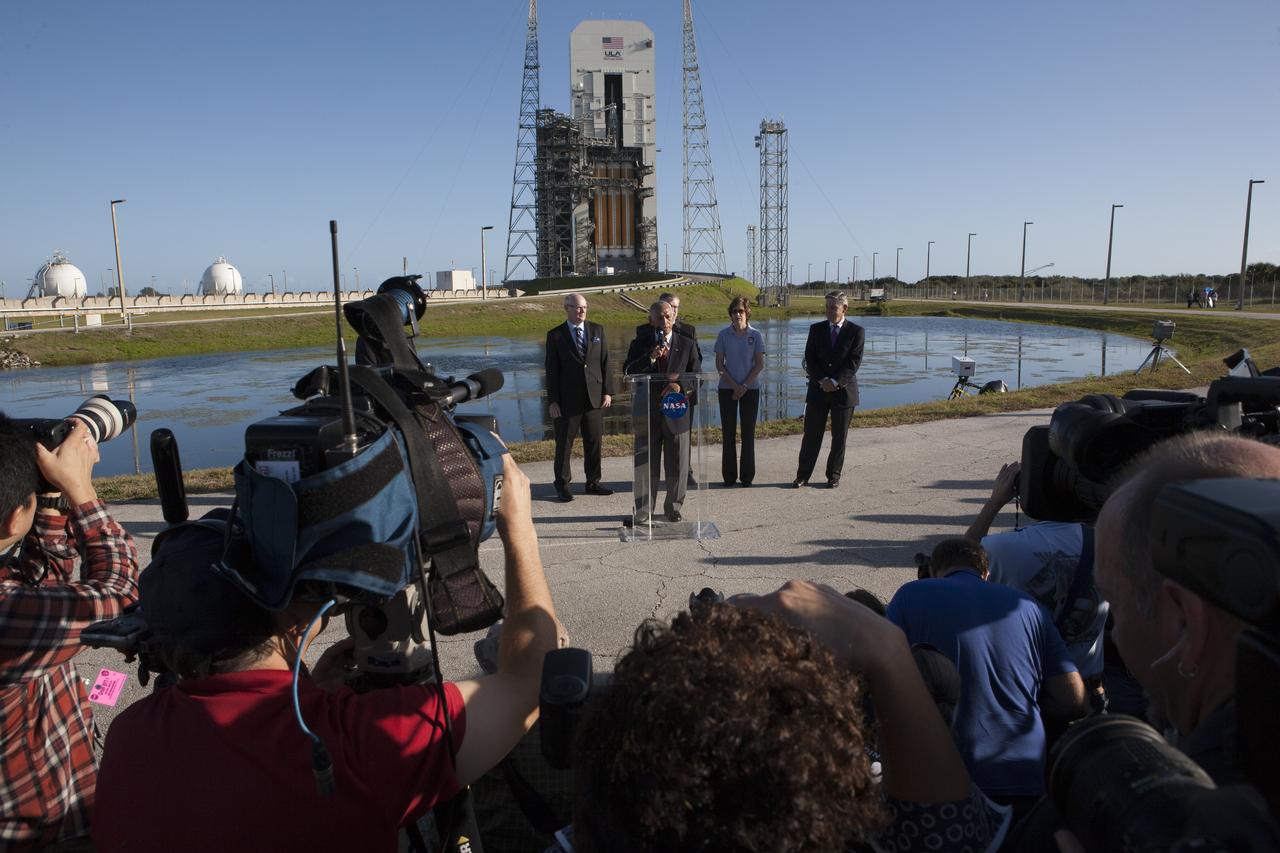
At Cape Canaveral Air Force Station's Launch Complex 37, United Launch Alliance CEO Tory Bruno speaks to members of the news media as the Orion spacecraft and its United Launch Alliance Delta IV Heavy rocket were being prepared for launch. Behind Bruno, from the left, are NASA Administrator Charlie Bolden, Lockheed Martin Orion Program Manager Mike Hawes and Johnson Space Center Director Ellen Ochoa.
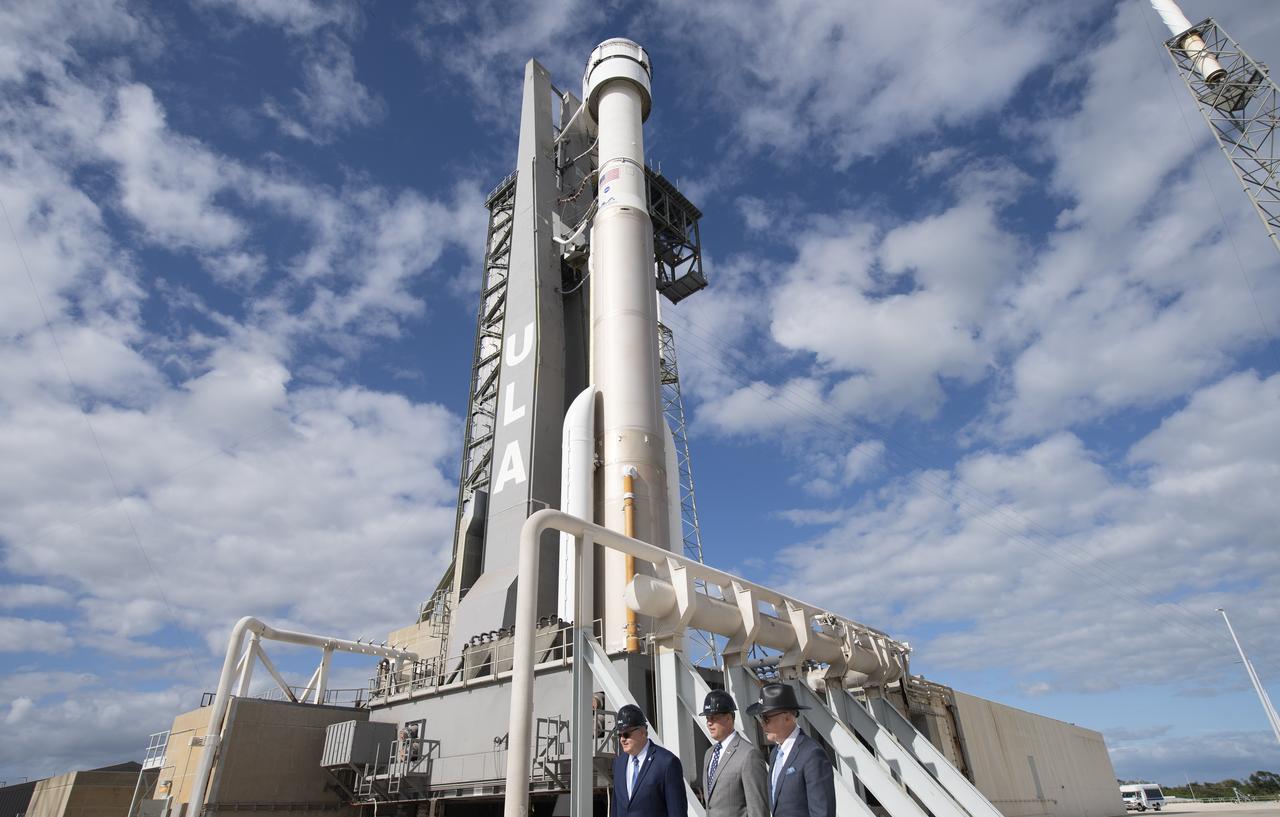
Jim Chilton, senior vice president for Boeing Space and Launch, left, NASA Administrator Jim Bridenstine, and Tory Bruno, president and CEO of United Launch Alliance are seen walking past a United Launch Alliance Atlas V rocket with Boeing’s CST-100 Starliner spacecraft onboard on the launch pad at Space Launch Complex 41 ahead of the Orbital Flight Test mission, Thursday, Dec. 19, 2019, at Cape Canaveral Air Force Station in Florida. The uncrewed Orbital Flight Test will be Starliner’s maiden mission to the International Space Station for NASA's Commercial Crew Program. The mission, currently targeted for a 6:36 a.m. EST launch on Dec. 20, will serve as an end-to-end test of the system's capabilities. Photo Credit: (NASA/Joel Kowsky)
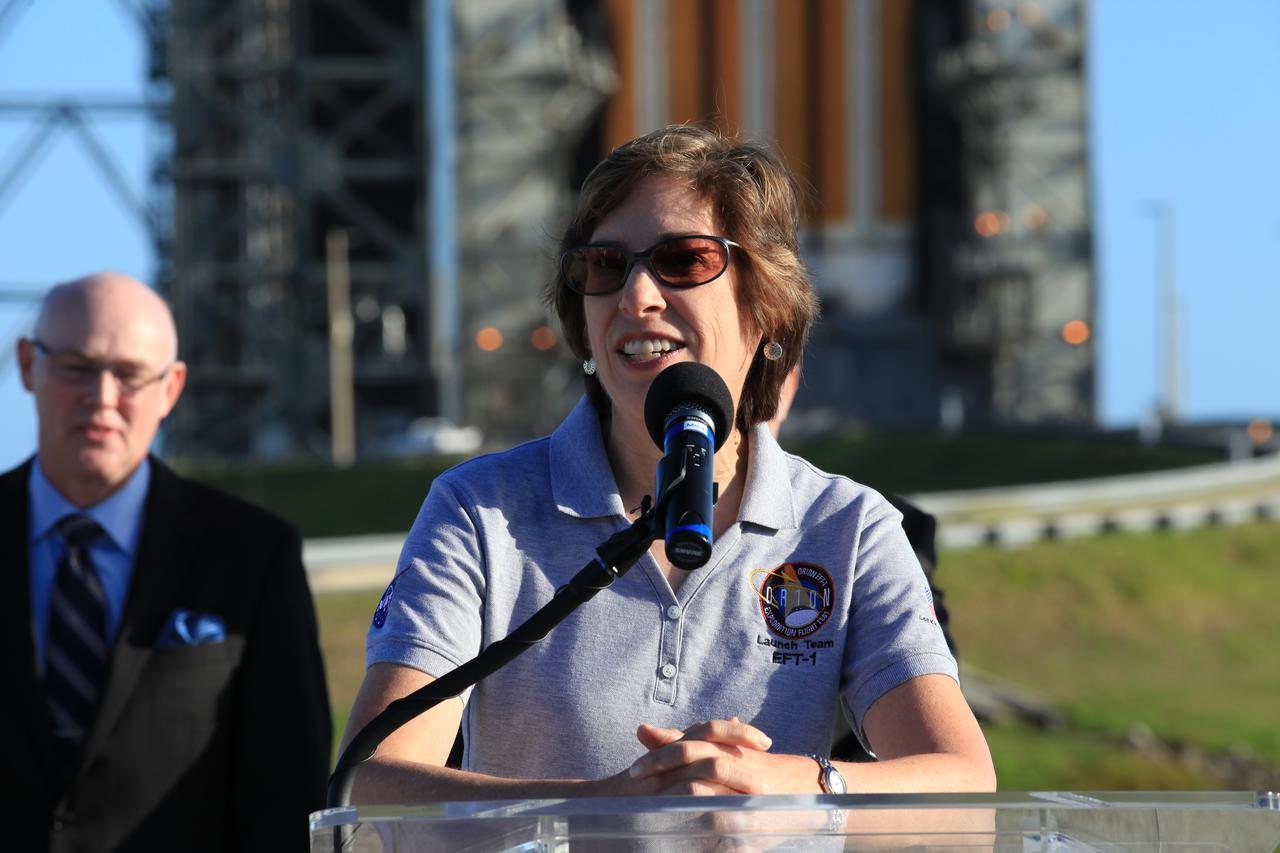
At Cape Canaveral Air Force Station's Launch Complex 37, Johnson Space Center Director Ellen Ochoa speaks to members of the news media as the Orion spacecraft and its United Launch Alliance Delta IV Heavy rocket were being prepared for launch. Behind Ochoa is United Launch Alliance CEO Tory Bruno.
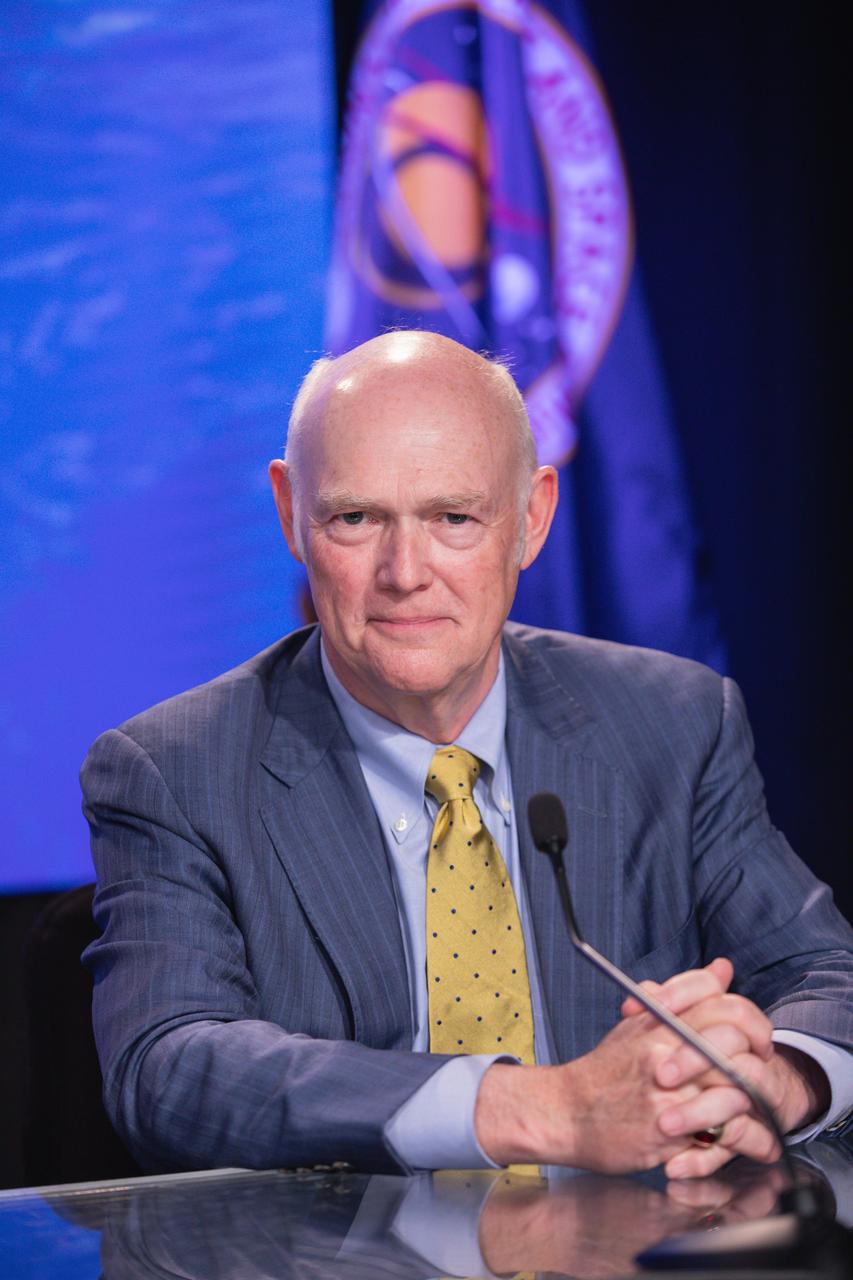
ULA (United Launch Alliance) President and CEO Tory Bruno participates in a postlaunch news conference for NASA’s Boeing Crew Flight Test on Wednesday, June 5, 2024, at the agency’s Kennedy Space Center in Florida. As part of the agency’s Commercial Crew Program, NASA astronauts Butch Wilmore and Suni Williams are the first to launch aboard Boeing’s Starliner spacecraft to the International Space Station atop a United Launch Alliance Atlas V rocket. Liftoff occurred at 10:52 a.m. EDT Wednesday, June 5, from Space Launch Complex-41 at Cape Canaveral Space Force Station.
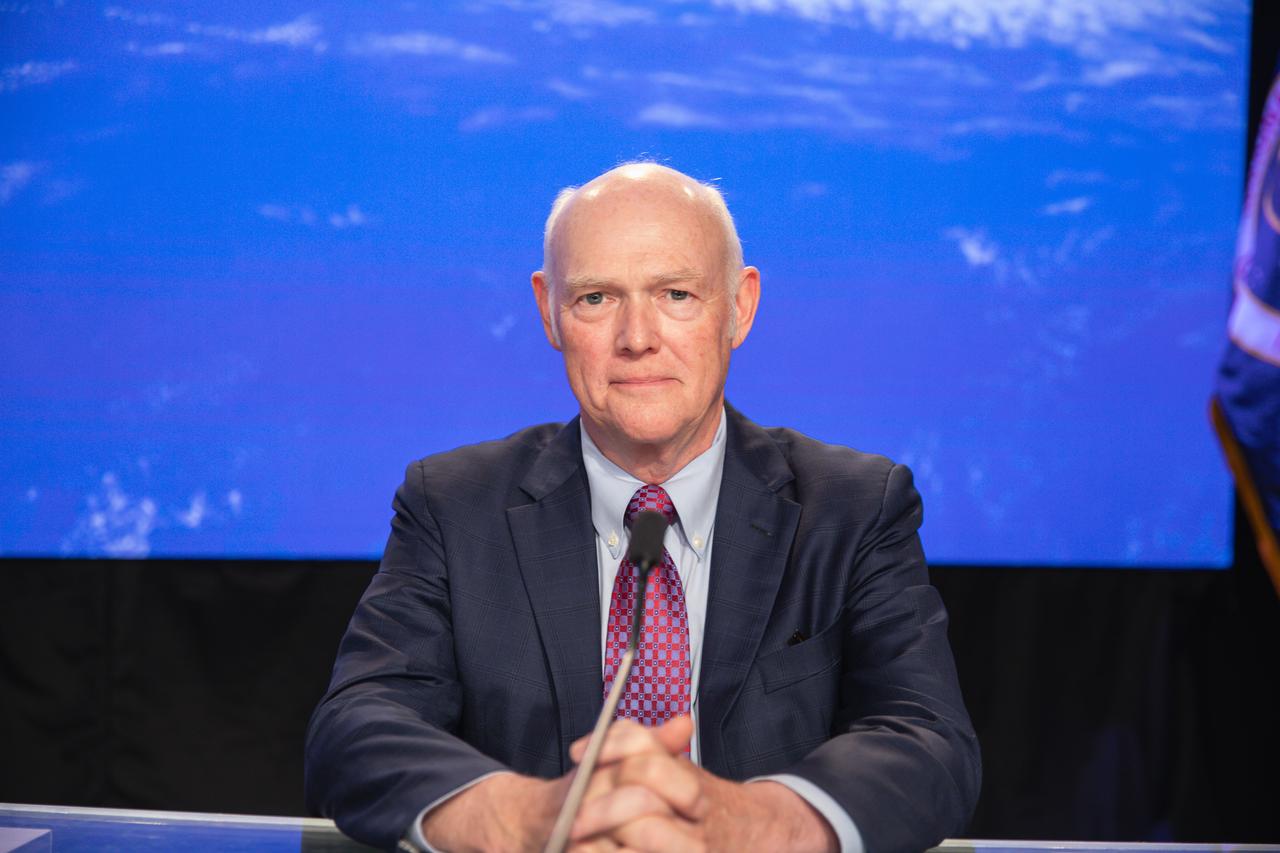
Tory Bruno, ULA (United Launch Alliance) president and CEO, participates in a news conference held at the agency’s Kennedy Space Center in Florida on Saturday, June 1, 2024, after the second launch attempt of NASA’s Boeing Crew Flight Test scrubbed for the day. As part of the agency’s Commercial Crew Program, NASA astronauts Butch Wilmore and Suni Williams will be the first to launch to the International Space Station aboard Boeing’s Starliner spacecraft atop a ULA (United Launch Alliance) Atlas V rocket from Space Launch Complex-41 at nearby Cape Canaveral Space Force Station.
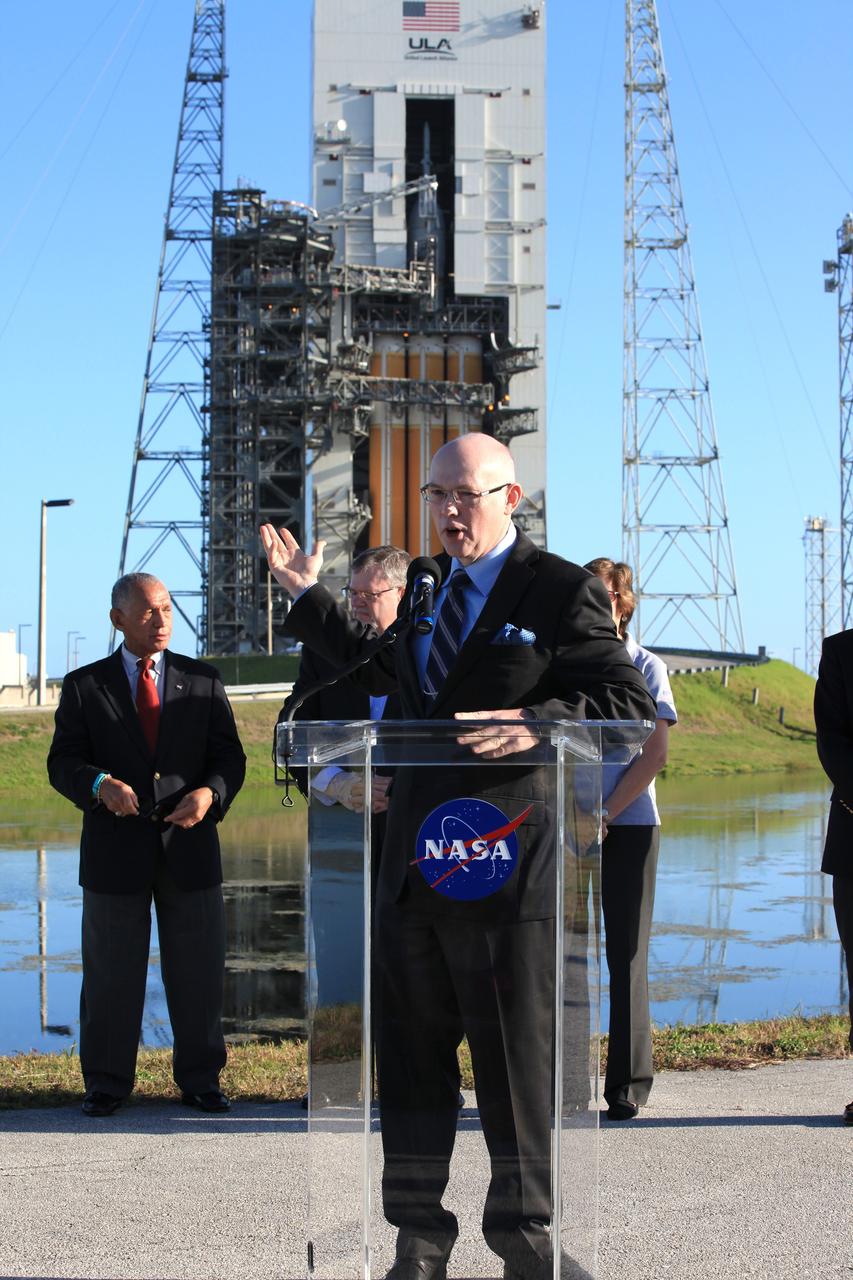
CAPE CANAVERAL, Fla. – At Cape Canaveral Air Force Station's Launch Complex 37, United Launch Alliance CEO Tory Bruno speaks to members of the news media as the Orion spacecraft and its United Launch Alliance Delta IV Heavy rocket were being prepared for launch. Behind Bruno, from the left, are NASA Administrator Charlie Bolden, Lockheed Martin Orion Program Manager Mike Hawes and Johnson Space Center Director Ellen Ochoa. For more information, visit www.nasa.gov/orion. Photo credit: NASA/Kim Shiflett
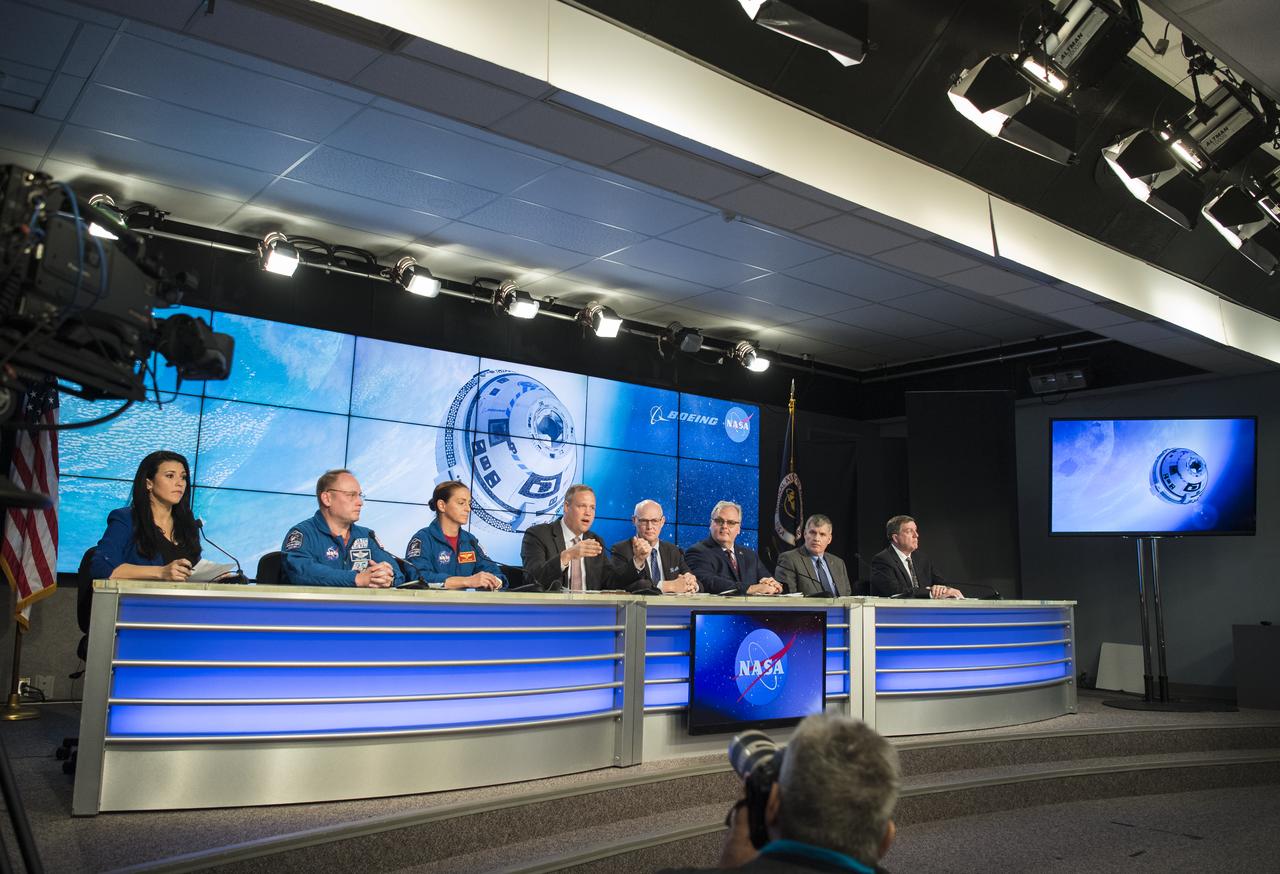
NASA Associate Administrator for the Office of Communications Bettina Inclán, left, NASA astronauts Michael Fincke and Nicole Mann, NASA Administrator Jim Bridenstine, Tory Bruno, president and CEO of United Launch Alliance, Jim Chilton, senior vice president of Boeing’s Space and Launch Division, Steve Stich, Deputy Manager of NASA’s Commercial Crew Program, and NASA ISS Program Manager Kirk Shireman, are seen during a press conference at NASA's Kennedy Space Center following the launch of Boeing’s Starliner spacecraft onboard a United Launch Alliance Atlas V rocket, Friday, Dec. 20, 2019, at Cape Canaveral Air Force Station in Florida. After a successful launch at 6:36 a.m. EST, Boeing’s CST-100 Starliner is in an unplanned, but stable orbit. The team is assessing what test objectives can be achieved before the spacecraft’s return to land in White Sands, New Mexico. Photo Credit: (NASA/Joel Kowsky)
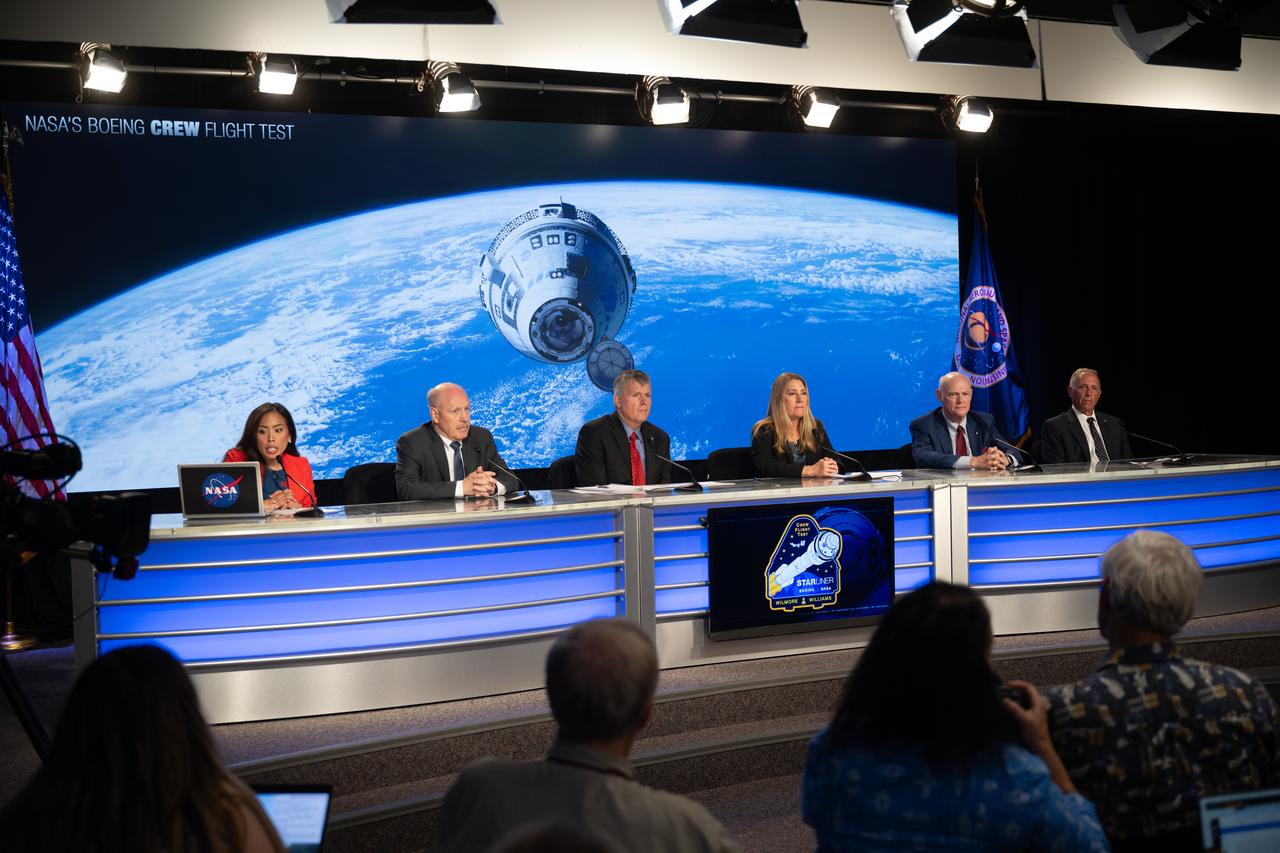
Megan Cruz, NASA Communications, left, moderates a press conference with Ken Bowersox, associate administrator for NASA's Space Operations Mission Directorate, second from left, Steve Stich, manager of NASA's Commercial Crew Program, Dana Weigel, manager of NASA's International Space Station Program, Tory Bruno, president and CEO of United Launch Alliance, and Mark Nappi, vice president and program manager for the Commercial Crew Program at Boeing, after the first launch attempt of NASA’s Boeing Crew Flight Test was scrubbed for the day, Monday, May 6, 2024, at NASA’s Kennedy Space Center in Florida. NASA’s Boeing Crew Flight Test is the first launch with astronauts of the Boeing CFT-100 spacecraft and United Launch Alliance Atlas V rocket to the International Space Station as part of the agency’s Commercial Crew Program. The flight test, targeted for launch no earlier than Friday, May 10, serves as an end-to-end demonstration of Boeing’s crew transportation system and will carry NASA astronauts Butch Wilmore and Suni Williams to and from the orbiting laboratory. Photo Credit: (NASA/Joel Kowsky)
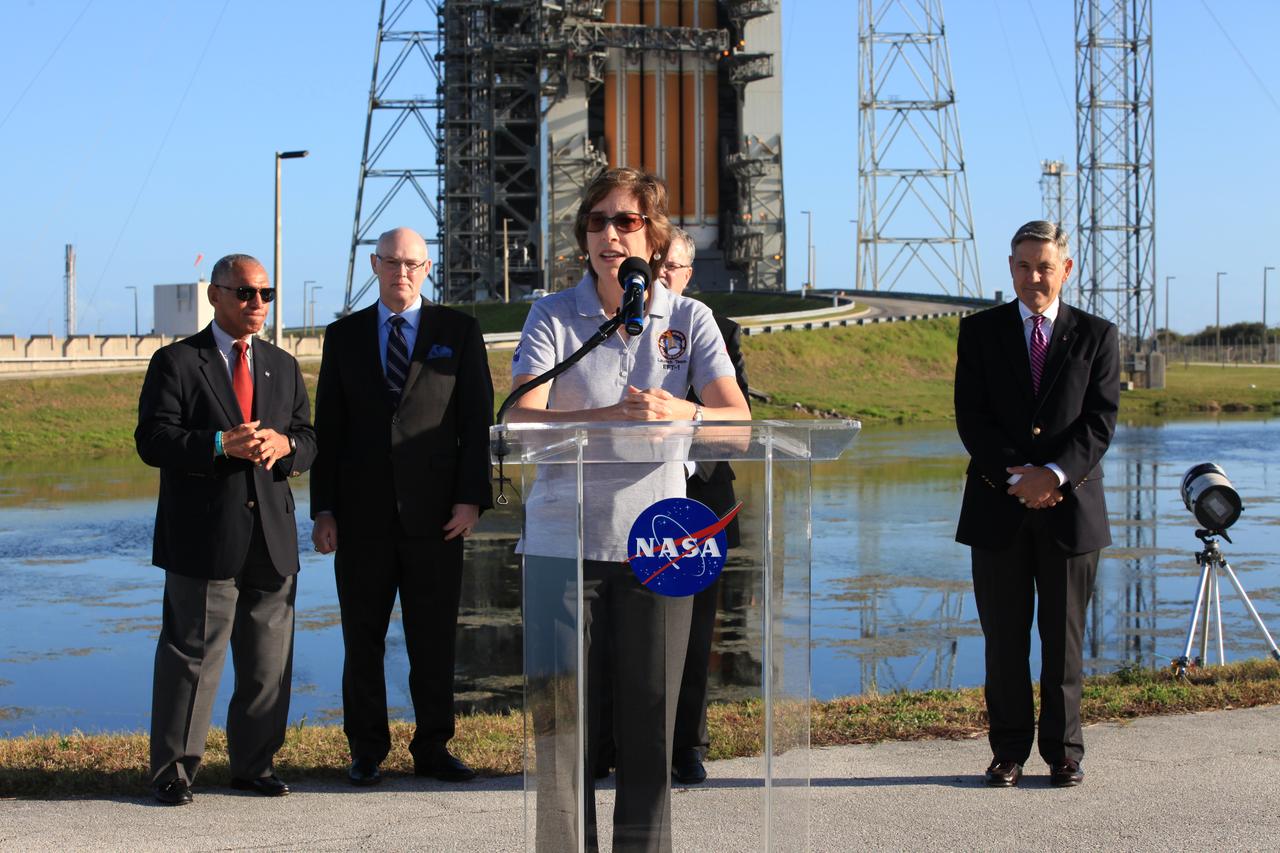
At Cape Canaveral Air Force Station's Launch Complex 37, Johnson Space Center Director Ellen Ochoa speaks to members of the news media as the Orion spacecraft and its United Launch Alliance Delta IV Heavy rocket were being prepared for launch. Behind Ochoa, from the left, are NASA Administrator Charlie Bolden, United Launch Alliance CEO Tory Bruno, Lockheed Martin Orion Program Manager Mike Hawes and Kennedy Space Center Director Bob Cabana.
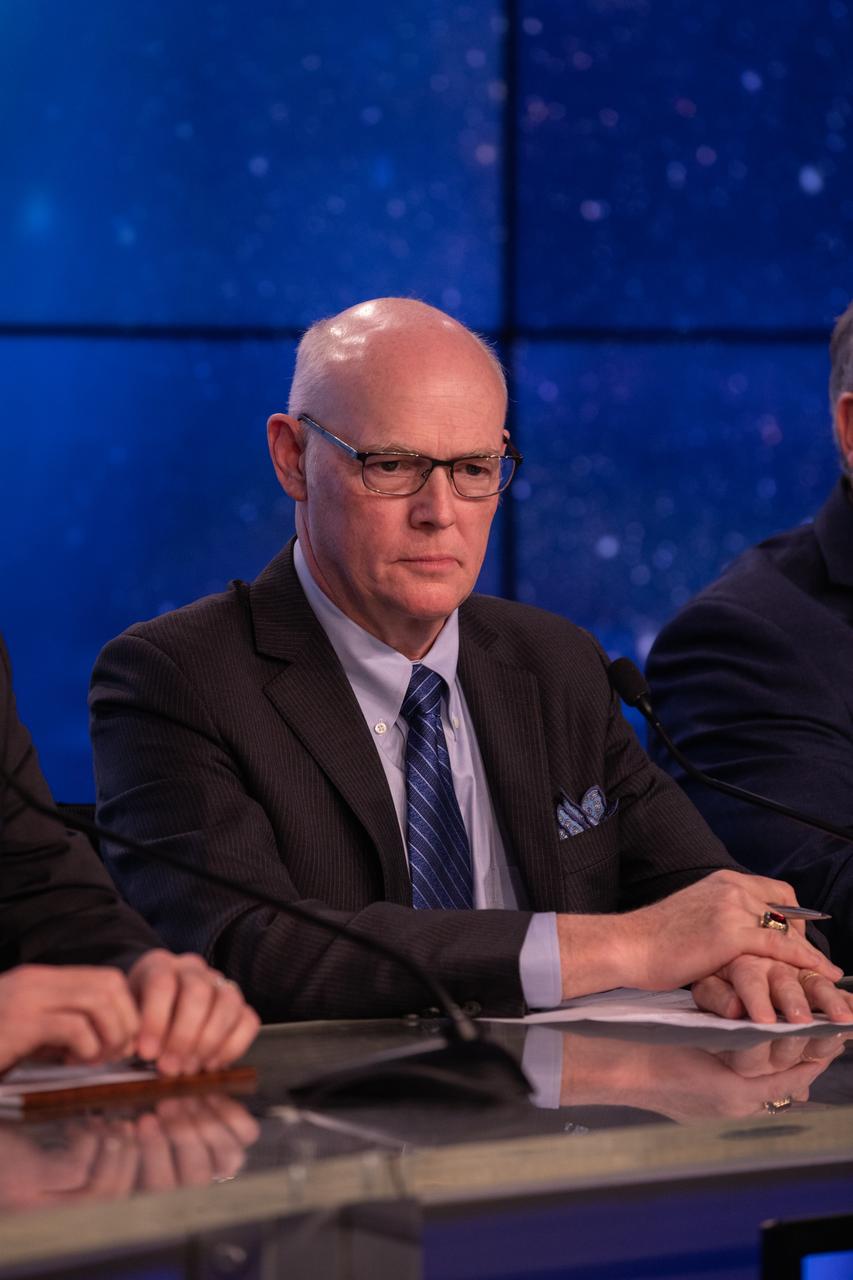
Tory Bruno, president and CEO of United Launch Alliance, listens during a briefing at NASA’s Kennedy Space Center in Florida following launch of Boeing’s Orbital Flight Test, Dec. 20, 2019. Boeing’s CST-100 Starliner spacecraft launched atop a United Launch Alliance Atlas V rocket from Space Launch Complex 41 at Cape Canaveral Air Force Station at 6:36 a.m. EST. The uncrewed Orbital Flight Test is the Starliner’s first flight for NASA’s Commercial Crew Program.
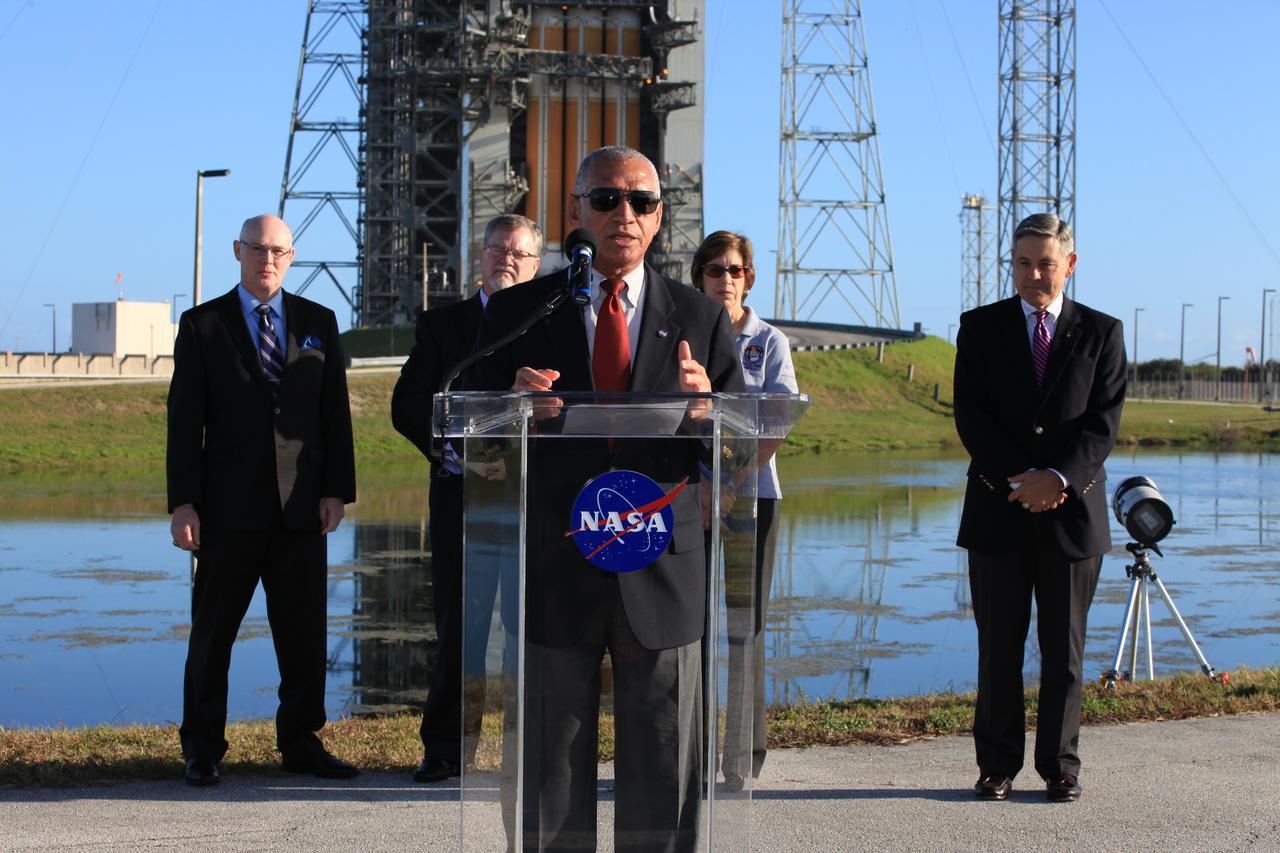
At Cape Canaveral Air Force Station's Launch Complex 37, NASA Administrator Charlie Bolden speaks to members of the news media as the Orion spacecraft and its United Launch Alliance Delta IV Heavy rocket were being prepared for launch. Behind Bolden, from the left, are United Launch Alliance CEO Tory Bruno, Lockheed Martin Orion Program Manager Mike Hawes, Johnson Space Center Director Ellen Ochoa and Kennedy Space Center Director Bob Cabana.
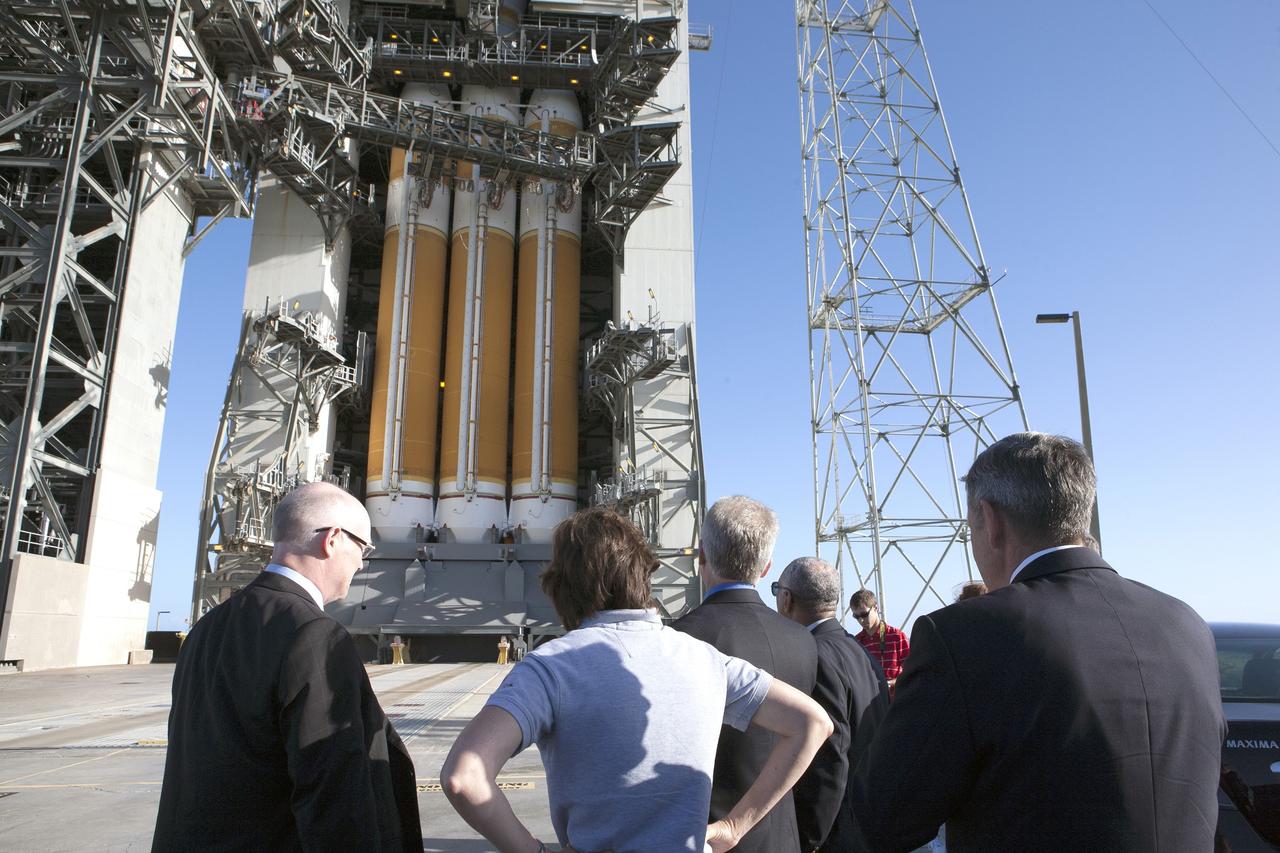
CAPE CANAVERAL, Fla. – At Cape Canaveral Air Force Station's Launch Complex 37, United Launch Alliance CEO Tory Bruno, Johnson Space Center Director Ellen Ochoa and Kennedy Space Center Director Bob Cabana, foreground with backs to the camera, get a close-up view of the United Launch Alliance Delta IV Heavy rocket being prepared to launch NASA's Orion spacecraft on its first flight test. For more information, visit www.nasa.gov/orion. Photo credit: NASA/Kim Shiflett
Tory Bruno, president and chief executive officer of United Launch Alliance, left, and NASA Administrator Jim Bridenstine watch the launch of a United Launch Alliance Atlas V rocket carrying Boeing’s CST-100 Starliner spacecraft for Boeing’s Orbital Flight Test, Dec. 20, 2019. Liftoff occurred at 6:36 a.m. EST from Space Launch Complex 41 at Florida’s Cape Canaveral Air Force Station. The uncrewed Orbital Flight Test is the Starliner’s first flight for NASA’s Commercial Crew Program.
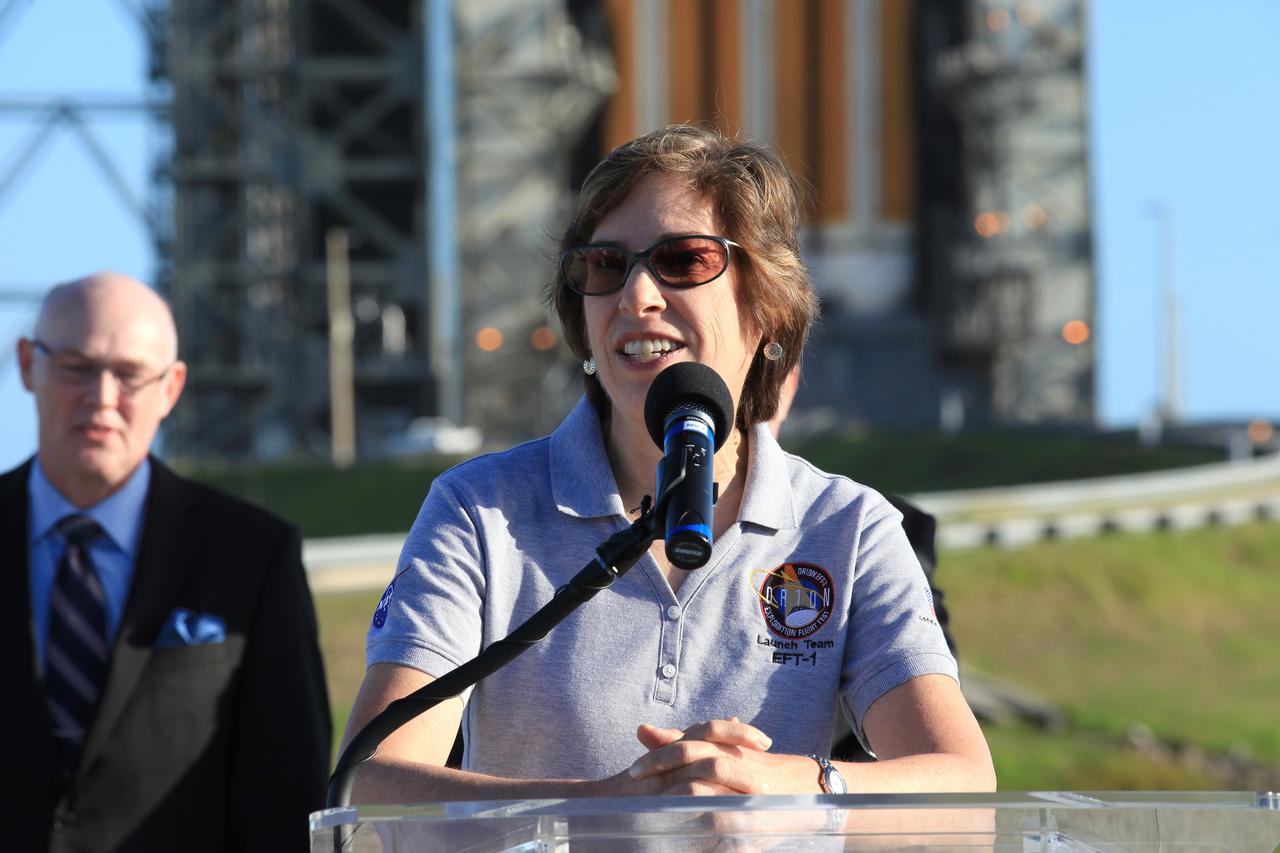
CAPE CANAVERAL, Fla. – At Cape Canaveral Air Force Station's Launch Complex 37, Johnson Space Center Director Ellen Ochoa speaks to members of the news media as the Orion spacecraft and its United Launch Alliance Delta IV Heavy rocket were being prepared for launch. Behind Ochoa is United Launch Alliance CEO Tory Bruno. For more information, visit www.nasa.gov/orion. Photo credit: NASA/Kim Shiflett
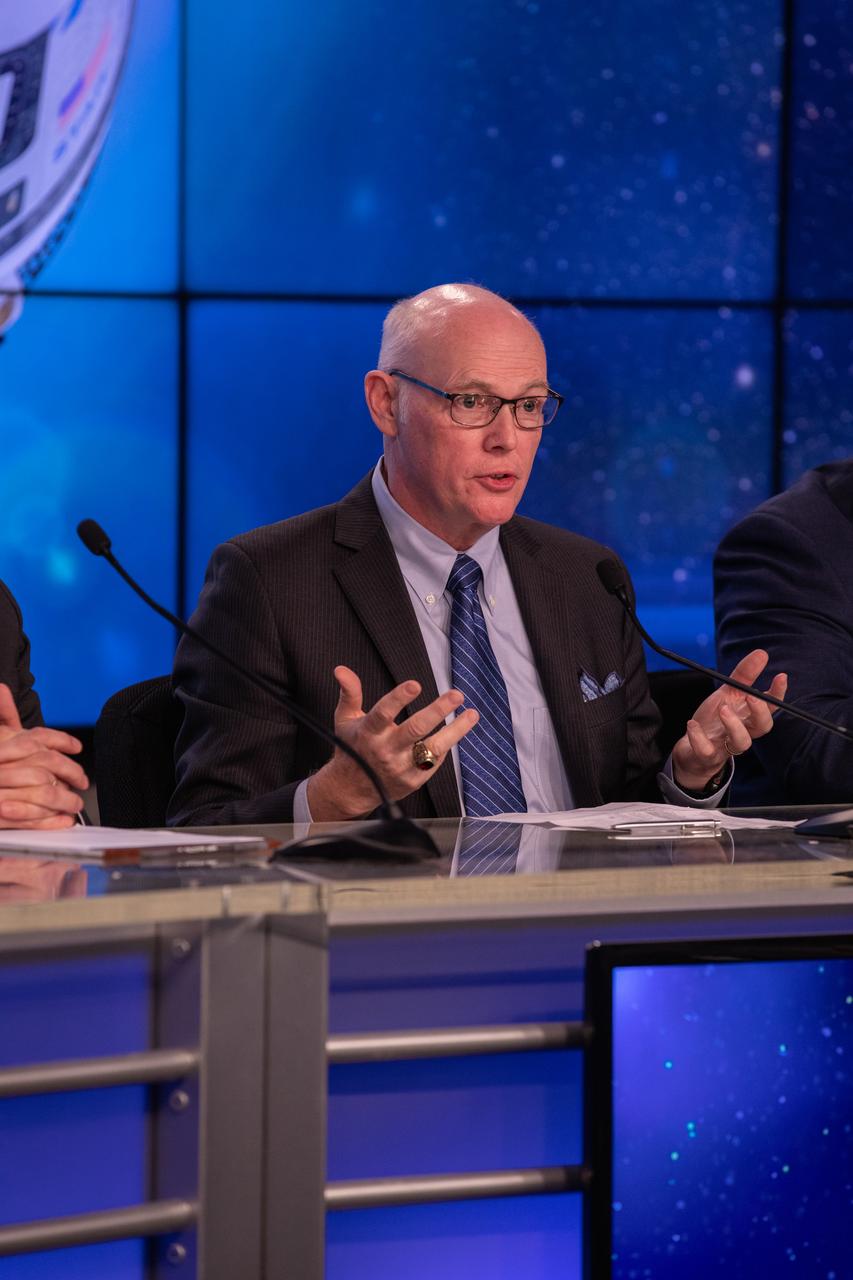
Tory Bruno, president and CEO of United Launch Alliance, speaks during a briefing at NASA’s Kennedy Space Center in Florida following launch of Boeing’s Orbital Flight Test, Dec. 20, 2019. Boeing’s CST-100 Starliner spacecraft launched atop a United Launch Alliance Atlas V rocket from Space Launch Complex 41 at Cape Canaveral Air Force Station at 6:36 a.m. EST. The uncrewed Orbital Flight Test is the Starliner’s first flight for NASA’s Commercial Crew Program.
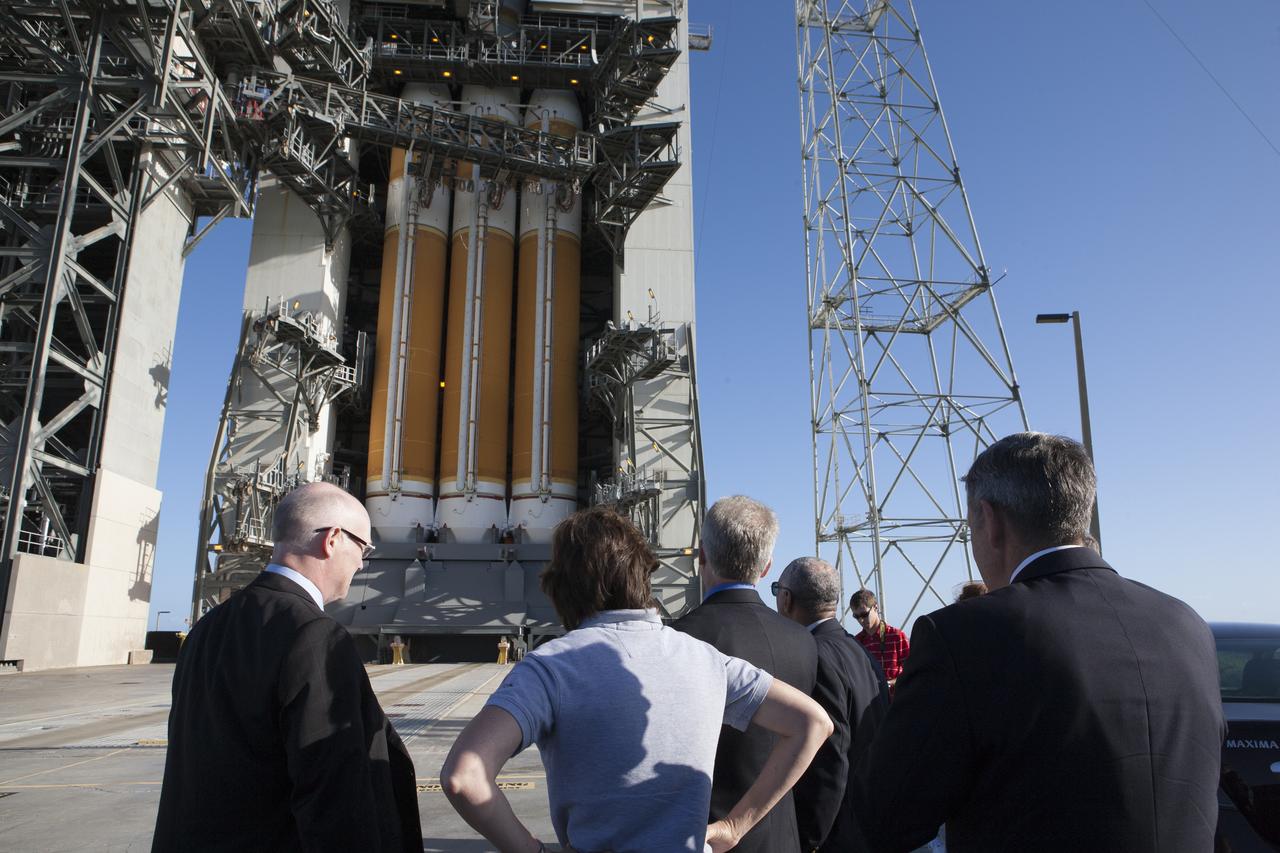
At Cape Canaveral Air Force Station's Launch Complex 37, United Launch Alliance CEO Tory Bruno, Johnson Space Center Director Ellen Ochoa and Kennedy Space Center Director Bob Cabana, foreground with backs to the camera, get a close-up view of the United Launch Alliance Delta IV Heavy rocket being prepared to launch NASA's Orion spacecraft on its first flight test.
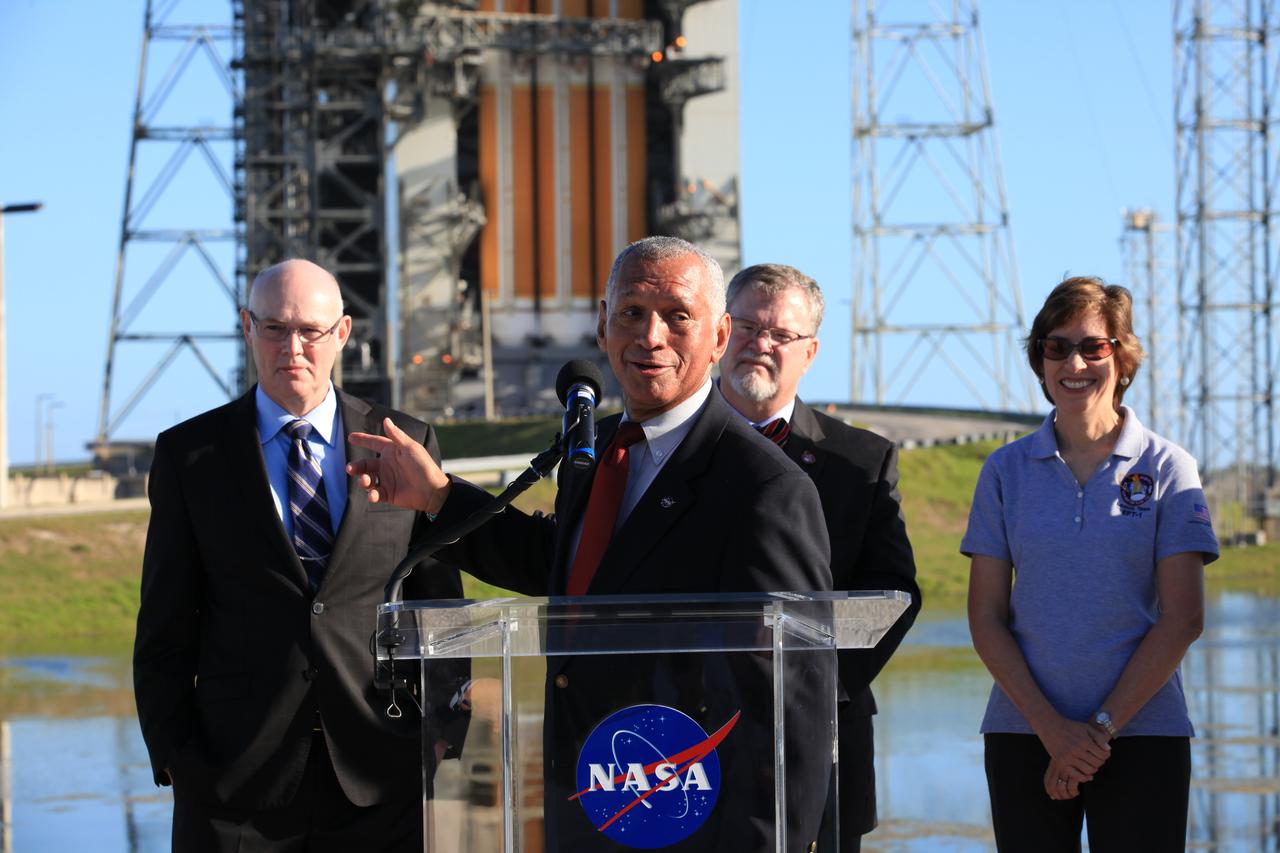
At Cape Canaveral Air Force Station's Launch Complex 37, NASA Administrator Charlie Bolden speaks to members of the news media as the Orion spacecraft and its United Launch Alliance Delta IV Heavy rocket are being prepared for launch. Behind Bolden, from the left, are United Launch Alliance CEO Tory Bruno, Lockheed Martin Orion Program Manager Mike Hawes partially hidden behind Bolden, Johnson Space Center Director Ellen Ochoa and Kennedy Space Center Director Bob Cabana.
At Cape Canaveral Air Force Station's Launch Complex 37, NASA Administrator Charlie Bolden speaks to members of the news media as the Orion spacecraft and its United Launch Alliance Delta IV Heavy rocket were being prepared for launch. Behind Bolden, from the left, are United Launch Alliance CEO Tory Bruno, Lockheed Martin Orion Program manager Mike Hawes and Johnson Space Center Director Ellen Ochoa.
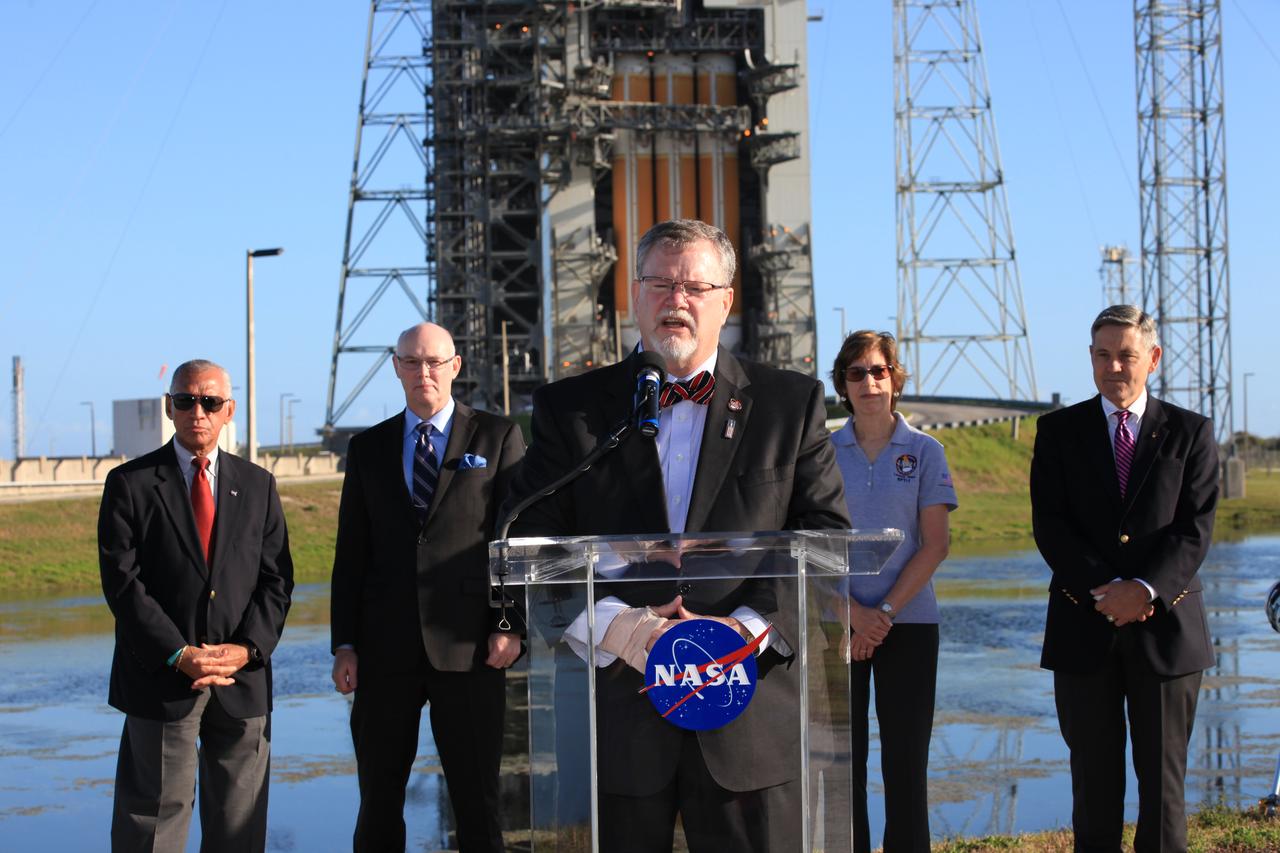
At Cape Canaveral Air Force Station's Launch Complex 37, Lockheed Martin Orion Program manager Mike Hawes speaks to members of the news media as the Orion spacecraft and its United Launch Alliance Delta IV Heavy rocket were being prepared for launch. Behind Hawes, from the left, are NASA Administrator Charlie Bolden, United Launch Alliance CEO Tory Bruno, Johnson Space Center Director Ellen Ochoa and Kennedy Space Center Director Bob Cabana.
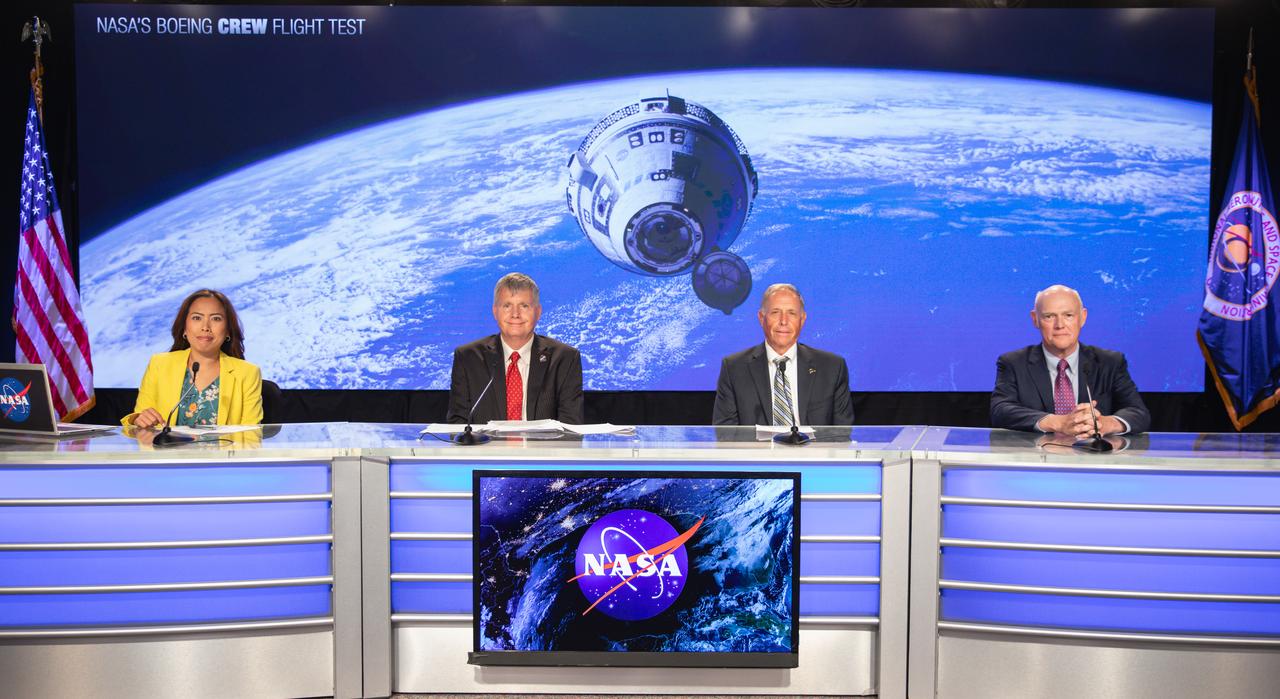
A news conference is held at the agency’s Kennedy Space Center in Florida on Saturday, June 1, 2024, after the second launch attempt of NASA’s Boeing Crew Flight Test scrubbed for the day. As part of the agency’s Commercial Crew Program, NASA astronauts Butch Wilmore and Suni Williams will be the first to launch to the International Space Station aboard Boeing’s Starliner spacecraft atop a ULA (United Launch Alliance) Atlas V rocket from Space Launch Complex-41 at nearby Cape Canaveral Space Force Station. Participants, from left to right, are Megan Cruz, NASA Communications; Steve Stich, NASA Commercial Crew Program manager; Mark Nappi, vice president and program manager for the Commercial Crew Program at Boeing; and Tory Bruno, ULA president and CEO.
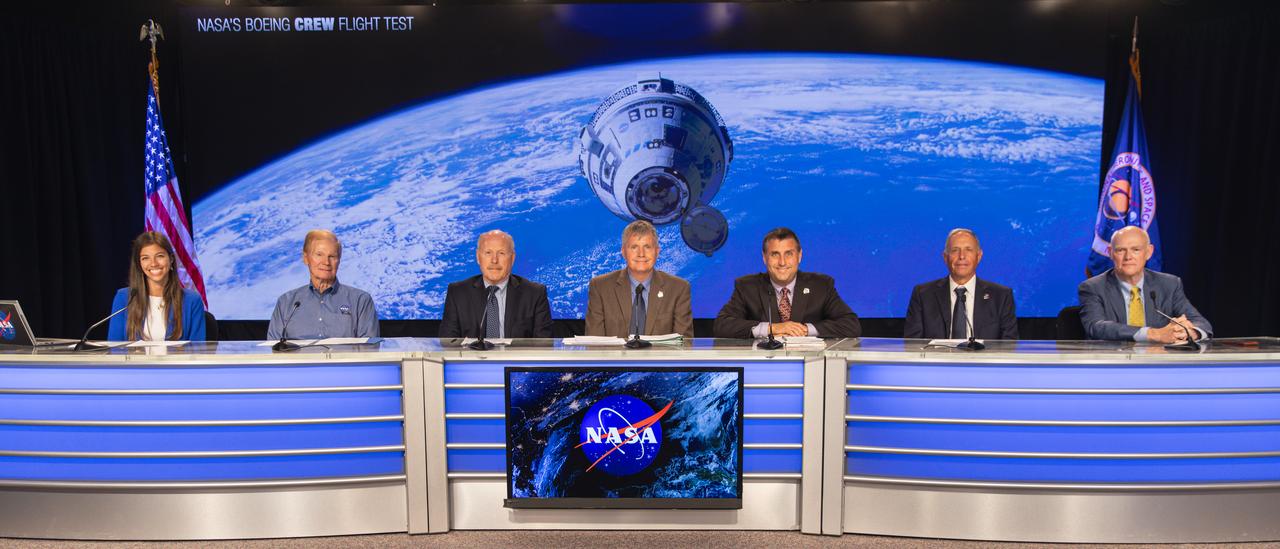
A postlaunch news conference at the agency’s Kennedy Space Center in Florida is held on Wednesday, June 5, 2024, following the launch of NASA’s Boeing Crew Flight Test with NASA astronauts Butch Wilmore and Suni Williams from Space Launch Complex-41 at nearby Cape Canaveral Space Force Station. Participants, from left to right are, Antonia Jaramillo, NASA Communications; NASA Administrator Bill Nelson; NASA Associate Administrator for Space Operations Ken Bowersox; NASA Commercial Crew Program Manager Steve Stich; NASA Deputy Associate Administrator for Space Operations Mission Directorate, Joel Montalbano; Vice President and Program Manager of Boeing’s Commercial Crew Program Mark Nappi; and ULA (United Launch Alliance) President of Government and CEO Tory Bruno,. Liftoff of the ULA Atlas V rocket and Boeing Starliner spacecraft occurred at 10:52 a.m. EDT on Wednesday, June 5.
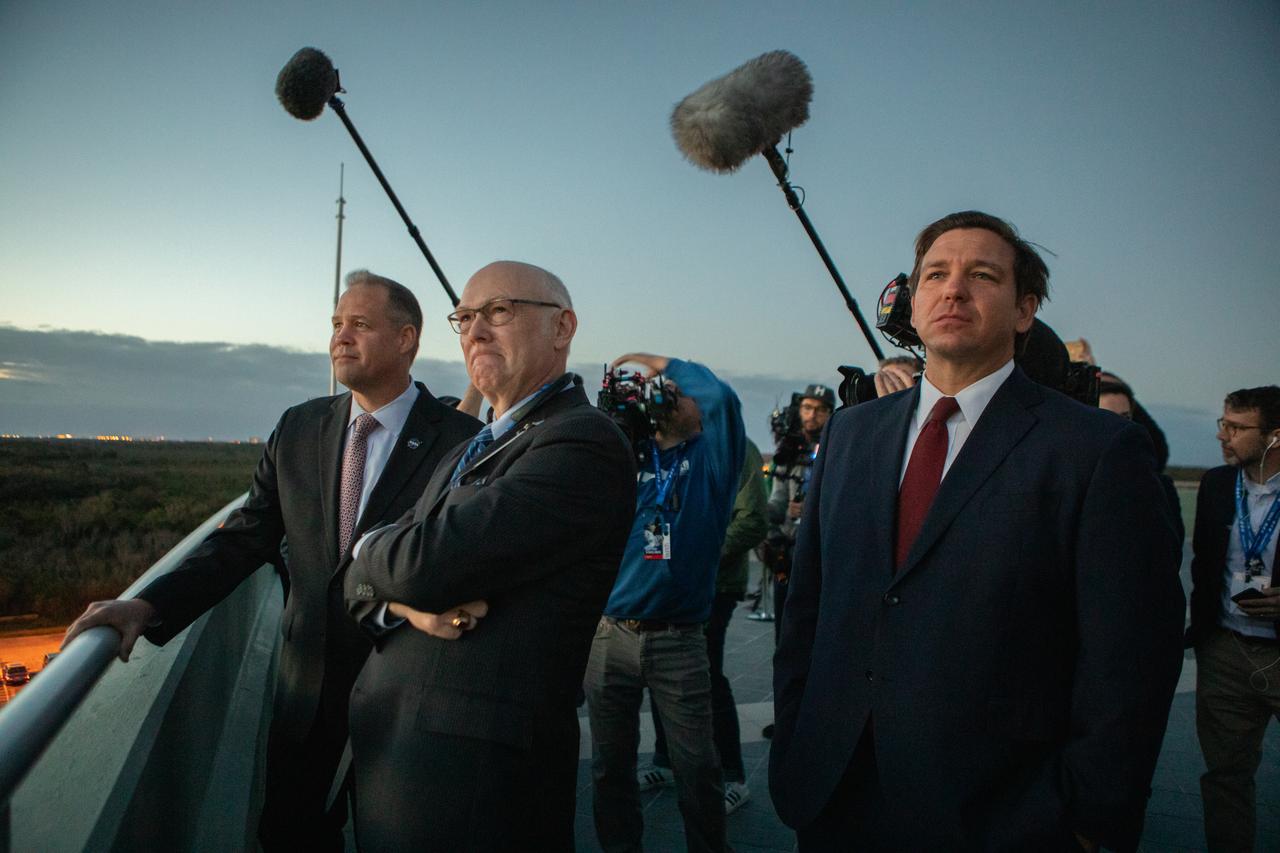
From left to right, NASA Administrator Jim Bridenstine; Tory Bruno, president and chief executive officer of United Launch Alliance; and Florida Governor Ron DeSantis wait at NASA’s Kennedy Space Center in Florida to see the liftoff of a United Launch Alliance Atlas V rocket carrying Boeing’s CST-100 Starliner spacecraft for Boeing’s Orbital Flight Test, Dec. 20, 2019. Liftoff occurred at 6:36 a.m. EST from Space Launch Complex 41 at Florida’s Cape Canaveral Air Force Station. The uncrewed Orbital Flight Test is the Starliner’s first flight for NASA’s Commercial Crew Program.
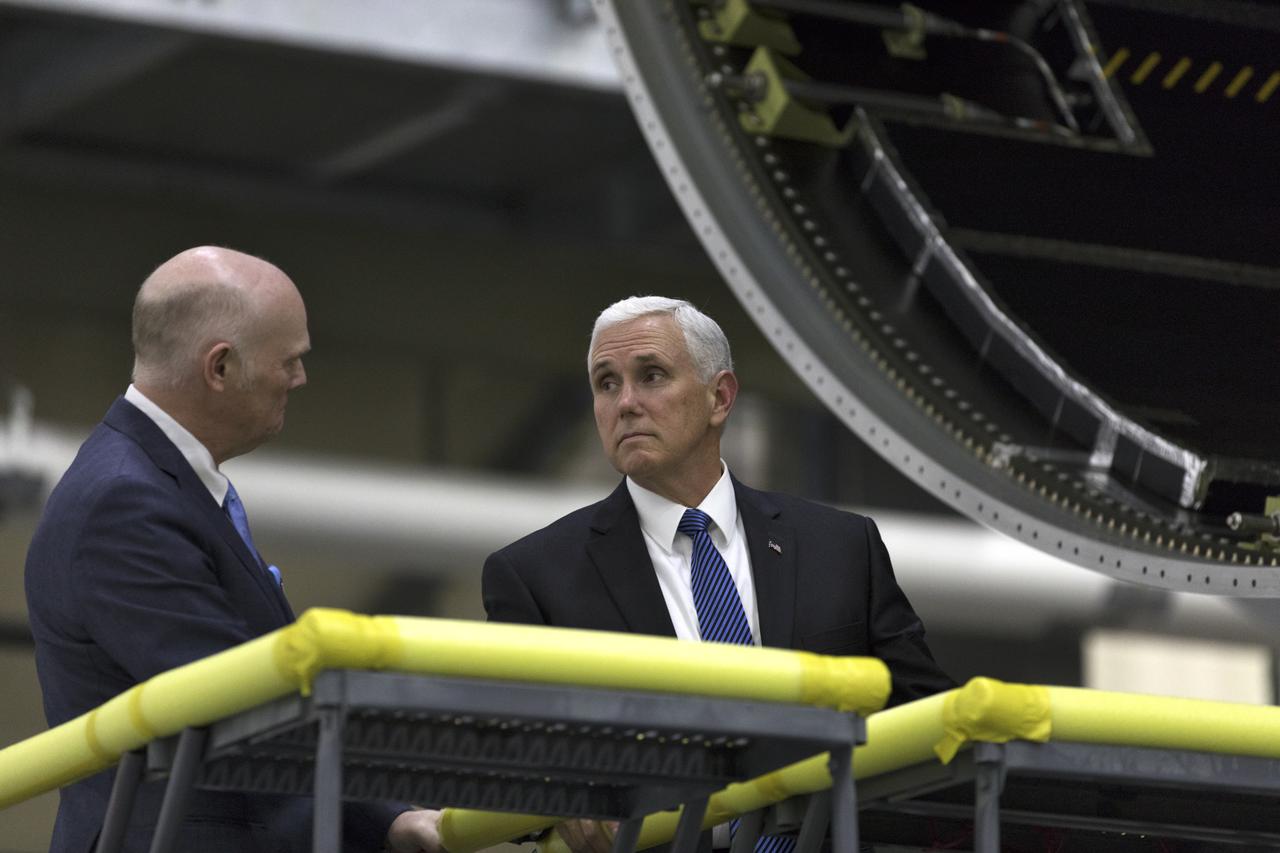
United Launch Alliance (ULA) president and CEO Tory Bruno, left, leads a tour for Vice President Mike Pence on Feb. 20, 2018. They are in the ULA Horizontal Integration Facility (HIF), at Cape Canaveral Air Force Station in Florida. The HIF is where the Delta IV Heavy boosters are being processed for NASA’s upcoming Parker Solar Probe mission. During his visit, Pence will chair a meeting of the National Space Council on Feb. 21, 2018 in the high bay of NASA Kennedy Space Center’s Space Station Processing Facility. The council's role is to advise the president regarding national space policy and strategy, and review the nation's long-range goals for space activities.
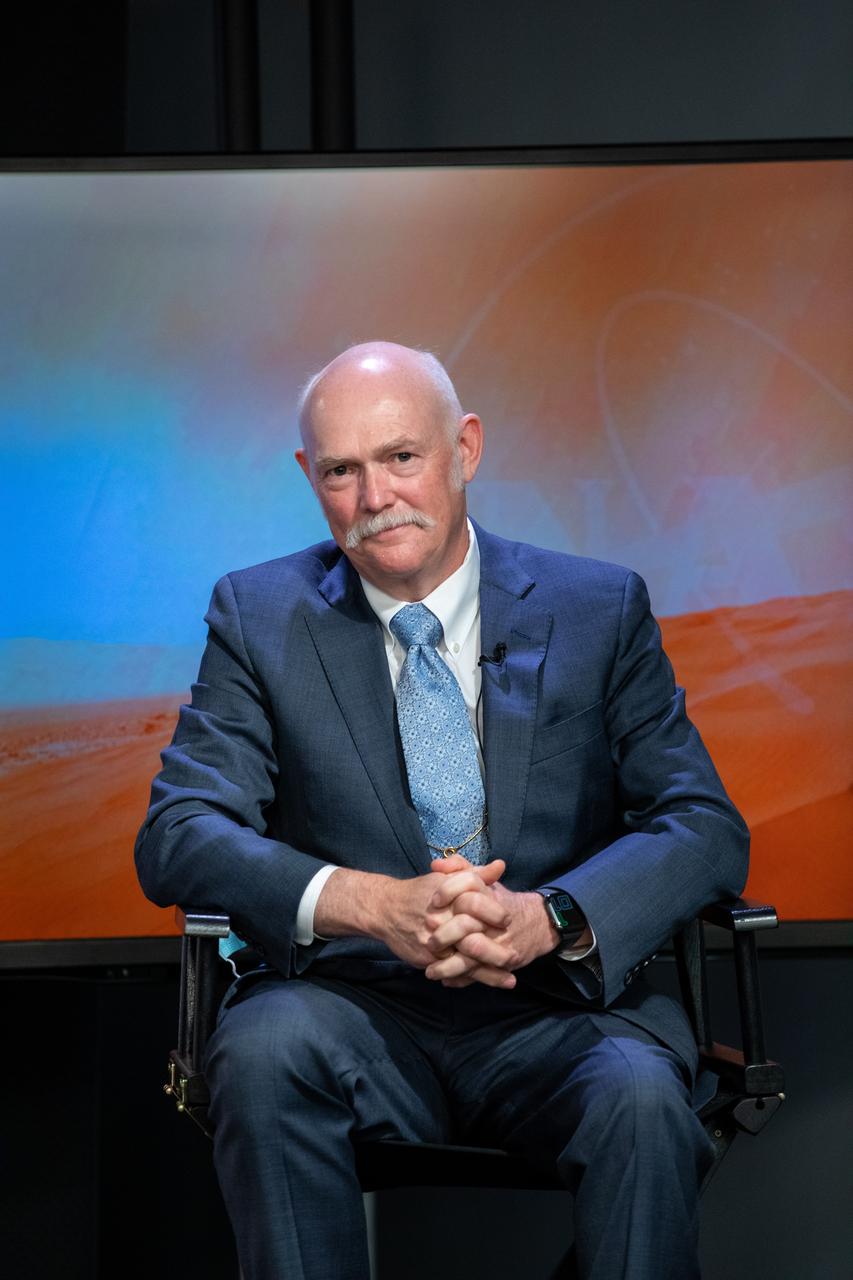
Tory Bruno, CEO with United Launch Alliance, participates in a Mars 2020 prelaunch news briefing at NASA’s Kennedy Space Center in Florida on July 27, 2020. The Mars Perseverance rover is scheduled to launch on July 30, on a United Launch Alliance Atlas V 541 rocket from Space Launch Complex 41 at nearby Cape Canaveral Air Force Station. The rover is part of NASA’s Mars Exploration Program, a long-term effort of robotic exploration of the Red Planet. The rover will search for habitable conditions in the ancient past and signs of past microbial life on Mars. The Launch Services Program at Kennedy is responsible for launch management.
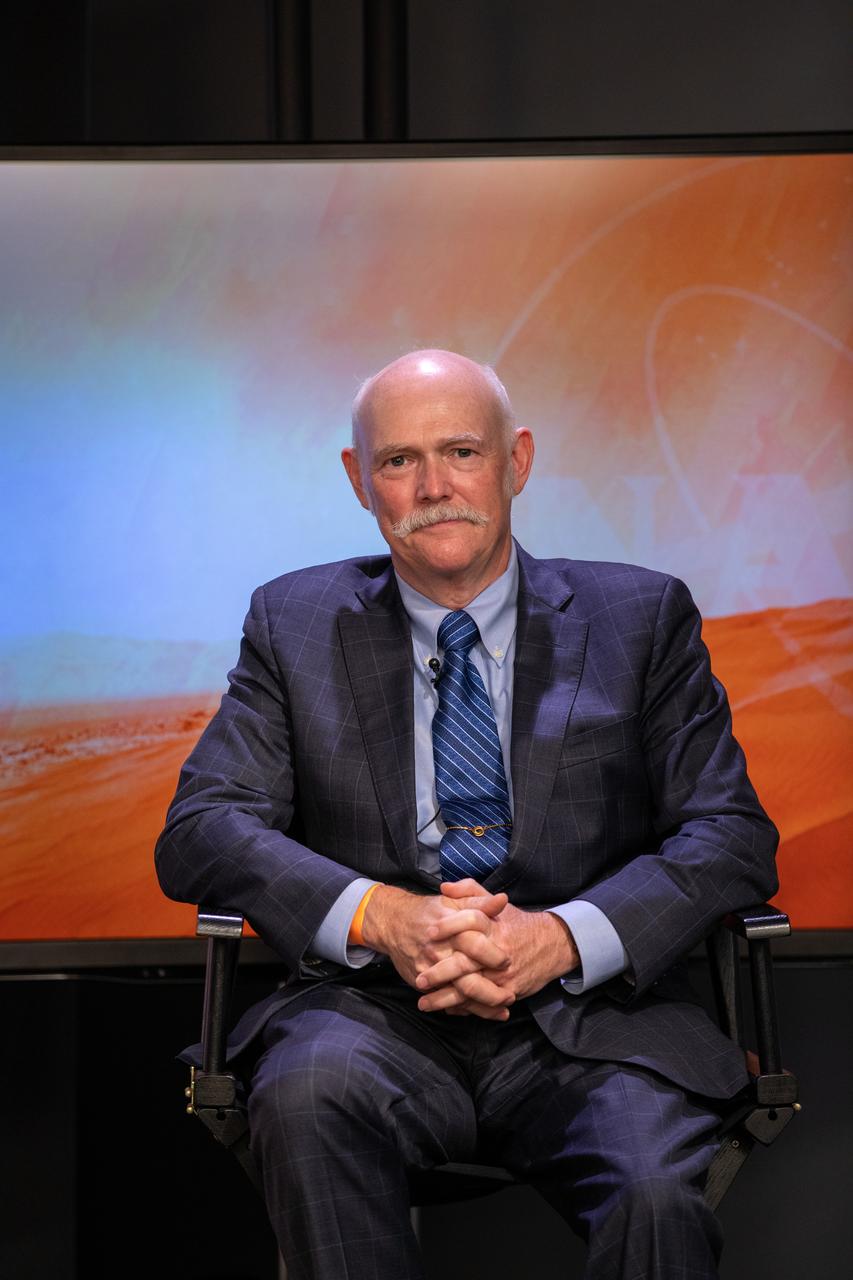
Tory Bruno, president and CEO of United Launch Alliance (ULA), participates in a Mars 2020 post-launch news conference at NASA’s Kennedy Space Center in Florida on July 30, 2020. The ULA Atlas V 541 rocket lifted off from Space Launch Complex 41 at Cape Canaveral Air Force Station at 7:50 a.m. EDT, carrying the agency’s Mars Perseverance rover and Ingenuity helicopter. The rover is part of NASA’s Mars Exploration Program, a long-term effort of robotic exploration of the Red Planet. The rover will search for habitable conditions in the ancient past and signs of past microbial life on Mars. The Launch Services Program at Kennedy is responsible for launch management.
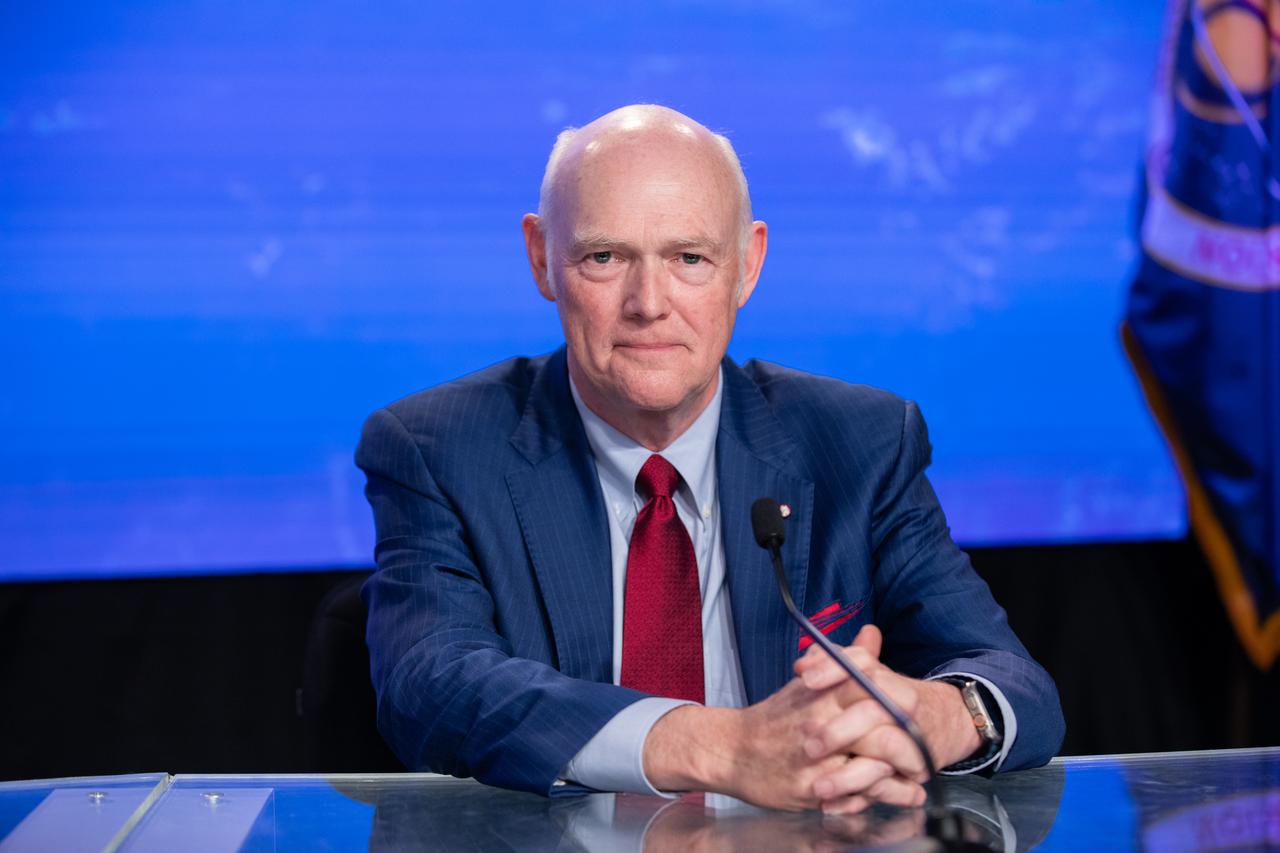
ULA (United Launch Alliance) President and CEO Tory Bruno is photographed during a news conference held on Monday, May 6, 2024, at the agency’s Kennedy Space Center in Florida following the first launch attempt of NASA’s Boeing Crew Flight Test. As part of the agency’s Commercial Crew Program, the first crewed launch to the International Space Station aboard Boeing’s Starliner spacecraft atop a United Launch Alliance Atlas V rocket from Space Launch Complex-41 at nearby Cape Canaveral Space Force Station was targeted for 10:34 p.m. ET but scrubbed for the day.
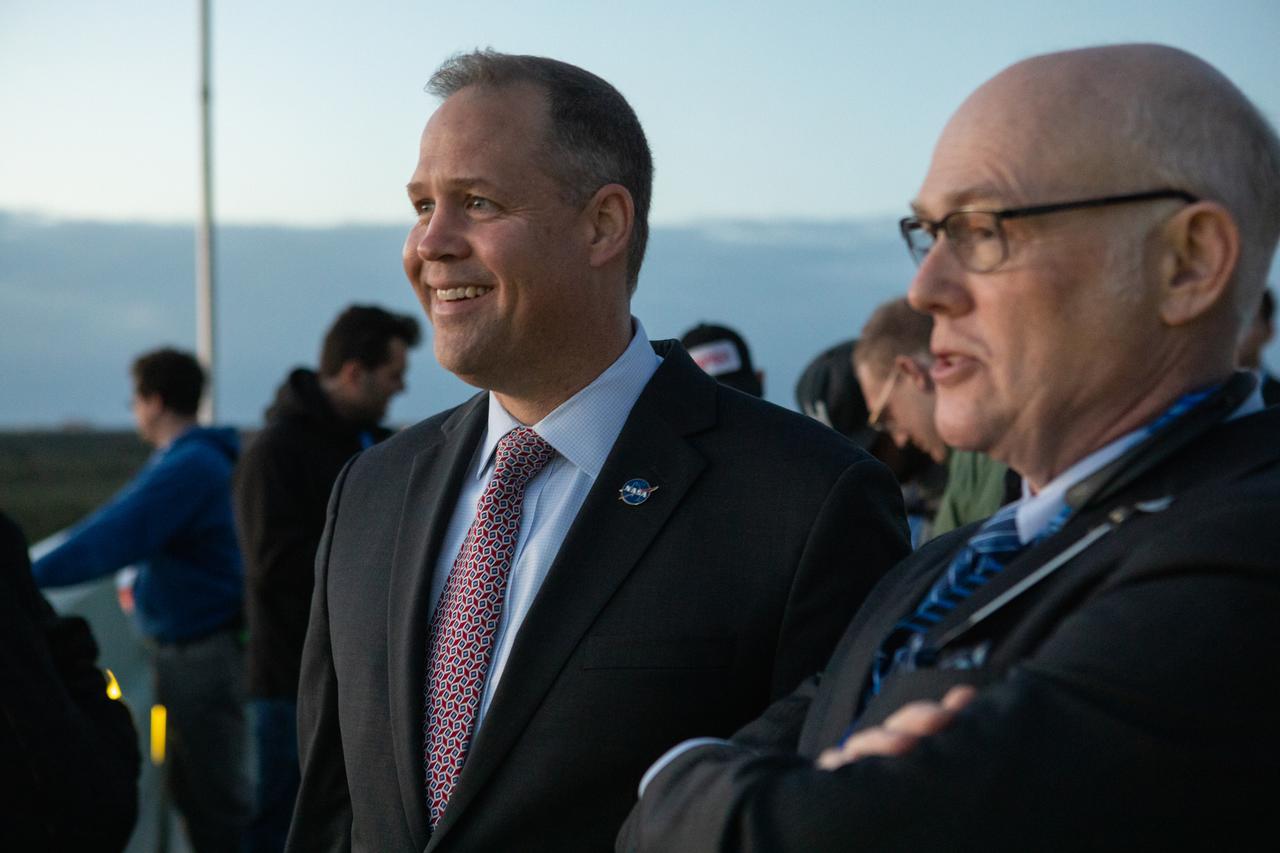
NASA Administrator Jim Bridenstine, left, and Tory Bruno, president and chief executive officer of United Launch Alliance, wait at NASA’s Kennedy Space Center in Florida to see the liftoff of a United Launch Alliance Atlas V rocket carrying Boeing’s CST-100 Starliner spacecraft for Boeing’s Orbital Flight Test, Dec. 20, 2019. Liftoff occurred at 6:36 a.m. EST from Space Launch Complex 41 at Florida’s Cape Canaveral Air Force Station. The uncrewed Orbital Flight Test is the Starliner’s first flight for NASA’s Commercial Crew Program.
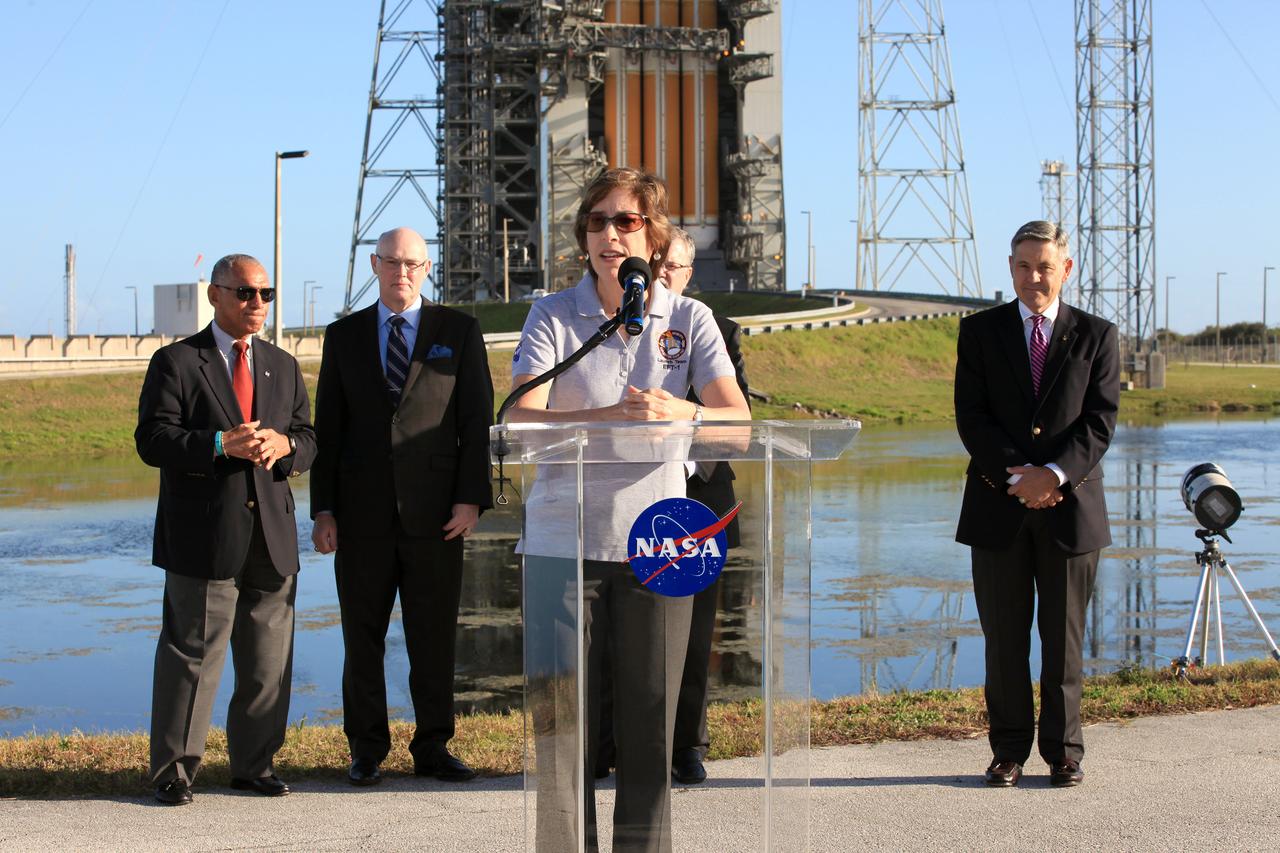
At Cape Canaveral Air Force Station's Launch Complex 37, Johnson Space Center Director Ellen Ochoa speaks to members of the news media as the Orion spacecraft and its United Launch Alliance Delta IV Heavy rocket were being prepared for launch on Exploration Flight Test-1 (EFT-1) on Dec. 3, 2014. Behind Ochoa, from the left, are NASA Administrator Charlie Bolden, United Launch Alliance CEO Tory Bruno, Lockheed Martin Orion Program Manager Mike Hawes and Kennedy Space Center Director Bob Cabana. Part of Batch image transfer from Flickr.
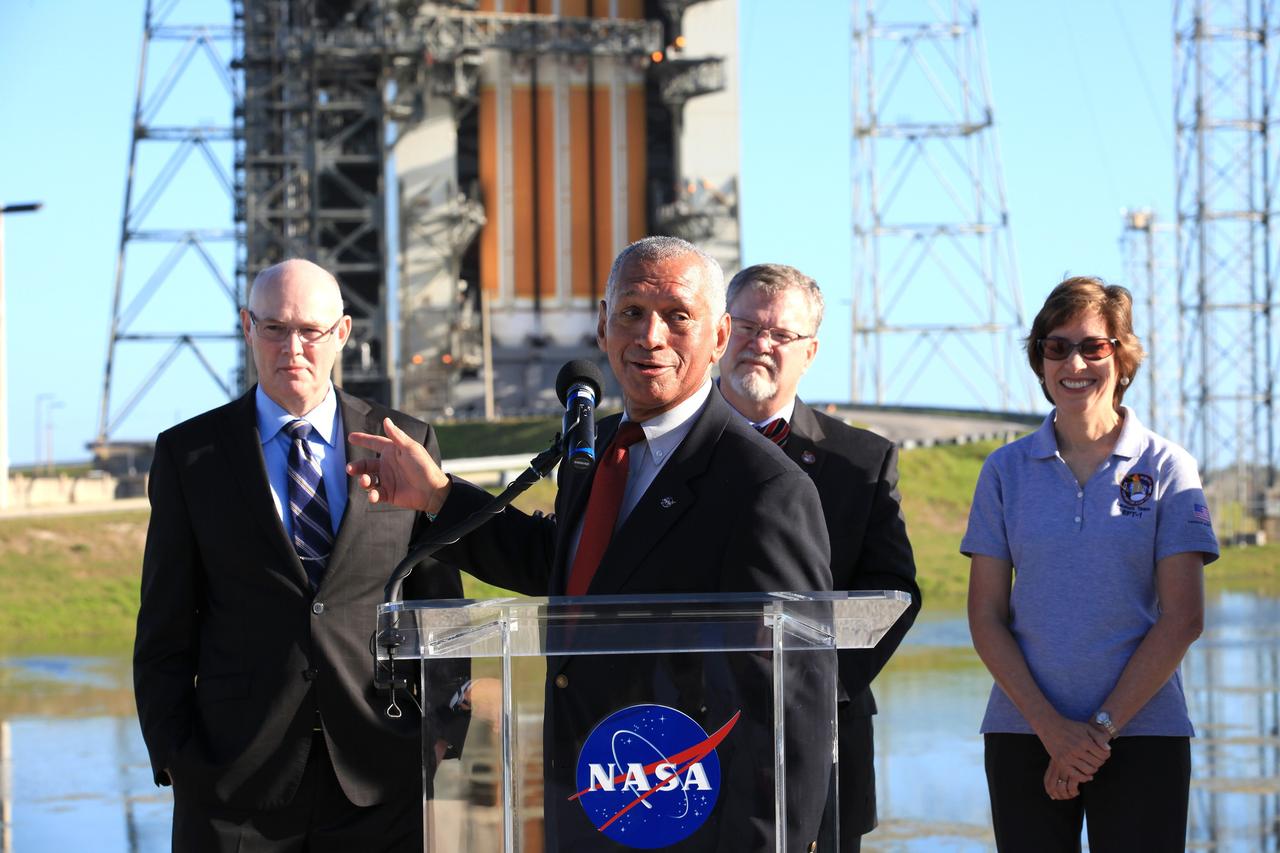
CAPE CANAVERAL, Fla. – At Cape Canaveral Air Force Station's Launch Complex 37, NASA Administrator Charlie Bolden speaks to members of the news media as the Orion spacecraft and its United Launch Alliance Delta IV Heavy rocket were being prepared for launch. Behind Bolden, from the left, are United Launch Alliance CEO Tory Bruno, Lockheed Martin Orion Program manager Mike Hawes and Johnson Space Center Director Ellen Ochoa. For more information, visit www.nasa.gov/orion. Photo credit: NASA/Kim Shiflett
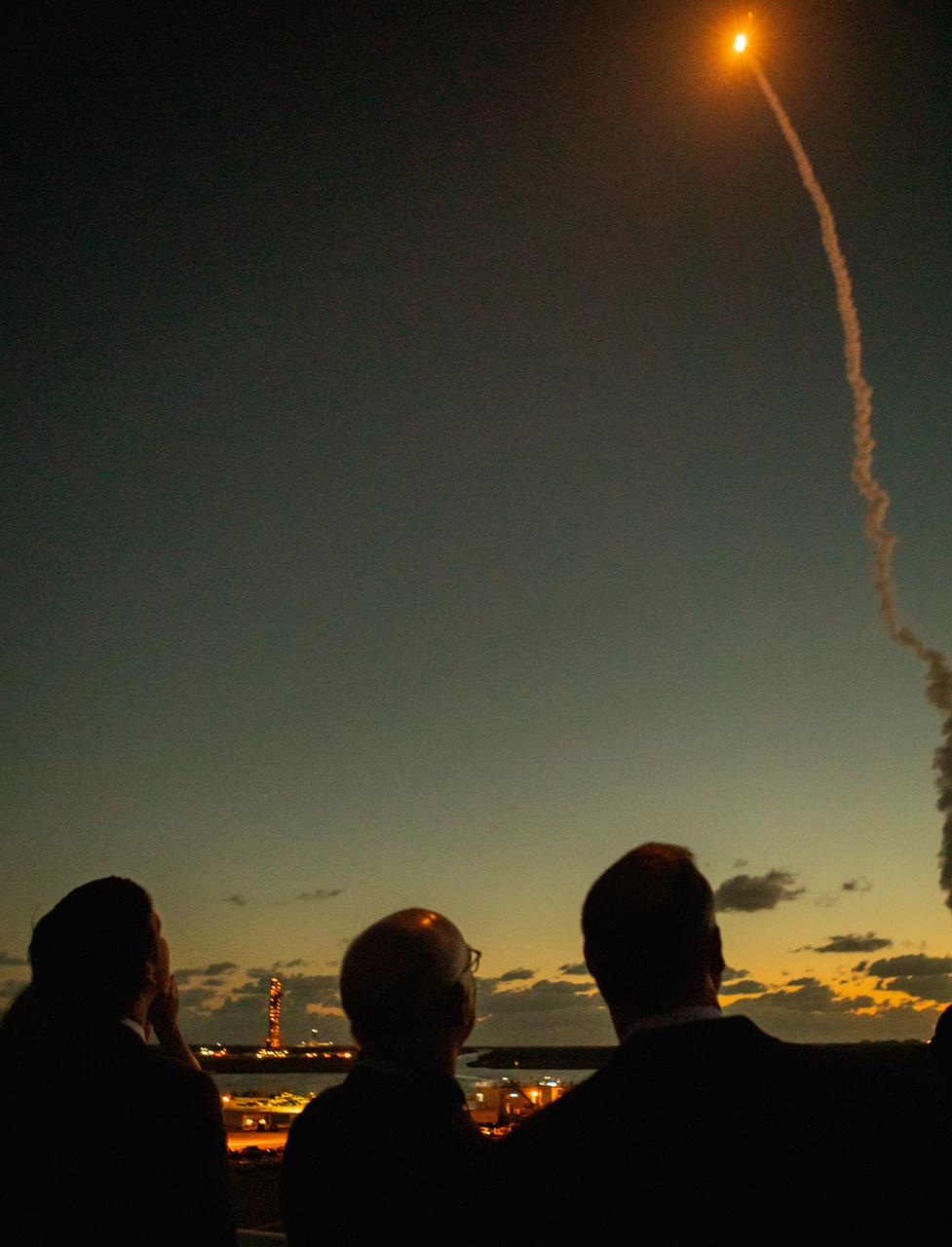
In the foreground, from left to right, Florida Governor Ron DeSantis; Tory Bruno, president and chief executive officer of United Launch Alliance; and NASA Administrator Jim Bridenstine watch the launch of a United Launch Alliance Atlas V rocket carrying Boeing’s CST-100 Starliner spacecraft for Boeing’s Orbital Flight Test, Dec. 20, 2019. Liftoff occurred at 6:36 a.m. EST from Space Launch Complex 41 at Florida’s Cape Canaveral Air Force Station. The uncrewed Orbital Flight Test is the Starliner’s first flight for NASA’s Commercial Crew Program.
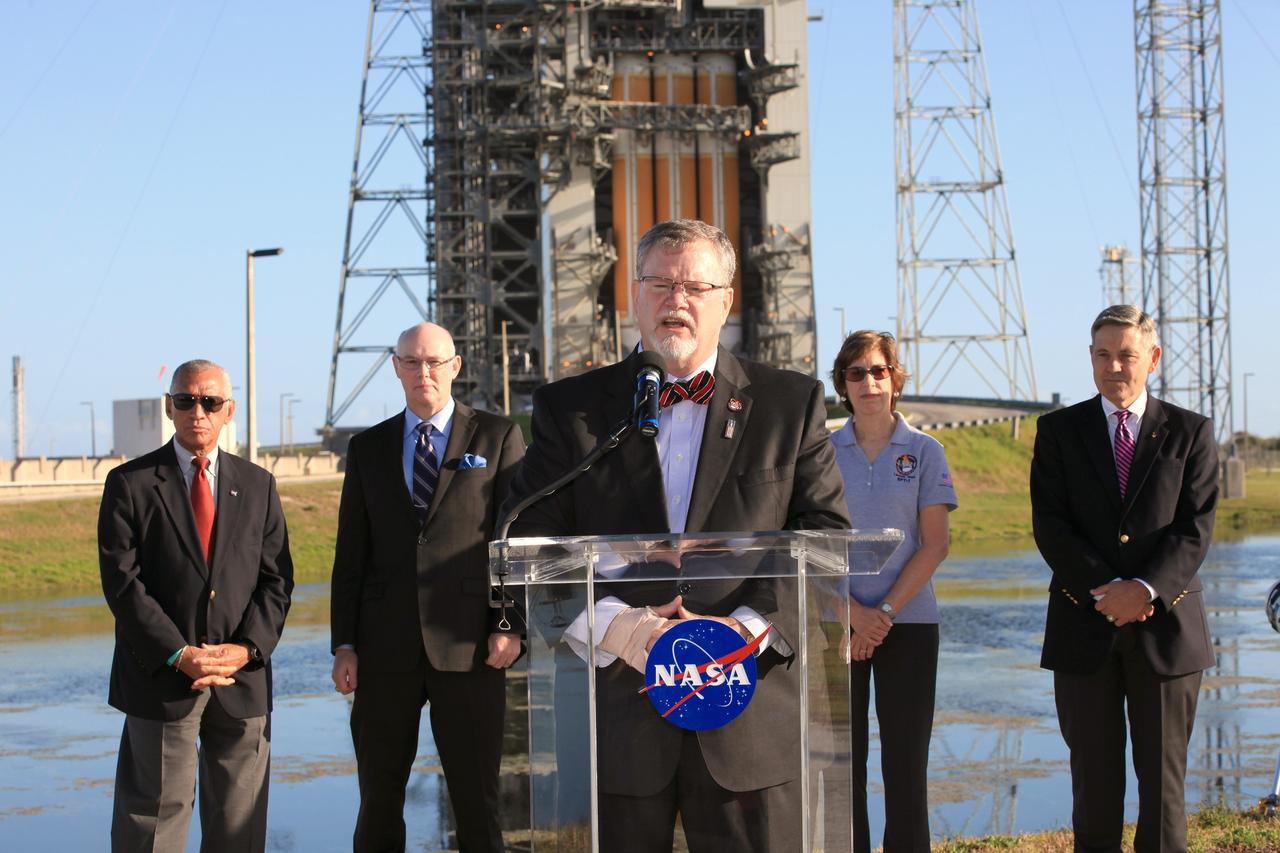
CAPE CANAVERAL, Fla. – At Cape Canaveral Air Force Station's Launch Complex 37, Lockheed Martin Orion Program manager Mike Hawes speaks to members of the news media as the Orion spacecraft and its United Launch Alliance Delta IV Heavy rocket were being prepared for launch. Behind Hawes, from the left, are NASA Administrator Charlie Bolden, United Launch Alliance CEO Tory Bruno, Johnson Space Center Director Ellen Ochoa and Kennedy Space Center Director Bob Cabana. For more information, visit www.nasa.gov/orion. Photo credit: NASA/Kim Shiflett
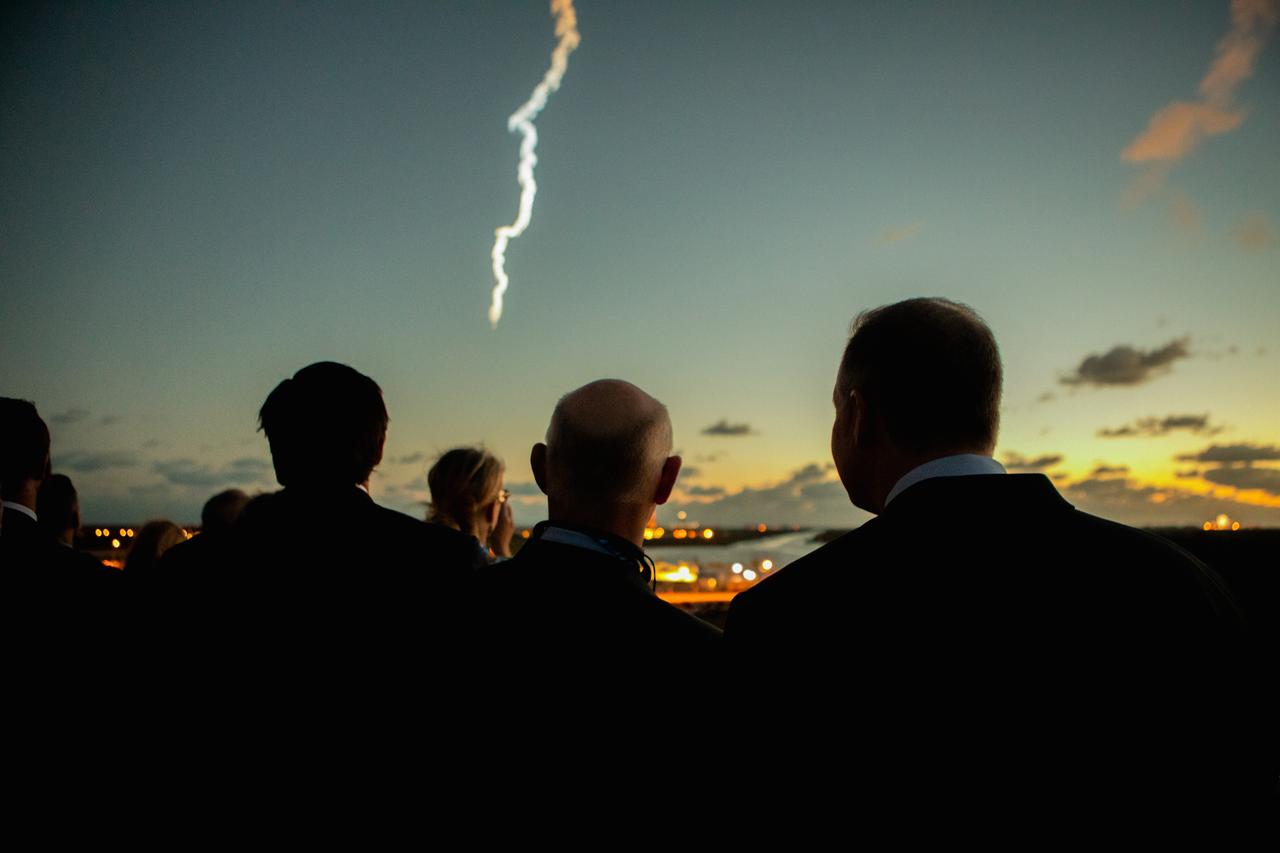
In the foreground, from left to right, Florida Governor Ron DeSantis; Tory Bruno, president and chief executive officer of United Launch Alliance; and NASA Administrator Jim Bridenstine watch the launch of a United Launch Alliance Atlas V rocket carrying Boeing’s CST-100 Starliner spacecraft for Boeing’s Orbital Flight Test, Dec. 20, 2019. Liftoff occurred at 6:36 a.m. EST from Space Launch Complex 41 at Florida’s Cape Canaveral Air Force Station. The uncrewed Orbital Flight Test is the Starliner’s first flight for NASA’s Commercial Crew Program.
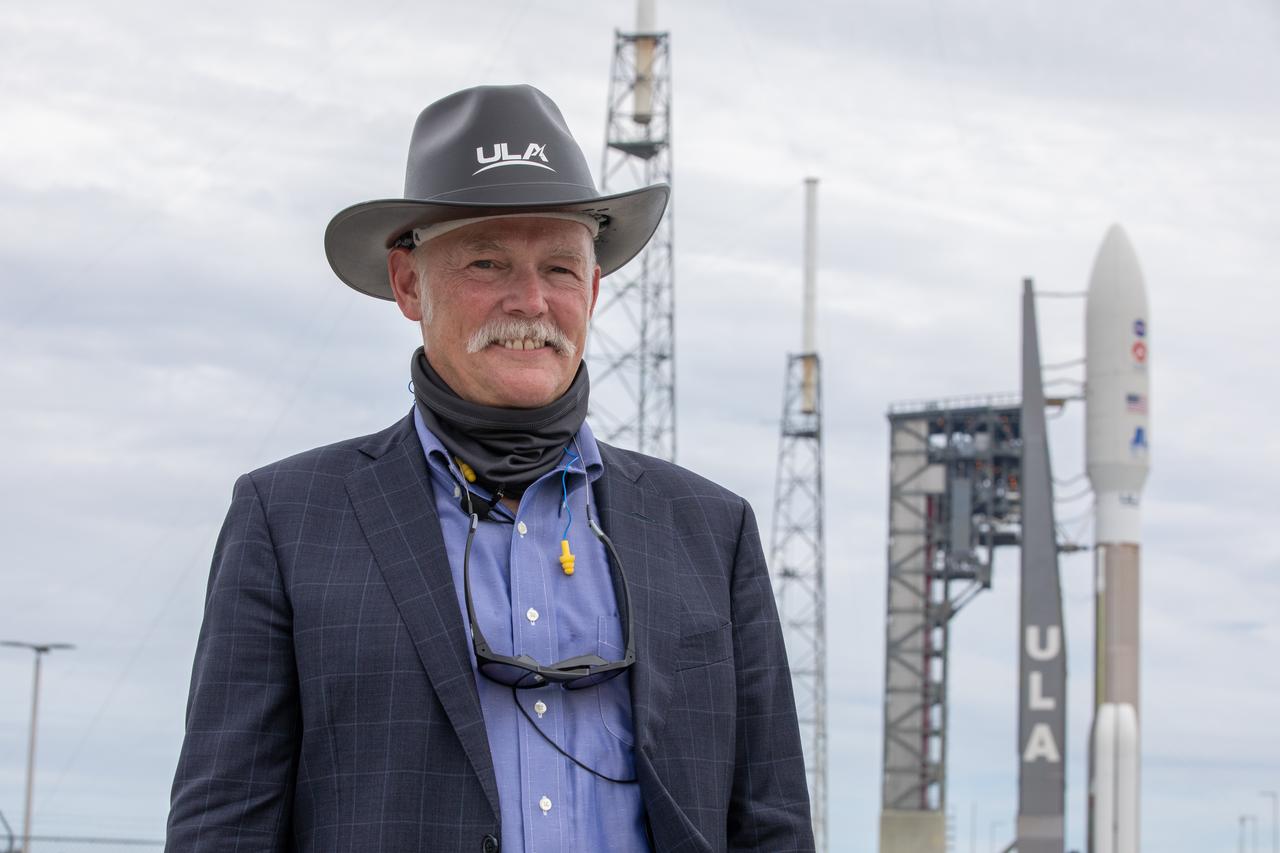
Tory Bruno, CEO of United Launch Alliance (ULA), attends the rollout of the ULA Atlas V 541 rocket, carrying NASA’s Mars Perseverance rover and Ingenuity helicopter, as it rolls along to the launch pad at Space Launch Complex 41 at Cape Canaveral Air Force Station on July 28, 2020. First motion was at 10:24 a.m. EDT. Launch of the Mars 2020 mission is scheduled for July 30. The rover is part of NASA’s Mars Exploration Program, a long-term effort of robotic exploration of the Red Planet. The rover will search for habitable conditions in the ancient past and signs of past microbial life on Mars. The Launch Services Program at Kennedy is responsible for launch management.
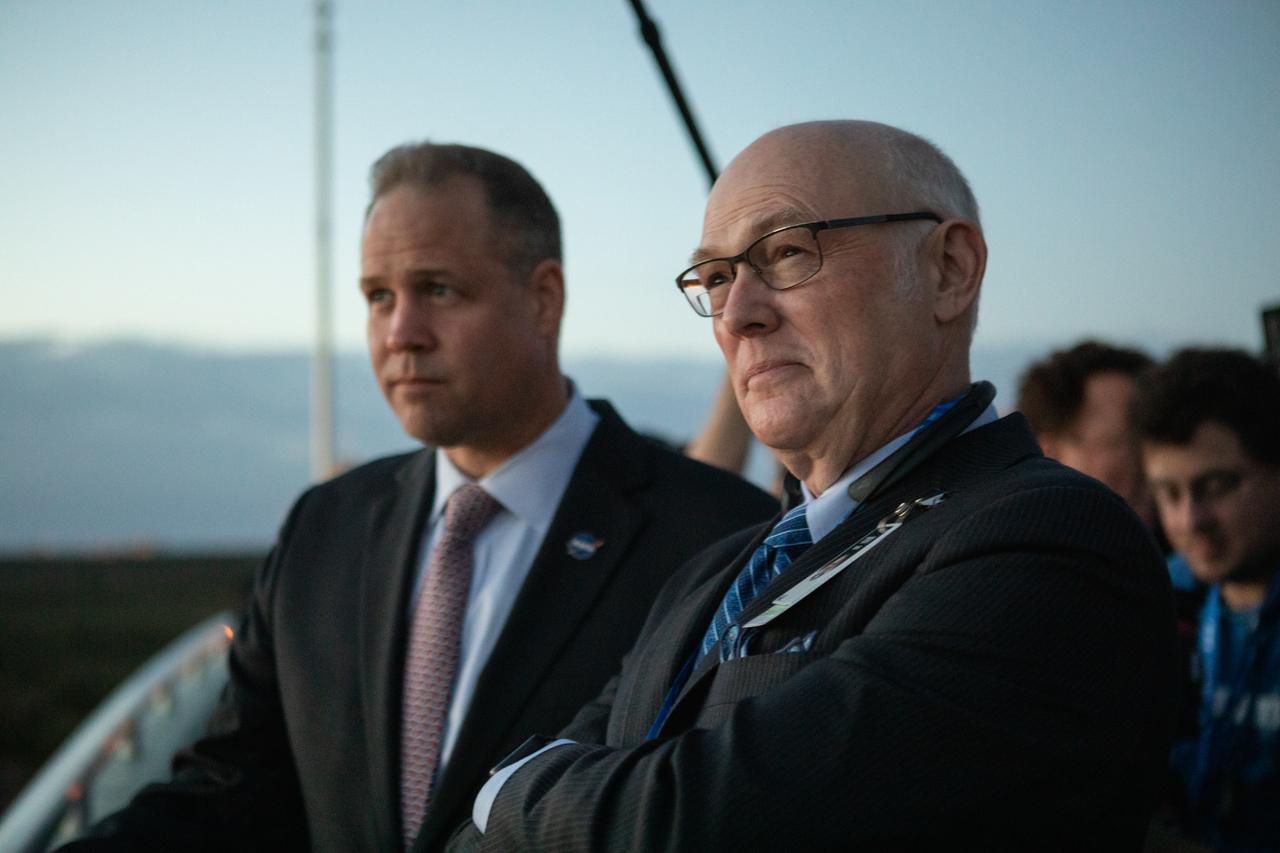
NASA Administrator Jim Bridenstine, left, and Tory Bruno, president and chief executive officer of United Launch Alliance, wait at NASA’s Kennedy Space Center in Florida to see the liftoff of a United Launch Alliance Atlas V rocket carrying Boeing’s CST-100 Starliner spacecraft for Boeing’s Orbital Flight Test, Dec. 20, 2019. Liftoff occurred at 6:36 a.m. EST from Space Launch Complex 41 at Florida’s Cape Canaveral Air Force Station. The uncrewed Orbital Flight Test is the Starliner’s first flight for NASA’s Commercial Crew Program.
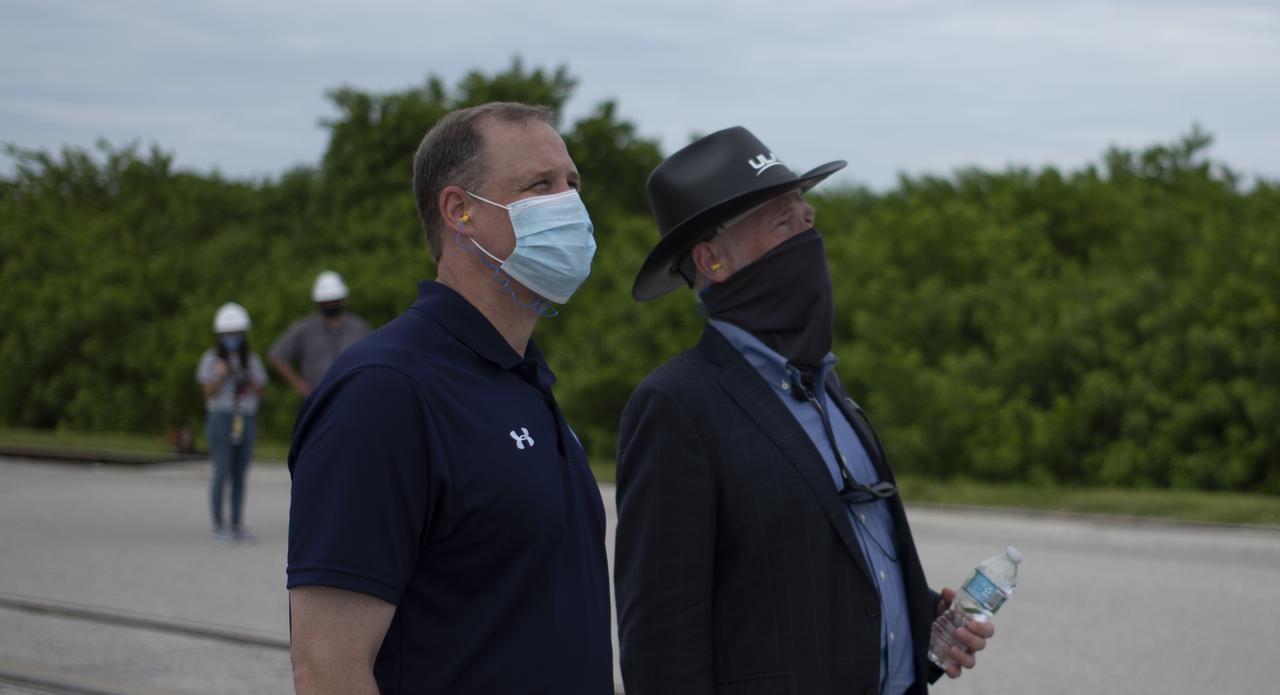
NASA Administrator Jim Bridenstine, left, and Tory Bruno, president and CEO of United Launch Alliance, are seen as they watch a United Launch Alliance Atlas V rocket with NASA’s Mars 2020 Perseverance rover onboard as it is rolled out of the Vertical Integration Facility to the launch pad at Space Launch Complex 41, Tuesday, July 28, 2020, at Cape Canaveral Air Force Station in Florida. The Perseverance rover is part of NASA’s Mars Exploration Program, a long-term effort of robotic exploration of the Red Planet. Launch is scheduled for Thursday, July 30. Photo Credit: (NASA/Joel Kowsky)
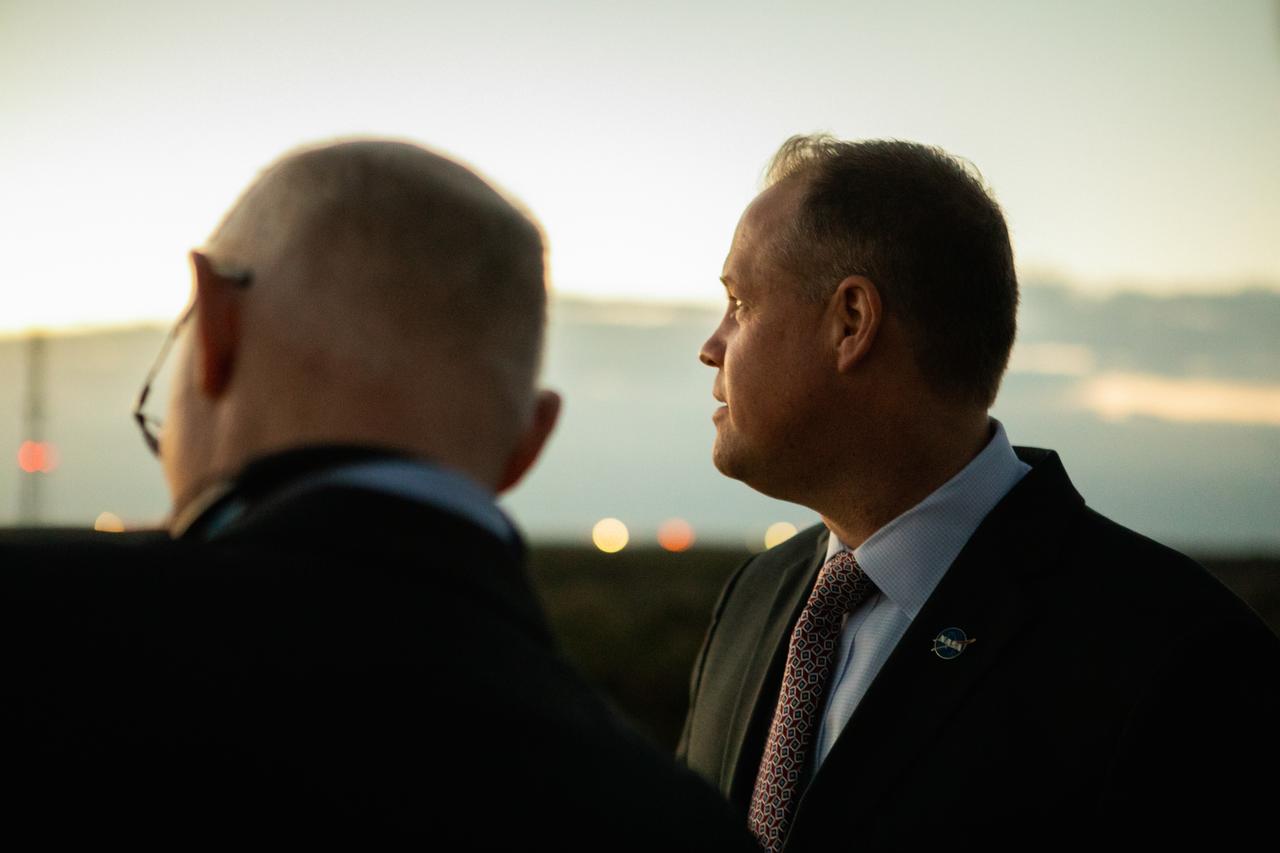
Tory Bruno, president and chief executive officer of United Launch Alliance, left, and NASA Administrator Jim Bridenstine wait at NASA’s Kennedy Space Center in Florida to see the liftoff of a United Launch Alliance Atlas V rocket carrying Boeing’s CST-100 Starliner spacecraft for Boeing’s Orbital Flight Test, Dec. 20, 2019. Liftoff occurred at 6:36 a.m. EST from Space Launch Complex 41 at Florida’s Cape Canaveral Air Force Station. The uncrewed Orbital Flight Test is the Starliner’s first flight for NASA’s Commercial Crew Program.
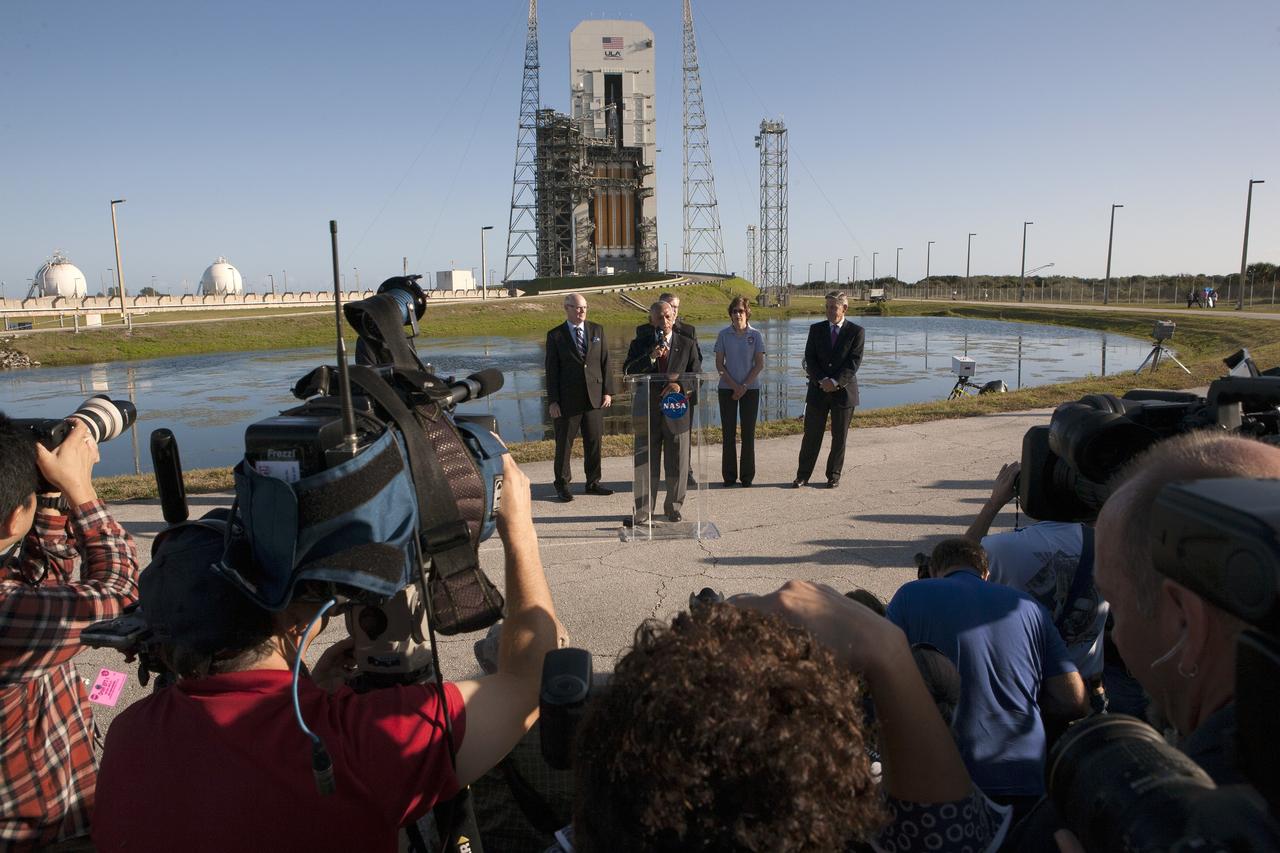
CAPE CANAVERAL, Fla. – At Cape Canaveral Air Force Station's Launch Complex 37, NASA Administrator Charlie Bolden speaks to members of the news media as the Orion spacecraft and its United Launch Alliance Delta IV Heavy rocket are being prepared for launch. Behind Bolden, from the left, are United Launch Alliance CEO Tory Bruno, Lockheed Martin Orion Program Manager Mike Hawes partially hidden behind Bolden, Johnson Space Center Director Ellen Ochoa and Kennedy Space Center Director Bob Cabana. For more information, visit www.nasa.gov/orion. Photo credit: NASA/Kim Shiflett
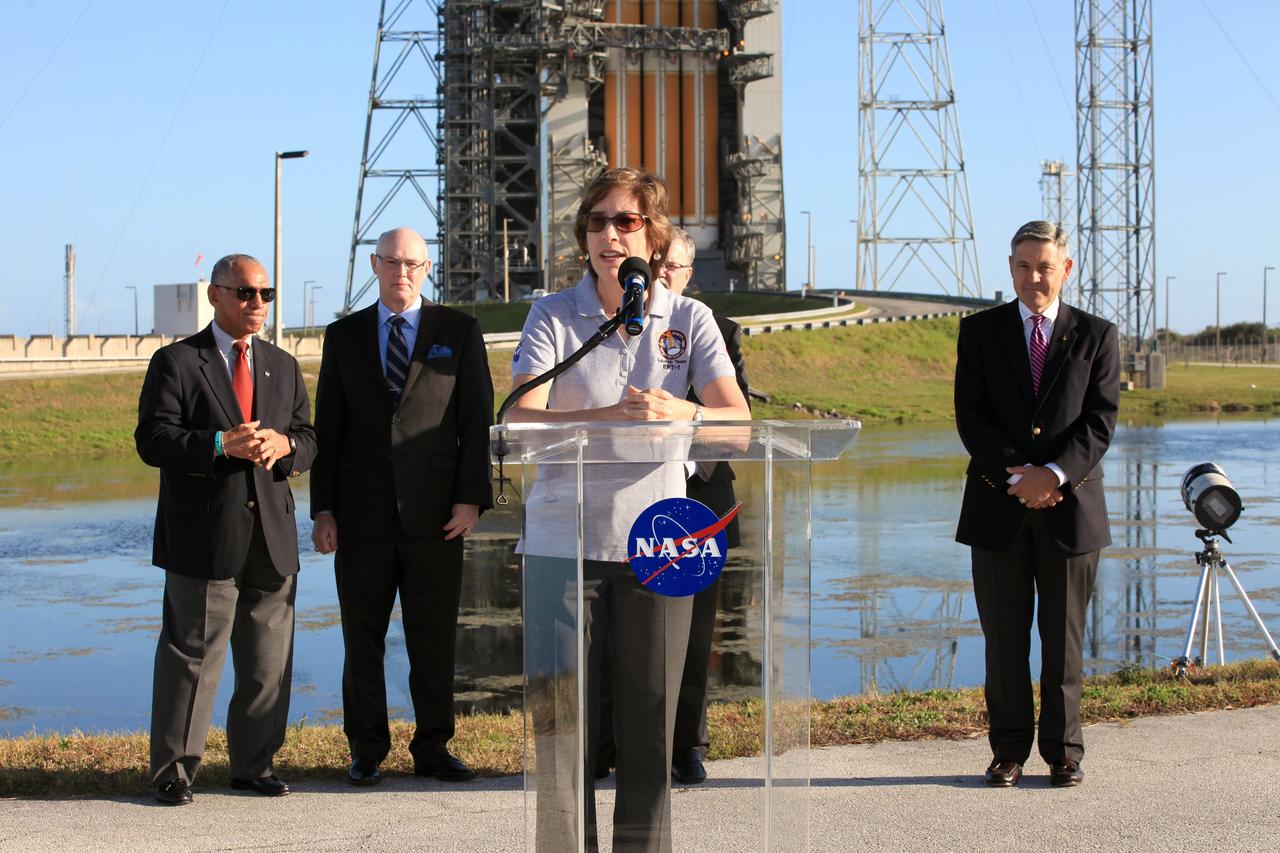
CAPE CANAVERAL, Fla. – At Cape Canaveral Air Force Station's Launch Complex 37, Johnson Space Center Director Ellen Ochoa speaks to members of the news media as the Orion spacecraft and its United Launch Alliance Delta IV Heavy rocket were being prepared for launch. Behind Ochoa, from the left, are NASA Administrator Charlie Bolden, United Launch Alliance CEO Tory Bruno, Lockheed Martin Orion Program Manager Mike Hawes and Kennedy Space Center Director Bob Cabana. For more information, visit www.nasa.gov/orion. Photo credit: NASA/Kim Shiflett
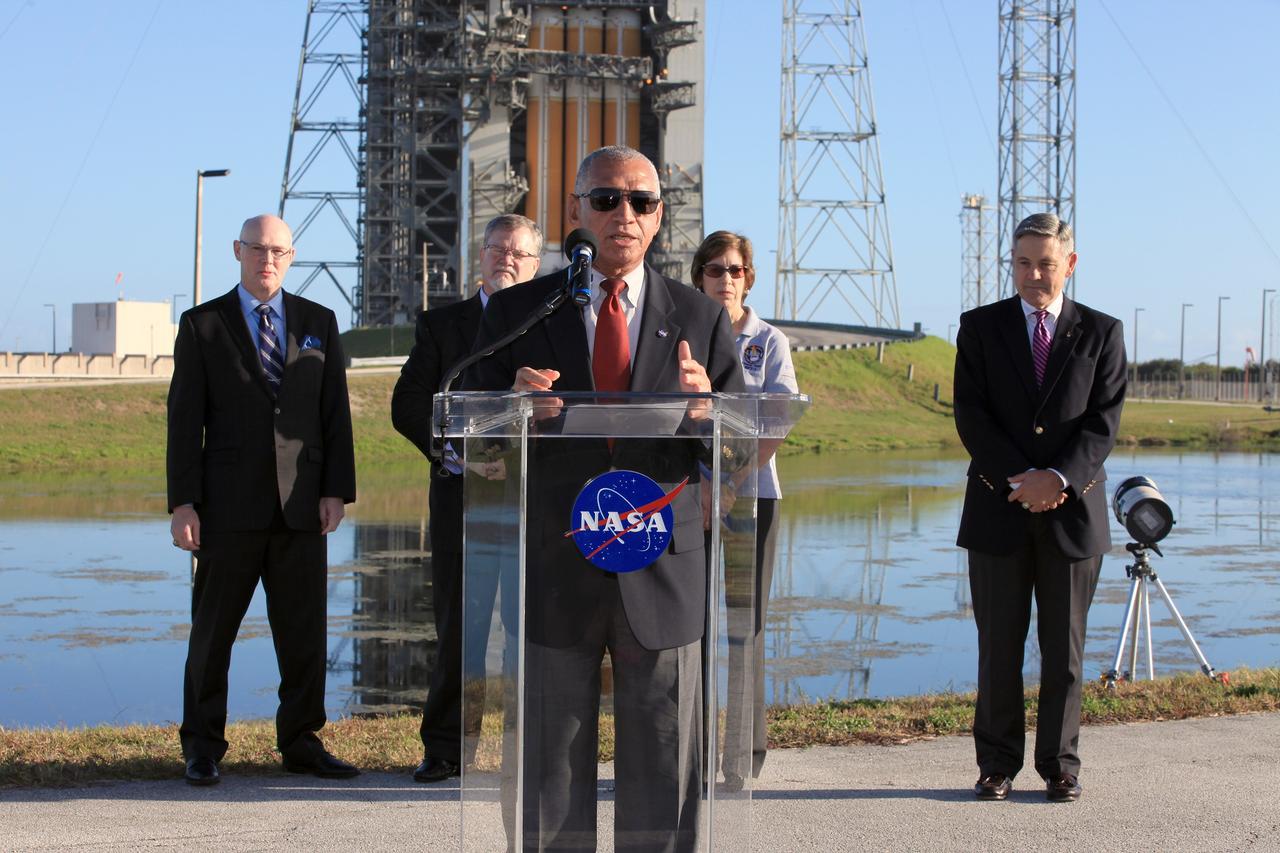
CAPE CANAVERAL, Fla. – At Cape Canaveral Air Force Station's Launch Complex 37, NASA Administrator Charlie Bolden speaks to members of the news media as the Orion spacecraft and its United Launch Alliance Delta IV Heavy rocket were being prepared for launch. Behind Bolden, from the left, are United Launch Alliance CEO Tory Bruno, Lockheed Martin Orion Program Manager Mike Hawes, Johnson Space Center Director Ellen Ochoa and Kennedy Space Center Director Bob Cabana. For more information, visit www.nasa.gov/orion. Photo credit: NASA/Kim Shiflett
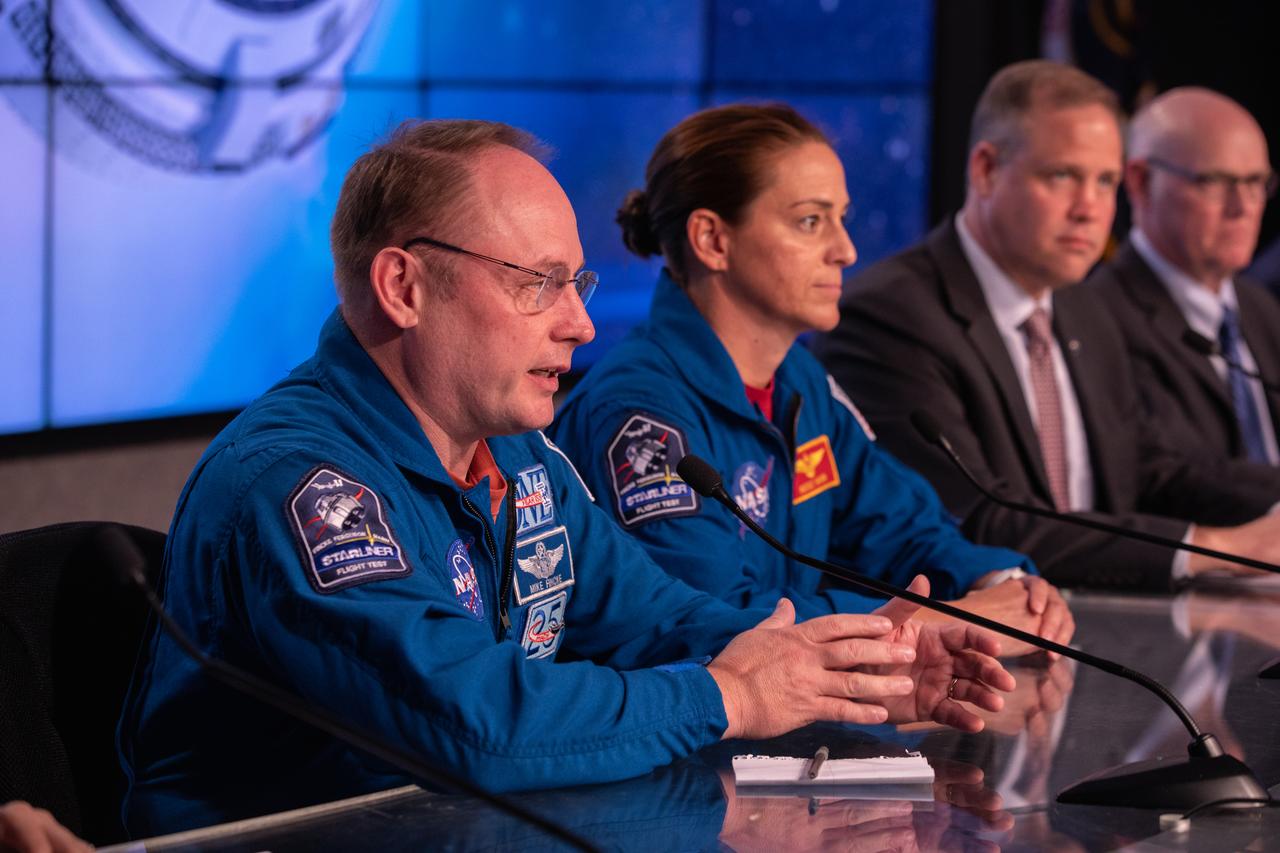
NASA astronaut Mike Fincke, left, speaks during a briefing at the agency’s Kennedy Space Center in Florida following launch of Boeing’s Orbital Flight Test, Dec. 20, 2019. Beside him are NASA astronaut Nicole Mann; Jim Bridenstine, NASA Administrator; and Tory Bruno, president and CEO, United Launch Alliance. Boeing’s CST-100 Starliner spacecraft launched atop a United Launch Alliance Atlas V rocket from Space Launch Complex 41 at Cape Canaveral Air Force Station at 6:36 a.m. EST. The uncrewed Orbital Flight Test is the Starliner’s first flight for NASA’s Commercial Crew Program.
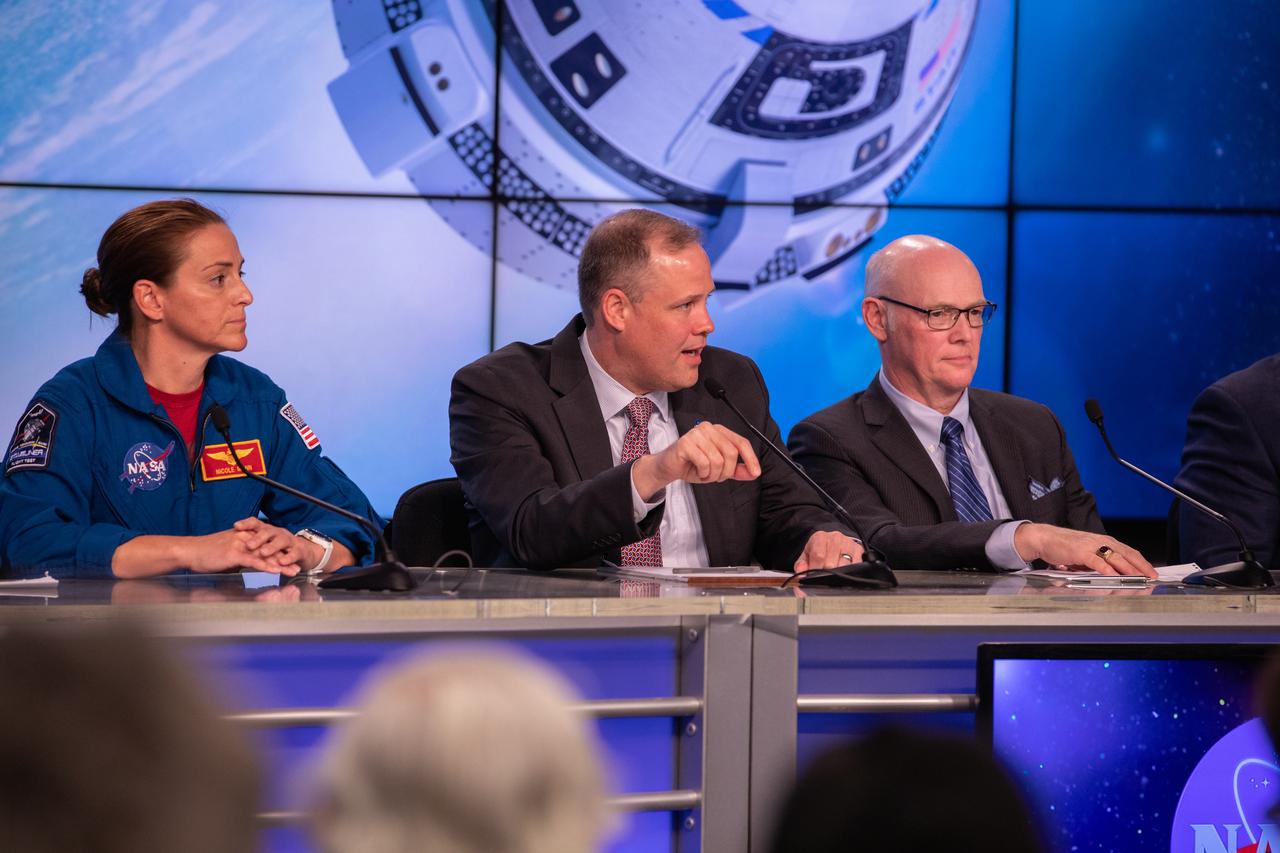
NASA Administrator Jim Bridenstine speaks during a briefing at the agency’s Kennedy Space Center in Florida following launch of Boeing’s Orbital Flight Test, Dec. 20, 2019. Beside him are NASA astronaut Nicole Mann, left, and Tory Bruno, president and CEO of United Launch Alliance. Boeing’s CST-100 Starliner spacecraft launched atop a United Launch Alliance Atlas V rocket from Space Launch Complex 41 at Cape Canaveral Air Force Station at 6:36 a.m. EST. The uncrewed Orbital Flight Test is the Starliner’s first flight for NASA’s Commercial Crew Program.
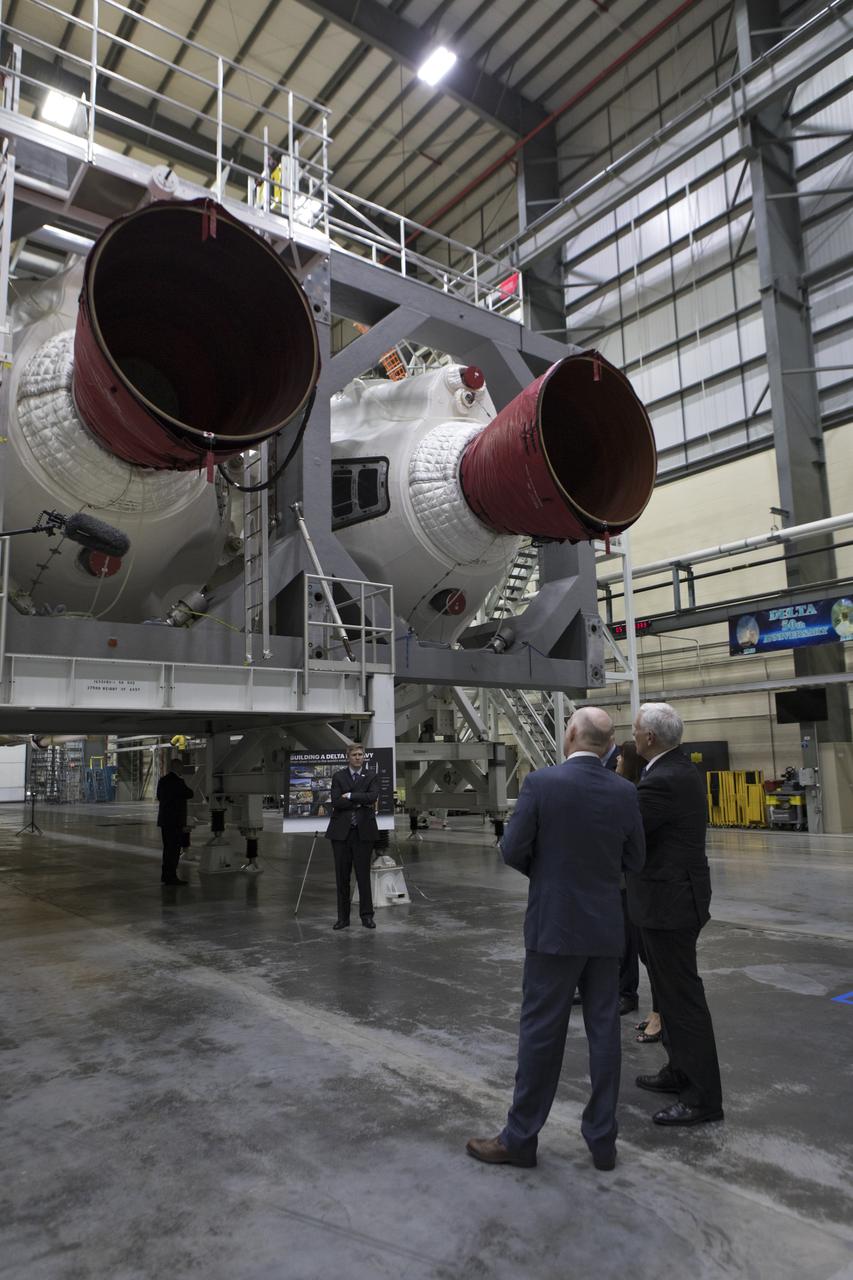
United Launch Alliance (ULA) president and CEO Tory Bruno, left, leads a tour in the ULA Horizontal Integration Facility (HIF), at Cape Canaveral Air Force Station in Florida for Vice President Mike Pence on Feb. 20, 2018. The HIF is where the Delta IV Heavy boosters are being processed for NASA’s upcoming Parker Solar Probe mission. During his visit, Pence will chair a meeting of the National Space Council on Feb. 21, 2018 in the high bay of NASA Kennedy Space Center’s Space Station Processing Facility. The council's role is to advise the president regarding national space policy and strategy, and review the nation's long-range goals for space activities.
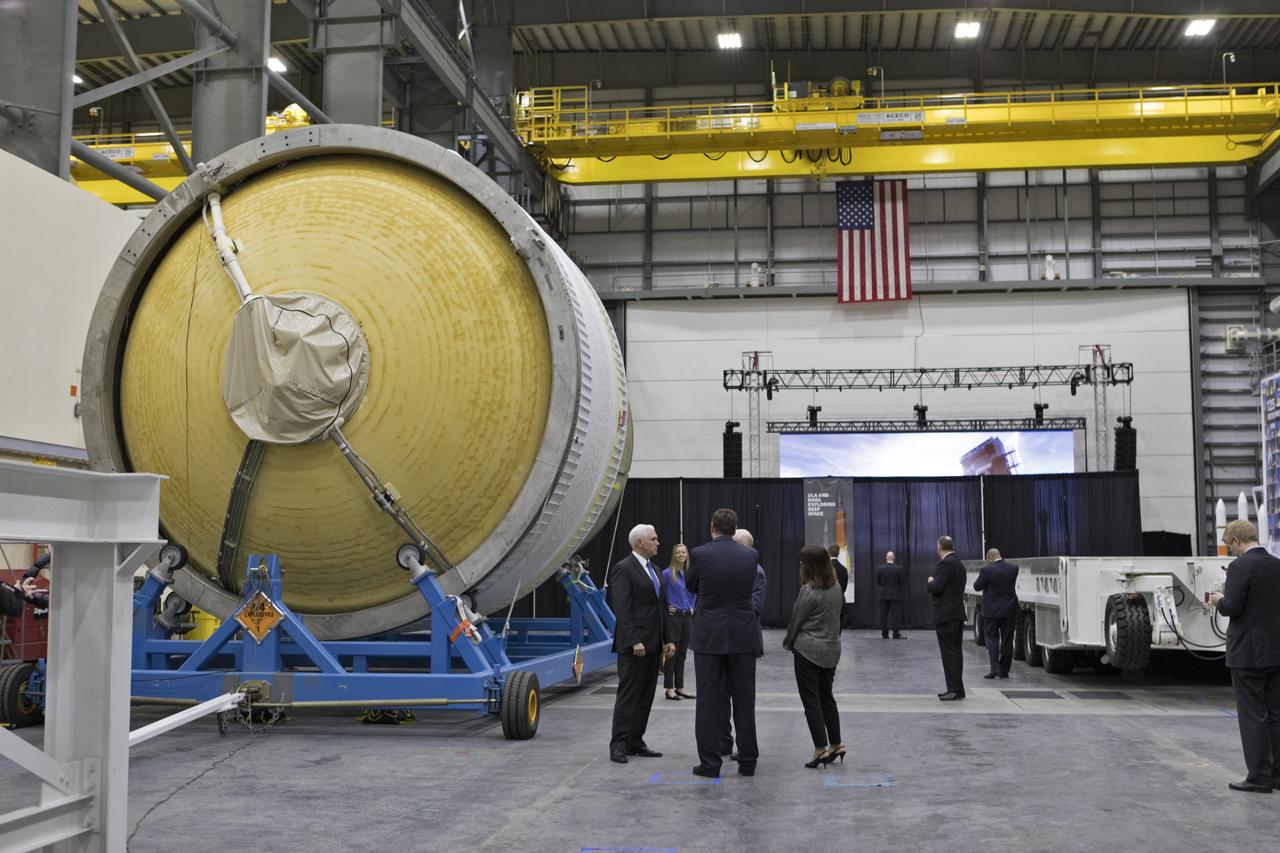
United Launch Alliance (ULA) president and CEO Tory Bruno leads a tour for Vice President Mike Pence, his wife, Karen Pence, and NASA Acting Administrator Robert Lightfoot on Feb. 20, 2018. They are in the ULA Horizontal Integration Facility (HIF), at Cape Canaveral Air Force Station in Florida. The HIF is where the Delta IV Heavy boosters are being processed for NASA’s upcoming Parker Solar Probe mission. During his visit, Pence will chair a meeting of the National Space Council on Feb. 21, 2018 in the high bay of NASA Kennedy Space Center’s Space Station Processing Facility. The council's role is to advise the president regarding national space policy and strategy, and review the nation's long-range goals for space activities.
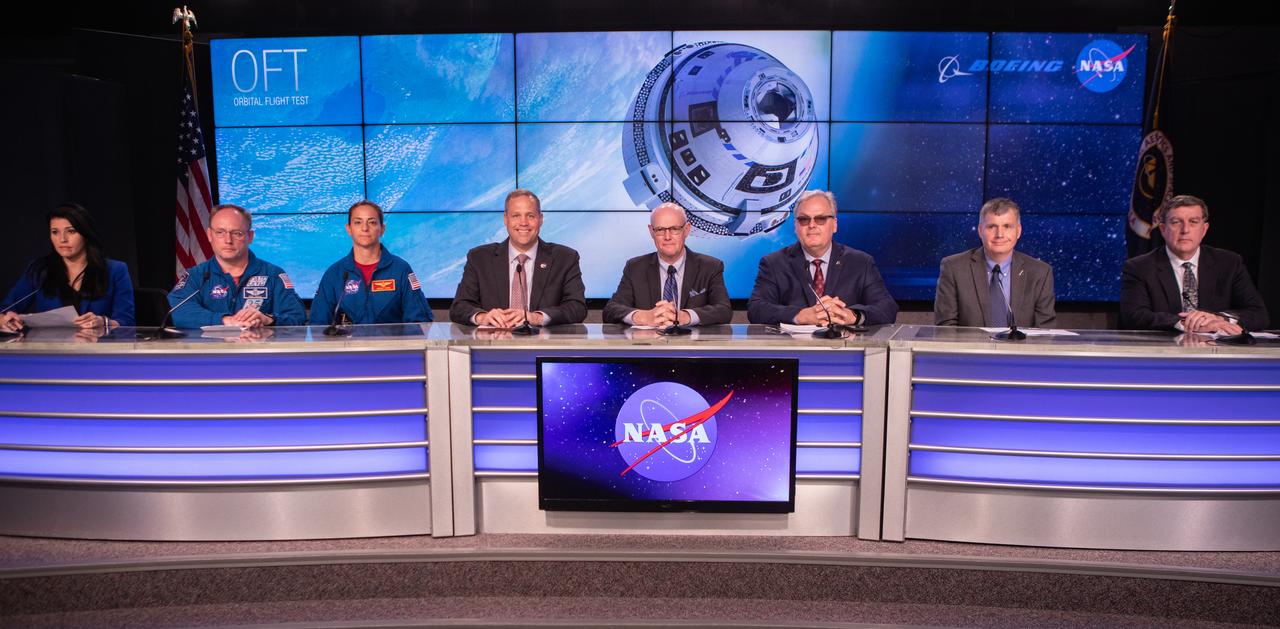
Officials from NASA, Boeing and United Launch Alliance participate in a briefing at the agency’s Kennedy Space Center in Florida following launch of Boeing’s Orbital Flight Test, Dec. 20, 2019. From left to right are Bettina Inclan, NASA Communications; NASA astronauts Mike Fincke and Nicole Mann; Jim Bridenstine, NASA Administrator; Tory Bruno, President and CEO, United Launch Alliance; Jim Chilton, Boeing senior vice president, Space and Launch Division; Steve Stich, deputy manager, NASA Commercial Crew Program; and Kirk Shireman, manager, International Space Station Program. Boeing’s CST-100 Starliner spacecraft launched atop a United Launch Alliance Atlas V rocket from Space Launch Complex 41 at Cape Canaveral Air Force Station at 6:36 a.m. EST. The uncrewed Orbital Flight Test is the Starliner’s first flight for NASA’s Commercial Crew Program.
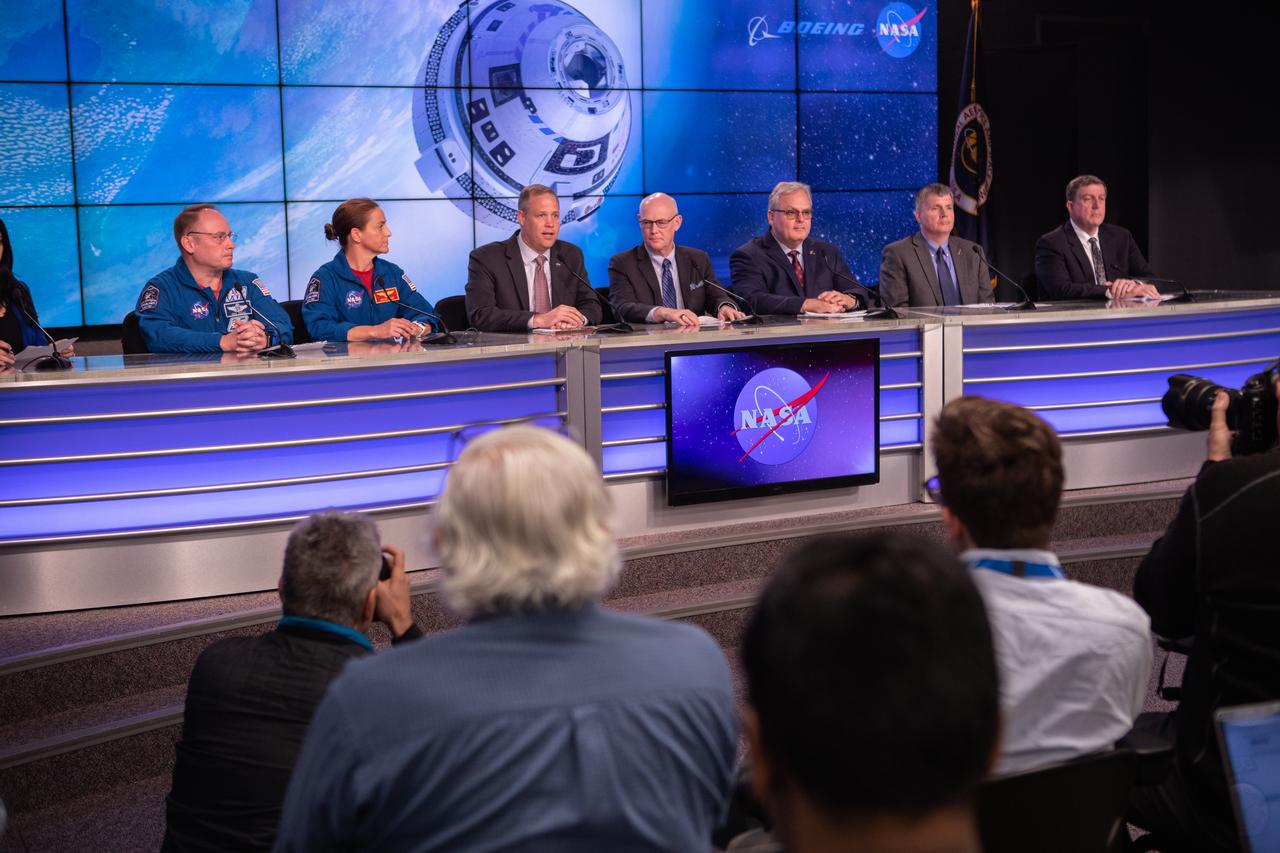
Officials from NASA, Boeing and United Launch Alliance participate in a briefing at the agency’s Kennedy Space Center in Florida following launch of Boeing’s Orbital Flight Test, Dec. 20, 2019. From left to right are NASA astronauts Mike Fincke and Nicole Mann; Jim Bridenstine, NASA Administrator; Tory Bruno, President and CEO, United Launch Alliance; Jim Chilton, Boeing senior vice president, Space and Launch Division; Steve Stich, deputy manager, NASA Commercial Crew Program; and Kirk Shireman, manager, International Space Station Program. Boeing’s CST-100 Starliner spacecraft launched atop a United Launch Alliance Atlas V rocket from Space Launch Complex 41 at Cape Canaveral Air Force Station at 6:36 a.m. EST. The uncrewed Orbital Flight Test is the Starliner’s first flight for NASA’s Commercial Crew Program.
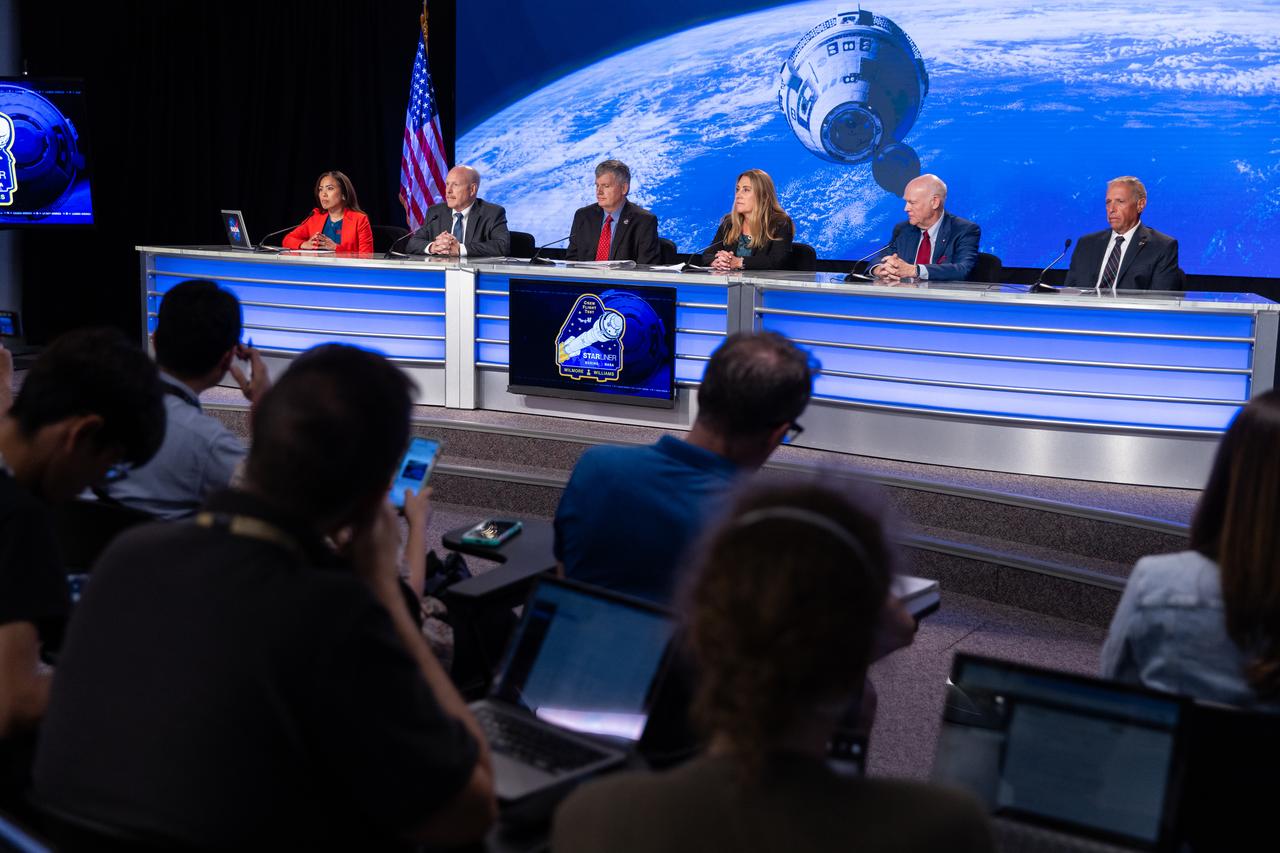
After the first launch attempt of NASA’s Boeing Crew Flight Test, a news conference is held on Monday, May 6, 2024, at the agency’s Kennedy Space Center in Florida. As part of the agency’s Commercial Crew Program, the first crewed launch to the International Space Station aboard Boeing’s Starliner spacecraft atop a United Launch Alliance Atlas V rocket from Space Launch Complex-41 at nearby Cape Canaveral Space Force Station was targeted for 10:34 p.m. ET but scrubbed for the day. Participants, from left to right are, Megan Cruz, NASA Communications; NASA Associate Administrator for Space Operations Ken Bowersox; NASA Commercial Crew Program Manager Steve Stich; NASA International Space Station Program Manager Dana Weigel; ULA (United Launch Alliance) President and CEO, Tory Bruno; and Vice President and Program Manager of Boeing’s Commercial Crew Program Mark Nappi.
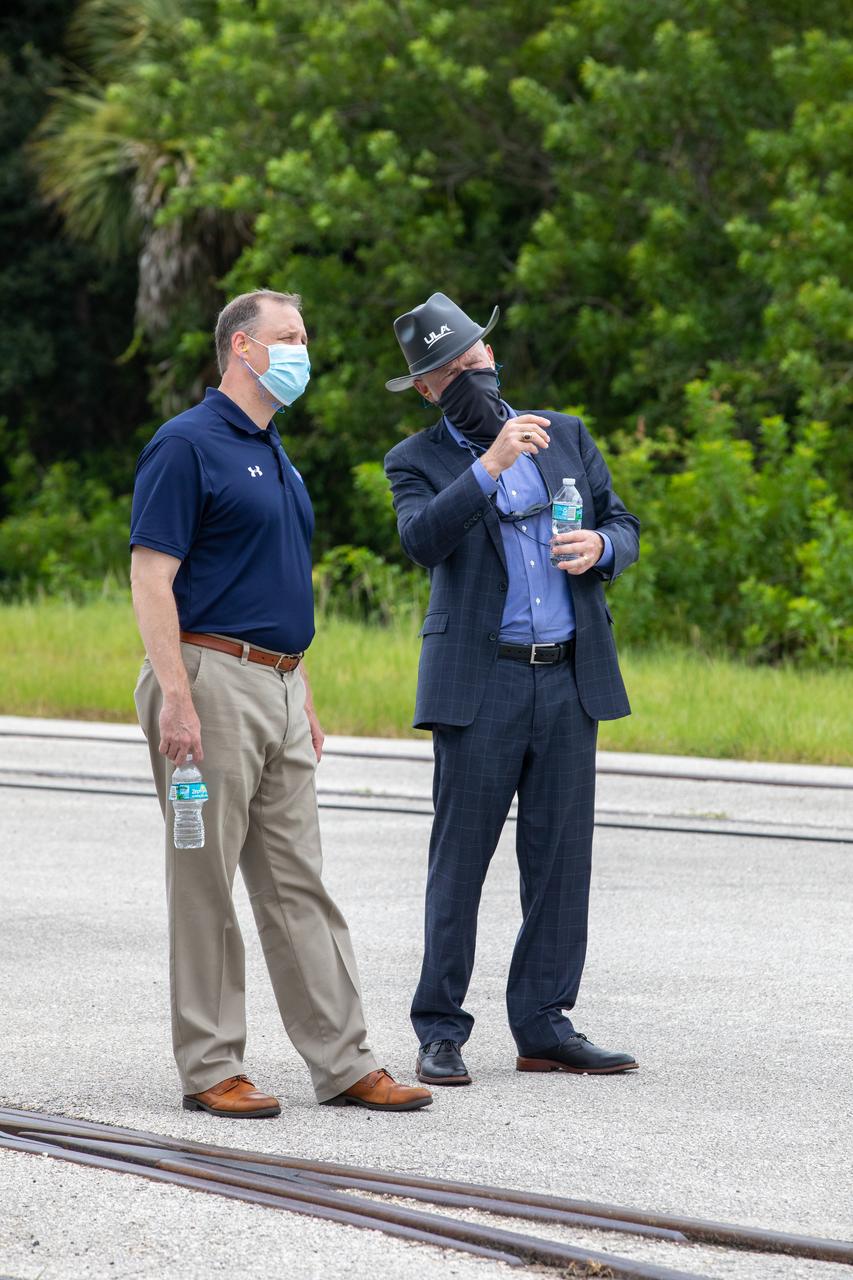
NASA Administrator Jim Bridenstine, at left, and Tory Bruno, CEO of United Launch Alliance (ULA), watch the rollout of the ULA Atlas V 541 rocket, carrying NASA’s Mars Perseverance rover and Ingenuity helicopter, as it rolls along to the launch pad at Space Launch Complex 41 at Cape Canaveral Air Force Station on July 28, 2020. First motion was at 10:24 a.m. EDT. Launch of the Mars 2020 mission is scheduled for July 30. The rover is part of NASA’s Mars Exploration Program, a long-term effort of robotic exploration of the Red Planet. The rover will search for habitable conditions in the ancient past and signs of past microbial life on Mars. The Launch Services Program at Kennedy is responsible for launch management.
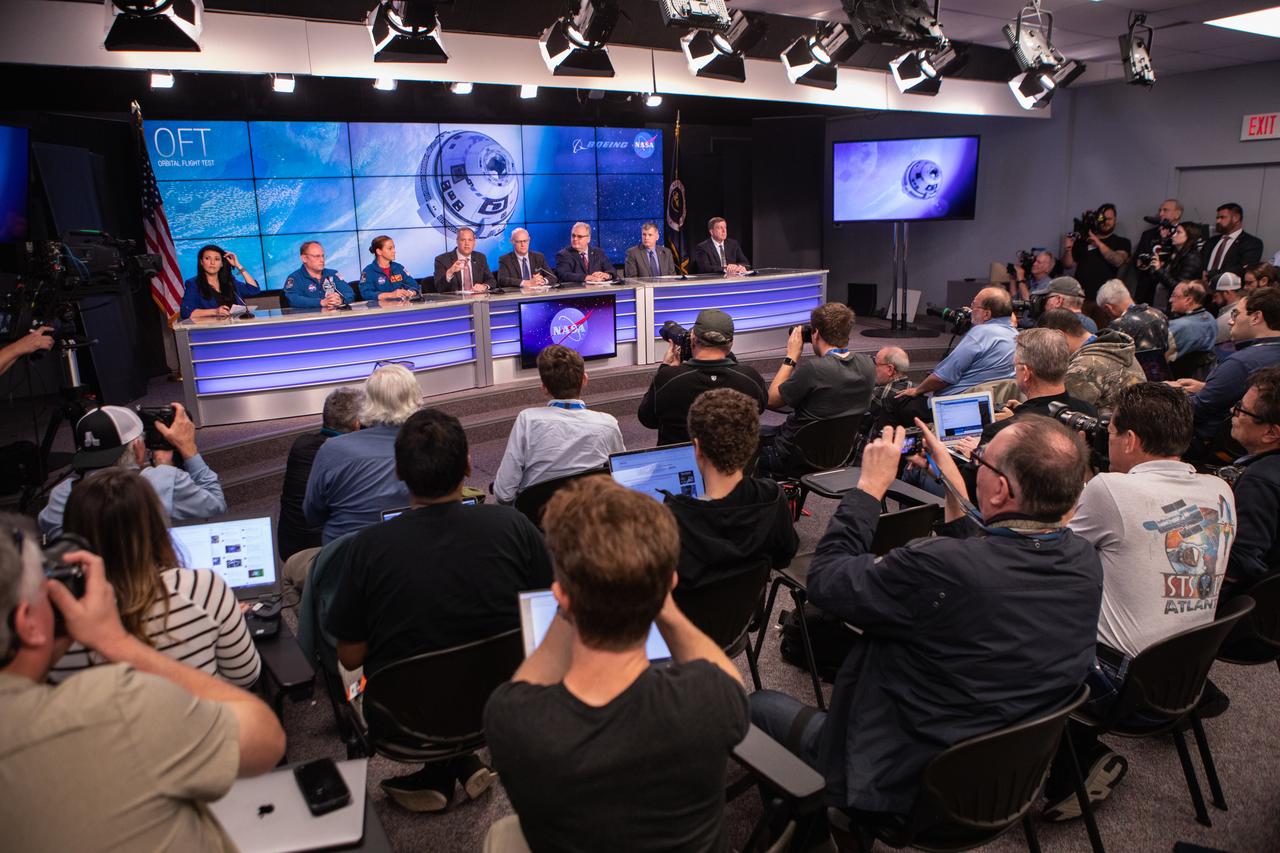
Officials from NASA, Boeing and United Launch Alliance participate in a briefing at the agency’s Kennedy Space Center in Florida following launch of Boeing’s Orbital Flight Test, Dec. 20, 2019. From left to right are Bettina Inclan, NASA Communications; NASA astronauts Mike Fincke and Nicole Mann; Jim Bridenstine, NASA Administrator; Tory Bruno, President and CEO, United Launch Alliance; Jim Chilton, Boeing senior vice president, Space and Launch Division; Steve Stich, deputy manager, NASA Commercial Crew Program; and Kirk Shireman, manager, International Space Station Program. Boeing’s CST-100 Starliner spacecraft launched atop a United Launch Alliance Atlas V rocket from Space Launch Complex 41 at Cape Canaveral Air Force Station at 6:36 a.m. EST. The uncrewed Orbital Flight Test is the Starliner’s first flight for NASA’s Commercial Crew Program.
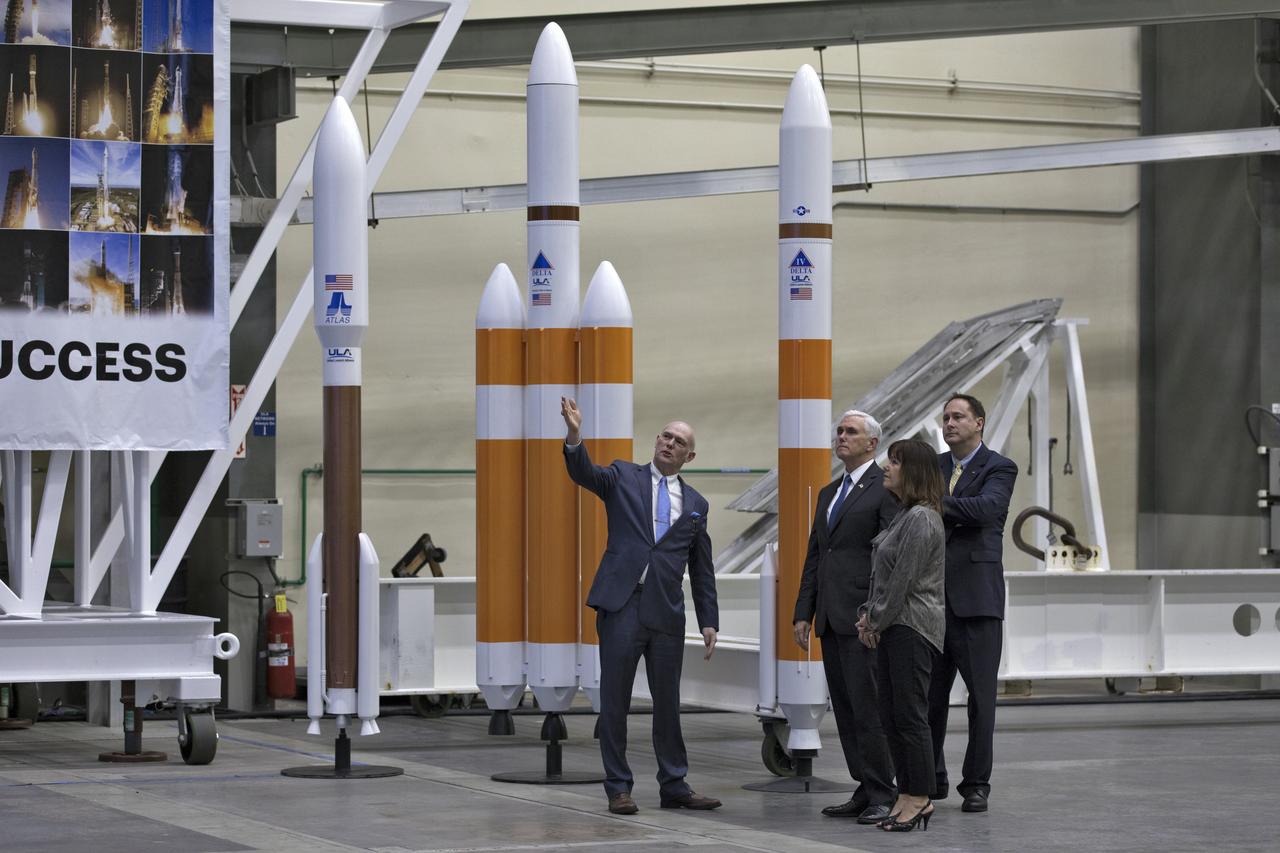
From the left, United Launch Alliance (ULA) president and CEO Tory Bruno leads a tour for Vice President Mike Pence, his wife, Karen Pence, and NASA Acting Administrator Robert Lightfoot on Feb. 20, 2018. They are in the ULA Horizontal Integration Facility (HIF), at Cape Canaveral Air Force Station in Florida. The HIF is where the Delta IV Heavy boosters are being processed for NASA’s upcoming Parker Solar Probe mission. During his visit, Pence will chair a meeting of the National Space Council on Feb. 21, 2018 in the high bay of NASA Kennedy Space Center’s Space Station Processing Facility. The council's role is to advise the president regarding national space policy and strategy, and review the nation's long-range goals for space activities.
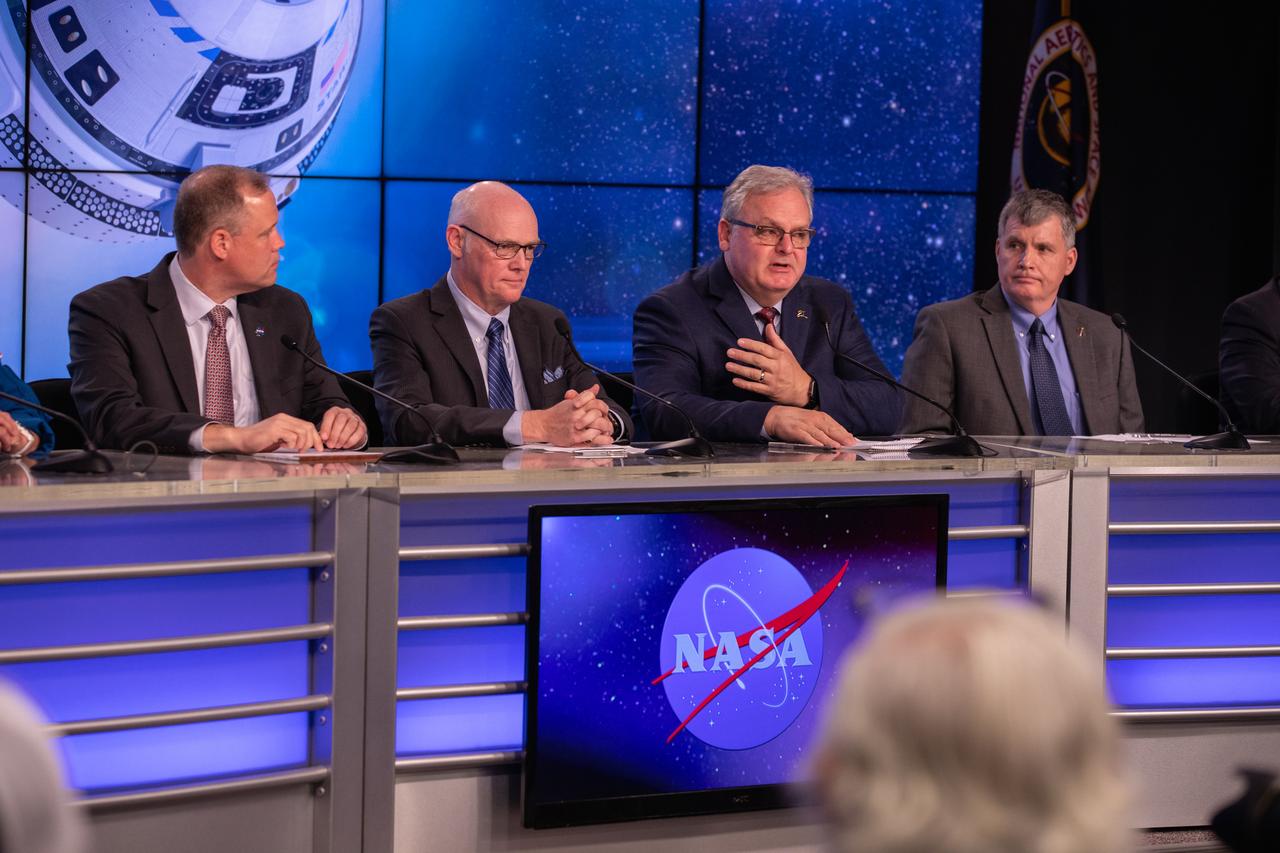
Jim Chilton, Boeing senior vice president, Space and Launch Division, speaks during a briefing at NASA’s Kennedy Space Center in Florida following launch of Boeing’s Orbital Flight Test, Dec. 20, 2019. From left to right are Jim Bridenstine, NASA Administrator; Tory Bruno, president and CEO, United Launch Alliance; Chilton; and Steve Stich, deputy manager, NASA Commercial Crew Program. Boeing’s CST-100 Starliner spacecraft launched atop a United Launch Alliance Atlas V rocket from Space Launch Complex 41 at Cape Canaveral Air Force Station at 6:36 a.m. EST. The uncrewed Orbital Flight Test is the Starliner’s first flight for NASA’s Commercial Crew Program.
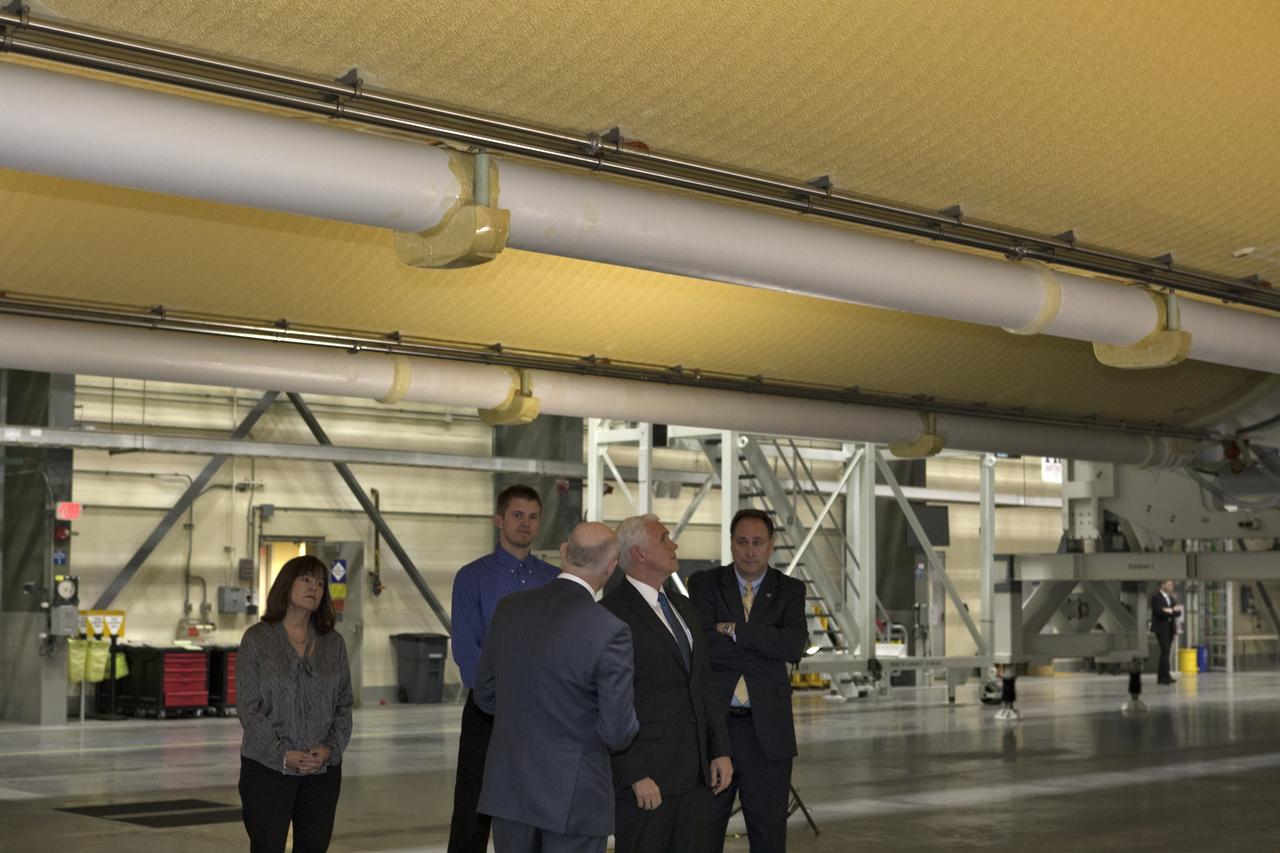
United Launch Alliance (ULA) president and CEO Tory Bruno leads a tour for Vice President Mike Pence, his wife, Karen Pence, and NASA Acting Administrator Robert Lightfoot on Feb. 20, 2018. They are in the ULA Horizontal Integration Facility (HIF), at Cape Canaveral Air Force Station in Florida. The HIF is where the Delta IV Heavy boosters are being processed for NASA’s upcoming Parker Solar Probe mission. During his visit, Pence will chair a meeting of the National Space Council on Feb. 21, 2018 in the high bay of NASA Kennedy Space Center’s Space Station Processing Facility. The council's role is to advise the president regarding national space policy and strategy, and review the nation's long-range goals for space activities.
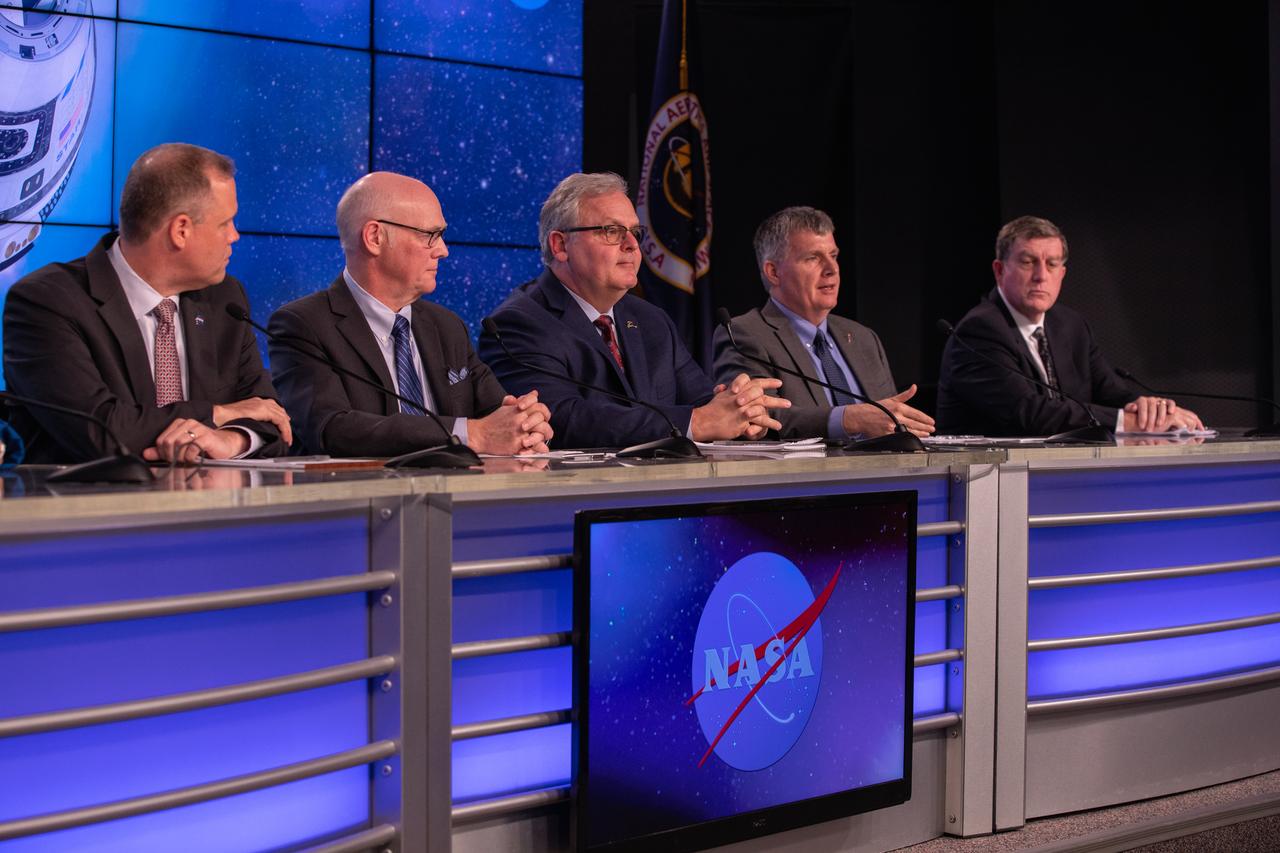
Officials from NASA, Boeing and United Launch Alliance participate in a briefing at the agency’s Kennedy Space Center in Florida following launch of Boeing’s Orbital Flight Test, Dec. 20, 2019. From left to right are Jim Bridenstine, NASA Administrator; Tory Bruno, president and CEO, United Launch Alliance; Jim Chilton, Boeing senior vice president, Space and Launch Division; Steve Stich, deputy manager, NASA Commercial Crew Program; and Kirk Shireman, manager of NASA’s International Space Station Program. Boeing’s CST-100 Starliner spacecraft launched atop a United Launch Alliance Atlas V rocket from Space Launch Complex 41 at Cape Canaveral Air Force Station at 6:36 a.m. EST. The uncrewed Orbital Flight Test is the Starliner’s first flight for NASA’s Commercial Crew Program.
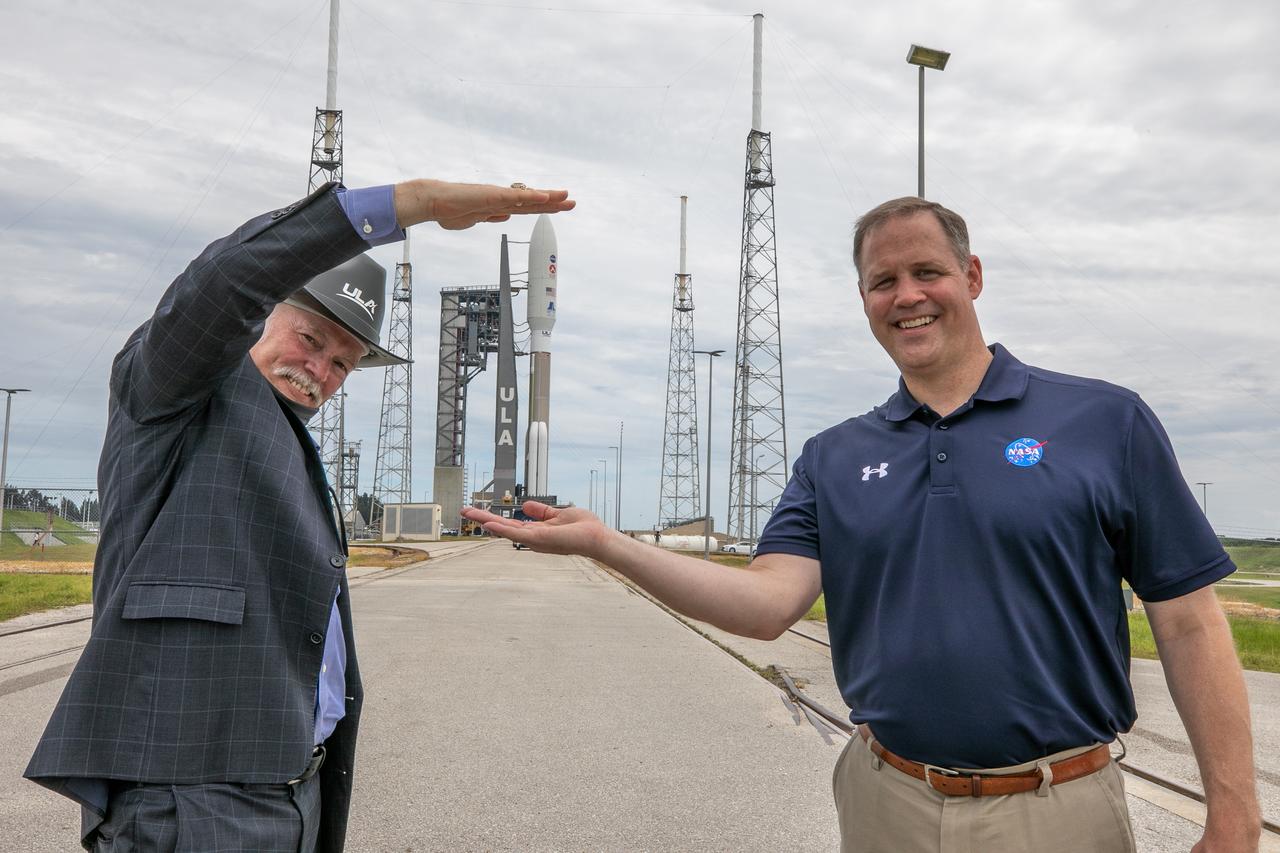
NASA Administrator Jim Bridenstine, at right, and Tory Bruno, CEO of United Launch Alliance (ULA), watch the rollout of the ULA Atlas V 541 rocket, carrying NASA’s Mars Perseverance rover and Ingenuity helicopter, as it rolls along to the launch pad at Space Launch Complex 41 at Cape Canaveral Air Force Station on July 28, 2020. First motion was at 10:24 a.m. EDT. Launch of the Mars 2020 mission is scheduled for July 30. The rover is part of NASA’s Mars Exploration Program, a long-term effort of robotic exploration of the Red Planet. The rover will search for habitable conditions in the ancient past and signs of past microbial life on Mars. The Launch Services Program at Kennedy is responsible for launch management.
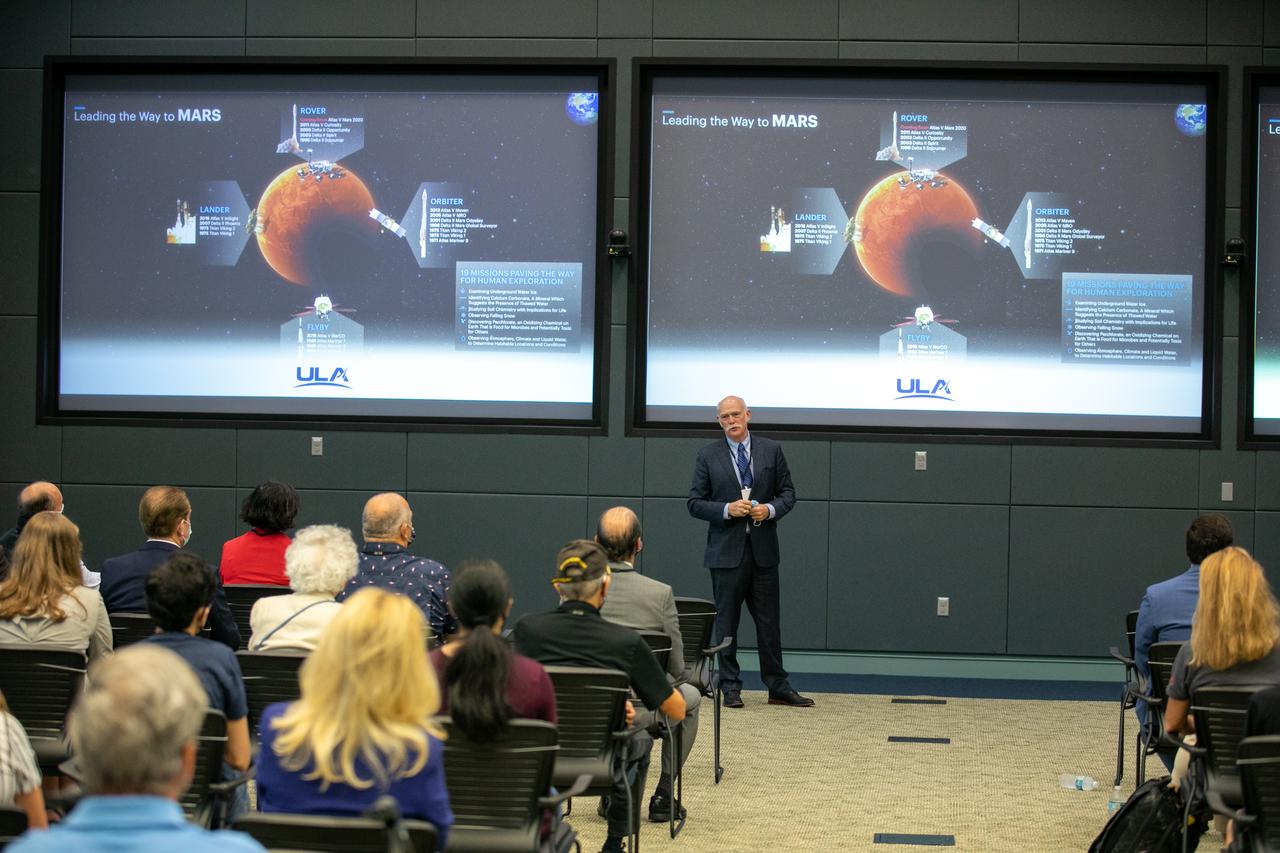
Tory Bruno, president and CEO of United Launch Alliance, participates in a Mars 2020 VIP briefing at the Operations and Support Building II at NASA’s Kennedy Space Center in Florida on July 30, 2020, before launch of the Mars Perseverance rover and Ingenuity helicopter on a United Launch Alliance Atlas V 541 rocket from Space Launch Complex 41 at nearby Cape Canaveral Air Force Station. Liftoff occurred at 7:50 a.m. The rover is part of NASA’s Mars Exploration Program, a long-term effort of robotic exploration of the Red Planet. The rover will search for habitable conditions in the ancient past and signs of past microbial life on Mars. The Launch Services Program at Kennedy is responsible for launch management.
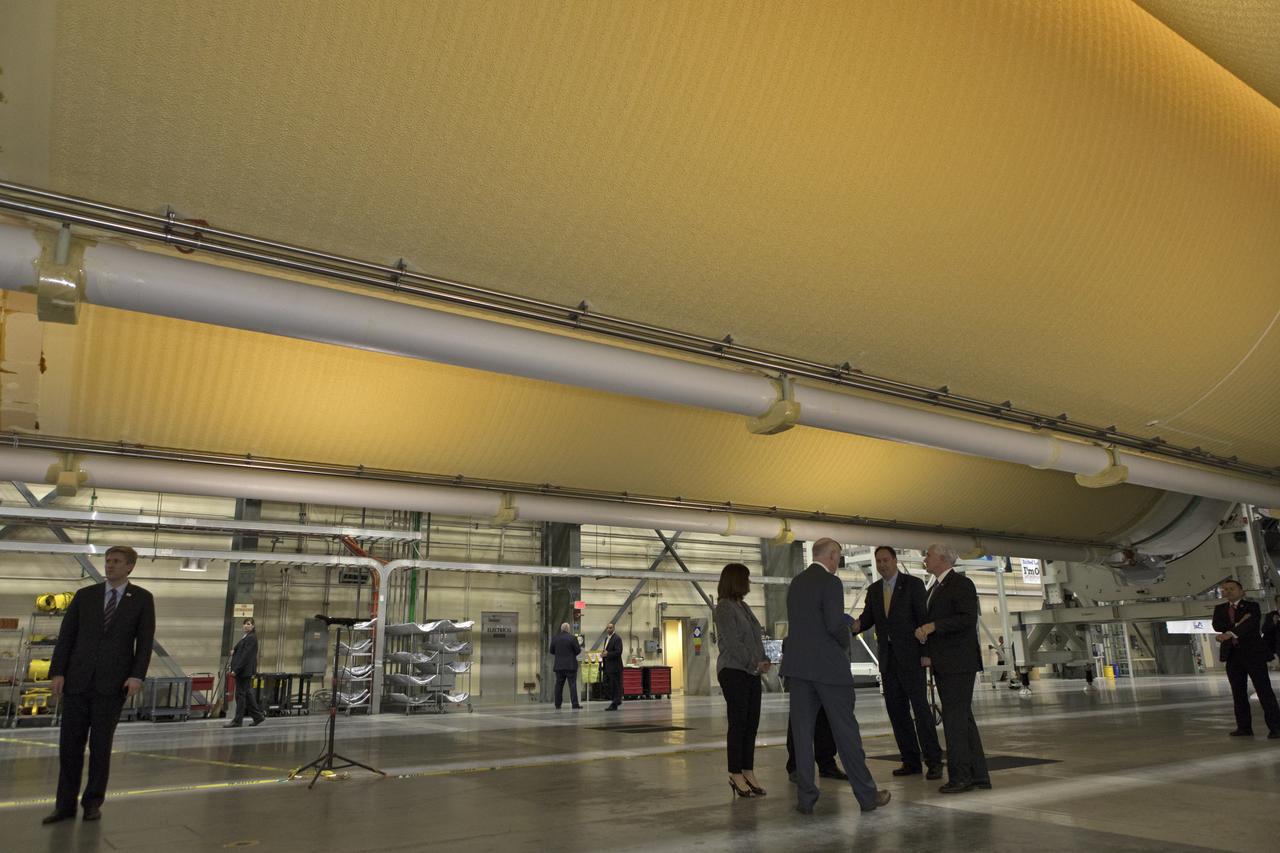
United Launch Alliance (ULA) president and CEO Tory Bruno leads a tour for Vice President Mike Pence, his wife, Karen Pence, and NASA Acting Administrator Robert Lightfoot on Feb. 20, 2018. They are in the ULA Horizontal Integration Facility (HIF), at Cape Canaveral Air Force Station in Florida. The HIF is where the Delta IV Heavy boosters are being processed for NASA’s upcoming Parker Solar Probe mission. During his visit, Pence will chair a meeting of the National Space Council on Feb. 21, 2018 in the high bay of NASA Kennedy Space Center’s Space Station Processing Facility. The council's role is to advise the president regarding national space policy and strategy, and review the nation's long-range goals for space activities.
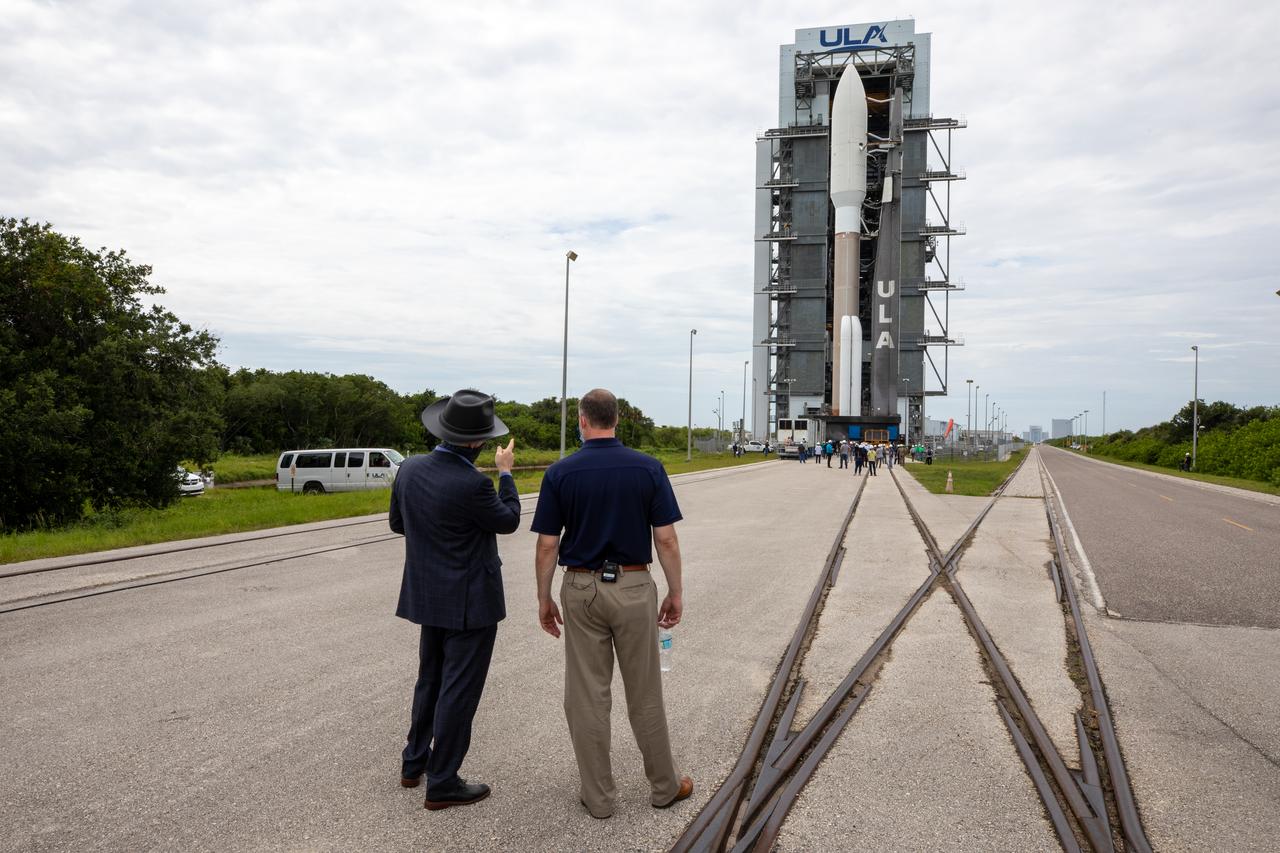
NASA Administrator Jim Bridenstine, at right, and Tory Bruno, CEO of United Launch Alliance (ULA), watch the rollout of the ULA Atlas V 541 rocket, carrying NASA’s Mars Perseverance rover and Ingenuity helicopter, as it rolls along to the launch pad at Space Launch Complex 41 at Cape Canaveral Air Force Station on July 28, 2020. First motion was at 10:24 a.m. EDT. Launch of the Mars 2020 mission is scheduled for July 30. The rover is part of NASA’s Mars Exploration Program, a long-term effort of robotic exploration of the Red Planet. The rover will search for habitable conditions in the ancient past and signs of past microbial life on Mars. The Launch Services Program at Kennedy is responsible for launch management.
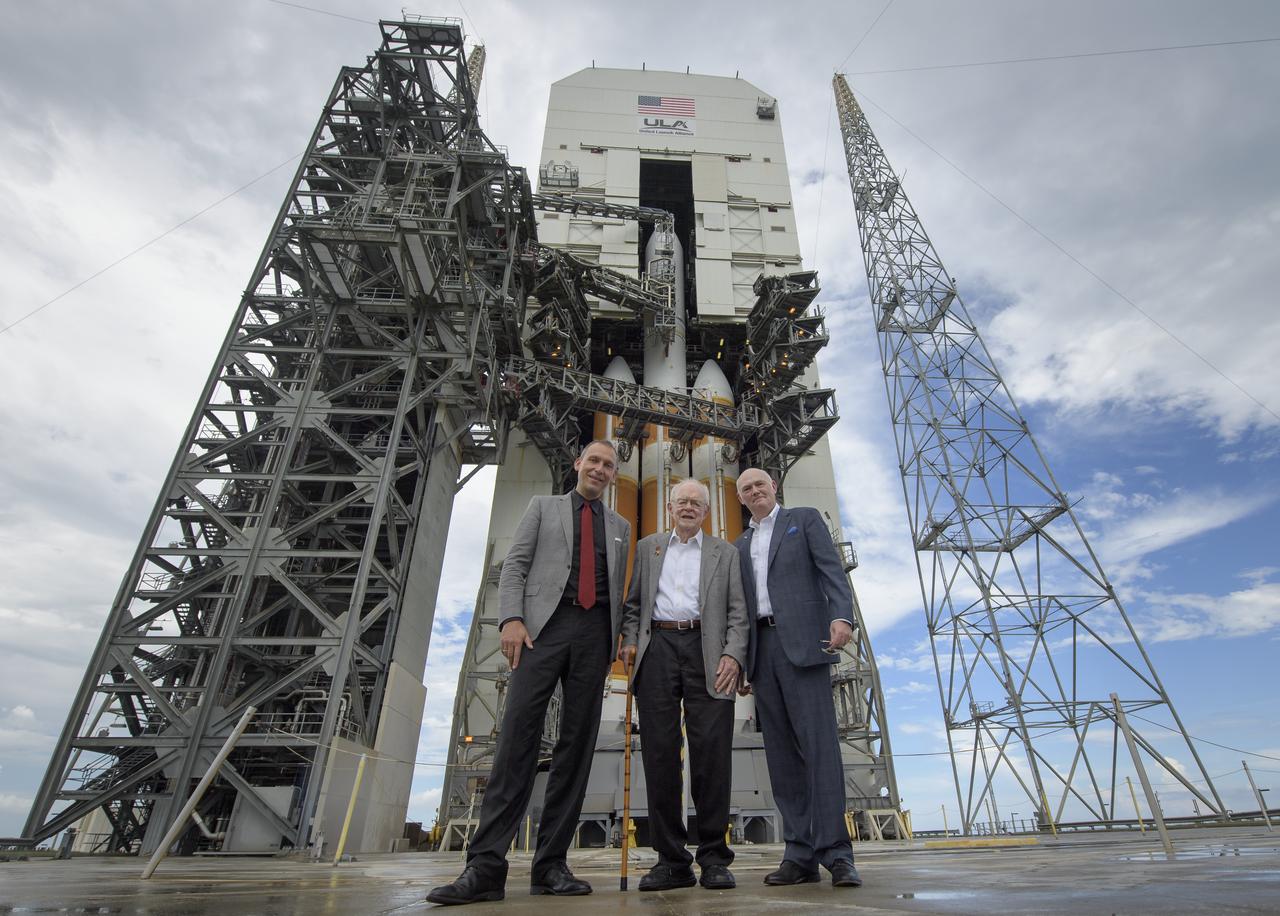
NASA Associate Administrator for the Science Mission Directorate Thomas Zurbuchen, left, American solar astrophysicist, and professor emeritus at the University of Chicago, Eugene Parker, center, and President and Chief Executive Officer for United Launch Alliance Tory Bruno pose for a group photo in front of the ULA Delta IV Heavy rocket with NASA's Parker Solar onboard, Friday, Aug. 10, 2018, Launch Complex 37 at Cape Canaveral Air Force Station, Florida. This is the first NASA mission that has been named for a living individual. Parker Solar Probe is humanity’s first-ever mission into a part of the Sun’s atmosphere called the corona. Here it will directly explore solar processes that are key to understanding and forecasting space weather events that can impact life on Earth. Photo Credit: (NASA/Bill Ingalls)
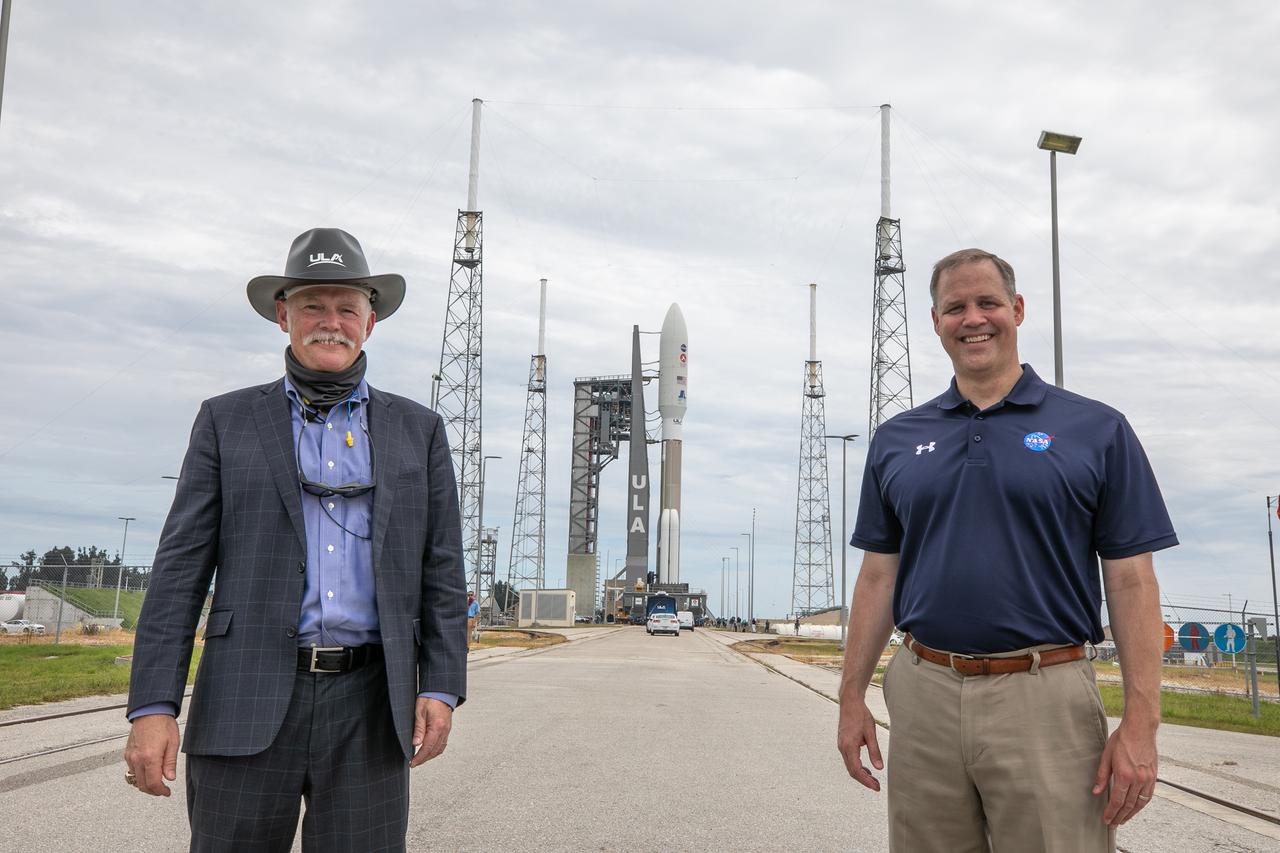
NASA Administrator Jim Bridenstine, at right, and Tory Bruno, CEO of United Launch Alliance (ULA), watch the rollout of the ULA Atlas V 541 rocket, carrying NASA’s Mars Perseverance rover and Ingenuity helicopter, as it rolls along to the launch pad at Space Launch Complex 41 at Cape Canaveral Air Force Station on July 28, 2020. First motion was at 10:24 a.m. EDT. Launch of the Mars 2020 mission is scheduled for July 30. The rover is part of NASA’s Mars Exploration Program, a long-term effort of robotic exploration of the Red Planet. The rover will search for habitable conditions in the ancient past and signs of past microbial life on Mars. The Launch Services Program at Kennedy is responsible for launch management.
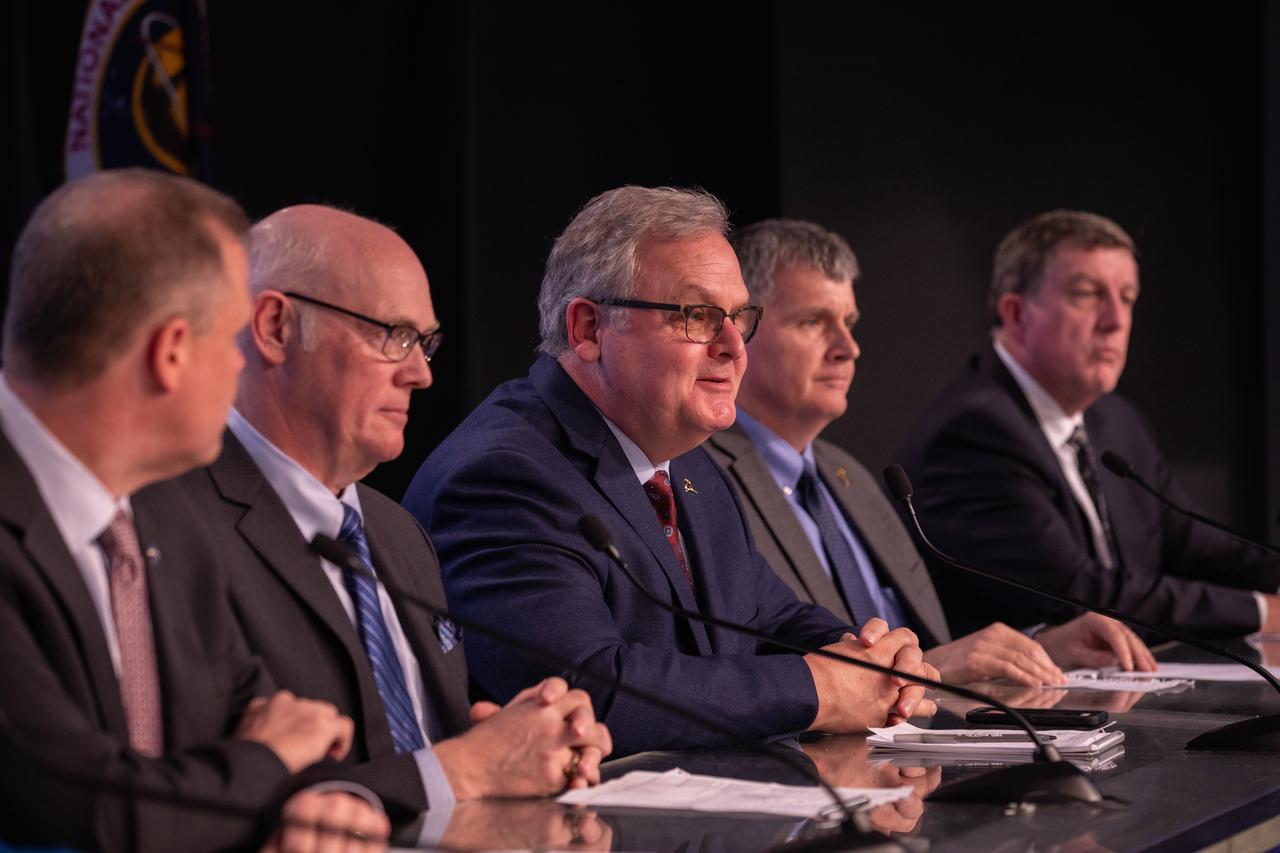
Jim Chilton, Boeing senior vice president, Space and Launch Division, speaks during a briefing at NASA’s Kennedy Space Center in Florida following launch of Boeing’s Orbital Flight Test, Dec. 20, 2019. From left to right are Jim Bridenstine, NASA Administrator; Tory Bruno, president and CEO, United Launch Alliance; Chilton; Steve Stich, deputy manager, NASA Commercial Crew Program; and Kirk Shireman, manager of NASA’s International Space Station Program. Boeing’s CST-100 Starliner spacecraft launched atop a United Launch Alliance Atlas V rocket from Space Launch Complex 41 at Cape Canaveral Air Force Station at 6:36 a.m. EST. The uncrewed Orbital Flight Test is the Starliner’s first flight for NASA’s Commercial Crew Program.
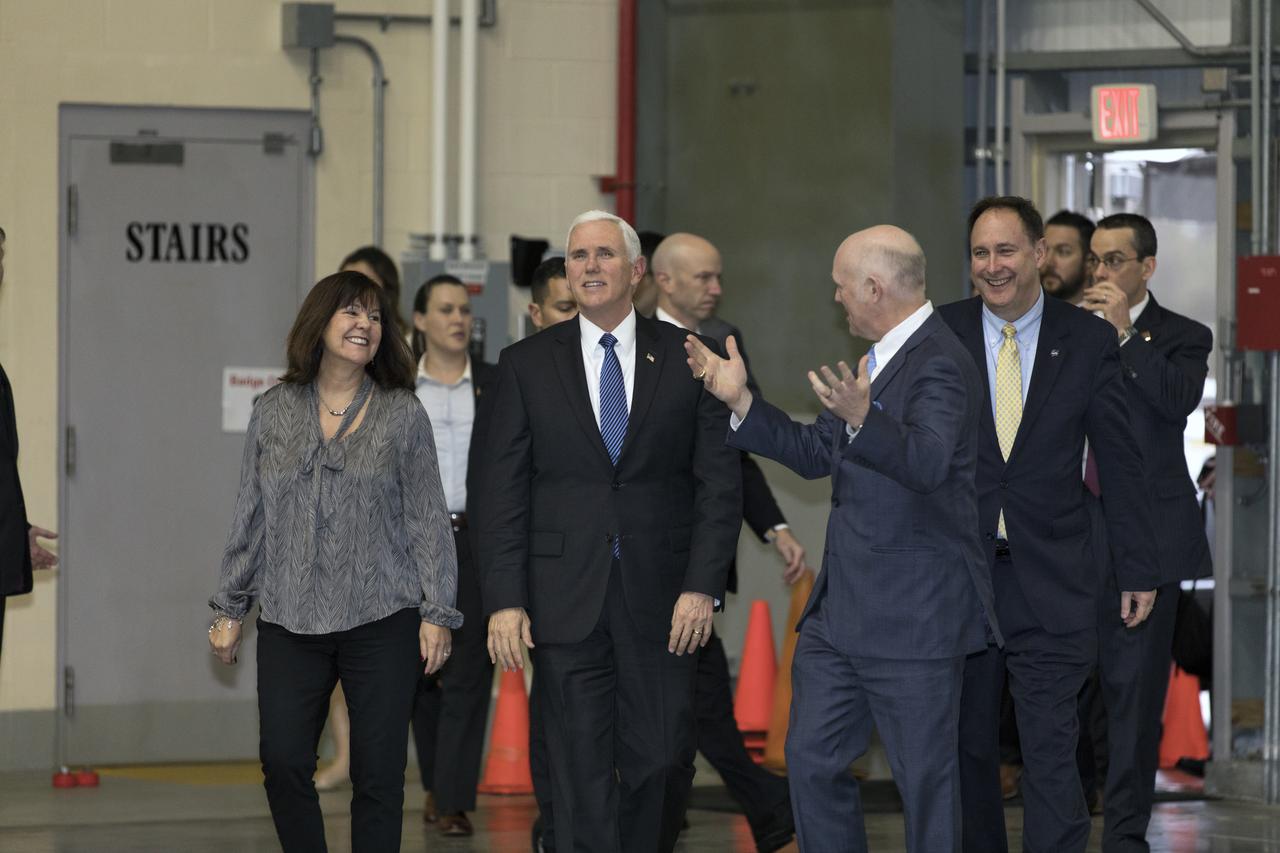
United Launch Alliance (ULA) president and CEO Tory Bruno leads a tour for Vice President Mike Pence, his wife, Karen Pence, and NASA Acting Administrator Robert Lightfoot on Feb. 20, 2018. They are in the ULA Horizontal Integration Facility (HIF), at Cape Canaveral Air Force Station in Florida. The HIF is where the Delta IV Heavy boosters are being processed for NASA’s upcoming Parker Solar Probe mission. During his visit, Pence will chair a meeting of the National Space Council on Feb. 21, 2018 in the high bay of NASA Kennedy Space Center’s Space Station Processing Facility. The council's role is to advise the president regarding national space policy and strategy, and review the nation's long-range goals for space activities.
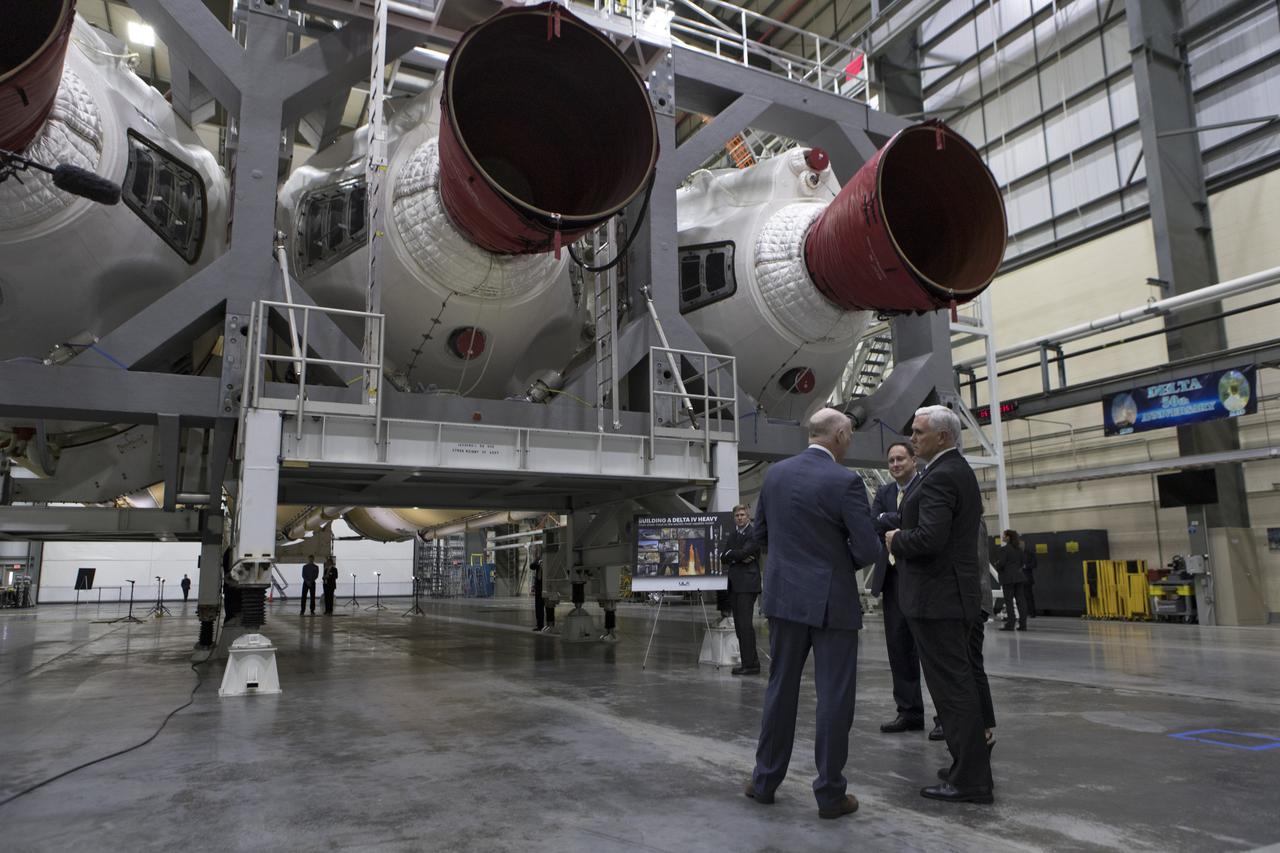
United Launch Alliance (ULA) president and CEO Tory Bruno, left leads a tour for Vice President Mike Pence on Feb. 20, 2018. Behind them is Acting NASA Administrator Robert Lightfoot. They are in the ULA Horizontal Integration Facility (HIF), at Cape Canaveral Air Force Station in Florida. The HIF is where the Delta IV Heavy boosters are being processed for NASA’s upcoming Parker Solar Probe mission. During his visit, Pence will chair a meeting of the National Space Council on Feb. 21, 2018 in the high bay of NASA Kennedy Space Center’s Space Station Processing Facility. The council's role is to advise the president regarding national space policy and strategy, and review the nation's long-range goals for space activities.
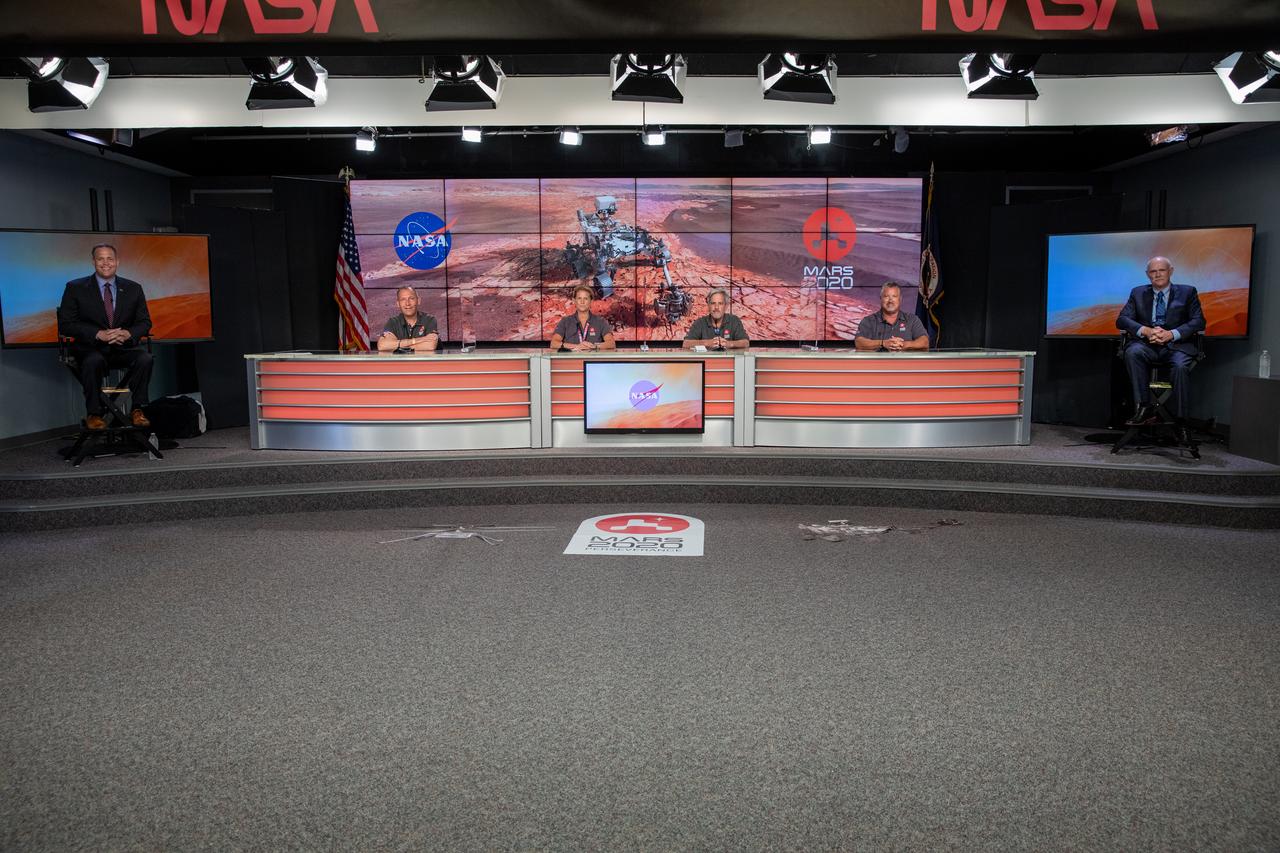
A Mars 2020 post-launch news conference is held at NASA’s Kennedy Space Center in Florida on July 30, 2020. Participants, from left, are NASA Administrator Jim Bridenstine; Thomas Zurbuchen, NASA associate administrator, Science Mission Directorate; Lori Glaze, Planetary Science Division director, NASA Headquarters; Matt Wallace, deputy project manager, NASA’s Jet Propulsion Laboratory; Omar Baez, launch director, NASA’s Launch Services Program; and Tory Bruno, president and CEO of United Launch Alliance. The United Launch Alliance Atlas V 541 rocket lifted off from Space Launch Complex 41 at Cape Canaveral Air Force Station at 7:50 a.m. EDT, carrying the agency’s Mars Perseverance rover and Ingenuity helicopter. The rover is part of NASA’s Mars Exploration Program, a long-term effort of robotic exploration of the Red Planet. The rover will search for habitable conditions in the ancient past and signs of past microbial life on Mars. The Launch Services Program at Kennedy is responsible for launch management.
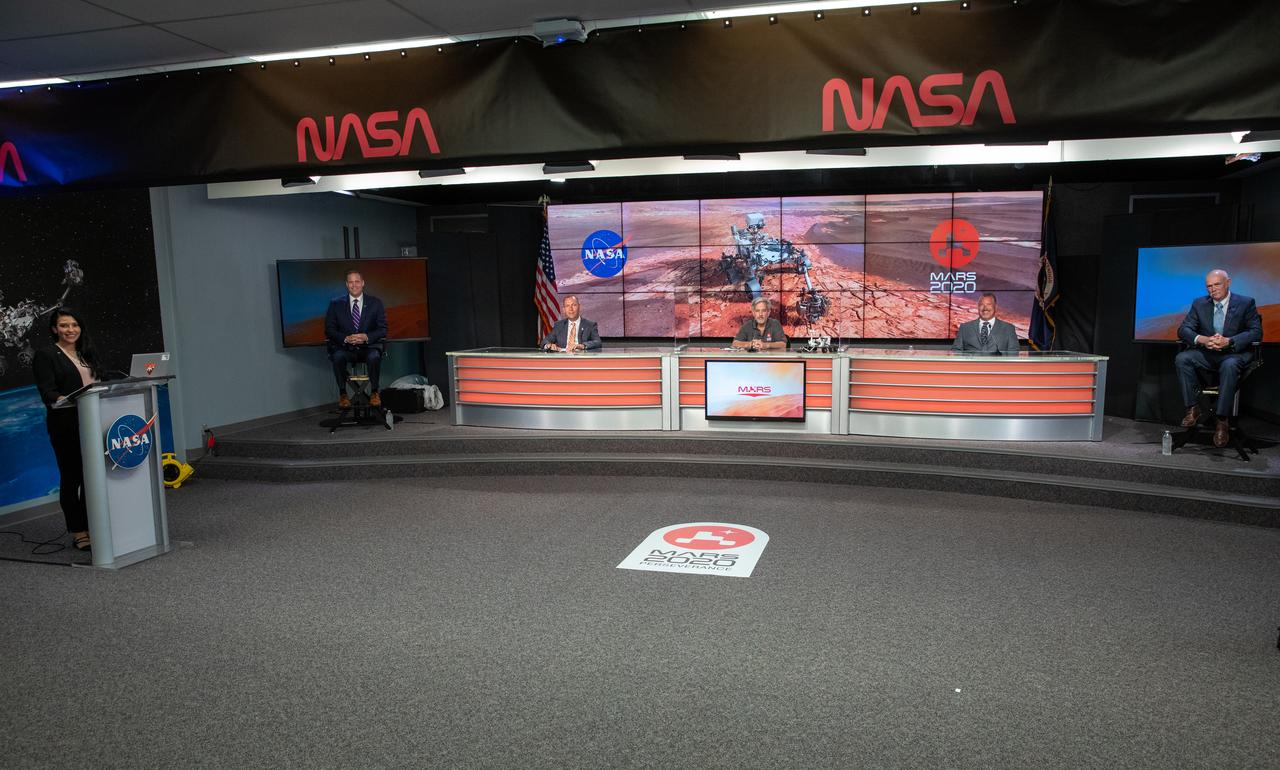
A Mars 2020 prelaunch news conference is held at NASA’s Kennedy Space Center in Florida on July 27, 2020. Participating in the briefing from left, are Moderator Bettina Inclan, NASA Headquarters; NASA Administrator Jim Bridenstine; Thomas Zurbuchen, NASA associate administrator, Science Mission Directorate; Matt Wallace, deputy project manager, NASA’s Jet Propulsion Laboratory; Launch Director Omar Baez, NASA’s Launch Services Program; and Tory Bruno, CEO, United Launch Alliance. The Mars Perseverance rover is scheduled to launch on July 30, on a United Launch Alliance Atlas V 541 rocket from Space Launch Complex 41 at nearby Cape Canaveral Air Force Station. The rover is part of NASA’s Mars Exploration Program, a long-term effort of robotic exploration of the Red Planet. The rover will search for habitable conditions in the ancient past and signs of past microbial life on Mars. The Launch Services Program at Kennedy is responsible for launch management.
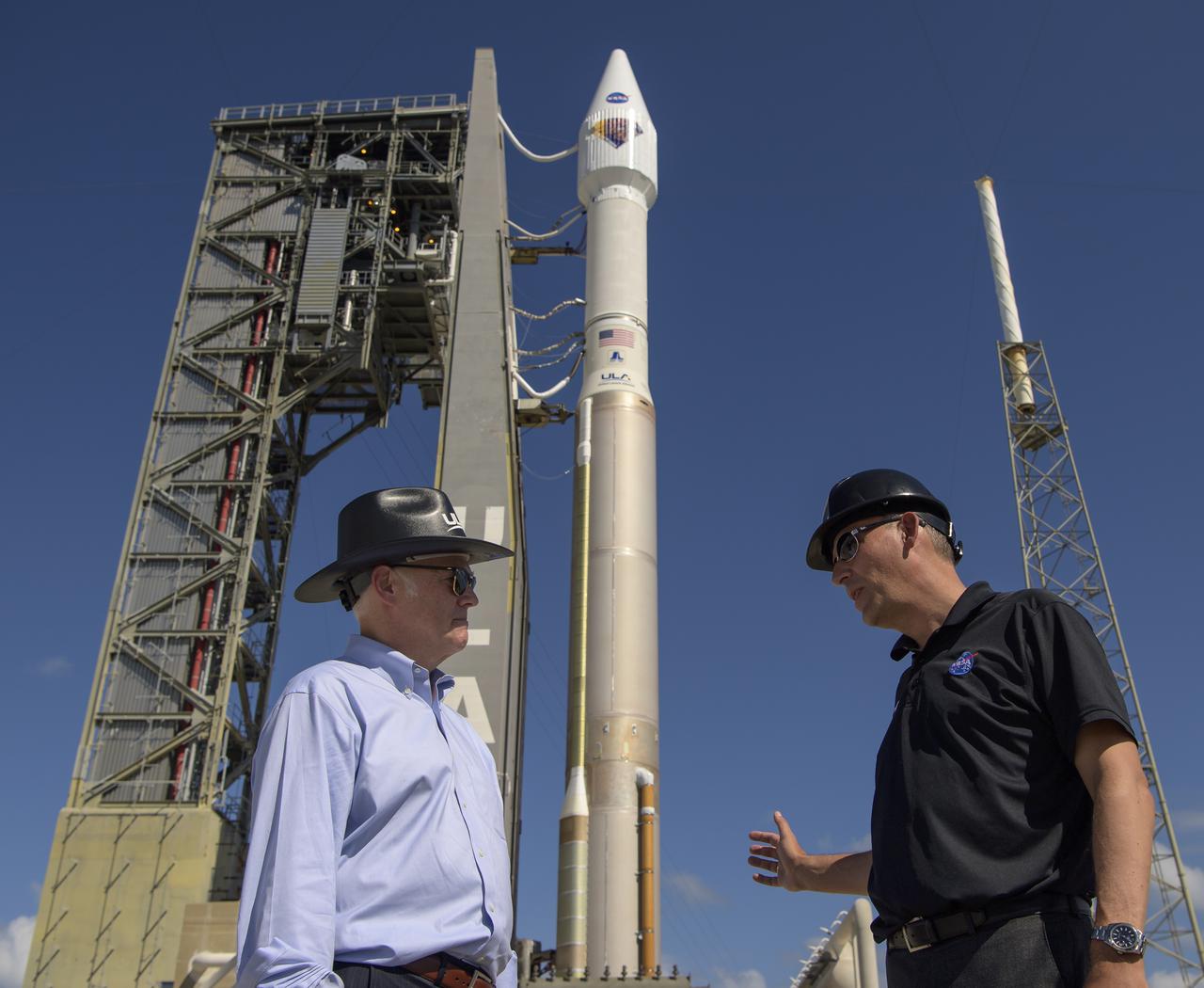
President and CEO United Launch AllianceTory Bruno, left, and NASA Associate Administrator for Science Thomas Zurbuchen meet at the base of the United Launch Alliance Atlas V rocket with the Lucy spacecraft aboard at Space Launch Complex 41, Friday, Oct. 15, 2021, at Cape Canaveral Space Force Station in Florida. Lucy will be the first spacecraft to study Jupiter's Trojan Asteroids. Like the mission's namesake – the fossilized human ancestor, "Lucy," whose skeleton provided unique insight into humanity's evolution – Lucy will revolutionize our knowledge of planetary origins and the formation of the solar system. Photo Credit: (NASA/Bill Ingalls)
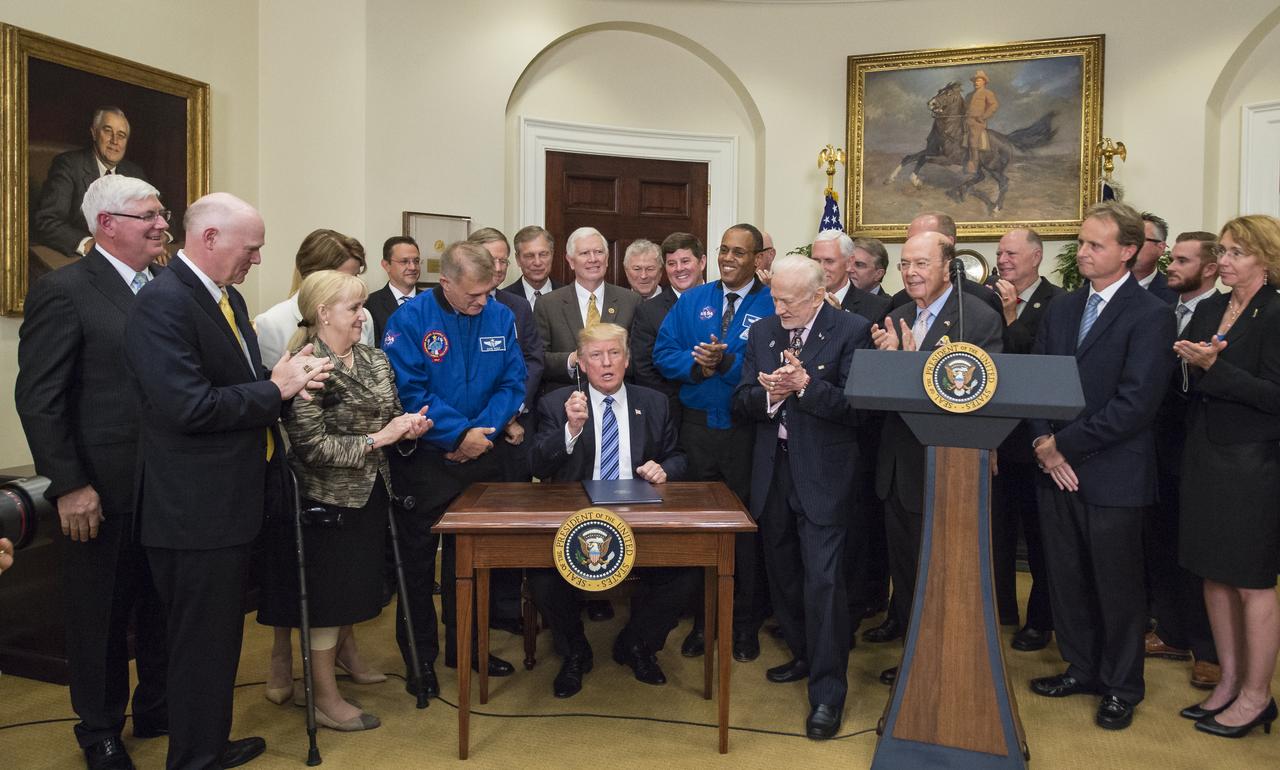
President Donald Trump, center, asks who should receive the pen after signing an Executive Order to reestablish the National Space Council, alongside members of the Congress, National Aeronautics and Space Administration, and Commercial Space Companies in the Roosevelt room of the White House in Washington, Friday, June 30, 2017. Retired astronaut Buzz Aldrin was given the pen. Also pictured are, Vice President Mike Pence, Rep. Bill Posey, R-Florida, Rep. Lamar Smith, R-Texas, Rep. John Culberson, R-Texas, Rep. Steven Palazzo, R-Miss., Rep. Brian Babin, R-Texas, Rep. Mo Brooks, R-Alabama, Rep. Dana Rohrbacher, R-California, Former Rep. Bob Walker, R-Pennsylvania, Sandy Magnus, executive director, American Institute of Aeronautics and Astronautics, David Melcher, executive director, Aerospace Industries Association, Tory Bruno, CEO, United Launch Alliance, Michal Riley, CEO, AMRO Fabricating Corporation, John Couch, president, Futuramic, Mike Cain, owner, Cain Tubular Products, Mary Lynne Dittmar, executive director, Coalition for Deep Space Exploration, Dennis Muilenburg, CEO Boeing Company, Marilyn Hewson, CEO, Lockheed Martin, Wes Bush, CEO, Northrop Grumman, NASA Astronaut Alvin Drew, retired NASA astronaut David Wolf, Apollo 13 flight director, Gene Kranz, Secretary of Commerce Wilbur Ross, Under Secretary of the Air Force Lisa Disbrow, and Acting Deputy Director of National Intelligence, Dawn Eilengerger. Photo Credit: (NASA/Aubrey Gemignani)
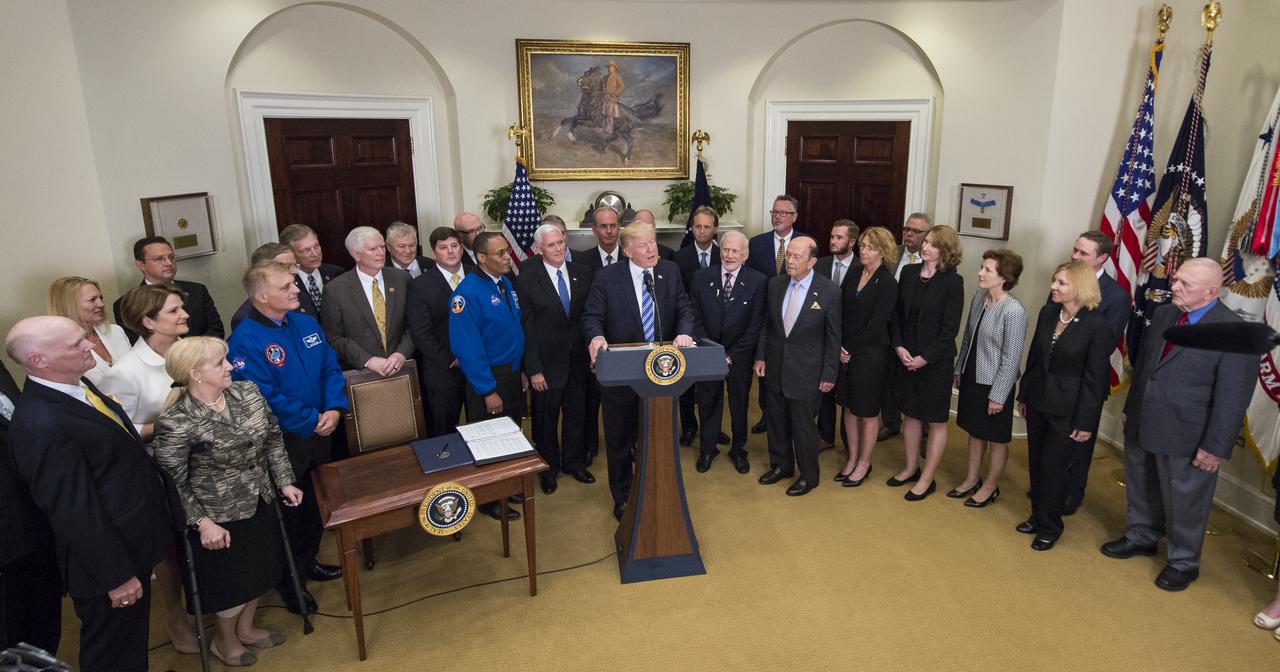
President Donald Trump, center, speaks before signing an Executive Order to reestablish the National Space Council, alongside members of the Congress, National Aeronautics and Space Administration, and Commercial Space Companies in the Roosevelt room of the White House in Washington, Friday, June 30, 2017. Vice President Mike Pence, also in attendance, will chair the council. Also pictured are, Rep. Bill Posey, R-Florida, Rep. Lamar Smith, R-Texas, Rep. John Culberson, R-Texas, Rep. Steven Palazzo, R-Miss., Rep. Brian Babin, R-Texas, Rep. Mo Brooks, R-Alabama, Rep. Dana Rohrbacher, R-California, Former Rep. Bob Walker, R-Pennsylvania, Sandy Magnus, executive director, American Institute of Aeronautics and Astronautics, David Melcher, executive director, Aerospace Industries Association, Tory Bruno, CEO, United Launch Alliance, Michal Riley, CEO, AMRO Fabricating Corporation, John Couch, president, Futuramic, Mike Cain, owner, Cain Tubular Products, Mary Lynne Dittmar, executive director, Coalition for Deep Space Exploration, Dennis Muilenburg, CEO Boeing Company, Marilyn Hewson, CEO, Lockheed Martin, Wes Bush, CEO, Northrop Grumman, retired NASA astronaut Buzz Aldrin, NASA astronaut Alvin Drew, retired NASA astronaut David Wolf, Apollo 13 flight director, Gene Kranz, Secretary of Commerce Wilbur Ross, Under Secretary of the Air Force Lisa Disbrow, and Acting Deputy Director of National Intelligence, Dawn Eilengerger. Photo Credit: (NASA/Aubrey Gemignani)
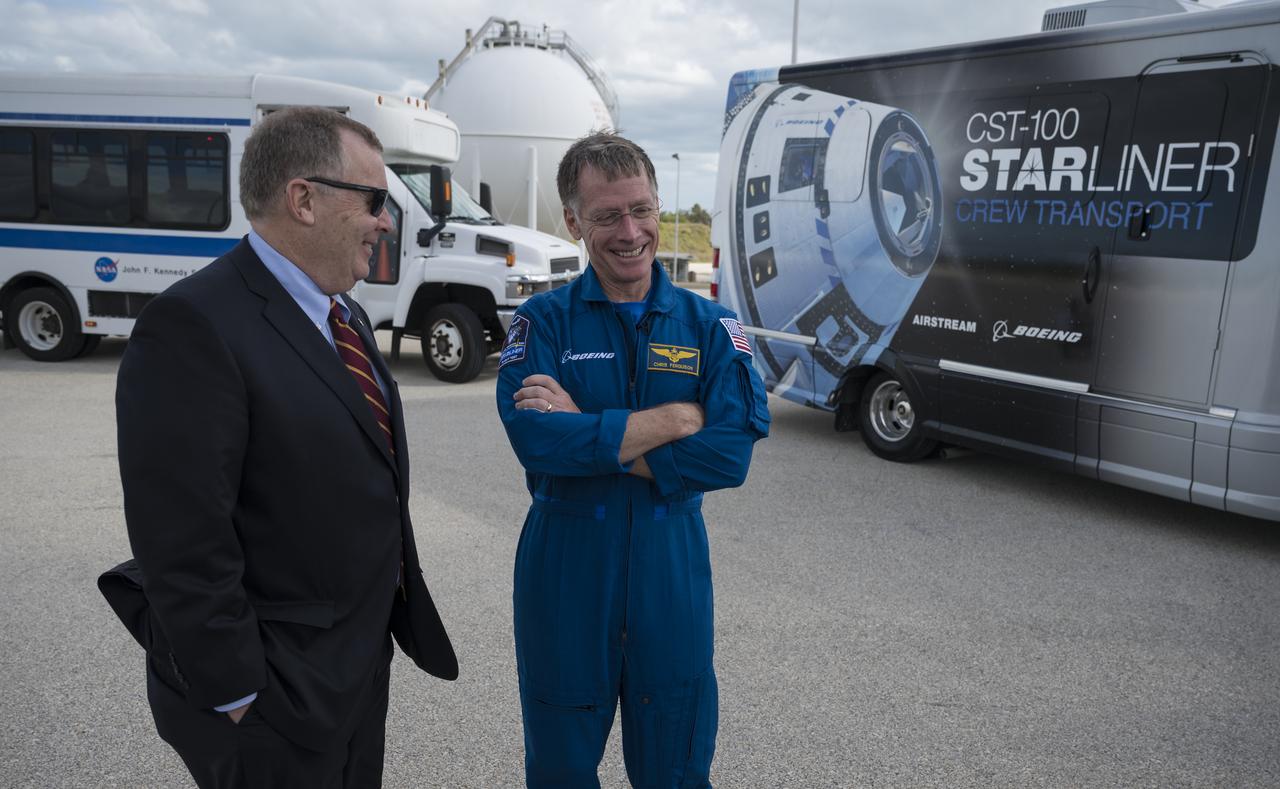
NASA Deputy Administrator Jim Morhard speaks with Boeing astronaut Chris Ferguson at Space Launch Complex 41 ahead of Boeing’s Orbital Flight Test mission, Thursday, Dec. 19, 2019, at Cape Canaveral Air Force Station in Florida. The uncrewed Orbital Flight Test will be Starliner’s maiden mission to the International Space Station for NASA's Commercial Crew Program. The mission, currently targeted for a 6:36 a.m. EST launch on Dec. 20, will serve as an end-to-end test of the system's capabilities. Photo Credit: (NASA/Joel Kowsky)
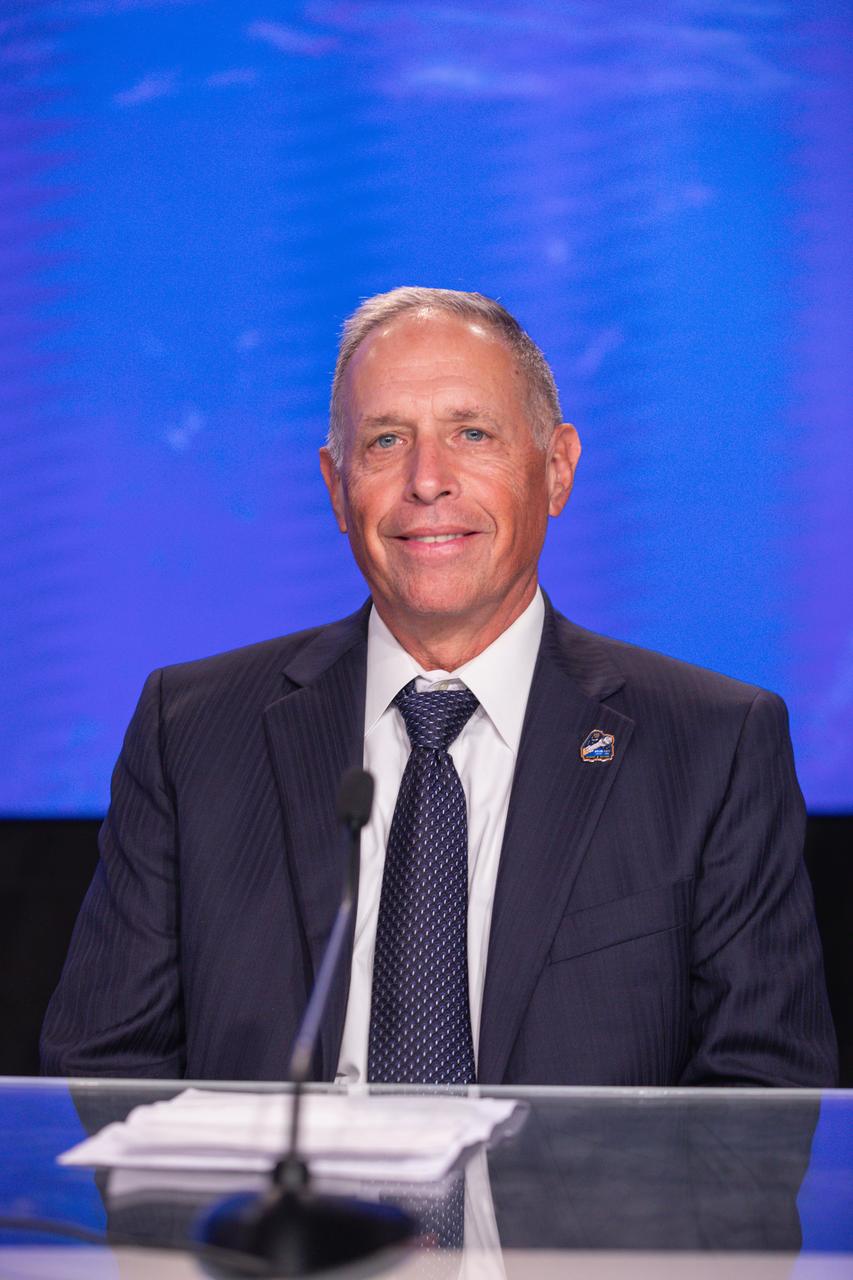
Vice President and Program Manager of Boeing’s Commercial Crew Program Mark Nappi participates in a postlaunch news conference for NASA’s Boeing Crew Flight Test on Wednesday, June 5, 2024, at the agency’s Kennedy Space Center in Florida. As part of the agency’s Commercial Crew Program, NASA astronauts Butch Wilmore and Suni Williams are the first to launch aboard Boeing’s Starliner spacecraft atop a United Launch Alliance Atlas V rocket. Liftoff occurred at 10:52 a.m. EDT Wednesday, June 5, from Space Launch Complex-41 at Cape Canaveral Space Force Station.
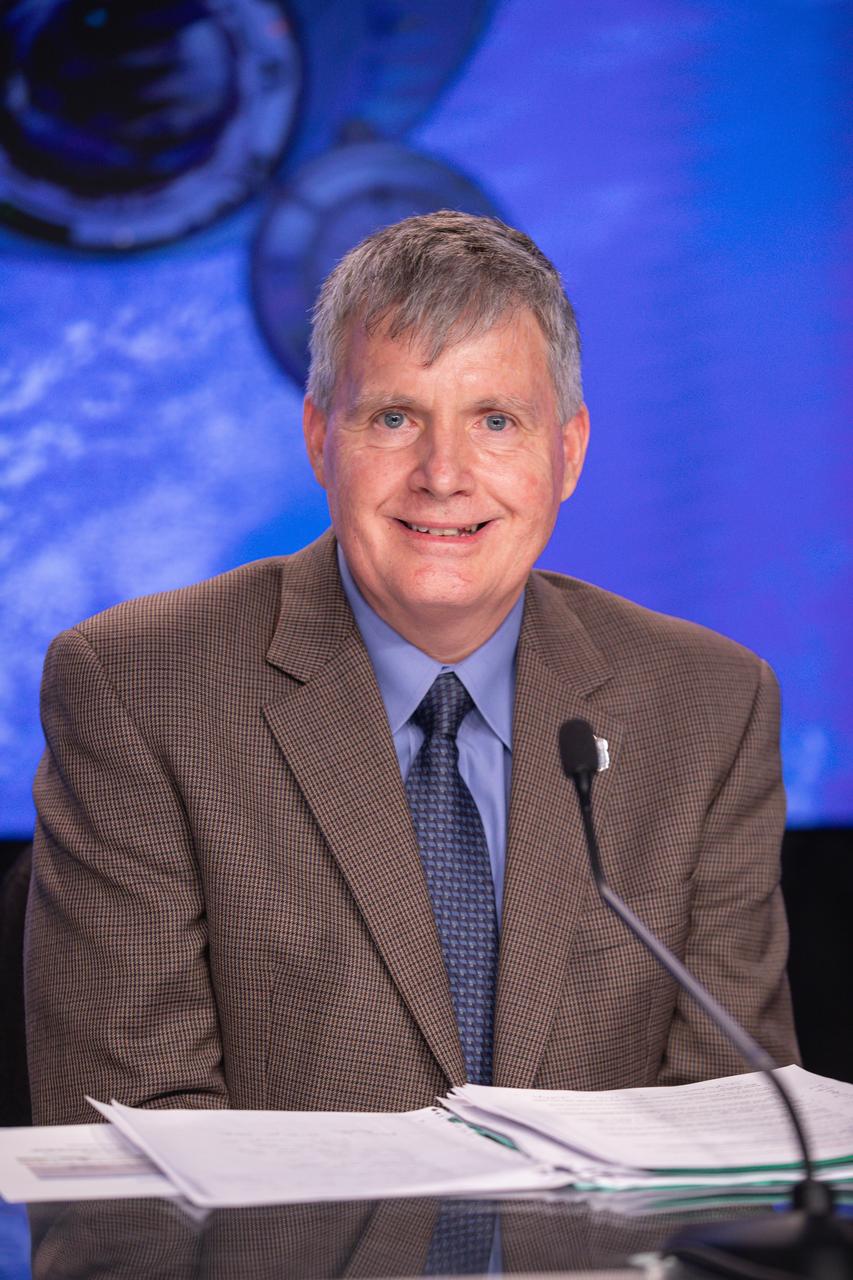
NASA Commercial Crew Program Manager Steve Stich participates in a postlaunch news conference for NASA’s Boeing Crew Flight Test on Wednesday, June 5, 2024, at the agency’s Kennedy Space Center in Florida. As part of the agency’s Commercial Crew Program, NASA astronauts Butch Wilmore and Suni Williams are the first to launch aboard Boeing’s Starliner spacecraft to the International Space Station atop a United Launch Alliance Atlas V rocket. Liftoff occurred at 10:52 a.m. EDT Wednesday, June 5, from Space Launch Complex-41 at Cape Canaveral Space Force Station.
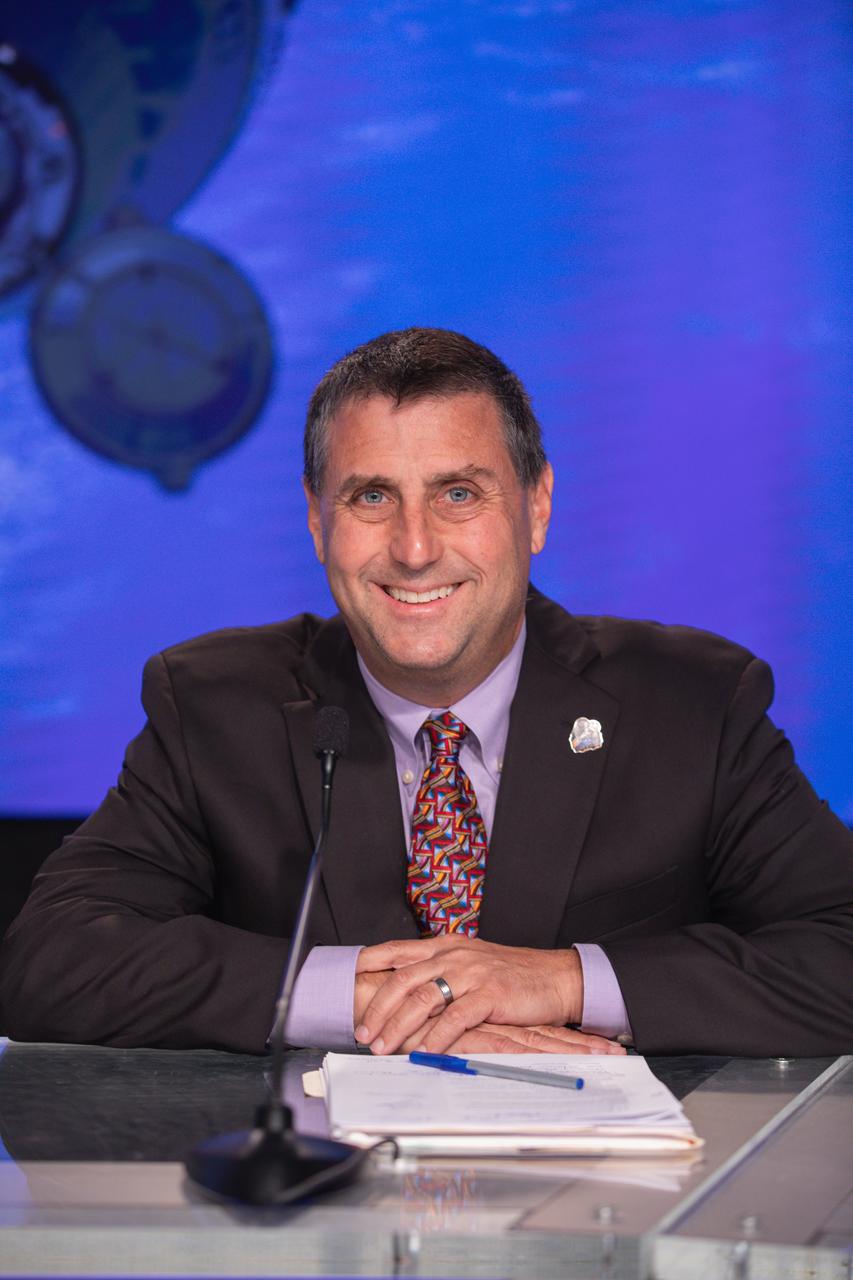
NASA Deputy Associate Administrator for Space Operations Mission Directorate, Joel Montalbano participates in a postlaunch news conference at the agency’s Kennedy Space Center in Florida held on Wednesday, June 5, 2024, at the agency’s Kennedy Space Center in Florida following the first launch attempt of NASA’s Boeing Crew Flight Test. As part of the agency’s Commercial Crew Program, the first crewed launch to the International Space Station aboard Boeing’s Starliner spacecraft atop a United Launch Alliance Atlas V rocket from Space Launch Complex-41 at nearby Cape Canaveral Space Force Station was targeted for 10:52 a.m. EDT.
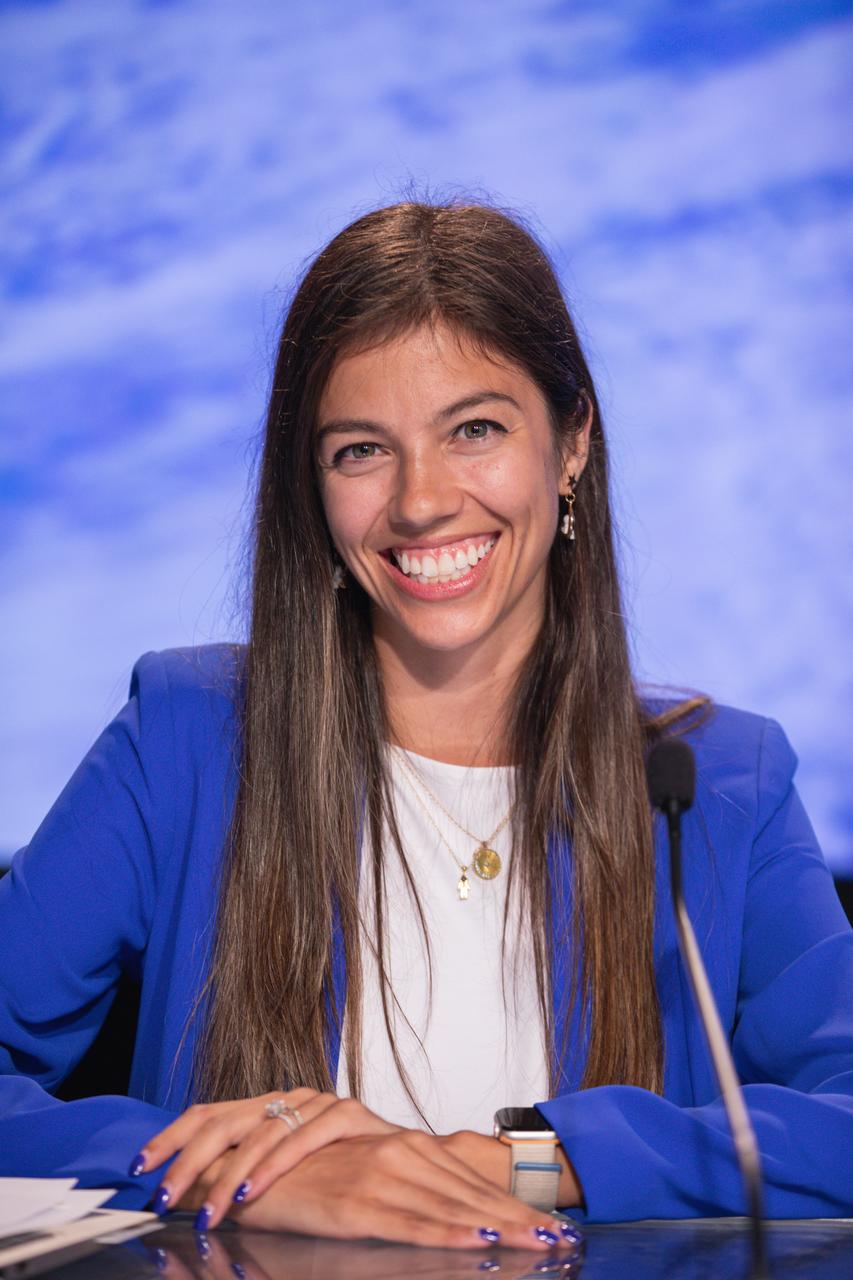
Antonia Jaramillo, NASA Communications, participates in a postlaunch news conference for NASA’s Boeing Crew Flight Test on Wednesday, June 5, 2024, at the agency’s Kennedy Space Center in Florida. As part of the agency’s Commercial Crew Program, NASA astronauts Butch Wilmore and Suni Williams are the first to launch aboard Boeing’s Starliner spacecraft to the International Space Station atop a United Launch Alliance Atlas V rocket. Liftoff occurred at 10:52 a.m. EDT Wednesday, June 5, from Space Launch Complex-41 at Cape Canaveral Space Force Station.
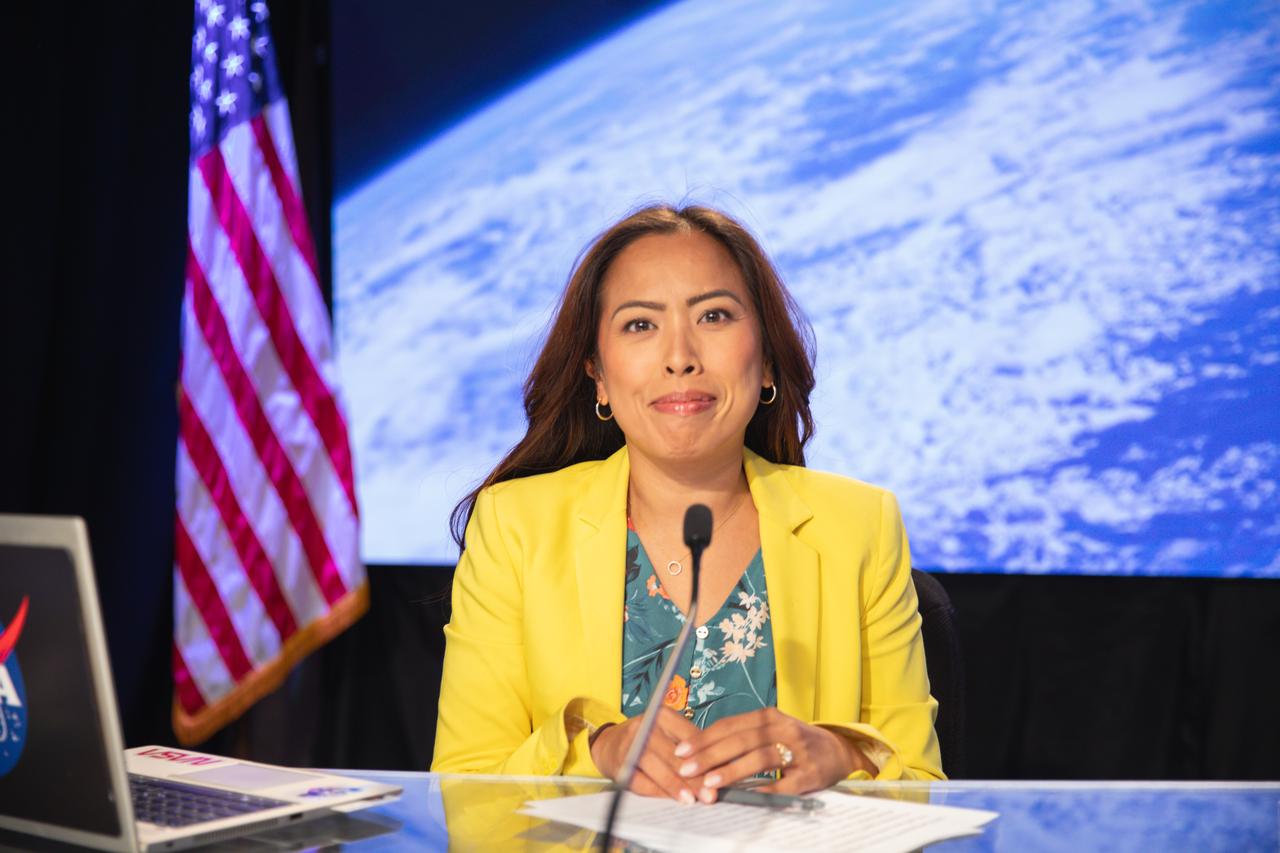
Megan Cruz, NASA Communications, participates in a news conference held at the agency’s Kennedy Space Center in Florida on Saturday, June 1, 2024, after the second launch attempt of NASA’s Boeing Crew Flight Test scrubbed for the day. As part of the agency’s Commercial Crew Program, NASA astronauts Butch Wilmore and Suni Williams will be the first to launch to the International Space Station aboard Boeing’s Starliner spacecraft atop a ULA (United Launch Alliance) Atlas V rocket from Space Launch Complex-41 at nearby Cape Canaveral Space Force Station.
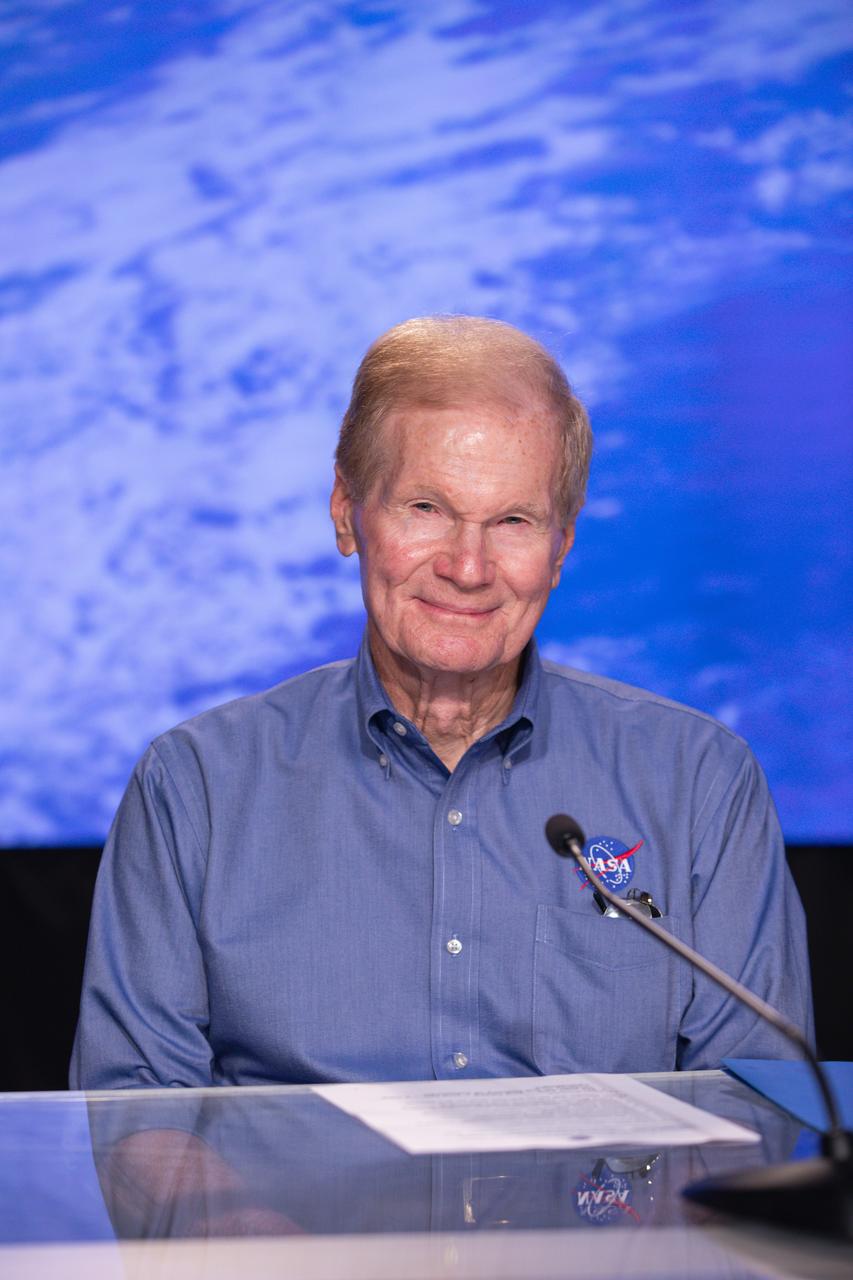
NASA Administrator Bill Nelson participates in a postlaunch news conference for NASA’s Boeing Crew Flight Test on Wednesday, June 5, 2024, at the agency’s Kennedy Space Center in Florida. As part of the agency’s Commercial Crew Program, NASA astronauts Butch Wilmore and Suni Williams are the first to launch aboard Boeing’s Starliner spacecraft to the International Space Station atop a United Launch Alliance Atlas V rocket. Liftoff occurred at 10:52 a.m. EDT Wednesday, June 5, from Space Launch Complex-41 at Cape Canaveral Space Force Station.
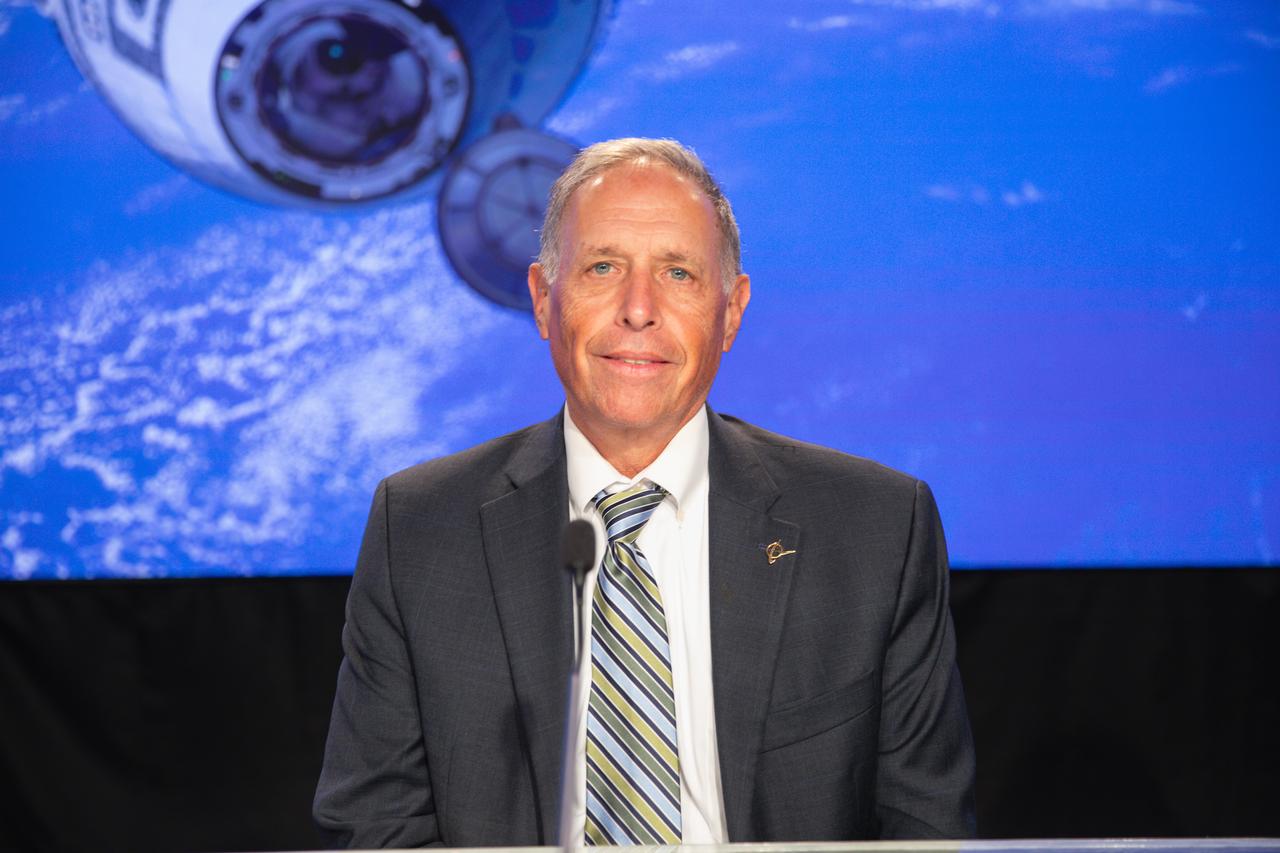
Mark Nappi, vice president and program manager for the Commercial Crew Program at Boeing, participates in a news conference held at the agency’s Kennedy Space Center in Florida on Saturday, June 1, 2024, after the second launch attempt of NASA’s Boeing Crew Flight Test scrubbed for the day. As part of the agency’s Commercial Crew Program, NASA astronauts Butch Wilmore and Suni Williams will be the first to launch to the International Space Station aboard Boeing’s Starliner spacecraft atop a ULA (United Launch Alliance) Atlas V rocket from Space Launch Complex-41 at nearby Cape Canaveral Space Force Station.
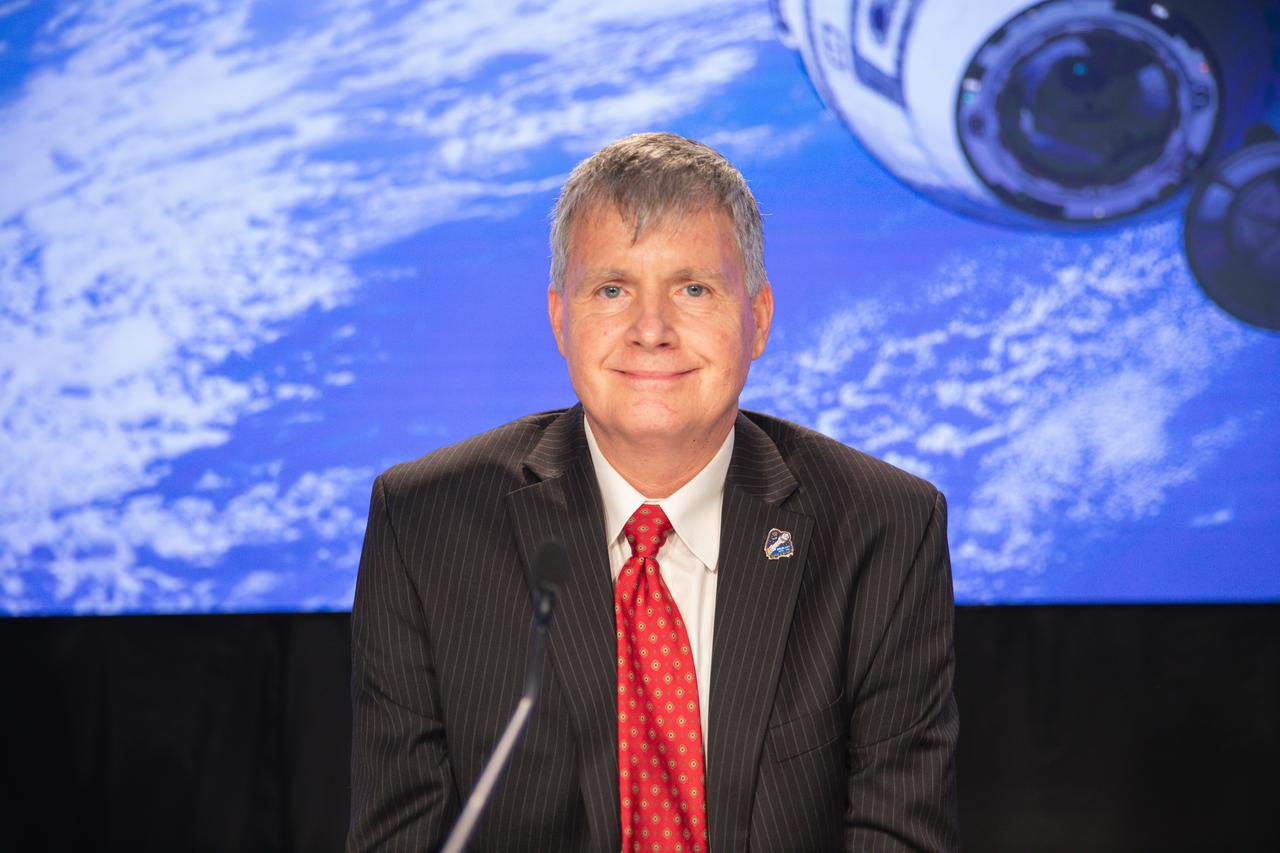
Steve Stich, NASA Commercial Crew Program manager, participates in a news conference held at the agency’s Kennedy Space Center in Florida on Saturday, June 1, 2024, after the second launch attempt of NASA’s Boeing Crew Flight Test scrubbed for the day. As part of the agency’s Commercial Crew Program, NASA astronauts Butch Wilmore and Suni Williams will be the first to launch to the International Space Station aboard Boeing’s Starliner spacecraft atop a ULA (United Launch Alliance) Atlas V rocket from Space Launch Complex-41 at nearby Cape Canaveral Space Force Station.
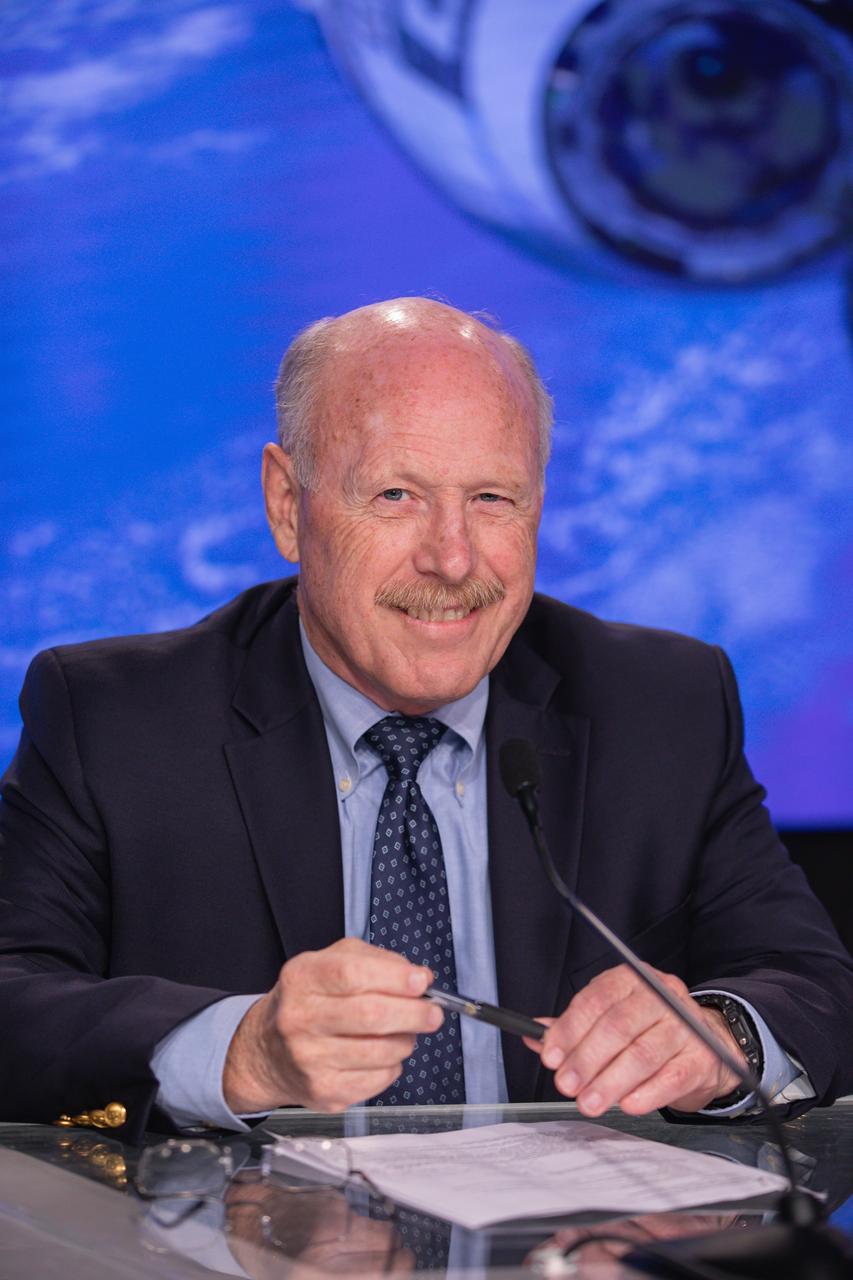
NASA Associate Administrator for Space Operations Ken Bowersox participates in a postlaunch news conference for NASA’s Boeing Crew Flight Test on Wednesday, June 5, 2024, at the agency’s Kennedy Space Center in Florida. As part of the agency’s Commercial Crew Program, NASA astronauts Butch Wilmore and Suni Williams are the first to launch aboard Boeing’s Starliner spacecraft to the International Space Station atop a United Launch Alliance Atlas V rocket. Liftoff occurred at 10:52 a.m. EDT Wednesday, June 5, from Space Launch Complex-41 at Cape Canaveral Space Force Station.