
The Moon is seen during a total lunar eclipse, Tuesday, Nov. 8, 2022, at NASA’s Kennedy Space Center in Florida. Photo Credit: (NASA/Joel Kowsky)

The Moon is seen during a total lunar eclipse, Tuesday, Nov. 8, 2022, at NASA’s Kennedy Space Center in Florida. Photo Credit: (NASA/Joel Kowsky)

The Moon is seen during a total lunar eclipse, Tuesday, Nov. 8, 2022, at NASA’s Kennedy Space Center in Florida. Photo Credit: (NASA/Joel Kowsky)

This composite made from ten images shows the progression of the Moon during a total lunar eclipse above the Vehicle Assembly Building, Nov. 8, 2022, at NASA’s Kennedy Space Center in Florida. Visible trailing the Moon in this composite is Mars. Photo Credit: (NASA/Joel Kowsky)
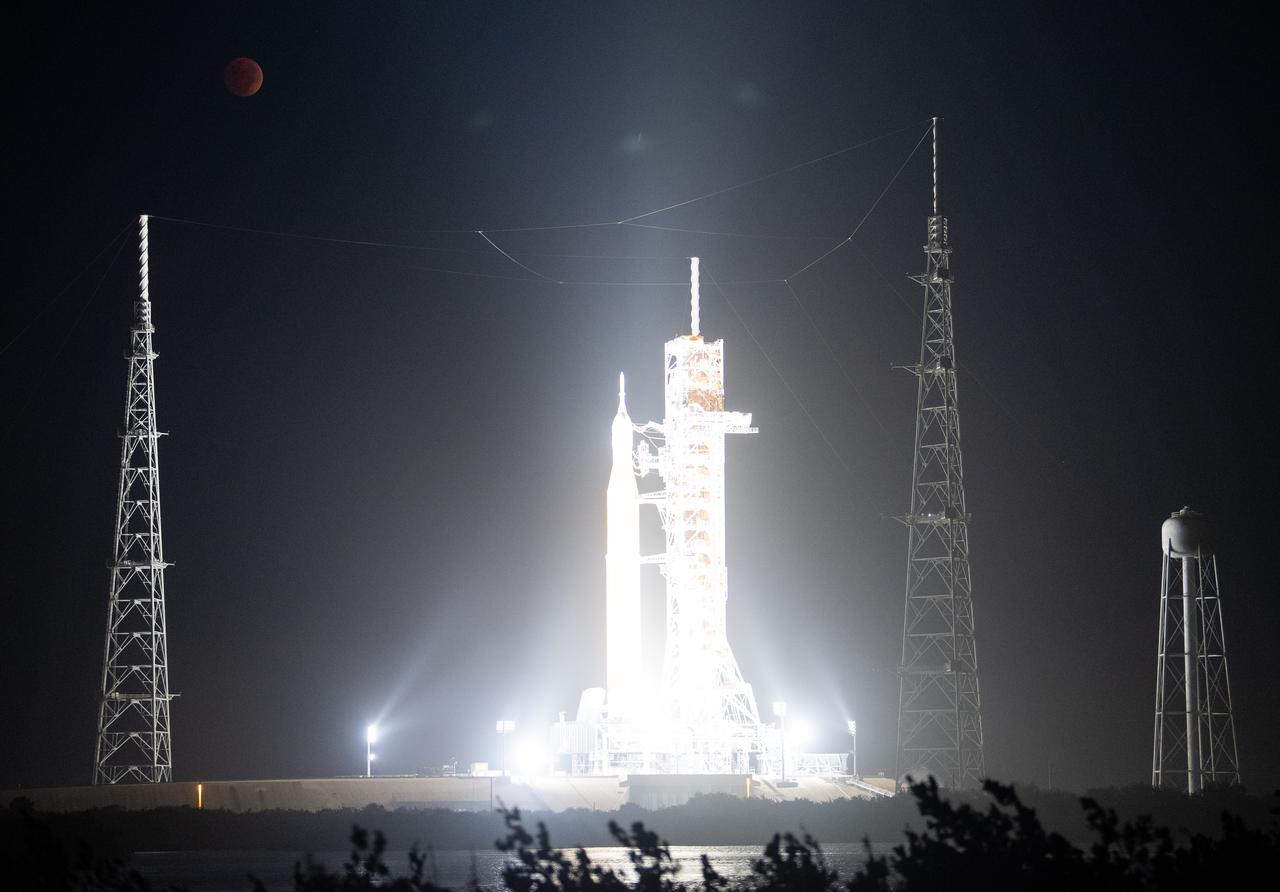
The Moon is seen during a total lunar eclipse above NASA’s Space Launch System (SLS) rocket with the Orion spacecraft aboard atop a mobile launcher at Launch Pad 39B, Tuesday, Nov. 8, 2022, at NASA’s Kennedy Space Center in Florida. NASA’s Artemis I flight test is the first integrated test of the agency’s deep space exploration systems: the Orion spacecraft, SLS rocket, and supporting ground systems. Photo Credit: (NASA/Joel Kowsky)
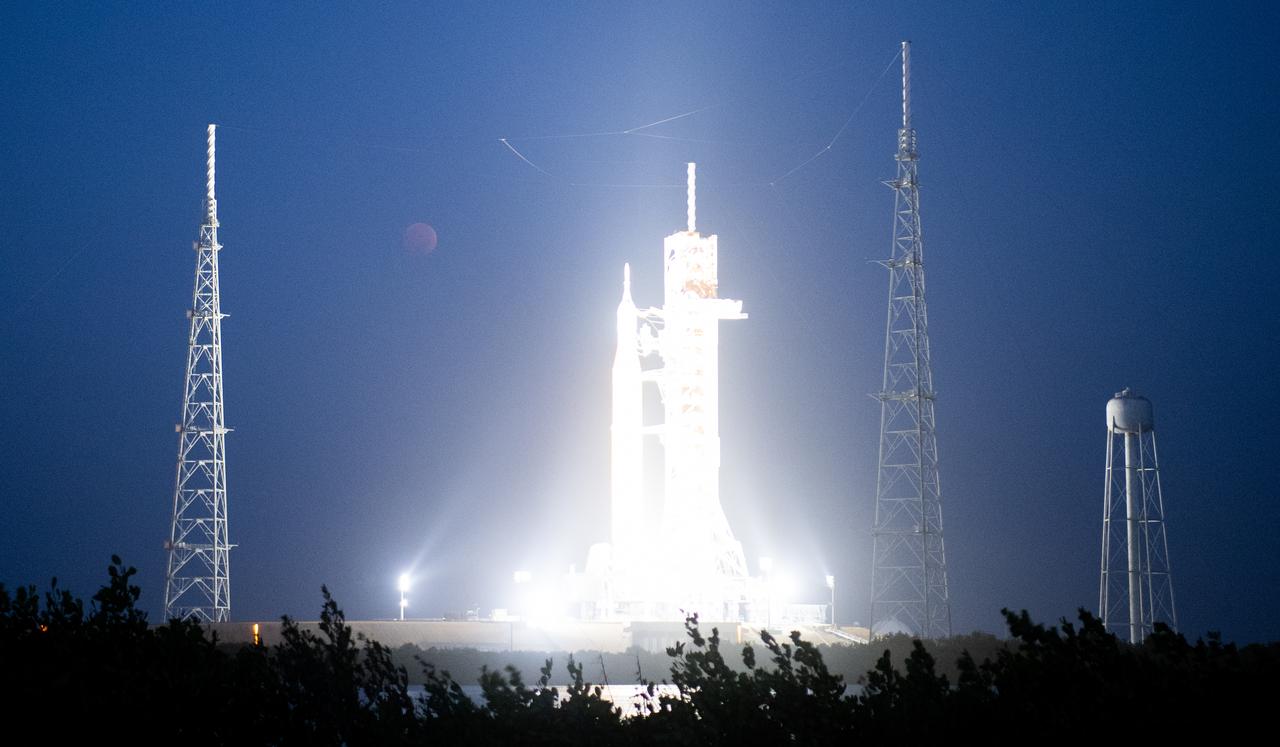
The Moon is seen during a total lunar eclipse above NASA’s Space Launch System (SLS) rocket with the Orion spacecraft aboard atop a mobile launcher at Launch Pad 39B, Tuesday, Nov. 8, 2022, at NASA’s Kennedy Space Center in Florida. NASA’s Artemis I flight test is the first integrated test of the agency’s deep space exploration systems: the Orion spacecraft, SLS rocket, and supporting ground systems. Photo Credit: (NASA/Joel Kowsky)

The Moon is seen during a total lunar eclipse above NASA’s Space Launch System (SLS) rocket with the Orion spacecraft aboard atop a mobile launcher at Launch Pad 39B, Tuesday, Nov. 8, 2022, at NASA’s Kennedy Space Center in Florida. NASA’s Artemis I flight test is the first integrated test of the agency’s deep space exploration systems: the Orion spacecraft, SLS rocket, and supporting ground systems. Photo Credit: (NASA/Joel Kowsky)

The Moon is seen during a total lunar eclipse above NASA’s Space Launch System (SLS) rocket with the Orion spacecraft aboard atop a mobile launcher at Launch Pad 39B, Tuesday, Nov. 8, 2022, at NASA’s Kennedy Space Center in Florida. NASA’s Artemis I flight test is the first integrated test of the agency’s deep space exploration systems: the Orion spacecraft, SLS rocket, and supporting ground systems. Photo Credit: (NASA/Joel Kowsky)
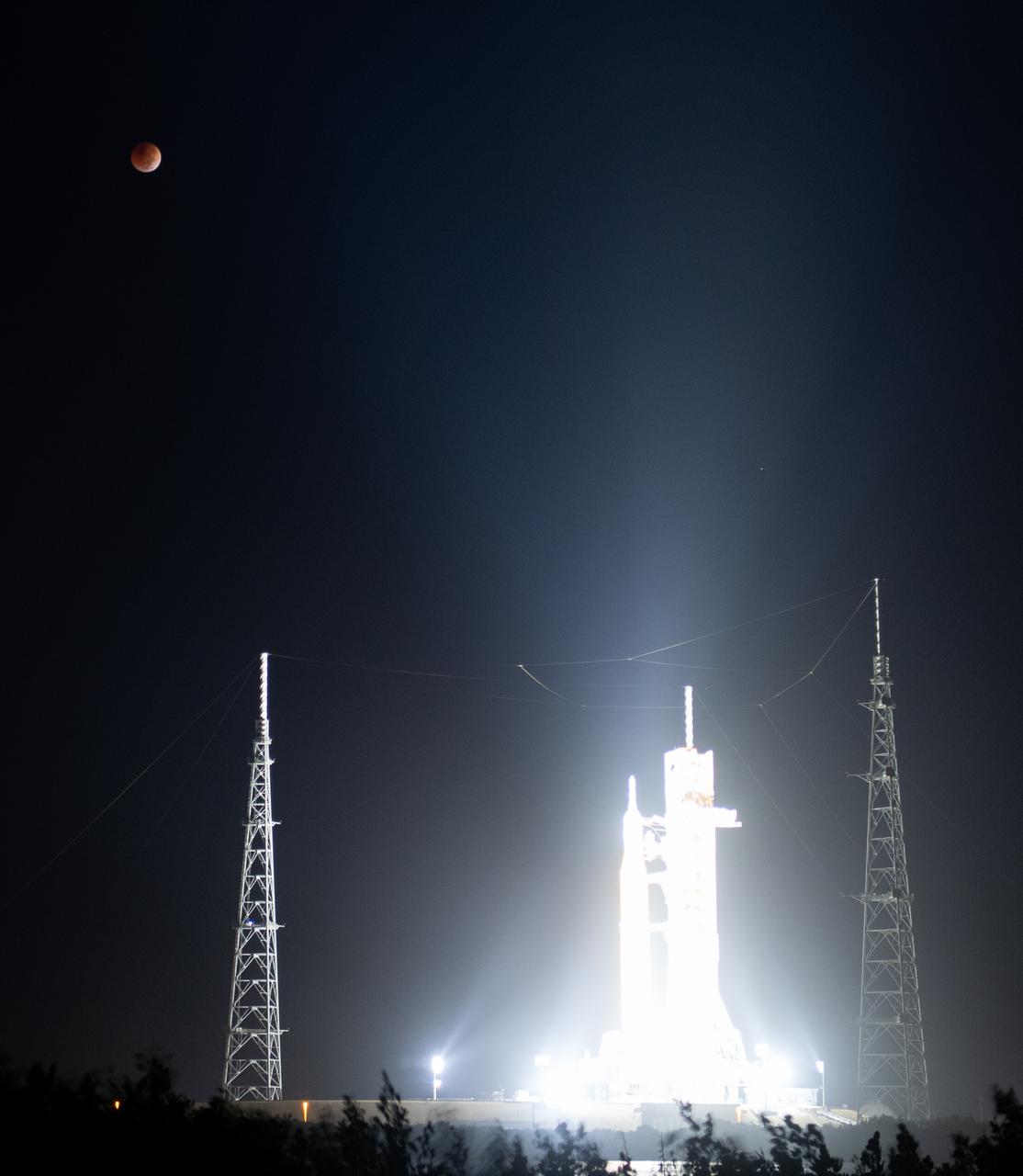
The Moon is seen during a total lunar eclipse above NASA’s Space Launch System (SLS) rocket with the Orion spacecraft aboard atop a mobile launcher at Launch Pad 39B, Tuesday, Nov. 8, 2022, at NASA’s Kennedy Space Center in Florida. NASA’s Artemis I flight test is the first integrated test of the agency’s deep space exploration systems: the Orion spacecraft, SLS rocket, and supporting ground systems. Photo Credit: (NASA/Joel Kowsky)
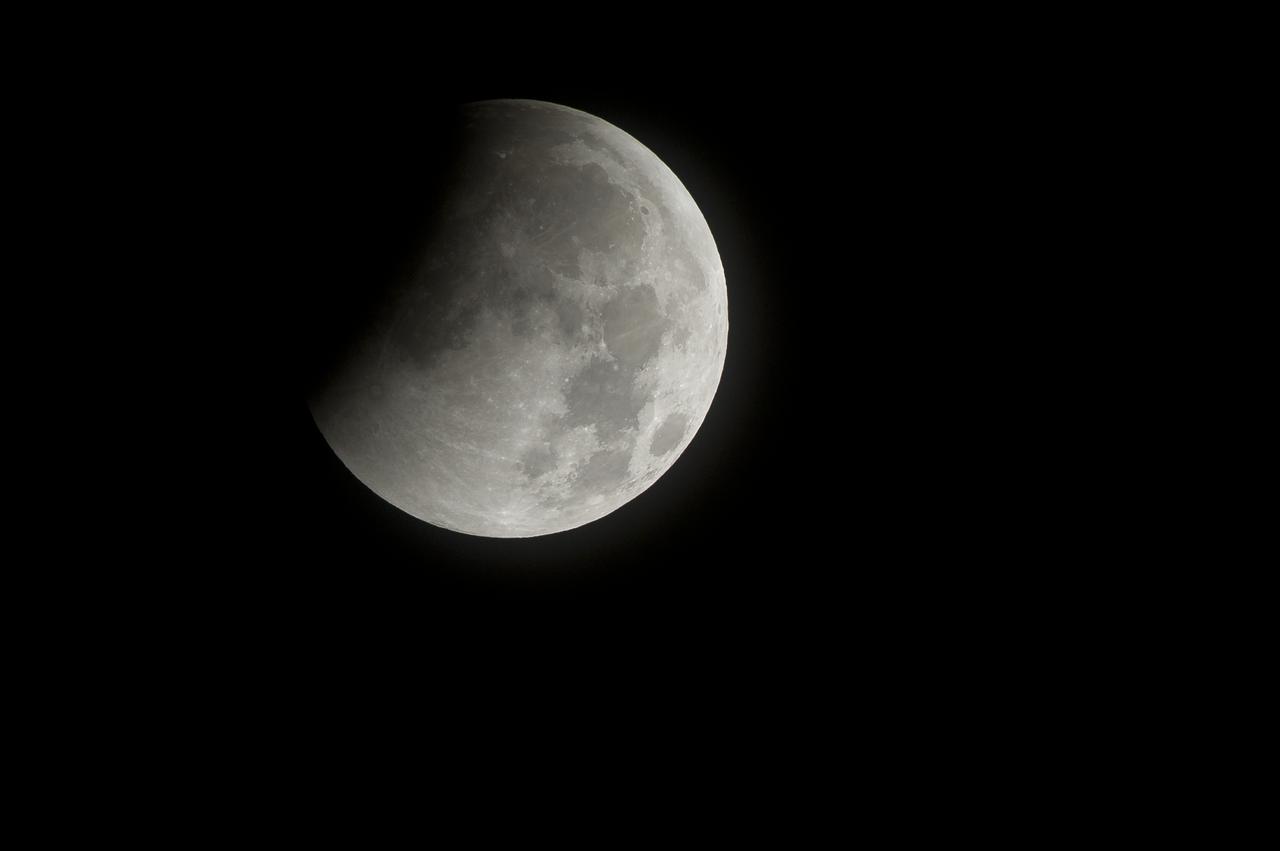
A total lunar eclipse begins as the full moon is shadowed by the Earth on the arrival of the winter solstice, Tuesday, December 21, 2010 in Arlington, VA. From beginning to end, the eclipse will last about three hours and twenty-eight minutes. Photo Credit: (NASA/Bill Ingalls)
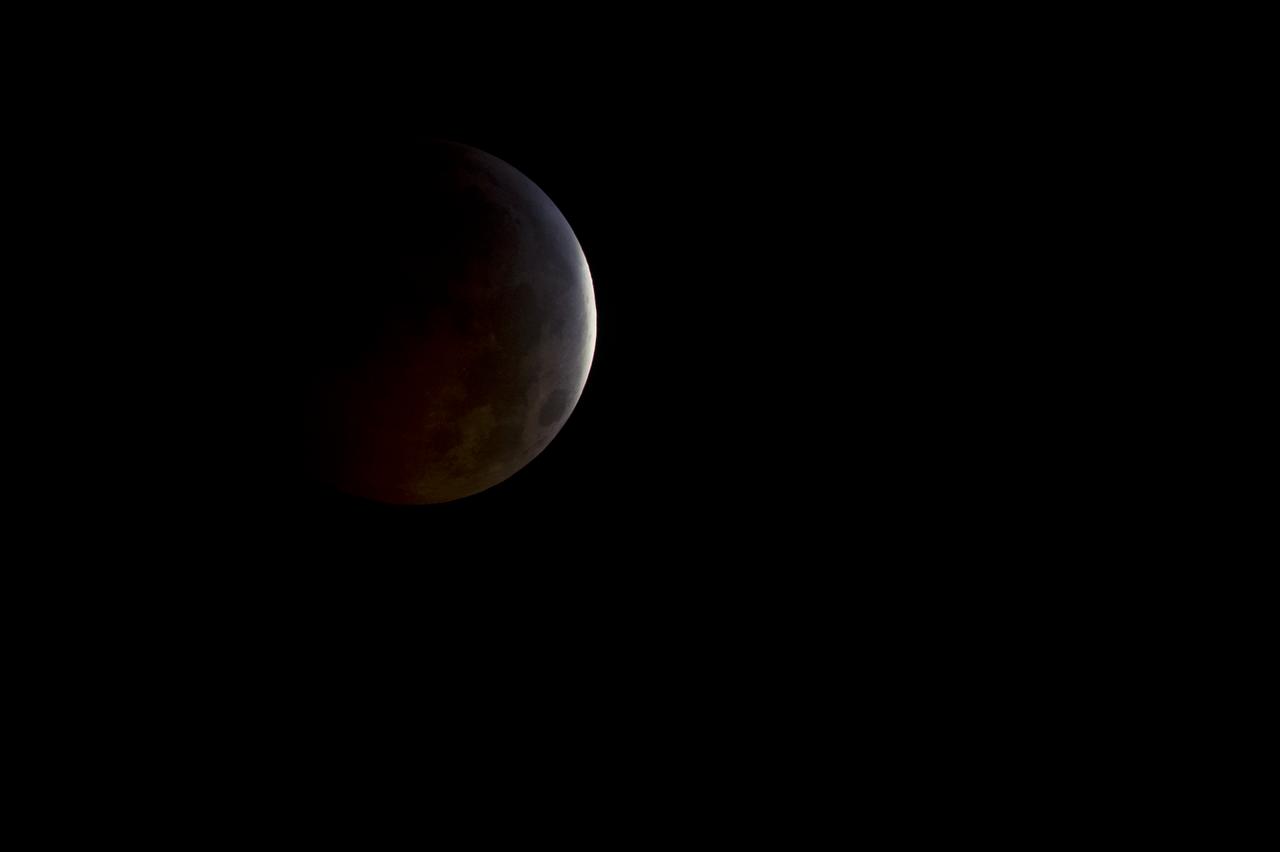
A nearly total lunar eclipse is seen as the full moon is shadowed by the Earth on the arrival of the winter solstice, Tuesday, December 21, 2010 in Arlington, VA. From beginning to end, the eclipse will last about three hours and twenty-eight minutes. Photo Credit: (NASA/Bill Ingalls)
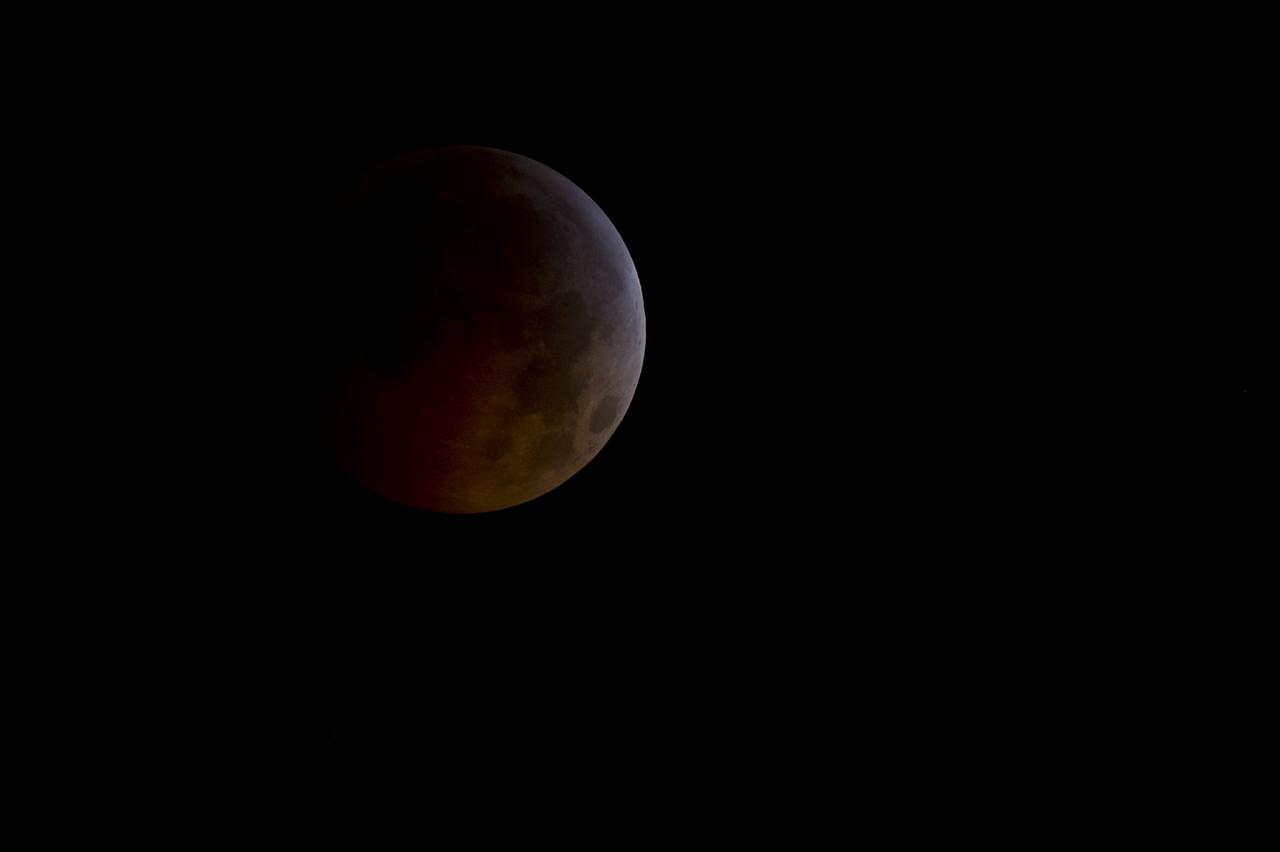
A total lunar eclipse is seen as the full moon is shadowed by the Earth on the arrival of the winter solstice, Tuesday, December 21, 2010 in Arlington, VA. From beginning to end, the eclipse will last about three hours and twenty-eight minutes. Photo Credit: (NASA/Bill Ingalls)

The Washington Monument is seen as the full moon is shadowed by the Earth during a total lunar eclipse on the arrival of the winter solstice, Tuesday, December 21, 2010 in Washington. From beginning to end, the eclipse lasted about three hours and twenty-eight minutes. Photo Credit: (NASA/Bill Ingalls)
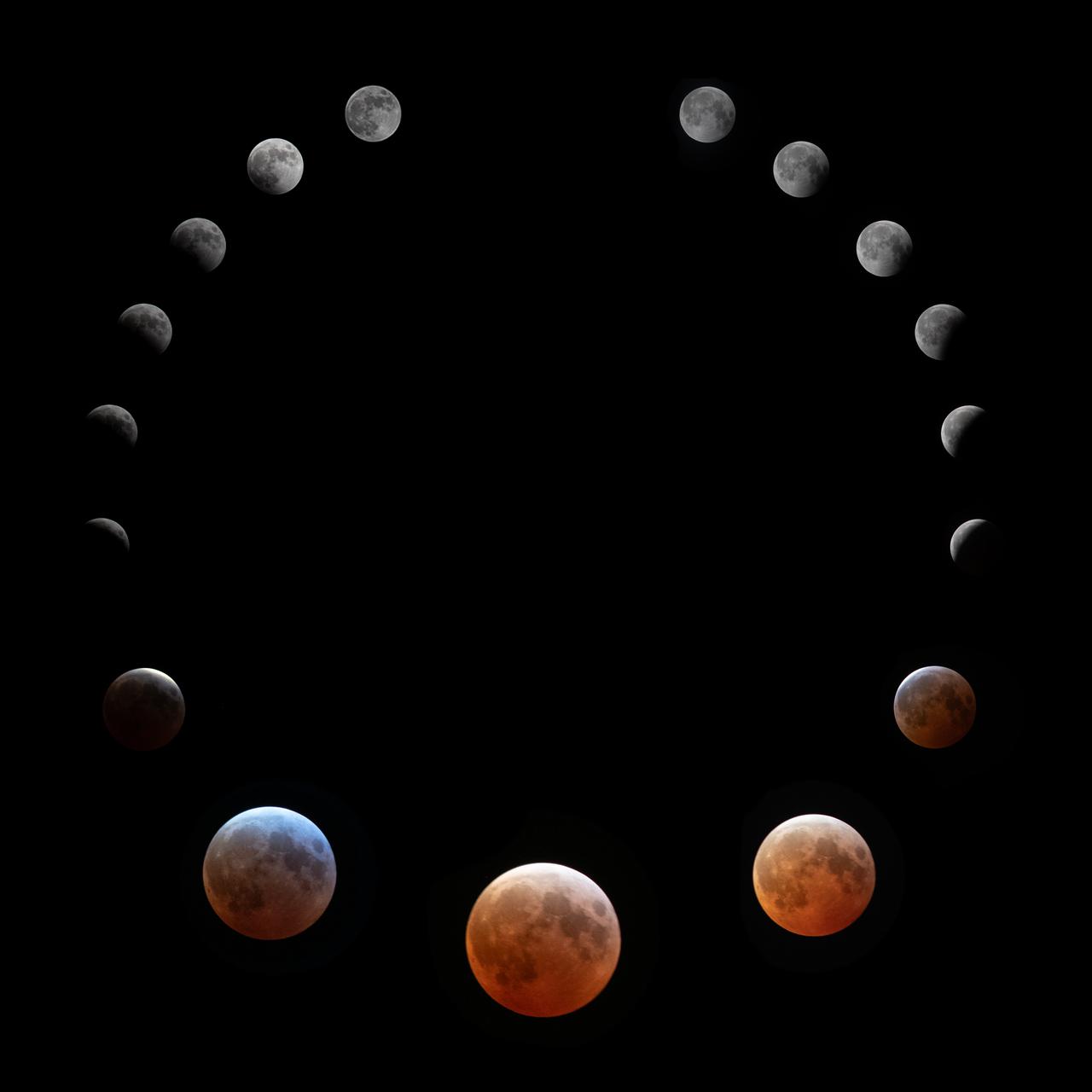
A composite photo made from 17 images of the lunar eclipse. These photographs were taken at NASA’s Glenn Research Center at Neil Armstrong Test Facility in Sandusky, Ohio, during the early hours of March 14, 2025. Photo Credit: (NASA/Sara Lowthian-Hanna)

This composite photo made up of 11 images of shows the Blood Moon and the phases of the Lunar Eclipse on March 14th, 2025 seen from Brookpark, OH at NASA Glenn Research Center.. Photo Credit: (NASA/Jordan Cochran)

A total lunar eclipse rises over New Orleans, home of NASA’s Michoud Assembly Facility, in the early morning hours of Tuesday, March 3. A lunar eclipse occurs when Earth passes directly between the Sun and Moon, casting a huge shadow across the Moon’s surface. The Moon appears dark red or orange as the Sun’s light filters through Earth’s atmosphere. This is a composite of 4 images taken during the eclipse.
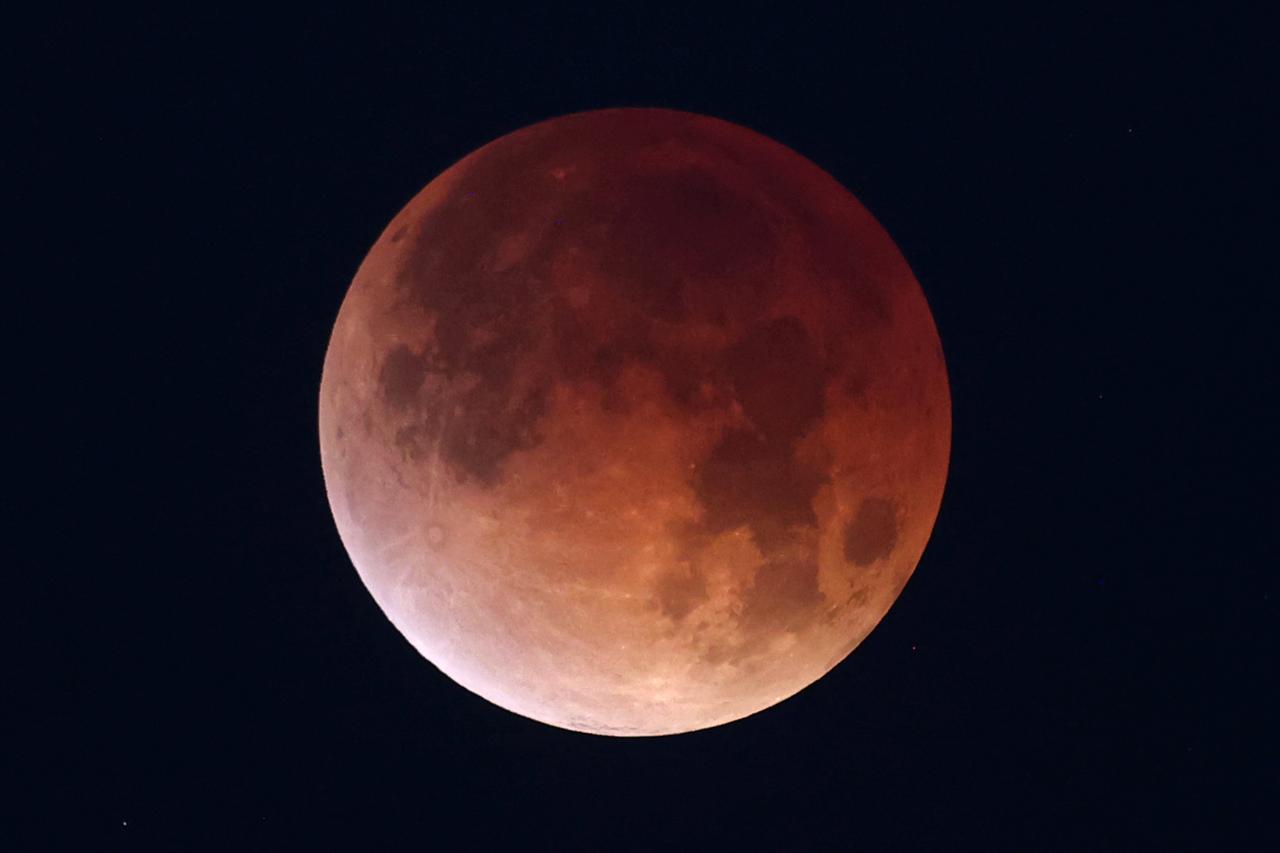
A total lunar eclipse rises over New Orleans, home of NASA’s Michoud Assembly Facility, in the early morning hours of Tuesday, March 3. A lunar eclipse occurs when Earth passes directly between the Sun and Moon, casting a huge shadow across the Moon’s surface. The Moon appears dark red or orange as the Sun’s light filters through Earth’s atmosphere. Image credit: NASA/Michael DeMocker
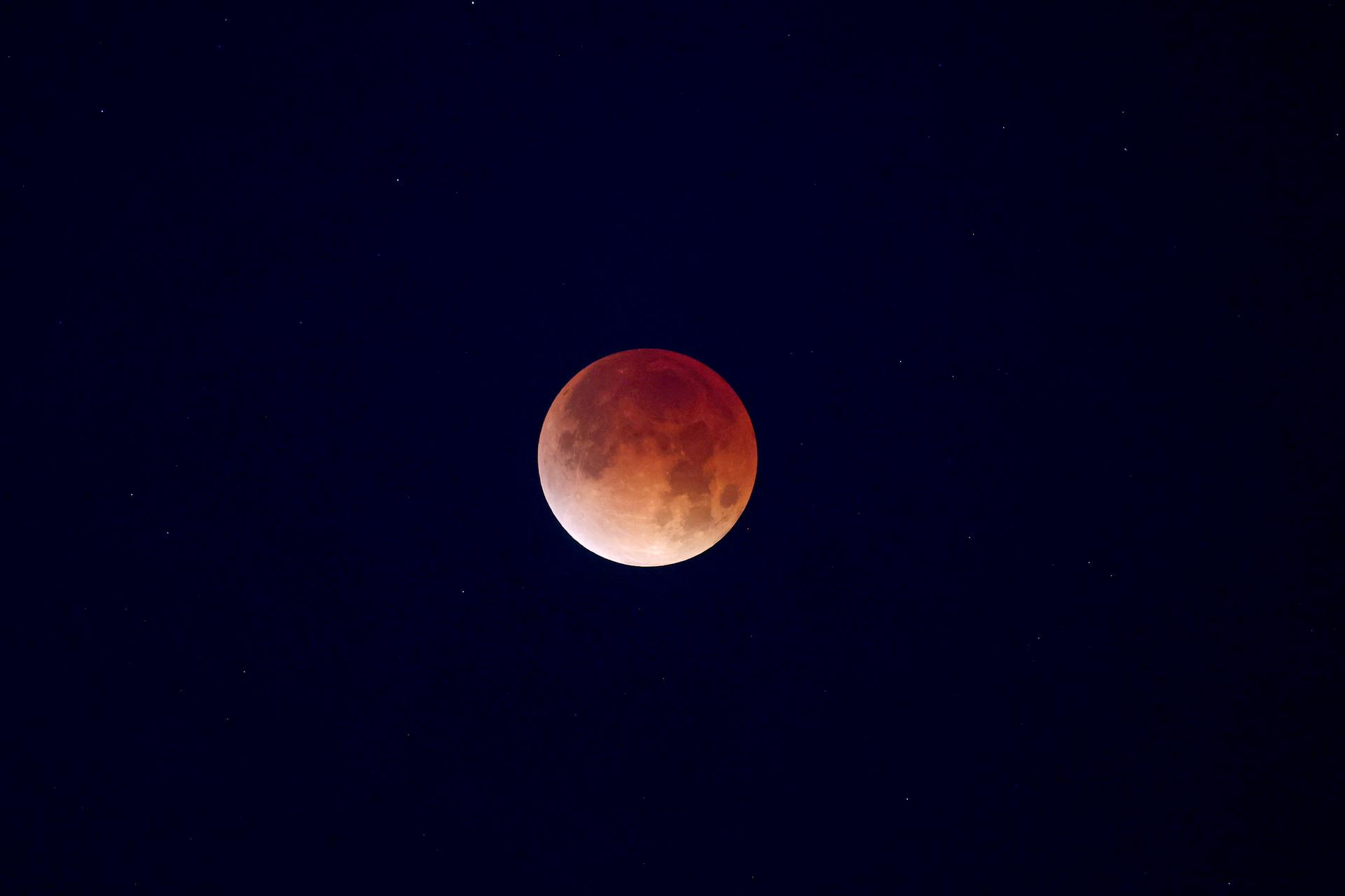
A total lunar eclipse rises over New Orleans, home of NASA’s Michoud Assembly Facility, in the early morning hours of Tuesday, March 3. A lunar eclipse occurs when Earth passes directly between the Sun and Moon, casting a huge shadow across the Moon’s surface. The Moon appears dark red or orange as the Sun’s light filters through Earth’s atmosphere. Image credit: NASA/Michael DeMocker
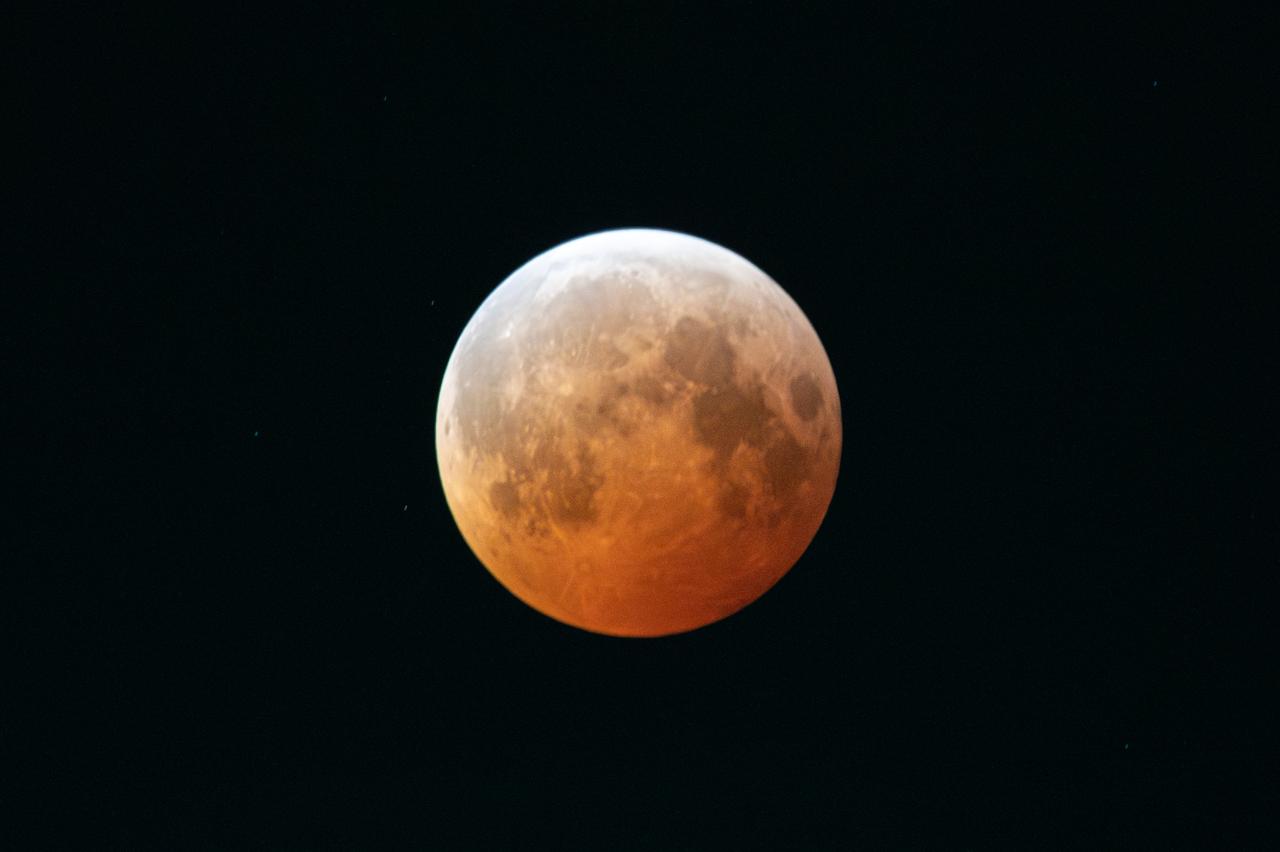
Blood Moon/Lunar Eclipse on March 14th, 2025 seen from Brookpark, OH at NASA Glenn Research Center.. Photo Credit: (NASA/Jordan Cochran)
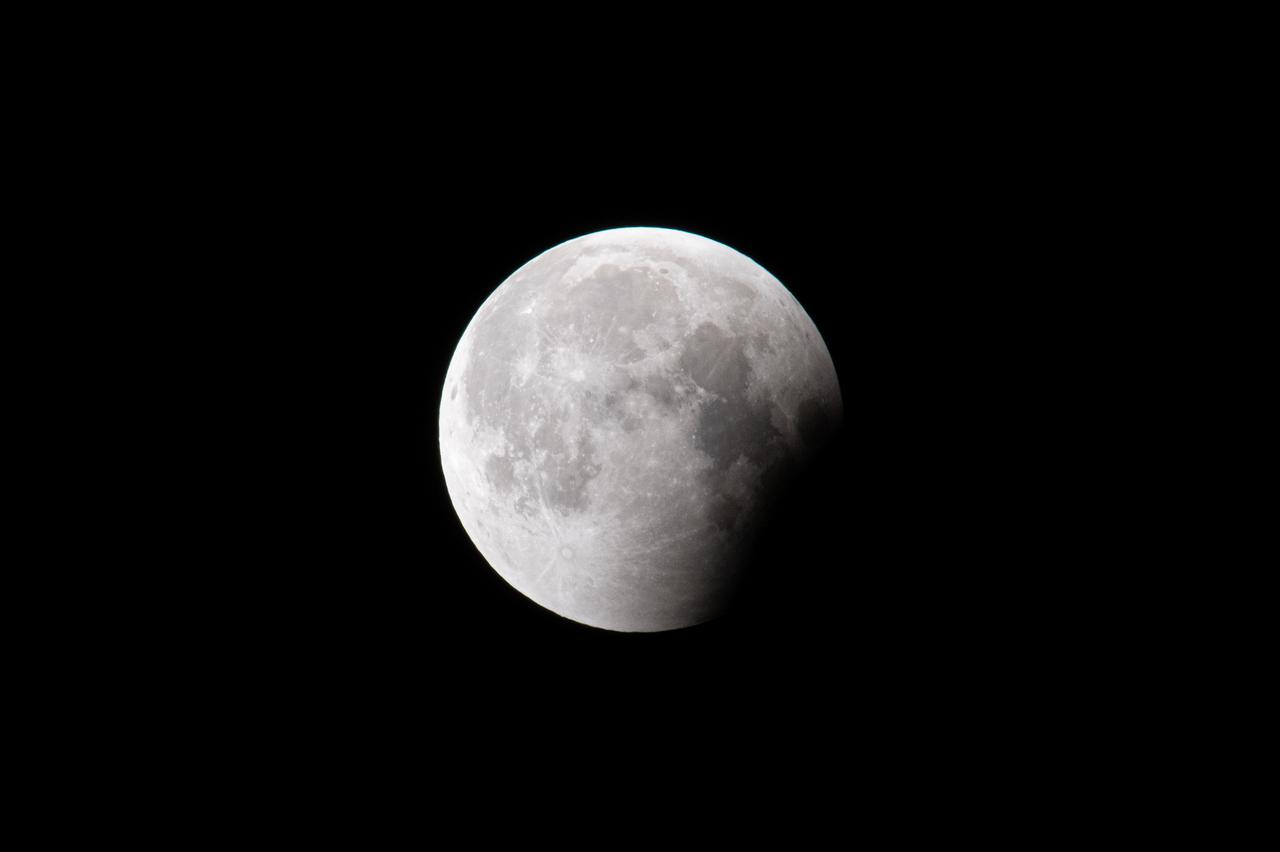
Blood Moon/Lunar Eclipse on March 14th, 2025 seen from Brookpark, OH at NASA Glenn Research Center.. Photo Credit: (NASA/Jordan Cochran)
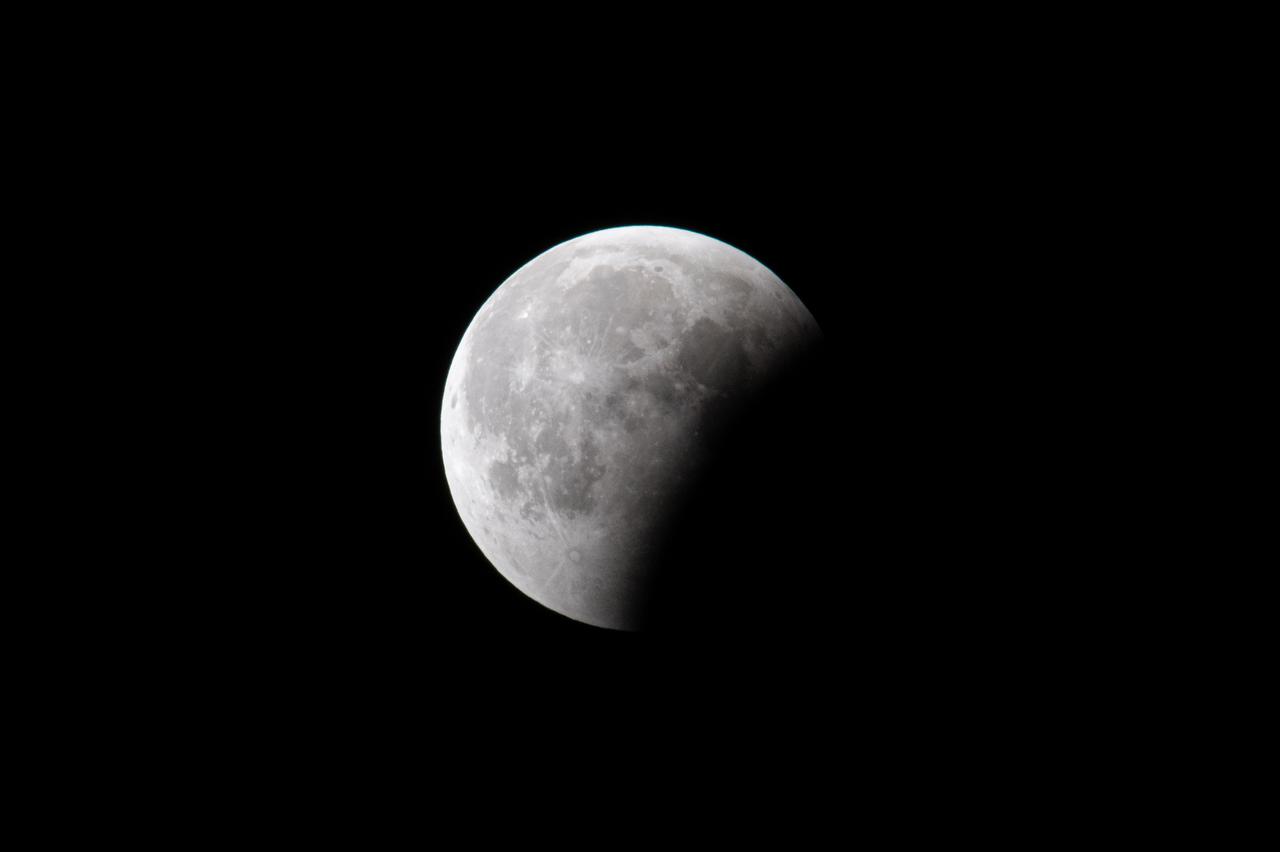
Blood Moon/Lunar Eclipse on March 14th, 2025 seen from Brookpark, OH at NASA Glenn Research Center.. Photo Credit: (NASA/Jordan Cochran)
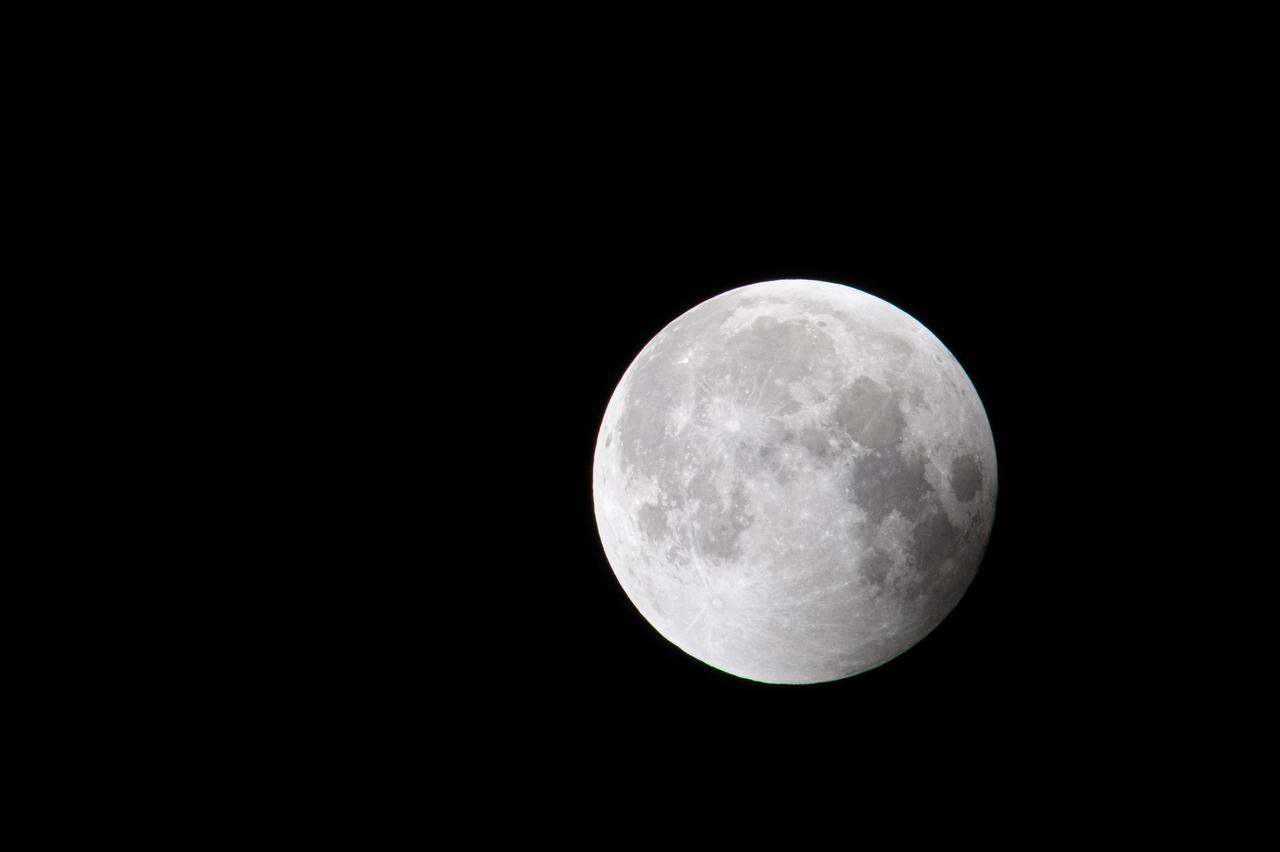
Blood Moon/Lunar Eclipse on March 14th, 2025 seen from Brookpark, OH at NASA Glenn Research Center.. Photo Credit: (NASA/Jordan Cochran)
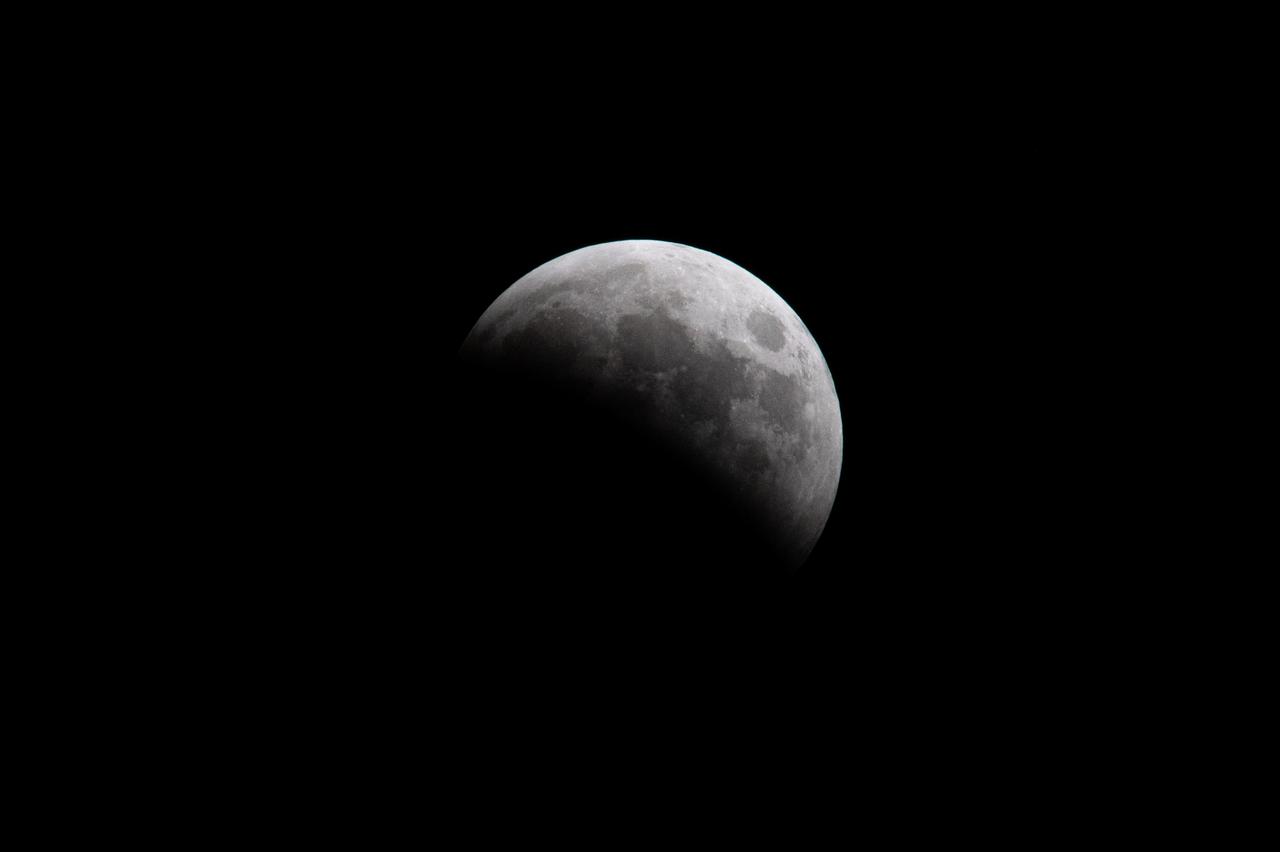
Blood Moon/Lunar Eclipse on March 14th, 2025 seen from Brookpark, OH at NASA Glenn Research Center.. Photo Credit: (NASA/Jordan Cochran)
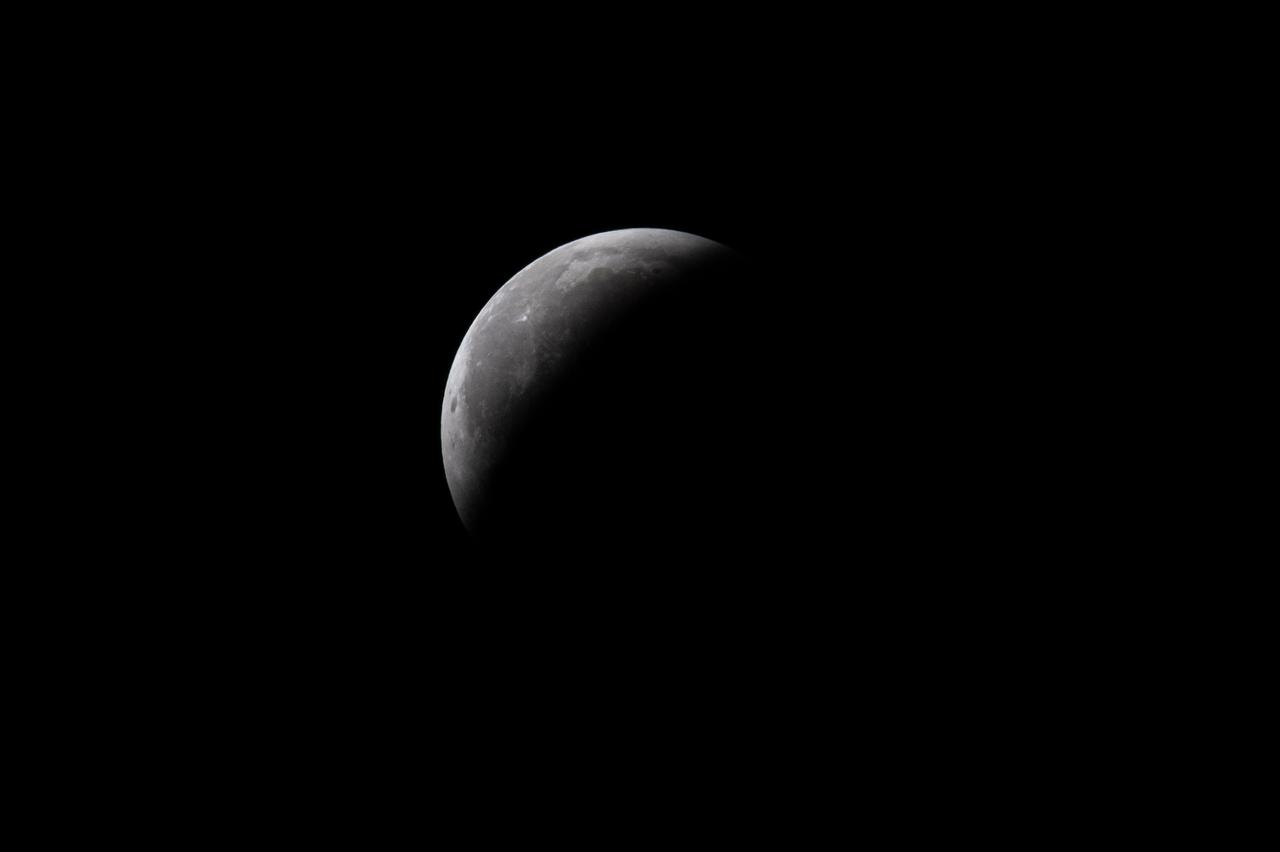
Blood Moon/Lunar Eclipse on March 14th, 2025 seen from Brookpark, OH at NASA Glenn Research Center.. Photo Credit: (NASA/Jordan Cochran)
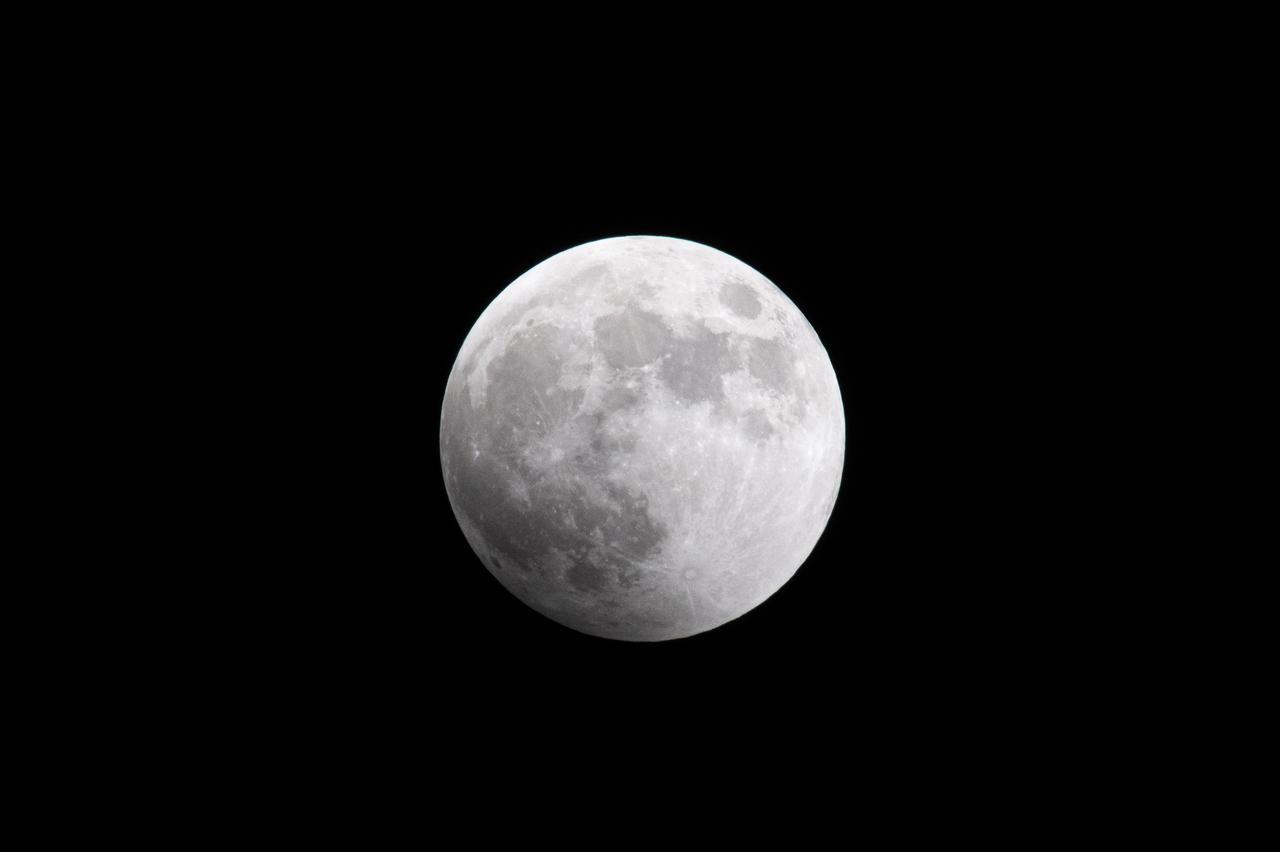
Blood Moon/Lunar Eclipse on March 14th, 2025 seen from Brookpark, OH at NASA Glenn Research Center.. Photo Credit: (NASA/Jordan Cochran)
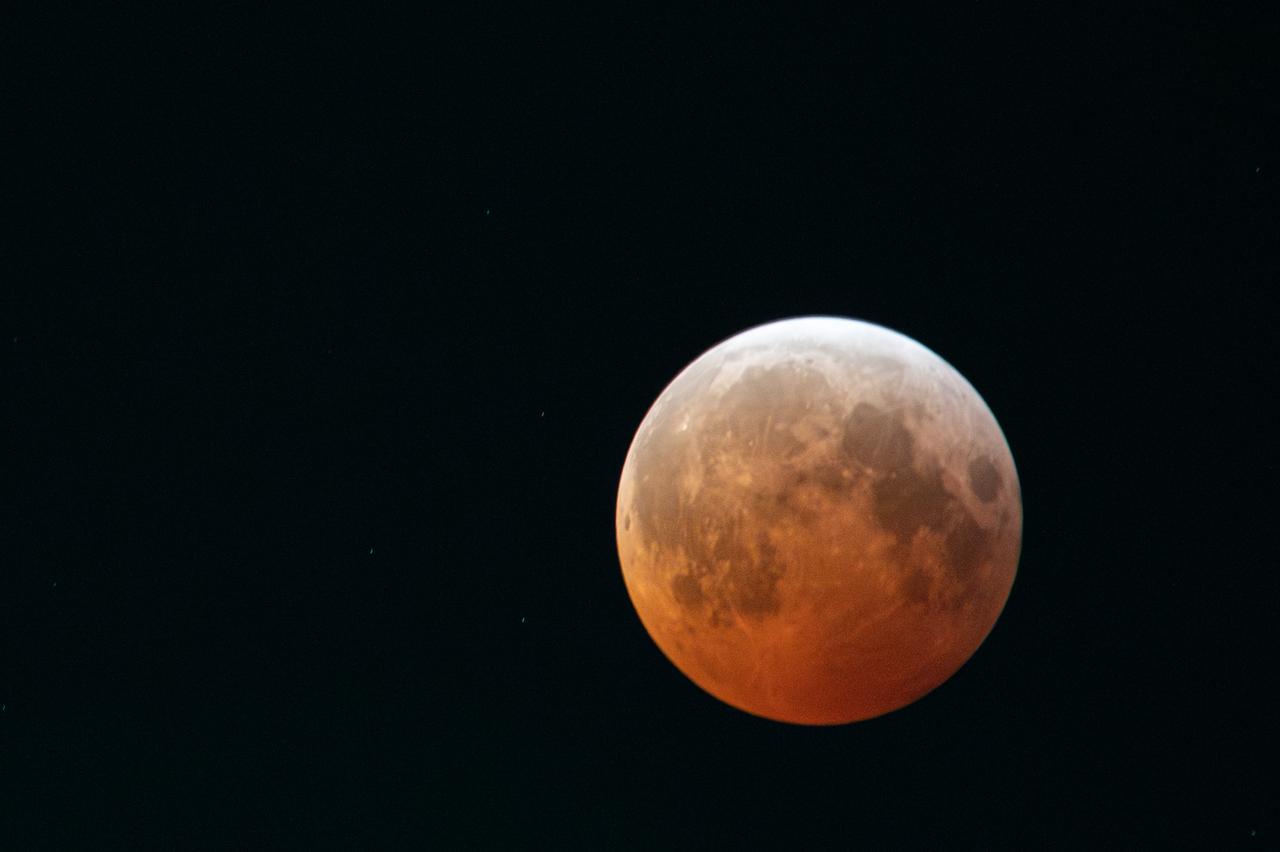
Blood Moon/Lunar Eclipse on March 14th, 2025 seen from Brookpark, OH at NASA Glenn Research Center.. Photo Credit: (NASA/Jordan Cochran)
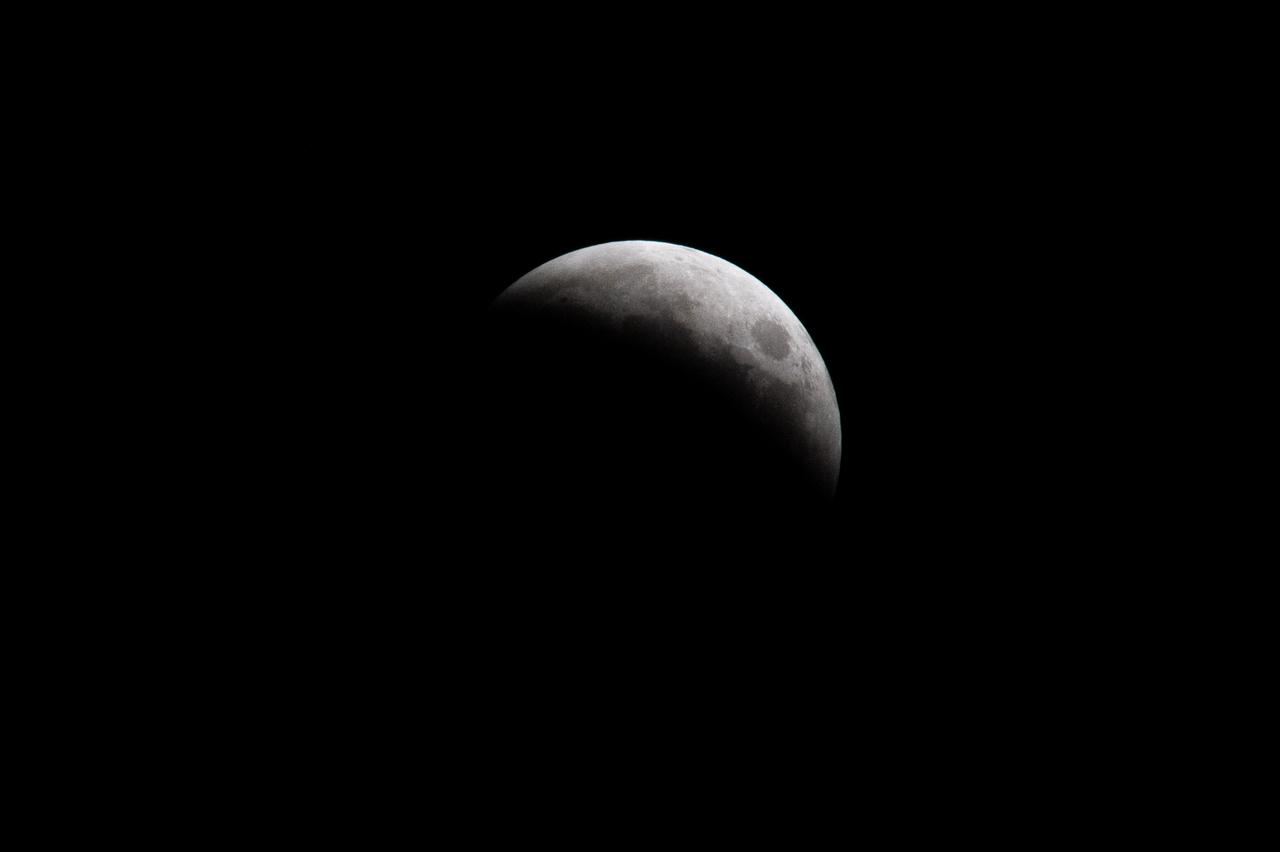
Blood Moon/Lunar Eclipse on March 14th, 2025 seen from Brookpark, OH at NASA Glenn Research Center.. Photo Credit: (NASA/Jordan Cochran)

Blood Moon/Lunar Eclipse on March 14th, 2025 seen from Brookpark, OH at NASA Glenn Research Center.. Photo Credit: (NASA/Jordan Cochran)
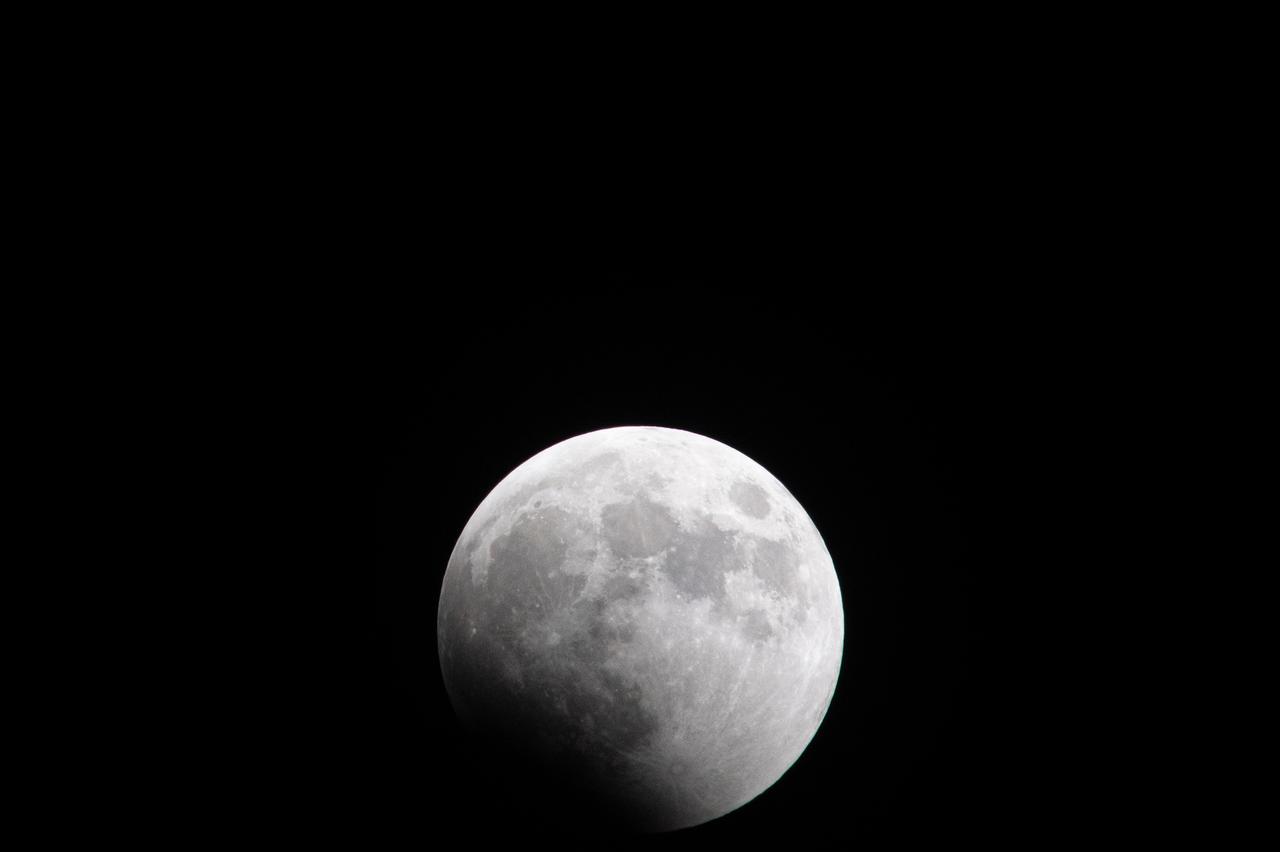
Blood Moon/Lunar Eclipse on March 14th, 2025 seen from Brookpark, OH at NASA Glenn Research Center.. Photo Credit: (NASA/Jordan Cochran)
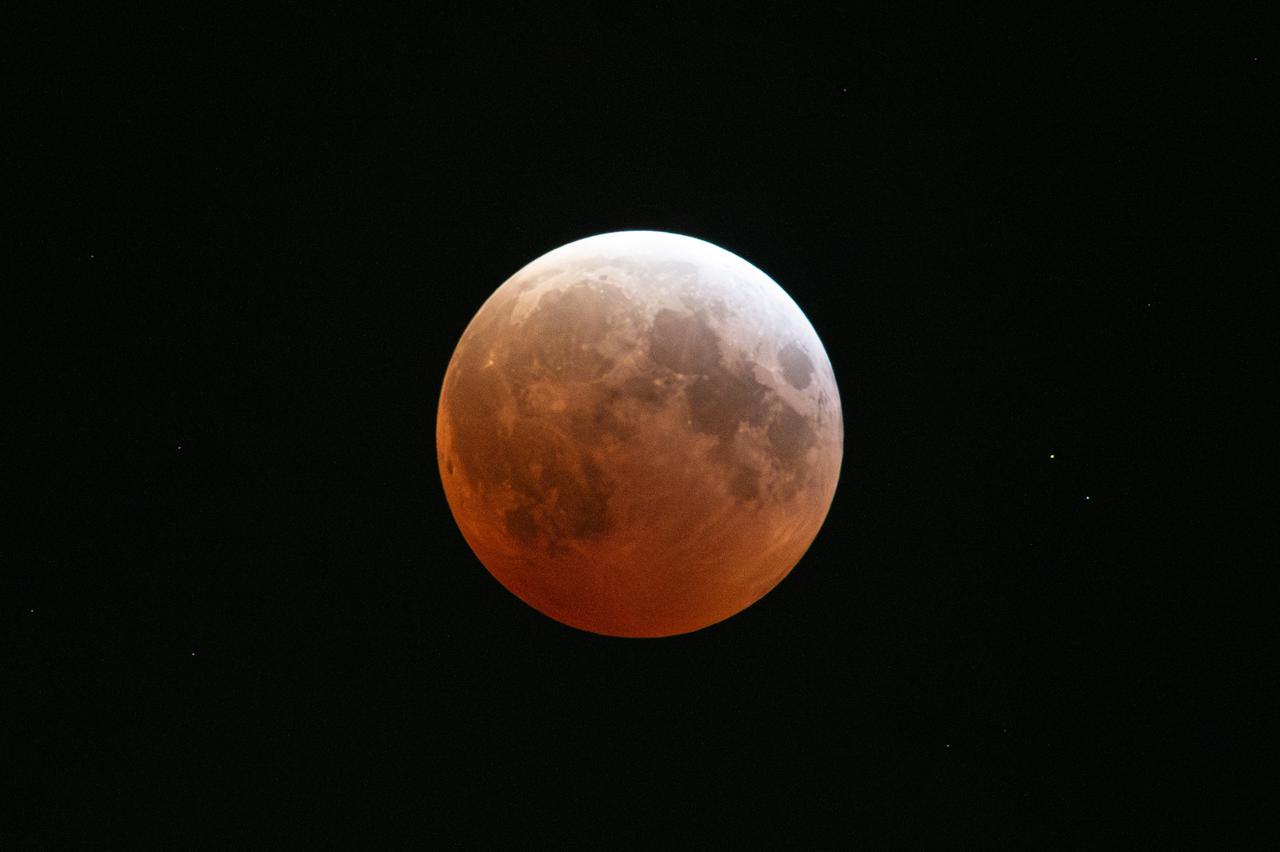
Blood Moon/Lunar Eclipse on March 14th, 2025 seen from Brookpark, OH at NASA Glenn Research Center.. Photo Credit: (NASA/Jordan Cochran)
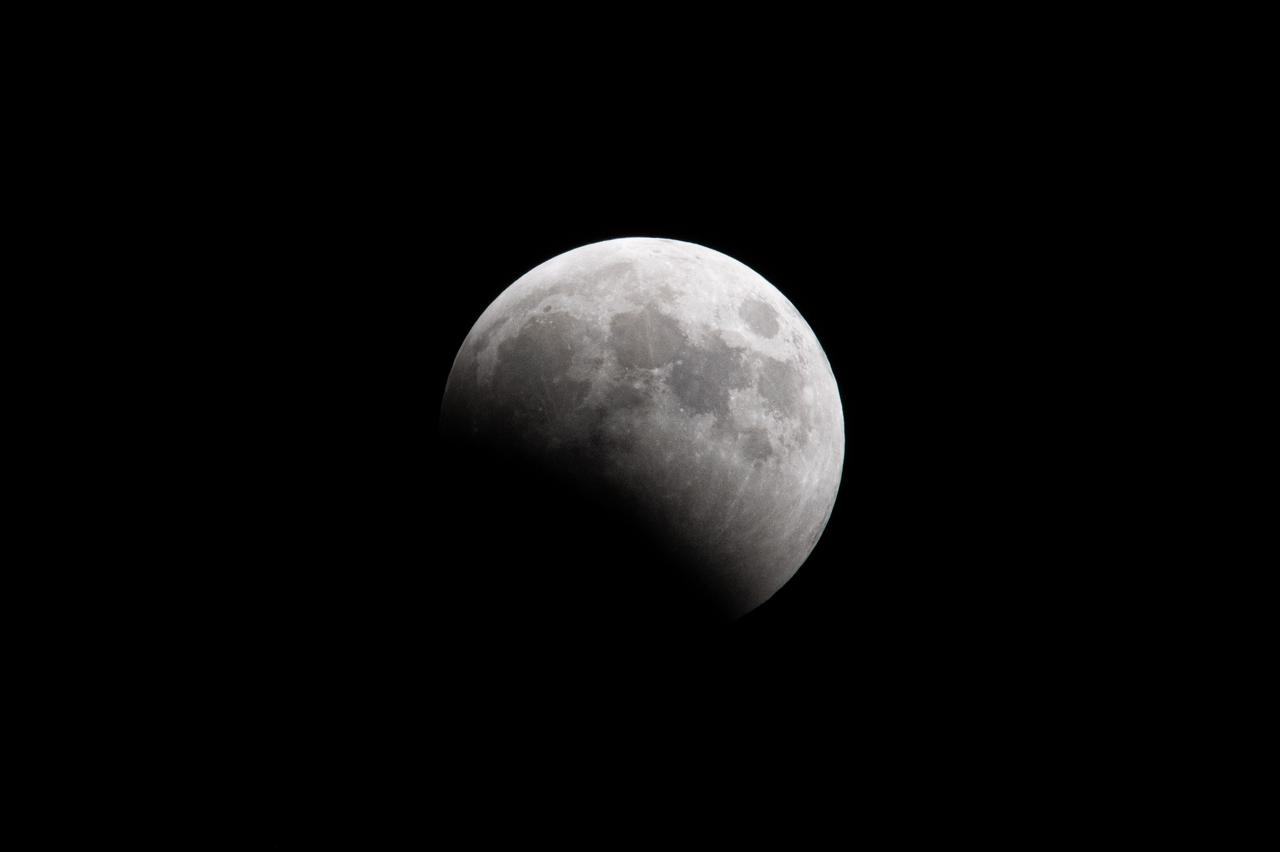
Blood Moon/Lunar Eclipse on March 14th, 2025 seen from Brookpark, OH at NASA Glenn Research Center.. Photo Credit: (NASA/Jordan Cochran)
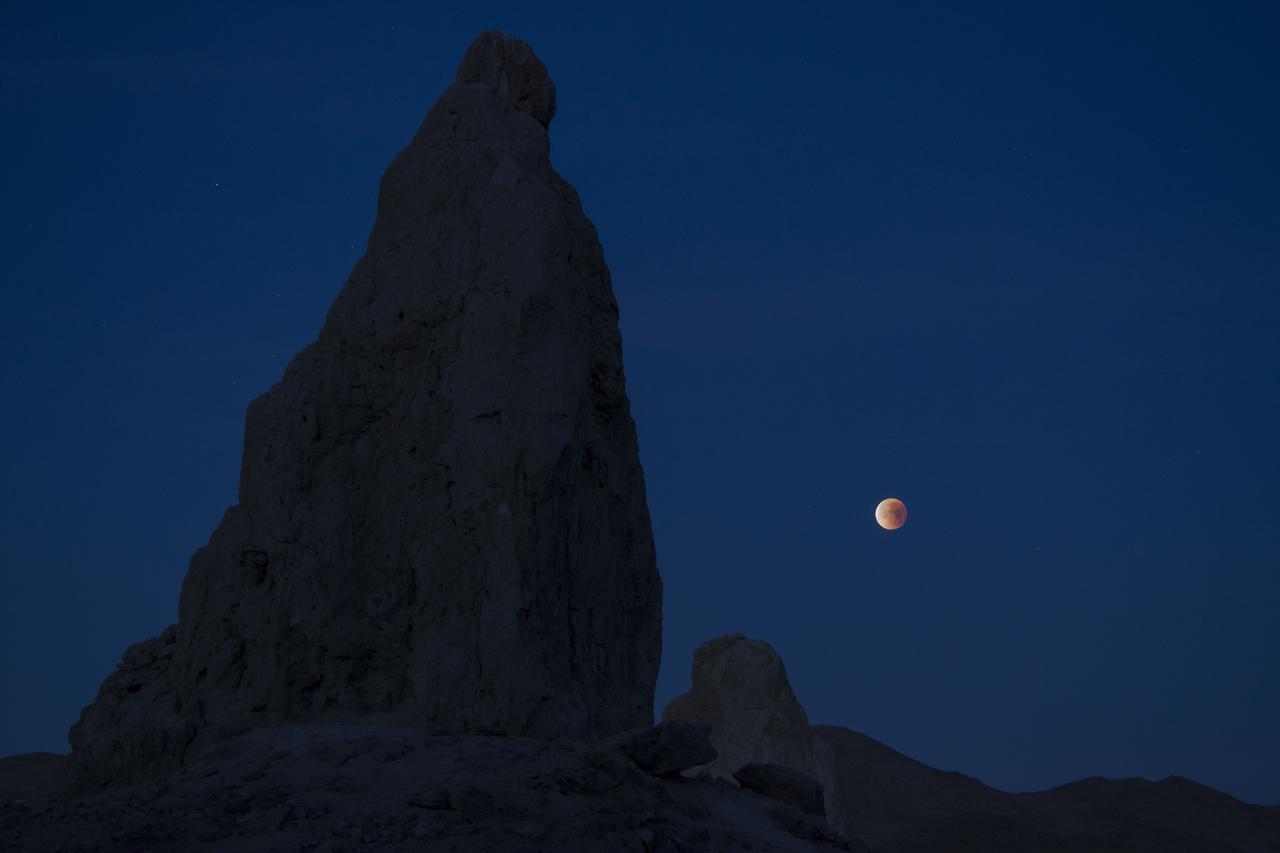
NASA Armstrong Flight Research Center photographer Lauren Hughes takes photos of the Super Blue Blood Moon eclipse from California's Trona Pinnacles Desert National Conservation for the Jan. 31 of the total lunar eclipse that provided a rare opportunity to capture a supermoon, a blue moon and a lunar eclipse at the same time. A supermoon occurs when the Moon is closer to Earth in its orbit and appearing 14 percent brighter than usual. As the second full moon of the month, this moon is also commonly known as a blue moon, though it will not be blue in appearance. The super blue moon passed through Earth's shadow and took on a reddish tint, known as a blood moon. This total lunar eclipse occurs when the Sun, Earth, and a full moon form a near-perfect lineup in space. The Moon passes directly behind the Earth into its umbra (shadow).

NASA Armstrong Flight Research Center photographer Lauren Hughes takes photos of the Super Blue Blood Moon eclipse from California’s Trona Pinnacles Desert National Conservation for the Jan. 31 of the total lunar eclipse that provided a rare opportunity to capture a supermoon, a blue moon and a lunar eclipse at the same time. A supermoon occurs when the Moon is closer to Earth in its orbit and appearing 14 percent brighter than usual. As the second full moon of the month, this moon is also commonly known as a blue moon, though it will not be blue in appearance. The super blue moon passed through Earth’s shadow and took on a reddish tint, known as a blood moon. This total lunar eclipse occurs when the Sun, Earth, and a full moon form a near-perfect lineup in space. The Moon passes directly behind the Earth into its umbra (shadow).
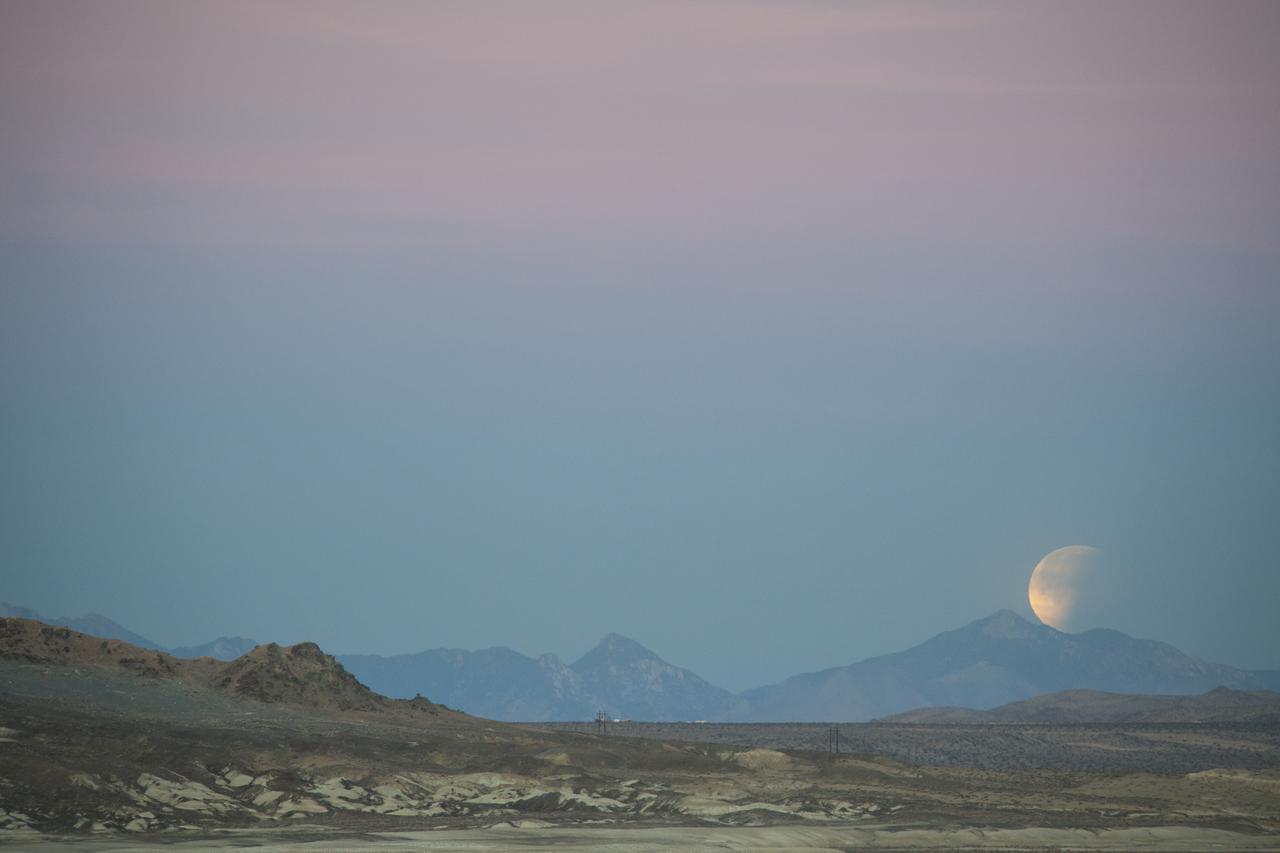
NASA Armstrong Flight Research Center photographer Lauren Hughes takes photos of the Super Blue Blood Moon eclipse from California’s Trona Pinnacles Desert National Conservation for the Jan. 31 of the total lunar eclipse that provided a rare opportunity to capture a supermoon, a blue moon and a lunar eclipse at the same time. A supermoon occurs when the Moon is closer to Earth in its orbit and appearing 14 percent brighter than usual. As the second full moon of the month, this moon is also commonly known as a blue moon, though it will not be blue in appearance. The super blue moon passed through Earth’s shadow and took on a reddish tint, known as a blood moon. This total lunar eclipse occurs when the Sun, Earth, and a full moon form a near-perfect lineup in space. The Moon passes directly behind the Earth into its umbra (shadow).
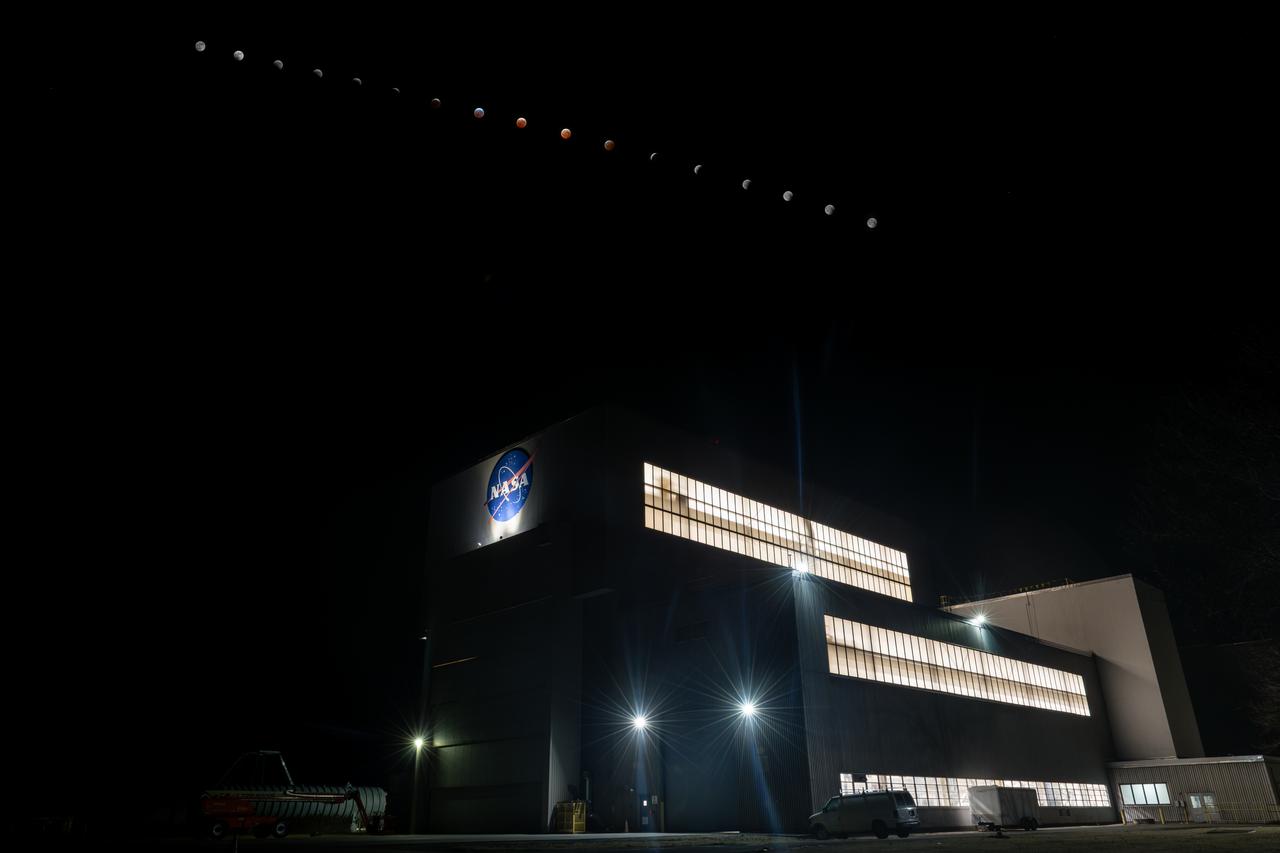
A composite photo made from 18 images of the lunar eclipse above the Space Environments Complex at NASA’s Glenn Research Center at Neil Armstrong Test Facility in Sandusky, Ohio, during the early hours of March 14, 2025. Photo Credit: (NASA/Sara Lowthian-Hanna)
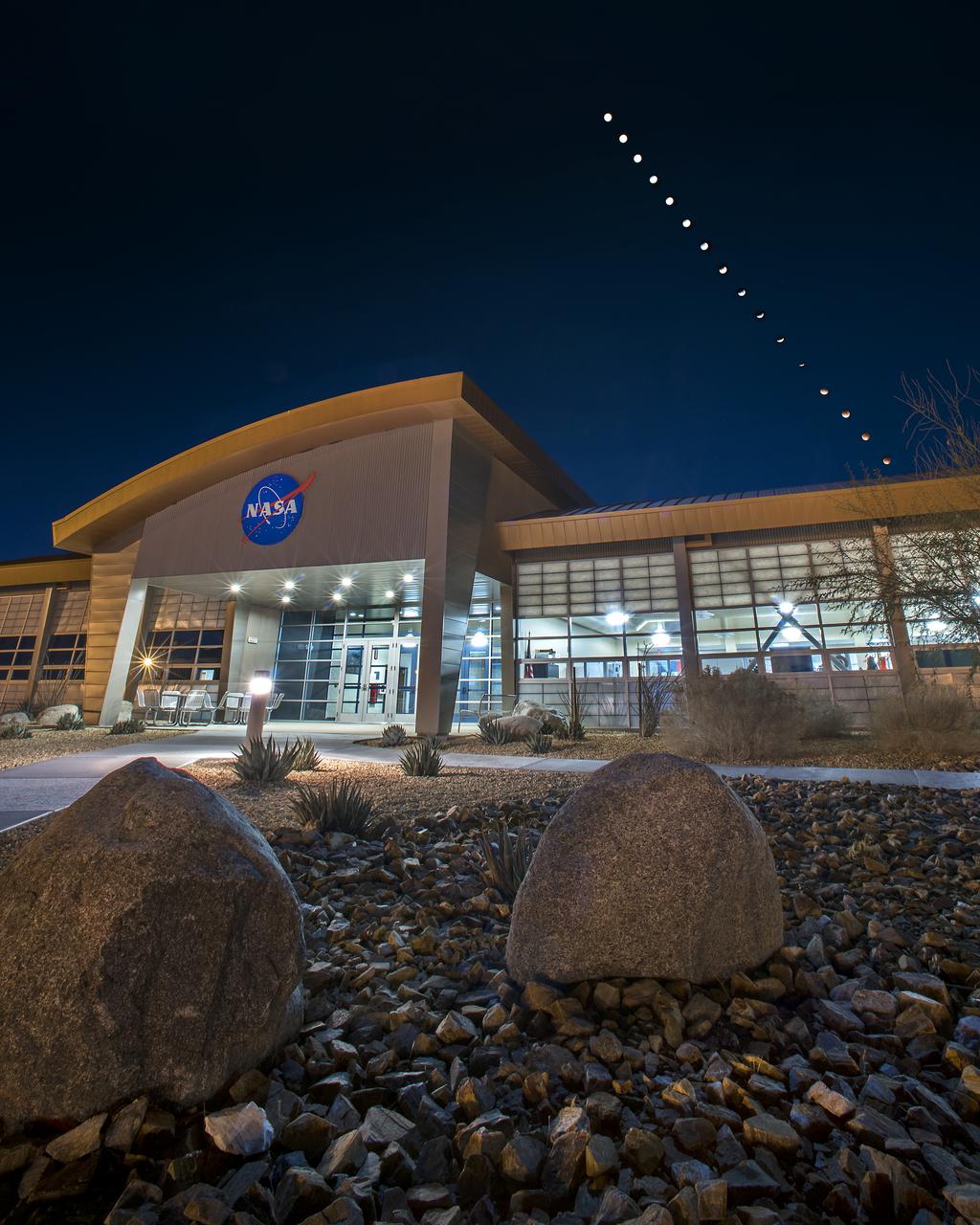
California’s NASA Armstrong Flight Research Center photographer Ken Ulbrich takes photos of Super Blue Blood Moon eclipse making a time-lapse composition of the event on January 31. The total lunar eclipse provided a rare opportunity to capture a supermoon, a blue moon and a lunar eclipse at the same time. A supermoon occurs when the Moon is closer to Earth in its orbit and appearing 14 percent brighter than usual. As the second full moon of the month, this moon is also commonly known as a blue moon, though it will not be blue in appearance. The super blue moon passed through Earth’s shadow and took on a reddish tint, known as a blood moon. This total lunar eclipse occurs when the Sun, Earth, and a full moon form a near-perfect lineup in space. The Moon passes directly behind the Earth into its umbra (shadow).
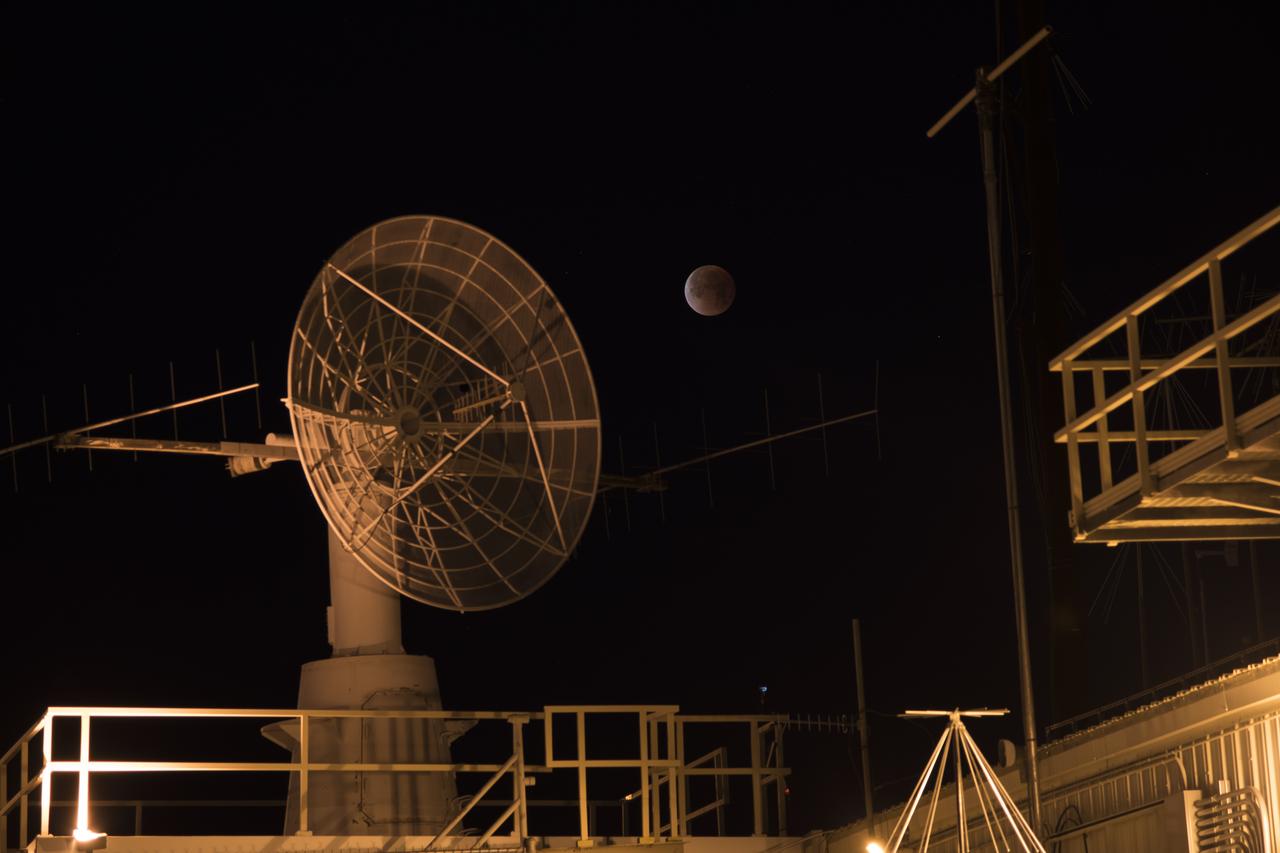
California’s NASA Armstrong Flight Research Center’s photographer Carla Thomas takes photos on January 31 of the rare opportunity to capture a supermoon, a blue moon and a lunar eclipse at the same time. A supermoon occurs when the Moon is closer to Earth in its orbit and appearing 14 percent brighter than usual. As the second full moon of the month, this moon is also commonly known as a blue moon, though it will not be blue in appearance. The super blue moon passed through Earth’s shadow and took on a reddish tint, known as a blood moon. This total lunar eclipse occurs when the Sun, Earth, and a full moon form a near-perfect lineup in space. The Moon passes directly behind the Earth into its umbra (shadow).

California's NASA Armstrong Flight Research Center photographer Carla Thomas takes photos on January 31 of the rare opportunity to capture a supermoon, a blue moon and a lunar eclipse at the same time. A supermoon occurs when the Moon is closer to Earth in its orbit and appearing 14 percent brighter than usual. As the second full moon of the month, this moon is also commonly known as a blue moon, though it will not be blue in appearance. The super blue moon will pass through Earth's shadow and take on a reddish tint, known as a blood moon. This total lunar eclipse occurs when the Sun, Earth, and a full moon form a near-perfect lineup in space. The Moon passes directly behind the Earth into its umbra (shadow).
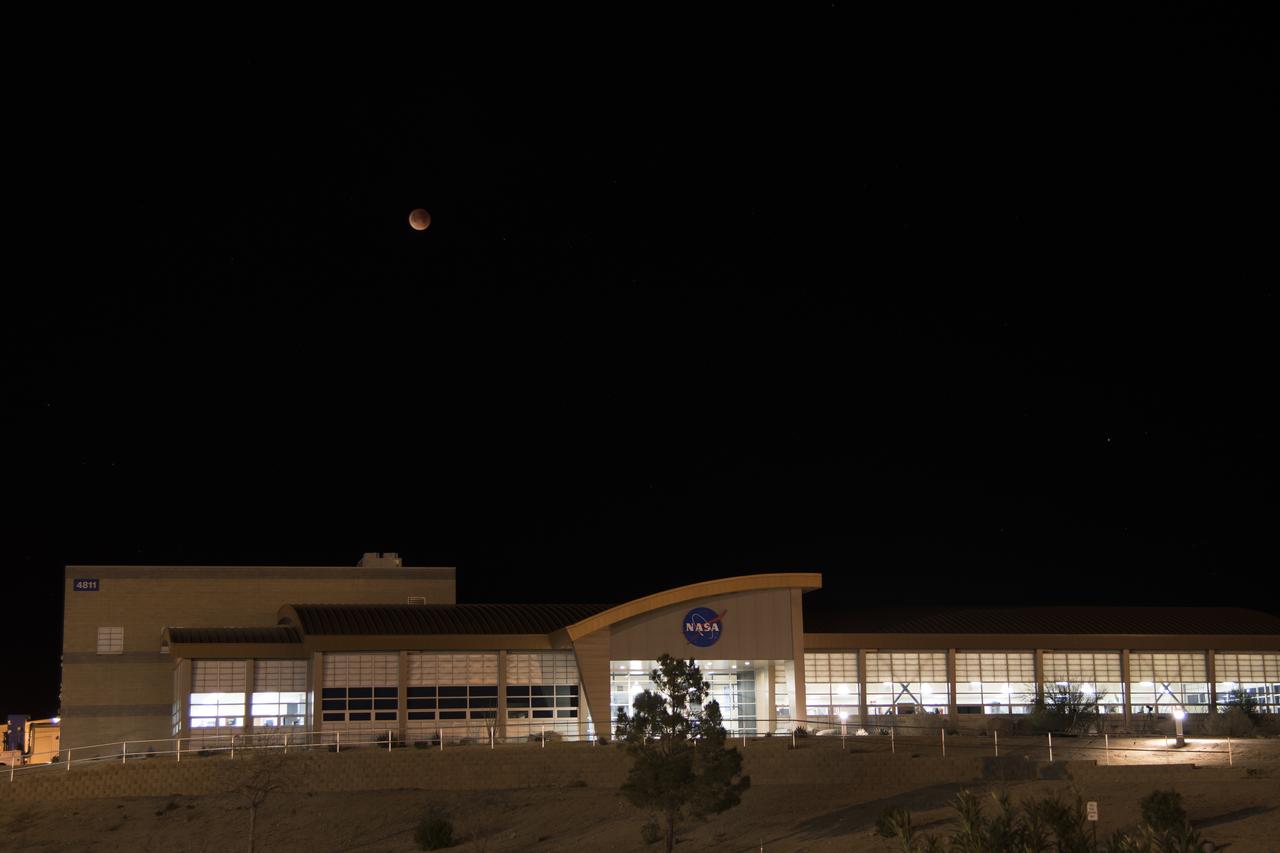
California's NASA Armstrong Flight Research Center photographer Carla Thomas takes photos on January 31 of the rare opportunity to capture a supermoon, a blue moon and a lunar eclipse at the same time. A supermoon occurs when the Moon is closer to Earth in its orbit and appearing 14 percent brighter than usual. As the second full moon of the month, this moon is also commonly known as a blue moon, though it will not be blue in appearance. The super blue moon passed through Earth's shadow and took on a reddish tint, known as a blood moon. This total lunar eclipse occurs when the Sun, Earth, and a full moon form a near-perfect lineup in space. The Moon passes directly behind the Earth into its umbra (shadow).
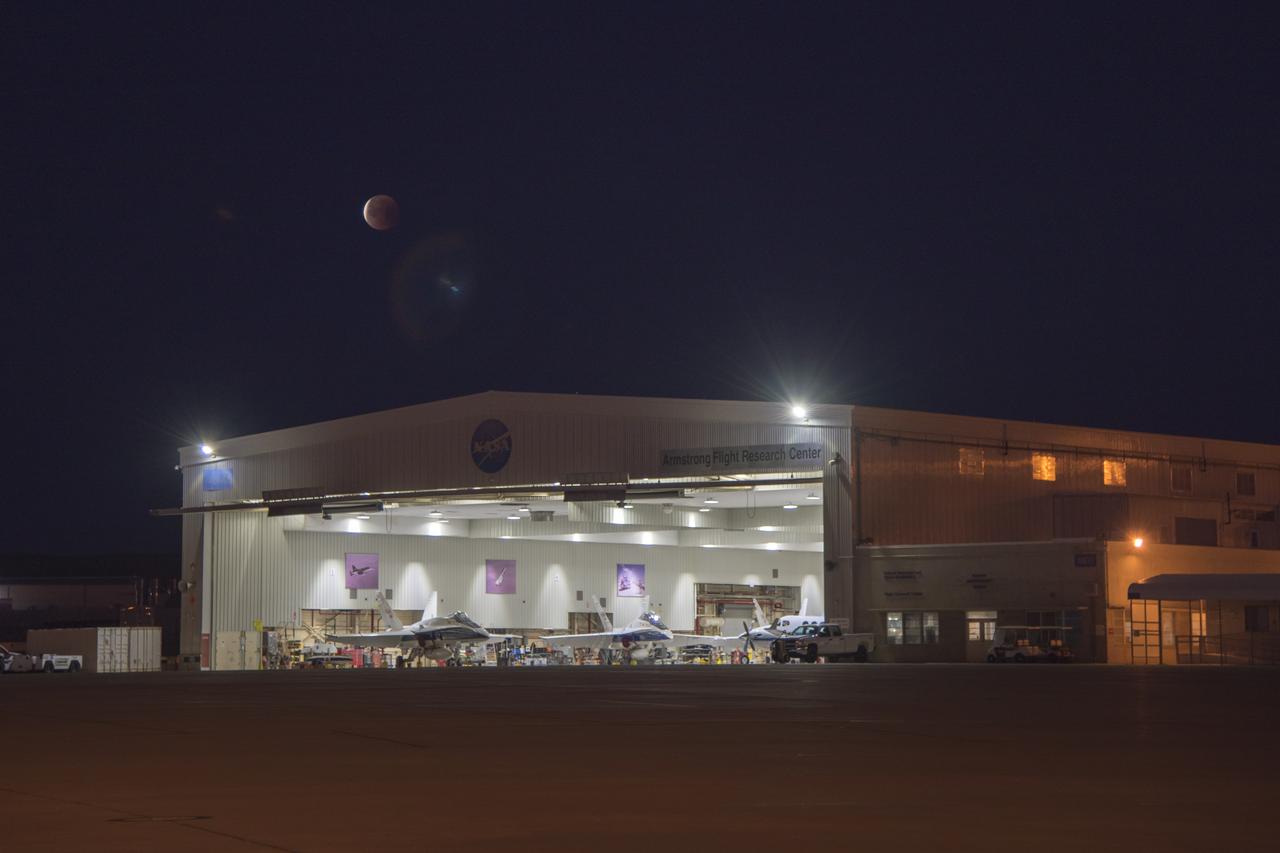
California's NASA Armstrong Flight Research Center photographer Carla Thomas takes photos on January 31 of the rare opportunity to capture a supermoon, a blue moon and a lunar eclipse at the same time. A supermoon occurs when the Moon is closer to Earth in its orbit and appearing 14 percent brighter than usual. As the second full moon of the month, this moon is also commonly known as a blue moon, though it will not be blue in appearance. The super blue moon passed through Earth's shadow and took on a reddish tint, known as a blood moon. This total lunar eclipse occurs when the Sun, Earth, and a full moon form a near-perfect lineup in space. The Moon passes directly behind the Earth into its umbra (shadow).

California's NASA Armstrong Flight Research Center photographer Carla Thomas takes photos on January 31 of the rare opportunity to capture a supermoon, a blue moon and a lunar eclipse at the same time. A supermoon occurs when the Moon is closer to Earth in its orbit and appearing 14 percent brighter than usual. As the second full moon of the month, this moon is also commonly known as a blue moon, though it will not be blue in appearance. The super blue moon passed through Earth's shadow and took on a reddish tint, known as a blood moon. This total lunar eclipse occurs when the Sun, Earth, and a full moon form a near-perfect lineup in space. The Moon passes directly behind the Earth into its umbra (shadow).
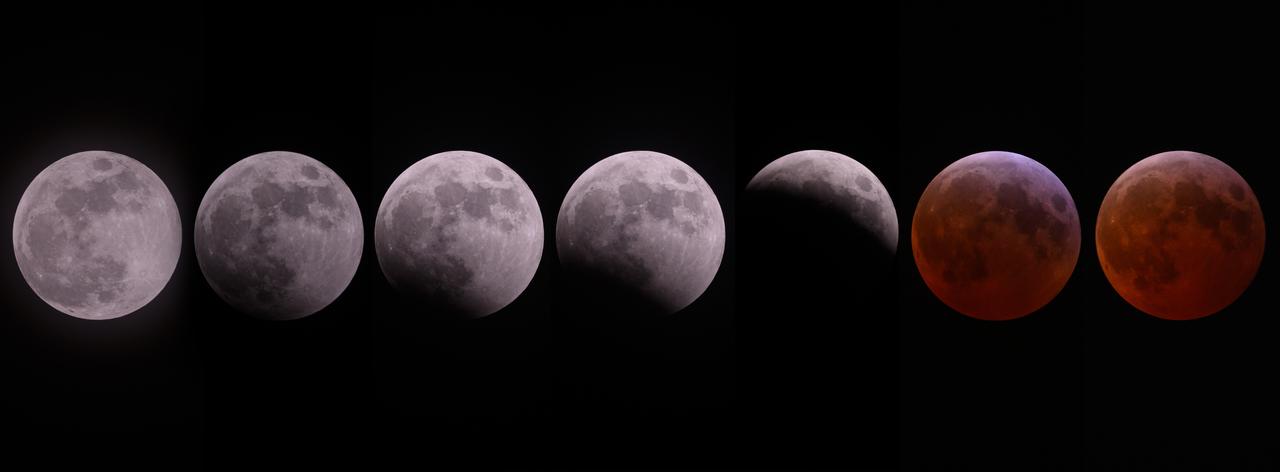
The blood Moon lunar eclipse over NASA’s Michoud Assembly Facility in New Orleans is shown from the initial partial eclipse to totality in a composite of 7 images shot on Friday, March 14, 2025. Image credit: NASA/Eric Bordelon
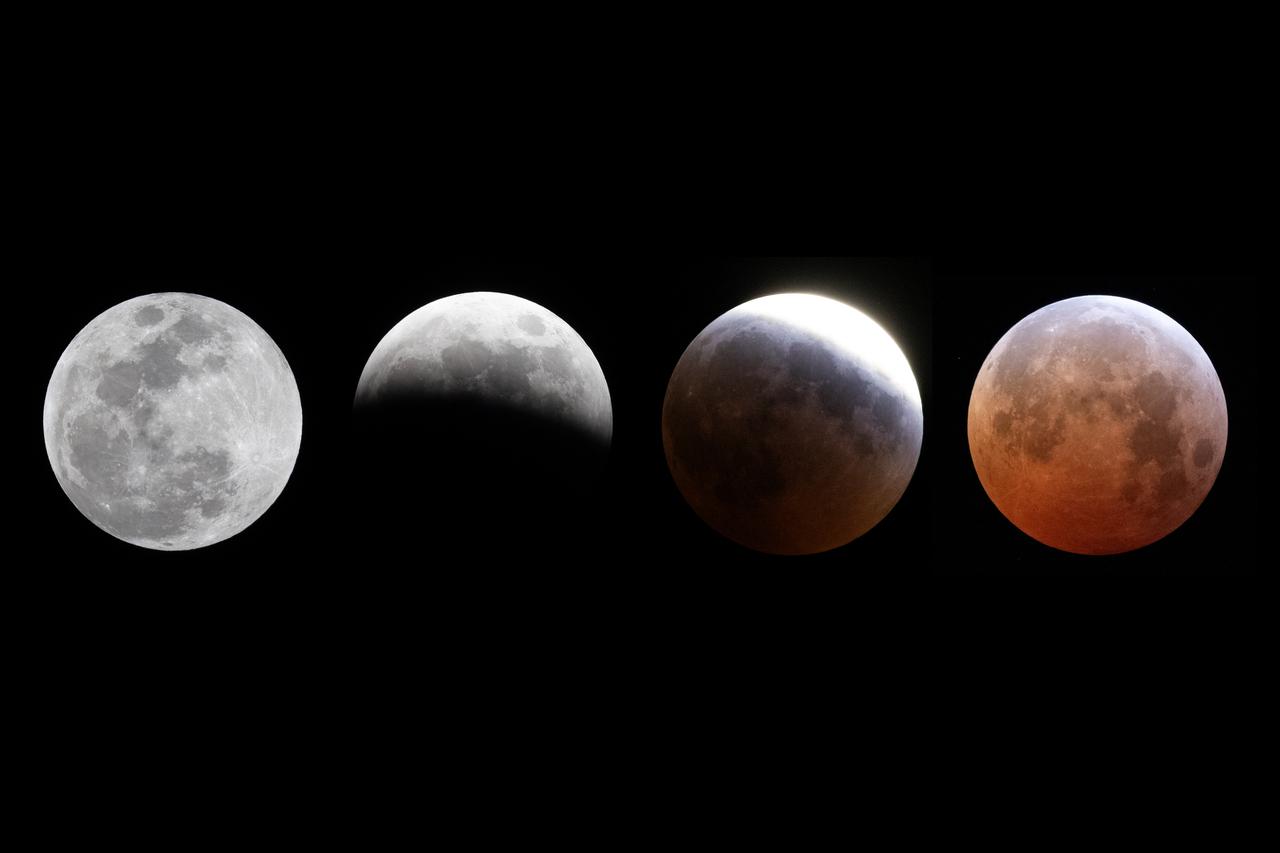
The blood moon lunar eclipse over New Orleans, home to NASA’s Michoud Assembly Facility, is shown from full moon to totality as it moves into the Earth’s umbral shadow in a composite of four images shot early Friday morning, March 14, 2025. Image credit: NASA/Michael DeMocker
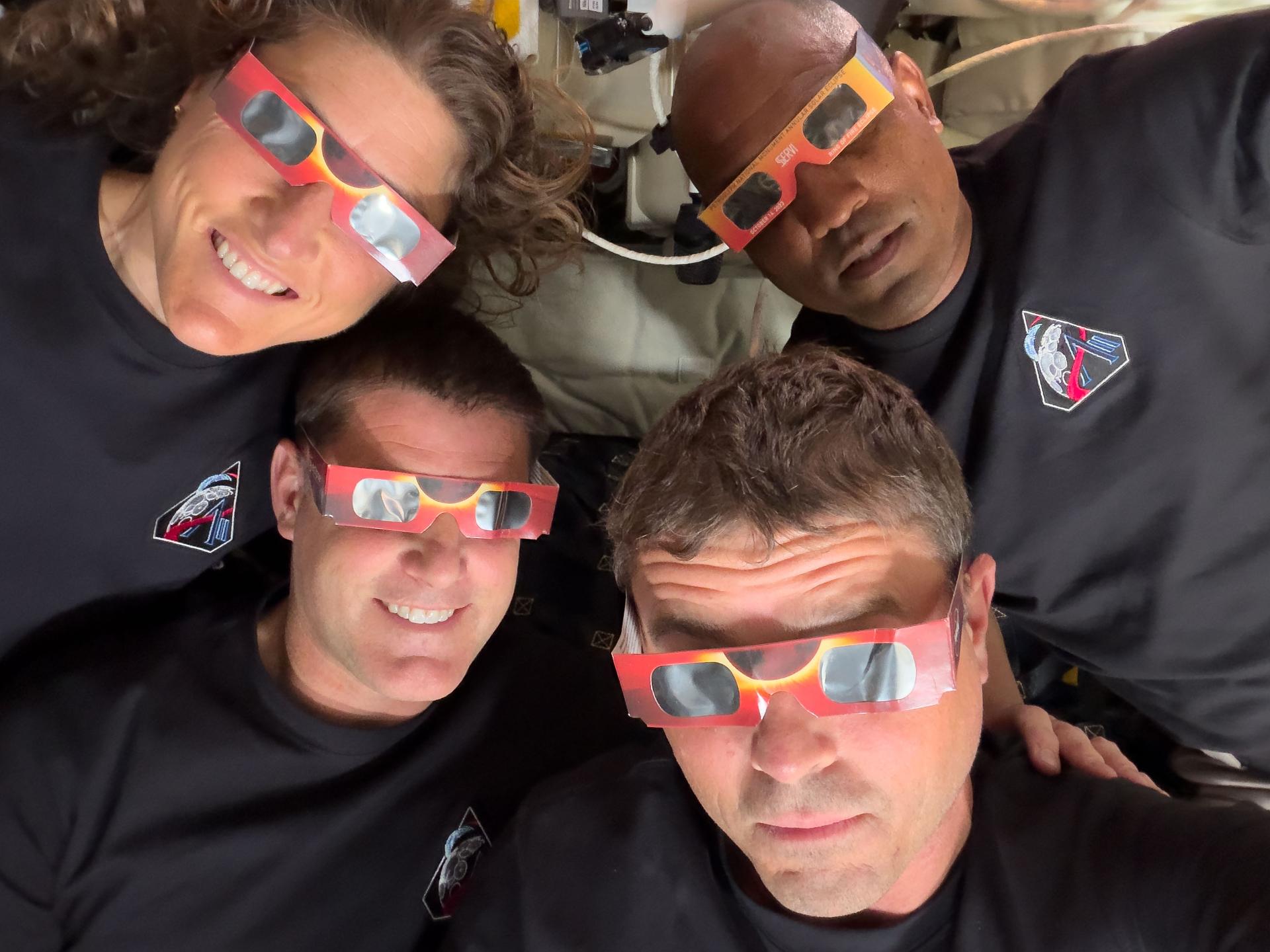
art002e009302 (April 6, 2026) – The Artemis II crew – Mission Specialist Christina Koch (top left), Mission Specialist Jeremy Hansen (bottom left), Commander Reid Wiseman (bottom right), and Pilot Victor Glover (top right) – uses eclipse viewers, identical to what NASA produced for the 2023 annular eclipse and 2024 total solar eclipse, to protect their eyes at key moments during the solar eclipse they experienced during their lunar flyby. This was the first use of eclipse glasses at the Moon to safely view a solar eclipse.

The Flower Moon lunar eclipse over NASA’s Michoud Assembly Facility in New Orleans is shown from the initial partial eclipse to totality in a composite of seven images shot on Sunday, May 15, 2022. Image credit: NASA/Michael DeMocker

ISS007-E-05541 (15 May 2003) --- This digital image was taken near the time of a total lunar eclipse through a window on the International Space Station (ISS) by Expedition Seven NASA ISS Science Officer Ed Lu.
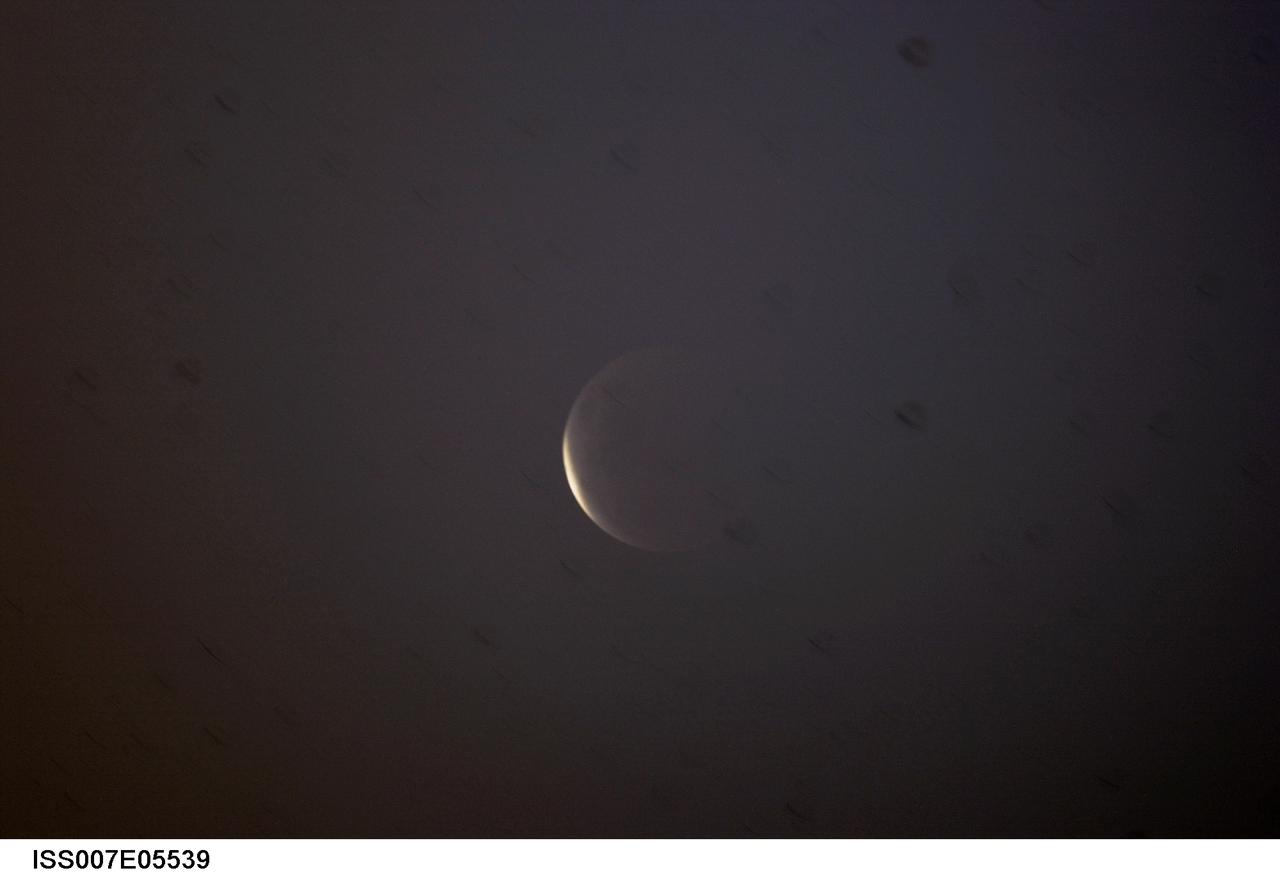
ISS007-E-05539 (15 May 2003) --- This digital image was taken near the time of a total lunar eclipse through a window on the International Space Station (ISS) by Expedition Seven NASA ISS Science Officer Ed Lu.
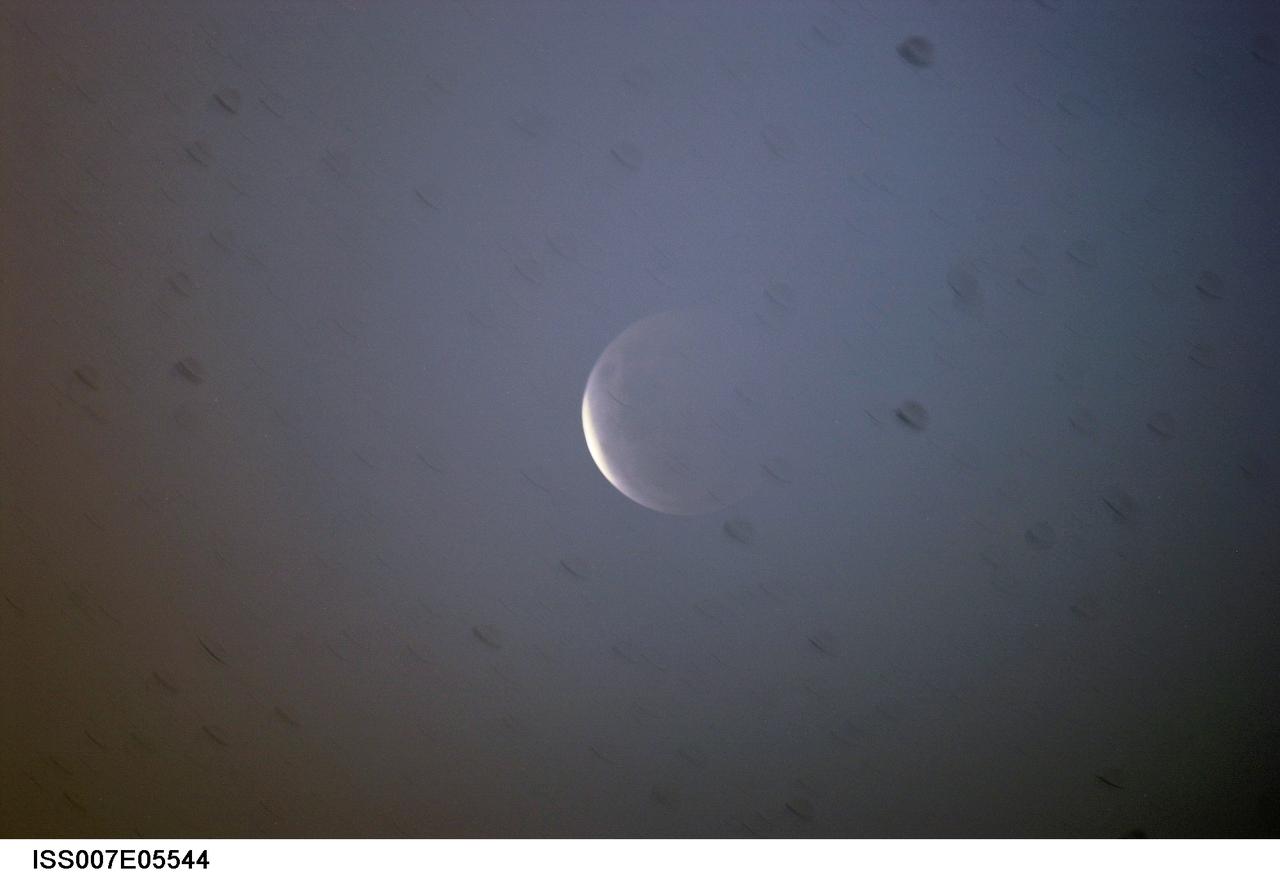
ISS007-E-05544 (15 May 2003) --- This digital image was taken near the time of a total lunar eclipse through a window on the International Space Station (ISS) by Expedition Seven NASA ISS Science Officer Ed Lu.
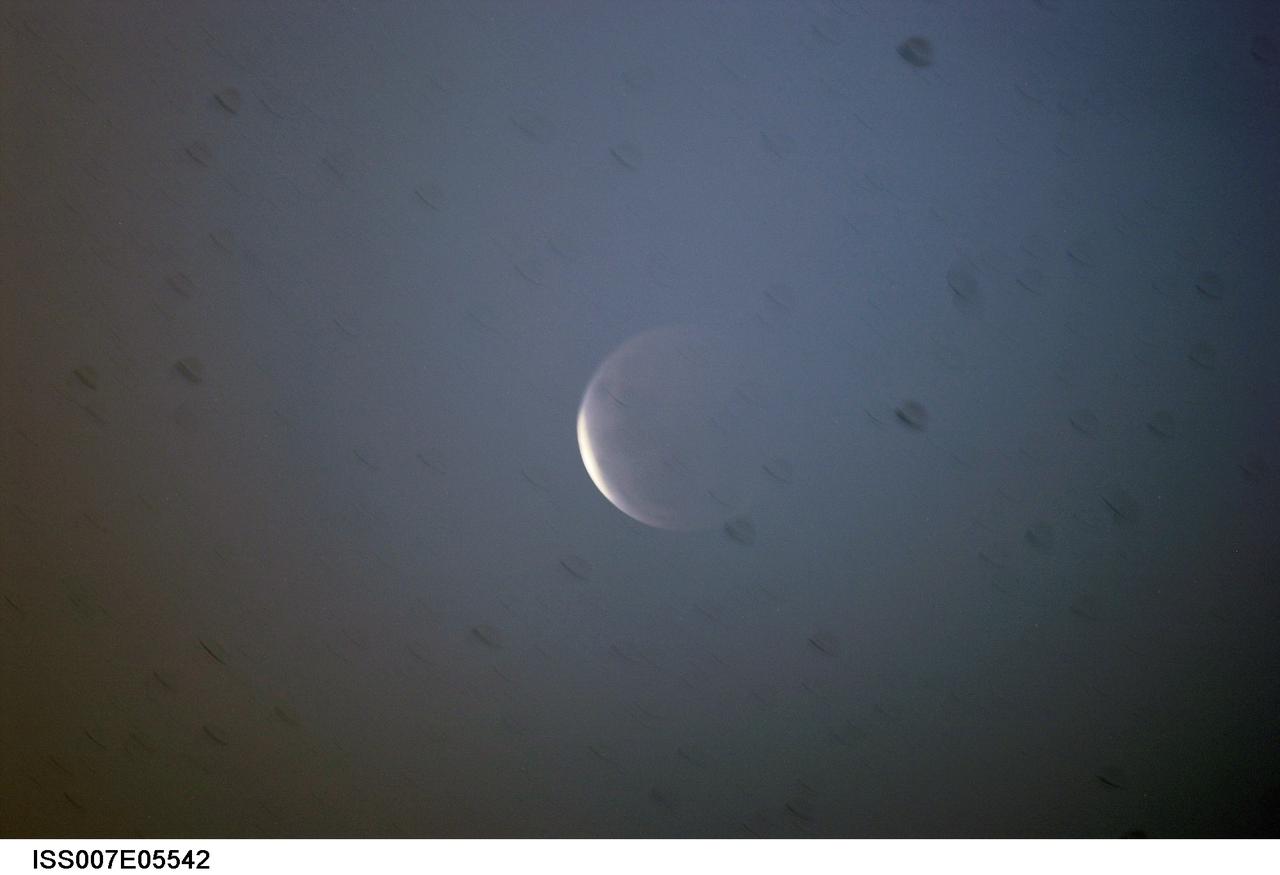
ISS007-E-05542 (15 May 2003) --- This digital image was taken near the time of a total lunar eclipse through a window on the International Space Station (ISS) by Expedition Seven NASA ISS Science Officer Ed Lu.

During the total solar eclipse, the Sun’s corona, only visible during the total eclipse, is shown as a crown of white flares from the surface. The red spots called Bailey's beads occurs where the moon grazes by the Sun and the rugged lunar limb topography allows beads of sunlight to shine through in some areas as photographed from NASA Armstrong’s Gulfstream III. Photo Credit: (NASA/Carla Thomas)
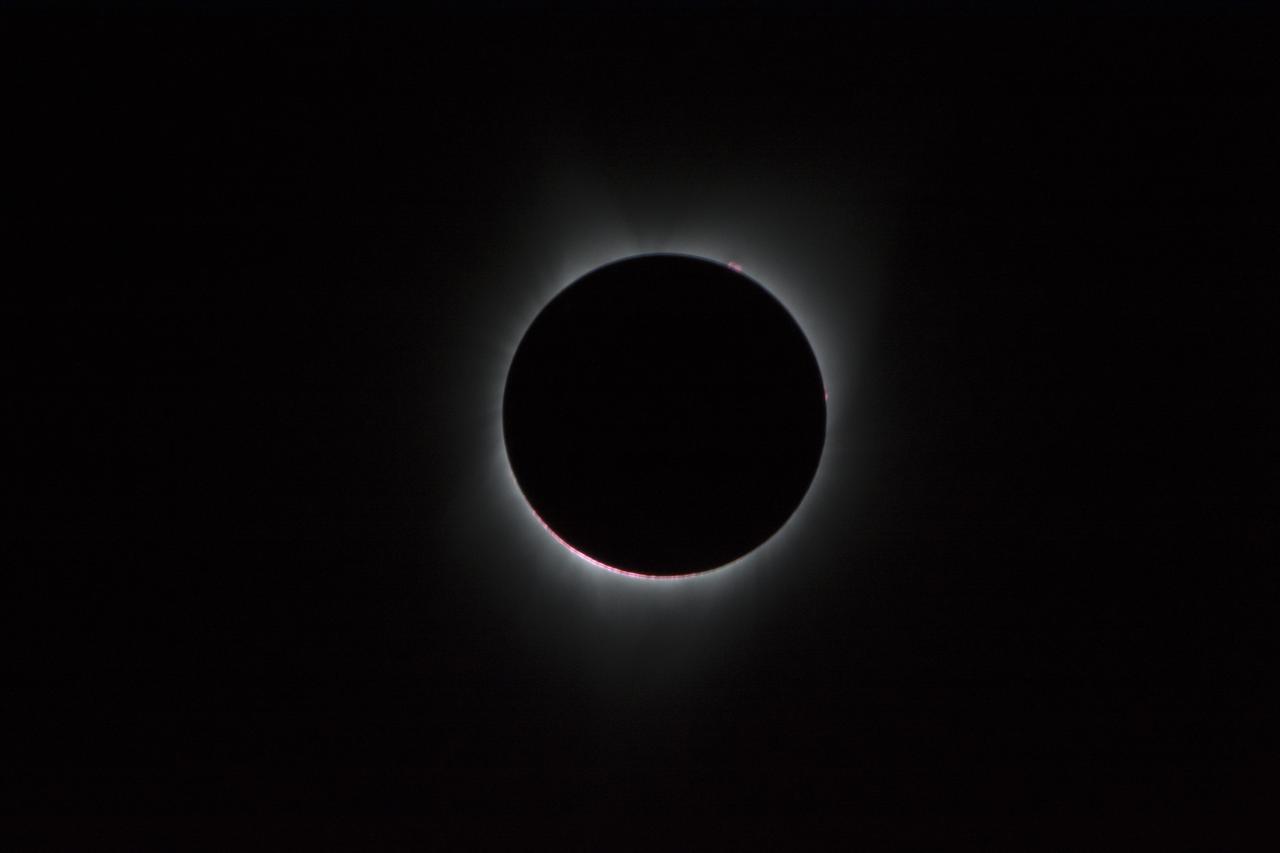
During the total solar eclipse, the Sun’s corona, only visible during the total eclipse, is shown as a crown of white flares from the surface. The red spots called Bailey's beads occurs where the moon grazes by the Sun and the rugged lunar limb topography allows beads of sunlight to shine through in some areas as photographed from NASA Armstrong’s Gulfstream III. Photo Credit: (NASA/Carla Thomas)
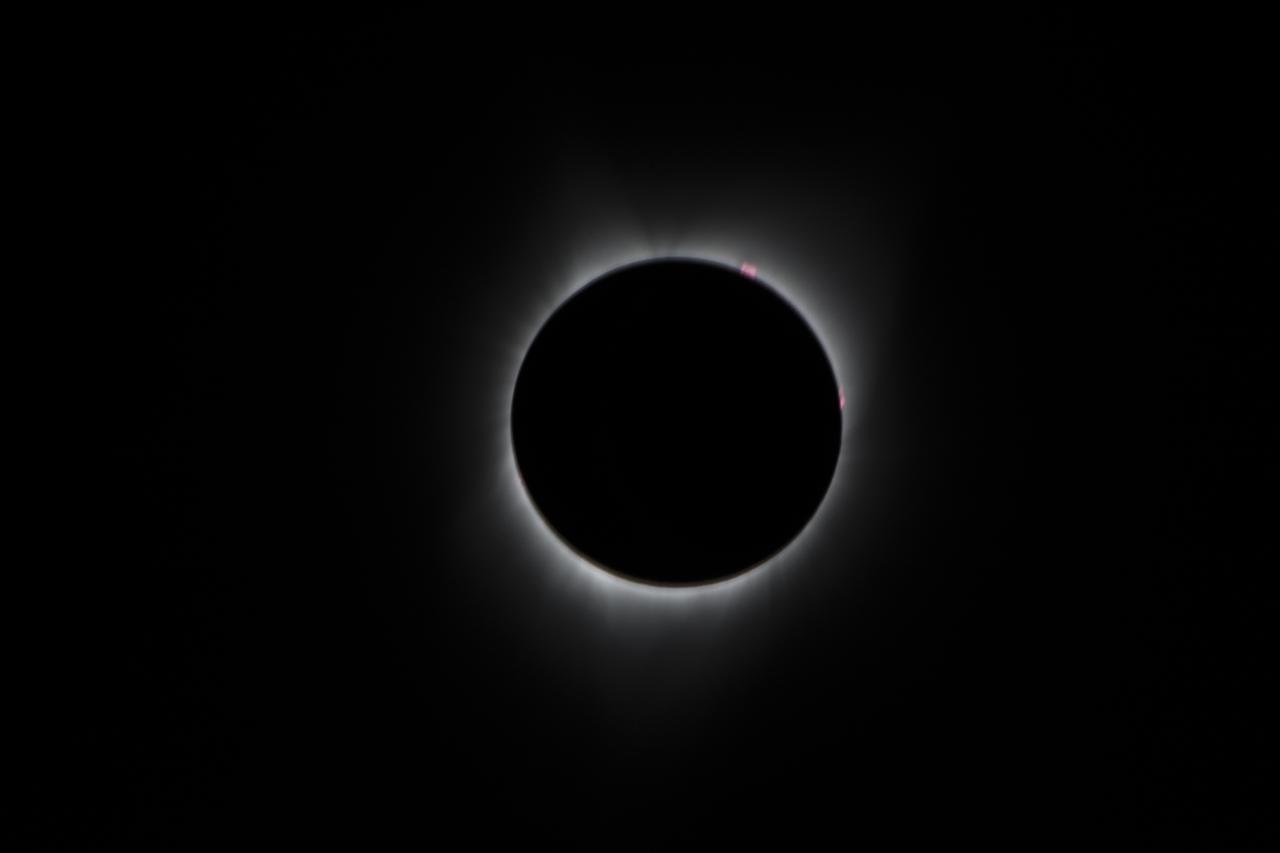
During the total solar eclipse, the Sun’s corona, only visible during the total eclipse, is shown as a crown of white flares from the surface. The red spots called Bailey's beads occurs where the moon grazes by the Sun and the rugged lunar limb topography allows beads of sunlight to shine through in some areas as photographed from NASA Armstrong’s Gulfstream III. Photo Credit: (NASA/Carla Thomas)

During the total solar eclipse, the Sun’s corona, only visible during the total eclipse, is shown as a crown of white flares from the surface. The red spots called Bailey's beads occurs where the moon grazes by the Sun and the rugged lunar limb topography allows beads of sunlight to shine through in some areas as photographed from NASA Armstrong’s Gulfstream III. Photo Credit: (NASA/Carla Thomas)
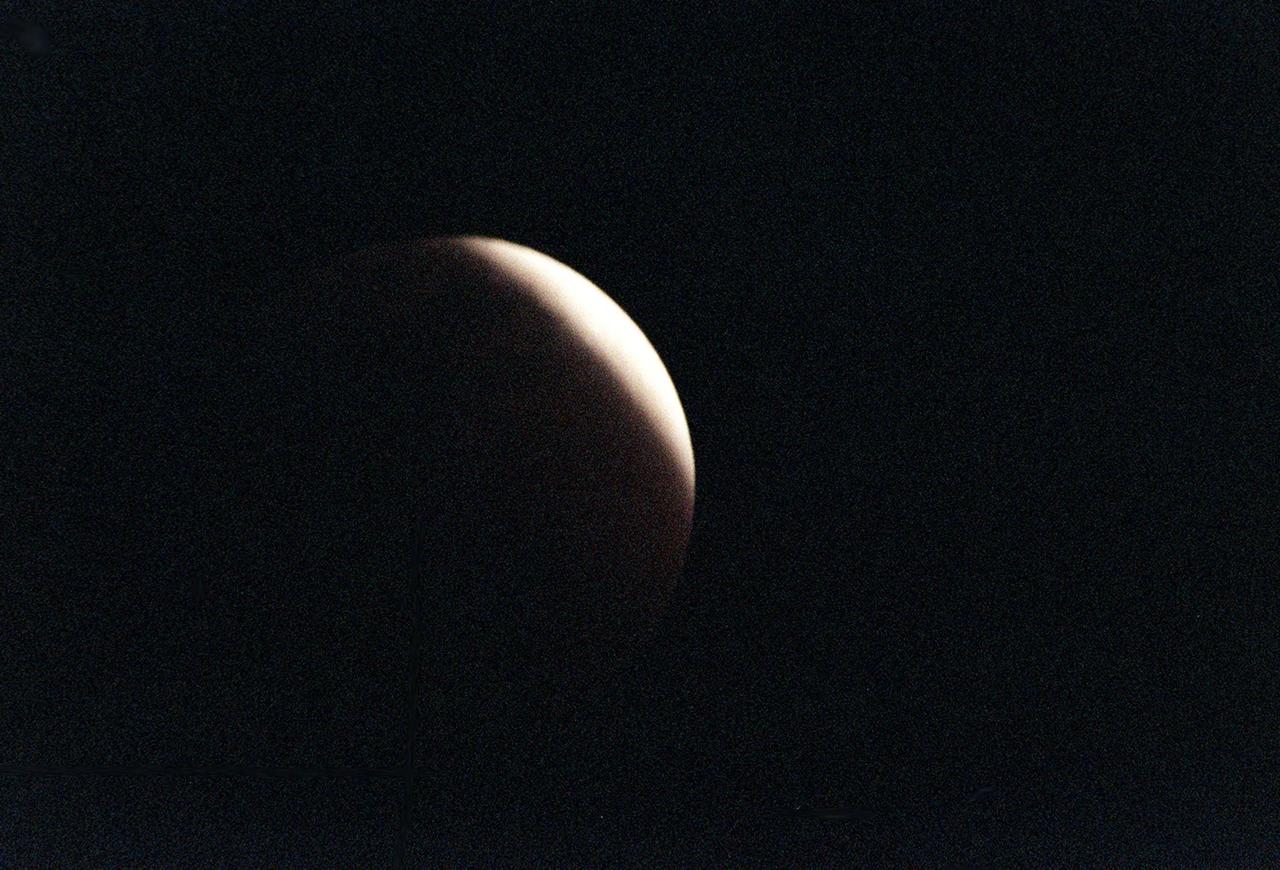
Viewed from Merritt Island, Fla., at 11:25 p.m. EST, the full moon, traveling west to east, is nearly completely in the Earth's shadow, producing a lunar eclipse. Eclipses occur when the Sun, Earth and Moon line up. They are rare because the Moon usually passes above or below the imaginary line connecting Earth and the Sun. The Earth casts a shadow that the Moon can pass through -when it does, it is called a lunar eclipse. They can only occur when the moon is "full." During a total lunar eclipse the Moon takes on a dark red color because it is being lighted slightly by sunlight passing through the Earth's atmosphere and this light has the blue component preferentially scattered out (this is also why the sky appears blue from the surface of the Earth), leaving faint reddish light to illuminate the Moon during the eclipse

Traveling west to east, the full moon, viewed from Merritt Island, Fla., at 10:18 p.m. EST, begins moving into the Earth's shadow, at the start of a lunar eclipse. Eclipses occur when the Sun, Earth and Moon line up. They are rare because the Moon usually passes above or below the imaginary line connecting Earth and the Sun. The Earth casts a shadow that the Moon can pass through -when it does, it is called a lunar eclipse. They can only occur when the moon is "full." During a total lunar eclipse the Moon takes on a dark red color because it is being lighted slightly by sunlight passing through the Earth's atmosphere and this light has the blue component preferentially scattered out (this is also why the sky appears blue from the surface of the Earth), leaving faint reddish light to illuminate the Moon during the eclipse
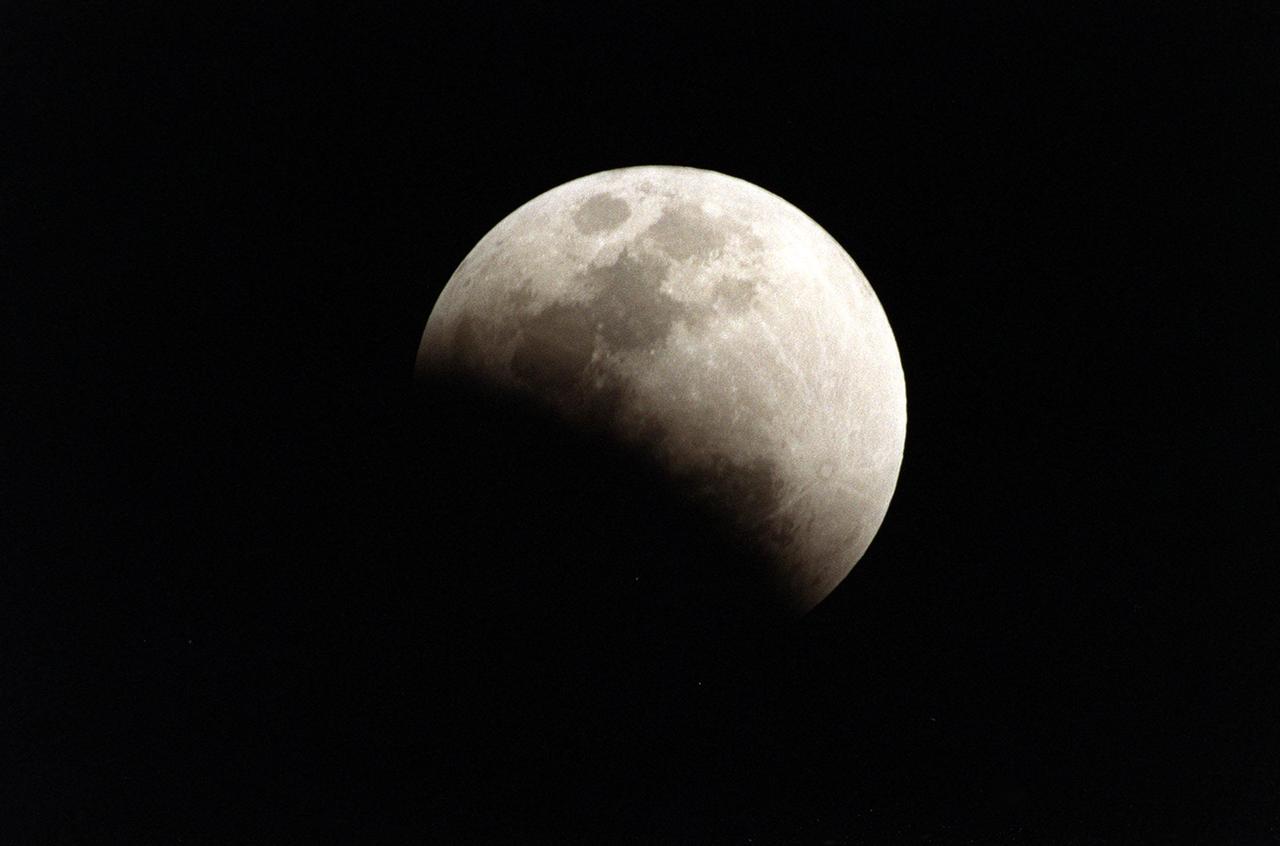
Traveling west to east, the full moon, viewed from Merritt Island, Fla., at 10:35 p.m. EST, moves into the Earth's shadow during a lunar eclipse. Eclipses occur when the Sun, Earth and Moon line up. They are rare because the Moon usually passes above or below the imaginary line connecting Earth and the Sun. The Earth casts a shadow that the Moon can pass through -when it does, it is called a lunar eclipse. They can only occur when the moon is "full." During a total lunar eclipse the Moon takes on a dark red color because it is being lighted slightly by sunlight passing through the Earth's atmosphere and this light has the blue component preferentially scattered out (this is also why the sky appears blue from the surface of the Earth), leaving faint reddish light to illuminate the Moon during the eclipse
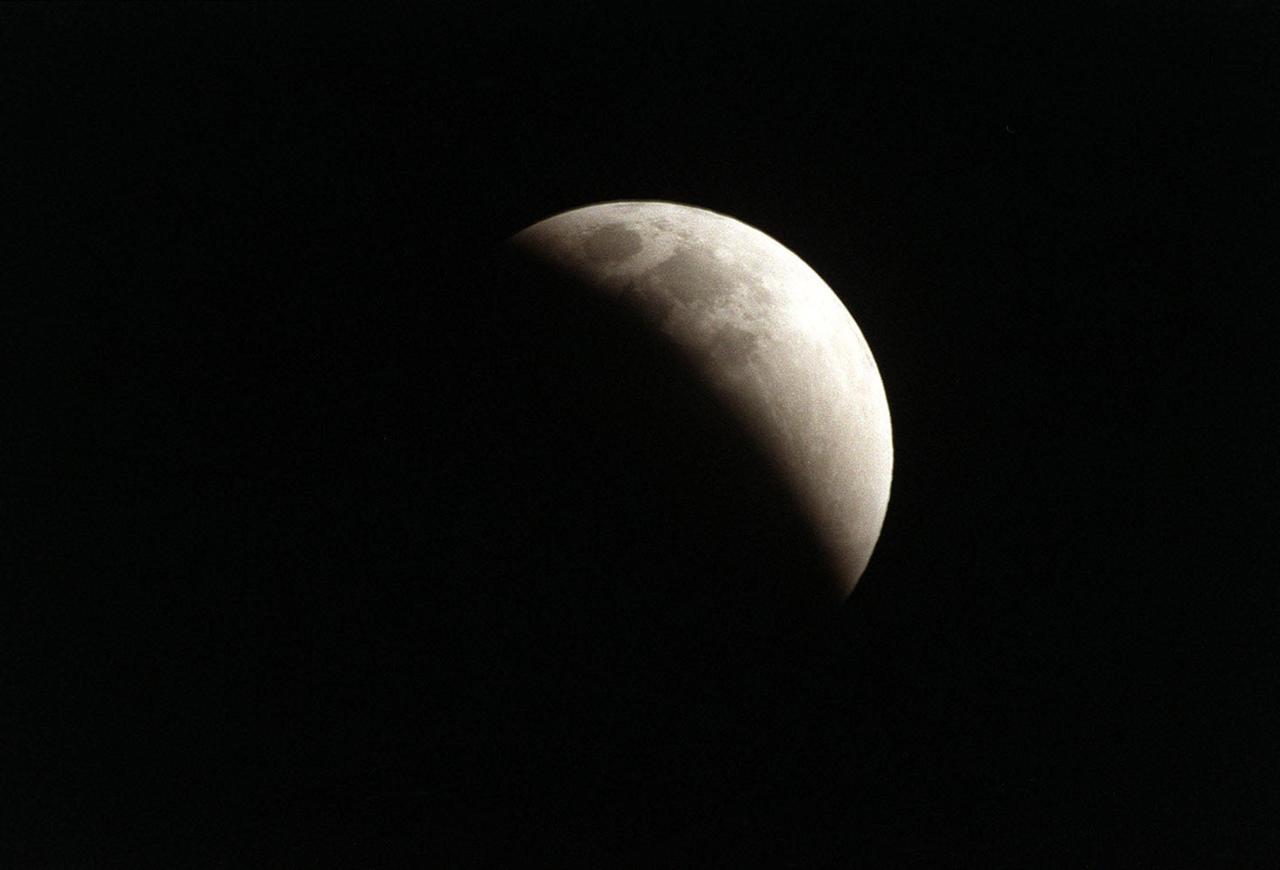
Viewed from Merritt Island, Fla., at 10:59 p.m. EST, the full moon, traveling west to east, is three-quarters of the way into the Earth's shadow during a lunar eclipse. Eclipses occur when the Sun, Earth and Moon line up. They are rare because the Moon usually passes above or below the imaginary line connecting Earth and the Sun. The Earth casts a shadow that the Moon can pass through -when it does, it is called a lunar eclipse. They can only occur when the moon is "full." During a total lunar eclipse the Moon takes on a dark red color because it is being lighted slightly by sunlight passing through the Earth's atmosphere and this light has the blue component preferentially scattered out (this is also why the sky appears blue from the surface of the Earth), leaving faint reddish light to illuminate the Moon during the eclipse
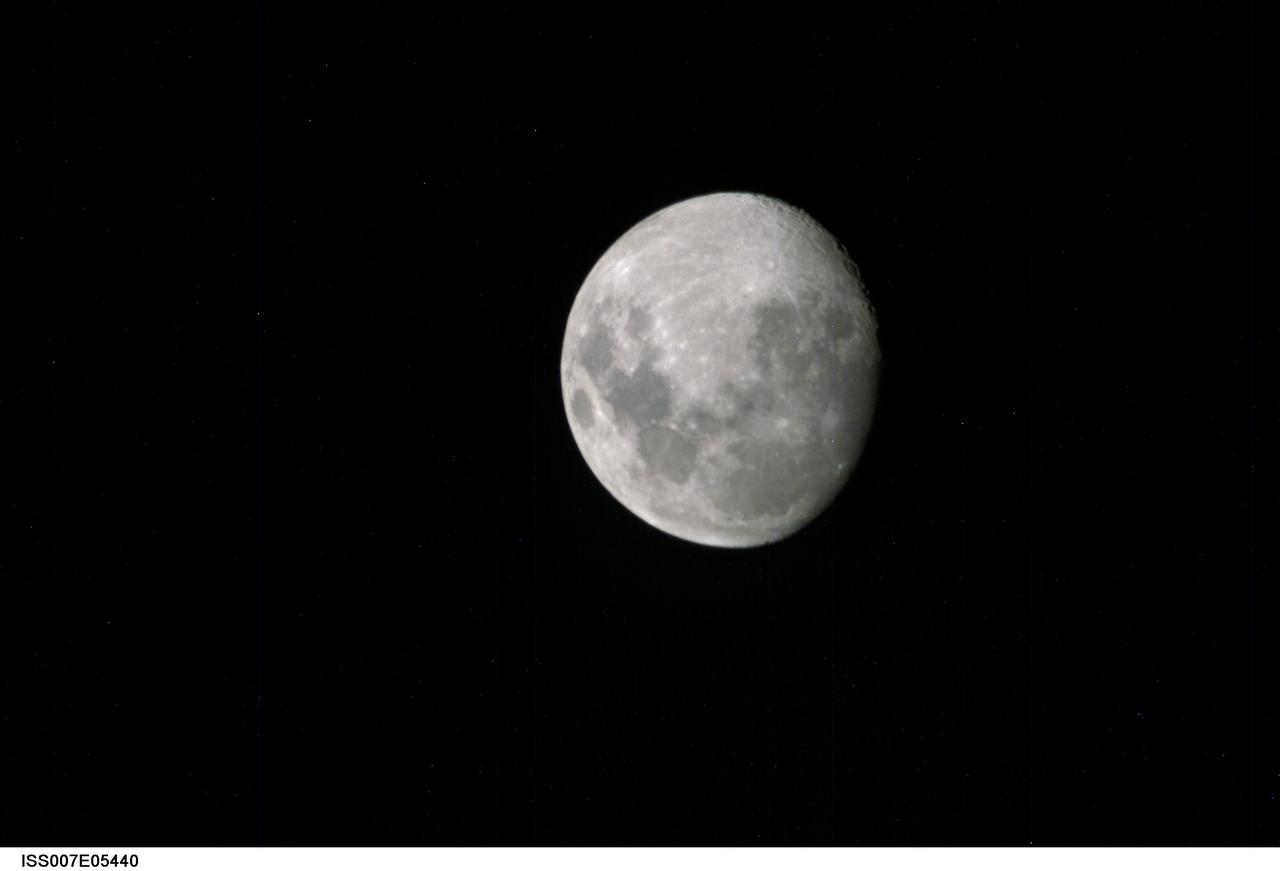
ISS007-E-05440 (13 May 2003) --- View of a gibbous Moon photographed by an Expedition Seven crewmember on board the International Space Station (ISS). The image was taken two days prior to the occurrence of a total lunar eclipse, which was photographed by astronaut Edward T. Lu, NASA ISS science officer.
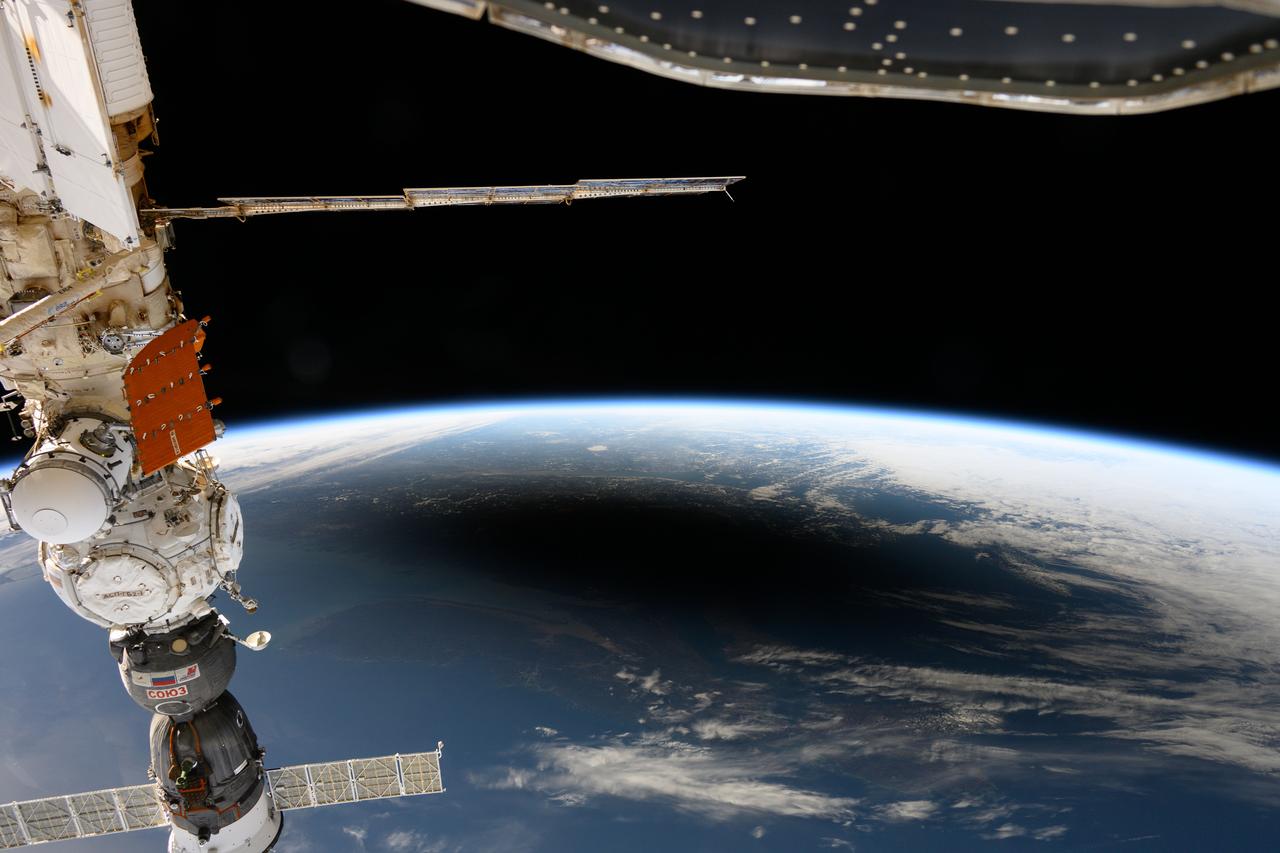
iss071e003390 (4/8/2024) --- A total solar eclipse passes over Mexico, the United States, and Canada. Millions of people witnessed skies darken as the Moon passed between Earth and the Sun. Astronauts aboard station captured the lunar shadow traverse the North American continent.
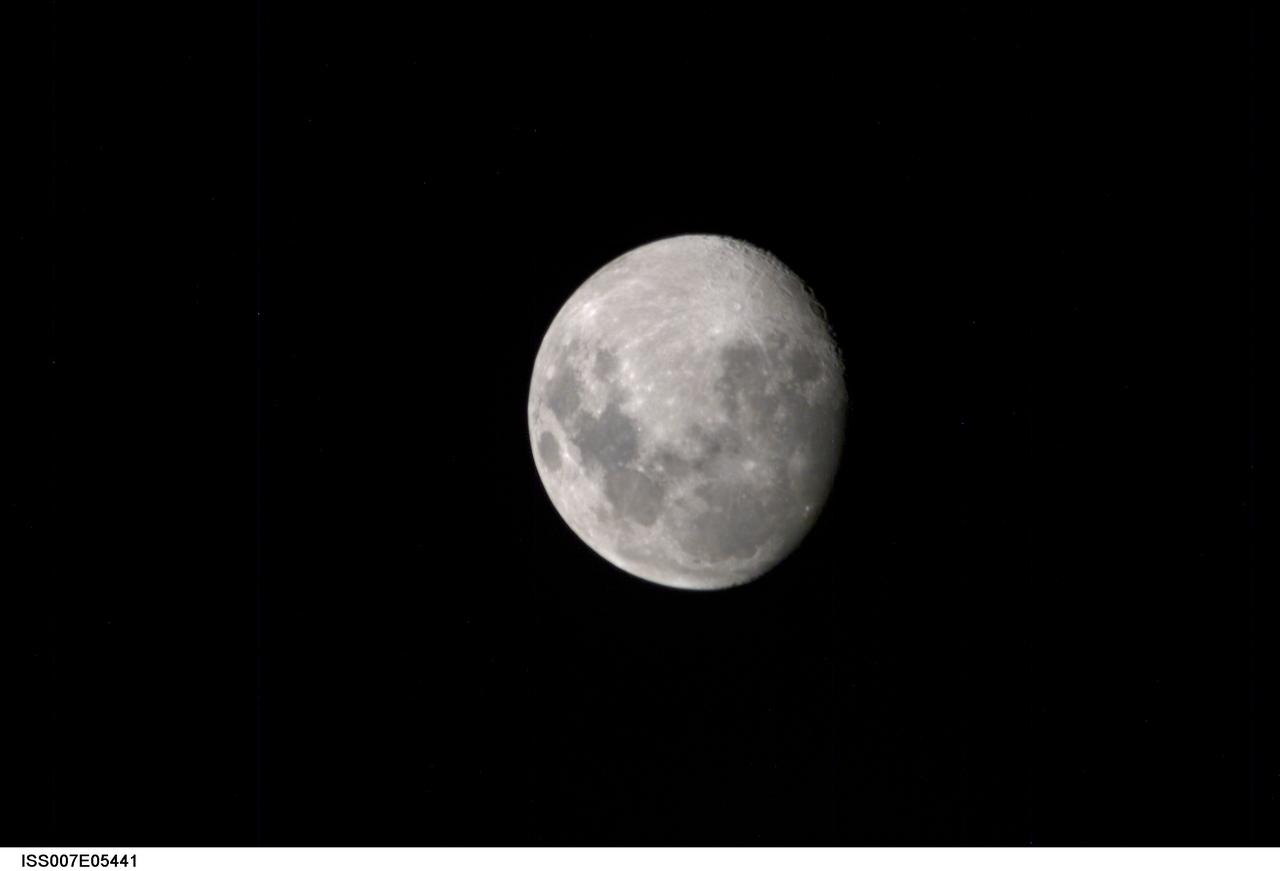
ISS007-E-05441 (13 May 2003) --- View of a gibbous Moon photographed by an Expedition Seven crewmember on board the International Space Station (ISS). The image was taken two days prior to the occurrence of a total lunar eclipse, which was photographed by astronaut Edward T. Lu, NASA ISS science officer.
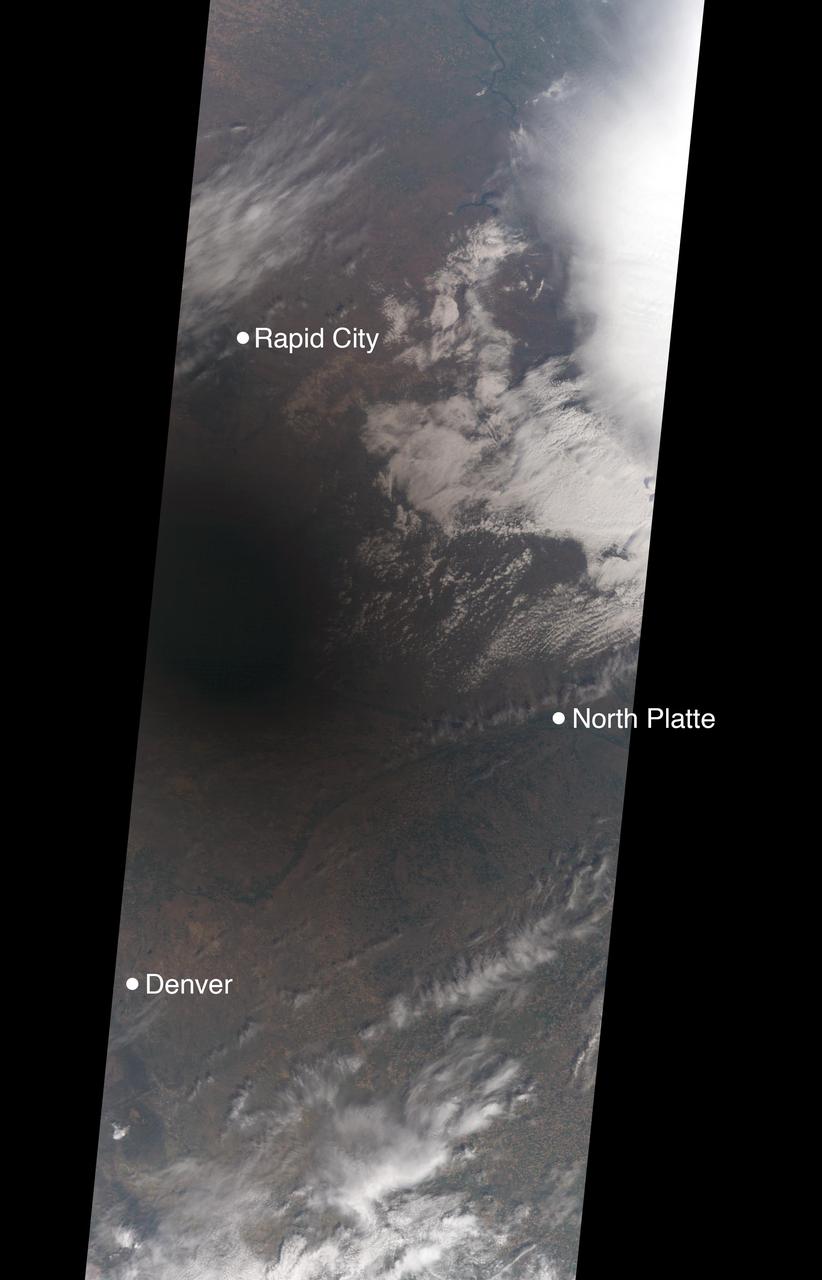
On Aug. 21, 2017, a total solar eclipse swept across the United States -- the first such eclipse in the contiguous 48 states since 1979, and the first cross-country eclipse since 1918. A partial eclipse was visible in all 50 states, and initial estimates suggest that upwards of 20 million people observed the Moon completely obscuring the Sun in the 70-mile-wide (113-kilometer-wide) path of totality. While viewing a total solar eclipse from the ground is an amazing experience, satellites orbiting Earth see the eclipse from a unique perspective. As the Moon's shadow passed through the United States, the Multi-angle Imaging SpectroRadiometer (MISR) instrument aboard NASA's Terra satellite was capturing images of eastern Wyoming and western Nebraska from its altitude of 438 miles (705 kilometers) above the surface. MISR gathers images on a strip about 249 miles (400 kilometers) wide directly below the path of the satellite. Incredibly, given that the shadow of the Moon took only 90 minutes to cross the entire United States, and Terra itself moves at a brisk 16,700 miles per hour from north to south, MISR happened to be in exactly the right place at the right time to capture totality. From the ground, the moment of totality appears suddenly, sweeping over the sky in just a few seconds. "I was unprepared for just how dark it actually was," says Mika Tosca, a researcher who works with MISR data and who observed the eclipse in Nebraska. "The streetlights even turned on. Everything fell silent, and I swear the temperature dropped." From the vantage point of space, however, it’s possible to see the entire shadow of the Moon, with the completely dark, circular umbra and the more diffuse penumbra. MISR contains nine cameras oriented at different angles, viewing forward, downward, and backward along the flight path, resulting in an approximate seven-minute interval for all nine cameras to image a single location on Earth's surface. This animation combines these nine images into a movie showing the motion of the Moon's shadow during this seven-minute period. In the first image, captured by the camera pointing farthest ahead of the satellite, totality has not quite begun in the area seen by MISR. From the second camera onward, totality sweeps across the image area from west to east, beginning just west of the town of Jay Em, Wyoming, and proceeding about halfway across the MISR swath to the town of Alliance, Nebraska. The motion of the lunar shadow in different pairs of images leads to estimates of the local ground speed ranging between 1,480 and 1,820 miles per hour (2,382 and 2,929 kilometers per hour). The spread in values is a measure of the uncertainty of the estimate. At this location, the predicted speed of the eclipse calculated from lunar orbital motion is about 1,658 miles per hour (2,668 kilometers per hour), which falls in the middle of the range estimated from the MISR images. Tosca's observation that the temperature dropped during the eclipse is a well-known phenomenon. The GLOBE Observer, a phone application dedicated to citizen science and sponsored by NASA, encouraged eclipse-goers to record the local air temperature at regular intervals. Data collected by nearby observers in the path of totality show that, on average, temperatures dropped by 9.3 degrees Fahrenheit (5.2 degrees Celsius) during the eclipse. This compares to an average of 5.4 degrees Fahrenheit drop measured at several Nebraska Mesonet weather stations within the path of totality. The decrease in the amount of sunlight reaching Earth affected more than temperatures. Areas that get a large portion of their power from solar energy were naturally concerned about shortages during the eclipse -- the state of California, though not in the path of totality, estimated that 6,000 megawatts of solar power would be lost during the eclipse. An animation is available at https://photojournal.jpl.nasa.gov/catalog/PIA21957
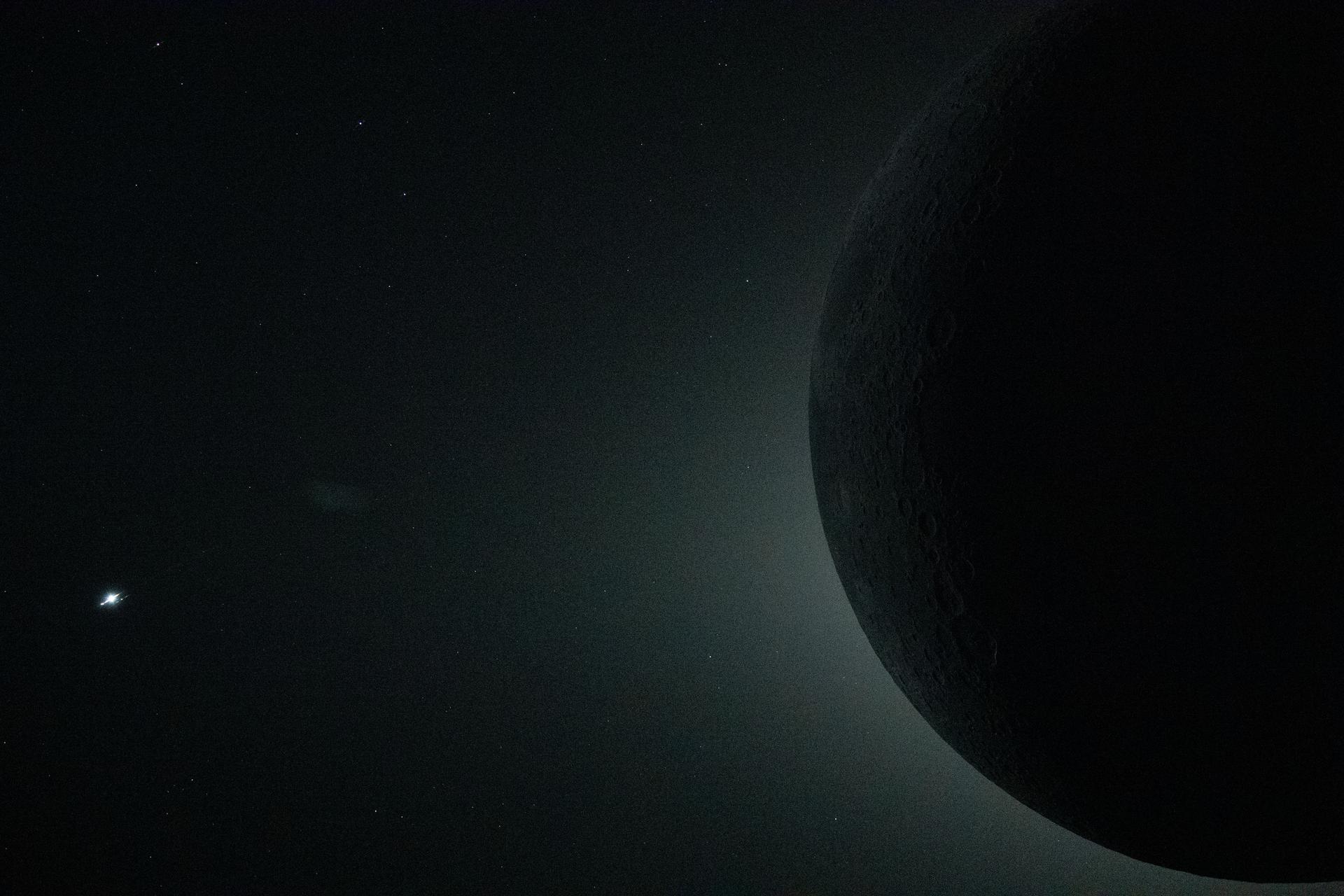
art002e009298 (April 6, 2026) – A close-up view from the Orion spacecraft during the Artemis II crew’s lunar flyby on April 6, 2026, captures a total solar eclipse, with only part of the Moon visible in the frame as it fully obscures the Sun. We see a glowing halo around the dark lunar disk. The science community is investigating whether this effect is due to the corona, zodiacal light, or a combination of the two. From this deep-space vantage point, the Moon appeared large enough to sustain nearly 54 minutes of totality, far longer than total solar eclipses typically seen from Earth. The bright silver glint on the left edge of the image is the planet Venus. The round, dark gray feature visible along the Moon’s horizon between the 9 and 10 o’clock positions is Mare Crisium, a feature visible from Earth. We see faint lunar features because light reflected off of Earth provides a source of illumination.
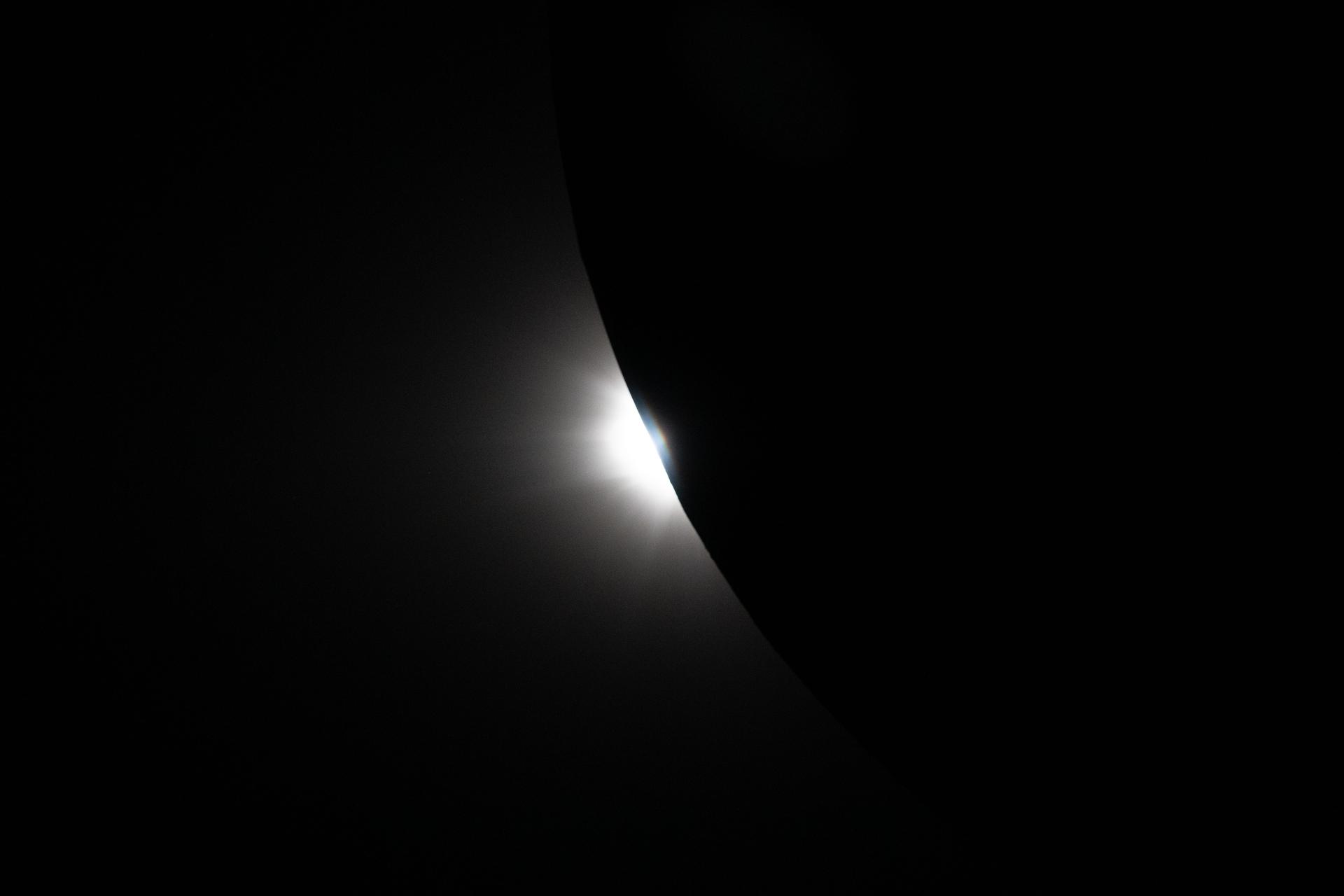
art002e009299 (April 6, 2026) – Captured from the Orion spacecraft near the end of the Artemis II lunar flyby on April 6, this image shows the Sun beginning to peek out from behind the Moon as the eclipse transitions out of totality. Only a portion of the Moon is visible in frame, its curved edge revealing a bright sliver of sunlight returning after nearly an hour of darkness. In final moments of the eclipse observed by the crew, the reemerging light creates a sharp contrast against the Moon’s silhouette and reveals lunar topography not usually visible along the lunar limb. This fleeting phase captures the dynamic alignment of the Sun, Moon, and spacecraft as Orion continues its journey back from the far side of the Moon.
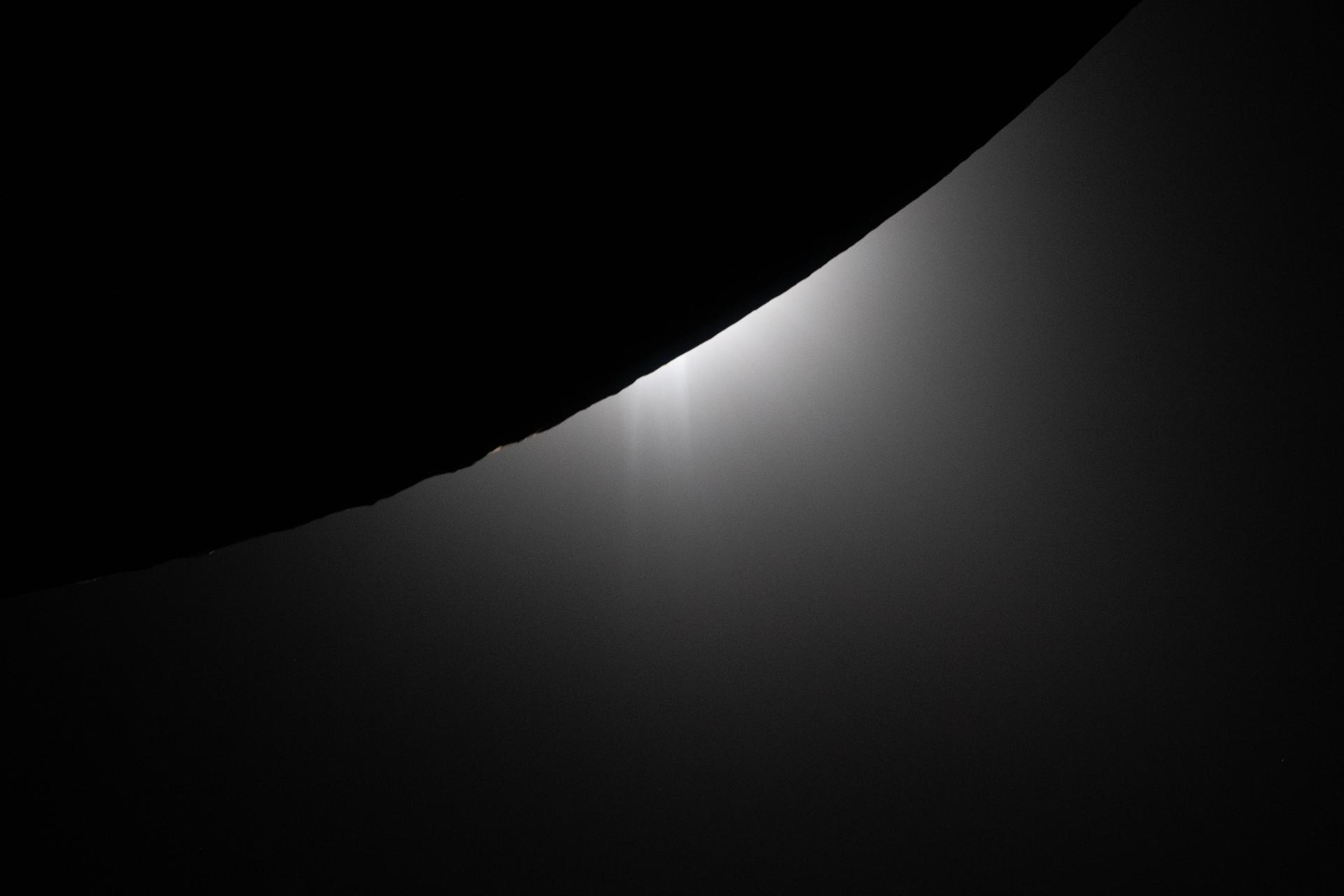
art002e010782 (April 6, 2026) - In this view captured by the Artemis II crew on the Orion spacecraft, a wedge of the Moon in nighttime is visible in the foreground, as the Sun is setting on the opposite side. This image captures the beginning of a total solar eclipse that astronauts were able to observe at the end of their lunar observation period during Orion’s closest approach to the Moon on April 6, 2026. Unlike minutes-long eclipses as viewed from Earth, the Artemis II crew witnessed the Sun hide behind the Moon for nearly an hour. Because the astronauts were so near the Moon, it appeared much larger than the Sun; because of this, it took longer for the Sun to make its transit across the Moon and peek out the other side. From Earth, in contrast, the Moon and Sun appear about the same size, so even small changes in their alignment quickly bring the Sun back into view, making totality much shorter. The bright rays of light, or streamers, that are running outward towards the bottom of the Moon disk are part of the Sun's corona. The corona is the outermost layer of the Sun's atmosphere and is only visible during a total solar eclipse. It is normally hidden by the bright light of the Sun's surface. In addition, the jagged edge of the Moon visible in this image reveals the topography of backlit mountains on the horizon.
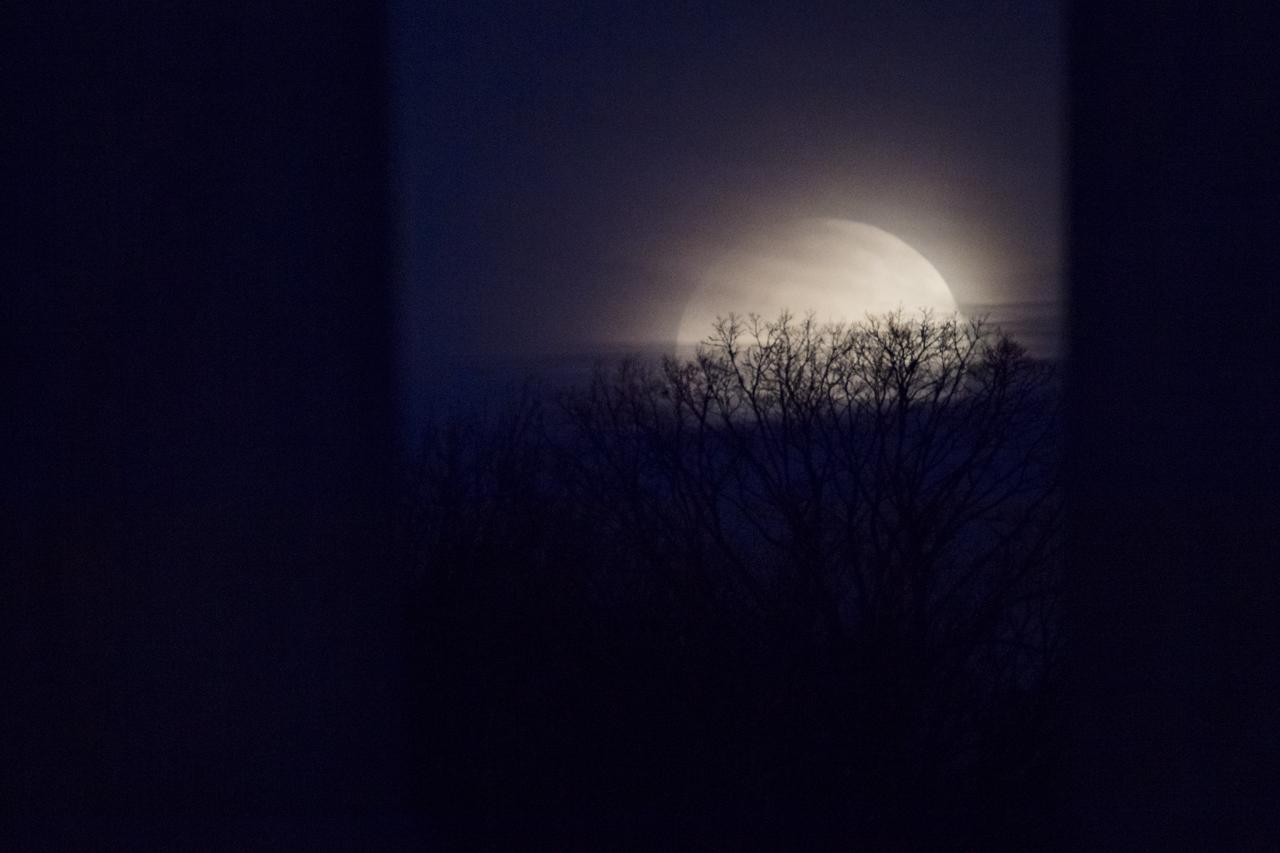
The Moon is seen as it sets behind the National Capitol Columns at The US National Arboretum on Wednesday, Jan. 31, 2018 in Washington. Today’s full Moon is unique for three reasons: it is the third in a series of supermoons, occurring when the Moon is closer to Earth in its orbit. It is also the second full moon of the month, commonly known as a blue moon. The moon will also be passing through Earth’s shadow, giving skywatchers in the right locations a view of a total lunar eclipse. Photo Credit: (NASA/Aubrey Gemignani)
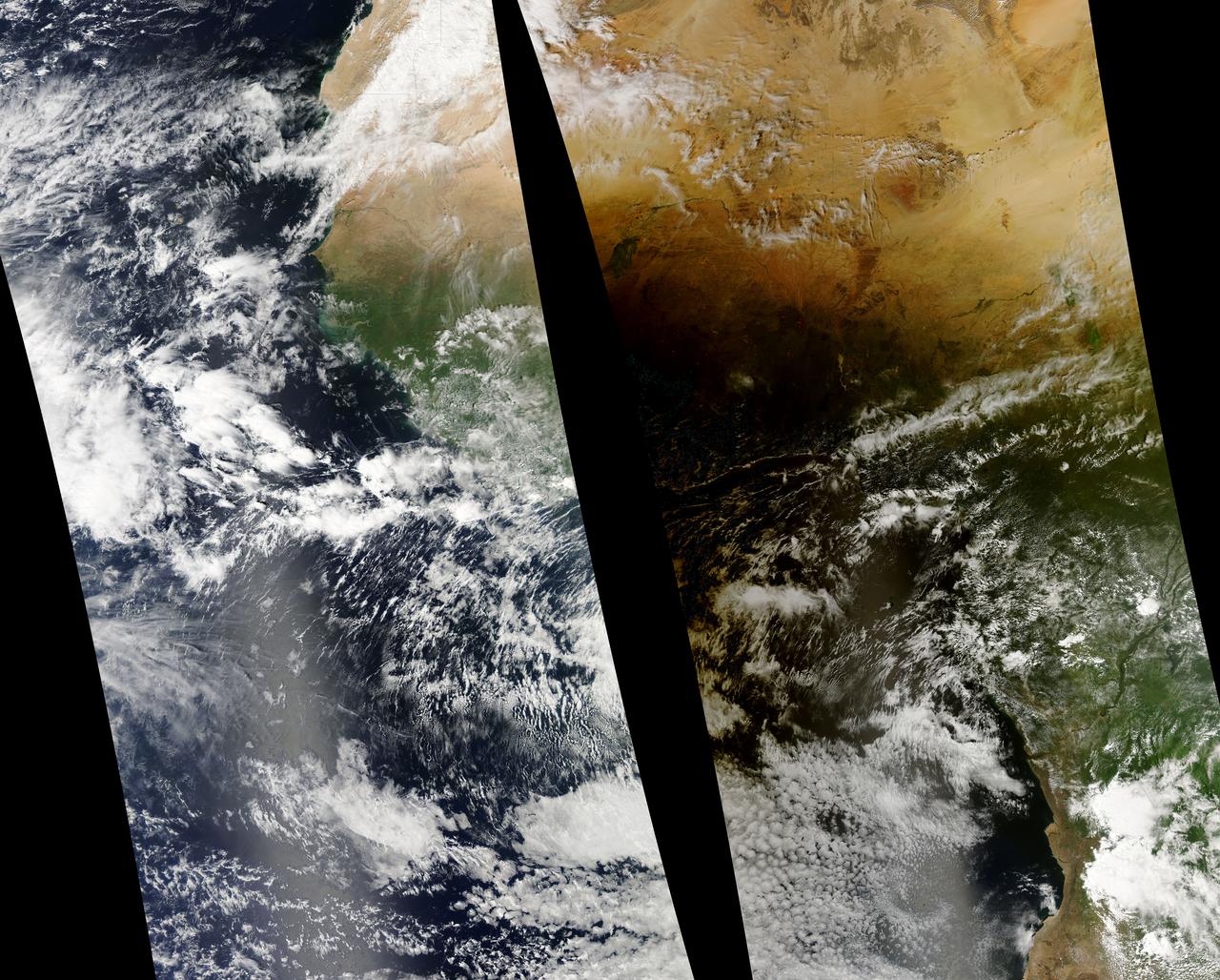
Solar eclipse over western Africa (afternoon overpass) at 14:45 UTC. Satellite: Aqua A rare “hybrid” solar eclipse occurred on 03 November 2013, which began over the western Atlantic Ocean as an annular eclipse and transitioned into a full total solar eclipse for observers along the narrow path of totality in the far eastern Atlantic and over parts of Africa. The Lunar Umbra (or solar eclipse shadow) could be seen tracking rapidly southeastward across the Atlantic Ocean. Credit: NASA/GSFC/Jeff Schmaltz/MODIS Land Rapid Response Team <b><a href="http://www.nasa.gov/audience/formedia/features/MP_Photo_Guidelines.html" rel="nofollow">NASA image use policy.</a></b> <b><a href="http://www.nasa.gov/centers/goddard/home/index.html" rel="nofollow">NASA Goddard Space Flight Center</a></b> enables NASA’s mission through four scientific endeavors: Earth Science, Heliophysics, Solar System Exploration, and Astrophysics. Goddard plays a leading role in NASA’s accomplishments by contributing compelling scientific knowledge to advance the Agency’s mission. <b>Follow us on <a href="http://twitter.com/NASA_GoddardPix" rel="nofollow">Twitter</a></b> <b>Like us on <a href="http://www.facebook.com/pages/Greenbelt-MD/NASA-Goddard/395013845897?ref=tsd" rel="nofollow">Facebook</a></b> <b>Find us on <a href="http://instagram.com/nasagoddard?vm=grid" rel="nofollow">Instagram</a></b>
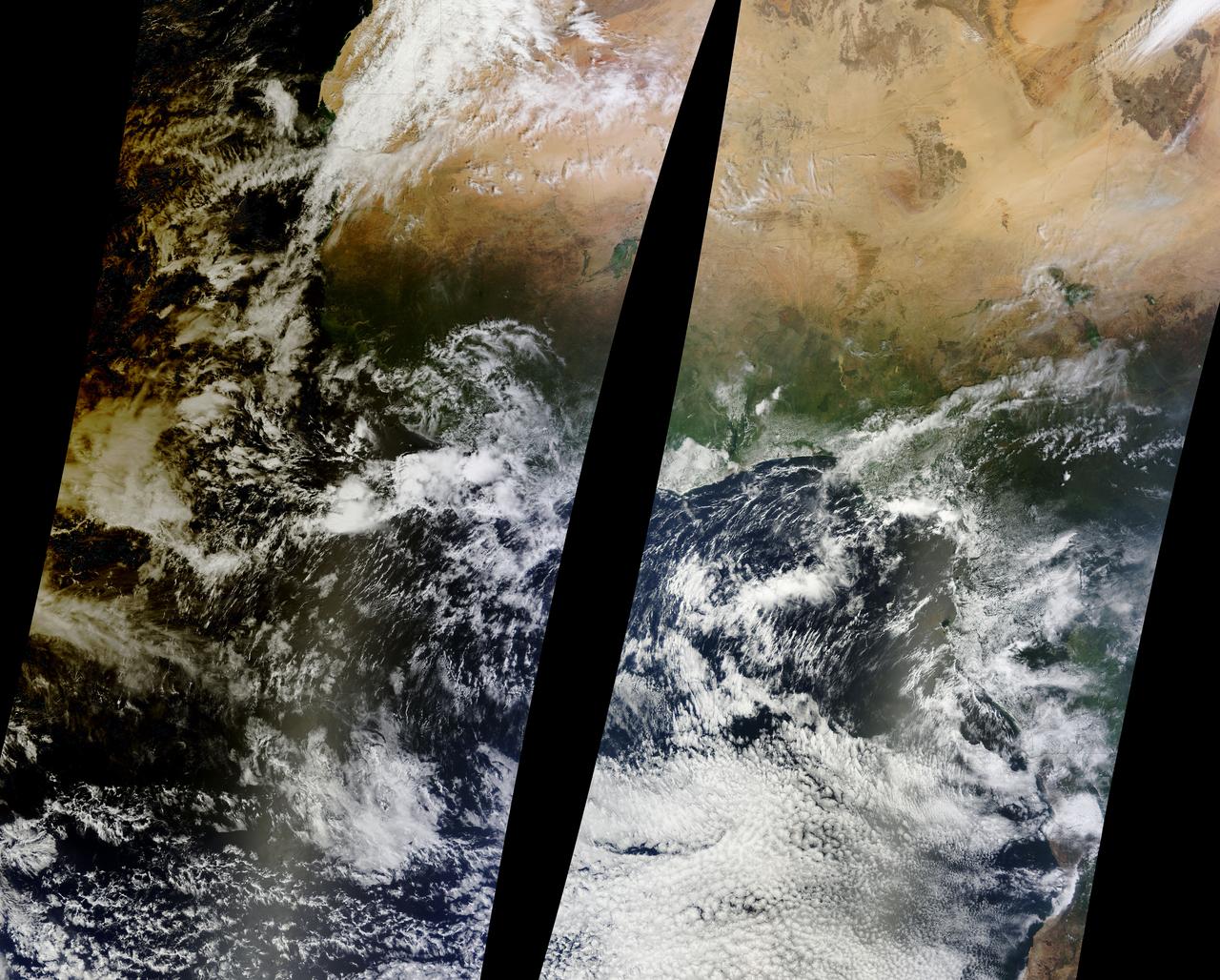
Solar eclipse over western Africa (morning overpass) at 11:45 UTC. Satellite: Terra A rare “hybrid” solar eclipse occurred on 03 November 2013, which began over the western Atlantic Ocean as an annular eclipse and transitioned into a full total solar eclipse for observers along the narrow path of totality in the far eastern Atlantic and over parts of Africa. The Lunar Umbra (or solar eclipse shadow) could be seen tracking rapidly southeastward across the Atlantic Ocean. Credit: NASA/GSFC/Jeff Schmaltz/MODIS Land Rapid Response Team <b><a href="http://www.nasa.gov/audience/formedia/features/MP_Photo_Guidelines.html" rel="nofollow">NASA image use policy.</a></b> <b><a href="http://www.nasa.gov/centers/goddard/home/index.html" rel="nofollow">NASA Goddard Space Flight Center</a></b> enables NASA’s mission through four scientific endeavors: Earth Science, Heliophysics, Solar System Exploration, and Astrophysics. Goddard plays a leading role in NASA’s accomplishments by contributing compelling scientific knowledge to advance the Agency’s mission. <b>Follow us on <a href="http://twitter.com/NASA_GoddardPix" rel="nofollow">Twitter</a></b> <b>Like us on <a href="http://www.facebook.com/pages/Greenbelt-MD/NASA-Goddard/395013845897?ref=tsd" rel="nofollow">Facebook</a></b> <b>Find us on <a href="http://instagram.com/nasagoddard?vm=grid" rel="nofollow">Instagram</a></b>
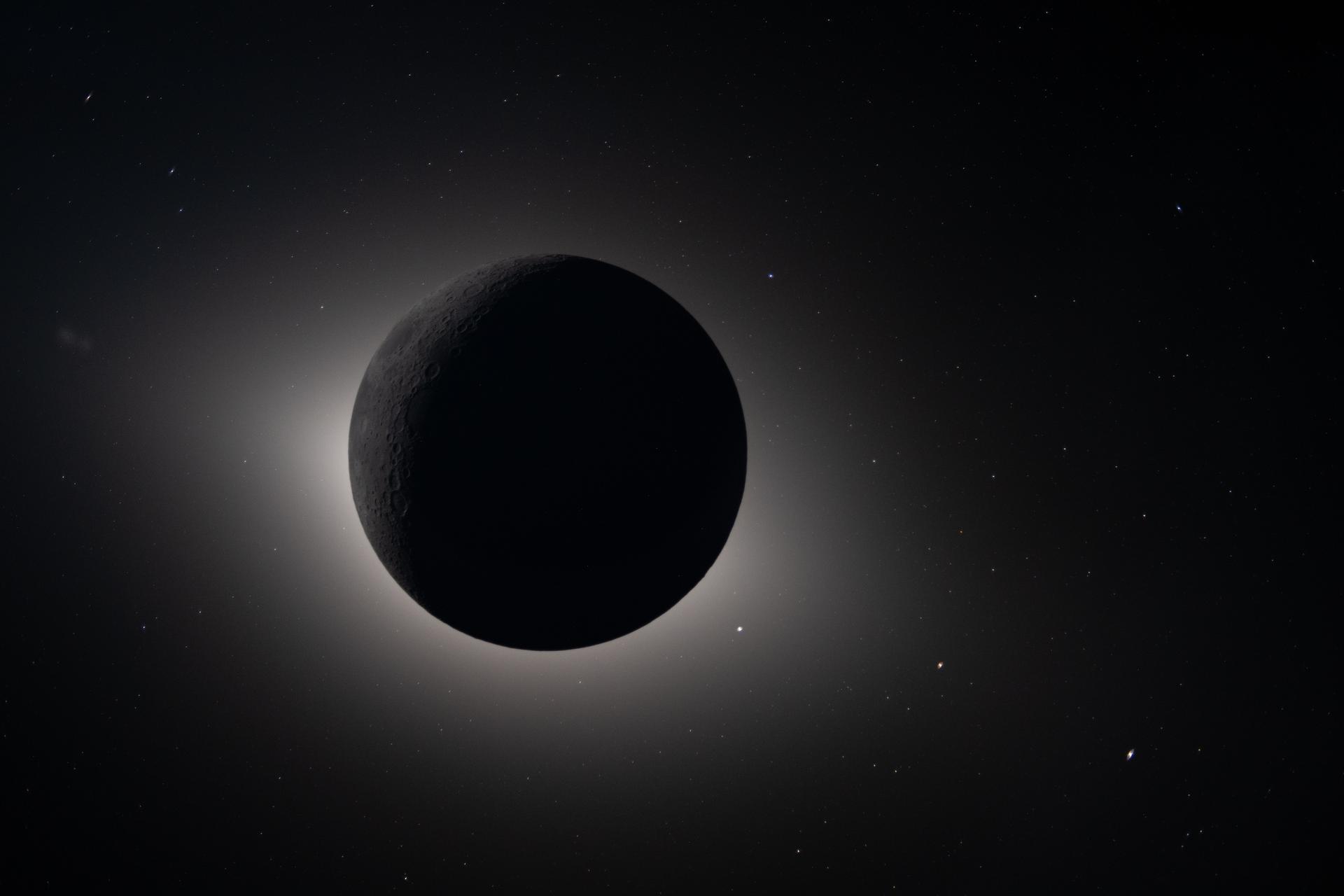
art002e009301 (April 6, 2026) – Captured by the Artemis II crew during their lunar flyby on April 6, 2026, this image shows the Moon fully eclipsing the Sun. From the crew’s perspective, the Moon appears large enough to completely block the Sun, creating nearly 54 minutes of totality and extending the view far beyond what is possible from Earth. We see a glowing halo around the dark lunar disk. The science community is investigating whether this effect is due to the corona, zodiacal light, or a combination of the two. Also visible are stars, typically too faint to see when imaging the Moon, but with the Moon in darkness stars are readily imaged. This unique vantage point provides both a striking visual and a valuable opportunity for astronauts to document their observations during humanity’s return to deep space. The faint glow of the nearside of the Moon is visible in this image, having been illuminated by light reflected off the Earth.
A preview animation of the Super Moon Lunar Eclipse On the evening of September 27, 2015 in the Americas (early morning on September 28 in Europe and most of Africa), the Moon enters the Earth’s shadow, creating a total lunar eclipse, the last of four visible in the Western Hemisphere in a span of 18 months. This animation shows the changing appearance of the Moon as it travels into and out of the Earth’s shadow. <b><a href="http://www.nasa.gov/audience/formedia/features/MP_Photo_Guidelines.html" rel="nofollow">NASA image use policy.</a></b> <b><a href="http://www.nasa.gov/centers/goddard/home/index.html" rel="nofollow">NASA Goddard Space Flight Center</a></b> enables NASA’s mission through four scientific endeavors: Earth Science, Heliophysics, Solar System Exploration, and Astrophysics. Goddard plays a leading role in NASA’s accomplishments by contributing compelling scientific knowledge to advance the Agency’s mission. <b>Follow us on <a href="http://twitter.com/NASAGoddardPix" rel="nofollow">Twitter</a></b> <b>Like us on <a href="http://www.facebook.com/pages/Greenbelt-MD/NASA-Goddard/395013845897?ref=tsd" rel="nofollow">Facebook</a></b> <b>Find us on <a href="http://instagrid.me/nasagoddard/?vm=grid" rel="nofollow">Instagram</a></b>

CAPE CANAVERAL, Fla. -- The moon shines brightly over space shuttle Discovery following a total lunar eclipse as the spacecraft waits to roll back from Launch Pad 39A to the Vehicle Assembly Building (VAB) at NASA's Kennedy Space Center in Florida. The move was scheduled for 12:30 a.m., but was postponed until 10 p.m. so technicians could resolve an issue with a leveling system on the crawler-transporter. Once inside the VAB, Discovery's external fuel tank will be examined and foam reapplied where 89 sensors were installed on the tank's aluminum skin for an instrumented tanking test on Dec. 17. The sensors were used to measure changes in the tank as super-cold propellants were pumped in and drained out. Data and analysis from the test will be used to determine what caused the tops of two, 21-foot-long support beams, called stringers, on the outside of the intertank to crack during fueling on Nov. 5. Discovery's next launch opportunity is no earlier than Feb. 3, 2011. For more information on STS-133, visit www.nasa.gov/mission_pages/shuttle/shuttlemissions/sts133/. Photo credit: NASA/Kim Shiflett
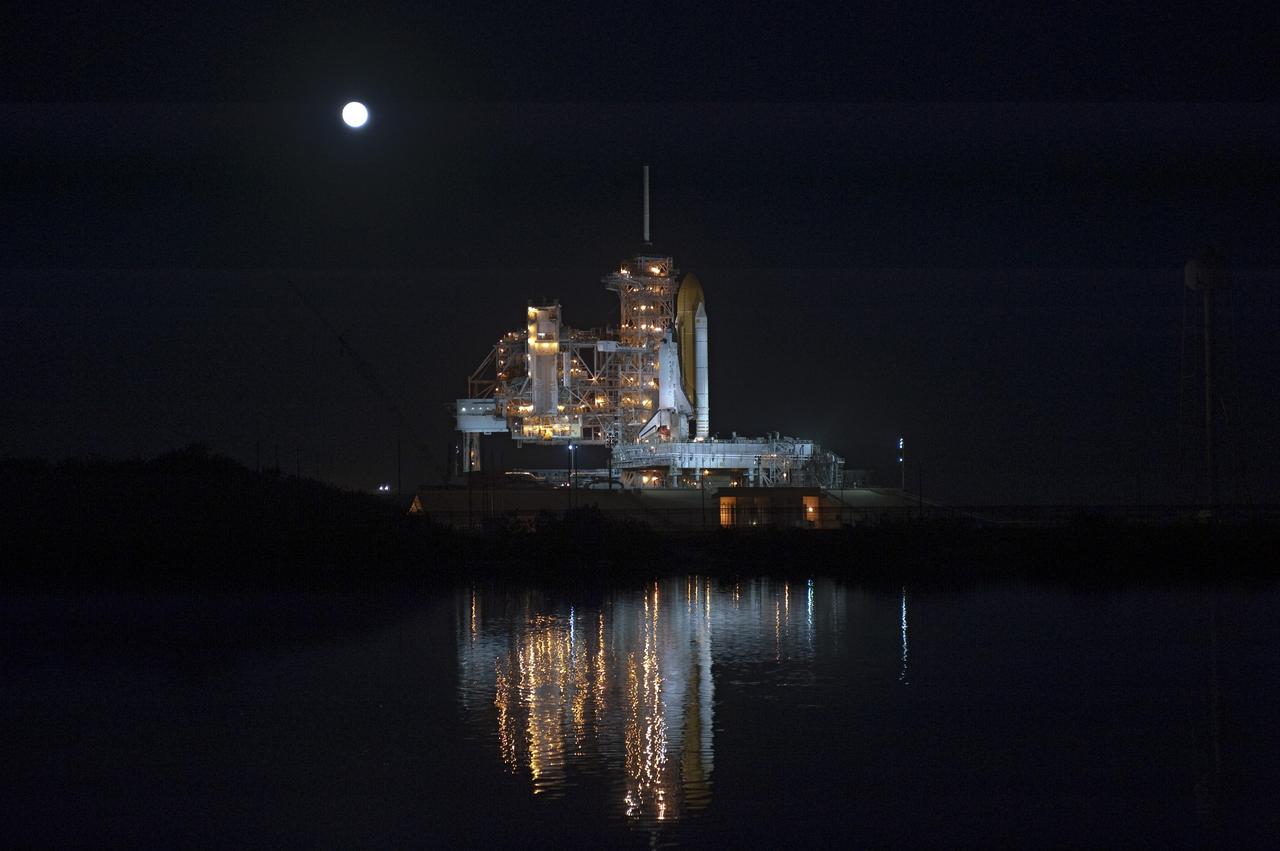
CAPE CANAVERAL, Fla. -- The moon shines brightly over space shuttle Discovery following a total lunar eclipse as the spacecraft waits to roll back from Launch Pad 39A to the Vehicle Assembly Building (VAB) at NASA's Kennedy Space Center in Florida. The move was scheduled for 12:30 a.m., but was postponed until 10 p.m. so technicians could resolve an issue with a leveling system on the crawler-transporter. Once inside the VAB, Discovery's external fuel tank will be examined and foam reapplied where 89 sensors were installed on the tank's aluminum skin for an instrumented tanking test on Dec. 17. The sensors were used to measure changes in the tank as super-cold propellants were pumped in and drained out. Data and analysis from the test will be used to determine what caused the tops of two, 21-foot-long support beams, called stringers, on the outside of the intertank to crack during fueling on Nov. 5. Discovery's next launch opportunity is no earlier than Feb. 3, 2011. For more information on STS-133, visit www.nasa.gov/mission_pages/shuttle/shuttlemissions/sts133/. Photo credit: NASA/Kim Shiflett

CAPE CANAVERAL, Fla. -- The beginning of a total lunar eclipse illuminates the top of space shuttle Discovery as the spacecraft waits to roll back from Launch Pad 39A to the Vehicle Assembly Building (VAB) at NASA's Kennedy Space Center in Florida. The move was scheduled for 12:30 a.m., but was postponed until 10 p.m. so technicians could resolve an issue with a leveling system on the crawler-transporter. Once inside the VAB, Discovery's external fuel tank will be examined and foam reapplied where 89 sensors were installed on the tank's aluminum skin for an instrumented tanking test on Dec. 17. The sensors were used to measure changes in the tank as super-cold propellants were pumped in and drained out. Data and analysis from the test will be used to determine what caused the tops of two, 21-foot-long support beams, called stringers, on the outside of the intertank to crack during fueling on Nov. 5. Discovery's next launch opportunity is no earlier than Feb. 3, 2011. For more information on STS-133, visit www.nasa.gov/mission_pages/shuttle/shuttlemissions/sts133/. Photo credit: NASA/Kim Shiflett
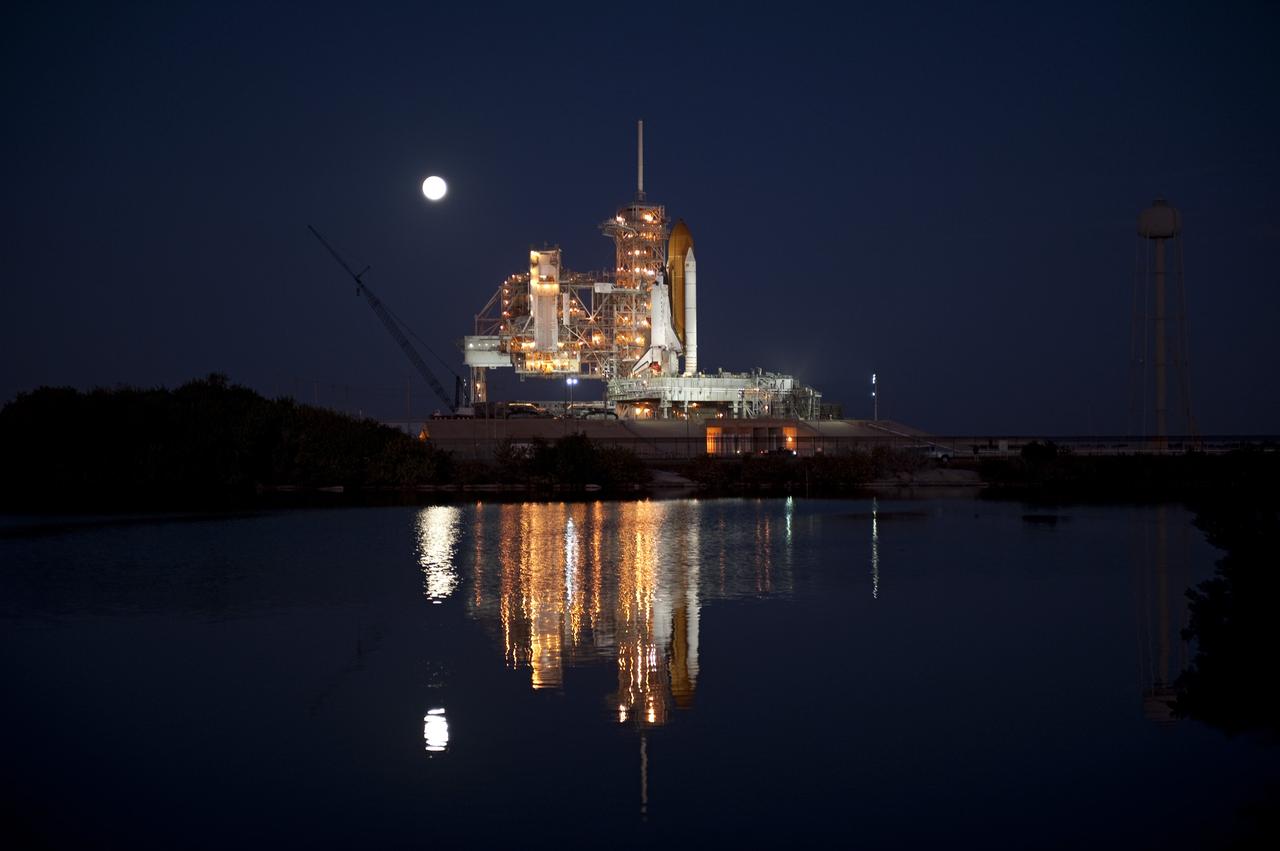
CAPE CANAVERAL, Fla. -- The moon shines brightly over space shuttle Discovery following a total lunar eclipse as the spacecraft waits to roll back from Launch Pad 39A to the Vehicle Assembly Building (VAB) at NASA's Kennedy Space Center in Florida. The move was scheduled for 12:30 a.m., but was postponed until 10 p.m. so technicians could resolve an issue with a leveling system on the crawler-transporter. Once inside the VAB, Discovery's external fuel tank will be examined and foam reapplied where 89 sensors were installed on the tank's aluminum skin for an instrumented tanking test on Dec. 17. The sensors were used to measure changes in the tank as super-cold propellants were pumped in and drained out. Data and analysis from the test will be used to determine what caused the tops of two, 21-foot-long support beams, called stringers, on the outside of the intertank to crack during fueling on Nov. 5. Discovery's next launch opportunity is no earlier than Feb. 3, 2011. For more information on STS-133, visit www.nasa.gov/mission_pages/shuttle/shuttlemissions/sts133/. Photo credit: NASA/Kim Shiflett

CAPE CANAVERAL, Fla. -- Space shuttle Discovery shares the stage with the moon following a total lunar eclipse as the spacecraft waits to roll back from Launch Pad 39A to the Vehicle Assembly Building (VAB) at NASA's Kennedy Space Center in Florida. The move was scheduled for 12:30 a.m., but was postponed until 10 p.m. so technicians could resolve an issue with a leveling system on the crawler-transporter. Once inside the VAB, Discovery's external fuel tank will be examined and foam reapplied where 89 sensors were installed on the tank's aluminum skin for an instrumented tanking test on Dec. 17. The sensors were used to measure changes in the tank as super-cold propellants were pumped in and drained out. Data and analysis from the test will be used to determine what caused the tops of two, 21-foot-long support beams, called stringers, on the outside of the intertank to crack during fueling on Nov. 5. Discovery's next launch opportunity is no earlier than Feb. 3, 2011. For more information on STS-133, visit www.nasa.gov/mission_pages/shuttle/shuttlemissions/sts133/. Photo credit: NASA/Kim Shiflett
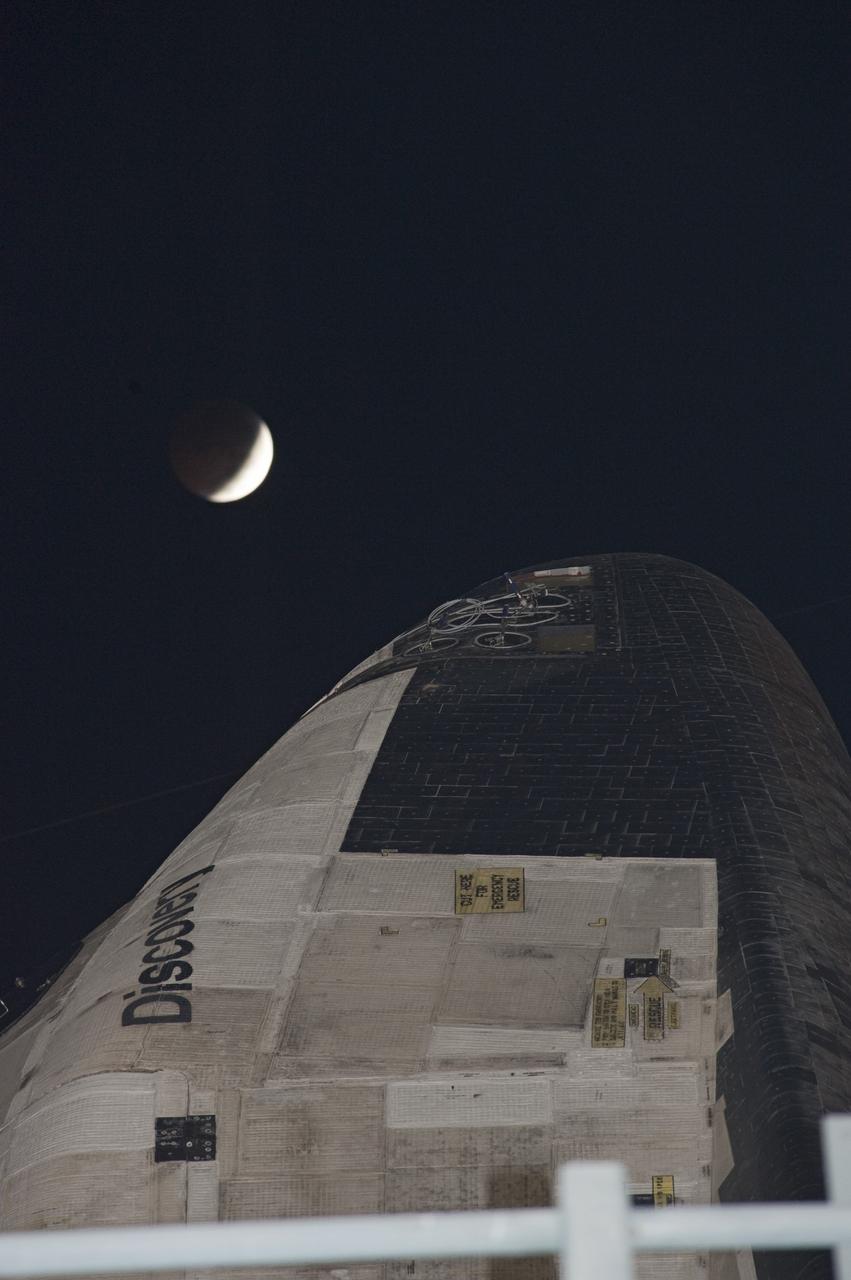
CAPE CANAVERAL, Fla. -- The beginning of a total lunar eclipse hovers over the top of space shuttle Discovery as the spacecraft waits to roll back from Launch Pad 39A to the Vehicle Assembly Building (VAB) at NASA's Kennedy Space Center in Florida. The move was scheduled for 12:30 a.m., but was postponed until 10 p.m. so technicians could resolve an issue with a leveling system on the crawler-transporter. Once inside the VAB, Discovery's external fuel tank will be examined and foam reapplied where 89 sensors were installed on the tank's aluminum skin for an instrumented tanking test on Dec. 17. The sensors were used to measure changes in the tank as super-cold propellants were pumped in and drained out. Data and analysis from the test will be used to determine what caused the tops of two, 21-foot-long support beams, called stringers, on the outside of the intertank to crack during fueling on Nov. 5. Discovery's next launch opportunity is no earlier than Feb. 3, 2011. For more information on STS-133, visit www.nasa.gov/mission_pages/shuttle/shuttlemissions/sts133/. Photo credit: NASA/Kim Shiflett