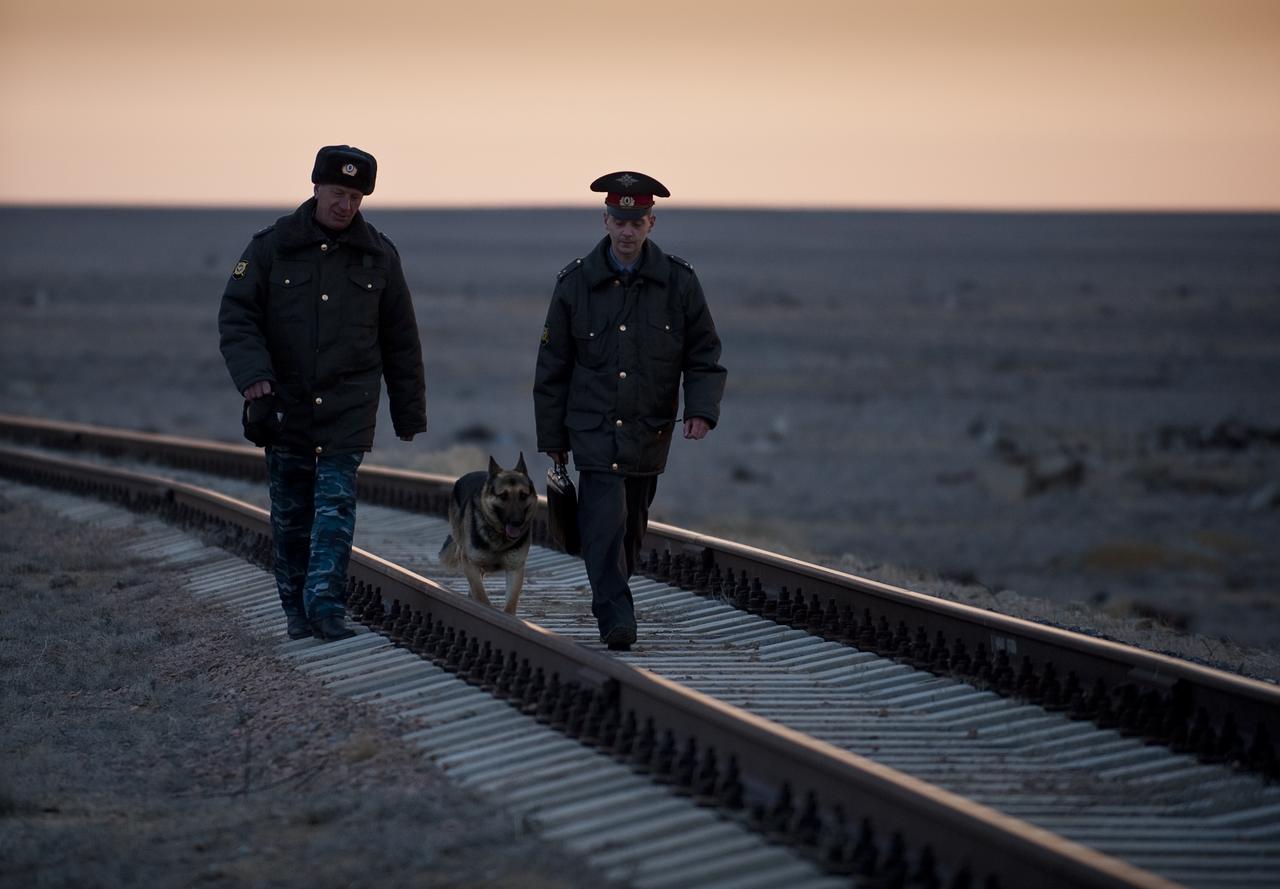
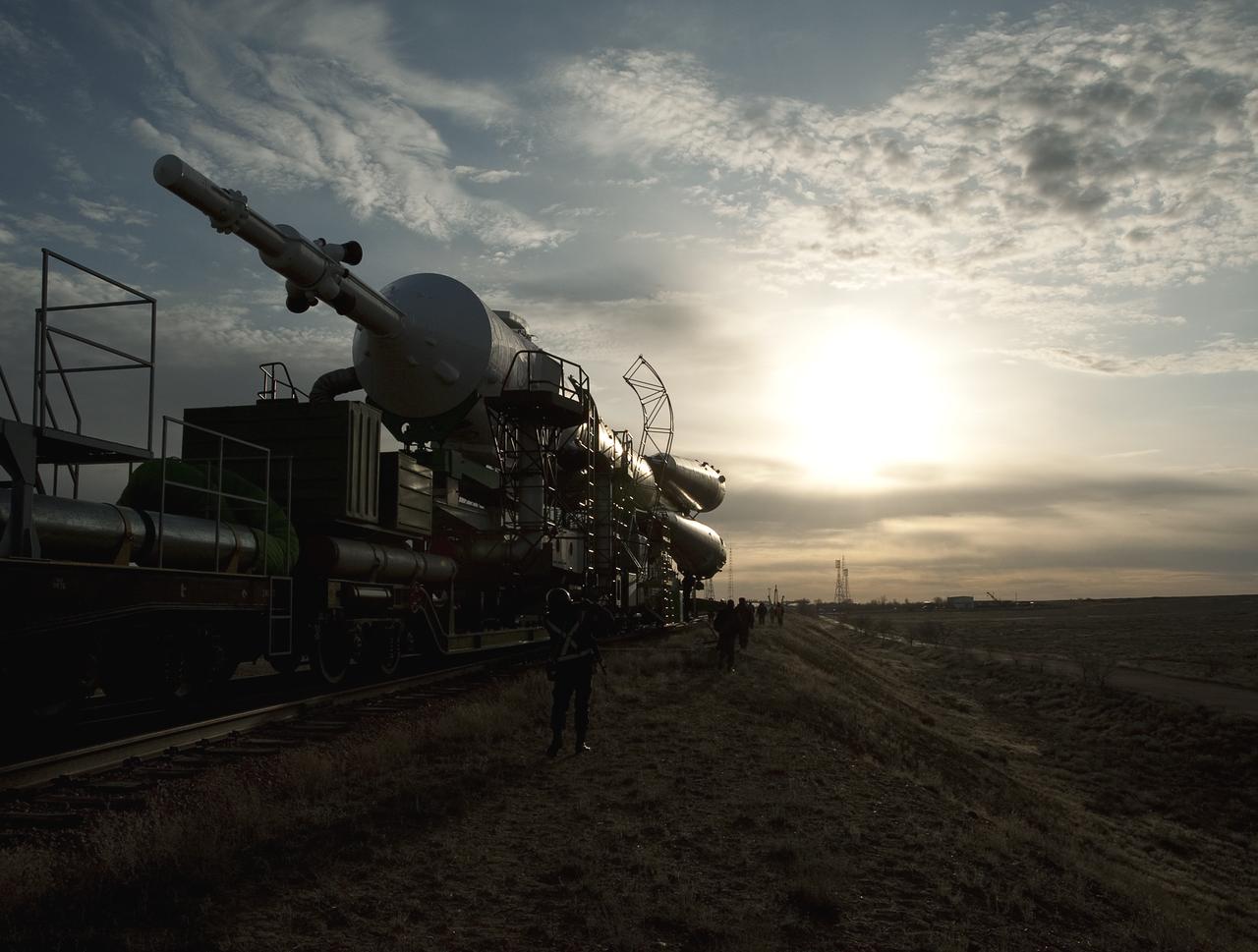
Russian security officers and their dog patrol the railroad track ahead of the Soyuz TMA-18 spacecraft as it is rolled out by train to the launch pad at the Baikonur Cosmodrome, Kazakhstan, Wednesday, March, 31, 2010. The launch of the Soyuz spacecraft with Expedition 23 Soyuz Commander Alexander Skvortsov of Russia, Flight Engineer Mikhail Kornienko of Russia, and NASA Flight Engineer Tracy Caldwell Dyson is scheduled for Friday, April 2, 2010 at 10:04 a.m. Kazakhstan time. Photo Credit (NASA/Bill Ingalls)
This video shows images taken through infrared range cameras during a recovery simulation at the Utah Test and Training Range on Dec 13, 2005. Infrared cameras will track the landing.
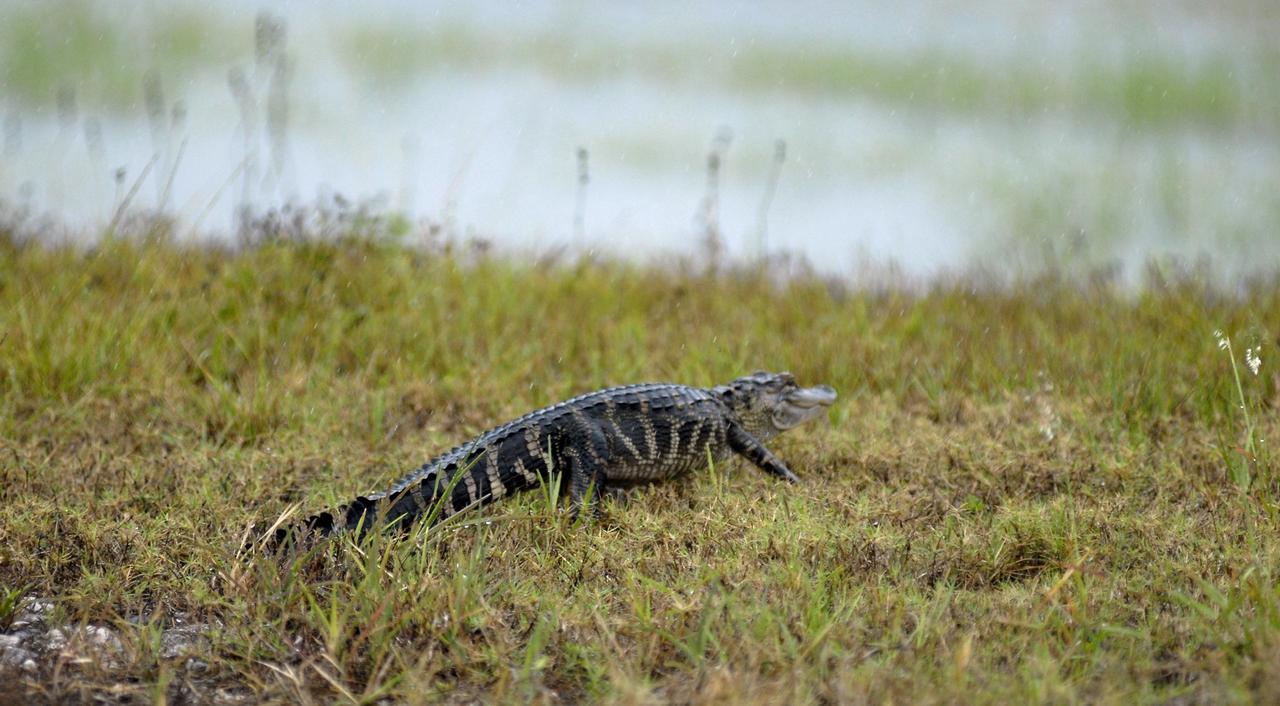
KENNEDY SPACE CENTER, FLA. -- Having successfully crossed railroad tracks nearby, this young alligator makes his way toward the water beyond. The track is the one where a train carrying solid rocket booster motor segments is approaching Kennedy Space Center. Photo credit: NASA/George Shelton
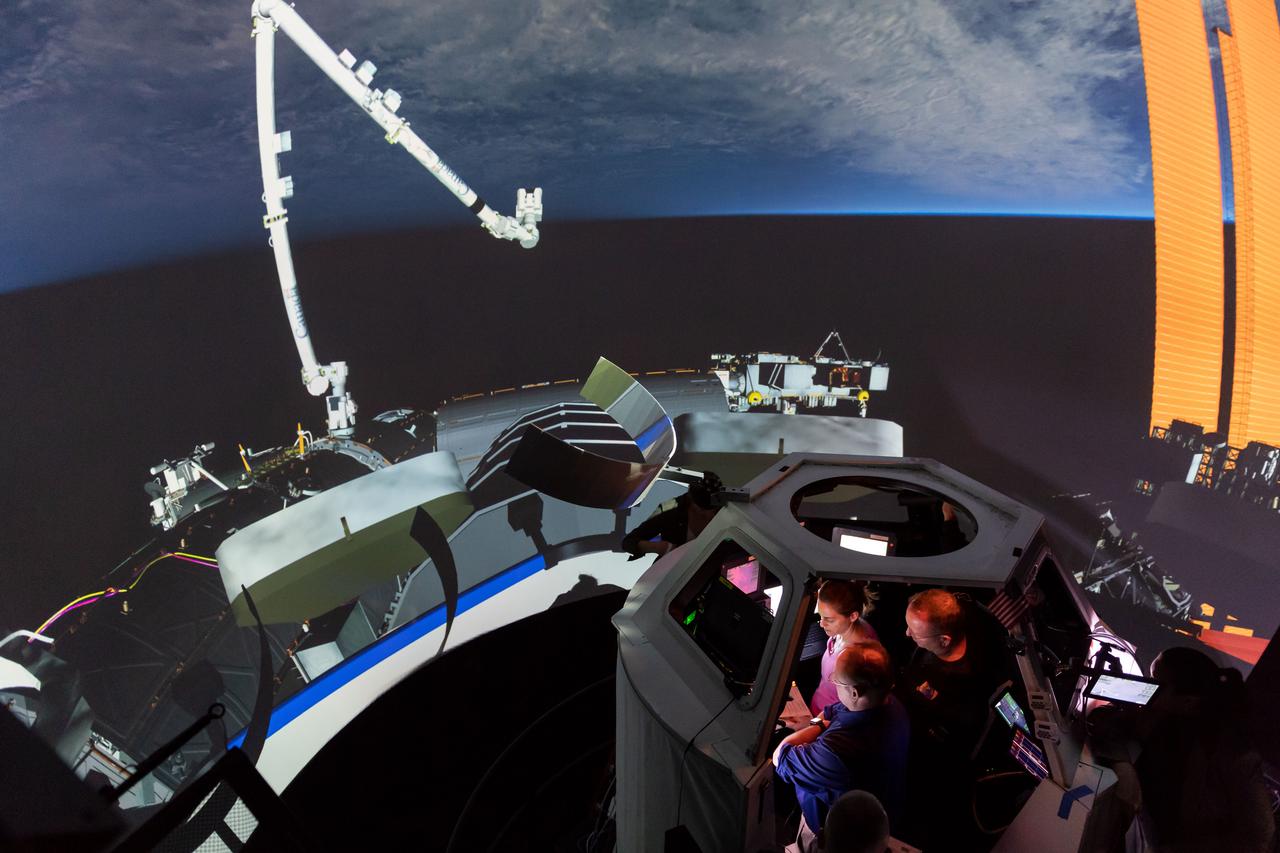
Commercial Crew Program astronauts Mike Fincke, Nicole Mann and Barry "Butch" Wilmore in Free Flyer Track & Capture Sim training in SES Alpha Cupola.
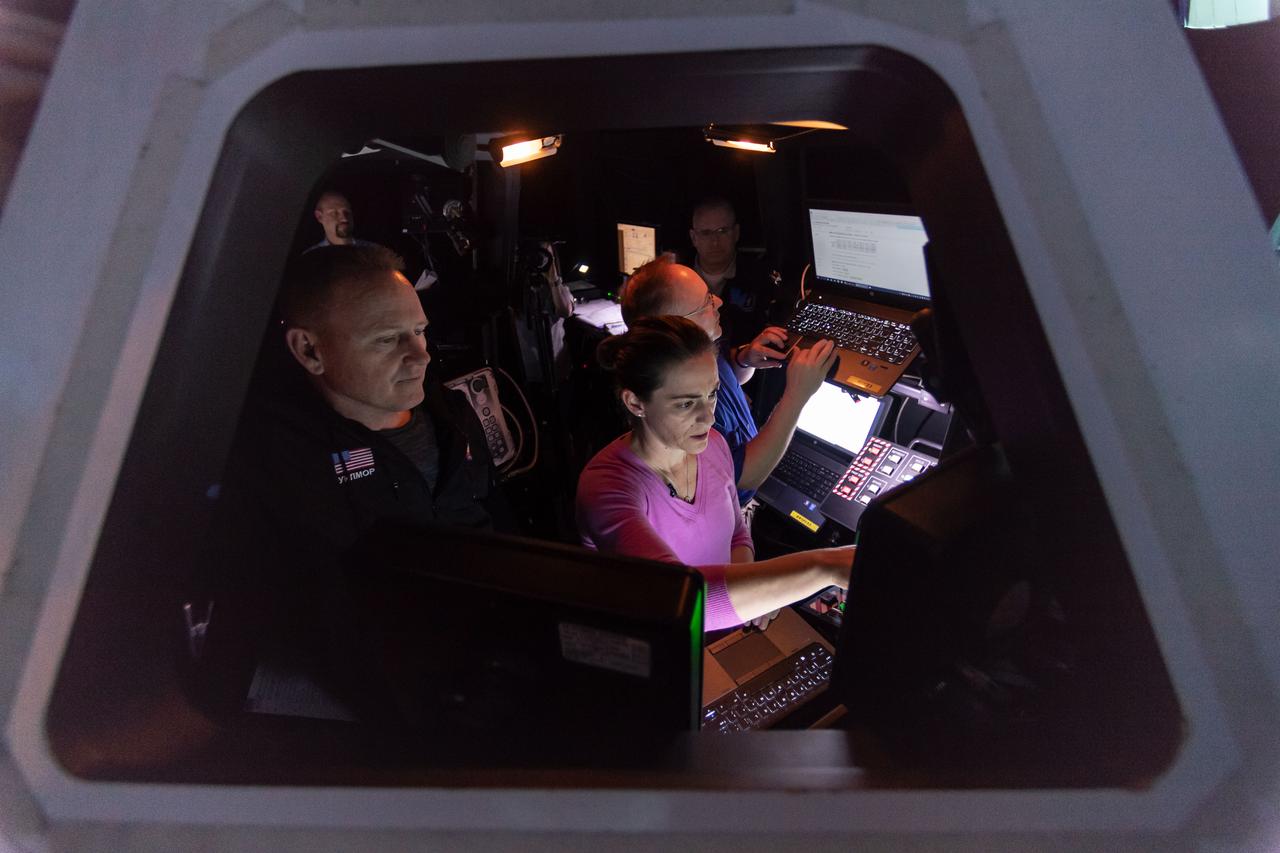
Commercial Crew Program astronauts Mike Fincke, Nicole Mann and Barry "Butch" Wilmore in Free Flyer Track & Capture Sim training in SES Alpha Cupola.
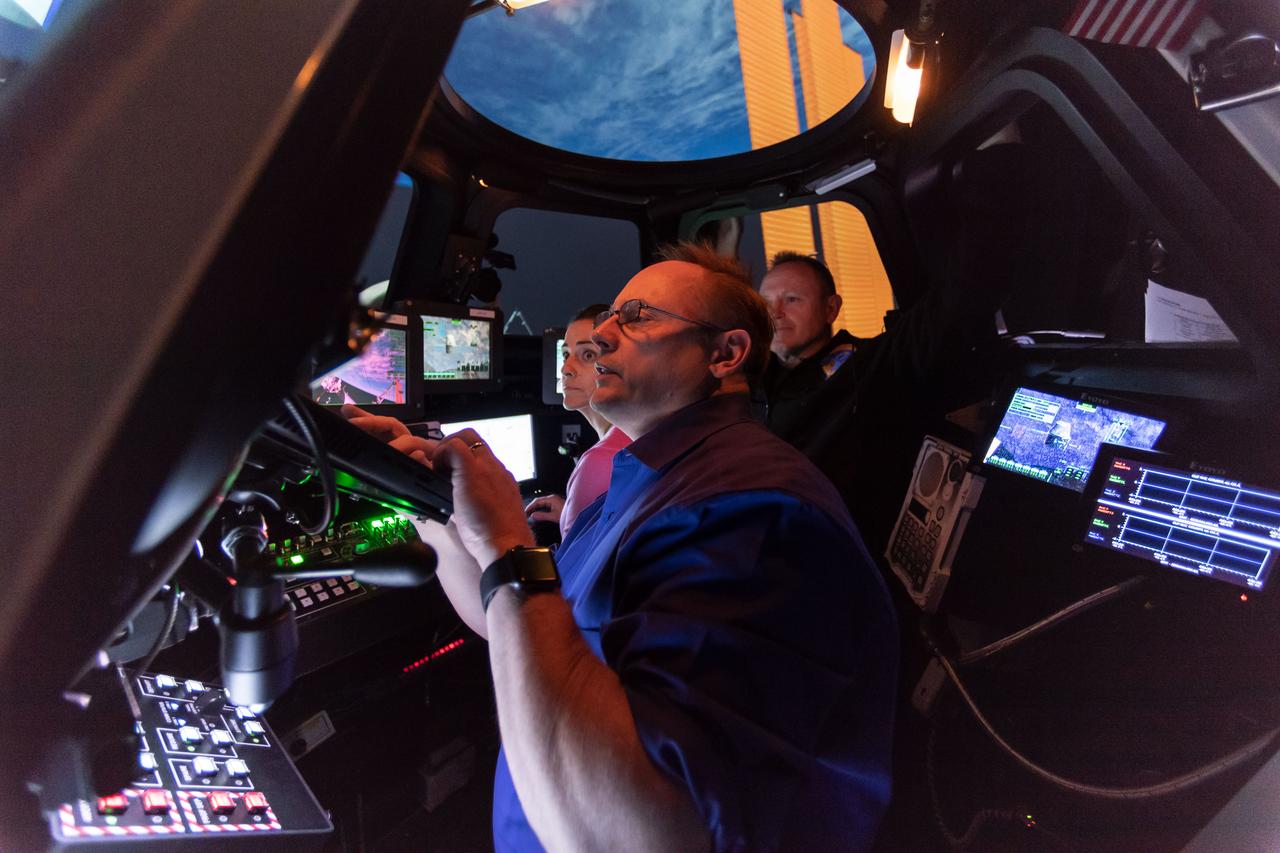
Commercial Crew Program astronauts Mike Fincke, Nicole Mann and Barry "Butch" Wilmore in Free Flyer Track & Capture Sim training in SES Alpha Cupola.
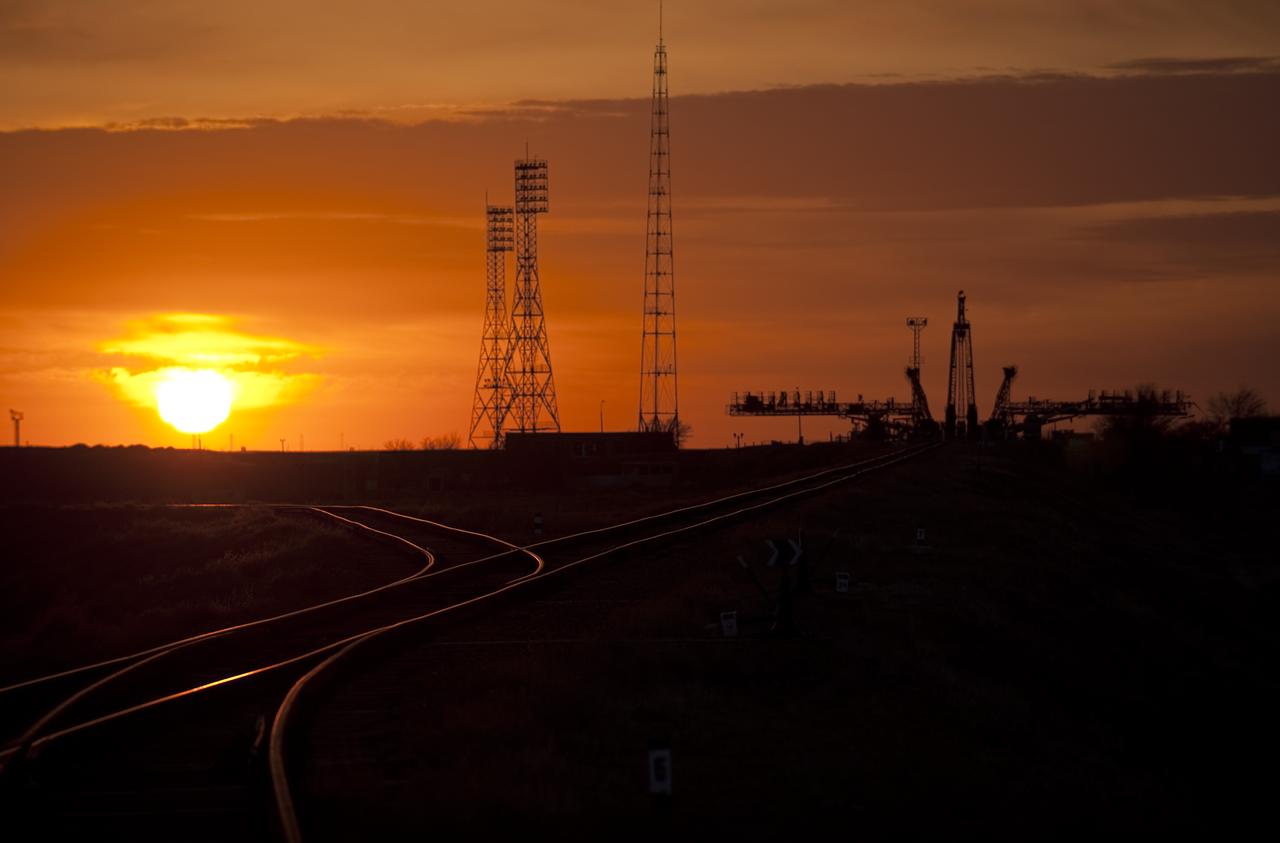
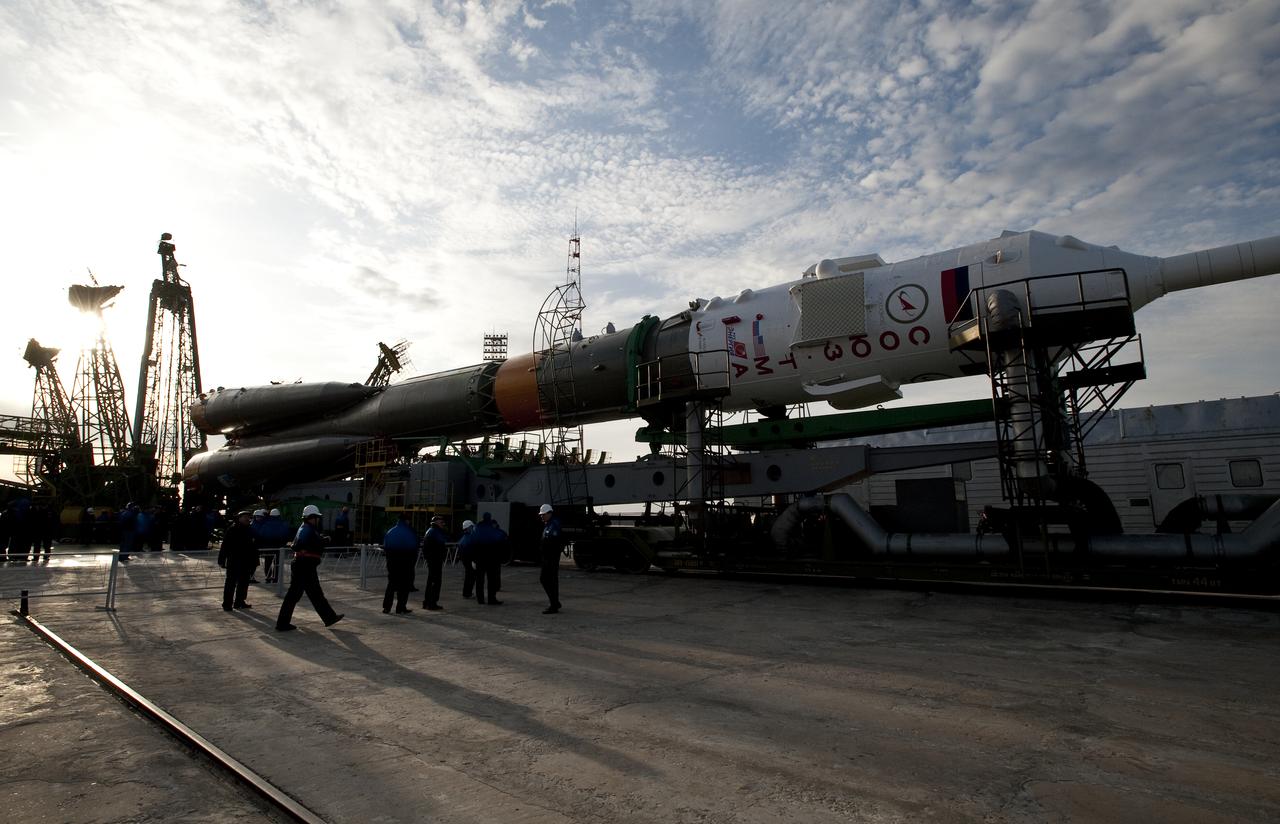
The sun rises behind the Soyuz launch pad shortly before the Soyuz TMA-18 spacecraft is rolled out by train to the launch pad at the Baikonur Cosmodrome, Kazakhstan, Wednesday, March, 31, 2010. The launch of the Soyuz spacecraft with Expedition 23 Soyuz Commander Alexander Skvortsov of Russia, Flight Engineer Mikhail Kornienko of Russia, and NASA Flight Engineer Tracy Caldwell Dyson is scheduled for Friday, April 2, 2010 at 10:04 a.m. Kazakhstan time. Photo Credit (NASA/Bill Ingalls)
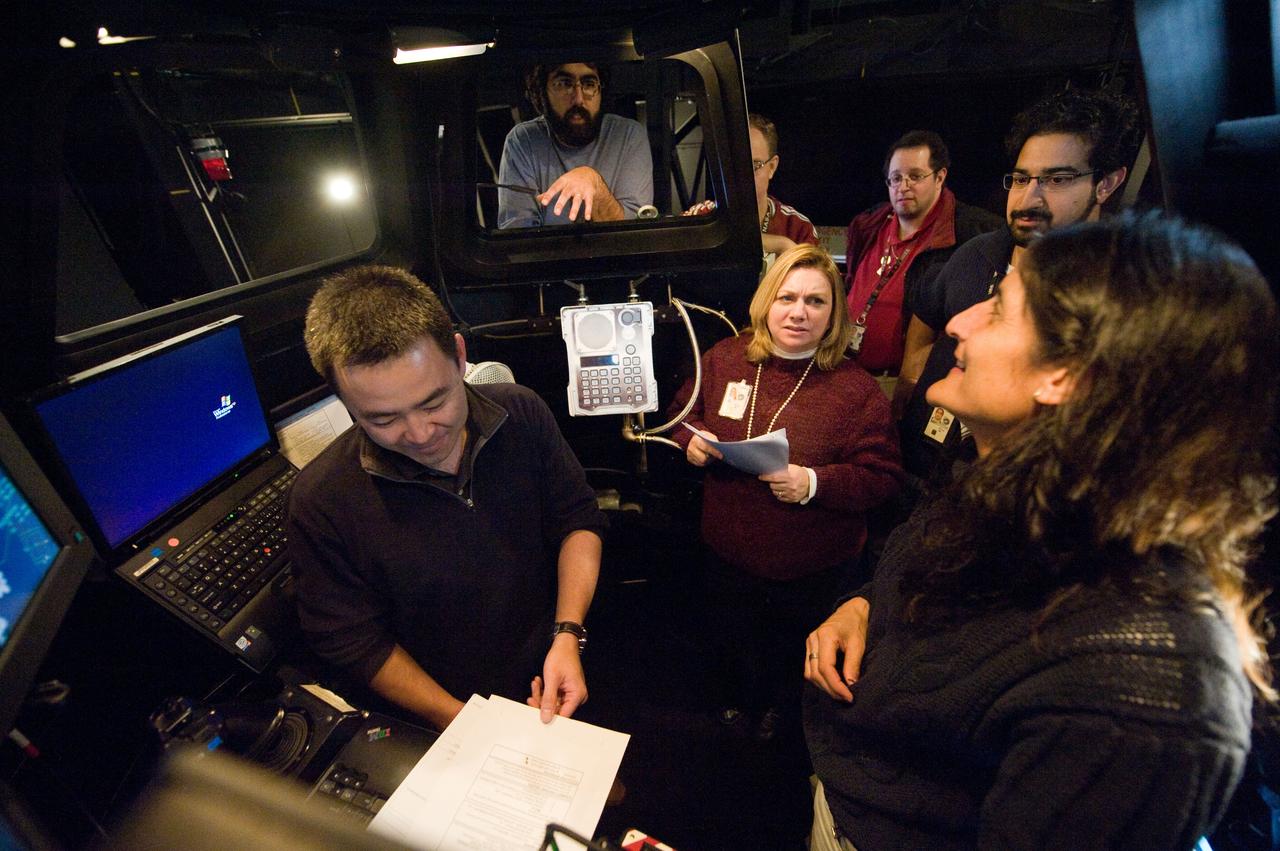
Expedition 33 crew members Suni Williams and Aki Hoshide at the SSRMS Track and Capture training station in the SES Dome. Photo Date: January 13, 2012. Location: Building 16, SES Dome. Photographer: Robert Markowitz
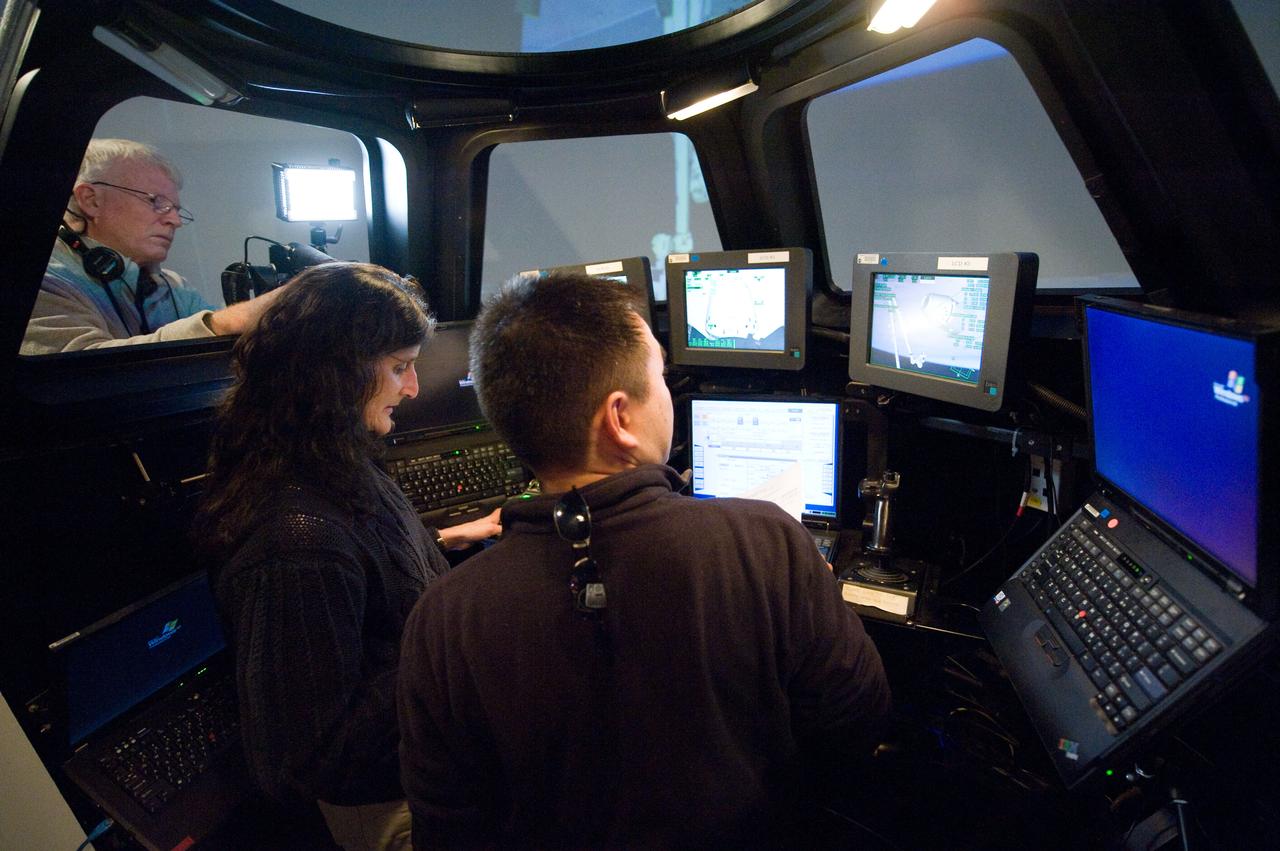
Expedition 33 crew members Suni Williams and Aki Hoshide at the SSRMS Track and Capture training station in the SES Dome. Photo Date: January 13, 2012. Location: Building 16, SES Dome. Photographer: Robert Markowitz
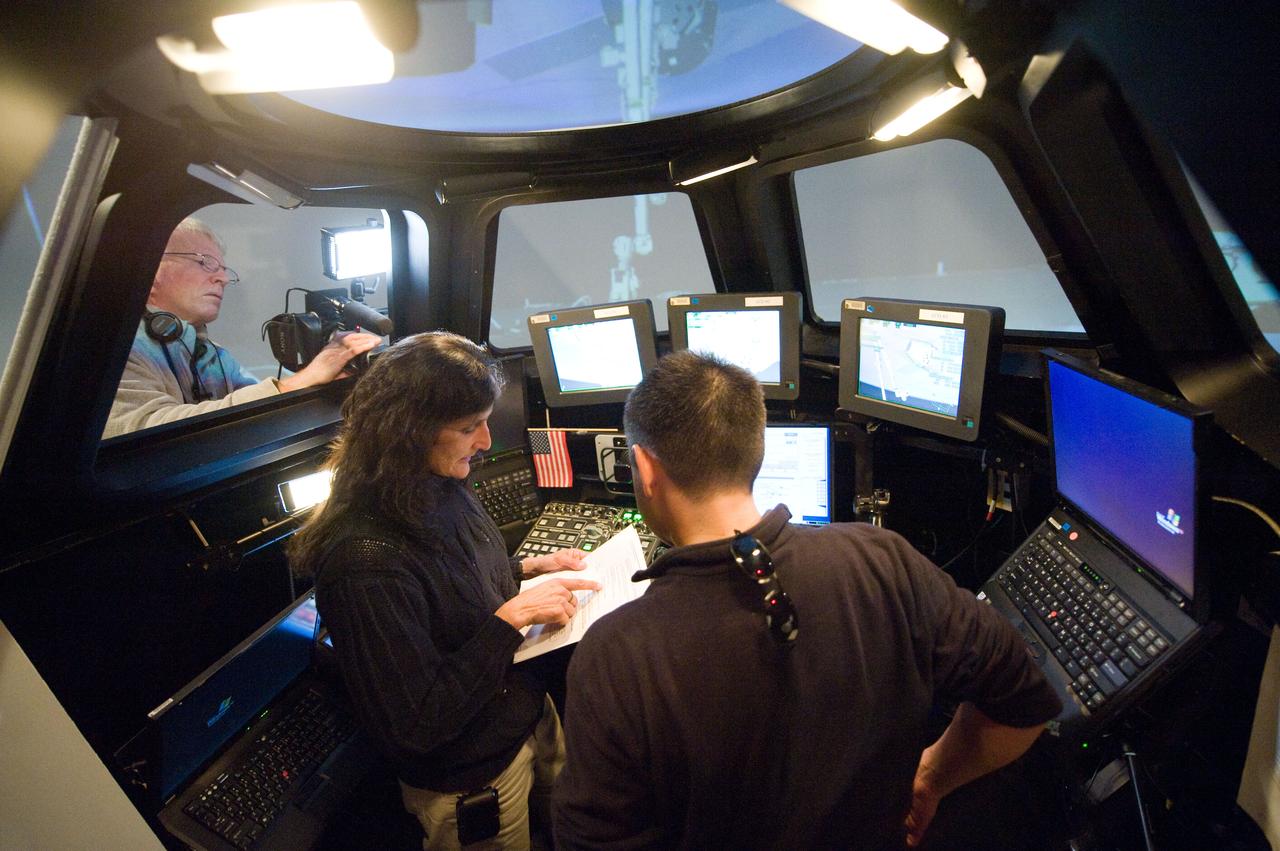
Expedition 33 crew members Suni Williams and Aki Hoshide at the SSRMS Track and Capture training station in the SES Dome. Photo Date: January 13, 2012. Location: Building 16, SES Dome. Photographer: Robert Markowitz
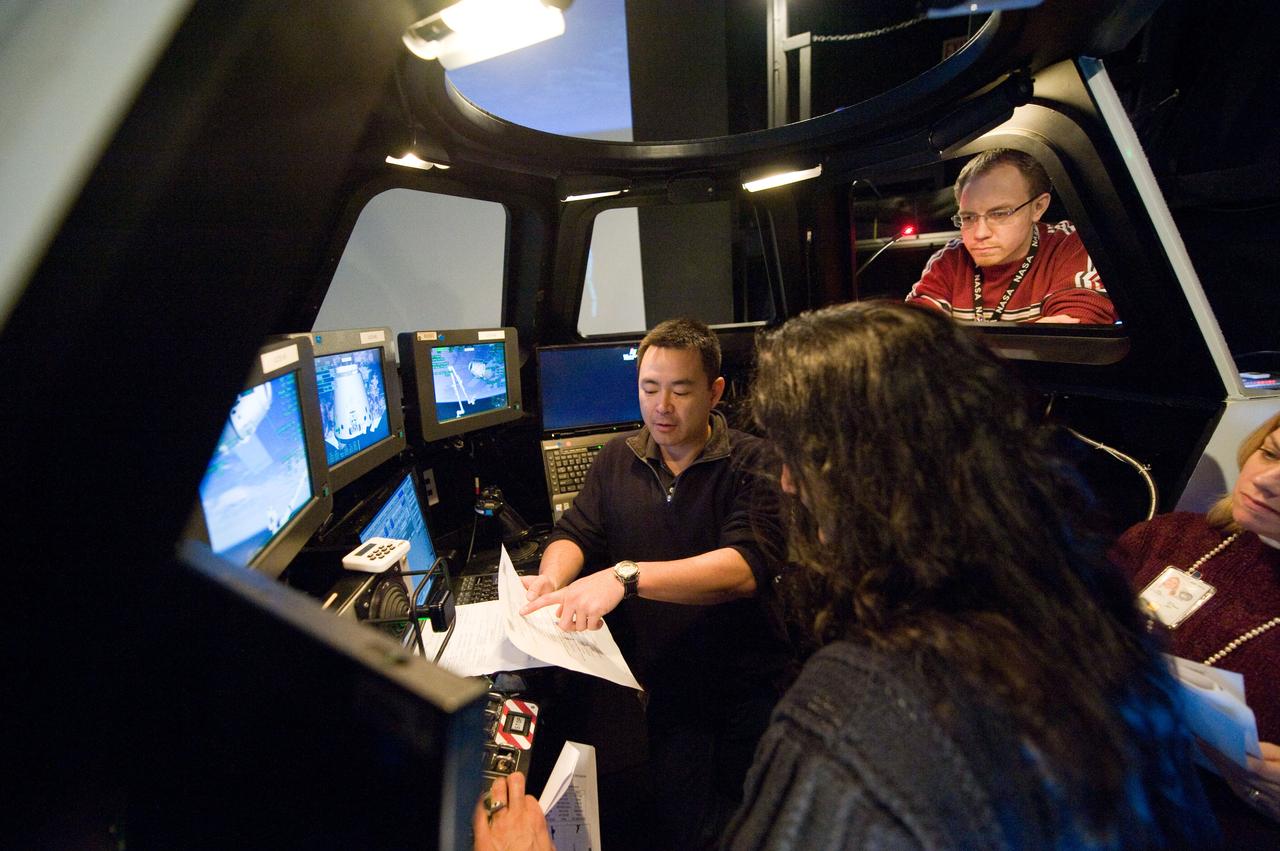
Expedition 33 crew members Suni Williams and Aki Hoshide at the SSRMS Track and Capture training station in the SES Dome. Photo Date: January 13, 2012. Location: Building 16, SES Dome. Photographer: Robert Markowitz
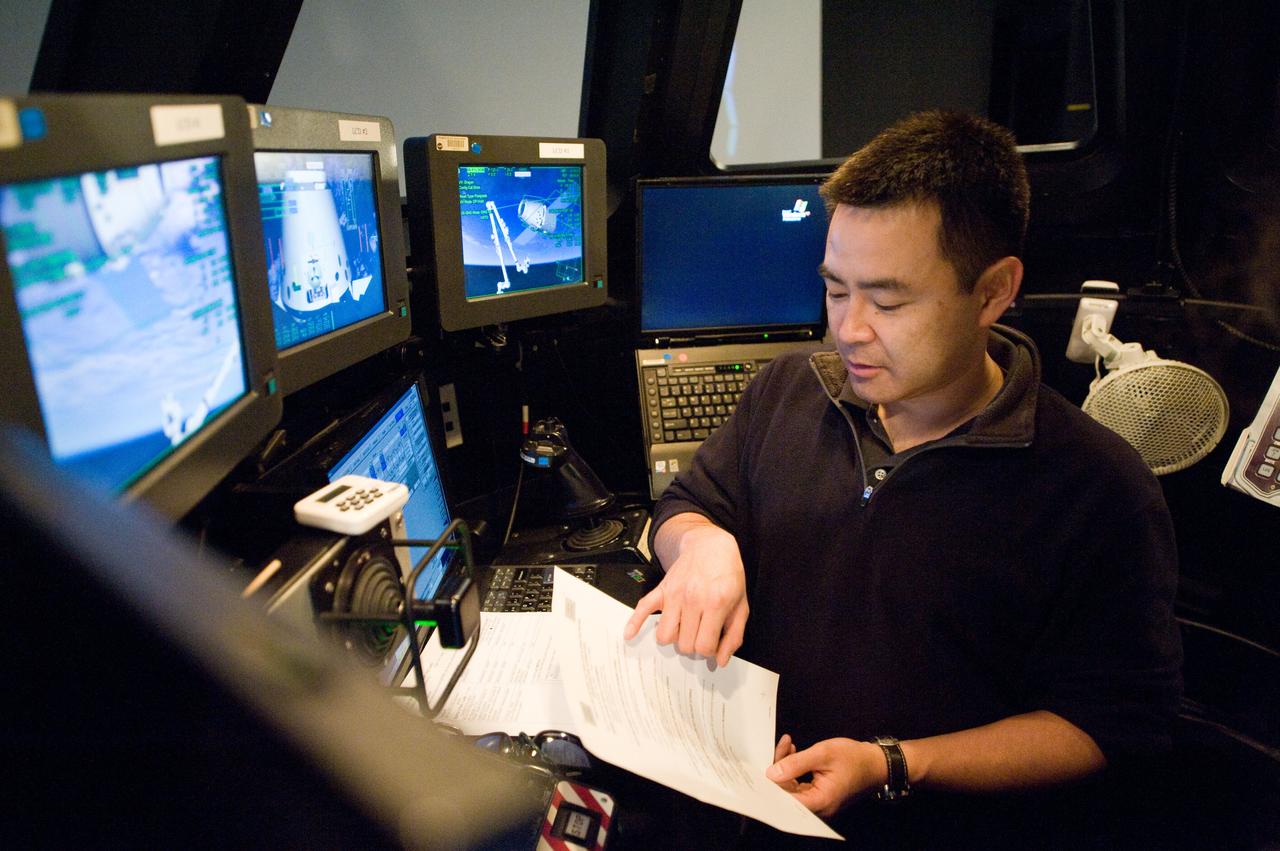
Expedition 33 crew members Suni Williams and Aki Hoshide at the SSRMS Track and Capture training station in the SES Dome. Photo Date: January 13, 2012. Location: Building 16, SES Dome. Photographer: Robert Markowitz
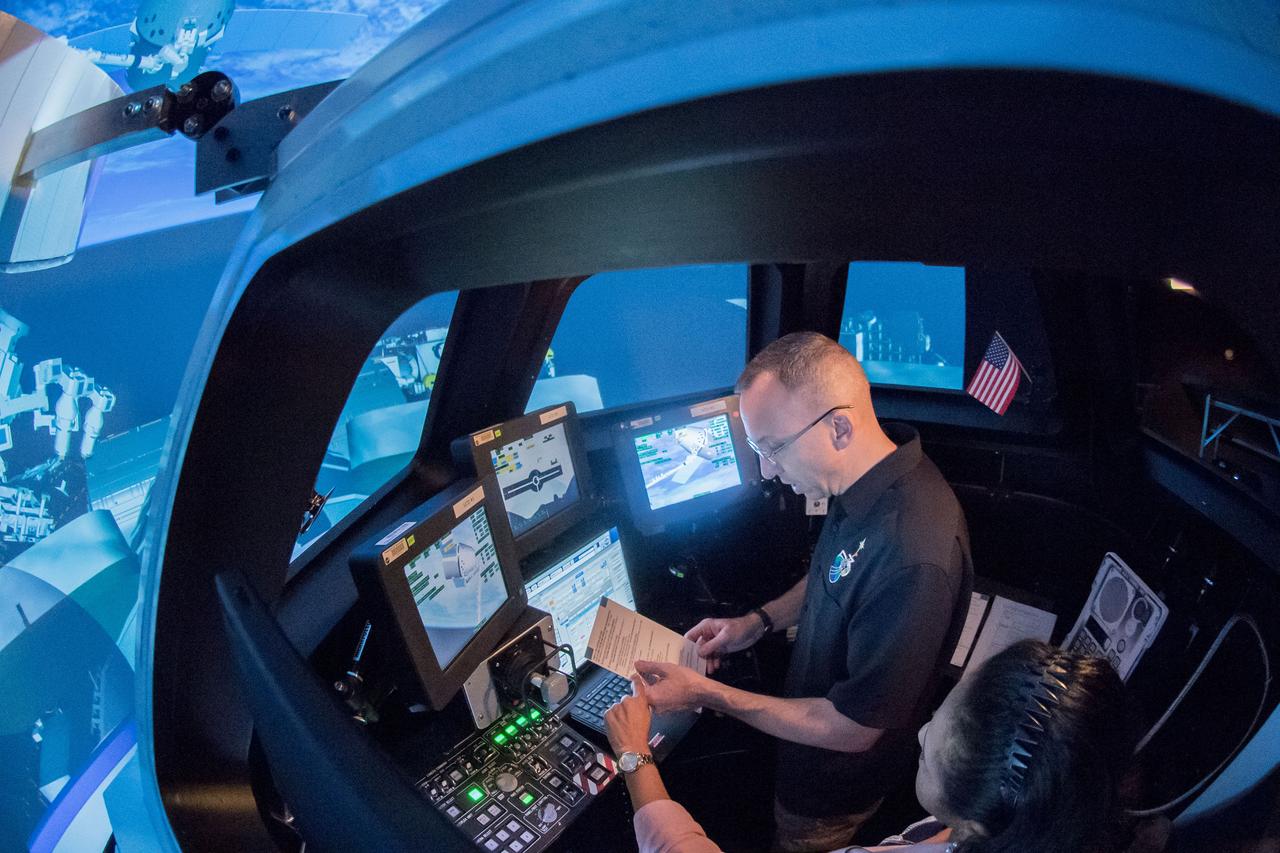
jsc2017e007812 (01/18/2017) --- Expedition 52 crew member astronaut Randy Bresnik at the Johnson Space Center training with the ROBO Track & Capture system in preparation for his upcoming trip to the International Space Station.
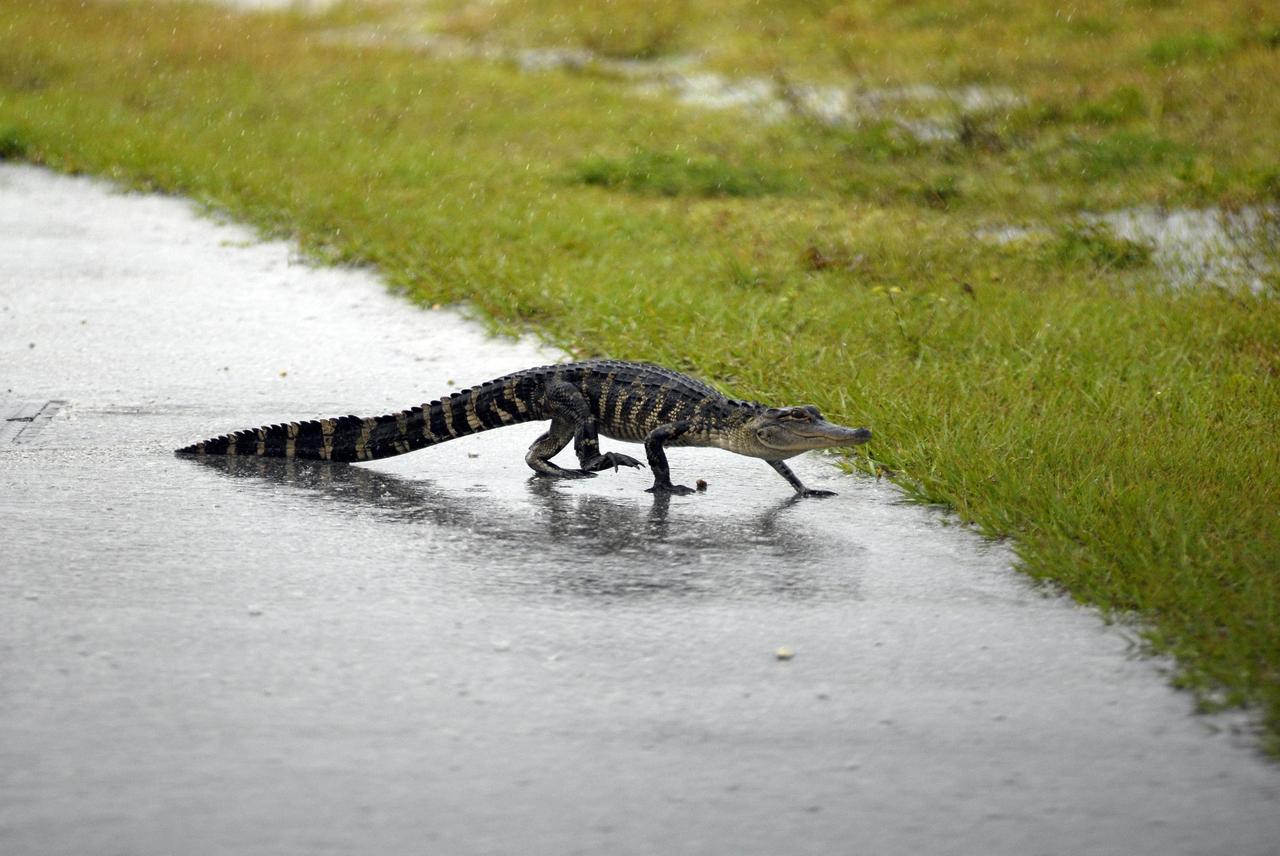
KENNEDY SPACE CENTER, FLA. -- This young alligator crosses a road near the railroad tracks where the train carrying solid rocket booster motor segments approaches Kennedy Space Center. Photo credit: NASA/George Shelton
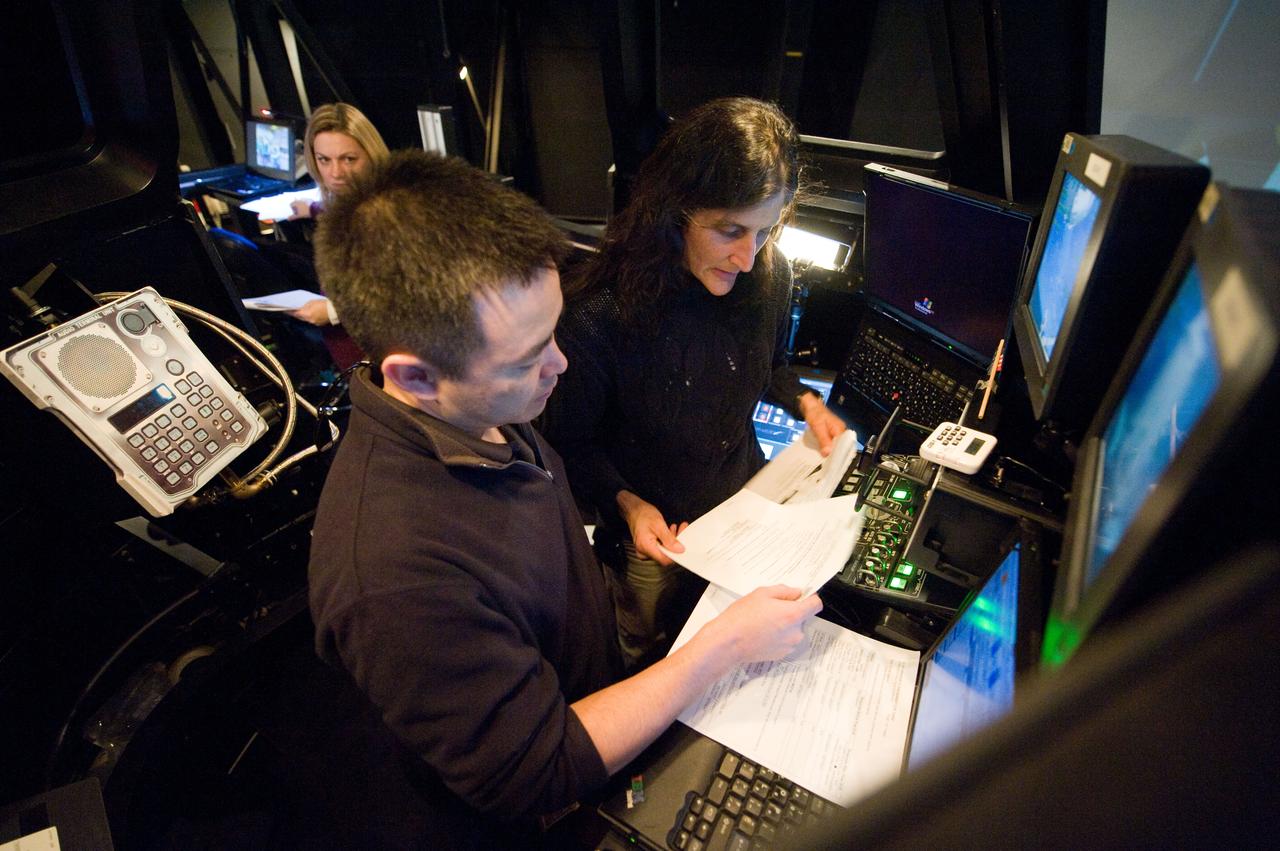
Expedition 33 crew members Suni Williams and Aki Hoshide at the SSRMS Track and Capture training station in the SES Dome. Photo Date: January 13, 2012. Location: Building 16, SES Dome. Photographer: Robert Markowitz
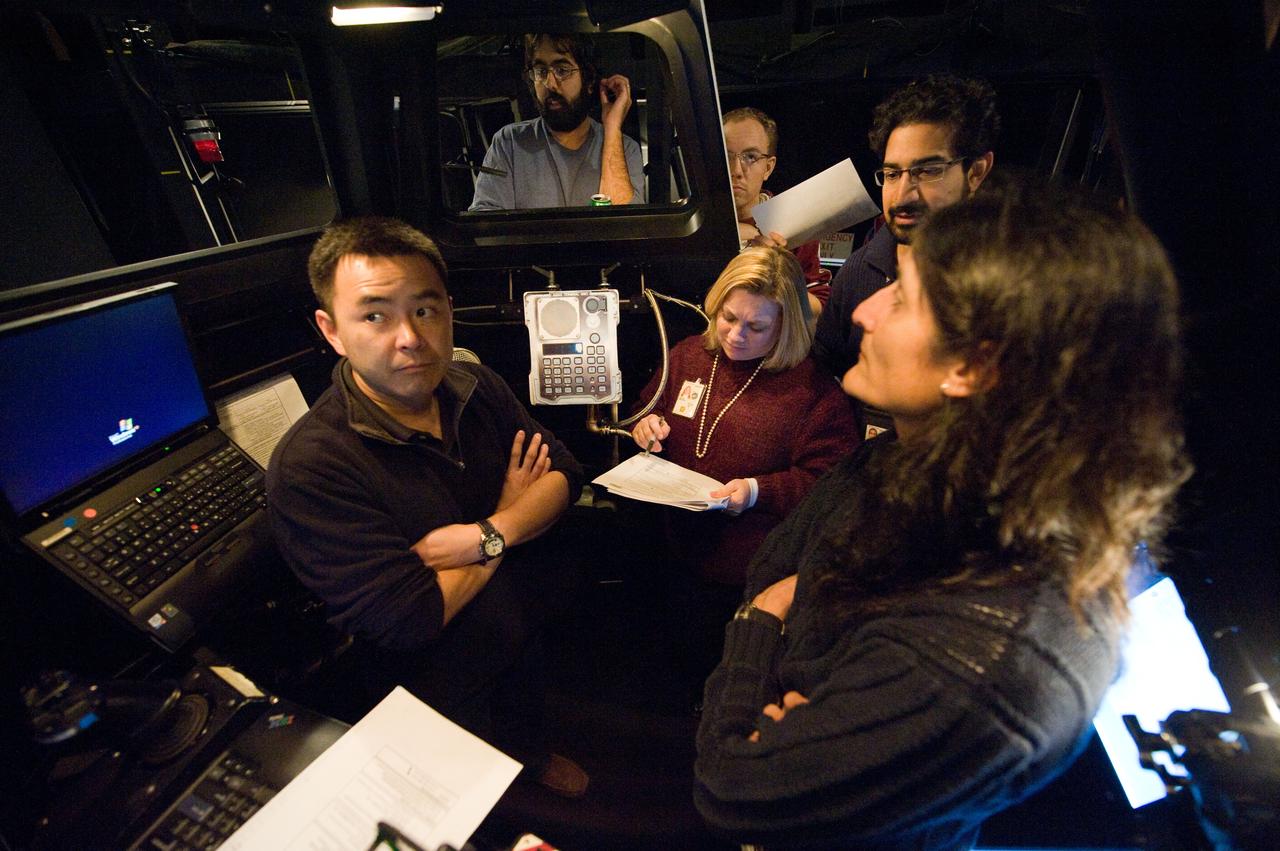
Expedition 33 crew members Suni Williams and Aki Hoshide at the SSRMS Track and Capture training station in the SES Dome. Photo Date: January 13, 2012. Location: Building 16, SES Dome. Photographer: Robert Markowitz
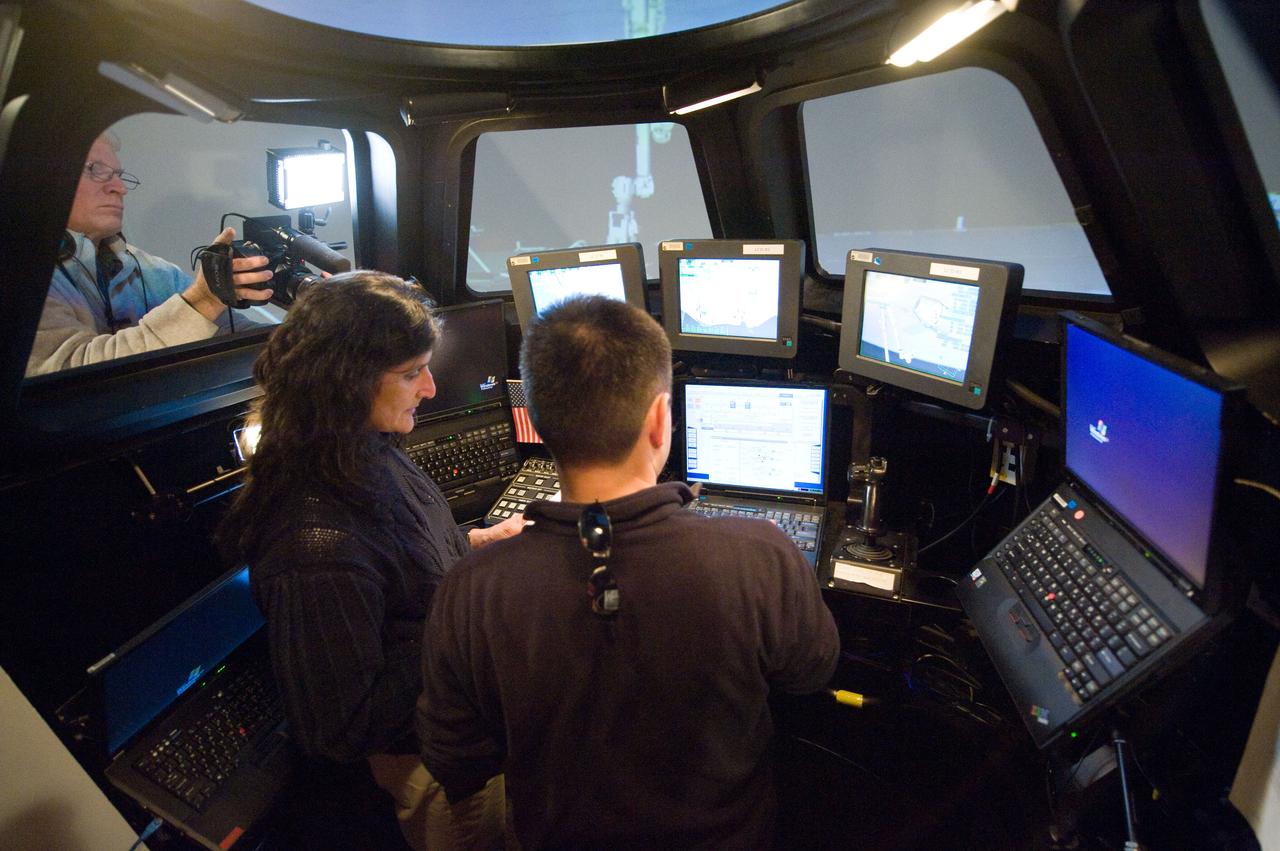
Expedition 33 crew members Suni Williams and Aki Hoshide at the SSRMS Track and Capture training station in the SES Dome. Photo Date: January 13, 2012. Location: Building 16, SES Dome. Photographer: Robert Markowitz
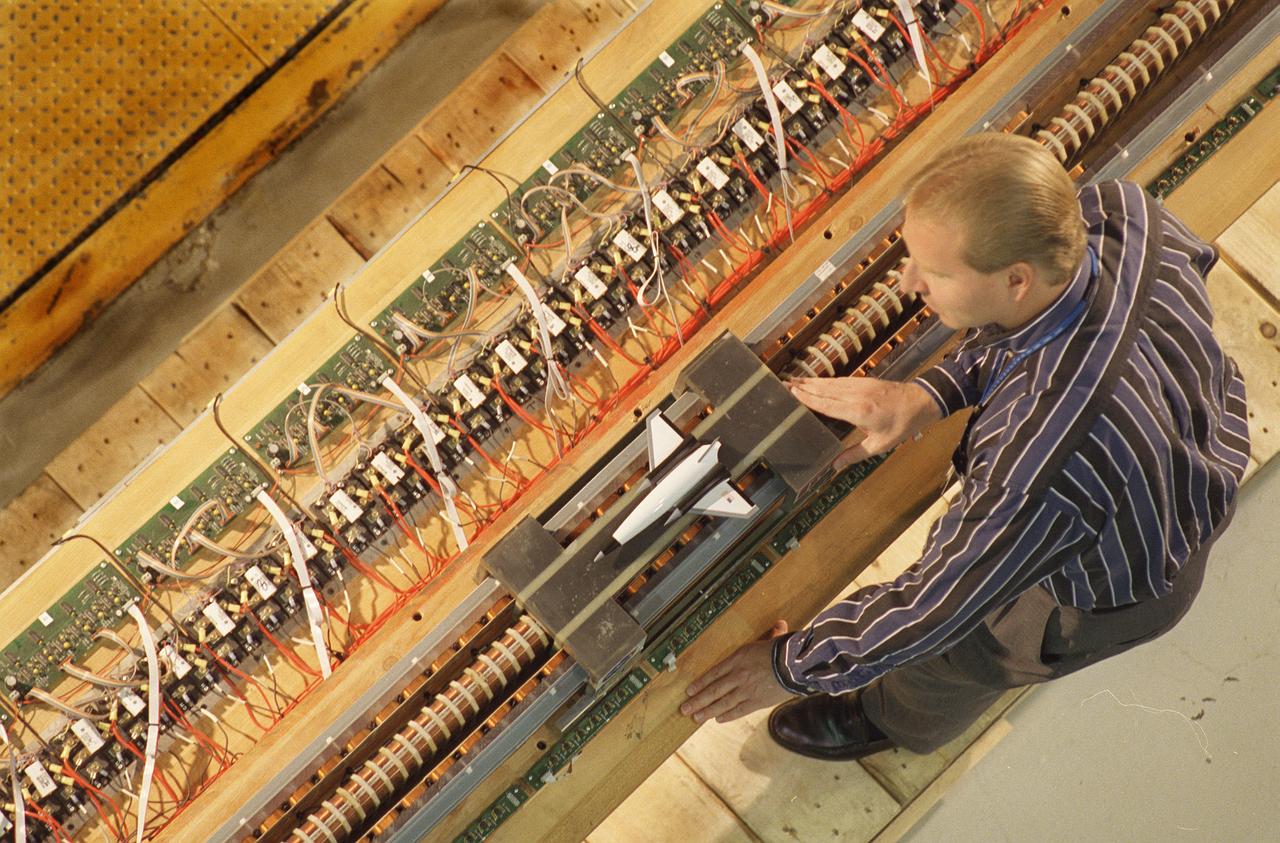
Marshall Space Flight Center’s (MSFC’s) Advanced Space Transportation Program has developed the Magnetic Launch Assist System, formerly known as the Magnetic Levitation (MagLev) technology that could give a space vehicle a running start to break free from Earth’s gravity. A Magnetic Launch Assist system would use magnetic fields to levitate and accelerate a vehicle along a track at speeds up to 600 mph. The vehicle would shift to rocket engines for launch into orbit. Similar to high-speed trains and roller coasters that use high-strength magnets to lift and propel a vehicle a couple of inches above a guideway, a Magnetic Launch Assist system would electromagnetically propel a space vehicle along the track. The tabletop experimental track for the system shown in this photograph is 44-feet long, with 22-feet of powered acceleration and 22-feet of passive braking. A 10-pound carrier with permanent magnets on its sides swiftly glides by copper coils, producing a levitation force. The track uses a linear synchronous motor, which means the track is synchronized to turn the coils on just before the carrier comes in contact with them, and off once the carrier passes. Sensors are positioned on the side of the track to determine the carrier’s position so the appropriate drive coils can be energized. MSFC engineers have conducted tests on the indoor track and a 50-foot outdoor track. The major advantages of launch assist for NASA launch vehicles is that it reduces the weight of the take-off, the landing gear, the wing size, and less propellant resulting in significant cost savings. The US Navy and the British MOD (Ministry of Defense) are planning to use magnetic launch assist for their next generation aircraft carriers as the aircraft launch system. The US Army is considering using this technology for launching target drones for anti-aircraft training.
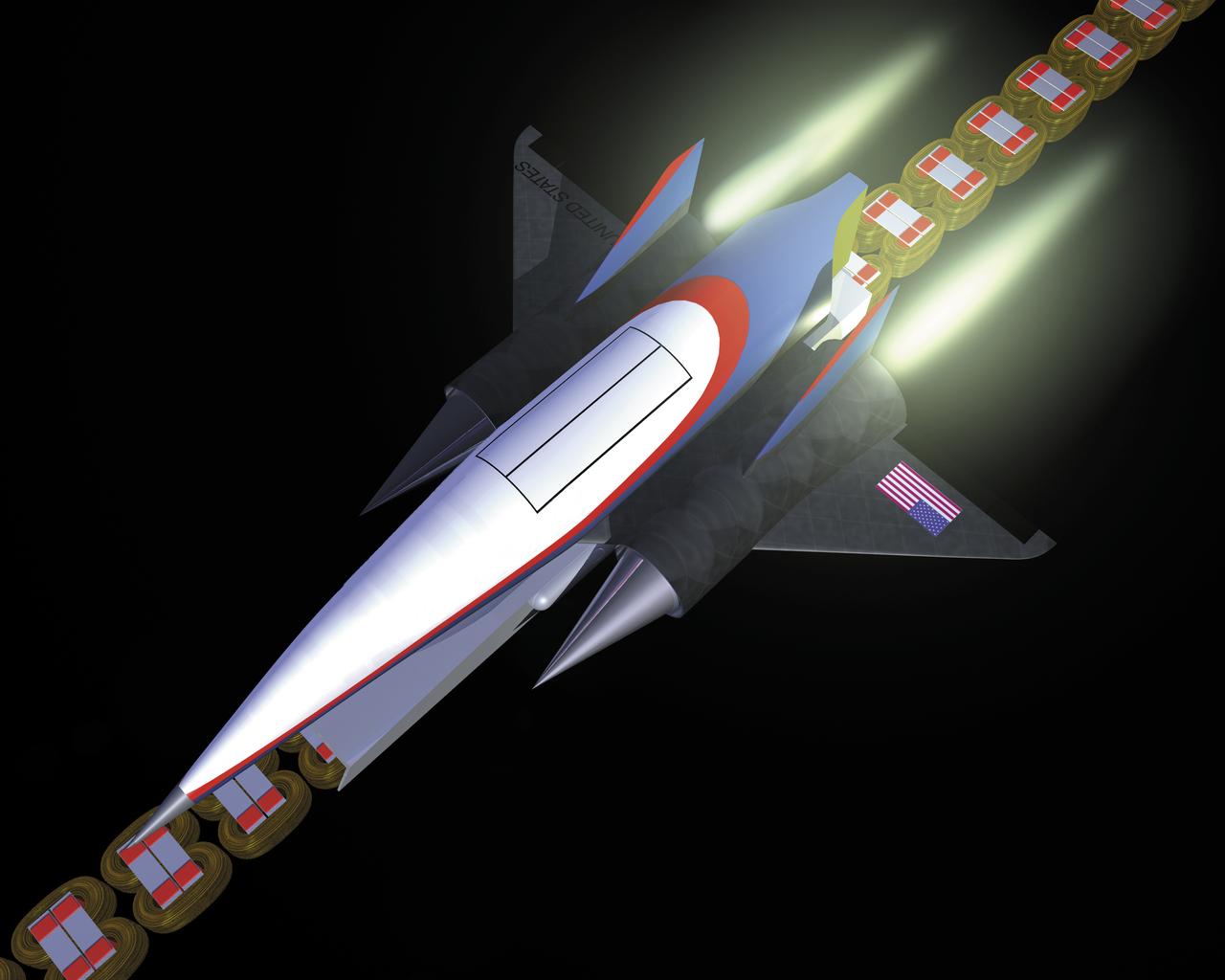
This artist’s concept depicts a Magnetic Launch Assist vehicle clearing the track and shifting to rocket engines for launch into orbit. The system, formerly referred as the Magnetic Levitation (MagLev) system, is a launch system developed and tested by Engineers at the Marshall Space Flight Center (MSFC) that could levitate and accelerate a launch vehicle along a track at high speeds before it leaves the ground. Using an off-board electric energy source and magnetic fields, a Magnetic Launch Assist system would drive a spacecraft along a horizontal track until it reaches desired speeds. The system is similar to high-speed trains and roller coasters that use high-strength magnets to lift and propel a vehicle a couple of inches above a guideway. A full-scale, operational track would be about 1.5-miles long, capable of accelerating a vehicle to 600 mph in 9.5 seconds, and the vehicle would then shift to rocket engines for launch into orbit. The major advantages of launch assist for NASA launch vehicles is that it reduces the weight of the take-off, the landing gear, the wing size, and less propellant resulting in significant cost savings. The US Navy and the British MOD (Ministry of Defense) are planning to use magnetic launch assist for their next generation aircraft carriers as the aircraft launch system. The US Army is considering using this technology for launching target drones for anti-aircraft training.
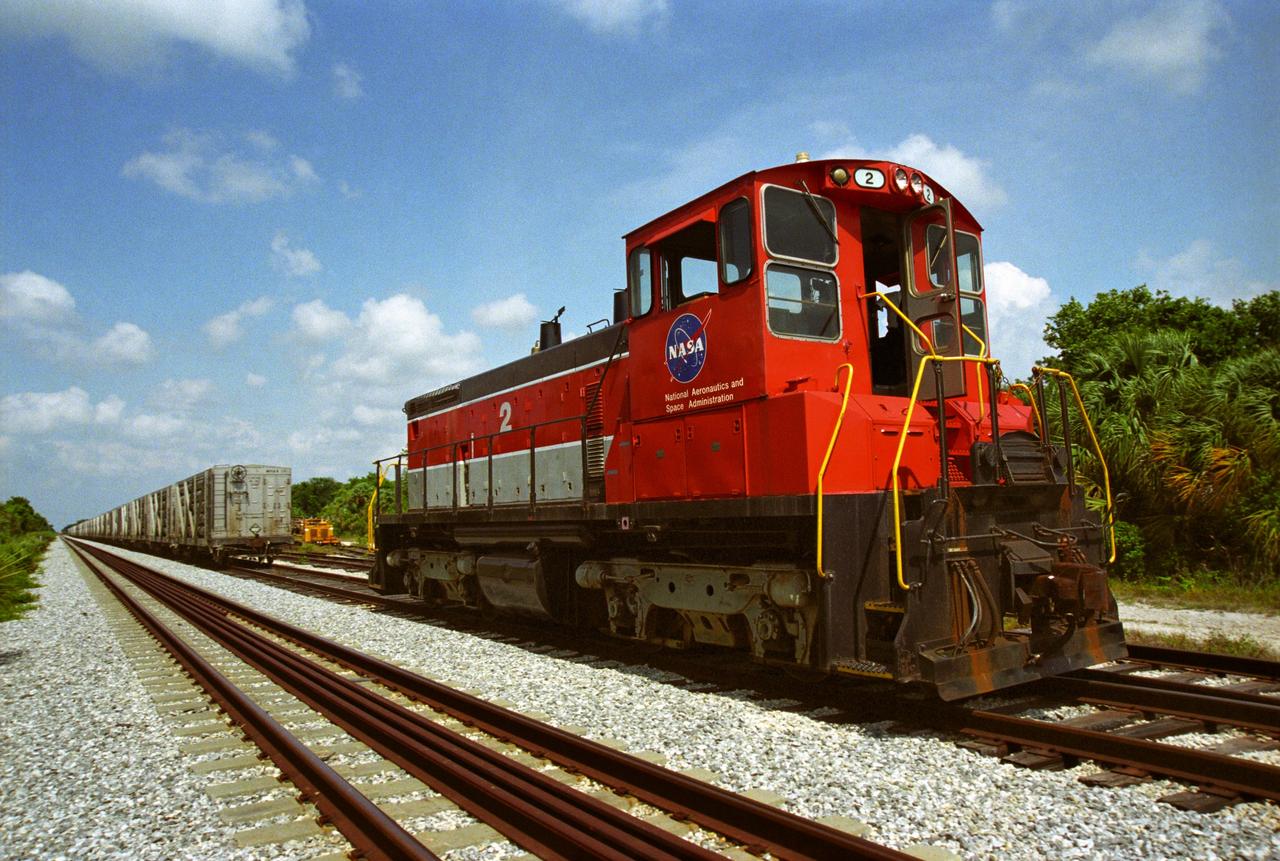
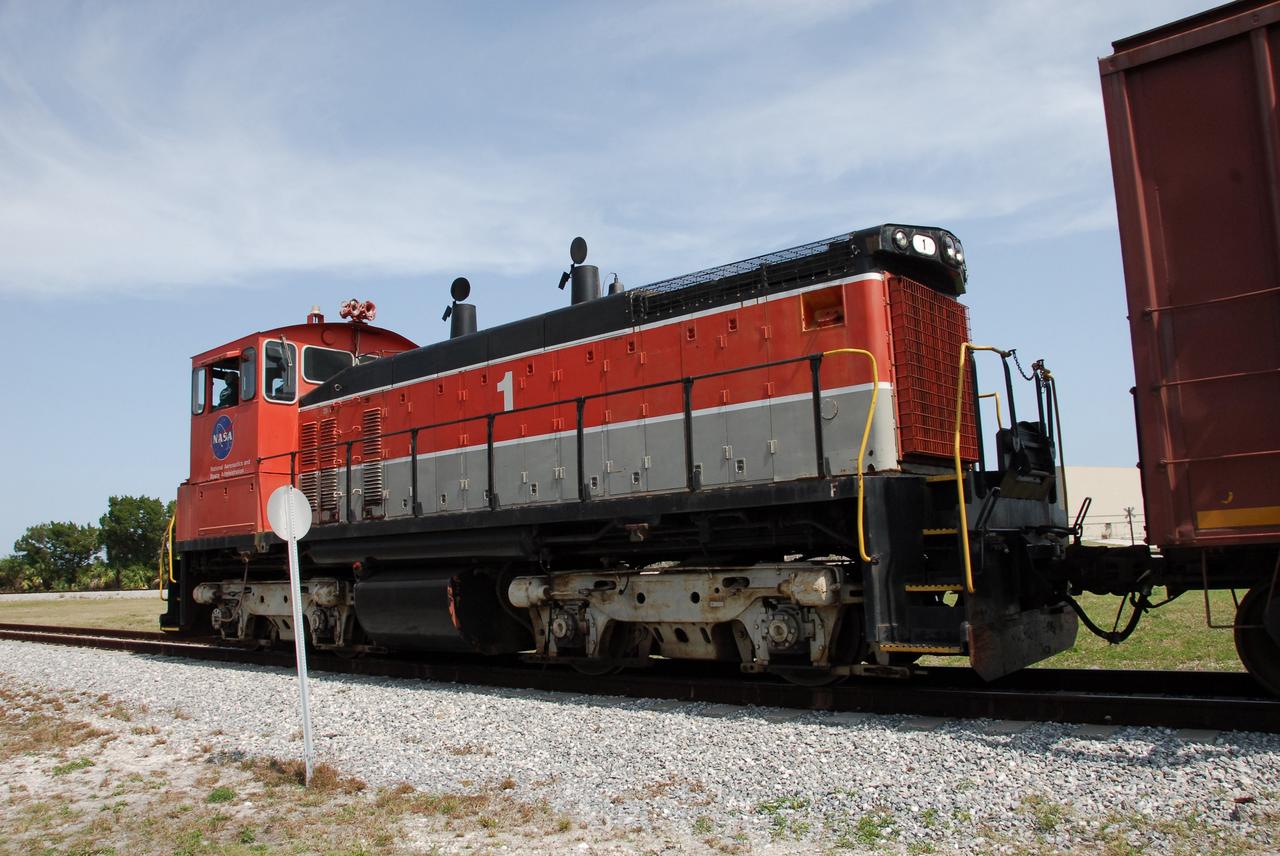
CAPE CANAVERAL, Fla. – A NASA railroad train moves along the track at NASA's Kennedy Space Center in Florida. The space agency utilizes railroad operations to not only move equipment at Kennedy, but to transport hardware to and from contractor facilities across the nation. Photo credit: NASA
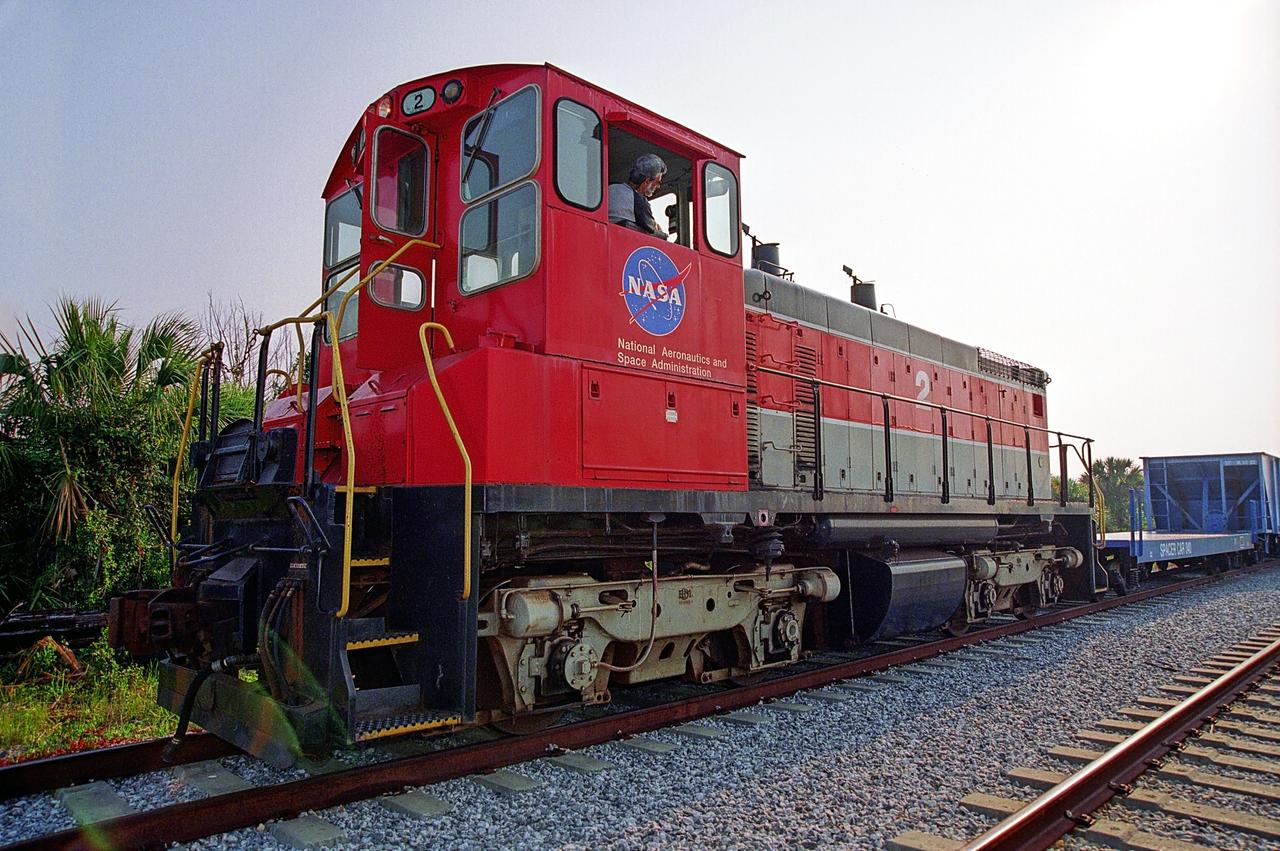
CAPE CANAVERAL, Fla. – A NASA railroad train moves along the track at NASA's Kennedy Space Center in Florida. The space agency utilizes railroad operations to not only move equipment at Kennedy, but to transport hardware to and from contractor facilities across the nation. Photo credit: NASA
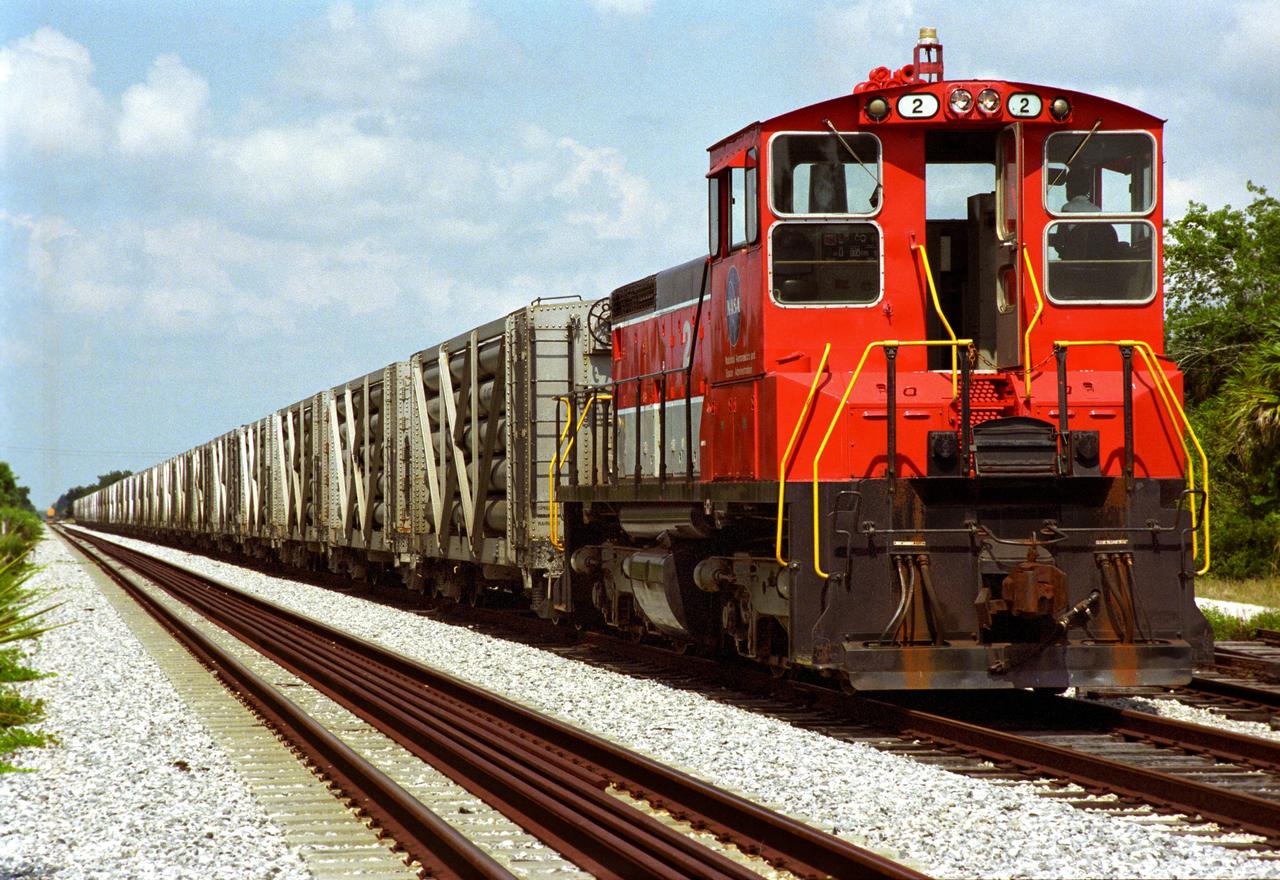
CAPE CANAVERAL, Fla. – A NASA railroad train moves along the track at NASA's Kennedy Space Center in Florida. The space agency utilizes railroad operations to not only move equipment at Kennedy, but to transport hardware to and from contractor facilities across the nation. Photo credit: NASA
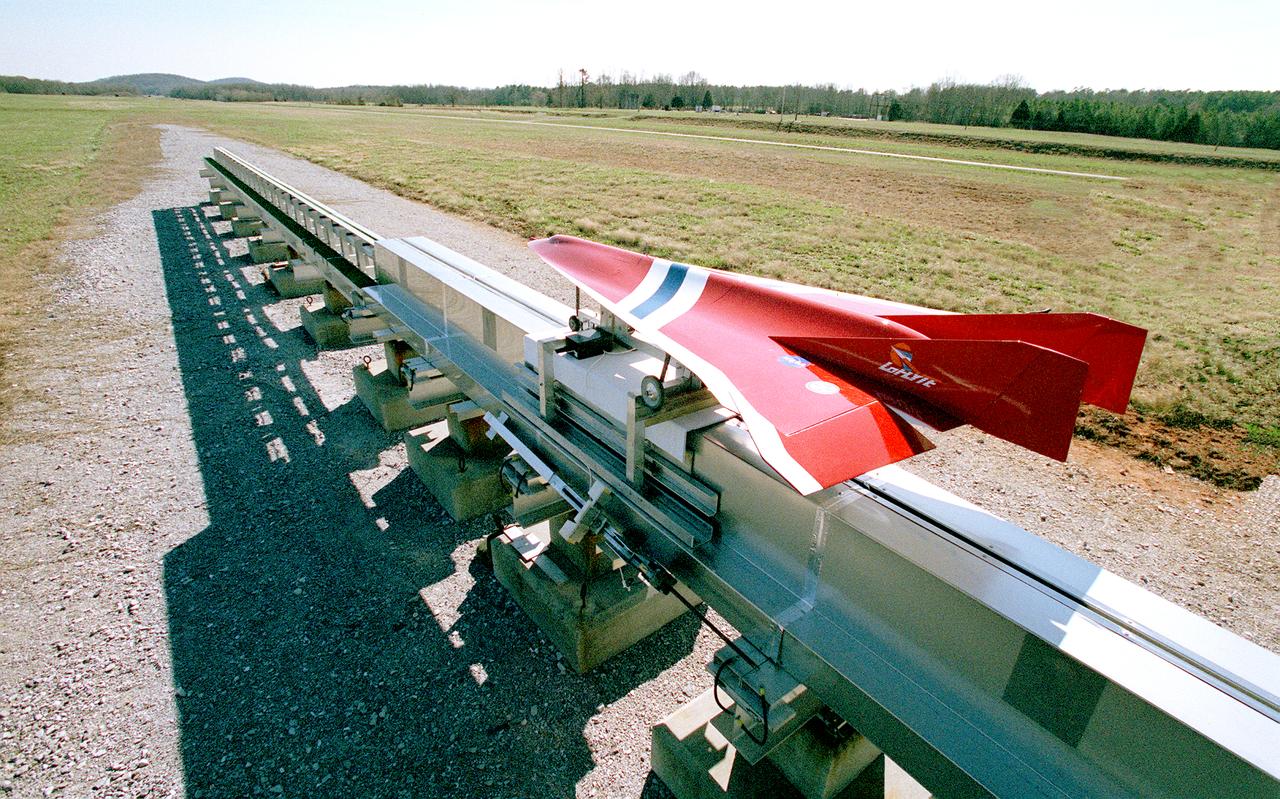
Engineers at the Marshall Space Flight Center (MSFC) have been testing Magnetic Launch Assist Systems, formerly known as Magnetic Levitation (MagLev) technologies. To launch spacecraft into orbit, a Magnetic Launch Assist system would use magnetic fields to levitate and accelerate a vehicle along a track at a very high speed. Similar to high-speed trains and roller coasters that use high-strength magnets to lift and propel a vehicle a couple of inches above a guideway, the launch-assist system would electromagnetically drive a space vehicle along the track. A full-scale, operational track would be about 1.5-miles long and capable of accelerating a vehicle to 600 mph in 9.5 seconds. This photograph shows a subscale model of an airplane running on the experimental track at MSFC during the demonstration test. This track is an advanced linear induction motor. Induction motors are common in fans, power drills, and sewing machines. Instead of spinning in a circular motion to turn a shaft or gears, a linear induction motor produces thrust in a straight line. Mounted on concrete pedestals, the track is 100-feet long, about 2-feet wide, and about 1.5- feet high. The major advantages of launch assist for NASA launch vehicles is that it reduces the weight of the take-off, the landing gear, the wing size, and less propellant resulting in significant cost savings. The US Navy and the British MOD (Ministry of Defense) are planning to use magnetic launch assist for their next generation aircraft carriers as the aircraft launch system. The US Army is considering using this technology for launching target drones for anti-aircraft training.
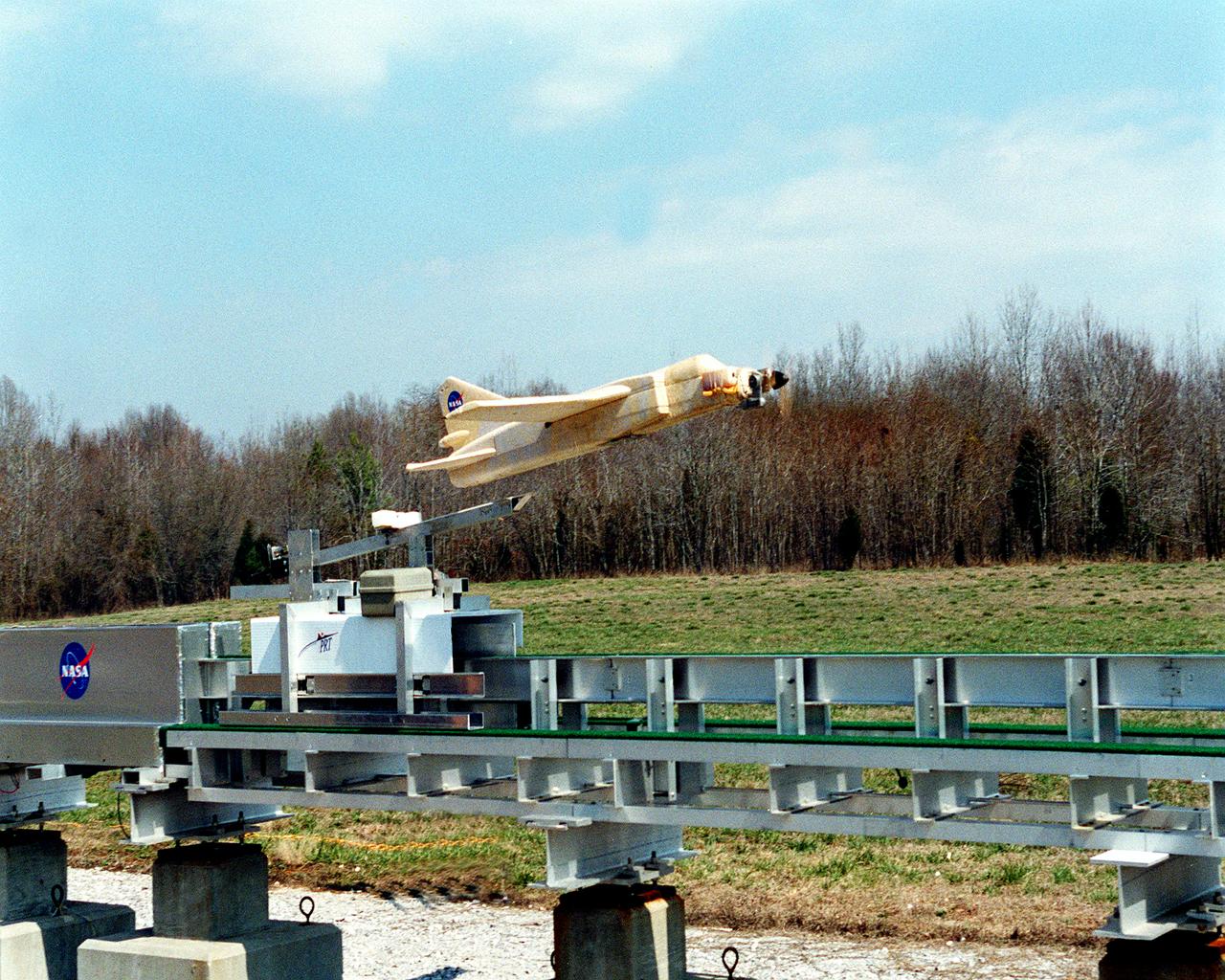
This image shows a 1/9 subscale model vehicle clearing the Magnetic Launch Assist System, formerly referred to as the Magnetic Levitation (MagLev), test track during a demonstration test conducted at the Marshall Space Flight Center (MSFC). Engineers at MSFC have developed and tested Magnetic Launch Assist technologies. To launch spacecraft into orbit, a Magnetic Launch Assist System would use magnetic fields to levitate and accelerate a vehicle along a track at very high speeds. Similar to high-speed trains and roller coasters that use high-strength magnets to lift and propel a vehicle a couple of inches above a guideway, a launch-assist system would electromagnetically drive a space vehicle along the track. A full-scale, operational track would be about 1.5-miles long and capable of accelerating a vehicle to 600 mph in 9.5 seconds. This track is an advanced linear induction motor. Induction motors are common in fans, power drills, and sewing machines. Instead of spinning in a circular motion to turn a shaft or gears, a linear induction motor produces thrust in a straight line. Mounted on concrete pedestals, the track is 100-feet long, about 2-feet wide and about 1.5-feet high. The major advantages of launch assist for NASA launch vehicles is that it reduces the weight of the take-off, the landing gear, the wing size, and less propellant resulting in significant cost savings. The US Navy and the British MOD (Ministry of Defense) are planning to use magnetic launch assist for their next generation aircraft carriers as the aircraft launch system. The US Army is considering using this technology for launching target drones for anti-aircraft training.
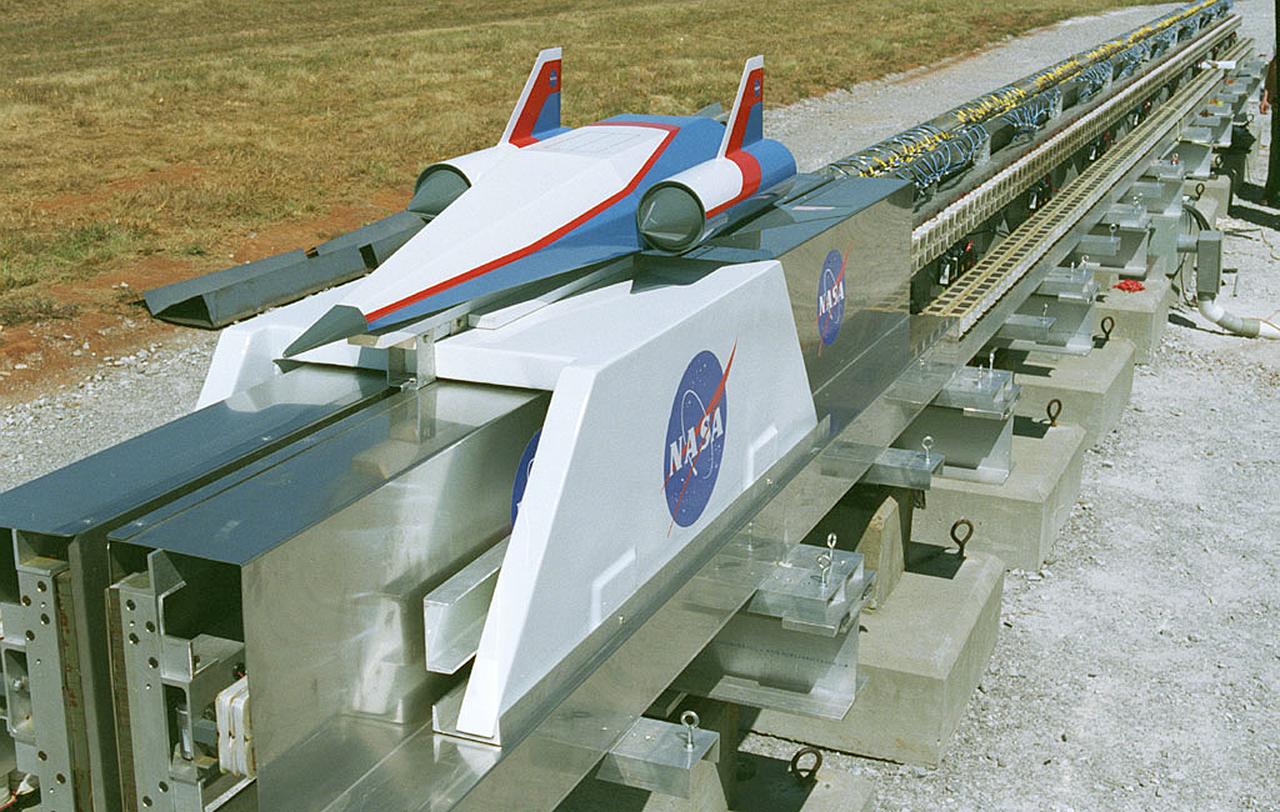
In this photograph, a futuristic spacecraft model sits atop a carrier on the Magnetic Launch Assist System, formerly known as the Magnetic Levitation (MagLev) System, experimental track at the Marshall Space Flight Center (MSFC). Engineers at MSFC have developed and tested Magnetic Launch Assist technologies that would use magnetic fields to levitate and accelerate a vehicle along a track at very high speeds. Similar to high-speed trains and roller coasters that use high-strength magnets to lift and propel a vehicle a couple of inches above a guideway, a Magnetic Launch Assist system would electromagnetically drive a space vehicle along the track. A full-scale, operational track would be about 1.5-miles long and capable of accelerating a vehicle to 600 mph in 9.5 seconds. This track is an advanced linear induction motor. Induction motors are common in fans, power drills, and sewing machines. Instead of spinning in a circular motion to turn a shaft or gears, a linear induction motor produces thrust in a straight line. Mounted on concrete pedestals, the track is 100-feet long, about 2-feet wide, and about 1.5-feet high. The major advantages of launch assist for NASA launch vehicles is that it reduces the weight of the take-off, the landing gear, the wing size, and less propellant resulting in significant cost savings. The US Navy and the British MOD (Ministry of Defense) are planning to use magnetic launch assist for their next generation aircraft carriers as the aircraft launch system. The US Army is considering using this technology for launching target drones for anti-aircraft training.
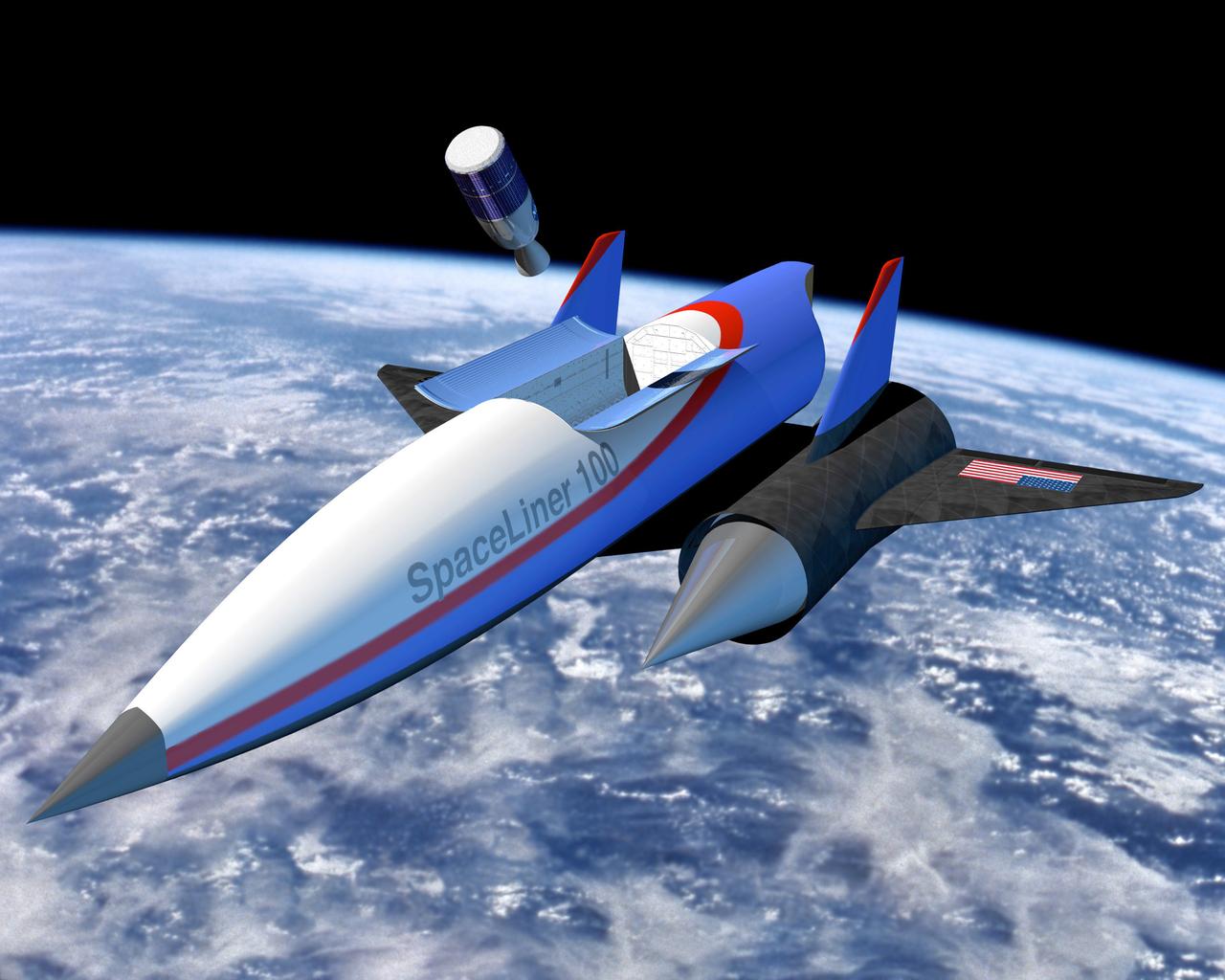
This artist’s concept depicts a Magnetic Launch Assist vehicle in orbit. Formerly referred to as the Magnetic Levitation (Maglev) system, the Magnetic Launch Assist system is a launch system developed and tested by engineers at the Marshall Space Flight Center (MSFC) that could levitate and accelerate a launch vehicle along a track at high speeds before it leaves the ground. Using electricity and magnetic fields, a Magnetic Launch Assist system would drive a spacecraft along a horizontal track until it reaches desired speeds. The system is similar to high-speed trains and roller coasters that use high-strength magnets to lift and propel a vehicle a couple of inches above a guideway. A full-scale, operational track would be about 1.5-miles long, capable of accelerating a vehicle to 600 mph in 9.5 seconds, and the vehicle would then shift to rocket engines for launch into orbit. The major advantages of launch assist for NASA launch vehicles is that it reduces the weight of the take-off, the landing gear, the wing size, and less propellant resulting in significant cost savings. The US Navy and the British MOD (Ministry of Defense) are planning to use magnetic launch assist for their next generation aircraft carriers as the aircraft launch system. The US Army is considering using this technology for launching target drones for anti-aircraft training.
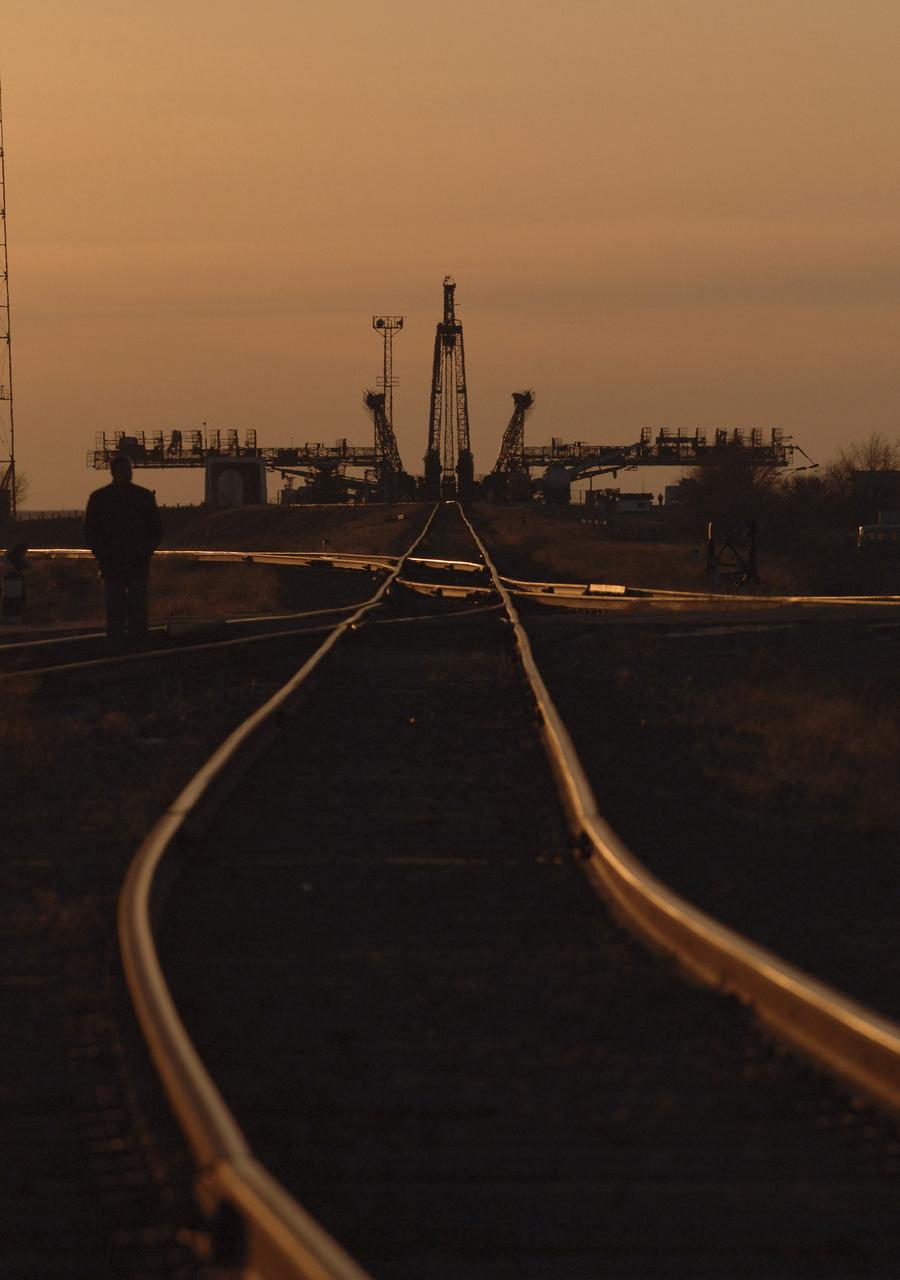
The launch pad at the Baikonur Cosmodrome in Kazakhstan is seen in early morning light, Wednesday, April 13, 2005, as preparations continued for the April 15 launch to send Expedition 11 Commander Sergei Krikalev, Flight Engineer John Phillips and European Space Agency Astronaut Roberto Vittori, of Italy, to the International Space Station. Krikalev and Phillips will spend six months in space and greet the first Shuttle crew to fly in more than two years when it arrives at the station, while Vittori spends eight days on the station under a commercial contract between ESA and the Russian Federal Space Agency. Photo Credit: (NASA/Bill Ingalls)
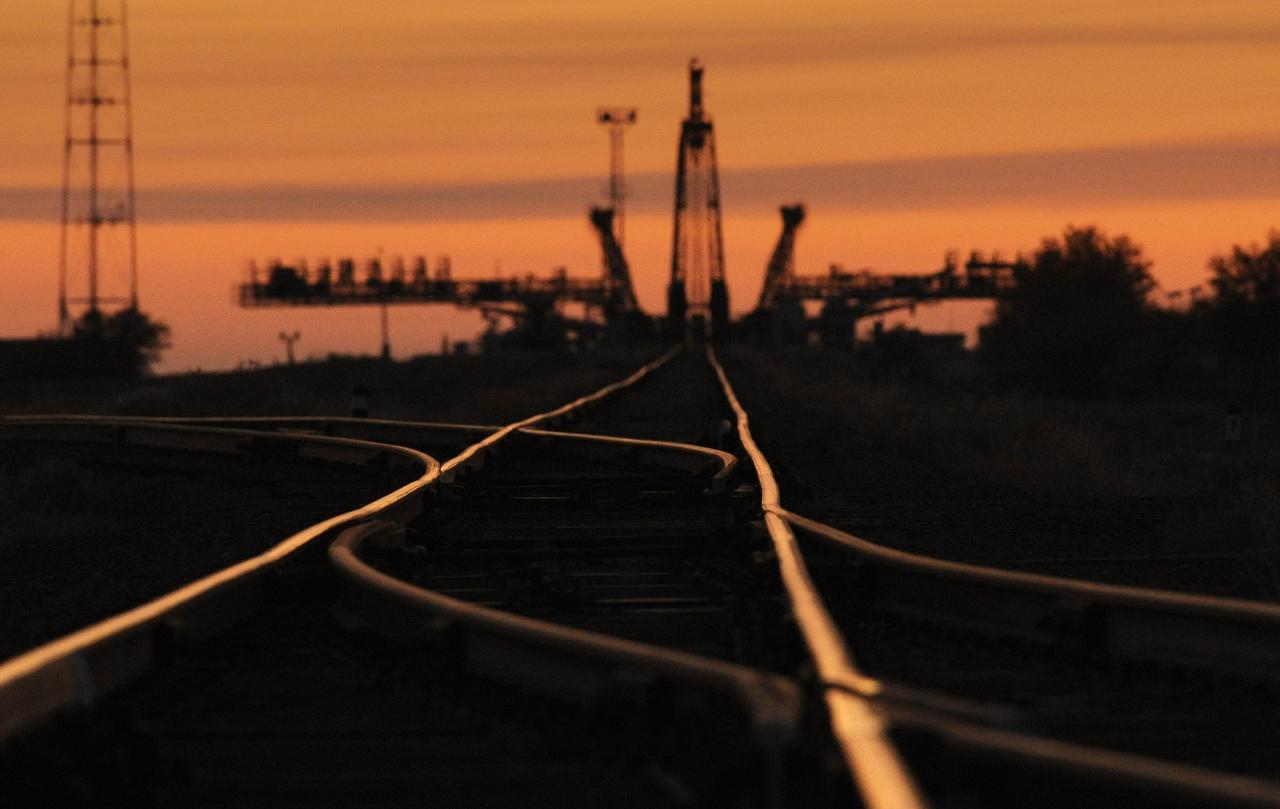
The Soyuz launch pad is seen prior to the rollout of the Soyuz TMA-13 spacecraft at the Baikonur Cosmodrome in Kazakhstan, Friday, Oct. 10, 2008. The Soyuz is scheduled to launch to the International Space Station Oct. 12 with Expedition 18 Commander Michael Fincke, Flight Engineer Yuri V. Lonchakov and American spaceflight participant Richard Garriott. The three crew members will dock their Soyuz to the International Space Station on Oct. 14. Fincke and Lonchakov will spend six months on the station, while Garriott will return to Earth Oct. 24 with two of the Expedition 17 crew members currently on the International Space Station. Photo Credit: (NASA/Bill Ingalls)
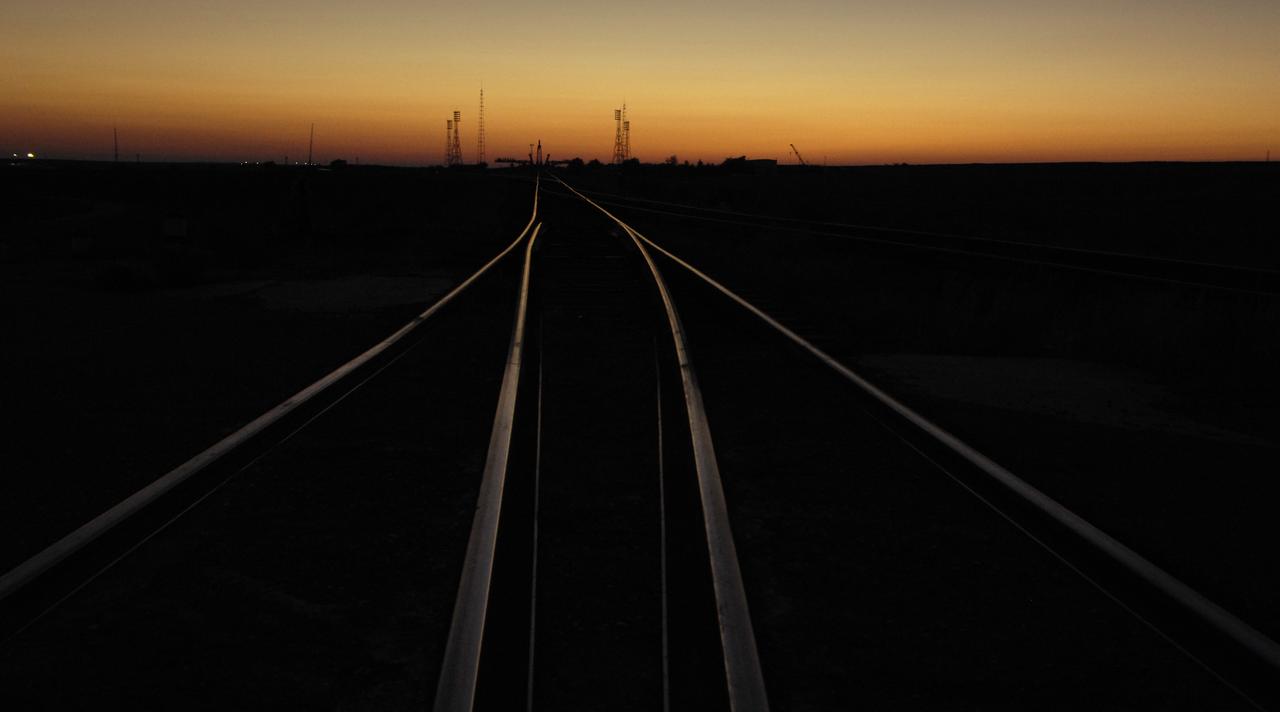
The Soyuz launch pad is seen prior to the arrival of the Soyuz TMA-11 spacecraft, Monday, Oct. 8, 2007, in Baikonur, Kazakhstan. The Soyuz was transported by railcar to its launch pad at the Baikonur Cosmodrome for an October 10th launch date, when it will carry Expedition 16 Commander Peggy Whitson, Flight Engineer and Soyuz Commander Yuri Malenchenko and Malaysian spaceflight participant Sheikh Muszaphar Shukor to the International Space Station. Whitson and Malenchenko will spend six months on the station. Shukor, who is flying under an agreement between Malaysia and the Russian Federal Space Agency, will return to Earth October 21 with two of the Expedition 15 crew members currently on the complex. Photo Credit: (NASA/Bill Ingalls)
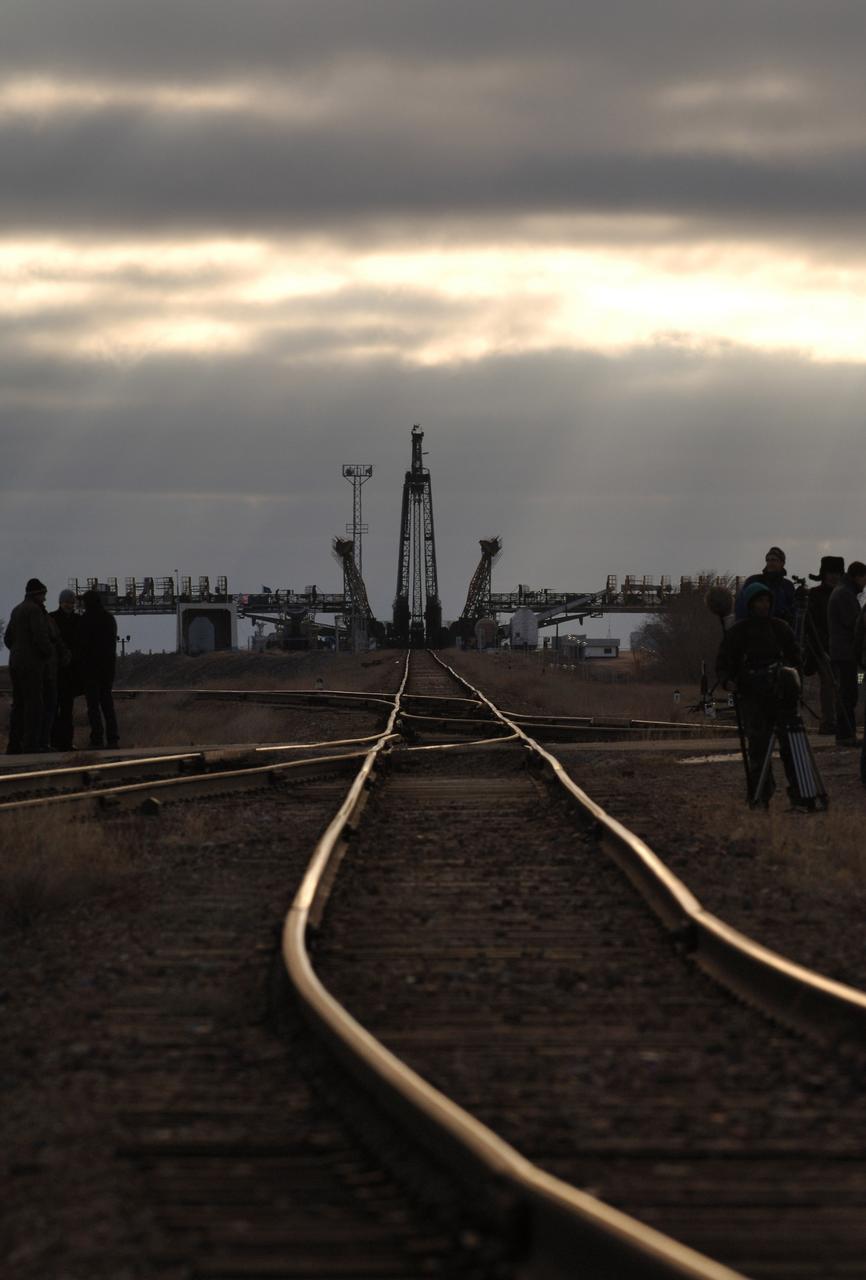
The Soyuz TMA-8 spacecraft and its booster rolled out to the launch pad on Tuesday, March 28, 2006 at the Baikonur Cosmodrome in Baikonur, Kazakhstan for final pre-launch preparations. The Soyuz will blast off on March 30, 2006 to carry Expedition 13 Commander Pavel V. Vinogradov and Science Officer and Flight Engineer Jeffrey N. Williams to the International Space Station for a six-month mission. The spacecraft will also be carrying Brazilian Space Agency Soyuz crew member Marcos Pontes, who will spend 10 days aboard the International Space Station under an agreement with the Russian Federal Space Agency. Photo Credit: (NASA/Bill Ingalls)
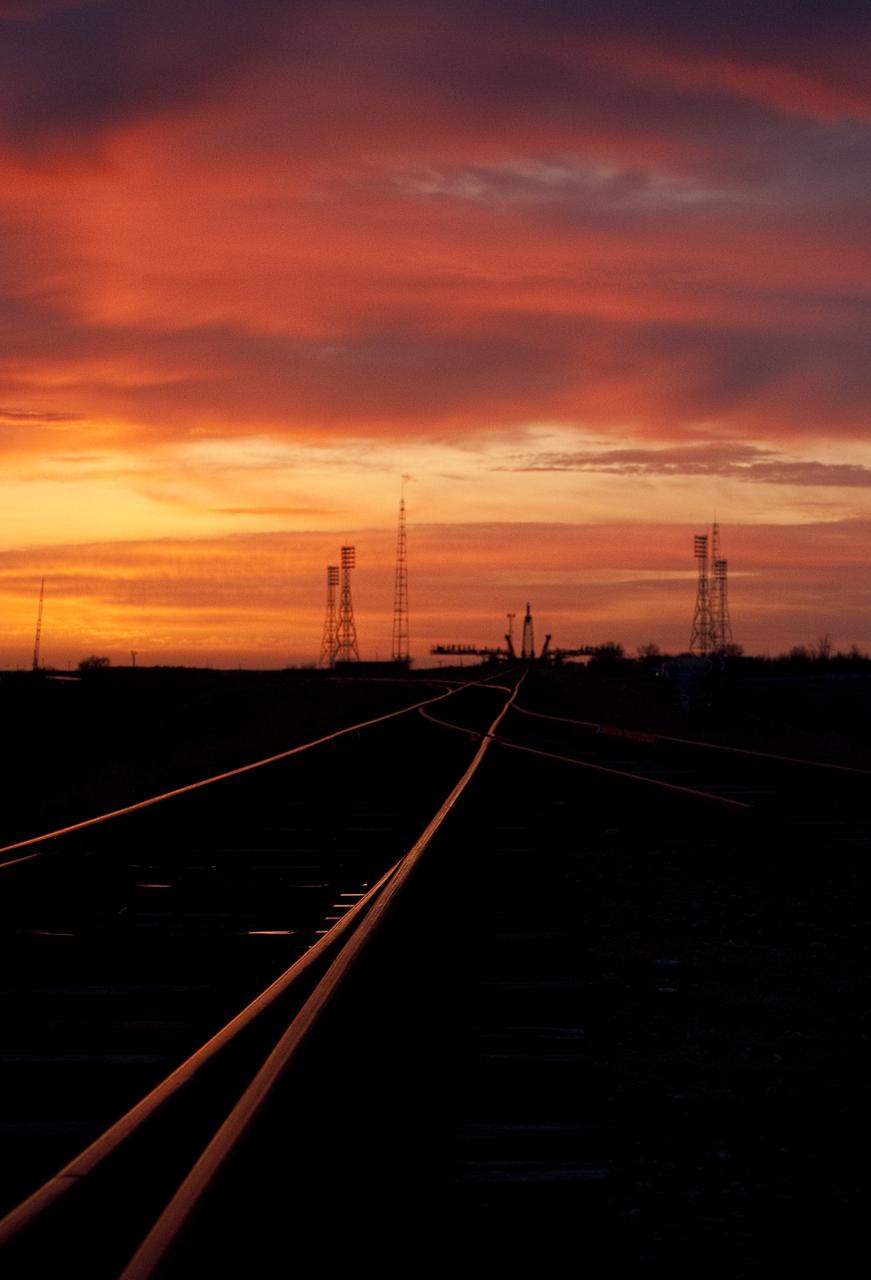
The sun rises behind the Soyuz launch pad shortly before the Soyuz TMA-18 spacecraft is rolled out by the train to the launch pad at the Baikonur Cosmodrome, Kazakhstan, Wednesday, March, 321, 2010. The launch of the Soyuz spacecraft with Expedition 23 Soyuz Commander Alexander Skvortsov of Russia, Flight Engineer Mikhail Kornienko of Russia and NASA Flight Engineer Tracy Caldwell Dyson is scheduled for Friday, April 2, 2010 at 10:04 a.m. Kazakhstan time. Photo Credit: (NASA/Carla Cioffi)
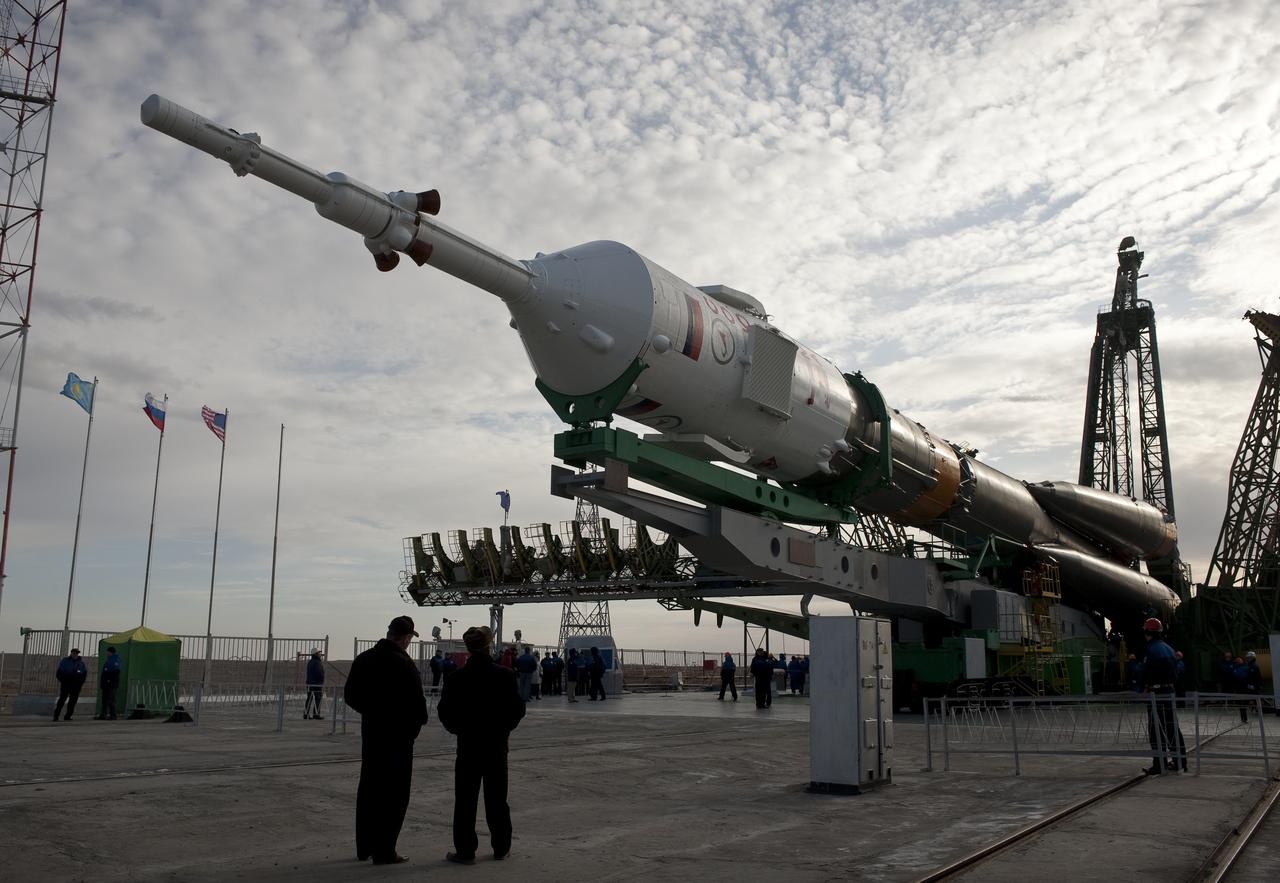
The Soyuz TMA-18 spacecraft is rolled out by train to the launch pad at the Baikonur Cosmodrome, Kazakhstan, Wednesday, March, 31, 2010. The launch of the Soyuz spacecraft with Expedition 23 Soyuz Commander Alexander Skvortsov of Russia, Flight Engineer Mikhail Kornienko of Russia and NASA Flight Engineer Tracy Caldwell Dyson is scheduled for Friday, April 2, 2010 at 10:04 a.m. Kazakhstan time. Photo Credit: (NASA/Carla Cioffi)
The Soyuz TMA-18 spacecraft is rolled out by train to the launch pad at the Baikonur Cosmodrome, Kazakhstan, Wednesday, March, 31, 2010. The launch of the Soyuz spacecraft with Expedition 23 Soyuz Commander Alexander Skvortsov of Russia, Flight Engineer Mikhail Kornienko of Russia and NASA Flight Engineer Tracy Caldwell Dyson is scheduled for Friday, April 2, 2010 at 10:04 a.m. Kazakhstan time. Photo Credit: (NASA/Carla Cioffi)
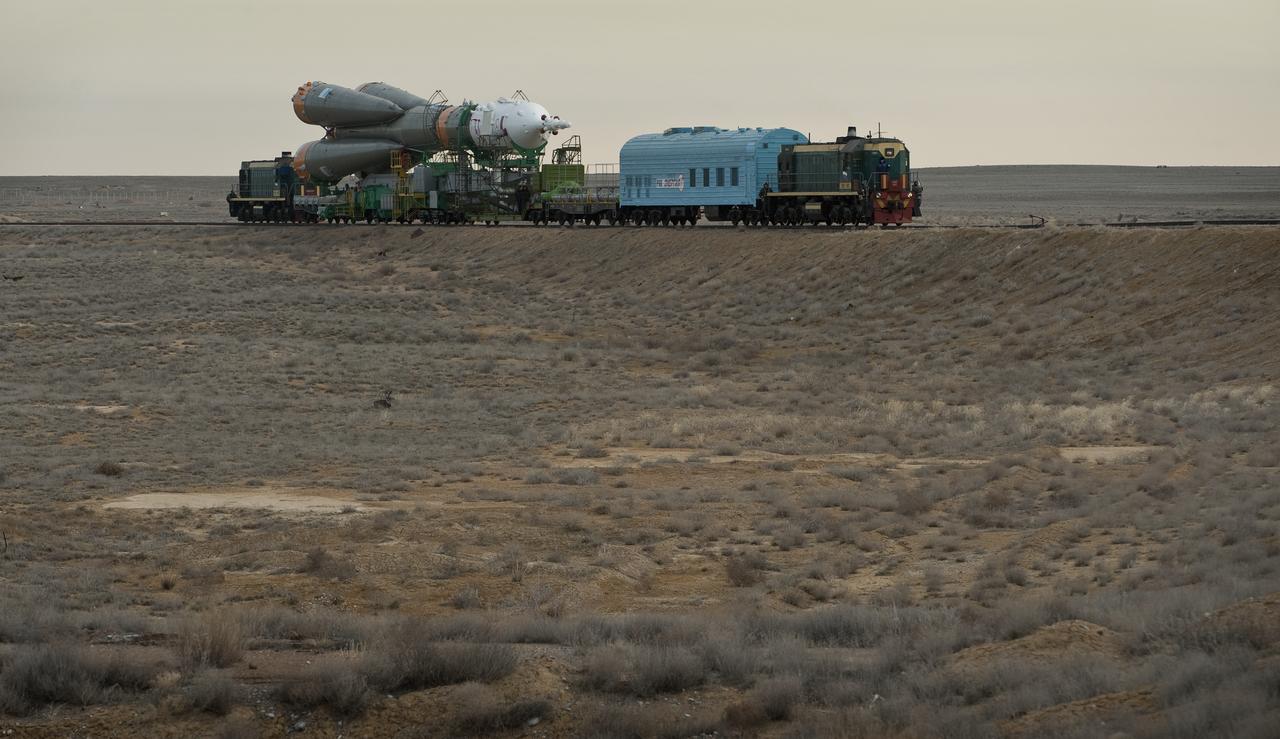
The Soyuz TMA-18 spacecraft is rolled out by train to the launch pad at the Baikonur Cosmodrome, Kazakhstan, Wednesday, March, 31, 2010. The launch of the Soyuz spacecraft with Expedition 23 Soyuz Commander Alexander Skvortsov of Russia, Flight Engineer Mikhail Kornienko of Russia and NASA Flight Engineer Tracy Caldwell Dyson is scheduled for Friday, April 2, 2010 at 10:04 a.m. Kazakhstan time. Photo Credit: (NASA/Carla Cioffi)
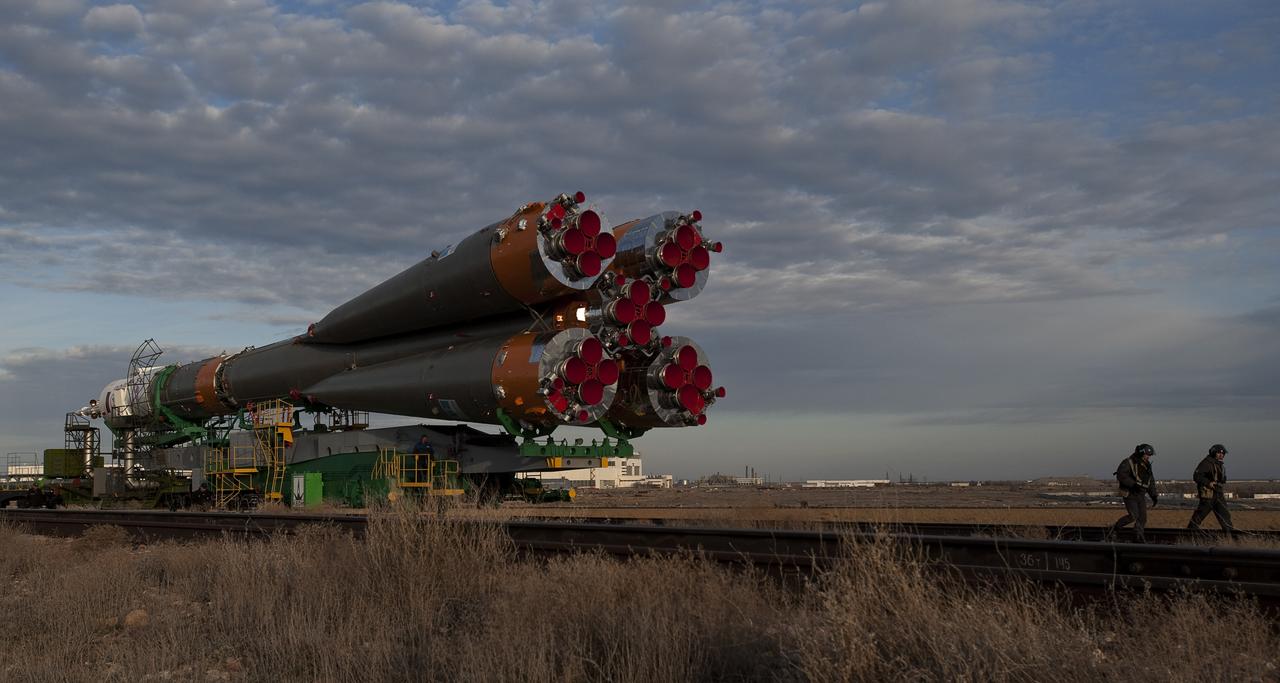
The Soyuz TMA-18 spacecraft is rolled out by train to the launch pad at the Baikonur Cosmodrome, Kazakhstan, Wednesday, March, 31, 2010. The launch of the Soyuz spacecraft with Expedition 23 Soyuz Commander Alexander Skvortsov of Russia, Flight Engineer Mikhail Kornienko of Russia and NASA Flight Engineer Tracy Caldwell Dyson is scheduled for Friday, April 2, 2010 at 10:04 a.m. Kazakhstan time. Photo Credit: (NASA/Carla Cioffi)
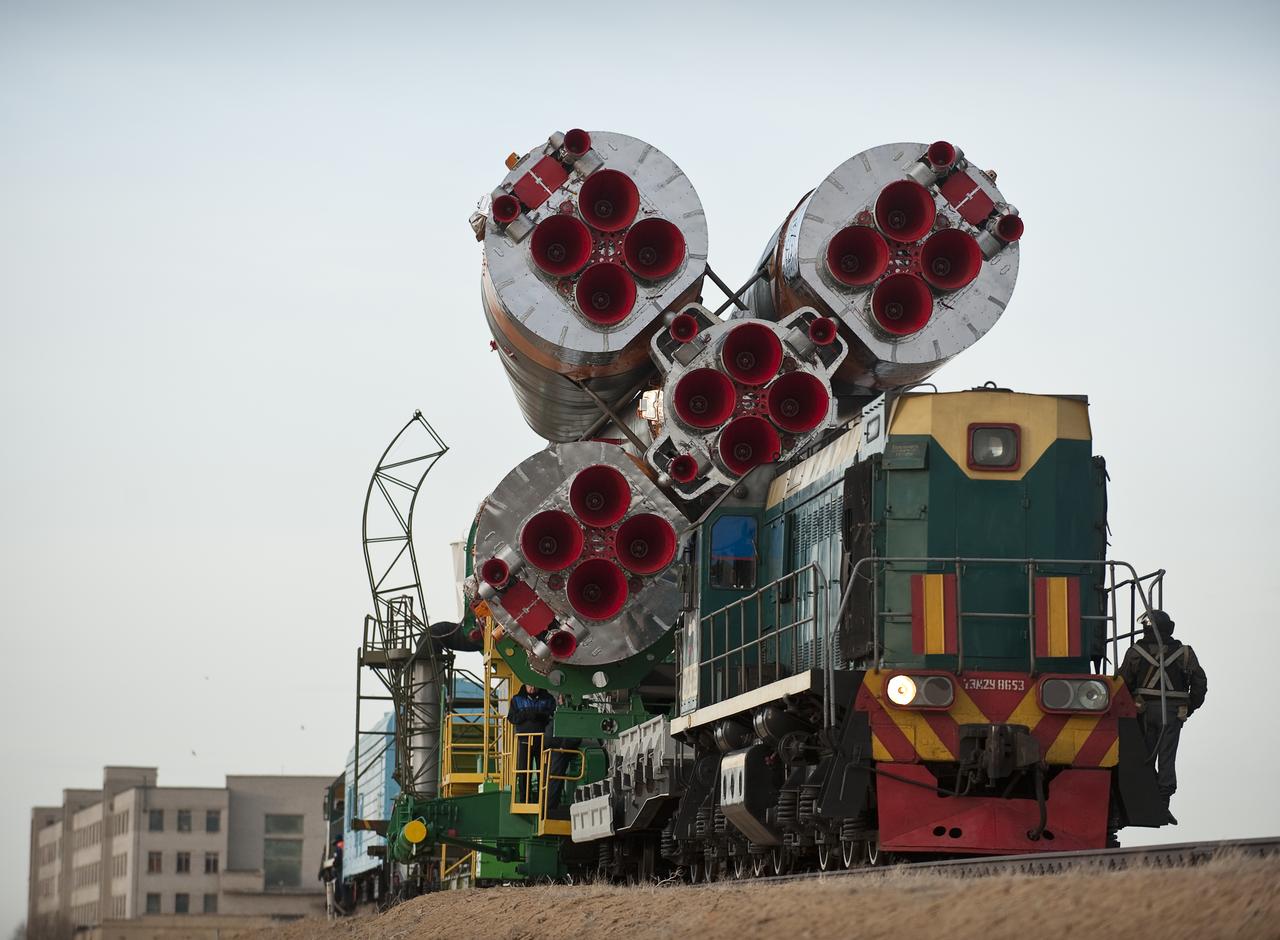
The Soyuz TMA-18 spacecraft is rolled out by train to the launch pad at the Baikonur Cosmodrome, Kazakhstan, Wednesday, March, 31, 2010. The launch of the Soyuz spacecraft with Expedition 23 Soyuz Commander Alexander Skvortsov of Russia, Flight Engineer Mikhail Kornienko of Russia, and NASA Flight Engineer Tracy Caldwell Dyson is scheduled for Friday, April 2, 2010 at 10:04 a.m. Kazakhstan time. Photo Credit (NASA/Bill Ingalls)
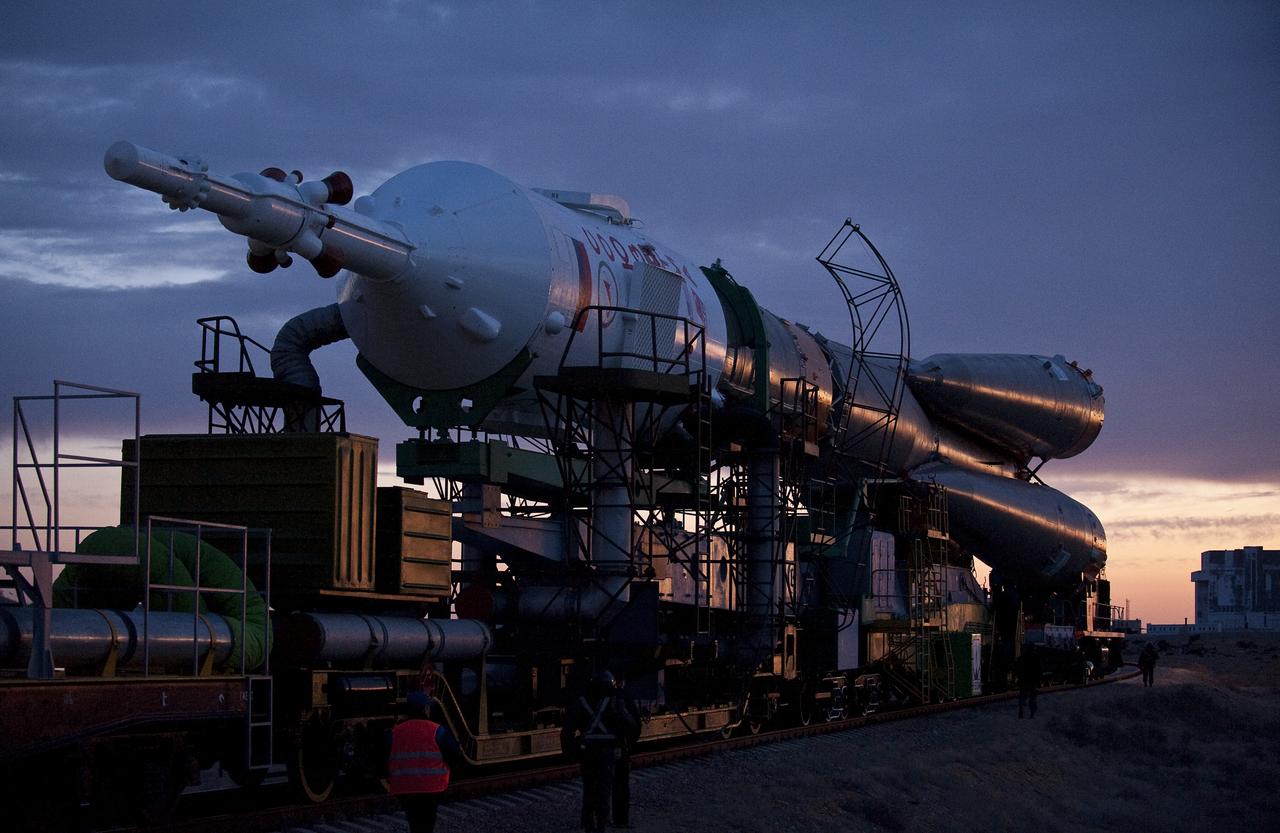
The Soyuz TMA-18 spacecraft is rolled out by train to the launch pad at the Baikonur Cosmodrome, Kazakhstan, Wednesday, March, 31, 2010. The launch of the Soyuz spacecraft with Expedition 23 Soyuz Commander Alexander Skvortsov of Russia, Flight Engineer Mikhail Kornienko of Russia, and NASA Flight Engineer Tracy Caldwell Dyson is scheduled for Friday, April 2, 2010 at 10:04 a.m. Kazakhstan time. Photo Credit (NASA/Bill Ingalls)
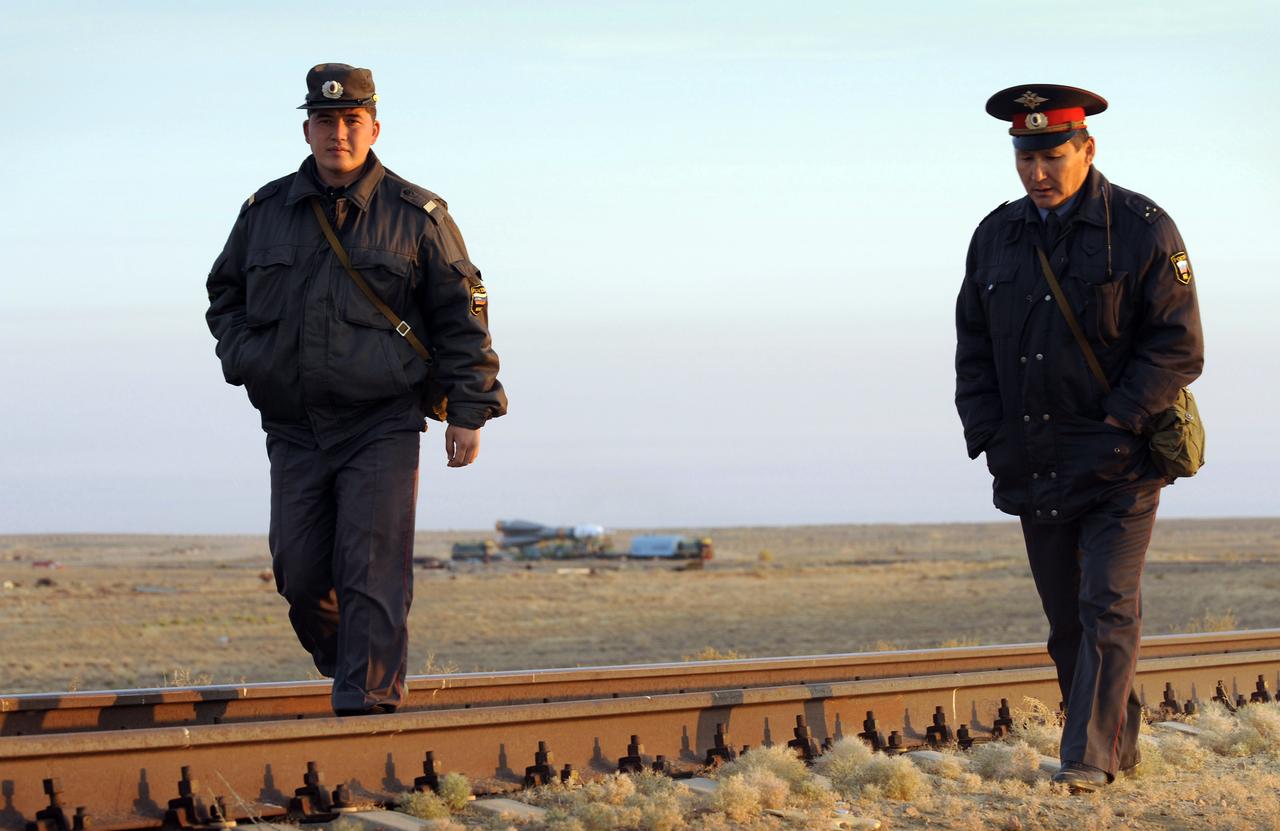
Russian security personnel walk the railroad line ahead of the Soyuz TMA-13 spacecraft as it is transported by railcar to its launch pad at the Baikonur Cosmodrome in Kazakhstan, Friday, Oct. 10, 2008. The Soyuz is scheduled to launch to the International Space Station Oct. 12 with Expedition 18 Commander Michael Fincke, Flight Engineer Yuri V. Lonchakov and American spaceflight participant Richard Garriott. The three crew members will dock their Soyuz to the International Space Station on Oct. 14. Fincke and Lonchakov will spend six months on the station, while Garriott will return to Earth Oct. 24 with two of the Expedition 17 crew members currently on the International Space Station. Photo Credit: (NASA/Bill Ingalls)
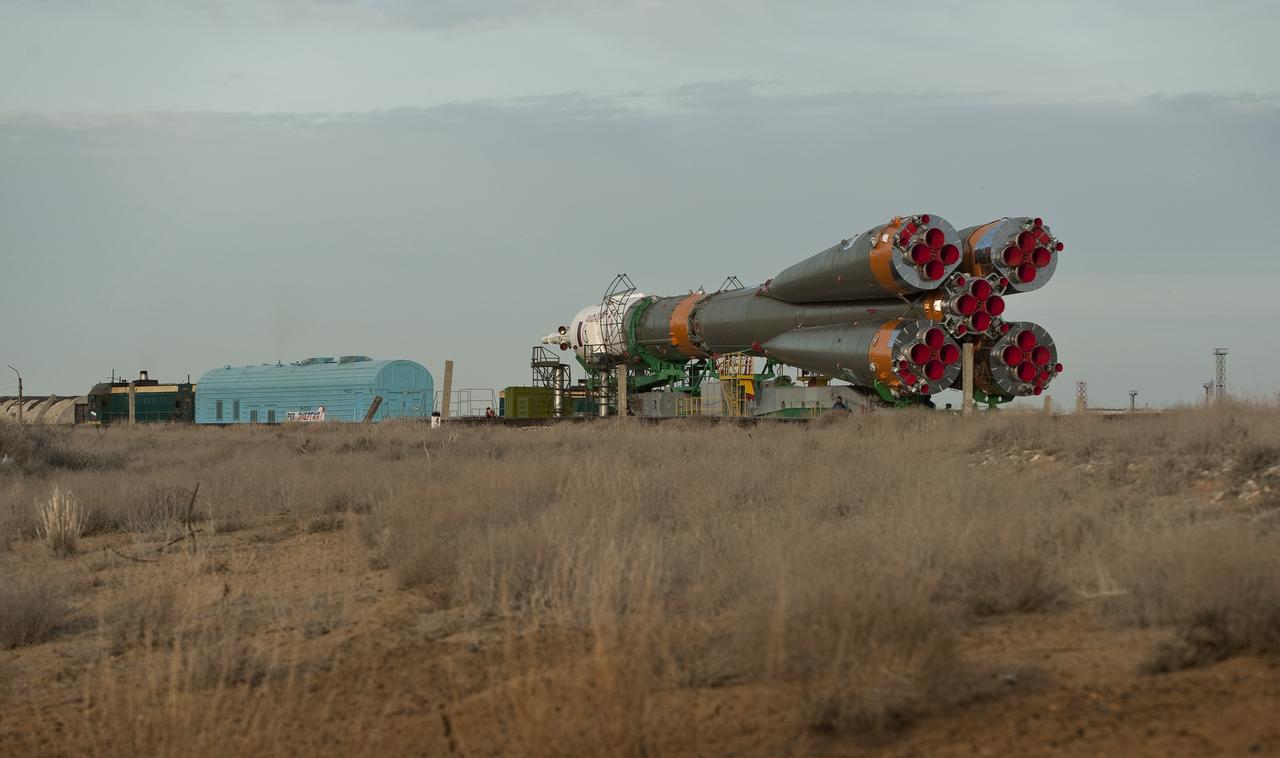
The Soyuz TMA-18 spacecraft is rolled out by train to the launch pad at the Baikonur Cosmodrome, Kazakhstan, Wednesday, March, 31, 2010. The launch of the Soyuz spacecraft with Expedition 23 Soyuz Commander Alexander Skvortsov of Russia, Flight Engineer Mikhail Kornienko of Russia and NASA Flight Engineer Tracy Caldwell Dyson is scheduled for Friday, April 2, 2010 at 10:04 a.m. Kazakhstan time. Photo Credit: (NASA/Carla Cioffi)
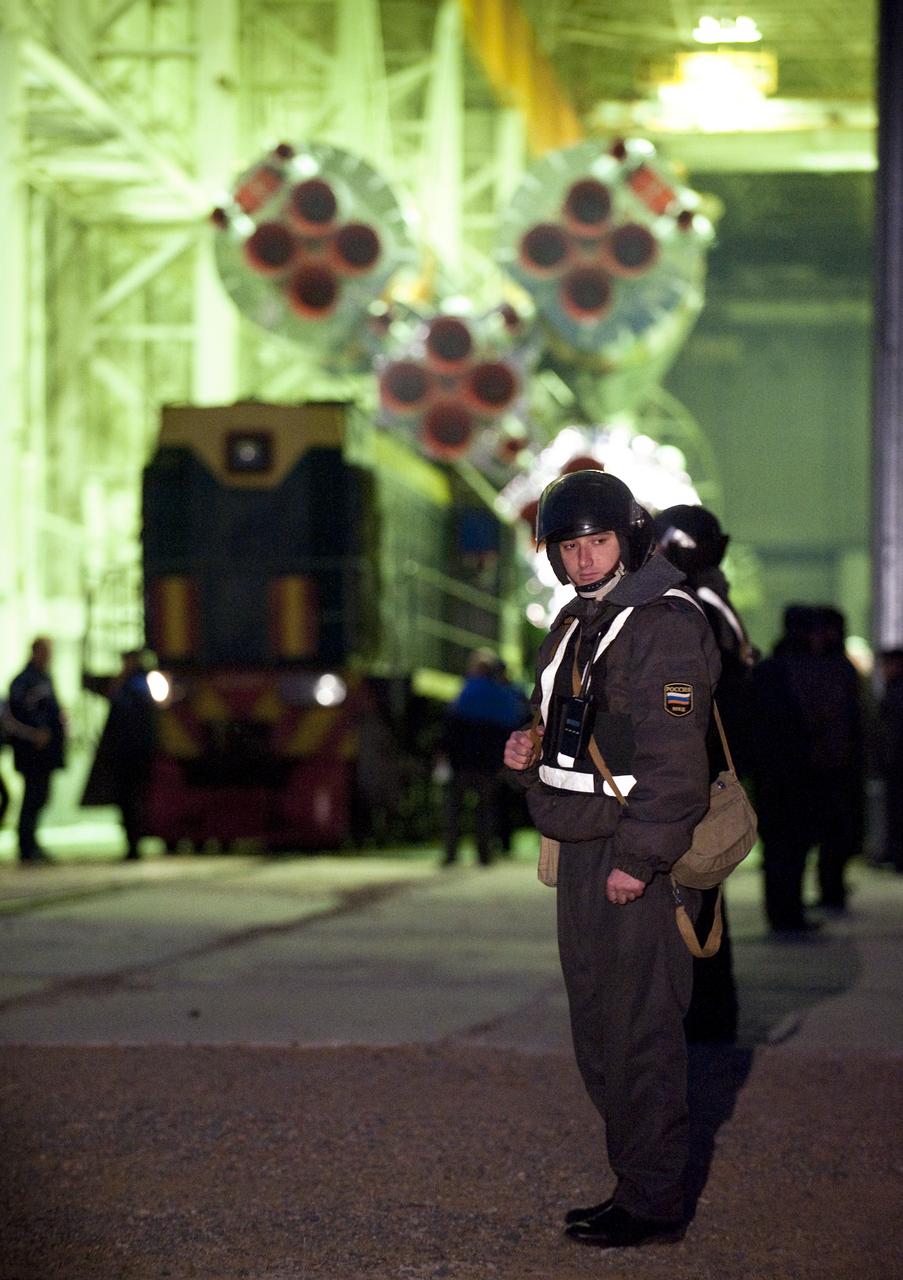
A Russian security officer stands guard as the Soyuz TMA-18 spacecraft is rolled out by train to the launch pad at the Baikonur Cosmodrome, Kazakhstan, Wednesday, March, 31, 2010. The launch of the Soyuz spacecraft with Expedition 23 Soyuz Commander Alexander Skvortsov of Russia, Flight Engineer Mikhail Kornienko of Russia, and NASA Flight Engineer Tracy Caldwell Dyson is scheduled for Friday, April 2, 2010 at 10:04 a.m. Kazakhstan time. Photo Credit (NASA/Bill Ingalls)
The Soyuz TMA-18 spacecraft is rolled out by train to the launch pad at the Baikonur Cosmodrome, Kazakhstan, Wednesday, March, 31, 2010. The launch of the Soyuz spacecraft with Expedition 23 Soyuz Commander Alexander Skvortsov of Russia, Flight Engineer Mikhail Kornienko of Russia and NASA Flight Engineer Tracy Caldwell Dyson is scheduled for Friday, April 2, 2010 at 10:04 a.m. Kazakhstan time. Photo Credit: (NASA/Carla Cioffi)
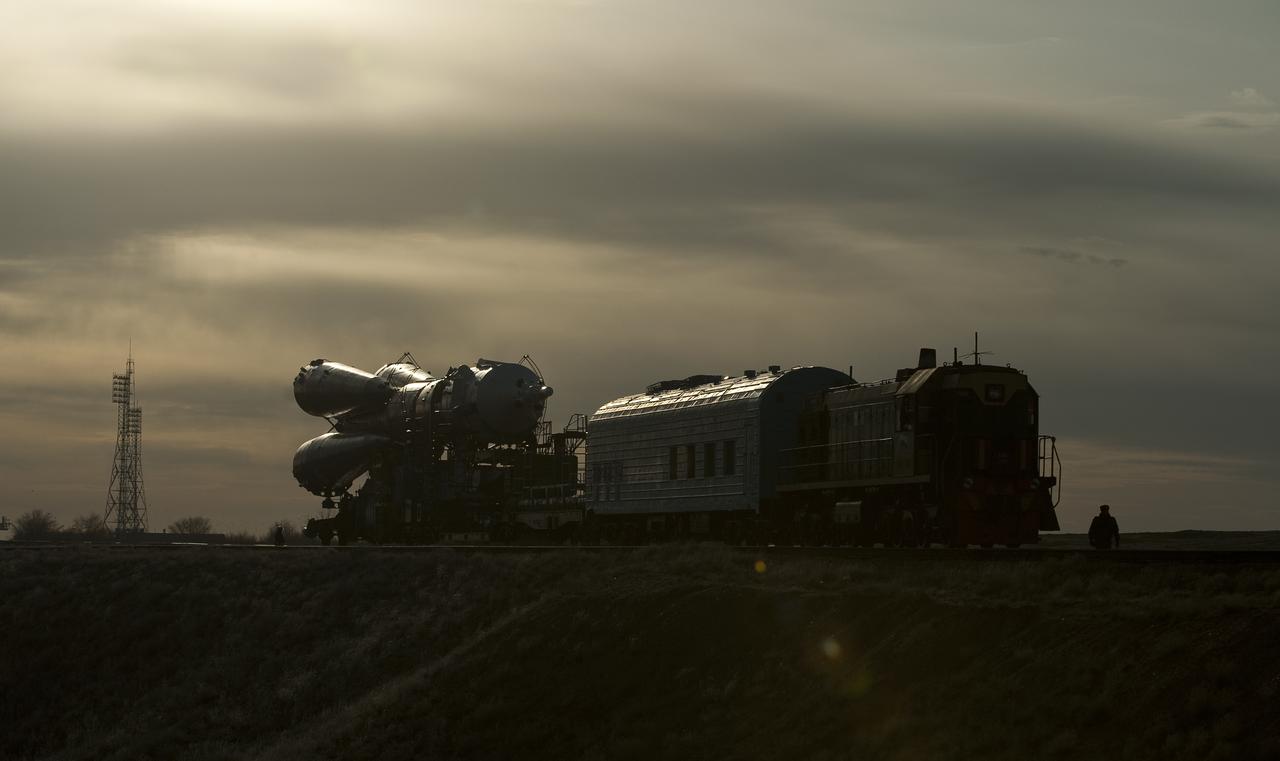
The Soyuz TMA-18 spacecraft is rolled out by train to the launch pad at the Baikonur Cosmodrome, Kazakhstan, Wednesday, March, 31, 2010. The launch of the Soyuz spacecraft with Expedition 23 Soyuz Commander Alexander Skvortsov of Russia, Flight Engineer Mikhail Kornienko of Russia and NASA Flight Engineer Tracy Caldwell Dyson is scheduled for Friday, April 2, 2010 at 10:04 a.m. Kazakhstan time. Photo Credit: (NASA/Carla Cioffi)
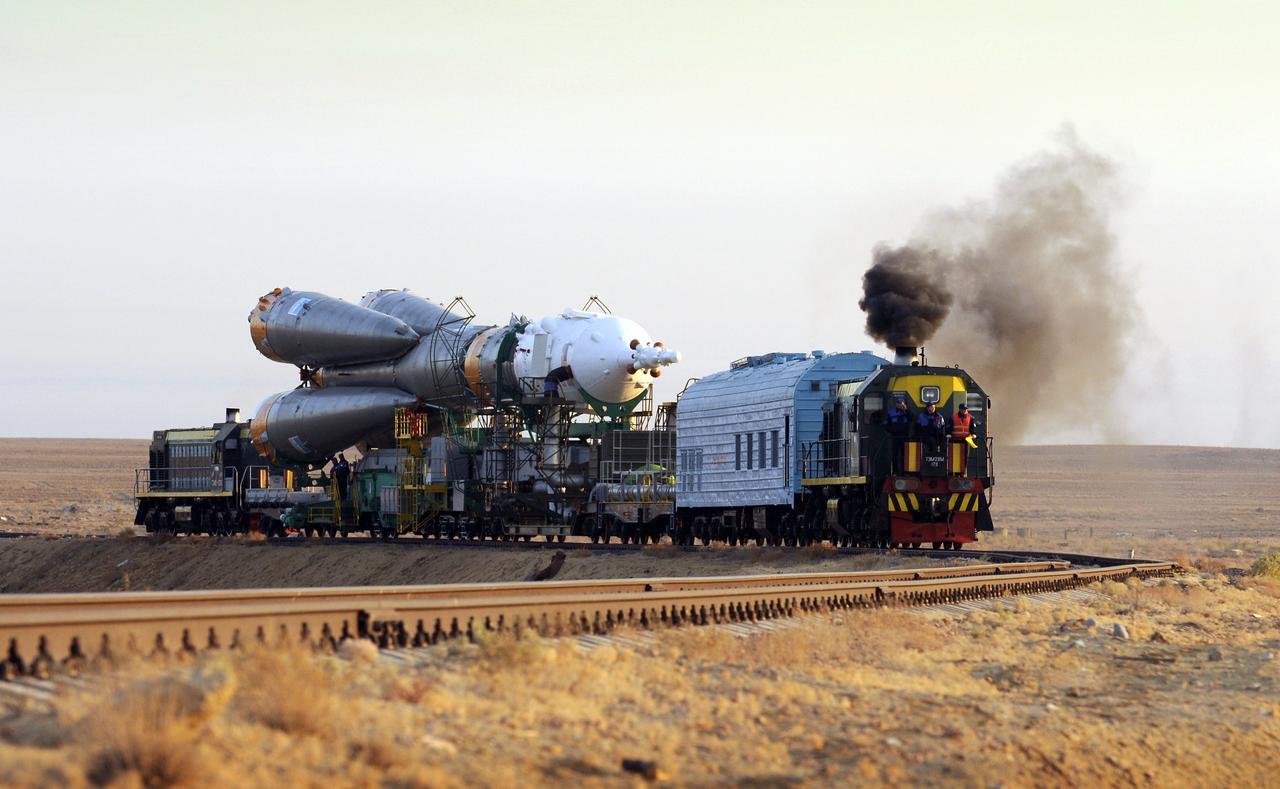
The Soyuz TMA-13 spacecraft is transported by railcar to its launch pad at the Baikonur Cosmodrome in Kazakhstan, Friday, Oct. 10, 2008. Expedition 18 Commander Michael Fincke, Flight Engineer Yuri V. Lonchakov and American spaceflight participant Richard Garriott will launch October 12 and dock with the International Space Station October 14. Fincke and Lonchakov will spend six months on the station, while Garriott will return to Earth after 10 days with the Expedition 17 crew members currently on the ISS. Photo Credit: (NASA/Bill Ingalls)
KENNEDY SPACE CENTER, FLA. -- The NASA Railroad train moves along the track through NASA Kennedy Space Center's Launch Complex 39 Area. The train is hauling the solid rocket booster segments from the STS-122 mission. After a mission, the spent boosters are recovered, cleaned, disassembled, refurbished and reused after each launch. After hydrolasing the interior of each segment, they are placed on flatbed trucks. The individual booster segments are transferred to a railhead located at the railroad yard. The covered segments will be moved to Titusville for interchange with Florida East Coast Railway to begin the trip back to the Thiokol plant in Wa¬satch, Utah. Photo credit: NASA/Jack Pfaller
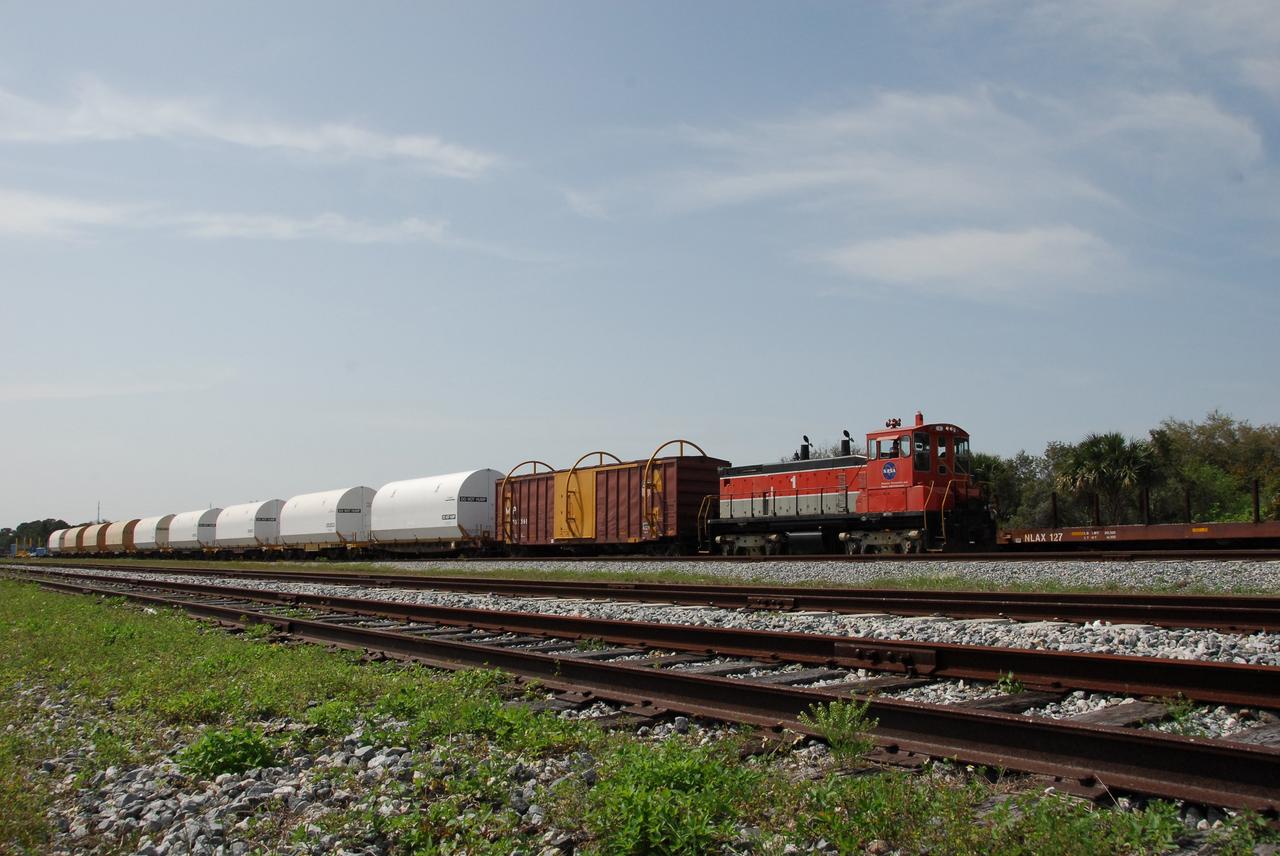
KENNEDY SPACE CENTER, FLA. -- The NASA Railroad train moves along the track through NASA's Kennedy Space Center. The train is hauling the solid rocket booster segments from the STS-122 mission. After a mission, the spent boosters are recovered, cleaned, disassembled, refurbished and reused after each launch. After hydrolasing the interior of each segment, they are placed on flatbed trucks. The individual booster segments are transferred to a railhead located at the railroad yard. The covered segments will be moved to Titusville for interchange with Florida East Coast Railway to begin the trip back to the Thiokol plant in Wa¬satch, Utah. Photo credit: NASA/Jack Pfaller
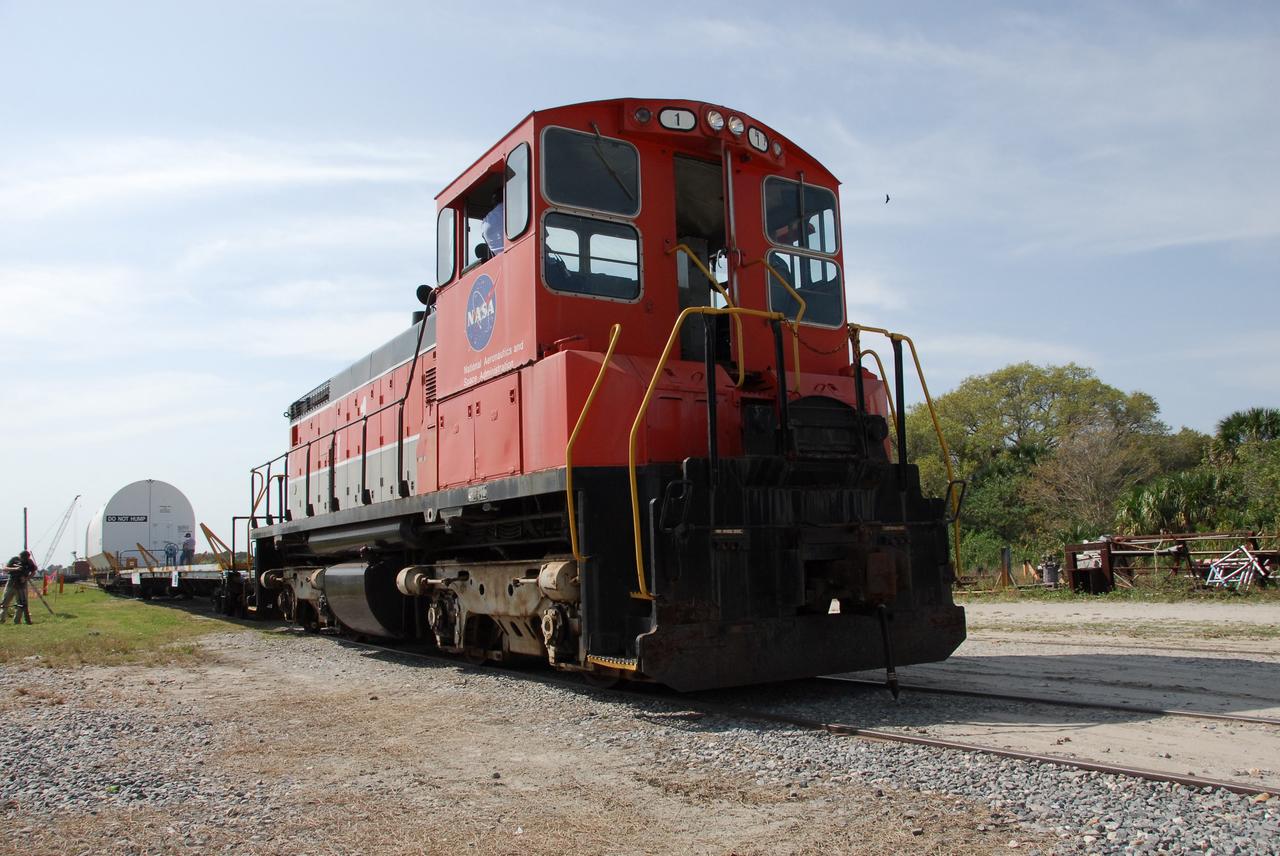
KENNEDY SPACE CENTER, FLA. -- The NASA Railroad train moves along the track away from NASA Kennedy Space Center's railroad yard. The train is hauling the solid rocket booster segments from the STS-122 mission. After a mission, the spent boosters are recovered, cleaned, disassembled, refurbished and reused after each launch. After hydrolasing the interior of each segment, they are placed on flatbed trucks. The individual booster segments are transferred to a railhead located at the railroad yard. The covered segments will be moved to Titusville for interchange with Florida East Coast Railway to begin the trip back to the Thiokol plant in Wa¬satch, Utah. Photo credit: NASA/Jack Pfaller
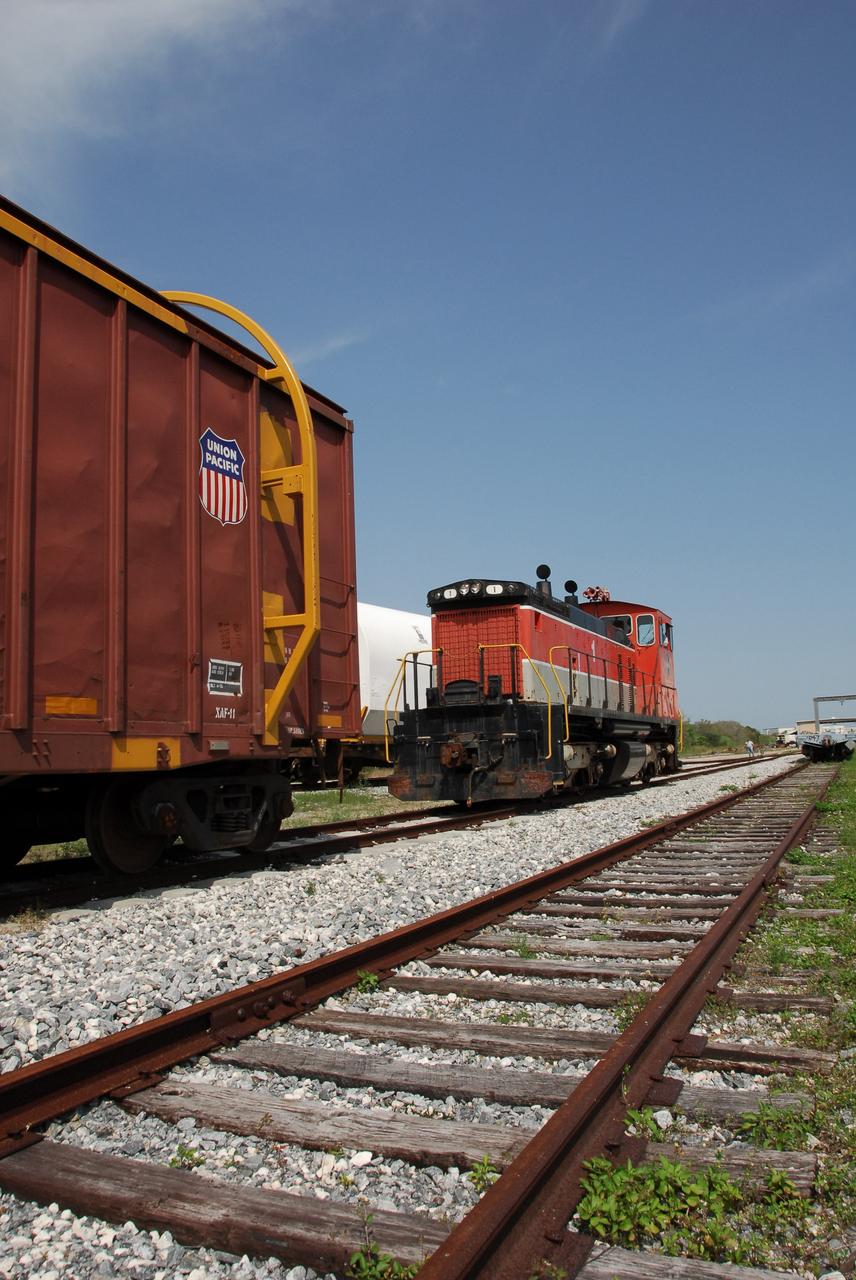
KENNEDY SPACE CENTER, FLA. -- The NASA Railroad train moves along the track in NASA Kennedy Space Center's railroad yard. The train is hauling the solid rocket booster segments from the STS-122 mission. After a mission, the spent boosters are recovered, cleaned, disassembled, refurbished and reused after each launch. After hydrolasing the interior of each segment, they are placed on flatbed trucks. The individual booster segments are transferred to a railhead located at the railroad yard. The covered segments will be moved to Titusville for interchange with Florida East Coast Railway to begin the trip back to the Thiokol plant in Wa¬satch, Utah. Photo credit: NASA/Jack Pfaller
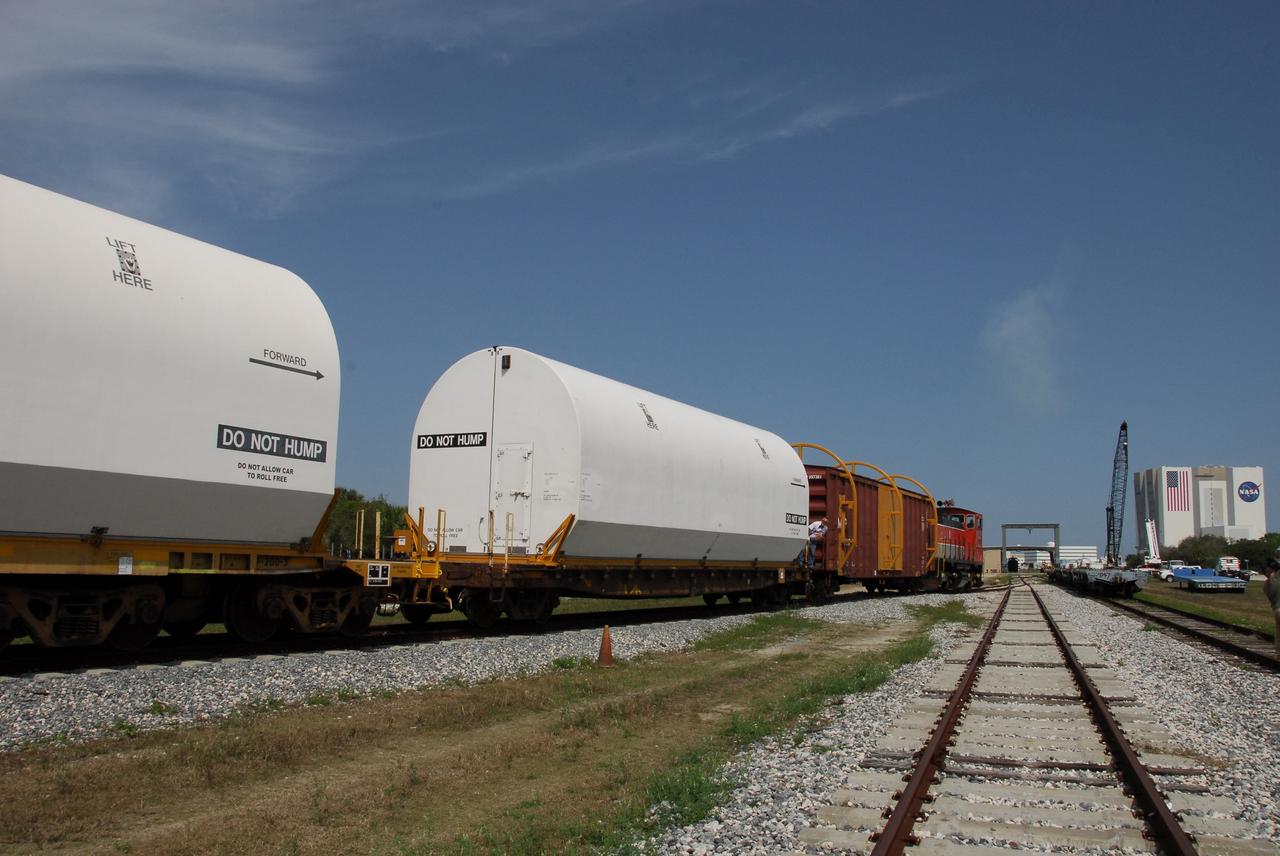
KENNEDY SPACE CENTER, FLA. -- The NASA Railroad train moves along the track through NASA's Kennedy Space Center. In the distance, at right, is the Vehicle Assembly Building. The train is hauling the solid rocket booster segments from the STS-122 mission. After a mission, the spent boosters are recovered, cleaned, disassembled, refurbished and reused after each launch. After hydrolasing the interior of each segment, they are placed on flatbed trucks. The individual booster segments are transferred to a railhead located at the railroad yard. The covered segments will be moved to Titusville for interchange with Florida East Coast Railway to begin the trip back to the Thiokol plant in Wa¬satch, Utah. Photo credit: NASA/Jack Pfaller
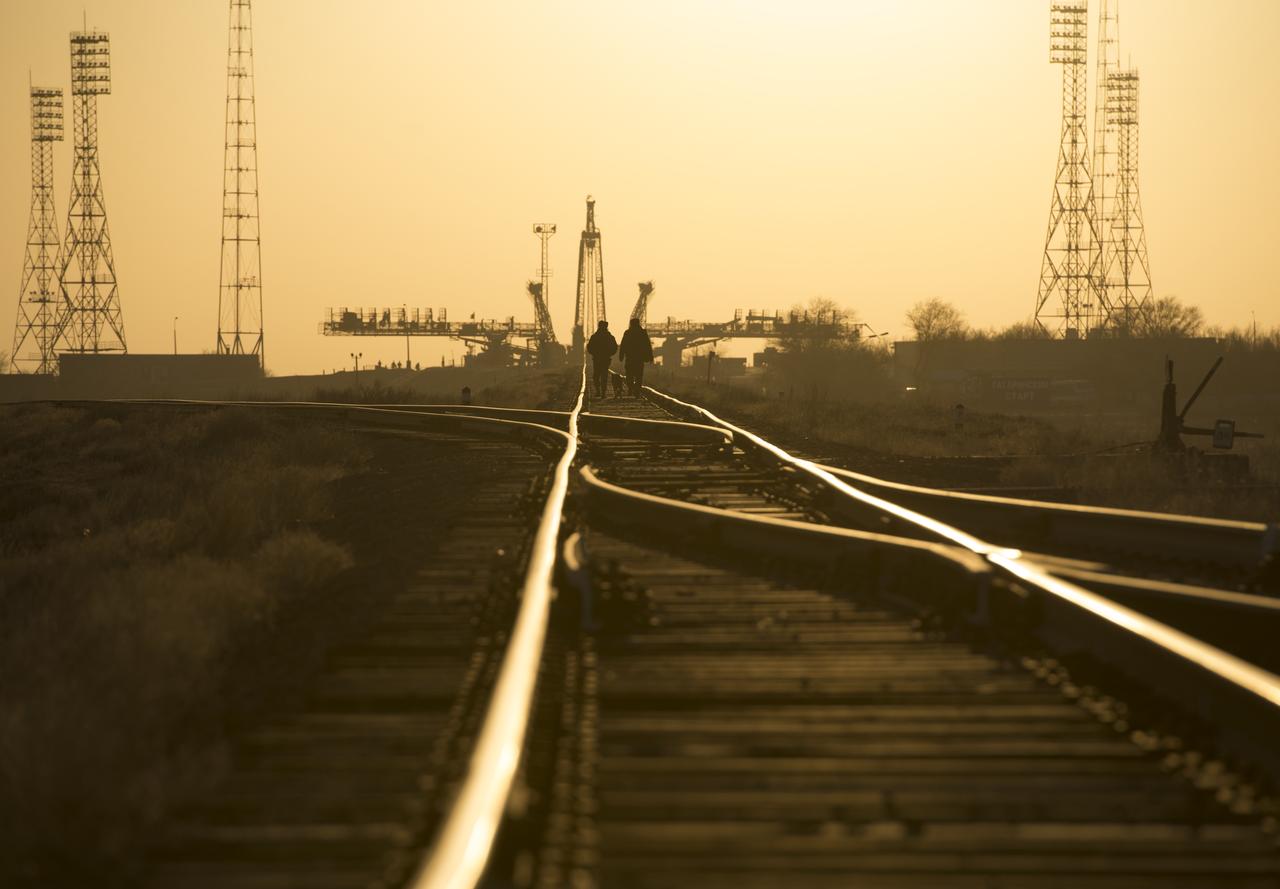
Russia security forces and their dog walk along the train track to the Soyuz launch pad, Tuesday, March 26, 2013 at the Baikonur Cosmodrome in Kazakhstan. Launch of the Soyuz rocket is scheduled for March 29 and will send Expedition 35 Soyuz Commander Pavel Vinogradov, and Flight Engineers Chris Cassidy of NASA and Alexander Misurkin of Russia on a five and a half-month mission aboard the International Space Station. Photo Credit: (NASA/Carla Cioffi)
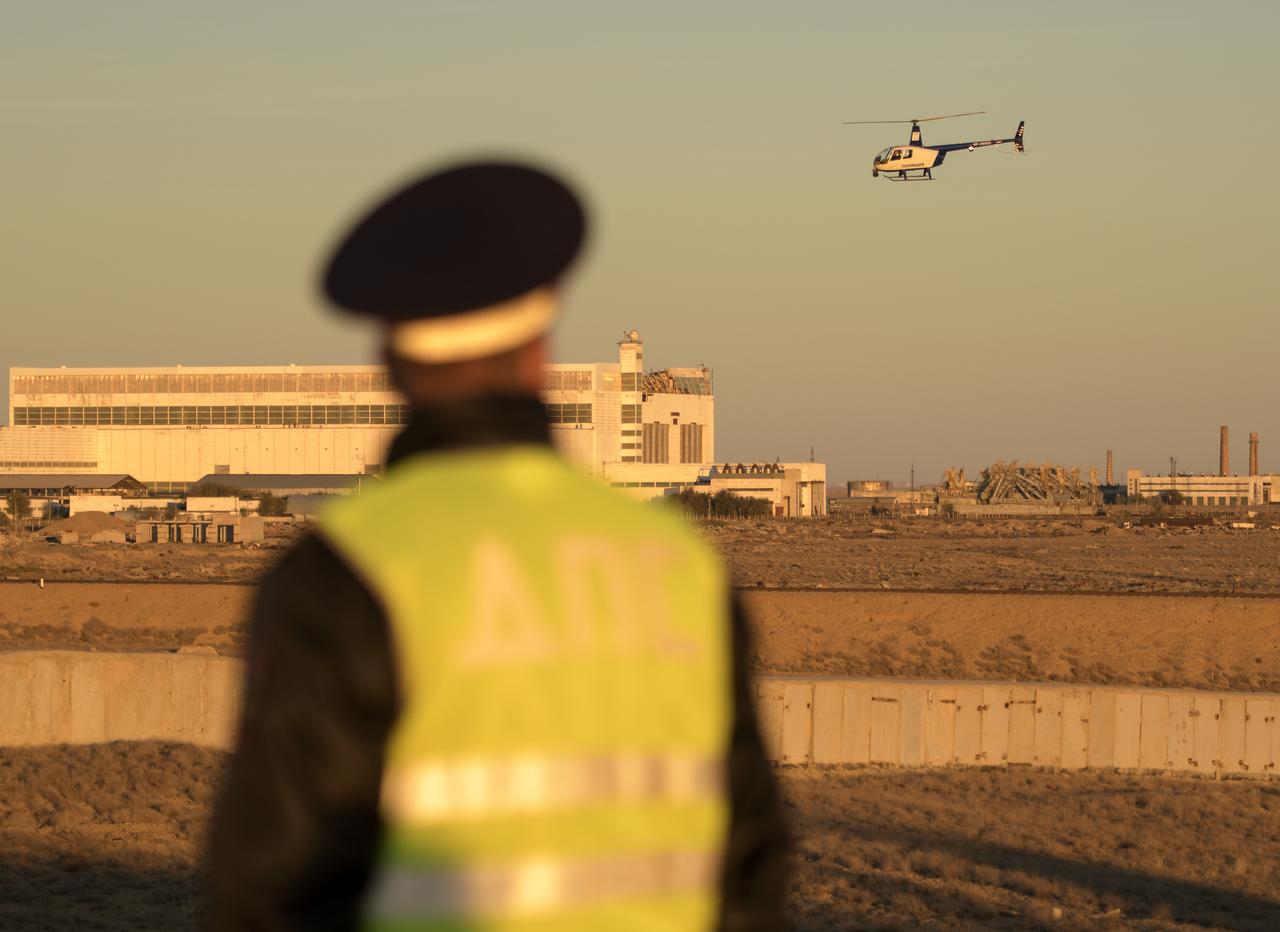
A security helicopter team surveys the train tracks in advance of the Soyuz rocket being rolled out to the launch pad, Tuesday, Oct. 9, 2018 at the Baikonur Cosmodrome in Kazakhstan. Expedition 57 crewmembers Nick Hague of NASA and Alexey Ovchinin of Roscosmos are scheduled to launch on October 11 and will spend the next six months living and working aboard the International Space Station. Photo Credit: (NASA/Bill Ingalls)
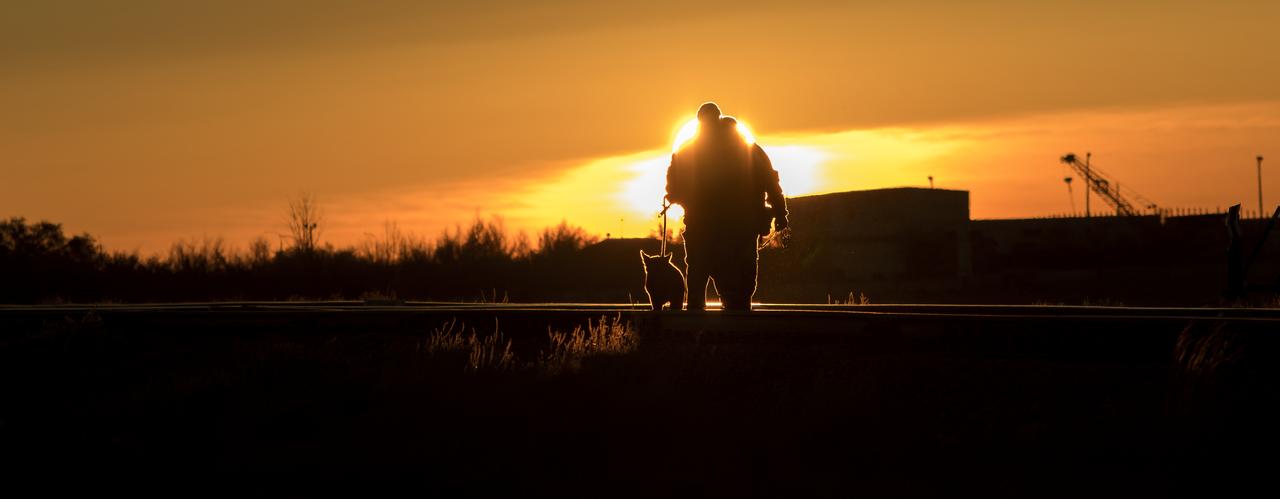
Security personnel and their dog sweep the train tracks in advance of the Soyuz rocket being rolled out to the launch pad, Tuesday, Oct. 9, 2018 at the Baikonur Cosmodrome in Kazakhstan. Expedition 57 crewmembers Nick Hague of NASA and Alexey Ovchinin of Roscosmos are scheduled to launch on October 11 and will spend the next six months living and working aboard the International Space Station. Photo Credit: (NASA/Bill Ingalls)
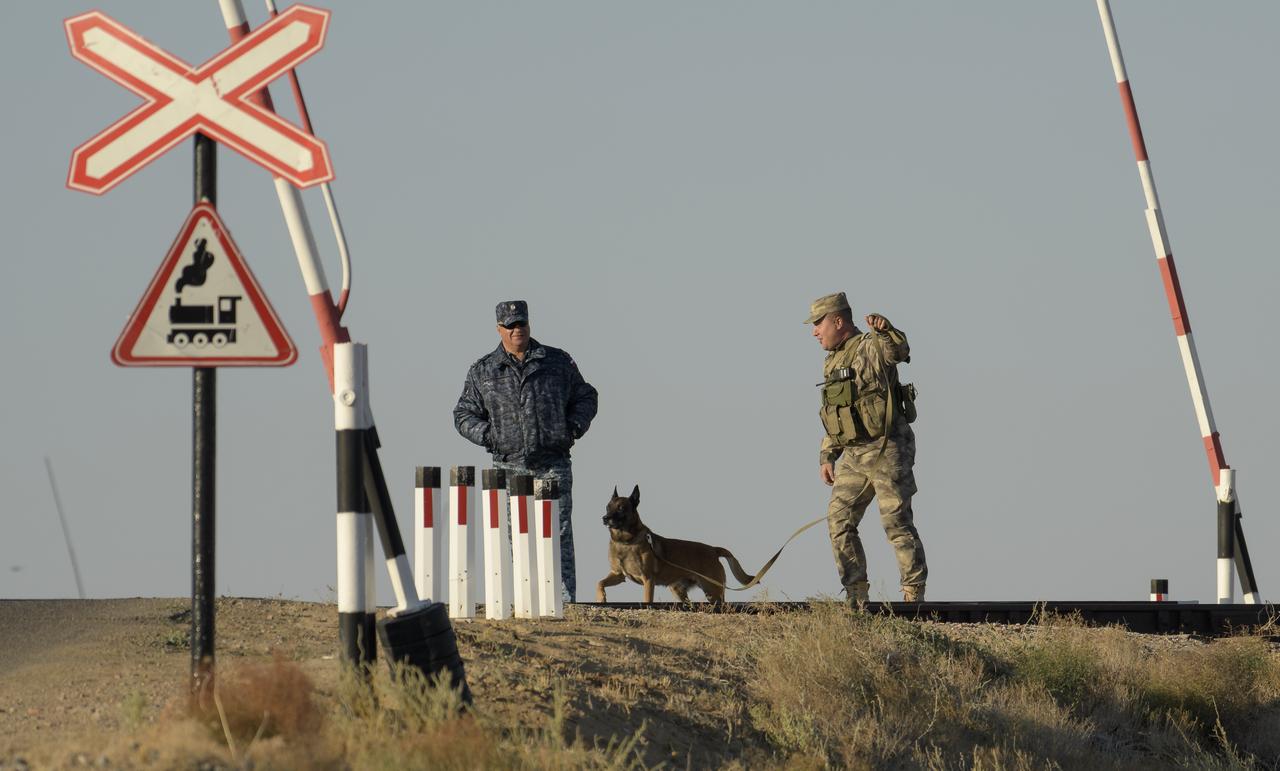
A K-9 advance team patrols the railroad tracks as the Soyuz rocket is rolled out by train to the launch pad, Monday, Sept. 23, 2019 at the Baikonur Cosmodrome in Kazakhstan. Expedition 61 crewmembers Jessica Meir of NASA and Oleg Skripochka of Roscosmos, and spaceflight participant Hazzaa Ali Almansoori of the United Arab Emirates will launch September 25th on the Soyuz MS-15 spacecraft from the Baikonur Cosmodrome to the International Space Station. Photo Credit: (NASA/Bill Ingalls)
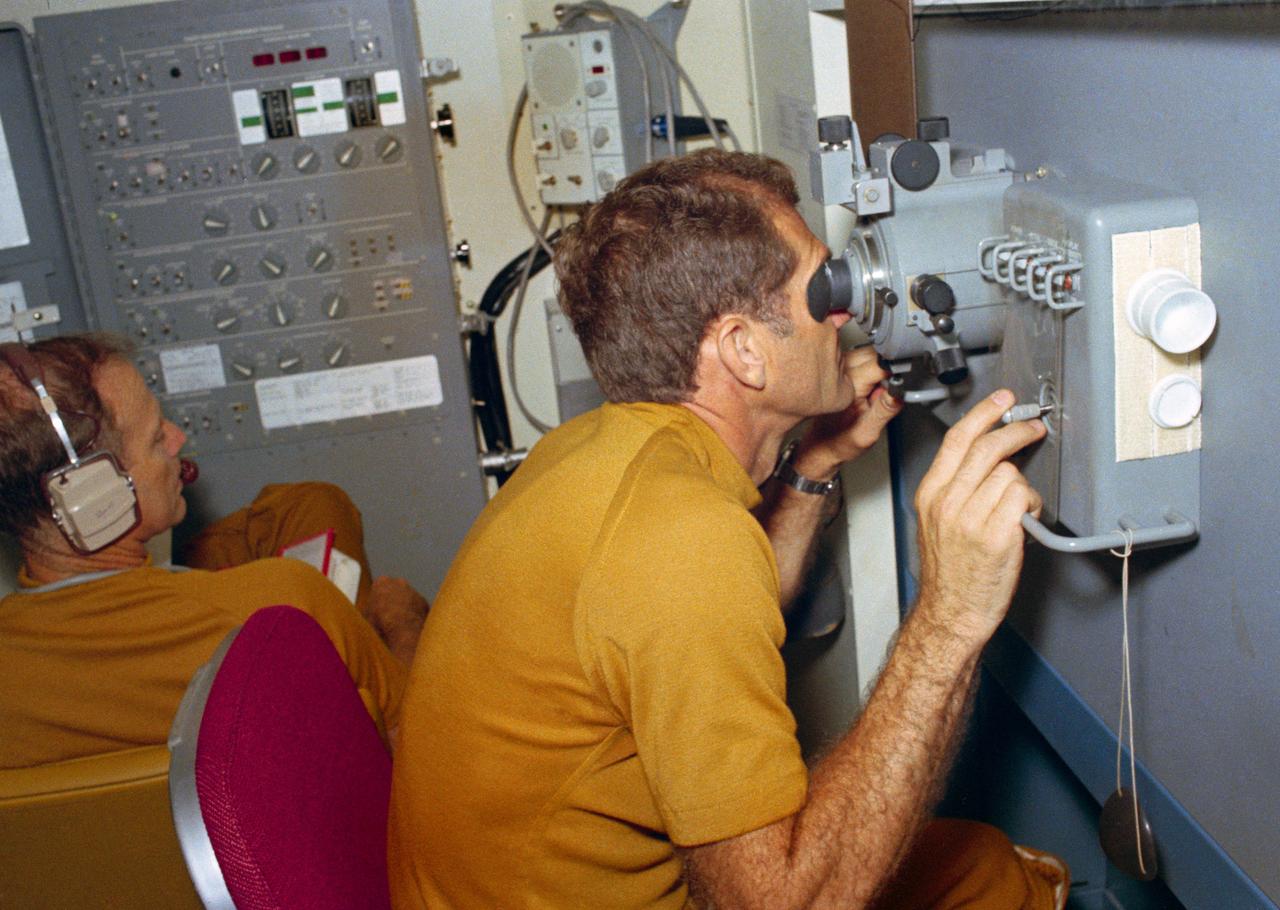
S73-32854 (10 Sept. 1973) --- Astronaut William R. Pogue, Skylab 4 pilot, uses the Skylab Viewfinder Tracking System (S191 experiment) during a training exercise in the Multiple Docking Adapter (MDA) one-G trainer at Johnson Space Center. In the background is astronaut Gerald P. Carr, seated at the control panel for the Earth Resources Experiments Package (EREP). Carr is Skylab 4 crew commander, and Gibson is science pilot. Photo credit: NASA
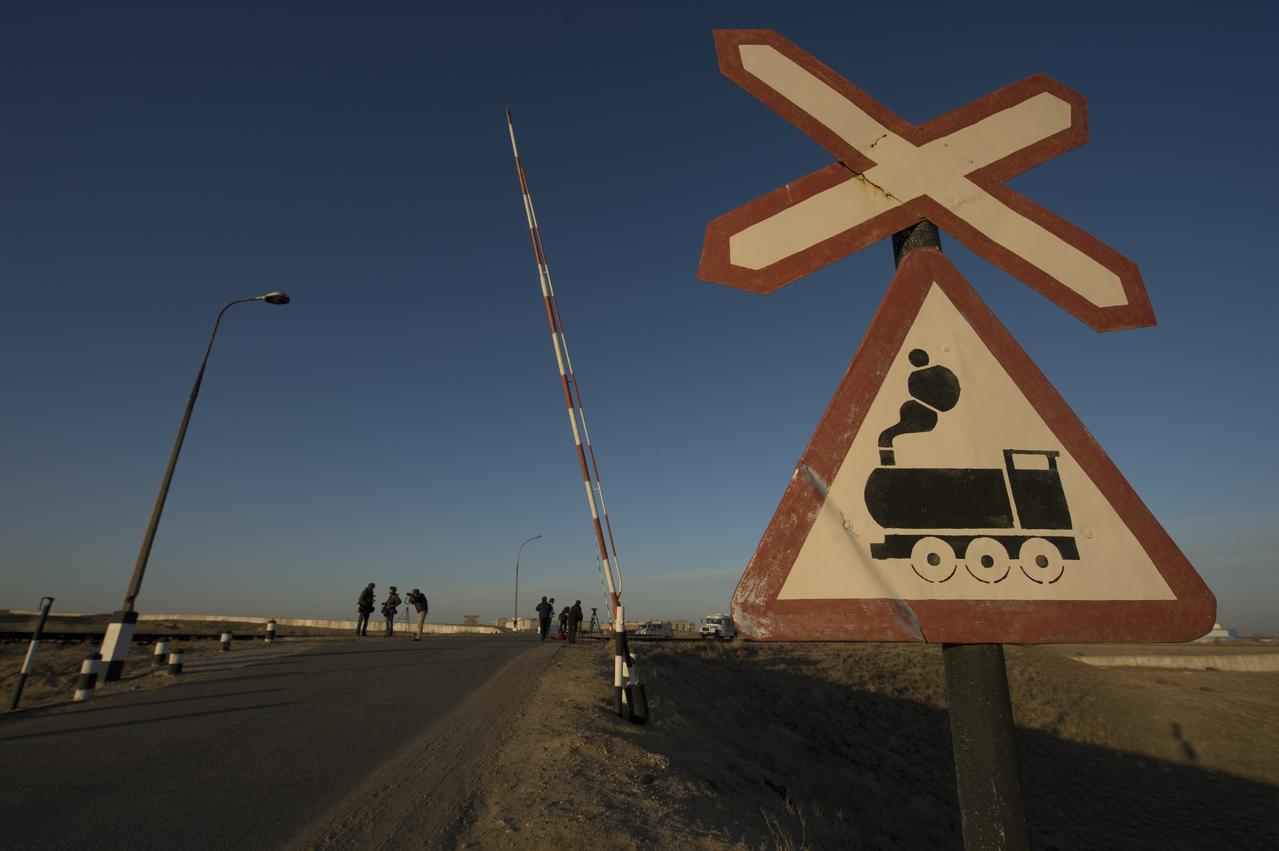
A railroad crossing sign is seen in front of the train tracks on which the Soyuz rocket is rolled out to its launch pad, Tuesday, March 26, 2013 at the Baikonur Cosmodrome in Kazakhstan. Launch of the Soyuz rocket is scheduled for March 29 and will send Expedition 35 Soyuz Commander Pavel Vinogradov, and Flight Engineers Chris Cassidy of NASA and Alexander Misurkin of Russia on a five and a half-month mission aboard the International Space Station. Photo Credit: (NASA/Carla Cioffi)
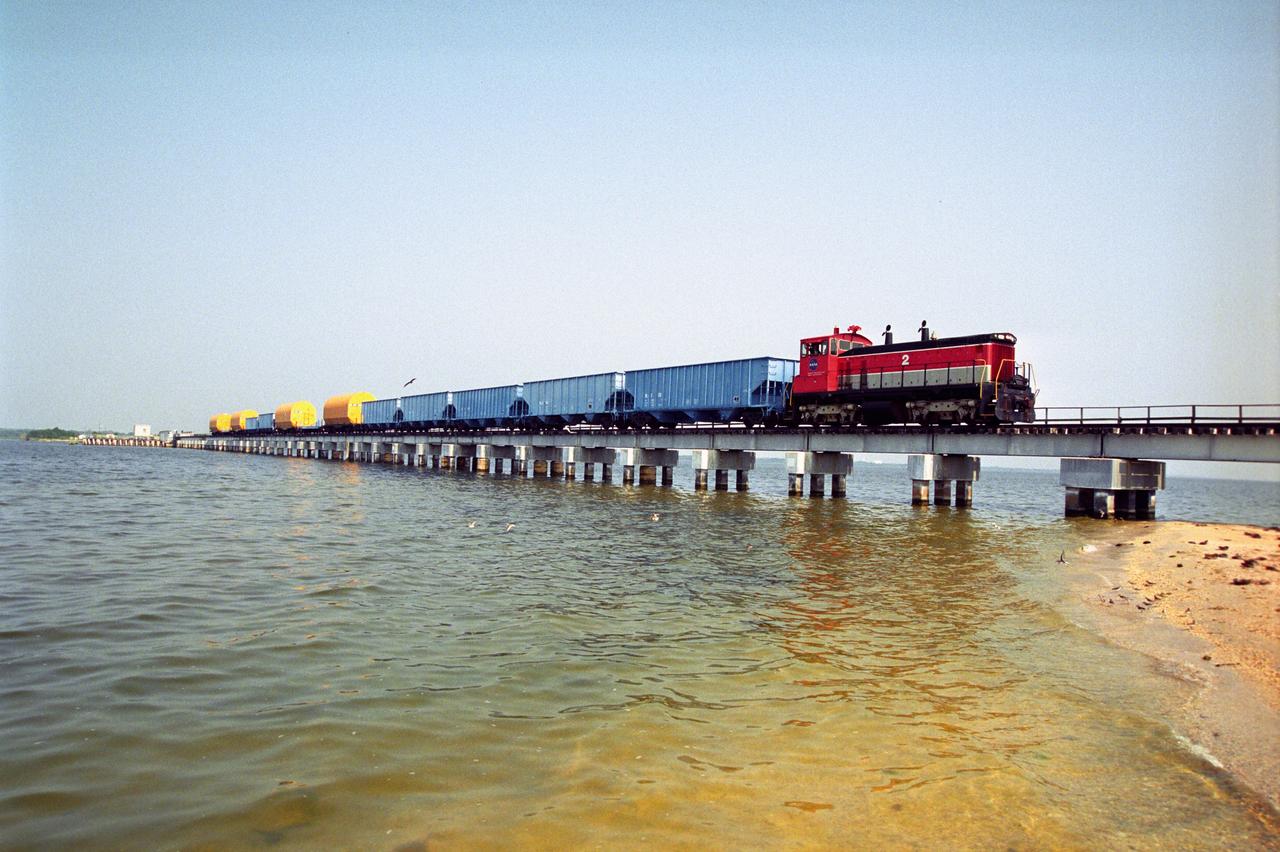
CAPE CANAVERAL, Fla. – A NASA railroad train hauling the solid rocket booster, or SRB, segments moves along the track at NASA's Kennedy Space Center in Florida. The SRB segments are under protective covers. The space agency utilizes railroad operations to not only move equipment at Kennedy, but to transport hardware to and from contractor facilities across the nation. Photo credit: NASA
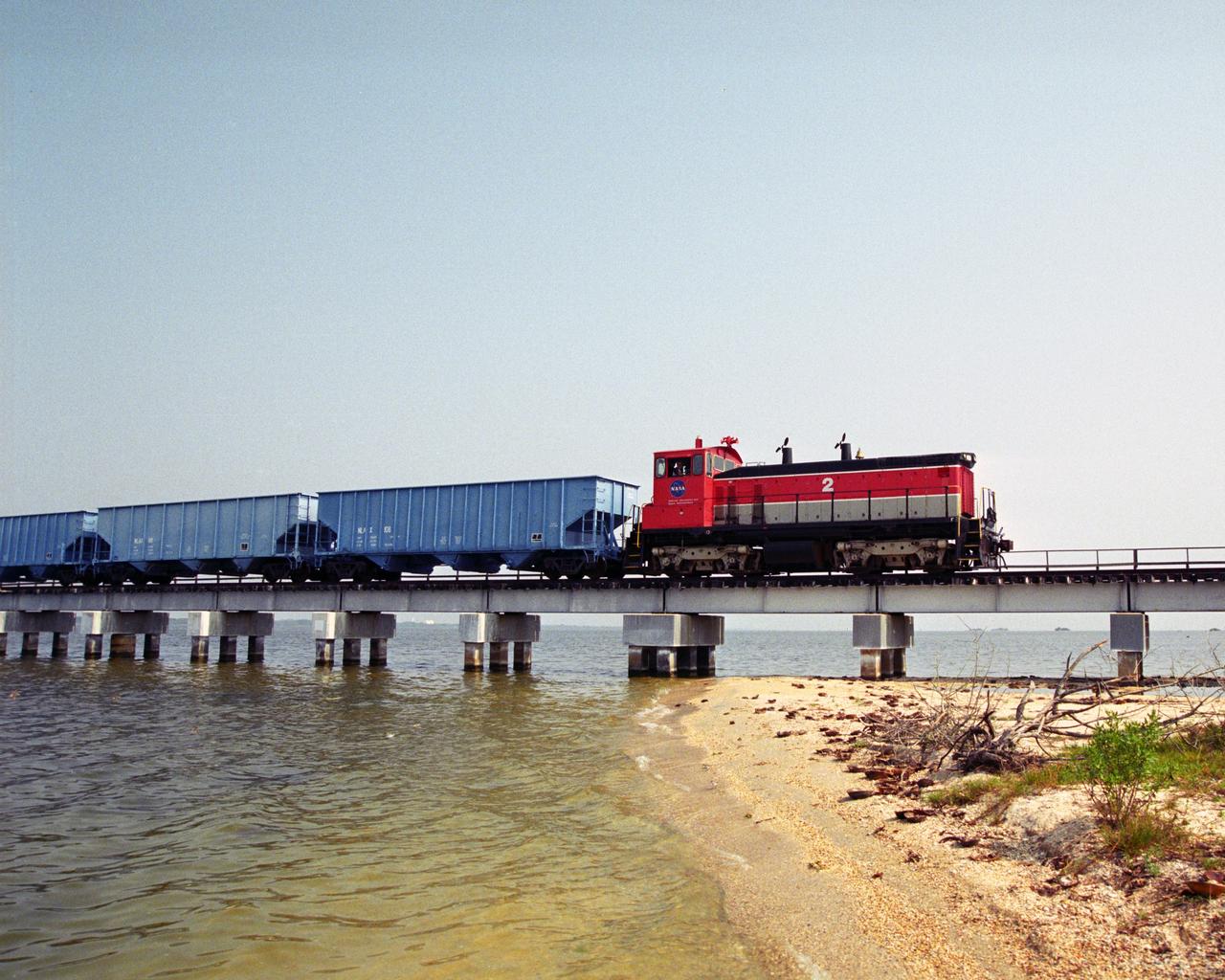
CAPE CANAVERAL, Fla. – A NASA railroad train hauling the solid rocket booster, or SRB, segments moves along the track at NASA's Kennedy Space Center in Florida. The SRB segments are under protective covers. The space agency utilizes railroad operations to not only move equipment at Kennedy, but to transport hardware to and from contractor facilities across the nation. Photo credit: NASA

CAPE CANAVERAL, Fla. – A NASA railroad train hauling the solid rocket booster, or SRB, segments moves along the track at NASA's Kennedy Space Center in Florida. The SRB segments are under protective covers. The space agency utilizes railroad operations to not only move equipment at Kennedy, but to transport hardware to and from contractor facilities across the nation. Photo credit: NASA
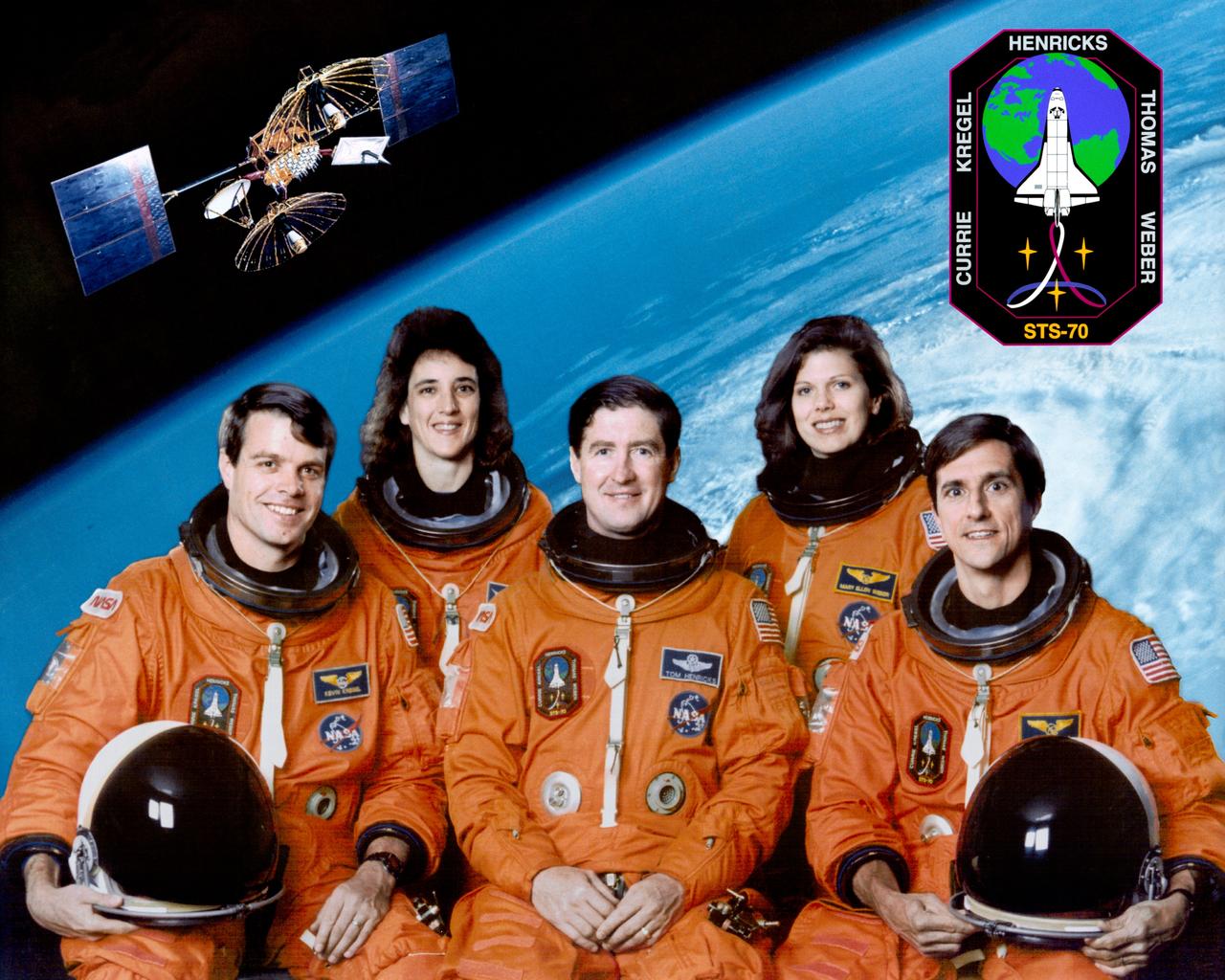
STS070-S-002 (May 1995) --- These five NASA astronauts are in training for the STS-70 mission aboard the Space Shuttle Discovery. Left to right are astronauts Kevin R. Kregel, Nancy J. Currie, Terence T. (Tom) Henricks, Mary Ellen Weber and Donald A. Thomas. Henricks and Kregel are commander and pilot, respectively. The other three are mission specialists. Among the tasks they are expected to perform is the deployment of another satellite in the network of the Tracking and Data Relay Satellite System (TDRSS).
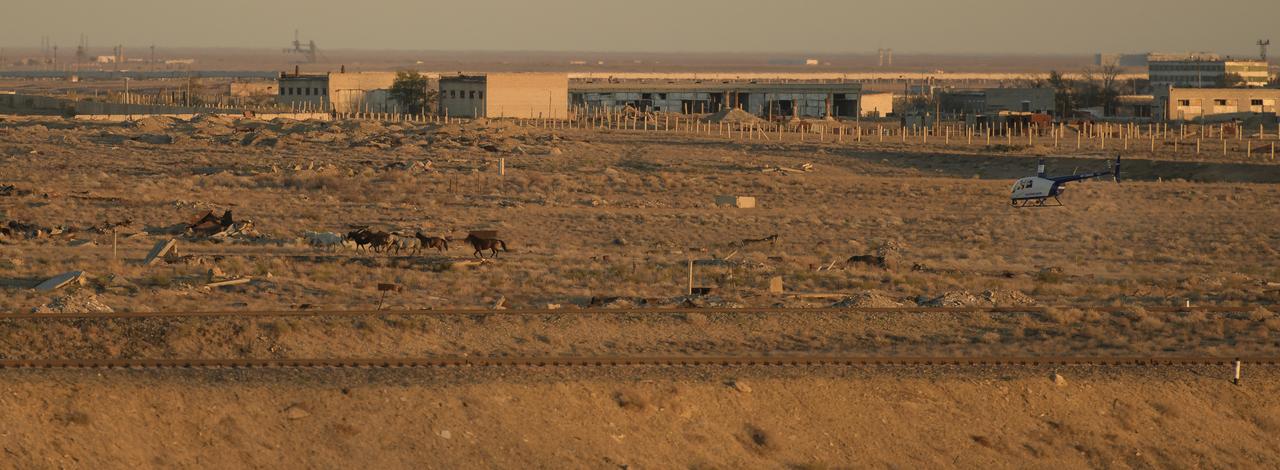
A security helicopter moves a heard of horses away from the train tracks in advance of the Soyuz rocket being rolled out to the launch pad, Tuesday, Oct. 9, 2018 at the Baikonur Cosmodrome in Kazakhstan. Expedition 57 crewmembers Nick Hague of NASA and Alexey Ovchinin of Roscosmos are scheduled to launch on October 11 and will spend the next six months living and working aboard the International Space Station. Photo Credit: (NASA/Bill Ingalls)
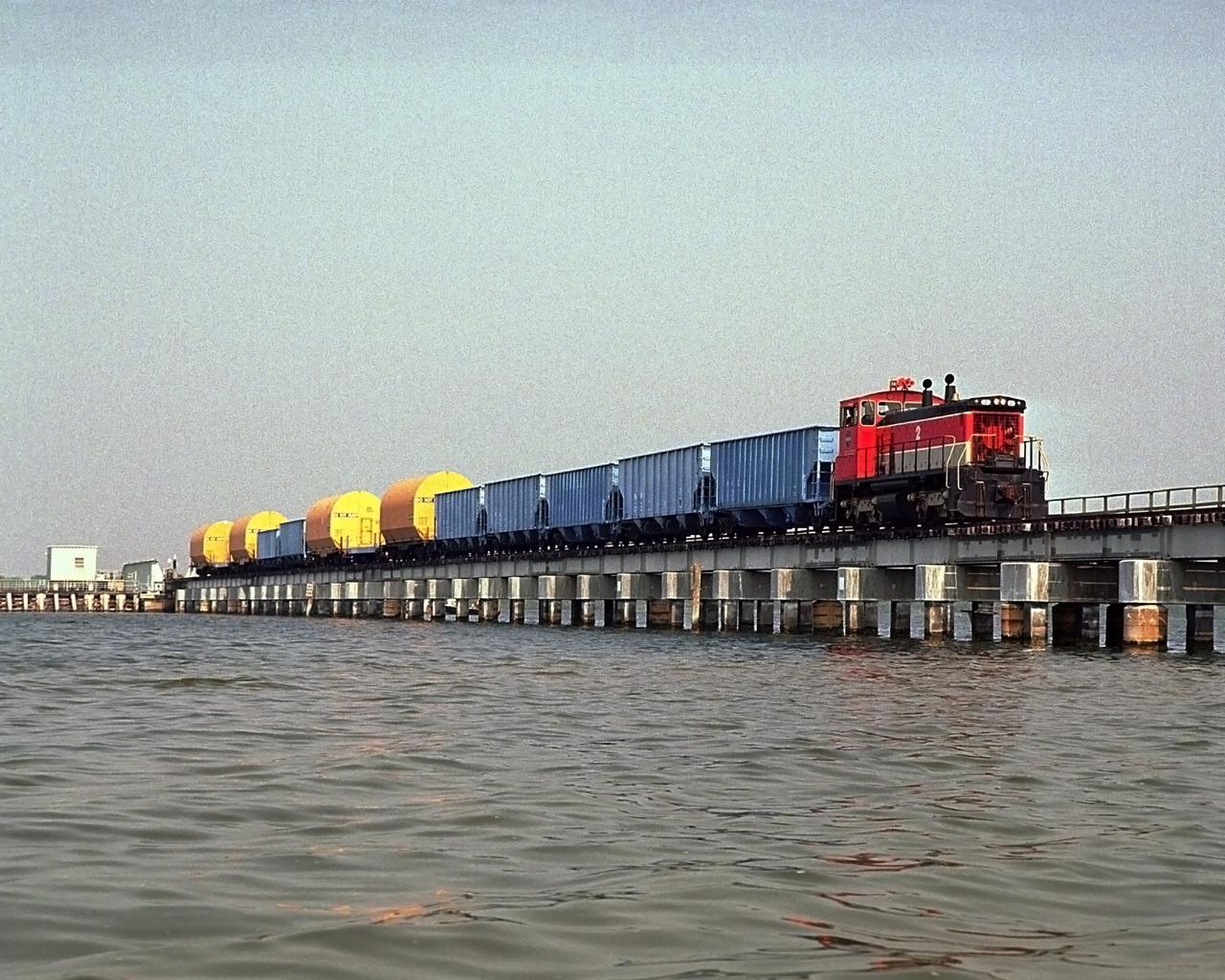
CAPE CANAVERAL, Fla. – A NASA railroad train hauling the solid rocket booster, or SRB, segments moves along the track at NASA's Kennedy Space Center in Florida. The SRB segments are under protective covers. The space agency utilizes railroad operations to not only move equipment at Kennedy, but to transport hardware to and from contractor facilities across the nation. Photo credit: NASA
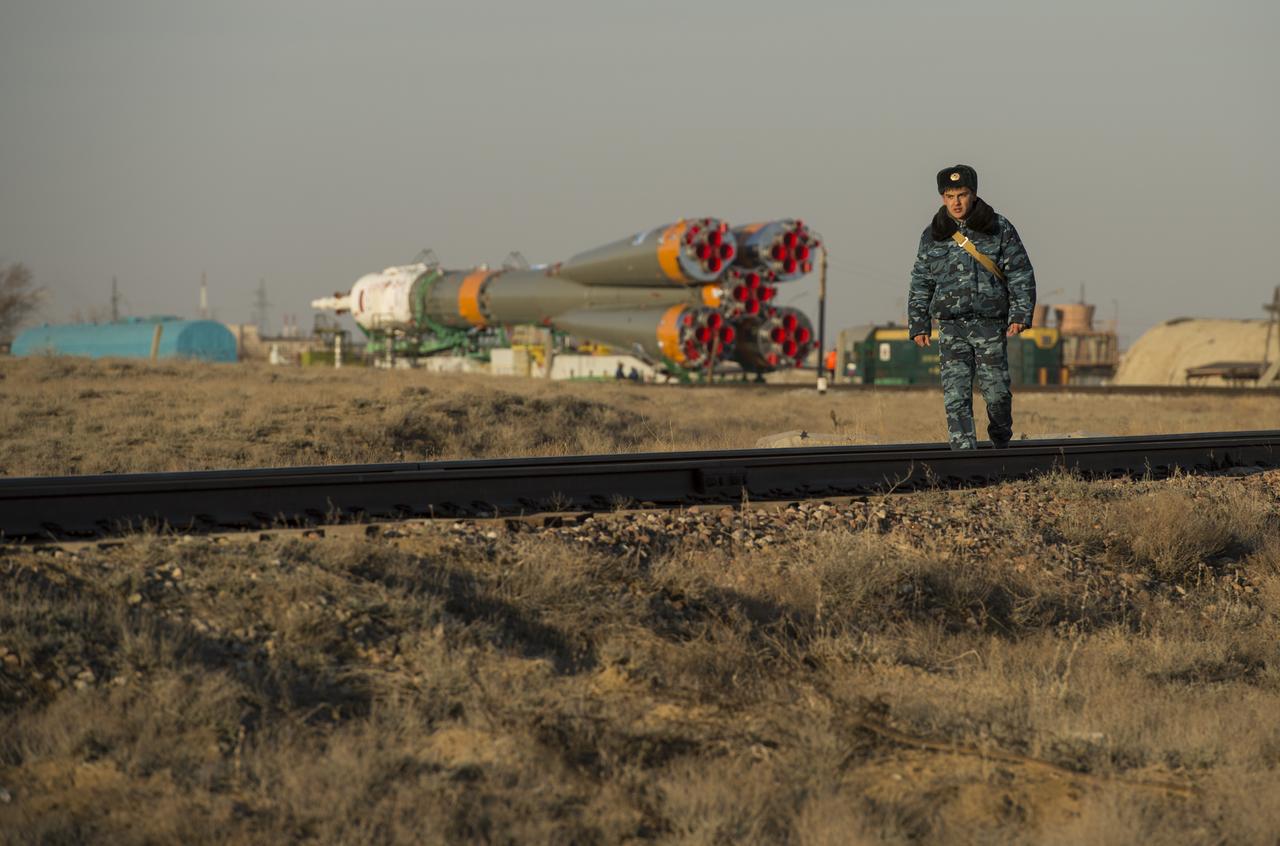
A Russian security guard is seen walking along the train tracks with the Soyuz rocket in the background on Tuesday, March 26, 2013, at the Baikonur Cosmodrome in Kazakhstan. Launch of the Soyuz rocket is scheduled for March 29 and will send Expedition 35 Soyuz Commander Pavel Vinogradov, and Flight Engineers Chris Cassidy of NASA and Alexander Misurkin of Russia on a five and a half-month mission aboard the International Space Station. Photo Credit: (NASA/Carla Cioffi)
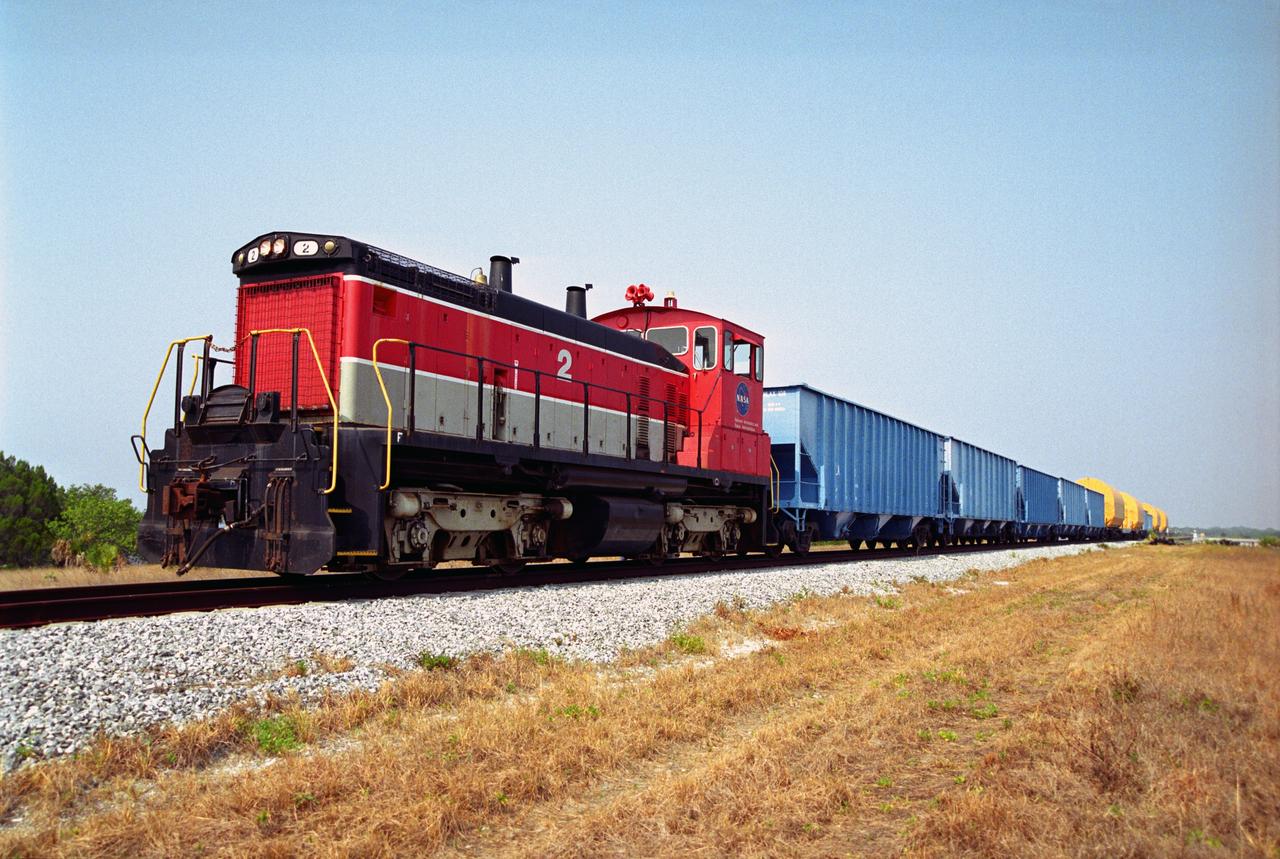
CAPE CANAVERAL, Fla. – A NASA railroad train hauling the solid rocket booster, or SRB, segments moves along the track at NASA's Kennedy Space Center in Florida. The SRB segments are under protective covers. The space agency utilizes railroad operations to not only move equipment at Kennedy, but to transport hardware to and from contractor facilities across the nation. Photo credit: NASA
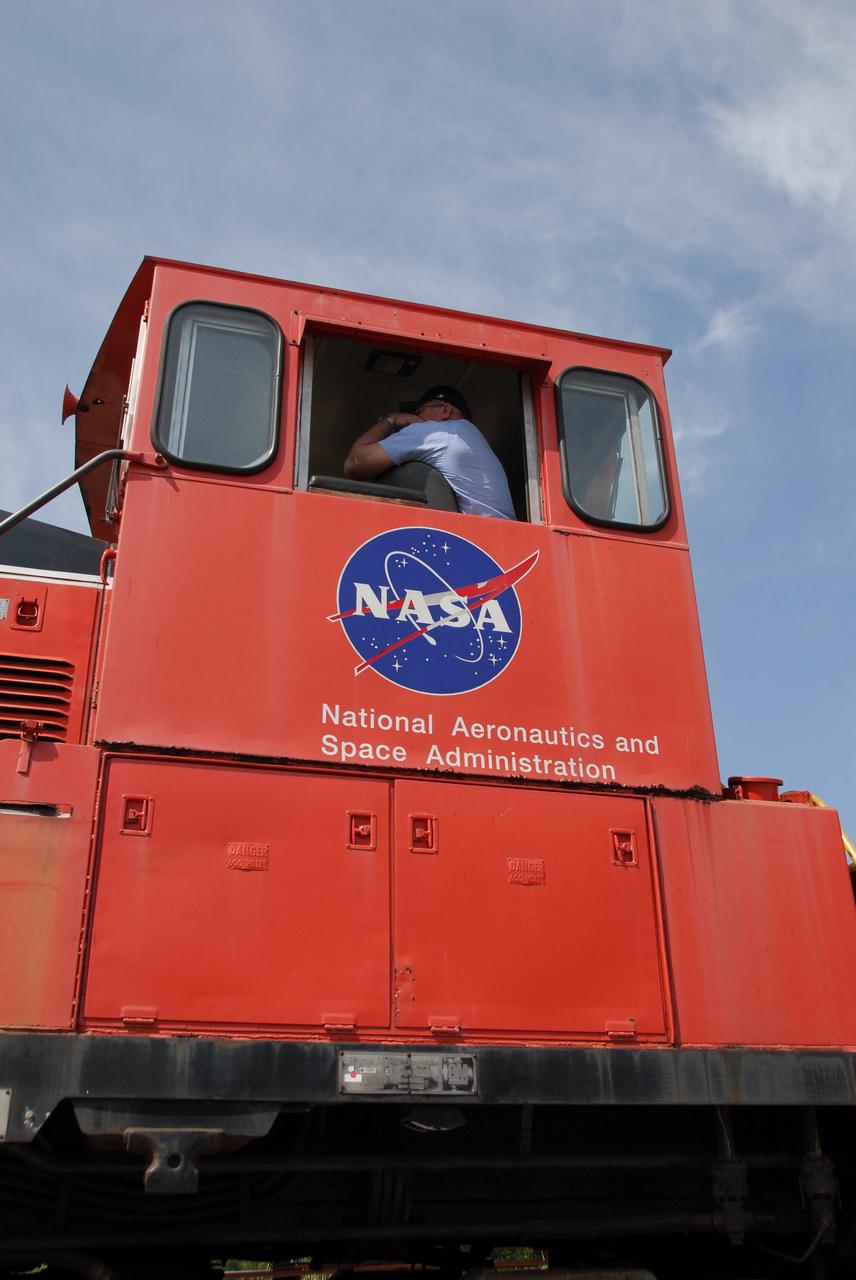
KENNEDY SPACE CENTER, FLA. -- The driver of the NASA Railroad train keeps his eye on the track ahead as the train moves through NASA Kennedy Space Center's Launch Complex 39 Area. The train is hauling the solid rocket booster segments from the STS-122 mission. After a mission, the spent boosters are recovered, cleaned, disassembled, refurbished and reused after each launch. After hydrolasing the interior of each segment, they are placed on flatbed trucks. The individual booster segments are transferred to a railhead located at the railroad yard. The covered segments will be moved to Titusville for interchange with Florida East Coast Railway to begin the trip back to the Thiokol plant in Wa¬satch, Utah. Photo credit: NASA/Jack Pfaller
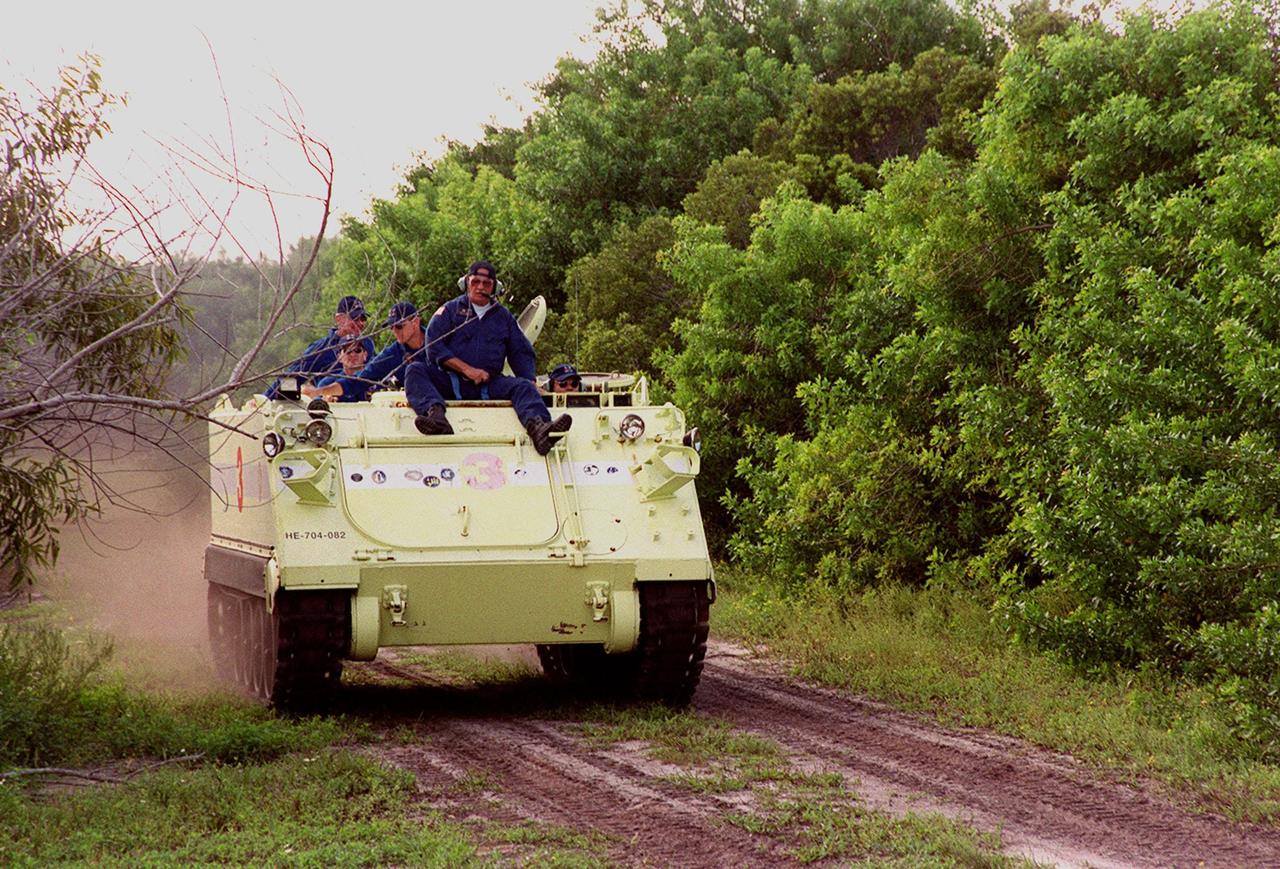
With other crew members in the back, STS-92 Mission Specialist Leroy Chiao races the M-113 along the track through the scrub. Driving the M-113 is part of emergency egress training during Terminal Countdown Demonstration Test (TCDT) activities. The tracked vehicle could be used by the crew in the event of an emergency at the pad during which the crew must make a quick exit from the area. The TCDT also provides simulated countdown exercises and opportunities to inspect the mission payloads in the orbiter’s payload bay. STS-92 is scheduled to launch Oct. 5 at 9:30 p.m. EDT on the fifth flight to the International Space Station. It will carry two elements of the Space Station, the Integrated Truss Structure Z1 and the third Pressurized Mating Adapter. The mission is also the 100th flight in the Shuttle program
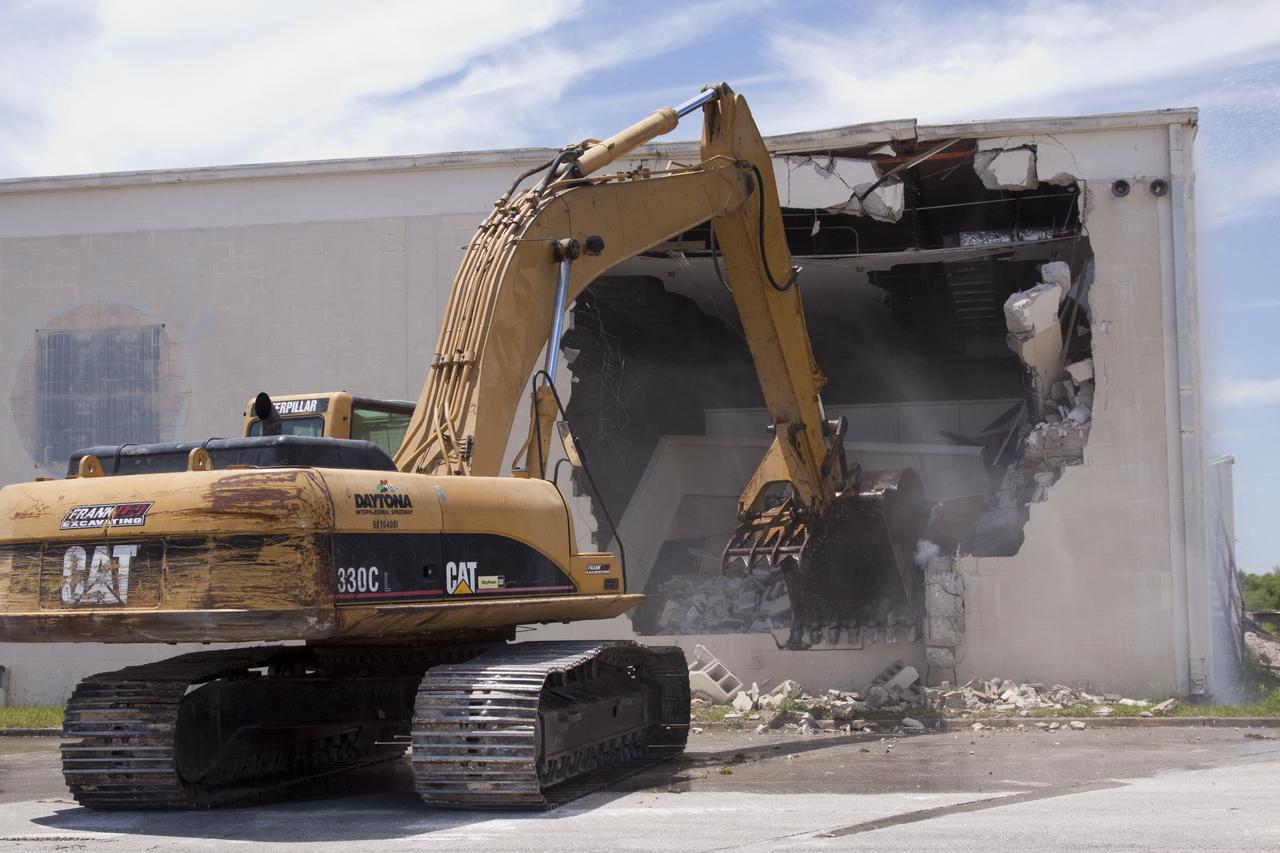
CAPE CANAVERAL, Fla. – At Cape Canaveral Air Force Station in Florida, a Caterpillar 330 track-hoe knocks down the Mercury Mission Control Center. The original building, constructed between 1956 and 1958, was last modified in 1963. The center succumbed to the two worst enemies of structures along the space coast - time and salt air - necessitating that it be demolished as a safety measure. The facility served as mission control during all the Project Mercury missions, as well as the first three flights of the Gemini Program. The center housed the flight controllers whose duty was to take over flight control after liftoff and follow it through until splashdown. Additionally, it supported vehicle checkout, spacecraft tracking, and astronaut training. With Gemini IV, mission control moved to Houston, and the facility took on the roles of launch control and tracking station. In 1999, much of the equipment and furnishings from the flight control area was moved to Kennedy Space Center's Visitor Complex. A re-created mission control room currently is on display in the complex's Dr. Kurt H. Debus Conference Facility. Speegle II of Cocoa, Fla., was awarded the contract for the deconstruction project. Frank-Lin Excavating is performing the demolition for Sunrise Systems of Brevard, a subcontractor to Speegle II. Photo credit: NASA_Jack Pfaller
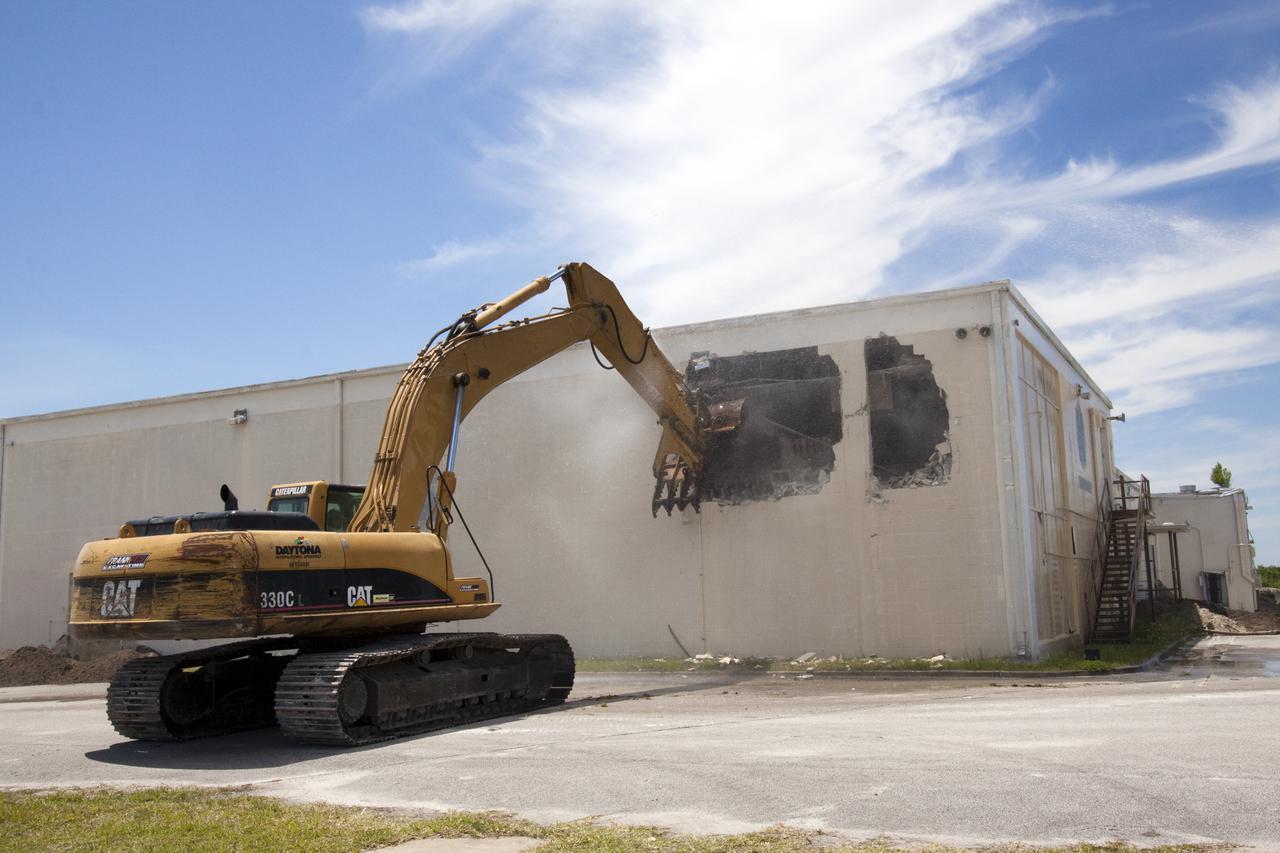
CAPE CANAVERAL, Fla. – At Cape Canaveral Air Force Station in Florida, a Caterpillar 330 track-hoe punches a hole in the wall of the Mercury Mission Control Center. The original building, constructed between 1956 and 1958, was last modified in 1963. The center succumbed to the two worst enemies of structures along the space coast - time and salt air - necessitating that it be demolished as a safety measure. The facility served as mission control during all the Project Mercury missions, as well as the first three flights of the Gemini Program. The center housed the flight controllers whose duty was to take over flight control after liftoff and follow it through until splashdown. Additionally, it supported vehicle checkout, spacecraft tracking, and astronaut training. With Gemini IV, mission control moved to Houston, and the facility took on the roles of launch control and tracking station. In 1999, much of the equipment and furnishings from the flight control area was moved to Kennedy Space Center's Visitor Complex. A re-created mission control room currently is on display in the complex's Dr. Kurt H. Debus Conference Facility. Speegle II of Cocoa, Fla., was awarded the contract for the deconstruction project. Frank-Lin Excavating is performing the demolition for Sunrise Systems of Brevard, a subcontractor to Speegle II. Photo credit: NASA_Jack Pfaller
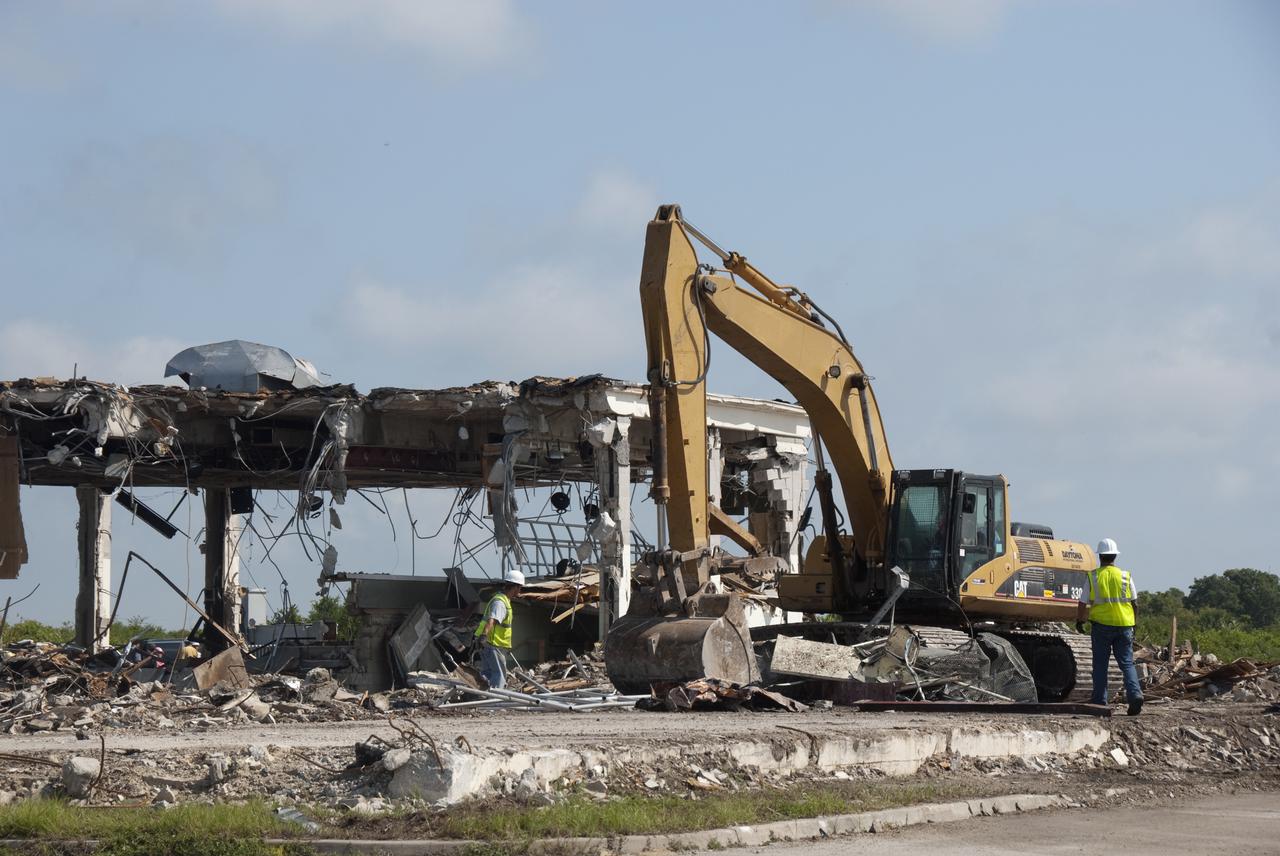
CAPE CANAVERAL, Fla. – At Cape Canaveral Air Force Station in Florida, workers take time out from operation of a Caterpillar 330 track-hoe and the demolition of NASA's Mercury Mission Control Center to determine their next steps. The deconstruction project began on April 28. The original building, constructed between 1956 and 1958, was last modified in 1963. The center succumbed to the two worst enemies of structures along the space coast - time and salt air - necessitating that it be demolished as a safety measure. The facility served as mission control during all the Project Mercury missions, as well as the first three flights of the Gemini Program. The center housed the flight controllers whose duty was to take over flight control after liftoff and follow it through until splashdown. Additionally, it supported vehicle checkout, spacecraft tracking, and astronaut training. With Gemini IV, mission control moved to Houston, and the facility took on the roles of launch control and tracking station. In 1999, much of the equipment and furnishings from the flight control area was moved to Kennedy Space Center's Visitor Complex. A re-created mission control room currently is on display in the complex's Dr. Kurt H. Debus Conference Facility. Speegle II of Cocoa, Fla., was awarded the contract for the deconstruction project. Frank-Lin Excavating is performing the demolition for Sunrise Systems of Brevard, a subcontractor to Speegle II. Photo credit: NASA_Jack Pfaller
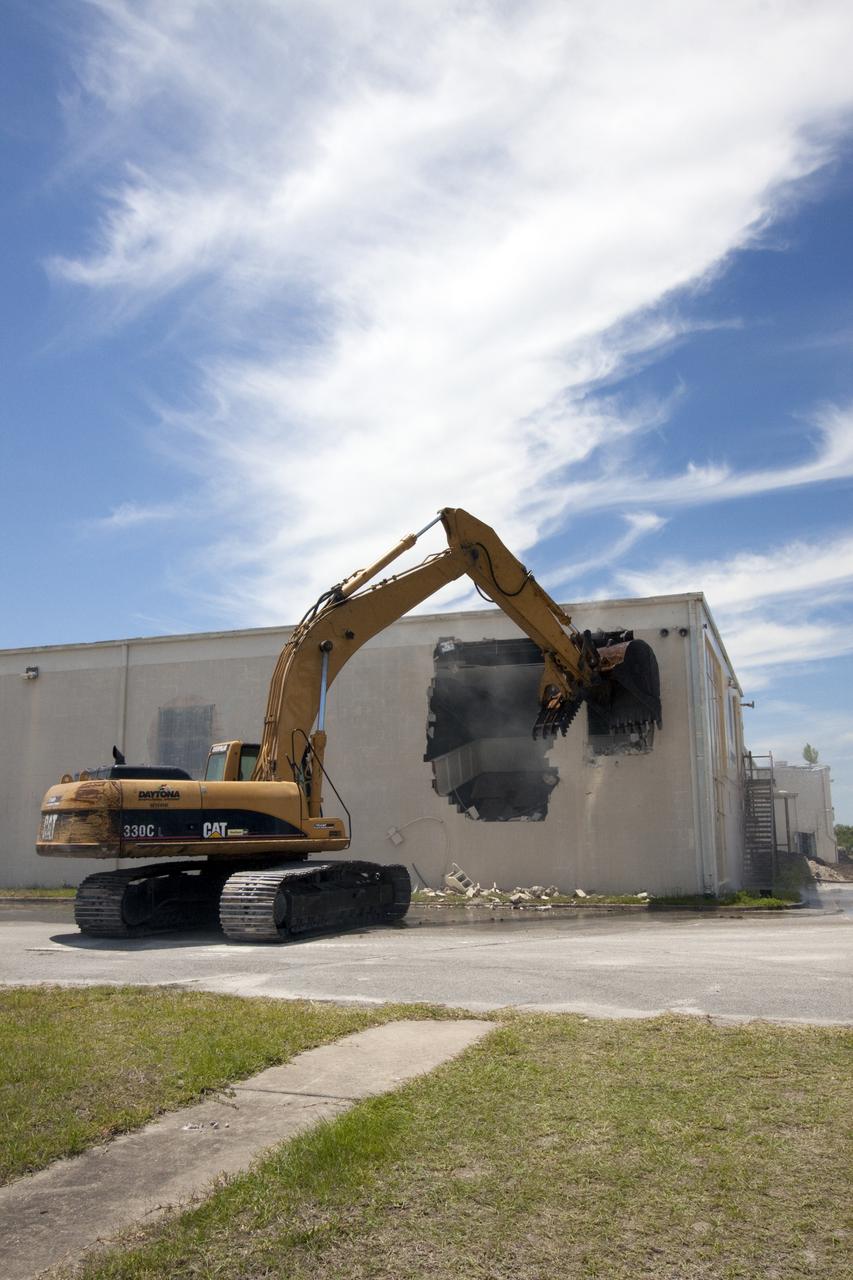
CAPE CANAVERAL, Fla. – At Cape Canaveral Air Force Station in Florida, a Caterpillar 330 track-hoe rips through the wall of the Mercury Mission Control Center. The original building, constructed between 1956 and 1958, was last modified in 1963. The center succumbed to the two worst enemies of structures along the space coast - time and salt air - necessitating that it be demolished as a safety measure. The facility served as mission control during all the Project Mercury missions, as well as the first three flights of the Gemini Program. The center housed the flight controllers whose duty was to take over flight control after liftoff and follow it through until splashdown. Additionally, it supported vehicle checkout, spacecraft tracking, and astronaut training. With Gemini IV, mission control moved to Houston, and the facility took on the roles of launch control and tracking station. In 1999, much of the equipment and furnishings from the flight control area was moved to Kennedy Space Center's Visitor Complex. A re-created mission control room currently is on display in the complex's Dr. Kurt H. Debus Conference Facility. Speegle II of Cocoa, Fla., was awarded the contract for the deconstruction project. Frank-Lin Excavating is performing the demolition for Sunrise Systems of Brevard, a subcontractor to Speegle II. Photo credit: NASA_Jack Pfaller
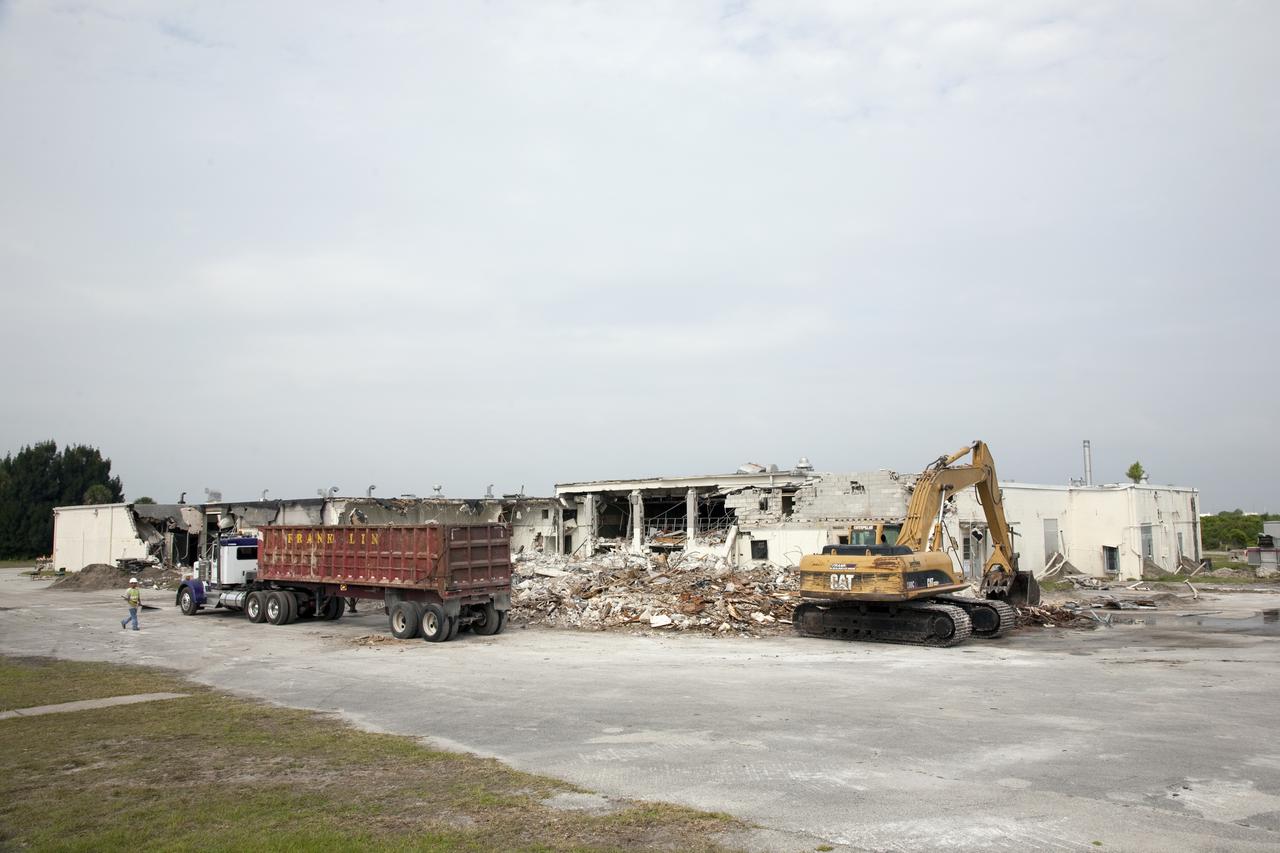
CAPE CANAVERAL, Fla. – At Cape Canaveral Air Force Station in Florida, a Caterpillar 330 track-hoe, at right, cleans up the rubble it has made of the Mercury Mission Control Center during its deconstruction. The original building, constructed between 1956 and 1958, was last modified in 1963. The center succumbed to the two worst enemies of structures along the space coast - time and salt air - necessitating that it be demolished as a safety measure. The facility served as mission control during all the Project Mercury missions, as well as the first three flights of the Gemini Program. The center housed the flight controllers whose duty was to take over flight control after liftoff and follow it through until splashdown. Additionally, it supported vehicle checkout, spacecraft tracking, and astronaut training. With Gemini IV, mission control moved to Houston, and the facility took on the roles of launch control and tracking station. In 1999, much of the equipment and furnishings from the flight control area was moved to Kennedy Space Center's Visitor Complex. A re-created mission control room currently is on display in the complex's Dr. Kurt H. Debus Conference Facility. Speegle II of Cocoa, Fla., was awarded the contract for the deconstruction project. Frank-Lin Excavating is performing the demolition for Sunrise Systems of Brevard, a subcontractor to Speegle II. Photo credit: NASA_Dimitri Gerondidakis
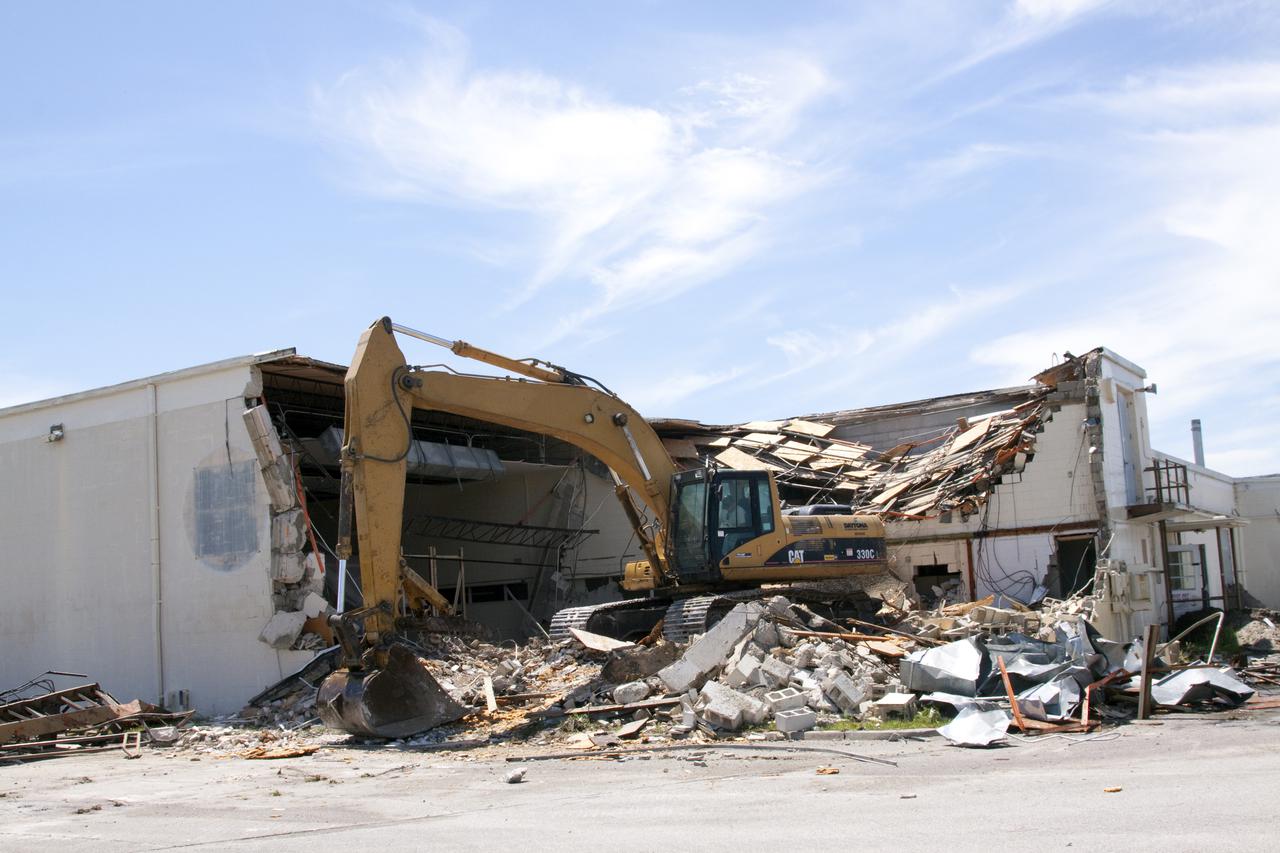
CAPE CANAVERAL, Fla. – At Cape Canaveral Air Force Station in Florida, the walls of the Mercury Mission Control Center tumble down under the careful guidance of a Caterpillar 330 track-hoe. The original building, constructed between 1956 and 1958, was last modified in 1963. The center succumbed to the two worst enemies of structures along the space coast - time and salt air - necessitating that it be demolished as a safety measure. The facility served as mission control during all the Project Mercury missions, as well as the first three flights of the Gemini Program. The center housed the flight controllers whose duty was to take over flight control after liftoff and follow it through until splashdown. Additionally, it supported vehicle checkout, spacecraft tracking, and astronaut training. With Gemini IV, mission control moved to Houston, and the facility took on the roles of launch control and tracking station. In 1999, much of the equipment and furnishings from the flight control area was moved to Kennedy Space Center's Visitor Complex. A re-created mission control room currently is on display in the complex's Dr. Kurt H. Debus Conference Facility. Speegle II of Cocoa, Fla., was awarded the contract for the deconstruction project. Frank-Lin Excavating is performing the demolition for Sunrise Systems of Brevard, a subcontractor to Speegle II. Photo credit: NASA_Jack Pfaller
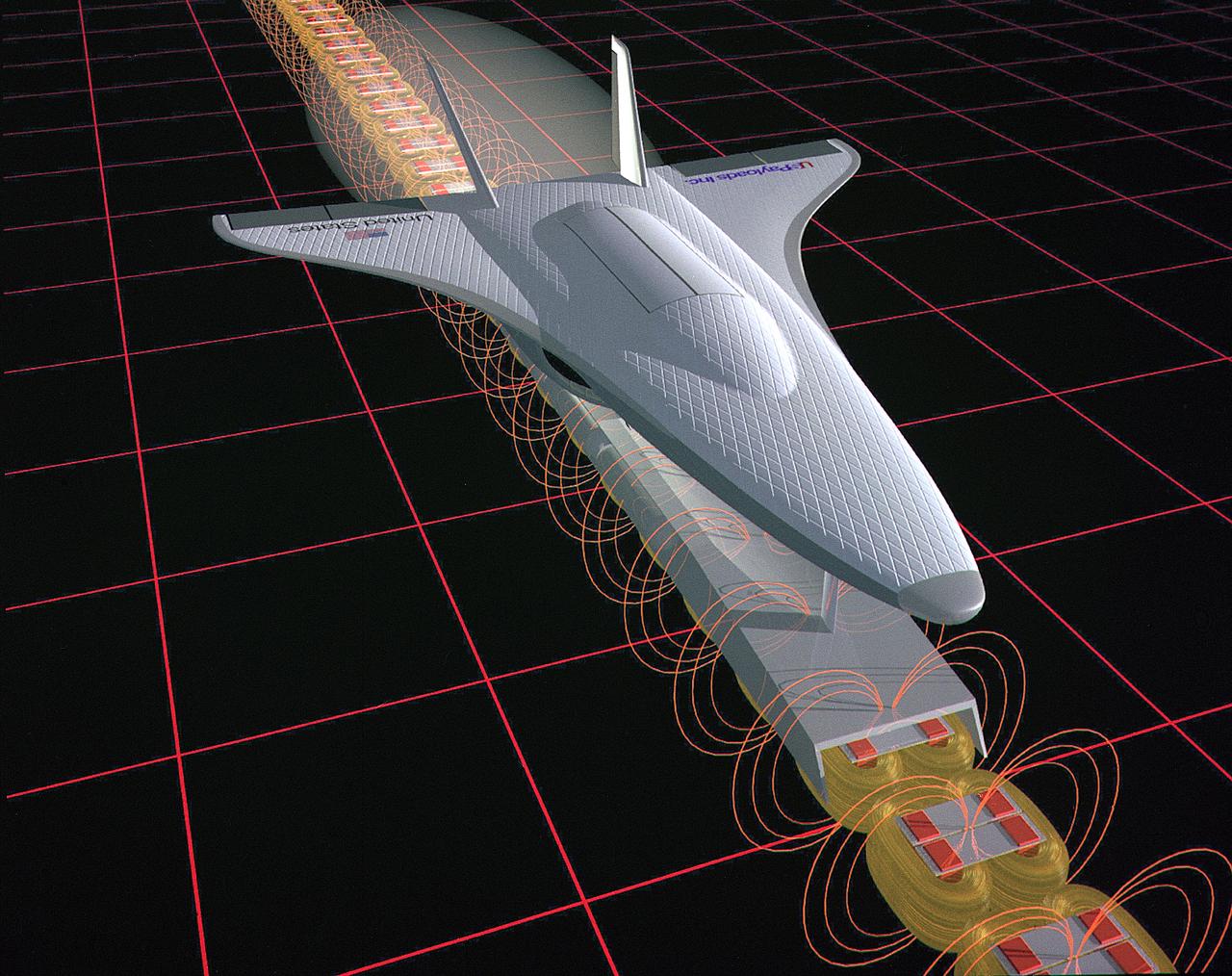
This illustration is an artist’s concept of a Magnetic Launch Assist System, formerly referred as the Magnetic Levitation (Maglev) system, for space launch. Overcoming the grip of Earth’s gravity is a supreme challenge for engineers who design rockets that leave the planet. Engineers at the Marshall Space Flight Center have developed and tested Magnetic Launch Assist System technologies that could levitate and accelerate a launch vehicle along a track at high speeds before it leaves the ground. Using electricity and magnetic fields, a Magnetic Launch Assist system would drive a spacecraft along a horizontal track until it reaches desired speeds. A full-scale, operational track would be about 1.5-miles long and capable of accelerating a vehicle to 600 mph in 9.5 seconds. The major advantages of launch assist for NASA launch vehicles is that it reduces the weight of the take-off, landing gear and the wing size, as well as the elimination of propellant weight resulting in significant cost savings. The US Navy and the British MOD (Ministry of Defense) are planning to use magnetic launch assist for their next generation aircraft carriers as the aircraft launch system. The US Army is considering using this technology for launching target drones for anti-aircraft training.
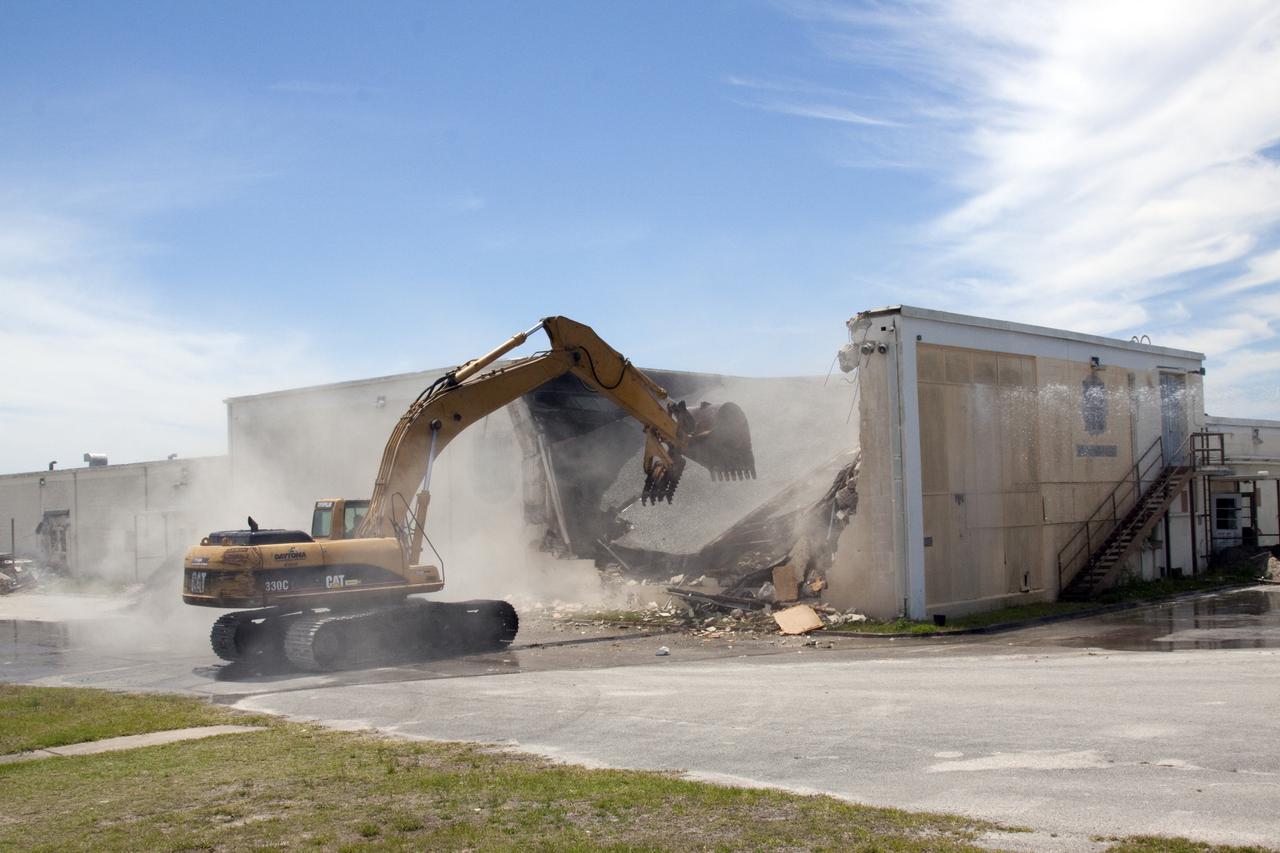
CAPE CANAVERAL, Fla. – At Cape Canaveral Air Force Station in Florida, a Caterpillar 330 track-hoe turns the Mercury Mission Control Center into a pile of rubble. The original building, constructed between 1956 and 1958, was last modified in 1963. The center succumbed to the two worst enemies of structures along the space coast - time and salt air - necessitating that it be demolished as a safety measure. The facility served as mission control during all the Project Mercury missions, as well as the first three flights of the Gemini Program. The center housed the flight controllers whose duty was to take over flight control after liftoff and follow it through until splashdown. Additionally, it supported vehicle checkout, spacecraft tracking, and astronaut training. With Gemini IV, mission control moved to Houston, and the facility took on the roles of launch control and tracking station. In 1999, much of the equipment and furnishings from the flight control area was moved to Kennedy Space Center's Visitor Complex. A re-created mission control room currently is on display in the complex's Dr. Kurt H. Debus Conference Facility. Speegle II of Cocoa, Fla., was awarded the contract for the deconstruction project. Frank-Lin Excavating is performing the demolition for Sunrise Systems of Brevard, a subcontractor to Speegle II. Photo credit: NASA_Jack Pfaller
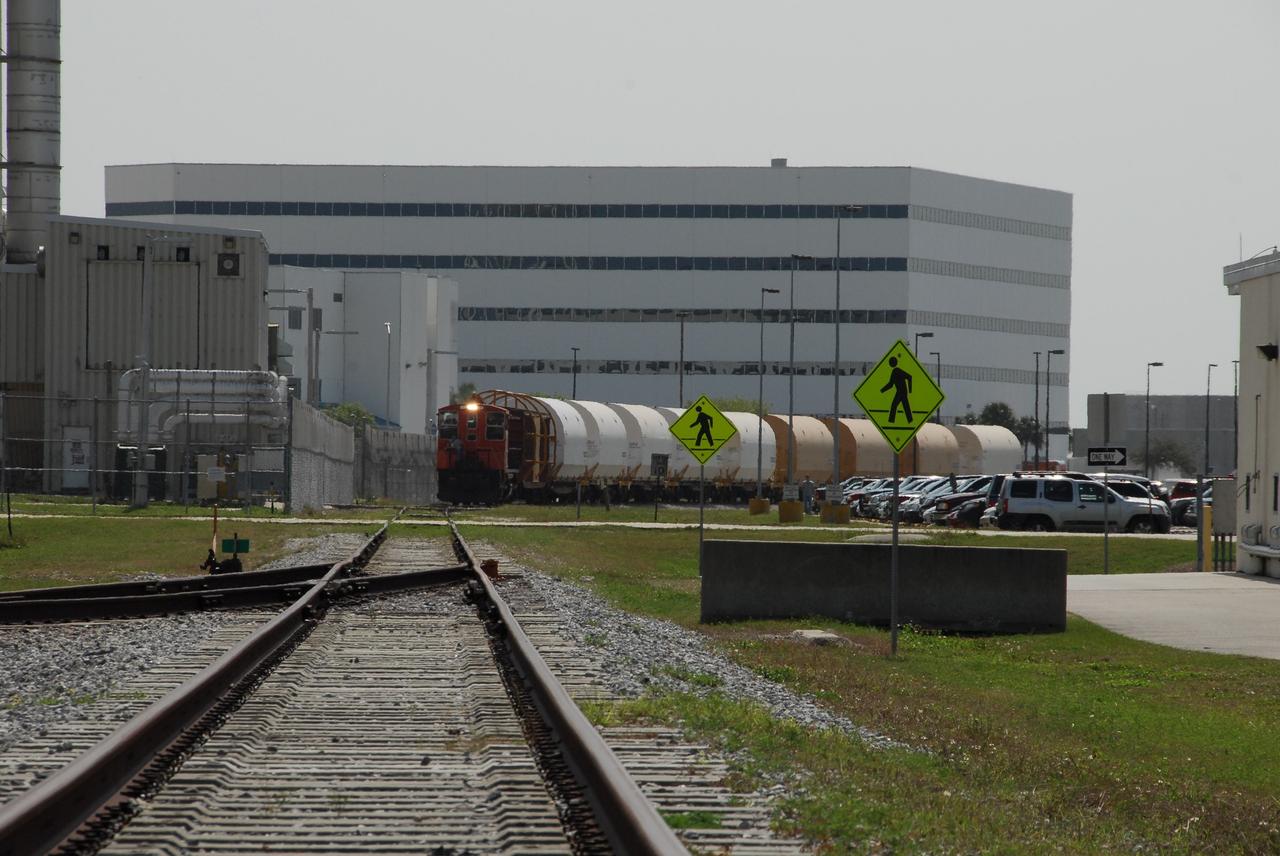
KENNEDY SPACE CENTER, FLA. -- The NASA Railroad train moves along the track through NASA's Kennedy Space Center. Behind it is the Operations and Support Building I in the Launch Complex 39 Area. The train is hauling the solid rocket booster segments from the STS-122 mission. After a mission, the spent boosters are recovered, cleaned, disassembled, refurbished and reused after each launch. After hydrolasing the interior of each segment, they are placed on flatbed trucks. The individual booster segments are transferred to a railhead located at the railroad yard. The covered segments will be moved to Titusville for interchange with Florida East Coast Railway to begin the trip back to the Thiokol plant in Wa¬satch, Utah. Photo credit: NASA/Jack Pfaller
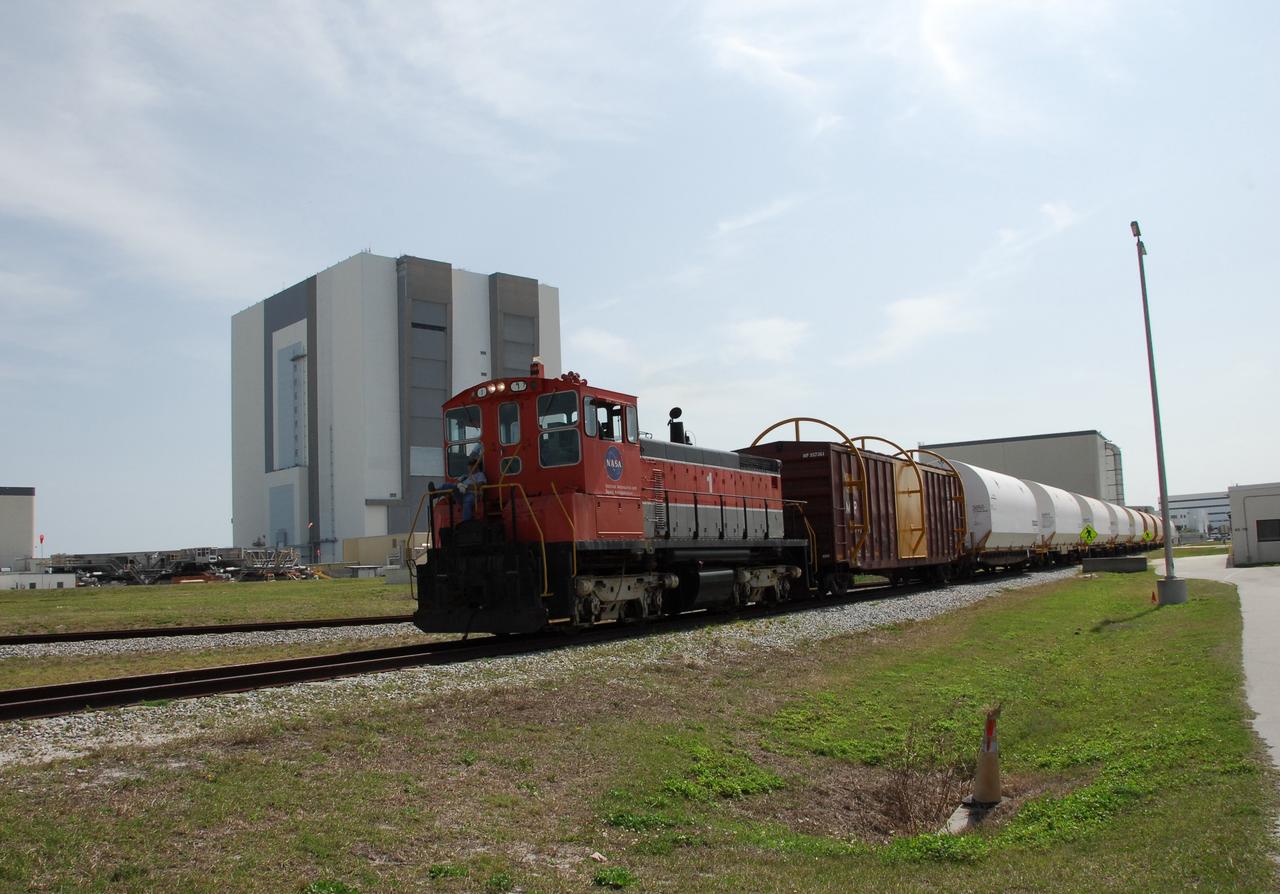
KENNEDY SPACE CENTER, FLA. -- The NASA Railroad train moves along the track through NASA Kennedy Space Center's Launch Complex 39 Area. Behind the locomotive car is the Vehicle Assembly Building. The train is hauling the solid rocket booster segments from the STS-122 mission. After a mission, the spent boosters are recovered, cleaned, disassembled, refurbished and reused after each launch. After hydrolasing the interior of each segment, they are placed on flatbed trucks. The individual booster segments are transferred to a railhead located at the railroad yard. The covered segments will be moved to Titusville for interchange with Florida East Coast Railway to begin the trip back to the Thiokol plant in Wa¬satch, Utah. Photo credit: NASA/Jack Pfaller
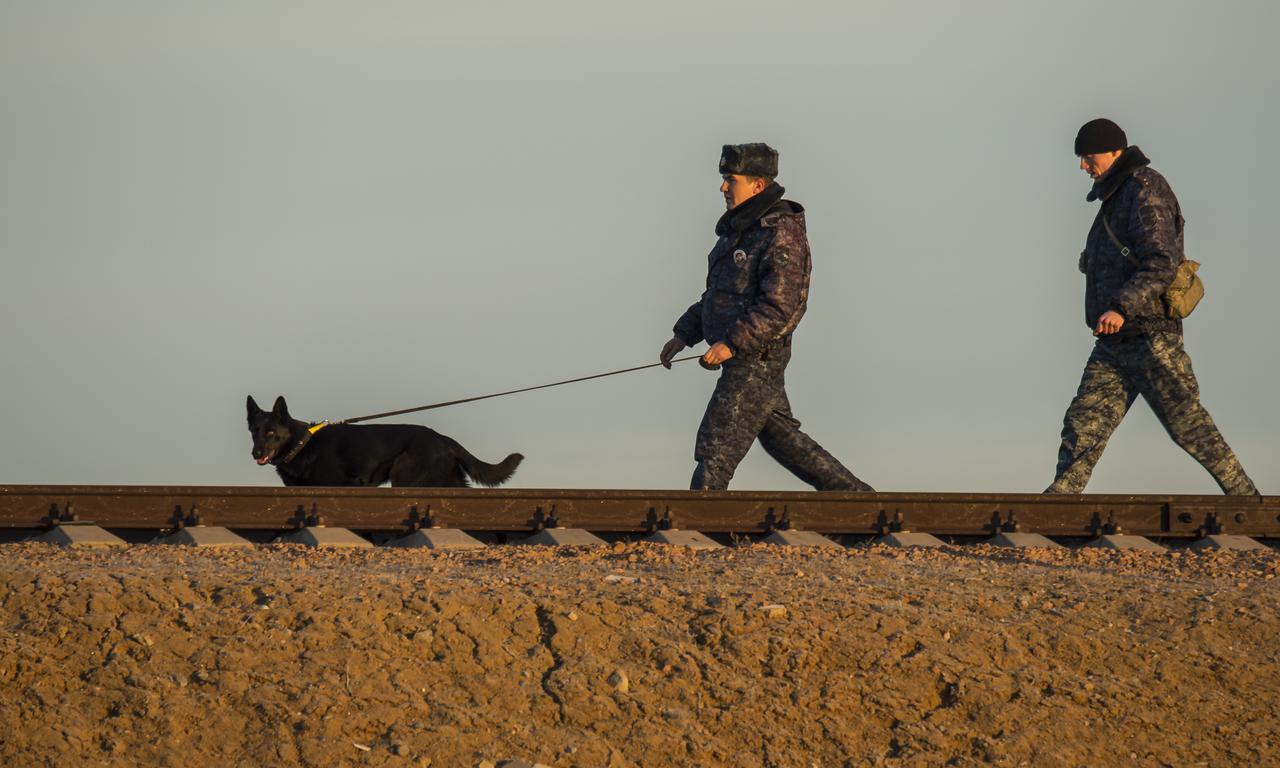
A Security team walks the railroad tracks ahead of the Soyuz TMA-16M spacecraft as it is rolled out by train to the launch pad at the Baikonur Cosmodrome, Kazakhstan, Wednesday, March 25, 2015. NASA Astronaut Scott Kelly, and Russian Cosmonauts Mikhail Kornienko, and Gennady Padalka of the Russian Federal Space Agency (Roscosmos) are scheduled to launch to the International Space Station in the Soyuz TMA-16M spacecraft from the Baikonur Cosmodrome in Kazakhstan March 28, Kazakh time (March 27 Eastern time.) As the one-year crew, Kelly and Kornienko will return to Earth on Soyuz TMA-18M in March 2016. Photo Credit (NASA/Bill Ingalls)
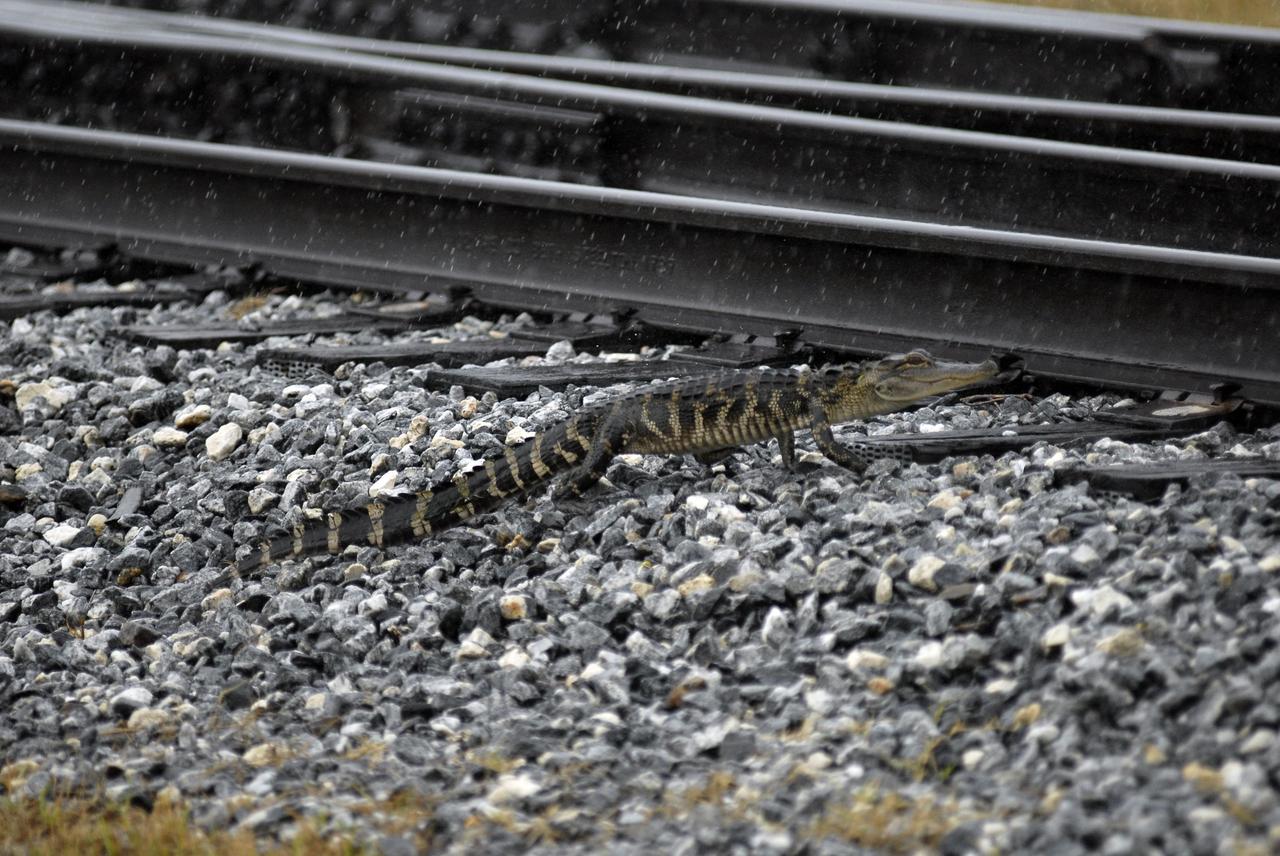
KENNEDY SPACE CENTER, FLA. -- This young alligator approaches the railroad tracks where the train carrying solid rocket booster motor segments is approaching Kennedy Space Center. While enroute, solid rocket motor segments were involved in a derailment in Alabama. The rail cars carrying these segments remained upright and were undamaged. An inspection determined these segment cars could continue on to Florida. The segments themselves will undergo further evaluation at Kennedy before they are cleared for flight. Other segments involved in the derailment will be returned to a plant in Utah for further evaluation. Photo credit: NASA/Kim Shiflett
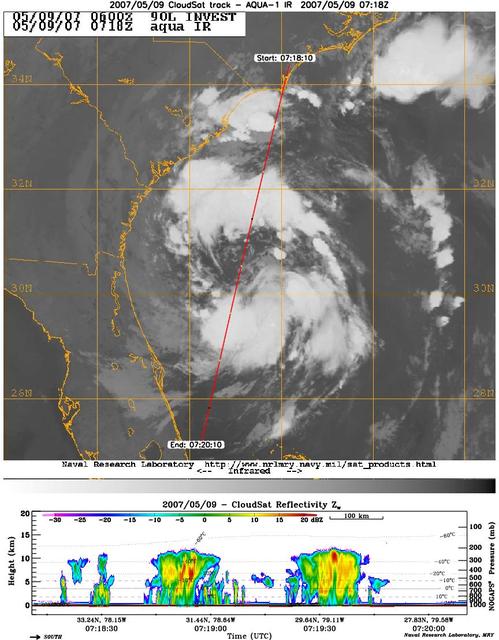
CloudSat's Cloud Profiling Radar captured a profile across Tropical Storm Andrea on Wednesday, May 9, 2007, near the South Carolina/Georgia/Florida Atlantic coast. The upper image shows an infrared view of Tropical Storm Andrea from the Moderate Resolution Imaging Spectroradiometer instrument on NASA's Aqua satellite, with CloudSat's ground track shown as a red line. The lower image is the vertical cross section of radar reflectivity along this path, where the colors indicate the intensity of the reflected radar energy. CloudSat orbits approximately one minute behind Aqua in a satellite formation known as the A-Train. http://photojournal.jpl.nasa.gov/catalog/PIA09379
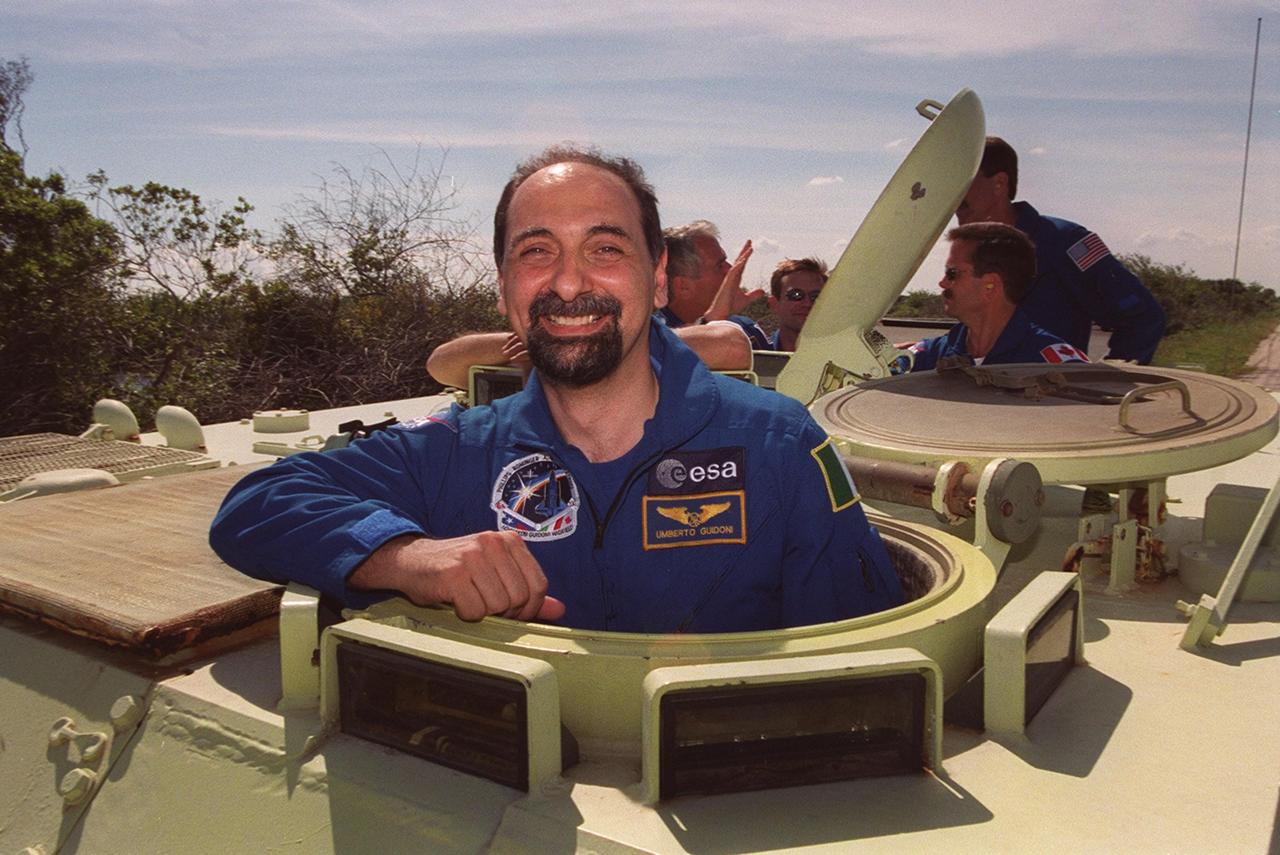
Ready to take the wheel on the M-113 armored carrier is STS-100 Mission Specialist Umberto Guidoni. He and the rest of the crew are taking part in Terminal Countdown Demonstration Test activities, which include emergency escape training, payload walkdown and a simulated launch countdown. The tracked vehicle could be used by the crew in the event of an emergency at the pad during which the crew must make a quick exit from the area. The primary payload on mission STS-100 comprises the Canadian robotic arm, SSRMS, and Multi-Purpose Logistics Module, Raffaello. Launch of Space Shuttle Endeavour on mission STS-100 is targeted for April 19 at 2:41 p.m. EDT from Launch Pad 39A
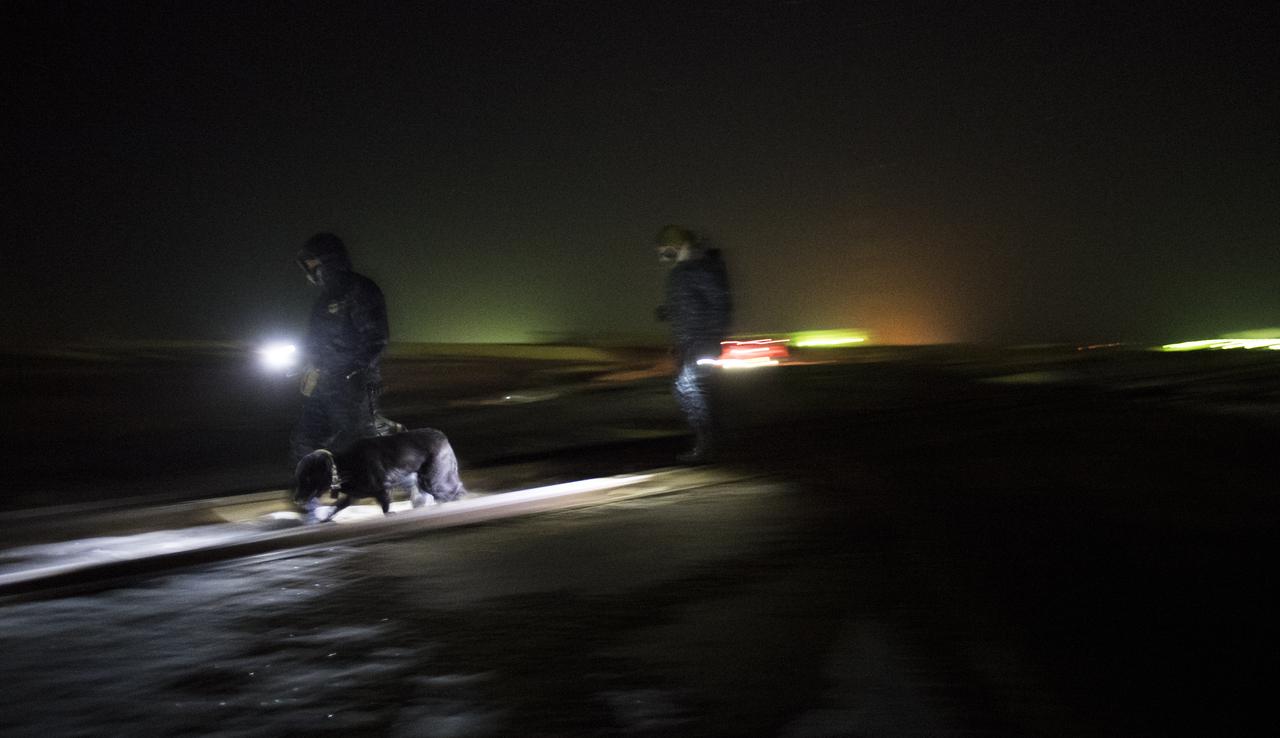
Security personnel walk along railroad tracks ahead of the Soyuz rocket as it is rolled out to the pad by train, Friday, Dec. 15, 2017 at the Baikonur Cosmodrome in Kazakhstan. Expedition 54 Soyuz Commander Anton Shkaplerov of Roscosmos, flight engineer Scott Tingle of NASA, and flight engineer Norishige Kanai of the Japan Aerospace Exploration Agency (JAXA) are scheduled to launch at 2:21 a.m. Eastern Time (1:21 p.m. Baikonur time) on Dec. 17 and will spend the next five months living and working aboard the International Space Station. Photo Credit: (NASA/Joel Kowsky)
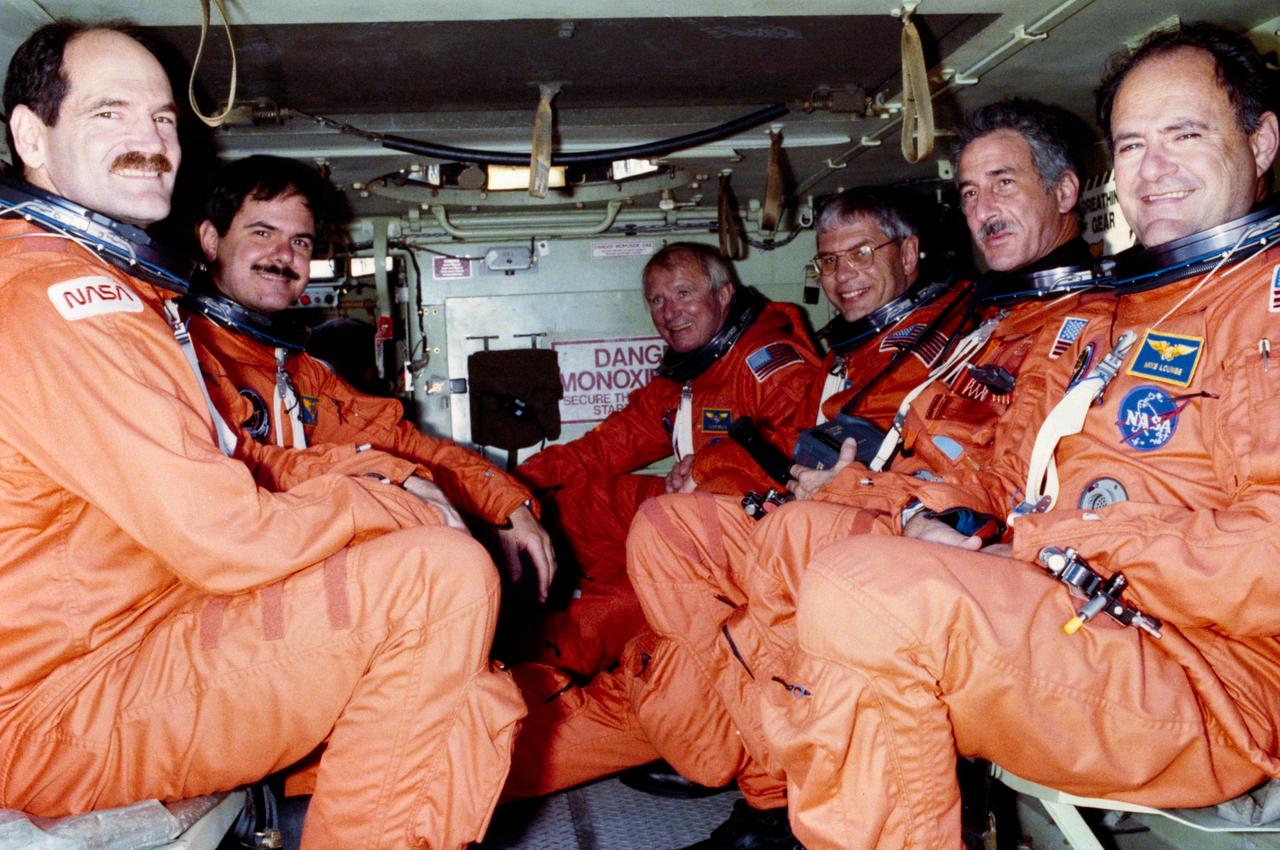
S90-40670 (13 June 1990) --- STS-35 crewmembers take a ride in the M113 tracked vehicle during emergency training conducted during the Terminal Countdown Demonstration Test (TCDT) at the Kennedy Space Center (KSC). From left, wearing launch and entry suits (LES), are pilot Guy S. Gardner, payload specialist Ronald A. Parise, commander Vance D. Brand, mission specialists Robert A. R. Parker, Jeffrey A. Hoffman and John M. Lounge. The two-day TCDT, which began 04-27-90, is a dress rehearsal for launch. STS-35 is set to lift off in May. View provided by KSC with alternate number KSC-90PC-838.
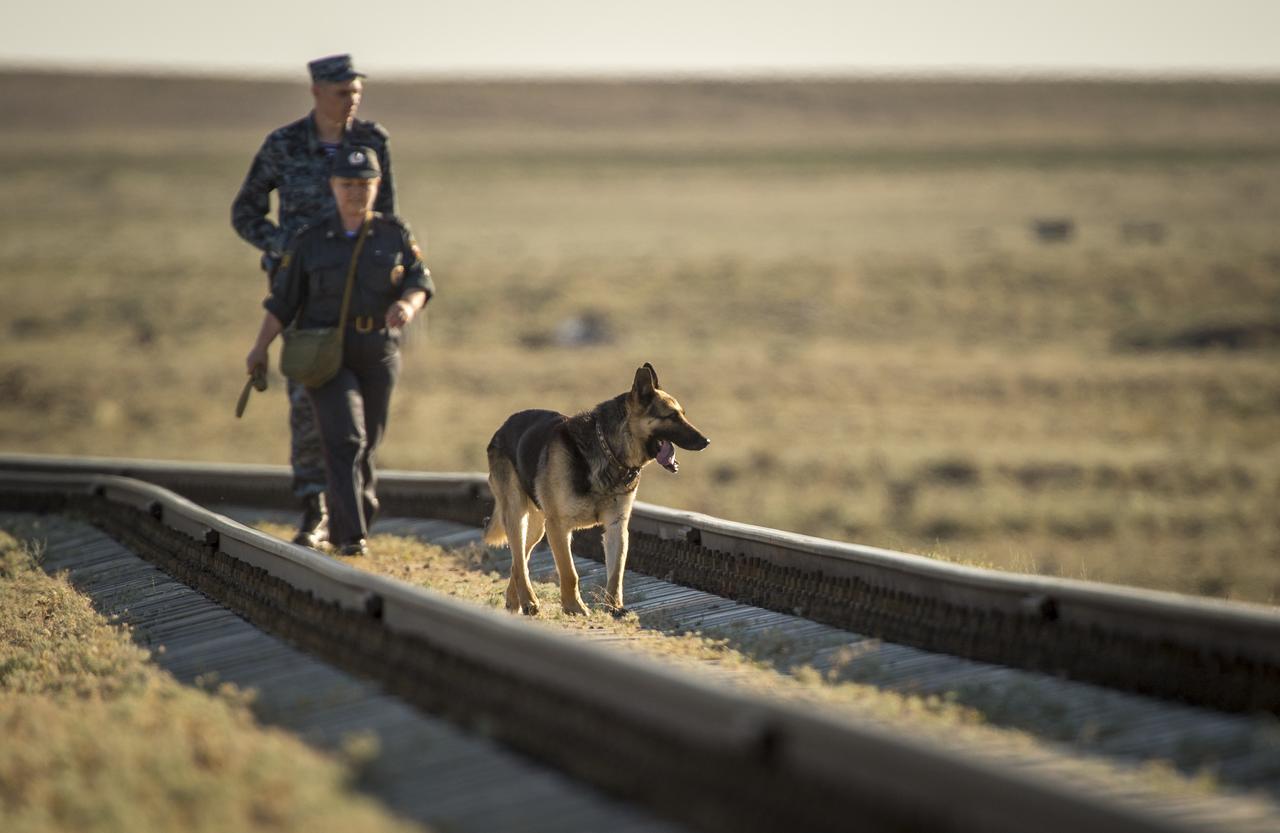
Police walk along railroad tracks with a bomb sniffing dog ahead of the the Soyuz TMA-09M spacecraft as it is rolled out by train to the Baikonur Cosmodrome launch pad, Sunday, May 26, 2013, in Kazakhstan. The launch of the Soyuz rocket to the International Space Station (ISS) with Expedition 36/37 Soyuz Commander Fyodor Yurchikhin of the Russian Federal Space Agency (Roscosmos), Flight Engineers; Luca Parmitano of the European Space Agency, and Karen Nyberg of NASA, is scheduled for Wednesday May 29, Kazakh time. Yurchikhin, Nyberg, and, Parmitano, will remain aboard the station until mid-November. Photo credit: (NASA/Bill Ingalls)
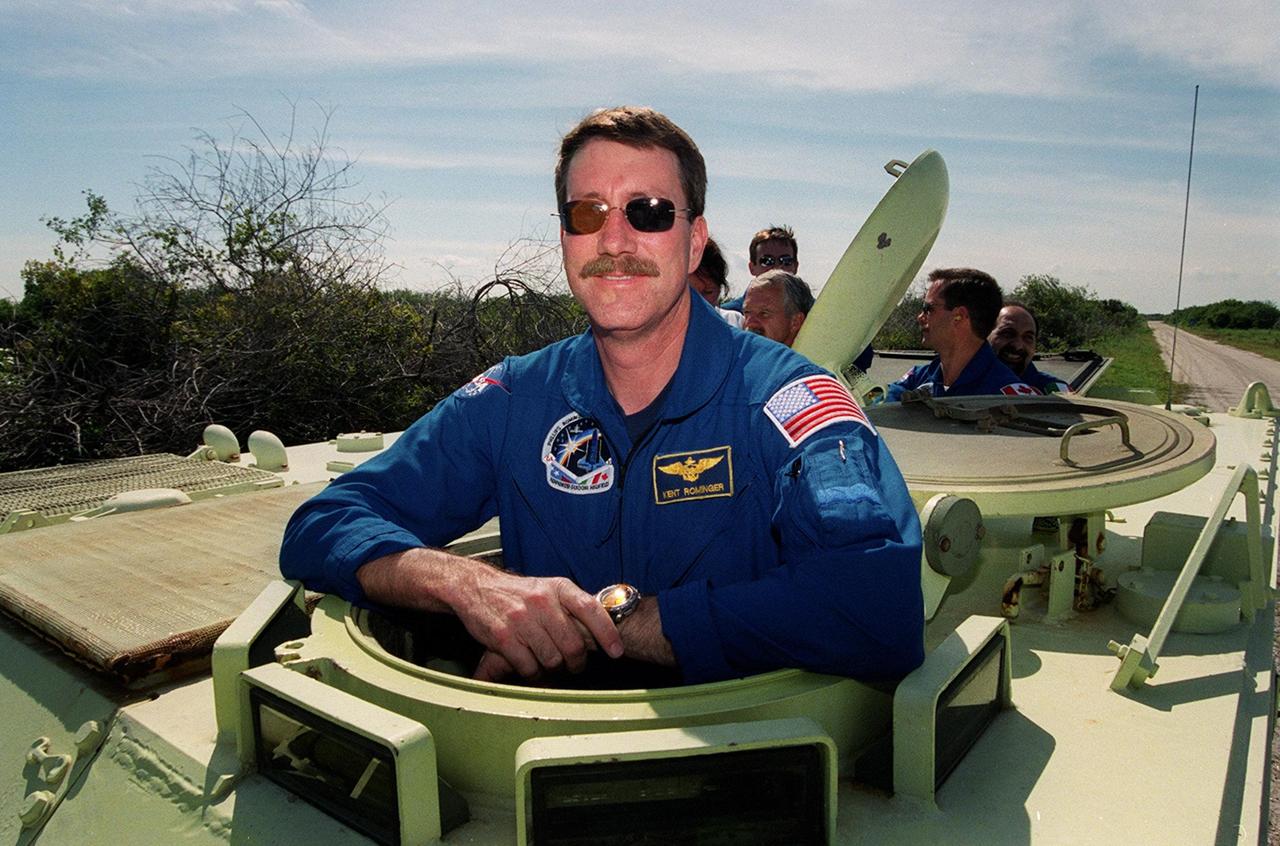
STS-100 Commander Kent V. Rominger is ready to take the wheel on the M-113 armored carrier that could be used by the crew in the event of an emergency at the pad during which the crew must make a quick exit from the area. Driving the tracked vehicle is part of Terminal Countdown Demonstration Test activities, which include emergency escape training, payload walkdown and a simulated launch countdown. The primary payload on mission STS-100 comprises the Canadian robotic arm, SSRMS, and Multi-Purpose Logistics Module, Raffaello. Launch of Space Shuttle Endeavour on mission STS-100 is targeted for April 19 at 2:41 p.m. EDT from Launch Pad 39A
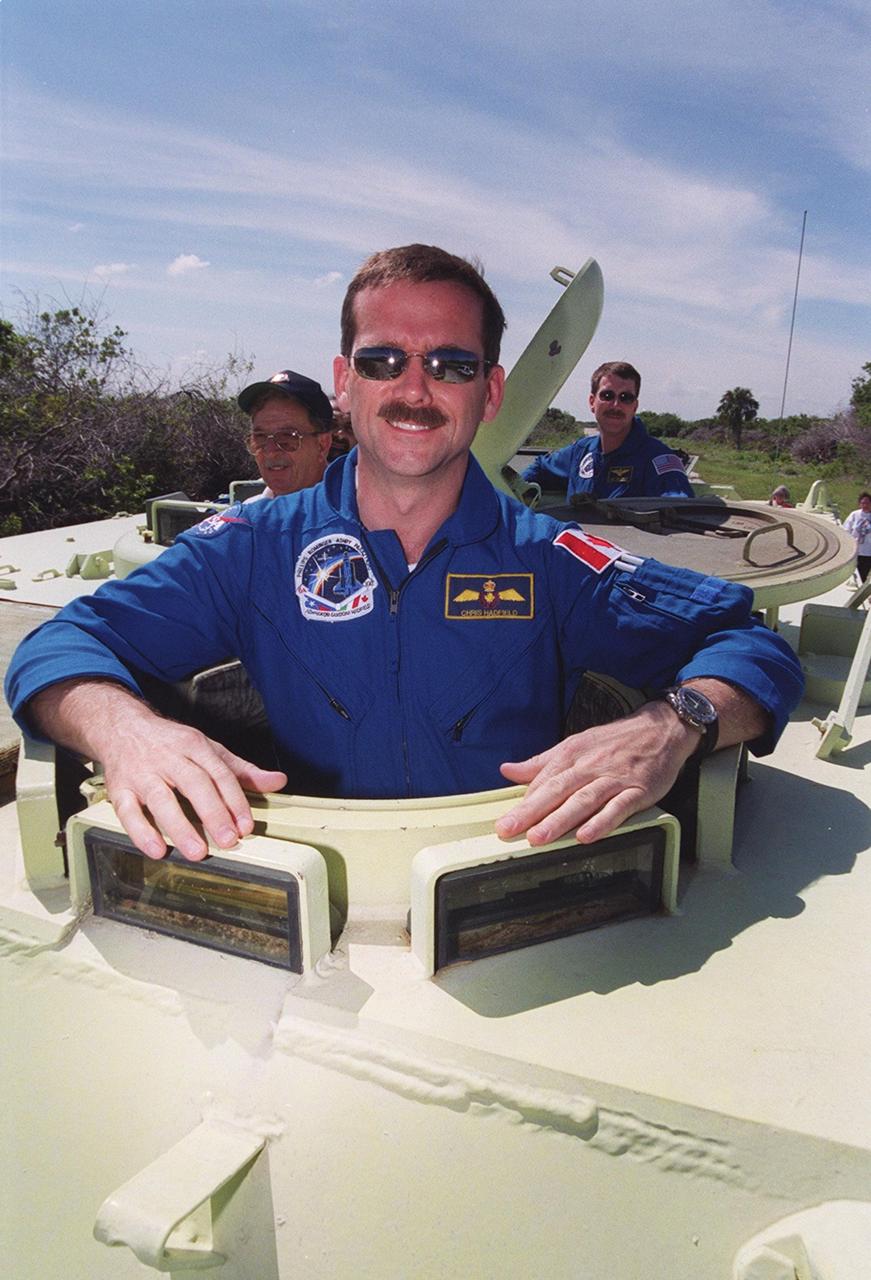
STS-100 Mission Specialist Chris A. Hadfield is ready to take the wheel on the M-113 armored carrier that could be used by the crew in the event of an emergency at the pad during which the crew must make a quick exit from the area. Driving the tracked vehicle is part of Terminal Countdown Demonstration Test activities, which include emergency escape training, payload walkdown and a simulated launch countdown. The primary payload on mission STS-100 comprises the Canadian robotic arm, SSRMS, and Multi-Purpose Logistics Module, Raffaello. Launch of Space Shuttle Endeavour on mission STS-100 is targeted for April 19 at 2:41 p.m. EDT from Launch Pad 39A

KENNEDY SPACE CENTER, FLA. -- This young alligator climbs on the railroad tracks where the train carrying solid rocket booster motor segments is approaching Kennedy Space Center. While enroute, solid rocket motor segments were involved in a derailment in Alabama. The rail cars carrying these segments remained upright and were undamaged. An inspection determined these segment cars could continue on to Florida. The segments themselves will undergo further evaluation at Kennedy before they are cleared for flight. Other segments involved in the derailment will be returned to a plant in Utah for further evaluation. Photo credit: NASA/Kim Shiflett
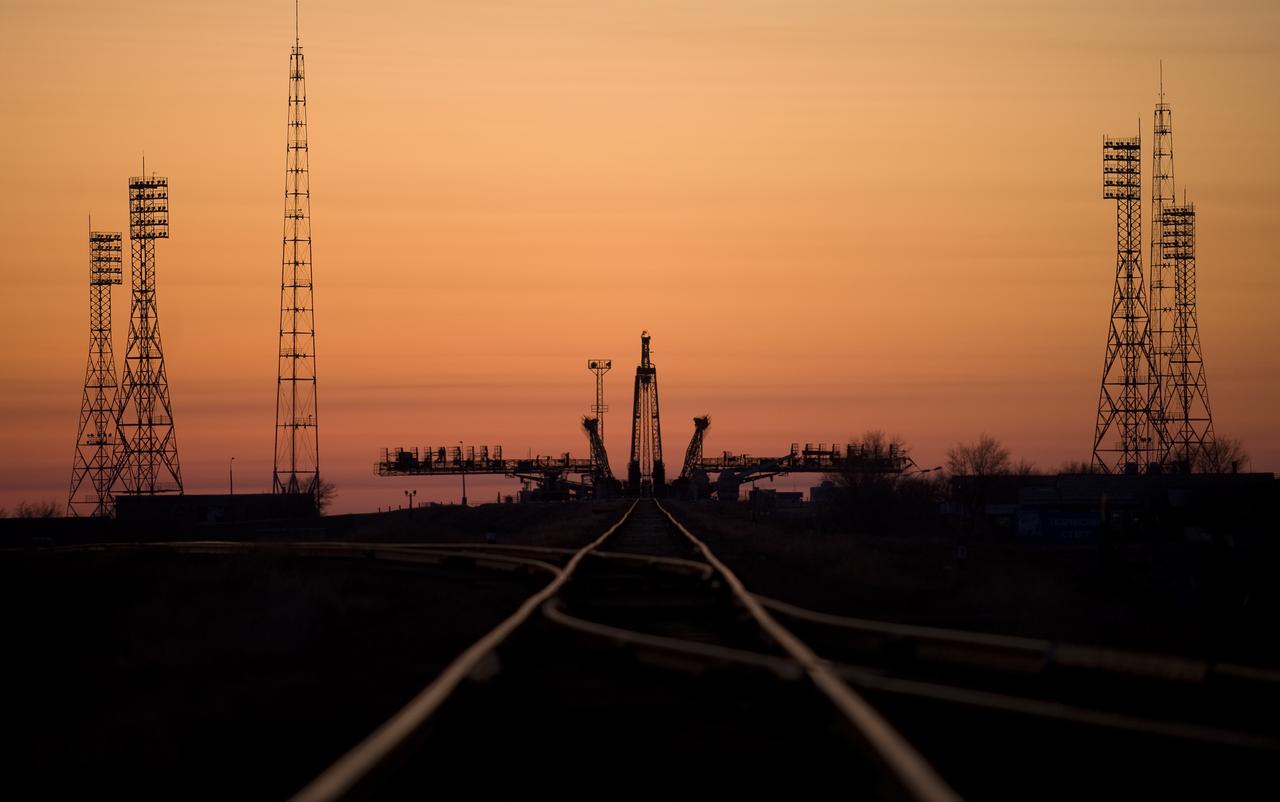
The Soyuz launch pad is seen about an hour before the Soyuz rocket is rolled out to the launch pad Tuesday, March 24, 2009 at the Baikonur Cosmodrome in Kazakhstan. The Soyuz is scheduled to launch the crew of Expedition 19 and a spaceflight participant on March 26, 2009. Photo Credit: (NASA/Bill Ingalls)
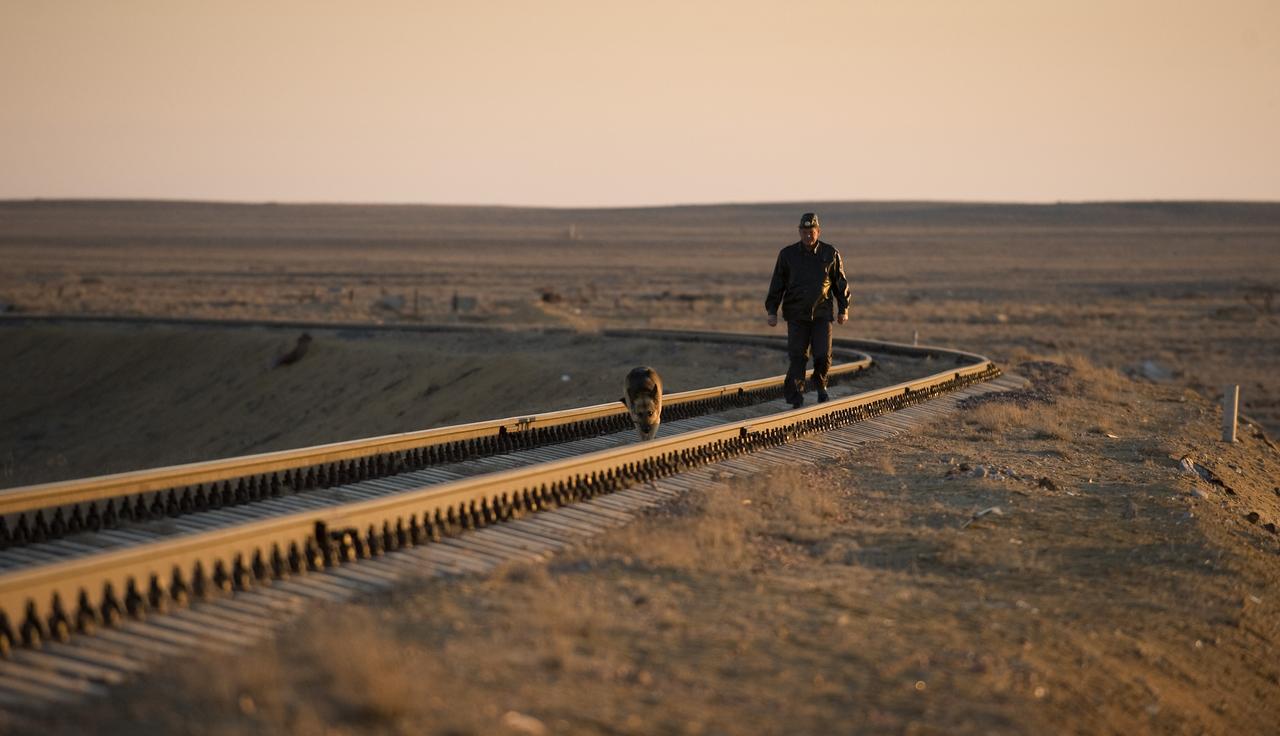
A Russian security member and his dog check the railroad tracks ahead of the Soyuz rocket roll out to the launch pad Tuesday, March 24, 2009 at the Baikonur Cosmodrome in Kazakhstan. The Soyuz is scheduled to launch the crew of Expedition 19 and a spaceflight participant on March 26, 2009. Photo Credit: (NASA/Bill Ingalls)
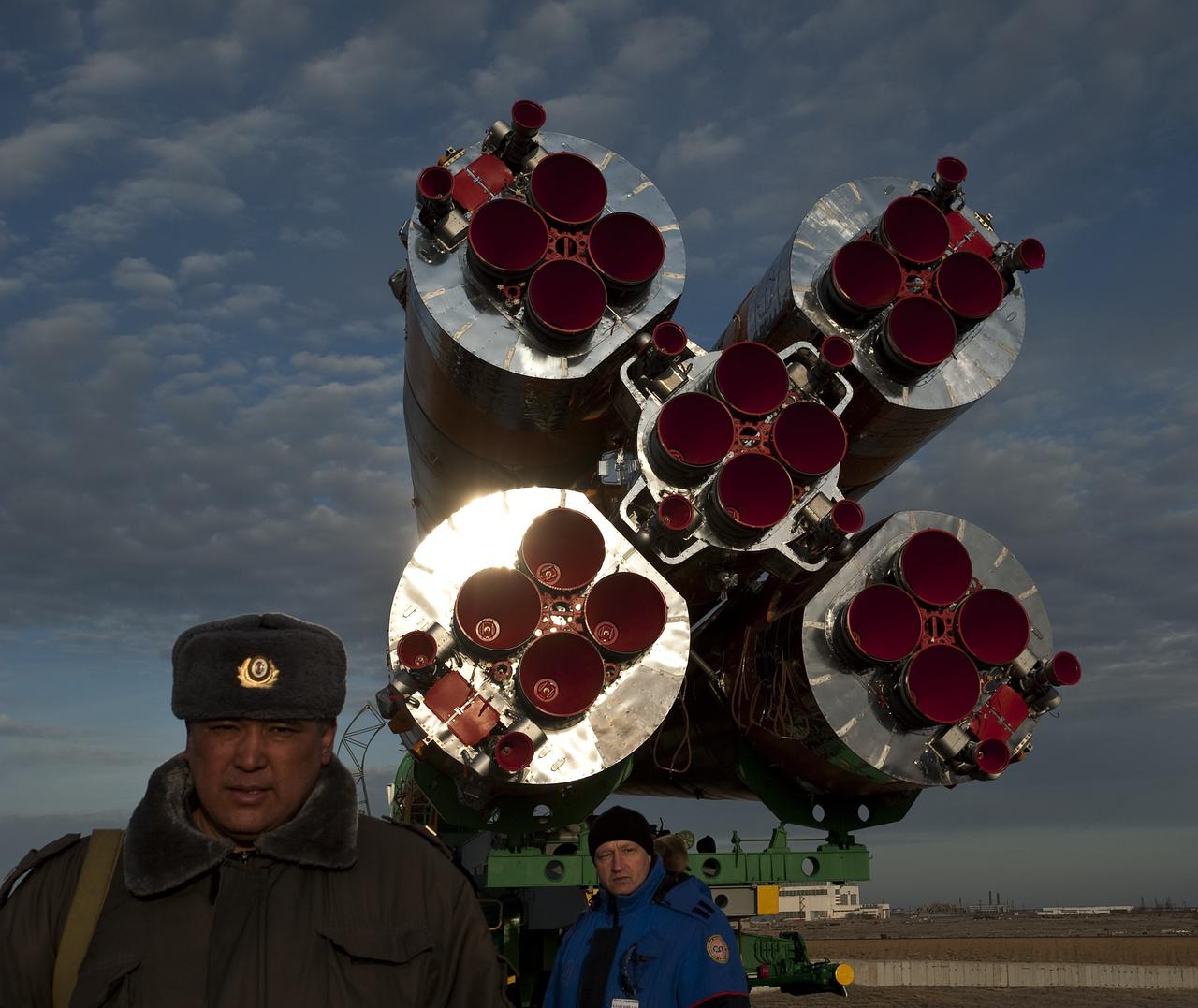
The Soyuz TMA-18 spacecraft is rolled out by train to the launch pad at the Baikonur Cosmodrome, Kazakhstan, Wednesday, March, 31, 2010. The launch of the Soyuz spacecraft with Expedition 23 Soyuz Commander Alexander Skvortsov of Russia, Flight Engineer Mikhail Kornienko of Russia and NASA Flight Engineer Tracy Caldwell Dyson is scheduled for Friday, April 2, 2010 at 10:04 a.m. Kazakhstan time. Photo Credit: (NASA/Carla Cioffi)
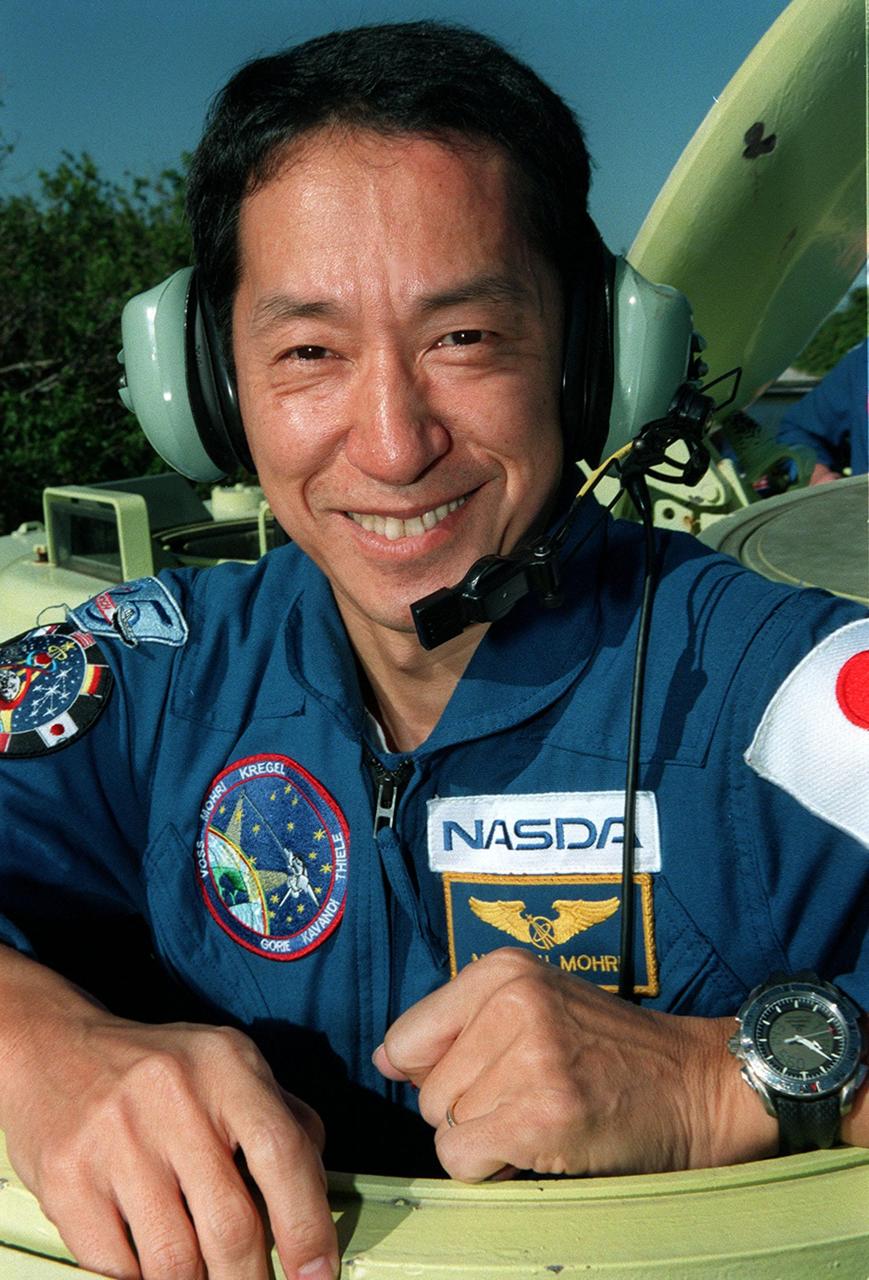
STS-99 Mission Specialist Mamoru Mohri, who is with the National Space Development Agency (NASDA) of Japan, smiles during training on the M-113, an armored personnel carrier that is part of emergency egress training during Terminal Countdown Demonstration Test (TCDT) activities. The tracked vehicle could be used by the crew in the event of an emergency at the pad during which the crew must make a quick exit from the area. TCDT provides the crew with simulated countdown exercises, emergency egress training, and opportunities to inspect the mission payloads in the orbiter's payload bay. STS-99 is the Shuttle Radar Topography Mission, which will chart a new course, using two antennae and a 200-foot-long section of space station-derived mast protruding from the payload bay to produce unrivaled 3-D images of the Earth's surface. The result of the Shuttle Radar Topography Mission could be close to 1 trillion measurements of the Earth's topography. Besides contributing to the production of better maps, these measurements could lead to improved water drainage modeling, more realistic flight simulators, better locations for cell phone towers, and enhanced navigation safety. Launch of Endeavour on the 11-day mission is scheduled for Jan. 31 at 12:47 p.m. EST
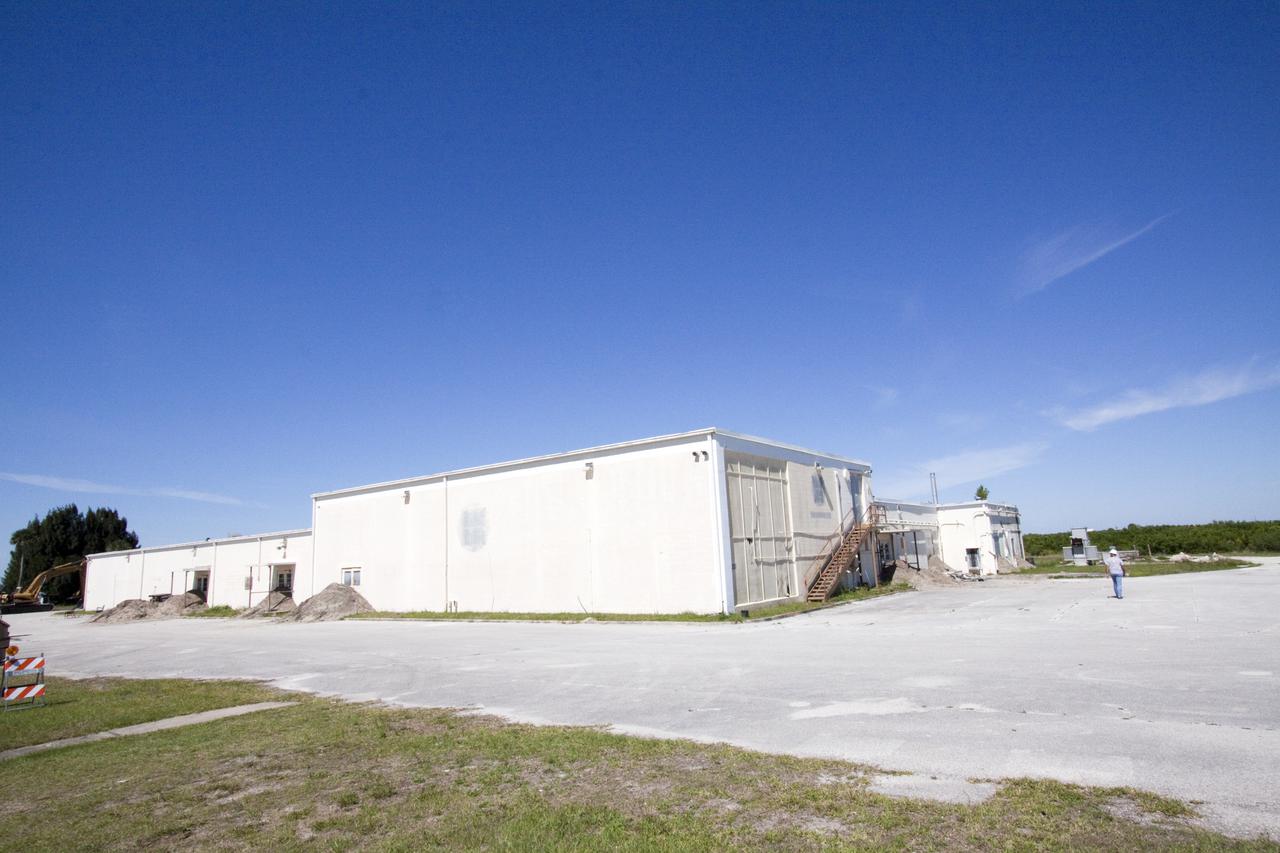
CAPE CANAVERAL, Fla. – At Cape Canaveral Air Force Station in Florida, preparations are under way to tear down the Mercury Mission Control Center. The original building, constructed between 1956 and 1958, was last modified in 1963. The center succumbed to the two worst enemies of structures along the space coast - time and salt air - necessitating that it be demolished as a safety measure. The facility served as mission control during all the Project Mercury missions, as well as the first three flights of the Gemini Program. The center housed the flight controllers whose duty was to take over flight control after liftoff and follow it through until splashdown. Additionally, it supported vehicle checkout, spacecraft tracking, and astronaut training. With Gemini IV, mission control moved to Houston, and the facility took on the roles of launch control and tracking station. In 1999, much of the equipment and furnishings from the flight control area was moved to Kennedy Space Center's Visitor Complex. A re-created mission control room currently is on display in the complex's Dr. Kurt H. Debus Conference Facility. Speegle II of Cocoa, Fla., was awarded the contract for the deconstruction project. Frank-Lin Excavating is performing the demolition for Sunrise Systems of Brevard, a subcontractor to Speegle II. Photo credit: NASA_Jack Pfaller
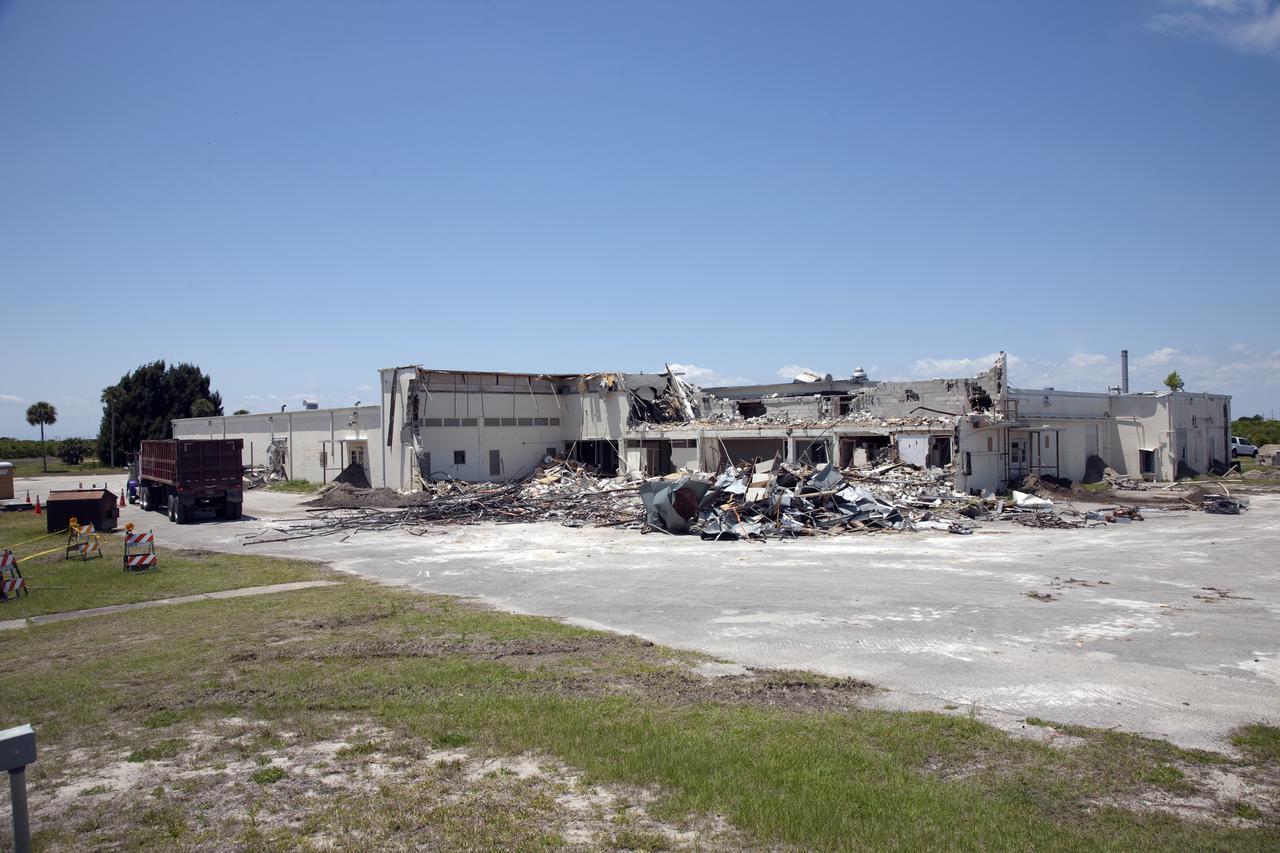
CAPE CANAVERAL, Fla. – At Cape Canaveral Air Force Station in Florida, deconstruction of the Mercury Mission Control Center is under way. The original building, constructed between 1956 and 1958, was last modified in 1963. The center succumbed to the two worst enemies of structures along the space coast - time and salt air - necessitating that it be demolished as a safety measure. The facility served as mission control during all the Project Mercury missions, as well as the first three flights of the Gemini Program. The center housed the flight controllers whose duty was to take over flight control after liftoff and follow it through until splashdown. Additionally, it supported vehicle checkout, spacecraft tracking, and astronaut training. With Gemini IV, mission control moved to Houston, and the facility took on the roles of launch control and tracking station. In 1999, much of the equipment and furnishings from the flight control area was moved to Kennedy Space Center's Visitor Complex. A re-created mission control room currently is on display in the complex's Dr. Kurt H. Debus Conference Facility. Speegle II of Cocoa, Fla., was awarded the contract for the deconstruction project. Frank-Lin Excavating is performing the demolition for Sunrise Systems of Brevard, a subcontractor to Speegle II. Photo credit: NASA_Dimitri Gerondidakis
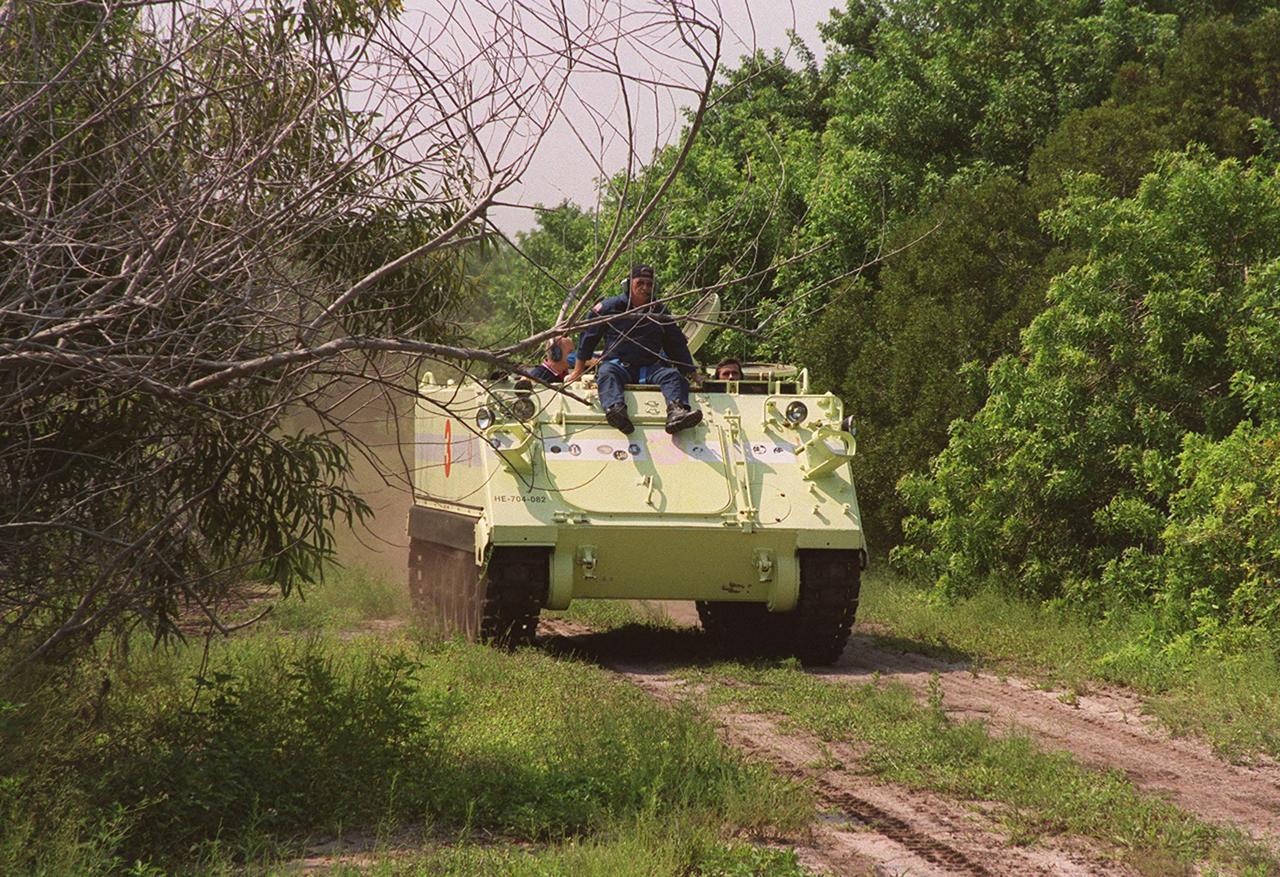
Making hasty tracks along the road, the M113 armored personnel carrier kicks back some dust. STS-106 Yuri I. Malenchenko is at the wheel, while Capt. George Hoggard, trainer with the KSC Fire Department, rides in front. The M113 is part of emergency egress training during Terminal Countdown Demonstration Test (TCDT) activities. The tracked vehicle could be used by the crew in the event of an emergency at the pad during which the crew must make a quick exit from the area. The TCDT also provides simulated countdown exercises and opportunities to inspect the mission payloads in the orbiter’s payload bay. STS-106 is scheduled to launch Sept. 8, 2000, at 8:31 a.m. EDT from Launch Pad 39B. On the 11-day mission, the seven-member crew will perform support tasks on orbit, transfer supplies and prepare the living quarters in the newly arrived Zvezda Service Module. The first long-duration crew, dubbed “Expedition One,” is due to arrive at the Station in late fall
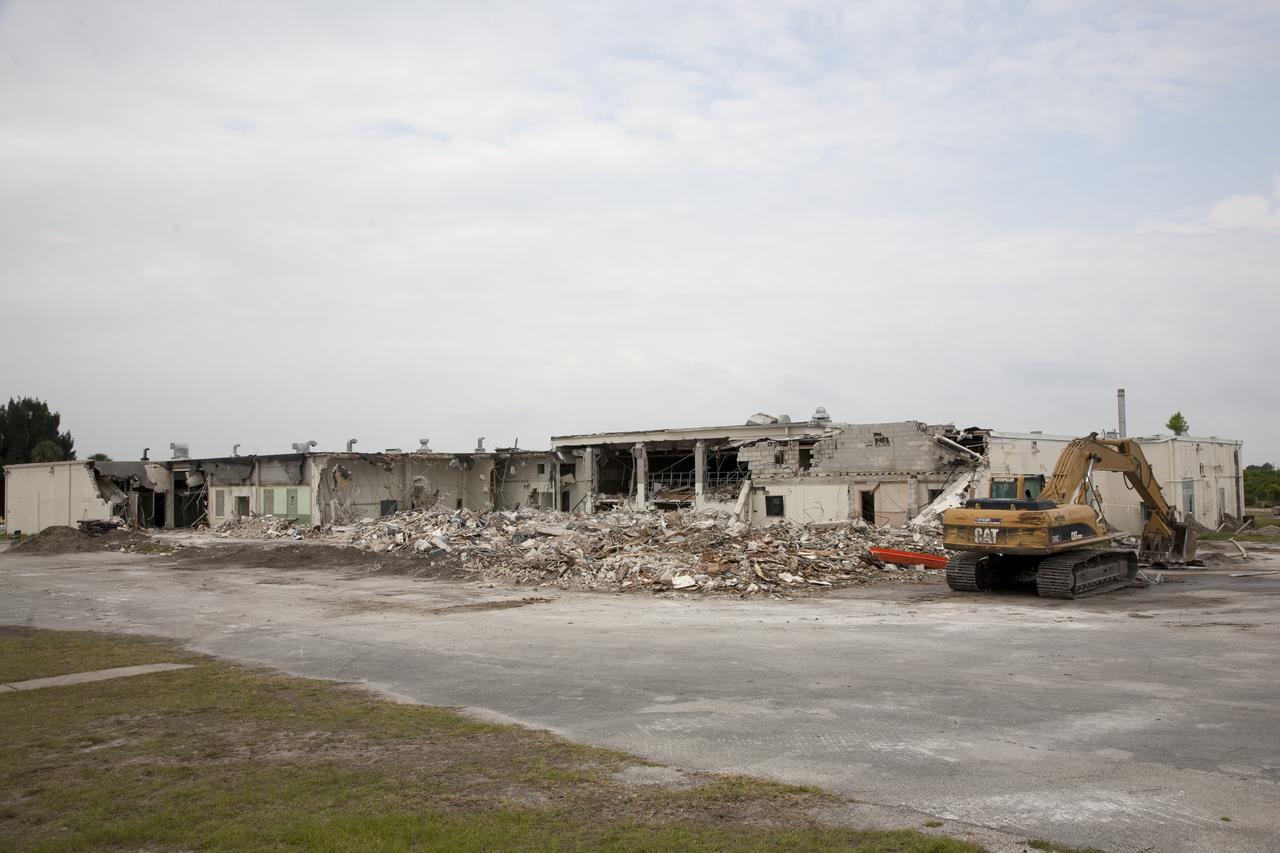
CAPE CANAVERAL, Fla. – At Cape Canaveral Air Force Station in Florida, the control room of the Mercury Mission Control Center is exposed to the elements during the deconstruction of the dilapidated facility. The original building, constructed between 1956 and 1958, was last modified in 1963. The center succumbed to the two worst enemies of structures along the space coast - time and salt air - necessitating that it be demolished as a safety measure. The facility served as mission control during all the Project Mercury missions, as well as the first three flights of the Gemini Program. The center housed the flight controllers whose duty was to take over flight control after liftoff and follow it through until splashdown. Additionally, it supported vehicle checkout, spacecraft tracking, and astronaut training. With Gemini IV, mission control moved to Houston, and the facility took on the roles of launch control and tracking station. In 1999, much of the equipment and furnishings from the flight control area was moved to Kennedy Space Center's Visitor Complex. A re-created mission control room currently is on display in the complex's Dr. Kurt H. Debus Conference Facility. Speegle II of Cocoa, Fla., was awarded the contract for the deconstruction project. Frank-Lin Excavating is performing the demolition for Sunrise Systems of Brevard, a subcontractor to Speegle II. Photo credit: NASA_Dimitri Gerondidakis
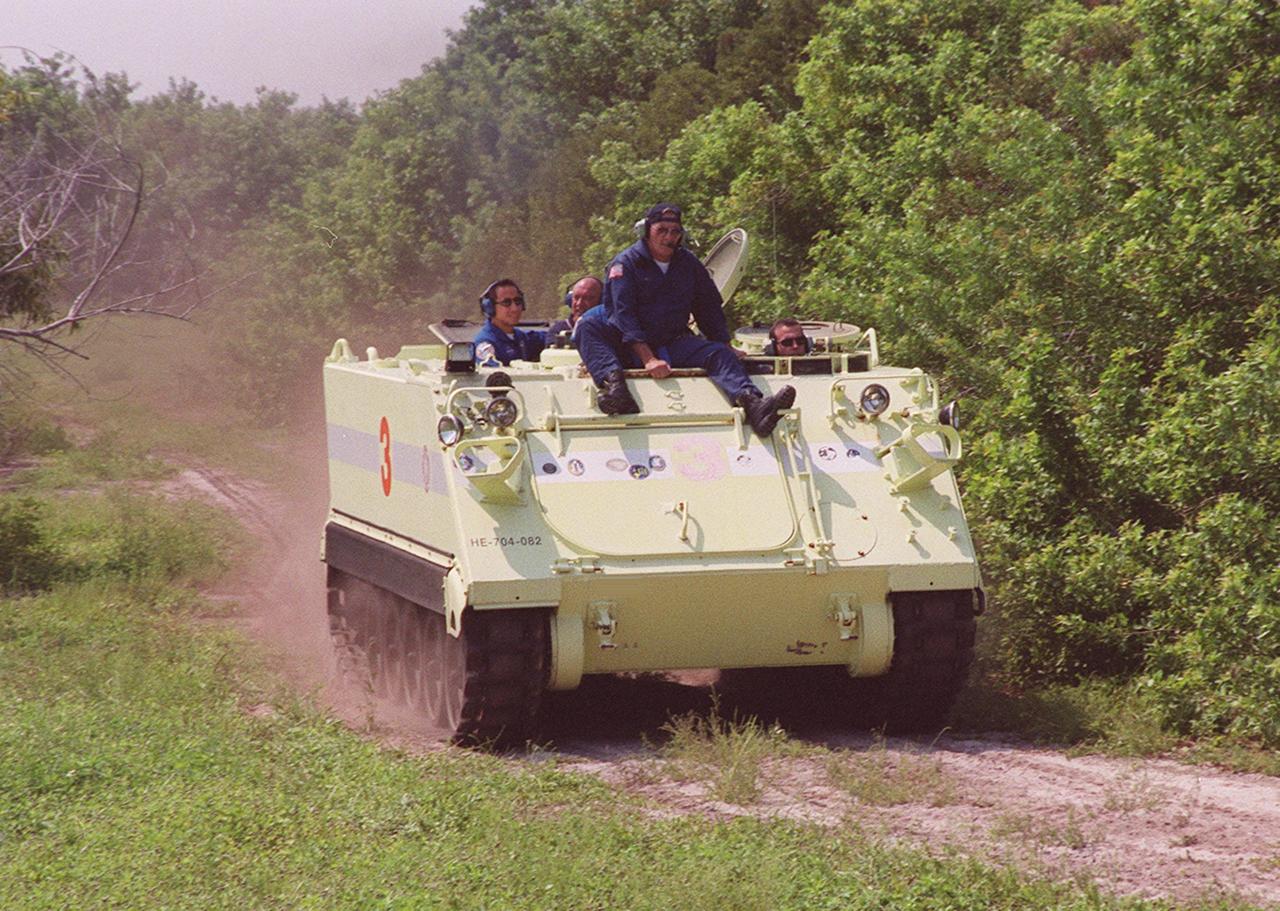
An M113, a small armored personnel carrier, makes tracks down the road with STS-106 Mission Specialist Richard A. Mastracchio (right) at the wheel and Capt. George Hoggard, trainer with the KSC Fire Department, on top (in front). Mission Specialist Edward T. Lu rides behind (far left). The carrier is part of emergency egress training during Terminal Countdown Demonstration Test (TCDT) activities. The tracked vehicle could be used by the crew in the event of an emergency at the pad during which the crew must make a quick exit from the area. The TCDT also provides simulated countdown exercises and opportunities to inspect the mission payloads in the orbiter’s payload bay. STS-106 is scheduled to launch Sept. 8, 2000, at 8:31 a.m. EDT from Launch Pad 39B. On the 11-day mission, the seven-member crew will perform support tasks on orbit, transfer supplies and prepare the living quarters in the newly arrived Zvezda Service Module. The first long-duration crew, dubbed “Expedition One,” is due to arrive at the Station in late fall
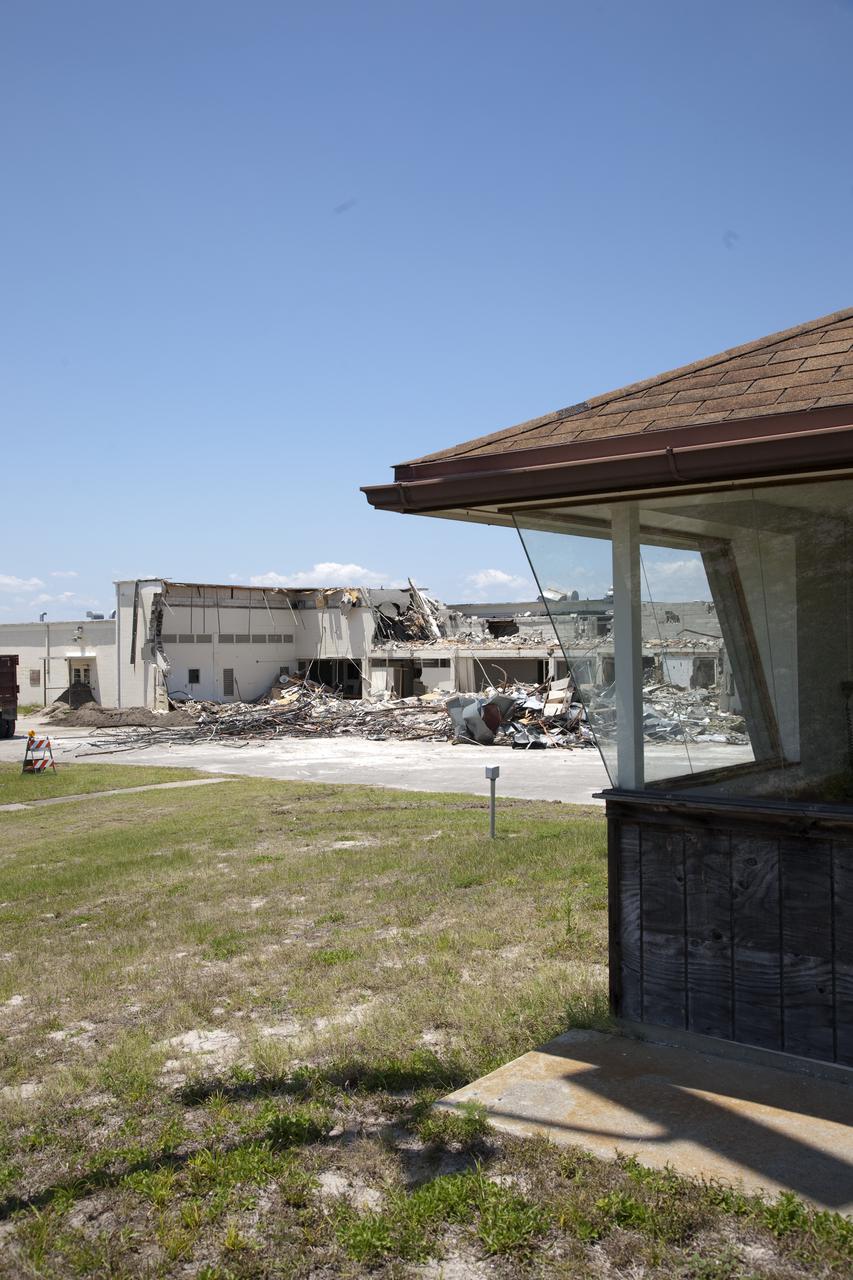
CAPE CANAVERAL, Fla. – At Cape Canaveral Air Force Station in Florida, demolition of the Mercury Mission Control Center has begun. The original building, constructed between 1956 and 1958, was last modified in 1963. The center succumbed to the two worst enemies of structures along the space coast - time and salt air - necessitating that it be demolished as a safety measure. The facility served as mission control during all the Project Mercury missions, as well as the first three flights of the Gemini Program. The center housed the flight controllers whose duty was to take over flight control after liftoff and follow it through until splashdown. Additionally, it supported vehicle checkout, spacecraft tracking, and astronaut training. With Gemini IV, mission control moved to Houston, and the facility took on the roles of launch control and tracking station. In 1999, much of the equipment and furnishings from the flight control area was moved to Kennedy Space Center's Visitor Complex. A re-created mission control room currently is on display in the complex's Dr. Kurt H. Debus Conference Facility. Speegle II of Cocoa, Fla., was awarded the contract for the deconstruction project. Frank-Lin Excavating is performing the demolition for Sunrise Systems of Brevard, a subcontractor to Speegle II. Photo credit: NASA_Dimitri Gerondidakis
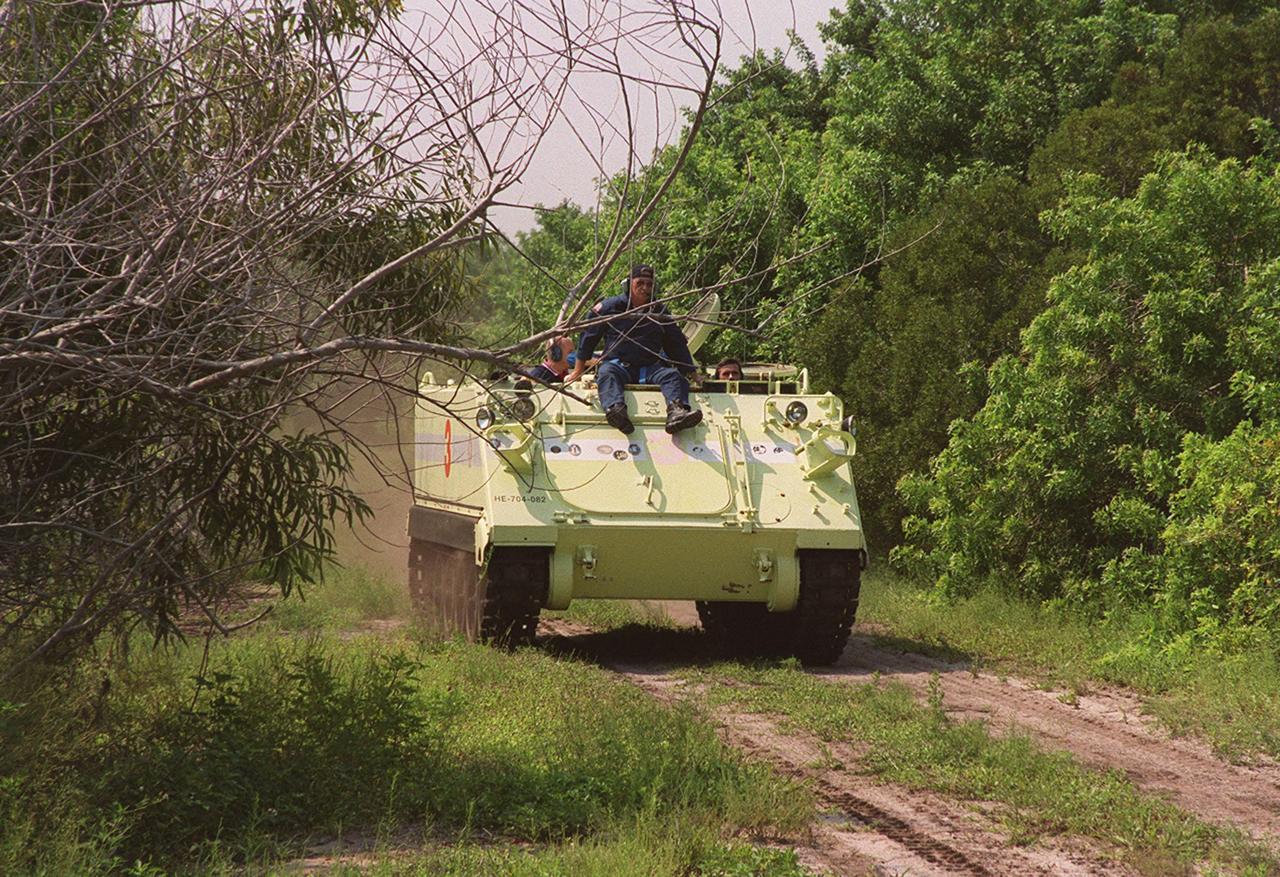
Making hasty tracks along the road, the M113 armored personnel carrier kicks back some dust. STS-106 Yuri I. Malenchenko is at the wheel, while Capt. George Hoggard, trainer with the KSC Fire Department, rides in front. The M113 is part of emergency egress training during Terminal Countdown Demonstration Test (TCDT) activities. The tracked vehicle could be used by the crew in the event of an emergency at the pad during which the crew must make a quick exit from the area. The TCDT also provides simulated countdown exercises and opportunities to inspect the mission payloads in the orbiter’s payload bay. STS-106 is scheduled to launch Sept. 8, 2000, at 8:31 a.m. EDT from Launch Pad 39B. On the 11-day mission, the seven-member crew will perform support tasks on orbit, transfer supplies and prepare the living quarters in the newly arrived Zvezda Service Module. The first long-duration crew, dubbed “Expedition One,” is due to arrive at the Station in late fall
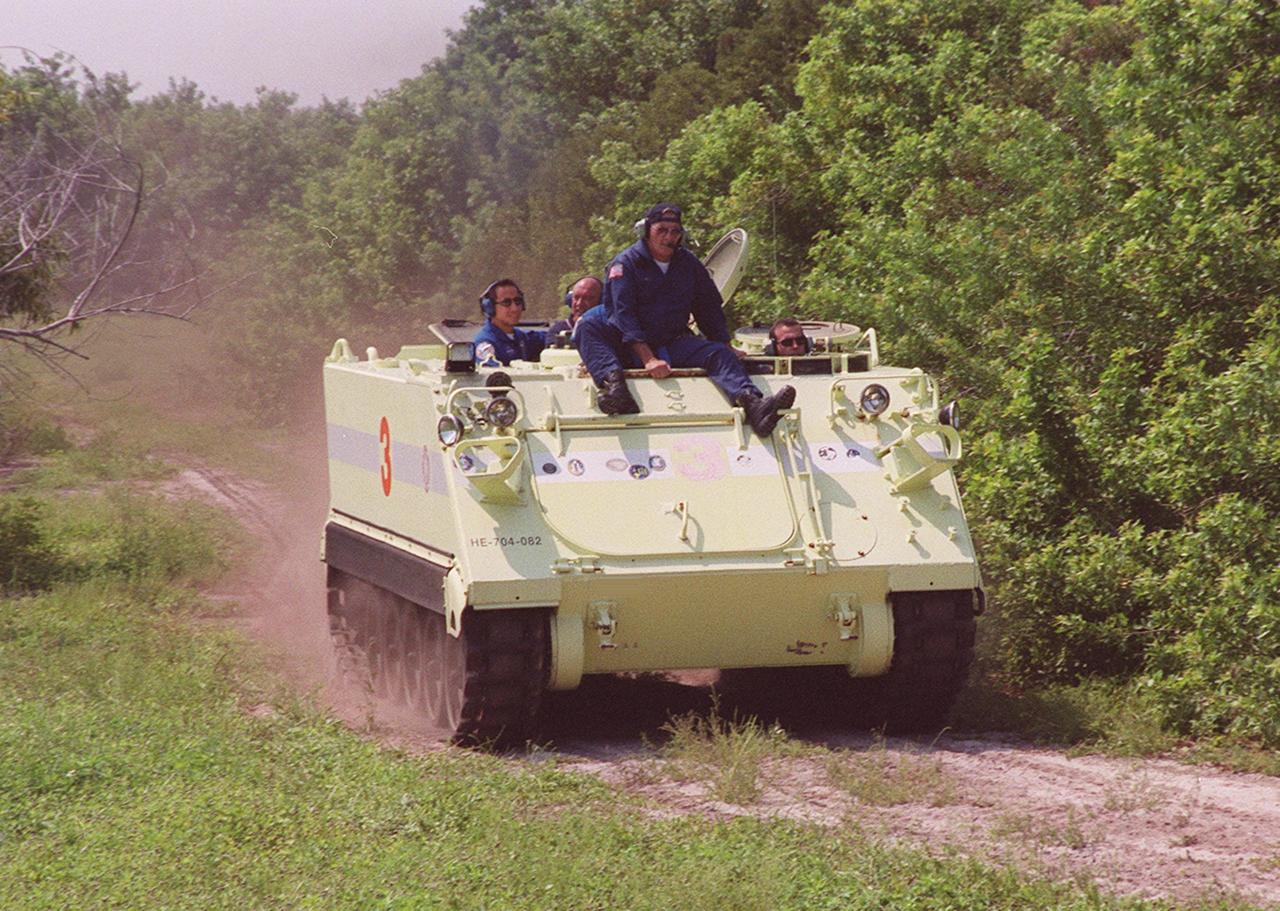
An M113, a small armored personnel carrier, makes tracks down the road with STS-106 Mission Specialist Richard A. Mastracchio (right) at the wheel and Capt. George Hoggard, trainer with the KSC Fire Department, on top (in front). Mission Specialist Edward T. Lu rides behind (far left). The carrier is part of emergency egress training during Terminal Countdown Demonstration Test (TCDT) activities. The tracked vehicle could be used by the crew in the event of an emergency at the pad during which the crew must make a quick exit from the area. The TCDT also provides simulated countdown exercises and opportunities to inspect the mission payloads in the orbiter’s payload bay. STS-106 is scheduled to launch Sept. 8, 2000, at 8:31 a.m. EDT from Launch Pad 39B. On the 11-day mission, the seven-member crew will perform support tasks on orbit, transfer supplies and prepare the living quarters in the newly arrived Zvezda Service Module. The first long-duration crew, dubbed “Expedition One,” is due to arrive at the Station in late fall
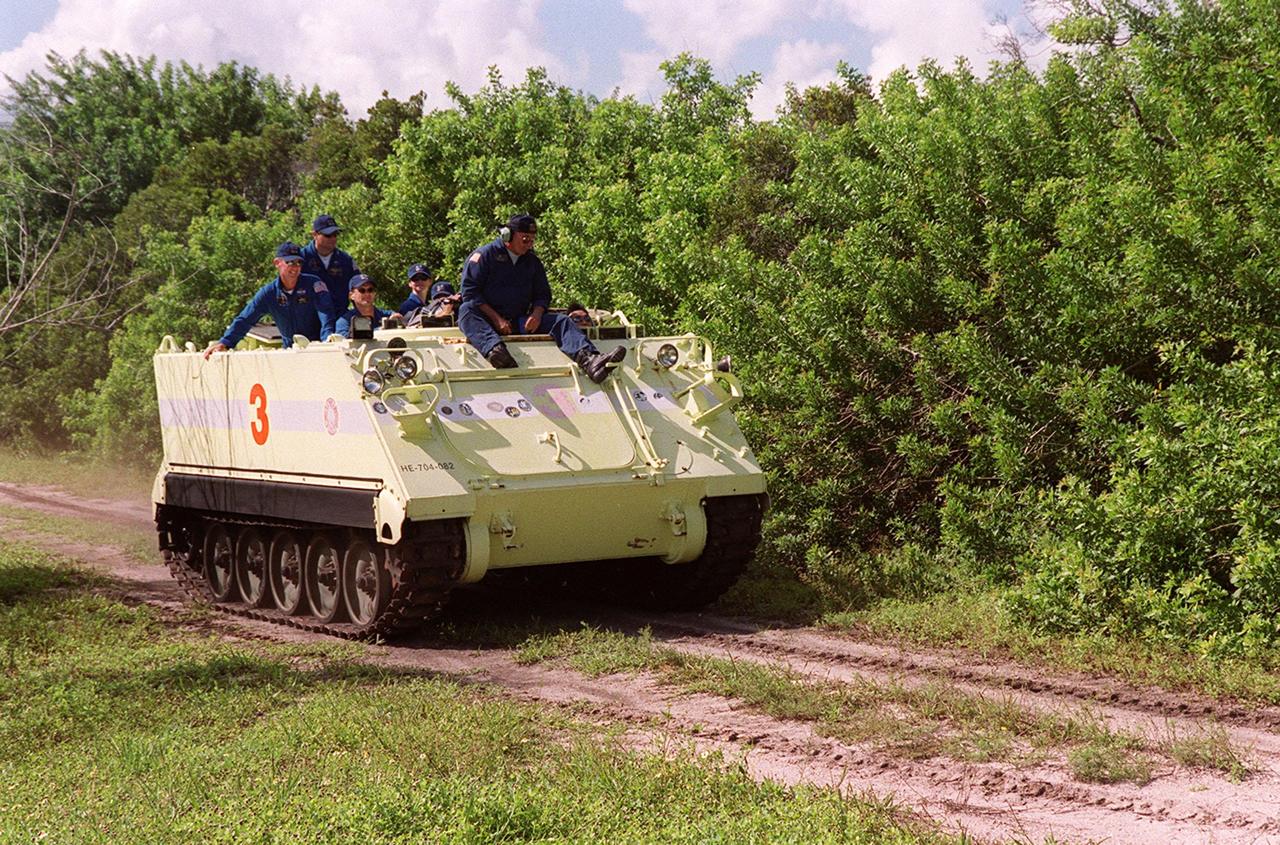
With Capt. George Hoggard, trainer with the KSC Fire Department, riding on top, Mission Specialist Koichi Wakata of Japan practices driving the M-113, part of emergency egress training during Terminal Countdown Demonstration Test (TCDT) activities. Riding in the back (on the left) are other crew members, waiting their turn to drive. The tracked vehicle could be used by the crew in the event of an emergency at the pad during which the crew must make a quick exit from the area. The TCDT also provides simulated countdown exercises and opportunities to inspect the mission payloads in the orbiter’s payload bay. STS-92 is scheduled to launch Oct. 5 at 9:30 p.m. EDT on the fifth flight to the International Space Station. It will carry two elements of the Space Station, the Integrated Truss Structure Z1 and the third Pressurized Mating Adapter. The mission is also the 100th flight in the Shuttle program
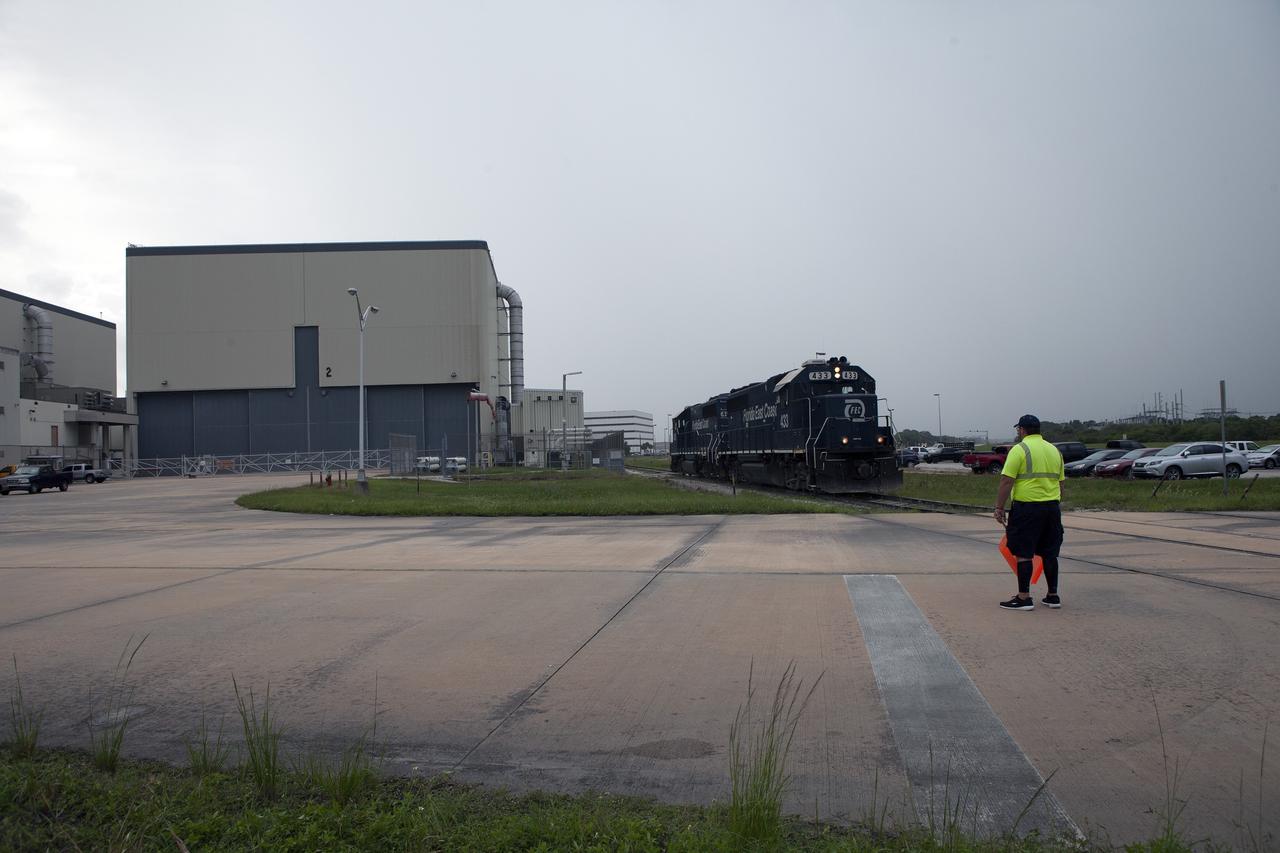
CAPE CANAVERAL, Fla. – Coupled Florida East Coast Railway, or FEC, locomotives No. 433 and No. 428 make the first run past the Orbiter Processing Facility and Thermal Protection System Facility in Launch Complex 39 at NASA’s Kennedy Space Center in Florida during the Rail Vibration Test for the Canaveral Port Authority. Seismic monitors are collecting data as the train passes by. The purpose of the test is to collect amplitude, frequency and vibration test data utilizing two Florida East Coast locomotives operating on KSC tracks to ensure that future railroad operations will not affect launch vehicle processing at the center. Buildings instrumented for the test include the Rotation Processing Surge Facility, Thermal Protection Systems Facility, Vehicle Assembly Building, Orbiter Processing Facility and Booster Fabrication Facility. Photo credit: NASA/Daniel Casper

STS-106 Mission Specialist Edward T. Lu grins over the chance for his turn to drive the M113 armored personnel carrier. The M113 is an armored personnel carrier that is part of emergency egress training during Terminal Countdown Demonstration Test (TCDT) activities. The tracked vehicle could be used by the crew in the event of an emergency at the pad during which the crew must make a quick exit from the area. The TCDT also provides simulated countdown exercises and opportunities to inspect the mission payloads in the orbiter’s payload bay. STS-106 is scheduled to launch Sept. 8, 2000, at 8:31 a.m. EDT from Launch Pad 39B. On the 11-day mission, the seven-member crew will perform support tasks on orbit, transfer supplies and prepare the living quarters in the newly arrived Zvezda Service Module. The first long-duration crew, dubbed “Expedition One,” is due to arrive at the Station in late fall

Rising from the M113 armored personnel carrier, STS-106 Commander Terrence W. Wilcutt takes his turn at the helm of a small armored personnel carrier that is part of emergency egress training during Terminal Countdown Demonstration Test (TCDT) activities. The tracked vehicle could be used by the crew in the event of an emergency at the pad during which the crew must make a quick exit from the area. The TCDT also provides simulated countdown exercises and opportunities to inspect the mission payloads in the orbiter’s payload bay. STS-106 is scheduled to launch Sept. 8, 2000, at 8:31 a.m. EDT from Launch Pad 39B. On the 11-day mission, the seven-member crew will perform support tasks on orbit, transfer supplies and prepare the living quarters in the newly arrived Zvezda Service Module. The first long-duration crew, dubbed “Expedition One,” is due to arrive at the Station in late fall