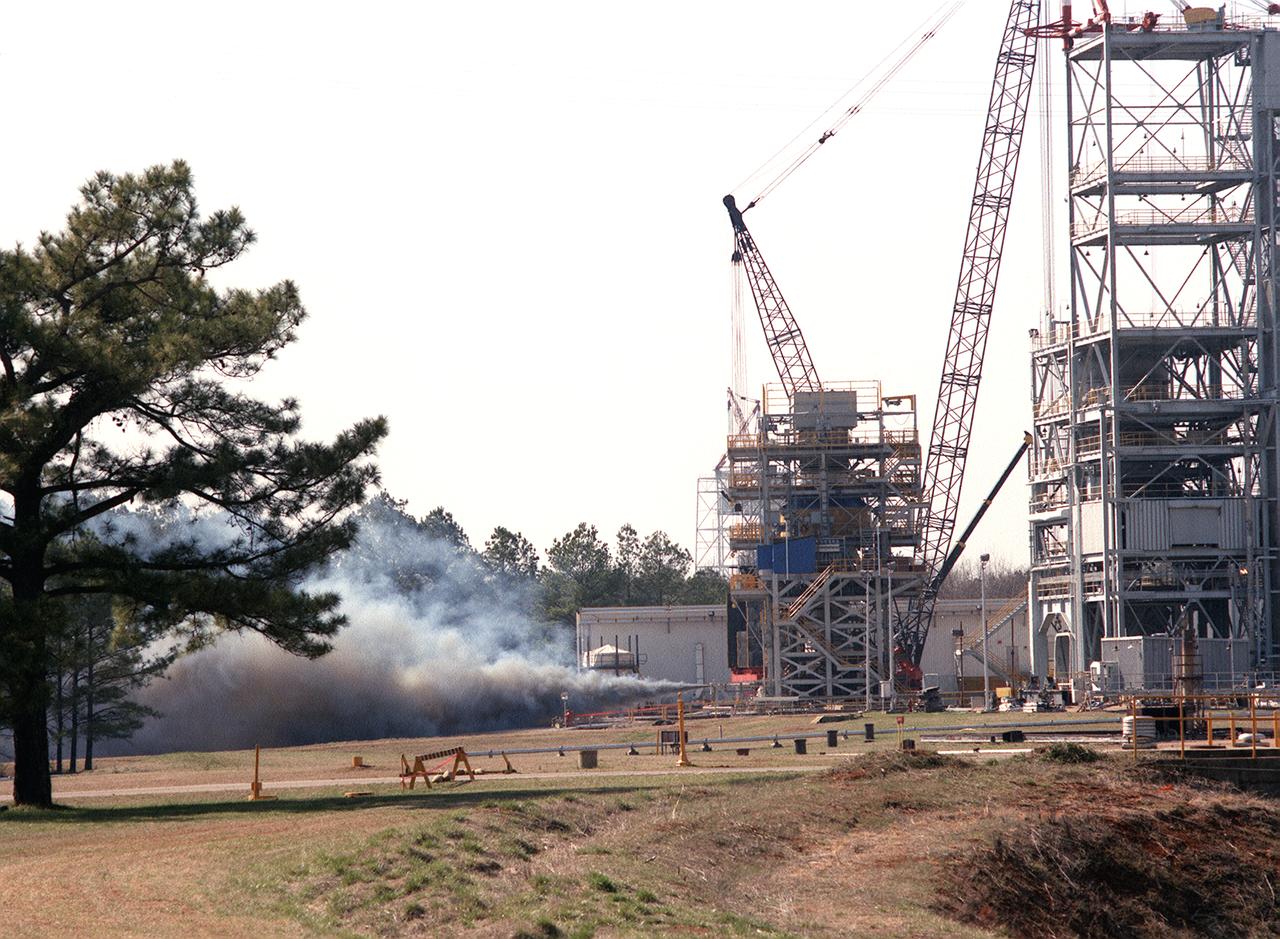
The Marshall Space Flight Center (MSFC) successfully test fired the third in a series of Transient Pressure Test Articles (TPTA) in its east test area. The test article was a short-stack solid rocket motor 52-feet long and 12-feet in diameter. The TPTA tests were designed to evaluate the effects of temperature, pressure and external loads encountered by the SRM, primarily during ignition transients. Instrumentation on the motor recorded approximately 1,000 charnels of data to verify the structural performance, thermal response, sealing capability of the redesign field, and case-to-nozzle joints. The TPTA test stand, 14-feet wide by 26-feet long by 33-feet high, was built in 1987. The TPTA series was a joint effort among Morton Thiokol, Inc., United Space Boosters, Inc., Wyle Laboratories, and MSFC. Wyle Laboratories conducted the tests for the MSFC, which manages the redesigned SRM program for NASA.
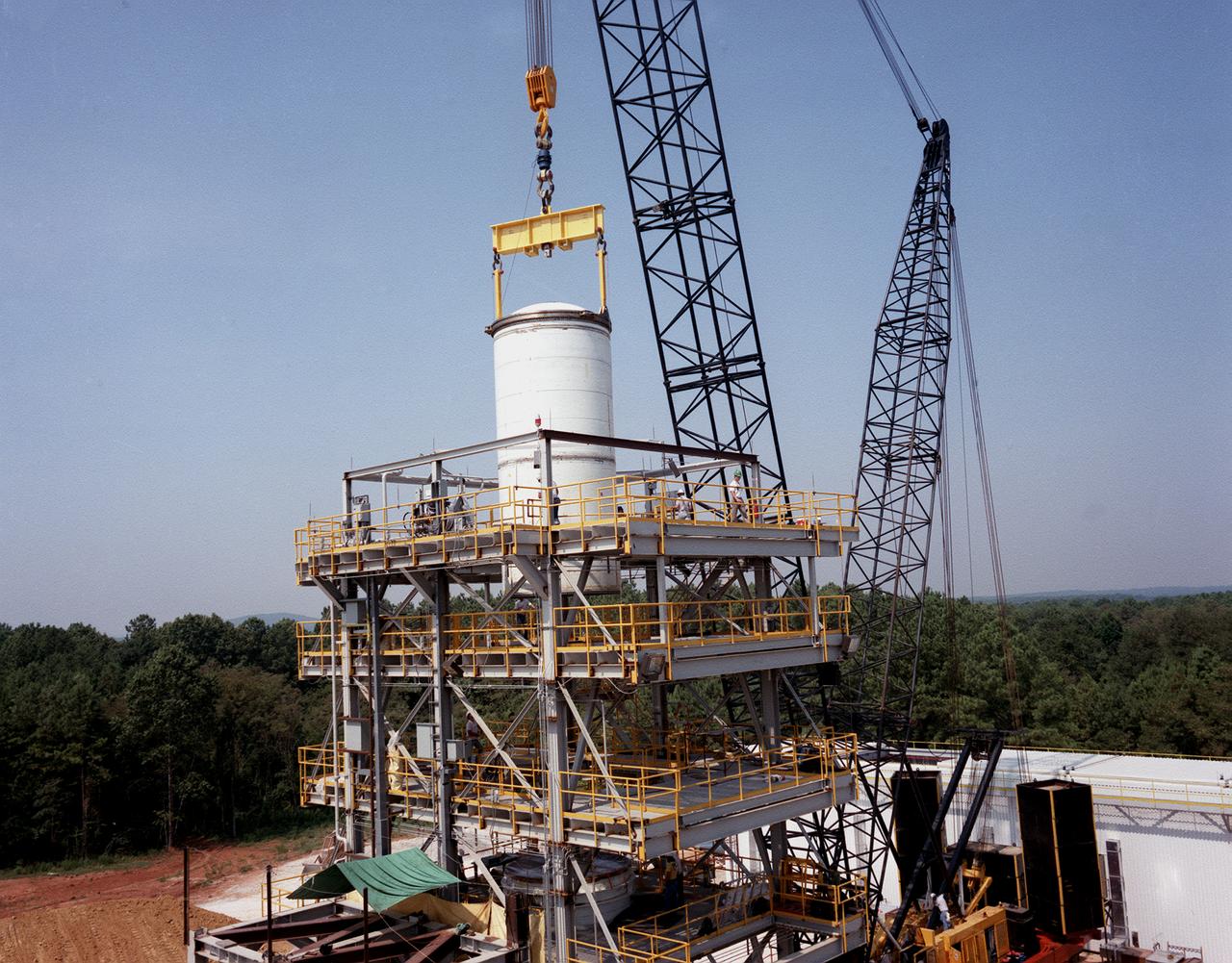
A forward segment is being lowered into the Transient Pressure Test Article (TPTA) test stand at the Marshall Space Flight Center (MSFC) east test area. The TPTA test stand, 14-feet wide, 27-feet long, and 33-feet high, was built in 1987 to provide data to verify the sealing capability of the redesign solid rocket motor (SRM) field and nozzle joints. The test facility applies pressure, temperature, and external loads to a short stack of solid rocket motor hardware. The simulated SRM ignition pressure and temperature transients are achieved by firing a small amount of specially configured solid propellant. The pressure transient is synchronized with external programmable dynamic loads that simulate lift off loads at the external tank attach points. Approximately one million pounds of dead weight on top of the test article simulates the weight of the other Shuttle elements.
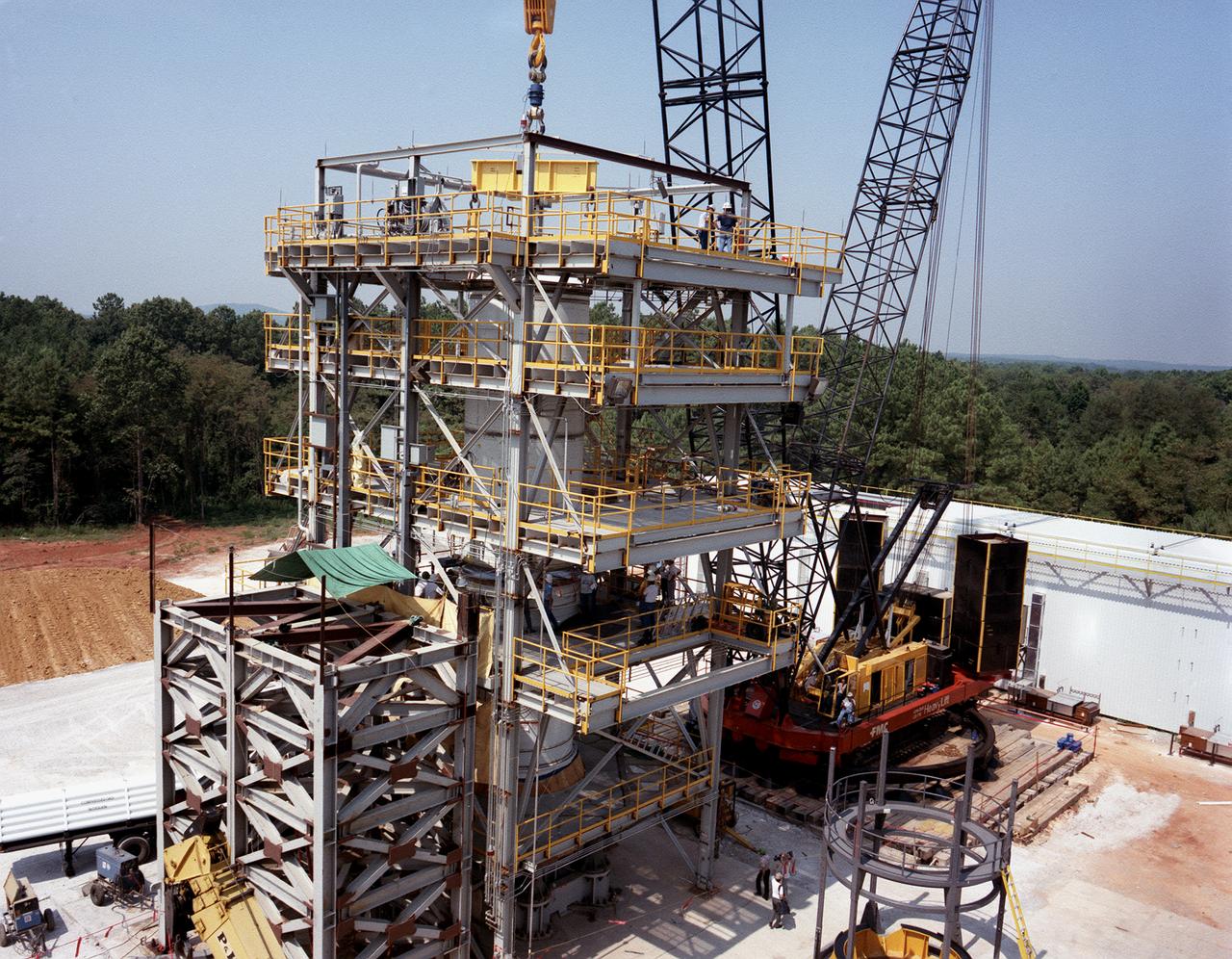
A forward segment is being lowered into the Transient Pressure Test Article (TPTA) test stand at thw Marshall Space Flight Center (MSFC) east test area. The TPTA test stand, 14-feet wide, 27-feet long, and 33-feet high, was built in 1987 to provide data to verify the sealing capability of the redesign solid rocket motor (SRM) field and nozzle joints. The test facility applies pressure, temperature, and external loads to a short stack of solid rocket motor hardware. The simulated SRM ignition pressure and temperature transients are achieved by firing a small amount of specially configured solid propellant. The pressure transient is synchronized with external programmable dynamic loads that simulate lift off loads at the external tank attach points. Approximately one million pounds of dead weight on top of the test article simulates the weight of the other Shuttle elements.