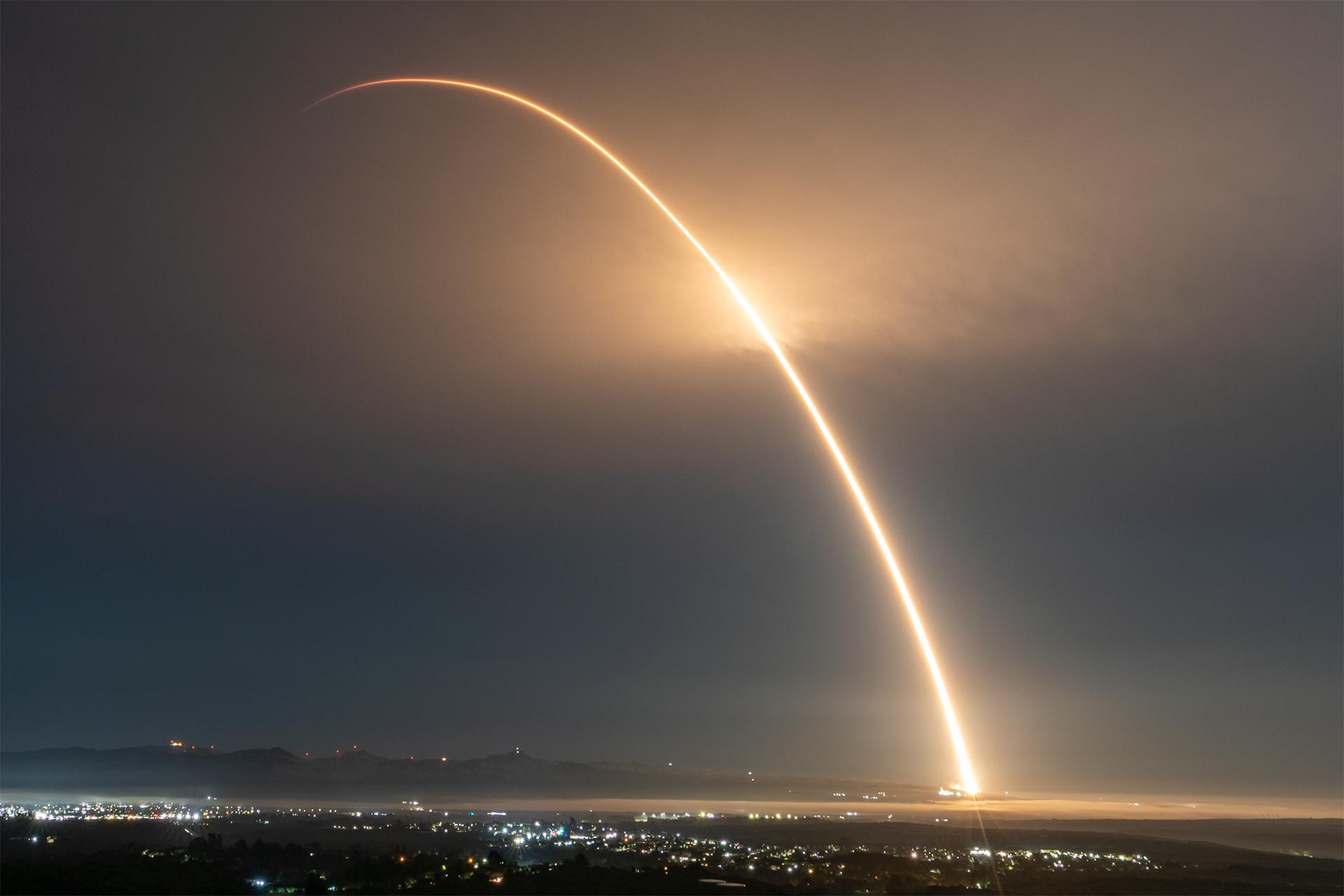
A launch streak captures the liftoff of a SpaceX Falcon 9 rocket carrying several NASA small satellites and instruments from Space Launch Complex 4 East at Vandenberg Space Force Base in California on Monday, March 30, 2026, as part of the company’s Transporter-16 mission. The demonstrations will test thermal protection systems, advance in-space communications, deepen our understanding of Earth's atmosphere, and more to foster capabilities for NASA’s exploration and research goals.
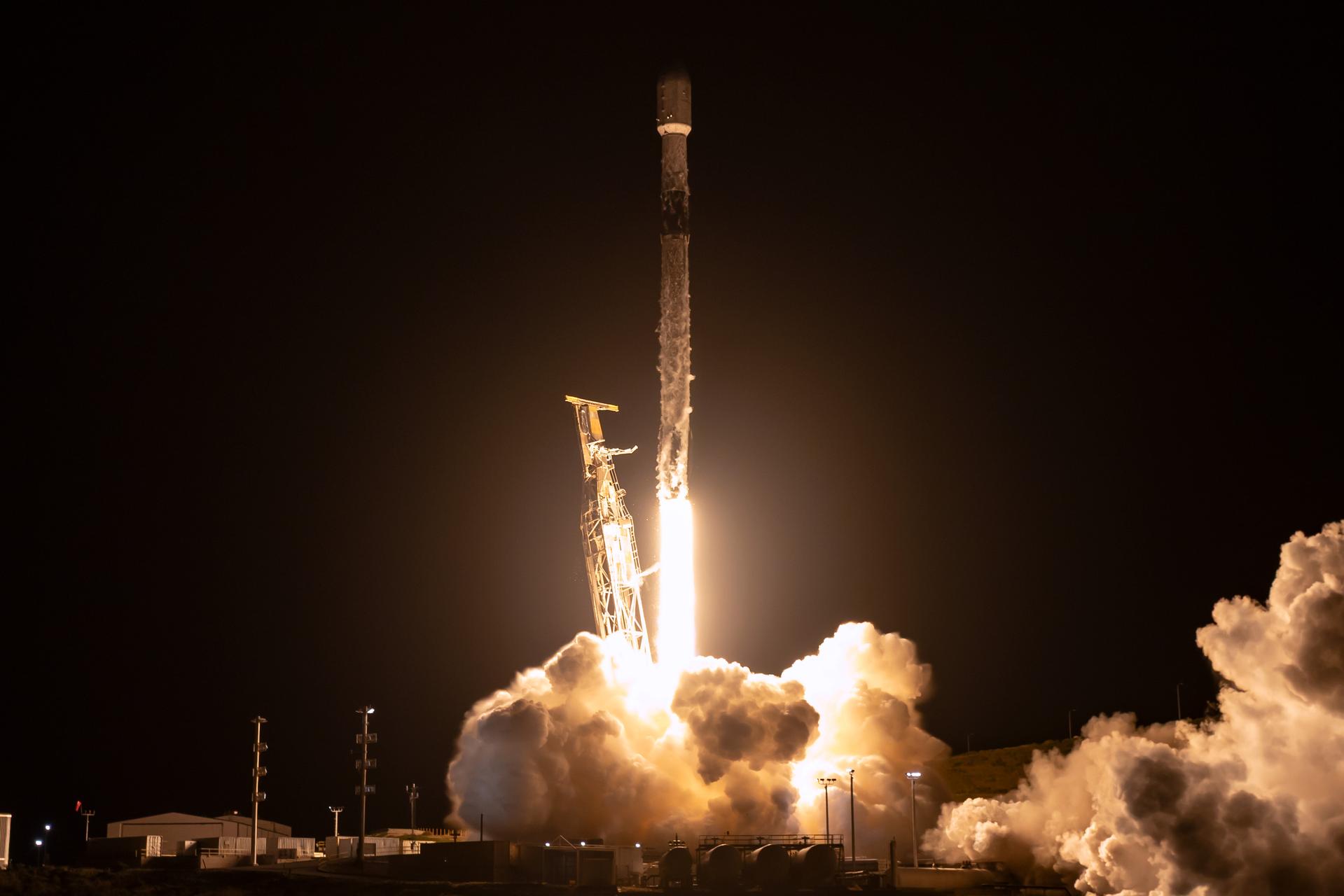
A SpaceX Falcon 9 rocket carrying several NASA small satellites and instruments lifts off from Space Launch Complex 4 East at Vandenberg Space Force Base in California on Monday, March 30, 2026, as part of the company’s Transporter-16 mission. The demonstrations will test thermal protection systems, advance in-space communications, deepen our understanding of Earth's atmosphere, and more to foster capabilities for NASA’s exploration and research goals.
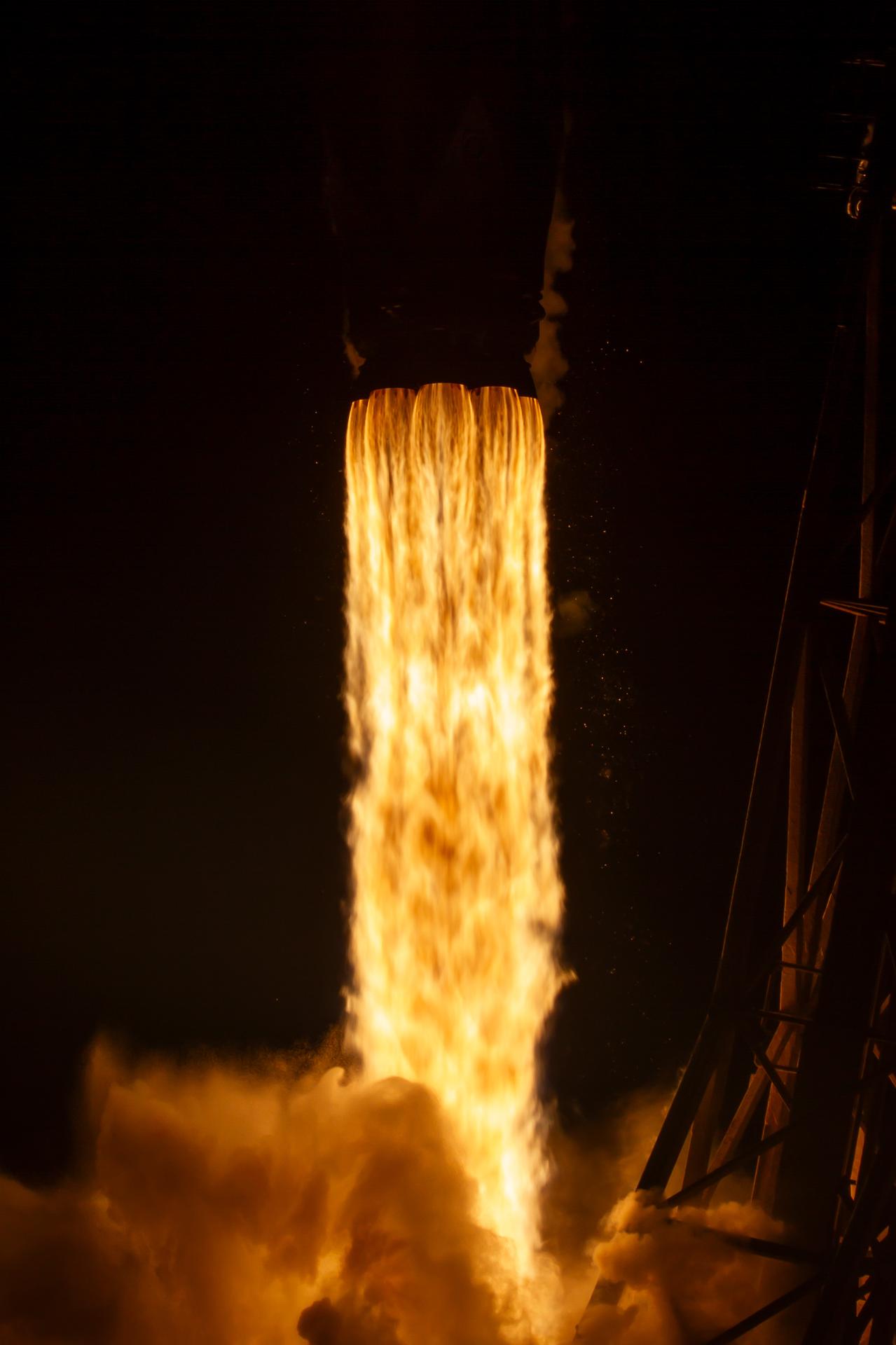
A SpaceX Falcon 9 rocket carrying several NASA small satellites and instruments lifts off from Space Launch Complex 4 East at Vandenberg Space Force Base in California on Monday, March 30, 2026, as part of the company’s Transporter-16 mission. The demonstrations will test thermal protection systems, advance in-space communications, deepen our understanding of Earth's atmosphere, and more to foster capabilities for NASA’s exploration and research goals.
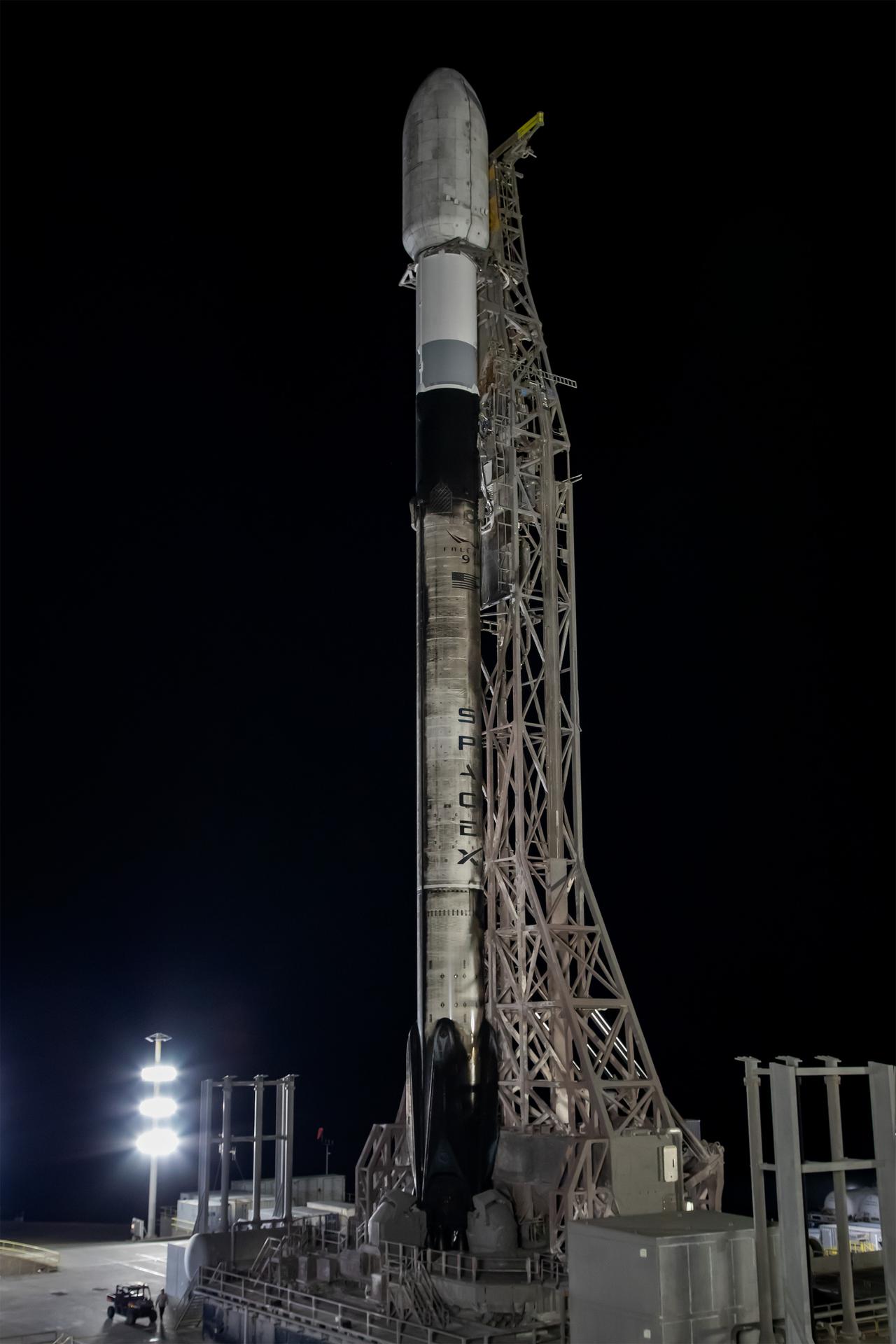
A SpaceX Falcon 9 rocket carrying several NASA small satellites and instruments stands vertical on the pad at Space Launch Complex 4 East at Vandenberg Space Force Base in California on Monday, March 30, 2026, as part of the company’s Transporter-16 mission. The demonstrations will test thermal protection systems, advance in-space communications, deepen our understanding of Earth's atmosphere, and more to foster capabilities for NASA’s exploration and research goals.
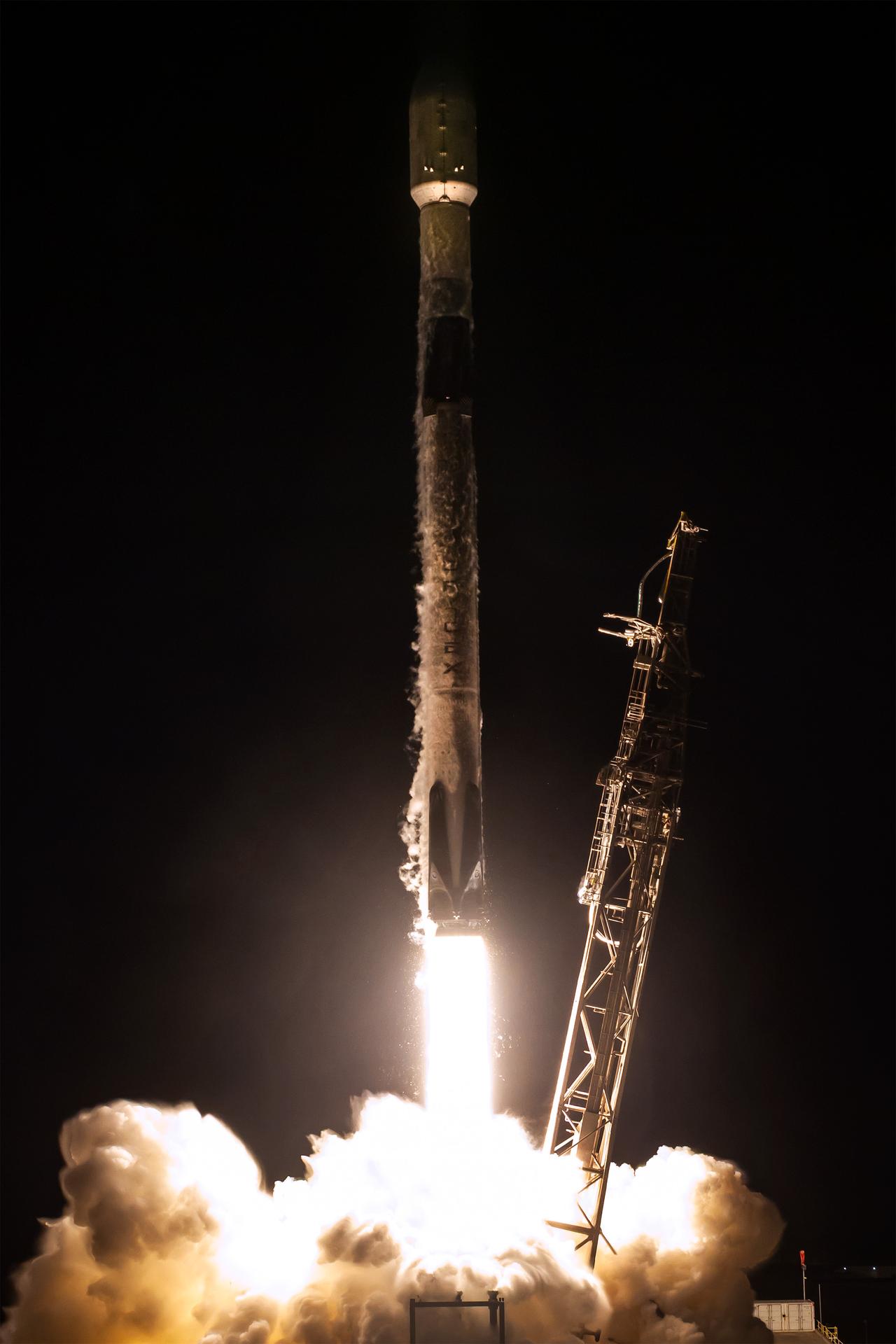
A SpaceX Falcon 9 rocket carrying several NASA small satellites and instruments lifts off from Space Launch Complex 4 East at Vandenberg Space Force Base in California on Monday, March 30, 2026, as part of the company’s Transporter-16 mission. The demonstrations will test thermal protection systems, advance in-space communications, deepen our understanding of Earth's atmosphere, and more to foster capabilities for NASA’s exploration and research goals.
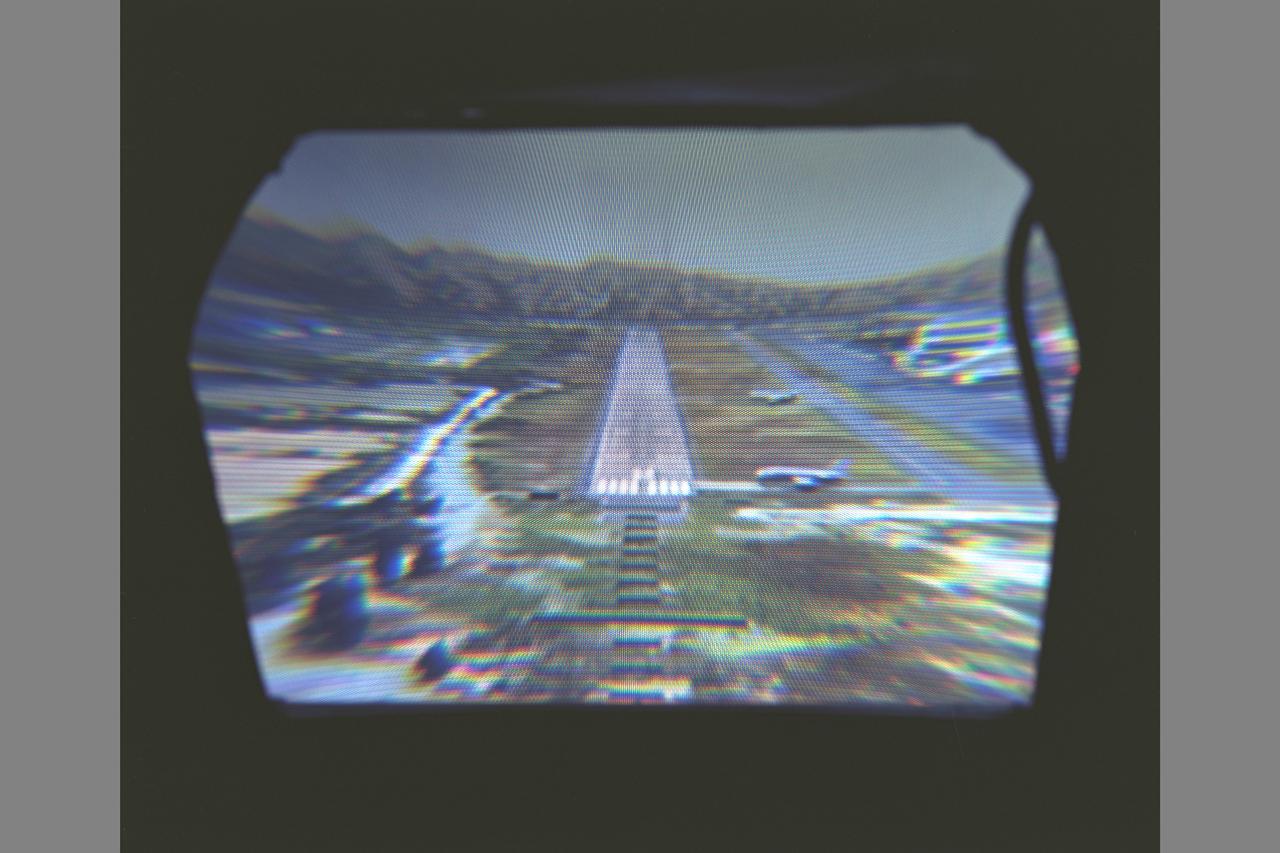
SSV COCKPIT IN THE MOVING-CAB TRANSPORT SIMULATOR (S.16) SHOWING VISUAL SCENE
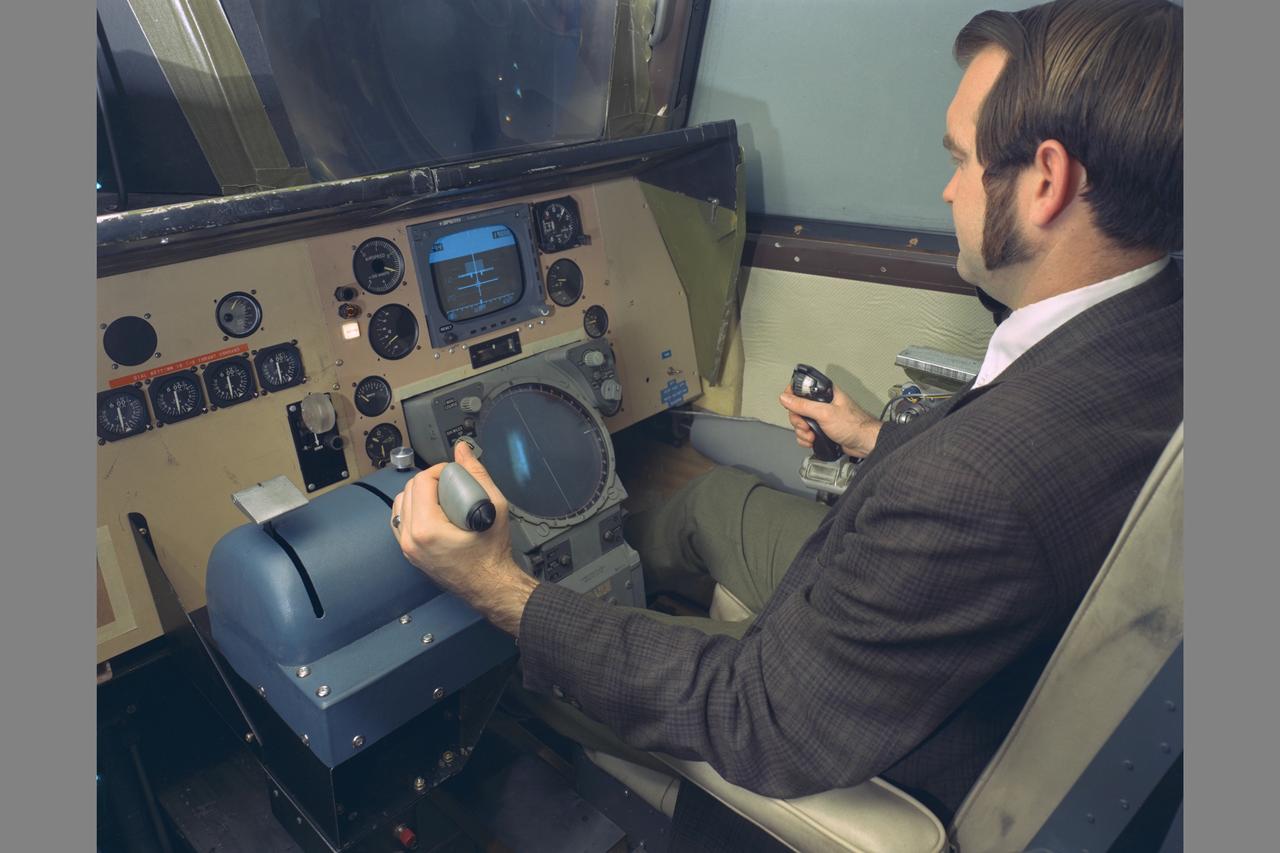
PILOT KENNETH C. WHITE IN CHAIR. Space Shuttle Vehicle Simulation. SSV COCKPIT IN THE MOVING-CAB TRANSPORT SIMULATOR (S.16)
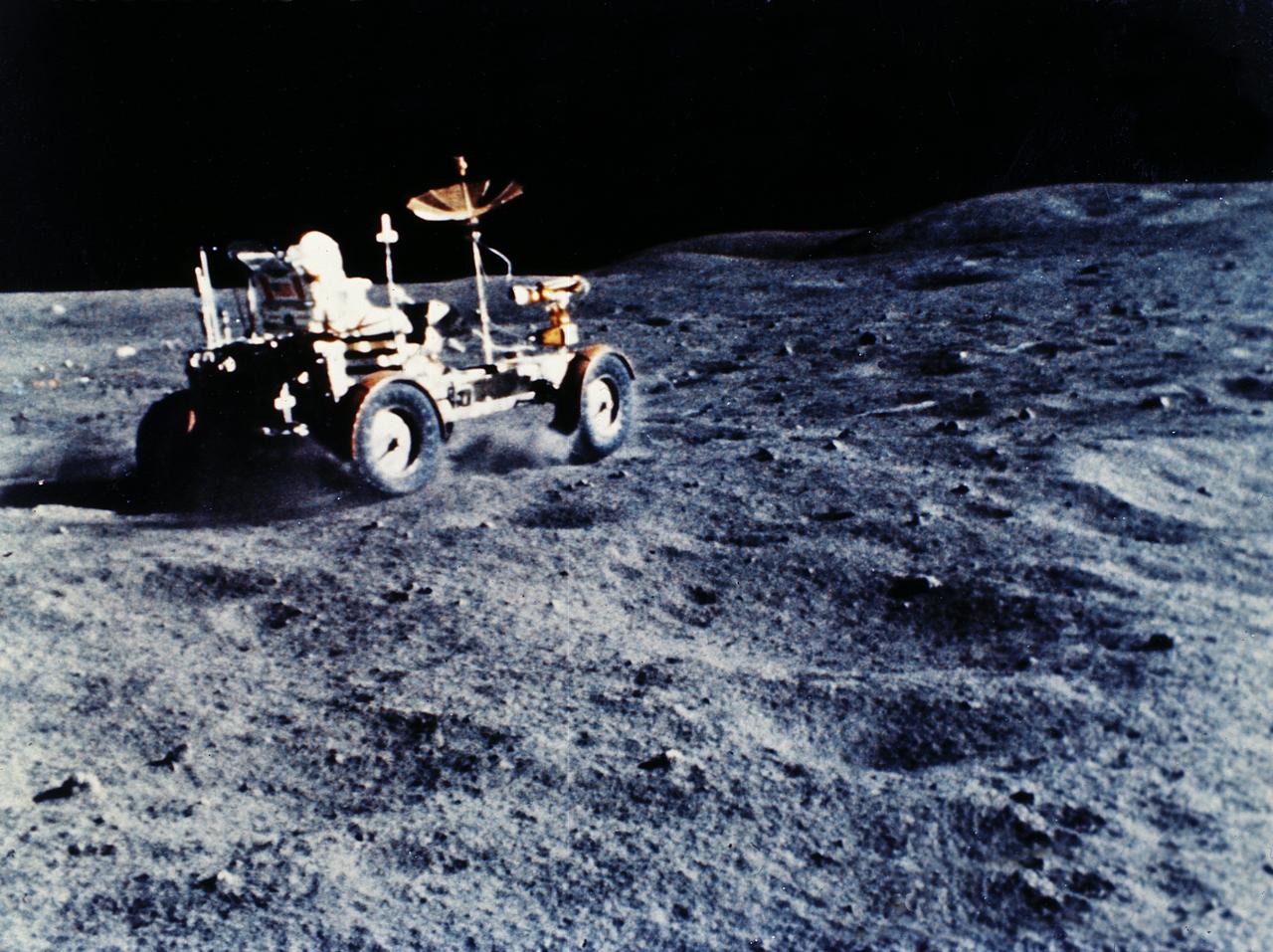
The Lunar Roving Vehicle (LRV) was designed to transport astronauts and materials on the Moon. An LRV was used on each of the last three Apollo missions; Apollo 15, Apollo 16, and Apollo 17, in 1971 and 1972, to permit the crew to travel several miles from the lunar landing site. This photograph was taken during the Apollo 16 mission.
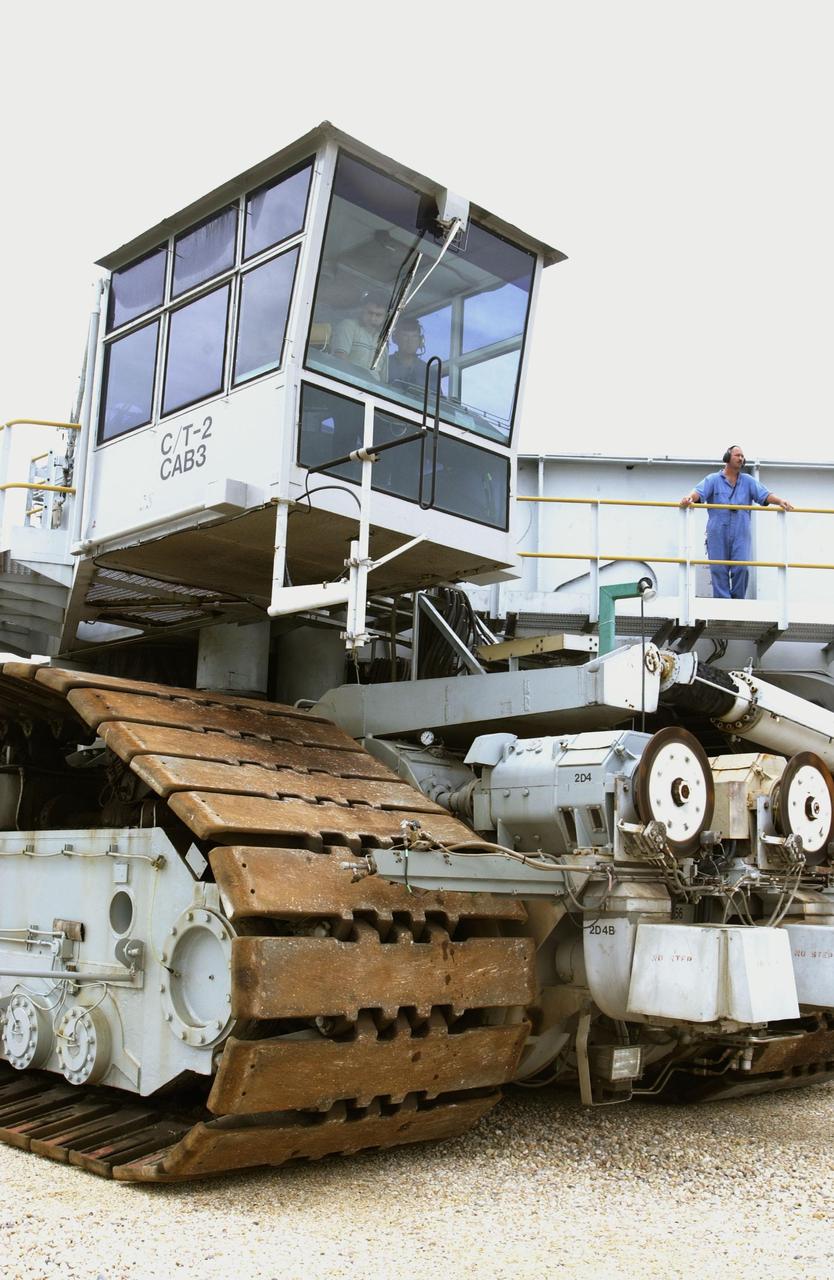
KENNEDY SPACE CENTER, FLA. -- After technicians removed and replaced all of the 32 bearings located in the JEL (jacking, equalization and leveling) cylinders and reinstalled the 16 cylinders on Crawler Transporter No. 2, workers take the crawler for a test run. During routine inspections, technicians found cracks in some of the bearings in the 16 JEL cylinders on the vehicle. There are 16 cylinders and 32 bearings per crawler.
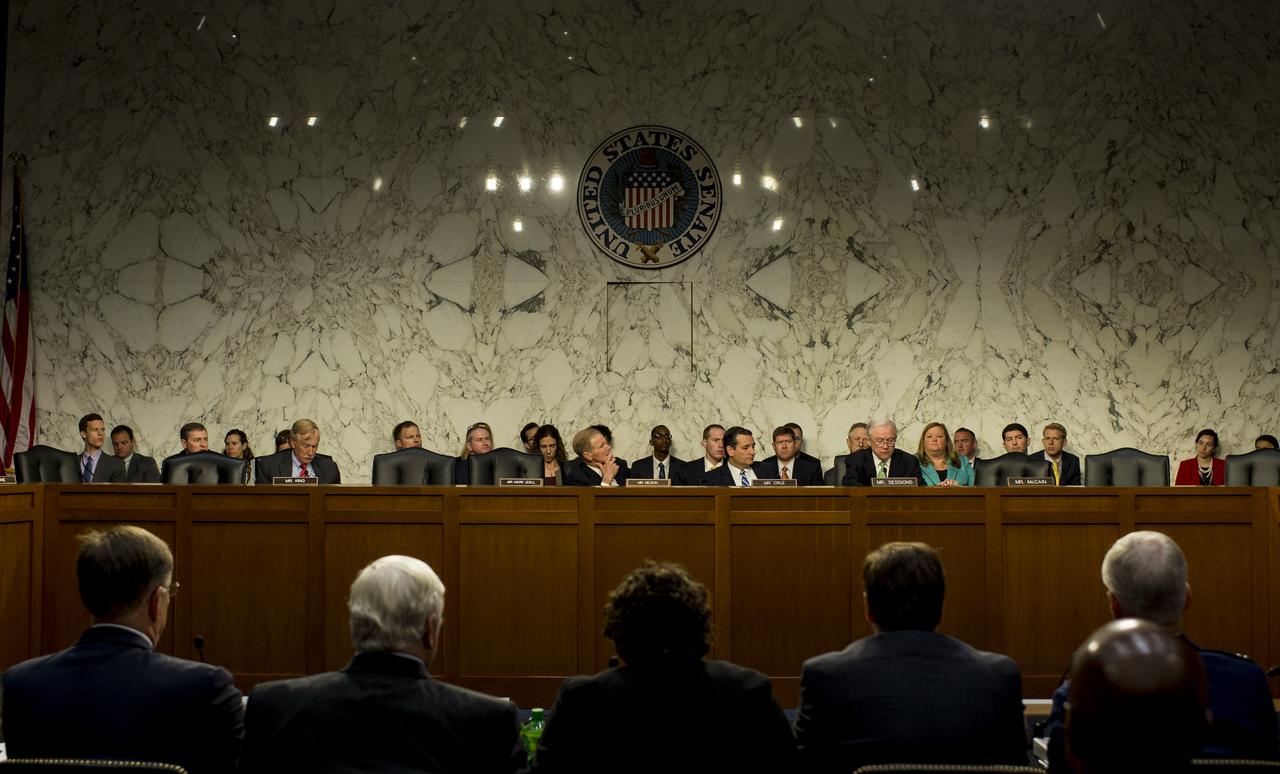
A general view of a hearing in front of the Senate Subcommittee on Strategic Forces and Senate Committee on Commerce, Science, and Transportation regarding assured access to space on Wednesday, July 16, 2014, at the Hart Senate Office Building in Washington, DC.
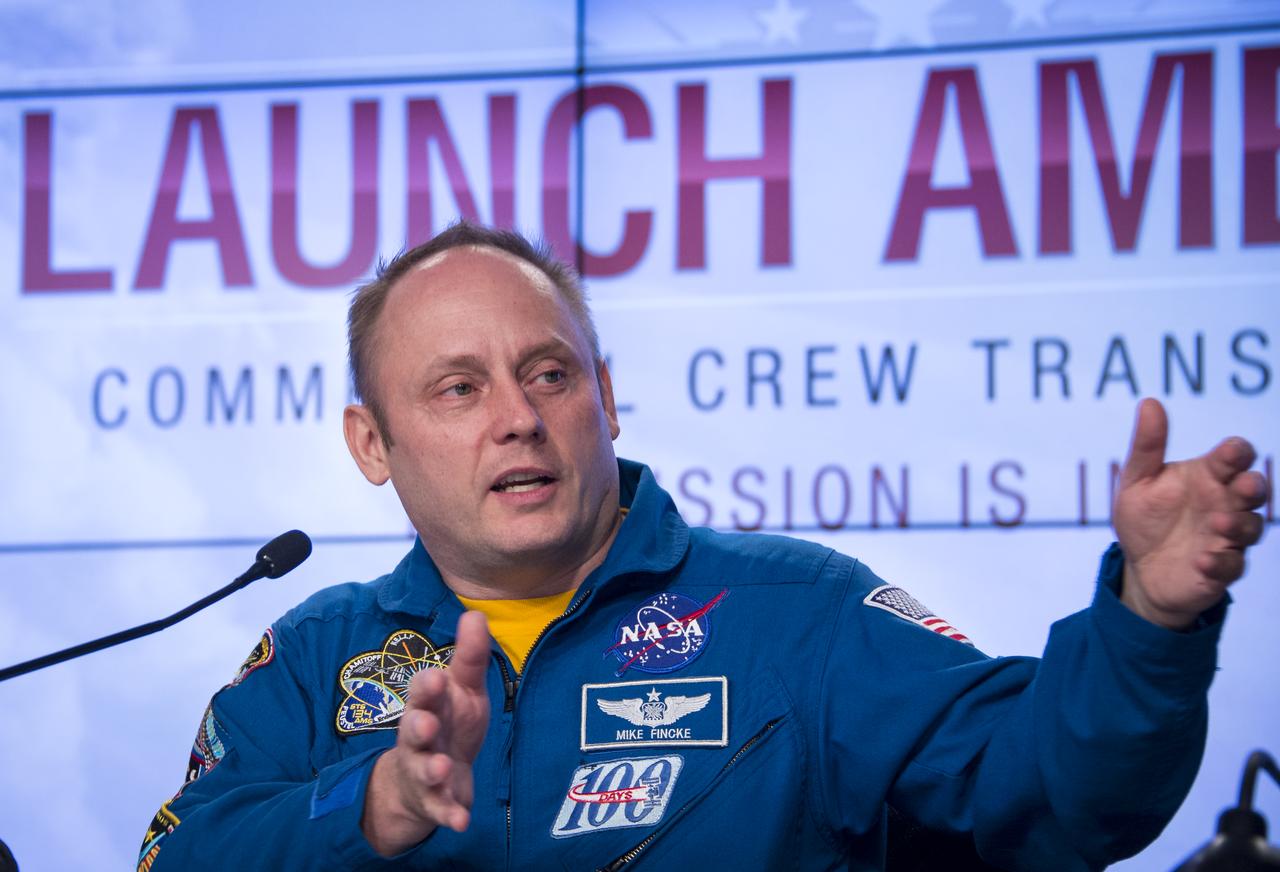
Astronaut Mike Fincke, a former commander of the International Space Station, speaks during a news conference where it was announced that Boeing and SpaceX have been selected to transport U.S. crews to and from the International Space Station using the Boeing CST-100 and the SpaceX Crew Dragon spacecraft, at NASA’s Kennedy Space Center in Cape Canaveral, Fla. on Tuesday, Sept. 16, 2014. These Commercial Crew Transportation Capability (CCtCap) contracts are designed to complete the NASA certification for a human space transportation system capable of carrying people into orbit. Once certification is complete, NASA plans to use these systems to transport astronauts to the space station and return them safely to Earth. Photo Credit: (NASA/Bill Ingalls)
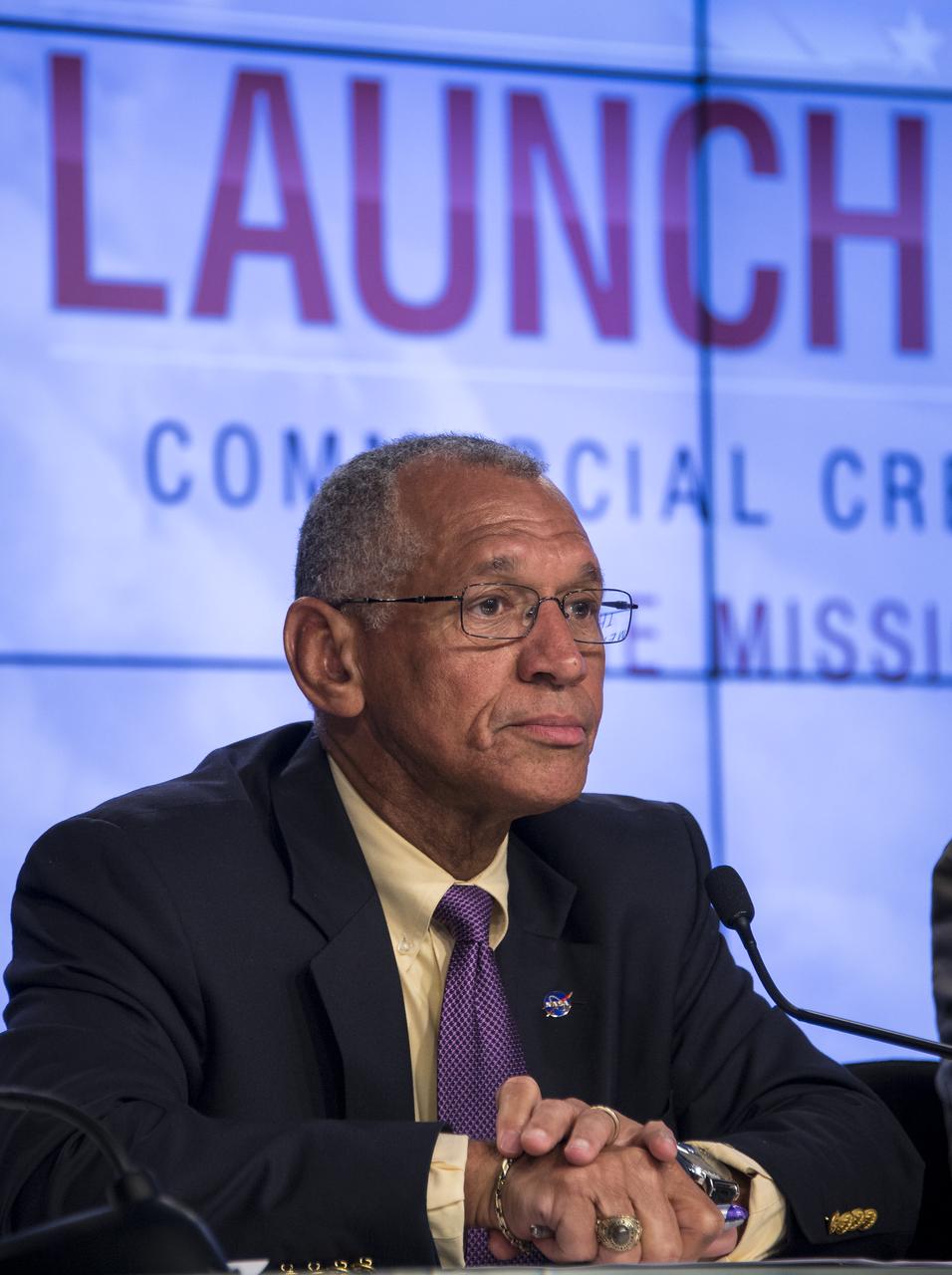
NASA Administrator Charles Bolden listens to a reporter’s question after he announced the agency’s selection of Boeing and SpaceX to transport U.S. crews to and from the International Space Station using the Boeing CST-100 and the SpaceX Crew Dragon spacecraft, at NASA’s Kennedy Space Center in Cape Canaveral, Fla. on Tuesday, Sept. 16, 2014. These Commercial Crew Transportation Capability (CCtCap) contracts are designed to complete the NASA certification for a human space transportation system capable of carrying people into orbit. Once certification is complete, NASA plans to use these systems to transport astronauts to the space station and return them safely to Earth. Photo Credit: (NASA/Bill Ingalls)
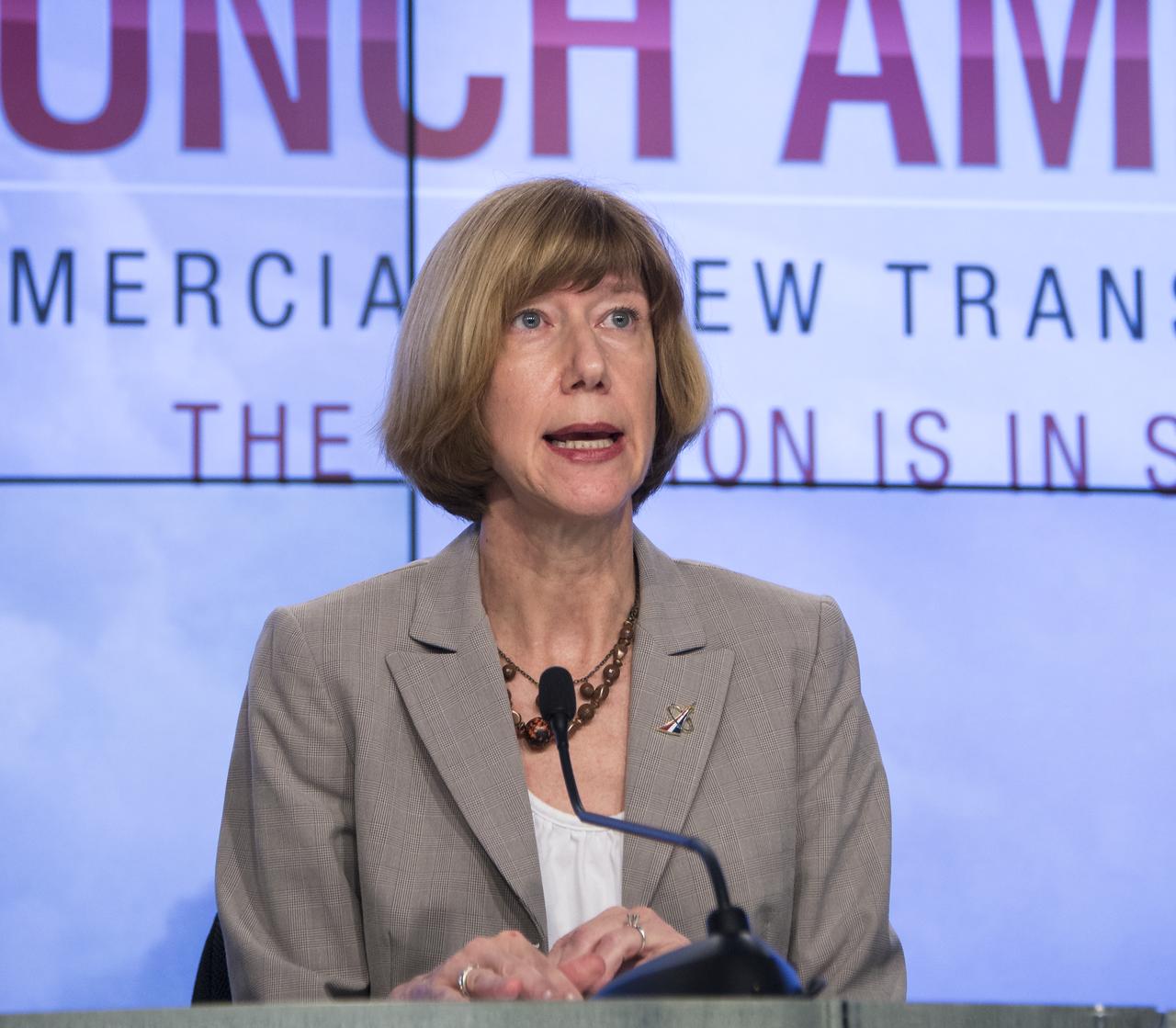
Kathy Lueders, program manager of NASA's Commercial Crew Program, speaks during a news conference where it was announced that Boeing and SpaceX have been selected to transport U.S. crews to and from the International Space Station using the Boeing CST-100 and the SpaceX Crew Dragon spacecraft, at NASA’s Kennedy Space Center in Cape Canaveral, Fla. on Tuesday, Sept. 16, 2014. These Commercial Crew Transportation Capability (CCtCap) contracts are designed to complete the NASA certification for a human space transportation system capable of carrying people into orbit. Once certification is complete, NASA plans to use these systems to transport astronauts to the space station and return them safely to Earth. Photo Credit: (NASA/Bill Ingalls)
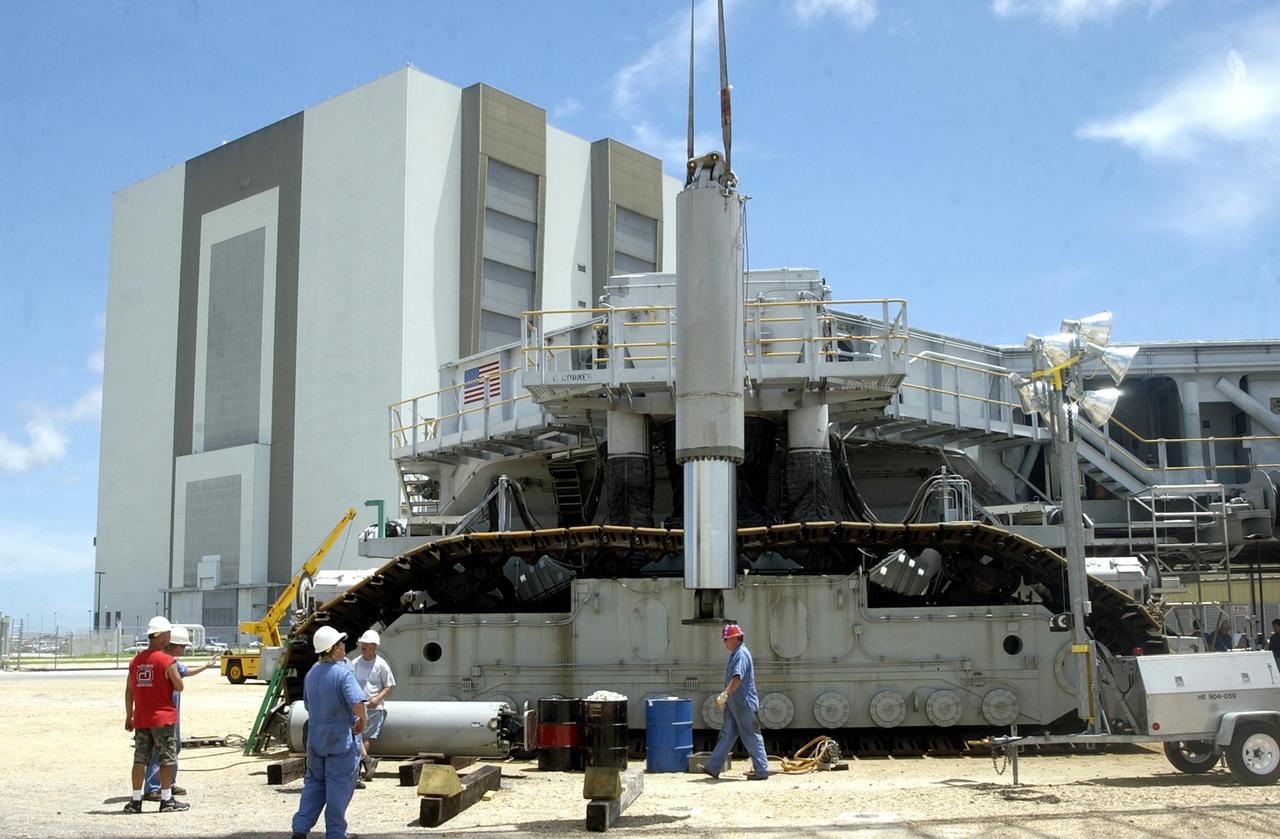
KENNEDY SPACE CENTER, FLA. -- A jacking, equalization and leveling (JEL) cylinder and bearing from Crawler-Transporter No. 2 is lowered by a crane to a position on the ground. During routine maintenance inspections last week, technicians removed two of the 16 JEL cylinders on the crawler to gain access to the bearings and found three of the four bearings cracked. Further eddy current inspections indicated that cracks are present on 15 of the bearings. There are 16 cylinders and 32 bearings per crawler.
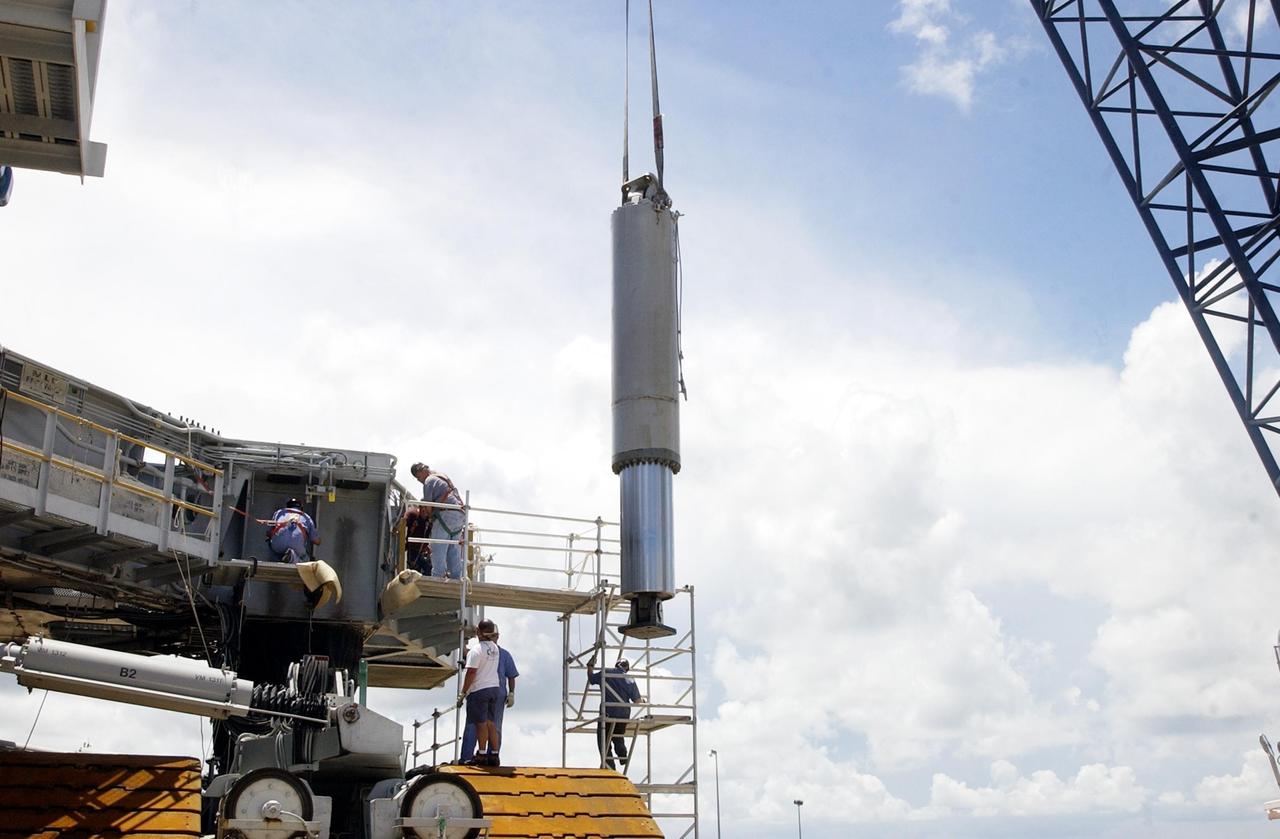
KENNEDY SPACE CENTER, FLA. -- A crane lifts a jacking, equalization and leveling (JEL) cylinder and bearing from Crawler-Transporter No. 2. During routine maintenance inspections last week, technicians removed two of the 16 JEL cylinders on the crawler to gain access to the bearings and found three of the four bearings cracked. Further eddy current inspections indicated that cracks are present on 15 of the bearings. There are 16 cylinders and 32 bearings per crawler. Engineers are evaluating the situation to determine the cause of the cracks and an appropriate solution to the problem.
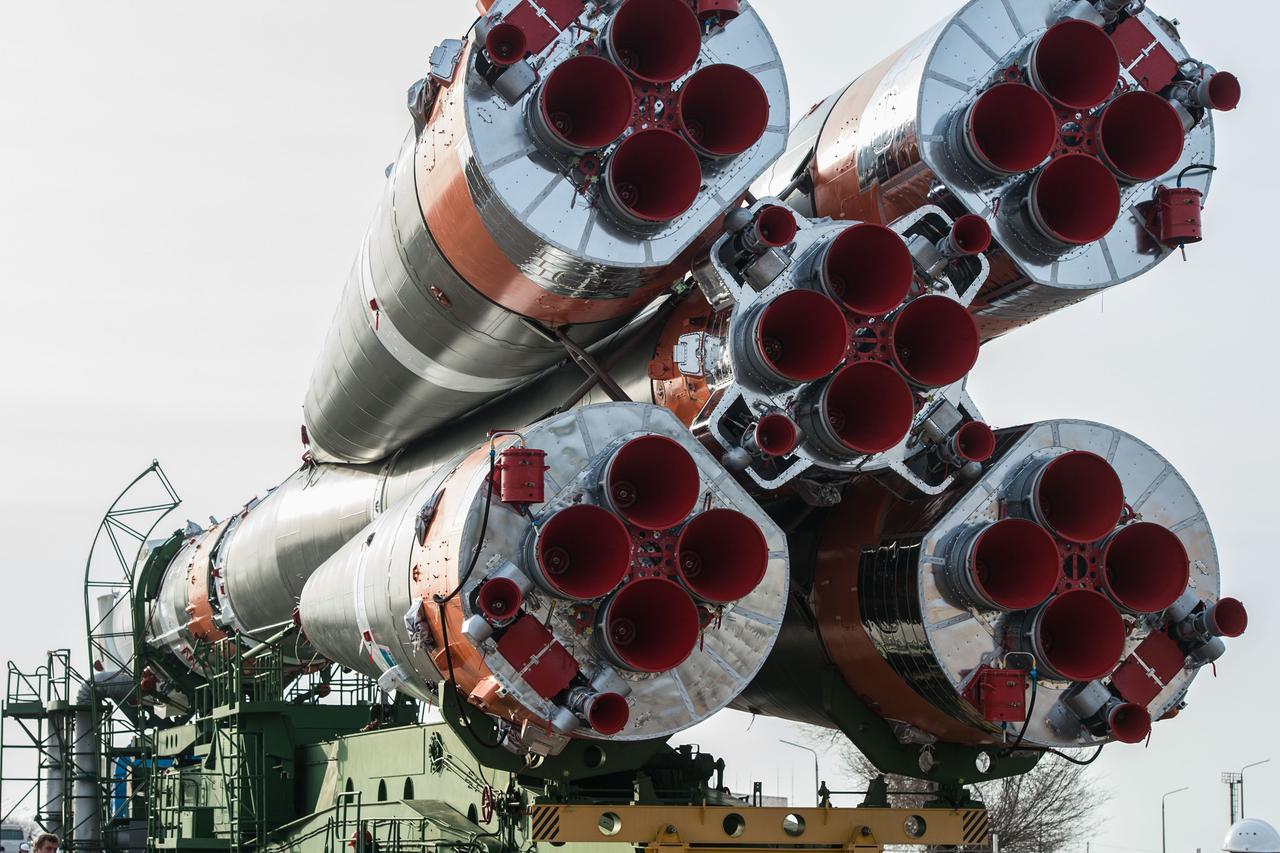
jsc2020e017000 - At the Baikonur Cosmodrome in Kazakhstan, the Soyuz MS-16 spacecraft and its booster are transported from the integration building to the Site 31 launch pad April 6 for final preparations for launch. Expedition 63 crewmembers Chris Cassidy of NASA and Anatoly Ivanishin and Ivan Vagner of Roscosmos are set to launch aboard the Soyuz MS-16 April 9 for a six-and-a-half month mission on the International Space Station...Andrey Shelepin/Gagarin Cosmonaut Training Center.
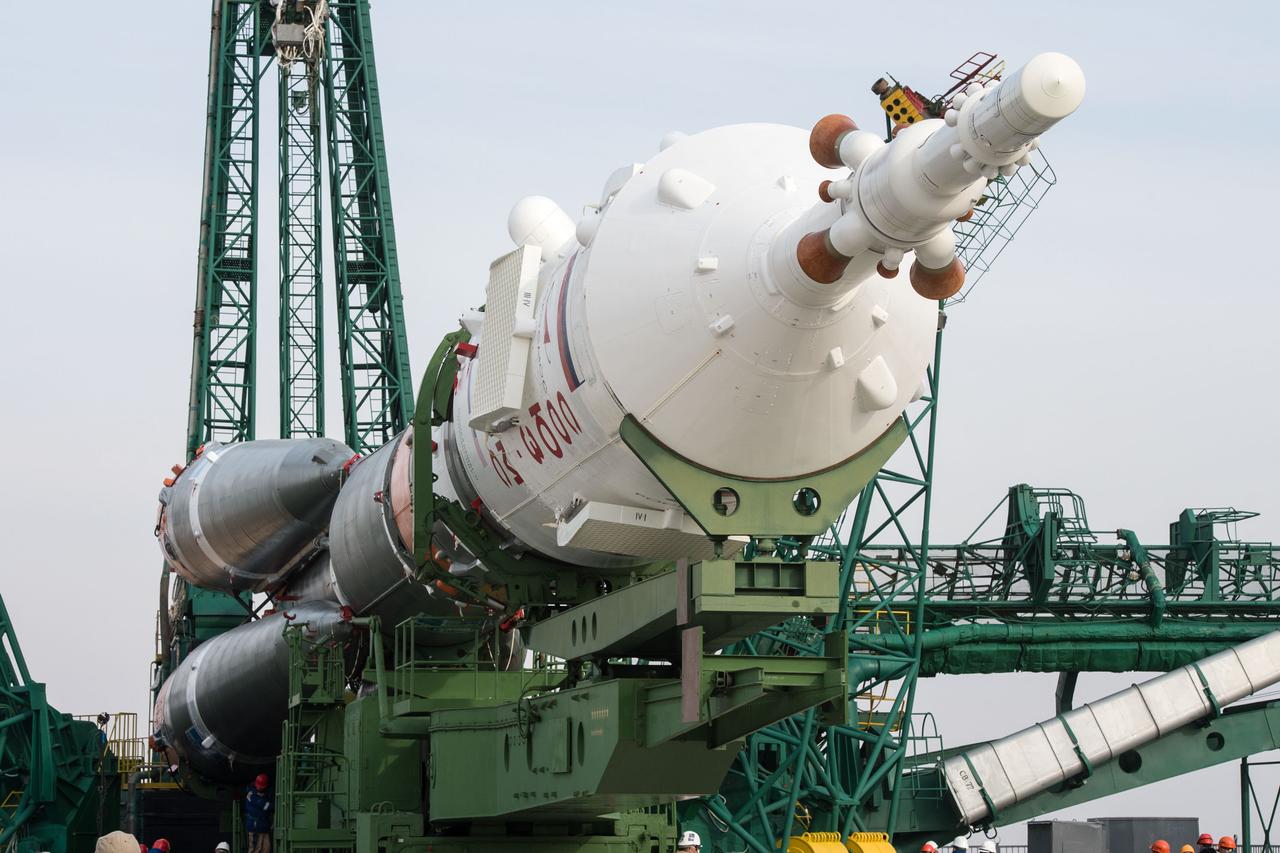
jsc2020e017002 - At the Baikonur Cosmodrome in Kazakhstan, the Soyuz MS-16 spacecraft and its booster are transported from the integration building to the Site 31 launch pad April 6 for final preparations for launch. Expedition 63 crewmembers Chris Cassidy of NASA and Anatoly Ivanishin and Ivan Vagner of Roscosmos are set to launch aboard the Soyuz MS-16 April 9 for a six-and-a-half month mission on the International Space Station...Andrey Shelepin/Gagarin Cosmonaut Training Center.
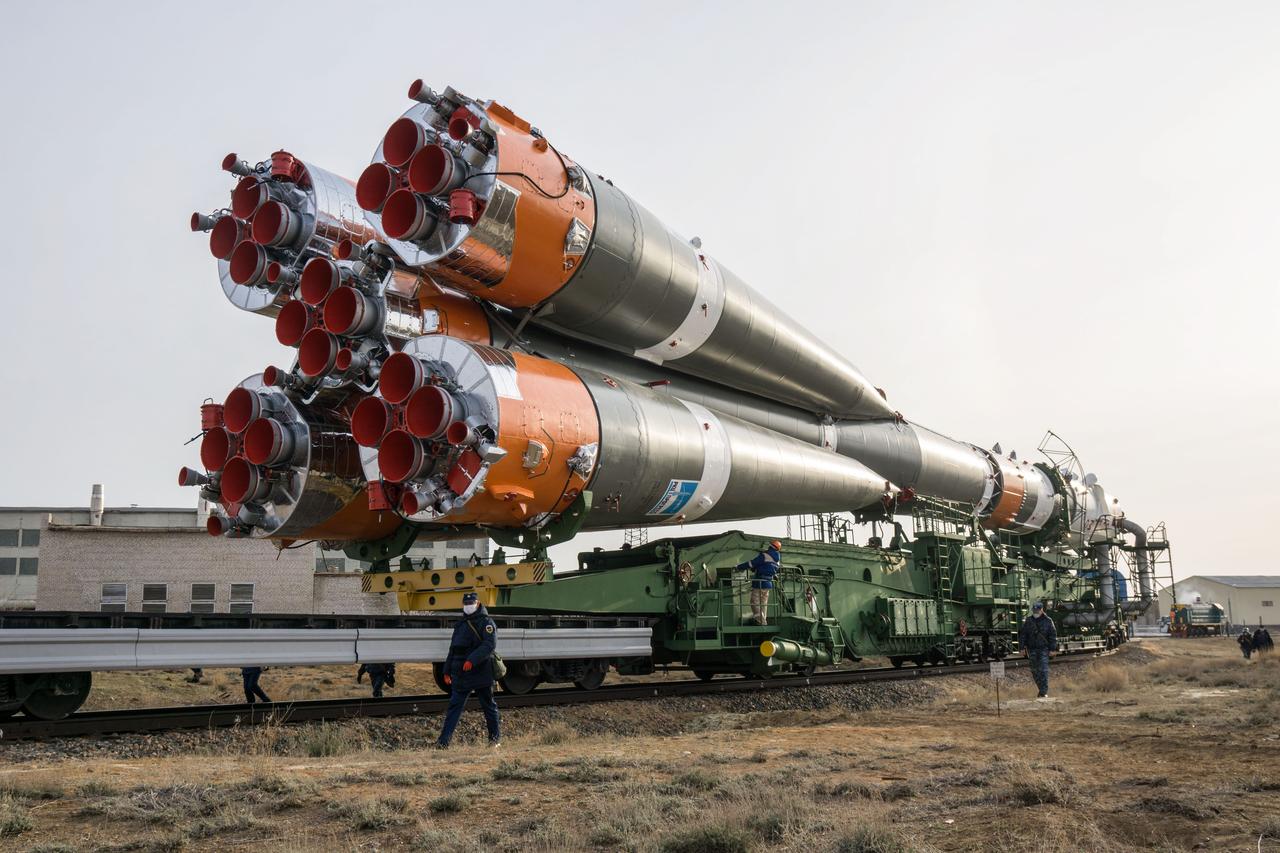
jsc2020e016989 - At the Baikonur Cosmodrome in Kazakhstan, the Soyuz MS-16 spacecraft and its booster are transported from the integration building to the Site 31 launch pad April 6 for final preparations for launch. Expedition 63 crewmembers Chris Cassidy of NASA and Anatoly Ivanishin and Ivan Vagner of Roscosmos are set to launch aboard the Soyuz MS-16 April 9 for a six-and-a-half month mission on the International Space Station...NASA/Victor Zelentsov.
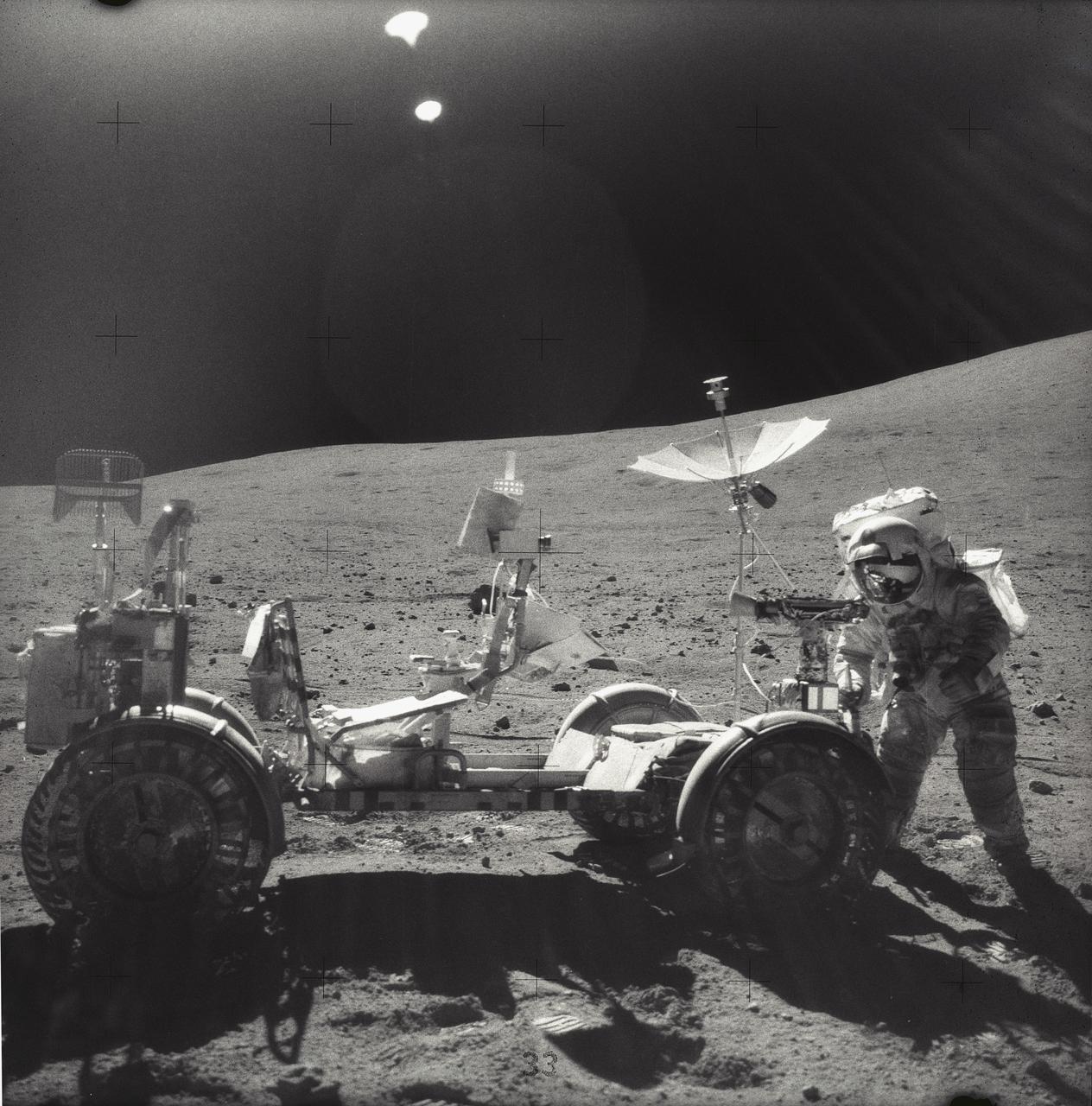
The Lunar Roving Vehicle (LRV) was designed by Marshall Space Flight Center to transport astronauts and materials on the Moon. An LRV was used on each of the last three Apollo missions; Apollo 15, Apollo 16, and Apollo 17, in 1971 and 1972, to permit the crew to travel several miles from the lunar landing site. This photograph was taken during the Apollo 16 mission in 1972.
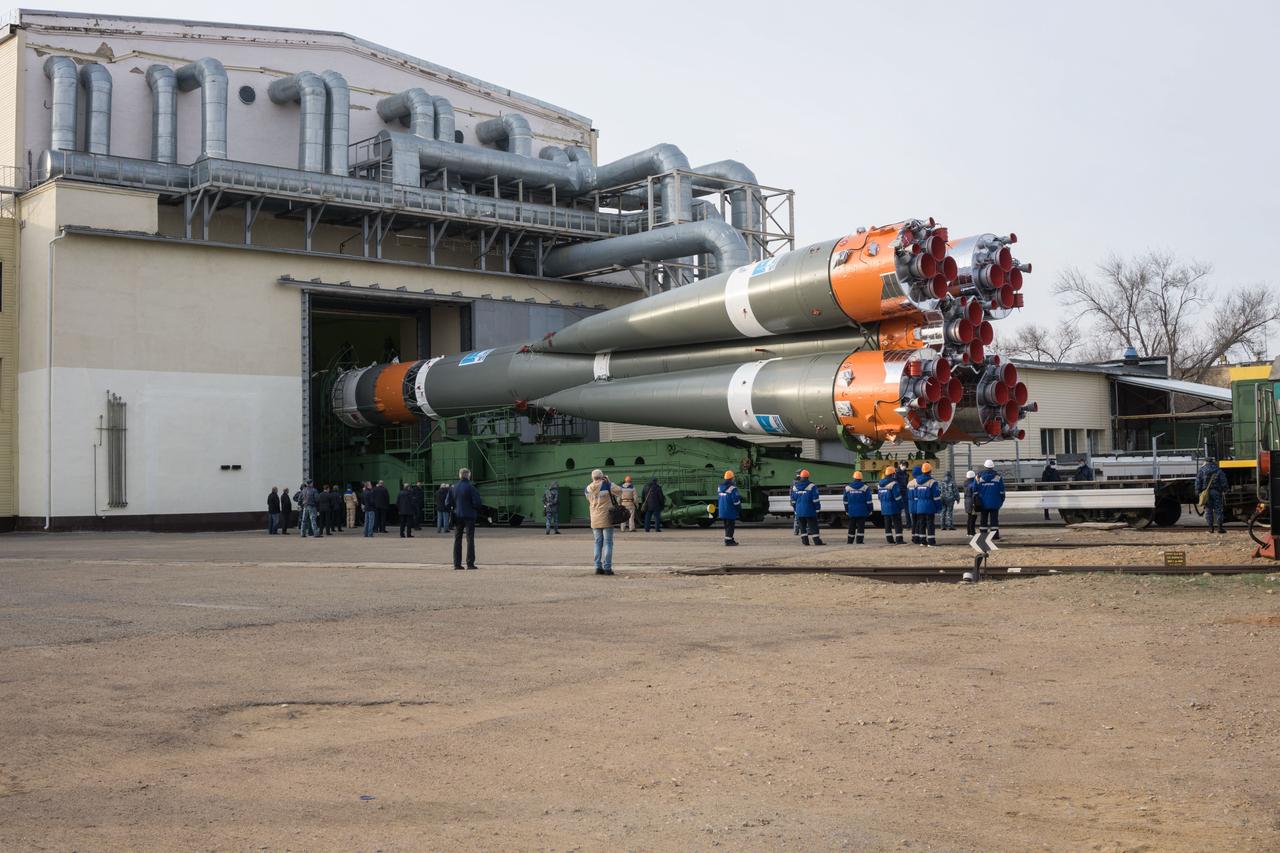
jsc2020e016987 - At the Baikonur Cosmodrome in Kazakhstan, the Soyuz MS-16 spacecraft and its booster are transported from the integration building to the Site 31 launch pad April 6 for final preparations for launch. Expedition 63 crewmembers Chris Cassidy of NASA and Anatoly Ivanishin and Ivan Vagner of Roscosmos are set to launch aboard the Soyuz MS-16 April 9 for a six-and-a-half month mission on the International Space Station...NASA/Victor Zelentsov.
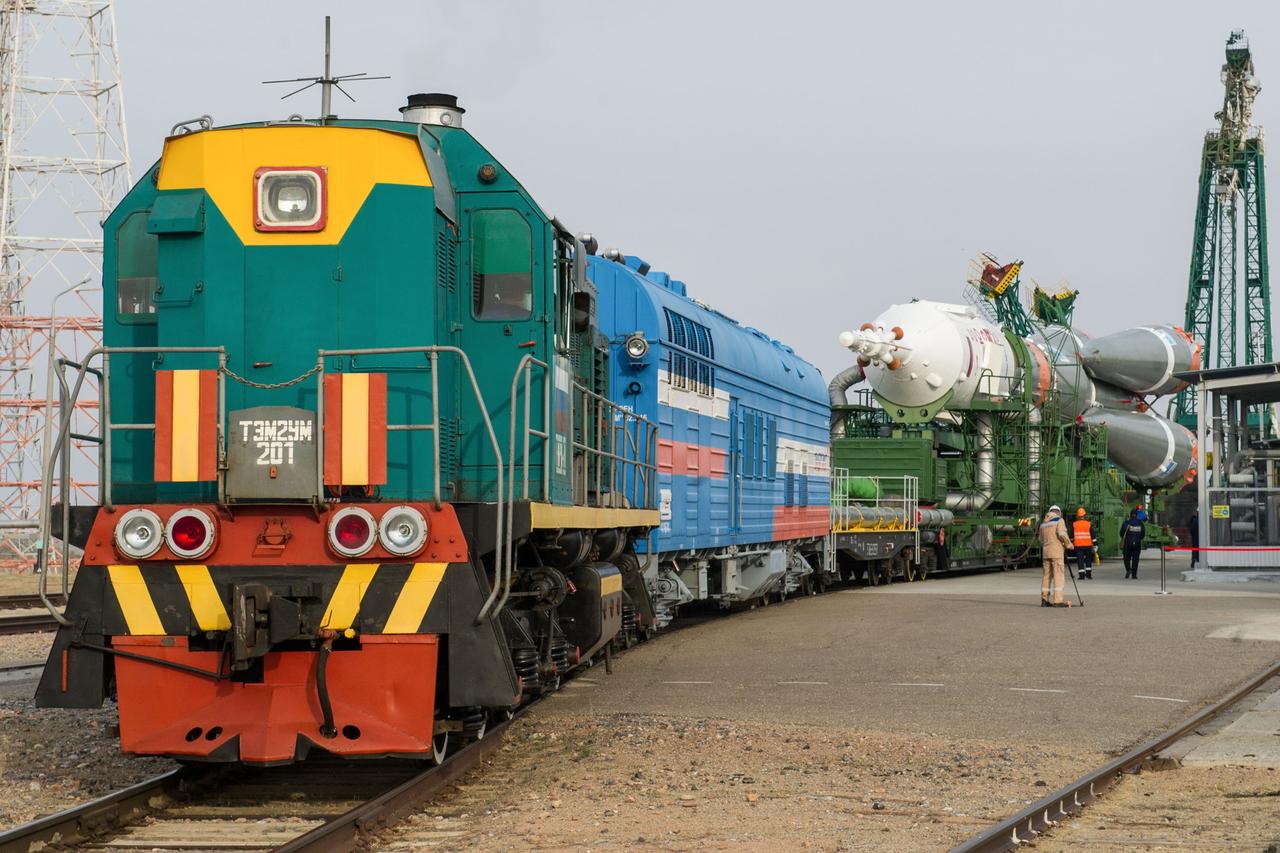
jsc2020e017004 - At the Baikonur Cosmodrome in Kazakhstan, the Soyuz MS-16 spacecraft and its booster are transported from the integration building to the Site 31 launch pad April 6 for final preparations for launch. Expedition 63 crewmembers Chris Cassidy of NASA and Anatoly Ivanishin and Ivan Vagner of Roscosmos are set to launch aboard the Soyuz MS-16 April 9 for a six-and-a-half month mission on the International Space Station...Andrey Shelepin/Gagarin Cosmonaut Training Center.
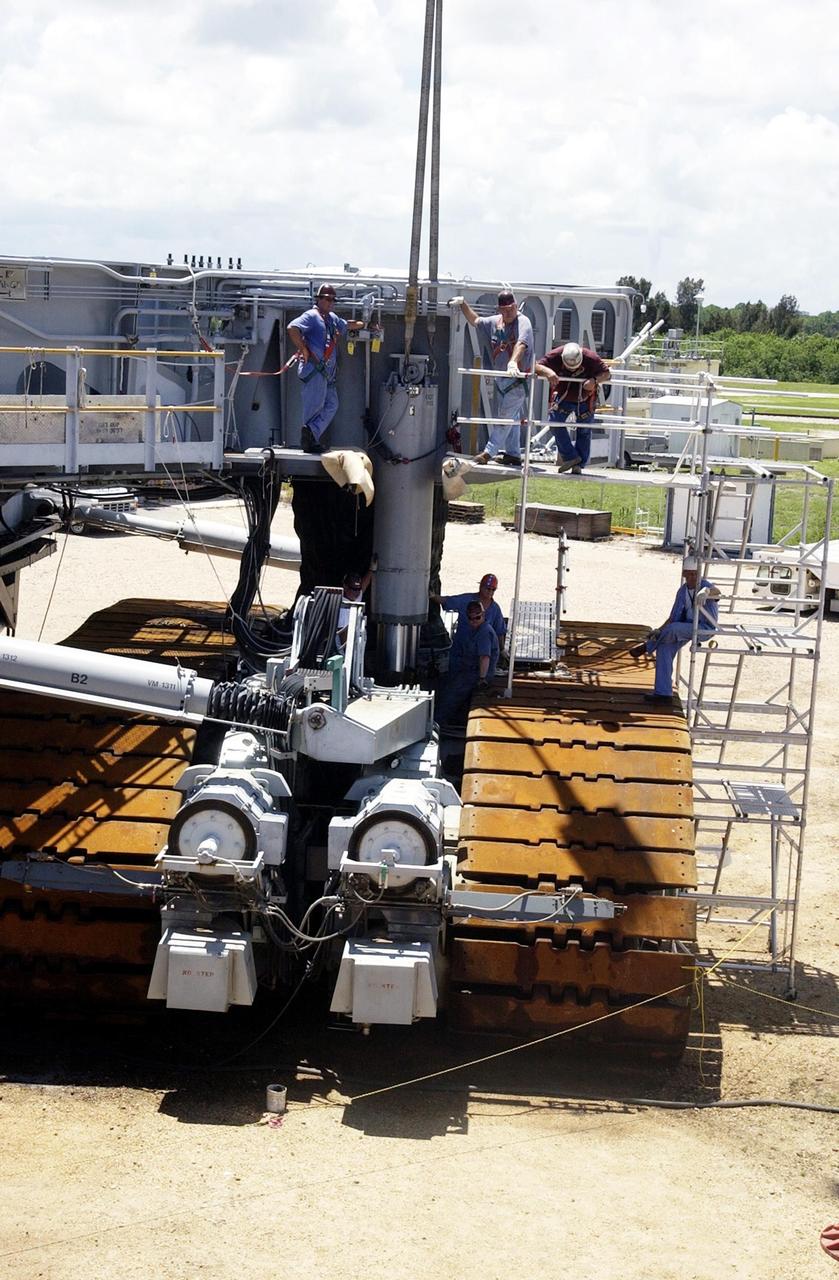
KENNEDY SPACE CENTER, FLA. -- Technicians hook a crane to a jacking, equalization and leveling (JEL) cylinder and bearing on Crawler-Transporter No. 2 in preparation for its removal. During routine maintenance inspections last week, technicians removed two of the 16 JEL cylinders on the crawler to gain access to the bearings and found three of the four bearings cracked. Further eddy current inspections indicated that cracks are present on 15 of the bearings. There are 16 cylinders and 32 bearings per crawler. Engineers are evaluating the situation to determine the cause of the cracks and an appropriate solution to the problem.
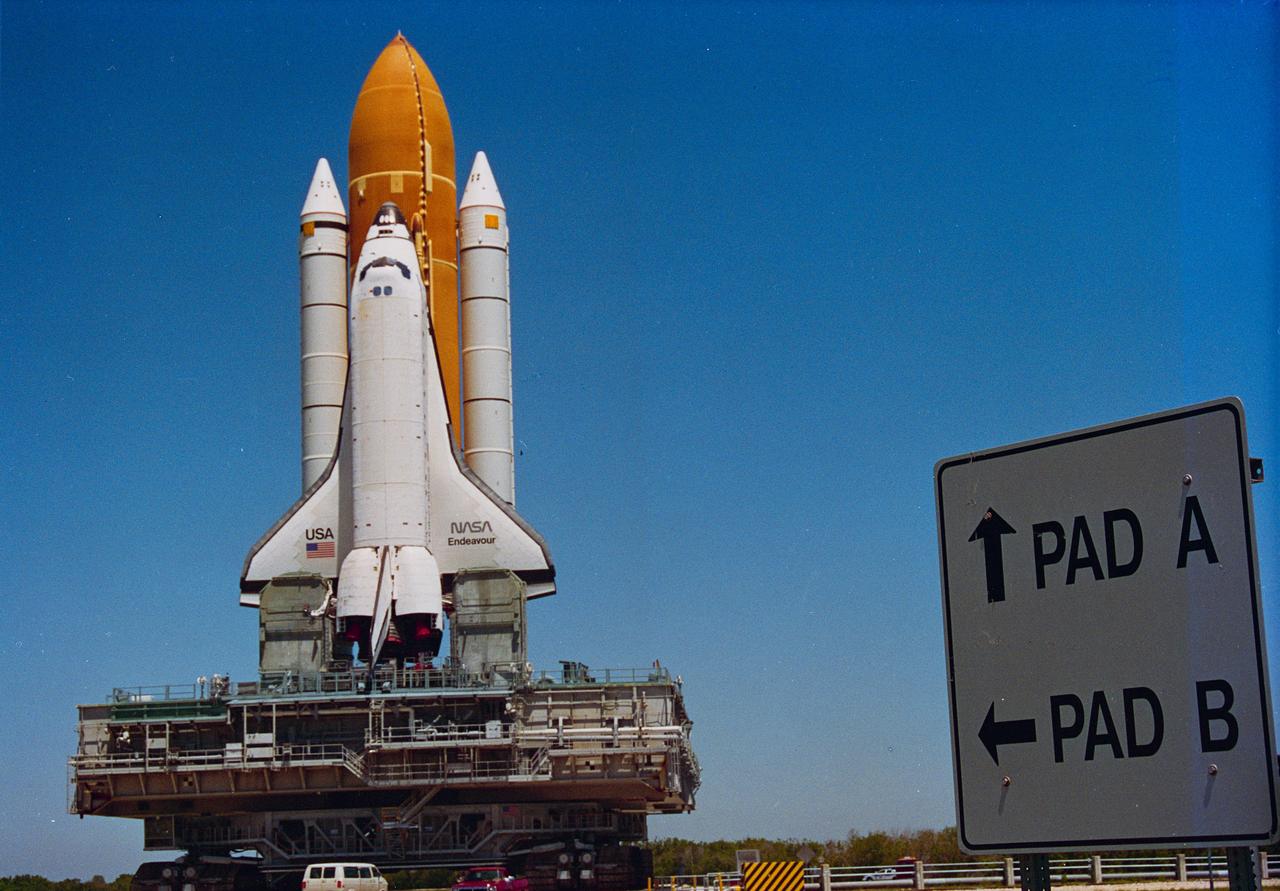
S96-07957 (16 April 1996) --- A road sign points to Launch Pad 39B, the final earthly destination for the Space Shuttle Endeavour and its final stepping stone into space. Endeavour began the slow journey from the Vehicle Assembly Building (VAB) at about 10:00a.m., April 16, 1996, perched atop the Mobile Launcher Platform and carried by the Crawler-Transporter. Upcoming activities at the pad to prepare Endeavour for flight on STS-77 include installation of the payloads in the Orbiter?s payload bay.
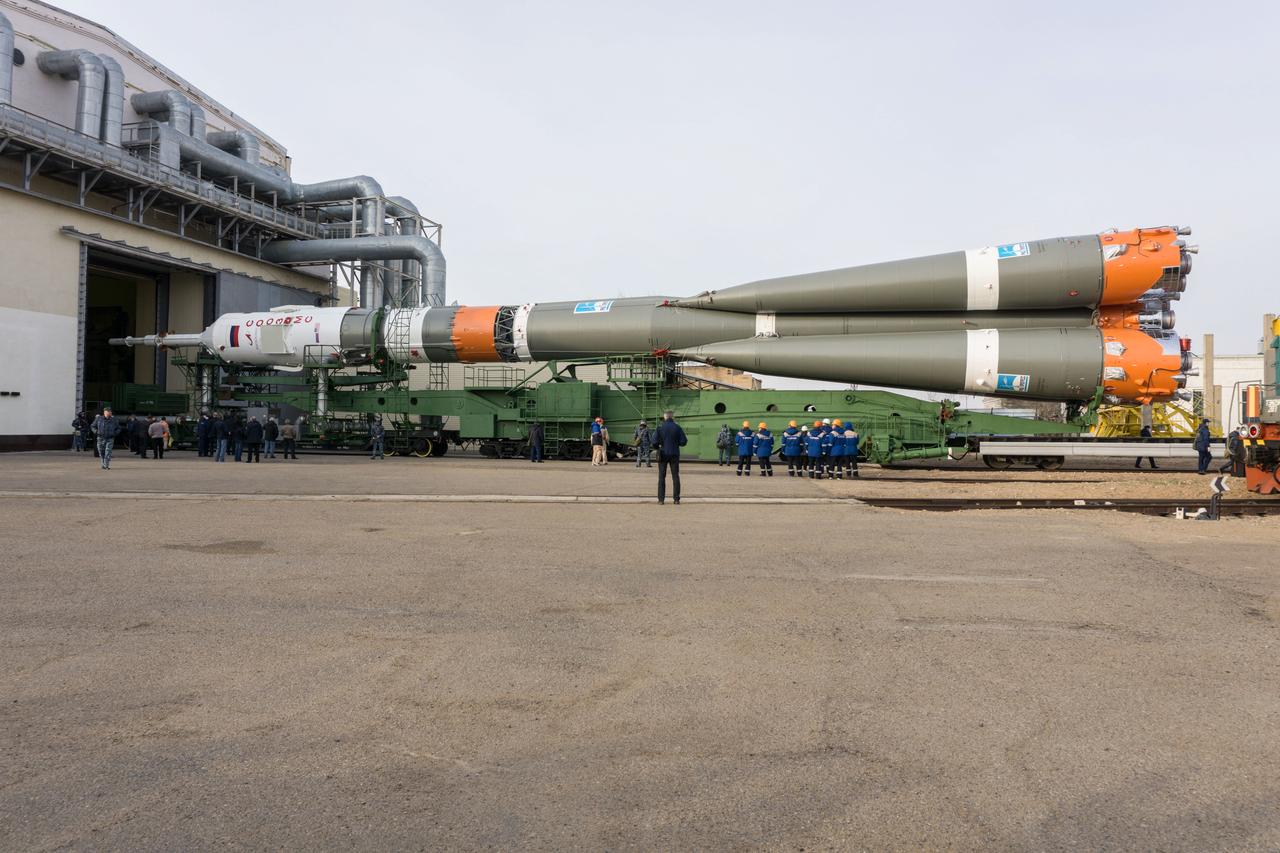
jsc2020e016988 - At the Baikonur Cosmodrome in Kazakhstan, the Soyuz MS-16 spacecraft and its booster are transported from the integration building to the Site 31 launch pad April 6 for final preparations for launch. Expedition 63 crewmembers Chris Cassidy of NASA and Anatoly Ivanishin and Ivan Vagner of Roscosmos are set to launch aboard the Soyuz MS-16 April 9 for a six-and-a-half month mission on the International Space Station...NASA/Victor Zelentsov.
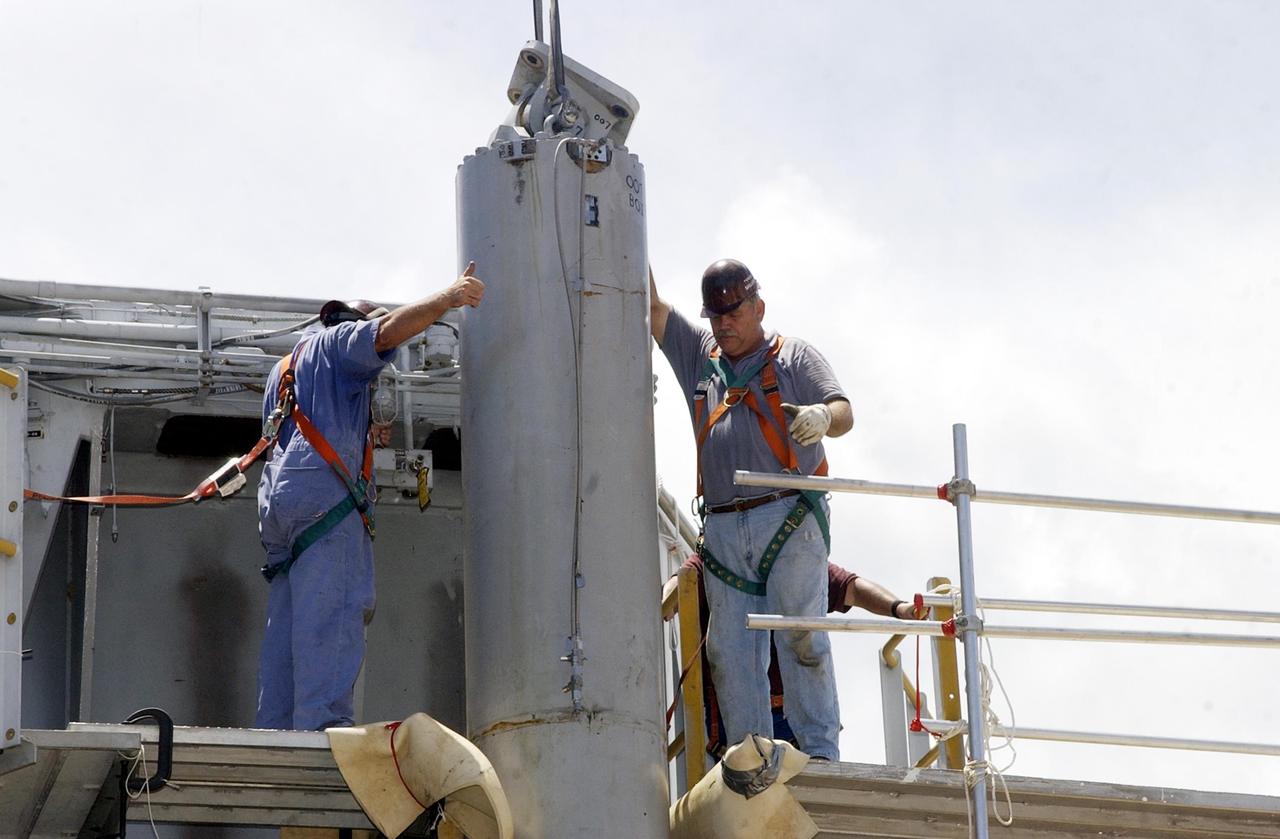
KENNEDY SPACE CENTER, FLA. -- Technicians give the signal for a crane to begin lifting a jacking, equalization and leveling (JEL) cylinder and bearing on Crawler-Transporter No. 2. During routine maintenance inspections last week, technicians removed two of the 16 JEL cylinders on the crawler to gain access to the bearings and found three of the four bearings cracked. Further eddy current inspections indicated that cracks are present on 15 of the bearings. There are 16 cylinders and 32 bearings per crawler. Engineers are evaluating the situation to determine the cause of the cracks and an appropriate solution to the problem.
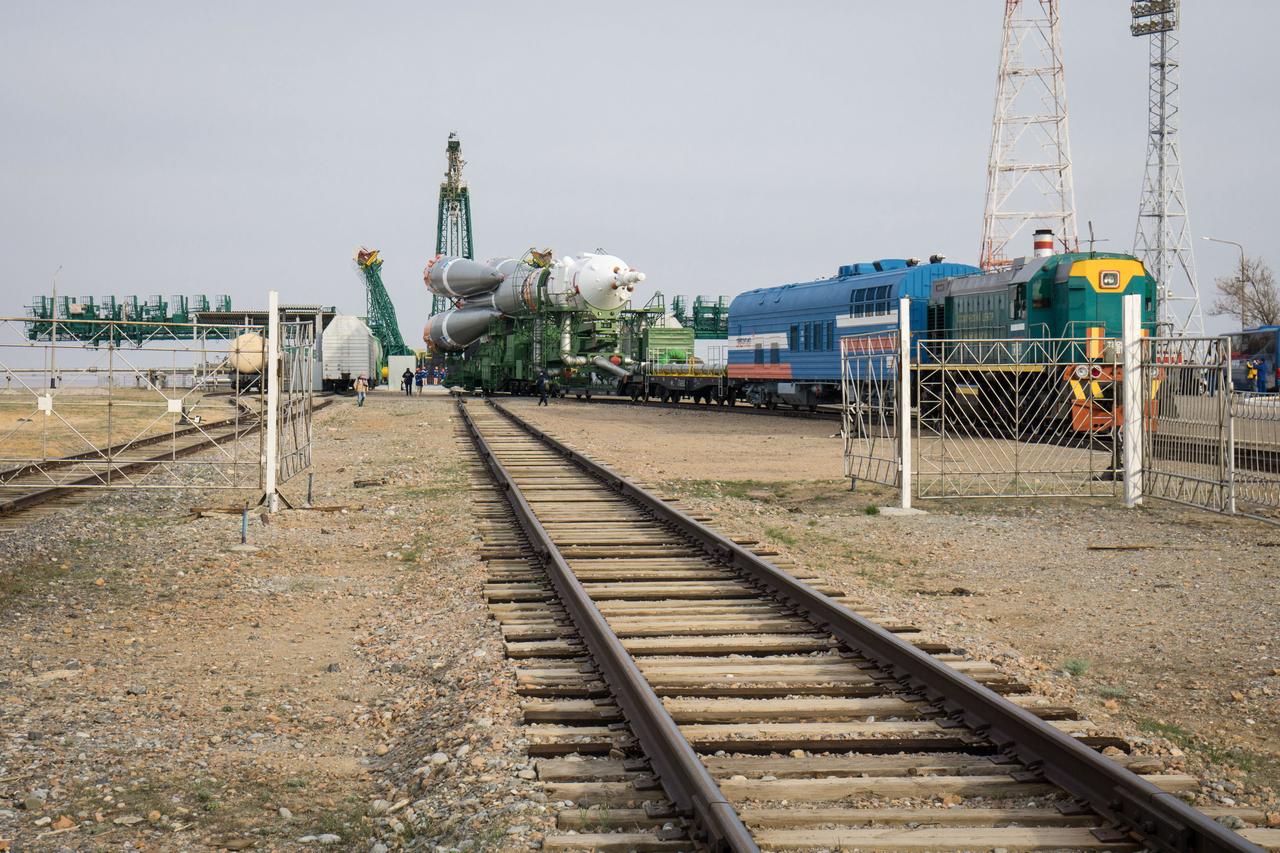
jsc2020e016990 - At the Baikonur Cosmodrome in Kazakhstan, the Soyuz MS-16 spacecraft and its booster are transported from the integration building to the Site 31 launch pad April 6 for final preparations for launch. Expedition 63 crewmembers Chris Cassidy of NASA and Anatoly Ivanishin and Ivan Vagner of Roscosmos are set to launch aboard the Soyuz MS-16 April 9 for a six-and-a-half month mission on the International Space Station...NASA/Victor Zelentsov.
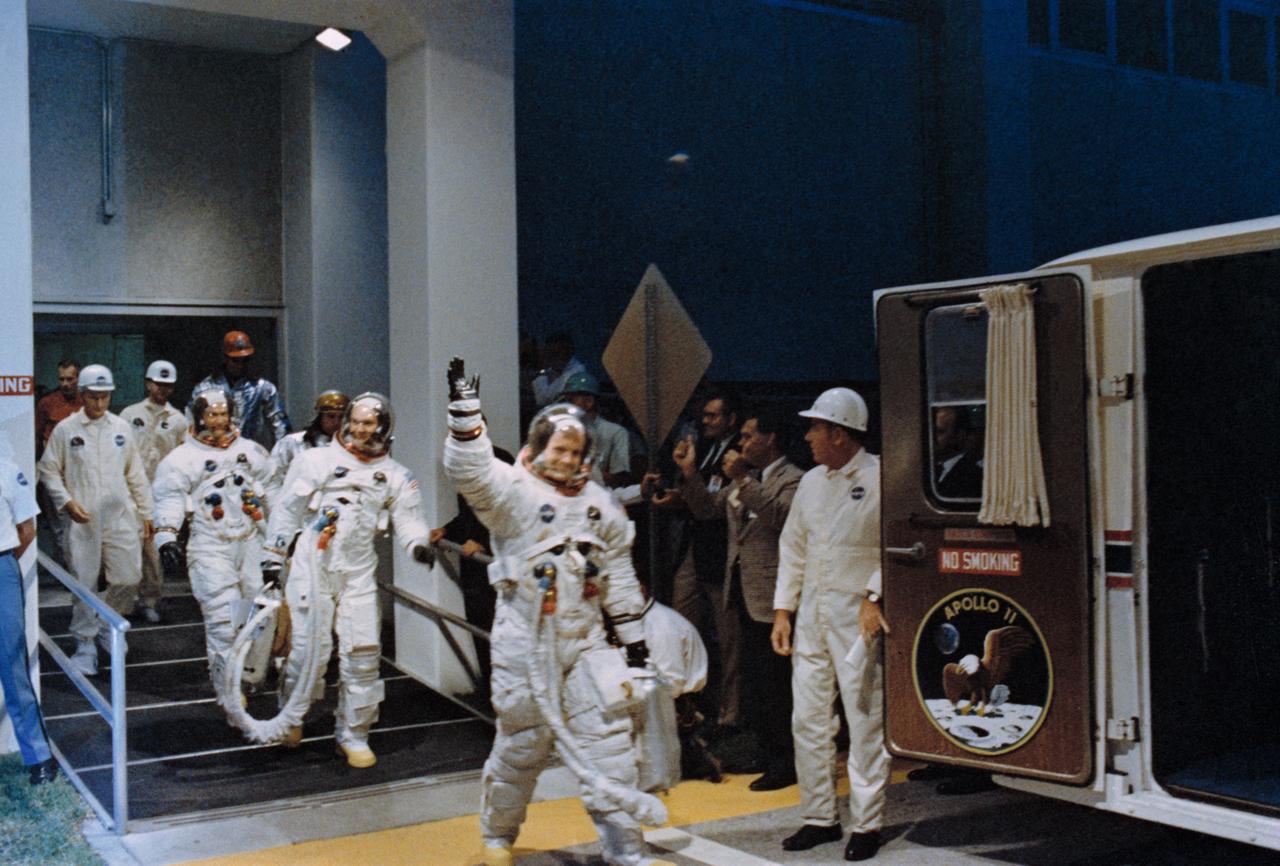
S69-39956 (16 July 1969) --- The crewmen of the Apollo 11 lunar landing mission leave the Kennedy Space Center's (KSC) Manned Spacecraft Operations Building (MSOB) during the prelaunch countdown. Astronauts Neil A. Armstrong, commander; Michael Collins, command module pilot; and Edwin E. Aldrin Jr., lunar module pilot, ride the special transport van over to Launch Complex 39A where their spacecraft awaited them. Liftoff was at 9:32 a.m. (EDT), July 16, 1969.
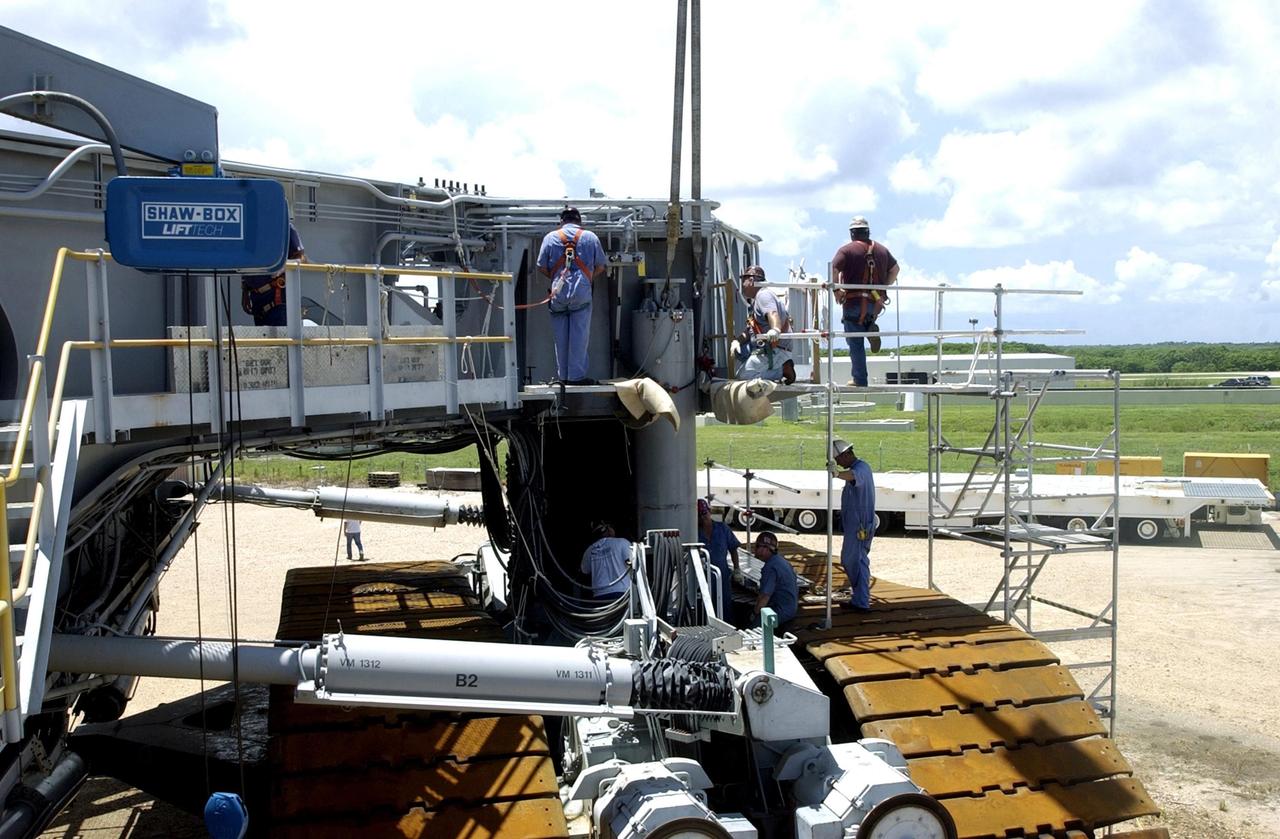
KENNEDY SPACE CENTER, FLA. -- Technicians hook a crane to a jacking, equalization and leveling (JEL) cylinder and bearing on Crawler-Transporter No. 2 in preparation for its removal. During routine maintenance inspections last week, technicians removed two of the 16 JEL cylinders on the crawler to gain access to the bearings and found three of the four bearings cracked. Further eddy current inspections indicated that cracks are present on 15 of the bearings. There are 16 cylinders and 32 bearings per crawler. Engineers are evaluating the situation to determine the cause of the cracks and an appropriate solution to the problem.
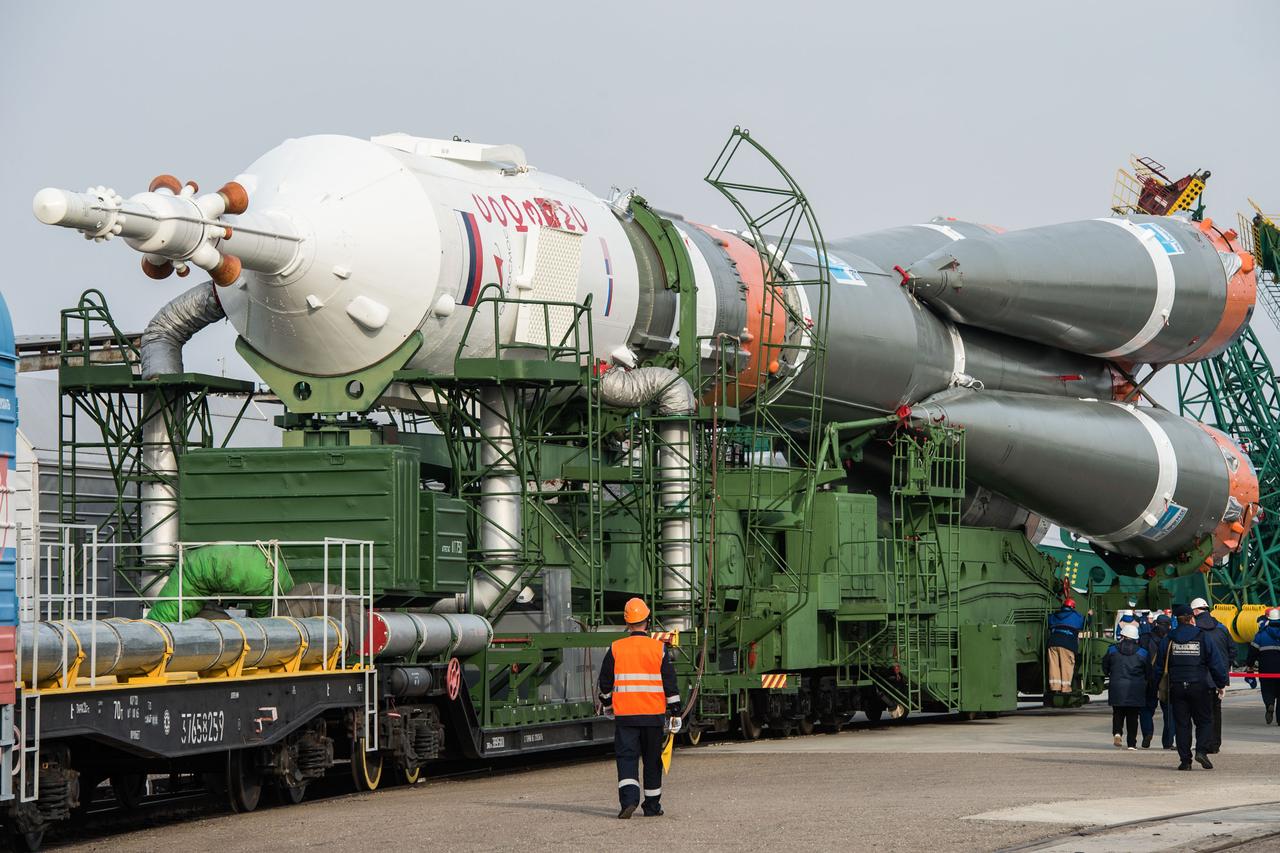
jsc2020e017001 - At the Baikonur Cosmodrome in Kazakhstan, the Soyuz MS-16 spacecraft and its booster are transported from the integration building to the Site 31 launch pad April 6 for final preparations for launch. Expedition 63 crewmembers Chris Cassidy of NASA and Anatoly Ivanishin and Ivan Vagner of Roscosmos are set to launch aboard the Soyuz MS-16 April 9 for a six-and-a-half month mission on the International Space Station...Andrey Shelepin/Gagarin Cosmonaut Training Center.
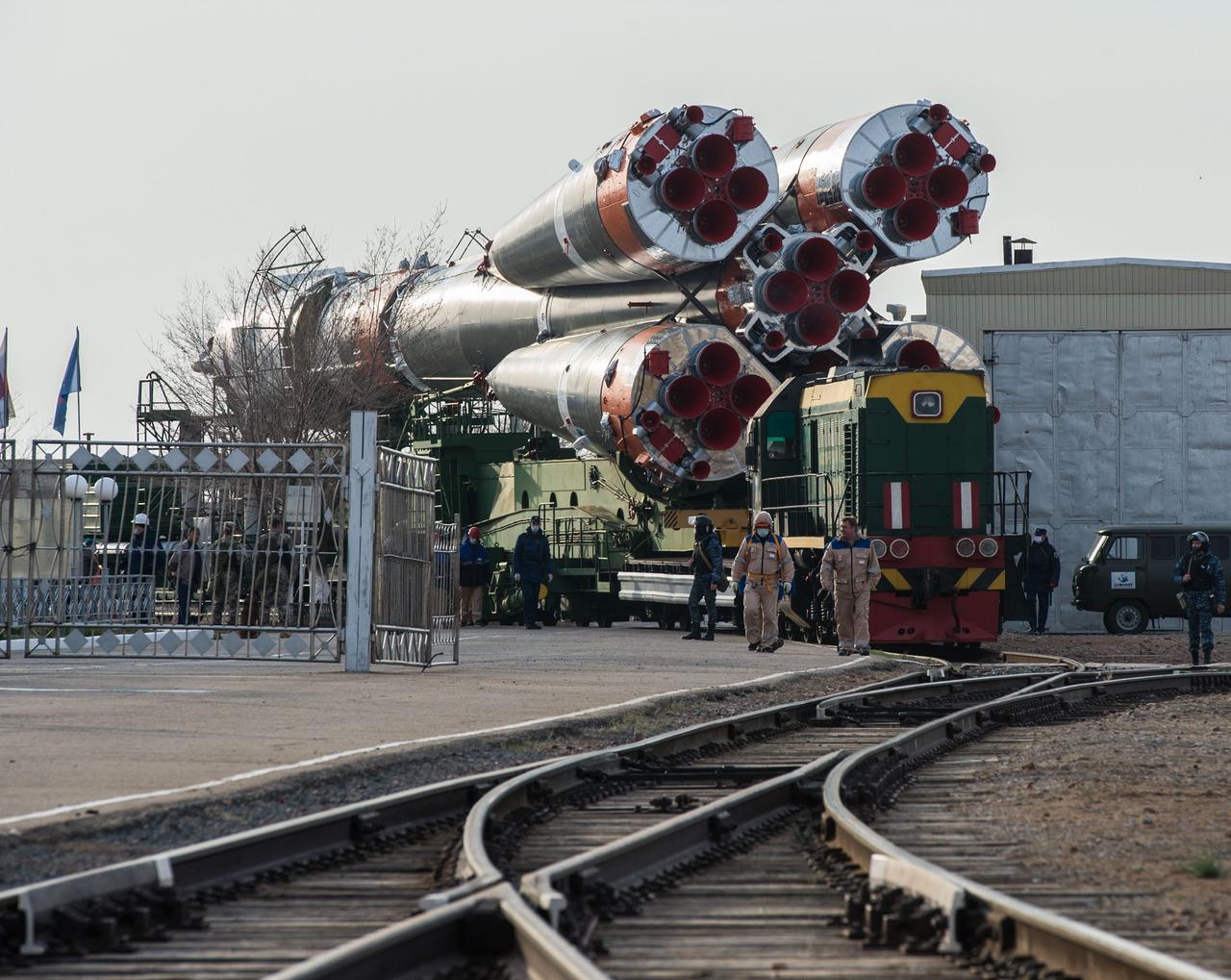
jsc2020e016999 - At the Baikonur Cosmodrome in Kazakhstan, the Soyuz MS-16 spacecraft and its booster are transported from the integration building to the Site 31 launch pad April 6 for final preparations for launch. Expedition 63 crewmembers Chris Cassidy of NASA and Anatoly Ivanishin and Ivan Vagner of Roscosmos are set to launch aboard the Soyuz MS-16 April 9 for a six-and-a-half month mission on the International Space Station...Andrey Shelepin/Gagarin Cosmonaut Training Center.
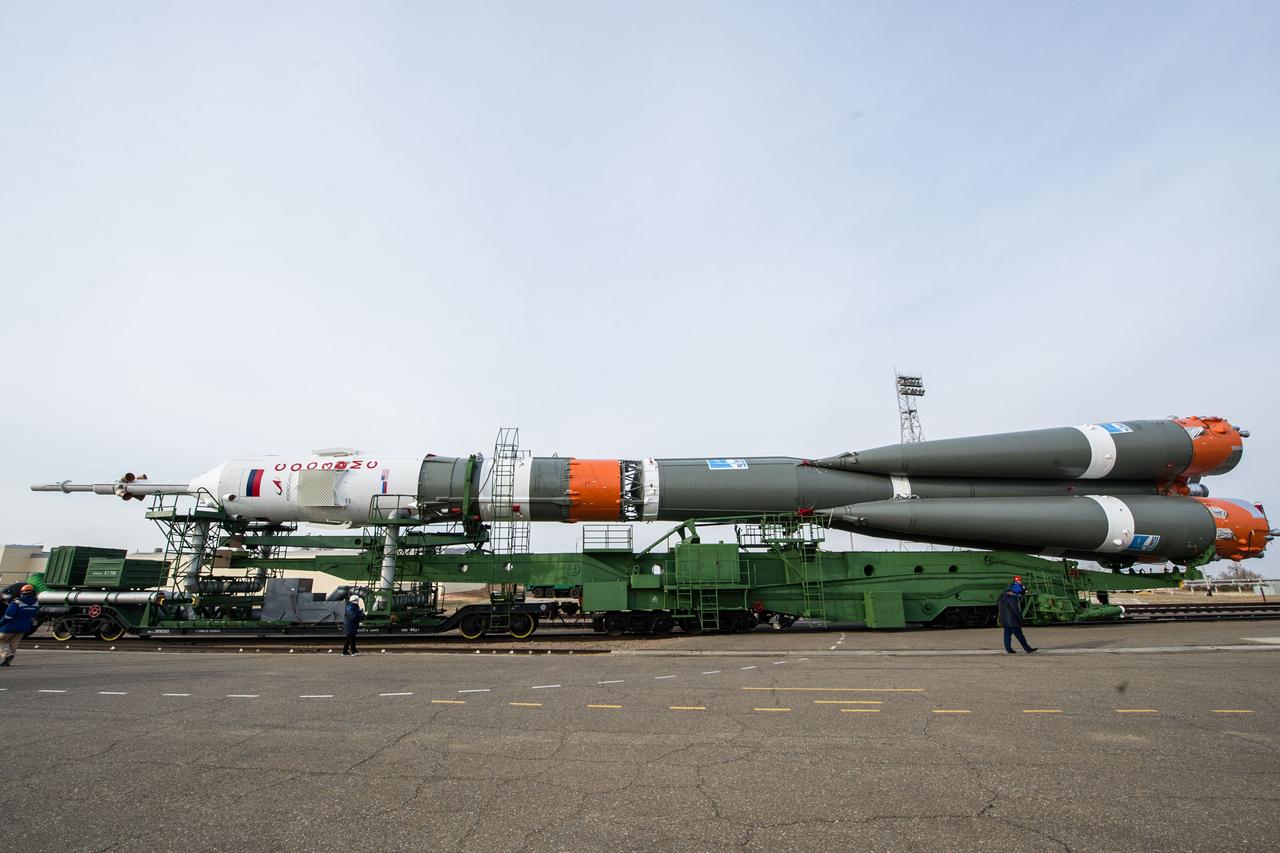
jsc2020e017003 - At the Baikonur Cosmodrome in Kazakhstan, the Soyuz MS-16 spacecraft and its booster are transported from the integration building to the Site 31 launch pad April 6 for final preparations for launch. Expedition 63 crewmembers Chris Cassidy of NASA and Anatoly Ivanishin and Ivan Vagner of Roscosmos are set to launch aboard the Soyuz MS-16 April 9 for a six-and-a-half month mission on the International Space Station...Andrey Shelepin/Gagarin Cosmonaut Training Center.
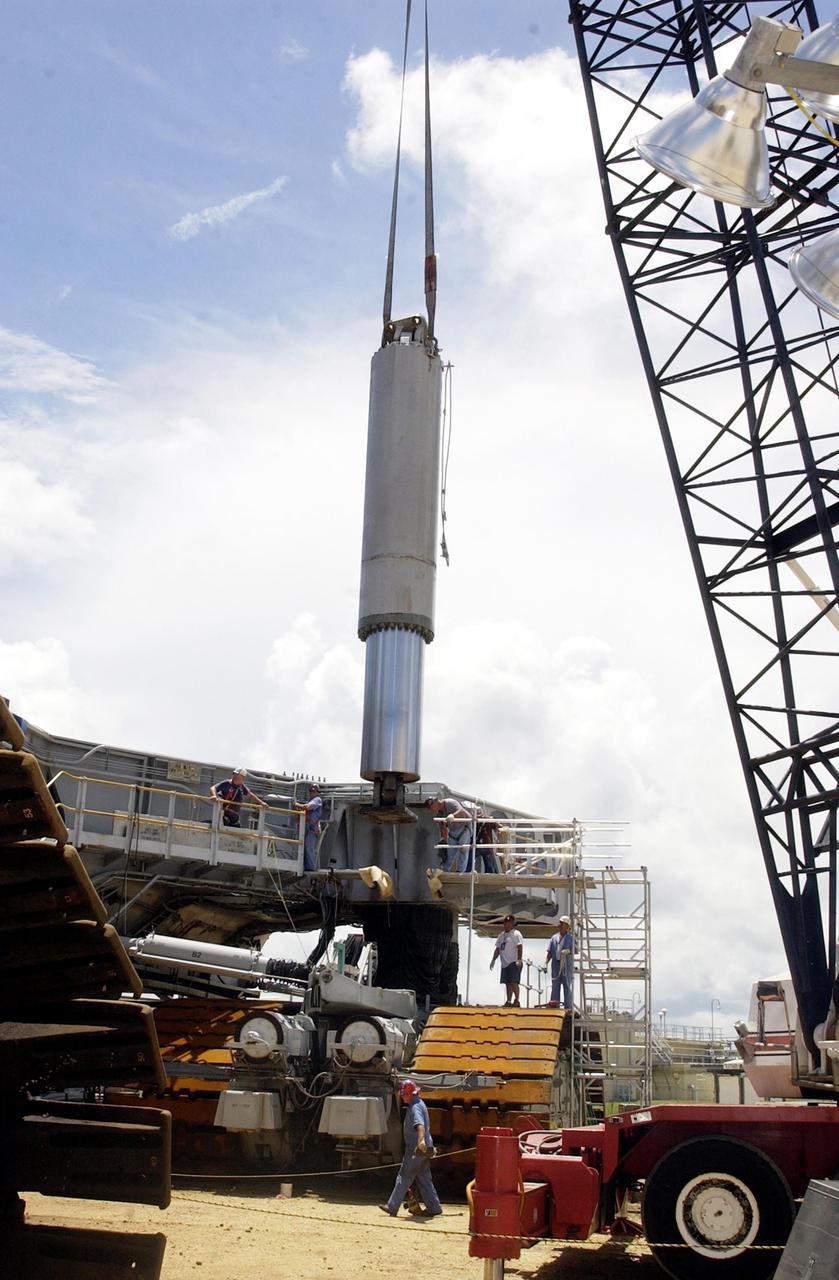
KENNEDY SPACE CENTER, FLA. -- A crane lowers a jacking, equalization and leveling (JEL) cylinder and bearing from Crawler-Transporter No. 2 to a position on the ground. During routine maintenance inspections last week, technicians removed two of the 16 JEL cylinders on the crawler to gain access to the bearings and found three of the four bearings cracked. Further eddy current inspections indicated that cracks are present on 15 of the bearings. There are 16 cylinders and 32 bearings per crawler. Engineers are evaluating the situation to determine the cause of the cracks and an appropriate solution to the problem.
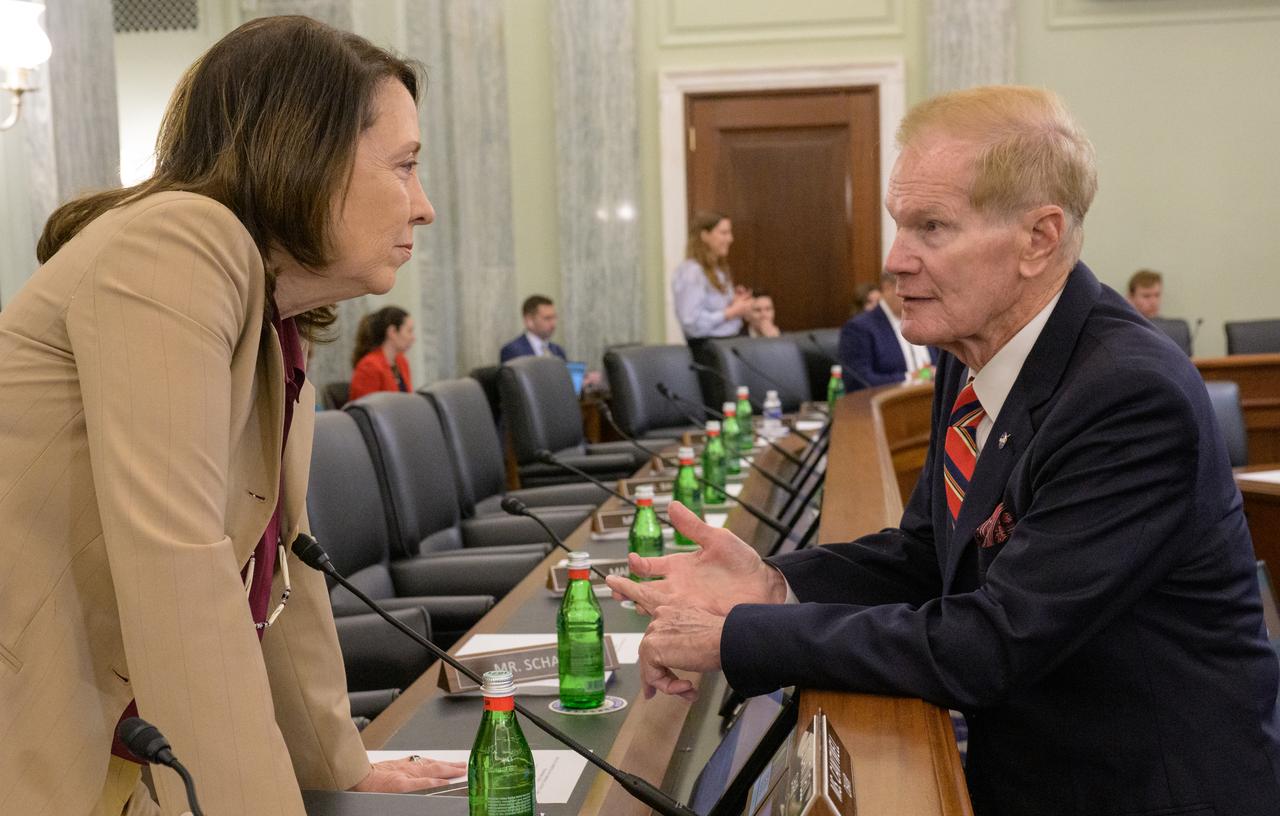
Senate Commerce, Science, and Transportation Committee Chair Maria Cantwell, D-Wash., left, talks with NASA Administrator Bill Nelson prior to Nelson testifying before the Senate Committee on Commerce, Science, and Transportation during a hearing titled “Examining NASA’s Budget and Priorities,” Tuesday, May 16, 2023, at the Russell Senate Office Building in Washington. Photo Credit: (NASA/Bill Ingalls)
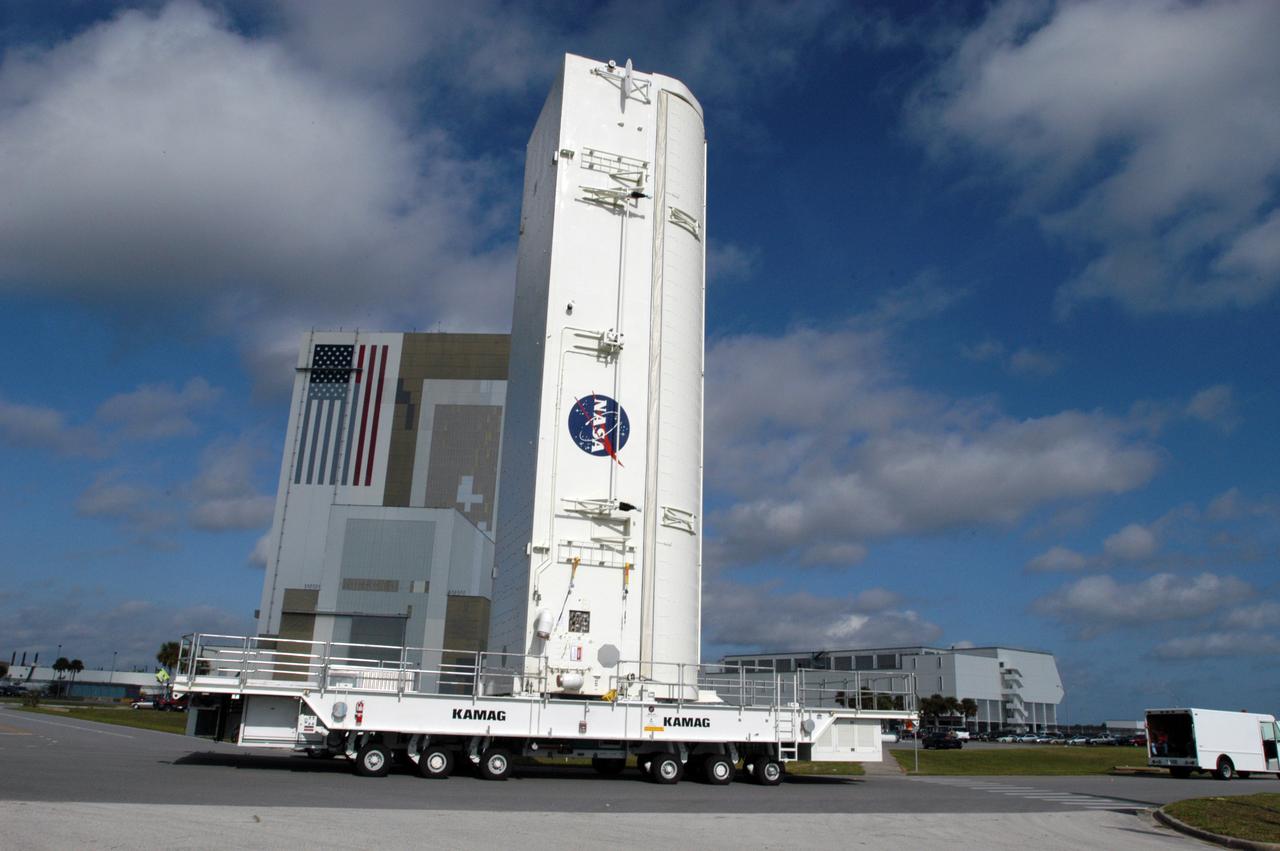
This payload canister is being transported to Launch Pad 39A for a "fit check." At a later date, the canister will be used to transport to the pad the S3/S4 solar arrays that are the payload for mission STS-117. The mission will launch on Space Shuttle Atlantis for the 21st flight to the International Space Station, and the crew of six will continue the construction of station with the installation of the arrays. The launch of Atlantis is targeted for March 16.
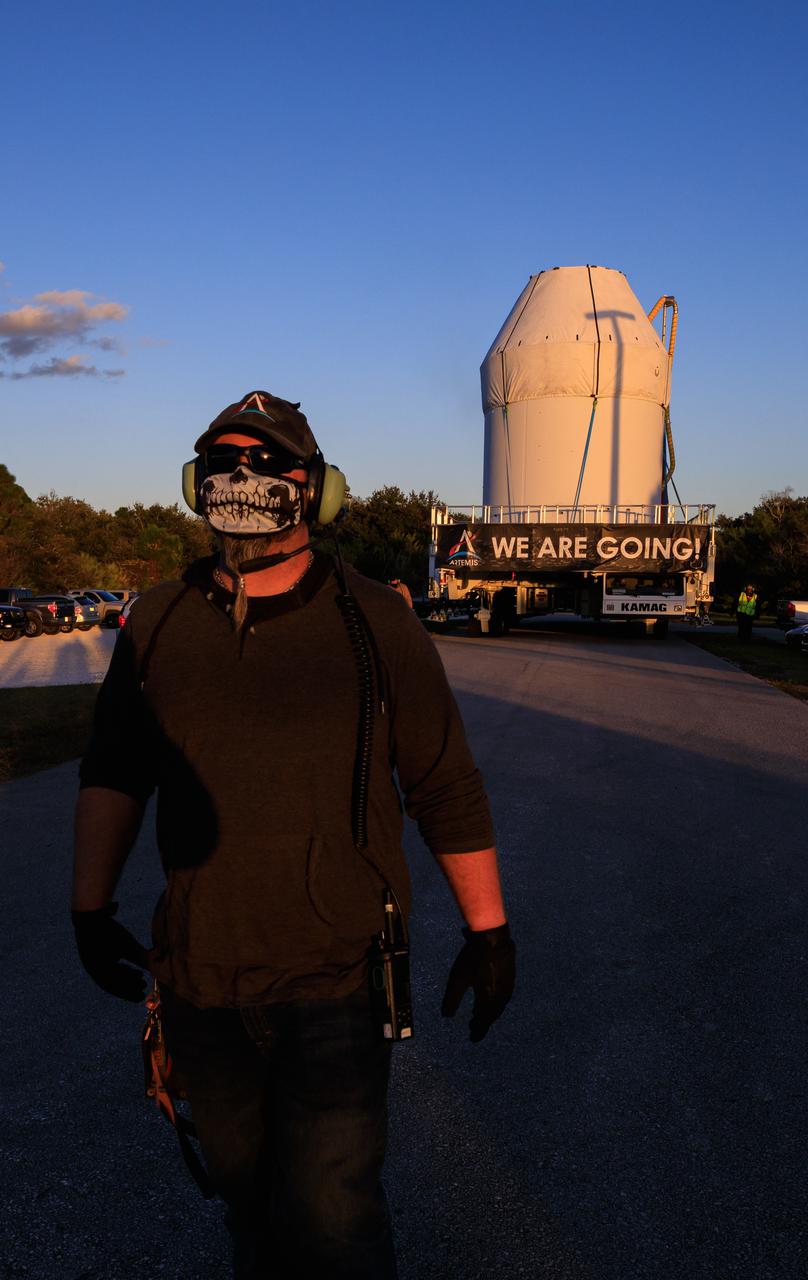
Secured atop a transport vehicle, Orion moves along the route to the Multi-Payload Processing Facility (MPPF) on Jan. 16, 2021, after departing from the Neil Armstrong Operations and Checkout Building at NASA’s Kennedy Space Center in Florida. Jason Parrish, a mechanical technician, Crawler Transporter Systems, with Jacobs, is one of the workers assisting with the move. Inside the MPPF, Orion will undergo processing with the Exploration Ground Systems team taking over ground processing ahead of the Artemis I launch.
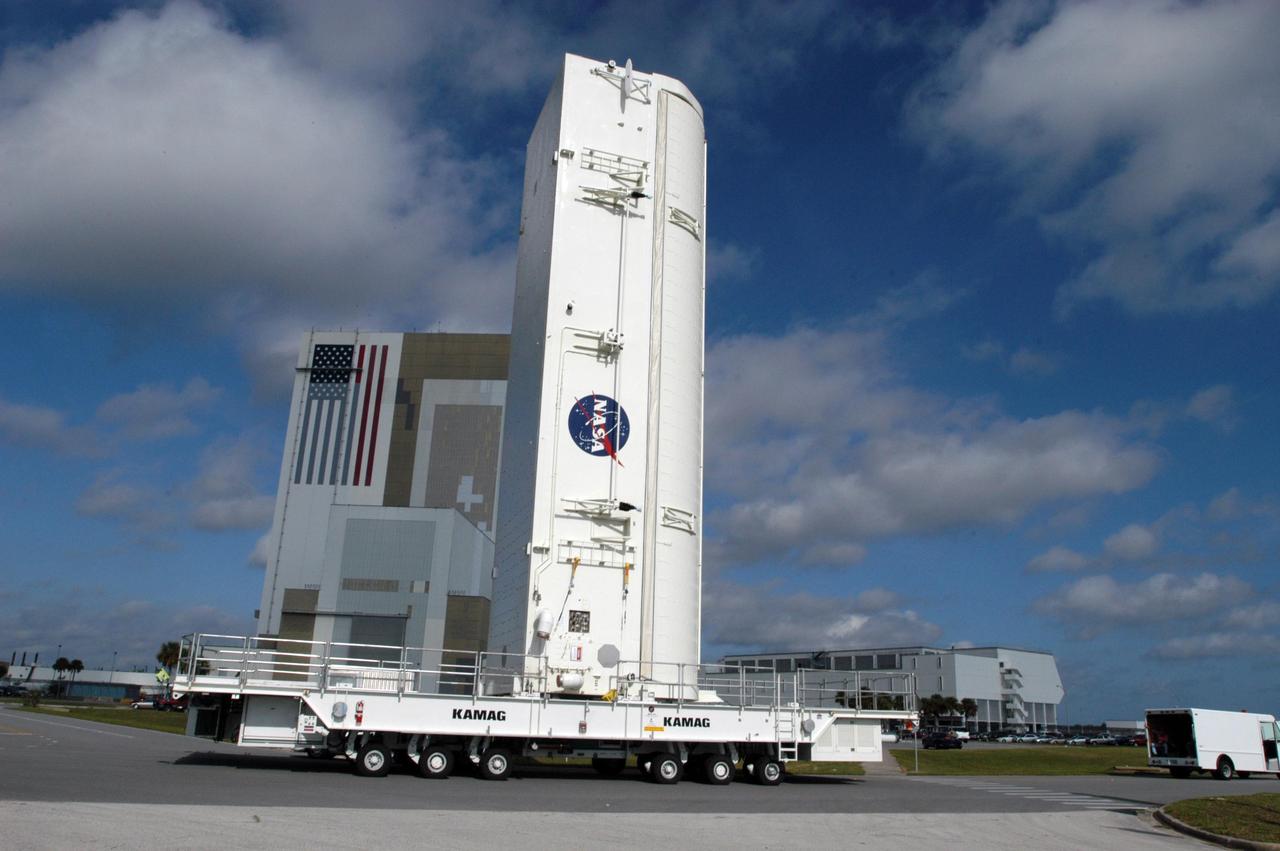
KENNEDY SPACE CENTER, FLA. -- This payload canister is being transported to Launch Pad 39A for a "fit check." At a later date, the canister will be used to transport to the pad the S3/S4 solar arrays that are the payload for mission STS-117. The mission will launch on Space Shuttle Atlantis for the 21st flight to the International Space Station, and the crew of six will continue the construction of station with the installation of the arrays. The launch of Atlantis is targeted for March 16. Photo credit: NASA/George Shelton
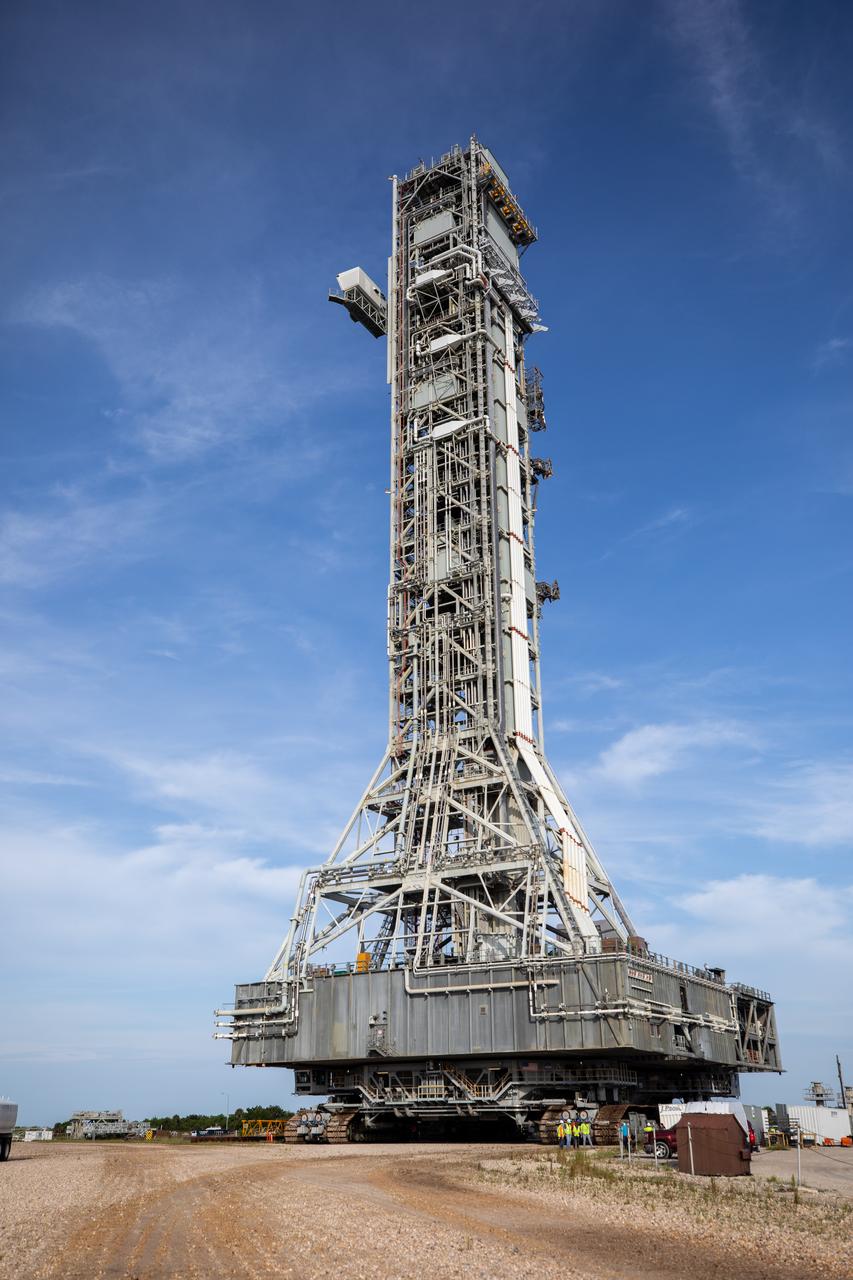
The mobile launcher, carried by the crawler-transporter 2, rolls out from its park site location to Launch Pad 39B at NASA’s Kennedy Space Center in Florida on Aug. 16, 2023. While at the pad, it will undergo testing for the agency’s Artemis II mission. Under Artemis, the mobile launcher will transport NASA’s Space Launch System rocket and Orion spacecraft to pad 39B for liftoff.
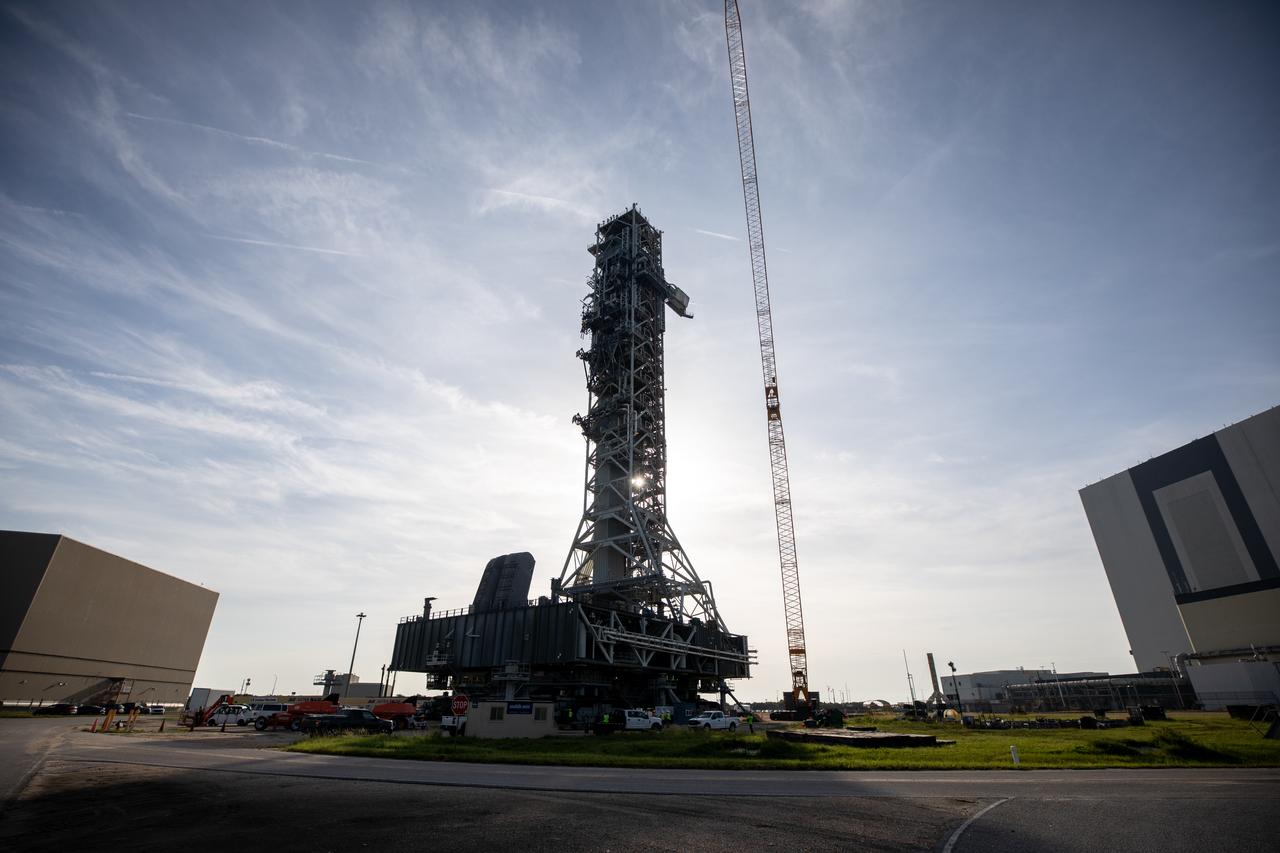
The mobile launcher, carried by the crawler-transporter 2, rolls out from its park site location to Launch Pad 39B at NASA’s Kennedy Space Center in Florida on Aug. 16, 2023. While at the pad, it will undergo testing for the agency’s Artemis II mission. Under Artemis, the mobile launcher will transport NASA’s Space Launch System rocket and Orion spacecraft to pad 39B for liftoff.
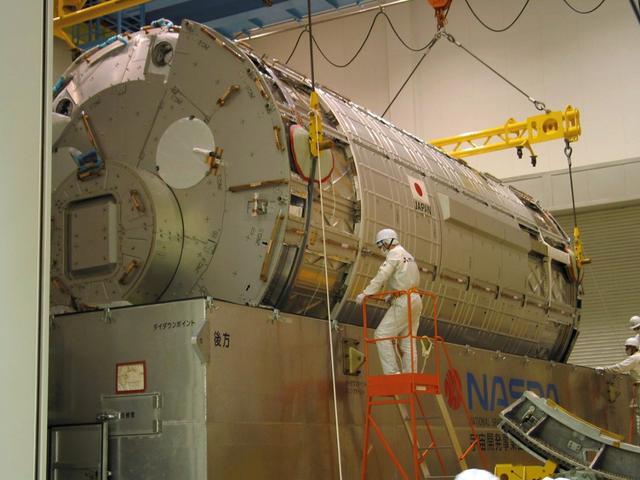
JSC2003-E-34758 (16 April 2003) --- The Kibo Japanese Experiment Module's (JEM) Pressurized Module, a science laboratory bound for the International Space Station, is lowered into a shipping crate, in preparation for shipment to the Kennedy Space Center where it will be prepared for launch aboard the Space Shuttle. A container transport ship carrying Kibo left Yokohama Harbor, Japan, May 2, 2003, bound for Port Canaveral, Florida, where it is expected to arrive in early June. It will then be transported to KSC's Space Station Processing Facility.
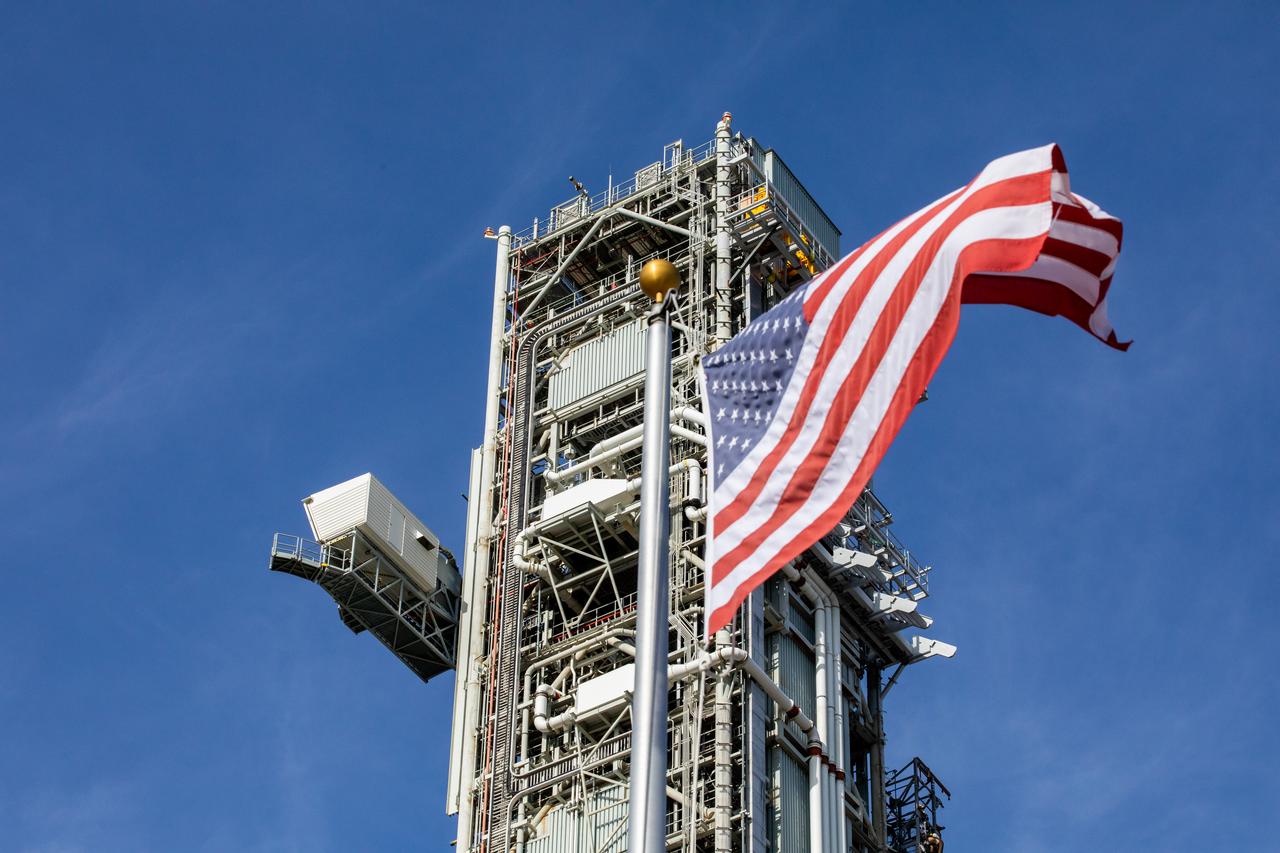
The mobile launcher, carried by the crawler-transporter 2, rolls out from its park site location to Launch Pad 39B at NASA’s Kennedy Space Center in Florida on Aug. 16, 2023. While at the pad, it will undergo testing for the agency’s Artemis II mission. Under Artemis, the mobile launcher will transport NASA’s Space Launch System rocket and Orion spacecraft to pad 39B for liftoff.
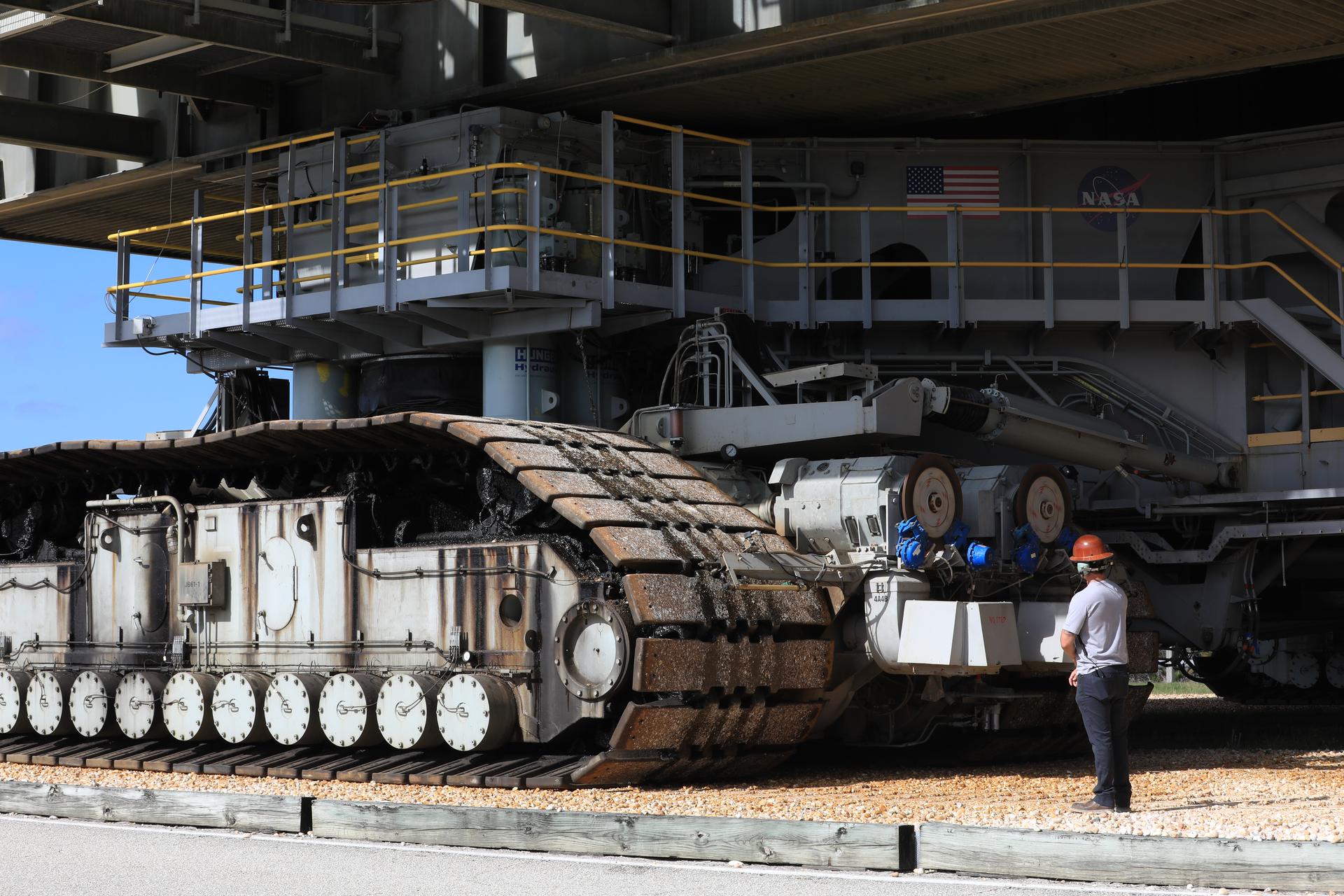
Technicians with NASA’s Exploration Gound Systems Program monitor crawler-transporter 2 as it transports the agency’s mobile launcher 1 slowly from Launch Complex 39B to the Vehicle Assembly Building at NASA’s Kennedy Space Center in Florida on Thursday, April 16, 2026, in preparation for Artemis III stacking operations. Teams will perform checkouts, inspections, and data analysis, and make repairs to the tower that saw damage during liftoff of the Artemis II test flight.
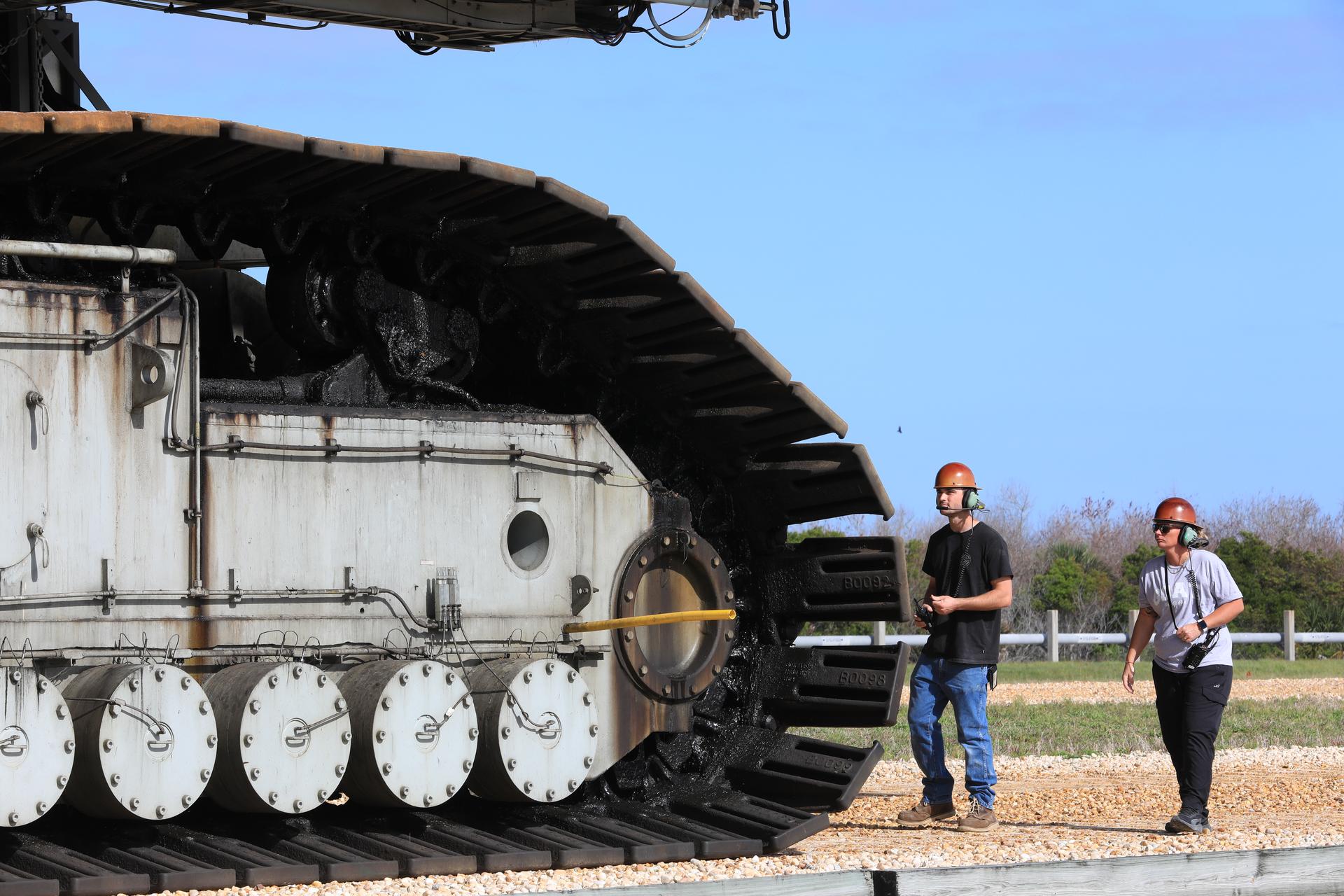
Technicians with NASA’s Exploration Gound Systems Program monitor crawler-transporter 2 as it transports the agency’s mobile launcher 1 slowly from Launch Complex 39B to the Vehicle Assembly Building at NASA’s Kennedy Space Center in Florida on Thursday, April 16, 2026, in preparation for Artemis III stacking operations. Teams will perform checkouts, inspections, and data analysis, and make repairs to the tower that saw damage during liftoff of the Artemis II test flight.
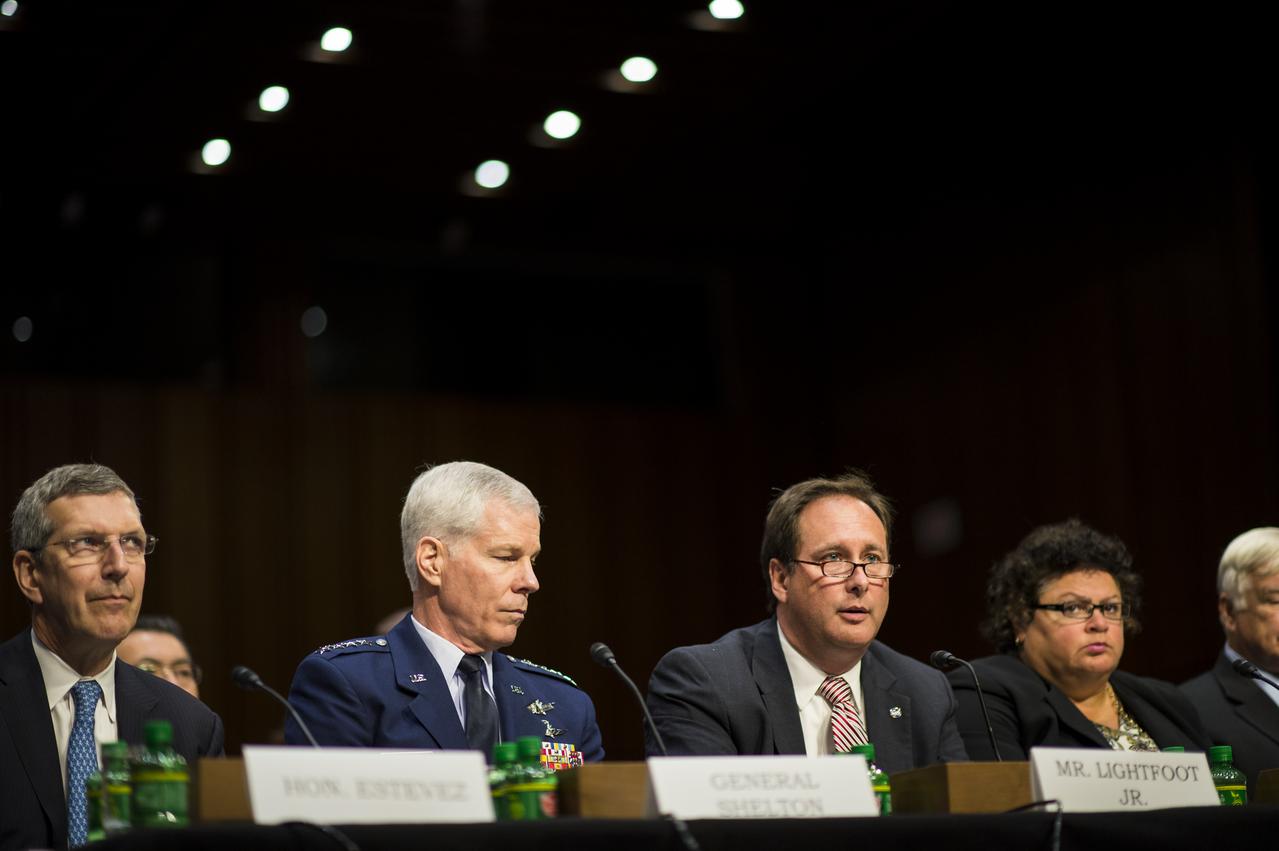
Robert Lightfoot, NASA Associate Administrator, third from left, answers a question during testimony in front of the Senate Subcommittee on Strategic Forces and Senate Committee on Commerce, Science, and Transportation on Wednesday, July 16, 2014, at the Hart Senate Office Building in Washington, DC. The Senate hearing focused on assured access to space.

Sen. Ted Cruz, R-Texas, listens during testimony in front of the Senate Subcommittee on Strategic Forces and Senate Committee on Commerce, Science, and Transportation on Wednesday, July 16, 2014, at the Hart Senate Office Building in Washington, DC. The Senate hearing focused on assured access to space.
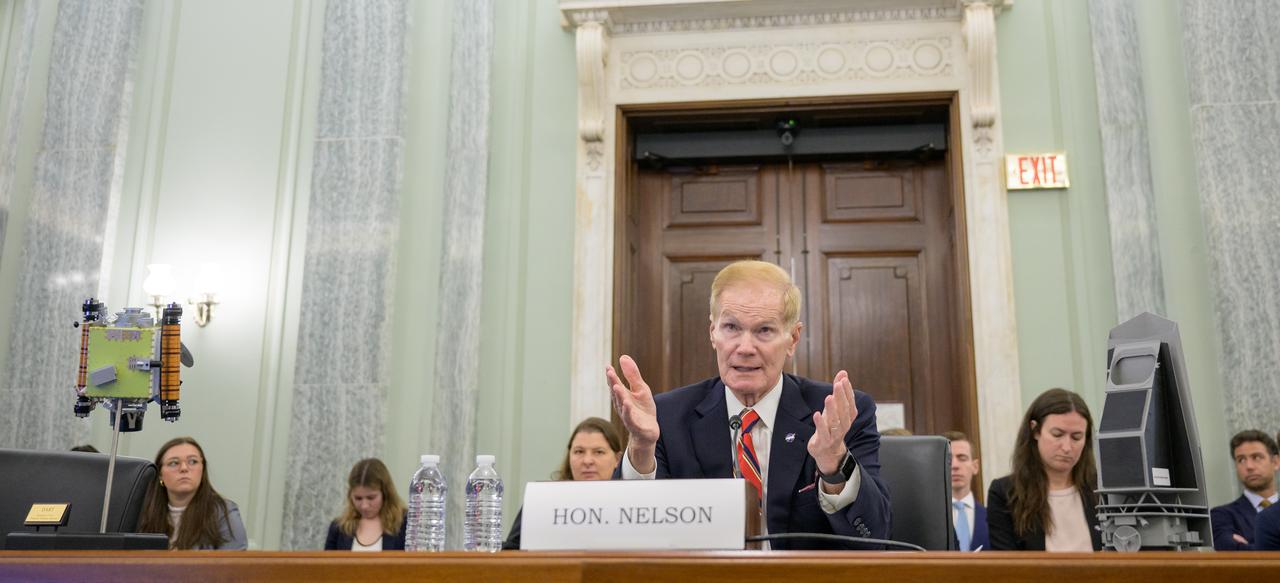
NASA Administrator Bill Nelson testifies before the Senate Committee on Commerce, Science, and Transportation during a hearing titled “Examining NASA’s Budget and Priorities,” Tuesday, May 16, 2023, at the Russell Senate Office Building in Washington. Photo Credit: (NASA/Bill Ingalls)

NASA Administrator Bill Nelson testifies before the Senate Committee on Commerce, Science, and Transportation during a hearing titled “Examining NASA’s Budget and Priorities,” Tuesday, May 16, 2023, at the Russell Senate Office Building in Washington. Photo Credit: (NASA/Bill Ingalls)
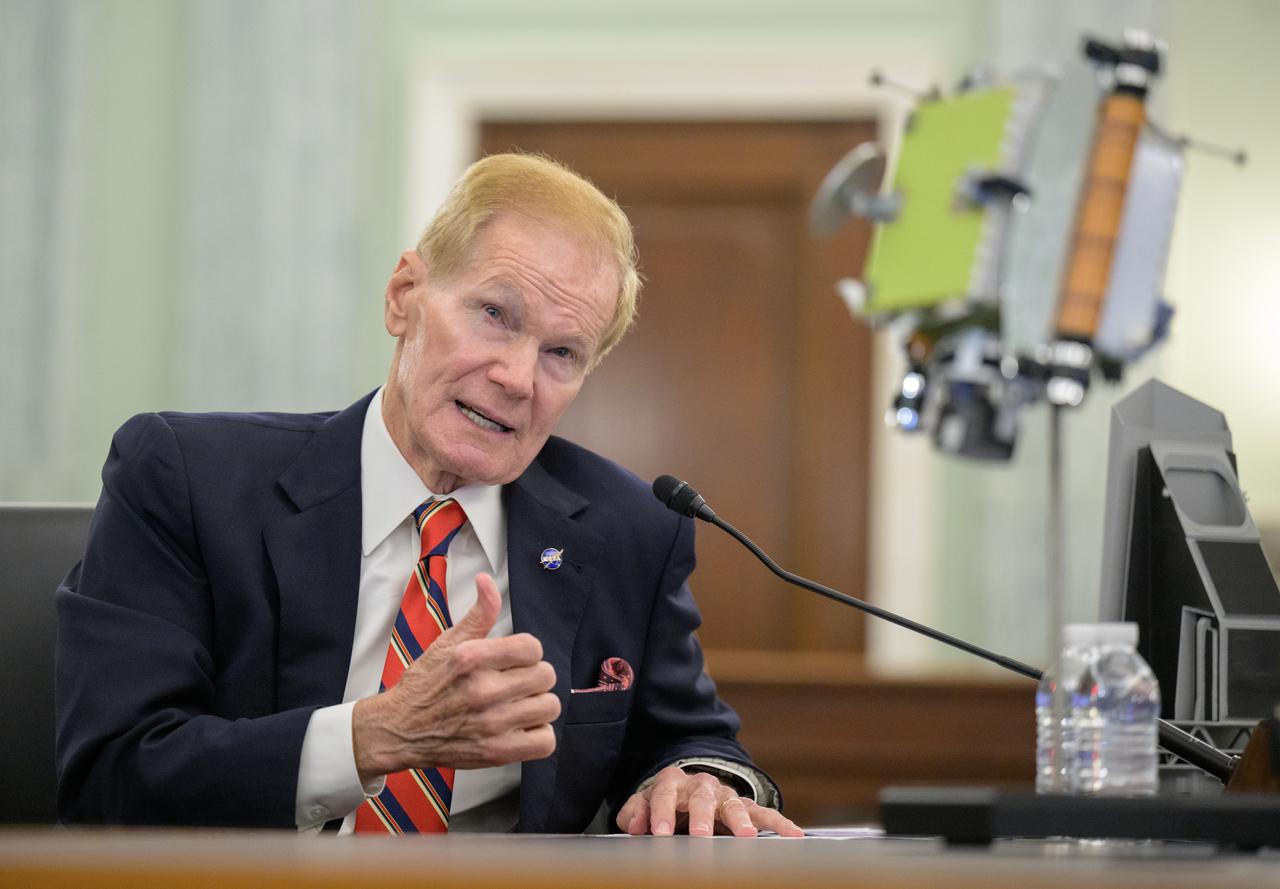
NASA Administrator Bill Nelson testifies before the Senate Committee on Commerce, Science, and Transportation during a hearing titled “Examining NASA’s Budget and Priorities,” Tuesday, May 16, 2023, at the Russell Senate Office Building in Washington. Photo Credit: (NASA/Bill Ingalls)
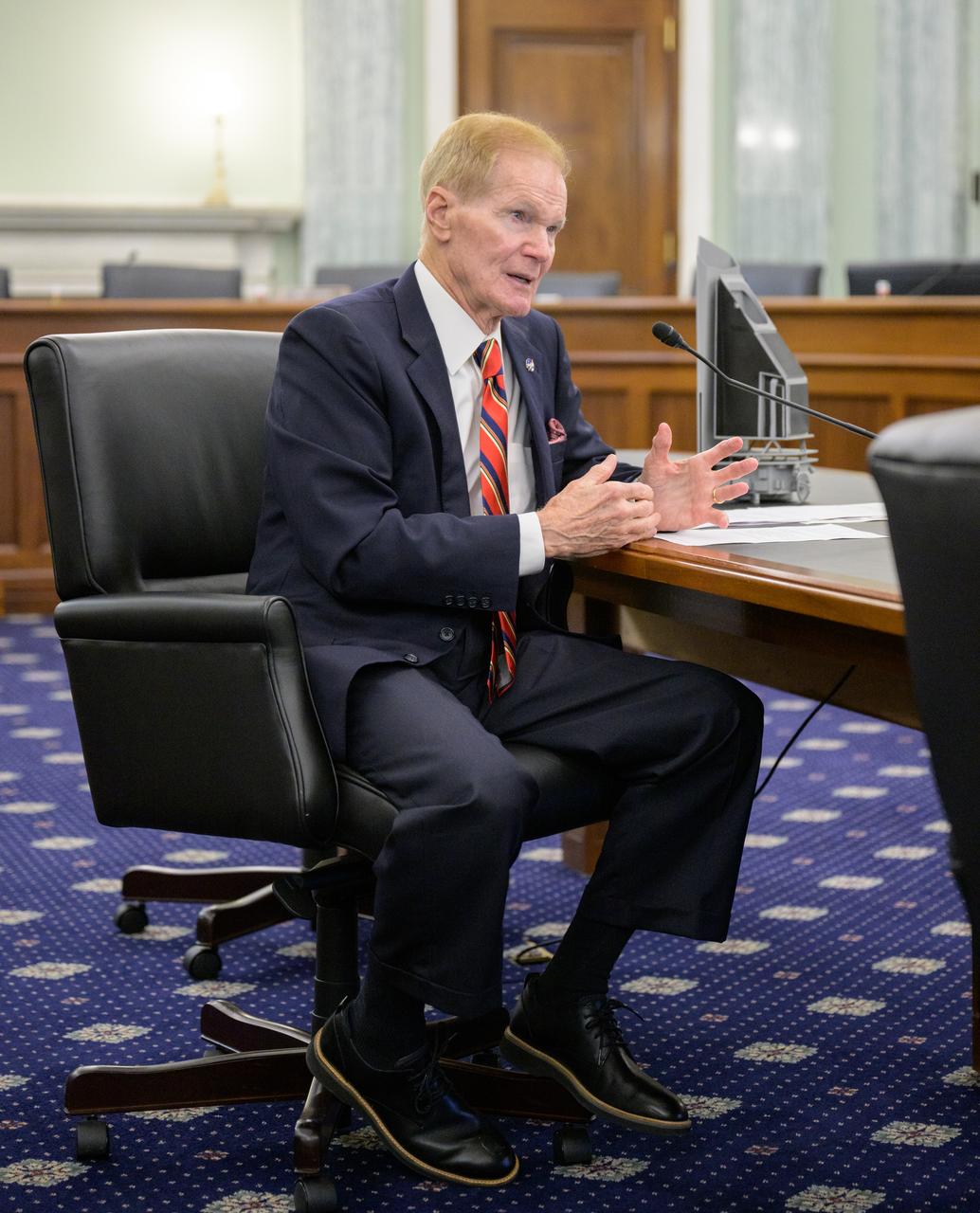
NASA Administrator Bill Nelson testifies before the Senate Committee on Commerce, Science, and Transportation during a hearing titled “Examining NASA’s Budget and Priorities,” Tuesday, May 16, 2023, at the Russell Senate Office Building in Washington. Photo Credit: (NASA/Bill Ingalls)
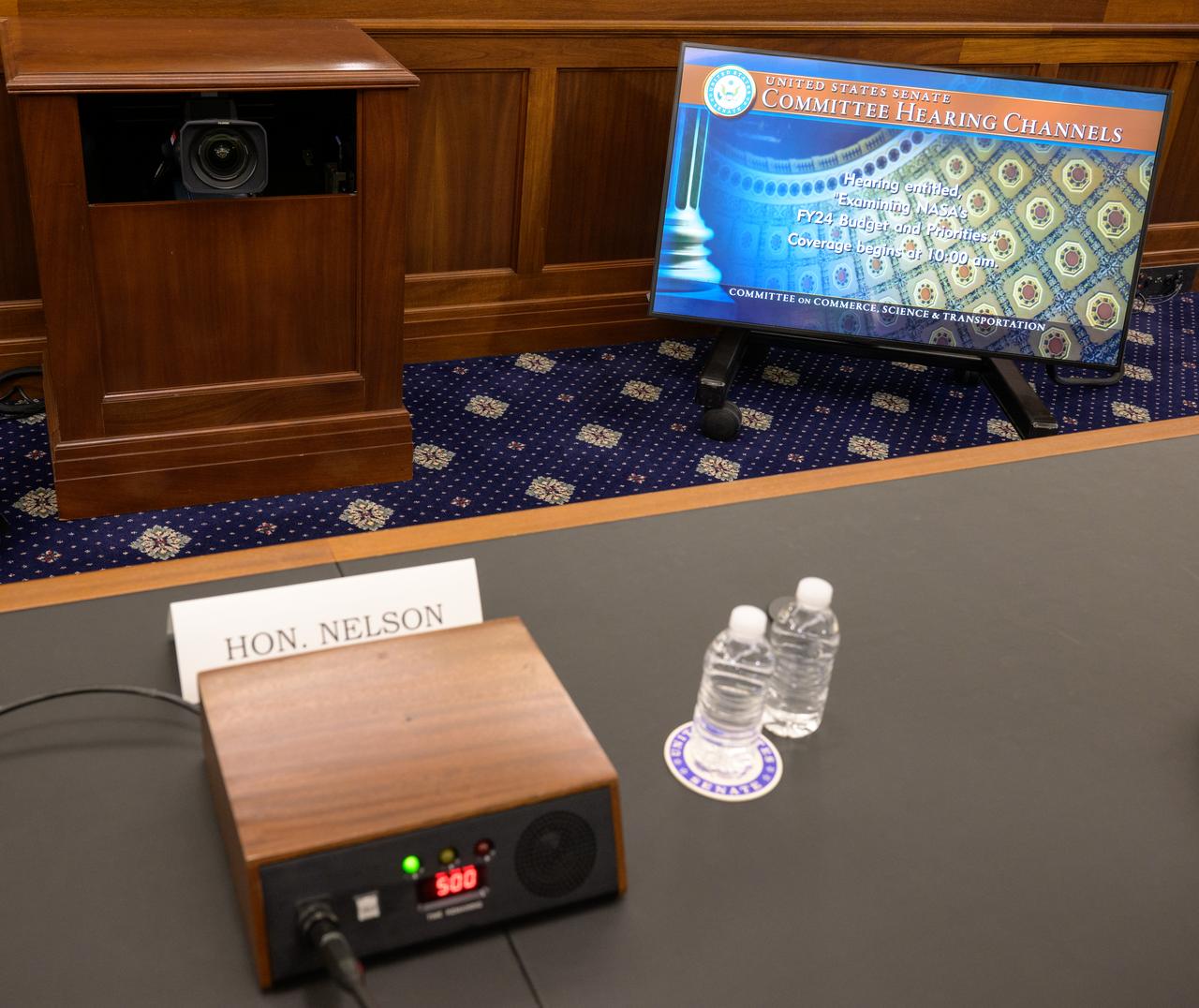
Witness table for NASA Administrator Bill Nelson ahead of him testifying before the Senate Committee on Commerce, Science, and Transportation during a hearing titled “Examining NASA’s Budget and Priorities,” Tuesday, May 16, 2023, at the Russell Senate Office Building in Washington. Photo Credit: (NASA/Bill Ingalls)
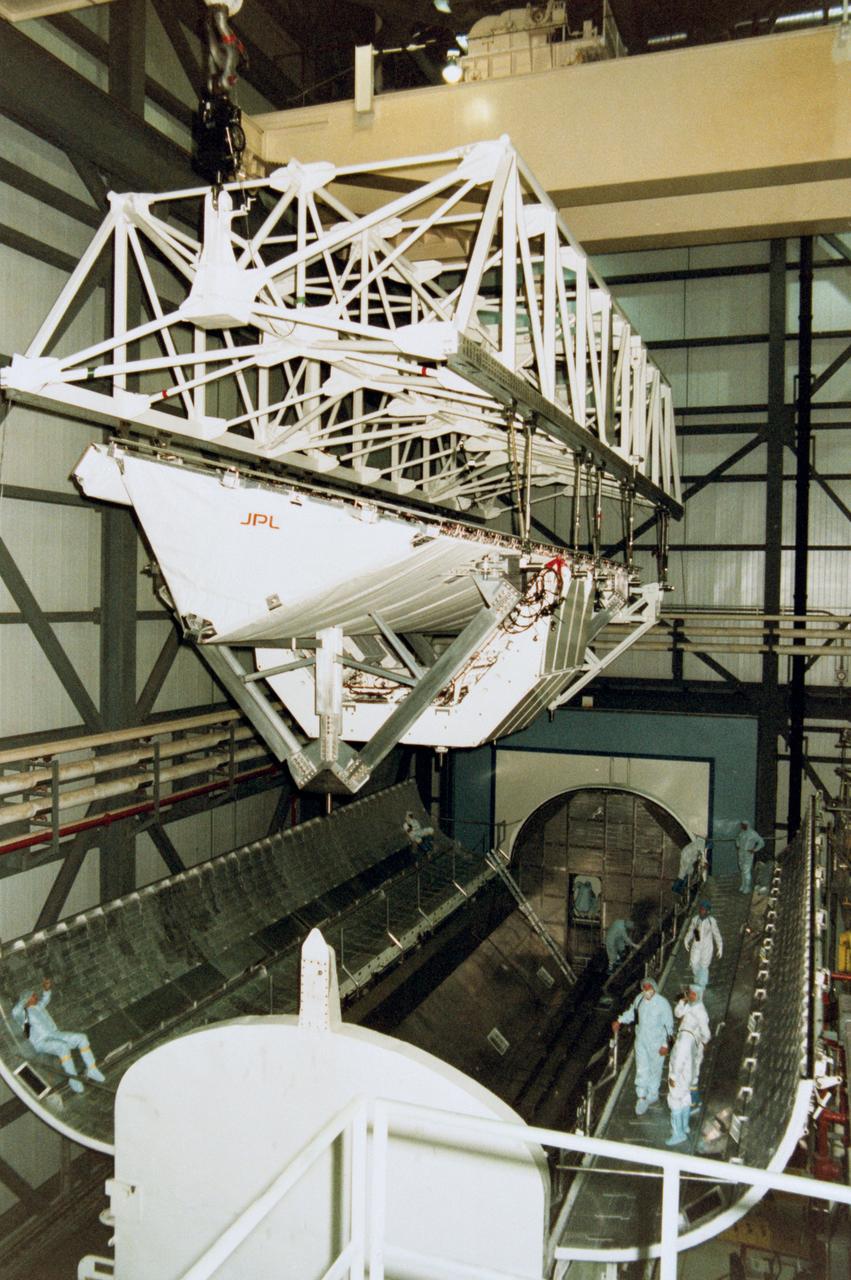
S94-30392 (16 Feb 1994) --- The Space Radar Laboratory-1 (SRL-1) is being transferred from the payload canister transporter into the payload bay of the Space Shuttle Endeavour. SRL-1 will be launched on STS-59 in April of this year.
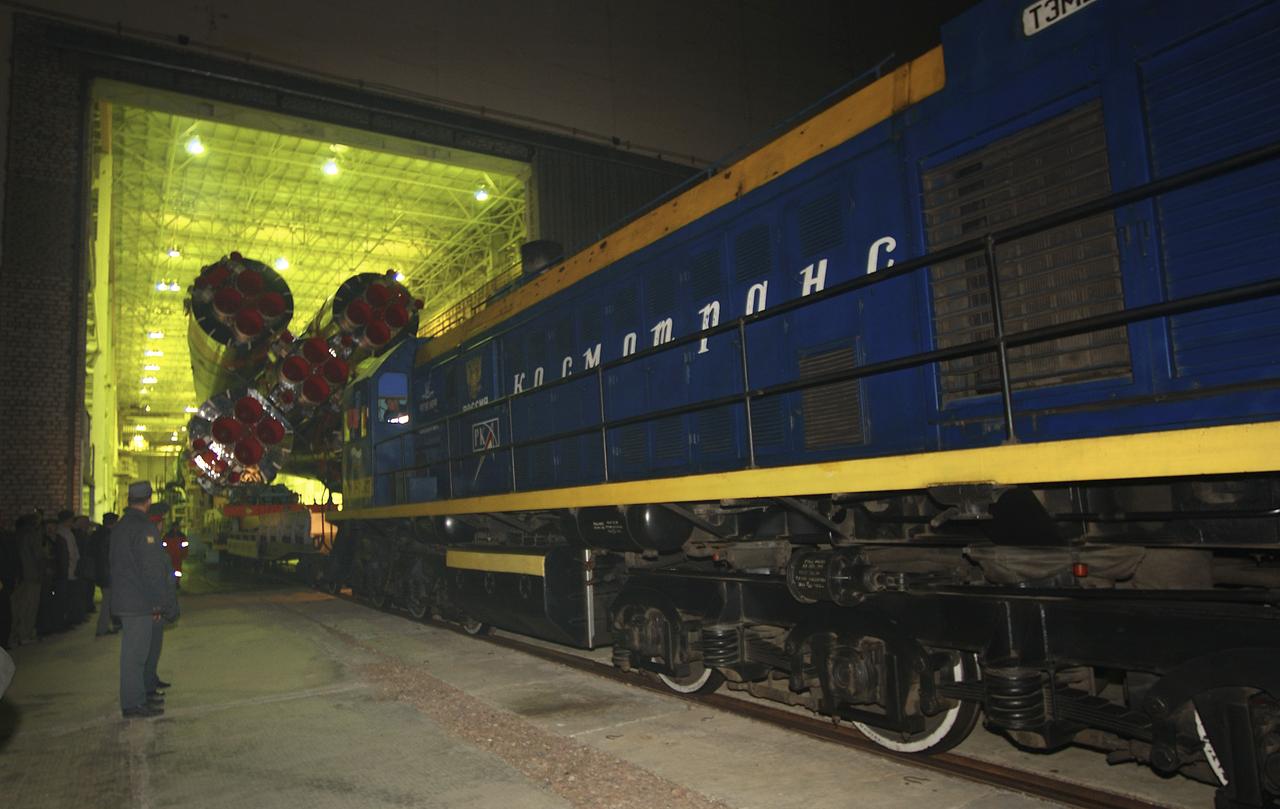
A Soyuz TMA-3 spacecraft and its booster rocket is seen, Thursday, Oct. 16, 2003, on a rail car to be transported to the launch pad and raised to its vertical launch position at the Baikonur Cosmodrome, Kazakhstan in preparation for liftoff Oct. 18, 2003. Photo Credit (NASA/Bill Ingalls)

Sen. Kyrsten Sinema, I-Ariz., questions NASA Administrator Bill Nelson as he testifies before the Senate Committee on Commerce, Science, and Transportation during a hearing titled “Examining NASA’s Budget and Priorities,” Tuesday, May 16, 2023, at the Russell Senate Office Building in Washington. Photo Credit: (NASA/Bill Ingalls)
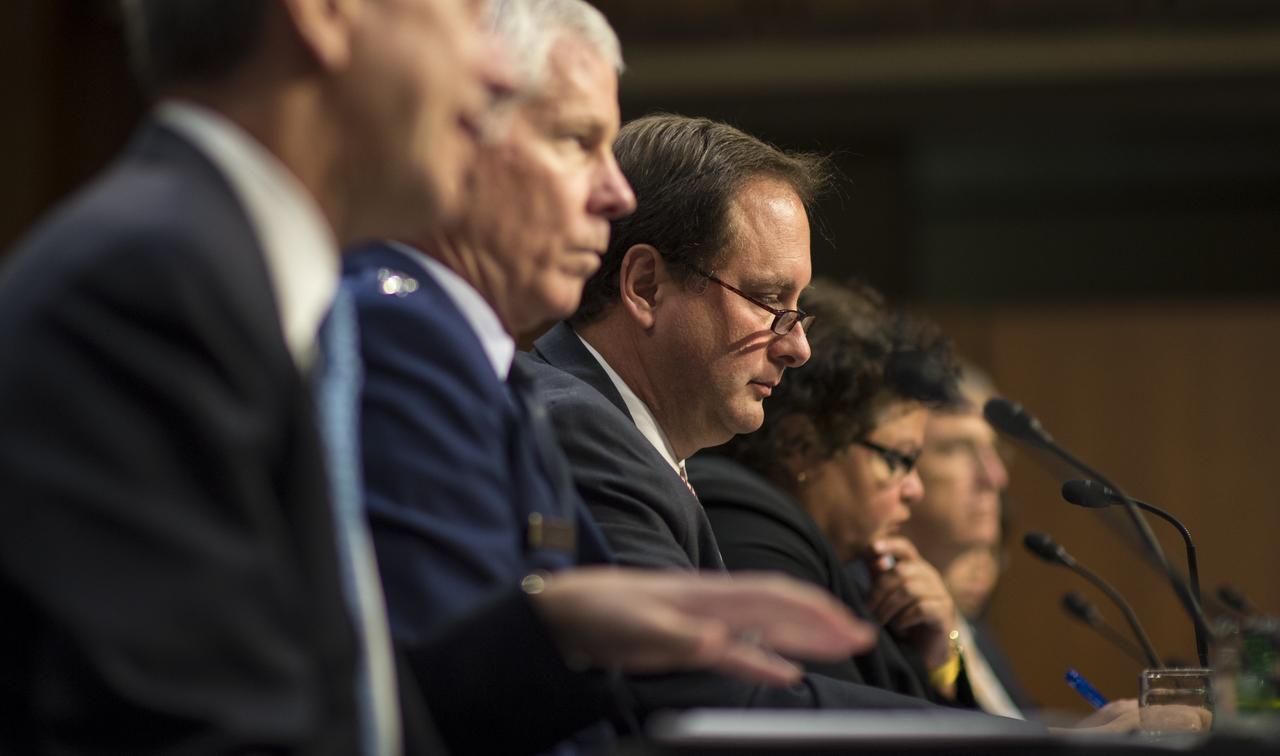
Robert Lightfoot, NASA Associate Administrator, answers a question during testimony in front of the Senate Subcommittee on Strategic Forces and Senate Committee on Commerce, Science, and Transportation on Wednesday, July 16, 2014, at the Hart Senate Office Building in Washington, DC. The Senate hearing focused on assured access to space.

Robert Lightfoot, NASA Associate Administrator, answers a question during testimony in front of the Senate Subcommittee on Strategic Forces and Senate Committee on Commerce, Science, and Transportation on Wednesday, July 16, 2014, at the Hart Senate Office Building in Washington, DC. The Senate hearing focused on assured access to space.

Howard Mitchell, Vice President of Program Assessments at The Aerospace Corporation, listens to opening statements during a hearing in front of the Senate Subcommittee on Strategic Forces and Senate Committee on Commerce, Science, and Transportation on Wednesday, July 16, 2014, at the Hart Senate Office Building in Washington, DC. The Senate hearing focused on assured access to space.

Dr. Yool Kim, Senior Engineer at the Rand Corporation, delivers her opening statment during a hearing in front of the Senate Subcommittee on Strategic Forces and Senate Committee on Commerce, Science, and Transportation on Wednesday, July 16, 2014, at the Hart Senate Office Building in Washington, DC. The Senate hearing focused on assured access to space.

NASA Administrator Bill Nelson testifies before the Senate Committee on Commerce, Science, and Transportation during a hearing titled “Examining NASA’s Budget and Priorities,” Tuesday, May 16, 2023, at the Russell Senate Office Building in Washington. Photo Credit: (NASA/Bill Ingalls)

NASA Administrator Bill Nelson testifies before the Senate Committee on Commerce, Science, and Transportation during a hearing titled “Examining NASA’s Budget and Priorities,” Tuesday, May 16, 2023, at the Russell Senate Office Building in Washington. Photo Credit: (NASA/Bill Ingalls)
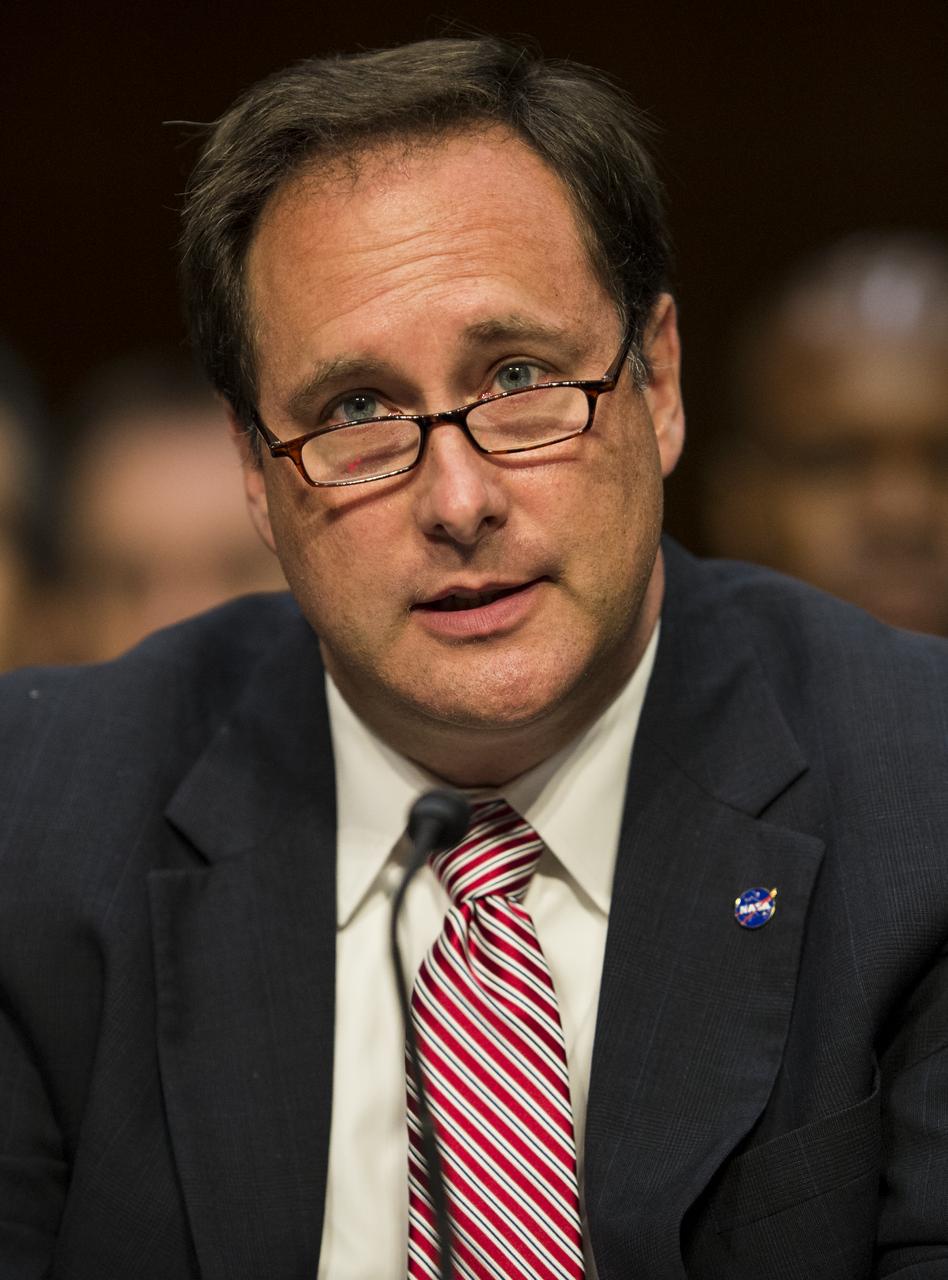
Robert Lightfoot, NASA Associate Administrator, delivers his opening statement during a hearing in front of the Senate Subcommittee on Strategic Forces and Senate Committee on Commerce, Science, and Transportation on Wednesday, July 16, 2014, at the Hart Senate Office Building in Washington, DC. The Senate hearing focused on assured access to space.
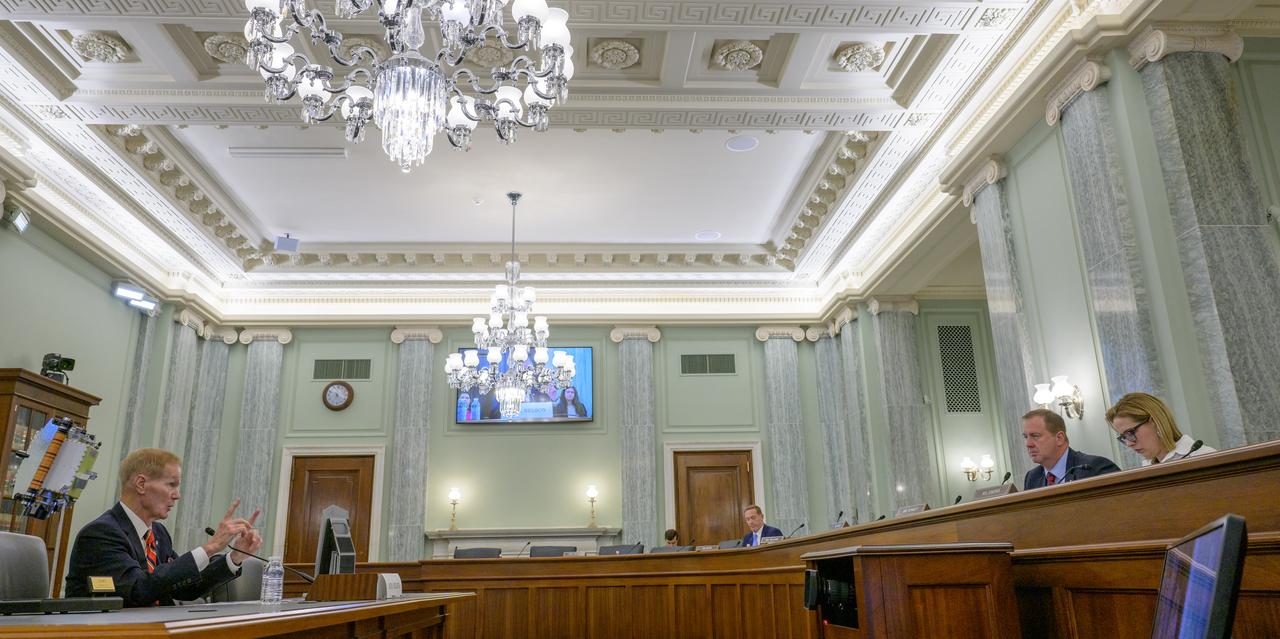
NASA Administrator Bill Nelson, left, testifies before the Senate Committee on Commerce, Science, and Transportation during a hearing titled “Examining NASA’s Budget and Priorities,” Tuesday, May 16, 2023, at the Russell Senate Office Building in Washington. Photo Credit: (NASA/Bill Ingalls)
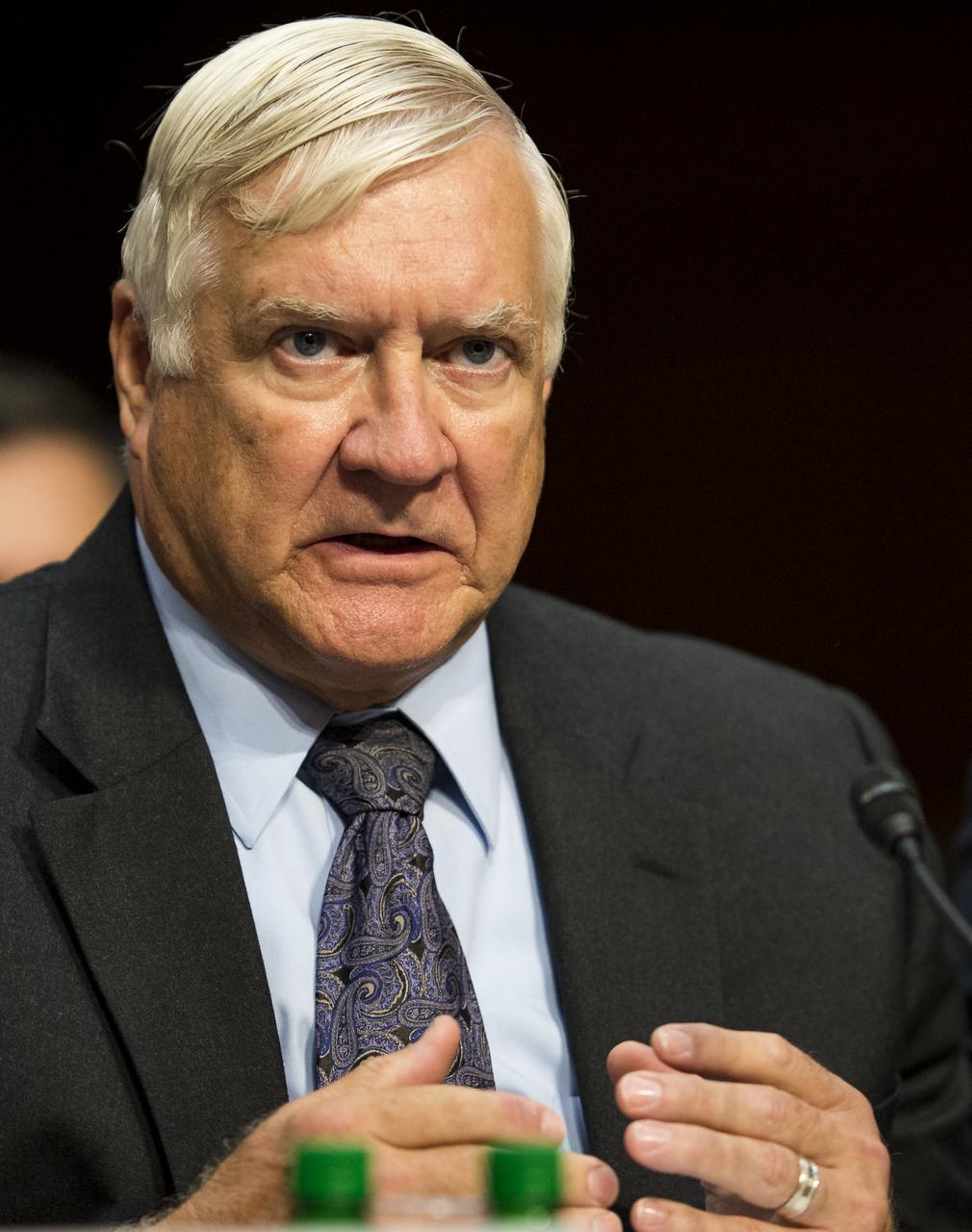
Howard Mitchell, Vice President of Program Assessments at The Aerospace Corporation, delivers his opening statement during a hearing in front of the Senate Subcommittee on Strategic Forces and Senate Committee on Commerce, Science, and Transportation on Wednesday, July 16, 2014, at the Hart Senate Office Building in Washington, DC. The Senate hearing focused on assured access to space.

NASA Administrator Bill Nelson testifies before the Senate Committee on Commerce, Science, and Transportation during a hearing titled “Examining NASA’s Budget and Priorities,” Tuesday, May 16, 2023, at the Russell Senate Office Building in Washington. Photo Credit: (NASA/Bill Ingalls)

NASA Administrator Bill Nelson testifies before the Senate Committee on Commerce, Science, and Transportation during a hearing titled “Examining NASA’s Budget and Priorities,” Tuesday, May 16, 2023, at the Russell Senate Office Building in Washington. Photo Credit: (NASA/Bill Ingalls)

Robert Lightfoot, NASA Associate Administrator, answers a question during testimony in front of the Senate Subcommittee on Strategic Forces and Senate Committee on Commerce, Science, and Transportation on Wednesday, July 16, 2014, at the Hart Senate Office Building in Washington, DC. The Senate hearing focused on assured access to space.

Sen. Mark Udall, D-CO, asks a question during a hearing in front of the Senate Subcommittee on Strategic Forces and Senate Committee on Commerce, Science, and Transportation on Wednesday, July 16, 2014, at the Hart Senate Office Building in Washington, DC. The Senate hearing focused on assured access to space.
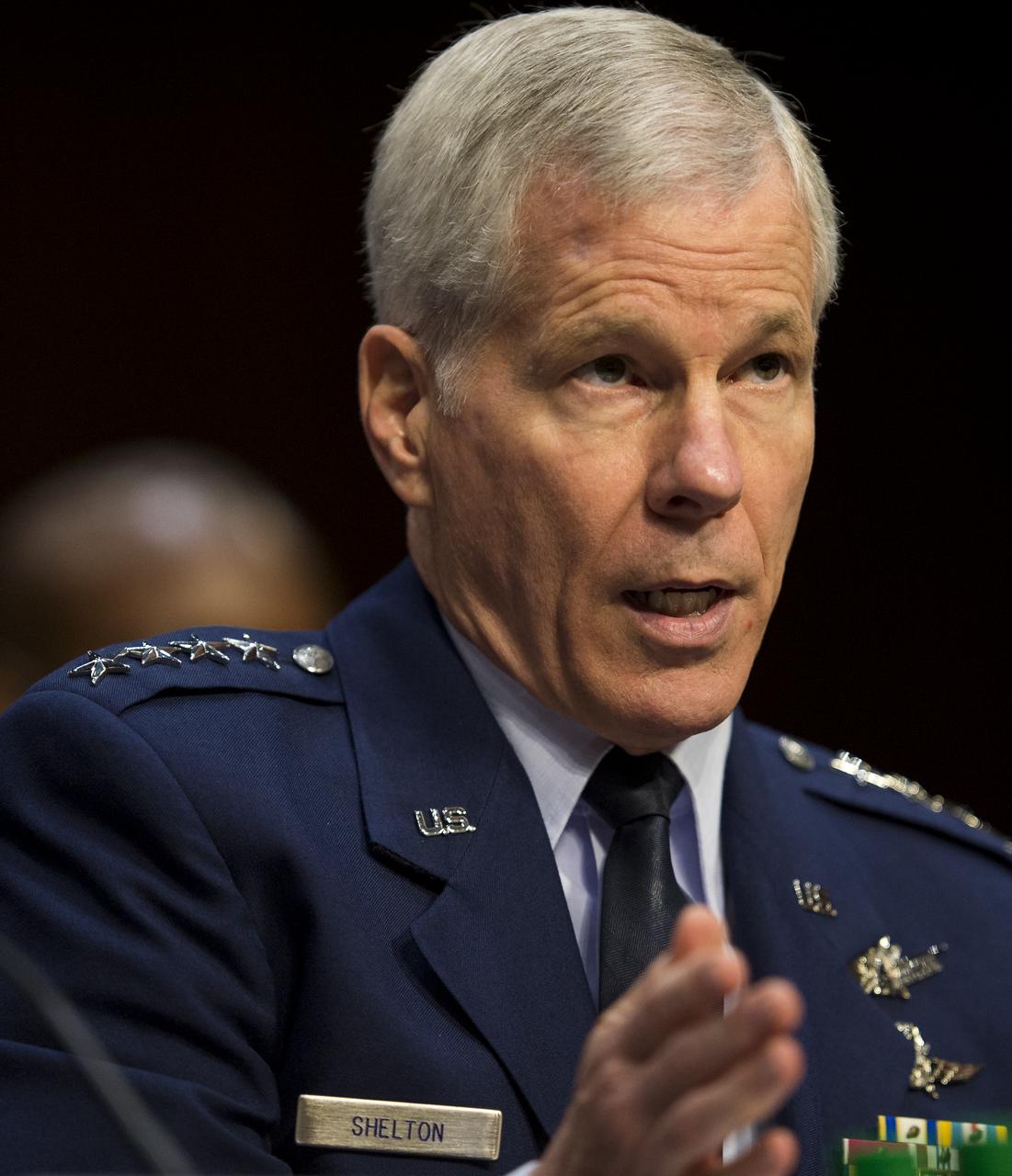
General William Sherlton, Commander of the United States Air Force Space Command, answers a question during testimony in front of the Senate Subcommittee on Strategic Forces and Senate Committee on Commerce, Science, and Transportation on Wednesday, July 16, 2014, at the Hart Senate Office Building in Washington, DC. The Senate hearing focused on assured access to space.
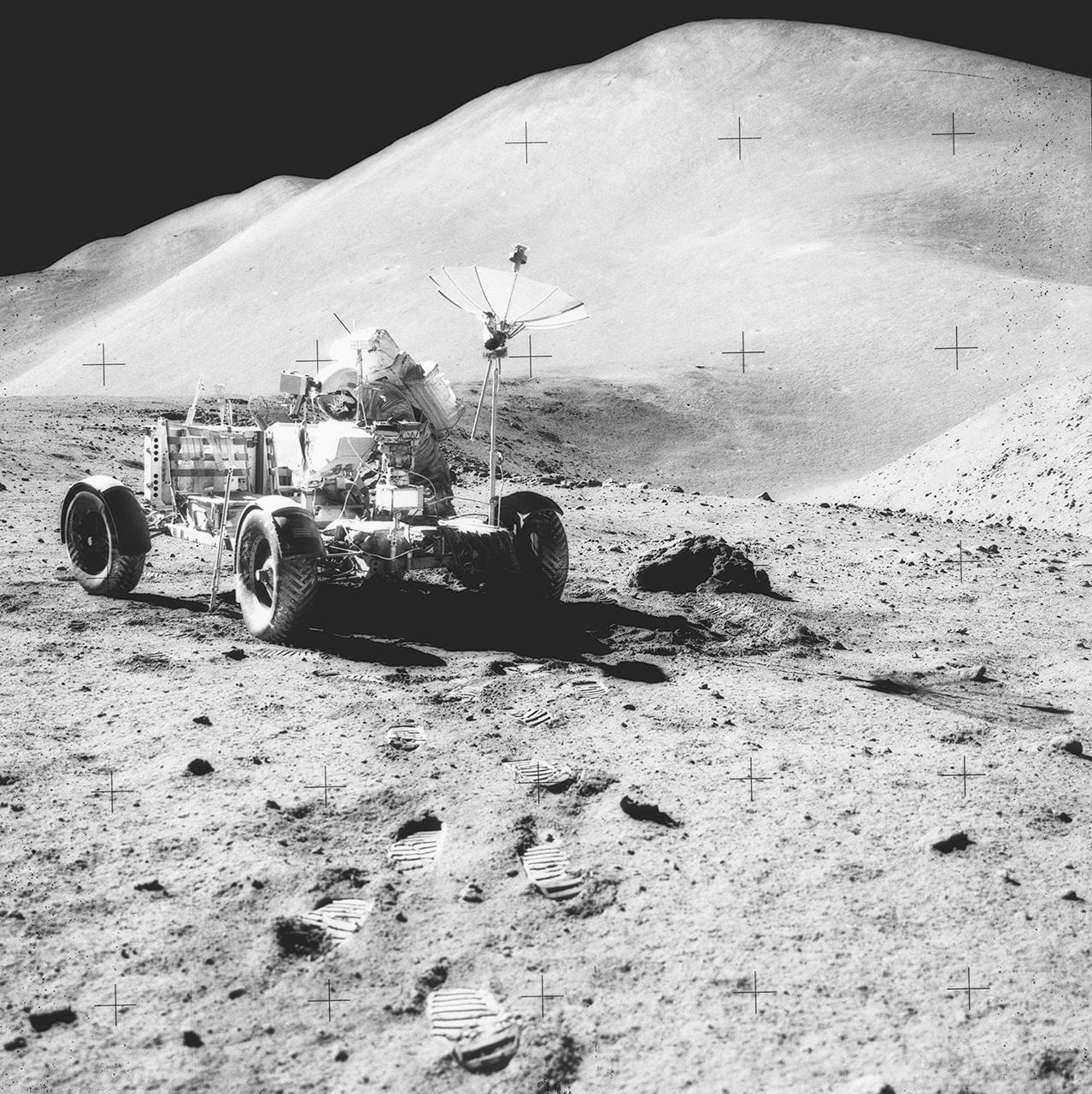
The Lunar Roving Vehicle (LRV) was designed to transport astronauts and materials on the Moon. An LRV was used on each of the last three Apollo missions, Apollo 15, Apollo 16, and Apollo 17, in 1971 and 1972 to permit the crew to travel several miles from the lunar landing site. This photograph was taken during the Apollo 15 mission.
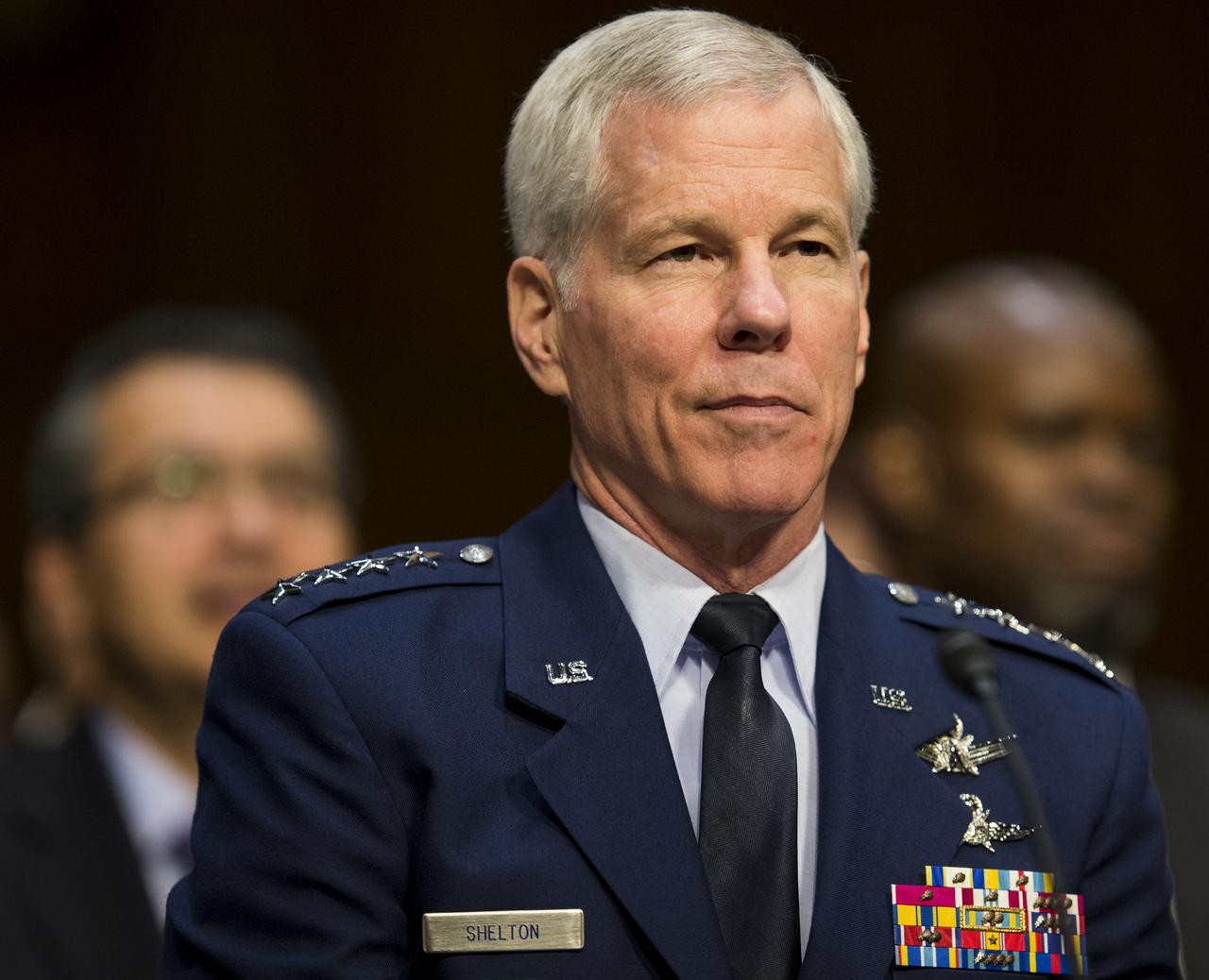
General William Sherlton, Commander of the United States Air Force Space Command, answers a question during testimony in front of the Senate Subcommittee on Strategic Forces and Senate Committee on Commerce, Science, and Transportation on Wednesday, July 16, 2014, at the Hart Senate Office Building in Washington, DC. The Senate hearing focused on assured access to space.

Sen. Ted Cruz, R-Texas, asks a question during a hearing in front of the Senate Subcommittee on Strategic Forces and Senate Committee on Commerce, Science, and Transportation on Wednesday, July 16, 2014, at the Hart Senate Office Building in Washington, DC. The Senate hearing focused on assured access to space.
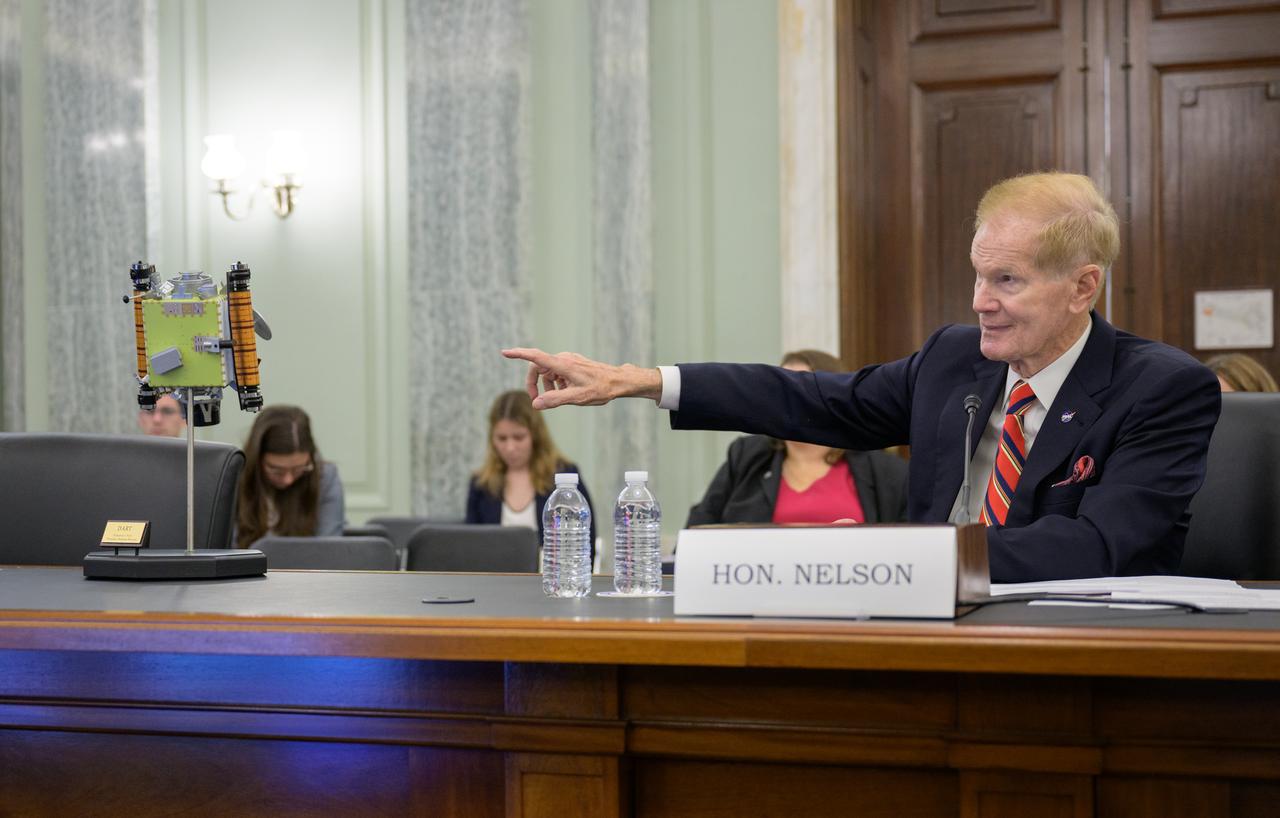
NASA Administrator Bill Nelson points to a model of the DART spacecraft as he testifies before the Senate Committee on Commerce, Science, and Transportation during a hearing titled “Examining NASA’s Budget and Priorities,” Tuesday, May 16, 2023, at the Russell Senate Office Building in Washington. Photo Credit: (NASA/Bill Ingalls)

NASA Administrator Bill Nelson testifies before the Senate Committee on Commerce, Science, and Transportation during a hearing titled “Examining NASA’s Budget and Priorities,” Tuesday, May 16, 2023, at the Russell Senate Office Building in Washington. Photo Credit: (NASA/Bill Ingalls)
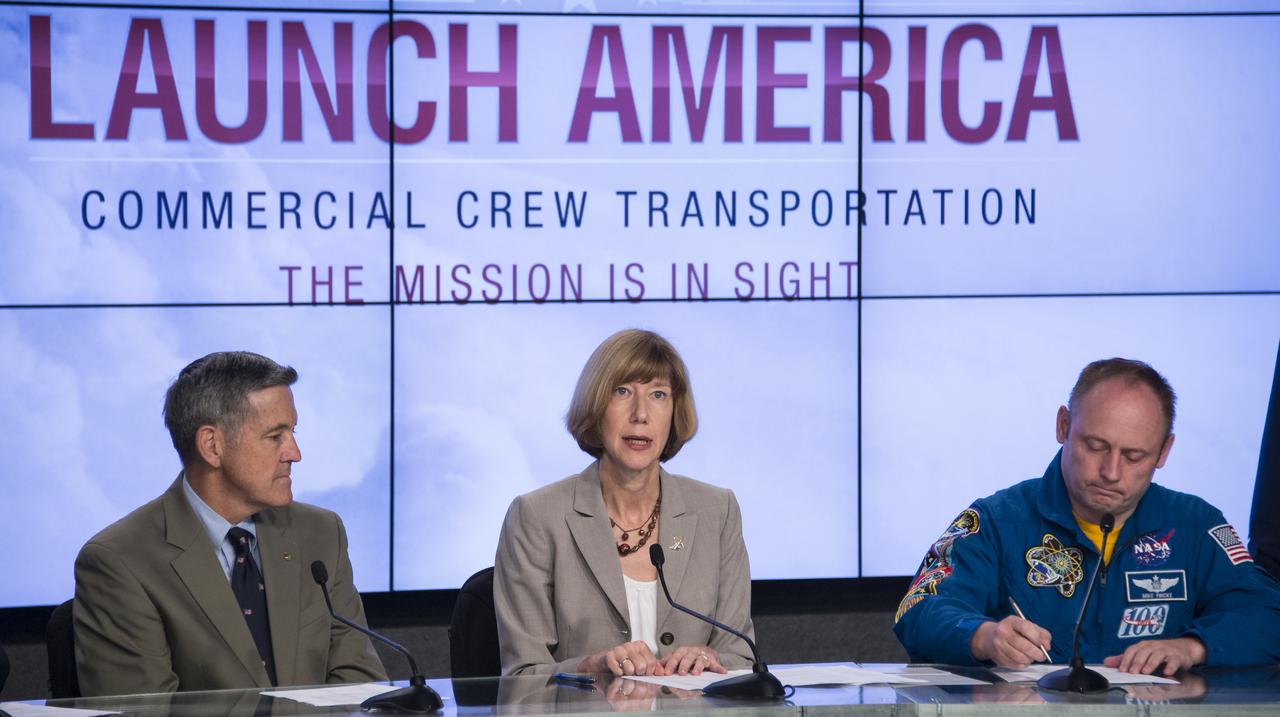
Kathy Lueders, program manager of NASA's Commercial Crew Program, speaks, as Former astronaut Bob Cabana, director of NASA's Kennedy Space Center in Florida, left, and Astronaut Mike Fincke, a former commander of the International Space Station look on during a news conference where it was announced that Boeing and SpaceX have been selected to transport U.S. crews to and from the International Space Station using the Boeing CST-100 and the SpaceX Crew Dragon spacecraft, at NASA’s Kennedy Space Center in Cape Canaveral, Fla. on Tuesday, Sept. 16, 2014. These Commercial Crew Transportation Capability (CCtCap) contracts are designed to complete the NASA certification for a human space transportation system capable of carrying people into orbit. Once certification is complete, NASA plans to use these systems to transport astronauts to the space station and return them safely to Earth. Photo Credit: (NASA/Bill Ingalls)
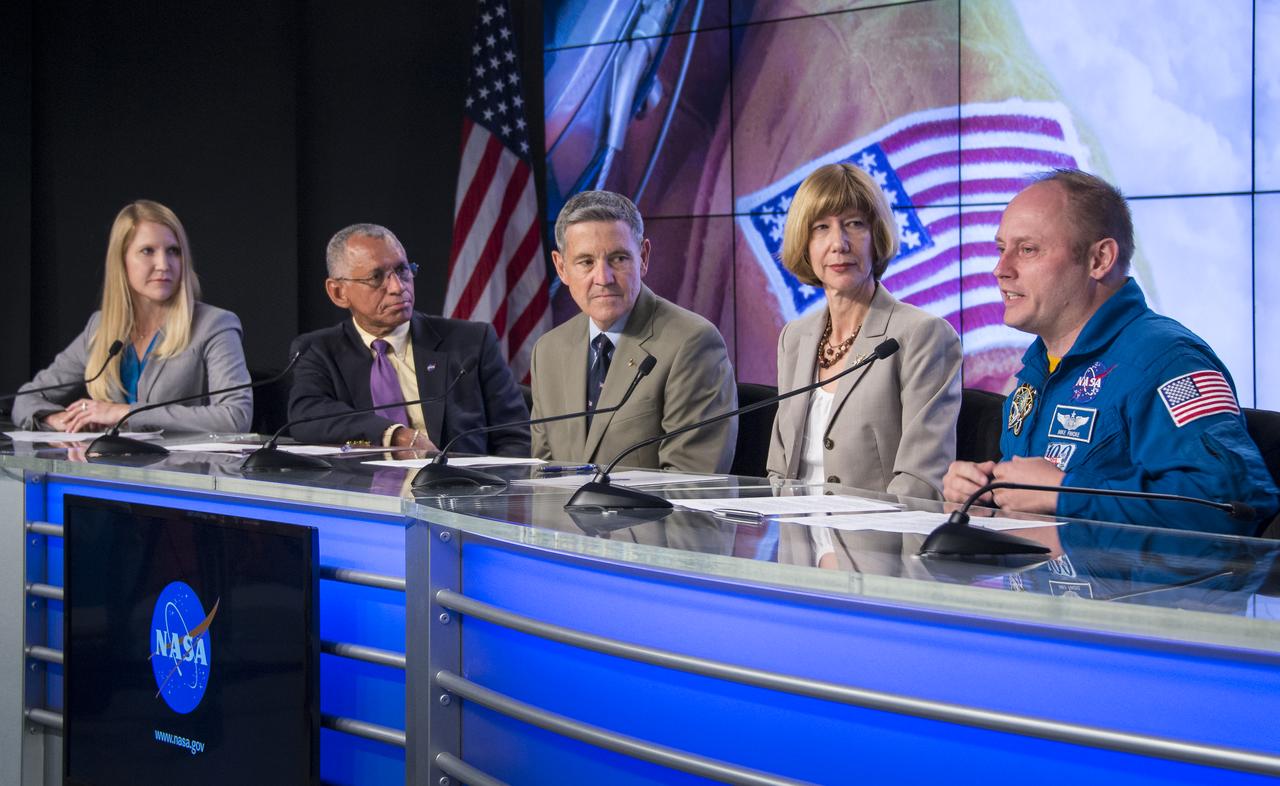
From left, NASA Public Affairs Officer Stephanie Schierholz, NASA Administrator Charles Bolden, Former astronaut Bob Cabana, director of NASA's Kennedy Space Center in Florida, Kathy Lueders, program manager of NASA's Commercial Crew Program, and Astronaut Mike Fincke, a former commander of the International Space Station, are seen during a news conference where it was announced that Boeing and SpaceX have been selected to transport U.S. crews to and from the International Space Station using the Boeing CST-100 and the SpaceX Crew Dragon spacecraft, at NASA’s Kennedy Space Center in Cape Canaveral, Fla. on Tuesday, Sept. 16, 2014. These Commercial Crew Transportation Capability (CCtCap) contracts are designed to complete the NASA certification for a human space transportation system capable of carrying people into orbit. Once certification is complete, NASA plans to use these systems to transport astronauts to the space station and return them safely to Earth. Photo Credit: (NASA/Bill Ingalls)

Former astronaut Bob Cabana, director of NASA's Kennedy Space Center in Florida, speaks during a news conference where it was announced that Boeing and SpaceX have been selected to transport U.S. crews to and from the International Space Station using the Boeing CST-100 and the SpaceX Crew Dragon spacecraft, at NASA’s Kennedy Space Center in Cape Canaveral, Fla. on Tuesday, Sept. 16, 2014. These Commercial Crew Transportation Capability (CCtCap) contracts are designed to complete the NASA certification for a human space transportation system capable of carrying people into orbit. Once certification is complete, NASA plans to use these systems to transport astronauts to the space station and return them safely to Earth. Photo Credit: (NASA/Bill Ingalls)
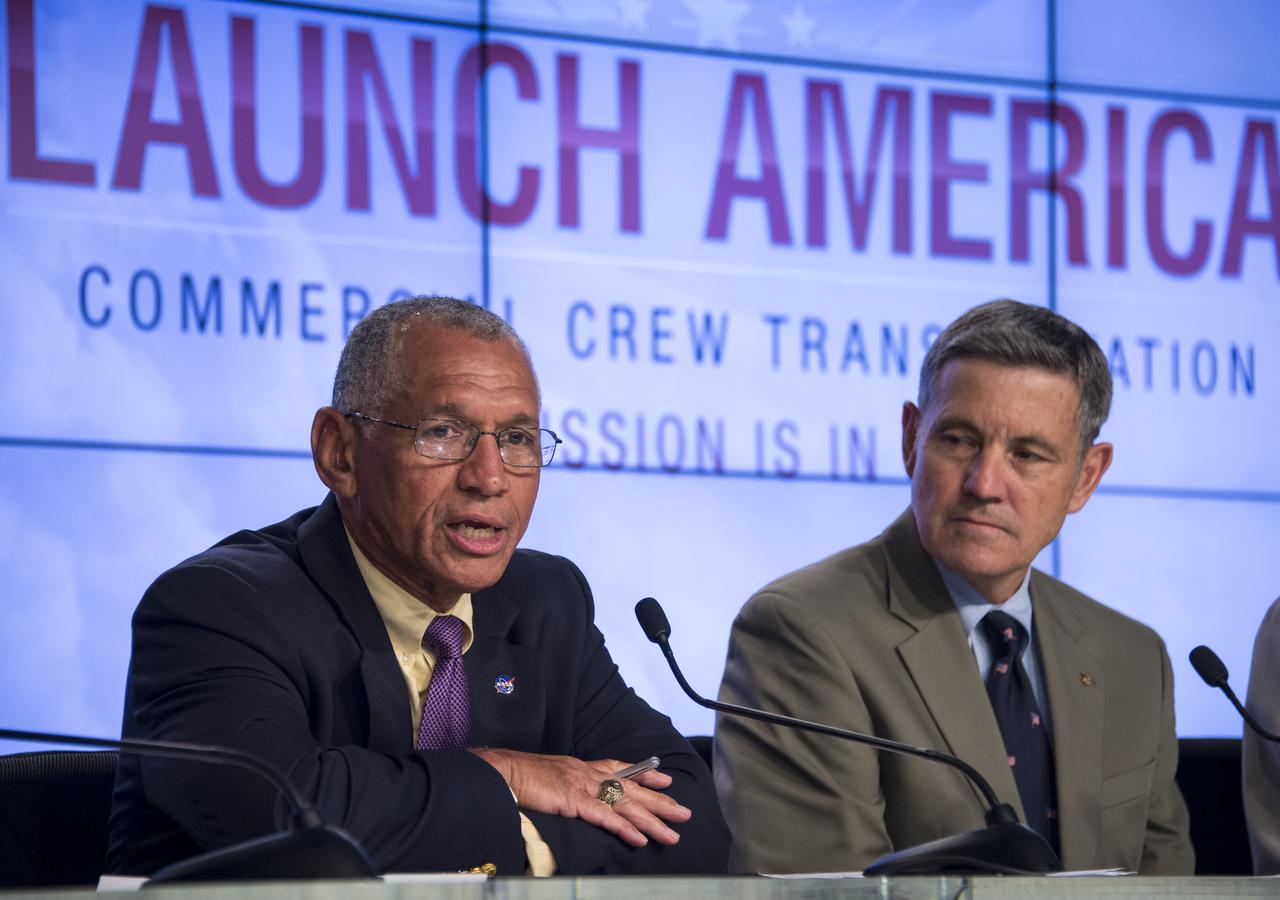
NASA Administrator Charles Bolden, left, announces the agency’s selection of Boeing and SpaceX to transport U.S. crews to and from the International Space Station using the Boeing CST-100 and the SpaceX Crew Dragon spacecraft as Former astronaut Bob Cabana, director of NASA's Kennedy Space Center in Florida looks on at NASA’s Kennedy Space Center in Cape Canaveral, Fla. on Tuesday, Sept. 16, 2014. These Commercial Crew Transportation Capability (CCtCap) contracts are designed to complete the NASA certification for a human space transportation system capable of carrying people into orbit. Once certification is complete, NASA plans to use these systems to transport astronauts to the space station and return them safely to Earth. Photo Credit: (NASA/Bill Ingalls)
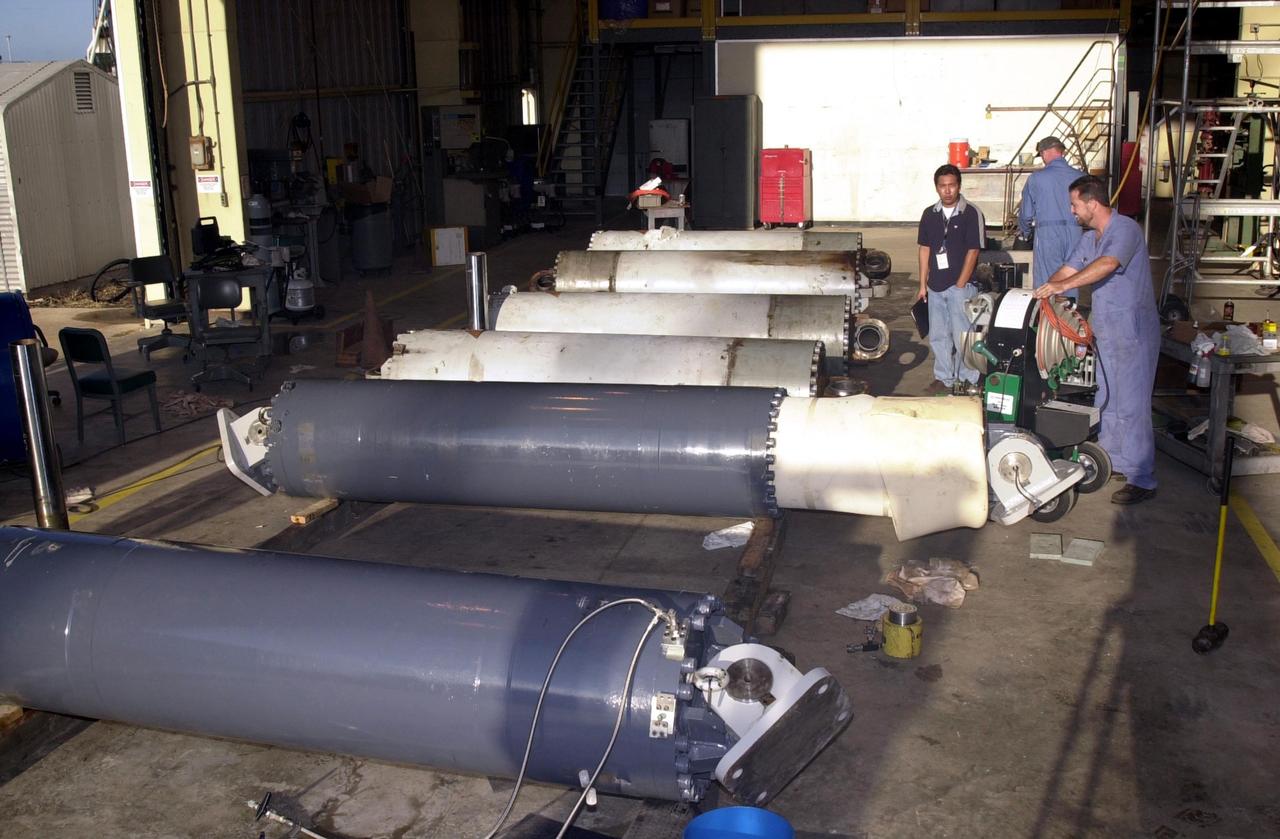
KENNEDY SPACE CENTER, FLA. -- Jacking, Equalization and Leveling (JEL) cylinders with repaired bearings are ready to be moved to Crawler Transporter No. 2. There are 16 cylinders and 32 bearings per crawler. During recent routine maintenance inspections, technicians removed two of the 16 JEL cylinders on the crawler to gain access to the bearings and found three of the four bearings cracked. Further eddy current inspections indicated that cracks were present on 15 of the bearings. Technicians have removed and replaced 14 of the bearings on CT-2, which is being repaired in order to enable Atlantis' rollout for mission STS-112, scheduled for launch no earlier than Oct. 2.
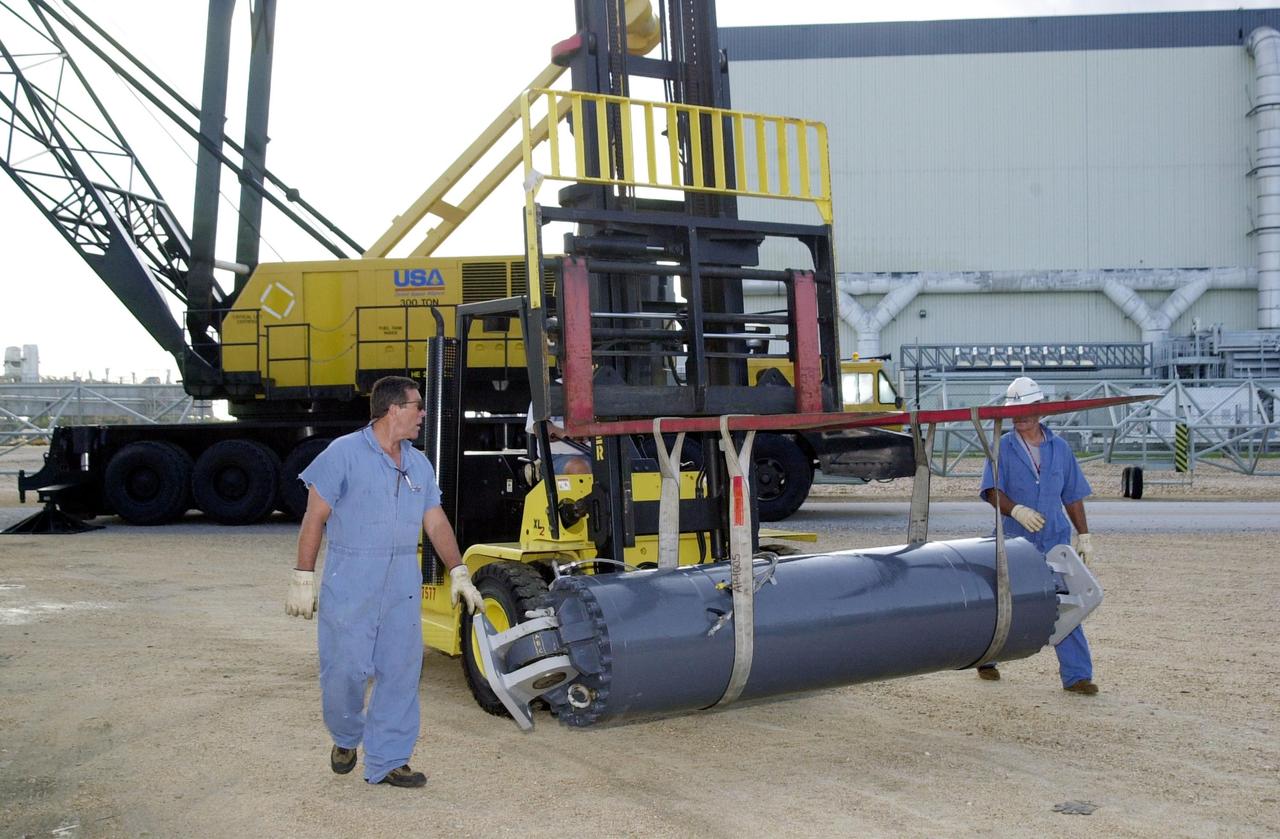
KENNEDY SPACE CENTER, FLA. -- Workers accompany the repaired Jacking, Equalization and Leveling (JEL) cylinder as it is moved from the repair site for installation into Crawler Transporter No. 2. There are 16 cylinders and 32 bearings per crawler. During recent routine maintenance inspections, technicians removed two of the 16 JEL cylinders on the crawler to gain access to the bearings and found three of the four bearings cracked. Further eddy current inspections indicated that cracks were present on 15 of the bearings.. Technicians have removed and replaced 14 of the bearings on CT-2, which is being repaired in order to enable Atlantis' rollout for mission STS-112, scheduled for launch no earlier than Oct. 2.
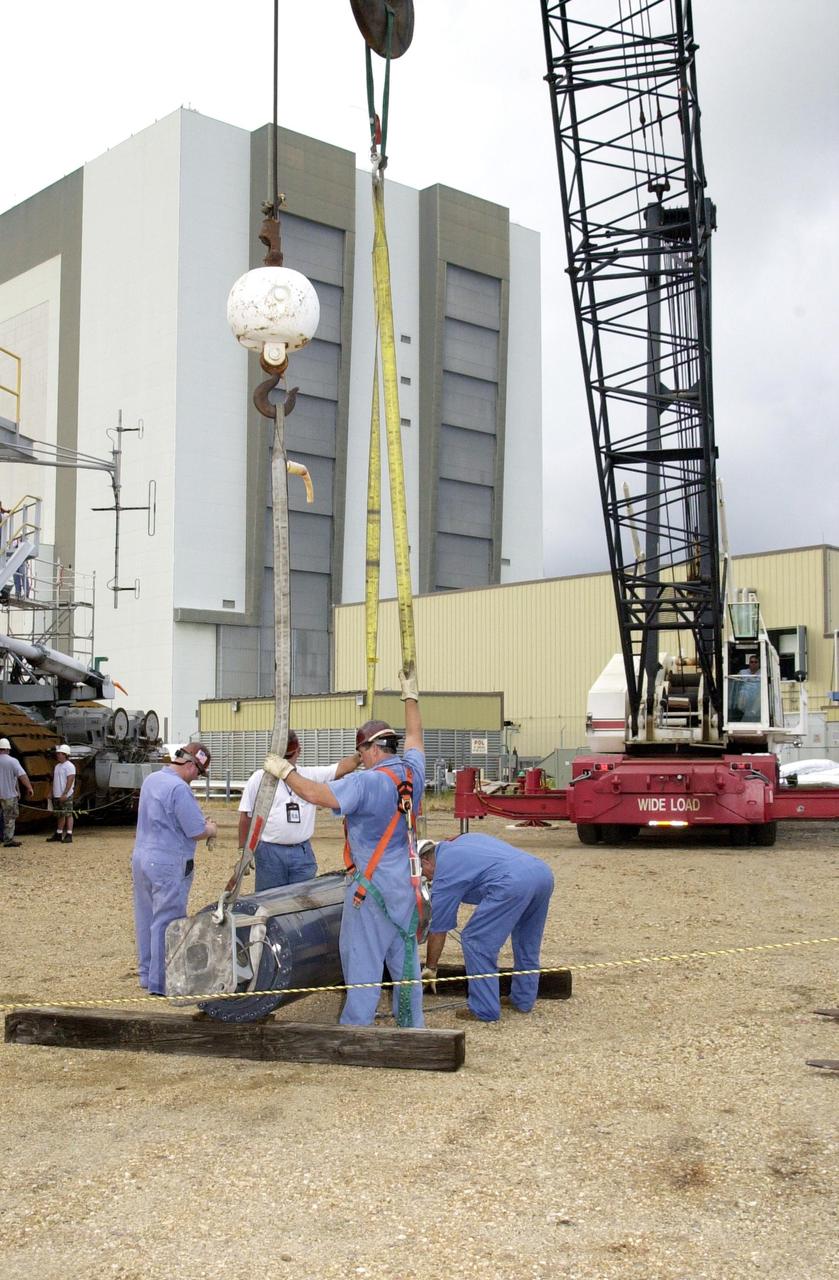
KENNEDY SPACE CENTER, FLA. -- The repaired Jacking, Equalization and Leveling (JEL) cylinder is attached to a crane. The crane will lift the JEL for placement in Crawler Transporter No. 2. There are 16 cylinders and 32 bearings per crawler. During recent routine maintenance inspections, technicians removed two of the 16 JEL cylinders on the crawler to gain access to the bearings and found three of the four bearings cracked. Further eddy current inspections indicated that cracks were present on 15 of the bearings.. Technicians have removed and replaced 14 of the bearings on CT-2, which is being repaired in order to enable Atlantis' rollout for mission STS-112, scheduled for launch no earlier than Oct. 2.
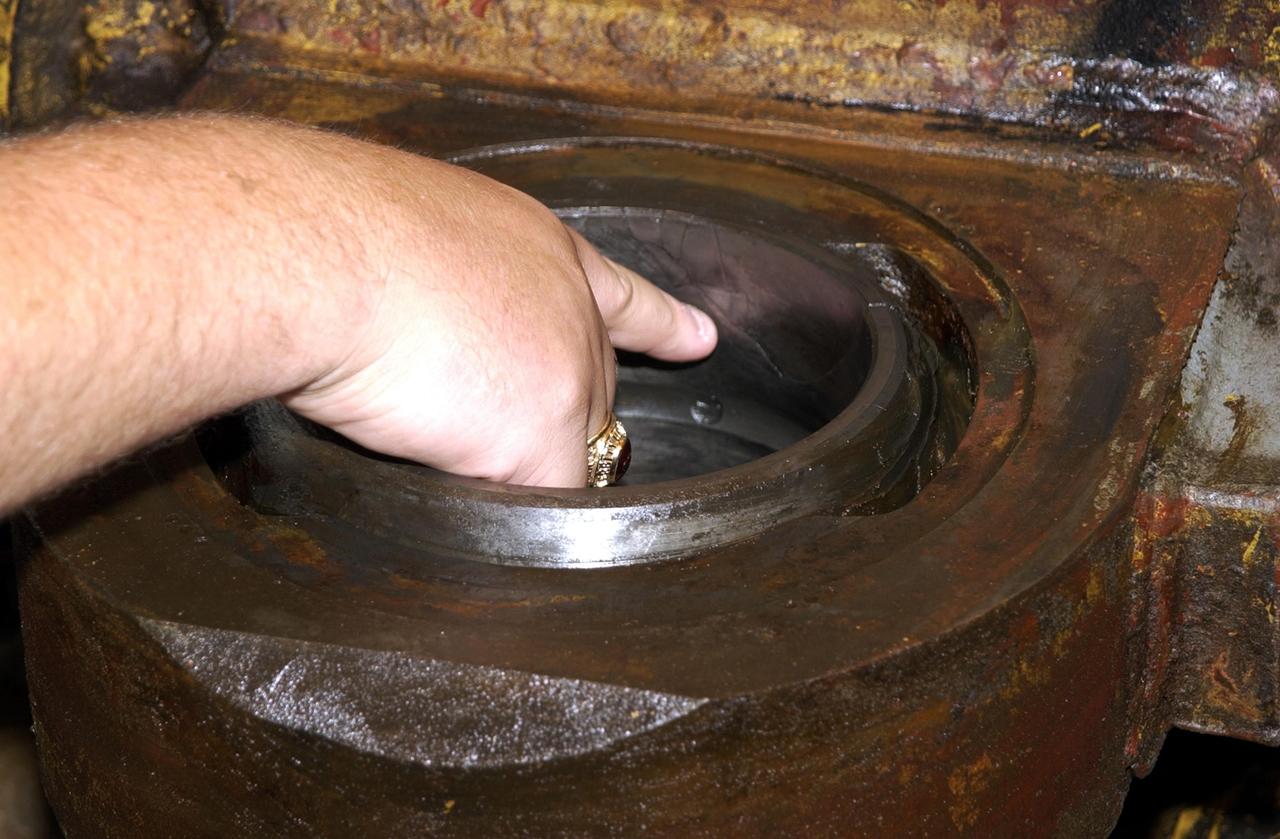
KENNEDY SPACE CENTER, FLA. -- Perry Becker, an engineer with NASA, points to a crack in a bearing from one of the jacking, equalization and leveling (JEL) cylinders on Crawler-Transporter No. 2. During inspections, technicians removed two of the 16 JEL cylinders on the vehicle to gain access to the bearings for routine maintenance and found three of the four bearings had cracks. Of the three bearings, two had extensive damage. Further eddy current inspections indicate that cracks are present on 15 of the bearings. There are 16 cylinders and 32 bearings per crawler. Although no cause for the cracks is known at this time, engineers are currently evaluating the situation to determine the most appropriate solution.

JSC2003-E-59158 (16 October 2003) --- The Soyuz TMA-3 spacecraft and its booster rocket were transported on a rail car to its launch pad and raised to its vertical launch position at the Baikonur Cosmodrome, Kazakhstan on October 16, 2003, in preparation for liftoff October 18 to carry astronaut C. Michael Foale, Expedition 8 mission commander and NASA ISS science officer; cosmonaut Alexander Kaleri, Soyuz commander and flight engineer, representing Rosaviakosmos; and European Space Agency (ESA) astronaut Pedro Duque of Spain to the International Space Station (ISS). Photo Credit: "NASA/Bill Ingalls"
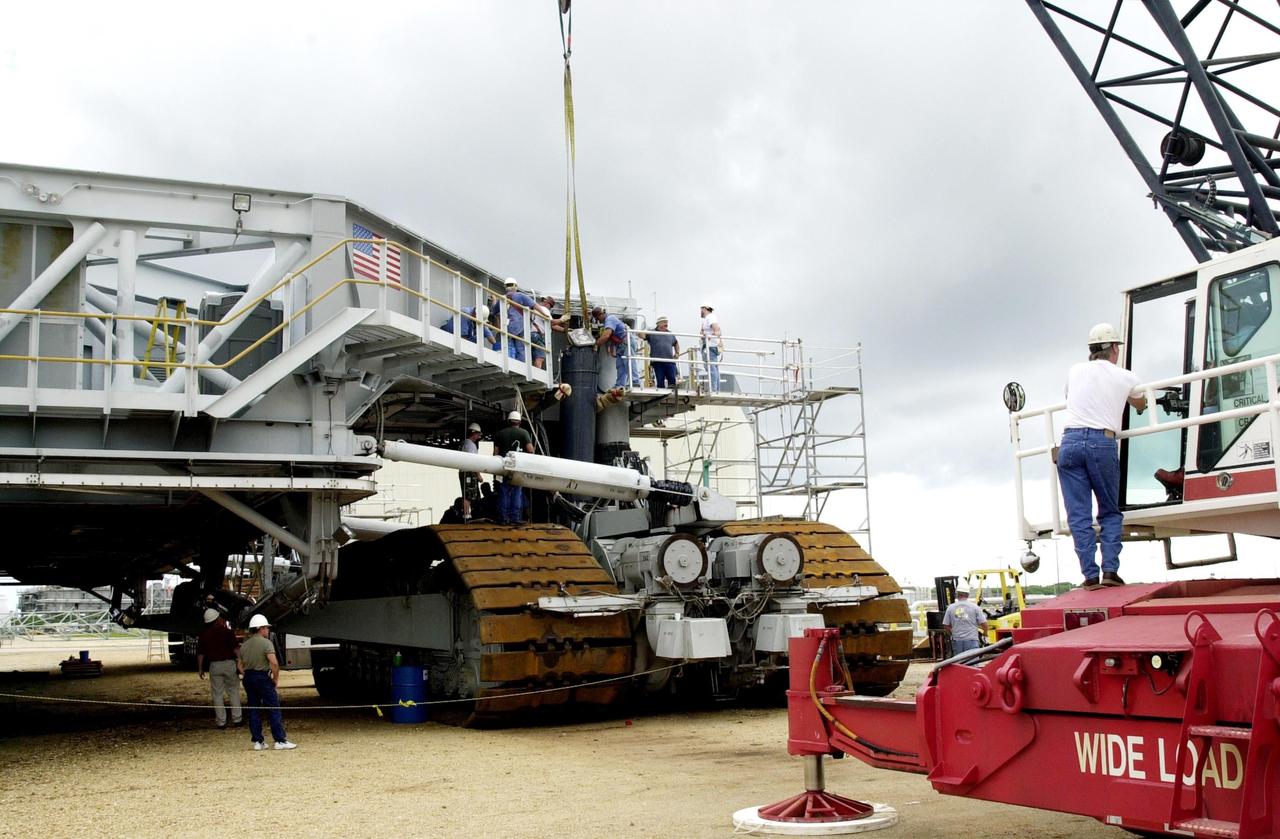
KENNEDY SPACE CENTER, FLA. -- Supported by the overhead crane and maneuvered by several workers, a repaired Jacking, Equalization and Leveling (JEL) cylinder is lifted into position on Crawler Transporter No. 2. There are 16 cylinders and 32 bearings per crawler. During recent routine maintenance inspections, technicians removed two of the 16 JEL cylinders on the crawler to gain access to the bearings and found three of the four bearings cracked. Further eddy current inspections indicated that cracks were present on 15 of the bearings.. Technicians have removed and replaced 14 of the bearings on CT-2, which is being repaired in order to enable Atlantis' rollout for mission STS-112, scheduled for launch no earlier than Oct. 2.
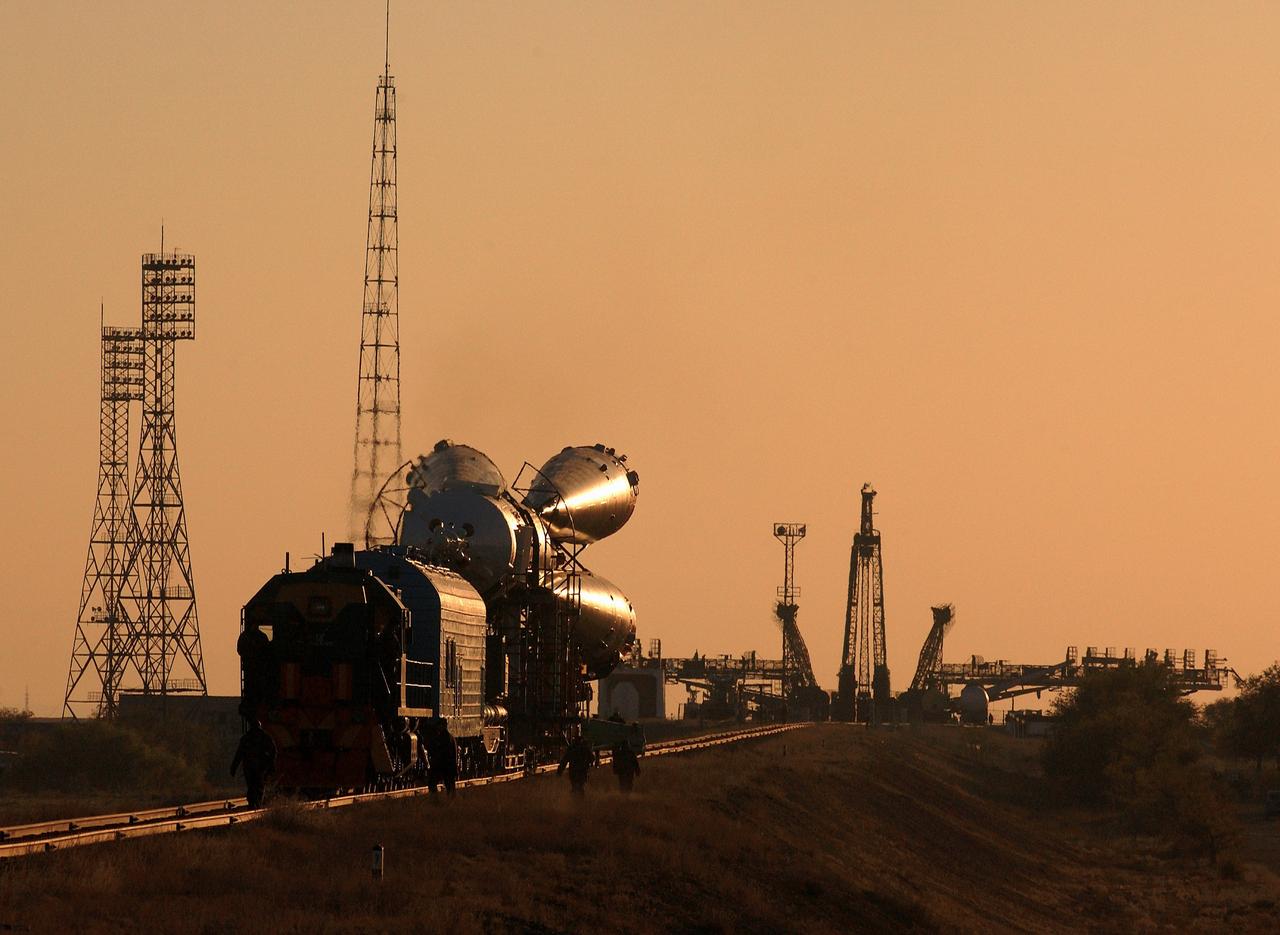
JSC2003-E-59150 (16 October 2003) --- The Soyuz TMA-3 spacecraft and its booster rocket were transported on a rail car to its launch pad and raised to its vertical launch position at the Baikonur Cosmodrome, Kazakhstan on October 16, 2003, in preparation for liftoff October 18 to carry astronaut C. Michael Foale, Expedition 8 mission commander and NASA ISS science officer; cosmonaut Alexander Kaleri, Soyuz commander and flight engineer, representing Rosaviakosmos; and European Space Agency (ESA) astronaut Pedro Duque of Spain to the International Space Station (ISS). Photo Credit: "NASA/Bill Ingalls"
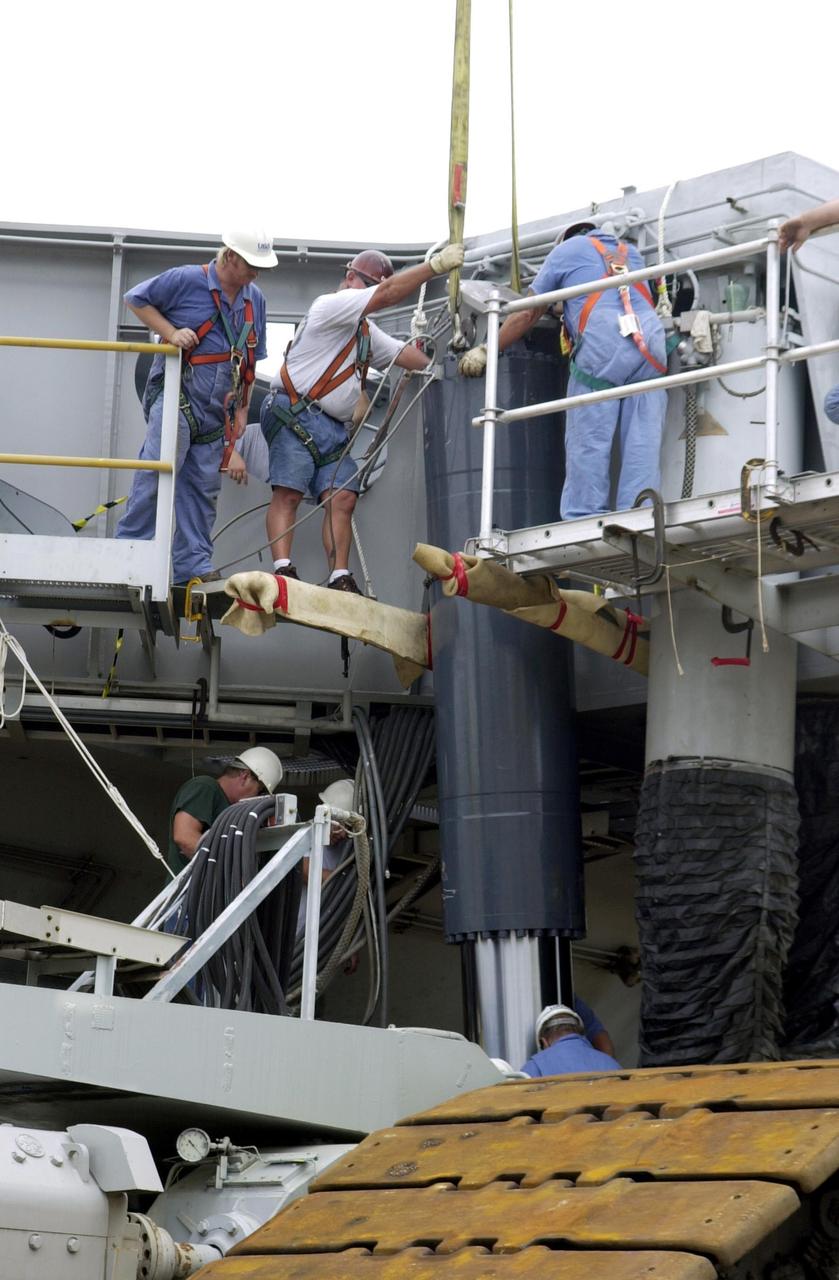
KENNEDY SPACE CENTER, FLA. -- Workers on Crawler Transporter No. 2 help guide a repaired Jacking, Equalization and Leveling (JEL) cylinder as it is lowered into place. There are 16 cylinders and 32 bearings per crawler. During recent routine maintenance inspections, technicians removed two of the 16 JEL cylinders on the crawler to gain access to the bearings and found three of the four bearings cracked. Further eddy current inspections indicated that cracks were present on 15 of the bearings.. Technicians have removed and replaced 14 of the bearings on CT-2, which is being repaired in order to enable Atlantis' rollout for mission STS-112, scheduled for launch no earlier than Oct. 2.

KENNEDY SPACE CENTER, FLA. -- Technicians supervise a jacking, equalization and leveling (JEL) cylinder and bearing from Crawler-Transporter No. 2 as it is lowered by a crane to a position on the ground. During routine maintenance inspections last week, technicians removed two of the 16 JEL cylinders on the crawler to gain access to the bearings and found three of the four bearings cracked. Further eddy current inspections indicated that cracks are present on 15 of the bearings. There are 16 cylinders and 32 bearings per crawler. Engineers are evaluating the situation to determine the cause of the cracks and an appropriate solution to the problem.
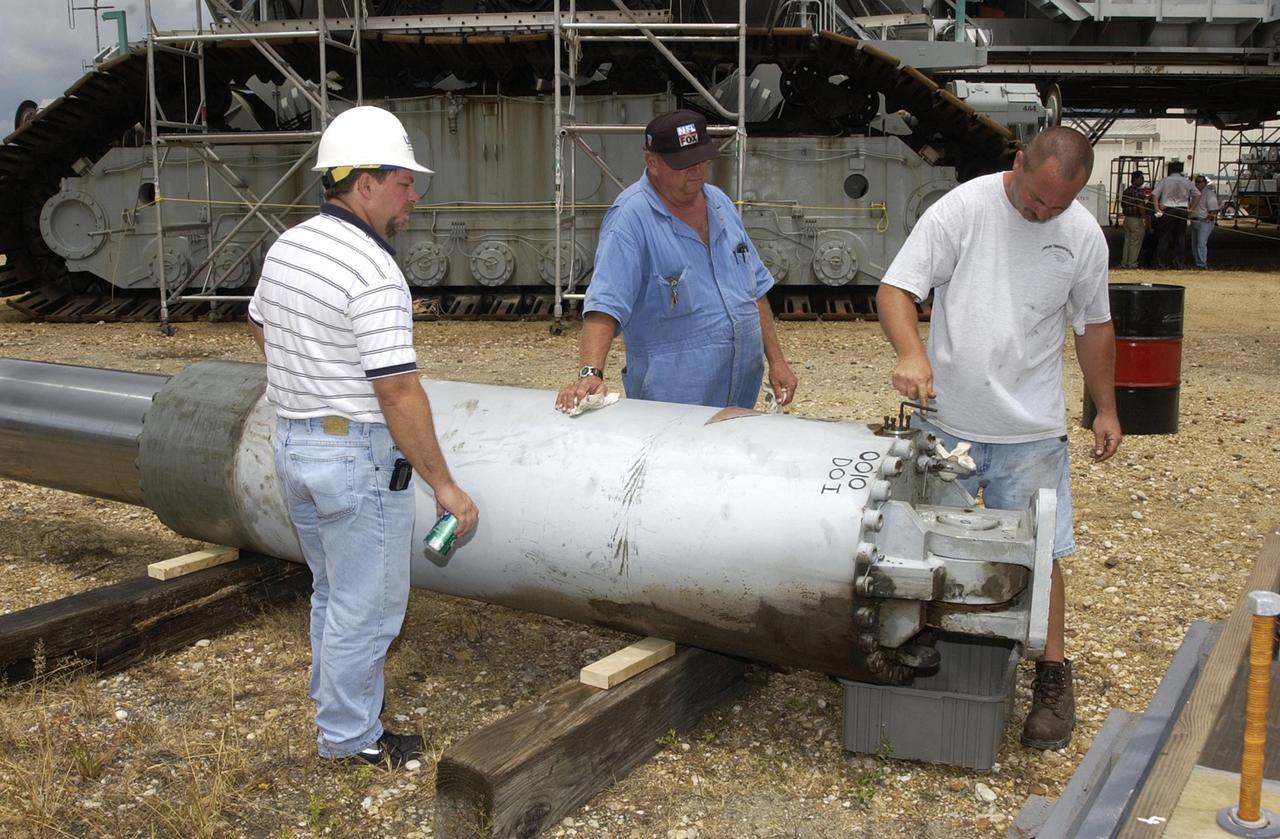
KENNEDY SPACE CENTER, FLA. -- Technicians check out a jacking, equalization and leveling (JEL) cylinders from Crawler-Transporter No. 2. During inspections, technicians removed two of the 16 JEL cylinders on the vehicle to gain access to the bearings for routine maintenance and found three of the four bearings had cracks. Of the three bearings, two had extensive damage. Further eddy current inspections indicate that cracks are present on 15 of the bearings. There are 16 cylinders and 32 bearings per crawler. Although no cause for the cracks is known at this time, engineers are currently evaluating the situation to determine the most appropriate solution. The crawler is in the background.
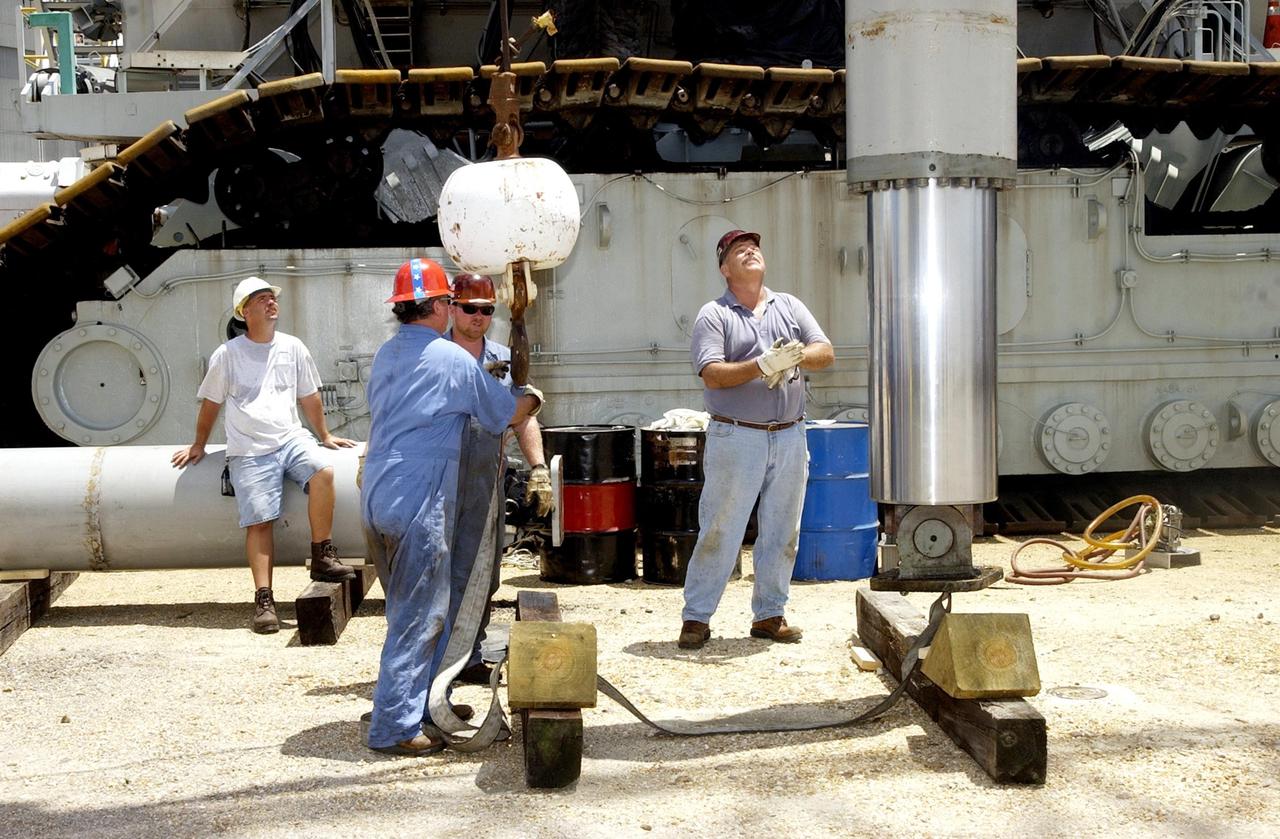
KENNEDY SPACE CENTER, FLA. -- Technicians closely monitor a jacking, equalization and leveling (JEL) cylinder and bearing from Crawler-Transporter No. 2 as it lowered by a crane to a position on the ground. During routine maintenance inspections last week, technicians removed two of the 16 JEL cylinders on the crawler to gain access to the bearings and found three of the four bearings cracked. Further eddy current inspections indicated that cracks are present on 15 of the bearings. There are 16 cylinders and 32 bearings per crawler. Engineers are evaluating the situation to determine the cause of the cracks and an appropriate solution to the problem.
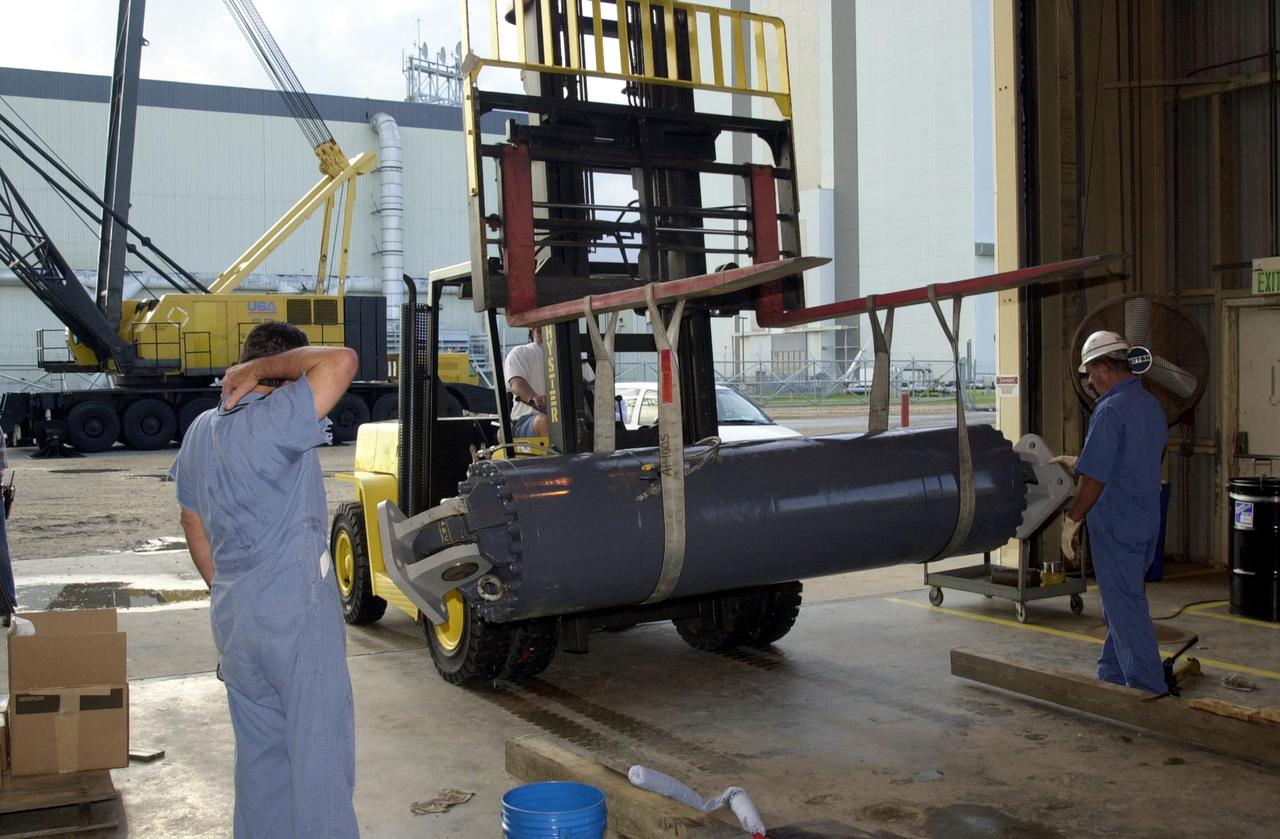
KENNEDY SPACE CENTER, FLA. -- One of the repaired Jacking, Equalization and Leveling (JEL) cylinders is moved from the repair site for installation into Crawler Transporter No. 2. There are 16 cylinders and 32 bearings per crawler. During recent routine maintenance inspections, technicians removed two of the 16 JEL cylinders on the crawler to gain access to the bearings and found three of the four bearings cracked. Further eddy current inspections indicated that cracks were present on 15 of the bearings.. Technicians have removed and replaced 14 of the bearings on CT-2, which is being repaired in order to enable Atlantis' rollout for mission STS-112, scheduled for launch no earlier than Oct. 2.
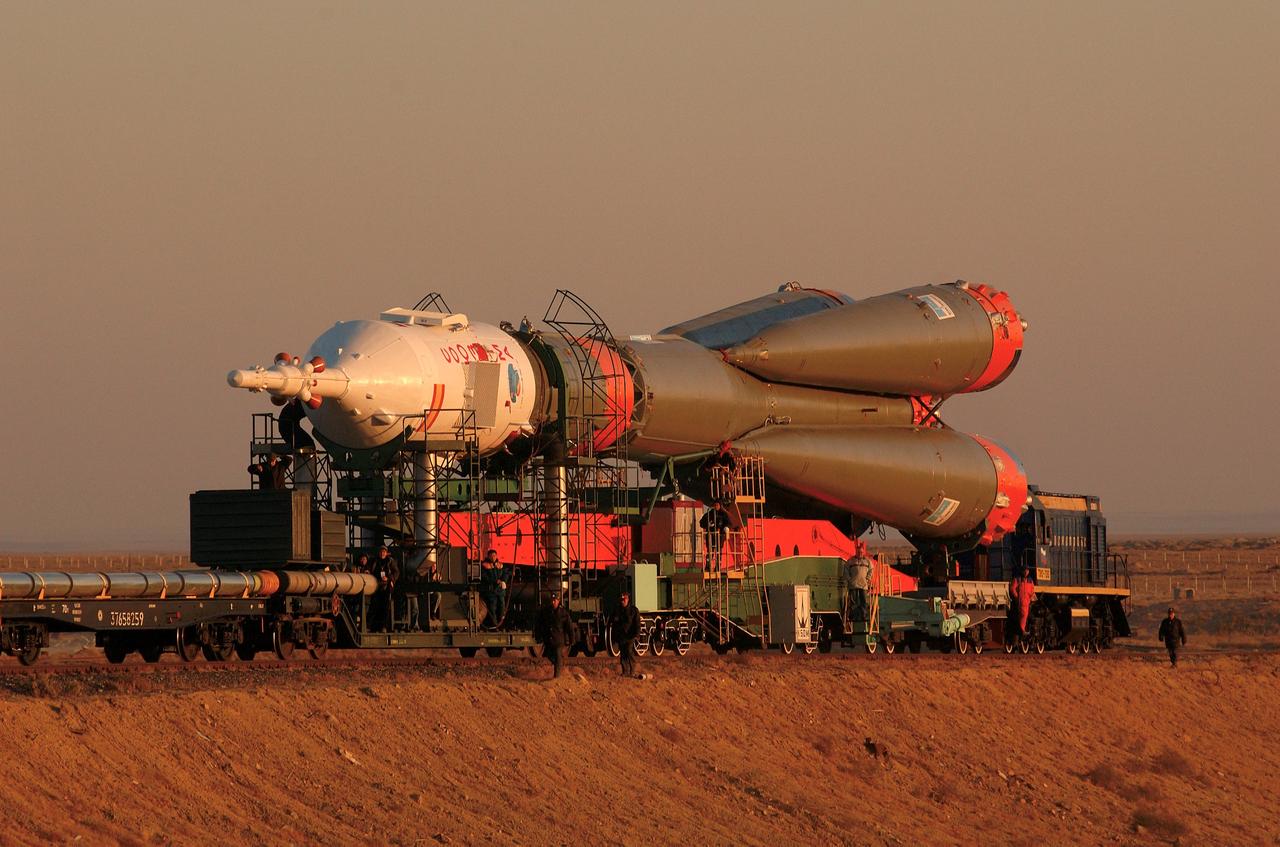
JSC2003-E-59146 (16 October 2003) --- The Soyuz TMA-3 spacecraft and its booster rocket were transported on a rail car to its launch pad and raised to its vertical launch position at the Baikonur Cosmodrome, Kazakhstan on October 16, 2003, in preparation for liftoff October 18 to carry astronaut C. Michael Foale, Expedition 8 mission commander and NASA ISS science officer; cosmonaut Alexander Kaleri, Soyuz commander and flight engineer, representing Rosaviakosmos; and European Space Agency (ESA) astronaut Pedro Duque of Spain to the International Space Station (ISS). Photo Credit: "NASA/Bill Ingalls"
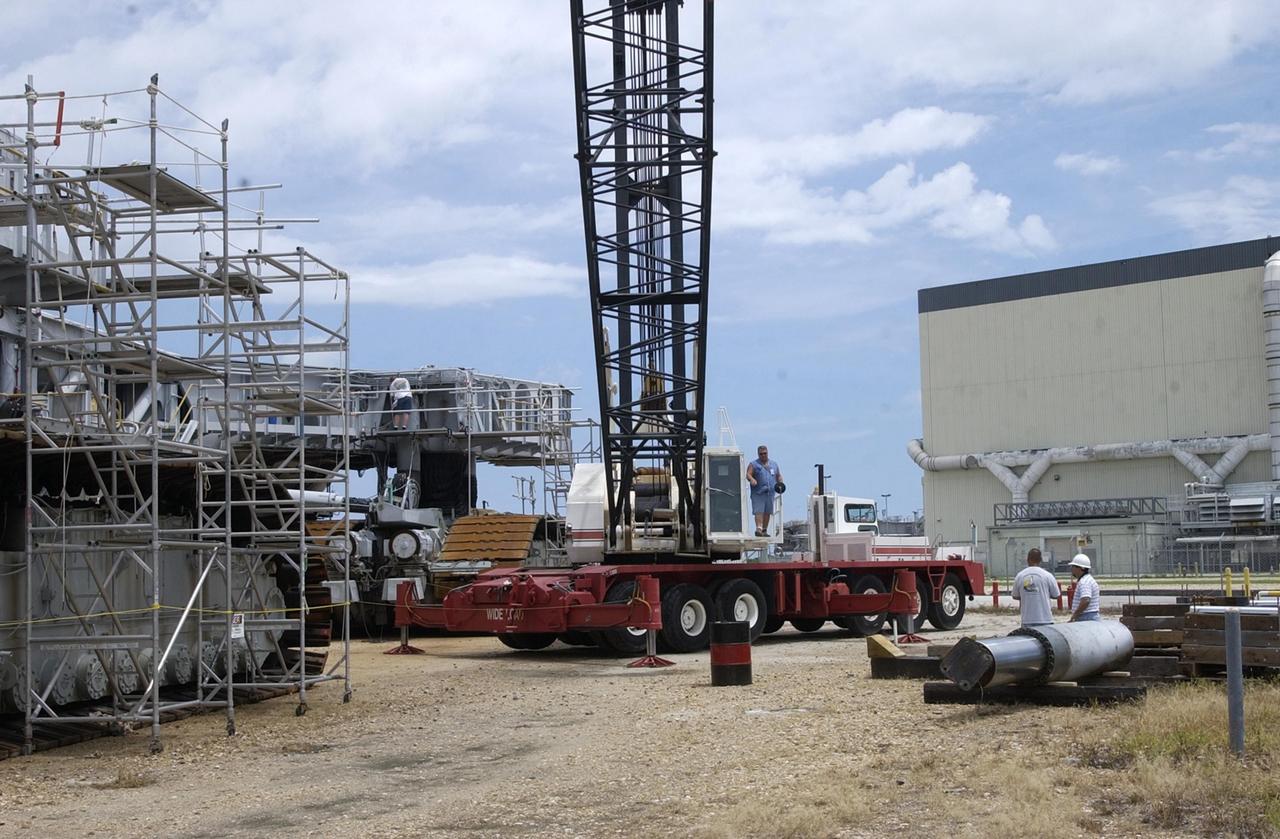
KENNEDY SPACE CENTER, FLA. -- A crane operator (center) talks with technicians (right) standing next to one of the jacking, equalization and leveling (JEL) cylinders from Crawler-Transporter No. 2. During inspections, technicians removed two of the 16 JEL cylinders on the vehicle to gain access to the bearings for routine maintenance and found three of the four bearings had cracks. Of the three bearings, two had extensive damage. Further eddy current inspections indicate that cracks are present on 15 of the bearings. There are 16 cylinders and 32 bearings per crawler. Although no cause for the cracks is known at this time, engineers are currently evaluating the situation to determine the most appropriate solution.

KENNEDY SPACE CENTER, FLA. -- Perry Becker, an engineer with NASA, looks at a spacer on the bearing in one of the jacking, equalization and leveling (JEL) cylinders on Crawler-Transporter No. 2. During inspections, technicians removed two of the 16 JEL cylinders on the vehicle to gain access to the bearings for routine maintenance and found three of the four bearings had cracks. Of the three bearings, two had extensive damage. Further eddy current inspections indicate that cracks are present on 15 of the bearings. There are 16 cylinders and 32 bearings per crawler. Although no cause for the cracks is known at this time, engineers are currently evaluating the situation to determine the most appropriate solution.
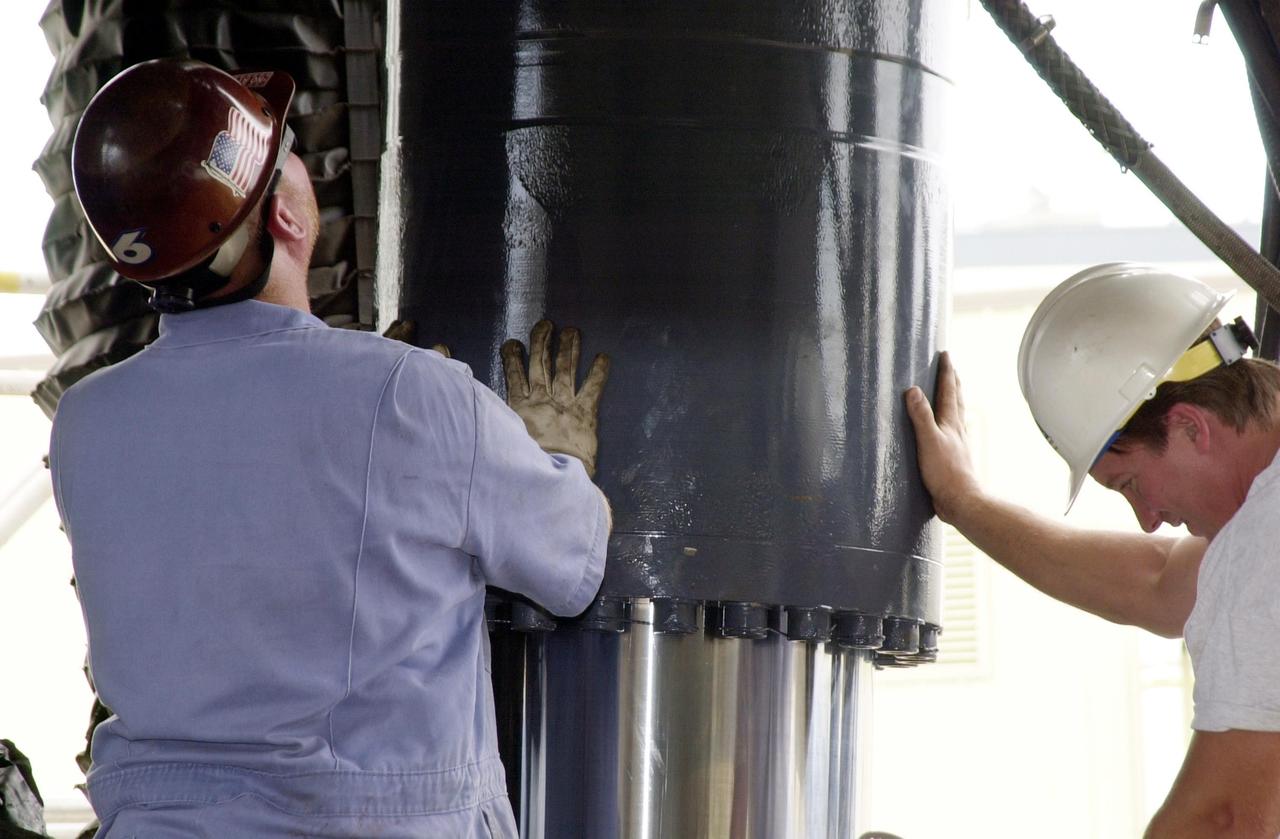
KENNEDY SPACE CENTER, FLA. -- Two workers help maneuver a repaired Jacking, Equalization and Leveling (JEL) cylinder as it is lowered into place on Crawler Transporter No. 2. There are 16 cylinders and 32 bearings per crawler. During recent routine maintenance inspections, technicians removed two of the 16 JEL cylinders on the crawler to gain access to the bearings and found three of the four bearings cracked. Further eddy current inspections indicated that cracks were present on 15 of the bearings.. Technicians have removed and replaced 14 of the bearings on CT-2, which is being repaired in order to enable Atlantis' rollout for mission STS-112, scheduled for launch no earlier than Oct. 2.
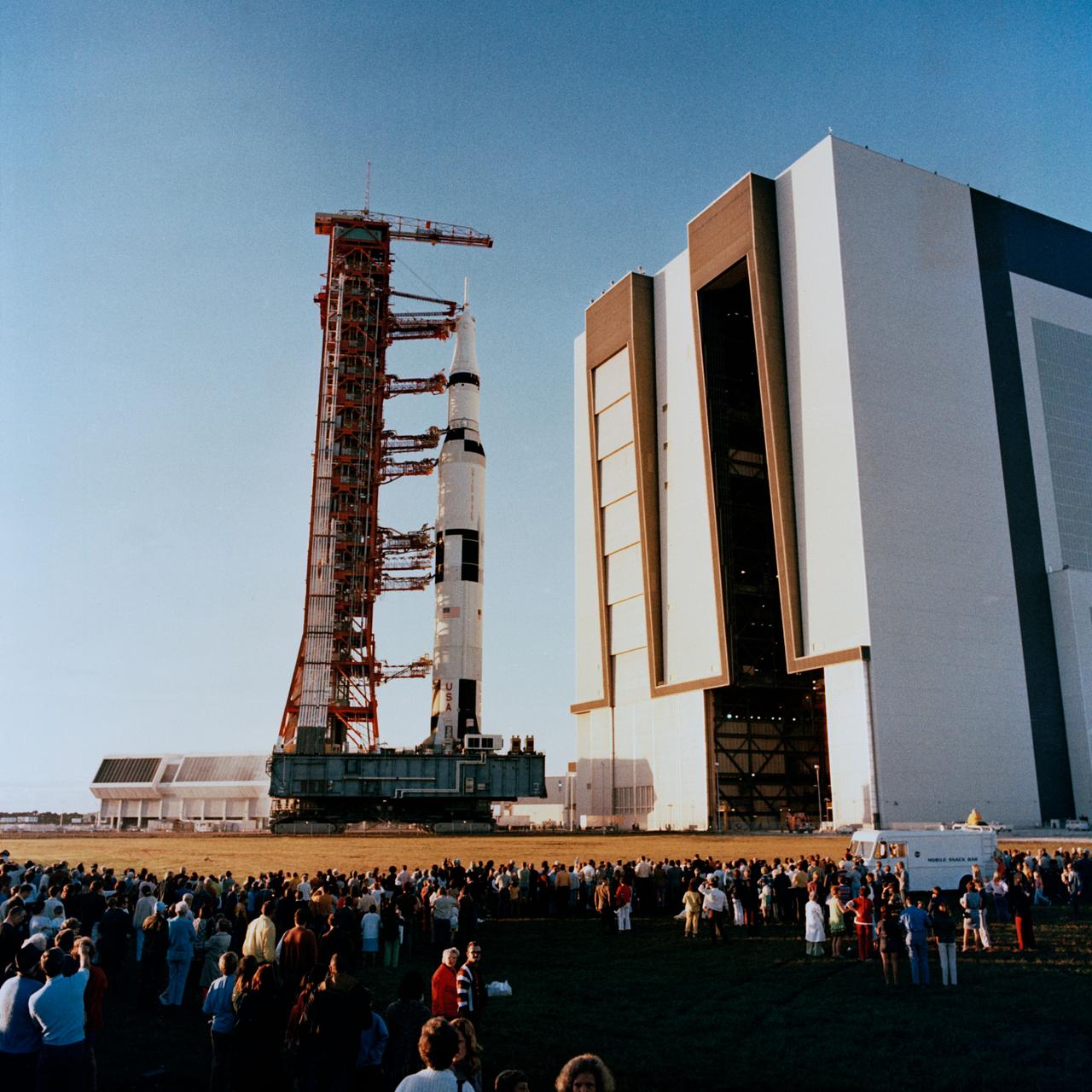
S72-19795 (13 Dec. 1971) --- A large crowd of spectators look on as the 363-feet tall Apollo 16 (Spacecraft 113/Lunar Module 11/Saturn 511) space vehicle moves out of the Vehicle Assembly Building (VAB) at the Kennedy Space Center's (KSC) Launch Complex 39 toward Pad A. The Saturn V stack and its mobile launch tower are atop a huge crawler-transporter. The prime crew men of the scheduled Apollo 16 lunar landing mission are astronauts John W. Young, commander; Thomas K. Mattingly, command module pilot; and Charles M. Duke Jr., lunar module pilot.
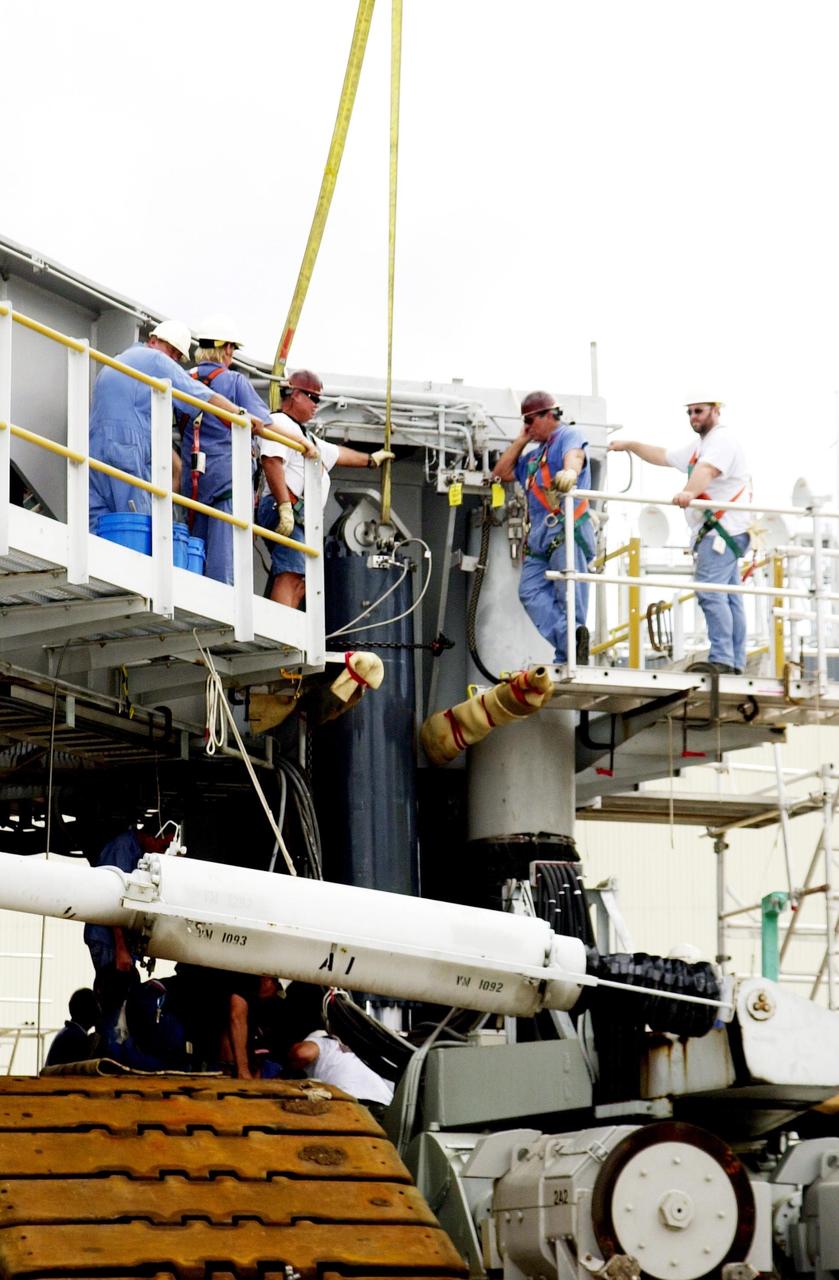
KENNEDY SPACE CENTER, FLA. -- Near the bottom of the repaired Jacking, Equalization and Leveling (JEL) cylinder, workers fasten the JEL to Crawler Transporter No. 2. There are 16 cylinders and 32 bearings per crawler. During recent routine maintenance inspections, technicians removed two of the 16 JEL cylinders on the crawler to gain access to the bearings and found three of the four bearings cracked. Further eddy current inspections indicated that cracks were present on 15 of the bearings.. Technicians have removed and replaced 14 of the bearings on CT-2, which is being repaired in order to enable Atlantis' rollout for mission STS-112, scheduled for launch no earlier than Oct. 2.
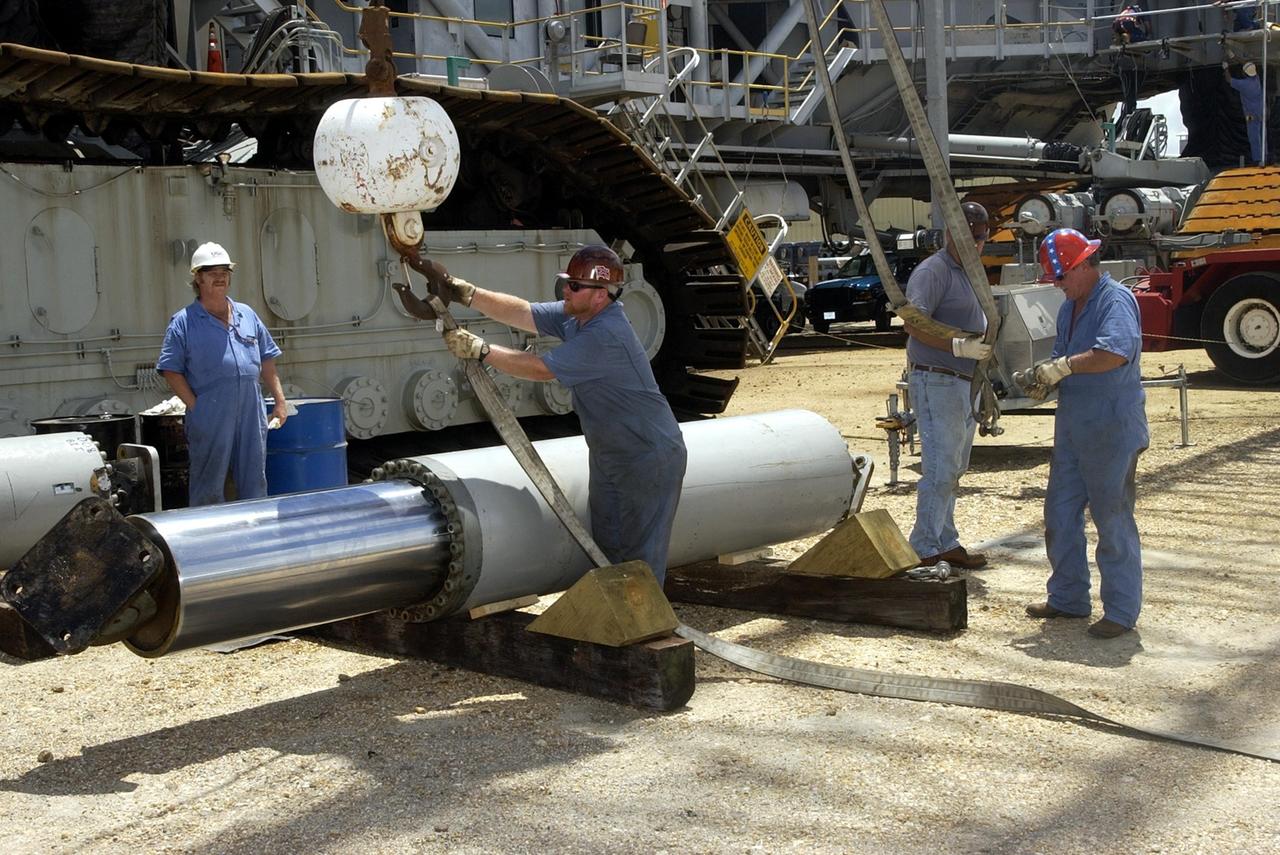
KENNEDY SPACE CENTER, FLA. -- Technicians remove the crane straps from a jacking, equalization and leveling (JEL) cylinder and bearing from Crawler-Transporter No. 2 after it is lowered by a crane to a resting position on the ground. During routine maintenance inspections last week, technicians removed two of the 16 JEL cylinders on the crawler to gain access to the bearings and found three of the four bearings cracked. Further eddy current inspections indicated that cracks are present on 15 of the bearings. There are 16 cylinders and 32 bearings per crawler. Engineers are evaluating the situation to determine the cause of the cracks and an appropriate solution to the problem.
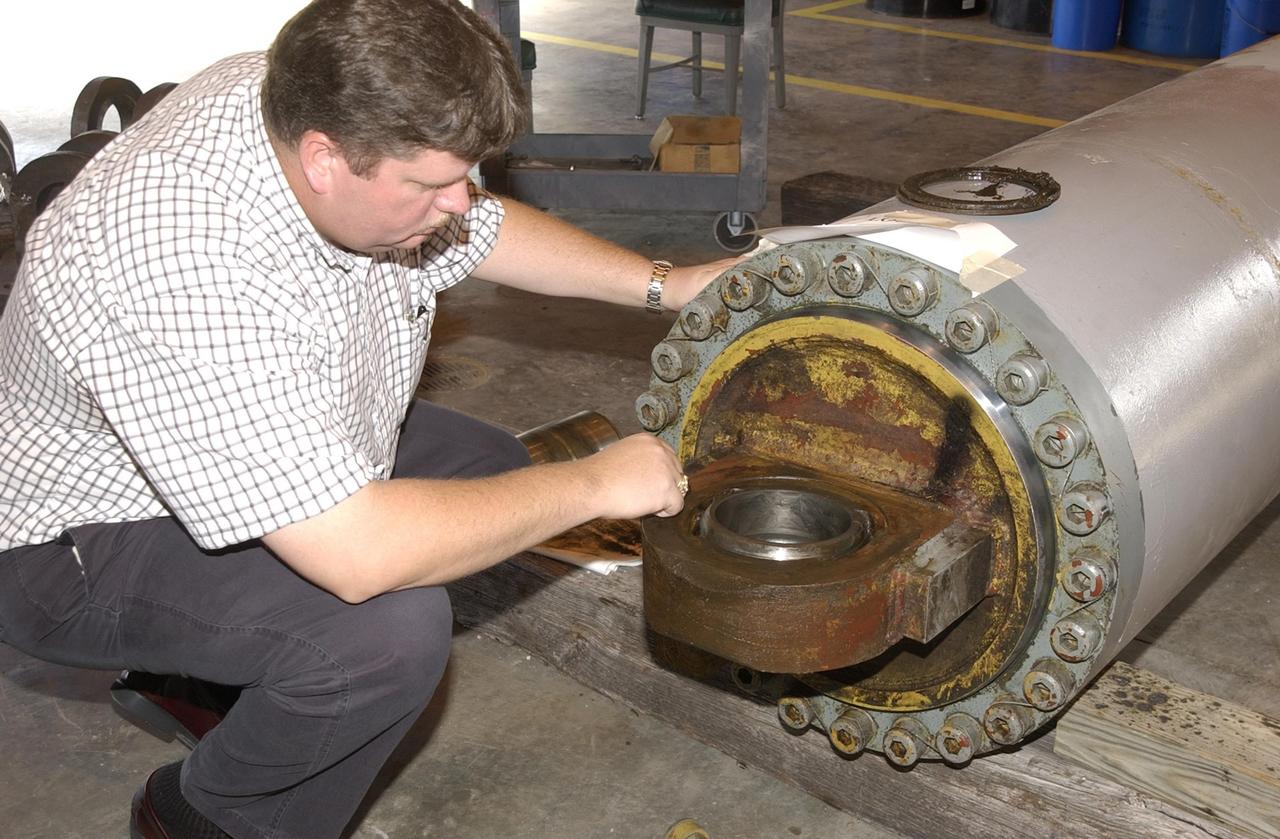
KENNEDY SPACE CENTER, FLA. -- Perry Becker, an engineer with NASA, looks at a bearing from one of the jacking, equalization and leveling (JEL) cylinders on Crawler-Transporter No. 2. During inspections, technicians removed two of the 16 JEL cylinders on the vehicle to gain access to the bearings for routine maintenance and found three of the four bearings had cracks. Of the three bearings, two had extensive damage. Further eddy current inspections indicate that cracks are present on 15 of the bearings. There are 16 cylinders and 32 bearings per crawler. Although no cause for the cracks is known at this time, engineers are currently evaluating the situation to determine the most appropriate solution.
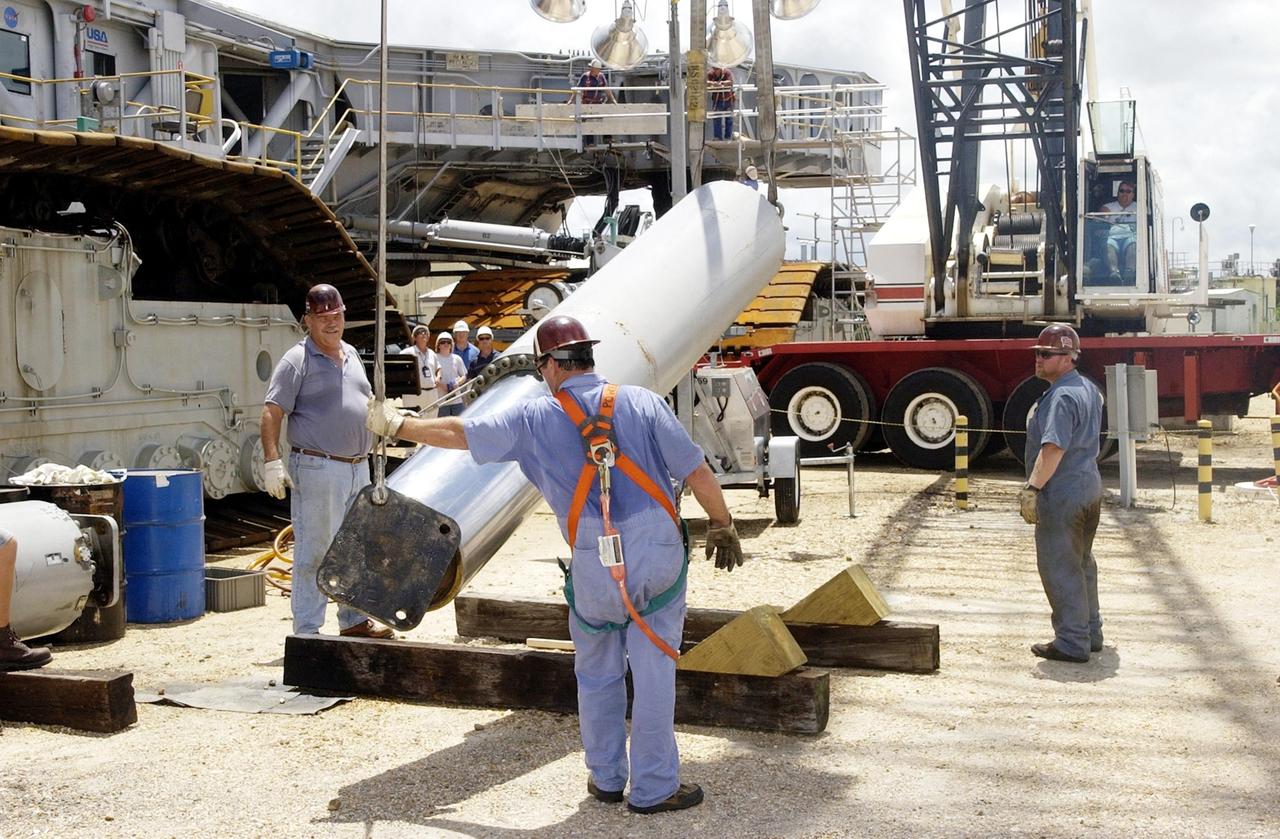
KENNEDY SPACE CENTER, FLA. -- A technician holds a crane strap to steady and guide a jacking, equalization and leveling (JEL) cylinder and bearing from Crawler-Transporter No. 2 as it is lowered by a crane to a resting position on the ground. During routine maintenance inspections last week, technicians removed two of the 16 JEL cylinders on the crawler to gain access to the bearings and found three of the four bearings cracked. Further eddy current inspections indicated that cracks are present on 15 of the bearings. There are 16 cylinders and 32 bearings per crawler. Engineers are evaluating the situation to determine the cause of the cracks and an appropriate solution to the problem.
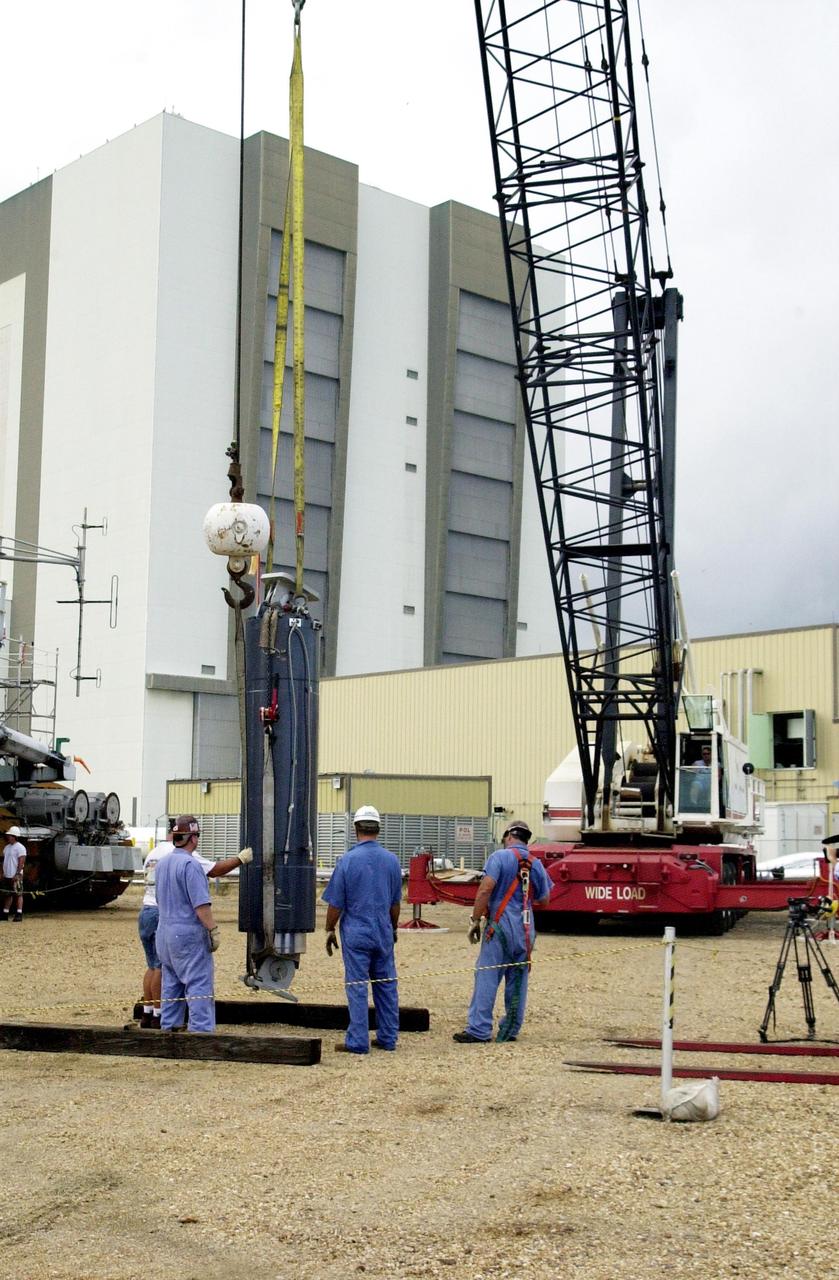
KENNEDY SPACE CENTER, FLA. -- A crane lifts the repaired Jacking, Equalization and Leveling (JEL) cylinder to move into to Crawler Transporter No. 2. There are 16 cylinders and 32 bearings per crawler. During recent routine maintenance inspections, technicians removed two of the 16 JEL cylinders on the crawler to gain access to the bearings and found three of the four bearings cracked. Further eddy current inspections indicated that cracks were present on 15 of the bearings.. Technicians have removed and replaced 14 of the bearings on CT-2, which is being repaired in order to enable Atlantis' rollout for mission STS-112, scheduled for launch no earlier than Oct. 2.
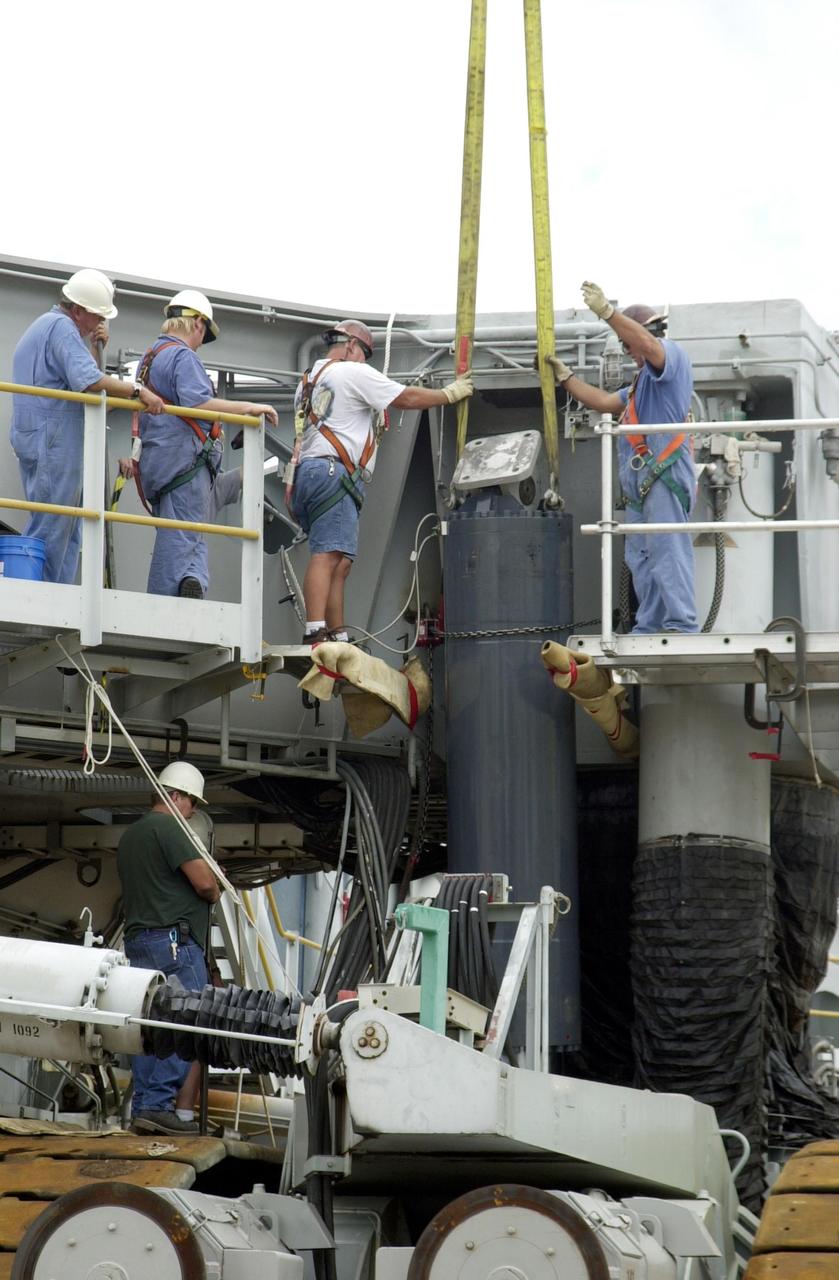
KENNEDY SPACE CENTER, FLA. -- Workers on Crawler Transporter No. 2 help guide a repaired Jacking, Equalization and Leveling (JEL) cylinder into place. There are 16 cylinders and 32 bearings per crawler. During recent routine maintenance inspections, technicians removed two of the 16 JEL cylinders on the crawler to gain access to the bearings and found three of the four bearings cracked. Further eddy current inspections indicated that cracks were present on 15 of the bearings. Technicians have removed and replaced 14 of the bearings on CT-2, which is being repaired in order to enable Atlantis' rollout for mission STS-112, scheduled for launch no earlier than Oct. 2.
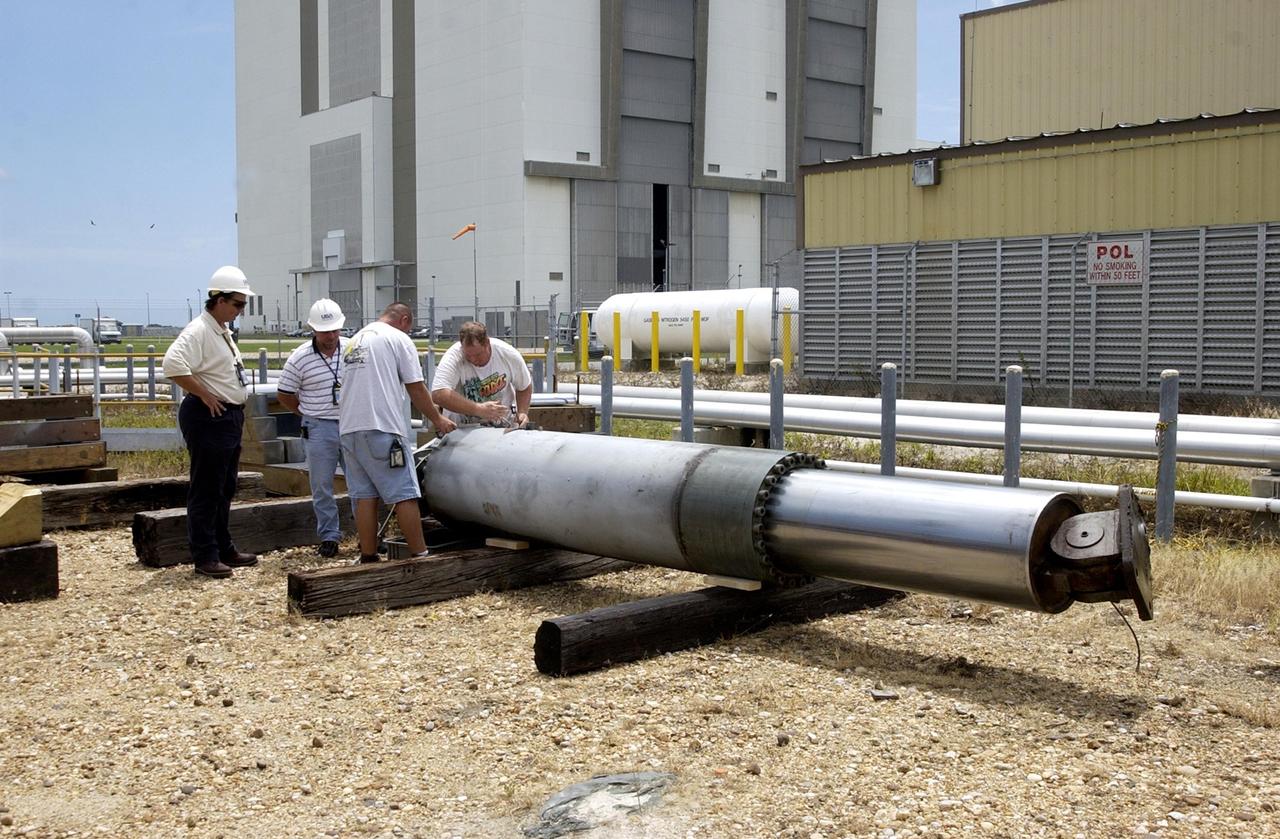
KENNEDY SPACE CENTER, FLA. -- Technicians check out a jacking, equalization and leveling (JEL) cylinders from Crawler-Transporter No. 2. During inspections, technicians removed two of the 16 JEL cylinders on the vehicle to gain access to the bearings for routine maintenance and found three of the four bearings had cracks. Of the three bearings, two had extensive damage. Further eddy current inspections indicate that cracks are present on 15 of the bearings. There are 16 cylinders and 32 bearings per crawler. Although no cause for the cracks is known at this time, engineers are currently evaluating the situation to determine the most appropriate solution.
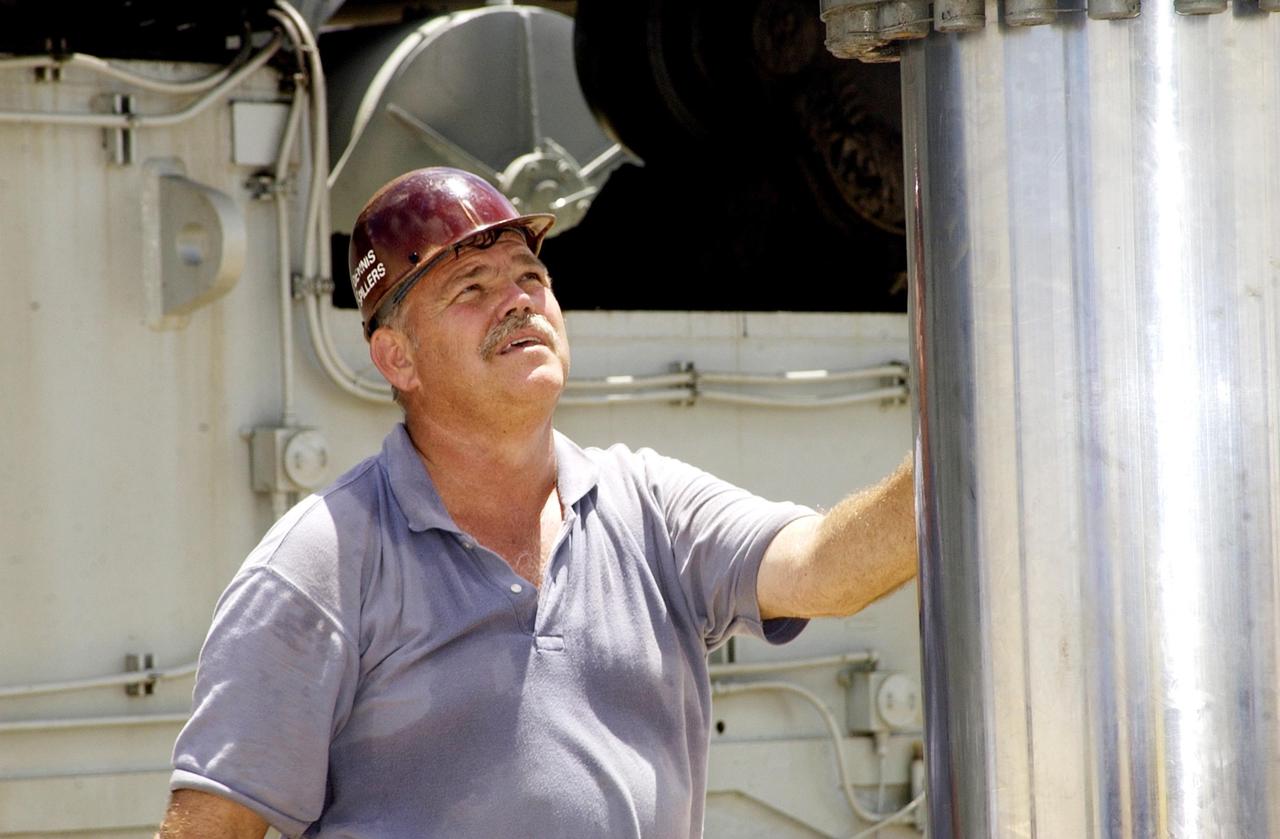
KENNEDY SPACE CENTER, FLA. -- A technician steadies a jacking, equalization and leveling (JEL) cylinder and bearing from Crawler-Transporter No. 2 as it is lowered by a crane to a position on the ground. During routine maintenance inspections last week, technicians removed two of the 16 JEL cylinders on the crawler to gain access to the bearings and found three of the four bearings cracked. Further eddy current inspections indicated that cracks are present on 15 of the bearings. There are 16 cylinders and 32 bearings per crawler. Engineers are evaluating the situation to determine the cause of the cracks and an appropriate solution to the problem.