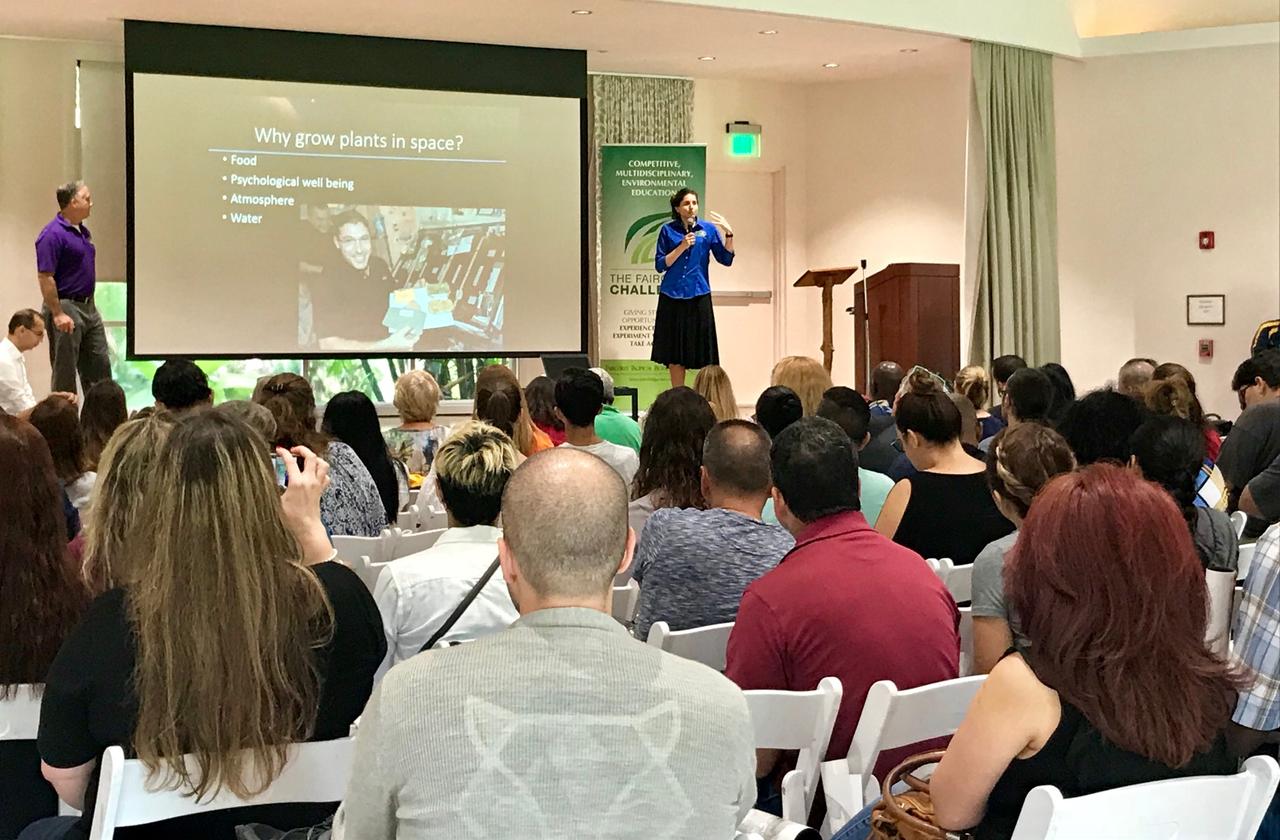
Kennedy scientists Trent Smith, left, and Dr. Gioia Massa speak to middle and high school teachers at Fairchild Tropical Botanic Garden in Miami during the kickoff of the 2017-2018 Fairchild Challenge-Growing Beyond Earth. More than 130 teachers gathered for the opening workshop, where they learned about food production in space and the Veggie hardware currently on the International Space Station. NASA has partnered with Fairchild to create this STEM-based challenge in which students will follow specific research protocols and analyze plant growth factors, flavor and nutrition, in order to help NASA choose the next crops for astronauts to grow aboard the station.
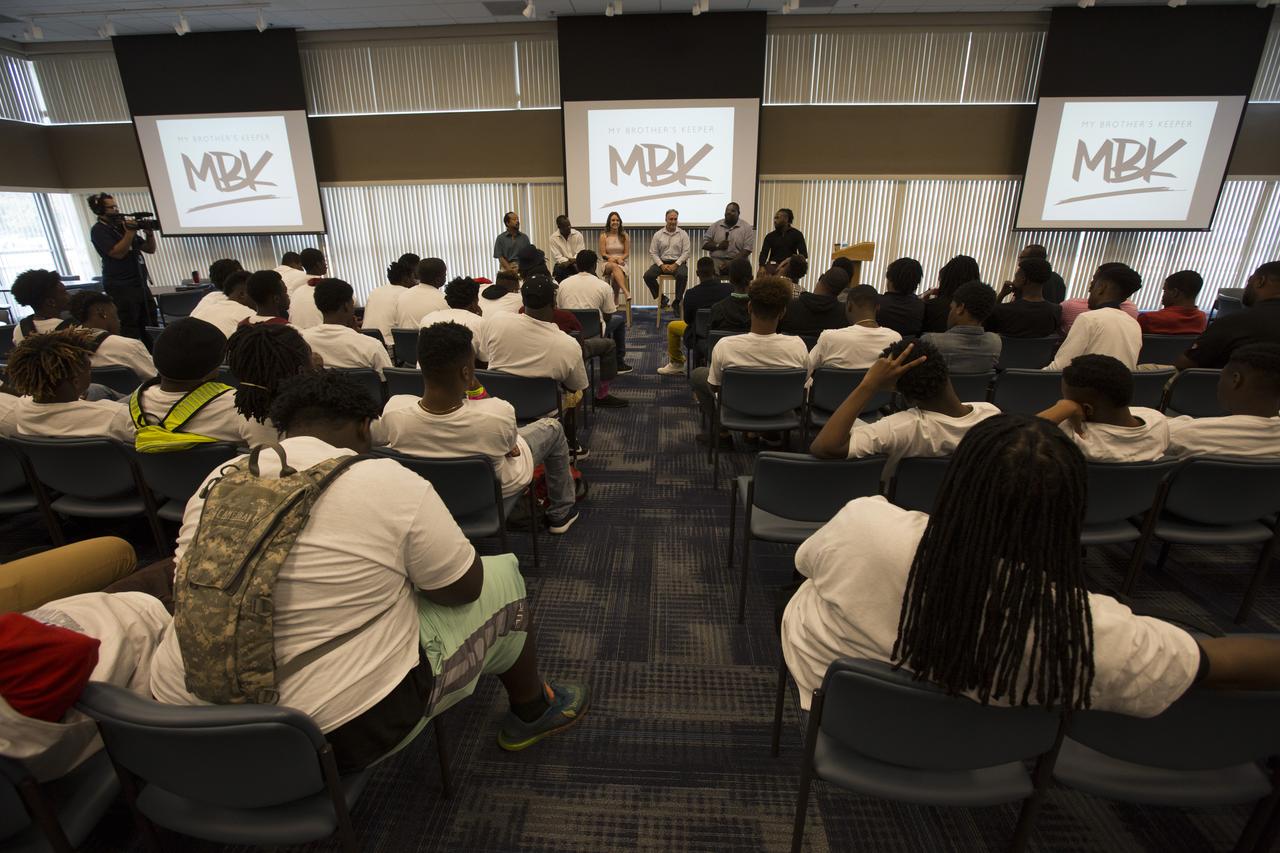
Students in the My Brother’s Keeper program hear from experts from across NASA’s Kennedy Space Center during a panel discussion in the Space Station Processing Facility Conference Center. Seated from left to right are Sheldon Lauderdale of the Commercial Crew Program (CCP); Yves Lamothe of the Ground Systems Development and Operations Program; Jennifer Levitt of CCP; Trent Smith and DeAntae Cooper (far right) of the Exploration Research and Technology Programs; and Malcolm Boston of the Launch Services Program. The spaceport is one of six NASA centers that participated in My Brother’s Keeper National Lab Week. The event is a nationwide effort to bring youth from underrepresented communities into federal labs and centers for hands-on activities, tours and inspirational speakers.
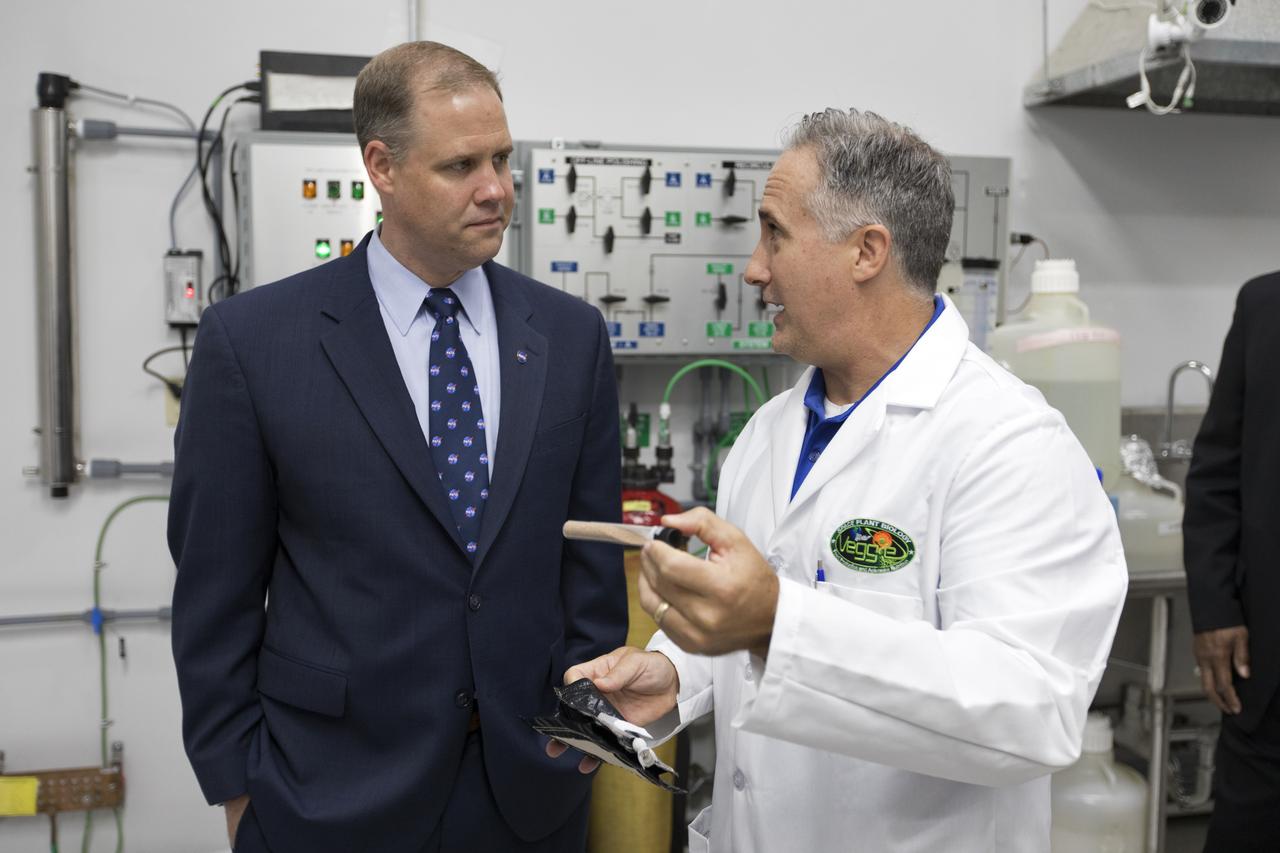
NASA Administrator Jim Bridenstine, at left, tours the Space Station Processing Facility at NASA's Kennedy Space Center in Florida, on Aug. 7, 2018. At right, Trent Smith, Veggie project manager, displays a seed packet and plant pillow for the Veggie plant growth system. Bridenstine also received updates on research and technology accomplishments.
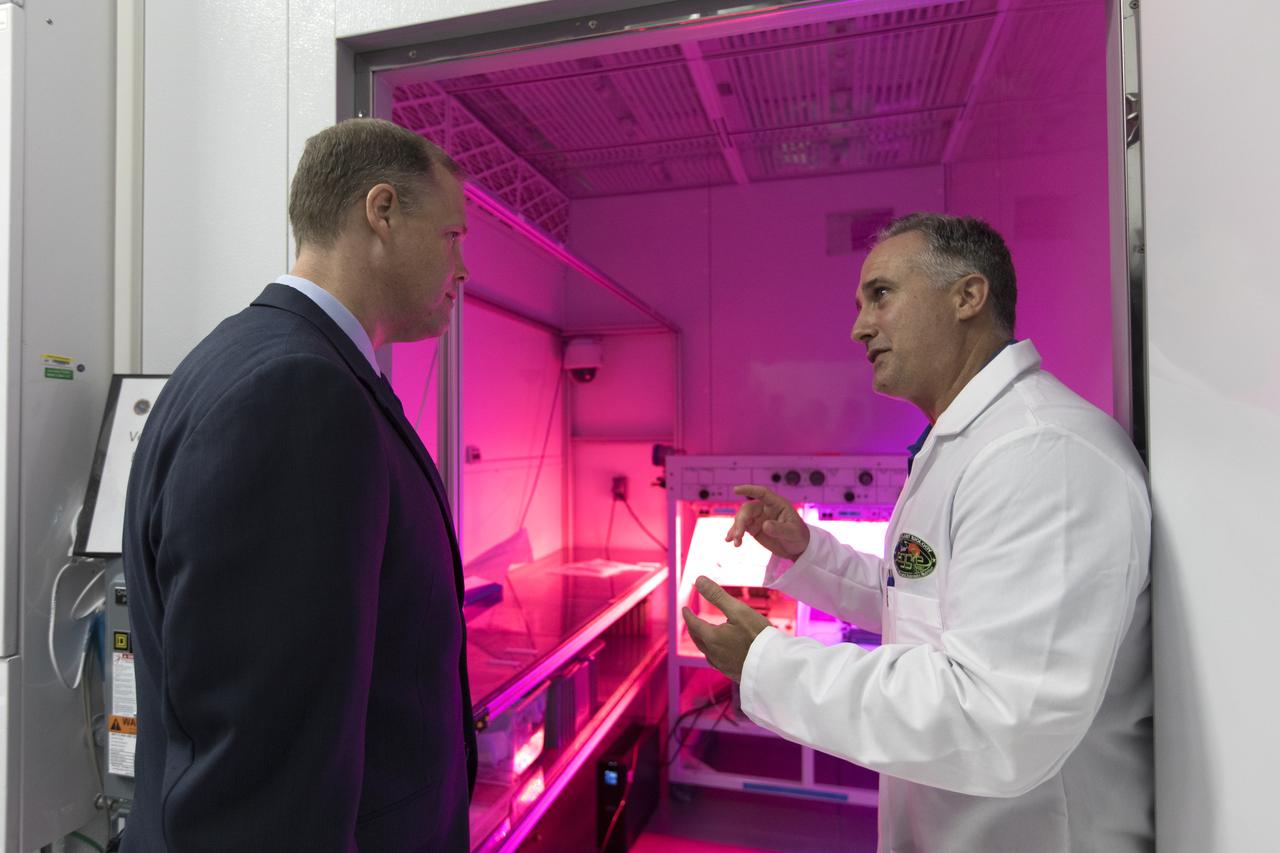
NASA Administrator Jim Bridenstine, at left, tours the Space Station Processing Facility at NASA's Kennedy Space Center in Florida, on Aug. 7, 2018. At right, Trent Smith, Veggie project manager, provides an update on the Veggie plant growth system on the International Space Station, and the control system in the laboratory. Bridenstine also received updates on research and technology accomplishments.
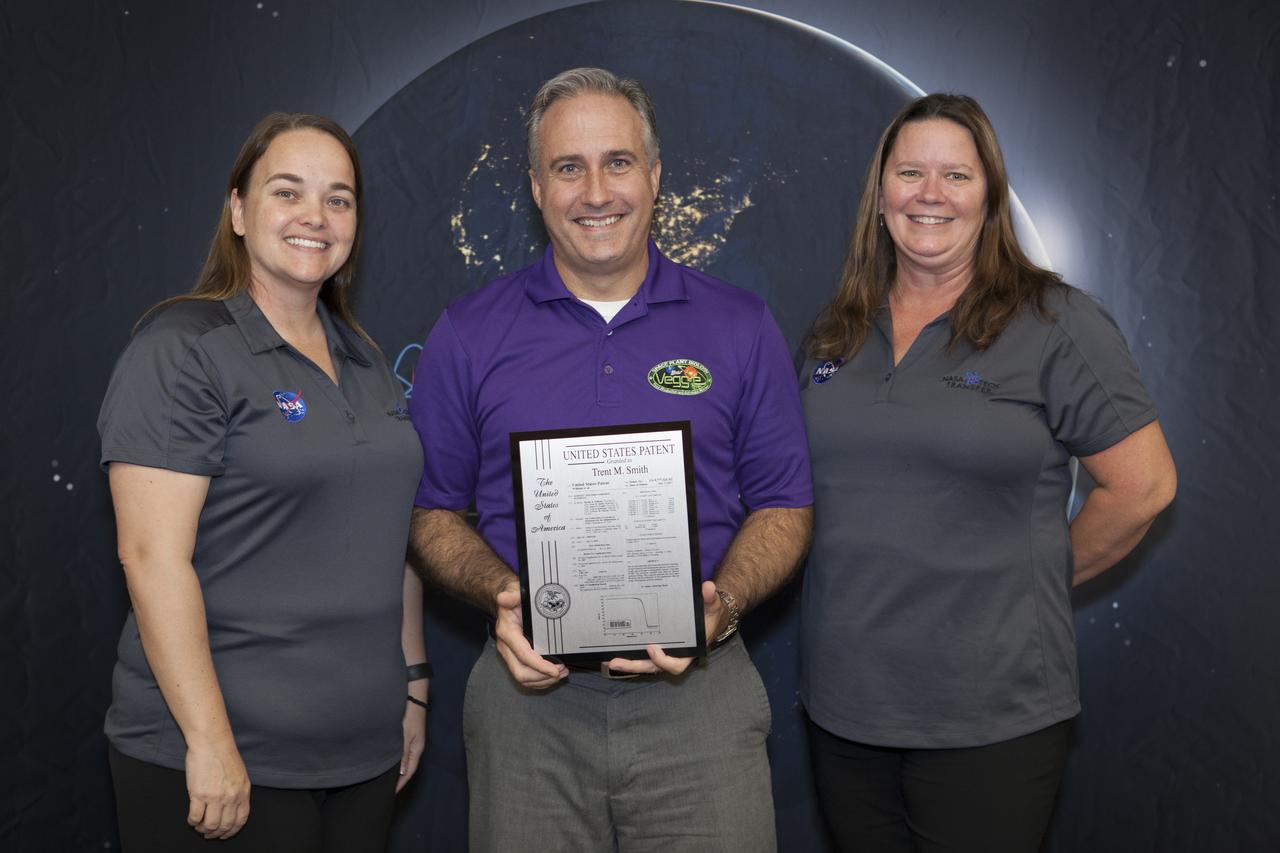
Trent Smith, project manager in the ISS Exploration Research and Technology Program, displays the U.S. Patent plaque he received during a ceremony at the 2017 Innovation Expo at NASA's Kennedy Space Center in Florida. The purpose of the annual two-day expo is to help foster innovation and creativity among the Kennedy workforce. The event included several keynote speakers, training opportunities, an innovation showcase and the KSC Kickstart competition.
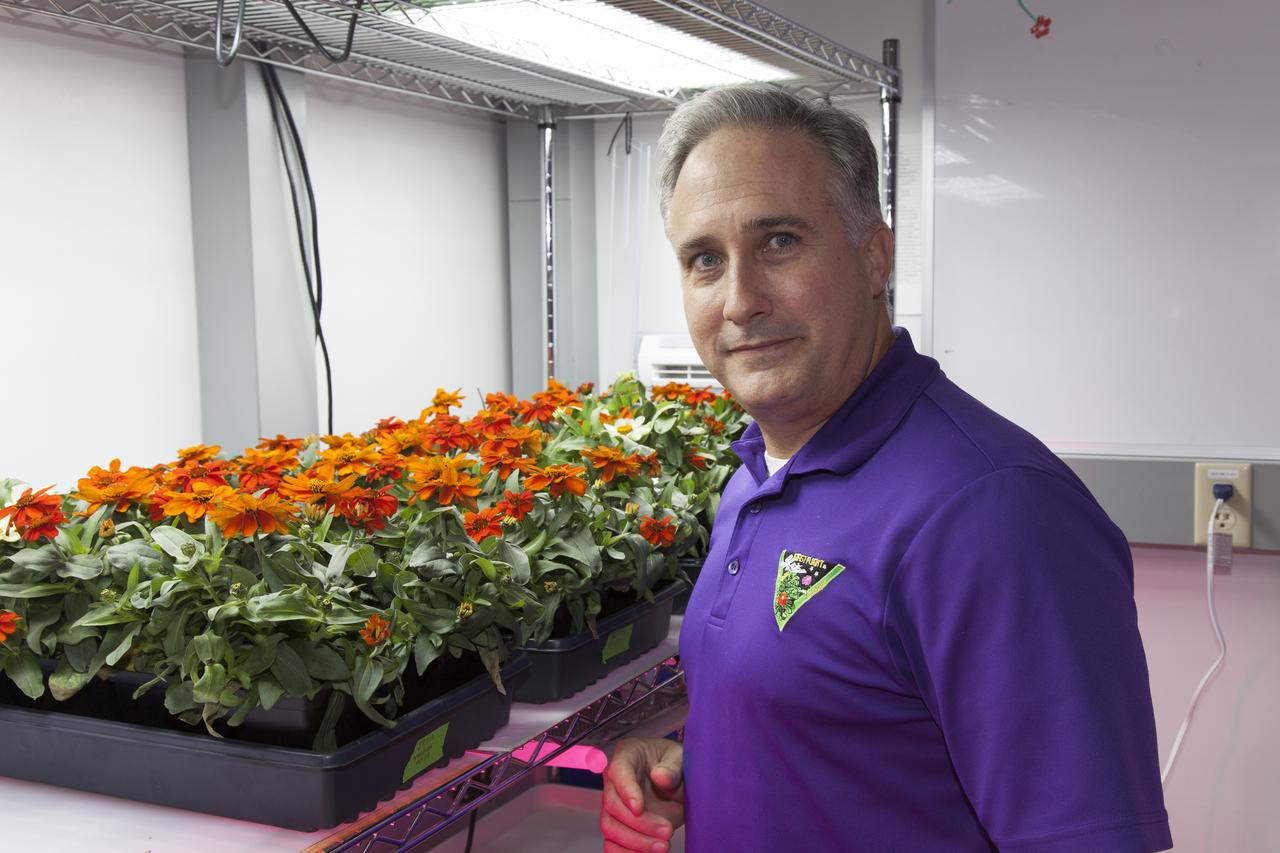
Trent Smith, Veggie project manager, Exploration Research and Technology Programs, is in the Veggie Laboratory in the Space Station Processing Facility (SSPF) at NASA's Kennedy Space Center in Florida on Nov. 27, 2018. Next to him are zinnia flowers grown from seeds germinated in the Veggie plant growth system on the International Space Station. The seeds were returned to Earth and researchers in the SSPF planted them in the Veggie control unit and grew the colorful flowers.
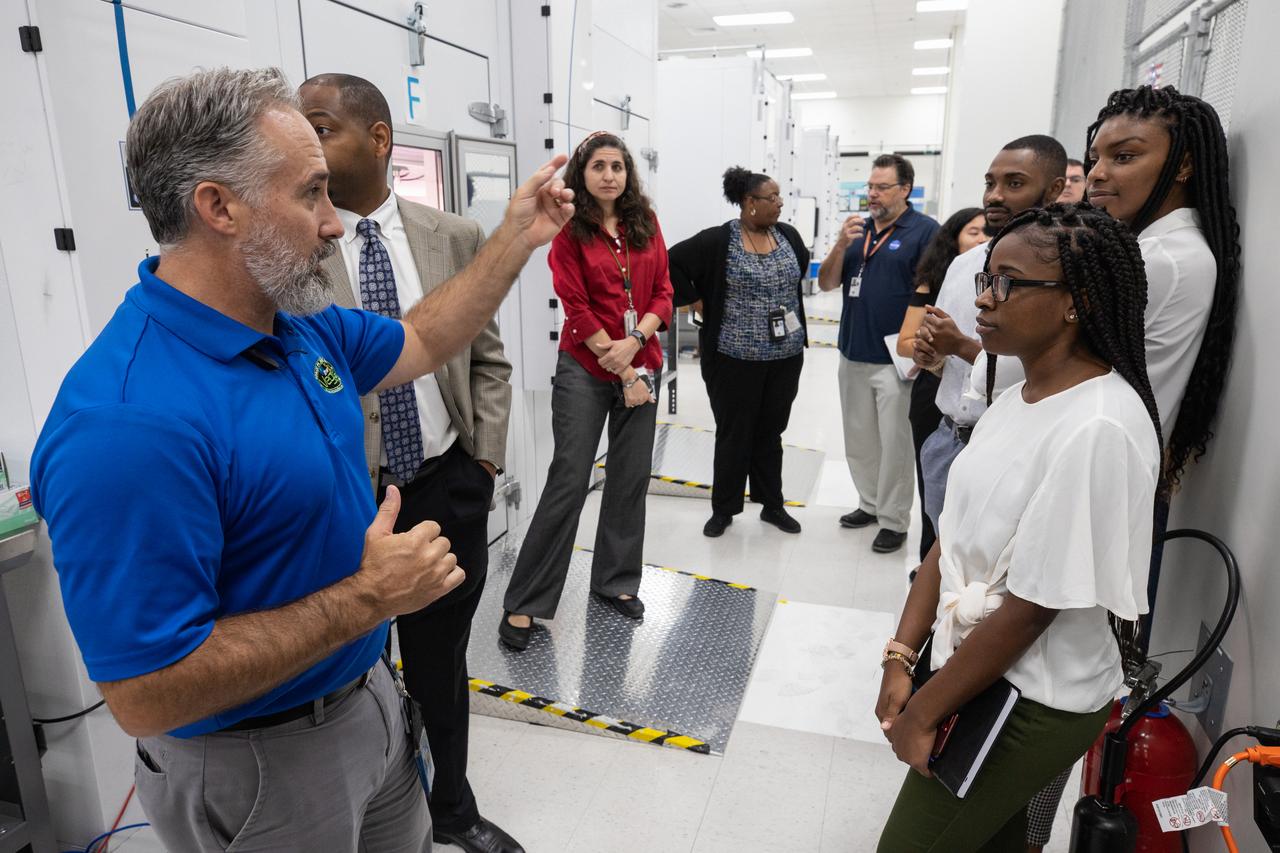
Kennedy Space Center Veggie Project Manager Trent Smith addresses students from Langston University in Oklahoma inside a Space Station Processing Facility lab at the Florida spaceport on Sept. 18, 2019. The students were part of a tour of Kennedy organized by Langston professor Byron Quinn, Ph.D., and NASA’s Office of Education. The visit included stops at SwampWorks, the Neil Armstrong Operations and Checkout Building, the Vehicle Assembly Building, the visitor complex and the Center for Space Education.
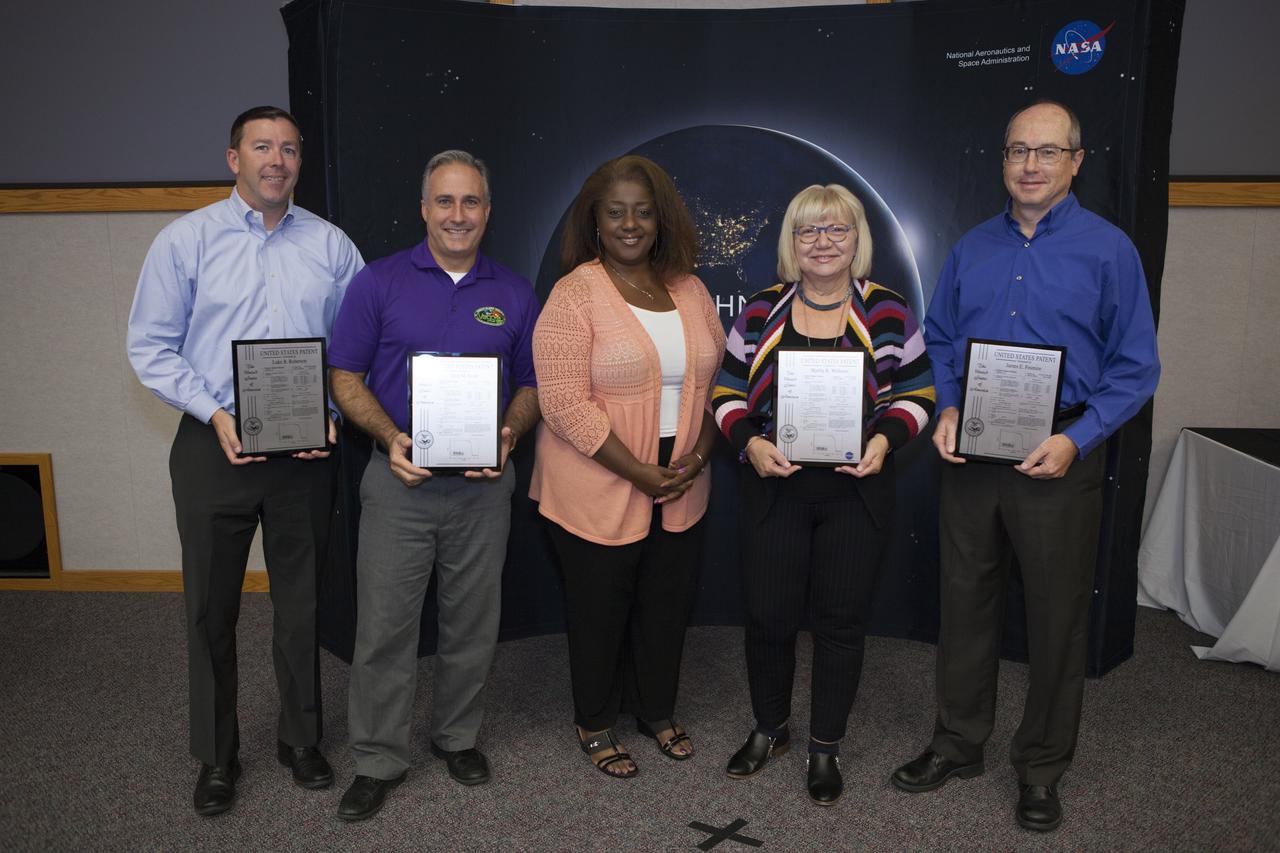
NASA Kennedy Space Center workers display their U.S. Patent plaques during a ceremony at the 2017 Innovation Expo at the center. From left, are Luke Robertson, Trent Smith, Kelly Jones-McDowall, event co-chairperson, Martha Williams and Dr. James Fesmire. The purpose of the annual two-day expo is to help foster innovation and creativity among the Kennedy workforce. The event included several keynote speakers, training opportunities, an innovation showcase and the KSC Kickstart competition.
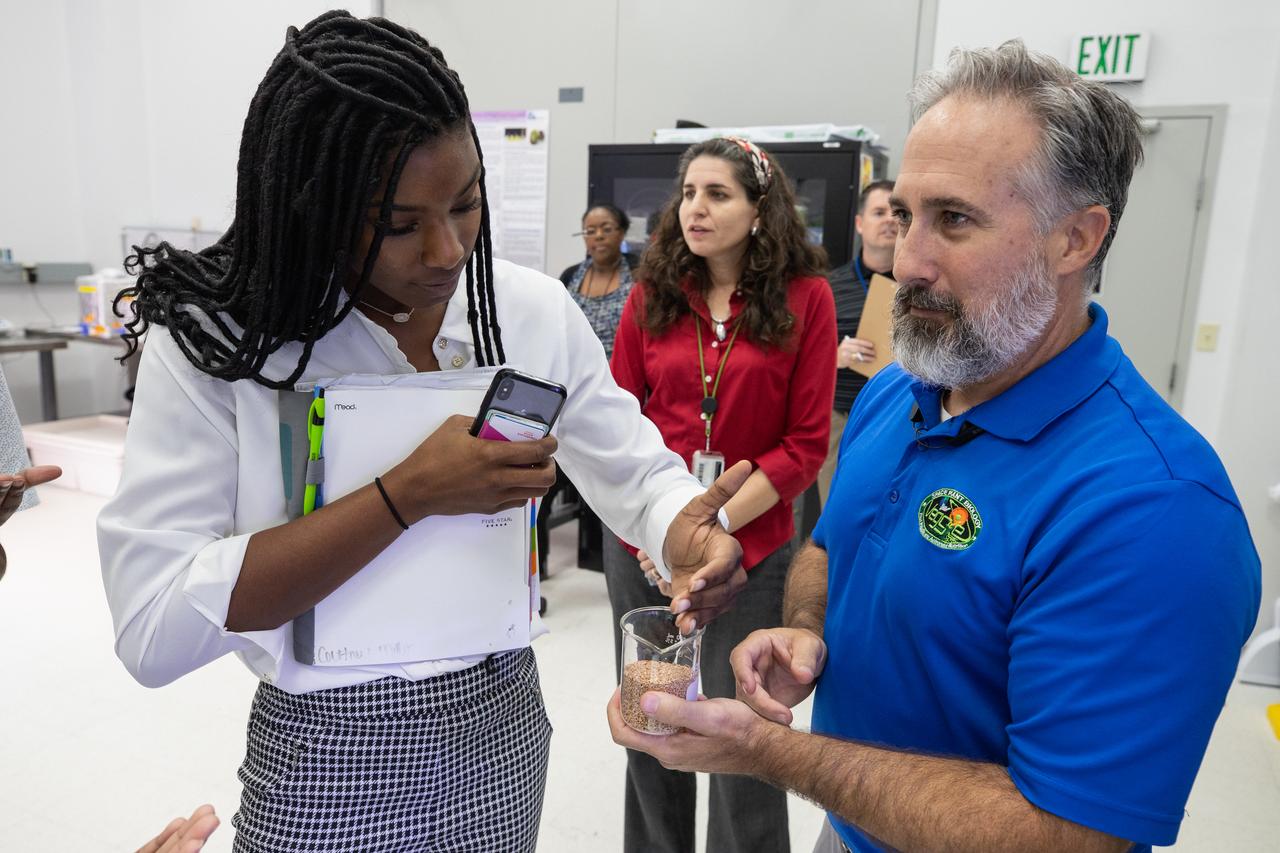
Langston University student Courtney Miller, left, interacts with Kennedy Space Center Veggie Project Manager Trent Smith inside a Space Station Processing Facility lab at Kennedy on Sept. 18, 2019. Behind them is Veggie Project lead Dr. Gioia Massa. Miller was one of four Langston students, along with professor Byron Quinn, Ph.D., who toured the Florida spaceport. The visit included stops at SwampWorks, the Neil Armstrong Operations and Checkout Building, the Vehicle Assembly Building, the visitor complex and the Center for Space Education.
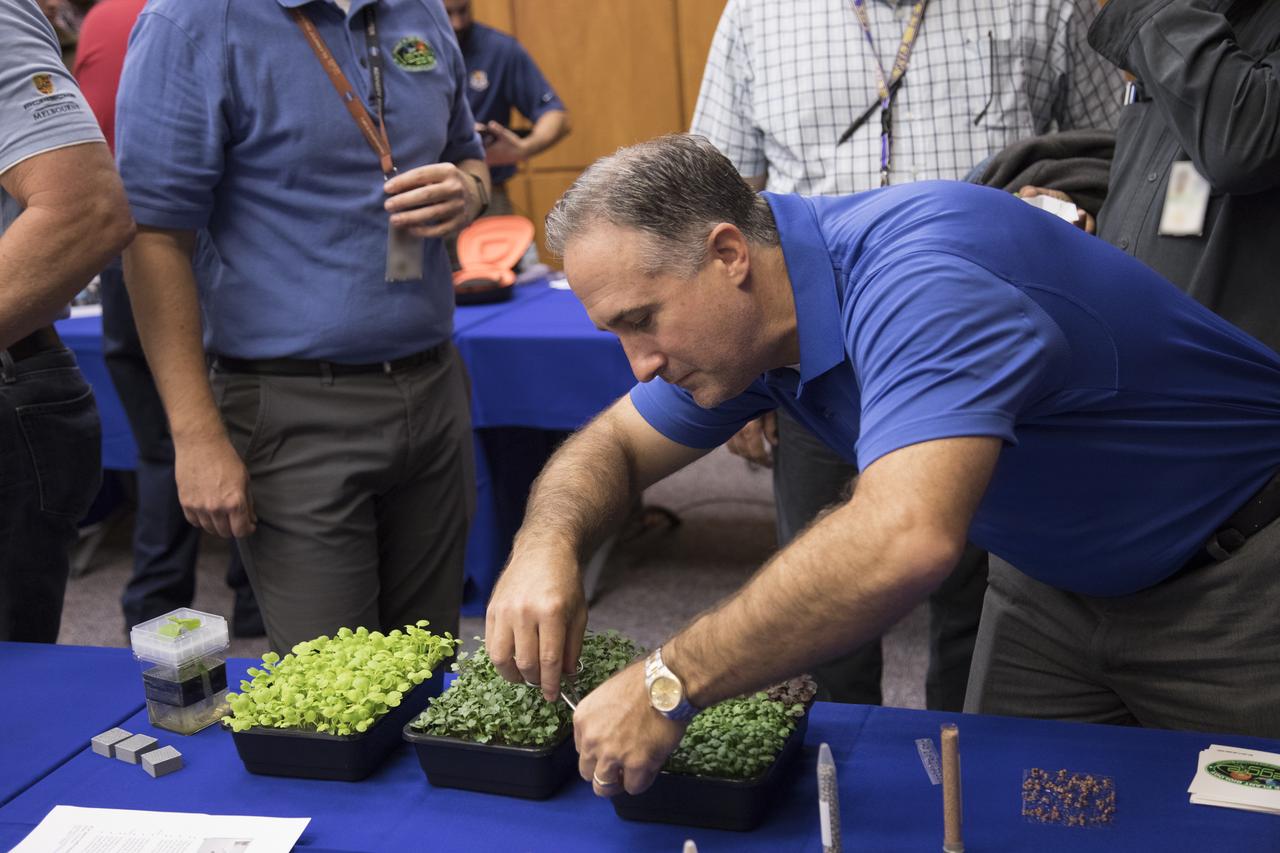
Trent Smith, a project manager in the ISS Exploration Research and Technology Program, displays microgreens grown in the same space dirt (arcillite) that is used in the plant pillows for the Veggie plant growth system on the International Space Station and in a 3-D-printed plastic matrix during the 2017 Innovation Expo showcase at NASA's Kennedy Space Center in Florida. The purpose of the annual two-day event is to help foster innovation and creativity among the Kennedy workforce. The event included several keynote speakers, training opportunities, an innovation showcase and the KSC Kickstart competition.
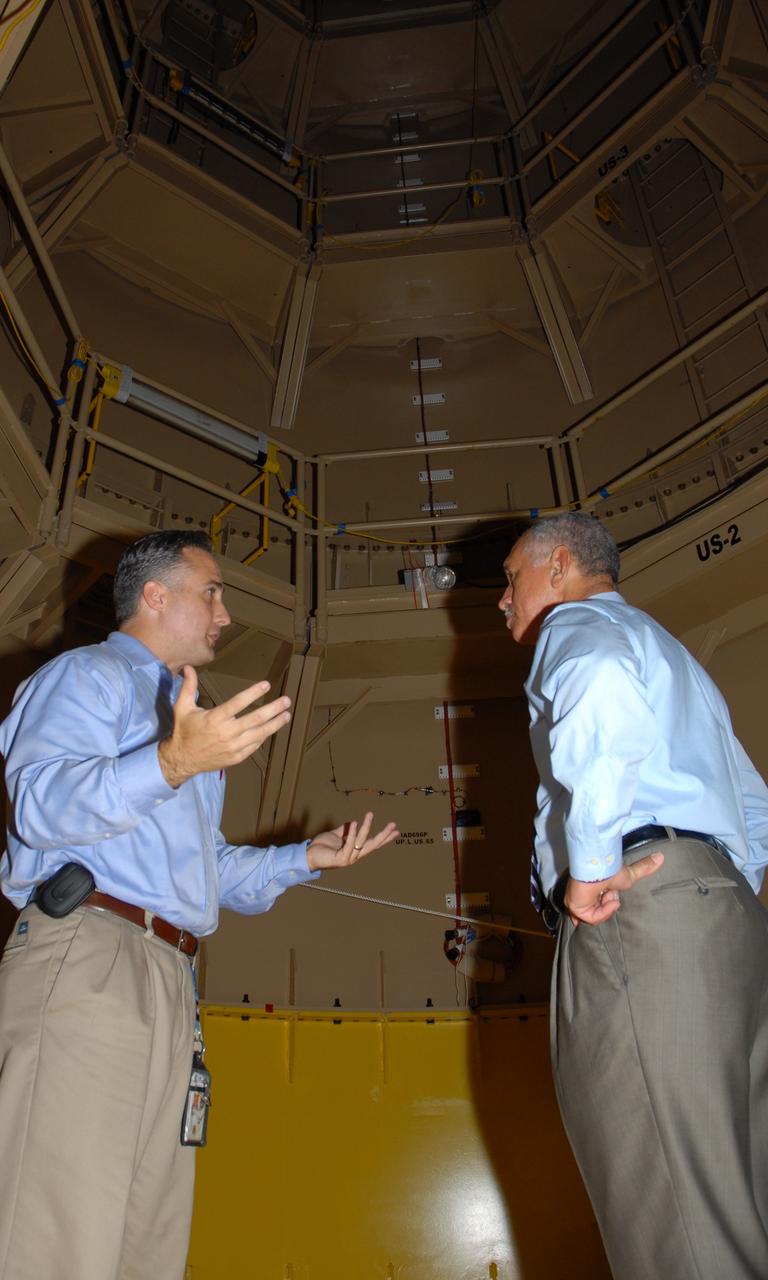
CAPE CANAVERAL, Fla. – On a tour of NASA's Kennedy Space Center in Florida, NASA Administrator Charles Bolden steps inside one of the Ares I-X segments in the Vehicle Assembly Building with NASA engineer Trent Smith. Bolden is touring several facilities at Kennedy involved with NASA's Constellation Program. Bolden also was at Kennedy for several events, including the landing of space shuttle Endeavour's STS-127 mission and the signing of the joint NASA-Japan Aerospace Exploration Agency agreement defining the terms of cooperation between the agencies on the Global Precipitation Measurement, or GPM, mission. Photo credit: NASA/Kim Shiflett
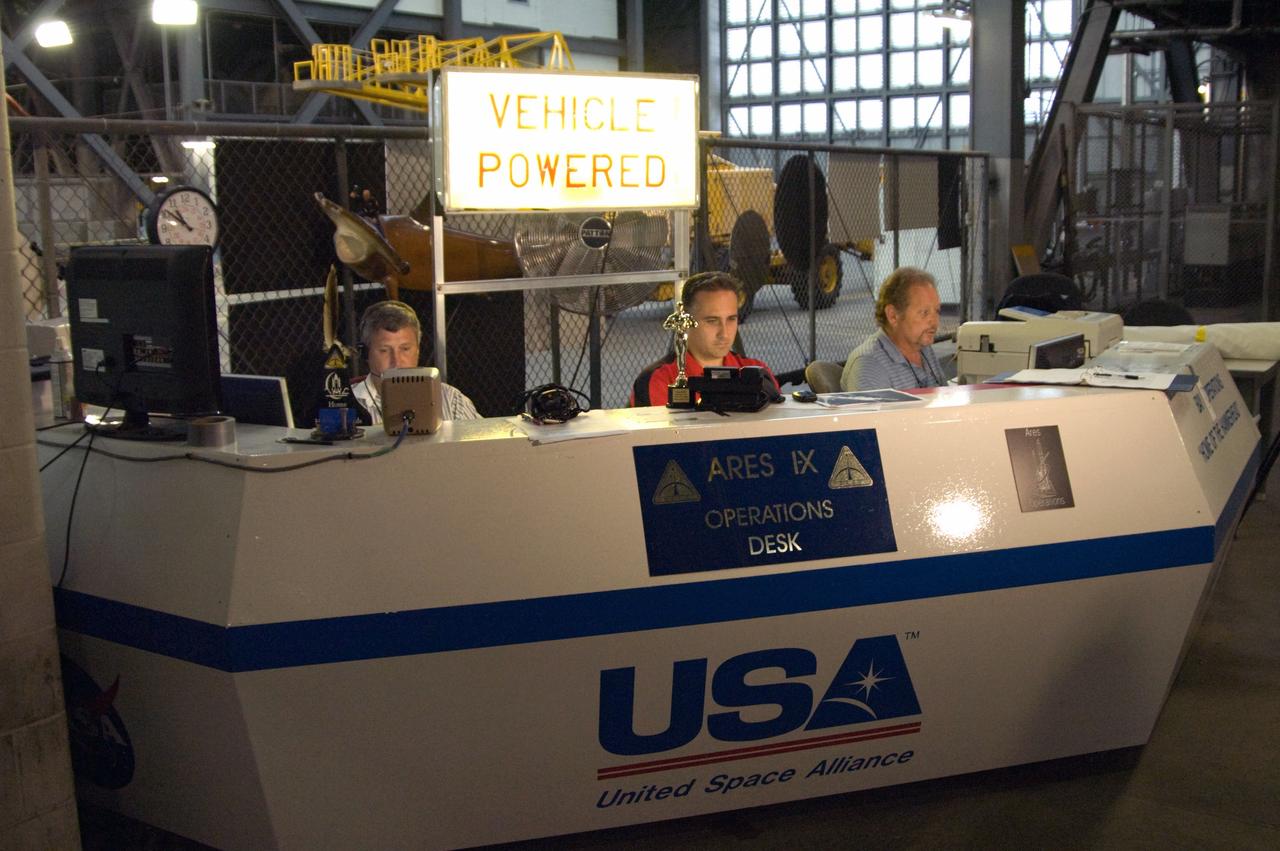
CAPE CANAVERAL, Fla. – In NASA Kennedy Space Center's Vehicle Assembly Building High Bay 3, NASA's Ares I-X mission team members Bobby Williams, Trent Smith and Karl Kendall monitor the rocket's first power-up. Part of the Constellation Program, the Ares I-X is the test vehicle for the Ares I, which is the essential core of a space transportation system that eventually will carry crewed missions back to the moon, on to Mars and out into the solar system. The Ares I-X flight test is targeted for Oct. 31. Photo credit: NASA/Cory Huston
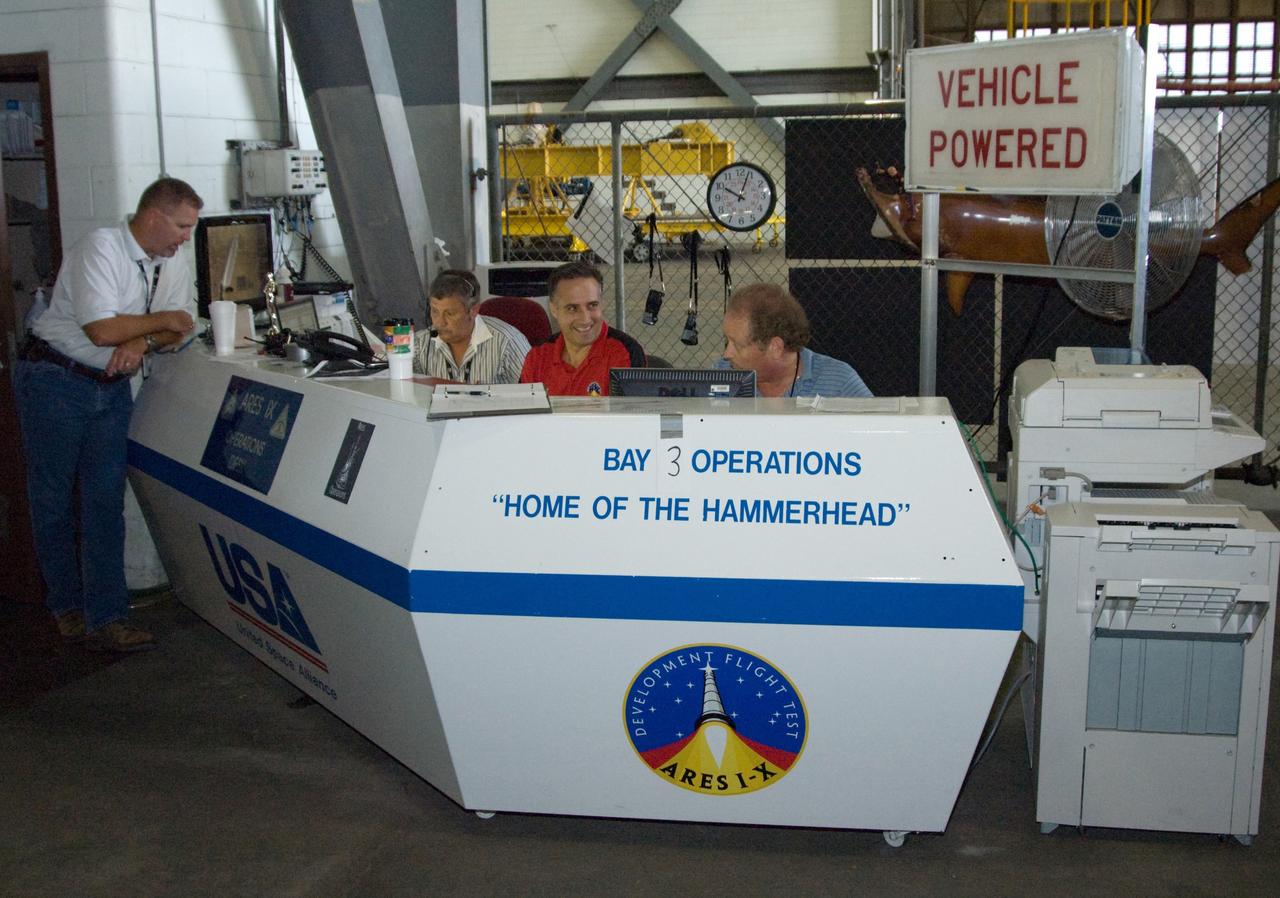
CAPE CANAVERAL, Fla. – In NASA Kennedy Space Center's Vehicle Assembly Building High Bay 3, NASA's Ares I-X mission team members Bobby Williams, Trent Smith and Karl Kendall get ready for the rocket's first power-up. Part of the Constellation Program, the Ares I-X is the test vehicle for the Ares I, which is the essential core of a space transportation system that eventually will carry crewed missions back to the moon, on to Mars and out into the solar system. The Ares I-X flight test is targeted for Oct. 31. Photo credit: NASA/Cory Huston
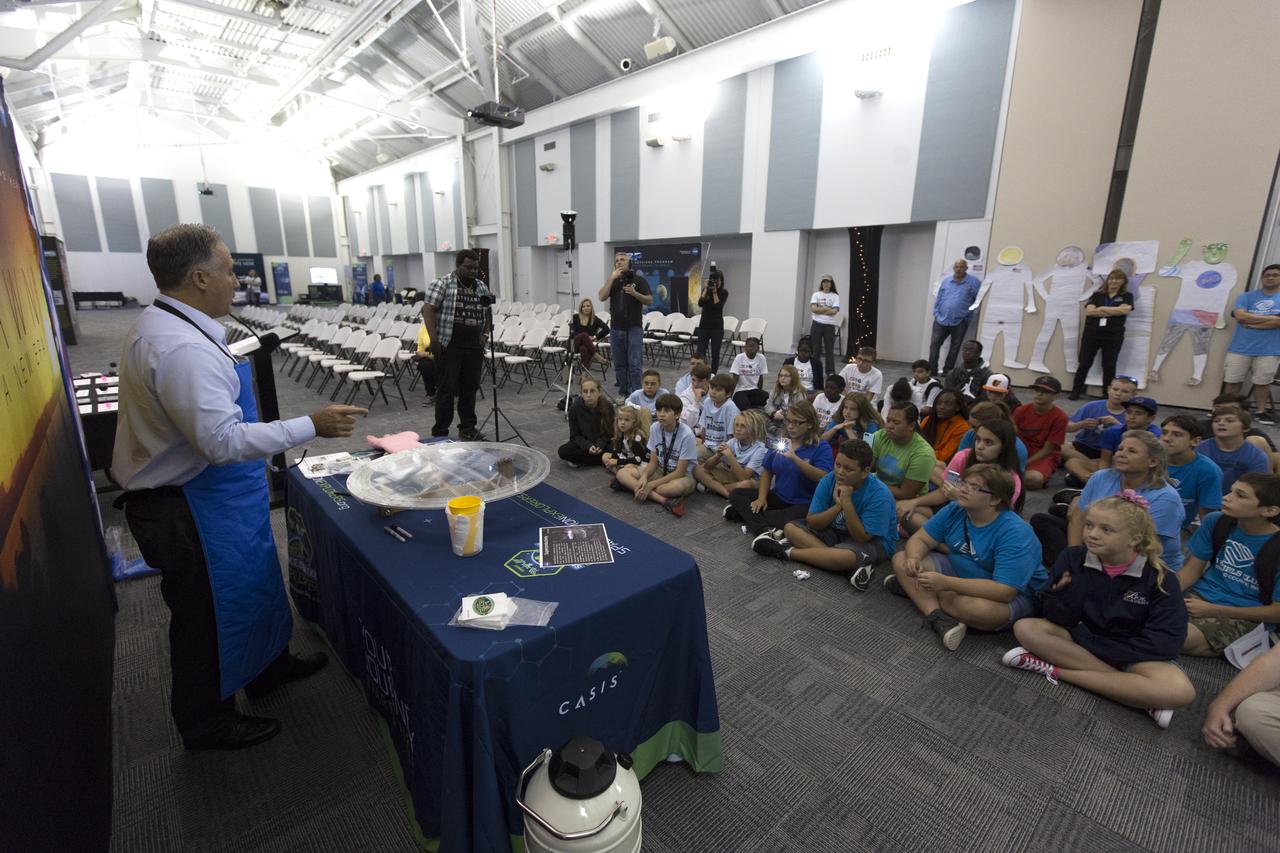
NASA Kennedy Space Center's Trent Smith conducts a quantum levitation demonstration, using liquid nitrogen, metal and a magnetic track, for students and their sponsors in the Center for Space Education at NASA’s Kennedy Space Center in Florida. Teams from across the state of Florida were gathered at Kennedy for the finals of the Zero Robotics Middle School Summer Program national championship. The five-week program allows rising sixth- through ninth-graders to write programs for small satellites called SPHERES (Synchronized, Position, Hold, Engage, Reorient, Experimental Satellites). Finalists saw their code tested aboard the International Space Station.
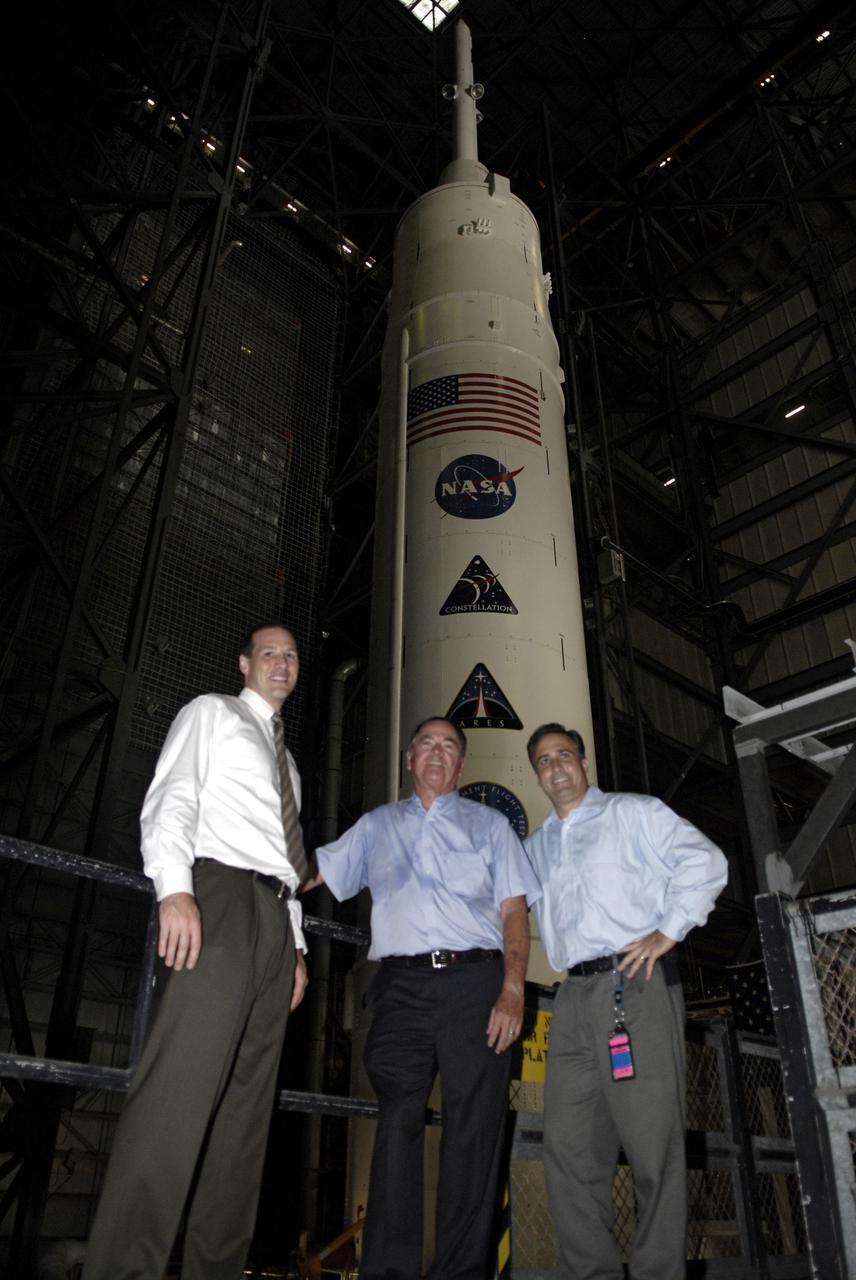
CAPE CANAVERAL, Fla. – – Inside NASA Kennedy Space Center's Vehicle Assembly Building Bay 3, Ares I-X mission manager Bob Ess, former astronaut Robert Crippen and mission team member Trent Smith stand in front of the Ares I-X rocket. Part of the Constellation Program, the Ares I-X is the test vehicle for the Ares I, which is the essential core of a space transportation system that eventually will carry crewed missions back to the moon, on to Mars and out into the solar system . The Ares I-X flight test is targeted for Oct. 27. Photo credit: NASA/Kim Shiflett
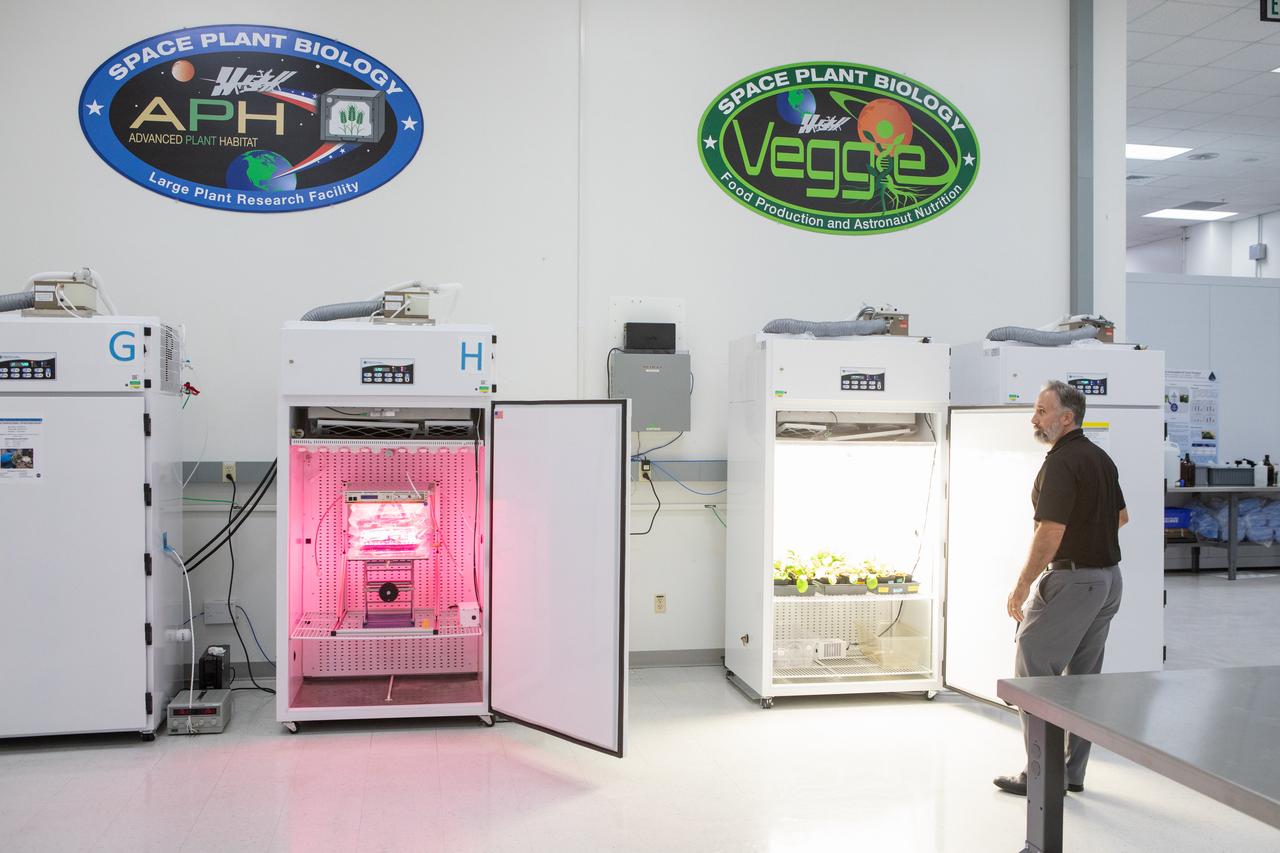
Ground unit experiment chambers for the Veggie plant growth system, at right, and the Advanced Plant Habitat, at left, are in view in a laboratory inside the Space Station Processing Facility (SSPF) at NASA’s Kennedy Space Center in Florida, on May 16, 2019. Trent Smith, Veggie project manager, Exploration Research and Technology Programs, checks the experiments. The center is celebrating the SSPF’s 25th anniversary. The facility was built to process elements for the International Space Station. Now it is providing support for current and future NASA and commercial provider programs, including Commercial Resupply Services, Artemis 1, sending the first woman and next man to the Moon, and deep space destinations including Mars.
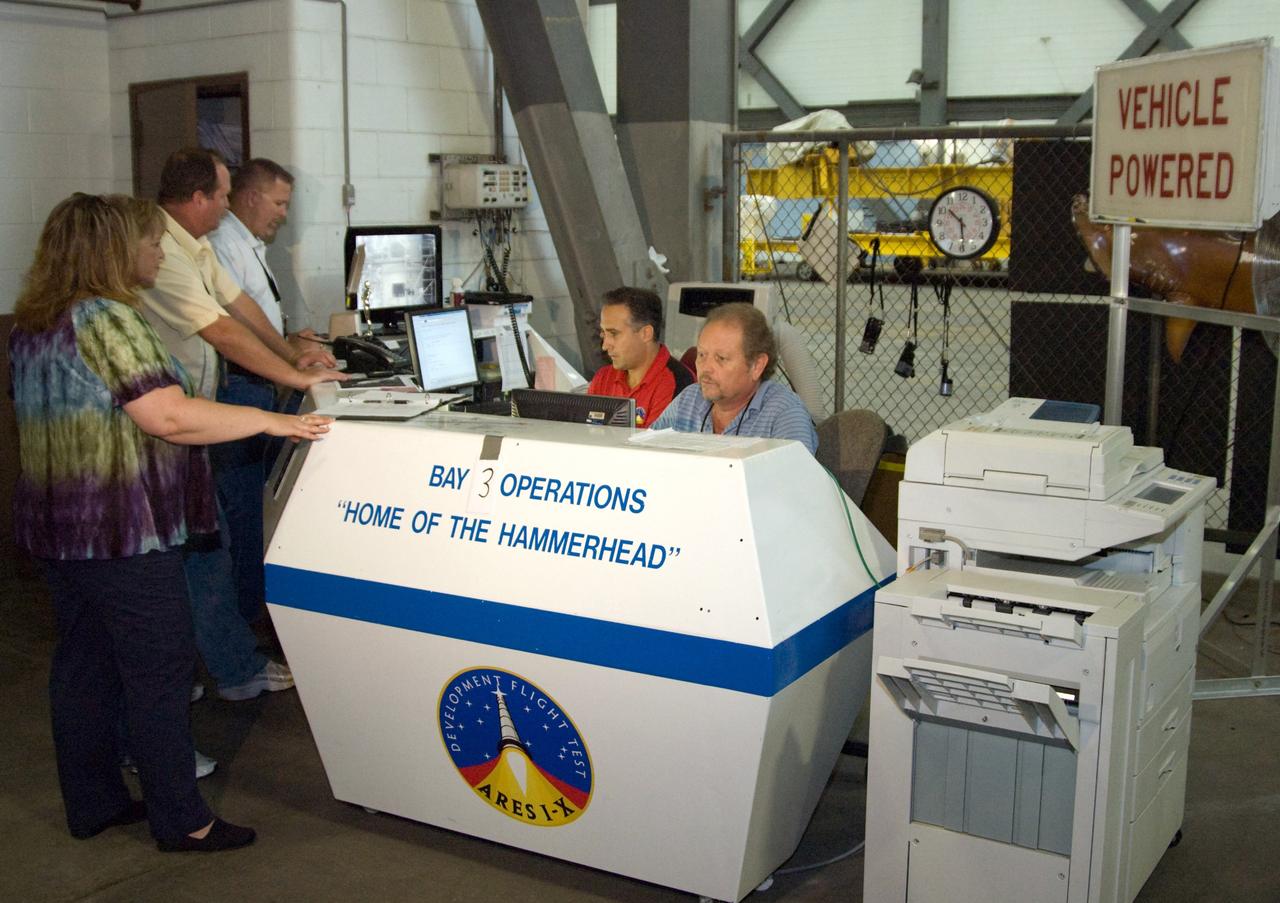
CAPE CANAVERAL, Fla. – In NASA Kennedy Space Center's Vehicle Assembly Building High Bay 3, NASA's Ares I-X mission team members Trent Smith and Karl Kendall get ready for the rocket's first power-up. Part of the Constellation Program, the Ares I-X is the test vehicle for the Ares I, which is the essential core of a space transportation system that eventually will carry crewed missions back to the moon, on to Mars and out into the solar system. The Ares I-X flight test is targeted for Oct. 31. Photo credit: NASA/Cory Huston
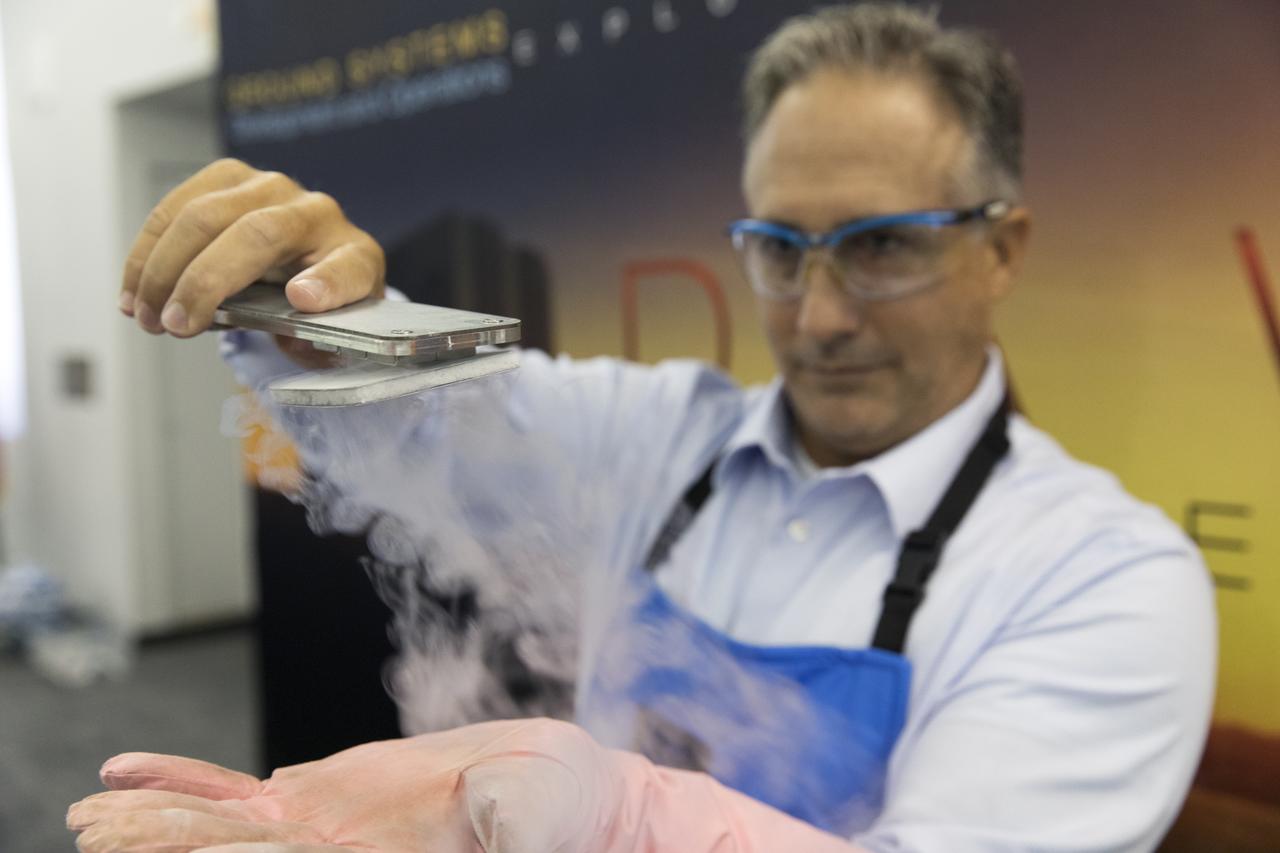
NASA Kennedy Space Center's Trent Smith conducts a quantum levitation demonstration, using liquid nitrogen, metal and a magnetic track, for students and their sponsors in the Center for Space Education at NASA’s Kennedy Space Center in Florida. Teams from across the state of Florida were gathered at Kennedy for the finals of the Zero Robotics Middle School Summer Program national championship. The five-week program allows rising sixth- through ninth-graders to write programs for small satellites called SPHERES (Synchronized, Position, Hold, Engage, Reorient, Experimental Satellites). Finalists saw their code tested aboard the International Space Station.
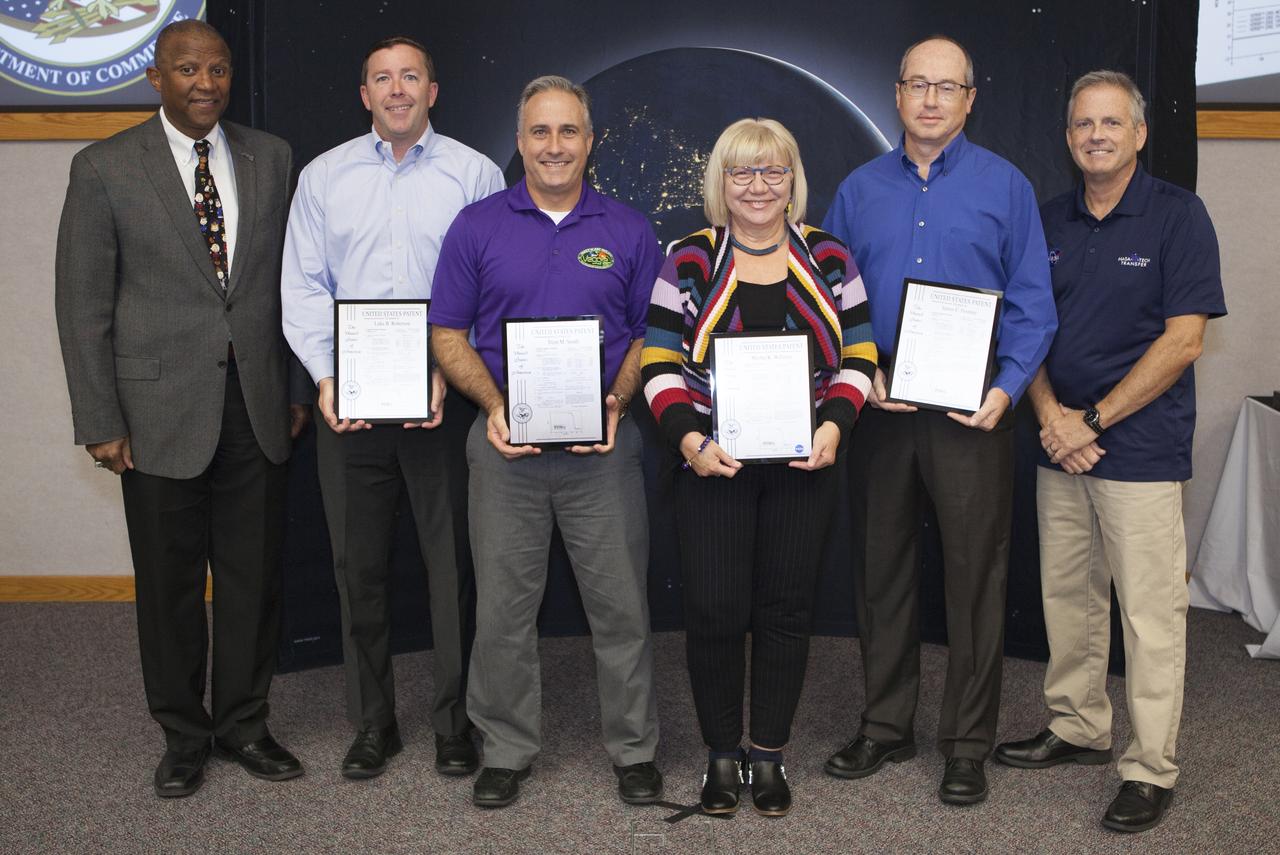
U.S. Patent plaques were awarded to, second from left, Luke Roberson, Trent Smith, Martha Williams and James Fesmire, for their invention, Aerogel/Polymer Composite Materials, known as Aeroplastic, during the 2017 Innovation Expo at NASA's Kennedy Space Center in Florida. At left is Kelvin Manning, Kennedy's associate director; and at far right is Dave Makufka, Kennedy's Technology Transfer Program manager. The purpose of the annual two-day expo is to help foster innovation and creativity among the Kennedy workforce. The event included several keynote speakers, training opportunities, an innovation showcase and the KSC Kickstart competition.
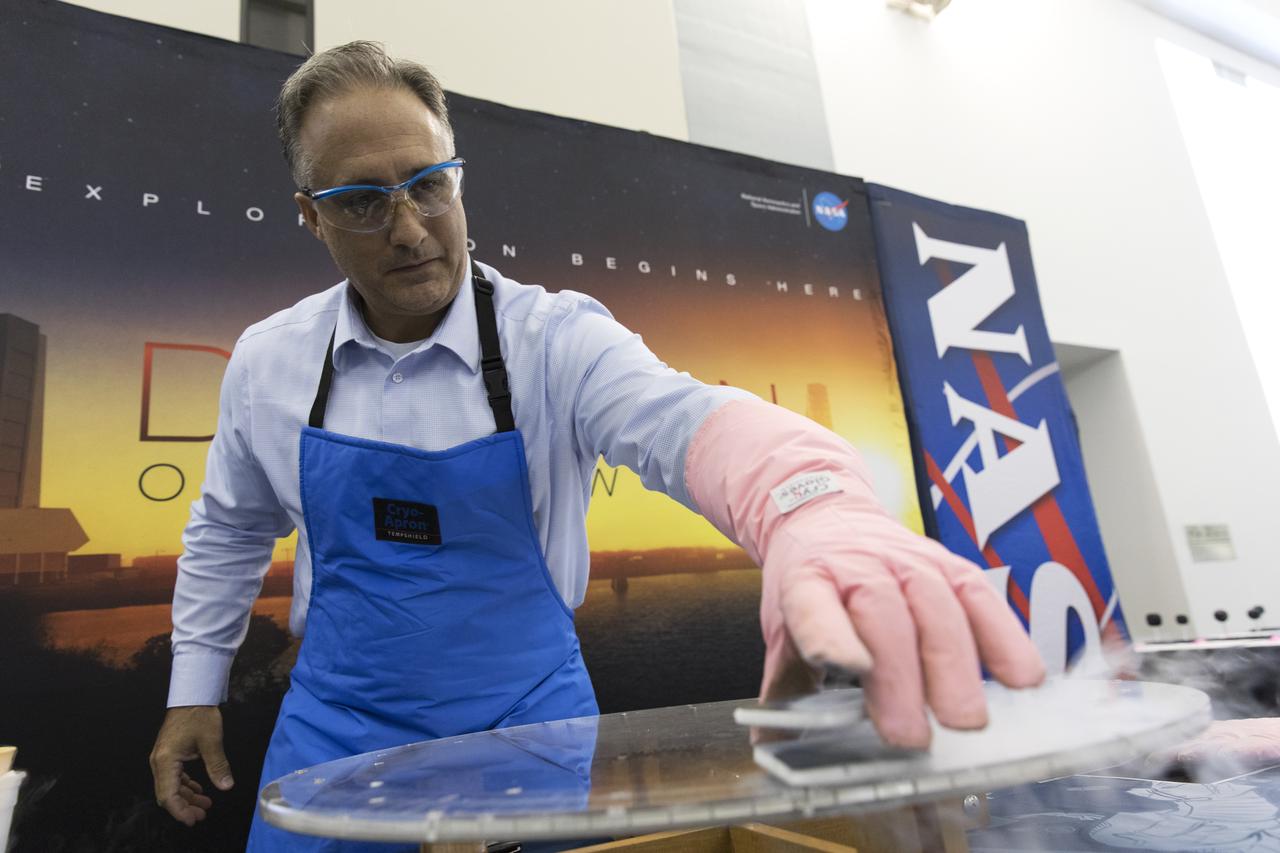
NASA Kennedy Space Center's Trent Smith conducts a quantum levitation demonstration, using liquid nitrogen, metal and a magnetic track, for students and their sponsors in the Center for Space Education at NASA’s Kennedy Space Center in Florida. Teams from across the state of Florida were gathered at Kennedy for the finals of the Zero Robotics Middle School Summer Program national championship. The five-week program allows rising sixth- through ninth-graders to write programs for small satellites called SPHERES (Synchronized, Position, Hold, Engage, Reorient, Experimental Satellites). Finalists saw their code tested aboard the International Space Station.
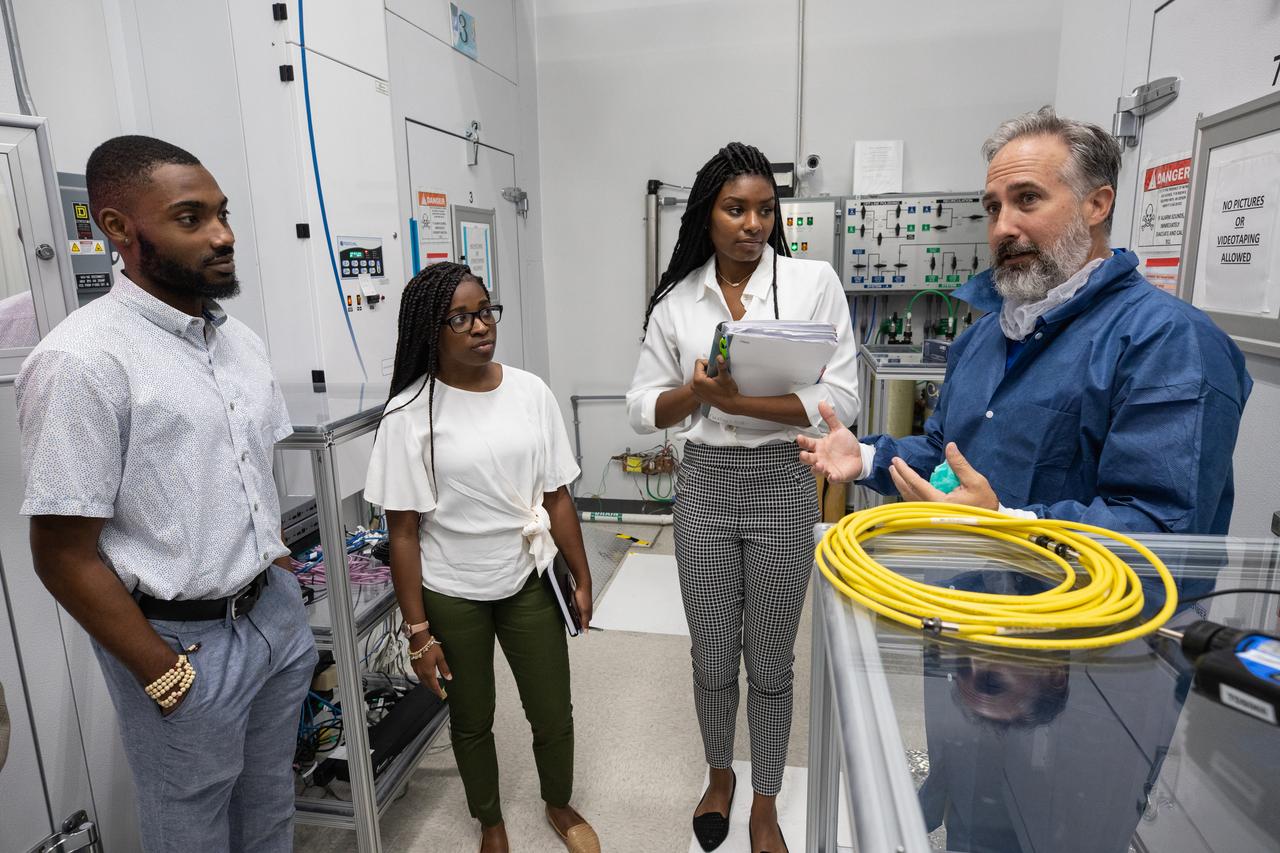
Kennedy Space Center Veggie Project Manager Trent Smith talks with Langston University students, from left, Sherman Cravens, Makyah Farris and Courtney Miller inside a Space Station Processing Facility lab at Kennedy Space Center on Sept. 18, 2019. The students were part of a tour of the Florida spaceport organized by NASA’s Office of Education and Byron Quinn, Ph.D., Langston University director of the Science Research Institute. The visit included stops at SwampWorks, the Neil Armstrong Operations and Checkout Building, the Vehicle Assembly Building, the visitor complex and the Center for Space Education.

From left, Trent Smith, a senior leader of the NASA Kennedy Space Crop Production team, welcomes NASA astronaut Jessica Watkins, CSA (Canadian Space Agency) astronaut Joshua Kutryk, and NASA astronaut Luke Delaney to the Plant Processing Area inside the Space Systems Processing Facility at NASA’s Kennedy Space Center in Florida for a tour of the facility on Tuesday, May 12, 2026. Watkins, Delaney, and Kutryk, along with Roscosmos cosmonaut Sergey Teteryatnikov (not pictured), are part of NASA's SpaceX Crew-13 mission to the International Space Station and will explore the possibility of growing crops outside of the station’s Veggie chamber – one of two enclosed areas currently used to grow crops on the orbiting laboratory.
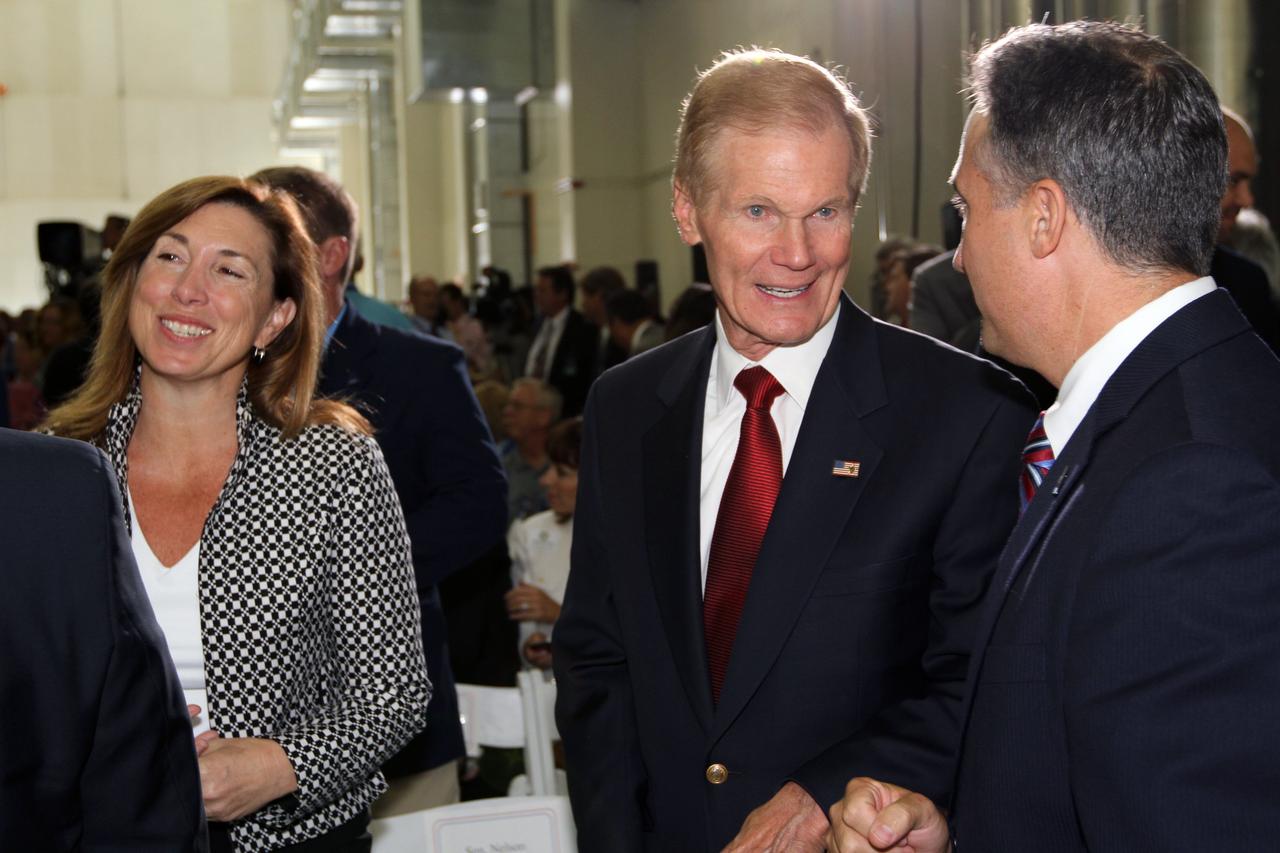
CAPE CANAVERAL, Fla. – NASA Deputy Director Lori Garver, left, visits NASA's Kennedy Space Center in Florida to participate in an event marking the arrival of NASA's first space-bound Orion capsule at Kennedy. With Garver in Kennedy's Operations and Checkout Building high bay are, from left, U.S. Senator Bill Nelson and Trent Smith, NASA project engineer. Slated for Exploration Flight Test-1, an uncrewed mission planned for 2014, the capsule will travel farther into space than any human spacecraft has gone in more than 40 years. The capsule was shipped to Kennedy from NASA's Michoud Assembly Facility in New Orleans where the crew module pressure vessel was built. The Orion production team will prepare the module for flight at Kennedy by installing heat-shielding thermal protection systems, avionics and other subsystems. For more information, visit http://www.nasa.gov/orion. Photo credit: NASA/Kim Shiflett
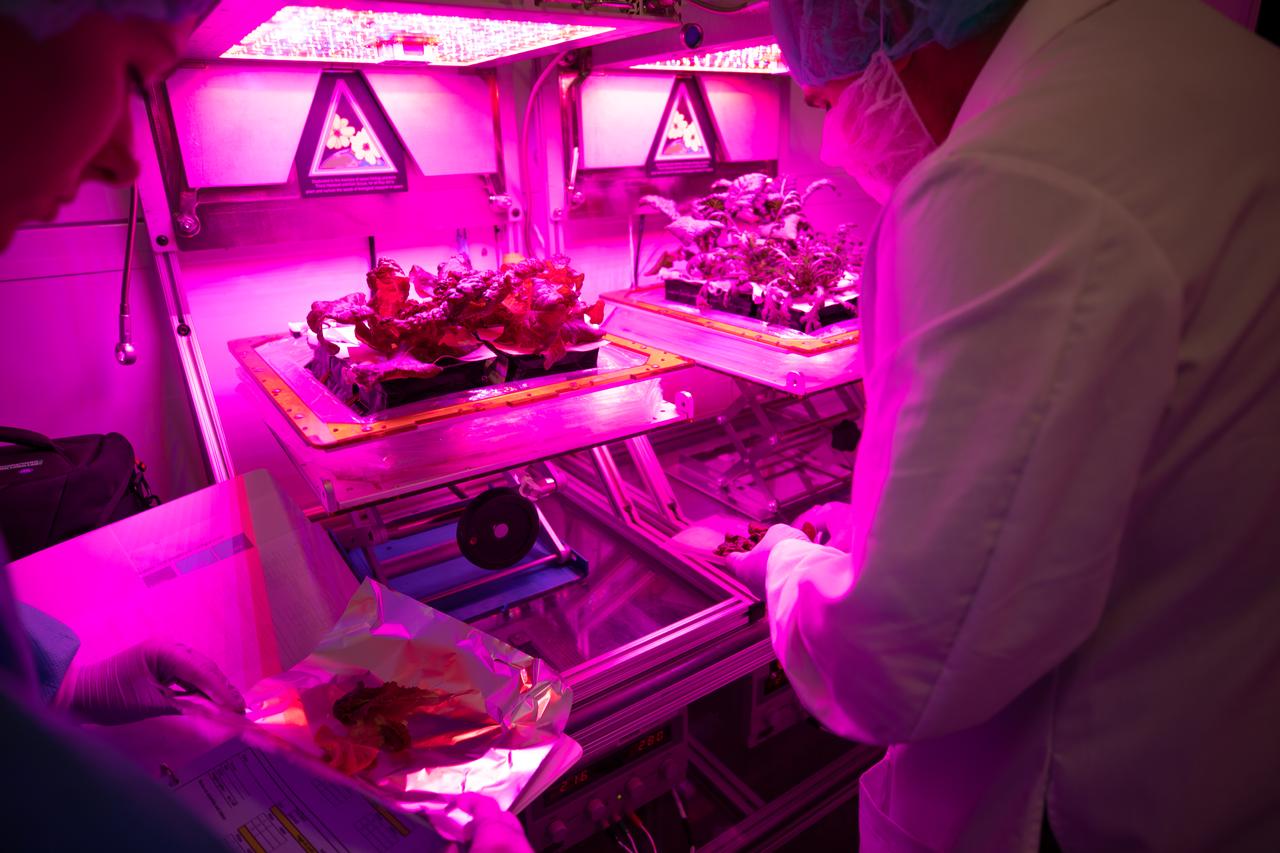
Kennedy Space Center Veggie Project Manager Trent Smith harvests test crops inside the Veggie growth chamber in the Florida spaceport’s Space Station Processing Facility on Sept. 30, 2019, for a science verification test (SVT) to study their potential to grown in space. The harvest included ‘outredgeous’ red romaine lettuce, which has been grown in space before, and two new plant cultivars – amara mustard and shungiku, an Asian green comparable to an edible chrysanthemum. All three lettuce plants were grown from seed film, making this the first SVT with this new plant growth material. Earlier this year, the amara mustard and shungiku plants were grown for the first time using seed bags – referred to as pillows – during the Sustained Veggie project, a study funded by the Human Research Program.
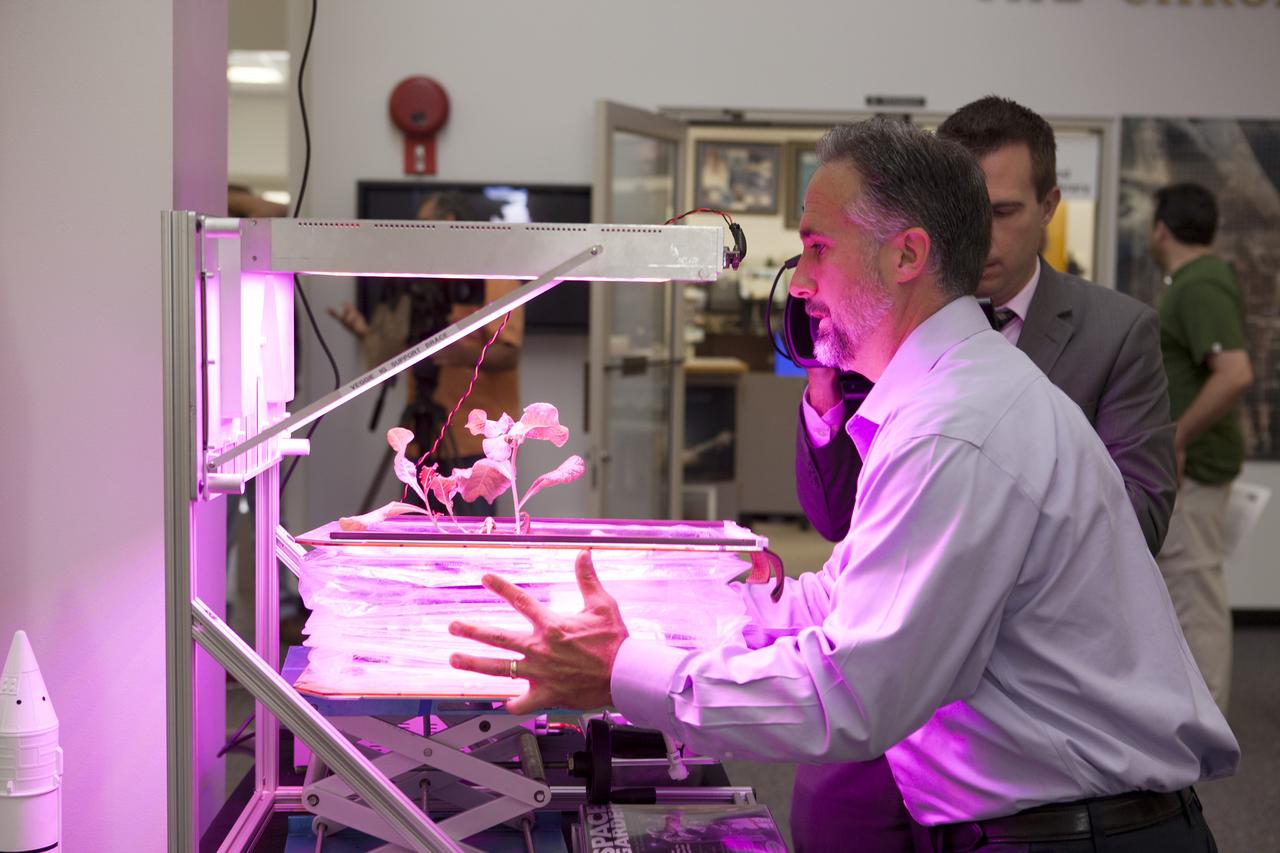
CAPE CANAVERAL, Fla. – At the News Center at NASA's Kennedy Space Center in Florida, Trent Smith of the agency's International Space Station Research and Utilization Office, discusses the Vegetable Production System "VEGGIE" experiment being launched to the ISS. This investigation will focus on the growth and development of "Outredgeous" Lettuce seedlings in the microgravity environment of space and its effects on composition of microbial flora in the Veggie facility. Plans call for lettuce plants to be harvested in-orbit, frozen and returned to the ground for post-flight evaluation. Scheduled for launch on April 14, 2014 atop a Falcon 9 rocket, Dragon spacecraft will be marking its fourth trip to the space station. The SpaceX-3 mission carrying almost 2.5 tons of supplies, technology and science experiments is the third of 12 flights contracted by NASA to resupply the orbiting laboratory. For more information, visit http://www.nasa.gov/mission_pages/station/structure/launch/index.html Photo credit: NASA/Kim Shiflett
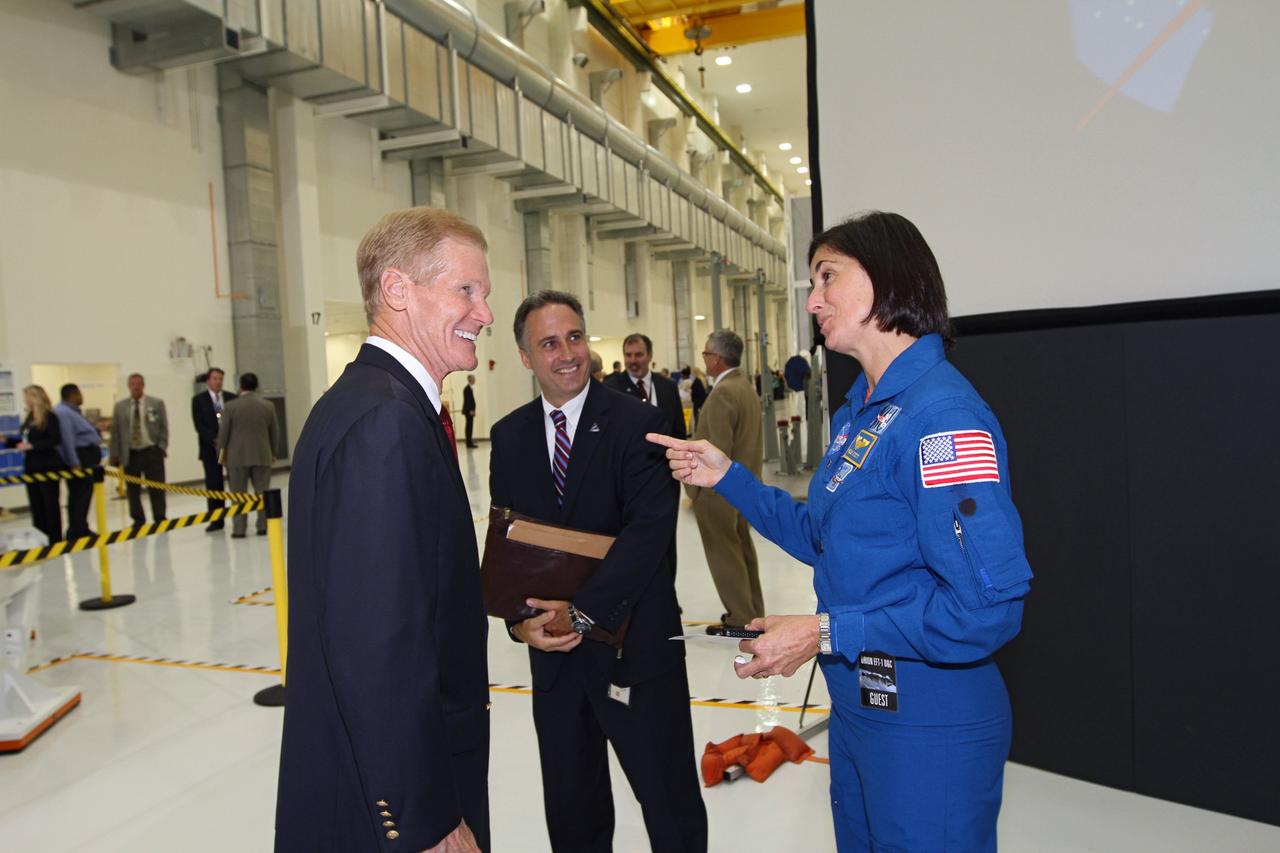
CAPE CANAVERAL, Fla. – From left, U.S. Senator Bill Nelson, NASA project engineer Trent Smith and NASA astronaut Nicole Stott share a moment of levity in Kennedy Space Center's Operations and Checkout Building high bay following an event marking the arrival of NASA's first space-bound Orion capsule in Florida. Slated for Exploration Flight Test-1, an uncrewed mission planned for 2014, the capsule will travel farther into space than any human spacecraft has gone in more than 40 years. The capsule was shipped to Kennedy from NASA's Michoud Assembly Facility in New Orleans where the crew module pressure vessel was built. The Orion production team will prepare the module for flight at Kennedy by installing heat-shielding thermal protection systems, avionics and other subsystems. For more information, visit http://www.nasa.gov/orion. Photo credit: NASA/Kim Shiflett
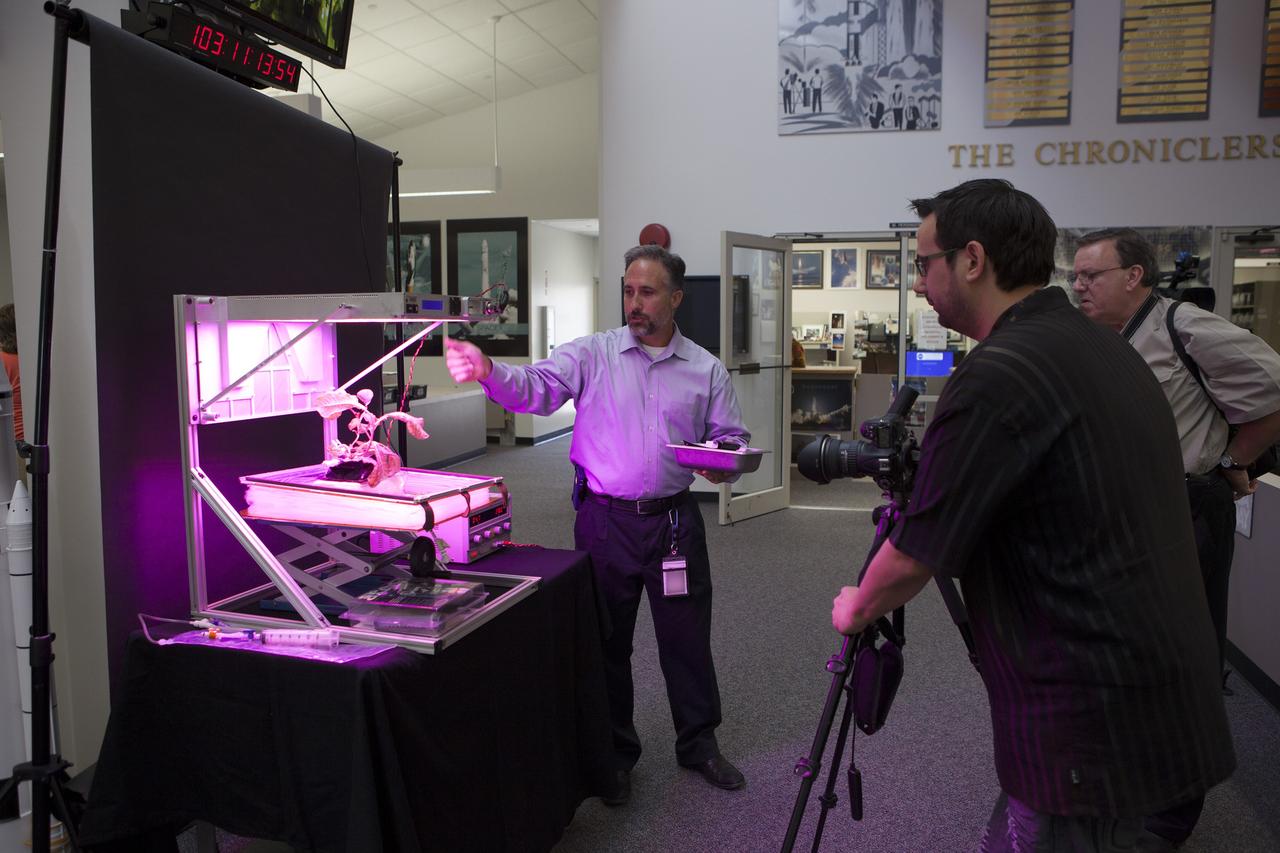
CAPE CANAVERAL, Fla. – At the News Center at NASA's Kennedy Space Center in Florida, Trent Smith of the agency's International Space Station Research and Utilization Office, discusses the Vegetable Production System "VEGGIE" experiment being launched to the ISS. This investigation will focus on the growth and development of "Outredgeous" Lettuce seedlings in the microgravity environment of space and its effects on composition of microbial flora in the Veggie facility. Plans call for lettuce plants to be harvested in-orbit, frozen and returned to the ground for post-flight evaluation. Scheduled for launch on April 14, 2014 atop a Falcon 9 rocket, Dragon spacecraft will be marking its fourth trip to the space station. The SpaceX-3 mission carrying almost 2.5 tons of supplies, technology and science experiments is the third of 12 flights contracted by NASA to resupply the orbiting laboratory. For more information, visit http://www.nasa.gov/mission_pages/station/structure/launch/index.html Photo credit: NASA/Kim Shiflett
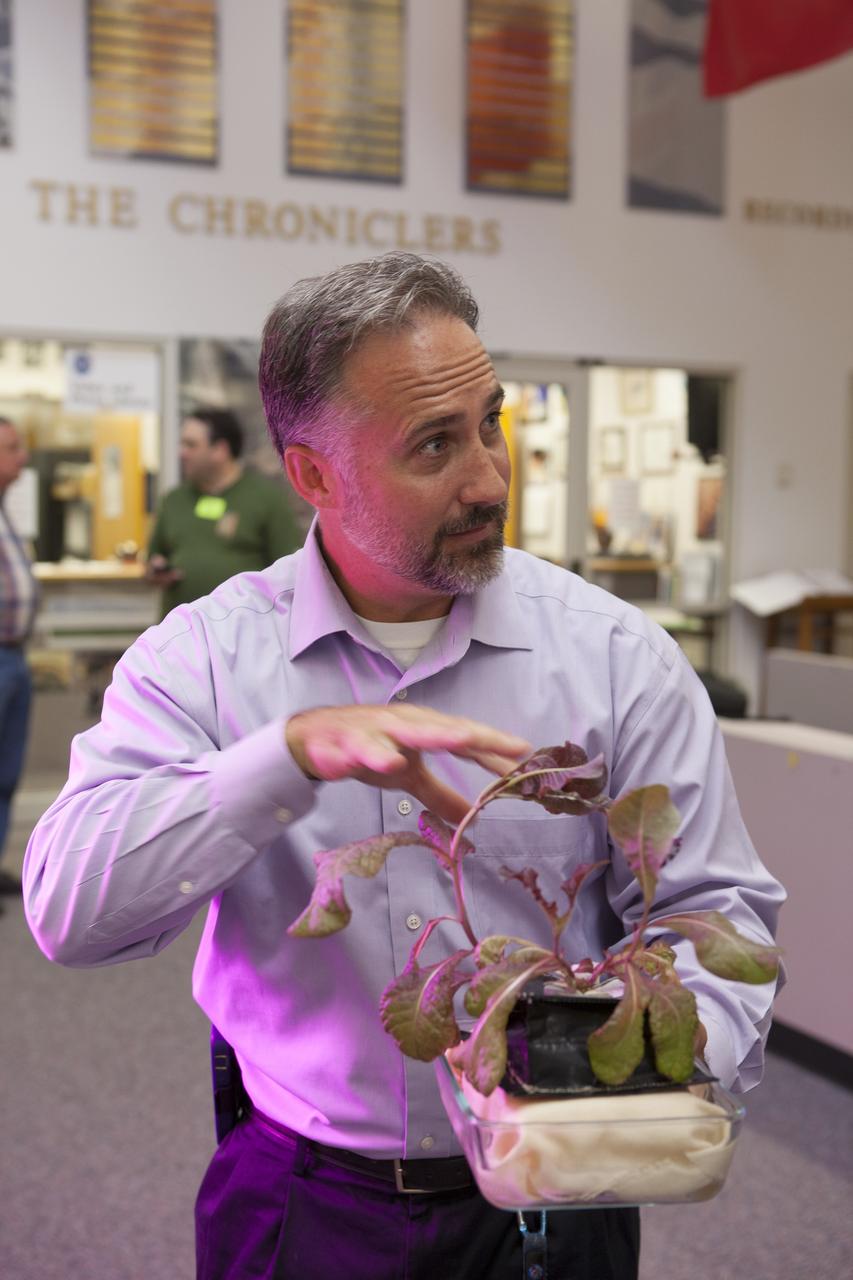
CAPE CANAVERAL, Fla. – At the News Center at NASA's Kennedy Space Center in Florida, Trent Smith of the agency's International Space Station Research and Utilization Office, discusses the Vegetable Production System "VEGGIE" experiment being launched to the ISS. This investigation will focus on the growth and development of "Outredgeous" Lettuce seedlings in the microgravity environment of space and its effects on composition of microbial flora in the Veggie facility. Plans call for lettuce plants to be harvested in-orbit, frozen and returned to the ground for post-flight evaluation. Scheduled for launch on April 14, 2014 atop a Falcon 9 rocket, Dragon spacecraft will be marking its fourth trip to the space station. The SpaceX-3 mission carrying almost 2.5 tons of supplies, technology and science experiments is the third of 12 flights contracted by NASA to resupply the orbiting laboratory. For more information, visit http://www.nasa.gov/mission_pages/station/structure/launch/index.html Photo credit: NASA/Kim Shiflett

From left, Natasha Haveman, project scientist, NASA astronaut Jessica Watkins, Trent Smith, a senior leader of the NASA Kennedy Space Crop Production team, NASA astronauts Stan Love and Luke Delaney, and CSA (Canadian Space Agency) astronaut Joshua Kutryk view crops grown in the Plant Processing Area inside the Space Systems Processing Facility at NASA’s Kennedy Space Center in Florida during a tour on Tuesday, May 12, 2026. Watkins, Delaney, and Kutryk, along with Roscosmos cosmonaut Sergey Teteryatnikov (not pictured), are part of NASA's SpaceX Crew-13 mission to the International Space Station and will explore the possibility of growing crops outside of the station’s Veggie chamber – one of two enclosed areas currently used to grow crops on the orbiting laboratory.
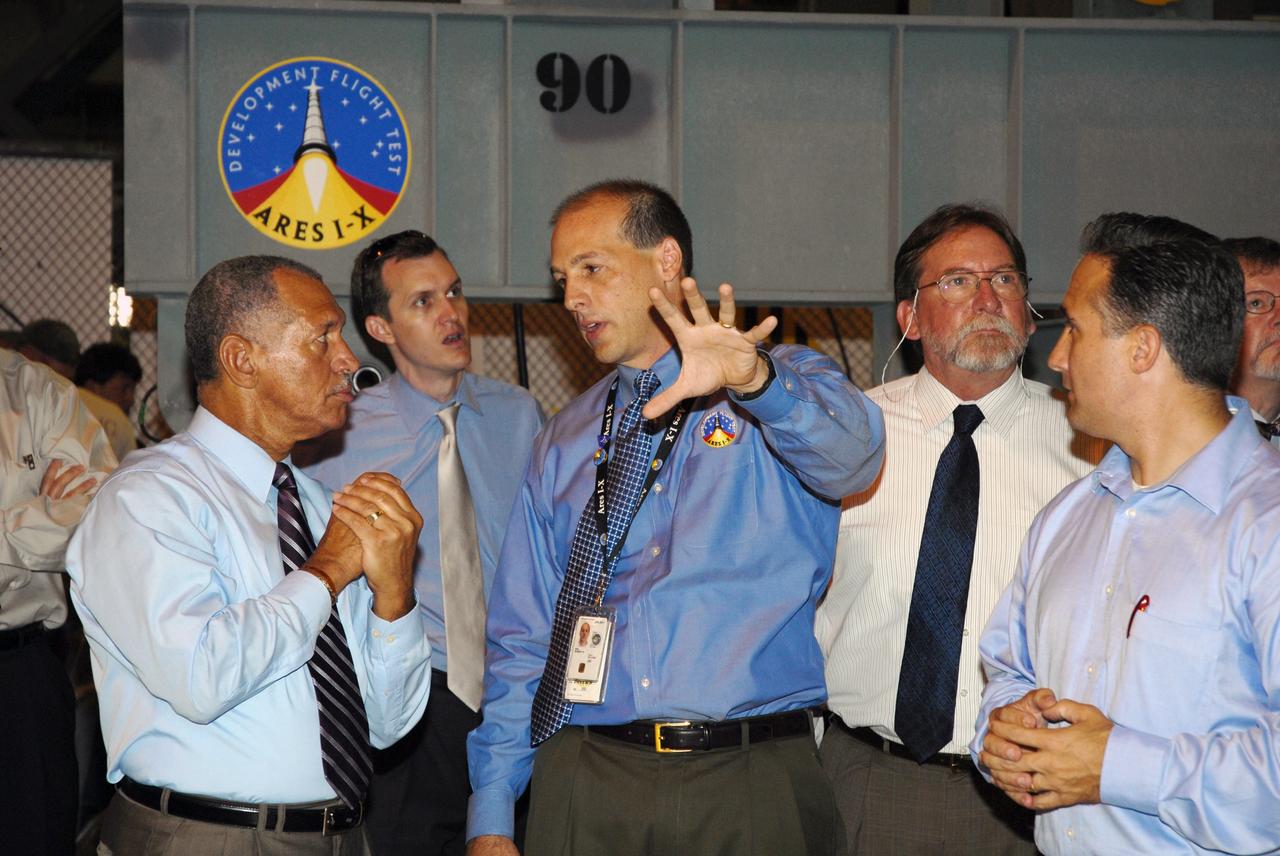
CAPE CANAVERAL, Fla. – At NASA's Kennedy Space Center in Florida, NASA Administrator Charles Bolden learns about the Ares I-X operations from NASA Ares I-X Mission Manager Bob Ess (center). At right are Acting Associate Administrator of Exploration Systems Doug Cook and NASA engineer Trent Smith. Bolden is touring several facilities at Kennedy involved with NASA's Constellation Program. Bolden also was at Kennedy for several events, including the landing of space shuttle Endeavour's STS-127 mission and the signing of the joint NASA-Japan Aerospace Exploration Agency agreement defining the terms of cooperation between the agencies on the Global Precipitation Measurement, or GPM, mission. Photo credit: NASA/Kim Shiflett
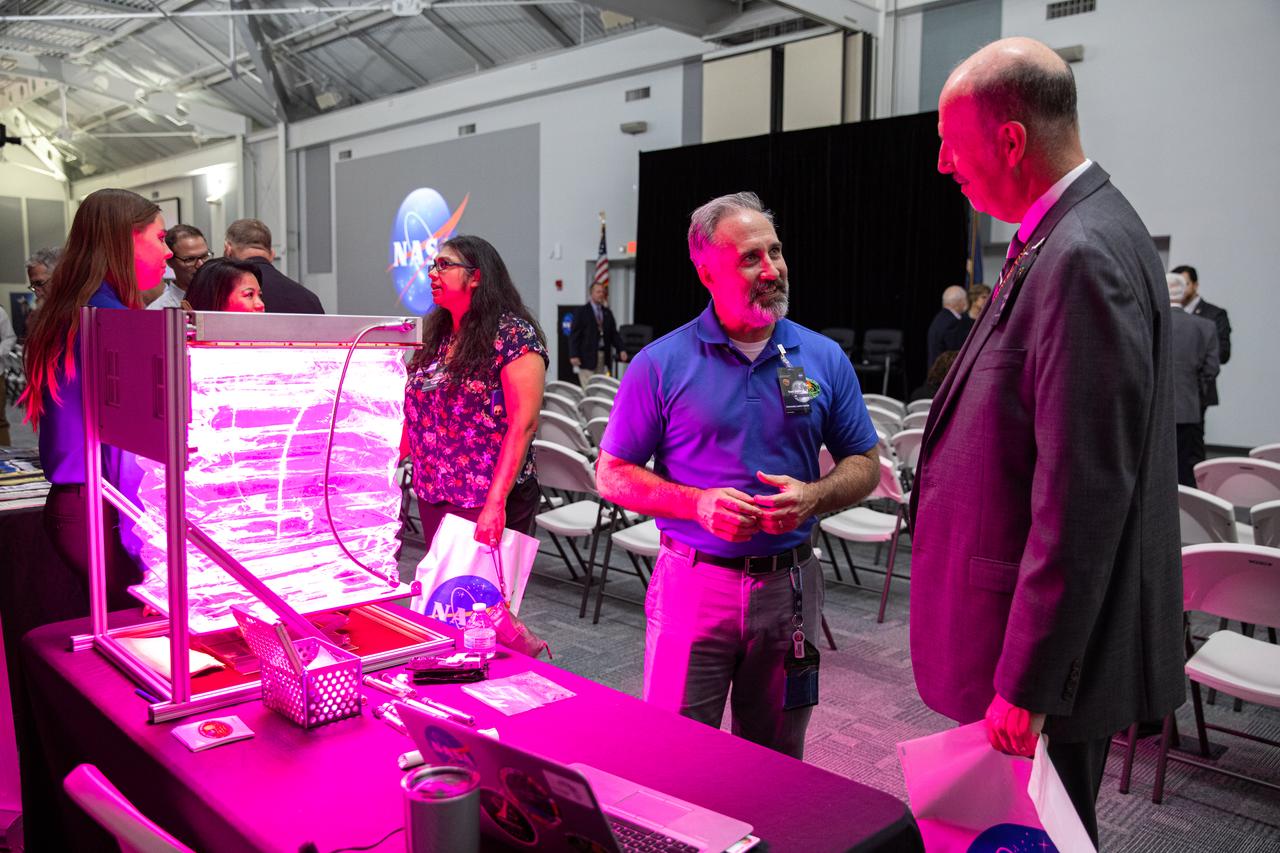
NASA Kennedy Space Center hosted a Community Leaders Update on Feb. 18, 2020, at the Kennedy Space Center Visitor Complex in Florida. Trent Smith, left, NASA Veggie project manager, talks to an attendee about the Veggie plant growth system that is currently in use on the International Space Station. Center Director Bob Cabana moderated a panel discussion featuring senior leaders from Exploration Ground Systems, Spaceport Integration and Services, Exploration Research and Technology Programs, Gateway Logistics Element, and Center Planning and Development. Attendees included community leaders, business executives, partners, educators and government leaders. After the presentation, guests had the opportunity to ask questions and visit displays from the programs and some of the commercial partners.
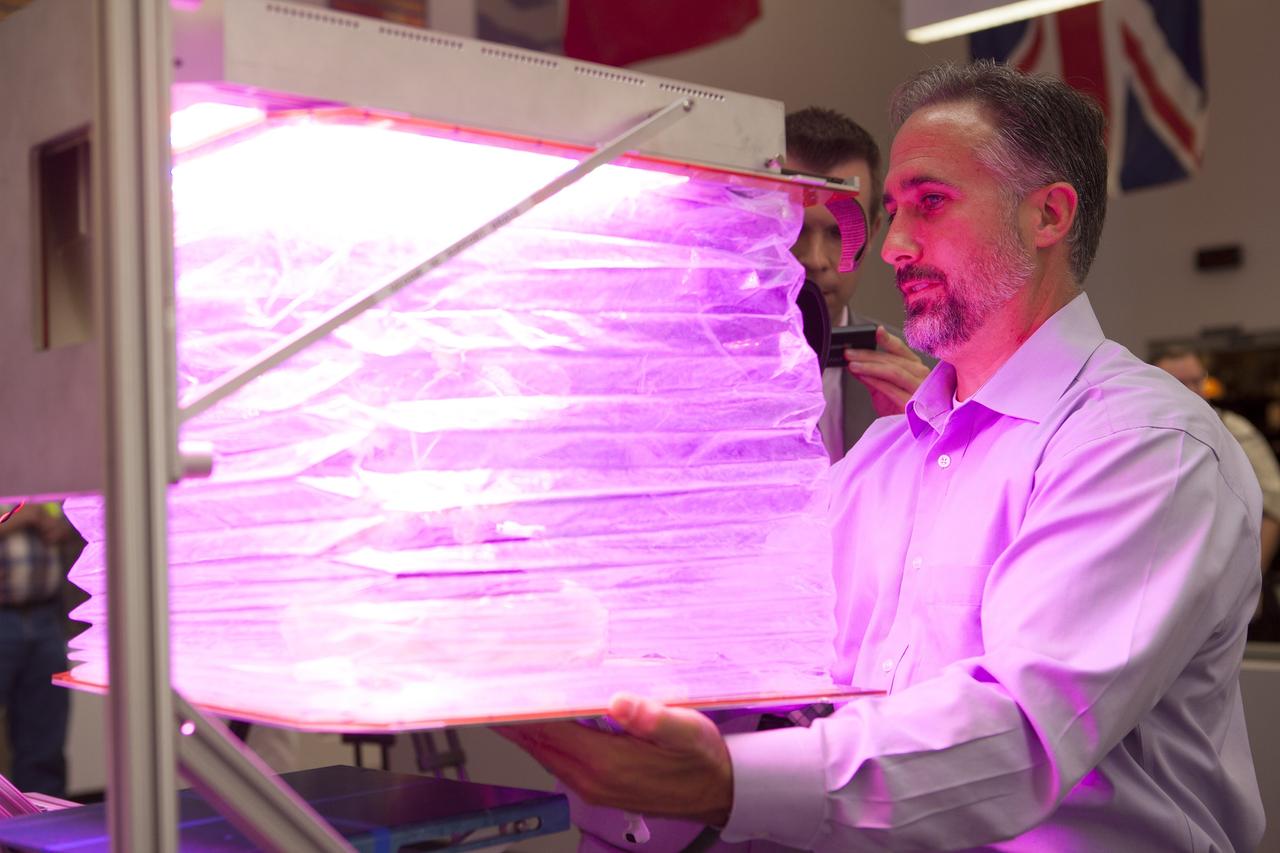
CAPE CANAVERAL, Fla. – At the News Center at NASA's Kennedy Space Center in Florida, Trent Smith of the agency's International Space Station Research and Utilization Office, discusses the Vegetable Production System "VEGGIE" experiment being launched to the ISS. This investigation will focus on the growth and development of "Outredgeous" Lettuce seedlings in the microgravity environment of space and its effects on composition of microbial flora in the Veggie facility. Plans call for lettuce plants to be harvested in-orbit, frozen and returned to the ground for post-flight evaluation. Scheduled for launch on April 14, 2014 atop a Falcon 9 rocket, Dragon spacecraft will be marking its fourth trip to the space station. The SpaceX-3 mission carrying almost 2.5 tons of supplies, technology and science experiments is the third of 12 flights contracted by NASA to resupply the orbiting laboratory. For more information, visit http://www.nasa.gov/mission_pages/station/structure/launch/index.html Photo credit: NASA/Kim Shiflett
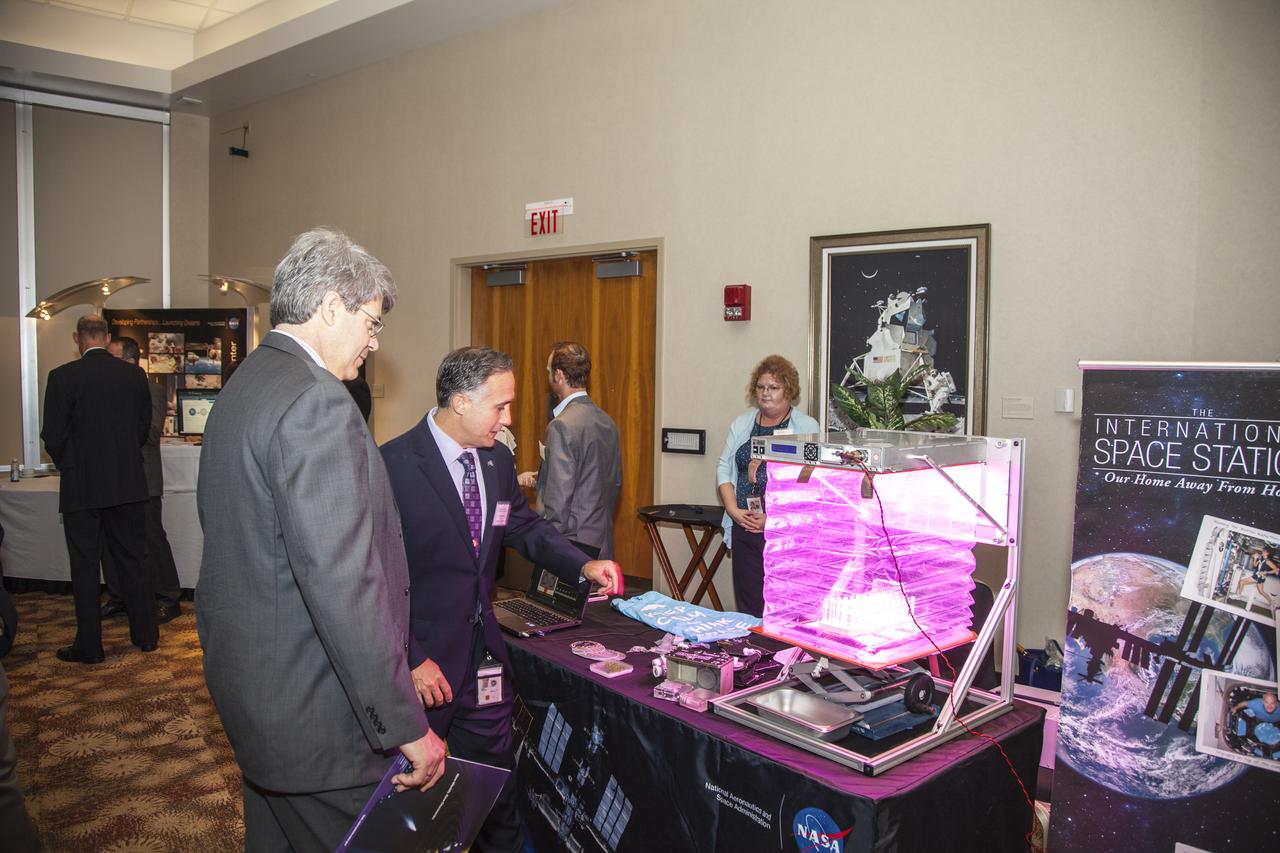
CAPE CANAVERAL, Fla. - Community leaders, business executives, educators, and state and local government leaders were updated on NASA Kennedy Space Center programs and accomplishments during Center Director Bob Cabana’s Center Director Update at the Debus Center at the Kennedy Space Center Visitor Complex in Florida. An attendee talks with Trent Smith, program manager, and Tammy Belk, a program specialist, at the ISS Ground Processing and Research Office display. Attendees talked with Cabana and other senior Kennedy managers and visited displays featuring updates on Kennedy programs and projects, including International Space Station, Commercial Crew, Ground System Development and Operations, Launch Services, Center Planning and Development, Technology, KSC Swamp Works and NASA Education. The morning concluded with a tour of the new Space Shuttle Atlantis exhibit at the visitor complex. For more information, visit http://www.nasa.gov/kennedy. Photo credit: NASA/Daniel Casper

NASA astronaut Luke Delaney (front), along with CSA (Canadian Space Agency) astronaut Joshua Kutryk, NASA astronauts Jessica Watkins and Stan Love, Project Scientist Natasha Haveman, and Trent Smith, a senior leader of the NASA Kennedy Space Crop Production team, view microgreens at the Plant Processing Area inside the Space Systems Processing Facility at NASA’s Kennedy Space Center in Florida on Tuesday, May 12, 2026. Watkins, Delaney, Kutryk, and Roscosmos cosmonaut Sergey Teteryatnikov (not pictured) are part of NASA's SpaceX Crew-13 mission to the International Space Station and will explore the possibility of growing crops outside of the station’s Veggie chamber – one of two enclosed areas currently used to grow crops on the orbiting laboratory.
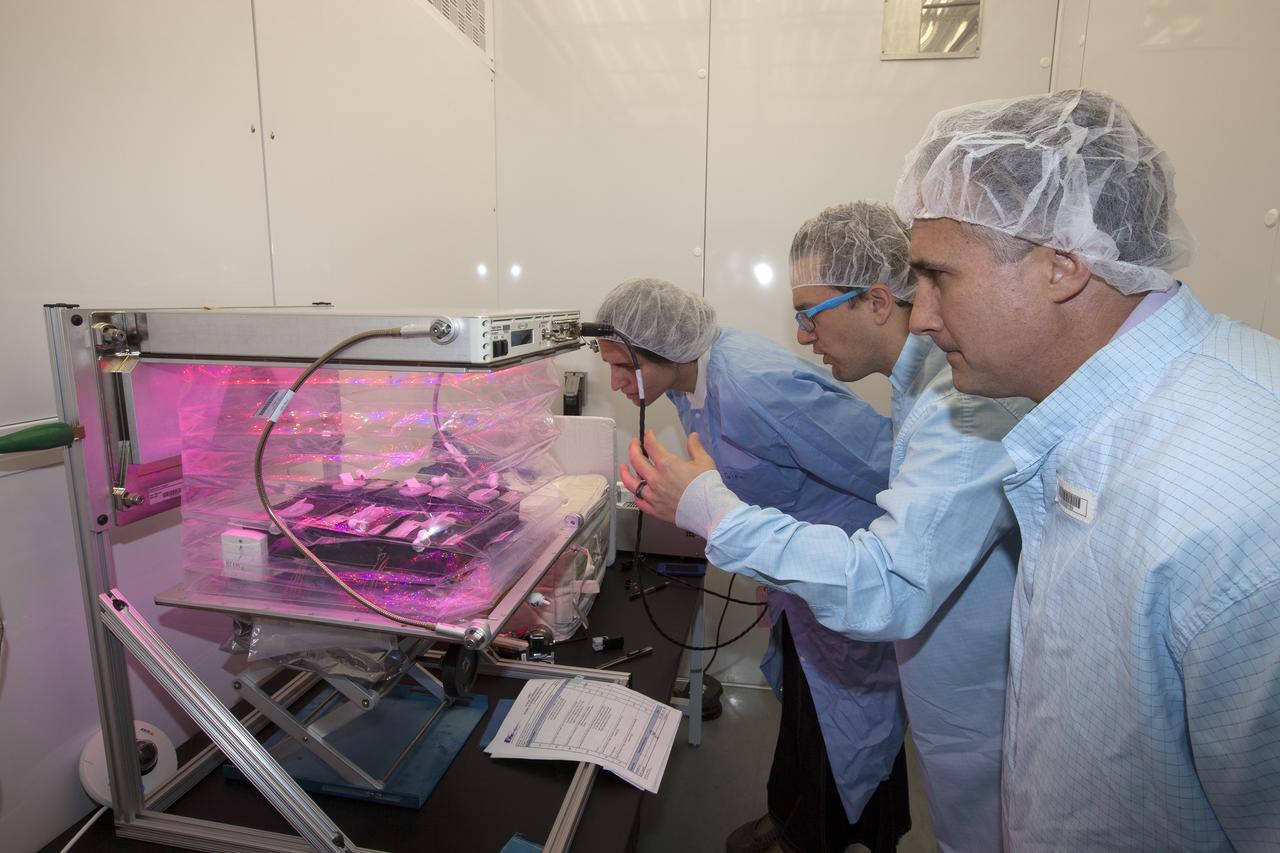
CAPE CANAVERAL, Fla. – The Veggie plant growth system has been activated inside a control chamber at the Space Station Processing Facility at NASA's Kennedy Space Center in Florida. The red, blue and green LED lights have been turned on and the root mat and plant pillows containing outredgeous red romaine lettuce seeds have been inserted into the chamber. The clear bellows have been expanded and secured. Checking the system are, from left, Gioia Massa, NASA payload scientist for Veggie, Gerard Newsham, Veggie payload support specialist with Jacobs Technology, and Trent Smith, NASA project manager. The growth chamber will be used as a control unit and procedures will be followed identical to those being performed on Veggie and the Veg-01 experiment on the International Space Station by Expedition 39 flight engineer and NASA astronaut Steve Swanson. Veggie and Veg-01 were delivered to the space station aboard the SpaceX-3 mission. Veggie is the first fresh food production system delivered to the station. Six plant pillows, each containing outredgeous red romaine lettuce seeds and a root mat were inserted into Veggie. The plant chamber's red, blue and green LED lights were activated. The plant growth will be monitored for 28 days. At the end of the cycle, the plants will be carefully harvested, frozen and stored for return to Earth. Photo credit: NASA/Dimitri Gerondidakis
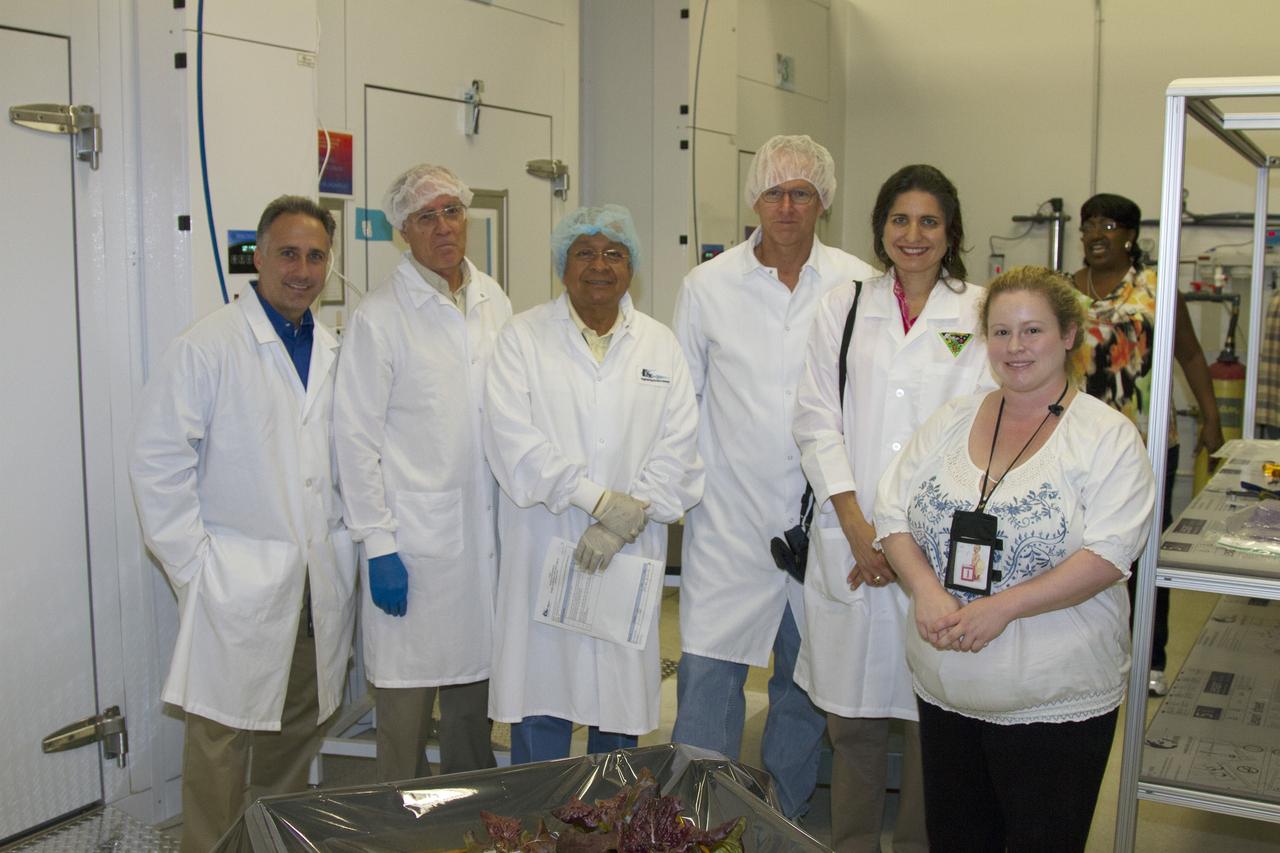
CAPE CANAVERAL, Fla. – The plant pillows containing the outredgeous red lettuce leaves have been removed from the Veggie plant growth system inside a control chamber at the Space Station Processing Facility at NASA's Kennedy Space Center in Florida. From left, are Trent Smith, NASA project manager in the ISS Ground Processing and Research Project Office, Chuck Spern, lead project engineer with QinetiQ North America on the Engineering Services Contract, George Guerra, quality control engineer with QinetiQ North America, Jim Smodell, a technician with SGT, Gioia Massa, NASA payload scientist for Veggie, and Nicole Dufour, NASA Engineering and Technology. The growth chamber was used as a control unit for Veggie and procedures were followed identical to those being performed on Veggie and the Veg-01 experiment on the International Space Station. The chamber mimicked the temperature, relative humidity and carbon dioxide concentration of those in the Veggie unit on the space station. Veggie and Veg-01 were delivered to the space station aboard the SpaceX-3 mission. Veggie is the first fresh food production system delivered to the station. Six plant pillows, each containing outredgeous red romaine lettuce seeds and a root mat were inserted into Veggie. The plant chamber's red, blue and green LED lights were activated. The plant growth was monitored for 33 days. On June 10, at the end of the cycle, the plants were carefully harvested, frozen and stored for return to Earth by Expedition 39 flight engineer and NASA astronaut Steve Swanson. Photo credit: NASA/Frankie Martin
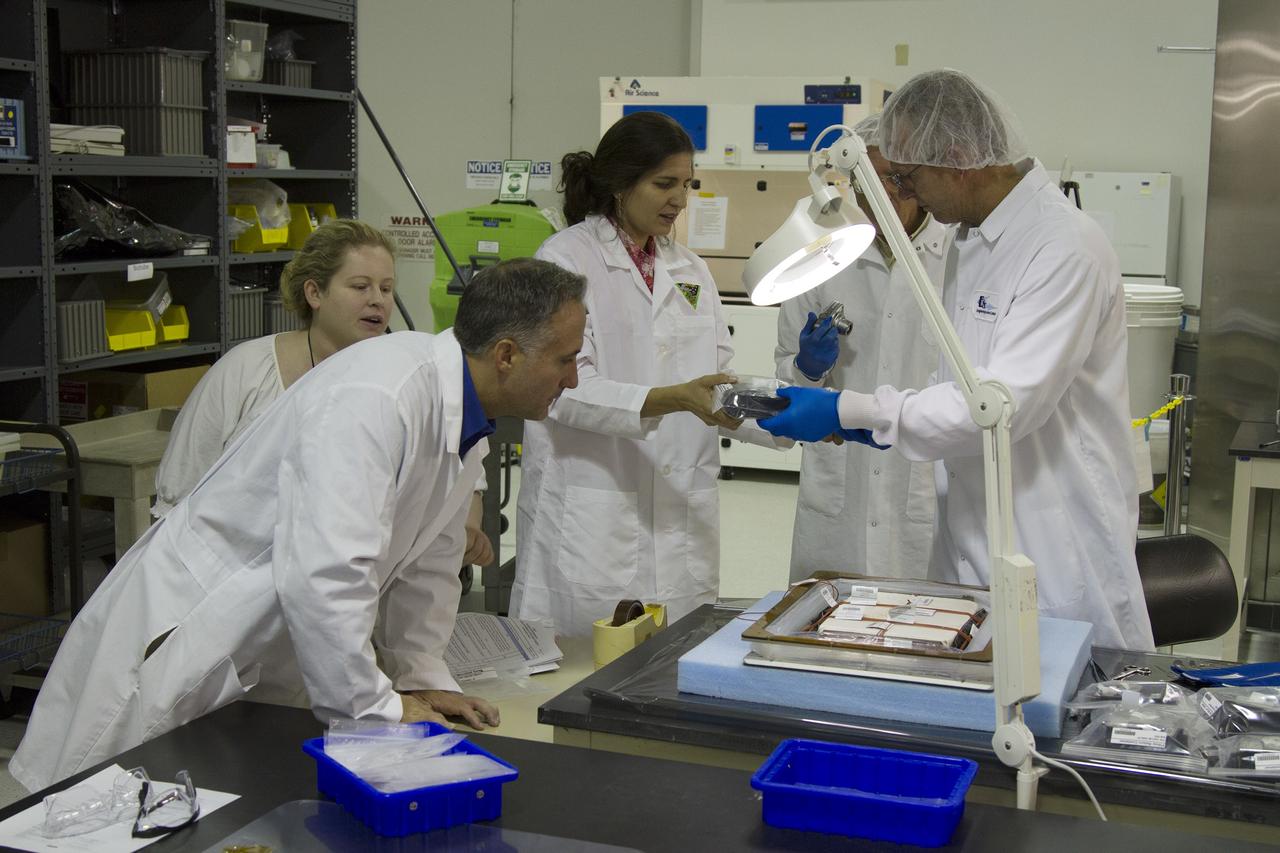
CAPE CANAVERAL, Fla. – At far right, Jim Smodell, a technician with SGT, shows a plant pillow from the Veggie plant growth system to Gioia Massa, NASA payload scientist for Veggie. Partially hidden behind Smodell is Chuck Spern, lead project engineer with QinetiQ North America on the Engineering Services Contract. At left is Trent Smith, NASA project manager in the ISS Ground Processing and Research Project Office, and Nicole Dufour, NASA Engineering and Technology Directorate. They are in the Payload Development Laboratory at the Space Station Processing Facility, or SSPF, at NASA's Kennedy Space Center in Florida. The plant pillows were removed from the Veggie plant growth system inside a control chamber at the SSPF. The growth chamber was used as a control unit for Veggie and procedures were followed identical to those being performed on Veggie and the Veg-01 experiment on the International Space Station. The chamber mimicked the temperature, relative humidity and carbon dioxide concentration of those in the Veggie unit on the space station. Veggie and Veg-01 were delivered to the space station aboard the SpaceX-3 mission. Veggie is the first fresh food production system delivered to the station. Six plant pillows, each containing outredgeous red romaine lettuce seeds and a root mat were inserted into Veggie. The plant chamber's red, blue and green LED lights were activated. The plant growth was monitored for 33 days. On June 10, at the end of the cycle, the plants were carefully harvested, frozen and stored for return to Earth by Expedition 39 flight engineer and NASA astronaut Steve Swanson. Photo credit: NASA/Frankie Martin